Two books highlight LSU’s role in military service
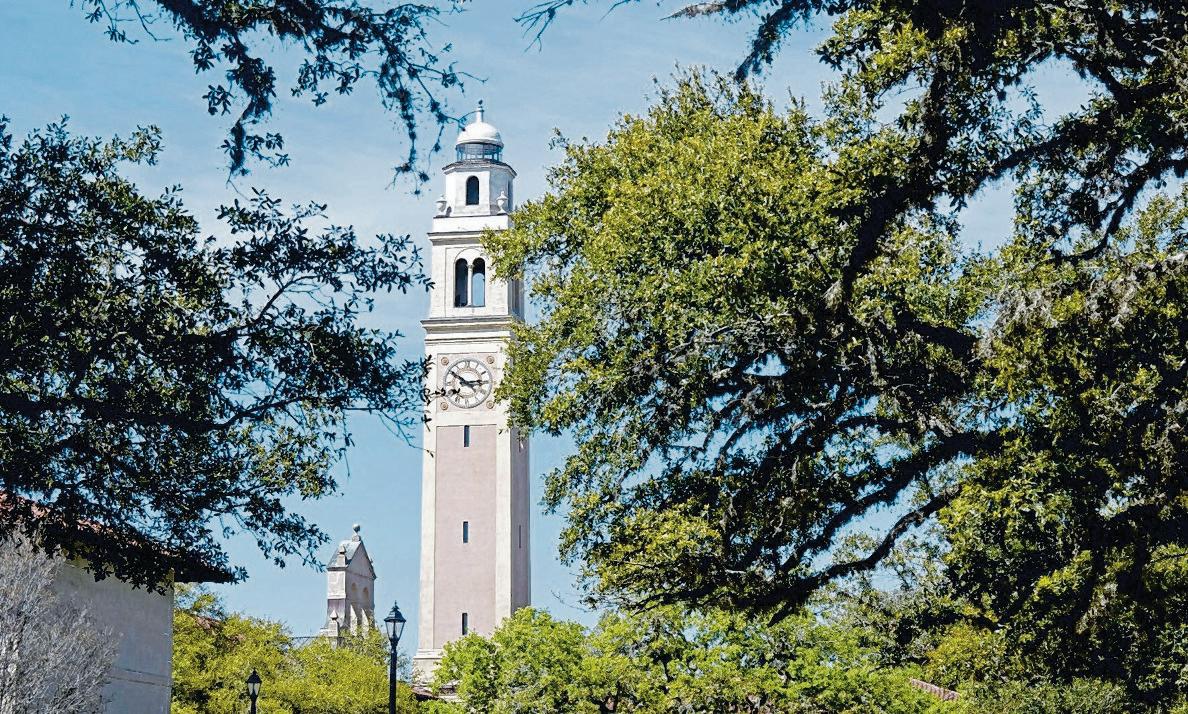
One of Louisiana’s most prominent war monuments is on the campus of LSU in Baton Rouge, where Memorial Tower has commanded the skyline for generations. I’ve long wondered, though, how many students know that the tower was dedicated in 1926 to remember 1,447 warriors from the state who died in World War I.
All of this has come back to mind with the arrival of two books that underline LSU’s long connection with military service.
In his new memoir, LSU alumnus David Wayne Couvillon of Port Allen recalls his time navigating Iraq’s complicated realities after the launch of Operation Enduring Freedom in 2003. Another new book, Ronald J. Drez’s “The Long Purple Line,” explores LSU’s broader contributions to national defense.
The title of Couvillon’s book sums up his challenge: “From U.S Marine to Provincial Governor in Iraq with the 3rd Battalion, 23rd Marines.” Couvillon had a long career in the Marine Corps Reserves, and he also held several jobs in civilian life, eventually retiring as director of the Louisiana Office of State Group Benefits.
“Essentially, reservists have to be adaptable,” he tells readers.
“One day, they’re joking with their coworkers and going home to their families; the next, they’re flying to
question is: Why hasn’t he been awarded an honorary degree?”
Though Saxon is best known for his New Orleans affiliation, he was born in Baton Rouge in 1891, though some historians dispute the location. Still, it’s certain that he grew up in the capital city which was where he was buried after his death at age 54 in 1946.
His gravesite is found in the city’s historic Magnolia Cemetery on North 19th St. Saxon attended LSU from 1907 to 1912, and though his photo appears with his graduating class in the 1912 Gumbo, he didn’t actually graduate.
What kept Saxon from earning those last three credits?
“His mother became seriously ill,” Wynne said. “His mother was dying, so he dropped out to take care of her He also wasn’t a rich person and ran into some financial difficulties and didn’t return to school.”
Instead, Saxon went on a job search.
Wynne cites both author Chance Harvey’s 2003 biography “The Life and Selected Letters of Lyle Saxon,” and Helen Gilkerson’s 1930 dissertation, both of which documented the reason behind Saxon’s LSU departure.
Danny Heitman AT RANDOM
the other side of the world.”
Couvillon counted on that sense of flexibility as a military provincial governor of Iraq’s Wasit Province. Though trained as professional warriors, he and his comrades found themselves
Ya-Ya.’ The book is still in print today through Pelican Publishing in New Orleans.
“Also, when he was in school, he wasn’t majoring in journalism, because there was no such degree at the time,” Wynne said.
Didn’t stop his career
The lack of a college degree didn’t stop Saxon from pursuing a career that eventually earned him the moniker, “Mr New Orleans.” He eventually went to work for The Times-Picayune, then turned to book writing.
“Lyle Saxon’s early books are
for his interest in music.
MUSICIANS
Continued from page 1G
Take the ‘A’ Train.”
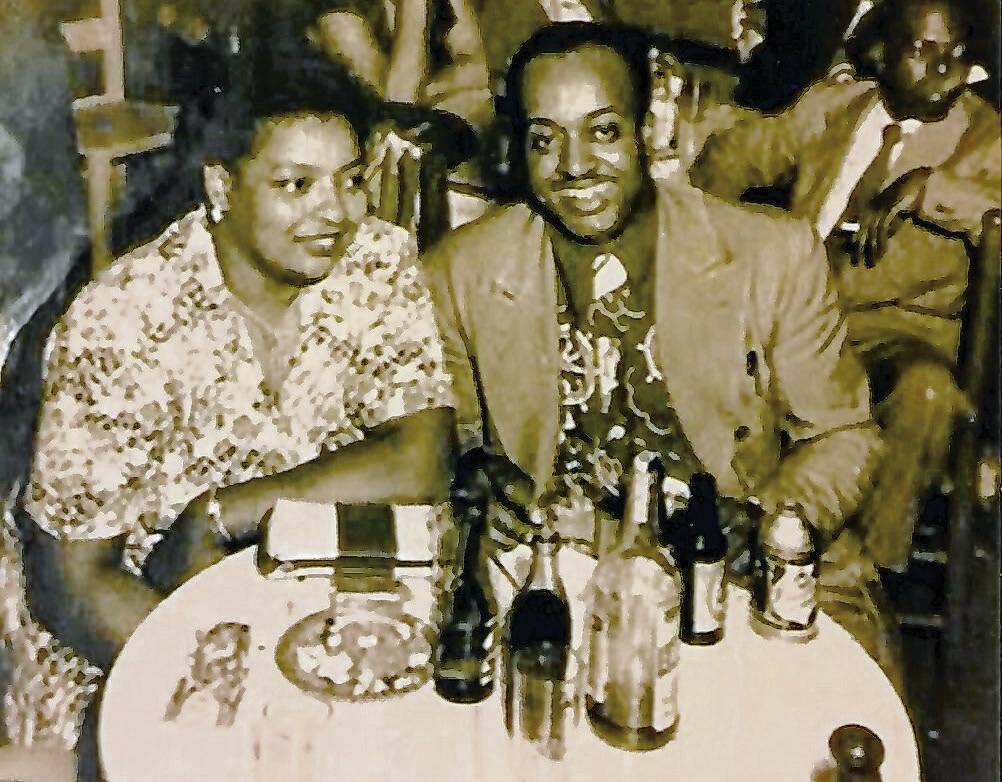
Some Sundays, Matteal jumped on the phone. Suddenly, the house was filled with cousins and friends bearing sandwiches, soup, Chivas Regal and 45s from their own record collections. Everyone laughed, danced smoked, drank and could not care less that the next day was Monday The party was called a “wing ding.” The only other time I had heard those words were from Granny Clampett on “The Beverly Hillbillies.” Matteal never forgot the sacred with her collection of the husky-voiced, singing preacher the Rev James Cleveland Kris
Kristofferson’s “Why Me Lord?” and Jimmy Swaggart on the organ on Sunday morning TV could bring her to tears. Gospel was playing in her last days of hospice. She had dreams of a gate that was getting closer and closer
There was no music on that Saturday morning in March as I sat by her bedside, waiting for the hearse. But her love of music and wing dings still burns in my heart.
Herman Fuselier is executive director of the St. Landry Parish Tourist Commission. A longtime journalist covering Louisiana music and culture, he lives in Opelousas. His “Zydeco Stomp” show airs at noon Saturdays on KRVS 88.7 FM.
responsible for building civil society “Towns didn’t have mayors or city councils,” Couvillon points out. “In fact, the only people who stayed at their posts while everyone else fled or disappeared were the volunteer firefighters. We were charged with securing an essentially lawless province.”
In writing this book with Miriam C. Davis, Couvillon says he’s not out to argue “whether the war in Iraq was a good thing or a bad thing.” But he takes pride in “the communities we pieced back together and the measure of peace
so important to the preservation of Louisiana culture and history, and his later books are still being used today as primary sources,”
Wynne said. “He basically was the savior of Louisiana history among the many great historians, because he didn’t just write about it. He was actively pursuing it. He had access to people who would’ve been long forgotten, and he was able to take these interviews with the people of Louisiana the common folk and write their stories in such a way to preserve them in history.”
Wynne decided to pursue an answer to his own question of why LSU has never awarded Saxon a posthumous honorary degree.
“I sent information to a couple of presidents of LSU and received a quick email from a staff person who said only a staff member at LSU can nominate Lyle Saxon for an honorary degree,” he said. “I’ve since been unable to find somebody on LSU’s staff who is willing to make the effort to nominate him.”
LSU outlined the procedure policy for such nominations in “Guidelines in Awarding Honorary Degrees” in April 1999. The policy was revised in January 2017 but still specifically states that “Nominations should originate from the faculty of a college or school or a campus wide committee and be forwarded, with appropriate administrative endorsement, through normal
PITRE
Continued from page 1G
we achieved.”
In recognition of his service, Couvillon was inducted into LSU’s Cadets of the Old War Skule, which has teamed up with LSU Press to publish “The Long Purple Line.” It chronicles the university’s extensive role in cultivating military leaders from its founding in 1860 through the present.
Henson Moore, a former Louisiana congressman, notes in his preface to the book that LSU was initially conceived as a military school.
“While no longer exclusively a military school, LSU’s long mili-
academic channels to the President. The President will submit the nomination to the Executive Vice President and Provost, the University Committee on Awarding of Honorary Degrees and the members of the Board of Supervisors for review Recommended candidates will then be submitted to the full Board.”
The policy also specifies that nominations “should be based on the individual’s contribution to his/her field of endeavor or to society in general.”
Wynne says Saxon deserves better He notes that an honorary degree for the author would be a “nice tip of the hat.”
“You cannot name another Louisiana author, who, 80 years after his death, has books still in print everywhere,” Wynne said. “Sen. Huey Long left high school before earning his high school diploma but was awarded an honorary high school diploma in 1993 by the Louisiana State Board of Education. So why can’t Saxon be awarded an honorary bachelor’s degree from LSU?”
Books still in print
Saxon’s books include his bestseller “Gumbo Ya-Ya: A Collection of Louisiana Folk Tales.”
That book is still in circulation through Pelican Publishing, as are his books “Fabulous New Orleans,” “Old Louisiana,” “Lafitte the Pirate” and his novel “Children of Strangers.”
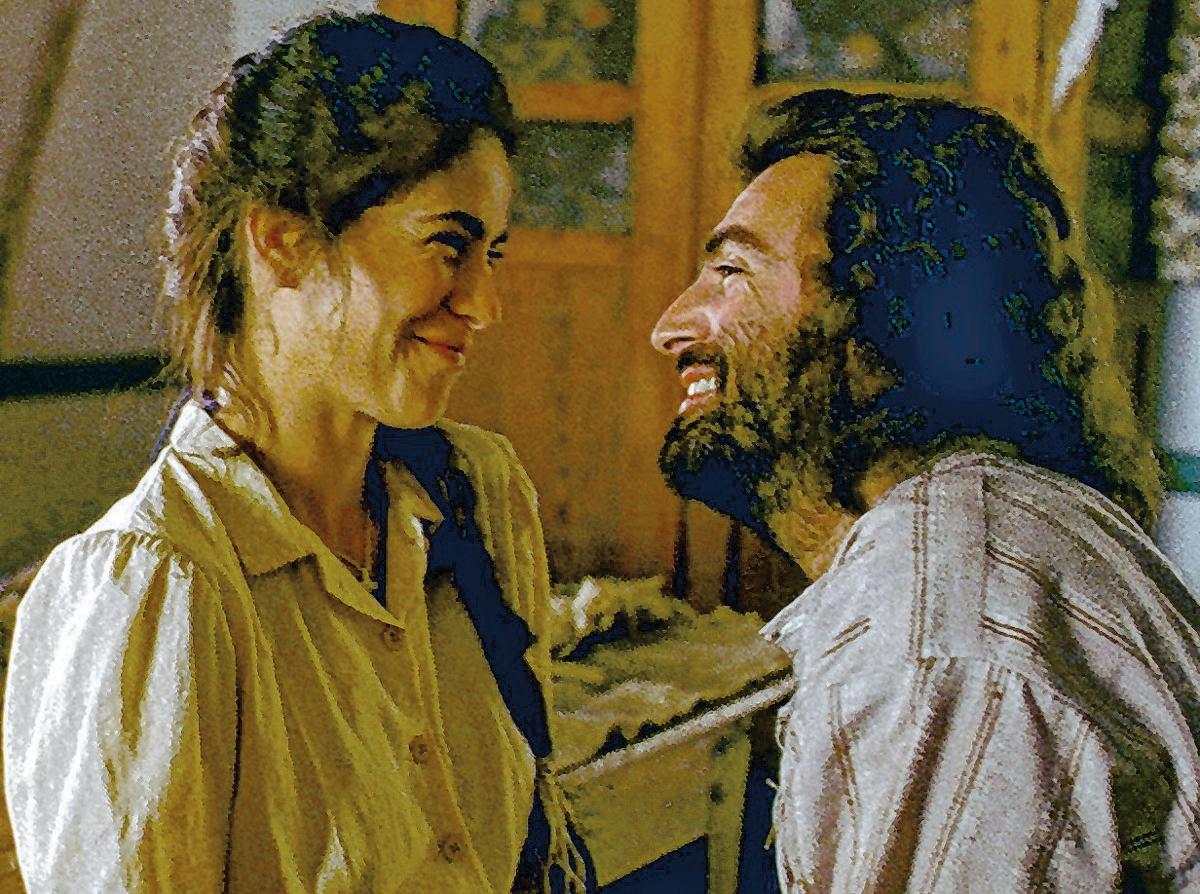
country healer who uses prayer, herbs and folk remedies to help the sick. He plays the accordion, plays tricks and flirts shamelessly, with the panache of a Cajun Robin Hood.
Breaux doesn’t have a lot in common with his English-speaking neighbors, one of whom is married to Alida Thibodeaux, the woman he loves.
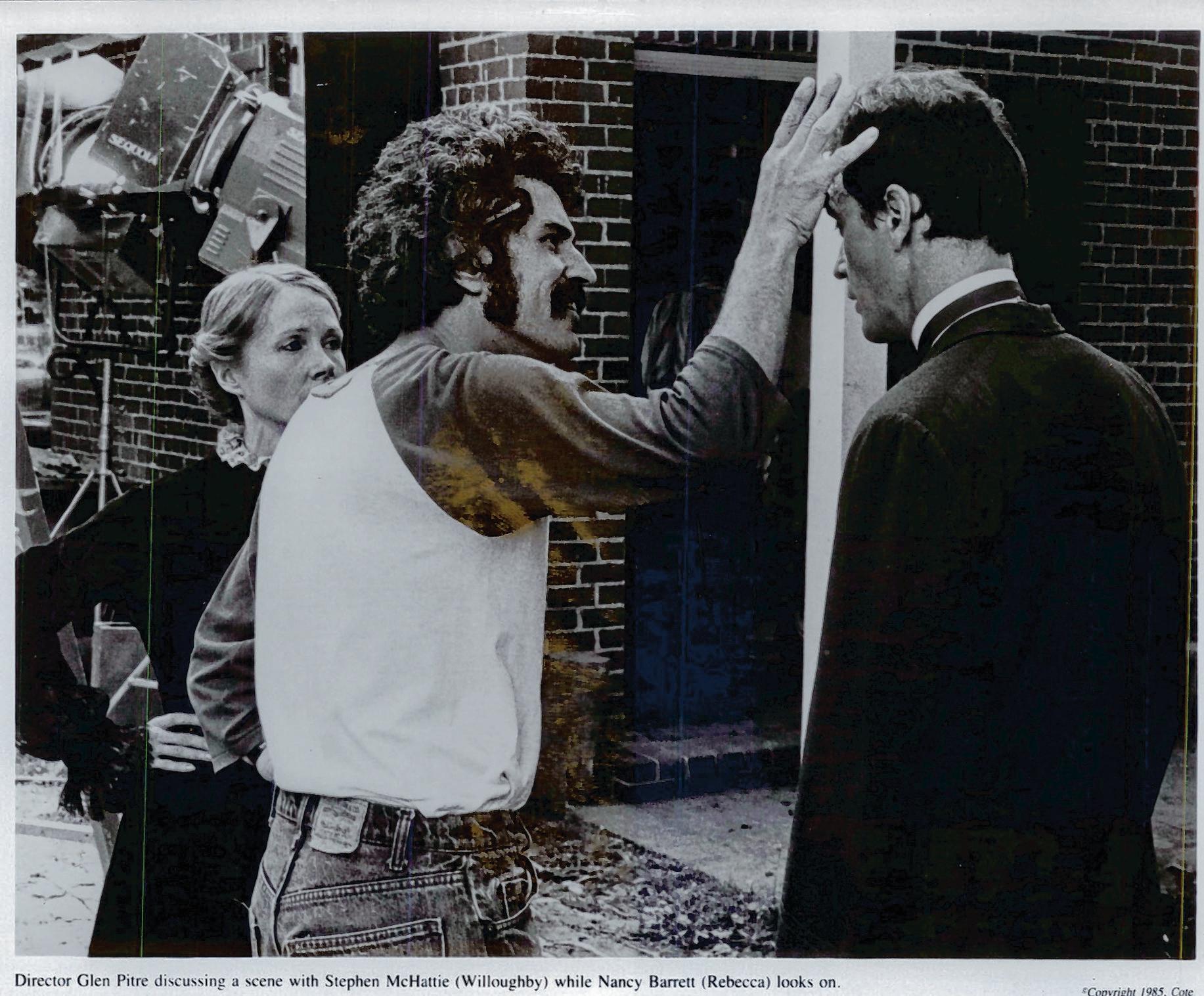
“All stories are based on conflict of some sort or another,” said Pitre, who now lives in New Orleans and continues to work on film and Louisiana cultural projects. “Everything isn’t black and white. You had the evil American, but his brother-in-law’s heart was basically in the right place. You have the Belizaire character, and his cousin, who should have known better There’s the local sheriff, who was played by my father, cutting legal and ethical corners left and right.
“Whether they’re on the side of good or on the side of evil, they’re all recognizable as people we see, people we know and occasionally ourselves.”
The collision of worlds is a common story in Louisiana history, where French, Spanish and American authorities have all left their mark through the centuries. The Cajun story has been forged through upheaval, from the Canadian expulsion to settlement in a new land. The character of Belizaire makes a lot of sense in this context, where you can’t always control the things happening around you, but you can control your response.
“He survives by his wits and being just one step occasionally half a step, or even just a quarter ahead of others,” Pitre said of Belizaire. It’s an archetype that was in half the stories I grew up with that has nothing to do with the events of the film.”
Pitre noted that the events in the film were loosely based on a real person who lived in Vermilion Parish and was arrested for the murder of a vigilante.
“He was a healer He was an accordion player He was arrested and later released and then he moved in with a widow, so that was the kernel of the story,” he said. Today, “Belizaire the Cajun” is difficult to find on streaming services. DVDs are available for purchase on Amazon, and clips from the film can be found on video sharing sites. The film sometimes airs through
tary history — over 160 years and counting, is still visible today,” Moore writes. Drez, former assistant director of the Eisenhower Center at the University of New Orleans, offers a compelling survey of LSU’s military heroes, including Troy Middleton, Claire Lee Chennault and Robert Hilliard Barrow The most moving part of the book is an appendix listing every LSU student killed in action. In a world still touched by war, that long list is likely to grow
Email Danny Heitman at danny@ dannyheitman.com.
His “Lafitte” book was adapted into Cecil B. DeMille’s 1938 film “The Buccaneer.” Actor-director Anthony Quinn’s remake of the adaptation was released in 1958 with stars Yul Brenner and Charleton Heston in the leading roles. Meanwhile, Saxon’s “Children of Strangers” tells the story of the post-Civil War plight of Louisiana’s free people of color along the Cane River in Natchitoches Parish, where he spent time writing at Melrose Plantation.
Owner Cammie Henry opened up the plantation grounds as a colony for writers and artists. Saxon was probably her most frequent guest, and New Orleans painter Alberta Kinsey often rode along to create her own work there
It was Kinsey who gave the plantation cook, Clementine Hunter, some leftover tubes of paint, which jumpstarted Hunter’s art career In the end, Wynne has answered his own question.
“I keep thinking about how Lyle Saxon was so close to that degree,” he said. “I shall persevere and attempt to attain this honorary degree for him.”
Do you have a question about something in Louisiana that’s got you curious? Email your question to curiouslouisiana@ theadvocate.com. Include your name, phone number and the city where you live.
local cable listings such as Louisiana Public Broadcasting, and Pitre periodically attends local screenings and question and answer sessions.
The root of the story, though, includes experiences that many Louisianans relate to.
Pitre says the biggest compliment he has received was from another director who noted that Pitre’s films don’t include characters who are idle. Instead, they reflect real life, with people having conversations, washing dishes, feeding chickens or fixing a car “So many people consider it a part of their story,” he said. “To create a world, to have audience members believe that world, you want to show how people lived.”
Email Joanna Brown at joanna.brown@ theadvocate.com.
PROVIDED PHOTO
Herman Fusilier gives credit to his mother Matteal and father Herman,
PROVIDED PHOTO The original cover for Louisiana author’s 1945 best-seller ‘Gumbo
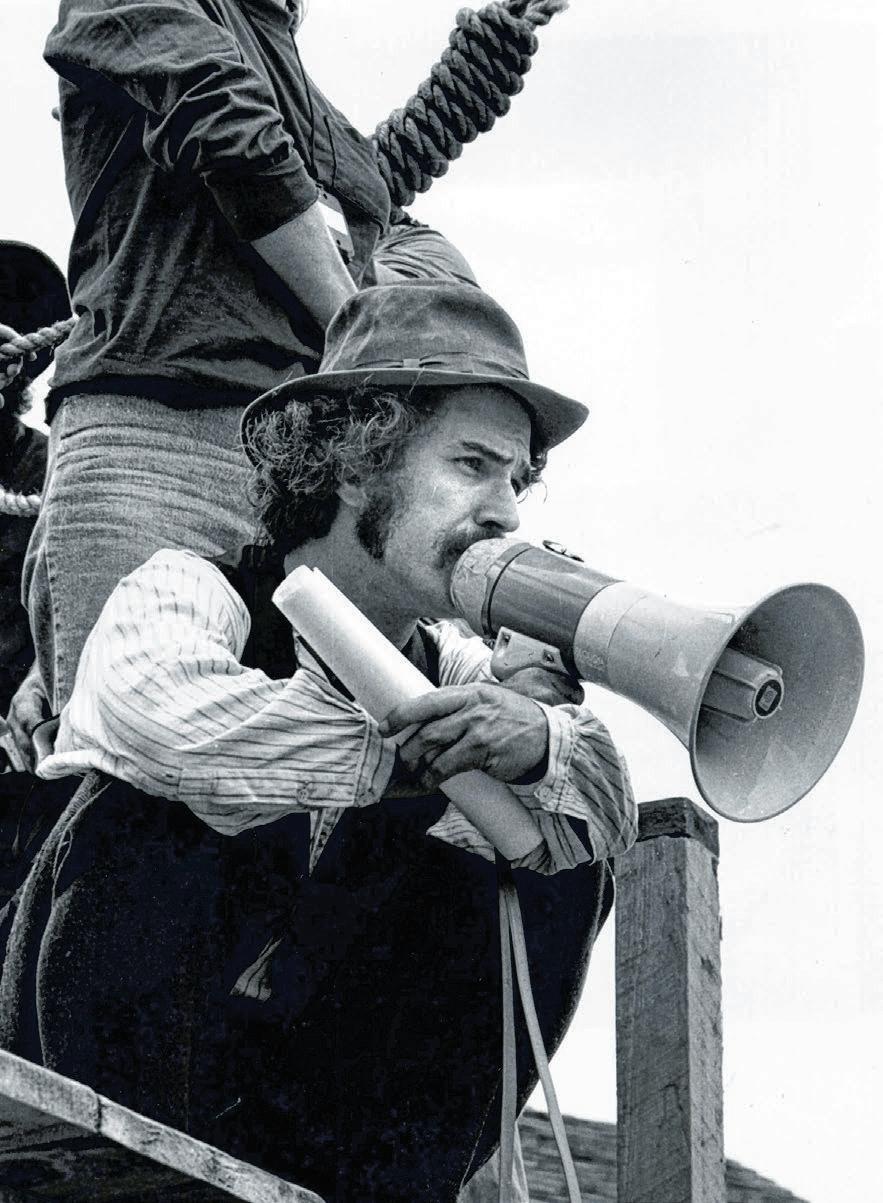
PROVIDED PHOTO Glen Pitre directs ‘Belizaire the Cajun.’
FILE PHOTO BY HILARY SCHEINUK
Memorial Tower stands tall surrounded by stately oaks on the campus of LSU in Baton Rouge.
Check out these spring break destinations
These
BY CHERÉ COEN
Contributing writer
Beaches beckon when spring break rolls around, a time to release the long-sleeved shirts and sweaters and pause the brain from all that studying.
But spring break doesn’t have to mean sand and sun.
Rather the time off might include a quiet hike through a national forest, a festival celebrating the return of the sun or experiencing a thrilling sport. We’ve compiled a few alternative locations here that are within driving distance of Louisiana. Get artsy in Texas
In 2008, one of the most innovative and immersive arts centers opened in Santa Fe, collaborating with artists to bring visitors a unique audience-driven experience. Meow Wolf has since opened satellites around the country, most recently in Houston with Radio Tave, an immersive, surreal, radiostation-themed experience.
The attraction features “ETNL Radio Station” and its crew who have opened a portal to a dimension of art where visitors may explore at leisure to unravel its secrets Meow Wolf is a creative space that must be experienced to truly understand its interactive and life-sized art. Visit meowwolf.com/visit/houston for more information.
San Antonio offers its own unique creative experience with Hopscotch, a curated 20,000-squarefoot art gallery where everything is interactive, from an adult ball pit and hall of mirrors to art that dances with you as you move. Grab an equally creative cocktail at the bar and lounge area, then pick up unique art items at the gift shop.
TRAVEL TROUBLESHOOTER
By Christopher Elliott
Take a hike
Spring bursts forth in Chattanooga, Tennessee, encompassing the 50-plus hiking trailheads within 30 minutes of downtown with a variety of wildflowers.
Visitors may also grab a kayak and enjoy the Tennessee River flowing through downtown or view rushing waterfalls due to winter’s runoff including the colorful Ruby Falls located deep beneath Lookout Mountain.
Be sure to stop at the city’s new
Reading Room, Chattanooga’s only bar and bookstore. Look for special events such as author talks, book trivia and tarot readings. Dig for diamonds
In the last few months, visitors to Arkansas’ Crater of Diamonds State Park have dug up some pretty large gemstones.
Last summer, Micherre Fox of New York found a 2.30-carat white diamond in the park. Then in January, Jack Pearadin of Arkansas and
Michael Schumacher of Wisconsin discovered a 6.03-carat yellow diamond, about the size of a gumdrop.
To date, more than 75,000 diamonds have been unearthed at the Crater of Diamonds State Park since the first diamonds were discovered in 1906 by John Huddleston, a farmer who owned the land long before it became an Arkansas State Park in 1972.
Children ages 6 and under get in free at the park, while children ages 6-12 have a $7 admission fee.
The adult admission fee is $15. If crystals are more your thing, several attractions at nearby Mt. Ida let you dig for quartz crystals that are abundant in the area.
Take off!
Want to travel to space but NASA’s not calling? Try the U.S. Space & Rocket Center in Huntsville, Alabama, home to one of the largest collections of rockets and space memorabilia on display anywhere in the world
The location serves as the Visitor Center for NASA’s Marshall Space Flight Center For those still in the learning mood, or just fascinated by weather, check out the current “How We Know the Weather” exhibit featuring 30 interactive displays, live feeds and sensory experiences about the science of meteorology.
Escape to the mountains
If you’re in need of elevation, the Ozarks of Arkansas are within a day’s drive. Secure a cabin in the woods and hike to waterfalls throughout the Buffalo National River area or grab a paddle and tackle the wild river Spring is an ideal time to visit the region where spring water produces dramatic falls and provides for thrilling paddling and tubing adventures, the latter of which really takes off in April and May Over at the Smokies, Dollywood’s I Will Always Love You Festival runs through April 12 with the debut of two shows, “MotoMotion Freestyle Showdown” which features choreographed performances of extreme riders, break dancers and aerial daredevils — and “Artreageous,” a 3D visual concert of art, live music, singing, dancing, humor and audience participation. The popular “From the Heart — The Life & Music of Dolly Parton” show returns, telling Parton’s story about leaving her Sevier County home to move to Nashville in pursuit of her dreams.
I rented a car from Avis at Sacramento International Airport recently A few hours into my drive, I noticed it smelled strongly of marijuana.
Christopher Elliott
I kept the windows open, but the odor lingered.When I returned the vehicle six days later, I told the staff about it.They said it would be fine. A week later, I received a $250 bill from Avis for cleaning plus the repair of a burn mark that I never noticed I don’t smoke cigarettes or marijuana and was the sole driver I protested, but Avis insists the charges are valid.What are my rights? — Gary Mullen-Schultz, Minneapolis
You should never have been given a car in that condition, and you should not have been billed for cleaning it up. Car rental companies regularly impose steep cleaning fees for smoke, pets and spills. I don’t have a problem with that when the damage actually happens during your rental. After all, renters agree to accept responsibility for the vehicle when they are renting it. But there’s a problem: These charges are often subjective. Unless an employee documents the condition of the car before you leave the lot, it’s your word against the company’s when you dispute it. That’s exactly what happened here.
Avis sent you a series of canned replies insisting it had ample documentation. But when I reviewed your correspondence, I didn’t see any convincing proof that you caused the odor or damage. You, on the other hand, have a credible explanation and a strong record as a longtime customer
Still, I wanted to be sure this damage didn’t happen on your watch. It turns out you had a sinus condition
that prevented you from smelling the marijuana odor when you picked up the car Otherwise, you would have never accepted it. You also didn’t smoke and didn’t have any other passengers, so it was highly unlikely this happened during your rental Avis didn’t send you any photos of the alleged cigarette burns, but I think you could have disproven its claim by taking interior shots of the vehicle — the seats, the floors, the dashboard with the odometer These should be a standard part of your check-in, anyway.
Also, don’t assume that casually telling a rental agent about a problem is enough. Ask the agent to document it in writing. That way, if a charge like this appears later, you’ll have proof I really wish car rental companies would follow the lead of Turo, which strongly encourages its renters to take before” and “after” images of its vehicles and even has a function in its smartphone app to help renters take usable and credible photos of their rentals. I contacted Avis on your behalf. A few days later, it dropped the $250 cleaning fee.
Remember, cleaning fees can be a profit center for car rental companies, and they are often unfairly applied. If you’re charged for a pre-existing odor or stain, challenge it immediately and escalate if necessary With persistence — and sometimes with a little advocacy — you can win.
Christopher Elliott is the founder of Elliott Advocacy, a nonprofit organization that helps consumers solve their problems. Email him at chris@elliott.org or get help by contacting him on his site.
PHOTO PROVIDED BY ARKANSAS STATE PARKS
In January, Jack Pearadin, left, and Michael Schumacher found a 6.03-carat diamond at Arkansas’ Crater of Diamonds State Park. More than 75,000 diamonds have been unearthed at the park.