If
‘Sinners’

If
‘Sinners’
Hopefully Ryan Coogler has a U-Haul on standby The 39-year-old movie director may need a moving van March 15 to bring the Oscars home for his horror film, “Sinners.”
The movie, which grossed $369 million in worldwide box office receipts, is up for a record 16 Academy Awards, including Best Picture, Best Director, Best Actor and Best Original Song
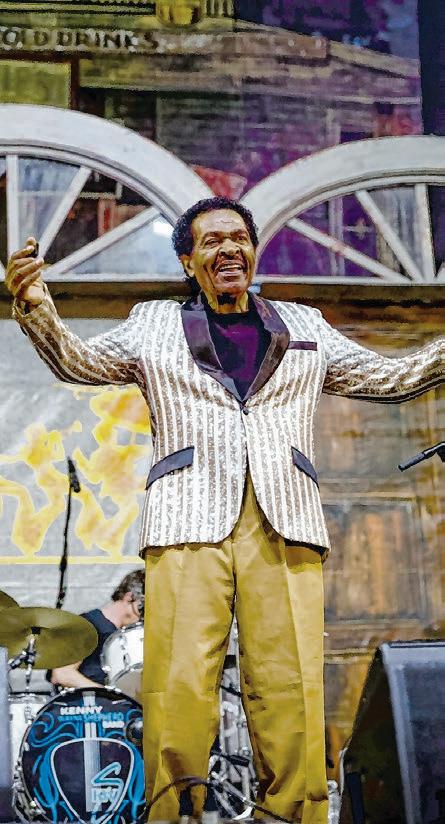
“Sinners” is already a winner for putting the spotlight on the blues and at least three Louisiana musicians who shaped the sound. Much of the vampire thriller is set in Southern juke joints of the 1930s, makeshift dancehalls that shook with sounds that poured the foundation for rock ‘n’ roll, soul, R&B, rap, country and more.
Coogler illustrates that past and future in a scene with the original song, “I Lied to You.” The 1930s scene drifts to visions of the coming decades of rock, rap, break dancing and funk.
Buddy Guy, an 89-year-old native of Pointe Coupee Parish, appears briefly in the movie as an aging version of the character Sammie “Preacher Boy” Moore. Born in 1936 in Lettsworth, Guy was a product of this “Sinners” era with skills that heavily influenced Jimi Hendrix, Eric Clapton, Stevie Ray Vaughan and others considered guitar gods A Grammy Lifetime Achievement Award winner and Kennedy Center honoree, Guy is still going strong with a tour of Australia set for April.
Fellow blues senior and Homer native Bobby Rush has also enjoyed “Sinners” notoriety, along with the late harmonica legend Little Walter of Marksville Rush, 92, wasn’t seen in the movie, but his harmonica was used for the character “Delta Slim.” Guy and actor Miles Caton performed the Little Walter original, “Juke.” The song has more than 2.2 million streams on Spotify and nearly 750,000 plays on YouTube.
Like Guy, Rush is not resting in his senior years. Between now and end of May Rush has gigs stretching from the French

STAFF FILE PHOTO BY CHRIS GRANGER Buddy Guy uses a drumstick to play a Jimi Hendrix tune at the 2023 New Orleans Jazz & Heritage Festival.



ABY JAN RISHER Staff writer
few weeks ago, I asked three members of the newspaper’s features staff to meet me outside the Old State Capitol for a small experiment.
We would each draw a color from a hat. Then we had one hour to walk around downtown Baton Rouge, photographing anything we saw in that color
That was the entire assignment. No competition. No prizes. Just one color and one hour
Margaret DeLaney drew yellow
Joy Holden pulled purple.
Maddie Scott got blue.
That left me with red. When I sent the calendar invitation, I suspected my colleagues might greet the idea with some skepticism. I’m aware enough to realize that my ideas sometimes exhaust them.

DeLaney later confirmed that suspicion.
“When the idea of a color walk came up, I have to admit I was slightly amused,” she said. “Walking around downtown hyper-fixating on one color seemed like a good way to spend the afternoon, but I didn’t think it would bring peace or calm my nerves.”
We had all left the newsroom with deadlines on our minds and doubts that the exercise would be particularly meaningful.
But once we scattered in different directions looking for our colors, something unexpected happened.
Afterward, when we compared notes we realized we had all experienced the same shift.
Once each of us started looking for a single color, we began seeing
BY ROBIN MILLER Staff writer
Frogs? In space?

Cue a froggy theme song by John Williams while the “Frogs in Space” prologue slowly scrolls from the bottom of the screen into the infinite galaxy This is where the Frogs must find a way to destroy the Death Star before it obliterates the universe, right? Wrong. Unfortunately, frogs don’t really factor into heroics at all when it comes to outer space, that is, unless commendations are awarded for inner ear studies, which was the National Aeronau-
tical Space Administration’s main interest when it launched two bullfrogs from Rayne into the earth’s orbit in 1970. This basically answers Mark Jeffers’ question about Rayne’s space frogs. “I remember hearing a story about Louisiana giving NASA two frogs from Rayne when I was a kid,” the Baton Rouge reader said. “Is this true? And if it is, what was the purpose?” Frog capital and ears Yes, it’s true, and Louisiana used it as an opportunity to pro-
mote the City of Rayne as the Frog Capital of the World while helping NASA investigate the effects of microgravity on balance, specifically targeting the causes of space motion sickness, which had significantly affected Apollo astronauts.
As reported by NASA at the time, a frog’s inner ear structure is similar to that of humans. The frog’s smaller size provided a simplified but accurate model for the study “Since 1965, NASA has flown more than 80 different organ-
it everywhere — in signs, storefronts, building details and tiny flashes we would normally have walked right past.
The color hunt added intention to what would have otherwise been just another one-hour walk.
Sometimes the discoveries even came with a burst of delight.
“Once or twice I jumped up and exclaimed, ‘Yellow!’ while people passed me by on the sidewalk,” DeLaney said.
Scott quickly decided blue might be the easiest color to find.
“Blue is everywhere,” she said.
“In storefront logos, in the library, even on some great album covers.”
But the most surprising part came after the walk ended.
“As I drove home, my mind kept noticing more blue,” she said “It felt like scoring points in a game.”
She said the experience brought a wonderful change in perspective for her

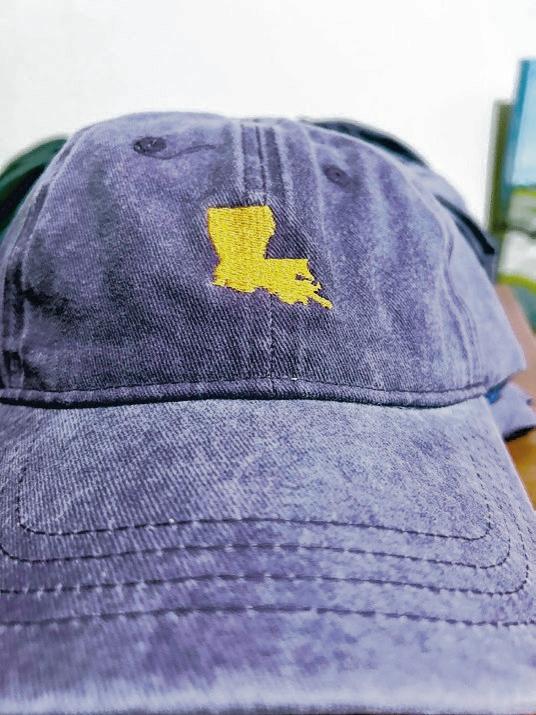
Continued from page 1G
Holden, who expected purple to be easy to find thanks to LSU and Mardi Gras, had the same experience, but what surprised her most was the change in pace
“After a busy day at work and driving around town, the color hunt was an immediate downshift into a state of mindfulness,” she said.
As she wandered from the Old State Capitol to the River Branch Library and through the LSU Museum of Art in the Shaw Center, she began spotting purple in places she might otherwise have missed.
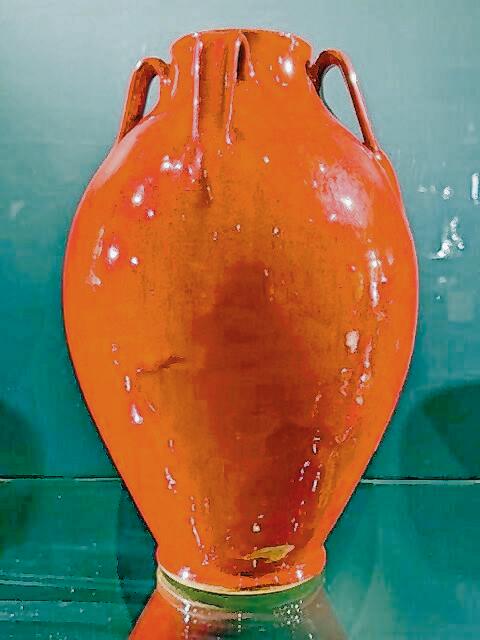
Even though they thought their colors were easy to spot, my assignment was red. I felt rather smug about that random draw after all, they don’t call it Baton Rouge for nothing
But what struck me most during the hour wasn’t simply how many red things I found — though there were plenty. It was how differently my brain began working.
Instead of moving quickly from place to place, I slowed down. I noticed details I had likely passed dozens of times without seeing a stripe on a sign, a book spine, a bit of paint on a doorway
Some of my favorite images weren’t the ones saturated with color They were the ones that revealed someone had slowed down long enough to really see.
For one hour, the usual swirl of thoughts deadlines, emails, everything competing for attention — quieted.
The experience confirmed something simple but powerful about attention.
We tend to find what we look for
Once our brains lock onto a pattern a color a problem, a worry, a joy — we begin spotting

it everywhere. The world is full of signals, and our minds play a big role in deciding which ones to notice. Adults spend a lot of time rushing past their surroundings. The color walk interrupted that rhythm For one hour, our only assignment was to look. Weeks later, we are still noticing our colors flashes of blue, purple, yellow and red that seem to appear out of nowhere. The beauty of the experiment is how little it requires. Write a few colors on slips of paper Each person draws one color from a hat. Pick a meeting place and set a timer for an hour (or two, if you have more time). Then go for a walk. We were surprised by what all we saw — and hope that you will be too.
If you try a Baton Rouge color walk, we would love to see your best photos. Share them with us at jan.risher@theadvocate.com.






BY ABNEY HARPER Contributing writer
Meringue and strawberries are a match made in heaven Meringues, made of egg whites, sugar and mostly air, soak up all the tangy, sweet juices of macerated strawberries. Add some sweetened whipped cream and ice cream, and you have a dessert that’s special enough for entertaining yet simple enough for a weeknight dessert.
I first fell in love with French meringue when my work took me to Paris multiple times each year for over a decade. I became obsessed with the huge French meringue clouds all over the city, which set me on a path of studying, developing recipes, producing and creating businesses around French meringue.
This is a simple recipe with some tips I’ve learned over the years to make what can be a tricky process (especially in south Louisiana humidity) a little bit easier
Recipe by Abney Harper
Serves 4 people
4 meringue cookies (or about 4 cups of meringue crushed into various-sized pieces)
(see below for meringue recipe)
1 pint of strawberries, hulled and sliced
1/2 cup granulated sugar (a little less or more depending on the sweetness of your strawberries)
Sweetened whipped cream, recipe follows
2 pints of your favorite ice cream, slightly softened (I prefer vanilla bean for this recipe, but strawberry or pistachio would be delicious as well)
Mint leaves, for garnish (optional)
1. In a medium bowl add sliced strawberries and sprinkle with sugar Give a stir to make sure each strawberry is tossed very lightly in sugar and set aside for at least 20 minutes As the strawberries macerate, a syrup will come together from the juice of
Continued from page 1G
isms as biological payloads to space,” said NASA Chief Historian Brian C. Odom. “These space biology studies have explored fundamental questions related to fields such as cell and molecular biology, developmental biology and neuroscience, just to name a few.” The 1970 mission, Odom said, was called the Orbiting Frog Otolith, or the OTO experiment. Otoliths are small, oval, calcareous bodies in the inner ear of vertebrates involved in sensing gravity and movement. Humans have two otoliths inside each ear Frogs have three. “One of the goals of NASA’s Office of Advanced Research and Technology at that time was to study vestibular organ function in space and on the Earth,” Odom said. “The OFO-A mission was designed to collect neurophysiological data on the response of the otolith, a part of the inner ear that is associated with equilibrium control, to prolonged periods of weightlessness.”
A case for Louisiana frogs
According to a Sept. 27, 1970, article in The Advocate, the City of Rayne made a “strong bid to have its famous bullfrogs or ‘wah-wah-rons,’ as they are called in the best Acadian circles, included in the ‘OFO’ spacecraft projects to be launched by NASA from Wallops Island, Va.” Rayne earned its moniker of “Frog Capital of the World” when entrepreneur Louis Baer teamed up with brothers Lionel, Desire and Pete Babineaux in 1933 to establish the Louisiana Frog Co. The business operated out of Rayne and became the world’s largest shipper of edible frogs However, Rayne’s road to frog fame began in the 1880s with chef and barkeep Donat Pucheu, who

the strawberries and the sugar
2. Pull the ice cream from the freezer to let soften slightly so that it’s easy to scoop.
3. Meanwhile, make the whipped cream. I am not above store-bought whipped cream here, so do what makes your life easier
4. Once your strawberries have macerated and your remaining ingredients are prepared, it’s simply a matter of assembling.
5. This dish can be assembled in individual bowls. For a dramatic
presentation, pile all the ingredients in a large shallow serving bowl and let guests serve themselves.
6. Start by scooping ice cream into the bottom of the serving dish. Add a little whipped cream, then a layer of crumbled meringue and a spoonful of strawberries. Repeat layers of whipped cream, meringue and sliced strawberries, then drizzle the desserts with any strawberry syrup left in the bowl of strawberries. Garnish with mint leaves.

harvested and sold local bullfrogs to New Orleans restaurants. Then came French immigrant Jacques Weil, who, along with his brothers Edmond and Gontran, founded the Jacques Weil Co. in 1899, which expanded Rayne’s frog industry globally, shipping frog legs to restaurants in New York and Paris.
This marked the beginning of Rayne’s reign as Frog Capital of the World. The Louisiana Frog Co. was Rayne’s global supplier of frogs when NASA initiated its OFO program
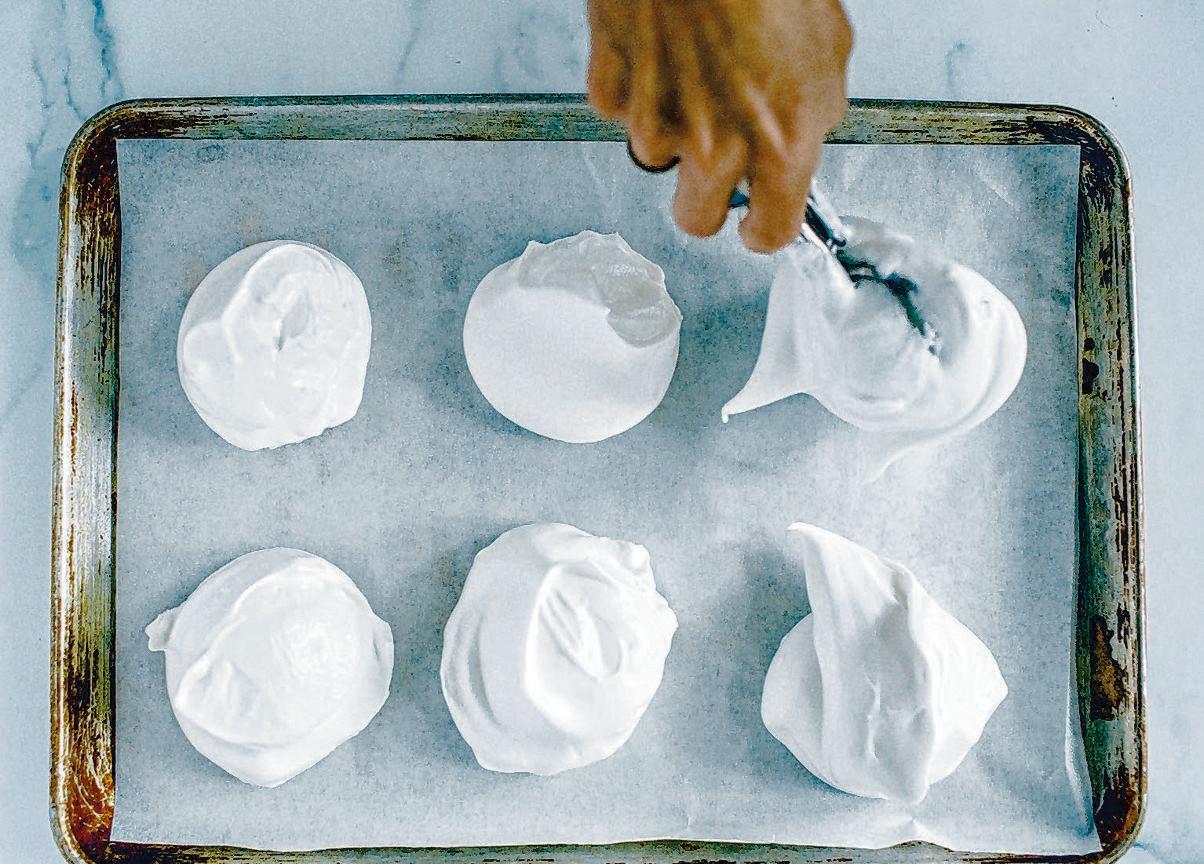
Note: This dish is literally called a mess, so there are no rules on how to assemble. The goal is to achieve a mix of flavors and textures in each bite.
1 cup of egg whites (about 6 egg whites) at room temperature 1/4 teaspoon of cream of tartar 1 cup of finely granulated sugar
1. Preheat oven to 200 degrees.
2. Place egg whites and cream of tartar in the bowl of a standing mixer Set a timer for three minutes. Turn your mixer on medium-low
3. Slowly add sugar in a steady stream over the course of three minutes. Leave the mixer running on medium-low for another two minutes to allow the sugar to dissolve in the egg whites.
4. Crank the mixer up to high speed and whisk for another three to five minutes until stiff peaks form. The batter will be ready when you remove the whisk and the meringue stands up straight and tall.
5. Using a large serving spoon,
place four to six large mounds of meringue on a parchment-lined baking sheet. Bake in the oven for 6-12 hours. Meringues will be ready when you can easily remove them from the parchment paper (I make my meringues in the afternoon and leave them in the oven overnight at 200 degrees).
1 cup heavy whipping cream 4 tablespoons powdered sugar
1. Place heavy whipping cream and powdered sugar in a large bowl. Beat with an electric mixer on medium-high heat just until stiff peaks begin to form.
Note: Make sure not to overbeat or cream fresh whipped cream. It will keep in the fridge for three days.
Abney Harper co-owns Prima Après, featured in the LSU Student Union, and Sucré Baton Rouge. She is a chef and entrepreneur who previously owned a casual fine dining restaurant in Georgia.
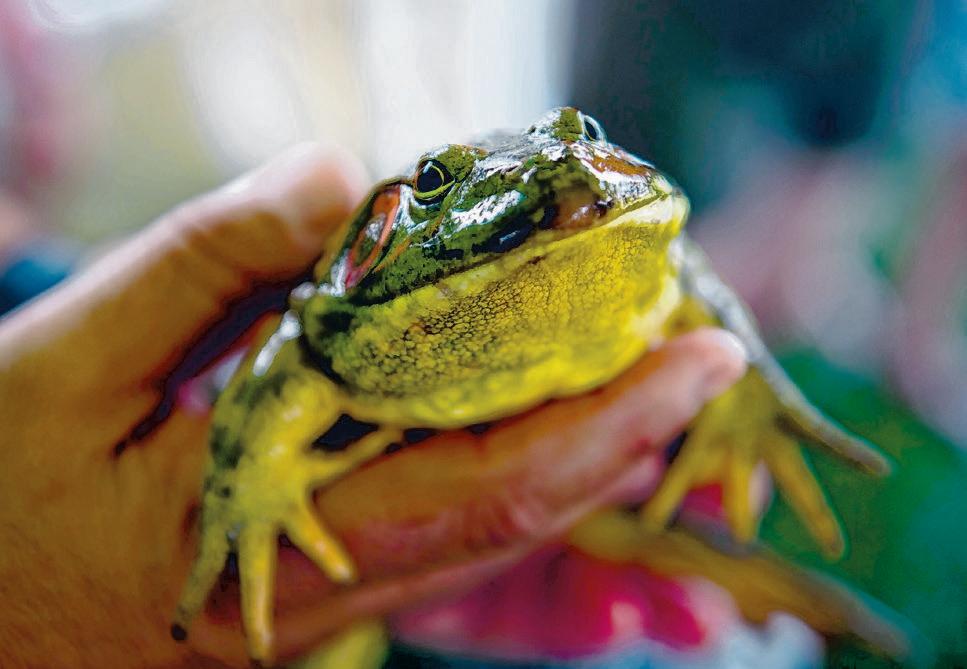
al Aeronautics and Space Administration as soon as he learned of the experimental launch to see if there was a possibility that the two male bullfrogs to be used on the OFO might be supplied by Rayne,” the article stated.
The frogs were to be monitored in their weightless environment while orbiting the earth for at least five days.
On Oct. 6, 1970, The Advocate reported that 20 bullfrogs were to be jetted to NASA’s Wallops Flight Facility in Virginia.
sealed in water-filled capsules containing artificial lungs and heaters to keep them stable. Their limb nerves had been cut to prevent them from dislodging electrodes, while also lowering their metabolic rates so they could survive without food for up to a month.
Pierre and Tee-Nom died from heart failure on Nov 15, their sixth day in orbit. But they didn’t die in vain.
Continued from page 1G
Quarter Festival in New Orleans to the Ribs & Blues Festival in the Netherlands. Similar to Guy, Little Walter born Marion Walter Jacobs in 1930, left Louisiana for Chicago, where he recorded “Juke,” “My Babe” and more groundbreaking harmonica blues. Renowned as an alcoholic with a short fuse and numerous fight injuries, Walter only lived to the age of 37.
Yet the blues of Walter, Rush and Guy live on, thanks to “Sinners,” introducing a new generation to the foundation of American music.
The finest frogs
“Effort to have only the finest frogs from Rayne included in the pending NASA program have been aided by Rep. Edwin Edwards,” The Advocate’s Sept 27, 1970, article continued.
Yes, this was the same Edwin Edwards who would later serve four terms as Louisiana’s governor He was representing Louisiana’s 7th Congressional District at the time, which included Rayne.
“Edwards, knowing the superior quality of Rayne frogs, contacted the Nation-
“Brief ceremonies were staged at Louisiana Frog Co. Friday afternoon as a ‘send-off’ for the bullfrogs,” the article stated. “Participating were Congressman (Edwin) Edwards; Mayor W.J. (Bill) Cossen; Mayor Pro Tem Ralph Stutes; Miss Sue Guidry, who is Rayne’s Frog Queen and (David ‘Pete’) Babineaux (of Louisiana Frog Co.), who personally caught the frogs and who will be responsible for placing them on the plane for Salisbury, Md., where they will be met by NASA personnel and taken to Wallops Station.”
Pierre and Tee-Nom
Once at the NASA station, two frogs were chosen: Pierre and Tee-Nom, who were launched into space on the 292-pound craft on Nov 9, 1970. Both were
“The Rayne residents who staged a diligent effort to have the space agency use their frogs may take comfort in knowing all experiments were completed before death came,” The Advocate reported on Nov 16, 1970. “The National Aeronautics and Space Administration declared the mission fully successful before death came.”
As for the other 18 frogs who made the trip from Rayne to Wallops Island, Virginia, nothing is mentioned of their fate. But Pierre and Tee-Nom will forever be immortalized as Louisiana’s “Frogs in Space.”
Do you have a question about something in Louisiana that’s got you curious? Email your question to curiouslouisiana@ theadvocate.com. Include your name, phone number and the city where you live.
Herman Fuselier is executive director of the St. Landry Parish Tourist Commission A longtime journalist covering Louisiana music and culture, he lives in Opelousas. His “Zydeco Stomp” show airs at noon Saturdays on KRVS Public Media.