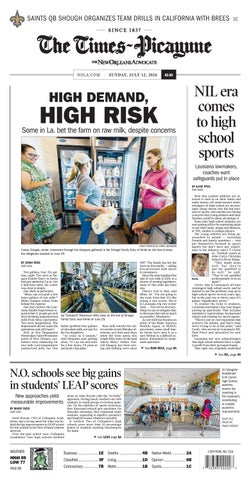
HIGH DEMAND, HIGH RISK
Some in La.bet thefarmonraw milk,despite concerns
BY JENNA ROSS Staffwriter
Twogallons, four.Six gallons,eight. Thestore atSinagra Family DairyinAmite had just opened at 2p.m., but ahalf-hourlater,the cooler was close to empty One shelf, in particular “Mom, can you grab afew more gallons ofraw milk?” Miles Sinagra called from behind the register Just days before, the Louisiana HealthDepartment reported that 11 people gotsick after drinking unpasteurized milk from three operations Twowere hospitalized. The department did not namethe operations and still hasn’t Still, at this Tangipahoa Parish dairyfarm90minutes north of New Orleans, customers were clamoring for raw milk. Low-temperature pasteurized milk,too. One

fathergrabbedfourgallons of chocolate milk, not just for histwo daughters “As crazy as it sounds,” Josh Simonsen said, getting close, “ifIgoout and mow for afew hours, I’ll come in andgrab abig glass.”
Rawmilk outsold the othersonthis recentMondayafternoon, as it does mostdays when the farm opens this bright little storeonthe land where Miles’ father,DarrellSinagra, has been raising and milking cows since
N.O. schoolssee biggains in students’LEAPscores
Newapproaches yield measurable improvements
BY MARIE FAZIO Staff writer
Jerel Bryant,CEO of Collegiate Academies, has astrong sensefor what wasbehind the big improvements in LEAP scores for the schools in his New Orleans charter network. Over the past school year,Collegiate Academies’ four high schools doubled

down on what Bryant calls the “no bells” approach. During lunch, teachers satwith students in small groups reviewing material. On the sidelines of sports practices, they discussed missed quiz questions.On Saturdaymornings, they organized study sessions, squeezinginalgebra,geometry and Englishlessonswhenever possible. It worked. TwoofCollegiate’shigh schools grew more than 10 percentage points in students meeting benchmarks for math
ä See LEAP, page 6A
1997. The family has bet the farm on this model —selling less-processed milk direct to consumers. Since the state legalized the sale of raw milk in 2024, to a chorus of mooing legislators, some of that milk hasbeen raw.
There’srisktothat, said Miles, 26. “I’m notgoing to shy away from that. It’slike eating araw oyster.We’re in Louisiana, big raw oyster state. …Now do we do everything we can to mitigate that, to decreasethatrisk as much as possible? Absolutely.”
As rawmilk has become an elixir of theMakeAmerica Healthy Again, or MAHA, movement, some small family farmshaveseen it as a rare lifeline in adifficult industry dominated by largescale operators.
ä See RAW MILK, page 8A
NILera comes to high school sports
Louisiana lawmakers, coacheswant safeguards putinplace
BY ALYSE PFEIL Staff writer
Nowthat student athletes are allowedtocashinontheir talent and make money off endorsement deals, teenagersinhigh school areincreasingly being drawn into the big business of sports, and coaches are raising concerns that young athletes and their families could be taken advantage of.
Some elite high school students are nowgetting offersfor marketing deals to use their name, image and likeness, or NIL,similar to college players.
The young athletes arebeing approached by people —including friends and family members —who put themselvesforward as sports agents but don’thave any experience in the industry,saidJ.T.Curtis Jr footballcoach at John Curtis Christian School in River Ridge.

“They might mean well, but they’re just not qualifiedto do well,” he said. “They’re notqualified professionally to be an agent.”
Curtis, who is Louisiana’sall-time winningest high school coach, said he started to see the problem crop up in high school sports several years ago, but in the past two to threeyearsit’s gotten “significantly worse.”
To counter the risks to students, Louisiana lawmakers this year began putting up guardrails. That includes mandatory registrations, background checks and training forsports agents.
“There’sjust no real regulation that protects the athlete, and that’swhat we’re trying to do at this point,” said Curtis, whoserved on Louisiana’sNIL Task Force and advocated for new laws.
Louisiana law now acknowledges that high school athletes have aright to profit from their personal brands. That right wasoriginally enshrined
ä See NIL, page 4A

At Collegiate Academies’ G.W. Carver High School, teachers receive live coaching in the classroom, contributing to notable academic improvements STAFFFILE
By

PHOTO
ENAN CHEDIAK
Curtis
STAFF PHOTOSByCHRIS GRANGER
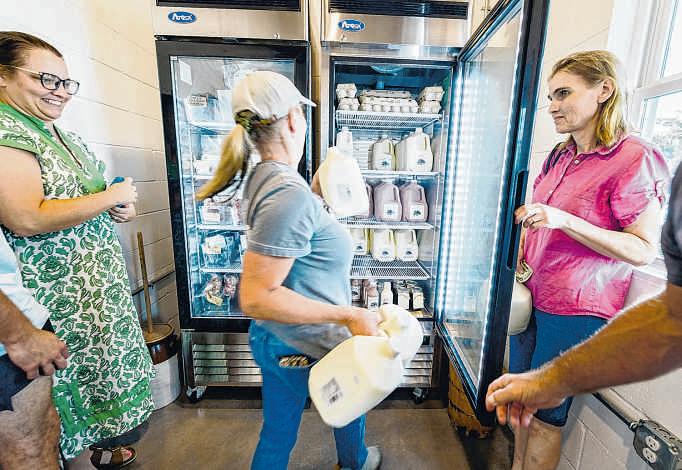
CassieSinagra, center, maneuvers throughthe shoppers gathered in the Sinagra Family DairyinAmite as shetries to keep therefrigerator stockedonJune 29.
Jay‘Sandwich’ Stevenson milks cows on the line at Sinagra Family Dairynear Amite on June 29.
BRIEFS FROM WIRE REPORTS
Judge tosses remnants of Proud Boys case
WASHINGTON A federal judge has dismissed the remnants of the government’s landmark case against far-right Proud Boys members who were convicted of seditious conspiracy for plotting to attack the Capitol to keep President Donald Trump in the White House more than five years ago
The case’s dismissal late Friday became a foregone conclusion when Trump last year used his pardon powers to erase every case that the government prosecuted after a mob of his supporters stormed the building on Jan. 6 2021 The judge who presided over the Proud Boys leaders’ trial saw no basis to preserve the convictions after Trump’s sweeping act of clemency last year
U.S. District Judge Timothy Kelly, whom Trump nominated during his first term, said there is “little mystery” about why the second Trump administration decided to abandon this case and every other Jan. 6 riot case.
“President Trump’s views about the prosecution of those who attacked the U.S. Capitol on January 6 — whether those views are based on fact or fiction are well known, as is his intention to extend clemency to them,” Kelly wrote.
The judge stressed that his order should not be mistaken as an endorsement of the Department of Justice’s decision to abandon the case. He referred to the Capitol riot as “a perilous event” and an assault on the constitutional imperative for a peaceful transfer of power between presidents.
“Moving forward, if this Nation’s experiment in self-government is to last another 250 years, the American people — no matter their partisan preferences will have to act together to preserve, protect and defend that miracle through our constitutional framework,” Kelly wrote
One runner gored at bull run festival in Spain
PAMPLONA, Spain A runner was gored in the face and many more were fortunate to not be seriously injured during a chaotic bull run at Spain’s San Fermin festival on Saturday
The six bulls and accompanying steers charged through crowds of thrill-seekers who packed the narrow street course in Pamplona. The huge animals knocked down bodies to the cobblestones, and stumbling runners caused several pileups during the two-and-a-half-minute run from the pen to the bull ring where bullfighters will kill the bulls later in the day
One runner was pierced by a horn in the face, while 12 more people needed medical treatment for an assortment of knocks, according to the University of Navarra Hospital
A black bull broke away from the pack early in the 957-yard run and plowed into a group of people, smacking one full in the side of the face with a horn. It was not clear if that was the moment of the goring.
Many runners appeared completely unaware when bulls were breathing down their necks and, instead of trying to gore them, just shoved them out of the way
U.K. police release man held in ex-MP’s killing LONDON British police on Saturday released a 26-year-old man arrested as a suspect in the killing of former politician and reality TV contestant Ann Widdecombe, as they revealed she was attacked in her home a full day before her body was discovered.
Devon and Cornwall Police said the man detained on Friday a few miles from the scene of the attack was no longer under investigation. The force said detectives are working at “at a significant pace” to find the killer and they don’t believe there is a risk to the public.
Widdecombe, 78, was found dead Thursday in her isolated rural home in the village of Haytor on the edge of Dartmoor National Park in southwest England. Police did not disclose a cause of death, saying only that she had sustained “serious injuries.”
Iran strikes ship, says strait closed
U.S. says
it’s
begun attacks in response
BY JON GAMBRELL, MICHELLE L. PRICE and WILL WEISSERT Associated Press
DUBAI, United Arab Emirates
Iran said the Strait of Hormuz was closed once again after a warning shot
fired by its military struck a vessel using an unauthorized route in the critical waterway, further jeopardizing the already tenuous ceasefire agreement with the United States.
U.S. Central Command said a short time later that its forces began a third round of strikes against Iran. There were explosions in Bandar Abbas and Sirik, two towns along the shores of the strait, Iran state media reported.
“The United States is imposing a heavy cost by continuing to degrade Iran’s ability to attack civilian mariners and commercial ships freely transiting the strait,” the American military said.
A Cyprus-flagged container ship was hit by Iran and suffered “significant engine room damage” and a civilian crew member is missing, U.S. Central Command said.
Senior U.S. officials had previously said in Wash-

ington that negotiations to further cement last month’s deal to end the war will be unable to progress without the strait being secure and even said they wanted Iran to offer public statements to that effect
Instead, the Revolutionary Guards Corps said multiple vessels “disregarded our warnings and instructions to correct their course and proceed along the approved route.” One of them “was struck by a warning shot and brought to a stop.”
Iran said that the strait would remain closed “until further notice” and said it would consider targeting “additional enemy bases in
the region” if it faced more attacks.
A little more than an hour later, the U.S. announced its own new round of strikes.
“Iran made a poor choice. Now they pay,” Defense Secretary Pete Hegseth posted on social media.
The latest flurry of shots from both sides followed Iran and Oman’s foreign ministers meeting on Saturday to discuss the strait that lies between them, after days of Iranian attacks on ships and U.S. retaliation that dealt a blow to the interim deal to end the war
Iran’s new supreme leader, still unseen since the war began, also vowed in his
first statement since the funeral of his father, Ayatollah Ali Khamenei that Iranians would avenge his killing in the war’s opening strikes on Feb. 28.
Such revenge “is the will of our nation and must certainly be carried out,” Supreme Leader Mojtaba Khamenei said in a statement carried on state television, hours after President Donald Trump threatened more missile attacks.
Oman said it and Iran agreed to keep talking about the Strait of Hormuz “at the technical and political levels.”
Iranian Foreign Minister Abbas Araghchi said before
the new round of strikes that he met with his counterpart in Oman to discuss “appropriate mechanisms for ensuring the safe passage of ships.”
The world for decades has considered the strait an international waterway Iran has insisted that the strait now remain under its control and that it be allowed to charge ships moving through it, a stance it took after the war began.
The U.S. urges mariners to transit on a southern route through Oman’s territorial waters.
About a fifth of all traded oil and natural gas passed through the strait before the war began. Iran’s grip on it during the war led to a global energy crisis, though oil prices have sharply dropped since wartime highs of $120 a barrel. Iran’s top diplomat also accused the U.S. of violating the interim deal by ending waivers allowing Iran to sell crude oil on the open market in U.S. dollars. Washington ended them in response to the attacks on ships in the strait.
“Reality check: There can only be mutual compliance,” Araghchi wrote on social media.
Trump said he’s personally been the target of an Iranian plot, and he said the U.S. military would automatically retaliate if he was killed.
Reporters subpoenaed after Air Force One stories
BY WILL WEISSERT and ASHRAF KHALIL Associated Press
WASHINGTON The Department of Justice has subpoenaed New York Times journalists after they reported on security concerns involving the new, Qatari-gifted Air Force One, marking a dramatic escalation of President Donald Trump‘s campaign against the media that has drawn condemnation for eroding a fundamental freedom of American democracy.
The new jet, a present from the U.S. ally that the administration spent $400 million on to retrofit and upgrade, entered service last week. But Trump used an older model Air Force One jet to leave a NATO summit in Turkey and later referenced threats against him made by Iran.
The subpoenas seek to force the reporters to testify before a federal grand jury in Manhattan this week, the Times said, adding that federal agents delivered some subpoenas

Air Force One carrying President Donald Trump arrives Tuesday for the NATO summit
to the reporters at their homes.
They were issued after FBI Director Kash Patel and other Justice Department officials met at the White House on Friday to talk about the matter, according to a person familiar with the discussions who was not authorized to discuss the issue publicly and spoke on the condition of anonymity.
The journalists subpoenaed included Julian E. Barnes, Eric Lipton, Tyler Pager and Eric Schmitt,
the Times reported.
“The appearance of federal law enforcement agents on the doorstep of news reporters should shock the conscience of any American who believes in the Constitution and the press freedom it protects,” David McCraw, a lawyer for the Times, said in a statement Bruce D. Brown, president of the Reporters Committee for Freedom of the Press, said Trump’s “war on the press is looking for another victim.”
Russian attacks kill 6, wound 29 as Ukraine targets oil tankers
By The Associated Press
KYIV, Ukraine Russian attacks on Ukraine killed six people, including a child, and wounded 29, officials said on Saturday, adding that Ukrainian forces damaged more than two dozen Russian tankers and other vessels in the Sea of Azov
The exchange came as Ukraine’s drones have lately been hitting oil refineries and other infrastructure across Russia to undercut its war effort, triggering a widespread fuel crisis with gasoline shortages. Moscow has responded by intensifying its bombardment on Kyiv and other cities, exposing Ukraine’s vulnerability to ballistic missile strikes. Ukraine’s General Staff said 21 tankers used to transport oil and petroleum products were damaged overnight, in addition to four tugboats, two cargo ships and a dredging vessel. Russian officials said
one person was killed in the Ukrainian drone strikes and that only four ships came under attack
In Ukraine’s northeast Sumy region, four people were killed, including a child, and 17 people were wounded when two aerial glide bombs hit a crowded area where civilians were present, said Sumy regional head Oleh Hryhorov Eleven people, including one child, were wounded in missile and drone attacks overnight on Kyiv, the State Emergency Service reported. In the southern region of Odesa, two people were killed after a Russian missile struck a building, said regional head Oleh Kiper Another man was wounded by shrapnel. Explosions and fires were reported across Kyiv’s Solomianskyi, Darnytskyi and Dniprovskyi districts, the emergency service said. Russia launched 12 missiles, including six ballis-
tic missiles, along with 121 drones against Ukraine overnight, Ukrainian President Volodymyr Zelenskyy said. He said most of the drones and some of the missiles were shot down, but the ballistic missiles reached their targets, reiterating Ukraine’s dire air defense gaps. Ukrainian air defenses said they shot down or electronically suppressed two missiles and 111 drones. The air force said direct hits were recorded at 11 locations.
Russia’s Defense Ministry said its forces targeted drone production facilities in Kyiv as well as the ports of Izmail and Chornomorsk in the Odesa region.
The ministry also said Russian air defenses destroyed 178 Ukrainian drones overnight over eight Russian regions, as well as over the Russianoccupied Crimean Peninsula and the Black and Azov seas.
He said in a statement that the subpoenas “break from long-standing Justice Department practice to protect the public interest and press independence by requiring prosecutors to only seek information from reporters as a last resort when all other avenues have been exhausted.”
The department said that “to be clear, reporters are not the targets, those leaking classified information are.”
Its statement said “we value and appreciate the important role that the press plays in this country, but DOJ also plays an important role to make sure that the people entrusted with our nation’s secrets do what they’re supposed to do with that information, which means not
sharing classified information.”
While recognizing “there may always be natural tension there,” the department said “we are not going to ignore the law and stop investigating the people who work in the administration and think it’s OK to leak classified information impacting national security.”
Issuing subpoenas represents further ramping up of Trump’s effort to threaten independent new organizations by leveraging the power of the federal government against them. It is also part of a systematic pattern by the Republican president to attempt to undermine press freedom in order to shield him from negative coverage.

ASSOCIATED PRESS PHOTO By VAHID SALEMI
A cleric waves an Iranian flag while holding a child as a woman waves a religious flag on
Saturday during a pro-government gathering commemorating the late Iranian Supreme
Leader Ayatollah Ali Khamenei at a square in Tehran, Iran.
ASSOCIATED PRESS PHOTO By ABDULLAH GÜÇLÜ
in Ankara, Turkey
Dangerous heat wave threatens oppressive temperatures
BY PATRICK WHITTLE and TAMMY WEBBER Associated Press
A widespread and danger-
ous heat wave was building across the U.S. on Saturday, with triple-digit highs expected in the Southwest and Great Plains next weekend before spreading eastward under a dome of high pressure that meteorologists say could trap oppressive temperatures for a week or more.
Forecasters advised people to stay hydrated and find places to cool off, warning of temperatures 15 to 25 degrees warmer than normal in many areas, including at night — especially bad
for people’s health because their bodies won’t have a chance to recover The heat dome was expected to affect as much as two-thirds of the continental United States.
“The heat doesn’t necessarily stop when it’s dark out,” said Josh Adam, a meteorologist with the National Weather Service in Bismarck, North Dakota, where temperatures will surpass 100 until Tuesday, a dramatic spike for a state where summer temperatures are typically in the 80s.
Tynika Smith of Bloomington, Minnesota, handed out frozen towels and wash cloths along with batteryoperated fans at encamp-
ments of homeless people in nearby St. Paul and will continue next week, when temperatures are forecast to climb into the mid- to high 90s. The residents put the ice packs around their necks and on their heads.
“They can’t get into a car with air conditioning or go into a house,” said Smith, who also distributed water, freezer pops, food and hygiene supplies The encampments are so secluded that it’s difficult for the residents to walk or bicycle to cooling centers, she said. There also is little outside shade, while the temperature inside their tents gets even hotter than outdoors.
“I can only do so much,” Smith said, “but at least I can help them stay cool for a little bit.”
The National Weather Service predicted that more than 90 U.S. local temperature records will be tied or broken through Wednesday — with two-thirds of those being overnight heat records. Temperatures were not forecast to drop below 80 at night in Fort Lauderdale, Florida; Miami; Tampa, Florida; Galveston, Texas; and Charleston, South Carolina.
The heat dome formed when high pressure traps hot air while blocking cooling winds and rain — is one of the strongest to affect the
Dakotas in 25 years, said Chad Merrill, a senior meteorologist with AccuWeather Record triple-digit highs were forecast for the weekend in Nevada, Utah, Colorado, Wyoming, Idaho, Montana and the Dakotas.
In Helena, Montana, where temperatures were expected to creep above 95, Last Chance Splash Waterpark & Pool was holding a swim meet for hundreds of swimmers.
The timing couldn’t be better, as it’s uncommon for Helena to get so hot, said Sean Swingley assistant manager
“It’s certainly a hot day, but the pool is nice and cool,” Swingley said. “Usu-
ally in the summer we have a couple 95 degree days, but it mostly hovers around 85 to 90 in June and July.” Nevada, a state accustomed to hot weather was even hotter than normal, said Andrew Gorelow, a meteorologist with the National Weather Service in Las Vegas. The temperature there was expected to hit 111 on Saturday, Gorelow said. Hydrating and finding cool spaces is critical, experts said. They also warned that the heat could spike fire risk in some parts of the country that already are dry, including the Rockies, where Merrill said dry thunderstorms could develop.
More than 200 at camp helicoptered to safety amid flooding
BY HALLIE GOLDEN and KRISTIN HALL Associated Press
One person remained missing in Missouri on Saturday after heavy rainfall battered parts of the state the previous day, forcing numerous emergency rescues and evacuations, including at a summer camp with more than 200 children.
Several other states also faced the potential for severe thunderstorms and flash flooding as the slowmoving storms moved southward.
The National Weather Service said the severe weather impacted a wide region stretching from the Ozark Mountains in southern Missouri eastward into much of the Ohio and Tennessee river valleys.
The service said the storms could bring damaging winds, heavy rainfall and scattered flash flooding to the multistate region, with some places seeing impacts into Sunday In eastern Tennessee, flooding closed some roads and downed power lines, and authorities from Kentucky to West Virginia told people to be ready to seek higher ground.
Missouri’s Emergency Management Agen cy warned that while the storms move south and out of the state, further thunderstorms could still bring additional flash flooding, especially in areas that have already received 6 and 12 inches of rain.
Friday’s drenching rains washed away roads around Camp Taum Sauk, trapping children and staff at the site in the small southeastern community of Lesterville, according Sgt Eddie Young, with the state’s highway patrol. The Army National Guard used Black Hawk helicopters to fly them to a nearby elementary school and reunite them with families, he said.
The camp thanked gency crews in a post Instagram, saying, “W beyond thankful for help keeping our camp munity safe.” Meanwhile campe the Bearcat Getaway ground near the River, about 85 miles of St. Louis, climbed building to get away the raging waters but collapsed, Young said.
“Between the weight the constant waters neath it, it just gave awa them,” he said.
Three other people trapped on trees on Black River in Reynolds County and were re Young said.
There were no report major injuries or fatalities but a woman in Crawford County was missing after a house was swept from its foundation.
MISSOURI
another “It’s very, very popular place for recreation,” Matt Beitscher a lead meteorologist with the weather service office in St. Louis, said of the affected counties. “So there are campgrounds there. There are float trip locations there. A lot of vulnerable populations that
would be susceptible to flash flooding.”
Gov Mike Kehoe declared a state of emergency and activated one a search and rescue team to assist. He said late Friday that hundreds of people were saved from floodwaters, trees, rooftops and stranded vehicles.
Several major roads were impassable due to flooding and damage, Kehoe said, warning that the Black Riv-
er continued to rise and was expected to crest at more than 28 feet near Annapolis in southeastern Missouri, which would be a record.
“As recovery efforts continue and additional rain is expected, I urge everyone in flood-prone and low-lying areas to stay weather-aware, have multiple ways of receiving alerts, and be ready to take protective action,” Kehoe said in a statement

Young confirmed Saturday that the woman, Faith Gregory, was the only person still unaccounted for in the county which is about 70 miles southwest of St. Louis. Family and friends said on social media that they had resumed their search and urged others to look out for Gregory and her dogs, who were also swept away The weather service had issued flash flood warnings for the area as thunderstorms piled on one after



PHOTO PROVIDED By KTVI Floodwaters rise on Friday in Lesterville, Mo.
Authoritiessay U.S. citizentests positive forEbola in Congo
BY JEAN-YVES KAMALE and MONIKA PRONCZUK Associated Press
KINSHASA,Congo AU.S.citizen working for ahumanitarian organization in Congo has tested positive for the Ebola virus, theU.S Centers for Disease Control and Prevention said on Friday,asthe Central African country struggles to contain the swelling outbreak.
TheCDC said it wasworking with the person’semployer,U.S.agencies, the public health authorities and Congolese partnerstoprevent further transmission andidentify close contacts. It didnot provide any further details.
Earlier this week, theAfrica Centres forDisease Control and Prevention said that theoutbreak is the fastest-growing Ebola outbreakever recordedonthe continent,with1,830 confirmed cases in Congo, including 648 deaths. Cases have alsobeen confirmed in neighboring Uganda. In the first week of the outbreak, an American doctor working in Congo tested positive for thevirus and was transferred to Germany for treatment. Initially,Trump administration officials hadsaidthatthe United States was planning to send Amer-
icanswho are exposed to Ebola while abroad to anew facility in Kenya instead of flying them home. But theproject has been suspended after an order from aKenyan court.
The Congolese authorities declared afresh Ebola outbreak on May 15, afterthe disease had been transmitting for weeks without official detection, according to the WorldHealth Organization. The outbreak is caused by the rare Bundibugyo virus, whichhas no approved vaccine or treatment. Efforts to contain the virus have also been hampered by afunding gap, attacks on health centers and an ongoing conflictineastern Congo,the epicenter of the outbreak. Lastweek,clinical trials for treatment began afterresearchers launcheda highly anticipatedstudy in the hope of fighting the virus.
NIL
Continued from page1A
in state law for college athletes in 2021, after the Supreme Court ruled that they are allowed to make money from playing sports. In 2022, the Louisiana High School Athletic Association, the governing body for high school sports, issued a formal policyacknowledging high schoolers can also enter into NILdeals, though it wasn’tcodified in law
“There has always been abusiness ecosystem built around athletes at the high school level, as well as at the college level,” said state Rep. Rashid Young, D-Homer.“This is the first time in history that athletes are able toparticipate in the ecosystem that was built around them, and it’s really importantfor equity.”
Young, an attorney who chaired Louisiana’sNIL Task Force and aformer Grambling State University football player,this year sponsoredAct 810, which ensures high schoolplayers can enter into NIL deals But the new law also puts some limits on high school athletes. Parents mustsign off on dealsfor those under the age of 18, and high school players can’tmake money from marketing deals for alcohol, drugs, gambling, tobacco and weapons.
High schools can also pro-
hibit studentsfrom making moneyfrom NIL deals during school or sports activities and from using the school’s facilitiesand branding in those deals.
Andthey can block student NILagreements if there is a“material conflict” with another agreement the high school already has in place.
Louisiana law now regulates agents representing high school and college players, not just those at the professional level.

Curtis, who testified in favor of the new law this spring, warned about the perils accompanyingthe new financial opportunities.
“Wehaveheard eighth grade and ninth grade students thatare already being influenced andaskedto be representedbymen that are not qualified to count 1 to 10, much less to negotiateacontract,”Curtis told lawmakers.
Newsportsagentsrules
Over thepast few years, Louisiana has run into problems with unqualified agents who see the lack of regulation as a“money grab,” said state Sen. Patrick Connick, R-Marrero, who sponsored Act 895, whichexpands and strengthens statelaws governing sportsagents.
“On ahigh school level and agrammar school level,weneed to protect these young men and women from unscrupulous agents thatare looking out for themselves andnot for the athletes,” Connicksaid.
Sports agents have to comply with new requirements and could face tougher penalties for wrongdoing. They’renow also required to registerwith the state AttorneyGeneral’s Office beforethey pitchtheir services to student athletes.
At tor ney Gen er al LizMurrill this month launched thenew athlete agentregistration system, which requiresacriminalbackground check.
For endorsementorNIL deals, theagent hastoprovidea written form to the athlete disclosing theservices being provided, how he calculated the fees being charged,and anyother parties making money from the deal.
Not following the rules could lead to fines of up $100,000, and athletes themselves can now sue agents for financialorreputationalharms or losing eligibility to play as aresultof the representation. The AttorneyGeneral’sOffice can block an agent’sregistrationfor not complying with state regulations.
“These youngpeople are being toldthings,and their parents are being told things that are notrealistic,” Curtis said.
Unqualified sports agents

GODCHOSEYOUTO PROTECTHISCHILDREN
TheArchdioceseofNewOrleanshaszerotoleranceforabuse. GodhaschosenyoutoprotectHischildren.Ifyouhavecause tobelieveaminorhasbeenabused,contacttheLouisiana DepartmentofChildrenandFamilyServices(1-855-452-5437) orlocallawenforcement
JeffersonParishSheriff’sOffice (504)363-5500
OrleansParish-NewOrleansPolice DepartmentInvestigation&SupportBureau (504)658-5300
PlaqueminesParishSheriff’sOffice (504)564-2525
St.BernardParishSheriff’sOffice CriminalInvestigationBureau (504)278-7630
St.CharlesParishSheriff’sOffice CriminalInvestigationBureau (985)783-1135
St.JohntheBaptistParishSheriff’sOffice (985)652-9513
St.TammanyParishSheriff’sOffice (985)898-2338
WashingtonParishSheriff’sOffice (985)839-3434


can exaggeratethe benefits theycan deliver for high school athletes anddownplay theneed to trainrigorouslyand develop their skills on the field with their team,hesaid.
“Whenyou present to a 15-year-old, 16-year-old kid thatthe future’sall mapped outfor you,”hesaid, “I think to some degreeyou begin to lessen their understanding of what they need to do from acommitment standpoint as an athlete.”
More changesahead
Ethan Anderson, director of communications for LHSAA, said thehighschool athletics association backs the new laws and is working to educateschoolleaders on the changes.
He notedthat, while some people may worry thatNIL could affect theessence of high school sports, LHSAA doesn’texpect that to happen.
“High school sportsisstill thetruest form of sports,” Anderson said. “It’sjust that sense of community,
that sense of school spirit, and the pride of wearing your school colors and playing in front of your fans.”
“Wedon’tsee NILcausing that to change anytime soon,” he said.
But Curtis and lawmakers acknowledged the new forprofit marketplace of high school andcollegesports remains in flux, andthe laws passedthisyear are
just astarting point. “I think we can grow from here as the environment changes,” Curtis said.
Young, the state representative, said Louisiana’s NIL Task Force, which held its finalmeeting in December,isweighing whether it needs to continue its work.
“The NILlandscape is evolving it seemslike every year,” he said.






By Amanda McElfresh| amcelfresh@theadvocate.com
Asparents fill theirfamilies’ summer calendars withvacations,campsandpooldays,anotheritem shouldmaketheschedule–anannualwell-child visitwithapediatrician.Whilemanyparentswait untilthefinaldaysofsummerbreaktomakewellnessappointments,itcanbemoreadvantageousto scheduletimebeforetheback-to-schoolrush.
“Pediatricianofficesareslowerinthesummer thanatanyothertimeoftheyear.Appointments aremorereadilyavailable,thewaittimesareshorter andtherearen’talotofsickkidsaroundwhomay inadvertentlypassonsomethingtoyourchild,”said Dr.TracyLemelle-Christophe,apediatricianwhois MedicalDirector,ClinicalSolutionsatLouisianaBlue Morethanasimplephysicalexam,awellness visitprovidespediatricians with an opportunity totakeacomprehensivelookatachild’soverall health,emotionsand living environment. Dr Lemelle-Christophesaidevaluationsofgrowthand developmentarekey,includingmeasuringthechild’s heightandweight.Pediatriciansalsotestthechild’s visionandhearing,andlookforpotentialsignsof chronicconditions.
“I always encourageparents to bringa list of questions,”shesaid.“Wheneversomethingcomes tomind,jotitdowninanotebookorinyourphone Noquestionistoosilly.Iencourageallparentsto comewithanopenmind,comecuriousandcome readytohaveadiscussion.”
Thosediscussionsfrequentlyincludevaccines forconditionssuchasthe flu, measles, chicken poxandwhoopingcough.Dr.Lemelle-Christophe saidparentsoftenoverlooktimeswhentheirolder childrenneedboosters,whilesomehavequestions abouttheeffectivenessofcertainvaccines “Awellnessvisitisagreattimeforparentsto discusswithuswhichvaccinestheirchildneeds, whentheyneedit andhowoftentheyneedit. A pediatricianshouldalwaysbeopentoanswering questions,addressingconcernsandexplaininghow avaccineworks.Thenationalrecommendationsand schoolrequirementsdosometimeschange,sothis isthetimetoaskaboutthose,”shesaid.
Dr.Lemelle-Christophesaidpediatriciansalso spendtimediscussingachild’shomelife–including whetheranyonehasmovedinoroutrecently,orifthe
familyhasrelocated–aswellastheirfriendships, hobbies,academicperformanceanddailyhabits. Thoseconversationscanrevealimportantinformation aboutachild’smentalandemotionalwell-being.
“Pediatriciansgetintothedetailsoffamilylifein awaymostotherdoctorsdonot,”shesaid.“Iwant toknowallthatIcanaboutthelivingsituationsoI canmakesureachildisinahealthyenvironment If they’renot,wecan take stepstoworktoward someremedies.”
Thatholisticapproachhasbecomeincreasingly importantaschildrenandteensfacenewerchallenges relatedtotechnologyandsocialmedia.
“Aspartofcheckingonachild’smentalhealth, Iask howmuchscreentimetheyget andwhat theirnon-screencommunicationlookslike,”Dr. Lemelle-Christophesaid.“Theprevalenceofsocial mediaandtextingcancreateaddedstressandanxiety thatpreviousgenerationsdidnothavetodealwith. Thatistaxingonayoungmindwhenyou’realso tryingtodoeverythingelseright.
Dr.Lemelle-Christophesaidacertainamountof emotionalfluctuationiscommoninkids,especially teens.But,itshouldbearedflagtoparentsiftheir childstopsenjoyingactivitiesthat once brought themhappiness,especiallyiftheyhaven’treplaced thatactivitywithanewfoundinterest.
“Kidsandteensoftenfindnewhobbiesorwant toswitchtoanactivitythattheirfriendsaredoing Youwanttomakesuretheyareshiftingtheirtime andattentioninsteadofbeingisolatedandnotdoing anything at all,”she said.“As pediatricians, we alwaysaskwhatthekidsdoforfun.Iftheansweris ‘nothing,’wegiveadviceonactivitiestheycanstart.” Atthesametime,Dr.Lemelle-Christopheencouragesfamiliestotakeadvantageofsummer’sslower pacetostrengthenconnectionsathome.
“Thisisagreattimeofyeartogetkidsinvolved in age-appropriatechoresand tasksaroundthe house. Youcan turn thoseintolearningopportunities andfamilyevents,”she said.“Youcan also do family activities like jigsaw puzzlesor movienights,ortakeeveryoneouttoarestaurant Ireallyencourage parentstoembrace this time whenschoolactivitiesareonpauseandtouseit tomakepositivememories.”
Murrill














MajorprojectsacrossLouisiana aremoving from announcementtoreality.Morethan $111 billionincapital investment is creating over 70,000 jobopportunities,with averagesalariesexceeding $90,000 The work spans across energy,manufacturing, infrastructureand logisticstogrow Louisianacommunitiesstatewide


LeadingproducerofTidePods Procter&Gamble
Louisianasugar cane andtimber supply global biofuel
$11billion timber industry
Combatingerosion Industrial Fabrics
Petrochemmanufacturerwith materialsineverydayproducts: stadiumcups,shampoo,flooring, insulation andZiplocproducts Dow
MajorsuppliertoU.S.beverage brands andretailers


“Teaching doesn’tstop when the bell rings,“ said Bryant during an interview this week. “Teachingstops when the kid is comfortable with the material.”
The gains at Collegiate Academies and other New Orleans public schools helped drive strong improvement numbers for the parish in this year’sLEAP exams. Acrossall grades and LEAPsubject tests, students improved by an average of 3percentagepoints. That surpassed peerdistrictsin Jefferson Parish and East Baton Rouge, according to results from the spring tests releasedMonday NOLA PublicSchools was the only district to be recognized on the state’slist of top-improving districts three years in arow Education officials acknowledgedthat more improvement is still needed, with only 31% of New Orleans students across grades meetingstandards for all subjects. Butthe city’s growth neverthelessearned the praise of state Superintendent of Education Cade Brumley,who earlier this week thanked the district for “helping us push this entire state forward.”
Across New Orleans, school leaders at open-enrollment schools pointedto several initiatives that contributed to the gains
At Booker T. Washington High School,teachers doubled class time for freshmen struggling with algebra.At CollegiateAcademies’ G.W Carver High School, Walter L. Cohen High School, Abramson Sci Academy and Livingston Collegiate Academy,teachers received live coaching in the classroom. And administrators at Sophie B. Wright Institute for Academic Excellence met individually with students to give them ownershipof their academic success Dana Peterson, CEO of educationnonprofit New Schoolsfor NewOrleans,

which supports thecity’s systemofindependent charterschools, said the continued improvement in scores has helped catapult NewOrleans from thebottom of the state’s rankings. Andthat has helped the state move from thebottomof U.S. education rankings to the middle of thepack “New Orleansisclosing thegap,” Peterson said High school math gains
The city’shigh schools drove thedistrict’sprogress, particularlyinmath scores, which grew at more thandoublethe rate of the districtwide average and surpassed thegrowthrate of schools across thestate Bryantsaid that effortsat his highschools to squeeze learning intoevery possible moment —coupled with investments in teacher coaching,ahigh-quality curriculumand abelief that students could meet more rigorousgoals setbythe state’snew accountability system —contributed to the network’s growth.
AbramsonSci Academy, whichserves685 students in New Orleans East, and Livingston Collegiate Academy,which serves 510 students in New OrleansEast, both improved several points across all subjects, drivenbydoubledigit gains in math. (Livingston will be renamed Sarah T. Reed High School next year.)
Joe Willens, an assistant principal at Carver who also teaches math, said Col-
legiate Academy’sfour high schools collaborated on best practices. He sent aweekly email to math teachers networkwide on how to help students masterkey concepts,such as finding rates of change or writing alinear equation.
Allteachersreceive regular coaching from expert teachers, he said, who offer suggestions in real timeduring class.
Abramson andLivingston’smath improvements were bestedonlybyFrederick A. Douglass High School, which earned 45% mastery or higher, an improvement of 16 percentage points. For comparison, the district’stwo high schools with thebest math performance were Ben Franklin High School andThe Willow School, which earned masteryof94% and87%, respectively.Both are selectiveenrollment schools.
Douglass Principal Towana Pierre-Floydsaid last year that theschool pulled studentsout of class for more targeted instruction in smaller groups. Similarly, Booker T. Washington Principal Korbin Johnson said last year the school doubled the length of its standard 55-minute class periods for freshman struggling with math, which helped boost Algebra 1scores.
“Wedid that really strategically with kids we needed to catch up from their K-8 experience,” Johnson said.
Sharon Clark, CEO of Sophie B. Wright Institute of


Students make their waybetween classrooms at G.W. Carver HighSchool in NewOrleans on Jan. 28.
Academic Excellence and a member of the state Board of Elementary and SecondaryEducation, began meeting personally with students to go over their academic datalast year,astrategy she said gave thestudentsmore ownership over theiracademic success
Theschool grew 9percentage pointstoearn the highest rateofstudentswho earned mastery or higher on LEAPexamsacrossall subjectsamong open enrollment high schools in New Orleans.
Wright also doubleddown on student-specific instruction, particularly in math, and usedfederal grants to payfor smallgrouptutoring for core subjectslike English and math
“It makes ahuge difference,” Clark said.
Room forgrowth
Einstein Charter’sVillage de’LestElementarysaw the most overall growth of any NewOrleans school, growingtheirpercentageofstudents who scored mastery
or better on all subjects from 10 to 26, according to state data.
Nicholas Bijou, CEO of Einstein Schools, called the gains a“defining moment” forthe charternetwork, whichnext year will close Sarah T. Reed High School and consolidate its other schools, including Village de’Lest.
He saidthe network focused on increased coaching for teachers. Each Einstein school hired an instructional coach andspecializedcoaches for students learning English or students with disabilities. Teachers received help with lesson planning andreal-time classroom coaching, he said.
Latoye Brown, Einstein’s executive director of leadership and learning, added that thenetworkfocused on tutoring forgroups of students that typically lag behind, including students learning English andstudents with disabilities.
Einsteinstaff interventionists and instructional support staffpulled groups of three to six students out of class for tutoring during independent work time in science or social studies class, to minimizecutting into Englishlanguagearts or math.
Despitethe gains, education experts acknowledge there’splenty of room for growth.Since2021, NOLA Public Schools’ combined LEAP scores have shot up by 12 percentage points the second-largest increase of any school district over that five-year period and twice the statewide growth rate. But the 31% of New Orleansstudents who met stan-
dards across all subjects and grades was still below the statewide average of 36%.
The rate of economically disadvantaged students who earnedmasteryorhigher also trails behind the state average.
Jamie Carroll, managing director of the Education Research Alliance for New Orleans, aTulane University-basedresearch group, said the gains were likely influenced by NewOrleans schools’ abilitytouse federal COVID-19 recovery dollars to hire interventionists andmental health professionals in schools.
“They might have been able to apply those resources and tackle different types of students in different ways,” she said, “like rearranging calendars to allow for more timefor ELA.” Carroll said that although New Orleans students are preforming better academically,arecentERA report showed thatmanyNew Orleans students struggle with their mental health and, despite higher scores, view education as less valuable.
“Test scores aren’t the only thingthatmatters,” Carroll said.











Sittinginhis office at Avondale Global Gatewaywitha largesitemap of thepropertyonthe wall behindhim,Presidentand ChiefFinancial Officer, MatthewMancheski sees more than abustling logisticsterminal. He sees a location that is primed to take thenextstep to help customersmanufacture,process and addvalue on site


“Avondalehas evolvedfroma dormant former shipyard to aCovid-era reconstruction projecttoone of thelargest terminalsof itskindinthe nation.I thinkthe next phasefor Avondalewillfocus on moving into advanced manufacturing,”Mancheski said.“We’renot only bringing in anddistributingcargo.We’re alreadystartingtosee customerstakethat cargo, addvalue to it on site andthendistributeittotheir customers. That’s really exciting to see.”
AnthonyCleveland,Avondale’sCommercial Director, said thesite’sextensive industrial footprint, warehousecapacityand multimodal connectivity position Avondale to supportthe next phaseofgrowthfor itscustomers. Rather than shipping rawmaterials elsewherefor processing or manufacturing, companiescan locate thoseoperationsdirectlyatAvondale, reducing transportationcosts andcreating amoreefficientsupplychain.For example, steelpipeimportedthrough Avondale could be coated or treatedonsitebeforebeing transported to itsfinaldestination.Cleveland said similaropportunities existacrossarange of commoditieshandled at thefacilityincluding base metals such as copper,aluminum, lead andzinc.
“I’vebeenwithT.ParkerHostfor 14 years andhaveworkeddirectlywithAvondalesince January2021,”Cleveland said.“Oneofthe things we talk abouta lotatT.ParkerHost is theservice circle. We invest in people and give them theability to be successful, then we
providegreat customer servicewitha personal touch. That leadstohappy customers, andthe circle continues. Ithinkthatpositions us well to help Avondale tenantstakethe next step in preparingtheir cargofor itsfinalusage.” Locatedatmilemarker108 on theMississippiRiver near NewOrleans,AvondaleGlobal Gatewayhas undergone adramatictransformation sinceits 2018 acquisitionbyT.Parker Host.Today,itisa multimodal logisticshub with direct accesstoglobalshippingroutes, sixClass Irailroads andmajor NorthAmerican highwaysystems.The site includes five deepwaterdocks andmorethanone million square feet of warehousespace,supporting over 200commodities
“Customersare always impressedatAvondale’s scaleand size.They’re notusedtoseeing that in NewOrleans,” Clevelandsaid. “You can seethe wheels turningastheythinkabout how this location wouldworkfor theirbusiness. As we have continuedtoscale ouroperationsin amodernway,we’re increasingly able to talk to them abouthow advanced manufacturing canalsohappenfor them at Avondale.” Mancheski, anativeofNew Orleans, said that whileT.ParkerHostisa 100-year-old companywitha strong trackrecordalong theGulfCoast,Florida andthe East Coast, Avondale marked itslargest commitment in Louisiana.
“I thinkthe community andcustomershave seen that we have astrongworkethic andthe initiativetodrive solutions. It’s averycollaborativeatmosphere. Theheart of thebusiness is here andready to providesupport as close to thecustomer as possible,” he said.“As more customershaveseenthatovertime, they have talked to us aboutother ways they canutilize thesite. We feel we’reinapositionnow to be aone-stopshopfor them.”
STAFF FILE PHOTO By ENAN CHEDIAK
ANon-surgical, Drugless method of RelievingPain
Finally,there’s a treatmenttoconquer lowback, neck,leg andarm painwithout dangerousmedications or painful surgery.
If yousufferfrom:
•LOW BACK PAIN
•SCIATICA
•NECKPAIN
•HIP PAIN
•LEG PAIN
•NUMBNESSINARMS, LEGS OR FEET
Non-surgical Spinal Decompression maybe theanswerfor you!
Pain affects everypartofyourlife- walking, sitting, and even sleeping.Nothing’s worsethanfeelinggreat mentally,but physically feelingheldbackfromlifebecause your nerveorbackpainhurts -and it just won’tgoaway.
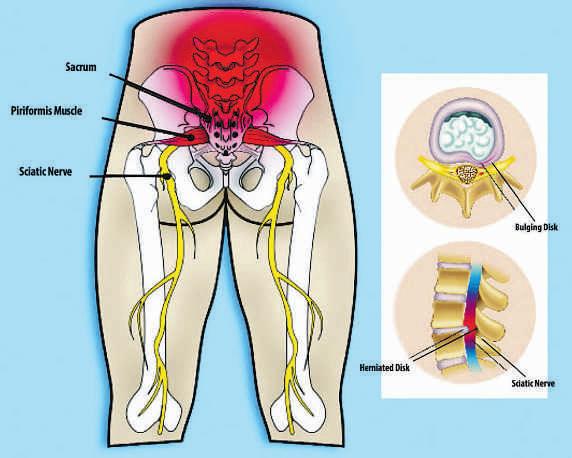
Scientificstudies tellusthatspinaldiscs aremostoften therootcause of achesand pain that people suffer from Thesediscs actascushionsbetween thevertebrae and create thenecessaryspacefor nerves to exit thespinal column.But when discsare injured, worn down,orbegin to degenerate,theybulge or herniate -pressingonnerve rootsand triggeringpaininthe backorneck This pressure canalsoleadtoradiating pain in thehips, legs,feetor arms
We areDr. ScottLeBlanc andDr. Dana LeBlanc, owners of LeBlancSpine Center.Weknowwhatit’sliketobein pain,because we see it everyday.Wehave treatedthousandsofpatientsoverthe past 14 yearsatour BatonRouge andKenneroffices.
Disc issuesare common,but patients sufferingare usually givenlimited optionsoftreatment.Werun thesebig newspaperads to letpeopleinthe communityknowthere is anotheroption- withoutinjectionsorsurgery!
NON-SURGICALSPINALDECOMPRESSION is abreakthrough, non-invasive treatmentfor herniated, ruptured, bulgingand degenerative discs. It hasbeenprovento reversedischerniations andrelieve nervepain, backpain, andradiating pain
At LeBlancSpine Center,wehave state-of-the-art technology that iisFDA clearedand very successfulin relievingpaininpain- even when othertreatmentshave failed.Unlikeother treatments that only mask symptoms spinal decompressionaddresses therootcause of your pain-restoringdischeight, improvingspinalalignment andreducingnerve compression.
PROOFTHIS TREATMENTWORKS There’splentyof researchtobackupthe claims of Spinal Decompression Therapyand itseffectiveness.Hereare just afew of the publishedscientificstudies
SEEWHATSOMEOFOUR
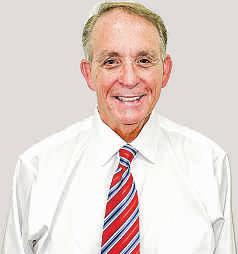
•“Patients reported amean88.9% improvement in back pain andbetterfunction. No patientrequiredany invasive therapies(e.g. epidural injections,surgery).”American Academy of Pain Management
•“We thus submit that decompressiontherapy should be considered first, before thepatient undergoesasurgicalprocedure whichpermanently alters theanatomy andfunctionofthe affectedlumbarspine segment.”JournalOfNeuroscienceResearch
•“86%ofthe 219patientswho completedthe therapy reported immediateresolutionofsymptoms.”-Orthopedic Technology Review
•“Vertebralaxial (spinal) decompressionwas successfulin 71%ofthe 778cases”-Journal of Neurological Research
•“Good to excellentreliefin86% of patients with Herniated discs” - TheAmericanJournal of Pain Management
•“Decompression Therapyreported a76.5% with completeremissionand 19.6%withpartial remissionof pain anddisability” -Rio Grande Hospital,Department of Neurosurgery
Youwillsit with thedoctorone on onetogooveryour x-rays,and you’ll gettosee everything firsthand. At LeBlancSpine Center,our goal is to help youlive pain-freeand return to theactivitiesyou love.Wegenuinelyenjoy meetingwithpatients, answeringquestions, andshowing firsthandhow spinal decompressioncan be alife-changing solution.Ifyou’vebeenlivingwith back or neck pain,weinviteyou to schedule aone-ononeconsultationand experience what sets ourclinic apart-personalized attention, proventechnology, and compassionatecare. Thereisnochargeatall andyou don’tneedtobuy anything Youdon’t have to go on living in pain-Callustoday! 225-763-9894
PATIENTS HAVE TO SAY…
IcametoLeBlancSpine Center becauseIhad been suffering with extreme back pain andleg pain for severalweeks.I hadtried other treatments, massage, NSAIDs andTylenol,but Iwas stillinpain.
Ibegan Spinal Decompressiontreatmentsand nowIfeel100% improved!WhatIlikemostabout my treatment is that it is non-invasive anditeliminatedmypain. My treatment appointments arenot long, andthe treatmentispain-free.Since beginningtreatment at LeBlanc SpineCenter, Iamnow able to do allofmypreviousactivitiesand work withoutpain. Ialsohavemorerange of motion.I wouldhighly recommend LeBlancSpine Center!
Dr.JohnBarksdale (Dentist) hometown -Baton Rouge,LA
IcametoLeBlancSpine Center becauseIhad been suffering with severe neck pain andlower back pain.I hadpreviouslytried otherback specialists, physical therapy, andMRI’s,but wasstill suffering forseveral years. Ibegan Spinal DecompressionTherapy treatmentsinAugustof 2019,and sincethen, Iamnow 60%improved! Iamnow able to do my dailyactivities, such as vacuuming, walkingand exercise-Iwas notable to do this withoutpain before my treatmentatLeBlancSpine Center My headachesare almost completelygone, andI am also able to walk 3 to 4miles perday.LeBlancSpine Center hascertainly helped me,when everywhere else Iwentinthe past didn’t help at all. What Ilikemost aboutmycareatisthatithas greatly improved my problems!
JenniferLee (Retired Administrative Assistant) Hometown -Brusly, LA

I first came to LeBlancSpine Center with numbness in my arms and legs.Iwas also experiencing lowerbackpainand neck pain.Ihad been suffering with this forover10years.Ihad previouslytried one epidural injectioninmylower back andphysicaltherapy,anI wasstill suffering with thesesymptoms. Sincebeginning Spinal Decompression treatments, Ihavehad consistent improvementinmybackcondition, andIamnow 70%improved! Iamlifting withoutpain, sleeping better,and Inow have theability to walk withouttiring! Iwould highly recommendDr. LeBlancand LeBlancSpine Center!
L. J. Dupuy (College Baseball Coach) Hometown -Addis,LA



But scientists have warned against skipping pasteurization.Raw milk is hundreds of times more likely to contain pathogens, such as listeria,E.coliand campylobacter.The people sickened in Louisiana tested positive forcampylobacteriosis, cryptosporidiosis or both, according to the Louisiana Department of Health
Even as more states have legalized the sale of raw milk, few are testing it. Louisiana’slaw requires labels that warn “not for human consumption.”
“I would call it the Wild West,” said professor John Lucey,directorofthe Center for Dairy Researchat theUniversity of Wisconsin-Madison. “It’s just completely unregulated, with every state doing their own testing and procedures and temperatures. God knows.” No matter how carefulthe farmer,cows get infections, including mastitis, might kick offthe milkingequipmentand “literally poop everywhere,”Lucey said. These are “not just possibilities. They happen all the time.”
Adropindairy farms
The customers arrived with empty ice chests. Aveteran who’ddriven from Mississippi, where raw milk is prohibited. ATickfaw man who’d seen the farm’s Facebook posts. Neighbors who’d grown up on dairy farms not far from here, back when dairies dotted the region.
Miles remembered their orders: “It’sMonday aren’tyou aThursday man?” His father scooped their ice: “You in the silver? Want it in the back?”
John Bohning, who carries Sinagra milk in his grocery stores, stopped by with his wife and two kids, hopingfor atour
“Mommy,” their 3-year-old son pleaded, “I want to see the cowies.” Clad in farmer chic —Red Wing boots,Levi’sjeans, aTimex watch —Miles grabbeda bagofalfalfa treats and brought them to an older,rougher building: the red milking barn, built in the 1970s. Schyler Bohning peered in, her 3-year-oldon her hip. “Has this always been your dream?” she asked.
Miles smiled, astorybehind his eyes. After college, he’d nabbed what he thought was his dream job at aconservative New York City think tank, the Manhattan Institute. But six months in, he knew he’d made amistake.Hehated hiscubicle and missed his farm. Worried hisparentswould sell thecows,hewatched how farms in upstate New York were marketing themselves. “I saw demand for this more nutrient-dense, less processed milk,” he said. So afew years back, he called home: “Dad, we need to buy apasteurizer.” Now 55, Darrell Sinagra had grownup workingat dairies in the area,hopping fence after fence. Butsince


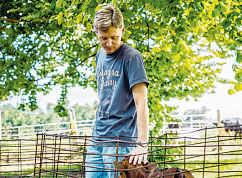
the 1990s, the number of dairy farms in Louisianahas plummeted —from more than 1,200 in 1992 to fewer than 100 today.
Darrell understands why
“I love takingcare of cows,” he said.But costs have soared. His newest tractor is a1981 model. He maintains 110 tires. You’d getmorefor acow sellingitfor meat than milk.
For decades, he sold the farm’smilk for commodity prices out ofhis control.
But in 2024, with Miles back home, they added aproduction buildingwith wide windows tolet customers see the low-and-slow pasteurization process. Their Facebook post about the farm store’s opening garnered morethan 1,000 shares
“I think we’re going to need more milk,” he told his dad. They were doing bothuntilMay 31, when their milk processor notified them that because they were selling outside of their contract,the companywould no longer buy and process their milk.
So now,Sinagra is bottling, labeling and selling everything it milks at the farm store, as wellasabout 20 local groceries,health food storesand Farmer’sButcher and Farmstop in New Orleans, where the warning
“rawmilk not for human consumption” is writtenin pretty script
‘Justtoo scary’
Raw milk’s evangelists describe ahost of health benefits, most of them notbacked by scientific study.But a growing body of research, muchofitout of Europe, acknowledges the so-called farm effect.
It’s something Miles and his sister experienced: Beingraisedamong thecows andinthe fields, “My mom alwayssaysthatwewere never sick,” Miles said, bumping along in afourwheeleracrossthe family’s 250 acres.
Growing up on afamily farmseems to protect kids from developing asthma and other allergies —not asmall feat at atime when allergies have surged. (Almosta third of adults andchildrenreport having an allergy,according to theCDC.)
Someparents are buying rawmilkwiththe hope that it could transfer some of those benefits, no hay baling required.
But scientists are still sorting the protections from the causes. They warn thatgiving children raw milk puts one of the most vulnerable groups at risk of injury or
even death.
Arecent study comparing the Amish andMennonite populations in Wisconsin suggests thatthe protections could be “more about contact with animals early in life —maybe before the baby is born,”via breastfeeding, said Lucey,the professor
“You’re taking sucha risk with your kids —and you’re not clear you’re going to get the benefit from themilk at all.”
The Louisiana Department of Health hasnot released the names or locations of the milking operations it’s investigating. Aspokesperson declined tocomment beyond thedepartment’sinitial advisory
According to thelaw passed in 2024, the state’s
agriculture commissioner has the power to “temporarily suspend the sale, distribution,ormovement of any raw milk from aproducer when the raw milk causes an outbreak of acontagious or infectious disease that poses an immediate threat to animal or public health.”
But as of last week, the Department of Agriculture and Forestry hadn’tgotten information from the Health Department,spokeswoman Jennifer Finley said.
“After reviewing this matter, we have notreceived an officialreportfromthe Louisiana Department of Health identifying the cause of the illnesses, nor have we been notifiedofthe farms involved.”
Apushtolegalize, test
Even in high school, as part of acivics project called TeenPact, Miles Sinagra had “authored”a bill legalizing the sale of raw milk. Growing up, “neighbors were constantly asking my dad if they could buy milk from him, andhewould have to tell them ‘no,’”Sinagra said.
“And Ijust thought that was insane
“How is it that we’re producing this productthatI grew up drinking, yet we can’tsell it?”
At King’sCollege in New York City,hewrote hissenior thesis on the subject.
“It is described as ‘nature’s most perfect food,’ ”itbegins. And whenhereturned to Louisiana, he lobbied lawmakers to make selling raw milk legal.
But Sinagra had been pushing foralaw that would allow human consumption and include state testing.
For now,it’suptohim.He hasemployees set atimer for15minutes, never allowing milk to warm. He sends milk samples to Nebraska twice monthly to be tested forpathogens at $400 apop. He hasbeen talking with one employee, whohas adegree in biology,about how they could test on-site for bacteria counts.
But it all starts in the barn, where employees wipe,sanitize and seal the cows’ teats. Just past 3p.m.onarecent Monday,Darrell Sinagraleft the air-conditioning to round up the cows. During the day, the cows mosey around 125 acres, finding shade and water where they can. At night, they stay on 30 acres, so that when Sinagra goeslooking forthemat4 a.m., he can find them in the darkness.
Once the cows were in the pens, the first six on the milking machines, Sinagra hopped off the four-wheeler andsteppedintothe barn. His tan, thick-knuckled hands grabbed the water hose. He took aswig.
“It’sahot one,” he said. He checked thegauges, making sure the groundwater was flowing, quickly bringing down the milk’s temperature before it hit the bulktank. For years, an 18-wheeler would backup to this barn to take the milk hundreds of miles away for processing and selling. But today,Sinagra walked along the milk’snew route: 86 feet of pipe from the barn to thestore where his wife wasfilling jugs and his son was ringing up customers. Email Jenna Ross at jenna.ross@theadvocate. com.

TheNewOrleansErnestN.MorialConventionCenter hasbeennamedaUSATodayTopWorkplace,anational recognitionthatreflects intentionalinvestmentin employees andaculture designed to supportboth professional growth andregionalimpact.
Fora venuethathas acentral role in Louisiana’s tourismand hospitalityeconomy,the honorcarries significancebeyondtheworkplace.ConventionCenter Presidentand CEOJim Cook said it is avalidationof theconcept that delivering exceptionalexperiences forvisitorsbeginswithcreatingapositive,supportive environmentfor thepeoplebehindthe scenes.
“For ourlocalworkforce,itreinforces that the Convention Center is aplace whereemployees can buildrewardingcareerswhilebeingpartofsomething larger than themselves,supportingeventsthatdrive tourism,sustainlocalbusinessesandcreatejobsacross theregion,”Cooksaid.“Forthecommunity,ithighlights ourongoing commitmenttoworkforce development, economicgrowthandimprovingaccesstoopportunitiesthathelpNewOrleansremainavibrant,competitive destination.
tendstostay.TheConventionCentercurrentlyhas442 employeeswithacombined3,886yearsofserviceand anaveragetenureofjustundernineyearseach.Nearly 50teammembershavebeenattheConventionCenter formorethan20years.Cookattributedthatlongevity to theworkplace culture, growth opportunitiesand a widerangeofcareerpaths,withrolesavailableinsales finance,engineering,buildingtrades,humanresources, procurement/contracting,retail,graphics,production legal, architecture andsecurity
“Inrecentyears,theConventionCenterhasplaced astrongerfocus on employeeengagement, professional growth andcross-departmentcollaboration whilecontinuingtoprioritizeoperationalexcellence,” Cook said.“Expanded training opportunities, leadership developmentand recognitionefforts arehelping employees buildskillsand advancetheir careersin a fast-paced events environment.”

Sinceopeningin1985, theConventionCenterhas hadanestimated $93.2billion economicimpactand generated$6billion in stateand localtax revenue.
Specifically, theConventionCenter’sSkillsStudio offerschancesforemployeestoimproveinjob-specific areasand opensdoors to networking,professional conferences,certifications,executive coaching and leadership courses. Team membersalsobenefitfrom bilingualtraining,accesstoindustry-leadingspeakers andcontent,performanceconsultinganddepartmental teambuilding experiences






In 2025,the venuewas responsiblefor $7.56million in operationalsmall business spending and$20.2 millionincapital smallbusinessspending. Cook said thevenue’semployeesatalllevelstakeprideinhaving aroleinthatimpact.
“Whenemployees feel supported, valued and equipped with theright toolsand training,theyare betterpositionedtoanticipateclientneeds,solvechallenges efficientlyand maintain thehighstandards required to host large-scaleevents,”hesaid. “A positive work environmentalsostrengthens teamwork accountability andconsistency acrossdepartments whichisessential in afast-pacedeventssetting.This focusonemployeeengagementandprofessionalgrowth helpsensuretheConventionCentercanprovideseamless experiences for meetingplanners, exhibitors and attendees,whilereinforcingNewOrleans’reputation as awelcoming,world-class destination. At thesametime, Cook said Convention Center leadership hasmadeitaprioritytotakea holistic approach to employee well-being throughits Spice forLifeprogram,which supports physical,mental andfinancialwellness. Theprogram is in addition to acomprehensivebenefitspackagedesignedtosupport employees in meaningful ways,bothatworkand in theireverydaylives
“It’sa reflectionofour belief that when ourpeople thrive,our organizationdoestoo,” he said That approach hashelpedbuild aworkforce that
“It’sall designed to empowercontinuous learning buildconfidence andcreate clearpathwaysfor career growth,” Cook said CooksaidbeingnamedaUSATodayTopWorkplace comesatatimewhentheConventionCenterisplaying akeyroleinsomeofthemosttransformativeinitiatives inNewOrleans,includingtheheadquartershotelprojectand thedevelopment of anew neighborhood in the RiverDistrict. TheConventionCenterisalsoamid a multiphase $763 millionCapital ImprovementPlan to supportlong-termgrowthand modernization. At thesametime,itsstaffhasexpandedopportunitiesfor SmallandEmergingBusinessvendorstoparticipatein ConventionCenterevents.Since2023,theSEBConnect apphasincreasedvendorparticipationby176%,helping to strengthen thelocalsupplier network.
“Working at theConventionCenteroffersthe opportunitytobepartofanorganizationthatplays a meaningful role in thecity’ssuccess,”Cooksaid. “For thoseseeking adynamic environmentwithopportunities to buildskills, advancetheir careersand make alasting impact on NewOrleans andLouisiana,the Convention Center provides astrongfoundationfor long-termsuccess.
Visitmccno.com to learnmoreabout career opportunitiesatthe NewOrleans Ernest N. Morial Convention Center
By Amanda McElfresh | amcelfresh@theadvocate.com
This articleisbrought to youbythe NewOrleans Ernest N. Morial Convention Center










Mexicanbuilder fatallyshotbyICE officermourned
BY TIM SULLIVAN Associated Press
The builder got up every morning long before dawn, left home to pickuphis construction crew and then headed out to work on yet another house somewhere across the sprawl of Houston.
Fourteen hours later, Lorenzo Salgado Araujo would return to the wife he’d metas ateenager in Mexico and the modest house he’d built for his family on the city’seast side.
It’swhat he’ddonefor decades, according to Ronaldo Salgado, his oldest son. He said his father built hundreds of houses over 35 years, creating alife for his family and watching as his three sons headed off to college.
On Tuesday,aU.S. Immigration and Customs Enforcement officer fatally shotSalgado Araujo, 52,after he was pursued by federal agents driving unmarked vehicles while he was taking his crewtotheir latest job site. The shootinghas outraged Houstonleaders and renewed public scrutiny over ICE and Trump’simmigration crackdown.
Four Democratic members of Congress who represent the Houston area said at avigil Saturday that they

sign anything. He knewthat the first phone call he should make should be either to myself or to my mom. So that way we can getthe process startedofgetting him out.”
He believes his father may have been scared that he was being followed by unmarked vehicles, worried someone was planning to steal his van or his tools
The shooting in the heavily Hispanic neighborhood is at least the eighth death during the Trumpadministration’s immigration enforcement campaign.
Alanis Magdaleno. “Everythingtheyhavenow is thanks to the dedication to that.”
JosuéFlores, afriend of Ronaldo Salgado since their freshman year of high school,saidhefirst sawLorenzo Salgado Araujo at his son’sfootball game.
“I think it speaks volumes of the kind of personthathe was,” Flores said, recalling howSalgado Araujo showed up forhis sonevenafteran arduous day of work.
SalgadoAraujo’swife, a relative said, is “inconsolable.”
would push for an independent investigation intothe shooting.
“Weare nevergoing to forget that his blood is on Donald Trump’shands,” Rep. ChristianMenefee said.“We are not at war.Lorenzo Salgado Araujo was not acasualty.Hewas ahuman being who was murdered by our government.”
Federal agents werelooking for someone elsewhen theytried to stop Salgado Araujo’swhite van, Garcia said,citinga briefing she receiving from ICE’sacting director.The Department of Homeland Security hassaidanICE officerfired at the van inself-defense after Salgado Araujo, who officialsdescribed as an “il-
legal alien,” rammed an ICE vehicle. They have provided no evidence.
The threemen thatSalgado Araujo was driving said he was shot through apassenger window and thatthe ICE officer who fired was not in front of thevan or even in danger, alawyer whohas spoken with themsaid Friday.
His family hasalso disputed the account from ICE. They said lawyers, who were helping him apply for awork permit, hadexplained how he shouldbehaveifimmigration agentsstopped him Salgado Araujo was close to obtaining legalstatus when he was killed, they said.
“He knew what to do,” Ronaldo Salgado told reporters this week. “He knew not to
SalgadoAraujo entered the U.S. morethan 30 years ago, settling in Houston with his wife wherethey raised their threechildren.
Education was aconstant focus in the house, said RonaldoSalgado, whoisnow a teacher.One of his brothers is an engineer.The other is in college studying engineering.
Severalchildhood friends of Salgado recalled thathis father was kind andsoftspoken, always inquiring about his wife’sday and how his sons’ friends were doing after along day at work.
“Wedidn’treally see him until the end of the day when he came home to have dinner,but thatjust shows how much of ahard worker he was,” said neighbor Jessica
Manpartlysuckedout window during flight saved
BY COSTAS KANTOURIS Associated Press
THESSALONIKI,Greece Aman who was partially sucked out of adislodged window on aflight from Greece to Germany on Friday was pulled back inside the aircraft by fellow passengers
The 61-year-old passenger suffered neckand shoulder injuries and friction burns, according to aGreek hospital official who spoke on condition of anonymity because they were not authorizedto
speak publicly to themedia. Theincident happenedon amorning flight from the northernGreek cityofThessaloniki to Memmingen, near Munich, which was operated by Ryanair subsidiary Malta Air. Ryanair, Europe’slargest budget carrier,said in astatement the flight “returned to Thessalonikishortly after takeoff when apassengerwindow dislodged in-flight.”
Passengers told Greek media that theyheard a loud bang, oxygen masks
droppedand theplane began to losealtitude.
One passenger, identified only as Christina, told Thessaloniki radio that some passengers panicked and screamed and that one passenger was partially sucked out of the window
“Hiswhole head,neck, shoulders” were pulled out of the window,she said, adding that thoseseated near him pulled him back in.
“Most people had fallen asleep,wehad closed our eyes. We heardasound, I’d
describe it like atire bursting, …but very loud,”she said. “Weknewstraight away we lost pressure because we lost altitude Screams, shrieks, shouting.”
The plane landednormally and passengers returned to the terminal, and one passenger requestedand receivedmedical assistance on thegroundinThessaloniki, the airline saidina statement. Areplacement aircraftwas later provided to fly thepassengers to Germany.







“I’ll keep fighting for him,” he said.
His brother Lorenzo Salgado Jr.said the shooting of his fatherwas “a hard moment to be an American.”
“Even though my government, my federal government took away my father, we the people will bring justice,” he said. “Wethe people are America.”
Aftercoming home in the evening, SalgadoAraujo liked to listen to music on the porchand petthe family dog. His family has described him as asimple manofroutine.
“She is very upset... angry sad, disoriented,” Jose Torres Ramon, anephew who lives in Mexico, told The Associated Press in aFacebook message. Ronald Salgado, his oldest son, said at the Saturday vigil that he hoped he was making his father proud.











































































































































HOUSTON CHRONICLE PHOTO By RAQUEL NATALICCHIO
Community members holdsigns reading ‘ICE Out’ on Saturday during acommunity vigilfor Lorenzo SalgadoAraujo in Houston.












LOUISIANAPOLITICS
Republicansdownplaying OneBig BeautifulBillAct
WASHINGTON —While this year’s July4 celebration in Washington, D.C., was highlighted by extreme temperatures and fireworks, last year’sceremonial focus was President Donald Trump signinginto law abill Republicans were sure would cement GOP majorities in the House and Senate after November’scongressional midterm elections.


The One Big Beautiful Bill Act included tax breaks and conservative bucket-list policies that leadership argued would persuade voters to overcometheir historical inclination to replace the ruling majority in the House and Senate. At nearly athousandpages, the law is a touchstone whenever House Speaker Mike Johnson, R-Benton, andHouse Majority Leader Steve Scalise, R-Jefferson, talk about the upcoming election.
“Wejust celebrated oneyear of that great bill, the ‘Working FamiliesTax Cut,’ being signed into law on the Fourth of July,” Scalise saidTuesday on Fox News Channel’sHannity show, using the act’srebrandedname rather than the OBBBA name on the legislation.
“Forget about the Democrat Party leadership; most Americans still lovethis country.But there are alot of good things. It’s notjust the fact that if you’re an overtime worker,apolice officer, or ashift worker,you don’t have to paytaxes on overtime or tips Seniors get great benefits,” Scalise continued.
“Lower taxes, bigger refunds, and more money in the pocketsof hardworking Americans,” Johnson said at anews conference. “Wedid that intentionally, and that’sexactly what’shappening. Thanks to the ‘Working Families TaxCuts,’ Americans in all 50 states are benefiting from taxes
Legislatorsdecline to override vetoes
The Louisiana Legislature has decided not to hold asession to consider overriding Gov.Jeff Landry’svetoes of several bills fromthisyear’slegislativesession.


Capitol Buzz STAFF REPORTS
The state constitution calls for lawmakers to hold an overridesession unless the House and Senate affirmatively vote to cancel it. In practice, they almost always do —with the exception of former Gov.John Bel Edwards’ second term, whenthe Republican-controlled Legislature metseveral times to overrule the Democratic governor Landry vetoed six bills, one sponsored by aRepublican and five by Democrats. He also issued line-item vetoes in several of the mainbudget bills, mainlyhalting projects in Democratic-leaning areas,especially in New Orleans. Landry’soffice said he was following through on his goal of rein-

that are lower and simpler and fairer for their families.This legislation is so revolutionary because it is permanent.”
GOP leadership refers to the bill alot. Rank-and-file Republican candidates do not —orso says aseries of national news reportslast week,starting with The Washington Post. It appears that when counting thenumberofmentions on the campaigntrail and on social media, Democraticcandidates are relying on the measure as acampaign talkingpointfar more than Republicans do.
Calling it the“Big Ugly Bill,”
Democrats are frequently reminding voters of changes to Medicaid and food stamps that reduce availability for millions of participants, according to the Post. Democrats alsoare linking thebill to voter concerns about inflation and the higher cost of consumer goods. “Republicans have largely retreated from talking about the law by name, as they did more often earlier last year —opting instead to focus on the tax cuts under it,” the Postreported. That Johnson, Scalise and the
leadership team have rebranded OBBBA with another nameis an indication of the problem for GOP candidates. The legislation addressed all sorts of issues, including border security,transgender athletes, and environmental programs. Someofthe provisions are popular by themselves. But overall, theOBBBA polls poorly Johnson and Scalise focus on the parts thatkept taxes from increasing dramatically this year and lowered taxes for millions of households and businesses. Taxpayers savedabout $2,300 per filer
Rolling back someregulations and easing tax burdens creates economic stability and spurs investments, Johnson and Scalise say The “no tax on tips” deduction wasclaimed by seven million taxpayers and 28 million used the “no tax on overtime” provision, according to the House Ways and Means Committee. Elderly taxpayers got abonus deduction that wasclaimed by about 32 million taxpayers.
But to payfor the package, Republicans added work requirements andchanged other standards forMedicaid, the statefederal health insurance forlowincome anddisabled individuals, as well as for those who rely on the SupplementalNutrition AssistanceProgramfor groceries.
The UrbanInstitute estimates more than3.5 million people have lost accesstofood assistancebecause of eligibility changesand stricter application processes.
The $1 trillioncut to Medicaid and$180 billionSNAP reduction actually strengthens the safety netprograms by reducing waste, fraud andabuse of the program, Johnsonand Scalise argue. Strong majorities of Americans nationally viewprograms like Medicaidand SNAP favorably andare deeply concerned about the impactsofcuts, according to areportThursdaybyNavigator Research,aleft-of-center polling operationbased in Washington. Regardless of what it’scalled, the new law is unpopular,according to somepolls.
Only 33% of Americans view the One Big Beautiful Bill Act favorably,while 48% have an unfavorable opinion, according to Navigator.Those numbers include 53% of Republicans who have an unfavorable opinion of the new law
Email Mark Ballardat mballard@theadvocate.com.

Orgeron
inginstate spending on nongovernmental agencies; Democrats accused him of retaliating against them for opposing hisagenda Landry also vetoed House Bill 688, by Rep. JosephOrgeron, R-CutOff, which would classify Atlantic tarpon as asaltwater game fish, saying it was unnecessary and could lead to more regulations.
Thegovernor also vetoed House Bill 950 by Rep. Delisha Boyd, D-New Orleans, which would have created aprogram in the Office ofElderly Affairs to help protect retirees’pensions and retirement funds, and House Bill 1194, by Rep. Terry Landry, Jr., D-Baton Rouge,which would have created afinancing program to help build grocerystores in food deserts. His vetomessage for those twobills said lawmakers did not allocateany funding for the programs, so their responsibilities could not actually be carried out.
Landry alsovetoedSenate Bill
125, by Rep.Gerald Boudreaux, D-Lafayette, that would have increased the cap on compensation for people who are wrongfully convicted; Senate Bill 283 by Sen ReginaBarrow,D-Baton Rouge, that created new special taxing districtsinthe city; and Senate Bill 384 by Sen. Jimmy Harris, DNew Orleans, which would have created pilot innovation hubs with exceptions to government procurement rules.
La. students sought for ‘Patriot Games’
Louisianaislooking for high school studentstorepresent the stateinthe Patriot Games, an athletic competition that is part of thefestivities President Donald Trump’sadministration has organized to celebrate the 250th anniversary of the United States.
Onemale and one female athlete will be selected to “represent their home state or territory on anational stage as they compete in aseries of high-intensity challenges designed to test strength, speed, agility, teamwork, resilience, and leadership,” according to thewebsite for Freedom250,

which is organizing the event.
“Over the course of the competition,athletes will face aseries of demanding physical and mental challenges, culminating in the crowning of one maleand one female Patriot Games champion,” thewebsite says.
Each champion will receive $125,000 in scholarship funding, according to the website.
In apost on X, Gov.Jeff Landry welcomed Louisiana student athletes ages 14-17 to apply.Applicationscan be submitted online at freedom250.org/patriot-games.
The competition will take place from Aug. 9-11, with aprime-time special on ABC on Aug. 13.
In addition to submitting an application form, students need to
submit aone- to two-minute introduction video.
Funeral services scheduledfor Selders

The funeral forstate Sen. Larry Selders, D-Baton Rouge, will be held Tuesday,July 14, at Mt. Zion First Baptist Church, where he worshipped. Visitation will be from 9a.m. to 11 a.m., with services after Selders, 44, died Tuesday at his sons’ football practice of aheart condition that had hospitalized him in May He waselected last year to the Senate, replacing U.S. Rep. Cleo Fields, after five years in the state House of Representatives. Asocial worker,hewas knownfor his work on mental health and addiction issues.
Tributes to Selders and condolences forhis family continued to pour in from across the state.
“He didn’tsee public service as atitle; he saw it as aresponsibility,” Fields said in astatement.

Mark Ballard
Selders
ASSOCIATED PRESS PHOTOByJ.SCOTT APPLEWHITE
Speaker of the House MikeJohnson, R-Benton, talks to reporters at the Capitol in Washington, D.C.



























































La. teens helped to pass school safety law
BY PATRICK WALL Staff writer
Beija Lopes-Morgan excelled in high school, but occasionally her mind wandered during class. How hard would it be, she wondered, for a stranger to enter the building?
During a meeting of fellow student leaders from across Louisiana, she asked if anyone else had ever felt unsafe at school.
“Every single person raised their hand,” said Lopes-Morgan, who graduated from Mandeville High School this spring
The students were members of Louisiana’s Legislative Youth Advisory Council, or LYAC, which gives ambitious high schoolers an opportunity to work with state lawmakers on solutions to issues affecting young people. The teens decided to focus on school safety
Last year, they worked with Sen. Rick Edmonds, R-Baton Rouge, to establish a school safety task force. This year they partnered with Edmonds on Senate Bill 450, which requires schools to report threats to law enforcement and allows schools to request campus security assessments.
After the students testified in support of the bill, the Legislature passed it unanimously and Gov Jeff Landry signed it into law It takes effect next month.
Lopes-Morgan, who is headed to Harvard University this fall, recently reflected on the experience with two of her equally impressive peers from the council. Everett Etie, who graduated from Erath High School in Vermillion Parish, will attend the University of Texas

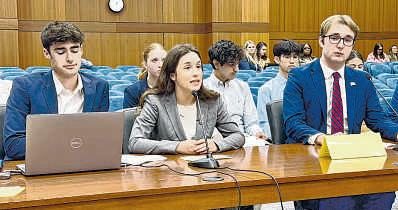
thing that goes through my head is that you don’t want to get used to the idea of it. You don’t want to sit there and just write it off as, “Well, bad things happen, and there’s nothing really we can do about it.” That’s kind of an easy mindset to slip into.
at Austin. Lincoln Trumps, who went to Lafayette High School, is entering Yale University.
The interview has been condensed and edited for clarity
Why is it important for students to be involved in policymaking?
Beija: As students, we are the eyes and ears of our school. So having students on the council, I think that representation and our stories really matter.
Lincoln: I think it’s important that you speak or else other people are going to speak for you. A lot of times, there’s a certain disconnect, where maybe people who are very well-intentioned don’t really know what’s going on on the ground
Everett: You get to be the voice of youth, and you get to speak with all these legislators and really make a difference.
Can you talk about your own experiences with school safety?
Beija: We had these portable outdoor buildings (at the high school) that are just in the parking lot. There’s no gates. There’s no locks. The ID scanners don’t work. I’ll be in class, especially in
the portable buildings, and I’m looking at all these cars outside, people walking, and I’ll think how easy it would be for someone to just walk in.
Everett: My freshman year my parish took some strides for safety and security I saw my school transform from people just walking out all the time — we didn’t have gates, we didn’t have singlepoint entry — to our districtwide safety officer implementing some of these things.
When I got on the council, I saw that not every parish is doing this. When you hear about school shootings or other acts of violence, how does that affect you?
Beija: I know for me, it just really hits home because I picture myself in their shoes. You know, why couldn’t it be me? Why couldn’t it be anyone? It also makes me worried for the younger generation. I think about kindergarteners, about first and second graders, our students in pre-K, who are the most vulnerable. I want them to live in a world where they feel safe at school.
Lincoln: A lot of times, the first



Everett: For me, it’s that you’re better safe than sorry I would rather do those (safety) drills every time and be prepared as a school than push that to the side and say after it happened, “Man, we should have.” That’s the two worst words: “should have.” What misconceptions do people have about school safety?
Beija: A lot of people say, “We don’t want to make schools look like a prison.” We hear that argument probably every day But I think it actually makes your experience at school better, and I think you feel more welcome when you feel that your school is secure.
Lincoln: There’s kind of an idea that most students aren’t really cognizant of the idea of school safety and I think that’s very untrue. It’s something that a lot of us really do experience that impacts us directly Not just in the abstract sense of “what if,” but also when we have lockdowns, when we have drills, when there is an act of violence in Louisiana. We spend the first 18 years of our life within school walls. Feeling safe and valued is something that really does matter to a lot of students What was it like helping develop this legislation?
Beija: This was definitely a long process. Last year, we passed (a resolution) with Sen. Edmonds, and that established the K-12
School Safety Task Force. SB 450 came out of the recommendations of that task force.
We also met with district safety officers in Florida. We met with national representatives from the Partner Alliance for School Security We had meetings with architects really everyone we could kind of think of that’s related to school security
Everett: We’ve had superintendents come talk about what they’re implementing in their parish. My districtwide safety officer went to talk about what they implemented in Vermillion Parish.
What have you all learned through this process?
Lincoln: I’ve heard about how hard it is for kids to get involved in the policymaking process. And I think really the opposite is true. A lot of younger people don’t realize how accessible it is because people really, really want to hear your opinions. I think that it’s important for young people who are interested in policy to know that people really do want to hear what you have to say and want you involved.
Everett: This council brings together some of the brightest kids in the state. Just to hear some of these kids, it grows you as a person.
Beija: When I came in, I knew really nothing about the Legislature. I knew what I’d read in the news and maybe seen in the movies. It really transformed my opinion. I truly believe that if you’re passionate about an issue and you’re courageous enough to stand up, you can accomplish change.




















THE GULF COAST
Seaside is beach town that ‘feels pretty comfortable’
Idyllic village was star of ‘The Truman Show’
BY POET WOLFE Staff writer
Tanned cyclists recently pedaled along East County Highway in Seaside, Florida, passing pastel cottages, white picket fences and lush flower beds on brick streets faded by years of sunshine.
Some rode down to the town square, where the line between everyday life and vacation seems to blur Window shoppers peeked at mannequins dressed in linen and polos. Goldendoodles tugged at leashes as people huddled beneath palm trees for lunch and coffee before returning to the beach for another few hours.
If the sun-bleached hair and swimsuits didn’t already make it clear this is a beach town, the punfilled signs hanging outside homes and driveways did: “Parking Is All That Smathers,” “Sandity” and “Here Comes the Sun.” Every place has its own ethos. For New Orleans, it’s resilience; for Philadelphia, grit; for New York City, ambition. For Seaside, it’s escapism — an escape from life’s hardships into a pastel bubble of Gulf waters, bike rides and manicured homes, where summer never seems to end.
That’s what its founder, Robert Davis, intended after an era of futurism concluded the American dream could be found in speed, technology and progress. Davis countered that philosophy, instead embracing new urbanism when he transformed 80 acres of land inherited from his grandfather into Seaside in 1981.
Inspired by his childhood vacations along Florida’s Gulf Coast, he painted a portrait of smalltown America, where neighbors knew one another, where residents strolled through the town square instead of navigating winding culde-sacs and rarely reached for their car keys.
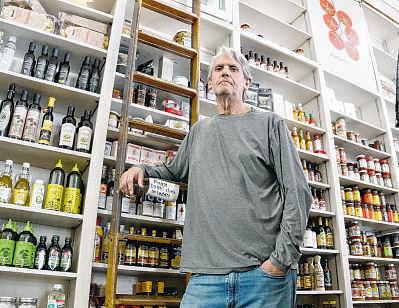
as polished or perfect as it was shown to be in the movie.”
Yet on a recent weekday afternoon, its flaws faded into the background, with only the sunbleached streets revealing the passage of time.
Signs of imperfection remained undetectable turning onto a palmshaded Natchez Street and approaching “The Truman House” the words painted in navy blue on the white picket fence. With a butter-yellow facade, coral trim and a lime green door, the home where Truman lives in the film was far more vibrant in real life than how it appeared onscreen.
The rows of pastel cottages dwindled approaching the town square, where cream-colored commercial buildings and Airstream trailers converted into food stands circle around a grass field.
through Southern fiction books — Cormac McCarthy, Eudora Welty, Ernest Gaines — surrounded by shelves that resemble high walls made up of paperbacks and hardcovers. Overlooking the room is a portrait of Flannery O’Connor beside her quote about life’s absurdities: “Possibly the Lord just thinks all of this is funny It is funny if you can stand it.”
Upstairs, at Central Square Records, the atmosphere shifts from nostalgic to alternative, where teenagers fresh off the beach sift through records beneath string lights as Radiohead plays in the background.
“This was a vision of personal mobility, isolated in comfort,” Davis said, “And escape from the city to a bucolic suburb where everyone would have a garden and live in a kind of splendid isolation.
His vision is the reason why Seaside was chosen as the setting for the 1998 film “The Truman Show,” directed by Peter Weir and starring Jim Carrey as Truman Burbank, who discovers his seemingly ordinary life is a reality television show that’s chronicled his every move from the time he was a fetus to, presumably, his demise.
The ones he loves most — his mother, wife, friend and neighbors — are paid actors, while the town he resides in, Seahaven, is a colossal soundstage. Beneath its idyllic facade and saccharine faces lies a world of control, surveillance and illusion, where every relationship and conversation is carefully engineered for the audience’s amusement.
The script, Davis said, originally envisioned a neighborhood in New
York City, until Weir’s wife read a magazine article about Seaside while scouting locations for the film. Davis obliged, he said, adding that the community “was so un-busy at the time that we were happy to have some activity.”
But he did have some concerns. Aside from the army of production crews that would descend on Seaside, he worried about “the reaction of the greater world.”
The community had already been dismissed as a “lab-like place” by some architectural critics. Davis was concerned the film would reinforce that image — an oasis engineered to unreachable perfection — and he wasn’t wrong.
But when “The Truman Show” was released in theaters, he didn’t take offense to how his town was portrayed. He knew that like anywhere else, Seaside had flaws of its own
“Anybody who was inspired by the movie to visit Seaside would realize that it wasn’t just a stage set,” he said, “It wasn’t nearly
In one corner sits Modica Market, a family-owned store operating in Seaside since 1989. Inside, Charlie Modica stood at the cash register ringing up groceries as the lunch rush steadily grew closer to noon. At least three times a day, a shopper approaches him about his brief appearance in “The Truman Show.”
Modica stepped away from the register and stood beside the wooden ladder where he was perched during his scene in the film. Across from him was a framed movie poster of a grinning Truman Burbank, hanging above black and white photos of his family’s gourmet grocery store from decades ago.
He recalled what Seaside was before it transformed into Seahaven for the film “a sleepy village” where Modica Market was accompanied by a bookstore and an ice cream shop.
“Seaside’s changed since the movie,” he said. “There’s a lot of businesses, and they finished off a lot of what Robert (Davis) wanted to have A lot of this wasn’t here.”
Some of those longtime fixtures remain.
At Sundog Books, customers leaf


The shops filled with books and vinyls were a reminder that character does exist in a town that lures travelers with its picturepostcard beach, boutiques and cottages. Davis thinks families feel connected with Seaside because it brings back a free-range childhood — a return to the days working parents sent their kids to school with house keys strung around their necks
“It’s been a while since Americans were comfortable just letting their kids run free,” he said “But this is a place where that feels pretty comfortable.”
It appeared that way along the smooth-paved roads and into the town square, where kids biked and teenagers wandered, where parents bumped into other parents in moments of serendipity It was a place where everyone seemed comfortable forgetting, if only for a while, about the world beyond Seaside.
For Truman, however, that illusion is no longer enough. At the end of the film, when he discovers his fabricated reality, he chooses to leave it behind, accepting the discomfort of real life the heartbreak, fear and uncertainty But the creator of the television show believes the real world is simply too broken, unlike his version of paradise.
“The world is the sick place,” he said. “Seahaven is the way the world should be.”


















STAFF PHOTO By HANNAH
Trumpsuggests ordertoattackIranifitkills him
ButVance would make thecall
BY WILL WEISSERT Associated Press
WASHINGTON President Donald Trump is suggesting he has left standing orders for the U.S. military to destroy Iran “at levels they’ve never seen before” if Tehran follows through on itslongstanding threats to killhim.
But the U.S. government has no way to create an automatic, preauthorized “dead man’sswitch” that would prompt immediate retaliation.
Instead, if Trump were killed, the transfer of power to his successor is governed by the 25th Amendment and the Presidential Succession Act of 1947. Vice President JD Vance instantaneously would become commander in chief and haveauthority for any retaliation.
Under such ascenario, Vance could do exactly what Trump called for,though there alsoisa chance he could decide not to follow his predecessor’sorders —or offer adirect response in a different way
“The U.S. has, for awhole variety of reasons, never utilized atechnical ‘dead man’sswitch, said Garrett M. Graff, author of “Raven Rock: The Story of the U.S. Government’sSecret Plan to Save Itself —Whilethe Rest of Us Die.”
The UnitedStates does have extensive contingency plansfor continuity of government in the event of a nuclear attack or other major catastrophe that wipes out most or all of Washington. But those plans also do
not allow for immediately launching retaliatory strikes upon the death of apresident, even ifthat president had demanded that the military be readytodoso.
Trump nonetheless posted on hissocial media website Saturdaythat Iran had made threats “toassassinate, or attempt to assassinate” him and he said1,000 “missiles areLocked andLoaded and aimed at the Islamic Republic of Iran, with thousands more to immediately follow, should the Iranian Government act on its threat.”
Iran’ssupreme leader,MojtabaKhamenei,said hours laterthat Iranians would continue to avenge the killing of his father,Ayatollah Ali Khamenei.The elder Khamenei died in theinitial U.S. andIsraelistrikesthat staredthe war in late February,and he was mourned in funeral eventsthroughout Iran this past week.His son said retaliation“is the will of our nation and must certainly be carriedout.”
“Wepledge to take revenge for thepure blood of youand all themartyrs of these two wars from the criminal and disgraceful killers,” he said on remarks aired on state television. “This revenge is thewillofour nation and must certainly be carried out.
The White HouseonSaturday did not immediately answer questionsabout what would becomeofTrump’s military orders should he be killed.
Duringthose recent funeral events, mourners repeatedly held postersor banners calling for Trump to be killed along with Israeli PrimeMinisterBenjaminNetanyahu.
The Wall Street Journal re-

Awoman holdsa sign reading ‘We’ll Kill Trump’ while waiting in Islamic Revolution Square for the funeral processionofthe slain Iranian SupremeLeader Ayatollah AliKhamenei beneath abillboard depicting Khamenei on MondayinTehran, Iran.
ported last week that Israel alertedU.S. officials to fresh Iranian plots to kill Trump.
The White House has refused to comment, but Trumpappeared toreference to such threats in comments during last week’sNATOsummit in Turkey, saying, “They want to take out the U.S. leader me.”
Sabrina Singh, former Bidenadministration deputy Pentagon presssecretary, said “Iran wanting to target senior American leaders is something that we knowis happening.”
“You have to take these as credible threats,” Singh said.
Trump was targeted in two domestic assassinationattemptsduring the2024 presidentialcampaign and saw agunmanstorm the White House Correspondents’ Association dinnerhewas attending in April.
U.S. lawmaker says he wasdetained by Israelimilitary, settlers in West Bank
BY NICHOLAS RICCARDI Associated Press
U.S. Rep. Ro Khanna said Saturday that he was detained by settlers and the Israeli military in the occupied West Bank and released only after calls to the American Embassy in Jerusalem. The Israeli Defense Forces denied detaining any visitors in the incident.
Arepresentative for Khanna, aCalifornia Democrat who is an outspokenprogressive, said the confrontation occurred Wednesday in the middle of athree-day tour of the West Bank.As the congressman visited a Palestinian village that had been abandoned after settler attacks, masked men with guns stoppedhis group and refused to let them leave The New York Times said theincidentwas witnessed by one of its photographers. Khanna’sofficesaiditoccurred in the town of Khirbet Zanuta. Khanna said that when Israeli soldiers arrived he was dispirited to see them interact in afriendly manner with the settlers and block the exit



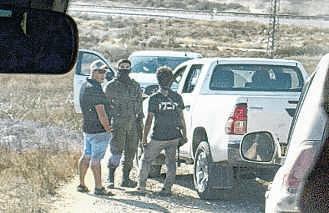
Wednesdaynear the West Bank villageofKhirbet Zanuta.
forthe congressman’sparty. Not untilthe U.S. Embassy and Israelipolice were called wasKhanna’sgroup allowed to proceed.
“If this can happen to an American member of Congress, imagine what lifeis like forPalestinians who have no smartphones, no security, and no national platform,” Khanna, who is exploring apresidentialbid in 2028, saidinafundraising email he sent out shortly afterhis post Saturdayabout


the incident
In astatement, the IDF said it received areport of Israeli citizens blocking foreign nationals and media in Khirbet Zanuta.
“Upon receiving the report, IDF troopsweredispatched to thescene, quickly dispersed the Israeli civilians, and reopened the blocked road,” themilitary said in astatement. “The IDF soldiers operatinginthe area did nottakepart in blocking the road.”
The president flew part of theway back to Washingtonfrom Turkeylast week aboardanolder Air Force One jet rather anew Qatarigifted aircraft, raising fresh security questions aboutthe newer plane. Images of the jet, which was retrofitted at an estimatedcostof$400million, show it is not equipped with some of thesame missile detection and countermeasuresystems as earlier versions.
Theswap occurred as the U.S. and Iran once again begantrading strikes, jeopardizing last month’sinitial deal to endthe war.Asked about Iranianthreats, Trump told reporters aboard Air Force One, “I’m No. 1on their list.”
Graff said the U.S. prepared yearsofplans for how nuclearlaunch authority would devolve in the
event of asurprise attack. That included, during 30 years of theColdWar,the country keeping fleetsof airborne command posts flying 24 hours aday witha general aboard oneofthem whocould take over nuclear launch orders in the event Washington waslost.
“WhatI believe Trump is saying is that he’sleft standing orders to attack if he’s killed, e.g., that thePentagon should proceed with standard launch protocols,” Graffsaid. “There’salot of reason to doubt thelegalityofsuch standing orders, since in the event of apresident’sdeath, the nuclear launch authority would immediatelypass to the vice president or designated successor —and ultimately it would be up to him or her to determine whethertoproceed.”
Trump’spost only refers to firing missilesatIran, which the U.S. hasdone scores of time since its war with Iran began. He did not expressly threaten involving nuclear weapons. Graff said that, in addition to leavingstandingorders in case of his death, Trump also might say “something to Vancelike,‘If I’m killed, nuke Iran,’”and that would make “more sense and would be absolutely legal” Washingtonreceiving credible threats against the president and top U.S. leaders from Iran and other foreign adversariesisnot uncommon and is often disclosed via national security briefings or other classified means. But farless common is Trumpdeclaring publicly that he personally has been targeted by Iran. Still, this is not the first timeWashington has threatened Iran over threats against Trump. In 2022, the Biden administration warned Iran against attacking U.S. citizens afterthe JusticeDepartment’sdisclosure that amemberofIran’sIslamic Revolutionary Guard Corps had planned to assassinate John Bolton, Trump’sfirstterm national security adviser. Now aTrump critic, Bolton last month pleaded guilty to illegally retaining classified documents in a case led by Trump’sJustice Department. President Joe Biden’snationalsecurityadviserJake Sullivan said in 2022 that “shouldIranattackany of our citizens, to include those who continue to serve the United States or those who formerly served, Iran will face severe consequences.”
BY NICHOLASRICCARDI Associated Press
ADemocratic senator on Saturday alleged that whistleblowers have detailed several problems stemming from rushed or improper reconstruction of the Kennedy Center, adding anew layer to the travails of the arts complex as President DonaldTrump tried to seize controlofit and its name.
SheldonWhitehouse, of Rhode Island, saidina release on Saturday that he had received awhistleblower disclosure from the GovernmentAccountabilityProject, anonprofit whistleblowerprotection group, alleging that “the Center rushedaseries of renovations driven by thepresident’s aesthetic whims andhis desire to star in aseries of televised events in December.”
“The Center’ssubservience to thePresident’sdesires andits corner-cutting contracting practices have resulted in steel columns thatare rusting through fresh paint,areflecting
pool that may have to be torn outand rebuilt,and a brand-newbathroomfloor torn out over an offending tile color,” Whitehouse continued. “This is waste,and it treats anational memorial to President Kennedy as if it were aprivate renovation project.”
The Kennedy Center did notimmediatelyrespond to arequest forcomment.
Trump seized controlof the arts and culture venue, named after former President John F. Kennedy,atthe beginning of his second term. Trump ousted thecenter’s prior leadership andreplaced it with aBoard of Trustees that named him chairman andaddedhis name to the building.
Democratssuedtoremoveitand afederal judge ruledTrump’sname must comeoff the venue, which hadbeen wracked with boycotts by artists during the turmoil. He tried to close the center for two years, only to be ordered to keep it open by thecourt because only Congress could change its name.
Whitehouse released a letter he wrote to the center’sexecutive director, Matt Floca, demanding answers by July 23. He said the whistleblower report included“firsthand accounts of multiple former Center projectmanagers, supportedbycontemporaneousdocuments andphotographs.” He also included an 83-page appendix full of internal center documents, emails and photos of apparently shoddy construction. The allegations include that the center rushed work before it was authorized by Congress because it wanted it to be complete forTrump to accept the new FIFA Peace Prize that the soccer federation awarded him.In doing so,the letter alleges the center didn’tfollowrequired contracting guidelinesand wasted money replacing abathroom becausethe presidentdidn’t like the color and inking nobid contracts. One $8 million contract to replace the concerthall’sfloor went to afirm with no experience in concert halls, Whitehouse contended.











blacksand beaches, andthe spectacularrainforests, canyons,memorials, andmuseums across Maui,the “Big Island”ofHawaii, andOahu. 9-nights from $5,053
Alaska Inside Passage - Witnessmajesticglaciers, wildlife,and pristine wilderness as youjourney throughVancouver,Juneau, GlacierBay,& Ketchikan. 7-nights from $1,179
National ParksofAmerica - Experience thegrandeurofthe American West exploringthe GrandCanyon, Yellowstone, Zion’s,and BryceCanyon. 11-nightsfrom$5,899
Columbia &Snake RiversCruise - Follow in thefootsteps of the epic Lewis andClark Expedition andbeamazedbythe beautiful landscapes,including theColumbiaRiver Gorge, HellsCanyon, MultnomahFalls,and MountSt. Helens 8-nights from $4,955
ASSOCIATED PRESS PHOTOByALTAF QADRI
PHOTO PROVIDEDByCAMERONKASKy Armed menblock the road, stoppingvehicles containing U.S. Rep. Ro Khanna, D-Calif., and his delegation on


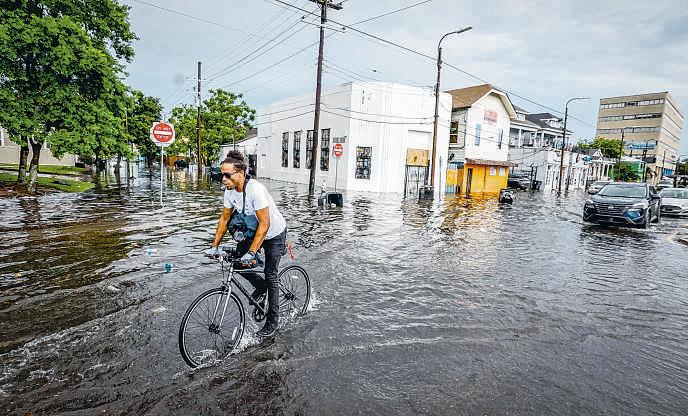
‘Instantaneous’
Heavy rains hit, pumping stations malfunction
BY CHAD CALDER and MISSY WILKINSON Staff writers
Streets flooded in neighborhoods across New Orleans on Saturday after thunderstorms pounded the area and several pumping stations malfunctioned.
The New Orleans Sewerage & Water Board confirmed that a pump station on the western edge of City Park just below Interstate 610 malfunctioned, flooding part of Lakeview and Mid-City for about 90 minutes. In Hollygrove’s Pritchard Pump Station, only one of two pumps was operational during the downpour
The National Weather Service sent out a flash flood warning shortly after 1 p.m., though up to 3 inches of rain had fallen in areas at that point, with up to 2 more inches possible, the weather service said.
Working optimally S&WB pumping
stations can handle 1 inch of rain during the first hour and a half inch every hour after that. Uptown, Hollygrove and Carrollton got over 3.5 inches rain in an hour, according to the S&WB.
“This would always cause some street flooding in our city; however, we experienced issues with two of our pumping stations,” the S&WB wrote in a statement.
Within about an hour, neighborhoods in a broad swath of New Orleans saw street flooding, with reports clustered in Mid-City, Lakeview, City Park, Hollygrove and Uptown, according to the city’s Streetwise mapping system In Jefferson Parish, street flooding occurred in the typical problem areas including Old Metairie, River Ridge, Elmwood and Harahan, a parish spokesperson said.
Mid-City resident Laura Yager watched the water begin to build up in front of her Iberville Street home with her downstairs tenant and her small car in mind.
“Then all I did was go downstairs and look at the cameras and I was like, ‘Move your car now! Move your car now!’”
“She sent me back some swear words and a thank you,” she recalled a short time later as she patrolled the stagnant waters for speeders “It was instanta-
‘It’s
neous. I mean, the water just comes up. Authorities closed the Canal Street, Carrollton Avenue and Broad Street underpasses. Although the pump near the Carrollton overpass was working, it was difficult to pump additional rainwater into the Palmetto Canal due to its high levels, the S&WB said.
All eastbound and westbound lanes of Carrollton Avenue at the Interstate 10 overpass were closed to traffic amid ongoing street flooding, NOPD Director of Communications Reese Harper said.
Mayor Helena Moreno said on social media that multiple pumping stations had “some issues” including the pumps that impact Hollygrove, Lakeview and City Park. She urged residents to be safe.
Catch basin issues contributed to flooding along Claiborne Avenue in Uptown, the S&WB said.
Although the downpour had subsided by 2:30 p.m., some city streets remained stubbornly flooded.
Several consecutive blocks of Palmyra Avenue just above Norman C. Francis Parkway had standing water almost knee-deep. Residents worked to push the water and debris off their lawns and sidewalks and discourage vehicles — mostly trucks and SUVs — from
been a long
Rock of Ages purchases N.O. church, packs each Sunday
BY BOB WARREN Staff writer
BY LARA NICHOLSON
writer
St. Tammany council OKs two subdivisions
BY WILLIE SWETT Staff writer
A developer has received the blessing of the St. Tammany Parish Council to move forward with two Covington-area subdivisions, bringing as many as 800 new single-family homes to the northshore as population growth is expected to outstrip available housing in the coming years. After nearly three hours of debate and sharp criticism from several area residents, the council on Thursday voted to approve two rezoning requests made by Jeff Vallee, of H1 Associates.
The first, for a 264-acre tract near La. 1077 and U.S. 190 in the unincorporated community of Goodbee near Covington, is expected to see construction of up to 760 new home and passed with an 8-5 vote. The second, for a nearby 31-acre tract, is expected to see construction of up to 75 homes, and passed with an 11-2 vote. The approval of the zoning changes for new housing was the largest, in terms of area, in the parish since at least May 2022. At that time, the council adopted a moratorium on zoning changes allowing more than four housing units per acre. It also represented a win for Vallee, who just over a year earlier had a similar request denied by the council over concerns about the density of the houses in the proposed zoning. This time around, Vallee lowered the density of the two subdivisions and made a handful of tweaks that appeared to win the council over The homes Vallee plans to build on the larger tract, which will be called the “Isadore” subdivision, are expected to cost between $250,000 and over $300,000, and will be built out over the next 20 years in response to market conditions, Vallee said. Homes in the smaller project, called the “Esperanza” subdivision, will be custom built, will

STAFF PHOTO By SOPHIA GERMER
A person on a bike rolls through floodwaters on Tulane Avenue after a downpour in New Orleans on Saturday.
“In 2013, this church had three members and we were upwards of $85,000 in debt,” Everett said of his first days as pastor there “The chickens were louder than the people.”
Rock of Ages has a proud history, dating back to 1923. But when Everett arrived to take the helm, it was still struggling from the devastating impact of Hurricane Katrina, which had swamped the city in 2005 and depopulated it almost overnight.
“But we kept growing,” Everett said, careful to give credit to the church’s congregation. “Their commitment has been breathtaking. This moment belongs to the entire church family.”
Along the way Rock of Ages outgrew the church on North Tonti and for a couple of years held worship services in the auditorium of McDonogh 35 Senior High School, before leasing Franklin Avenue Baptist Church’s old campus at 2515 Franklin Ave. in 2024.
The move to that large Franklin Avenue campus opened the doors to even more worshippers, Everett said.
“I told (Everett), ‘Man, if y’all move to this place y’all are going to explode,’” said the Rev Fred Luter Jr., who is senior pastor of the Franklin Avenue Baptist Church, which outgrew the Franklin Avenue campus in 2018 and routinely has 5,000-6,000 attend Sunday services at its New Orleans East church.
“It’s a great location. It was great for us,” Luter said.
Luter who will soon pass the torch of church leadership to his son, the Rev Fred “Chip” Luter III, remembers moving into the Franklin Avenue church in March 1997 and the years
BATTLE
Continued from page 1B
U.S. forces under Andrew Jackson beat back the British troops. “Yet the reality is seldom people know about it.”
The Battle of New Orleans took place along the Mississippi River at the conclusion of the War of 1812, and now, as the nation celebrates its 250th anniversary, the historic site may receive a major expansion under a new initiative from a national nonprofit for battlefield preservation.
The American Battlefield Trust is raising funds to purchase 40 acres of land next to the battlefield for $3.6 million by September in hopes of further preserving the site where the Battle of New Orleans took place 211 years ago.
David Duncan, the organization’s president, said the purchase would provide access to land that was used by the British forces during the battle and offer historians a better understanding of the British forces’ actions during the fight, which resulted in a major defeat for the redcoats.
Duncan added they’ve already secured most of the funds through state and federal grants and early donations, but need about $1 million more to complete the purchase.
“It’s very important to save these parts of our country’s history so that future generations can go there and learn what happened, why it’s important and hopefully become better citizens in the process,” Duncan said.
The proposed land is currently zoned for industrial use and owned by Genie Holdings LLC based in Kenner, according to parish assessor’s office records. It sits between the Chalmette Battlefield and the St. Bernard Port Harbor and Terminal District’s Chalmette terminal.
Duncan said once American Battlefield Trust pur-

there building a large following. That growth necessitated Franklin Avenue Baptist’s move in 2018 to a new, $35 million campus on the I-10 Service Road.
“It was bittersweet,” Luter said of building and moving out of St Roch. “I have such great, great memories of that location “We’d done so much in that neighborhood, that community We just ran out of space.”
Luter said he’s pleased to see Everett and Rock of Ages take ownership. He said Everett has “done some great things” to grow Rock of Ages. Everett, 41, is a New Orleans native who studied at Washington Bible College in Lanham, Maryland. He began full-time ministry work in Maryland before moving back to New Orleans in 2009 to take a position at Providence Baptist Church. He has been at Rock of Ages since December 2013.
When the church first leased the Franklin Avenue site, Everett said he knocked on doors in the neighborhood to introduce himself and talk up the church.
“(Neighbors) were excited,” he said. “They were glad to see us. These neighbors have been the protectors of this place. It means a lot to them.”
Everett said the church’s growth has been aided by its digital presence. Its social media prayer line reaches thousands each day, he said, and during the pandemic, the livestreamed worship services drew many people who later attended in person.
“I’d say 65-70% of our people today came after seeing us online,” Everett said.
The 2024 Easter service Rock of Ages held at City Park’s Tad Gormley Stadium drew at least 10,000 people, he said, and “showed us that somebody
needed to find a church home.”
Asked how it will pay for its new home, Everett smiled and said, “tithes and offerings. We’re still at it.”
From the Franklin Avenue campus, Everett said the church has been involved in countless community endeavors. It has organized large-scale food giveaways, given away $40,000 in gasoline cards and has teamed with Ochsner Health and Xavier University on community wellness programs.
Future endeavors include a program to help first-time homebuyers, more community wellness programs, a cafe and a support space for pregnant women.
Rock of Ages still owns the building on North Tonti Street and could lease it out in the future, Everett said.
And the chickens?
“Still there. I think they’re even bigger now,” he said.

chases the land, it will place conservation easements on the property that legally prevent future owners from building on it.
From there, Duncan hopes to see the parish or the Jean Lafitte National Historical Park and Preserve, which operates the Chalmette Battlefield, take over the land as an educational site for the public.
St. Bernard Parish President Louis Pomes said in a statement that he fully supports the organization’s efforts to expand on the historic site.
“The American Battlefield Trust’s proposed land acquisition in St. Bernard Parish represents an investment in preserving one of the most significant chapters of our nation’s history,” Pomes said Meredith Hardy, spokesperson for the Jean Lafitte National Historical Park and Preserve, said the National Park Service was not involved in the land acquisition but that it “appreciates the interest many organizations and individuals have in protecting resources associated with that (Battle of New Orleans) history.”
Over the past 25 years, the American Battlefield Trust has preserved nearly 63,000 acres of land from former battlefields across
the country from the Revolutionary War, Civil War and War of 1812.
History
The Battle of New Orleans was one of the final conflicts in the War of 1812 between the fledgling United States and Great Britain, which started after Great Britain had taken thousands of American sailors to work for the Royal Navy through impressment and also allied themselves with Native Americans to oppose the United States’ westward expansion.
The British sought to take over New Orleans and its port to block the United States from using the Mississippi River and therefore choke off its already fragile economy Nugent said.
U.S. troops under Jackson, then a major general for the U.S. Army, set up a line of defense along a canal on the Rodriguez Plantation in Chalmette using weapons and other resources supplied by French privateer Jean Lafitte in exchange for a presidential pardon. On Jan. 8, 1815, British forces led by Gen. Sir Edward Pakenham attempted to attack the American troops from multiple sides but were quickly devastated by gunfire.
FLOOD
Continued from page 1B
driving by too quickly, creating wakes.
Dezarae Rogers, a Palmyra resident of four years, said she could tell something had gone wrong with the pumping system.
“It’ll flood, but it’ll go down,” she said of storms under normal conditions. “So if it floods and it just sits here, and the water is not moving at all?
Something’s wrong.”
A block away, neighbors Madison Sharp and Robbie Banta said they could tell the pumping system wasn’t working properly because the water in the street actually got higher during the 30 minutes after the rain had ended.
“When the rain stopped, the water was up the sidewalk,”
ZONING
Continued from page 1B
start around $350,000 and be constructed in the next five to eight years, Vallee said.
The approval underscored how parish officials are grappling with the need for affordable housing after a recent housing study commissioned by the parish found that the parish needs up to 17,300 new homes by 2030 to keep pace with population and job growth.
Notably, the study stressed a need for rentals and housing for people making less than $50,000 a year
“I think this development presents an opportunity to address one of St. Tammany Parish’s greatest challenges, and that’s providing quality housing while planning responsibly,” said council member Kathy Seiden, who represents the Madisonville area.
For many years, the council would not even have been able to consider Vallee’s request due to the zoning moratorium. Before the moratorium was put in place, residents had been complaining for years that rapid growth and overdevelopment was putting a strain on the parish’s infrastructure.
Parish President Mike Cooper said in an interview Friday that now, with the moratorium lifted, the council is starting to consider these projects.
“We’re seeing some of the larger developments come out,” said Cooper, who wouldn’t say whether he was in support of the council’s decision, but said he thought it was carefully considered. He noted that Vallee’s request was the largest in terms of acreage since the moratorium expired in 2024.
Many St. Tammany residents are not happy about it.
Sharp said. “In a half-hour is was all the way up to my step.”
Yager, who has lived on Iberville for 21 years, said many of the catch basins at North St. Patrick Street simply don’t drain. As the water receded along other nearby streets, it stood stagnant at the intersection.
“Nothing on this side drains nothing,” she said of North St Patrick just after the rain stopped. “So all of this water has to come this way (down Iberville).”
For years, she and other women in the neighborhood they call themselves the Sewerage & Water Broads — have worked to keep the catch basins clear but it’s never enough.
“Clearing them out doesn’t matter,” she said. “That’s not the problem. The problem is deeper.”
of building up to 100 homes on the smaller tract and hundreds more on the larger one. The council voted nearly unanimously to deny rezoning of both parcels.
But this time around, Vallee reduced the size of his request and lowered its density He asked the council to rezone a 264-acre tract and a 31-acre tract and set aside the remaining dozens of acres of the property to serve as an undeveloped conservation “buffer.”
And although the parish’s Planning and Zoning Commission didn’t bite and voted against the proposal in June, Vallee appealed the denial to the council, and the council was more amenable to the changes.
Mayronne argued that both tracts were consistent with the parish’s future development plan and sought to alleviate residents’ concerns about flooding, saying they will exceed the parish’s drainage requirements.
In a last-minute concession to the council on Thursday night, Vallee also reduced the proposed housing density of the 31-acre tract, increasing the minimum lot size in that tract from 7,000 square feet to 11,000 square feet. And Vallee promised to use local homebuilders on the 31acre tract, which drew the support of some homebuilders at the meeting Thursday “This would be the last available, buildable area that we can do,” said council member Martha Cazaubon, who represents the area of the proposed development, and voted in favor of the two subdivisions.
Opponents
A large group of residents at the meeting, however, raised concerns about traffic and flooding.
In a matter of only 30 minutes, about 2,000 British soldiers were wounded, captured, missing or killed, including Pakenham, compared to only 71 U.S casualties.
The Treaty of Ghent, which would end the war, had already been signed by the time the Battle of New Orleans took place, and was ratified a month later to formally cease hostilities.
The Chalmette Monument and National Cemetery were both built on the land decades later
After the Civil War, a free man of color and New Orleans grocer named JeanPierre Fazende bought land in the middle of the battlefield and turned it into a thriving independent community for free people of color and emancipated slaves called “Fazendeville.”
However, the government decided in the 1960s to tear down the community to restore the battlefield to its 1815 appearance for war’s 150th anniversary
The Chalmette Battlefield later became part of the Jean Lafitte National Historic Park in 1978. Email Lara Nicholson at lnicholson@theadvocate. com.
The meeting on Thursday featured a three-hour debate that lasted until 10 p.m. It was crowded with opponents to the development, including neighbors and environmental advocates who argued the housing would put a strain on infrastructure, cause more traffic and exacerbate flooding issues in the area.
“I don’t think anyone is opposed to building in this area, but the density being proposed is obscene,” said Covington-area resident Don Henderson during public comment.
Paul Mayronne, a lawyer for Vallee, told the council, “We fit squarely, compatibly and appropriately with those developments around us.”
The council’s approval is only the first step before construction can begin.
Technically at Thursday’s meeting, the council introduced the zoning changes, so at its Aug. 6 meeting, the council will have to officially approve them. Council Chair Cheryl Tanner said that vote is largely a formality and she expects it to pass.
Next, the developer will submit plans for the subdivisions to the parish’s engineering department, and they will have to be approved by the Planning and Zoning Commission during two public hearings, according to council Administrator Mary Burckell.
Try, try again
Back in May 2025, Vallee asked the council to rezone a 38-acre tract and a 305-acre tract from rural to suburban classification with the goal
In a speech about congestion, council member Rick Smith, who voted against the zoning changes, warned of “more traffic garbage on top of more traffic garbage” from overdevelopment.
Matthew Allen, executive director of the local environmental group Northshore River Watch, said the development was in a flood zone and new buildings could make flooding worse in the area from the Tchefuncte and Tangipahoa rivers.
“We have the opportunity to use the best available data, which I gave y’all yesterday in what I emailed to you, and avoid creating more flood risk and exposing our parish to greater flood damages,” Allen said.
“That’s what you do when you put subdivisions where it floods like this,” Allen said.
The opponents to the development could now appeal the council’s decision on Thursday by filing a lawsuit with the 22nd Judicial District Court. Allen said they have 30 days to do so.
Email Willie Swett at willie. swett@theadvocate.com.
STAFF PHOTO By ENAN CHEDIAK
Visitors walk around the Chalmette Battlefield in Chalmette on Wednesday.
STAFF PHOTO By CHRIS GRANGER
The former site of Franklin Avenue Baptist Church is now Rock of Ages Baptist Church on Franklin Avenue in New Orleans on Tuesday.

WHOLE LOTTA BULL









PHOTOS By SOPHIA GERMER
Bourgeois, Sidney Boyce, Clare Branch,Anne Griffin, Carol House, Sharon Boyce,Clare Manly
Kirschenheuter, Carmen
Kopfler, Madeleine
Magee, Judson
Mehaffie,Emily
Munsch,Lowell
Musso,Salvadore
Russell, Stacie
Simmonds,Evelyn
Simoneaux, Rose Smith,Lowery
Titus, Sandra
Obituaries
Bourgeois, Sidney John 'Jay'

Sidney John "Jay"
Bourgeois passed away on Monday, July 6, 2026, at the ageof88. Anative and lifelong resident of New Orleans, LA, he was aloving husband, father, grandfather and great-grandfather He was precededin death by his wife of 60 years, Julie Ann Roser Bourgeois; his parents, Sidney John Bourgeois and Gladys Ruth Lenfant Bourgeois; his adopted mother, Louise Lenfant Nugent; and his siblings, Joy Bourgeois, Andrew Megna, Jr. and Susan Schwehm. He is survived by his children, Sidney Bourgeois III (Christine), Guy Bourgeois (Maria), Brigette Entwisle (Jeffrey), Cherie Bourgeois, Monique Soldano (Salvador) and Steven Bourgeois(Cherie); his grandchildren, Jonathan Bourgeois, Alexandra Dees (Ryan), Olivia Currie (William), Becca Bennett (Blake), Kyle Bourgeois (Natalie Vallejos), Caroline Kral (Taylor), Salvador Soldano, Jr. And Sydney Soldano; and his great-grandchildren, Grant and Mary Margaret Dees; Juliana Camille and Jackson Currie; Ella and Carter Bennett; Arleigh Lawrence, Noah and Lorelai Bourgeois and Thomas and Elliott Kral; as well as numerous nieces and nephews. Jay was agraduateof Warren Easton High School and Tulane University. He owned and operated multiple dry cleaners. Fueledby adeep work ethic, he instilled this quality in future generations. Akind and gentle soul, his sense of humor was unmatched, andtruly no one was a stranger in his home. The family would like to thank the staff of St Margaret's at Mercy, specifically Patrice, Marilyn, Emma andSydni, for their patience, love and


care Relativesand friends areinvited to attend the Visitationand Funeral Prayer Service at L. A. Muhleisen &Son Funeral Home, 2607 Williams Blvd., Kenner, LA on Friday, July 17, 2026.Visitation will be held from 9:00 a m. to 11:00 a.m. followed by aFuneral PrayerService at 11:00 a.m.

ClareManlyBoyce, 78 passedpeacefullyonJuly 3, 2026,atBrightview Catonsville. Born in Maryland on May8,1948,Clare wasprecededindeath by her mother,Clara Whedby Jenkins; father, Lawrence Page Boyce;and stepfather,Thomas Watkins. Sheissurvived by her brothers, MichaelJenkins andThomasJenkins; cousins, Aubrey Pierre, Molly Schaerenand Carroll Jenkins and her dear friend,ConnieGaliano Clare liveda fun-filled life, making her home in both Baltimoreand New Orleans.Throughout her career, she held numerous administrative positions and was known for her dedicationand warmspirit. More importantly, she was known forthe joyshe brought to those around her Clare was loved by many forher infectiousenthusiasm, her generous heart,and her contagious love of life. Whethersharing stories, laughter, or simplemoments with familyand friends, she hada remarkableability to make others feelwelcome and valued. Herkindness, optimism, and vibrant personality left alastingimpressiononeveryonefortunate enough to know her Clare's memorywilllive on in the hearts of her family, friends, and allwhose livesshe touched. Shewill be deeply missedand lovingly remembered. Services are private. "Thosewelovedon'tgo away; theywalkbesideus every day."
Branch, Anne Aldridge Anne Aldridge Branch, 96, of Huntersville,NC, passed peacefully on June 30, 2026
Born April 18, 1930,in Greenwood,MS, she graduatedfromBinford High School in Duck Hill, MS Mississippi StateCollege forWomen, and earned a Master's from Louisiana StateUniversity. She married Don Romeo Branchon August 19, 1951
Acomplete obituary and funeral arrangements can be viewed at: https://www.mckibben andguinn.com/obituaries/ anne-branch
Griffin, Carol Lee

CarolLee Griffin, of Slidell,Louisiana,passed awayonJune 24, 2026,at
theage of 88. She wasborn on October 7, 1937, in Bell California. She was preceded in death by her parents, John Jacob Zuerlein and BeataAnn Ullman Zuerlein; her devotedhusband of 30 years, Gary Walter Griffin;and her sisters, Elaine Marnell, Beverly Montpas, and JoAnne Zellmer. Carol leavesbehind, to cherish her memory,two children, Sean Robert Griffin (Babette Damaré) and CherylGriffin Murphy; stepchildren, Mark Griffin andMichael Griffin; grandchildren, Griffin Murphy Fuller (Zach), John Michael Murphy (Tyler), Kaitlin ElizabethGriffin (Lachlan), William Paxton Murphy (Amanda), Kelsey Griffin Paretti(Jacob), MaryKathryn Murphy, and Shane Robert Griffin;great -grandchild,Hayes Hodge Fuller; siblings, Darlene Polley and John Zuerlein; alongwith ahostofextendedfamily members and dear friends.
Relatives and friends are invited to attend avisitation on Saturday, July11, 2026 from 11:00 a.m. to 12:00 p.m. at Audubon Funeral Home in Slidell. A Funeral Mass willbegin in thechapel at noon. Areception concluding at 2:00 p.m. will be held in the Community Room following Mass. Memories and condolences may be expressed at www.AudubonF uneralHome.com
SharonVan RiperHouse passed away peacefully at 93 years old, surrounded by her family on July8th in Mandeville, Louisiana.
SharonHouse willalways be remembered as one of the most loving, tenderhearted and passionate(as wellasdramatic) Irish Catholics of Mandeville, Louisiana, her belovedhome of over 40 years. In lieu of flowers,please send donations to Saint Jude Children's Research hospital in ordertohonor Sharon's eternal love for children.
E.J. Fielding Funeral Home has been entrusted with funeral arrangements. The family invites youtoshare thoughts fond memories,and condolences by signing an online guestbookat www.ejfieldingfh.com.
Kirschenheuter, Carmen Jean Reaux
Mrs. Carmen was born Feb. 25th 1930, in Kaplan, LA to L.J. and Virginia (Greene)Reaux Sr. Carmen died July1st,2026 She graduated from Academy of theSacred Heart,Grand Coteau, LA and attended Dominican Collegeand belonged to St AngelaMerici Parish in Metairie,LA. She hadbeen aresident of NewOrleans/ Metairiefor thelast 79
years. Mrs. Carmenhad two marriages.1st to Daniel L. Kirschenheuter Jr.which ended at his death and 2nd marriage to Donald Humphreywhich also ended in his death. Mrs. Carmenhad 5children fromDan. Lisa (deceased), Chris, Donna, Jill (deceased), and Todd.She had twostep-childrenfrom Don, Holly and Regan of WashingtonState. Mrs. Carmenlived afull life and touched many with her friendly personality art work, and serviceto God. She willbemissed. Visitation willbeJuly 16thfrom 10:00 to noon withmass following at noonatSt. AngelaMerici Church, 835 Melody Dr. Metairie,LA70002. Following mass, interment will be at Lake Lawn Park, 5454 Pontchartrain Blvd. NewOrleans, LA 70124. Receptiontofollow at Mrs. Carmen's home. To view and sign theonline guestbook, visit www.LakeLawnMetairie.co m.

MadeleineBaldwin KopflerofSlidell,Louisiana passed away peacefully on Sunday, June 28, 2026, surrounded by family
Madeleine, best known as Brucie, was born on September 24, 1946, in New Orleans, Louisiana Daughterofthe late Robert Bruce Baldwin and Madeleine Marie Mayer Baldwin, she grew up in Slidell, Louisiana, attended SlidellHighSchool, Louisiana StateUniversity and graduated with her bachelor'sdegree fromSt. Mary's Dominican College. She was the belovedwife of Dr. Edwin Lyle Kopfler, Jr.55years before his passing.After meeting at LSU, they resided in New Orleans, Louisiana and Fort Campbell, Kentuckybefore returning to Slidell Madeleinewas aLife Member and Past President of theSlidell Junior Auxiliary, Past President of La Cotillion, Past Vice President of the InnerWheel Club and served numerous civic organizations both local and statewide. She wasthe ownerofthe Kopper Kettle, acookware and gift store, hosting cooking demonstrations by local chefs and furthering her love forthe culinary arts. Madeleine moved to Laurel, Mississippiin2024 to be closer to family Madeleineissurvived by her daughter, Jeanine KopflerBoykin (Mark); son ChristopherAndrew Kopfler; her grandchildren, Richard Blake Boykin, Matthew Austin Boykin and Madeleine Claudia Boykin, threegreat-grandchildren, Hudson, Brantley and Carter Boykin Madeleine also leavesbehind her brother, cousin, sisters-in-law, brother-inlaw, nieces and nephews and special friendswho she considered family.She willberemembered as a true southern ladywho
wasgenuine with aloving spirit Visitation will be held on Friday, July 24, 2026, 11:00 AM until12:00 PM at St Genevieve Catholic Church,58203 Highway433, Slidell,Louisiana. Funeral Mass will follow at 12:00 PM.Reverand Wayne Payseewill officiate.Burial will be at the Southeast Louisiana Veteran's Cemetery.Inlieuofflowers, please consider donationstoSt. Genevieve Catholic Church or Immaculate Conception Church in Laurel, Mississippi.
Magee, Judson Rives Judson RivesMagee age 72, passed away in his sleep on June 27, 2026. "Jud"was born in New Orleansin1953 and lived hisentire life in South Louisiana. Hisparents are thelateDr. Henry Cone Magee, Jr.and Jean Rives Magee. He is survivedby threesiblings: Henry "Mac"ConeMagee,III (Susan); Charles Tomes Magee(Mimi); and Amy MageeChalstrom(Harry). Two siblings, MaidaMagee Riess andMarshall Brian Magee, preceded himin death.A gathering is planned on Jud'sbirthday, August 28th, to celebrate hislife. Please contact familymembersfor more information
Mehaffie, Emily HayneWalker

EmilyHayne Walker Mehaffie passed away on June 18th in Kenner, Louisiana. Visitation will be at 10am on Saturday, July 18th, followed by funeral servicesat12noonatLake LawnMetairie Funeral Home. Burial will take place immediatelyafter thefuneral services. Arrangements are by Lake LawnMetairie Funeral Home. EmilyMehaffie wasborn in NewOrleans to James Alexander Walker and EmilyHayne Walkeron September 22nd 1938. She went to MetairiePark CountryDay School in Metairie, graduating in 1956. Emilyattendedthe University of Colorado. She moved to San Francisco California in theearly 1960's, and later relocated to Hagerstown,Maryland in 1968. Emilymoved back to NewOrleans in 1985. She held ministerial credentials with FaithChristian Fellowship of Tulsa, Oklahoma. Emilyispreceded in death by herfather James Alexander Walker andher motherEmilyHayne Walker. Sheissurvived by her sons Walker Schurz and wife HaleyofLusaka, Zambia, andHayne Schurz andwife Heather of Colorado Springs, Colorado; grandchildren TimothySchurz, Jessica Schurz,GraceSchurz, DanielSchurzand Katherine Schurz;and great-grandson Noah Schurz
Emilywill be rememberedfor hergenerosity, personal faithinJesus Christ,ministryand hospitality to others,love for her family, andaffection for hermanyLabrador Retrievers.
ThefamilyofEmily wouldliketoextend their
sincere thanks to Inspired Living andCareAssociates Hospice of Kenner for their dedicatedand loving care for Emilyinthe latteryears of herlife.
Munsch,LowellMarlon
It is with sadness we announce thepassing of Lowell Marlon Munschon June 10, 2026. He wasborn in NewOrleans and remained alifelongresident He wasthe belovedson of thelateClaudiaDupuis Munschand thelateLouis Charles Munsch, Sr.Heis survived by hisbrother, LaurinMunsch, Sr and predeceased by his siblings, Louis, Lyle, Claudia, Leslie,Laird, Leyland (Dennis)and Lynne,his nephew,Laurin Munsch, Jr andgreat nephew,T.J. Munsch. He wasthe belovedhusbandof Thelma Dilley Munsch and stepfathertoRobert AnthonyDonnelly, IV He dedicatedhis life to law enforcement with over 30 years of service and came from afamilyoflaw enforcement officers Amongmany gifts, he was atalentedand accomplishedmusician singing with hisbrothersinthe Munsch Brothers Band. ACelebrationofLife will be held on Tuesday, July 14, 2026 from 11:00 am until 2:00 pm at Garden of Memories Funeral Home, 4900 Airline Dr.Metairie La. 70118 In lieu of flowers, donationscan be made to your favorite charity in memory of LowellM.Munsch.


to Harahan, LA after HurricaneKatrinaand spent his career working as atruck driverfor over twenty years. He is preceded in death by hisfather,JosephR Musso, Jr.Heissurvived by hismotherJanice G. Musso, daughterCatherine Musso, brotherJoseph R. Musso, III (Rhonda), brother RaymondH.Musso (Bridget) and sister Sara M. Alford(Darryl). He had several nieces, nephews, great nieces and great nephewswho will dearly miss "Uncle Sal". He is also survived by hispartner

















Kopfler,Madeleine Baldwin
House,Sharon Van Riper
Musso, Salvadore Joseph 'Sal'
Salvadore Joseph "Sal" Musso, passed away on Saturday, June 27, 2026, at the age of 59. He wasborn on February 3, 1967, in New Orleans, LA and grew up in Chalmette,LA. He moved
in life of 14 years, StephanieJ.Gutierrez.
Sal was akindhearted man with aquick-witted sense of humor and loud laugh that would put a smile on your face. He loved spending time with family and friends. He was good with mechanics, liked doing yard work, fixing lawnmowers, and enjoyed tinkering in his garage.
Relatives and friends are invited to attend the services at St. Rita Catholic Church, 7100 Jefferson Hwy, Harahan, LA 70123 on Saturday,August 8, 2026. Visitation willbegin at 10:00 am and continue until the Mass at 11:00 am. In lieu of flowers, please donate to St. Rita Catholic Church, located at 7100 Jefferson Hwy, Harahan, LA 70123.
Russell, Stacie Hamburger
Stacie Hamburger Russell, 49, was called home to the comfort of her Lord in the early morning hours of Tuesday, July 7, 2026, at home in Prairieville, LA, following a courageous battle with Pancreatic Cancer. She was surrounded by the people and the sounds she loved, and she left us with asmile.
Stacie was born on July 15, 1976, in Metairie, LA, to Larry and Debra (Barker) Hamburger. Stacie's mom preceded her in death and undoubtedly was waiting for her with open arms, alongside her beloved Mimaw.
Stacie is survived by her son Trevor Russell and bonus daughtersBrittany Turner (Tyler) and Breanna Russell, all of Prairieville, LA; as well as two bonus grandchildren, Braelynn and Tyson. Stacie is also survived by her father, LarryHamburger, Sr., and brother, Larry Hamburger, Jr
Stacie leaves behind in this world countless aunts, uncles, nieces, nephews, cousins, family, and friends.
Stacie attended Saint Catherine of Siena Catholic School in Metairie before graduating from Mount Carmel Academy in New Orleans in 1994. Stacie attended Louisiana State University in Baton Rouge and graduated with abusiness degree in 1998 Following graduation, she put her gift with numbers to good use by engagingin avery long career in account management. This gift also produced her attention to detail, preparedness (she always had anything anyone needed), and impressive Excel spreadsheets. Most recently, she worked at APTIM.
Obituaries will often list every accomplishment and accolade in one's life.
While Stacie has many, she wouldsay hergreatest contributiontothis world is her son Trevor.Stacie was always present to cheerhim on, encourage, guide, advise,and comfort Sheraiseda kind, intelligent, and accomplished young man who gives to his circle of family and friends in the same way hismotherdid And through the past 7 months of her cancer battle, the beauty of the life Stacie livedbecame the centerofher final days. Hundreds of people came to visit, share stories, and tell her whata tremendous impact she hadontheir lives.Oftentimes, these storiesand memories were very similar in theirinception:"Iwas new, and Stacie introduced herself, andwebecame family." Lives wereforever changedfor the betterbecause Stacie shared her welcoming, kind, and lovingnature with everyone she encountered. Herlove was powerful and selfless. The love she shared brought people together who are committedtocontinuing her legacyoflove and family.
The lossofher shortlife on this earthisaloss felt by all. Her memorywill live through the impact she had on so many.
Mass of ChristianBurial willbecelebrated at 12:30 pm on Tuesday, July 14, 2026,atSt. Catherineof Siena Parish,105 Bonnabel Blvd. in Metairie, LA Friendsand relatives may visitwith the familyfrom 10:30 am to 12:30pmprior tothe mass Contributions inmemory of Stacie maybedonated to The American Cancer Society.
Stacie'sfamilyand friends want to extend special gratitude to allof Stacie'scare angels, to Dr. Georgios Constantinou, Dustin Denicola, allofthe nurses and medicalstaff with Hematology and Oncology at OurLady of the Lake, as wellasthe care team at Audubon Hospice. Online condolencesmay be left for the familyat www.greenwoodfh.com
Simmonds, Evelyn Frances

Evelyn Frances Simmonds, affectionately known as"Fran", age70, peacefully passed awayon Saturday, June27, 2026. Shewas the cherished daughter of the late Jack andRubyeLong Simmonds, and the late Lilac Simmonds. Evelyn was also reunited in rest with her late sisters, Judy Simmonds, Jackie Carbo (Joe),and Sue Nunez (Rickie). Her memorywillbecarried on by herbeloved
nieces and nephews: JosephCarbo(Crystal), Michael Borrel, Christy Borrel (Otis), RickieNunez and Katie Mayer-Robinson (Kirk). She is also survived by her great-nieces and great-nephews, Victoria Michalik (Christopher), JacobMichalik(Clara), Payton and Morgan Guzman, and Nicholas and Nathaniel Brown; her great -great-nephews, Adrian and Ashton Kirby. She is also survivedbyher brotherin-law RickieNunez.
She also leavesbehind her dear, lifelong friend Monica English (Dale), alongwith ahostofextendedfamily and friends who lovedher dearly. She wasemployedby theNOPD for8 years and retired fromEMR Southern Recycling after 27 years of service.
Relatives and friends of thefamily are invitedtoattend her servicefrom 11am-1pm on Saturday, August 1, 2026 at Waldheim Methodist Church, 77067 Hwy 21, Covington, LA 70435.
Rose Catherine Grush Simoneaux passedaway at her home in Metairie on June 15, 2026. Rose was born in NewOrleans, Louisiana on June 30, 1937. Rose grew up in Lakeview and attendedSt. Mary's Dominican High School She was preceded in death by her belovedhusband, GustaveRaymond Simoneaux, Jr., her parents, Rosalie Spicuzza Grush and LouisG.Grush, Sr.,aswellasher siblings: Louis G. Grush, Jr., Donald J. Grush and William H. Grush. She is survived by her devoted and loving sister, Mary JaneKey, and her children, Suzanne S. Roesky, Paulette S. Barré (Bart) and Raymond L. Simoneaux(Patricia). She was adevoted and loving grandmother of Lauren Roesky, Mallorie S. Fraser (James), Isabella Barré, Austin Simoneauxand Barton Brooke Barré (CelesteWilliams). She is also survivedbya host of nieces and nephews whom she dearly loved. Relatives and friends are invitedto attend servicesatLake Lawn Metairie Funeral Home,5100 Pontchartrain Blvd. NewOrleans, LA 70124, on Tuesday, July14, 2026. Visitation willbegin at 10:00 am until the memorial mass at 11:00 am. Interment willfollow within Metairie Cemetery, which is on thesame groundsasthe funeral home.
LoweryWayne Smith, 85, of Metairie, Louisiana passed away peacefully on May 26, 2026. Anativeof Magee, Mississippi, Loweryserved twoyears in theUnited States Army, and was awarded an honorable discharge. He attendedTulane University, was alongtime New Orleans Saints fan and enjoyed playing tennis and golf. Some of his favorite vacations were going to play WorldFamous Courses like PebbleBeach, St.Andrews and Kiawah Island. Lowery enjoyed a long career as a Commercial Mortgage Banker with Standard MortgageCorporation, rising to Executive Vice President.During his career he served on numerous industry committees; including Fannie Mae and Freddie Mac. Lowery also served as President of the Boardfor St.Paul's Episcopal School.
Lowery was preceded in Death by his parents, Hiltonand MattieLou Smith; his brotherEmmitt Smith;and his sister BrendaStewart He is survivedbyhis loving wife, Gail Clark Smith;his daughter Melissa Harmon, her husband Scott;his sonLowery Smith JR,his wife Kimberly; his granddaughters, Grace and Aubrey Harmon; and grandsons Emmitt,Loweryand Reece Smith.
Friends and family are invitedtoattend a Celebration of Life,which willbeheldatJunior Achievement of New Orleans, 5100 Orleans Ave NewOrleans, LA 70124 on Saturday July18, 2026, from 3:00 to 5:00 p.m.

Sandra Titus (Firment) was born on December 9, 1947, in NewOrleans, the belovedonlychildofthe late Alfred Leonce Firment and Mary LeBlancFirment. In 1965, she graduated fromJohn McDonoghHigh School, where under the watchful eye of her father as principal, she met the love of her life,David MiltonTitus. She earneda Bachelor of Educationfrom Southeastern Louisiana College and later,a Master of Educationfrom University of NewOrleans.

On November 22, 1969, David andSandrabegan 56 years of their marriedlives togetherthat included teaching, traveling, and laughing. Sandrataught kindergartenand prekindergarten in New Orleanspublic schools for 33 years, spending most of hercareeratSchaumburg Elementary, whereshe formed lifelongfriendships.
Whileshe touched so many lives as ateacher andtreasured colleague, Sandra's greatest accomplishmentswereher three daughters, Melissa Titus Thomas (George John Thomas III), KellyTitus Scalise (David Scalise), and AllysonTitus Nelson (Robert Nelson). Shereveled with hergirls in threeplus hour dance recitals, summers in above-ground pools, and road trips with snacks and activity bags. Sandrawas most proud to see herdaughters accomplish theirdreams after longyears of school.
After herretirement, Sandrabecame "Gram" to seven grandsons, Jackson Thomas,Matthew Scalise, Peter Scalise, Luke Scalise BennettNelson, James Nelson,and Carter Nelson. Gram and Pop were enthusiastic,front-row spectators at amyriad of sports games, including football, soccer,rugby, cross country, andbasketball. She lovedbook fairs, movies, sleepovers, andvisiting theAudubonZoo and Insectarium withher boys.
Sandrafought acourageous battle with cancer growingall themoredevoutinher Catholic faith. Herfight endedonJune27, 2026, but hermemory will remain in theheartsofher Dave, herdevoted daughters andtheir families, her extendedfamily, herdear friends, andthe friends shehad in passing because Sandranever met a stranger.
Sandraissurvivedby
herhusband, David; her daughters andtheir husbands; hergrandchildren; hercousins whom she considered herbrothers, Allison Launey(Sandra), Bruce Launey (Mary Ann) andRichard Launey(Joan); and her"nieces"and "nephews" and theirchildren,some to whom she wasgodmother Sandra's familywould like to extenda heartfelt thank you to Dr. Suma Reddy-Sattiand thestaff at TheGayle andTom Benson Cancer Centerfor theirextraordinary treatmentand compassion Withouttheir exceptional care,her familywould not have been blessed with an additional twoand half years.
Familyand friends are invited to aFuneral Mass at St.Ann Church, 4940 MeadowdaleSt.,Metairie La, on July 17, 2026. Visitation will take place from10:00 am to 12:00 pm, followed by amass at noon and aprivateburial. Donationsinlieuof flowerscan be made to HealthWellFoundation (https://www.healthwellfo undation.org/donors/indiv idual-donors/), anonprofit organizationthatsupports cancer patients in need




Interested in Print?
Sign up forhome delivery of the newspaper in addition to full digital access on your phone,tabletorcomputer.Access to thedaily e-replica of thenewspaper is also included

Smith,LoweryWayne
Simoneaux, Rose CatherineGrush
Titus, SandraFirment
OPINION
OUR VIEWS
Tulane deal gives ‘Big Charity’ newlease on life
When it was built nearly 90 yearsago, the structure that housed CharityHospitalinNew Orleans wasn’tjust the largest hospitalinthe state, it was the second-largest in thenation. The hulking art deco structure withits 20-story central column and 13-story wingswas,like so much of Louisiana’siconic infrastructure,first conceived under the administrationofGov Huey P. Long, with funds from theNew Deal’s Public Works Administration.It opened in1939, anew locationfor the hospital establishedin 1736 by aFrenchsailor and shipbuilder. In addition to welcomingpatients fromacross the region who couldleast afford care, “Big Charity,” as the site was affectionately known, served for decades as atraining ground fortens of thousands of doctors in Louisianaaspart of the LSU and Tulane medical schools.Then Katrina struck, and the site, once knownasa center of healing, became etched on thepublic mind as ahouse of heartache. It never reopened after the storm. At the time, it wasthe secondoldestcontinuously operating hospitalinthe country.Only Bellevue Hospital in NewYorkis older Butnow,thanks to alonglist of visionaries and philanthropists, this storied history won’t be lost. In an agreement unveiled last month, Tulane University announced it’s taking over a project to revitalize the building that hadlong languished amid disputesand mountingcosts Aconsortium called 1532 Tulane Holdcowill oversee the multimillion-dollar renovationdesigned to anchor agrowing medical districtin downtown New Orleans. Two-thirdsofthe buildingwill become the new home of Tulane’s Celia ScottWeatherhead School of Public Health and Tropical Medicine and theTulane Innovation Institute. In addition, apartments,offices and retail space are planned for thesite. It is expected to open in 2029. We cannot stress how much this projectcould be transformative for the cityand the entire region. As we look to attract new industriesand highly skilled workers to our state, thebiosciences offer aprime opportunity. Tulane said it envisions bringing around700 scientists, researchers and others to thedistrict, whichcould serve as acatalyst for arebirth of downtown street life in New Orleansoutside of the French Quarter
While much remains to befinalized, we applaud Tulane and all those who joined with the universityinmoving this project forward once again. The Goldring Family provided thelead privategiftfor the project,and Tulane said it is workingwithotherpublic andprivate partners to secure funding.
It’satremendous vote of confidenceinour future by Tulane, and it is what we like to seefrom ourlargest employers andnonprofits. Thereare few institutions that meant more to ourstate than Big Charity.Now it has achancetolead the wayfor generationsto come.
GUIDELINES: Letters are published identifying name, occupation and/or title and the writer’scity of residence
TheAdvocate |The Times-Picayune require astreet address andphone number for verification purposes, but that information is not published. Letters are not to exceed 300 words. Letters to the Editor,The Advocate, P.O. Box 588, Baton Rouge, LA 70821-0588, or email letters@ theadvocate.com.

TO SEND US A LETTER, SCANHERE

Theauthentic meaningofAmerica
Forthe fourth anniversary of the Supreme Courtdecision that ended Roe v. Wade, Ifound myself over an hour away from the George Washington Bridge, at aconvent hidden within aprotective shield of greenery.Marycrest is the home of theParish Visitors of MaryImmaculate, and Mother Maria Catherine there has me thinking about Abraham Lincoln. In his second inaugural address, Lincoln famously began his conclusion with “With malice toward none, withcharityfor all ...”


That sounds like an American calling, doesn’tit?
Fifty years of legal abortion doesn’t reflect that idea of malice toward none, from whereI’m standing. Nor do some recentpostures toward refugees seeking asylum in theUnited States.But thereisstill time to reflect on what it means for apresident to talkabout the“mystic chord of memory,” as Lincoln did in his first inaugural.
Regarding charity,inhis second inaugural, Lincoln said: “Withfirmnessinthe right as God gives us to see theright,let us strive on to finish thework we are in to bind up thenation’s wounds, to care for him who shall have borne thebattle and for his widow and his orphan —todoall
The commemoration of our country’s250th birthday this year has prompted much reflection on our historyand what it means today We launched aseries of guest essays that explore this question as well as seek to enlighten readers about Louisiana’struly unique role in our country’s history.Ihope you have been enjoying this series as much as Ihave.
which may achieve and cherish ajust and lasting peace among ourselves and with all nations.” We are surelyanation of walking wounded. Depending on how you look at it, we could even be considered anationatwar not just with Iran, though there is that debacle —but with ourselves Over by the George Washington Bridge back in New York lie most of the remains of Mother Francis XavierCabrini. She died in 1917.Mother Tallon, thefounder of Parish Visitors of Mary Immaculate, diedin1954. Both women concerned themselves with orphans —Cabrini more materially,bycreating homesfor orphans. Tallon’smission focusedonspiritual orphans, seeking to be an instrument of revitalization of faith. Were it not for charity,noneofus would be here.
That’swhy Mother Cabrini had a dedication to theSacred Heart of Jesus. Mother Catherine does,too —she even moved her position in the chapel recentlysoshe could have abetter view of the embrace of Jesus signaling to her from one of the statueson theside of thealtar.The statue sits above the humble tomb of Mother Tallon.
Now that the fireworks and cage
mentofcrisis for ourcountry.Sometimes it is hard to see the common ties that bind us as anation, but looking at our history showsthat we have faced and survived difficult moments before.
fights areover, we could afford to see the synergy between acalltofirmness fromLincolnand the first U.S.born pope,Leo. Just aftervisiting the birthplace of MotherCabrini in the Lombardy regionofItaly,the Chicago-born Leo emphasizedthe need for auniversal contemplation. He said that such an activity is notreserved for monks, but forall people of faith. Contemplation, Leosaid, “helps us to have amorefirm andconscious faith, andconsequently to be credible andfreedisciples, men and women capable of reflecting the light of the Gospel in everysetting and every situationoflife,and of bearing witness to it even where its value is not understoodoraccepted.” Americahas been abeacon for freedomseekersbecause we knowwhat we arestewards of. Whenwelosethis —this knowledge of ourparticipationwith the eternal, even as we face White House ballroom construction, critiques of Usha Vance’sOld Navy maternity wear discounts, midterm elections and everything. We arehere because of and for charity.That’sthe point of being alive.Therein liesthe solutiontoour sorrows andhealing of ourwoes Email Kathryn Jean Lopez at klopez@ nationalreview.com.


The wealth of information from historians and scholars has certainly taught me much Ididn’tknow It also made me look at our history in new ways. That to me is thebiggest reason why we commemorate such milestones. It’s always good to takestock and see how far we’ve come.
Butseveral of you have also written to say that you worry that this is amo-

Ihope you have taken the time to participate in someof thecommemorations and special events around the state for the250th.
There have truly been awide varietyofactivities to enjoy As ahistory buff myself,I am especially impressed by the offerings at museumsaround the state. It’s truly remarkable what they have on display Turning to our letters inbox, Ican give you thenumbers forthe end of June. From June 11-18, we received atotal of 42 letters. That’ssomewhat down from our average of 60 letters aweek.

No statewide or national topics stood out. The topic that drew the mostletters wasthe plans forCity-Brooks Park in Baton Rouge. We received six letters on the issue.
For the week of June 18-June 24, we received 49 letters. Again, there was no standout topic. We received three letters on the U.S. Senate race, twoletters on the teacher pay raise plan and twoletters on the climate study about NewOrleans.
For the week of June 25-July 2, we received 50 letters, and naturally,the America 250 anniversary was foremostonyour minds. We received 10 letters on the subject. The next most popular topic was the Senate race, with twoletters received.
Arnessa M. Garrett is Managing Editor |Opinion. Email her at arnessa.garrett@theadvocate.com

Arnessa Garrett
Kathryn Jean Lopez
COMMENTARY
La.prosecutorpersecutes‘factuallyinnocent’ man
When aman serves 28 years on death row for acrimehealmost certainly didn’tcommit, and then two courtsfind him “factuallyinnocent” under a law passed five years ago by aconservative, toughon-crimelegislature, he shouldn’tbesubjected to yet another trial. Indeed, anew trial could be unconstitutional. So why is aprosecutor in Monroe saying he intends to charge and try the managain?
to convict Duncan was based on junk scienceand that several other evidentiary claims were extremely dubious —including the very notion that the girl had been sexually assaulted, with medical analysts nowsaying otherwise.

Quin Hillyer
On June 29, the Louisiana Supreme Court unanimously upheld alower-court ruling thatJimmie “Chris” Duncan had been wrongly convicted on ahorrid charge of raping and murdering his girlfriend’s23-month-olddaughter in 1993. To be clear,this decision didn’tinvolve letting Duncan off on some procedural technicality; this was aslew of judges finding the original conviction itself was factually mistaken.
Iwrote about this case for the first time one year ago this week, when the trial-court judgefound that “bite mark” evidence used
Suffice it to say that by now,the near-certain truth is what Duncan has claimed all along: The little girl,who had ahistory of seizures, had another seizure and drowned while briefly left alone in apartially filled bathtub.
As state Supreme Court Justice CadeCole wrote for the unanimous court,“Hadthe ‘new’ evidence, in light of all relevant evidence, been presented at trial, no rational juror would have found Duncan guilty of thefirst degree murder of Haley beyond a reasonable doubt.”
Cole, by theway,isfar from a judicial leftist: He was the Louisiana College Republican state chairman and amember of the Federalist Society
Nonetheless, Steve Tew, the
district attorney for Ouachita and Morehouse parishes,told Kaitlyn Maness of theOuachitaCitizen on Wednesday that he wants to retry Duncan for murder,although he isn’tsure which “degree” of murder he wantstocharge.
Yes, that is within Tew’sauthority under Act 104 of the 2021 legislative session, through which Duncan secured his postconviction release based on being “factually innocent.”
That act explicitly says anew judgment in the convict’sfavor “shall not prevent (him) from being retried for the offense.” And Louisiana’slegal definition of forbidden “double jeopardy” says double jeopardy doesn’tapply when “judgment has been arrested” on the convict’s“own motion.”
Well, I’m no expert on strange wrinkles in “double jeopardy” jurisprudence, but this idea of retrying someone whom multiple courts have found to be factually innocent seems to violate the letter of, and certainly the spirit of, the U.S. Constitution’sFifth Amendment.Toquoteit: “Nor shall any person be subject for
thesame offence to be twice put in jeopardy of lifeorlimb.”
Either way,why is Tewhellbent on further punishing Duncan?
The man had no criminal record before thetragic event; eight judges decided the mostessential “evidence” against him is junk and theother supposedly incriminating testimony has been convincingly refuted. And all the relevant familymembers of the victim,including the child’smother,believe Duncan is innocent.
Surely no jury,33years after little Haley Oliveaux’sdeath, would find Duncan guilty of anythingworse than somesort of manslaughter charge based on carelessness. Louisiana law says themaximum prison term for “negligent homicide” is 10 years. Duncan has already served three times that long, mostofitunder a deathsentence.
Again, what’sthe point?
There’sacrucial principle at play here, oneatthe heart of modernAmerican conservatism. Namely,the American framers’ whole pointindesigning so many “checks andbalances” in gov-
ernment is that safeguards and redress always should be available —because all government officials, including prosecutors, can makemistakes. That’sthe essence of conservatives’ desire to limit government’spower: to protect citizens from government’s error or abuse.
That, too, is whyLouisiana’s conservative lawmakers this very decade passed Act 104: to give convicts achance to show that newly understood facts now exonerate them.
The legislators got the policy mostly right, and all the judges on the state SupremeCourt got the facts and law right. Chris Duncan has suffered long enough for leaving achild unattended while he washed dishes in anearby room
Let this man finally live free without further persecuting him —and perhaps amend the law to remove the chance forprosecutors to retry men already found factually innocent.
Email Quin Hillyer at quin hillyer@theadvocate.com
An improved Essencedeservesfinancial investment


Will Sutton
The early reports about the Essence Festival of Culture are in, and the multiple-eventwas farbetterthanthe 2025 fest. Generally,I catch parts of aday or two of the fest, mostly because joining thousandsand thousands of my family members, friends, people Imeet and people I don’tmeet, but love seeing, can be overwhelming. This year,for the first time, Iattended dayand night, eachday.IfIcount the official Essence Festival media kickoff and an offsite, Essence-adjacent event, thatwas another day,making atotal of four daysand four nights. It was alot. Awhole lot.
Once the doors opened, Essiesquickwalked in, most of them pausing to get their dance on as aDJhit the ones andthe twos of popular contemporary songsthat made it hard to keep going withoutshaking your head to the beat, or shaking your juttingposterior from side-to-side and front-to-back and back-to-front. It was that way each day
Thousands of people visited, oftentimes on multiple days, it seemed. According to New Orleans &Co., more than 350,000 visitors were in the city during the threeday event, up by 40,000 in 2025. Louisiana visitors were up 25,000, and visitors from Alabama,Georgia and Mississippi were up, too. Amazingly,with Coca-Cola as the ongoing major sponsor,Target as asignificant sponsor and other brandscontinuing to support the Essence Festival, nearly all daytime activities are free.
Ispent most of my daysatthe Global Black Economic Forum stage, theSuede men’sstage, the Authors Showcase andthe Food and Wine Festival. Idon’tusually get caught up in some largerentertainment

Visitorstakea selfieduring the Essence Festival of Culture at the NewOrleans Ernest N. MorialConvention Center in NewOrleans on July 3.
and music spaces and stages, but Coke’s SpinCity washard to ignore. Members of theGrambling StateUniversity WorldFamedTiger Marching Band closed out SpinCity with aparade-style march into the space andanupbeat music set The night concerts were well-produced. Overall, the acts were strong. Therewere some unexplained pauses, but the shows started on time or close. Icaught mostof the performances. Iamchronologically gifted,and thelong days wore me out. I didn’tlast until the last noteswere played any night.
After more-than-usual complaints
about last year’sfestival, mostly on social media, it was good to see some wellestablished and emerging businesses at the fest.
Youmay have heard of some and not others, but Essence Festivalexposure was wonderful for some Louisiana businesses that participated in the New Voices Foundation’sNew Voices xESSENCE Festival, the Makers Studio and the We Love Us Marketplace, which had more than 230 vendors.
Compere Lapin chef and owner Nina Compton curated the Essence Food& Wine Festival for asecond year.The
James Beard Award winner based in New Orleans’ Warehouse District took the opportunity to include other chefs —from Dooky Chase, Lil’ Dizzy’s, Orleans Brothers and WowTurkey She also included New Orleans-based artist-photographer L. Kasimu Harris, whose work is now in the Museum of Modern Art in New York City Community Book Center was the festival’sofficial book partner and the designated bookseller for Essence Authors. Mama Vera Warren-Williams has operated the store for more than 40 years. She was the official bookseller for the first 14 years of the festival. One of the best things about her participation is that though the festival has ended, there’sanongoing benefit —she will now be included among the official booksellers that contribute to the data determining which books make the highly valued The New York Times Best Sellers list. It’ssafe to say thatthere aren’tmany Black-owned bookstoresthat contribute to that list.
“I appreciated the opportunity,” Mama Vera told me after the festival ended. “Things went well, really well.”
The more Essence and Sundial Media show acommitment to New Orleans and Louisiana businesses and culture, andthe more the event has asolid economic impact, the more there are good reasons for local business, city and state investment. The existing agreement expires in September.Essence wants to build out an Essence 365 approach, something like what Isuggested ayear ago. That’sunlikely to happen without asignificant investment.
The NFL Super Bowl comes every few years. It gets millions. The Allstate Sugar Bowl is here each December.Itgetsmillions.
Why not the Essence Festival?
Email Will Sutton at wsutton@ theadvocate.com.
JusticeinMurrill saga requires an open courtroom
Irrespective of the legal merits of the recent New Orleans grand jury’sindictment of Attorney GeneralLiz Murrill, one thing is beyond question: What transpired in the courtroomand hallway before and duringthe proceedings was unacceptable. That’swhen court security —Orleans Parish Sheriff’s deputies —hustled journalists and the public out of the courtroom.Some time later,the deputies ordered them to leave the building. WWL-TV producer Danny Monteverde objectedtothe directive to go outside —apart from the reporters, no other members of the public were asked to leave —and was handcuffed and detained for several minutes. An attorney with him was also cuffed. Ostensibly,clearing the court-


Faimon Roberts
room was necessary to maintain the confidentialityofgrandjury proceedings and to protect the identitiesofthe grand jurors. That’s what New Orleans CriminalDistrict Court Judge Leon T. RochéII argued in afiling to the Louisiana Supreme Court after Murrill sought astay and then arecall of the indictment “The Court was appropriately concerned with the protectionand safety of the grand jurors. Outofan abundance of caution for the grand jurors’ safety and anonymity,the Courtadmonished the media not to speak with or film any grand jurors, then instructed the deputy sheriffs to clear the courtroom when the grand jurors were entering the courtroom,” Rochéwrote. He also said members of the
media had parked in thejurors’ parking lot and that some of them were wandering around the basement wherejurors meet. Rochésaid he had nothing to do with the handcuffing or detaining, however In astatement, aspokesperson for OPSO saiddeputies “acted in accordance with the directives they received and worked to ensure an orderly conclusion to the proceedings.” Whatever thejustification, and whoever is ultimately to blame, thewhole thing should never have happened. Membersofthe media and thepublic should have been able to be in thecourtroom to hear thecharges read aloud. The officersofthe court,including the judge, should have known better Their oaths obligate them to uphold theU.S. Constitution and thelaws of Louisiana. Both are
unequivocal in their protection of the public, including journalists, andthe requirement that court proceedings, except in rare circumstances,beconducted in theopen. That last fact was rightly seized uponbyLouisiana Supreme Court justices, amajority of whom referred to reports of “what appear to be extraordinary proceduraldefectsand improprieties,” in how the indictment was handled.
Specifically,theycited Article383 of the Louisiana Code of Criminal Procedure,which requires thatgrand jury indictments be handedupin“open court.”
“By all public accounts the Orleans Parish CriminalDistrict Courtviolatedexpress provisions of statelaw requiring that grand jury returns occur in the public eye,‘in open court,’”the
Supreme Court wrote.
In otherwords, whatwent down in thatcourtroomand hallwayshould never have happened.
Secret court proceedings are badenough, but whenthe case at hand is aminefield of political intrigue,like this one, it’seven more important for it to be conductedtransparently
About 20 minutes after deputieshad slappedthe cuffs on him, Monteverde wasfreed and walked outofthe courthouse. There,hewas askedhow he was feeling.
“I’m angry,” he responded. He’s notthe only onewho should be. Reporters being cuffed and courtrooms being closed are a badway to begin ournext 250 years.
Email Faimon A. Roberts III at froberts@theadvocate.com.

STAFF PHOTO By ENAN CHEDIAK









TodaythroughTuesday,expect the amount of Gulfmoisture across southeastLouisiana to increasedramatically.That moisture combined with afrontal boundarywill resultinscattered to numerous showers and thunderstorms.Infact, we are under a marginal riskofexcessiverainfall that couldlead to somemeasure of flash fl ooding.Tomorrow, that risk willincrease.Temperatures this afternoon will risetothe upper 80s to low90s.Humidity willremain high, so temperatures will feel likethe triple digits.



































Etienne on top, but rest of room fluid
BY LUKE JOHNSON Staff writer
Back in 2017, Mark Ingram tallied his second consecutive 1,000-yard rushing campaign for the New OrleansSaints, leading apotent ground attack that included Offensive Rookie of the Year Alvin Kamara
That was the last time the Saints had a 1,000-yardrusher.They are oneofthree teams tied for the longest active drought in the NFL when it comes to aplayer crossing that statistical milestone, joined by theKansas City Chiefs and Los Angeles Chargers. Maybe that changes this year
The Saints ponied up this offseason to sign Louisiananative Travis Etienneto be their new lead back.Etienne arrived as oneof eight running backs to have at least three 1,000-yard rushing seasonsinthe lastfour years This is about morethan nice, round numbers. New Orleans didn’t sign Etienne to snap adry spell but rather to add some juice to arunning game that has lacked itfor several years now.What goes on behind Etienne —particularly concerning the long-running Kamara drama —isanyone’s guess, but there’snodenying who is at the top of the pecking order going into the2026 season. Depth chart(name, height, weight, experience)
n Travis Etienne,5-foot-10, 215 pounds, 6 years
n Alvin Kamara, 5-10, 215, 10
n Devin Neal, 5-11, 213, 2
n Audric Estimé, 5-11, 227, 3 n Kendre Miller,6-0,220, 4
n Ty Chandler,5-11, 205, 5
n C.J. Donaldson, 6-1, 230, R
Number to know:7
That is how many runsof20ormoreyards Etienne tallied last year, afigure that included touchdown runs of 71 and 45 yards and does not include a45-yard touchdown catch Why doesthat matter?Because it’s one
ä See SAINTS, page 3C


PiratestakeCurielatNo. 5
BY KOKI RILEY Staff writer
LSU center fielderDerek Curielwas taken by thePittsburgh Pirates with the No. 5overall pick in the first round of the 2026 MLB Draft on Saturday Curiel was thefirst LSU playeror signee selected in this year’sdraft
Theslotvalue of thepick is worth $8.34 million.
“Togotoanorganization like the Pittsburgh Pirates means the world (to me),” Curiel said on aZoom call with reporters after he was selected.
“I know alot of guys (over) there
right now, so I’m excited to getto work and go compete with those guys and go win some ball games.”
He is the fourth LSU player to be picked in the top five of the draft in as many seasons, joining Paul Skenes (No. 1overall in 2023), Dylan Crews (No. 2overall in 2023) and Kade An-
derson (No. 3overall in 2025). Curiel never played with Skenes, but he did spend his freshman year with former LSU star Jared Jones, whoPittsburgh took in theninth round of last year’sdraft.
“Togoout there and play again with my guy Jared Jones,wewon a national championship together,” Curiel said. “Last timeweplayed, we hit back-to-back in the lineup.So, can’t wait to play with him again.”
He’s also joininganorganization that selected former LSU

BO IP

NoahFant has conducted summer throwing sessions with multiple quarterbacks during his NFL career,everyone from Joe Burrow to Geno Smith to Drew Lock.


So when Tyler Shough reached out to the veteran tight endearlier this year andasked himtoparticipate in passing workouts with teammates in SanDiego this summer,itwasn’t unusual. Fant was all in —especially when Shough told him he was footing the bill foranestimated group of 18 teammates that includedairfare, hotel rooms, meals, etc. Considering Shough’srelatively modest rookie salary,it’saneyebrow-raising gesture, atestament to the Saintsquarterback’scommitment to servant leadership. Shough, after all, earns less than most of his veteranteammates “It’s really cool of him,”Fantsaid. “He hasn’t
reached asecond contract or anything, and he’sputting his neck out there for everybody to come and get better.That says alot.”
Starting Monday,Shough will lead agroup of Saints receivers and tight ends for five days of workouts and passing sessions in Del Mar,California, just north of San Diego. And they’ll do it under the watchful eye of Drew Brees, who plans to attend at least some of the sessions. Brees conducted similar workouts in the area near his home during his Hall of Fametenure with the Saints. The Saints will even work out at the same facility run by Brees’ longtime performance coach, Todd Durkin. “It’spretty sweet out there,” Shough said. Fant and veteran wideout Chris Olave are the only Saints players to say they plan to attend the sessions.
LSU CF Derek Curiel STAFF FILE PHOTO
By MICHAEL JOHNSON
STAFF FILE PHOTO By SOPHIA GERMER Saints runningback Travis Etienne runs across the fieldduring minicampdrills on June 16 at the team’sindoor practice facility in Metairie.
South Africa World Cup midfielder dies at 25
JOHANNESBURG South Africa midfielder Jayden Adams, who played at the World Cup, has died. He was 25. His death was confirmed by Gayton McKenzie, South Africa’s minister of sport, arts and culture, in a statement on Saturday
“It is with profound shock and a heavy heart that I have learnt of the passing of Jayden Adams, midfielder for Mamelodi Sundowns and Bafana Bafana, at the age of 25,” McKenzie posted on X.
Noskova rallies to win Wimbledon
21-year-old defeats
Muchova in all-Czech
BY ANDREW DAMPF Associated Press
LONDON Linda Noskova is the latest in a long line of Czech women to win Wimbledon.
The 21-year-old Noskova recovered from a second-set meltdown in which she wasted five match points to overcome Karolina
Muchova 6-2, 5-7, 6-3 in an allCzech final on Saturday for her first Grand Slam trophy
When Noskova finally won it with a service winner on her sixth match point, she covered her face and dropped down to the grass on her back.
“It’s never easy to get the last point,” Noskova said. “Karo, you really made me work for it.”
Noskova became the third Czech woman in four years to win the grass-court major, after Marketa Vondrousova in 2023 and Barbora Krejcikova in 2024.
Muchova and Noskova played doubles together at the 2024 Paris Olympics and finished fourth
“I am so glad that I could play my first Grand Slam final with you,” Noskova told Muchova during her victory speech. “We made history today I believe that all our Czech fans at home are proud of us, so no matter the result today I think it was a good day for both of us.”
Petra Kvitova, who won Wimbledon in 2011 and 2014, was in attendance, as was the greatest Czech-born player of them all, Martina Navratilova — who won a record nine singles titles at the All England Club.
Navratilova looked on from the Royal Box, where she was seated next to Kate, the Princess of Wales, who presented the Venus Rosewater Dish trophy to Noskova Noskova grew emotional during her victory speech when she mentioned her mother who died two years ago

“I definitely would not be standing here without her, so thank you,” said Noskova, who then looked up and blew a kiss to the sky Navratilova wiped away tears listening to Noskova’s tribute to her mother Moments earlier, Muchova began her runner-up speech by calling Noskova “my ex-friend.
“I’m kidding, obviously,” Muchova quickly added. “You’re so young and this was your first final of a Grand Slam and the way you handled it was really unbelievable. You deserve it.”
It was the 29-year-old Muchova’s second Grand Slam final after getting beat by Iga Swiatek at the French Open in 2023
In the men’s final on Sunday, top-ranked Jannik Sinner will attempt to defend his title against
French Open champion Alexander Zverev Wasted chances Noskova led 5-2 in the second set before she lost five straight games to send it to a third. When Noskova wasted a chance to serve it out at 5-3 in the second, she placed fingers in both ears to drown out the crowd noise on the changeover Then she draped one of Wimbledon’s strawberry-red towels over her head after she dropped her serve again to give Muchova a 6-5 lead and a chance for her opponent to serve it out — which Muchova did. It’s Noskova’s second grass title of the season after beating Jessica Pegula in the Berlin Open final three weeks ago.
But as this match displayed, it hasn’t been all straightforward. Noskova saved a match point in the third set of her third-round match against Sorana Cirstea.
The 12th-ranked Noskova will climb to No. 7 — a new careerhigh — when the next rankings are released on Monday Now Noskova is the youngest woman to win Wimbledon since Kvitova was also 21 in 2011.
And it marks the second consecutive Grand Slam won by a player 21 or younger after Mirra Andreeva claimed the French Open at 19 last month.
It’s the first time that’s happened for Roland Garros and Wimbledon in the same year since Justine Henin and Serena Williams, respectively, claimed those titles in 2003.
Sinner practices on hard court to regain timing
BY ANDREW DAMPF Associated Press
LONDON Jannik Sinner was still struggling to rediscover his rhythm a month after his meltdown at the French Open, and Novak Djokovic was lurking in the Wimbledon semifinals.
Sure, Sinner had won his opening five matches of his title defense at the All England Club. But none of those performances resembled the way that Sinner awed the tennis world earlier this year during a 30-match winning streak. So how did the top-ranked Sinner suddenly rediscover the form that enabled him to completely overwhelm Djokovic the seven-time Wimbledon champion — during Friday’s highly awaited encounter on Centre Court?
The answer lies in a return to familiar ground. Instead of continuing to toil away on Wimbledon’s grass courts, Sinner spent Wednesday practicing on an indoor hard court, the top-ranked player’s team said.
Hard courts are the surface where Sinner has won three of his four Grand Slam titles and the indoor setting was reminiscent of where Sinner learned to play while growing up in a small Alpine village in the Italian Dolomites. The decision by his two coaches, Darren Cahill and Simone Vagnozzi, enabled Sinner to regain the timing that has made him the

strongest and most feared baseline player in the sport.
“He’s reminded himself just how much that ball can explode off his racket,” said Andre Agassi, who was also coached by Cahill in his career
Agassi noted how Sinner was “swinging with a full conviction” against Djokovic. The improvement displayed against Djokovic was a stark contrast from Sinner’s opening five matches.
Sinner twice had to come back from a set down in a five-set marathon against Miomir Kecmanovic in his opener; he was pushed to two tiebreakers by 48th-ranked
Nuno Borges in the second round; dropped his serve twice against Jenson Brooksky in the third round; had to play another tiebreaker against Japanese qualifier Shintaro Mochizuki in the round of 16; and was also tested by Jan-Lennard Struff in the quarterfinals. Against Djokovic, Sinner led 4026 in winners, committed only 15 unforced errors to Djokovic’s 23 and saved the only break point he faced with an ace. “Was a good old blowout,” Djokovic acknowledged. Djokovic had beaten Sinner over five sets in their previous meeting in this year’s Austra-
lian Open semifinals. This time,
Djokovic never really threatened and it was finished in three sets.
“He was just a level or more better than I was,” Djokovic said, adding Sinner was the “much better player” and a “dominant force.”
Sinner hadn’t displayed that much confidence since the opening two sets and six games of the third set against Juan Manuel Cerundolo in the second round of Roland Garros in late May — before he wilted in a Paris heat wave and was eliminated in stunning fashion.
Now, he’s favored to seal his second straight Wimbledon title against French Open champion Alexander Zverev in Sunday’s final.
Zverev is ‘a different player now Zverev, whose breakthrough at Roland Garros came in his fourth Grand Slam final, is attempting to become the first man in the professional era (since 1968) to win his second major title at the next event immediately after his first.
But Sinner has won nine straight meetings with Zverev and 14 consecutive sets against the German.
“You can’t underestimate anyone, especially in a Slam final,” Sinner said. “His victory at Roland Garros really helped him.
He’s playing very aggressively He’s a different player now.”
“South African football has lost one of its brightest young talents, and our nation mourns alongside his family, his teammates and the millions of supporters.” Adams helped South Africa reach the World Cup knockout stage for the first time. Further details were not given.
Johnson shoots 63, leads at rain-softened Firestone
AKRON, Ohio Zach Johnson shot a 7-under 63 on Saturday at Firestone Club to take a four-stroke lead in the Kaulig Companies Championship, the fourth of the five major tournaments on the PGA Tour Champions.
“It was for the taking today,” Johnson said. “It was wet. It was pretty much point and shoot and stop.”
The 50-year-old Johnson has two victories in eight senior starts this season. He skipped the U.S. Senior Open last week to play in the PGA Tour’s John Deere Classic, where he tied for ninth.
Reigning champion Miguel Angel Jimenez was second after a 62.
The 62-year-old Spanish star shot his age for the first time.
“Every time you can shoot your age is great,” Jimenez said.
Fitzpatrick, Thorbjornsen lead foggy Scottish Open
NORTH BERWICK, Scotland The notorious Scottish haar off the North Sea brought two fog delays Saturday, leaving Matt Fitzpatrick and Michael Thorbjornsen atop the leaderboard with a long final day ahead to finish the Scottish Open and move south to England for the final major of the year Thorbjornsen birdied his last two holes to reach 11 under through 13 holes, while Fitzpatrick missed the green on No. 8 and failed to save par before play was stopped. At stake Sunday for Thorbjornsen and perhaps a dozen other players is getting one of three spots left for the British Open for leading finishers not already exempt.
The third round was to resume at 7 a.m., followed by the final round of threesomes off the first tee.
Khosia family to purchase Seahawks for $9.612B
The Khosia family ownership group, including Vinod Khosia, has entered into a formal agreement to purchase the reigning Super Bowl champion Seattle Seahawks, according to the estate of Paul Allen.
The sale price is $9.612 billion, according to a person familiar with the deal.
The Khosia family will become the team’s controlling owner, according to a social media post by the Seahawks on Saturday
“We are honored to be entrusted as the next stewards of the Seattle Seahawks,” Vinod Khosia said in a statement. “We look forward to building on the winning legacy Paul Allen created and to earning the trust of the Seahawks organization and fans everywhere.”
A’s All-Star 1B Kurtz goes on IL with thumb sprain
CHICAGO Athletics slugger Nick Kurtz, who was set to start at first base for the American League at next week’s All-Star Game, went on the 10-day injured list Saturday with a right thumb sprain.
The move is retroactive to Friday Kurtz did not play in the Athletics’ 14-1 loss to the White Sox in Chicago. Neither Kurtz nor Athletics manager Mark Kotsay was available to speak to reporters. Kurtz is batting .266 with 20 home runs, 66 RBIs and a leagueleading 76 walks. The 23-year-old was
ASSOCIATED PRESS PHOTO By KIRSTy WIGGLESWORTH
Linda Noskova poses with the Venus Rosewater Dish trophy after defeating Karolina Muchova in the women’s singles final at Wimbledon on Saturday in London.
ASSOCIATED PRESS PHOTO By BRIAN INGANGA
Jannik Sinner returns the ball to Novak Djokovic in their men’s singles semifinal match at Wimbledon on Friday in London.

RyusetsLPGArecord forbestmajor round
EVIAN-LES-BAINS,France Haeran Ryu set the scoring record for LPGA majors on Saturday with an 11-under 60, giving theSouth Korean player athree-shot lead in the Evian Championshipasshe goes for asecond straight major Twoweeks afterwinning her first major at the Women’sPGA Championship, Ryu birdied four of her last five holes at Evian Golf Resort. She had achance at tying the LPGA scoring recordof59but settled for alengthy two-putt birdie on theclosing hole.
Ryudidn’tknowwhat shehad done until she looked at thescorecard and counted all the subpar holes —nine birdies andan eagle —and realizeditwas apar 71.
“But after the putt and Icounted my score with my caddie,”she said. “Oh my God, it’s11-under par today.Itwas so amazing.Mycaddiesays, ‘Yep.’I’m so happyright now.” Her 60 broke by one shot the record for lowest round in an LPGA major.Leona Maguireand JeungeunLee6in2021, andHyo JooKim in 2014, each shot 61 at the Evian Championship,which was desig-
SAINTS
Continued from page1C
fewer run of 20 or more yards than every Saints running back has managed —inthe last four seasons combined.
That is correct. From 2022-25, Saints runningbacks have tallied just eight runs of 20 or more yards. New Orleans had beenleaning on quarterback Taysom Hillfor its explosive plays in the rungame(during that span, Hill accounted for nine such runs, while otherquarterbacks and receivers accounted for six). Kamara has not hitabig chunk since November 2024.
It’sabig part of why New Orleans wanted to get Etienne, whose proven home-run ability should add anotherlayertoits offense Thelowdown
Why does ateam that has not made the playoffs for fiveyearsgo out and make asplashy free agent signing at running back, of all places?Just check out the team’s recenthistory during its playoff drought.
Here are the Saints’ recent NFL rushing rankings (yards per game/ yards per carry)
n 2025: 28/31
n 2024: 14/14
n 2023: 21/31
n 2022: 19/22
n 2021: 15/28
Only once in the last fiveseasons have the Saints finished in the top half of the league in both rushing yards per game and yardsper carry —Klint Kubiak’slone season and they’ve finished as oneofthe NFL’s fourworst teams in yards percarry three times in that span
Simplyput, runningthe football has been aproblemfor toolong, which explains why the team invested so heavily in fixing it this offseason by signing Etienne and offensive guard David Edwards. Now take alook at someofhead
nated an LPGAmajor in 2013.
The lowest roundinamen’smajoris62byfour players —Branden Grace at Royal Birkdale in the 2017 British Open,Xander Schauffele and RickieFowler in the 2023 U.S. Open at Los Angeles Country Club, and Schauffele andShane Lowry in the 2024 PGA Championship at Valhalla.
Nextupfor Ryuistofinish it off.
Her recordday put herat18-under 194 —another LPGA major record —for athree-shot lead over Aki Iwai of Japan, whoshot 65.
The next closest players to Ryu wereseven shotsbehind —Brooke Henderson (64) and Mao Saigo of Japan (67).
Lottie Woad of England, who began the third round with aone-shot lead, struggled to a72and fell nine shots off the pace.
Ryu pickedupbirdiesonboth par3sonthe frontnine, and then holed outfor eagle with a7-iron from 155 yards on thepar-4 sixth hole.
“Thatholeisa littletrickybecause little narrow and the green is little hilly.Sothat’s why Ijust want to make paronthat hole,” Ryu said. “I hit 7-iron there and then it’spretty good shot there. I
just walking towards (the green) andit’sgoing in.Soitwas so happy andsurprise there.”
Only one of thethree previous players to shoot 61 at the Evian —Kim —went on to win, and Ryu realizes she still has workleft Iwai already has made 21 birdies this week to offset some of her mistakes and is three behind thesame margin Ryufaced at the start of the day
“Last year Imissed the cut,and so Iwant revenge,” Iwai said. “Really optimistictomorrow.I just keep going.”
Ryu had minorback surgery after arunner-up finish at theKroger Queen City Championship, returning just over amonth later to win herfirst major in the Women’s PGA at Hazeltine. Now she has a chance to join Nelly Korda, who missed thecut at Evian, as adouble major winner this year
Twomajors in three weeks was a lot for her to digest
“That is amazing, amazing dream,” Ryu said. “So Ijust want that one to come true, but we have one more day and Akiispretty good player and everybody is so good player, so Ijust doingpretty well.”

this year’sSaints roster remains unknown
coach Kellen Moore’sbest offenses duringhis time as aplay-caller
He’scalled the offensive plays for four teamsthatfinished the season as atop-10scoringoffense, and each of those teamsfeatured atop10 rushing offense.Whether it was Saquon Barkley or the 1-2 punch of Zeke Elliott and Tony Pollard, astrongrun game has servedas thefoundationofahealthy Moore offense.
If Etienne can carryover his successes from his time in Jacksonville— or ifthe Saints can coax even moreout of himasalead back —itshould allowthe entire offense toflourish Potentialcampbattle
This position group has the potential to be the most volatile duringtraining camp. Before New Orleanscan think aboutslotting players into tidy slots on thedepth chart, it is going tohave to answer some questions.
And that big, blinking light above Kamara’shead is the first one that needstobeaddressed.
Will Kamara be on the roster? TheSaintshave had about adozen
DUNCAN
Continued from page1C
The other attendees are unclear Shough said he prefers to keep thelist of participants private to honor his teammates’ privacy and maintain the solidarity of themission.
“It’saninvestment, but for me, it’sjust the shared time to go, the quality time, the bonding, and then you’re also getting in the work,” Shough said. “It’s something that Iwant to do every single year,whether that’sDel Mar or another place, just go spend time with guys outside of the facility and go get some work in. The memories there are awesome.” Summer throwing sessions are common around the NFL. Saints coach Kellen Moore said they’ve been an annual tradition since he was aplayer in the 2010s and have continued since he moved into thecoaching ranks.
Shoughconducted similar workouts with Saints receivers —including Juwan Johnson and Ja’Lynn Polk, among others —at Tulane University earlier this year andinOregon last summer He plans to makethe sessions an annual event now that he’sbecome entrenched as the starter
The week will involve more than just football. Shough has mapped outa daily itinerary that includes golf and beach outings along with nightly dinners.
“Tyler does it at such afirstclass level, as farasgetting it really well organized, being able to spendsometimetogether,get somereally good work,” Moore said. “Andtying it in with Drew obviously is an awesome opportunityfor him and forour guys.
And so it’ll be perfect forthem.”
The sessions are abyproduct of the burgeoning relationship between Shough and Brees, a connection that began when Shough wasserving as the backup to Spencer Rattler ayear ago. Since then, Shough has picked Brees’ brain about his preparation habits, conditioning regimen,recovery techniques and legendary weekly routine.
“Last year when Iwas still abackup, Igot to talk to him about his daily routine and also his mindset whenever he was abackup,” Shough said. “A lot of times people see him as the G.O.A.T.and the upper echelon of New Orleans Saints’ history because of obviously his longevity here and his success, but early on his career …itwasn’t necessarily perfect.
{span}“For me, it was really cool to kind of talk to him about just his preparation, regardless of the circumstances or regardless of what people think of you. And that was big formebecause shortly thereafter Igot an opportunity to play and it wasjust kind of hit the ground running and go from there.”{/span}
So far, so good. The throwing sessions in California should enhance Shough’sgrowing reputation as ateam leader
“I’ve been telling everybody, he’ssuch agood leader,which is somewhat uncommon for a guy that (inexperienced) in the league,” Fant said. “He’svery authentic. He wants to be one of the guys and to connect on adeeper level (with his teammates). He just wants to be great and lead this team.I think everybody in the locker room really loves him.”
Even moresoafter the allexpenses-paid trip to Del Mar

opportunitiestogive astraightforward answer regarding the status of one of the best playmakers in franchisehistory, and they’ve declined every single time. That in itselfshould give people pause when writing Kamara’sname on theroster in ink. He’s not theonly one that comes withsomequestions, though. Former third-round pick Kendre Miller may notbeready to contribute forWeek1,asheisstill working his way back from atorn ACL suffered last October.Ifhedoesn’t start the season on thephysically unable to perform list, can the Saints affordtosave aroster spot foraplayerwho has never appeared in more than eight games in aseason?
Then there are players such as Devin Neal andAudric Estimé, who both showed flashes late last year after Kamara’sinjury but are bothstill relatively unproven, and Ty Chandler,whose return ability may give himaninside track for aspot
EmailLuke Johnson at ljohnson@theadvocate.com.


STAFF FILE PHOTO By SOPHIAGERMER
Saints running back Alvin Kamara throws the ballduring minicamp at the team’soutdoor practice field on June 17 in Metairie. Kamara’sstatus on
ASSOCIATEDPRESS FILEPHOTO By MIKE STEWART Saints quarterback TylerShough lookstomakeapass against the Atlanta Falcons on Jan. 4inAtlanta.
The Associated Press
ASSOCIATED PRESS PHOTO By CHRISCARLSON
Haeran Ryu, of South Korea, reacts on the 18th green after aputt during the final round of theWomen’sPGA Championship tournament at Hazeltine NationalGolf Club on June 28 in Chaska, Minn.
MLBdraftsthree LSUplayers,three signees
BY KOKI RILEY Staff writer
LSU baseball had threeplayers and three high school signees taken on the first day of the 2026 MLB Draft on Saturday, whichcovered rounds 1-4 of a20-round draft Star center fielder DerekCuriel went No. 5overall in the first round to the Pittsburgh Pirates, before the Cleveland Guardiansselected LSUsigneeLoganSchmidt with the No. 59 overall pick in the second round. The Seattle Mariners took right fielder Jake Brown at No. 65 overall in the same round
The only Tiger to come off the board in the third round was LSU signee Jensen Hirschkorn, who was taken with the No. 84 overall pick by the Atlanta Braves. In the fourth round, the Miami Marlins selected signee WessleyRoberson with the No. 115 overall pick, and right-handed reliever Deven Sheerinwas taken by the Philadelphia Phillies with the No. 128 overall selection.
The low number of LSU high school signeesselected was asurprise, especially since theTigers enteredthe draft with theNo. 2recruitingclass in the nation and had multiple top-200 draft prospects who were left on the board
Those top prospects include outfielder Malachi Washington, outfielderDominic Santarelli andfirst baseman Will Adams. Santarelli and Washington were top-100 players in the draft, accordingtoESPN, while Adams was the No. 57player in The Athletic’sdraft rankings.
The draft resumes beginning at 10:30a.m. on Sunday on MLB.com.
Signeesselected Schmidt, aleft-handedpitcher was the first Tiger signee taken in the draft. He attended Ganesha High in Pomona, California, and

LSU right fielder JakeBrown swingsata pitch forasingle against Kentucky on March 29
He wasselected by theSeattleMarinerswiththe 65thpick of the MLB draft on Saturday.
was the top high school signee in LSU’sclass, according to draft rankings.
He was the No. 45 player in MLB. com’sdraft rankings andatop-60 prospect in ESPN and The Athletic’srankings.
“You can say it’sone of thebest left-handed fastballs in the class with aclean delivery and astarter’sframe,” one scout toldThe Advocateonthe conditionofanonymity.“The concern is that he doesn’t have ago-to second pitch quite yet. But he hasthe ingredients to get there.”
Schmidt was followed by Hirschkorn, aright-hander and fellow Californianwho attended KingsburgHigh. At 6-foot-7 and 205 pounds,Hirschkornhas afastball that’sbeen up to 97 mphand pairs it witha sliderand achangeup He’salso knownfor his effortless delivery and major league-ready
WhiteSox hope first pick Cholowskyspellssurething
BY DANGELSTON AP sportswriter
PHILADELPHIA Expected to go as thefirst pick in the amateur draft, Roch Cholowsky submitted avideo to Major League Baseball with the correct pronunciationofhis last name. For the record, the name ispronounced chil-OW’-skee.
Baseball commissioner Rob Manfred still botched the pronunciation at the podium Saturday when the Chicago White Sox madethe UCLA shortstop the No. 1pick of thedraft No harm done, Cholowsky insisted.
“I didn’thear it get butchered, Cholowsky said. “I heard Roch and kind of lost it.” Cholowsky burstinto tears at a draft party far from the Philadelphia site of the draft. He led off the lineupofMLB draft prospects who did not show up at the city’sconvention center, just afew miles awayfrom Citizens BankPark, the home ofTuesday’s All-Star Game. MLB saidFriday that no amateur players were scheduled to attend the draft, just like last year
Cholowsky wasthrilled he’ll be headed to Chicago,where he enjoyed afruitful predraftmeeting with team officials and mingled in the clubhouse of ateam that has been perhaps the biggest surprise in baseball and entered Saturdayin first place in the AL Central.
“It really felt like to me like acollege clubhouse,” Cholowsky said.
“It’sjust adifferent feel in there.”
A6-foot-2 right-handedhitter, Cholowsky was aGolden Spikes finalist at UCLA and had a1.088OPS with 21 homers and 60 RBIs in his junior season. He was theBig Ten Player of the Year White Sox general manager Chris Getz said in astatement that Cholowsky “is aleader on the field as well as in the clubhouse.Hehas more than lived up to very high expectations, and we cannot wait to get him into our organization, get started and see him continue his growth and success.”
The next two picks went as widely predicted.
TampaBay selectedTexashigh school shortstop Grady Emerson with the second pick and Minnesota took Georgia Tech catcher Vahn Lackey third.
Just 18 yearsold, the 6-3, 185-pound Emerson bats left, throws right and is widely considered the best all-around player in the draft. AUniversity of Texas commitment, Emerson transferred to Fort Worth Christian for his senior year, whenhe played under head coach RustyGreer,a nine-year MLB veteran who spent

UCLA’s Roch Cholowsky reacts after hitting ahomerun during agame against TexasChristianonFeb.20 in Los Angeles.
nine seasons with the Texas Rangers.
The21-year-oldLackey didn’t receiveany Division Ioffersuntil his senioryear of high schooland has since blossomed into oneof thetop catching prospects in the draft out ofGeorgia Tech.The 6-2, 215-pounder showed some versatility by also playing third base.
San Francisco selected righthanded pitcher Jackson Flora out of UC Santa Barbara with theNo. 4pick. ThePirates took outfielder Derek Curiel from LSU with the fifthpick. Louisvilleoutfielder Zion Rose went sixthtoKansas City,and OakGrove High School (Mississippi) outfielder Eric Booth went seventhtoBaltimore
The Athletics drafted Georgia Tech outfielderDrew Burress with theeighth pick,AtlantatookVirginiaoutfielder AJ Graciawith the ninth pick and Coloradoselected KentuckyshortstopTyler Bell 10th
There were just three pitchers selected among the first 20 overall. Phillies fans cheered the 34th overall pick when the White Sox drafted high schoolstar Landon Thome
TheNazarethAcademy (Illinois) infielder is the son of former Phillies, White Sox and Cleveland great and baseball Hall of Famer Jim Thome. Jim Thome helped changed the perceptionofthe Phillies from longtime losers to championship contenders when he left Cleveland andsignedasix-year,$85 million contract with Philly ahead of the 2003 season
The18-year-old Thome went two picks before thePhilliesdrafted California high school shortstop TylerSpangler with the36th pick —and sent the bulk of the fans fleeing for the exits
frame. “It’sa big-time arm. Imean, it’s up to 97, (he’s)6-foot-7,”one scout told The Advocate. “This is where the first round (and) second round arms come from. He’sathletic, he (throws)iteasy. If he wants to sign, he’s going in the top two rounds.”
Roberson, an outfielder from Georgia, was thenextLSU signee off theboard. Few expected himto be oneofthe first LSU signees taken in the draft, but two scouts told The Advocatethat he was willing to sign for arelatively low number. One scoutsaid hisnumberwas as lowas$500,000.
LSUplayers
Curiel was thefirst Tigerofany kind selected in the draft, becomingthe fourth LSU playertobe selected in the topfive in as many seasons. Brown was taken60picks af-
AlexBox
ter Curiel, following aseason in which he blasted16home runs with a1.047 on-base plus slugging percentage as ajunior He finished his three-year career in Baton Rouge witha .304 battingaverage anda .951 OPS andbecamealeader for LSU afterwinning anational championship with the purple andgoldin 2025.
“I think he plays hard; he’spassionate,” one scout told The Advocate. “I think he can move the ball when he needs to, hit for power when he needsto.
“He can play defense, and he can run. He candoalittle bit of everything. He’sa fun player to watch and be agood player for somebody to draft for sure.”
LSU SIGNEE BRADY PULLS OUTOFDRAFT
LSUsigneeand right-handed pitcher Coleton Bradyhas decided to takehis nameout of the2026 MLB Draftand come to school, he announcedonsocial media Saturday.
Brady’sdecision comesafter he wasnot taken in the firstfour rounds of the draft on Saturday LSUhad threesignees picked on Saturday, including right-hander JensenHirschkorn, left-hander Logan Schmidt and outfielder WessleyRoberson.
BradyattendedTNXL Academy in Ocoee, Florida, but is fromNorth Collins, Newyork. He’sthe No.178 playerinMLB.com’sdraftrankings and the No.71playerinThe Athletic’srankings. He doesn’t turn 18 until this fall.
He has afastball that’sinthe low 90s withasliderand achangeup. Along withbeing ayounger player in the class, he also projectsasa starting pitcher in the future thanks to his 6-foot-5,215-pound frame.
—Koki Riley
Despite the high ERA, Sheerin wasone of LSU’sbestreliefpitchers this season. He struck out 33.7% of the batters he faced and earned five saves.
“He missed the entire year,the yearbefore,”one scout told The Advocate,“andhe’sjustsortof trying to find his footing with his season-long conditioning again.”
Thefinal LSUplayer picked was Sheerin, who returned to the mound thisspring after missing all of last year with atorn ACL and posted a4.78 ERA in 372/3 innings.
Pelicans snap 12-gameSummerLeague losing streak with victoryvs. Hornets
BY RODWALKER Staff writer
The New Orleans Pelicansended their Summer League miserySaturday in Las Vegas.
The Pelicans, who trailed by as many as 18 in thegame,useda late fourth-quarter rally to beat the Charlotte Hornets 95-91.
The Pelicanswon aSummer League game for the firsttime since2023, snapping a12-game losing streak in Vegas.
HunterDickinsonled theway with 21 points. Thesecond-year center knocked down a3-pointer with 50 seconds left that gave thePelicans their first lead of the game.
“Weknewhewas going to be in adeepdrop,” Dickinson said.“I work on that every day. So Ijust went out thereand executed.”
Dickinson played in just five NBAgames forthe Pelicansasa rookie, averaging 2.4 pointsand
LSU
Continuedfrom page1C
signeeKonnor Griffin withthe No. 9overall pick in the 2024 draft.Griffinand Curiel came up in the same recruiting class.
“He actually texted methis morning,”Curiel said. “Hesaid, ‘Good luck today,bro.I’m praying for you.’ Andhesaid, ‘God’sgot a plan.’ We got to compete together on the U-18 USA team in Taiwan.”
Curielhad two fantasticseasons at LSUafter turning down MLB the first time as apotential high school draftee. As afreshman, he wonanational championship and became afirst-team freshmanAllAmerican,hitting .345 with a.990 on-base plus slugging percentage.
He delivered asimilar season as asophomore thenext year, posting a.353 batting average, 13 stolenbases and aslugging percentagethatroseto.526 despite playing with abroken left ankle at thebeginning of the year
“It was myback foot,and it was kind of hard to load into my back foot,” Curieltold104.5-FM after this season came to aclose.“
Peoplewere saying Iwas pressing and trying to hit home runs. That’snot me. Inever try to hit a home run. I’m trying to hit abackside single, abackside double.
“Everyoneonour team gotinjured at one point,and it was just very unfortunate. Ihurt my ankle in mid-November.Ican’tsay how Idid it, but it was notagood reason. Butthat happened, and that’s why theseason started out how

one rebound. He spent mostofthe year with the Birmingham Squadron, the Pelicans’ GLeague team He averaged 18 points and 10.8 rebounds in Birmingham.
The Pels trailed 56-45 at halftime.
“Coach toldusathalftime that we needed to be more physical,” Dickinson said. “Wejust had to be tougher.Obviously on the glass, but also on defense. The guys really responded out there.”
ThePelicanstrailed89-80 with 4:13 remaining before closing out the game on a15-2 run.
Dickinson shot 9of18from the floor,including 3-of-6 on 3-pointers.Healso had three rebounds and three assists.
KobeBufkin, who had30points in the Pels’ SummerLeague open-
it did.Ifeltlike Ishowedsome toughness being able to progress through that.”
Curiel was also astandout defender in twoseasons in Baton Rouge. He didn’tcommit an error on 98 total chances in left field as a freshman. He then shifted to center field as asophomore, improving his route-running and making multiple diving catches. His prowess in center field quieted some critics whowere skeptical of his ability to play the position at the major-league level.
“He hitthe ball harder this year andshowed he could playcenter,”one scout, who spokeonthe conditionofanonymity,toldThe Advocate before the draft. “He puts good at-batstogether, andI would say he’sprobably just kind of proved overallthathecan do all of those things.”
Curiel is the sixth LSU player to be taken in the first round of the draft since coach Jay Johnson arrivedoncampus, joining Jacob Berry,Skenes, Crews, Ty Floyd and Anderson.
Berrywas selected by theMiami Marlins with the No. 6overall pick in the 2022 draft. He is in Triple-A and has yet to makeitto themajor leagues. Skenes, Crews and Floyd were allselected in the 2023 draft. The Pittsburgh Pirates selected Skenes, who wonthe Cy Young Award last season. The WashingtonNationals picked Crews, who wentNo. 2overall, and he made his major-league debut in 2024. Curiel eventually became Crews’ successor in center field, but he had always looked up to Skenes.
ing loss to theMinnesota Timberwolves on Thursday,scored 19 points. He also had six rebounds, fiveassists and four steals. He shot just 1for 7on3-pointers, though. Jaron Pierre cameoff the bench and scored 12 points, despite missing all five of his 3-point attempts. Pierre, the NewOrleans native and formerSt. Augustine High standout, played 25 minutes. He played just 12 minutes in the opener.His playonthe defensive enddown the stretchSaturday waskey in the comeback. Jalon Moore scored 13 points for the Pelicans, who won despite getting outrebounded 49-30. They made up for it by committing just seven turnovers.Meanwhile, Charlotte committed22turnovers. The Pelicanswill playSunday againstthe Phoenix Suns.Tipoff is set for 2p.m
EmailRod Walker at rwalker@ theadvocate.com.
The two usedtotrain together in California when Skenes was 14 and Curiel was no older than 10.
“I remember he would be lifting in his cowboy boots with his shirt off,” Curiel said. Floyd wasselectedbythe Cincinnati Reds with the No.38overall pick in the competitive balance portion of the first round. Injuries have limited him to just 10 starts since he wasdrafted.
Anderson was pickedbythe Seattle Mariners last year.He’sbeen dominant since making his professional debut thissummer, posting a 1.36 ERAin14starts in Double-A. Curiel took arisk twoyears ago when he decided to take his name outofthe draft andattendLSU
He even admitted on Saturday that he never thought he’d play college baseball until his senior year of high school, whenhemade his final decision. But after winning anational championship, becomingthe D1Baseball National Freshman of theYearand winninga Gold Glove, it’ssafe to say he madethe right decision.
“It’sbeen everything Ican dream of andmore,” Curielsaid. “I didn’tknow what to expect, going to Louisiana, playing in the Southeastern Conference. I(had)new teammates; we had like twoCaliforniaguys. They wereall older than me.Iwas the only incoming freshman who was an outfielder
“I think that just made me better,being around guys whohave more knowledge than me, who have more experiencethanme, pushedmetobebetter. And they showed me what it took.”
AP FILE PHOTO By KyUSUNGGONG
STAFF PHOTO By MICHAEL JOHNSON
at
Stadium.
OUTDOORS

New fish regulations ahead for area waters
BY JOE MACALUSO
Contributing writer
Growing concerns about bass and sac-a-lait populations in the Atchafalaya Basin prompted a move in the state Legislature to limit the take of these two species.
Senate Bill 111 turned into Act 460, and new limits and size restrictions will become effective Aug. 1 in the basin and “nearby waterbodies in south-central Louisiana,” according to the new rules posted by Wildlife and Fisheries.
Areas of “nearby waterbodies” also include highly fished areas in the Verret Basin.
For bass, which includes largemouth bass, Florida bass, spotted bass and their hybrids, the new minimum size for a “keeper” fish will be 12 inches with a daily creel limit of five fish.
For sac-a-lait, the new minimum length limit will be 8 inches with a daily creel limit of 25.
Wildlife and Fisheries also clarified the extent of the waterways affected by the new regulations: “Major waterbodies within the area of regulation change include, but are not limited to, Henderson Lake, Grassy Lake, Lake Verret, Lake Palourde and the majority of the Atchafalaya Basin.
“The area covered by the new regulations is within the area south of U.S. 190 from the West Atchafalaya Basin Protection Levee to the intersection of Louisiana 1 and U.S. 190 due north of Port Allen, east of the West Atchafalaya Basin Protection Levee from U.S. 190 to U.S. 90, north of U.S. 90 from the West Atchafalaya Basin Protection Levee to Louisi-
ana 20, north and west of Louisiana 20 from U.S. 90 to Louisiana 1 in Thibodaux, south and west of Louisiana 1 from Louisiana 20 to U.S. 190.” State regulations on bass is 10 per day and 50 per day for sac-alait with no minimum length limits on either species.
The new regulation also stipulates that anglers launching into the basin must hold to these new limits, no matter where the fish were caught.
Red snapper
Through June 21, the private recreational red snapper take is up to 288,649 pounds. It showed an increase of 22,229 pounds from the previous week and is near 33% of our state’s 882,439-pound annual allocation for the private recreational sector
It’s going to be interesting to see what the four-day Fourth of July increase to five-snapper-per-day limit will have on LA Creel’s landing estimates The season returned to a four-per-day limit Monday A veto
House Bill 688 passed without opposition from both houses in the recent legislative session but was vetoed by Gov Jeff Landry The target was to give tarpon gamefish status in our state, a move that would have initiated some forms of conservation and management measures on this species.
The Louisiana Wildlife Federation railed against Landry’s veto:
“With this veto, Louisiana remains the only state that does not for-
mally recognize tarpon as a recreational gamefish and this continues to impact management efforts for a declining species,” LWF executive director Rebecca Triche said.
Triche said Wildlife and Fisheries’ marine fisheries staff has labeled tarpon a “species of greatest conservation need,” meaning the species would fall into the State Wildlife Action Plan, which would trigger more advanced research, population monitoring, habitat assessment and possibly a management plan.
Dry Water
On-the-water Fourth of July patrols by Wildlife and Fisheries enforcement agents, the Coast Guard and State Police resulted in the arrest of 13 boaters across the state for operating a vessel while they were allegedly intoxicated.
Three identified among the 13 were 20 years old. If convicted, all face the loss of not only boating privileges but also driver’s license suspension and fines up to $1,000 and jail time up to six months.
Amberjack
Wildlife and Fisheries’ marine fish managers are continuing their push for state management of greater amberjack similar to existing state management criteria for red snapper
The plan, outlined earlier this month, will seek an exempted permit period to further study this reef fish. The agency’s deputy secretary Chris Schieble said the current 30-day season isn’t long enough for biologists to study the effects on a species federal fisheries managers have declared as overfished and undergoing overfishing.
MONDAY RED STICK FLY FISHERS PROGRAM: 7 p.m., Bluebonnet Regional Library, 9200 Bluebonnet Blvd., Baton Rouge. Open to the public. Email Brian Roberts: roberts.brian84@ gmail.com. Website: rsff.org
WEDNESDAY FLIES & FLIGHTS: 7-9 p.m, Rally Cap Brewing, 11212 Pennywood Ave., Baton Rouge. Casual fly tying. Open to public. Email Chris Williams: thefatfingeredflytyer@ gmail.com
THURSDAY
ACADIANA FLY RODDERS PROGRAM: 6 p.m., Pack and Paddle, 601 E. Pinhook, Lafayette. Open to public. Email Darin Lee: at cbrsandcdc@gmail.com. Website: acadianaflyrodders.org
FRIENDS OF NRA/SOUTHWEST LA
BANQUET: 6 p.m., Riverside Bar & Grill, 3748 Louisiana 3059, Lake Charles. Call Brack Cole 337-9121620. Email: jbcoleair@yahoo.com
ONGOING
STATEWIDE TOURNAMENT & ANGLERS RODEO/S.T.A.R.: Through Sept. 7, Coastal Conservation Association’s summer-long fishing event. Tagged redfish, coastal/ offshore species categories & youth division. CCA membership required. Website: ccalouisiana. com/star
LOTTERY HUNTS
DOVE/TEAL: July 27 application deadline for dove hunt on Elbow Slough Wildlife Management Area and teal hunt on White Lake Wetlands Conservation Area. Website applications only on Wildlife & Fisheries/Louisiana Outdoors License, Permits and Tags webpage. Fee $8.50. Details: dove hunt, David Hayden at dhayden@ wlf.la.gov; teal hunt, Lance Ardoin at lardoin@wlf.la.gov
AROUND THE CORNER
JULY 21 — LAFAYETTE KAYAK FISHING CLUB MEETING: 6 p.m., Pack and Paddle, 601 E. Pinhook, Lafayette. Call 337-232-5854. Website: lafayettekayakfishing.com
JULY 21-22 — GULF COUNCIL SHRIMP COMMITTEE MEETING: Gulf Council office, 4107 W Spruce St., Tampa, Florida. In conjunction with Scientific and
GMF Tarpon Rodeo PORTFOURCHON— Final leaderboard from three-day, 76th annual Golden Meadow-Fourchon Tarpon Rodeo with anglers, weight of catch in pounds and ounces and divisional awards. Kayak Division’s Cajun Slam is the combined weights of redfish, speckled trout and flounder: INSHOREDIVISION GafftopsailCatfish: 1/2/3, Ava Plaisance 5.9 pounds, 5.4, 5.2. Flounder: 1, Tracy Bourgeois, 4.6. 2/3, Gus Adomitis III, 2.8, 2.4. Drum: 1, Kelsey Davenport, 41.2. 2/3, Reggie Ledet, 37.2, 34.2. RatRedfish: 1/3, Kelsey Davenport, 8.8, 8.2. 2, Kevin John Terrebonne Jr., 8.8. RedfishStringer: 1, Kelsey Davenport, 32.6. 2, Terrebonne, 31.6. 3, Nicky Savoie, 26.2. Sheepshead: 1, Calley McNemar, 3.8. 2/3, Brock Danos, 2.4, 1.8. SpeckledTrout: 1/2, Nicky Savoie, 4.2, 3.6. 3, Casey Curole, 3.4. OutstandingAngler: Kelsey Davenport, 10 points. SHORELINEDIVISION Tarpon: 1, Andrew Sontheimer, 124.4. Bonita: 1, Kason Gilbert, 18.1. 2, Ben Granger, 16.8. 3, Britton Comeaux, 16.2. Cobia: 1, Travis Landry, 64.8. 2, Stephen Robert, 43.0. 3, Wyatt Gautreaux, 40.0. Grouper: 1, Tracy Collins, 146.6. 2/3, Gunner Ockmond, 26.6, 21.4. Jack Crevalle: 1, Bryan Taylor, 28.0. 2, Chuck Comeaux, 27.4. 3, Britton Comeaux, 27.2. KingMackerel: 1, Kami Pitre, 2.2. MangroveSnapper: 1/3, Britton Comeaux, 11.6, 9.8. 2, Dwayne Plaisance Jr., 11.4. SpanishMackerel: 1, Kenley Danos, 3.6. 2, Jon Danos. 3.6. 3, Ruthie Danos, 3.4. RedSnapper: 1, John Tabor, 21.4. 2, Ren Cheramie, 20.4. 3, Kami Pitre, 20.2. OutstandingAngler: Britton Comeaux, 6 points. KAYAKDIVISION CajunSlam: 1, Davie Breaux, 11.4. 2, Gus Adomitis III, 9.8. 3, Tracy Bourgeois, 8.0. RatRedfish: 1, Gus Adomitis III, 8.4. 2, Davie Breaux, 7.0. 3, Tracy Bourgeois, 7.0. SpeckledTrout: 1/2/3, Davie Breaux, 3.4,
Statistical committees. Website: gulfcouncil.org
JULY 23 — ACADIANA BUGS & BREWS: 6 p.m., Pack and Paddle, 601 E. Pinhook, Lafayette. Casual fly tying and local beers provided. Open to the public. Email Darin Lee: cbrsandcdc@gmail.com. Website: packpaddle.com
JULY 23-25 — INTERNATIONAL GRAND ISLE TARPON RODEO: Grand Isle Marina & Otto Candies Pavilion, Grand Isle. Website: tarponrodeo.org
JULY 24-25—BASSMASTER JUNIOR
CHAMPIONSHIP: Kentucky Lake, Paris, Tennessee. Website: bassmaster.com
JULY 26 — SOUTH LOUISIANA HIGHPOWER CLUB MATCH: 8:30 a.m., Ascension Parish Sheriff’s Range, St. Landry Road, Gonzales. NRA XTC & F-Class match rifle or service rifle, 200-yard/50rounds match course. Fee $15 members, $20 nonmembers, $5 juniors. $25 annual club (first match free) and Civilian Marksmanship Program membership (allows purchases from CMP). Call Mike Burke, 337-380-8120. Email: SouthLAHighPower@hotmail.com
FISHING/SHRIMPING
SHRIMP: Spring inshore
among other snapper species; all groupers except closed for goliath and Nassau groupers in state/federal waters.
CLOSED SEASONS: Greater amberjack; bluefin tuna; gag, goliath and Nassau groupers in state/federal waters. Commercial greater amberjack season closed.
LDWF UPDATES n Closed: Roads on Pomme de Terre, Richard Yancey & Bogue Chitto WMAs (flooding) n Drawdowns: Saline Lake (Natchitoches/Winn parishes through Oct. 5); Iatt Lake (Grant Parish through Oct. 5). n Hope Canal Road/boat launch (Maurepas Swamp WMA, levee construction) EMAIL: jmacaluso@theadvocate. com
3.0, 2.2. “Leopard” Redfish: Jody Cheramie, 12 spots. Outstanding Angler: Davie Breaux, 11 points. CHILDREN’SDIVISION Drum: 1, Kambree Broussard, 20.2. 2, Kingston Davenport, 19.2. 3, Allen Dufour IV, 5.4. Flounder: 1, Maddox Willis, 1.0.
Broussard,
7.0. 2, Kingston Davenport, 7.2. SpeckledTrout: 1, Eli Teasley, Thibodaux, 2.8. 2, Allen Dufour IV, 2.2. 3, Tate Waguespack, 2.2. “L
ION Barracuda: 1, Ronnie Collins, 33.2. 2, Mike Aucoin, 21.2. 3, Ronnie Collins, 17.0. Cobia: 1, Jason Guitreau, 42.4. 2, Troy Donaldson, 38.2. 3, George Donaldson, 36.6. Grouper: 1/2, Garret Bible, 10.8, 9.4. 3, Mike Aucoin, 8.4. JackCrevalle: 1/2, Troy Donaldson, 26.2. 26.2. 3, Mike Aucoin, 26.2. MangroveSnapper: 1/3, Chandler Beck, 11.4, 10.6. 2, Travis Woodard. 11.0. RedSnapper: 1/3, Tyler Sterling, 24.4,
BY CHARLES ODUM Associated Press
HAMPTON, Ga. — EchoPark Speedway may be the perfect setting for Tyler Reddick to reclaim his momentum in the NASCAR Cup Series points race.

Reddick won five of the first nine stops on this year’s Cup Series schedule, including at EchoPark Speedway on Feb. 22, one week after winning the Daytona 500, to take a dominant lead in the points race. Reddick’s points lead has disappeared in recent weeks. Denny Hamlin who co-owns 23XI Racing with Michael Jordan, enters Sunday night’s race leading Reddick by 44 points.
Overall, Reddick has two wins in three starts on drafting tracks this season in his 23XI Racing Toyota,
giving him reason for optimism. Reddick said Saturday he is “extremely” confident he can enjoy more success in his return to the track formerly known as Atlanta Motor Speedway
“In my opinion, we’re stronger when we come back here in the summer race,” Reddick said.
“We’re still plenty good in the spring, but what we do well at EchoPark Speedway really shows up in the summer Our strength typically is handling and I feel like the more that’s in play the better I do with these kind of races.”
Hamlin was third while Reddick
finished 36th in last week’s race at Chicagoland Speedway won by Chase Briscoe Reddick has finished 25th or worse in four of the past five Cup Series races.
“For us to still be second in points all things considered I
think most people with a race car would do anything to have that,” Reddick said.
Larson looks to end 2 droughts
Kyle Larson is trying to end a 43-race winless streak and also claim his first Cup Series win at the 1.54-mile oval track in Atlanta. He finished third in February 2025. The winless stretch is his longest since joining Hendrick Motorsports in 2021. His last win came at Kansas in May 2025. Larson, who won Cup Series championships in 2021 and 2025, finished 34th after qualifying second last week in Chicago. He was in the top five before losing several laps following a spin in Stage 2.
Larson said he feels his Hendrick Motorsports team has been making gains each week.
“I feel like we’ve noticed each week, I feel like Hendrick as a whole has gotten just a little bit better and closed the gap a little,”
Larson said “I think it feels like a large chunk still left to get, but I feel like in this sport you’re probably closer than it really feels out on the track.”
Chase Elliott, Larson’s teammate at Hendrick Motorsports, won last summer’s race at EchoPark Speedway to end a 44race winless streak.
Despite his streak, Larson is sixth in the points race, only one point behind Elliott.
In-Season Challenge continues The second year of NASCAR’s In-Season Challenge continues with the third round. The winner of the five-race, bracket-style tournament will earn $1 million. A compelling matchup is Joe Gibbs Racing teammates Hamlin and Christopher Bell.
“I guess probably we’ll be the underdog against Christopher,” Hamlin said before adding “whoever doesn’t wreck” has the advantage.



WORLDCUP 2026

Bellingham powers England
Star midfielder’s twogoals toomuch forNorway
BY ALANIS THAMES AP sportswriter
MIAMI GARDENS, Fla. Jude Bellingham locked arms with teammate Harry Kane as Englandfans belted out the Beatles’ “Hey Jude.” Bellingham certainly earned the serenade.
He scored twice on Saturday an equalizerinthe firsthalf and thego-ahead goal in the third minute of extra time —tolift England past Norway 2-1 and into the World Cup semifinals for the first time since 2018.
The Real Madrid star has now matched Kane withsix goals in this tournament, two behind France’sKylianMbappé andArgentina’sLionelMessiand one shy of Norway’sErling Haaland,who was held scoreless by England. Bellingham also scored twice in the round of 16 as England beat co-host Mexico.
England, winner of the 1966 World Cup and facing pressure to return to the titlematch, is now one win awayfrom getting there.
Not everyone was thrilledwith England’sperformance.
“Wemade life very,very difficult for ourselves today,” coach Thomas Tuchel said in acontentious interview with FoxSports “The result is fantastic. We’re in the last four.It’samazing, but not happy with the performance in every sense.”
Bellingham seemed to disagree with his coach’scritique after England prevailed in the heat and humidity of SouthFlorida, with temperatures reaching 92 degrees at the start of warmups.
“Well, whatever,” Bellingham said, shaking his head. “It’sdifficult out there. It’sa tough shift. My thoughts and appreciation goes to the players outthere who put in agreat shift.” Andreas Schjelderupscored in the 36th minute for Norway,a squad that reached its first quarterfinalsand took theinternet by storm with its “Viking row” and the charisma of Haaland, their fearsome 6-foot-5 striker Haaland was kept off the scoresheet for the first time in this World Cup. The Manchester

City star sat dejectedly on the bench after he wassubbed out for Jorgen Strand Larsen in the second half of extra time Norway nearly went ahead 2-1 in the56th minute when Torbjørn Heggem puta rebound past goalkeeper Jordan Pickford after a corner kick.Following avideo review,the goalwas disallowed because of afoul by Haalandinthe box. Haaland was also denied by Pickfordonapoint-blank header in the first half.
Schjelderup, making just his second start of the tournament, fired ashotthat caromed off the right post and into the nettostun an Englandteam that haddominatedpossession to that point. Bellingham’sequalizer from close range elicited aroarfrom that crowdthatincluded Mick Jagger and England great David Beckham Schjelderup, who setupbothof Haaland’sgoals in Norway’sround of 16 win over Brazil, celebrated by stretching hisarms wide and looking at thecrowd as his team-

QUARTERFINAL
Thursday
mates liftedhim onto theirshoulders. Meanwhile, Kane sat near midfield, grabbing his leg and looking towardthe officials. No foul was called.
Moments before Bellingham evened the score, aNorway goal kickresultedinthe ball appear-
ing to make contact with an aerial camera cable before landingatthe feet of England’sElliot Anderson. The ball was eventually played to Bellingham, who beat Ørjan Nyland with alow shot to the farpost.
By rule, if the ball had been noticed hitting the cable, play would have stoppedand adropballwould have been utilized to determine possession. FIFA later said the sensor in the ball indicated it did nottouch the cable. There was abrief moment of silencebefore thematch in honor of Jayden Adams, the 25-year-old midfielder forSouth Africa whose deathwas announcedearlier Saturday

BY JAMES ROBSON AP soccer writer
ATLANTA— Germany officials have held talkswith Jurgen Klopp and bothsides are confident he will take over as coach, the national soccer federation said Saturday FormercoachJulian Nagelsmann resigned after histeam failedtomakethe round of 16 for thethird World Cup running.
Klopp, aserial trophy winner with Liverpool and Borussia Dortmund, was quickly identified as the favorite to succeed him
The German federation said talks were held in New York on Friday with Klopp, who is currently in an executive role as head of global soccer for the RedBull group.
“In theconstructiveexchange, an understanding was reached on essentialkey points of apotential contract,” it said.“Both sidesare confident that the negotiations, subject to an agreement with Klopp’scurrentemployer Red Bull, can ultimately be successfully concluded.”
Klopp has been working as apundit on German TV at the World Cup, even taking part in postgame interviews with Nagelsmann at theside of the field.
He hasnot been acoach since leaving Liverpool in 2024 after winning afull set of trophies with the iconic club, including theChampions League and Premier League.
“About two years ago Istopped at Liverpool and said that Ilacked the energy for another job or for

another year with Liverpool. Since then I’m morethan recharged, I’m ready,”hetold German broadcaster Magenta TV last week. Germany hasrepeatedly failed at the WorldCup since winning the trophy for the fourth timein2014. Since then it was eliminated at thegroupstage in 2018 and2022. Germany advanced beyond the group stage at this year’sexpanded 48-team format, but was knocked outbyParaguay on penalties in the newly-introduced round of 32. Kloppheldtalks with German federation president Bernd Neuendorfand vicepresident Hans-Joachim Watzke. The59-year-old hasbeenregarded as oneofthe game’stop coaches
sincebreaking Bayern Munich’s dominance of German soccer by winning two league titles with Borussia Dortmund. He took over at Liverpool in 2015 and ended the Merseyside club’s 30-year waitfor an English league title in 2020. He also won the Champions League among seven major trophiesduring his time at Anfield. He might have wonmore if not for the fact he wascompeting against adominant ManchesterCity under Pep Guardiola. There has been speculation about whether he would return to coaching and, as recently as March, he deniedclaims he’d join Real Madrid.
ASSOCIATED PRESS PHOTO By REBECCA BLACKWELL
England midfielder Jude Bellingham celebrates after scoring agoal during aWorld Cupquarterfinal match against NorwayonSaturday.
ASSOCIATEDPRESS PHOTOByMARTALAVANDIER
England midfielder Jude Bellingham, second from left, scores against Norway goalkeeper Oerjan Nyland as Norway players look on during theirWorld Cupquarterfinal match on Saturday in Miami Gardens, Fla. England won2-1
ASSOCIATEDPRESS PHOTOByMARTIN MEISSNER Former Liverpool coachJurgen Klopp looksonthe pitch side priortothe WorldCup quarterfinal match between Franceand Morocco on Thursday in Foxborough, Mass.
8. Athletics, Drew Burress,of, Georgia Tech
9. Atlanta Braves, AJ Gracia, of, Virginia. 10. Colorado Rockies, TylerBell, ss, Kentucky
SCOREBOARD
60. San Diego Padres,ElliotLascelles,ss, Upper Cananda CollegeHS, Ontario.
61. Detroit Tigers, Tyson LeBlanc,ss, Kansas.
62. Chicago Cubs, Caden Sorrell, of, Texas
A&M.
63. New York Yankees,Sean Duncan, lhp, Terry FoxSS, BritishColumbia.
64. Philadelphia Phillies,Caden Bogenpohl of, Missouri State.
65. SeattleMariners,JakeBrown, of, LSU
66. Milwaukee Brewers, Sawyer Strosnider, of, TCU. CompetitiveBalance Round B
67. Boston RedSox,OwenHull, of, North Carolina.
68. St. Louis Cardinals, Andrew Williamson, of, Central Florida.
20. Boston RedSox,JakeSchaffner, ss, North Carolina.
21. San DiegoPadres, Coleman Borthwick, 3b, South Walton HS,Fla. 22. Detroit Tigers, Cameron Flukey,rhp, Coastal Carolina.
23. Chicago Cubs, Cade Townsend, rhp, Mississippi.
24. Seattle Mariners, AceReese, 3b, Mississippi State.
25. Milwaukee Brewers, Trey Ebel, ss, Corona HS,Calif.
27. New York Mets, Carson Wiggins, rhp, Arkansas.
35. New York Yankees,Hunter Dietz, lhp, Arkansas.
36. Philadelphia Phillies, Tyler Spangler, ss, De La Salle HS,Calif.
39. Toronto Blue Jays,Cole Carlon, lhp, Arizona State.
40. LosAngeles Dodgers, Bo Lawrence, ss, Christ ChurchEpiscopal HS,S.C Prospect Promotion Incentive
26. Atlanta Braves, Carter Beck, of, Indiana State.
28. Houston Astros, Jack Radel, rhp, Notre Dame. CompetitiveBalance Round A
29. San Francisco Giants, Carson Bolemon, lhp, Southside Christian HS,S.C
30. Kansas City Royals, Taylor Rabe, rhp, Mississippi.
31. Arizona Diamondbacks, BlakeBryant, rhp, Citizens Christian HS,Ga.
32. St. Louis Cardinals, Tegan Kuhns,rhp, Tennessee.
33 TampaBay Rays,Taj Marchand, ss,James Island HS,S.C
34. Chicago White Sox, Landon Thome, ss, Nazareth Academy, Ill.
37. Colorado Rockies, Daniel Jackson, c, Georgia. Second Round
38. Colorado Rockies, Logan Reddemann, rhp, UCLA.
41. Chicago White Sox, Cole Prosek, 2b Magnolia Heights HS,Miss.
42. Washington Nationals, Chase Brunson, of, TCU
43. Minnesota Twins, Carson Tinney,c Texas.
44. PittsburghPirates, Aiden Ruiz, The Stony Brook HS,N.Y.
45. LosAngeles Angels, Jarren Advincula, 2b, Georgia Tech
46. BaltimoreOrioles, Ty Head, of, NC State.
47. Athletics,Mason Edwards,lhp, Southern Cal.
48. Atlanta Braves, Kaiden McCarthy, rhp, Vermont Academy, Vt
49. TampaBay Rays,Ben Blair, rhp, Liberty
50. St. Louis Cardinals, Rocco Maniscalco, ss, OxfordHS, Miss.
51. PittsburghPirates (supplemental), Chris Rembert, 2b, Auburn.
52. Miami Marlins, Ethan Kleinschmit, lhp, Oregon State.
53. ArizonaDiamondbacks,Carson Kerce, ss, Georgia Tech.
54. TexasRangers, Connor Comeau, ss, L.C. Anderson HS,Texas.
55. San Francisco Giants, Kaden Waechter, rhp, Jesuit HS,Fla.
56. Kansas City Royals, Jack Slightom, rhp, LyonsTownshipHS, Ill.
57. Houston Astros, WesMendes,lhp, Florida State.
58. Cincinnati Reds, Eric Becker, ss,Virginia.
Washington Nationals, Chris Hacopian, 2b, TexasA&M 12. LosAngeles Angels, Jared Grindlinger, of, Huntington BeachHS, Calif 13. St. LouisCardinals, Trevor Condon, of, EtowahHS, Ga. 14. Miami Marlins, Jacob Lombard, ss Gulliver PrepHS, Fla. 15. ArizonaDiamondbacks,Ryder Helfrick, c, Arkansas. 16. TexasRangers, Gio Rojas,lhp, Marjory Stoneman Douglas HS,Fla. 17. Houston Astros, Logan Hughes, of, TexasTech. 18. Cincinnati Reds, Justin Lebron, ss Alabama. 19. ClevelandGuardians, Liam Peterson, rhp, Florida.
59. ClevelandGuardians, Logan Schmidt, lhp, Ganesha HS,Calif.
69. Detroit Tigers, Evan Dempsey,rhp, Florida GulfCoast.
70. Cincinnati Reds, Mulivai Levu, 1b,UCLA.
71. Miami Marlins,RyanPeterson, rhp, Sam Houston.
72. St. Louis Cardinals, Dawson Montesa, rhp, West Virginia.
73. Athletics,Gabe Gaeckle, rhp, Arkansas
74. Minnesota Twins, Brent Renfrow,rhp, Virginia Tech Free-agent Compensation
75. Chicago Cubs,Myles Bailey,1b, Florida State. ThirdRound
76. Colorado Rockies,Jack Natili,c,Cincinnati.
77. Chicago White Sox, Joey Volchko,rhp, Georgia.
78. Washington Nationals, Luke Williams,ss, Franklin Regional HS,Pa.
79. Minnesota Twins, Ethan Wachsmann, rhp, Grandview HS,Colo.
80. Pittsburgh Pirates, Jason DeCaro, rhp, North Carolina.
81. LosAngeles Angels, Gavin Grahovac, 3b, TexasA&M.
82. BaltimoreOrioles,DominicVoegele, rhp, Kansas 83. Athletics, Jacob Dudan, rhp, NC State. 84. Atlanta Braves,Jensen Hirschkorn, rhp, KingsburgHS, Calif.
85. TampaBay Rays,Gavin Giese, rhp, Dana Hills HS,Calif.
86. St. Louis Cardinals, Caden ferraro,of, TexasTech. 87. Miami Marlins,Cam Kozeal,ss, Arkansas. 88. Arizona Diamondbacks, Brayden Dowd of, Florida State. 89. TexasRangers,Brody Bumila, lhp, Bishop feehan HS,Mass 90. San Francisco Giants,Peyton bonds,of, Rutgers. 91. Kansas City Royals,Maxx Yehl, lhp, West Virginia. 92. New York Mets, Aiden Robbins, of, Texas. 93. Houston Astros, Keon Johnson, ss, First Presbyterian HS,Ga. 94. Cincinnati Reds, Tyner Horn, rhp, Nebraska 95. Cleveland Guardians,Tre Broussard,of, Houston. 96. Boston RedSox,Jace Mataczynski, ss Hudson HS,Wis 97. San Diego Padres,RyanLynch, rhp, North Carolina. 98. Chicago Cubs,CarsonJasa, rhp, Nebraska 99. New York Yankees,Brandan Brock, c, Oklahoma. 100. PhiladelphiaPhillies,Ruger Riojas, rhp, Texas. 101. Seattle Mariners, Nathan Taylor, rhp, Cincinnati. 102. Milwaukee Brewers, Kyle Jones,of, Florida. 103. Toronto Blue Jays,RyanCooney,ss, Oregon. Fourth Round 104. Colorado Rockies, Ben Davis, rhp, Mississippi State. 105. Chicago White Sox, EricSegura, rhp, Oregon State. 106. Washington Nationals, Cooper Harris rhp, FlowerMound HS,Texas. 107. Minnesota Twins, TommyLaPour, rhp, TCU. 108. Pittsburgh Pirates,Andruw Giles,of, Basic HS,Nev
Many Americans are fortunate to have dental coverage fortheir entire working life, through employer-providedbenefits. Whenthosebenefits end with retirement, paying dental billsout-of-pocket cancome as a shock,leading people to put off or even go without care. Simplyput —without dental insurance, there may be an important gap in your healthcare coverage.
When you’re comparingplans ...
Look forcoverage that helps pay formajor services. Some plans may limitthe number of procedures —orpay forpreventive care only.
Look forcoverage with no deductibles. Some plans mayrequire you to payhundreds out of pocketbefore benefits are paid.
Shop forcoverage with no annual maximum on cash benefits. Some plans have annual maximums of $1,000.
Medicare doesn’tpay for dental care.1 That’s right. As good as Medicare is, it wasnever meanttocover everything. That means if youwant protection,you needto purchase individual insurance.
Early detection canprevent small problems from becoming expensiveones. The best way to preventlargedental bills is preventive care.The American Dental Association recommends checkupstwiceayear.
“Medicare&You,” Centersfor Medicare&
Previous dental work canwear out.
Even if you’vehad qualitydentalwork in the past,you shouldn’t take your dentalhealth forgranted. In fact, your odds of havinga dental problem only go up as youage.2
Treatment is expensive— especiallythe servicespeople over 50 often need.
Consider these national averagecostsof treatment. $274for acheckup $299 for afilling $1,471 foracrown.3 Unexpected bills likethis canbeareal burden, especially if you’re on afixedincome.


109. LosAngeles Angels, RylanLujo, of Georgia. 110. BaltimoreOrioles, Kevin Roberts Jr., of Jackson Prep HS,Miss.
111. Athletics, Roman Martin, ss, UCLA.
112. Atlanta Braves, Cole Dennis, rhp, Bishop Snyder HS,Fla
113. TampaBay Rays,Collin Bland, of, Houston HS,Tenn.
114. St. Louis Cardinals, Dee Kennedy,ss, Kansas State.
115. Miami Marlins, Wessley Roberson, of, Glynn AcademyHS, Ga.
116. Arizona Diamondbacks, Josh McDevitt, rhp, Missouri.
117. TexasRangers, Hudson Calhoun, rhp, Mississippi.
118. San Francisco Giants, Carlos Martinez, rhp, Hofstra.
119. Kansas City Royals, Dominic Battista, of, Oswego East HS,Ill.
120. New York Mets, Shane Sdao, lhp, Texas A&M.
121. Houston Astros,Kam Durnin, ss, Missouri.
122. Cincinnati Reds,Ethan Norby, lhp, East Carolina.
123. Cleveland Guardians,Kade Lewis, 3b Wake Forest.
124. San Diego Padres, RobbieLavey,c George Washington.
125. Detroit Tigers, Dominic Pellegrin, ss, Holy Cross HS,La.
126. Chicago Cubs, DylanMarionneaux,rhp, Northwestern State
127. New York Yankees, Paul Contreras, of, Cal State Fullerton.
128. Philadelphia Phillies, Deven Sheerin, rhp, LSU
129. Seattle Mariners, Trevor Lucas, 3b,UNC Wilmington. 130. Milwaukee Brewers, Julian Garcia, rhp, St. John Bosco HS,Calif
131. Toronto Blue Jays,Will Brick,c,Christian BrothersHS, Tenn. 132. LosAngeles Dodgers, Russell Sandefer, rhp, Florida. Compensatory Picks
133. Houston Astros,BeauPeterson, inf, Mill Valley HS,Kan.
134. San Diego Padres, Alex Conover, of, Oklahoma State.
135. Philadelphia Phillies, Jaxon Jelkin,rhp, Kentucky
Golf
The Amundi Evian Championship
Saturday At Evian Resort Golf Club Evian-les-Bains, France Purse: $9.1million Yardage: 6,479; Par: 71 ThirdRound Hae-Ran Ryu66-68-60—194 -19 Aki Iwai 63-69-65—197 -16
-10
-10
-9
-8
-8











“Hemakes things look very effortless, andthat’shardtodo.” He makes and thats hard

Jude Mikulencak walks down the runwayin his handmade suit for Season 22 of Project Runway.
PROVIDED PHOTO
Aplace on theTrace
BY WILLIE SWETT Staff writer
Christy Becnel was rippingoff plaster from the walls of her house near Covington when she paused and pointed to some pinewood planks.
“It’sall barge board,” she said, gesturing around to the dark woodenwalls of the fixer-upper’slow-ceilinged front room and the old planks that came from disassembled Mississippi River barges. She had uncovered them duringrenovations, finding them beneath layers of wooden panels and white plaster

“It’sold, old wood, like really fine wood,” said Becnel,who was wearing jean shorts and hiking boots and aT-shirt thatsaid “Art on the Trace,”the name for herlatestand likely most ambitious art project. She wiped some sweat off her forehead In May,Becnel,56, quit her job as an art teacherin St. Tammany public schools and budgeted about $50,000 to $60,000ofher savings to fix up the1925 house near Covington along theTammany Trace. Her plan: turn
it into apotterystudio.She posts regular updates to social media abouther progress on “Art on the Trace.” Becnel started renovations in early June. Since then,she’s discovered bullet casings, abullet hole in the kitchen and court documents strewnaround the home. “This place has asordid history,” she said. Whenshe’s done —she hopes to finish in about six months —the house will likely be unrecognizable. The front room will have 12-foot-highceilings— currently adrop ceiling keeps themat8 feet —and large windows thatpeople will look out as they work on pottery wheels, she said. She’ll put akiln in ashed in the backyard,and hopestouse the large kitchen for cooking classes.
ä See TRACE, page 9D
readyfor TAKEOFF
23-year-old from N.O. is on latest season of ‘Project Runway’
BY VIOLET BUCARO Staff writer
Unlike most23-year-olds, Jude Mikulencak mostly wears clothes he’shand-sewn, measured and designed by himself at an antiquated tailor shop in Brooklyn. They’re sleek. Minimalist. Sharply tailored to fit. For three to four days aweek, 10-12 hours each, he’shand-stitching suits and using century-old sewing machines, surrounded by shelves packed with rolls of fabric, practicing the trade of tailoring. His dedication has paid off. Nowthe New Orleans native is one of the latest contestants on Disney’s “Project Runway,” which began anew season Wednesday Atalent agency scout found his work on Instagram in November and pitched him to the long-running reality competition show.InApril, ablack van picked him up from his Brooklyn apartment. With little contact with family or friends and anondisclosure agreement signed, he was in Season 22. Mikulencak, whose Czech namewas passed down by his grandfather,who immigrated to Houston, was born to the lullabies of Mazzy Star at Touro Infirmary in Uptown, during alightning storm on Valentine’sDay 2003. He went to school at Holy Name of Jesus School and then aspecialized arts program at The Willow High School. Years of painting detailed portraits led him to the Art Institute of Chicago’ssummer camp, where he had an epiphany as ahigh school sophomore. Bogged downbylong days of tedious wait-to-dries and uncontrollable liquid paints, he kept noticing the kids in the fashion department: They were dressing up and “having morefun,” Mikulencak said. Afew weeks later,hedropped the paintbrushes entirely “I came home, Ibought ahome sewing machine and somefabric and just started making clothes. I think from that day Ihave not turned back.” Initially,his mother,Carolyn Mikulencak, fretted over his decision to quit painting, she said. At 5years old, he began drawing precise and defined pictures all the time, which were hung all over the house.
“He filled thousands of notebooks,” she said.
“He’d makeexact replicas of the dents on wooden floors, crumpled receipts.”
See TAKEOFF, page 10D
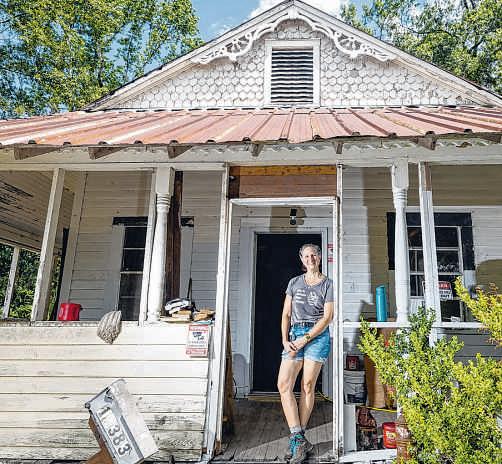
STAFF PHOTOSByBRETT DUKE
Christy Becnel stands in the doorwayofahouse she is renovating into apotterystudio along the Tammany Trace near Covington. Her goal is to both teach and host studio art classes for kids and adults, and to hold socialgathering for artists to meet each other
Christy Becnel shows one of her handmadepotterymugs featuring acrawfish handle
DINING SCENE
JeffersonParish’sbest bourbonselection is at Byblos
So, how did the Pappy Van Winkle pair with the hummus? It’saquestion Inever expected to contemplate,but in this context, it was the naturalone.
On arecent weeknight, with aWorld Cup match on TV,just about everyone seated at the curving restaurant bar wassampling abourbon of somekind beside their gyro-topped salads and Mediterranean pastas. Tay was holding court, pulling down bottles from the shelves like akid showing off his toys.



Ian McNulty WHAT’S COOKING
The same question could’veapplied to the Eagle Rare 17-Year or the William Larue Weller lined up next to that dram of Pappy VanWinkle, all three of them exalted, high-dollar bourbons brought down for atasting flight from the literal top shelf of thiswhiskeycollection.
Iwas at Byblos, specifically the location in Elmwood. It’sa Middle Eastern restaurant in ashopping center withaview of aT.J. Maxx across the parking lot.
On the menu are the kebabs, shawarma and, yes, hummus, that Byblos has been serving at different locations since 1994. That includes the original stillopen in Old Metairie,and it will bethe format for the forthcoming new Byblos in Lakeview (openingthis summer,likely late July).
This Elmwood restaurant is a bit different. Tarek Tay, oneofthe Lebanese-born owners of the Byblos brand, is abourbon fanatic. He has swiftly built the Elmwood restaurant’sbar up with acollection of about 200 different bourbon labels. It is one of the biggest selections in the area. While still well under that of Bourbon House restaurant (with300 bourbons) and thewhiskey bar Barrel Proof (with roughly 500 bourbons), it is the deepest bourbon roster for a Jefferson Parish restaurant. But Tayhas another way to frameit.
“I’ve declared myself theking of bourbon at aMiddle Eastern restaurant,” the restaurateur said with alaugh.
There may not be much competition in this particular category Tayknows some people will see aMiddle Eastern restaurantand assume it’srun by peopleofMus-






“I don’tthink Iknow enough to be awhiskey snob,” he allowed. “Once you start learning, you realize you can learn so much more.”
But he’scertainly an aficionado, and he keeps building out this Byblos selection to share moreof that enthusiasm.
Happyhour(s)
Tayhas madecontacts in the beverage world through three decades in the local restaurant business. That’shelped him amass a collection that is loaded with new releases and allocated bottles, the type distributors save forclients whobuy alot of other spirits. This Byblos does indeed go through a lot of it.
lim faith. Religious prohibitions on alcohol are thereason anumberofsuchrestaurants around the area don’t sell it. But Byblos restaurants have always had full bars. Taycounted himself as aScotch guy formany years It was aglass of Michter’sbourbonthat becamethe gateway to hiscurrent obsession, and in Elmwood,he’sturnedhis passion into aplayground for other bourbon lovers.












Flightsand falafel
The collection at Byblos ranges from inexpensive to astronomically costly.Upon request,the bartender will produce “the bourbon book,” atome with awooden cover evoking awhiskey barrel itself. Across 24 pages, it’sa catalogue of bourbon that Tayisconstantly updating withnew additions and


tastingnotes. It also has suggested pairings for tasting flights of three bourbons. These start under $30 for aprogression of Basil Hayden bottles and lead up to $280 to taste through Pappy VanWinkle and theultra-premium O.F.C. bourbon (this one is called the “oh, you’re rich” flight). With bourbon, as with wine or fine dining, value is arelative prospect.Tay is trying to make even the mosteye-popping, pricey bourbons abit more accessible.
“People see a$3,000 bottle on theshelf, andthey wonder what it’slike, so maybe it is worth it for them to taste it and experience it at $200 ashot,” Taysaid.
The weekday happy hour (3 p.m.to6 p.m.) has drink specials, but that’sjust the baseline. On Tuesdays, there’sanall-day deal for$6whiskey cocktails madewith the good (though not rare) stuff:a Pinhook Sazerac, old fashioneds with Buffalo Trace and Knob Creek 12-year Manhattans, to nameafew.Wine is half price all day Wednesday,and all day Thursday,there’sawide variety of $5 cocktails. It all makes this family-friendly restaurant aneighborhood bar as wellfor Elmwood. Now, about that Pappy Van Winkle and hummuscombo. Great whiskey is there to sip on its own; it doesn’tshout fora pairing. But in the spirit of the setting, Igave it agoanyway, and there wassomething to the sweet-tart sun-dried tomatoes in this creamy hummusthat aligned with the dried cherry and oaky leather flavor of the bourbon. And before moving along to try the rest on the flight, there was hot pita as palate cleanser.Where else would this be happening but at Tay’sbar at Byblos in Elmwood?
Email Ian McNultyat imcnulty@theadvocate.com.














Tarek Tayadvises guests on bourbon at the baratByblos in Elmwood.
STAFF PHOTO By IAN MCNULTy
Trading Places
Estival elegancerose forthwiththe curtsying cotillion when Le Début des Jeunes Filles de la NouvelleOrléans presented17 young women as the “openingact”ofthe debutante season. Other formal presentations will occur during thenextmonths before the season’sconclusion on theevening of Mardi Gras.
Anew format and location,The New Orleans Board of Trade on MagazineStreet, set Le Debut’sstage for 2026. TheBoard of Trade was founded in 1880 and recently enjoyed an impressive renovation.Among the features are the grand ballroom and its 35-foot ceilings, as well as twocourtyards: the serene inner one and thelarger outer one with alovely fountain.
Adding the human embellishment was the debuting assembly.The first presentee, Miss Rebecca Claire Baxter,daughter of Mr.and Mrs. John Patrick Baxter, appeared at 8:30 pm. Prior to that, guests milled about, some sitting at family tables while others occupied the arranged chairs or stood.The music, which began with “The Star-SpangledBanner,” was by the Jimmy MaxwellOrchestra, led by RobertMaxwell,and Mark Romig was the master of ceremonies.
Four young men, Messrs. David CartanLoker Gibbons III, Clayton Spencer Murphy, John Blackmore Schwing Jr and St. Denis Julien VillereIV, strode forward to openthe programming. Called Jeunes Messieurs,they are the respective sons of Mr.and Mrs. Gibbons Jr., Mr. andMrs.William Spencer Murphy, Mr.and Mrs. Schwing, and Mr.and Mrs.Villere III.Right after each father-escorted deb turned to curtsy to the audience— and there were some lovely,gracefulcurtsies! —aJeune Monsieur stepped forward to replace the father and lead the debutante to her spot on the stage. Thebeaming Miss Baxter processed to “She’saRainbow.”
“Tennessee Waltz,” “Edelweiss” and“Be Young, Be Foolish, Be Happy” was played for the subsequent threesomeofMisses Jane Adele Boughton,daughter of Mr.and Mrs.Fred Sherman Boughton Jr.; Isabella Marie ZavatkayDennis, daughter of Dr.and Mrs. Patrick MichaelDennis; and Leila Whitney Gamard, daughter of Mr.and Mrs.Walter Thomas Gamard III. As these debs, and the others, processed, they stopped to pay homage to their mothers, who had reserved seating on the ballroom floor.As alot, and divided in half, the mothers flankedthe central aisle used for the presentation.Later, as the debutantes stepped forward with their fathers, they effected ademi-curtsy in front of their mothers as alovingtribute Misses Theodosia Caroline Grant, daughter of Dr.and Mrs.Arthur Gordon Grant III; CharlotteHamberlin Head, daughter of Mr.and Mrs. Jeremy Thomas Head; Katherine Phelps Hooper, daughterof Mr.and Mrs. Christian Gibbs Hooper; and Adelaide LouiseJackson, daughter of Mr.and Mrs. Jason Konrad Jackson, chose, as their tunes, “Sweet Caroline,” “Love Grows (Where My Rosemary Goes),” “Can’tTake My EyesOff You,”and “Brown Eyed Girl.”
Then came Miss Susan CafferyMcCay,daughter of Mr.and Mrs. RobertPennMcCay, whose song applied to the entire cotillion lot. It was “Isn’tShe Lovely.” White summer formal gowns were de rigueur for the debutantes, who wore short gloves and closed-toe shoes, both white Their bouquets were composed of white roses “Here Comes the Sun” introduced Miss Colleen Colton McCloud, daughter of Mr.and Mrs Evans Martin McLeod. Athreesome, whose last names start with a“P” followed.Smiling were Misses Katherine Donelson Ellis Patin, daughter of Mr.and Mrs.Thomas Clifton PatinIII, to “Dancing Queen”; Elizabeth Jansen Payne, daughter of Mr.and Mrs. John William Randolph Payne,to“My Girl”; and DorothyFrances Phillips, daughter of Mr.and Mrs. NathanielPope Phillips III, to “Moondance.” That song’slyric,“With the stars up above in youreyes” worked for both Dottie’sentrance and thesiderealplay outside in the larger courtyard

RebeccaBaxter,Elle Boughton
Miss Elizabeth Brooks Russell, daughter of Mr.and Mrs.William McGehee Russell, chose “Best of My Love.” The final trio, Misses Elizabeth Baldwin Talbot, Lucy Leeds Vaicius and Katherine Farrell Williams,daughters, in turn, of Mr.and Mrs. Mark Douglas Talbot, Mr.and Mrs. Christian AnthonyVaicius,and Dr.and Mrs.Claude Somers Williams IV swanned to “Viva la Vida,” “Lucy in the Sky with Diamonds” and “Vienna.”
Last year,the 21 Le Debutluminaries were Misses Cameron Sinclair Andrews,Patricia RandleAucoin, Emma Rose Baumer,Kate Faulkner Bensel,Ashley Conner Ellis, Eliza Brandon Favrot, Kelsey Grace French, Sarah Crusel Henry, Caroline LeBon Henry, Lillian LairHooper,Caroline Grace LeBourgeois, CatherineCarlisle Martin, Lucile McGlinchey Monsted, Lucy Claire Perschall, Caroline Staples Picou, Brooke Coleman Reiss, Elizabeth Kathleen Robert, Elizabeth McLundieBolton Schmidt, Helen Claire Thompson, CharlotteSydney Wirth,and Lucie Ellann Williamson.Well over half of them wore Carnival crownsduring the 2025-2026 debutante season, including that of Rex and Comus. When all current Le Début honorees were assembled on the stage, emcee Mark Romigannounced, “Ladies and gentlemen, les Jeunes Filles!” Earlier,he had asked for no individual applause, but with the17all in position, applause was called for as they curtsied collectively Then,theyleft the stage to pair with their fathers for theMaxwell Orchestra’s “Thank Heaven for Little Girls.” Shortly afterward, the debutantes and their parentsreceived rather informally at their reserved tables.Fewer guestswere noticed this year because of the smaller, moreintimate venue. In the past,the presentations have been in downtown hotels. Then,and now,cell cameras and personal cameras were not permitted: No photos (unless with permission) at all.



Alongwith thewhite-gowned coterie, summertime decorations caught the collective eye. Designed by Paul Lacour,there was lush greeneryasthe black-covered stage backdrop, aseries of black pots with ferns and lilies, and white pedestals on which same-color urns were placed. They contained amixture of white flowers, while the table centerpieces added pink posies to thewhiteones that sat atop crisscrossed green ribbons.Concerning theculinary pleasures, Asian selections (such as sushi), sliders, and breakfast filled thebill.
Dancingawaited!
As theevening moved along, so did the musical momentum within the three-generational gathering. The always-popular “September” broke theice and apack of young guests,LeDébut presentees, and parents gloriedinthe bountyofthe beloved beat.


















The courtyard fountain at the Board of Trade
PHOTOSByREAGAN LAQUE
Dottie Phillips, LibbyPayne, Ellie Patin, Brooks Russell, Coco McLeod
LucyVaicius, Kate Williams,Libby Talbot
Jack Schwing,David Gibbons, Saint Villere, Clay Murphy
Adelaide Jackson, Charlotte Head, Katherine Hooper,Susu McCay
Izzi Dennis, WhitneyGamard,Caroline Grant
TRAVEL
MountMagazineworth exploringinArkansas
BY REBECCA DELATIN
Contributing writer
At The Lodge in Arkansas’ Mount Magazine State Park, the in-house Skycrest Restaurant with large south-facing windows, atwo-story stone-clad fireplace and timber beams is acharming place to take advantage ofthe viewsoverthe southern bluffof the mountain.
Because of the restaurant’slocation within adry county,alcohol purchases at the bar andrestaurant canonlybemade by members of Skycrest’sprivate club. Thankfully,becoming amember is free and easy —just signupat the hostess stand.
The Arkansas River Valleyarea hosts wineries, wildflowers, valley vistas and hiking opportunities forall.Located twohours west of Little Rock, Mount Magazine State Park, with its grand lodge, cliffside cabins and campgrounds perchedaround the highestpoint in Arkansas.
The Lodge at Mount Magazine, which celebrates its 20th anniversary thisyear,offers sweeping views of the Petit Jean River Valley and Blue Mountain Lake. It boasts an indoorheatedswimming pool, game room, conference center,gym and gift shop to suit all creature comforts.
Flanking thelodge are13cabins that offer wood-burning fireplaces, full kitchens and covered porches overlooking the valley, each with rocking chairs and ahot tub. There are several campsite offerings that range fromsimple tent campingtothose equipped with full hookups forRVs State park interpreters routine-
TRAVEL TROUBLESHOOTER
By ChristopherElliott


ly provideguided hikesand educational programs for kids and adults,mostof whichare free.
Those interested can check out upcoming events and programs by visiting thelodge’sfront desk or ArkansasStateParks.com.
Since Magazine Mountain is a flat-topped mesa,the beautiful views are accessible to almost anyone via severalhiking trails on the mountaintop.
Signal Hill is ashort1.4-mile hike that startsnearthe lodge and takes participants to Arkansas’ highest point. The marker reads 2,753 feet in elevation.
North Rim Trail is amoderatehike thatstarts at The Mount Magazine Visitor Center,which is agreat place to explore beforehitting the trail. There’sagiftshop and educational displays about local flora and fauna.
Winter storms have atendency
to stripleaves andupper branches from thetrees,bringing sunshine to the forest floor,creating aburst of wildflowers in the spring. Alocal floral favoriteisDutchman’s Breeches, named forthe flower’sresemblance to tiny pantaloons.
Butterflies areacommon sight flitting among the flowers. Lucky hikers might glimpse thedazzling Diana Fritillary, ablue-andblack speckled species rarely seen outside theArkansasRiver Valleyecoregion. Joinconservation efforts to protect Arkansas’ state butterfly by logging photos andsightings on iNaturalist.org. (Learnmore at thedianaproject. org).
Overlook Drive —aone-way loop with pull-offs andpaved
First-classticketvanishes, then Hawaiian Airlines
Ibooked two first-class, round-trip tickets through the Hawaiian Airlines appfor my wife, Linda, and me to travel from Honolulu to Haneda. Ireceived written confirmations for both tickets almost immediately.Both were purchased, one after the other, using the same credit card. When we arrived at the Honolulu airport, an agent told me that Ihad aticket, butmy wife’shad been voided.
paths leading to stunning views of the cliff sides and rolling hills below —can be tackled on foot, bike or by car
Travelers looking for more daring adventures have lots of options, too.
There are sites designated for horseback riding, mountain biking, rock climbingand rappelling
There’s even asite forthrill-seeking hang gliders to launchoff into thevalleybetween Cabin7and 8. The experienceisthrilling to watch, even for those who would prefer to keep their feet firmly plantedonsolid ground.
It may be tempting to spend all your timeatMount Magazine State Park, but just an hour’s driveaway is Altus, Arkansas, where visitors will find St. Mary’s Mountain andpicturesque vineyards andwineriesestablished by German and Swiss immigrants nearly 150 yearsago.
Weidekehr Wine Cellars continues to be run by the third and fourth generations of the Weidekehr family
Enjoy classic alpine dishes like schnitzel and bratwurst by cozy candlelight at The Weinkeller Restaurant,which is housed in a hand-dug wine cellar dating back to the 1880s
The nearby Post Winery offers alarge tasting room witha wide variety of winestosample and purchase. Their mostpopular offering, Blue Parachute, is alightly sweet and slightly effervescent muscadine wine.
MountBethelWineryoffers tastings of its wines served in a quaint converted wine cellar.The hostsare happy to share family and vineyard history while you sip. In the spring, the pink dogwood in the courtyard puts on ashow against the dark wooden barn and rolling green hills that surround the winery

Christopher Elliott

No one could tell us why. Her seat hadalready been sold to someone else.The agent told us that to getmywife on alater flight, Iwould have to buy her acompletely new ticket.The new ticket cost $575 more than the original Ihad already paid for.I wasassuredatthe airportthat Icould contact the customer relationsdepartment for arefund.





HawaiianAirlines first insinuated that my credit card wasdeclined. Ihavespoken at lengthwith my credit cardissuer, and it is adamant that it didnot decline the charge formywife’s ticket. (Whywoulditdecline one ticket andnot the other,purchased on the same card at the sametime?) Then, Hawaiian triedtodeflect blame to athird-party booking channel,even though Ibooked directly on its app and had the confirmationtoprove it. In another email, arepresentative admittedour tickets were being treated asa Hawaiian Airlines direct booking Since neither Chase nor Itook anyaction to void my wife’s ticket, the fault lies with Hawaiian.The airlineshouldnot be able to takeadvantageofits own mistake, hold me hostage in Honolulu,and forcemetopay an additional$575. Ionly want reimbursement forthe extra amountI wasrequired to pay. Can you help?— James Phillips, Kailua Kona, Hawaii

Hawaiian Airlines should have honored your wife’sconfirmed ticket. Full stop. When an airline’ssystem suffers aticketing error —which this obviously was —itshould have twoimmediatepriorities. First, alertthe passenger.Second, fix the problem at no costtothe customer
What an airline should not do is void aconfirmed reservation without notice, sell theseat to someone else, and then charge you apremium to get her on another flight.
The airline’sresponsetoyou was even worse.Blaming anonexistent “third party” or,even more absurdly,your credit card, was a classic runaround.
Youdid exactly what Ialways recommend: Youkept ameticulous paper trail. Your documenta-
tionwas flawless. When acompany gives youanonsensical answer, you mustcontinue to push for a logical one in writing —which you did. When front-line customer servicefails, the next step is to appeal to the executives. Ipublish the executive contacts for Hawaiian Airlines and many other companies on my consumer advocacy site,Elliott.org.
Basedonthe correspondence you shared, it looked as if Hawaiian Airlines was doubling down on itsmistake. So, we took atwopronged approach. My advocacy team and Idecided to contact the airline on your behalf. We presented your clear documentation and asked for areview.You also filed a complaint with the Department of Transportation. That worked. Iheard back from
asenior resolution coordinator at Hawaiian Airlines, who apologized and admitted that the previous agent’sresponses “did not provide afair resolution,” adding that the agent was “coached regarding this case.”
Hawaiian Airlines admitted that its system canceled Linda’sticket by mistake. It refunded the entire fare difference and issued both you and your wife each a$250 travel voucher This is atextbook case of why you should never accept acompany’sfirst “no,” especially when it defies logic.
Christopher Elliott is the founder of Elliott Advocacy,anonprofit organization that helps consumers solve their problems. Email him at chris@elliott.org.



















PHOTOSByREBECCA DELATIN
The sun setsatthe bluffs along Old LodgeTrail near The Lodge at Mount Magazine in Arkansas.
resemblancetotinypantaloons.
HOLLYWOOD SOUTH
N.O. actorisonthe move during summer slowdown
LanceNichols thrives despiteastruggling local film scene
It’satime of crisis onceagain for Hollywood South. There are no studio films currently shooting in New Orleans, andsurvival for those in the film industrycan be challenging

Leslie Cardé
But actor Lance Nichols has an edge thanksto decades of experience and arésumé that includes over 235 film and television roles, from “The Curious Case of Benjamin Button” and “Treme,” to “The Burial” and “House of Cards.”
He has acted alongside everyone from Brad Pitt and Wendell Pierce to Jamie Foxx and Kevin Spacey
Now,the actor has been shooting in Nashville, where he’sset to play Nicole Kidman’sdoctor in Season Twoofthe Netflix drama “Scarpetta.”
“I’ve been very fortunate in this industry,because throughout my decadeslong career, I’vehad the opportunity to network with casting directors, producers, directors and other actors who have their fingers on the pulse of where the jobs are,” Nichols said. “So, if there are no calls for actors in New Orleans, I’mgettingcalls about projects shooting outside of the city,and ‘Scarpetta’ is just one example.” Without giving too much away ahead of Season Twoofthe Netflix show,let’sjust say Nichols doesn’thave much verbal interaction withKidman’scharacter forensicpathologistDr. Kay Scarpetta, because of acertain medical condition she presentswithin the emergency room. He does, however, have scenes with another Oscar winner,Jamie Lee Curtis, who plays Kidman’s sister, Kay The Amazon MGM Studios series, based on the bestselling 2008 novel by Patricia Cornwell, also stars Bobby Cannavale (“Man on Fire”) and Simon Baker (“The

LanceNichols will reprise the one-man show, ‘HowILearned What
winning playwrightAugustWilson, in his autobiographical stageplay.

Lance
Mentalist”). Nichols is currently in Ohio shooting Season Twoof“Sugarcreek Amish Mysteries,”where he plays one of the six main characters, Officer Twitchell. In aplotline that Nichols describes as Nancy Drew meets Hallmark,
themain character takes over an Amishgift shop only to find herself dealing withstrange stuffed animals and akidnapping. The cozy mystery drama is based on theGuidepostsnovels and takes on one mysterious case per episode.
Once Nichols is wrapped in Ohio, heheads to Birmingham, Alabama, where anew series called “The Girlfriend” is shooting. The independent dark comedy starring Meghann Fahy (“The White Lotus”) and Glenn Howerton (“It’sAlways Sunny in Philadelphia”) has an offbeat plotline involving ahusband who takes anew job in Alabama, and fearing his wife will becomeisolated and depressed from being away from her NewYork family, secretly hires an escort to pose as her new best friend. Dark and comedic consequences ensue. The supporting roles forthis movie were supposed to be cast in Alabama, but they never found theperfect local forthe role of Casper,soNichols got acall. After negotiationswith the production company,Nichols was cast and received alovely note from producer Lee Kim, whosaid they were delighted to have him on board.
Nichols is also aseasoned stage actor,and come August, he heads for Chappaqua, NewYork (home of Bill and Hillary Clinton) where
he will reprise the one-man show, playing famedPulitzer Prize-winning playwright August Wilson, in his autobiographical stage play, “How ILearned What ILearned.” Nichols performed the one-man show in New Orleans in 2023 to rave reviews. It is twohours of poetic dialogue, with the heavy lifting done by Nichols as the only one onstage. He said coming back to the script once again has kicked in much of his muscle memory.
“Of course, you’re not going to remember these lengthy passages word for word, but Iwas amazed at how muchofitcameback to me,” Nichols recounted. “I’m looking forward to working with many of the same people that were with me in the production at Portland Stage in Maine, where Ioriginally performed the play.”
Nichols manages to stay busy between his film workout of town and his theater roles in various locations. He’seven amentor to upcoming actors with educational workshops he holds.
But he said manyinNew Orleans are questioning whythere’s not morework in his own backyard.
“There are ahuge number of people both in front of and behind the camera in this townwho would love to understand the underlying causes of whythis state is continually trying to keep its head above water in the film industry,” he said.
After all, he noted, since Louisiana wasfirst in the nation with tax incentives, and wasonce ahotbed forfilming, it’shard to imagine how it has lost its way. We can blamethe pandemic, he said, or the strikes, or the fact that studios are taking projects overseas and to Canada. And, of course, someofthis is true.
“But domestic production continues on manylevels, and more and moreactors with clout are forcing studios to shoot their projects in the U.S.,” Nichols said. “WeinHollywood South would just like it to be here in Louisiana.”
Contact Leslie Cardé at lesliecardejournalist@gmail. com.


Dear Annie: My wife began volunteering at our local animal shelter last year, and at first Ithought it was wonderful. She has always loved animals, and Iwas proud of her for giving her time to such a good cause. The problem is that she has now brought home five dogs.


It started with oneolder dogshe said no oneelse would adopt. Then came a nervous terrier who“just needed aquiethome.” After that, there alwaysseemed to be another emergency. We now have dogs sleeping on thecouches, barking at thedoorbell andcompeting for space in our bed Ourtwo children love animals, buteven they are overwhelmed.One dog chewed ourson’s baseball glove, another keeps having accidents in ourdaughter’s
room,and the kids have started avoiding inviting friends over because the house feels so chaotic. Lastweek, my daughter quietly asked mewhether our home would ever feel normal again.
Ihave tried talking to my wife, but she says I am being heartless and that sending any of the dogs back would be cruel. Idonot want to take away somethingthat gives her purpose, but Ialso did not agree to turn our home into



an extension of the shelter How do Imake her understand that compassion for animals cannot come at the expense of therest of the family? Andisitunreasonable to insist that some of thedogs be rehomed? —Living in the Doghouse Dear Living in the Doghouse: Your wife certainly has a generous heart.But good intentions do not automatically makeapeaceful home.
Each of your five dogs needs time, training, ex-
ercise, veterinary care and money.The barking, accidents and chewing are signs that someofthem may be stressed or overwhelmed —and, it seems, so is your family Sit downwith your wife at amoment when no one is angry.Make arealistic list of what each dog needs and what your household can truly handle. Then speak with the shelter,your veterinarian and, if needed, a qualified trainer to find out forsure how to best deliver on those needs. Someofthe dogs may need different homes. Having to rehomeadog is not cruelty.Acareful rehoming can be the kindest choice foreveryone. And from now on, no moresurprise dogs. Bringing homeapet should require approval from both parties. One loving heart does not get five votes. Send yourquestions for Annie Lane to dearannie@ creators.com.


PROVIDED PHOTO By AMAZON PRIME VIDEO
Nichols plays Nicole Kidman’sphysician in the dramatic series, ‘Scarpetta.’
PROVIDED By LANCE NICHOLS
ILearned,’playing famed Pulitzer Prize-


SHUTTERS IN THESWAMP
BY LAUREN CHERAMIE Staff writer
Andy Crawford, born and raisedinsouth Louisiana, spent more than 20 years in the outdoor industry as awriter. After that, he turned to photography full-time. He has photographed locations across the United States, but Louisiana’sswamps have always been his firstlove. Recently,hehas traded his motorboat for akayak, paddling through cypresstreesand photographing sunrises, sunsets, landscapes, wildlife and more. He hosts annual “Intothe Swamp” photographic kayak tours through areas that are largely inaccessible.
In his first photo book, “Into the Lost World,” which was released in April, he takes readers along for the ride. Thebook was published by Schiffer
This interview was edited for length and clarity
In the introduction of “Intothe Lost World,”you write that Louisiana’sswamps are “one of the best-kept secrets inthe world,”with agoal to make peoplefallin love with andappreciate them. Do you think the book accomplishes that?
If you talk to most people outside of Louisiana, theyknow Louisiana has swamps. Idon’t think the picture they have in their mind is necessarily beautiful. The swamp is aharsh place,but Ithink the book takes the viewer inside the swamp and shows the beauty that we all know is there. It even helps those whohave grown up in it see it in adifferent light, because you can get lost in the complexity and chaos of it. In the book, I’m looking for those scenes that encapsulate the swamp. Ithink the book does agood job at letting readers, even locals, come away with afuller picture of just how beautiful the swamp is How do you know when you’ve gota

meaningful photo with astorybehind it?
Italked about getting lost in thechaos ofthe bigsceneofit.
Amentor,James Overstreet, andIwould goshoot together while we were on theroad. We might be shooting an old house, and I’d come back with abarn and anice scene. He would come back with a light fixtureor theporch. It alwaysdrovemeinsane.
Icomplained andcomplained, andhesaid,“Crawford, the whole is made upofpieces
Your job is to find thepieces.”
His words runthrough my head all thetime.
They havehelped me when I go out paddling. I’m looking for piecesinthe chaos
Sometimesinspiration happens by accident.Sometimes it’safeeling,like an aha moment.Sometimes it’s aculmination of planning avision I’ve got

in my head. If you were to takeareader out to the swampfor the day, where would you go?
LakeVerret, the queen of the Louisianaswamp. There’sjust a character to it. There’ssomuch Spanish moss, sheetsofit, and thetrees comeout where you can work. It’sshallow enough. I thinkit’sthe prettiest swamp. Youmention in the introduction that you didn’tgive Louisianaswampsmuch thought at first.What has working in the swamptaught you?
Iknew that they were beautiful. You’ve got to be blind not to see that,but Iwas mostly fishing in theswamp. Spending so much time therehas taught me that we’retoo easily accustomed to what we are surrounded with. We takethat natural beauty for granted. Ithink everybody does that. The people who live in Jackson
Hole might wake up and go, “Oh, look, there’samountain,” and shrug their shoulders and go to work. There’slittle natural beautyinthe United States prettier than the swamp. The swamp taught me to not be so fixated on going somewhere else but learn what’s beautiful about your home. Did it teach you patience?
Well, Idon’thave any.I don’t know that it’staught me patience. It’staught me to slow down and enjoy themoment. My wife will tellyou that Ihave atendency to get lost behind thecamera, but behind thecamera is my happy place. When Iget behind the camera, everything goes away,because I’m focused on what’sinfront of me. Youcan drive up to alot of places, get out,pull out your camera, hold it and shoot. You can’tdothat in the swamp. A Louisianaswamp is largely inaccessible, so you have to boat. Youhave to take your time. So, it has taught me to slow down, because when you speed up is when you drop the camera or misssomething. Do you see this bookasyourown way of working toward conservationefforts? Ihope. Again, Ithink that swamp’staken forgranted far too much. Ihope people look at it and say,“This is worth protecting.”
Partofmy goalistoput it in front of people so that they understand the value of it and understand the beauty and worthiness of protection. Because thingshappen. Once they’re gone, they’re gone. Ialso love how the book shows how interwoven the swampiswith our lives. What would we be without the swamps? We’d be like everybody else.
Email Lauren Cheramie at lauren.cheramie@ theadvocate.com.



Revisiting aresolution to document my reading life
We’ve reached the midpoint of the year,which can be agood time to ask how all those NewYear’sresolutions we madelast January are panning out. As this year opened, Iresolved to record the nameofevery book Iread. The idea came after Iwrote about my friend Linda Lightfoot, who’skept such areading journal since 2005. I was also inspired after visiting with Tricia Day, aBaton Rouge woman whose late mother,Kitty Day, kept a reading journal from 1937 until her death in 2007.
The stories Ishared about Lightfoot and Daysparked anice conversation about how reading journals have shaped the lives of other book lovers.
Jamie Freeman, owner of TBR Books &Tea in Baton Rouge, mentioned that she stocks afew reading journals in her shop, though she prefers another method to track her own reading.
“I personally keep my reading ‘journal’ digitally,with the Goodreads and Fable apps,” she told me. “I have tried keeping aphysical journal in the past, but I’ve found that I’mmuch morelikely to keep up with it if Ican update it from anywhere.”
Freeman also enjoys the social aspect of her reading apps.
“With Goodreads, Ican keep up with what my friends are reading and enjoying,” she noted. “And Ilike Fable because it provides me with somegraphs and insights about my reading. That’swhat Ienjoy most about keeping ajournal —tracking the number of books Iread each year,but also being able to look at the different types of books, authors, genres, etc. There were afew years awhile back when Icreated and utilized my own Google form that linked to aspreadsheet with lots of charts about the types of books Iwas reading. That wastoo cumbersome to keep up with, though!”
But forthose whoprefer paper reading journals, Freeman gives customers someoptions.
“Wehave afew different versions,” she said, “including apocket-sized version, which Ithink is adorable.”
Reader Steve Gagnon told me that he’sbeen keeping areading journal since the 1990s.
“It’snearly 600 books, mostly fiction,” he said. “Every once in awhile, Ienter the list into aspreadsheet.” Reader John Berry told me about his own twist on reading journals.
“I love to read, like manyothers,” Berry said. “But instead of journaling my finished reads, Idothe opposite: keeping alist of books, poems, films, plays, music and other such interesting itemsthat Ihave not yet enjoyed. This is my memoryassistant, which Idepend on to safely keep up with all the itemsI wanttoenjoy in the future.”
More than six months in, how am I doing with my own reading journal?
It’s been abit of an adventure. In another column soon, I’ll let you know how it’sbeen going.
Email Danny Heitman at danny@ dannyheitman.com

PHOTO By ANDyCRAWFORD
Agreat blue heron stalks Louisiana’sLakeDauteriveswamp on afoggy morning
PHOTO By RICK BERK
AndyCrawford stands waist-deep in theblack waters of Lake Maurepas as he photographs the swampduring asunrise.
Danny Heitman
By The Associated Press
Today is Sunday,July 12, the193rd dayof 2026. There are 172 days left in the year
TodayinHistory:
On July 12, 1979, as an angry reactiontothe popularity of disco music, the Chicago White Soxheld the “Disco Demolition Night” promotion,inwhich acrateofdisco records was blown up on the field betweengames of adoubleheader;the ensuingriotand damage to thefieldcausedthe WhiteSox to forfeitthe second game
Also on this date:
In 1543, England’sKing HenryVIII marriedhis sixth and final wife,Catherine Parr
In 1812, U.S. forces led by Gen. William Hullentered Canadaduringthe Warof1812 against Britain.(Hull retreated shortly thereafter to Detroit.)
In 1862, during the Civil War, President Abraham Lincoln signed abill authorizing the Army Medal of Honor
In 1909,the House of Representatives joined the Senate in passing the 16th Amendment to the U.S. Constitution, allowing for afederal income tax, and submittedittothe states. (It was declared ratified in February1913.)
In 1962, the Rolling Stones playedtheir first show, at the Marquee ClubinLondon
In 1967, rioting erupted in Newark,New Jersey, over the police beating of aBlacktaxidriver; 26 people werekilled in the five days of violencethatfollowed.
In 1984,Democraticpresidential candidate Walter F. Mondale announced hischoice of U.S. Rep.Geraldine A. Ferraro of New York to be his running mate;Ferraro was the first woman to run for vice president on amajor-party ticket.
In 1991,Japanese professorHitoshi Igarashi,who had translated Salman Rushdie’s“The Satanic Verses,” was foundstabbedtodeath, nine days after thenovel’s Italian translator was attacked in Milan.
In 1994, President BillClinton, visiting Germany,went to theeastern sector of Berlin, the firstU.S. president to do so since Harry Truman.
In 2003, the USS Ronald Reagan, the first aircraft carrier named foraliving president, was commissionedinNorfolk, Virginia.
In 2012, ascathing report by formerFBI Director Louis Freehsaidthe late JoePaternoand othertop Penn State officials had buried child sexualabuse allegations against Jerry Sandusky more than adecadeearliertoavoid bad publicity
In 2022, Twitter sued Elon Musk to force himtocomplete the $44 billion acquisition ofthe social media company afterMusk said he was backing off his agreement to buy the company. (He would eventually become Twitter’sowner three months later.)
Today’sbirthdays: Writer Delia Ephronis82. Singer Walter Egan is 78. Writer-producerBrian Grazer is 75.Actor Cheryl Ladd is 75. Singer Ricky McKinnie (The Blind Boys of Alabama) is 74. Singer Sandi Patty is 70.Actor Mel Harrisis70. Boxer JulioCesar Chavez is 64. Rocksinger Robin Wilson (Gin Blossoms) is 61. Actor LisaNicole Carsonis57. Olympicgoldmedalfigure skaterKristi Yamaguchi is 55. Actor Anna Friel is 50. SingerTracieSpencer is 50.Actor Topher Grace is 48. Actor Michelle Rodriguez is 48.Singermusician Kimberly Perry (The Band Perry) is 43.Actor Natalie Martinez is 42. Actor Ta’Rhonda Jones is 38.ActorRachelBrosnahan is 36.Olympic goldmedal gymnast Jordyn Wieber is 31. NobelPeace Prize laureateMalala Yousafzai is 29. NBA guard ShaiGilgeous-Alexanderis28.
Artist selling trashfrom outside Swift-Kelce wedding
BY JAMI GANZ
Newyork Daily News (TNS)
NEWYORK There’s atrashy developmentinthe Taylor Swift-Travis Kelce nuptials as garbage fromoutside the couple’swedding venue, Madison Square Garden,is now being sold to obsessive fans.
Artist Justin Gignac’s New York City Garbage —which brands itself as “100% authentic. Handpicked from the fertile streets of NY,NY”— is selling waste, collected in atransparent box stamped with “JUST&T MARRIED!
7/3/26.” The electronic billboards outside The Garden famously also flashed “JUST&T MARRIED” in the immediate aftermath of the ceremony
“There’sgarbage on the floor after the party,” reads the descriptionfor the $25 mini cube of trash, in anod to the start of Swift’s2017 song “New Year’sDay”— which opens with, “There’s glitter on the floor after the party.” The Grammy-winning singer and Super Bowlwinning Kansas CityChiefs tight end, both 36, held their wedding Fridayatthe World’sMost Famous Arena joined by more than 1,000 guests, including many fellow A-listers.
Gignac donned “a full tuxedo,” too, the day of the weddingashecollected the trash outsideThe Garden, picking up “a variety of left behind items like cigarette butts …pieces of arainbow fan, straws, utensils …a ring pop, and one left AirPod.” “Many of these items have beentied in knotstoreally nail that wedding theme,” reads the description.
Idon’t want to talk aboutmygroceries


Dear Miss Manners: Ibelieve what I buy at the grocery store is myown business, whether it’scarrots and onions or products whose purpose would be embarrassing if explained. Iwish supermarketswould train their staff not to comment on customer purchases, no matter how benign thesentiment. (“Oh,Ilike those cookies!”) Questions about relevant issues are OK. Mostly, though, Ijust want topay thestore what they’re due and escape with my bags.
GentleReader: Wouldn’tthat be nice. Unfortunately,the problem is that thestaff are probably being trained to participateinthis intrusive banter Apparently theweather is just too banal.
However,just for fun, Miss Manners suggestsyou treat their comments as though they were weatherrelated anyway.Asin, “Yes, it does look like it might rain” in response to any of your grocery items being needlessly approved.
Dear Miss Manners: Why do so many people thinkit’sacceptable to lick their fingers while eating when napkins are readily available? Ifind this disgusting, especially when they do it in public places. They’re spreading germswhen they touch things without washing their hands afterward.AmIthe one with a problem?
GentleReader: Youwill be when those germsfind their way to you.
Dear Miss Manners: My husband and I got asave-the-date card forthe wedding of his cousin’sdaughter.Itwas out of state, so they gave awebsite with names of hotels and prices. Because of the highprices, long travel and my husband’spoor health, we would not be able to attend, but we didn’ttell anyone. As theyear went by,I never got an invitation for her bridal shower, which was odd, and we never got an invitation to the wedding!
Weeks before the wedding, Icalled his cousin tofind outwhat happened, and was given an excuse that the guest list had gotten too big and too expensive so they “made cuts”! No other family member wascut except us. Iasked if it wasbecause
my husband’ssister would be there and he’snot speaking to her,but was told no. Idon’tbelieve that because it madenosense —when planning a wedding you know how manyguests you’ll invite and what the cost will be.
Thank goodness Ididn’tbuy a shower giftorbook ahotel —we could have been out hundreds of dollars!
Gentle Reader: And as you weren’t planning to go, they could have gotten away with inviting you without having to count you in their bloated guest list.
Indeed, save-the-date cards are binding on the hosts’ part, but not on the guests’. So they wereatfault. But fortunately,you had not intended to go anyway,orMiss Manners thinks you might be prone to hold agrudge against them. Phew All you missed was the opportunity to decline, even to the shower,which is not an automatic add-on forwedding guests.
And the chance to not speak to your sister-in-law
Sendquestions to Miss Manners at dearmissmanners@gmail.com.
More easy ways to open nail polish bottles
Dear Heloise: To open abottle of nail polish that’sstuck, place acup of water in themicrowave for 1minute. Then removethe cup from themicrowave and place thebottle inside of the cup. Wait about aminute and remove.

Presto! —Marty R., via email
Nail polish remover hint
Dear Heloise: Regarding stuck-onnail polish lids, when Inotice that abottle cap feels difficult to open,Iapply nail polish remover toacotton ball and clean off the bottle top. Ithen pour a little remover intothe screw top,let it sit for aminute, then wipe it off with acottonball. This preventsstuck lids.
—Jean H., in Pleasant Prairie,Wisconsin Tiny holesinT-shirts
Dear Heloise: I’m wondering if anyone has an answer tothis mystery.We wear shirts made of T-shirt material
every day in our family.Yet, after ashort while, they end up with tiny holes in thestomach area. Male or female, belt or no belt, it doesn’tmatter;these tinyholes suddenly appear Anyidea where they come from?
Monica T.,via email
Monica, thetiny holes are usually caused by alowerquality of fabric, from rubbing against ahard surface (suchasthe buttononapair of jeans), or from standing against ahard stone surface. Generally speaking, they are mostoften found around the belly button region. —Heloise Scalyshowerdoors
Dear Heloise: The best remedy for scaly shower doors is prevention. For years, after every shower,I’ve sprayed my shower doors with this concoction, and they look like they did on the day they were installed: n 3cups water n 1/2 cup rubbing alcohol n 1/2 cup hydrogen peroxide n 1tablespoon dishwasher rinse aid n 1teaspoon dishwashing liquid.
—Martha C., in Sapulpa, Oklahoma Smelly dishwasher
Dear Heloise: When Iopen my dishwasher,ithas anasty smell. Is there agood way to remove it? —L.W., in Richmond,Virginia L.W thisisasignthatbacteriahas started to build up in your dishwasher The best waytoget ridofthe odor is to useacommercial dishwater tabletdesignedtoclean outthe “gunk” that has built up in thedishwasher’sdrainand innerworkings. Youcan probably pick up abox of these tablets or powderin your local grocery store. —Heloise DIYhankies
Dear Heloise: This may sound weird, but Ihave aproblem with aconstantly runny nose. So, unfortunately Ican end up using alot of tissues. Having anumber of old T-shirts etc. that Isaved to use as rags, Irealized that Icould also cut them up and use them as hankies. —Louise W.,via email
Sendahinttoheloise@heloise.com.














Judith Martin MISS MANNERS
Hints from Heloise
‘LittleHouse’serieskeeps heart, communityinmind
BY ALICIA RANCILIO Associated Press
It’sastory with covered wagons and one room schoolhouses, but showrunner Rebecca Sonnenshine says the “Little House on the Prairie” remake for Netflix still speaks to today’sAmerican dream.
The show,which debuted Thursday and set in the late 1800s, follows the Ingalls familyled by Charles and Caroline and their two daughters Mary and Laura —asthey settle in the American frontier
It’s adaptedfromaseriesof semi-autobiographical books written by Laura IngallsWilder about her own family’spioneer life. In 1974, Michael Landon co-created the TV series based on the books where he played Pa alongsideMelissa Gilbert as Laura. It airedfor nine seasons. In the new version, Luke Bracey plays Pa and Alice Halsey is Laura.
Sonnenshine says the same frontier spirit from back then is baked into how Americans see themselves, even today
“This idea of rugged individualism is the cornerstone of American mythos,” Sonnenshine says. “It’s still manifesting in our lives constantly …We’re real go-getters.”
In “Little House,” we see the Ingalls family seeking land and opportunity as they movewest. In real life, Sonnenshine says, those settlers often didn’tunderstand what they were part of.
“There was no CNN or up-to-date newspapers, telling you” whatwas really happening,she says.“They did not understand the politics of land ownership or these treaties thathave beenmade or these res-
ervations,”she said.Inthe show, we seeCharles begintograsp the politics at playasthe family encounters the Osage Nation and their newneighbors —and keeps some of that to himself. Sonnenshinesays“it’s notout of malice, exactly” but because“knowledge didnot flow as freely as it does now.”
Keyeventsapriority
As the Ingalls family builds theirnew life, we’reintroduced to various neighborswho help them do it. That includes an Osage family adjusting to theirown new way of life as settlers claim parts of their land.Laurastrikes up a friendship with an Osage girl, and there’samutual respect among Charles and the Osagefamily patriarch.
“A lot of what thisshow is about is getting to knowpeople that are not like you, all kinds of different people, because once youget to knowpeople, that’swhere all the change happens,” said Sonnenshine.
Mr.Edwards, afan favorite from the books and series, helps Pa build thefamily’scabin. He’s arugged Civil Warveteran with a heart of gold —grieving theloss of his own family,finding anew one in the Ingalls.
Staying truetocharacterslike Edwardsand including key events from the source materialwas a priority for Sonnenshine.
She and her writers made alist of “iconicmoments”with achecklist to follow.“We just crossed them off as we went along. ‘OK we’ve found away to incorporate this’ or‘Ma gets achair,’ which is very important,or‘great Pa

builds adoor.’ ”Building adoor, says Sonnenshine, is “a whole chapter in abook.”
Trip Friendly,whose father Ed co-created the series with Landon andwas an executive producer, controls the overallrights to the Laura Ingalls Wilder stories. He’s an executive producer on the remake, and Sonnenshine says Trip is “very passionate abouttelling thestory of thebooks.”
Pa is good butnot perfect
Landon’sportrayal of Pa made him arguably one of the most popular TV dads in thehistory of the medium. Hewas adevoted family man with strong morals and compassion for others.
Bracey had never watched the original which he sayswas beneficial to creating his own interpretation of thecharacter
“I didn’tfeel that burden,” said Bracey.“The intimidating factor hascome after making it. When I’vetoldpeople whatI’vedone, andI’vebeen told how important it is to them. That’swhere it’sgot intimidating.”
Bracey said it’srefreshing to playa genuinely good person, who makes mistakes, but is good.
“There’svery few really good people in television and movies. Ifeel lots of timestheyhaveto have adark secret or acheckered pastorwhatever,”hesaid.
Crosby Fitzgerald, who plays Ma, says that goodness is present off-screen too. “Working with Luke is incredible.Heactually is like Pa in person.Just really lifted me up all the time. It’simpossible to work on aset like this, especially with this legacy,and notbe uplifted by the vibe.”
SonnenshinesaysSeason1 is also about Laura learning that neither of her parents are perfect, particularly Pa. She comes to understand that“he does make mistakes and that’sOK.’And even Charles talks about that. Ithink that’samore honest portrayal of fatherhood.”
AddingLaura’s rival Sonnenshine most recently wrote the adaptation for the hit film “The Housemaid” starring Sydney Sweeneyand Amanda Seyfriedand is writing its sequel. Shewas also awriter on “The Boys,” whichwas known forits explicit language and sex and graphic violence. It’snot an exaggeration to say that writing for “Little House,” even on astreaming platform, is different.
“This is the first time I’ve ever written without using any curse words,” said Sonnenshine.
“I’ve usually done,like much darker material. So Ialways say, well, I’m in my family eraright now.”
Filming on the show’ssecond season is underway.Netflix recently confirmed the addition of another popular character from theoriginals.Willa Dunn has been cast as Laura’srival Nellie Oleson,whose father owns the generalstore
“She’shere and she’s actingupa storm,” said Sonnenshine. “It’sreally fun. People love that character.Ithink we’re doing aslightly different takeonthe character, which is also really fun. The book is oursortoftouchstone andthen building uponthatfor her and her family has been —itbrings anew dynamic to the Ingalls family.”
‘Moana’latestDisneymovie to getlive-action treatment
BY SAMANTHA MASUNAGA Los Angeles Times
LOS ANGELES In 2016,Walt DisneyCo.’s“Moana”became abox office hit, captivating audiences with catchy earworms from LinManuel Miranda and aspunky young heroine who rejected the label of princess.
Now,just 10 years later,it’sthe latest Disney animated film to be given the live-action treatment Burbank-based Disney has long reached into its vault in search of animatedclassics to redo in aliveaction format.
But adecade is the shortest time between one of the company’s original animated movies and the reimagined film. (2025’s“Lilo & Stitch,” which originally debuted in 2002, is the next closest with a gap of 23 years.)
Why go back to “Moana” so soon? The Polynesian wayfarer is extremely popular
The 2016 animated film grossed more than $643 millionatthe global box office, then spawned a2024 sequel that made more than $1 billion worldwide.
The original is the most-watched movie in Disney+history with more than 1.5billion hours of viewing.
“Every once in awhile in Hollywood, we make afilm that is morethan afilm,” actor Dwayne Johnson, who reprises hisroleas



thedemigodMaui,saidonstage during the movie’s premiere Tuesdayatthe Hollywood Bowl after aPolynesiandance performance. “I think you could feel it already tonight, with our culture andwith what we have represented. But also not only our Polynesian culture it’s also ashared culture around the world.”
The latest “Moana,” out this weekend, will join acadre of familyfilms at the multiplex.
That includes Disney andPixar’s “Toy Story 5,” which has now racked up more than $774 millionworldwide,and Universal Pictures and Illumination’s“Min-


ions &Monsters,” whichdebuted domestically last week to asofterthan-expected opening of $62 millionfor thefive-dayFourth of July holiday weekend
Theweaker haul for “Minions &Monsters” has led to questions about whether there are too many family films in theaters, which could affect the receptionfor the latest iteration of “Moana.” But as the last of this summer’strioof major animated films,the runway could be clear for the film to build steam.
“I don’tthink twomovies make saturation,” saidAndrew Cripps, head of theatrical distribution
for Walt DisneyStudios. “There’s ahuge fanbase for the ‘Moana’ franchise.”
But with two“Moana” movies in the last decade, will audiences flock to another film?
Analysts areexpecting an openingweekend haul of $75 million, though studio estimates arecloser to $60 million to $65 million. The film’sproduction budget is about $250 million.
“Whenyou look at thesemassive movies thatwere just incredible —‘TheLionKing, Aladdin, ‘Beautyand the Beast’ —they were brought back after years andyears,”saidDavid A. Gross, who writes the industry newsletterFranchiseRe. “I think there’s an argument that says absence makes theheart grow fonder with some of these. We’ll see.
Early reviewsofthe film have been mixed,and “Moana” hasso far notched a37% rating on aggregator RottenTomatoes.The movie is anearly frame-by-frame recreation of the original. Disney’slive-action remakes have largely been box-office boons for the company,with afew exceptions.
In the last 16 years, five films have grossedmorethan $1 billion globally,including 2017’s“Beauty and the Beast” and 2019’s“The Lion King” and “Aladdin.” (Other live-action spinoffs based on classic animated movies, such as
2024’s “Mufasa: TheLionKing” and 2014’s“Maleficent,” also had solid performances.)
“It goes back to the original [intellectual property] of these movies,” Cripps said of the importanceoflive-actionfilms for Disney’sslate. “People growup withit, they become fans of it theylive with it. Whenyou’ve got IP that resonates so well literally around the world with fans, Ijust think it’sa clever extension.”
There have been some notable misfires, including last year’s “Snow White,” which cratered at the boxoffice amidmyriadcontroversies, including racist backlash to the casting of Rachel Zegler, who is of Colombian descent, as the titular princess, its depiction of little people andits lead actors’ views on the Israel-Hamas war In general, live-action retellings have also typically performed welloverseas —amarketplace that isn’talways reliable these days.
Across 13 recent live-action films from Disney and other studios, allmademore than 60% of theirglobalbox officerevenue in internationalmarkets, Grosssaid. By comparison, films across all genres typically bring in about half of their revenue overseas, he said.
“Whenthese movies connect,” Gross said, “they work everywhere.”









PROVIDED PHOTO By DISNEy/TNS
Catherina Laga’aia sings as Moana in Disney’slive-action film ‘Moana.’
NETFLIX PHOTO
From left, CrosbyFitzgerald as CarolineIngalls, LukeBraceyasCharles Ingalls, Skywalker Hughes as MaryIngalls, and Alice HalseyasLaura Ingalls star in ‘Little House on the Prairie.’
From wild flowerstosilks andeverythinginbetween
BY YVONNE BAHRYCABALLERO
Contributing writer
Talents used in the past canbe recalled, especiallywhenyour granddaughters are involved
Human Condition
Once upon atime, Ibecame a licensed florist to complementmy husband’s funeral business. The journey involved attending afloral design school in New Orleans, then passing state boardtesting for alicense. The nextstep was setting up amakeshift work area in the garageof the funeral home.
What was neededto begin the business and accommodatemy one and only client? Acitybusiness license, aused cooler from aformer business venture of my dad’s, and connecting with a wholesale floral company fordelivery of fresh cut flowers.
Sooner than expected, the business outgrew the garage location and was moved to asmall shop in downtown Donaldsonville. Next came the move to the buildingadjacent to our home.

Throughthose doors, we created floral arrangements for proms, weddings, holidaysand other special occasionsaswell as funerals for 12 or more years until The Flower Boutique was sold. That was many years ago. Fastforward to the wedding of my
granddaughter Katie, who lives in California. She planned theevent for anatural setting in thehills of the Golden State, so travel was involved.
Once we were settled into our cabins, we gathered around an outdoor fire for an evening of vis-
iting. Early the next day,wedding day,wepicked wild flowers and fashioned them into bouquets for thebride andher maidofhonor, and boutonnieres forthe groom and his best man The bouquets fit perfectly into thenatural, outdoor setting. Several yearslater,for the wedding of my granddaughter Blake, fresh flowers were purchased from awholesale florist and fashionedinto bouquets and boutonnieresfor the wedding party.Mypastskills were called upon to make these floralaccents for awedding venue overlooking theMississippi RiveratBaton Rouge.
Next came the wedding of my granddaughter Taylor,who chose silk flowers from alocal craft store. We fashioned these into bouquetsfor the bride, maidof honor,bridesmaids, and her partner,best lady and bridesmaids. The flowers blended wellinto theloft-like setting forthe Baton Rouge ceremony. Lastly,mygranddaughter Hailey also purchased silk flowers that we fashioned into aloose
nosegay.Her vision of “going into the garden and picking the flowers” forher bouquet came together.The informal bouquet was perfect forher plantation wedding in Plaquemine. The groom’s boutonniere followed this natural pattern.
Iwas probably in my late 50s when we picked wild flowers in California, then late 60s for Blake’swedding. Iwas an octogenarian forTaylor and Hailey’s weddings. From wild flowers in California to fresh flowers in Baton Rouge and silks forplantation nuptials, it was asheer delight to revive old skills and play this part in these special chapters in my granddaughters’ lives.
—Caballero lives in Baton Rouge.
Advocate readersmay submit stories of about 500 wordstoThe Human Condition at features@ theadvocate.com or The Advocate, Features, 10705 Rieger Road, Baton Rouge, LA 70809. Thereisnopayment, and stories will be edited. Authorsshould include their city of residence.
Her goal is to both teach andhost studio art classes for kids and adults, and to hold social gathering for artists to meet each other
On Thursday,though, she seemed most excited about the underbelly of the house.
“It’sgot reallystrong interior bones,” she saidafter wandering outside, past a dumpster full of junk from the house and some shrubs that contractors had cleared from the house’sfront yard
“People look at it,and they’re like, ‘Why are you doing that? Youcould just tear that down and build a new place.’”
“It’slovely,” she said, answering for them. It also helps that she’sfixed up and flipped ahandful of houses before.
Becnel’spottery studio may soon be one of the most visible public buildings along the Trace in the Covington area, adding a new feature to the popular 31-mile bike route on an old rail line cutting throughSt. Tammany Parish.
While she stood under a 60-year-old magnolia tree in the front yard, Bill Magee,anolder gentleman and semiretiredlawyer from Talisheekwho was in Covington to get ahaircut, popped by.Magee helped Becnel get the title to the house, which involved trying to contact the deceased previous owner’sheirs.
“Everybody is turning their heads,” Becnel said of the house.
Becnel isn’tsure how long the house has been in disrepair —much of it was previously hidden by overgrown ligustrum trees and shrubs —but she said it seemed like people might have been squatting there before she bought it.
The house is on the other side of La. 21 and U.S. 190 from downtown Covington, but the studio will be easily accessible to the public. And it adds to the art scene in the city that’srecently attracted notice.
Earlier this year,Southern Living called Covington the “fast-growing Louisiana town to visit before everyone else does,” and highlightedthe city’s food and arts scene, calling Columbia Street the city’s“main cultural vein.”


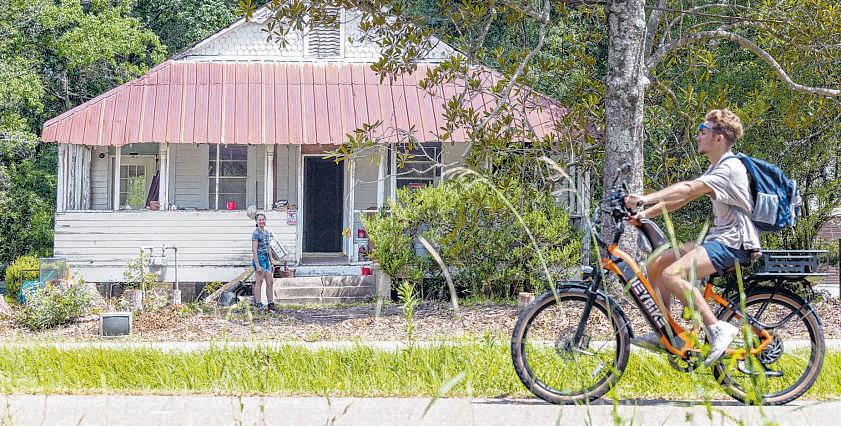
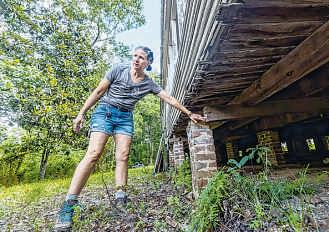
Becnel lives in Abita Springs with herfiance, but she settled on thelocation for her studio after herson, who is in his 30s, bought the property next door alittle over ayear ago.
Growing up on afruit andvegetable farmin Belle Chasse,Becnelnever thought she was going to be an artist. She went to Delgado Community College to study computer-aided drafting.
Then she walked intothe clay studio at Delgado, and “thatwas the big ‘aha’ moment for me,” she said. Her signature potteryitem is a mugwith ahandle thatlooks like acrawfish.
On Columbia are ahandfulofgalleries, likethe St. Tammany Art Association, the Marianne Angeli Rodriguez Gallery, or theColumbiaStreet Academy of Art. Thetown is also home to the annual Three Rivers Arts festival, ajuried fine arts show that features 200 artistsfrom across theUnited States.
ButBecnel’sstudiomay be the first of its kind in the Covington area. Sarada Bonnett, director of cultural artsand events for the city of Covington,said shedidn’t knowofany other art studio in theCovington area with afootprintright alongthe Tammany Trace.
“I’ve followed heronFacebookand TikTok, and I’m so excited for her.It’sjust the



coolestthing,” Bonnet said.
“This girlhas been working her tail off.”
“Now Ican makethese wonderful things, Ican












teach other people how to make wonderful, beautiful things,” said Becnel. “And I would have neverdonethat had Inot walked into that clay studio.”
Christy Becnel discusses repairs she plans to makeonher house along the TammanyTrace.
Acyclist rides along the Tammany Trace past the house Christy Becnel is renovating into apotterystudio near Covington.
His mother,awriter andlover of 1930s fashion, said his style has agenteel and Edwardian character, as if out of aMerchantIvory film. She calls her favoritepiece a“gothic, Western, vampirecoat dress,” ornamented with afrill.
Years as avisual artist helped mold his polished style. His colors tend toward muted grays, blues and blacks —like aclean, inkpad sketch.
His aptitude for detail may have paved the way for his svelte, androgynous design style.
It’shard to pinpoint wherehe got his creative eye —art never had to be “hardwired” into him, Carolyn Mikulencak said. “Jude gives me faith that artistsexist.” As ateenager, Judeconducted research at home.
“It was alot of looking through my mom’scloset and tryingto work backwards and think, ‘How did they put this together?’” For his senior prom, he made apleated floral prom dress for his date, and for himself,afinely stitched button-downshirt to match. He evenembroidered his brand’slogo, “Grim.” Not much later,hewas commissioned to make asuit for local musician Anders Osborne.
WelcometoNew York
In his senior year of high school, he visited tailor shops acrossNew Orleans in hopes of finding amentor,but the 16-yearold was often turned away at the door At 18, he moved to New York to attend Pratt Institute andpicked up thesearchfor atailor.He landed agig at Craig Robinson’s bespoke tailoring shop called Robinson Brooklyn.
“He taught me everythingI know,” Mikulencak said. “He has apassion for teaching people the artoftailoring,” which is rare since the small communitytends to protect its trade secrets. Mikulencak was the youngest intern Robinson ever hired. He said he saw asense of refinement thatwas unusual for ateenager Twoyears later,Mikulencak was teaching classes with Pratt’sprofessors and training Robinson’s interns. Robinson described him as shy,very taken by his work and




precise; and as forhis garments, “they are very romantic, and they’rehighqualityincomparison to something quick and easy He makes things look very effortless, and that’shard to do.”
Mikulencak’sprocess startsby envisioningthe life of the garment,especially with big, heavy winter coats.
“I can imagine them growing old and then their kids wearing it.” At school, it bugged him to
know that, after apresentation, each piece would “lose its place in the world forever” and stay put under his bed. Hisgoal now: functionality Over time, Mikulencak has collected clients for custom pieces. This summer,he’sworking on a
spunky suit forafriend and an avant-garde, multi-way drape coat dress, called “wings,” which could be the beginning of his next collection.
The decision to join “Project Runway” wasn’taneasy one, though. He and Robinson dis-
cussed it forweeks, as the mentor had watched designers go on the show only to abandon fashion later
But Mikulencak is different, he said, perhaps apurist. Slow craftmeets realityTV
For over 20 years, “Project Runway” has been spotlighting potential fashion designers and pitting them against each other After debuting in 2004 on Bravo, it becameaninternational phenomenon with over 30 adaptations in other countries. It’s now owned by Disney,and still knownfor fast-paced challenges, sometimes with unusual materials, and each episode’sfinal judges’ critique.
This season has the mostcontestants it’sever had, with 22 designers forSeason 22 whowill be evaluated by judges Nina Garcia, Law Roach, mentor Christian Siriano and host Heidi Klum
Though Mikulencak could not share manydetails before the episodes air,hesaid one critique the contestants received wastoedit and not throw everything at the mannequin to see what sticks.
“I think my minimalism can help me stand out in spaces where there’sjust alot going on,” he said.
But the quick timing wasachallenge. “I have never madethings that fast forthat long. There weretimes where Iwas worried that Iwasn’tgoing to be able to finish and still did,” he said.
His pulse raced as he stood before the judges, wondering if he would return the next day.But his mantra was “all Ican do is my best work, and that’sit.”
And it worked. One of his models even commented, “You’re really calm right now.You should be really stressed.” He responded, “I can be really chill during all this because New Orleans taught me how to be chill.”
Growing up with Southern humidity and laissez-faire attitudes slowed him down, to his advantage. “I’ve grownupwith that and kept it my whole life.” His friends and family in NewOrleans plan to host episode watch parties for the upcoming season starting this week.”
“Project Runway” premiered at 9:30 p.m.July 9onFreeform; episodes will stream weekly on Disney+ and Hulu.
Email Violet Bucaro at violet. bucaro@theadvocate.com































PHOTO PROVIDED By CRAIG ROBINSON Craig Robinsonand JudeMikulencak pose for aphoto at Robinson Brooklyn tailor shop the daybefore Mikulencak left for‘ProjectRunway.
PROVIDED PHOTO
Jude Mikulencak sews acoat while competing on ‘Project Runway.’
PHOTO PROVIDED By JUDE MIKULENCAK

HARSHINGTHE
As legislationthreatens abillion-dollar industry,Louisiana’s THCdrink makers hope forthe best,planfor theworst
BY RICH COLLINS Staff writer
Colorful cans of Louie Louie Strawberry Spritz, Crescent 9Passion Punch and Driftee Tangerine Ginger Seltzer are acommon sight these days in Louisiana stores and bars.


In fact,commercial THC drinksofall types have becomesoubiquitous that it’seasy to forget that they didn’t debutlocallyuntil three years ago, after federal andstate laws created a new category of consumable cannabisproductsdesigned to create feelings of relaxation or euphoria for people who drink them.
The instant popularity of the newbeverages has sparked a$1billion-plusnationwide market that is the fastest-growing segment of amuch larger industrythat includes gummies, supplements and other products In New Orleans, acity famous forits drinking culture, several THCbeverage startups have risen to the occasion —and they’ve quickly grown beyond mom-and-pop status.

Crescent Canna, which by some metrics is the country’stop-selling brand, grosses at least $2 millionmonthly,according to companyco-founder and CEO Joe Gerrity.Basin Street Beverages, maker of Louie Louie,reports several million in annual revenue, as does the THC beverages division of UrbanSouth Brewery
In 2024, Louisiana sales of all THC-infused products —including gummies, topicals and tinctures —reached about $33 million, generating about $4.3 million in state tax revenuesfromabout 2,500 licensed retailers.
But amid the boom,the upstart industry is facing an existential crisis in the Pelican State and nationwide.
The country’sentire sector maynot survive the year after Mitch McConnell, Kentucky’ssenior senator,spearheaded legislation eight months ago that bans certain types of THC products beginning this fall.
Industry boosters are hoping for alast-minute reprieve, but so far,nohelp has come from state or federalleaders. The uncertaintyisalready causing repercussions in Louisiana,where several companies have laid off employees, canceled
ä See THC, page 2E
AI hallucinations causingheadaches in state’scourtrooms
BY STEPHANIE RIEGEL Staff writer
In acase that made headlines
earlier this year,anattorney with Dudley DeBosier was cited by aBaton Rouge statecourt judge for including afabricated quote in alegal pleading drafted with the help of an artificial intelligence tool. In awritten apology to the court, the attorney saidhefelt “surprise, confusion, shame and regret” over the incident, explaining that the firm had recently begun using anew AI platform for lawyers called EVE.
“I cannot be sure if the mistake involved the EVE AI soft-
ware or if this was my personal mistake,” RossLeBlanc wrote in his March apology to 19th Judicial DistrictCourt Judge William Jorden. “Either way, the mistake is ultimately mine.”
The incidentwas oneofmore than adozeninLouisiana state and federal courts since last August in which lawyers have been fined or sanctioned for citinginaccurateorfabricated quotes —calledhallucinations —inlegal pleadingsthat have beendrafted with thehelp of AI
It’s aproblem that is causing headaches in the legal system andreshaping theway lawyers andcourts dosomeofthe most basicfunctions of their job.
“Courts are getting increasingly exhausted, saying it’s not an excuse anymore forlawyers to say they didn’tknowchatbots could make up cases,” said attorney Andy Lee, apartner with Jones Walker whohelps companiesdeal with legalissues around the use of AI. “But lawyers are still doing it.” Louisiana lawyersare not alone. Morethan 1,700 incidents of hallucinated content in legal briefs have been flaggedby courts aroundthe world since 2022, the year that OpenAI introduced the first generative AI platform, ChatGPT. More than 70% of those in-

The 19th Judicial District Court buildingislocated in Baton Rouge. Louisiana judges are crackingdown amidthe increased use of artificial intelligence tools in courtbriefs leading to inaccurate or fabricated quotes referred to as hallucinations.
STAFFFILE PHOTOBy MICHAEL JOHNSON
STAFFPHOTO By CHRIS GRANGER
Four-packs of LouieLouie THC seltzersare packaged by Spencer Boudreaux at Port OrleansBrewinginNew Orleans.
FILEPHOTO
Hemp-derived THCbeverages are on displayat Total Wine in Metairie.
5rules to follow if you’re askedtobepartofa pricey wedding

Michelle Singletary

THE COLOR OF MONEy
I’ve long stood up for the friends and family members whosesavings would be strained by accepting an invitation to participate in an extravagant wedding. Toooften, they don’thavethe heart to say no, even knowing therequest will demand outlandish spending.SoI’ll say what they often can’ttothe couple:Stop being selfish.
Many engaged couples fail to take into account how much they’re asking peopleto payfor the privilege of joining the wedding party.The event can entail lavish bachelorette and bachelor parties spanning aweekend, and other pre-wedding and postnuptial festivities that you are expected to help fund.
If there’sany pushback, couples may be inclined to protest that it’s their “big day.”
Your wedding isn’taBurger King commercial where you“have it your way” becauseyou rule with no financial consideration for the people you profess to care about. Here’sacomment from abridesmaid Ionce interviewed: “I don’t think couples do the mathonhow much the bridal party is spending, and Ifelt (the) couple let the vision
AI
Continued from page 1E
cidents occurred in the U.S. And the numbers are growing fast, according to Damien Charlotin,aresearcher and writer who maintains adatabase of AI hallucination cases.
“Pre-2025, there weretwo or three hallucination incidents amonth,”he wrote in ablog post on his website in November.“Now,that’s the daily average.”
He attributed the surge to the increased availability of large language models like ChatGPTand Claude andtogreaterpublicawareness of AI tools.
‘Madeupmorestuff’
The technology has already touchedall types of lawinLouisiana, from billboard attorneys and bankruptcy lawyers to old-line firmsthat specialize in real estate deals and government lawyers.
In March, afederal district judge in the U.S. Eastern District of Louisiana fined two assistant cityattorneys in New Orleans for including nine AI hallucinationsinpleadings they filed in acase alleging civil rights violations, court records show The city did not respond to arequest for comment.
In April, afederal bankruptcy judgeinLafayette fined an attorney $2,750 for filing “false and misleading pleadings” that she admittedto drafting with help from ChatGPT According to court records, federal bankruptcyJudge John Kolwe, for the Western District of Louisiana, said he hoped the fine would “serve as awarning to all attorneys and personspracticing in this court,” addingthat future finesfor AI hallucinations would not be so “lenient.”
In May,afederal districtjudge in Alexandria sanctioned apersonal injury attorney for using hallucinated quotes in alegal brief generated by the AI platform Claude. Court records from the U.S.District Court for the Western District of Louisiana show that alaw clerk initially caught the faulty quote before the brief was filed and notified the attorney,who then “entrusted” Claude to fix it.
“Instead, Claude just made up more stuff,” District Judge Jerry Edwards said in court documents. The lawyer,Paul Wilkins, also with Dudley DeBosier,apologized to the court andvowed that ahuman clerk would double check any future pleadings he filed with the court. Still, Edwards finedhim $1,000, saying,“Ignoranceofthe risks of AI usage is no longer an excuse.” Wilkins did not respond to arequest seeking comment. LeBlanc, the Dudley DeBosier attorney cited in the Baton Rouge case, declined to comment.
Dudley DeBosier founding partner Chad Dudley acknowledged the firm has had trouble with AI platforms and is working to address them.
“Weare always looking for ways to use technology to get betterresults for our clients and have successfullyimplemented theuse ofAI in anumber of ways over the past 18 months,” he said. “Wedid have issues with its use in case research and case citations. We take those issues very seriously and immediately implemented an AI usage policy for our attorneys.”
of the wedding theyboth grew up wantingcloud some wisdom on howmuchthis vision was costing everyone involved, including themselves.”
If you’ve been asked to be a bridesmaid or groomsman, here aremysuggestions for what to do beforeand after you accept the invitation.
1. Don’ttreat the invitation likeit’sa subpoena.
It’simportant to show up for special events. It’swhat forges good relationships.Soit’sunderstandable that youmay feelyou can’t say no whensomeone youlove asksyou to be part of thewedding celebration.
The pressure can be intense. It seems wedding partyproposalsare athing. It’shardtoturn downthe invitationtobeinthe wedding party when you’ve received apersonalized bridesmaid box.
One bridesmaid’sTikTok video wentviralaftershe showed off aproposalbox with gifts totaling more than$400 Or,there’s the guilt factor.It’seither said or heavily implied by the couple ortheir inner circle: “You can’t put apriceonfriendship.”
Except you actually can, because affordability matters. Youhave to live out your financialtruth, which means recognizing when arequest is outside your budget
Fear factor
Experts say the use of generative AI in thelegal field is inevitable becausethe technology is advancingtoo quickly and is already too widespread to ignore.
For all its faults, Lee said, AI can be “extremely useful” for brainstorming, distilling hundreds of pages of material and transcripts and coming up with novelarguments in legal proceedings.
Problemsarise when attorneys or theirstaff become overly reliantonthe technology without checking the cites and quotes it pulls up, according to Loyola University law professor Dane Ciolino.
Just as dangerous, he said, is the tendencytoignore the technology for fear of using it incorrectly and gettingintrouble.
“I see so many lawyers who read the reports of thehallucinated case sanctions levied against other lawyers andsay,‘I’mgoing to stay away’ and that is not acceptable,” Ciolino said. “This is a very powerful tool that lawyers notonlycan andshould but must be using for the benefits of their clients.”
Thekey to successfully using AI tools in alegal practice is to understand theway it worksand becomewell versed in the limitationsand thepotential advantages of thetechnology
“It is notalaw library,” Lee said.“It is apredictive mechanism and apeople pleaser,set up to be asycophanttoits user.”
That’swhy phantomquotes or hallucinations pop up in pleadings, Lee said. The technology is trying to support the legal argumentinthe most effectiveway possible, even if that means fabricatingsomething
Ciolino said it’sthe user’sresponsibility to safeguard against that possibility by carefully prompting the platform: limiting which sources it can research, telling it where to look anddirectingitto assess itslevel of certainty in the sources Lee advises telling AI “not to suck up butto be critical andfind whereyourargument has holes or problemsand to tell youwhat the other side is going to attack.”
It’salso critical, he said, that attorneys read everythingfor themselves, essentially doublecheckingAI’swork.
“There are safeguards forlawyers who are using it responsibly,” Lee said. “But theyare not fail-safe, and lawyers get busy.”
Bravenew world
Thecontroversy generated by the recentsurge in AI hallucinationsinthe legal fieldunderscores larger and more profound shifts that thetechnologyisalready foretelling.
AI, usedcorrectly, can also make firmsmore efficient. Ultimately that may mean that firms will be able to do more with fewer researchers, clerks,paralegals and attorneys.
“No doubt it is going to affect howyou stafflaw firms,”Lee said. “The lawyers who resist and do not adapt are going to lose business as aresult. But it doesn’t mean thebusiness goes away.It willgotothose whoare adapting.”
Email StephanieRiegel at stephanie.riegel@theadvocate. com.
For instance, when theinvite comes and the couple says it’s a destination wedding, you have the righttoconsiderwhether you can affordthe airfare and hotel expenses
If you know that being part of the wedding party would be afinancial burden, it’sOKtodecline the invitation. Amaturecouple will accept your decision withgrace.
2. Don’tsay yes to the dress until you know the cost. It’s not just about the required attire
Frequently,bridesmaids and the matronormaid of honor are expected to pay for not only the dress but also matchingshoes and styling, including hair and makeup. Youmight also be responsible for expensive dress alterations. By theway,groomsmen, don’t assumeyou’reonthe hook just for atuxedo.
Afriend requested advice after being asked to be agroomsman in his brother’sLas Vegas destination wedding. Between the airfare, a sharedhotel room, food, the bachelor party,agolf outing and the tux rental, he was looking at more than$1,200. He just didn’thave it
“Tell the truth,” Itold him He ended up attending as a guest, and his brother was perfectly fine with it. Get theline-item details of what you’re expected to
THC
Continuedfrom page 1E
expansionplans,slowedproduction and pivoted to new products. For pioneersinanindustry promisingrelaxation,it’sbeen theultimatebuzz kill.
Anew,and booming, industry
The story of Louisiana’s newest mood-altering beverage industry began eight years ago, when thefederalgovernmentlegalized hemp, aformofthe cannabis plant with only trace amounts of the chemical compound THC thatcan createthe feeling of being “high.”
“The market was created almost by accidentbythe 2018 Farm Bill, which legalized hempaslong as it had less than0.3% of psychoactive compounds,” said Jacob Landry, owner of Urban SouthBrewing Co., which added the THC drinks Driftee and Stratus to itslineup three years ago. “Capitalists soon realized they could just usealot of hemp to getenough compound to give it psychoactive properties.”
In 2022, Louisiana made theproductslegal within its borders, and a year later,the state’sTHC beverage industrywas in full swing.
Crescent Canna, a7-year-old venture, releasedits first drinks that year andhas sincegrowntodistributein20states, eventually becoming the No. 1selling THC beverage brand in U.S.stores, accordingto themarket intelligence firmNielsenIQ. The company, headquartered on Magazine Street, manufactures its products at afacilityinNorth Carolina.
Also in 2023, BasinStreet Beverages debuted the Louie Louie brand of THCseltzers. Thestartup, founded by married couples Michelle and Eric Becker and Marie La France and Ken Jackson, manufactures and packages its products at aNew Orleansbrewery and ships directly to customersin37 states while distributing to retailers, bars and restaurants mostly in the South. In Louisiana alone, Basin Street sells about2,500 cases each month, according to La France.
Urban South, the decade-old New Orleansbrewery knownfor Paradise Park and other beers, unveiled its own lines of THC beverages in late 2023 and now sells in 16 states withafocus on the Gulf Coast Landrysaid THC beveragesprovide roughly 20% of his company’s distribution revenue.
Other Louisiana businesses, includingParish Brewing Co., Indigo, Fleur de Leaf andCypressHemp, also sell their own takes on THCinfused drinks.
‘Deals were putonice’ Louisiana THC drink makers have respondedtolast year’s“November surprise” in different ways Crescent Canna has shifted the focus away from raising money, seeking partnerships and getting products into newstores. Instead, it is prioritizing maintenance of existing accounts, which remain robustand profitable, according to Gerrity
“As soon as the ban was made official, all fundraising conversations stopped, and all potential new distribution deals were put on ice,” he said.
In June, the company took more dramatic action, laying off 20 employees, nearlyreducing its work-
buy before you commit. It’sbetter to know whatyou’re getting into thantoregret the price tag later
3. Don’tgointo debt. Take arealistic look at your financial situation.
Amajority —53% —ofAmericans don’thave enough liquidity or cashonhand to cover a$1,000 emergency expense, according to Bankrate’s 2026 Emergency Savings Report. Nearly 3in10adults have morecredit card debt than theyhave in emergency savings.
Agrowing numberofAmericans are maxed out on plastic, with serious delinquency (90 days late) creeping up in the first quarter of 2026, according to the Federal Reserve Bank of New York. If joining the wedding party means racking up credit card debt thatwill take you months, if not years, to pay off, factor that into your decision. Iwouldn’tdoit, but if you decide to proceed, at least make sure you have aplan to pay down the debt.
4.Youdon’thavetoattend everything Weddings have gone from asingle day to multidayevents, often requiring participants to share the expenses
People fear aGroom- or Bridezilla breakdown if they elect to skip any of the activities. If the events —out-of-town bachelorette or bachelor party, bridal tea, spa day,post-wedding
brunch —are out of your budget, say so. Youhave achoice. Be clear and upfront about what activities you can afford to attend. It’syour timeand your money
5.Your presenceisyour present. OK, you’ve resigned yourself to ponying up the money to participate in the wedding party.Then you wonder: “Do Ialso need to give awedding present?”
Did youget agift for the engagement party? What about the bridal shower,bachelorette and/or bachelor party?
If you’re traveling out of town or attending adestination wedding, you’ll have to spend money on transportation, ahotel room and meals, right?
Will you have to take time off work, whichwill cut into your available vacation time?
While etiquette maydictate gifts from wedding guests, wedding party attendants should be exempt from the expectation of giving a present.
If you feel you can’tgoemptyhanded, anice card with aheartfelt note should be plenty
It is an honor to be asked to be part of the wedding party.But the couple should also recognize that your presence is agift.
EmailMichelle Singletary at michelle.singletary@washpost. com.


force by half.
BasinStreet Beverageshas made similar moves, cutting four out-ofstate,part-time sales rep positions, leaving ahalf-dozenemployees plus contractors. And the company is experimenting with apivot to its first non-THCproduct, due fora September release.
Andrew Godley,ofParish Brewing Co.,located in Broussard, said he’s winding down productionof hisyear-old THC beverage Veri so he can sell through inventorybefore November
“The revenue we will lose from stopping productionand sales, we will makeupwith additional beer sales,” he said.
While all this is going on, some Louisiana companies are sticking withplans to release new products.
CrescentCanna debutedits Crescent 9PassionPunch this summer, and Urban South will releasea pair of THC-infused sodas under the “NolaCola” brand name this month.
“We’re smalland nimble enough to hold justenoughinventory,and we keep ourdistribution footprint tight,”Landry said. “We’ll make sure we’re notgetting ahead of our skis.”
And, notably,the looming ban is nothurting business,according to La France.
“Weare up quarter over quarter so I’mnot sure when the falloff would happen,” she said.
Hoping fora reprieve
Despite the layoffs and modified business plans, most of Louisiana’s THCbeverage entrepreneurs are holdingout hope foralastminute rescuefromCongressor theTrump administration— and they’recounting on consumer support to make it happen.
“We’re operating under the assumption that the industry goes away Nov.12, but we’re very hopeful thatitdoes not,” Landry said. Some industry insiders have identified two Republican lawmakers—Kentucky representative
Andy Barr,who’sPresident Donald Trump’spicktoreplace McConnell, andSam DimesinTexas —aspotentialsaviors. Others arehoping Congress’songoing continuing resolution process might provide aremedyorthatanexecutive order from Trumpcouldprotect the industry.But nothing has sparked as muchoptimism as aJune 24 lettersignalingsupport forthe hemp industry from Trump Cabinet member Russell Vought to House Speaker Mike Johnson. Congress should revise “the Federalregulation of hemptoensure the fair treatment of hemp products,” Vought wrote in adocument laying out the administration’s funding priorities.
“That news set off jubilation in the industry,knowing that the WhiteHouse wants asolution to thisand doesn’twant the industry to go away,” Landry said.
In Louisiana,the lobbying has been mostlybehind the scenes, butLaFrancesaid they willbe “shouting from the rooftops” if the deadline gets closer and help hasn’t come.
Some of the efforts already underway have made allies of THC beverage makers and their distributors, who often also work for beer, wine and liquor companies.
Monica Olano, founderofthe Cali Sober Market in Metairie and owner of Mélange,anonalcoholic bar in the Faubourg Marigny,said those partnerships with “big alcohol” couldbebad forthe hemp-derived THC industry overall.
“Only5%ofthe entire industry is beverages,” Olano said. “And when we just focus on them, we kind of throw the rest of the industry under the bus.Wehavetotalkabout the tinctures, the edibles and— though Louisiana banned it —the flower.”
As the politics play out and the deadline nears, most in the industry aretrying to maintain the status quowhile preparing fordisruption.
The9-year-old,Baton Rougebased company Cypress Hemp sells hemp-derived cannabis wellness products —including aseltzercalledHiatus —toretail and wholesale customersnationwide
The business hashad to adapt to changing stateand federalregulations several times, according to its wholesale sales director,Anthony Foreman, who expects that trend to continue.
Said Foreman: “We’ve learned to stay the course until the change occurs and then create products that fit the new guidelines.”
EmailRich Collins at rich. collins@theadvocate.com.
PROVIDED PHOTO
Urban South Brewing Co. owner Jacob LandrysaidTHC beverages nowaccount for 20% of the NewOrleans-based brewery’s distribution revenue.
STAFFPHOTO By CHRIS GRANGER
GabbyPhillipsand Troy Davispackage four-packs of Louie LouieTHC seltzers at Port OrleansBrewing in NewOrleans
TALKING BUSINESS
ASK THE EXPERTS
Contractor bringing south Louisiana mall back to life
BY ADAM DAIGLE Acadiana business editor
When Jacoby Landry bought the old Northgate Mall in Lafayette
a year ago, he walked inside the anchor space that had recently housed a Planet Fitness.
This, he thought, could be a starting point.
In order to get a revenue stream going, he created his own anchor tenant when he opened Xtreme Health Club with a goal of getting 500 to 600 members Membership is now at 950, and the mall rebranded as The Hub — has gone from 14 tenants to 36 with increased foot traffic on the weekends.
It’s been a long 12 months since Landry, a contractor based in nearby St. Martin Parish bought the 56-year-old mall from longtime Brothers Food Mart owners Imad “Eddie” Hamdan and Ziad “Z” Mousa, of New Orleans, for $2.8 million. Landry admitted banks did not want to take a chance on the project.
Addressing lots of deferred maintenance was Landry’s first step. One tenant, he said, had been without air conditioning for 10 years. Now he said the mall has gone from collecting $15,000 a month in rent from tenants to $60,000. Several vacant spaces remain, but there is progress He’s dividing many of the larger spaces to make it more attractive to smallbusiness owners while turning the mall inside out.
“This is the hardest thing I did in life,” Landry said. “It was real hard. We had some months that we were struggling early on, but we were able to overcome that. I’m overwhelmed with the amount of tenants we’ve got today.”
In this week’s edition of Talking Business, Landry shares how much work was needed on the 250,000-square-foot building, the rooftop bar and urgent care clinic that are planned and how mentor
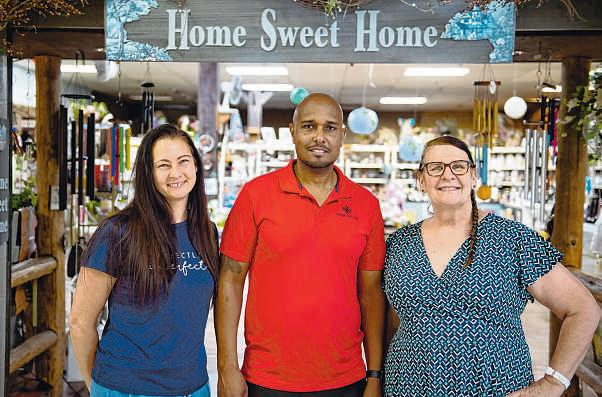
Q&A WITH JACOBy LANDRy OWNER OF THE HUB
Monte Anderson of Dallas, helped along the way
This interview has been edited for clarity
When you bought the mall, you talked a lot about the number of leaks in the roof and air conditioners that did not work. Have all those issues been addressed? Right when I came in here, I was bleeding capital like crazy
No tenants had HVAC A lot of these HVAC problems were small, simple problems. We got the roof under control. We did a little painting on the façade. But the majority of the capital that was spent went into that health club. I
took a gamble with it, and it paid off. Tell me more about the health club and how it’s been able to create an income stream for you. It has me in a position where now I’m going to go to the bank and get more banking and finish the project. Nobody believed in the health club, and people’s minds are just blown away I did it on my own. I’m a risk-taker
I knew to complete this task wouldn’t have been easy Before I bought this place, I had a blueprint and I said I’m sticking to it
You got approved for the restorative tax abatement earlier this year In the overall picture, it’s not a huge deal. But it is significant, right?
The property tax is right around $30,000, under $40,000 with city and (Lafayette Parish). It’ll freeze that for five years and give me

time to fully develop this so I can afford a higher rate. It’s significant, man. It’s going to be significant after you start adding up the property tax and especially when you start throwing millions of dollars into the property The property value is going to shoot up. The rooftop bar project that you announced last year along the mall’s north side months ago — how is the progress on that?
He’s been working on it for a while. He does subdivisions and they had other projects they were working on. But they’re working hand in hand with the engineer, the architect and the other engineer Probably in the next two weeks or so, they’ll start back on construction. They’re starting on the outside, and I think they’re going to do something in the future on the inside. The outside is
maybe like 4,600 square feet. It’s my next big tenant that’s coming. You have an urgent care clinic coming in between the gym and the rooftop bar What’s the story behind that?
It’s a private practice. She’s local and real good friends with my sister, who has the med spa inside the health club. I believe in this so much. There’s nothing around there. Everything is there (on the south side of Lafayette). This property is just so accessible. With the gym, we’ve got people who drive in from Rayne and Opelousas.
You’ve had help along the way from lots of people, including Monte Anderson, of Dallas, who mentored you through the Elevate North Lafayette program.What kind of impact has he had on your vision for this project? It all started with Monte. Monte was like, “Hey man, just try a shopping center.” I was like, I own one in Breaux Bridge. I said the only way I get a shopping center is if I buy the Northgate Mall. His eyes got (real) wide and was like, “You serious?” I think Monte believed in me more than I believed in myself. I’ll never forget this Monte told one of the City Council members, “This is the only man that can pull this off.” He just instilled something in me. There’s still lots of work to do with this project, but what’s the next couple
We’re doing mor more
Because New Orleans is our home, too
Strengthening the grid citywide to stand up to stronger storms
Entergyisproud to call New Orleans home.More than 2,000 members of the Entergy family live in New Orleans, and that’swhy we’re committed to doing more for our neighbors and communities. Our teamisworking on new projects acrossthe city to reduce outages whileworking hard to keep our rates below the national average
And we power New Orleans in more ways thanone.Our operations alone generated nearly $20 million in taxrevenue for the city.We’re proudtopower our hometown, and we’ll never stopworking as hard as we can to build astronger,brighter future for New Orleans.
Learn more at EnergizeNewOrleans.com
STAFF PHOTO By BRAD BOWIE
Jacoby Landry, center, bought the Northgate Mall in Lafayette a year ago and has rebranded it as The Hub. With him are Andrea Knott, left, and Dona Knott, who work at stores inside the mall.
ACROSS THE REGION
Former GM plant fully occupied 14 years after closure
BY LIZ SWAINE Staff writer
Shreveport
For the first time since Shreveport’s General Motors plant closed 14 years ago, the owners of the 3.5 million-squarefoot facility said it is 100% occupied.
The company that has pushed occupancy to “full” is SLB, once known as Schlumberger SLB’s footprint at the plant has now expanded to 3.1 million square feet As recently as December, Louisiana Economic Development was in Shreveport to co-host an announcement touting SLB’s additional investment in 2 million square feet of space, along with plans to add 600 new employees to its current roster of 660 by the end of 2027 The growth has been fast.
“We’ve done an amazing job here. The progress has been unbelievable,” said Stuart Lichter, president of Industrial Realty Group, which owns the building. “I think a lot of people were disappointed that this took us a while, but that was our expectation when we went in, because I love Shreveport, but it’s not the center of the universe, you know, as far as where companies’ first choices would be to locate.” SLB was drawn to Shreveport to build modular infrastructure used in data center construction, specifically power distribution and cooling equipment because of the former GM plant’s size and amenities, said Andrew Johnston, SLB’s director of data centers.
“It’s an industry that’s growing rapidly, and we’re here to capitalize on that growth,” he said in December Other tenants using the additional 400,000 square feet are the U.S. Postal Service, which has a mail sorting facility and Hyundai Glovis, which finishes out Kia and Hyundai cars before going to the dealerships. A 2017 news release from the office of then-Gov. John Bel Edwards stated that Glovis’ “inland distribution center” would create 150 direct jobs.
By 2027, IRG says 1,400 full-time


employees will work at the site, now known as Shreveport Business Park. The majority of them will be employed at SLB.
Manufacturing was the goal
The plant became vacant in the aftermath of General Motors’ 2009 Chapter 11 bankruptcy, the largest industrial bankruptcy in U.S. history In 2012, the automaker shuttered its Shreveport plant, a facility that — over its 31 years in production — had turned out nearly 4.9 million trucks and sport utility vehicles.
JILL PICKETT
The factory was best known for its Chevrolet S-10 and Colorado trucks, GMC Canyons and Hummer H-3s. At its height, the plant had about 3,000 full-time employees. In 2011, the U.S. Bankruptcy Court established the Revitalizing Auto Communities Environmental Response Trust to handle the environmental cleanup of GM-owned properties and position the properties for redevelopment RACER Trust took control of the Shreveport facility In 2013, Caddo Parish, through

the parish’s Industrial Development Board, purchased the plant for $7.5 million. Lichter’s IRG contracted with the board to manage, develop and/or redevelop the site.
In August, IRG officially took ownership of the plant and the 530 acres it sits on through an Act of Conveyance for “benefits derived and other good and valuable considerations.”
“The original transaction was the lease with an option to purchase, so actually we exercised the option,” Lichter said.
Included in the conveyance were three buildings: a 1 millionsquare-foot general assembly and stamping plant facility, an 842,000-square-foot building that was also part of the old stamping plant and a 1.5 million-square-foot building that was the former paint facility
In addition to the square footage, acreage and rail spur, the plant had 18 miles of conveyor line, on-site water treatment, steam generation and a 35,000 explosion-proof containment area.
What he wanted in the huge facility, Lichter said, was more manufacturing.
“This was going to be on an industrial, primarily, tenant that was doing things in the space, because it’s not considered to be a great logistics location for warehousing so you know, getting a big warehousing company in here would be a bit of a reach, so we were waiting for a manufacturer or people doing something in the space, and all of our tenants fit that category,” he said. “While that takes longer to accomplish, it’s better in the long term, because they’re a lot stickier than just a warehouse who can leave very easily.”
What’s next?
Lichter said building a facility like the GM plant now could cost $700 million or more.
“We have a huge amount of confidence as an amazing long-term value, because the cost to replace a building with this infrastructure is enormous,” he said.
With all the land, he said, there are options.
“We’re looking at the possibility of adding a building or two, so evaluating, you know. In other locations around the country,” he said, “we’ve gone into a rail transloading business; at some point we might do that here. Right now, one of our tenants uses most of the rail, so it’s a limited opportunity, but we think over the long term that’s an opportunity, but over time, we will do more on the land.”
North Louisiana Economic Partnership President and CEO Justyn Dixon said it is surprising to him that many people still believe the facility is vacant.
“When I came here five years ago, it was 95% empty And to be able to fill it up completely with a great company like SLB doing great work in the data center field, with thousands of employees now, it’s just fantastic and hopefully it’ll be a way that we can turn that final page.”
Email Liz Swaine at liz.swaine@ theadvocate.com.




NATION &WORLD
Americansare travelingclosertohome
Smallbusinessesreportgood
BY MAE ANDERSON
AP business writer
NEW YORK Small-business own-
ers in U.S. tourist destinations say they’re seeing more Americans sticking closer to home this summer,trading overseas travel for road trips, choosing daylongsojourns over extended beach stays, and cooking instead of eating out while on vacationtosave money
The reported boost to domestic tourism, though anecdotal, comes as higherairfares andgasoline priceshave made vacationsmore expensive. The FIFAWorldCup soccer tournament and celebrations of the nation’s250th birthday have given some U.S. residents additional incentives to create summer memories withoutgoing far
Ameaningful reduction in summer globe-trotting mighthavean upside for businesses that depend on tourists, said Tarik Dogru, an associate professor at Florida State University’sDedman College of Hospitality.Fewer U.S. residents headingabroadorflying across the country means more of theirvacation budgets are stayinglocal too, Dogru said.
“The current economic and tourism dynamics are likely to redirect spending toward small businesses, such asregional restaurants, local attractions, Airbnb hosts, and roadside businesses along drive routes that serve budget-conscious and close-tohome travel,” he said.
cordingtothe National Travel and TourismOffice.
Morgan Kain, ateacher in Baltimore, said herfamily is amongthe ones keeping their travel bugs in check for financial reasons. Kain, her husband and three children usuallytakemultiple tripseach summer,including aweeklong stay at aVirginia lake house.Last year, they spent six weeks traveling around Italy
“This summer,we’re still doing acoupleovernights and the lake house,but nothing else,” Kainsaid.
“Things are crazy expensive, from travel costs to food costs to gas.”
Around Lake Tahoe, which straddles California andNevada, several businessesreported spotting more visitors driving in from cities along the West Coast.
RonWilliams,who owns Tahoe Sports,saidheworriedatthe beginningofthe season that customers might not show up to rent boats andJet Skisdue to economic concerns.Like the gasoline that powers cars, the price of boat fuel went up during the Iran war
But Williams so far is “pleasantly surprised with howwell the business is doing across the board.”His

“We’re definitelyseeing alot of locals, so to speak. Peopleare maybe skipping the long drive to thebeach this year, and they’re kindofdoing just something close by so that they cansavealittle money and stillenjoy afamilyouting.”
AUBREy ANDERSON, ownerofariver tubing outfitterinAsheville,N.C.
If the trend holds through the summer and the rest of theyear,itcould reduce atravel and tourism trade deficit the United States has run since the COVID-19 pandemic. Each year since 2020, Americans spent more on foreign travel than international visitorsspent on travel-related goods and services in the U.S., ac-
future bookings are 10% higher compared with the same time last year, he said
“I think people areprobably sticking closetohome, and being in Lake Tahoe,wehave such ahuge drive-up market,” Williams said. Increased demand forthe three
LakeTahoe area rental properties that Jerry Bindel manages for PyramidGlobalHospitalityalsocame as arelief. Ski season bookings peteredout along with the snow during an unusually warm winter, but “wejust sawthatflip”with thearrivalofhiking and boating weather,hesaid Bindel,anareageneral director forthe property management company, said he spotted apossible sign of Tahoe visitors watching their spending: moreofthem skipping restaurants andusing the kitchens in theirrental units or outdoor barbecuegrills to prepare their own food
“We’reseeing alot of additional useonthose itemsthissummer,” he said. In Asheville, North Carolina, small-business ownershavehoped tourism would rebound sinceHur-
ricane Helene and flooding from days of torrential rain caused widespread destruction to the city’s landscape, buildings andinfrastructure in September 2024. Aubrey Anderson, who owns a river tubing outfitter in Asheville, reduced her summer staff from 100 people to 25 after Helene. After reservations picked up earlier this year andshe noticed“alot new people coming into town,” Anderson feltencouraged enough to hire 50 workersfor Zen Tubing’scurrent season. Theunfamiliar faces include day-trippers driving in from South Carolina, Tennessee and other parts of North Carolina to spend several hours floating down the French Broad River for around $30 per person, Anderson said. After tubing, customers from aroundthe region often grab ameal, stop at a brewery,shop or visit other local
attractions before heading home, which is “a win for Asheville as a whole,” she said.
“We’re definitely seeing alot of locals, so to speak,” Anderson said. “People are maybe skipping thelongdrive to the beach this year,and they’re kind of doing just something close by so that they can save alittle money and still enjoy a family outing.”
Factory tours offered by French Broad Chocolate have surged this summer,according to Jael Skeffington, the Asheville chocolate maker’sCEO and co-founder.Tourtakers often stop in the on-site cafe forice cream or coffee and buy a box of chocolate bars or bonbons before they leave, she said.
“So it’sgood for business, but it also seems to be what people are looking for is something to do, not just something to eat —something to experience.” Skeffington said.




ASSOCIATEDPRESS PHOTOByALLISONROBBERT
People cheer at awatch partyJuly1 for aWorld Cup soccer match between the United States and Bosniain Washington at the FIFAFan Zone on the National Mall.
SouthLouisiana businesses and nonprofit groups recently announced the followingpromotions, new hires and resignations.
NewOrleans
CappyJohnson has been named partneratMetairie-based Delta Financial Advisors.

Jo hn so n, who previously worked for Orleans Capital Management, has more than two decades of experience providing investment advice to high-net-worth individuals, foundationsand endowments.
Fool’sTake: Accent on Accenture
ShannonBryant has been hiredasdirectorofnursing at Magnolia Community Services.

Bry ant previously worked as anurse at Children’s Hospital and in aleadership role at River OaksHospital.

Fi de lity Bank announced the appointment of three new senior vice presidents.
JayGarrett, who previously workedfor Hancock Whitney Corp. as cybersecurityoperations risk officer,
is seniorvice president for information
security


Michael Franklin,who has led technological improvement initiativ es for Fidelity,is senior vice president for project man ag ement and product development
Brett Means, wh op reviously worked for Synergy Bankand Bank of America, is Fidelity’scommercialrelationship manager senior vice president.
ResourceBank an-


nouncedtwo newbranch manager appointments, including onepromotion and one new hire.
La’Veka Woods has been promoted to branch manager of thebank’sMetairie branch, while Mark Cutrer becomes branch managerofthe bank’sLa. 21 branch in Covington.
BatonRouge
Scott Patterson hasbeen named president of LandSource Inc., wherehewill oversee allday-to-day operations.

Patterson rejoi ne d LandSource as aproject manager in 2020 after previous stints with CSRSand MR Engineering.

Don Boyd has been promoted to regional vice president of Cumulus Media, where he will oversee the company’s radiostations in Baton Rouge, Lafayette, New Orleans andMississippi’sColumbusStarkville region. Boyd, a25-year company veteran, will also continue to
lead Cumulus’ brands in Mobile, Alabama.

Dr.I rv in g Arevalo has joinedthe staff at NeuropsychologyCenter of Louisiana. Arevaloisa licensed neuropsychologist specializing in the evaluation and treatment of adults withawide range of mental health concerns. He is acceptingnew patients following the retirement of Dr.DarlyneNemeth,who served the community for50 years.
Do you have personnel changes to shareorother ideas for our business coverage? Drop us aline at biztips@theadvocate.com.


Shares of tech consultancy Accenture(NYSE:ACN) were recently down more than 50% over the past year,pushing the stock into bargain territory for long-term believers. It’snot that the company isn’t growing: In the third quarter of fiscal year 2026, Accenture’srevenue rose 6% year over year to $18.7 billion, while diluted earnings per share jumped 9%. What investors didn’tlike was that management lowered near-term expectations while announcing three cybersecurity investments totaling$4.18 billion. Accenture is buying full or partial control of three specialists in operational technology security.It’sall about protecting the physical stuff that keeps modern life humming along: power grids, pipelines, manufacturing facilities —and data centers. The company is making asecurityfocused play on the massiveboom in artificial intelligence-oriented data center construction.
CEO Julie Sweet putitbluntly on theearningscall: “Wecannot have an AI revolution without critical infrastructure, and you cannothave those without OT security,whichiswhere the world today is most vulnerable.”
Accenture’sstock is attractively priced, with arecent forwardlooking price-to-earnings (P/E) ratio of 9.3, well below its fiveyear average of 23.3. Better still, Accenture’sdividend recently yielded4.75%
It’sbeen buyingback billions of dollars’ worth of shares, too. (The MotleyFool recommends and ownsshares of and options for Accenture.)
Fool’sSchool: Balancesheets
To be asavvy(andpotentially moresuccessful)investor in individual stocks, learn what abalance sheet can tell you. (Not all of us have this interest and energy, though; if youdon’t,just sticking with low-fee, broad-market index funds canbequite effective.)
The balance sheet is one of three main financial statements— along with theincome statement and cash flow statement —that publicly traded companies are required to issue at leastquarterly
The income statement and cash flow statement show how a company performed over aperiod, such as aquarter or ayear; in contrast, thebalance sheet reflectsthe company’sfinancial healthatone point in time —often theend of aquarter or year
The balance sheet has three main sections: assets, liabilities and shareholder equity.Assets are set equal to —that is, they balance —liabilities and shareholder equity. Rearrange that relationship, and you can stateit another way: Shareholder equity equals assets minus liabilities. Think of it like apersonal net worth exercise: Addall your assets (such as house, cars and financial accounts) and subtract your liabilities (including mortgage, car loans and credit card debt)toarrive at your net worth.
Acompany’sassetsmay include “cash and cashequivalents,” “prepaid expenses” (such as insurance paid for ahead of time), “investments”and/or “property, plant and equipment.” Somesuch assets may not be as valuable as they appear,though. For instance, “accountsreceivable” reflects money from sales that thecompany hasn’tyet received —and may not receive. And“inventory” reflectscash tied up in materials

that haven’tbeen sold yet, some of which may end up not sold.
Liabilities often include shorttermand/or long-term debt. Debt isn’tnecessarily bad, but it’soften good for abusiness to have relatively little of it. Another liability, “accountspayable,” represents invoices thecompany hasn’tyet paid.
Shareholder equity,then, is the difference between assets and liabilities. It’s the portion of acompany’svalue that its shareholders can claim.
Ask the Fool:Ticker symbols, explained
Can you explainstocks’ ticker symbols?
—E.M., Hackensack,New Jersey
Sure. Every companylisted on a United States stock exchange has aunique abbreviation to identify it, called astock symbol or ticker symbol.
Traditionally,symbols forcompanies listed on theNew York Stock Exchange (NYSE) were usually three or fewerletters, while their Nasdaq Stock Market counterparts were four or five letterslong. For example, the NYSE has long been hometoCoca-Cola (KO) and Merck (MRK), while Amazon.com (AMZN) and Apple (AAPL) are on the Nasdaq.

Times have changed, though, and these days, ashort ticker symbol might trade on the Nasdaq, and afour-letter one might be on the NYSE. Somecompanies have moved from one exchange to another,too. For example, Micron Technology (MU) and PepsiCo (PEP) are now Nasdaq stocks, while Oracle (ORCL) is now on the NYSE.
Also, companies with several classes of shares can have multiple ticker symbols, such as GOOG and GOOGLfor Alphabet. And modifiers are sometimes tacked on, such as aQifa company is in bankruptcy proceedings or aYif it’sbased outside of the U.S.
To find acompany’sticker symbol online, visit awebsite such as Fool.com and type the company nameinto the search box. It’s important to get your ticker symbol right when investing, lest you accidentally buy shares of the wrong company!
What’sagood introductory investing book? —S.B., Cincinnati
TryJohn C. Bogle’s“The Little Book of Common Sense Investing: The Only WayToGuarantee Your Fair Share of Stock Market Returns” and “I Will Teach YoutoBe Rich: No Guilt. No Excuses. Just a 6-Week Program That Works” by Ramit Sethi.


Patterson
Boyd
Arevalo
Woods Cutrer
Motley Fool
Johnson Garrett
Franklin Means Bryant
BY THE NUMBERS
La. ranks last in Tulane’s first ‘State of the States’
But report authors see signs for hope
BY JONAH MEADOWS Staff writer
Louisiana landed on the bottom of a new comprehensive ranking of U.S. states across dozens of metrics — the latest in a long line of comparative reports pointing out the Bayou State’s shortcomings in key health, education, economic and quality of life indicators.
The first State of the States report from Tulane University’s Murphy Institute analyzed 31 measures dating back to 1990. The purpose was to come up with a progress report of every state that could be used to help inform policy debates.
It ranked Louisiana 51st out of all states and the District of Columbia.
But the report, which goes deeper than many other comparative rankings by including trends and relative improvements or declines, also found reasons for hope in Louisiana and noted a couple of areas where the state is outperforming the national average.
Among them: improved test scores and self-reported measurements of well-being.
“There’s something happening in terms of social goods in Louisiana which is very, very positive,” said Anna Lembke, a Stanford University psychiatrist and a member of the board behind the study “It’s a weak and subtle signal, but it’s definitely there.”
Following the trends
The State of the States report builds on the State of the Nation report produced last year by the same research team, which compared the United States with other countries. According to its authors, the goal of the project is to establish a shared set of objective facts about personal, economic and social outcomes that can serve as a foundation for public policy decisions.

Tulane economics professor
Douglas Harris, director of the project, put together a bipartisan board of more than a dozen experts in a range of fields, including advisers from the last five presidential administrations, to determine what measurements were worthy of inclusion. Approval of 75% of board members was needed to make the cut.
The report compiles data from federal agencies, nonprofits and academic researchers and includes indicators of health, economics, education, violence, trust and life satisfaction.
“The idea is to make sure everybody’s working off reliable, trustworthy information,” said Frederick Hess, a board member and education expert at the American Enterprise Institute a conservative think tank
Collecting state-level data turned out to be significantly more
difficult than nationwide numbers, sometimes requiring special permission to access. A pair of research assistants then crunched the numbers to produce individualized reports for each state — a total of about 3,700 pages. Some of the report’s findings were unsurprising. It ranked Louisiana 50th or 51st compared with the national average in categories including the share of young adults employed or in school (85% vs 89%), children born with low birthweight (11.2% vs. 8.6%), children living with single parents (40.7% vs. 29.9%) and overall poverty rate (18.7% vs. 15.2%).
“I wasn’t happy to see that, obviously, living in Louisiana, but we tried to let the data speak,” Harris said.
The report compared data for each state in three different ways: its current national ranking, the direction it’s trending and how that

Beyond.
Beyond isn’t aplace —it’samindset. Andit’sa belief that haspowered us forover80years.Weare Jones Walker LLP,afirm driven by an entrepreneurialspirit, a deepsense of community, andafierce determination to deliverexceptional serviceand valuefor our clients.
Since1937, our firm hasbeencommitted to working with communityleaders to develop business opportunitiesacrossthe state. We aresteadfast in continuing our dedicationtogobeyondinadvising clientsand supporting initiativesand organizations that make Louisiana abetterplace to live andwork.
William H. Hines
Managing Partner bhines@joneswalker.com 504.582.8000 201St. CharlesAvenue NewOrleans,LA70170-5100 joneswalker.com
compares with national trends. That gave researchers a more nuanced picture of the state’s performance and one that was not entirely negative.
It showed, for instance, that Louisiana’s labor-force participation rate is improving faster than the rest of the nation, though its hourly earnings growth is worsening faster than in other states.
And it showed that the state clearly trending better than the nation as a whole when it comes to academic test scores on the National Assessment of Educational Progress, known as the “nation’s report card.” Over the past decade, Louisiana eighth graders have narrowed the gap with the national average by roughly half in math and by about 85% in reading, where Louisiana students’ scores have improved even as they’ve declined nationwide.
“Louisiana seems to be doing a
remarkably good job over the last half-decade or more,” said Hess. Louisiana also ranked high in the freedom of the press category, as measured by the U.S Press Freedom Tracker, though it shared the top spot with the 20 other states that did not record any press freedom “violations” in 2024. The rankings do not take into account more recent legislative changes that have expanded exemptions from public records laws and secrecy surrounding economic development projects.
‘Relatively happy’
Data from every state tells a similar story: Income is going up, but life satisfaction is going down. That mirrors the findings of the nation-level report, which found that measurements of economic progress and subjective well-being are moving in opposite directions in the U.S.
“Here we are, wealthier than ever and getting wealthier, and yet more depressed, more anxious, more likely to die by a drug overdose, more likely to end our own lives,” said Lembke. “What is going on there?”
No state is doing great when it comes to self-reported measurements of well-being. But that’s one area where Louisiana is doing comparatively well, with depression rates for adults (11th) and youth (12th) both below the national average.
“People in Louisiana are relatively happy considering everything else,” Harris said, explaining that the state-level data follows a theme that has emerged from the project’s research — the disconnect between income levels and overall well-being.
“Louisiana is an extreme case of that, where the economic measures are really not good, but yet depression is pretty low, our life satisfaction is middle of the pack, and our suicide rate is also middle of the pack,” he said.
Email Jonah Meadows at jonah. meadows@theadvocate.com.
Drivingregionaleconomicgrowththrough legalknowledge,strategic guidance, and industry-focused relationships.
Ourfirm is confidentinLouisiana’s economic future.Asone of thestate’s largest lawfirms, we counselbusinesses navigating complex transactions andregulatory landscapes across theenergy,healthcare, and technology industries,amongothers.

Louisiana’s oiland gas industry remainsacornerstoneof growth,whileemergingmarkets fornatural gas, lithium, andbiofuelscreatenew investment opportunities. We strongly believeinleveragingAItosupport thedevelopment andsuccess of Louisiana businesses,withdatacenter construction underscoring itspotential forlarge-scale economicgrowth. As healthcare continuestoadvance, we also seeexponential growth forits digitalsector.
With strong momentum andexpanding opportunities, Louisiana is poised forsignificant economic growth andweare proudtohelpleadthe wayforward

STAFF FILE PHOTO By CHRIS GRANGER
The State Capitol can be seen from chemical plants in Baton Rouge. Louisiana fell last of all states and the District of Columbia in a report compiled by Tulane University’s Murphy Institute that measured key health, education, economic and quality of life indicators.
Bill Hines























19 Rue Royale •Metairie$1,300,000
Entertaininstyle in this stunning Modern Georgian Revival, oneblock from Lake Pontchartrain.Behindgated ivycoveredwalls, enjoya resort-style backyard w/ multiple courtyards,chef’skitchen,elegant living spaces,luxurious primary suite, solarpanels, &extensiverecentupgrades, includinganew roof,windows.4 Beds,4.5 Baths, 5,022SqFt. Dawnne Keeney 504-650-3912 CrescentSotheby’s InternationalRealty504-944-3605

25065Hemphill Road •Bush




$449,000
Charming retreat locatedon10acres of land overlooking aLake, mainhouse has3 beds,2baths,kitchen &dining room w/ awood deck,2 cardetachedgaragew/office space(couldbeusedfor business purposes -buyersto confirmuse/separateelectricmeter)totaling1292sqft living &has ashower&toiletlocated inside. Peace& quiet! BonnieJ.Morel 504-912-9997 Compass•Algier/Westbank504-362-1823
700MagazineSt,Unit204•WarehouseDistrict




$1,150,000
This uniqueresidence, recently featured in Elle Décor, is asophisticated1Bed,1.5 Bath Condo with ahuge 398 SqFt garden terrace, fullylandscapedoverlooking Girod Street withview of theriver.Luxury PrimarySuite with en-suite,top-of-the-line appliances in gourmetkitchen whiteoak hardwood flooring plus 1interiorparking space. Toni VanZandt 504-913-8665 Reve Realtors504-300-0700





































840 ElysianFieldsAvenue NewOrleans, LA 70117
Licensed




Step into this exquisitelypreserved circa-1880sFrenchCreole/FrenchProvincialresidence,whereauthenticNew Orleansarchitecturemeets timeless elegance
The interior is definedbysoaring ceilings,originalheart-pine floors,and refinedperioddetailing throughout. Gracious living anddining roomsfeatureornate crown moldings andmedallions, beautifulwindows,and richly finished ceilings,a hallmark of late-19th-centurycraftsmanship.Exposed brickchimneywalls anchorthe spaces,eachcenteredbya decorative wood mantels,offering additional architecturalcharm.The traditional double parlor floorplan, separatedby pocketdoors,creates seamless flow betweenrooms,enhancing both lightand openness whilepreserving historicproportions.Customdraperies,substantial millwork,and period-inspiredlighting complement thehome’soriginalfeatureswithout compromising authenticity.Masonry construction,thick walls, and thoughtfulrestoration reflectthe durability andartistryofthe era, whilemoderncomfortsare discreetly integrated fortoday’s lifestyle. Everydetailspeaks tothe home’s heritage, from therefined finishes to theintimatescale that definesclassic French Quarterliving.Thereare multiple guestsuitesinthe dependency structurescan bring income to offset expenses. Theseare accessible through thesidegate, allowing themainhouse to remain private. Call your user/investors now.



















Anyone knowingthe whereabouts of Blayne Bondy, please contact Attorney MichaelJ Hall at 504-3835294 or mjhall@mjhalllaw.com. 193954-7/11-12-13-3t $110.50
Anyone knowingthe whereabouts of HeirsofJackH.Zeweplease contactAttorneyDavid Motter,3500 N. HullenStreet,Metairie, LA 70002; 504-388-7005. 193982-July11-13, 3t $146.50
Anyone knowingthe whereabouts of JamieD’Amico please contact Attorney DavidJ.Motter, 3500 N. HullenStreet,Metairie, LA 70002. 504-388-7005. 193948-July 11-13, 3t $137.50
Anyone knowingthe whereabouts of Song Liu, Jing Liu, contactMarion D. Floyd, Esquire, 1403 West EsplanadeAve SuiteA,Kenner, LA 70065, Phone: 504.467.3010, Email:floydmar@bellsouth.net 193922-7/11-12-13-3t $151.00
EDUCATION Community RelationsCoordinatorand RegistrarBardCollege (BardEarly Col‐lege NewOrleans) hasa position avail‐able in NewOrleans, LA.Coordinate with facultyand Head of School to de‐sign course schedules andanticipate hiring needs. Conductdegreeaudits andensurecompliancewithgradua‐tion requirements.Prepare institu‐tional





Anyone knowingthe whereabouts of thefatherofL.D.P.H.bornto A.Z.H. in September2015, contact attorney Betty Mauryat504-4756522. 193920-7/11-12-13-3t $128.50






CEMETERY PLOTS Westlawn Cemetery Mausoleum, in theChapel. Corr IV,TierA,holds 6 interments $17,500. 504-259-0505
FURNITURE ChinaCabinet,excellent condition, likenew,cream &beige $250. New Queen Bed, mattressset included $175. Text or Call 504-539-0755
FURNITURE Gray Electric LeatherRecliner,Liftto
PreciousMiniature Dachshund Puppies 7wks,S& W,long& short hair,black/tan $700.00 504-390-1321 karen.ronquille@gmail.com






JEWELRY/WATCHES Ladies Beautiful10k





nola.com.Include in your requestthe company name,primary contact name andphone num‐ber, andthe emailad‐dressesofthe individu‐alswho will be allowed access to thee-folder.In response to your re‐quest, youwillreceive a link to thesharedfolder andinstructionsonhow to upload your proposal andhow to organize it foreasyviewing by the scoringcommittee. A MandatoryPre-Proposal Conference will be held Tuesday, July 21st,2026, at 2PMat201 St.Charles Avenue,39thFloor,Board









ASPECIAL ADVERTISING SECTION |SUNDAY, JULY12, 2026




Eating Aging Healthy Healthy
Thefoods seniors eat provide the fuelneeded to stay active, maintain strengthand recoverfrom exercise or daily activities.
Without proper nutrition, energy levels candecline, making it more difficult to participate in activities that supporthealthy aging.
WHY NUTRITION
MATTERS MORE WITH
AGE
Nutritionalneedschangeaspeopleget older.Seniors need specificnutrients to help maintain muscle mass, bone health,heart health andhydration,aswellastohelp manage chronic conditions such as diabetes or highblood pressure.
Seniors often need more protein, fiber, calcium, Vitamin Dand potassium. Consult with alocal nutritionist,dietitianorhealth care provider aboutthe diet that’s rightfor you.
LOCALRESOURCES SUPPORTINGHEALTHY EATING
Looktolocal farmersmarkets forfresh produce.Local grocerystoresmight offer seniordiscounts or delivery.You caneven grow your ownproduce in acommunity garden.
Seniorcenterlunch programs andMeals on Wheels programs also helpseniors access healthyfood.
COOKINGFOR ONEOR TWOWITHOUTWASTE
Many seniors facechallengeswhencooking smallerportions, as they maybeusedto cooking fora large family
Cookingand freezingmeals in batches canbehelpful.Get into thehabit of buying smaller portions,and choose simple,nutritiousrecipes to avoidwasting ingredients.
You canuse meal prep containers to portionout mealsfor severaldaysfroma largerbatch.Consider usinga vacuumsealer to keep produce or meatsfresh longer
MANAGING DIETARY RESTRICTIONS WHILE STAYINGACTIVE
Many olderadultslivewithchronic health conditions such as diabetes, highblood pressure,heart diseaseorosteoporosis, making nutritionanimportant part of managing their health.
Becausemanyseniors take medications that canaffectappetite, digestion or nutrient absorption,itisimportant to discussdietary changeswithahealthcareprovider or registered dietitian



Get with Technology Comfortable
Seniors areincreasinglyusing technology in their day-to-daylives.

The AARP’s 2025 technologysurvey putthe trendintofocus.Smartphone ownershipamong seniors soared from 55% in 2016 to 90%in2025. Textingisnow theleadcommunicationmethodamong adults age50-plus; ninein10use social media, andeight in 10 stream videoweekly.
Today’sseniors were born before theage of digitalnatives. Whiletheymight nothave grownupwithtoday’s advanced electronics andmight feel overwhelmedorintimidated, that doesn’t mean they can’tharness the poweroftechnology, whichhas become an essentialpartofeverydaylife.
Seniors aregainingdigital literacy to usetechnologyfor everything from communicatingwithfamilytomanaging healthcare appointments andfinances to learningnew hobbies.
WHY IT MATTERS
Technology helps seniors maintain
reduces isolationand improves access to essentialservices.
Thiscan includevideocalls with family, onlinebanking andshopping, telehealth appointments,prescriptionmanagement, accessingcommunity information, educationand more.
WHERE TO LEARN
Agrowing number of localbusinesses, libraries andcommunity organizationsoffer supportdesignedspecificallytohelpolder adults confidently usesmartphones, tablets, computersand onlineservices.
In your community,lookfor technology workshops at your locallibrary or senior center, community collegeorlocal tech repair andsupport businesses.
Lookfor patient, hands-oninstruction tailored to beginners, as well as afocus on theimportanceofprotectingpersonal information online
SKILLS TO MASTER
Seniors should aimtomasterahandful of basic skills to help them feel more comfortablewithtechnology. This includes password management,smartphonesettings, onlinescamand phishingprevention, videoconferencing, downloading apps,understandingupdates andusing notifications.
USING TECHNOLOGY EVERY DAY
Once you’ve masteredbasic skills, it’s time to applywhatyou’velearned in your daily life.
To getstarted,practice usingtelehealth services, settingmedicationreminders, operating smarthomedevices such as lightingand security andschedulinggrocery andprescriptiondeliveries.
Before long,you’ll find that digital lifewill b f d il lif





Manyviewretirementasan opportunity to give back to their communities throughvolunteering.
Many view retirement as an opportunity to give back to theircommunities through volunteering.
Older adults continue to play an important role in strengtheninglocal organizations andmentoring youngergenerations, while stayingactive, connectedand purposeful. Awide varietyoflocal organizations— includingschools,hospitals, nonprofits, churches, andcivic groups —relyonolder volunteers andvalue theexperience and stabilitytheybring.
WHY VOLUNTEER
Thepersonalbenefits of volunteering after retirement caninclude feelinga senseof purpose staying connected socially mental

After
Retirement Volunteerism

Retirement no longermeans slowing down formanyolder adults.
beingand physical activity.
Retirement canbeatimeofreinvention. Volunteering allows seniors to explorenew interests.
In addition,volunteerismhelps strengthen community connectionsacrossgenerations, as youshare lifelongskillsand knowledge with youngerpeople.
Volunteerroles often offer flexible schedules andallow youtomeetnew friends whoshare similarinterests
WHERE TO DONATE YOUR TIME
No matter what talents andexperience you have to share, youwill find an opportunity to volunteer. Becauseseniors aretypically reliable volunteers whooffer patience and professionalexperience,manycommunity i ti ti l it ti f
Checkwithlocal schoolsand libraries foropportunities to read with students. Nonprofitmentoring programs often depend on older adults to help shapeyoung minds. If you’re interested in care-giving, consider volunteeratalocal hospital.
Food pantries arealwayslooking for assistance,and church outreach programs canallow youtoshare your faith.
Museum docents canshare their love for history, culture, science or art. Pass on your love of animalsbyvolunteeringatananimal shelter, or help fellow veterans through veterans organizations. Community theaters, historical societies andenvironmental groups areother places to offer your services. Retirement todayisincreasinglydefined notbysteppingawayfromcommunity life, butby findingmeaningful newwaystostay involved.






Lake Lawn Metairie Funeral Home, everyservice is designedwith care, compassion, and attention to detail.Aspart of the Dignity Memorial® network, families areguided through eachstep with professionalism and understanding, creating personalised tributes that reflect alifewell lived.With experienced staff,dedicated facilities, and acommitment to excellence, youcan feel confident knowing your loved one is in trustedhands.




SeniorLiving NewFace of The
Today’sretirees arelooking for active, engaginglifestyles rather than simply care andmaintenance.
Modernretirementand assisted living communities nowemphasize independence,wellness, learning andsocialconnection. In addition,residents maintain independence andquality of life.
Here’s alookathow today’sseniors are reshapingexpectationsfor retirement living
RESORT-STYLE AMENITIES
Modernseniorlivingcommunities now featureamenities once associated with resortsorupscale apartments.Examples include fitnesscenters,walkingtrails, pools andspas, fine dining options,coffee shops andlounges, beauty salons or barbershops andtransportationservices.
WELLNESSPROGRAMS
Rather than just traditionalmedical care, seniorlivingisincreasinglycenteredaround preventive wellness.Atmodernseniorliving communities, you’ll find yoga andstretching classes, wateraerobics,nutrition counseling, mental health support, on-site health
mobility programs.
Theseprogramshelpseniors remain active longerand improvesocialengagement. Maintainingcognitive health is agrowing priority forolder adults.Accordingto McKnightsSeniorLiving, Alzheimer’s diseaseisthe fifth-leadingcause of death amongAmericans age65and older. In response,manyseniorlivingcommunities areplacing greateremphasisonbrain-health programs,memory-enhancingactivities andwellnessinitiatives designedtosupport cognitive function andhelpresidents remain mentally engaged.
LIFELONG LEARNING AND TECHNOLOGY
Learninghelps seniors stay mentally engagedand socially connected, and technologysupport helpsresidents stay connectedwithfamilyand health care providers.
Many seniorlivingcommunities nowoffer educationalopportunities andenrichment programs forresidents.Seniors canexpect to find guest lectures art and music classes
onlinelearningopportunities. Facilities sometimespartner with local colleges, libraries, museumsorcommunity organizationsfor even more programs. If your center doesn’t have an education programyou’d like to see, just ask. Senior living communities areeager to attractand retain residents with diverseofferings.
SOCIAL ACTIVITIES ANDCOMMUNITY CONNECTION
Seniorlivingcommunities areputting a growingemphasis on creating places where residents buildfriendships andremain active participantsinlocal life. Keepinga busy social calendarhelps seniors combat lonelinessand improvetheir emotionalwellbeing.
Activities caninclude groupoutings, volunteeropportunities, game nights, gardeningclubs, travel groups, holiday events andthemeddinners.meaningful new ways to stay involved.













Personalizedmemorials help Jacob Schoen &Son honor NewOrleans families in meaningful newways
By Amanda McElfresh I amcelfresh@theadvocate.com
Astraditionsshift andfamilydynamics evolve, JacobSchoen& SonFuneral Home in NewOrleans is adapting with guidedconversations andpersonalized services that honoreachindividual.
Once definedbya predicable sequence –wake,visitation, church service,cemetery burial,thenhometohostvisitors–funeral customsare becomingmorediverse.Many families no longerwantlarge crowds in their homes, nordotheyfeelcompelled to hold a service with acasketorurn.Instead,people arelooking formeaningful,communityorientedexperiences that aretailoredtoeach person.
To meet thoseneeds, thefuneralhome has reception roomsthatcan accommodate up to 100 people,withthe abilityto expandfurther when needed.Families are encouragedtodisplay framed photos of lovedonesthroughoutthe room or allow
monitors in theparlor.
Thecustomization extendstoevery aspect of aservice at JacobSchoen&Son.For example,ifsomeone spenttheir Sundays wearingblack andgold, familiesfeel comfortabledressingtheir lovedone in New OrleansSaintsattire–agesture that honors authenticity rather than tradition.
Theschedulingpattern forservicesisalso changing as more familieschooseevening or weekendservices outofconsideration for work andschoolobligations.
To helpfamiliesunderstandwhat’spossible, thestaff at JacobSchoen&Son clearly explain options, whichinclude cremations, burialsand services speciallytailoredto
want to discusstheir ownservices. While thedialoguescan be uncomfortable, preplanningeliminates confusion, prevents rusheddecisions andgives families more time and flexibilitytodetermineapayment plan.AtJacob Schoen &Son,individuals can outlinetheir wishes, comparecosts andpay in advance.
As needsdiversify, JacobSchoen&Son strivestoserve NewOrleans families across all income levels with dignity andrespect. That philosophy has guidedthe funeral home –one of theoldestcontinuously operatingonesinNew Orleans–through more than acentury of culturalchange. JacobSchoen&Son FuneralHomeis locatedat3827 CanalStreetinNew Orleans.
Forinformation on service options,prepl nd ch nfh.
Thisstory is brought to youbyJacob Schoen&Son FuneralHome.
PatrickSchoen, President

PatrickSchoen, President



Forover150 years, SchoenFuneral Home has served NewOrleans families withdignity,grace,and unmatchedpersonal care
Ourhistoric location, warm and welcoming atmosphere, and deeply rooted traditions providea peaceful spacetocelebrate alifewell-lived.

(504) 482-2111 | schoenfh.com 3827 Canal St., NewOrleans,LA Plan Ahead or ReachOut Today

Whyitmatters

The Advocate operates fivenewsrooms throughout the state,publishing dailynewsand information. Our local newsrooms focus on critical issues important to Louisiana. Coverage of school boarddecisions, local elections, public safety, business growth and community eventsdoesnot come from nationalnewsrooms. These arethe storiesonlywetell.


Our Louisiana rootsrun deep
Fornearly twocenturiesour daily newspapershave been Louisiana’smosttrustedsources forlocal news. Our dedicated team of over 500 workstirelesslyto delivertimely, trustworthyreporting on thestate’s most critical issues.
Your SupportEnables
•Morereporters across the state
•Coverage of issues in underserved parishes in Louisiana
•Storiesthatleadtoreforms –improved accountability
•Freeaccess to our storiestothe members of the Louisiana PressAssociation


Community support providesfunding to grow and augmentour news teamsand enhances coverage of stories thatmattertoyou. or scan the QR code:
Learn moreabouthow we can makeadifferencetogether.Goto: Louisianajournalismfund.org

ACentury of CompAssion And CAreinthe heArtof new orleAns.













www.rightathome.net





















































LOUISIANA

BY MARGARETDELANEY Staffwriter
Wireless. Wireless. Wireless.
Listening to music hands-free while squatting weights or plucking weeds or running errands became easier with wireless headphones
No longer did music lovers have to swat away cords in their face or detangle wires for two minutes before jumping on acall.
Along the way,skepticism grewabout the health consequencesofBluetooth and wireless devices. The main potentialculprit: radiation. Bluetooth devicesemita type of electromagnetic radiation that can come from bothnatural and man-made sourceslike cellphones,X-rays andthe sun.
Electromagnetic radiation comes in two forms, ionizing and non-ionizing.Ionizing radiation has enough energy to potentiallydamage cells and increases therisk of cancer.X-rays and the sun, for example,emit different levels of ionizingradiation. Bluetooth, however,emits non-ionizing radiationand has lessenergy to effect people.
A2024studyof600 participants reported an association between prolonged Bluetooth
WIRELESS WARNINGS
Doctorsdiscuss risks of Bluetoothheadphones
headset use(more than three hours aday)and a higher incidence of thyroid cancers. The study, conducted as aself-reported questionnaire from WenJuanXing in China, had manylimitations including alack of diversity,not using age as acontributing factor and potential bias that can occur in self-reporting.
“Thus, future research should employmore precisetrackingtechnologiesfor usageduration to enhance the objectivity and reliability of the data,” the studystated.“These metrics do not inherently imply causality.”
Current scientific consensus, supported by agencies like the U.S. Food and DrugAdministrationand theWorld Health Organization, indicates thatlow-level non-ionizing radiation does not carry enough energy to directly damage DNA,making adirect causal link to cancer “biologically implausible.”
The more immediate concern for headphones,according to doctors, aretheir effects on hearing.
Dr.Duncan Hanby,anear,nose and throat physicianand section head at OchsnerHealth’s The Grove, said it all comes down to volume.
ä See HEADPHONES, page 3X
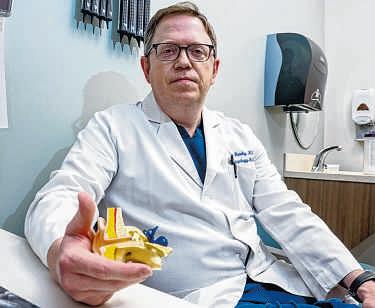

BY RACHELMIPRO
Contributing writer
Doulas, house visits, wellness checks:InLouisiana, theseare someways advocates are looking to improve thestate’sconsistently low ranking in the U.S. for maternal health.
Between2020 and2022,Louisianasaw 222 deathsrelated to pregnancy, accordingtothe Pregnancy-Associated Mortality Review
Blackwomen were more than twice as likely to die compared with White women, according to thereview,and 84% of these overall deaths were deemed preventable.
A2026 study conducted by Tulane University’sNewcombInstitute found asimilarly dire state of maternal care; 29.6% of Louisiana parishes are maternity care des-
erts, where it more is more difficult to access obstetrics, gynecologists andhospitals with obstetric services.
“Weare in amaternal health crisis across the state of Louisiana,” said Dr.Stacey Holman, division director of Women andChildren’s Services at Touro Infirmary.“I think that we are seeing lots of barriers to accesstocarefor obstetrics and forpostpartum care.”
Grassrootsorganizationsand community partnerships are attempting to bridge thegap.In New Orleans, ahome-visit pilot program hasbeen addressing postbirthneeds since 2023.
Family Connects New Orleans is acity health department partnershipwith OchsnerBaptist andTouro hospital.Inthe program,which hasbeenadopted in severalother states, trained nursesprovide
free in-home visits in the metro area Orleans for parents who had theirbabies at OchsnerBaptist or Touro.
During home visits, nurses conduct acomprehensive assessment on mothers’ mental and physical state, andcheck to seeifthe family needs any resources. The visits are key to finding health issues post-birth and other factorsthatcontribute to mortality chances.
“Weknowthatthe postpartum period is where moms fall offin terms of getting access to care,” Holman said. “They have anew baby to takecareof, so they’reless concerned about getting to their own appointment.”
Katherine August-Autry,Touro’sclinical manager for Family
ä See DOULAS, page 2X




PROVIDED PHOTO
Community Birth Companion started out in 2012 with the missionof lowering infantand maternal mortality rates in St. Landry Parish.
STAFFPHOTO By MICHAEL JOHNSON Dr.Duncan Hanby, an ear,nose and throat physicianand section head at Ochsner Health’sThe Grove in Baton Rouge, holds amodel of an ear in an exam room at the complex.
Mental health challenges can linger for cancer survivors
BY NATALIE KREBS Iowa Public Radio, KFF Health News
The cancer diagnosis came as a shock, disrupting Morgan Newman’s plans for launching her life. It was 2015, and she was working as a dental assistant in Des Moines, Iowa, while studying to become a social worker
After an abnormal result on her Pap smear, her doctor brought her back in to check the tissue for signs of cancer Newman wasn’t that concerned at first. She was only 24 years old.
“I didn’t think anything of it,” she said. Friends had received abnormal results, she recalled, “and they turned out to be OK.”
But during the follow-up examination, she started bleeding so heavily that the doctor stopped the exam and immediately referred her to a gynecologic oncologist. Newman soon learned she had cervical cancer She had just moved into her own apartment for the first time.
An increasing number of Americans are getting — and surviving — cancer There were more than 18 million cancer survivors in the U.S. in 2025, and the National Cancer Institute estimates that number will grow to 22 million by 2035. But long after completing treatment, many survivors face lingering mental health challenges that go unaddressed.
Newman underwent six weeks of radiation and chemotherapy Her scans after that were clear until the six-month mark, when her doctors found suspicious nodules in her lungs.
Newman endured additional chemotherapy which had more side effects. It was physically exhausting. But she was also struggling psychologically as she watched her friends hit significant adult milestones.
“My friends were getting
married, they were having children, you know, progressing in their lives and their careers, and I just felt stuck,” she said.
Newman had done therapy before, for anxiety and depression. But after she got sick, she had to quit. Therapy was too expensive now that she had her other medical bills. And amid the doctor appointments, college courses, and her full-time job, she didn’t have the time.
Newman’s cancer treatment ended, and the scans remained clear By 2017, she had a new job with better health benefits. So she decided she could go back to therapy.
She worried that every ache and pain could be the cancer coming back. At times, it was emotionally difficult to spend time with her friends who had kids, because the radiation treatment had damaged her reproductive system, leaving her unable to have her own children
Now, almost 10 years later, Newman remains free of cancer, and cancer prevention has become her passion. She started a new job in December as the Iowa grassroots manager for the lobbying arm of the American Cancer Society, and she has served on the boards of other cancer organizations in Iowa.
But she continues to go to therapy to deal with the lingering anxiety, as well as the lingering effects of her treatment, such as her infertility
“The fear of the unknown really takes over and can physically impact your body, as well as your mind,” she said. That question kept circling: “What if the cancer is back?”
Cancer’s ‘silent’ impacts Studies show cancer survivors experience anxiety and depression that can last years after they finish treatment.
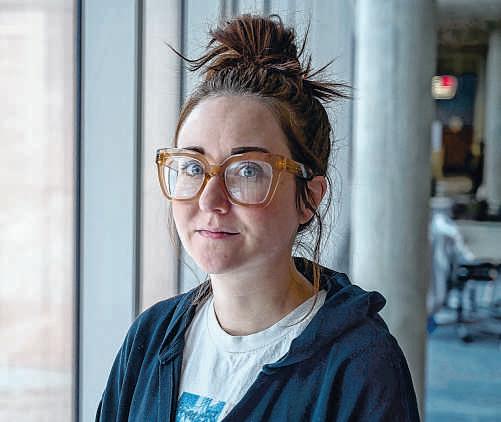
The advocacy group Cancer Nation surveyed patients nationwide last year
It found that about a third of those who had finished treatment reported anxiety about their cancer potentially coming back, as well as problems with not feeling like their “old self.” Only 1 in 5 of the surveyed survivors reported seeing a mental health professional.
Finding therapists who understand how cancer can affect people physically and emotionally can be a challenge, especially in states like Iowa. According to the Iowa Cancer Registry, the number of Iowans living five years after their diagnosis has increased about 0.4% each year since 2000, and the state has the second-highest rate of new cancer diagnoses Researchers aren’t sure why but the University of Iowa scientists who run the reg-
istry are taking a deep dive into the issue in a two-year state-funded project.
Iowa is also largely rural. Some of the counties that have the highest cancer rates also have the fewest mental health workers. Newman went through several therapists before she was able to get an appointment with Julie Larson, a Des Moines-based therapist who works with a lot of cancer survivors.
“I just felt like I needed something more specific to what I was going through,” Newman said.
In Larson’s practice, it’s common for clients like Newman to start therapy months or even a year after finishing treatment, when they realize they aren’t feeling how they expected to feel.
“Physically people’s bodies have changed,” Larson said. “And they are reconcil-
HEALTH NOTES
ing loss and grief. And those experiences are a little bit more silent, a little more invisible, and friends and family don’t often fully understand or grasp that.” Larson said cancer survivors often seek her out because she understands cancer and the different forms of treatment people may have experienced.
“I’m not a doctor, but I’ve done this a long time. So I know what happens when people have Adriamycin. I know the treatment protocol for carboplatin,” she said, citing chemotherapy drugs.
Oncology, mental health
When it comes to treating cancer the field of oncology often neglects mental health, said Patricia Ganz, an oncologist and professor at the UCLA School of Public Health who has spent decades doing research on cancer survivors and their
lingering challenges.
“We know how to give pills. We know how to give pain medicine, sleep medicines. But we’re not really schooled in the antidepressants,” she said.
There’s an increasing awareness about the need to screen for psychological distress in cancer patients and the need to provide mental health services for cancer patients and survivors, Ganz said, but expertrecommended screenings and referrals don’t always happen to the extent they should.
The MercyOne Richard Deming Cancer Center in Des Moines has started offering services such as counseling, music therapy, and mindfulness sessions to reduce stress for those in and out of treatment.

“You get cared for intensely when you’re getting treated for cancer,” said Richard Deming, the medical director at the clinic named for him. By contrast, he said, when people com pl ete treatment, the care typically shifts: “It’s almost like, ‘You should feel fo rtun ate that you’re cancer-free and just get on with your life.’”
To treat cancer comprehensively, Deming said, doctors need to pay attention to far more than just physical symptoms. That requires a shift in the way doctors treat patients, he said. “Every step along the way, whether it’s through diagnosis or treatment or follow-up, we have to ask, ‘What are the issues you’re experiencing?’ ” Deming said. “Not just: ‘Do you have cancer? Did we get rid of the cancer?’”
This article is from a partnership that includes Iowa Public Radio, NPR, and KFF Health News.
Ochsner Children’s in New Orleans begins Summer Toy Drive
BY MARGARET DELANEY Staff writer
Ochsner Children’s has launched its annual Summer Toy Drive, collecting new toys to help brighten the hospital experience for patients throughout the year
The community is invited to donate items at designated drop-off locations, helping ensure children have access to comfort, play and moments of joy when they need them most.
Accepted donations include brand-new toys in original packaging as well as books, games, puzzles and craft kits for infants through teens. To protect the health and safety of patients, the program cannot accept stuffed animals or cloth items. For New Orleans donation locations visit ochsner.org/toydrive.
BR children’s hospital names president
Franciscan Missionaries of Our Lady Health System-Our Lady of
DOULAS
Continued from page 1X
Connects, estimates that nurses have made around 2,000 initial visits to families — helping identity a range of issues, including high blood pressure, lactation and breastfeeding challenges, physical recovery complications and mental health changes.
“We’re just ensuring that (a mother) is well-informed, well-educated and knows that she’s not alone,” August-Autry said. “There’s support out there.”
In northwest Louisiana, Devine “Divine” Bailey-Nicholas focuses on the pre-birth side of the issue. Bailey-Nicholas can’t put a number to the number of mothers she’s helped. She’s been a doula for over 50 women and offered many more counseling through her organization, Community Birth Companion, where she is executive director Community Birth Companion started in 2012 with the mission of lowering infant and maternal mor-
the Lake Children’s Health named Dr Shaun Kemmerly as its new president, following a national search. Kemmerly has more than three decades of pediatric care and physician leadership experience.
Kemmerly has served in several leadership roles, bringing clinical leadership, operational experience and a deep commitment to advancing pediatric care across Louisiana.
North Oaks Health welcomes ENT
Dr Erik Rasmussen joins the North Oaks ENT & Allergy Clinic in Hammond. He specializes in Inspire Therapy, an FDA-approved surgical implant that treats sleep apnea in patients who cannot tolerate CPAP machines.
Rasmussen earned his undergraduate degree from John Brown University in Siloam Springs and his medical degree from the University of Arkansas in Little Rock. He completed his otolaryngology (head and neck surgery) residency

PROVIDED PHOTO Devine ‘Divine’ Bailey-Nicholas of Opelousas was honored with a 2025 Angel Award from the Louisiana Blue Foundation for her work supporting pregnant mothers and breastfeeding mothers.
tality rates in St. Landry Parish. “I wanted to support mothers and families in the way in which I wished I was supported in my first two pregnancies,” Bailey-Nicholas said. “I knew that it was a maternal health crisis among women in general and Black women specifically in this country, and I wanted
at the University of Louisville in Kentucky Tulane cardiologist named physician of the year
The American Heart Association honored Tulane cardiologist Dr Keith C. Ferdinand with its 2026 Physician of the Year Award on June 23 at the association’s National Volunteer Awards ceremony in Irving, Texas. The award recognized Ferdinand, the Gerald S. Berenson Chair in Preventive Cardiology and director of clinical cardiology at Tulane University School of Medicine, for his dedication to preventing heart disease, improving lives and ensuring more people, especially patients in under-resourced communities, have access to cardiovascular care.
Ferdinand was born and raised in New Orleans’ Lower 9th Ward, a neighborhood where a career in medicine was not often seen as an option. But he was encouraged by his family and teachers, who saw
to work toward a change in a positive direction.”
Over the years, Bailey-Nicholas expanded her roles; she now holds certificates as a professional midwife, lactation counselor, maternalchild community health worker and doula trainer
Although the research on Louisiana’s maternal care can be negative, it’s “an opportunity where we can really build up communities with doula support and midwifery support,” Bailey-Nicholas said “We have work ahead, but I’m hoping that we are growing a solid workforce that is going to be able to make some changes.”
Community Birth Companions has trained over 20 people to become doulas since its founding. Bailey-Nicholas said she’s seen a shift in perception of doulas since then. “It was for some people seen as a luxury,” she said. “A lot of folks felt like they may not need a doula because they have an aunt or a friend, but I think people are understanding now that doulas are trained specifically.” Louisiana passed legislation in
in him the ability to make a difference.
“I was pleased to have the opportunity to work at Tulane, and it has always been rewarding for me to serve communities,” said Ferdinand.
Pennington study to eye women’s diets
Pennington Biomedical Research Center is launching a LEAP study to examine the impact of a diet high in fresh lean pork, compared to a plant-based diet, on cardiovascular function in perimenopausal women who are overweight or have obesity and who are experiencing menopause symptoms.
To qualify for this research study, participants should:
n Be a female, 40 to 55 years old
n Have a BMI of 28 to 45
n Be experiencing irregular menstrual cycles (e.g., not having a period every month) but have not gone longer than 12 consecutive months without a period
n Be experiencing severe menopause symptoms daily (hot flashes, excessive sweating during the night, fatigue, frequent urinary tract infections, etc.)
n Be doing less than three hours per week of structured exercise. Compensation of up to $600 is offered for the completion of this study with provided meals.
New therapy at Ochsner
LSU Health in Shreveport
North Louisiana patients with leukemia, lymphoma or multiple myeloma can receive CAR T-cell therapy, a treatment that reprograms a patient’s own cells to fight cancer, in Shreveport at Ochsner LSU Health — Feist-Weiller Cancer Center For more information, visit ochsnerlsuhs.org/fwcc.
Health Notes is an occasional listing of health happenings around Louisiana. Have something you’d like to share? Contact us at margaret. delaney@theadvocate.com.
2025 requiring Medicaid-managed care organizations to reimburse doula services. Since the change, Bailey-Nicholas said she’s seen more awareness of doula services as an option for mothers seeking help in these healthcare deserts. She takes a nuanced view of maternal health in the state. “I would like to reframe it in a way that even though I can feel discouraged, I know that it’s joy there,” Bailey-Nicholas said. “I know that we are making connections, that we are having some great partnerships, and we’re identifying people within the hospital system and with other community organizations who are really working just like we are to better the outcomes for mothers and families.”
WE
WANT TO HEAR FROM YOU
The Louisiana Health section is focused on providing in-depth, personal accounts of health in the state.This section looks at medical innovations, health discoveries, state and national health statistics and re-examining tried and true methods on ways to live well.
Health editions will also profile people who are advancing health for the state of Louisiana. Do you have a health story? We want to hear from you. Email margaret.delaney@ theadvocate.com to submit health questions, stories and more.
IOWA PUBLIC RADIO/KFF HEALTH NEWS/TNS PHOTO By NATALIE KREBS
Morgan Newman was diagnosed with Stage 3 cervical cancer at age 24 but has been cancer-free for a decade. She says she still deals with lingering fears of the cancer returning
Deming
Eat Fit LiveFit
Formanyofus,eatingdoesn’tstop oncedinnerends.There’softenone moretriptothekitchen,maybe forafewsquaresofchocolate,asmall bowloficecream,popcornorcrackers. Sometimesit’slessabouthungerand moreaboutthecomfortofendingthe daywithafamiliarroutine.
ThisiswhyI’veneverbeenafanof rigidrulesthattellusweshouldn’teat afteracertainhour.Atthesametime,the questionofwhetherlate-nighteatingis “bad”forusisn’tnew.Researchershave beenstudyingitfordecades,andthe sciencehasbecomeincreasinglyclear ononepoint:ourbodiesgenerallydon’t processfoodthesamewayat9p.m.as theydoat9a.m.
Thatdoesn’tmeananoccasional bedtimesnackisaproblem.Thebigger concernisaconsistentpatternofeating largemeals,orasignificantportionofour dailycalories,lateatnight.
WhattheResearchShows
Ourbodiesoperateoninternalclocks knownascircadianrhythms.Duringthe day,prioritiesincludedigestion,blood sugarcontrolandenergyuse.Atnight, ourbodiesnaturallybeginshiftingtoward rest,recoveryandenergystorage.
Researchhaslinkedregularlate-night eatingwithhigherbloodglucoselevels, poorerinsulinsensitivity,weightgain, acidrefluxanddisruptedsleep.Studies havealsofoundthatpeoplewhoroutinely eatlatertendtofeelhungrierand experiencechangesinappetiteregulatinghormones.
Oneofthemosteye-opening experiencesformecamewhenIfirst experimentedwithacontinuous glucosemonitor.Iassumedthatasmall bedtimesnackwouldn’tmakemuch difference.Afterall,asliceoftoastwith nutbutterorasmalllow-sugarcookie
Late-nighteating: Is it really that bad?
seemedharmlessenough.
Instead,myglucose levelsclimbedabove 140andstayedelevated formorethansixhours overnight.Toputthis inperspective,glucose levelsconsistentlyover 140canbeanindicator ofinsulinresistance orprediabetes
ButwhenIchose protein-andfat-based snackslikealmondbutter, nuts,cheeseoroneof thepeanutbuttercupsfromourEatFit Cookbook(recipealsoavailableontheEat Fitmobileapp),myglucoselevelsstayed wellunder100throughoutthenight.

tobed.Lyingdownmakesiteasierfor stomachcontentstomoveupwardinto theesophagus,disruptingbothdigestion andsleep.

sleptpoorly,we’refarmorevulnerable tointensecravingsatnight.Late-night eatingbecomesadistractionfrom everythingswirlingaroundinourheads,a waytoturndownthe“noise.
Plus,manyofthefoodswereach foratnightareengineeredbyfood manufacturerstohitthe“blisspoint,”(yes, thisisactuallywhatit’scalled)thatsweet spotcombinationofcarbs,fatandsalt thatlightupourbrains’rewardcenters andkeepuswantingmore.
SoWhatCanWeDo?
Stayhydrated.Eatregularly.Include proteinandhealthyfatseachtimeyou eat.Choosefiber-richcarbohydrates. Moveyourbody.
Thisisastudyofone,notaclinical trial,ofcourse.Butitreinforcedwhat we’relearningfromtheresearch:Many ofusappeartohandlecarbohydrates differentlylateatnightthanwedoearlier intheday.
Andtheconcernisn’tjustweightgain. Whenglucoseremainselevatedforhours, especiallyovernight,itcancontribute toinflammationandinsulinresistance. Overtime,thiscanincreaseourrisk ofconditionsliketype2diabetesand cardiovasculardisease
Late-nighteatingcanalsoworsen acidrefluxandheartburn,particularlyif we’reeatingwithinafewhoursofgoing
BY THENUMBERS
WhyNighttimeCravings HitsoHard
Butonequestionthat’softenmissing fromtheseconversationsis:Whyarewe eatingatnightinthefirstplace?
Manyofusstartthedaywiththebest intentions.Yetbyevening,thecookies, chipsandicecreamseemtohaveavice griponus.Whenwegivein,it’seasyto blameourselves.Butit’snotnecessarily areflectionofourwillpower.Moreoften, it’stheresultofeverythingthathappened earlierintheday.
Ifwe’veunder-eatenduringtheday, skippedmeals,neglectedprotein,gotten dehydrated,livedunderchronicstressor
MollyKimball,RD,CSSD,isaregistereddietitian withOchsnerHealthandfounderofOchsnersEatFit nonprofitinitiative.Formorewellnesscontent,tuneinto Molly’spodcast,FUELEDWellness+Nutrition,andfollow @MollykimballRDand@EatFitOchsneronsocialmedia. Emailnutrition@ochsner.orgtoconnectwithMollyor scheduleaconsultwithherteam.
RATESOFINDUCED LABORRISE IN LOUISIANA, ACROSS THEU.S.
Rates of induced labor in United States are increasing,and have been for decades. Laborwas induced for more than one-third of all singleton births in 2024 (34.5%), an increase of 39% from 2016.
Birthcertificate data showthat labor was induced in fewerthan 1in10births in 1989 compared with more than 1in4 births in 2016,according to data released by the Centers forDisease Control and Prevention.
Inducinglaborbymedical or surgical means instead of waiting for the spontaneous onset of labor can helpprotect maternal and perinatal health by reducing the complications of continuing the pregnancy, but it mayalsocarry risks.
In Louisiana, labor inductionrates increased by 33%ineight years,from 28.4% in 2016to37.7% in 2024.
These states hadthe highest percentageincrease in labor induction in singleton births, from2016to2024:
n California with a 106% increase, from 14.6% to 30.1%;
n Massachusetts with a 77% increase, from 19.5% to 34.5%;
n Hawaii with a 68% increase, from 18.3% to 30.7%;
n Pennsylvania with a 68% increase, from 23.8% to 39.9%;
n Maine with a 57% increase, from 25.8% to 40.6%;
n Minnesota with a 54% increase, from 23.8% to 36.6%;
n Colorado with a 53% increase, from 22.2% to 33.9%;
n Nevada with a 53% increase, from 21.6% to 33.1%;
n Michigan with a 50% increase, from 22.5% to 33.8%;
n Virginia with a 48% increase, from 19.1% to 28.2%
These states hadthe lowest percentageincrease in labor induction in singleton births,from 2016to2024:
n NewMexico with aslight decrease,from 35.1% to 34.6%;
n Tennessee with a 4% increase, from 34.5% to 35.9%;
n West Virginia with a 12% increase, from 40.2% to 45.2%;
HEADPHONES
Continued from page1X
‘Don’t putitatmax’ Earbuds themselves are not necessarily harmful, but how they are used can be. The biggest concernislistening at high volumes for extended periods of time. Over time, repeated exposure to loud sounds can damage the delicate hair cells insidethe inner ear that are responsible for hearing. Once those cells are damaged, they do not regenerate.
“The biggest problem right nowisthatkids wear these headphones,and parents don’trealize howloud they’re listening to things until they’ve been doing it for years,”hesaid.“Sometimes theyhave hearing damage already.”
According to the American OsteopathicAssociation,hearing loss linked to headphone usage is increasing. About 1in5teenagers will experience some form of hearing damage, which is about 30% higher thanitwas 20 yearsago Agood rule, according to
Dr.Janet Choi, an otolaryngologist with Keck Medicine at the University of Southern California, is to put headphones at 60% volumefor 60 minutesata time.

“T her e’s no cl ea r guidancefor recreational noise exposure at this point,” Choi said. “But we don’twanttoput headphones at maximum volume.” Choi treats many Los An-
Abriefwalkafterdinnercanhelp, too.Even10minutesofmovementcan improvebloodsugarcontrol,support digestionandreducetheurgefor mindlesssnackinglaterintheevening Andifyoutrulyarehungryatnight, choosefoodsthatworkwithyourbody ratherthanagainstit.Greekyogurt, cottagecheese,nuts,almondbutter,a ready-to-drinkproteinshake,protein granolaoraprotein-richsmoothiecan oftenbemoresatisfyingthanthehighly processedsnacksthattendtocallour nameafterdark.
Anighttimesnackisn’tautomatically theproblem.Butifwe’refindingourselves inanightlybattlewithcravings,the answermayhavelesstodowithwhat happensat9p.m.andmoretodowithour choicesandbehaviorsthroughouttheday leadinguptoit.
Findthepeanutbuttercuprecipeand morequick,protein-forwardideasin “TheEatFitCookbook,”availableatlocal retailersoronlineatEatFitCookbook.com. UsepromocodeADVOCATEatcheckout for10%off
Laborinduction increasesinAmerica
Percentchangeininduction of labor, by state, from 2016 to 2024
















n Arizona with a 13% increase, from29.7% to 33.6%;
n Georgia with a 13% increase, from24% to 27.2%;
n Utah with a 14% increase, from15.8% to 18%;
n Delaware with a 20% increase, from32.4% to 38.9%;
n Idaho with a 24% increase, from30.1% to 37.4%;
n NewJersey with a 24% increase, from24.1% to 30%;


n Oklahoma with a 20% increase, from33.2% to 39.8%;
n South Carolina with a 24% increase, from29.1% to 36%;
n Texaswith a 24% increase, from24.8% to 30.8%.
Thereportisbased on birth certificate data fromthe National Vital Statistics Systemreported by the CDC.
geles-areamusicians who are often exposed to loud volumes at concerts, rehearsals and practice spaces. She recommends “high fidelity earplugs,”orhi-fi’s, to reduceloud noise exposure at an even decibel level without distorting or muffling sounds.
Hanby,who primarily sees patientsinthe Baton Rouge area, also recommends ear protection for hunters.
“Going on just one hunt without ear protection can permanently damage your hearing,”Hanby said. “And once it’s gone, it’s gone.”
There are some issues with headphoneswithmoisture and infection in the ear canal, according to Hanby Headphones and earplugs need to be sanitized often as bacteriaislikely to build up over timeand after repeated use.
“Wipe the headphones on a regular basis with an alcohol swab,” Choisaid. “Especially if there is ahistory of ear infections, like in swimmers.”
Some headphones even have replaceable tips that can be asecondary option to keep up with earpiece hygiene.
Here are someearly signs to look out for that indicate hearing loss:
n Frequently asking people to repeat themselves; n Difficulty following conversationsincrowded settings; n Turning on thetelevision or phone volume up higher than others prefer;
n Feeling like people are mumbling; n Trouble hearing highpitchedsoundssuchas birds, alarmsorchildren’s voices; n Ringing, buzzing or humming in the ears.
BRO UGH TT OY OU BY
Molly Kimball RD,CSSD

Gold-medal care forgold-medal dreams



AttheOchsnerAndrewsOrthopedicsandSportsMedicineInstitute,every decisionwemakeisfocusedonhelpingourpatientsmoveforward.Fromthe latesttechnologytothedepthofourexpertise,ourteambringselitecare, cutting-edgeresearch,andadvancedtrainingtothecommunitiesweserve. Yourrecovery,goals,andqualityoflifedriveeverythingwedo—andwe moveforwardwithyou,everystepoftheway.
Learnmoreorscheduleanappointmentatochsner.org/ortho

AliaA. | KneeSurgeryPatient
Palmetto Island State Park is nestled in the swamplands on Bayou Vermilion, south of Abbeville.
PHOTO BY
CATHERINE S. COMEAUX
LOUISIANA
ON THE



BAYOU

AmasterplancametoBayou Vermilion’srescue decadesago.Those wholoveitnow look ahead.
BY CATHERINE S. COMEAUX | Contributing writer
ATthe Vermilionville performance center this spring in Lafayette, citizens gathered and put sticky notes on maps withmessages.
“Weneed more places to relaxand have a drinkonthe bayou.”
“More ecotourism, please.”
Ayellownote said, “What about ariver walk?” and was countered withapink one, “Don’t
The Bayou Vermilion quietly flows throughLafayette Parish for 33 miles Wildlife and residents depend on it in many ways, for habitat, recreation, irrigation and drainage —not to mention it musthandle thetreated wastewater of thousands of flushing toilets daily Waterways across the globe facethe challenge of maintaining their ecological integrity whilebeing so heavily used. To meet that challenge, the waterway itself needs an advocate. In Lafayette Parish, that’sthe BayouVermilion District.
Funded by atax millage, the district’s original, spiral-boundmaster plan, published in 1985, contained practical ideas. But it also dreamed big, envisioninga cultural center,hotels and horsebackriding along the bayou.
Aworkinprogress
Partsofthatplanhavebecomereality.The organization monitors water quality,regularlyclears trash from the bayou, manages seven boat/paddle craft launches, provides educational opportunities and operates Vermilionville —abayou-side living historymuseum and culturalcenter Since its creation and aided by the Teche-VermilionFresh Water District, the goalhas been to helpimprovewaterquality.In 1982, theTeche-Vermilion project beganoperating pumps which reestablished ahistorical connection betweenthe Vermilionand the Atchafalaya Basin, whichhad been cut off by levees. Thatchange andinfluxesoffresh water allowed the Bayou Vermilionto more readily flush pollutants and debris.
ä See BAYOU, page 2Y
overdevelop likethe San AntonioRiverwalk!”
In 1984, when dead livestock still floated the bayou waters, theLegislature created theBayou Vermilion District as apolitical subdivision with three purposes: improve water quality,create economic developmentand do “anyand allother acts” to improveBayou Vermilion
By theend of theyear,the organization is getting arefresh with anew master plan, coordinated by consultants with Frees and Nichols, whowere on hand to gather input.
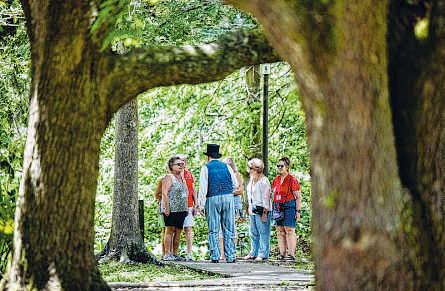

ABOVE: Reenactor KevinRees stops to chat with outof-state tourists as they explore the Vermilionville Living History Museum and Folklife Park in Lafayette. LEFT: Blacksmith Sean Hayes lightsthe forge STAFF PHOTOS By
LESLIE WESTBROOK


Interview leadsto original angel
For the third summer in arow, our daughter Piper has moved to anew spotinDenver.When she sent me the new address last month, Ilooked it up, the way amotherdoes.I realizeditwas barely ablock from East High School,whichmade me think of Mary Nell Barringer Ihad gone on awalk with and written astory aboutBarringer in April. At 82, she takesdaily walks, picks up bits she finds alongthe wayand makesbug art from the unsuspected treasures. Partwaythrough our interview, she mentionedshe grew up in Colorado.Itoldher our younger daughterisa teacher in Denver
“At East High School?” Barringerasked. Itoldher thatwasn’tPiper’s school,but Iwas familiar with it andthatIthought it to be such a beautiful campus.
“My grandmotherwas the originalangel,”Barringer said. Ihad no ideawhat she meant andaskedfor an explanation.
The short version: In 1886, the high school’s architect wanted ayoung girl’sface carvedinto the entryway, akind of keystone. Thousands of local girls were considered. A6-year-old named Ella Catherine Matty won. The child’sface andsculpture were so lovely thatthe school’s students were referred to as angels, even becoming the East High Angels as their official mascot.
Ella Catherine went on to graduate from East High in 1898. Her granddaughter, born decades later, was the womanacross the table frommeinBaton Rouge, telling me aboutthe magic she works turning notebook spirals andold flip phonesinto butterfliesand cicadawings.
Having walked East High’s campus on my way to Tattered Cover, abookstore I’ve loved for decades,Iwas amazed by Barringer’sstory.She told me that the sculpture still exists on campus —and Ifiledthat tidbit away until Isaw ourdaughter’snew address.
As Piperwas moving to her newapartment andvisiting the nearby weekly farmers market with her boyfriend, Itexted and askediftheywould walk the campus andlook for an angelic sculpture of alittle girl’sface. I thought it would be afun adventure for them, anditseemedeasy enough.
It wasn’t.
ä See RISHER, page 4Y

STAFF PHOTO By JANRISHER
Piper Naudin, left,and Jan Risher stand by the plaque that tells the storyofhow Ella Catherine Matty Orman became the original East High AngelinDenver.
Couple creates safe place for youths to ride ATVs
BY IYAHNNA CARTER
Contributing writer
When Louis and Stephanie Allen saw a story about young riders navigating illegal ATVs across Baton Rouge’s Mississippi Bridge, it sparked an idea.
The Baton Rouge couple owned 35-plus acres of undeveloped property in Scotlandville and had been looking for creative ways to use it
Maybe creating a safe space for the youths to enjoy their off-road vehicles could be it.
“And so we said, ‘You know what? We have the skills to do it. We have the property to do it Let’s do it,’” said Stephanie Allen
That was the beginning of the Throw Dat Dirt ATV Park & Trail in 2022, a venture that has expanded far beyond recreation. The Allens provide safety training and are helping to boost the economy in an area that has been overlooked for new development.
By drawing visitors from outside the neighborhood to the park, located at 11890 Gibbens Road, the couple says they are bringing new dollars into the community.
“We get to redevelop an area of the city that struggles for development dollars and for new businesses to come in and stay afloat right?” Allen said.
The ATV park only strengthened what the couple had already begun. They had established a teaching garden on the property, where they educate young people on farming and land literacy
The ATV park became another form of what they called “creative land use,” a way to make unused
BAYOU
Continued from page 1y
This, along with the organization’s actions have contributed to a reduction in the fecal coliform bacteria from 1984 levels of 3,000 colonies/100mL down to 530 colonies recorded in 2022.
The Bayou Vermilion District works to improve water quality in a highly visible way with boats, grapples and a trash trap located on Coulee Mine In 2025 they removed 1,806 barrels plus 71 tires from the main bayou and 120 cubic yards on Coulee Mine.
But, improving water quality involves more than getting the litter out.
The organization also regularly monitors water quality indicators like dissolved oxygen, temperature, pH and fecal bacteria. This water quality data alerts the Bayou Vermilion District to situations that need urgent and ongoing attention — often necessitating action by agencies with code enforcing powers.
“Water quality is the center of the Bayou Vermilion District’s mission as evidenced by our commitment to a community-driven master plan, our Water Quality Task Force and our most recent initiative to educate Lafayette students on all aspects of our watershed,” said Karen Hail, president of the Board of Commissioners which governs the organization Since its creation three years ago, the Water Quality Task Force has prioritized reducing high fecal bacteria counts by working to strengthen regulations and enforcement related to home septic systems and privately managed mid-size wastewater package plants.
Along with pet and agricultural waste, these systems contribute to high fecal bacteria when they are not properly maintained
High bacteria counts are the main reason why swimming in the bayou, while refreshing, is a bad idea. They affect whether the bayou receives the DEQ’s primary or secondary (or neither) status. Waterways with primary contact status are considered swimmable.
Secondary contact recreation status allows for safe paddling, fishing and boating but is a tentative status affected by fluctuations in bacteria counts, influenced by heavy rains washing pollutants into the bayou.
Commissioner Sam Oliver says the task force has done important work, particularly in coordinating activity between code enforcement agencies like Lafayette Consolidated Government and the Department of Environmental Quality
“Making sure there is clear communication between these agencies is a big step,” Oliver said. “The master plan will build on that, now that we’ve deepened these partnerships.”
No matter the technical reported status of the bayou, there has been an ongoing improvement not only in water quality but in public

space functional while investing directly into the community
“The learning curve is very
steep,” she said. “A lot of challenges, and then just the maintenance on it. We definitely bit
off a chunk. But we are, I feel like we’re the most prepared to do it.”
Tourists who come to ride ATVs and explore the area often ask where to eat, where to stay and what else is happening nearby, the couple said.
In recent years, safety has become a major focus of their work.
After discovering that ATV safety training was nonexistent locally and that people were traveling as far as Texas for such training, the Allens became certified instructors through the ATV Safety Institute.
Now, they offer training sessions designed to teach both youths and adults how to ride responsibly
“There was nowhere close that offered safety training,” Stephanie Allen explained. “So, we stepped in to fill the gap.”
In June, the park offered free training to community members during ATV Safety Week and OffHighway Vehicle Training Week. The couple hopes to expand access year-round, especially for younger riders.
One of their biggest needs moving forward is securing more youth-sized ATVs, which can be just as expensive as full-sized models. With additional partnerships or funding, the couple said they hope to broaden their programs and reach younger participants.
At its heart, this is not just a business — it’s an extension of the Allens’ life and values. They describe themselves as “serial entrepreneurs,” combining their individual business experience into shared efforts that benefit their family and neighborhood.
They’ve raised two sons but say their impact goes far beyond their household. Neighborhood kids regularly gather at their home and on the property participating in projects, learning skills, and building relationships.
“As far as we’re concerned, they’re all our sons,” she said. “They come from everywhere. They eat together, work together and grow together.”
From constructing trails to growing their garden, the Allens say every project is designed to connect young people with practical skills and real-world applications.
“Our primary goal is to make this a place where people can live, work and play,” she said.
For now, the couple plans to continue expanding their safety programming and community partnerships, encouraging residents and visitors alike to stay connected through their website and social media for updates on upcoming training events.
But their mission remains steady: invest in the next generation, uplift the community and prove that even neglected spaces can be transformed into something meaningful.
This story was reported and written by Iyahnna Carter, a journalism student at Louisiana State University, with the support of the nonprofit Louisiana Collegiate News Collaborative, an LSU-led coalition of eight universities funded by the Henry Luce and John D. and Catherine T MacArthur foundations.


“People need to access the bayou in order to enjoy it and appreciate our heritage — Vermilionville is an effective tool for doing this.”
SAM OLIVER, Bayou Vermilion District commissioner
our heritage — Vermilionville is an effective tool for doing this,” said Oliver He explained that experiencing local heritage includes not just knowing the
museum on the bayou includes several original historic homes, native plantings, livestock and a nearby rain garden all maintained in a way to promote water quality in the cultural historical context of life during the late 18th to 19th centuries. (It’s also where the board holds
PROVIDED PHOTO
Entrepreneur Stephanie Allen, who co-owns Throw Dat Dirt ATV Park and Trail in Scotlandville,
STAFF FILE PHOTO By BRAD KEMP
Paddlers meander down Bayou Vermilion during the 2024 Bayou Fest and Boat Parade.
STAFF PHOTO By LESLIE WESTBROOK
Reenactor Emily Duplechain stands on the front porch of the Boucvalt House at Vermilionville in Lafayette.
STAFF FILE PHOTO By LESLIE WESTBROOK
on the Vermilion River near
Workingshiftsatfoodbankhelps with theirsobriety
BY VIOLET BUCARO Staff writer
Calandria Robinson droppeda canofcorn into acardboard box andwatched it inchdownanassembly line, where more groceries gotstuffedinand it headed to the back of adelivery truck.Her first day volunteering at Second Harvest Food Bank back in late 2024 became amonthly field trip —it helps her stay sober
Walking into the large warehouse in Harahan feels like you’ve entered amore industrialized Costco or Home Depot. Conveyor belts, stacks of food —“Theyrun like awell-oiled machine,” Robinson said, and at first, “It’s alittle daunting.”
When Second Harvesttrucks pass by on the highway,Robinson likes to think her box is in there, on its way to the hands of someone hungry
She has overtwo years of sobriety since completing the addiction treatment program at Avenues Recovery Center.She started avolunteer initiative at Second Harvest for patients and alumni to complete their court-mandatedcommunity service hours andpractice the last step of 12-step programs: helping others.
In Louisiana, Avenues Recovery has clinicalfacilities in Metairie, Covington and Baton Rouge. It offers aftercare groups forits alumni to continue recovery involvement and encouraging what some may feel is impossible to achieve in sobriety: Having fun.
About once amonth, Robinson andAvenues fellows gather at Second Harvestinmatching blue smock vests to, as Robinson puts it, “help improve the community and improveourselves allatthe same time.”
The foodbank delivers food to 500communities across 23 parishes in south Louisiana and distributes approximately 40 million pounds of food each year. It’satall order,requiring help from several volunteers and groups in the region. Robinson said she has seen manypeople in addictionface food insecurity,one of thereasons Second Harvest is meaningful place for people in recovery to
give back.
“It’sone that strikes very dear to most of us,” she said. “At theend of ashift,tosee how many boxes we packed, how many families we were able to affect, is alot. It’s meaningful and we wear it likea badge of honor.”
Gettingout of ‘self’
Avenues alumni coordinator Jacie Plaisance, said her five years of sobriety is achieved through acts of service. Shejoined the alumni association in 2021 and later came back to be an employee at the facility.Without giving back, she said shequestionswhethershe would be abletostay sober
“Theentirepoint of recoveryis getting out of ‘self’and helping somebody else,” Plaisance said.
As the group sets up at stations packing, weighing,carryingand boxing, Plaisance noticed the peopleshe hadseen come through the doors to detox from drug abuse were now smilingand laughing in afriendly competition to fill as many boxes aspossible.
“It’sthe community whowins. We win,” Robinson said.
Lessthan10peopletotaled a high score of 800finished boxes in just afew hours.
“It’ssuper important to me to show them that they can have fun and recoveryand have fun doing

TwoAvenues Recoveryalumni build boxes during volunteer work at Second Harvest Food Bank of Greater NewOrleans.
service work,”Plaisance said. She recalled atime apatient approached herafter ashift andsaid, “The whole timeI’ve been here, I have not thought about adrink.
That’sthe entire point, she said.
“It just warms my heartsomuch because not toolong ago we were either on the streets, or manipulating, or lyingordoing godawful things just to, youknow, drink,” shesaid. “It’sjusta shiftinperspective and we get to see that in real time.”
Offthe clock, Plaisance will go on thefieldtrips just because it fills her spiritualcup. “It does something to me,” shesaid. Plaisance said when arecovery facilitylike Avenuesgivesback to volunteer forcharitable groups, clientsfeel like it’s easier to approach servicework for themselves andcontinue to volunteer after they leaveAvenuesand reintegrate intothe world sober “Somanypeople stay in addic-
tion because theydon’t see away out,” she said. “The more youget outside of ‘self,’ the better your recovery will be.”
What volunteering canachieve
John Sillars, chief strategist at SecondHarvest, said the Avenues helps pack for the Commodity Supplemental Food Program, boxing shelf-stable groceries for senior residents.
Roughly 14% of seniors 60 yearsand olderare foodinsecure in Louisiana, possibly the country’shighestrate. SecondHarvest deliversfood boxesmonthly to 19,000 senior residents in the region.Abox provides about 20 meals.
Sillars said theirprograms must meet aquota of 1,500 meals per day,with thousands of residents relying on daily distribution.
Last year,Second Harvest tallied 86,000 volunteer hours, which equates to 42 full-time employees.
Sillars said it would be financially impossible to distribute food withoutvolunteers.
“Just putting acan of beansin every box that passes by them, that work is feeding the seniors,” Sillars said.
It is estimatedthatover 800,000 people in Louisiana face food insecurity,and 300,000 are children. Whenschoolsare outfor the summer,theydon’t close shop.
Second Harvest pledges to provide thelargestfood supply of free meals for children in its Southern region. This year, thesummerfeeding program prepares 10,000meals aday for 10,000 kids,saidJon Toups said, the group’sCEO. That’stheir largestorderyet
Sillars said he believesvolunteering goes beyond the box. It is agreat place for friendship.

Gabriel Garrido Jr.isinhis first year of sobriety and attended Avenues’ recovery programinFebruary.Hesaid the people he’smet volunteering at Second Harvest have stayed in his friendship circle andwill frequently meet up to go bowling or tube down the river
“There’snothing like knowing your helping another person,” he said. “It helps me sleep at night.”
After yearsspent battling the disease of alcoholism,Garrido saidherealized if he wantsto be of value he must do valuable things.
“Focusonothers and the rest is takencareof,” he said. That sentiment is shared by manyrecovering alcoholics and addicts. For Robinson, helping others as shewas helped allows hertokeep the life she’sbuilt.
“In ordertokeep it, youhave to give it away,” Robinson said. Volunteer opportunities at SecondHarvest canbefound at nohunger.org. People who are seeking support forrecovery canvisit Avenues Recovery Center at avenuesrecovery.com or by phone at (866) 530-6842.
Email Violet Bucaro at violet. bucaro@theadvocate.com.








“I am honored and excited to take on this newrole.Shell Norcoisanimportant site with alonghistory and areputation forhavinggreat people and astrongculture.” AlexMarkos, ShellNorco VP
Shell NorcoWelcomes AlexMarkos, VP
ShellwelcomesAlexMarkosasthe newlyappointed Vice President of theNorco site. Markoshas worked in severalcountriesinavariety of roles. Most recently,his leadership at Shell Polymers MonacainPennsylvania andthe Sarnia Manufacturing Centre in Canada prepared himfor balancing thedemands of large-scale operations with theimportanceofculture, trust, andvisible leadership.AtNorco,he steps intoaworkplace widely recognized within Shell forits strong culture.“There’sa real sense of pride here,”hesays. “People care about thesite, about each other, and about doingthingsthe rightway.You can feel that immediately.”
At thecoreofhis leadership philosophyisthisprinciple:safety comesfirst. “Nothing is more important than making sure everyperson who comesto work goeshomesafely,” he says.His focus alsoincludesenvironmental performance reliability, and developing thepeople who keep thesite running. “You have to deliver today while preparingfor tomorrow.”
ShellNorco is one of themostimportant sitesinShell’sU.S. operations. Theonly Shell refinery in thecountryintegratedwith chemicals manufacturing, Norcoplaysa centralrole in thecompany’soperationsand remains astrongeconomic engine forthe Gulf Coast.
Garrido
Calandria Robinson, left, and a Second Harvest staff member embrace in ahug duringawork shift in 2024, the year she started thevolunteer program for the Avenuesgroup
Older instructors finding their groove
Playing hip-hop or Doris Day, exercise teachers can speak their peers’ language
BY DONNA BLANKINSHIP Associated Press
SEATTLE Bengie Santos was a dancer and choreographer for 30 years before reaching an age when most artists hang up their dancing shoes and take a seat in the audience. But she wasn’t ready to sit back and enjoy the show So Santos began her third act as an exercise instructor
Now 72 and in her 14th year teaching at the YMCA of Greater Seattle, Santos has an almost cultlike following of older adults — many in their 80s and 90s who come to stretch, dance and lift weights multiple times a week.
From Doris Day singalongs to hip-hop routines and country line dances, the classes get people kicking, popping and spinning.
Some of Santos’ students say younger instructors — however great — don’t quite “get them” in the same way
And Y organizers and other experts say many older instructors can be role models, speaking their peers’ language in a way that makes exercise more fun.
Building social connections
Sharon Ruff, 81 was attracted to Santos’ classes by the eclectic mix of music, and loves the instructor’s energy and enthusiasm. Before she retired from her job as a teacher she had never exercised regularly “I didn’t really like it, because it wasn’t fun,” she says.
Her friend Ann Kashiwa, 91, often stays for two hourlong classes in a row She started taking Santos’ classes during the pandemic, and has stuck with them through treatment for pancreatic cancer
“She is not only a fantastic teacher, but she gets people together,” says Kashiwa, whose Y friendships have helped her through tough times.
Santos says inspiration flows both ways. Her students inspire her to keep going, she says, and “I’m hoping I inspire them to keep going.”
What older instructors can offer Exercise and being with people are crucial for healthy aging, so finding incentives to do that is important.
“Everybody has to figure out what their barriers are” and come up with strategies to make physical activity rewarding, says Daniel E. Lieberman, an evolutionary biologist at Harvard and author of several books, including “Exercised: Why Something We Never Evolved to Do is Healthy and Rewarding.” Finding someone to get you moving, whether an instructor or a friend, can help overcome that natural resistance.
“People who stay active as they get older are important role models for everyone,” Lieberman says.
Harry King, an 83-year-old personal trainer in Greenville, South Carolina, agrees that motivation
Continued from page 1y
They walked the grounds twice. No sculpture, not one that matched what I had described and they had pictured. What they didn’t know yet, and neither did I, was that there wasn’t much of a sculpture left to find. The original had worn down over more than a century of Denver weather, until barely a face remained. The next day, they went back with better information and found a plaque instead of a statue, marking a spot on the grounds where the eroded original still sits. The fuller likeness, they later learned, was inside the school.
I filed away that success too. I arrived last week in Denver to help Piper move into her new place. On my first full day there, she and I walked over to East High together She led me straight to the small garden that continues to pay homage to the school’s original angel. There it was the face of a young girl who looked, in fact, a lot like an angel. I stood there
ing it all in, connecting the dots and doing the math. Ella Catherine Matty was 6 years old when Grover Cleveland

“We know it’s more than just fitness for the majority of our active older adults. It’s also the mental and emotional aspect.”
KERRy ASHBy,yMCA program executive
to take that first step is tough for many people, and becomes even harder as their mobility weakens.
King had always been active — kayaking, hiking and playing basketball but when he retired from his job as an insurance executive and business coach, he felt a pull toward a comfortable chair in front of the TV But that got boring fast, so when he saw a Help Wanted sign at Planet Fitness, he applied and worked his way up to become a trainer
Most of his clients are 50 or older
“I’ve heard people say I set a good example and I try to,” he says. “At my age, if I can exercise, why can’t other people too?”
Recruiting older instructors
The YMCA in Seattle is mindful of the value of having an older instructor leading a senior class.
“We don’t put an age limit on our applicants,” says program executive Kerry Ashby, who started there as a younger instructor for the Active Older Adults program. The Y does recruit from within the older adult classes, and a lot of instructors are former participants.

“We know it’s more than just fitness for the majority of our active older adults,” Ashby says. “It’s also the mental and emotional aspect.”
Tom Kleinecke, 67, has been a member of the Y for 18 years and has sampled many different classes. Younger instructors, he says, tend to teach their classes, while Santos leads and inspires.
Kleinecke says his fitness and endurance have improved noticeably since he started taking three of Santos’ classes a week. Although he’s fit, he says, it’s challenging to keep up with her One of the classes includes a faster-paced dance class not designed for older students. At first,
parts were tough to follow, he said, but before long, he knew all the steps, from mambo to moonwalk.
“If you’re worried about being out of sync and uncoordinated, don’t worry about it because nobody is paying attention to you,”
Kleinecke says. They’re all watching the instructor
Now, he and his wife go out dancing on the weekends.
Looking forward to working out
Santos says she considers the ages and backgrounds of her stu-

East High
dents when choosing the exercise class soundtrack.
“I always tell other instructors it isn’t your class, it’s their class,” she says.
She also teaches smaller classes in three senior living facilities. Those students range from 80 to 102.
“The caregivers wheel them out. I play their music. It triggers their memory,” from Judy Garland to Louie Armstrong, Santos says. “When they see me they think they’re going to party.”
Some even waltz in their chairs.
governor’s
When Barringer was growing up in Pueblo, her family lived a walkable distance from
“One
became friends with
Delano
as
Jonas Salk (who invented the polio vaccine), which led to Barringer and her siblings being the first in Pueblo to get the polio vaccine.
Today Barringer and her sister are the last surviving grandchildren.
I wouldn’t have known about this particular angel without meeting a woman in Baton Rouge who makes beetles out of bottle caps. I wouldn’t have gone looking for her without a daughter who happened to move a block away And I wouldn’t have appreciated any of it without one offhand sentence in the middle of an interview
Those are the moments that make the world feel stitched together
Email Jan Risher at jan.risher@ theadvocate.com.
STAFF PHOTO By JAN RISHER
In April, Mary Nell Barringer of Baton Rouge, mentioned to Jan Risher that her grandmother was the original
angel. In June, Risher visited the plaque in Denver that commemorates Barringer’s grandmother
ASSOCIATED PRESS PHOTOS By LINDSEy WASSON
Instructor Bengie Santos, 72, at front, leads an exercise class for older adults at the Dale Turner Family yMCA in Shoreline, Wash.
Bengie Santos, 72, collects small exercise balls between portions of her exercise class for older adults
SUNDAY, JUlY 12, 2026

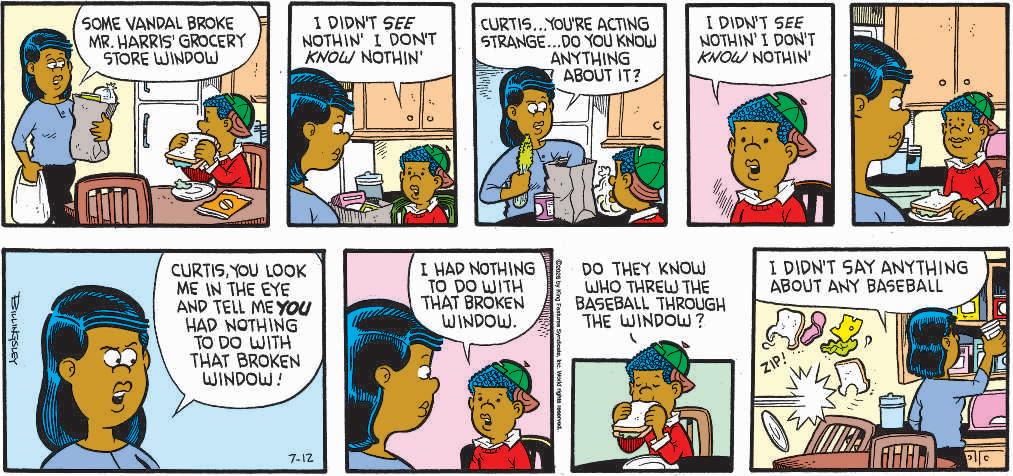
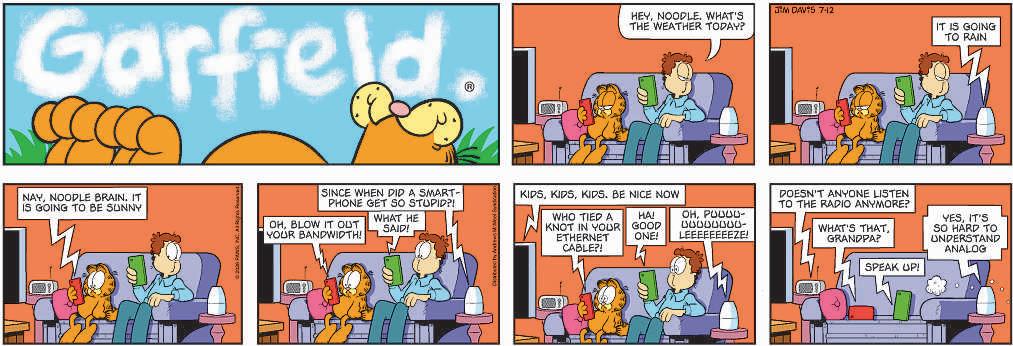

CURTIS / by Ray Billingsley
SLYLOCK FOX / by Bob Weber Jr




GET FUZZY / by Darby Conley
HAGAR THE HORRIBLE / by Chris Browne



MOTHER GOOSE AND GRIMM / by Mike Peters
ZIGGY / by Tom Wilson
ROSEBUDS / by Supr Dee





ZITS / by Jerry Scott and Jim Borgman
SALLY FORTH / by Francesco Marciuliano & Jim Keefe





PEARLS BEFORE SWINE /byStephan Pastis


grams
directions: Make a 2- to 7-letter word from the letters in each row Add points of each word, using scoring directions at right. Finally, 7-letter words get 50-point bonus. “Blanks” used as any letter have no point value All the words are in the Official SCRABBLE® Players Dictionary, 5th Edition.
word game
instructions: 1. Words must be of four or more letters. 2. Words that acquire four letters by the addition of “s,” such as “bats” or “dies,” are not allowed. 3. Additional words made by adding a “d” or an “s” may not be used. 4. Proper nouns, slang words, or vulgar or sexually explicit words are not allowed.
todAY's Word — HieroGLYPH: HY-rohglif: A character used in a system of writing using pictorial characters.
Average mark 42 words Time limit 60 minutes Can you find 67 or more words in HIEROGLYPH?


ken ken
instructions: 1 -Each rowand each column must contain thenumbers 1through4 (easy) or 1through6 (challenging) without repeating 2 -The numbers within the heavily outlinedboxes, called cages, must combine using thegiven operation (inany order)toproduce the target numbersinthe top-left corners. 3 -Freebies: Fillinthe single-boxcages withthe numberinthe top-left corner
instructions: Sudoku is anumber-placing puzzle based on a 9x9 gridwith several given numbers. The object is to placethe numbers 1to 9in theempty squares so that each row,each column and each 3x3 boxcontains the same number only once. The difficultylevel of the Conceptis Sudoku increases from Monday to Sunday
directions: Complete thegridso that numbers 1–132 connect horizontally, vertically or diagonally
Sudoku
wuzzLes
How many goats?
Today’s deal is from a match between a team from the USA and a team from Poland, featuring two of America’s greatest players. South at this table was Jeff Meckstroth He won the opening heart lead with dummy’s king and led a club to his ace. A spade to the queen won, and Meckstroth cashed three more club tricks. West had to make two discards and shed one low diamond and the nine of spades. Meckstroth led the jack of spades to the king and ace, and exited dummy with a heart to West.
West realized that he would be forced to lead away from his king of diamonds after running his heart winners. Trying desperately to get off this endplay, West led a low heart and Meckstroth had nine tricks.
winners, Hamman discarded his two low diamonds, baring his king. Now when South tried to endplay him, Hamman was able to cash all his hearts and exit with the nine of spades to defeat the contract. Stars on parade!
Edited by Rich Norris and Joyce Nichols Lewis
super Quiz
Take this Super Quiz to a Ph.D. Score 1 point for each correct answer on the Freshman
SUBJECT: EVENTS OF 1984-1999
(Example: 1984: The Bhopal disaster took place in a pesticide plant in this country Answer: India.)
FRESHMAN LEVEL
1999: The U.S. turned over administration of this canal to the country’s government.
Answer________
1998: The Good Friday Agreement ended troubles in this part of the U.K. Answer________
1997: This princess was killed in a car

At the other table, West was TGBH The Great Bob Hamman. The bidding was different, with the Polish South opening one club and Hamman overcalling one heart. The final contract was the same, and the play proceeded the same way except when declarer cashed his club
CANCER (June 21-July 22) Say
Tannah Hirsch welcomes readers’ responses sent in care of this newspaper or to Tribune Content Agency inc., 2225 Kenmore Ave., Suite 114, Buffalo, Ny 14207. E-mail responses may be sent to gorenbridge@ aol.com. © 2026 Tribune Content Agency
ventures, going into debt or buying into someone else’s dream.
to take a
those trying to get
Stick to what and who you know best, and use your intelligence to navigate your way through any sticky situations you face LEO (July 23-Aug. 22) Turn limitations and setbacks into something fresh, exciting and uplifting. It’s up to you to generate the type of life you want to live Surround yourself with positivity
VIRGO (Aug. 23-Sept. 22) Take the high road. Refuse to let anyone lead you astray or take advantage of your vulnerability Avoid joint
LIBRA (Sept. 23-Oct. 23) Take flight, experience life, discover what’s possible and start the process of change. Let go of what’s not working for you anymore and replace it with a little excitement and adventure.
SCORPIO (Oct. 24-Nov. 22) Communication will help you gain access to new possibilities. Refuse to let negativity or anger stand between you and something or someone you want in your life.
SAGITTARIUS (Nov. 23-Dec. 21) Listen, negotiate and change only what’s
necessary and affordable. Back away if someone tries to use emotional manipulation. Take hold of whatever situation you face.
CAPRICORN (Dec. 22-Jan. 19) It’s OK to take a break, reflect and find your happy place. Opportunity comes from doing what’s best for you. Someone you encounter will push emotional buttons.
AQUARIUS (Jan 20-Feb 19) Choose a diverse course of action. Change may be necessary, but so is security Don’t promise more than you can deliver. Having integrity and keeping a positive attitude will bring hope for a brighter future.
PISCES (Feb 20-March 20) Home is where the heart is Enjoy your space; fill it with the people you care about, host an event and be the one to bring people together Personal satisfaction is derived from doing the right thing.
ARIES (March 21-April 19) Don’t settle for less than what you want. Express your concerns if opposition surfaces. Having a positive attitude and being willing to compromise will help you put your plans in motion.
TAURUS (April 20-May 20) Pay attention to what’s unfolding around you. Don’t take an unnecessary
risk. Avoid crowds, scammers and those trying to mistreat you. Stick close to home and take care of unfinished business.
GEMINI (May 21-June 20) Put more effort into learning and expanding your interests. Don’t be tempted by lofty offers or those trying to talk you into overindulgence. Focus on self-improvement, not destruction.
The horoscope, an entertainment feature, is not based on scientific fact.
© 2026 by NEA, inc., dist. By Andrews McMeel Syndication
goren Bridge
SCORING: 24 to 30 points —congratulations, doctor; 18 to 23 points—honorsgraduate; 13 to 17 points —you’replenty smart, but no grind; 5to12points —you really shouldhit the booksharder;1point to 4points —enroll in remedial courses immediately; 0points who reads thequestions to you?
Saturday's Cryptoquote: Youdon't passuparide to space. —Victor Glover
1. Panama Canal. 2. Northern Ireland. 3. Diana, Princess of Wales. 4. Afghanistan. 5.O.J. Simpson. 6. SouthAfrica. 7. Bill Clinton. 8. European Union. 9.Indira Gandhi. 10.Chile 11.Beijing. 12. Channel Tunnel. 13.Israel and Palestine. 14. Challenger.15. Titanic Crossword





mACnelly’sshoe/ by Gary Brookins &Susie MacNelly