ADVOCATEADVOCATEADVOCATE


When my wife and I bought our home three decades ago, the persimmon tree in the front yard wasn’t a selling point. I found persimmons too tart and my wife wasn’t crazy about the tree’s scraggly appearance, which gave the impression of a neighborhood stray that had decided to come live by our driveway
We made a note to take the tree down, a chore quickly sidelined by the 100 other urgencies in making a new home.
I decided to ignore the persimmon tree until I could do away with it. But as autumn deepened that year, I discovered the tree’s sly insistence on claiming my attention. Ripe persimmons dropped from its branches while I mowed the lawn, some of the fugitive fruit landing on top of me.
Our daughter, then just a toddler had a good laugh when I came back inside with sticky yellow pulp on my scalp and shoulders She couldn’t help being amused by a father who seemed like a victim of a food fight. Even when I wasn’t being clobbered by the rain of plenty it caused other mischief. Persimmons covered the grass, making it impossible to mow As the blade plowed into the merry mess, a lively puree sprayed into the air, making the yard look like it was covered in baby food.
I saw no other choice but to harvest the fruit, which is what I should have done in the first place. Wasting food is a bad thing, but what were we going to do with a bushel of persimmons when I winced at the thought of eating just one?
My mother-in-law pointed us toward a solution. She made persimmon bread, a delicious dessert bread that used sugar, spices, pecans, and raisins to soften the fruit’s sharp taste. We loved the bread, which is great with morning coffee. It became a staple of our menu each fall, when new fruit on our tree nudged us to get out the recipe
ä See AT RANDOM, page 3G
Historic Bayou Teche
BY JOANNA BROWN Staff writer
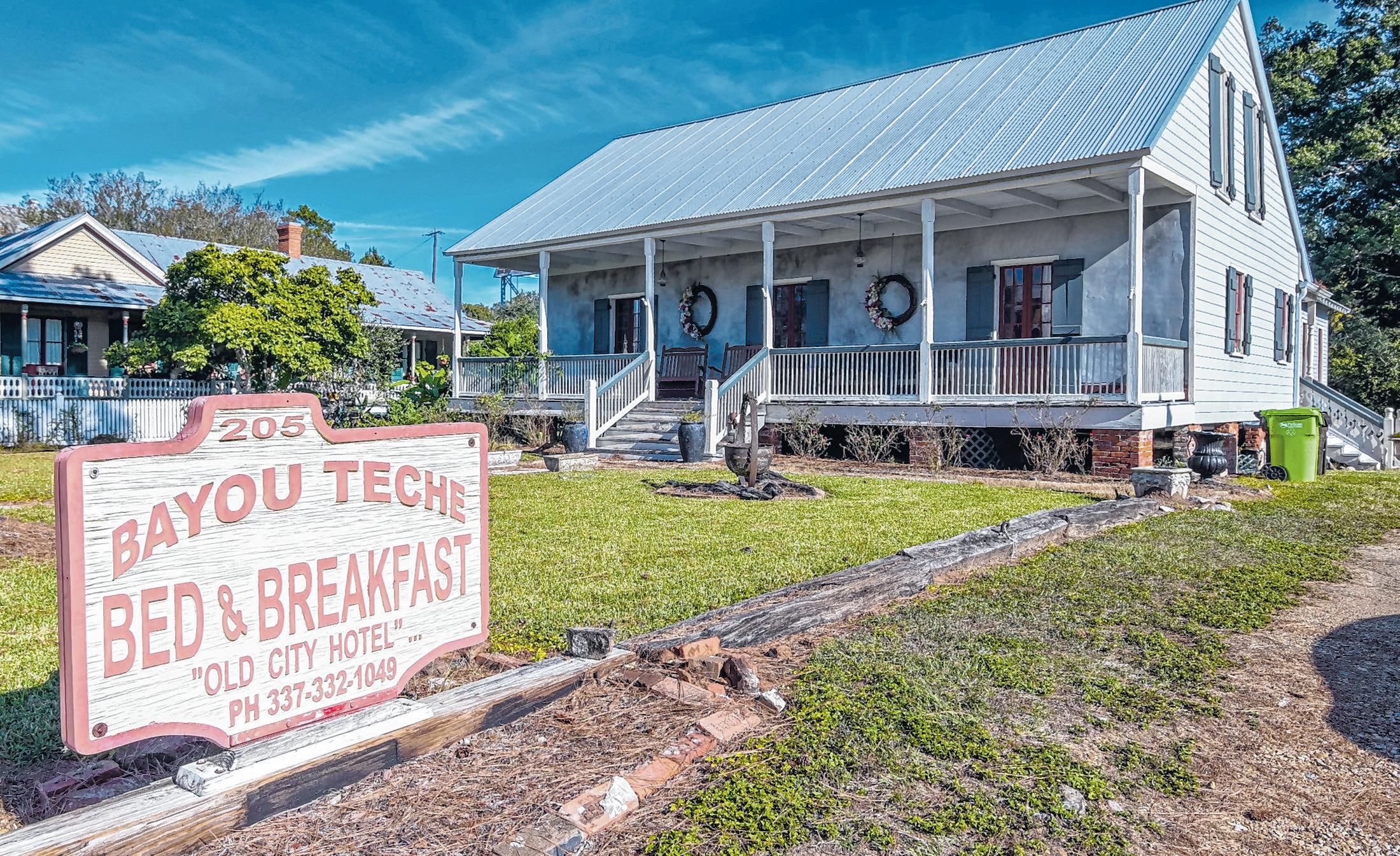
This storied Creole-Acadian cottage in the heart of downtown Breaux
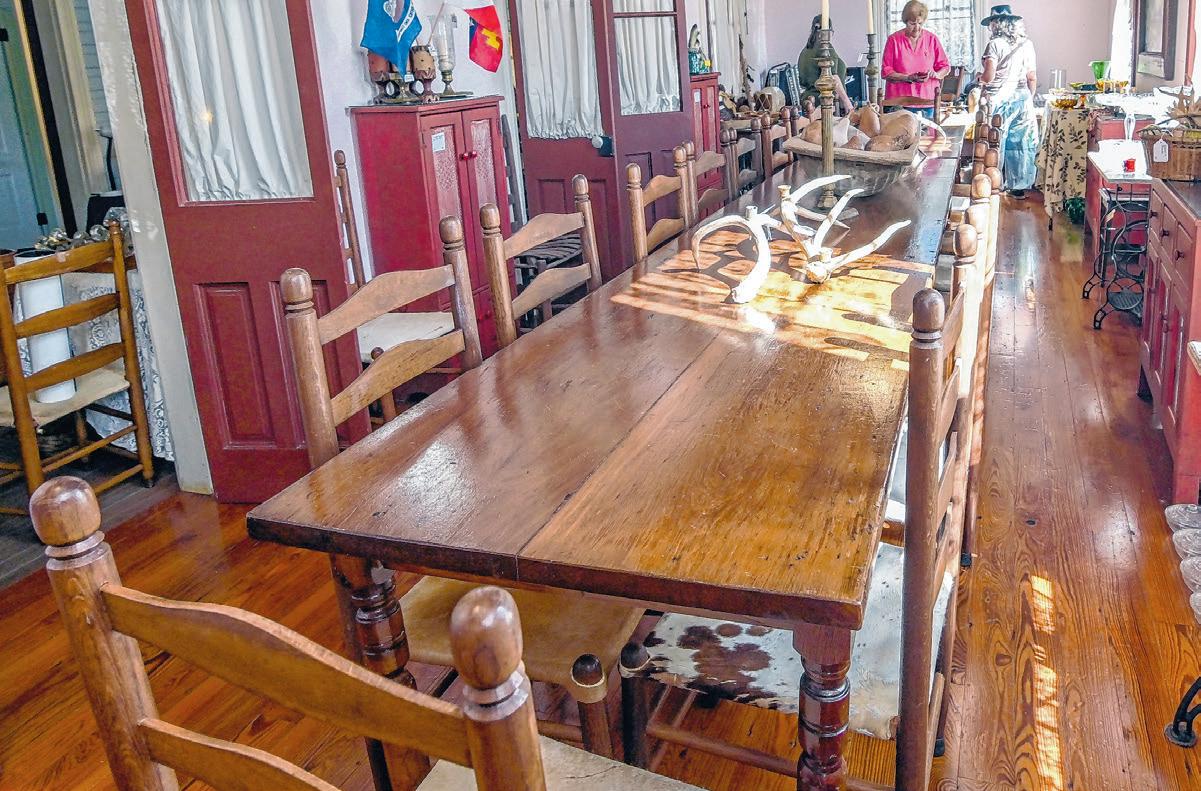
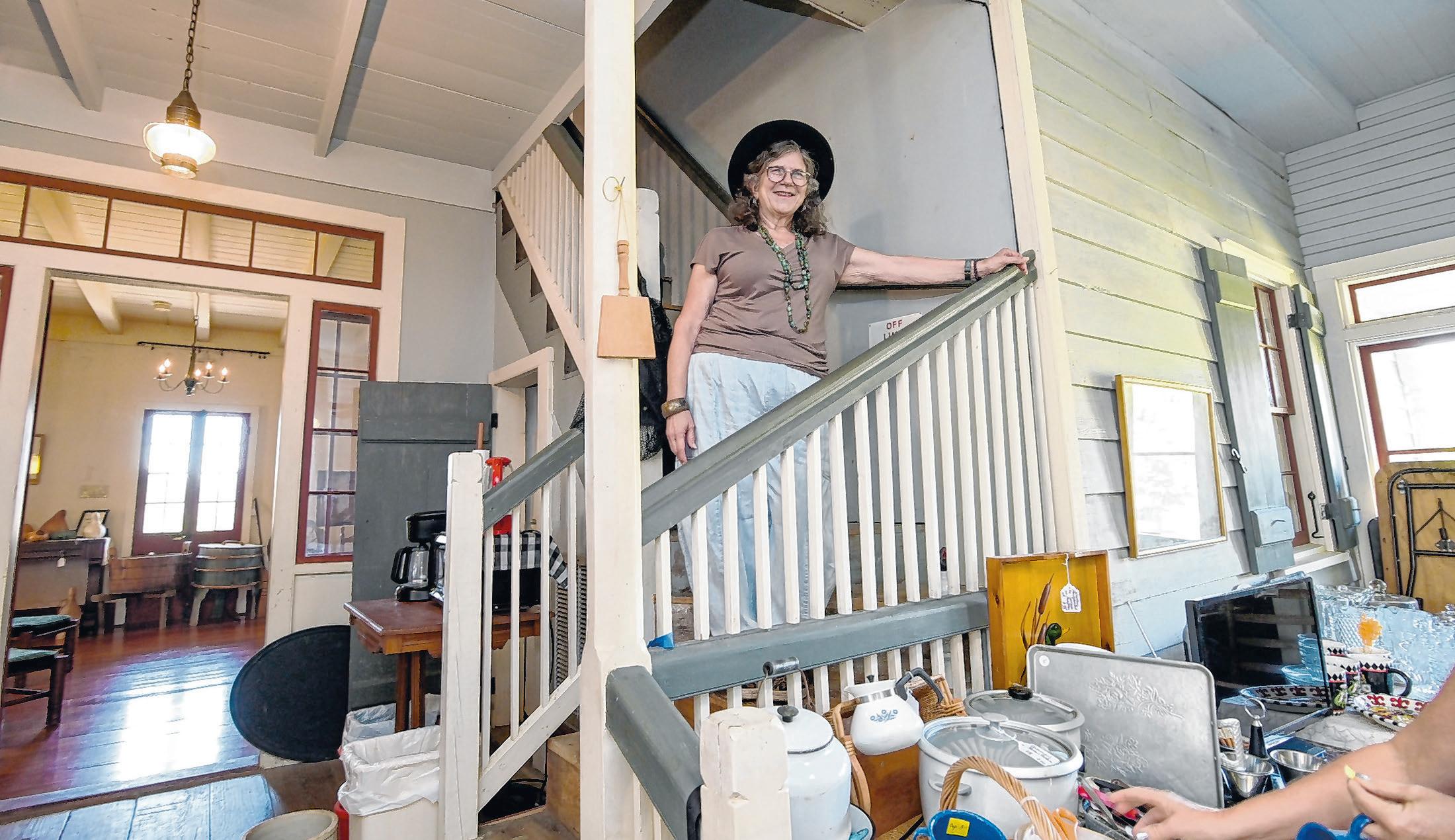
Bridge has seen a lot of life pass through its halls. It was built in 1811 as the home of Sylvestre and Marie Broussard, the daughter of Breaux Bridge’s founder, Firmin Breaux. The Broussards raised five children on the bank of the bayou. More than 100 years later, the property was transformed into a boarding house — with the addition of a long hall of suites, and a dining room that boasts a 17 and a half foot oldgrowth cypress table. In the 1980s, MaryLynn Chauffe came along. The house was in dire need of saving. As a passionate preservationist, active civic leader and founding member of the Friends of Lake Martin, she undertook a historically sensitive restoration. Her work turned it into a showpiece of local culture and history, sheltering tourists, bridal couples and traveling musicians. Chauffe died in 2022. Her daughter, Debora Savoy, has been working with the Cheryl Cockrell Estate Sales team for weeks now
to gather decades of glassware, antique furniture, old Mardi Gras costumes, cypress lamps, rope beds, black pots and thousands of other items from Chauffe’s estate of multiple historic properties in the Breaux Bridge area.
The cottage will host a large estate sale from Nov 20-22.
Apart from a few pieces the family is holding onto, everything is available — including that enormous cypress table, which was
built inside the dining room and seats 18. And they have confirmed that it can be removed from the room.
The home itself is also being offered for lease or sale, according to Savoy Its restoration was a labor of love for her mother, and the bones of the house still stand as a testament to the area’s history and development along the Teche.
ä See SALE, page 2G
BY RACHEL MIPRO
Contributing writer
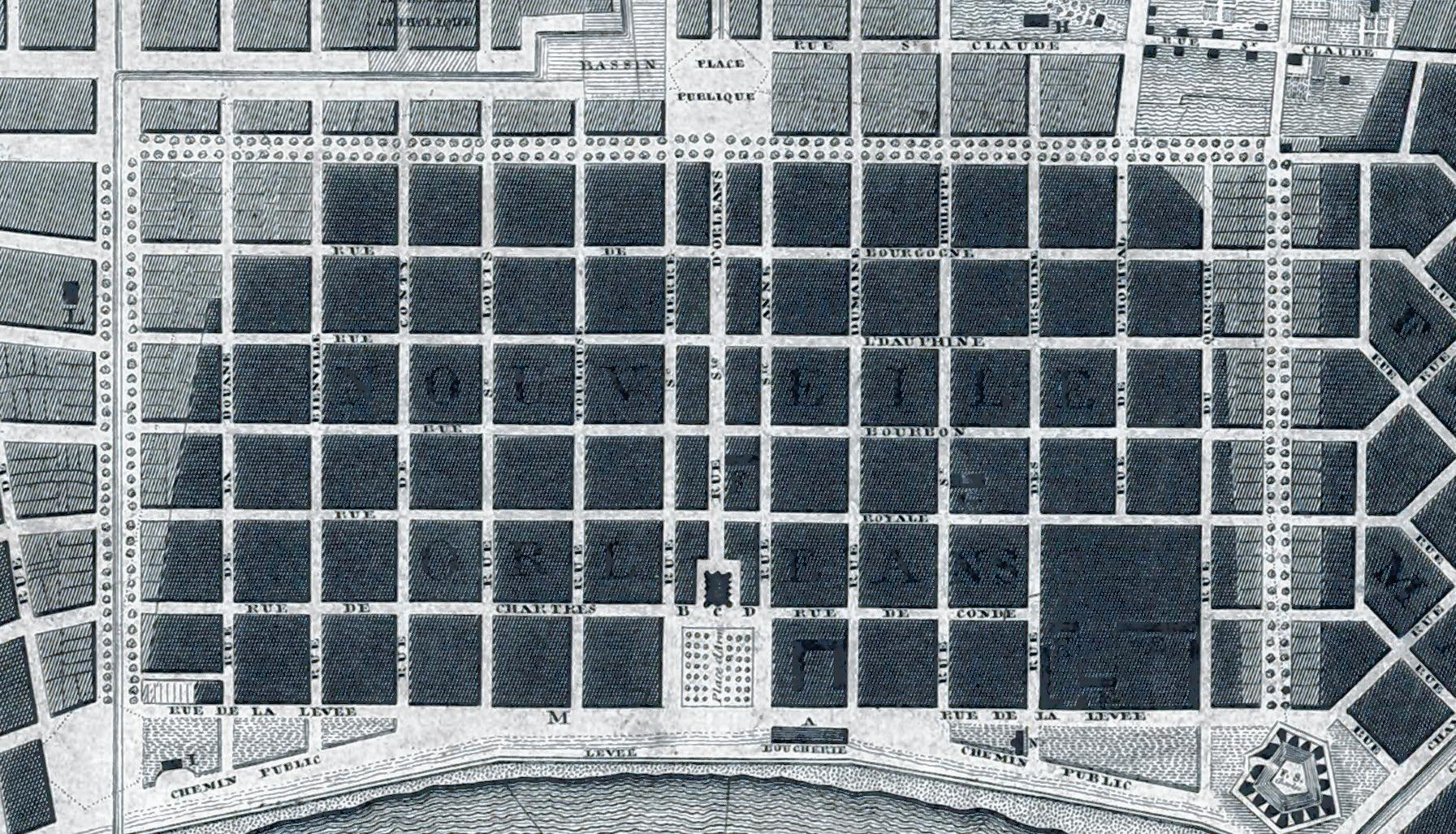
The French Quarter is known for its architecture, where layers of history and different Spanish, French, Creole and other influences coalesce into a unique style. One reader was curious about the streets that serve as boundaries of the French Quarter They wanted to know whether Rampart Street marked the site of a literal wall. Did the French Quarter once have ramparts, or walls, around it?
Jason Wiese, chief curator for The Historic New Orleans Col-
lection, pointed to the era when the city was governed by Spain in answering the question.
“The colonial city was at one point enclosed by fortifications — during the Spanish colonial period,” Wiese said.
The French Quarter, New Orleans’ oldest neighborhood, was first constructed under French rule. French authority waned after the Seven Years’ War, an 18th-century worldwide conflict that pitted the global powers of France and Great Britain. A series of peace negotiations made to end the war left New Orleans ceded to Spain, as part of the

1762 Treaty of Fontainebleau. After power changed hands, Spanish authorities began to make their mark on the New Orleans architectural landscape, with some guidance from the former French rulers.
‘Fort-Prints’ at edge of Quarter Tulane geographer Richard Campanella wrote about the building of fortifications in an article published in The Times-
Picayune in 2017 headlined “‘Fort-Prints’ at the edge of the French Quarter are relics of New Orleans’ fortified past.” Campanella wrote that plans for these fortifications stemmed from French engineers, who, when sketching out plans for the French Quarter’s design, originally envisioned the grid of French Quarter buildings defended by angled fortifications that connected five forts. This vision was fully realized after the war, when Spanish authorities decided to increase defensive measures due to the tumultuous political landscape.
Wiese described this defense system: earthen ramparts capped with wood palisades that connected to forts, encircling the French Quarter The fortifications were completed and most prominent during Carondelet’s administration in the 1790s, Wiese said. Formidable defenses
Campanella has a similar description of the defenses that surrounded the Quarter, complete with pickets, firearms and even a moat.
page 3G
“The whole place was condemned. There were trees growing through the dining room,” she said.
“The porches had fallen off, and when people saw my mother doing this, the whole town got really excited and started finding pictures.” Chauffe used some of the photographs to remake the porch railings.
But Chauffe went beyond using photographs to bring the home back to its glory — she also sat on the front porch and straightened every square nail she found.
“She researched every single thing. None of the beds are reproductions,” Savoy said. “She
“If you’ve ever had a family member die, and you see their house torn up and distributed, it can be difficult. I do it because I love people, and working with the families to make sure everyone is happy and pleased. It’s a great service if a family can’t close out a house themselves.”
CHERYL COCKRELL
had to get mattresses made to fit them, because the bed sizes have changed over the years.”
Cheryl Cockrell and her team specialize in the “most interesting and most difficult” estates, and this historic property certainly applies. Its sheer scale will be attractive to treasure hunters
and lovers of Cajun country arti-
facts — like vintage Mardi Gras capuchons, the cone-shaped hats country revelers wear for chasing chickens and getting into shenanigans on Fat Tuesday Cockrell has been working in estate sales for over 20 years, since retiring as an English teacher at Comeaux High School in Lafayette. Her team, made up of other retired teachers, have seen it all at this point, such as people coming in to camp at a sale in Opelousas in order to get their hands on a perfectly preserved vintage clothing haul
She said, “Teachers are good at estate sales. We know how to make you behave, while at the same time explaining how you can use that.”
“A lot of people say, ‘Your job looks so fun.’ It’s hard,” added Patricia Foster, a former home eco-
nomics teacher from Comeaux.
“The exploration is fun, because you never know what you’re gonna find. As a home economist, I enjoy the research and explaining all of the items, and I’ve collected antiques my whole life.”
Estate sales are one of those unique places where commerce, humanity and deep emotion intersect. For the shoppers, it’s a meaningful experience to sort through the items that made up a life, while considering how that lamp, or that old kitchen tool, can fit into yours.
For the family members selling the estate, it can be an emotional time. “If you’ve ever had a family member die, and you see their house torn up and distributed, it can be difficult,” said Cockrell.
“I do it because I love people, and working with the families to make sure everyone is happy
and pleased. It’s a great service if a family can’t close out a house themselves.”
For families looking for estate sale services, Cockrell said they can call to have the home assessed to see if it’s a sale her team can take on. Most estate sale companies, like Cockrell’s, work on commission.
This sale will take place Nov 20-22 in Breaux Bridge, and they ask that shoppers not request prices or early tours of the house. According to Cockrell, all items are priced to sell — the first day, ideally
“This is not an antique store where we hold onto it for four years,” said Cockrell.
“We have three days and we’re here to sell.”
Email Joanna Brown at joanna. brown@theadvocate.com.







Continued from page 1G
Persimmon bread has been such a part of our family tradition that after our daughter and son grew up and made lives elsewhere, we continued to send them carefully wrapped loaves through the mail. In savoring the sweet, brown treat, they tasted home
That’s how a tree I initially disliked became a household fixture, a gift I’ve written about at other times through the years. All of this came back to mind when our persimmon tree failed to green up last spring, which told us it hadn’t survived the winter. Our son, home for a visit, helped us cut it down.
Luckily, a surplus of fruit in our freezer means we’ll still enjoy persimmon bread this fall. It’s something we’ll enjoy as part of our Thanksgiving feast this month.
I’ll always be grateful for a small tree that taught me something about gratitude itself. Sometimes, life’s blessings have to hit you on the head before you recognize them.
“Spanish authorities erected the five bastions among the ramparts surrounding New Orleans,” Campanella wrote.
“Forts Borgoña (Burgundy), San Fernando, and San Juan, which guarded the rear of the city, comprised earthen berms fortified with pickets and timber palisades and mounted with guns, fronted by a 30-foot-wide moat with 4-foot-deep water
“Each bastion was manned by up to a hundred troops, who resided in barracks inside and moved about on banquettes (wooden walkways) open to the sky Forts San Louis and San Carlos, at the upper and lower river corners of the city, were similar except that their walkways were covered, making them look something like frontier stockades.”
This era of defense did not last long, as the Louisiana Purchase and other shifts toward population increase led to the pressing need for more buildings and civilian spaces. The forts and ramparts gave way to streets and buildings. They are long gone, but Spanish influence can still be felt all over the city
Email Danny Heitman at danny@dannyheitman.com.


Do you have a question about something in Louisiana that’s got you curious? Email your question to curiouslouisiana@ theadvocate.com. Include your name, phone number and the city where you live.






















Universityand A&MCollegehas receiveda ative$5million investment from Shellto itiativesin theCollegeofBusiness and ollegeofSciences and Engineering. This nvestment directlysupports theSouthern UniversitySystem’sStrategic Pillars, includingStudent Success and Academic Excellence

Southern U transforma expand in the Co in ONE
“Withthis investmentinengineering education and studentsuccess,weare further strengthening Shell’spartnership with SouthernUniversityand empowering thenextgeneration of innovators and leaders. We can’t wait to see howtheywill shape thefutureofenergy and technologyfor our industryand theworld.”
EMMALEWIS Executive Vice President,Shell Chemicals