If you would no longer like to receive this free product, please email brtmc@ theadvocate.com.
If you would no longer like to receive this free product, please email brtmc@ theadvocate.com.
Statewide naturalist program educates about flora and fauna
BY JOY HOLDEN Staff writer
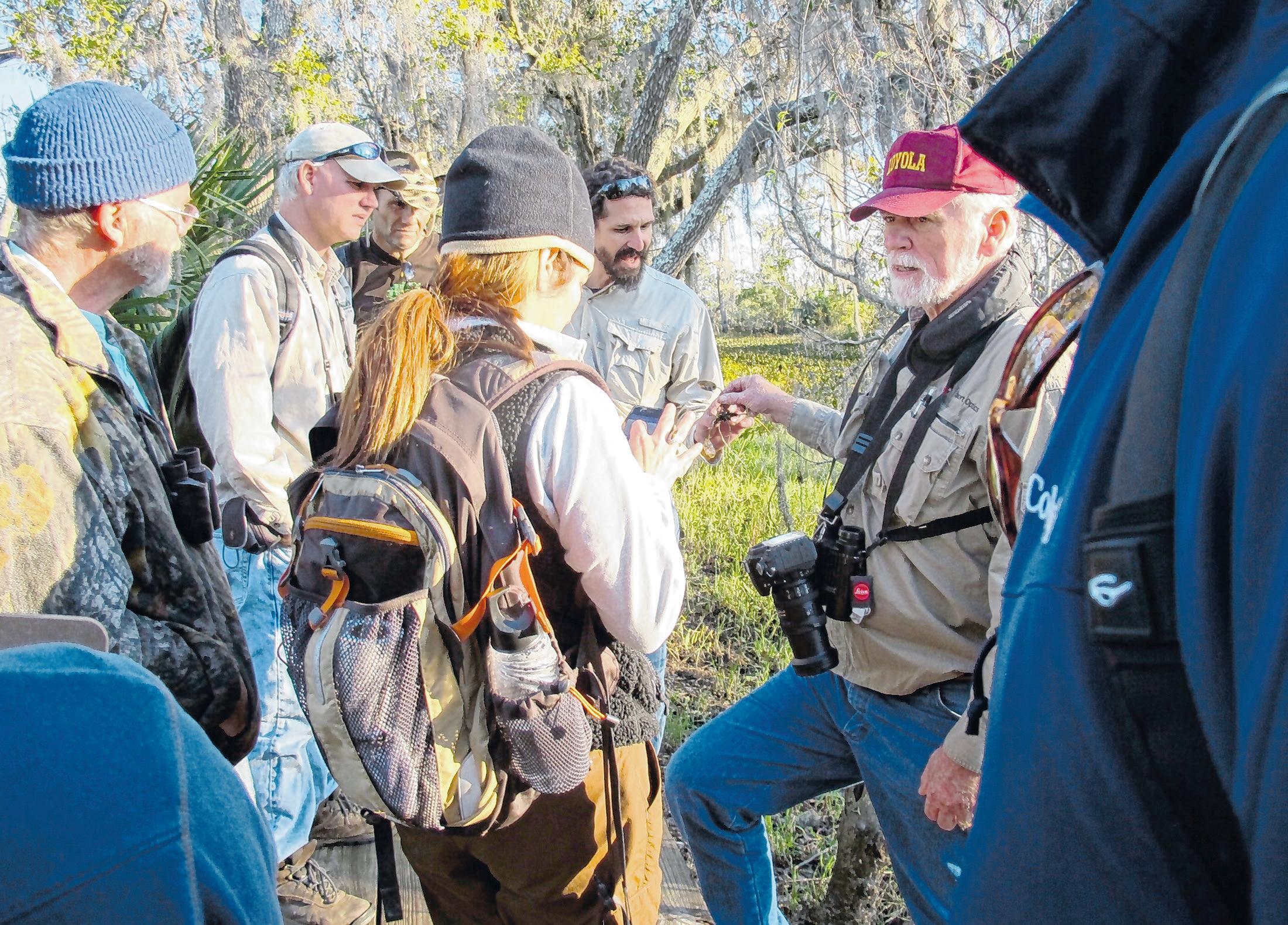
Long before Bob Thomas founded the Louisiana Master Naturalist Association, he grew up in central Louisiana, wandering the woods and waterways for snakes, frogs and bugs.
“It was a wonderful place for me,” Thomas said, “because I was in the field all the time. Snakes were dripping out of the trees and fish were jumping out of the water.”
His love for nature, fostered by a Louisiana wilderness childhood, led him to jungle after jungle studying snakes and their adaptations — Thomas became a snake expert, an environmental biology professor, the founding director of the Louisiana Nature Center and the director of the Center for Environmental Communication at Loyola University
He wanted to share this knowledge and passion with people beyond academia. After several years of trying, he finally established the first Louisiana Master Naturalist Association chapter Now, the 13-year-old program’s popularity is surging.
The Greater New Orleans chapter has a waitlist of over a year Currently, seven chapters serve the state: Alexandria, Baton Rouge, Lafayette, Lake Charles, Monroe, New Orleans and Shreveport
The 501©(3) nonprofit group offers a statewide program to educate Louisiana residents about the state’s flora and fauna, as well as other aspects of their environment and ecosystems. Once certified, the master naturalists use their knowledge to educate others or assist programs that promote and protect Louisiana’s natural heritage. Courses are offered twice a year, in the spring and the fall.
Origins of naturalist association
Master Naturalist Associations exist in 48 states, often state-funded. Louisiana does not have state funding. Thomas explained that he tried to establish an association with the LSU Ag Center at one point, but funding fell through After multiple failed attempts at starting a statewide association, Thomas says he believed the only way to move forward was to start a local organization in New Orleans. He called naturalist friends there, and they set up the nonprofit, starting pilot classes in 2012.
The first public classes were held in the spring of 2013. While each chapter in Louisiana is different, they all have workshops, learning opportunities and serve their communities Every chapter presents a broad overview of the state’s natural history, but chapter activities vary based on geography. Louisiana is nicknamed the Sportsman’s Paradise for its abundant wildlife that many residents enjoy hunting and fishing in. Thomas values the sportsmen and sportswomen of the state for their tradi-
tional ecological knowledge. He says many have been through the program and have become certified naturalists. Other participants do not have nearly as much experience, but they are curious about their surroundings. Everyone is welcome.
“We tell them at orientation that it’s a community of people who have similar interests,” Thomas said. “You might love insects, and you might love birds, or you might be into general nature. You might love refuges. It doesn’t matter If you’re interested in nature, you fit the profile of people in these classes.”
Becoming a master naturalist
Each chapter has different, but comparable, requirements to receive and maintain certification. To receive certification, aspiring naturalists must complete a course (4060 hours of workshop time), volunteer time to benefit the environment and community, as well as pay modest dues.
Thomas says learning happens indoor and outdoor, but they don’t spend a lot of time inside. Field trips and workshops are often outside in nature.
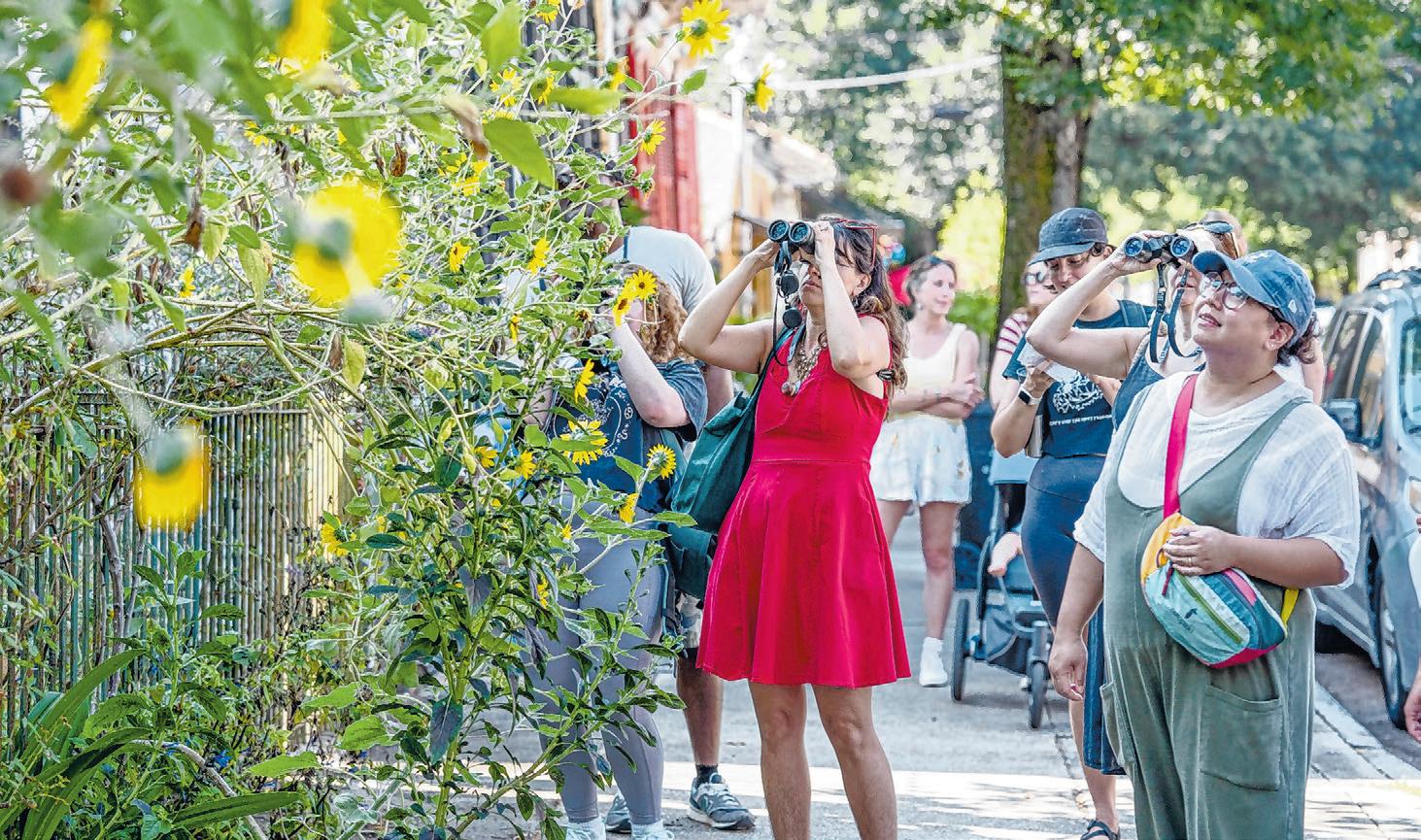
Helen Sierminski of New Orleans leads urban nature walks through the city Her partner told her about becoming a master naturalist. He had completed the program a few years earlier She was wait-listed for a year, but was able to start the classes when someone backed out in the fall of 2024.
“The challenging part about it is that we get a lot of information all at once. We have classes twice a month, and it’s an all-day class learning all the things. We don’t learn one thing at a time,” Sierminski said. Visiting specific sites for field study is also a major component of the program.
When Sierminski and her class visited sites during the program, she noted that different experts discussed multiple aspects of that environment, like lizards and birds in the area and what made the soil unique.
Sierminski started her own company which offers urban nature experiences She uses her master naturalist training professionally as a guide, identifying different species and sharing how the ecosys-
tems work with clients.
She appreciates the ecosystem context the master naturalist certification gave her “Understanding healthy ecosystems helps us to get along with nature,” she said, “like in Louisiana where you have coastal erosion and a lot of environmental factors.”
Around the state
Louisiana Master Naturalists of Greater Baton Rouge member Colette Dean was instrumental in launching the Discover Nature series in 2016 at the LSU Hilltop Arboretum.
The series is one example of how master naturalists give back to their communities.
He emphasized that chapters are more than learning about wildlife. The members develop a community, and chapters share presenters and enjoy co-hosting field trips with other chapters. LMNA hosts an annual state gathering, Rendezvous, to meet one another and share knowledge and ideas.
“Louisiana chapters may differ in their content and approach, but the coordination will ensure consistency in quality and focus,” Thomas said.
Louisiana Master Naturalist Greater New Orleans even has a resource center Thomas affectionately calls “the clubhouse” that serves as a meeting and teaching place. They have a library of about 1,200 nature books and animal artifacts they use in their workshops. They even have study groups on such subjects as mushrooms or dragonflies.
“We meet a lot of interesting people. We have regular membership meetings and gatherings in parks for mini workshops,” Thomas said. “There’s a lot more to it than just having workshops and learning about nature, it’s a big social occasion.”
To learn more about joining a Louisiana Master Naturalist Association, visit www. louisianamasternaturalist.org/chapters. html To view the association’s presentations, visit https://tinyurl.com/yfp9aywz Email Joy Holden at joy.holden@ theadvocate.com.
As we approach the holidays, I’ve thought a lot about people who are lonely Peeling back the layers of what it takes to build community might just be the antidote to loneliness.
So, let’s work backwards:
If the epidemic of loneliness is the outside layer, building community would be its undoing, which begs the question: How does one build community?
Doing so is not a “just add water” sort of equation. Community grows in layers, from the inside out. It’s a tangled web of genuine relationships — and it’s messy
As therapist Amanda E. White points out, community is not frictionless — and I love that phrasing. White is executive director of Therapy for Women in Philadelphia She says that being in a community sometimes means getting annoyed because that one friend sends too many texts, or you have to listen when you don’t feel like it to the friend who tells you way too much. Maybe there are limits to your patience, but being part of a community might even mean maintaining the relationship with the friend who loudly smacks at the table. The point is being in a community is messy, sometimes difficult — and it comes with being in relationships at a variety of stages.
But genuine relationships are at the heart of every strong community
The tricky part these days, especially for people in younger generations, is finding the other folks to build relationships with. To meet people, I’m a big fan of joining organizations that focus on shared values, activities and interests — churches come to mind, but if church isn’t one’s cup of tea, perhaps a tennis league or a trivia team would work.
The secret to finding new friends is the same advice that my photographer friend gave me to take better photographs: move your feet. Get up and get out. Find the clubs. Go to the meetings. Stay a while.
Show up — then show up again.
Sometimes doing so takes courage
Once a pool of potential friends have been found, what’s the next step?
It’s having meaningful conversations the kind that move beyond small talk and help us understand each other to discover how our weirds overlap. As a longtime journalist who has interviewed thousands of people, my advice on this is easy — ask questions. If you sincerely ask good and thoughtful questions and listen to the answers, you’ll be amazed at what people will tell you.
Let’s dissect that last sentence again:
Sincerely ask: From my vantage point, I see “sincerity” as the key to almost everything when it comes to relationships. Being sincere means knowing who you are and following through being true to yourself instead of following whatever it is you saw someone else do and thought was cool once upon a time.
To practice sincerity, pay attention to what makes your heart sing — and follow that song.
Thoughtful questions: Don’t go with the obvious. Think about what that person just said and allow yourself room to wonder Then be bold enough to ask the question. Yes, there’s a line not to cross to avoid the creepy territory, but there’s a lot of room before you get there
Listen. The number of times I hear other people ask a question that a person just answered is high and, in full disclosure, I have done it myself too Nearly every time I do, I’m focusing on what my reply will be as opposed to simply listening and taking it in.
People will tell you. They’ll tell you about the time they got into the Peace Corps to go to Albania but ended up in Honduras instead. They’ll tell you about their secret pregnancy They’ll tell you about driving across two states to buy a car for their ex-wife because it looked like a specific Pokémon.
People will tell you amazing things.
In all these small exchanges questions asked, stories shared, kindnesses shared — community starts to take shape. It doesn’t arrive all at once
Community is built layer by layer — through sincerity, curiosity, courage and persistence.
Email Jan Risher at jan.risher@ theadvocate.com.
Building faces disrepair; roof was last replaced over 100 years ago
BY LAUREN CHERAMIE Staff writer
Spencer Chauvin is president of Friends of St. Mary’s Chapel,
a 501(c)(3) corporation that is dedicated to raising funds for the preservation of the chapel in Convent, in St. James Parish. The organization is currently leasing the church from the Catholic Diocese of Baton Rouge. While the chapel does not have regular mass, it does host special events.
St. Mary on the River (circa 1849) was the name of the small chapel long before it was referred to in its current English name, St Mary’s. The first St. Mary’s was completed on Oct. 2, 1849. The current and second St. Mary’s Chapel (circa 1875) building is the one standing today on River Road in Convent. The rectory was moved in 1984, but before it was a rectory it was a residence As of today, it is the oldest standing Acadian cottage in Louisiana, dating back prior to 1784. The building was placed on the Louisiana Trust for Historic Preservation’s Most Endangered List for 2021, and the organization is working to get it registered on the National Register of Historic Places. If successful, Chauvin has plans to preserve the original siding, interior and replace the steeple to reflect the original structure that was destroyed by Hurricane Betsy in 1965. What is the current condition of the chapel? It’s in disrepair It’s in need of a roof. The last time it had a roof was 1923, and it’s an asbestos slate roof. It was meant to be a 100-year roof, and I think we’ve squeezed every 100 years out of it. We formed the nonprofit to start
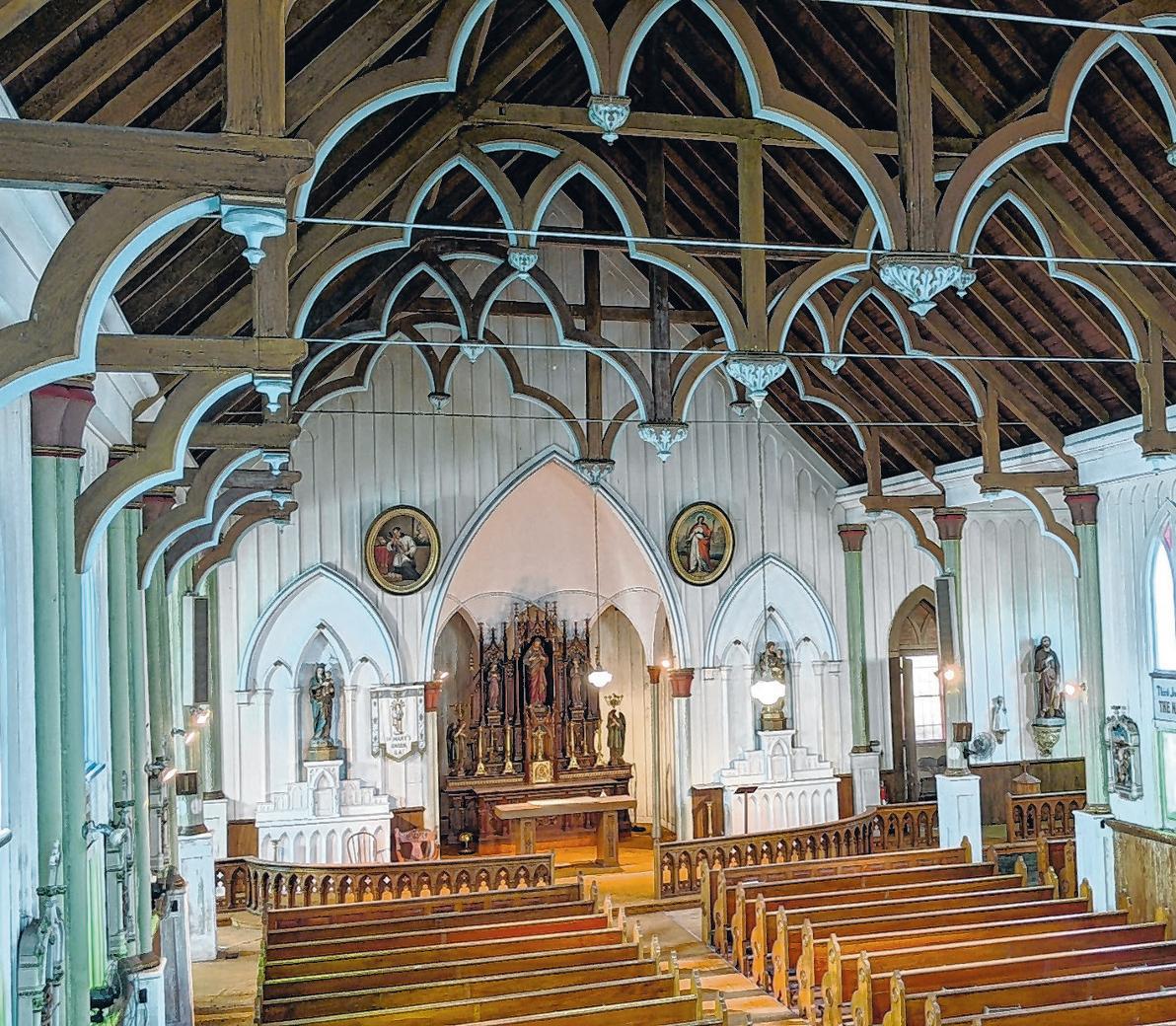
repairs.
St. Mary’s Chapel is a mission of St. Michael the Archangel Catholic Church, and I joined the pastoral council of St. Michael’s with St. Mary’s in mind, trying to make sure that it got the attention it needed.
What role did St. Mary’s Chapel play in the community?
St Michael the Archangel was built in the early 1800s People lived along the river, and it was very difficult for people to travel there, because it serves such a large area. St. Mary’s is about 13 miles from St. Michael’s, so parishioners who didn’t have a horse and buggy had to walk.
There’s stories of people who used to walk barefoot on the levee because they didn’t want to ruin their church shoes. So when they got to church they put on their shoes.
The priest wanted to build two chapels east and west of St. Mi-
chael’s so that they could serve the people better In a Catholic Church, there’s a side chapel with Mary on the left and Joseph on the right. To commemorate that fact, the priest built St. Mary’s Chapel on the upriver side of St. Michael’s, and he built St. Joseph’s Chapel on the downriver side with St. Michael’s in the middle.
St. Joseph’s has become its own parish, but St. Mary’s never got out of being a mission of St. Michael’s.
What’s the next milestone in the restoration process for St. Mary’s?
We started with getting a new roof to protect it, because it’s leaking. Because it’s an asbestos slate roof, removing the roof actually costs more than putting on a new one.
So we started raising money, and we’ve raised $160,000 so far
We’re going to spend some money to try to beautify the church for now We’re going to repair the
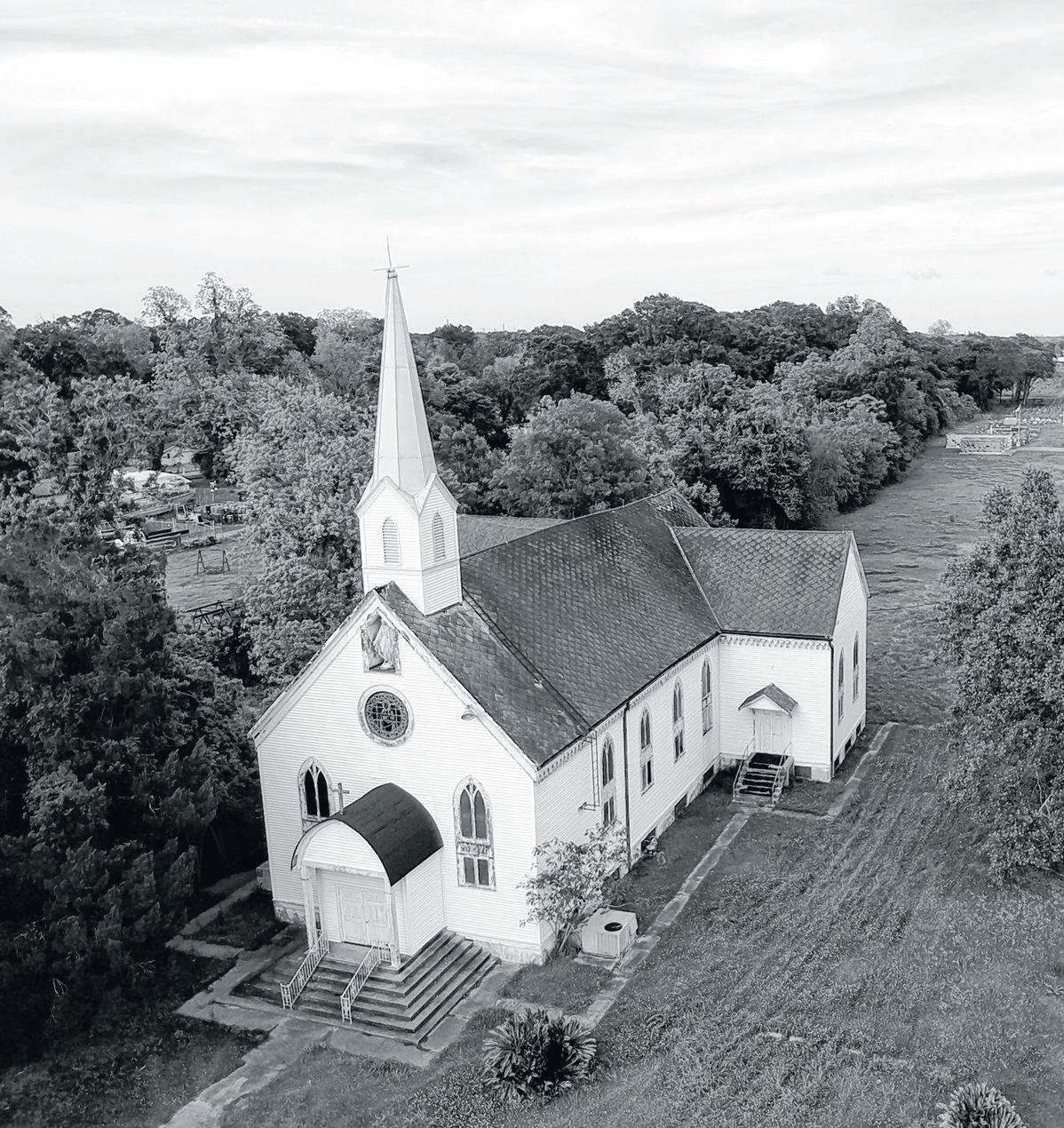
parts of the roof that are leaking, rip off the vinyl siding and paint the front.
What does this project teach about the importance of preserving small, sacred spaces in rural Louisiana?
For preservation in general.
For me, it’s personal. My greatgreat-great-grandfather was one of the designers and builders of St. Mary’s. Living next to it helps because when I walk out the back door, it’s the first thing I see. It’s kind of knocking on my back door like, “Hey I’m here. I need some help.”
The out-of-sight, out-of-mind mentality is not an excuse for me. This church was done in the
Gothic Revival style, which was popular in the mid-1800s. Most Gothic Revival churches are masonry construction. They were built to last, and they were built with quite large budgets. Here, they have a limited budget, so they built it out of wood. You don’t see many of those left, because they’re not nearly as strong and built to last as long.
St. Mary’s Chapel could be one of the last timber frame Gothic Revival churches in the South. They usually rot, burn or hurricanes knock them over and this one’s still standing It’s cool to save something that’s one of a kind.





Groups ease the burden of caregivers, fight loneliness
BY MARGARET DeLANEY Staff writer
Once a month, every third Wednesday afternoon in a six-story building down Jefferson Highway, a room is filled with chairs arranged in a circle and women holding white Styrofoam cups of warm tea and coffee. In this space, women share the most vulnerable parts of their lives: their journey through cancer Woman’s Hospital, at 100 Woman’s Way, Baton Rouge, began these “Reali-Tea Talks” this year to help patients in any phase of cancer treatment — from diagnosis to survivorship — navigate their lives. They talk about work They talk about their children. They talk about their symptoms. They talk about their new realities. They talk about their treatments. They talk about the beauties of life.
They talk about anything at all.
Support groups like this are popping up all around Louisiana in an effort to brace and uplift the thousands of people each year who fight, battle and continue to live after cancer In Louisiana, there have been 29,980 estimated new cases of cancer and 9,340 estimated deaths by cancer in the state in 2025 so far, according to the American Cancer Society Each of those patients has their own stories, their own families to think about and their own lives to lead.
“We wanted our patients to have a place to vent, to talk about everything and nothing at all,” said Shelisa Cager, the manager of the support group at Woman’s Hospital.
Each Reali-Tea Talk is led by an oncology nurse navi-
gator or a social worker who help to guide the group in conversation, giving the way for all members to talk about what’s weighing on them.
“Some patients don’t really like to talk all that much,” Cager said. “But they like to listen — and know that there are people experiencing the same as them.”
Some cancer support groups are led by community members, others like the Tea Talks are hosted by medical professionals. Both can have great benefits on health outcomes after surviving cancer Research from the National Cancer Institute shows that joining a support group improves both quality of life and survival.
Cancer support groups can n help patients feel better more hopeful and not so alone.
n give patients a chance to talk about feelings and work through them.
n help patients deal with practical problems, such as problems at work or school.
n help patients cope with side effects of treatment
These support groups can also ease the burdens of caregivers and family members.
Andre Moreau recognized the importance of support groups for male-centered cancers as well.
“I’m a reluctant new member of the advocacy space,” he said.
Moreau noted that talking to family members sometimes isn’t enough to ease the hardships of surviving and fighting cancer
“You don’t want to feel like a burden to them with every thought in your head,” Moreau said. “They already do so much for us.”
Moreau was a hospital administrator for 20 years in Lafayette when his father died unexpectedly of prostate cancer He then began working in his mother’s beauty salon a business run in the family for over 40 years.
Then, his mother was diagnosed with pancreatic
cancer While he was looking at possible buyers for his family business, Moreau got unexpected news from his annual blood test. He had low levels of a prostate-specific antigen, or PSA, a key indicator for prostate cancer
He went to the urologist to check his levels. He got an MRI. It was real — Moreau had prostate cancer
“I was in the middle of the most stressful time of my life,” Moreau said “I couldn’t get out of there fast enough, because it’s the last thing I wanted to deal with.”
Like many men faced with prostate cancer, Moreau had to make a difficult choice between surgical or radiation treatment. He chose radiation.
Fatigue set in. The bone loss. The emotional toll.
“I could go back to bed at any moment, and I just woke up,” Moreau said.
At the same time, his neighbor of 15 years was diagnosed with prostate cancer as well. They raised their children together at the same high school, and now they would be battling cancer together, too.
During his nine weeks of radiation and two years of hormone deprivation, Moreau spoke to countless men, women and doctors who have had family or friends who fought prostate cancer
“The whole time I was thinking how difficult this process must be for people who don’t have a lot of resources or a network of people to tap into,” Moreau said. “Therefore, I made a commitment to try to raise awareness in our community to try to help others.
It wasn’t until Moreau was at a fishing tournament in Lafayette that he realized just how many men were impacted by prostate cancer, and how he could help.
“I ran into a hospital administrator from Our Lady of Lourdes, and we chatted about a possible group,”
Moreau said. “But I never thought I was the guy to run it.”
The prostate cancer support group started with five people — just a few men Moreau knew who had prostate cancer Over the last year they’ve expanded to 20, sometimes 30, men in one meeting.
After pills, hormonal therapies and visiting multiple doctors for second opinions,
“We just help each other out and say, ‘Hey, have you thought of this?,’ or ‘This might help with your hot flashes,’ or ‘This is what you should expect with your hormone therapy,’” Moreau said. “We encourage each other And we cry together, too.”

Southern U transforma expand in the Co in
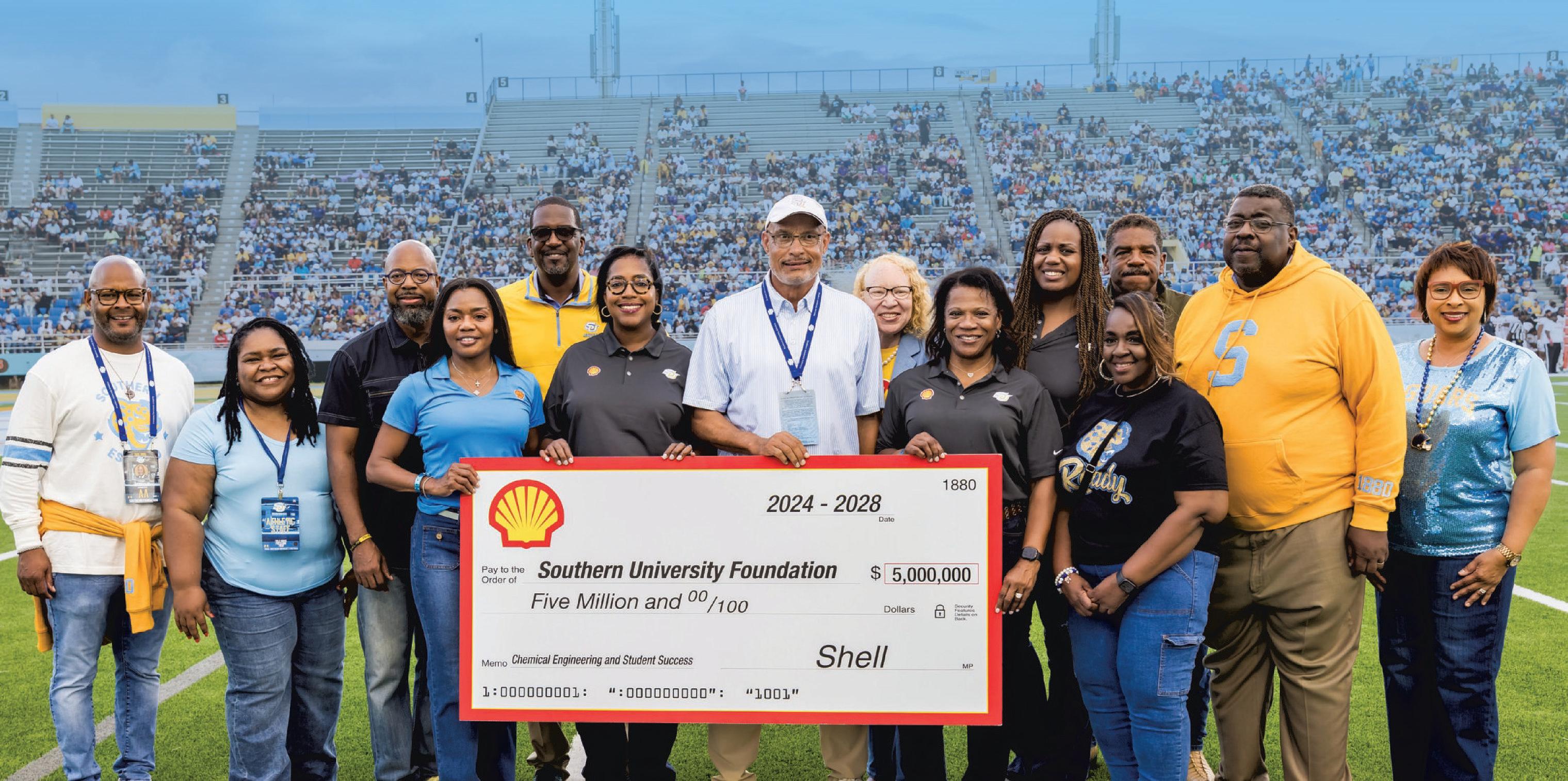
Universityand A&MCollegehas receiveda ative$5million investment from Shellto itiativesin theCollegeofBusiness and ollegeofSciences and Engineering. This nvestment directlysupports theSouthern UniversitySystem’sStrategic Pillars, includingStudent Success and Academic Excellence


“Withthis investmentinengineering education and studentsuccess,weare further strengthening Shell’spartnership with SouthernUniversityand empowering thenextgeneration of innovators and leaders. We can’t wait to see howtheywill shape thefutureofenergy and technologyfor our industryand theworld.”
EMMALEWIS Executive Vice President,Shell Chemicals