If you would no longer like to
If you would no longer like to
Women’s organization has shaped Baton Rouge for 90 years
BY JOY HOLDEN Staff writer
A group of Baton Rouge women is a testament to the power that comes with working together — despite the international organization folding in 2020 and the national organization closing in 2024
The Baton Rouge women carry on, along with other local clubs dotting the globe. They pool their time, talents and resources to help others. They have been doing so since June 1935, when 17 women gathered together at Anderson’s Tea Room on Fourth Street to do something good for their city
During the Great Depression, people were in need. Professional women of the city, led by respected attorney Frances L. Landry, started Quota Baton Rouge, a 90-year-old club founded on the mission of leadership and service.
“Those were challenging times,” current Quota Baton Rouge president Laurie Allen said at the 90th anniversary celebration, “and yet these women got together and they said, ‘We cannot save the world, but we can do something in our small part of the universe to lend a helping hand, to bring hope, to bring comfort, and to some sunshine, where it’s desperately needed.’
The long history of service continues to sustain the club’s work
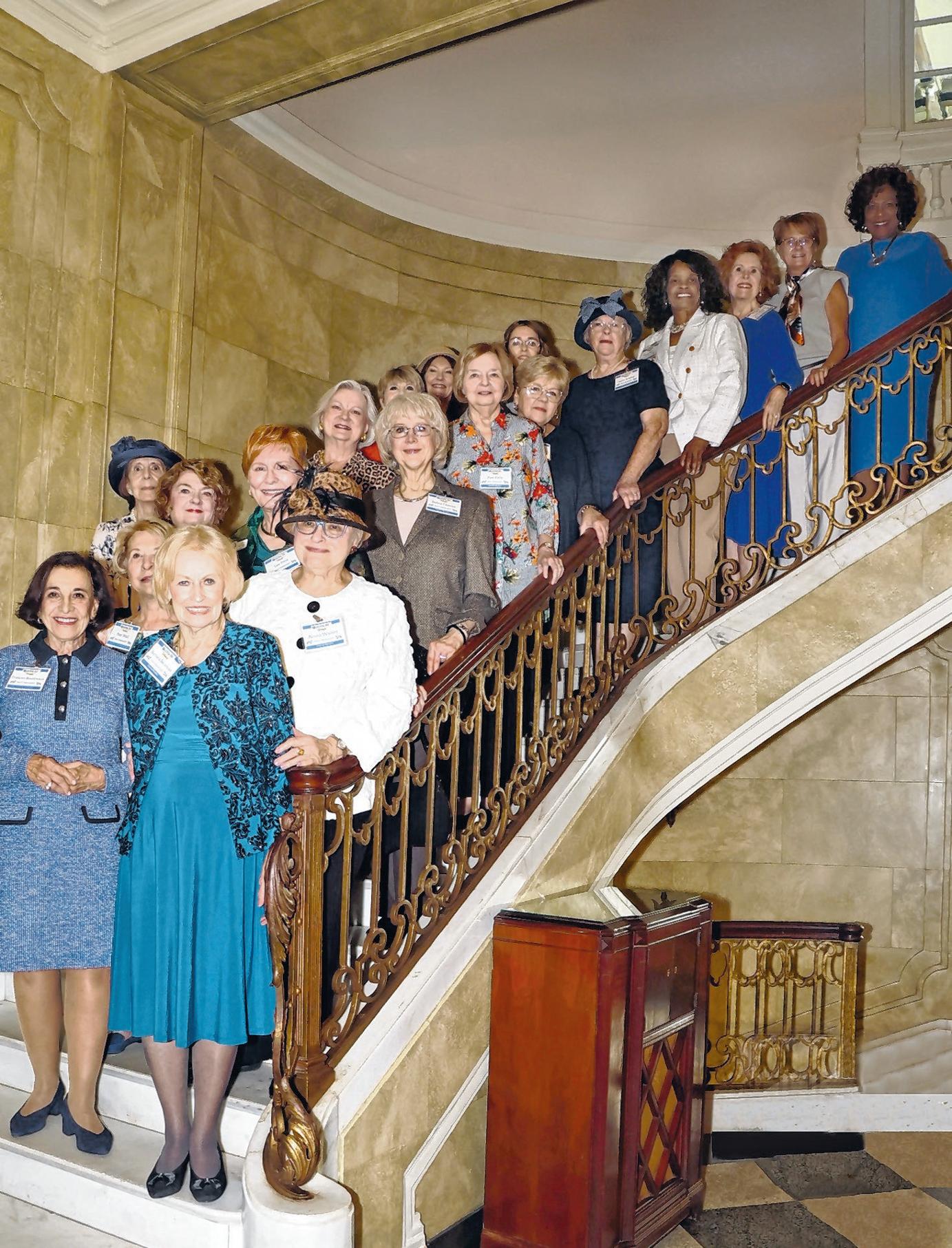
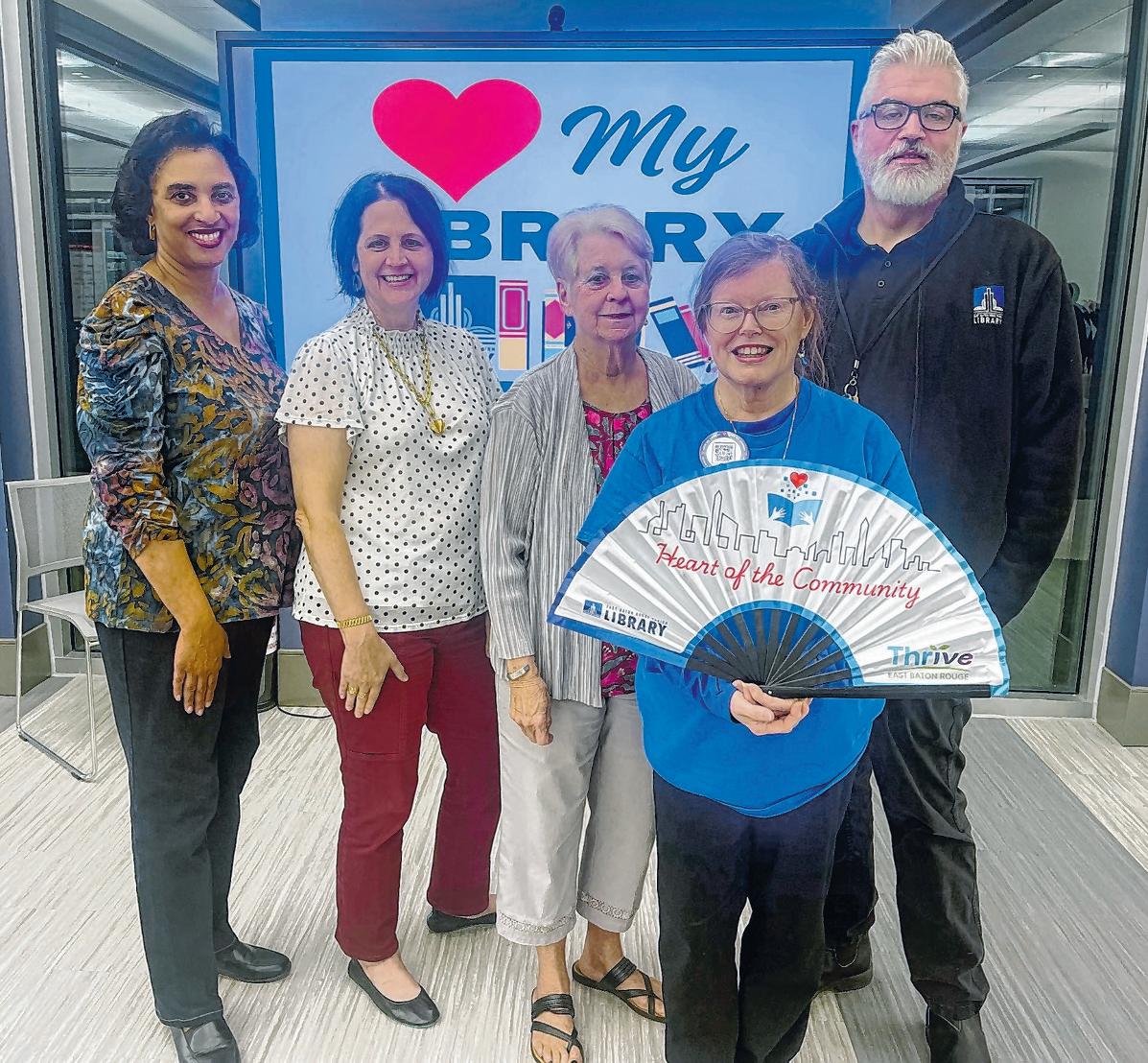
On Oct. 12, Quota Baton Rouge celebrated the organization’s 90th birthday and honored 24 past presidents at the Old Governor’s Mansion. The theme was the 1930s, which was represented in holding the event at the stately landmark built in 1930.
“While we may dress differently and the things and activities that we do have changed and evolved,” Allen said, “we are still built on the foundation of selflessness, service, friendship and sharing. So that’s what guides us, and is the foundation of a bedrock that has sustained us for nine decades.”
Quota Baton Rouge’s membership is comprised of accomplished professional women who are leaders in their respective fields. Though working and leading in diverse industries, Quotarians the name for Quota members share a commitment to service and purpose
After refreshments and a jazz serenade, Allen spoke about the club’s achievements and introduced Bobbie Carey, a member of Quota Baton Rouge since 1979, the owner and CEO of the Communication Institute, former Quota Baton Rouge president and former Quota International president
‘We share’ Nearly 16 years before Quota Baton Rouge began, Wanda Frey Joiner founded Quota Club International in Buffalo, New York. Joiner started the international service organization as a response to women’s involvement in World War I and to popular all-men’s clubs.
While Quota International was still functioning, the Baton Rouge chapter was the only club in the world to have three of its presidents become international presidents.
The club’s guiding motto is “We share,” and the name is derived from the Latin word, quota, which signified a portion or a share.
Over the years, Quota has held firm to the commitment to serve women, children, and people who are Deaf, hard of hearing and speech-impaired. Quota’s early service projects sponsored Brownie and Girl Scout troops.
In 1939, Quota Baton Rouge partnered with the East Baton Rouge School Board and the federal government to establish the state’s first National Youth Administration clerical unit for girls. During World War II, Quota Baton Rouge created the first nursery school for defense workers’ children. Quota also helped establish YWCA in Baton Rouge. By the 1950s, Quota had expanded its reach with programs such as Aid to the Hard of Hearing, youth mentoring and emergency assistance funds for mothers and children.
The long-running fundraiser Open Door Tour of Baton Rouge homes, started in 1951 and lasted until 2006. Funds raised helped start the Baton Rouge Speech and Hearing Foundation, which is now the Emerge Center Another event that raised money for Emerge Center
ä See QUOTA, page 2G
A few weeks ago, in the rubble of our house fire, I found the soggy quilt my grandmother made from scraps of clothes she’d sewn for me throughout my childhood.
My grandmother was a seamstress.
She made everything from wedding dresses with hundreds of handsewn pearls on long, frilly trains, to cheerleader uniforms with complicated red, white and blue pleats — and, on a more personal level, the majority of my dress clothes while I was growing up.
Some of my most delightful childhood memories happened in fabric stores, where I loved mixing prints and textures — and enjoy it still. For her, fabric stores were social outings. She would talk to the women who worked there, including a woman we called “Aunt Beatty,” though I never understood how she was related to us. Meanwhile, I would wander the aisles, imagining the wonders we could make.
In a world that didn’t have many artistic outlets, fabric stores were where my imagination could test its boundaries.
To my grandmother’s credit, she would listen as I described the dress or outfit I saw and could usually see it herself and she could take it one step further: She could make it.
She had expensive taste and thrived on a pauper’s budget. She often reused zippers and saved every button that ever came her way She repurposed clothing in ways that would wow “Project Runway” judges. I loved watching her create beautiful things.
Working with my grandmother on an outfit took a special touch. She thrived on finding clever shortcuts and was a master at making do. She grew up during the Depression. Frugality was baked deep into her being. She loved to save fabric, even when there was plenty
Her thriftiness led to some legendary moments — like Christmas of 1989, when she gave me a cute organizer wallet that included a calendar It was from 1987.
Marie Kondo would make my grandmother’s head spin. I can’t imagine the level of absurdity she would attach to the idea of only keeping things that “spark joy.” My grandmother saved every scrap of fabric she ever cut, which often led to beautiful things like the quilt she gave me when I graduated from high school, made from the clothes she’d sewn for me since I was a baby I found it in the rubble after the fire — soggy, smoky, filthy, but, in her words, “with a good washing, it will be as good as new.”
She knew joy often comes later pieced together, one scrap at a time She saw the potential in leftovers and pieces others discarded. These days, she’d be called a sustainability expert. Back then, we tried to keep her over-the-top frugality on the down-low
Working with her on a sewing project required patience — and veto power She always had multiple, sometimes ridiculous, ideas for fixing problems. But she taught me there was rarely just one way to make something work. That lesson has stayed with me more than any stitch or seam.
In the weeks since our house fire, I’ve thought about her constantly Like me, she would’ve been sick over the waste of it all — the piles of things that couldn’t be salvaged, the ruined family photos. But she also would’ve found joy in the challenge of rebuilding, of finding creative ways to make things “as good as new.” And I find myself doing the same —
Doula-turned-nonprofit founder reaches out to moms in need
BY LAUREN CHERAMIE Staff writer
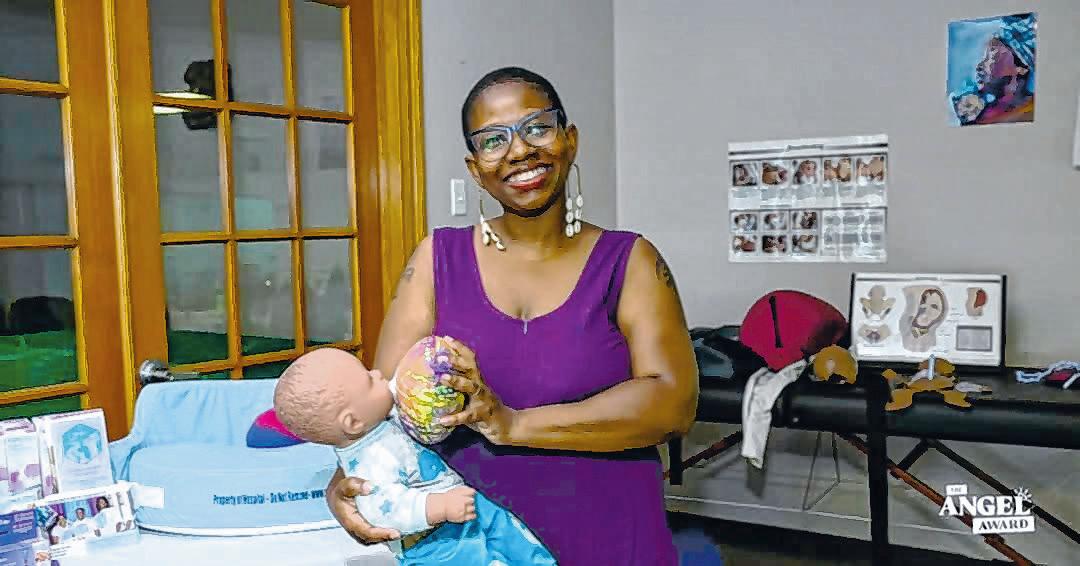
Devin Bailey-Nicholas, affectionately known as Divine, is a charter member of the Afro-American Historical and Genealogical SocietyLouisiana Chapter She is a cultural worker with a focus on Black folk healing and Black midwives in the South. In 2012, Bailey-Nicholas founded Community Birth Companion, a nonprofit in St. Landry Parish.
Bailey-Nicholas serves as the executive director and works toward lowering infant and maternal mortality rates among low-income mothers through childbirth education, breastfeeding promotion and community doulas.
She is also a certified lactation counselor maternal-child community health worker, student-midwife and doula trainer. Currently, she’s the local ambassador for the National Perinatal Task Force and member of Healthy St. Landry She lives with her husband and five children in Opelousas.
This conversation was edited for length and clarity
How did you identify what gaps Community Birth Companion would focus on in maternal and infant health?
In 2012, I trained as a doula and at the time, the doula organization was called The International Center for Traditional Childbearing, based in Oregon. But they did a training in New Orleans, and one of our training sessions talked about disparities.
For America to be so technologically savvy, we had a lot of mothers and babies dying for things that could be prevented, no matter what cultural background someone had.
When we saw the statistics we were seeing that the mortality and morbidity rates in Black mothers and Black babies were three to four times higher than our White
Continued from page 1G
counterparts. The 2024 March of Dimes Report Card gave Louisiana an “F” for preterm birth. The rates of those babies among communities of color is very dismal
We know that preterm babies are often born too small, and they have a failure to thrive a lot of the time.
It’s happening in all communities, but sometimes it’s happening more within different cultures. That really touched me and made me want to dig in more to see how I could help in my local community
How has this work changed your view on motherhood and your community?
I had my second child by the time I became a doula.
When I really dug into what was happening in the maternal health world, it made me understand how much support and education our families needed to navigate the maternal health system really understanding what their medical providers are telling them, what to expect during prenatal care and how to best communicate their needs.
I understood how doulas can step in, by teaching grandmas, boyfriends and husbands how to be the best support systems as they’re going through this journey of parenthood.
How does Community Birth Companion build trust within the community?
When we were first starting, and we still do this, we went to community baby showers, had a table and communicated with the parents.
We’re asking questions like, “Who’s your doctor? Where are you delivering?” We would educate right then and there, and then pass out flyers for our childbirth education classes and breastfeeding support groups, because that’s open to both pregnant and postpartum moms
That was the way, and still is the way, we continue to build bridges.
I became a community liaison with Opelousas General Hospital when they were first establishing their Baby Friendly initiative. That was a way I was able to talk with the hospital and understand the needs of the mothers in the com-
and Our Lady of the Lake Children’s Hospital was the “Eyes on the Ties” 2019 gala that featured a live auction of celebrity ties modeled by community leaders in a men’s fashion show
In the 1960s, Quota was involved in bringing Margaret Neely to Baton Rouge from Canada, and she became the first director of the Baton Rouge Speech and Hearing Foundation, which is now Emerge.
Other prominent examples of major giving and sharing that Quota Baton Rouge has done through the years include:
n Co-founding what is now The Emerge Center
n Establishing Girls Hope of Baton Rouge
n Pioneering programs for deaf and
hard-of-hearing
munity Then we had folks who wanted to support and volunteer and become doulas. When they call, we show up. What we don’t know, we connect to resources that we share, and I believe that’s how we maintain our trust in the community
On a policy level, what changes need to be made to make a difference in maternal health outcomes in Louisiana?
We’ve had some positive changes. Medicaid now covers doulas, even private insurance is reimbursing doulas. That was an item that a lot of maternal health advocates were pushing for because we don’t want doulas to be a luxury that only certain people can get. We need to educate our moms that, if they’re low risk, there is an option in Louisiana that they can have a midwife and birth at the birth center or at home. What makes that safe is only when we all work together and breakdown
students at Louisiana State University
n Endowing a Top Scholar Program at Louisiana State University with a grant of $100,000.
n Funding construction programs at Woman’s Hospital, Mary Byrd Perkins Cancer Center and Our Lady of the Lake Children’s Hospital.
n Providing amplification equipment to school classrooms and the Performing Arts Center
n Providing infant hearing testing equipment to hospitals and encouraged the program internationally
n Funding for Louisiana Public Broadcasting Children’s Programs.
“There’s not a hospital in Baton Rouge that hasn’t benefited from Quota,” Carey said.
When Carey was Quota International president, she initiated the Universal Hear-
those silos. We’re moving in the right direction, but we can’t put the weight just on doulas, because at the end of the day, they’re not medical providers We want to continue to educate our doctors to support mothers and have the best outcomes possible. And, also, just listen to moms. When we sit down and really listen to their concerns, whether they’ve had a vaginal birth or cesarean section, they want to be listened to. They want to feel like they’ve had a part in the care they received. They want to know that they were able to give educated consent.
But we can’t do that when we’re rushing to the next person. We can’t keep treating people like numbers.
From your experience working with families, how are Black mothers treated compared to White mothers? In our state, and even nationally, Black moms and babies die at three times the rate of our White
ing Screening program, which encouraged Quota Clubs to fund the new technology for hearing screening for infants. Through the international conference and Quota International taking on the charge, it was adopted around the world.
“Many people don’t really know our name, but we know our name, and we know the impact that we’ve had over many, many years,” said Carey
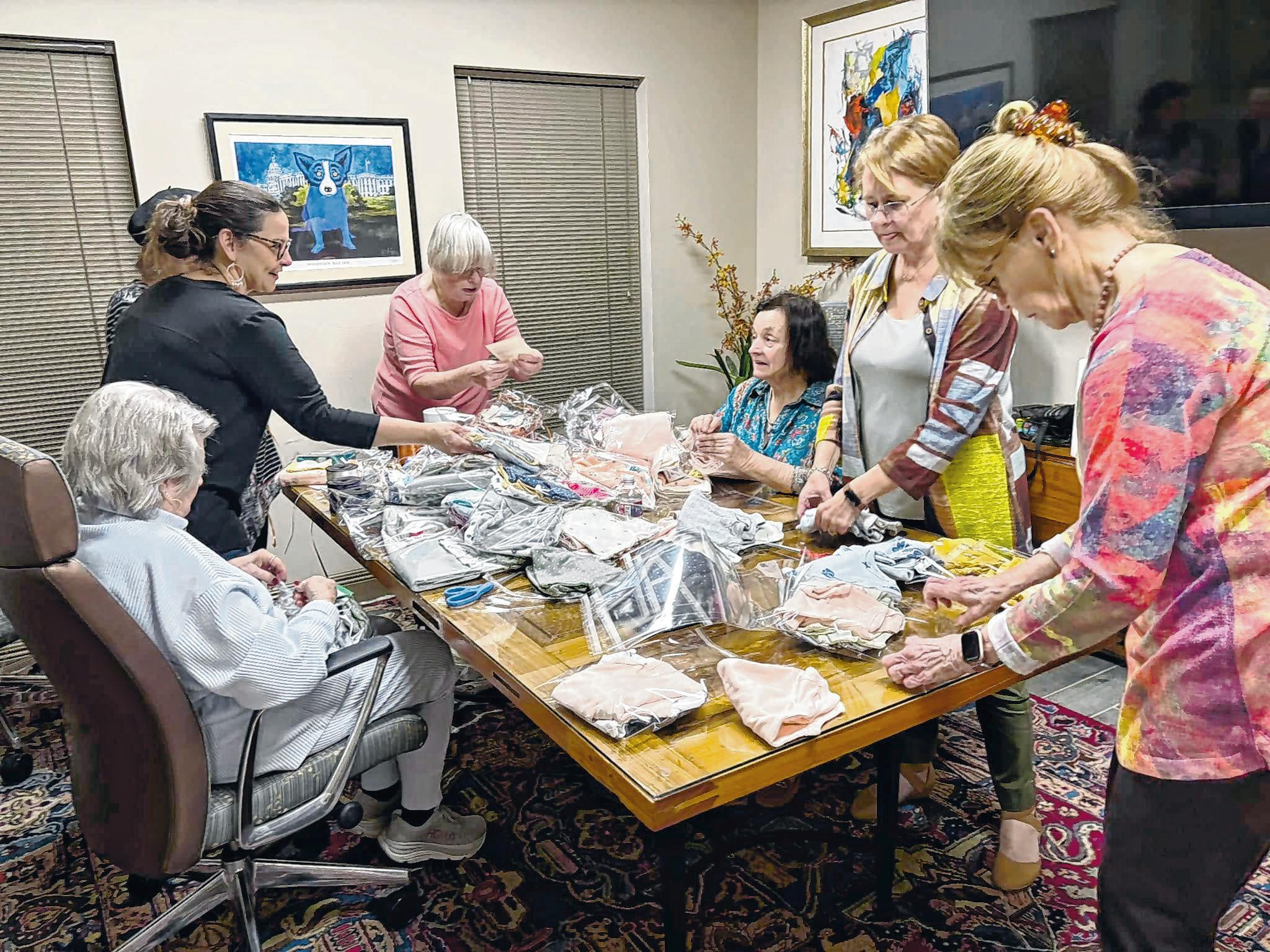
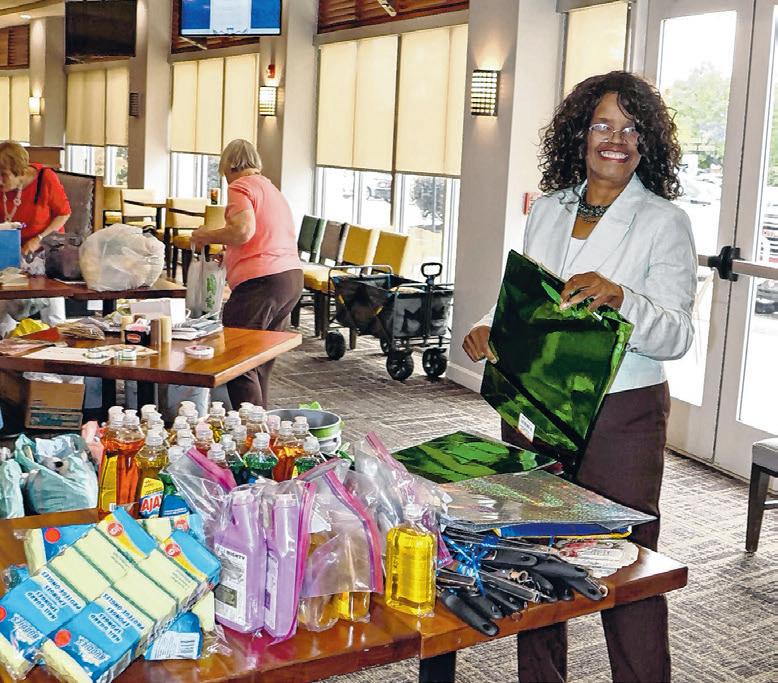
Current Quota projects include sponsoring Magnolia Woods Elementary and its STEM program, helping with flooring repairs in the Louisiana School for the Deaf library, supporting CASA through the Stars for a Cause benefit, putting together 90 “buckets of love” full of household items for service groups and 90 “starter kits” full of baby essentials for new mothers.
Email Joy Holden at joy.holden@ theadvocate.com.
counterparts. What’s so important is that it crosses socioeconomic boundaries.
A Black mom that has her master’s degree would still have a worse outcome, say, from a White mother that didn’t graduate high school. It’s a racial gap there, and we know that, for whatever reason, when Black mothers go into the hospital, they’re not listened to as much as others.
The hope is that all mothers, no matter where they come from, when they step into a Louisiana hospital, they feel heard, respected and that their concerns are taken into account so we can have those great outcomes those beautiful, bouncing babies who are going to be cared for and who are our future.
Email Lauren Cheramie at lauren.cheramie@theadvocate. com.
BY JOSIE ABUGOV Staff writer
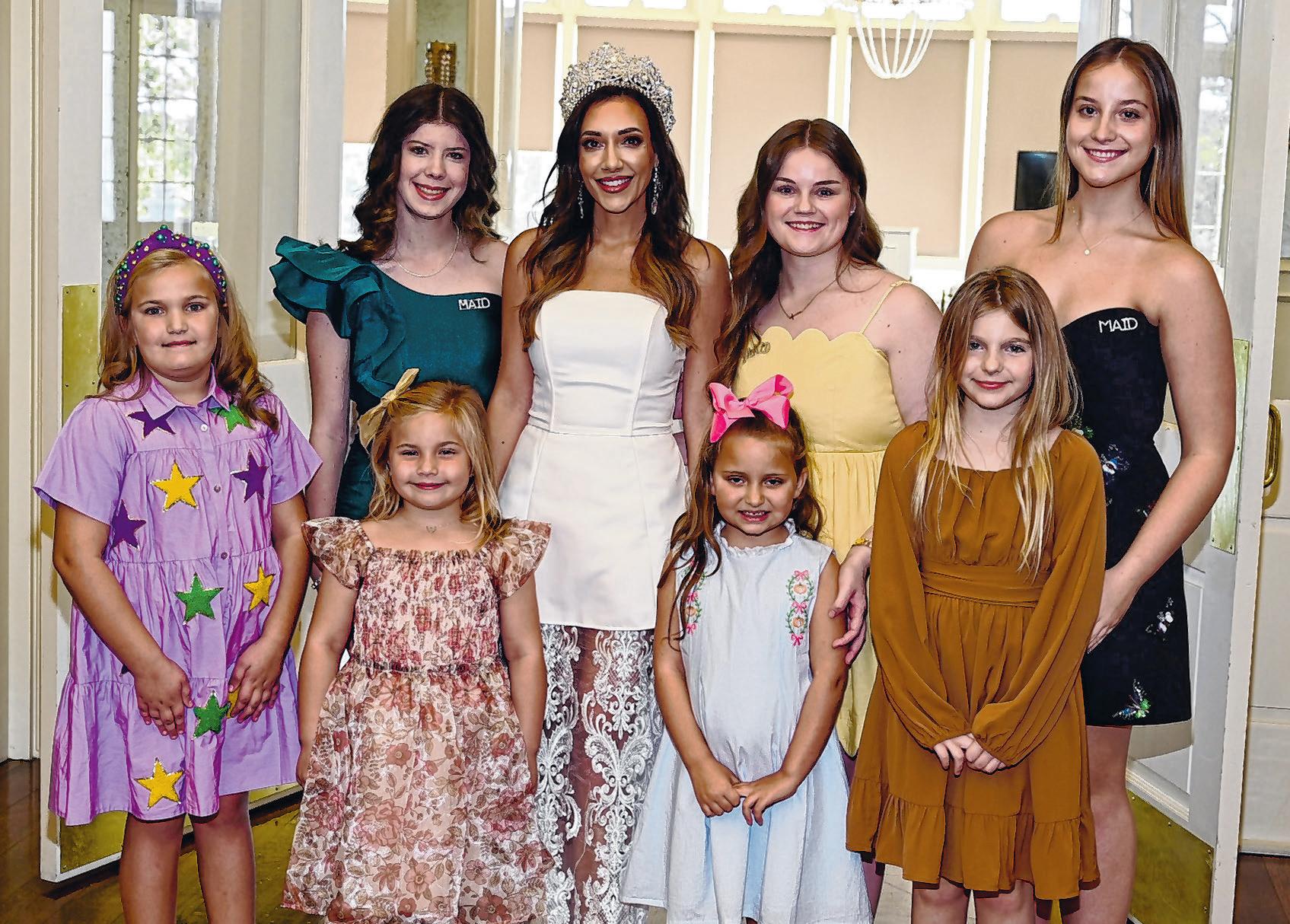
Naomi DeBerry decided she wanted to be a transplant surgeon on the day her father got a kidney transplant. When her father former columnist at The Times-Picayune Jarvis DeBerry, got sick, Naomi DeBerry didn’t understand what her father’s medical diagnosis entailed. The experience was a confusing whirlwind, she said, but she knew she wanted to make a difference.
“I want to be able to give back, and I want to help people in the way that those doctors were able to not only help my dad, but my mom and myself as well,” Naomi said.
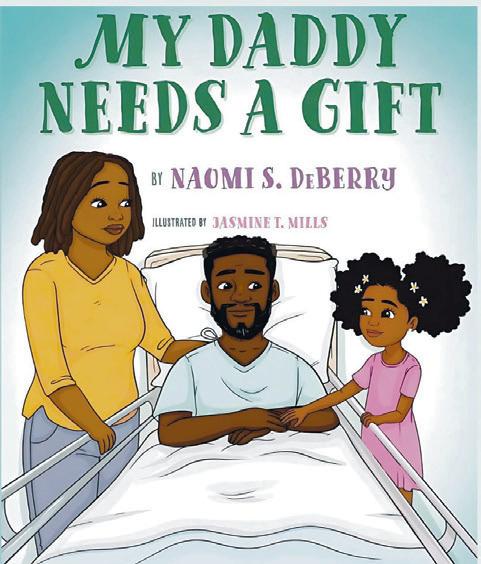
While Naomi, 12, works toward her dream of becoming a doctor, she’s already made an impact in other ways. Last year, she published a book, “My Daddy Needs a Gift,” that tells her story of a young girl spreading the word about organ transplantation and bringing her community together to support her dad
Her ongoing advocacy around organ transplantation landed her a spot this August on Time’s inaugural “Girls of the Year List,” featuring 10 girls around the world who “challenged stereotypes, tackled problems head-on and sought to build solutions from the ground up,” according to the magazine. DeBerry, a born and raised New Orleanian, is the only girl from the United States on the list.
“That selflessness of
thinking of others was really inspiring,” said Dayana Sarkisova, a senior editor at Time who selected DeBerry for the award. “Her putting together her book so others didn’t have to go through the process alone was really what made us want to include her in the list.
Promote organ advocacy
The other nine winners, all between the ages of 12 and 17, include a young pilot from Turkey pushing for gender equality in her country, a skateboarding Olympian from Japan and a Zimbabwean-New Zealander fantasy writer
The idea for Time’s newest list came in the months before Sarkisova welcomed her first daughter into the world and considered the qualities she wanted her child to one day carry: bravery, intelligence and kindness. The award is sponsored by Lego.
“Even though I’m being honored, what I really want to do is promote organ advocacy and organ awareness,” Naomi said.
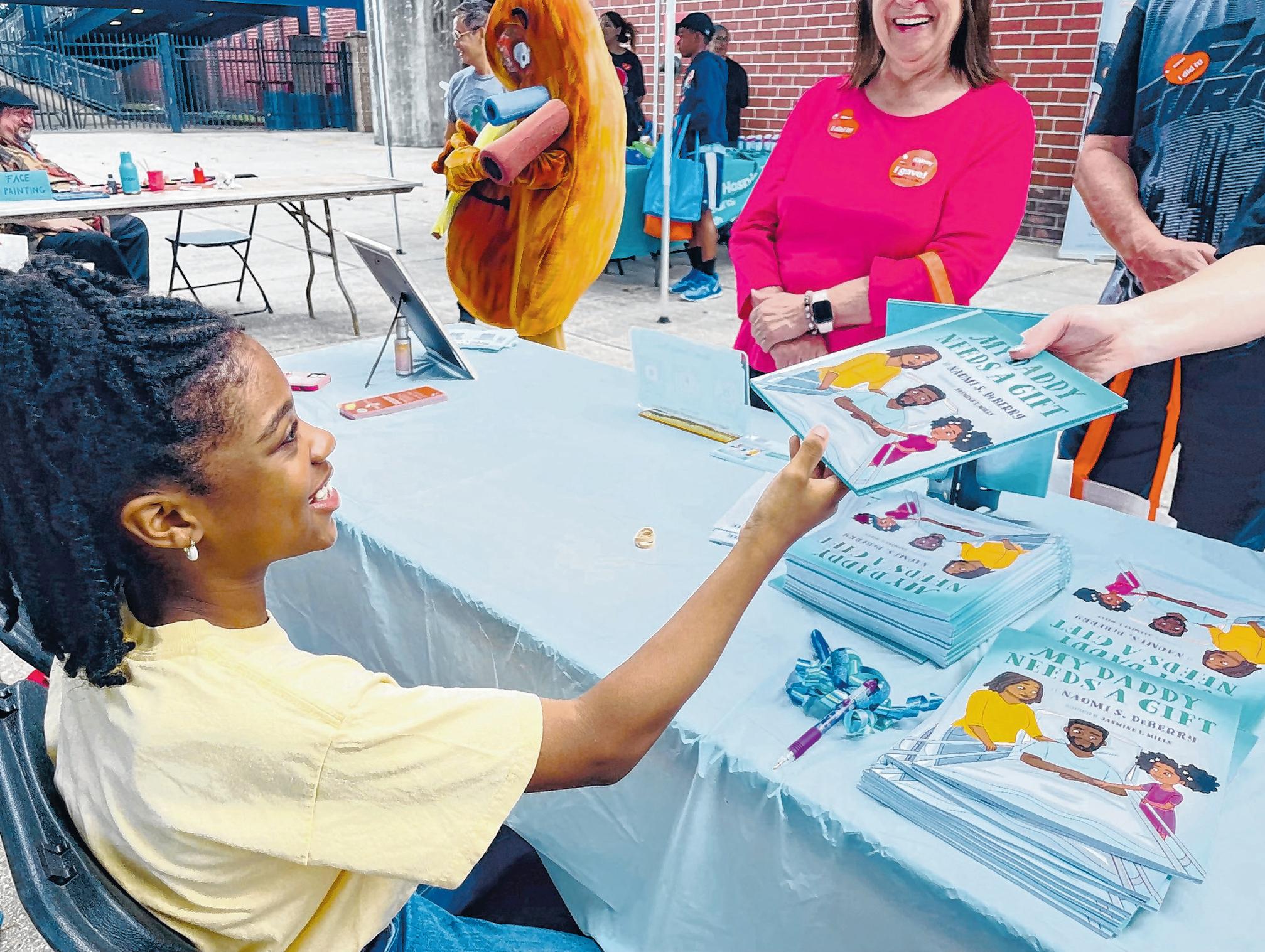
Her ongoing advocacy keeps Naomi busy. She’s been featured on “The Tamron Hall Show” multiple times most recently in April. Over the summer, she attended a medical and science program at the University of CaliforniaBerkeley where she was one of the few kids who didn’t get too squeamish in a lung dissection activity.
In September, Naomi spoke on a youth panel at the Association for Multicultural Affairs in Transplantation, alongside a boy who received a heart transplant. Disparities in needs
Her book may soon be reaching a wider audience Naomi’s mother, Kelly Har-
ris-DeBerry, said there’s been an interest in translating the story into other languages to reach more disadvantaged communities.
Helping address health disparities within Black and other minority communities is a key component of Naomi’s advocacy work.
According to the Louisiana Organ Procurement Agency, or LOPA, 68% of those in the state waiting for a kidney transplant are Black.
“When it comes to transplants, especially in African American communities, there is a lot of mistrust in these fields and a lot of misrepresentation, which is one of the reasons
why I do want to become a transplant surgeon,” Naomi said.
Cheryl McGee-Hills, a community educator at LOPA, was a navigator for the DeBerrys during their journey The educator championed Naomi’s plan to write her book when the story was in its infancy
With McGee-Hills’ support, LOPA sponsored the book, offering background information and donating funds for its publication.
“It’s a miracle, it’s a blessing to have a second chance in life,” McGee-Hills said. “(Naomi), as our next generation, she’s going to be that individual to help young as well as folks like me understand the need.”
‘Raised by New Orleans’
While Naomi is making strides as a pioneering individual, her advocacy is a reflection of the city that raised her, said her mother, Harris-DeBerry Watching the New Orleans community support her father helped inspire Naomi’s book and ongoing activism. Her cousin, Aisha DeBerry, even donated her kidney “She’s been raised by New Orleans, truly,” Harris-DeBerry said. “To me, this honor really reflects New Orleans.”
Email Josie Abugov at josie.abugov@theadvocate. com.