

BY MICHAELCASEY, GEOFF MULVIHILL and KIMBERLEE KRUESI Associated Press
BOSTON Twofederal judges ruled nearly simultaneously on Friday that PresidentDonald Trump’sadministration mustcon-
tinuetopay for SNAP,the nation’s biggest foodaid program, using emergency reservefunds during thegovernment shutdown.
The judgesinMassachusetts and RhodeIsland gave the administration leeway on whether to fund theprogram partially or in full for November.That also brings uncer-
ä Shutdown made people rethink what to hand outfor Halloween PAGE 4A
tainty about how things will unfold and will delay payments for many beneficiaries whose cards would normallyberecharged earlyin
themonth.
The U.S. Department of Agriculture planned to freezepaymentsto the SupplementalNutrition Assistance Program starting Saturday because it said it could no longer keep funding it due to the shutdown. The program serves about 1in8 Americans and is amajor
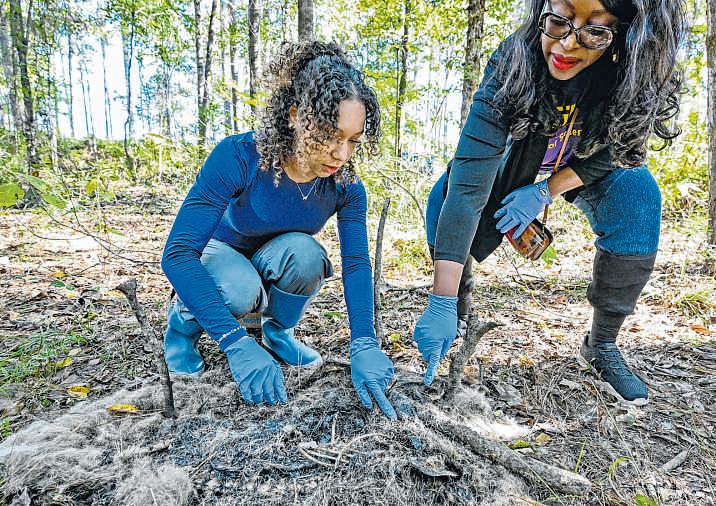
AlexaFigueroa, Ph.D.candidate, left,and RabiMusah, chemist and Patrick F. Taylor EndowedChair in EnvironmentalChemistryat LSU,check the development of maggots on Wednesdayinthe days-old corpse of acoyote that wasleft to decompose.
BYEMILY WOODRUFF Staff writer
By the time the coyote had been in the field in Clinton for six days, there was little left but teeth, fur and bone. But when Alexa Figueroa, an LSU doctoral student,liftedup the leathered skin, awrithingmass of maggots revealed another world, very much alive, beneath thesurface Onebug,a smallblack beetle with ridges along its back, caught the attention of entomologistStephen Baca. He identified it immediately as Oiceoptima inaequale,the ridged carrion beetle, fromhis encyclopedic
knowledgeofbugs. As it skitteredacrossbone, fur and achurning heap of bugs, Baca plucked it out and dropped it in a vial.It’satype of beetle they haven’t found before on the dozen or so animal carcasses they’ve set out to decompose at the BobR.Jones Idlewild ResearchStation,all part of aproject to document the bugs that start flocking to cadaverswithin minutes of death
“Oh,that’sfantastic,” said Rabi Musah,a chemist and professor at LSU, as she hovered over the
pieceofthe nation’s social safety net— anditcosts about$8billion per month nationally
U.S. Sen. Amy Klobuchar, aMinnesota Democrat andthe ranking member of the Senate Agriculture committee thatoverseesthe food aid program, said Friday’srulings from judges nominated to the bench by former President Barack
BY PATRICK SLOAN-TURNER Staff writer
Edwards’ plan will also determineEBR’s financial future Edwards

Abeetle found in the decayingremains of acoyote crawls on the hand of AlexaFigueroa.
ä See INSECT, page 6A STAFF PHOTOSByJAVIER GALLEGOS
BY EMILYWOODRUFF Staff writer
On ablack screen facing an operating room, Dr.Michael Bernard watched astorm of squiggly lines flashing acrossthe monitor: the electric chaos of apatient’sirregular heartbeat
The patient had atrial fibrillation, adisordered heart rhythm that can cause fatigue, shortness of breath and more serious problems over time. Years ago, treating it required open-chest surgery.Now, through avein in the leg, athin catheter about the size of aspaghettinoodle snakes towardthe heart, its tip burning tiny scars at adoctor’s command intotissue to block misfiring electrical signals and restore asteady beat.

This time, Bernard wasn’t relying on instinct alone. He was using an artificial intelligence-powered mapping systemdesignedtoread the heart’selectrical patterns and highlight the precise areas driving thearrhythmia —aprocess that once depended largely on educated guesswork.
ä See DOCTORS, page 7A

Eight months ago, dozens of Baton Rouge police officers lined the walls of apacked Metro Council chamber,their uniforms blending with asea of residents with “Love My Li br ar y” pinnedtotheir blue shirts. That tense standoff —police against library supporters —is now long gone, as Mayor-President Sid Edwards’ bold, first-year proposal known as Thrive hasevolvedsignificantly since February Now,voters will finally weigh in on ameasure that has shifted dramatically: Once aplantomovelibrary funds into the city’sgeneral fund forpoliceraises, it is nowa partialtax rededication of three agencies aimed at paying down debt and funding long-delayed infrastructure projects.
Theinitiative —which will appear on ballots as proposals 1, 2 and 3—has the support of nearly all council members, whosee it as acrucial measure to stop the cityparish from falling into amuch worse financial state.
“Weneed this,”saidDistrict2 council member Anthony Kenney “Weneed to ensure our general
ä See THRIVE, page 6A

Dr.Michael Bernard, section head of electrophysiology at Ochsner Health, monitors computers to helpwithsurgery. Artificialintelligence is helping with this procedure.


DEARBORN, Mich. — Multiple people who had been allegedly plotting a violent attack over the Halloween weekend were arrested Friday in Michigan, FBI Director Kash Patel said in a social media post. The law enforcement effort was focused on suburban Detroit Investigators believe the plot was inspired by Islamic State extremism and are investigating whether those in custody were potentially radicalized online, according to two people briefed on the investigation who could not publicly discuss details. They spoke to The Associated Press on condition of anonymity FBI and state police vehicles were in a neighborhood near Fordson High School in Dearborn. People wearing shirts marked FBI walked in and out of a house, including one person who collected paper bags and other items from an evidence truck.
The investigation involved discussion in an online chatroom involving at least some of the suspects who were taken into custody, people familiar with the investigation told AP The group had discussed carrying out an attack around Halloween, referring to “pumpkin day,” according to one of the people. The other person briefed on the investigation confirmed that there had been a “pumpkin” reference. It wasn’t immediately clear if the group had the means to carry out an attack, but the reference to Halloween prompted the FBI to make arrests Friday, one of the people said.
Combs transferred to different federal facility
Almost a year after being arrested in his federal sex crimes trial, Sean “Diddy” Combs is getting a change of scenery TMZ first reported.
In July, Combs was convicted on two prostitution-related charges and acquitted on the more serious charges of racketeering conspiracy and sex trafficking.
Combs will serve the remainder of his 50-month sentence at FCI Fort Dix, a minimum security facility in southern New Jersey, located on a massive Air Force base about 40 miles from Philadelphia. The Bureau of Prisons has updated his transfer on its website.
The rapper had been incarcerated at the notorious Metropolitan Detention Center in Brooklyn since his September 2024 arrest.
The federal correctional institution, which also houses accused United Healthcare CEO’s murderer Luigi Mangione, is notorious for its harsh conditions. Combs’ lawyers have been complaining for months about how unhappy their client was, even claiming he saw maggots in his food.
BY ALI SWENSON and NICHOLAS RICCARDI Associated Press
NEW YORK President Donald Trump’s request to add a documentary proof of citizenship requirement to the federal voter registration form cannot be enforced, a federal judge ruled Friday
U.S. District Judge Colleen Kollar-Kotelly in Washington, D.C., sided with Democratic and civil rights groups that sued the Trump administration over his executive order to overhaul U.S. elections. She ruled that the proof-of-citizenship directive is an unconstitutional violation of the separation of powers, dealing a blow to the administration and its allies who
have argued that such a mandate is necessary to restore public confidence that only Americans are voting in U.S. elections.
“Because our Constitution assigns responsibility for election regulation to the States and to Congress, this Court holds that the President lacks the authority to direct such changes,” Kollar-Kotelly wrote in her opinion.
She further emphasized that on matters related to setting qualifications for voting and regulating federal election procedures “the Constitution assigns no direct role to the President in either domain.”
Kollar-Kotelly echoed comments she made when she granted a preliminary injunction over the issue.
The ruling grants the plaintiffs a partial summary judgment that prohibits the proof-of-citizenship requirement from going into effect It says the U.S. Election Assistance Commission, which has been considering adding the re-
quirement to the federal voter form, is permanently barred from taking action to do so.
In a statement, Sophia Lin Lakin of the ACLU, one of the plaintiffs in the case called the ruling “a clear victory for our democracy President Trump’s attempt to impose a documentary proof of citizenship requirement on the federal voter registration form is an unconstitutional power grab.”
A message seeking comment from the White House was not immediately returned.
While a top priority for Republicans, attempts to implement documentary proof-of-citizenship requirements for voting have been fraught. The U.S. House passed a citizenship mandate last spring that has stalled in the Senate, and several attempts to pass similar legislation in the states have proved equally difficult.
Such requirements have created problems and confusion for voters

BY WAFAA SHURAFA and JULIA FRANKEL Associated Press
DEIR AL-BALAH, Gaza Strip The Red Cross
said it transferred the unidentified remains of three people to Israel late Friday but they were still being examined and may not be those of missing hostages, an Israeli military official said.
The source, who spoke on condition of anonymity because they weren’t authorized to speak to the media, said the remains had earlier been turned over to the Red Cross by Hamas in Gaza.
The handover follows Israel’s return Friday of the bodies of 30 Palestinians to authorities in Gaza. That completed an exchange after militants turned over remains of two hostages, in a sign that the tense Israel-Hamas ceasefire agreement is edging forward
The incremental progress came despite Israeli strikes on Gaza this week that killed more than 100 people following the killing of an Israeli soldier
The bodies were also transferred with the Red Cross serving as intermediary.
The return of the Palestinian remains was confirmed by a doctor at Nasser Hospital in the southern city of Khan Younis, where medical workers were striving to identify them.
Photos showed the remains, in white body bags arranged in rows inside the grounds of Nasser Hospital Health officials have struggled to identify bodies without access to DNA kits.
The handover brings the number of
Palestinian bodies returned by Israel to 225, only 75 of which have been identified by families, according to Gaza’s Health Ministry It is unclear if those returned were killed in Israel during the Oct 7, 2023, attack that triggered the war, died in Israeli custody as detainees or were recovered from Gaza by troops during the war
The bodies returned had been “torn apart and exhumed,” Munir al-Bursh, director general of Gaza’s Health Ministry, said in a post on X. “Their flesh had melted, their faces erased by fire, leaving behind only bones and teeth,” he said.
The Israeli military has previously told The Associated Press that all bodies returned so far are those of combatants, a claim the AP was unable to verify The military has said it operates in accordance with international law
Al-Bursh said recently that many of the bodies handed over appear to be fighters or others killed during the 2023 attack Several relatives who have identified the bodies of family members said they weren’t fighters.
In Israel, Prime Minister Benjamin Netanyahu’s office said late Thursday that the remains returned by Palestinian militants had been confirmed as those of Sahar Baruch and Amiram Cooper, both taken hostage during the 2023 attack.
Hamas has now returned the remains of 17 hostages since the start of the ceasefire, with 11 others still in Gaza and set to be turned over under the terms of the agreement.
Trump says Nigerian Christians face ‘existential threat’
BY MATTHEW LEE AP diplomatic writer
WASHINGTON President Donald Trump has opened the door for sanctions to be imposed on Nigeria for allegedly failing to rein in the persecution of Christians in the West African country.
Trump announced Friday that he would designate Nigeria “a country of particular concern” as it relates to religious freedom, a move that had been pushed by some U.S. lawmakers. The designation does not necessarily mean that sanctions, which could include a ban on all non-humanitarian aid, will be imposed, but it is one step ahead of that.
“Christianity is facing an existential threat in Nigeria,” Trump said in a social media post. “Radical Islamists are responsible for this mass slaughter I am hereby making Nigeria a ‘COUNTRY OF PARTICULAR CONCERN.’”
The Nigerian government vehemently rejects the claims, and analysts say that while Christians are among those targeted, the majority of victims of armed groups are Muslims in Nigeria’s Muslim-majority north, where most attacks occur.
Trump said he would be asking several U.S lawmakers to look into the matter and report back on what the response to the designation
should be.
“The United States cannot stand by while such atrocities are happening in Nigeria, and numerous other Countries. We stand ready, willing, and able to save our Great Christian population around the World!” Trump said.
Designating a “country of particular concern” under the 1998 International Religious Freedom Act is an executive prerogative that normally follows recommendations from both the congressionally mandated U.S. Commission on International Religious Freedom and the State Department.
The State Department usually releases its annual
Report on International Religious Freedom in the spring, but has not yet done so this year The report may or may not include “particular concern” designations, which can be done at any time. And, such designations, which authorize U.S. penalties, do not necessarily impose sanctions.
The State Department’s most recent religious freedom reports cover 2023 and were released last year under the Biden administration. These reports, like others on broader human rights and human trafficking, cover the previous calendar year and are often late in being submitted.
when they have taken effect at the state level. It presents particular hurdles for married women who have changed their name, since they might need to show birth certificates and marriage certificates as well as state IDs Those complications arose earlier this year when a proof-of-citizenship requirement took effect for the first time during local elections in New Hampshire. In Kansas, a proof-of-citizenship requirement that was in effect for three years created chaos before it was overturned in federal court. Some 30,000 otherwise eligible people were prevented from registering to vote.
The lawsuit brought by the DNC and various civil rights groups will continue to play out to allow the judge to consider other challenges to Trump’s order That includes a requirement that all mailed ballots be received, rather than just postmarked, by Election Day
BY CLAIRE HEDDLES Miami Herald (TNS)
The Trump administration’s deadly bombing campaign of alleged drugrunning vessels in the Caribbean and eastern Pacific Ocean violate international law and should be investigated, the United Nations’ top human rights official said Friday
“These attacks — and their mounting human cost are unacceptable,” High Commissioner for Human Rights Volker Türk said in a statement Friday “The U.S. must halt such attacks and take all measures necessary to prevent the extrajudicial killing of people aboard these boats.”
Türk is also calling for “prompt, independent, and transparent investigations into these attacks.”
The rebuke comes after the U.S. military struck more than a dozen boats and at least one submarine, killing 61 people over the last two months.
The White House has insisted that the strikes are part of an effort to curb
drugs coming to the United States, despite the fact that most drugs don’t come through Atlantic sea routes, according to government officials and reports. White House spokesperson Anna Kelly accused the U.N. of “running cover for evil narcoterrorists trying to murder Americans,” in a statement to the Herald.
“The President acted in line with the laws of armed conflict to protect our country from those trying to bring poison to our shores.”
The U.N. accused President Donald Trump’s administration of providing little to no evidence to back up its claims of “armed conflict.”
The U.S. military has sent war ships to the Caribbean, increasing its presence off the coast of Venezuela. The Trump administration has also selected targets for potential strikes in Venezuela, sources told the Miami Herald. Trump denied plans for strikes inside the country when asked by reporters on Air Force One, en route to Mar-a-Lago, Friday



JeffreyS
Business Banking Market Executive 17 years with BofA
Istarted as ateller, and I’vehad the chance to take on several leadership roles and relocate forwork. The opportunity to gain experience across multiple regions and roles has truly shaped my career. And my proudest achievement has been to lead other people and watch them grow





BY LISA MASCARO and MARY CLARE JALONICK Associated Press
WASHINGTON
President Donald Trump threw himself into the shutdown debate, calling on the Senate to scrap the filibuster and reopen the government, an idea swiftly rejected Friday by Republican leaders who have long opposed such a move.
Trump pushed his Republican Party to get rid of the Senate rule that requires 60 votes to overcome objections and gives the minority Democrats a check on GOP power In the chamber that’s currently split, 53-47, Democrats have had enough votes to keep the government closed while they demand an extension of health care subsidies. Neither party has seriously wanted to nuke the rule.
“THE CHOICE IS CLEAR INITIATE THE ‘NUCLEAR OPTION,’ GET RID OF THE FILIBUSTER,”
Trump said in a late night social media post Thursday
Trump’s sudden decision to assert himself into the shutdown now in its 31st day — with his highly charged demand to end the filibuster — is certain to set the Senate on edge. It could spur senators toward their own compromise or send the chamber spiraling toward a new sense of crisis. Or, it might be ignored.
Republican leaders responded quickly, and unequivocally, setting themselves at odds with Trump.
Senate Majority Leader John Thune, R-S.D., has repeatedly said he is not considering changing the rules to end the shutdown, arguing that it is vital to the institution of the Senate and has allowed them
to halt Democratic policies when they are in the minority
The leader’s “position on the importance of the legislative filibuster is unchanged,” Thune spokesman Ryan Wrasse said Friday
A spokesperson for Wyoming Sen. John Barrasso, the No 2 Republican, said his position opposing a filibuster change also remains unchanged. And former GOP leader Mitch McConnell, who firmly opposed Trump’s filibuster pleas in his first term, remains in the Senate.
House Speaker Mike Johnson, RBenton, also defended the filibuster Friday, while conceding “it’s not my call,” from his chamber across the Capitol.
“The safeguard in the Senate has always been the filibuster,” Johnson said, adding that Trump’s comments are “the president’s anger at the situation.”
Even if Thune wanted to change the filibuster, he would not currently have the votes to do so in the divided Senate.
“The filibuster forces us to find common ground in the Senate,” Republican Sen. John Curtis of Utah posted on X Friday morning, responding to Trump’s comments and echoing the sentiments of many of his Senate Republican colleagues. “Power changes hands, but principles shouldn’t. I’m a firm no on eliminating it.”
Debate has swirled around the legislative filibuster for years.
Many Democrats pushed to eliminate it when they had full power in Washington, as the Republicans do now, four years ago. But ultimately enough Democratic senators opposed the move, predicting such an action would come back to haunt them.
Trump’s demand comes as he has declined to engage with Democratic leaders on ways to end the shutdown, on track to becoming the longest in history
He said in his post that he gave a “great deal” of thought to his choice on his flight home from Asia and that one question that kept coming up during his trip was why “powerful Republicans allow” the Democrats to shut down parts of the government.
Democrats refuse to vote to reopen the government until Republicans negotiate an extension to the health care subsidies. The Republicans say they won’t negotiate until the government is reopened. The House remains closed under Johnson with no plans to resume the session, and senators left for the weekend and are due back Monday
BY RIO YAMAT AP airlines and travel writer
Continued staffing shortages in air traffic control facilities around the country were again causing delays at airports on Friday as the government shutdown neared the one-month mark.
U.S. Transportation Secretary Sean Duffy has been warning that travelers would start to see more flights delayed or canceled as the nation’s controllers continue to work without pay during the shutdown, which began Oct. 1
“Every day there’s going to be more challenges,” Duffy told reporters Thursday outside the White House after a closed-door meeting with Vice President JD Vance and aviation industry leaders to talk about the shutdown’s impact on U.S. travel.

The Federal Aviation Administration reported staffing-related delays Friday at a number of airports, including in Boston, New York City, Nashville, Houston, Dallas and Newark, New Jersey The airports in Boston, Nashville and New York
City were experiencing delays averaging two hours or longer Aviation analytics firm Cirium says flight data showed a “broader slowdown” Thursday across the U.S. aviation system for the first time since the shutdown began, suggesting staffing-related disruptions may be spreading.
On Thursday, many major U.S. airports reported below-average on-time performance, with fewer flights departing within 15 minutes of their scheduled departure times, according to Cirium. The data does not distinguish between the different causes of delays, such as staffing shortages or bad weather
Most controllers are continuing to work mandatory overtime six days a week during the shutdown without pay, the National Air Traffic Controllers Association has said. That leaves little time for a side job to help cover bills, mortgage and other expenses unless
controllers call out.
Duffy said controllers are also struggling to get to work because they can’t afford to fill up their cars with gas. Controllers missed their first full paycheck on Tuesday
“For this nation’s air traffic controllers, missing just one paycheck can be a significant hardship, as it is for all working Americans. Asking them to go without a full month’s pay or more is simply not sustainable,” Nick Daniels, president of NATCA, said Friday in a statement. Last weekend, a shortage of controllers led to the FAA issuing a brief ground stop at Los Angeles International Airport, one of the busiest in the world Flights were held at their originating airports for about two hours Sunday until the FAA lifted the ground stop. Before the shutdown, the FAA was already dealing with a shortage of about 3,000 air traffic controllers.
BY HALLIE GOLDEN Associated Press
When KC Neufeld an-
nounced on her Denver neighborhood’s Facebook page that her family would be handing out ramen and packs of macaroni and cheese in addition to candy this Halloween, she wasn’t expecting much of a response.
The mother of twin 4-yearolds was just hoping to make a small difference in her working-class neighborhood as food aid funding for tens of millions of vulnerable Americans was expected to end Friday due to the government shutdown.
Within two days, nearly 3,000 people had reacted to Neufeld’s post, some thanking her and others announcing they would follow suit
“This post blew up way more than I ever anticipated and I’m severely unprepared,” said Neufeld, 33, explaining that she was heading back to the store to get more food despite her family hitting their grocery budget for the week.
“I wish I could just buy out this whole aisle of Costco,” she added. “I can’t. But I’ll do what I can.”
Neufeld is one of many people across the U.S. who shifted plans to give out shelf-stable foods to trickor-treaters this year to prepare for looming cuts to the Supplemental Nutrition Assistance Program, or SNAP that were put on hold at the final hour by two judges. They ruled Friday that President Donald Trump’s administration must keep paying for SNAP through emergency reserve funds, but it’s unclear how things will unfold and many beneficiaries are expected to have their payments delayed regardless.
A flurry of widely shared posts popped up over the week as many people looked for ways to help offset the surge in need. Some posts suggested foods to give out while others showed recently acquired stocks of cheese sticks, mini cereals, canned soup or even diapers ready for trick-or-treaters.
Emily Archambault, 29, and her sister-in-law Taylor Martin, 29, in La Porte, Indiana, were putting out pasta and sauce, peanut butter and jelly, cereal and other foods, along with diapers and wipes on Halloween. They’re also collecting donations from
members of their church.
Their plan was to set everything out on a table away from where they’re giving out candy, so families can take what they need without worrying about judgment.
“It kind of takes a little bit of pressure off of the parents,” said Martin “You’re out and about trick or treating and it’s there and your kids probably won’t even notice you’re taking it.”
Archambault said she relied on the Special Supplemental Nutrition Program for Women, Infants, and Children, known as WIC, after her son’s medical complications forced her to stop working temporarily
“We have to band together,” she said. “I am grateful to have received benefits, and I am even more grateful to be able to give back now.”
Erika Dutka, who depends on SNAP to feed herself and her three children in Archbald, Pennsylvania went to a trunk-or-treat Sunday with people giving out candy from the trunks of cars. She said she was relieved to get packs of ramen, oatmeal, juice, pretzels and fruit snacks in addition to sweet treats.
The 36-year-old, who
works two jobs and goes to school full time, said the
food means she’ll have plenty of school snacks for her children and can save her last $100 of SNAP funds.













Pain affectsevery part of your life- walking, sitting, andevensleeping. Nothing’sworse than feelinggreat mentally,but physically feelingheldbackfromlife because your nerveorbackpainhurts-and it just won’t go away Scientificstudies tellusthatspinaldiscs areresponsiblefor most of theaches andpains peoplesuffer from
When thesenatural cushions between your backbonescalledspinaldiscs-becomeinjured or wear out from strain,poorposture,oraging -theybegin to degenerate andlosetheir abilitytoabsorbshock
This canleadtopainful bulgingorherniated discs that press on nearby nerveroots
Themostcommontreatment fordischerniations is surgery-but this invasive option comeswithmajor risks: costs, andrecovery time
Patients areusually givenlimited treatmentoptions -which is whywerun thesebig advertisements!We want people in thecommunity to know thereisanother option to relievepainwithout surgery, injections or pain pills.
Here’s thegoodnews:
NON-SURGICALSPINALDECOMPRESSION is a breakthrough,non-invasive treatmentfor degenerative discsthatare herniated, bulging, or ruptured.Itis proveneffective foralleviating pain in theback, neck, hip, arms,legsand feet
WE AREDR. SCOTT ANDDR. DANA LEBLANC, owners of LeBlancSpine Center.Wehave been treating patients in theBaton Rougeand NewOrleans areasfor over14years with Non-Surgical Spinal Decompression -and we love what we do!
We have 10 state-of-the-art Spinal Decompression machines to keep up with thehighpatient demand at ouroffices,and ourexceptionally high success rate in relievingpainisbuilt on yearsofexperience, understanding,and thepersonalized attentionwegiveto each patient.
Ouradvancedtreatment technology is FDAapproved andtargets theexact source of disc relatedpain. It createsavacuumeffectinsideofthe spinal disc to retractdiscbulgesand herniations. This negative pressure drawsinoxygen, nutrients, andhydration from surroundingtissues-allowing forthe body’s natural healingand repair process at thecellularlevel
FIND OUTIFCOULD THIS TREATMENTBEYOUR BACK PAIN SOLUTION?
Schedule your FREE 17-point “Smashed Disc Assessment at ourBaton RougeorKenneroffice-it’s completelyfreefor thenext7 days to anyone that is sufferinginour communityand wantsanswers to what is causingtheir pain

Ihad been suffering with pain from herniateddiscs in my lowerback. Icould notstand forlongerthan 5minutes withoutpain.I hadtried epidural steroid injections andphysicaltherapy in the past,but wasstill suffering. Ihavealways been active andmybackpainwas affecting my lifestylegreatly IcametoLeBlancSpine Center and beganDecompression treatment. andIamnow 100% improved!Ican do everythingIdid before my pain started, andmyfavoritepartabout this treatment is theresults! Ican do allofmydailyactivitieswithout anypain.The doctorsand staff here have also treatedmegreat IhaverecommendedLeBlancSpine Center to many people andwill continue to do so!
Mark Evans (FormerHighSchoolCoach and InsuranceAgent) Hometown-Baton Rouge,LA
What does this FREE offer include?
Everything we normally do in ournew patientevaluations:
Anin-depthconsultationabout yourhealthandwellbeingwhere wewilllisten…reallylisten…to thedetailsofyourcase.
Acompleteneuromuscular examination
Afullset of specializedX-rays (ifclinicallynecessary)to identify theexact source of pain
Athoroughanalysisofyour exam andX-rays. Yousit with thedoctorone-on-onetoreview your findings in detail andget answerstoyourquestions
AT LEBLANCSPINE CENTER, we arehonestwithour patients andour consistent success rate stemsfrom ourcommitmenttoonlytakingonpatientswhom we confidentlybelieve we canhelp. It’s importanttonote that noteveryoneisacandidate forSpinalDecompression,which is whyweprioritizeathoroughindividual assessment foreachpatient
We take specialized spinal x-rays to identify theexact source of pain andprovide atargetedtreatment plan
If you’ve seenour adsbeforeorthought aboutcalling thepast- don’thesitate! Youhave nothingtoloseby taking us up on this free evaluation,and findingout if Spinal Decompressioncould be your pain solutionlike it hasbeenfor so many others.There is no charge at all andyou don’tneedtobuy anything
Call us at 225-763-9894 andour friendly receptionist will getyou scheduledfor your free assessment.We look forwardtoseeingyou at ourofficesoon!

IcametoLeBlanc SpineCenterbecause Ihad been suffering forabout 2years with pullinginmylower back down into my legs.I hadtried physical therapybut was stillsuffering. AfterstartingSpinal Decompression treatments,Iamnow 70%improved! I have less pain with walkingand more mobility.I have less pain in themorning whenwakingup, andI cannow lift, bend,dohousehold chores andother dailyactivitieswithlesspain. Iam treated wonderfullybythe staff andI do recommend LeBlancSpine Center very oftenothers. Thedoctors arehonestand sincere. RandiHenriques (SocialWorker) Hometown-New Orleans, LA

When IcametoDr. LeBlanc, Iwas having lowerbackpain,right hip, andthigh pain.I hadbeensuffering between6-to-12 months. Since beginningSpinalDecompression treatments, Ican nowwalkfarther,sleep better anddrivewithlesspain. Ihave more mobility andlesstension.I would recommendLeBlancSpine Center-Iam treated excellentbythe staff, andwhatI like most aboutthe care here is they are professional andprecise!
Dr.Larry
Tujague,
M.D.
(Retired,Radiologist) hometown -Baton Rouge,LA


IcametoLeBlanc SpineCenterbecause Ibeensuffering with lowerbackand hip pain,difficultysitting,and restricted mobility.Ihad triedother doctorsinthe past,medication, physical therapyand massage- alltonoavail Ibegan Spinal Decompression treatments, andI am now90% improved! What Ilikemostabout my care at LeBlanc SpineCenterismyimprovement in pain Ican nowbend andliftwithout pain,and Ievenhavefewer headaches. Thestaff is very friendly andcalls everyone by name Iwould absolutely recommend LeBlanc SpineCenter. Thedoctors actuallySHOW youwhatthe problems areonthe x-rays andtheytrack your progress.You will get resultsbut this is notaquick fix. Youhave to commit to thetimeand efforttocome to treatment. Compared to surgery, this a WINfor thepatient!
Paula Laird (CPA) Hometown

decomposing coyote.
Deep in the pine forests of Idlewild, two clearings have been transformed into what the research team jokingly refers to as a pet cemetery. Donated by Louisiana authorities after being found as roadkill or killed by other causes, the bodies of a coyote, a pregnant deer, a bear, fox, rabbit, a feral hog, raccoons, rodents and other animals serve as bait for the blowflies, beetles and other insects that arrive in predictable waves of decay
The animals are proxies for humans. The team hopes their slow disintegration will one day help solve crimes.
The goal is to capture the chemical signatures of each bug in each stage of development. Over time, those profiles could form a kind of forensic catalog, allowing investigators to match insect activity at a crime scene to how long a body has been dead.
“If somebody robs you, you can dust for prints, take the image of the print, screen it against your database and get a hit, right?” Musah said “You can do the same thing for the chemical profile of a living thing.” Musah would know She developed a similar catalog for psychoactive plants. But for 10 years, she’s been working on cataloging bugs. On the coyote carcass, the bugs and eggs they lay mostly look the same. But the artificial intelligencepowered database they are build-
Continued from page 1A
services for city-parish stay stabilized.”
But as early voting begins Saturday and election day looms on Nov 15, Edwards and the Metro Council face growing resistance — from some who refuse to support any measure tied to higher taxes, even if it doesn’t create a new one, and others who argue that no portion of any dedicated taxes should ever be redirected for another use. If approved, the three proposals will renew 10-year taxes to fund Baton Rouge’s library system, the Council on Aging and the city-parish’s Mosquito Abatement and Rodent Control department. It would also rededicate some tax revenue from each department back into the city-parish’s general fund.
Of the library’s 11.1 mills, 2.8 would go to the cityparish. For Mosquito Abatement, 0.5 of its 1.0 mills would be rededicated, along with 0.25 of the Council on Aging’s 2.25 mills. All three would generate more than $20 million in additional revenue for the city-parish each year, putting a major dent in the annual $40 million to $50 million in tax revenue lost due to St. George’s incorporation.
Under the plan, the library would also give the cityparish $52.4 million of its savings, a pot of currently more than $100 million. The Mayor’s Office says it would use this one-time allocation to pay down the city-parish’s

The group needs hundreds of samples of each bug and egg at different stages in the life cycle. The chemical fingerprint can also pinpoint regional differences among the same species — a fly from Louisiana would look slightly different from the same type of fly from upstate New York, Musah said.
The analysis could eventually identify other characteristics, such as whether the bug has evidence of drugs or toxicity, indicating an overdose or poisoning.
At Idlewild, the grounds are rife with opportunity for chemists. Louisiana’s climate allows for nearly year-round collection of samples. While Figueroa scans the maggots for new species, Musah’s eyes widen mid-sentence as she spots something in the distance.
“Oh, is that a mushroom?” she said, her melodic voice bright with excitement.
when she was 5.
“In Ghana, when you were sick, an old lady would go out to the woods and bring back some tree bark and boil it up and give you something God-awful to ingest, but you would get better,” Musah said. From a young age, she wanted to know what was in the plant that made her recover
“I didn’t know what that was called, but I wanted to study that,” she said.
In a new clearing, Baca set out a frozen raccoon, which will defrost and decompose over the next couple of days. The raccoons smell the worst, said Figueroa, but she’s lost most of her squeamishness after being finger-deep in maggots a few times.
ing will be able to tell the difference between two rice-sized eggs that look identical to the human eye. As the egg matures, its chemical signature evolves, providing a timeline that can help estimate the time since death. Musah brought up the case of Casey Anthony, the Florida mother acquitted in 2011 for the death of her toddler in a nationally watched trial. Investigators debated whether the maggots found in the car’s trunk had come from a decomposing body or from trash, as Anthony claimed. With the kind of chemical testing Musah’s team is developing, the investigators could have determined exactly what the maggots had been feeding on.
debt and hopefully improve its bond rating.
“If you love fiscal stewardship, you should vote for this plan,” Assistant Library Director Mary Stein said. “By allowing that rededication of funds to pay parishwide debt the city-parish can quit expending funds for interest.”
Stein said paying off that much debt would save the city-parish about $9.6 million in interest payments
The Mayor’s Office and council members have been telling voters Thrive is not a new tax, though some could technically be paying more in property taxes than they are currently if all three pass.
The library currently collects 9.89 of its allotted 11.1 mills. But if the library portion of Thrive passes, it would use the full 11.1 amount.
“I don’t think anybody wanted to have to go and try to reallocate millages from organizations,” Kenney said. “But I think across the board, everybody wants to ensure the parish is stabilized.”
Facing another looming deficit, Kenney says Thrive could stave off layoffs and keep things like 311 calls, road repairs and other services on track.
In the lead-up to the election, opposition to Thrive has surged on social media.
Although it has been endorsed by the local Democratic and Republican parties, it is getting resistance from local factions of both the right and left.
Some progressives are calling the rededication of the library Council on Ag-


In other instances, when so much time has passed that all soft tissues are gone and just bones and teeth are left, casings from the eggs laid by flies during the early decomposition stages could date the body
“Those are little time capsules that have the potential to tell you a lot,” Musah said.
Current practices require crime labs to take the egg from a crime scene — if any are left — then rear it to maturity to identify the adult through DNA. Most crime labs can’t do that, Musah said.
“With this database, if someone were to send us one maggot, we could screen it and tell them, in less than a minute, what species it is,” Musah said.
ing and Mosquito Abatement funds “political extortion.” Some are also taking issue with recently surfaced text messages from the mayor that appear to show him strategizing with a political consultant to delay efforts to bring Immigration and Customs Enforcement officers to Baton Rouge until after the Thrive election.
Edwards has since said he is against any ICE presence in Baton Rouge.
On the other side of the spectrum, opponents cry that the library system has too much money, and even with the partial rededication, it would still be bloated Though Thrive is not a new tax, it does the same thing as it uses the full millage allotment.
District 11 council member Jen Racca says if people don’t want new taxes, they should vote for Thrive, as the small increase keeps potential new taxes from being levied in the future to combat city-parish financial woes.
“We are doing everything we possibly can to avoid a new tax,” Racca said. “Something that we have tried to make evident and completely transparent to everyone that we’ve personally talked to about Thrive is that it is not a new tax.”
The increase that many are worried about with Thrive would equate to an additional $78 per year for a property owner whose home is valued at $450,000, Racca said.
If all three proposals pass, the city-parish will still have budget problems to deal with in 2026.


By the end of the sampling collection, she’s got a half dozen mushrooms in hand for another project. She calls them “adorable” three times over the course of the hourlong sampling session, noting that they may also be highly toxic.
She has big plans to extract their molecules and test them against viruses and bacteria.
“Fungi are lovely little biorefineries in terms of molecules that they synthesize,” Musah said “And who knows whether any of the molecules in this mushroom might cure disease?”
Where others might see a mushroom, Musah sees potential. That’s how she got interested in chemistry Musah was born in Chicago but moved to Ghana in West Africa
The mayor has said it is likely that some jobs will be cut either way and his administration asked all cityparish departments to submit budgets for next year at 6% and 12% reductions. Along with the debt it will pay down, Edwards says Thrive will help shoulder the financial hit the cityparish is bracing for In a letter to the editor published in The Advocate on Friday, Edwards said the measure combined with planned cuts — is how his team will balance the budget, which is in need of taxpayer help just
“The first couple times we went out into the field, and I started seeing the huge maggot masses, I definitely did have a dream or two about the masses. But then I got used to it,” Figueroa said with a laugh. They’ve been out to the field about 30 times since the spring, sometimes sweating through the dogged heat of summer as it intensified the scent of rotting flesh, crafting their own cages out of wire when a bear was too big for the cage or the rodents were too small.
On the way back to Baton Rouge, Figueroa turned to her colleagues in the truck.
“What if we always smell like dead things, but we just don’t know it?” she asked.
“I think that probably happens,” Baca said.
Email Emily Woodruff at ewoodruff@theadvocate.com.
as the library system and Baton Rouge’s parks were in need years ago.
“Our parish is dealing with crumbling and outdated infrastructure as well as mounting debt,” Edwards wrote. “That same investment that resurrected our parks and libraries decades ago is now feasible with the Thrive EBR plan as it sets the table for financial stability and stronger infrastructure.”
Recent elections have shown a refusal of Louisiana voters to approve a number of tax measures. District
Attorney Hillar Moore proposed a new tax in March to fund his office, but 60% of East Baton Rouge voters said no. But Edwards and company hope for a different outcome this time around. The proposal that was once seen as a raid on library funds for police pay has, is now a lifeline for Baton Rouge’s struggling budget in the mayor’s eyes. “I ask that residents support the renewal of these three millages — and help our parish thrive for years to come,” Edwards said.





Obama confirm what Democrats have been saying: “The administration is choosing not to feed Americans in need, despite knowing that it is legally required to do so.” Trump posted on social media Friday blasting congressional Democrats for the shutdown and suggesting the government would comply with the rulings but also that it needed more clarity first: “If we are given the appropriate legal direction by the Court, it will BE MY HONOR to provide the funding.”
Democratic state attorneys general or governors from 25 states, as well as the District of Columbia, challenged the plan to pause the program, contending that the administration has a legal obligation to keep it running in their jurisdictions.
The administration said it wasn’t allowed to use a contingency fund of about $5 billion for the program, which reversed a USDA plan from before the shutdown that said money would be tapped to keep SNAP
Continued from page 1A
“Before, I’d have to look at that and say ‘maybe’ and ‘I think,’” said Bernard, an electrophysiologist at Ochsner Health in New Orleans, gesturing toward a map of the heart. “Now this gives me my best chance to say, ‘All right, this has been proven to help affect longterm outcomes.’”
The system, called Volta, uses AI trained on nearly half a million electrical tracings from heart patients across the country to spot the specific zones most likely causing rhythm disturbances.
The difference, Bernard said, is like “a smart bomb vs. a carpet bomb.” In clinical trials, patients had an 80% to 90% chance of being free from irregular rhythms a year after surgery
His work reflects a broader shift in Louisiana hospitals, where AI tools are beginning to assist with everything from reading scans to reducing paperwork.
Nationally investment in health care AI has surged. Venture-capital funding in the health sector climbed to about $23 billion in
running. The Democratic officials argued that not only could that money be used, but that it must be. They also said a separate fund with around $23 billion is available for the cause.
In Providence, Rhode Island, U.S. District Judge John J. McConnell ruled from the bench in a case filed by cities and nonprofits that the program must be funded using at least the contingency funds, and he asked for an update on progress by Monday
Along with ordering the federal government to use emergency reserves to backfill SNAP benefits, McConnell ruled that all previous work requirement waivers must continue to be honored. The USDA during the shutdown has terminated existing waivers that exempted work requirements for older adults, veterans and others.
There were similar elements in the Boston case, where U.S. District Judge Indira Talwani ruled in a written opinion that the USDA has to pay for SNAP, calling the suspension “unlawful.” She ordered the federal government to advise the court by Monday as to
2024, up from $20 billion the year before, with nearly 30% of that total going to AI-enabled companies, according to data from Silicon Valley Bank
In digital health, startups using AI drew about 62% of all venture funding in the first half of 2025, according to Rock Health, a digital advisory firm.
At LCMC Health, Chief Administrative Officer Ryan Hildebrand said the system is rolling out ambient listening AI, a program that records doctor-patient conversations and turns them into clinical notes.
The goal: fewer hours spent typing and more face-to-face interaction.
“Patients love it,” Hildebrand said. “They feel like their doctor is finally looking at them again instead of a screen.”
By the end of the year, LCMC expects up to 1,000 providers to use the software. The hospital system is also testing AI that highlights suspicious scans for radiologists and alerts stroke teams if a blockage is detected before a doctor views the scan. Other tools draft responses in patient portals, freeing staff to focus on more complex cases.
“We look at AI as an assistant, not a replacement,” Hildebrand
whether they will use the emergency reserve funds to provide reduced SNAP benefits for November or fully fund the program “using both contingency funds and additional available funds.
“Defendants’ suspension of SNAP payments was based on the erroneous conclusion that the Contingency Funds could not be used to ensure continuation of SNAP payments,” she wrote. “This court has now clarified that Defendants are required to use those Contingency Funds as necessary for the SNAP program.”
No matter how the rulings came down, the benefits for millions of people will be delayed in November because the process of loading cards can take a week or more in many states.
The administration did not immediately say whether it would appeal the rulings.
States, food banks and SNAP recipients have been bracing for an abrupt shift in how low-income people can get groceries. Advocates and beneficiaries say halting the food aid would force people to choose between buying groceries
said. “People who know how to use AI will replace people who don’t.”
In Baton Rouge, hospitals are taking similar steps. At Our Lady of the Lake Health, about 500 doctors are using note-taking AI, and the system is piloting discharge summaries — which patients notoriously don’t read that are easier for patients to understand, even testing short video summaries. Employees receiving medical procedures are serving as early test subjects.
In the future, said Chief Information Officer Will Landry, it wouldn’t be out of the question for a patient to receive medication or care instructions after leaving the hospital from a humanoid robot on a personalized screen.
The hospital is also using AI to help read scans from the emergency room, prioritizing those that look like they might be something time-sensitive, such as a stroke.
“We can have 20, 30, 40 reads in a queue,” Landry said. “If it sees something significant, it is flagging it for a radiologist.”
Our Lady of the Lake is also piloting a communication system that keeps patients updated in the emergency department, where long waits often cause frustration.
and paying other bills.
The majority of states have announced more or expedited funding for food banks or novel ways to load at least some benefits onto the SNAP debit cards.
Across the U.S., advocates who had been sounding the alarm for weeks about the pending SNAP benefits cut off let out a small sigh of relief on Friday as the rulings came down, while acknowledging the win is temporary and possibly not complete.
“Thousands of nonprofit food banks, pantries and other organizations across the country can avoid the impossible burden that would have resulted if SNAP benefits had been halted,” said Diane Yentel, president and CEO of the National Council of Nonprofits, one of the plaintiffs in the Rhode Island case.
Cynthia Kirkhart, CEO of Facing Hunger Food Bank in Huntington, West Virginia, said her organization and the pantries it serves in Kentucky, Ohio and West Virginia will keep their extra hours this weekend, knowing that the people whose benefits usually arrive at the start
The system sends real-time updates predicting when lab results will be ready and alerting patients when a doctor has opened their chart.
An ethics committee of 10 clinicians, technologists and compliance officers reviews every proposed use of AI.
That same approach is used at Baton Rouge General, where Chief Information Officer Bennett Cheramie leads an interdisciplinary committee that assigns risk scores to every AI proposal — and there are many
“Everything seems to be adding some AI feature to their package.
The ice cream vendor has an AI component,” he said jokingly Health systems move slowly when adopting new technology
“We still use fax machines,” Cheramie pointed out.
So part of the rollout involves training staff to understand both the power and the limits of the software.
While hospitals are integrating AI into daily routines to make life a little easier for doctors and patients, Louisiana researchers are looking at the bigger picture of how the technology could help address Louisiana’s deep health
of the month won’t see them.
“What we know, unless the administration is magical, is nothing is going to happen tomorrow,” she said Kristle Johnson, a 32-year-old full-time nursing student and mother of three in Florida, is concerned about the possibility of reduced benefits.
Despite buying meat in bulk, careful meal planning and not buying junk food, she said, her $994 a month benefit doesn’t buy a full month’s groceries.
“Now I have to deal with someone who wants to get rid of everything I have to keep my family afloat until I can better myself,” Johnson said of Trump.
At a Washington press conference earlier Friday, Agriculture Secretary Brooke Rollins, whose department runs SNAP, said the contingency funds in question would not cover the cost of the program for long. Speaking at a press conference with House Speaker Mike Johnson, R-Benton, at the Capitol, she blamed Democrats for conducting a “disgusting dereliction of duty” by refusing to end their Senate filibuster
disparities.
At the University of Louisiana at Lafayette, Dr Raju Gottumukkala directs the Center for Applied Artificial Intelligence and leads a new National Science Foundationfunded collaboration known as the Accessible Healthcare through AI-Augmented Decisions Center The multi-university project, which includes Tulane University, Georgia Tech and the University of Florida, aims to develop safe, evidence-based AI tools to improve care delivery, especially in rural and underserved regions. In practice, that might look like a chatbot that coaches someone with diabetes or heart disease on how to better address their condition.
“As a state, we’ve had very poor health literacy,” Gottumukkala said “That’s why our chronic disease rates are so bad — way below the national average. There are not enough resources to help patients manage.”
He sees AI as a way to bridge that gap.
“If you want to go and educate a Spanish-speaking person about how best to manage their diabetes, language is no longer a barrier,” he said.




BY DEEPTI HAJELA and LINLEY SANDERS Associated Press
NEW YORK Yes, you’ll get ashot at an extrahour’ssleep. But even with that, it might be one of the most dreaded weekends on the American calendar: theend of daylight saving time
Only 12% of U.S. adults favor the current systemofdaylight saving time, which has people in most states changing the clocks twice ayear,according to anew AP-NORC poll, while 47% are opposed and 40% areneutral. Around the country,the clocks will go back one hour at 2a.m.Sunday to mark the return to standard time and more daylight in the mornings.The poll from The Associated Press-NORC Center for PublicAffairs Research shows that for many Americans, it’san unwelcome change —and if forced to choose, most would prefertokeep that extra hour of daylight in the evening.
Pranava Jayanti is among those who stronglyoppose the switch. The 31-year-old Los Angeles resident grew up in India, where theclocks don’t change. When he cametothe United States for graduate school, some relatives made sure he knew about it. He thoughthewas prepared, “but when it actually happened, it still took me by surprise,” Jayanti said, because of how quickly it got dark in the latter half of the day
There have been calls for the U.S. to stop makingthe twice-yearlychanges, including apieceoflegislation that
stalledafter the Senate passed it in 2022. Among those urging that the country sticktoone timefor the entire yearare the American Medical Associationand American Academy of Sleep Medicine,aswell as President Donald Trump, who issued asocial media post about it earlier this year
Permanent daylight daylight savings, as colloquially) would asignificant chunk the poll found —p who prefer mornings.
TheUnited States thetimeshift over ac ingWorld WarI,the WarII. Congress passed that allowed states would haveitorn theirchoices to be their territories. All zona and Hawaii make those two states remai time year-round.
Time changes are in someother parts Canada and Europe, like Asia. Europe and change the clocks sulting in ashort pe time differencebetween is an hourshorter than year
Butalthough ab adults are opposed including 27% wh opposed —many do or another.That’sparticularly adults under30, wit neither favor noroppose Those over 30 are opposed to it, with they dislike thetwi
ing of clocks. If they hadtochoose onetimefor the country touse, morethan half of adults —56% —prefer making daylight saving time permanent, with less light in the morning and more light in the evening. About 4in10prefer standard time, with more light in the
BY MAX REINHART
Detroit News (TNS)
DETROIT The man who attacked Grand Blanc Township churchgoers last month, leaving fourdead,was acting on anti-Mormon beliefs, federal authorities announced Friday
“Based upon the facts, circumstances and information obtained in this case, Iamconfirming thatthisis atargetedact of violencebelievedto be motivated by theassailant’santireligious beliefs against the Mormon religious community,” Jennifer Runyan, special agent in chargeofthe FBI’sDetroit Field Office, said ina video statement.
Runyandid note tigators arrived at noting thatfederal Justice policies prohibit providing details re tors’ specificactions “Thismotivation based upon countless tigative efforts by our the cooperation of partners, thecommu Attorney’sOffice for trictofMichigan,” Runya statement. On themorning of “Jake” Sanford of set fire to theLatter-day building on McCandlis



Steamship Co and thenestablishedLamorte Burns andCo. in NewOrleans,as Vice President. He retired after30yearsinthe insurance business. Along time Catholic and member of theSociety of St.VincentDepaul, Michel also served as Presidentof theConferenceatOur Lady of theLake Church in Mandeville.Inaddition,he served for many years on theBoardofOzanam Inn as theSecretary andwas a former memberofthe Pickwick Club andseveral carnival organizations. Amemorial service will be held at E. J. Fielding Funeral home at 2260 W. 21st Ave.Covington, Louisiana 70433 on Friday November 7, 2025 at 1:00PM. Aprivate ceremony will follow at St Joseph's Abbey wherehe will lbeput to rest alongsidehis wife Mary Sue Lanaux.
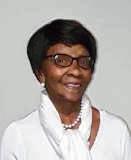
Helen Delores Wright JacksonSpearswas born on November 18, 1932, to theunion of thelate George Leandusand Annie MaeJohnson in Darlington, Louisiana.She departed this life on Monday, October 27, 2025, at theage of 92. Helen leaves to cherish her legacy andmemories, fivechildren; Jerry Jackson,Jr. (Idora),Michael WayneJackson,Brenda Cheryl Jackson,Tonja Rena Spearsand Sonja Renese Spearsall of Baton Rouge, LA.;siblings Bobby Johnson (Margaret), Dorothy Spears, Diane Knighten (Ernie)all of Baton Rouge, LA.;Betty Adams(Edward) of Baker,LAand JacquelineHartofGreensburg, LA.;3 goddaughters; CharmaineS.Washington, GayleL.Pope, and Mecca Daigre;11grandchildren; 14 great-grandchildren; 2 great-great-grandchildren anda hostofcousins, nieces,nephews,relatives, andfriends.
Williams,Classie Belle

ClassieBelle Williams, 95, passedawayOctober 18, 2025. BornOctober 1, 1930 in New Iberia,LA, to MarthaCurtis and Trinity Williams.She wasthe youngestoffivechildren andgrewupinthe closeknitcommunity of "Neco Town."She wasa proud SouthernUniversity graduatewith adegree in businessand worked forAmerican Bankfor many years. AdevoutCatholic.She was activewith the Ladies of Auxiliary at Immaculate Conception, an Adorer at Our Lady of Mercy, anda volunteer with the Catholic Diocese. Sheissurvivedby her sister,Ethel Mouton (103 yearsold), daughters Judy TauriacLondon and Andrea Batiste Hopkins (spouse Reginald),six grandchildren, four great grandchildren, andahost of nieces,nephews cousins, and dear friends Sheispreceded in death by her parents, siblings (Lucille,Jonoth, Ruby),formersignificant others (Walterand Irving),and is now lovinglyreunitedwith her infant son,Joseph.The visitationwill be heldfrom 9:00-10:55 AM and AMass of ChristianBurialwill beginat11:00 AM on 11-12025, allatSt. Joseph Cathedral, 401 Main Street, Baton Rouge, LA. ACommittal/Burialwill immediatelyfollowatSouthern MemorialGardens, 3012 Blount Road, Baton Rouge, LA.






| Saturday, November 1, 2025 1bN
BY CLAIRE GRUNEWALD Staff writer
As Baton Rouge-area residents prepare for the potential loss of SNAP benefits, local organizations and food pantries are hoping to fill any developing gaps.
The ongoing government shutdown meant that Supplemental Nutrition Assistance Program
Prosecutors say firm tailored bid language
BY DAVID J MITCHELL Staff writer
The former director of the Baton Rouge groundwater protection district and a top executive with BREC conspired separately with the same company executive to rig public bidding for lucrative, long-term infrastructure contracts in 2021, newly revealed documents allege.
Gary Beard, the ex-groundwater director; Oscar Reed Richard, a BREC assistant superintendent; and the company executive, Samuel Jason Hewitt, were indicted Wednesday on charges brought by the Louisiana Attorney General’s Office of contract conspiracy in restraint of trade, monopolizing trade and malfeasance in office. In a joint statement issued Friday, attorneys for all three men say their clients “categorically deny the charges brought against them” and maintain they served their “community and professional institutions with integrity and
40 years after flood, more money heading to Tangipahoa Judge OKs funds in class action lawsuit
BY HALEY MILLER Staff writer
Tangipahoa Parish District
Judge Jeff Johnson has approved a fourth distribution of settlement funds in the class action case Boudreaux v. Louisiana Department of Transportation, filed by victims of the 1983 Tangipahoa Parish flood
The suit alleged that the state transportation department caused the devastating inundation with the construction of the Interstate 12 bridge, which disturbed the Tangipahoa River’s natural flood plain. More than 1,240 victims, 400 families and 96 businesses were harmed in the flood.
cardholders across the nation expected to receive no November benefits.
But two federal judges ruled nearly simultaneously on Friday that the Trump’s administration must continue to fund the nation’s biggest food aid program, using contingency funds during the government shutdown It wasn’t immediately clear how quickly the debit cards that beneficiaries use to buy groceries could be reloaded after the ruling That process often takes one to two weeks.
Gov Jeff Landry has said the state government will pay to ensure most federal food stamp recipients continue to receive money for groceries if the shutdown continues.
But 53,000 able-bodied adults are unlikely to be covered under the state’s plan, which prioritizes the elderly, people with disabilities and households with children. Organizations and food pantries in the Baton Rouge region are preparing for a potential increase in requests for food and supplies that may begin this weekend.
St. Vincent de Paul of Baton Rouge, which provides food, shelter and other essential resources in a 12-parish area, started receiving calls from residents who were
afraid of losing SNAP benefits as soon as the government shut down on Oct. 1, said Sunnie JohnsonLain, president and CEO.
“Food pantries are trying to make sure they have enough food; that’s the biggest challenge and already a challenge this year,” she said.
St. Vincent de Paul is in talks to expand its local dining room service, which already serves 300 meals a day

ABOVE: Trick or treaters visit the Skelebrity House on Halloween in Baton Rouge. The house’s yard is decorated with a display of various skeletal celebrities. BELOW LEFT: Brooke Marshall, left, walks her dog, Toby, as her daughter, Caroline Marshall, 8, scoots along. BELOW RIGHT: From left, Penelope LeDuff, 4, Issabella LeDuff, 6, and Na’Juawan Green, 10, trick or treat at the house.


She was found in basement of home
BY ELLYN COUVILLION Staff writer
A 13-year-old Baker girl who was reported missing last week was found alive Thursday in Pittsburgh, and three suspects have been arrested. The girl was found in the basement of a home with the assistance of the FBI, Pittsburgh Police Department, and Allegheny County Juvenile Probation Office. The girl was found with an adult male and a woman from the Washington, D.C., area. Med-
ical personnel determined she had been sexually assaulted, according to the U.S. Marshals Service.
Ki-Shawn Crumity, 26, was arrested on multiple charges, including trafficking in individuals, statutory sexual assault, involuntary deviate sexual intercourse, sexual assault and selling or furnishing alcohol to minors, according to an affidavit from Pittsburgh police. He has been denied bail. Crumity admitted to officers that he had sex with the girl multiple times, according to the affidavit.
The girl told police she met Crumity on Snapchat.
Investigators determined the
girl had traveled on a bus from Columbus, Georgia, to Pittsburgh. At the time of her disappearance, the girl had been seen at the Greyhound bus station in Baton Rouge. When the girl was reported missing, the Louisiana’s Attorney General’s Office Cyber Crime Unit reported to the Marshals Service that the child may have had online contact with an unknown adult male On Monday a 62-year-old male, not identified in the news release, was arrested in New Orleans by marshals on a count of contributing to the delinquency of a juvenile. While questioning the subject,
it was discovered that he was with the child at the Greyhound station a few days earlier.
Investigators learned the child was with another subject, later identified as Ronald Smith, also 62, who was located and arrested in Columbus, Georgia, for simple kidnapping and contributing to the delinquency of a juvenile. The investigation is ongoing.
“Further arrests are pending and additional charges are forthcoming,” the service said in a release.
“Our precious missing child has been found and is safe,” the Baker Police Department said in an online post Friday.
Destroyer should be back in BR in the spring
BY ELLYN COUVILLION Staff writer
After more than a year spent in dry dock for repairs at a Houma shipyard, the USS Kidd will be lowered back into the water on Veterans Day, Nov. 11, with the ultimate goal of returning to Baton Rouge early next year, the USS Kidd Veterans Museum announced Thursday
Over the past 14 months, the deteriorated hull of the World War II destroyer was replaced with new steel at the Thoma-Sea Marine
Continued from page 1B
distinction.”
“These indictments are based on a mischaracterization of legitimate business and governmental activities. We are confident that once the full facts are presented, it will be absolutely clear that no criminal conduct occurred,” the statement says. Documents filed in the arrests of Beard and Hewitt on Thursday and a warrant for Richard reveal new details about the alleged schemes.
Prosecutors say Beard and Hewitt and Richard and Hewitt colluded to structure public offerings “tailored to a single commercial model” sold by Hewitt’s company, Sustainability Partners LP. Hewitt is listed online as the company’s managing partner of infrastructure.
BREC, the East Baton Rouge Parish parks agency was seeking a long-term deal for a company to finance, install and maintain the agency’s infrastructure, including aged lighting, heating, cooling and mechanical systems, according to a warrant affidavit of probable cause.
The Capital Area Ground Water Conservation District, which Beard led until last month, was seeking to install, maintain and monitor hundreds of groundwater pumping meters, plus data transmission systems and salt detection equipment for an annual fee.
For decades, the district regulated large users of the Southern Hills aquifer, which is the primary drinking water source for much of the Baton Rouge area and is also heavily used by industry
A major issue has been protecting the aquifer against underground saltwater intrusion Groundwater pumping exacerbates this intrusion, so pumping levels have been of intense interest. The pumping meters deal,
Continued from page 1B
But preparing for SNAP cuts doesn’t start and end at food. Johnson-Lain said the organization is taking a “nuanced, creative” approach to help all the needs that will be impacted.
“A lot of people who are going to lose SNAP are asking for help with other needs so they can spend money on food,” she said. She described calls from people asking for help paying their electric bills so they could have enough money for food without SNAP benefits.
Feeding Louisiana Executive Director Pat Van Burkleo said the statewide organization is in discussions with the Louisiana Department of Health to help prevent any shortfalls. It is hoping to work with the department and private donors to get funds to supply food boxes for residents in need.
“There is no way food banks can cover this 100% without government sup-
Constructors shipyard in the Port of Terrebonne, located off the Houma Navigation Canal. The ship is set to return to its spot on the Mississippi River in Baton Rouge during the river’s next high-water cycle, expected next spring.
“It is especially fitting that the USS Kidd will start a new phase of her story on this year’s Veterans Day,” the museum said in a news release.
Commissioned in 1943, the Fletcher-class destroyer served in the Pacific theater in World War II, surviving a Japanese “kamikaze” attack in one of her battles. It went on to serve in the Korean War. The ship, the only de-
in which the district leased the equipment with a future option to buy, drew initial interest from three companies, investigators say in the documents.
But, in the cases of the groundwater district and BREC both, Sustainability Partners of Chandler, Arizona, submitted the only formal bid in a request for qualifications from the groundwater district and a request for proposals from BREC.
Louisiana Bureau of Investigation agents say that, in the separate instances, Beard and Richard each developed their public offerings after receiving language in advance from Hewitt, including the company’s “solicitation template.”
An analysis by investigators found a 95% similarity between the public offering from the groundwater district and Sustainability Partners’ solicitation template. The alleged similarity was based on “extensive matching of content, structure, and procedures,” investigators claim A common similarity was also found in the BREC offering
The Sustainability Partners language included proprietary terms that would “effectively restrain or eliminate other bidders,” investigators allege. One such term was “Infrastructure as a Service,” which investigators say is a federally registered trademark of Sustainability Partners.
“Evidence obtained during this investigation disclosed that Gary Beard and Jason Hewitt knowingly engaged in bid-rigging activities intended to restrain or eliminate competition and ensure Sustainability Partners’ exclusive access to the public contract,” an affidavit of probable cause states.
Investigators made similar allegations about Richard and Hewitt. They also alleged that Richard acknowledged receiving and adding the language when he spoke to investigators in May.
port,” Van Burkleo said. “It’s just not possible for food banks to fill that entire void.”
Van Burkleo encouraged those who want to help to donate money to food banks or volunteer to pack up food.
“The No. 1 thing food banks need right now is cash donations food banks can stretch that dollar so much more,” he said.
Some pantries and churches, like Walker Baptist Church, are expecting to see an increase in the number of people needing services next week
Perry Ellis, with the church’s food pantry, said a rush for food hasn’t happened yet, but one is expected when the pantry opens at 7:30 a.m. Wednesday
“The wave has not hit us yet, but I’m waiting,” he said.
The pantry already feeds 400 families per month in Livingston Parish, and 90% of the food is donated, Ellis said.
“I am always asking for help,” he said.
Many are still planning
stroyer left in World War II configuration, was designated a National Historic Landmark in 1986, three years after it was opened to the public in Baton Rouge.
Normally resting in a “cradle” next to the museum on River Road, the ship is also the only museum ship that can be seen either fully in or out of the water
Over time though, the ship’s movement in its cradle on the Mississippi damaged the hull. The newly completed repair work will help the Kidd “continue its legacy as one of the state’s top attractions for another 40 to 60 years,” the museum said.
The state paid for repairs and refurbishment of both
Other BREC officials told investigators that Hewitt, in early talks, had tried to persuade BREC against putting the deal out for bid because, he claimed, only Sustainability Partners could provide the service.
The officials said they didn’t know the company’s language had been given to Richard: “More specifically, it was discovered that only Reed and Hewitt had collaborated about the use of Sustainability Partners language,” investigators alleged.
Beard and Hewitt were booked into East Baton Rouge Parish Prison on Thursday and released on $30,000 bail Friday Parish jail records don’t show that Richard had been booked by Friday afternoon.
In the joint statement, the defense attorneys said the “allegations of conspiracy, monopolization, and malfeasance are not only unfounded but also fail to reflect the complex regulatory and operational contexts in which our clients acted.”
“We urge the public to withhold judgment until all evidence is reviewed in a court of law Our clients look forward to clearing their names and restoring their reputations,” the lawyers added.
The statement is from Don Cazayoux, Lane Ewing, John McLindon and Walt Green, all of whom have years of experience in white-collar criminal defense, as former federal prosecutors or both.
Cazayoux and Ewing are representing Beard. McLindon is representing Richard, and Green is representing Hewitt. Green and Cazayoux are both former U.S. attorneys for the Baton Rouge region.
Under an RFQ or RFP for services, price isn’t the sole consideration, as is the case in public bids for roads or materials, but also the qualifications and experience of the company and the terms of the deal.
While those types of public offering are still designed to give local governments and taxpayers the
for what might come in the next few weeks.
Healing Place Church in Baton Rouge is planning to hold “Pack the Pantry” food collections every Sunday in November at its locations, communications director Amanda Schafer said. Schafer said the church is also working on other opportunities.
Catherine Weidert, with Catholic Charities of the Diocese of Baton Rouge, said the organization and other nonprofits are meeting Monday to discuss doing distributions in the area.
Community members with some local organizations have already been coming together in the past few days to donate or offer help to prepare for the loss.
The Greater Baton Rouge Food Bank is encouraging people to donate before Monday to have their donation tripled, after an anonymous donor offered $50,000 to the nonprofit.
Mike Manning, outgoing president and CEO of the food bank, said the response has been tremendous.
“It’s a key time for us, be-
the ship and the cradle, and the East Baton Rouge cityparish provided grants to protect the ship’s artifacts and continue museum operations while the ship is away The museum at 305 S. River Road has remained open, with reduced entrance fees, during the ship’s refurbishment and will be open on Veterans Day Back in its Baton Rouge berth next year, the USS Kidd will continue to serve as a “living reminder of the sacrifices made by Louisiana veterans for our country,” the museum said.
Email Ellyn Couvillion at ecouvillion@theadvocate. com.
best deal for their money, they provide governments and bidders some flexibility on price because other factors are taken into consideration to weigh which proposal matches the public offerings’ demands the best.
Attorney General Liz Murrill and State Treasurer John Fleming have taken issue with Sustainability Partners’ contracts at least 20 local governments have signed them — claiming they are costly opaque and set up long-term debts that evade traditional vetting by the State Bond Commission and traditional infrastructure bidding.
Murrill’s criminal investigators pointed out that the groundwater meter and park infrastructure deals didn’t have a final cost, depending instead on various outcomes.
Estimates on the meter deal have put at $45 million to $50 million. Investigators described the BREC deal as potentially openended.
The investigators say they established that Beard and Hewitt had shared the public offering language from statements that Beard had made in meetings of the groundwater district’s oversight commission explaining the deal to commissioners.
Investigators also drew on transcripts from an under-oath interview and from court testimony that he delivered for civil and tax cases brought by Baton Rouge Water Co. against the groundwater district that disputed the metering deal, its cost and the legality of the fees associated with paying for it.
In the under-oath interview for the civil case with Baton Rouge Water, for example, Beard acknowledged to a lawyer that “’a lot of the information in our RFQ matches what theirs has,’ and when pressed further conceded that ‘it’s very close.’”
David J. Mitchell can be reached at dmitchell@ theadvocate.com.
cause people who will not be receiving SNAP benefits will be turning to us for food,” he said.
Jordan Basham, who runs social media account Wheretogeaux225, and other community members have gotten together to raise donations, make meals and spread awareness about resources.
Basham and others began an Amazon wish list at the beginning of the week to get food and personal health items for The Red Shoes community fridge and residents overall.
In four days, 100 items have been bought off the wish list, she said Thursday
“It’s been mind-blowing the way the community has shown up,” Basham said.
“We had no idea this would happen.”
Basham said the goal is to make multiple drops of food to the community fridge, which has several locations in Baton Rouge.
“Baton Rouge takes care of Baton Rouge,” she said.
Staff writer Ellyn Couvillion contributed to this report.
Early voting is from Nov. 1-8, excluding Sunday, Nov. 2, from 8:30 a.m. to 6 p.m. for the Nov. 15 election. The deadline to request an absentee ballot is Nov. 12 by 4:30 p.m. (other than military and overseas voters). You can request an absentee ballot online through the Secretary of State’s voter portal at geauxvote.com or in writing through your Registrar of Voters Office. The deadline for a registrar of voters to receive a voted absentee ballot is Nov. 14 at 4:30 p.m. (except for military and overseas voters).
On election day, the polls are open from 7 a.m.-8 p.m
The Secretary of State’s elections hotline number is (800) 883-2805. Below are the propositions on the ballot in four Baton Rouge-area parishes: Ascension, East Baton Rouge, Livingston and West Baton Rouge.
EAST BATON ROUGE PARISH
The three tax measures, branded as “Thrive East Baton Rouge” by the mayor’s office, will together redirect money that currently goes specifically to the library, council on aging, and mosquito abatement to the parish’s general fund, where Edwards says it can be more flexibly spent and help pay down debt.
LIBRARY TAX REDEDICATION, EXTENSION (1 OF 3)
To rededicate from a public library property tax $52.4 million for parishwide general purposes and further to extend and rededicate the 11.1-mill property tax for an additional 10 years, beginning in 2026 and generating $67,432,500 a year, dedicating 8.30 mills of the tax for the public library system and 2.80 mills for parishwide general purposes.
MOSQUITO CONTROL TAX REDEDICATION, EXTENSION (2 OF 3)
To rededicate $6 million of a mosquito control property tax for parishwide general purposes, and further to extend and rededicate the tax at the rate of 1 mill for 10 years, beginning in 2027, generating $6 million a year, with 0.50 of a mill of the tax for mosquito and rodent control and 0.50 of a mill for parishwide general purposes. COUNCIL ON AGING TAX EXTENSION, REDEDICATION (3 OF 3)
To extend the 2.25-mill property tax, generating $13,668,750 a year, for 10 years beginning in 2027 and to rededicate the proceeds so (A) 2.0 mills shall be used for the East Baton Rouge Parish Council on the Aging Inc., or any successor program providing services for the elderly, and (B) 0.25 of a mill for parishwide general purposes.
ZACHARY COMMUNITY SCHOOL SYSTEM TAX
To levy a 24-mill property tax, generating $8.4 million a year, for 20 years beginning in 2026, for additional support for the system’s elementary and secondary schools, salaries and benefits, and building and equipment improvements. In no event shall the tax proceeds, together with any tax levied for debt service, exceed 24 mills in any tax collection year.
Continued from page 1B
Attorney Greg Murphy applauded the judge’s decision in an announcement, calling the outcome “exceptionally rare” in a class action case. The 1,340 claimants, either original victims or family members, will each receive an additional $599, he said.
“Judge Johnson’s decision to approve a fourth round of payments demonstrates both innovative management and an unwavering dedication to ensuring that the victims of the 1983 flood receive the fullest possible recovery from the settlement fund,” the new release said.
On April 6, 1983, rain inundated Tangipahoa Parish, and the newly opened I-12 acted like a large levee, resulting in water from the Tangipahoa River being diverted into homes and businesses.
The case has been litigated for over 40 years. A jury in 1999 concluded that the I-12 bridge over the river did not change elevation as it should have and awarded plaintiffs in a lawsuit $92 million. However, the state Department of Transportation and Development appealed the jury decision, and the Legislature declined to approve the award.
The final amount was agreed to by lawmakers after negotiations by the ad-
SOUTH BURBANK CRIME PREVENTION AND DEVELOPMENT DISTRICT PARCEL FEE
To renew the annual $100 parcel fee for each residential or commercial structure and $25 per parcel for each unit in a condominium, residential, or commercial structure with four or more units, for four years beginning in 2026, and generating $270,400 a year for crime prevention, enhanced security, and creation of a crime-free housing program.
FIRE PROTECTION DISTRICT
(1 OF 2) To renew the 12-mill property tax, generating $9.4 million a year, for 10 years beginning in 2027 for salaries and benefits of teachers and other school district personnel. PARISHWIDE SCHOOL DISTRICT NO. 3 TAX RENEWAL (2 OF 2)
of
PORT ALLEN
POLICE TAX RENEWAL To renew the 5.020-mill property tax, generating $285,000 a year, for 10 years beginning in 2026 for maintenance and operating expenses of the City Police Department.
ministration of Gov John Bel Edwards. In 2022, the funds were transferred to a Qualified Settlement Fund, to be supervised by the court, according to the release. The Joint Legislative Committee on the Budget approved a $95 million payment, plus $6 million already set aside for the plaintiffs, later that year Murphy said the fourth distribution will be managed by the same administrative team that has worked with qualified class members. The distribution was made possible by interest accruing on the original fund, he said.
“The Court’s careful oversight, commitment to efficiency and focus on cost control have allowed the fund to earn additional income, resulting in more money being available to class members,” the release said.
Email Haley Miller at haley.miller@theadvocate. com.
CalleganLaneinMorganza, at 1p.m
Bourgeois, Ronald Rabenhorst FuneralHomeat825
Government St.at11:30 am
Clegg, Marshall
BethanyChurch– South, 11107
HonoreLane, at 11 a.m.
Coates,Bertha
Beech Grove BaptistChurch#1, 890 Highway 68 in Jackson, at 10 a.m.
Dunbar, Kristi
UnitedChristianFaith Ministries, 9229 N. Ridgewood Dr., BatonRouge, LAat 10am.
Ervins,Celestine
True Light BaptistChurch at 11 a.m.
Fisher,Alice Mt.Calvary BaptistChurch, Norwood, LAat 11am
Harrell, Gary
SealeFuneralHomeinDenham Springs at 2pm
Jackson, Beverly
SealeFuneralHome, 1720 South Range Ave. Denham Springs,LAat 12pm
Kelly,Lee
Gethsemane BaptistChurch,1101 Charles T. Smith Dr., BatonRouge,LA at 11am
Kelso, Elizabeth
ShilohMissionaryBaptistChurchat 11am
Mitchell Kees,Barbara Sandy Creek BaptistChurch at 12pm
Molden Rogers,Beola
PointPleasantBaptist Church,27800 LA-405 in Plaquemine,at11a.m

KarenHurdle Bossier, a native of Rosedale, La passedawayonOctober 30, 2025atthe ageof63. Karen was passionate about her work as aregistered nurse,and worked forFresenius Medical Care for25years before she went on to retire.She was amember of Elmo Baptist Church in Roxie, MS.Karen enjoyed spending time in her yard and working with her flowers. Sheloved traveling to the mountains. Before all, Karenwas devoted to her children and grandchildren. She loved alland never met a stranger.Karenissurvived by her husband of 39 years, Ralph Bossier;children, Rachel Guerin (J Bob), Jennifer Lasseigne (Danny), LindseyBossier (Tiger),Amanda Fremin, and RyanBossier(Whitney); grandchildren, Courtney Crabtree (Mason), Collin Guerin, Beau Guerin, Alex Lasseigne (Kaitlyn), Kash Bossier, Bradley Whitlow,Curtis Freemin IV, Cain Freemin, Tritan Williams,PresleeBossier, and Rafe Bossier; greatgrandchildren,Hallie and Ella KateCrabtree; siblings,TammyChustz (David),Kim Hurdle, and Clayton Hurdle (Kerri); special aunt,Sherry Hue (Harry);and many loved ones. Precededindeath by her parents, Karenand James Hurdle.Visitation willbe held at Niland'sFuneral Home in Livonia, La on Monday, November 3, 2025 from 9:00 am until the religious service at 11:00 am. The burial willfollow inRosedaleCemetery. A receptionwillimmediately follow at The Gross Tete Lions Club. Pallbearerswill be J. Bob Guerin, Danny Lasseigne,Collin Guerin, Alex Lasseigne, Beau Guerin, and Ryan Bossier. Honorary pallbearers will be Bradley Whitlow and Kash Bossier.Aspecial thanks tostaffatThe LaCour House and Pointe CoupeeHome Health and Hospice. The family would
also like to recognize the staff who felt like family at Fresenius Medical Care, Dr. Mitchell Hebert,Keasha Brown, Flo Falencki, and William Bowman.
Bourgeois, Ronald Joseph 'Ronnie'

Ronald "Ronnie" Joseph Bourgeoiswent to hiseternal rest with theLordon October26, 2025. He was preceded in death by his parents, Mary Louise Bourgeois and Howard Joseph Bourgeois, his brother Michael JosephBourgeois and sisters-in-law Sharon Compton and Vicki Batarseh. He is survived by his beloved wife CandyDianne Bourgeois,son Brent JosephBourgeois and wife Tracy, sonLance Joseph Bourgeois and wife Ellen, and grandchildren, Cole JosephBourgeois and wife Brandy, TaylorJoseph Bourgeois, Mason Joseph Bourgeoisand fiancée Sara Rester,and Anna Katherine Bourgeois. He is also survivedbyhis sisterLinda BourgeoisGoetting and husband Robin,his sisterin-law Becky André Bourgeois, brothers-in-law MontherBatarseh and Bobby Compton, and multiplenephews and nieces.
Ronniewas born on December 17, 1943 in Port Allen, Louisiana. He graduated fromCatholicHigh School in 1961 and then went on to receive aBachelor of Science in Accounting fromLSU. He married theloveofhis life,Candy Dianne Hamilton, in 1967. While completing his college education,hebegan working forAnco Industries, where he invested themajority of his work career, eventuallybecoming ExecutiveVice President of thecompany. He was also theCo-Founder and President of Basic Industries, Co-Founderof DistributionInternational, and later in his career, the Founderand CEO of Louisiana CSI, where he worked alongsidehis partners Sonny Anderson and Scott McClean, and CoFounderofCSI Coatings.
He was also proud to serve as aMember of the Board of DirectorsofFamco Enterprises. Everyonewho knew Ronnie was aware that he exhibited theutmost integrity in everythinghedid. For those looking for amentor,he proudly served in that role, launchingtheminto greatereffectiveness in whateverdirectionthey pursued. He was atrustworthy and dedicated employee and afaithful and loving friend. His generosity, warmness, and welcoming spirit was experienced by so many people as he openedhis home and served many meals to belovedfriendsand acquaintances. Ronnie had a special love forhis fellow graduates from Catholic HighClass of '61, and he keptcontact with that group untilthe very end. We want to thank allof them forthe many kind and supportivemessages to him in his last days with us. Ronnie was involvedin several churches throughout his life in BatonRouge including The Chapel on theCampus, Community Bible Church, and laterThe Chapel in theOaks. He faithfullyserved in church and particularlyloved his days working with the kindergarten class along withhis wife Candy. However, without adoubt,Ronnie'sgreatest pride and joy on this earthaswellasthe focus of his love,devotion, energy, time, investment and attention, was his family,especially his belovedwife,sons, daughters-in-law, and grandchildren.Tohis own acknowledgment, he wouldnot be thepersonheiswithout Jesus and owes everything he has to Him. The love and devotion he had for his Lord and SaviorJesus Christ transformed his life, allowing him to live the life that he lived.
Relatives and friends are invitedtoattendvisitation at 10:30 am with celebrationoflifeservicefollowing at 11:30 am on Saturday November 1, 2025 at Rabenhorst Funeral Home at 825 Government St In lieu of flowers,donations may be madeto Gideons International. Ronnie came to trust Christ as His personal Saviorasa result of reading aGideon's Bible in ahotel room back in theearly1970s. Due to this, thetrajectory of his family changed forever, as Ronnie, along with Candy, builta legacy of faith in the Lord that has livedonin
thefamiliesoftheir sons and grandchildren starting at 11AM. Burial will follow at Port Hudson NationalCemetery

Burton, Thomas Wayne

Thomas WayneBurton, known as "Paw Paw" to hisgrandchildren, passed away peacefullyinBaton Rouge,LA, at theage of 94 on October30, 2025. He is preceded in death by his wife Robbie MaeBurton; andhis sister,GloriaJane; He is survivedbyhis two children, Larry (Missy) Burton of Zachary, LA, and Lisa Burton ColwellofBaton Rouge,LA; andfour grandchildren, Joseph Burton of Baton Rouge,LA, Michael (Deanna) Burton of Baton Rouge,LA, Neil (Laura)Burton of Missouri ,and Paige Colwell(John Jack) of Baton Rouge,LA. In accordancewith his wishes, there will be no funeralservice.The family asks that in lieu of flowers or services, all whoknew himwill honor hismemory by stopping at Waffle House, savoring acup of coffee, andsharing akind memory of Mr.Thomas
Coates, Bertha Bobby BerthaGreen Coates wasa woman of grace, faith, andquietstrength. Born on September 3, 1950, to thelateWilliam Ben Green andLee Ester Stewart Green, shegrewupin Louisiana surroundedby familyand love.Atanearly age, sheacceptedChrist andwas baptized at Beech Grove Baptist Church.Later in life, sherededicated herlifetoGod underthe leadership of Apostle Richard Hill at theFirst Pentecostal Church of Wakefield. On June 10, 1967, Bertha marriedthe love of herlife, Lionel Coates Sr., andtogether they built abeautifulfamilyrooted in faith, laughter, andtogetherness. She was adevoted wife, mother, grandmother,and friendwhose kindness and compassion touched everyoneshe met. Bertha'sstrength was quietbut powerful she faced life'schallenges with dignity and leaned on her faiththrough it all.She lovedcooking, spending time with family, and seeingthe joyonher children's andgrandchildren's faces.Her home wasalways open,her heartalways full, and herlove unconditional Sheleaves behinda legacyoflove andfaith through herchildren, grandchildren, family, and friends whowillforever cherish hermemory.Her spirit lives on in everylife she touched,and her wordsofwisdom continue to guidethosewho loved hermost. Afuneral service will be held from10:00 AM to 12:30 PM on 2025-11-01 at Beech Grove Baptist Church Jackson,Louisiana#1, 890 Hwy68.



4B ■ Saturday, November 1, 2025 ■ theadvocate.com ■ The Advocate
be with Jesus at 3:36 a.m. on Thursday, October 30, 2025. Along-time resident of Baton Rouge,hewas borninCarrollton, Mississippi and grew up in Kentwood,Louisiana.Johnny was one of four founding owners of St. Gabriel Valve Service, working alongside David Downs, Frank Forbes, and LaRue Forbes. He was the last surviving founder, remembered for his hard work and dedication. Johnny found his happiest days in the woodsof St. FrancisvilleatJED Farm or on the water at Toledo Bend, fishing for bass. A person of great faith, Johnny was amember of Family of Faith Church for over 30 years.
Johnny, aloving and dedicated husband and father, is survived by his devoted wife of 53 years, Charlotte Gray Downs;son David 'Wayne' Downs (Melinda); grandchildren Laurie Geter (James) and Ethan Downs (Shelby);as well as great-grandchildren, Dexter Geter and Cooper Downs. Other surviving family members include his sisters, Joyce Schram and Nora Ann McCulley, along with numerous nieces and nephews. He was preceded in death by his parents, Johnson 'JC' Downs and Marie Petty Downs; sons, John Eric Downs and James Edward Downs; granddaughter, Mary Ann Downs;brothers, David Downs and Donald Downs; and sisters, Donna Sue Goff and Christine Saragusa.
He lived his life with order and purpose, guided by aclear sense of right and wrong.Those who knew him best understood that his firmness came from love; adesire to protect, to guide, and to ensure the best for his family. His presence brought structure and direction to every room he entered, leaving behind alegacyof order, consistency, and care.
Relatives and friends are invited to attend aFuneral Service at 12:00 p.m. on Monday, November 3, 2025, officiated by Brother Mike Erickson, at Resthaven Funeral Home 11817 Jefferson Highway in Baton Rouge. AVisitation will be held at the funeral home beginning at 10:00 a.m. Interment will follow at Resthaven Gardens of Memory. Serving as pallbearers will be Bubba Anselmo, Raymond Anselmo, Mark Jones, James Kennerly, Mark Leto, and Rusty McCulley, with honorary pallbearers Brad Downs and Lee Nettles.
Charlotte wishes to thank the medical staffat Our Lady of the Lake Regional Medical Center Heartand Vascular Critical CareUnit for their careof Johnny during his final days. In lieu of flowers, please make memorials in Johnny'smemory to Familyof Faith Church Building Fund, 10748 Perkins Road, Baton Rouge,LA70810 (https://fofsbc.com/give).
Family and friends may sign the online guestbook or leave apersonal note to the family at www.resthav enbatonrouge.com

Fabre, David L.

DavidLarguierFabre, owner of Acura and Infiniti of Baton Rouge, anative and lifelongresidentofBatonRouge,Louisiana,went to his eternal rest with the Lord on October 28, 2025, at the ageof68. Born on June13, 1957,inBaton Rouge, David was the son of the late Clifton and MargeryFabre. He was precededindeathbyhis parents and leaves behind alegacy of devotion, hard work, and generosity that willlongberemembered by those who knew him. Davidissurvivedbyhis lovingwife, Lauren Mitchell Fabre,and their two daughters: FarinFabre -Bolton, husband Andrew, and Lindsey Lennard, & husband Alan. He wasa proud and beloved grandfather to Ezra, Elijah, Eloise, Leighton, Elodie, and Breckyn. He is also survived by his siblings Clifton"Kip" Fabre,John Fabre,FarinFabre Ware, and Calvin Fabre,aswell as numerous extended family membersand close friends who willcherish his memory.David was a Baton Rouge High alumni and arespectedleaderin the automobile industry formore than 40 years, achieving remarkable success and building alasting legacy alongside his brother,John Fabre.His vision, integrity, and commitment to excellence earned him deep respect from colleagues, peers, and the communityalike.David's passions extendedfar beyondhis professionallife An avid boater, golfer,and cook, he also had adeep lovefor LSU sports, racing music, andtravel. Hisenthusiasm forlifeand his ability to bring peopletogether were among his most endearingqualities. He never missed an opportunity to makeothers feel welcomed and valued.A proud supporter of the U.S. military,David dedicated his time and resources to many charitable organizationssuch as The Folds of Honor and The Navy SEAL Foundation, causesthat reflected his patriotism and compassionfor those who served. David will be rememberedfor his largerthan-life personalityand passionate spirit. Never afraidtosharehis opinions, he livedwith conviction and loved with his wholeheart. Above all,
David's love forhis family and friendsand his passion forlivinglife to the fullestdefinedwho he was. His influence, kindness and unforgettablegenerositywillforeverbe etched in our heartsand continue to inspire allwho had theprivilegeofknowing him. The family would like to express special thankstoDr. Curtis Chastain, theamazing staff at Mary BirdPerkinsCancer Center, The Baton Rouge GeneralHospital and The Crossing at ClarityHouse Relatives and friends are invitedtoattend visitation at Our LadyofMercy Church on Monday, November 3, 2025, at 9:00 a.m.,followedbya funeral serviceat10:00 a.m. In lieu of flowers,the family requests that donations be madeinDavid's memory to theFolds of HonorFoundation, The Navy SEALFoundation, and Baton Rouge High. Arrangements entrusted with Church Funeral Services.

Lynn Calongne Hendry, affectionately known as "MeMe," passed away peacefully on Monday, October20, 2025, surrounded by her loving family.She was 79. Born on July 29, 1946, in NewOrleans, Lynn was thedaughterofMae Stella Calongne and Charles Octave"C.O."Calongne. She was theeldest of five children, and loved her siblingsdearly. Lynn was aproud graduateof St.Joseph'sAcademy and LSU, where she earneda degree in Elementary Education. She dedicatedher life to teaching and shaping youngminds. For more than 25 years, she taught first grade,influencingthe livesofcountless children with patience, wit, and just enough"mean" to keep everyoneinline. She was belovedbyher students and fellowteachers alike Adevout Catholic, Lynn was amember of St.Aloysius CatholicChurch. Her home overflowed with love and warmth. She found joy in simple things -family gatherings, her newspaper and morning coffee, cooking,her flower beds, her dogs, and most of all, her belovedgrandchildren. Christmas Eve at her home was acherished tradition that she loved- lively, loud, and full of laughter -that perfectly exhibitedher un-


mistakable knack forentertaining.She is survived by her four children: Shannon Hendry Hernandez (Todd), Kelley Hendry Thompson (Todd), Tre Hendry (Brittney), and Michael Hendry (Leigh); herformer husband and father of herchildren, John Seaton Hendry, Jr.; 14 grandchildren: Ben Hernandez (Ashley),Brant Hernandez (Erin), Jordan ThompsonBowlin (Danny) Anna ThompsonRaetzsch (Wilson), Grace Hernandez, Clay Thompson, Lauren Hendry, Brady Hernandez, Mae Thompson, Emma ClaireHendry, Grant Hendry, Harrison Hendry, Banks Hendry, and Wells Hendry; six great-grandchildren, MallieAnn Hernandez, HuddHernandez, John Todd Hernandez, Cohen Bowlin, Grady Bowlin and Sawyer Bowlin; her siblings: Don Calongne (Sheila), Terry Calongne (Kyrne), Ken Calongne (Ann), and LeslieCalongne Chauvin (Larry); and numerous nieces and nephews. She was preceded in death by her parents, C.O. andMae Calongne, and by her infant granddaughter, Harper Hendry. She leavesbehind notjust her family,but alifetime of laughter, stories, and recipes that willberetold and remadefor generations. The family extends heartfeltgratitude to her devoted caregivers, Esther Brady, Eloyace Scott,Teresa Thomas, and Latrica Scott;her physicians, Dr. Daniel LaVieand Dr. Lara Falcon, and thecompassionateteam at Audubon Hospice. Visitation willbe held on Monday, November3,2025, at St.Aloysius CatholicChurch in Baton Rouge from 9:00 a.m. until 11:00 a.m.,followedbya funeral Mass at 11:00 a.m. Burial willfollow at Roselawn Cemetery. In lieu of flowers,donations may be madetothe Alzheimer'sAssociation, theAmerican CancerSociety, or Metanoia Manor. She willbedeeplymissed by allwho knew and loved her.
Hill, Craig Mitchell CraigMitchell Hill, March 26, 1959 -October 25, 2025. Craig Mitchell Hill, of Maringouin, LA passed
away on October25, 2025, at the age of 66. AMass of Christian Burial will be celebrated on Wednesday, November 12, 2025, at 11:00 a.m. at ImmaculateHeart of Mary Catholic Church 11140 Highway77, Maringouin, Louisiana 70757. Interment will follow at Immaculate HeartofMary Catholic Cemetery
Arrangements are under thedirection of Hall Davis &Sons Funeral Service
LanauxSr., MichelEmile

Michel EmileLanauxSr. 86 of Abita Springs passed away peacefullyathis home on Friday October24, 2025 at 2:22 PM. He washusbandofthe lateMary SueCairns. He is survived by hissister Alice L. Rainold andtwo stepsis-
ters AnnWilliams and Carol Williams. He is also survived by hischildren Susan LanauxSnyder (Charles) of DesMoines, Iowa, Michel E. Lanaux, Jr (Brenda)ofAbita Springs, andThomas B. Lanaux (Monica) of Austin, Texas as well as 8grandchildren and5great-grandchildren He wasborninNew Orleans, Louisiana to Emile Joseph Lanauxand Nina MartinWilliams. He went to St.Joseph Abbey School andDeLa Salle high school. He attended TulaneUniversity wherehewas amember of Alpha Tau Omega fraternity andgraduated witha Bachelor of Business Administration from the University of Southwest Louisiana (ULL)in Lafayette. He served in the Louisiana Army National Guard for 8years. On his retirement from themilitary, he obtained therank of SergeantFirst Class. Michel's career began at Central Gulf Steamship, in NewOrleans,where he wasgeneral manager of theInsurance Claims Department. He continued avariedmaritime career in






























Medicare doesn’t pay fordental care.
That’s right.Asgood as Medicare is, it wasnever meanttocover everything. That means if you wantprotection, youneed to purchase individualinsurance.
Early detection canprevent smallproblems from becoming expensive ones.
The best way to preventlarge dental bills is preventivecare. TheAmerican Dental Association recommends checkups twice ayear.




Pharma company recalls blood pressure meds
A pharmaceutical company has initiated a voluntary recall of more than half a million bottles of its blood pressure medication distributed in the U.S., after finding that the bottles contained higher than acceptable levels of a carcinogen.
Teva Pharmaceuticals has recalled more than 580,000 bottles of prazosin hydrochloride capsules, a medication used to manage hypertension, a report by federal regulators shows. The company is headquartered in Israel, but the recall is connected to its U.S. operations.
The recall, according to a page on the U.S. Food and Drug Administration website, impacts three different dosages: 1, 2 and 5 mg.
The recalled bottles have expiration dates ranging from October 2025 through February 2027.
The impacted bottles contain higher than acceptable levels of a carcinogenic substance. The FDA classified the risk as Class II. That class of risk, according to the FDA indicates that the recalled medication “may cause temporary or medically reversible adverse health consequences” or that “the probability of serious adverse health consequences is remote.” The full list of the recalled lot numbers can be found on the FDA’s website.
Disney pulls ABC, ESPN, more from YouTube TV
YouTube TV viewers can no longer see Disney channels including ABC and ESPN after the two sides failed to agree on a new content distribution deal.
Other channels that vanished from Google’s pay TV platform include the Disney Channel, FX and Nat Geo.
The breakdown could impact coverage of some college football games on Saturday, as well as NBA, NFL and NHL games.
YouTube is the largest internet TV provider in the U.S. with more than 9 million subscribers. Hulu, owned by Disney, is next, with about half that many subscribers. Viewers have become aware of the dispute in recent weeks because of warnings being scrolled across their screens.
YouTube said Disney used the threat of a blackout as a negotiating tactic that would have resulted in higher prices for its subscribers. Disney’s move to take down its content also benefits its own streaming products Hulu + Live TV and Fubo, YouTube said.
YouTube said it would give subscribers a $20 credit if Disney content unavailable “for an extended period of time.” YouTube TV’s base subscription plan costs $82.99 per month
Disney said that YouTube TV is refusing to pay fair rates for its channels and has chosen to “deny their subscribers the content they value most,” pointing out the number of Top 25 teams playing this weekend.
Pfizer sues drugmaker to stop rival bid
Pfizer is suing over some unsolicited competition in its nearly $5 billion bid to buy the drugmaker Metsera.
New York-based Pfizer said Friday after markets closed that it was suing Metsera and a third drugmaker, Denmark’s Novo Nordisk, over a bid for Metsera that Novo announced Thursday Novo said it planned to buy Metsera in a deal that could be worth up to $9 billion, and Metsera said the offer appeared to be superior to Pfizer’s bid, which was announced in September
Metsera Inc. has no products on the market, but it is developing potential oral and injectable treatments. That includes some potential treatments that could target lucrative fields for obesity and diabetes.
Novo already has the treatments Wegovy and Ozempic on the market in those respective categories
Pfizer said the offer from Novo cannot be considered superior to its bid because it carries significant regulatory risk that makes it unlikely to be completed.
Pfizer


Wall Street finishes month strong
BY STAN CHOE and ANNE D’INNOCENZIO AP business writers
NEW YORK Amazon led the U.S. stock market on Friday to the finish of another winning week and month
The S&P 500 rose 0.3% and pulled closer to its all-time high set on Tuesday It closed out a third straight winning week and a sixth straight winning month, its longest monthly winning streak since 2021.
The Dow Jones Industrial Av-
erage added 40 points, or 0.1%, and the Nasdaq composite gained 0.6%.
Amazon led the way and jumped 9.6%. The retail giant was by far the strongest force lifting the market after reporting profit for the latest quarter that blew past analysts’ expectations. CEO Andy Jassy said growth for its booming cloud-computing business has accelerated to a pace it hasn’t seen since 2022.
Amazon’s massive size of roughly $2.4 trillion means its stock movements carry more weight on the S&P 500 than almost any other company’s. Without it, the S&P 500 would have been down for the day
Analysts are analyzing Ama-
zon’s results to get insight into how shoppers are spending heading into the holiday season and how the online behemoth is managing cost increases from President Donald Trump’s tariffs. But Amazon, based in Seattle, is also under pressure to shore up confidence among investors that its computing arm Amazon Web Services is just as powerful as Microsoft’s Azure and Google’s Google Cloud Platform. Amazon delivered better-than-expected 20% growth for AWS, following a 17.5% growth in the fiscal second quarter Andy Jassy, president and CEO of Amazon, noted in a statement that AWS is growing at a
pace it hasn’t seen since 2022. Late last month, Amazon unveiled a new robotics system — being tested in South Carolina — for its warehouses that coordinates multiple arms to perform picking, stowing, and consolidating tasks simultaneously This technology effectively collapses three assembly lines into one, the company said. Elsewhere on Wall Street, online message board Reddit jumped 7.5% to erase losses from earlier in the week after reporting stronger profit and revenue for the latest quarter than analysts expected. Coinbase Global rose 4.6% after the crypto exchange’s profit likewise topped expectations.

Instacart offers 50% off to ease financial strain
BY DEE-ANN DURBIN Associated Press
Instacart said Friday it will offer customers who receive SNAP benefits 50% on their next grocery order to ease strain as the government prepares to cut off food aid payments.
Instacart said any customer who placed an order in October using a SNAP/EBT card will be eligible for the discount, which will be available even if the government makes the payments as planned on Nov 1. Instacart said it is also expanding the number of food banks it supports through online food drives from 100 to 300.
The San Francisco-based grocery delivery company said both programs amount to $5 million in direct relief.
“As SNAP funding faces unprecedented disruption and food banks brace for longer lines, we’re focused on practical, immediate
solutions: helping families who use SNAP stretch their grocery dollars and helping food banks stock up to support their communities,” said Dani Dudeck, Instacart’s chief corporate affairs officer
Instacart is one of several big companies reacting to the U.S. Department of Agriculture’s plan to freeze payments to the Supplemental Nutrition Assistance Program on Nov 1 due to the government shutdown. Gopuff, a Philadelphia-based company that provides fast delivery of food and other convenience items, said it will provide $50 worth of free groceries in November to customers who have a SNAP/EBT card connected to their Gopuff account Gopuff said it will spend up to $10 million on the program.
San Francisco-based DoorDash said it would waive service and delivery fees for an estimated 300,000 orders for SNAP recipients in November. DoorDash said Friday that 25 grocery companies, including Sprouts, Dollar General, Giant Eagle, Stop & Shop, Winn-Dixie, BJ’s Wholesale Club and ShopRite, are partnering with DoorDash to cut those fees.
DoorDash said it would also deliver 1 million meals from food banks for free. The company said more than 2.4 million of its customers have a SNAP/EBT card linked to their DoorDash account.
Zip Co., a “buy now pay later” app that lets users set up installment plans to pay for purchases, said Friday it will offer temporary, no-fee installment payment options for SNAP recipients who need help buying groceries if the government doesn’t make payments on Nov 1. Eligible customers need to fill out a form in the Zip app, the company said. Zip, which is based in Australia, said it was partnering with Forage, a company that processes government payments for retailers. Zip said it has 4.25 million active users, but it wouldn’t say how many are SNAP recipients.
Instacart does not disclose how many of its customers receive SNAP benefits. The company began accepting online SNAP payments in 2020. It offers discounted memberships for SNAP recipients and zero delivery fees on orders over $35.
Devices also face ongoing artificial
BY MICHAEL LIEDTKE AP technology writer
SAN FRANCISCO Apple’s iPhone sales growth decelerated during its summertime quarter, but the company still delivered financial results that exceeded analyst projections while the trendsetting company continued to catch up to its Big Tech peers in the artificial intelligence race.
The performance announced Thursday was driven largely by strong initial demand for the premium models of the iPhone 17
lineup that went on sale last month.
Although the iPhone 17 lacks the AI wizardry featured in rival devices recently introduced by Samsung and Google, Apple spruced up its latest models with a redesign highlighted by a sleek “liquid glass” appearance on the display screens. Apple also largely maintained its pricing on its latest iPhones, despite being squeezed by President Donald Trump’s trade war that imposed tariffs on the U.S. devices that the company mostly makes in India and China. The formula apparently was enough to win over consumers, particularly in the United States, and deliver iPhone sales totaling $49 billion during the July-September period, a 6% from the same time last year That was slightly below
the 8% increase in iPhone sales that had been anticipated by analysts, and less than the 13% bump in sales during the April-June period.
Buoyed by the iPhone results, Apple earned $27.5 billion, or $1.85 per share, nearly doubling its profit from a year ago. Revenue climbed 8% from a year ago to $102.5 billion. Both the earnings and revenue eclipsed the analyst forecasts that steer the stock market.
Apple’s stock has been on a tear since a report earlier this month from the research firm International Data Corp. telegraphed the quarterly results with a preliminary analysis that concluded the company had set a new July-September record for iPhone sales. The rally catapulted Apple’s market value above $4 trillion for the first time
earlier this week and now the stage is set for the shares to hit another new high during Friday’s regular trading session.
But Apple has been widely seen as a laggard in the AI craze, one of the reasons that Nvidia — a chipmaker whose processors power the technology — became the first company to be valued at $5 trillion earlier this week. Apple had promised a wide array of AI features would be rolling out on last year’s iPhone models, but was only able to deliver a few of them. The missing upgrades included a smarter and more versatile version of its frequently flummoxed Siri virtual assistant — a makeover that Apple now doesn’t expect to complete until next year
Party strategists are watching Tuesday’sgubernatorial contests in Virginia and New Jersey —battles that traditionally attract national attention. Held midway between presidential and congressional elections, they sometimeshint at wherenational politics is headed.

In the 2009 and 2017 gubernatorial races, one party swept both states, and that same party went on to do well in the next year’smidterm balloting. Even when the states split by party,results have revealed useful clues about the developing national mood.
Ron Faucheux

This year, theytake on added importance as the first major statewide elections since Donald Trump began his second term. Both races arelargely nationalized, with each side relying upon off-the-rack partisan messaging in addition to locally targeted campaigning Democrats are desperate to spot acanary in the coal mine —asign that Trump’s strength is collapsing. Republicans, meanwhile, want to prove Trump’smandate is expanding. KamalaHarris won both states with 52% last year
In Virginia, where governors are limited to asingle term, Democratic U.S. Rep. Abigail Spanberger,46, faces Republican Lt. Gov.Winsome Earle-Sears, 61. Three of the state’slast five governors have beenDemocrats and two have been Republicans. (I’ve often wondered whether Virginia’sone-term limit is the reasonwhy the state usually produces pretty goodgovernorsfrom both parties.)
Spanbergerisaformer CIA officer who tracked terrorism and nuclear proliferation. Earle-Sears is a Marine Corps veteran and businesswoman knownfor adirect, no-nonsense style. Spanberger has spent$60 million on the campaign, nearly double what of Earle-Sears has spent.
Polling averages put Spanberger ahead by eight points. That’sdespite the firestorm sparkedbytext messages in which the Democratic candidate for attorney general, Jay Jones, talked about shooting aformer Republican state House speaker —“two bullets to the head” —and wishing death to the speaker’schildren. Jones’appalling comments damaged his own candidacy, as you’d expect, but don’tappear to have significantly hurt ticket-mate Spanberger’s chances. Republican candidates for both attorney general and lieutenant governor in Virginia are polling better than their gubernatorial nominee, Earle-Sears. Republicans are now spending more on the attorney general’srace than on the governor’scontest. Spanbergerhas worked
diligently throughout her career to hold votersonthe left while getting as close to the center as possible Her balancing act appears to be paying off this year: She’swinning 97% of Democrats and leading independents 48% to 42%, according to the Wason Center poll. Spanberger’s coalition is typical of national Democratic candidates; she’swinning women, Blacks and college graduates by wide margins. Democrats have carried Virginiainthe last five presidential elections In New Jersey,Democratic U.S. Rep. Mikie Sherrill, 53, faces Republican Jack Ciattarelli, 63,abusinessman and former state legislator.Sherrill is aformer naval officer,helicopter pilot and federal prosecutor.More than $200 million has been spent by the campaigns, with tens of millions pouring in from outside sources.
Ciattarelli, who came surprisinglyclose to unseatingDemocraticGov Phil Murphy four years ago, has Trump’sendorsement. He hopes to energize Republicans in astate that has elected only one GOP governor (Chris Christie) since 2001.
Polling averages give Sherrill amodest threepoint lead, putting Ciattarelli within striking distance of an upset. Both candidates are attracting nearunanimous supportfrom their own party’svoters, according to the Rutgers poll, although Sherrill leads independents. The state’s voter coalitions follow national party trends, similar to Virginia.
Control of the presidency has been the best predictor of these states’ gubernatorial races —ina reverse sort of way.Inseven of the last eight Virginiaand New Jersey elections for governor,the party occupying the White House at the time lost. With aRepublican now in the Oval Office, you do the math.
Winning Virginiaisalways good news foreither party.Their gubernatorial races are usually expensive and competitive. Winning New Jersey —astate that Democratic presidential candidates have carried nine times in arow —would be an even bigger victory forRepublicans this year Democratic wins in both states wouldfeed anational narrative that votersare bucking Trump. Republican victories would do the opposite —proving their party, under Trump’sdominance, can win tough fights even in blue states. Whatever happens,both sides will be working hard on election night, spinning the results their way
Ron Faucheux is a nonpartisan political analyst, pollster and writer based in Louisiana.











BY WILSON ALEXANDER Staff writer
As LSU collapsed in the second half of a blowout home loss to Texas A&M and fans poured out of Tiger Stadium last weekend, longtime athletic official Verge Ausberry looked at the sideline and into the stands Not much time had passed since LSU held a halftime lead, and now the stadium was being taken over by opposing fans.
“I saw empty seats, empty suites,” Ausberry said.
“(Former Ohio State coach) Woody Hayes always said the worst word in the dictionary is apathy. This program cannot have apathy in no way or means We have to win.”
VERGE AUSBERRy LSU interim athletic director
“I saw our stadium, Tiger Stadium, halfway empty That’s not a good thing Woody Hayes always said the worst word in the dictionary is apathy This program cannot have apathy in no way or means.
“We have to win. We have to be successful.”
In the week since that 49-25 defeat, the LSU athletic department has been thrown into unprecedented turmoil.
Head coach Brian Kelly was fired the day after the loss, and athletic director Scott Woodward was ousted
Thursday night, a day after Gov Jeff Landry made it clear that Woodward would not hire the next football coach.
That responsibility now falls in part on Ausberry, a former LSU linebacker who has worked in the department for 24 years. LSU Board of Supervisors member John Carmouche, the chair of its athletic committee, said at a news conference Friday morning that Ausberry has “full authority” as the interim athletic
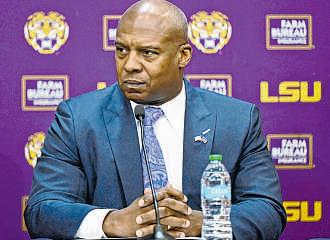

STAFF PHOTOS By JAVIER GALLEGOS
Southern running back Trey Holly speeds past Florida A&M linebacker Jason Riles on Oct. 25 at A.W Mumford Stadium. Holly and the Jaguars travel to face Arkansas-Pine Bluff on Saturday afternoon in Pine Bluff, Ark
BY TOYLOY BROWN III Staff writer
The “great eight” is a phrase Southern defensive coordinator Henry Miller uses in reference to the last four minutes of both the second and fourth quarters.
Those specific segments drastically can flip the result of games, according to the coaching staff. Safety Herman Brister evoked the phrase at the team’s media availability because he felt the defense, in particular, had errors during those junctures in the Jaguars’ last game, a 43-35 loss to Florida A&M.
Southern (1-7, 0-4 SWAC) allowed two touchdowns in the “great eight” period If stretched out to the final five minutes of the second and fourth quarters, Southern gave up four touchdowns.
Avoiding untimely scores is a part of Southern’s formula when it plays Arkansas-Pine Bluff (3-5, 1-3) at 2 p.m. Saturday at Simmons Bank Field in Pine Bluff, Arkansas.
Opposing coach Alonzo Hampton is familiar with the Southern defense The thirdyear head coach’s first college job was as a graduate assistant under Miller at UAPB, he said. Hampton, whose team is

coming off back-to-back losses to Bethune-Cookman and Grambling, said his will not overlook the Jaguars. He called them a good football team and said that he wouldn’t be surprised to see them play particularly inspired in the second game under interim coach Fred McNair
While keeping the energy up has been a focus at practice for Southern, it also knows that it has to deliver a complete performance. Having a significant drop-off in production in either half is something both sides of the ball need to avoid
“Like I always say, you play four quarters of (a game),” McNair said “We talk about consistency, and consistency is getting first downs, you know, making sure that we stay on the positive side of the sticks. I think we had 10 penalties, and think four were pre-snap penalties, whether it was offside or whether it was a false start on offense. “It was just small stuff that we had. We just got to correct that and make sure that we’re doing a good job of staying in front of the chains.”
A major factor in moving the chains for Southern will
MORE ON PAGE 5C
ä SWAC power rankings
ä Southern statistics
BY REED DARCEY Staff writer
Coach Kim Mulkey was “heartbroken” after LSU announced it was parting ways with athletic director Scott Woodward during her team’s exhibition win over Langston on Thursday night, associate coach Bob Starkey said.
LSU and Woodward finalized a separation agreement, sources confirmed Thursday evening. His departure came a day after Gov Jeff Landry criticized him at a news conference for the size of the contract he negotiated with coach Brian Kelly who was fired on Sunday eight games into the fourth season of his tenure at LSU. Starkey filled in for Mulkey at the postgame news conference and said the LSU women’s basketball team has had “conversations” about the recent turmoil within the school’s athletic department.
“I think one of the things that gets overshadowed,” Starkey said, “is that these are people and human beings that are going through these situations, and they have families, and it always, always gives us pause. If you’ve been in it long enough, you’ve gone through it yourself. I’ve had to go through it.”
Starkey, who’s in his second stint with the Tigers, worked with Woodward at both LSU and Texas A&M. Woodward was the LSU chancellor’s liaison to the athletic department from 2000-04. He then served as the athletic director at Texas A&M from 2016-19, which included Starkey’s tenure as an assistant coach for the Aggies women’s basketball program.
be running back Trey Holly The redshirt sophomore is second in the SWAC in yards rushing per game (91) and is third in total touchdowns with six. Last week, he had 26 carries for 145 yards and two touchdowns.
Hampton said UAPB is well aware of Holly’s dynamism and of the offensive line he runs behind.
“Their offensive line, man they’re huge,” Hampton said.
“I mean, they don’t look like an FCS school on the O-line. And then obviously they got Trey Holly Man, that kid’s a four-star, five-star kid at LSU for a reason, so we gotta stop the run.”
UAPB gives up the secondmost yards rushing per game in the SWAC (214.9) and is tied for the third-most rushing touchdowns allowed with 17. When McNair was asked about Holly taking a larger share of carries the last couple of weeks, he said that it’s a challenge to get other tailbacks involved when one is
ä Toyloy Brown’s prediction ä See JAGUARS, page 5C
“(In) 40 years of collegiate coaching, I’ve worked for two phenomenal athletic directors,” Starkey said. “One was Skip Bertman. The other one was Scott Woodward. Scott has a deep love for coaches and student-athletes and the people that work for him.
“He works incredibly hard to make sure that we have resources. He has a passion and love about this university and about this state, and we and me, personally, are a whole lot better for (having known) him.” LSU fired Kelly after the Tigers lost 4925 at home to No 3 Texas A&M and fell to 5-3, losing whatever was left of their already faint College Football Playoff
LSU coach ‘heartbroken’, assistant Starkey says ä See MULKEY, page 3C

4
Saints special-teamer carving out new role
BY LUKE JOHNSON Staff writer
The vision for what Isaiah Stalbird could be started to crystallize before he ever played a defensive snap in the NFL. It was early in the summer when the almost entirely new New Orleans Saints coaching staff was just starting to get a bead on the roster They’d just about wrapped up organized team activities doing stuff that barely qualifies as football, when defensive coordinator Brandon Staley noticed something.
“You could just see the speed, kind of effortless speed,” Staley said about Stalbird. At that point, Stalbird’s résumé was limited to five NFL games in his 2024 rookie season All of his professional playing time — 83 snaps — had come on special teams. He is the classic definition of a “tweener” in NFL parlance a 6-foot-1, 215-pound linebacker who spent most of his college career as a safety. But Staley saw the speed, and he didn’t worry about the rest.
Eight games into the season, Stalbird’s role is small, but it’s important. When the Saints are defending third downs, especially medium or longer ones, Stalbird is usually on the field. And he has been using that speed and athleticism to make plays
It showed up on the first third down of the game last week, when Stalbird substituted onto the field for a third and 15 against the Tampa Bay Buccaneers. Lining up as an offball linebacker, he perfectly timed his blitz between the left guard and left tackle, bursting through the line completely untouched
Stalbird had Tampa Bay quarterback Baker Mayfield dead to rights, and though he missed the chance to

STAFF PHOTO By DAVID GRUNFELD
New Orleans Saints linebacker Isaiah Stalbird reacts to a play during the second half against the New England Patriots on Oct. 12 at the Caesars Superdome. Stalbird is starting to get more snaps on the Saints defense.
bring Mayfield down for what would have been his first career sack, he disrupted the play and allowed Chase Young and Justin Reid to clean up for a big loss that brought the punting unit onto the field.
“Seeing that hole open up, I was like, ‘Oh s*** Here we go,’ ”
Stalbird said. “Hopefully that opportunity arises again and I can capitalize on it right away.”
Stalbird first caught Staley’s eye in OTAs, but it was during training camp when Stalbird realized he might be carving out a defensive role for himself.
“They were throwing me some bones to test it out, still trying to get it down,” Stalbird said. “As camp ended and we got into the season, it was more of a point of emphasis.”
The opportunities have expand-
ed for Stalbird as the season has progressed. He made his NFL debut as a defensive player against the Seattle Seahawks, breaking up a Sam Darnold pass as a blitzer on his first defensive snap.
Last week, he played a careerhigh eight defensive snaps, all of them on third down. In fact, all but three of Stalbird’s defensive snaps have come on third down this season. The Saints like his speed, but they also like his ability as a coverage defender that he honed while playing safety in college. They also like the juice he brings.
“It’s almost like a sixth man in basketball where you bring a guy off the bench that can provide some energy and playmaking,” Staley said “He’s kind of filling
the role like that for us, and at the same time improving as an everyday, all-the-time linebacker behind the scenes.”
Stalbird earned his way onto the roster because of his ability to play special teams, and he has thrived in that area this season with a team-high five specialteams tackles.
The skills he honed in that area help him do what the coaches are asking him to do on the third-down packages — especially in the instances where Stalbird is sent as a blitzer from the second level.
Staley said to think about it from the special teams point of view: His job on special teams is to run down the field and make quick decisions at speed to beat the blocker in front of him and bring the returner down.
“He’s used to doing that, so it’s like beating a running back and blitz protection,” Staley said. “... He’s just got good speed, good timing. He’s got good, explosive power on contact, too. He’s a very good open-field tackler, so kind of fits into third down.”
Demario Davis has enjoyed watching Stalbird create a role for himself on the defense The two share neighboring lockers, and Davis — now in his 14th NFL season — sees a player who is mature beyond his years. That has lent itself to Stalbird having a professional mentality, which has contributed to his expanded playing time.
“He just continues to ascend,” Davis said.
As for what Stalbird’s role will evolve into if he does keep ascending, he’s not really concerned with that right now He is content with trying to make the most of the moment, which in itself is impressive for an undrafted former college safety out of South Dakota State
“I’ve still got to pinch myself, like, ‘Dang, it’s really happening,’ ” Stalbird said.
BY ROD WALKER Staff writer
Tyler Shough gets his first start as the New Orleans Saints quarterback Sunday at SoFi Stadium against the Los Angeles Rams
The rookie replaces Spencer Rattler, who started the first eight games.
Shough will be the 10th different quarterback not named Drew Brees to start a game for the Saints over the past 10 seasons Here is a look back at how the previous quarterbacks not named Brees fared in their debut as the starter.
Teddy Bridgewater (Dec. 30, 2018)
Lost to Carolina Panthers
33-14: The Saints already had clinched the No. 1 seed in the playoffs, so Bridgewater got the start in the regular-season finale. Bridgewater was making his first start since the 2015 season, when he played for the Minnesota Vikings. Bridgewater completed 14 of 22 passes for 118 yards in his first Saints start. He threw a touchdown and an interception and was sacked twice in a meaningless game that saw Sean Payton sit several starters.
“It felt good to get back out there again, but it wasn’t the results we were looking for,” Bridgewater said afterward.
“But the beauty about all of this is we get to move forward to the postseason and focus on the goals we have set for this year It was a decent performance given the circumstances.” Bridgewater filled in for an injured Brees the next season and won all five of his starts.
Taysom Hill (Nov. 22, 2020)
Beat the Atlanta Falcons 24-9: Hill replaced Brees, who was dealing with a collapsed lung and several broken ribs suffered the week before in a game against the San
Francisco 49ers.
Hill completed 18 of 23 passes (78.3%) for 233 yards. Although he didn’t throw a touchdown, he rushed 10 times for 49 yards and a pair of touchdowns to beat the rival Falcons in the Dome.
“It was gratifying more than anything, because I have so much love and respect for Drew and my other teammates that I wanted to make sure I did my part,” Hill said.
Jameis Winston (Sept. 12, 2021)
Beat the Green Bay Packers 38-3: Winston, in the season opener played in Jacksonville, Florida, because of Hurricane Ida, completed 14 of 20 passes for 148 yards and five touchdowns. Winston also rushed six times for 37 yards.
“That was for the city,” Winston said. “… We knew how much it would mean to get a great victory They have been through so much. For us to be able to celebrate that victory with them, hats off to them for their resiliency They motivated us, they inspired us to come out there and ball.”
Trevor Siemian (Nov. 7, 2021)
Lost to Atlanta Falcons 27-25: Siemian replaced Winston, who suffered a knee injury the week before on Halloween against the Tampa Bay Buccaneers. Siemian completed 25 of 41 passes for 249 yards and two touchdowns in the loss.
“I just felt like we were one play away numerous times from getting it right in the first half,” Siemian said. “Unfortunately we just didn’t get it done, especially early.”
Ian Book (Dec. 27, 2021)
Lost to Miami Dolphins 20-3: Book got the start after both Hill and Siemian tested positive for COVID-19 earlier in the week. In all, the Saints were missing 22 players because of COVID. Book struggled, completing 12 of 20 passes for 135 yards. He also threw two intercep-

New Orleans Saints quarterback Taysom Hill leaps into the end zone for a touchdown against the Atlanta Falcons during the second half on Nov. 22, 2020, at the Superdome.
tions and was sacked eight times.
“Can’t take that many sacks,” Book said “Can’t do that to the Oline. Just got to throw it away and be smart I tried to do a little too much.”
Andy Dalton (Oct. 2, 2022)
Lost to Minnesota Vikings 28-25
Dalton filled in for an injured Winston, who was dealing with a back and ankle injuries. Dalton got his first start as a Saint in London. He completed 20 of 28 passes for 236 yards and a touchdown. He had a costly fumble late when the Saints had a chance to tie or win the game.
“It’s tough,” Dalton said. “Because you go back and look at this game and feel like you played really well. And you can go back and look at it and say, ‘Man, if I could just have one play back.’ ”
Derek Carr (Sept. 10, 2023)
Beat the Tennessee Titans 16-15 Carr was signed in the offseason to be the franchise’s future. He completed 23 of 33 passes for 305 yards with one touchdown and an interception in his debut and was also sacked four times. But he got the win. “Being able to play with a de-
LSU women get first Class of 2026 pledge
The LSU women’s basketball team picked up its first commitment of the 2026 recruiting cycle. Lola Lampley, a 6-foot-2 forward from Indianapolis, announced Friday she had chosen the Tigers, giving coach Kim Mulkey’s program another pledge from a high-profile recruit.
According to ESPN rankings, Lampley is the 29th-best prospect in her class. She visited LSU the weekend of Oct. 10 alongside another top recruit — California guard Jerzy Robinson, ESPN’s fifth-best 2026 prospect.
LSU has landed the nation’s top signing class in two of the last three cycles. Four of the five freshmen on this season’s roster Grace Knox, ZaKiyah Johnson, Divine Bourrage and Bella Hines — were top-35 national recruits.
Commanders QB Daniels to return Sunday night
Washington quarterback Jayden Daniels will start for the Commanders against the Seattle Seahawks on Sunday night.
Daniels, hampered by an injured right hamstring, missed his third game of the season on Monday night when the Commanders fell 28-7 to the Kansas City Chiefs Washington dropped to 3-5 with its third straight loss Daniels did his rehab work with the training staff and practiced in full this week, including a windblown session on Friday That was enough for coach Dan Quinn to commit to the dual-threat QB. Washington, beset by injuries all season, has already ruled out wide receiver Terry McLaurin (quad) for Sunday’s critical game against the Seahawks (5-2), who share first place in the NFC West.
Jaguars place two-way player Hunter on the IR
The Jacksonville Jaguars placed two-way star Travis Hunter on injured reserve Friday because of a knee injury Coach Liam Coen announced the move a day after Hunter injured his right knee in practice. Coen called it a noncontact injury — it happened while he was going through defensive drills and said the team is “still assessing” whether Hunter will play again this season.
The 2024 Heisman Trophy winner caught eight passes for 101 yards and a touchdown in his last game, and the Jaguars (4-3) were planning to use him as their No. 1 receiver this week at the Las Vegas Raiders (2-5) partly because Brian Thomas leads the league with nine dropped passes.
Rangers pitching coach Maddux leaves organization
Texas Rangers pitching coach Mike Maddux is leaving the organization.
The 64-year-old Maddux helped guide the Rangers to a World Series title in 2023 and to a leagueleading 3.41 ERA in 2025. But he chose to leave after the Rangers mutually parted ways with manager Bruce Bochy and replaced him with Skip Schumaker
fense like that, we can win a lot of games, especially when we (the offense) get going,” Carr said.
Spencer Rattler (Oct. 13, 2024)
Lost to Tampa Bay Buccaneers 51-27
Rattler, a rookie at the time, got his first start after Carr suffered an oblique strain the week before in a Monday night game against the Kansas City Chiefs. Rattler, a fifth-round draft pick, completed 22 of 40 passes for 243 yards with one touchdown and two interceptions. He was sacked five times.
“The first half was really good for all of us,” Rattler said. “We came out and were sloppy as a group throughout the whole second half. Couldn’t really get anything going, shot ourselves in the foot a few times. Starting with myself, gotta play better.”
Jake Haener (Dec. 15, 2024)
Lost to Washington Commanders 20-19
Haener completed just 4 of 10 passes for 49 yards and was sacked three times before being replaced by Rattler in the second half. Haener also threw an interception. “Obviously, I’m disappointed,” Haener said.
“The Texas Rangers are forever grateful to Mike for his contributions here,” said Chris Young, the team’s president of baseball operations. “Mike has played a major role for some of the best teams in Rangers history, including the franchise’s first World Series title in 2023. We wish him the best.”
Davis out of Mexico City game for the Mavericks
Dallas Mavericks forward Anthony Davis will miss Saturday’s game against the Detroit Pistons in Mexico City with a left leg injury, the team announced Friday Davis traveled with the Mavericks and attended practice before Dallas said an MRI revealed a low grade left calf strain.
The 32-year-old Davis suffered the lower leg injury in the first quarter of Wednesday’s game against the Indiana Pacers. Davis, a 10-time All-Star, has been plagued by injuries throughout his career Last season, after being traded from the Los Angeles Lakers for Luka Doncic, he got injured and missed 18 games but returned for the final eight games of the season as the Mavericks missed the playoffs.
BY KOKI RILEY Staff writer
Gov.Jeff Landry was not involved with LSU’sdecision to part ways with athletic director Scott Woodward, LSU Board of Supervisors chairman Scott Ballard said in anews conference Friday.
“The governor is worried about the state of Louisiana,” Ballard said. “His concern hadtodowith the state contract. The LSUBoard of Supervisors and Mr.Woodward decided jointly to part ways.”
In anews conferenceWednesday,Landry was extremelycritical of Woodward, stating that he’d rather haveDonald Trumpchoose the next LSU football coach than allow Woodward to do so.
“No. Ican tell you right now, Scott Woodward is not selecting the next coach,” Landry said.
Landry’scritique came just days after LSU fired football coach Brian Kelly on Sunday,less than 24 hours after the Tigers’ 49-25 loss to Texas A&M, which dropped their record to 5-3 on the season andes-
Georgia athletic director Josh Brooks said Fridayhe has not been contacted by LSU and addressed speculation about his interest in the Tigers’ open athletic director position. Brooks, aHammond native, graduated in 2002 from LSU, where he worked in collegeasan equipment manager and astudent assistant coach.
LSU has to find anew full-time athletic director after the ouster of Scott Woodward, whoheld the job since 2019.
“With success often comes speculation, but Iwant to address it directly,” Brooks wrote in a social media post.“I have not been contacted by anyone at LSU,and more importantly,I have no interest in anyother job My full focus remains on the University of Georgia, our student-athletes, coaches, staff, and fans.” Brooks had twostints at UL-Monroe, including one as the deputy athletic director from 201516, before returning to Georgia for the second time in his career.Heis in his fifth year as the Georgia athletic director after the retirement of Greg McGarity in 2020.
“This is home to me,” Brooks said,“and I’m honored to playapartin the incredible progress we’vemade together.”
Longtime LSU athletic official VergeAusberry was named the interim athletic director Thursday night.Twomembers of the LSU Board of Supervisors said in anewsconference Fridaythat Ausberry has “full authority” to hire the Tigers’ next football coach WilsonAlexander
Continued from page1C
Playoff hopes. LSU went 34-14 during Kelly’s tenure, but it never came close to contending fora nationalchampionshiplike the school hoped it would when it lured the former Notre Dame coach to Baton Rougewith a10-year,$100 million contract. LSUowesKellyroughly $54million. That amount —the second-largest buyout in the history of college football —could be mitigatedifKellytakes ajob in coaching, administrationor media. The two sides are also ne-
sentially eliminated LSU fromCollege FootballPlayoff contention for thefourth time under Kelly LSUisonthe hooktopay Kelly’s nearly$54 million buyout.Landry’s critique of Woodward also included his decision to hire then-Texas A&M coachJimboFisher whenhe wasthe athletic director in College Station. Fisher eventually was fired by the Aggies in 2023, and the program paid a$77 millionbuyout to move on from the national championship-winning coach.
Even though Fisher’smassive buyout happened in large partbecause ofanextension he received yearsafter Woodwardhad left Texas A&M to become the athletic directoratLSU, it was stillenough for Landry to deemWoodward as incapable ofchoosing the next coach
“Weare notgoing down afailed path, and Iwant to tellyou something: This is apattern,” Landry said. “The guy that’sherenow that wrotethatcontractcostTexas A&M 70-some million dollars.
Rightnow,we’ve got a$53 million liability.We are not doing that
again.”
Even after stating that Landry was notinvolved in Woodward’s ouster,Ballard —alongside LSU Board of Supervisors athletic committee chairman JohnCarmouche andinterim athletic director Verge Ausberry —did notprovide aclear explanation as to why Woodward was no longer the LSUathletic director
“It was amutual agreement after conversations andwithall thethings that come into that,” Ballard said, “energy and family and what you’re doing. Nothing’s offthe table (as to) why Scott and LSUhad amutual agreement(to partways).”
Woodward spent six years as the LSU athleticdirector.Hehired threenational championship-winning coaches in gymnastics (Jay Clark),women’sbasketball (Kim Mulkey) and baseball (Jay Johnson), andLSU won six national titles under his leadership.
“Scott is agreat human being. Scottisa good Baton Rouge,LSU Tiger,”Ballard said. “It had noth-
“I want ourfan basetoknow one thing: LSU is not broken. LSU’sathletic department is notbroken.I thinkwehavethe best athletic department in the country.”
VERGE AUSBERRy, LSU interim athleticdirector
Continued from page1C
director “That includes leading the search for our next head coachand hiring ournext head coach,” Carmouche said There are expected to be multiple people involved, however,and Ausberry said he hasformeda committee.
It includes Carmouche, LSU board chairScott Ballard, Franciscan Missionaries of Our Lady Health System CEO EJ Kuiper,former LSU offensive lineman and major donor Ben Bordelon and another unnamed person LSU’snext full-timepresident, who will be elected Tuesday,also could have a say “We’re notslowingdown for that,” Ballardsaid. “Verge is going to move forward and knows what he needs to do. But depending on how that works out and when the newpresident starts, the new president will absolutelyhave input.”
Ausberry,anativeof NewIberia, deflected a question abouthis interest in the full-timejob,saying hisconcern is on hiring the next football coach and stabilizing the athletic department. Ballard added there is “not atimeline” on hiring Woodward’sreplacement.
For LSU, the priority is the football coach.
“Thefullconcentration is to findacoach, findthe best coach,” Ballard said. “Period.
That process has already started, as Vergesaid, with theteam,the athletic department. It trulyisnot something we’re even going to address until we get that done.”
Ausberry tried to project confidence Friday after the events of theweek caught the attention of the entire
gotiating the terms of the buyout, LSU said Sunday On Wednesday,Landry said Woodward would not choose Kelly’ssuccessor Theschool’sboard of supervisors, he said, will instead form acommittee that will conduct asearch.
Woodward hired both Kelly andMulkey, as well as baseball coach Jay Johnson and gymnastics coach Jay Clark. Mulkey,Johnson and Clark have led their respective LSUprograms to national titles. “I just thinkwedoagood job about being honest,” Starkey said.
“(Mulkey) doesn’tsweep anything under the rug. She makes sure we have conversations about it, and

ing to do with anyofthat (and) had everything to do with the path of both (sides and their) conversations, and they mutually agreed that it was time (to move on). It
wasn’tanLSU thing; it wasn’ta Scott thing.”
Email Koki RileyatKoki.Riley @theadvocate.com.
Alabama A&MatGrambling
WHEN: 2p.m.
college sports industry,and not necessarily in agood way
LSU now has an interim president, an interim athleticdirectorand an interim football coach, and Landryhas been involved in certain parts of the decision-making process.
“I want our fan base to know one thing: LSU is not broken,”Ausberry said. “LSU’sathletic department is not broken.
“I think we have the best athletic department in the country.”
In Landry’sremarks this week, he alsodescribed what he wants to see in the next coach’scontract. He tookissue withWoodward over the nearly $54 million buyout that LSU owes Kelly,pending negotiations or mitigation, and he expressed that he would prefer adeal that includes more performance incentives than guaranteed money It’sunclear whether that will happen.
“Our job, Iwas told, is to get the best football coach there is and don’tworry about that at all,” Ausberry said. “Whatever it takes to get that person here, we will do.”
Ausberry set an expectation for the next coach, saying “LSU has to be in the playoffs every year in football.”
Kelly did not come close during his four seasons.As LSU looks fora replacement, Ausberry said his phone has continued to ring withinterest in the job, even afterall the upheaval.
“A lot of people still want to cometoLSU,” Ausberry said. “It’sone of the best jobs in the country
“Itisthe bestjob in the country at this time. We’re going to findthe right person, and Idon’tsee any problemsgetting the right person to be the head coach at LSU.”
Ithink that really helps.”
Longtime athletic administrator Verge Ausberry is the LSU athletic director on an interim basis, the school said.
Starkey wasasked about howimportant this time wasfor LSU,which will hire anew president,athleticdirectorand football coach in the span of afew months.
“I don’thave an answer for that,” Starkey said. “I think I’m going to do the intelligent thing and stay in my lane on this one.”
Wilson Alexander contributed to this report.
Email ReedDarcey at reed darcey@theadvocate.com.
RANKINGS: Neither team is ranked SERIES: UL leads 9-4
South Alabama by 41/2
N0TES: The loser of thisgame will be eliminated from bowl consideration as it won’t be ableto reach six wins The twoteams arenearlymirror images of the other with both havingthe same records and both having nearly the same averages in points





















BULLDOGS BEGIN PLAYOFF PUSH
No.5 Georgia faces Florida on Saturdayinthe rivalryknown as the “World’s Largest Outdoor Cocktail Party.”Georgia has wonfourina rowand sevenofeight in the neutral-site series playedin Jacksonville. Florida fired coach Billy Napier followingits last game, a23-21 home victory against MississippiState,and used abye week to rally behind interim coach Billy Gonzales. Florida will be without twoofits best receivers,Vernell Brown and Aidan Mizell. TheBulldogs rank last in the SEC with eight sacks and 14th in third-down defense.
NO.1BUCKEYES HOST PENN STATE Penn Statedefensivecoordinator Jim Knowles’ returntoOhio Stadium on Saturday is one of the fewremaining interesting storylines from amatchup manythought two months agowould be between the top twoteams in the Big Ten. Ohio State has kept up its end, but Penn State’sseason imploded with four straight losses.The Buckeyes have wontheir past eight over the NittanyLions, but the games were close. OhioState has given up only 41 points, theleast allowedbyanFBS team through seven games since Florida State allowed38in1993.
OU DEFENSE MEETS VOLS OFFENSE
The SEC’stop offense and defense go headto-head this weekend as No. 18 Oklahoma travels to Neyland Stadium to takeonNo. 14 Tennessee.The Sooners have held opponentstoanaverage of 12.1 points per game, while Tennessee’s offensehas thrived under quarterback Joey Aguilar, averagingover45points per game.OUhas lost twoofthree after its 5-0 start, and neitherteam canaffordaloss to keep aliveany faintplayoff hopes

Vanderbilt coach Clark Lea said. “And obviously this one is incredibly meaningful for so many reasons And it gives us achancetokeep aimingtowards our long-term goals.”
good of an opportunity as anybody to play in the SEC championship game andbepartofthe College Football Playoff.”
yards againstMississippi State. Niblettwas atrack standout in high school, where he ranthe 100 meters in 10.41 seconds.
1. TEXASA&M
Record: 8-0 overall, 5-0 SEC
Previous rank: 2
Last week: DefeatedLSU 49-25
Thisweek: Idle
2. ALABAMA
Record: 7-1overall, 5-0 SEC
Previous rank: 1
Last week: DefeatedSouth Carolina 29-22
Thisweek: Idle
3. GEORGIA
Record: 6-1overall, 4-1 SEC
Previous rank: 3
Last week: Idle Thisweek: vs.Florida, 2:30 p.m. Saturday (ABC)
4. OLEMISS
Record: 7-1overall, 4-1 SEC
Previous rank: 4
Last week: DefeatedOklahoma 34-26
Thisweek: vs.South Carolina, 6p.m. Saturday(ESPN)
5. VANDERBILT
Record: 7-1overall, 3-1 SEC
Previous rank: 5
Last week: DefeatedMissouri 17-10
Thisweek: at Texas, 11 a.m. Saturday(ABC)
6. TENNESSEE
Record: 6-2 overall, 3-2 SEC
Previous rank: 6
Last week: DefeatedKentucky 56-34
BY JIM VERTUNO Associated Press
AUSTIN,Texas As the football season pushes into November, No.9Vanderbilt continues its march through what could be a special onefor theCommodores.
Ashot at both the Southeastern Conference championship and aCollege Football Playoff berth are stilleasily within sight. Such things are new in Nashville, butquarterback Diego Pavia and this groupof Commodores have changed the goals and the very idea of what’spossible.
Beat No. 20 Texas (6-2,3-1)on Saturday andVanderbilt(7-1, 3-1)will continue its climb toward the highest AP ranking in school history— No.7 during the 1937 season.
“We’ve played to alevel that’s put us in aposition to play in some really exciting games,”
Pavia has emerged as aHeismanTrophy contender and leads the second-highest scoringoffenseinthe SEC. He will face one of the best defenses in the country
“The quarterback is the tipof thespear,” Texascoach Steve Sarkisian said of Pavia. “He makes plays atcritical moments whenthey need to have it. All the praise he’sgetting is well deserved.”
Texas began theseason with its own playoff andchampionship expectations. The Longhorns were the preseason No. 1with quarterback Arch Manning the betting favoritefor the Heisman. But Texas was unranked after aragged 3-2 start. The national titletalk disappeared.
Athree-game win streak, including two in overtime, has rescued hopes for the season
“Wehave four games left,” Sarkisian said. “If we can handleour business,wehaveas
Manning spent the week in concussion protocol after being injured in the overtime period in lastweek’svictoryover Mississippi State. Sarkisian saidThursday that Manning was “makinggood progress,” but his statusfor the game remained uncertain.
Caldwell couldget thecall
Matthew Caldwell is the top backup QB for Texas. AtransferfromTroy, he wasthe hero last week against Mississippi State when he came on for Manning in overtime andthrew the game-winning touchdown pass.
Return to sender
The breakout player of Octoberfor Texaswas punt returner Ryan Niblett, who has dabbled at wide receiver,running back and even abriefstint in the spring at defensive back. He’s been electric as apunt returner over the past three games witha38-yardaverage and second-half touchdowns of 75 yards againstOklahomaand 79
“The punt returner is dynamic,” Lea said. “Wegot to really have some answers for that.”
Pass protection
Well before he suffered the concussion, Manning had been taking abeating behind arebuilt offensive line that has struggledinpass protection. Texas has allowed 18 sacks and Manning has often been on the runtoavoid more. Vanderbilt ranks fourth nationally in most tackles for loss.
Irresistible forcevs. immovableobject
The Commodores average 6.2 yards perrush, third best in the nation. Pavia leads the way.He’stheir leading rusher, averaging 5.4 yards percarry. Texas allows just 2.41 yards per carry.Tracking Pavia will be linebacker Anthony Hill and edge rusherColin Simmons. They are preseason All-Americans who have combined for 9.5 sacksand 12 tacklesfor loss.
Thisweek: vs.Oklahoma, 6:30 p.m. Saturday (ABC)
7. TEXAS
Record: 6-2overall, 3-1 SEC
Previous rank: 9
Last week: DefeatedMississippi State 45-38
Thisweek: vs.Vanderbilt, 11 a.m. Saturday (ABC)
8. MISSOURI
Record: 6-2 overall, 2-2 SEC
Previous rank: 7
Last week: Lost to Vanderbilt 17-10
Thisweek: Idle
9. OKLAHOMA
Record: 6-2 overall, 2-2 SEC
Previous rank: 8
Last week: Lost to Ole Miss 34-26
Thisweek: at Tennessee, 6:30 p.m. Saturday (ABC)
10.SOUTH CAROLINA
Record: 3-5overall, 1-5 SEC
Previous rank: 11
Last week: Lost to Alabama 29-22
Thisweek: at Ole Miss, 6p.m. Saturday (ESPN)
11.AUBURN
Record: 4-4overall, 1-4 SEC
Previous rank: 14
Last week: DefeatedArkansas 33-24
Thisweek: vs.Kentucky,6:30 p.m. Saturday (SECNetwork)
12.LSU
Record: 5-3overall, 2-3 SEC
Previous rank: 10
Last week: Lost to Texas A&M 49-25
Thisweek: Idle
13.FLORIDA
Record: 3-4overall, 2-2 SEC
Previous rank: 12
Last week: Idle
Thisweek: vs.Georgia, 2:30 p.m. Saturday (ABC)
14.MISSISSIPPI STATE
Record: 4-4overall, 0-4 SEC
Previous rank: 13
Last week: Lost to Texas 45-38
Thisweek: at Arkansas, 3p.m. Saturday (SECNetwork)
15.ARKANSAS
Record: 2-6 overall, 0-4 SEC
Previous rank: 15
Last week: Lost to Auburn33-24
Thisweek: vs.Mississippi State,3 p.m. Saturday(SECNetwork)
16.KENTUCKY

Record: 2-5 overall, 0-5 SEC
Previous rank: 16
Last week: Lost to Tennessee56-34
Thisweek: at Auburn, 6:30 p.m.
(SECNetwork)

54.2%, 626 yards,TD,2 INTs Cam’RonMcCoy 48.7%, 417yards,3TDs RUSHING
Trey Holly
116 carries, 690 yards, 5.9 avg, 6TDs
Cam’RonMcCoy
34 carries, 165yards,4.9 avg, 2TDs RECEIVING
Darren Morris
34 carries, 139 yards, 4.1 avg Malachi Jackson 11 catches, 193yards,17.5avg,TD


BY RASHAD MILLIGAN and TOYLOYBROWN III Staff writers
There has been ashakeup in the Southwestern Athletic Conference. For the second straight season, andseventh in the past 10 years, Grambling beat Jackson State. This time around,the 26-24upset occurred in Nevada forthe LasVegas HBCUClassic. Southern began theFred McNair era with a more competitive outing, but asimilar result, in a43-35 loss to FloridaA&M. TheJaguars are now 1-7.
Here’s whereall of theSWACteams standin theWeek 10 power rankings:
Last week: 26-24 win vs. Jackson State
This week: vs. Alabama A&M, 2p.m. Saturday
Extrapoints: The bigwin over JacksonState was bittersweet as the team watched star quarterback C’zavianTeasett suffer an injury that left him motionless on the field before leaving in an ambulance. Earlierthis week, Grambling saidTeasett was “responsive and in good spirits.” Grambling will try to snap athree-game losing streak against Alabama A&M
5. Bethune-Cookman
AUGUST 23 N. Carolina Cent.* L, 31-14
30 at Miss.ValleyState W, 34-29
6Alabama StateL,30-7 13 at Fresno
UAPB 30, Southern24: TheJaguars havea good chance of finallyearning their firstSouthwesternAthletic Conference winofthe season
UAPB is ateamwithout agoodrun defense, andthat’swhatSouthernis capableofexploiting. Butthe Jaguars consistently have allowedmistakes on both sidestodisrupt theirrhythm, even afterstrongstarts. It’s hard to imaginethatnot happening once again.
Toyloy Brown III SWAC STANDINGS
1. AlabamaState Record: 5-2 overall, 3-1 SWAC
Previous rank: 2
Last week: 56-13 win at Alabama A&M
This week: at Prairie View,2 p.m.Saturday
Extrapoints: Alabama State is in this week’s must-watch SWAC game as the Hornets take on Prairie View.Even after Jackson State’s loss,AlabamaStatestill hastogoundefeated forthe rest of the season andJackson State wouldhave to lose asecondSWACgame, as theTigers own the head-to-head tiebreaker,to go to theSWACchampionship.
2. JacksonState
Record: 5-2 overall, 3-1 SWAC
Previous rank: 1
Lastweek: 26-24lossvs. Grambling
This week: at FAMU, 6p.m Saturday (ESPN+)
Extra points: Jackson State looks to get back on track after losing to Grambling forthe seventhtimeinthe past 10 matchups.History is on theTigers’ side, with Jackson Stateholding a5-1 mark inthe last six games against the Rattlers. Quarterback JaCobian Morgan’sstatusisinlimbo after he reaggravated alowerbody injury
3. PrairieView
Record: 6-2 overall, 4-0 SWAC
Previous rank: 3
Last week: 38-0 win vs. Lincoln (Calif.)
This week: vs. Alabama State, 2p.m. Saturday
Extrapoints: For thethird time in four home games, PrairieView dealt witha delay in its 38-0 homecoming win over Lincoln (Calif.) The victory ended with two eight-minute quarters.Coach Tremaine Jacksonsaidhe’s excited to face ateam of Alabama State’scaliber. Prairie View is 2-1 against Alabama State in the Eddie Robinson Jr.era.
4. Grambling
Record: 5-3 overall, 2-2 SWAC Previous rank: 7
Continued from page 1C
excelling “I mean, it’stough, youknow, when you have arunning back of that caliber,and then trying to get other guystocome in andplay,” McNair said. “But opportunities will present themselves andlike Itellthe guys during the course of practice,how youworkinpractice can be the opportunitytoget in during thecourse of the game. So Ithink allthe guys really un-
Record: 4-4 overall, 3-1 SWAC
Previous rank: 4
Last week: 31-14 win vs. Arkansas-Pine Bluff
This week: vs. Mississippi ValleyState, 2p.m. Saturday
Extrapoints: The Wildcatslook to extend their winning streak to three against Mississippi Valley State. Bethune-Cookman has won threestraight gamesover the Delta Devils. Bethune-Cookman leads the SWAC in time of possession, averaging more than 32 minutes per game.
6. TexasSouthern
Record: 4-3 overall, 3-1 SWAC
Previous rank: 5
Last week: Bye
This week: vs. AlcornState, 2p.m. Saturday
Extrapoints: Second in theSWACWest, Texas Southern looks to go 4-1 in the conference. CoachCris Dishman said consistency is key for success, and the goal is to win out. Alcorn State beat TexasSouthern last year,and Dishman saidthe Braves’ discipline makesthem a tough team to defeat
7. FAMU
Record: 3-4 overall, 2-1 SWAC
Previous rank: 9
Last week: 43-35 win at Southern
This week: vs. Jackson State, 6p.m. Saturday (ESPN+)
Extrapoints: In Jackson State, the Rattlers face their toughest SWAC testsince a42-14 loss to Alabama State on Sept.27. Coach James Colzie said theRattlers defense needs to improve on thirddown. He also emphasized theballneeds to get intohis playmakers’ hands. Quarterback RJ Johnson is second in the SWAC in passing.
8.
Record: 4-4 overall, 1-3 SWAC
Previous rank: 6
Last week: 56-13 loss vs. Alabama State
This week: at Grambling, 2p.m. Saturday
derstand that part, that they really have to show us that during the course of the week, that they really deserve an opportunity to carry thefootball or play period.”
Southern hopes quarterback AshtonStrothercan help expand thepassing game. The juniorfrom threw for aseason-high 197 yards last week andpunchedinthree goal-line rushing touchdowns.
The Jaguars need to be wary of the Golden Lions secondary, whichleadsthe conference in interceptions with nine. Every pick has comefrom adifferent player WhenStrotherwas asked
Extrapoints: The Bulldogs have slipped in the conferenceafter getting off to a1-3 startin the SWAC. Things don’tget any easier as AlabamaA&M has Grambling and Prairie View the next two weeks. Quarterback Eric Handleysuffereda shoulder injuryinlastweek’s Magic City Classic.
9. Arkansas-PineBluff
Record: 3-5 overall, 1-3 SWAC
Previous rank: 8
Last week: 31-14 loss at Bethune-Cookman
This week: vs. Southern, 2p.m. Saturday
Extrapoints: The Golden Lions look to snap a two-gamelosing streak against the Jaguars. UAPB hasn’tscored atouchdown in the last two games against Southern, and coach Alonzo Hampton said the key to adifferent result is to not drop touchdown passes. UAPBdropped three potential first-half touchdownsagainst Bethune-Cookman.
10.AlcornState
Record: 2-6 overall, 1-3 SWAC
Previous rank: 10
Last week: 32-10 win vs. Mississippi Valley State
This week: at Texas Southern, 2p.m. Saturday Extrapoints: AlcornState lookstokeep momentum going after picking up its first SWAC win of the season against Mississippi Valley State. Coach Cedric Thomas is prepared to face a physicalfootball team with aforceful offensive line and run-by-committee attack. The Braves’ goal is to winagame on the road, and here’stheir opportunity
11.Southern
Record: 1-7 overall, 0-4 SWAC
Previous rank: 11
Last week: 43-35 loss vs. FAMU
This week: at UAPB, 2p.m. Saturday
Extrapoints: The Jaguarslooktopickuptheir firstwin under interimcoach Fred McNair Southern haswon itslast four games against UAPB. The team looks to continue the offensive momentum it displayed in McNair’sdebut,whichheattributes to improvementon third-downconversions.
12.MississippiValleyState
Record: 1-6 overall, 0-3 SWAC
Previous rank: 12
Last week: 32-10 loss at Alcorn State
This week: at Bethune-Cookman, 2p.m. Saturday
Extrapoints: The Delta Devils and coach TerrellBuckley are still fighting to win theirfirst SWAC game thisseason. Buckley said his programhas to make changes as soon as possible,whichiswhy he hasbeen changing his lineup so ofteninthe past few weeks.
whether UAPB’spenchantfor interceptions would affect the game plan or the type of throws he’smaking, he said it won’t
“It doesn’treally impact me,” Strothersaid. “Wehaveapretty good scheme going right now. It doesn’tchange anything. You know, Ilike our schemes versus their defense, so Ijust have to takecare of the ball.”
TheJaguars wouldliketotake apageout of theGoldenLions’ book. Southern is one of two teamsinthe conference without an interception. Getting that “big play” is some-
thing Brister has said the defense needs to accomplish to help finish the season strong.
Southern might nothavea betteropportunity at gettinga turnover through theair thanagainst UAPB quarterback Christian Peters. He leadsthe SWAC with eight interceptions on aconference-leading 223 pass attempts. “Wehaven’thad that one big play to setusapart from,you know,anaverage defense,”Brister said Oct. 14.
Email Toyloy BrownIII at toyloy.brown@theadvocate.com.

Late interception fora scorepropels U-High
BY JACKSON REYES
Staff writer
Madison Prep puttogether a drive early in the fourth quarter, looking to breakan8-8 deadlock against University High. Chargers quarterback Landon Johnson droppedbackand sawa receiver to his right. He let the pass go, but Cubs seniorLorenzo Cooper pouncedonthe pass and returned it 80 yards for atouchdown to put U-High ahead.
Cubs senior linebacker Lane Mixon also had an interception and sealed a14-8 win for U-High with agame-endingsack after theChargerssnapped theballat their own 31 with 13 seconds remaining.
“One last play,we’re goingto give it our all,” Mixon said about his sack. “My job was to go get the QB and, luckily,Idid.”
U-High (7-2, 5-0) won the District 6-3A title by defeating the Chargers. The Cubs defense madeFriday night ahouse of horrors
forthe Madison Prepoffense
TheChargersamassedjust 234yards andfound theironly scoreona75-yard punt return by Johnson.
“Weplayed lights out on defense,” U-High oach Andy Martin said. “All our guys played their butts off.”
Madison Prep(7-2, 4-1) forced afourth down near midfield early in the firstquarter,and Johnson broke free on his punt return. He caught the ball and shook offthree defenders. He then cuttothe right sideline and took off fora75-yard touchdown to make it 8-0 after the two-point conversion.
The Cubs started twodrivesin Chargers’ territorybut failed to capitalize. U-Highreached the red zone early in the second quarter, but an intentional grounding call on thirddown endedthe drive. A 12-yardloss on afumble on third down at the Madison Prep35 squandered another drive that beganwith good fieldposition.
The Chargers were stopped short on fourth down late to make it 8-0 at the half.
U-High foundthe endzonemidway through the third quarter
Running backs Sage Ingram and Corbin Odell took turns muscling their way down the fieldtoreach the 20. Quarterback Ethan McGlynn then found astreaking Lawson Dixon in the end zone for a20yard touchdown pass.
The Cubs tiedit8-8 after asuccessful two-point try with 5:19 left in the third quarter
“Those guys were driving them back,” Martinsaid. “That’s what we were trying to do all night,but we had apenaltyhere, something going on there. It’sjust theresolve of these guys and these coaches.”
After two three-and-outs, the Chargers began to movethe ball again. MadisonPrep reached the red zone before Johnson threw the pick-six to Cooper in the fourth quarter
“I was just trying to make sure Ididn’tget caught,” Cooper said. “I knew we needed abig play.I just wanted tohelp my teammates out.”
Madison Prep crossedthe 50 again later,but Mixon’sinterception gave U-High the ball back.
“This is abig win, butwehave to stay cool,calm andcollected,” Mixonsaid. “Gofor that state championship.”
BYPATRICK WRIGHT
Contributing writer
St. Amant senior quarterback Cooper Babin had afirst half that wasn’tideal for someone playing his final regular-season home game. He threw two interceptions and the Gators trailed visiting Prairieville by three points at halftime.
Determined not to let his senior night turn into anightmare, Babin threw for 146 yards and two scores and ran for two others in the second half to lead St. Amant to a4924 winover the Hurricanes in a District 5-5A game Friday night at The Pit.
“I got off to aslow start. Nothing else to put it on but myself, Babin said. “But we overcame it in the second half. Ihave had alot of good memories here, and Iwas determined to go out with agood finish.”
The game turned in favor of St Amant (7-2, 3-2) quickly in the third quarter
Defensive lineman Jeremy Whatley intercepted ascreen pass on the second play of thefirst Prairieville (4-5, 3-3) series and returnedittothe 9. On the next snap, Gators running back Jourden
Hickerson blasted up the middle for ascore to putSt. Amantupfor good21-17.
On the next Gators series, Babin gotgoing through the air.Hecompleted passes of22, 5and 22 yards on the drive, which ended with a Babin 1-yard run to putSt. Amant up 28-17. Babin addedshort scoring passes to Hickerson and Riley Rizzuto in the final quarter to padthe Gators’ lead.
The night started withabang for Prairieville when defensive back Brycen Glover got thefirst of his two interceptions on the first play from scrimmage, and theHurricanes drove 57 yards for the first score.
On fourth down, quarterback Skylar Kelly ran 36 yards to put Prairieville up 6-0.
St. Amant answered with an 11play drive covering 62 yards, all on theground,capped by a2-yard touchdown run by Hickerson. Paxton LeBlanc’sextra point gave the Gators a7-6 lead afterone quarter Babin andPrairieville running back Eric Williams scored in the second quarter.EvanUsner kicked a31-yard fieldgoalonthe finalplay of thefirst half to give Prairieville a17-14 lead
BY WILLIAM WEATHERS Contributing writer
East Ascension’sweaponof choice inside the red zonewas a 6-foot-4, 300-pound sledgehammer LSU offensive line commitment Brysten Martinezscored two touchdowns, including what turned out to be thegame-sealing score with 2:39 remaining, to help theSpartanswin 30-28 over Dutchtown in District 5-5A action on Thursday at Dutchtown.
“For alineman, that’sthe best thing you can do and that’stobe able to score touchdowns,” Martinez said. “I’ve never been able to score atouchdown. The feeling’s unreal. It’s unmatched.”
EastAscension(6-3, 4-1in5-5A) remained in atie for the district lead with DenhamSprings (7-2, 4-1), whichdefeated Walker 6234.
The Spartans, wholed 10-7at halftime, twicefendedoff Dutchtown (5-3, 3-2) in afourth quarter in which the Ascension Parish rivals combined for27points. Martinez carriedsix times for 18 yards and caught a24-yard touchdown from quarterback JJ LeBouef fora17-7 lead with 8:39 remaining in thethirdquarter He alsothrew apass, punted once and played nose guard.
“He’saspecial talent and is willing to do whatever for the team,” East Ascensioncoach Brock Matherne. “He’s not looking into the future; he’sworried aboutleaving alegacy here with this group. Icouldn’tbeprouder of him.”
Dutchtown twice cut into 10-point deficits in the second half behind theplayofquarterback Owen Fletcher.His third
rushing touchdown of the game —a25-yard effort —brought the Griffins to within 24-21 with 6:44 to play EA responded with an eightplay,44-yard drive after afailed onside kick attempt. That culminated in Martinez’splunge from ayard out with 2:39 showing for a30-21 lead after ablocked extrapoint attempt.
LeBouef,who was 8-of-14 passing for 169 yards in the second half, connected withJeremyah Merriweather on akey 27-yard completion on third and 10 to set up Martinez’sscore.
Fletcher quickly drove Dutchtown foranotherscoreinfour plays, connecting with Martell Rogers on a15-yard touchdown with 2:02 showing. The Griffins’ attempt at an onside kick was recovered by the Spartans, who ran out the clock.
Fletcher amassed386 total yards andall four of his team’s touchdowns. He rushed 25 times for 181 yards and three scores and was 17-of-24passing for205 yards with two interceptions. Rogers (560) and tightend Zach Dotter (549) were the top receivers.
Dutchtown coach Guy Mistretta lamented his team’s three turnovers, including afumble with his team inside East Ascension’s5-yard line. Javon Javius sparked the Spartans with an 86yard fumble return on the play
“The turnovers were critical, in particular thefirst one,” Mistretta said. “This was themostemotional our guys were ready to play a game. They came out strong and drove it allthe way down there. That turnover changed how the game wasplayed from there on out and we had twomore.
“I was really proudofthem. We brought the fight the whole time. Theymadethe plays they needed to.”
Staff report
Afterjumping outtoa threescore leadinthe first half,Brusly held on fora27-24 winover St. Michael on FridayatPanther Stadium
Runningback RobdrickCovingtonfueled the first-half surgewith three touchdownruns, but it was theBruslydefensecomingupbig with key stops in the second half including afourth-down stop with 2:26 remaining in the game.
“Itwas areallygood win,” Brusly coach HoffSchooler said.
“I’m proud to see that we could winina different way. It wasa really good opponent. We had some self-inflicted wounds with the holding penalties —and we’ve got to get betteratthat —but all in all, there’salot of good that came outoftonight.”
6-1) ahead 27-10 with 3:16 left in the half
Covington ended with more than 70 yards rushing, including apair of 1-yard scores in the first quarter
Deontae Camel scored on a 9-yard run to bring the Warriors (6-3, 4-3) to within 10 with2:21 leftinthe first half.Camel had 64 yards rushing on 15 attempts. St. Michael regained possession of theballlateinthe first half, and with four seconds remaining before halftime, quarterback Boogie Levingston connected with Alex Mayeux on a32-yard touchdown pass, putting the score at 27-24.Levingstonended the night with 230 yards through the air.Johnny McCarty hauled in three passes for69yards.
“Wetold them all week it was going to be atest,” St. Amantcoach
David Oliver said.“We told them it wouldbeemotional. They (Prairieville)have about 30 people on their team who were at one time Gators, and the game would mean alot to them.
“At halftime, we talkedabout neverlook at thescoreboard. I don’tknow how manyitisgoing to take, but we’ve got to keep punching and Ithink we did that for 48 minutes.”
Prairieville coach Mike Schmitt lamented oneparticular facet of thesecond half.
“It was alot about fieldposition and trying to manage that,” Schmitt said concerning St. Amant’s quick second-half start
“Wehad an interception early in the second half on ascreen pass that was agood play by them and gotthe half startedina tough way “But Itoldmyguys they can’t feel sorry about where they are today.Alot of these kids came from St.Amantand chose to do what we are doing and build something. It took abig leap of faith, and Iwas proud of them.” St.Amantoutgained Prairieville 364-166.
Brusly quarterback Drake Vincent connected with Darion Bennettona93-yard touchdown pass to givethe Panthers a20-7advantagewith9:48 left in the first half. Vincentended the night with 248 yards, onetouchdown and one interception. Bennettwas the recipient of four passes for170 yards and the long score.
Covington scored the last of his three first-half touchdowns on a 47-yard run that put Brusly (8-1,
“I think it was agreat game. These are two great teamsthat got to go against each other,” St Michael coach Zach Leger said. “Our players playedwith heart. They cameback, they fought. This is aphenomenal team that Brusly has.
“Allcredittothemonthe things thattheydid, andweplayedto win. Sometimesyou runout of time, andIdon’t think we could have hada betterWeek9 matchup going into the playoffs.”
Brusly closes outthe regular season at home against Istrouma while St.Michael wraps up its season at home against McKinley




























BY JACKSON REYES Staff writer
On the night before Halloween, Zachary went for a trick to tie the game against Central with less than a minute to go.
The Broncos ran a Philly special, with senior quarterback Michael Kirby flipping the ball to receiver Trikoby Rheams.
Rheams was hit as he let the ball go, and Central junior Brody Diel swatted the ball down for the pass breakup.
“Haven’t been practicing (defensive back) that much all week,” Diel said. “Got in there, just an athlete made the play The team, they helped me.”
Zachary would be left with no treats after Central (7-2, 3-1) held on to win 35-33 at Zachary High on Thursday night. Wildcats junior quarterback Max Gassiott sealed the win with a 42-yard run for a first down with less than 50 seconds left.
Diel, usually a wide receiver, had to play both sides because of injuries.
“We were just plugging offensive linemen at D-line and playing wide receivers at corner,” Central
BY CHRIS CHAPPLE
Contributing writer
Dunham senior Trevor Haman scored three touchdowns and star junior quarterback Elijah Haven tossed three scores as the Tigers defeated Episcopal 42-7 on Thursday night. Class 2A No. 3 Dunham led 42-0 at halftime and the game was played with a running clock from late in the second quarter. Dunham (8-1 overall, 5-0 District 8-2A) clinched its fourth straight district title and has outscored district foes 244-13.
“We’ve got some very talented players who have worked really hard all season,” Dunham coach Neil Weiner said. “I thought our offensive line did a great job of protecting, and Elijah had a lot of time to throw Elijah Haven is the best quarterback I’ve ever coached, and we have good receivers. It’s really hard to defend sideline to sideline against our guys.” Haman scored on runs of 4 and 7 yards, and caught a 16-yard TD pass from Haven all in the first quarter to put the Tigers up 21-0. Dunham scored on five of its first six offensive possessions The Tigers also got a 45-yard punt return touchdown from Richard Montgomery with 8:20 remaining in the second quarter for a 35-0 lead Haven tossed touchdowns of 34 yards to Tyler Sotile and 17 yards to Jarvis Washington in the second
coach David Simoneaux said. “Just proud of our fight and the way that we stayed the course and found a way to win.”
Gassiott finished the game 12of-16 for 108 yards and one touchdown. He also ran the ball eight times for 62 yards and scored one rushing touchdown Senior running back Shane Brown carried the ball 11 times for 75 yards and two touchdowns.
“When your receivers are getting open and the O-line’s blocking, anything can happen,” Gassiott said.
Gassiott diced up the Broncos defense to open the game. He was 5-of-6 for 55 yards and capped an opening touchdown with a 1-yard run.
The Broncos answered in four plays after they returned the kickoff to the Central 32. On fourthand-3, Kirby kept it for a run up the middle for a 25-yard touchdown to go up 7-6.
The Wildcats answered immediately after junior safety Marvin Joseph returned the kickoff 94 yards for a touchdown After a Zachary fumble, Gassiott put his side up 21-7 after finding Marcus Watson, who weaved through defenders for a 13-yard touchdown.
The Broncos (6-2, 2-2) responded
with 20 unanswered points, with two touchdowns in the second and one in the third. Patton ran in two scores, while Kirby connected with Ethan Kimmie for an 18-yard touchdown.
The Broncos were driving again later in the quarter before Central came up with a crucial fourthdown stop at its own 33.
“We had trouble getting off the field on third and fourth down all night long,” Simoneaux said. “I was just proud that we made the play when we needed to make the play.”
The Wildcats reached the red zone after Gassiott connected with Keithon Womack on a 34yard pass. Senior running back Shane Brown cut down the right sideline for a 16-yard touchdown to put his side in front, 28-27, late in the third.
Later in the fourth, Gassiott found Womack on a fourth and 4. He leaped for the first down, which extended the drive and led to a 7-yard touchdown by Brown.
“It’s just fighting, fighting and fighting,” Brown said about breaking through in the second half. “Talking to God throughout every rep, knowing I had to get it done.”
Zachary scored late but failed to tie it after missing the two-point conversion.

Weiner said Haman had missed half the season with injuries and that this was his second full game back.
“We’re glad he’s back because Trevor Haman is a differencemaker for us on both sides of the ball,” Weiner said. “He was fantastic tonight. We had others step up tonight like Richard Montgomery and Jarvis Washington.”
Episcopal (4-5, 3-2) had just four first downs in the first half. The Knights had their best drive in the third quarter The drive was set up when Episcopal’s Chandler Amacker sacked Haven on fourth down. EHS drove 57 yards in five plays. Senior quarterback Zach Hu tossed a 31-yard TD pass to senior tight end Malcolm Juban with 3:07 left in the third to cut it to 42-7.
“Dunham has a really talented team and is well coached,” Episcopal coach Travis Bourgeois said. “If Dunham can stay healthy, they’ve got a good chance at state. I was proud of my team for winning their last three games to get us to 4-4. We battled tonight and want to finish strong next week for our 10 seniors.”

quarter Haven completed 9 of 14 passes for 199 yards, all in the first half. Haven played one series in the second half. Haven, one of the top national quarterback recruits in the Class of 2027, now has 41 TD passes on the season and four rushing scores. He also rushed five times for 21 yards.
“Elijah can really throw the ball,” Weiner said. “He’s a great leader and can run when we need him to.”
Senior Taj Callahan led Episcopal in rushing with 66 yards on 17 carries.
William Dantin and Javone Harris had interceptions for Dunham. Haman rushed twice for 11 yards and scored on both runs and also had two catches for 54 yards. Washington had
BY RONALD BLUM


























p.m. New Orleans at L.A. Rams, 3:05 p.m. Kansas City at Buffalo, 3:25 p.m. SeattleatWashington, 7:20 p.m. Open: Cleveland, N.Y. Jets, Philadelphia, TampaBay Monday’s Games Arizona at Dallas,7:15 p.m. LateThursday Baltimore28, Miami 6 Baltimore7 7140 —28 Miami 33 00 —6
FirstQuarter Mia_FGPatterson 49, 12:07 Bal_Andrews2pass from L.Jackson (Loop kick), 8:25. SecondQuarter Bal_Andrews20pass from L.Jackson (Loop kick), 14:11. Mia_FGPatterson 43, 7:57 ThirdQuarter Bal_Kolar 3pass from L.Jackson (Loop kick), 8:09. Bal_Bateman 9pass from L.Jackson (Loop kick), 4:15. A_66,132.
Comp-Att-Int
Sacked-YardsLost
Punts
Fumbles-Lost
Penalties-Yards
Time of Possession31:43
INDIVIDUALSTATISTICS RUSHING_Baltimore, Henry19-119, L.Jackson5-14,Mitchell4-11, Andrews2-4 Hill 1-2. Miami, Achane 14-67, M.Washington 3-13, Gordon 2-6, Tagovailoa 1-1. PASSING_Baltimore, L.Jackson 18-23-0-204. Miami, Tagovailoa 25-40-1-261. RECEIVING_Baltimore, Flowers 5-64, Likely 3-60, Kolar 2-23, Andrews2-22,Bateman 2-13, Hill 2-13, Mitchell1-7,Henry1-2. Miami, Waddle 6-82, Achane 6-39, Dulcich 5-49, M.Washington 3-48,Westbrook-Ikhine 2-22
T.Washington 1-11, C.Wilson1-7, Gordon 1-3 MISSED FIELDGOALS_Miami,Patterson 35. 7p.m. (FOX)
College football
College Football Schedule All Times Central (Subjecttochange) Tuesday’s games
SOUTH Kennesaw St. 33, UTEP 20 SOUTHWEST James Madison 52, TexasState 20 Wednesday’s games SOUTH Jacksonville St. 24,MiddleTennessee, 21 MIDWEST MissouriSt. 28, FIU21 Thursday’s games
EAST Delaware St. 27, Norfolk St. 20
SOUTH Coastal Carolina44, Marshall 27 SOUTHWEST UTSA48, Tulane26 Friday’s games EAST Penn 28, Brown21 North Carolina 27, Syracuse 10 SOUTH Louisiana Tech 55, Sam Houston St.14 SOUTHWEST Memphis38, Rice14 FARWEST Idaho at N. Arizona ,n Saturday’s games EAST Wagner (2-6)atSt. Francis (Pa.) (0-7) 11 a.m. LIU Brooklyn (3-5)atCCSU(5-3),11a.m. New Haven(4-4) at SacredHeart (5-3), 11 a.m. Georgetown (5-3)atLehigh(8-0),11a.m. Columbia(1-5) at Yale (4-2), 11 a.m. UAB(3-4) at Uconn (5-3), 11 a.m. Merrimack (3-5) at Colgate (3-5), noon StonyBrook (4-4)atMaine (4-4), noon Monmouth (NJ) (7-1)atBryant (2-6), noon Lafayette (5-3) at Holy Cross(1-7),noon Princeton (3-3) at Cornell (2-4), noon RobertMorris (2-6) at Stonehill (3-5),noon EastCarolina (4-3)atTemple (5-3),1 p.m. Dartmouth (5-1)atHarvard(6-0),2p.m. NotreDame (5-2)atBoston College (1-7) 2:30 p.m. Indiana (8-0)atMaryland(4-3),2:30 p.m. NC Central (5-3) at Howard (4-4), 2:30 p.m. SOUTH Duke(4-3) at Clemson (3-4), 11 a.m. Towson (3-5)atNCA&T (2-6),11a.m. Davidson (1-7)atMoreheadSt. (4-5),noon Gardner-Webb (5-3)atTennesseeTech(8-0) noon Valparaiso(1-7) at Presbyterian(7-1),noon Samford(1-7) at Wofford(2-6),12:30 p.m. Morgan St. (3-5) at SC State(5-3),1 p.m. Fordham (1-7) at Richmond (4-4),1p.m. VMI (1-7)atThe Citadel(3-5),1p.m. Mercer (6-1)atFurman (5-3), 1p.m. Louisville (6-1)atVirginiaTech (3-5),2 p.m. MVSU (1-6) at Bethune-Cookman(4-4), 2p.m. Alabama A&M(4-4) at Grambling St.(5-3) 2p.m. New MexicoSt. (3-4)atW.Kentucky (6-2), 2:30 p.m. Louisiana-Lafayette (2-6)atSouth Alabama (2-6), 2:30 p.m. Delaware (4-3) at Liberty (3-4), 2:30 p.m. Old Dominion (5-3)atLouisiana-Monroe (3-5), 2:30 p.m. Albany(NY)(1-7) at William&Mary(4-4) 2:30 p.m. Florida (3-4)vs. Georgia(6-1) at Jacksonville, Fla 2:30 p.m. W. Carolina (5-3)atChattanooga (4-4), 3p.m. Houston Christian(2-6) at Nicholls (2-6), 3p.m. Lindenwood (Mo.) (3-5)atTennesseeSt. (2-6), 3:30 p.m. S. Illinois (5-3) at Murray St. (0-8), 4p.m. South Carolina (3-5)atMississippi (7-1) 6p.m. EastTexas A&M (2-6)atSELouisiana (6-2), 6p.m. JacksonSt. (5-2)atFlorida A&M (3-4),6p.m. Northwestern St.(1-7) at McNeese St.(2-6) 6p.m. Kentucky (2-5)atAuburn (4-4),6:30 p.m. Georgia Tech (8-0) at NC State (4-4), 6:30 p.m. Wake Forest (5-2) at Florida St.(3-4) 6:30 p.m. Oklahoma (6-2) at Tennessee (6-2), 6:30 p.m. Arkansas St. (4-4)atTroy(6-2),7 p.m. MIDWEST Buffalo(4-4) at BowlingGreen (3-5), 11 a.m. Penn St. (3-4) at Ohio St.(7-0),11a.m. Rutgers(4-4) at Illinois(5-3),11a.m. Arizona St. (5-3) at Iowa St. (5-3), noon Drake(5-2) at Butler (5-3), noon North Dakota (6-2)atSouth Dakota (5-4), 1p.m. Marist (3-5) at St.Thomas (Minn.) (5-3),1p.m.


When Iwas in high school in the 1980s, if Iwanted to have aprivate conversation, I’d have to wait until Igot home after school. Then I’d haveto “unhook” the receiver from the wall phone and stretch itslong cordinto another room, where Iwould stuff towels under the door to mask the sound. It was aprocess. I, like most teens my age, had atime limit, because there was only one phone line, and my mom often needed to use it or didn’twant the line busy if someone important called Today,teenscan have totally private conversations sitting right next to you in the car on the ride to school, and often in school and for hours after school. Some teens even fall asleep whilethey are on FaceTime with each other Due to technological advances, young people have unprecedented access to one another and incredible amounts of privacy.Assuch, they get to know one another very deeply and very quickly.But it takes time to really get to know someone.
Awise marriage therapist friend often quips, “You don’t really know someone in less than ayear.You need to go through all four seasons with someone before you really get to know them.”
What today’steens can know about each other in three months would have taken us Gen Xers ayear or more. There are benefits to this. They canvet people more quickly and discern more quickly who they really want to know better —and thosethey don’t.
But the “data” sharing is only partofahealthy relationship Trust is equally,ifnot more, important, and trust can only be formed over time. Many young people are sharingtoo much about themselves in too short an amount of time.
Iregularlysee relationships with two years of intimacy stackedontop of asix-month trust bridge. This creates the possibility of very intense breakups, which leave adults wondering, “How can they be so distraught? They’ve only been dating six months.”
It’sbecause their six months is equivalent to what two years would have beenfor us. Here are afew practical tips for helping teens pace themselves in romantic relationships. On attraction,infatuation
Toooften Ihear adults say, “You’re just infatuated.” That’s apatronizing statement. Teens will be more open to guidancewhen you validate their experiencerather than dismissing it as a“puppy love” phase. Infatuation is anormal, wonderful phase early in a relationship. Instead, say,“It’s normal and healthy to feel so strongly about someone.”
Askthemthinkingquestions
It’snormal in aromanticrelationship to have strongfeelings become the center of focus. We can help teens to have a more balanced view by asking them:
n What is it that you like about that person?
n What do you think they like about you?
n In addition to the positive traits you see in them, what are some qualities you don’tlike?
n What do you think about the

BY JOYHOLDEN Staff writer
For six weeks in November and December,16wooded acres in Hammond transform into a16thcentury London hamlet called Albright. This year marks25years of Louisiana RenaissanceFestival revelry in those woods.
Awalkthrough thegates at the Renaissance Festival transports visitors intoaworld of fairies, knights, queens, troubadours, falconers, jestersand artisans.
Each weekend from Nov. 1to Dec. 7, the Louisiana Renaissance Festival is the destination to leave all worries behind, become immersed in the medievalexperience, engage with vaudevillian entertainers and discover highquality crafted goods. The village of Albrighthosts more than 600 artisans, entertainers and demonstrations to usher visitors back in time to the16th century Alvon Brumfield, owner of the Louisiana Renaissance Festival, says each year only happens with alot of help, alot of sweat and alot of prayer

people and theresourcestomake it what it is.”
One much-loved artisan will be missed thisyear —Mark Haller, a professional glassblowerwho was renown for his storytelling, instruction andphilosophical presence. Haller passed away in January
Brumfield says that one of Haller’sfriends will be joining the festival this year,Dragon’sBreath Entertainment’sJeremyThomas, a master glassblower
Turkey legs,bread bowls, more Brumfield also touts the variety of food available at the festival, saying that newvendorsare coming this year with new flavors, like Korean corndogs. From turkey legs to soup in abread bowl, the Renaissance classicswill be back, but so will Mexican, Thai, Greek, vegetarian and Caribbean flavors.
“It’s ahuge community of people to help make this happen,” Brumfield said.“From themerchants to theartiststothe glassblower to the blacksmithtothe entertainers, it’s alot of talentthatgoes into making it. It takes all year to find the
Nottomention the desserts, from friedOreostochocolate-dipped cheesecake.
Gnarly BarleyBrewing in Hammond has created acelebratory addition forthe 25th anniversary —a
Hoffpauir Studio’s design for the newchurch at St Luke’sembraces thechurch’spast while also creating something spiritually renewed.

Celebration at
Jubilee Christian
Jubilee Christian Center
Church, 14595 Florida Blvd., BatonRouge, invites the community to aweekend of Christ-centered celebration
filled with dynamic services, family activities andheartfelt fellowship.
The Rev.Joseph Hollins and Lady Casey Hollins will lead reflectiononGod’s goodness overthe past year and alookforward with joy and hope.
Sunday worship is at 10 a.m. Wednesday night prayer begins at 6p.m.
Healthy Churches holds online event
TheBalmInGilead,Inc.will host the 12th annual Healthy Churches2030VirtualConference from Nov.17-19.
This three-day online event aims to educate, empower and advocate for healthier behaviorsand outcomes within African American communities
The conference will feature plenary sessions, symposiums and panel discussions led by faith leaders, medical professionals,public health experts and community advocates. Topics will include:
n Cancer diagnosis and treatment
n Alzheimer’sdisease
n Mental health
n Men’sand women’s health
n HIV prevention and care
n Clinical trials
n HereditaryATTR Amyloidosis (hATTR)
n Fitness, nutrition and more. Registration is $37 per person and includes live access to allsessions plus six months of on-demandaccess. Faith Institution Partners can register their members at adiscountedrateof $15 per person
To register or learnmore aboutthe conference speakers and schedule, visit HC2030.org.
Youthfederation
‘Reunion’ event
The Berean and FaithSeventh-day Adventist churches arehosting the South Louisiana Youth Federation on Saturday,witheventstaking place at Mount Pilgrim Baptist Church,9700 Scenic Highway,Baton Rouge.
Themed “Reunion,” the daybegins with DivineWorship from 9:30 a.m. to noon, honoring current leaders and formerpastors,youthdirectors, pathfinderleaders and federation officers whohave shaped the spiritual and community life of youth insouth Louisiana. Guest speakers include former Southwest Region Conference youth directors theRevs. Roger Bernard, James Black and Billy Wright. Music will be provided by the “Reunion” choir
At the same time,Children’sWorship,10:30 a.m. to
12:30 p.m., will feature “Everybody’sWelcome in God’s House.” Through stories and games, children will explore the “Architect Jesus’ Master Plan” and discoverwhether “the wrecker” can demolish God’sblueprintfor theirlives Snacks will be provided.
Afterlunch, the community is invited to the 3p.m to 5p.m. “Old vs New Drill Down” parade, beginning at Mount Pilgrim Church and followinga route along Scenic Highway,Chinn Street, Central Road,and returning to thechurch. The celebration concludes withfreeevening recreational events starting at 7:20 p.m., including abasketball tournament, bowling and more, with snacks available. The public is invited. Free gospel concertonNov.7
The Rev.Mike Vaughn will lead a“Southern andCountryGospel Fest” at 5:30 p.m Friday,Nov.7,atGood News Fellowship Church, 13101 La. 442 West,Tickfaw
Doors will open at 5:30 p.m., and singing will start at 6:30 p.m. with Vaughn,followedbySouthernSound Quartetat7:30 p.m.
This is afreeconcert, but alove offering will be received.A concession stand will serve desserts.
For further information, contact Barbara Vaughn at (985) 974-0507 or mvmgoodnews.com
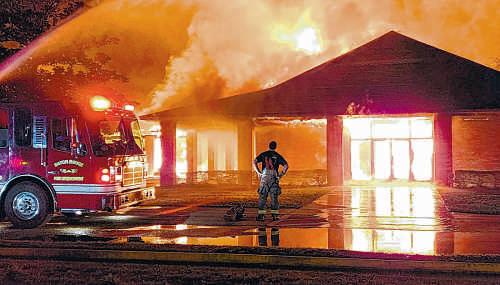
Continued from page1D
with hope and healing —a sign that, with God’shelp, we’re getting closer to rebuilding our spiritual home. Celebrating baptisms on thesame day makes it even more special. It’sabeautiful reminder that new life is springing up all around us as we honor our pastand build for the future.”
The 10 a.m. Mass at 8833 Goodwood Blvd. will also mark All Saints’ Day (officially on Nov.1). Following the service, attendees will moveout to the church slab, where the ground will be ceremoniallyturned. The slab will be brokenupshortly after,marking the physical start of construction
The festivities will continue back at Witter Hall with acommunitypotluck lunch.
“Almostnothing inside the church survived the fire, but what did, the cremains of our
loved ones in the columbarium, afew sacredvessels and across warped by flame,will now become part of the new space,” Owen said. “These remnants remind us notonly of what we’ve endured, but of thefaith that continuesto carry usforward ” Hoffpauir Studio,the architect forthe new church, worked with the church’s buildingcommittee to design the space to look and feel like St. Luke’s,while also embracingthe opportunity to create something spiritually renewed,refreshed and updated. The committee prioritized improvementstokey functional areas, including the narthex,sanctuary and choir space, as well as the addition of acommercial-grade kitchen and enlarged, accessible restrooms in Pope Hall, accordingtoanews release.
“When Iwoke up and heard about the fire, Iwas devastated. Iwondered how something like this couldhappen to aplace that had been a
part of my life forsolong, said Steve Jackson, longtime parishioner andhead of the building committee. “The church wasn’tjust damaged, it was gone. Many thanks to the Hoffpauir team for hearing the needs of our building committeeand parishioners, then turning those thoughts and ideas into abeautiful bricks-and-mortar reality.”
Bishopofthe Episcopal Diocese of Louisiana ShannonRogers Duckworth offered words of encouragementand blessing ahead of thegroundbreaking.
“I look forward to the day when thesedoors will open and we bless this building to God’sglory andservice,” she said.
At this point, atarget date for completion of thenew church is fluid.
“But we arehopingand praying we might be back in anew church by Christmas 2026,” Owen said.
For moreabout St.Luke’s andits building project, visit stlukesbr.org.



By The Associated Press
Today is Saturday, Nov.1,the 305thday of 2025. There are 60 days left in the year
Todayinhistory: On Nov.1,1938, in a two-horse match,Seabiscuit defeated the favored Triple Crown winner War Admiral by four lengths in what was dubbed the “Race of the Century” at Pimlico Race Course in Baltimore.
Also on this date:
In 1765, theStamp Act, passed by theBritish Parliament, went into effect, prompting stiff resistance from American colonists.
In 1861, during theCivil War, President Abraham Lincoln named Maj.Gen. George B. McClellan General-in-Chief of the Union armies, succeeding Lt. Gen. Winfield Scott.
In 1894, Nicholas II became Emperor of Russia, succeeding his latefather Alexander III.
In 1936, in aspeech in Milan, Italy,Benito Mussolini described the alliance between his country and Nazi Germany as an “axis”
running between Rome and Berlin.
In 1950, two Puerto Rican nationalists tried to force their way into Blair House in Washington, D.C., in a failed attempt to assassinate President Harry S. Truman. (One of the pair was killed, along with a White House police officer.)
In 1982, the first Japanese car produced in the U.S. rolled off the assembly line at the Honda manufacturing plant in Marysville, Ohio.
In 1989, East Germany reopened its border with Czechoslovakia, prompting tens of thousands of refugees to flee to the West. East Germanywould announce on Nov. 9that it was opening its border crossings with West Berlin, prompting the fall of the Berlin Wall.
In 1993, The Maastricht Treaty takes effect, formally establishing the European Union and anew era of integration and economic cooperation among its member states.
In 1995, peace talks opened in Dayton, Ohio, with leaders of Bosnia,






Serbia and Croatia present. The talks would lead to the formal signing the next month in Paris of the Dayton Peace Accord, signaling an end to the more than 3-year-old Bosnian warthat erupted after the breakup of the former Yugoslavia.
Today’sbirthdays:
















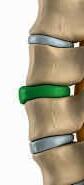





































Dear Miss Manners: Acousin and his wife, who are close to me, have an annoying habit of clickclicking on their phones while we are talking. Iamabout 20 years older than them. Ihave abackground in the arts and culture, and was once known as atrivia whiz, which Idon’tpublicize. But this couple constantly fact-checks everything I say.And when they “correct” me,they are not always using accurate websites. Ithink this is rude, and, as aformer editor,Ilearned alongtime agotokeep my mouth shut. What is the best way to handle this? Iamsure othershave the
Continued from page1D
special beer called the Tart Jester.The citrusy beer is a classic Berliner Weiss that has astrong orange and tangerine flavor,and it will be sold at the festival.
Each weekend offers a distinct theme, bringing the Renaissance Festival to life with immersive entertainment, delectable festival food and handcrafted treasures:
n All Hallows Weekend (Nov.1-2): Dress in costume for spooky fun and mystical vibes.
n Pirates Weekend(Nov. 8-9): Swashbuckling adventures with pirates rule the realm.
n Celtic Weekend (Nov. 15-16): Celebrate Celticheritage with kilts, bagpipes and highland revelry
n Wizards &Legends Weekend (Nov.22-23): Enter aworld of magic, mythical creatures and legendary tales.
n Viking Weekend (Nov 28-30): Embrace the warrior spirit with Viking battles and Nordic flair
n YuletideMarket(Dec. 6-7): Wrap up the season with holiday cheer,unique gifts and adazzling fireworks finale. The theme weekends extend to the entertainment.
Tommy Zadoyko, aPennsylvania actor and performer at the Louisiana Renaissance Festival since 2007, is also the entertain-
Continued from page1D
pace of the relationship?
n Are you comfortable with the pace?
n What could you do to
it down abit if you wanted or needed to?
Help them understand
Ask them about afriend they have had for along

same problem.

Judith Martin MISS MANNERS

Gentle reader: There is no fighting with the internet. Miss Manners suggests you not even try What you can do is stop talking whileyour cousin and his wife are clickclicking,telling them that youwill pause while they attendtowhat must be important. When they inevitably tell you what it is —factchecking—you may sheepishly say,“Ithought we were just havingaconversation.” Itmay not successfully shame them,but it will makeyou feel abit better
Dear Miss Manners: Ilive in agreat neighborhood with wonderful

neighbors. Afew of the ladies in my cul-de-sac have become close: looking out for each other,picking up delivered packages if they’re out of town, bringing back souvenirs from vacations, etc. We also occasionally go out to dinner to celebrate birthdays, special occasions or just because.
While Iconsider these outings for just our group, one of my neighbors (whoissingle, as am I) always invites afriend or two of hers to join us. No one else in the group does this
The other women she invites are always pleasant and engaging, so I’mnot sure why her doing this bothers me. Ihaven’tbrought this uptoher or myother neighbors.
ing spectacleduring All Hallows Weekend, andPaolo Garbanzo, ajuggling jester whohas traveled theworld.
Zadoyko says thatthe affordable live entertainment at the festival is one of the many reasons why the Louisiana Renaissance Festival is aspecial place. The variety cannot be beat.
“Renaissance fairs in general arethe lastbastion of live theater and vaudeville that is readily accessible to everyone,” Zadoyko said.
“The Renaissancefair is very immersive and interactive. We (theperformers) are goingtosee you sitting in the audience, and we will talk to you. It’snot like you’re just sitting and watching ascreen.
ment director.He travels all over the country yearround working at Renaissance festivals, and he’ll perform hispirate swordfighting show during Pirate WeekendonNov.8and 9.
He keepsperforming and discovering newtalent because of his love for the communitythat he has developed over the years
“I’ve been involved with it for so long, that alot of these peoplehave become my friends over the years —the people thatI work with, the people that Iwork for,the guests that comein, even just thepeopleinthe community in the general vicinity,” Zadoyko said.
Twoofhis compatriots are hugedraws at the festival—Jacques Ze Whipper,a TikToksensation who will be performing his whip-crack-
“The variety acts at this fair include sword fighting, juggling,magic,music, an escape artist, atrained dogshow. Allthatisinone place. Youwill see stuff at arenaissance fair that you will not see anywhere else in the world.”
Festival details
n DATES: Every weekend from Nov.1through Dec. 7
n LOCATION: LouisianaRenaissanceFestival, 46468 River Road,Hammond
n HOURS: 9:45 a.m. to 5p.m. (rain or shine)
n TICKETS: Adults$30, Children $15 (ages 6-12), Children 5yearsand underare free. All ticketsmustbe bought online,available at Renfest.net.
n Theridesharedrop-off area is anew additionthis year
time. Ask themabout how much they trusted that personwhenthey first met them.Ask “What moredo youknowabout them now, ayear or twolater,thanyou did when youfirst met?” Help them to understand that trust is alayered process over time, anditis often compartmentalized Just because Itrust my doctortocare for my physical health, doesn’t mean I’d allow her to invest my retirementfunds.
The same is true for everyone else in our lives. Help them envision what trust looks like at one month,three monthsand even ayear This gets their brains working on looking at the relationship from abigger perspective.
Petitfilsisalicensed professional counselor in Youngsville
Is her behavior bad manners, and should Ibemiffed?
Gentlereader: It bothers you, Miss Manners is guessing, because these outingsare achance forthe neighborhood ladiestobond and connect.Ifmembers of thegroup are going to invite just anyone, who will be next? Husbands? Dates?!
Of course, as these intruders happen to be pleasant and engaging, you could look at this as an opportunity to makenew friends. Or you could be miffed because what you really want to do is gossip about thenew mailperson and exchange neighborhood secrets.
If it miffs you enough, Miss Manners suggests you say to your friend, “Lacey and Hannah were adorable. Iwould love to get to
Dear Harriette: I’ve been living in my apartmentfor over ayear,and Ireally love it: thelocation, the space, myneighbors and thefact that the rent is so cheap. The only problem is my landlord. Every time Isubmit amaintenance request,it takes weeks for anythingtoget fixed. I’ve had leaky faucets, abroken heater in the middle of winter,and now adishwasher that hasn’tworked for over amonth. When I follow up, Ieither get vague responses or get ignored completely.I’ve tried to be patient and polite, but it’sstarting to feel like my concerns don’tmatter.I’ve even offered to find my own repairperson and deduct it from rent, but Iwas told that’s“not allowed.” Ipay my rent on time every month and have never caused any issues, so it’s frustrating to feel like I’m being brushed off. Ireally don’twant to jeopardize my lease renewal or come across as a“problem tenant,” but this is starting to affect my comfort and peace of mind in aserious way.How can Iadvocate for myself and push to get these repairs handled promptly without risking my good standing withmy landlord or losing an apartmentIotherwise love?
Landlord Concerns
know them better.Ijust feel bad that they will be left out if we start talking about neighborhood stuff. Maybe we could get together with them in adifferent context?”
But please have this conversation with her before approaching the other neighbors, lest your friend becomes the new subject of neighborhood gossip —orbefore you do, if your opinion is in the minority
Sendquestions to Miss Manners at herwebsite, www missmanners.com; to her email, dearmissmanners@gmail.com; or through postal mailtoMiss Manners, Universal Uclick, 1130 Walnut St., Kansas City,MO 64106.
landlord to serve as proof of your claims. Sometimes tenants can put their rent in an escrow account, meaning it doesn’t go to the landlord immediately but is withheld and stored in asafe place until repairs are made. Consult alawyer before taking that step, however.You do have rights. Don’t let your landlord intimidate you. Get help.


Dear Harriette: My sister-in-law invited me to join her forher bachelorette trip to the Virgin Islands. While Ididn’t want to miss out on atrip to the Caribbean, Iwas a little hesitant because Ireally don’tknow any of her friends. Eventually,she ended up telling me Icould bring aplus-one if I’dlike. Itook her up on her offer and invited afriend of mine whohad been telling me how much she needed agetaway.Though we’re close, Ihad never traveled with this friend either …and I don’tthink Iever will again. She put adamper on the entire trip. She complained
about work, the food, the heat, her dog, her co-workers, the sand, the excursions and even her creaky back door back at home. Ifelt horrible forbringing this dark cloud to what wassupposed to be afunfilled trip. My sister-in-law reassured me that she still enjoyed herself,but Ifeel awful! How can Imake it up to her? —Party Pooper
askharriette@ harriettecole.com or c/oAndrewsMcMeel Syndication, 1130 Walnut St.,Kansas City,MO 64106.

Dear Landlord Concerns: Now is the time to get thehelp of your city. Youcan call 311 and report your landlord. Have alist handy of all of your issues. Make sure to articulate your concerns clearly and be able to prove that they have not been addressed. Gather any texts or written messages that exist between you and your







































scoRPIo (oct. 24-nov. 22) You can sit aloneorshare your thoughts with others. Interaction will stimulateyour mind andnudge you to exploit your talents and turn your ideas into something tangible.
sAGITTARIus (nov. 23-Dec. 21) Stop, think and evaluate the outcomebeforeyou initiateachange. Time is on your side, and patience is avirtue. Reserve judgment, verify information andrethink your objective.
cAPRIcoRn (Dec. 22-Jan. 19) Put your energy where it counts, andyou will make adifference. Useyourimagination and let your discipline anddetermination push you toward your goal. Market yourself for success.
AQuARIus (Jan. 20-Feb. 19) Achange at home will be uplifting.Invest time, money andenergyinyourself, both emotionally and physically, and you'll reap the results thatlead to success.
PIscEs (Feb. 20-March 20) Putyour energy to work for you. Engagein learning, travel or more significant involvement in activitiesthatput a smile on your face.Takethe initiative and enjoy the ride.
ARIEs (March 21-April 19) Address personal affairsand keep your secrets private. Avoid events thatfavor excessive or indulgent behavior. Tie up looseends, address contracts and pay attention to overdue debt
TAuRus (April 20-May 20) Nurture meaningful relationships. Go the extra mile
to please others. Showing compassion will lead to open communication and the discovery of novel ways to resolve issues.
GEMInI (May 21-June 20) Enrich your life by attending seminars, going to reunions or traveling to interesting places. Achange of scenery will give you food forthought. Engage in new culturalexperiences.
cAncER (June 21-July 22) Mix business with pleasure, and you'll make headway. Networking events will give you adifferent outlook on the possibilities. It's timetodiversify how you use your skills andknowledge.
LEo (July23-Aug.22) You may receive misinformation thatcan lead you astray. The bestchange you can make is one that involves onlyyourself. Discover how you can enhanceyour awareness and acquire newskills.
VIRGo (Aug. 23-sept. 22) Shareyour planswithanyone whowillbeaffected by them. Offering compensation will help yougain support, making it easier to completeyour mission.
LIBRA (sept.23-oct.23) Preparation is everything when you are trying to advance. Review your profile, check your reputation and ensure everything is in top shape. Ask and you shall receive.
The horoscope, an entertainment feature,isnot based on scientific fact. ©2025 by NEA, Inc., dist.ByAndrewsMcMeel Syndication
Celebrity Cipher cryptograms arecreated from quotations by famous people, past and present. Each letter in the cipher stands for another ToDAy'scLuE: JEQuALs W






InstructIons: Sudoku is anumber-placing puzzle based on a9x9 gridwith several given numbers. The object is to place the numbers 1to9inthe empty squares so that each row, each column and each 3x3 box contains the same number only once. The difficulty level of the Sudoku increases from Monday to Sunday.
Yesterday’s Puzzle Answer





By PHILLIP ALDER
In the last two days, we have looked at deals in which alot of errors were made. Let’s end the weekwithone where the bidding was sane and the defense excellent
Afterthree passes,North opened because her hand satisfiedthe Rule of 15. If high-card points plus spade length equalatleast15, open; otherwise, pass out the deal
South, who would have responded two hearts anyway, was even happier here because he was apassed hand; North wasn’t going to assume that hispartner had alot of points. West contestedwith two spades (a makable contract), and North competed to three hearts with four-card support, despite her minimum count and flat hand.Southpassed,knowingthatifgame was good, North would have bid it. West led the diamond ace. Then she did very well, shifting to the spade 10, denying the jack. That made it easy for East to win with his king and return the diamond jack. West won with her king andledanotherdiamond,whichdeclarer ruffed.
South drew two rounds of trumps ending on the board and called for the spade nine. East went in with his ace, but what did he do next?
Some players would have shifted fatally to aclub. But East worked out declarer’sdistribution. Southwas known to havestartedwithtwospades,fivehearts, two diamonds and, therefore, four clubs. East could not gain by leading aclub, so he returned aspade and waited for his club queen to defeat the contract. ©2025 by NEA, Inc., dist.
By AndrewsMcMeel
Syndication
Each Wuzzle is aword riddle which creates adisguised word, phrase, name, place, saying, etc. For example: NOON GOOD =GOOD AFTERNOON
Previous answers:
word game
InsTRucTIons: 1. Words mustbeoffour or moreletters. 2. Words that acquire four letters by the addition of “s,”such as “bats” or “dies,”are not allowed. 3. Additional wordsmade by adding a“d” or an “s” may not be used. 4. Proper nouns, slang words, or vulgar or sexually explicit words are not allowed.
ToDAy’s WoRD RAsPBERRy: RAZ-beh-ree: Asmall one-seeded red or black edible berry.
in RASPBERRY?
yEsTERDAy’s WoRD —sAcHETs


















































































(the “LibrarySystem”), and paying the costs of issuance of the Bonds; and
WHEREAS,the Bonds shall be special and limited obligations of the Parish, secured solely by and payable from the Taxes, andshall not be a pledge of the general credit or any other revenues of the Parish other than the Taxes; and
WHEREAS,the capital expenditurestobe fundedwith proceedsof the Bonds, when made, will support the maintenance, operation, and administration of the Library System; and
WHEREAS,the Parish has no outstanding bonds or other obligations of any kind or naturepayable from or enjoying alien on the revenues of the Taxes herein pledged;
WHEREAS,the maximum amount of principal and interest dueinany year on the Bonds does not exceed seventy-five percent (75%) of the income estimated to be realized from the Taxes; and WHEREAS,the Parish desires to sell the Bonds to the Purchasers (hereinafter defined) thereof and to fixthe details of the Bonds and the terms of the sale of the Bonds, pursuant to the Term Sheet attached hereto;
NOW,THEREFORE,BEITORDAINED by the Iberville Parish Council, actingasthe governing authority of the Parish, that: ARTICLE I DEFINITIONS AND INTERPRETATION
SECTION 1.1. Definitions.The following terms shall have the following meanings unless the context otherwise requires:
Act”shall mean Part II of Chapter 4ofSubtitle II of Title 39 of the Louisiana Revised Statutes of 1950, as amended, and other applicable constitutional and statutory authority
Additional Parity Bonds”shall mean any pari passu additional bonds which may hereafter be issued pursuant to Section 9.1 hereof on aparity with the Bonds.
Bond”or“Bonds”shall mean any or all of the Limited TaxBonds (Library),Series 2025, of the Parish, issued pursuant to this Bond Ordinance, as the same may be amended from time to time, whether initially delivered or issued in exchange for,upon transfer of, or in lieu of any previously issued Bond.
Bond Obligation”shall mean as of the date of computation, the principal amount of the Bonds then Outstanding.
Bond Ordinance”or“Ordinance”shall mean this ordinance, as it may be amended and supplemented as herein provided.
Bond Register”shall mean the registration booksofthe Paying Agent in which registration of the Bonds and transfers of the Bonds shall be made as provided herein.
“BusinessDay”shall mean aday of the year other than aday on which banks located in New York, NewYorkand the cities in which the principal offices of the Paying Agent arelocated arerequired or authorized to remain closed.
Code”shall mean the Internal Revenue Code of 1986, as amended, and all regulations promulgated thereunder Costs of Issuance” shall mean all items of expense, directly or indirectly payable or reimbursable and related to the authorization, sale and issuance of the Bonds,including but not limited to printing costs, costs of preparation and reproduction of documents, filing and recording fees, initial fees and charges of any fiduciary,legal fees and charges, fees and disbursements of consultants and advisory professionals, placement agent fees, costs of credit ratings, fees and charges for preparation, execution, transportation and safekeeping of the Bonds, costs and expenses of refunding, premiums for the insurance of the payment of the Bonds, if any,and any other cost, charge or fee paid or payable by the Parish in connection with the original issuance of Bonds.
Executive Officers”means collectively the Parish President and the CouncilChairman and Clerk of Council of the Parish of Iberville, State of Louisiana.
“Fiscal Year”means the Parish’sone-year accounting period determined from time to time by the Parish Council as the fiscal year of the Parish, currently being the year ending each December 31. Government Securities”shall mean direct obligations of the United States of America, or obligations the timely payment of principal of and interest on which areunconditionally guaranteed by the United States of America, which arenon-callable prior to their maturity and may be United States Treasury obligations such as the State and Local Government Series.
“Interest Payment Date”shall mean March 1and September 1of each year,commencing March 1, 2026.
“Parish”means the Parish of Iberville, State of Louisiana, apolitical subdivision of the State of Louisiana, and its successors or assigns. Outstanding”when used with respect to Bonds means, as of the date of determination, all Bonds theretofore issued and delivered under this Ordinance, except:
1. Bonds or portions thereof which have been paid or which have beencanceled by the Paying Agent or delivered to the Paying Agent for cancellation;
2. Bonds in exchange for or in lieu of which other Bonds have been registered and deliv-ered pursuant to this Ordinance;
3. Bonds alleged to have been mutilated, destroyed, lost or stolen which have been paid as provided in this Ordinance or by law; and
4. Bonds for the payment of the principal of and interest on which money or Government Securities or both areheld in trust with the effect specified in this Ordinance. Owner”or“Owners”when used with respect to any Bond means the Person in whose name such Bond is registeredinthe Bond Register Paying Agent”means Citizens Bank &TrustCompany, in the City of Plaquemine, Louisiana, until asuccessor Paying Agent shall have been appointed pursuant to the applicable provisions of this Ordinance, and thereafter “Paying Agent” shall mean such successor Paying Agent.
Parish Council”means the Iberville Parish Council.
“Person”shall mean any individual, corporation, partnership, joint venture, association, joint-stock company,trust,unincorporated organization or government or any agency or political subdivision thereof.
Purchaser”means any of and Purchasers”means, collectively all of The Bank of Commerce, Guaranty Bank &TrustCompany, Anthem Bank &Trust, Plaquemine Bank&TrustCompany,Renasant Bank, and Citizens Bank &Trust Company,the original purchasers of the Bonds.
Record Date”shall mean, with respect to an Interest Payment Date, the fifteenth day of the calendar month next preceding such Interest Payment Date, whether or not such day is aBusiness Day State”shall mean the State of Louisiana.
“Taxes”means collectively,the (i)advaloremtax of 3.99 mills authorized at an election held on March 28, 2015, which the Parish is authorized to impose and collect each year through 2025, and (ii) ad valorem
by or on behalf of the Parish shall be for the equal benefit, protection and security of the Owners of any and allofthe Bonds, each of which Bonds, regardless of the timeortimes of its issue or maturity,shall be of equal rank without preference, priority or distinction over any other thereof except as expresslyprovided in this Bond Ordinance.
SECTION 2.3. Obligation of Bonds.The Bonds shallbesecured by and payable solely from an irrevocablepledgeand dedication of the avails or proceeds of the Taxes. ThisParish Council does hereby obligate itself and its successors in office to impose and collect the Taxes in each year, and does hereby irrevocably and irrepealably dedicate, appropriate and pledge the annual income to be derived from the assessment, levy and collection of the Taxes in each year to the payment of the Bonds.
SECTION 2.4. Form of Bonds.The Bonds shallbeinsubstantially the form set forth as Exhibit Bhereto, with such necessary or appropriate variations, omissions and insertions as arerequired or permitted by the Act and this Bond Ordinance.
SECTION 2.5. Dates, Maturities and Interest.The Bonds shallbe issued as fully registered bonds, numbered R-1 upward, with one Bond for each Purchaser,inthe aggregate principal amount of $7,100,000. The Bonds shall be dated the date of delivery thereof,and each shallmature in installments as set forth in Section5.2 of this Bond Ordinance. The Bonds shall bear interest from the date thereof or from the most recent Interest Payment Date to which interest has been paidorduly provided for, payableoneach Interest Payment Date, at the interest rateof4.50% per annum, and shall matureonMarch 1, 2040.
The principal of and interest on the Bonds shallbepayable by wire transfer or other form of electronic payment in accordance with the written account instructions provided by the Owner or,with the Owner’swritten consent, by such other commercially reasonable method of payment, directly to the Owner shown on the Bond Register,provided, however,that principal of the Bonds at final maturity shall be payable at the designated office of the Paying Agent upon presentation and surrender thereof
Notwithstanding anything in this Ordinance to the contrary,prior to the Maturity Dateorthe earlier payment in full of the Bonds, paymentsof principal of and interest on the Bonds willbepayable without presentation and surrender hereof. Each Bond delivered under this Ordinance upon transfer of, in exchange for or in lieu of any other Bonds shallcarry all the rights to interest accrued and unpaid, and to accrue, which werecarried by such other Bonds, and each such Bond shall bear interest (as herein set forth) so neither gainnor loss in interest shallresultfromsuch transfer, exchange or substitution.
Except as otherwise provided in this Section, Bonds shallbear interest from date thereof or from the most recent Interest Payment Date to which interest has been paidorduly provided for,asthe case may be, provided, however,that if and to the extent that the Parish shall default in the payment of the interest on any Bonds due on any Interest Payment Date, then allsuch Bonds shallbear interest from the most recent Interest Payment Datetowhich interest has been paid on the Bonds, or if no interest has been paidonthe Bonds, from their dated date.
The person in whose name any Bond is registered at the close of business on the RecordDate with respect to an InterestPayment Date shall in allcases be entitled to receive the interest payableonsuch Interest Payment Datenotwithstanding the cancellation of such Bond upon any registration of transfer or exchange thereof subsequent to such Record Date and prior to such Interest Payment Date.
ARTICLE III GENERAL TERMS AND PROVISIONS OF THE BONDS
SECTION 3.1. Exchange of Bonds; Persons Treated as Owners
The Parish shall cause books for the registration and for the registration of transfer of the Bonds as provided in this Bond Ordinance to be kept by the Paying Agent at its designated corporate trust office, and the Paying Agent is hereby constituted and appointed the registrar forthe Bonds.
Any Bonds presented for registration of transfer or exchange shall be accompanied by awritten instrument or instruments of transferin form satisfactory to the Paying Agent,duly executed by the Owner or his attorney duly authorized in writing.
The Bonds may be transferred, registered and assigned onlyon the Bond Register,and such registration shall be at the expense of the Parish. ABond may be assigned by the execution of an assignment form on the Bonds or by other instruments of transferand assignment acceptable to the Paying Agent.Anew Bond or Bonds will be delivered by the Paying Agent to the last assignee (the new Owner) in exchange forsuch transferred and assigned Bonds after receipt of the Bonds to be transferred in proper form. Such new Bond or Bonds shallbeinthe denomination of $100,000, or any integral of $5,000 in excess thereof Neitherthe Parish northe Paying Agent shall be required to issue,register, transfer or exchange any Bonds during aperiod beginning at the opening of business on aRecordDate and ending at the close of business on the Interest Payment Date.
No service charge to the Owners shallbemade by the Paying Agent forany exchange or registration of transfer of Bonds. The Paying Agent may requirepayment by the person requesting an exchange or registration of transfer of Bonds of asum sufficient to cover any tax or other governmental charge that may be imposed in relationthereto.
The Parish and the Paying Agent shall not be required to issue register the transfer of or exchange any Bond during aperiod beginning at the opening of business on aRecordDate or any date of selection of Bonds to be prepaid and ending at the close of business on the Interest Payment Date.
AllBonds delivered upon any registration of transfer or exchange of Bonds shall be valid obligations of the Parish, evidencing the same debt and entitled to the same benefits under this Bond Ordinance as the Bonds surrendered.
Priortodue presentment for registration of transfer of any Bonds, theParish and the Paying Agent,and any agent of the Parish or the Paying Agent may deem and treat the person in whose name any Bond is registered as the absolute owner thereof for all purposes, whether or not such Bonds shall be overdue, and shall not be bound by any notice to the contrary SECTION 3.2. Bonds Mutilated, Destroyed, Stolen or Lost.In case any Bond shall become mutilated or be improperly cancelled, or be destroyed, stolen or lost, the Parish may in its discretion adopt an ordinance and thereby authorize the issuance and delivery of anew Bond in exchange for and substitution for such mutilated or improperlycancelled Bond, or in lieu of and substitution for the Bond destroyed, stolen or lost, upon the Owner (i) furnishing the Parish and the Paying Agent proof of his ownership thereof and proof of such mutilation, improper cancellation destruction, theft or loss reasonably satisfactory to the Parish and the Paying Agent,(ii) giving to the Parish and the Paying Agent an indemnity in form and substance reasonably acceptable to the Parish and the Paying Agent,(iii) complying with such other reasonable regulationsand conditions as the Parish may prescribe and (iv) paying such expenses as the Parish and the Paying Agent may incur.All Bonds so surrendered shall be delivered to the Paying Agent for cancellation pursuant to Section3.3 hereof. If any Bond shall have matured or be about to mature, instead of issuing asubstitute Bond, the Parish may pay the same, upon being indemnified as aforesaid, and if such Bond be lost, stolen or destroyed, without surrender thereof
Any such duplicate Bond issued pursuant to this Sectionshall constitute an original, additional, contractual obligation on the part of the Parish, whether or not the lost, stolen or destroyed Bond be at any time found by anyone. Such duplicate Bond shallbeinall respects identical with those replaced except that it shall bear on its face the following additional clause:
“This bond is issued to replace alost,cancelled or destroyed bond under the authority of the Act.”
Such duplicate Bond may be signed by the facsimile signatures of the same officers who signed the original Bonds, provided, however,that in the event the officers who executed the original Bonds arenolonger in office, then the new Bonds may be signed by the officers then in office. Such duplicate Bonds shallbeentitled to equal and proportionate benefits and rights as to lien and source and securityfor payment as provided herein with respect to all other Bonds hereunder,the obligations of the Parish upon the duplicate Bonds being identical to its obligations upon the original Bonds and the rights of the Owner of the duplicate Bonds being the same as those conferred by the original Bonds. SECTION 3.3. Cancellation of Bonds.All Bonds paid, together with all Bonds purchased by the Parish, shall thereupon be promptly cancelled by the Paying Agent.The Paying Agent shall thereupon promptly furnish to the Chief Financial Officer of the
the rights and obligations of the Parish and of the Owners of the Bonds hereunder,inany particular,may be made by asupplemental ordinance, with the written consent of the Owners of amajority of the Bond Obligation at the time such consent is given. No such modification or amendment shall permit achange in the terms of maturity or prepayment of the principal of any outstanding Bond or of any installment of interest thereon or areduction in the principal amount thereof or in the rate of interest thereon without the consent of the Owner of such Bond, or shall reduce the percentages of Bonds the consent of the Owner of which is required to effect any such modification or amendment, or change the obligation of the Parish to levy and collect taxes for the payment of the Bonds as provided herein, without the consent of the Owners of all of the Bonds then outstanding, or shall change or modify any of the rights or obligations of either the Paying Agent without its written assent thereto. For the purposes of this Section, Bonds shall be deemed to be affected by amodification or amendment of the Bond Ordinance if the same adversely affects or diminishes the rights of the Owners of said Bonds. Asupplemental ordinance, upon the filing with the Paying Agent of acertified copy thereof, shall become fully effective in accordancewith itsterms. ARTICLE VIII TAXCOVENANTS; CONTINUING DISCLOSURE SECTION 8.1. TaxCovenants.The Parish covenants and agrees that, to the extent permitted by the laws of the State of Louisiana, it will comply with the requirements of the Code to in order to establish, maintain and preserve the exclusion from “gross income”ofinterest on the Bonds under the Code. The Parish shall not take any action or fail to take any action, nor shall it permit at any time or times any of the proceeds of the Bonds or any other funds of the Parish to be used directly or indirectly in any manner,toacquireany securities or obligations the acquisition of which would cause any Bond to be an arbitrage bond”asdefined in the Code or would result in the inclusion of the interest on any Bond in gross income under the Code, including, without limitation, (i) the failuretocomply with the limitation on investment of the proceeds of the Bonds, (ii) the failure to pay any required rebate of arbitrage earnings to the United States of America, or (iii) the use of the proceeds of the Bonds in amanner which would cause the Bonds to be “private activity bonds”under the Code. The Executive Officers arehereby empowered, authorized and directed to take any and all action and to execute and deliver any instrument, document or certificate necessary to effectuate the purposes of this Section.
SECTION 8.2. Qualified Tax-Exempt Obligations.The Bonds are designated as qualified tax-exempt obligations”within the meaning of Section 265(b)(3) of the Code.
SECTION 8.3. Disclosure UnderSEC Rule 15c2-12.The Parish will not be required to comply with the continuing disclosurerequirements described in Rule 15c2-12 of the Securities and Exchange Commission [17 CFR 240.15c2-12].
ARTICLE IX ADDITIONAL PARITY BONDS
SECTION 9.1. Issuance of Additional Parity Bonds.The Parish shall issue no other bonds or obligations of any kind or naturepayable from or enjoying alien on the proceeds of the Taxes havingpriorityover or parity with the Bonds, except that additional bonds may hereafter be issued on aparity with the Bonds under the following conditions:
(a) The Bonds herein authorized, or any part thereof, including the interest thereon, may be refunded, andthe refundingbonds so issued shall enjoy complete equality
issued so long as the highest amount of the combined principal and interest requirementsfor any futureFiscal Year on the Bonds, any additional bonds issued pursuant to the provisions of Section9(a) or (b) above, and the proposed juniorand subordinate bonds do not exceed 100% of the revenues estimated to be realized by the Parish from the levy of the Taxes in the year in which such additional bonds areissued. Therestriction in the forgoing sentence shallapply only to bonds or other obligations of the Parish payable exclusivelyfromalien on the Taxes.
ARTICLE X REMEDIES ON DEFAULT
SECTION 10.1. EventsofDefault.Ifone or moreofthe following events (in this Bond Ordinance called “Events of Default”) shall happen, that is to say (a) if default shall be made in the due and punctual payment of the principal of any Bond when and as the same shall become due and payable, whether at maturity or otherwise; or (b) if default shall be made in the due and punctual payment of any installment of interest on any Bond when and as such interest installment shallbecome due and payable; or (c) if default shall be made by the Parish in the performance or observance of any other of the covenants, agreements or conditions on its part in the Bond Ordinance, any supplemental ordinance or in the Bonds contained and such default shall continue for aperiod of forty-five (45) days after written notice thereof to the Parish by any Owner; or (d) if the Parish shall file apetition or otherwise seek relief under any Federal or Statebankruptcy law or similar law; then, uponthe happening and continuance of any Event of Defaultthe Owners shall be entitled to exercise all remedies available at lawand at equity, including mandamus or other civil proceeding to compel performance of all duties of the officialsofthe Parish, including levying and collecting the Taxes and the proper segregation of the revenues of the Taxes, and shallbeentitled to exercise all rights and powers for which provision is made under Louisiana law
SECTION 11.1. Paying Agent; Appointment and Acceptance of Duties. The Parish will at all times maintain aPaying Agent having the necessary qualificationsfor the performance of the duties described in this Bond Ordinance. The designation of Citizens Bank &Trust Company, in the City of Plaquemine, Louisiana, as the initial Paying Agent is hereby confirmed and approved. ThePaying Agent shall signify its acceptance of theduties and obligationsimposed on it by the Bond Ordinance by executing and delivering to the Executive Officers awritten acceptance thereof.The Parish Council reserves the right to appoint asuccessor Paying Agent by filing with the Person then performing such function acertified copy of an ordinance giving notice of the termination of the agreement and appointing asuccessor and causing notice to be given to each Owner.Furthermore, the Paying Agent may be removed by the Parish at any timefor any breach of its duties set forth herein, affective upon appointment of asuccessor Paying Agent as set forth above. Every Paying Agent appointed hereunder shall at all times be atrust company or bank organized and doing business under the laws of the United States of America or of any State, authorized under such laws to exercise trust powers, and subject to supervision or examination by Federal or State authority
ARTICLE XII
SECTION 12.1. Defeasance.Ifthe Parish shall pay or cause to be paid to the Owners of allBonds then outstanding, the principal and interest become due thereon, at the times and in the manner stipulated therein and in the Bond Ordinance, then the covenants, agreements and other obligations of the Parish to the Owners shallbedischarged and satisfied. In such event, the Paying Agent shall, upon the request of the Parish, execute and deliver to the Parish all such instruments as may be desirable to evidence such discharge and satisfaction and the Paying Agent shall pay over or deliver to the Parish all moneys, securities and funds held by them pursuant to the Bond Ordinance which arenot required for the payment of Bonds not theretoforesurrendered for such payment. Bonds or interest installmentsfor the payment of which money shall have been set aside and shall be held in trust (through depositbythe Parish of funds forsuch payment or otherwise) at the maturity date thereof shall be deemed to have been paid within the meaning and with the effect expressed above in this Section. Bonds shallbedeemed to have been paid, prior to their maturity, within the meaning and with the effect expressed above in this Sectionifthey have been defeased pursuant to Chapter 14 of Title 39 of the Louisiana Revised Statutes of 1950, as amended, or any successor provisions thereto. SECTION 12.2. Evidence of Signatures of Ownersand Ownership of Bonds. Any request, consent, revocation of consent or other instrument which the Bond Ordinance may requireorpermittobesigned and executed by the Owners may be in one or moreinstruments of similar tenor, and shallbesigned or executed by such Owners in person or by their attorneys-in-fact appointed in writing. Proof of the execution of any such instrument, or of an instrument appointing any such attorney,orthe ownership by any person of the Bonds shallbesufficient for any purpose of the Bond Ordinance (except as otherwise therein expressly provided) if made in the following manner,orinany other manner satisfactory to the Paying Agent,which may nevertheless in its discretion requirefurther or other proof in cases whereitdeems the same desirable:
(a) the fact and date of the execution by any Owner or his attorneyin-fact of such instrument may be proved by the certificate, which need not be acknowledged or verified, of an officer of a bank or trust company or of any notary public (except in the case of any consent delivered by the Owner,such consent shall be notarized) or other officer authorized to take acknowledgments of deeds, that the person signing such request or other instrument acknowledged to him the execution thereof,orbyanaffidavit of awitness of such execution, duly sworntobeforesuch notary public or other officer.Wheresuch execution is by an officer of a corporation or association or amember of apartnership, on behalf of such corporation, association or partnership, such certificate or affidavit shall also constitute sufficient proof of his authority;
(b)the ownership of Bonds and the amount, numbers and other identification,and date of owning the same shall be proved by the registration books of the Paying Agent
(c) Any request or consent by the Owner of any Bond shallbind all futureOwners of such Bond in respect of anything done or suffered to be done by the Parish or the Paying Agent in accordance therewith.
SECTION 12.3. Moneys Held for Particular Bonds. The amounts held by the Paying Agent forthe payment due on any date with respect to particular Bonds shall, on and after such date and pending such payment, be set aside on its books and held in trust by it, without liabilityfor interest, for the Owners of the Bonds entitled thereto.
SECTION 12.4 Parties Interested Herein.Nothing in the Bond Ordinance expressed or implied is intended or shall be construed to confer upon, or to give to,any person or entity, other than the Parish, the Paying Agent,and the Owners of the Bonds any right, remedy or claim under or by reason of the Bond Ordinance or any covenant, condition or stipulation thereof;and allthe covenants, stipulations, promises and agreements in the Bond Ordinance contained by and on behalf of the Parish shall be for the sole and exclusive benefitofthe Parish, the Paying Agent and the Owners of the Bonds.
SECTION 12.5. No Recourse on the Bonds.Norecourse shall be had forthe payment of the principal of or interest on the Bonds or for any claim based thereon or on this Bond Ordinance against any member of the Parish Council or officer of the Parish or any person executing the Bonds.
SECTION 12.6. Successors
SECTION
necessary upon the advice of bond counsel, to effect the transactions contemplated by this BondOrdinance, the signatures of the Executive Officers on such documents, certificates andinstruments to be conclusive evidence of the due exercise of the authority grantedhereunder.
SECTION 12.11. Post-Issuance Compliance.The Executive Officers and/or their designees aredirected to establish writtenproceduresto assistthe Parish in complying with various State andFederal statutes, rules andregulations applicabletothe Bonds andare furtherauthorized to take anyand allactions as mayberequired by said writtenprocedures to ensurecontinuedcompliancewith such statutes, rules andregulations throughout the term of the Bonds.
SECTION 12.12. Audit; Budget.The Parish shallprovide the Ownerof the Bonds upon his, her, or its request with the following items: (a) the Parish’s annualaudited financialstatementsassoon as available afterthe Parish’sFiscal Year end; and (b) the Parish’s annualoperating budget for aFiscal Year as soon as available following the beginning of such Fiscal Year
SECTION 12.13. Waiver.Noconsent or waiver,express or implied, to or of anybreach or default in the performance of anyobligation hereunder will constitute aconsent or waivertoorofany otherbreach or default in the performance of the same or anyotherobligation.
SECTION 12.14. No Separate Rating;NoCUSIP.The Bonds shall not be (i) assignedaseparaterating by anymunicipalsecurities ratingagency, (ii) registeredwith The Depository Trust Company or anyothersecurities depository,(iii) issuedpursuant
Term Sheet of the Purchasers for the Bonds, whichTerm Sheet is attached as Exhibit Ahereto, andany Executive Officer is hereby authorized and directed to execute the Term Sheet on behalf of the Parish As acondition to the delivery of the Bonds to the Purchasers, each Purchaser will execute astandard letter, acceptabletoitand the Parish,indicating it has conductedits own analysis with respect to the Bonds andisextending creditinthe formofthe Bonds as avehicle for making acommercialloan to the Parish The foregoing ordinancewhichwas previously introduced at the meeting of the Iberville Parish Council on September23, 2025 anda copy thereof having been published in the official journalonSeptember 29, 2025 the public hearing on this ordinanceheldonthe 21st day of October, 2025, at 6:00 p.m., in the Council Meeting Room, 58050 Meriam Street Plaquemine, Louisiana,was brought up for finalpassage with amotion by CouncilwomanJenkins andseconded by CouncilmanBradford, having been duly submitted to avote,the ordinancewas duly adopted by the following yea andnay vote on roll call: YEAS: Allen, Easley,Dominique, Frazier,Pierce, Jenkins, Bradford, Martinez, Dardenne, Jewell.
NAYS: ABSTAIN:
ABSENT:Markins, Morgan. The ordinance wasdeclared adopted by the Chairmanonthe 21st day of October,2025.
IBERVILLE PARISH COUNCIL BY:_ STEVE C. SMITH, CHAIRMAN
ATTEST:
MACYW.OURSO COUNCIL CLERK
CERTIFICATE
I, Macy W. Ourso, do hereby certify thatI am the duly qualified and appointedCouncil Clerk of the Parish Council, Parish of Iberville, State of Louisiana Ifurthercertify thatthe above constitutesa true andcorrect copy of an ordinance adopted by the Iberville Parish Council in regularsessionon the 21st day of October,2025.
IN FAITH WHEREOF,witness my official signatureand the impress of the official seal of the Parish of Iberville, State of Louisiana,onthis 21st day of October,2025.
MACY W. OURSO IBERVILLE PARISH COUNCIL CLERK
I, Macy W. Ourso, Council Clerk of the Iberville Parish Council, hereby certify thatthe above ordinance waspresented to the Parish President, Hon. Chris Daigle,bymeonthe day of October,2025 at ___.M.
MACY W. OURSO IBERVILLE PARISH COUNCIL CLERK
I, Chris Daigle,Parish President, do hereby acknowledge receipt of the above ordinance on the day of October, 2025 at ___.M.
CHRIS DAIGLE PARISH PRESIDENT
I, Chris Daigle,Parish President, hereby (approve /veto) the above ordinance on the day of October, 2025. (If vetoed attach veto statement.)
CHRIS DAIGLE PARISH PRESIDENT
I, Macy W. Ourso, Council Clerk of the Iberville Parish Council, hereby certify thatthe above ordinance wasreceived by me from the Parish President, Chris Daigle on the day of October,2025 at ___.M.
MACY W. OURSO IBERVILLE PARISH COUNCIL CLERK EXHIBIT A TO BONDORDINANCE





on and after March1,2028, at the optionofthe Parish, at the prepayment price equal to 100% of the principal amount of the Bond to be prepaid plus accrued interest on such principal amount,ifany,tothe prepayment date.
Official notice of such call of all or any portion of the Bonds for optional prepayment will be given by accepted means of electronic communication, not less than twenty (20) days prior to the prepayment date addressed to the registered owner of each bond to be prepaid at his address as shown on the registration books of the Paying Agent The notice provided forany optional prepayment may provide that such optional prepayment is conditioned upon the availability of funds therefor
The principal of this Bond shallbepaid in installmentswithout necessity of notice on March 1inthe years and in the principal amounts set forth below (plus accrued interest
of the revenues of the Taxes from whichand conditions underwhich the Bonds areissued, referenceishereby made to the Ordinance. The Parish,inthe Ordinance, has also enteredinto certainothercovenants andagreements
recitedand
andthings
to happen andtobeperformed precedenttoand in the issuanceofthis Bondhave existed, have happened andhave been performed in due time,form andmanneras required by law, andthatthe indebtedness of the Parish,including this Bond, does not exceed the limitations prescribed by the Constitution and statutes of the State of Louisiana IN WITNESS WHEREOF,the Parish Council of the Parish of Iberville, State of Louisiana,acting as the governing authority of the Parish,has caused this Bondtobeexecutedinits name by the manualsignatures of is Clerk andthe Parish President of
THEPARISH OF IBERVILLE,STATEOFLOUISIANA
PAYING AGENT’S CERTIFICATEOFREGISTRATION
CITIZENS
DateofRegistration:
The Parish shall cause to be kept at the designated office of the Paying Agent aregister (the BondRegister”) in which registration of and of transfers of the Bonds shallbemade as provided in the Ordinance. This Bond may be transferred, registered and assigned onlyonthe Bond Register,which such registration shallbeatthe expense of the Parish, and only by the execution


tages, andother lodging facilities at anypark within theLouisiana StateParkSystem. The objectives in soliciting informationare to pro‐mote theState Parks mission, achieveproper balanceofpreservation andutilization of State ParksPropertieswhile becoming more finan‐cially self-sustaining, andbetterserve the needsofcitizensand of visitors to Louisiana throughcollaboration utilizingPublicPrivate Partnerships.The RFI packet,which includes a timeline,instructionsfor proposal submission andselection criteria,is available at http://www opportunitiesinlouisiana. com. It mayalsobe picked up between9 a.m. and4 p.m. weekdays at theOffice of StatePark, CapitolAnnex, Third Floor,1051 NorthThird Street,Baton Rouge, LA, 70802. WrittenProposals must be received by StateParks at this ad‐dressnolater than 4:00 p.m. CT on Friday,Janu‐ary30, 2026. StateParks will continue itscommit‐ment to ensure allpro‐jectspromote ourmis‐sion statement, have community support, and supportoflocal and stateelected officials. StateParks also commits to notproceed with any projects that will be detrimentaltothe local community or anylocal business.All inquiries concerning theRFI should be submittedin writingtothe IssuingOf‐ficer, BrettSandifer, at bsandifer@crt.la.gov 163877-OCT27-NOV27 $603.88

Develop‐ment Code.The detailsof theproposedtext amendments canbe viewed at City Hall,lo‐catedat4700 Main St Zachary, LA 70791. 164825-nov 1-3-3t $63.58
“Taxes”). For acompletestatement






In accordance with the laws of theState of Louisiana, andwithpar‐ticularreference to the provisions of Title30of LouisianaRevised Statutes of 1950 and StatewideOrder No.29-L3, thefollowing notice is given: Please be advisedthat APEX NATURALGAS,LLC hasmadeapplication to terminatethe unit(s) cre‐ated forthe Pool known as JURRASICZONE ReservoirB,SandUnitI by Department of Con‐servationand Energy OrderNo. 917-J-2 effec‐tive June 17, 2008, Bracky Branch Field, RedRiver Parish,Louisiana.The applicantrepresentsas true andcorrect that a period of five (5)years haselapsed without: (a)productionfromsaid Unit;and (b)the existenceof a well proven capableof producingfromsaidUnit; and (c)drilling, reworking, re‐completion,deepening or plugging back opera‐tionshavingbeen con‐ducted on awelltose‐cure or restore production from said Unit Applicationreviewbythe Department of Conserva‐tion andEnergyindi‐catedthatall require‐mentsofStatewide OrderNo. 29-L-3, which governsthe termination of units have been met. Should anyinterested partyfeel that this appli‐cation forthe termina‐tion of said unit(s) should notbeapproved he is afforded theoppor‐tunity to make hisobjec‐tionsknown,inwriting to theDepartmentof Conservation andEnergy, P. O. Box94275, Baton Rouge, LA 70804-9275, within thethirty(30) cal‐endarday period follow‐ingthe date of this no‐tice.Inthe absenceof the filingofany letter of objectionduringthe said thirty (30) calendar day period,a Supplemental Orderwillbeissuedter‐minating theunit(s) as requestedbythe appli‐cant.Withrespecttothe computationofsaid thirty (30) calendar day period of time allowed forreceiving writtenob‐jections,the date of this LegalNoticeand theap‐proval date shallnot be included.Inthe eventthe last dayofsaidthirty (30) calendar dayperiod falls on aSaturday, Sun‐day, or
PUBLIC NOTICE RE:BrackyBranchField 29-L-2 LEGALNOTICE STATEOFLOUISIANA,DE‐PARTMENT OF CONSER‐VATION ANDENERGY, BATONROUGE LOUISIANA In accordance with the laws of theState of Louisiana, andwithpar‐ticularreference to the provisions of Title30of LouisianaRevised Statutes of 1950 and StatewideOrder No.29-L3, thefollowing notice is given: Please be advisedthat APEX NATURALGAS,LLC hasmadeapplication to terminatethe unit(s) cre‐ated forthe Pool known as JURRASICZONE, ReservoirB,SandUnitL by Department of Con‐servationand Energy OrderNo. 917-J-2, effec‐tive June 17, 2008, Bracky Branch Field,Red River Parish Louisiana. The applicantrepresentsas true andcorrect that a period of five (5)years haselapsed without: (a)productionfromsaid
terest,for thesum not less than TWO-THIRDS (2/3)ofthe appraised valueofONE-HUNDREDNINETY-FIVE-THOUSAND and00/100 DOLLARS ($195,000.00)