Shutdown’s impact loomsonstate’s horizon
Much of Louisianahasn’tseeneffects yet, butas stalematecontinues,consequenceswillbroaden
BY STEPHANIE RIEGEL |Staff writer
In his day job as president ofWoodward Interests,Bill Hoffmanhasn’t much noticedthe federal government shutdown.His NewOrleans real estate development firm is still planning projects, like the redevelopment of the former Lindy BoggsMedical Center in Mid-City,and operating as usual with no disruptions to supply chains or services. As avolunteerfor Second Harvest Food BankofGreater New Orleans and Acadiana, however,Hoffman has seen the effects up close. He’sworked withthe nonprofit organization’s leadership to identify new funding sources at atime when more people aroundNew Orleans need food assistance andfederalsupport
is drying up. He fearsit’sabout to geta lot worse. Thousands of federal workers in the state have been furloughedorare working withoutapaycheck.Loans and other federal funding sources are nolonger flowing. Andbeginning Nov.1,food stampsbenefits —which help put food on the table for nearly 19% of Louisianans and more than 1in5 people in New Orleans—are set to run out

The severity of that potential loss in food support prompted Gov.Jeff Landry on Friday to issue an emergency order aimed at helping him replace thatfederalfunding with state dollars. But Second Harvest worries that food banks and other service agencies, still reeling from
ä Louisiana Politics: Shutdown adding another layerofstress to state PAGE 16A
federal budget cuts earlier this year, will continue to see astrain.
“We’re alreadyseeing more federal workers coming to us, and that number is going to grow,” saidHoffman, whoalsoserves as Second Harvest board chair.“We will start to seethis ripple outinto the broader economy and will all start to feel it.” Until now, the federal government shutdown, whichenters its fifth week Wednesday, hasmostlybeen aproblemfor thenation’sfederal employees, who have been furloughed or,in thecase of air traffic controllers and other essential employees,forced to
ä See SHUTDOWN, page 12A
Public radio, TV stations grapplewithfederal cuts
Alreadylean, fundraisingis key aspect of keepingtothe airwaves
BY JENNA ROSS |Staff writer
SHREVEPORT News directorJeffFerrell arrived before sunrise at Red River Radio. Until 6:31 a.m., everything went as planned
He unlocked the doors, flipped on the lights and switched on the radio in hisoffice, forever tuned to 89.9 FM. He updated theweather in the script he’d printed the night before, knowing that if thepaper jammed at 5:30 a.m., he’d be the only onehere to troubleshoot.
Then, alone in the studio on arecent October day, he cleared his throat,pressedabuttonand turned adial.
“The time is now 6:04onthis Wednesday,and you are listening to Red River Radio News,” he said, shaking his hands to addemphasis to his voice.
ä See CUTS, page 8A




Amtrak’s Gulf Coast service shatters projections
Since launch,nearly30,000 areonboard with route
BY POETWOLFE |Staff writer
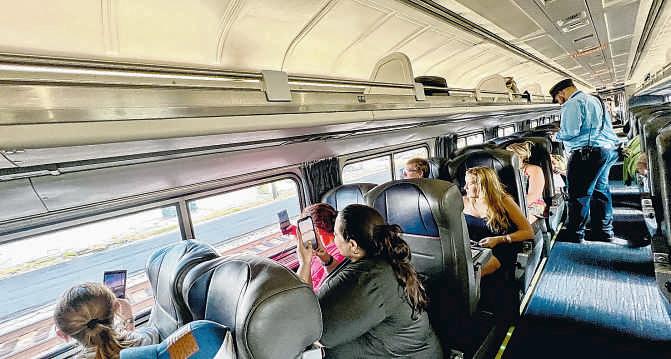
When Amtrak’sMardi Grasservice launched this summer, everyseat was booked.Nearlythree months later,the demand showsnosigns of slowing down, with tourists and commuters alike opting to travel the Gulf Coast by train instead of car
The route carried nearly 19,000 passengers from mid-August to the end of September —adaily average of 109 passengers, according to Knox Ross, the chairman of the Southern Rail Commission. As of Thursday,that total has climbed to almost30,000.
The figure is more thandouble Amtrak’soriginal estimate forridership, despite the line debutingduring thecompany’sslowermonths, Ross said. The projection for the entire first year of service was71,000 passengers.
Trains run twice daily between New Orleans and Mobile, Alabama, stopping in the Mississippi cities of Bay St.Louis,Biloxi, Gulfport and Pascagoula, with one-way fares starting at $15.
The servicerevivesthe Gulf Coast Limited, a route thatbegan in 1996 but wasdiscontinued within nine months due to funding issues among the states and limited service, with only one train running per day.Restoring the line cost $278 million and decades of work from political leaders and civic boosters whoargued the importance of reconnecting the Gulf Coast cities.
Trains on the Gulf Coast Limited were 75% full on somedays, according to reportsatthe time. On the new Mardi Gras service, Ross said, ridership averages about 90%.
La.collegesare paying athletes,but recordsare secret
‘Revenue sharing’arrangements raiseconcerns forsome
BY JOSEPH CRANNEY |Staff writer
College athletes at public universities across Louisiana areexpected to receive at least$20.7 millionincompensation this year,records and interviews show,aftera landmarkNCAAsettlementinJune allowed them to begin collecting paychecks directly from their schools. LSUhas earmarked$18 millionindirectpaymentstoits athletes, aseniorathleticadministrator said, 90% of which will go to football and men’s basketball players.

Among Louisiana’sremaining public schools, the University of Louisiana at Lafayette, the University of Louisiana at Monroe and McNeese State have said they’ll payplayersmore than $2.7 million, according to payroll records and athletic officials forthose schools. The payments areaturning point in college sports.
College athletes have been allowedtoearnmoney through endorsements since 2021, which led to windfalls forbrand-forward Louisianaathletes like LSUgymnastOliviaDunne.Endorsements are still permitted and will likely remain the primary breadwinners for many college athletes,
ä See ATHLETES, page 6A

STAFF PHOTO By JILL PICKETT
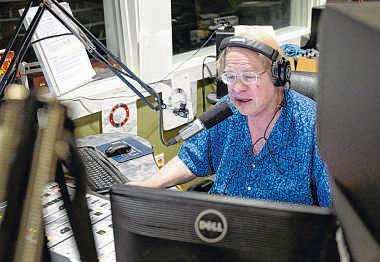
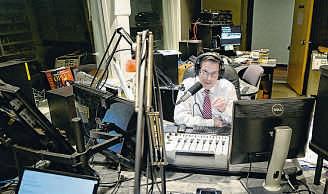
Kermit Poling,general manager of Red River Radio, hosts ashowon Oct. 8during the station’sFall Fund Driveatthe station’sstudios and offices in Shreveport
Landry
Dunne
STAFF PHOTO By SOPHIA GERMER
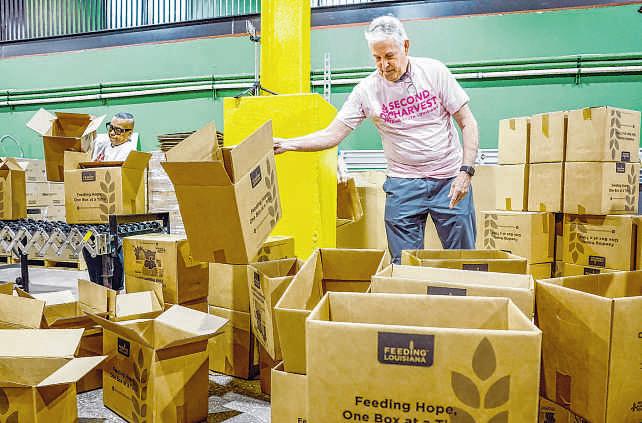
Second Harvest board Chair Bill Hoffman gets boxesreadytobe filled withfood at Second Harvest Food Bank in HarahanonWednesday. Amid the shutdown,the Trumpadministration has warned aid throughthe Supplemental Nutrition AssistanceProgram could runout
BRIEFS FROM WIRE REPORTS
Venezuela’sleader says
U.S. fabricating war
CARACAS Venezuela’sPresident Nicolás Maduro said the U.S. government is forginga war against himasthe world’s biggest warship approached the South American country,while moving to revoke the citizenshipofanopponent he accuses of egging on an invasion.
Maduro said in anational broadcast on Friday night that the administration of President Donald Trumpis“fabricating a neweternal war” as the aircraft carrierUSS Gerald R. Ford, which can host up to 90 airplanes and attack helicopters, moves closer to Venezuela.
On Saturday,the Venezuelan president alsoreferredtothe pressure he has felt from the U.S. government as he started legal proceedings seeking to revoke the citizenship and cancel the passport of opposition politician Leopoldo López.
“They promised they would never again get involved in awar and they are fabricatinga war that we will avoid,” said Maduro in Friday night’saddress.Trump has accused him, withoutprovidingevidence, of beingthe leader of the organized crimegangTren de Aragua.
“They are fabricating an extravagant narrative, avulgar, criminal andtotally fakeone,” Maduro added. “Venezuela is a country that does not produce cocaine leaves.”
Americanforces have destroyed several boats off the Venezuelan coast, allegedly for their role in trafficking drugs into the United States. At least 43 people were killed in those attacks.
Video showsrescue of baby pinned under car
FORT WORTH, Texas Ababy is expected to make afull recovery after beingpulled from undera vehicle that had flipped during a crash,authoritiessaidFriday after releasing dramatic video that showed the rescue effortalong a busy highway
Officers responded to the scene Thursday morning after getting reports that the childand mother had been ejected from the car.
Bodycamera footageshared Friday by the Fort WorthPolice Department shows an officer running toward the overturned car and beginning to search for the child as adistraught woman can be heard in thebackground yellingfor herbaby. Theofficer ralliedother motorists whohad stopped at the scene to help him lift the car
The child wasunresponsive, but one officer said he felt apulse. They attempted to get thebaby to take abreath,with one officer using his fingers to push on the child’schest. The baby eventually began to make noises and then started to cry Police said both the motherand child were expected to make a full recovery
One hurt, suspect held in Texas libraryshooting
AUSTIN,Texas Someonewas shot inside adowntown library in Texas’ state capital cityonSaturday,police said, promptingemergency vehicles and personnel to converge on the buildingand a shelter-in-place alert to be issued. Asuspect laterwas taken into custody in another partofthe city. The shooting victim was taken to ahospital, wherethe person was in serious but stablecondition Saturday afternoon, the Austin Police Department said. Shortly after noon, Austin’s 911 system received reports of ashooting incident at the Austin Central Library,Assistant Police Chief Lee Rogers said. Asuspect left the scene before the arrival of officers,but the person was later located and placed into custody in the city’s South Austin neighborhood about 1:25 p.m., police said. Rogers said had no more information on the suspect or where specifically in the library the shooting occurred.
Astory in Friday’s edition incorrectly said that bills topush back Louisiana’selection dates passed in committee on avoteof 6-3. It passed on avote of 5-3. The Times-Picayune regrets the error CORRECTION
ASSOCIATED PRESS PHOTO By RICARDOHERNANDEZ
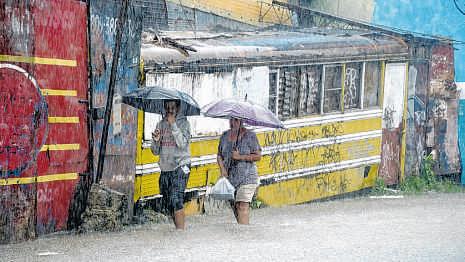
People wadethrough astreet flooded by rains caused by then-Tropical Storm Melissa on FridayinSantoDomingo, Dominican Republic. The stormgrewtohurricane strength on Saturday.
Melissareaches hurricanestrength
Stormthreatens
catastrophic flooding in northern Caribbean
By The Associated Press
KINGSTON, Jamaica U.S.forecasters issued ahurricane warning forJamaica
Saturday as Storm Melissa reached hurricane strength, threatening catastrophic flooding in the northern Caribbean.
Ahurricane warning means winds of at least 74 mphare expected in the area within 36 hours.
Melissa is ”likely starting to rapidly intensify and expected to become amajor hurricane tomorrow,”the U.S.National Hurricane Center said Saturday afternoonasMelissahad maximum sustained winds of 90 mph
The slow-moving storm was expected to drop torrential rain, up to 25 inches, on Jamaica, according to theU.S.National Hurricane Center Asimilar forecast was issued for the southern regions of Haitiand theDominicanRepublic throughMonday. Lifethreatening flooding andlandslides were possible,withupto35inchesofcatastrophic rain across the Tiburon peninsula in southwesternHaiti, the center said.
The Cubangovernment on Saturday afternoonissued ahurricanewatchfor the provinces of Granma, Santiago de Cuba, Guantánamo andHolguin.
The erratic andslow-moving storm has killed at least three people in Haiti and a fourth personinthe Dominican Republic, where another person remains missing.
“Unfortunatelyfor places alongthe projected path of this storm, it is increasingly dire,” Jamie Rhome, the center’sdeputy director, saidearlieronSaturday.Hesaid thestormwillcontinue to move slowly for up to four days.
Melissawas located about 130miles southeast of Kingston, Jamaica, and about 250 miles west-southwest of Portau-Prince, Haiti. It was slowly moving westward at 3mph, according to thehurricanecenter.
Ahurricane warning was in effect for Jamaica and ahurricane watch remained in placefor the southwestern peninsula of Haiti.
Russian attackskill4 in Ukraine
Zelenskyy pleads forair defense
BYSAMYAKULLAB and ELISE MORTON Associated Press
KYIV,Ukraine Russian missile and drone attacks on Ukraine overnight into Saturday killed at least four people and wounded 20, officials said, and prompted fresh pleas from Ukraine’spresident for Western air defense systems.
In the capital, Kyiv,two people were killed and 13 were wounded in aballistic missile attack in theearly hours of Saturday,Kyiv’spolice said.
Afire broke out in anonresidential building in one location, while debris from intercepted missiles fell in an open area at another site, damaging windows in nearbybuildings, Ukraine’sState Emergency Service wrote on themessage app Telegram.
“Explosions in the capital.The city is under ballistic attack,”Mayor Vitali Klitschko wrote on Telegram during the onslaught.
In the Dnipropetrovsk region, two peoplewerekilledand sevenwounded,act-
The center of Melissa is expectedto move near or over Jamaica early next week,forecasters said. Melissa wasexpected to become amajor hurricaneby Sundayand possibly reach Category 4 status by early Monday,U.S. forecasterssaid. It is forecasttohit easternCuba early Wednesday,where up to 12 inches could fall in some areas
AuthoritiesinJamaica said on Saturday thatthe Norman Manley International Airport in Kingston will be closed at 8p.m. local time. It did not saywhether it will close the Sangster airport in Montego Bay, on the westernside of theisland.
More than 650shelterswereactivated in Jamaica. Officials saidwarehouses across the island were well-stocked and thousands of food packages prepositioned for quick distribution if needed.
“I urge Jamaicans to take this weather threat seriously,”said Jamaican Prime Minister AndrewHolness. “Take all measurestoprotect yourself.”
The hurricane center confirmed the risksina key message Saturday afternoon.
“Jamaica prepshould be completed today.Melissa’s slowmotion brings multidaydamaging winds plus heavyrainfall, catastrophicflashflooding, landslides, damage, long-duration power communication outages,isolation,” thecenter said Haitian authoritiessaidthreepeople haddiedasa consequenceofthe hurricane and another five wereinjured due to acollapsed wall. Therewerealso reports of rising river levels, flooding and abridge destroyed duetobreached riverbanks in Sainte-Suzanne, in thenortheast.
The storm hasdamaged nearly 200 homes in the Dominican Republic and knocked outwater supply systems, affectingmorethanhalf amillioncustomers. It also downed trees andtraffic lights, unleashed acouple of smalllandslides and left morethan two dozencommunities isolated by floodwaters.
The BahamasDepartment of Meteorology said Melissa could bring tropical stormorhurricane conditions to islands in theSoutheast and Central Bahamas and theTurks and Caicos Islands by early next week.
Melissa is the 13th named storm of the Atlantic hurricane season, which runs from June 1toNov.30.

ASSOCIATED PRESS PHOTO
Smoke bellows Saturdayfrom a warehouse that caught fire after a Russianattack in Kyiv,Ukraine.
ing regional Gov.Vladyslav Haivanenko said, adding thatapartment buildings and private homes were damaged in the strikes.
Ukraine’sair force said Russia launched nine missiles and 62 drones, of whichfourmissilesand 50 droneswere intercepted.
In Russia,the Defense Ministry said its air defenses shot down 121 Ukrainian drones over Russia overnight Ukrainian President Volodymyr Zelenskyy saidSaturday that such attacks intensifyUkraine’sneedfor Patriot defense systems.
“It is precisely because of such attacks that we pay special attention to Patriot systems—to be able to protect our citiesfrom this horror.Itiscritical that partners whopossessrelevantcapability implement what we have discussed in recentdays,” he wrote in English on X.
“America, Europeand the G7 countries can help ensure that such attacks no longer threaten lives,”hesaid.
Trumpthreatens Canada with 10% tariff hike over ad
BY MARK SCHIEFELBEIN Associated Press
ABOARDAIR FORCE ONE Pres-
ident Donald Trump said on Saturday that he plans to hike tariffs on imports of Canadian goods by an extra 10%because of an anti-tariff televisionadairedbythe province of Ontario.
The ad usedthe words of former President Ronald Reagan to criticize U.S. tariffs, angering Trump who saidhewouldend trade talks with Canada. Ontario
Premier Doug Ford said he would pull the ad after the weekend, and it ranFriday nightduring thefirstgame of the World Series.
“Their Advertisement wastobetaken down, IMMEDIATELY, but theylet it run last night during the World Series, knowing that it was aFRAUD,” Trump saidinapost on his Truth Social platform as he flew aboard Air Force One to Malaysia.
“Because of theirserious misrepresentation of the facts, and hostile act, I am increasing the Tariff on Canada by 10% over and above what they are paying now.” It wasunclear what legal authority Trumpwould use to impose the additional import taxes. The White House did not immediately respondtoarequest for comment on when the 10% hike would come into effect, and whether it would apply to all Canadian goods. Canada’s economyhas been hit hard by Trump’s tariffs, and Canadian Prime Minister Mark Carneyhas been trying to work with Trump to lowerthem. More thanthree-quarters of Canadian exports go to
the U.S.,and nearly $2.7 billion worth of goods and services crossthe border daily
Spokespersons for Carney and Ford did not immediately respond to requests forcomment.
Many Canadian products have been hit with a35% tariff, while steel andaluminum face rates of 50% Energy products have a lower rateof10%,while the vast majority of goods are covered by the United States-Canada-Mexico Agreement, and are exempt from tariffs. That trade agreement is slated for review.Trump negotiated the deal in his first term, but has since soured on it. Trump andCarneywill both attend the Association of Southeast Asian Nationssummit in Malaysia But Trump told reporters traveling with him thathe had no intention of meeting Carney there.
Trump said the ad misrepresented the position of Reagan, atwo-term president anda belovedfigure in the Republican Party But Reagan was wary of tariffs and used muchof the 1987 address featured in Ontario’s ad spelling out the case against tariffs.
Trump hascomplained the ad wasaimed at influencing the U.S. Supreme Court ahead of arguments scheduledfor next month thatcould decide whether Trump has the power to impose his sweeping tariffs,akey part of his economic strategy.Lower courts had ruled he had exceeded his authority
Associated Press writers Rob Gillies in Toronto and Josh Boak in Tokyo contributed to this report.

President Donald Trump speaks Saturday with reporters aboard Air Force One at Al UdeidAir Base in Doha, Qatar
ASSOCIATEDPRESS
PHOTO By MARK SCHIEFELBEIN

UNITEDHEALTHCARE FACINGTHE FACTS


LCMC issued anoticetoend our networkr al ithd ds fo th 50%


competitiverateswhilebalancingaccesstoaffordablehealthcareforthepeopleand employersweserve.
Wearefullycommittedtocontinuedgood-faithnegotiation.However,weneedLCMCtojoin usatthenegotiatingtableanddeliverarealisticproposalLouisianafamiliesandemployers canafford.
Inaccurate. While we need increases, thisisintentionally alarmingand misleading
We have been chronically underpaid by UnitedHealthcare. Even still,we’ve proposed increasesthat keep us as the lowest paid provider in New Orleans.
False. Price transparency data also availableto UnitedHealthcare confirms LCMC Healthwould still be reimbursed lower thanour market competitor.
“reasonable”
UnitedHealthcare is using these numbers without context to make ourask seem unreasonable. Here’s what they aren’t telling you: even with the incremental increases we are seeking, the cost of care at LCMC Healthwillbeless thanother providers in our region.Adequatereimbursement forLCMC Healthdoesnot force insurers to pass through those costs to theirmembers. That’sa choice made by UnitedHealthcare to protect itsmassive profitmargins.
We stepped in to improve community access and sustain essentialservices when others chose to exit. Now, we’re asking UnitedHealthcare for reimbursement thatcovers the cost of what it takes to sustain care—not 50%price hikes.
Evenwithproposed adjustments,LCMCHealth remains thelowest-cost local health system,even while servingthe largest shareofvulnerablepatients.
UnitedHealthcare’s current proposed increases fall below therate of inflation.
Trumpaimstostart Asia trip with talkswithMalaysia
BY CHRIS MEGERIAN, DAVID RISING and EILEENNG Associated Press
KUALA LUMPUR, Malaysia
President Donald Trump plans to burnish his reputation as an international dealmaker on Sunday by solidifying atrade agreement with Malaysia andoverseeing the signingofanexpanded ceasefire between Cambodia and Thailand, two nations that skirmished along their disputed borderearlier this year
The two accords could be finalized while Trump attends the annual summit of the Association of Southeast Asian Nations, whichisbeing hosted in KualaLumpur It’sthe first stop of athreecountry swing across the continent, with visits to Japan and South Korea and a meeting with Chinese leader Xi Jinping.
TheRepublicanpresident is scheduled to touch down in Kuala Lumpur around 10 a.m. localtime and will attend aceremony marking the agreement between Cambodia and Thailand, which he said he had been proudto broker Trump had threatened to withholdtrade agreements from the two countries after five days of combat in July that killed dozens of people and displaced hundreds of thousands. Cambodia and Thailand have competing territorial claims, and violenceperiodically flares along their border

Trump’sdisplay of economic leverage has been credited with spurring negotiations.Ashaky trucehas persistedsince then.
“Thefactthat Trump was holding the tariff card was actually very,verysignificant,” saidOuVirak, president ofPhnomPenh’sFuture Forum think tank. “That’s probably the main reason,if not the only reason, but definitely the main reason why the two sides agreed immediately to the ceasefire.”
Now,hesaid,“there’sa ceremony forTrump to be in front of cameras” so he can be “seen as the champion that bringsanend to wars and conflicts,” giving him
”more ammunitionfor his bid for Nobel Peace Prize.”
Trump has explicitly campaigned forthe honor, continuously adding toalist of conflictsthat he either helped resolveorclaimsto have ended.
Thai foreign ministry spokesperson Nikorndej Balankuratold reportersonSaturday thatthe “joint declaration” to be signed on Sunday will state that Thailand and Cambodia “are committed to renewtheir relations.”
He alsosaid therehas been an agreement to address Thai concerns about land minesand heavyartillery alongthe border, as well as other issues
“It’snot an endinitself,” Nikorndej said. “Work has
just begun.” On Sunday,Trump has plans to meet withMalaysian Prime Minister Anwar Ibrahim whoplayed akey role in theceasefire.Healso planned to join regional leaders for dinner —though he hassaidhedoes notplanto meet with Canada’sPrime Minister Mark Carney. Trump is angry with Canada because of atelevision ad protesting his tariffs, and on his waytothe summit,announced on social media he would hike tariffs on Canada because of it.
Anothertrade war is front and centeronhis trip —this one, with China. Trumptold reporters traveling with him on Air Force One that he was optimistichis meeting with Xi could yield progress on arange of issues, including fentanyl trafficking and soybean trade.
“I think we have areally good chance of making a
very comprehensive deal,” Trumpsaid. “I want our farmerstobetaken care of And he wants things also.”
Details aboutTrump’s agreements have been characteristically scarce, even after Trumpdeparted Washington. It remains to be seen whetherTrump’sdealmaking addresses long-standing issuesorputs them off for another day Trumpexpressed confidence about the prospect of finalizing tradeagreements with Japan and South Korea, two long-standing allies and trading partners,during the trip. In Southeast Asia, trade talks appear further along with Malaysia, andadeal is expected to be signed while Trump is in Kuala Lumpur
“Wehave deals with alot of people and they’re very good deals,” Trump told reporters traveling with him on Air Force One.





BY JILL COLVIN and MICHAEL R. BLOOD Associated Press
LOS ANGELES The Department of Justice is preparing to send federal election observers to California and New Jersey next month, targeting two Democratic states holding off-year elections following requests from state Republican parties. The department announced Fridaythat it is planning to monitor polling sites in Passaic County,New Jersey,and five countiesin southernand central California: Los Angeles, Orange Kern, Riverside and Fresno. The goal, according to the department, is “to ensure transparency,ballot security,and compliance with federal law.”
“Transparency at the polls translates into faith in the electoral process, and this Department of Justice is committed to upholding the highest standards of election integrity,” Attorney General Pamela Bondi said in astatement.
Election monitoring is aroutine function of the Justice Department, but the focus on California and New Jersey comes as both states are set to hold closely-
watched elections with nationalconsequences on Nov 4. New Jersey has an open seat for governor and California is holding aspecial election aimed at redrawing thestate’scongressional map to counter Republican gerrymandering effortselsewhere ahead of the 2026 midterms
Thedepartment’sefforts are thelatest salvo in the GOP’spreoccupationwith election integrity after President Donald Trump spent years refusing to acceptthe results of the 2020 election and falselyrailingagainst mail-in voting as rife with fraud. Democratsfearthe
new administration will attempttogain an upper hand in next year’smidtermswith similarly unfoundedallegationsoffraud.
The announcement comes days after the Republican parties in both states wrote letterstothe department requesting their assistance. Some leading Democratsin thestatesblasted thedecision.
New Jersey AttorneyGeneral Matt Platkin called the move “highly inappropriate” and saidthe department “has not even attempted to identify alegitimatebasis for its actions.”

















ASSOCIATED PRESS PHOTO By MARK SCHIEFELBEIN
President DonaldTrump, right, meets with Emir of Qatar Sheikh Tamim bin Hamad al-Thani On Saturdayaboard Air Force OneatAlUdeid Air Base in Doha, Qatar
If You’re Over ThirtyThis is the BEST TREATMENT youcan usefor your SCIATICA,BACKPAIN, and HERNIATEDDISCS
Finally, there’sa treatmenttoconquer lowback, neck, leg andarm pain without dangerousmedications or painfulsurgery.
If yousufferfrom:
•LOW BACK PAIN
•SCIATICA
•NECKPAIN
•HIP PAIN
•LEG PAIN
•NUMBNESSINARMS, LEGS OR FEET
Non-surgical Spinal Decompressionmay be theanswerfor you!
We areDr. ScottLeBlanc andDr. Dana LeBlanc, a husbandand wife team,thatown LeBlancSpine Center. We have helped thousandsofpatientsget outof pain with Spinal Decompressiontherapy treatments, andwelove what we do.Discissuesare common,and patients sufferingare usuallygiven limitedoptions of treatment. We runthese bignewspaper advertisementstolet people in thecommunity know thereis anotheroptionoftreatment forpain- withoutmedication,injections, or surgery!
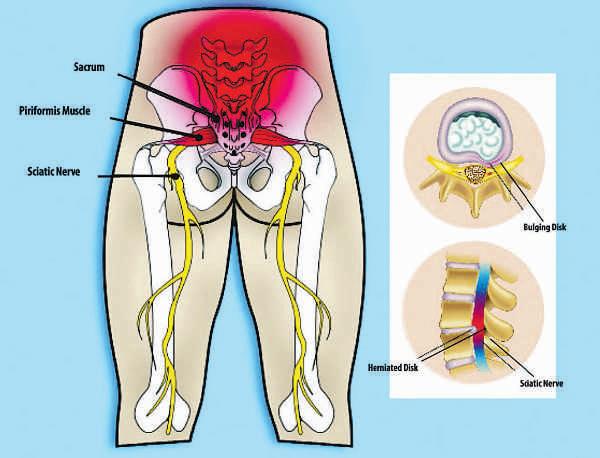
NON-SURGICALSPINAL DECOMPRESSION is a breakthrough,non-invasive treatmentthathas been proventoreverse disc herniationsand relievenerve pain in theneck andlow back.Duringthe procedure, aspinaldiscisisolatedand aseriesofdistraction andrelaxationphasesoccur at averyspecificangle, targetingthe source of pain.A vacuum canbecreated inside thediscand thenegativepressuredeliversnutrients, oxygen,and fluidfromsurrounding tissues, to assist with repair of thedamaged disc Thetreatment is not painfulatall,and most patients read or even take anap whileontreatment!
PROOFTHIS TREATMENTWORKS There’splentyof researchtobackupthe claims of Spinal Decompression Therapyand itseffectiveness. Here arejusta few of thepublished scientificstudies
•“Patients reported amean88.9% improvementin back pain andbetterfunction. No patientrequired anyinvasivetherapies (e.g.epiduralinjections, surgery).”-AmericanAcademy of Pain Management
•“We thus submit that decompressiontherapy should be considered first, before thepatient undergoesa surgical procedurewhich permanentlyaltersthe anatomyand function of theaffectedlumbarspine segment.”-Journal Of Neuroscience Research
•“86%ofthe 219patientswho completedthe therapy reported immediateresolutionofsymptoms.”-Orthopedic Technology Review
•“Vertebralaxial (spinal) decompressionwas successfulin71% of the778 cases” -Journal of NeurologicalResearch
•“Good to excellentreliefin86% of patients with Herniateddiscs”- TheAmericanJournal of Pain Management
•“Decompression Therapyreporteda76.5% with complete remissionand 19.6%withpartial remission of pain anddisability” -Rio Grande Hospital, Department of Neurosurgery
At LeBlancSpineCenter, we utilizeadvanced, FDA-clearedtechnologythatisproventoeffectively
IcametoLeBlancSpine Centerbecause I hadbeensuffering with extremebackpainand legpainfor severalweeks.I hadtriedother treatments,massage, NSAIDs andTylenol, butI wasstillinpain.
Ibegan Spinal Decompressiontreatments andnow Ifeel100%improved! What Ilike most aboutmytreatment is that it is noninvasive anditeliminatedmypain. My treatmentappointmentsare notlong, and thetreatment is pain-free. Sincebeginning treatmentatLeBlancSpine Center, Iamnow able to do allofmypreviousactivitiesand work withoutpain. Ialsohavemorerange of motion.I wouldhighlyrecommend LeBlanc SpineCenter!
Dr.JohnBarksdale (Dentist) hometown -Baton Rouge,LA
alleviatepain.
It’s importanttonotethatnot everypatient is a candidatefor Spinal Decompression, whichiswhy we prioritize athorough individual assessment for each person whowalks throughour doors. Our high successrateinpainreliefstems from our commitment to only taking on patients whom we confidently believewecan help
Forthe next 7days, we areofferingaspecial “Decompression Evaluation”offer,atnocostto you! What does this offer include? Everything we normally do in ournew patientevaluations:
•Anin-depthconsultationabout your health andwellbeing wherewewilllisten. really listen .tothe detailsofyourcase.
•Acompleteneuromuscular examination
•Afullset of specializedX-rays(if clinically necessary)
•Athorough analysis of your exam andX-ray findings
Youwillsit with thedoctorone on onetogoover your x-rays,and you’ll gettosee everything first hand
At LeBlancSpine Center,weare honestwith our patients andwegivepersonalized attentionand analysis to each case. We trulyenjoy meetingwith patients to answer theirquestions andtohelp find outifSpinalDecompression treatments couldbe theanswertotheir pain
Thereisnochargeatall andyou don’tneedtobuy anything.You have nothing to lose by taking us up on this specialoffer andyou will getanswers to
what is causingyourpain. If youhaveseenour adsinthe past and have thoughtabout calling, don’thesitate. Youdon’t have to go on living in pain,missing outonactivitiesand otherpartoflifethatyou enjoy. Call us today!



I firstcametoLeBlancSpine Centerwith numbness in my arms andlegs. Iwas also experiencinglower back pain andneckpain. I hadbeensufferingwiththisfor over10years Ihad previouslytried oneepiduralinjection in my lowerbackand physical therapy, an I wasstillsuffering with thesesymptoms. Since beginning Spinal Decompressiontreatments, Ihavehad consistent improvement in my back condition, andIamnow 70%improved! Iam liftingwithout pain,sleepingbetter, andInow have theability to walk withouttiring! Iwould highly recommendDr. LeBlancand LeBlanc SpineCenter!
L. J. Dupuy
(College Baseball Coach)
Hometown -Addis,LA

theSpinal Decompression treatments-ITWORKS!
DebraEarl Hometown-Baton Rouge
IcametoDr. LeBlancbecause Ihad been suffering with severe sciatica. Thepaininmylow back andlegswas so severe that Ibegan staying home rather than attendingsportingorsocial events Ibegan Spinal Decompressiontreatmentsand sincethen, Iam70% improved! Iamfeeling well enough andenergetic afterworking allday to cook,dohousehold chores,attendfunctions etc. Ihavemoremobility andI am notexhausted from thepain! Thestaff andDoctors here are wonderful.Everyoneissokindand friendly and will do whatever is needed to decreasethe pain What Ilikemostabout my care at LeBlancSpine CenterisTHE RESULTS! Ihighlyrecommend LeBlancSpine Centerdue to thenon-invasive treatmentand results! As amatteroffact, Ihave recommendedDr. LeBlanctopeoplealready SabrinaRuggiero Customer ServiceRepresenative/Insurance Agent Hometown -Plaquemine, LA
though they’re subject to new NCAA regulations.
The House v. NCAA settlement in June, however, permits college athletes for the first time to also be paid directly by their universities, effectively in salaries.
The changes mean that powerhouse programs that rake in hundreds of millions of dollars a year through conference royalties TV deals and ticket sales must share a chunk of the money with their top players — up to an NCAA-set cap of $20.5 million, per school or risk them transferring to a school that will.
But sports legal analysts and some members of a state task force covering the subject say the so-called “revenue sharing” arrangements raise a number of concerns and unanswered questions.
For one, when it comes to recruiting players, it puts the have-nots smaller schools with less money — further behind.
McNeese was the only Louisiana university to advance past the first round of the men’s basketball NCAA tournament in March, and accomplished that feat with a 2024 athletic budget of $16.8 million LSU’s was roughly 13 times that amount: $221 million.
There’s also the issue of parity: Because football brings in — by far — the most money to athletic departments, even the most elite LSU gymnast or baseball player will likely never be paid as much as the university’s starting quarterback.
Just last year, LSU football brought in more than $107.9 million, budget records show more than four times as much as LSU’s remaining 20 sports combined.
LSU women’s gymnastics and baseball won national championships in 2024 and 2025, respectively, but combined will receive less than 5% of the money that LSU
is paying players this year, according to the university’s figures.
Secret records
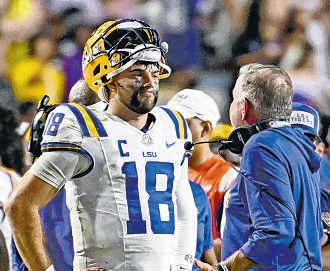
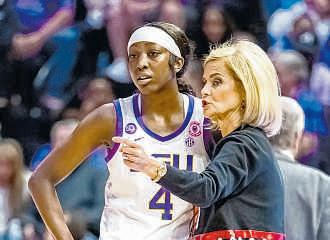
So just how much will LSU quarterback Garrett Nussmeier be paid? Or women’s basketball star Flau’jae Johnson?
The Times-Picayune | The Advocate requested athlete payroll information from LSU, Southern and the nine public schools in the University of Louisiana system. Five schools — Grambling State, Nicholls State, Southeastern, Southern and the University of New Orleans — said they have no payment agreement in place with any athlete.
Louisiana Tech University Athletic Director Ryan Ivey said his department has committed $1.6 million in “total enhanced benefits” for its athletes. He declined to say how much of that money is being paid in direct compensation, however
Louisiana-Monroe was the only university that shared its athlete payroll, which showed $34,200 for three softball players and $90,728 for 17 football players, including one making $20,000. The names of each athlete were redacted.
The remaining universities across Louisiana, including LSU, have not agreed to release detailed information about their payments to athletes and the terms of those agreements.
LSU has only said that it will pay players the maximum amount allowed, $20.5 million, or a little less than 10% of its athletic budget. The payroll includes $2.5 million for scholarship increases and $18 million in salaries.
‘No one’ will hand over No state laws have been written to cover disclosure of these records, specifically But in Louisiana and in other states, college sports powerhouses have guarded them from the public and their competitors, blocking attempts by news organizations and other groups to
obtain them through open records requests. There are obvious incentives for universities to shield payroll information, said Noah Henderson, Director of the Sport Management Program at Loyola University Chicago.
For one, it’s seen by athletic directors of major programs as a trade secret. College sports rosters are constructed around complicated, occasionally proprietary, algorithms that determine a player’s value, Henderson said. Revealing the dollar amounts that athletic departments are actually assigning to players could give
ORLEANS PARISH REGISTRAR OF VOTERS ANNOUNCESEARLYVOTING FOR THE NOVEMBER15, 2025, OPEN GENERAL/ ORLEANSMUNICIPALPAROCHIAL GENERAL ELECTION
New Orleans, LA –The Orleans Parish Registrar of Voterswill conduct Early Voting for the November 15, 2025, Open General/ Orleans Municipal Parochial General Election from 8:30 a.m. to 6:00 p.m., Saturday,November 1, 2025, to Saturday, November 8, 2025,except for Sunday,November 2, 2025
Early Voting Locations
City Hall—1300 Perdido St., Room 1W24
(Designated Free Parking Available on Both Sides of the 400 &500 Blocks of LaSalle Street and The 1300 Block of Perdido, Only Where Indicated)
AlgiersCourthouse—225 Morgan St., Room 105
(Parking Available behind the Algiers Courthouse)
Voting Machine Warehouse—8870 Chef MenteurHwy
(Parking Available at theVoting Machine Warehouse ParkingLot)
LakeVista Community Center 6500 Spanish Fort Blvd.; 2nd Floor
(Parking Available at theLake Vista Community Center Lot)
All Sites areADA Compliant City Hall’sDesignatedEntranceOpens at 8:30 a.m.
Preview Your Ballot and Get Voter Information at www.GeauxVote.com; www.nola.gov/registrar; or Download the GeauxVoteMobile App.
Sample Ballots are available at eachEarly Voting site and online. Seniors are encouraged to join the 65+ or Nursing Home Program to automatically receive Absentee-By-Mail ballots for each election. Formore information, call (504) 658-8300.
rather than direct taxpayer contributions.
“Bringing in star athletes helps bring in more revenue, so it is understandable they don’t want to jeopardize that and lose their competitive edge,” Procopio said. “At the same time, these universities are public entities, and they have an obligation to be as transparent as possible about how they operate, especially when compensation is involved.”
Seven-figure players
Even if LSU isn’t entirely willing to share, there are some clues as to how it’s doling out the money
An athletics administrator told The Advocate in June that LSU will allocate 75% of salaries to football, or $13.5 million.
Like other major programs, LSU relies on software that’s also used by professional teams to create team budgets, factoring in the value of each position. That means for most teams, premium positions like quarterback or pass rusher are likely to get paid out first — reportedly as high as seven figures.
ESPN in August published a survey of more than 20 college general managers and player agents and found that starting quarterbacks of Power 4 schools generally make between $1.5 million and $2 million, though elite ones can make more.
protections exempted them from disclosure.
Attorneys for the schools also cited a 2021 law that exempts disclosure of an athlete’s “contract for compensation,” though that law was written to cover endorsement deals, not salaries. LSU rivals in the Southeastern Conference including the University of Alabama, the University of Florida, the University of Mississippi, Mississippi State University and the University of South Carolina have rejected requests to turn their payroll records to news organizations or other requestors, according to news accounts in those states. Those denials also cited the Family Educational Rights and Privacy Act, according to news reports. Lawsuits challenging the denials have already been filed in South Carolina and New Mexico.
away that edge, he said.
“I don’t think you’re going to have any school hand over those documents unless a judge has ordered them to,” Henderson said. “This is something that no one will willingly hand over.”
Steven Procopio, president of the Louisiana Public Affairs Research Council, said the state’s universities are treating athletes differently than all other university employees, whose compensation records are subject to public records laws.
Procopio noted, though, that athletic departments largely draw from ticket sales and media rights,
That would likely place Nussmeier among the highest-paid recipients of a public salary in Louisiana.
LSU football coach Brian Kelly’s salary, which is a public record, is more than $10 million a year, which does not include bonuses.
LSU said it will allocate 15% of its salaries to men’s basketball, or $2.7 million; 5% to women’s basketball, or $900,000; and 5% to its 18 remaining sports.
Shielded in other states
In declining to release revenue-sharing figures, three universities LSU, UL-Lafayette and Northwestern State — claimed that federal student privacy

“The public has a substantial interest in UNM’s agreements with student-athletes, and with the content of other records related to the House settlement,” the New Mexico Foundation for Open Government wrote in its lawsuit last month against the University of New Mexico. “The agreements involve the expenditure of millions of dollars of public money and student fees, and the public should know the details of these agreements.” As for Tulane, because it’s a private school, it’s not subject to the state’s public records laws. Its sports teams compete in the so-called Group of Five, a step down from the NCAA’s four elite conferences.
That likely means Tulane’s top athletes are paid less, though the university in May announced it was bolstering its in-house department that helps athletes obtain endorsement deals, fueled by a $3.5 million gift.
Asked how much Tulane plans to pay athletes this year, an athletics spokesperson declined to discuss specifics. Staff writer Wilson Alexander contributed reporting.





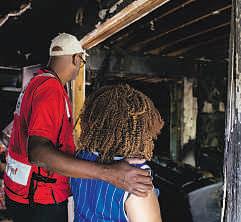



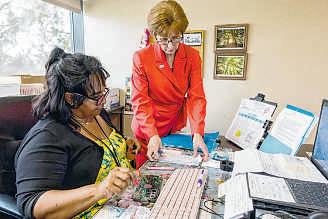
Local support. Local impact. TheAmerican RedCross in Louisiana serves4.65millionresidentsacrossall64parishesandextendshopeto communitiesacrossthenationandaroundtheworld.Whenyousupportyour localRedCross,youmakeadirectimpactinyourcommunity Poweredbygenerosity. TheRedCrossisnotagovernmentagency.Wearea501(c)(3) nonprofitthatreliesonthepowerofvolunteersandthegenerosity ofdonorstocarryoutourhumanitarianmission. RedCrosssupportersprovideabeaconofhope.Fromhelping duringdisasters,toprovidinglifesavingtrainingandsupporting militarycommunities,theRedCrossistherewhenhelpcan’twait.


STAFF PHOTO By HILARy SCHEINUK
LSU quarterback Garrett Nussmeier listens as coach Brian Kelly addresses him late in the second half between the Tigers and the Gamecocks at Tiger Stadium on Oct. 11.
STAFF FILE PHOTO By MICHAEL JOHNSON
LSU coach Kim Mulkey talks with guard Flau’jae Johnson during an Auburn foul shot in the second quarter of the game at the Pete Maravich Assembly Center on Jan. 5.
TheAmerican RedCross of Louisiana is hereall year.
Bethehelp Louisiananeeds redcross.org/louisiana







“Good morning, I’m Jeff Ferrell. The Trump administration is expected to announce a plan very soon to bail out farmers …” His delivery was tight, precise. After 3 minutes and 29.9 seconds of news, he pressed another button, turned another dial and exhaled. It was a crucial day among crucial days.
The Shreveport-based radio network was mid-pledge drive, a fundraising rite with increased importance after the federal government clawed back $1.1 billion in funding for public broadcasting, money that used to make its way to stations across the country President Donald Trump had accused the Public Broadcasting Service and National Public Radio of liberal bias, arguing that taxpayers should not be forced to fund them.
The move walloped the budgets of radio and TV stations across Louisiana, including WWNO and WYES in New Orleans.
Red River Radio lost $193,000 toward its $1.2 million budget. An already lean operation, the network boasts the second-largest public radio geography in the country, spanning northwest Louisiana, east Texas, south Arkansas and parts of Mississippi.
In response to the sudden cuts, some small, rural radio and TV stations will go off the air But more will respond as Red River Radio has responded: by leaving a position unfilled, by asking volunteers to step up, by expecting its six staff members to do more.
Ferrell, the only full-time news employee, was already working 12-to-16-hour days
‘Troy, it’s not playing’
Hours pass at the station on the edge of the Louisiana State University-Shreveport campus as Ferrell crafts a local story for each state

the engineer, found his way into the studios. In a last-minute switch, he also found himself on the air A volunteer had split early, leaving Ferrell without a guest for a pledge drive break. So Jones took a seat, pulling on headphones.
“For anybody that maybe doesn’t recognize your name what do you do?” Ferrell asked. Jones smiled. “Oh, a lot of things, all things as directed, I think is what it says in my paperwork.” Streaming and studio engineering, transmitters and satellites.
where he broadcasts, edits language he deems inflammatory and perfects each piece he posts to the web.
Over and over, he finds himself alone again at 11 p.m
He leaves on a single lamp giving him a little light for when he returns six hours later
“Lighting is everything,” Ferrell said as he plugged in picture lights above two framed prints outside his office doors.
The walls inside his office are covered in artwork, a personal project he undertook when he inherited the cramped, dusty space in 2023, wallpapering the ceiling to match a fresco in an Italian church, depicting the assumption of Mary into heaven.
Two digital clocks ticked through the seconds as NPR’s “Morning Edition” played between his hourly broadcasts. Then, at 6:31 a.m., his radio went silent. His eyes narrowed. He popped out of his office chair and strode to the studio where it, too, was quiet. Ferrell’s hand shook as he pulled up a fader on the sound board, bringing on a music stream he always has running, just in case. As an upbeat tune from an ensemble named Nightnoise played, he called Troy Jones, the station’s chief engineer, whose cellphone number


was taped to the desk: “Troy, it’s not playing.”
By the time they hung up, just a few minutes later, they’d gotten the news back on the air
‘A new, bigger challenge’
Before 7 a.m. on this October morning, two more staffers and a few volunteers arrived to answer the phones and make the pleas.
General manager Kermit Poling settled in behind the microphone.
“And a very good morning to you,” he said, his voice resonant, casual. “It’s 19 minutes after 7 o’clock.
Another day of our pledge drive We’ve got three days left of this.”
The goal for the hour: $65,000. For the day: $70,000. For the two-week drive: $100,000.
“It’s because of him we’re not sweating bullets,” Ferrell said of Poling.
A conductor and composer, Poling had never intended to run a radio station He’d moved to Shreveport in 1985 as concert master and associate conductor of the Shreveport Symphony Orchestra. Listening to the station, he said he was driven crazy by the fact that they kept playing the same few symphonies, over and over
So he grabbed some records and brought them to the studios. He began volunteer hosting, then became

music director In 2005, he was named general manager, thinking he’d take over the station for a couple years. The network needed new transmitters and new studios. “You accomplish one thing and see, well, this needs to be done,” he said.
Plus, Poling believes in the work. Always has. “It’s not profit-driven,” he said “It’s driven by need and connection.”
Now, two decades later, he’s still in charge, leading the network through its biggest challenge yet.
When Trump was elected, philanthropists knew public broadcasting could be on the line. This summer, after the Corporation for Public Broadcasting announced its dissolution, it launched the Public Media Bridge Fund to prevent the shuttering of stations, many of them rural sources of emergency alerts, local news and quality children’s programming.
“As we speak with funders, we’re very clear that this is a public commons,” said Erik Langner, the fund’s executive director “And it’s one that if it goes away, it’s highly unlikely it would ever come back.”
The fund, which is currently accepting applications, is focused on stations that have heavily relied on federal funding, receiving at least 25% of their budget from CPB grants. That leaves Red River Radio, which got just 15% from CPB, without a chance.
“Each station is struggling
right now, even the large ones, given the cuts,” Langner acknowledged.
So Red River Radio and other Louisiana stations are trying to fundraise their way out, at least in part.
KEDM, the public radio station in Monroe, hosted a fete, “The Boot on the Bayou,” a nod to five years of “The Boot,” its local music program. WWNO in New Orleans is putting on an inaugural benefit concert featuring Stanton Moore. In August, WYES, a PBS member station in New Orleans, aired its first live pledge drive, with clips from WYES documentaries, pleas for support and phones ringing in the background.
But each of those stations is also making cuts.
WYES killed its app, cut the printed program from New Orleans Magazine and stopped hiring a makeup artist for guests on its shows, said president and CEO Robin Cooper They’re also slimming staff, starting with administrative support. Volunteers now staff the front desk.
“When has it ever been easy? It never has,” said Cooper, who rose to CEO after three decades at the station.
“So we’re used to challenges, and we continue to face challenges. It’s just a new, bigger challenge to face.”
‘The mighty six’ After fixing the internet another casualty of the morning’s technical difficulties in Shreveport, Jones,
“We’re the mighty six here at Red River Radio,” Jones said. Ferrell chuckled. Afterward, Jones touted the roles of his five coworkers. Membership coordinator Henry Edwards is also a musician, he said, who schedules volunteers Assistant general manager Ranae Moran handles corporate support and underwriting, but also produces shows, running the board when needed. Poling, a maestro, “does all the things that he does.”
They coordinate 22 locally produced programs, from “Bird Calls,” a live call-in show hosted by ornithologist Cliff Shackelford, to broadcasts of local symphonies, hosted by Poling himself. (Poling tries not to play his own performances too often, he said, but given that he leads several area symphonies, it’s tough to avoid.)
“There’s no one person wearing one hat,” Jones said. “We never say, ‘Well, that’s not my job.’
“You need me on the microphone? Great. You need me wiring stuff? Great.”
Listeners love hearing Poling on the air, Jones said. What they don’t see is when it’s snowing and a transmitter site goes off the air, Poling is the one, with his fourwheel-drive, trekking out to the tower to clear off the snow As they told the story, pulling up photos on their phones, Edwards arrived with an update: They’d hit $68,000. Three days and $32,000 more to go.




Beloved TV mother figure June Lockhart dies at 100
Actor known for parts in ‘Lassie,’ ‘Lost In Space’
BY BOB THOMAS and BETH HARRIS Associated Press
LOS ANGELES June Lock-
hart, who became a mother figure for a generation of television viewers whether at home in “Lassie” or up in the stratosphere in “Lost in Space,” has died. She was 100 Lockhart died Thursday of natural causes at her home in Santa Monica, family spokesman Lyle Gregory, a friend of 40 years, said Saturday “She was very happy up until the very end, reading The New York Times and LA Times everyday,” he said. “It was very important to her to stay focused on the news of the day.”
The daughter of prolific character actor Gene Lockhart, Lockhart was cast frequently in ingenue roles as a young film actor Television made her a star
From 1958 to 1964, she portrayed Ruth Martin, who raised the orphaned Timmy (Jon Provost), in the popular CBS series “Lassie.” From 1965 to 1968, she traveled aboard the spaceship Jupiter II as mother to the Robinson family in the campy CBS adventure “Lost in Space.”
Her portrayals of warm, compassionate mothers endeared her to young viewers, and decades later baby boomers flocked to nostalgia conventions to meet Lockhart and buy her autographed photos.
Off-screen, Lockhart insisted, she was nothing like the women she portrayed
“I must quote Dan Rather,” she said in a 1994 interview “I can control my reputation, but not my image, because my image is how you see me.
“I love rock ‘n’ roll and going to the concerts. I have driven Army tanks and flown in hot air balloons. And I go plane-gliding — the ones with no motors. I do a lot of things that don’t go with my image.”
Early in her career, Lockhart appeared in numerous films Among them: “All This, and Heaven Too,” “Adam Had Four Sons,” “Sergeant York,” “Miss Annie Rooney,” “Forever and a Day” and “Meet Me in St. Louis.”
She also made “Son of Lassie,” the 1945 sequel to “Lassie, Come Home,” playing the grown-up version of the role created by Elizabeth Taylor New life on television
When her movie career as an adult faltered, Lockhart shifted to television, appearing in live drama from New York and game and talk shows. She was the third actor to play the female lead in “Lassie” on TV, following Jan Clayton and Cloris Leachman. (Provost had replaced the show’s original child star, Tommy Rettig, in 1957.)

Lockhart spoke frankly about her canine co-star:
“I worked with four Lassies. There was only one main Lassie at a time. Then there was a dog that did the running, a dog that did the fighting, and a dog that was a stand-in, because only humans can work 14 hours a day without needing a nap.
“Lassie was not especially friendly with anybody Lassie was wholly concentrated on the trainers.”
After six years in the rural setting of “Lassie,” Lockhart moved to outer space, embarking on the role of Maureen Robinson, the wise, reassuring mother of a family that departs on a five-year flight to a faraway planet in “Lost in Space.”
After their mission is sabotaged by a fellow passenger the nefarious Dr Zachary Smith (Jonathan Harris), the party bounces from planet to planet, encountering weird creatures and near-disasters that required viewers to tune in the following week to learn of the escape. Throughout the three-year run, Mrs. Robinson offered consolation and a slice of her “space pie.”
As with “Lassie ” Lockhart enjoyed working on “Lost in Space”: “It was like going to work at Disneyland every day.”
“So smart, quick, and funny — she filled her 100 years with curiosity, laughter, and rock ’n’ roll,” Angela Cartwright, who played
her daughter on “Lost in Space” posted on Facebook. “I can only imagine she’s feeling right at home as she steps off this planet and into the stars.”
Bill Mumy, who played her son in the film, posted on social media: “A one of a kind, talented, nurturing, adventurous, and non compromising Lady She did it her way June will always be one of my very favorite moms.”
In 1968, Lockhart joined the cast of “Petticoat Junction” for the rural comedy’s last two seasons, playing Dr Janet Craig.
A little bit of everything Lockhart remained active long after “Lost in Space,” appearing often in episodic television as well as in recurring roles in the daytime soap opera “General Hospital” and nighttime soaps, “Knots Landing” and “The Colbys.” Her film credits included “The Remake” and the animated “Bongee Bear and the Kingdom of Rhythm,” for which she provided the voice for Mindy the Owl.
She also used her own media pass to attend presidential news conferences, narrated beauty pageants and holiday parades, and toured in the plays “Steel Magnolias,” “Bedroom Farce” and “Once More with Feeling.”
“Her true passion was journalism,” Gregory said. “She loved going to the White House briefing



rooms.”
Lockhart liked to tell the story of how her parents met, saying they were hired separately for a touring production sponsored by inventor Thomas A. Edison and decided on marriage during a stop at Lake Louise, Alberta.
Their daughter was born June 25, 1925, in New York City The family moved to Hollywood 10 years later and Gene Lockhart worked steadily as a character actor, usually in avuncular roles, sometimes as a villain. His wife Kathleen often appeared with him.
Young June made her stage debut at 8, dancing in a children’s ballet at the Metropolitan Opera House.
Her first film appearance was a small role in the 1938 “A Christmas Carol,” playing the daughter of Bob Cratchit and his wife, who were played by her parents. She was married and divorced twice: to John Maloney, a physician, father of her daughters Anne Kathleen and June Elizabeth;
and architect John C. Lindsay Throughout her later career, Lockhart was connected in the public mind with “Lassie.” Even though she sometimes mocked the show, she conceded: “How wonderful that in a career there is one role for which you are known. Many actors work all their lives and never have one part that is really theirs.”








This articleisbrought to youbyLCMCHealth.
“Whenitcomes to surgery, Ialwayswantmy patients to feel confidentthateverythingwas done well on the‘inside’, butwhattheyare always going to seeisthe ‘outside’,”saidDr. ShawnMcKinney, a breastsurgeonpracticingatLCMCHealth’sUniversity MedicalCenter(UMC).“We couldperform atechnicallyexcellent surgery, butIdon’t want apatient to look at themselves everyday andwishsomething were different.”
In recent years, ahostofnew therapiesand surgicaloptions have improved both thesurvivalratefor breast cancer andthe cosmetic outcomes of related surgeries. Globally,dedicated breast cancer research hasresultedingreatstrides beingmade. Newtherapies andprotocols emerge everysix to ninemonths LCMC Health hasbeenatthe forefrontofthe fight againstbreastcancerinNewOrleans.Together,LCMC Health hospitalswiththeir academic partners LSU Health andTulaneSchoolofMedicineare able to grantpatientsaccesstoclinicaltrials—giving them theopportunity to participateinnovel therapieson theverge of becoming anew standard of care Additionally,Touro received accreditationfrom theAmericanCollege of Surgeons (ACS)National AccreditationProgram forBreastCenters (NAPBC), andEastJefferson GeneralHospital(EJGH)was recognized with theCommissiononCancerAccreditation from theAmericanCollege of Surgeons.These prestigious credentialsacknowledge thehigh-quality, multidisciplinary, andcomprehensive cancer services availablewithin theLCMCHealthsystem “Breastcancerishighlyindividualized, with many subtypesofthecancer.Afterbeingdiagnosed,patients oftenfindinfoonlineorhearaboutother’sexperiences, butitisimportant to remember breast cancer is nota one-size-fits-all disease,”saidDr. George Zacharia, amedical oncologist at LCMC Health’s Touroand EJGH.“During apatient’sfirstvisit with me,Ishare theoptions that pertaintothemspecifically.Weare fortunate to have optionstoindividualize.” With newtreatmentoptions available, such as immunotherapy,which utilizes thebody’sown immune system to combat cancerouscells,and hormonetherapy,which deprivesa tumorofthe estrogen needed to grow,tailoring treatments to the individual hasbecome easier.Genetic testinghas become acommonplace practice,and by analyzingthe tumor’sDNA,physicianscanbetterunderstandwhich therapiesare best suited for eradicating thecancer. Theability to determinethe subset of breast cancer throughtesting hasled to apracticeknown as de-escalationofcare. Rather than prescribingthe full gamutofavailable treatments to everypatient,careis nowcustomizedtoreduceunnecessary exposure to negative side effects whilemaintainingeffectiveness. Whilechemotherapy hadpreviouslybeena staple of nearly everycancerpatient’s treatmentplan, many patients todayare able to forgo theoptionaltogether afterfindingsuccesswithother therapies. Thesurgicaloptions availabletobreastcancer patients have also beenexpanding in recent years.
In addition to thetraditional optionsoflumpectomy (partial removalofthe breast tissue)and mastectomy (completeremoval of thebreast),there area range of techniques employed to preserve theaesthetics of thebreast. In some cases, nipple-and skin-sparing operations canbeused, as canoncoplastic surgery, whichcombinesthe removalsurgery with areconstructiveprocedure,reducingthenumberofoperations apatientmustundergo
“Sometimes patients thinkthatiftheyhave a bigger surgery, that theircancerwillnever come back,but that’s just nottrue. Both options—keeping or removing thebreasts—offer thesamesurvival prospects,”saidDr. McKinney.“Whetherthe cancer returnsinthe breast is notsignificantlyaffected by thechoiceofsurgery.Ithas to do with thebiology of thecanceritself.”
With anumberofoptions available to patients,the role patienteducation playsincompassionate care is invaluable.PhysiciansatLCMCHealthhospitals approach thecosmeticoutcome of surgeryasbeing equivalent to theoncological outcome. From the beginning, amultidisciplinary team—consisting of medicaloncologists, radiologists, breast surgeons andplastic surgeons—collaboratestodetermine appropriatetreatment plansfor thepatient.The patientisthenempowered to make thedecisions that willbethe most beneficial.
Additional in-office cosmetic procedures,such as 3-Dareolar tattooing, hair restoration, andscar treatment,arerevolutionizingthelong-termoutcomes of breast surgery. 3-Dareolar tattoosrestore the aestheticlookofthe nipple,and microchanneling techniques stimulatehairregrowthand collagen production in theskin, helping to repair scar tissue “3-D areolartattooing takesabout fortyminutes foreachside, anditmatches theirnatural skin tone Alot of patients aresurprised at theend,” said Dr McKinney.“Often, they realizetheymissedthe aestheticlookoftheir nipple,and that’s always a heartfelt, rewarding moment.”
At LCMC Health hospitals, breast cancer care doesn’tend when patients ring thebelltocelebrate theend of theirtreatment. Survivorship care is avital part of theprocess,ensuringthatfollow-up screenings andconsultations areconsistentlyscheduled Psychologicaland social services areinplace to help survivorsreintegrate into theirnew normal.Support from nutritionistsand dieticians aids in building sustainablelifestyle changesasnecessary. Afood pantry is also available at UMCtoassistpatients in upholdinghealthy eating habits. “For us at LCMC Health hospitals, breast cancer awarenessisayear-roundendeavor,”saidDr.Zacharia “I am proudofour diversecommunity of patients andIamalsoproud
ASSOCIATED PRESS FILE PHOTO By LOUIS LANZANO
Actors June Lockhart right, and Jon Provost, left, who played mother Ruth Martin and son Timmy in the classic ‘Lassie’ series, pose with the ninth-generation Lassie on Nov. 2, 2003, at CBS’ 75th anniversary celebration in New york. Lockhart died Thursday at age 100.




























































































































































































work without pay States like Virginia or Maryland, which have high numbers of federal workers, feel it acutely In Louisiana, the impact has been more muted because the federal workforce is relatively small and President Donald Trump’s administration has selectively shifted funds to ensure that some employees like active duty troops, continue to get paid. At least for now

But economists and public policy groups say a quiet storm is brewing. Louisiana is already one of the poorest states in the nation, with a higher percentage of residents on federal assistance than almost any other The longer the shutdown drags on, the greater the impact will be across the state as furloughed workers and those who rely on federal assistance tighten their belts and brace for potentially unprecedented times.
“The dominoes are about to start falling,” said economist Stephen Barnes, executive director of the Blanco Public Policy Center at the University of Louisiana at Lafayette. “Once they do, it’s going to be very challenging for families across the state.”
Stopgaps in place
Experts say it’s not surprising that many across Louisiana in the private sector haven’t felt the effects of the shutdown yet. In part, that’s because the roughly 64,000 federal military and civilian employees in Louisiana make up only about 3% of the state’s total workforce.
Some are still collecting paychecks, or were until last week.


Others have been helped by institutions like Keesler Federal Credit Union, based in Biloxi, Mississippi, which is offering paycheck protection relief to the mostly federal government employees that make up its membership. So far, about 1,535 members have enrolled in the plan, which will cover them for 90 days, according to Keesler spokesperson T. Bradley Keith. Also insulating the broader economy from the effects of the shutdown is the fact that the largest federal programs, Medicare and Social Security, have not been touched. Neither has Medicaid, though the extension of tax credits to help low-income patients afford health insurance is at the heart of the dispute between Democrats and
Republicans in Congress that led to the shutdown.
“The two big programs and Medicaid are safe for now,” said Jan Moeller, executive director of Invest in Louisiana, a think tank that advocates for inclusive economic policies “So, in a state like Louisiana, which has a huge amount of federal money but not a huge number of employees, it is going to be hard to see the effects of the shutdown in most communities.”
Just because the effects of the shutdown are not widely visible, however, doesn’t mean they’re not being felt in various pockets of the economy, Moeller said.
The National Flood Insur-
ance Program is shuttered, which means new homeowners are unable to buy into the program, and the state’s existing 400,000 policyholders aren’t able to increase their coverage.
Louisiana’s 25,000 farmers have been unable to get a loan from the U.S. Department of Agriculture, apply for a conservation program or receive a market report, hampering their ability to plan for the upcoming planting season.
And the state’s nearly half a million small businesses have been unable to access loans through the Small Business Administration, though data released by the SBA last week showed that only 12 loan applications totaling about $7.2 million in Louisiana went unprocessed last week because the agency was closed.
Stretched thin
If federal food assistance through the Supplemental Nutrition Assistance Program or SNAP runs out, as Trump’s Department of Agriculture has warned, the shutdown will become real for a lot more people across Louisiana.
More than 800,000 people in Louisiana receive SNAP
Volunteers help pack 480 boxes of food at Second Harvest Food Bank in Harahan on Wednesday. Amid the shutdown, the Trump administration has warned aid through the Supplemental Nutrition Assistance Program could run out.
STAFF PHOTOS By SOPHIA GERMER
benefits. That’s more, as a percentage of the population, than almost any other state in the nation, where some 4.5 million rely on the program to help make ends meet.
On Wednesday Landry a Republican, said the state would shut the program down next month, blaming Democrats in Congress for the stalemate that has led to the current funding crisis.
“Without the funds, we cannot provide the benefits,” Landry said in a statement.
But on Friday, he reversed course, declaring a state of emergency and saying that “any interruption in SNAP benefits will significantly increase food insecurity among Louisiana’s most vulnerable populations, including the elderly children and individuals with disabilities.”
He also began working with legislative leaders on a plan to keep the program afloat while the government remains shuttered. The plan would repurpose existing funds from the Louisiana Department of Health to keep benefits flowing through November and potentially tap other state money if the shutdown continues beyond then.
For Marcus, a New Orleans East resident and licensed practical nurse by training
who declined to give his last name, the political fingerpointing among elected officials is frustrating.
The monthly SNAP benefits he has received for the past two years since he lost his job barely puts food on the table now If he loses them, the 64-year-old says his cellphone is about the only “luxury” item he could trim from his monthly expenses.
“I don’t know how much more I can stretch,” he said Friday at the Harry Tompson Center, a day shelter downtown. “I guess I’ll be shopping more at Dollar Tree and coming more to the food pantry.”
Food pantries, however, are already hard-pressed. At an event at Second Harvest last week, Chief Strategy Officer John Sillars said the food bank will receive about 5.8 million fewer pounds of food from the federal government this year than it did last due to federal funding cuts since Trump took office. As a result, Second Harvest will provide about 5 million fewer meals to a foodinsecure population that had grown by 30,000 — before the shutdown.
U.S. Rep. Troy Carter, a Democrat who visited Second Harvest to call attention to the growing crisis, said he’s worried about “the avalanche effect” that will happen if the shutdown persists.
“It impacts our families but also the grocer, the person who is stocking the shelves, the person who is selling the milk, the cereal, the egg, the bread,” Carter said.
Landry’s announcement Friday that the state would work to continue SNAP benefits for the time being was a welcome development that will mitigate the worst outcomes for the state’s neediest residents, policy experts said. But more pain is on the way if the shutdown doesn’t end soon.
“The impacts will be acute in some places,” Barnes said. “Hopefully, we can weather those.”
Email Stephanie Riegel at stephanie.riegel@ theadvocate.com.












Trump
U.S. Rep. Troy Carter places canned goods into boxes at Second Harvest Food Bank in Harahan on Wednesday.
Traindreams The route’searly success, after years of delays and skepticism about whether it would draw enough passengers, hasmadesome advocates for regional train travel hopeful that it could strengthen the case for other lines.
Restoringthe passenger rail service between New Orleans andBaton Rouge, which stalleddue to gapsin state funding, may now have astronger footing, according to MichaelHecht, CEO of Greater New Orleans Inc. Hecht said he is “both excited and confident” that the Gulf Coast route’ssuccess willsupport the case for aservice between the two Louisiana cities.
“Of particular interest is that much of the Mardi Gras (service) usage is business travel; it is not just for leisure,” Hecht said.
Still, restoring that line would require more funding and support from Gov.Jeff Landry.While theNew Orleans-Baton Rouge rail was apriority for former Gov. John Bel Edwards, who dedicated $20.5 million to the project in his final daysof office, Landry has said that while he’snot opposed to the service, he would rather put
provements at its stops, including the Depot Districtin Bay St.Louis, athoroughfare once ravaged by Katrina that hassincebeen revitalized with restaurants, fitness centers and
“Everybody’sworkingto-





















Billstopushbackupcomingelectiondatemoveforward
BY ALYSE PFEIL Staff writer
The Louisiana Senate on Saturday morning swiftly passedRepublican bills to push back the April primary elections by amonth, keeping the plan on track for the House to pass it by the middle of the following week.
Republicans say the change will helpgive the state more time to respond to apotential ruling from the U.S. Supreme Court on a challenge to the state’scongressional voting map.
But on the third day of a special session, Democrats continued to criticize the

2025 LEGISLATURE SPECIAL SESSION
legislation, arguingitwould causevoter confusion and potentially get the state in legal trouble.
“The midterm election process is already underway,” saidSen. SamJenkins, D-Shreveport, referring to the fact that thewindow has already opened to collect signatures to qualify by nominating petition for 2026 congressional races.
“You’re changing rules in the middle of the game,” Jenkinssaid
“I’d like to see Brian Kelly do that today for LSU,” he added, referencing afootball game scheduled for that evening in Baton Rouge.
Jenkins alsoargued that pushing back theelection datesthisclosetothe electionwas unconstitutional andinterfereswith the “Purcell principle,” aSupreme Court precedentthatcautions governments against making changes too close to an election date.
“Every page of this bill is asking us to ignore dozens of establishedelection laws,” he said.
Bill sponsorSen. Caleb Kleinpeter,R-Port Allen,
disputedthe ideathatthe plan would underminevoting rights.
He noted the Legislature is not moving the elections forward, but pushing them back, which adds more time to the election process.

“Thisbill does not violate any people’srights,” he said. “We moveelections all the time.”
The Legislature could be working on drawing anew congressionalmap,Kleinpeter said, but “that’snot
what we’re here doing.”Instead,hesaid, lawmakers are simply waiting foraruling and moredirection from the SupremeCourt.
The plan, which consists of Senate bills 1and 2, passed on party-line votes. Should it pass the Legislature as expected, elections for closed party primaries for major races like U.S. House and Senate as well as some municipalprimary races that are set for April 18 would be held on May 16 instead.
Five proposed constitutional amendments would also appear on theMay 16 ballot.
And there would be asubsequent June 27 election for municipal general races and, if needed, arunoff for theclosedparty primary contests.
Qualifying would happen Feb.11-13 rather than in mid-January Kleinpeter in an interview said he expects to presenthis twobills before the House andGovernmental AffairsCommittee on Tuesday, andtheywill be debated on the House floor Wednesday Of thespecial session as awhole,hesaid, “If all goes as planned, it will end on Wednesday.”
BY SYLVIA HUI Associated Press
LONDON Left-wing independent CatherineConnolly, who secured the backing of Ireland’sleft-leaning parties including Sinn Féin,has won the country’spresidential election in alandslide victory against her center-right rival.
Official results showed strong voter support for Connolly as president, alargely ceremonial role in Ireland.
She won 63% of first-preference votes once spoiled votes were excluded, compared to 29% of herrival Heather Humphreys, of the centerright party Fine Gael.
Connolly,68, said Saturday evening at Dublin Castlethat she would champion diversity and be avoice for peace and one that “builds on our policy of neutrality.”
“I would be an inclusive president for all of you, and Iregard it as an absolute honor,” she said.
Humphreys conceded she had lost earlier Saturday before vote counting had finished.
Connolly,aformer barrister who has served as a
lawmakersince2016, has beenoutspoken in criticizing Israel over the war in Gaza. She has also warned against the EuropeanUnion’sgrowing“militarization”following Russia’sfull-scaleinvasion of Ukraine.
Ireland has atraditionof militaryneutrality, buther critics have said she risks alienating the country’s allies.
Connolly will succeedMichael D. Higgins, who has beenpresidentsince 2011, having servedthe maximum two seven-year terms. She willbeIreland’s10th president and the third womanto hold the post.
Thepoliticianhas garnered the backing of arangeofleftleaning parties, including Sinn Féin,the Labour Party andthe SocialDemocrats.
Prime Minister Micheál Martin on SaturdaycongratulatedConnolly onher “very comprehensive election victory.” He saidhewas looking forward to working withthe new president as “Ireland continues to play asignificantrole on theglobalstage, and as we look forward to hosting theEUpresidency in the second half of 2026.”
Irish presidentsrepresent the countryonthe world stage, host visiting heads of state andplayanimportant constitutional role, but they do not have executive powers such as shaping laws or policies.
Nonetheless, parties on the left celebrated theresults
as asignificant shift in Irish politics.
“Wehave seen areal appetite forthe change that Catherinerepresents,”said Labour Party leader Ivana Bacik. “Webelievethisreally does mean anew sort of politics is possible, that we can now realize theambition
that Italked about ayear ago: The real prospect of acenterleft-ledgovernment afterthe next general election.”
Connolly and Humphreys were the only contenders after Jim Gavin, the candidate forMartin’sFianna Fail party,quit the race three weeks before the election over a
long-ago financial dispute. Martin, who heads Ireland’sgovernment, had personally backedGavin as apresidential candidate. Though Gavin had stopped campaigning, his nameremained on the ballot paper because of his late withdrawal from the race. He won7% of first preference votes.
Others —including musicianBob Geldof andthe former mixed martial arts championConor McGregor —had indicated they wished to run for president but failed to receive enough backing for anomination.
The electoral commission said Saturday that there was a“significantly higherthan normal” numberofspoiled ballots, and that there will “clearly be aneed for deeper and further reflection” about voter dissatisfaction. Simon Harris,the deputy premier,said the spoiled ballots showed “the number of people in Irelandnow who are clearly feeling disaffected or disconnected with politics.” He said officials will be looking at the possibility of changing the threshold needed to secure anomination in future presidential elections.









Kleinpeter
ASSOCIATED PRESS PHOTOByNIALL CARSON
Left-wing independentpresidential candidate CatherineConnolly arrives Saturday at Dublin Castle for the count in Ireland’spresidential election. Shewon the vote to replace Michael D. Higgins, whohas servedthe maximumtwo seven-year terms.
Bomb found in Gaza’s rubble wounds twins
BY ABDEL KAREEM HANA and SAMY MAGDY Associated Press
GAZA CITY, Gaza Strip
The Shorbasi family was sitting in their severely damaged house in Gaza City, enjoying the relative calm of the ceasefire. Then they heard an explosion and rushed outside to find their 6-year-old twins bleeding on the ground.
The boy, Yahya, and his sister, Nabila, had discovered a round object while playing. One touch, and it went off.
“It was like a toy,” their grandfather, Tawfiq Shorbasi, said of the unexploded ordnance, after the children were rushed to Shifa hospital on Friday “It was extremely difficult.”
Hundreds of thousands of Palestinians are seizing the chance to return to what’s left of their homes under the ceasefire that began on Oct 10. But the dangers are far from over as people, including children, sift through the rubble for what remains of their belongings, and for bodies unreachable until now
Shorbasi said the family had returned home after the ceasefire took hold Gaza City had been the focus of the final Israeli military offensive before the deal was reached between Israel and Hamas.
“We’ve just returned last week,” the grandfather said at Shifa hospital, fighting back tears. “Their lives have been ruined forever.”
The boy Yahya, lay on a hospital bed with his right arm and leg wrapped in bandages. Nabila, now being treated at Patient’s Friends hospital, had a bandaged forehead.
Both children’s faces were freckled with tiny shrapnel wounds.
A British emergency phy-

estinians killed and 267 others wounded by unexploded ordnance in Gaza since the war began. UNMAS, however said the toll could be much higher
Irving told a United Nations briefing last week 560 unexploded ordnance items have been found during the current ceasefire with many more under the rubble. Two years of war have left up to 60 million tons of debris
across Gaza, he added.
In the coming weeks, additional international demining experts are expected to join efforts to collect unexploded ordnance in Gaza, he said.
“As expected, we’re now finding more items because we’re getting out more; the teams have more access,” he said.
Friday’s explosion that wounded the twins happened
outside a multistory residential building that, like many across Gaza, stood badly damaged, with rubble piled outside. At the top of its outer steps was a small hole in the concrete from the blast.
“We ran outside and found the boy thrown to one side and the girl to the other,” said their uncle, Ziad Al-Shorbasi. As he spoke, another small child stood in the same doorway
sician and pediatrician working at one of the hospitals told The Associated Press the twins had life-threatening injuries including a lost hand, a hole in the bowel, broken bones and potential loss of a leg.
The children underwent emergency surgery and their conditions have relatively stabilized, the doctor said. But concerns remain about their recovery because of Gaza’s vast lack of medicine and medical supplies, said Dr Harriet, who declined to give her last name because her employer hadn’t authorized her to speak to the media
“Now it’s just a waiting game so I hope that they both survive, but at this point in time I can’t say, and this is a common recurrence,” she said.
Health workers call unexploded ordnance a major threat to Palestinians. Two other children, Yazan and Jude Nour, were wounded on Thursday while their family was inspecting their home in Gaza City, according to Shifa hospital.
Gaza’s Health Ministry, which operates under the Hamas-run government said five children were wounded by unexploded ordnance over the past week, including one in the southern city of Khan Younis.
“This is the death trap,” Dr Harriet said. “We’re talking about a ceasefire, but the killing hasn’t stopped.”
Already over 68,500 Palestinians have died in the war, according to Gaza’s Health Ministry, which doesn’t distinguish between civilians and combatants in its count. The ministry maintains detailed casualty records that are seen as generally reliable by U.N agencies and independent experts. Israel has disputed them without providing its own toll.
Luke Irving, head of the U.N. Mine Action Service, UNMAS, in the Palestinian territories, has warned that “explosive risk is incredibly high” as both aid workers and displaced Palestinians return to areas vacated by the Israeli military in Gaza.
As of Oct. 7, UNMAS had documented at least 52 Pal-
N.J. officer charged with misconduct
Officials say man stopped at ATM, pizzeria instead of probing murders
ByTheAssociated Press
FRANKLIN TOWNSHIP, N.J A New Jersey officer has been charged with misconduct after prosecutors say he didn’t quickly respond to and properly investigate reports of a shooting that turned out to be a double murder, instead stopping at an ATM and pizzeria. Franklin Township Police Sergeant Kevin Bollaro was the on-duty officer on the evening of Aug. 1, when police received 911 calls reporting gunshots and screaming in Pittstown, about 60 miles from Manhattan in central New Jersey, according to Hunterdon County Prosecutor Renee Robeson’s office But rather than responding immediately, prosecutors say GPS data and surveillance video show Bollaro drove nearly two miles in the
opposite direction of the caller’s location to a bank ATM.
Dispatchers relayed other calls from concerned neighbors as Bollaro proceeded toward their locations without activating his police vehicle’s emergency lights and sirens, they said. When he arrived at the location of the first caller, the officer told the dispatcher he didn’t hear anything and said he would continue to the locations of the other callers. But Robeson’s office said GPS data shows he never visited those locations before he asked the dispatcher to clear him from the scene. They say Bollaro instead headed to Duke’s Pizzeria in Pittstown, where he remained for nearly an hour Witnesses later saw him park and enter another local restaurant, where he remained for roughly another hour prosecutors said.
Bollaro later submitted a report in which prosecutors say he made false statements about the extent of his investigation. They note that during the time frame he claimed to be canvassing the
area, the officer was already on route to the pizzeria.
The following day, Aug. 2, the bodies of Lauren Semanchik, 33, and Tyler Webb 29, were found in a home roughly 600 feet (183 meters) away from the location of the first 911 caller Prosecutors say the two had been shot to death by New Jersey State Police Lieutenant Ricardo Santos, who had later killed himself.
Bollaro has been charged with official misconduct for knowingly refraining from performing his police duties, prosecutors said He also faces a charge of tampering with public records for knowingly making false entries in his incident report.
Bollaro is due to appear in court Nov 5.
His lawyer, Charles Sciarra, didn’t immediately respond to an email seeking comment Saturday but, in a statement to the New York Post, called the charges “unfortunate.” He maintained “nothing Kevin Bollaro did or did not do that day impacted or could have stopped” the killings.
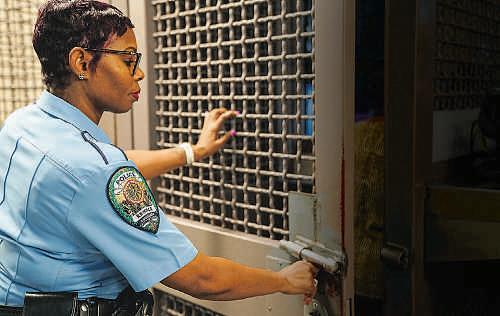











Anew eraofluxurylivingisunder wayin Kenner with therecentopening of Alluvia ApartmentHomes,the newest residential communityfrom1st Lake Properties.With multiple floor plansavailable andresort-style amenitiesready to be enjoyed, theleasing team at Alluviaisready to welcomeresidents to their newhome.
Sherri Nores, leasingspecialist at 1st Lake Properties,saidthe Alluviaapplication processisstraightforward anddesignedto meet everyone’s needs. Thepaperwork canbe filledout online or in person,allowingpeople to choose what worksbestfor them
At Alluvia, applicants don’t have to wait long to startenjoyingtheir newhome. Nores said newresidents canmoveinassoonasthey areapproved. They canalsopre-lease homes that arestill in developmentatAlluvia.That flexibility also extendstoAlluvia’s leaseterms, whichNores said runanywherefromone monthto18months.
“Wepride ourselvesonbeing flexibleand able to work with anyone,” shesaid. “Wehave short-term,medium-term andlong-term leases.Wehave unfurnishedapartment homes andfurnished ones.Wehave full corporate apartmenthomes that areturnkey ready, with housewares,linens, furniture, utilitiesand internet, everything they need.Nomatter what someoneislooking for,wehave it here at Alluvia.
Noressaidthe Alluviateambelieves that everyresident’sexperienceshouldfeel personal from theveryfirsttimetheyvisit thecommunity.Withthatinmind, they

recommendschedulingin-person toursahead of time to ensure that theAlluvia team can answer theirindividualquestions anddiscuss theirneeds one-on-one.Tours areavailable sevendaysa week.Inaddition, 3d virtualtours areavailable online forpeopletoget asense of thehomes andcommunity before visiting in person
“Weactivelylistenand askmanyquestions to make sure everyone finds thehomethatthey arelooking for,” Noressaid. “Weask them what they arelooking for andifthere is anything specificabout thecommunity that interests them.Every tour is customized to what the prospectiveresidentwants to see.
Noressaidthatoncepeoplesee Alluviain person,theyquickly understandwhy it is a lifestyle, rather than just an address.
“Everyonehas beensoimpressed with thecomplimentary amenities–the fitness area,clubhouse,parking garageswithdirect access to theirhomes,smart home packages that includecomplimentary internet and Wi-Fi, app-controlledsmart door locksand smart thermostatsand EV charging stations have really caught people’s attention,”she said.“They notice theledge loungers in the pool andthe outdoorcooking area.Theysee residentshavingget-togethers,relaxingand gettingtoknowone another. Alluviaiswaiting to welcomeyou.”
AlluviaApartment Homesare locatedat3655 Loyola DriveinKenner, just ahalf-mile from the KennerCityParkPavilionandminutesfromthe
ASSOCIATED PRESS PHOTO By ABDEL KAREEM HANA Nabila Shorbasi, who was injured by an unexploded ordnance along with her 6-year-old twin brother yahya, lies on a bed on Saturday at Patient’s Friends Charity Hospital in Gaza City
LOUISIANAPOLITICS
Shutdown ‘addinganother layerofstress’ to residents
BY MARK BALLARD Staff writer
WASHINGTON —AsDemocrats and Republicans continue to jockey over thefederal government’s shutdown with no end in sight, a key question is how to compensate active-duty military and federal civilian employees who have been required to work without pay for the past three weeks.
Americans are starting to feel the effects of the government not operating since Oct. 1. Foodstamps won’tbeavailable in Louisiana starting Nov.1,although Gov.Jeff Landry and the Legislature are working to offset that.Farmers and small businesses can’tget loans. Flights are being delayed and some canceled. Thousands of Louisiana federal workers won’treceive paychecks
In Louisiana, that means 15,235 active-duty military personnel at three major bases won’tget paid at the end of the week, reports the Defense Department.
About 1.1 million active-duty service memberswere stationed at 326 bases across the country in June.
Many of the 19,537 civilian federal workers in Louisiana also didn’treceive paychecksFriday They include federal law enforcement, park rangers, immigration officials, Transportation Security Administration agents, FEMA responders and air trafficcontrollers. And 19,715 National Guard and reserve members in Louisiana receive at least part of theirpay from the federal government.
The Senate voted 54-45not to proceed on Thursday afternoon with abill that would authorize the federal government to pay “essential” workers who have been onthe job during the shutdown, now entering its fourth week. Three Democratic senatorsjoinedthe Republicans on the pay measure, but60votes were neededtoadvance the legislation.
“This is wrong,” U.S. Sen. Bill Cassidy, R-BatonRouge,saidmomentsafter thevote. “Ifyou can’t bring yourself to cross party lines to ensure our troops geta paycheck, you should reconsider why you ran for Congress.” Cassidy is aco-sponsor of theRepublican bill.
The main sponsor of the legislation, U.S. Sen.Ron Johnson, R-Wis., told reporters moments after the
Bill Cassidynominates
Trump for Nobel Prize
U.S. Sen. Bill Cassidy, R-Baton Rouge, introduced aresolution last week to nominate President Donald Trump for the Nobel Peace Prize for “Operation Warp Speed,” the federal efforttodevelop aCOVID vaccine during Trump’s first term in office.


Buzz STAFF REPORTS
“President Trump’sdecisive action in Operation Warp Speednot only saved millions of lives but brought the American economy backtolife. When Americans needed avaccine in record time to stop aonce-in-a-generation pandemic, President Trump delivered,” Cassidy said in anews

Transportation SecretarySean Duffy,left, and Speakerofthe House MikeJohnson, R-Benton, walk through StatuaryHall at the Capitol on ThursdayinWashington, D.C.
vote that he would try again.
Thebill was the latest Republican strategy to breakthe stalemate.
But Democratic senators also forwarded abill that would have paid all federal workers since Oct. 1, when disputes between the parties caused federal spending authority to lapse Federal employees who are not required towork were furloughed and willget paidfor their time away from theoffice after theshutdown ends
The lead sponsors of the two bills said they could work out the differences between whetherto pay all employees or just those who have been working during the shutdown. But they could notfind accommodationfor the difference on whether theTrump administration would be allowed to reduce the federal workforce during the shutdown.
The Democratic measurewas sidelined bya procedural maneuver Exactly when the paychecks will be skippeddependsonthe payroll processing system of aparticular agency.The first full missed paycheck forsome civilian employees was Friday and will be Tuesday or
release. “The Nobel Prizehas been given for alot less. He should receive the next one!”

Cassidy is chair of theSenate Health, Education, Labor and Pensions committee. His resolution is also sponsoredby John Barrasso, a Republican from Wyoming and the Senate Majority Whip.
The Warp Speedproject, launched as COVID-19 killed thousands ofpeople aday and forced muchofthe country to shut down, providedgrants to companies developing vaccines andcleared regulatory and bureaucratic hurdles to rapidly distribute the shots.
Cassidy,who is adoctor,isa strong supporterofvaccines. That hasperiodically put him in ten-
Thursday for others.
The Military Family Advisory Networkreportedthat morethan 50,000 military familieshave reachedout forhelp. The organizationrecommended thatfamilies reviewoptions forfinancialassistance and alerted members that grocery boxesare being shipped this week.
Louisiana has5,615 active-duty spousesand 10,226 childrenat Barksdale Air Force Base near BossierCity,Fort James H. Polk & The Joint ReadinessTraining Center in VernonParishand theBelle Chasse Naval AirStation near New Orleans.
House Speaker Mike Johnson, RBenton,saidThursdaythe Trump administration hasbeen looking for pots of money andlawsthat would allow diversion of those funds.
For instance, theWhite House used a1930s law to allow tariff proceedstoprovide funding for aprogramthat helps low-income mothers andmothers-to-be with formula and other essentials for newborns.
Thelastvote theHouse made was Sept. 19. After that, Johnson sentmembers home, saying the Housedid itsjob by passing a
sionwith Robert F. Kennedy Jr., Trump’sSecretaryofHealth and Human Services and aprominent vaccine skeptic.
Cassidy,who is running for reelection next year in acrowded Republican primary, has been emphasizing his ties to Trump. His GOPcriticshave criticized him for his vote to convict Trump on his impeachment for inciting the Jan. 6, 2021, riots at theU.S. Capitol.
Nungesser criticizes open primaries in op-ed
Lt. Gov.Billy Nungesser issued an op-ed this week criticizing Louisiana’srecent change to closed party primaries.
Lastyear,the LouisianaLegislature changed the way races are run for U.S. House, U.S. Senate, stateSupremeCourt, Public Ser-
resolutiontocontinuegovernment operations while finishing up appropriations measures for the fiscal year that started Oct. 1. Senate Democrats have rejected the continuing resolution at least adozen times.
Johnsonsays there’snothing to negotiate withDemocrats because the continuing resolution has no partisanlanguage and merely allows government to operate at budget levelsestablished during the Bidenadministration If five more Democratic senators would approvethe continuing resolution, then everyonewould get paid and money would flowfor governmentservices, such as food stamps, Johnson said.
He contends Senate Minority Leader Chuck Schumer,D-N.Y., is holding up approval as asop to aDemocratic base that wants to fight PresidentDonaldTrump.
Democrats want Republicans to extendtax creditsonpremiums used by low-incomeindividuals and many small businesses to buy health insurance on the Affordable Care marketplace. Unlessthe tax creditsare extended, those workers will have to pay roughly double for their insurancecoveragein 2026.
vice Commission and the Board of Elementary and Secondary Education.
Democratssay theshutdown gives them leveragethatwon’t exist when the government reopens, claiming they don’ttrust Republicans to then negotiateingoodfaith. Republicans counter that the credits were expanded and set to expire Dec. 31 during the COVID pandemic when Democrats controlledCongress andthe White House.
While many Republicansdon’t oppose theextension, theyargue that the high premium prices, which the taxcredits help offset, are aresult of the Affordable Care Act —and those high costs should be addressed
Democratic Sen. Patty Murray fromWashington state, who is vice chaironthe Senate Appropriations committee,said: “President Trumpcould not be less focused on reopening the government or preventing premiumsfrom exploding. But he is very focused on bailing outArgentina and buying privatejetsfor Secretary(Kristi) Noem, andbulldozing theWhite House so he can build afancy new ballroom.”
Trumphas indicated that he is willing to negotiate, but not until thefederal governmentreopens He left Fridaynight foratripto Asia.
In the meantime, airports are reporting longer waits to clear security,takeoff delays and canceled flights.
About 13,000 air traffic controllers are working without pay, often six days aweek, according to TransportationSecretarySean Duffy.Theyare worried about payingtheirmortgages andcar notes.
“They have to make choices. And the choices they are making is to take asecond job,” Duffy said Thursday.“Idon’twantthemdrivingfor DoorDash.”
House Majority Leader Steve Scalise said keeping thousands of planes safely taking off, landing and flying is extremely demandingeven underthe best of circumstances.
“Adding another layer of stress to an alreadystressful job is really straining thesystem,” Scalise said. “The American people, especially federal workers, are considered by Democrats to be leveraged, to be pawns in theirgame.”
Email Mark Ballardat mballard@theadvocate.com.

Louisiana previously had “jungle primaries,” in which all candidates, regardless of party affiliation,ran together in one primary election. Now in those races, Republican and Democratic candidates will first compete in primaries to decide who will represent their parties in thegeneral election.
In an op-ed that ran in Friday’s edition of The Advocate |The Times-Picayune, Nungesser argued open primaries reduce the role of partisanship in elections.
“When elected officials aren’t catering to asmallgroup of party voters in closed primaries, they
can focus on solving problems affecting everyone,” Nungesser wrote. “We’re farfrom perfect, but by manymeasures, Louisiana punches above its weight. Our election system is abig reason why.”
Nungesser,aRepublican, also argued that the open primaries were good forhis party
“Webuilt Louisiana’smodern Republican Party under the open primary system.Itworked because it forced us to talk to everybody,not just people wearing the samejersey,” Nungesser wrote. He continued: “The reason conservatives have astrong majority today is because we had to campaign across every parish, every community and every kitchen table. The open system madeus better candidates, better leaders and ultimately madeLouisiana stronger.”


Capitol
Cassidy
Nungesser
ASSOCIATED PRESS PHOTOByJ.SCOTT APPLEWHITE

























































EDUCATION
Data is key to solving absenteeism, leader says
Tracking missed days can help with early intervention
BY ELYSE CARMOSINO
Staff writer
Sharon Latten Clark, a school leader and Louisiana state board of education member, understands better than most how crucial attendance is to student
success
A New Orleans native with 30 years of teaching and administrative experience, Clark worked at schools in Houston and Phoenix before returning home in 2002 to become director of Sophie B. Wright High School, a wellregarded charter school in New Orleans.
Since then, she’s served on a state task force aimed at improving student attendance and was elected to the state Board of Elementary and Secondary Education last year She also heads a new truancy work group, which the Legislature formed last spring to study chronic absenteeism and provide policy recommendations to lawmakers, including whether to tie school funding to daily attendance rates. The group held its first meeting in Baton Rouge last week.
The group has its work cut out for it: Even as other states saw their chronic absenteeism rates decline after the pandemic, Louisiana is one of a handful still struggling to get children back into the classroom. The number of students regularly missing school rose between 2022 and 2024 before falling slightly last year
Clark said the first step in boosting attendance is for schools to consistently track how many days
Q&A WITH SHARON LATTEN CLARK STATE BOARD
OF EDUCATION MEMBER
students miss so that they can intervene early on But one road block, Clark said, is that different schools measure chronic absenteeism differently making it difficult to study statewide trends.
”We want to make sure we’re using the same collection methods across the state,” she said.
This interview has been edited and condensed for clarity
What did you take away from the recent truancy task force meeting?
It was an eye-opener It was very interesting to sit with people who bring other perspectives — a community perspective, a legislative perspective, (the Louisiana Department of Education) perspective — and talk about what we can all bring to the table to solve this for the state.
One concern I have is every district is using a different standard for data collection. Some districts say a student is chronically absent after 10 missed days, others say five. That makes it more difficult for data collection.
Can you explain the difference between absenteeism and truancy?
Truancy is when a student has unexcused absences. According to state statute, a child is considered chronically truant at five unexcused absences. Chronic absenteeism is when a student is out of school for any reason, whether it’s an excused absence or not
What is the role of the courts in tackling absenteeism, and what are ways to avoid getting families engaged in the criminal justice system?
Courts are a last-ditch effort to involve the families of students who have become chronically absent, but we also need their support. State statute lists con-
sequences for parents who don’t follow the court’s rules.
When I talk to our FINS (Families in Need of Services, a court program meant to keep children out of the juvenile justice system) officer in New Orleans, he tells me they reach out to parents over and over but they don’t hear back. So after we try to contact those parents and go to their houses several times, we issue a summons because there’s no collaboration with the parent.
I know Louisiana Chief Justice John Weimer is asking for additional funds for FINS so that we have more prevention options before it gets to that point.
What does Sophie B.Wright High School do to address absenteeism?
Even though the district tells us to report students to FINS at 15 days absent, we submitted over 40 cases at five days or more, because at 15, those students are gone, and it’s hard to get them back. But FINS didn’t have the capacity to get to all of those cases. There was a backlog, and there were some issues.
At the school level, we’re making sure parents are being contacted at three days missed. We explain to them the impact of their student being absent, and if things don’t improve from there, I refer the family to FINS. If they opt out or the situation still doesn’t improve, the family will get a summons.
I’m in the process of hiring an attendance coordinator at my school once we’ve put some statewide initiatives and best practices into place. I want to be a model to other schools, and I want to make sure I have research-based
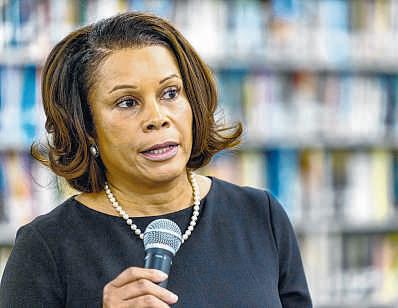
I
practices that I can bring back to DOE and to these committees and say, ‘This doesn’t work. This does work — we should look at this platform some more.’ Things like that.
Does your school use any incentives to get kids into the classroom?
This year, we’re implementing a perfect attendance award every month. The kids who get the award get a reward, like a book or a shirt, and we have a quarterly attendance award where we take the kids somewhere of their choosing.
We also send out letters to parents recognizing them and thanking them for making sure their kids are going to school, just to let them know we appreciate their efforts.
What support can schools provide students to address the root causes of absenteeism? Is there enough funding for that?
WE’RE ASKING EXPERTS ACROSS THE STATE HOW TO TACKLE THE BIGGEST CHALLENGES FACING LOUISIANA SCHOOLS.

Governmentshutdowns have changedoverdecades
They have moved from enforcing federallaw to taking power
BY STEPHENGROVES Associated Press
WASHINGTON— The government shutdown, already the second-longest in history,with no end in sight, is quickly becoming away for President Donald Trump to exercise new command over the government.
It wasn’talways this way In fact, it allstartedwithan attempt to tighten Washington’sobservance of federal law
The modern phenomena of the U.S. government closing downservices began in 1980 with aseries of legal opinions from Attorney General Benjamin Civiletti, who was serving under Democratic President Jimmy Carter Civiletti reachedinto the Antideficiency Act of 1870 to argue that the law was “plain and unambiguous” in restricting the government from spending money once authority from Congress expires.
In this shutdown, however, the Republican president has used the fundinglapseto punish Democrats, tried to lay off thousands of federal workers and seized on the vacuum left by Congressto reconfigure the federal budget for his priorities.
“I can’tbelieve the Radical Left Democrats gave me this unprecedented opportunity,” Trump posted on his social media platform at the outset of the shutdown.
Democrats haveonly dug into their positions.
It’sall making this fight that much harder to resolve and potentially redefining how Washington will approach funding lapses altogether
In the post-Watergate years, Civiletti’stenureat the Department of Justice was defined by an effortto restore public trust in Washington, sometimes with strict interpretations of federal law When aconflict between Congress and the Federal Trade Commission led to a delay in funding legislation for the agency,Civilettiis-

The Statue of Freedom atop the U.S. Capitol is seen between autumn
ThursdayinWashington on the 23rd dayofthe governmentshutdown.
suedhis opinion,later following it up with another opinionthat allowedthe government to perform essential services
He did notknowthat it would set the groundwork for some of the most defining political battlestocome.
“I couldn’thave ever imagined these shutdowns would last this long ofatime and wouldbeusedasa political gambit,” Civiletti, whodied in 2022,told TheWashington Post sixyears ago. For the next 15 years,there were no lengthy government shutdowns. In 1994, Republicans retook Congress under House Speaker Newt Gingrich of Georgia and pledged to overhaul Washington. Their most dramatic standoffs with Democratic President Bill Clintonwere over government shutdowns.
Historians mostly agree the shutdowns did not work, and Clinton wasable to win reelection in part by showing he stooduptoGingrich.
“TheRepublicansinthe Gingrich-era, they do get some kind of limited policy victories, but for them overallit’sreallykindofa failure,” said Mike Davis,adjunct professor of history at Lees-McRae College
There wasone more significant shutdown in 2013 when teaparty Republicans sparred with Democratic President Barack Obama But itwas not until Trump’s first term that Democrats adopted thetactic ofextended government shutdowns
During previous funding lapses, presidentialadministrations applied therules governingshutdowns equally to affected agencies “A shutdown was supposed to close the same thingsunder Reagan as under Clinton,” saidCharlesTiefer,a former acting generalcounselfor the House and aprofessor emeritus at theUniversityofBaltimore School of Law.Hesaid that in this shutdown, the Trump administration has used “a kind of freewheeling presidential appropriation power,which is contrary to thewhole system, the original Constitution, and the Antideficiency Act.”
The administration has introducedadistinctlypolitical edge to the funding fight, with agencies updating theirwebsites to include statements blaming Democrats for the shutdown. The Department of Defense has tapped researchand development funds to pay activeduty service members. Trumphas triedtoinitiate layoffs for more than4,000 federal employees who are mostly working in areas perceived to be Democratic priorities.
During aluncheon at the White House withGOP senators this week, Trump introduced his budget director Russ Vought as “Darth Vader” andbragged how he is “cutting Democrat priorities and they’re never going to get themback.” Democrats have only been
Kamala Harris leaves door open for2028presidentialrun
By The Associated Press
WASHINGTON Kamala Harrisisn’trulingout another run for the White House
In an interview with the BBC posted Saturday,Harris said she expects awoman will be president in the comingyears, and it could “possibly” be her “I am not done,” she said The former vice-president said she hasn’tdecided whether to mount a2028 presidentialcampaign. But
she dismissed the suggestion that she’dfacelong odds.
“I have lived my entire career alife of service and it’s in my bones. And there are many ways to serve,” she said.“I’ve neverlistened to polls.”
She’srecently given aseries of interviews followingthe September release of her book, “107Days.” It looks back on her experience replacing then-President Joe Biden as the 2024


Democratic presidential nominee after he dropped out of the race. She ultimately lost to Republican President Donald Trump.
In an interview with The Associated Press last week, Harris, 60, also made clear that runningagain in 2028 is still on thetable. She said she sees herself as aleader of theparty,including in pushing back against Trump and preparing for the 2026 midterms
emboldened by thestrategy, voting repeatedly againsta Republican-backed bill to re-
open the government. They argue that voters will ultimately hold Republicansaccountable for the pain of the shutdown becausethe GOP holds power in Washington. Democrats are confident they have chosen awinning policy demand on health care plans offered under Affordable Care Actmarketplaces, but there is an undercurrent that they arealso fighting to halt Trump’sexpansion of presidential power
Sen. TimKaine, D-Va., acknowledged that his state has moretolose than perhaps any other due to the large numberoffederal employees and activitybased there. Buthe argued that his constituents arefed up with a“nonstop punishment parade” from Trump that has included layoffs, cancellation of money for economic development projects, pressure campaigns against universities andthe dismissal of theU.S.attorney
forVirginia
“Itkind of stiffens folks’ spines,” Kaine said. Democratic resolve will be tested in the coming week. Federal employees, including lawmakers’ own staff, have nowgonealmost an entire month without full paychecks. Supplemental Nutrition Assistance Program,orSNAP, which helps about 1in8 Americansbuy groceries, faces apotential funding cliff on Nov.1.Air travel delays threaten to only grow worse amid air traffic controller shortages.
Sen. Angus King, I-Maine, said he hopes his colleagues start negotiating quickly to end the impasse. He said he’sbeen one of the fewmembers of the Democratic caucus to vote for ending the shutdown because “it empowers the president beyond what he would be able to do otherwise, and it damages the country.”
Sunday,November2



ome roll some strikes and showcase your competitive sideinthe game parlor with delicious bitesand foxy cocktails while you enjoy live music from the PHUNKYMONKEYS.
12:00 -3:00p.m. Fulton Alley 600FultonStreet us!



Plus, Kinfolk Brass Band willbring theenergy with alively NewOrleans second line,and youdon’t want to missout on theauctionand raffle, offering fantastic items andexperiences up forgrabs.Comeroll with us and make ameaningfulimpactinthe fightagainst Parkinson’s disease!
All netfunds raised from this event willgodirectly towardsthe Michael J. FoxFoundation forParkinson’s DiseaseResearch,ofwhich100% is dedicated to medical therapies andresearch foracure
Scan this QR code formore information andtickets or go to: give.michaeljfox.org/tfnola25













ACCESS TO YOUR FUNDS + FDIC INSURED




4.54%
$25,000 MINIMUM DAILYBALANCE REQUIRED + GUARANTEED THROUGH JAN. 31




















ASSOCIATED PRESS PHOTO By MARIAM ZUHAIB
tree leaveson
THE GULF COAST
BelovedWavelandeateryreopens 20
BY POET WOLFE Staff writer
An hour after doors opened last Thursday,nearly every table at chef Rickey Peters’ revived restaurantinWaveland,Mississippi, was filled with locals and plates piledhighwithfried artichokes, ciabatta sandwiches and barbecue shrimp.
It had been aweek since the return of Rickey’sonColeman, but it seemed as if it had never closed.
Mayor Jay Trapani sat at acorner table and ate lunch with his family Peters occasionallystepped out of the kitchen to greetold friends, exchanging handshakes and brief remarks, while servers took orders in soft Southern drawls.
The popular restaurant served New Orleans fare for nearly six years until Hurricane Katrinadismantled it in 2005. But locals never forgot the classic dishes made by Peters, aChalmettenativetrained by famed chefPaul Prudhomme.
The crowds filing into the lone restaurant on Coleman Avenue made that clear,packing the original spot for fried trout with shrimp, crawfish and crabmeat tossed in cream sauce and seafood pasta with tasso and andouille sausage.
“They’ve been waiting for it
They really missed him.(Peters) was such astaple herebefore Katrinaand afterKatrina ”said Scott Sutherland, aco-owner of Rickey’s.
Peters has revived the restaurant before, reopening sixmonths after the storm in Bay St. Louis, where it ran for nine years before closing as he battled severe burnout. Years later,hetried again with arebranded version, Rickey’sOff the Track, which also eventually closed.
But the idea to reopen in 2025 began taking shape lastyear,when Thomas Genin, arestaurateurin Bay St. Louis, who once owned the building housing Rickey’sbefore

selling it in September,asked Peters if he wanted to bring the restaurant back His response? “Hell yeah.” Resurgence on Coleman Since then, its opening date has
been highly anticipated. Sutherland compared theexcitement to thecomebackofHubig’s Pies bakery —the maker of New Orleans’iconic sugar-glazed hand pies thatwas destroyed in afire —playfully adding, “Rickey is our

Hubig’spie.”
Therestaurant launchedthe week of Cruisin’ theCoast, an annualclassic car showalong the Mississippi Coastthatdrewin thousands this year andhundreds into the restaurant on its first few days. Peters said Coleman Avenue “looked like Mardi Gras on Canal
Street,” nodding to another New Orleans tradition.
The return of Rickey’smarks the rebirthofalocal staplebut also foreshadows theresurgence of a small coastal city,and astreet that never fully healed after the storm Before Katrina, ColemanAvenue waslined with three restaurants, twobars, condos, aconvenience storeand otherneighborhoodfixtures.
Then it becameaghost town: grassy lots, crumbling foundations, prolonged stillness. In recent years, though,developers havebegun breathing life back into what wasonce the heart of Waveland withaKatrina museum, abakery and now,Rickey’s.
ServingupNew Orleansdishes Rickey’sisanode to what it was before the storm Near the entrance is awallcovered in photographs and old newspaper features about the restaurant. Like its former location, the interior is decorated with nautical touches—manila rope wrapped around columns andtarponreplicas mounted on the wall.
Themenuresurrects beloved dishes, including veal Parmigiana and trout treasures, and Peters’ dedication to quality remains unchanged.
There are ahandful of appetizers, including one named the crabby cheese crostini, with layers of melted cheese over crabmeat dressing on toasted ciabatta bread.
Lunch entrees include fresh salads and sixsandwiches on ciabatta bread.
Served with abowl of au jus, the French dip sandwich is stuffed with roast beef andprovolone cheese, while another features all thefixingsofa dressed fried shrimp po-boy —shredded lettuce, tomato and mayonnaise —minus the French bread.
But most of all, the crowd remains thesame as it was20years ago, with regulars walking through the doors of arestaurant they long missed.
Email Poet Wolfe at poet.wolfe@ theadvocate.com.




































Hispanic views of Trump have changed since January
BY ADRIANA GOMEZ LICON and AMELIA THOMSON-DEVEAUX Associated Press
President Donald Trump’s favorability has fallen among Hispanic adults since the beginning of the year, a new AP-NORC poll shows, a potential warning sign from a key constituency that helped secure his victory in the 2024 election.
The October survey from The Associated Press-NORC Center for Public Affairs Research finds that 25% of Hispanic adults have a “somewhat” or “very” favorable view of Trump, down from 44% in an AP-NORC poll conducted just before the Republican took office for the second time. The percentage of Hispanic adults who say the country is going in the wrong direction has also increased slightly over the past few months, from 63% in March to 73% now
The shift could spell trouble for Republicans looking to cement support with this group in future elections.
Many Hispanic voters were motivated by economic concerns in last year’s election, and the new poll shows that despite Trump’s promises of economic revitalization, Hispanic adults continue to feel higher financial stress than Americans overall Hispanic voters made up 10% of the electorate in 2024, according to AP VoteCast, a survey of interviews with registered voters, and the number of eligible Hispanic voters has been growing rapidly in recent decades.
Alejandro Ochoa, 30, is a warehouse worker in Adelanto, California. He identifies as a Republican and voted for Trump last year, but he’s now unhappy with the president. He criticized some of Trump’s budget cuts, adding that the cost of groceries is too high and buying a home is still unattainable for him.
“He was kind of relying on essentially the nostalgia of, ‘Hey, remember, before COVID? Things weren’t as expensive,’” Ochoa said. “But now it’s like, OK, you’re in office. I’m still getting done dirty at the grocery store.
I’m still spending an insane amount of money I’m trying to cut corners where I can, but that bill is still insanely expensive.” Hispanic voters shifted toward Trump in the last election, though a majority still backed Democrat Kamala Harris: 43% of His-

norms and may impact social safety net programs.
“My major concern is the disregard for the Constitution and the law, and then also the level of cronyism,” said Covarrubias, who is an independent voter “The people at the top are just grifting and taking, and then there’s the rest of us.”
There are signs in the poll that Trump’s tough immigration approach may be alienating some Hispanic adults. Over the past few months, the president has doubled down on his pledge of mass deportations, with escalating crackdowns in Latino neighborhoods in cities including Chicago.
The poll found that, in general, Hispanic adults are more likely to say immigration is an important issue to them personally About twothirds of Hispanic adults prioritize immigration, compared with about 6 in 10 White adults and about half of Black adults. And although their views on immigration enforcement aren’t uniform, Hispanic adults are much less likely than U.S. adults overall to favor deporting all immigrants living in the U.S. illegally About one-quarter of Hispanic adults support this policy, the new poll found, while roughly half of them are opposed and the rest don’t have an opinion. Among U.S. adults overall, about 4 in 10 favor deporting all immigrants in the U.S. illegally, while 34% are opposed and about 2 in 10 don’t have an opinion. The AP-NORC poll of 1,289 adults was conducted Oct. 9-13, using a sample drawn from NORC’s probabilitybased AmeriSpeak Panel, which is designed to be representative of the U.S. population The margin of sampling error for adults overall is plus or minus 3.8 percentage points. The margin of sampling error for Hispanic adults overall is plus or minus 6.9 percentage points.
panic voters nationally voted for Trump, according to AP VoteCast, up from 35% in the 2020 presidential election, which he lost to Democrat Joe Biden.
But the poll now finds that Hispanic adults are slightly less likely to approve of Trump’s handling of the economy and immigration — two issues that were major strengths for him in last year’s presidential campaign and their views of his overall presidential performance have slipped a little as well.
In March, 41% of Hispanic adults approved of the way Trump was handling his job as president, but now that has fallen to 27%.
Over the past few months Hispanic communities have also been a target of the president’s hard-line immigration tactics. The poll found that Hispanic adults’ approval of his handling of immigration has declined slightly since March.
Some see the two issues as linked. Trump’s attacks on immigration have affected low-wage and high-skilled workers alike, at a moment when the economy is already uncertain because of his erratic trade policies
Fel Echandi, of Winter Haven, Florida, is a behavioral specialist who identifies as a Democrat but sometimes votes for Republican candidates. He said he appreciates Trump’s views on transgender issues, including restroom access for transgender women.
But he’s concerned that Trump’s immigration policies leave many people living in fear, with negative effects on the economy “A lot of people rely on immigrants to do labor in certain areas,” Echandi said. “When that gets affected, all prices go up. Our food costs
more because of the costs to get people to do that work.”
The poll found particularly high levels of financial stress among Hispanic adults, compared with the rest of the country More Hispanics say the cost of groceries, housing and health care and the amount of money they get paid are “major” sources of stress, compared with U.S. adults overall.
Views of Trump have even soured a little among Hispanic Republicans.
In the latest poll, 66% of Hispanic Republicans said they have a “very” or “somewhat” favorable view of Trump. That’s a slight shift compared with where Trump stood in an AP-NORC poll from September 2024, when 83% of Hispanic Republicans viewed him at least “somewhat” favorably
About 8 in 10 White Republicans had a favorable view of Trump in the new poll, which was unchanged from the year before.
In another potentially worrying sign for the president, younger Hispanics and Hispanic men two groups that swung particularly dramatically toward him in last year’s election — also see him a bit more negatively
About two-thirds of Hispanic adults under age 45 and Hispanic men now view Trump unfavorably, according to the new poll. That’s a slight uptick from September 2024, when about half in both groups had a negative opinion of him.
Other concerns about Trump’s chaotic second term emerged in interviews.
Teresa Covarrubias, a 65-year-old retired schoolteacher from Los Angeles, feels things are going in the wrong direction and said she was troubled by how some of Trump’s actions have defied
Dozens indicted in Pa. on drug charges
By The Associated Press
PHILADELPHIA More than two dozen people have been indicted on drug-related charges as part of a yearslong investigation into a gang in Philadelphia, the Federal Bureau of Investigation announced Friday. Cocaine, fentanyl and heroin were sold in the Kensington area in “one of the most prolific drug blocks in the city” from January
2016 to October 2025, according to the indictment. The charges come as President Donald Trump scales up federal law enforcement operations around the U.S. to crack down on crime, though rates have gone done in recent years in cities including Philadelphia.
“We have permanently removed a drug trafficking organization out of the streets of Philadelphia, and they’re going to stop pouring guns
and chemicals and drugs into our communities,” said FBI Director Kash Patel at a news conference Friday, touting collaboration between federal and local law enforcement.
The group of 33 people were charged with 41 counts related to drug distribution, and the indictment said they maintained control of the area through violence and threats against rivals.







Taxesare an often-overlooked aspect of retirement planning.However,neglectingtoaddresstheminyour plan couldleadtohavinglessdiscretionary income in retirement.Mapping outaretirementtax strategy canfeeloverwhelmingattimes—but thegoodnews is,you don’thavetotackleitalone
Developing aretirementplancan be arewarding experience.Gregory Ricks&Associatesunderstands everyone’s retirement situationisuniqueand deserves personalized attention. Throughthoughtful conversationswithknowledgeable wealth advisors, clients aresupported as they laythe essential groundwork for theirfinancialfuture.
“Peopleoften take it for grantedthattaxes are withheld from theirpaycheckduringtheir working yearsand thosewithholdingstypically sync up with theirannualtax return.Iftheir taxbillendsupbeing a little bitoff,theycan usuallyearna bitmoretoadjust for theincrease.Inretirement, it’s differentbecause youare taking an income from assets,” said Gregory Ricks, founder,CEO andwealthadvisor at Gregory Ricks&Associates.
Building Blocks of Retirement Income Retirees typicallydrawincomefromthree main sources:SocialSecurity,pensions,andtax-advantaged accounts.Whenassessing retirement assets,itis importanttounderstandwhich taxcategoryeach assetfalls into: Taxable: Theseassetsoffer themostflexibility andliquidity,however providenotax advantages Contributionsare made with after-taxdollars and growth from interest or dividendsistaxed.Capital gainstax mayapply if profitismadeoninvestments that aresold.
Tax-deferred: Thesefunds areestablished with pre-taxdollars andare allowedtogrowtax-free untilwithdrawals begin—typicallywhenthe age requirementismet.The contributionsmadeare deducted from theindividual’stax liabilityinthe yeartheyareadded.Uponwithdrawal, themonieswill be taxed--thoughretireesmay fall within alower tax bracket, potentiallyincreasing theirtax-efficiency. Income-tax-free: This type of accountallowsfor contributionstobemadewithafter-tax dollars. Future withdrawalsand growth remain tax-free
Theseassetstypicallymaintainspecificrequirements andlimitationsthatmustbemettotakefulladvantage
Blending theIngredients to Create an OptimalScenario
“Our goal as financial advisors is to manage and blendthose threeasset optionswhenbuildinga retirement income strategy,” said Ricks. “Werun throughscenarios to seewhatworks well,considering therange of income sources they canpull from.”
Many people hold significantsavings within qualified,tax-deferredaccounts,suchas401(k)s and 403(b)s.Tobeconsideredaqualifiedasset,theseplans
must meet IRSand theEmployeeRetirementIncome Security Act (ERISA)regulations.Inmostcases beneficiariesmust reacha certainage to utilizethe fundswithout penalty. Whiletax-deferredaccountshavetheiradvantages, thereare instances whereitmay be optimaltoemploy strategies like Roth conversions. ARothconversion shifts fundsfroma tax-deferred retirement account into aRothIRA.While taxliability is acquired the year themoney is converted, anyfuturegrowthwill remain tax-free
“Ifyou have non-qualified,after-tax assets and qualified tax-free assets alongwithyourtraditional qualified tax-deferred assets,you canstrategizeover time howmuchtotakeout andwhen, to be themost tax-efficient,”saidRicks
Wealthadvisors at GregoryRicks &Associatesalso consider thecurrent taxbracket theclient’spreferred income fallsintowhendevelopinga retirement income plan.Aforward-looking analysis is conducted to projectafamily’sfinances 2-3years into thefuture, helping to determinehow much margin remainsin theircurrent taxbracket before they levelupto a higher one.
“I don’t like to wastemargin. It couldbeusedasan opportunity,for example, aRothconversion. Doing aRothconversionisataxable event, butthe tax-free moneythatresultscan be of greateruse down the road,” said Ricks.
Taxbracket hikesare notthe only concern. IRMAA (Income-RelatedMonthly Adjustment Amount)—a surchargeadded to Medicare premiums of higher income beneficiaries—canalsoimpactdiscretionary income in retirement.IRMMA is determined by a retiree’smodified adjusted grossincome(MAGI) from twoyears prior. Someoneconsideringa Roth conversion beyond theend of 65,may want to consider theimpactIRMAAwillhaveontheirfinancesacouple yearsdownthe road
When to BeginThinkingAbout Retirement Income Options “You should startthinkingabout it now, regardless of your age,”saidRicks.“Startnow thinking about retirement andhow youcan be taxefficient. It’s unbelievablewhatcanbebuiltovertime.Youcannever make up for thetimemoney couldbecompounding.” Benjamin Franklin is oftenquotedashaving remarked,“In this world, nothingiscertain except deathand taxes.”It’sa reminder that,while taxes aretobeexpected, proper forethoughtcan make a significant impact on your financial future.Just as theplatitudescarpe diem,YOLO, andmemento mori encourageustoseize themoment, taxplanningcan be seen as an exciting opportunity to shapeanessential part of life into aresilientretirementplan.
ASSOCIATED PRESS FILE PHOTO By ALEX BRANDON Supporters hold a sign on Sept. 12, 2024, before Republican presidential nominee former President Donald Trump arrives to speak at a campaign event in Tucson, Ariz





















SMARTGROWTH
Nonprofit wantsto expand arts education
BY MARIE FAZIO Staff writer
On arecent afternoon at the International School of Louisiana, firstgrade teacher Carolina Salgado pointed to aboot-shaped map of Louisiana, quizzing her Spanish-immersion students on the cardinal directions and the names of neighboring states
Then,artist Paul Malbrough Jr.took over.After directing the class to draw compasses on their state maps, he and the students brainstormed symbols to use: an alligator,pelican or beads for New Orleans; a red stick forBaton Rouge; ablue squiggle for the Mississippi River
Malbrough is one of about adozen trained artists embedded in New Orleansarea schools through KID smART, alocal nonprofit thatworks to expand arts education and connect students to the city’svibrant creative community and traditions.
The “artists in residence” help weave art into other classes like math,social studies and science. Students might dance through the water cycle, craft rhythms based on historical documents or draw comics about historical events. Educators say this
Paul Malbrough Jr., an arts integration specialist with KID smART,gives instructions during a firstgrade Spanish immersionclass.
approach, known as “arts integration,”boosts student learningand combats the pressure some schools face to focus mainly on preparing students for standardized tests.
Now KID smART, which has operated in New Orleans for more than 25 years, is poisedtobringthe artstomore students.
Thegroup recently broke ground on anew spacein the7th Ward that will includetraining facilities, six state-of-the-art classrooms andalarge performance venue. The goal is to more than double thenumber of students reached every year through artist residencies, teacher training andafter-schooland summer programs. Their mission has grown in importance as schools grapple with funding uncertainty amidfederal
“When the artist comes to the classroom,they have aha moments and they cansee things differently.After that, they never forget it.”
CAROLINA SALGADO, teacher
cuts and declining local revenues, saidKID smART executivedirector Elise Gallinot Goldman. When schools are faced with shrinking budgets, thearts are often among the first to go, shesaid.
“Wejust wanttomake sure that the arts and arts educationare equitable, accessibleand easily available to our community,” she said at agroundbreaking event last month.
TwoNew Orleans artists, Campbell Hutchinsonand Allison Stewart, founded
KID smARTin1999 to combat diminishing artseducation in public schools.
The problem grew worse after Hurricane Katrina, when the school system convertedtocharterschools that could be shut down due to lowtestscores. A2020 study concluded that New Orleans schools de-emphasized arts education as they faced pressuretoreach academicbenchmarks. New Orleans students in grades K-8 are enrolled in arts and enrichment classes at lower ratesthan their peers in similardistricts, though high schoolers are enrolled at comparable rates,according to the study by Tulane’s EducationResearch Alliance.
Arts offerings and emphasis vary widely across New Orleans charter
ä See SMART, page 2B
City says fencehelps provide safety at library
Downtown building hasseen rise in homeless gatherings
BY JONI HESS and SOPHIEKASAKOVE Staff writers
At the corner of Loyola and Tulane avenues, it’s not uncommon to see homelesspeople congregating —orsleeping —outside New Orleans’ flagship public library
But on Thursday afternoon, those whofrequent the space encountered ahalf-built fence that Mayor LaToya Cantrell’sadministration is erecting to address what library officials say is aspike in “illegal and dangerous activity” on the grounds of the Main Library Branch downtown. Undeterred, some of the area’sregulars set up a mini camp inside of thefence. One of them, Labree Thomas, didn’tseem surprised by the change. “It happens,” he said, “whether it’safence there or somewhere else,” he said. He would not say if he washomeless or how long he planned to be there.
Though homeless people have long gathered outside thelibrary’sfrontsteps, after theCantrell administration installed afence around neighboring Duncan Plaza in October 2024, the library saw amajor influx of those residents, said Nathaniel Fields,directorofthe city’s OfficeofHomeless Services.
Library staff added that drug use and other reckless activity has gotten out of handthere recently. And aman, Clifton Green, wasfound dead earlier this month near the library in what the coroner preliminarily ruled ahomicide, though a toxicology report waspending.
Fields estimated that after the Duncan Plaza fence went up —initially in preparation to be used as aride-hail point forthe TaylorSwift concerts at the nearby Caesars Superdome—the average number of people sleeping on the steps increased from around 15 to 50 people anight.
Any library fencing, he said, mayrelocate, but not resolve, the real issue —that the city’shomelessness efforts, whileactive in recent years,lack the resources to resolve the crisis. Those efforts are further threatened by deep cuts the city is considering making to the office he leads, as it faces abudget deficit.
“Are we going to see those people shift into different areas? Yes, that is definitelygoing to happen,” Fields said of the crowd in front of the library
The scene at the library comes as the Cantrell administration hasspent the past twoyears clearing homeless encampments across downtown and moving people from the streets into shelters and subsidized housing, an effort that received aboost during the Taylor Swift concerts last year and throughthe Super Bowl when Gov.JeffLandry ordered state agents to relocate homeless people to astate-funded shelter
Nearly 1,400 people have been housed through the administration’seffort, andmorethan100 people werehoused through Landry’stemporary endeavor
But even thoughthe workhas been ongoing, the city’shomelessness problem persists. The city’s Low-Barrier Shelter,which opened in 2018 and is amere two blocks from the library,has been full to capacity recently,said Fields.
And with alooming $160 million budgetdeficit threatening basic city functions —and another $200 million in proposed cuts to thecity’s2026 budget —itisunclear how manymore people the city will be able to house going forward,Fields
Report eyes St.Tammany mosquito agency’s spending
Business leaders question costs of abatement
BY WILLIE SWETT Staff writer
Back in 2021, St. Tammany’s mosquito-killing agency pursued
an ambitious plan.
St. Tammany Mosquito Abatement District bought a$4million helicopter to help target spray and kill mosquito larvae, hireda new molecularbiologist andinvested $8 million in facility upgrades,
including amodern lab that could test mosquitoes for West Nile and other viruses with afour-hour turnaround.
“Wemodernizedmosquitoabatement for thegrowing population in St.Tammany,”Executive Director KevinCaillouet recalledinaninterview The investmentswere funded with moneyfromthe district’s dedicated property tax, which at that time generated about $8 million ayear
But thosepurchases and others like it are now under scrutiny from agroup of business leaders organized bynorthshore District
Attorney Collin Sims, whose office is facing budget cuts. The group, called the TaxReductionand Stabilization Workgroup, joined Sims’ office in presenting Sims’ report at aGovernment Efficiency Committee meeting on Thursday. They arguedthe helicopter,lab and other expenditures may not have been in thebest interest of taxpayers. Currently,the Mosquito Abatement District’s expenditures are approved by its five-member BoardofCommissioners. Four are appointedbythe St. Tammany Parish Council and one by theparish president
“They spent those dollars as they saw fit,asaboard, certainly not in consultation with parish government, because that was not necessary,” one of the business leaders, Kyle France, said Thursday (France, aMadisonville resident is also amember of the advisory board of The Times-Picayune.)
Mosquito Abatement is one of dozens of quasi-government agencies, includingfiredistricts and recreation districts, in St. Tammany Parishthatare fundedwith dedicated property taxes and whose budgets arenot controlled by the St.Tammany Parish Council. The group of business leaders
is honing in on these agencies as theParish Council grappleswith revenue shortages to cover mandated criminal justice expenses. “This is notapeopleproblem. This is astructural problem,” said Todd Richard, anotherbusiness person in the TaxReduction and Stabilization Workgroup.
Thepresentationofthe report comes as parish officials are tryingtofind long-term funding for Sims’ office, the northshore judgesand theparish jail, which allface around 30% reductions in the funding they receive from
STAFF PHOTOSByBRETTDUKE
Paul Malbrough Jr., left, an arts integration specialist with KID smART,and teacher Carolina Salgado, right, lead amap activity during a first grade Spanish immersionclass at the International School of Louisiana recentlyinNew Orleans.
schools, which have discretion over their curriculum. Overall, 1 in 4 city students lacked access to high-quality arts education, according to the study KID smART aims to close that gap, said Gallinot Goldman.
“Schools still have to live and die by test scores in many ways,” she said. “But schools are understanding that a well-rounded education needs to include the arts.” Arts integration, which is meant to supplement, not replace traditional arts classes, is less about teaching students technical skills than about helping them become compassionate, creative and effective communicators, Gallinot Goldman said. Research has shown that the arts promote socialemotional learning, helping students develop skills such as conflict resolution and managing emotions.
In a KID smART survey of the 500 teachers across 15 schools that the group partnered with last year, 100% of educators who responded reported growth in student confidence, selfexpression and creative risk-taking.
“The arts play a role in shaping students into resilient, empathetic thinkers,” she said, “who can thrive in our ever-changing landscape.”
An illustrator by trade, Malbrough meets with teachers at International School of Louisiana’s St Roch campus about once a week to work on lesson plans. He aims for art activities that reinforce the

academic lessons in fun and interactive ways, he said. He’s had students create collages or fashion plates of food out of paper
“Everybody learns differently,” he said, “so add-
ing art makes learning a little bit more accessible.”
ISL St. Roch Principal Brandon Ferguson said the school opted this year to embed Malbrough primarily in social studies lessons. ISL’s French and Spanish
immersion teachers come from many cultural backgrounds and sometimes struggle to teach U.S history, he said, so “we’re able to support that through arts integration.”
Salgado said the art ac-
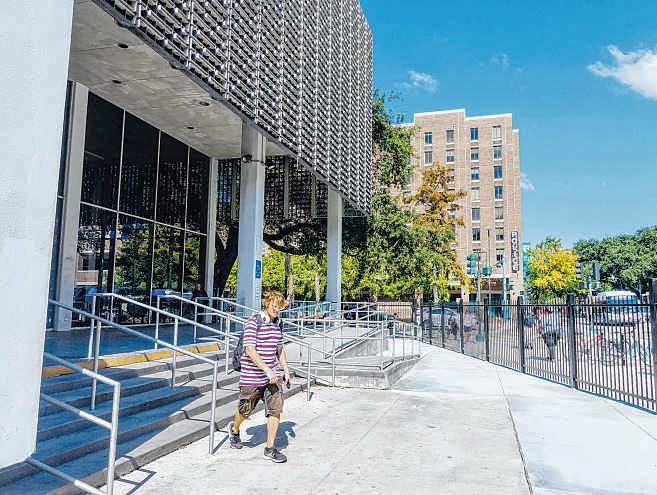
LIBRARY
Continued from page 1B
said. The Cantrell administration’s draft 2026 budget proposes cutting nearly the entire general fund budget for Fields’ Office of Homeless Services — which was created in 2023 with the goal of ending street homelessness in the city from $3.6 million in 2025 to $700,000 in 2026. The budget does propose increasing funding for homeless programs through a temporary rental assistance fund from $3 million in 2025 to $4 million in 2026 The City Council must approve a budget by Dec. 1. City departments and offices have in recent days pleaded their cases before the council, which is hoping to use $125 million in short-term revenue bonds — essentially, payday loans for local governments to resolve the financial problems.
Drug use, robberies
The exterior of the main library has been a chaotic scene in recent months, as the people that had gathered in Duncan Plaza in
300 block of Loyola Avenue simply packed up and moved.
Staff frequently find used needles around the library grounds, said Heather Riley, the New Orleans Public Library’s director of public services. Workers and security have reported human waste, too, open fire grills and other “reckless behavior” after the facility’s 8 p.m. closing time, she said.
Officers have conducted “numerous operations” in the area, said a New Orleans Police Department spokesperson. Fields said that library staff have reported assaults and robberies too. The final straw, Fields said, came in May when a person backed up a U-Haul truck to the steps of the library packed with alcohol and grills and loudspeakers.
“Fires were going, music was blasting, people using alcohol, selling stuff on the steps,” Fields said. “And (library staff) were just like, ‘You can’t have that at the library.’”
The city is now paying the same firm that built the Duncan Plaza fence to erect the library’s new fence, said Fields. That firm is expected to wrap
the job by the end of November Administration officials did not respond to a question about the cost of the work The TimesPicayune has submitted a records request for the information.
Library and city officials say they are hopeful that the fence, along with enforcement by the New Orleans Police Department and Tulane University Police Department, will help get the situation under control.
While many people who had been sleeping outside the library have scattered since the fence began going up, officials have housed 10 people so far Fields said, and relocated some to shelters.
“We have not stopped, and we won’t stop until we try to get all of those individuals that were original persons who slept in the area daily connected to those services,” said Fields.
Ed Carlson, director of Odyssey House, said the organization’s outreach teams have visited Duncan Plaza and the library multiple times a week for years. He said the teams have provided naloxone, a drug that reverses opioid overdoses, and other ser-
vices, and worked to get people into treatment. Library staff also asked for and received training from the city’s Health Department on the administration of naloxone as far back as 2017.
But Carlson said there are scant other resources available.
The only way to really solve the issue, he said, would be finding “resources to get these people off the street” and to support them with addiction and mental health challenges. Without those resources, any efforts at enforcement “won’t solve the problem,” Carlson said. “It just moves the problem.”
Email Sophie Kasakove at sophie.kasakove@ theadvocate.com.
tivities sometimes help students grasp concepts that were lost in translation during her lessons, which she gives in Spanish. The arts can also help students see the material in a new light, which is some-
REPORT
Continued from page 1B
parish government in the 2026 budget and could see even greater cuts in the 2027 budget.
As part of that effort, at the beginning of this year, Sims joined parish government in forming a DOGElike precursor to the Government Efficiency Committee.
Sims and the DOGE-like group selected Mosquito Abatement for its first review But amid backlash from the parish’s powerful fire districts, which are also independent taxing agencies, Sims removed himself from the group, which later morphed into the Government Efficiency Committee.
Sims’ office’s 29-page report details Mosquito Abatement’s finances, with particular attention paid to the district’s capital assets, like its two twin-engine planes, hangar, vehicle fleet and helicopter. The helicopter was used on 20 treatment missions, the report says, and the district’s helicopter pilot has a $180,396 compensation package.
The report also says the new mosquito-testing lab costs taxpayers more than if the district sent the samples to a lab at LSU, $12 per test in-house vs $5.50 per test at LSU.
The report estimates that $1.4 million could be saved annually in salaries and benefits if the district streamlines lab functions, reassesses the helicopter program and consolidates with state and parish government.
times enough to make it click. “When the artist comes to the classroom, they have aha moments and they can see things differently,” Salgado said. “After that, they never forget it.”
By cutting costs and consolidating, France and others contend the district could reduce its tax, and parish residents might then be more amenable to funding criminal justice operations.
Caillouet, who was not at the meeting Thursday, said in an interview that there were a “lot of misrepresentations of numbers, misunderstandings of numbers that we look forward to unpacking in the future.” He said that while the inhouse lab costs more per test, its quick turnaround time reflects the best practices in the field. “Every night that you miss being able to treat those mosquitoes is an opportunity for those mosquitoes to bite people and make them ill with West Nile virus,” Caillouet said.
Caillouet said helicopters are the standard for modern mosquito control He said the Government Efficiency Committee should hire an expert familiar with the field to evaluate the services St. Tammany’s Mosquito Abatement offers.
It was not clear at the end of the meeting what the Parish Council plans to do next. Council member Joe Impastato encouraged the committee to look through the report, which details everything from employees’ salaries and benefits to the district’s travel expenses. The report also suggests the parish consider consolidating Mosquito Abatement with Parish Government, essentially turning it into a parish department. That could require a vote by the taxpayers or legislative change at the state level.




STAFF PHOTO By CHRIS GRANGER
A fence was installed recently in front of the Main Library in downtown New Orleans.
STAFF PHOTO By BRETT DUKE
First grader Mylynn Crudup raises her hand during a Spanish immersion class recently at the International School of Louisiana in New Orleans
Baxter,Barbara de Castro,Sharon Drew,Carey
Hardie V, Charles
HoffmanSr.,George
Hood Jr., Vernon
Klapatch Sr., David
Lyle,Tiffany
Martin,Penelope
Miller, Sandra
Randolph, Lizzie
Rankin, Terrence
Skolfield, Helen
Wildhaber, Georgiann
Williams,Carol
Wren,Dylan
EJefferson
Garden of Memories
Klapatch Sr., David
Leitz-Eagan
HoffmanSr.,George
NewOrleans
Boyd Brooks
Williams,Carol
Boyd Family
Randolph, Lizzie
Dennis FuneralHome
Wren,Dylan
DW Rhodes
Lyle,Tiffany
Greenwood
Hood Jr., Vernon
JacobSchoen
Miller, Sandra
Lake Lawn Metairie
Baxter,Barbara
de Castro,Sharon
Hardie V, Charles
Rankin, Terrence
St Tammany
EJ Fielding
Skolfield, Helen
Serenity FH
Wildhaber, Georgiann
Baxter,Sr. and Rita Kilian Baxter; her brothers GeraldJohn Baxter,Jr. and David Patrick Baxter, her sisterJane Frolich, her beloved son, William Dennis Young, the father of her children,WilliamG "Bill" Young and her second husband,Woodrow Chabert.
Sheissurvived by her daughters, Terryl Hakenjos (Christopher Hakenjos, Sr., deceased)and Kelly A Young (Michael Richard, deceased); her sister, Catherine Murphy (Dr. Michael Murphy); her grandchildren, Ryan Deffes, Christopher HakenjosJr. (Angie),Tara York (Blake),Spencer Richard, and Hannah Hakenjos; hergreat-grandchildrenChase, Hudson and Gracelyn Hakenjos, Aubriana and ZephyrYork; and hernieces, nephews, great-nieces and greatnephews.
Barbara was bornon October 14, 1939.She was raised in NewOrleans, LA inthe Irish Channel where she attended Redemptorist High School. Over the years, she livedinvarious areasofMetropolitanNew Orleans and later movedto the Westbank whereshe resided in Marrero.
Barbara, afabulous cookand baker,was most known for her scrumptious seafoodgumbo and stuffed artichokes, but in reality,she didn'tknow how to make abad mealeverythingshe cookedwas delicious, made with love, andofcourse without a recipe!She loved baking and making herfamous heavenly hash candy!One of her favorite thingstodo was cook forher family and friends, thensit back and watch themenjoyher food!She delighted in the attention and compliments. It brought her tremendous joy, especially since it brought her family and friends together. In Barbara's early years she was ahairdresserand owned her beautysalon aptlynamed"TheIrish Maid." She later retired from hairdressing but continuedworking as a cashieratCanal Villere and thenatLakeview Fine Foodswhere she made many everlasting friendshipswith her co-workers and customers. Sheloved watching football,especially her beloved Saints and the LSU Tigers,and going out to hear live music; formany years she attended the Jazz Fest annually- one of her favorite musicvenues. Barbara never met a strangerand wouldstrike up aconversationwith anyone as she lovedhearing about thesuccessesor woes of others.Barbara had the most compassionate heartand wasalways there to offer support.She was selfless and gave her time and ahelping hand without expecting anything in return. She was truly one of akind. Barbara willberemembered forsomany thingstoomanytoshare herebutmostlyfor her contagious one-of-a-kind laugh, her generosityand her heartfilled with love and kindness. Her family and friends willbeforever gratefultoher forshowing us whatitmeans to be loved unconditionally. We willcarry her memories in our hearts and dreams forever. Shewouldbehappy to know that her storyhas become the blueprint for our love, as this was her true legacy.She will be misseddearly. The family would like to expressour deepgratitude to the doctors, nursesand staffatEast and West JeffersonHospitals,at ColonialOaks Living Center, and at Southeast LA HomeHealth forall of the care giventoBarbara over thepast several months. Aspecial thanks go out to Dr. Rolston and Dr. Yager who took care of her formany yearsand to Miss StellaGallowaywho supported Barbara during her home recoverythese past few months. In lieu of flowers, the family requests donations be made to: Heartbeat NOLA (www.heartbeatnola.org;
504-628-1074) Services willbeheldat Lake Lawn Metairie Funeral Home (5100 Pontchartrain Blvd) on November 8, 2025. Visitation willbestarting at 12 noon with Catholic Mass to follow at 2pm.
de Castro, Sharon ByrneF.

SharonByrne F. de Castro passed away peacefully at her home on October10, 2025, at theage of 68, with her beloveddog by her side.
AnativeofNew Orleans, Sharonwas agraduateof St.Mary's Dominican High School. She wasa talented artist,anavidanimal lover, and adevoted Saints fan. Sharonloved spending time in Pensacola,cooking forfamily and friends, and embracing life's adventures— even earning her pilot'slicense.
She wasprecededin death by her husband and love of her life,Robert F. de Castro;her parents, Jimmy and Marcy Byrne; her sister, Mary AnnByrne; and her brothers, John Byrne and SteveByrne. She is survivedbyher son, Ziggy de Castro,his wife Samantha, and granddaughter Taylor; her brothersChris Byrne (Louise) and Kevin Byrne (Mary Ann); and her sisters-inlawEstre Culotta and Tania Greiner. She is also survivedbymany nieces, nephews, and friendswho lovedher dearly.
AprivateMass was held forclose family members. Sharonwillberemembered forher creativity, warmth,and love for those around her.

CareyJames Drew was bornJuly8th,1955, in Baton Rouge, Louisiana, to Velma McCelosand David Drew. He wasbaptizedat anearly ageatTrueLight Baptist Church in Baton Rouge,Louisiana,where his spiritualfoundation was firstlaid. He attended school there, growingup surrounded by family, faith,and community,until movingtoChicago, Illinois, where he worked in vari‐ous capacities fornearly30 years.Duringthistime, he alsoservedhis country withhonor,receiving an honorable dischargefrom the United States Army in (year to be confirmed). As a child, he waslovingly calledMike, anickname thatstuck to hisjoyful spirit. As adynamic dancer inhis childhood,itwas saidthatwhenMike moved,hetickled your soul, leavinglaughterand joy whereverhewent. In Carey’s adultlife, he took great delightdressingin his fineries,never without style.Withlong fingernails and jewelryproudly show‐cased,hecarried himself withunmistakable flair. He was knowntogloat when shootingpool with Stephan andhis nephew Lyndon, especially whenhe took that unforgettable mean lean”onthe pool table,bringingthemto shame with hisOWN pool stick,smiling thewhole time. Shortlyafter moving toNew Orleansin1999, Careypursued andac‐
Carey pursued and ac quired aClass ACommer‐cialDriver’sLicense,a life‐timedream,givinghim the ability to drivean18wheeler crosscountry Thatachievement brought him deep prideand a sense of freedomhecher‐ished.Carey adored chil‐drenand always found a way to entertainthem, drawing joyfromtheir laughterand simple won‐der.Thoughsoft-spoken, his quietdemeanor, yetsly & cunningpersonality earnedhim thenicknames manyknewand loved: Slim, Otis,Dude. Each namespoke to adifferent piece of hischaracter smooth, clever,unforget‐table.Hewas preceded in death by mother,Velma McCelos,father, David Drew, Tyrone Johnson, brother,his grandparents, Emma andLeroy McCelos, Artomeseand DavidDrew Sr.,Antronine Fallon,sis‐ter-in-law, andTammy Mack, niece. He leaves to mourn hisdevoted,caring wife, Francesca, who stood faithfullybyhis side;Two “Godgiven”attentivesons, Stephan Mack (Maria)and SidneyMack; Hissister, Malinda D. Jones, of Dallas, TX; Hisbrother,Clifford Drew(Eloise)ofColumbus, GA; Grandkids, Stephan MackJr. andSkylar Mack; Sister-in-laws, Tammy Allen andDebra Johnsonof Baton Rouge; Aloving"sis‐ter in Christ," Claudia Johnson;and ahostof nieces, nephews, otherrel‐atives& lovedoneswho willcarry hismemoryfor‐wardwithloveand grati‐tude. Funeralplanningen‐trusted to Robinson Family FuneralHome9611LA- 23 Belle Chasse,LA70037, (504) 208- 2119. Foronline condolences please visit www.robinsonfamilyfuner alhome.com

Charles Frederick Hardie V("Fred"), age71, beloved husband, father, Grumps, brother, and brother-inlawpassedaway on October19th, 2025. Fred was born in NewOrleans, LA on October 5th, 1954. He is survivedbyhis wife, Anne Ferran Hardie;sons, Charles (Jamie), Jason (Kerri), and Calvin (Amanda) Hardie as well as nine grandchildren, Jude, Ben, Adeline,William, Ellie,Lily, Molly, Amelia and Julia Hardie.Heisalso
survived by hissiblings, KeithHardie (Paulette), PeggyHanson (Eric),Byrne Hardie,Sarah Keifer (David), Logan Hardie (Stephanie), Katie Levy andRobertHardie (Kellie), and sister-in-law,Sheila Ferran, as well as numerouscousins, nieces and nephews.
He wasprecededin death by hisparents, Joseph KeithHardie and Margaret Logan Hardie,inlaws, Calvin John Ferran and Frances BurstFerran, hisbrother,Mark Logan Hardie,sister,EthelAubert Hardie,brothers-in-law, Rene John Ferran and Marc Cohen Levy,and nephew, Nicholas Rene Ferran
Fred foundedFerranHardie Homes in 1994, buildingorrenovating countless homes in the Greater NewOrleans Area with Anne at hissideand later hisson,Jason. He served as presidentofthe HBA of greater New Orleansin1992 and became alifedirector of the NationalAssociation of Homebuilders in 1998. He wasawarded Builderof theYearin1989 and served as chairman of the Home and Garden Show. He also served as areserve police officer for the NewOrleans Police Department withhis brother,Mark, in the late1970s.
Fred lovedspending weekendswithhis wife, sons, and in-lawsatthe Ferranfishingcamp, "Thunderbend," in Grand Isle. He wouldthenshare hiscatch withmany friends andfamilyatthe annual CritterDinner, whereheand hisfamily cooked theirworld famous fried fish
Fred wasanavidsportsman and audiophile.Heenjoyed taking hisfamilyand friends to Saintsgames, whereheand hisbrother Markwould personally rile up thecrowdto"stand up andget loud"with an ear piercingwhistle that was uniquely his. He loved playing basketballatSt Angela Merici andhis skills at barroom games, includingpool, darts, andfoosballwerelegendary throughout thecity. However, he most enjoyed attendinghis sons' games, cheering on hisbeloved Saintsand Tigers, andgoingonthe annual dove hunt or occasional fishing trip. Hiscountless stereo and speaker purchases wouldrival theloudest movie theaterorstadium. He always enjoyed listeningtohis music as he workedonodd jobs at the houseonweekends, and cherished thedance parties that wouldinevitably springupateveryHardie gathering when he or Mark wouldserve as impromptu DJs.
Fred also lovedspendingtimeinPass Christian,
Mississippi.From hisearlier days withhis parents, siblings, andextended family, to the presentday, wherehewas abletogather with friends andfamily at thehouse that he and Anne always dreamed of building. Fredwas always at peace on the Coast.
Despite beingdiagnosed with Parkinson'sDisease in 2017, Fred neverlost his sense of humor or his love of hisfamilyand friends. He foughtthe progression of Parkinson'sasbest he couldbyjoining theRock Steady boxinggroup for men andwomen diagnosed with Parkinson's. He thoroughly enjoyed his time here with thetrainers andnew-foundfriends. Ultimately, Fred lost his battle with Parkinson's, but will forever be rememberedfor hisselfless dedication andlove for his familyand friends.
Avisitation for Fred will be held Thursday, October 30, 2025 from 11:00 AM to 1:00 PM at Lake Lawn MetairieFuneral Home & Cemeteries, 5100 Pontchartrain Blvd,New Orleans, followed by a memorial mass at 1:00 PM Inurnmentwilltake place in MetairieCemetery
George Joseph Hoffman, Sr.,age 89,a lifelong resi‐dentofMetairie, LA passedawaypeacefullyat homeonWednesday,Octo‐ber 22,2025, surrounded by his loving family. George was born in NewOrleans Louisiana,tothe late An‐drewLouis Hoffmanand Diana T. Schexnyder Hoff‐man.Hegraduated from RedemptoristHighSchool in1955. Followinghigh school, he joined the UnitedStatesMarine Corps,where he served as a reservistfor several years.Heretired at theage of82fromMelco Steel, Inc. Georgewas also aformer employeeofOrleans Mate‐rial& EquipmentCompany AmericanSteel,and Pan AmericanLifeInsurance Company,where he met his firstlove, Frances. He was also thepastpresi‐dentofThe Clearview Lions Club.Hemarried his sweetheartof47years,the lateFrances Baiamonte Hoffman. Followingher i h i d hi








Hoffman Sr., George Joseph
Hardie V, Charles Frederick
Drew,Carey James
4B
Hoffman Following her passing, he remarriedhis devoted wife,GailSchaff Hoffman,withwhomhe sharedanother 18 wonder‐ful years. He is survived by his children:SandraHollis Henderson (Tanya), George JosephHoffman,Jr. (Michele),Donna Pellerin (Spellman), andRyanAn‐thony Hoffman(Tammy); and by hisstepchildren: Debra Seeger (Don), Michelle Carrier(Kevin), and Steven Sales. Ourdad willbedearlymissedby his familyand friends. His familywas hispride and joy,and hisgreatestrole in lifewas beinga “Pawpaw. Heshowedunconditional lovetothose around him and always made sure to say “I love you” more than once, “becareful,” and “call me when youget home.”Heprovidedlove, guidance, andsecurityto his familyand neverhesi‐tated to help anyone in need.His spirit will remain inour hearts forever. Georgeisalsosurvivedby his siblings DianaT.Angelo and RaymondLeonard Hoffman;grandchildren DrewHollis(Victoria), Vic‐toria DeRoche(Joshua), Angelle Hayes(Tanner), SpellmanPellerinIII (Ash‐lynn),Delaney Hoffman, and Jace Hoffman; and great-grandchildren Heidi Hollis, DaisyHollis, Lily GriffinCurtis, Sawyer De‐Roche,Slade DeRoche, Audri Hayes, Levi Hayes, and PaisleyPellerin. Georgewas thebrother-inlaw to JosephineBaia‐monte Mott,Diane Baia‐monte Luparello (Lester), Deborah AtchleyBaia‐monte,Theresa Baiamonte Raffray (George),and Michael Baiamonte(Flo‐rence). Preceded in death by: son-in-law William Terry Hollis,brother An‐drewLouis Hoffman, Jr.; brothers-in-law Vincent Baiamonte,Santo Baia‐monte,Jr.,and Ronald AdamAngelo, Sr.; sister-inlaw NancyBaiamonte and Angie Hoffman, stepson Michael Sales; father-inlaw SantoBaiamonte Sr mothers-in-lawSanta (San‐nie)Calderone Baiamonte, and JosephineLaCiura Ba‐iamonte.Georgewas the beloved godfather of Michele Angelo andDale Luparello.Hewas ade‐voted parishionerof St Lawrencethe Martyr,Our LadyofPerpetual Help, and St.Christopher Catholic Churches.The familywould like to extend their heartfeltgratitude to Concern Care Hospicefor the compassionatecare providedtoour father.Ser‐vices will be held at LeitzEagan FuneralHome, Vet‐erans Memorial Blvd,on Tuesday,October 28,with visitationfrom9:00–11:00 AM, followed by services in the chapel.Interment will takeplace at OurLadyof Pompeii Cemetery in Tick‐faw,LA.


Vernon Joseph “Coby” Hood,Jr. passedaway peacefullyonOctober 18, 2025, after alongand courageousbattlewith lung diseaseand other complications that would havebrokenmostpeople. His strength,humor,and faith carriedhim through every challengeuntil his finalbreath. Born in New Orleans anda lifelong resi‐dentofMetairie, Coby built his life around hard work faith,and family. He gradu‐atedfromJesuitHigh School in 1973 andearned his bachelor’s degree in political sciencefromthe UniversityofNew Orleans in1978. Hisprofessional journey beganatTACAAir‐lines in 1977, andhelater retired as aCustomerSer‐viceSupervisorfrom Southwest Airlines in 2016 Known forhis easy charm and gift of gab, Coby hada special talent forconnect‐ing with people—leaving lasting impressionsoncol‐leagues andpassengers alike.Cobyhad aheart as big as hiswriting style (IYKYK) anda laughthat could fill aroom.Hecould makeyou smile even on yourhardest dayand hada way of remindingeveryone around himwhattruly matters—faith,family, friendship, andshowing up for oneanother.A devoted memberofCelebration Church,Cobydeepened his relationshipwithGod through Biblestudy,fel‐lowship,and service. His faith wasthe cornerstone ofhis life,guidedbythe words of Ephesians2:8–10: “For by graceyou have
For by grace you have been savedthrough faith; and that notofyourselves, itisthe gift of God; notas a result of works, so that noone should boast. For weare Hisworkmanship, created in Christ Jesusfor good works, which God preparedbeforehand, that weshouldwalkinthem.” Cobywas preceded in death by hislovingpar‐ents, Vernon Joseph Hood Sr. and HildaOliviaCourt‐ney Hood,and hisbroth‐ers,James C. Hood and Richard J. Hood.Heissur‐vived by hisbeloved chil‐dren, Vernon J. Hood III (Shauna), HildaO.Gremil‐lion(Brandon),AngelaC Hood,Jimmy C. Hood,and Richard J. Hood;his cher‐ished grandchildren, AustinHood,OliverHood, AudreyHood,Dylan Hood, LyannaGremillion, and HannahEukel;and hissib‐lings,CourtneyA.“Cookie Hood (Joe Estrade),Patri‐cia A. Hood (Michael R. Roberson),DonaldE.Hood, GeraldP.Hood (Sherry King),and Jacqueline A. H. Oser. Coby will be remem‐bered forhis warmth,gen‐erosity,quick wit, andun‐waveringlovefor hisfam‐ily andfriends.His laugh‐ter,kindness, andthe lessons he shared will live oninall who were blessed toknowand love him. The familyextends heartfelt thankstoOchsner’s trans‐plant team fortheir incred‐iblecare, compassion,and support.A Memorial Ser‐viceand CelebrationofLife willbeheldatCelebration Church,2001Airline Dr Metairie, Louisiana, on Sat‐urday,November1,2025, at 11:00 a.m. Visitation will begin at 10:00a.m.Family and friendsare warmly in‐vited to join in honoring his memory. We also invite you toshare your thoughts memories, andcondo‐lencesonlineatwww greenwoodfh.com

Klapatch Sr., David Michael


DavidMichael Klapatch Sr. "Dave, TheLawn Ranger",age 77,died peacefullyathomesur‐rounded by hiswifeand his threechildrenonOcto‐ber 21,2025after acoura‐geous battlewithcancer. David wasbornonSeptem‐ber 18,1948inNew Or‐leans,Louisiana to thelate IreneBurns Dell.Hegradu‐atedfromArchbishop RummelHighSchool. Fol‐lowinghigh school,he joinedthe United States MarineCorps where he servedtwo toursinViet‐nam.Hemarried hishigh schoolsweetheartKathy LeMay in 1971 andspent 54 years together.Following his tour of duty from the service,heworkedfor 25 years with theUnited StatesPostalService.He wentontocreatea suc‐cessful lawn business for 30years where hiscus‐tomersbecamefamily. David is survived by his wife, KathyKlapatch; 3 children: DavidKlapatchJr. (Kim),Amy Flynn(Danny) and ShannonKlapatchFrancis (Sam); and5 grandchildren:Ethan Klap‐atch, Nicholas Flynn (Sarah),NoahFlynn, Eleanor Francis, andHarry Francis.Besides spending timeathomewithhis fam‐ily,David hada passionfor adventure,the United StatesMarineCorps,and anunwaveringfaith in God. David hada bigger than lifepersonality and touched many livesbyhis generosityand senseof humor.Familyand friends are invitedtocelebrate David's life at Garden of MemoriesFuneralHome& Cemetery, 4900 Airline Drive Metairie,LA70001 on Monday, October27, 2025 Visitationwillbegin at 10:00 am with amassstart‐ing at 12:00noon with mili‐taryhonorsand burial to immediately follow.Inlieu of flowers, donationstoSt. Jude Children's Research Hospitalatwww.stjude.org orWounded WarriorPro‐jectatwww.woundedwarr iorproject.orgare pre‐ferred. Online condolences may be offeredatwww.gar denofmemoriesmetairie com.

Lyle,TiffanyFay
Withsadness we share the passingofTiffany Fay Lyle, on October13, 2025
Pleasevisit www.rhodesf uneral.comtoviewservice information,signthe on‐lineguestbook,sendflow‐ers andshare condolences.

Martin, Penelope Polo 'Penny'
Penelope (Penny) Polo Martin,born on April3, 1940, in NewOrleans, LA was sent to her eternal home on January17, 2025, at Our LadyofWisdom CommunityCare Center in Algiers,LA. She was the beloveddaughter of Wilhelmina TeresaZiegler Polo and Frank Felix Lawrence Polo.Penny was ashining light in thelives of allwho had theprivilege of knowing her. She loved childrenand found her joy in life helping to care for and educate hundreds throughSt. Rosalie Catholic School,the JeffersonParish School Systemand Carol's Cottage forChildren. Penny was deeplycommittedtoher family;encouraging everyone in their gifting,comforting them throughhard times and ensuring that celebrations and traditions were passed on. Penny was devotedtoher Lord and Savior,Jesus, Christ and shared and celebrated her faith with many brothers and sisters at The Center of Jesus The Lord.Penny was honored to serveasa layEucharistic Minister and in weeklyministries to theless fortunate in the NewOrleans area. Penny, alongwith her husband Andy, was also the Director of Magnificat Retreat Center in Ponchatoula, LA.Penny lovedmusic, square dancing and supporting her children and grandchildren and their activitiesfrom sports, to concerts, to academicendeavors. She lovedher pets especially her teacup poodle Sweet Pea. Penny is survivedby her sister, Louise Chauvin of Chesterfield, Missouri. She was predeceased by her brother, Frank Felix Polo of Florence, Mississippi andhusbands Clarence Schultz,Jr.,Jerry Killian and AndrewMartin. Penny leaves her joyful legacy to threesons, Clarence (Mickey) Schultz Frank (Bubby) Schultz and John Paul Schultz, Jamie Killian and daughters-inlaw, Tobyand Donna. Her grandchildreninclude Cory,Ryan, Joshua, Nina and Christian and her greatgrandchildren Riley, Sydnie,Mackenzie,Liam, Ronan, Harley Quinn Oliver, Rubyand Maeve. Penny's Memorial Services were held at The Center of Our Lord Church @Our Lady of GoodCounsel Church, 1307 Louisiana Avenue,New Orleans, LA on February 8, 2025.
Miller,Sandra LynneDonnelly

Sandra Lynne Miller née Donnelly, 75,passedaway onSaturday, Oct. 18,ather eclectichomeonthe Mis‐sissippiRiver batture after a hard-fought,10-year bat‐tle with dementia.Sandi and herhusband,Stephen Schweitzer, metatthe 1984 World’s Fair in NewOr‐leans,where sheran public relations andhewas mas‐ter screen printerfor the ItalianVillage,and wed two months later. They weremarried for41years Sandi wasa savvy busi‐nesswoman,anaccom‐plished collectorofart and antiques, alovingwife, and a doting andsupportive mothertodaughterShan‐non Schweitzer.She was alsoa generous andtrue friend, always willingto lenda hand.Borninthe small mountain town of Erwin,Tennessee,Sandi was abeautyqueen,ma‐jorette,and member of her highschool’s speechclub. Her experience traveling withthe speechcluband debatingall over thecoun‐try broadenedher hori‐zons, directly affectingher decisiontostudy journal‐ism andpolitical scienceat EastTennessee StateUni‐versity,where shewas alsopresident of thePan‐hellenicCouncil, andlater attend lawschool at Loyola UniversityinNew Orleans. Asaninvestigative re‐porterfor theTimesPicayune in theearly 1970s, herstrongsense of justice ledher to seek out storiesthatmanyre‐
stories that many re portersand editorswere reluctant to tackle,often being theonlywoman re‐portertoshowuptoa crime scene. Hertenacity carried on througha di‐verse career as an aide to U.S.Rep.RickTonry,the chief speechwriterfor AmericanBar Association President S. ShepardTate, a PR professional,and eventuallyasco-ownerof a majorAFL-CIO-affiliated printingcompany,Print Works,withhusband Steve.Sandi wasnever one tolet circumstanceslimit her.In1985, whenshe was denieda loan to startup Print Worksunlessher husband signed forit, she refused to give up.“It was atthatmomentthatI re‐allybegan to understand the traditionalforcesthat workagainst womenwho wanttobeentrepreneurs Althoughit’smuchbetter today in NewOrleans, there wasand remainsa systemofdiscouragement thatsaystoa woman, ‘It’s morethanyou canover‐come. Just give up andfor‐get it,’” shetoldthe New Orleans City Business in 1991. Sandiblasted through thosebarriers, as she didcontinuously throughouther life,and Print Workswentonto workwithcandidatesin local,state,and national elections from 1986 to 2005 aswellasonthe Super Bowl, LouisianaLottery, JazzFest, andother major events. During her first marriagetoportraitartist JohnMiller, Sandibecame a fixturewithinthe French Quarter’s vibrantcommu‐nityofartists andother creators, where shedevel‐opedlifelongrelationships Everyonewho knew her had astory—or20—about Sandi.She traveled allover the world, visiting more thantwo dozencountries, and sheand Stevemain‐taineda second home in Athens, Greece,for many years,where they and Shannon spentsummers eating“little fishies” in seaside tavernas among the many friendsshe had madewhile traveling. Whetherstrolling through giant vats of dyeinFez or hagglingoverrugsinIstan‐bul’s GrandBazaar, driving a Mercedes packed with antiquesthrough Europe or drinkingyak butter teain Tibet,every trip andevery momentwithher wasan unforgettable adventure. Sandi lovedanimals and throughoutthe years maintaineda coterieof catsand dogs,including her belovedPekingese.She appreciated fine jewelry and wouldalwaysbeseen wearing auniquepiece sourced internationally, and herbottomlessChanel bag wasnever farfrom reach.She lovedinterior designand decorating,and every home,fromPoland Avenue to St.Peter andbe‐yond, was filledwithart and treasuresfromher manyartistfriends and worldly adventures Sandi’s sharpwit andin‐fectiouslaugh will be re‐memberedbyher family and friends, andbusiness associates theworld over She wasone in amillion and is dearly missed.Sandi isprecededindeath by her parents,Joy andPaulDon‐nelly;her sister Susan Crowe;and herformer husband,John. Sheissur‐vived by herhusband Steve,and daughter,Shan‐non,aswellasher sister LisaGelfandand brother, Ted Donnelly. Join friends and family as we celebrate Sandi’s life andlegacyon the batture earlynextyear. Details to come.Memories and condolencesmay be sharedatwww.schoenfh. com.Arrangementsby Jacob Schoen &Son Fu‐neral Home

Lizzie MayHolloway Randolphwas born the4th child of 9childrenonJune 5,1935, to theunion of the lateJohnWalsh andCor‐rineBurtonHollowayin Kentwood,LA. Shepassed onOctober 20,2025, at the age of 90.She wasa won‐derfulmothertoher 9chil‐dren. Shefound Christ at anearly ageand attended church regularlyuntil she fellill.She wasa proud graduateofSt. Helena High School Classof1955. Lizzie was an active member of First Street Peck Wesley UnitedMethodist Church where sheservedasa Communion Stewardand was aformerPresident of The United Methodist Women.Lizziestarted her teaching career as aHead‐
teaching career as a Head startTeacher in the1970’s. After theHeadstart Pro‐gramwas reconfigured, she worked as aParapro‐fessional,for over 30 years inOrleans Parish School System, from whereshe re‐tired in 2006. Shewas a memberofMercy Endeav‐ors Senior Center,where she served as 2019 Mardi GrasQueen.Lizzieloved familygatherings, adaily cup of coffee, acoldCoke witha straw, sweets: espe‐ciallydoberge cake,and BINGO.She wasloved by manyand wasaffection‐ately called:Momma, Mother, Grams, Grandma, Lil Hat, Auntie,Ain’t Bit, Ms. Randolph,Momma Liz, and Teacher, amongst manyother names. Sheis precededindeath by her parents;5 sisters; 2broth‐ers;1 daughter;1 grand‐son;2 sons in laws.She leavestocherish hermem‐ories to her8 children;13 grandchildren;15greatgrandchildren;2 great great-grandchildren;3 grand-dogs, ahostof nieces, nephews, cousins, relatives andfriends.Fam‐ily andfriends areinvited toattendthe Homegoing Celebration on Monday, October 27,2025, for11:00 a.m.atGentillyB.C., 5141 FranklinAve NewOrleans LA. Visitation will beginat 10:00 a.m. Rev. B. Lanceof‐ficiating. Intermentwillfol‐low at Restlawn Cemetery Avondale, LA.Repastwill immediatelyfollowatFirst Street UMC,2309Dryades Street NewOrleans,LA 70113. GuestbookOnline: www.anewtraditionbegins com (504)282-0600. Linear BrooksBoydand Donavin D.BoydOwners/FuneralDi‐rectors

Terrence (Terry) Lee Rankin, passed away at theage of 78, closingthe chapter on alifemarked by service,curiosity and quietcreativity.
Terrywas born in New London,Connecticut,and grew up in Kenner, Louisiana. He graduated from East JeffersonHigh School andproudlyserved hiscountry in theUnited States Navy. After hismilitaryservice,hededicated more than 50 years to federal service,with long careersatthe U.S. Army CorpsofEngineers andthe Department of theInterior.
Dadhad alifelonglove of history and wasknown for hissharp witand encyclopedicknowledge;heremained undefeatedin Trivial Pursuit. Agifted artist, he lovedtodraw andpaint andtook pride in caringfor hisplants. He enjoyed NewOrleans cuisine, especially oysters anddaiquiris,and found joyinadmiringthe night sky and stars.
Terryissurvived by his wife, Marguerite Ranlett Rankin; hischildren, Brandon Rankin, Cherie Rankin, Mandi Rankin Porta(Keith),and Travis Rankin(Lena); and his daughter, TrennyWilliston (John), from aprevious marriage; hisgrandchil-
dren,Max Portaand Brody Porta; hissister,Carla Harrison; andhis niece, Sarah Easparro (Brandon). He waspreceded in death by hisparents, Leola Hanby andCharlesRankin.
Immediate familyheld a private service
Skolfield, Helen Joyce Thibodaux

HelenSkolfield, age 91, of Mandeville,LApassed away peacefullyathome in hersleep whileholding thehand of herfavorite caregiver, Tiffany. She is survived by herhusbandof 70 years, John andtheir threechildren, Kay Skolfield, twinsJulie Bleichner(Barry) and Stacy Lee(Ron). Sheisalso survived by hertwo grandchildren, John Lee(Ariana) andSamanthaLee (fiancée Jacob), herclosestcousin, RosemaryJouet andother cousinsand friends. She wasanonlychild andwas preceded in death by her parents, Everett Cerix (Bob) Thibodauxand Sylvia Agnes LeBoeuf Thibodaux. Helenwas born at Hotel Dieu hospital in New Orleans, butspent herearly childhood in Morgan City, LA growingupwith hermany cousins, in particular, Earl Eues. By the time she began school, her father was asurveyor and party chieffor aShellOil Companyseismic crew whichrequiredthe family to move frequentlyaround Louisiana, Mississippi and Texas. Helenhad to enroll in anew school nearly everyyear butthatincluded time at Ursuline Academy in NewOrleans.She ultimately graduatedfrom J. Ray High School in Corpus Cristi, TX. Upon graduation,she enrolled at LSUin Baton Rouge,where she joined Alpha Omicron Pi sorority. John was attendingLSU and wasa member of Alpha Tau Omegafraternity, whichhosted aparty for theAOPi ladies. John was takenwith the seated girl in thebrightred dress andasked his house man-

Rankin,Terrence Lee 'Terry'
Hood Jr., Vernon Joseph 'Coby'
Randolph,Lizzie MayHolloway
ager to introduce her to him. They dated, became engaged, and enjoyed a70 year long marriage together. Helen majored in Education and graduated from LSU with aBachelors Degree at the age of 20 in December 1954. The following month, she and John were married at Our Lady of the Rosary church in NewOrleans. John had majored in Petroleum Engineering and Military Science and was amember of ROTC. He graduated from LSU prior to Helen and immediately enlisted in the US Army Corps of Engineers. After their marriage, Helen joined John in Lampasas, TX near Fort Hood, where he was stationed. Helenbegan her teaching career shortly after. Following his discharge, John began his career with Superior Oil Company which required John and Helen to move several times. However, Helen continued her career as ateacher with each move. In 1959, Helen and John lived in Carmi, IL where their first child, Kay was born. Helen paused her career to be afull time housewife and mother Julie and Stacy were born in 1961 and Helen chose to restart her career after they were old enough to be enrolled in Kindergarten. She continued teachingin Carmi, St. Martinville, LA and Slidell, LA until her retirement in 1994. Helen and her doctor were not aware that she would deliver twins and two days prior to their birth, John was notified that he had been transferred to Casper Wyoming. John had to move there almost immediatelyand Helen arrived later on aplane with two newborns and two and a half year old Kay. John recounts that when she emerged from the door of the airplane and the cold wind hit her face the tears were flowing. Helen was faced withthe prospect of living in an unfamiliar place with no friends or family close by, but being the strong woman that she was she accepted the challenge and thrived. When John was transferred to New Orleans in 1987, he and Helen built their house in old Mandeville, next door to the house that his parents had moved to in 1960 upon their retirement. During the time that Helen was teaching and raising her daughters, she focused on enriching the lives of her daughters by enrolling them in all types of lessons and organizations, including Girl Scouts (where she also volunteered as aleader), piano, band, dancing, Catechism, diving, horse back riding, baton, and 4H. She always strove to immerse her daughters in the art of proper etiquette and good manners. While involving herself with the activities of her daughters, teaching and preparing three home cooked meals aday, she also found time f h lf l i i
for herself,playing in bridge clubs, tending to gardens (Zinniasand Irises wereher favorites) and most of all, she enjoyed listening to hercollection of classical musicand opera albums. Helen was also a voracious reader,withher favorite genrebeingfictional murdermysteries During the summers, John and Helen packedtheir daughters into their yellow,wood paneled station wagon and traveled all over thecountry together to teach and show them all of the wonders of this great country. Thefamily saw nearly all50states with John at the wheel and Helen directing him from one HolidayInn to the next, armed with nothing except adirectory- prior to the time of cellphones and the internet. After moving to Mandeville, Helenenjoyed going for walks on the Lake Pontchartrainlakefront Sheand John lovedopera and forseveralyears had seasontickets for the New Orleans Opera Association. After retirement, Johnand Helen continued traveling together but much more frequently.They wanted to exploremore of America but theyalsobegan to travelextensively in Europe.During some of these trips, they generously includedtheirdaughters, sons-in-law and grandchildren. Theirgenerosity was also extended tomany other peoplein many different ways. Helenloved everything havingtodowith English history andliterature. She was determined to visit London and in 2005she made her firsttripthere, spending several days there touring the city completely on her own before Kay joined her foranother fewdays. In 1979 she enrolled in asix week French immersion program in Quebec Canada. Beingthe curious and intrepid traveler that she was, she completed the programall on her own. Another of Helen's favorite places to traveltowas Aspen,CO where she greatly enjoyed the summertime Aspen Music Festival,which featuresclassical music. One year she was convinced to try araftingtripand she saidthatshe enjoyedthe experiencebut once was enough! Helenwas also devoted toher parents and spent agreat deal of time and energy,evenwhile she was stillteaching, to care forthem and to ensure that they werewellcared forintheir final years. Helen was very smart and willalwaysberemembered for being selfless, generous and above all, for being agentle, true southernlady.
Aprivate funeral Mass willbeheld for Helen and her family on October 25, 2025 at 9:30 a.m. at St Charles Borremeochurch in Destrehan, LA, where she willalsobelaidtorest in thecemeterythere. The
familywould like toacknowledge the support providedbySt. Tammany Hospice and thegentle care she received at home fromher private caregivers, and thoseprovided by Home Instead and Amada SeniorCare.
E.J. Fielding Funeral Home has been entrusted with funeral arrangements. The Skolfield family invitesyou to share thoughts, fondest memories,and condolences online at E. J. Fielding Funeral Home Guest Bookat www.ejfieldingfh.com.
WildhaberSSND, Sr.Georgiann (Marie Gregory)
Sister Georgiann Wildhaber, age85, passed peacefully away at Trinity Trace Care Center, Covington, LA on October 17th. She is survivedby her olderbrother, Ellroy Wildhaber, Atlanta,GA., a nephew and nieces, their families
Sister Georgianne received abachelor's degree in history and amaster's degree in elementary administration.
She was an outstanding educatorand excellent community member. She enjoyed fishing, playing softball, cooking, gardening and visitingwith friends and relatives. May she now rejoiceinher new life with her Godwhom she served so faithfully for 66 years.
in St.Louis. Arrangementsare entrusted to Serenity Funeral Home of Covington, LA
Williams,Carol Ann
Cemetery Slidell LA GuestbookOnline: www anewtraditionbegins.com (504)282-0600. Linear BrooksBoydand Donavin D.BoydOwners/FuneralDi‐rectors
Wren,Dylan Cornell
Wren and Demi Amor Wren;six grandchildren; and ahostoflovingfamily and friends. AHomegoing Celebration will be held Monday, October27, 2025, atUnion Bethel AME Church, 2321 Thalia Street, New Orleans, LA.Visitation 8:00–10:00 a.m.,service at10:00 a.m. Pastor Keith Sanders officiating. Inter‐mentatRestlawnParkand Mausoleum Cemetery Avondale, LA,following a second-lineprocession and dove release.

Mrs. CarolAnn Williams age 76,bornonJune 27, 1949, in NewOrleans,LA. She passedawayonOcto‐ber 10,2025, in Arlington, TXsurrounded by family She served in theUnites StatesAir Force. Shewas a beloved daughter of the lateErnest, Sr andRosalie Vincent.Carol wasthe quiet olderchild.Asan adult sheattended St Katherine Drexel Catholic Church (HolyGhost Catholic Church), andOur LadyStarOfThe Sea Catholic Church.After a few yearsofadulthood she soon marriedMr. MelvinWilliams, Sr.They raisedthree children to‐gether. Carolenjoyed bingo andcasinofunctions withfamilyand friends. She will be greatlymissed and forevercarried in our hearts. Carolwas preceded indeath by herparents and husband of 51 years, MelvinWilliams, Sr., two sisters:Yvonne Vincent, and Melinda Vincent; and one brother, AlvinVincent and otherfamilyand friends.Carol is survived byher threechildren: Tanyo,Melvin, Jr andJa‐maal; nine grandchildren; two great-grandchildren; three brothers:Ernest, Jr Don,and Errol; nieces, nephews,manyfamily, and friends.Familyand friends are invitedtoattend the Homegoing Celebrationon Monday, October27, 2025 for 10:00a.m.atThe Boyd FamilyFuneralHome, 5001 ChefMenteur Hwy.,New Orleans,LA. Visitation will begin at 9:00 a.m. Inter‐mentwillfollowatSouth‐eastLouisiana Veterans Cemetery,Slidell, LA

DylanCornell Wren, bornMarch 8, 1973, in New Orleans,Louisiana,entered eternal rest on October1 2025, at theage of 52.He was thecherished sonof Alice Faye Wren andFelton Green,and lovingly raised byhis bonusfather, Ed‐wardBrown Green.Heis survivedbyhis parents, Alice Faye Wren,Felton Green,and Edward Brown Green;his children Delano Walton, DylanWalton, Dureh CornellWren, De‐laney Wren,EricBridges (Karistian),Joshua Ricard, AdaezeWalton, Ti Sahara Wren,and Demi Amor i d hild




ALBERT“PUNK” LAQUE May18,1934-October27,2018
Inlovingmemoryof ALifeWellLived “AlbertLaque -a devoted family man, successful public servantand true friend to many.May he continue to rest in peace knowinghetouched thelives of so many people with hiskindness, compassion andlove.
Onyour7thanniversary, Untilwemeetagain! Loveandmissyou, Terry,Jeff,Bert&Patti, Grandchildren, GreatGrandcildren, familyandfriends






APrayer Service/ Sharing of Memories begins Tuesday, October 28, 2025, at 10:30 AM followed by aMemorial Mass at 11:00 AM at St. Anthony's Gardens at 601 HolyTrinity Drive, Covington,LA. 70433. Fr.Ronald Calkins willofficiate. Inurnment will follow at another date IN LOVING MEMORYOF









Your lovedones





JANUARY22, 1979 -OCTOBER 29,2007
We miss you! Howwemissyou since youleftushere behind. Oh! the heartache andthe sadnessfor thisheart so trueand kind.Inour hearts your memorylingersfondly, sweetly, tender,and true. And there never is aday dear thatwefailto think of you.


OPINION
OUR VIEWS
If childrengo hungry during shutdown,shame on Congress
There are few things more devastatingtoa parent than to see achild go hungry. Andindeed, it should shock the conscienceofeveryone in this country of abundance when anychild doesn’thave enough to eat
Yetanestimated 18 million households— around 1in7—were food insecure in 2023, according to statistics by the U.S. Department of Agriculture. That’s why it’s hard to stomach what’s happening in Washington at this moment. With the federal government shutdown, the USDA recently notified states that therewon’t be enoughmoney for the SupplementalNutrition Assistance Program, or SNAP,topay full benefitsinNovember to the47millionfamilies who rely on the program.
Republicans are blaming Democrats, and Democrats are blaming Republicans. Butinthe meantime, children across the country could needlessly suffer unless Congress reaches a deal to open the governmentbefore theend of the month.
Thankfully,Gov.Jeff Landry has stepped into the breach for Louisiana citizens. In an emergency declarationsigned Friday,hesaid the stateshouldprovide stopgapfunding to continue SNAP benefitsfor the disabled,elderly and children in November.Landry’s executiveorder calls on lawmakers —currently in aspecial session —toconsider using money from thestate’s Revenue Stabilization Fundtohelpaffected residents.
We can’tcommend the governor enough for taking this swift action to relievethe stress some families were already beginning to feel.
As is often thecase, in Louisiana theproblem of food insecurity is even more dire than elsewhere. Over the past three years, we have seen oneofthe sharpestincreases in child poverty in thenation, newfigures from the Annie E. Casey Foundation show.The child poverty rate here rose to 24.8%in2024. Only Mississippi, at 25%, is worse. Nearly 800,000 people in Louisiana received SNAP benefits in 2024. Theprogram, whichuses federal funds but is administered by thestate, provides assistance based on income andfamily size. Afamily of four can get upto$994 a month. That money is critical to families as theholidays areonthe way,and children will be outof schooland not able to receivefree andreduced lunches. Some families say that as food and medical costs rise, they may have to makestark choices if SNAP benefits don’tcomethrough.
In Louisiana, we know we have arobust networkoffood pantries like SecondHarvestto help familiesinneed. We knowthatmanygenerously give to help feed theirneighbors Landry’saction gives us areprieve, butitis not apermanent solution.Congress still must act. It should not be lost on anyonehow unfathomable this situation is to thenormalorder of things. In most families, parents andgrandparents would forgo food at thetable to allow theiryoung to filltheir bellies. But at ourtable in America now,Congress is still gettingpaid whilefood aid to children dries up Children can’teat politics, and words won’t satisfy hunger.Wecall on members of Congress to hear the cries of our neediest,tofind away to keep aidflowing and to open their eyes to their responsibility as elders of thisnation
LETTERSTOTHE
Letters are published identifying name, occupation and/or title and the writer’scity of residence TheAdvocate |The Times-Picayune require astreet address and phone number for verification purposes, but that information is not published. Letters are not to exceed 300 words. Letters to the Editor,The Advocate, P.O. Box 588, Baton Rouge, LA 70821-0588, or email letters@ theadvocate.com. TO SEND US A LETTER SCANHERE


Collegeathletes’
It should be unquestioned that the 2019 LSU football team had thegreatest college football season ever As it turnsout,itwas also the last season of what was once known as college football.
The next year,the COVID-19 pandemic curtailed the sport; in June 2021, the U.S. Supreme Court’sdecision on name, image, likeness gave college athletes theright to earn money from endorsements. Other developmentsfollowed, like the transfer portal andrevenue sharing, which allows athletic departments to pay athletes directly

university setting,especially at public universities, is troublingly vague. Consider anew report by this newspaper’s Joseph Cranney, in which Louisiana’spublic universities declined to disclosehow much they are paying individual players. Some did give the total they plantodisburse to theirathletes collectively,and one, the University of Louisiana at Monroe, disclosed salaries they are paying, but not which athletes arereceiving them.

In short, college sports look far different in 2025 than they did in 2019. The old image of thestudent-athlete, on life supportfor decades, is now fully and completely dead.
For years, these athletes put their bodies and minds on the line so that theschool —and often its coaches could enrich themselves. Now it’sthe playerswho earnremuneration for theirwork. That’sthe way it should be. They are, essentially,professional athletes.
Butthat doesn’tmean things are much better than they were before. In fact, thesituation is moremuddled than ever
How college athletes are defined, compensated and function within a
That means, for example, that Louisianans whose tax dollarsflow to LSU andthe University of Louisiana at Lafayette and other schools cannotknow how much they’re paying Garrett Nussmeieror Lunch Winfield. Some athletesmay be earning in the highsix or even seven figures,making them among the highest-paid public employeesinthe state. Butwedon’tknow for sure,because theuniversities won’tsay.Theyargue that funding and pay formulasare proprietary, and that disclosing them would put theschools at acompetitive disadvantage.
That makes athletes aunique class of public university employee. Every other employee’spay is knowable through apublic records request. The highest-paid professor? Public record.The mid-level administrator? Public record.The part-time student
who works 10 hours amonth in the library? Public record. But notthe quarterback or third baseman. It also makes these players unique as athletes: NFL, NBA and Major League contractsare subject to some public disclosure,and teams compete for players’ services. This state of affairs must not be allowedtocontinue.
First, it’snot fair to the athlete, who, like anytalentedperson, should be able to offer his services to the highest bidder. Further, every athlete should be able to judge his relative worth to the university,his employer
Second, it’snot fair to the Louisiana taxpayer,especially the ones who make those university brands valuable andbuy tickets, donate to sports fundraising andpack the stadiums andarenastocheer on those athletes. And finally,it’snot fair to the other university employees, whose salary informationispublic The obvious solutionistorelease the payinformationofall college athletes. But thatwould probably fall to the NCAA, where, of course, rules are votedonbythe schools that don’t want to share this information in the first place.
Email Faimon A. Roberts III at froberts@theadvocate.com.
Some guardrails around health care issues
publish letters.
Lettersabout vaccines, Medicaid and other health care topics are trending among readers as we seevast changes on the state level and in Washington that affect how everyday citizens access care.
Readers often point to abill in Congress that could help in the diagnosis or treatment of diseases they have struggled with.
We know these are life-ordeathissues in somecases.
week of Sept. 18-25, we received 56 letters.

Secondly,weknow there are many healthcare groups advocating that letters be sent to newspapers on behalfoftheir cause. We prefer to publish letters that are in your own words and come from the heart, rather than letters that follow some format sent by others.

However,here are afew words of caution when writing about health care issues.
First,while we recognize science is constantly evolving, we do not publish letters that are presented as medical advice or advocating unproven treatments.Similarly,health care data can be very complex, so we are very wary of letters that purport to represent theresults of any studies. Doctors and others who have medical expertise in an area are identified as such when we

Andlastly,beabsolutely sure that when you send aletter to theeditor about amedical condition that you may be affected by,you want that information in the public domain. Ourcontent, including letters, is published online and is searchable for years to come. Letters involving you or your minor child’scondition are generally permissible. But if you are writing about the condition of afriend, neighbor or adult child, we would hesitate to publish without that person’s knowledge. Turning to our letters inbox forthe

Many of you wrote about the aftermathofthe killing of conservative activist Charlie Kirk. There were 10 letters on that topic and another six on the efforts to stifle free speech with the suspension of “The Jimmy Kimmel Live” show,amongother things. Immigration issues continue to prompt concerns, with four letter writers opining on the topic. We also received arange of letters on local civic concerns in the manycities we cover —from the Baton Rouge jail to the New Orleans mayor’srace. I’malways pleased to see that our readers are as engaged in their communities as they are in national politics. It’s on the local level where true change is made.
Arnessa Garrett is Deputy Editor | OpinionPageEditor.Emailher at arnessa.garrett@theadvocate.com.

Faimon Roberts
Arnessa Garrett
COMMENTARY
Legislatorspoked privateschoolparents in theeye
One would think an overwhelmingly Republican, presumably conservative Louisiana Legislature would protect, rather than discriminate against, faithbasedschools.
That thought would be wrong. Bizarrely,the Legislature this year passed abill burdening faithbasedand other private preschools, but not public schools or Montessori schools, with ahost of costly,invasive and counterproductive regulations.


Twoschools and some parents filed suit Oct. 20 to block thenew law,asserting that by disfavoring religious schools it violates the First Amendment (free exercise of religion), and also that bytreating certain classesofschools differently from others it violates the Equal Protection Clause of the 14th Amendment.
SarahHarbison of the Louisiana-based Pelican Institute,aconservative think tank, is the lead attorney,joined by alawyer for the Center for American Rights On its face, the lawsuithas a good chance of success,and rightly so. Along series of Supreme
Court cases in the past 25 years has made clear that constitutional protections are strong for faithbasedentities,especially schools, which are treated differently than other similar institutions that aren’tfaithbased. And faith-based parentshave rights, too, to have equal opportunityto choose faith-based educational options. About 80% of the 254 preschoolsaffected statewide are faith-based —mostly Christian,but also Jewishand Muslim. Buteven for nonreligious private schools,why should they and theirfamilies be subject to regulations that Montessori schools or public schools escape?
That’spatently unfair
TheLegislature passed this law unanimously, supposedly to ensure safe treatment of young children by requiring thepreschools to meet thesame licensing requirementsthatday care centers do. Butwhy treat 3- and 4-yearoldsunderthe same rules as infants? That’swhatthis law does, even if thepreschools are part of larger schools going up to fifth or eighth grade. As the lawsuit
notes, almost all the schools affected already undergo rigorous accreditation reviews through their churches or regional accrediting agencies. Why are church schools assumed tobeless safe than Montessori schools or public ones? Indeed, one reason many parents choose private schools is that they are presumed safer than institutional public schools that are too big for moststudentsto receive individual attention.
teachers and schools presumably have expertise and experience in handling bullying. Why should privateschools —but not public —need to report each incident to thestate?
Why,pray tell, should the state tell administrators forsmallpreschools that they can’talso teach?
Alsoabsurdly,the law prohibits schools from punishing misbehaving children by “having active play time withheld” formore than four minutes. Why? Isn’tthat one of the mosteffective ways to keep kids in line: to tell them they won’thave recess if they act up? How does this rule makesense?
Finally —amonghundreds of other utterly inane rules —the private schools must provide teachers with training on preventing “shaken baby syndrome” and “sudden infant death syndrome.” Comeagain? Last Ichecked, 3-year-olds aren’tinfants, and thus almost never susceptible to those tragedies.
Meanwhile, apart from constitutional issues and basic notions of fairness, let’sget to the specifics of the voluminous regulations the law effectively imposes. Some of them make so little sense in any context that it’sbaffling why legislators even considered mandating them.
For example, thelaw requires schools tomake “immediate notification to emergency personnel, law enforcement as applicable, and other appropriate agencies” if —get this —achild is bullied. So: Anytime a3-year-old bullies another three-year-old, the school must notify outside authorities.Children have bullied each other since time immemorial, and
Speaking of recreation, the law mandates that schools provide at least 60 minutes of play timeper day.Plenty of pre-K outfits only operate for half days anyway; are they,too, supposed to let children play for afull hour of the four hours from 8tonoon?
The law requires that any preschool with morethan 42 studentshave its own “director,” even if it is part of alower-school program that goes through fifth grade that already has its own principal —and the director must meet numerouscredentialing requirements while literally being prohibited from also filling a teachingrole.
The plaintiffs say the costs of compliance with these hundreds of rules are so prohibitive that mostschools would be forced either to raise tuition beyond the ability of someparents to pay or even to shut downentirely
The federal district court should issue an immediate injunction blocking this crazy new law from being implemented, and eventually should nullifyit altogether.Topass an unconstitutional law is bad enough, but —excuse the bluntness —sometimes what’sworse than an unconstitutional law is one like this that is just plain stupid.
Email Quin Hillyer at quin. hillyer@theadvocate.com
La.voters really like theiropenprimaries
If only Louisianans could voteonhow they vote, the outcome wouldn’tberemotelyclose.
Theopenprimary system that’s been (mostly) in place for ahalfcentury is, simplyput, immensely popular.Anew poll by JMC Analytics, sponsored by the election reform group Unite America, found that 69% of likely Louisianavoters favor allowing all voters to support candidates of their choice, regardless of party Youwouldn’thave known that from watching the Louisiana Legislature last year,when it changed the rules and adopted party primaries for Congress, thestate Supreme Court, the Board of Elementary andSecondary Educationand the Public Service Commission. The argument for this system is that people whoidentify strongly with aparty should have outsized power to pick which candidates advance to general elections, even in this era in which many voters are fleeing both major parties. Unite America released itsdata last week intentionally,hopingthatlawmakers now in Baton Rouge for aspecialsession on election matters mightfeel public pressure to reverse themselves.
SupremeCourt invalidating Louisiana’s congressional district map.And thelawmakers gathering are thesameones who changed the rules in thefirst place, at the bidding of the same governor whocalled the special session, Jeff Landry

Stephanie Grace Quin Hillyer

In fact, thelatest move to switch to party primaries was largely fueled by partisan Republican furor over one of their own breaking ranks. That would be U.S. Sen. Bill Cassidy,very much aconservative but alsosomeone who committed the originalsin of acting independently
Amonghis alleged offenses against his ownteam were his work with Democrats on thetype of big infrastructure bill that once drew support across party lines. Then there was thebig transgression, his vote to convict Donald Trumpafter he was impeached forinciting theJan. 6, 2021, attack on Congress—for which Cassidy’sfrantically overcompensating now that he faces aparty primary and runoff dominated by MAGA forces, rather than an open primary andrunoff in which he’dstill be the favorite.
Kennedy’srare but harsh criticism of unqualified judicial nominees during Trump’sfirst term as evidence that open primaries often produce moremoderate representatives. That 2022 sentiment seems less convincingin2025, as polarization has only grown and both senators now rarely stray from theparty line, even rhetorically
Butthe report also makes amore compelling argument in favor of open primaries: that, at least sometimes, they produce governing resultsthat cut across party lines and have widespread popular support
Oneexample is Louisiana’sembrace of charter schools, which had opposition from theleft (teacher unions) and the right (small government/local control types), but strong backing from acoalition of business leaders and civil rights advocates.
than the rule in moststates,” said Nick Troiano, Unite America’sexecutive director.“There’sadirect throughline between how Louisiana votes and how its leaders govern.”
In fact, the report singles out Edwards, whose socially conservative positions might have poisoned aDemocratic primary electorate against him,asanexample of the type of centrist, widely acceptable candidate that open primaries can produce. Another is Republican Lt. Gov. Billy Nungesser,who supports Unite America’s workand whorecently pointed out in these pages that the state Republican Party was built under the open primary system by leaders whospoke to everyone.
Fat chance of that happening, at least right now.The special session wascalled specifically to push back nextyear’s primary dates in anticipation of theU.S.
It’sall quite thereversal from what the Unite America Institute, in a2022 analysis, arguedmakes politics in Louisianaatleast somewhat more functional and representativethaninother states. In fact,the report points to Cassidy’simpeachmentvoteand
Another is Louisiana’sexpansion of Medicaid under Obamacare, which other Republican states have refused to accept despitethe obvious benefit of federal resources for healthcare. Obama’sname in a red state notwithstanding, expansion is so popular withLouisiana’selectorate at large that in 2015 all major candidates forgovernor from both parties said they’d take themoney.The Democrat whoimprobably won, John Bel Edwards, did so on his first dayinoffice.
“That is usually theexception rather
Yetlongtime watchers of Louisiana politics know party primaries aren’tanew idea; in fact, the Legislature adopted them forCongress back in 2006. Just five years later,amidwidespread confusion and complaints over the high cost of holding three elections per office rather than two, the experiment quietly ended.
Alot about politics has changed since then, but it seemsthat public sentiment on this has not.
Louisiana voters still wanttheir open primaries. And too manyofthe people they put in power still aren’tlistening.
Email Stephanie Graceatsgrace@ theadvocate.com.
No onewinswhenredistricting becomesa game
Let’smake this perfectly clear: Nobody made Gov.Jeff Landry and the LouisianaLegislature changethe dates of next year’s congressional elections so they could remake congressional districts that they approved in January 2024.
Nobody Unless it’ssomeone in Washington, D.C., who likes to demean people, call people names and make people jump through his hoops.

Will Sutton
Texas Gov.Greg Abbott was the first to jump as high as President Donald Trump wanted him to jump, working with his GOP state legislature to push through to gain five more congressional seats ahead of the 2026 congressional elections. The districts were signed into law by Abbott. Becausethe changes would mean loss of Black and Latino representation in Congress, some groups are challenging the maps as designed. California Democrats responded. California Gov.Gavin Newsom got to work with his Democratic state legislature, agreeing to put Proposition 50 on the Nov 4ballot for voters’ consideration. Also known as the Election Rig-
ging Response Act, if approved, themeasure would createupto five more districtsfavorable to Democrats. Missouri Republicans followed California.Inlate September,Republican Missouri Gov.MikeKehoe signed arevised congressional map intolaw.ItgivesRepublicans an additional congressional seat. The GOP would hold sevenof thestate’seight seats. But there is fierce pushback as groups collect signatures to overturn that action North Carolina is apolitical swing state, apurple state. Neither Democrats norRepublicans have strong control. The governor,Josh Stein, is aDemocrat. TheGeneral Assembly is led by Republicans. Thestate has14 congressional districts. Republicans control 10. Justa fewdays ago, Republican legislative leaders said they would design amap to achievetheirgoal of adding one more. That would come at theexpense of adistrict that has been represented by Black Democrats for decades. Two-term U.S. Rep. Don Davis is in the seat now,but likely he won’t be if this happens.
There are moreRepublican governors than there are Democraticgovernors. There are 27 Republican governors. There are 23 Democraticgovernors There are more Republicanledstate legislatures thanthere are Democratic-led state legislatures. Republicans control 28 state legislatures, meaning both the House and the Senate. Democrats control only 18. Of the states with firm party control with apartymemberinthe governor’s seat andthe same party controlling both chambers of a state legislature, Republicans control 23 andDemocrats control only 15. Nebraska is the only unicamerallegislature in the nation. Republicans did the work to getthatleverage. Still, it doesn’t seem fair to voters to willy-nilly change congressionaldistricts, whether Republicans or Democrats are in charge. That’swhy 11 statesspecifically prohibit mid-decadecongressional districtand/orlegislative changesbytheir state constitutions. Theyare Alabama,Alaska, Kansas, Missouri, New Jersey, NewMexico, New York, North Carolina,Pennsylvania,Tennesseeand Utah,according to the National ConferenceofState
Legislatures
That’swhy Trump calledMissouri state senatorsastheywere caucusing afew weeks agoand why the president calledIndiana Republicans just afew days ago. He’slooking forevery congressionalseat he can gettoholdonto aRepublican congressional majority led by U.S. HouseSpeaker Mike Johnson,R-Benton Indiana hasnine congressional seats. Seven are held by Republicans. Twoare held by Democrats. Indiana Republicanswanttoget rid of both of those.
As the Louisiana Legislature continues itsredistricting special session, keep these things in mind.
Louisiana hassix congressional districts. Fourseats are held by Republicans.Two seats are held by Democrats, both Black:U.S Rep. Troy Carter,D-NewOrleans, and U.S. Rep.CleoFields,DBaton Rouge.
This very Legislature approved the maps that give us this nearequal representation. Nowit seems they are eager to disavow that decision. Imagine Louisiana,astate with more than 30% Black people,not having asingle Black representative in Congress.Orimagine the
state withonly one, after fighting foryears to getnear-equalrepresentation Landryand GOPlegislators knowthatthe Louisiana v. Callais case recentlyarguedbefore theU.S.Supreme Court could reshapethe Voting RightsAct as we have known it fordecades and reshapewhatstates can do with congressional districts across thecountry.Theywanttodelay theApril primary electionsuntil May, delaying January qualifying, withthe hope that they can quickly undo whattheyapproved in favorofWhiteRepublicans. That’swrong. Those who want to keep these districts as they are should support Democraticlegislatorswho will be fighting against thechangesand calling Republican legislatorstotellthemthey don’tagree. Considerjoining thePower Coalitionfor Equityand Justice’s “FairMapsMobilization”on Mondayat1p.m. at theLouisiana State Capitol If this can’t be stopped, at least ourlawmakersshould knowhow thepeople they represent really feel
Email Will Sutton at wsutton@ theadvocate.com.

fellow U.S. Sen. John












ADVERTISEMENT
Many Americans arefortunate to have dental coverage fortheir entire working life, through employer-providedbenefits. Whenthose benefits end with retirement, paying dental bills out-of-pocket can comeasashock,leading people to put off or even go without care. Simply put —without dental insurance, there may be an importantgap in your healthcare coverage
When you’re comparingplans.
forpreventive
Look forcoveragewith no deductibles.Someplans may require youtopay hundreds out of pocket before benefitsare paid.
Shop forcoverage with noannual maximum on cash benefits. Some plans have annual maximums of $1,000.









‘Rockstar’ Zion,rookies

Shortcomings thwart positivesbySaintsoffense SPORTS
BY LUKE JOHNSON Staff writer
Foster Moreau stood in front of hislocker last Sunday after the New Orleans Saintslost their sixth game in seven tries to start the season, and he tried to find the rightwords for what had been happening offensively When the Saints have had the ball, they have been alternately goodand bad, often on the same drive. They will spendanentire game successfully operating the offense between the 20s, only to falter once they get near the goal line. They’re good on third down …until they need toconvert acertain yardage. They spent six weeks taking care of
theball and then spent last Sunday coughing the ball up in bunches.
Without question, the Saints have shown offensivepromise in theirfirst year under head coach and offensive play-caller Kellen Moore. Yet, as they getready for Sunday’s matchup against theBuccaneers, the Saints rank bottom 10 in virtually every offensive category,including total offense (23rd) and scoring offense (29th).
“It’sthe unending battle of process versus result,”Moreau said after aWeek 6lossto theNew England Patriots. “You could be so
uplifted and empowered by the process how we’re calling plays and how we react adverse scenarios, and how our second-ye quarterbackisplayingfootball, like, wo this is awesome. There’ssomany things can be positive about.
“Thenit’slike, OK,but the results are there. So then you have to be confid enough to be self-critical and start looking the process, like what’s wrong with my p cess.Ifyour processislacking somewher allshows up in that three hours and 15 m utes on Sunday.”
Things always were goingtobea




LSU wide receiver Barion Brownispushed by TexasA&M cornerback Dezz Ricks while trying to make acatch along the sideline in the second quarter of
game on Saturday at TigerStadium. LSUlost to the Aggies 49-25.
Aggies pummel Tigers in second half to endany championship talk
BYKOKI RILEY Staff writer
After LSU’swin over Oklahoma at the end of the2024 season, Brian Kelly made astatement.
“We’re taking receipts,”the LSU coach confidently stated, “and we’ll see you at the national championship.”
But after eightgames,Kelly’s proclamation for the2025 season already has fallen flat.LSU dropped itsthird contest of the year Saturdayagainst Texas A&M, losing 49-25 despite leading 18-14 at halftime.
Thevictory wasTexas A&M’sfirst in TigerStadiumsince 1994.
TheAggiesscored35unanswered points in thesecond half. Texas A&M found the end zone on its first three drives of the finalhalfand scored a fourth touchdown on a79-yard punt return from KC Concepcion.
After asomewhat promising opening 30 minutes, the night turned into an embarrassment for LSU.The only team in Baton Rouge on Saturday with ashot of reaching the College Football Playoff was No. 3Texas A&M.
ä See LSU, page 6C
From contender to pretender From excitementtoembarrassment From fired up about aseason that looked like it would be filled withthrills to chants of “Fire Kelly” —when they could be heard above the Texas A&M fans’ delirious chants, anyway So many thoughts in the wake of an LSU game that devolvedfrom a brewing upset at halftime into an upsetstomach of a49-25 loss to the No. 3-ranked Aggies, but here’sabig one:


They announced Friday that they’re raising ticket prices next year …for this? It maynot matter foralot of LSU fans whostarted filing out of Tiger Stadium midway through A&M’s21-0 thirdquarter rout. Alot of them won’tbeback forthe Tigers’ final twohome games in what now shapes up as apretty hollow and meaningless November Someofthem may not be back until Brian Kelly is gone.
Saints QB Spencer Rattler
AP PHOTO By ERIN HOOLEy
Scott Rabalais
STAFF PHOTO By MICHAEL JOHNSON
their
BROADCAST HIGHLIGHTS
Chambliss leads Ole Miss to win
BY CLIFF BRUNT AP sportswriter
NORMAN, Okla. — Trinidad Chambliss threw for 315 yards and a touchdown and Kewan Lacy ran for two scores to help No. 8 Mississippi defeat No. 13 Oklahoma 34-26 on Saturday Ole Miss finished much differently than last week, when the Rebels led by nine in the third quarter before falling apart late in a 43-35 loss.
“Same Georgia feeling crowd started coming alive,” coach Lane Kiffin said “And then obviously much different response by us. And I didn’t feel like they ever, you know, kind of freaked out. And they had each other’s back.
Chambliss also rushed for 53 yards and often scrambled to create extra time to make throws.
“He’s a winner,” Oklahoma coach Brent Venables said. “It’s what he’s done against everybody But we needed to play better (to) have a chance to win. We needed to do a better job against him. So I didn’t have them ready to do that.” Lacy had a hard-earned 78

yards on 27 carries and Winston Watkins had four catches for 111 yards for the Rebels (7-1, 4-1 Southeastern Conference).
Against Oklahoma, Ole Miss put up 431 yards on a team that led the nation in total defense and
ranked second in scoring defense heading into the weekend. John Mateer was 17 of 31 for 223 yards and a touchdown and an interception for Oklahoma (6-2, 2-2). Isaiah Sategna had six catches for a career-high 131
yards, but he had a costly fumble in the fourth quarter that stunted the Sooners’ momentum. Xavier Robinson ran for 109 yards and two scores.
“A lot to learn from in a really painful way,” Venables said.
AP TOP 25 COLLEGE FOOTBALL ROUNDUP
Bernard’s TDs help Alabama rally past S. Carolina
By The Associated Press
COLUMBIA, S.C. — Germie Bernard
scored two touchdowns in the final 21/2 minutes, and No. 4 Alabama rallied to beat South Carolina 2922 on Saturday for its seventh straight win.
Ty Simpson threw for 253 yards and two touchdowns and DeShawn Jones returned an interception 18 yards for a score for the Crimson Tide (7-1, 5-0 Southeastern Conference).
LaNorris Sellers threw for 222 yards and a touchdown and ran for 67 yards and another score for South Carolina (3-5, 1-5), but had a costly fumble late which led to the winning TD.
The Tide trailed 22-14 late in the fourth quarter, but drove 79 yards on 14 plays with Simpson finding Bernard for a 4-yard touchdown pass in the left corner of the end zone with 2:16 to play Simpson then connected with Josh Cuevas, who caught a TD pass earlier in the game, for the 2-point conversion to tie the game. On the ensuing drive, linebacker Deontae Lawson stripped Sellers, giving Simpson and the offense the ball at the South Carolina 38. On a third-and-10 play, Bernard took a direct snap and raced around right end and stayed inbounds for a 25-yard touchdown with 34 seconds left.
MEMPHIS 34, No. 18 SOUTH FLORIDA 31: In Memphis, Tennessee, quarterback Brendon Lewis connected with Cortez Braham Jr for a 10yard touchdown with 1:07 remaining to give Memphis a come-frombehind victory over South Florida.
South Florida kicker Nico Gramatica missed a 52-yard field goal as time expired to preserve Memphis’ victory Memphis trailed 31-17 entering the fourth quarter but a 13-yard run by Greg Desrosiers Jr early in the period and a 28-yard field goal from Gianni Spetic pulled Memphis (7-1, 3-1 American Athletic Conference) within 31-26. That set the stage for the winning drive by Memphis, including the 2-point conversion.
No. 16 VIRGINIA 17, NORTH CAROLINA 16: In Chapel Hill, North Carolina, J’Mari Taylor scored on a 1-yard run in overtime, lifting Virginia to a victory over North Carolina.
The Tar Heels answered with Davion Gause’s 9-yard touchdown grab, but Ben Hall was stopped just short of the end zone on the ensuing 2-point try Chandler Morris threw for 200

yards with one touchdown and one interception for the Cavaliers (71, 4-0 Atlantic Coast Conference), who are off to their best start since 2007 No. 2 INDIANA 56, UCLA 6: In Bloomington, Indiana, Aiden Fisher intercepted the first pass of the game and returned it 25 yards for a touchdown and the Mendoza brothers — Fernando and Alberto — each ran for scores as Indian routed UCLA.
The Hoosiers (8-0, 5-0 Big Ten) extended their school-record home winning streak to 14, protected the highest ranking in school history for the second straight week and now open a second straight November with a perfect record. No 7 GEORGIA TECH 41, SYRACUSE 16:
In Atlanta, Haynes King threw two touchdown passes to Josh Beetham in the second quarter and accounted for five on the day, and Georgia Tech cruised to a victory over Syracuse in its first home game as a top-10 team since 2009.
The Yellow Jackets (8-0, 5-0 Atlantic Coast Conference) briefly fell behind 3-0 early but even Syracuse’s lone points of the first half felt like a missed opportunity
The Orange (3-5, 1-4) had the ball first-and-goal at the 1, but two presnap penalties and a sack killed the momentum and forced a field goal attempt.
WASHINGTON 42, No. 23 ILLINOIS 25:
In Seattle, Denzel Boston threw and caught a touchdown pass, and finished with career highs of 10 catches and 153 receiving yards to lead Washington to a victory over Illinois.
Boston, who entered the game
10th in the Big Ten in receiving yards, put the Huskies (6-2, 3-2 Big Ten) up for good at 21-17 with a 12-yard TD pass to Jonah Coleman
on a trick play with 40 seconds remaining in the first half.
No. 10 VANDERBILT 17, No. 15 MISSOURI
10: In Nashville, Tennessee, Diego Pavia dove across the goal line for a 1-yard touchdown with 1:52 left as Vanderbilt beat Missouri to extend the Commodores’ best start in more than 80 years.
Vanderbilt improved to 7-1 overall (3-1 Southeastern Conference) putting the Commodores a win off the 1941 squad that started 8-1 They came in with the highest ranking since 1947 playing before a second straight sellout crowd and snapped a five-game skid to the Tigers. No.11 BYU 41,IOWA STATE 27: In Ames, Iowa, BYU safety Faletau Satuala returned an interception for a touchdown to help BYU pull away in the fourth quarter, and the Cougars stayed unbeaten with a win over Iowa State. Bear Bachmeier threw for 307 yards and two touchdowns and ran for another, and Chase Roberts and Parker Kingston each had over 100 yards receiving for BYU. Iowa State’s Rocco Becht threw three interceptions, the last one coming with 1:14 left and allowing BYU to run out the clock.
No 21 CINCINNATI 41, BAYLOR 20: In Cincinnati, Brendan Sorsby threw two touchdown passes and ran for another score to help Cincinnati beat Baylor The Bearcats (7-1, 5-0 Big 12) have won seven straight for the first time since 2021 when they reached the College Football Playoff. Baylor (4-4, 2-3) trailed 24-0 late in the first half, then cut it to 27-20 early in the fourth quarter behind two touchdown passes and a rushing TD by Sawyer Robertson. No 14 TEXAS TECH 42, OKLAHOMA STATE
0: In Lubbock, Texas, J’Koby Wil-
MLB’s Manfred expects players in next Olympics
Major League Baseball commissioner Rob Manfred is increasingly confident big-league players will participate in the 2028 Los Angeles Olympics.
MLB did not allow players on 40-man rosters at the 2021 Tokyo Olympics, when Nippon Professional Baseball interrupted its season and Japan beat the U.S. 2-0 in the gold medal game.
MLB has discussed creating an extended All-Star break to allow participation in the 2028 Games, to be held from July 14-30. An agreement with the players’ association is necessary and sponsor deals could be affected.
“I am positive about it. I think that the owners have kind of crossed the line in terms of, we’d like to do it if we can possibly make it work,” Manfred said Saturday before World Series Game 2.
Back problem forces Rybakina to withdraw
TOKYO Elena Rybakina pulled out of the Pan Pacific Open on Saturday, citing a back problem a day after her quarterfinal victory clinched the last remaining spot for the WTA Finals.
The 2022 Wimbledon champion was due to face Linda Noskova in the semifinals at the Tokyo tournament.
Noskova will face Belinda Bencic in Sunday’s final after the Swiss player beat Sofia Kenin 7-6 (5), 3-6, 6-2 in the other semifinal match. Bencic heads into her 10th career final, which comes 10 years after her previous Pan Pacific Open final appearance, a loss in 2015 to Agnieszka Radwanska. Bencic also won the Olympic singles gold medal and doubles silver in Tokyo four years ago.
Liberty hires first WNBA coach of Indian descent
New York assistant Sonia Raman has agreed to a deal to become the head coach of the Seattle Storm, a person familiar with the hire told The Associated Press late Friday night.
liams returned the opening kickoff 99 yards for a touchdown and took a short pass 26 yards for a score on Texas Tech’s first play, jumpstarting the Red Raiders’ victory over Oklahoma State.
Jacob Rodriguez returned a fumble 69 yards for a TD as Texas Tech (7-1, 4-1 Big 12) bounced back from its first loss, a 26-22 defeat at 24th-ranked Arizona State that dropped the Red Raiders out of the top 10. It was Texas Tech’s first home Big 12 shutout since beating Baylor 28-0 in 2005.
No 22 TEXAS 45, MISSISSIPPI STATE 38, OT: In Starkville, Miss., Matthew Caldwell threw a touchdown pass to Emmett Mosley in overtime after Arch Manning was knocked out of the game with an injury and Texas came from behind to beat Mississippi State.
Manning finished 29 of 46 for 346 yards, three touchdowns, one interception and he also had a rushing touchdown.
Manning’s injury happened on the first play of the OT period as he was diving to the ground and took a solid hit from two Bulldogs defenders and stayed on the ground before team personnel came onto the field to check on him.
No.9 MIAMI 42,STANFORD 7: In Miami Gardens, Florida, Mark Fletcher Jr rushed for 106 yards and a career-high three touchdowns, Miami’s defense was airtight for much of the game and the ninthranked Hurricanes pulled away for a win over Stanford.
Carson Beck — coming off the first four-interception game of his career — completed 21 of 28 passes for 189 yards and a score for Miami (6-1, 2-1 Atlantic Coast Conference), while Jordan Lyle and Girard Pringle Jr also ran for touchdowns.
No. 6 OREGON 21,WISCONSIN 7: In Eugene, Oregon, Jordon Davison ran for 102 yards and a pair of touchdowns and Oregon overcame a slow start to hand Wisconsin its sixth straight loss with a lackluster victory on a rainy Dante Moore threw for just 86 yards the Ducks (7-1, 4-1 Big Ten), who didn’t score their first touchdown until late in the opening half. Moore left with an apparent face injury in the third quarter Wisconsin avoided its third straight shutout with Hunter Simmon’s 2-yard touchdown pass to Lance Mason with 7:57 to go in the game. The touchdown snapped a drought of 11 straight quarters without a point for the Badgers (26, 0-5).
Raman was an assistant with the NBA’s Memphis Grizzlies for four years before coming to the New York Liberty this past season. She’ll make history as the first person of Indian descent to be a head coach in the WNBA.
Seattle fired coach Noelle Quinn after the Storm was eliminated by the Las Vegas Aces in the first round of the playoffs. With this hire, New York is the only team still without a head coach. The Liberty didn’t renew Sandy Brondello’s contract after New York lost in the opening round to Phoenix.
UFC heavyweight title bout a no-contest after eye poke
Champion Tom Aspinall and topranked Ciryl Gane couldn’t make it through the opening round of their heavyweight main event at UFC 321 inside Etihad Arena before the match was ruled a no-contest.
Aspinall (15-3-0) and Gane (13-20) both came out with a lot of energy until an accidental double eye poke prompted an official timeout at the 4:35 mark of the first round.
Aspinall (15-3-0) could not see out of his right eye during the allotted five-minute break, and at 4:09 into the stoppage, the match was ruled a no-contest. It was Aspinall’s first defense as undisputed heavyweight champion.
“What am I supposed to do about it? I can’t see,” said Aspinall, responding to a chorus of boos throughout the arena.
Henderson, Hsu propel World team to semifinals
GOYANG, South Korea Brooke Henderson of Canada and Wei-Ling Hsu of Taiwan beat Sweden’s Madelene Sagstrom and Ingrid Lindblad, a former LSU golfer, 4 and 3 on Saturday to qualify the World team for the International Crown semifinals.
The win gave the World team its fourth point in Pool B from three wins and two ties in the LPGA team event at the New Korea Country Club. In a later match, Maja Stark and Linn Grant of Sweden beat the World team’s Charley Hull and Lydia Ko 3 and 1. Australia also qualified for the semifinals from Pool A, as did Japan from Pool B.
ASSOCIATED PRESS PHOTO By ALONZO ADAMS
Mississippi quarterback Trinidad Chambliss throws a pass during a game on Saturday against Oklahoma in Norman, Okla
ASSOCIATED PRESS PHOTO By SCOTT KINSER
Alabama wide receiver Germie Bernard runs in for a touchdown against South Carolina in the second half on Saturday in Columbia, S.C.

Reason foroptimism
Peak Zion,impressiverookies providehopefor Pelicans
The New Orleans Pelicanshave played 101 minutes of basketball this season.
That’s48minutes in theseasonopening road loss to the Memphis Grizzliesand 53 minutes inFriday’s overtime loss to the San Antonio Spurs at theSmoothie King Center
It’sasmall sample size in the long grind of an 82-game season,especially for ateam withsomanynew faces. But here are five things we have learned about the Pelicans so far: Peak Zion Zion Williamsonlooks as good as he hassincearriving in New Orleansin 2019.
Forget the 27 points he scored against both the Grizzliesand Spurs in the first two games of theseason Scroll past the 9.5 rebounds he’s averaging.
Skip the six assists per game he’s dished out.
Heck, there’s no need to even talk about the league-best foursteals per game he’shad through the first two games of the season.
The real stat that matters is theone under the “minutes played” column. He played 33:28 against Memphis in Wednesday’sseason opener and 36:59 against the Spurs in Friday’shome opener The minutes played against the Spurs are more than Williamson played in any game last season “It means alot,” Williamson said about his minutes. “It definitely shows the work that I’veput in.Itdefinitely shows that my coaches andthe staff trust me to go out there and do that. It felt great and I’m going to keep that momentum going.”
Count Spurs coach Mitch Johnson amongthose who saidthis could be a special year for Williamson.
“He’sadynamic player thatcontinuestoadd to his game,” Johnson said “He’s aunique athlete, something like we’ve never seen. It’sgood to see him healthy and playing at ahigh level. I’m sure he’sready for arock-star year because he looks very sharp.” Johnson has arock starofhis own

nal minutes of regulation and most of theovertimeperiod Friday night.
BY GREG BEACHAM AP sportswriter
LOS ANGELES— Luka Doncichas begun his first full season with theLakerson aserious heater
The Slovenian superstar is off to oneofthe greateststarts to aseason in NBA history,following his 43-point effortonopening night against Golden State with a49-point spree in Los Angeles’ victory over Minnesota on Friday night.
After asummer spent getting into top shape, excellingatEuroBasket and settling intoLos Angeles, Doncic has becomethe fourth player in NBAhistory to begin aseason with back-to-back 40-pointperformances —and he barely misseda triple-double twice, too.
His gamehas been superb, even if he’sstill workingout someearly-season problems withhis celebrations.

Half of remaining field in contention forthe NASCAR Cupplayoffs
NASCAR has abuzzy slogan for the third-round finale of its Cup Series playoffs. With half of the remaining eight drivers desperate for avictory to reach the Championship 4finale, Sunday is “Must-Win at Martinsville Speedway!” That certainly has abetter ring to it than “Manipulation at Martinsville!” or “Martinsville’sMassive Scandal!” Those were the headlines written about what transpired in November at the 0.526-mile oval in southwest Virginia.
Acoordinated effort between multiple teams and manufacturers to engineerthe resultserupted in acontroversial finish to the thirdround finale. Officials took nearly 30 minutes to sort out that William Byron would advanceoverChristo-


in Victor Wembanyama. Wemby scored 29 points, grabbed 11 rebounds and blocked nine shotsFriday.He’sthe reason the Spurs were awarded 22 nationally televised gamesthisseason
ThePelicans, meanwhile, are on national TV just twice. If Williamson continues playing like he’splaying, he’ll show the league they got it wrong.
Still fallingshort
The Pels are 0-2 because of their inability to finish games.
They gotoutscored 41-22 in the third quarter against theGrizzlies
“Ifwe’re trying to win,wecan’thave quarters like that,” Williamsonsaid.
On Friday,the Pels trailed 109-107 when Wembanyama fouled out with 4:17 remaininginovertime. These are the kind of games the Pelicans should win,but they didn’t.
“I thought we got afew good looks that we missed,” coach Willie Green said. “They made acouple more plays than us. That’sreally what it comes down to.”
The inability to finish games or put afullfourquarters together is why thePelicanshave lost nine games in a row dating to last season.
Trusting thenewbies
Youknew rookies Jeremiah Fears and Derik Queen would contribute this season,but nobody expected the duo to play in crunch time in their second NBA games. But there they were —along with Williamson, Trey Murphy and Jordan Poole —inthe fi-
pher Bell to racefor thetitle in the season finale at Phoenix Raceway NASCAR issued arecord
Queen played 35 minutes and finished with 15 points, six rebounds and two blocks. Fearsplayed 29 minutes and scored 13 points to go with four rebounds, two steals and an assist
“I saw alot of poise from both guys at theend of the game, throughout the whole game really,” Green said. “You can tell they want it.”
As far as theother new pieces Joe Dumars brought it, you knew what Poole would bring. Butthe addition of Saddiq Bey is one that may be even better than anyone imagined. Biggestearly concerns
The 3-point shooting, particularly in the second half, has been underwhelming. The Pelicans have made 20 of 59 3-pointers. They are 14 of 34 beyond thearc in thefirst half.
The numbers dip in thesecond half, when they have madejust 6of25. After Friday night’sgame, the Pelicans’ 29.5 3-point attempts per game ranked 27th in the league.
They’ll need to shoot more of them. Butmore importantly,they’ll need to make more. Andthe lack of size with Yves Missi, Kevon Looney and Karlo Matkovic all nursing injuries is alsoa concern. The Pels got outrebounded 59-45 Friday night. The addition of DeAndre Jordan should help. It feelsdifferent
This will sound like I’m talking out of both sidesofmymouth after mentioning the record earlier.Yes, theyare 0-2. Butthere appears tobe somepromise withthe depthand talent. The talent alone should makethis team fun to watch
“I just thinkour sense of urgency as ateam and as players as we have grown in our careers is higher,” Murphy said. “I feel like we are playing with alot more fight than we have played withinthe past.SoIthink it’s astep in theright direction.”
Twogames into the season, he may be right Toobad they don’thave the wins to show for it.
After Doncicleaned in, stepped back and buried abeautiful 26-footer over JadenMcDaniels to put the Lakers up by 19 in the fourth quarter,hedid a shoulder shimmy that embarrassed him,but delighted abuildingfull of fans wholove to see him shine.
“It’shonestly because I don’tknowwhattodoat those moments,” Doncic said with agrin. “I just do somestupid thing, and Idon’tknowwhattodo, andthatjustcame out. It’s got to be better.I’vegot to work on it.”
Almost everything else Doncic does forthe Lakers hasbeenphenomenalout of the gate.
His92points are themost to starta season in the history of ateam that has employed many of thegreatest players ever to pickup abasketball over the past eight decades. It’salso the fourth-most points scored through two games by any player in NBAhistory
Only threeplayers had ever started aseason with back-to-back 40-point efforts: Wilt Chamberlain, Michael Jordan and Anthony Davis, whodid it in New Orleans in 2016.
Doncic even has 23 rebounds and 17 assists in twogames.
“It’sfeltgreat,” Doncic said. “I wish we would have won the first game, but obviously it’sagood comeback.Ithink Minnesotais agreat team.Wehad to do a lottowin today,but myself, Ifeel great.”
With LeBron James sidelined by sciatica for at least the first fewweeks, Doncic knew ascoring burden wouldbeonhis shoulders.
That’snothing new for Doncic, who carriedlesstalented Dallas teamsfor long stretches over the past half-decade —but he’s determined to combine his scoring with astrong allaround floor game reflecting the next step in his evolution as aplayer Doncic’s teammates were just as wowed as Lakers fans by this 49-point effort —althoughtheyweren’t impressedbyhis dunk in the fourth quarter,with Austin Reaves grinningly saying thatDoncic“ain’t very explosive.”
“He’sobviously one of the best players in the league,” Reaves said. “He’s been that since he got in the league, so the stuff he does isn’tasurprise to anybody.It’snot like it’scrazy, because you look at the numbers he’s putting up, but he does it within away that everybody is involved. He’ssuch agood passer And that’senough compliments forhim.”
The Lakerswereaware Doncic was on the brink of hiseighth career 50-point game in thefinalminutes, and coach JJ Redickkept him in the blowout abit longer than usual. Unfortunately,Doncic missed his final twoshots —including a layup —and then bricked a free throw that would have put him over the top. Redick finally exercised prudenceand pulledhis franchise player
“I’m trying to get the guy 50, and I’d already given himthree chances,” Redick said with mock exasperation. “I gave him afourth chance, he gets fouled, and he blows that, too. Nah, he wasawesome.”
Doncic said he felt no special motivation to beat the Timberwolves, who blasted the Lakers out of theplayoffs in the first round last spring to end Doncic’slong season of upheaval.
“Last year was really tough forme,” Doncic said. “I just want to forget about last season andjusttry to move on. Ididn’treally think aboutthat, because it’sjust the second game.”
ASSOCIATEDPRESS PHOTO Lakers guard LukaDoncic followeda43-point effort in the season opener against the Warriors with a49-point outburstFriday against the Timberwolves. BYNATERYAN
$600,000 in fines and nine suspensions across three teams and added rulebook language in the offseason aimed at punishing race manipulation with anew penalty structure for manufacturers that engaged in nefarious behavior Highly attuned to preventing another scandal,NASCAR executives already have warned drivers and crew chiefs during the 2025 playoffs about shenanigans motivated by thechampionship. A beefed-upstaff of officialswillbe in place Sunday to scrutinize radio communicationsfor foul play over 500 lapsatMartinsville
“We’ll be on highalert this weekend,” NASCAR managing director of communicationsMike Forde said on the“Hauler Talk” podcast.
“Hopefully,it won’tmatter.”
It’slikely there won’tbearepeat of theembarrassingepisode. With third-roundwinners Denny Hamlin (at Las Vegas)and Chase Briscoe(Talladega)havingse-

cured two of the berths in theNov 2title raceatPhoenix, the points breakdown is straightforward: Theremaining sixdrivers are vying for the final twochampionshipeligible spots. BellorKyle Larson is virtually guaranteed to reach the Championship 4based on the pointsstandings, andbothcould advance without avictory
For Byron, Ryan Blaney,Chase Elliott and Joey Logano, theoverwhelmingly plausibleway forthe four drivers below the points cutline to make the title round is by takingthe checkered flag.
That’swhy “Must-Win At Martinsville” should be arelieffor NASCAR —because it greatly reduces thelikelihood that Hendrick
Motorsports, Team Penske andJoe Gibbs Racing, as wellasmanufacturers Chevrolet, Ford and Toyota, could be tempted to order drivers to run interference forteammates to help gain or protect positions that improve points totals to reach the title race.
“I just don’tsee thosescenarios even presenting themselves to be possible or advantageous,” said Adam Stevens, the crew chief for Bell, who enters Martinsville ranked third in the standings and 37 points above the cutline. Bell is apoint ahead of Larson, whoisinthe last provisional Championship 4spot but still well ahead of Hendrick teammate Byron, who trails by 36 points —the largest gap to the cutline foracutoffrace in NASCAR playoffhistory
“We’renot worried aboutpoints or arace finishother than thewin, said RudyFugle,Byron’s crew chief.
The largest cutline deficit overcome in acutoffrace is 22 points. If none of the four drivers below the cutline wins Sunday,Belland Larsoneasilycould clinch title berths with top-25 finishes.
ASSOCIATEDPRESS PHOTO
Ryan Blaney, left, and Ross Chastain giveautographs before aNASCAR CupSeries race on Sept. 28 at Kansas SpeedwayinKansas City,Kan.
Rod Walker
STAFF PHOTO By SOPHIA GERMER
Pelicans forward Zion Williamson scores againstSpurs center LukeKornet, left, and center VictorWembayama on Fridaynight at the Smoothie King Center.Williamson has averaged more than 35 minutesper game in NewOrleans’ first twogames.
THE VARSITYZONE
St.Augustine runs past BrotherMartin
BY CHRISTOPHER DABE Staff writer
Vashaun Coulon threw four touchdown passes on only nine attempts and ran for another score as St. Augustine took arun-heavy approach against Brother Martin in a49-16 homecomingvictory Saturday at TadGormley Stadium.
While Coulon was 9-of-9 passing for 210 yards, the Purple Knights ran 41 timesfor 235 yardsand were led on the ground by sophomore Khlil Lewis, who ran 19 times for 104yards andscoredtwo touchdowns.
The win kept St. Augustine(7-1, 4-1 District 9-5A) one gamebehind undefeated Edna Karr andJohn Curtis in the district standings still with agame remainingagainst Curtis in Week 10.
“Tobeable to switch things up alittle bit, switch gearsand put it on the offensive line and the running game, Iwas verypleased to see that,” said St. Augustine coach RobertValdez, whose team will play next week against Holy Cross.
Big-play passing target

Ray’Quan Williams hadfourreceptions for 156 yards and two touchdowns, including one on a long pass for an 83-yardscore. Lewisand Miguel Whitley scored the othertwo touchdowns on passes from Coulon, whotook part in thehalftimehomecoming
ceremonyasthe senior classpresi-
dent
“I have no problem with us running the ball,” Coulon said. “Just being able torun behind those five guys everygame, that helps us alot.Just being able todothat makes us way more dynamic.”

SA:Ray’QuanWilliams 31 pass from Coulon (Gilmorekick)
SA:Lewis 19 pass from Coulon (Gilmorekick)
BM: RexLeBlanc35pass from Fields (run failed)
BM: Maximo Barrios 30 fieldgoal
SA:Miguel Whitley 17 pass from Coulon (Gilmorekick) SA:Williams 83 pass from Coulon (Gilmore kick)
SA:Cohann Davis 9run (Gilmorekick) St. Charles 19, Belle Chasse 7 Team BC SC First Downs 10 18 YardsRushing 38-182 33-101
8175 Passes (C-A-HI) 1-7-0 14-16-0
Punts-avg.5-27.2 1-49 Fumbles-lost 0-0 2-1
Penalties-yards8-80 0-0
SCORINGSUMMARY BelleChasse 00 70 —7 St.Charles 01207 —19
SC: Skyler Edwards 1run (kick failed) SC: Walker LeBlanc 40 pass from Landree LeBlanc (kick failed) BC: Amari Ambrose 11 run(kick good) SC: Gabe Kugler 16 pass from Landree LeBlanc (Tyler Milioto kick) Week 9schedule All games 7p.m.unlessnoted. Thursday District 7-5A Slidell at Chalmette District 10-5A Higgins vs.John Ehret at Memtsas,6:30 p.m. District 9-4A ShawatBelle Chasse
District 9-3A
Patrick Taylorvs. Haynes at Yenni, 6:30 p.m. District 10-3A L.B. Landry vs.Booker T. Washington at Pan American District 9-2A Pope JohnPaulIIatPearl River District 10-2A Country DayatNewman Friday District 6-5A
Covington at Ponchatoula Mandeville at St. Paul’s District 7-5A NorthshoreatFontainebleau District 8-5A Destrehan at Hahnville District 9-5A Edna Karr vs.John Curtis at Shrine on Airline Jesuit vs.Rummel at Yenni Warren Easton vs.Brother Martin at Gormley
District 10-5A Bonnabel vs.WestJefferson at Memtsas
District 7-4A LakeshoreatHannan District 9-4A St. Charles vs.Kenner Discovery at Bertolino
District 10-4A Douglass vs.McDonogh 35 at PanAmerican, 3:30 p.m. District 10-3A Livingston vs.SophieB.Wright at Pan American
District 9-2A NorthlakeChristian at St. Helena District 10-1A Varnado at Riverside West St. John vs.CrescentCity Nondistrict Carver at East St. John Glen Oaks at St. Martin’s Salmen at Hammond Sarah T. Reed at Willow Saturday
District 9-5A Holy Cross vs.St. Augustine at Gormley
District 10-5A East Jefferson vs.Riverdale at Yenni
District 10-4A McMain vs.Abramson at Joe BrownPark, 5p.m. District 9-3A Thomas Jefferson vs.JeffersonRise at Memtsas, 2p.m. District 10-3A Kennedy vs.DeLaSalle at PanAmerican District 10-2A South Plaquemines vs.Cohen at Pan American, 2p.m. Nondistrict Fisher at Young Audiences, 4p.m. Open date: Ben Franklin





St.Augustine hasrebuilt itsrun game since it lost senior Keith Hill to aseason-ending injury, commonly working freshman Cohann Davis (10carries, 56 yards, onetouchdown) and usual backup quarterback Jaelle Noble (10 carries,59yards) into the backfield rotation Lewisran 11 times as St.Augustine started the gamewith two touchdowns sandwiched around the recovery of ashort kickoff that BrotherMartinfailed to corral, giving the Purple Knights a14-0 lead before the Brother Martin offense took thefieldfor thefirst time.
For Brother Martin (4-4, 1-4), five-star wideoutEaston Royal caught a5-yard touchdown pass on fourth-and-goal to makethe score 14-7, andSt. Augustinescoredanother pair of touchdowns for a28-7 lead.
Brother Martin trimmed the margin to 28-16 witha touchdown and afield goal in the final three minutes of thehalf
The Crusaders started the secondhalf with theballbut went backward on three playsbefore
punting. St. Augustine sophomore Darren Coates hada hand in twoof the stops in the backfield, including asack on third down.
St. Augustine senior safety Syre Gilmore also played strong on defense in addition to making all seven of his extra-point kicks.
“The turning point in the whole game was us coming out in the secondhalfwitha really,really big possessionand going three-andout,” Brother Martin coach Mark Bonis said. “That was acritical part in the game.That was where the momentum kind of changed at that point.”
Brother Martin juniorHudson Fields threw twotouchdown passes. Senior Rex LeBlanc caught the second touchdown pass on abusted coverage by St. Augustine late in thehalf. Maximo Barrioskicked afield goal.
Brother Martin, on afour-game losing streak since Barrios kicked thewinning field goal against Jesuit, will play next against Warren Easton.
Contact Christopher Dabeat cdabe@theadvocate.com
BY JOSH PRESTON Contributingwriter
Edna Karr extended its winning streak to 21 games on Friday night with a63-12 victory over Catholic League foe Warren Easton at Morris Jeff F.X. Stadium
Quarterback John Johnson, who is committedtoLiberty,had another big game, totaling 338 yards with six touchdowns while completing10ofhis 14 pass attempts
TheCougars’special teams and defensive units also were effective witharecovery on the opening kickoffand a21-yard scoopand-score by Alabama A&M commit RomeoBrown.
“It felt good coming out and getting awin on seniornight,” said Brown, who played his final regular-season homegame forKarr as one of the team’sseniors.
“We’ve had four years of hard work, and we put it all into this one night. This is what we do at Karr dominate.”
Warren Easton (3-5, 0-5), however,did have aspark in thefirst half.Terrell Surtainbroke free for a24-yardtouchdown in the openingquarter,thenseniorreceiver Davon Edwardsslipped multiple tackles en route to a74-yard catch and run cutting Karr’slead to 1412 with 7:46 to go until halftime.
The Cougars (8-0, 4-0) responded three plays later when Johnson ripped off a50-yard touchdown run and never looked back.
Karr allowed just one first down over Easton’snexttwo possessions while covering 97 yards in five plays, including apairoftouchdowns. Johnson first found Xavier
Owens for a29-yard score before going back to the Fresno State commitfor a2-yard touchdown, pushing the lead to 35-12 with 1:05 remaining in the half
“Weanticipated Easton was goingtocomeout andfight, and we withstood their first punchand that took alot,” Karrcoach Brice Brown said. “Wehad to settle downand push theballvertically downthe field. …Weusually don’t seesomuchman-to-man,sohats off to our coaches foradjusting.” Karr scoredonboth of its possessions to start the second half to essentially end the game. Nicholls commit TreGarrison had a13yard run, which was followed by a 59-yard catch by FloydJones from Johnson.
Romeo Brown’sfumble recovery increased the Cougar lead to 56-12 with 4:15 remaining in the third, and MarlonJones hit an open Ky’mani Henry fora52-yard touchdowntoend the scoring with 3:15 leftinthe game.
Garrison had aseason-low of 56 yardsonthe ground butdid cross the 800-yard mark on the season while scoring his 11thrushing touchdown.
Anthony Thomas was Karr’s leading receiver with sixcatches for90yards and atouchdown. Owensfollowedwithfourreceptions for64yards and two scores. The Cougars endedthe night with 473 total yards to Easton’s 177.
Eagles quarterback Carl Reed finished 10-of-14 for146 yards witha touchdown andzerointerceptions. Edwards washis primary target, catching five passes for 100 yards.
Easton will look for itsfirst Catholic League winnext weekagainst Brother Martin while Karr has a huge showdownagainst John Curtis, the only otherunbeaten team in District 9-5A.















STAFF PHOTO By SOPHIA GERMER
St. Augustine running back Khlil Lewis runs for atouchdownagainst Brother Martin on SaturdayatTad GormleyStadium.
STAFF PHOTO By BRETTDUKE
Jacobi Boudreaux of John Curtis runs the ball against Jesuit on Friday at the Shrine on Airline in Metairie.
TEXAS A&M 49, LSU 25
BOX SCORE
Borné sets the Tiger Stadium scene one more time
Staff report
Dan Borné stepped to the mic one more time just as the sun settled beyond the horizon before LSU’s game with Texas A&M on Saturday at Tiger Stadium.
You know the rest.
“Ladies and gentlemen, the sun has found its home in the western sky,” LSU’s longtime publicaddress announcer said in his familiar refrain. “It is now Saturday night in Death Valley.”
Borné, who retired before the season, was the voice of Tiger Stadium for 38 seasons and of the Pete Maravich Assembly Center for men’s basketball for 36, his iconic voice becoming part of many of the school’s greatest home athletic moments.

Besides his honorary return to the announcers’ booth, Borné was presented midway through the first quarter with a framed photograph of a sunset at Tiger Stadium with his famous quotation printed on it. LSU coach Brian Kelly walked over from the sideline to shake Borné’s hand during the timeout.
Perhaps fittingly, no precipitation fell during the game despite a forecast full of rain, echoing Borné’s other famous line, now played as a recording before every game: “Chance of rain? Never!”
First time since . Saturday’s game included several rare occurrences, most of them negative for LSU.
Start with this: The victory was Texas A&M’s first in Tiger Stadium since 1994. The Aggies beat the Tigers 18-13 that day, then didn’t play in Baton Rouge again until they joined the SEC. Since then, LSU had won all six meetings at home. In fact, this was the first victory for the road team in the series since LSU’s 54-39 win in College Station in 2016.
Part of the problem? KC Concepcion’s 79-yard touchdown for Texas A&M in the third quarter which was the first time the Tigers had allowed a punt return for a score since a 2019 win at Alabama; the first time in Tiger Stadium since a

2015 win against Florida; and the first time in a loss since the 2005 Capital One Bowl vs. Iowa.
LSU did make a little positive history when Jhase Thomas blocked the punt of Tyler White early in the second quarter, resulting in a safety when the ball bounced out of the back of the end zone.
It was LSU’s first safety in SEC play since Nov 30, 2019, also against Texas A&M, and the Tigers’ first blocked punt for a safety in SEC play since Oct. 16, 1999, against Kentucky The Wildcats won that game 31-5.
Delane injury scare
LSU cornerback Mansoor Delane briefly left the game with an injury during the third quarter
The Aggies were driving on their opening drive of the second half when Delane dove to make a tackle and his head hit the turf at an awkward angle. He initially got to his feet but sat down before the next play and raised his finger for medical attention.
Delane, a transfer from Virginia Tech who’s projected to be a firstround NFL draft pick, walked off under his own power but imme-
diately went into the injury tent on the sideline. He emerged from the tent with his helmet on but did not return for the final plays of the Aggies’ touchdown drive. He did return to the game for Texas A&M’s extra-point try after the Aggies scored on a punt return later in the third quarter
Because Delane was attended to after the ball was spotted for the next play, LSU was charged with a timeout. That’s according to a new rule this year created to prevent defenses from faking injuries to disrupt offensive tempo. Had LSU been out of timeouts, it would have been assessed a 5-yard penalty for delay of game instead. The LSU offensive line also took another hit in the fourth quarter when freshman left tackle Carius Curne stayed down after a fourthdown play Trainers attended to his left leg before he was helped off the field and into the injury tent. He did not return and was replaced by DJ Chester Curne was filling in for starter Tyree Adams, who was out with an ankle injury suffered last week at Vanderbilt.
LSU also played the game without starting linebacker Whit Weeks
Birthday blues
Kelly coached a game on his birthday for just the second time in his 22-year career as an FBS head coach Neither has gone well. The first time one of Kelly’s teams took the field on Oct. 25, his 2008 Cincinnati squad lost 40-16 to UConn.
Mathieu to be SEC legend
Former LSU and Saints defensive back Tyrann Mathieu will be honored as the Tigers’ SEC football legend at this year’s SEC championship game. Mathieu, who played for LSU in 2010-11, was an unanimous AllAmerican, Bednarik Award winner and Heisman Trophy finalist in 2011. He was also MVP of the Tigers’ SEC title game victory over Georgia. Mathieu, 33, retired from the NFL in July after 12 seasons with the Chiefs, Texans, Cardinals and Saints.
The SEC championship game is Dec. 6 in Atlanta.
The Aggies ended with 426 total yards and 224 yards on the ground. Quarterback Marcel Reed finished with just 202 yards passing, but he proved to be a problem with his legs with 108 yards on the ground. As Texas A&M accomplished whatever it wanted on offense in the second half, LSU’s attack sputtered The Tigers had 14 yards in the third quarter They had -4 yards on the ground and just one first down.
Fifth-year senior quarterback Garrett Nussmeier exited the game with less than six minutes left to play after getting sacked for the sixth time. As sophomore Michael Van Buren replaced him, Nussmeier threw his helmet down in disgust on the sideline. Van Buren found redshirt sophomore wide receiver Kyle Parker for a touchdown on the drive, but the only thing the score accomplished was making sure the loss wasn’t LSU’s most lopsided home defeat since 1999 against any team other than Alabama.
Two game-changing interceptions gave LSU the lead heading into halftime.
First, with Texas A&M on the doorstep of the end zone with 7:38 left in the opening half, senior LSU safety AJ Haulcy intercepted Reed’s pass and returned it 25 yards. Thanks in part to an unnecessary roughness penalty on third down that kept the ensuing drive alive, LSU turned Reed’s interception into six points. Nussmeier hit senior wide receiver Barion Brown for a 41-yard reception that set the Tigers up in the red zone before Harlem Berry found the end zone four


loss had come to a close. LSU is off next week, then faces Alabama in Tuscaloosa on Nov 8. Email Koki Riley at Koki. Riley@theadvocate.com.
LSU
Continued from page 1C
STAFF PHOTOS By MICHAEL JOHNSON
LSU running back Harlem Berry leaps over Texas A&M safety Dalton Brooks in the second quarter of their game on Saturday at Tiger Stadium. LSU lost to the Aggies 49-25.
LSU coach Brian Kelly drops his head on the sideline after the defense gave up a first down to Texas A&M in the third quarter of their game on Saturday at Tiger Stadium. With the loss to the Aggies, LSU drops to 5-3.
STAFF PHOTO By HILARy SCHEINUK
between the Tigers and the Aggies on
STAFF PHOTO By HILARy SCHEINUK
A fan in the LSU student section shows off a ‘Fire Kelly’ T-shirt late in the second half between the Tigers and the Aggies on Saturday at Tiger Stadium.
TEXASA&M 49,LSU 25
THREEAND OUT: SCOTTRABALAIS’
DEFENSEWILTS IN CLUTCH
1
LSU relied on its defense during the first halfofthe season to great effect. But aunitlacking an injured Whit Weeks gotgashed time andagain, once again, by a mobile quarterback.Aweek agoitwas Vanderbilt’s DiegoPavia. This time it was A&M’sMarcelReed.Reed mademistakes, throwing twobig first-half interceptions that bothled to LSU scores. Buthemade up for them with four totaltouchdowns to keya big Aggies’ comeback just like he did in 2024.
COASTALEROSION
2
LSU fancied itselfa championshipcontendercoming into the2025 season.An openingwin at Clemson made it look likethe Tigers were well on their way, but theteam has regressedmightily since then.The defensehas been ashell of itselfthe past twogames.The offensestill has notcracked the 25-point, let’scall it abarrier,all season.And after ablocked punt for an earlysafety, special teams gave up abig punt returnbyKCConcepcion fora score.
NOWWHAT?
3
With their third loss, the Tigers are out of the SECrace. They’re out of CollegeFootball Playoff contention. For the first timesince 2021, when LSU firedEd Orgeron on Oct.17, the Tigers are facing the prospect of afairly meaningless November with nothing more to playfor than being aspoiler to teamssuch as Alabama and trying to get bowl eligible.For fourth-yearcoach Brian Kelly,the backlash of this defeat is likely to be loud, long and relentless
Special-teamsmiscues add stingtoloss
BY REED DARCEY Staff writer
Once TexasA&M’s punt returner got loose, coach Brian Kelly reached above his head, grabbed his headset and spiked it into the ground. Just afew minutes earlier, his LSU team controlled agameitcouldn’t afford to lose.
But once Aggies receiver KC Concepcion broke through one tackle, tightroped past Kelly down the sideline and burst into the open field, finding the open space he needed to score a79-yard punt return touchdown, LSU’sfour-point halftime lead had suddenly,frustratingly turnedinto a 10-point thirdquarterdeficit.
Previous LSU offenses could’ve perhaps clawed back into the game.
But not thisone, which let 28 second-half points go answered in a49-25 loss to Texas A&M that officially ended LSU’shanging-by-a-thread hopes of sneaking intothe College Football Playoff, this time beforeNovember Struggles on either offense or defense had defined previous losses, but on Saturday, LSU added special-teams miscues to apile of disappointing showings in alopsided loss
It wasn’tall badonspecial teams for LSU. In the second quarter,freshman defensive back Jhase Thomas squeezed through aholeinTexas A&M’sprotection unit, thenblocked apunt through the back of the end zone for asafety.The score marked the first time the Tigers hadblocked apunt for asafety against an SEC opponent since 1999, and it sparked a series of plays in which LSU took the lead from the Aggies.
But what happened in thesecond half overshadowed that impressive play First, LSU gaveupthe 79-yard return touchdown. Then it lined up its punting unit again and downedTexas A&M nearits own25-yard line.But an illegal formation penalty forced the Tigers to punt again, andthat time,they gavethe Aggies the ball at midfield afterfailing to
from page1C
Ican’tpretend to tell youwhen that will be. But back-to-back losses to Vanderbiltand now Texas A&M may be too muchfor him to come back from. This season Nextseason. Whenever
“LSU’sdreams died here tonight,” ABC announcer Chris Fowler said gravely after theAggies went up 49-18.
Hey,atleast the Tigers reached 25 points for the firsttime this season against aPower Fourfoe. Whoopee, no?
Um, no.
It’samazing how this game turned. How this season has turned. From wondering whether LSU would play ahome College Football Playoff game or get a bye to the quarterfinals towondering how many Tigers will opt out of the Liberty Bowl or whereverLSU’sdisappointingseason finally ends. The answer: probablyalot.An $18 million roster dotted with



recover amuff.
LSU’soffense went three-and-out on its next drive, and the Tigers punted to Concepcion again, this time surrendering a39-yard return that set up TexasA&M on theTigers 33-yard line
TexasA&M capitalizedwith touchdowns both times, whichshowedthat special teams wasn’tthe only phase in which LSU struggled on Saturday
The LSU offense punted on each of itsfirst four drives of the second half. On the 16 playsitran across that stretch of thegame, it pickedup
modern-day mercenaries, many of whom didn’t have anyemotional ties to LSU, may not stick aroundfor theanticlimactic conclusion
That’sfor another day.For the moment,the question is how did this gamegotopieces so badly forthe Tigers?
LSUwenttothe locker room at halftime up18-14 on the unbeaten Aggies after ascrappy, imperfect, but hard-fought first 30 minutes. Highlighted by Jhase Thomas’ blocked punt through the south end zone for asafety and AJ Haulcy’s interception in the north end zonetospark the Tigers’ go-aheadtouchdown, it was ahalf full of promise for the Tigers.
The second half turned out tobe an approximation of Kelly’sfour seasons at LSU: full of half-promises that ultimately go unfulfilled. The Aggies poureditonwith 35 unanswered points in the second half before LSUbackup quarterbackMichaelVan Buren threw a cosmetic 12-yard touchdown pass to Kyle Parker with59seconds left.

only 15 netyards. Garrett Nussmeier threw for only 168 yards before he was pulledlate in the fourth quarter andhewas sacked six times. The Tigersfinished with only 60 net rushing yards.
The LSU defense allowed 426 total yards and224 rushing yards. Texas A&M converted seven of its 10 thirddown tries andscored touchdowns on six of its10drives.
The Aggiesalso collected 205 more yards on special teams.They returned four punts for 137 yards and two kicks for 68 yards.
Kelly kept his composure earlier in the season when previous offensive and defensive struggles imperiled LSU’s playoffhopes.
But everything fell apart —for him, for the season and perhaps his entire LSUtenure— whenhis special teams unit surrenderedone back-breaking punt return.
Email Reed Darcey at reed.darcey@ theadvocate.com. For more LSU sports updates,signupfor our newsletter at theadvocate.com/ lsunewsletter

Oneofthe SEC’smost balanced teams coming into the game, the Aggies used that balance to blow out LSU with the Tigers’ most lopsided defeat in the seriessince a45-7 win in 1991 in College Sta-
tion.That was in the early days of theCurley Hallman era.
If you’re an LSU coach, you’d rather see an IRSaudit than be compared to Hallman.
“The footballbuck stops with

me,” Kelly said after taking more than 30 minutes after the game ended to come out forhis postgamenews conference. “I have to take agood hard look at what we’re doing, how we’re doing it, from apersonnel and coaching standpoint.
“I have to evaluate everything from the top down.”
Will that lead to changes in players? Changes in his staff? Kelly could be seen on TV clearly questioning acall by offensive coordinator Joe Sloan just before halftime.
Sloan’sability as aplay-caller is hardly LSU’s only problem.Kelly acknowledged abigger picture than afew play calls or offensive philosophy
The question that has come into sharp focus is whether or not Kelly will be the LSU coach after this season, or at least the next.
“We’ve got to get it turned around,” Kelly said. “It’snot my decision whether I’mhere or not.”
For more LSUsports updates, signupfor ournewsletter at theadvocate.com/lsunewsletter

STAFFPHOTO By HILARy SCHEINUK
LSU safety CJ Jimcoily chases down TexasA&M wide receiver KC Concepcion in the first half of their game on SaturdayatTiger Stadium.


INJURY REPORT
SAINTS No players with injurydesignations.
BUCCANEERS
QUESTIONABLE: DT Vita Vea(foot)
OUT: OLB Haason Reddick (ankle/knee), RB Bucky Irving (foot/shoulder), OT LukeHaggard (shoulder), WR Chris Godwin Jr.(fibula)

And just like that, Sunday’sbiannual matchup between the Bucs andSaints gotmuchmoreinteresting. Whatwould have been asnoozer between arebuilding Saints team and an injury-riddled Bucs squad suddenly got alot juicier While Mayfield’scomments made headlines andcaught the attention of the Saints, they refused to return fire or engageina pregame war of words. The players Ispoke to downplayed Mayfield’s comments andsaid they took no offense to them. Even veteran defensive endCam Jordan zipped his lips. The loquacious stalwart was noticeablyabsent from the locker room when reporters were pres-
everysingle week,” he said. “You can find motivation in every possible way.These aredivision games. Everyone’sexcited about division games.” True dat. While the AtlantaFalcons always will be Public Enemy No. 1toSaints fans, the Bucshave become thebiggest rival to the players. After all, thesetwo teams have combined to win the last eight division titles. It was theBucs who eliminated the Saints in theirlastplayoff game, ending Drew Brees’legendaryplaying careerin January 2021. Former SaintssafetyTyrann Mathieu referred to the Bucs-Saints series as “spiritedwarfare.” Few NFL rivalries
“I love trash talk,” Davis said. “I’m forall the smoke inside the white lines. But, Imean, this ain’tWrestleMania. So the pregametalk ain’twhere it’sat. (In football) we get achance to really duke it out inside the white lines. Idon’tthink there’snobody (with the Saints) that’s duckin’ smoke.” Mayfield’scomments added some much-needed spice to Sunday’sgame. The Bucs-Saints is always entertaining, and this one should be no different. Throw the records out the window.Let the smoke show begin. Email JeffDuncanatjduncan@ theadvocate.com.
lker
STAFF FILE PHOTOByHILARy SCHEINUK
Saints defensivetackle BryanBresee reaches across the face mask of Tampa BayBuccaneers quarterbackBaker Mayfieldonthe sack on Dec.31, 2023,atRaymond James StadiuminTampa, Fla.

SAINTS
Continued from page1C
challenge for the Saints thisseason aftertheir starting quarterback surprisingly announced his retirement four monthsbefore theseason opener.But Moorehas coaxed solid play out of quarterback Spencer Rattler to this point.
EnteringSunday’sgame, the2024 fifth-round pick Rattler ranks 15th among NFL quarterbacks in QBR (55.8) and 13th in completion percentage (67.7%).Onseveral statistical levels, he’splayedroughly the same or better than many of hisfirst-round peersfromthe loaded 2024 draft class.
But the Saints are 1-6 for areason.While the defense and special teams have played big parts in that record, the offense is coming up short in several key areas.
Take the red zone, for instance.
Though it has found more explosive plays in the passing game lately,New Orleans largely has been forced tosustain long drives, stringing 10 or more plays together to drive downfield. That hasn’tbeen much of aproblem, but finishing drives off has been.
“Weknowwe’ve gottofix it, we know we’ve got to clean up in (the red zone) and make it happen on game day,” Rattler said. “Weare really good betweenthe 20s, it feels like, and then we getdown there and stallout.” NFL quarterbacks are completing 58.1% of their passes inside the opponent’s20-yard line. Acrossthe league, teams are converting 61.7% of theirtrips to the red zone into touchdowns. The Saintsare completing 48.3% inside the red zone and are converting only 45% of their red-zone opportunities into touchdowns (9 for 20). Of the 24 quarterbacks with at least 20 red-zone passing attempts, only three are completing alower percentage in that area than Rattler Most of theSaints’ red-zone issuesare tied to their passing offense. Theyare averaging 4.4 yards per carry insidethe 20 —No. 2inthe NFL —and their +.21 Expected Points Added (EPA) per rush in the red zone ranksseventh. But they rank 27th in EPAper drop back in the red zone.
Scoring three points instead of seven has come back to hurtthe Saints several times, as three of their six losses have come by seven or fewer points. Moore said he needs to do abetter job of sequencing hisplay calls in that phase of the game, and find ways to manipulate the defense and create avenues to attack. Then there’sthe third-down issue. New Orleans is doing agood job when it comes to sustaining long drives. The Saints have had 17 drives that spanned 10 or more plays, which are tied for the second most in the NFL. They would not be able
to do that without some success on thirddown.
In some ways, the Saints are doingwellin that critical situation: When facing athird and 5orless,New Orleans is converting first downs at a62.2% clip, the sixth-best percentage in the NFL.
Butadd 1yard to what theSaints need, and those numbers plummet. Whenneeding 6or more yardsonthird down,New Orleanshas converted just 9of52(17.3%).
Third andlong is considered alow percentage play, no matter whothe team is,but the Saints’ percentage is muchlower than it should be.
“Wehaven’tdone agood enough job putting our guys in position to capitalize,” Saintsoffensive coordinator Doug Nussmeier said. “We’ve hadopportunities;wehaven’t seized theopportunities. We all need to do abetter job.”
Rattler,inparticular,has struggled in those third-andlong situations.
OFFENSIVELEADERS
“There’sbeen some things we’re doing good. ... It’s frustrating, because Ithink we’ve gottalent. Ithink we’ve gota lot of guys that want to do the right things, and sometimes the execution isn’tthere.”
ALVINKAMARA,
Saints running back
He has dropped back 42 times when needing 6ormoreyards on third down, and he has taken nearly as manysacks(four) as he’s thrown passesthatconverted first downs (five)
Those fiveconversions rank 31st among NFL quarterbacks, tiedwith Minnesotabackup Carson Wentz(who has played in two fewer games), despite Rattler ranking eighth in such attempts.
Patriotsquarterback Drake Maye converted threethird downsof9yardsorlonger against the Saints alone. The Saints have notconvertedin thesame situation or longer this season.
Sometimes, even the things that have been working for the Saintshavecome undone, like they did last week against the Chicago Bearswhen theSaints doubledtheir season turnover total,tookaseason-high four sacks and rushed for aseasonlow 44 yards.
“There’sbeen some things we’re doing good, and then there’ssomethings where it’s likewe’ve got to figure it out toget to where we want to be,” running backAlvin Kamara said. “Attimes,it’sfrustrating, becauseI think we’vegot talent. Ithink we’ve got alot of guys that want to do the right things, andsometimes the execution isn’tthere.”
With theresults not wherethey want them to be,the Saintsand Moore are forced to turn acritical eye toward their process.
“Always,” Mooresaid. “You’ve got things you believe in, but you’re constantly trying to get better,whatever that may be.Whether that is the way we study thered zone, do we need to find better solutions there? Or thirddown on offense,ordefense, thethird-down pressuregame.
“You’reconstantly trying to say, ‘This is where we’re at, we feel good about these things, what are theareas we can keep growing in?’ That’sall aspectsof our organization.”
Email Luke Johnson at ljohnson@the advocate.com.

STAFF PREDICTIONS
JEFF DUNCAN
BUCS 21,SAINTS19: Division gamesare always competitive, and theBucsare playing withoutthree of theirbestplaymakersbecause of injuries. AfterBaker Mayfield’s incendiary comments this week,the Saints will be ready. I’mjustnot sure it will be good enough
LUKE JOHNSON
BUCS 30,SAINTS20: The Buccaneers have been battling injuries throughout theseasonbut it hasn’t mattered much thanks to the play of QB BakerMayfield. He’s the difference in this game becauseof hisability to escape pressure and connectonbig playsdownfield.



BUCS 31,SAINTS20: The Buccaneers have anumberof significant injuriesbut still have enough firepowertoput up points on theSaints. QuarterbackBaker May
thirdseasonwithTampa Bay— hasa lottodowiththat, too.
BUCS 26,SAINTS17: TheSaints
STAFF PHOTO By DAVIDGRUNFELD
Saints coach Kellen Moore talks with quarterback SpencerRattler after adrivethat led to a 29-yard field goal against the NewyorkGiants during the first half of their game on Oct. 5atthe Caesars Superdome.


Pittsburgh Steelers quarterback Aaron Rodgers throws during the first half of a game against the
Bengals on Oct. 16 in Cincinnati.
Panthers aim to run streak to 4
SCORES & SCHEDULE
Rodgers plays G.B. for first time Aaron Rodgers will face Green Bay for the first time since he left the club when the Steelers host the Packers in a prime-time showdown Rodgers won four MVP awards and a Super Bowl as the Green Bay starting quarterback from 2008-22. The Steelers are 4-2 and atop the AFC North but smarting after getting upset on the road in Cincinnati a week ago. The Packers have won two straight since a tie against Dallas Green Bay edge rusher Micah Parsons seems to be settling in with his new team. Parsons had three sacks in a victory over Arizona last week.
1 3
Texans stingy defense faces 49ers Houston coach DeMeco Ryans will face his former boss in San Francisco coach Kyle Shanahan for the first time Sunday when the Texans host the 49ers Ryans worked as an assistant for Shanahan with the Niners from 2017 until he became the Texans coach in 2023. Houston’s top-ranked scoring defense will be challenged by Christian McCaffrey, who had 201 yards of offense and scored two touchdowns last week agains the Falcons. Texans defensive end Will Anderson had five tackles and a strip-sack that he pounced on for a touchdown against the Seahawks on Monday night
Eagles seek revenge vs Giants
The New york Giants are set to face the Philadelphia Eagles with the Eagles favored by 71/2 points Both teams have identical records against the spread at 4-3. The Giants defeated the Eagles in Week 6 Rookie quarterback Jaxson Dart has been impressive for the Giants The Eagles also will focus on stopping Giants rookie running back Cam Skattebo, who excelled in their previous matchup. Eagles QB Jalen Hurts completed 19 of 23 (82.6%) attempts for 326 yards and three touchdowns all for 25-plus yards without an interception and finished with a perfect 158.3 passer rating last week against the Vikings.
If the Carolina Panthers are going to beat the Buffalo Bills on Sunday to extend their winning streak to four games, they’ll need to control the time of possession and keep Josh Allen off the field. That means effectively running the football, something they have done extremely well Carolina has 580 yards rushing over the past three games. The Panthers will again employ a two-back approach Last week, Rico Dowdle gained 79 yards rushing on 17 carries while Chuba Hubbard added 14 carries for 31 yards The Bills defense ranks 31st out of 32 NFL teams against the run.
Bengals try to return to 500 The Cincinnati Bengals look to get back to the .500 mark when they host the winless New york Jets on Sunday. With franchise QB Joe Burrow sidelined by an injury, Joe Flacco has given the Bengals hope they can be competitive after passing for 342 yards and three touchdowns in last week’s 33-31 victory over the Pittsburgh Steelers. Justin Fields will start at quarterback for the Jets. Fields was benched last Sunday for the second half against Carolina after going 6 of 12 for 46 yards Owner Woody Johnson pinned a lot of the blame for New york’s 0-7 start on Fields. 5 4
GAME OF THE WEEK
Broncos face Cowboys, their former RB
BY ARNIE STAPLETON AP pro football writer
DENVER Sean Payton didn’t get to face his former quarterback Russell Wilson last week, but he’ll get to see plenty of his ex-running back Javonte Williams on Sunday
Williams is having a career revival in Dallas, where he signed after the Broncos let him go during the offseason.
He’ll try to help the Cowboys (33-1) end Denver’s eight-game home winning streak, the longest in the league.
“It was just a good atmosphere,” Williams said of his four seasons in Denver which featured an outstanding rookie season in 2021, an injured knee in 2022, and plodding comeback seasons in 2023 and 2024 “I loved the team. I loved the staff, the coaches. I had a good time. It probably didn’t go the way I wanted
it to go. I’m here now so.”
In just seven weeks in Dallas, Williams has tied his career-high from his rookie season with seven total touchdowns. Williams is second in the NFL with 592 yards rushing and tied for third with six rushing TDs entering Week 8
The Broncos are enjoying a resurgence in no small part to their revamped backfield of J.K. Dobbins and rookie R.J. Harvey They’re 5-2 for the first time in nine years and they sit all alone atop the AFC West for the first time since Week 4 of the 2016 season
Both sides are excited for the reunion Broncos run-stuffer John Franklin-Meyers echoed many of his teammates’ comments in saying he was proud of Williams.
“I think it’s a testament to his character ” he said. “We all knew he was a good player We saw what
he did here and he got a fresh start and it’s working out for him So, good for him, but we’ll try to slow that down this week.”
Williams said he immediately clicked with Cowboys rookie head coach and play-caller Brian Schottenheimer while entertaining offers in free agency
“He just said he liked to run the ball, he liked to be physical,” Williams said. “I felt like that was right up my alley I like those things, too.”
Cowboys quarterback Dak Prescott said he’s “super proud” of Williams, “knowing everything that he went through, to battle back and not only battle back and play but to play at this level, such a high level. Super excited for this matchup.”
The Cowboys have lost seven consecutive times to the Broncos, whom they last beat in 1995.
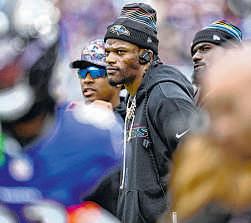
Ravens QB Jackson to miss another game
Lamar Jackson will miss a third consecutive game with a hamstring injury when the Baltimore Ravens (1-5) host the Chicago Bears (4-2) on Sunday
The Ravens ruled Jackson out Saturday while also saying he was not a full participant in practice the previous day Jackson was initially listed as a full participant Friday and questionable for Sunday’s game, but now the team has downgraded him to out and said he was actually limited Friday Tyler Huntley is expected to start Sunday in Jackson’s place.
Falcons make move in case QB Penix is out
The Atlanta Falcons promoted quarterback Easton Stick to the active roster from the practice squad for Sunday’s game against the Miami Dolphins, providing more depth with starter Michael Penix’s status uncertain. Penix is listed as questionable with a bone bruise on his left knee after being limited in practice through the week.
Kirk Cousins, the former starter who lost his job to Penix last season, would start if Penix is held out. Saturday’s move would allow Stick to serve as Cousins’ backup.
Packers activate WR Watson for Sunday Green Bay Packers wide receiver Christian Watson appears set to make his season debut Sunday after recovering from a torn anterior cruciate ligament.
The Packers (4-1-1) activated Watson from the reserve/physically unable to perform list Saturday, a move that clears the way for him to play Sunday night at Pittsburgh (4-2). Watson hasn’t played since tearing the ACL in his right knee during Green Bay’s 2024 regular-season finale. He returned to practice three weeks ago and said this week he believed he was ready to return.
Eagles to face Giants without Brown, Graham
The Philadelphia Eagles will play without wide receiver
A.J. Brown and defensive end Brandon Graham on Sunday against the Giants.
Brown was ruled out with a hamstring injury while Graham was not ready to play after he returned this week from a short-lived retirement.
The Eagles also will play without cornerback Adoree’ Jackson (concussion), center Cam Jurgens (knee) and linebacker Azeez Ojulari (hamstring).
Graham practiced for the first time on Wednesday and hadn’t yet ruled out playing against the Giants.
ASSOCIATED PRESS PHOTO By KAREEM ELGAZZAR
Cincinnati
Baltimore Ravens quarterback Lamar Jackson looks on from the sidelines during the first half against the Los Angeles Rams on Oct. 12 in Baltimore.
AP PHOTO By NICK WASS
OUTDOORS
Rules of the field
young hunters have more special regulations to heed
BY JOE MACALUSO Contributing writer
The first shots in the modern firearms season for deer hunters were taken last weekend in three of our state’s deer-hunting areas, and opening dates for the other seven areas are fast approaching.
For older hunters, having the proper license(s) is all that’s needed to be legal — other than obeying the regulation about carrying tags and using them after taking a deer in the field.
For younger hunters, those born on or after Sept. 1, 1969, it’s not that simple. It’s state law that any hunter born after that date must have successfully completed a stateapproved Hunter Safety Course in order to be able to purchase a hunting license OK, so that regulation has been around for years, and you have to be at least 56 to be exempt, so anyone south of that age should know the licensing drill by now
But how does this rule apply to young hunters?
A basic hunting license and other hunting fees (like the $15 deer license) begin at age 18, and a recent change has put a $5 licensing fee on our younger folks. It’s the youth hunting license and is required for anyone 17 and younger to hunt deer, turkey, to trap and to participate in youth lottery hunts.
Deer and turkey tags come with the license, and youngsters do not have to have an ID or show proof of residency to get this license.
And, like older hunters, when they take a deer or a turkey, they must affix the tag to the animal in the field before it is moved to home or to a camp.
After that $5 license, state law is anyone born after that 1969 date “must complete a (approved) Hunter Education Course before hunting,” unless the young hunter is under direct supervision of a qualified hunter which is anyone 18 and older holding a “valid, unrestricted Louisiana hunting license.”
“Direct supervision” means being within voice range and having direct visual contact.

A grand start
Henley Pharis made the most of the recent youth-only deer season in Rapides Parish to take this solid 6-point buck. The 11-year-old borrowed his grandfather’s .308 rifle to take his first deer, a whitetail first seen on a game camera.
If you’re taking a youngster hunting, even for small game, it’s advisable to take the Hunter Safety Course with them, even if it to reinforce some small part of the hunting adventure.
All rules for deer hunting and other game are listed in the 2025-2026 Louisiana Hunting Regulations pamphlet. For more on the safety course’s dates, times and locations, go to Wildlife and Fisheries’ website: louisianaoutdoors.com/events
Lost, then found
Wildlife and Fisheries enforcement agents do more than check hunters and commercial and recreational fishermen as proved when agents in Vernon Parish mobilized to find a lost hunter
The unidentified 73-yearold man called 911 in the middle of a recent afternoon saying he could not find his way back to his vehicle. Five agents fanned out and located the man just minutes before dark and made sure he got home.
Permit holders
Commercial fishermen with USC 558 permits
due for renewal will have their permits remain valid through the federal government shutdown The announcement came late last week.
More largemouths
Wildlife and Fisheries’ Inland Fisheries staff teamed with a private fisheries conservation organization, the Lafourche Parish-based Responsible Anglers United to stock 32,000 Florida bass in Lake Boeuf earlier this month.
The plan calls for state biologists to collect fin samples from existing bass to determine genetics then to use that as a baseline “to evaluate the effects of future stockings on the lake’s bass population,” in what was labeled a “multiyear initiative” to determine the survival of Florida bass in coastal environs.
Red snapper
The end is near for the private recreational season after the Oct. 12 estimate by Wildlife and Fisheries managers showed the LA Creel estimated catch hit 865,619 pounds.
That was an increase of only 8,762 pounds from the previous week’s report. Still, that total leaves just 3.3% of the 894,955-pound annual allotment.
The projection is the season will close in the first week of November What a trip
The International Game Fish Association’s annual Great Marlin Race results produced the top three billfish from IGFA’s program of tagging billfish with telemetry packages, then following the progress of those fish.
The Oct. 1, 2024, through Sept. 30 race used 54 satellite tags — the total is now 650 tagged fish since 2011 to better determine migration patterns and what habitat billfish use at various times of the year Of the 25 blue, white and striped marlin tags read by the tracking devices, biologists determined these fish covered an estimated 42,654 nautical miles.
The winner was a striped marlin tagged by The New Zealand Research Foundation and New Plymouth Sportfishing and Underwater Club. The 264-pound marlin was tagged Feb. 7 and, 179 days later, traveled 5,771 nautical miles where it showed up 360 miles south of the equator in the central Pacific.
Second went to a blue marlin tagged in the Bermuda Triple Crown tournament. The 180-pound fish covered a straight-line distance of 2,829 nautical miles and showed up about 100 miles off the Senegal coast.
No. 3 was a 300-pound blue marlin tagged off Panama and showing itself after traveling 2,763 nautical miles.
CALENDAR
MONDAY RED STICK FLY FISHERS FLY
TYING: 7 p.m., Bluebonnet Library, 9200 Bluebonnet Blvd., Baton Rouge. Open to public. Hands-on clinic covering basics of fly tying. Materials and tools provided. Website: rsff.org
TUESDAY
LA. CRAB TASK FORCE MEET-
ING: 10 a.m., Terrebonne Parish Council Chambers, 8026 Main St., Houma.
THURSDAY
TIGER CHAPTER/DUCKS
UNLIMITED GUN BASH & BANQUET: 5:30 p.m., Bowie Outfitters, Perkins Road, Baton Rouge. Tickets website: DUTigers.com
ACADIANA BUGS & BREWS: 6 p.m., Pack & Paddle, 601 E. Pinhook, Lafayette. Open to the public. Website: packpabble.com
FRIDAY-SUNDAY
TOLEDO BEND RENDEZVOUS: North Toledo Bend State Park, Zwolle. Fly tiers from Louisiana, Texas & Arkansas. Open to the public. Daily fees $10, $20 overnight stay/ meals. Website: flycasting. bravesites.com
HUNTING SEASONS
DEER/YOUTH & HONORABLY DISCHARGED VETERANS: Through Oct. 31, State Deer Areas 1, 4, 5, 6 & 9.
SNIPE: Nov. 2-Dec. 7, first split, statewide.
DUCKS/YOUTH-ONLY: Nov. 8-9, West Waterfowl Zone.
DEER/PRIMITIVE FIREARMS: Nov. 8-14, State Deer Areas 1, 4, 5, 6 & 9. Either-sex take allowed.
GEESE: Nov. 8-Dec. 7, West Waterfowl Zone. Includes Canada, blue, snow & Ross’ & specklebellies. Take of Canada geese prohibited in portions of Cameron & Vermilion parishes.
RAILS/GALLINULES: Nov. 8-Jan. 7, statewide.
DOVES: North Zone, through Nov. 16; South Zone, through Nov. 30.
DEER/MODERN FIREARMS: Through Nov. 30, State Deer Areas 3, 7, 8 & 10.
DEER/MODERN FIREARMS:
Through Dec. 2, State Deer Area 2, still-hunt only
DEER/ARCHERY: Through Jan.
By The Associated Press
THIBODAUX Ean Rodrigue threw a touchdown pass and ran for another score, Miequle Brock added 104 yards rushing and Nicholls State beat McNeese State 31-7 on Saturday afternoon Rodrigue, a sophomore from Thibodaux making his first career start, completed 12 of 20 passes for 161 yards and added 77 yards on 12 carries for Nicholls (2-6 2-2 Southland Conference). He broke loose on a 34-yard TD run on the game’s opening drive, and his 69-yard touchdown pass to Karaaz Johnson capped the scoring with about 12 minutes to play
Ty Marsh also had a 45-yard pick-6 for the Colonels, who snapped a sixgame losing streak.
Jake Strong threw a 20yard TD pass up the middle to Logan Mauldin for McNeese (2-6, 1-3). Strong was 10-of18 passing for 170 yards and threw two interceptions
SOUTHEASTERN LOUISIANA
38, HOUSTON CHRISTIAN 14:In Houston, Brandon Hayes returned the second-half kickoff for a touchdown for the second straight game and Calvin Smith rushed for two
scores in the Lions’ fourth consecutive win Hayes’ kickoff return covered 85 yards. A 50-yard pick-six by Jaden King cut Southeastern Louisiana’s lead to 21-14 early in the third quarter but the Lions (6-2, 4-0 Southland Conference) scored the final 17 points, including Carson Camp’s 16-yard TD pass to Cade Collier and Smith’s 2-yard run midway through the final quarter The Huskies (2-6, 1-3) managed only 199 yards of offense, including 85 passing. Darryle Evans ran for 90 yards and Xai’Shaun Edwards rushed for a TD.
FLORIDA A&M 43, SOUTHERN 35: In Baton Rouge, RJ Johnson threw and ran for a touchdown, Jamal Hailey ran for 157 yards and three scores and Florida A&M outlasted Southern.
Hailey had a 39-yard touchdown run and Johnson connected with Goldie Lawrence for a 74-yard touchdown in a span of 2:25 in the fourth quarter and Florida A&M (3-4, 2-1 SWAC) led 3628 with 6:43 remaining Trey Holly had a 2-yard touchdown run late in the first quarter before scor-
ing on a 3-yard run 27 seconds into the second to give Southern (1-7, 0-4) a 14-3 lead.
GRAMBLING 26, JACKSON STATE 24: In Las Vegas, Josh McCormick kicked a 44-yard field goal with 21 seconds left and Grambling stunned No. 11 Jackson State in the HBCU Classic at Allegiant Stadium.
McCormick’s game-winning kick for Grambling (5-3, 2-2 SWAC) came after Jared Lockhart’s 1-yard touchdown run had given Jackson State (5-2, 3-1) a 2423 lead with 2:15 remaining. C’zavian Teasett directed the game-winning drive and finished with 232 yards and a pair of touchdowns on 16for-26 passing.
LAMAR 41,NORTHWESTERN STATE 14: In Natchitoches, Robert Coleman threw a touchdown pass, Xavier Coleman ran for 101 yards and two touchdowns, and Lamar scored 24 unanswered points in a rout. Xavier Coleman had a goahead 35-yard touchdown run early in the second quarter for Lamar (7-1, 4-0 Southland Conference). Johnston totaled 284 yards on 13-for-23 passing for Northwestern State (1-7, 0-4).

PROVIDED PHOTO

























































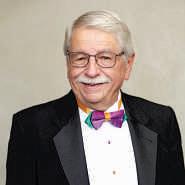







































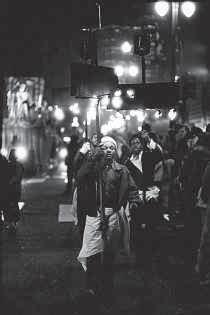





































Rextomove queen’s reviewing stands
BY VICTOR ANDREWS Staff writer
For the second year in arow the queen of Carnival will move to anew spot to greetRex as the king ofCarnival’sprocession windsthrough thestreets of New Orleans on Mardi Gras.
Officials with the Rex OrganizationannouncedTuesday that in 2026, the queen and her retinue willraise aglass to his majesty at The Josephine, the recently renovated Our Ladyof Lourdes Church at the corner of Napoleon Avenue and Lasalle Street, on areviewing stand fit for,well, aqueen.
The stop is only six blocks from the beginning of the historic parade’straditional route. Theparadeemerges fromthe krewe’sden on South Claiborne Avenue, mere blocks away,and rolls to Napoleon Avenuefor the actualstart of the streetpageant. The 2026 parade will roll Feb.17at10:30 a.m.

STAFF FILEPHOTO By CHRISGRANGER
Queen of Carnival, Tatum Lady Reiss, center,toasts Rex2025 E. Howell Crosbyinfront of Pascal’sManale restaurant
As always, joining her majesty in the newstands will be members of thecourt, attired in spring-hued suits andhats to watch the parade. Also in attendancewill be the dukesof the realm in morning dress, who will escort the membersof the courtatthe reception ballheld in the evening. Various chaperones (including the mothers) and Rex officials will be there as well. Forgenerations,members of the court received the merry monarch and his procession at the Boston Club until the early 1990s, when it moved tothe InterContinental hotel afew blocksuponSt. CharlesAvenue
But in 2025, Queen Tatum Lady Reiss and her company stepped into the sun on NapoleonAvenue at Pascal’sManale restaurant,aspot 3miles closer to thestart of the parade. She shareda Champagne toast with 2025 Rex E. Howell Crosby. The Rex entourage was joined in the standsby Queen Mary Grace Jenkins and the courtofthe Mistick KreweofComus.
Rex officials noted the move wasaneffort to allow more time for the court to view as muchof the parade as possible before departing to preparefor theevening’sfestivities. The gala fête features ameeting of the Comus court and is the traditional finale to the Carnival season.
Mind-bendingtricksat this newFrenchQuarter attraction could leaveyourheadspinning
Seeing believing is
BY DOUG MacCASH Staff writer
Jax Brewery, acastlelike building at the edge of the French Quarter,has long been home to aselection of tourist-targeted shops andcafes. Now it includes anew attraction, The Museum of Illusions NewOrleans,amazeofdizzying optical tricks For fansofartistM.C. Escher’s visual paradoxes, psychedelic posters andcarnival halls of mirrors, the museum is amust Imagine entering aspinning, lighted tunnelsodisorienting that it’s necessary to clingtothe rails for dear life. Imaginebecoming apart of agigantic kaleidoscope, dangling from asecond-story window ledge without fear of falling, playing poker withfive exact clones of yourself,orseemingto

of
shrink like Alice in Wonderland. Those are the sortsofexperiences visitorstoThe Museum of Illusions New Orleans will enjoy
The marvelous thing about the many exhibits and activities in the museum is thattheyare not high-tech,digital productions. Basically,The MuseumofIllusions New Orleansisa collectionof timeless amusements based on lighting, reflection and gravity No artificial intelligence required. Getthis, the inscrutable puzzles in thekids’ playareaare made of wood. Wood!
The museum held asoftopeningOct. 17. Duringa preview tour,museum spokesperson Pien Koopman said that the Museum of Illusions was conceived in Croatia in 2015 andhas since spread to 63 locations in 29 countries. Koopman pointedout thatthe optical trickery in theexhibitsissuitable forchildren,but sufficiently mysterious for adults as well. The
Asmall bridge in Broussard, nicknamed the MaryJane Bridge, is thesite of a local ghost tale.
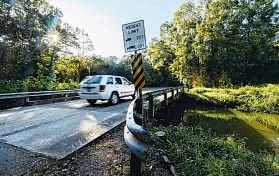
BY ROBIN MILLER Staff writer

prompting an attempt to restart the car
Some
the illusions at the museum, likethis distorted chicken and egg sculpture, can be traced back to the Renaissance.
MylaClayand Chelsey Brown cavort forthe camera in one of the perplexing exhibits at The Museum of Illusions New Orleans. | STAFF PHOTOSByDOUG MacCASH
DININGSCENE
Laurel Street Bakery marks20years in N.O.
No, Laurel Street Bakery is not Uptown on Laurel Street, but on adrizzly Saturday morningearlier this month, nobody had any trouble finding it.



Ian McNulty WHAT’S COOKING
They were regulars taking time out of aweekend for aspecial visit to mark its 20th anniversary andthey packed in around the small cafe counter at thebakery.Some brought bouquets of flowers for the proprietor and staff. Baking sheets were used to pass around mimosas for amorning toast. Kids decorated cupcakes and people exchanged stories and hugs.
Then, two days later,the cafe opened for anormal Monday,and the more measured regular flow of customers circulated back in, resuming their routines and demonstrating why it’sworth celebrating amilestone anniversary foraquietly joyful spot like this in the first place. In the online era,bakeries are ripe candidates for socialmedia trends, where asingleirresistible-seeming pastry can goviral and draw aflash mob of interest Laurel Street Bakeryhas always spoken more softly
This is acafe for abreakfast plate or abirthdaycake, aquick sandwichand amidday coffee or abox of pastries for the office. Along the way,places like this can work their way into people’s expanded sense of neighborhood It’sthe regularspot for people who mightlive across town, but will get afamiliar greetingfrom staff who might well know their order before they say aword Open,thenreopen Laurel Street Bakerydid indeed first open deep Uptown on Laurel Street, and it was an unlikely start. Founder Hillary Guttman had been pursuing an advanced degree in neuroscience. Then she took an interest in bakingand found herself driven to build her own business.
With help from her mother Susan, she started the business as a wholesale bakery,supplyingcoffee shops and hotels. Whenever shemade alittle money,she put it into aslow-rolling renovation to create aretail cafe space. This finally openedasLaurel Street Bakery in August 2005. It was a fateful month. Initially open just on weekends, thecafe only had ahandful of days under its belt when Hurricane Katrina struck. Guttman was able to reopen, in the rudimentary fashion of the day,just about amonthlater That was Oct. 4, 2005, the day city water was deemed potable; two decadeslater, that was the day Guttman chose to celebrate the



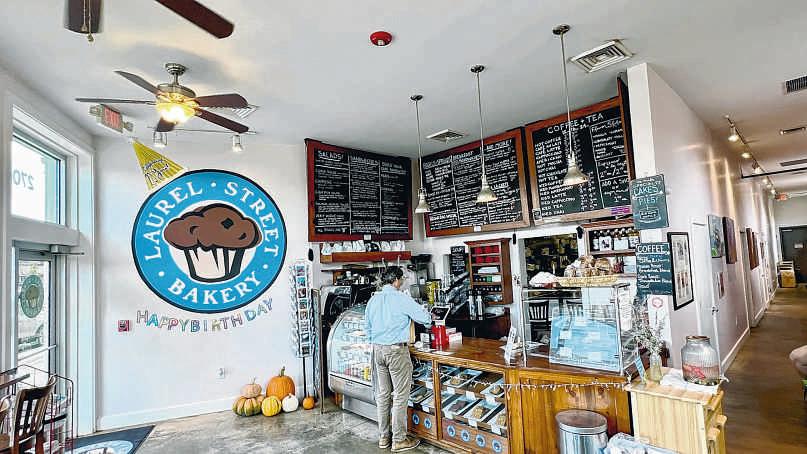
bakery’sanniversary
“That day is worth celebrating,” Guttman told regularsmore than once duringthe event
Forsuchanew business, getting back open so early in the aftermath sealed therelationship for some customers. Aplace to get acup of coffee andasandwich and the embeddedglimmer of normalcy meanteverything backthen,and made aneighborhood business feel heroic for comingback
One neighbor,Paul Gregory, painted asign marking the way to Laurel Streetsincethe regular city street signwas gone. Incredibly, that homemade sign is still up on thepole Uptown today.Itwas atumultuous but defining start forabusiness where consistency, gettingitdone nomatter what, is paramount
“This is one of the hardest businesses to be in. It hasn’tbeen easy,but it’sbeen rewarding and fun, and Iwouldn’t trade it for anythinginthe world,” Guttman




told her customers at the party. As it happened, she was back in thebakery early the day after the party, gettingthe bagels ready for Monday
“People ask mewhat Iwant to do next,” she said, looking back on 20 years. “I want to make it to 21 years.”
Moving to Broad
Laurel Street Bakery’shome on SouthBroad Street was initially an expansion, one that brought thename across town to join a cluster of other craft makers then budding in thearea, including the taproom Broad Street Cider next door and rum maker Roulaison Distilling Co. around the corner
The original Uptown location would later close, thus enshrining

theoddness of directing someone to Laurel Street Bakery on South Broad Street without further context(that original location is now thenewly opened CaféMalou, attached to Octavia Books).
Butthe roots put downthere proved portable. Early on, Laurel Street Bakery wasaspot fora proper bagel,with alittle tang and the right chew,back when ordering abagel elsewhere in New Orleanstoo often meantgetting something closer to adoughy roll. They are still amenu mainstay
It’sthe place foraninexpensive breakfast or aslice of quiche for an early meeting, or amorning meal on your own forsome selfcare before plunging into the day
Youcan get areasonably healthy sandwich, like the Martha (named for the alias of aformer employee, it turns out), which is like agarden salad between slices
of wheat bread, plumped with boiled egg and avocado.
But bakeries are there forsome anytime decadence too, which would cue asandwich many would probably classify as dessert —Nutella and strawberries on sandwich bread. It’s something you might slap together forakid at home, and that can perhaps makeyou feel like akid again, being cared foraway from home.
That Nutella makes aseasonal return during Carnival forone of the bakery’sspecialty king cakes, too. The king cake craze is what packs our local bakeries during Carnival season. But on that anniversary day,this one filled up in appreciation forthe quieter pleasures aspot like this provides day to day
Email Ian McNultyat imcnulty@theadvocate.com.











Astrawberry
STAFFPHOTOSByIAN MCNULTy
On arecent Thursday evening, allroads led to socializing on three separate fronts, thanks to the CatholicCommunity Foundation,Magic in the Moonlight, and the Tulane Business Forum Reception. Congratulations and glad-handing abounded.

CoryHowat,Mikeand CindyNolan, ArchbishopGregory Aymond

n Largesse and laurels

Hundreds traveled to the Hilton NewOrleansRiverside for the 2025 annual Dinner of theCatholic Community Foundation, Archdiocese of New Orleans, and“ACelebration of Catholic Generosity.” Thehonorees,recipientsof the prestigious 2025 Saint John PaulIIAward,were Cindy and Michael Nolan.Looking back,the 2015 recipients were Anne and Jack Dardis, attendees at the 2025 dinner.Then came Marilyn Quirk, Sharon Ryan Rodi, Miles GordonStevens III,Peter R. Quirk, Lloyd and Jan(recently deceased) Tate, KlaraBuconic Cvitanovich, JosephC.and SueEllen Canizaro and, in 2024, Gayle Benson.Almost allofthem were noted, as weresuch past recipients as Jane Nalty and Mary Jane Becker —honored with their late husbands, Pauland John; and MichaelO.Read,who was joined at dinner by wife Hope, their daughterand son-in-law Helen and TimYoung,and Mike’s sister, Susan Read Johnson.

More headliners were Archbishop GregoryAymond, CCF board president Barry Kern with Tina,vice president Mason G. Couvillon, executive director CoryJ.Howat, artist Blair and Emmanuel Piras, John and Dathel Georges,ArchbishopEmeritus Alfred C. Hughes, Elizabeth “Liz” Hefler,Cynthia Pazos and John Kuttruff, Maryand Paul Fine,Tootie and KevinAvin, Mark Romig and David Briggs,KristenRiegel, the Rev Patrick Carr, Denise and Bill Hoffman, the Rev. Nile Gross, and children of the honorees, Scott,Alison Holt, and Greg, andtheir spouses. TheRev ThomasBinanbibaBamoah of Ghana, Africa, considered Cindy and Mike adoptive parents,asdid the Rev. Lawrence Wumya,also of Ghana.
Features of the dinner included table centerpieces by Robért Fresh Market of blue and white hydrangeas, white roses, andItalianruscus; alarge floral arrangement —of white mums, yellow roses, bluedelphiniumand greenery—infront of the podium;and an eye-catching prop of St. Louis Cathedral provided by Mardi Gras Productions. Guests flockedtouse it as abackdrop for photos
Further features were thelovely strummingofharpist Rachel VanVoorheesKirschman;the Hilton’sdinner menu of wedge salad, filet mignon, andtiramisu; “The FourSaintsof Generosity” exhibitbyBlair Piras (ofBlair BarlowArt), which was commissioned by the CCF through the generosityofananonymousdonor;and the surprise video honoring Cindy and Mike for their extraordinarygenerosity.Appearing in the video were Mike Read, the Rev.Patrick Carr,Sister Marjorie Hebert, M.S.C., and the couple’schildren, Scott, Alison, and Greg.
Married for more than half acentury,the Nolans have lived out the spirit of Catholic stewardship championed by Saint John Paul II during hispapacy.Inaccepting their award, which was crafted in Rome andfeaturedartwork inspired by the CathedralBasilica of St. Louis, KingofFrance, andpresented by Archbishop Aymond, Cindy first talked about legacy,and then Mikemade his remarks.Bothexpressed deep thanks for the honor that, accordingto the video’sSisterHebert, was “a natural fit” for theNolans. The Rev AnthonyMcGinn,S.J., closed theprogramwith abenediction. Moments later, guests advanced to Cindy andMiketoextend their heartiest congratulations.
n Business Bonhomie
The Big River Lobby in The Portof New Orleans was the point of rally for areception on the eve of the Tulane Business Forum, which wascochaired by Nene Gianfala and Ivy Robinson Taylor Gilbert presidesover theTulane Association of Business Alumni and William Mizell is the secretary PaoloGoes Debraand Rick Rees Professor,answers to deanofthe university’sA.B. Freeman School of Business Aslew of notables rubbed shoulders during the reception and the46thannual forum, titled “RootedinLouisiana, Growing Beyond.” Galatoire’sand Galerie deGalatoire and The Port of New Orleansunderwrotethe reception; the New Orleans Ernest N. Morial Convention Center was the host sponsor; and Entergy Louisiana,the forum underwriter. Many others contributed The décor was by McCauslandEvent Man-

Ralston, AdrianLopezSalazar,BrianStempel
COMMUNITYCHEERS

Nell Nolan SOCIETY
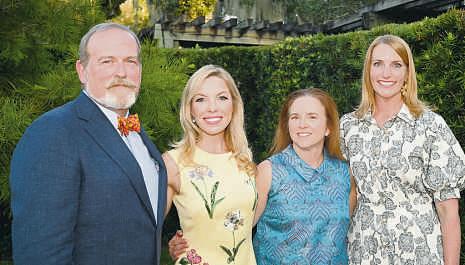
n It Must Be Magic!
As asite, the Conservancy of the Two Sisters in CityPark welcomed guests for areception that was followed by Dinner under theStars in the nearby New OrleansBotanicalGarden. Bannering thebash was “Magic in the Moonlight,” the funds of which help fulfill City Park’smission of beautification,care, maintenance and preservation programsatthe garden. The menu for thealfresco diningwas provided by chef Sue Zemanick of Zasu with Louisiana Seafood support.Under auspices of Joel Catering, she also created the cocktail-hour hors d’oeuvres. Little Gem Salad, snapper andchocolate pumpkin flourless cake were the prandial courses, all enhanced by Jackson Family Wines. Prior to dinner, additional libations were sipped (with gratitude to Republic National Distributing Co. and Sazerac Brands). Throughout, Glass Half Full and The Compost Network supported sustainability initiatives. The tables,which wereset in long rowslining the four axes of theBotanical Garden and lit with twinkle lights, were adorned with such flowers as hydrangeas and roses and placed in trompe l’oeilstyle vases. Stephen Sonnier of Dunn &Sonnier,who donated the florals, was recognized as the honorary co-chair for his contributions over the years. More attributes of “Magic” were musicians from New OrleansClassical &Jazz, avirtual auction of 20 items/packages (chief of which wasaViking River Cruise),and LightDat’sillumination.



Katherine Duncan and E. Lee Mead, whoheaded acommittee of 29, rated thanks as the event co-chairs. More top names wereCity Park Conservancy President and CEO Rebecca Dietz with Greg,CPC board chair TaniaHahn and Melissa Warren,City Park Improvement Association Chair Paul Sterbcow with Laurie, and Vincent Giardina, representing Presenting Sponsor Oscar J. Tolmas Charitable Trust Other notables were Rita-MayWard, Rene Fransenand Edward Bonin, twins Foster and Kelly Duncan with wives Shaun and Carmen, Cathyand HunterPierson,Anne and King Milling, Joan and Stephen Jacob with daughters Samantha and Libby, Susan and TimothyBright, and Feolisfour in Stephanie and Ludovico and Liza and Filippo Also, Lindsayand WayneWands,Anne Abbott, Liz and Poco Sloss, Richard Dragisic, Dr Blanca Maldonado,Bitsy Metcalf, Margoand Clancy DuBos and scores morewho added personal sparkle to Magic in the Moonlight.

agement, LLC (forum coordinator Jennifer McCausland)and featured black linens, glass vasescontaining an autumn mix, votives, and aseasonal floral arrangement on thebuffet. Galatoire’sand Galerie de Galatoire purveyed with taste treats ranging from appetizers to desserts Others with relevant business titles were
Chang,Linda Baynham, Scott Cunningham,Vanessa Claiborne, GayLeBreton, DorothyClyne,TonyAdams, Ben Dupuy,Natalie Barranco, Larry Smith,and Taylor Friedman (Freeman School of Business), son of theforum’sluncheon keynote speaker Paul J. Friedman of





































Jordan
Sony Pictures Entertainment.
PHOTOSByREAGANLAQUE
John Georges, Alison Nolan Holt, Barry Kern
JudySalathe, RobertMenard
Mason Couvillon, BlairPiras, the Rev. Daniel Okafor
PHOTOSByREAGAN LAQUE
Stephen Sonnier,Katherine Duncan, E. Lee Mead,Rebecca Dietz
LizSloss, Sue Zemanick
Paul Sterbcow, Rita-May Ward, Rene Fransen
TaniaHahn, Vincent Giardina, Kyle Rassamni
PHOTOSByJILL LAFLEUR
Amanda Coates, Taylor Gilbert, Paolo Goes, Paul Friedman
IvyRobinson, WilliamMizell
Christopher
ShelbyRuss, Nene Gianfala
TRAVEL
Explorethe‘happyaccident’ of Coca-Cola
BY CHERÉ COEN Contributing writer
Joseph Biedenharn wasn’tasinterested in his father’sshoe store on Washington Street in downtown Vicksburg,Mississippi,ashewas in his uncle’s colorfulconfectionary shop. At ayoung age at the turn of the 20th century,hetook more pleasure in learning how to create avariety of confections. After Uncle Henry Biedenharn left the business to Joseph, then 22, the young entrepreneur added asoda fountaintoserve cool drinks to his customers. His invention that followed would deliver abrand that took the world by storm.
Ahappy accident
Soda fountains in the early years produced drinks made from carbonatedwaterflavored witha variety of syrups that were servedto customers in small glasses
Joseph Biedenharn, the son of German immigrants, served his from Biedenharn &Son on Vicksburg’sbusy Washington Street. In 1891, acustomer ordered 10 cases of soda water for their Fourth of July picnic, but the local bottling company couldn’thandle the big order
Discouraged, he decided to try his hand bottling and distributing flavored soda water Around the same time,pharmacist John Pemberton in Columbus, Georgia, struggled with pain resulting from asaber wound inflicted during the Civil War. To alleviate his morphine addiction,he created adrink containing alcohol and cocaine. He later perfected theblend, lowering the spirits and adding carbonated water.Hepromoted it as a soda which his friend nicknamed “Coca-Cola.
Pemberton sold the patent and recipe to Atlanta pharmacist Asa
TRAVEL TROUBLESHOOTER
By ChristopherElliott

Griggs Candler, whereitbecame acompany in 1892 and later the world’s most popular drink.
But at thetimeofPemberton’s invention, Coca-Cola wasonly sold individually in sodashops, suchas Biedenharn’s in Vicksburg where it enjoyed robustsales.Joseph Biedenharn began bottling the dark brown concoction in thesummer of 1894 and its popularity soared despite its initial slow process.
“Bottling Coca-Cola was slow and labor-intensive,” saidRalph Calhoun, executivedirector to the BiedenharnMuseum and Gardens in Monroe. “Theyhad to makethe bottlesone at atime.”
Monroe connections
JosephBiedenharn had enormous success with his bottling of Coca-Cola, and advancements in bottling techniques expanded the operation.
Membersofhis family joined thebusiness,and in 1912 theBiedenharnCandy Companyopened bottling plants in Monroe and Shreveportwith later bottling establishments in Texas, Arizona and

Wyoming. Visitors to Vicksburg can view the early machinery Joseph Biedenharnused, plus theoriginal bottlesand avariety of memorabilia —even receive aCoke float at the soda foundation —atthe Bie-
denharn Coca-ColaMuseum at the original business location at 1107 Washington St. In Monroe, visitors can also learn the Biedenharn bottling storyatthe Biedenharn Museum and Gardens, plus enjoy the accompanying Bible
Museum establishedbyJoseph Biedenharn’sdaughterEmy-Lou, who enjoyed asuccessful operatic career in the 1920s and 1930s.
TheMonroefamilyhomecompletes the museum complex, which includes Emy-Lou’selaborate Elsong Garden and Conservatory Wheretostay
Another German family that immigrated to Vicksburg wereLazarus andLeonaBaer,who built an Eastlake Victorian homein1870 in today’shistoric district.
The two-storyBaer House Inn with its six guest roomsand elaborate parlors reopened in early October under new owners and serves as an elegant bed-andbreakfast. Visitors mayenjoy breakfast in the formal dining and living area,play billiards or read in the well-stocked library
Each room has been accented by period antiques, regional history books and Civil Warmemorabilia.
The Hotel Monroe in downtown Monroe is another newcomer to the scene, locally owned but part of the Tapestry Collection by Hilton. Twobuildings, oneagrocery and the neighbor ahardware store, nowcombinetoserveasa boutique accommodation with 69 guest rooms,adramatic ballroom on thesecondfloorand the lively Star Bar lounge on the rooftop. Don’tmiss dining at Heirloom Restaurant on the lobby level which serves up innovative dishes and Louisiana favorites.
Did youknow?
Early bottles of Coca-Cola con-
Because
from aspigot as the soda poured into aglass, customers referred to the action as “jerking.” This led to customers calling the clerks serving customers “soda jerks.”
Afterstranding flyers, AirCanadawon’t cover$178hotel bill
Broadview Heights, Ohio

Christopher Elliott

My husband and Iwere stranded in Toronto on ourway from Stockholm to Cleveland after Lufthansa rebooked our flights due to a flightdelay.The flights included aleg on Air Canada from Toronto to Cleveland. But even though we had boarding passes and arebooking itinerary,Air Canada denied me boarding, claiming my ticket was not valid. (My husband’s boarding passes were valid.) Lufthansa refused to help,leaving me to pay$178 for ahotel. Neither airline will takeresponsibility.We flew homethe next day.What can Ido? —BonnieThiel,

WhenLufthansa rebooked your flights, it should have ensured your ticketwas valid on all segments —including the Air Canada leg backtoCleveland. Under EU Regulation261/2004, which governs your initial delayed flight fromStockholm, Lufthansa had aduty to reroute you and cover necessary expenses caused by its delay.Issuingafaulty boarding pass and leaving you stranded in Toronto is aclear breach of that obligation. Air Canada also failed you. The Montreal Convention requires airlines to honor valid tickets and






boarding passes. If therewas a ticketing error,itshould have worked withLufthansa to resolve it immediately,not abandon you at the gate. The “notour problem” responsesare unacceptable. Youdid almost everything right: Youkept records and escalated your case to bothcarriers. Could you have done more? Maybe. First, booking ahotel yourself should have been your lastresort If you’re stuckinastopover city you need to apply pressure to your airline tohelp you then and there.Don’tbook ahotel and then try to negotiatearefund, because airlines will always trytoavoid
paying.
Second, abrief, polite email to one of the airline’sexecutives might have helped. Ilist the executive contacts for Air Canada and Lufthansa on my consumer advocacy site, Elliott.org. Also, an appeal to the U.S. Department of Transportationcould have helped the airlines see the error of their ways So what went wrong? This was classic code-share confusion. In the correspondence you provided, Lufthansawanted Air Canada to take responsibility for the flight because it was the “operating” carrier. But Air Canada wanted

Lufthansa to take responsibility because its flight from Frankfurt to Toronto was delayed. As aresult, no one would take responsibility.Comeon! Irecommended that you send a complaint to the DOT,which regulates airlines in the United States, where you booked your ticket. You did, and you received afull refund for your hotel from Lufthansa. Christopher Elliott is the founder of Elliott Advocacy,anonprofit organization that helps consumers solve their problems. Email him at chris@elliott.org or get help by contacting him on his site.

The newly opened Baer House Inn in Vicksburg,Miss.,was built in 1870 and is located in the city’s historic district.
HOLLYWOOD SOUTH
‘West of Greatness’ explores worldofbodybuilding
Indie film shot on theWestBank
Although Hollywood South may be struggling at the moment, with very few Hollywood studio productions coming to shoot in Louisiana, that hasn’tstopped independent productions from thriving.


Leslie Cardé
As evidenced by the array of indie films at this year’s New Orleans Film Festival, Louisiana filmmakers have found creative ways to produce meaningful films that engage audiences in any number of ways.
One such film, shot across the river from New Orleans on the West Bank, is “West of Greatness: The Story of the Westwego Muscle Boys,” which ventures into the world of bodybuilding.

Screen the movieat8 p.m.Oct.27 atThe BroadTheater,636 N.Broad St.Tickets are available at neworleansfilmsociety.org
ary VanZandt)istrying to rise above his tumultuous homelife. The character’sissues are not far afield from the director’sreal-life story
theUniversity of Central Arkansas andbegan ingratiating himself withfilm crews around thecity. Eventually directing his own award-winning short films and music videos, he hooked up witha groupoflike-mindedindependent filmmakers who embraced collaboration andworkingoutside of the traditionalstudio system.These filmmakers work alongside one another on each other’sprojects andare alltrained in multiple disciplines. Each can shoot, edit and direct.
almost like in somesort of time lapse.”

While the film, written and directed by Jared Cliff LaReau, is under the categorical umbrella of Narrative Feature at the festival, it is that rare hybrid film that straddles scripted and documentary film. You see, the bodybuilding contest and the year leading up to it are very real.
“The best way to describe my film is to say that it’s afictional film with real elements those bodybuilders are playing themselves,” director LaReau
said. “Yet, it’sall fictionbecause thecompetition only exists within thefilm. We raised money,infact specifically to hold thatcompetitionoutside of the film’s budget and awarded real prize money to the winners.”
This is afilm thatgoes way beyond bodybuilding, although it’sthe themearound which the characters revolve.
Hollywood glory, difficult lives
And, these are complex characters. Jerome (played by LaEric Moore) has dreams of Hollywood glory,while Terry (played by Zach-
“I wanted to make amovie about what Iwas like when Iwas 19,”said LaReau. “I was broke, depressed and in rehab with a brutal drug addiction. Iwanted to examine what it’s like to be aimless and scared, when you don’twant to admit it
“So, you act tough. Iwas struggling with my family life, and I love my family,but there is definitely trauma there,” he said. “I knew Iwanted to makeafilm about what this struggle was like —that was clear.But the bodybuilding element cametomeinadream, where Isaw my friend Eric, who plays Jerome, getting bigger,
The bodybuildingcontestants had nine months to prepare forthe contest, known as Greatest Gains. During that time, they were routinely measured,ate 6,000 calories aday,and trainedrigorously. First prize was$15,000, awarded forthe biggest gain in physique, body posing and personality. And, in atrue mashup of realityand fiction, the two main actors became part of the actual bodybuilding contest,and each gained 20 pounds of muscle.
Cast andcrew
Director LaReau, who grew up in the Ozarks of Arkansas, has been clean and sober for10years. He cametoNew Orleansadecade ago afterearningadegree in film from
Keepingthingscoolwithaceiling fan
adoctor
teeth
Stevie Cavalier, who plays the director of this film within afilm, is also LaReau’s assistant director on “West of Greatness,” andhas been in many films in frontofthe camera. The standout roleofJessica (playedbyactress Gordy Cassel) who hassuffered atraumatic brain injury, adds emotional depthtoan alreadypowerfulfilm. Her scene withawheelchair, backed up by Beethoven’s “7th Symphony,” is gut-wrenching.
LaReau’s feature debut, “West of Greatness,” will stay withyou,both forits real characters andfor the actors who drive home thelivedexperience of those who fight to overcome hardships andstruggle with theirneed to change andgrow
The film, whichdefies any traditional boxes, shot for18months entirelyonthe West Bank, displaying theworkingside of New Orleans rarelyseen on film, endearing audiences to thediverse people who live there.
Email Leslie Cardé at lesliecardejournalist@gmail.com.

Dear Heloise: I’ve been reading your column all my life. (I’m 72.) Thanks for all the great tips! Iwanted to clarify something that Sarah P., from Bakersfield, California, asked about using ceiling fans 24/7. Ceiling fans, or really all fans, do not coolthe air.They cool our bodies by evaporating the perspiration from our skin. So, if you are not actually in the room with the fan, there’snopoint in running it. The temperature of the room will not drop —Paula M., via email Paula, ceiling fans can also lower utilitybills by keeping us cool while using less energy than air conditioning. —Heloise Bleachingour teeth
Dear Heloise: Is it harmful to bleach teeth with over-thecounter products? Will the bleachingproducts harm my enamel? —Jill H., in Albuquerque, New Mexico Jill, bleaching products with ahigh concentration of hydrogen peroxide or carbamide peroxide can soften the enamel temporarily Overuse or misuse of whitening agents can cause tooth sensitivity and enamel erosion. Abrasive whiting toothpaste can also do the same over time. The best way to whiten your teeth is usually done by adentist who can carefully monitor the whitening process. However, if you use an over-the-counter whitening agent, follow the directions to the letter Don’teat or drink anything after you’ve bleached your


Bleachingbefore going to bed is probablythe best time to use awhitening product,but do notsleep with whiteningstripsin your mouth. Afterbleaching yourteeth thoroughly, rinse yourmouth outwith water —Heloise Healthyplants
Dear Heloise: When Iwas a software engineer,acolleague used to pourher leftover coffee into aplant she hadonher desk. It looked great! Butasaformer landscaper,Iknewabout the secret of coffee grounds. I saved my used coffee to put in my compost or around my shrubs
The reason coffee grounds make plantsgrow is because they are rich in nitrogen.
Nitrogen will produce lots of green growth,but for goodroot growthand flower/fruit production,plants also need phosphorousand potassium. There are inexpensivesoiltest kitsthat are easy to use. No need to send them to alab forresults. —RobinB., via email
Keepingceleryfresh
Dear Heloise: Abunchofcelery will keep for much longer if you remove it from the plastic bag and wrap it in aluminum foil. Icut a pieceabout twice as long as thebunch andwrap it lengthwise, and it lastsfor a few weeksthis way —Stacy T.,via email
Peskyelbows
Dear Heloise: Isaw aletter from Ruth, in Minnesota, askingwhat she should use for her dark elbows. Ihad oneelbow that was very dark, andnothingI used lightened it. After my


doctor did blood tests,Irealized this was caused by a niacin deficiency
When Istarted Bcomplex supplements,myelbow lightened. Iwould advise Ruth to do amicronutrient test to see if her dark elbows could be asign of something more serious. —Lisa, in Florida Lisa, nearly every unusual thingthat occurs on thebody should be seen by
Things such as amole that suddenly pops up, a discoloration of skin, or a lump that starts to grow need attention. It might be harmless, but if it’snot,then it’s best to get it seen as soon as possible by aprofessional.
Heloise
Send ahinttoheloise@ heloise.com.











PROVIDED PHOTO
LaEric Moore, left, and ZacharyVan Zandtstar in the film
‘West of Greatness: The MuscleBoysofWestwego.’
LaReau

Composer’snew
book discusseshow LSUvet school inspired
hismusic
NOTED INTENTIONS
BY ROBINMILLER Staff writer
The LSU School of Veterinary Medicine was still fresh in Charlie Rauh’s mind when he started writing his book, “simply,patiently, quietly: an approach to creating intentional music.”
He’d spent August 2024 as the school’sartist-in-residence working withfaculty, students, staff and animalpatients,all of whom inspired his work as acomposer
As acomposer,headmits that he was an unusual choice for the school’sresidency program, which hostedavisual artist and writerinprevious years.
But the match between Rauh andthe veterinaryschool proved to be perfect,and he reflectsonthat experience in hisbook.

The book, “simply,patiently,quietly,” released in March by String Letter Publishing, is acombination of Rauh’s essays andmusical compositions from the residency,complemented by illustrations drawn by his sister,artist and author Christina Rauh Fishburne.
“All of the essays are basicallytalking about my life experience as amusician and how Ithink those qualities are
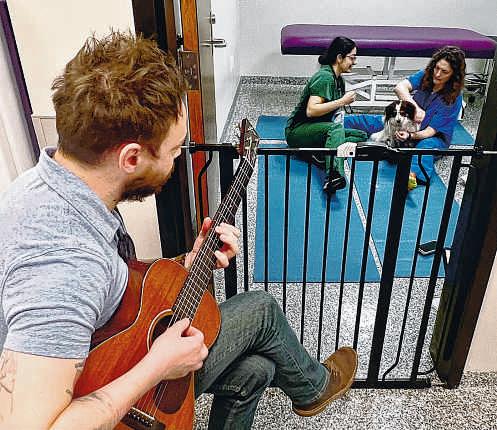

ABOVE: Charlie Rauh wasthe 2024 artist-in-residence at the LSU School of VeterinaryMedicine. TOP: Rauh plays hisguitar outside an exam room in the Stephenson PetClinic while Dr.Kielyn Scott and her assistant performacupuncture on acockerspaniel.
important in how somebody approaches being creative,” Rauh said, speakingfrom his New York home. “So, Italk about afew differentthings, experiencesI’vehad,people I’ve met and alot of what happened at the residency.The experience was an integral part
of making the book happen.” Rauh didn’tknowwhatto expect when he firstwalked into the vetschool. That’snot saying he wasn’tfamiliar with hospitals
“I spent alot of time in hospitals whenI was achild,and like alot of people who had early

surgeries, Iwasn’tveryfond of hospitals,” Rauh said. “But I had never spent time in an environment like the veterinary school. Ihad no ideawhatthey wantedmetodoasanartist making music, so Iwas kind of goinginto theresidency blind in alot of ways.But Idecided to do it.”
All apprehension disappeared the momentRauh walked into the vet school and stepped into the role of observer
He often played improvised tunes on his guitartocalmanimals before treatments. Other times, he could be found playing for studentsduring alunch break.
He also collaborated on a composition with LSU’schoral program.
“Itwas an interesting perspective to have,”hesaid.
“That’ssomething Ididn’treally unpack until recently,and that is definitelyinthe book
with how Imade the music and how Iapproached making the music —just having thatopportunity to sort of be a specter floating around ahospital. Notmanypeople getthat perspective.
Rauhalsocreditsliterature andtravelfor inspiring his compositions, and, at onepoint, explains howhe’scombined theinfluence of EmilyBrontë’s poetry with his experience at thevet school in his lullaby compositions.
“I composed these lullabies as away of translating intention,” he writes. “The subject matter is widely varied: Literature, travels to remote locations, wellness, family —but the core of this music is its intention. Fromtraveling to Djupavik, Iceland, to experiencing the poetry of Emily Brontë for the first time,toexamining the intricacies of wellness withthe medical staff at LSU VetMed, Iwanted to musically capture the messages that Ireceived.”
Rauh still keeps in touch with the school andisintalks of revisiting the school if funding becomes available
“I’d like to continuethe research we were doing to see the impact of intentionalmusic on veterinary medicine andhow it can be leveraged,” he said. “We’re still very much talking about it andtrying to figure out away for me to get back down there.”
Email Robin Millerat romiller@theadvocate.com.
At 91,New OrleanspoetCatharine Savage Brosmanisstill writing
Primate scientist Jane Goodall, who died this month at 91, argued that old age should nudge us to stay busy,not slow down.Asshe sawit, the less time one has, the more one should focus on what’s left to do.
Isuspect that Goodallwould have gotten along wellwithanother 91-year-old, poet and former Tulane professor Catharine Savage Brosman. Brosman, who taught French for many years at Tulane and now divides hertime between Houston and New Orleans, has just published “Metates and Other Poems” through University of Louisiana at Lafayette Press. It follows two other recent collections, “Arm in Arm” and “Aerosols and Other Poems.”


DannyHeitman
“Partial Memoirs,” aprose reflection on her longand eventful life, appeared last year,and another book, “New and Selected Poems,” is slated for next year Meanwhile, Brosman is planning aschedule of appearances that mightchallenge a20-yearold.She’ll be at Conundrum Books in St.Francisville at 3:30 p.m. Oct. 30,then atthe Louisiana Book Festival in Baton Rouge Nov.1, where she’sonauthor panels at 9a.m.and 1:15p.m. She has a poetry reading atthe West Baton Rouge Museum in PortAllen at 2p.m.Nov.2,followed by apro-

gram at the Center for Louisiana Studies in Lafayette at 10:30 a.m. Nov.3
Local listeners who attend Brosman’s readings will hear familiar locales in her poems.
One, “Metates and Other Poems,” has ageographical theme, revisiting manyofthe places that have shaped her life. Anative of Colorado, she’smadehomes in New Orleansand Texas, and her new collection recalls other stopping points, including Virginia, Florida, west Texas, Arizona and Hawaii.
Ametate (pronounced “mehtotty”) is agrinding stone often used by native peoples, including those in theSouthwest
In thetitle poem of her new collection, Brosman recalls her visit to ahouse in Arizona where she sees “metates strung like beads along apath.” Spotting these old implements “nowreturned to earth as ornaments,” she greets

them as small monuments of a sort “toour ancienthunger,ancient toil.” In this way,Brosman asks us

to consider how aplace, like the mealsmade on an old stone, can be asource of nourishment, too. That themeacquires amore whimsical tone in “Dinner on St. Charles Avenue,” in which she recounts asplendid evening meal with friends in her beloved New Orleans.
“Last week, acabbie praised the crab cakes here,” she notes of their choice of venue.
Soon, the diners get downto business: “The plates arrive; moredrinks and endless talk /accompany our feast. We even have dessert.”
Brosman hints that the city where these cherished friends share dinner is at least as intoxicating as anything in the martinis and white wine that flow freely These are poemsthat go places, inviting readers to tag along.
Email Danny Heitman at danny@ dannyheitman.com

PROVIDED PHOTO By CHARLIE RAUH
STAFF PHOTO By ROBIN MILLER
Brosman
Fishburne


Dear Miss Manners: In 2011, Ihad weight loss surgery. It was very successful, andI’ve managed to keep the weight off. Of course, a lotofpeople think I“took theeasy way” to lose weight, but surgery is not a miracle cure, just atool. My best friend has aslightweight problem, or at least she believes she does. Isure don’t see her as needing to lose weight. (And Isure don’tjudge people whoare overweight,as I’ve been there and know justhow hard it is.)
My current problem is actually keeping my weight UP where my doctor (not the weight-loss doctor)wants it. I’m only 5-foot-3, and Ifeel too heavy at theweight my doctor says is healthy What people don’trealize is that
it’sjust as much astruggle for me to gainweight as it was to lose it. IamVERYcarefulnot to brag, or even talk,about my weight(although otherswill bring up how small Iam). It seems to be OK for them to mention their own weight problems,but heaven help me if I mention that my doctor is not going to be pleased when Iweigh in next week.
My friend recently snapped at me,sayingshe has struggled all her life to lose weight, and that shedoesn’t wanttohear about me having to gain it. Ijust said “OK,” andthat Ididn’tsee her as being overweight. Idecided to let it go, but it bugs me that everyone else can talk aboutlosingweight, but Iamnot allowed to talk about gaining it.
Forwhat it’sworth, when Iwas much heavier,Iwould look at thin people and wish Ihad their problems
Gentle Reader: So you do under-
By The Associated Press
Today is Sunday,Oct.
26, the 299th day of 2025
There are 66 days left in the year
Todayinhistory: On Oct. 26, 1881, four lawmen, including Wyatt Earp and Doc Holliday, exchanged gunfire with five outlaws, killing three was shot to death by the headofthe Korean Central Intelligence Agency,Kim Jae-kyu In 1984, “BabyFae,” a newborn with asevere heart defect,was given theheart of ababoon in an experimental transplant in Loma Linda, California. (She lived 21 days with the animal heart.)
stand. Instead of weighing (sorry) the relative inequities of who getsto talk about size and who does not, Miss Manners will tell everyone equally: Just stop it. Nothing good can come from these discussions. Andclearly, assuring your friends that you do not consider them overweight —and therefore, that it is OK for you to talk about it —isnot the comfort you thinkitis.
Lead by example and do not contribute to these demoralizing self-assessments. Complain to your not-weight-loss doctor instead.
Dear Miss Manners: My neighbor/ friend came over and said, “I madeyou acake for your birthday,and it is also your gift.”
That would be fine, except she only gave me part of the cake!
Of course Ididn’task where therest of it was. Iwas kind of in shock! Should Ibeupset that I
TODAYINHISTORY
special forces whostormed thetheater;41rebels also died.
In 2020, Amy Coney Barrett was confirmed to the Supreme Courtbyadeeply divided Senate, installing President Donald Trump’s nominee days beforethe U.S. general election. In 2024, Israel launched




wasn’tworthy of the whole cake as my birthdaygift?
GentleReader: Maybe she thought it was your half birthday
Dear Miss Manners: Earlier this year,Imadearrangements with a couple of acquaintances to spend thenight in ahotel to celebrate one of their birthdays and to sightsee. Fiveweeksbefore the night, someclose family friends told me they were coming to visit me that sameweekend. Itold the acquaintance whose birthday it wasthat Icould not makeitafter all. They becameupset because the hotel reservation wasnonrefundable. Iapologized because these other friends were coming from out of state, and Iamhonestly closer to them. Iasked the acquaintance if they could call the hotel to ask about arefund, but they refused. Icalled the hotel myself,and although thebooking was nonrefundable, it could have been
predawn airstrikes against military targets in Iran in retaliation for abarrage of ballistic missiles the Islamic Republic fired on Israel on Oct. 1. It was the first time Israel’smilitary had openly attacked Iran.
Today’sBirthdays: Musician Milton Nascimentois83. Actor Jaclyn Smith is 80.
rescheduled. Itried to explain this to my acquaintance, but all they would keep saying was, “It’snonrefundable.” Am Istill supposed to chip in? The person still wentonthe trip without me.
Gentle Reader:You will not have to worry about this next year
Notonly did you break asocial (and financial) commitment, but you also madeitclear that you did so because you had amore attractive offer.Miss Manners assures you that you will not be invited to celebrate this birthday again. But yes, you should still pay your share.
Send questions to Miss Manners at her website, www.missmanners.com;toher email, dearmissmanners@gmail.com;orthrough postal mail to Miss Manners, Universal Uclick, 1130 Walnut St., Kansas City,MO64106.
TV host PatSajak is 79. Politician, diplomat and former first lady Hillary RodhamClintonis78. MusicianBootsy Collins is 74. Artist andfilmmaker JulianSchnabel is 74. ActorJames Pickens Jr.is71. Actor-singerRita Wilson is 69. ActorDylanMcDermott is 64. ActorCary
Elwesis63. Singer Natalie Merchant is 62. Country singerKeith Urban is 58. ActorTom Cavanagh is 62. Writer-producer Seth MacFarlane (TV:“Family Guy”) is 52. ActorFlorence Kasumba is 49. ActorJon Hederis48. Actor Folake Olowofoyeku is 42.Rapper SchoolboyQis39.





























Whetheryou
BY JIMMIEPAPIA
Contributing writer
Human Condition
Ilove fall. Ilike its interchangeable name “autumn” even better Everyone’sattitude seems different, more vibrant. It’s the anticipation of leaving behindthe summer sweat dripping offour foreheads, to brisk air turning our nosesand cheeks red. Pumpkin spice starts appearing in all manner of food, except maybe jambalaya. Children’s shoulders droop as school begins; parents think it is the happiest time of the year.Weget cheerier as we put away our gardening equipment in favor of seasonal decorations. It’sabout getting ourmorning motors running by warming up witha bowl of buttery grits and finishing the day with sassafras expandingour nostrils from apot of steamy gumbo. Teams kick around the pigskin as football season gets underway and our hopes of winning another Super Bowl are dashed before the middle of the season. But there’s always next year John and Mo, our friends who
ILLUSIONS
Continued from page1D
perspectiveand lighting anomalies may explain how magicians and Hollywood directors fool our eyes, she said. Isaac Morales, one of the many young museum guides who helped visitors master the museum’sillusions during the preview, captured the spirit of the place when he said: “This job is amazing. We get paid to laugh and take pictures.”
Yes, the staff will aid in producing prime selfies of the experience.
Cory White, who happened on the new museum while visiting New Orleans from Mississippi, said that his favorite part was the disorienting“vertigo tunnel,” mentionedearlier. Koopman said the attraction is actually titled “The Vortex Tunnel,” but White’s description is better

live in Chicago, have adifferent perspective on autumn.They start testing their heater in September astemperatures in the North are descending. Their leaves turn red, yellow and orange, whereas ours turn brown as they fall to theground. While we’rebusy storing our lawnmowers, John is tuning up hissnowblower anddigging out hisoversized shovel. They don’t look forward to subzero tempera-
tures and Itease him on mild winter nightswhen my wife Pam and Ibarbecue in the crisp air of our backyardand dine on our dimly lit patio, whereas John and Mo are sliding on ice-covered streets in the frozen “Nawth” as Smiley Anders would say Three of themost popular holidays are in autumn —Halloween, Thanksgiving and Christmas, even though Christmas is technically awinter holiday

Alicia
The museum is at 600 Decatur St. The hours are from 10 a.m. to 9p.m.Sunday through Thursday; from 10 a.m. to 10 p.m. Friday and Saturday,with final admission one hour before





visit themuseum website.
Email Doug MacCash at dmaccash@theadvocate.com.
For many people, Halloween is the pinnacle of the autumnal equinox as they welcomeghosts and goblinswalking the streets and strange noises howling in thenight. Houses decorated in themacabre are eclipsed later by winter wonderland displays, whose reality is not often seen in southLouisiana. Thanksgiving, my favorite holiday,gives us pause to remember thegraces andblessings bestowed on us throughout the year Thanksgiving is about family and friends gathering forfeasts and not about Christmas shopping, which is supposed to begin on Black Friday,even though retailers keep pushing it back. It’s the busiest timeofyear fortravel as people make annual pilgrimages to visit family and friends they haven’tseen in months.
Istart my daybyattending 6:30 a.m. Mass, thenhurry home to makecinnamonrolls for breakfast, whichinour family, are just as traditional as turkey We watch the Macy’sThanksgiving Day Parade andcontinue the cooking we startedthe previous day.Weespecially enjoy watching thehigh school bands and
listening to the stories of what obstacles theyhad to overcome to gettothe parade. Christmas, the highlight of the season, is the excitement of holiday parties, the eagerness of Santa Claus, shopping, giftgiving and receiving, the aroma of an evergreen Christmas tree wafting through the air,days off from work and school, eating too many cookies, hearing Christmas music spewing everywhere, and watching “A Charlie BrownChristmas,” “It’saWonderful Life,” “Holiday Inn” or “White Christmas” for the hundredth time. Lest we remember,Christmas is areligious holiday Autumnisall the above, and as it ends, so does the current year as we bring in anew one and with it another waveofhope, wonder, excitement and attitude. Happy Autumn.
—JimmiePapia lives in Metairie.
HumanConditionsubmissions of 600 wordsorfewer may be emailedtofeatures@ thedvocate.com. Stories will be kept on file and publication is notguaranteed.There is no payment forHumanCondition


Dear Annie: I’ve always been the one in my family whoorganizes theholidays, remembers birthdays and keeps everyone connected. Lately,though, Ifeel taken for granted. My siblings rarely help, and when Itry to step back, I’m madetofeel guilty for“not caring.” Ilove my family, but I’m exhausted from carrying theload. How do Iset boundaries without seeming cold or uncaring? —WornOut Peacemaker Dear Worn Out Peacemaker: You’re not cold; you’re human. Families often lean on the person who makes things happen, until that person is running on empty Boundaries don’tmean you care less; they mean you’re protecting your well-being. Start small: Say,



“I can host, but I’ll need everyone to bring adish,” or,“This year I’m stepping back from planning.” The people whovalue you will step up. And those whodon’t? Let their disappointment be theirs to manage, not yours.
Sendyour questions forAnnie Lane to dearannie@creators. com.



























STAFF PHOTO By DOUGMacCASH
Whaley,ofSan Antonio, loses her head at The Museum of Illusions as Jasmine Whaleyprepares to stir the pot.
Butthe motorwill be dead —as deadasthe darkness surrounding the bridge.
And all passengers can do at this point is get out and start pushing. Once the car crosses from the bridge to the road, the motor should restart, that is, if the car crosses over before Mary Jane “getsyou.”
“It’ssaid that MaryJane shows up on the bridge after you call her three times,” Breaux Bridgeresident and musicianYvetteLandry said. “You have to push your car off the bridge as fast as you can before she gets you.” Landry has triedher own hand at the legend.
“I vaguely remember going out there with some friends when I was in high school,” she said.“We stopped the car and saidher name twice, but we never made it to the third time. We weretoo scared We started the car and got outof there as fast as we could.” Howand why?
Though it’sthe irresistible terror that attracts most adventurers to the bridge, Josh Hall is more intriguedbythe story behind the ghost
“Who was Mary Jane?”the Lafayette resident asked.“I’ve heardabout the legend, butwas she real? And when and how did this story start?”
The first part of the question is alittle easier to answer thanthe second, and even here, details are null and void.
Mary Jane’sstory can befound on several Acadiana-based websites. Authors Cheré Dastugue Coen andTim Wescott also include the story in their respective books,“Haunted Lafayette, Louisiana” and “Weird Louisiana.”
The gist of it goes something like this: Mary Jane and adate were taking aride along BayouTortue Road after leaving their high school prom, when the promdate stopped the car at the bridge.He’d been drinking and wantedmore than hand holding and kissing, but MaryJane wasn’thaving it. Her datewentinto arage, struckher with awhiskey bottlethen dumped her body into Bayou Tortue
It’ssaid her body was never found.
Meanwhile, Mary Jane’slast name never appears in anyversion of the story,and her prom date’sidentityisalways nonexistent. Yethere is this legendwith no clear origin.
“I’ve called my brother, and he’smade some calls,”Landry

said. “I’vecalled around to other peopleIknow, but no oneknows howthisstory got started.”
Still, Landry’smother,Breaux Bridge resident Mary Alice Landry,remembers the story popping up some yearsafter she graduatedhighschool.
“She said shedoesn’tremember hearing whenshe was in school, but Iwas in school in the ’70s and ’80s when Ifirst heard it,” Yvette Landry said. “So it hadtobesome time between then.”
Apreventativemeasure?
As for how it started, Yvette Landry has her own theory. She’s notonly amusician but an author and storyteller,and one of her stories could hold the key to the Mary Jane mystery
“When Iwas alittle girl, my grandmothertold me astory aboutawitch who would drift into your attic if youmisbehaved,” she said. “At night,her long, bony fingers wouldslink down through therafters andsnatch up any kid whowas not doing as told.”
She published the storyinher 2016 children’s book,“Madame GrandDoigt.”
“Sure, it was terrifying, but it was meant to be preventative,” she said. “You made sure you were being good, because you didn’twant this witch reaching down and snatchingyou. Ithink it’sthe samecase with theMary Jane Bridgestory.”
Yvette Landry remembers Bayou Tortue Road as being apopular hangout for high schoolers in the 1970s and ’80s. However,the area wasn’tasafe place.
“The road was dark, and someone could have gotten hurt,” she said. “So, Ithink theMary Jane story might have been madeup by adultsasa preventative measure. It was ascary story to keep them from hanging out there.”
Did it work? While thestory might have scared away some kids, others surely wanted totest it. Even today,the call-out of Mary Jane on the bridge is just too irresistible for both teensand adults.
Anotherdimension
Meanwhile, Joan Broussard shared another dimension tothe legend.
“I went to Comeaux High School, and we always went to Stone Road
and the Mary Jane Bridge,” the Lafayetteresident said. “I always thought it wascalled Stone Road, because that’swhere the high school kids gatheredtoparty.”
Anyway,the legend wasalittle different forBroussard and her friends.
“Back in those days, the legend was that you turn off your car,and it will still go over the bridge,” she said. “Now,I really can’tsay that Iremember that because I’m such ascaredy cat. If I did it,Iwas on the floorboard.”
Accordingtothis version of thelegend, ghostly crying can be heard after thecar crosses.
“There have been alot of deaths on that road,” Broussard said. “And that’sbecause people drive too fast around the dangerous curve before the bridge. That may have something to do with thecrying part of the legend.”
Butthat didn’tstop Broussard, now 53, from returning to thebridge with her 19-year-old daughter,Sylvia.
“I asked her if she wanted to go down Stone Road,” Broussard said. “She didn’tknow what was going to happen. When we got
there, we saw that someone had hung someghost decorations in the trees. Itold her that this is where the urban legend begins, and Iexplained the story to her She said, ‘Mom, Ithought we were going to see Halloween decorations.’”
Sylvia gunned the gas pedal, but she was still in the middle of Mary Jane’sterritory
“Our GPSand radio wentsilent,” Broussard said. “Now,that could have been —nopun intended —adead spot forasignal, but both started working as soon as we crossed the bridge.” And the song playing on the radio?
“Itwas Michael Jackson’s ‘Thriller,’” Broussard said, laughing. And somewhere within the darkness of Bayou Tortue, Mary Jane wassmiling.
Do you have aquestionabout something in Louisiana that’s got you curious? Email your question to curiouslouisiana@ theadvocate.com. Include your name, phonenumber andthe city where you live.



























STAFFPHOTO By LESLIE WESTBROOK
Decorative Halloween ghosts
nicknamed the MaryJane Bridge





HOPS, SKIP AJUMP
BY RICH COLLINS Staff writer
When Abita Brewing Co. opened on the northshore in the mid-1980s, there were onlyafew dozen craft breweries in the U.S. Today,the number of independent breweries churning out smallbatches of specialty brews has grown to nearly 10,000,thankstoacraze that took the nation by storm in the 1990s and early 2000s. Despite thegrowthofthe category, however,which nowaccounts for onefourth of nationalbeer sales by dollar amount,per-capita beer consumption nationwide has actually been on adownward trajectory formore than adecade. With the exception of abrief, pandemicera spike, younger people aredrinking less in general, and consumersare
BY ANTHONY McAULEY Staff writer
Louisiana’sfilm


Consumers are forgoing beer and embracing newoptions, including hard seltzers, ready-to-drink cocktails and increasingly popularTHC beverages.
the craft category deals with oversaturation.
“Welike to say we have alot of drinkers in Louisiana,but at the end of day,there are markets, like Houston alone, that can sell more beer than our entire state,” said ZacCaramonta,owner of Gnarly Barley,the Hammond-based maker of the popular Jucifer IPA. “There are only so many customers to pick up six-packs off shelvesoruse taphandles in bars.”


embracing newoptions, including hard seltzers, ready-to-drink cocktails and increasingly popularTHC beverages, which debutedinLouisianasix years ago. These challenges to the roughly $117 billionbeer marketmeanbrewersofall sizesare looking for innovative ways to maintain or grow their businesses —as
“Interest from studios andindependent filmmakers remains strong.We’reactively focused on rebuilding that volume by showcasing Louisiana’sunique advantages and ensuring ourincentive program continues to attract top-tier productions.”
JASON WAGGENSPACK, president of lobbyist group Film Louisiana
In light of this, some of Louisiana’s most high-profile craft brewers are looking “beyond beer” to keep their businesses buzzing.
Somecompanies, like Urban South Breweryand Parish Brewing Co., are now making THC seltzers of their own. Others, including Abita and Port Orleans BrewingCo., are keeping theirtanksfull

Head brewerTyler Krutzfeldt monitors the brewing of gluten-free cider at Urban South Brewery in NewOrleans.
‘There are only so many customers to pick up sixpacks off shelves or use tap handles in bars,’ says Zac Caramonta, founder of Gnarly Barley Brewing in Hammond.
Despite the growth of independent breweries, which now accounts for one-fourth of national beer sales by dollar amount, per-capita beer consumption nationwide has actually been on a downward trajectory for more than a decade. With the exception of a brief, pandemicera spike, younger people are drinking less in general
PROVIDED PHOTO

Continued from page 1E
by manufacturing beverages of all types for other brands. Still others, including NOLA Brewing Co in New Orleans, Bayou Teche Brewing near Lafayette and Crying Eagle Brewing Co. in Lake Charles, have changed their business model altogether and stopped supplying supermarkets and bars to concentrate, instead, on their own brew pubs and taprooms.

“It’s a way of hedging our bets,” said Parish Brewing founder Andrew Godley, who is planning an expansion of his Broussard facility “I can grow the business with only beer, but it’s certainly easier with other products. It’s like having a diversified investment portfolio.”
Adding to the lineup
Local brewers have reason for concern. Several of their former colleagues and competitors have folded in the last two years, including Faubourg Brewing Co., Zony Mash Beer Project and Calliope Beer Works in New Orleans, Tin Roof Brewing Co. in Baton Rouge, and Red River Brewpub in Bossier-Shreveport.
The Brewers Association, a national craft brewing trade group, estimates that its members are using only about 50% of their brewing capacity Adding to the troubles, aluminum imports have raised the costs of cans and bottles, and the price of labor health care, leases and other expenses has risen significantly since the pandemic.
Local brewers who have endured, however are optimistic about the new strategies they’ve adopted to remain viable and competitive.
Urban South is trying to beat the competition by joining it. The 9-year-old brewer, which has a brisk regional distribution business, has gone all-in on mak-
FILM
Continued from page 1E
compared to 2024,” Waggenspack said in the remote briefing.
“This shift reflects broader market conditions rather than a decline in our state’s appeal. Interest from studios and independent filmmakers remains strong,” he added. “We’re actively focused on rebuilding that volume by showcasing Louisiana’s unique advantages and ensuring our incentive program continues to attract top-tier productions.”
Initiatives to revive production
Waggenspack said Film Louisiana is pursuing several initiatives aimed at reviving production. Earlier this month, he and other industry leaders traveled to Los Angeles to meet with studio executives, producers and independent filmmakers to promote Louisiana’s production infrastructure They unveiled a new “Louisiana Lookbook” a digital catalog of distinctive filming locations across the state — designed to make it easier for productions to scout sites.
ing THC seltzers that can sit on shelves near its six-packs of Paradise Park, Holy Roller IPA and other popular brews.
Made by combining carbonated water and flavors with an extract from hemp plants, the new category of beverage was enabled by a 2018 federal law that legalized the manufacturing of products using THC in limited quantities. THC is the chemical compound found in hemp and all forms of cannabis that can create the feeling of a euphoric “high.”
Urban South debuted its Driftee line of THC seltzers at the end of 2023 and added Stratus, a fruitier and sweeter variation, last year Today, the seltzers have grown to make up about 20% of the brewer’s production volume.

“Louisiana is down maybe 7% selling beer, but we’ve completely closed the gap with seltzers. It’s definitely a huge part of keeping us level,” said Jacob Landry, founder of Urban South, which is selling the beverages at Rouses Market, Total Wine and retailers in a halfdozen states.
The category is growing nationally, Landry said, but “some states are shutting down, some are opening up, and it’s happening in fits and starts, so there’s no clear federal coherence yet.”
He hopes more consistent regulation will further legitimize the drinks.
Urban South also makes a hard tea product — technically a flavored malt beverage — called Juvie Juice, in partnership with Juvenile, the famed New Orleans rapper It launched a line of hard seltzers in 2020 but now makes them only to use in its New Orleans taproom
“Those did well for the first couple years, but then you get drowned out by the marketing power of brands like White Claw and Truly,” Landry said. Parish Brewing Co., less than 10 miles southeast of Lafayette, has also gotten in on the THC market.
A major selling point on that trip, Waggenspack said, was Act 44, legislation passed in June that modernized and extended Louisiana’s film tax credit program. The measure keeps the state’s signature incentive in place for several more years while adding workforce training credits and above-the-line incentives to attract higher-budget studio projects.
Key changes include removing caps on project and individual credits, giving Louisiana Economic Development more flexibility to adjust incentives and providing bonuses for hiring locals or using Louisianabased scripts.
“The new law makes our incentives more competitive and predictable — exactly what productions are looking for when deciding where to film,” he said. “It’s one of the most forward-thinking film incentive programs in the country.”
Brittany Chandler, head of Film
New Orleans, said the effort is to remind the industry that there is a well-established infrastructure in the state even in lean times
“Like the rest of the country, we’re watching the industry recalibrate after a couple of slower years, but the infrastructure, crews and cre-

ery’s biggest customer is Louie Louie, the 3-year-old, New Orleansbased maker of THC seltzers.
“It’s adapt or die,” said Ryan Mears, Port Orleans director of operations “Everybody is figuring this out at the same time, and people are sharing notes. The spirit of craft beer has stretched to a new category.”
needed to make them have kept his company out of the market for now
“It’s the Wild West,” Ashley said. Getting out of distribution
Several medium-sized Louisiana breweries are surviving not by making more beverages but by making less.

Known to many Louisianans as the maker of Canebrake, an easydrinking wheat beer, the company’s most successful product nationwide is Ghost in the Machine, a flavorful and pricey double IPA brew that has a cult-like following among beer aficionados and is a favorite at Disney’s EPCOT theme park in Florida.
Now, the 16-year-old brewery is making a new brand of THC drinks under a separate brand name: Veri. The label’s first product is a tropical-flavored beverage that has the state-maximum 5 milligrams of THC, enough to create a “buzz” equivalent to drinking the same amount of beer, Godley said. ‘Adapt or die’
New Orleans-based Port Orleans Brewing has adopted a slightly different strategy Founded in 2017 by a partnership group that includes former Saints player Zach Strief, Port Orleans is making THC seltzers and other products as a “contract manufacturer” for other brands.
The Tchoupitoulas Street brew-
In total, the company has made more than a dozen products — including nonalcoholic seltzers, teas and energy drinks — for its partners. Abita, the state’s oldest and largest craft brewer, is doing the same.
The brewery’s Abita Springs facility is capable of packaging and kegging about 350,000 barrels annually after an expansion during beer’s boom years. Now it cranks out its iconic Amber, Purple Haze and Andygator brews alongside beverages for companies that either don’t have facilities of their own or who have exceeded their brewing capacity and don’t want to invest in an expansion.
“It’s a way to diversify our revenue streams and grow our business,” Abita President Troy Ashley said. “It allows us to hire new employees, and we’re growing despite a time in the market that’s challenging for our core business in craft.”
Abita has long made soft drinks like its well-known root beer and has experimented with “readyto-drink” cocktails in a can. It also launched a new nonalcoholic Hop Water, essentially a mildly beerflavored sparkling beverage.
Ashley said the uncertain regulatory climate related to THC beverages and the additional equipment
These businesses have given up on distribution altogether and focused on the hospitality side of their business, selling their products primarily to on-site customers.
Louisiana law doesn’t allow brewers who distribute to retailers and bars to also sell wine, spirits or other “outside alcohol” in their taprooms and brew pubs.
NOLA Brewing traded in a manufacturer’s license for a brewpub license in 2023 and now has a full bar
“It’s had a huge impact on both the music entertainment component of business and our private event business,” NOLA Brewing owner Doug Walner said. “Many events wouldn’t book when we could only sell beer.” Other breweries have made the same move, as drinking habits are changing.
“There actually are more craft drinkers than ever before, but beer is a lower percentage of their overall consumption,” said Bart Watson, president of the Brewers Association. “I’ve been trying to coin this super nerdy term: The new generation of drinkers is ‘omnibibulous.’”
Email Rich Collins at rich. collins@theadvocate.com.

ative energy here in New Orleans are all still very strong.” Louisiana officials are also involved in discussions about a potential federal initiative that could help U.S film hubs compete with cheaper international locations.
Waggenspack said he and Baton Rouge-based advocate Katie Pryor have been working with Film USA, a coalition of state film offices, to push for a Federal Film Office and possibly a national incentive for investors. The proposal is still in early stages and unlikely to advance before next year
An industry in transition
The slump in Louisiana mirrors a broader malaise in the U.S. entertainment business. According to analyses by American Movie Co., Reel 360 News and PwC, the national film and television production industry is in a slow recovery phase — with project volume rising but overall spending still below prepandemic and pre-strike levels. Consolidation among major studios, the evolving economics of streaming, and shifting audience habits have left the industry cautious about greenlighting new content. Analysts expect a modest
rebound over the next year, but the path forward remains uncertain.
Waggenspack said one of the biggest challenges is cost competition from abroad.
“Things are cheaper in Europe and Canada,” he said “That’s really the case of what we’re running into. But studios are telling us they plan to shift more of their slates back to the U.S. in 2026, and we’re preparing to take advantage of that.”
The downturn follows several turbulent years for Louisiana’s production workforce. The writers’ and actors’ strikes of 2023 halted filming nationwide, leaving crews across the state idle When the labor disputes ended later that year, it took months for studios to restart projects — and many smaller operators never fully recovered.
At the start of 2024, only one show, “Leverage: Redemption,” was filming in Louisiana. It provided a brief lifeline for local crews before wrapping, leaving thousands again searching for work.
The state’s production labor force, estimated at roughly 10,000 workers, includes carpenters, electricians, caterers and other skilled tradespeople whose livelihoods depend on a steady flow of shoots.
Brewing Co. has a New Orleans taproom located on Tchoupitoulas Street. The state’s oldest and largest craft brewer, which has a brewery in Abita Springs, is now cranking out its iconic Amber, Purple Haze and Andygator brews alongside beverages for companies that either don’t have facilities of their own or who have exceeded their brewing capacity and don’t want to invest in an expansion.
Big investments, quiet stages
Before the recent slump, investors poured hundreds of millions of dollars into Louisiana’s production infrastructure. Second Line Stages in New Orleans tripled in size after its 2020 acquisition by Hackman Capital Partners, which invested $100 million in new soundstages and facilities. In St. Rose, Quixote Studios expanded under Blackstone-backed Hudson Pacific Properties beginning in 2022. Those expansions were built on the assumption that Louisiana’s generous incentives and experienced workforce would continue to attract major productions. For now, much of that capacity sits idle, a reminder of the industry’s volatility and dependence on national trends. Even so, Waggenspack said Louisiana’s fundamentals remain strong. “We have world-class crews, diverse locations, and a film-friendly culture,” he said. “Our goal is to make sure that when the next wave of production comes, Louisiana is ready to capture it.”
Email Anthony McAuley tmcauley@theadvocate.com.
Godley
Landry
Mears
Abita
STAFF FILE PHOTO By JONAH MEADOWS
STAFF PHOTO By BRETT DUKE
Nine-year-old brewer Urban South, which has a brisk regional distribution business, has gone all-in on making alternative products to sit alongside its beers. That includes a partnership with native Louisiana rapper Juvenile making a hard tea product called Juvie Juice.
TALKING BUSINESS
ASK THE EXPERTS
Franciscan Missionaries investing in health system
BY IANNE SALVOSA Staff writer
On a TV mounted to the left of his desk, E.J. Kuiper watches the census numbers of the Our Lady of the Lake facilities rise and fall.
Q&A WITH E.J. KUIPER
The Franciscan Missionaries of Our Lady Health System CEO has an eye on the live feed all day which displays the number of occupied beds in the system’s five markets. Kuiper said he monitors upticks in admissions to ensure the hospitals have the manpower they need.
“We stay very connected with the people in the trenches, because they are the most important asset that we have,” Kuiper said The health system, which serves greater Baton Rouge, Acadiana, the northshore, northeast Louisiana and the Jackson, Mississippi, area, committed to more than $425 million in project and staff investments for this fiscal year, largely concentrated in expanding the capacity of its hospitals Demand from smaller, rural communities has risen, and Baton Rouge’s Our Lady of the Lake has felt the pressure. But the health system is stepping up to the plate In Baton Rouge, it’s developing a $67 million cancer institute while conducting a $55 million remodel of the emergency department at its regional medical center Kuiper said a new overnight care unit in Livingston Parish and medical office building in Ascension Parish will help offload the demand in Baton Rouge proper
The $100 million “Advancing Acadiana” project will add beds and expand NICU capacity.
Kuiper said the expansions are the health system’s response to a roughly 10% increase in admissions year after year “We went from close to being
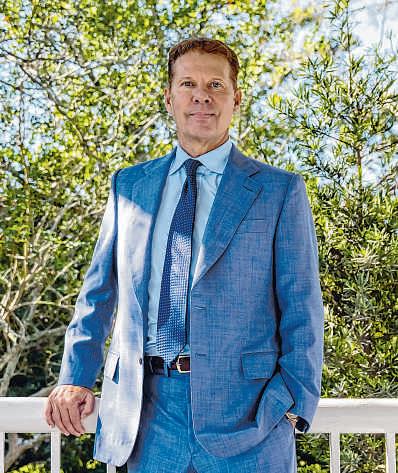
E.J Kuiper, CEO of Franciscan Missionaries of Our Lady Health System, says that the system has been expanding the capacity of its hospitals throughout south Louisiana. ‘Certainly, the demand has always been there, but we, philosophically as a system, decided a year and a half ago that we have to make sure that we always say yes when a patient needs to be transferred into our hospital,’ he said.
full, to full, and then some,” he said.
In this week’s Talking Business, Kuiper discusses the system’s investment priorities serving rural communities and more. This interview has been edited for length and clarity What is driving the priority of expanding capacity? Certainly, the demand has always been there, but we, philosophically as a system, decided a
year and a half ago that we have to make sure that we always say yes when a patient needs to be transferred into our hospital Obviously, all our hospitals were busy to begin with, but we also have a lot of requests for a higher level of care.
Let’s say there’s an emergency department somewhere in a rural community It’s 2 o’clock in the morning. The patient really needs to be in a hospital that has the capabilities to take care of sicker

Beyondthe Workplace.
Jones Walker’s Labor&Employmentattorneys offer clientsone of thelargest,mostdiverse,and experienced laborand employment lawpractices in theregion.
We counselanarray of regional andnationalcompanies in awiderange of industries in allaspects of laborand employment law. We help clientsfind solutions to labor andemploymentlaw mattersusing practical, commonsenseapproaches. We believeour ability to combine our depthinlabor andemploymentlaw withJones Walker’s broadbaseofexperienceinother practice areasto addressuniqueworkplaceand industry situations gives ourclients adistinctadvantage notavailable from small boutique lawfirms.
William H. Hines
Managing Partner bhines@joneswalker.com 504.582.8000
patients. Philosophically, we feel it is better to be at Our Lady of the Lake, maybe having to wait in the (emergency department) for a room to open up. You’re in a stretcher in an ED room, but you have access to all the state-of-the-art technology, the great staff, specialists and sub-specialists, versus being in an ED somewhere in a small community hospital. They’re great, those small community hospitals, but they don’t have all those resources. They don’t have the specialists and sub-specialists. We need to make sure that we’re there for every patient that is in need of care.
You’re bringing health care to folks that may not have had this type of access before, like overnight care. Can you talk about the significance of that mission?
For more typical, lower-level care that really should be taking place in their home community, so they don’t have to travel to Baton Rouge or any of the other big facilities that we have. It’s easier for the patients, for the family members.
We really are trying to make sure that we build access points where the patient demand is, so we partner with independent rural facilities as well. They’re still in Louisiana, probably 50-plus independent hospitals out there all by themselves. They don’t have a big organization like us supporting them. We talk to them all the time about how we can make things easier for you. And it’s not just about transferring patients from their facility to Our Lady of the Lake. It’s also about, can we bring specialists into your community once a week or twice a month, or whatever the need might be, and that then will help patients stay in their community and they don’t have to travel an hour and a half or two hours to come to Our Lady of the Lake. Earlier this year, you increased the base pay of your staff by 4%. How’s that impacted your team? Everybody was very excited
about that. We really believe that while we’re blessed with a great balance sheet and we’ve been able to post solid profits, we really believe that every single dollar needs to be reinvested in our people, in technology and in our buildings, and people first. We are blessed with state-of-the-art technology, and we have beautiful hospitals and clinics and ambulatory centers. But without our people, it doesn’t matter It’s just real estate. It’s the people that make our health system home, and so we’re very proud of our people, and we have to take care of our people.
For that next big push in projects,what are the priority areas?
One of the things that we’re starting at Our Lady of the Lake is what we call a master facility plan. We’re kind of landlocked there. We’re at capacity at the Lake, and so we need to think about where’s the next patient tower going to go.
Our census in the Baton Rouge market is well over 700 every day
We probably need 1,000 beds to meet the demand over the next five or 10 years. We need to think about where the next patient tower we’re going to go, where the next critical care unit is going to go, and whether the operating room needs to be expanded.
We do believe, over the next five to 10 years, that the demand is going to go up for places like Our Lady of the Lake, trauma centers, regional referral centers, tertiary quaternary centers, because the environment is getting more and more challenging because of Medicaid reform and reimbursement cuts. We believe that those independent hospitals that we talked about are going to be relying on us even more to accept patients. We need to invest today to make sure that number can go up to 1,000 in five or 10 years from now, because I believe that’s what demand will be.
Email Ianne Salvosa at ianne. salvosa@theadvocate.com.
ForLouisiana businessleaders,labor and employmentlaw is no longeraback-office issue—itisacorebusiness concern that directly impactsoperations, talent retention, andlong-termgrowth. Employersmust prepare forseveral upcoming labor and employmentchallenges.

Strong workplacemanagementiscriticaltolimitingturnover andavoidingdisputesthatcan lead to an arrayofissues. Accommodation andleave complianceisalsocomplex,as state-levelprotections maygobeyondfederallaw,particularly forpregnancyand disability.OSHAoversight also remainsa priority in Louisiana’sindustrialsectors,wheresafetyauditsand updated training canreducebothriskand penalties. Benefits complianceadds furtherpressure, with COBRAnotices,401(k) administration, andhealthplan parity drawingscrutiny.
Proactiveattention is keytoworkforcestability—and we are proudtohelpleadthe wayforward.
STAFF PHOTO By MICHAEL JOHNSON
SidLewis
AROUND THE REGION
Startups embracingAIbut cautious on rent,salaries
BY RICH COLLINS Staff writer
New Orleans entrepreneurs have embraced artificial intelligence more than their counterparts nationwide, but they are being cautious about spending money on office space and salaries.
Those are some of the takeaways from the 2025 Greater New Orleans Startup Report, produced by Tulane University’s A.B.Freeman School of Business.
The seventh annual report, released Thursday,isbased on a survey of more than 120startup businesses in a10-parish region in south Louisiana.
This year’sedition shows that 77% of respondents think AI will have amajor long-termeffecton their business, and 67% believe it represents their biggestopportunity.Ofthose already using the tools, 85% had good things to say about them, noting productivity gains, expanded market share and cost savings.

“Historically speaking,when trends happen, we’re not usually the first movers,” said Rob Lalka, a Tulane business professor who helped create the GNO Startup Report in 2019. “We’re maybe middle of the pack or later, but with AI, there are more people here using it, and we are trying to really harnessits tools to get acompetitive advantage.”
Aseparate report from the U.S. ChamberofCommercesupports
Tulane’sfindings, ranking Louisiana seventh in the nation for adoption of generative AI,a categoryof AI capable of creating text,images, audio, videoand otheroriginal content.That report put adoption among the state’ssmall businesses at 65%, topping the58% national average.
Tulane’sreport shows that highgrowthstartups —usually tech-

based venturesthataim to scale quicklyand disruptindustries gained more from AI thantraditionalsmall businesses.
In othercategories,the report reveals mixed feelings among entrepreneurs about hiring andacquisitionofoffice space
Aslight majority of companies saidthey plan to add employees over thenextyear,while 22% say they do not, which is the highest percentage in the report’shistory
High-growth companies in particular are more bullish about hiring than others, and construction startups reported the mostrecent hiringwhile food and beverage respondents described net employee losses.
Survey respondents saidthey
are mostly“bootstrapping” —using personal finances or taking on credit carddebt —tolaunch their businesses. The next most common sources of funding, include friends andfamily,angelinvestors, convertible debt and venture capital.
Thetop categories of surveyed companies are software, professionalservices,food and beverage, media and healthcare. Founders answered additional questions about demographics,revenue and office space.
Goingstatewide
The startup report’sauthors have announced plans to expand statewide next year Tulane’sAlbertLepage Center for Entrepreneurship and Innova-
tion, run by Lalka, plans to partner with Louisiana Innovation, adivision of the state’seconomic developmentagency,tobuild acomprehensive snapshot of startup activity in Louisiana
“What beganasa local effortto understand ourstartup landscape will now serveour entire state,” said Paulo Goes, dean of Tulane’s businessschool, in aprepared statement. “Louisiana Innovation’s decisiontoadopt our approach as thefoundation for statewide innovation measurement validates the comprehensive system we’ve built —one that captures notjustdata, but thefullstory of entrepreneurial growth.”
The survey,whichwill be renamed the Louisiana Startup Re-
port, will provide parish-by-parish data designed to help stakeholders track regional trends, emerging innovation clusters, capital gaps,sector momentum and deal sizes.
The expansion of the startup report, and the creation of the Louisiana Innovation office —nicknamed “LA.IO” —are two of the latest efforts to formalize the state’sentrepreneurial ecosystem and to use information to promote its growth.
Earlierthis month, aseparate group calledthe NOLA Entrepreneurship Council met for the first time. The committeeisa“working group that will take up issues, from policy to fundingtoquality of life, that are critical to thesuccess of ourinnovation ecosystem,” accordingtoMichael Hecht, presidentand CEO of Greater New OrleansInc., theregion’seconomicdevelopment nonprofit.
In 2022, GNO Inc. created Startup NOLA, an initiative that produces onlineheat maps of entrepreneurial activity,anews page about startups and an events calendar
All of these efforts come four years after ahandful of high-profile acquisitions of Louisiana-based tech startups brought an infusion of cash into the region and proved that Louisiana, despite being far from the country’scoastal tech hubs, wasable to producesome winners of its own.
The architects of theexpanded Louisiana startupreport hope to gather moredata to help tell the state’sstory,spark moreactivity and boost its rankings.
“We’re now at the stage where measuring our progress is critical to strengthen the ecosystem,” said TimWilliamson, who helped launch the city’sstartup scene 25 years ago by co-founding The Idea Village,the city’smost prominent business accelerator.“The GNO Startup Report provides insight to what’s workingwhat’snot and where we need to spend more time and energy.”
EmailRich Collins at rich. collins@theadvocate.com.









Lalka
STAFF PHOTO By CHRIS GRANGER
The recently released 2025 Greater NewOrleans Startup Report,shows that high-growth startupsgained morefromartificial intelligence than traditional small businesses but also reveals mixed feelings among entrepreneursabout hiringand acquisitionofoffice space.
NATION & WORLD
Colleges are fighting to prove returns on investment
BY COLLIN BINKLEY
AP education writer
WASHINGTON For a generation of young Americans, choosing where to go to college or whether to go at all — has become a complex calculation of costs and benefits that often revolves around a single question: Is the degree worth its price?
Public confidence in higher education has plummeted in recent years amid high tuition prices, skyrocketing student loans and a dismal job market plus ideological concerns from conservatives. Now, colleges are scrambling to prove their value to students
Borrowed from the business world, the term “return on investment” has been plastered on college advertisements across the U.S. A battery of new rankings grade campuses on the financial benefits they deliver States such as Colorado have started publishing yearly reports on the monetary payoff of college and Texas now factors it into calculations for how much taxpayer money goes to community colleges.
“Students are becoming more aware of the times when college doesn’t pay off,” said Preston Cooper, who has studied college ROI at the American Enterprise Institute, a conservative think tank. “It’s front of mind for universities today in a way that it was not necessarily 15, 20 years ago.”
A wide body of research indicates a bachelor’s degree still pays off, at least on average and in the long run. Yet there’s growing recognition that not all degrees lead to a good salary, and even some that seem like a good bet are becoming riskier as graduates face one of the toughest job markets in years.
A new analysis released earlier this month by the Strada Education Foundation finds 70% of recent public university graduates can expect a positive return within 10 years — meaning their earnings over a decade will exceed that of a typical high school graduate by
A wide body of research indicates a bachelor’s degree still pays off, at least on average and in the long run. Yet there’s growing recognition that not all degrees lead to a good salary, and even some that seem like a good bet are becoming riskier as graduates face one of the toughest job markets in years.
an amount greater than the cost of their degree. Yet it varies by state, from 53% in North Dakota to 82% in Washington, D.C Louisiana comes in just below the national average, at 69% of graduates see-
ing a return. States where college is more affordable have fared better, the report says. It’s a critical issue for families who wonder how college tuition prices could ever pay off, said Emilia Mattucci, a high school counselor at East Allegheny schools, near Pittsburgh. More than two-thirds of her school’s students come from low-income families, and many aren’t willing to take on the level of debt that past generations accepted. Instead, more are heading to technical schools or the trades and passing on four-year universities, she said. “A lot of families are just saying they can’t afford it, or they don’t want to go into debt for years and
years and years,” she said.
American higher education has been grappling with both sides of the ROI equation — tuition costs and graduate earnings. It’s becoming even more important as colleges compete for decreasing numbers of college-age students as a result of falling birth rates.
Tuition rates have stayed flat on many campuses in recent years to address affordability concerns, and many private colleges have lowered their sticker prices in an effort to better reflect the cost most students actually pay after factoring in financial aid.
The other part of the equation making sure graduates land good jobs — is more complicated. A group of college presidents
recently met at Gallup’s Washington headquarters to study public polling on higher education. One of the chief reasons for flagging confidence is a perception that colleges aren’t giving graduates the skills employers need, said Kevin Guskiewicz, president of Michigan State University, one of the leaders at the meeting.
“We’re trying to get out in front of that,” he said.
The issue has been a priority for Guskiewicz since he arrived on campus last year He gathered a council of Michigan business leaders to identify skills that graduates will need for jobs, from agriculture to banking. The goal is to mold degree programs to the job market’s needs and to get students internships and work experience that can lead to a job.
Bridging the gap to the job market has been a persistent struggle for U.S. colleges, said Matt Sigelman, president of the Burning Glass Institute, a think tank that studies the workforce. Last year the institute, partnering with Strada researchers, found 52% of recent college graduates were in jobs that didn’t require a degree. Even higher-demand fields, such as education and nursing, had large numbers of graduates in that situation.
“No programs are immune, and no schools are immune,” Sigelman said.
The federal government has been trying to fix the problem for decades, going back to President Barack Obama’s administration. A federal rule first established in 2011 aimed to cut federal money to college programs that leave graduates with low earnings, though it primarily targeted for-profit colleges.
A Republican reconciliation bill passed this year takes a wider view, requiring most colleges to hit earnings standards to be eligible for federal funding. The goal is to make sure college graduates end up earning more than those without a degree.
NewStudy DebunksRed DrumCrisis Claims: Louisiana’sGulfMenhaden FisheryNot to Blame
Thisarticle is brought to youbythe Louisiana CommercialFishing Coalition LLC
Alandmark Louisiana-funded study confirms whatdecades of fisheries science have long suggested: the Gulf menhaden fishery is not amajor contributor to reddrum mortalityinLouisiana waters
The comprehensivebycatchassessment, conducted by LGL Ecological Research Associatesand administered through the Gulf StatesMarine Fisheries Commission, found thatcommercial menhaden harvesters were responsible forjust 3.4% of reddrum removals by number statewide in 2024.In contrast,96.6% of removals were from the recreational sector Thesefindingscome at atime when misinformation about reddrum bycatchhas fueled public pressurefor newrestrictions on commercial harvesters. But the data tells aclear story: Louisiana’smenhaden fishery is both sustainable and responsible —and not a threattored drum populations
Backed by IndependentScience
Thestudy wasfunded through a$1 million appropriation by the Louisiana Legislature and carried out during the 2024fishing season. It is the most extensivebycatchstudy ever conducted in the Gulfmenhaden fishery, with data collected from 418 purse seine sets
—3.2% of total effort,exceeding theoriginal sampling goal by morethan50%.
Observersand electronic monitoring systems were used to gather and verifydata. The study employedadvanced techniques such as ReflexActionMortalityPredictors
(RAMP) and24-hour live holding tanksto assess fish survival.
Keyresults include:
•Menhaden harvestersaccounted forjust 30,142 reddrummortalities in 2024—only 3.4% of statewide removals
•Anestimated26,847red drum were released aliveafter incidental capture, with an 84% survival rate in rolloverreleases
•Overall, the fishery remained well below Louisiana’s5%bycatchlimit by weight, with acombined bycatchrate of just 3.6%.
ProactiveConservation in Action
The study alsoclarified howred drum mortalitycan be reduced through better handling practices.When fish are retained in thenet and released after pumping, mortality drops sharply —akey operational takeaway thatis nowbeing applied across the fleet
In responsetothe study’s findings, the Louisiana menhaden industry has proactively standardized anew hose-end cage design acrossits fleet prior to the 2025fishing season. This design, shown to significantly improve the survivability of reddrum and similar species,isalready delivering results.Fleetwide upgrades reflect an ongoing commitmenttoconservation and demonstrate howscience candrive improvements in real time.
Putting Croakerand SeatroutinContext
The report also documentedAtlantic croaker and sand seatrout (whitetrout) in the retained catch. While some critics have highlighted thesefiguresfor political gain scientists notethat:

•Thesespecies are not overfished or undergoing overfishing, per federal and state assessments
•Theyare short-lived forage fish with high natural mortalityand would not be expected to survivetoadulthood even withoutfishing pressure.
•Their retention is primarily due to small size, not gear inefficiency
This context is importantto accurately interpret the data and avoid mischaracterizing the fishery’s overall impact
AModel of RegulatedSustainability
The Gulf menhaden fishery is among the most tightly regulatedinthe state,overseen by the National Marine Fisheries Service, the Gulf StatesMarine Fisheries Commission, the Louisiana Wildlifeand Fisheries Commission, andthe Louisiana Department of Wildlifeand Fisheries
It is alsocertified as sustainableby the Marine Stewardship Council (MSC) —the gold standardfor global fisheries certification. According to the 2024stock assessment, Gulf menhaden stocksare healthier thanatany pointinthe past 40 years, with spawning stock biomasshaving morethantripled since the 1990s. Fishing mortalityhas declined to just one-thirdof 1990s levels
The fishery harvests lessthan 2% of the total Gulf menhaden biomass, leaving ample resources in the ecosystemfor predators such as reddrum, speckled trout,and marine mammals


An Economic Engine for Coastal Louisiana
In addition to its environmental track record, the menhaden industry plays a critical economic role in Louisiana’scoastal communities.The sector:
•Generatesmorethan $419 millionin economic output annually •Supports over2,000 jobs across 32 parishes •Paysmorethan $25million in state and local tax revenue
•Provided roughly$60 millioninemployee compensation in 2023alone Menhaden also contribute to global food systems.Rich in omega-3s,protein, and essential nutrients,theyare used in aquaculturefeed, pet food, and human nutritional supplements
Letting Science Lead The findingsofthis independentstudy offer aclear conclusion: theGulf menhaden fishery is operating responsibly,within regulatory limits,and with minimal impact on reddrum and other species of concern. Gear innovation and betterhandling are already helping to drivemortalityevenlower Forthe thousands of Louisianans whose livelihoods depend on this fishery —and for policymakerscharged with overseeing its management— this newresearch provides a firm foundation fordecisions rooted in data, not speculation.
STAFF PHOTO By HILARy SCHEINUK
Students visit the Quad on LSU’s campus. Colleges nationwide are scrambling to prove their value to students amid plummeting public confidence in higher education.




Staff report
The following new hires and promotions were announcedby south Louisiana businessesin recent weeks
NewOrleans
Ryan Gootee General Contractors promoted apair of employees to new roles and added atrio of newstaffers in recent months

Chris Perrier was promoted to senior superintendent, while Jake Hammant was promoted to projectmanager
Meanwhile, the Metairiebased firm hired Brandon Bourgeois and NoahLabrosse as assistant project superintendents and KristinaMiller as senior project manager

Frank Cook hasbeen appointed the newgeneral managerofthe DoubleTree by Hilton Hotel New Orleans, which is undergoing a$5million renovation. Cook previouslyoversaw 19 hotels as vice president of operations for South Carolina-
Fool’sTake:
Chips and more
based Hospitality America.
The New Orleans Regional Leadership Instituteannounced fournew board members and a newstaffer ChristineBriede,executivedirectorofJefferson Community Foundation; AmyCorcoan,CPA/ shareholder of Corcoran & BernardCPAs; Carmen Cummings, chief administrative officer at InclusivCare; andAdams &Reese partner WilliamWright IV joined theinstitute’sboard, while Frances Love joined itsstaff as program andoffice manager

The Port of New Orleans has appointed Adam Laurie as its new chieffinancial officer.Laurie, aformer Navy officer,previously worked for Macquarie Infrastructure Corporation, where he managed the $2.7 billion sale of IMTT,and thelocallaw firm Mouledoux, Bland, Legrand &Brackett, wherehe served as its first CFO.
Zehnder Communications has promoted Katherine Simon to the directorofaccount strategy Simon has15years of experiencewiththe employee-owned advertising agency,where she
as powerfulbut are well-suited to specific tasks, andthat’s where Broadcom comes in.
leads clients in finance, consumer goods, education, health care, hospitalityand travel sectors.

Kean Miller announced the hiring of Haley Bible as an associate. Bible, who earned alaw degree from Loyola University in 2022, will focus her practice on commerciallitigation cybersecurity and data privacy

Breazeal e, Sachse&Wilson has hired Kenneth Nilsson.Nilsson, a2025 graduate of LSU Paul M. Hebert Law Center,willfocusonlabor, employment andcommercial litigation.
BatonRouge

Eric Clay has been hiredas chief security officer for FranciscanMissionaries of Our Lady of Health System, where he will oversee safety and risk management systemwide
tinued growth. (TheMotley Fool recommends Broadcom.)
Fool’sSchool:
With experience with the Walt DisneyCo. and the U.S. Federal Air Marshal Service, Clay most recently was vice president of security services for Houstonbased Memorial Hermann Health System.
Investar Bankpromoted atrio of its executives to new roles. Jeff Blum went from being executive vice president and regional president for the bank’s western division to its chief banking officer
Another executive vice president, Jeffrey Martin,who had also been chief credit officer,was promoted to chief risk officer And Corey Moore,the bank’sexecutive vicepresident and chief accounting officer,has been promoted to deputy chief financial officer





Pelican Credit Union has promoted Sharon Collins to become vice president of facilities, property management and purchasing. Collins startedwith the company in 2000asa teller and has been instrumental in the construction of the credit union’slocationsinHouma, St Landry and Mid City,aswell as its corporate campus. Kean Miller announced the hiring of
Do you have
alineat biztips@theadvocate.com.


Motley Fool
The market for semiconductors is red-hot, as investment continues to pour into data centers for artificial intelligence. Research company IDTechEx expects themarket for AI chipstoexceed $400 billion by 2030. While graphics processing unit leader Nvidia is apopular pick, investors should also consider Broadcom (Nasdaq: AVGO) Nvidia’schips are the most powerful in the world, butthey’re also power-hungry and expensive. There is growing demand for more affordable chips that aren’t
Broadcom expects its AI revenuetogrow from $20 billion this year to $120 billion by 2030. For perspective, itstotal revenue over thelast 12 months was $60 billion. Beyond chips, Broadcom also offers advanced networking solutionsthat allow chips to handlemassivedata flow for AI trainingworkloads. While total revenue grew 22% year over year last quarter,AIrevenue specifically grew 63%.
The company’s main risks include reliance on ahandful of massivecustomers and expectations that mayalready be running too hot. Butithas along history of operatingexcellence. Broadcom appears well-positioned for con-
Retirement mistakes
As you approach and enter retirement, makesure you avoid making the mistakes below —as somecould cost you alot.
n Not having asolid retirement plan beforehand. Each of us should make conservative estimates of how much income we’ll need in retirementand how we’ll arrange to save and invest enough toproduce that.
n Assuming Social Security willprovide enough income As of August,the average monthly Social Security retirementbenefit was just $2,008, or about $24,100 for the year.Aim to retire withadditional income

streams, such as from dividends, interest, rental properties, pensions or annuities. (Tolearn how much you can expect from Social Securitybased on your earnings so far,visit ssa.gov and set up a “mySocialSecurity” account.)
n Not signing up forMedicare on time. If you’re not already receiving disabilitybenefits, you becomeeligible for Medicare at age 65. You should sign up within the three monthsleading up to your 65th birthday,during the month of your birthday or within the three monthsthat follow.Fail to enroll on time, andyou may end up paying higher premiumsfor the rest of your life. (Visit medicare.gov for info.)
n Failing to takeyourrequiredminimum distributions once you turn73. Those with traditional (not Roth) IRAs
(and someother accounts) are required to withdraw aminimum amount each year.The penalty fornot doing so is up to 25% of the amount you didn’twithdraw on time. (Tolearn more, search online for“RMD rules.”)
n Underestimating what health care maycost you According to Fidelity,a65-year-old person retiring in 2025 can expect to spend $172,500, on average, on medical and health care expenses throughout retirement. That doesn’tinclude long-term care. For amarried couple, the average total is $345,000. Plan and save accordingly!
Search online for“retirement mistakes,” and you’ll find many moreblunders to avoid —such as borrowing from your 401(k) account or retiring too early




Bourgeois
ONE BIG QUESTION
GETTyIMAGES
How is AI affecting local lending institutions?
BY STEPHANIE RIEGEL Staff writer

Even as recently as 2022 when Open AI unveiled Chat GPT, the first generative artificial intelligence product — it might have been tempting to wave off AI as a fad with more of a following among the tech savvy set than the mainstream. But in the three years since, it’s becoming increasingly clear that AI is here to stay and assuming an ever-larger role in every sector of the global economy, influencing whether health insurers authorize coverage for medical procedures, where oil companies decide to drill and how sales teams prioritize their leads.
At the New Orleans Metropolitan Association of Realtors’ annual FORECAST symposium earlier this month, a panel of lenders discussed the role AI is playing in their banks and financial institutions. We thought their diverse answers would make for an interesting installment of our inaugural feature, One Big Question. We also posed
the question to a couple of Baton Rouge-based banks to include a broader, statewide response.
John D’Angelo PRESIDENT AND CEO, INVESTAR BANK
We’re using AI in several ways.
The main one is fraud detection.
We have two systems driven by AI that are capable of learning from prior transactions. A third system scans driver’s licenses and is also able to learn from the bank’s transaction history and other databases. On the investment side, we have three technology funds that we are invested in, each with companies that are developing banking technology solutions with AI integrated in the solution.
I believe that AI will continue to grow in use for activities that are repetitive and labor consuming.
Our core system for the bank is working on bots and other things that will eventually take over other bank processes. If you look across the entire Investar enterprise, we use a lot of predictive modeling,
which is in fact a type of AI, just not the new shiny type of AI that is being referred to in the media.
Percy Manson
SENIOR VICE PRESIDENT HOPE CREDIT UNION
We are actually running a pilot right now involving AI and how it can be used to help small businesses. We see it as an opportunity, but we’re not there quite yet. It’s clear we’re all going to be heading in that direction.
Jude Melville CEO, B1BANK
We use AI every day to help us operate efficiently It’s embedded in many of our vendor-provided platforms and applications, including fraud prevention tools and prompting software in support our call center, for example. We’ve also begun developing internal capabilities including a language model we recently built and rolled out in which employees can quickly query topics ranging from loan policy parameters to em-




ployee benefits rather than sorting through hundreds of pages of documents to find the answer. We are just beginning but are excited about the growing opportunity
Thomas Ogg
SENIOR VICE PRESIDENT, COMMERCIAL LENDER, GULF COAST BANK AND TRUST
We’re using it in risk analysis. It’s becoming more mainstream, and actually even Fannie Mae and Freddie Mac have automated systems that will upload tax returns, read those returns and spit out a decision on where the income is, and they have instituted what’s called 1 Day Certainty
It’s not a perfect situation, and brain power is more important than AI power when it comes to underwriting. But I think within the next couple of years, all loans will be run through AI to calculate the income on the front end. Then, there are going to be two sets of banks or lending institutions. You’ll have the Rocket Mortgages that run through AI and if you
don’t like the decision then you’re going to decline it. And you’ll have banks that have expertise from underwriters that have been in the business for 20, 30 years that can find ways to massage that deal, rearrange it and get it through a conventional loan.
Richard Ziegler
SENIOR VICE PRESIDENT BONVENU BANK
The only AI that we’re using is something behind the scenes for marketing and a lot to do with fraud detection Fraud is off the charts, and I know we’re utilizing it in that regard I don’t think we’re using it yet in any sort of underwriting.
Drew Remson
MORTGAGE LOAN OFFICER, FIRST HORIZON BANK
We’re not there yet with underwriting, but I’m sure it’s coming in the future.
Email Stephanie Riegel at stephanie.riegel@theadvocate. com.

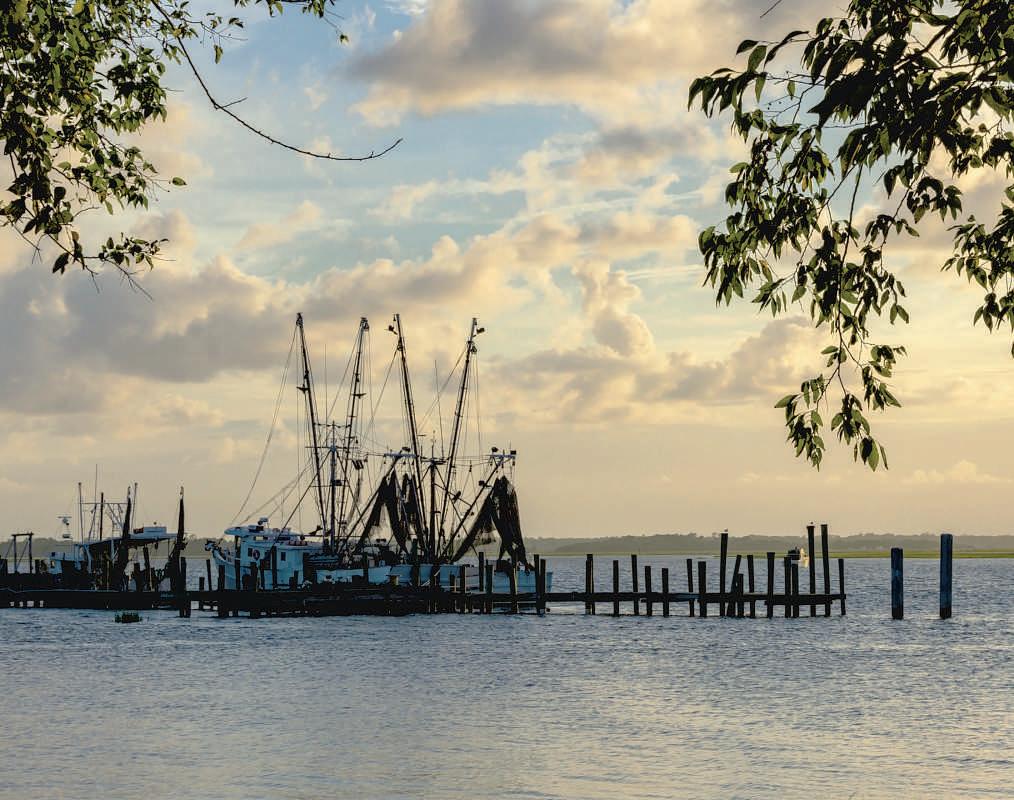
















3924 PharrStreet •Metairie$499,000
Stunning French Quarterstyle 4bed,2full/2halfbathhome on a beautifulcorner lotw/private yard &galleries.Iron-detailed staircase,chef’skitchen w/ granite counters,spaciousdining& living roomsw/fireplace…great forentertaining. Grandprimary suitew/huge dressing room.Includesgarage, 2driveways,tall brick privacyfence&new roof.Entrances on Pharr& Jurgens NathalieDubois 504-610-0679 BerkshireHathawayHSPreferred, REALTORS 504-799-1702








1935Octavia Street •Uptown$1,975,000
Exquisitely renovated4BR/4.5BA home blends 1975 charmw/ 2024 luxury.Features include alushbackyardoasis w/ pool, spaciousinteriors,steam shower,marblevanities &customhiend finishes. Downstairs en-suite doublesasoffice. Gated2-car parking plus 2off-streetspots.Neartop schools,Danneel& Audubon Parks& Freret St Corridor.Move-in ready…AMustSee! Toni VanZandt 504-913-8665 Reve |Realtors 504-300-0700

Thisshowstopping, newlyconstructed (2017) condoblends contemporary design with timeless sophistication across three beautifullydesignedlevels. From the momentyou stepinside, you’re welcomedbyanopen-conceptlayout with soaring 10-footceilings.
BonnieJ.Morel




112Jasmine Ct.•SpringwoodEst./BelleChasse$519,500 Beautiful home locatedonadeadend street,featuring an openfloor plan with12ft. ceilings,fireplace,lotsofnatural light, formal dining room andbreakfast area,kitchen appliances androofreplacedin2017, one a/cand waterheater replaced in2021, rear yard access,huge back yard.XFlood zone *MotivatedSeller*
504-912-9997 Compass •Algiers 504-362-1823





































Address:
2415 DauphineStreet, Unit A
NewOrleans,LA70117
Neighborhood: Marigny Price: $555,000
Bedrooms: Two Bathrooms: TwoFull& OneHalf Square Footage: 1,791
MarketingAgents:
SAMARA POCHE’
504-319-6226
sam@teamrightside.com
JENNIFER
SALTAFORMAGGIO
504-388-9383
jenn@teamrightside.com
SOPHIE JOSEPH
504-430-4284
sophie@teamrightside.com
TEAM RIGHTSIDE
COMPASS•HISTORIC OFFICE
504-948-3011
www.teamrightside.com
840ElysianFieldsAvenue
NewOrleans, LA 70117
Licensed by StateofLA










This showstopping,newly constructed(2017)condoblendscontemporarydesignwithtimelesssophisticationacrossthree beautifully designedlevels. From themoment youstepinside, you’re welcomedbyanopen-conceptlayoutwithsoaring 10-footceilings, recessed lighting, andrichhardwood anddesigner tile flooring.A striking double-sided gas fireplaceanchors thelivingroomand private courtyard,creatingaseamlessindoor-outdoorconnectiongreat forentertainingorrelaxingunder thestars.The gourmet kitchen isachefs dream, complete witha quartz waterfallisland, subway tile backsplash,Highend stainlesssteel appliances,a gasrange, winecooler, andBosch dishwasher.Whether hostingfriends or enjoying aquiet nightin, this spacebalancesformand function witheffortlessstyle.Eachofthe twoexpansiveprimarysuitesoccupiesits ownprivate floor, offeringthe ultimateincomfort and privacy.Bothfeature custom walk-in closets, spa-inspired en-suite bathrooms, andaccess to aprivate balconycreatinga peaceful retreatatthe endofthe day. Designed formodernliving,this smarthome is equippedwitha Yale/Nestsmartfront door lock, PhilipsHue smartlightinginmostrooms,and custom window shades andblinds forprivacy andstyle.Additionalfeaturesinclude ahigh-endLGwasherand dryer, deeded gated off-streetparking,a privatepatio,and access to alushsharedcourtyard. Located just stepsfromthe best of NewOrleans renowned musicvenues, vibrant artgalleries,award-winning restaurants, andthe historic Mississippi Riverthis Marignygem offersa rare opportunitytoliveexceptionallyinone of thecity’smostdynamic neighborhoods.










































































Memory IN LOVING
JULY–SEPTEMBER2025

BROUGHTTOYOU

Memo







EstherAccardo
Mandeville,LA
2/27/1934-8/25/2025
Audubon FuneralHomein Slidell
ClarenceAdams
6/26/2025
D.W. RhodesFuneralHome

CoreyAdams
NewOrleans,LA 11/3/2006-7/19/2025 ProfessionalFuneral Services
ElizabethAdams
Mandeville,Louisiana 8/29/1940-7/21/2025
Bagnell &Son Funeral Home
ShirleyAdams
Atlanta,GA 1/1/0001-1/1/0001 Greenoaks FuneralHome

DeandreAddison
NewOrleans,LA 6/21/1972-6/24/2025
TheBoydFamily Funeral Home

LeonardAddison
7/5/2025
Robinson Family Funeral Home

Dr.MichaelAdinolfi
NewOrleans,Louisiana 8/13/1950-6/24/2025
Lake Lawn Metairie Funeral Home
Visitobituaries.nola.comtoexpressyourcondolences.
AudreyAlbert
Paulina, LA
4/18/1940-6/30/2025
Hobson BrownFuneral Home in Garyville
GeorgeAlexander
Hammond, Louisiana 5/26/1944-6/27/2025
LN HughesFuneral Services,LLC

HaroldAlexander
NewOrleans, LA 11/17/1935-7/2/2025
Majestic Mortuary
GeorgeAllen
NewOrleans, LA 1/4/1939-8/28/2025
Lake Lawn Metairie Funeral Home
LouisAnticich
Monroeville,PA
2/27/1928-8/30/2025
Corl FuneralChapelin
Monroeville,PA
LisaAllen
NewOrleans, LA 7/1/2025
DavisMortuaryService in Gretna
WilfredAntoine Sr.
Port Sulphur,LA 4/12/1944-6/30/2025
Robinson Family Funeral Home
HowardAllenIII
8/10/1964-6/28/2025
DennisFuneralHome

SandraApostolos
NewOrleans, LA 3/14/1949-8/19/2025
Lakewood FuneralHome JacksonMS
MaryAlford
Metairie,LA 7/2/2025
Greenwood FuneralHome
Dr.JohnAllenSr. D.D.S.
Covington, LA 9/7/1943-7/10/2025
E.J. Fielding FuneralHome

MinnieArd
Perkinston, MS 7/25/2025
HonakerFuneralHomein Slidell
AmyAllemand
9/13/1977-8/14/2025
Robinson Family Funeral Home in BelleChasse

JohnAll Jr.
Kenner, LA 2/10/1942-7/13/2025
Leitz-Eagan FuneralHome
AdlineArmstrong
NewOrleans, LA 11/30/1933-7/13/2025
Majestic Mortuary Service
JohnnyAllemand
Thibodaux, LA 9/28/1931-8/30/2025
Ordoyne FuneralHoma
TitusAmbrose
NewOrleans, LA 9/7/1953-7/4/2025
Respect of Life Funeral Home

PaulaAssaf
Covington, LA 12/23/1946-9/14/2025
E.J. Fielding FuneralHome in Covington
BrendaAllen
NewOrleans, LA 1/3/1940-9/8/2025
Heritage FuneralDirectors

CatherineAllen
Sparks,Nevada 11/30/1940-8/28/2025
Neptune Society


BienvilleAncarIII
NewOrleans, LA 10/27/1952-8/21/2025
ProfessionalFuneral Services

DeborahAtkinson
7/7/2025
TheBoyd Family Funeral Home
KeithAndrews
NewOrleans, LA 7/2/1965-7/5/2025
Lake Lawn Metairie Funeral Home

JohnAvegno
8/21/2025
Garden of Memories Funeral Home in Metairie
Memory IN LOVING






JamesAzconaJr.
Metairie,LA
2/25/1953-5/21/2025
Leitz-EaganFuneralHome
Felix Babin
Covington, LA 8/21/1927-7/19/2025
Lake Lawn Metairie Funeral Home
LouisBabin Jr.
Metairie,LA 9/26/1947-8/1/2025
Lake Lawn Metairie Funeral Home

Annette Badeaux
Madisonville,LA 7/26/2025
E.J. Fielding FuneralHome in Covington
Deborah Badon
NewOrleans,LA 12/8/1933-7/11/2025
CharbonnetLabatGlapion

Paul Bagalman
Metairie,LA 4/19/1936-6/23/2025
Leitz-EaganFuneralHomes
Robert Bailey
6/20/1947-8/8/2025
Visitobituaries.nola.comtoexpressyourcondolences.
CharbonnetFamily Services
DavidBairnsfather
Gretna,LA 8/13/1961-6/28/2025
Westside Leitz-Eagan FuneralHomeinMarrero

OlanderBajoieJr.
NewOrleans, LA 1/1/1945-8/20/2025
Gertrude Geddes Willis FuneralHome

MarilynBaker
Metairie,Louisiana 10/31/1935-8/18/2025
Lake Lawn Metairie Funeral Home

Theodore Ballard
Ama, LA 12/4/1956-7/25/2025
TheBoyd Family Funeral Home
LeroyBanks
NewOrleans, LA 12/23/1941-7/13/2025
CharbonnetLabat Glapion FuneralHome


EveretteBaham Jr.
2/21/1965-7/15/2025
Majestic Mortuary
NathanielBanks
9/22/2025
D.W. RhodesFuneral Home

JohnBailey
Marrero, LA 12/18/1959-6/24/2024
JonesMemorialFuneral Home

Albert Barard III
6/26/2025
TheBoyd Family Funeral Home
JacquelineBarsana
Harvey,LA 11/13/1946-8/28/2025
Westside Leitz-Eagan FuneralHome
Eddiereen Barconey
9/16/2025
Richardson FuneralHomeof JeffersoninRiver Ridge
Patricia Barker
NewOrleans, LA 7/4/2025
JacobSchoen& SonFuneral Home

Walter Barnes Sr.
8/25/2025
Majestic Mortuary Service

Linda Baroni
Madisonville,LA 1/30/1945-5/20/2025
Shannon Family Mortuary

Audrey Barre
Kenner, LA 1/22/1943-6/30/2025
Neptune Society
Dawn Barrios
Metairie,LA 9/6/2025
Lake Lawn Metairie Funeral Home

Reginald Baptiste
Marrero,LA 6/26/2025
DavisMortuaryService

Mark Barrios
Westwego, LA 1/29/1956-7/3/2025 MotheFuneralHome
ElmoreBarthelemy
7/21/1944-7/25/2025
Robinson Family Funeral Home
Frances Barthelemy
Port Sulphur,LA 8/19/1939-7/2/2025
Robinson Family Funeral Home
Sylvia Bartholomew
Gretna,LA 8/30/1938-8/4/2025
St.Bernard Memorial FuneralHomeinChalmette
MarieBarzon
Washington, LA 12/26/1946-7/2/2025
D.W. RhodesFuneralHome
ViolaBashful
NewOrleans, LA 6/13/1932-8/18/2025
D.W. RhodesFuneralHome
Gloria Batiste
NewOrleans, LA 7/20/2025
DavisMortuary Service in Gretna
HannahBatiste
NewOrleans, LA 10/5/1930-8/14/2025
Majestic Mortuary Service
Memory IN LOVING




WendellBatiste
NewOrleans,LA 5/9/1955-7/1/2025
TheBoydFamily Funeral Home

HelenBeaumont
NewOrleans, LA 9/6/1931-8/15/2025
Visitobituaries.nola.comtoexpressyourcondolences.
PatriceBattiste
NewOrleans,LA 8/16/2025
EstelleJ.Wilson Funeral Home
BernealBell
11/1/1930-8/9/2025
D.W. RhodesFuneral Home
Vera Baudoin
Marrero, LA 8/20/1954-7/13/2025
MotheFuneralHome

AudreyBauer
Kenner, LA 7/27/2025
Leitz-EaganFuneralHome

SandraBaumann
Metairie,LA 8/3/2025
Leitz-EaganFuneralHome in Metairie

Eric Bell
Luling, LA 8/10/1994-9/8/2025
Hobson BrownFuneral Home
Shyanne Bell
NewOrleans, LA 4/22/1948-9/16/2025
ProfessionalFuneral Services


DouglasBergeron
Mandeville,LA 4/2/1942-7/10/2025
Bagnell &Son Funeral Home in Covington
Daniel Berlin Sr.
Covington, LA 9/1/1928-7/7/2025
E.J. Fielding FuneralHome

Jermel Bibbins
Atlanta, GA
10/7/1979-8/5/2025
Robinson Family Funeral Home
Eric Bieniemy Sr.
10/11/1950-7/28/2025
CharbonnetLabat Glapion FuneralHome
Ronald Bermudez
NewOrleans, LA 7/7/2025
L.A. Muhleisenand Son FuneralHome

Rosalia Bilich
7/8/2025
Leitz-Eagan FuneralHome in Metairie
BessieBeroular
Kenner, LA 4/13/1928-7/4/2025
MotheFuneralHomein Marrero

Dean Bird
NewOrleans, LA 11/26/1978-7/20/2025
L.A. Muhleisen& Son FuneralHomeinKenner
Marc Belloni Esq.
NewOrleans, LA 12/15/1965-8/10/2025
Lake Lawn Metairie Funeral Home

ClaraBerry
Greensboro, NC 9/7/2025
Lake Lawn Metairie Funeral Home

Ruth Birdsall
Lacombe, LA 7/24/1949-7/29/2025
Lake Lawn Metairie Funeral Home
RobertBavido Sr.
Terrytown,LA 7/8/2025
JacobSchoen &Son Funeral Home

Joan Benjamin
NewOrleans, LA 8/25/1925-8/10/2025
Lake Lawn Metairie Funeral Home
Benjamin Berry Jr.
9/16/1933-8/23/2025
Robinson Family Funeral Home

Carl Bissette
Luling, LA 5/13/1928-9/3/2025 MotheFuneralHome
Ronald Bazile Sr
4/16/1943-8/21/2025
Gertrude GeddesWillis FuneralHome

Dorian Bennett
NewOrleans, LA 6/2/1953-8/9/2025
Lake Lawn Metairie Funeral Home

KenishaBiagas
NewOrleans, LA 1/4/1982-8/22/2025
TheBoyd Family Funeral Home
ChristopherBlaeser
Metairie,LA 7/28/1953-8/11/2025
Lake Lawn Metairie Funeral Home
Shneitha Beasley
NewOrleans,LA 12/13/1973-8/31/2025
TheBoydFamily Funeral Home

Victoria Bennett
Westwego, LA 12/20/1946-6/30/2025
MotheFuneralHomesMarrero
CharlesBibbins
8/15/2025
D.W. RhodesFuneral Home

CasmierBlanda
NewOrleans, LA 7/3/2025
Lake Lawn Metairie Funeral Home
Memo


RoyBlaum
Covington, LA 4/8/1935-7/3/2025
E.J. Fielding FuneralHome in Covington
KaaBlueII
NewOrleans,LA 6/10/1946-7/7/2025
Leitz-EaganFuneralHome in Metairie
RudolphBlume Jr.
8/14/1943-7/2/2025
Garden of Memories Funeral Home in Metairie



Deborah Bodron
Covington, LA 6/20/1950-6/25/2025
E. J. Fielding FuneralHome
DennisBodungen
Metairie,LA 12/27/1955-7/27/2025
Lake Lawn Metairie Funeral Home

FrederickBodungen
10/14/1953-7/17/2025
LAMuhleisen &Son FuneralHome

Alfred Boese
NewOrleans,LA 11/14/1936-9/25/2025
Leitz-EaganFuneralHome in Metairie
Ronald Bolton
6/24/1960CharbonnetLabatGlapion FuneralHome
Visitobituaries.nola.comtoexpressyourcondolences.
LurlineBono
Gretna,LA 9/6/2025
JacobSchoen& SonFuneral Home
AlvinBordelon
Metairie,LA 11/1/1945-7/27/2025
Rabenhorst FuneralHome& Crematory- Government Street
CarrollBoudreaux
Metairie,LA 8/4/1936-9/11/2025
Lake Lawn Metairie Funeral Home


MichaelBoudreaux
Algiers, LA 7/18/1952-9/13/2025
Westside/Leitz-Eagan FuneralHomeinMarrero
Robert Bounds
Madisonville,LA 7/21/2025
E.J. Fielding FuneralHome in Covington
Dawn Bourgeois
Belle Chasse,LA 4/18/1958-9/8/2025 Heritage FuneralDirectors
Ella Bourgeois
Folsom,LA 2/14/1946-7/9/2025
E. J. Fielding FuneralHome

Margaret Bourgeois
Metairie,LA 7/1/2025
Garden of Memories Funeral Home

Merlin Boyer
Metairie,LA 1/7/1930-8/28/2025
Lake Lawn Metairie Funeral Home
Nestor Bourgeois
9/3/2025
Rose Lynn FuneralHomein Lutcher
AltonBraggs Sr.
Metairie,LA 6/28/2025
Richardson FuneralHomeof JeffersoninRiver Ridge
EmanuelBoutté
NewOrleans, LA 9/4/2025
CharbonnetLabat Glapion
RoyBrandhurst Jr.
NewOrleans, LA 12/30/1940-7/14/2025
Greenwood FuneralHome
GloriaBoutte
7/6/2025
CharbonnetLabat Glapion FuneralHome
Daniel Brandt
8/6/1951-9/13/2025
MotheFuneralHomein
Harvey
IdaBoutte
6/27/1944-8/24/2025
JacobSchoen& SonFuneral Home

JaniceBrandt
NewOrleans, Louisiana 11/19/1945-7/6/2025
Lake Lawn Metairie Funeral Home

Magnel Bourgeois
Marrero,LA 10/1/1947-8/21/2025
NewOrleansFuneral and CremationService

Wilson Boveland Jr.
NewOrleans, LA 6/26/2025
D.W. RhodesFuneral Home

Catherine Brantley
Covington, LA 2/11/1967-7/16/2025
E.J. Fielding FuneralHome
James Bowie
Covington, LA 4/3/1992-9/7/2025
Grace FuneralHome
Luther Boyd
BatonRouge,LA 6/30/1936-6/25/2025
D.W. RhodesFuneral Home
Lloyd Brauher
11/13/1950-9/17/2025
Robinson Family Funeral Home
OscarBreaux
NewOrleans, LA 9/10/1940-8/17/2025
CharbonnetFuneralHome
Memory IN LOVING







Harold Brett
Metairie,Louisiana 4/29/1936-8/16/2025
Lake Lawn Metairie Funeral Home
Nell Bridges
NewOrleans,LA 9/9/2025 MotheFuneralHome

Kenneth Bright
NewOrleans,LA 4/14/1957-7/16/2025 CharbonnetLabatGlapion FuneralHome

Loretta Brignac
Harvey, LA 8/15/2025
DavisMortuary Servicein Gretna

Loyd Brinson
NewOrleans,LA 3/28/1952-8/2/2025
D.W. RhodesFuneralHome

Gladdis Brisco Jr.
NewOrleans,LA 9/27/1952-8/22/2025
Lake Lawn Metairie Funeral Home

Deborah Britton
8/26/2025 DennisFuneralHome
Visitobituaries.nola.comtoexpressyourcondolences.
LuciousBrock Jr.
6/30/2025
Robinson Family Funeral Home
BeverlyBrooks
NewOrleans, LA 4/22/1938-7/7/2025
Majestic Mortuary Service

KarenBrooks
Oakville,LA 8/9/2025
Robinson Family Funeral Home in BelleChasse

MildredBrooks
12/2/1927-8/9/2025
Estelle J. Wilson Funeral Home
HenryBrooksIII
Shreveport, LA 7/31/1974-7/1/2025
Heavenly Gate Funeral Home in Shreveport
CraigBroussard
LaPlace, LA 8/14/2025
Millet-Guidry FuneralHome

Suzette Broussard
NewOrleans, LA 8/17/1949-7/18/2025
Majestic Mortuary Service



RobertBrockhoff
Kenner, Louisiana 4/8/1943-6/27/2025
L.A. Muhleisen& Son FuneralHome- Kenner

DarleneBrown
BatonRouge,Louisiana 5/29/1959-7/29/2025
Hobson BrownFuneral Home
Perry Bruce
Terrytown,LA 6/29/1957-6/28/2025
MotheFuneralHome
DianaBrown
8/15/1944-8/10/2025
Millet-Guidry FuneralHome in LaPlace
DorethaBrown
Gretna,LA 6/25/1925-7/19/2025
ProfessionalFuneral Services

James BrownJr.
Harvey,LA 6/27/2025
DavisMortuaryService

Lawrence BrownJr.
Algiers, LA 7/5/2025
Williams &Southall Funeral Home
LeonardBrown Jr
D.W. RhodesFuneral Home

Dr.Ollis BrownSr.
Slidell, LA
7/17/1935-6/21/2025 CharbonnetLabat Glapion

BernadineBrown
Lutcher, LA 1/16/1960-9/11/2025
Hobson BrownFuneral Home

JoyceBroyard
7/22/2025
D.W. RhodesFuneral Home
JacquelineBrumfield
Fort Lauderdale,FL 8/19/1935-7/16/2025
E.J. Fielding FuneralHome in Covington
Dr.ShannonBrumfield Ashley
Gainesville,FL 7/22/2025
MilamFuneralHomein
Gainesville,FL
MelvinBrunies Jr.
Opelousas,LA 9/21/1959-8/11/2025
Lake Lawn Metairie Funeral Home
Susan Bryant-Jefferson
5/13/1928TheBoyd Family Funeral Home
WilliamBumgarner
Metairie,LA 3/11/1949-9/7/2025
Lake Lawn Metairie Funeral Home
LaTonyaBunch
10/6/1959D.W. RhodesFuneralHome
StephenBuras
Kenner, LA 12/26/1951-9/22/2025
Lake Lawn Metairie Funeral Home
Memory IN LOVING




Dianne Burch
Harahan, LA 4/29/1942-8/8/2025 GardenofMemoriesFuneral Home in Metairie

Jeannine Burgin
Gretna,LA 9/3/2025 Mothe
Lucy Burke
NewOrleans,LA 3/28/1953-3/17/2025
JacobSchoen &Son Funeral Home
Harold BurkeJr.
PearlRiver,LA 4/23/1947-7/23/2025
Audubon FuneralHomein Slidell

Gretta Burns
NewOrleans,LA 4/14/1931-6/27/2025
D.W. RhodesFuneralHome

HenryBusby
Mandeville,LA 10/25/1938-8/20/2025
EJ Fielding FuneralHome

Yvette Butler
Visitobituaries.nola.comtoexpressyourcondolences.
BatonRouge,LA 9/22/1951-7/19/2025
CharlesMackey Funeral Home in BatonRouge
ClydeButlerJr.
NewOrleans, LA 8/21/2025
D.W. RhodesFuneral Home


JosephButlerSr.
NewOrleans, LA 11/5/1944-8/11/2025
CharbonnetLabat Glapion FuneralHome

Arthur BuuckJr.
NewOrleans, LA 7/11/2025
Leitz-Eagan FuneralHome in Metairie

Evelyn Cahill
12/16/1928-7/3/2025
E.J. Fielding FuneralHome
Kenneth Caldwell Sr.
4/2/1989-7/20/2025
D.W. RhodesFuneral Home

Louise Butera
NewOrleans,LA 5/30/1932-3/12/2025 MotheFuneralHome

Tyrone Calhoun
NewOrleans, LA 11/14/1969-7/14/2025
TheBoyd Family Funeral Home
Gaynell Butler
NewOrleans,LA 4/9/1972-7/29/2025 Littlejohn FuneralHome

Mercedes Caluda
9/22/2025
St.Bernard Memorial FuneralHome& Gardens in Chalmette
CharlesCamp
Covington, LA 12/17/1926-7/16/2025
Bagnell &Son Funeral Home


DavidCampbell
Metairie,LA 6/30/1939-8/15/2025
Lake Lawn Metairie Funeral Home
HelenCampbell
Harahan, LA 1/9/1944-9/24/2025
ProfessionalFuneral Services

Robert Campbell
NewOrleans, LA 2/22/1950-8/24/2025
TheBoyd Family Funeral Home

George Candebat
InternationalBrotherhood of Electrical Workers, Local Union#130
George Candebat
NewOrleans, LA 1/1/0001-1/1/0001
Lake Lawn Metairie Funeral Home


WilliamCalix
Marrero,LA 9/10/2025
MotheFuneralHome

Nova Carbo
Marrero,LA 8/16/2025
MotheFuneralHomein
Marrero
JohnCardarella
Metairie,Louisiana 7/26/1942-6/27/2025
Lake Lawn Metairie Funeral Home
SadieCarey
Kenner, LA 9/23/2025
L.A. Muhleisen& Son FuneralHome
Sylvia Carey
NewOrleans, LA 7/15/2025
DavisMortuary Service
MerilynCarr
Vinton, Louisiana 3/23/1932-7/1/2025
Hixson FuneralHomeVinton
Tyrone Carraby
2/7/1962-7/19/2025
TheBoyd Family Funeral Home
EsvinCarrera-Pineda
NewOrleans, LA 7/27/1970-8/10/2025
Robinson Family Funeral Home
Helene Canovsky
NewOrleans, LA 7/20/2025
Garden of Memories Funeral Home in Metairie

Robert Carreras
NewOrleans, Louisiana 8/21/1936-6/30/2025
JacobSchoen& Son
Memory IN LOVING


GayleCarriere
batonrouge,LA 1/29/1940-6/30/2025
Lake Lawn Metairie Funeral Home
KelliCarstens
Metairie,LA 11/17/1969-8/29/2025
Lake Lawn Metairie Funeral Home

Anna Carter
NewOrleans,LA 8/30/2025 DavisMortuary Service

JohnCarter
Hammond, LA 1/6/1937-8/22/2025
Lake Lawn Metairie Funeral Home

ErwinCaswell Jr.
Metairie,LA 10/27/1933-8/19/2025
JacobSchoen& SonFuneral Home

BrianCelestin
9/16/2025
Gertrude GeddesWillis FuneralHome

Florence Catalano
NewOrleans, LA 8/28/1928-9/23/2025 Greenwood FuneralHome
Claire Chabreck
Lacombe, LA 6/27/2025
HonakerFuneral Home

Marsha Catalano
Port Orange,FL 2/11/1950-7/31/2025
BaldwinBrothersFuneral& CremationSociety in Ormand Beach,FL
Rosemary Catanese
Metairie,LA 5/16/1932-8/4/2025
Greenwood FuneralHome

Glenda Caruso
Marrero, Louisiana 11/19/1942-8/11/2025
Heritage FuneralDirectors

DebraCaulfield
Lafitte,LA 3/17/1956-9/9/2025
Westside Leitz-Eagan FuneralHome

MariaCasco
Metairie,LA 9/2/2025 GardenofMemoriesFuneral Home
Thomas Causin
Metairie,LA 12/6/1945-7/25/2025
Lake Lawn Metairie Funeral Home
Iris Casey
Bucktown,LA 1/11/1956-8/7/2025 L.A. Muhleisen& Son FuneralHomeinKenner

LoreleiCazaubon
Metairie,LA 2/6/1928-7/31/2025
Lake Lawn Metairie Funeral Home

Benito Castiglione
Marrero, LA 1/5/1937-8/28/2025 MotheFuneralHome

AlexanderCeaserJr.
NewOrleans, LA 2/5/1937-9/8/2025
CharbonnetLabat Glapion
Angelo Chetta
NewOrleans, LA 11/29/1933-8/10/2025
Neptune Society
Lawrence Chisholm
Slidell, LA 9/10/1953-8/30/2025
Audubon FuneralHomein Slidell
Joanna Champagne
NewOrleans, LA 4/26/1921-6/26/2025 ProfessionalFuneral Services

Elaine Christiani
5/18/1929-6/25/2025
D.W. RhodesFuneralHome
Rosemary Chandler
BatonRouge,LA 9/10/2025
Miller& Daughter Mortuary

Joan Cicero
Shreveport,LA 11/9/1936-7/20/2025
OsbornFuneralHomein
Shreveport
Sherry Chandler
7/21/2025
TheBoyd Family Funeral Home

AnthonyCiervo
Metairie,LA 3/14/1961-8/11/2025
Lake Lawn Metairie Funeral Home
Joan Chaplain
9/1/1940-8/2/2025
Garden of Memories Funeral Home in Metairie
MathildaClaiborne
6/4/1927-7/1/2025
DW RhodesFuneralHome
TanyaChatman
12/14/1965-8/27/2025
Estelle J. Wilson Funeral Home

Arthur Clarkson
Kenner, LA 6/4/1935-7/20/2025
Dr.LawrenceChenier III
Vicksburg, MS 1/17/1953-7/24/2025
McFarlandFuneralHomein Delhi

KevinClay
Marrero,LA 12/18/1990-9/4/2025
DavisMortuary Service
Memo







LawrenceClay
NewOrleans,LA 9/4/2025
TheBoydFamily Funeral Home

Ronald Clay
NewOrleans,LA 9/4/2025
TheBoydFamily Funeral Home
Thelma Clementine
6/29/2025 CharbonnetLabatGlapion FuneralHome

DorothyClemmer
Milwaukee, WI 8/17/1928-8/3/2025
BlaneGoodmanFuneral ServiceinMequon, WI
CherylCockerhamHoward
5/7/1961-8/12/2025
Gertrude GeddesWillis FuneralHome
PhillipCognevich
8/13/1968-7/10/2025
Robinson Family Funeral Home in Belle Chasse



Alicia Cole
NewOrleans,La 5/13/1960-8/2/2025
Neptune Society
Visitobituaries.nola.comtoexpressyourcondolences.
LatishaCollins
2/25/1977-8/24/2025
Littlejohn FuneralHome
RichardColomes
NewOrleans, Louisiana 9/7/1933-9/16/2025
Lake Lawn Metairie Funeral Home
JohnColtora
9/15/1941-8/25/2025
E.J. Fielding FuneralHome in Covington
BlancheComiskey
NewOrleans, Louisiana 10/17/1930-8/8/2025
Lake Lawn Metairie Funeral Home

KeefeCondoll
Atlanta, Georgia 10/18/1958-6/4/2025
SouthCareCremation & FuneralSociety
Harold Conner
Mandeville,LA 3/10/1959-9/14/2025
GenesisLegacyofLifein Memphis, TN
Shirley Conrad
NewOrleans, LA 8/1/2025
D.W. RhodesFuneral Home



IreneColgan
Destrehan, LA 7/7/1943-8/11/2025
Leitz-EaganFuneralHome

WilliamCook Jr.
1/18/1939-7/31/2025
Greenwood FuneralHome

GlennCostanza
NewOrleans, LA 7/17/2025
Lake Lawn Metairie Funeral Home
Perry Cookmeyer
Covington, Louisiana 10/27/1959-8/24/2025
Bagnell &Son Funeral Home

KevinCouhig
St.Francisville,LA 10/2/1952-7/1/2025
CharletFuneralHomes,IncClinton
JoyceCooper
Jefferson, Louisiana 9/16/1933-8/5/2025 ProfessionalFuneral Services
Patricia Copeland
Slidell, LA 7/31/2025
HonakerFuneral Home in Slidell


Patricia Corderman
NewOrleans, LA 7/29/1941-8/16/2025
Neptune Society

Antoinette Costa
NewOrleans, LA 10/6/1929-7/2/2025
Lake Lawn Metairie Funeral Home
DoloresCosta
Marrero,LA 9/13/1930-9/12/2025 MotheFuneralHome

Kathern Constantine
3/21/1963-8/13/2025
L.A. Muhleisen& Son FuneralHomeinKenner

SoniaCostales
Metairie,Louisiana 10/10/1932-8/6/2025
Lake Lawn Metairie Funeral Home

RosemaryCoursey
Kenner, LA 9/22/1945-9/5/2025
L.A. Muhleisen& Son FuneralHome- Kenner
C.C. Courtney
Asheville,NC 6/24/1939-6/17/2025
AshevilleAreaAlternative Funeral&Cremation Services
Andrew Cousin
Kenner, LA 4/23/1948-8/20/2025
Lake Lawn Metairie Funeral Home
Thelma Cowart
Bertram, TX 7/7/1934-8/8/2025
Cooks Enterprise Funeral Home in McComb,MS
DoloresCoye'
NewOrleans, LA 5/18/1930-9/1/2025
JacobSchoen& SonFuneral Home
Melanie Coyle
Slidell, LA 2/11/1955-8/4/2025
Audubon FuneralHomein Slidell
Memory IN LOVING





Betty Cramer
Marrero, LA 7/4/2025
Garden of Memories Funeral Home in Metairie

DaisyCroon
12/6/1935-9/6/2025
Richardson FuneralHomeof JeffersoninRiverRidge
CherylCuccia
Metairie,LA 4/15/1945-8/11/2025
Lake Lawn Metairie Funeral Home

DominickCuccia
BatonRouge,LA 5/23/1981-9/4/2025
Neptune SocietyinKenner
Patricia Cuccia
PearlRiver,LA 7/5/2025
Audubon FuneralHomein Slidell

Sheila Cuneo
NewOrleans,LA 7/31/2025
TheBoydFamily Funeral Home

DavidCunningham
NewOrleans,LA 11/11/1955-8/11/2025
Greenwood FuneralHome
Vivian Curole
Marrero, LA 8/25/2025
Falgout FuneralHomein Raceland
WinfredDalcour
Visitobituaries.nola.comtoexpressyourcondolences.
Franklin,LA 7/12/1951-7/13/2025
CharbonnetFamily Services -New Orleans

IrèneDaley
Lafayette,LA 12/7/1927-7/26/2025
Martin &Castille Funeral Home

AnthonyDalton
NewOrleans, LA 2/14/1955-6/17/2025
Lake Lawn Metairie Funeral Home
JacquelineDaniels
NewOrleans, LA 6/24/2025
Majestic Mortuary Service
Judith Darensbourg
Kenner, LA 7/22/1937-7/6/2025
Lake Lawn Metairie Funeral Home
Earl Darnall
Harvey,LA 9/8/1933-9/1/2025 MotheFuneralHome

StanleyDaul
Bush,LA 7/16/1934-7/9/2025 McDonald FuneralHome

VimalDave
Gretna,LA 11/11/1957-8/24/2025
NationalFuneral Home in Falls Church,VA

Rickey Davis
Reserve, LA
8/10/1957-6/21/2025
Hobson BrownFuneral Home
ElenaDavillier
6/27/1946-9/9/2025
D.W. RhodesFuneral Home

Shirley Davis
7/11/2025
TheBoyd Family Funeral Home
Carl Davis
Cheektowaga,NY 10/18/1964-8/6/2025
TL PickensMortuary Services

Thomas III Davis
Metairie,LA 4/12/1944-8/22/2025
Lake Lawn Metairie Funeral Home
Isabella Davis
NewOrleans, LA 8/1/1925-9/15/2025
Crain& Sons FuneralHome -Franklinton
EddieDavisJr.
Harvey,LA
3/8/1962-8/24/2025
DavisMortuary Service
LeonardDavis
NewOrleans, LA 8/22/2025
Richardson FuneralHome
JohnDavisSr.
Slidell, LA 4/3/1932-7/6/2025
HonakerFuneralHome
Linda Daume
NewOrleans, LA
5/28/1947-8/6/2025
Leitz-Eagan FuneralHome

Linda Davis
Covington, LA 6/22/2025
E.J. Fielding FuneralHome in Covington

JimmieDay
NewOrleans, LA 8/21/2025
D.W. RhodesFuneralHome
Luevillia Davis
NewOrleans, LA 12/18/1932-9/3/2025
CharbonnetFamily Services

CynthiaDeBlanc
9/25/1946-12/7/2024
E.J. Fielding FuneralHome in Covington
Mary Davis
11/16/1932-7/26/2025
E.J. Fielding FuneralHome

Daniel DeBlanc
Slidell, LA 9/13/1944-7/29/2025
Audubon FuneralHomein Slidell
Memory IN LOVING







Henrietta DeCuir
10/1/1960-6/10/2025
TheBoydFamily Funeral Home
Fannie Dedeaux
NewOrleans,LA 10/23/1935-6/15/2025
TheBoydFamily Funeral Home


GenevieveDent
Visitobituaries.nola.comtoexpressyourcondolences.
1/15/1938-8/23/2025
Demby& SonFuneral Home in Donaldsonville

DwightDepland
BatonRouge,LA 6/26/2025
Demby& SonFuneral Home

Yvonne Delahoussaye
NewOrleans,LA 3/3/1952-7/23/2025
D.W. RhodesFuneralHome

PatrickDerbes
Lafayette,LA 3/24/1968-7/6/2025
TharpFuneralHomein Metairie
LauraDelatte
NewOrleans,LA 3/25/1948-6/24/2025
D.W. RhodesFuneralHome

MichaelDeSalvo Sr.
Kenner, LA 4/28/1946-9/26/2025
Leitz-Eagan FuneralHome

JohnDelordSr.
Kenner, LA 2/5/1926-8/3/2025
Lake Lawn Metairie Funeral Home
BeverlyDesmore
Memphis, TN 8/29/1949-8/17/2025
Memorial Park Funeral Home andCemetery
KathleenDeLouche
BatonRouge,LA 3/16/1952-9/7/2025
JacobSchoen &Son

CarolynDeupree
Metairie,LA 7/28/2025
JacobSchoen& SonFuneral Home

Kenneth Demarest
RiverRidge,Louisiana 7/24/1971-7/10/2025
Bagnell &Son Funeral Home
JohnDiaz
NewOrleans, LA 1/9/1938-8/17/2025 ProfessionalFuneral Services
Darnell DeMesmé Jr.
NewOrleans,LA 8/15/1974-9/12/2025
Littlejohn FuneralHome
Toni Dickerson
NewOrleans, LA
Garden of Memories Funeral Home in Metairie

Edgar Dixey
Jefferson, LA 10/27/1950-8/2/2025
Lake Lawn Metairie Funeral Home
WilliamDickerson
NewOrleans, LA 2/15/1965-9/17/2025
Greenwood FuneralHome
J. Dobbins
Kenner, LA 3/28/1937-7/30/2025
L.A. Muhleisenand Son FuneralHome
JackDiFranco
Algiers, LA 11/19/1940-8/15/2025

IdaDolliole
NewOrleans, LA 3/3/1936-8/2/2025
D.W. RhodesFuneralHome
Ronald Diggs
Boutte,LA 5/17/1954-7/8/2025
PatrickH.Sanders Funeral Home

Ursula Dominick
9/12/2025
CharbonnetLabat Glapion FuneralHome
MelvinDillard Jr.
Port Sulphur,LA 8/7/2025
Robinson Family Funeral Home in BelleChasse

Thomas Dorgan
NewOrleans, LA 5/10/1942-7/15/2025
Audubon FuneralHomein Slidell
CarolynDiMaggio
Mandeville,LA 8/10/1932-9/6/2025
E.J. Fielding FuneralHome
Geneva Dorsey
NewOrleans, LA 10/22/1934-9/13/2025
RobottomMortuary
CynthiaDinet
7/12/1958-8/3/2025
Robinson Family Funeral Home in BelleChasse

Ruby Dorsey
Marrero,LA 8/28/2025
DavisMortuary Service
HoustonDickens Jr.
Metairie,LA 8/22/2025
Estelle J. Wilson Funeral Home

Thomas Divens Jr.
NewOrleans, LA 1/1/1963-8/10/2025
MurrayHenderson Funeral Directors

Josephine Doskey
Destrehan, Louisiana 9/5/1935-9/15/2025
Lake Lawn Metairie Funeral Home
Memory IN LOVING



Elizabeth Doss
Slidell, LA
11/7/1933-9/10/2025
Audubon FuneralHomein Slidell

Wanda Doss
NewOrleans,LA 9/18/1964-7/6/2025 TheBoydFamily Funeral Home

Msgr.Douglas Doussan
NewOrleans,LA 9/11/1934-7/9/2025
JacobSchoen &Son Funeral Home

RichardDowns
Metairie,Louisiana 2/22/1949-9/12/2025
JeffersonParish Coroner

RalphDowns
Springfield,Missouri 1/30/1947-6/17/2025
HermanH.Lohmeyer FuneralHome
CharlesDozier
NewOrleans,LA 7/15/2025
Littlejohn FuneralHome
ValdaDozier
2/17/1943-9/12/2025
Gertrude GeddesWillis FuneralHome

Ernest Dragon III
NewOrleans,LA 7/10/1955-8/14/2025
Lake Lawn Metairie Funeral Home
TramaelDrake
NewOrleans, LA 8/27/1978-8/26/2025 DavisMortuaryService

DavidDrolla
5/24/1966-8/22/2025
E.J. Fielding FuneralHome in Covington
Joy Drouant
Metairie,LA 10/4/1935-7/15/2025
Bagnell &Son Funeral Home in Covington
Estelle Ducote
Metairie,LA 10/10/1928-8/25/2025
Leitz-Eagan FuneralHome


KarleneDunagin
Houma, LA 1/1/1938-7/15/2025
ChauvinFuneral Home in Houma
Esther Dutruch
Covington, LA 7/16/1927-9/21/2025
E. J. Fielding FuneralHome
Larry Dunn
7/6/1947-7/14/2025
TheBoyd Family Funeral Home
LeroyDykes
Birmingham,AL 5/1/1943-6/14/2025
Neptune Society
Kenneth Dupaquier Sr.
Metairie,LA 9/23/1939-8/28/2025
Garden of Memories Funeral Home

Daniel Eaglin
NewOrleans, LA 11/14/1943-8/30/2025
CharbonnetLabat Glapion FuneralHome
Larson Dupont
NewOrleans, LA 11/4/1985-7/18/2025
JacobSchoen& SonFuneral Home
MichaelEbanks
NewOrleans, LA 4/18/1946-7/15/2025
Lawson–RollinsPurple Shield FuneralHome
JoyceDucote
Palm Beach Gardens, FL 8/1/1929-8/29/2025 Edgley
FloraDupree
NewOrleans, LA 7/21/1929-7/7/2025
TheBoyd Family Funeral Home

Ernest EckJr.
Metairie,LA 12/9/1941-7/16/2025
Neptune SocietyinKenner
PatsyDucote
Slidell, LA 7/11/1943-7/12/2025
Audubon FuneralHomein Slidell
EvaDurand
Chelsea,AL 12/9/1931-7/23/2025
Rockco FuneralHomein Montevallo,AL

Jaromir Edl
Slidell, LA 8/17/1971-8/26/2025
Audubon FuneralHomein Slidell
Louella Duffel
Belle Chasse,LA 3/23/1928-7/29/2025 MotheFuneralHome
CharlesDufrene
Westwego, LA 9/12/2025
Robinson Family Funeral Home in BelleChasse
Polly Durham
Chicago, IL 11/19/1931-8/28/2025
CremationSociety of Illinois in WesternSprings,IL

AnthonyEdwards
Brusly,LA 7/4/2025
TheBoyd Family Funeral Home
Dr.GayleDuskin
NewOrleans, LA 2/20/1937-8/6/2025
D.W. RhodesFuneral Home

Rena Edwards
NewOrleans, LA 10/25/1952-6/25/2025
TheBoyd Family Funeral Home
Memory






SylvesterEdwards Sr.
NewOrleans,LA 11/22/1937-9/18/2025
Robinson Family Funeral Home

FrankEgana
2/24/1980-6/22/2025
TheBoydFamily Funeral Home
Patricia Egana
NewOrleans,LA 10/25/1952-9/14/2025
D.W. RhodesFuneralHome

ChristianEichhorn
NewOrleans,LA 12/1/1951-6/27/2025
Leitz-EaganFuneralHome

CharlesEllis Jr.
Marrero, LA 9/11/2025
DavisMortuary Service
Rita Ellsworth
Gretna,LA 8/14/1934-9/21/2025 Greenwood FuneralHome
Deborah Emile
7/28/2025
TheBoydFamily Funeral Home
AugrineEncalade
9/15/1938-9/4/2025
Robinson Family Funeral Home in Belle Chasse
WilfredEncalade
Visitobituaries.nola.comtoexpressyourcondolences.
Point-Ala-Hache, LA 9/15/1950-8/20/2025
Robinson Family Funeral Home in BelleChasse
James Erminger Sr.
7/16/1959-9/19/2025
Garden of Memories Funeral Home in Metairie
KirkEspadronSr.
Abbeville,LA 1/23/1964-7/12/2025
Robinson Family Funeral Home in BelleChasse

Carmen Espinoza
Metairie,LA 1/24/1943-7/24/2025
Lake Lawn Metairie Funeral Home
Sally Estey
7/19/1928-9/7/2025
H.C.AlexanderFuneral Home in Norco

JulianEtheridge
Carriere, MS 11/3/1934-7/7/2025

Shelia Eugene
Harvey,LA 6/17/2025
CharbonnetFamily Services in Violet
KaronEvans
NewOrleans, LA 5/25/1956-8/30/2025
Heritage FuneralDirectors

Marian Fascio
Slidell, LA 10/27/1931-7/12/2025
Audubon FuneralHomein Slidell
Kenneth EvansSr.
RiverRidge,LA 8/26/1933-6/28/2025
Greenwood FuneralHome
James Faust
Metairie,LA 11/16/1930-6/28/2025
Lake Lawn Metairie Funeral Home
DavidEves
6/29/2025
TheBoyd Family Funeral Home

KatharineFaust
Cheneyville,LA 7/16/1954-7/1/2025
Kramer FuneralHomein Alexandria
Salvador Faia
4/8/1941-8/15/2025
L.A. Muhleisen& Son FuneralHomeinKenner

Lionel Favret Jr.
Metairie,LA 9/6/1942-9/2/2025
Lake Lawn Metairie Funeral Home
Ruth Falanga
Kenner, LA 4/18/1928-8/7/2025
L.A. Muhleisen& Son FuneralHomeinKenner
FrankFazzio
4/22/1942-9/25/2025
E.J. Fielding FuneralHome in Covington
Ramsey Falconer Jr.
10/21/1932-8/26/2025
E.J. Fielding FuneralHome in Covington
ClevelandFarlough
Mt.Airy, LA 3/29/1927-8/14/2025
Bardell'sMortuaryin LaPlace

DianeEvans
5/15/1936-8/23/2025
MotheFuneralHome

Shirley Farrell
NewOrleans, LA 3/1/1943-12/19/2024
MotheFuneralHomes,LLC

BrianFederico
Huntsville,AL 8/4/1965-7/28/2025
Berryhill FuneralHomein Huntsville,AL
SekouFela
4/1/1943-9/3/2025
CharbonnetLabat Glapion FuneralHome
JohnFenertyIII
Metairie,LA 10/8/1948-9/17/2025
Lake Lawn Metairie Funeral Home
Memory







SidneyFerbosSr.
NewOrleans,LA 5/11/1942-8/23/2025
CharbonnetLabatGlapion

Miriam Ferry
7/2/2025
JacobSchoen &Son Funeral Home
HelenFirmin
12/24/1932-7/11/2025
CharbonnetLabatGlapion FuneralHome


Donald Fisk
Metairie,LA 11/7/1939-9/2/2025
Lake Lawn Metairie Funeral Home

SharonFisse
7/25/2025
GardenofMemoriesFuneral Home in Metairie

Anna Fitch
Metairie,LA 8/12/1943-7/8/2025 Greenwood FuneralHome

AudryFlathers
NewOrleans,LA 6/3/1926-9/24/2025
JacobSchoen &Son Funeral Home

Jolan Fleming
Reserve,LA 10/18/1982-8/4/2025
Hobson BrownFuneral Home
StazyFleming
NewOrleans, LA 10/17/1933-8/4/2025
Majestic Mortuary Service

Robert FlickSr.
PearlRiver,LA 1/1/1947-9/6/2025
Audubon FuneralHomein Slidell

Larry Florent
NewOrleans, LA 6/15/1942-7/18/2025 ProfessionalFuneral Services

Audrey Flynn
1/5/1921-8/29/2025
Garden of Memories Funeral Home in Metairie
LorraineFoley
Metairie,LA 4/3/1926-7/12/2025
Lake Lawn Metairie Funeral Home
Jerry Folse
Luling, LA 3/24/1941-7/21/2025
Leitz-Eagan FuneralHome in Metairie


RichardFontenot
Mandeville,LA 2/27/1941-7/19/2025
Lake Lawn Metairie Funeral Home
MichaelFord
Gretna,La 10/21/1952-9/7/2025
NewOrleansFuneral & CremationService

Lynn Francalancia
Metairie,LA 12/11/1946-6/17/2025
Bagnell &Son Funeral Home in Covington
DavidFoshee
NewOrleans, LA 2/2/1948-8/24/2025
JacobSchoen& SonFuneral Home

Gloria Francis
LaPlace, LA 7/14/2025
Lake Lawn Metairie Funeral Home
BurnleyFoster
Cayman Islands, 1/25/1950-8/28/2025
E.J. Fielding FuneralHome in Covington
Gail Francois
Bossier City,LA 12/26/1954-8/1/2025
Hobson BrownFuneral Home in Garyville
Thomas Foster Jr.
NewOrleans, LA 3/31/1947-7/4/2025
Gertrude GeddesWillis FuneralHome

Edward Frank
Marrero,LA 7/23/1951-9/14/2025
ProfessionalFuneral Services
JosephFotoJr.
Mandeville,LA 11/15/1925-7/6/2025
Grace FuneralHomein Covington
James Franklin Sr.
NewOrleans, LA 8/7/2025
Robinson Family Funeral Home in Belle Chasse
MarieFoulon
Metairie,LA 7/4/2025
Garden of Memories Funeral Home

Margaret Fouquier
Gonzales,LA 5/27/1954-9/20/2025
OursoFuneralHomein Gonzales

CollinsFoots
Waxahachie,TX 10/9/1932-8/20/2025
Ford &JosephFuneral Home

Mary Fournet,
Metairie,LA 3/5/1928-7/2/2025
Lake Lawn Metairie Funeral Home

Rhudean Freeman
Metairie,LA 6/27/2025
Leitz-Eagan FuneralHome
Rita Freeman
NewOrleans, LA 2/18/1931-9/4/2025
ProfessionalFuneral Services
Ronald Fremen Sr.
7/20/2025
Westside/Leitz-Eagan FuneralHomeinMarrero
Memory






KathleenFrey
Manassas, VA 2/16/1948-7/13/2025
Baker-Post FuneralHome& CremationCenter

RichardFriedman
NewOrleans,Louisiana 5/8/1944-7/7/2025
Lake Lawn Metairie Funeral Home
Emile FrisardIII
Metairie,LA 11/5/1948-8/25/2025
Lake Lawn Metairie Funeral Home

DianeGaeto
2/4/1948-8/2/2025
Garden of Memories Funeral Home in Metairie

BrianGagnet
Kenner, LA 9/25/1962-7/1/2025
Lake Lawn Metairie Funeral Home
SantanaGaines
BatonRouge,LA 7/14/2025
Robinson Family Funeral Home
Rogers Gaines Jr
NewOrleans,LA 9/26/1962-8/29/2025 CharbonnetLabatGlapion

MichaelGallegos
NewOrleans,LA 10/22/1962-9/18/2025
Robinson Family Funeral Home in Belle Chasse
Visitobituaries.nola.comtoexpressyourcondolences.
Thomas Galloway
Bush,Louisiana 6/30/1933-9/2/2025
Bagnell &Son Funeral Home

Donald Ganier Sr.
8/17/1939-9/10/2025
Gertrude Geddes Willis FuneralHome

Annette Gansar
Metairie,LA 7/23/2025
Lake Lawn Metairie Funeral Home

Walter GardereJr.
Metairie,LA 3/11/1939-6/29/2025
Lake Lawn Metairie Funeral Home

WilliamGaribaldi III
NewOrleans, LA 9/22/1947-7/19/2025
D.W. RhodesFuneral Home
Rychon Garrett
NewOrleans, LA 8/19/1973-6/21/2025
D.W. RhodesFuneral Home


Asia Garrison
NewOrleans, LA 9/16/1997-8/9/2025
Robinson Family Funeral Home
James Garvey
Metairie,LA 12/15/1932-9/8/2025
Lake Lawn Metairie Funeral Home

Robert Gervey
Tampa, FL 12/16/1956-8/19/2025
SegalFuneralHomein Tampa, FL
Rosalie Gassen
Luling, LA 10/9/1947-9/11/2025
Westside Leitz-Eagan FuneralHome

Dianne Gibbs
NewOrleans, LA 8/3/1945-7/30/2025
Leitz-Eagan FuneralHome
GayleGaudet
8/9/2025
Garden of Memories Funeral Home in Metairie

HinesGibbs Jr.
6/27/1949-8/1/2025
D.W. RhodesFuneralHome
Gertrude Gauthier
7/5/2025
Garden of Memories Funeral Home in Metairie

Anna Gibson-Dusuau
6/25/1961-9/3/2025
CharbonnetLabat Glapion FuneralHome
ChristaGayden
Laplace, LA 11/8/1961-7/2/2025
Hobson BrownFuneral Home in Garyville

SharonGaye Gill
Kenner, LA 2/2/1942-6/22/2025
Poole-RitchieFuneralHome

CharlesGarrison
NewOrleans, LA
TheBoyd Family Funeral Home

Jeff Gee
2/14/1954-7/26/2025
Greenwood FuneralHome

Gloria Gillard
NewOrleans, LA 7/16/2025 Littlejohn FuneralHome
James GelpiJr.
Gretna,LA 10/12/1946-5/24/2025
MotheFuneralHomein Marrero
Yvette Gilyot
Houston, TX 9/7/2025
CharbonnetLabat Glapion
LaurinaGeraci
BatonRouge,LA 7/14/1943-8/16/2025
Greenoaks FuneralHomein BatonRouge

Margaret Giovengo
Metairie,LA 1/24/1940-9/9/2025
Leitz-Eagan FuneralHome in Metairie
Memory





BarbaraGodelfer
Kenner, LA
2/2/1945-8/25/2025
Neptune SocietyinKenner

Dr.ChristopherGoertzen
5/20/1951-7/31/2025
Audubon FuneralHome
Martin Goldstein
NewOrleans,LA 11/29/1938-6/28/2025
TharpSonthiemer Funeral Home
Mary Gomez
9/6/1927-9/4/2025
Garden of Memories Funeral Home in Metairie

Ciba Goodrich
NewOrleans,LA 7/13/2025
DennisFuneralHome

Buford GoodwinJr.
Covington, LA 8/12/1941-6/28/2025
Lake Lawn Metairie Funeral Home
Carmelite Gradwohl
Kenner, LA 9/1/1931-9/1/2025 Garden of Memories Funeral Home in Metairie
Gary Gray
Laplace, LA 9/21/1952-8/29/2025
Hobson BrownFuneral Home in Garyville
Ruth Grayson
4/7/1943-9/6/2025
Richardson FuneralHome

Derwin Green
7/16/2025
DennisFuneralHome
MarilynGreen
Metairie,LA 7/11/2025
Lake Lawn Metairie Funeral Home

Patricia Green
NewOrleans, LA 1/15/1956-8/2/2025
D.W. RhodesFuneral Home
Shirley Green
1/17/1954-8/28/2025
DennisFuneralHome

Robert Grehan
NewOrleans, LA 12/16/1927-8/27/2025
Lake Lawn Metairie Funeral Home


RobertGrant
NewOrleans,La 10/11/1957-8/28/2025
NewOrleans Funeraland CremationService
CarrieGrison
NewOrleans, LA 12/5/1947-8/10/2025
Heritage FuneralDirectors

Shirley Gunckel
Kenner, LA 8/31/2025
L.A. Muhleisen& Son FuneralHomeinKenner
Bill Groff
Diamondhead,MS 4/10/1947-8/13/2025
RiemannFamily Funeral Homes
Olivia Guss
7/29/2025 Littlejohn FuneralHome
Kenneth Gros
Harvey,LA 9/18/2025 MotheFuneralHome
Dr.Harry GustafsonJr.
Covington, LA
7/18/1940-7/7/2025
E.J. Fielding FuneralHome in Covington
MarilynGrosz
Metairie,LA 8/28/1942-7/11/2025
Greenwood FuneralHome
Alcide Guidry
7/26/2025 MotheFuneralHome


Robert Guidry
Metairie,LA 10/28/1960-6/16/2025 Garden of Memories Funeral Home

Glenn Guilbault
Metairie,LA 6/26/1952-7/28/2025
Lake Lawn Metairie Funeral Home

Mary Griffin
Avondale,LA 8/14/2025
DavisMortuaryService

Tyrone Gullage
Avondale,LA 7/2/2025
DavisMortuaryService

CarolynGuste
NewOrleans, LA 10/25/1958-7/5/2025
Lake Lawn Metairie Funeral Home
AllenHaik
Algiers, LA 7/12/1937-8/22/2025 MotheFuneralHome
ChristopherHaller
BaySt. Louis, MS 8/27/1969-9/3/2025 Edmond FaheyFuneral Home
L. C. Hall Jr
NewOrleans, LA
7/9/1965-7/22/2025 CharbonnetLabat Glapion
Janaya Hampton
11/30/1994-6/21/2025
Gertrude GeddesWillis FuneralHome
Memory IN LOVING






JuanitaHampton
9/17/2025
D.W. RhodesFuneral Home

AlexanderHankel
NewOrleans, Louisiana
12/7/1975-8/18/2025
Lake Lawn Metairie Funeral Home
RixbyHardy
Springfield,LA 7/22/1937-9/4/2025
Brandon G. Thompson FuneralHomeinHammond
Emelda Harness
7/10/2025
Littlejohn FuneralHome
BennelHarp
Donaldsonville,LA 1/31/1952-9/11/2025
OursoFuneralHomein Donaldsonville
Leslie Harrington
7/1/2025
EJ Fielding FuneralHome

AmbroseHarris
LaPlace, Louisiana
7/14/1943-8/6/2025
BaloneyFuneralHome

Benjamin Harris
10/23/1933-9/9/2025
DW RhodesFuneral Home
Christione Harris
Marrero,LA 8/11/2025
Robinson Family Funeral Home
Ola Harris
Westwego, LA 9/2/2025
DavisMortuaryService in Gretna


Reginald Harris
NewOrleans, LA 5/5/1938-9/17/2025
TheBoyd Family Funeral Home

Steven Harris
Mandeville,LA 12/2/1953-8/1/2025
ResthavenGardens of Memory andFuneralHome in BatonRouge
JaniceHarrison
PearlRiver,LA 2/4/1935-9/16/2025 HonakerFuneralHome
Roland HarrisSr.
Gretna,LA 7/4/1937-7/15/2025
CharbonnetLabat Glapion

James Harry
NewOrleans, LA 4/24/1944-8/20/2025
DennisFuneralHome
Margaret Hartman
BaySt. Louis, MS 7/31/2025
JacobSchoen& SonFuneral Home

TimothyHeaton
9/28/1961-7/10/2025
Leitz-Eagan FuneralHome in Metairie
Amanda Harvey
Harvey,LA 8/7/2025
DavisMortuaryService in Gretna

NatalieHebert
9/14/1987-7/11/2025
Greenwood FuneralHome
EllenHarvey
BatonRouge,LA 7/19/1977-
Robinson Family Funeral Home in Belle Chasse

Onezime Hebert
Marrero,LA
6/8/1938-9/24/2025
MotheFuneralHome
BarbaraHaynes
1/20/1945-8/26/2025
Treasures of Life Funeral Services
Orelia Haynes
NewOrleans, LA 7/3/2025
TheBoyd Family Funeral Home

WilliamHays
BatonRouge,LA 9/3/2025
Lake Lawn Metairie Funeral Home

AdeleHazlip
Lake Concordia, LA 12/30/1959-7/5/2025
Young'sFuneralHomein Ferriday

Marvin Hartford
BatonRouge,LA 9/29/1977-7/20/2025
Littlejohn FuneralHome

Robert HeathSr.
Metairie,LA 9/1/1946-9/17/2025
Leitz-Eagan FuneralHome in Metairie

Jean Heepke
NewOrleans, LA 7/22/1927-8/22/2025
Lake Lawn Metairie Funeral Home
Lois Heiman
Kenner, LA 2/19/1932-8/14/2025
Lake Lawn Metairie Funeral Home
MichaelHelms
10/4/1965-7/19/2025 MotheFuneralHome
TonyaHendon
Mandeville,LA 7/21/2025
E.J. Fielding FuneralHome in Covington
EddieHenry Jr.
1/10/1956-9/6/2025
Littlejohn FuneralHome
Memory




Joy Hepting
BelleChasse,LA
6/6/1928-8/27/2025
MotheFuneralHomein
Harvey
Diallo Herbert
NewOrleans,LA 9/22/2025
D. W. RhodesFuneralHome

KarenHerrmann
Slidell, LA
9/15/1953-7/16/2025
Neptune Society

Dr.RobertHewitt
NewOrleans,LA 11/2/1934-8/23/2025
Lake Lawn Metairie Funeral Home
Curtis Hezeau
Anacortes, WA 1/7/1942-12/28/2024
EvansFuneralChapeland Crematory
GracyHicks
NewOrleans,LA 12/20/1940-9/14/2025
DavisMortuary Service

MagesHicks
4/22/1933-8/18/2025
DennisFuneralHome

KelseyHiggs
7/21/2025
JacobSchoen &Son Funeral Home
JulesHillery
Slidell, LA
1/22/1929-7/24/2025 ProfessionalFuneral Services
Howard Hillier
Bogalusa,LA 12/21/1940-7/15/2025
Poole-RitchieFuneral Home in Bogalusa
Joe Hill Jr.
8/4/2025
DennisFuneralHome


Floyd Hindelang,Jr.,M.D.
Lafayette,LA 11/25/1942-6/28/2025
Martin &Castille Funeral Home

Dr.TheodoreHoerner Jr.
NewOrleans, LA 7/3/1957-7/1/2025
Greenwood FuneralHome

Betty Hoffman
9/4/2025
D.W. RhodesFuneral Home

Dustin Hoffman
Chalmette,LA
7/6/1971-8/23/2025
St.Bernard Memorial Gardens
Geneva Hollins
1/19/1934-9/12/2025
Majestic Mortuary Service

NewOrleans, LA
Larry HollowaySr.
NewOrleans, LA 9/14/2025
Richardson FuneralHomeof JeffersoninRiver Ridge

ZannieHolmes
Nashville,TN 6/10/1961-6/30/2025
PremierFuneraland CremationServices in Nashville,TN
Jonas Holmes Sr.
NewOrleans, LA 11/21/1944-9/17/2025
CharbonnetLabat Glapion


DorisHom-Dufrene
Winter Haven, FL 8/5/1940-6/25/2025
OakRidge FuneralCarein Winter Haven, FL

KeithHooksJr.
Slidell, LA 3/26/1984-7/28/2025
Audubon FuneralHomein Slidell

Herbert Hooper Jr
Atlanta, GA 1/24/1981-6/13/2025
Littlejohn FuneralHome


Phillip Hollard
Mandeville,LA 2/6/1946-5/4/2025
Bagnell &Son Funeral Home

Martha Hosch
Covington, LA 2/10/1945-6/28/2025
EJ Fielding FuneralHome
6/27/1952-6/6/2025
ProfessionalFuneral Services
Brentwood Howard Jr.
MauriceHouston Laplace, LA 4/12/1994-7/17/2025
Hobson BrownFuneral Home in Garyville
ClaudiaHudson
NewOrleans, LA 9/24/1948-9/6/2025
D.W. RhodesFuneralHome
Larry Hudson
Harvey,LA 6/20/1951-7/13/2025
DavisMortuary Service
Daniel Hughes Jr.
NewOrleans, LA 9/23/2025
L.A. Muhleisen& Son FuneralHomeinKenner
MosesHull
NewOrleans, LA 11/18/1947-6/25/2025
TheBoyd Family Funeral Home
Linda Hunt
Phoenix,AZ 5/21/1948-5/17/2025
Garden of Memories Funeral Home in Metairie
Irma Hunter
8/6/2025
TheBoyd Family Funeral Home
Memory IN LOVING




Rose Huye
NewOrleans,LA 12/1/2003-8/13/2025
Greenwood FuneralHome

AllenHymel
Vacherie,LA 4/12/1937-8/12/2025
Rose Lynn FuneralHome
Thomas HymelSr.
Good Hope,LA 4/3/1932-8/29/2025
H.C.AlexanderFuneral Home in Norco
WayneIanetta
Jefferson, LA 5/1/1953-7/26/2025
Leitz-EaganFuneralHome in Metairie
Paul Iannazzo
Metairie,LA 10/17/1963-9/5/2025
Greenwood FuneralHome

MargaretIngram
Meaux, LA 5/5/1941-8/30/2025
Greenwood FuneralHome
Joan Inman
NewOrleans,LA 1/1/0001-1/1/0001 Lake Lawn Metairie Funeral Home
Betty Jackson
Metairie,LA 7/6/1938-7/16/2025
Visitobituaries.nola.comtoexpressyourcondolences.
Leitz-Eagan FuneralHome in Metairie
Sister ClaraJackson SSF
NewOrleans, LA 2/2/1941-7/26/2025
Majestic Mortuary Service
GraceJackson
7/2/1952-7/6/2025
CharbonnetFamily Services in Violet


Jerome Jackson
Avondale,LA 9/1/2025
DavisMortuaryService
Roseland Jackson
12/15/1933-9/1/2025
D.W. RhodesFuneral Home
Shirley Jackson
5/9/1941-8/22/2025
Gertrude Geddes Willis FuneralHome

VanJackson
NewOrleans, LA 1/24/1959-6/21/2025
Majestic Mortuary Service

AmmieIsaac
NewOrleans,LA 7/21/2025
D.W. RhodesFuneralHome

JohnJackson Sr.
Marrero,LA 8/10/2025
DavisMortuaryService
Jeanne Jensen
8/28/1928-8/3/2025
Greenwood FuneralHome
Danny Jagneaux
Marrero,LA 10/12/1963-8/26/2025
Lake Lawn Metairie Funeral Home

Mary Johns
Metairie,LA 9/29/1943-5/30/2025 ProfessionalFuneral Services
Billy Jambon
Harvey,LA 8/19/2025
MotheFuneralHome
Clifford Johnson
NewOrleans, LA 8/18/2025 Leitz-Eagan FuneralHome in Metairie
Carselia James
NewOrleans, LA 7/15/2025
Heritage FuneralDirectors
DeAnya Johnson
BatonRouge,LA 6/26/1964-6/25/2025
Hobson BrownFuneral Home
MinnieJames
NewOrleans, LA 2/18/1940-7/30/2025 ProfessionalFuneral Services

DrakeJohnson
12/8/2008-9/1/2025
Robinson Family Funeral Home
SelentaJames
Metairie,LA 11/7/1975-9/13/2025
TheBoyd Family Funeral Home

Evan Johnson
Belle Chasse,LA 1/30/2008-7/18/2025 MotheFuneralHome
James Jaubert II
Temple,TX 12/26/1940-7/17/2025
Martin &Castille Funeral Home in Lafayette

GregoryJohnson
Shreveport,LA 4/29/1956-6/28/2025
JacobSchoen& SonFuneral Home
Jerome Jackson Sr.
Stone Mountain, GA 1/30/1942-7/17/2025
Joycelyn Jéan
NewOrleans, LA 12/1/1928-7/2/2025
CharbonnetLabat Glapion

Lana Johnson
Paulina, Louisiana
8/30/1965-7/25/2025
Hobson BrownFuneral Home
Memo






Louise Johnson
NewOrleans,LA 7/12/1947-8/25/2025
obinson Family Funeral Home

Patricia Johnson
NewOrleans,LA 3/16/1937-8/25/2025
JacobSchoen &Son Funeral Home
RichardJohnson
Gramercy, LA 4/26/1964-6/25/2025
Hobson BrownFuneral Home
Rita Johnson
9/5/1947-9/15/2025
TreasuresofLifeFuneral ServicesinGramercy


Wilbert Johnson
Marrero, LA 8/10/2025
DavisMortuary Service
HerbertJohnson Jr
NewOrleans,LA 8/26/2025
CharbonnetLabatGlapion
Robert Johnson Sr.
NewOrleans,LA
7/18/2025
TheBoyd Family Funeral Home

IdaJohnson-Thomas
NewOrleans,LA 10/26/1937-6/28/2025
CharbonnetFamily Services -New Orleans
CharlesJones
NewOrleans, LA 9/10/1944-7/4/2025
ProfessionalFuneral Services

Elaine Jones
Marrero,LA 7/31/2025
Robinson Family Funeral Home

PaulaJones
Algiers, LA 5/7/1951-8/10/2025
Robinson Family Funeral Home

PearlJones
Houma, LA 10/11/1942-8/8/2025
Gertrude GeddesWillisTerrebonne FuneralHomein Houma
LouisJones Jr.
7/28/1927-7/13/2025
CharbonnetLabat Glapion FuneralHome

MarkellJones Sr.
St.Rose, LA 8/31/2025
Richardson FuneralHomeof JeffersoninRiver Ridge
JaneJones-Wolfe
7/21/2025
TheBoyd Family Funeral Home

LucasJordan
NewOrleans, LA 12/22/1975TheBoyd Family Funeral Home
Mona Juran
Metairie,La 8/31/2025
Lake Lawn Metairie Funeral Home
Margaret Jordan
NewOrleans, LA 1/1/1926-9/14/2025
Leitz-Eagan FuneralHome in Metairie
Della Jury
Avondale,LA 8/11/2025
DavisMortuary Service
Clarence JordanJr.
1/3/1953-7/17/2025
Majestic Mortuary Service

ElwynKan
Honolulu, HI
3/24/1938-8/31/2025
BorthwickMortuary in Honolulu, HI
Elaine Joseph
Garland, Tx 11/7/1953-9/6/2025
Heavenly Gate Funeral Services

JohnKarpa
Covington, Louisiana 3/5/1950-7/30/2025
Bagnell &Son Funeral Home
CharlesJosephJr.
7/19/2025
TheBoyd Family Funeral Home

ElsieKayser
Destrehan, LA 8/6/2025
Lake Lawn Metairie Funeral Home

JoyceJordan
NewOrleans, LA 9/2/2025
TheBoyd Family Funeral Home

Anna Joubert
Metairie,LA 6/28/1926-9/12/2025
Lake Lawn Metairie Funeral Home

HarrisonKaywood III
Darrow, LA 9/11/2025
DavisMortuary Service in Gretna
RayJuneau
Hammond, LA 1/2/1942-8/13/2025
Brandon G. Thompson FuneralHomeinHammond

Jeanne Keller
9/17/2025
Millet-Guidry FuneralHome in LaPlace
GayleJupiter
NewOrleans, Louisiana 2/10/1957-8/11/2025
BaloneyFuneralHome
Victor Keller
Harvey,LA 7/4/1936-9/17/2025
DavisMortuary Service
Memory IN LOVING






Harvey Kellermann
BethanyBeach,DE 1/13/1948-8/8/2025
Family FirstFuneral ServicesinDover, DE
Lynn Kendall
Metairie,LA 3/4/1957-5/1/2025
Garden of Memories Funeral Home in Metairie

Ruth Kidd
11/28/1927TheBoydFamily Funeral Home

Yvonne Kiech
Chalmette,LA 4/6/1956-9/11/2025
St.Bernard Memorial Gardens

KarenKiefer
Metairie,Louisiana 1/23/1961-7/11/2025
Lake Lawn Metairie Funeral Home
FrederickKing
Mandeville,LA 1/27/1943-8/18/2025 E.JFielding

LauraKinsey
Baltimore, MD 2/16/1963-7/13/2025
Maryland Cremation Services

ElsieKiral
Hammond, LA 11/24/1942-8/22/2025
Leitz-EaganFuneralHome
Donna Kirby
Buras, LA 7/10/2025
Robinson Family Funeral Home
Pamela Laiche
Laplace, LA 10/23/1957-8/20/2025
Hobson BrownFuneral Home
ElizabethKlein
NewOrleans, LA 7/22/1938-7/8/2025
Lake Lawn Metairie Funeral Home

PaulineLalla
NewOrleans, LA 6/29/1936-7/30/2025
Greenwood FuneralHome

Jacob Kottle
Metairie,LA 6/25/1938-8/23/2025
Lake Lawn Metairie Funeral Home

CherylLamb
4/25/1957-8/24/2025
CharbonnetLabat Glapion FuneralHome

Mara Kupperman
NewOrleans, LA 10/12/1951-8/17/2025
Lake Lawn Metairie Funeral Home

Laurence Lambert
NewOrleans, LA 8/8/1943-6/25/2025

Sylvia LaBauve
Marrero,LA 4/30/1949-8/24/2025 MotheFuneralHome
Mark Lambour
Metairie,LA 2/3/1958-9/24/2025
JacobSchoen& SonFuneral Home

Ronald LaCosteJr.
Slidell, LA 3/13/1959-9/6/2025

DeborahLamping
Metairie,LA 4/20/1950-3/26/2025 Lake Lawn Metairie Funeral Home
Fred Lafayette
2/25/1940-7/27/2025
Gertrude Geddes Willis FuneralHome

Lic. Blanca Laiche
Kenner, LA 1/18/1953-8/17/2025
Garden of Memories Funeral Home


Lionel Landry
2/3/1940-7/15/2025
Greenwood FuneralHome
RichardLandry
Terrytown,LA 3/28/1944-8/15/2025 MotheFuneralHome
Shelia Landry
NewOrleans, LA 1/13/1962-9/3/2025 Majestic Mortuary Service
James Lanner
6/2/2025 Leitz-Eagan FuneralHome
MorrisLapeyrouse
AlgiersPoint,LA 10/20/1927-8/13/2025 MotheFuneralHome
CharlesLaRoseJr.
St.Rose, LA 11/2/1948-7/12/2025 RobottomMortuary in Reserve
DennisLamy
Lake Worth, FL 7/4/1961-6/22/2025 MotheFuneralHome
LydiaLaroseRives
Alexandria,VA 9/17/1935-9/11/2025
DemaineFuneralHomes in Alexandria,VA
Alicia Landry
NewOrleans, LA 1/16/1924-6/30/2025 D.W. RhodesFuneral Home

Ernest LaSalle Jr.
Gretna,LA 1/30/1954-8/4/2025
JonesMemorial Funeral Home in Luling

Sympathy with deepest
Memory





RaymondLassiegne
NewOrleans,LA 1/13/1968-7/15/2025 MotheFuneralHome

Paul Lavelle
Metairie,LA 7/19/1956-9/7/2025 Leitz-EaganFuneralHome in Metairie
BarbaraLawrence
NewOrleans,LA 8/20/2025
CharbonnetLabatGlapion FuneralHome

Rose Lawrence
8/19/2025
CharbonnetLabatGlapion FuneralHome

AudrineLayman
Metairie,LA 8/9/2025
Lake Lawn Metairie Funeral Home

Tris Lear Sr.
Houston, TX 10/17/1967-8/7/2025 Westside Leitz-Eagan FuneralHome
Mary Leary
9/7/1939-7/26/2025
Audubon FuneralHomein Slidell

Norman Leaveau
Phoenix,AZ 11/16/1964-7/16/2025
Greenwood FuneralHome
Jolie LeBlanc
Carver,Minnesota 4/5/1972-6/2/2025
Visitobituaries.nola.comtoexpressyourcondolences.
CrescentTideCremation Services

Lucille LeBlanc
Marrero,LA 6/28/2025 MotheFuneralHome

DarrylLeDuff
Fresno, California 12/22/1945-8/1/2025
Neptune SocietyofCentral California

Joan LeDuke
BatonRouge,LA 7/6/1949-8/11/2025
MotheFuneralHome
DouglasLee
5/5/1943-8/3/2025
Gertrude GeddesWillis FuneralHome

JosephLee Sr.
NewOrleans, LA 6/24/2025
TheBoyd Family Funeral Home

DorethaLegaux
NewOrleans, LA 7/14/2025
Majestic Mortuary Service

Samuel Lehrer,Ph.D.
NewOrleans, Louisiana 4/1/1943-9/16/2025
Lake Lawn Metairie Funeral Home
SandraLewis
NewOrleans, LA
5/23/1949-8/24/2025
D.W. RhodesFuneralHome
MauriceLemoine Jr.
Loranger, LA 4/28/1944-9/4/2025
Brandon G. Thompson FuneralHomeinHammond
SandraLewis
8/31/2025
DennisFuneral Home
Lestor Lenox
7/24/2025
DennisFuneralHome
Victor LewisJr.
NewOrleans, LA 8/19/2025
CharbonnetLabat Glapion FuneralHome
Margie Leslie
NewOrleans, LA 3/2/1937-6/23/2025
CharbonnetLabat Glapion
Kenneth LewisSr.
Belle Chasse,LA 4/16/1960-7/27/2025
Robinson Family Funeral Home
Jean Letellier
Kenner, LA 9/24/2025
L.A. Muhleisenand Son FuneralHome

DavidLicciardi
NewOrleans, LA 1/17/1963-8/15/2025

Charlene Legendre
Amite,LA 9/27/1948-8/11/2025 McKneelyFuneral Home
Elaine Lewis
SanDiego, CA 3/9/1936-8/7/2025 Funerals Your Way
KrishonLewis
Houston, TX
11/18/1992-7/15/2025
D.W. RhodesFuneral Home


Rosemary Lewis
NewOrleans, LA 12/18/1944-8/2/2025
Gertrude GeddesWillis FuneralHome

Al Lichtenstein Jr.
5/15/1952-8/8/2025
Greenwood FuneralHome
Theyon Lieteau
1/5/1928-8/31/2025
Majestic Mortuary Service
ElisaLightell
Maurice, LA 9/17/1956-8/3/2025
Robinson Family Funeral Home in Belle Chasse
Memory





Ruth Limjuco
11/10/1935-8/17/2025 Westside/Leitz-Eagan FuneralHomeinMarrero

Albert Linden
9/29/1935-6/27/2025 MotheFuneralHome

Larry Lindsey
Gibson, LA 9/3/2025
Gertrude GeddesWillisTerrebonne FuneralHomein Houma
MatthewLindsey
NewOrleans,Louisiana 5/18/1934-8/15/2025 ProfessionalFuneral Services, Inc.


YasmeenLipscomb
NewOrleans,LA 7/30/1977-7/1/2025 ProfessionalFuneral Services

Annette Lloyd
Gretna,LA 9/1/2025
DavisMortuary Servicein Gretna
MyronLockett
11/13/1959CharbonnetLabatGlapion FuneralHome


Shoan Lodge
6/30/1967-5/23/2025
Gertrude GeddesWillis FuneralHome
VickiLodrigues
Chalmette,LA 10/3/1967-9/9/2025
Heritage FuneralDirectors

Pamela Louviere
Marrero,LA 5/31/1954-9/25/2025 MotheFuneralHome
Clifford Lohman Jr.
Gretna,LA
MotheFuneralHomein Harvey
Jerome Long III
Colorado Springs,CO 4/17/1976-6/25/2025
Swan-Law FuneralDirectors in Colorado Springs,CO
LauraLopez
Lacombe, LA 7/5/2025
HonakerFuneral Home in Slidell



Ronald Lopez
NewOrleans, LA 7/29/1956-7/30/2025

Conrad LopezSr.
6/12/1930-6/12/2025

JanellLorrain
Metairie,LA 9/26/1939-7/13/2025
Leitz-Eagan FuneralHome

Edward Lott
Metairie,LA 12/27/1942-8/26/2025
Leitz-Eagan FuneralHome

James Magee
Mandeville,LA 9/28/1938-9/4/2025
Poole-RitchieFuneralHome
RufusLowe
8/5/1947-7/29/2025
CharbonnetLabat Glapion FuneralHome

Larry MageeJr.
NewOrleans, LA 7/9/2025
DavisMortuary Service
Mary Lukas
7/28/2025
Grace FuneralHomein Covington

Suzanne Maguire
NewOrleans, LA 7/8/1946-8/3/2025
Neptune SocietyNew Orleans
Alfred Lundy Sr.
NewOrleans, LA 1/10/1929-9/20/2025
D.W. RhodesFuneral Home

JohnMahlerIII
Metairie,LA 10/14/1928-9/2/2025
Leitz-Eagan FuneralHome in Metairie
Fred Lutz
NewOrleans, La 1/24/1948-5/31/2025
Lake Lawn Metairie Funeral Home

Herbert MahoneyJr.
NewOrleans, LA 1/24/1964-7/3/2025
DennisMortuary
Toliver LyonsJr.
7/6/2025 Littlejohn FuneralHome
MamieSargent Majoria
Marrero,LA 4/24/1939-6/29/2025
Young'sFuneralHomeFerriday
Mary MacConnell Ferry
Lampasas,TX 10/29/1943-5/3/2025
Sneed-Carnley Funeral Chapel in Lampasas,TX

AnnRay Mancuso
Metairie,Louisiana 11/16/1934-8/30/2025
Lake Lawn Metairie Funeral Home
GayleMaddin
Covington, Louisiana 6/6/1937-6/27/2025
Bagnell &Son Funeral Home

Mark Mancuso
Butler, MO 7/20/2025
MotheFuneralHomein Harvey
Memory







BarbaraManning
Metairie,LA 11/25/1941-8/23/2025
Lake Lawn Metairie Funeral Home
GirtieManson-Byrd
Laplace,Louisiana 7/29/1953-6/19/2025 Bardell'sMortuary
PaulineManuel
9/10/1941-6/25/2025
Robinson Family Funeral Home in Belle Chasse

SernitaManuel
9/4/2025
TheBoydFamily Funeral Home

Tiffany Manuel
Amite,LA 10/26/1979-8/26/2025
Robinson Family Funeral Home

JosephMarcello
Madisonville,LA 9/17/2025
Lake Lawn Metairie Funeral Home

Dellie MardisJr.
Friendswood, TX 7/15/2025
Lake Lawn Metairie Funeral Home
CharlesMargavio
NewOrleans,LA 10/11/1957-9/24/2025
Greenwood FuneralHome
Visitobituaries.nola.comtoexpressyourcondolences.
Carole Marino
10/4/1949-9/12/2025
E.J. Fielding FuneralHome in Covington
Leta Marks
West Hartford,CT 2/25/1932-7/25/2025
WeinsteinMortuaryinWest Hartford,CT


Angela Marsalis
7/30/2025 Littlejohn FuneralHome

Hewitt Marshall
Ironton, LA 9/15/2025
TheBoyd Family Funeral Home

Scot Marshall
Slidell, LA
7/11/1959-5/23/2025
Sunset Memorial Park FuneralHome& Crematory in MidlandCity,AL
CynthiaMarsters
Metairie,LA 5/11/1946-8/10/2025
Leitz-Eagan FuneralHome

Larry Mart
Gray,LA 7/3/2025
Gertrude Geddes Willis FuneralHome
Kenneth Martin
9/13/1965-7/31/2025
Gertrude GeddesWillis FuneralHome

Frances Mather
NewOrleans, LA 1/29/1937-6/17/2025
Garden of Memories Funeral Home
TravisMartin
NewOrleans, Louisiana 9/28/1982-9/5/2025
Lake Lawn Metairie Funeral Home

DorothyMatherne
Gretna,LA 8/25/1933-6/28/2025
Neptune Society
Hazel Martin Bruce
NewOrleans, LA 1/7/1935-6/29/2025 ProfessionalFuneral Services

Jean Matkin
NewOrleans, LA 11/5/1931-7/7/2025
Lake Lawn Metairie Funeral Home
Albert Martinez Jr.
9/5/1930-7/12/2025
Greenwood FuneralHome
June Matthews
Marrero,LA 3/9/1933-6/27/2025
DavisMortuary Service
Regina Martiny
Metairie,LA 7/16/1929-9/13/2025
Lake Lawn Metairie Funeral Home

Lucille Maulet
Gretna,LA 1/29/1940-9/12/2025
D.W. RhodesFuneralHome

JacquelineMartin
3/6/1941TheBoyd Family Funeral Home
CleophasMason
Reserve, LA 8/12/1952-8/20/2025
Hobson BrownFuneral Home in Garyville
Gerry McClure
Aurillac, France 2/18/1949-6/18/2025
RaymondMason
Naples,Florida 9/28/1936-8/22/2025
FullerFuneralHome, Naples FLorida

Oceanous McCoy
NewOrleans, LA 8/30/1945-8/4/2025
D.W. RhodesFuneralHome
WilliamMason Jr.
Lacombe, LA 1/7/1936-7/30/2025
Lake Lawn Metairie Funeral Home
Waymon McElveen
Houston, TX 1/29/1994-8/9/2025
Luke Memorial Mortuary in Humble,TX
Memory IN LOVING






Arnelle McGee
Laplace,LA 5/18/1953-8/16/2025
Hobson BrownFuneral Home in Garyville
RickyMcGhee
Slidell, LA 3/3/1976-8/16/2025
Audubon FuneralHomein Slidell

Sylvia McGuire
3/26/1938-9/3/2025
Greenwood FuneralHome

Rose McKenzie
Mandeville,LA 10/18/1940-9/13/2025
TharpFuneralHomein Metairie
Iretta McMillian
NewOrleans,LA 7/3/2025 CharbonnetLabatGlapion

Sr.Marie DorezMehrtens
Covington, LA 7/11/1937-9/10/2025
Serenity FuneralHomein Covington
BlancaMejía
BatonRouge,LA 10/30/1940-8/6/2025
JacobSchoen &Son Funeral Home


James Melancon Jr.
Harvey, LA 7/25/2025
DavisMortuary Service
Visitobituaries.nola.comtoexpressyourcondolences.
RayMelerine
Harahan, LA 7/3/1958-7/1/2025
Heritage FuneralDirectors

CassandraMilstead
Southern Pines, NC 3/13/1945-8/29/2025
Powell FuneralHomein
Southern Pines, NC
Linda Menesses
Violet,LA 9/17/2025 CharbonnetFamily Services
ElizabethMitchell
Avondale,LA 4/17/1932-7/20/2025
DavisMortuaryService


KarenMercadal
NewOrleans, Louisiana 8/29/1950-7/16/2025 ProfessionalFuneral Services

Rita Mitchell
Metairie,LA 3/12/1930-7/17/2025
Lake Lawn Metairie Funeral Home

MinnieMeridith
Marrero,LA 2/8/1942-6/24/2025
DavisMortuaryService
Sylvia Mitchell
NewOrleans, LA 6/22/1936-6/30/2025
TheBoyd Family Funeral Home
JadeMeynard
Metairie,LA 12/15/1936-7/1/2025
Garden of Memories Funeral Home
Felix Moisant
Lila Millen
NewOrleans, LA 8/24/2025
Leitz-Eagan FuneralHome

Ines Molnar
Kenner, LA 10/20/1933-7/6/2025
Lake Lawn Metairie Funeral Home

Gail Miller
Belle Chasse,LAand Carriere, MS 9/15/2025
Robinson Family Funeral Home in BelleChasse
Catherine Millet
Gramercy,LA 7/16/1944-9/23/2025
Rose Lynn FuneralHome
HildaMontegue
NewOrleans, LA 8/31/2025
TheBoyd Family Funeral Home

Louise Montgomery
7/30/2025
TheBoyd Family Funeral Home
NewOrleans, Louisiana 9/9/1934-8/31/2025
Lake Lawn Metairie Funeral Home
EdithMorris
Thomas Moore, MD Charlottesville,VA 3/25/1944-9/21/2025
Hill &Wood FuneralHome
Gaile Morris
2/27/1952-8/1/2025
Estelle J. Wilson Funeral Home
Robert Morrison
SantaBarbara,CA 5/23/1972-7/24/2025
Simply Remembered CremationCareinSanta Barbara, CA
CaroleeMorton
Houston, TX 10/14/1940-4/14/2025
Lake Lawn Metairie Funeral Home
Lula Moss
NewOrleans, LA 7/26/1934-7/17/2025
CharbonnetLabat Glapion FuneralHome
Joan Muller
8/8/1931-9/4/2025
Leitz-Eagan FuneralHome in Metairie
Carl MunchSr.
NewOrleans, LA 7/11/2025
Greenwood FuneralHome
Memo





Santiago Munoz
8/12/2025
JacobSchoen &Son Funeral Home

Dina Munson
NewOrleans,Louisiana 1/22/1978-7/1/2025
NewOrleans Funeraland Cremations

Terry Munster
Kenner, Louisiana 9/14/1946-8/31/2025
Neptune Society
AliceMuntz
Metairie,LA 8/3/2025
Garden of Memories Funeral Home in Metairie


Theresa Murphy
9/18/2025
Greenwood FuneralHome

HenryMuseJr.
NewOrleans,LA 11/4/1970-7/25/2025
ProfessionalFuneral Services
WilmaMusmeci
Metairie,LA 12/18/1936-8/2/2025
Greenwood FuneralHome

PatriceNaquin
Mandeville,Louisiana 10/15/1955-8/21/2025
LSUHealthSciences
Visitobituaries.nola.comtoexpressyourcondolences.
WayneNaquin
7/8/2025
Grace FuneralHomein Covington
Luther Nelson
6/27/1950-9/6/2025
Richardson FuneralHomeof JeffersoninRiver Ridge

SereniaNelson
Kenner, LA 8/11/2025
Richardson FuneralHome

Mark Newberry
Belle Chasse,LA 4/9/1964-6/24/2025
Neptune Society

Daniel Newchurch
5/14/1959-9/12/2025 MotheFuneralHome

Janet Niemeyer
6/29/1937-7/28/2025
JacobSchoen& SonFuneral Home

Dr.ChinyereOnyenekwu
NewOrleans, LA 9/13/2025
Estelle J. Wilson Funeral Home
James Nolan
NewOrleans, LA 9/3/1947-8/22/2025
JacobSchoen& SonFuneral Home

J. DavidOrlansky
Madison, MS 10/5/1930-8/2/2025
SebrellFuneral Home
Rene Norfleet Sr.
NewOrleans, LA 7/20/2025
Robinson Family Funeral Home in BelleChasse
Albert Ott
Gretna,LA 12/8/1938-6/29/2025 MotheFuneralHome
AdeleNunez
Violet,LA 7/15/2025
St.Bernard Memorial FuneralHomeinChalmette

Earl OubreJr.
NewOrleans, LA 12/21/1951-6/28/2025 MotheFuneralHome
BruceNuss
Mandeville,Louisiana 8/23/1960-8/24/2025 Bagnell &Son Funeral Home
George OubreSr.
6/28/2025 HCAlexanderFuneral Home
Lawrence Newton Jr.
10/10/1938-8/2/2025 E. J. Fielding FuneralHome

EllenO'Brien
7/2/2025 MotheFuneralHome

Ruth Ouder
Slidell, LA 9/21/2025 HonakerFuneralHomein Slidell
DoloresNicoladis
Metairie,LA 6/3/1933-8/24/2025 ChauvinFuneralHome

KarenNicoll
NewOrleans, LA 11/28/1954-9/10/2025
Lake Lawn Metairie Funeral Home

Dr.Patrick O’Brien
6/28/2025
JacobSchoen& SonFuneral Home
ElizabethOvalle
6/10/2025 Garden of Memories Funeral Home
Idabelle Oden
NewOrleans, La 10/20/1946-7/14/2025
MurrayHenderson Funeral Directors

JosephPacaccioSr.
NewOrleans, LA 9/10/2025
JacobSchoen& SonFuneral Home
Memory IN LOVING



JosephPaciera Jr.
NewOrleans,LA
12/18/1936-9/22/2025
Lake Lawn Metairie Funeral Home
AliceParker
Laplace,LA 11/27/1959-8/15/2025
Hobson BrownFuneral Home in Garyville


VincentPaz
Visitobituaries.nola.comtoexpressyourcondolences.
Terrytown,Louisiana 4/25/1949-8/2/2025
Greenwood FuneralHome

ChandricaPete
NewOrleans, LA 8/8/2025
TheBoyd Family Funeral Home

RaymondPeacock Sr.
Metairie,LA 11/28/1941-6/30/2025
Leitz-Eagan FuneralHome

JoyceParker
NewOrleans,LA 8/14/2025
TheBoydFamily Funeral Home

Georganne Pecunia
Slidell, LA
5/30/1935-8/23/2025
HonakerFuneral Home in Slidell
JaniceParrino
Slidell, LA 10/1/1947-9/6/2025
Greenwood FuneralHome

Mary Peller
Pass Christian, MS 7/31/1956-8/26/2025
RiemannFamily Funeral Home in Gulfport, MS
James Parsons
NewOrleans,LA 8/30/1955-6/27/2025
Neptune Society- New Orleans

StephenPeller
Pass Christian, MS 9/13/1951-7/31/2025
RiemannFamily Funeral Home

KeithPeters
NewOrleans, LA 3/28/1971-8/18/2025
CharbonnetLabat Glapion
Kenneth Petty
Harvey,LA 8/1/2025
Robinson Family Funeral Home in BelleChasse

AnniePfalzgraf
Kenner, LA 12/4/1947-9/2/2025
Garden of Memories Funeral Home in Metairie

Dr.StevenPfingsten
Covington andAbita Springs,LA 2/9/1971-9/4/2025
E.J. Fielding FuneralHome in Covington
Dianne Pierce
NewOrleans, LA 11/18/1959-8/23/2025
Heritage FuneralDirectors
Thomas Piglia Sr.
Metairie,LA 7/12/2025
Garden of Memories Funeral Home
CasalinePigott
7/4/2025 Littlejohn FuneralHome
Martha Pipkins
6/9/1946-9/5/2025
D.W. RhodesFuneralHome
RichardPipkins Sr.
Marrero,LA 8/9/2025
DavisMortuary Service
LindaPatrick
Slidell, LA 11/2/1947-9/5/2025 HonakerFuneralHome
Mary Penton
NewOrleans, LA 12/11/1932-7/25/2025
Lake Lawn Metairie Funeral Home

Lucille Pflueger
Lacombe, LA 10/25/1938-7/21/2025
Grace FuneralHome

Aubrey Pippin
Kenner, LA 5/7/1937-7/30/2025
Garden of Memories Funeral Home
SidneyPaulJr.
9/21/2025
CharbonnetLabatGlapion FuneralHome

Jay Perkins
Richmond, VA
9/26/1942-7/20/2025
CremationSociety of Virginia in Richmond, VA
EarlinePicolo
Covington, Louisiana
9/1/1939-8/6/2025
Lake Lawn Metairie Funeral Home

Howard Pitre Sr
Mandeville,LA 9/6/2025
E.J. Fielding FuneralHome
OctaviaPayton
NewOrleans,LA 6/30/2025
D.W. RhodesFuneralHome

Harold Pesses
Metairie,LA 9/19/1953-8/29/2025
Lake Lawn Metairie Funeral Home
MariePicou
NewOrleans, LA 4/12/1931-8/20/2025
CharbonnetLabat Glapion

Norman Plaisance Sr.
NewOrleans, LA 3/29/1924-9/2/2024
Falgout FuneralHomeGalliano in CutOff,LA
Memory





Dr.JeromePlanchard Jr.
BatonRouge,LA 6/20/1937-9/4/2025
ResthavenGardensof Memory andFuneralHome in BatonRouge
Steven Plotkin
NewOrleans,LA 4/19/1936-8/25/2025
Lake Lawn Metairie Funeral Home

Daxton Poindexter
NewOrleans,LA 8/7/2025
TheBoydFamily Funeral Home

DorisPoirrier
NewOrleans,LA 11/24/1937-9/13/2025
Greenwood FuneralHome

SeptimePoirrier Jr.
NewOrleans,LA 5/15/1935-8/29/2025
Greenwood FuneralHome

CarolynPonce
Slidell, LA 9/7/1939-9/26/2025
Audubon FuneralHome
Kate Popic
BelleChasse,LA 9/11/1933-7/7/2025 MotheFuneralHomein
Harvey
BettiePowell
NewOrleans,LA 8/4/2025
DavisMortuary Servicein Gretna
Visitobituaries.nola.comtoexpressyourcondolences.
Harlin Powell
Kenner, LA 7/20/2025
L.A. Muhleisenand Son FuneralHome

KevinQuinet
RiverRidge,LA 10/24/1989-7/16/2025
Lake Lawn Metairie Funeral Home

Earl Preatto Jr.
Marrero,LA 9/5/2025
DavisMortuaryService in Gretna

Robert Quintana Jr.
Mandeville,LA 4/22/1938-8/6/2025
Lake Lawn Metairie Funeral Home

Thomas Prejean
Belle Chasse,LA 3/15/1970-8/10/2025
Robinson Family Funeral Home in BelleChasse
James Rabalais Jr.
Kenner, LA 10/19/1938-7/23/2025
L.A. Muhleisen& Son FuneralHome

Jeanne Prevost
NewOrleans, LA 8/12/1954-7/10/2025
D.W. RhodesFuneral Home
Dr.Felix Rabito Sr.
Mandeville,LA 5/13/1930-8/21/2025
EJ Fielding FuneralHome

SolveigPrice
Metairie,LA 8/5/1926-8/30/2025
Leitz-Eagan FuneralHome

Roland Raedisch
Metairie,LA 8/25/1932-7/13/2025
Lake Lawn Metairie Funeral Home

Mary Provost
NewOrleans, LA 7/21/2025
TheBoyd Family Funeral Home

Lucien Provosty
PearlRiver,LA 5/9/1940-7/17/2025
Audubon FuneralHome


Leon Puzon
Metairie,LA 11/30/1941-9/8/2025
Lake Lawn Metairie Funeral Home

Martha Ramie
NewOrleans, LA 8/10/2025
TheBoyd Family Funeral Home
Mary Ramon
NewOrleans, LA 2/6/1942-7/7/2025
Greenwood FuneralHome
IreneRamsey
NewOrleans, LA 7/1/2025
Estelle J. Wilson Funeral Home
DianeRandle
Marrero,LA 9/13/2025
DavisMortuary Service in Gretna
BJ RandleSr.
NewOrleans, LA 1/7/1977-7/14/2025
D.W. RhodesFuneralHome
Jeffrey Raiford
Luling, LA 6/1/1957-8/30/2025
H.C.AlexanderFuneral Home

Dora Rankin
9/6/2025
DennisFuneral Home
JohnRainesJr.
NewOrleans, LA 11/13/1965-7/2/2025
D.W. RhodesFuneral Home

MetthaRapier
NewOrleans, LA 10/14/1936-7/7/2025
Lake Lawn Metairie Funeral Home
Tyrone RalphSr.
NewOrleans, LA 10/22/1946-9/4/2025
CharbonnetLabat Glapion

ClintonRapp
Boothville-Venice, LA 7/1/2025
Robinson Family Funeral Home in Belle Chasse
Memory IN LOVING






Vincent Reade
NewOrleans,LA 2/6/1943-8/15/2025
JacobSchoen &Son

DianeRemetich
NewOrleans, LA 8/13/1944-8/1/2025 MotheFuneralHome

Pamela RecasnerPrade
St.Martinville,LA 5/6/1949-9/8/2025 PellerinFuneralHome
ErvinRecer
Roanoke,VA 5/19/1930-7/3/2025
Oakey'sFuneralService & Crematory -North Chapel
James Redmond
Marrero, LA 9/4/2025
DavisMortuary Servicein Gretna

Lucy Reed
5/31/1938-7/24/2025
Gertrude GeddesWillis FuneralHome
DeborahResor
Covington, LA
6/22/1953-7/7/2025
E.J. Fielding FuneralHome in Covington
DorothyRhinehart
Slidell, LA 6/20/1928-7/24/2025
HonakerFuneral Home in Slidell
JoyceRhodes
Mandeville,LA 7/6/2025
E.J. Fielding FuneralHome in Covington
Terry Richard
Metairie,LA
6/3/1952-8/9/2025
Lake Lawn Metairie Funeral Home

SandraRigdon
9/1/1947-7/26/2025
Garden of Memories Funeral Home
Albert Riley
7/26/2025
TheBoyd Family Funeral Home

MarilynRivarde
NewOrleans, Louisiana 6/14/1937-9/4/2025
WillieA. WatkinsFuneral Home -WestEnd Chapel
Linda Roan
Mandeville,LA 12/14/1946-9/23/2025
E.J. Fielding FuneralHome in Covington


Sylvia Roberson
Covington, LA 4/7/1932-8/15/2025
E. J. Fielding FuneralHome

Janet Robinson
Avondale,LA 9/5/2025
DavisMortuary Service in Gretna
RayshadRobinson
3/2/1999TheBoyd Family Funeral Home
RonnieRobinson
NewOrleans, Louisiana 10/2/1945-8/25/2025 ProfessionalFuneral Services
Robert Rodriguez
9/15/1981-8/25/2025
Gertrude GeddesWillis FuneralHome
DelRitaReese
Metairie,LA 9/2/2025
Leitz-EaganFuneralHome in Metairie

Jon Richards
7/20/2025
Garden of Memories Funeral Home in Metairie
StanleyRobert
Destrehan, LA
H.C.AlexanderFuneral Home in Norco

BarbaraReeves
NewOrleans,LA 7/10/2025
TheBoydFamily Funeral Home

Patricia Richardson
Covington, LA
2/1/1950-8/10/2025
E.J. Fielding FuneralHome in Covington
VincentRobertson
Belle Chasse,LA 5/11/1998-7/27/2025
Robinson Family Funeral Home
James Reisig
NewOrleans,LA 11/27/1955-7/8/2025
JacobSchoen &Son Funeral Home

WilliamRieger
Harahan, Louisiana 9/11/1947-8/16/2025
Lake Lawn Metairie Funeral Home

EugeniaRobinson
Waggaman, LA 1/29/1971-9/3/2025 DavisMortuaryService

Metairie,LA 10/22/1963-9/12/2025
Neptune SocietyinKenner
Jeffrey Rojas
JohnRogers Denver, CO 11/16/1960-7/3/2025
Kramer Family Funeral Home in Denver, CO
BarbaraRomain
9/11/1927-6/27/2025
Robinson Family Funeral Home
Ronald Rome
Covington, LA 8/8/1940-7/7/2025
E.J. Fielding FuneralHome in Covington
Memory IN LOVING





SandraRomsky
Metairie,LA 9/12/1947-8/8/2025
NewOrleans Funeraland CremationService

Lilliane Royal
Avondale,LA 8/31/2025
DavisMortuaryService

JohnRoss
9/21/1952-7/10/2025
TheBoydFamily Funeral Home

Irma Rudolph
NewOrleans, LA 3/20/1944-8/3/2025
CharbonnetLabat Glapion

OlgaRoth
Covington, LA 8/24/1934-8/2/2025
E. J. Fielding FuneralHome
TiaRussell
RiverRidge,LA 8/24/1960-7/13/2025
Garden of Memories Funeral Home in Metairie
CherieRouquette
NewOrleans,LA 2/24/1954-8/17/2025
JacobSchoen &Son Funeral Home

Larry Rousseau,Capt. USNR Ret.
NewOrleans,LA 9/28/1933-8/30/2025
Lake Lawn Metairie Funeral Home
Gail Roussel
Destrehan, LA 10/21/1951-8/30/2025
H.C.AlexanderFuneral Home in Norco


Owen Roussell
Gretna,LA 7/9/2025
DavisMortuary Servicein Gretna

Rev. Msgr.AllenRoy
NewOrleans,LA 8/28/1929-9/5/2025
MotheFuneralHome

Thomas Sandeman
TheWoodlands,Texas 2/11/1948-6/17/2025
Neptune Society

CraigSaporito
NewOrleans, LA 8/8/1951-7/3/2025
Lake Lawn Metairie Funeral Home
Joy Sardegna
7/10/2025
H.C.AlexanderFuneral Home in Norco


Betty Sacco
Harvey,LA 7/11/1952-7/30/2025 MotheFuneralHome

CarolynSauter
Mandeville,LA 4/26/1934-7/30/2025
Lake Lawn Metairie Funeral Home

AnnSaia
NewOrleans, LA 12/10/1930-9/24/2025
JacobSchoen& SonFuneral Home

GladysSavoie
Gulfport, MS 8/6/2025 MotheFuneralHome
DorothySaladino
Marrero,LA 11/18/1934-7/31/2025
Westside Leitz-Eagan FuneralHome

Gail Scaffidi
Metairie,LA 12/16/1942-7/17/2025
Neptune SocietyinKenner

Terry Salassi
NewOrleans, LA 11/6/1942-9/16/2025
Lake Lawn Metairie Funeral Home

Florence Scharff
NewOrleans, LA 9/17/1930-8/1/2025
Lake Lawn Metairie Funeral Home

Lawrence Samuelson
Marina DelRey,CA 3/7/1938-3/23/2025
Gates, Kingsley& GatesSmith Salsbury Funeral Directors
Dudley Schouest Sr.
Marrero,LA 11/2/1935-6/30/2025 MotheFuneralHome
Audrey Schroeder
Metairie,LA 7/9/1926-7/30/2025
Lake Lawn Metairie Funeral Home
Kathleen Schuster
7/20/1930-8/5/2025
Leitz-Eagan FuneralHome in Metairie
Shirley Schwartz
NewOrleans, LA 1/9/1929-8/20/2025
Lake Lawn Metairie Funeral Home
StephenSchwarz
Metairie,LA 2/10/1980-7/27/2025
Garden of Memories Funeral Home in Metairie
DouglasScoginJr.
Slidell, LA 5/27/1947-8/25/2025 HonakerFuneralHomein Slidell
JenniferScott
NewOrleans, LA 12/12/1950-7/17/2025
Dickey Brothers Memorial FuneralHomeinBiloxi,MS
Vita Scholl
Covington, LA 11/27/1945-9/3/2025
Lake Lawn Metairie Funeral Home

Donald Seaward
Carriere, Mississippi 8/11/1937-9/11/2025
Picayune FuneralHome
Memory IN LOVING








Walter SegraveJr.
Diamondhead,MS
6/6/1934-8/6/2025
HonakerFuneralHome

LaRonShields
Austell, GA
7/4/1986-7/20/2025
DavisMortuaryService

Francis Segrave Sr.
Slidell, LA
1/3/1931-8/2/2025
HonakerFuneralHomein
Slidell

Kionyah Shorts
8/20/2007-8/10/2025
Majestic Mortuary Service
James Sehulster
NewOrleans,LA 4/16/1938-7/1/2025
Lakelawn FuneralHome
Robert Siegel
Newnan,GA 12/19/1932-9/5/2025
McKoon FuneralHomeand Crematory
Elizabeth Seme
7/19/2025
MotheFuneralHomein
Harvey
William Settoon Jr.
NewOrleans,LA
10/6/1949-8/26/2025
JacobSchoen &Son Funeral Home

CarolShaffer
Miami, Florida
11/7/1936-5/15/2025
CremationSociety of America
CarlaSharp
Folsom,LA
9/25/1948-9/15/2025
E.J. Fielding FuneralHome in Covington
CharlesSheppard Jr.
Lacombe,LA
7/16/1955-7/14/2025
MidwestCremationand FuneralServices in Springfield,MO

Margaret Sincere
8/23/2025
Estelle J. Wilson Funeral Home
Larry SingletonSr.
6/24/2025
Richardson FuneralHome

Phyllis Sino
7/11/2025
CharbonnetFamily Services in Violet


Ellenora Simmons
12/13/1948-9/9/2025
TheBoyd Family Funeral Home

Philip Siragusa
Lafayette,LA 9/28/1956-6/9/2025
TharpSonthiemer Funeral Home
KirtSimmons
7/2/1953-8/20/2025
TheBoyd Family Funeral Home
AddieSmith
Metairie,LA 6/18/1932-9/13/2025
Richardson FuneralHome
Harold Simmons Jr.
Westwego, LA 11/23/1942-8/29/2025
DavisMortuaryService

Camille Smith
NewOrleans, LA 8/30/2025
D.W. RhodesFuneral Home
NorrisSimmons Sr
1/22/1937-9/9/2025
E.J. Fielding FuneralHome in Covington
Dianne Smith
NewOrleans, LA 7/6/2025
Leitz-Eagan FuneralHome
Kenneth Simms Jr.
NewOrleans, LA 8/16/2025
CharbonnetLabat Glapion
Gloria Smith
6/19/2025
CharbonnetLabat Glapion FuneralHome
Jeanette Smith
9/15/2025
TheBoyd Family Funeral Home
Josephine Smith
Covington, LA
6/29/1928-7/9/2025
Lake Lawn Metairie Funeral Home
MelwinSmith
Franklinton, LA 7/11/2025
Garden of Memories Funeral Home in Metairie
Rita Smith
3/6/1938-6/10/2025
Robinson Family Funeral Home
Robert Smith
Marrero,LA 7/3/2025
DavisMortuary Service in Gretna
RogerSmith
NewOrleans, LA
7/5/1942-9/22/2025
Tate Mortuary in Tooele,UT
DorethaSmith
7/8/2025
Richardson FuneralHome

Yvette Smith
NewOrleans, LA
7/19/2025
TheBoyd Family Funeral Home
Memo




EddieSmith Jr.
Marrero, LA 7/30/2025
DavisMortuary Services in Marrero
Marjorie Sparks
Laplace, LA 6/17/1949-8/16/2025
ProfessionalFuneral Services
Visitobituaries.nola.comtoexpressyourcondolences.
JosephSmith Jr.
Marrero, LA 3/3/1941-9/14/2025
DavisMortuary Service

Lora Spears
5/16/1962-6/16/2025
Gertrude Geddes Willis FuneralHome
Rosalie Smith-Raheem
Harvey, LA 7/19/1940-6/30/2025 DavisMortuary Service

Paul Stagg
Houston, TX 9/28/1947-6/2/2025
Delhomme FuneralHomeLafayette
Ruby Soleto
RiverRidge,LA 8/28/2025
Leitz-EaganFuneralHome in Metairie

MargaretSoltis
Metairie,LA 5/28/1944-9/13/2025
Lake Lawn Metairie Funeral Home

Rosa Songy
Norco, LA 1/12/1930-7/15/2025
H.C.AlexanderFuneral Home
RobertSonnier
Lafayette,LA 1/7/1939-8/15/2025 WaltersFuneralHomein Lafayette
EarlineSorapuru
Laplace,LA 9/8/1941-8/15/2025
Hobson BrownFuneral Home


BarbaraStewart
Convent,LA 7/2/1940-9/2/2025
Hobson BrownFuneral Home in Garyville
CarolynStewart
NewOrleans, LA 1/2/1942-8/4/2025
TheBoyd Family Funeral Home

Margaret Stewart
Middletown, DE 11/18/1943-7/3/2025
DohertyFuneralHomes



BarbaraStamps
Gretna,LA 11/23/1941-7/14/2025
DavisMortuaryService

NielsStilling
Flemington, WV 12/9/1931-8/15/2025
DavisFuneralHomein
Clarksburg, WV
Oena Stansberry
NewOrleans, LA 9/12/2025
D.W. RhodesFuneral Home

WilliamStockmann
NewOrleans, LA 7/14/1957-7/5/2025
Lake Lawn Metairie Funeral Home
Dr.EdwardStaudinger
NewOrleans, LA 2/11/1954-7/8/2025
JacobSchoen& SonFuneral Home
Nelson Stockman Sr.
NewOrleans, LA 8/20/1962-9/17/2025
D.W. RhodesFuneral Home

JohnStelly
Metairie,LA 9/24/1943-7/7/2025
Lake Lawn Metairie Funeral Home

LeroySullen
8/24/1950-7/4/2025
Robinson Family Funeral Home in BelleChasse

Zannitria Stevenson
NewOrleans, LA 9/7/1974-8/10/2025
Robinson Family Funeral Home

ViolaSummers
Harvey,LA 11/27/1949-8/25/2025 DavisMortuary Service
StephenSunkel
Birmingham,Alabama 7/26/1949-7/2/2025
Johns-Ridout's Mortuary Elmwood Chapel
George Sustendal
Ocean Springs,MS 6/3/1940-8/1/2025 Bradford-O'KeefeFuneral Homes
WilliamSwan
Metairie,LA 1/26/1936-9/16/2025
Garden of Memories Funeral Home
Lloyd Sylve
Buras, LA 8/17/1958-8/21/2025
Robinson Family Funeral Home
RichardSylve Sr.
NewOrleans, LA 6/9/1947-6/18/2025
TheBoyd Family Funeral Home
Martin SylvesterJr.
2/20/1982-7/29/2025
TheBoyd Family Funeral Home
Herbert Sumas
NewOrleans, Louisiana 2/16/1939-7/8/2025 ProfessionalFuneral Services

MarekSzatsznajder
7/11/2025
HonakerFuneralHomein Slidell
Memory IN LOVING






LatungaTalbert
9/2/1975-9/12/2025
Majestic Mortuary Service

Jan Tate
9/25/2025
Garden of Memories Funeral Home in Metairie
ConstanceTaylor
NewOrleans,LA 4/5/1950-9/8/2025
Majestic Mortuary Service
SylvesterTaylor
NewOrleans,LA 5/17/1937-7/7/2025
Murray Henderson Funeral Directors

Patricia Tenhundfeld
Metairie,LA 7/9/1952-6/22/2025
Leitz-EaganFuneralHome

CharlesThensted
NewOrleans,LA 7/7/1947-8/13/2025 MotheFuneralHome

JosephThibodeauxJr.
NewOrleans,LA 8/13/2025
DavisMortuary Service

AlonzoThomas
NewOrleans,LA 7/20/2025
TheBoydFamily Funeral Home
DeloresThomas
7/4/1960Majestic Mortuary Service
RichardTimothy Jr.
Covington, LA 1/21/1931-8/13/2025
Grace FuneralHome

GeraldineThomas
NewOrleans, LA 10/7/1941-8/19/2025
Dickey Brothers Memorial Home in Biloxi,MS
PearlineTobias
NewOrleans, LA 12/26/1947-8/31/2025
DennisFuneralHome

Earl Thomas Jr.
1/27/1957-7/14/2025
DennisFuneralHome
RexToole
neworleans, la 1/1/0001-1/1/0001
Lake Lawn Metairie Funeral Home
Theodore Thomas Jr.
NewOrleans, LA 7/28/1945-7/16/2025
Robinson Family Funeral Home

June Toups
Metairie,LA 6/11/1927-7/15/2025
Garden of Memories Funeral Home

AnthonyThomasSr.
2/17/1955-8/22/2025
Gertrude GeddesWillis FuneralHome

Alicia Tousant
NewOrleans, LA 12/20/1956-7/25/2025
Estelle J. Wilson Funeral Home

SandraThornton
Diamondhead,MS 7/2/1947-8/10/2025
RiemannFamily Funeral Home in Gulfport, MS

Shawn Toussaint
Avondale,LA 7/8/1968-8/2/2025 DavisMortuaryService
Holly Thurber
Wylie,TX 10/19/1960-7/12/2025
Neptune Society
Ernest Timmons
NewOrleans, LA 9/15/2025
D.W. RhodesFuneral Home

PeterTrapolin
NewOrleans, LA 12/16/1954-8/30/2025
Lake Lawn Metairie Funeral Home
Dwanda Trask
NewOrleans, LA 6/20/1961-8/10/2025
D.W. RhodesFuneralHome
Shirley Treaudo
NewOrleans, LA 11/3/1949-7/28/2025 CharbonnetLabat Glapion
AlvarnetteTrepagnier
2/18/1966-7/7/2025
TheBoyd Family Funeral Home
BerylTrepina
Luling, LA 9/14/2025 Falgout FuneralHome
Pamela Trice
Ponchatoula, LA 12/18/1960-8/8/2025
Harry McKneely& Son FuneralHomein Ponchatoula
RichardTrahan
Harahan, LA 10/7/1928-8/28/2025
Lake Lawn Metairie Funeral Home

Harahan, La 1/1/0001-1/1/0001
Lake Lawn Metairie Funeral Home
Felix TranchinaIII
Harvey,LA 8/9/2025
HonakerFuneral Home in Slidell

George Troxell III
NewOrleans, LA 4/30/1946-8/8/2025
Greenwood FuneralHome
Gail Troxclair
Memory





PaulaTrumbach
Metairie,Louisiana 7/29/1936-8/2/2025
Lake Lawn Metairie Funeral Home

EvangelinaUssin-Bazzle
NewOrleans, LA 12/17/1947-8/22/2025
Gertrude Geddes Willis FuneralHome

VelmaTumblin
RiverRidge,LA 8/20/2025
RichardsonFuneralHome
JosephVallelungo
6/24/2025
Greenwood FuneralHome
Dianne Turks
Gretna,LA 10/17/1952-9/22/2025
D.W. RhodesFuneralHome

Rhonda Vallery
Shrewsbury, LA 9/16/2025
Richardson FuneralHomeof JeffersoninRiver Ridge
Betty Turnage
Picayune,MS 3/1/1933-7/16/2025
McDonald FuneralHome
RenetteTurner
Gramercy, LA 10/16/1927-8/15/2025
Rose Lynn FuneralHomein Lutcher

Floyd Turner Jr.
Westwego, LA 7/28/2025
DavisMortuary Servicein Gretna
Ernest Ulrich
Tulalip,WA 7/30/1944-7/13/2025 FuneralAlternativesof SnohomishCounty
MinisterDarrenUrsin
Kenner, LA 9/7/2025
Richardson FuneralHome


DoloresVega
Colorado Springs,CO 9/17/1938-9/9/2025
Lake Lawn Metairie Funeral Home

Melba Venison
BatonRouge,LA 7/6/1949-8/10/2025
CharlesMackey Funeral Home in BatonRouge

Frederick Verdin Sr.
Lafitte,LA 8/27/2025
Westside/Leitz-Eagan FuneralHomeinMarrero


Marguerite Vallon
NewOrleans, LA 5/10/1927-8/17/2025
JacobSchoen& SonFuneral Home

MichaelVideau
9/27/1950-7/8/2025
Robinson Family Funeral Home in BelleChasse

Rita Valteau
Covington, LA 9/30/1933-7/26/2025
D.W. RhodesFuneral Home

Emile Villa
LaCombe, Louisiana 5/22/1956-7/4/2025
Brandon G. Thompson FuneralHome- Hammond, LA

Pamela Vanderhorst
8/13/2025
CharbonnetLabat Glapion FuneralHome
GeraldineVillarrubia
BatonRouge,LA 8/22/2025
Lake Lawn Metairie Funeral Home

George VanHoose
NewOrleans, Louisiana 9/7/1943-6/18/2025

VincentViso
Harahan, LA 8/30/2025 TharpFuneralHome

Susan Vaughn
Kenner, LA 9/18/1950-8/2/2025
Garden of Memories Funeral Home

Mary LynWagner
Mandeville,LA 8/2/1949-8/22/2025
Lake Lawn Metairie Funeral Home
JackieWaguespack
9/11/2025 MotheFuneralHome
ConnieWahlen
Metairie,LA 11/6/1951-7/3/2025
Leitz-Eagan FuneralHome
DebraWalker
NewOrleans, LA 10/13/1956-8/7/2025
D. W. RhodesFuneralHome
Jerome Wallace
6/26/2025
TheBoyd Family Funeral Home
CharlesWalling
Slidell, LA 3/18/1940-9/2/2025
Audubon FuneralHome
MichaelWalling
Thomasville,NC 9/24/1966-8/14/2025 Audubon FuneralHome
DianeVybiral
NewOrleans, LA 2/13/1939-8/29/2025
St.Bernard Memorial FuneralHome& Gardens

Fonda Walsh
Mandeville,LA 2/28/1946-8/13/2025
Lake Lawn Metairie Funeral Home
Memo




AmyWard
Metairie,LA 2/17/1926-7/24/2025
Lake Lawn Metairie Funeral Home

Herzel Washington Jr.
NewOrleans, LA 8/10/2025
TheBoyd Family Funeral Home
Lawless Warino
MotheFuneralHomein Marrero
Graylin Warner
Harvey,LA 7/17/2025
DavisMortuary Servicein Gretna


ShirleyWarren
NewOrleans,LA 4/20/1934-8/18/2025
TheBoydFamily Funeral Home
Dianne Washington
NewOrleans,LA 5/5/1947-7/20/2025
CharbonnetLabatGlapion FuneralHome

Georgine Washington
8/26/1934-7/3/2025
D.W. RhodesFuneralHome in Gretna

Lena Washington
9/6/2025
TheBoydFamily Funeral Home

VertleeWashington
BatonRouge,LA 9/9/2025
MJR Friendly Service FuneralHome
AnnWetta
Slidell, LA 8/25/1934-7/27/2025
Audubon FuneralHome

Tyronne Washington Sr.
6/26/2025
Littlejohn FuneralHome

Harry WeyerJr.
7/19/1952-9/3/2025
MotheFuneralHomein
Harvey
Adam Watt
Gibson, LA 5/24/1980-8/23/2025
Gertrude GeddesWillisTerrebonne Funeral

BarbaraWheeler
Metairie,LA 10/2/1943-7/29/2025
Lake Lawn Metairie Funeral Home

RaymondWeber Sr.
St.James,LA 9/7/1944-8/12/2025
Treasures of Life Funeral Services

Robert Wheeler II
7/11/1986-8/19/2025
E.J. Fielding FuneralHome in Covington
CharlesWeil
Reserve, LA 8/21/2025
Lake Lawn Metairie Funeral Home

Todd Whitaker Sr.
NewOrleans, LA 4/30/1959-7/20/2025
D.W. RhodesFuneral Home

Gwen Welch
Metairie,Louisiana 9/5/1948-9/19/2025
Lake Lawn Metairie Funeral Home

Reginald White
Slidell, LA 5/12/1982-9/2/2025
Affordable FuneralHomein Lacombe

RoynellWells
BatonRouge,LA 5/24/1978-7/8/2025
DennisFuneralHome

Susan White
Louisville,Kentucky 8/22/2025
Lake Lawn Metairie Funeral Home

Fred Werner
Lafayette,LA 3/28/1947-9/9/2025
Delhomme FuneralHomein
Lafayette

ConnieWhittle
3/14/1958-7/8/2025
E.J. Fielding FuneralHome in Covington
AliceWilliams
3/15/1959-6/29/2025
CharbonnetLabat Glapion FuneralHome
Bazile Williams
Hammond, LA 4/26/1949-8/2/2025
RobottomMortuary
BeverlyWilliams
Convent,LA
1/3/1961-9/2/2025
Hobson BrownFuneral Home in Garyville
BobbieWilliams
Covington, LA
3/15/1939-7/22/2025
E.J. Fielding FuneralHome in Covington
CathyWilliams
5/29/1965-7/6/2025
Robinson Family Funeral Home
CharlesWilliams
Houma, LA
2/18/1937-7/16/2025
Gertrude GeddesWillis FuneralHome
Myesha White-Merrell
8/15/2025
CharbonnetLabat Glapion
DorothyWilliams
Marrero,LA 8/25/2025
DavisMortuary Service in Gretna
Memory IN LOVING






Eunicestine Williams
11/30/1939-7/18/2025
Robinson Family Funeral Home in Belle Chasse

Johanna Williams
Destrehan, LA 7/12/2025
Greenwood FuneralHome
JohnWilliams
8/28/2025 Littlejohn FuneralHome
JohnnyWilliams
Picayune,MS 11/24/1935-7/26/2025
McDonald FuneralHomein Picayune,MS
Keshoine Williams
10/1/1979-7/23/2025
CharbonnetLabat Glapion FuneralHome

MarieWilliams
Covington, LA 9/2/1937-8/30/2025
Serenity FuneralHome

PearlWilliams
Garyville,LA 9/11/1932-6/29/2025
BaloneyFuneralHomein LaPlace

Pearlean Williams
NewOrleans, LA 9/13/2025
TheBoyd Family Funeral Home
Peggy Williams
Pointe-ala-Hache, LA
Robinson Family Funeral Home in Belle Chasse

Robert Williams
10/5/1950-8/29/2025
Littlejohn FuneralHome

Shirley Williams
1/24/1938CharbonnetLabat Glapion FuneralHome
WilliebeaWilliams
12/4/1945-7/2/2025
CharbonnetLabat Glapion
Clarence Williams Jr
Houma, LA 11/12/1939-7/30/2025
Gertrude GeddesWillisTerrebonne FuneralHomein Houma
Willard Williams
Brandon, FL 2/20/1949-7/1/2025
Heritage FuneralDirectors



EvelenaWilliams-Spiller
NewOrleans, LA 9/3/2025
TheBoyd Family Funeral Home
ApostleFeltonWilliams Sr.
6/21/2025
Richardson FuneralHomeof Jefferson
SidneyWiltzIII
9/13/1944-9/12/2025
CharbonnetFuneralHome
CharlesWilloughby
RiverRidge,LA 9/8/1950-5/9/2025
Lake Lawn Metairie Funeral Home
BryantWininger
Metairie,Louisiana 3/18/1953-8/10/2025
Bagnell &Son Funeral Home
Alvron Wilson
Avondale,LA 8/26/2025
DavisMortuaryService in Gretna
Lynn Winn
NewOrleans, LA 11/14/1936-8/8/2025
Leitz-Eagan FuneralHome in Metairie
Dorothea Wilson
Marrero,LA 5/27/1983-8/26/2025
DavisMortuaryService

HenryWirth
3/21/1933-8/3/2025 MotheFuneralHome
Jason Wilson
9/12/2025
Majestic Mortuary Service

Bryan Wise
NewOrleans, LA 6/21/1964-9/3/2025
Robinson Family Funeral Home in BelleChasse
Lula Wilson
9/4/2025 DavisMortuaryService
NormaWilson
6/12/1952-8/18/2025 Littlejohn FuneralHome


DemetriusWilliams Sr.
Harvey,LA 5/27/1975-9/8/2025
CharbonnetLabat Glapion FuneralHome

KwameWilson Sr.
NewOrleans, LA 9/2/1982-9/2/2025
CharbonnetLabat Glapion

Laurie Wogan
Slidell, LA 8/31/2025
HonakerFuneralHomein Slidell
WilliamWolverton
Kenner, LA 7/11/1937-7/15/2025
Lake Lawn Metairie Funeral Home
ElizabethWood
NewOrleans, LA 9/2/1940-7/3/2025
Lake Lawn Metairie Funeral Home
Memory IN LOVING

CarolynWoods
NewOrleans, LA 7/5/2025
Estelle J. Wilson Funeral Home

RodneyWoods
Killona,LA 6/2/1957-7/15/2025
Leitz-EaganFuneralHome in Metairie

Mary WoodsLewis
Visitobituaries.nola.comtoexpressyourcondolences.
NewOrleans, LA 4/29/1932-8/19/2025
RobottomMortuary
Wanda Young
5/12/1960-6/21/2025
D.W. RhodesFuneralHome

TristanYarbrough
Slidell, LA 7/15/2006-8/23/2025
RiemannFamily Funeral Homes

Robert Zeringue Sr.
Covington, LA 12/6/1938-7/10/2025
Bagnell &Son Funeral Home in Covington
FayReneZibilich
Metairie,Louisiana 3/6/1946-9/7/2025
Lake Lawn Metairie Funeral Home


IN LOVINGMEMORY





LOUISIANA

CARE on the MOVE
Traveling to offer mammograms for over 30 years, program makes screenings accessible in Louisiana
BY MARGARET DELANEY Staff writer
Every day, Robert Walker wakes up before the sun and drives 12 minutes across Baton Rouge to Woman’s Hospital off Airline Highway. There, he trades in his 2008 Toyota Camry for a 45-foot bright pink bus. He then starts his trek Walker goes somewhere different each day A clinic in Port Allen. A hospital in Assumption. A community center in Covington.
He is the driver of the Woman’s Hospital Mobile Mammography Unit a traveling bus that provides mammogram screenings to underserved communities across Louisiana and parts of Mississippi.
Walker stepped into Woman’s Hospital back in 2006 for a comfortable, easy job working for the hospital that treated and saved his mother who was diagnosed with breast cancer
“I didn’t expect to stay for 19 years,” Walker said.
Walker has plenty of experience, not only as a former DJ and teacher but as a driver — he drove a truck in the Army when he was stationed in Japan
“I always thought I would move to Houston or Florida,” the Baton Rouge native said. “But this is just a good way to give back. I never left.”
The mobile mammogram program initially started back in 1995, when studies indicated that women in outlying areas were not accessing screening mammography as they should. The initiative began as a van that contained a mammography machine that could be taken into a physician’s office or a health unit.
Lisa Baker and Wendi Chapman remember having to take out the light box for each X-ray, capture the film and haul the heavy equipment back into the van.
Both women were pregnant at the time
When Woman’s Hospital upgraded to
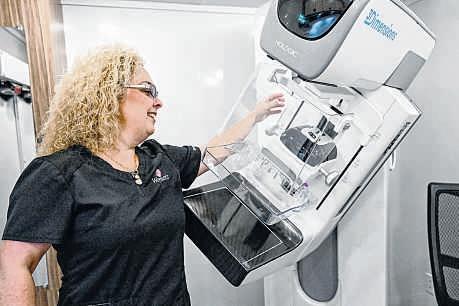
Wendi Chapman demonstrates how the mammogram machine rotates so it can produce images in different planes.
the digital mammography in 2005, the unit needed a bigger vehicle to accommodate the new technology The first mobile coach arrived in Baton Rouge on Nov 15, 2006, just in time for Walker to start his first shift.
The mammogram unit, called the “big-ole pink bus” affectionately by all who know it well, travels to 37 different parishes and five counties in Mississippi, bringing mammogram screening services to clinics, community centers, prisons, doctor’s offices and more.
The bus stops in time to open at 8 a.m., regardless of destination, each day and stays parked in one place until 3 p.m. Walker sometimes has to leave the hospital at 4 a.m. in order to make to the northern parts of the state like Ouachita and Morehouse Parishes before the first appointment. Each year, the bus travels to more than 200 sites, visiting 70 lo-
cations, and logging more than 20,000 miles.
The coach requires seven to eight parking spaces. Walker arrives at sites an hour early to make sure everything is in the proper place, including having to ask people to move their cars every once in a while.
After the coach arrives, Baker, the lead technologist checks the mammogram machine to make sure any bumpiness or movement along the way didn’t cause problems — that would cause shadows (called artifacts) that could confuse Xray results. If there are any artifacts, the bus turns around and heads back to Woman’s Hospital for service.
“The mobile unit moves around a lot on the roads to get to each place,” Baker said. “So we have to check every time
BY MARGARET DELANEY Staff writer
Atrial fibrillation, or A-fib, is the most common type of arrhythmia, affecting at least 2.7 million people in the United States. This number is expected to grow to more than 12 million by 2030, which makes understanding the risks extremely important as A-fib can be lifethreatening.
Dr Michael Bernard called A-fib a “silent threat” because symptoms can go unnoticed for months or years.
Bernard is the section head of cardiac electrophysiology at Ochsner Health.
A-fib is when the atrium of the heart, or the upper chambers of the heart, start to beat erratically and rapidly Instead of the heart pumping together, chambers of the heart pump out of sync.
“It’s all chaos,” Bernard said “The heart shakes.”
A-fib treats people differently Some people are very symptomatic, but many or most, people don’t feel it.
The common symptoms include shortness of breath, fatigue, dizziness and chest pain.
Younger people may feel the symptoms more than older patients because the arrhythmia is faster
“I’ve noticed that with patients, the more rapid the arrhythmia or the more rapid the heartbeat, the more likely they are to feel it,” Bernard said. “The more normal heart rate a patient has, there’s a higher chance of going undetected.”
A-fib is progressive and tends to get worse every month, every year The symptoms, most likely, will get worse or become more prevalent the longer a patient has A-fib.
Atrial fibrillation may be:
n Occasional: This is called paroxysmal atrial fibrillation. A-fib symptoms come and go. The symptoms usually last for a few minutes to hours. Some people have symptoms for as long as a week. The irregular heartbeat can happen again and again. Symptoms might go away on their own. Some people with this type of A-fib need treatment.
n Persistent: The irregular heartbeat is constant. The heart rhythm does not correct itself. If symptoms occur, medical treatment is needed to reset the heart rhythm.
n Long-standing persistent: This type of A-fib is constant and lasts longer than 12 months. Medicines or a procedure are needed to correct the irregular heartbeat.
n Permanent: The irregular heart rhythm can’t be reset. Medicines are needed to control the heart rate and to prevent blood clots.
Having a healthy lifestyle, limiting alcohol intake, controlling
See A-FIB, page 2X


STAFF PHOTOS By JAVIER GALLEGOS
The crew of the Woman’s Hospital Mobile Mammography Unit, from left, Wendi Chapman, Krista Stark, Lisa Baker and Robert Walker, stand on Oct. 10 in front of their vehicle.
HEALTH MAKER
Louisiana midwife praises ‘holistic care’
Midwives offer education for the whole family
BY MARGARET DELANEY Staff writer
A midwife is a licensed health care professional who specializes in caring for women throughout all stages of life, including pregnancy, birth and postpartum.
Jimi Aucoin, a certified nurse midwife, has assisted in the births of 1,156 babies in the Baton Rouge area over the past decade.
Most midwives today are certified nurse-midwives, like Aucoin. They provide comprehensive care that includes prenatal visits, labor/birth support, newborn care and family-planning services
In the Ochsner Medical Complex – O’Neal midwifery group, nine certified midwives support births from natural, low-intervention births to epidural-supported deliveries to water-based births in tubs.
The program serves people with low-risk pregnancies, with seamless transfer options to OB/GYN physicians or additional hospital support if needed.
The U.S. Bureau of Labor Statistics projects that employment of nurse anesthetists, nurse midwives and nurse practitioners will grow about 35% between 2024 and 2034.
The number of certified midwives in Louisiana has risen steadily, from about 65 in 2021 to 86 in 2025 — a 32% increase over four years.
Aucoin is originally from Baton Rouge and completed her undergraduate nursing degree at UL Lafayette
While working as a labor and delivery nurse, Aucoin received her master’s in midwifery from Frontier Nursing University
What sparked your interest in midwifery?
When I graduated nursing school, I worked as a labor and delivery nurse. The other nurses at the unit talked to me about what a midwife was and how there weren’t a whole lot of practices in Louisiana that’s why they worked as labor and delivery nurses.
Those conversations sparked my interest in midwifery My colleagues encouraged me to go back and get my license as a certified nurse midwife
As a labor and delivery nurse you’re helping the patient with their delivery, but ultimately, the major decisions are between her and her physician.
As a certified nurse midwife, I get to be that person that’s helping my patient make important decisions in their deliveries — encouraging her, educating her Seeing her throughout the pregnancy too. As a labor and delivery nurse you’re there for the actual labor part, but as a certified nurse midwife, you’re there throughout the process.
In our practice, we typically see our patients for the first time shortly after they find out that they’re pregnant. Certified nurse midwives also see patients from puberty until menopause, and even some after menopause.
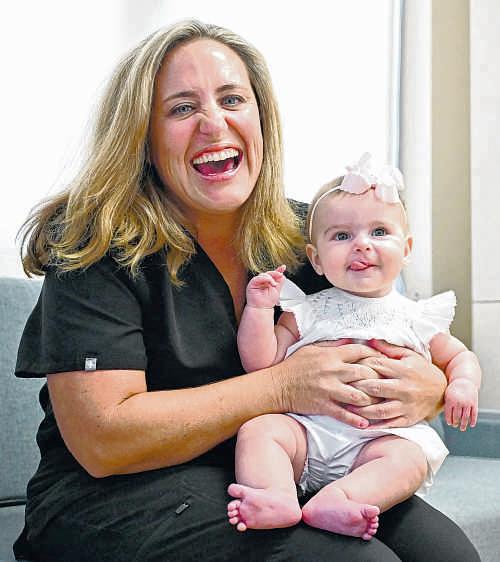
What do you talk to expecting mothers about when first meeting them? What is your first question?
The first thing I say when I walk in with a patient is, “Do you know what a midwife is?”
A lot of them say, “No, not really.”
Typically I have to ex-
plain that you don’t have to deliver naturally in the tub via candlelight We have a lot of options for delivery, and we can do all of them as midwives.
From the very beginning, I feel like expecting mothers have so many questions, especially first time moms In
our first meetings, it’s a lot of advice. It’s a lot of answers of any kind of question. Some of my patients never see an OB. One of the best parts of being with a midwife is that patients get that holistic care. When I meet my patients for the first time, I
ask them questions that are probably not typical of what they get from a physician. I want to know: Where do they work? Who do they live with? Is the father involved? How many children do they have? What are their kids names?
We allow our parents and mothers to bring all of their children to each visit with us. It’s a very nice experience because I get to meet the siblings of the future baby I get the kids involved in the care too. The siblings are often helping me measure mama’s belly or listen to the heart rate. It gets them excited to have a new baby in the house too. We do a lot of education when it comes to midwifery care, or what to expect when a new baby comes home. But we’re not just educating the mom, we’re educating the dads, the grandparents — all of people in a mother’s life that come to their midwifery visits with them. What has changed since you started as a midwife in 2015? When I graduated, there were not a whole lot of spaces in Louisiana that supported the work of midwives. Ochsner was one of the only practices in the Baton Rouge area that had midwives, especially such a big group of midwives like we have. There were no schools in Louisiana to attend to be a midwife. Now there are. There’s two that have started up at Loyola and LSU. I think we’re going in the right direction in the state for midwifery care, and I think we’re going to see the trends changing as far as mortality and morbidity rates in the state as a whole.
Expert: Walking backward can add to health benefits of walking
BY STEPHEN WADE AP sports writer
Here’s a simple way to switch up your walking routine: try walking backward
Taking a brisk walk is an exercise rich in simplicity, and it can have impressive mental and physical benefits: stronger bones and muscles, cardiovascular fitness and stress relief, to name a few But like any workout, hoofing it for your health may feel repetitive and even boring after a while.
Backward walking, also known as retro walking or reverse walking, adds variety to an exercise routine. Turning around not only provides a change of view, but also makes different demands on your body
Janet Dufek, a biomechanist and faculty member at the University of Nevada, Las Vegas, has researched the mechanics of both walking and landing from jumps to identify ways of preventing injuries and improving physical performance. And as a former college basketball player and a regular exerciser she’s also done her fair share of backward walking. In humans, reverse locomotion can increase ham-
Continued from page 1X
weight and exercising regularly help to reduce cardiovascular problems as a whole. Be on the lookout for dehydration, poor sleep or excess stress all things that can lead to A-fib.
“If you have obstructive sleep apnea, that puts pressure on the heart that can lead to atrial fibrillation,” Bernard said. “If you want to prevent atrial fibrillation, do all the cardiac healthy things that can reduce your chance to developing it.”
To manage the heart rate, and suspected symptoms, Bernard recommends regular visits to family medi-
string flexibility strengthen underused muscles and challenges the mind as the body adjusts to a new movement and posture. “I see a lot of people in my neighborhood and they walk, and that’s good,” she said. “But they are still stressing the same elements of their structure over and over again. Walking backward introduces an element of cross-training, a subtly different activity.”
Kevin Patterson, a personal trainer in Nashville, Tennessee, recommends the treadmill as the safest place to retro walk. You can adjust it to a slow speed. However, Patterson likes to turn off the treadmill — termed the “dead mill” and have clients propel the belt on their own
“It can take a while to get the treadmill going, but from there we have them be the horsepower for the treadmill,” he said Patterson said he uses backward walking with all his clients as an “accessory exercise” — a weight-training term for add-on movements designed to work a specific muscle group — or during warm-ups The activity typically makes up a small part of the workouts,
cine doctors
“Screening starts at primary care offices,” Bernard said, “with routine physicals once a year where they check your heart rate.”
The next wave of atrial fibrillation includes treatment that uses artificial intelligence to help map the heart and find the source of A-fib Bernard said Ochsner is an early adapter of this technology to help treat patients. Volta software is a type of the treatment meant for patients who have had prior ablations that have not held up over time.
A-fib is most often detected by an EKG, but smartwatches and rings with monitoring technology have made the condition easier to detect in some cases.
he said.
“The treadmill is great for older clients because you have the handles on the side and you reduce that risk of falling,” he said.
Dufek suggests working a one-minute segment of backward walking into a 10-minute walk and adding time and distance as you get comfortable.
You can also do it with a partner; face each other, perhaps clasp hands. One person walks backward, and the other strolls forward and watches for problems. Then switch positions.
“At first, you start really, really slowly because there’s a balance accommodation and there is brain retraining. You are learning a new skill,” Dufek said. “You’re using muscles in different ways.”
If you work your way up to running and get really good at it, you can try running a marathon backward — 26.2 miles or 42.2 kilometers Yes, people have done that.
Dufek classifies backward walking as a form of crosstraining, or incorporating a mix of moves into a fitness program. Doing a range of exercises can help prevent overuse injuries, which can occur after repeatedly using
Smartwatches and rings, according to Bernard, have the advantage of getting a patient’s heart rate for an extended period of time, allowing the device to get a comprehensive look at how the heart behaves in motion or at rest.
“There’s some commercially available gadgets that can find and detect arrhythmia,” Bernard said. “We also have heart monitors that people wear now, or if you have a pacemaker or other type of medical device, those can detect (Afib) too.”
According to Bernard, these devices are good, not great. The watches and the rings are a little farther from the heart than a pacemaker or heart monitor, so
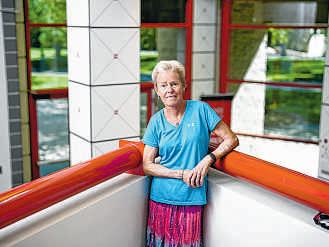
Janet Dufek, a professor at the School of Integrated Health Sciences at the University of Nevada, Las Vegas, stands Sept. 8 at the school. Dufek has researched the mechanics of both walking and landing from jumps to identify ways of preventing injuries and improving physical performance.
the same muscle groups.
For many people, crosstraining involves different activities and types of exercise: for example, running one day swimming the next, and strength training on a third day But the modifications required to walk backward work in the same way, but on a micro level.
Do small tweaks make much of a difference? Once an avid runner, Dufek said she had several pairs of run-
the reliability of the data isn’t always great. But Bernard said he can’t argue with results.
“If people have a symptom event, we can’t go back in time — it goes undetected,” Bernard said. “What we’re
ning shoes and did not wear the same pair two days in a row
“The shoes had a different level of wear, a different design,” she said. “Just by changing that one element, in this case footwear, it would provide a slightly different stress to the system.”
Physical therapists instruct some of their clients to reverse walk, which can be useful after knee injuries or for people in rehabilita-
seeing now with smartwatches, wearable devices and some other things, is that we’re tracking more people who didn’t know they had a problem. We’re catching these things a little more upstream with new
tion or recovering from surgery
“Backward walking is very different than forward walking from a force perspective, from a movement pattern perspective,” Dufek explained. Instead of landing heel first, “you strike the forefoot first, often quite gently and often the heel does not contact the ground.”
“This reduces of the range of motion in the knee joint, which allows for activity without stressing the (knee) joint,” Dufek said.
Backward walking also stretches the hamstring muscles, the group of muscles at the back of the thigh. Dufek is interested in finding out if it improves balance and reduces fall risks in older adults by activating more senses of the body There is nothing unnatural about backward walking. If fact, backward running is a key skill for top athletes. Basketball players do it. So do soccer players. American football players — particularly the defensive backs — do it continually “I played basketball and I probably spent 40% of my time playing defense and running backwards,” Dufek said.
technology a new phase of information where we’re able to see A-fib earlier than we used to.”
Email Margaret DeLaney at margaret.delaney@ theadvocate.com.
WE WANT TO HEAR FROM YOU
The Louisiana Health section is focused on providing in-depth, personal accounts of health in the state.This section looks at medical innovations, health discoveries, state and national health statistics and reexamining tried and true methods on ways to live well.
Health editions will also profile people who are advancing health for the state of Louisiana.
Do you have a health story? We want to hear from you. Email margaret.delaney@ theadvocate.com to submit health questions, stories and more.
STAFF PHOTO By HILARy SCHEINUK
Jimi Aucoin, a certified nurse midwife, shares a laugh on Oct. 10 with 6-month-old Nell Bozeman at Ochsner Medical Center in Baton Rouge.
ASSOCIATED PRESS FILE PHOTO By JOHN LOCHER
EatFit LiveFit
Healthy Halloween:Tealpumpkins, toytreatsand fairymagic
I’vebeenonabitofacrusadefor thepastdecadeorsotonormalize theconceptof“non-candy”treats atHalloween.Theresponsehasbeen, let’sjustsay,lessthanrobust.Lastyear, though,broughtaglimmerofhope. Ahandfulofpeopleagreedtojoin mynon-candyrouteandallhadgreat feedback.Theexperiment,theysaid,was surprisinglysuccessful.
It’snotaboutbeingaHalloween Scrooge,byanymeans.Wearen’tgiving awaydentalflossandnickelsatmyhouse. I’mhandingoutfunstuff,likeHalloweenthemedtattoosandPlay-Doh,stickers, bubbles,glow-in-the-darkvampireteeth, slime,bouncyballsandmore.I’mhopeful thatevenmorepeoplewilljoinmethis yeartohandoutfuntoysandother noveltiesthatencouragekids’creativity andimagination.
SomethingforEveryone: TheTealPumpkinProject EventslikeHalloweencanbe particularlychallengingforthosewith foodallergies.Kidscanhaveatoughtime enjoyingallthattrick-or-treatinghasto offerbecauseofcertainfoodlimitations andconcernsaboutcross-contamination. Anaddedbonusofnon-foodtreatsisthat virtuallyallfestivetoysareautomatically allergen-friendly.
TheTealPumpkinProjectisspecially createdforkidswithfoodallergies, encouragingpeopletoprovideoptions thatarefreeofcommonallergens likepeanuts,treenuts,milk,eggs, fish,shellfish,wheatandgluten.To participate,simplypaintapumpkin teal(oroptforareusable,teal-colored metalorplasticpumpkin,availablein someretailers)sothattrick-or-treaters knowyouhaveallergen-freetreats.

BeyondHalloween:Teaching HealthyAttitudesTowardFood Attemptingahealthierapproachto Halloweenalsomodelsahealthyattitude towardfoodthatbenefitskidsyearround.Andthatmeansnotmakingcandy totallytaboo.
“If you make something so off limits or elevate it to this halo of atreatthat you can’t have any other time, that’swhen kids and adults will only cravecandy
more,” said Brittany Craft, aregistered dietitian on theOchsner Eat Fit team. “When we arehaving atreat,weshould give ourselvesand ourkids permission to enjoy it —really savor it —and then move on.”
InadditiontoherworkwithEatFit, Brittanyisalsoamomandbeautifully balancesaparent’sperspectivewitha dietitian’sphilosophy.
“I’vewantedtogothenon-candyroute
MollyKimball,RD,CSSD,isaregistereddietitian withOchsnerHealthandfounderofOchsner’sEatFit nonprofitinitiative.Formorewellnesscontent,tuneinto Molly’spodcast,FUELEDWellness+Nutrition,andfollow @MollykimballRDand@EatFitOchsneronsocialmedia. Emailnutrition@ochsner.orgtoconnectwithMollyor scheduleaconsultwithherteam.
BY THENUMBERS
HPVVACCINATIONSUPINLA.
Approximately 37,800 annualcancer cases in theUnitedStates are attributable to human papillomavirus, 35,000 of which mayhavebeen prevented through HPV vaccination.
HPV is the most common sexually transmitted infection in the U.S.,affecting about 85% of sexually activepeople in their lifetime.
Each year,13million Americans, including teenagers, are newly infected.HPV infections cancause cancer as well as genital warts.
Louisiana ranks 20th in the nation for HPV vaccinations among adolescents with 66.2%of 13-to17-year-olds in the state whoreceived allofthe recommended dosesofthe HPV vaccine in 2023, according to America’sHealth Rankings data from the Centers for Disease Control and Prevention.
Louisiana’sHPV vaccination ratesfor teens have steadily climbed in the last five years, from 46.7% in 2018 to 66.2%in2023.The state nowhas ahigher percentageofHPV vaccinations among teens than the national average, which sits at 61.4%.
These states had the highest percentageof adolescents whoreceived theHPV vaccine,in
MAMMOGRAMS
Continued from page1X
westop the bus.” Each appointment takes 15 minutes. Results are sent to Woman’s Hospital at the end of each day to be reviewed by aphysician at the hospital. Patients should get their results back in aweek. If apatient needs to be screened again,a physician from the hospital will contact them and notify themoftheir next steps.
From January to July 2025, the bus saw 787 patients with 60% of the patients seen on the coach being noninsuredorunderinsured
Thetriooftechs on thebus
The real stars of the show are Baker,Chapman and Krista Stark —the three friends who have been traveling around the statetogether for over 15 years, providing care to women across Louisiana.
The trio is at adifferent location each day,but are sometimes

forthepastfewyears,butitseemedlike justonemorethingtodoinanalready busyschedule,”shesaid.“Lastyear, though,ourdaughter’sschoolasked parentstobuylittleHalloween-themed toysinsteadofcandy,andtheyactually endedupbeingcheaperthanthebagsof candywetypicallyget.Istockedupfor trick-or-treatersatourhouseaswelland waspleasantlysurprisedtoseehowwellreceivedtheywerebykidsofallages.”
TheSwitchWitch
Evenifyou’rehandingoutnon-candy treats,it’salmostinevitablethatkidswill stillendupwithanentirepumpkinfullof candy.Oneapproachtooffsetapotential candyoverloadistheconceptofthe “SwitchWitch.”Thinkofherassomething ofaHalloween-themedToothFairy Aftertrick-or-treating,kidsgettopick outafewpiecesoftheirfavoritecandy, thentheyleaveouttherestfortheSwitch Witch.Inthemiddleofthenight,the SwitchWitchtakesthecandyandleaves atoyinitsplace.Itcanbewhateveris age-appropriate—asmalltrinket,atoyor somethingmoresignificant—that’supto theSwitchWitch.
Similarly,whattheSwitchWitchdoes withthecandyisuptohimorher.They mightdonateittoorganizationsthat supporttroops,localchurchesoryouth programs—orfindanothercreativeway torepurposeit.Regardless,thekidsare happy,andthecandyisoutofthehouse. DishingOutHealthful HalloweenHandouts
ConsiderjoiningmethisHalloween inofferingcreativetrick-or-treating alternatives.Whetherprovidingallergyfriendlyoptionsmarkedbyatealpumpkin orswappingcandyforfuntoysand creativeactivities,everysmallstepgetsus closertoahealthierHalloween.
descendingorder:
n RhodeIsland with 84.2%
n Massachusetts with 82.3%
n NorthDakota with 78.3%
n Michiganwith73.2%
n Delaware with 73%
n SouthDakota with 72.3%
n Connecticut with 71.2%
n NewHampshire with 70.6%
n Hawaiiwith 70.4%
n Wisconsin with 69.9%.
These states had the lowest percentageof adolescents whoreceived the HPV vaccine, in
ascendingorder:
n Mississippi with 38.4%
n Georgia with 40.5%
n Oklahoma with 44.2%
n Kentucky with 47.9%
n Nevada with 48.5%
n West Virginia with 49.8%
n NewJerseywith 50.2%
n Arkansaswith 52.9%
n Idahowith 53.4%
n Wyoming with 54.2%
n Alaska with 54.4%.
circlingback to locations monthly.Theycan actually remember most of theplaces they go based on some singular characteristics of bathroomsavailable to them across thestate. “Isthatthe one thatsmells like fried shrimp?” Chapman said when discussing atripsouth of New Orleans. Baker andChapman have known each other since their Denham Springs days aschildren. At ages 6and 4, they were fast friends. Now,they work with fellow DenhamSprings High School alumnae Krista Stark Stark works patient registration. All of herdocuments andthe computer accessing the electronic medical record are precisely stored within thebrown cabinets of the unit. Her desk is small, but she has asystem “I always leave the patientforms in the same place, on aclipboard by the sink, so Wendi knows where to find it,” Stark said. “When Wendi’snot here, Ihave to explain the process all over again.
HPVvaccinationsbystate
Percentage of adolescents, aged 13-17, whoreceivedall recommendeddoses
papillomavirus,orHPV,vaccine





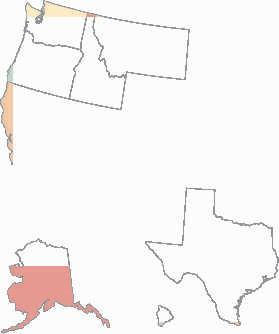







The close-knit triohave raised their children together —who all attendedDenham SpringsHigh School —and have made lifelong friendships with patients, some of whom come back annually “Wetry to make it fun,”Chapman said. “As much fun as abreastscan can be.Because if it’snot at least ‘not miserable,’ people won’twant to come back. And we want them to keep getting their screenings.”
Chelsa Rainey,apublic relations specialist at Woman’sHospital, said her84-year-old grandmother schedulesher annual screenings with themobile unit.
“She’salways looking for that bright pink bus,”Rainey said. Now, themobileunithas abuddy Andtwo mobile units can be found hopping around the state. Both unitsare equipped with3Dmammogram screening services,and a familiar face in thefront seat Baker,aslead technologist, now organizesthe locations of each unit andoften worksfrom Woman’s Hospital these days. Walker’sbrother,James Walker,
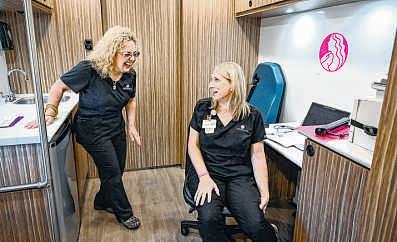
is the newmobile
STAFF PHOTO By JAVIER GALLEGOS WendiChapman
BRO UGH TT OY OU BY
Molly Kimball RD,CSSD













Halloween! Hallowe

Halloweenisamagicaltimeforchildren,andtheexcitementisbuildingrapidly
Storesarefullofdisplayssignalingthearrivalofthespecialday.“Whatareyou goingtobeforHalloween?”isthequestionoftheseason.
Thisyear,HalloweenfallsonaFriday.Thatmeansperhapssomeextratrick-or-treat timesincethereisnoschoolthenextday,andwithalittleluck,we’llhaveideal weatherfortrick-or-treaters
AsweanticipatetheexcitementofHalloween,wemustalsofocus onmakingsurethisspecialdayissafeforthecostumedkidsthat willdescendonneighborhoodstocollectgoodiesandhavesome old-fashioned,screen-freefun.







Tips forplaying it safe
Parentscanhelpensuretheirchildrenstaysafeonthespookiestofholidays. Herearesomesafetyrules:
Beforetrick-or-treating,discusssafetyruleswithyourkids.
Carryglowsticksorflashlights,usereflectivetapeorstickersoncostumes andbags,andwearlightcolorstohelpkidsseeandbeseenbydrivers.
Joinkidsunder12yearsoldfortrick-or-treating Remindkidstocrossthestreetatcornersorcrosswalks.
Sticktoareasthatarereasonablywelllit.
Whenselectingacostume,makesureitistherightsizetopreventtrips andfalls.Choosefacepaintovermaskswhenpossible.Maskscanlimit children’svision.
Examineallofyourchild’sHalloweentreatsbeforetheyareeatenandlook forsignsofopenpackaging.Don’tallowyourchildtoeathomemadetreats preparedbystrangersortreatsthatarenotcommerciallypackaged.
Forthosewhoaredriving,slowdownandbealert!Kidsareexcitedon Halloweenandmaydartintothestreet.Turnonheadlightsandbeespecially cautiousinareaswherecarsareparkedalongthesideofthestreet.



AsHalloweenapproaches,manyAmericanscarvefreshpumpkinsaspartofa fallfamilytradition.Whilepumpkincarvingcanbeafunartisticexperience,it canpresentdangers.
Here’showtohaveasafecarvingexperience:
Makesuretheexteriorofyourpumpkiniscleananddry.Anymoistureon yourhands,toolsortablecouldcauseyourhandtoslip,whichcanlead toinjury.
Considercarvingbeforetakingthetopoffthepumpkin.Avoidholding yourpumpkinfromtheinside,whichputsyourhandsinthedirectpathof knivesandcarvingtools.
Allowchildrentodrawthedesignonthepumpkinwithamarker,but adultsshoulddothecarving.








Halloweenisfun,butitcanalsofeelstressfulforparents,especiallyifyour childhasfoodallergies,intolerancesorsensitivities.Buthavenofear.Managing nutritionalneedsdoesn’tneedtobescary.
Herearethreesimplestrategiestoenjoythetrick-or-treatingexperience:
1. Readalllabelscarefully.Often,Halloween-specificcandyandtreatscanbe manufacturedinadifferentplacethanthenormalmanufacturingfacility, leavingroomforcross-contaminationrisks.Anddifferentvarietiesandsizes ofthesamecandymayhavedifferentingredients.
Letthekidsemptythepumpkin.Sincechildrenshouldavoid sharptools,letthechildrengrabaspoonandtakeoverthejobof emptyingthepumpkin.
Youcanalsodecorateyourpumpkinswithoutcarvingthem.Getcraftywith paint,stickers,yarnorglittertodecoratepumpkins.
2. Ifacandydoesn’thavealabelorifyoucan’tfindtheingredientlist, throwitaway.
3. Thereisnosuchthingas“allergy-free”candyortreats.Peoplecanhavean allergytoalldifferenttypesoffood.
WeshouldalsorememberthatHalloweenhandoutsneednotbecandy.Stickers, bubblesandminiglowsticksareamongthemanythingsthatcanbegivenout bythosewhowanttoprovide100%food-allergen-freetreats.
LOUISIANA

FROM BAY TO BAYOU
Traveling photographer staysto capture Louisiana
BY JOYHOLDEN Staff writer
Documentary photographer Philip
Gould has traveled the world, captured numerous landscapes and arichvariety of people, butnowhere compares to the soul connectionhefeelsinsouth Louisiana. At the age of 20,San FranciscoBay Area native Gould found his futurebehindthe lens of acamera whenhis mombought one that, as he says, “wasn’t halfbad.”
“It was 1971. Icommandeereditand started taking pictures like crazy,” said Gould.
The new hobby led him to study journalism at alocal community college and aphotojournalism degree from SanJose State, knowing that he needed to make photography his career
“It spoke to me loudly,” he said Right out of college in 1974, Gould landed ajob in New Iberia taking picturesfor The Daily Iberian. The assignment turned out, for Gould, to be “the best first job a photographer could hope for.”
In atownwhere therewas little news, he had free rein to photograph anything

as long as readers enjoyed the pictures.
Gould says theopportunityinNew Iberia made allthe difference in acareer that hasspannedfive decades, multiple countries, several museum exhibitions and more than 20 books.
After ayear anda half in New Iberia, in 1976, Gould moved to Dallas to workat theDallas Times Herald. In 1978, the oak

trees, Spanish moss, waterways, music and people lured him back to Acadiana.
“I found that Louisiana had awonderful sense of rootedness,”Gould said, “in that people are from here —and not only that, their ancestors are from here.”
He says he liked that it was aFrench speaking area and that people had awonderful sense of humor here.
“I just somehow viscerally connected to Cajun culture,” he said.
Thatconnection led to his first book “Les Cadiens D’Asteur:Today’sCajuns,” which was released in 1980, and it became atraveling exhibit Sincethen, Gould’swork has been exhibited in the Field Museum of Natural History,the HilliardUniversity Art Museum, theLouisiana Art &Science Museum, the New Orleans Museum of Art and the Virginia Museum of Fine Arts.
Gould has created and co-authored 16 books that range from “Ghosts of Good Times,” about abandoned dance halls in southLouisianato“Bridging theMississippi,”a conclusive look at every bridge that crosses the Mississippi River—and contributed to many more.
His mostrecent project is “Louisiana from theSky,” which will be published by UL Press and available Dec.9


Long distance isn’tathing anymore —aside from international calls,which can be bypassedby any number of apps or online options
Even still, Iremember the first long-distance call Iever received as clear as abell. Iwas 14 and was outside playing basketball in the driveway with ahalf-dozen neighborhood kids
My mother threw open the front door and said, “Jan, you have along distance call!”
Everyone froze, unable to processthat someone would be calling one of our motley crew long distance.
Back then, along-distance call was validation. Seconds counted. Someone, somewherebeyond the city limits thought Iwas worth spending money to reach.
Afterwhat my mother said registered, Iran inside to the black phone hanging on the kitchen wall. Its long coiled cord stayed tangled. Iknew exactly how far Icould wander while talking on the phone.
“Hello,” Isaid, breathlessly. Aman from Roosevelt State Park in Morton, Mississippi, a whopping 15 miles away,was calling for me
He was calling about askateboarding contestfromthe summerbefore. He worked at the parkand remembered that Ihad won thecompetition the previous year —which is another story all together.(Ihad been the only girlinthe contestand had won againstatleast15young men, most of whom were well into their 20s.Itwas the stuff of dreams.)
ButIdigress. This man’sjob was to relay to me that parkadministrators had hoped Iwould return to defend my title.
Much like the legendary(in my own mind) skateboarding contestofthe previous summer, this was heady stuff.
Alas,Ihad ajob and had to work that Saturday.Iwas unable to join the skateboardcompetition again. Iremember that I wasn’t even verydisappointed. The long-distance phone call (witnessed by friends) was a sort of prizeinand of itself. Sitting in the newsroom, considering the difference in attitudes now about receiving phone calls,Ilooked around to the three 20-somethings whosit near my desk.
Ihad ahunch as to what the answer would be, but Iasked anyway
“Do y’all know about longdistance calls?” Isaid.
At 22, the youngestofthe trio said, “Do you mean alandline?” Iquickly realized that shehad no idea long-distance calls had ever been athing.
Another veteran journalist jumped in to help me explain. The 22-year-old was shocked that there used to be charges for calls based on the distance between two places
The other journalist and Iwent on to explain how much timing mattered with long-distance calls —along-distance call made in the middle of the day was high dollar
After5 p.m., the rates dropped and after midnight they dropped even further
We told her that in the not-sodistant history of cellphones, there were charges for roaming and other long-distance features —that if you traveled with your cellphone and called in another region, there were costs that went along with theconve-
Make every minute count ä See RISHER, page 2Y
PROVIDED PHOTO By PHILIP GOULD
Barrier reefs in Point AuxChien from the book ‘Louisiana from the Sky’
PROVIDED PHOTO By PHILIP GOULD
Philip Gould captures amoment of Louisiana culture at Fire and Water Fest.
PROVIDED PHOTO By COLIN GOULD
Photographer Philip Gould testing out adrone for his photography
INSPIRED DISCUSSIONS
ASK THE EXPERTS
Trombonist retrained his brain to play again
New Orleanian plays weekly despite developing focal dystonia after Katrina
BY JOY HOLDEN Staff writer
New Orleanian Craig Klein is a Grammy-winning trombonist, educator and composer His influence spans over 200 recordings with legends like Dr John and the Neville Brothers, and he actively performs with top brass ensembles. Klein has championed brass band music on international stages and through media like the radio station WWOZ. His advocacy for musicians’ health has also encouraged more open conversations and resources around artist care. Klein struggled with focal dystonia, making trombone playing difficult, but he remains dedicated. In addition to playing weekly at Preservation Hall in New Orleans, he hosts jazz shows on WWOZ and advocates for the station.
Tell me about yourself and your life in music in New Orleans.
I grew up in Metairie. My inspiration comes from my uncle, who is my mom’s younger brother, Jerry He is seven years older than me and plays trombone. I came up watching him, admiring him, and I wanted to be just like him. We still play together in a brass band called The Storyville Stompers since 1981.
As I was growing up in the suburbs in the 1970s, we would go to the French Quarter as 15- and 16-year-old kids because Bourbon Street had good music going. It was jazz and blues.
I specifically remember coming out of Pat O’Brien’s with my friends, and Preservation Hall is right next to Pat O’s. In those days, they would open up the shutters so you could look through the old New Orleans-style glass windows and see what was going on.
I can still see it like it was yesterday. It was just so mesmerizing and magical. The window sits right behind the drums and the trombone player When I looked in, I thought it was a dream. I’d never really heard the music like that before, and so I left my friends. I stayed there and listened. Every time we would go back to the corner, I would go to that window and hear as many songs as I possibly could. And then sometimes, if I had an extra $3, I would pay the cover charge and go in and stand along that back wall. I thought it would be cool to
BAYOU
Continued from page 1y
The book offers a distinct perspective on the Bayou State as seen from overhead with drone photography This idea for the collection of overhead photos grew from his childhood in California, where he was used to seeing mountains and more dynamic landscapes.
The flatness of Louisiana had always lacked that kind of drama, or so he thought.
“I felt this void,” Gould said “My premise has been that you really can’t see Louisiana in its full glory and potential from the ground You have to put something up in the air — so the whole flat landscape spreads out before you, and you can see its true drama.”
When asked about his favorite subject to capture, Gould said that he loves photographing people living in amazing architecture. He also said that he’s often inspired by unusual concepts that become full-scale projects like his early 2000s series on train stations in France, “Les Plus Belles Gares de France.”
‘He’s like our memory’
Mark Tullos, executive director at the LSU Museum of Art, met Gould in 2002 when in Lafayette
The first time he saw Gould, the photographer was standing on top of a 14-foot ladder at a festival, documenting Louisiana’s joie de vivre. Tullos was worried for Gould’s safety, but the photographer was undeterred.
“I remember meeting him soon after that,” Tullos said, “and I was having a conversation about the lengths he will go to get a marvel-

Q&A WITH CRAIG KLEIN GRAMMy-WINNING TROMBONIST, EDUCATOR AND COMPOSER
play there.
When Storyville Stompers started in ‘81, that’s when I started really chasing New Orleans music, after the Olympia brass band.
What is it like to play Preservation Hall?
It’s a dream come true. Preservation Hall started in 1961, and it’s still the best place in the world to hear traditional jazz.
It’s an honor and a privilege and an obligation to keep this music going for the elders.
Can you tell me about your experience with focal dystonia?
Focal dystonia only affects maybe 2% or 3% of musicians and normally it’s a muscle movement disorder Have you heard of the term “the yips” in sports? It’s like that, but with musical instruments.
The neurons in your brain become tangled, and the wiring becomes unwired. It happened after Hurricane Katrina. We had to move to Baton Rouge, and I started coming back to New Orleans to help musicians rebuild houses.
There was so much stress. The stress affects different people in different ways For me, I started noticing I couldn’t start a note.
I felt like something was happening. Then I started noticing more and more, “Man, something’s wrong on my chops. I can’t start this note, this passage. I’m really suddenly not so good.”
I knew I could play, but it just felt like my playing disappeared.
It was the hardest thing I’ve ever dealt with I had never been more depressed in my life.
At some point, I went online, and focal dystonia pops up and it lists all of the symptoms. I’m going, check, check, check.
It affects different musicians.
For instance, like clarinetists or pianists, they get it in their fingers. Guitar players will sometimes get it in their fingers. It only
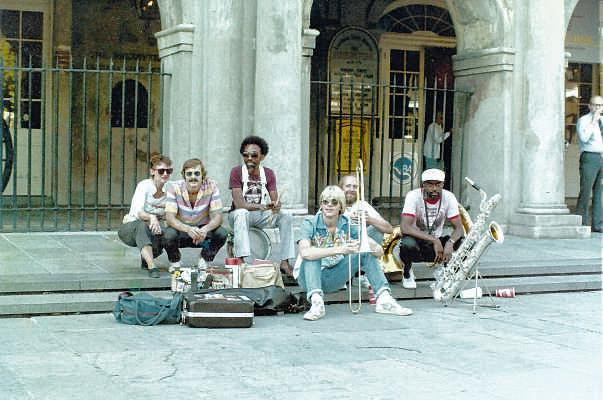
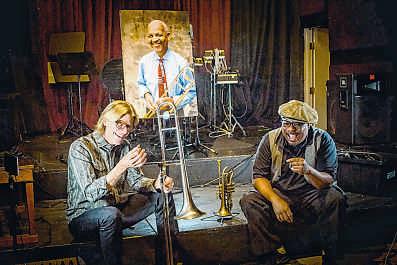
shows up when you have your instrument So for me, whenever I put the horn on my face, my chops would lock up. I didn’t tell anybody except for my fellow trombone players, so they knew I had this. I was able to hide behind them in the band.
How did you eventually get help?
I started finding people I reached out to another horn player Dion Tucker in New York, and he helped me get some help.
One way to come out of this is you have to retrain your mind. We already know we know how to play the instrument. We have to
rewire our brain. Neuroplasticity is what it is. So I had to almost relearn everything I’m thinking I’m probably about 75% there I took sessions with specialists over Zoom. They have taken me to a level that I never even thought I would even get to at some point. I work on it every single day.
Has this condition changed your relationship to music and performing?
I always appreciated (music) because I love it, but (focal dystonia) made me appreciate it even more.
You just have to be able to play and to contribute to what this culture is.
When you lose something, and you love it, man, and when you have a chance to get it back, you appreciate it more than you can ever imagine
What is your relationship to WWOZ, and what does the jazz station mean to New Orleans?
Growing up, I didn’t own a lot of the records they were playing.
On Saturday, Big Mama Rankin had the traditional jazz show, and I would put her on the radio. I would get my horn out, and I would play along. And that’s how I learned a lot of music, by playing along with it.
In my beginning years, WWOZ played that important part of my career, teaching me the music. I wasn’t going to be able to go out and buy all of those records. It just couldn’t possibly be done It’s a very important resource for musicians.
I wanted to do a show on OZ. It was always on my bucket list. So, I started sitting in on the other DJ shows and watching and learning. And then they started calling me to sub.
The next thing you know, a Saturday morning slot is open. To now be a part of the OZ family, and to play music that I love it’s just a special thing for me. I feel like it’s almost full circle
Email Joy Holden at joy.holden@ theadvocate.com.

PROVIDED PHOTO By PHILIP GOULD Raymond Manson prays under the Crescent City Connection.
ous capture, a marvelous image. And he’s a master of that. He’s a real visionary He’s in that same family of great artists like Fonville Winans and C.C. Lockwood.” Tullos in his role back then as director of the Hilliard Art Museum in Lafayette, used to take visitors to nearby zydeco clubs to hear local music, where he would often see Gould taking pictures.
“I remember so clearly going to festivals or different events that were important in Louisiana, and seeing Philip like this sort of ghost walking around with his camera,” said Tullos. “He’s like our memory,
he goes through gathering all these images — and then you go back to an exhibition (at a museum) later and you see an image. You go, ‘I remember that, and I remember that day.’” UL history professor Michael Martin says that Gould’s work goes beyond documenting. He says Gould’s photographs evoke and convey things that are easy to identify with even for those not from Louisiana or the United States, for that matter “He’s going beyond documenting. You can hear the music. You can feel the dance floor kind of
bouncing up and down. You can see the dust coming up off of the floor,” Martin said of Gould’s work. “You can look at his photographs and say, ‘You know what, I can kind of sense what it would be like to be there.’” Five decades in, Gould’s photographs often do more than record a moment — they remind the people of south Louisiana who they are. Through his lens, the ordinary becomes luminous, and the familiar turns timeless. Email Joy Holden at joy.holden@ theadvocate.com.
Continued from page 1y
nience. She was amazed. As we talked, I could see how foreign “long distance” seemed to her To her, calls had always been free and endless. I remembered when they had been a currency of care. These days, we can FaceTime someone in Singapore for free, yet often feel thinner more disposable.
There was something about knowing the seconds counted — the cost of the call made the words matter more. Perhaps we didn’t realize that we were rationing conversations, but I wonder if most of us chose words with more care because each minute ticked away like dropping money in a jar I don’t miss long-distance bills or busy signals. However, I do miss the magic that came with the phone ringing and having no idea who would be on the other end of the line but knowing it was someone who knew or had an important reason to be reaching out. How lovely to think of hearing my mother opening the front door and yelling, “Jan, you’ve got a long-distance call!” It all still matters.
Email Jan Risher at jan. risher@theadvocate.com.
PROVIDED PHOTO By PRESERVATION HALL
Trombonist Craig Klein, front center, busks with other musicians in the French Quarter in the 1980s.
STAFF FILE PHOTO By MATTHEW HINTON
Craig Klein performs on the Gentilly Stage on April 29, 2016, during Jazz Fest in New Orleans
PROVIDED PHOTO By MOLLy REEVES Craig Klein and Kevin Louis recorded a tribute to Lucien Barbarin.
LouisianaDigital Librarycontinues preservation work
Newgrant allows forupgrades
BY CHRISTOPHER CARTWRIGHT Staff writer
In thebasement of the LSU Hill Memorial Library,down several hallways andpast roomswith desks full of papers and boxes and books, Gabe Harrell is at work scanning pages from journals written in the 1800s
“Right now,we’re working on this manuscriptcollection, the Capell family papers,” Harrell, the LSU Special Collections’ Digitization Lab Manager,explained.
“These are plantation recordsthat we are working on getting digitized and put in the digitallibrary once the new one is up andrunning.”
That library,the LouisianaDigital Library,isanextensive online archive of more than 350,000 items from libraries, museums andother repositories across the state. Accessible for free to anyone, itincludes manuscripts, photographs, newspapers, oral histories and other items.
It’snow undergoing an upgrade.
Gina Costello, LSU Libraries’ Associate Dean of Technology and Special Collections, said that a$190,320 grant from the Louisiana Board of Regents hasfunded anew microfilm scanner after the previous one stopped working.
“Wewere not going to beable to afford to replace it unlesswegot a grant, so this has been wonderful for us,” she said.
‘Freefor anyone to use’
The digital library started in 1999 and has grownextensively since its beginning, withmaterialsspanningcenturies.Scansof American Sugar Cane Leaguebulletins are interspersed withportraits of LSU students from1870, architectural drawings of university buildings, AscensionParish Libraryscrapbooksand audiorecordings of Cajun folktales.
Elisa Naquin, LSU Special Collections’ Metadata and Digital Strategies Librarian, said that whileLSU manages the software, institutions around the state can
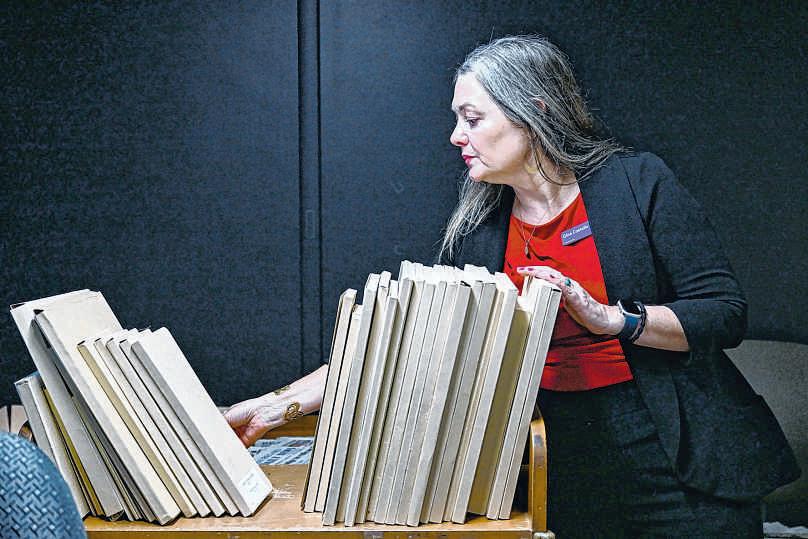
contribute.
“Wemanage it, provide it for the state, and… it’sfree for anyone to use, anyone who has an internet connection, but also free for any institutioninthe statethatwants to contribute,”she said. “Itgives them aplatform to use, and then theydon’thave to purchase their own.”
Around 32 organizations have added to the library,including the HistoricNew Orleans Collection, East Baton Rouge Public Library Amistad Research Center and State Library of Louisiana.
Beyond purchasing thenew microfilmscanner,Naquin saidthe fundsare also paying for asystem to host the digital library online.
“Wewereable to, withthe helpof this grant,purchaseareally nice sort of modern system that’s goingtobemoreuser-friendly,both for theinstitutions that contribute andalso forresearchers searching for materials,” she said. “I thinkit will both increase theamount of materials going intothe LDL, and I thinkit’llincrease access as well.”
Hundreds of years
The grant will be used to also digitize aspecific collection. Deep in the library’sarchives six floors of floor-to-ceiling shelves containing everything from miniaturebooks to maps —are large filingcabinets filledwith roughly 600 microfilm reelsofhandwrit-
tenpolice jury minutes. The minutes cover meetings in 60 parishes from 1811 to the1940s, and one reel of film covers between 500 and1,000 images.
“We’re probably going to do just about 150 (reels) to start out, and then it’llbea long-termproject,” Costello said. Yetthe LSU Special Collections maintains far more documents than thoseavailable online. Costello andHarrell explainedthatmany materials arefrequently usedby university classes, leading to them being prioritized fordigitization.
“Wehave an active instruction programwhere undergraduate andgraduate student classes come in,” Costello said. “They can handle
thematerials, andsometimesit’s thefirst time they’veseen things that are, you know,that old.”
TheCapellfamily papers are onesuchexample,withCostello stating that history and English classes frequently studythem. Beyond university use, the library also prioritizes itemsthatneed to be preserved in theface of decay or deterioration.
“Wewant to keep them for hundredsofyears to come,” shesaid. “Wewant them to be here when none of us arehere. That’s our mission.”
Email Christopher Cartwright at christopher.cartwright@ theadvocate.com.













STAFF FILE PHOTOS By JAVIER GALLEGOS
Gina Costello, Associate Dean of Technologyand Special Collections, looks throughacollectionofmaterialsthat are goingtobedigitized viaa scanner at LSU Hill Memorial LibraryonSept. 18.
FAITH & VALUES
Tibetan Buddhist nunnery shifts gender norms
BY PRIYADARSHINI SEN
Contributing writer
When Geshema Delek Wangmo was 12 years old and starting her Tibetan Buddhist journey, she joined her teacher on a pilgrimage.
The journey, which involved traveling on foot from the high-altitude town of Litang in the Kham region of Tibet to Lhasa in a valley of the Himalayas both spiritually significant locations in Tibetan Buddhism — required her to beg in villages, sleep in tents, embark on meditative practices and live with villagers who offered the monastics vegetables, butter, cheese and milk for their sustenance. A year-and-ahalf later the young nun traveled hundreds of miles, enduring harsh weather and terrain, to reach Kailash, a sacred mountain in the Tibetan Autonomous Region.
Now Wangmo, 44, is the first woman principal of a nunnery in north India’s Dharamshala, home to the Dalai Lama and the Tibetan government-in-exile. In April, when the nonsectarian Dolma Ling Nunnery transitioned to female academic leadership for the first time in its three-decade history, it marked a radical shift in the landscape of Tibetan Buddhism in exile.
“If more women take on leadership roles in religion, there’ll be a spurt in positive thinking, compassion and quality of education,” said Wangmo, who came to the nunnery in 1990.
Along with two senior nuns in charge of the nunnery’s administration, Wangmo is showing more than 270 nuns from various lineages what’s possible for women in religion today “Geshema has gone through many hardships and understands the inner world of nuns,” said 30-year-old Tenzin Dolma, who arrived at the nunnery five years ago from a Tibetan refugee settlement in Kathmandu, Nepal. “She’s inspiring younger nuns to think big and aim high.” Nestled in the foothills of the Lesser Himalayas and surrounded by the snow-capped Dhauladhar peaks, the Dolma Ling Nunnery’s compact red and white buildings, set around a central courtyard, was inaugurated by the Dalai Lama

in 2005. Surrounded by lush, landscaped flower and vegetable gardens, Wangmo urges the nuns to apply Buddhist principles in their daily lives. In their classrooms dedicated to studying Buddhist philosophy, dialectics, Tibetan language and ritual arts, she instructs them on the spiritual development of the community.
“In traditional society, female monastics prayed and recited from holy scriptures,” said Nangsa Chodon, director of the Tibetan Nuns Project, a nonprofit based in Seattle and Dharamshala that supports refugee nuns from Tibet and India’s Himalayan regions. “But now, the Dalai Lama is helping nuns become leaders in their own nunneries.”
From the late 1980s to early 2000s, many Tibetans who had been marginalized through occupation escaped on foot over the Himalayas to Dharamshala. Many feared torture and persecution like their forefathers faced between 1949 and 1950, when independent Tibet was invaded by China. In exile, many Tibet-
ans wanted to practice Buddhism, the religion woven into the fabric of their society, influencing their daily routines and worldview
“Initially it was just survival for the nuns and monks who fled to India,” said Venerable Ngawang Palmo, who is in charge of the nunnery’s administration. “But now, education is being emphasized so that it fosters equality in the monastic community and beyond.”
For nuns, the Geshema degree is the highest academic title, awarded after 17 years of studying five great canonical texts of Tibetan Buddhism. The degree — which allows nuns to receive public recognition as teachers and leaders in the Buddhist world — was first approved for women in 2012, previously only available to monks. Four years later, 20 nuns were recognized as Geshema by the Dalai Lama, who many credit for allowing women to take on leadership and teaching roles previously reserved for monks.
“Now with women in leadership roles, the monastic community has been infused with fresh energy,”
said Gyurmey Dorjey, a monk who has been teaching Buddhist philosophy at Dolma Ling for 18 years. Dorjey attributes the shift to the Tibetan Nuns Project’s founding director, Rinchen Khando Choegyal.
A founding member of the Tibetan Women’s Association and the Dalai Lama’s sister-in-law, Choegyal promoted social, political and economic equality among Tibetans in exile and is credited with informing the international community about the plight of Tibetan refugees, Dorjey said. At Dolma Ling, she encouraged the nuns to grow as scholars, teachers and administrators.
“Her visionary mindset has helped 23 nuns become Geshemas since 2016,” said Wangmo, who received her degree in 2017.
Wangmo often serves as a kind of guide mother and adviser at the nunnery In a life dominated by the ideal of selfless service to others and the pursuit of spiritual truth, nuns often face inner struggles and psychological distresses navigating strict routines and basic living conditions, loss of personal autonomy,
and dealing with interpersonal conflicts within the community
“Males are more ego-driven while women lead with their heart,” said Tashi Yangzon, a 35-year-old nun from Ladakh who made Dolma Ling her home in 2010. “With our new female leadership, younger nuns will be more comfortable opening up about their struggles.”
Yangzon said it will take time for nuns to fully embrace women’s leadership. Even though Buddha’s teachings emphasize spiritual equality — that men and women are equally capable of achieving nirvana male leadership has dominated nunneries due to hierarchical structures and monastic restrictions placing monks in positions of authority
“Even for women to accept this complete upturning of structure isn’t easy,” Yangzon said. “It’s a revolutionary act because nuns so far were required to show deference to monks.”
The three nuns’ leadership tenure will last three years, after which either a committee will nominate the next leaders or there will be a communitywide election, according to the Tibetan Nuns Project.
“This leadership change is critical,” said Tsering Norbu, a male English teacher at Dolma Ling. “It will even help nuns step up at oldage homes, orphanages and other institutions.”
In its core philosophical studies, debate sessions and projects like tailoring and tofu making, some see a shift in the nuns’ confidence at Dolma Ling.
“The change shows how capable women are at managing entire communities,” said Tenzin Palkyi, coordinator of the Tibetan Nuns Project in Dharamshala. “This not only breaks a set pattern, but also the belief that female leadership is an exception.”
When the workload overwhelms Wangmo, she said she reminds herself of Buddha’s compassion and his deep and unwavering care for the suffering of all sentient beings.
“If we have compassion, we can see problems clearly,” Wangmo said. “But on difficult days when even compassion seems hard, I remind myself about the need for good action.”
Iowa monks protect forest while crafting caskets
Federal funds help them and others do more
BY OLIVIA COHEN
The Cedar Rapids Gazette
Staff writer
Editor’s note: This story, created by Olivia Cohen for Mississippi River Basin Ag & Water Desk, is part of the AP Storyshare. Louisiana
Inspired features solutions journalism stories that provide tangible evidence that positive change is happening in other places and in our own communities — solutions that can be adopted around the world Whirring saws and buzzing power sanders can be heard from the New Melleray Abbey as Trappist monks craft wooden caskets between communal prayer calls
The wood for the caskets comes from the abbey’s property, about 1500 acres of hardwood forest — the second largest, privately-owned timberland in the state less than 10 miles from Dubuque’s city limits. The business, Trappist Caskets, launched in 1999 and brings in about $5 million in revenue each year Rather than profit, the monks’ work is driven by their desire to work with their hands and give back to their community and the earth in their lifetime, said Sam Mulgrew, a layperson who manages Trappist Caskets. To that end, the abbey has long prioritized forest conservation as part of their business.
“We’re really focused on trying to create a genetically diverse ecosystem out there,” Mulgrew said. “And when that ecosystem can provide us material for caskets, only then do we (harvest) it.”
Now, more than 25 years after the business launched, the monastery is getting some help with their conservation work.
The U.S. Forest Service which is housed within the U.S. Department of Agriculture
— awarded the New Melleray Abbey over $3 million to protect their land indefinitely from development
The funds are part of the Forest
Legacy Program, which works to support the permanent conservation of environmentally important forests across the country
So far in 2025, the program has supported more than 259,000 acres of private and economically important forested areas across 18 states.
John Schroeder, the abbey’s fulltime forester, said forestry and monastery labor work well together because they are both focused on the long term.
It “makes forestry a natural fit for the Trappists,” he said.
Forest Legacy Program
In the 1980s, New Englanders worried about losing access to privately owned but publicly accessible forestlands due to development
In response, in 1990, Congress established the Forest Legacy Program to preserve privately owned forested areas across the country.
A majority of U.S. forestland is privately held, particularly in the eastern part of the country In 1996, Congress amended the program to allow states to participate, too.
The program provides grants which can be used to purchase land for preservation or to put forestland into an easement, a legal agreement that prohibits a landowner from developing the land.
Aron Flickinger works as a forestry program specialist with the Iowa Department of Natural Resources, where he oversees the Forest Legacy Program for Iowa.
The program is federally funded and is administered individually by each state, Flickinger said. He said it is up to each state to identify and assist landowners who are willing to participate.
Oftentimes, he said, woodland owners put their land in the program to ensure it is safe from commercial development or urban sprawl and to maintain healthy forest. Program participants can still log their land as part of their management.
“Keeping (forests) natural, that means they’re more easily managed for timber, but also managed for wildlife habitat,” Flickinger said. “Really that depends on the owner’s goals.”

Brother
8.
He said the monastery project was selected because of how “unusual” it is; the land plot is large and close to Dubuque’s city limits.
“The threat of selling off 40 acres to a developer and turning that into a housing unit is real in that area,” he said.
Another Iowa project received funding, too. About 60 miles northwest of Des Moines, the state received nearly $1.5 million to expand an existing wildlife management area. The state will purchase about 250 acres of land to add to the Saylorville Wildlife Management Area in the Des Moines River Valley
The project will provide three new public access points to the wildlife area for hunting, trapping, hiking and camping, which is estimated to add about $5 million to Boone County’s economy annually, according to grant materials.
Outside of Iowa, 21 additional conservation and forestry projects were funded this year under the Forest Legacy Program.
A lumber company has received $10.2 million to put over 20,000 acres of forested land across Montana, Idaho and Washington into an easement that will preserve wildlife habitat and connect timberlands that help sustain regional
mills. The property will be permanently accessible to the public for hunting, fishing, hiking, biking and snowmobiling.
Oklahoma has been allotted $15.9 million to acquire 11,333 acres of land to establish Oklahoma’s first state forest, the Musket Mountain State Forest.
Arkansas has been allocated $7 million to protect over 11 miles of streams that feed into the drinking water supply for 500,000 people.
The money will pay for 3,471 acres to create a contiguous forested conservation corridor from central Arkansas to Oklahoma.
In Mississippi, $435,000 was allocated for an easement protecting 270 acres of privately held longleaf pine savanna within the borders of the De Soto National Forest.
Trappist caskets Forested hills and creeks stretch across the monastery’s 1500 acre property
The monks grow apples, peaches and mushrooms on a portion of the land. But the majority of it is diligently managed hardwood forest. Mulgrew said many different tree species grow in the forest but the monks use the wood from pine, black cherry, walnut and red oak
trees to make the caskets. He said that they also grow white oak, both hard and soft maple, ash and hickory trees.
They harvest by various methods.
One approach Schroeder likes is to rip up soil under a stand of oak trees that have dropped acorns, thereby helping the seeds root, then to harvest the trees above. He’s also clear cut and done large overstory harvests of the forest, where the tallest trees were removed from a stand.
He always actively manages replanting.
“I planted over 800 seedlings per acre on any of the harvests that we do,” Schroeder said. “In the next couple of years, I will be going in to look at one of our clear cuts, our overstory removal harvest, to start weeding out trees and to try and get specific oak species to move up through the canopy.”
Brother Joseph, who doesn’t use a last name as part of his religious vows, works in the monastery’s gardens and helps with casket making. He said each time a casket is sold they plant a symbolic tree.
If they have a surplus of one kind of wood, the monks make sure there is a use for it and it doesn’t go to waste.
During the COVID pandemic they started installing 300 foot buffers — strips of permanent vegetation that slow water runoff by filtering out sediments, nutrients and pesticides — along creeks on their property to clean the water that runs off agricultural land. Schroeder said the buffer will help curb erosion along the creek, as well.
“The forest here is managed in a way that costs a lot more in terms of cost of goods because of the amount of expense that we put into our forest,” Mulgrew said.
With the Forest Legacy Program funding, the monastery will put their property into an easement, permanently prohibiting development on the land.
Back at the workshop, the monks put the finishing touches on each casket, polishing the wood and adding metal handles. They bless each casket before sending it to families all over the world. They make cremation urns, as well.
PROVIDED PHOTO By PRIyADARSHINI SEN
Buddhist nuns prepare during evening prayers and meditation at the Dolma Ling Nunnery in Dharamshala, India, Sept. 1.
PROVIDED PHOTO By NICK ROHLMAN
Joseph cuts wood to size for the frame of a casket’s lid at the New Melleray Abbey, a Trappist monastery near Dubuque, Iowa, on Sept.
The abbey’s monks work alongside lay people to assemble caskets using timber from the abbey’s forestland.
SUNDAY, OctOber 26, 2025


CURTIS /byRay Billingsley
SLYLOCKFOX / by BobWeber Jr




GET FUZZY / by DarbyConley
HAGAR THE HORRIBLE/ by Chris Browne





MOTHER GOOSE AND GRIMM /byMikePeters
ZIGGY / by TomWilson




ZITS / by JerryScott and JimBorgman
SALLYFORTH / by FrancescoMarciuliano &Jim Keefe




PEARLS BEFORE SWINE /byStephan Pastis


directions: Make a2-to7-letter word from the letters in each row. Add pointsof each word, using scoring directions at right.Finally, 7-letter words get 50-point bonus. “Blanks” usedas any letterhave no point value All thewords are in theOfficial SCRABBLE® Players Dictionary,5th Edition.
Axy DL BAA xR iS LO NgFELLOW One letterstands foranother.inthis sample, Aisusedfor the three L’s, xfor the twoO’s,etc.Single letters, apostrophes, the lengthand formation of the words are allhints. Eachday the code letters are different.
word game
instructions: 1. Words must be of four or more letters. 2. Words that acquire four letters by theaddition of “s,” such as “bats” or “dies,” are notallowed. 3. Additional words made by adding a“d” or an “s” may not be used. 4. Proper nouns, slang words, or vulgar or sexually explicit words are notallowed.
todAY's Word —PercePtiVe: per-SEPtiv:Discerning or observant.
Average mark 29 words
Time limit 60 minutes Canyou find 55 or more words in PERCEPTIVE?

ken ken
instructions: 1 -Each rowand each column must contain thenumbers 1through4 (easy) or 1through6 (challenging) without repeating 2 -The numbers within the heavily outlined boxes, called cages, must combine using thegiven operation (inany order)toproduce the target numbersinthe top-left corners. 3 -Freebies: Fillinthe single-boxcages withthe numberinthe top-left corner
instructions: Sudoku is anumber-placing puzzle based on a 9x9 gridwith several given numbers. The object is to placethe numbers 1to 9in theempty squares so that each row,each column and each 3x3 boxcontains the same number only once. The difficultylevel of the Conceptis Sudoku increases from Monday to Sunday
directions: Complete thegridso that numbers 1–132 connect horizontally, vertically or diagonally
Sudoku
Edited by Rich Norris and Joyce Nichols Lewis
wuzzLes
Back and forth
North couldn’t help but bid a slam after South opened the bidding. South had a dead minimum, however, and slam was a tricky proposition.
super Quiz
Take this Super Quiz to a Ph.D. Score 1 point for each correct answer on the Freshman Level, 2 points on the graduate Level and 3 points on the Ph.D. Level.
SUBJECT: “BIRD” NAMES
Identify the person with a name containing the name of a bird. (e.g., He was known as “The Red Eminence.” Answer: Cardinal Richelieu.)
FRESHMAN LEVEL
1. Comedian who played an alien on “Mork & Mindy.”
Answer________
2. Singer actor and onetime partner of Jerry Lewis.
Answer________
3. Comedian who was the host of “The Tonight Show” from 1992-2009.
Answer________

The first sight of dummy told South that he only had nine top tricks and he needed three more. The club suit had a reasonable chance for development, needing a 3-3 split or for East to hold the queen. That would only give him two extra tricks, however, and he needed three, so he decided to play on hearts first. He won the opening spade lead in hand with the king and led a low heart toward the dummy West had to play low or South would have four heart tricks, and dummy’s queen won the trick. Had East held the king, South would have needed a 3-3 heart split. South still needed a 3-3 heart split if he continued playing on hearts, but the club suit, with the extra chance of East holding the queen, now became a better chance. South led a low club from the dummy and East hopped up with queen South won the spade continuation
with dummy’s ace and led a club to his jack. When both opponents followed suit, he could claim his slam. Two spade tricks, two heart tricks, four diamonds, and four clubs. Well played!
Tannah Hirsch welcomes readers’ responses sent in care of this newspaper or to Tribune Content Agency inc., 2225 Kenmore Ave., Suite 114, Buffalo, Ny 14207. E-mail responses may be sent to gorenbridge@ aol.com. © 2025 Tribune Content Agency
SCORPIO (Oct.
SAGITTARIUS (Nov. 23-Dec 21) Size up whatever situation you face. If it isn’t necessary to form alliances, you are best to work alone. Create a space you can call your own and pursue the journey and destination you desire CAPRICORN (Dec. 22-Jan. 19) Keep your thoughts and emotions to yourself. No one will understand your reasoning or your need to head in the direction you choose. Less conflict, greater gain and satisfaction will come with independence. AQUARIUS (Jan. 20-Feb. 19) Pay attention to how you feel, look and what you can do to ensure a healthy future. Refuse to let anyone lead you astray or down a path that is emotionally, financially or physically excessive. PISCES (Feb. 20-March 20) Check options, see what makes sense and pursue your objective. Don’t buy into someone else’s dream or overpay for something you want. Stay focused and reasonable, and pursue your dreams.
ARIES (March 21-April 19) Emotions will be close to the surface. It’s essential to stick to the facts and verify information. Be willing to help others, but refuse to let anyone take advantage of you or what you can offer TAURUS (April 20-May 20) An opportunity to partner with someone or to work from home looks promising. Trust your instincts and check out what you need to do to reach your expectations.
GEMINI (May 21-June 20) Reach out; participate in a function that addresses something that concerns you. An opportunity to discuss pos-
4. He starred in “Hogan’s Heroes.” Answer________
5. She was known as “The Lady with the Lamp.” Answer________
GRADUATE LEVEL 6. English architect of St. Paul’s Cathedral. Answer________ 7. Rock & Roll Hall of Famer Her songs include “Soak Up the Sun.”
sibilities will be informative and profitable. CANCER (June 21-July 22) You’ve got your finger on the pulse, and you’re ready to optimize your talents and excel in ways you never thought possible.
LEO (July 23-Aug. 22) Keep your eye on what’s happening around you. Not everyone will be trustworthy or out to help you. Be ready and willing to take the initiative and to do the work yourself if you want to make progress.
VIRGO (Aug. 23-Sept. 22) Listen carefully, and don’t hesitate to do your own thing. Working under the con-
fines of what others want will not get you where you want to go. Size up the competition. LIBRA (Sept. 23-Oct. 23) Focus on home and yourself, and it will help you look and feel your best. Take steps to disclose the necessary information to achieve your objectives. A move or lifestyle change will deliver the boost you need to advance.
The horoscope, an entertainment feature, is not based on scientific fact. © 2025 by NEA, inc., dist. By Andrews McMeel Syndication
goren Bridge
Answers to puzzles
1. Robin Williams. 2. Dean Martin. 3. Jay Leno. 4. Bob Crane. 5. Florence Nightingale. 6. Christopher Wren.7.Sheryl Crow. 8. Peter Finch. 9. Ryan Gosling.10. Taylor Swift. 11. Robert Falcon Scott.12. Howard Hawks 13.JamesMcNeil Whistler.14. DennisWeaver 15. Wesley Snipes.
SCORING: 24 to 30 points —congratulations, doctor; 18 to 23 points—honorsgraduate; 13 to 17 points —you’replenty smart, but no grind; 5to12points —you really shouldhit the booksharder;1point to 4points —enroll in remedial courses immediately; 0points who reads thequestions to you?
Saturday's Cryptoquote: Villainy wears many masks, none so dangerous as the mask of virtue. —IchabodCrane, "SleepyHollow"




jeFF mACnelly’s shoe / by Gary Brookins &Susie MacNelly
FoXtrot/ by BillAmend
dustin /bySteve Kelley&JeffParker