The 2025 Postcard Project wraps up, a reminder of some amazing people
Jan Risher
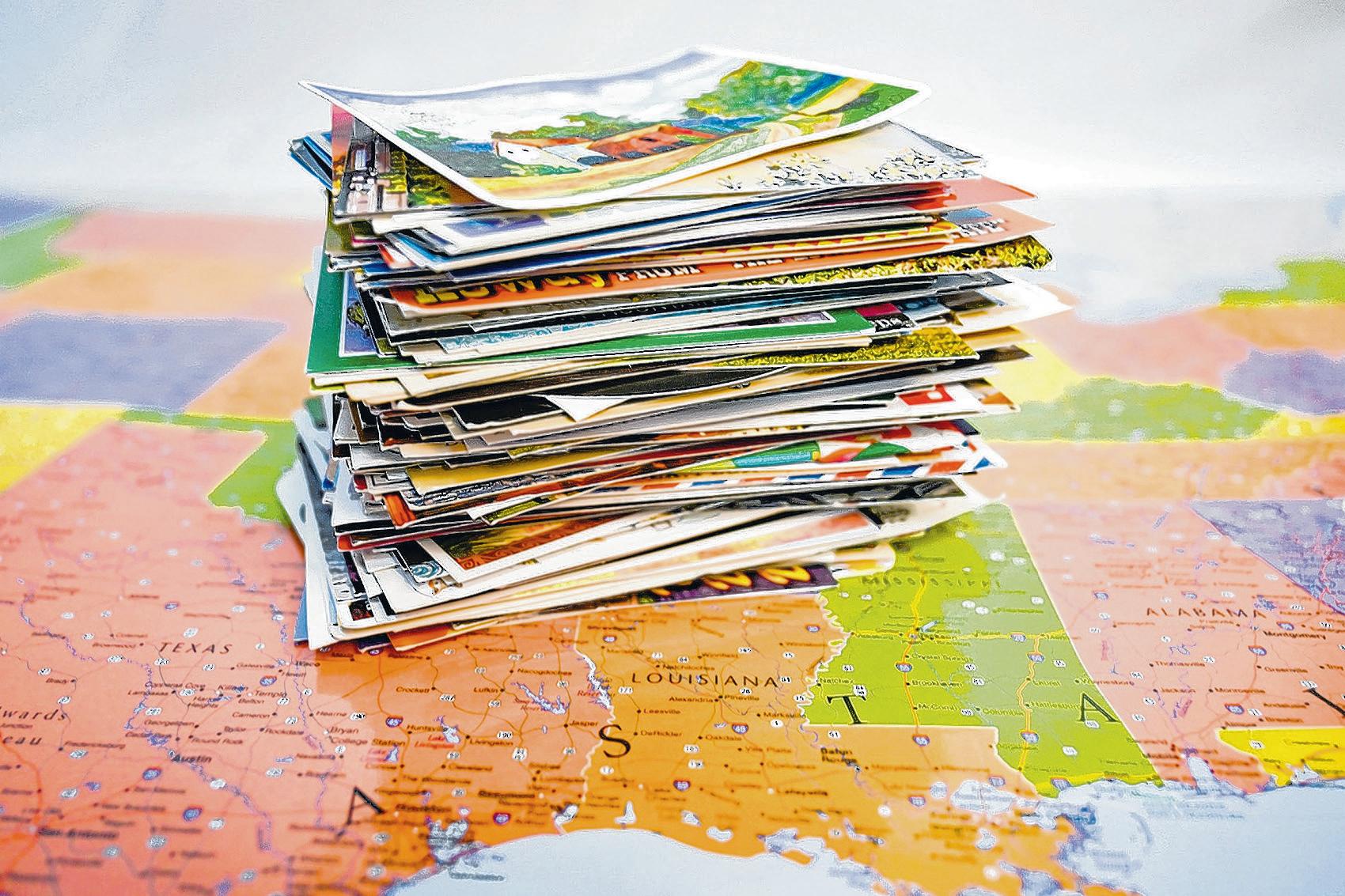
Four years in, the Postcard Project still feels fresh. These tiny missives hold so much joy, hope and community strangers becoming part of the same story
Each card of the 267 cards received is a tangible reminder of the beauty of the physical in a digital age, and every time I read one I’m reminded that a stranger, a friend or a far-off reader thought enough to pause their life, pick up a card and share a little piece of themselves.
This year, as of last week, we had received postcards from all 50 states — the last being West Virginia — and 29 countries including Australia, Borneo, Costa Rica and more.
Pam Baldwin wrote last week to say that she had mailed postcards from three other countries, Greece, Albania and Montenegro, but who knows how long it will take those postcards to arrive.
The Postcard Project has only deepened the mysteries of the mail. One postcard mailed from France reached us in a matter of days.
Another from Italy took 10 weeks to arrive — why one arrives in days and another in months is a mystery we’ll never solve.
More this summer than in previous years, people wrote that postcards are increasingly difficult to find. And yet, they persevered. In Morgantown, West Virginia, Amber BrugnoliOhara had to visit eight different places before she found a postcard to send.
“No wonder no one has sent one yet! I need to tell the state tourism board to print some or something, because that’s crazy,” she wrote. “Even hotel gift shops didn’t have any!”
Still, she persisted — the kind of effort that is a little metaphor for the whole project
In place of traditional store-bought postcards, some people sent hand painted, homeprinted and other atypical postcards.
Martha Williams, of Hattiesburg, Mississippi, sent a postcard that is a sample of brightly colored fabrics quilted together and sewn onto a postcard, mailed with a regular stamp.
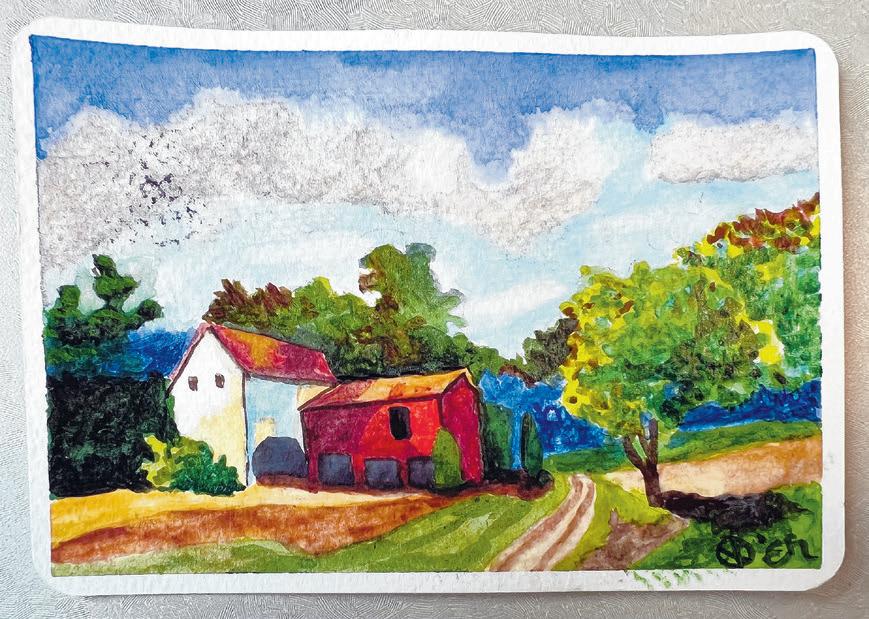
Danny Wheeler, of River Ridge, painted a bucolic watercolor landscape and sent it off with a Forever stamp (now 78 cents)
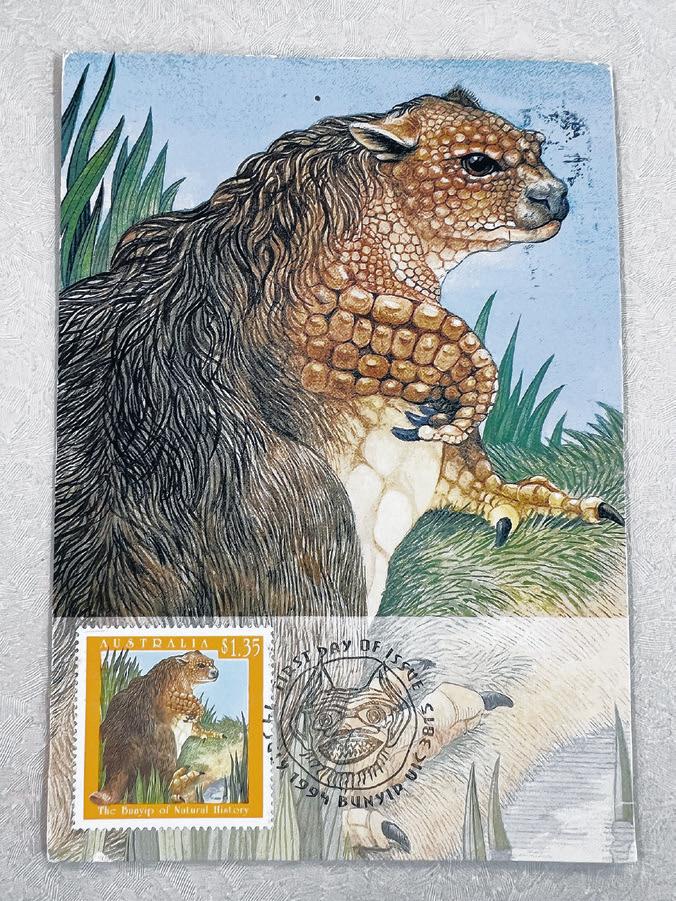
A postcard from Australia
BY DOUG MacCASH Staff writer
These days, a regular sized postcard costs 61 cents to mail. I’ve kept Wheeler’s beautiful painting at my desk by my computer throughout this year’s Postcard Project — a reminder of how amazing people can be.
Patricia Mann, of Baton Rouge, visited her daughter who lives in Paris. She wrote, “Most places are not air-conditioned and it has been in the 90s. Feels like home temps. I have been accomplishing my goal of eating a new kind of pastry daily Oooh la la. Bread, cheese, wine and pastry! Bon appétit!” Her card made me smile and remember the apricot pastries my daughters and I love
ä See POSTCARDS, page 2G
Danny Heitman
STAFF PHOTO BY JAVIER GALLEGOS
Denny Wheeler, from River Ridge, hand-painted this watercolor postcard.
illustrator and scored a few plum assignments, including designing the poster for a Werner Herzog film.
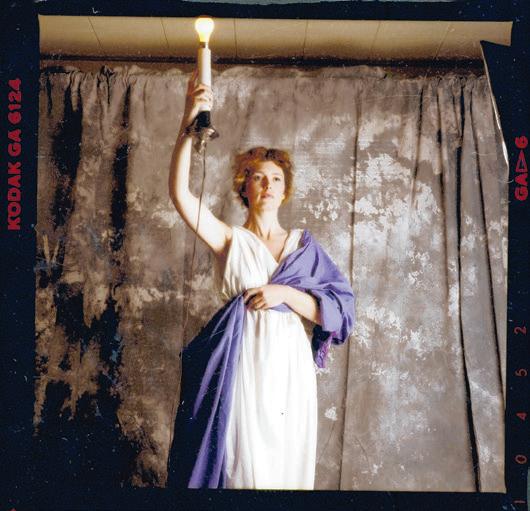
Eventually came the call from Columbia, asking if he could reimagine the lady with the torch for a new generation of moviegoers. The image would remain essentially the same, with one important innovation: realism In the past, the logo always seemed to be a heroically idealized everywoman Deas wanted her to be an actual person. But who?
An unexpected goddess
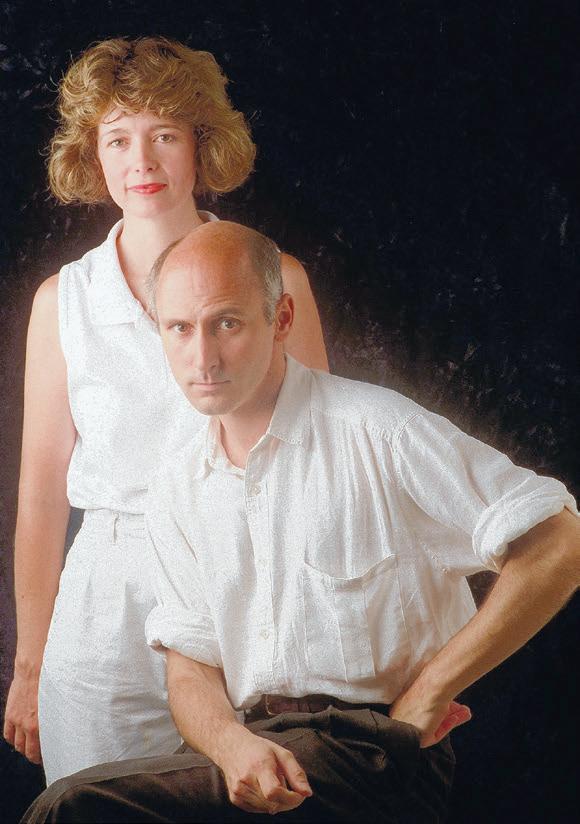
Deas looked for a professional model, but never quite settled on a subject. Then, the artist, who was acquainted with The TimesPicayune’s art department, discovered page designer Jenny Joseph. As Deas explained to Ogden Museum of Art curator Bradley Sumrall in 2012, “she was elegant tall, beautiful, and classy I knew I had found the right one.”
During a lunch break, Times-Picayune news photographer Kathy Anderson took some reference photos of Joseph in a sublimely stalwart pose. The shoot was exacting and a bit exhausting. When Joseph, who was standing atop a box, began leaning, it came to light that she was expecting.
The new Columbia logo wasn’t a generic figure; it was an individual Even the erupting storm clouds in the background were real. “Those are New Orleans clouds,” Deas told Sumrall. “One day, I looked out my window and saw this huge
the model used by Deas to create the new Columbia Pictures logo. Joseph posed for photographer Kathy Anderson, who shot the reference photos Deas used to paint the famous logo.
bank of cumulus clouds over the Mississippi River. I grabbed my bike and rode like crazy to the Crescent City Connection.”
Fame, fortune and anonymity
Deas deftly rendered Joseph in a portrait that was both solid and ethereal, relaxed and dramatic. Deas was a master, and pretty soon everybody who went to the movies would know it. The logo debuted in 1992. In the next decades, the unassuming artist would be called on to design six Time magazine covers, including portraits of Ben Franklin and FDR. He produced the art for
Remote worker considers looking for hybrid position
25 U.S. postage stamps, featuring portraits of Marilyn Monroe, Tennessee Williams, Ruth Bader Ginsburg and other American heroes, plus book jackets, including the 25th anniversary edition of Anne Rice’s “Interview with the Vampire” and other big-time commissions.
Since the new Columbia logo’s backstory hadn’t been publicized, most people never would have known anything about the design’s New Orleans roots. If it weren’t for movie star Annette Bening, that is.
No, No Annette
Apparently, from the time the image first appeared, some onlookers mistook the new lady with a torch for Bening, who had recently been lauded for her steamy role in
POSTCARDS
Continued from page 1G
“The Grifters.”
There certainly was a resemblance, which ignited a rumor that eventually reached Bening herself. In 2004, the late Roger Ebert, a lion of film criticism, sought to get to the bottom of what had become an urban legend and asked Bening directly if she’d been the model. The actress said that she’d been told by insiders that she was.
“Oh sure,” she reportedly told Ebert. “The artists told me it was me. But just the face, not the body.”
Back in New Orleans, there were those who knew better Deas told a Times-Picayune reporter that he’d never met Bening and was most certainly inspired by Joseph. The artist’s debunking of the myth appeared under the headline “No, No Annette.”
Bragging rights
In a recent interview, Deas said the logo commission was a career breakout for him, and probably the highest profile project of his life In recent years, Deas said, the image was animated, with radiating darts of torchlight. But at its heart it is still an old-fashioned oil painting — probably among the most viewed in the world.
“I still get bragging rights,” Deas said. “I never get tired of seeing it on the screen.”
These days, he’s working on another Hollywood project, he said, a portrait of leading man Tom Cruise, for an upcoming biography And there are three more postage stamps in the works, scheduled for 2026.
The movie star of Blanco, Texas Joseph, who was born in England, now lives in the small town of Blanco, Texas, where her 1992 claim to fame is well-known. Her daughter Adriane, who was not yet born when Joseph posed in front of Anderson’s lens, is now 32 years old and has two kids of her own.
Asked what she recalls of her foray into modeling, Joseph said that “primarily, it was just a lunch break.”
“We never expected that it would expand and that it would still be used.”
Joseph said her hobby is painting. Deas created an incredibly beautiful, wistful portrait of Joseph’s two children standing amid the same “New Orleans clouds” he used in the background of the lady with the torch.
Email Doug MacCash at dmaccash@theadvocate.com.
Harriette
Cole
SENSE AND SENSITIVITY
Dear Harriette: I work remotely, and while I’ve enjoyed the flexibility and freedom it provides, I’ve started to feel increasingly isolated and unmotivated. At first, it felt like a dream: no commute, more control over my schedule and the comfort of home.
Lately, I’ve noticed that I’m missing the daily interactions, spontaneous conversations and overall sense of community that comes from being in a physical workspace. Most of my communication with co-workers is confined to emails or scheduled video calls, which makes it hard to feel connected to the team. I find myself feeling drained and uninspired, even though I still like the actual work I do. Some days, I barely speak to anyone at all, and I’ve started to worry that this lack of connection is taking a toll on my mental health and productivity
I’ve been thinking about looking for a hybrid position, something that would offer a better balance between remote work and in-person interaction, but I’m not sure if that’s the right move or if I need to adjust my current routine. How can I stay connected, motivated and productive in a remote setting, or is it time to consider a change?
— Isolated
Dear Isolated: Working remotely does not work for everyone, as you are seeing. Yes, it is smart to look for another job that is better balanced for your needs. Meanwhile, schedule after-work activities that put you in the company of
AT RANDOM
Continued from page 1G
other people. Join a book club that meets in person. Volunteer at a local museum or retirement home. Take an art class. Don’t sit at home alone. Put yourself out there with others.
Dear Harriette:: My boyfriend and I have been together for about four years now, and we finally decided to move in together about a month ago. Unfortunately my partner smokes cigarettes at night. He insists that it’s the only thing that helps him sleep. I’ve encouraged him to try melatonin, different teas and even therapy, but he chooses to stick with his cigarettes. I’ve always known this about him but now that we live together, it bothers me more than in the past; I had never actually seen him smoke a cigarette until now It rubs me the wrong way for a number of reasons, and I don’t know what to do about it, seeing as I’ve let it go on for so long Can I demand that he quit a habit I’ve been sort of complicit in for the past four years? — Smoking Habit
Dear Smoking Habit: Smoking is an addiction, so it’s not a simple thing to get someone to quit. What you may be able to do is to put some boundaries around this behavior You can request no smoking inside the house so that your home does not smell like smoke. You can also request that he brush his teeth and wash his face after smoking so that the residue of smoke doesn’t end up in your bed In the end, if it really is too much for you to handle, this could be a deal-breaker for your relationship — or at least for the two of you to live together
Send questions to askharriette@ harriettecole.com.
ing
so much in Paris. Our family spent the bulk of a summer there when our daughters were 7 and 11. Every morning, we walked to the same bakery and bought the apricot pastries Mann’s postcard was proof that a few words can lead to near time travel.
Postcards don’t just carry words, but slices of people’s lives in faraway places — a value for the 2.10 euros (about $2.44) Mann used to send hers across the sea.
Randy, of Lafayette, sent a postcard from Poland. “Heard you needed mail from all over! Here is one from Krakow, Poland.” His postcard has three Polish stamps that total 11 Zloty, about $3. Molly Lesto is hiking the Appalachian Trail. Somewhere along the way, her dad let her know that we needed a New Hampshire postcard. So, Lesto stopped in Hanover and sent one of Dartmouth Hall.
Suzy and Tommy Blanchard sent a postcard from Senoia, Georgia, where they noted the quaint town has been the setting for many films, including “The Walking Dead,” “Driving Miss Daisy,” “Fried Green Tomatoes” and many others.
Jim and Imma sent a postcard from Mount Rushmore that simply read, “Day 21 on the road. 15 more to go! 5,750 miles so far!” The postcard has the coolest “Goodnight Moon” stamp on it.
Someone sent a postcard from Forks, Washington “on the beautiful Olympic Peninsula, the most northwestern town in the Lower 48. We’re amid the forests and rivers of the Olympic National Park, which also claims the only rainforest in the 48 states. We get an average of 10 feet of rain annually, which keeps the area green and lush, mostly evergreens, so green year-round,” the anonymous postcard sender wrote.
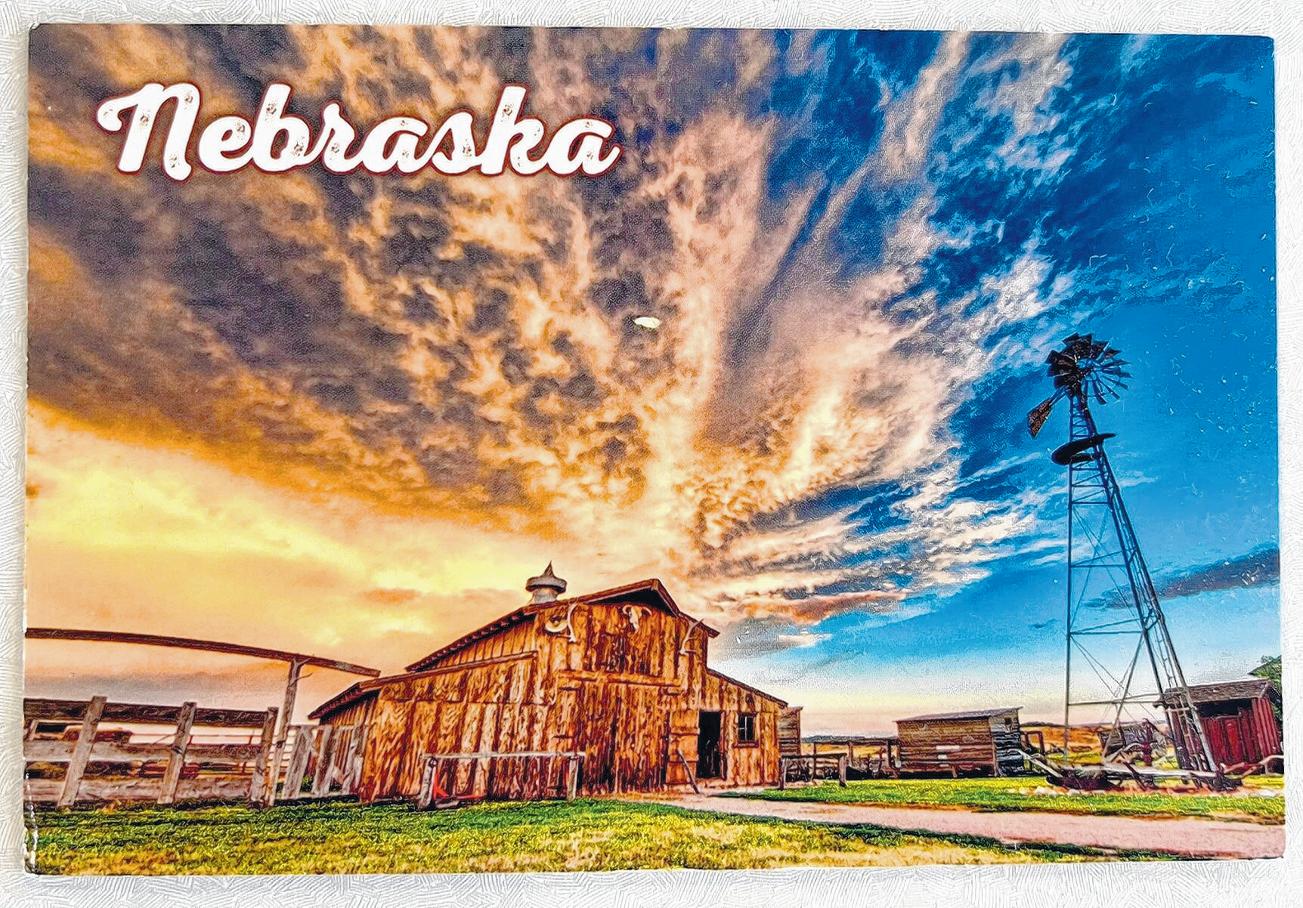
Back in June, Alan Krouse of Gonzales drove to the College World Series in Omaha, Nebraska. Along the way, he sent several postcards — including one from the real “Field of Dreams” in Iowa, even though it meant a detour from the most direct route between Louisiana and Omaha.
By the numbers: Stateside
It’s easy to get swept away in the stories, but stepping back and looking at the scope of the Postcard Project, the numbers tell a story of their own.
n So far, we’ve received 267 postcards, and more will likely trickle in beyond Labor Day — and certainly, they are welcome!
n We received 31 postcards from Louisiana, the highest number from any state. Several readers suggested encouraging readers to send postcards in from their towns across the state maybe we will make that one of our goals next year
n The state with the second highest number of postcards turned out to be Delaware, which was erroneously thought to be the last state for about a week — and during that time, the people in Delaware jumped on the postcard bandwagon with a bang.
n Tennessee comes in third place with nine postcards, including one from Dollywood.
n Minnesota and Florida tied for fourth places with eight postcards each.
n Kentucky, New Hampshire, Mississippi and Pennsylvania were next — with seven postcards each. From around the world
n In true homage to Louisiana’s roots, Canada led the way internationally with eight postcards.
n France and the United Kingdom tied for second with six postcards each.
n Iceland, Spain and Germany fol-
low with three postcards each.
n A postcard from Malaysia traveled the longest distance (about 10,150 miles), followed by Borneo, Australia, Tanzania, United Arab Emirates, New Zealand, China, Mongolia, Israel, Turkey, Hungary, Italy, Poland, Slovenia, Austria, Czech Republic, Germany, Switzerland, France, Spain, Scotland, England, Ireland, Iceland, Virgin Islands, Costa Rica, Canada, Jamaica and Mexico. The postcards traveled across borders, time zones and oceans, each carrying the simplest but most powerful message of all: We are connected.
Email Jan Risher at jan.risher@ theadvocate.com.
STAFF FILE PHOTO BY SOPHIA GERMER
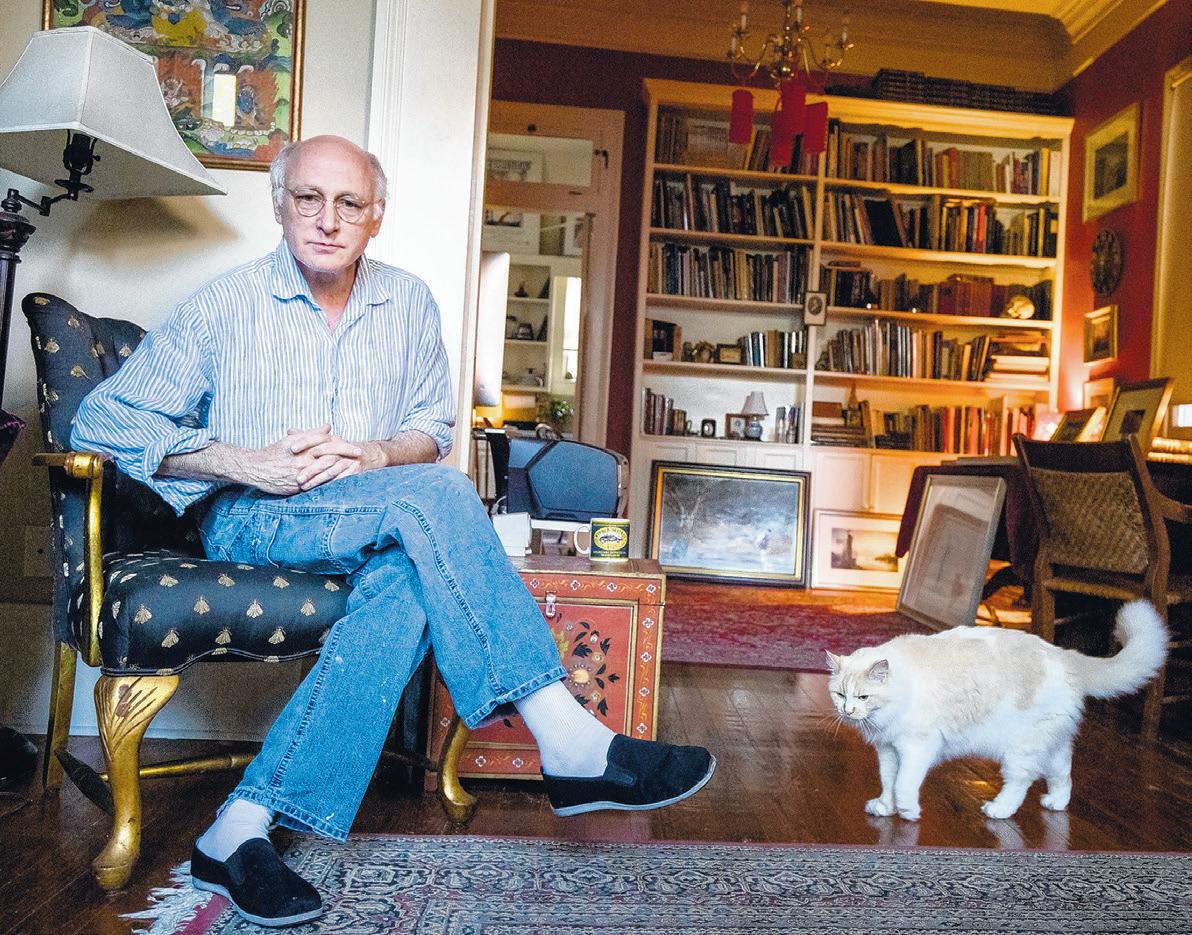
Artist Michael Deas, with his cat Theo, at his French Quarter home and studio in New Orleans in 2019
FILE PHOTO BY MATT ROSE
Artist Michael Deas, in 1993 with Jenny Joseph,
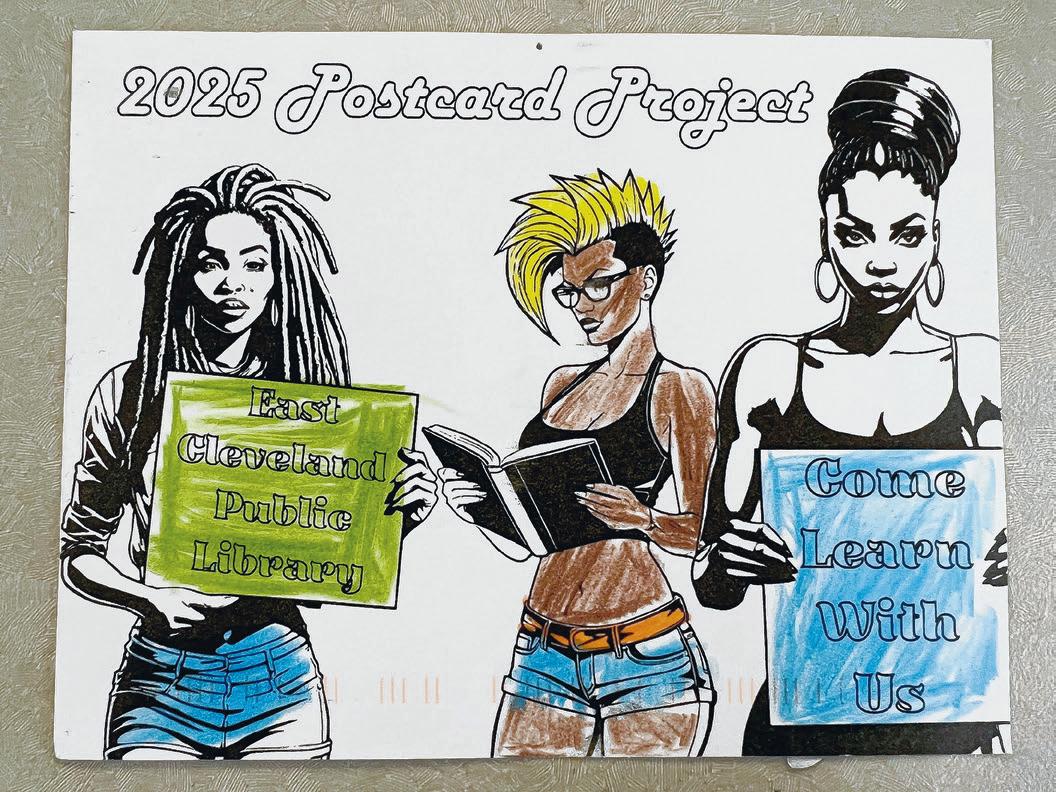
A postcard from the East Cleveland Public Library
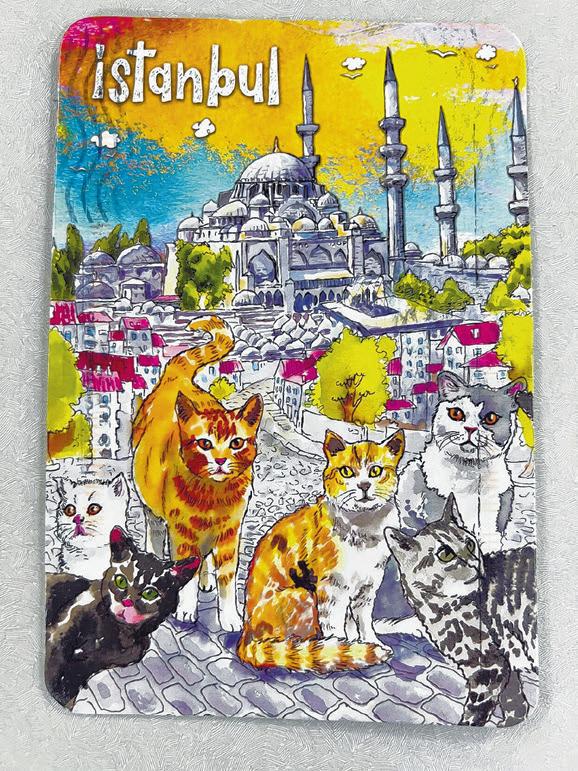
Travis Cosban sent this postcard from Istanbul, Turkey
Postcard from Alan Krouse, of Gonzales, who took a road trip to Nebraska for the College World Series.
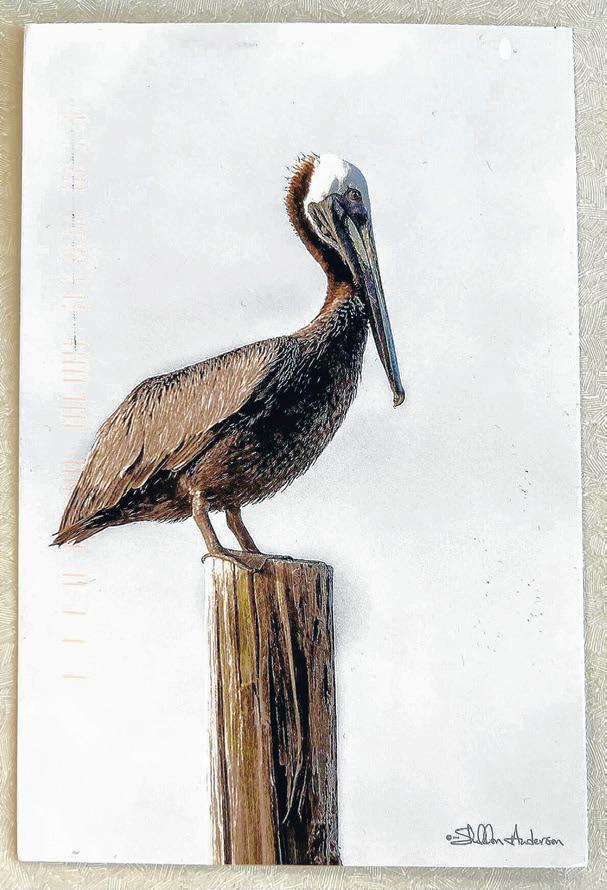
The 10th Louisiana postcard received for the 2025 Postcard Project.
More underrated La. museums that are worth the trip
Stay cool indoors at these 5 stops
Staff report
We surveyed our editorial staff, asking for their thoughts on underrated museums across Louisiana — and they delivered. Enjoy the second installment of recommendations below:
Here are 5 underrated Louisiana museums worth discovering, according to our staff.
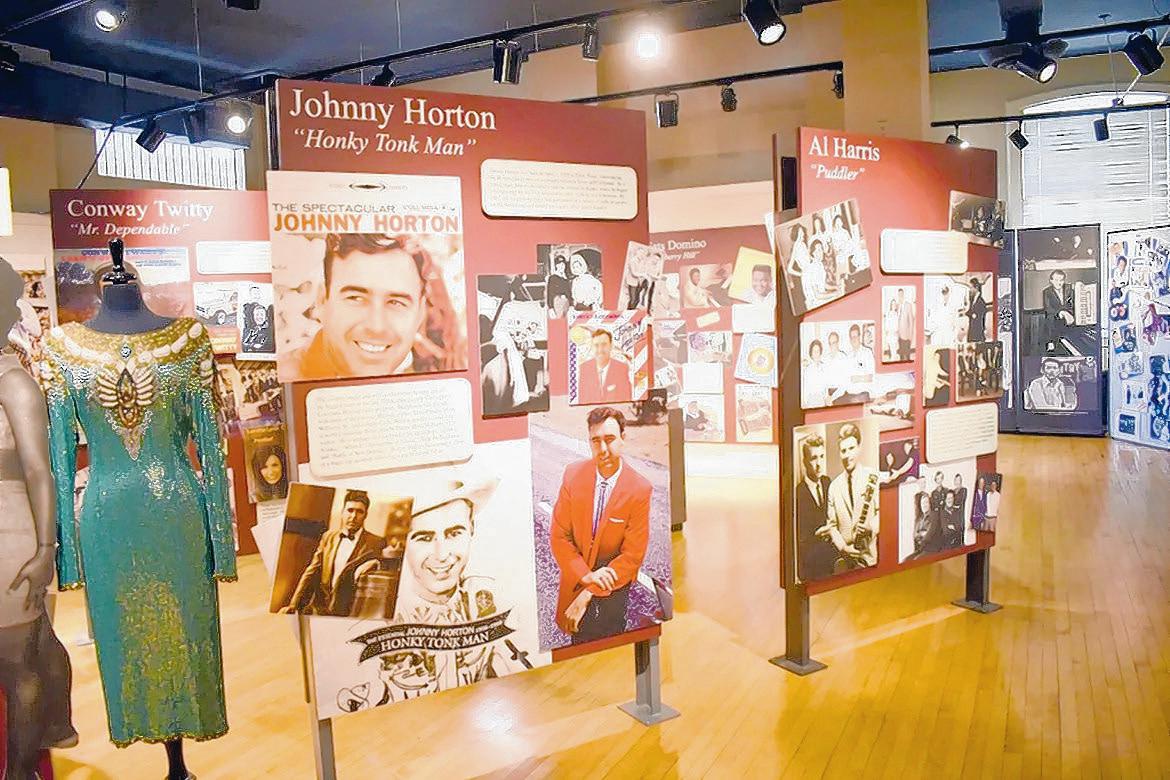
The Louisiana Country Music Museum
1260 La. 1221, Marthaville
The Louisiana Country Music Museum is a state-of-the-art venue featuring memorabilia from the early days of country, gospel, the radio era and to modern day Peruse musical instruments, household objects, Johnny Horton’s gold record for “Battle of New Orleans,” Hank Williams Jr.’s shirt and more. Outside the museum is an equally state-ofthe-art amphitheater that has hosted concerts by country music legends.
The museum is located seemingly in the middle of nowhere in the Rebel State Historic Site in Marthaville, about 20 miles directly west of Natchitoches.
Instead of turning toward Natchitoches once you exit Interstate 49, you turn the opposite way The grounds feature a picnic area and two short nature trails. Check out the schedule for live performances of both local and national artists, and the popular annual fiddling championship. There is a small entrance fee.
Free for seniors and kids 12 and under — Robin Miller Delta Music Museum
218 Louisiana Ave., Ferriday
The Delta Music Museum is located in downtown Ferriday and is free to the public.
The museum holds the distinc-
tion as the first Louisiana location marked with a Mississippi Blues Trail designation. The museum currently showcases 29 artists from musical genres of blues, soul, gospel and country
During the 1950s, these genres would converge in the delta to create the new sound of rock ’n’ roll and rockabilly music. The space also includes a theater called “The Arcade,” a landmark movie theater converted into a 250-person performance hall available for rent.
Visit the museum Thursday through Saturday from 9 a.m. to 4 p.m Margaret DeLaney Frogmore Plantation and Gins 11656 U.S. 84, Ferriday Cotton was considered “king” in Louisiana primarily during the 19th century and early 20th century, especially flourishing between approximately 1820
and 1930. During this time, cotton was the dominant crop in the northern part of the state and formed the backbone of the regional economy
Historical cotton and plantation culture are the stories told at Frogmore Plantation. An 1800-acre working cotton plantation, Frogmore has 19 restored antebellum structures that date from the early 1800s.
Along with the history of the early Natchez planters and their slaves, the tour includes a rare Smithsonian-quality steam cotton gin and then contrasts the historical methods with modernday planting, harvesting and computerized ginning of cotton.
The tour begins upon arrival and is fully guided through eight historical buildings. The guides tell of the evolution of change beginning in the 1790s through the war that created the lifestyle
called sharecropping.
As of 2025, approximately 110,000 acres of cotton are planted in the state of Louisiana, which is reported as the smallest cotton crop on record for the state and represents about a 30% decline from the previous year — John Ballance.
The Germantown Colony and Museum
200 Museum Road, Minden Germantown was the earliest religious communal settlement in Louisiana. It was founded in 1836 by Germans, adherents to ideas of religious leader Maximilian Ludwig (1788-1834), the “Count of Leon”, and it lasted as a commune until 1871.
Its founding was led by Elisa Leon, the “Countess of Leon,” widow of Maximilian Ludwig. In the colony, all property was
owned in common and observance of religious principles was required. Though the colony was not very large — only about 35 people it worked together and prospered.
Germantown once had numerous houses, barns, stores and shops, as well as a kitchen-dining hall and a “bachelor’s hall.”
The historic buildings are mostly gone. The listing included just two contributing buildings: Countess Leon’s home and the kitchen-dining hall, both built of hewn logs with dovetailing at their corners.
The kitchen-dining hall has a dry-walled stone cellar and an adjacent frame shack. Many windows have been replaced, and none of the porches are original.
These surviving historic buildings, and sympathetic rustic others, still “convey in their crude and primitive character something of the lifestyle of the Germantown settlers.”
The site, several miles off U.S. 79 and about 9 miles north of Interstate 20, continues to be operated as a museum. — Robin Miller
Shreveport Water Works Museum
142 N. Common St., Shreveport
The McNeill Street Water Treatment Plant was constructed in 1887 as the original water works for the city of Shreveport. It was the second water works built in Louisiana and one of the first in the post-Civil War South. As the last known steam-powered municipal water treatment plant in the United States,
PROVIDED PHOTO