

A fleet management technician tightens aboltonanalternator while making repairs to apoliceunit
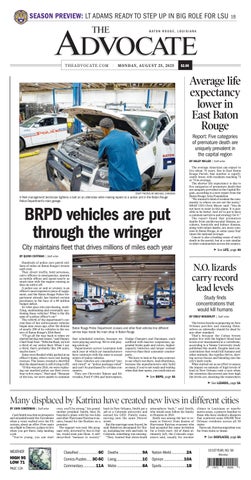
A fleet management technician tightens aboltonanalternator while making repairs to apoliceunit
BY QUINNCOFFMAN |Staff writer
Hundreds of police cars patrol millions of miles on Baton Rouge’sstreets each year
They divert traffic,holdarrestees, carry officers to emergencies, operate as mobile officesand spend nearly as much time with the engine running as they do with it off.
Apolice car,orunit or cruiser,isan officer’smost expensivepiece of equipment, and the Baton Rouge Police Department already has limited certain purchases in the face of a$9million budget deficit
So what goes into purchasing, modifying, maintaining and eventually auctioning these vehicles?What is the life span of apolice officer’scar?
The rebirth of the department’scurrent fleet of lawenforcement vehicles began nine years ago, after thedemise of nearly 200 of its vehicles in the waters of Baton Rouge’s2016 flood
“I’ll go all the way back towhenwe started having real issues,” said Deputy Chief Neal Noel. “With the flood, we lost athird of our entire fleet. When Isay athird, that’sprobably like 190 units, maybe more.”
Some were flooded while parked at an officer’shome; otherswerelostduring rescues. The losses created ashortfall that the departmentisstill trying to fill.
“If this was pre-2016, we were replacing our marked police car fleet every four to five years,” Noel said.“Because of the loss, we were unable to continue

that scheduled rotation, because we were playing catch-up. We’restill playing catch-up.” Departments across Louisianalook each year at whichcar manufacturers have contracts with the state to accept orders of police vehicles.
These vehicles areconsidered“pursuit-rated”or“police-package-rated” andcan’tbepurchased by civilian consumers.
They areChevrolet Tahoes and Silverados,Ford F-150s and Interceptors,
Dodge Chargers andDurangos, each outfitted with heaviersuspension, upgraded brake padsand rotors, highercapacity batteries andlarger coolant reserves than their consumer counterparts.
“Wehave to look at the state contract to see what’sout there. Andoftentimes, becausethe manufacturers onlybuild so many, if you’re not readyand waiting when that door opens,you could miss an
Report:Fivecategories of prematuredeath are uniquely prevalentin thecapital region
BY HALEYMILLER |Staff writer
Theaverage American canexpectto live about 78 years. But in East Baton Rouge Parish, thatnumberissignificantly lower,with residents reaching 73 or 74 on average.
The shorterlife expectancy is due to fivecategories of prematuredeath that are uniquely prevalent in the Capital Region, according to anew report from the Baton Rouge Area Foundation.
“Wewanted to kind of awaken the community to where we arenot the norm,” BRAF CEOChris Meyer said.“Youdo not have to exist in this plane. It is possible to be better.And we’ve got to have acommon narrative and strategy forit.”
The report found that premature deaths from cardiovascular disease, accidents, homicide andkidneydisease, along with infant deaths, are morecommon in Baton Rouge, in somecases four times the national average. Cancer is also aleading cause of early death in the parish, but at arate similar to other communities across thecountry.
BY EMILY WOODRUFF |Staff writer
BY JOHN SIMERMAN |Staff writer
Cash Smith was thin on prospects and stranded inside the Astrodome when avoice waftedover the PA system, aboutanoffer:Free seats on aflight to Denver,aplace to live when you get there, help landing ajob.
“You’re young, you can start

over,you’ll be strong,” his grandmother prodded. Smith,then 24, boarded aplane withhis two kids and other Hurricane Katrina evacuees, bound for the Rockies on a promise. The support wasreal. His pregnant wife, diverted by bus to Dallas, would soon join them. Aselfdescribed “menace to society”
back in New Orleans, Smith got a job at aColoradouniversity and earned his GED. Family came, moving ontothe same Denver
street But the marriage soon frayed, he said. Relatives decamped for Texas,includinghis wife andkids. In Colorado, something was missing. “They wantedthat down-South
Thebrownlizards scampering on New Orleans porches and sunning themselves on sidewalks should be dead by any other standard.
That’s becausethe Cuban brown anoles live with the highest blood lead levels ever documented in avertebrate, according to aTulane University study publishedthis month. Despite lead concentrations that would kill humansand other animals, the reptilesthrive,darting across fences and blending into the city’sleafy yards.
See BRPD, page 4A ä See LIFE, page 4A
finds concentrations that wouldkillhumans ä See LIZARDS, page 5A
What started out as an effort to assess theimpactonanimals of high levels of lead in New Orleans took aturn when the scientists discovered just howhigh the levels are, shocking the researchers
Turns out, Katrina migration was farfrom static or linear Many displacedbyKatrina have
atmosphere back,” saidSmith, who would soon follow his family to Houston in 2010. Smithwas among the last to remain in Denver from dozens of Hurricane Katrina evacuees who hadaccepted the same invitation for afresh start. All of them ultimatelyleft, the Colorado organizerssaid, usually for warmer
climes in Louisiana or nearby metroareas,a patternfamiliarto those whohave studied adiaspora that scattered some 450,000 New Orleans residents across all 50 states.
See DISPLACED, page 6A


‘Sopranos’ star Jerry Adler dies at 96 NEW YORK Jerry Adler, who spent decades behind the scenes of storied Broadway productions before pivoting to acting in his 60s, has died at 96. Adler died Saturday, according to a brief family announcement confirmed by the Riverside Memorial Chapel in New York. Adler “passed peacefully in his sleep,” Paradigm Talent Agency’s Sarah Shulman said on behalf of his family No immediate cause was given.
Among Adler’s acting credits are “The Sopranos,” on which he played Tony Soprano adviser Hesh Rabkin across all six seasons, and “The Good Wife,” where he played law partner Howard Lyman. But before Adler had ever stepped in front of a film or television camera, he had 53 Broadway productions to his name — all behind the scenes, serving as a stage manager, producer or director He hailed from an entertainment family with deep roots in Jewish and Yiddish theater, as he told the Jewish Ledger in 2014. His father, Philip Adler, was a general manager for the famed Group Theatre and Broadway productions, and his cousin Stella Adler was a legendary acting teacher.
“I’m a creature of nepotism,” Adler told TheaterMania in 2015. “I got my first job when I was at Syracuse University and my father the general manager of Gentlemen Prefer Blondes, called me (because) there was an opening for an assistant stage manager I skipped school.”
Nigerian military strikes free 76 hostages
ABUJA, Nigeria At least 76 hostages, including children, have been freed after Nigeria’s military targeted militants with precision airstrikes in the country’s northwest, local authorities said The airstrikes were launched on targets around Pauwa Hill, located in the Kankara area of Katsina state, in the early hours of Saturday, Nasir Mu’azu, the state’s commissioner for internal security, said in a statement. The air assault was launched in a manhunt for a notorious kidnapper.
The rescued hostages include some of those kidnapped during an attack on a mosque in Unguwan Mantau that led to the death of at least 50 people, the commissioner said.
“However it was regrettably noted that one child tragically lost his life during the ordeal,” Mu’azu said.
In recent months, there has been an uptick in attacks on communities in the northwest and north-central regions of Africa’s most populous country, where farmers often clash over limited access to land and water An attack last month in north-central Nigeria killed 150 people.
Fake officers killed in break-in attempt
Two men impersonating police officers were shot and killed while exchanging gunfire with homeowners, Texas police say The fake officers showed up to the door of a home on Houston’s southeast side at about 11 p.m Friday, the police department told KTRK. They were in body armor and had badges around their necks, but were wearing ski masks to cover their faces — and they said they were serving a warrant, police told the station
The homeowners could see the men through a doorbell camera, police said, and didn’t trust them, KPRC reported.
“It’s just two people, and they’re masked up, and no police cars, no lights or anything like that. So, they immediately became suspicious,” police told the outlet. The homeowners wouldn’t let them in, police say and the men started shooting through the door, KHOU reported. The homeowners fired back, killing them both, according to police. Nobody else was hurt, police told the station.

By OSAMAH ABDULRAHMAN
Ukraine marks Independence Day
By The Associated Press
ASSOCIATED PRESS
BY SAMY MAGDY, MELANIE LIDMAN and SAM METZ Associated Press
CAIRO Israeli airstrikes hit Yemen’s capital on Sunday, days after the Houthi rebels fired a missile toward Israel that its military described as the first cluster bomb the rebels had launched at it since 2023
The Iranian-backed Houthis said multiple areas across Sanaa were hit, while the Houthi-run health ministry said at least four people were killed and 67 others were wounded. The rebels’ AlMasirah satellite television reported a strike on an oil company, and video on social media showed a fireball erupting there.
Israel’s military said it struck the Asar and Hizaz power plants, calling them “a significant electricity supply facility for military activities,” along with a military site where the presidential palace is located.
Sanaa residents told The Associated Press they heard explosions close to a closed military academy and the presidential palace. They saw plumes of smoke near Sabeen Square, a central gathering place in the capital.
“The sounds of explosions were very strong,” said Hussein Mohamed, who lives close to the presidential palace Ahmed al-Mekhlafy said he felt the sheer force of the strikes. “The house was rocked, and the windows were shattered,” he told the AP by phone.
The Houthis have launched missiles and drones toward Israel and targeted ships in the Red Sea for over 22 months, saying they are attacking in solidarity with Palestinians amid the war in Gaza.
Nasruddin Amer, deputy head of the Houthi media office, vowed to continue attacks on Israel, writing on social media that “our military operations supporting Gaza won’t stop, God willing, unless the aggression is stopped, and the siege is lifted.”
The Israeli strikes were the first to hit Yemen since a week ago, when Israel said it targeted energy infrastructure it believed was used by the rebels.
The latest strikes follow the Houthis’ claim of launching a newly equipped missile toward Israel on Friday targeting the country’s largest airport, Ben Gurion. There was no reported damage or injuries. Israel’s military said it fragmented mid-air after several interception attempts.
An Israeli Air Force official, speaking on condition of anonymity in line with military regulations, called Friday’s projectile a new threat a cluster munition, meant to detonate into multiple explosives on impact.
The use of cluster bombs makes interception more difficult and represents additional technology provided to the Houthis by Iran, the official asserted.
The official also said over 10 Israeli fighter jets carried out Sunday’s strikes.
Defense Minister Israel
Katz said in a statement that Israel continues to “impose an air and naval blockade,” without details.
Prime Minister Benjamin Netanyahu said in televised remarks that the rebel group is “paying a heavy price for its aggression.”
Houthi attacks over the past two years have upended shipping in the Red Sea, through which about $1 trillion of global goods passes each year From November 2023 to December 2024, the Houthis targeted more than 100 commercial and naval ships with missiles and drones.
The rebels stopped the attacks during this year’s brief ceasefire in Gaza and later became the target of a weekslong airstrike campaign ordered by U.S. President Donald Trump.
In May, the United States announced a deal with the Houthis to end the airstrikes in return for an end to attacks on shipping, although the rebels said the agreement did not include halting attacks on targets it believed were aligned with Israel.
Last month, the Houthis said they would target merchant ships belonging to any company that does business with Israeli ports, regardless of nationality, as part of what they called a new phase of operations against Israel.
In May Israeli airstrikes hit the Sanaa airport in a rare daytime attack that destroyed the terminal and left craters in its runway At least six passenger planes were hit, including three belonging to Yemenia Airways, according to airport authorities.
BY WAFAA SHURAFA, SAMY MAGDY and SAM METZ Associated Press
DEIRAL-BALAH,Gaza Strip Israeli forces shot dead four Palestinian aid-seekers traveling Sunday through a military zone south of Gaza City that is regularly used to reach a food distribution point, a hospital and witnesses said.
Gaza City is in famine after 22 months of war while Israel’s military moves ahead with a planned offensive to seize the city, perhaps within days. Israel’s defense minister has warned that the city of hundreds of thousands of people could be destroyed.
Al-Awda Hospital and two witnesses told The Associated Press the Palestinians were killed when troops opened fire on a crowd heading to a site run by the Israeli-backed U.S. contractor Gaza Humanitarian Foundation in the Netzarim corridor area, hundreds of yards from the site.
“The gunfire was indiscriminate,” said Mohamed Abed, a father of two from the Bureij refugee camp. Abed and Aymed Sayy-
ad, another aid-seeker, said troops opened fire when a group near the front of the crowd pushed toward the site before its scheduled opening. Sayyad said he and others helped two people wounded by gunshots.
“This incident didn’t occur near our site nor as described,” the GHF said in an email The Israeli military did not immediately respond to a request for comment.
Gaza’s Health Ministry reported another eight malnutrition-related deaths Sunday, including a child. That brings the total number of malnutritionrelated deaths during the war to 289, with 115 of them children.
Palestinians by the thousands Sunday again trekked for the chance to grab a sack of flour or other food staples for their families.
At least 62,686 Palestinians have been killed in the war, according to the ministry including missing people confirmed dead by a special ministry judicial committee.
Of those, more than 2,000 Palestinians have been killed and more than 13,500
wounded while seeking aid at distribution points or along convoy routes used by the United Nations and other aid groups, according to the Health Ministry
The Health Ministry does not say how many of the dead are fighters or civilians but says around half have been women and children. The ministry is part of the Hamas-run government and staffed by medical professionals. The U.N. and independent experts consider it the most reliable source on war casualties. Israel disputes its figures but has not provided its own.
The world’s leading authority on food crises, the Integrated Food Security Phase Classification, said Friday that famine is occurring in Gaza City and could spread south to Deir al-Balah and Khan Younis by the end of next month.
Aid groups have long warned that the war and months of Israeli restrictions on food and medical supplies entering Gaza are causing starvation Israel has denied the existence of widespread hunger, calling reports of starvation “lies” promoted by Hamas.
Russia accused Ukraine on Sunday of launching drone attacks that sparked a fire at a nuclear power plant in its western Kursk region overnight, as Ukraine celebrated 34 years since its independence.
Russian officials said several power and energy facilities were targeted in the overnight strikes. The fire at the nuclear facility was quickly extinguished with no injuries reported, according to the plant’s press service on Telegram. While the attack damaged a transformer radiation levels remained within normal ranges.
The United Nations’ nuclear watchdog said it was aware of media reports that a transformer at the plants had caught fire “due to military activity,” but hadn’t received independent confirmation. It said its director-general, Rafael Mariano Grossi, said that “every nuclear facility must be protected at all times.”
Ukraine did not immediately comment on the alleged attack.
Firefighters also responded to a blaze at the port of Ust-Luga in Russia’s Leningrad region, home to a major fuel export terminal.
The regional governor said approximately 10 Ukrainian drones were shot down, with debris igniting the fire.
Russia’s Defense Ministry claimed its air defenses intercepted 95 Ukrainian drones over Russian territory overnight into Sunday Russia fired 72 drones and decoys along with a cruise missile, into Ukraine over-
night into Sunday, Ukraine’s air force said. Of these, 48 drones were shot down or jammed.
The incidents occurred as Ukraine marked Independence Day, commemorating its 1991 declaration of independence from the Soviet Union. President Volodymyr Zelenskyy delivered remarks in a video address from Kyiv’s Independence Square, emphasizing the nation’s resolve.
“We are building a Ukraine that will have enough strength and power to live in security and peace,” Zelenskyy said, calling for a “just peace.”
“What our future will be is up to us alone,” he said, in a nod to the U.S.-Russia summit in Alaska earlier in August, which many feared would leave Ukrainian and European interests sidelined.
“And the world knows this. And the world respects this. It respects Ukraine. It perceives Ukraine as an equal,” he said.
U.S. special envoy Keith Kellogg was in attendance at Independence Day celebrations in Kyiv, during which Zelenskyy awarded him the Ukrainian Order of Merit, of the 1st degree. Canadian Prime Minister Mark Carney arrived in Kyiv on Sunday morning for meetings with Zelenskyy
“On this special day — Ukraine’s Independence Day — it is especially important for us to feel the support of our friends. And Canada has always stood by our side,” wrote Andriy Yermak, Zelenskyy’s chief of staff. In a joint news conference with Zelenskyy, Carney said Canada will invest $1.5 billion in new military assistance for Ukraine to boost its army and provide urgently needed weapons.

The Ukrainian flag blows in the wind Saturday at the Independence Monument in Kyiv, Ukraine.

If You’re Over ThirtyThis is the BEST TREATMENT youcan usefor your SCIATICA,BACKPAIN, and HERNIATEDDISCS
Finally,there’s a treatmenttoconquer lowback, neck,leg andarm painwithout dangerousmedications or painful surgery.
If yousufferfrom:
•LOW BACK PAIN
•SCIATICA
•NECKPAIN
•HIP PAIN
•LEG PAIN
•NUMBNESSINARMS, LEGS OR FEET
Non-surgical Spinal Decompressionmay be theanswerfor you!
We areDr. ScottLeBlanc andDr. Dana LeBlanc, a husbandand wife team,thatown LeBlancSpine Center. We have helped thousandsofpatientsget outof pain with Spinal Decompressiontherapy treatments, andwelove what we do.Discissuesare common,and patients sufferingare usuallygiven limitedoptions of treatment. We runthese bignewspaper advertisementstolet people in thecommunity know thereis anotheroptionoftreatment forpain- withoutmedication,injections, or surgery!
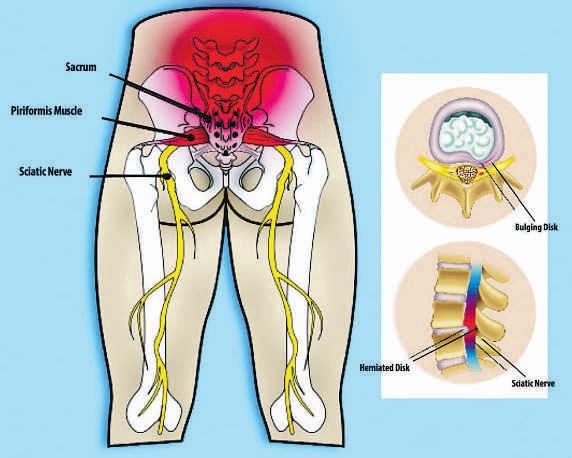
NON-SURGICALSPINAL DECOMPRESSION is a breakthrough,non-invasive treatmentthathas been proventoreverse disc herniationsand relievenerve pain in theneck andlow back.Duringthe procedure, aspinaldiscisisolatedand aseriesofdistraction andrelaxationphasesoccur at averyspecificangle targetingthe source of pain.A vacuum canbecreated inside thediscand thenegativepressuredeliversnutrients, oxygen,and fluidfromsurrounding tissues, to assist with repair of thedamaged disc Thetreatment is not painfulatall,and most patients read or even take anap whileontreatment!
PROOFTHIS TREATMENTWORKS There’splentyof researchtobackupthe claims of Spinal Decompression Therapyand itseffectiveness. Here arejusta few of thepublished scientificstudies
•“Patients reported amean88.9% improvementin backpainand better function .Nopatient required anyinvasivetherapies (e.g.epiduralinjections, surgery).”-AmericanAcademy of Pain Management
•“We thus submit that decompressiontherapy should be considered first, before thepatient undergoesa surgical procedurewhich permanentlyaltersthe anatomyand function of theaffectedlumbarspine segment.”-Journal Of Neuroscience Research
•“86%ofthe 219patientswho completedthe therapy reported immediateresolutionofsymptoms.”-Orthopedic Technology Review
•“Vertebralaxial (spinal) decompressionwas successfulin71% of the778 cases”- JournalofNeurologicalResearch
•“Good to excellentreliefin86% of patients with Herniateddiscs”- TheAmericanJournal of Pain Management
•“Decompression Therapyreporteda76.5% with complete remissionand 19.6%withpartial remission of pain anddisability” -Rio Grande Hospital, Department of Neurosurgery
At LeBlancSpineCenter, we utilizeadvanced, FDA-clearedtechnologythatisproventoeffectively

standfor longer than 5minutes withoutpain. Ihad tried epidural steroidinjectionsand physical therapy in thepast, butwas stillsuffering.I have always beenactiveand my back pain wasaffectingmy lifestylegreatly IcametoLeBlancSpine Centerand began Decompression treatment. andIamnow 100% improved! Ican do everything Idid beforemypainstarted,and my favorite part aboutthistreatment is theresults! Ican do allofmydaily activities withoutany pain.The doctorsand staff here have also treatedmegreat IhaverecommendedLeBlancSpine Center to manypeople. andwillcontinue to do so!
Mark Evans (FormerHighSchoolCoach and InsuranceAgent) Hometown -Baton Rouge,LA
alleviatepain.
It’s importanttonotethatnot everypatient is a candidatefor Spinal Decompression, whichiswhy we prioritize athorough individual assessment for each person whowalks throughour doors. Our high successrateinpainreliefstems from our commitment to only taking on patients whom we confidently believewecan help
Forthe next 7days, we areofferingaspecial “Decompression Evaluation”offer,atnocostto you! What does this offer include? Everything we normally do in ournew patientevaluations:
•Anin-depthconsultationabout your health andwellbeing wherewewilllisten. really listen .tothe detailsofyourcase.
•Acompleteneuromuscular examination
•Afullset of specializedX-rays(if clinically necessary)
•Athorough analysis of your exam andX-ray findings
Youwillsit with thedoctorone on onetogoover your x-rays,and you’ll gettosee everything first hand
At LeBlancSpine Center,weare honestwithour patients andwegivepersonalized attentionand analysis to each case.Wetruly enjoymeeting with patients to answer theirquestions andtohelp find outifSpinalDecompression treatments couldbe theanswertotheir pain
Thereisnochargeatall andyou don’tneedtobuy anything.You have nothing to lose by taking us up on this specialoffer andyou will getanswers to
what is causingyourpain. If youhaveseenour adsinthe past and have thoughtabout calling, don’thesitate. Youdon’t have to go on living in pain,missing outonactivitiesand otherpartoflifethatyou enjoy. Call us today!



IcametoLeBlancSpine Center because Ihad beensufferingfor about2years with pullinginmy lowerbackdownintomylegs. Ihad triedphysical therapybut wasstill suffering. AfterstartingSpinalDecompression treatments Iamnow 70%improved! Ihavelesspain with walkingand more mobility.I have less pain in the morningwhenwakingup, andIcan nowlift, bend do household chores andother dailyactivitieswith lesspain.I am treatedwonderfully by thestaff and Idorecommend LeBlancSpine Center very often others.The doctorsare honest andsincere
Randi Henriques (SocialWorker) Hometown -New Orleans, LA

IcametoLeBlancSpine Center because Ibeen suffering with lowerbackand hippain, difficulty sitting, andrestrictedmobility.Ihad triedother doctorsinthe past,medication,physicaltherapy andmassage- alltonoavail Ibegan Spinal Decompression treatments andIamnow 90%improved! What Ilikemost aboutmycare at LeBlancSpine Centerismy improvement in pain.I cannow bend andlift withoutpain, andIevenhavefewer headaches. Thestaff is very friendly andcalls everyone by name. Iwould absolutelyrecommend LeBlanc SpineCenter. Thedoctors actually SHOW you what theproblemsare on thex-rays, andthey trackyourprogress. Youwillget resultsbut this is notaquick fix. Youhavetocommittothe time andefforttocometotreatment.Comparedto surgery, this aWIN forthe patient!
Paula Laird (CPA) Hometown -Baton Rouge,LA
opportunity for that particular make and model for that year,” Noel said.
This procurement system has led to police fleets looking less uniform than they did in the past, when fleets were comprised mostly of Ford Crown Victorias.
“It’s availability: What can we get this year? When we have money, what can we buy?” said Capt. Jeff Williams, fleet manager for BRPD. “Well, it’s ‘We can only sell you 40 Explorers,’ ‘We can sell you 10 Tahoes,’ ‘We can sell you eight Dodge Chargers.’ We might need 150 cars, so let’s get what we can get.”
Following the flood, BRPD used available money to purchase vehicles, but it had to keep many cars longer than the usual five years, aging the fleet as a whole.
“If it was a healthy rotation, like again prior to ’16, we would probably require about 100 marked units a year and about 35 unmarked, and maybe one specialty vehicle like a crime scene van,” Noel said.
At a full complement, BRPD’s fleet is around 425 marked units (those that go out on patrol, direct traffic and are assigned to uniform patrol officers), with another 250 or 300 unmarked units (used for detectives, administration or SWAT).
Another 20 motorcycles and three military-surplus armored vehicles (one of which is over two decades old) make up the full fleet
According to Noel and Williams, BRPD has no true line-item expenditure for purchasing new vehicles, although it does have one for fuel and maintenance.
“It has been practice over our collective career of 60 years, that the police depart-

ment allotment of funds to purchase new vehicles was dependent on how much money we saved from the previous year (from other portions of the budget),” Noel said
in front of the car, a cage, a hard-plastic replacement back seat and the agency’s decals.
addition to other modifications.
The analysis predicts that the premature death rate in the parish could decrease by 25% by addressing the leading causes. Even if they only matched the U.S. averages, the benefits would be significant, BRAF leaders said The new report is an installment of the organization’s “Opportunity Data” project, which seeks to understand how to improve the quality of life for the next generation in Baton Rouge. It is intended to be a highlevel analysis, with future studies exploring the categories of early death more in depth, the leaders said “All of this is built on, can our kids and families experience the American dream in Baton Rouge?” Meyer said.
“That is at its core. The ability to have more years of life and productive life is an essence of the ability to realize that.”
Cardiovascular disease
Cardiovascular disease, a group of diseases involving
The budget reduction BRPD suffered in 2025 has “absolutely, 100%” affected the department’s ability to find money to purchase replacement vehicles, Noel said, paired with rising costs of pursuit-rated cars. Those prices are all before the car has lights, sirens, radios or even decals.
Modifications
The dashboard of a patrolready police cruiser needs a laptop, cameras pointing inside and outside of the vehicle, a gunlock, a radio, and a center console with controls for lights and sirens. It also needs a light bar on top, a spotlight, a push bar
the heart and blood vessels, is the No. 1 cause of early death in East Baton Rouge Parish, according to the BRAF report. Premature deaths caused by cardiovascular disease are 60% more common in Baton Rouge than in the rest of the country
The condition often starts with a buildup of plaque in the arteries. Accumulated over decades, it can lead to death through heart attack, heart failure and stroke.
“Lifestyle indicators and factors are going to be our biggest ability to intervene in cardiovascular disease,” BRAF Chief Operating Officer Brenna Benson Lamb said.
Encouraging physical activity and a healthy diet, along with reducing smoking and overall stress, are critical to tackling the problem on a community level, she said.
Overdoses and accidents
Loss of life from accidents, the majority being drug overdoses and motor vehicle accidents, are 80% more common in Baton Rouge than in the rest of the
Almost all of these modifications are handled by third-party vendors rather than the car manufacturer, adding thousands of dollars to the price of the unit, Noel said.
“The car shows up as just a blank canvas,” said CJ Hammond with Emerg-Equip, a Lafayette-based supplier of aftermarket vehicle accessories for first responders.
“We take the whole interior out of it, we take the exterior body parts off of it, then we can run all the wiring through it and build all the harnesses that’ll operate the aftermarket accessories.”
Emerg-Equip serves departments across the state and specializes in 12-volt electronics, including flashers or interior light strips in
U.S., the study showed.
Infrastructure and street design are key considerations for reducing crashes, the report said. Just five roads are the scene of over half the pedestrian fatalities in the parish, according to the data: Airline Highway, Florida Boulevard, Nicholson Drive, Plank Road and Siegen Lane.
Driver and passenger deaths are most likely to occur on Interstate 12, Airline Highway, Plank Road and Scenic Highway
“Traffic-calming infrastructure and street design, which really prioritizes the safety of pedestrians and bicyclists, and efforts like the Complete Streets initiative are all a part of that puzzle of road calming and traffic and infrastructure development,” Benson Lamb said.
The report also noted that overdoses are almost twice as common in East Baton Rouge Parish compared to the rest of the country but acknowledged the decline in local opioid deaths in recent years. Keeping those numbers trending down will depend on access to health care, addiction treatment
“We’ve probably put lights on anything you can think of,” Hammond said. “ATVs, golf carts, boats. We did Jet Skis for a search-and-rescue dive team. We’ve done a Segway scooter.”
Hammond says the electrical modifications alone can cost between $10,000 and $20,000 per vehicle.
According to Noel, it usually costs $12,000 to $17,000 to equip a marked BRPD patrol car, making each cost between $65,000 and $70,000 total.
BRPD has around 90% of its ideal fleet currently, Noel said, but “the reduction in manpower has actually masked the problem.”
The department estimates it is more than 100 officers short, but it still can be a
and outreach programs, Benson Lamb said.
“There has been improvement in this over the past few years in particular,” Benson Lamb said.
Homicide
The city of Baton Rouge is infamous for its murder rate, which surpassed New Orleans, Chicago and Baltimore in 2024. Loss of life from homicide in East Baton Rouge Parish is 300% worse than in the rest of the country, the analysis found.
“Very unfortunately it’s not just the cohorts like adults or men,” Benson Lamb said. “Every single age group, inclusive of children, has a higher premature death rate due to homicide. It’s a pervasive issue that hits every population in our community.”
Previous research through the Opportunity Data project identified a “formula of homicide” in the Baton Rouge community, Benson Lamb said. Around 80% of people who were killed in the parish in the past decade were raised locally; 70% failed to complete high school, and 60%
struggle to find spare cruisers for officers whose cars are in the shop.
With an estimated total of 10 million miles driven by the fleet each year, BRPD cruisers need consistent maintenance to stay running.
“Police units operate under what we call severe duty They idle for long periods, respond at high speeds and handle a lot of hard braking. That puts extra wear on brakes, suspension and front-end components,” said Steven Johnson, the head of fleet management for East Baton Rouge Parish.
Besides normal wear and tear, the police department often has units struck and damaged. Williams said BRPD vehicles have been in 131 crashes this year so far, with 23 fleet vehicles totaled. Generally in 40% to 50% of these crashes, the officer
grew up in neighborhoods with extreme poverty These are “highly interrelated” risk factors, she said.
“If we can continue to encourage school engagement, workforce engagement, early childhood readiness, chronic absence reduction, behavioral health supports and intensive literacy and math tutoring for children most at risk, those are going to be some of our most impactful interventions,” Benson Lamb said.
Kidney disease
Premature death brought on by kidney disease is 180% more common in East Baton Rouge, according to the study Type 2 diabetes is frequently the cause of this condition, which occurs when the kidneys are damaged and gradually lose the ability to filter blood.
Other linked conditions include obesity, high blood pressure and autoimmune disorders.
Because the parish has a higher rate of Type 2 diabetes than the rest of the country, the report suggested that lifestyle interventions would be particularly effec-



was at fault. The majority of these crashes occur during a “Code 3” response, when officers are responding to a life-threatening incident, Williams said. But the largest costs actually come from keeping the fleet fueled and maintained.
“We spend approximately depending on price per barrel, anywhere from $2.7 million to $3.5 million in fuel, and around $4 million in maintenance costs,” Noel said.
If a unit survives through years of abuse, then spends a few more as a spare, it eventually will age out and be put up for online auction by the parish.
Rarely are units fully thrown out, and even a totaled police car is stripped for parts before being scrapped, Noel said. They are not often passed down to other departments either
“In my career, I’ve probably only seen it less than half a dozen times, that we’ve donated vehicles,” Noel said. When the time comes for auction, very little of what made the vehicle a police car remains. All aftermarket modifications are stripped, including lights, sirens, decals, push bars and more.
The only features that remain that make the vehicle different from a consumer model are the base pursuitrated changes made by the manufacturer, like having a heavier suspension and larger coolant reserves. Long gone are the days when civilians could buy a decommissioned Crown Victoria with the cage still in the back.
“This is the Baton Rouge Police Department. We have our standards,” Williams said.
Email Quinn Coffman at quinn.coffman@ theadvocate.com.
tive. Some possibilities were increased screening for high blood pressure and insulin resistance, further educational initiatives, and greater transparency to consumers about the level of sugar and salt in foods they purchase.
Infant mortality
Between 40 and 50 newborns die in the parish each year making East Baton Rouge 70% worse for infant mortality than the U.S. average. High rates of poverty and poor maternal health care access likely account for the problem, according to the report. If the mother suffers from preexisting health conditions, the risk of infant mortality goes up. The report recommended heightened prenatal services, such as home visits and educational programs for mothers, to improve the parish’s infant mortality rate.
“There are so many great examples across the nation of how these simple initiatives, and clearly affordable initiatives, can actually make pretty significant change,” Benson Lamb said.








so much they repeated the initial test, thinking there might have been amistake.
“I don’tthink anyone would have assumed lizards would be rockstar heavy metal-tolerant animals, but here we are,” said Alex Gunderson, assistant professor of ecology and evolutionary biology at Tulane and a co-author of the study
The study,published in Environmental Research, foundthatlizardscaught across the city averaged nearly1,000micrograms per deciliter of lead in their blood, with one animal topping 3,000. By comparison, health effects in people appear well below 100, and there is no safe level of exposure In aperson, the levels of lead the lizards would mean they were “probably dead,” said Gunderson. Lead is a potent neurotoxin that damages brains, hearts, reproductive systems and kidneys. It is especially prevalent in older cities suchas New Orleans because of the lingering legacy of lead paint in houses and gasoline andindustrial waste in the soil.
The other wild vertebrates known to have higher concentrations —scavenging birds like condors and vultures or Nile crocodiles have died or shownsymptoms at far lower levels.
Donald Smith,professor of microbiologyand environmental toxicology at the UniversityofCaliforniaSanta Cruz, called the findings“interesting and extraordinary.”
“The levels in these lizards are extraordinarily high, and the fact that they show no measurable signs of toxicityissurprising, because in other vertebrates I’m familiar with, blood lead above 500micrograms per deciliter is associated with obvious illness or even death,” he said. In condors that had lead
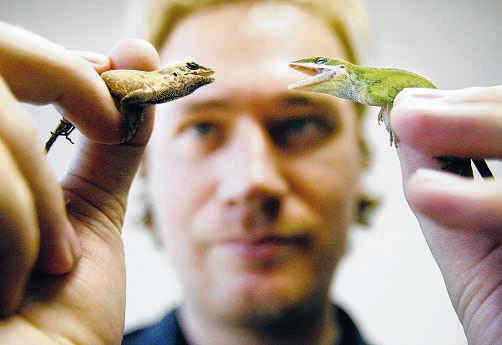
Anew Tulane Universitystudy has found the Cuban brown anoles
thehighest blood-lead levels ever documented in avertebrate.
poisoning from ammunition fragments, death could occurwhenblood lead levels reached around100 to 150.
Testingthe limits
The Tulane team captured about100 lizards from across New Orleans, includingneighborhoods with knownhigh and low soil contamination.They tested the reptiles’ balance, sprintingand endurance using treadmills made for dogs and small dowelsfor thelizards to runacross Thelizards continuedtoact like lizards.
“Wefound no evidence that theseextremelead levels were physiologically affecting them in any way,” Gunderson said. Researchers gave the liz-

ards extra doses of lead to see when effects might appear.Only when blood levels reached about 10,600 micrograms perdeciliter —more than10times the amount they were found with —did endurance begin to falter What it meansfor humans
To understandwhy the lizards areresistant to lead’s effects, the researchers examined gene expression in the brains and liversofthe lizards. Several altered geneswere linked to ion transport —the way cells move metals —and to oxygendelivery.Lead typically disruptsred blood cells, reducingoxygenflow andcausing anemia. Thelizards’ genetic shiftssuggest they may be compensating
by boosting their abilityto move metals andcarry oxygen, saidGunderson
The study also found that
lead levelsinthe bones of lizards were lowerthan the blood levels.
“Thatsuggests to me that the lizards are somehow binding or sequestering the lead in their blood,intheir circulation,thatmay be somewhat protecting other organs that could be sensitive to lead,” Smith said.
Their survivalwas shocking to researchers, but that doesn’tmean that the city’s soil is safe for humans. It is unclear howthe lizards got such high levels of lead,and it maybethatthe source is insectsthatstore lead in their exoskeleton. But it’slikely the soil is also a source.
“Ifyou catch alizardand it hashigh lead,itprobably means that humansliving in that area have higher risk of exposure,” Gundersonsaid. “Theycan be used as aproxyfor exposure in humans and other animals.”
Theanimalsthat eat those lizards —catsand birds are likely getting adose
of lead that isn’tgood for them, said Gunderson.
Lead remains aworrying public health concern in NewOrleans, particularly for young children who oftenplayinsoilorare likely to put theirhands in theirmouths. Decadesof studieshave mapped contamination across the city, often concentrated in older neighborhoods where lead paintand gasoline residues persist.
The discovery of avertebratesoresistant to lead poisoning raises new scientific questions that could lead to abetterunderstanding of the lizards’ protective mechanism.
“Wedidn’texpect themto be particularly resistant,” Gunderson said. “That meansthereissomephysiological thing thatthey have thatwedon’t.Thatcould be important.”
EmailEmily Woodruff at ewoodruff@theadvocate. com.



This articleispaidfor by Heirloom
Louisianahas always poweredAmerica –from offshorerigstorefineries to theplants that fuel ournation’seconomy.AtHeirloom, we’reproud to help writethe next chapterby bringing newtechnologies that captureand commoditizecarbondioxide to help position Louisianatoleadthe next great energy revolution,securing jobs, liftingrural communities,and keepingLouisiana competitivefor decades.
PresidentTrump hascalledfor anew “GoldenEra of American Energy Dominance,” urging thenationtounlockits full potential throughexpandedproductionand accelerated innovation.GovernorLandryisadvancing that vision with policies that driveenergy growth andindustrial innovation across Louisiana, laying thefoundationfor projects that strengthen America’senergyand industrial security
Oneofthe most promisingexamples is our participationinProject CypressinNorthwest Louisiana. At thePortofCaddo-Bossier wherewe’re building oneofthe nation’s first large-scaleDirectAir Capture(DAC) facilities.Using ouradvancedtechnology, we will transformcarbondioxide into ahigh-value resource for fuels, materials, andmanufacturing to strengthen Louisiana’snew and existing industries,fromAItoenergy. With supportfromPresidentTrump’s Department
of Energy,Project Cypresswilldrive hundreds of millions in privateinvestmentand create high-wagejobs– exactlythe kind of growth ruralLouisiana parishes need to strengthen theirtax base to fix schoolsand roads, and buildstrongercommunities
ANew EngineofGrowthfor Northwest Louisiana
ProjectCypress positionsLouisiana to competeinaglobalindustryworth more than $135 billion. This combined investment will sparka newwaveofindustry,turningcaptured carbon into opportunitiesthatpower advanced manufacturing, newfuels andstrongerenergy production that achievethe same prosperity that Louisiananshavesecuredfor generations. Bigplayers arealready investing. We’re workingwithpartnerslikeUnitedAirlines to advancenext-generation aviation fuels. And tech companiesdriving theAIrevolutionare amongour largestcustomers, usingDAC to balancethe energy intensityofdatacenters
Thesepartnerships show that theworld’s leadingcompanies believeinwhatweare building here in Louisiana. Smartfederal policy setthe stage– from granting Louisianathe authoritytomanage carbon storagetonew incentives that drive privateinvestment. Nowit’sLouisiana’s turn to seizethisopportunity,build theindustries of thefuture, andcreatethousands of jobs.

Strong Leadership in Louisiana andWashington
This progress wouldnot be possible without championsatevery level.
With strong leadership from Governor Jeff Landry,support from HouseSpeaker Mike Johnson, andboldvisionfor American energy competitivenessfromPresidentTrump, Louisianahas thechampions it needstoensure job-creatorslikeuscan succeed. Theirleadership createsthe conditions forinnovation, jobcreation, andglobalcompetitiveness –and we’reproud to be part of that momentum
Together,their leadership ensuresLouisianaremains at theforefront of industrial growth,creatingnew industries andopportunities forgenerations to come AModel forNationalSecurity andGlobalCompetitiveness
ProjectCypress is strategicallyco-located with pipelinesand industrial corridorsto reduce costsand accelerate deployment –the same wayLouisiana’s LNGboomwas built.
Once again, Louisianaisproving that energy dominancestartshere, showingthe nation howtoleadanenergyrevolutionfromthe ground up
In aworld wherecompetitors arepositioningagainst us,America cannot affordto fall behind. By embracingDAC as part of our energy mix; we’restrengthening national security –ensuringthatthe United States –not
foreignadversaries –controls thetechnologies that will fuel industry andshape global energy production fordecades to come
We startedHeirloombecause we believe this is howAmerica wins:bybuildingthe industries of thefuturearoundthe strengths we alreadypossess. Louisianaunderstands energy abundance, knowshow to buildresilientinfrastructure, andhas theskilled workforcetomatch.The same formulathatmade it aleaderinoil,gas,and LNGwillmakeita leader in thenextchapter of American energy Louisiana’sNextChapter Energy dominanceisnot aslogan. It’s astrategy– anditisbeing builtright here in Louisiana. ProjectCypress demonstrateshow federal supportand privateinnovationcan create newindustries, generate jobs, andkeep Americaahead of global competitors. While Chinaand Europe areracingahead with major investments, Heirloom is committedtoensuringthatAmerica leadsthiscriticalfrontier Nowisthe time to double down.With strong leadership from Governor Landry,bold vision from PresidentTrump,and Louisiana’s congressionaldelegationfighting forus, ProjectCypress willbecomeaglobalmodel for American innovation,industrialstrength, and energy leadership We’reproud to be investinginNorthwest Louisianaand partnering with localcommunities to buildthe industries of tomorrow
According to research released recently by Elizabeth Fussell, a Brown University professor who tracked the population shifts using closely held government data, those displaced from New Orleans kept moving around while concentrating in nearby metros, staying tethered to friends, family or other connections
Baton Rouge and Atlanta received the largest numbers of New Orleans residents early on. But as years passed, Houston and other Texas cities began taking outsized roles in the diaspora Smith had been “nowhere out of Louisiana, period” before the storm, the eldest of six kids raised by a grandmother in the Iberville housing development, when he boarded the flight to Denver “I couldn’t adapt The breathing. The altitude,” he said. “I was not prepared for that high way of living. Then I got homesick.”
Back in Houston, he landed a job cutting grass outside George Bush Intercontinental Airport.
Fifteen years later, Smith is a senior inspector for the city, with no plans to move back to his hometown.
“I’m settled here. I have a great job. I make real decent money,” said Smith, now 44. “I love New Orleans, but I didn’t have the right support to actually really enjoy New Orleans.”
The tug of home
Before Katrina and the levee failures sent the population into flight, New Orleans was among the most insular cities in the U.S.
Predictably, the draw of home loomed large for the displaced. Social ties and “place attachment” were powerful engines driving Katrina migration well after the disaster, according to a report this year in Traumatology, a journal of the American Psychological Association.
“Anybody who’s lived in New Orleans gets it: That pull,” said Sofia Curdumi Pendley, a professor at the Icahn School of Medicine at New York University who led the study “I don’t think that voice ever quieted down in people who were trying to get home.” All told, about two-thirds of the people who were living in New Orleans before the storm were back a year later said Fussell, who analyzed census, death and other data to track the population of those 2005 New Orleans residents over 14 years. Many moved repeatedly Others died. Race played a big role in where people ended up and the roads they took to get there, Fussell found.
White residents tended to return to New Orleans far earlier than Black residents, a fact that studies have linked to more severe housing damage at lower elevations for Blacks, and a slow and biased Road Home recovery program, among


when they left New Orleans and she was born shortly after they arrived in Atlanta.
other factors.
Black residents also tended to be “much more likely to be mobile and go in and out” of the New Orleans area afterward, Fussell said. The gap eventually narrowed, with more than 80% of Black New Orleanians returning to live in the metro area at some point by 2019, according to the research.
But Fussell also found big differences in what happened then. Displaced Black residents were more likely to be mobile, more often toggling between New Orleans and other locales.
“One of the big lessons from Hurricane Katrina is that a disaster that destroys housing and displaces people like this creates more mobility over a lifetime,” she said. “People move, not only because of the hurricane, but perhaps because the place they ended up wasn’t the place they want to be.”
Four Southern cities vied as top destinations: Baton Rouge, Atlanta, Houston and Dallas. But their ranks changed over time, Fussell found. Houston and Dallas have added more Katrina migrants since 2005, while Baton Rouge and Atlanta have shed them Fussell, a professor at Tulane University when Katrina struck, said a “friends and family effect” guided migration on tracks laid before 2005, when departing Louisianans followed a robust Texas job market
“The connections that
were already there were helping to bring even more people to those places,” she said.
The research also showed that Atlanta, Houston and Dallas were more attractive to Black New Orleanians who were displaced by Katrina than for non-Black residents, by a margin of more than two to one.
Leaning on connections
To Beatrice Soublet, staying in Atlanta only made sense.
She’d just retired as principal of a 9th Ward grade school when Katrina threatened. Her then-fiance, Lawrence Soublet, was retired from the New Orleans Sewerage & Water Board and “knew what would happen if things went the wrong way,” she said.
They left in two cars for Dallas, staying a few days.
“I woke up one morning: ‘Why am I paying money for a hotel here when I have a daughter in Atlanta?’” Soublet said.
The family connection steered them east. The couple soon found a church in Atlanta with suitable music, and a school, Hope Hill, where they could volunteer Now 81, Soublet still keeps around the 2003 Corolla that she wheeled out of the city with an aunt and her black cat, Madagascar Trips to New Orleans have gotten shorter, mostly to see her childhood friend Yvonne and grab gumbo and oysters at Dookie Chase’s.
She choked up recently as she counted her Katrina losses: longtime friends, church at St. Peter Claver, her “sweet little house on North Roman,” breakfast on Bayou St. John.
Soublet stayed in Atlanta because Lawrence had received a kidney transplant and worried about health care in New Orleans. He died in 2021.
“He didn’t want to dodge a bullet,” she said. “I stayed here because Larry stayed, and then we got married, and this was our life. You make yourself at home because home is up inside of you, you know?”
Georgia on their minds
For most the reasons for staying away from New Orleans were complex and varied: home, jobs, education and health factored in. Children were least likely to return in the early years.
“A lot of people were much better off somewhere else, and good for them. It was awful,” said Tulane demographer Mark VanLandingham. “(The storm) provided an opportunity for people to see what else might be out there.”
For Normicka Forest, the Atlanta suburbs were an immediate safe haven. But a visit home just weeks after the storm sealed her decision to stay in Georgia. Forest found her apartment in the B.W Cooper housing development caked in mold. The new paint job, the SpiderMan-themed bedroom, the aquarium bathroom with fish. All of it wrecked.
“It was rough. The waterline. I didn’t want to believe it,” she said. “There wasn’t a bone in my body yesterday now, tomorrow, that said I was moving back home.”
As Katrina approached, Forest planned to stay in town “You know the saying, whenever there’s a storm: The bricks aren’t going anywhere” — but instead joined a family caravan crawling east. At a crammed hotel outside Atlanta, she got word of public housing 70 miles northwest.
“I went to the receptionist at the hotel and said, ‘Print me out a map to Rome, Georgia,’” she said. “I stayed in Rome for six years.”
Forest enrolled at Georgia Highlands College and began enlisting friends to join her forming a small New Orleans outpost.
“I really recruited a lot of people. It was a nice chunk of people. There were some Katrina evacuees, all from the same community I was from,” she said.
Some moved home. Forest went on to take a job in Atlanta with the state juvenile justice agency, where she works as a budget analyst.
She’s proud of the moves she’s made in Georgia, while still keeping New Orleans close. She recently launched a business, Nola’s Peach Kreations, aiming to market products on the side.
“It’s like a spin on the New Orleans I came from,” she said. “And where I ended up.”
Feels like home
A hundred miles east of Rome, Mark Fortier has


tried to keep a New Orleans beat going in Buford, a city of 17,000 that just opened a $62 million high school football complex.
“To want something different and to actually attain it, a lot of times you have to remove yourself from certain situations,” said Fortier, 60, a barber and DJ from the 7th Ward. He’d packed up a pregnant wife, a set of hair clippers, his Akita, MawMaw, and enough clothes for a few days, thinking of a short stay away
“They were trying to take us up (Interstate) 59 I said, ‘Ima take this right turn,’ ” said Fortier, who had lived for a stint in Atlanta. “We literally drove the shoulder of the freeway from Mississippi to Georgia.”
Fortier said he left behind a “checkered” criminal past in New Orleans, then bounced between barber chairs from Buford to Atlanta before opening his own shop.
For a while, he helped set up shows through a group called New Orleans Connection, and popular tailgates near the Georgia Dome for Saints-Falcons games.
“I created an environment of New Orleans culture to feel like home, not being at home,” Fortier said, though there’s less of that activity now
“Some people moved back to New Orleans. The crowd that was attending those parties 20 years ago, now they had kids also, and they had lives,” he said. “Everything runs its course.”
In Georgia, Fortier said he’s cut hair for star ballplayers and appeared on
“Real Housewives of Atlanta.” His daughter Micah, a Katrina baby born in early 2006, is now a sophomore at Kennesaw State.
“If you ask her where she’s from, she says New Orleans,” said Fortier, who chuckled at the sentiment.
“My whole not being in New Orleans is because of her You have to embrace that change. And you have to want a little bit better.”









hosting aSpecial Eventduring the month of March! During this event, we will be offering these FREE services:
•FREE Hearing Consultations
•FREE Video Otoscope Exam: Hearinglossorjust earwax?
•FREE Clean &Check on currenthearing aids
•FREE Baseline Audiogram Assessment
•FREE Familiar Voice Test
•FREE Demo of Audibel’s latest hearing technology!
AreYou or Anyone YouKnow Experiencing the Following?
1. Asking people to speak up or repeat themselves?
2. Turning theTVuploud tounderstandwhat is being said?
3. Ringing or noises in your ears?



•Hearingaids at NO COST to those who qualify!•
• That’s Right...No Co-Pay!NoExamFee! No AdjustmentFee! If youhavethiscard, youmay qualifyfor free hearing aids! Call today to verifyyour benefits




After 2 days, fire 90% contained
BY LARA NICHOLSON and DAVID MITCHELL Staff writers
Two days after an explosion at Smitty’s Supply Inc. in Roseland forced an evacuation of nearby residents and blanketed the area in black, oily soot, authorities said they were still trying to get the fire under control.
The fire was 90% contained Sunday afternoon, unchanged from the night before despite the arrival of additional resources and specialized heavy machinery overnight, State Police said in an update issued just after noon
A containment berm was being installed around the site to prevent any runoff of hazardous materials, and recovery operations were expected to continue through the day, authorities said. Response crews also began removing structural debris and addressing “covered hotspots,” areas of smoldering fire that could be buried beneath rubble or debris.
The mandatory evacuation of all residents within one mile of the plant remained in effect Sunday afternoon and no injuries or deaths had been reported, State Police said. Tangipahoa Parish schools
Superintendent Melissa Stilley said Sunday afternoon that Roseland Elementary School would remain closed on Monday
Roughly 960 residents had to evacuate the rural town of Roseland, located along U.S. 51 just north of Amite City, after an explosion erupted from the Smitty’s au-
tomotive lubricant manufacturing plant on Friday afternoon. Among those to evacuate included the students of Roseland Elementary and former Gov John Bel Edwards.
A column of black smoke extended into the skies as the blaze roared at the 20-acre plant and first responders spent hours extinguishing the flames. Days later, even as firefighters tamed much of the fire and smoke, a chemical smell permeated many nearby Tangipahoa Parish communities, and an unidentified oily substance coated many of the cars and homes surrounding the plant, leading to health and safety concerns.
Several questions remained unanswered Sunday including what caused the blast, what materials caught fire, and what health and environmental impacts the explosion will have on the surrounding area in the future.
Past incidents
Smitty’s blends and distributes oil and other lubricants under the Super S, Shell Quaker State Castrol, Exxon, Valvoline and many other brand names. It also provides contract oil, lubrication and treatment product manufacture.
The facility, which has 20 separate tank farms, also makes its own plastic bottles for products such as motor oil and manufactures grease. It has the ability to store 8.7 million gallons of flammable liquids and chemicals.
Though it is a mile from an elementary school, it isn’t required to obtain a state air permit because its emissions are too small, state regulatory papers say But, going back more than a decade, the facility has been the
focus of scrutiny from state and federal regulators over spills of various chemicals and worker safety problems sometimes tied to spilled materials. There have also been odor complaints and lawsuits from one neighbor over continued alleged offsite contamination, state and federal papers say
In January 2022 and again in April 2024, Smitty’s reached settlements with the Louisiana Department of Environmental Quality to pay $285,000 combined to dispatch a variety of allegations going back to late 2011.
They included improperly burying waste; oil as well as water with oily sheens and oil-stained absorbent pads being drained or dumped into local ditches; sheens in the Tangipahoa River; failing to have up-to-date plans for runoff control; exceeding discharge limits; and many other allegations.
Under the standard terms of such deals, Smitty’s admitted no fault. Since the settlements, the company has continued to be the source of odor and spill complaints and has a pending enforcement review from DEQ.
Between 2017 and 2021, the company also amassed a little more than $58,000 in fines from the U.S Occupational Safety and Health Administration over worker safety concerns that injured two and killed one.
State troopers declined to speculate on what role, if any, the facility’s workplace conditions and spotty record for spills may have played in the blaze. Environmental records indicate no previous fires
have been reported since August 2011. Attempts to reach Smitty’s management for comment have been unsuccessful.
Response and recovery efforts
Local, state and federal agencies worked throughout the weekend to battle the potential effects of pollution. By Sunday afternoon, crews had deployed about 1,900 feet of containment boom in the Tangipahoa River, which flows to Lake Pontchartrain, and 100 feet in a nearby drainage ditch, with eight airboats supporting recovery, State Police said.
Two frack tanks containing a total of 900 barrels of fluid had been recovered as of Sunday afternoon.
Officials with the Environmental Protection Agency said in a statement that 18 employees and contractors were assisting with the response alongside aircraft used for monitoring.
Air monitoring since Friday night had shown “either non-detectable readings or levels well below health-based or actionable thresholds,” State Police said, though other communities who have been hit by lubricant plant fires have seen a gap between official readings and what residents experienced.
Officials with the DEQ confirmed Sunday plans to deploy a mobile air monitoring lab to Roseland. Air quality data collected via the lab will be available on DEQ’s website in real time, officials said.
Sightings of impacted wildlife can be reported to a hotline at (832) 514-9663. Authorities urged the public not to handle wildlife directly
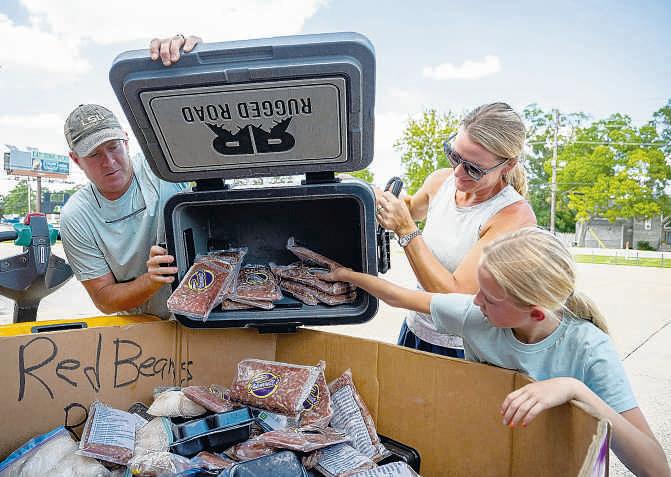
crate at Hunters for the Hungry’s Clean Out your Freezer Day on Sunday at Bowie Outfitters in Baton Rouge.
Cashier with gun says gas station fired her after shooting
BY QUINN COFFMAN Staff writer
A Baton Rouge woman, who al-
legedly stole a cup of coffee from a gas station then shot at the cashier with the clerk’s own gun during a tussle outside the store, faces a count of attempted first-degree murder The cashier, Jetti Lee, says that not only was her life put in danger that morning, but she lost her job because of the incident Police officers responded to the RaceTrac on Harding Boulevard shortly after 3 a.m. Friday after a witness at the IHOP next door had called 911 to report hearing a gunshot from the direction of the gas station, the arrest affidavit
says. During that call, the witness walked over and saw two women scuffling over a firearm in the parking lot.
The incident started as a simple act of shoplifting, with Rachel Myles, 35, walking into the RaceTrac and leaving with a cup of coffee, the affidavit says. Lee said other than the theft, Myles wasn’t being disruptive or violent inside the store.
But a short time later, Lee said, when she had clocked out and retrieved her purse from her car to have a cigarette, Myles began acting violently in the parking lot
“I didn’t go outside behind her just to ask about her taking a cup of coffee; I mean it’s $2.29,” Lee said.
Lee said Myles began to act erratically, pushing a male customer as he left the gas station. Then, Lee said, Myles approached her and grabbed her purse. That escalated the situation, Lee said, because she kept a gun in her
purse.
“As I push her back, she grabs my bag,” Lee said. “My gun was in my bag. So of course I’m gonna put my hand on top of yours because it’s on top of the gun.”
A scuffle ensued during which the gun went off while still in the purse, with the shot missing a bystander, Lee said. Soon, the women were on the ground, wrestling for control of the firearm.
Lee said she managed to eject the magazine from the gun, but a bullet remained in the chamber
“When she got it again, it didn’t have but one more bullet in it,” Lee said. “But I could’ve lost my life. She turned the gun on me and pressed it into my chest. Then she said, ‘bow bow.’” Lee said she was then able to flip Myles onto her stomach and hold her down until police arrived. Myles, who was still armed with the gun, actively resisted arrest before being taken into custody, the arrest
BY QUINN COFFMAN Staff writer
A woman was shot multiple times and killed early Sunday morning on Plank Road after a large fight led to a number of people shooting at each other outside a barbershop.
Baton Rouge Police Department officers responded to the 3400 block of Plank Road over reports of a shooting just before 4 a.m. Sunday Upon arrival, officers with the BRPD found a woman suffering from multiple gunshot wounds.
The woman, 36-year-old Jonique Brown, was pronounced dead on the scene after Emergency Medical Services paramedics attempted to provide emergency medical care.
Detectives learned in their investigation that a large fight broke out at the location of the shooting. Soon, it escalated to gunfire involving multiple shooters, police said.
Angela Johnson, 41, said that before shots rang out, Plank Road was lined with vehicles, many of which were parked for the after-hours club where she works and which sits cattycorner across Plank Road and Calumet Street from the barbershop.
Johnson said that just before 4 a.m., she heard over two dozen gunshots as she was standing in the front doorway of the club.
Johnson told The Advocate she quickly gathered people inside the club and locked the door
“Anytime we hear the gunshots ring out, I’m gonna go in there and I’m gonna lock the door,” Johnson said, “because my whole theory is to keep everybody safe inside the club and not let them open up the door to come back out.”
She said that after keeping her 30-odd patrons inside for nearly half an hour, she crossed the street to where police were putting up caution tape. She said she saw a vehicle that was riddled with bullet holes and parked next to the barbershop. Police towed the vehicle when they left, she said.
Johnson said an increase of customers, and cars parked along Plank Road, began a couple months ago She said she believes it’s connected to the closure of another after-hours club, The Big Blue House, on South Choctaw Drive.
“Ever since we had this traffic this has been going on,” Johnson said. “We’ve been having a lot of shootings out here every weekend.”
Clubs like the one Johnson works at and The Big Blue House operate after most venues that serve alcohol close, which is at 2 a.m. by East Baton Rouge Parish ordinance.
affidavit says. Myles was booked into the East Baton Rouge Parish Prison on one count each of attempted first-degree murder, armed robbery, shoplifting and resisting an officer with force, according to police.
Before being booked, Myles was taken to Our Lady of the Lake Regional Medical Center for treatment of minor injuries.
But, for Lee, that wasn’t the end of her troubles. She told The Advocate that the next day, she found out she had been fired from RaceTrac, allegedly for having a firearm on company property, which is against policy She said she had been working at RaceTrac for about eight months.
Lee said she was acting in selfdefense and she had the gun on her person only after she had clocked out from work.
“Nobody was hurt, I prevented anybody from being hurt, but I still lose my job?” she said.
A shooting outside The Big Blue House in June resulted in the death of 25-year-old Prenesha Wagner and the injuring of five other partygoers. A 15-year-old was later booked into the juvenile detention center on a count of principal to first-degree murder in connection to Wagner’s death.
Johnson said The Big Blue House hasn’t been open since. “It’s all a tragedy,” Johnson said. “People come out just trying to have fun.” No suspects have been developed at this time. The investigation is ongoing.
Clothier,Arte'
ZacharyUnitedMethodist Church at 11am
Darensburg,Amy
NewHope Baptistat9am
Quebedeau, Chester
CentralFuneralHomeat11am.
Quebedeaux, Chester
CentralFuneralHomeat11am.
Schwendimann, Holly
CharletFuneral Home inZachary at 1:00pm
Obituaries
Allgood, Marilyn Tregre

Marilyn Tregre Allgood, 93, anative of and lifelong resident of Baton Rouge passed on to her eternal reward at her residence on August 21, 2025. She is survived by her sons Jamie Furrate (Bernadette), Dallas, Tx., Jeffrey Furrate (Connie), Denham Springs; sister Jimmie Carol Atkinson (D.R.),BatonRouge; grandchildren Kristin Furrate Pavle (John), Frisco, Tx, James Tregre Furrate Jr. (Erica), Frisco,Tx, Shannan Smith (Gary), Pineville, Brandon Furrate (Elizabeth), Denham Springs, Drew Furrate, Denham Springs; nine great grandchildren and numerous cousins, nieces and nephews. Marilyn was a 1948 graduate of St. Joseph's Academy and worked in the insurance industry for atrade association and subsequently as a realtor before becoming a full-time housewife. Later in life she earned aparalegal certificate from LSUfor thelearning experience Marilyn loved parties and any kind of gathering with family and friends. She was always there to help a friend or familymember in need. Marilyn enjoyed traveling and particularly liked trips to Europe, and traveled to Israel, Egypt and Turkey among other countries. She was an elegant and gracious lady that possessed asassy tongueand aquick wit.
Hergrandchildren have legendary stories from spending time with her. Shewas along-time member of TrinityEpiscopal Church where she enjoyed the fellowship and church functions until her failing health prevented herfrom attending.She waspreceded indeath by her parents, JamesUlric Tregre and Orlea MeuretTregre; husbandsCharles W. Franklin, F.A.Barnerand Glen I. Allgood;sister Gloria Tregre Wurst; grandson Joseph Ryan Furrateand granddaughterSarah Elizabeth Furrate.Services will be held at RabenhorstFuneral Home, 825 Government St, on Tuesday, August 26th with visitation from 9:00am till10:30am, followed by the rosaryand funeralservicesat11:00am officiated by Deacon Richard Grant with interment at Roselawn MemorialPark. PallbearerswillbeTregre Furrate,Brandon Furrate, Drew Furrate,Michael Atkinson, Stephen Wurst, Paul Chargois, Will Grubbs and Paul Wong. The family wouldliketoextenda specialthanks to Ashley Franklin, Diana Franklin and Vickey Hooks (my girls)who gave Marilyn tenderlovingcare at the endofher life.Inlieuof flowers, donations may be made to St. Joseph's Academy,3015Broussard St BatonRouge, La. 70808, CatholicHigh School, 855 HearthstoneDr.,Baton Rouge, La. 70806, or acharity of your choice

Martin,Bettye Louise Morgan

Bettye Louise Morgan Martin passedawaysud‐denlyand tragically on July 31, 2025, in Longboat Key, Florida, as theresultofa swimming accident.She wasbornin BatonRouge, Louisiana, on December 16, 1948, to Virginia Strader
Morgan andWoodrow RichardMorgan. Bettye wasa social studies teacherfor many yearsin theEastBaton Rouge Parish School System, first at ScotlandvilleHigh School andlater at Belaire High School.After retire‐ment from teaching,she movedwithher husband Andrew,toWestFeliciana Parish whereshe immedi‐atelyinvolvedherself with theWestFeliciana Food Pantry,ofwhich shesoon became thedirector. Bet‐tyewas devotedtoher clientsand fellow volun‐teersatthe pantry,work‐ingtirelesslyday andnight to servethe more than 350 families whodependedon thefood andother neces‐sities that thepantrypro‐vided. Shewas also an en‐thusiastic worldtraveler, andalong with Andrew vis‐ited China, NewZealand Hawaii,Europe, Egyptand theMiddleEast, as well as Mexico,Cuba, the Caribbean,and many states in theU.S,manyof whichwereonthe back of theirBMW motorcycle.Bet‐tyewas preceded in death by herparents, Virginia andW.Richard Morgan SheissurvivedbyAndrew CharlesMartin, herhus‐band of 53 years, oneson Dr.SethAlexander Martin (Milena),and twogrand‐daughters, Lauren andLily Martin.Also, abrother,W RichardMorgan(Barita). Sheisalsosurvivedbya nephew,AdamMorgan (Kelli,and theirtwo sons Kael andLuka; aniece Anne Morgan (Ryan) and theirthree sons,Gavin Ayo, Johnnyand Ruckus Schaubert. Amemorialser‐vice forBettyewillbeheld on Tuesday, August 26, at CharletFuneral Home,4230 High Street,Zachary Louisiana, with visitation beginningat10a.m., fol‐lowedbythe serviceat11 a.m.,conducted by the Reverend Jerry Martin.In lieu of flowers, donations in hermemorywillbe gratefully accepted at the West FelicianaFood Pantry P.O. Box1357, St.Fran‐cisville,LA70775. Share sympathies,condolences, andmemoriesatwww.Cha rletFuneralHome.com.







When people say the Second Amendment should be abolished because it was “written for muskets,” they’re ignoring both history and logic. If we applied that reasoning across the Constitution, we’d also have to toss outthe First Amendment because it was written before the internet, television and smartphones.
But that’snot how our rights work.
The Founders wrote the Bill of Rightstoprotect timeless principles, nottemporarytools.The Second Amendment guarantees the right to self-defense, not the right to own amusket specifically.Just as the First Amendment evolved to protect blogs, livestreams and podcasts, the Second naturally extendstothe modern firearms used for lawful defense today,including semiautomatic pistols, shotguns andARstyle rifles.
Let’snot forget who these men were. Benjamin Franklin invented bifocals and harnessed electricity.ThomasJefferson used amechanical writing machine —basically the firstautopen —to duplicatehis letters. These were visionariesand innovators, not men afraid of change. They understood that technology would evolve, and they wrote aconstitution designed to endure through that evolution.
At the time the Second Amendment was ratified, repeating arms already existed.The idea thatthe Founders only intended to protect single-shot firearms is notjust wrong —it’sinsulting to their intelligence.
And what of today’sfirearms? AR-15s are not military weapons. They are modular,civilian rifles used by millions of Americansfor hunting, training, home defense and sport. Semiautomatic pistols arethe standard self-defense tool, just as muskets werein1791. The Constitution protects what is common, lawful and essential for afree people.
Technology has changed.Human nature has not. Americans still have the right to protect their lives and liberty.The Second Amendment didn’texpire with the flintlock. It lives on, because freedom still matters.
STEPHANIE O’ROURKE DesAllemands
LETTERSTOTHE EDITOR
AREWELCOME.HEREARE

In my years of building businesses and serving this state, I’ve learned athing or two aboutbalancing abudget.Ifthere’sone thing my experience has taught me, it’sthis: You don’tcut your way to success, you invest in it. Gov.Jeff Landry’sLADOGE initiative promotesefficiency,accountability and fiscal discipline. Those are goals Ishare. However,wemust not confuse cutting costs with creating long-term value. Business leaders understand that you cannot simply cut yourway to profitability.Sustainable growthcomes from smart investments, particularly those that deliver long-term results. Thesame is true for our state and the public programsthat shape opportunity for generationstocome. Short-term savings cannot come at theexpense of long-term progress. Onearea of statespending worthy of investment is early childhood education. Highquality early learning for children from birthtoage 5provides thebuilding blocks forLouisiana’sfuture workforce. It gives
children the knowledge, tools and confidence they need to thrive in school andlife. It allows parents to fully participate in the workforce, supporting family well-being and fueling economic growth that benefits everyone. It also strengthens our economy by ensuring asteadypipeline of capable, well-prepared workers who are equipped to succeed in a modernlabor market. The positive returns realized across theboard by arobust early childhood education system are what led Nobel laureateeconomist JamesHeckman to say that early childhood education is the best investment astate can make. That is sound economic policy with lasting impact and government efficiency at its best.
If we want Louisiana to continue to competeand prosper,early childhood education must be recognized as afoundational pillar of the state’ssuccess. The cost of inaction, on theother hand, is far too great to ignore.
RICHARD LIPSEY founder,Lipsey’s Baton Rouge
On Aug. 1, all votersinLouisiana registered as Independentswereautomatically switched to No Party.This was due to anew lawresponding to the passing of the closed primary system in federal elections.Had the Independents notbeen changed to No Party,they would have been precluded from voting in either theDemocratic or Republican primaries. Votersregistered as No Party can votein eitherprimary As the next senator from Louisiana will almost certainly come from the Republican primary,the question moderateDemocrats shouldbeasking themselves is whether they arealso being disenfranchised by the closed primary.The answer is almost certainly yes. The incumbent senator,Dr. Bill Cassidy,has drawn several opponents from the right due to his voting of his conscience withregard
to Jan. 6and President Donald Trump. He wasevensanctionedbythe state Republican Party for his vote. So now,the more extreme membersofthe Republican Party are tryingto“primary” him. What canamoderate Democrat do to makesure that amoderate Republican like Cassidy isn’t“primaried” by the otherparty’smoreextreme elements?
Theeasyanswer is to switch to No Party todayand vote in theRepublican primary for Cassidy.Whether you like Bill Cassidy or not, he’sbetterthan thealternatives.
Don’tbedisenfranchised. Don’tlose your right to help determine who will represent Louisiana in theSenate. The choice is between areasonable Republican like Cassidy or an extremist.
TIMOTHY PUJOL Maurepas
Katie Boudreaux of Gonzales wrote that we have an 80% repeat offender rate. That is avery old number.The 2024 report on the three-year rate was24.9%, which is downfrom the 2018 rate of 32%. Our state has the highest incarceration rate in the country.Repeat this slowly: If we incarcerate more people than any other state, then we should have the lowest crime rate. We don’t. That means, “Lock them up and throw away the key” doesn’t reduce crime, it just helps politicians get elected and bankrupts the state.
Prisonseminaries.org has put over 30 seminaries in men’s prisons around the country and eight in women’sprisons. All done with no government money,just private donations. The seminaries give the samedegree to the inmate graduates as they give to regular divinity students.
The NewOrleans Baptist Seminary started teaching at the Louisiana State Penitentiary at Angola several years ago, and the graduates weresent out two by twotothe five prison camps at Angola. Inmate assaults with weapons wentdown almost 80% in the first five years. Those statistics started the ball rolling.
But what do you do with the graduates? First Presbyterian in Baton Rouge, spearheaded by assistant pastor Whitney Alexander and a group of dedicated members, hired three former inmate preachers to start achurch in Melrose East. Two of the inmates werefeatured in a Vision Video movie, “Blessedness out of Brokenness.”
Most inmates firmly believe in survival of the fittest. They are fit and you are prey.Weare changing their worldview from hate to love, and it is working.
BOBDOWNING Baton Rouge
Louisiana should step up to support LPB

TO SEND US ALETTER SCAN HERE
OUR GUIDELINES: Letters are published identifying name and the writer’scity of residence.The Advocate |The Times-Picayune require astreet address and phone number for verification purposes, but that information is not published. Letters are not to exceed 300 words. Letters to the Editor,The Advocate, P.O. Box 588, Baton Rouge, LA 70821-0588, or email letters@theadvocate.com.
Theletter to the editor published July 24 from Angele Givens of New Orleansclearly shows that some people have afalseknowledgeofJesusChrist. The Democratic Party has questioned thenecessity of emergency powers, calling the project an overreach and environmental risk. However,that is the government andnot Jesus. Romans2:13 states: “For it is not the hearers of the law who are righteous before God, but thedoers of the law who will be justified.”
Theillegal immigrants are not doers of the law.Infact, they are lawbreakers simply by being here in the United States illegally

Then also Romans13:1 states: “Let every person be subject tothe governing authorities.For there is not authority except from God, and those that exist havebeen instituted by God.
Plus, thegospel of Luke 20:25 states: “He (Jesus) said to them, ‘Then render to Caesar thethings that are Caesar’sand to Godthe things that are God’s.’”
In today’sworld, it simply means obey the laws of the government and render to God those things that God commands us to obey MORGAN J. LANDRY
Quin Hillyer’scolumn recently focused on Jason Berry’swork, mentioning aforthcoming biography of James Carville and an unrelated documentary about jazz funerals, NewOrleans, Katrina and morethat will air on Louisiana public broadcasting stations. This prompted me to regret that he didn’tmention that LPB may not have the flexibility in the future to broadcast such culturally rich, historic and, need Isay it, educational programming after the current federal administration decided to defund the Corporation forPublic Broadcasting, Perhaps the state, constantly lamenting the loss of educated residents, might wish to makeupthe difference —one small step in trying to stem the outflow to greener pastures.
MARYANN STERNBERG Baton Rouge



WINNER: Michele Starnes,Kenner

We received 615 entries in this week’sCartoon Caption Contest.We had some cleverones from students, some snarky onesaboutpolitics, and afew really off-the-wall approachesthat made the cut. Our winner’s punchlinewas short, funny and trulycaptured themoment.This wasafun batch! A+!Asalways, when we have duplicateentries,and we always do,wepick the earliestsent in.Greatjob —Walt
HARPER VICIDOMINA-MILLS (AGE10), METAIRIE: “This is gonna be younextyear!”
RICHARD ROBBINS,NEW ORLEANS: “I brought in acase of popcornkernels for a project. Ijust didn’t realize it would be this hot out!”
CHARMAINE CLEMENTS,CHALMETTE: “Does carrying this bookbag count as P.E. class?”
KERIANNESTIEGLER, NEWORLEANS: “Busy year ahead: Reading,writing, arithmetic, and chiropractic!”
MICHAEL B. RIEMER, JEFFERSON: “My folks thought the Bounce House at recess would makememore popular!”
ANN FENSTERMAKER, LAFAYETTE: “I have to write areportonSisyphus!”
DUKE RIVET,BATON ROUGE: “I knew I shouldn’t have told that fibabout belonging to Mensa!”
LYNN WISMAR, KENNER: “I thinkI’m gonna need abigger locker!”
DAVID PALMISANO,MARRERO: “Since cellphones arenolonger allowedinclass, I had to pack my hard copyof Google.”
PATRICIA MORRIS,NEW ORLEANS: “And
this is only for first grade!”
ANDRECODALLO (THIRD GRADE), SAMUEL J. GREEN CHARTER SCHOOL, NEWORLEANS: “I guess I’ll be doing class outside today—Ican’t fitmybag through the doors.
ADAM DARRAGH,NEW ORLEANS: “We’re anoscreen family.These are all encyclopedias.
ELTONLEBLANC, RIVER RIDGE: “I’ll be happywhen my laptop gets fixed.”
STEPHENVILLAVASO,NEW ORLEANS: “How am Igoing to getall this stuff into my HEAD!”
CAROLR.WEXLER,BATON ROUGE: “If kindergarten is this tough, what’s first grade going to be like?”
DONNA REUTER, METAIRIE: “I’mtraining forthe weightlifting team.
BOBJACOBSEN, BATONROUGE: “I signed up for that class on the History of New Orleans Political Corruption.”
MARIANO HINOJOSA, BATONROUGE: “It wasMom’sidea to buy up all the school suppliesbefore the tariffs kicked in.”
JULIECOLLINS,TALLAHASSEE, FLA.:
“Permission slips! Piles and pilesof permissionslips!”
WANDABRAUD,GONZALES: “you think I will geta seat to myself on the bus?”
CAROL NICHE, BATONROUGE: “I’mjust gladmyparents are BOTH orthopedic doctors.”
TIM JOHNSON, MOSES LAKE,WA: “Mom accidentally googled the supplies listfor the Navy Seals.”
STUART CLARK, LAFAYETTE: “I signed up for ‘Rock History’ wrongly thinkingitwas about music!
RORY STEEN, DENVER,CO: “you’re saying this goes… untilJune?”
MARIA SPANSEL THOMAS,METAIRIE: “Thisisthe last time Ioffer to carry the teacher’sschool supplies!”
BOBUSSERY, NEWORLEANS: “Thisisa lot of knowledgetoshoulder.
JOHN HANLEY, BATONROUGE: “For band we have to bring our owninstruments. I’m taking piano.
TOMMY OLSEN, GULF SHORES,ALA.: “The computer went down andnow we have to use these things called books.
Pride is no impediment to President Donald Trump’slust for lawfare.Lately, Trump and the Republican-controlled Congress havetargeted California in aseries of ludicrous attempts to overthrow astate law,Proposition 12, aimed at minimizing cruelty to animals, in particular chickens.
Afamous economist once remarked: “You can see the computer age everywhere but in the productivity statistics.”


That epigram,issued by Robert Solowin 1987, became the subject of alot of debate among economists in the 1990s. Youdon’t hear those arguments so much anymore, because it’sclear computers have transformed American work. Adecade later,another famous economist made asimilar observation about the internet —actually,aprediction: “By 2005 or so, it will become clear that the Internet’simpact on the economyhas been no greater thanthe fax machine’s.” That was Nobel Prize winner Paul Krugman, who nowhas ahighly profitable email newsletter
We’re now hearing similar questions about artificial intelligence. If it’ssorevolutionary why don’twesee evidence that it’sreplacing workers? Why hasn’tittransformed productivity statistics? How can these companies earn back the massive amounts they’re spending building data centers and training models? Isn’tall the doomcasting and wishcasting aload of hype? Aren’tweinanAI bubble that’sgetting ready to pop?
The answer to that last question is yes, we’re possibly in abit of abubble, just as we were in an internet bubble in 1998, when Krugmanmade that prediction. Idon’twant to say bubbles are anormal response to a major wave of technological innovationthat makes it hard to tell what will work, or how muchthe things that work will be worth 10 or 20 years hence. But they’re an understandable response to that kind of uncertainty,as investors who are willing to bet on the future drive spending and valuations higherthan reality will ultimately sustain.
But then we’re back to the original question: If AI is so revolutionary,why isn’tit more visible in the statistics? Despite the oftrepeated claimsthat AI is displacing entrylevel workers, macroeconomic evidence of this phenomenon is dubious. Here are afew potential solutions to this mystery
One possibility is that AI is raising productivity,but many workers are using their extra time for leisure, rather than more work —a kind of “dark leisure” that doesn’tshowupin statistical data but still represents workers doing their jobs faster
Over time, however,expectations for productivity will change. Managers now understand how long apiece of work should take when you’re plugging asearch into Google rather than hunting down physical references. They’ll develop asimilar understanding as AI takes over writing many emails and daily reports, and demand commensurate increases in employee performance. Some of that “dark leisure” will go away and showup in higher productivity figures.

Prop 12, or the Farm Animal Confinement Initiative, passed in 2018, requires that any animal that is sold as food in California —including chickens, pigs and cows— be provided enough room to “lie down, stand up, fully extend its limbs, and turn around freely,” regardlessofwhere it is raised. Otherwise, it is bannedfromsale within the state.

the Ending Agricultural Trade Suppression Act, which was arenamed version of the2013 King Amendment, Steve King’schange to theHouse Farm bill, which triedtoinvoke interstate commerce arguments to overturn laws that, theoretically,might affect the meat industry’sbottomline.
The White House claims that California’slaw has created too much redtape, causing egg prices to soar.Whetherthis is another Trump prevarication or mere ignorance, Ileave to you. But the reading public knows that egg prices soared after corporatechicken farms across the country suffered an outbreak of H5N1 (bird flu), likely exacerbatedby overcrowding, and were forcedtocull millions of chickens.
No chickens, no eggs.
The question springs to mind: Which does Trump hatemore, chickens or California Gov.Gavin Newsom? One might guess chickens, given the several attempts by Congress via BigAgtothwart California’shumane policies. Butsticking it to aDemocratic governor whois generous in his criticism of the president holds large appeal to Republicans. For its part, Congress has been relentless in its pursuitoflegislationthat would overturn Proposition12 and other laws like it. Lawmakers have introduced aseries of similar billswith different names. In 2023, Congress failedtopass
This bill died, thanks to opposition from small farmers and producers, as well as 16 House Republicans concerned about theinfluence of Smithfield Farms,which owns 25 percent of the pork in the United States —and is itself wholly owned by China. The specterofChina via Congress overturning democratically approved state laws, meanwhile, ought to jostle even MAGA die-hards from their Trump-induced trance. AHarvardstudy in July found that theanti-Prop 12 bill couldhave beenusedtoinvalidate more than 1,000 laws in the 15 statesthat have addressed animal confinement and farm practices.Yet this “zombie bill,” as one animal welfare opponent put it to me, persists in the119thCongress—now calledS.1326, the “Food Securityand Farm Protection Act.”
Can’tsomeone put this retreadlegislationout ofits misery?
Still another case brought by the National Pork ProducersCouncil made it to afull hearingbeforethe court.The NPPCadmitted thatthe California law did notdiscriminateagainst out-of-state producers but argued that it nevertheless unconstitutionally controlled extraterritorial commerce. The court found this argument unpersuasive.
As JusticeNeil M. Gorsuchwrote in his opinion: “While the Constitution addressesmany weightyissues, the type of porkchops California merchants may sell is notonthatlist.”
The Meat Institutehad argued that Prop 12 hurts families by increasing costs for producers and consumers, who will have to pay morefor their sirloins, veal chops and huevos. Julie Anna Potts, president and CEO of the institute, averred: “If this unconstitutional law is allowed to stand, California will dictate farming practices across thenation.” Now there’s abogey scenario to unnerve ared-capped Republican. Next thing you know,they’ll takeaway our pickled pigs’ feet.Itseemslikely that Trump’sfederal suit in California ultimately will meet the same end as all previous challenges to the state’s right to sell what it chooses.It’snotable that Republicans, having no interest in national uniformity when it comes to education, draw aline in the Mojave when corporate meat producers are asked to torture animals minimally during their brief, horrible lives.
The president is an unlikely champion (orenemy) of egg-laying chickens living in cramped quarters.
Aman who getsakick out of Alligator Alcatraz, wheremen arecaged like zoo animals,packed together 32 per cell, isn’tgoing to losesleep over how his Big Macsfind theirway to his TV tray. Or thathis pork chop on astick at the Iowa StateFair likely came from apig pulledfrom his mother’s two-by-sevenfoot gestation crate. Don’tbebothering the president of the United States about chicken housing.
From whereIsit,California and other like-minded states deserve an award, not apestering president waging lawfare in the same way he does everything else without empathy,conscience or perhaps even basic understanding.
Email Kathleen Parker at kathleenparker@washpost.com.
Another reason we might notbeseeing immediate, large productivity improvements is that humans and machines are at the early end of the learning curve. When Iwas in college, Iworked as aclerk at afirm thatemployed two top-notch legal secretaries. Those women, both in their early 50s, had started their careers on typewriters and could type more than 100 words per minute with few mistakes. They had also acquired an effortless mastery of legal forms that allowed them to quickly translate alawyer’shandwritten notes into aflawless brief or filing. By the early 1990s, they were both using word processors, but how muchtime was that actually saving them? Some definitely,but the real productivity gains camelater,when lawyers could type documents directly into acomputer,much faster than they could dictate or write them out by hand, and firms didn’tneed to employ so many legal secretaries.
One further speculative possibility,intriguing but difficult to assess: When AI starts displacing workers, it may do so notjust at the entry level but outside the United States, as companies insource outsourced functions to machines. Finally,this technology is still too young to create the secondary and tertiary productivity gains we saw from computers and the internet. Young people won’tremember how transformative spreadsheets were,but the ability to easily record and analyze data on the desktop didn’tjust streamline alot of accounting jobs —itgave managers and investors tools to hunt for productivity gains throughout other departments and the rest of the economy. Ican’ttell you what kinds of similar opportunities AI might create, but I certainly expect there to be some. This is ultimately why so many people are willing to bet on AI. Their excitementmay be premature, but it’snot unfounded. And when atechnology is truly transformational, it’s probably safer to bet on premature optimism than to prematurely dismiss it out of hand. MeganMcArdle in on X, @asymmetricinfo.









Sunshine will dominate intoMonday.Thelate August sun will push thermometersinto the mid90s.Though still hot, slightly lower humidity will makeitmore tolerable near and north of Metro Baton Rouge. However, coastal and marshyareas may find less relief with the humid feel holding firm.Higher up in the atmosphere, it will be bone-dryeverywhere.That willresultinlittletopossibly no rain during the afternoon. In general,highswill be close to average in the















BY JONATHAN J. COOPER and LEAH ASKARINAM Associated Press
WASHINGTON Some National Guard units patrolling the nation’scapital at thedirection of President Donald Trump havestartedcarrying firearms, an escalationof his military deployment that makes good on adirective issued late last weekby his defense secretary ADefense Departmentofficial who was not authorized to speak publicly said some units on certain missions would be armed —some with handguns and others withrifles. The spokesperson said that all units with firearms havebeen trained and are operating under strict rules for use of force.
An Associated Press photographer on Sunday saw members of the South Carolina National Guard outside Union Station with holstered handguns. Astatement from the joint task force that has taken over policing in the nation’s capital said unitsbegan carrying their service weapons on Sunday and that the military’srules say force should be used “only as alast resort and solely in response to an imminent threat of deathor serious bodily harm.” It said the force is committed to protecting “the safety and well-being” of Washington’s residents.
The defense official who spoke to The Associated Press said only troops on certain missions would carry guns, and that would include those patrolling to establish alaw enforcement presence throughout the capital. Those working in transportation or administration wouldlikely remain unarmed.
Thousands of National Guard and federal law en-







forcementofficers are now patrolling the district’s streets, drawing sporadic protestsfrom localresidents.
Thedevelopmentin Trump’sextraordinary effort to override the law enforcement authority of state and local governments comes as he is considering expanding the deployments to other Democratic-led cities, including Baltimore,Chicagoand New York EarlierSunday,the president respondedtoanoffer by Maryland’sgovernorto join him in atour of Baltimore by saying he mightinstead “sendinthe ‘troops.’” Gov.Wes Moore, aDemocrat, has criticized Trump’s unprecedented flex of federal poweraimed at combating crime and homelessness in Washington.Moore last weekinvited Trump to visit hisstate to discuss public safety and walk the streets. In aTruth Social post on Sunday,TrumpsaidMoore asked “in arather nasty and provocative tone,” and then raised the specter of repeating the National Guard deployment he made in Los Angeles over theobjections of California’sDemocratic governor, GavinNewsom “Wes Moore’srecordon Crime is avery bad one, unless he fudgeshis figures on crimelike many of the other ‘Blue States’are doing,” Trump wrote, as he cited a pejorativenickname he uses frequently for the California governor. “But ifWes Moore needs help, like Gavin News-
cum did in L.A.,Iwill send in the‘troops,’which is being done in nearbyDC, and quickly clean up the Crime.”
Mooresaid he invited Trump to Maryland “because he seems to enjoy livinginthis blissful ignorance” aboutimproving crime rates in Baltimore. After aspike during the pandemicthat matched nationwide trends, Baltimore’s violentcrime rate hasfallen. The 200 homicides reported last year were down24% from theprior year and42% since 2021, according to city data. Between 2023 and 2024, overall violent crime was down nearly 8% and propertycrimes down 20%.
“The president is spending all of his timetalking about me,” Moore saidonCBS’s “Face the Nation” on Sunday.“I’mspending my time talkingabout thepeople I serve.”
Trumpis“spouting off a bunchofliesabout public safety in Maryland,” Moore said in afundraising email.
In Washington,where Trump has surged National Guard troopsand federal lawenforcementofficers, apatchwork of protests popped up throughout the city over theweekend, while somenormally bustling cornerswere noticeably quiet. In some of themost populated areas,residentswalked by smallgroupsofnational guardsmen, often talking amongthemselves. Videos of arrestsand detainments circulated on social media.




















Projecting whowill make NewOrleans’53-manroster
BY MATTHEW PARAS Staff writer
Now comes the tough part.
With three preseason gamesand amonth of practices in the books, the NewOrleans Saints soon will have to trim their roster from 90 to 53 players ahead of Tuesday’s 3p.m. league-wide deadline.
This year’straining camp featured several competitive battles at variouspositions. Who will the Saints keep?Let’sget into one final prediction:
Quarterback(3)
Spencer Rattler,Tyler Shough and Jake Haener: Haenerwas the odd man outinthe Saints’ starting quarterback competition as camp progressed, but he didn’tperform poorly enoughtocosthim arosterspot. And as tight as some of these other position battles are, it would be surprising tosee the Saints roll with only twoquarterbacks on the roster
Runningback(4)
Alvin Kamara, Kendre Miller,Devin Neal,Velus Jones: Afterleaving Milleroff thisprevious projection, it’stime to do an about-face. Miller clearly has locked down theNo. 2 running back spot over thepast fewweeks, doing so by running hard andstringing togetherconsistent practices. He looks healthy and explosive. Thesecond-year back responded to the coaches’ apparent test early in camp.Asfor the fourth spot, Jones gets the slight nod over Clyde Edwards-Helaire. But that one is tricky sinceEdwards-Helaire might provide better pass protection.
Wide receiver (6)
Chris Olave, Rashid Shaheed, Devaughn Vele, Brandin Cooks, Mason Tipton, Dante Pettis: The Saints’ acquisition of Vele leaves veteran Cedrick Wilson on the choppingblock. It wouldn’tbesurprising if he lands back on the practice squad because of his runblocking ability and previous time with coach Kellen MooreinDallas. Elsewhere,
ä See SAINTS, page 4B

Family,coaches,competition

WhenBarbara Adams thinks abouther son, the first person who comes tomind is her grandfather Joseph Adams —the man Barbara credits for helping raise herand herson —was draftedinto the Army at age 17 and servedinWorld WarII. As aformer staff sergeant, Joseph wouldtellhis great-grandson, Tyree, stories of his time in themilitary and overseas.

Butwar is not what links her son withhis great-grandfather,who died in 2020.
“It’sscary.Hehas my grandfather’spersonality,” Barbara said. “Heacts like my grandfather all the way around.” Reserved. Humble.A homebody.All similarities linking herson with hergrandfather,the latter teaching the former the importance of a strong work ethic.
It’samoment Tyree spent years working toward, but he didn’tget there alone.
“He has such agreat support system,” Barbara said. “Always has.”
TheAdams family
Across the inside of Tyree’sleft bicep are two reminders of aplace he calls home.

“Mygrandfather instilled alot of good qualities in Tyree,” Barbara said. “Hestill maintains that to this day.”
Tyreewill carry these characteristics onto the field as thestarting LSU left tackle on Saturday,the night he makes his first career regular-season start at the position against Clemson in Memorial Stadium (6:30 p.m., ABC).
TigerStadium. Adams will be astarter this
windout of oursail,”Southern coach Terrence Graves said. That was thefinal error in Southern’s31-14 loss to the Eagles in the MEAC/SWAC Challenge at Center Parc Stadium in Atlanta
Tattoos of the Superdome and the HueyP.Long Bridge signify the city that is ingrained within his soul. Tyree grew up in Marrero and not New Orleans—hewasn’teven2monthsold whenHurricane Katrina demolished their house in NewOrleans East. But to him, NewOrleans is home.
“Homeiseverything,” Tyreesaid. “Mymom can come(here). She’sliterally an hour away.”
The New Orleans-inspired ink is anew addition to acollection of meaningful artthatpopulates hisarm.It’sa canvas thatpayshomagetohisgreat-grandfather,grandmother and mother,among others.
“Family is everything to him.Hewas raised like that,” Barbara said. “Family,that’snumberone.Ifyou don’t
ä See LSU, page 5B
BY TOYLOYBROWN III
Staff writer
Cam’Ron McCoy faked ahandoff and then pump faked apassasSouthernfootball stood on its opponent’s11-yard lineinthe fourth quarter
The junior Jackson State transfer looked left and didn’tlike what he saw.Before McCoyrealized, NorthCarolina Centraldefensive end Thomas Johnson swarmed and cleanly swiped the ball from his hand. Johnsonalso reeled in the fumble, extinguishing theJaguars’ fire in pulling offa 17-point comeback with9:50 left.
“He got alittle carelesswith the football and turned it overand that kinda took alittle
The Jaguars have lost their season opener for athird straight year and Graves wasn’t shyabout voicing his disappointment. However, he wasalsoclear that this defeat wasn’t demoralizing for him or his team
“The sky is not falling,”Southern’s second-year coach said. “Ithurts, we’re disappointed because we didn’twin.That’swhat acompetitor is and what he does. Butwe’re gonna come back,we’re gonna fight.”
The team’s backbonelast seasonwas its defensiveline. They entered feeling similarlyexcited about it in 2025 with returning FCS All-American edge rusher Ckelby Givens.
On thirdand 10 with8:49 left in the first
quarter,the 6-foot-2, 245-pound senior showed his burst, getting around ablock and angling for aquarterback pressure.
The Eagles’ right tackle successfully handledthe threat by himselfand kept Givens away from his quarterback, Walker Harris, who ran 18 yards to the goal line, setting up arushing touchdownontheir opening drive
This wasone of the few times Southern forced the quarterback out of the pocket, albeit for asizable run.
Southern’sfrontfour was outplayed by the opponent’s offensive line, whichreturned all five of itsstarters. The group’ssize and continuity —compared to Southern, which has three new starters who are returners led to Givens being limited to three tackles and Southern’srun defense allowing 11.6 yards per carry to thetop running back.
MEN’S COLLEGE SOCCER
6p.m. Michigan St. at Pittsburgh ACCN
WOMEN’S COLLEGE SOCCER
7p.m. Wake Forest at Mississippi St. SECN
WOMEN’S COLLEGE VOLLEYBALL
5:30 p.m. Kansas vs. Penn St. BTN
8p.m. Texas A&M vs. MinnesotaBTN
MLB
5:30 p.m. Tampa BayatClevelandFS1
9p.m. Cinc. at Dodgers/Detroit at A’sMLBN MEN’SSOCCER
1:45 p.m. Torino at Inter Milan CBSSN
2p.m. Liverpool at Newcastle United USA SOFTBALL
5p.m. Team Netz vs.TeamRicketts ESPNU
7:30 p.m. Team Coffeyvs.Team Kowalik ESPNU TENNIS
10:30 a.m.U.S.Open, First Round ESPN
6p.m.U.S.Open, First Round ESPN
6p.m.U.S.Open, First Round ESPN2 WNBA
7p.m.Las VegasatChicagoNBATV

Englishgolferwins
his firstPGA Tour title, takesFedEx Cup
BY DOUG FERGUSON Associated Press
ATLANTA— TommyFleetwoodof Englandended asummer of heartache with the richest prize on the PGA Tour.Hewon the Tour Championship on Sunday for his first tour title to capture the FedEx Cup and its $10 million reward Fleetwood got plenty of help at the start when Patrick Cantlaybegan bogey-double bogey and could never catch up. Scottie Scheffler hit his opening tee shotout-ofbounds and still was athreatuntil atee shot into the water ended his hopes on the 15th.
Through it all, Fleetwood held his nerve. He closed with a2-under 68 for athree-shotvictory over Cantlay (71) and Russell Henley (69).
“I’ve beena PGA Tour winner for along time; it’sjust always been in my mind,” Fleetwood said. “A lot of close calls, but I’ve always enjoyed the challenge.” His first PGA Tour victorycame with twotrophies—the FedEx Cup and the “Calamity Jane” rep-

licaputter for the Tour Championship.
Ryder Cup captain Keegan Bradley was within one shot of the lead on the front nine but wound up with a70totie for seventh. He now has to decide whethertouse one of his six captain’spicks on himself. He announces his picks Wednesday.
Butthis day,this moment, belonged to Fleetwood, enormously populararound the world for copingwith so many close calls with arefreshing perspective and joy
for those who beat him.
An eight-timewinner around theworld, no stranger to big stages at the Ryder Cup or his silver medal at the Olympicslast summer, Fleetwood wasconstantly reminded about his failuretowin on golf’s strongestcircuit. He had ablast at East Lake, thousandsoffanssurrounding the green of a34-year-old from England, all of them chanting, “Tommy! Tommy!Tommy!” Fleetwood removed his cap looked to the cloudy sky and let
those longlocks flow as he let out ayell.
Finally,Fleetwood.
“This wasn’tthe mostcomfortable I’ve been,” Fleetwood said with asmile. “I feel like I’ve had a great attitude throughout it all. I’msohappy Igot it done.”
He started tied forthe lead with Cantlay,the FedEx Cup champion from 2021 searching for his first win in three years. He madebogey on thefirst,and then three-putted for double bogey on the second and suddenly was four behind. Cantlay never went away,however,and atwo-shot swing on the 10th —Fleetwood made bogeyfromthe leftrough, Cantlay made a5-foot birdie —narrowed the gap to one shot. The next three holes were pivotal.
Cantlay failed to get on the green from abunker on the par-3 11thand madebogey.Fleetwood birdied the next twoholes with wedgestothe 6-foot range,and Cantlaycould only match one of them.
The last big hurdle was the 218yard 15th to apeninsula green, where Fleetwood went in the water Saturday andmadedouble bogey. This time he managed abogey and didn’tmiss astep the rest of the way in finishing at 18-under 262.
Driver movesinto fourth in CupSeries standingsheading into theplayoffs
BY MARK LONG Associated Press
DAYTONA BEACH, Fla. RyanBlaney parked his car against thehighbanked outside wallatDaytona International Speedway and floored it, spinning his rear tires and sending plumes of smoke into the grandstands as fireworks lit up the sky It was aunusual celebration for the Team Penske star —he doesn’tusually do celebratory burnouts —and it might be the first of many downthe stretch this year Blaney closedNASCAR’sregular season with aflurry,winningat Daytona and moving into fourth place in the Cup Series points heading into the playoffs. He will open the postseason next week at Darlington Raceway three points behind Denny Hamlin and six shy of co-leaders William Byron and Kyle Larson. And Blaney might just be the fa-

vorite to win it all, especially considering his past and his present. The31-year-oldBlaney notched hissixth consecutive top-10 finish with the Daytona victory,making himthe series’ hottest driver.
“I think it speaks volumes to how good we have been when we’ve finished races,” Blaney said, recalling seven events in which heeither crashed or had enginetrouble. “I’d sayhalfthose
DNFs (Did Not Finish), we hada good chance of winningthe race or at least running topfive “Itjust shows that we’ve been running good through the races andthe stagesand maybe notgotten the finisheswedeserved But it’sbeen nicetohavethe last monthand ahalf kind of be just smooth andfor us to finish like I feel like where we should finish.”
This onewas themost dramatic
Hendersonwinsathome in CPKC Women’sOpen
MISSISSAUGA, Ontario— Canadian starBrookeHendersonwon her secondCPKCWomen’s Opentitle Sunday, beating playing partner Minjee Leebya stroke for her first victory in morethan 21/2 years. Henderson closed with a4-under 68 at Mississaugua Golf and Country Clubtofinish at 15-under269. Lee, the Australian player ranked fourth in the world, had a68. Henderson broke atie for the lead witha6-foot birdie puttonthe par-3 14th. On the short par-4 17th, she followed Lee’s13-foot birdie putt with a12-footer of her own to keep the lead.
Aphrodite Deng, the 15-year-old Canadianamateur who was tied for second after an opening 66, had a73totie for20th at 4under
Cink beats Els in playoff to defend hisAlly title
GRAND BLANC, Mich. Stewart Cink successfully defended his title in The Ally Challenge forhis second PGA Tour Champions victory of theyear,beating Ernie Els with apar on the first hole of aplayoff Sunday Cink closed witha 4-under68, birdieing two of the last three holes, to match Els at 15-under 201 at WarwickHills.Els parred the final five holes in a69.
The 52-year-old Cink won the Insperity InvitationalinMay in Texas, beatingRetief Goosen in aplayoff. He won eight times on the PGA Tour,topped by the 2009 British Open.
Cink opened with a62and shot a71onFridaytoenter thefinal round astroke behind Els.
Rahm, Legion XIII win LIVGolf team final PLYMOUTH, Mich. Jon Rahm and LegionXIII outlasted Bryson DeChambeau andthe Crushersina playoff Sundayinthe LIV Golf League team final. LegionXIII ralliedtomatch the Crushers at 20 underatThe Club at Chatham Hills, with the Stinger squad from South Africa well back at 12 under in three-team final. Rahm and Tyrrell Hatton each birdied the final twoholes of regulation, then ended the playoffwith apair of birdies on the second extraholeagainst DeChambeau and Paul Casey.Rahm madea6-footer and Hatton hadashort putt forthe deciding birdies.
Judge throws to bases for firsttime sincestrain
NEWYORK Nearly amonth after going on the injured list with aflexor strain in his right elbow, NewYorkYankees captain Aaron Judge took the next step in his throwing progression Sunday by briefly throwingtobases from right field. There is still no timetable for Judge’sreturn to the outfield in a game.
by far. Blaneymadeup12spots over thefinal two laps to beat Daniel Suarez, Justin Haley and Cole Custer in afour-wide finish. The come-from-behind victory kept all three of those contenders outofthe playoffs andlocked Alex BowmanofHendrickMotorsports into the16-car field. Bowman said afterward he owes Blaney “7 million beers.”
“Oh, I’ll take 5million,” Blaney quipped while holding ahalf-empty red plasticcup between his legs. “I’ll save him some money …I’lltakethatoffer. Idoneed a refillifhe’sstill here.I canstart with one.”
Given how Blaney and Team Penske have performed in the playoffs over the past three years —the powerhouse team haswon three in arow,withJoey Logano’stwo titles sandwiched around Blaney’s2023 championship —noone should be surprised to see himswigging alcohol in victory laneafter the season finale at PhoenixRaceway in November. Blaneyfinished first or second four times over the final six races in 2023 to claimhis first Cup championship. He was equally stout the following year,finishing second,first and second in the finalthreeeventsand gotedgedby Logano in the finale
The two-time AL MVP threw with alittle moreintensity about five hours before theYankees played the Boston Red Sox in the finale of theirfour-game series. Fielding fly balls hit by coach Luis Rojas, Judge threw to acutoff man behind second base and also continuedhis normalthrowing program Judge hasnot playedthe outfieldsince July 25, when he experienced difficulty throwing during a12-5 loss to Philadelphia.
Sharapova,brothersMike and Bob Bryan enter HOF NEWPORT,R.I.— Serena Williams madeasurprise appearance at the International Tennis Hall of Fame, introducing “former rival, former fanand foreverfriend” Maria Sharapova for her induction late Saturday night. Williams, a23-timeGrand Slam champion who will be eligible for her own enshrinement in 2027, drew gasps and shrieks from the crowd at the Newport shrine. “There are only afew players in my career who challengedmeto be theverybest, everysingletime we steppedout on the court,” Williamssaid. “Maria Sharapova was one of them.” The first Russian woman ever to reachNo. 1inthe rankings and one of 10 womentocomplete the career Grand Slam, Sharapova wasjoinedinthe Class of 2025 by dominating doubles team Mike and Bob Bryan. The twin brothers finishedtheir speech withone of their trademark chest bumps.

Fritz, Shelton put on dominant displays in first-round wins
BY HOWARD FENDRICH Associated Press
NEW YORK There’s a larger contingent of Americans in the U.S. Open men’s bracket than at any time in the past quarter-century Might be the best crop in nearly that long, too, and two of the leaders — Taylor Fritz and Ben Shelton — got the tournament started on Sunday with dominant performances.
Shelton, the No. 6 seed and twice a Grand Slam semifinalist, needed just 2 hours, 7 minutes to get past qualifier Ignacio Buse of Peru 6-3, 6-2, 6-4 in the first contest in Arthur Ashe Stadium on the event’s debut of a Sunday start instead of Monday
Fritz, the No. 4 seed and the runner-up to Jannik Sinner at Flushing Meadows a year ago, needed about 10 fewer minutes to move on with a 7-5, 6-2, 6-3 victory over yet another U.S. man, Emilio Nava, a wild-card entry, at Louis Armstrong Stadium.
In all, there are 23 men from the host country in the field, the most since the same number were in the draw in 1997 at what Fritz called “the most important tournament for us Americans all year.” There are 25 U.S women, which is less of a milestone for a group that regularly produces Grand Slam champions and finalists.
“I do think the competition among all of us,” Fritz said about the men, “pushes all of us and gives us motivation to be better.”
They’re all chasing the same prize: the first Grand Slam singles trophy for an American man since Andy Roddick triumphed in New York in 2003. That’s quite a ways away at this point, though, especially considering that Sinner and No. 2 Carlos Alcaraz have combined to win each of the past seven major titles.
“As soon as you start looking ahead of yourself, you stumble over your own feet,” said Shelton, who lost to Sinner in the Australian Open semifinals in January, to Alcaraz in the French Open’s fourth round in June and to Sinner in the Wimbledon quarterfinals in July
“This is the one, for sure,” Shelton said about the U.S. Open, where he reached the final four in 2023. “This is the pinnacle of tennis for me, what I dreamed about when I was a kid.” He produced some highlightworthy moments Sunday while accumulating more than twice as many winners as Buse, including one swerving, around-the-post forehand that looked very much like something his idol — another lefty, by the name of Rafael Nadal — used to do.
Shelton won the point on 26 of 33 trips to the net and saved all five of Buse’s five break chances. Fritz, similarly, went 13-for-14 at the net and swept aside all four break points he faced, buoyed, he said, by “the confidence that I know I’ve played well here before.”

Little League
BY ALEXANDRA WENSKOSKI and AMANDA VOGT Associated Press
SOUTH WILLIAMSPORT Pa It might not have been perfect, but for Taiwan, it was still pretty great Lin Chin-Tse retired the first 13 batters he faced and allowed just one hit in five innings as Taiwan beat
the air as the team piled in front of the mound
Emma Raducanu won a match in New York for the first time since she claimed the 2021 U.S. Open title, eliminating Ena Shibahara 6-1, 6-2. No. 1 seed and defending champion Aryna Sabalenka beat Rebeka Masarova 7-5, 6-1.
Alexandra Eala became the first woman from the Philippines to win a match at any Grand Slam tournament, overcoming a 5-1 deficit in the final set. She also got help from a video review that flustered her opponent during a 6-3, 2-6, 7-6 (13-11) victory over No. 14 seed Clara Tauson. In evening play, Novak Djokovic improved to 19-0 in the first round, battling through some leg troubles to beat Learner Tien 6-1, 7-6 (3), 6-2. Djokovic had his hands on his knees multiple times in the second set and received treatment on his right big toe after it. But after having his serve broken in the first game of the third set, he won the next five games to regain control.
Jessica Pegula, the 2024 runnerup, was to face Mayar Sherif in the last match in Ashe late Sunday Venus Williams is slated to make her return to Grand Slam tennis after a two-year absence, meeting 2023 French Open finalist Karolina Muchova on Monday night. The 45-year-old Williams is a seven-time major singles champion Others on the Day 2 program include Alcaraz against bigserving American Reilly Opelka, Australian Open champion Madison Keys, and two-time U.S. Open semifinalist Frances Tiafoe.
Extra day nets more ticket sales and prize money, but throws off some players’ rhythm
BY HOWARD FENDRICH Associated Press
NEW YORK Roger Federer and Maria Sharapova made clear they didn’t love the idea of starting a Grand Slam tournament on a Sunday instead of a Monday when the French Open was the first to do it nearly 20 years ago and they were on the schedule for the new earlier Day 1.
Now that the trend has reached the U.S. Open this year, not every current player is exactly a proponent of the switch, either even if the crowds were gathering onsite Sunday morning before the start of competition.
“I hate the Sunday start,” said Jordan Thompson, an Australian who’s been ranked as high as No. 26 in singles and No. 3 in doubles “Tournaments don’t start on Sunday; they finish on Sunday Pretty sure no player would like (it), particularly me.”
Alas, Thompson was scheduled to face Corentin Moutet on Sunday — but did manage to win in four sets — as things got going at Flushing Meadows, where there will now be 15 days of singles competition instead of 14, and there’s little doubt that more money from all sorts of sources was part of the calculus behind the change.
“I’m not really a fan of it. I don’t know why they had to make it even longer Well, I know why they did it — they get to sell tickets for an extra day,” said 2024 U.S. Open runner-up Jessica Pegula, this year’s No. 4 seed, who was due in Arthur Ashe Stadium on Sunday night to play against Mayar Sherif. “I’m not really for it. I don’t think a lot of the players were for it, especially those who play the week before a Slam. It makes everything a little longer and a little harder I don’t think a lot of players want that.”
Pegula cited this move by the U.S. Tennis Association which followed the French Tennis Federation’s decision to begin on Sunday in 2006, and the Australian Open’s move to do the same in 2024 — as an example of her sport’s repeated failure to ask for, or follow up on,
athletes’ input. Wimbledon is now the lone major that starts on Monday
“A lot of times, they ask for player feedback and when we do (respond), they don’t listen to anything we say,” said Pegula, one of 20 players who signed a letter in March sent to the people who run the Grand Slam events to ask for better communication, more contributions to player welfare and a higher share of revenue. “The way they go about announcing these things, sometimes players aren’t aware.”
This also comes at a time that players have complained about the recent shift to longer nonSlam tournaments that last more than a week.
Those in charge of tennis point to higher prize money that comes from those extended tournaments and changes such as the extra day have coincided with increases in prize money, which is up to a record $85 million, including $5 million to each singles champion, at the U.S. Open.
USTA spokesman Brendan McIntyre said adding a 15th day of singles not only can “provide more fans the opportunity to see main draw singles competition in person, but also gives fans around the globe the opportunity to watch (on television) on a weekend day and night.”
No. 6 seed Ben Shelton was the opening act in Ashe at noon on Sunday, and said before his 6-3, 6-2, 6-4 victory over Peruvian qualifier Ignacio Buse that he understood why tournaments would want an extra weekend day of ticket sales — and he was pleased to be on the side of the men’s draw that went first.
Still, there are players, such as Thompson, two-time U.S. Open semifinalist Frances Tiafoe or Matteo Arnaldi of Italy, who said it’s a mistake to set things up so someone who makes a tournament debut on Sunday and wins wouldn’t play again until Wednesday, a change to the every-otherday rhythm at the Slams “I mean, I get it,” Tiafoe, an American who is seeded 17th and plays his first match Monday, said about the Sunday opening. “Why not? If you can make money on a day and get the guys out there, and we’re already all here anyway (on what used to be) kind of a dead day it’s not a bad thing. But the two days off that early in a Slam? It’s a little weird.”
BY ANDREW DESTIN Associated Press
SEATTLE Seattle Mariners slug-
ger Cal Raleigh hit his major league-leading 48th and 49th home runs on Sunday against the Athletics, setting a single-season record for catchers and passing Salvador Perez’s total with the Kansas City Royals in 2021.
Raleigh’s record-breaking home run also marked his ninth multihome run game of the season, passing Mickey Mantle (eight for the 1961 New York Yankees) for most multi-home run games by a switch-hitter in a season in major league history The overall record is 11 multi-home run games in a season.

to 1981. When Chen Yi-Reng caught a fly ball in left field to end the game, Taiwan’s gloves went flying into
“We’re really happy that we have a chance to recapture the championship,” manager Lai Min-Nan said. Lin, a 5-foot-8 right hander, also smashed a three-run triple in Taiwan’s five-run fifth. The 12-yearold from Taipei hit more than 80 mph with his fastball multiple times during the tournament; to batters it looks much faster because the plate in this level of baseball is only 46 feet (14 meters) away His velocity appeared much the same on Sunday Garrett Gallegos broke up the perfect game with a single into left field in the fifth inning but was caught in a double play when Grayson Miranda lined out to second base.
The switch-hitting Raleigh, batting from the right side, homered off Athletics left-handed starter Jacob Lopez in the first inning to make it 2-0 and tie Perez. Raleigh got a fastball down the middle from Lopez and sent it an estimated 448 feet, according to Statcast. It was measured as the longest home run of Raleigh’s career as a right-handed hitter In the second inning, Raleigh drilled a changeup from Lopez 412 feet. The longballs were Nos. 39 and 40 on the season for Raleigh while catching this year He has nine while serving as a designated hitter Perez hit 15 home runs as a DH in 2021, and 33 at catcher Only four other players in big league history have hit at least 40 homers in a season while pri-
marily playing catcher: Johnny Bench (twice), Roy Campanella, Todd Hundley and Mike Piazza (twice). Bench, Campanella and Piazza are Hall of Famers. Raleigh launched 27 homers in 2022 then 30 in 2023 and 34 last season Should he continue at his powerful pace, Raleigh could become the first American League catcher to lead the major leagues outright in home runs. A first-time All-Star at age 28, Raleigh burst onto the
BY DENNIS WASZAK JR. AP pro football writer
Derrick Nnadi is heading back to the Kansas City Chiefs after a brief stay with the New York Jets.
The Chiefs agreed to re-acquire the defensive tackle Sunday from the Jets with New York also trading a conditional seventh-round pick in the 2027 draft to Kansas City for a conditional sixth-rounder that year, a person with knowledge of the deal told The Associated Press.
The person spoke to the AP on condition of anonymity because the teams hadn’t yet announced the trade. ESPN first reported the deal.
Nnadi signed a one-year contract worth $1.4 million with the Jets in March after he played his first seven NFL seasons in Kansas City He had a mostly quiet training camp for New York and was expected to be among the Jets’ cuts after they traded for defensive line help during the week by acquiring tackles Harrison Phillips from Minnesota and Jowon Briggs from Cleveland.
Nnadi played 29 snaps in New York’s preseason finale against Philadelphia on Friday night, an indication that his spot on the roster was tenuous as most starters and established backups sat out.
Kansas City was also in the market for an interior defensive lineman, so the Chiefs reunited with a

Philadelphia Eagles running back Keilan Robinson carries against New york Jets defensive end Kingsley Jonathan and defensive tackle Derrick Nnadi in the first half of a preseason game on Friday in East Rutherford, N.J Nnadi was traded to the Kansas City Chiefs on Sunday
familiar face. The 29-year-old Nnadi was a run-stuffing presence who helped the Chiefs win three Super Bowls since being drafted in the third round out of Florida State in 2018. He has played nose tackle and
defensive tackle in 115 career regular-season games, including 87 starts, and played in 15 postseason games. Nnadi has five career sacks, 233 tackles, eight quarterback hits and one interception. He also has one postseason sack.
BY JOE REEDY AP sportswriter
CLEVELAND — Coach Kevin Stefan-
ski defended his handling of Shedeur Sanders’ development after the Cleveland Browns rookie quarterback struggled in Saturday’s preseason finale against the Los Angeles Rams.
Stefanski addressed claims that he was deliberately hindering Sanders’ progress, particularly after replacing him with Tyler Huntley, who led the game-winning drive.
“I don’t concern myself with outside types of things, but I’m committed to his development just like all of our rookies,” Stefanski said. “We’ll continue to focus on getting our guys better, and that’s what we’ll stay committed to, and that’s what’s important to me.” Stefanski was criticized for not letting Sanders attempt a potential game-winning drive in the final two minutes, as well as for playing the fifth-round pick in the second half, when both teams played their third- and fourth-string units.
The Browns went three-and-out on four of five series with Sanders under center. He completed 3 of 6 passes for 14 yards.
Sanders suffered an oblique injury Aug. 13 during a joint workout with the Eagles. He said it was
from page 1B
Tipton — whom Shough labeled the “MVP” of camp — isn’t going anywhere, and Pettis lands a spot to serve as the punt returner
Offensive line (9)
Kelvin Banks,Trevor Penning, Erik McCoy, Cesar Ruiz,Taliese Fuaga, Dillon Radunz, Landon Young Luke Fortner and Torricelli Simpkins: Injuries already have been a concern for this group after they were absolutely decimated last year Penning is reportedly dealing with turf toe that could cause him to miss Week 1 and Fuaga is dealing with a knee injury albeit one that Moore said was “nothing major.” Then in Saturday’s preseason finale, Young was carted off with an ankle injury, so his status is uncertain. The team traded for Fortner after Will Clapp’s season-ending foot injury Simpkins, meanwhile, is a nice story after impressing as an undrafted free agent.
Tight end (3)
Juwan Johnson, Jack Stoll,Treyton Welch: Every coach stresses competition. And if Moore means it, then that’ll
tender but not a factor
Joe Flacco, who will start the Sept. 7 opener against Cincinnati, could empathize with Sanders having a rough game.
“That’s part of being a rookie.
You’re going to get thrown into situations that maybe you don’t think are ideal,” Flacco said. “It’s part of what makes a football player, is learning how to deal with those situations and learn from them.”
Among the reasons Sanders dropped to the 144th pick were his footwork and repeated errors One example was when he took a 24-yard sack early in the fourth quarter
It turned out to be a rough weekend for Sanders and his brother in preseason games.
Along with Shedeur’s struggles, Shilo Sanders was ejected in Tampa Bay’s game against Buffalo and was reportedly waived on Sunday Huntley came in with 2:03 remaining and drove Cleveland 46 yards in six plays, culminating in Andre Szmyt’s 37-yard field goal as time expired in a 19-17 victory over the Rams.
Huntley, who started five games for Miami last season, was signed Aug. 5 after injuries depleted the Browns’ quarterback depth The six-year veteran was the only Cleveland QB to play all three preseason games but was among 21 players released Sunday as the
Browns trimmed their roster to 53.
“We just felt that if we could get him some action in that last game, we were going to do that. He’s done a really nice job for us over the last few weeks and just put him out there,” Stefanski said of Huntley Cameras caught Sanders frustrated on the Browns’ sideline after being told he was done for the day He asked to return, but Stefanski shook his head, adding to the controversy “I think all of our guys are extremely competitive and want to be out there for every play So, I never want a player to be less competitive,” Stefanski said.
Sanders completed 17 of 29 for 152 yards and two touchdowns in two games. He will now work as the scout team quarterback, practicing against the Browns’ firstteam defense.
“I’m happy I get to go against the first-team defense every day in practice now I get to sharpen my craft and do everything I can to be the best player,” he said.
General manager Andrew Berry told NFL Network after Saturday’s game the Browns are comfortable keeping four quarterbacks.
“Honestly, it’s not much of a decision for us. We have a room that we like all the guys in there,” he said. “We don’t really see that as a problem. We more see it as an opportunity.”

BY ROB MAADDI AP pro football writer
TAMPA, Fla. — Shilo Sanders was waived by the Tampa Bay Buccaneers, less than 24 hours after he was ejected from a preseason game for throwing a punch, a person with knowledge of the decision told The Associated Press on Sunday
The person spoke to the AP on condition of anonymity because the team hasn’t announced its cuts. Sanders, the son of Hall of Fame cornerback Deion Sanders, was battling for a roster spot after going undrafted out of Colorado, where he played for his father He was also penalized for pass interference earlier in Tampa Bay’s 23-19 loss to Buffalo on Saturday night. “You can’t throw punches in this league. It’s inexcusable. They’re
gonna get you every time,” Buccaneers coach Todd Bowles said. “You gotta grow from that.” The Buccaneers could still add Sanders to the practice squad if he doesn’t get claimed off waivers by another team.
Sanders, a hard-hitting and playmaking safety at Colorado, had an impressive debut for the Buccaneers in the preseason opener But he had strong competition to make Tampa Bay’s roster Sanders was engaged with Zach Davidson for a few yards, pushing and shoving each other
He was immediately flagged after throwing a punch that sent him to the locker room.
It was a tough Saturday for both of the sons of “Coach Prime” in the preseason. Shedeur Sanders, a fifth-round pick by Cleveland, was 3 of 6 for 14 yards and took five sacks.

BY ROB MAADDI AP pro football writer
Carson Wentz is back in the NFL and Sam Howell is on the move again. The Minnesota Vikings have signed Wentz to back up quarterback J.J. McCarthy and traded Howell to the Philadelphia Eagles. The reigning Super Bowl champion Eagles are sending a 2026 fifth-round pick and 2027 seventh-rounder to Minnesota for Howell and a 2027 sixthrounder
Wentz, who spent last season backing up Patrick Mahomes in Kansas City, was the No. 2 overall pick by the Eagles in 2016. He finished third in NFL MVP voting the following season but tore his ACL in December and watched Nick Foles lead Philadelphia to its first Super Bowl victory Wentz started for Indianapolis in 2021 and Washington in 2022. He was a backup with the Los Angeles Rams in 2023. McCarthy was selected 10th overall in the 2024 draft but sat
Edge rusher (4)
Chase Young, Carl Granderson, Cam Jordan, Chris Rumph
Defensive interior (6)
out his rookie season with a knee injury while Sam Darnold led the Vikings to a 14-3 record. The 32-year-old Wentz is 47-461 as a starter He has completed 62.7% of his passes for 22,410 yards, 153 touchdowns and 67 interceptions with an 89.3 passer rating.
Wentz is the only quarterback in NFL history to throw for 4,000 yards in a season without any wide receiver on his team reaching 500 yards receiving. He did that in 2019, leading the Eagles to an NFC East title. Howell replaced Wentz as the starting QB for the Commanders in 2023. He played behind Geno Smith in Seattle last year before going to Minnesota. Howell joins Tanner McKee behind Super Bowl MVP Jalen Hurts in Philadelphia. The Eagles also currently have Dorian Thompson-Robinson and rookie Kyle McCord. Howell, a fifth-round pick in 2022, is 5-13 as a starter He has completed 62.6 of his passes for 4,139 yards, 22 TDs and 23 interceptions with a 77.5 passer rating.
24-year-old also
has seen more playing time in practice. Note Taysom Hill (knee) and Foster Moreau (knee) won’t be ready for the start of the regular season, putting them on the physically unable to perform list.
Bryan Bresee, Davon Godchaux, Nathan Shepherd,Vernon Broughton, Jonathan Bullard, Khristian Boyd: Goodbye, Isaiah Foskey The 2023 secondrounder’s impact has been little to none this summer despite the coaching staff giving him ample opportunities in the preseason. That’s been the story of his disappointing career Elsewhere, the toughest call on this roster might be whether to keep Bullard, Jonah Williams or a fifth edge rusher Williams and Bullard have both played for defensive coordinator Brandon Staley, but Bullard has gotten occasional work with the 1’s and played ahead of Williams in Saturday’s preseason finale against the Denver Broncos. But at the same time, would the Saints be better off using that spot on, say, seventh-round edge rusher Fadil Diggs? Decisions, decisions.
Linebacker (5)
Demario Davis, Pete Werner, Danny Stutsman, D’Marco Jackson, Jaylan Ford: This one was another doozy
Similar to Welch’s case, Ford’s preseason performance could give him the edge over Nephi Sewell and Isaiah Stalbird two standouts on special teams. But Ford also excels in that area and was regarded as one of the best special-teamers coming out of the 2024 draft.
Cornerback (5)
Kool-Aid McKinstry,Alontae Taylor, Isaac Yiadom, Quincy Riley, Ugo Amadi
Safety (5)
Justin Reid, Julian Blackmon, Jordan Howden, Jonas Sanker, J.T. Gray: Amadi beats out Terrell Burgess as the backup nickel/hybrid safety Burgess made a strong case for a roster spot, but an injury late in camp derailed his progress and when he returned, Amadi seemed to have a stranglehold on the spot. Amadi, too, is a very effective blitzer
Specialists (3)
Blake Grupe, Zach Wood and Kai Kroeger: If the Saints punter isn’t on the roster, that wouldn’t be a total shock. For now, pencil in Kroeger over James Burnip.
Email Matthew Paras at matt. paras@theadvocate.com

ASSOCIATED PRESS FILE PHOTO By GEORGE WALKER IV Tennessee fans gather outside Neyland Stadium before a game against Kent State on Sept. 14 in Knoxville, Tenn. Tennessee recently introduced what it called a ‘talent fee,’ which is a 10% surcharge on all athletic tickets.
Schools use field logos, concession prices and more to fund new era of college athletics
BY EDDIE PELLS AP national writer
It was an exercise in corpo-
rate branding that wouldn’t have raised an eyebrow in most pro sports. In college sports, it bordered on revolutionary
In a full room of reporters, boosters and executives, the University of South Carolina delivered the news that it was bringing on a new sponsor that would put its logo on the football field for Gamecocks home games, starting Sept. 6 against South Carolina State.
The deal with a machinery company was the centerpiece of a partnership that, Gamecocks athletic director Jeremiah Donati explained, represented the “largest single financial investment into our athletics department in our history, which will help us shape the future of our programs and our university for years to come.”
In a nod to the new realities of college sports, the NCAA just 14 months ago lifted a decades-old restriction on branding on the field of play
It opened a new financing stream for universities that are sharing up to $20.5 million in revenue with their players over the next year while also doling out millions more in scholarships in an industry reshaped by the multibillion-dollar lawsuit settlement that has turned college sports into something that looks more like the pros.
Not everyone is seeing money walk through the door
Just last week, the board Virginia Tech received a bracing message from athletic director Whit Babcock: Without an influx of around $44 million to bring the sports budget to $200 million, the Hokies would keep falling behind.
“If we don’t radically leap forward now,” Babcock said, “we’re likely sealing our own fate for years and generations to come.”
Field branding is part of a bigger set of tools that schools are using to try to stay competitive; often those tools involve asking students, fans and the public to pay more.
“As the financial requirements in college athletics continue to
Continued from page 1B
“I think it’s a humbling experience,” Graves said of the defensive line. “As I said before, these guys, some of them, got a little too caught up reading the newspaper clippings and watching the videos about how great we are defensively And as I tell them all the time, we got to play this game, you can’t talk it. All the pats on the back mean nothing if you don’t go out there and execute.” Harris was sacked once by linebacker Jamarlo Campbell, but was largely unbothered as a passer Graves said his defense was given calls to adjust, but simply couldn’t out-execute its opponents’ own adjustments
The same was true on offense
After a 69-yard and 80-yard rushing touchdowns in the first half by McCoy and running back Trey Holly respectively, North Carolina Central clamped down,
BY REED DARCEY Staff writer
Quarterback Garrett Nussmeier will wear LSU football’s coveted No. 18 jersey this season in his second year as a starter
No signal-caller has worn that number since 2003, when Matt Mauck led the Tigers to their first national championship of the modern era. Since then, coaches have passed the number on to team leaders, making it a tradition that signifies a player with high character Nussmeier a Lake Charles native, has played at LSU all five seasons of his career Last year, he took over the starting quarterback role for Heisman Trophy winner Jayden Daniels and led the Tigers to nine wins, including a Texas Bowl victory over Baylor He completed 64% of his passes for 4,052 yards and 29 touchdowns.

evolve and grow, the pressure on athletic departments, our multimedia partners and others to provide new and different revenue streams is certainly there,” said J Batt, the athletic director at Michigan State.
Ticket and concession prices
These have been couched in lots of different ways, but bottom line, it’s going to cost more to attend games at many schools.
Tennessee was among the first to introduce what it called a “talent fee,” which was a 10% surcharge on all athletic tickets.
Multiple Big Ten teams have increased student season ticket prices for football Arkansas added a 3% “Student-Athlete Scholarship Enhancement Fee” to concessions sold at its sports events in what athletic director Hunter Yurachek told fans in a letter was a “small but meaningful way” to support athletes. Nebraska, for the first time, will be selling beer to fans in general seating.
Adding to cost of tuition
Among the schools that added “athletic fees” to the cost of attendance are Clemson ($300 a year), South Carolina ($300), Louisville ($200) and West Virginia ($250).
At Clemson, that fee is expected to raise around $7 million a year
One possible hiccup: A bill making its way through Congress proposes to bar schools from using these sorts of fees to bankroll college athletic programs.
Shifting money
A 2023 analysis by Sportico estimated the “per student” level at which most schools subsidized their athletic departments through a mix of fees, direct and indirect financial support, government funding and other sources. At Power Four schools, it ranged from nothing to $1,400 per student. The numbers figure to trend upward.
Earlier this year Texas Tech said it was earmarking an additional $9 million to support its athletic program, which has a budget of around $129 million and is also backed by its billionaire board of regents chair, Cody Campbell.
At Missouri, administrators covered a $15.2 million deficit in the athletics budget with an “internal loan,” and also increased financial support for fiscal 2024 by $2.9 million to $25.7 million.
holding Southern scoreless in the second half The Jaguars’ offense struggled to string together first downs, while North Carolina Central dominated time of possession.
While all that is true, Southern showed multiple glimpses of a good team. For a half, it hung tough against a Mid-Eastern Athletic Conference team that has championship aspirations and is led by redshirt seniors at both quarterback and running back.
This quality loss doesn’t impact the team’s record in the Southwestern Athletic Conference. Graves said he doesn’t believe it’s worth being devastated by and that his team will grow from this, viewing all of its errors as “correctable.”
“Like I told the team, the only thing that changed tonight is that we can’t go undefeated,” he said.
“Our goals are still intact. I say it all the time, you don’t eat an elephant whole. You eat it one bite at a time. So we got to go to the next bite which is Mississippi Valley (State).”
No first-year LSU starter has ever thrown for more yards, completed more passes or tossed more touchdowns than Nussmeier did in 2024.
The fifth-year senior has encountered several chances to leave Baton Rouge during his collegiate career In 2021, LSU fired Ed Orgeron, the coach who recruited him. Then coach Brian Kelly landed Daniels out of the transfer portal and named him the starting quarterback ahead
LSU quarterback Garrett Nussmeier runs the ball during a game against Alabama on Nov. 9 at Tiger Stadium.
of the 2022 season, forcing Nussmeier to wait two more years for another shot at the top job. That chance arrived in 2024, and Nussmeier could have used his first season as a starter as a springboard into the NFL draft. But he decided instead to return for his fifth season of collegiate eligibility, boosting LSU’s chances of earning a spot in the College Football Play-
Coaches leading way
Nick Foster’s favorite Tyree story probably isn’t one the LSU tackle is proud of.
off and competing for its fifth national championship.
If Nussmeier throws for 3,343 yards this season, then he will become the Tigers’ all-time career passing yards leader, moving ahead of Tommy Hodson, who collected 9,115 yards from 1986-1989. In 2024, running back Josh Williams and linebacker Greg Penn wore No. 18.
helped keep his former coach’s spirits up.
“He always says stuff like, ‘I’m your child and you got me,’ “ Foster said.“And,‘No,no,no,don’tget down on it,’ and all this type of stuff.”
have family if you don’t come from a positive family, what do you have?”
Tyree grew up without his biological father, who died when he was 2 years old While Tyree’s mother worked as an office manager at a home health agency, his great-grandfather was there to help raise him.
Joseph would pick Tyree up and drop him off at school. They’d go to McDonald’s and watch TV Joseph would teach his great-grandson simple habits from a young age.
“He started teaching him how to go to the bathroom, that kind of thing,” Barbara said, “because a boy really needs a man to teach him how to go to the bathroom.”
Tyree also has his stepfather, Gerren, a younger brother, Gunnar, and twin younger siblings, Kaitlyn and Grayson. He also has a 10-monthold baby sister named Tiana.
Tyree is particularly close to Gunnar, who was diagnosed with autism in April.
“He loves his little brother,” Barbara said “My baby had a hard time transitioning when Tyree left to go to college, because he felt like Tyree was leaving him. But every time he sees Tyree, he runs to him. Tyree picks him up. Tyree hugs him.”
Once this season comes to a close, Tyree has expressed interest in raising money to help spread autism awareness.
Getting a proper autism diagnosis for Gunnar was difficult. He was placed on a waiting list for 18 months before he was officially diagnosed. The holdup meant that Gunnar couldn’t receive the assistance he needed at school
Tyree turned to LSU to try to help get Gunnar his diagnosis, but there was only so much the school could do.
“I’m his biggest advocate,” Barbara said. “I had to push for that, to let them know this is hindering him, especially in school.”
On his left arm, Tyree has a tattoo acknowledging both his brother’s condition and his grandmother, who was diagnosed with breast cancer when he was still living at home. She is now in remission for “a couple of years,” but her disease wasn’t easy for Tyree to deal with.
“He would run home to check on her, make sure she didn’t need anything, different stuff like that,” Barbara said “Even now, he’ll call her, he’ll check on her.”
Tyree always has been a caring person. Barbara calls him a “gentle giant,” thanks in part to his measured demeanor and calming personality
He’s turned into the person his great-grandfather hoped he’d become.
“I love him to death,” Tyree said. “... I know he’s an angel in heaven right now so he’s just enjoying each and every day.”
When he was a freshman at St. Augustine High, Tyree was determined to be a defensive end. It was a position that was popular within the team, and he had no interest in being an offensive lineman.
“Nobody likes the offensive line,” saidFoster,hiscoachatSt.Augustine.
Tyree was hard-headed to the point where, one day at practice, he took it upon himself to be on defense despite being assigned to play offense. His actions led Foster to kick him out of practice.
“Barbara showed up and was like, ‘Get your ass on offense,’ “ Foster said. “ ‘Because whatever coach tells you to do, you do it.’ ”
But one incident wasn’t enough to convince Tyree that his future was on the offensive line.
To show him how good he could be, Foster shared with Tyree highlights of San Francisco 49ers left tackle Trent Williams, who is an 11time Pro Bowler Foster also told Tyree how much money offensive linemen make in the NFL. Williams has earned nearly $200 million in his career, according to Spotrac.
What eventually convinced Tyree to fully invest in becoming an offensive lineman was the chance to compete with Cam East, a three-star recruit and an eventual Ole Miss commitment. East was a grade above Tyree and was receiving recruiting interest from schools around the country
“I really just told him, ‘If Cam could do it, you could do it better,’ “ Foster said. “So that was his whole thing, competing. That’s why I knew he was a competitor, because he wanted to be better than Cam.”
The competition helped fuel Tyree into becoming a four-star recruit in the Class of 2023. According to the 247Sports Composite, he was the No. 16 offensive tackle in the nation and a top-10 player in the state.
“He strongly disagreed with moving to the offensive line, and that helped me so much,” said Luis Figueroa, Tyree’s offensive line coach through his first three years at St. Augustine. “The kid’s been a blessing my whole life. He’s been one of the reasons why I’ve sought out the knowledge and put so many hours in, because I had to make sure when a kid did something like that, he was making the absolute right choice.”
The bond Tyree developed with Figueroa and Foster also played an integral part in his development. Foster would drive Tyree to and from practices and workouts. Tyree would cut his grass and hang out with his son, Nicholas Jr
“(Tyree’s) like my child,” Foster said. “... We are always in constant communication with each other.”
The connection between Foster and Tyree goes beyond just player and coach. Lately, Foster has needed Tyree to lend him a helping hand as he is in the midst of a custody battle for Nicholas. Throughout what has been a challenging situation, Tyree has
Like with Foster, Tyree still has a close relationship with Figueroa. When he played under “Coach Fig,” Tyree was told to obey three rules. 1. Treat women with reverence. 2. No guns, no drugs and no stealing.
3. Treat people how you want to be treated.
If Figueroa’s players followed those commands, the football would “take care of itself.”
“Because if you’re living the right way,” Figueroa said, “you’re doing the right thing.”
Between Figueroa and Foster, Barbara couldn’t have asked for her son to be around better coaches.
“They believe in their players,” Barbara said. “When you tell them that you want to do something, that you want to achieve something, they take that and they run with it.”
Replacing a legend
For three seasons, Will Campbell was the face of the LSU offensive line.
He was the starting left tackle from the moment he stepped on campus, becoming a Freshman All-American before he was a second-team All-SEC selection as a sophomore and a consensus All-American last year, his junior season.
His dominance led the New England Patriots to select him with the No. 4 overall pick in the NFL draft in April.
Without Campbell, a daunting task faced whoever replaced him. But for Tyree, it’s a challenge he’s prepared to take on.
“I think (Tyree) had the talent. He had the right traits coming in,” LSU coach Brian Kelly said. “He did a really good job of developing and being consistent, which has allowed him now to step in and be our starting left tackle.”
As he prepares to fill Campbell’s shoes, Tyree has also received some help from the man himself. Campbell has been in touch with Tyree during camp, even as he’s started his NFL career
“Will is like a big brother to him,” Foster said. “I hear the different things he talks about. It’s not just football, he talks to him about things off the field.”
Patience led Tyree to this moment. He sat behind Campbell and right tackle Emery Jones for two seasons. Instead of transferring and potentially earning playing time sooner at another school, he waited for his opportunity
Never once did he consider entering his name into the portal. He wanted to develop and learn from Campbell and Jones, but he also wanted to stay at home and be alongside the people who helped guide him to this moment.
“Nobody’s going to treat you like home,” Tyree said.
Email Koki Riley at Koki.Riley@theadvocate.com.




Howdoyou makearoux?


OBY RACHELMIPRO| Contributingwriter
ne Tulane University professor has pinpointed yetanotherreason people are increasingly polarized: internet searchterms.
After studying nearly 10,000 participants on avarietyof subjects from gasprices to caffeine, Eugina Leung,anassistant professor at Tulane’sA.B.Freeman School of Business, has concludedwe need to reexamine the waywesearch forinformation.
Leung was the lead authorofastudyonthe waypeopleuse search terms, with results published in the Proceedings of the National Academy of Sciences. We spoketoher about her researchinthis interview, which has been edited for clarity andlength.
BY JUDYBERGERON Staff
semi-finals. Their preciselyexecuted energetic audition on July 8’s“AGT” episodedrewa
standing ovationfromthe audience and show judges. Blue, 23, of NewOrleans, learned the news of his advancement during the NBC talent competition’sresults show on Wednesday night. He joinsacts LightWire and Sirca Marea as thefirst three advancing contestants after the first installment of quarterfinals, which beganon
ä See 'TALENT', page 2C

Louisiana singer Jourdan Blue, right, chats with ‘America’s Got Talent’ host Terry Crews after he learns America has voted him into the competition’s semi-finals.
PROVIDED PHOTO By TRAE PATTON/NBC
What is separation anxiety in individuals with Alzheimer’sordementia and some tips and strategies to manageit?
Reluctance and fear of being separated from the individual’sprimary caregiver,or separation anxiety,isanormal, healthy response and occurs regularly in people with Alzheimer’sdisease or dementia. Many factors contribute to separation anxiety,including changes in acaregiver or household routine, illness, or from just being tired or over stimulated.
For the individual affected by Alzheimer’sordementia, the separation anxiety is magnified as the individual already feels personally “lost,” and losing or being separated from afamiliar caregiver can make them very unsettled and agitated. The thought of being alone, or even abandoned, greatly affects the person and can be a challenging circumstance for the primary caregiver Somecaregivers are very challenged when their loved ones “shadow them,” meaning they are constantly under their feet, so to speak. The affected individual is not shadowing, or wanting to be with the caregiver all the time, purposely.The effects of the disease makethe individual react in such away that he/she trusts and needs that familiar person and thus, that person becomes the center of their world. It’s aform of reassurance and validity; a connection the affected individual relies upon forsecurity and quality of life. Without it, the affected individual soon becomes paranoid and afraid, and anxiety can produce behavioral outbursts or expressions.
Affected individuals need to build trust in others, caregivers other than their primary caregiver so that the primary caregiver can have some space, or respite, from their loved one. The affected individual eventually growsto trust and rely upon these new caregivers in their lives. They can be family members or close friends or even aconsistent professional paid caregiver.Once trust is established, it will be easier forthe caregiver to get away when needed and not be shadowed so much by the loved one. Always redirecting the individual suffering from Alzheimer’sordementia is another way to reduce separation anxiety.Validate the affected individual’sexpressions of fear and anxiety and use a comforting and soothing tone of voice forreassurance. Find something that the loved one enjoys doing like taking awalk outside, working on apuzzle, gardening, painting, looking at photographs, listening to favorite music, etc. Pay attention to routine, as the morestructure in the day the affected individual enjoys, the less chance that anxiety will rise. Offerthe affected individual plenty of understanding and acceptance and never scold or ridicule the
Dear Heloise: Ifind that this hint helps, especiallyduring the hot months of the year.After blowing out asweet-smelling candle, Ipour the wax onto asheet of tinfoil in the sink and let it dry.Ithen divide it into pieces and put them in indoor and outdoor garbage cans. It really helps. Thanks for your workover theyears —S.C., in Lincoln, Nebraska
until his death in 1996.)
By The Associated Press

Hints from Heloise
Have ahandy list of meds
Dear Heloise: My husband has several drug prescriptions. Ityped alist into the computer so that we have arecord of his current medications and added a
datetothe list. If thedoctor changes thedosageoradds/ deletes adrug, it’seasy to updatethe list. Iprinted alist small enough to fit into hiswallet so that he can confirm the list with the doctors at hisappointments. The doctors and nurses appreciate alegible list to compare to their records. I foundakit at an office supplystore so that Ican laminatethe listhecarries in hiswallet. —Sue J.,inColorado
Living trusts
Dear Heloise: Regarding the message from Frances A., in Lima, Ohio, your will suggestions wereperfect.(As
usual.) AfterIbought my house over 30 years ago, my parents suggested thatIdoa will. (I was alreadydivorced andhad ason.) So,Idid. Afew years later,my parentssuggested that I change the will to aliving trust because it avoids probate, saves time and remainsprivate. So, Idid this as well. My brothers and I had an easy timewith our parents’ living trust,and it comforts me to know that it will be really easy for my son when Ileave. Thank you so much for your (andyour mom’s) awesomecolumn —Debi G., in Stanton, California Send ahinttoheloise@ heloise.com.

Continued from page1C
Aug. 19. It was the first live show of the season —aswell as the firsttime America was able to vote for their favorites. Blue wowed thecrowd and judges that night with his performance of the Calum Scotthit, “Biblical.” Jaws dropped when Blueconfirmed that he was dealing with astomach illness at the time.
“This means everything to me, andthere wasn’tanything that wasgoing to hold me back from that,” Blue said.
LightWire, founded in Bra-
Continued from page1C
Let’sbegin with abasic explanationofyourstudy
Themainidea is:How do people actually search? Our research basically shows that when people are looking up information online, whether on Google or ChatGPT or eventhe new AIpowered search engines, they often pick search terms that reflect what they already believe, alot of timesnot even realizingit. And because today’ssocial algorithms are designed to give you the most relevant answers for whatever term you type, those answers would generally just reinforceyourthoughtsinthe first place. This makes it harder for people to discover broader perspectives What implications doesthis researchhavefor readers?
Ithink it will be good if this research encourages the readers to be more critical of search results, especially on more complex topics. So they might ask themselves, “Hey,amIactually only seeing one side of this story because of the wayIsearched?” Another thing that Ithink would be an implication for the readers —Idon’tknow whether you notice, when you search on Google, there’sabutton called “I’m Feeling Lucky.” And so in this research, we thought that it would be good to actually have something similar,but instead have a “Search Broadly” button, so if you click on that button, you can be exposed to a broader perspective.
zilby twobrothers, uses LED displays and light-updance suits to create worksofart Sirca Marea, atrapeze duo,includesMatias Cienfuegos of Spain and Micaela Leitner fromArgentina. Jourdan and the rest of the top 12 will return to compete Tuesday, Sept. 16,for oneof seven spots in the finale Fortheir July audition, 15 members of the EDT dance team,alsoofNew Orleans, performed high-flying flips, deathdrops and adynamic routine set to Ciara’s“Level Up”and “APT” by Rose and BrunoMars.
“I always hope every year that we’re going to see an act where you go, ‘That’s as good as it’sgoing to get,’ and that is oneofthoseaudi-
And soyou’re saying fromthe study thatyou thinkalot of people would welcome this opportunity to getmore data.
Yes, we did have apre-test, and we found that at least 70% or 80% of participants mentioned that they would be willing to use this feature if it existed.
We’ve always had, obviously,a problem with echo chambersasa society.But do you think technology in general, in this landscape,has contributed to that?
It is actually very interestingbecause Idothink AI has the potential to get peopleout of theechochamber. But Ithink the way that it is programmed now,it’s quite agreeableand it’s not likely to lead peopleoutside of their echo chamber,and sometimes it mightevenlead them to getintotheir rabbit hole.So Ithink technology is likeadouble-edged sword. …I see potential for improving welfare, but at thesame time,Ialso see potential for amplifying existingcollective biases that we might have.
You’ve done so much research in this area,on the influence of technology on consumer judgment, right? So what are you seeing in this space right now?
Ithinkthere’s stillalot to explore,because we’re still in the beginning ofunderstanding all the psychology of how people perceive technology,especially AI. Onethingthat Ithink is important when it comes to AI research and psychology is that the technology is movingreallyfast. AndI think to me, the mostimportant thing about AI research in this area is to try to focuson researchthat will last, even if the technology changes. And what do you recommend readers do based on this info? What else
Today is Monday, Aug. 25, the 237th day of 2025. There are 128 days left in the year Todayinhistory
On Aug. 25, 1916, Woodrow Wilson signed the National Park Service Organic Act, establishing the National Park Service as an agency of the U.S. Departmentofthe Interior to maintain thecountry’snatural and historic wonders and “leave them unimpaired for theenjoyment of future generations.”
Also on this date:
In 1875, Matthew Webb becamethe first person to swim across the English Channel, crossing from Dover,England, to Calais, France, in under 22 hours.
In 1928, an expedition led by Richard E. Byrd set sail from Hoboken, New Jersey,onits journey to Antarctica.
In 1944, Paris was liberated by Allied forces after four years of Nazi occupation during World WarII.
In 1948, Alger Hiss denied charges by Whittaker Chambers that Hiss was acommunist involved in espionage in theHouse UnAmerican Activities Committee’sfirst televised congressional hearing. (Hiss was later charged with perjury and sentenced to five years in prison, but maintained his innocence
Continuedfrom page1C
tionsnow,genuinely,” judge Simon Cowell told the girls. “A lotofthe younger acts are coming in herewith real determination, which is fantastic for your life, by the way.Ifyou really want somethingand are prepared to put thehours in to tryand win,you will win,that’sit. AndIlove that.”
AfterTuesday night’s show,fans canvote forthe dancers by visiting https:// agt.vote.nbc.com/orusing theNBC app. “AGT” airs at 7p.m.Tuesdayand Wednesday on NBC, and also streamsonPeacock thefollowing day
Email Judy Bergeron at jbergeron@theadvocate. com.
can peopledotokindofun-bias their searches?
Iwould saybeing really aware of this, trying to really actively seek out broader information, really critically evaluate. Iknow that this is quite mentally costly, in terms of mental load to do it for everysearch. But to give an example. Let’s just say maybeI’m thinking about what Ishould invest in,likeApple stock. Ithink it’sanimportantdecision. For readers, when they are facing some important decisions, like some financial decisions like this, theycan askthemselves, “Hey,am Ionly searching because I believe in this stock, “Will Apple stockgoup?” And if you search that way,you’ll see all the positiveinformation of whyApple stock is going up. Butifyou search the opposite, “Will Apple stock go down?”You’ll see all the negative information also. So being really aware of that, especially when you’re searching formore complex topics,Ithink it’s really important. You’re the expert. Are there any search platforms or AI tools that you recommend peopleuse? Notnecessarily onethat Iwould recommend.I recommend people to actually be more critical, which is easier saidthandone, but more critical when they see the search results. If it’sa very important topic, Iactually do asearch using like ChatGPT andPerplexity, and alsoGoogle and Bing. Bing, Idon’t use as often,but sometimes Idofromtime to time, if it’sanimportant topic. Just to know that I’m not missing out on any information
In 1981, the U.S. spacecraft Voyager 2came within 63,000 miles of Saturn’s cloud cover,sending back pictures of and data about the ringed planet.
In 2001, R&B singer Aaliyah waskilled with eight others in aplane crash in the Bahamas; she was 22.
In 2012, Neil Armstrong, 82, whocommanded the historic Apollo 11 lunar landing and was the first man to set foot on the moon in July 1969, died in Cincinnati, Ohio.
In 2017, Hurricane Harvey,the fiercest hurricane to hit the U.S. in morethan adecade, madelandfall near Corpus Christi, Texas, with 130 mphsustained winds; the storm would deliver five days of rain totaling close to 52 inches, the heaviest tropical downpour that had ever been recorded in the continental U.S.
In 2020, two people were shot to death and athird was wounded as 17-yearold Kyle Rittenhouse opened fire with an AR-15style rifle during athird night of protests in Kenosha, Wisconsin, over the police shooting of aBlack man,Jacob Blake. (Rittenhouse, whowas taken into custody in Illinois the next day,said he wasdefending himself after the three men attacked him as he
tried to protect businesses from protesters; he was acquitted on all charges, including homicide.)
In 2022, regulators approved California’splans to require all new cars, trucks and SUVs to run on electricity or hydrogen by 2035. (President Donald Trumpsigned aresolution in June 2025 blocking California’splan, prompting acourt challenge by the state).
Today’sbirthdays: Actor Tom Skerritt is 92. Former U.S. Poet Laureate Charles Wright is 90. Film director John Badham is 86. Baseball Hall of Famer Rollie Fingers is 79. Rock musician Gene Simmons(Kiss) is 76. Rock singer Rob Halford (Judas Priest) is 74. Musician Elvis Costello is 71. Film director Tim Burton is 67. Country musician Billy
individual for the way they are feeling or acting. The environment can also causeanxietytoescalate if the surroundings for the affected person become unknown or are frequently changed, so changing care settings frequently can disorient the affected person and causestrain. Additionally,affected individuals of-
tentimes mirrortheir caregivers, and they can sense emotions of the familiar caregiver.These emotions can be transferable, so it is important for caregivers to maintain control over their own anxieties whendealing with their loved ones. If the affected individual senses the caregiver’sfrustration or distress as the caregiver is leaving, then that might signal to the individual that something is wrong, and it will escalate the situation and the anxiety
Dana Territo is an Alzheimer’sadvocate and authorof“What My Grandchildren Taught Me About Alzheimer’sDisease.” She hosts “TheMemory Whisperer.” Email her at thememorywhisperer@ gmail.com.









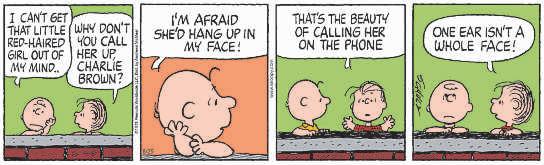



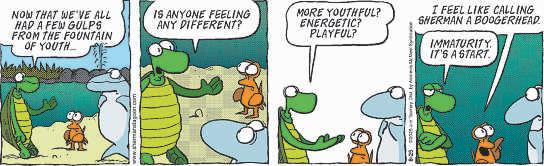

VIRGo(Aug. 23-sept. 22) Allocate your dollars to something that contributes to personal growth. Akindorromantic gesture can lead to asense of responsibility and security, helping you put your lifeintoperspective.
LIBRA (sept. 23-oct. 23) Refuse to get caught up in someone's drama. Spare yourself grief, save your reputation and maintain your position.Focus your energyonbuildingwealth and fostering ahealthy lifestyle.
scoRPIo(oct. 24-nov. 22) Live,learn andexperience pastimesthat help you growemotionally. Let your physical needs comefront and center.Everyone has aright to freedom of thought sAGIttARIus (nov.23-Dec. 21) Tidy up looseends first, and you'll experience an attitude shiftthat will enhance your day. Acommitment to someone special will lead to plans that require abudget and research cAPRIcoRn (Dec.22-Jan. 19) Gauge your time andthe requests others make, and refrain from taking on too much. Someonewill take advantage of you or try to take ownershipofsomething that belongs to you.
AQuARIus (Jan. 20-Feb. 19) You'reonthe path to growth andgain. Review your options, set abudgetand be relentless in your quest to excel. Personal and professional improvementsare within reach.
PIscEs (Feb. 20-March 20) Recognize when someoneisjealousoruses emotional manipulation to holdyou back.
Sometimes, the ones you least expect arethe ones youmust watch outfor most. Keep your eyes open andprotect your secrets.
ARIEs (March 21-April 19) Draw on your resources for factsand solutions. A shift in howyou invest and earn aliving is apparent.Anunexpected event will turn into ablessing in disguise.
tAuRus (April 20-May 20) Look for the good in everyone and everything. A pessimistic or stubborn approach will lead to trouble. Life is about more than perfection or always gettingyour way.
GEMInI (May 21-June 20) Set yourself up forsuccess. Mingle, networkand market yourself by offering your skills and experience to thoseyou want or need to impress. Explore and express your thoughts.
cAncER (June 21-July 22) Lead without force. Capturing theattention of those already on your team will help you build asolid foundation. Invest more in yourself,your skills and your dreams.
LEo(July23-Aug. 22) Draw on your resources and forge ahead with confidence. Youhave plenty to gainifyou are open to suggestions,use your creativitytoexpand your interests, and welcome suggestions, changes and contributions
The horoscope, an entertainmentfeature, is not based on scientific fact. ©2025 by NEA, Inc dist. By Andrews McMeel Syndication
Celebrity Cipher cryptogramsare created from quotations by
people, past and present. Each letter in the cipher stands for another. toDAy'scLuE: FEQuALsW






InstructIons: Sudoku is anumber-placingpuzzle basedona9x9 grid with several given numbers Theobjectistoplace the numbers 1to9inthe empty squaressothat each row, each column and each 3x3 box contains the same number only once.The difficulty level of the Sudoku increasesfrom Monday to Sunday.
Saturday’s Puzzle Answer







By PHILLIP ALDER Bridge
Jackie Robinson said, “Pop flies, in a sense, are just adiversion for asecond baseman. Grounders are hisstock in trade.”
Forbridge players, “trade”ought to be their stock in trade. Last week, we looked at the“trade” acronym from the declarer’s point of view.However,thedefendersshouldalso usethesetools.Letusstartwithtrackthe defenders’ and declarer’s tricks.
South is in four hearts. West leads a fourth-high club four: three, ace, five. Howshould East continue?
South opened withaweak two-bid, showing adecent six-card suit and some 6-10 high-card points. North knewthat there couldbefour losers, but maybe the defenderswould err or there would be 10 top tricks.Itpaystopush for game because thebonus forsuccess is so huge.
East should ask himself wherefour defensivetricks might come from. He can see two: the club ace and heart king. Westcannothavethespadeaceandking, because he would have ledthe ace, not a club. So,Eastmusthope for one spade, one heartand two clubs. This means that West must be assumed to have the club king. If he also has thespade ace, anything will work. But if West has onlythe spade king,Eastmustshift to that suit at trick two. Andheshould lead theeight or six, high to deny an honor.
Here,this leaves Southwith no chance. But if Eastplays back aclub —returning your suit, partner —the contract makes Declarer will be abletodraw trumps and discard hisspade loser on dummy’s fourth diamond. ©2025 by NEA, Inc., dist.
By Andrews McMeel Syndication
Each Wuzzle is aword riddlewhich creates adisguised word, phrase, name, place, saying, etc. Forexample: NOON GOOD =GOOD AFTERNOON
Previous answers:
word game
InstRuctIons: 1. Words must be of four or more letters.

today’s thought “And Jesus lookedround about, and said to hisdisciples, How hardly shallthey that have riches enter into the kingdom of God!” Mark 10:23



















































































IBERVILLE PARISH COUNCIL MINUTES PUBLIC HEARING, TUESDAY, JULY15, 2025 PROPOSED ORDINANCE
The Parish Council of Iberville Parish, State of Louisiana, held aPublic Hearing in the Council Meeting Room, 58050 Meriam Street, Plaquemine, Louisiana, on the 15th day of July,2025 at 6:00 P.M. pursuant to aNotice of Public Hearing published on the 23rdday of June, 2025 in the Advocate and posted on the Iberville Parish website.
The Council Chairman, Steve C. Smith, called the meeting to order at 6:00p.m. followed by the roll call with the following Council Members in attendance: Shalanda L. Allen, District 1; Thomas E. Dominique, Sr., District 3; Steve C. Smith, District 5; Raheem T. Pierce, District 6; Nadia Jenkins, District 7; Terry J. Bradford, District 9; Chasity Martinez, District 10; Charles Dardenne, District 11; Matthew H. Jewell, District 12. Absent: Easley,Frazier,Markins, Morgan.
Parish President- Chris Daigle, Chief Administrative Officer-Dwayne Boudreaux, Chief Operations Officer-Randall Dunn werealso in attendance.
Mr.Dunn and Mr.Boudreaux read the following ordinance in entirety
ORDINANCE 1 ORDINANCETOADOPT UNIFORMWATER AND SEWER RATES WITHIN THE PARISH OF IBERVILLE •Laura Soileau, representing Eisner Amper,came before the Council to give apresentation on the water and sewer rate study that was conducted. The rate study is arequirement for participation in the Water Sector Programfunded by the ARPA.Iberville applied for $3.46 million in ARPAfunding and to receive the fund the system, must demonstrate a1.15 sustainability factor and the current sustainability factor is 0.90. Acopy of the presentation is available upon request in the Council’sOffice.
ORDINANCE 2 ORDINANCETOAMEND THE 2025 FIRE DISTRICT #1 SPECIALREVENUE FUND BUDGETTOPURCHASE A 3,000-GALLONCOMMERCIAL TANKERTRUCK IN THE AMOUNT OF $525,000
ORDINANCE 3 ORDINANCE TO AUTHORIZEIBERVILLE PARISH COUNCIL TO PURCHASE IMMOVABLE PROPERTY OWNED BY THE IBERVILLE PARISH SCHOOLBOARD AND FURTHER AUTHORIZING THE PARISH PRESIDENT TO SIGN THENECESSARYDOCUMENTATIONTO PURCHASE IMMOVABLE PROPERTYFOR THE IBERVILLE PARISH LIBRARY
ORDINANCE 4 ORDINANCETO SELLPROPERTIESPREVIOUSLY DECLARED TO BE SURPLUS BY IPC ORDINANCE #012-21 TO NEIGHBORING PROPERTYOWNERS PURSUANT TO THE TERMS OFIPC ORDINANCE #00213 (STEPHANIE J. JORDAN; PARCEL0110027950)
The floor was opened to comments and questions. Therewas no opposition to this ordinance from the public.
Therebeing no further business to be conducted, the hearing was adjourned at 6:00 p.m.
/s/ MACY W. OURSO /s/ STEVE C. SMITH
COUNCILCLERK COUNCIL CHAIRMAN IBERVILLE PARISH COUNCIL MINUTES REGULAR MEETING, TUESDAY, JULY15, 2025
The Parish Council of Iberville Parish, State of Louisiana, met in Regular Session, in the Council Meeting Room, 2nd Floor, Courthouse Building, 58050 Meriam Street, Plaquemine, Louisiana, on the 15th day of July 2025.
The Council Chairman, Steve C. Smith, called the meeting to order at 6:30p.m. followed by the roll call with the following Council Members in attendance: Shalanda L. Allen, District 1; Thomas E. Dominique, Sr., District 3; Steve C. Smith, District 5; Raheem T. Pierce, District 6; Nadia Jenkins, District 7; Terry J. Bradford, District 9; Chasity Martinez, District 10; CharlesDardenne, District 11; Matthew H. Jewell, District 12.
Absent: Easley,Frazier,Markins, Morgan.
Parish President- Chris Daigle, Chief Administrative Officer-Dwayne Boudreaux, Chief Operations Officer-Randall Dunn werealso in attendance.
Aquorum was present and due notice had been posted and published in the Advocate newspaper on the 10th day of July,2025. The Pledge of Allegiance followed.
Council Chairman Smith called for anyone wanting to make public comments to register with the Clerk. Blair Guerin, Doris Bellot, and Gordon LaBauve registered to speak.
ADDENDUM
None.
PRESENTATIONS AND APPEARANCES
A) Resolution of Recognition for Lillian Hatch Perry
•Councilman Jewell read the Resolution of Recognition for Lillian Hatch Perry and stated that she was unable to attend the meeting tonight and he will present it to her at the next Town of Maringouin meeting.
B) Resolution of Condolence for HowardOubre, Jr
•Councilman Pierce read the Resolution of Condolence to the family of HowardOubre, Jr., and presented it to the family Councilman Dominique and Councilman Jewell both shared memories they had from when they all served as Parish Council members together
C) FireProtection for Patreau Lane &Bruceville –Velton Jones
•This item was passed on.
D) Audit Presentation by Baxley &Associates –Ms. Margaret Pritchard
•Ms. Margaret Pritchard, representing Hugh Baxley and Associates, LLC. presented the 2024 Iberville Parish Comprehensive Annual Financial Report.
•Ms. Pritchardbegan summarizing page 18 ofthe audit report which is the statement of net position. Total assets for the year was $293,541,243 which increased $16 million over the previous year.Capital assets increased by $1 million. The total liabilities were$26,580,795. The total net positionwas $270,472,831 which increased 7.5 %.
•Ms. Pritchardbegan summarizing page 19 which is the statement of activities. The expenses for governmental funds was $40,364,696 which decreased $2.4 million over the previous year.The business type activities for water,natural gas, and sewer totaled $8,881,779. The primary governmental total for charges for services was $48,121,758. The total general revenues and transfers was $61,754,310. The change in net position was $20.4 million for the year 2024.
•Ms. Pritchardbegan summarizing page 154 of the financial statement audit. Therewereone finding for the 2024 budget. Procedures have been put in place to monitor the budget in accordance with State laws.
•Ms. Pritchardthanked the Finance Director and the Finance Department for agreat job in putting together the Comprehensive Annual Financial Report.
APPROVAL OF MINUTES
Upon amotion by Councilwoman Jenkins, seconded by Councilman Dardenne, it was moved to wave the reading of the minutes of June 17, 2025and approve as written. The motion having been duly submitted to avote was duly adopted by the following yea and nay votes on roll call:
YEAS: Allen, Dominique, Pierce, Jenkins, Bradford, Martinez, Dardenne, Jewell.
NAYS: None.
ABSTAIN: None.
ABSENT:Easley,Frazier,Markins, Morgan.
The motion was declared adopted by the Chairman.
PRESIDENT’S REPORT
President Daigle reported on the following:
•Hestarted by recognizing the following for their years of service with the Parish, Gail Salvadras for 23 years of service, Lorraine Fair for 10 years of service, and Christopher Raymond for 5years of service.
•Hestated that the staffismaking extra preparations for the
upcoming storm and sandbags will be available at 19 different locationsacross the Parish.
•The Hwy 1boreproject is still on hold due to working with the City of Plaquemine to lower awaterline and get the drainage fixed.
•The 2new boom trucks will be hereinJuly and an additional truck had to be ordered as well.
•Hestated that Camp360 was ahuge success and looks forward to nextyear in hopes of making it available in allareas of the Parish.
•The Bayou Blue water park will be going out for bid next week and the restrooms at some of the IPRD parks will also go out forbid in the nextfew weeks.
•Hestated that at the last council meeting the proposed AT&T cell tower was voted down and it was put back on the agenda to help all the Council members over the last 30 days get a better understanding and give them moreinformation on the Telecommunications act of 1996.
FINANCIAL REPORT
Finance Director,Randall Dunn recognized Stephanie Glynn forher 27 years of service and all her hardwork throughout the years serving the parish. he said she is akey player in making the finance departas successful as it has been over the last 25 years. He stated that the Council received their budget to actual financial statement.
OLD BUSINESS
ORDINANCE IPC# 010-25
ORDINANCE TO ADOPT UNIFORMWATER AND SEWER RATES WITHIN THE PARISH OF IBERVILLE
WHEREAS,inorder to remaineligible to receive grant funding from the StateofLouisiana for futurewater line improvements, the Parish is required to adopt water rates that arecapable of sustaining the operations of the Parish’swater systems; and
WHEREAS,due to arecent water rate study performed by the firm Eisner Amper,pursuant to the Louisiana Division of Administration’s Water Sector Program, it was determined that the Parish’scurrent water rate structureisbelow asustainableaverage, and that the Parish will not be eligible forfutureState funding unless its rates areincreased to a sustainable average; and
WHEREAS,inorder to maintain eligibility for futureState funding,the Parish must increase its rates to levels that meet the parameters of the Division of Administration’sWater Sector Program.
THEREFORE, BE IT ORDAINED BY THE PARISH COUNCIL FOR THE PARISH OF IBERVILLE:
SECTION 1. Section25-4 of Article IofChapter 25 (Waters and Sewers) of the Compiled Ordinances of the Parish of Ibervilleis hereby enacted
andacopy thereof having been published in the official journalonJune 23, 2025 the public hearing on this ordinanceheldonthe 15th day of July,2025, at 6:00 p.m., in the Council Meeting Room, 58050 Meriam Street,Plaquemine,
YEAS: Bradford, Dardenne.
NAYS: Allen, Martinez, Jewell.
ABSTAIN: Dominique,Pierce, Jenkins.
ABSENT:None
The motion failed. CouncilmanPiercemade amotion to reconsiderthe previous
seconded by CouncilmanBradford, having been
the ordinancewas duly adopted by the following yea andnay vote on roll call:
YEAS: Bradford, Martinez, Dardenne.
NAYS: Allen, Dominique,Pierce, Jenkins, Jewell.
ABSTAIN: None
ABSENT:None
The motion to reconsiderfailed.
ORDINANCE
Multi-Residential: Property that is specificallyused as a dwelling for individualsorhouseholds, but which property has separate units or lots and one master meter that feeds multipleunits/lots. Examples: Apartment complexes, RV parks, mobilehome parks, townhomes, condos, duplexes, etc.
Commercial: Non-residential property that is primarily used for business or income-generating purposes, such as churches, gas stations, stores, offices, schools, hospitals, etc.
Industrial: Property that is primarilyused for industrial purposes, and which has awater meter size of 6” or larger Examples: Chemical plants, power plants, refineries, warehouses, manufacturers, etc.
Government: Hunt Correction Center and Louisiana Correctional Center
Wholesale: Village of Gross Tete and Rosedale.
The initial rates set forth herein may,beginning in September of 2026, be adjusted annually by the Parish President, based upon any increases or decreases in the Consumer Price Index (“CPI-U South”) from the prior year
SECTION 2. Section25-5 of Article IofChapter 25 (Waters and Sewers) of the Compiled Ordinances of the Parish of Iberville is hereby enacted to read as follow: Sec. 25-5 –Sewer Rates The Parish hereby adopts the following Sewer Rate Schedule, which Rate Scheduleshall be used to calculate the sewer bills payable by the Parish’sBayou Goula, Dorseyville, Patreau Lane, Choctaw Mobile
vote on roll call:
YEAS: Allen, Dominique, Pierce, Jenkins, Bradford, Martinez, Dardenne Jewell. NAYS: None ABSTAIN: None
ABSENT:Easley,Frazier,Markins, Morgan.
The ordinance wasdeclared adopted by the Chairmanonthe 15th day of July,2025.
ORDINANCE IPC# 012-25
ORDINANCE TO AUTHORIZE IBERVILLE PARISHCOUNCIL TO PURCHASE IMMOVABLE PROPERTY OWNED BY THEIBERVILLE PARISHSCHOOL BOARDAND FURTHER AUTHORIZING THE PARISH PRESIDENT TO SIGNTHE NECESSARYDOCUMENTATION TO PURCHASE IMMOVABLE PROEPTY FOR THEIBERVILLE PARISH LIBRARY
WHEREAS,the Iberville Parish Council hasidentified the need to purchase property located at 24710 Plaza Dr in Plaquemine, Louisiana for public use andenhancementofcommunity resources, specifically to provide additionalspace for the Iberville Parish Library; and WHEREAS,the Iberville Parish School Board is willing to sell the property to the Iberville
One (1) certainlot or parcel of ground, together with all the buildings and improvements thereon, and all of the rights, ways, privileges servitudes, appurtenances and advantages thereunto belonging or in anywise appertaining, situated in the ParishofIberville,Louisiana, in that subdivision thereof known as WILBERTPLAZA, and being designated on the official map of saidsubdivision on file and recorded in Conveyance Book 474, Entry 129 in the office of the Clerk and Recorder for the said Parishand State, as LOT NUMBER FOURTEEN (14), said subdivision; said lots have suchmeasurements and dimensions and being subject to such servitudes and buildingline restrictionsonsaid map. Iberville ParishAssessor Parcel #0210154040, Municipal address is 24710 Plaza Drive, Plaquemine, LA.
WHEREAS the market valueofthe property described above wasdeterminedtobeFOUR HUNDRED TWENTY-FIVE AND 00/100 ($425,000.00) DOLLARSpursuant to an appraisal report renderedby Cook MooreDavenport &Associates on or about October25, 2024;
BE IT ORDAINED,thatthe property described above is needed for apublic purpose, specifically to provide additionalspace for the Iberville Parish Library andParish President, Chris Daigle,ishereby authorized, empowered anddirected, for andonbehalfofthe Iberville Parish Council for the benefitofthe Iberville Parish Library to purchase Lot 14 of Wilbert Plaza Subdivision, 24710 Plaza Drive, Plaquemine, LA from the Iberville Parish School Boardfor the sum of FOUR HUNDRED TWENTY-FIVEAND 00/100 ($425,000.00)DOLLARS. BE IT FURTHER ORDAINED,thatthe Parish President, Chris Daigle, is furtherauthorized for andonbehalfofthe Iberville Parish Council for the benefitofthe Iberville Parish Library to sign andexecute the necessary ActofSaleand otherdocuments necessary to complete the “as is” sale of the above-described property whichshall contain such additionalterms, provisions andstipulations as deemed proper
BE IT FURTHER ORDAINED thatall ordinances or resolutions or parts thereof in conflictherewith arehereby repealed.
BE IT FURTHER ORDAINED should anypart of this ordinancebe declared null, void, invalid, illegalorunconstitutional,the remainderofthe said ordinance shall remain in full force andeffect
The foregoing ordinancewhichwas previously introduced at the meeting of the Iberville Parish Council on June 17, 2025 anda copy thereof having been published in the official journalonJune 23, 2025 the public hearing on this ordinanceheldonthe 15th day of July,2025, at 6:00 p.m., in the Council Meeting Room, 58050 Meriam Street Plaquemine, Louisiana,was brought up for finalpassage with amotion by CouncilwomanMartinez, andsecondedbyCouncilwomanJenkins, having been duly submitted to avote,the ordinancewas duly adopted by the following yea andnay vote on roll call:
YEAS: Allen, Dominique, Pierce, Jenkins, Bradford, Martinez, Dardenne Jewell.
NAYS: None
ABSTAIN: None
ABSENT:Easley,Frazier,Markins, Morgan.
The ordinance wasdeclared adopted by the Chairmanonthe 15th day of July,2025.
ORDINANCE IPC# 013-25
ORDINANCE TO SELL PROPERTIESPREVIOUSLY DECLARED TO BE SURPLUS BY IPC ORDINANCE #012-21 TO NEIGHBORING PROPERTY OWNERS PURSUANT TO THETERMS OF ORDINANCE #002-13 (STEPHANIE J. JORDAN; PARCEL 0110027950)