TAPPING IN
A Lafayette dance teacher uses tap dancing as a memory life hack
BY JOY HOLDEN Staff writer
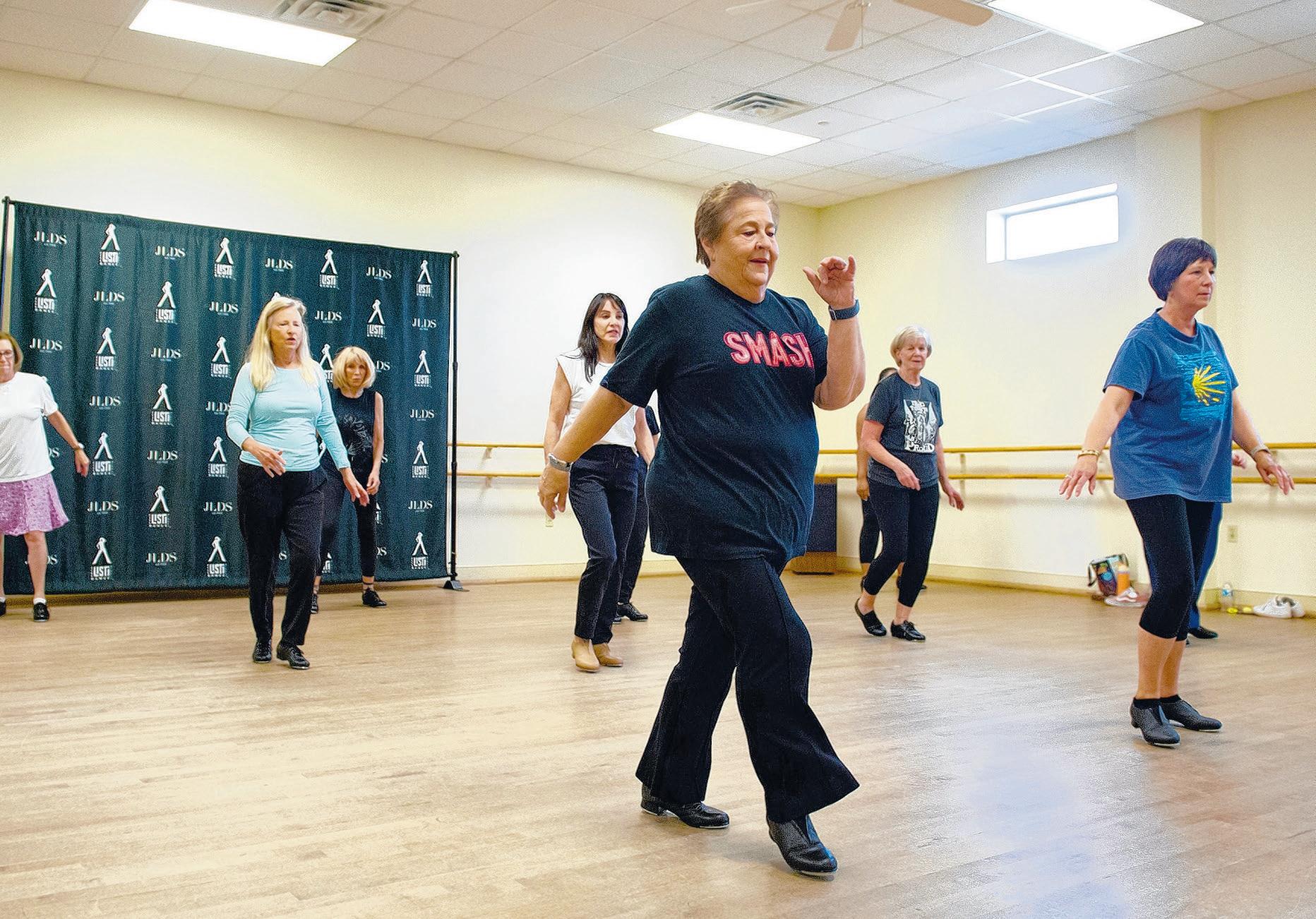
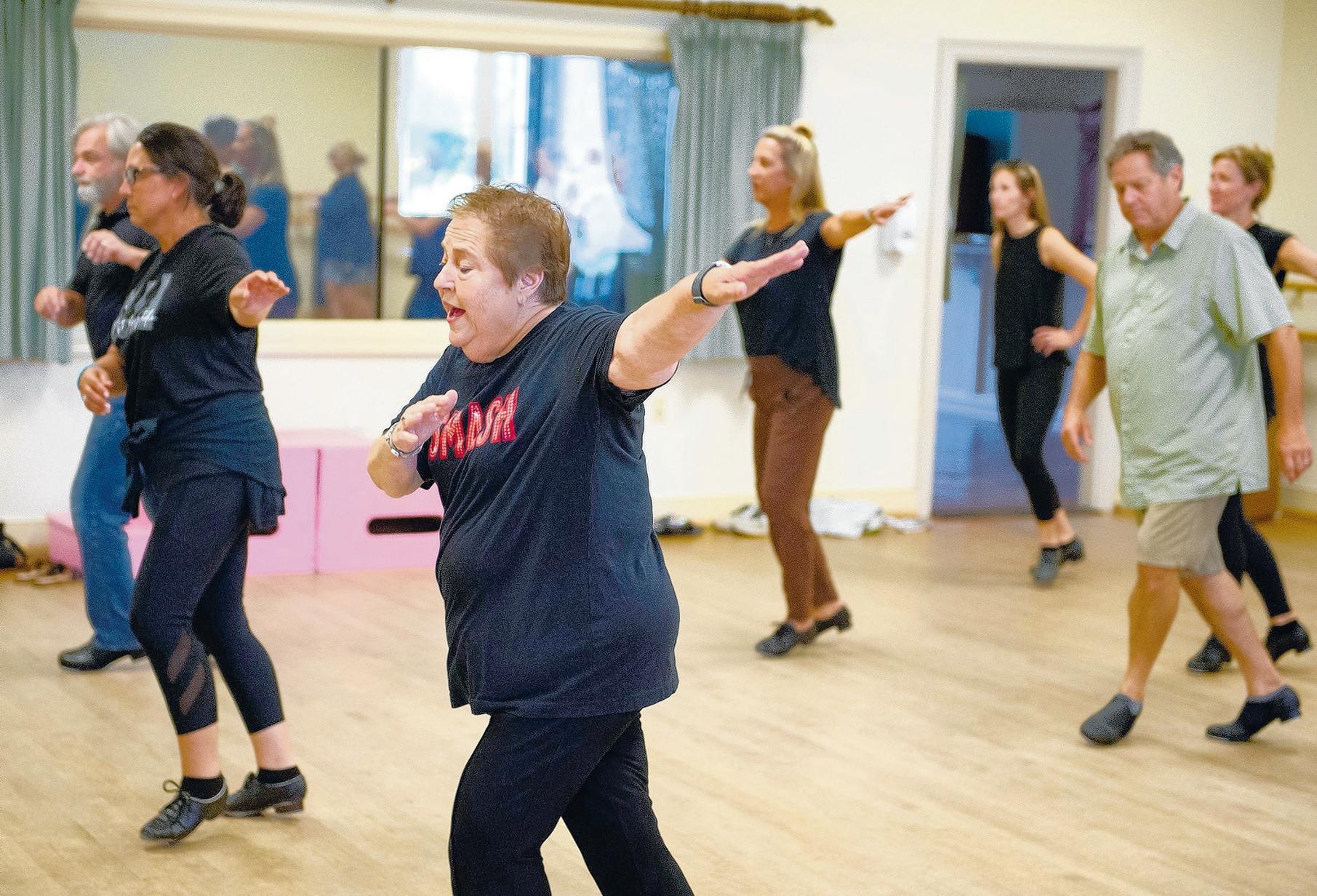
Shuffle ball changes echo around the Jill Listi dance studio in Lafayette, but instead of girls in black leotards and pink tights, the room is full of adults dressed in their casual tap dance attire Each student exercises their muscles and their brains while learning new steps and practicing the routine.
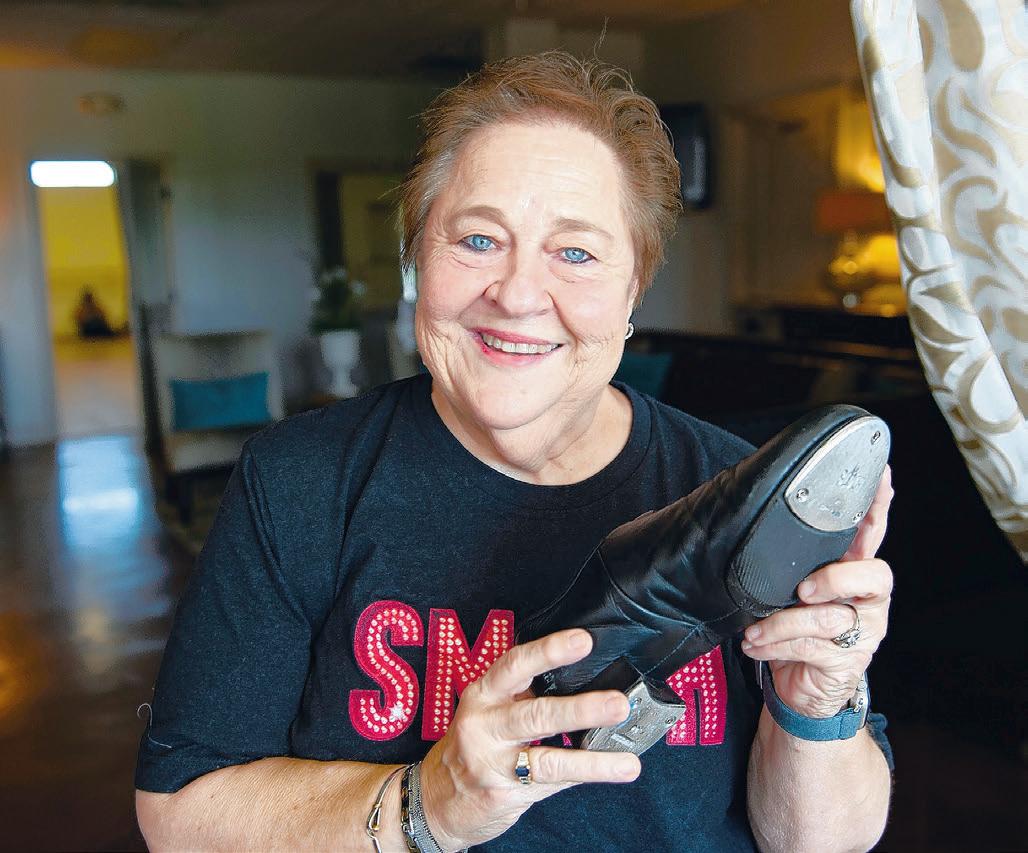
Lisa Breaux, 70, is the adult tap teacher who has been in dance since she was 2 years old. Her mother, also a dance teacher, owned five studios in Acadiana, so Breaux has lived in the dance studio nearly her whole life.
Breaux is a dance specialist who teaches students of all ages and a wide variety of mental and physical disabilities. As a national certified dance instructor of Dance Masters of America in ballet, tap, jazz and acrobatics, Breaux has been invited to teach tap at their National Convention in Los Angeles. She also is a licensed speech, language and hearing specialist having worked in the Lafayette Parish School System for several years.
She teaches a Dance Challenge class for dancers with special needs on Tuesday nights after her adult tap classes.
These days, Breaux’s focus is on teaching older dancers new tricks. She choreographs and teaches a new dance each week to her adult tap students. Instead of counts, she instructs by sound
Although tap is still Breaux’s favorite dance style, she says it’s different teaching adults rather than teaching children.
“When you teach with children, you’re counting, and it’s very repetitious,” she said “With adults, I can probably have a brand-new student in with somebody who’s had 10 to 15 years of dance and can make it work. You can always scale it to where it’s harder
or easier, and adults learn by sound. They learn patterns.”
The tap students range in age from 20 to 70, both men and women. She encourages her students to practice and use muscle memory for the steps. Breaux mixes up the music — from Michael Jackson to The Eagles to Bobby Darin, and the percussive tap rhythms evolve. She says it takes her a couple of hours to choreograph a new routine, and since she does this weekly it’s great for her mentally Usually, Breaux takes the summers off, and this summer she spent June in Spain on a religious walking pilgrimage Upon her return, her tap students were clamoring for classes, so Breaux held her first summer class the second week of July
While Breaux espouses the physical benefits of tap dancing for adults, she insists that it’s the mind that gets the most workout during a class.
“It’s a mental game, you know,” she says. “I go watch the adults, and when they’re doing stuff wrong, I’ll remind them that this has nothing to do with your feet, has everything to do with your head.” Claudia Campbell, a tap
student in her 60s, was a non-tapper when she began classes in 2019 before the COVID pandemic. Once classes resumed, Campbell and her friends returned on most Tuesday nights. She credits Breaux with being an amazing teacher who is patient and fun. “It’s really a wonderful exercise, and we laugh, and it’s just having something in common with other women
in my age group,” Campbell said. “We have learned so much, and the one thing that Lisa stresses a lot is memory, like your muscle memory.” Breaux reminds her students, young and old, that they need to be fully focused. Tap class is not the time to think about dinner plans, phone calls, homework or what’s going on later The
page 2G
If you would no longer like to receive this free product, please email brtmc@ theadvocate.com.
Oh, Delaware, where art thou? And Kansas. And Kentucky, New Hampshire and West Virginia?
Those are the only five states we’re missing for the 2025 Postcard Project our fourth summer of collecting postcards, which ends on Labor Day There’s still time to reach our goal of all 50 states and as many countries as possible.
If you’re visiting any of those five states — or know someone who lives there — please consider sending a postcard. We’ve received postcards from all 50 states each of the last three years, and we’re hoping to keep the streak alive.
As I write, we have received a total of 174 postcards from 45 states and 24 countries. A common refrain this year? Postcards are surprisingly hard to find.
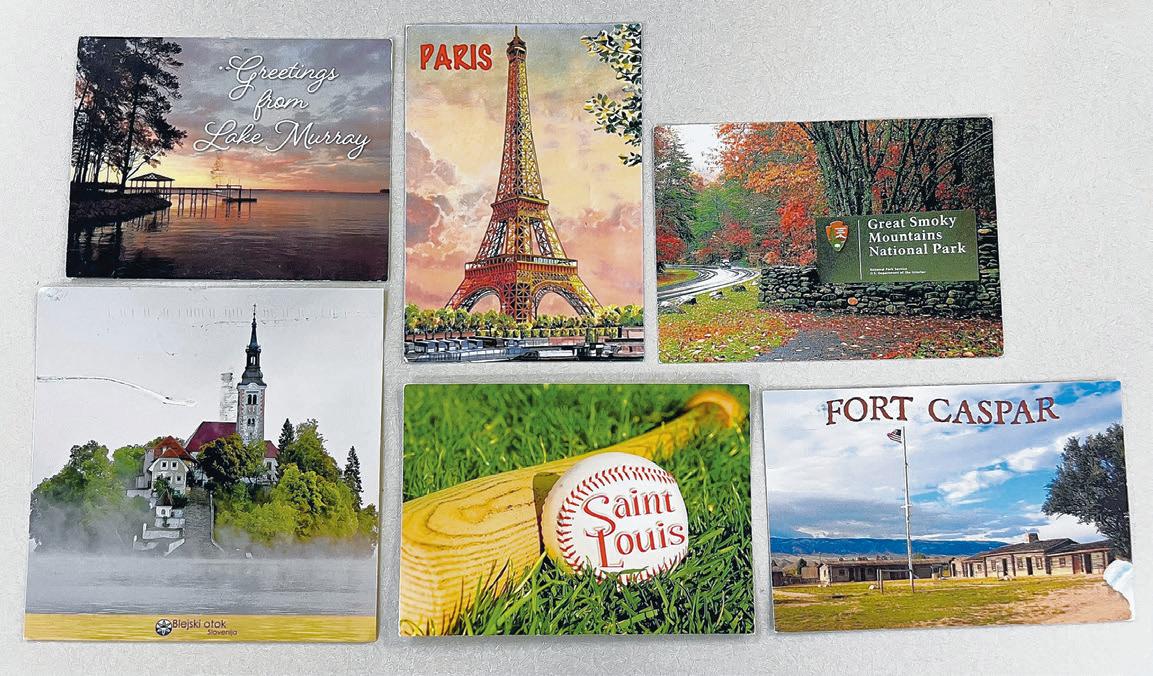
I recognize, appreciate and salute the people who take their time and energy to find postcards, address them, buy postage for them and figure out how to mail them wherever they are. Their efforts are a testament to what is required to build connection with others. I don’t take it for granted. June B. sent a postcard from Lake Murray, South Carolina, and opened with, “This is the only SC postcard I could find, so please excuse the unremarkableness of it!”
Pattie, who has sent in several postcards on behalf of her uncle, Larry Landry, says that on her 10-state road trip, she has learned many remarkable things. Including this fun fact: the Buc-ee’s in Rockingham, Virginia, doesn’t sell postcards.
On a card from Tennessee, she wrote that finding a mailbox on the road is just as challenging as finding a postcard. On a postcard from the Great Smoky Mountains National Park, she wrote that she saw a bear at the park and has some advice for fellow road travelers: “Don’t drive the Blue Ridge Sky Parkway after dark!” Susan Pecue managed to find and mail a postcard from Bled Island in Slovenia. She wrote, “What a beautiful part of the world I find myself in green and clean is the way locals describe it. The water in the lake is crystal clear Travel is about new experiences and spending time with those you love.”
R.C. Chapin heard that we needed a Wyoming postcard and stepped up to the plate after visiting Fort Caspar in Casper, Wyoming. The Fort Caspar Museum features exhibits related to the history of the 1865 reconstructed fort located on the Oregon, Mormon, California, Pony Express and transcontinental trail corridor
Trish sent a postcard from Paris, where she is visiting her daughter She writes, “Most places are not air-conditioned and it has been in the 90’s — feels like home temps. I have been accomplishing my goal of eating a new kind of pastry daily Oooh la la. Bread, cheese, wine and pastry!” Joann sent greetings from St. Louis, Missouri. She wrote, “St. Louis is an avid sports city Known for the Arch on the riverfront. Enjoy toasted ravioli and gooey butter cakes.”
Lisa Breaux holds a shoe before leading a tap dancing class for senior citizens.
STAFF PHOTOS BY BRAD BOWIE
Lisa Breaux leads a tap dancing class for senior citizens recently at Jill Listi dance studios in Lafayette.
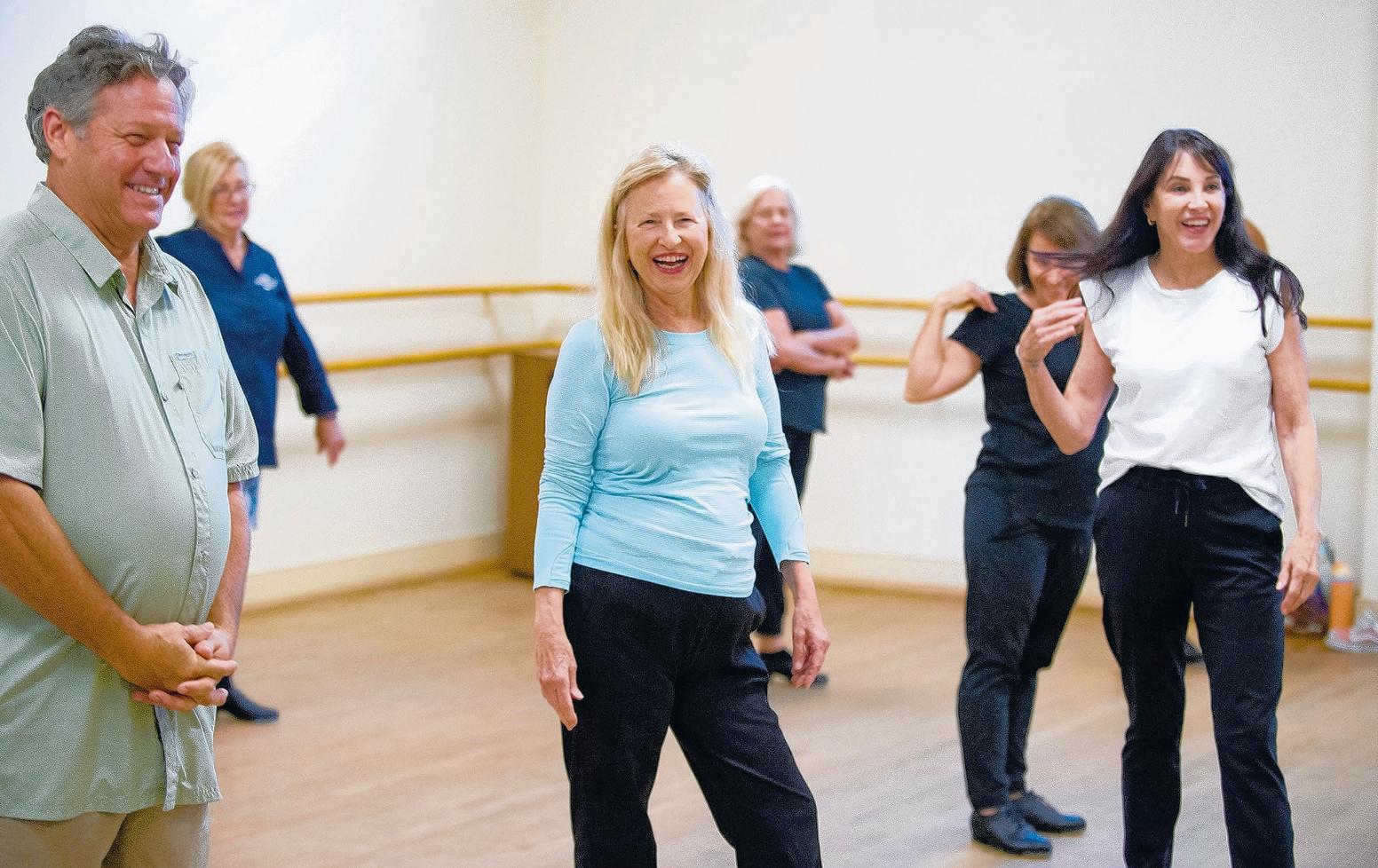
Students take a break between songs.
Slick Chick women’s underwear business born of surgery
BY RACHEL MIPRO
Contributing writer
Helya Mohammadian prides herself on side-hooking briefs and front-fastening bras with Velcro:
A simple but revolutionary world of underwear for women with disabilities.
Mohammadian grew up in Ruston, studied fashion at LSU and then moved to New York City to work in fashion and retail. She turned her drive for inclusive underwear into a rapidly expanding company Slick Chicks. Her products now range from underwear and bras to activewear and loungewear
The following interview has been edited for clarity and length
Tell me a bit about your background.
I was born in Iran. We moved post-revolution, when things got really political, which we all are living through right now From an early age, I loved anything creative, drawing, fashion. I think my parents still have my sketch pads from when I was 7 and 8. Both of my parents were in small business, so I saw firsthand how they worked through building things from nothing, also moving to another country and having to really hustle Seeing that entrepreneurial spirit in my family rubbed off on me. I went to LSU, studied fashion, and then I really wanted to expand that knowledge. And what better place to be than New York City?
The product was inspired by your sister’s surgery, right? What year was that?
That was like 11 years ago. She was the inspiration behind my
company, actually
At that point, I was in my late 20s, working in New York for many different fashion companies and retail companies but wasn’t very fulfilled. My sister went through a C-section, which is very routine. Her post-surgery recovery was really hard on her I remember a conversation where she said something as intimate as bending over and putting on underwear was such a challenge. That really sparked something in me. And I got to researching what is now adaptive clothing. Everything was very medical and
geriatric and just not comfortable or fashion forward. That is where I got the idea about creating something that would be more empowering, more fun. I wanted to change what adaptive or accessible fashion looked like.
Tell me what that means to you.What is adaptive fashion?
Our mission is very simple, and it’s always been, “How can we meet people where they are in their life with clothing that helps them feel comfortable, dignified and independent, while also solving a need for them?”
That’s always been something that has been ingrained in
our company: Being inclusive through and through and creating products that are beautiful but also serve a purpose.
Finding this sort of disabilityaccessible underwear wasn’t really a thing 10 years ago. I feel like we weren’t even having that conversation about underwear in general.
Has that ever been a subject that people don’t want to talk about? Is that something you had to navigate past, that sort of cultural taboo?
Yes, 100%. In the early stages of starting this company if I even got a meeting with an investor, it was an immediate “No.” No one saw the need for a product like this. No one understood it, because the market didn’t exist, and we were creating a market. We were sharing stats: There’s 1 in 5 people in the world with a disability, 1 in 3 people knows somebody with a disability, and so on.
It was really challenging, and it was also really challenging being a woman of color trying to raise funds. Women in general see less than 2% of funding. It’s educating the customers, educating even the retailers. We’ve had to hold our retailers’ hands throughout the merchandising and the messaging.
What was your first breakthrough on that, in terms of finding the funding, finally realizing you were getting through to people about this issue?
When I met my first investor, who’s a female CEO of another brand, her sister had multiple sclerosis, and I was talking to her about the product. I wasn’t even trying to raise money We were working together on a side proj-
ect for how we could empower women together
And she immediately was like, “This is incredible. I 100% see the need for this.” Two weeks later, she cut me a check for $250,000.
That was the first funding that we got, and that was four years in. It was a long time coming, but that helped get us on our feet.
For those first four years, how did you manage to keep going?
Everything, every dollar I made, I was putting it toward the company And it was really exciting, because I was, and I still am, very passionate about it. The more I got into it, the more I realized how underserved people were.
For the accessible underwear in particular, how did you do that research to make sure it works for different body types?
Early on, it was all about finding people who needed the product the most. We found the right people who were living with disabilities, but we also worked with occupational therapists, caregivers and people with the lived experience. As an able-bodied person, I can design, but I didn’t have that firsthand experience, so it was important to work closely with people to make sure that our garments actually worked. On a personal level, how has this journey been for you?
This is not for the weak. Entrepreneurship is a roller-coaster ride of emotions. But it’s also super rewarding. Just seeing how far we’ve come is really incredible — to see the products on CVS shelves now, from packing orders in my apartment 10 years ago
Louisiana Inspired Book Club selects its fall choice: Let’s get cooking!
BY LAUREN CHERAMIE Staff writer
In looking for the next Louisiana Inspired book club pick, our team wanted to select a book unlike the ones we’ve discussed with readers in the past. With this goal in mind, we settled on a book we believe folks in Louisiana will know and want to discuss: “Chef Paul Prudhomme’s Louisiana Kitchen” cookbook This was the legendary Louisiana chef’s first cookbook, published in 1984, that changed everything — with its profound impact on American cuisine and food culture, both nationally and internationally The book put Cajun and Creole cuisine on the map. When it comes to Cajun and Creole food, there is before Prudhomme’s book and after His recipes particularly for dishes like blackened redfish, gumbo and jambalaya — brought the bold flavors of Louisiana into kitchens across the country
The chef was born on a farm in Opelousas. In his early career he worked in kitchens in New Orleans, including Le Pavillon hotel and Maison Dupuy
In 1975, Ella Brennan hired Prudhomme as the executive chef at Commander’s Palace. He was the first American-born chef to hold that position at the iconic New Orleans restaurant and transformed the menu by adding Cajun dishes. He worked at Commander’s until 1979, when he left to open his own restaurant, K-Paul’s Louisiana Kitchen, which closed in 2020 during the pandemic. Prudhomme passed away in New Orleans on Oct. 8, 2015, at the age of 75. Even after his death, his cooking legacy reverberates throughout Louisiana and the country
We invite readers to join us in revisiting Prudhomme’s first cookbook. Make the recipes. Remember the heyday of restaurant scenes with blackened everything. Take a culinary trip down memory
lane. Leaf through its pages and create the dishes according to Prudhomme’s specifications.
In October, we will host a virtual event to discuss the book and
Continued from page 1G
dance style requires total concentration.
“It keeps your mind so sharp, and that’s why I think I have so many in class. They’re like, ‘This is the best exercise, mentally, I get in a long time,’” Breaux said. Over time, the students collect a repertory of steps that culminate into various routines.
Christy Leach, 73, has attended Breaux’s adult tap classes for almost 10 years. She ran into a friend
who told her about the class, and she said she thought it sounded like fun. Leach says she works out regularly and likes to stay in shape, but tap class offers fun aerobic exercise that helps her memory
“I always loved tap,” Leach said.
“I took it in third or fourth grade, so it had been about 60 years since I’d done it. The first time I went, I was a little overwhelmed because all the people knew what they were doing. I could just tell the feeling in the room was that everybody was having a good time. It was fun.”
As she kept going, all the steps started to make sense, and the class became a source of joy and
connection.
Even though the tap students may not see each other regularly outside of the studio, their bond is strong from their consistent attendance.
“It doesn’t matter your ability level. No one’s watching you. Everyone is so accepting of each other and where you are,” Leach said. “Some of the dancers are really good, and then some of us aren’t, and it just didn’t matter We all connect and have the same spirit of joy.”
Email Joy Holden at joy.holden@ theadvocate.com.
remember Prudhomme and his influence on Louisiana food and culture.
Sign up for notices for the Louisiana Inspired Book Club, which
selects a book to read and discuss quarterly here.
Below is an excerpt from the introduction to Prudhomme’s “Louisiana Kitchen”:
“I think cooking is a very personal thing. You have to draw on the past, on what you’ve read, what you’ve tasted and what you’ve seen prepared. But I think that anyone can show imagination with food First you need to build your confidence. Start by reading cookbooks to see the different ways people combine foods. Keep in mind that there is only a limited number of foods available in this world to work with which is fascinating, because people all over the world take these basics and make them taste completely different. People in your own neighborhood, the people next door, have the same products to work with, and yet each person ends up with a distinctive dish.”
Email Lauren Cheramie at lauren.cheramie@theadvocate. com.
RISHER
Continued from page 1G
testing the younger generation’s cursive fluency. He wrote, “After your article this morning, I thought I should dust off my cursive skills. Checking my postcard collection, I found most all cards dated before 2000 were in cursive ” Travis Cosban has sent multiple postcards from his travels around the globe From Istanbul, he wrote, “So unexpected stop here for a day Turns out flight path goes over Iran at the worst time possible Made the best though and got some great food and chocolate. Not enough time for a hair transplant though!”
From Malaysia, Cosban wrote, “Went to some water bungalows next to a converted oil rig for diving/snorkeling. Safety stan-
dards are a little different but all alive and well. We have dodged the sea kraits (10x more venomous than a rattlesnake) so far!” Speaking of rattlesnakes, Sue Keefa wrote from Colorado that “some of us up here eat (rattlesnake) in place of oysters, gator or crawfish! It’s actually quite tasty!”
I’m glad she thinks so! And I appreciate the postcard!
So if you find yourself near a gift shop in New Hampshire, do us all a favor: grab the least unremarkable postcard you can find, scrawl a note and help complete the set. Delaware’s still waiting. If you would like to participate in the 2025 Postcard Project, all it takes is sending a postcard to: Jan Risher, The Advocate, 10705 Rieger Road, Baton Rouge, LA 70809.
Email Jan Risher at jan. risher@theadvocate.com.
STAFF PHOTO BY BRAD BOWIE
Lisa Breaux leads a tap dancing class for senior citizens recently at Jill Listi dance studios in Lafayette.
FILE PHOTO
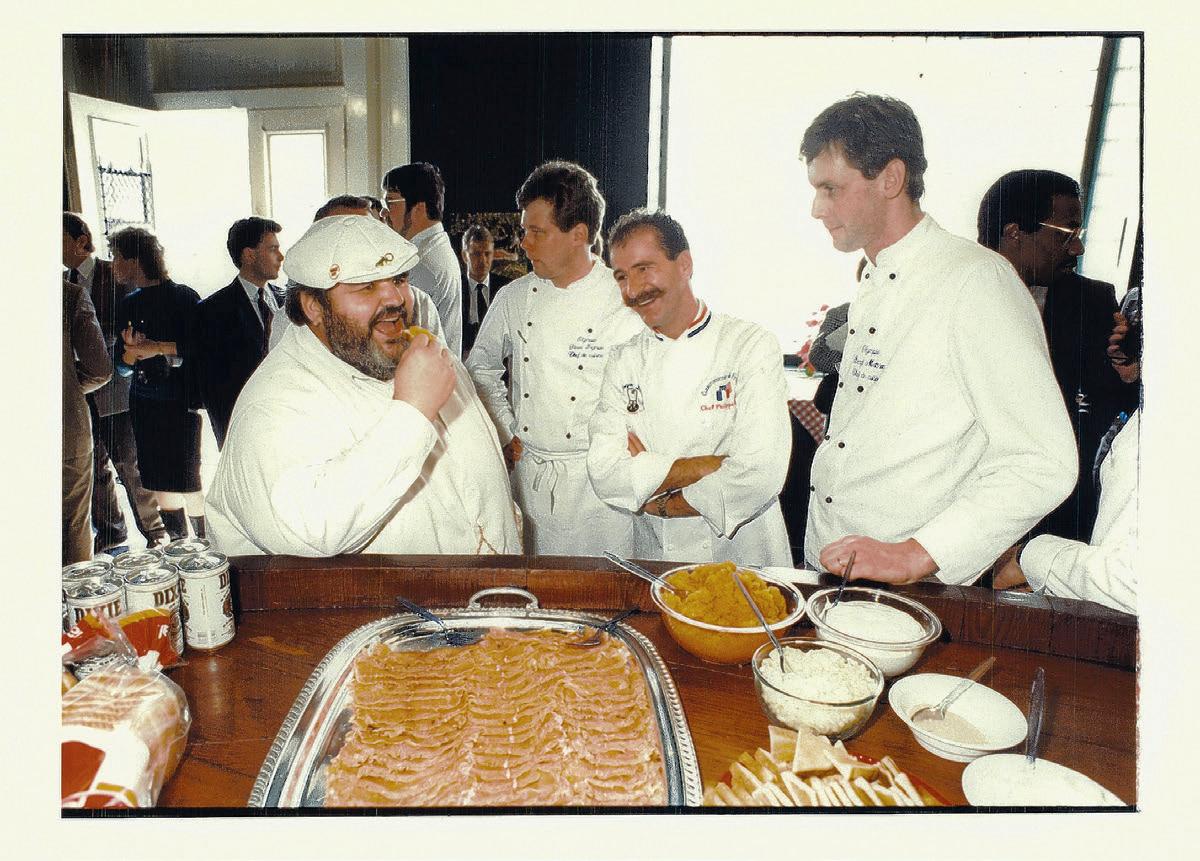
Chef Paul Prudhomme with other chefs in Louisiana
STAFF PHOTO BY JAN RISHER
An array of postcards sent for the 2025 Postcard Project include, from top left around clockwise, postcards from Lake Murray, S.C.; Paris; the Great Smoky Mountains National Park, Fort Caspar Casper Wyo.; St. Louis; and Bled Island, Slovenia.
PROVIDED PHOTO
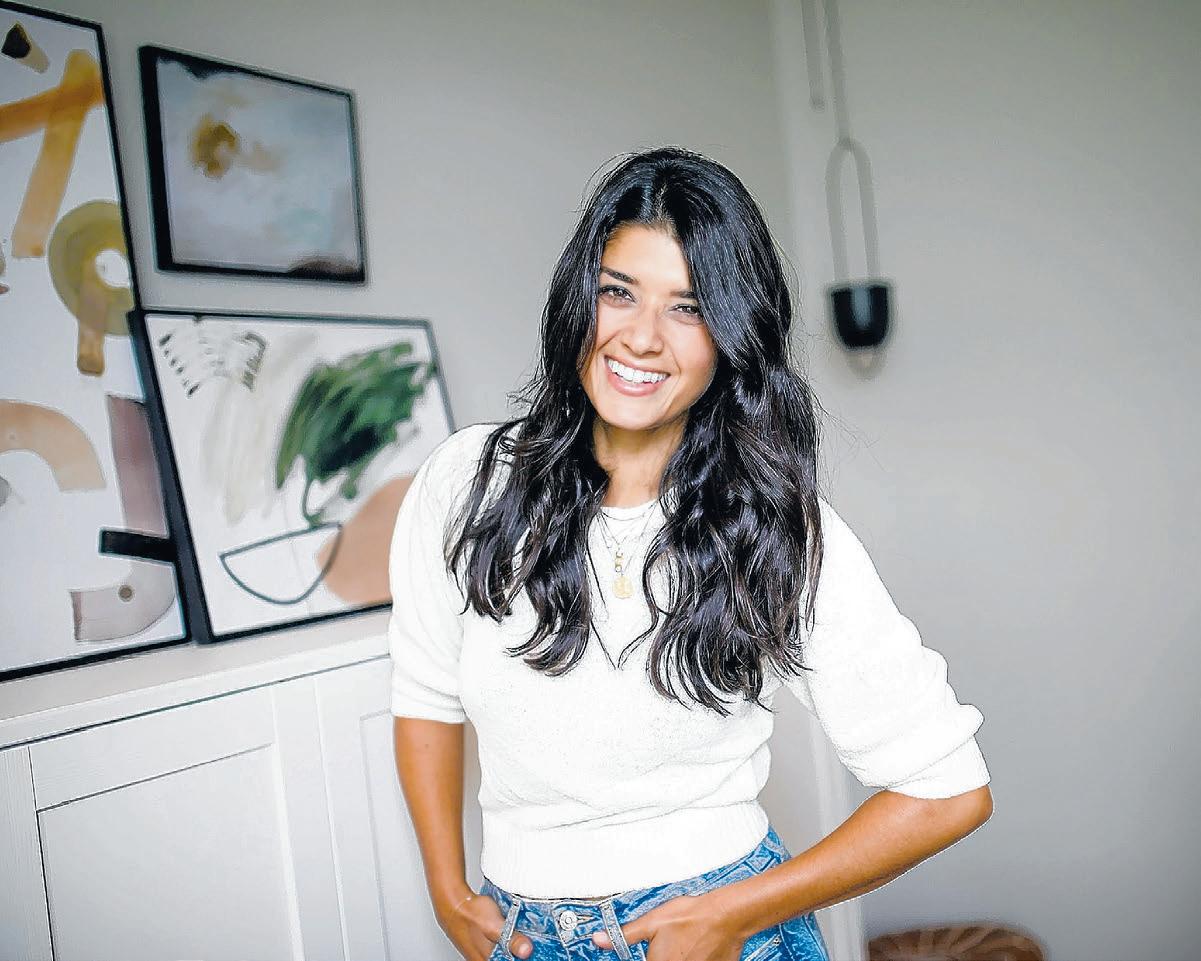
Helya Mohammadian grew up in Ruston. Her Slick Chicks women’s bras and underwear are made for those who are recovering from surgery or living with disabilities.
FAITH & VALUES
Sensory rooms help for neurodivergent worshipers
BY KATHRYN POST Contributing writer
From organ blasts and incense to forced hugs and handshakes, for folks who struggle to process sensory input, houses of worship can quickly feel anything but holy
That was the case for Lark Losardo’s son Percy, who in 2017 began attending Catholic Mass with his family at age 7. Percy, who is autistic, was often overwhelmed by the Brooklyn church’s open space, noise and crowds At first, when he needed to move around or stim (engage in repetitive actions to selfregulate), he’d leave the service with a parent. Eventually, in part because of the barriers to attending as a family, they stopped coming altogether
Then, in 2020, the Losardos moved to Maplewood, New Jersey
After watching online services at a nearby Catholic parish called St. Joseph’s during the pandemic, Lark Losardo learned in 2024 that the parish was opening a sensory room equipped with regulation tools, including a weighted blanket, touch pillow ear defenders and sound machine. Thanks to that room, today Percy is back in the pews, using the room to regroup whenever needed.
“It speaks volumes,” Lark Losardo told Religion News Service “Not everyone needs this space, but just having it there sends a very clear message.”
Across the U.S., families like Percy’s who once thought worship was off-limits are returning to faith communities thanks to a small but growing number of sensory rooms in religious settings.
At St. Joseph’s, the Rev Jim Worth said the new sensory room, which opened in December, is a natural extension of the parish’s faith values. To him, the room is evidence that inclusion a principle Worth linked to Catholic social teaching — isn’t just given lip service
“When you put intentionality behind something, it makes a world of difference,” said Worth.
On a 60-degree day in late March,
the church, located on a quiet residential street, had a front stoop featuring three signs: one quoting Martin Luther King Jr another quoting Pope Francis, and a third welcoming anyone in the community to visit the Still Waters Sensory Room.
Named after the biblical Psalm 23 passage — he leads me beside still waters” — the sensory room was converted from an unused confessional. It was designed by Together
We Bloom, a Maplewood-based nonprofit that helps make events and spaces more accessible. The room’s dark indigo walls match the comfortable chair glider and beanbag, each contributing to the soothing atmosphere. The total cost of the room was under $2,000 and was largely paid for by church funds, plus some donations.
“This sensory room has really changed everything for us,” said Pavitra Makam, a St. Joseph’s parishioner and mother of two neurodivergent kids. Being able to worship together has been the biggest thing for our family.”
Jay Perkins, who has been in the sensory room business since 2009, said it’s often parents in need of a safe, supportive space for their kids who are spearheading the movement to build sensory rooms. When his daughter began exhibiting signs of aggression at age 4, places like libraries (too quiet), playgrounds (too loud) and trampoline parks (too crowded) were
inaccessible. That applied to his Episcopal church, too.
“There are so few places where special-needs kids with sensory integration disorders can enjoy it,” said Perkins.
The lack of accessible spaces for his family inspired Perkins to begin building the kinds of rooms his daughter would thrive in. In 2018 he officially launched his company, The Sensory Room, which builds high-end, durable sensory rooms from start to finish and trains people on how to use them.
“It’s catching on,” said Perkins, whose company built roughly a dozen rooms in 2022 and 80 in 2023. Though The Sensory Room specializes in schools, Perkin’s company has also built rooms for a Broadway theater and an airport, and three in evangelical churches Most of his custom rooms, he told RNS, start in the $20,000 range.
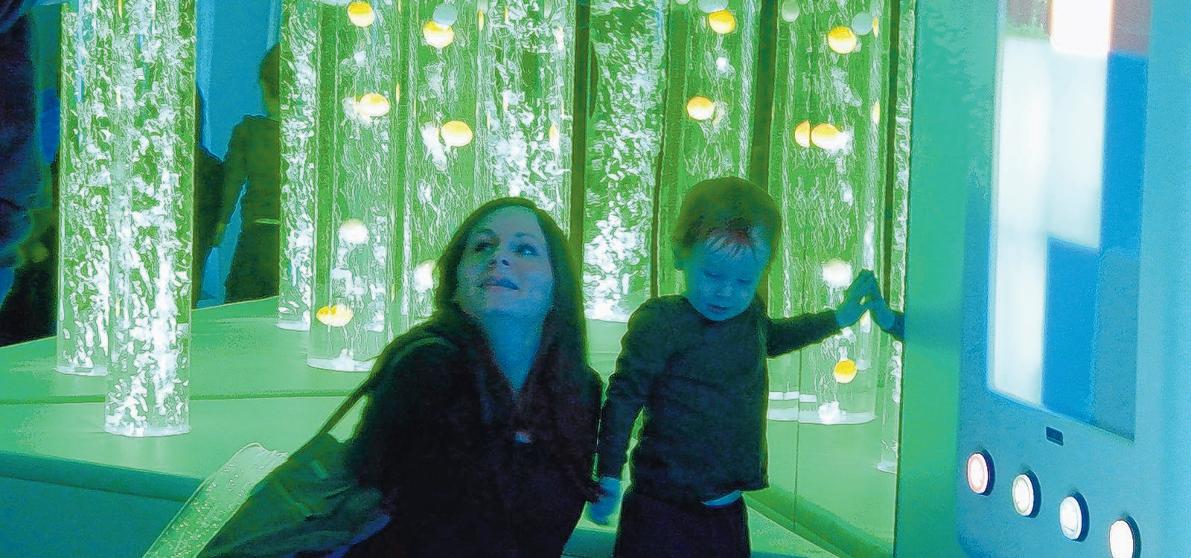
One of those projects was the $35,000 transformation of a storage room into a state-of-the-art sensory room at Encounter Church, an evangelical congregation about 30 minutes from Dallas. Completed in February 2024, the renovation included interactive tactile and texture panels, bubble tubes, mirrors, new carpet, paint and electrical work, and an LED-star ceiling complete with a digital shooting star According to the Rev Chris Binion, who co-founded the church with his wife, Tracy the decision to create the room was prompted by
the Holy Spirit.
“I was in a season of prayer and fasting, and I felt like the Lord asked me how to take care of his ‘littles,’” Binion told RNS.
It’s not just churches that are revamping spaces to focus on sensory integration. Temple Emanu-El, a Reform synagogue in Atlanta, has adapted two of its rooms to help folks process sensory input. A former cry room just off the main sanctuary was altered to become the Shalom Sanctuary a small space with a large window facing the main worship space equipped with fidget toys, beanbags and headphones.
The synagogue also received a $10,000 grant from the Jewish Federation of Greater Atlanta to improve the accessibility of a classroom. That renovation is almost complete, and the room, which features a wall of sensory engagement toys, flexible furniture and alternative seating (think large rubber balls), will be especially helpful for children who need sensory breaks during religious classes or events such as the annual Purim carnival, according to Rabbi Rachael Klein Miller, associate rabbi at the synagogue.
“Something important in Judaism is the idea that we are all created ‘b’tzelem Elohim,’ in the image of God,” said Klein Miller “And much of that is connected to the golden rule of treating people the way we want to be treated and finding space for everybody in the community.”
According to Rebecca Barlow, a regional disability specialist in The Church of Jesus Christ of Latterday Saints, adding a sensory room to a house of worship doesn’t automatically make it accessible to those with sensory needs.
“It’s just one piece of a bigger machine that you’re trying to build,” said Barlow, disability specialist for the Desert Ridge Stake in Mesa, Arizona.
The first step to building that machine, Barlow said, is asking disabled individuals and their families what it would take to make church feasible for them. When she
first became a disability specialist roughly five years ago, feedback was invaluable. “The biggest thing was listening. The parents of these children know what they need,” said Barlow, who is also the parent of a child with autism.
Based on the families’ input, she created a sensory room in her meetinghouse with new donated items. Knowing it would be used by kids who could become aggressive, she removed hard chairs and chalkboard lips that could pose safety risks. She also filled the room with the usual sensory items, added light-blocking curtains and included a night-light that projected a calming light pattern. Still, it took more than that to get families back in the door
“We, as parents of disabled children, often can become jaded, and we lack trust that our children are going to be cared for in a manner appropriate to how special they are,” said Barlow To build trust with families, church leaders invited some members of the ward to serve as one-on-one aides for each child with a disability The aides were trained in the homes of their assigned families and eventually accompanied the kids in the sensory room during church meetings Barlow also introduced the kids to the sensory room ahead of time via pictures and tours, and ward members, too, received basic training on understanding disabilities and how to use the sensory room. In the few years since that sensory room opened, the model has gained traction. Barlow says the seven wards in her stake now each have their own disability specialists and sensory rooms, and she routinely takes calls from LDS church members across the country and the globe seeking to set up sensory rooms of their own.
“It feels like we’re seeing a cultural shift toward understanding and accepting and integrating people with disabilities,” said Barlow “If we want to follow Christ, if we want to emulate him, if we want to be his disciples they need to be foremost in our mind.”