HAPPIER DAYS
BY SERENA PUANG Staff writer
What do you think of when you think of Piccadilly? Baby Boomers might think of trays bursting full of shrimp cocktail, crawfish étouffée or chocolate cake. Maybe even remember the age of live organ music or rushing to Piccadilly on Third Street after church? Louisiana GenXers may remember going with parents and grandparents. Those younger than that might not go at all.
Piccadilly was founded in downtown Baton Rouge by T. H Hamilton in 1944 Over the last 80-plus years, the restaurants have been the site of many cherished memories for people in the city — and beyond. However, since its founding, the times have changed. Dining habits across the country and locally have shifted. Locally, the restaurant scene has grown significantly And, Piccadilly has changed.
Piccadilly in its heyday
For many in Baton Rouge, the cafeteria-style restaurant is a part of their core childhood memories with so many memories of the restaurant on Third Street and in sinceshuttered malls. Going to “the Piccadilly” was an elevated cafeteria experience: there were cloth napkins, live music, commissioned murals
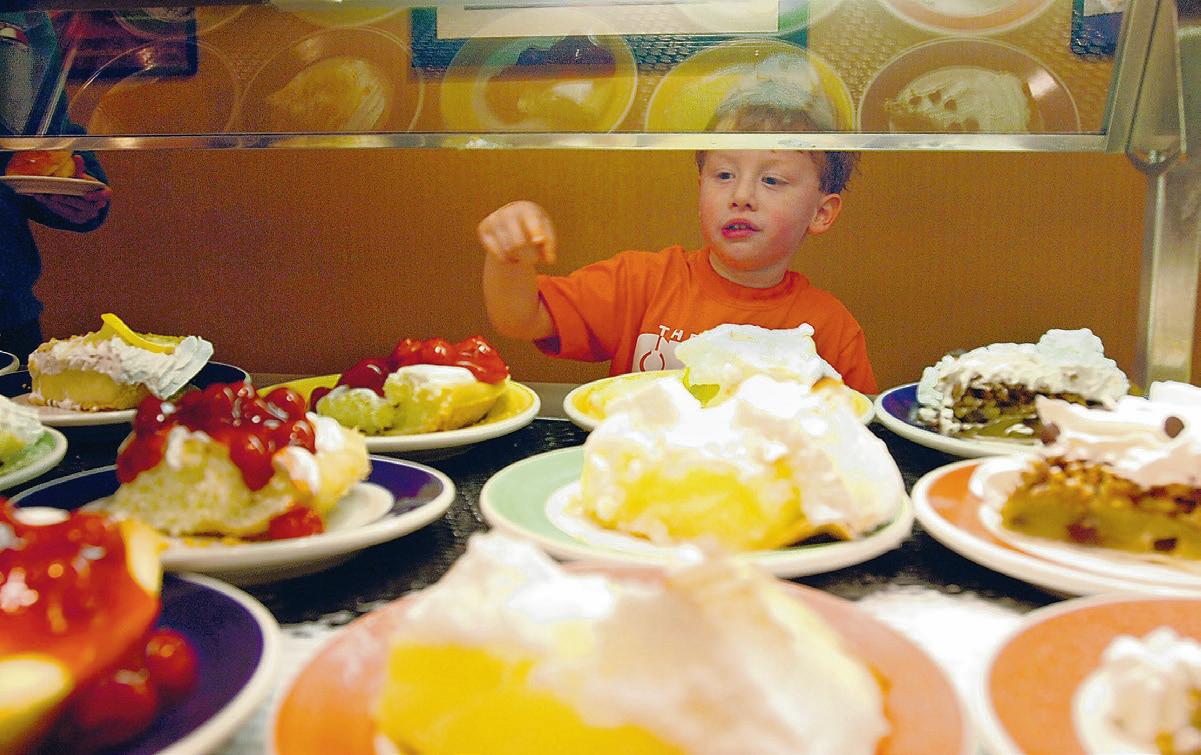
Five-year-old George Hendrich admires the desserts on display at Piccadilly restaurant on Essen Lane in 2006. After coming out of bankruptcy the restaurant featured new schemes to improve business, such as Piccadilly Pete, a parrot mascot, to appeal to children.
and home-cooked food. The Westmoreland mall location had chandeliers in its dining room. Many went there regularly enough for staff members to know their names.
Jeannine Gerald Schutte, 70, grew up going to the Piccadilly at Bon Marche Mall in Baton Rouge. Her familydidn’tgoouttoeatsuperoften in the 60s, but if they were shopping or running errands, they’d swing by as a treat During her high school years (1968-1972), she was hired to play organ at the restaurant. As part of her payment, she got to eat a meal
there during each shift for free. Her favorite meal was mac and cheese and chocolate pie for dessert.
The restaurants were busy Schutte recalls soldiers stopping in by the bus-full, and readers wrote into the newspaper about their baseball or basketball teams stopping there for meals traveling to or from away games. According to Brian Von Gruben, former executive vice president of Piccadilly who worked in the
ä See PICCADILLY, page 2G
Piccadilly is all about family. It’s about places that you went with your parents, with your children, maybe your extended family.”
CHAN
WILLIS,
Piccadilly regular
BY ROBIN MILLER
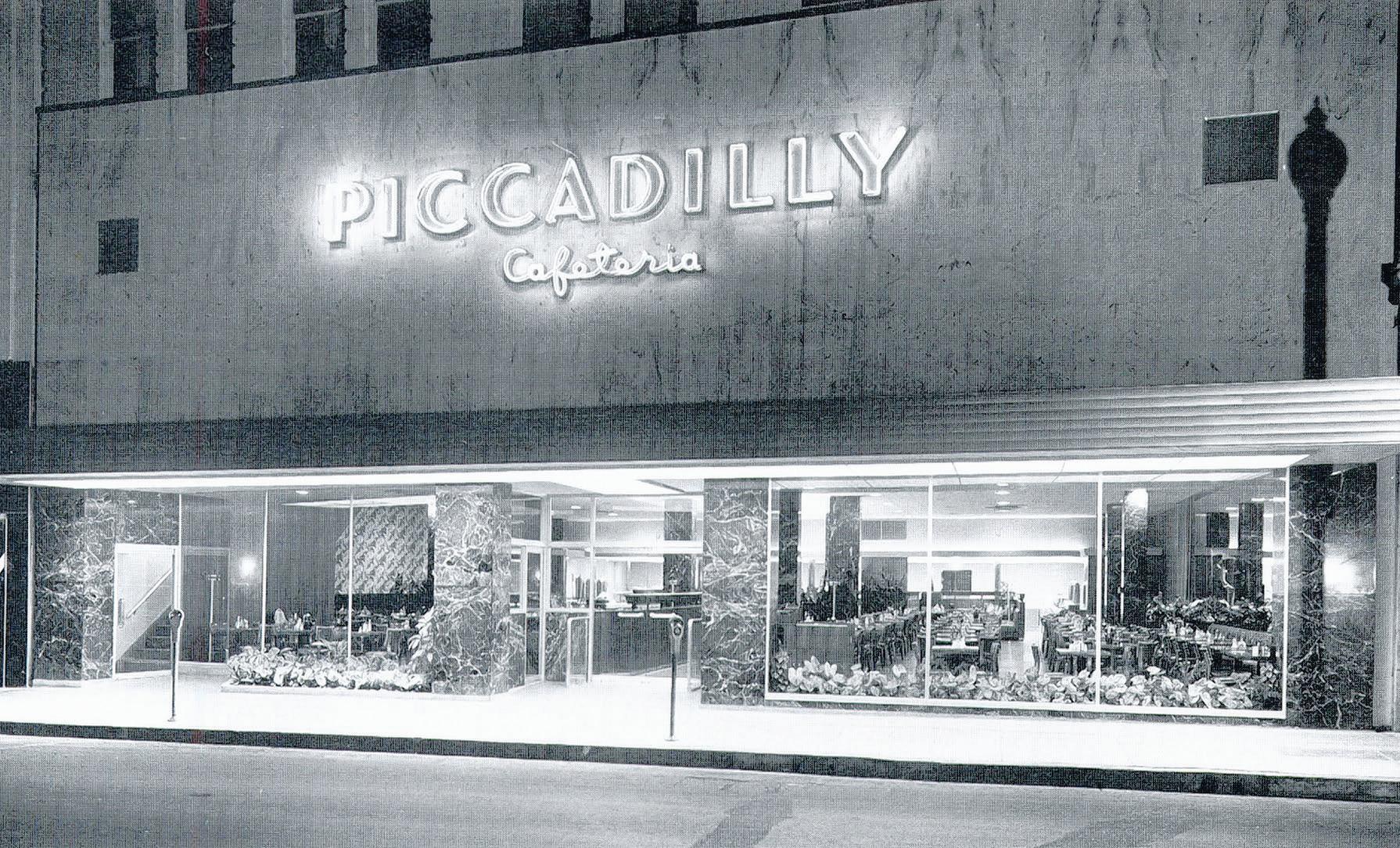
The exterior of the former Mayer Hotel Building got
extensive renovation by Tandy H. Hamilton in 1950-51.
Architect A. Hays Town designed a modernist renovation
of the original building
FILE PHOTO BY JAMES CHANCE
Piccadilly corporate office from 1971-2001, Mother’s Day was the biggest day of their year Speed was always top priority,” said John Ward, a former manager at various Piccadilly restaurants throughout his 39 year career “They (owners and upper level management) expected to have 90 customers go down the line in ten minutes.”
The restaurants saw thousands of customers a day “Forty years ago,” he said, “it was a whole different company”
What happened to Piccadilly?
The story of the rise and nearfall of Piccadilly is long and intertwined with larger trends and events. Regardless of the reasons, the chain has a much smaller footprint now both in terms of number of stores and number of patrons. After acquiring Morrison Restaurants Inc. in 1998, Piccadilly had about 270 locations.
According to the Piccadilly website, the chain only has 30 locations left across the country today, mostly concentrated in Louisiana or Memphis and Atlanta. By the time Ward retired in 2023, he says the restaurants rarely saw long lines anymore.
On the business side, there are many reasons for the shift. The company made several bad investments. They bought Morrison’s Cafeterias, their main competitor, with locations concentrated in Florida in 1998 and converted their spaces to Piccadillys. According to Peter Ricchiuti, business professor at Tulane where he and students worked to study and track numerous public companies, including Piccadilly in the 90s, this purchase was a huge blunder for the company because people had loyalty to their brand of cafeteria.
took the company private after 27 years of being a public company and 69 years in business.
“Once it became private, it kind of fell off everybody’s radar because it was a stock that a lot of people owned in Louisiana,” said Ricchiuti.
The company filed for bankruptcy again in 2012. In 2014, it was purchased by Falcon Holdings, which is known for revitalizing struggling businesses.
Piccadilly and Falcon Holdings did not respond to multiple requests via phone, email and website contact form for comment for this article.
fighting against.”
In the ’70s and ’80s, fast food became a much larger part of the American diet and since Piccadilly’s heyday, dining out in general has become a bigger thing With rising food and labor costs, Piccadilly is competing both with fast food restaurants which are able to provide an onthe-go experience for approximately the same cost and fast casual restaurants which have less overhead and the benefit of serving alcohol.
pleasant and fairly reasonably priced.
What’s next for Piccadilly?
Piccadilly people have a loyalty for the business that’s hard to replicate.
“When your parents get older, that’s where they want to go. So maybe, when that generation dies off, I don’t know what’ll happen,” Ricchiuti said. “I think it’ll definitely stay in business. It’s got enough repeat customers.”
Chan Willis, 69, visits once every few months. He said that what he misses about Piccadilly isn’t really about the restaurant or the food.
“Piccadilly is all about family,” he said “It’s about places that you went with your parents, with your children, maybe your extended family.”
“The menu was completely the same, or at least almost completely the same,” he said.
“People didn’t go there anymore because now it’s a different restaurant.”
The company filed for bankruptcy in 2003 due to poor performance. It was purchased by Piccadilly Investments, a partnership between Los Angelesbased Yucaipa Companies and Diversified Investment Management Group. The purchase
Changing times
The decline of Piccadilly is also a story about changing times. Cafeteria-style dining has fallen out of vogue, and the chain has long struggled to court a younger demographic.
“If you’re not from the South, you associate cafeterias with the worst times in your life like being hospitalized or being in middle school,” said Ricchiuti. “That’s what they’re
In an attempt to cut costs, keep up with the times or adapt to the economy, Piccadilly also lost a lot of its defining features: in the early 2000s, they did away with cloth napkins. When Schutte graduated high school, they replaced the organ she used to play with three booths and a large TV Piccadilly also doesn’t make everything from scratch anymore. Even so, of the seven long time regulars interviewed for this article, none of them thought it was just Piccadilly Times have just changed. The food is still good, they said, maybe not exactly the same but
“When you’re a Piccadilly person,” he said. “You’re likely to be there two or three times a week.”
But many people went to Piccadilly largely because it was already right by something else: church the mall. When malls closed or they stopped going to church, they stopped driving out of their way to go to Piccadilly
Even die-hard Piccadilly fans visit the cafeteria less for a variety of reasons: they’re older now The pandemic changed many people’s relationship with dining out, but even if they only visit once or twice a month, the memories live on.
It was a place he could go with those he loved and spend quality time together They didn’t even have to wait for the food; they just sat down and started chatting and eating He misses the time in his life when getting together with his three kids over a meal was easy
“Now, they all have their own children, their own families, their own lives, their own towns that they live in,” he said. It’s not that Piccadilly has changed — Willis experiences it mostly the same as he always did. The main difference is that he’s not the same anymore — and no amount of fried catfish can bring back the past.
Email Serena Puang at serena.puang@theadvocate. com.
CURIOUS
Continued from page 1G
salesman,” said Michael Trotter, a retired vascular surgeon living in Houma
“He was a medical doctor, but he didn’t get his training in medical school.”
Trotter is the foremost expert on Tichenor, having written two extensively detailed articles on the doctor’s life, both published in 2010 issues of the Mississippi Journal of Medicine. Tichenor is said to have perfected his antiseptic mixture while living in Liberty, Mississippi, in Amite County, which borders Louisiana at East Feliciana and St. Helena parishes
Trotter was also living in Mississippi, working in Greenville, when he wrote the articles. His interest in Tichenor was piqued during his medical training with John Ochsner, co-founder of what is now Ochsner Health in New Orleans
“John was really interested in medical and surgical history, as am I,” Trotter said “One of his favorite subjects was Dr Tichenor and he was really good friends with the president of the Tichenor Antiseptic Co. at the time.”
In 1993, Ochsner gave Trotter his notes from a previous presentation of Tichenor’s life and work, to which Trotter returned 15 years later and started his own research.
A Louisiana connection
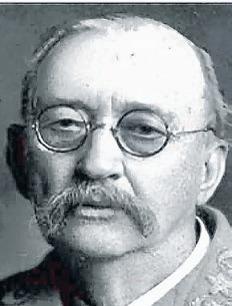
Answering the second part of the question — about Tichenor’s connection to Louisiana — starts at the end. Tichenor is buried in Baton Rouge.
Yes, Baton Rouge, where he’s buried in Roselawn Cemetery next to his wife, in-laws, son and daughterin-law in a family plot marked by a large monument marked “Tichenor.”
To find the answer Trotter backs up to the beginning.
“When I started researching Tichenor, I wanted to find out how much of his story was true, how much was hype and how much was legend,” Trotter said. “Was he a doctor? Was he a salesman?”
Trotter says it was evident early on that Tichenor didn’t go to medical school, but he had practical training as a chemist or what today people would think of as a pharmacist.
Tichenor was born April 17, 1837, in Ohio County in
western Kentucky He had harbored a great interest in chemistry and continued studying it after leaving home.
“By 1859, at age 22, he had moved to Franklin, Tennessee, and was involved in manufacturing explosive guncotton,” Trotter wrote in his first article for the Journal of the Mississippi State Medical Association.
“At the outbreak of the Civil War, the business was commissioned by the Confederate government to manufacture gunpowder.”
A year later, Tichenor ran a photography business in Nashville. He served with the 22nd Tennessee Cavalry, which fought in Mississippi.
“Reportedly, he spent two years studying during his time of active service and applied to take the Medical Board Appointment Examination,” Trotter writes. Passed the medical test
Tichenor apparently passed, because he was appointed an acting assistant surgeon in the Confederate States Army, making his “doctor” title legitimate.
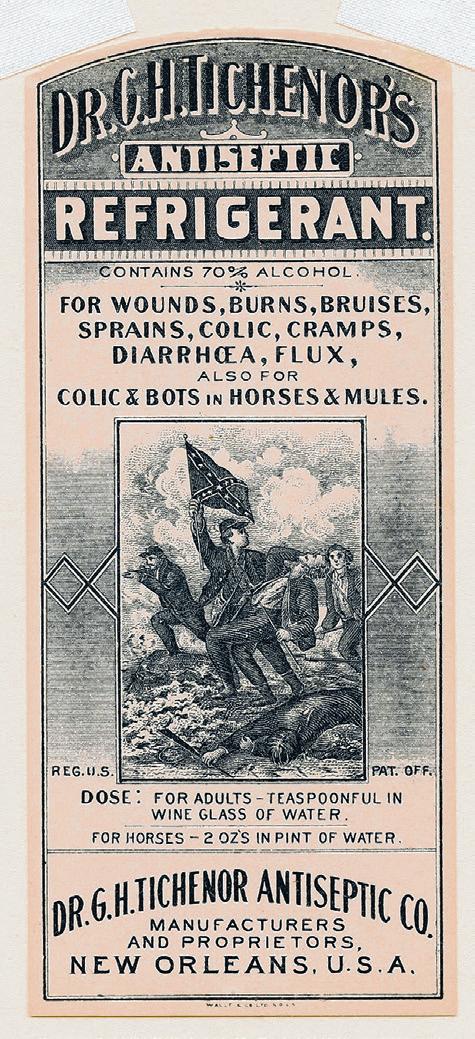
However Tichenor’s main interest was in developing an antiseptic liquid to facilitate wound healing.
He left Mississippi for Red River Landing in Pointe Coupee Parish, where, Trotter says, the good doctor first bottled and sold his antiseptic.
“Today, Red River Landing is a channel mile marker in the middle of the river,” Trotter said. There’s no more Red River Landing. If you look it up, you’ll get some GPS coordinates, and that’s it. It’s across the river from Wilkinson County in Missis-
sippi and near Angola, both across the river.”
In 1884, Tichenor moved his family to Baton Rouge, where he practiced medicine. The following year, he formed a partnership with the Sherrouse Medicine Co., to manufacture Dr Tichenor’s Antiseptic. The Sherrouse side of the business, named for business leader William John Sherrouse, of Monroe, was in charge of selling the antiseptic while Tichenor was listed as the manufacturing chemist.
When Tichenor opened the Dr G.H. Antiseptic Co. in New Orleans in 1905, his story of a gangrenous leg injury during the war that he treated and healed with his concoction proved to be a successful advertising ploy — though Trotter points out that there is no written proof of the injury. Opened on Canal Street
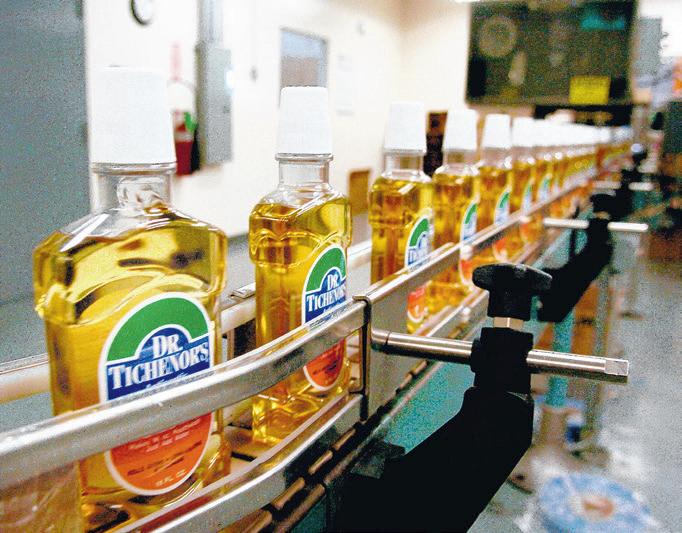
Tichenor and Sherrouse opened a plant at 230 Canal St. in New Orleans in 1905. Today, that location is home to Harrah’s Casino. However, Dr Tichenor’s is still bottled in New Orleans at 4200 W. Poche Court.
Tichenor not only was inventor of the concoction but a master marketer He hired local musician Louis Blake to compose the “Dr Tichenor’s March” and “Dr Tichenor’s Waltz,” the sheet music for both published in 1895.
In the end, Tichenor really didn’t need gimmicks to sell his goods. The antiseptic sold itself. More than a century later, it still does — using the same ingredients as when it started: 70% alcohol and 1% peppermint oil, along with inactive ingredients arnica, Saccha-
rum carbonate and purified water
The ingredients combine to treat sore throats through gargling, sterilizing cuts, scrapes, minor wounds and, for some, it’s a great topical for insect stings and bites.
“My son was 3 or 4 years old when he got into a hornet’s nest,” she said. “The couple next-door told us to put some Dr Tichenor’s on his stings. It helped him so much. It’s magic — almost instant relief.” Congress, flood control
Meanwhile, Tichenor was popular in Louisiana.
“He considered running for Congress, and he hit the nail on the head with his solutions for flood control,” Trotter said. “He spoke to anyone who would give him a podium, but his ideas weren’t put into place until after the flood of 1927, when the Federal Flood Control Act was passed in 1928.”
That would be five years after Tichenor’s death on Jan. 14, 1923. Trotter believes he’s buried in Baton Rouge because he bought the family plot in Roselawn while living there.
“I would say that his advocacy for flood control was probably his greatest accomplishment,” Trotter said. “He may not have had all the kinks worked out, but his solutions were exactly right.”
Do you have a question about something in Louisiana that’s got you curious? Email your question to curiouslouisiana@ theadvocate.com. Include your name, phone number and the city where you live.
from page 1G
James evensong heralded it as “a poetic, deeply spiritual service rich with symbolism and mystery.”
Earlier this month, St. James had a “bon voyage” evensong service to wish its choir members well on their own trip to England to begin a brief residency at Worcester Cathedral. It was nice to know that some of my Louisiana friends would be experiencing evensong in England, too. I hope it touches them as much as it touched me. Email Danny Heitman at danny@ dannyheitman.com.
Ricchiuti
STAFF FILE PHOTO BY TRAVIS SPRADLING
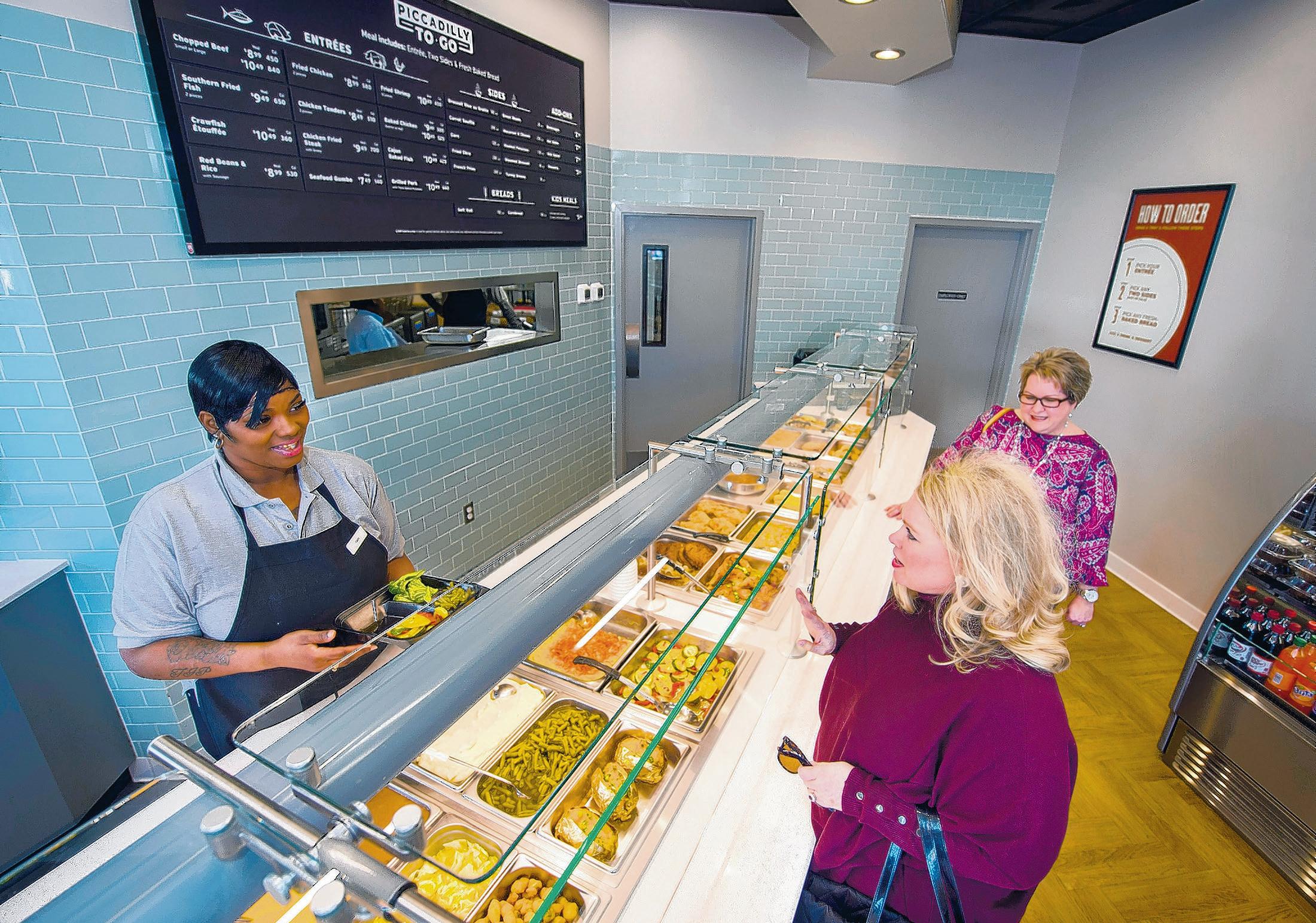
Guest assistant LaKisha Chatman, left, builds to-go lunches for customer Holly Annison, right, and Becky Caire at the Piccadilly To Go location at
216 Lee Drive, near Highland Road, which closed in 2019 after six months open. The location was the second one of its kind for the chain with no inside seating