
Wildness might be summer’s best gift
From the window in our south Louisiana kitchen where I make coffee each morning, I can see that our big sycamore is shedding again, as it always does at this time of year The trunk drops its outer layer each summer, and long strips of bark litter the lawn like a manuscript tossed to the wind We’ll mow and rake to straighten things up, but a sycamore, like summer itself, can only be tidied so much. Here and there throughout the yard, I spot other signs of rebellion Our night-blooming cereus has grown so wide and woolly that its long, green arms slap at anyone who crosses the threshold. Climbing fig vines amble toward the roof, an assault I’ve spent years keeping at bay Our patio bird feeder, its seed spilled like a broken piñata, tells me a raccoon has been marauding again.
Maybe the best gift of summer is its essential wildness, its refusal to fit within the neat boundaries and boxes in which we assume a sober life should dwell. We’ve come to a profligate stretch of the calendar, when there might be merit in answering summer’s abandon by being a bit looser ourselves.
We do, after all, live in a copiously curated age, with every moment, it seems, arranged in a careful tableau for the sake of our friends on Facebook, Instagram or TikTok. Little wonder that so much of summer, once lauded as a carefree idyll, can now feel as if it’s been soberly staged in advance.
That thought tugs at me more often these days as I open a newspaper or magazine and find yet another brightly edited list of ideal vacation spots or a Top 10 summary of great beach reads. I find those features irresistible, and in my years as a journalist, I’ve written many of them myself. But one can always have too much of a good thing, and I wonder if, in our zeal to celebrate summer as a bucket list to be achieved rather than a respite to be enjoyed, we risk making the season into just one more grudging obligation.
The trick, I suppose, is to simply savor summer holding it loosely enough that we can breathe lightly within its embrace, or perhaps even doze.
Last month, while visiting a loved one in the hospital, I noticed that the clock in her room had lost its hands. It was an odd thing to see the circle of numbers now mute on the question of minutes or hours, as if time itself had stopped
ä See AT RANDOM, page 2G
Treacherous terrain, a nameless creek and pieces of a mastodon: Unearthing treasure in Louisiana
TBY ROBIN MILLER Staff writer
he tree roots caught James Gregory’s eye the moment he waded into the No Name Creek, which isn’t really the creek’s name.
And the roots weren’t really tree roots. They were weird, shaped like mini stalagmites in their sideways projection from the creek bank.
Gregory alerted fellow fossil hunter, Mason Kirkland, who immediately knew they were about to unearth treasure on the periphery of West Feliciana Parish. Make that treasure in the context of paleontology, which is Kirkland’s area of expertise. He’s LSU’s vertebrate paleontology collection manager, but ownership of fossils from this hunt would be shared by him and Gregory, whose day job is director of LSU’s Brookshire Military Museum in Memorial Tower
ä See FOSSILS, page 2G
BY RACHEL MIPRO

Contributing writer
crumbling

When Thomas “T” Diemer moved to New Orleans in 1988, he noticed the palm trees everywhere especially the ones with bright orange fruit.
“Once, even I stopped the car because a tree had so many and so bright dates that I
PROVIDED PHOTO BY STEPHANIE YAN-CHAU
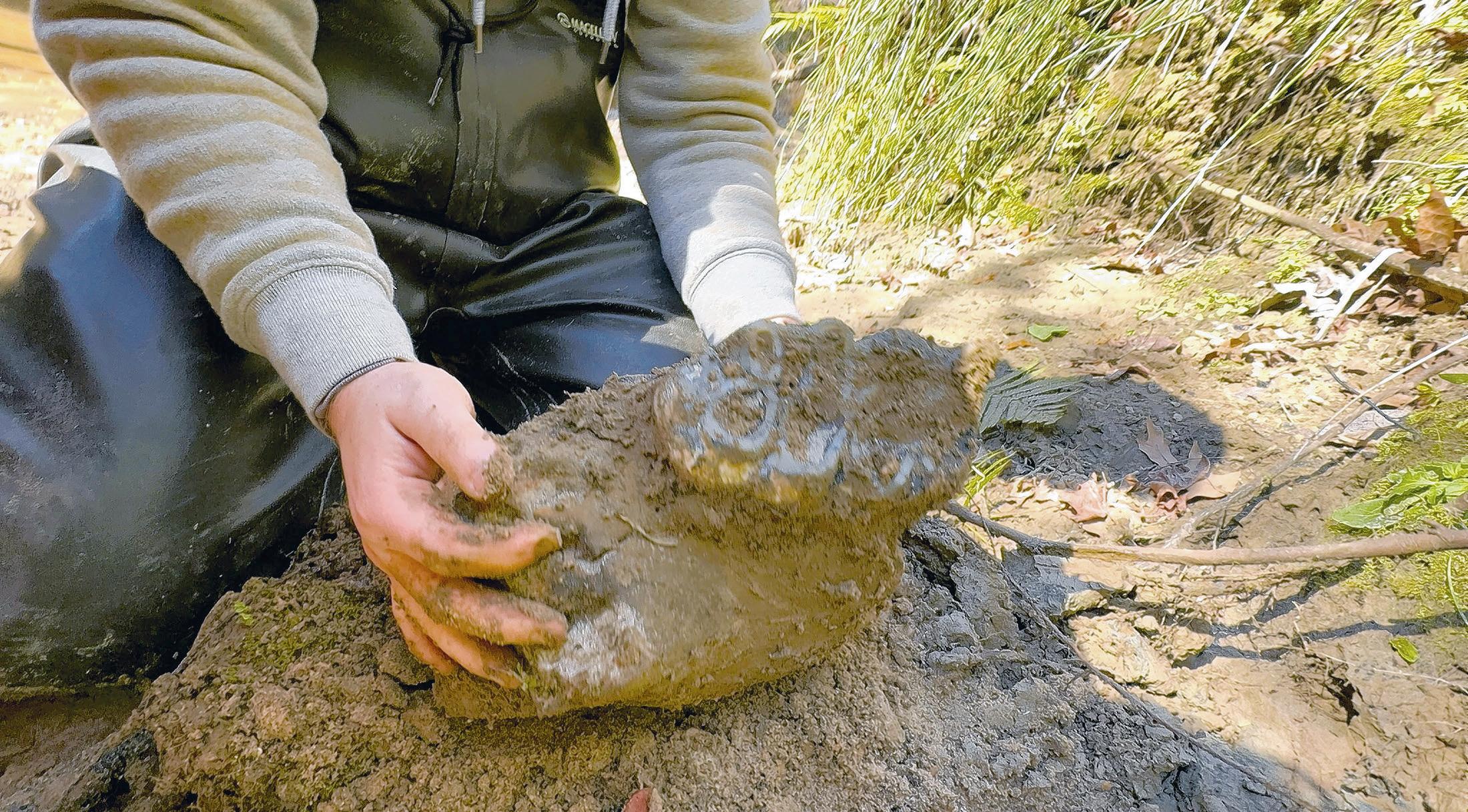
James Gregory shows the cone-like molars on a mandible of a mastodon he and Mason Kirkland discovered in an obscure creek in West Feliciana Parish. The molars belonged to a female mastodon estimated to have been 35 years old
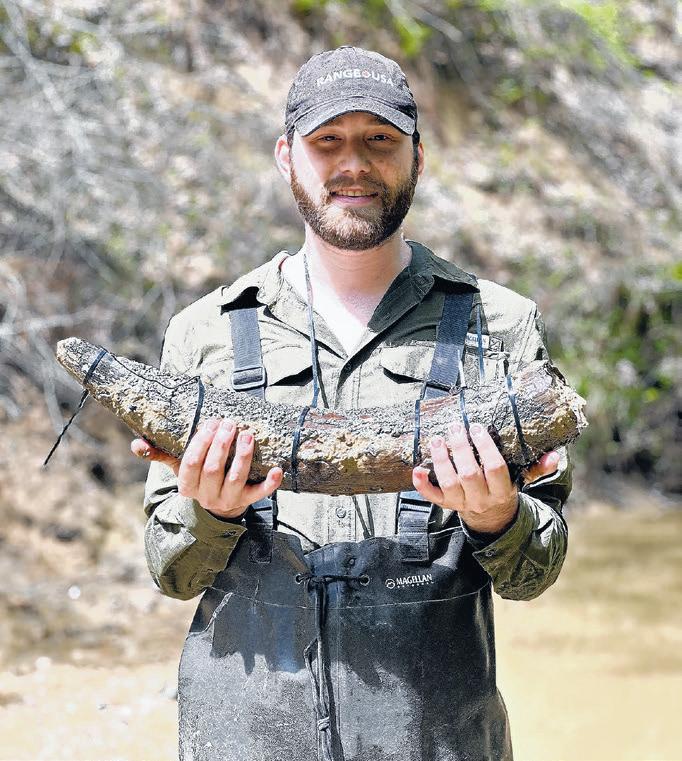
PROVIDED PHOTO BY JAMES GREGORY Mason Kirkland shows the mastodon tusk he and James Gregory discovered in an unmapped creek in West Feliciana Parish. Kirkland preserved the tusk by tying zip ties around it to keep it from
With dogs, as with life, saving the best for last
BY CLAYTON DELERY Contributing writer
Human Condition
A year ago, my husband and I were talking about getting another dog. Mimi, our English toy terrier, was 9 years old and slowing down She had been raised in a pack full of older dogs, but they had been gone for several years. It was time she had a new member in her pack.
We agreed that we wanted a rescue dog, one that was full-grown and (hopefully) house-trained We wanted one about Mimi’s size, but substantially younger, so that the new pet would help keep her active and engaged.
Scott said, “We need to be sure we make the right choice, because we’re in our 60s now, and this will probably be our last dog.”
I didn’t see that coming It seems that only a few years ago, life was full of firsts: a first car; a first apartment; a first house; a first, real, post-college job. Suddenly, life began to fill up with lasts. My car is reliable, low-mileage and good for another 10 or 12
years; I may already be driving my last car I’m pretty sure I’ve already had my last job. We’re planning to move in a few years, after Scott retires.

CURIOUS
Continued from page 1G
“They’ve been increasing ever since,” Willis said. “As far as their effect on our palms and their prominence, both of them, more or less, once the tree has it, there’s nothing you can do to save it. It’s going to die.”
Dead palms everywhere
Louisiana has a few native palms, such as the sabal palmetto, known as the cabbage palm However, palm trees are not native to the area, Timmerman said. Many date palm trees came from Asia, Africa and the Canary Islands and are susceptible to the lethal diseases. The diseases are rapid and incurable, causing fronds to turn brown and wither The trees die within months of showing symptoms
“It’s pretty expensive to have a tree removed, and if you’ll drive around the city, you’ll see dead palms everywhere,” Willis said. “Until that palm is completely dried out or dead, it can function as a source of the disease to spread to other palms. The ideal situation would be, as soon as a palm is diagnosed with one of those two diseases, that it gets removed immediately.”
The only preventive measure: an antibiotic injection about every three months. Willis estimated injections per tree used to cost about $250, meaning the cost of protecting one palm’s life was about $1,000 per year Now that prices have dropped, Willis estimates treatment cost is about $50 per injection, around $200 a year per tree.
One of the most popular types of date palms in the city is the Canary Island date palm, which Timmerman estimated has been around the city for close to 200 years. The tree can grow up to 30 or 40 feet tall and has an umbrella-like canopy In summer, the tree produces cascading branches of yellow-orange fruit,
AT RANDOM
Continued from page 1G
That sense of suspension can be unsettling in a sick ward, but on this particular afternoon, our useless clock seemed like a decent companion.
The next house will be our last house. In a heartbeat, the world has gone from containing seemingly endless opportunities to containing ones that are tangibly, perceptibly
FOSSILS
Continued from page 1G
On this January morning, only days after south Louisiana’s historic snowfall, the duo would extract the strange configuration from the creek’s muck to discover a root canal system attached to a set of teeth from the right, upper maxilla of a large creature. The teeth perfectly matched a set of cone-like molars from a right bottom mandible Kirkland discovered only moments earlier Kirkland knew at that moment he had stumbled upon the washedup gravesite of a mastodon.
A month later, days after the February freeze, the duo returned to uncover the treasure of treasures a tusk. It was short, but fully intact, which led Kirkland to believe their mastodon had been a juvenile. Then again, looks can be deceiving.
finite. How did this happen?
The process actually took decades, and those years were full. I built a teaching career, and retired from that. I started a second career as a technical writer and retired from that, too. I had a long-term partner, then later, a legal husband. I got divorced, and several years later, I remarried. During those same years, Scott had a brief career in banking, then went back to school and became an architect. He married, lost his spouse to cancer and HIV, and then found me.
There were always dogs in those years, and they have a way of taking us outside of ourselves. Horrible day at work? Tucker still needs to be fed and walked. Tense and irritable while filling out a tax return? Emerson is staring at you with a ball in his mouth. Death in the family? Suzie will curl up in your lap and look at you with adoration. They remind us, even at the worst of times, that caring for others and making time for love and play are always vitally important things to do.
Most of the dogs lived between 14 and 18 years, and in talking about a new dog, Scott and I acknowledged that a young one
might very well outlive at least one of us. A longtime friend who is five years my senior recently entered hospice care. One of her major concerns is what will happen to her pets when she’s gone. It’s an understatement to say this is sobering, but none of us knows how much time is left. The best way to deal with mortality is to live the life we have.
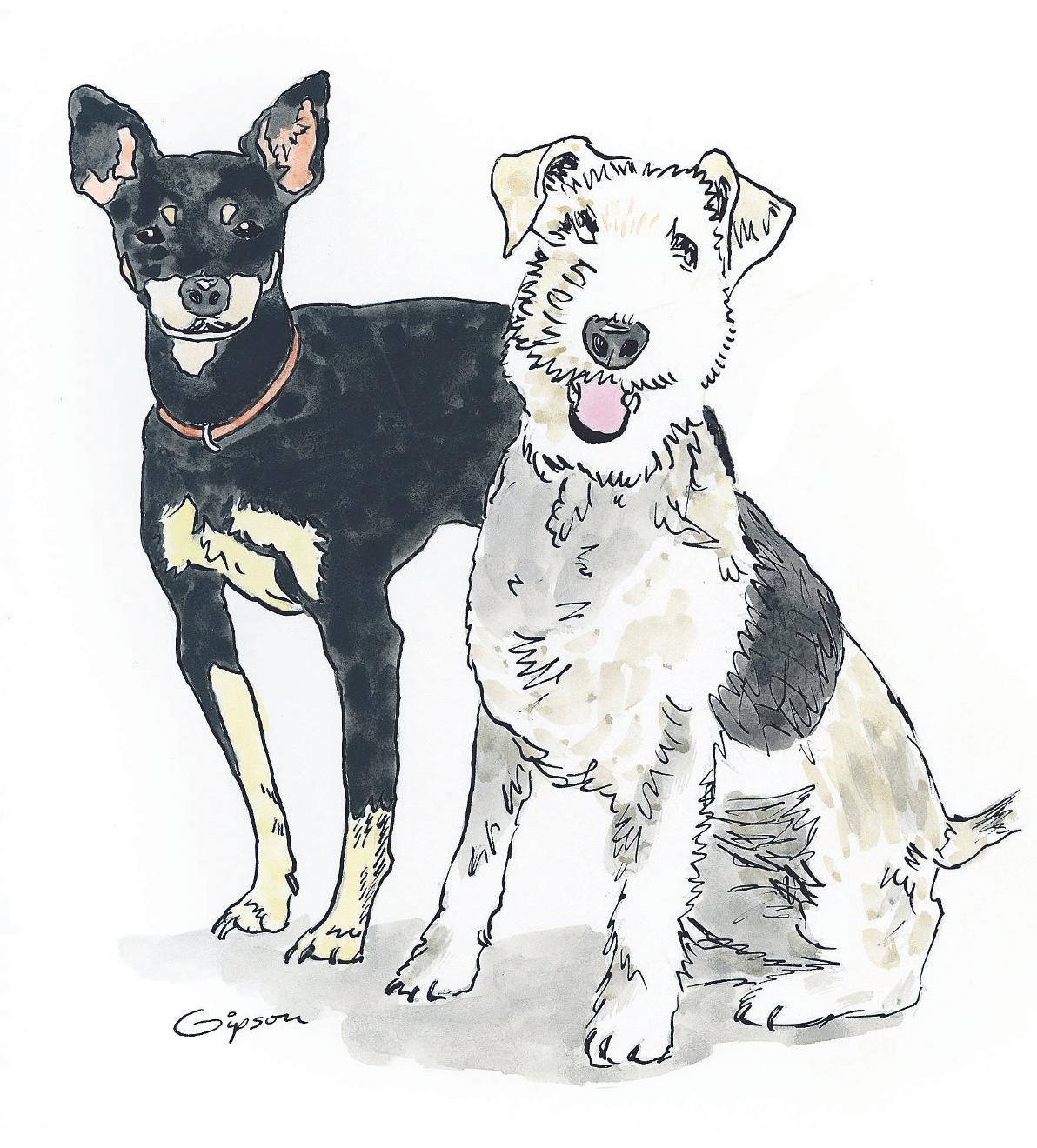
Scott and I adopted a fox terrier from a rescue agency Her name is Angie, and she entered our lives when she was 10 months old. She barks more than any dog either of us has ever had, and because she’s so vocal, we’ve nicknamed her Banshee. She’s smart, affectionate and good at getting Mimi to play with her She has brought joy and energy into all of our lives. It’s clear to us that we chose the right dog. And that’s a good thing, because she’s also the last dog.
Delery lives in New Orleans.
Human Condition submissions of 600 words or fewer may be emailed to features@ theadvocate.com. Stories will be kept on file and publication is not guaranteed. There is no payment for Human Condition.

eaten by wild parrots.
“The city, the municipality and the parish have always been kind of interested in creating that tropical look,” Timmerman said “There’s a big push for it, especially around the Victorian era, to have that kind of lush, tropical appearance, especially on the neutral ground.”
Preserving the tropical image
The city plans on preserving some part of this image. The New Orleans Department of Parks and Parkways is treating palms in major corridors where palms were historically planted, such as Poydras Street and the Martin Luther King Jr monument on Claiborne Avenue, according to a statement in response to questions from The Times-Picayune.
The department conducted a citywide inventory in 2019 and found 1,800 palm trees on city property that were susceptible to lethal bronzing. Since 2019, the department has removed 594 dead or seriously declining palms, the statement said.
Plans to remove more palms along Filmore Avenue and Mirabeau Avenue are in the works.
“The silver lining of this situation is that many of these non-native palms that we have lost were located on wide open neutral grounds where native trees can be planted,” the statement said
“These new trees will provide greater storm water and shade benefits to our community.”
Diemer had a second question for Curious Louisiana: “How come there are no coconut palms in our area?”
The answer to this question is simpler According to Timmerman, it’s just too cold for them here.
Do you have a question about something in Louisiana that’s got you curious? Email your question to curiouslouisiana@ theadvocate.com. Include your name, phone number and the city where you live.
Outside the window, high sun and a broad, blue sky told us another summer was on the way In the weeks ahead, with any luck, we’ll be graced with more afternoons when time doesn’t matter
Email Danny Heitman at danny@dannyheitman.com.
“We talked to an expert,” Gregory said later “He said the mastodon remains we found don’t belong to a juvenile but a female around 35 years old. We also know that this wasn’t the first mastodon found in West Feliciana.”
He’s right. Remains of another were excavated at the Louisiana State Penitentiary at Angola in 1994 and are now exhibited at LSU’s Museum of Natural History in Foster Hall.
But discovering a mastodon isn’t an everyday thing, and this one is still a work in progress. Kirkland has named their find the “No Name Creek Mastodon,” and he has since returned to the waterway with Gregory But heavy rainfalls have shifted the creek, obscuring the site.
Kirkland plans to eventually loan their findings to the Louisiana Art & Science Museum with hope of finding more.
What is a mastodon?
To form an imaginary picture of a live mastodon in Louisiana, picture anelephantfreelytrompingthrough the Feliciana parishes. Better yet, imagine a small herd of them
Mastodons were elephant-like creatures that roamed the North American continent, first appearing between 27 and 30 million years ago. They had trunks and tusks, and they traveled in small packs.
The creatures often are confused with the woolly mammoth, another elephant-like animal, that didn’t appear until 5 million years ago. The two species coexisted at one point, but the mastodons’ population fell into extinction about 10,000 years ago. As for their physical makeup, mastodons were about the size of modern-day elephants but had different features, including low domed heads; thick coats of reddish brown hair; and longer, less curved tusks. Their most distinctive feature was their set of cone-shaped molars, which allowed them to crush leaves and twigs, whereas mammoths and elephants are equipped with ridged molars for grinding.
Upon discovering the lower jawline, it was the distinctive shape of the molars that alerted Kirkland that he and Gregory had stumbled upon a mastodon. All of its molars were cone-shaped in perfectly preserved enamel.
No Name Creek
This adventure really began long before the mastodon discovery when Gregory and his fiancé, Stephanie Yan-Chau, were seeking
someone versed in paleontology to answer questions about a mosasaur jawbone they’d discovered in a northeast Texas river Mosasaurs were whale-sized creatures known as the “Lizard Kings of the Ancient Ocean.”
“We’d found a large jaw, and I contacted Mason about it,” Gregory said. “That’s how we met.”
It wasn’t long before Gregory and Yan-Chau began venturing out to No Name Creek with Kirkland. In fact, Yan-Chau was with the duo on the day they discovered the teeth, documenting their discoveries through photographs.
Still, the photos don’t reveal the location of this unmapped waterway that Kirkland has unofficially labeled No Name Creek.
“The creek doesn’t even show up on Google Maps,” Gregory said.
The threesome refuses to disclose the creek’s location to deter treasure hunters. Then again, most treasure hunters wouldn’t attempt the hike.
With no clear-cut path to the creek, the trek requires a serious sense of adventure, bordering on hazardous. Sometimes walking turns into crawling through precarious terrain.
“The issue is always about the timing,” Kirkland said. “Are we going to get up there before it’s too wet?
Sometimes we have to get on our hands and knees and crawl through the mud I’m amazed Stephanie went with us the whole way.”
But she did, and she actually found the first fossil of the day a bison jaw
“I was so jealous,” Gregory said, laughing. “But then we started finding the teeth, and we knew we had a mastodon.”
About the tusk
Yan-Chau didn’t accompany Kirkland and Gregory on the second trip, which landed them in the same spot along the creek.
It didn’t take long for Kirkland to spot something different among the tree roots — something that kind of blended but clearly wasn’t a natural part of the habitat. Could it be?
“It was a tusk,” he said. “So obviously, I kind of flipped out, right? I’ve been going to that creek and hoping to find one for years. And when we found the teeth, I was like, ‘Oh, my life’s complete.’ I’m so used to seeing tree roots growing along the bank, and they do this kind of curve thing where they look like a tusk, but they’re not.”
Kirkland remembers stopping, then calling out to Gregory, who was about 6 feet ahead of him in the creek bed.
“James looked at it, then hunched down and then looked back at me,” Kirkland said. “It was quite a moment to realize, ‘Oh my God, this was actually a tusk.’”
Their celebration didn’t last long, because excavating a tusk was much different than digging up teeth, which were hardened fossil. The tusk, however, was composed of a bone-like material called dentin with a thin outer layer of enamel and cementum, the calcified material which usually forms a protective layer around the root canal Over time, these materials become fragile and can easily crumble.
“We had to calm down enough to do this correctly,” Gregory said. “We didn’t know how fragile it was or how big, so we had to slowly dig around it, and even pulling it out terrified us. We put zip-ties around it to keep it together, and we had to wet it with water to keep it from drying out.”
Then came the biggest challenge of all safely carrying the tusk out of the woods.
“It was still muddy, and limbs had fallen during the freeze,” Gregory said. “It was a 3.5-mile walk back to the car and it took us four hours to get there carrying the tusk. Mason would climb over a log, and I would hand the tusk over the log to him. Then I would climb over something, and he’d hand the tusk to me. We just leapfrogged like that all the way.” And the tusk? It’s perfectly intact. A lasting memory
The No Name Creek Mastodon remains a mystery waiting to be fully revealed. Still, with every rain, the landscape shifts, tucking some secrets deeper into the Louisiana soil and revealing.
For Kirkland and Gregory, the discovery has already done more than add to the fossil record — it has carved a lasting memory into the muddy banks of an unnamed creek. And maybe that’s the true treasure: not just the bones of an ancient beast, but the thrill of discovery itself — long hikes, cold water, the weight of history in your hands — all found in a place that doesn’t even show up on the map. No name. No path. Just wonder Email Robin Miller at romiller@ theadvocate.com.
PROVIDED PHOTO BY JAMES GREGORY James Gregory, left, and Mason Kirkland display the mastodon tusk they discovered in an obscure waterway they call No Name Creek in West Feliciana Parish.
STAFF FILE PHOTO BY SOPHIA GERMER
Some palm trees on Canal Street in New Orleans receive treatment for lethal bronzing disease.
DINING SCENE
Restaurants can survive the summer with your help
It’s a good thing Louisiana residents are so passionate about our restaurants and the hospitality culture they represent. It’s summertime, and that piece of our culture needs us more than ever

Many restaurants don’t make money in the summer and bleed cash simply by operating. This spring, the drumbeat of restaurants closing ahead of summer rather than absorb more losses was particularly heartrending
Ian McNulty
WHAT’S COOKING
I’m worried more will join them before the fall upswing, and I’m not alone Many have asked how they can help. If the first answer is to spend more money dining out, well, that only works if you have it Many of the factors now exacerbating the annual summer slump for restaurants — higher food costs, inflation in general, the state’s insurance crisis in particular — also besiege the finances of their customers. The national economic picture does not seem to offer much relief anytime soon But there are opportunities for self-help within our community with the money we’re already spending, provided we deploy it with the intent to render support when it’s needed most.
I’ve asked restaurant people what would help them now and what they wish more of their customers would consider, and I’ve turned up a few ideas of my own.
It’s going to be a long summer, so let me know if any of these particularly resonate with you, or if you have your own ideas Clock management
Even in slow summer, one thing that doesn’t change is demand for the 7 p.m. weekend reservation, and restaurants can only serve so many people at once with their available tables and staffing (which is often reduced for summer anyway).
If you have flexibility in your schedule, you can use it to help the
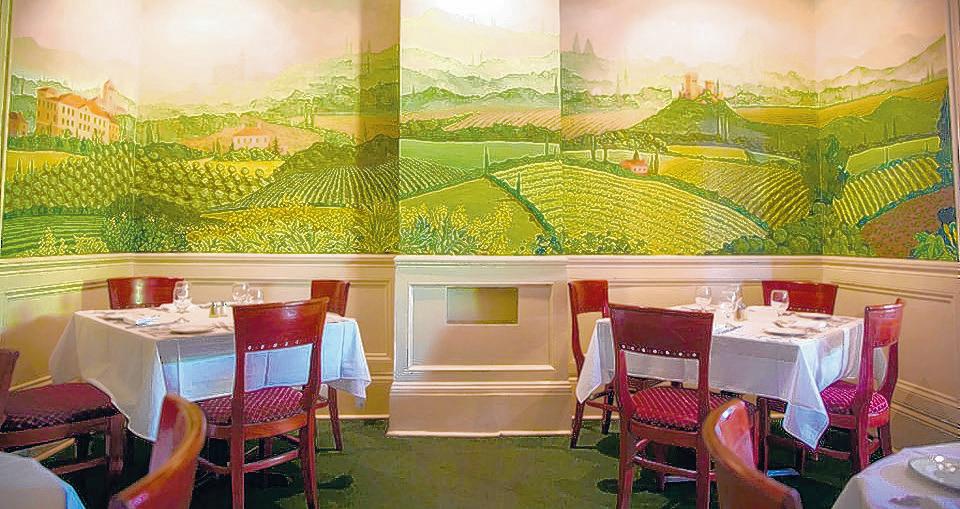

restaurant get more out of opening its doors for the night Can you cut out early on a slow summer weekday? Some restaurants will seat you as early as 4 p.m. for dinner (I love a 5:30 p.m. start myself). That means you get to your first cocktail that much earlier, and you have the evening ahead.
Conversely you can play the sunset game. Have yourself an aperitif at home or out and about, enjoy the sultry summer sunset and, as the evening cools, head out for dinner for that later reservation. Bonus: At night, even in summer, lush patios and courtyards can become appealing again.
Together, these plays can triple the turns on a single table for restaurants and help them immensely
Holiday shopping in summer
If you give gift cards to people on your holiday shopping list, buy them from restaurants ahead of time in the summer You get a jump on holiday shopping, and you’ll be giving your favorite restaurant a gift, too.
Buy them in full faith that they will be used after you gift them. The key is how this gives the restaurant the cash it needs most right now, essentially a no-interest loan from customers to their
favorite spots.
Send love from afar
Gift cards are also an easy way for fans of a local restaurant who are outside Louisiana to send help from afar, and the same goes with cookbooks, food items and other merchandise restaurants may sell and ship. These are business lines that many restaurants adopted or expanded during the pandemic, and many have kept them going.
Book now, party later
Many companies, organizations and even families book private parties or banquets during the holidays, or perhaps some fixed time of year outside of summer
These often require a deposit. Make the booking now, in summer, and pay that deposit.
Much like with gift card purchases, the cash you give a restaurant now for the service it will provide later can help when that heavy summer electric bill drops or the next unexpected expense arises.
Go to the source
An array of third-party companies are eager to get restaurant
meals delivered to your door All of them diminish the earnings restaurants get from their work and your business, and they usually cost you more with tacked-on fees.
To make your dollars go further, go direct to the restaurant.
Dining in, especially at full-service restaurants, lets the people behind these businesses do what they do best. It keeps more staff working and keeps the money that flows through restaurants going to the network of suppliers and vendors, from linen service to wine purveyors.
Engage with restaurants
Slow isn’t always a dirty word in summertime. There is also a more languid pace to an evening on the town and more flexibility in social schedules. Use that time to reconnect with friends at a restaurant or bar, and to connect with the establishments themselves.
Many restaurants host special events, collaborations with other chefs and brands and different experiences in the summer
They’re shaking up their own routines and hoping to find different ways to bring people in. Often, these are ticketed events that can give you a lot for your dining dollar in a different way, and make a difference for the restaurants hosting them.
Pause for patience
Sometimes in the restaurant world, being slow adds more stress than being busy That can tax the emotional and mental health of people who have devoted their lives to hospitality, and for people just wondering how they’ll pay the rent if another four-top doesn’t walk through the door
Bringing your discretionary income to their businesses, even with all that so many people are up against with their own finances now, is a statement of support. It goes that much further when it comes with empathy Keep a good attitude and realistic expectations, and you’re bound to have a more gratifying experience.





STAFF PHOTO BY IAN MCNULTY
STAFF PHOTO BY CHRIS GRANGER
OUR AUDIENCE ISOUR SUPER POWER

We use theincrediblepowerofour audience to executeadvertisingand marketingcampaigns with aclear mindset –results. If we don’t achieve results, we don’t keep ourclients.

You’relucky to have onegreat brand. Thankstoacommitment to Louisiana anda commitment to local, we have several.
Andgreat brands bringgreat readers
163MILLION TOT AL USERS
810,000 PR INT READERS
We’re committed to long-termsuccess when manyofour peersare retreating. Ittakes innovation andinitiativeacross all our platforms andall ourteams. We’reherefor apurpose. Forour readers. Forour clients.For Louisiana.