ADVOCATEADVOCATEADVOCATE


BY MARGARET DeLANEY Staff writer
A musician needs full lungs to play the harmonica — that makes the pocket-size instrument just what the doctor ordered for respiratory therapy patients at Baton Rouge General Pulmonary Rehabilitation Center
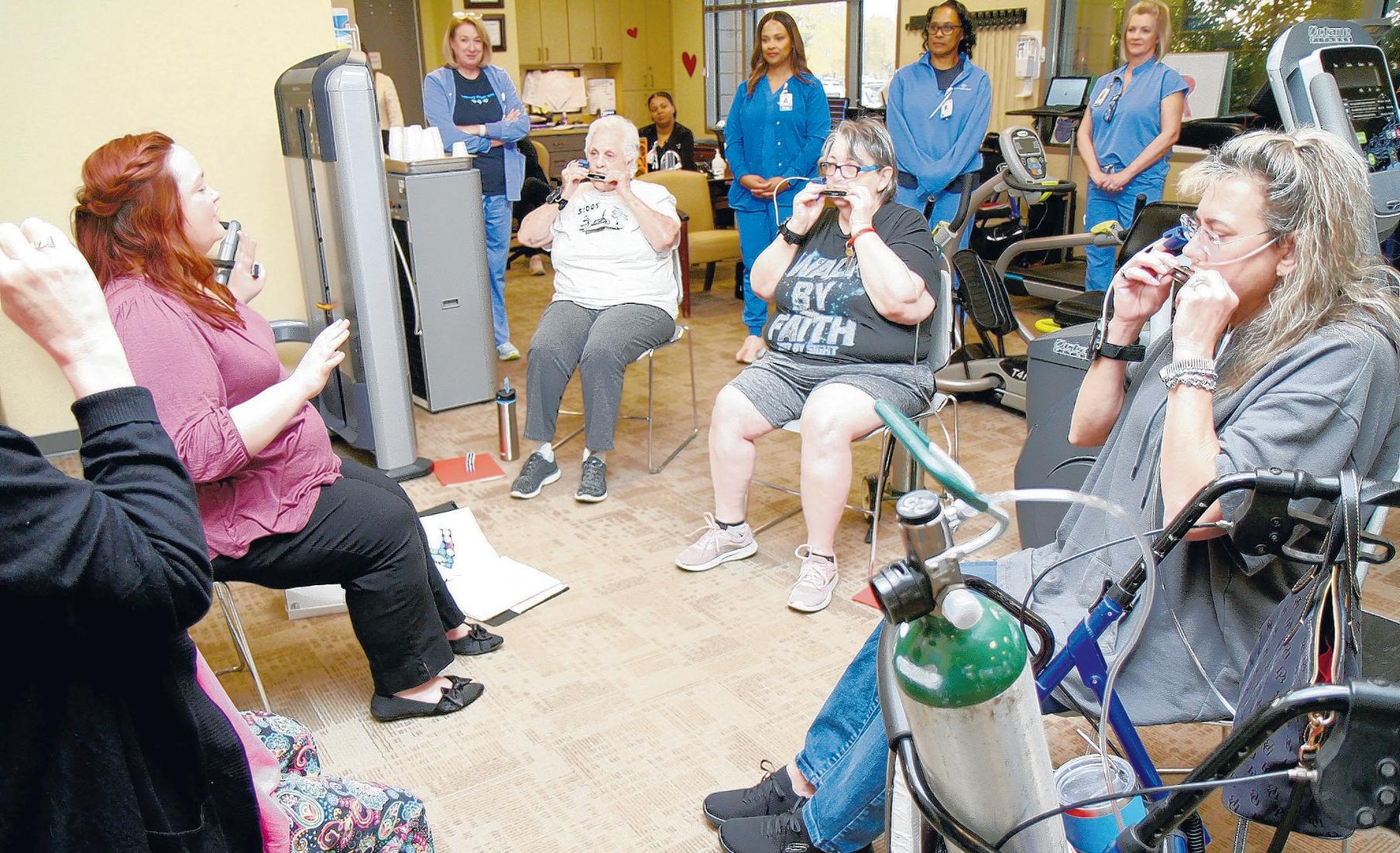
Jaqueline McCarthy, a musical therapist at Baton Rouge General, teaches the weekly classes, split up into 15 minute one-on-one sessions.
McCarthy a former opera singer also leads a special class once a month for patients wanting to learn the harmonica as respiratory therapy treatment, which helps patients with types of chronic obstructive pulmonary disease, such as emphysema and chronic bronchitis.
In the class patients learned the Louisiana classic “You Are My Sunshine.”
Playing the harmonica strengthens the diaphragm and teaches pursed-lip breathing, which helps better oxygenate the blood, according to Jessica Richardson, a registered nurse and team leader at the center
The technique enables people to inhale and exhale more air, by breathing in through their nose and then breathing out through puckered lips.
“Patients with long-term lung conditions can use this harmonica therapy to strengthen the body,” Richardson said. “The breathing techniques increase the levels of oxygen and makes the diaphragm stronger.”
The deep, deliberate breaths used in playing the harmonica help patients with damaged lungs inflate microscopic air sacs called alveoli, which
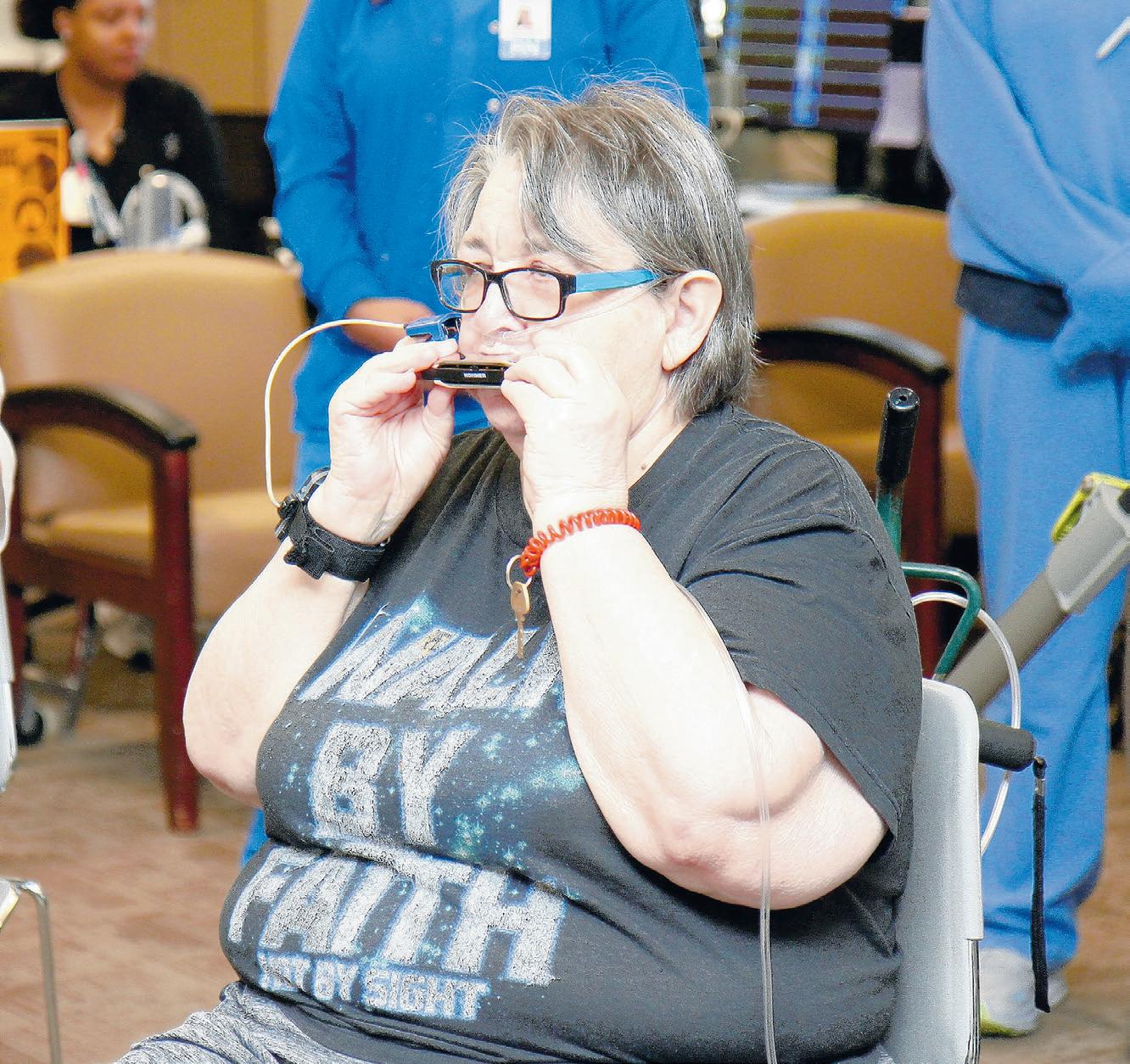
Patricia Beebe learns how to play the harmonica recently at the Baton Rouge General Pulmonary Rehabilitation Center
are where the blood exchanges CO2 for oxygen. In contrast, breathing quick, shallow breaths will cause the alveoli to collapse, making it harder to get air sacs to inflate again — sort of like when blowing up a balloon.
The best thing about learning to play the harmonica, according to music instructor McCarthy, is that patients don’t need previous musical experi-
ence to get the benefits. The harmonica will make it sound good no matter what.
The sheet music is comprised of pluses and minuses (indicating inhales or exhales, respectively) and numbers one through six (indicating where on the harmonica to play).
ä See MUSIC, page 2G
If you would no longer like to receive this free product, please email brtmc@ theadvocate.com.
GENARO C. ARMAS
BY
American Heart Association News (TNS)
It’s an ability and skill often taken for granted. It affects quality of life and has been linked to heart disease and stroke. As we age and our muscles weaken, balance becomes crucial to staying active and supporting a healthy heart and brain.
“Balance is important because it’s one of the attributes that allows you do to physical activity,” said Dr Kelley Gabriel, a professor of epidemiology and associate dean at the University of Alabama at Birmingham School of Public Health.
“Everything you do involves some level of balance — standing at the sink, mopping, walking the dog. It’s embedded into almost every single activity.”
According to federal physical activity guidelines, balance training should be part of the weekly exercise routine for older adults to help prevent falls, another frequent problem for stroke survivors. Such exercises include walking backward, standing on one leg or using a wobble board Use caution and work with a coach or training partner if needed. Activities that strengthen the back, abdomen and legs also improve balance, according to the guidelines.
Balance is a “multifaceted physiological process” that involves vision, the vestibular system in the inner ear and the nervous system, researchers wrote in a 2024 study in the Journal of the American Heart Association.
The Swedish study included 4,927 participants without cardiovascular disease who were 70 years old. Their balance was measured at the start of the study using a balance board.
After five years of follow-up, researchers found that problems with lateral balance — the ability to remain stable while shifting weight from one side of the body to the other — were associated with a higher risk for heart attack and stroke.
Similarly, a 2023 study in the European Journal of Medical Research found that among nearly 130,000 adults age 60 and older in Korea, those with balance impairment may be at increased risk for coronary heart disease or stroke
Two 2024 studies — one in the Journal of Prevention of Alzheimer’s disease and the other in the Journals of Gerontology Series
A also found an association between balance impairment and increased risk of dementia among older adults.
Dr Pei-Shiun Chang, associate professor of community and health systems at the University of Indiana School of Nursing in Bloomington, said that while impaired balance may be an
See
page 2G
4 symptoms are warning signs of colorectal cancer
Disease has been rising among younger people for the past two decades
Clinic News Network (TNS)
By Mayo
which starts in the large intestine, and rectal cancer which begins in the last part of the
large intestine, known as the rectum.
Dr Derek Ebner, a Mayo Clinic gastroenterologist, notes that colorectal cancer has been increasing in adults under age 50, particularly for rectal cancer He says it’s important to know the warning signs of colorectal cancer
“Historically, colorectal cancer was equally divided along the colon and rectum, but particularly for those with early onset colorectal cancer — age less than 50— we’re seeing higher rates of rectal cancer among the younger onset,” says Ebner Case of colorectal cancer has
been increasing in adults under age 50, particularly for rectal cancer
Warning signs and symptoms
Ebner says four key symptoms have been identified for people under 50.
“Abdominal pain, diarrhea, seeing blood with bowel motions, as well as iron deficiency anemia,” he says. Ebner notes that blood loss after bowel movements, even if not visibly apparent, can lead to low iron levels.
“If on a blood test, for example, we see a sign of iron deficiency that would then prompt us to ex-
plore further,” he says.
Even though it may be embarrassing, he stresses, “If you have any of those symptoms, you need to share it with a health care provider That way, they can navigate those subsequent steps.” That can lead to early treatment and better outcomes.
Reducing risks
While it’s not possible to completely prevent cancer, there are ways to reduce your risks, and that includes following a healthy lifestyle.
“Abiding by a healthy lifestyle is critical,” says Ebner
“Following a well-rounded diet, staying physically active, for instance, perhaps can be protective. The other key, though, is just being very mindful of those symptoms, and then also underscoring the importance of screening.”
n Screening: Talk to your health care team about colorectal cancer screening.
n Exercise: Aim for 30 minutes of exercise most days.
n Nutrition: Eat fruits, veggies and whole grains.
n Weight: Maintain a healthy weight.
n Lifestyle: Don’t smoke; limit alcohol consumption.
BY MARGARET DeLANEY Staff writer
CAR T-cell therapy, also known as Chimeric Antigen Receptor T-cell therapy, is a personalized form of immunotherapy treatment that genetically modifies a patient’s immune system to target and destroy cancer cells. It is used to treat some types of blood cancer including multiple myeloma.
The success of CAR T-cell therapy is promising with significant remission rates in patients who have not responded to standard cancer treatments.
Dr Laura Finn is the section chair of hematology at Ochsner MD Anderson Cancer Center She received her medical degree from Louisiana State University School of Medicine in New Orleans before completing her residency in internal medicine at Earl K Long at LSU in Baton Rouge.
Finn went on to a hematology and oncology fellowship at Mayo Clinic School of Graduate Medical Education in Jacksonville, Florida. She also completed advanced training in stem cell transplant as a Mayo Clinic Scholar at the University of Minnesota.
Now, Finn is the director of Ochsner Health’s Hematology and Stem Cell Transplant Program where she studies blood disorders with a research focus in leukemia and myelodysplastic syndrome. Finn played a major role in bringing CAR T-cell therapy to Louisiana residents, from New Orleans to Lafayette. Tell me about stem cell transplants and how they work.
Multiple myeloma is the No.

use to get their stem cells.
We then keep the stem cells in reserve before the autologous transplant patient comes to the hospital. Then, that patient will receive chemotherapy The intent of that chemotherapy is to remove what is diseased, the remaining cancer in their blood and marrow system — even if we can’t see it by our tests.
Then, we give them back their healthy stem cells. There’s going to be several million of them going back into the body
A stem cell can repopulate the entire blood and immune system just from a few cells. The intention of the transplant is to regrow the immune system in its healthy state again.
1 blood cancer that which an autologous stem cell transplant is performed for An autologous stem cell transplant is a type of transplant that doesn’t require a donor: the patients are going to be donating their stem cells to themselves.
Here’s how it works: At diagnosis, a patient of myeloma receives different types of immune therapy Very rigorous chemotherapy is primarily used to treat multiple myeloma, and the intent is to get patients into remission before a stem cell transplant (remission is when a patient has undetectable cancer by all our available tests).
When a patient enters remission, the blood system in their bone marrow is back to normal or near normal health. At that point, there is a procedure, a little bit like donating blood, that we
By doing this, it’s not a cure for multiple myeloma, but it can improve what we call “progression free survival” survival without evidence of cancer for, on average, about five years.
Who qualifies for stem cell transplant treatment?
When we first meet a patient with multiple myeloma, one of the first things we ask ourselves is if they are transplant eligible.
Very few things that would make someone ineligible. We’ve transplanted patients up to their 80s.
It’s primarily based on a patient’s underlying health: Would there be any reason due to another underlying diagnosis (heart health or lung health) that would prevent a patient from receiving chemotherapy?
During a transplant, a patient will not have an immune system at all for about two weeks. We make sure that the risk factor,
Continued from page 1G
“The music also gives patients a chance to practice their breathing, and are really able to hear how well their breath control is,” McCarthy said.
Practicing the songs, like “You Are My Sunshine,” gives patients an auditory cue for their lung health. It can also provide patients with something positive (like their favorite song) and very focused, actionable task to improve their health.
“Patients can practice songs over and over again until it sounds right,” Mary Malloy said, music supervisor for Baton Rouge General’s Arts in Medicine program. “It’s also just fun.”
Proven differences in lung health
Patients at Baton Rouge General’s harmonica class started with breathing exercises in their chairs to make sure their posture was best for quality breathing (shoulders back, chin parallel to the floor, etc.).
The class placed their hands on their stomachs practiced control of the diaphragm making sure the stomach pushes the hand out to expand and retract when taking deep breaths.
Then it was time to “break out the harmonicas,” McCarthy said.
The musicians warmed up with long inhales followed by short exhales, and long exhales followed by short inhales. The breathing
pattern is meant to show patients the difference in volume based on breathing power
“It take much more work to play softly than really loud,” said harmonica instructor McCarthy, “We try to get the breathing and the sounds as controlled as possible.”
Breathing long inhales helps with oxygenation, and a slow, soft exhale helps get rid of CO2 in the lungs.
The harmonica is another way to tell how well patients are breathing, according to registered nurse Richardson. “We can hear the notes and how long patients are actually inhaling and exhaling,” Richardson said.
In a 2020 study from the National Library of Medicine, patients attended 12 weeks of harmonica training sessions for 2 hours a week and were encouraged to practice at home.
The pilot study showed that the harmonica program significantly improved measurements used to assess respiratory muscle strength (like PImax, PEmax and 6-minute walk distance) in patients after rehabilitation. In order to measure the effectiveness of harmonica therapy Richardson and her team at Baton Rouge General measure a patients’ oxygen levels before and after their one-on-one harmonica sessions. Most of the time, the oxygen levels improve.
According to Richardson, the effectiveness of the musical treatment can depend on the patient, and at what point in their exercises the therapy was (before or after vari-
should something happen like an infection, is low If someone is in relatively good health, very few other health conditions, they qualify for the treatment.
Another big part is that patients need a support system of family and friends to be there after the transplant. They make sure patients get the necessary things like medicines, meals and transports to and from appointments while recovering from a transplant.
If someone has good baseline health, is physically active and has a good social support system, then it’s safe to have autologous transplant. What is CAR T-cell therapy, and why is it different than current treatment?
CAR T therapy is approved and indicated for a patient who needs what is called a “second-line treatment” for their myeloma. This could be for a patient who went through all the steps to get the transplant and now needs a new treatment. This second-line treatment is very similar to the autologous transplant. The one difference is a patient doesn’t have to be in remission to go through CAR T — a patient can be in any stage of myeloma.
At one of our stem cell therapy sites, instead of collecting stem cells, we collect lymphocytes — another cell of the immune system. And, instead of holding them in the reserve, we send the lymphocytes to a company that genetically alters the cells to attack multiple myeloma cancer cells. These new genetically altered cells are now considered a drug. They’re a medicine.
Continued from page 1G
A patient comes back to our site and receives chemotherapy to reduce the number of remaining lymphocytes (so there’s new space for the medicinal lymphocytes). Then, they receive the genetically altered lymphocytes by an IV drip.
Patients receiving this treatment stay in the hospital for a couple weeks as their immune system adjusts to have this new lymphocyte that can recognize and attack their myeloma indefinitely Has this treatment been successful in Louisiana?
Twenty years ago, the average survival of myeloma was three years. Now, the average survival is eight to 10 years.
In Louisiana, we have one of the highest incidences of myeloma in the country We’re seventh in the nation for diagnosis and the national average age is 65. We’re an exception to that. The average age of diagnosis is closer to 45 in Louisiana, especially among African Americans.
We’ve done over 50 CAR T therapies here at Ochsner for lymphoma, multi myeloma and other patients that qualify What we have seen is over 75% of patients respond well to CAR-T therapy Patients tend to maintain, on average, that good response for about two years — a little less for some and a little bit more for others.
People are starting to talk about a cure for myeloma — which has been unheard of for decades. I think we’re going to continue to add decades onto our survival time with these technologies.
Email Margaret DeLaney at margaret.delaney@theadvocate. com.
“Balance is important because it’s one of the attributes that allows you do to physical activity. Everything you do involves some level of balance — standing at the sink, mopping, walking the dog. It’s embedded into almost every single activity.”
DR. KELLEY GABRIEL, a professor of epidemiology and associate dean at the University of Alabama at Birmingham School of Public Health early indicator of brain and heart health, and vice versa, “you can never say if someone has issues with their balance that they also have some issues with their brain or heart. You need to dig more into their” medical history Gabriel agreed saying that direct connections between balance and heart and brain health cannot be made because conditions such as cardiovascular disease and dementia develop over decades, and may arise because of other risk factors.
“It becomes very challenging to measure the relationship between balance and things like cardiovascular disease and dementia given balance is so challenging to isolate from other aspects of physical activity,” she said.
strengthen the foot and lower leg muscles, and work with a rehabilitation specialist or family member who can assist if needed. Gradually build up duration and intensity
ous activities on the treadmill, bike, stretches and more)
“The order that is most helpful for better breathing is very patientspecific,” Richardson said. “But patients tend to love it either way.”
Using music to heal
Beginning in 2012, the Baton Rouge General Arts in Medicine therapy program has provided patients at the Baton Rouge hospital for many different ways to de-stress and find healing through the arts, including painting, knitting, crocheting, live music events, drawing and much more.
“Sometimes the act of focusing on a project or using music to destress can really make a difference for our patients,” Malloy said.
In 2019, the program began to expose babies in the NICU to calming, rhythmic sounds that are designed to help babies grown and heal.
Studies show music therapy in the NICU provides a host of benefits, including a stabilized heart rate and improved breathing, feeding, weight gain and sleep. In the NICU, mimicking the sounds of the womb and reducing loud, disruptive noises can be beneficial for premature infants, as they experience a different soundscape than in the womb.
Specifically, Baton Rouge General’s music therapists use low-frequency sounds, like those from the ocean disc (a hollow, circular drum that mimics wound sounds) and a gato box (a wooden box with soft pedals that simulates a mother’s heartbeat) can be used to simulate the intrauterine environment
One relationship that is more certain, Gabriel said, is that the more active someone is, the better their balance is likely to be. And balance is a key factor in preventing falls, which is the leading cause of injury among adults 65 and older, according to the Centers for Disease Control and Prevention.
Clinicians should assess balance and risk for falling in people with cardiovascular diseases, according to a 2022 American Heart Association scientific statement that says patients with any loss of balance should be referred for physical therapy Balance exercises can help with the recovery process for those who have had a heart event or stroke. People should plan their exercise program with a health care professional, Chang said. Start slowly with exercises that
“Maybe start with a short walk in your neighborhood, and once you feel like you can tolerate that level, slowly increase intensity Then move on to other exercises,” Chang said.
She recommended toe stands, which is a balance exercise that requires someone to stand or move on the tips of their toes, as great balance training for older adults since it strengthens the calves and ankles.
In general, many lower-body strength training exercises can improve balance for people of all ages. Practicing yoga and Pilates can help with balance, strength and flexibility Chang also recommends qigong, a form of traditional Chinese mind-body exercise, as another practice that can improve balance, flexibility, muscle strength and overall health, especially for older adults.
Qigong, which is similar to tai chi, combines slow and precise body movements with controlled breathing and mental focus.
The Louisiana Health section is focused on providing in-depth, personal accounts of health in the state.This section looks at medical innovations, health discoveries, state and national health statistics and re-examining tried and true methods on ways to live well.
Health editions will also profile people who are advancing health for the state of Louisiana. Do you have a health story? We want to hear from you. Email margaret.delaney@ theadvocate.com to submit health questions, stories and more.
BY CATHERINE S COMEAUX
Contributing writer
Editor’s note: The writer and her family spent three summers exploring state, national and provincial parks, traveling by minivan from Louisiana to Alaska, to Nova Scotia, and all along the Mississippi River in between. This year, she turns her attention to Louisiana state parks to discover the natural beauty of the South less than a day’s drive from home.
Chicot State Park is Louisiana’s largest state park, encompassing a wide variety of habitats within its 6,400 acres in Evangeline Parish, where visitors can listen for barred owls in a bottomland hardwood forest, paddle through the dangling Spanish moss of a cypress tupelo swamp, or hike the slight hills of a hardwood slope forest.
The inexperienced naturalist might not know the differing characteristics of these habitats, but a visit to the Louisiana State Arboretum within the park will enlighten and enhance the experience.
Ironically, the heavily forested park takes its name from the stumps left behind when 2,000 acres of its bottomland forests were cleared by the Civilian Conservation Corps in 1939 to create a lake for the soonto-be-designated state park
The Corps also built a milelong levee to encourage the low-lying acreage of chicot (or stumps in French) to retain water
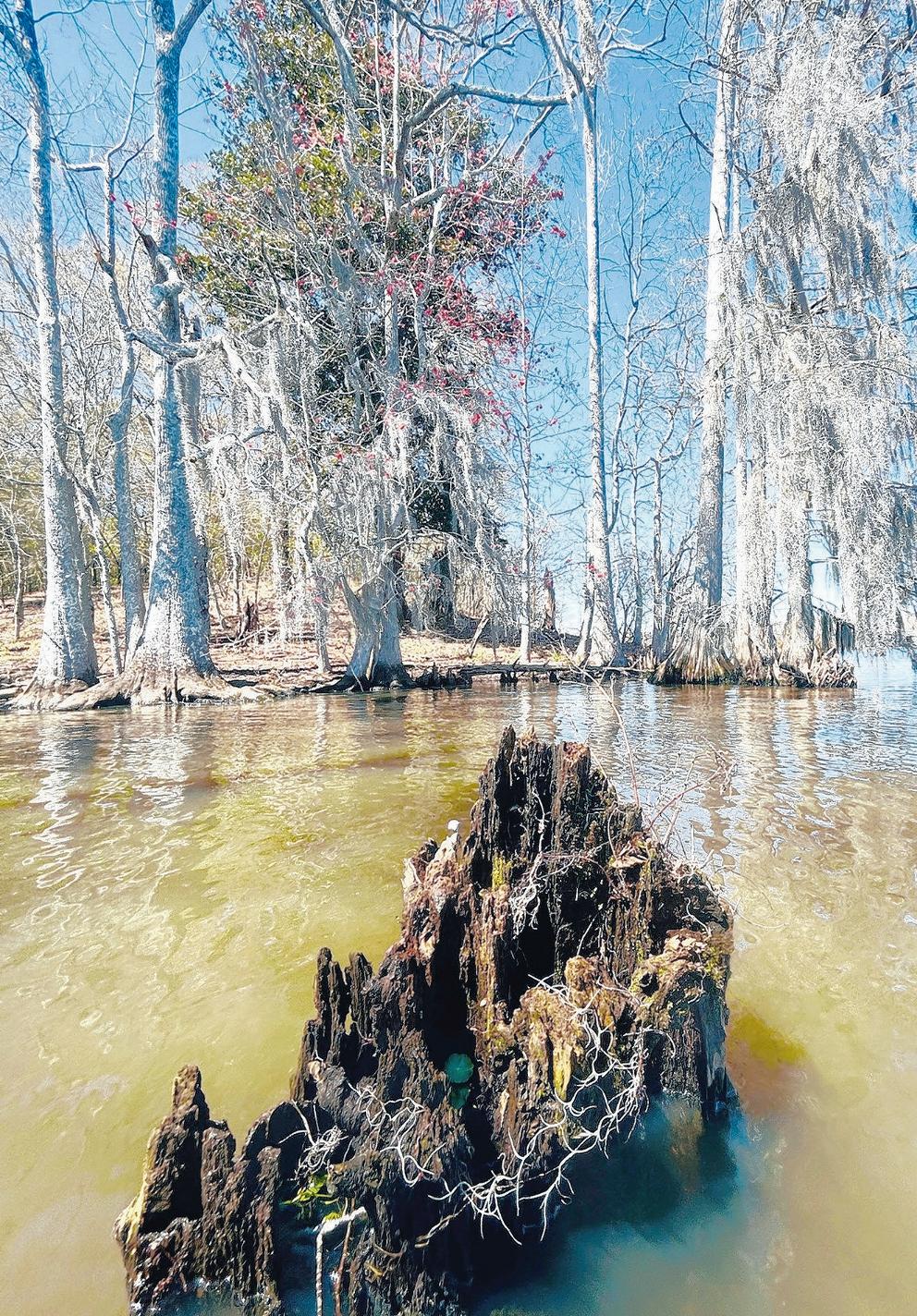
The rains filled the leveed lowlands, it was stocked with fish, and Lake Chicot was born. Hindsight might question the ecological logic of cutting down so many acres of trees to create a state park, which was ultimately being set aside for preservation of its forested beauty. However the dictum of the day was to create jobs during the Great Depression, and so they did. A portable sawmill turned the felled forest into lumber for use at this and other state parks. Thankfully, nature has a way of working with our tendencies to try to control her, and Lake Chicot has become home to myriad forms of wildlife, while fishing has become one of the main attractions of the state park. Like anything man-made,
the lake requires maintenance. Water control structures are routinely utilized to lower the lake levels helping to control the overgrowth of aquatic vegetation and improving fish habitat. Additionally, herbicides and biological controls like salvinia weevils have been used to inhibit the overgrowth of nuisance plants like giant salvinia. Call ahead with questions about lake levels during a visit. (Interested in learning about ways the state manages aquatic vegetation? Contact the Louisiana Department of Wildlife and Fisheries at 225-765-2800.)
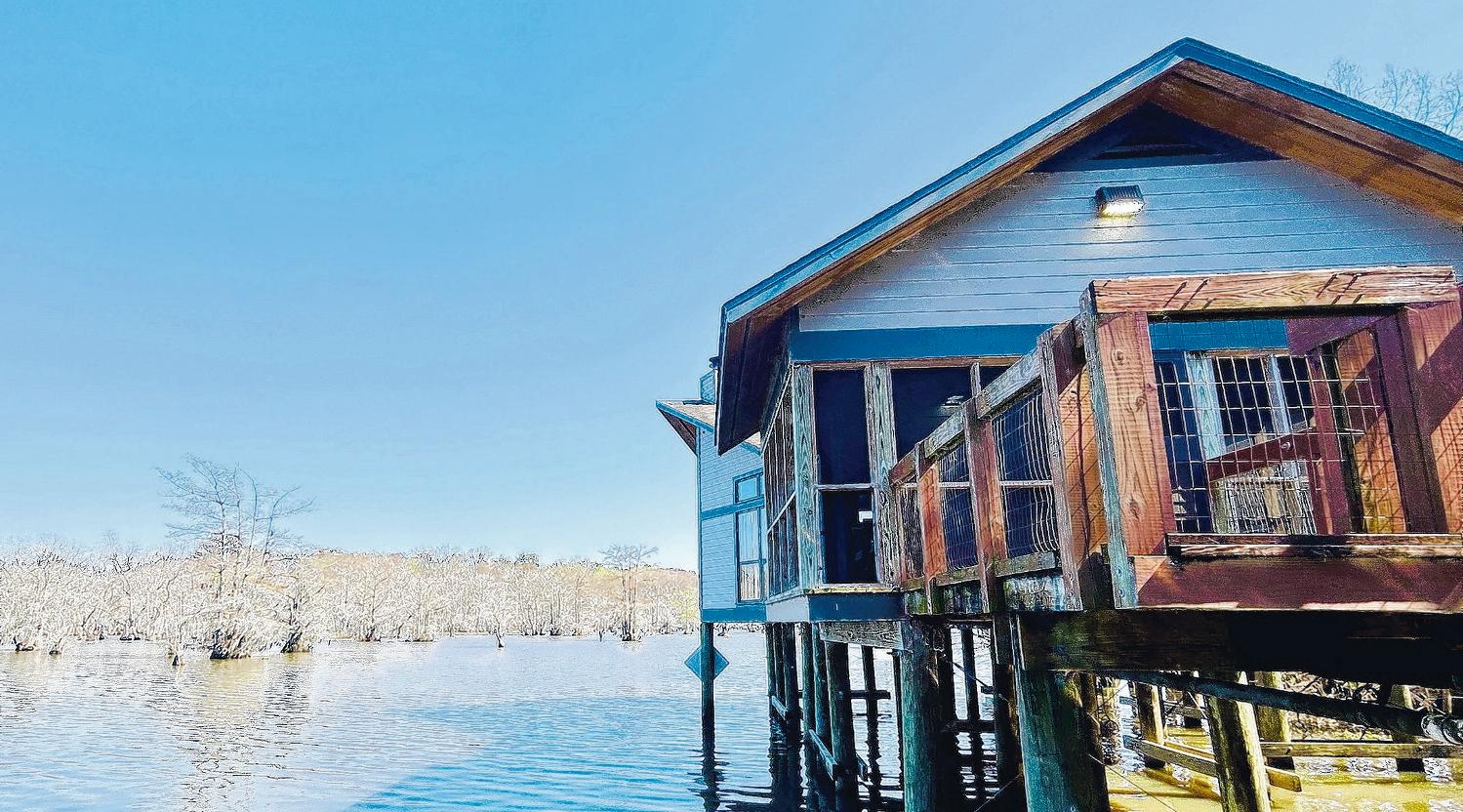


Another main attraction is the Louisiana State Arboretum State Preservation Area, which is comprised of 600 acres within the state park set aside in 1961 as a tree-focused botanical garden. It is a sprawling outdoor classroom with well-marked flora and educational signage throughout its five and a half miles of hiking trails.
A nature center brings to focus the various habitats represented throughout the park and surrounding region and provides a wealth of information about the surrounding environment. The hiking trails throughout the arboretum and the park offer easy hills with more than 200 feet of eleva-
tion change. These inclines might be ho-hum to visitors from higher grounds, but to us whose calves are more accustomed to the flatlands of Louisiana, it is noticeable and fun.
There are a few sections of trails with boardwalks accessible to anyone using a wheelchair For added adventure plus expanded access, Chicot (and several other state parks) have all-terrain chairs available Picture a wheelchair with tracks like a tank. These electric-powered chairs are specially designed to be used on designated trails and can be reserved in advance.
The lake, the arboretum and the hills are a wonderful way to spend time immersed in the natural beauty of Louisiana. As I was recently pulling my kayak out of the lake (with the help of a hiker who magically appeared out of the woods to offer a hand — thank you again, ma’am), I watched a couple packing up their fishing gear and asked, “What did you catch?”
“Time — just a good time out on the lake — plus a
bass and a sac-a-lait, but we let those go.” For a good time out in the wilds, I hear they’re catching out on Lake Chicot.
Know before you go
n The closest grocery stores are in Ville Platte.
n Wheelchair accessible and/or pet-friendly cabins are available.
n Be tick aware, especially in the warmer months. Research tactics for avoiding and dealing with ticks.
n The better sights for tent camping are on Loop A and Loop D in the South Landing Campground.
n All-terrain






We use theincrediblepowerofour audience to executeadvertisingand marketingcampaigns with aclear mindset –results. If we don’t achieve results, we don’t keep ourclients.

You’relucky to have onegreat brand. Thankstoacommitment to Louisiana anda commitment to local, we have several.
Andgreat brands bringgreat readers
163MILLION TOT AL USERS
810,000 PR INT READERS
We’re committed to long-termsuccess when manyofour peersare retreating. Ittakes innovation andinitiativeacross all our platforms andall ourteams. We’reherefor apurpose. Forour readers. Forour clients.For Louisiana.