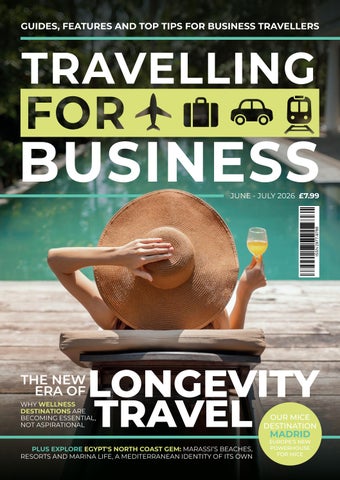
Travelling For Business Magazine - June/July 2026 Edition
Check
in,
chill out
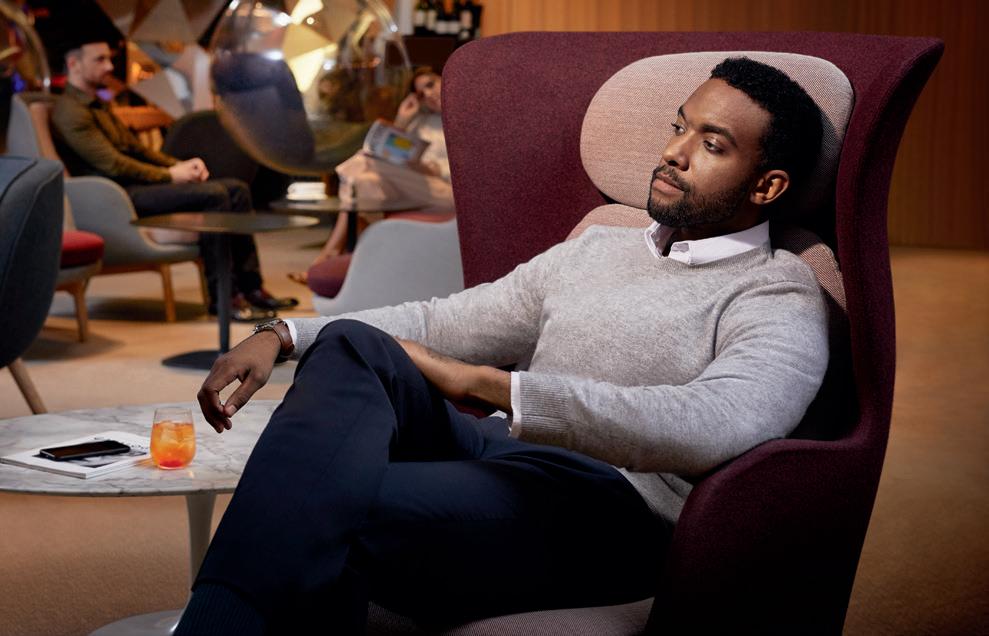
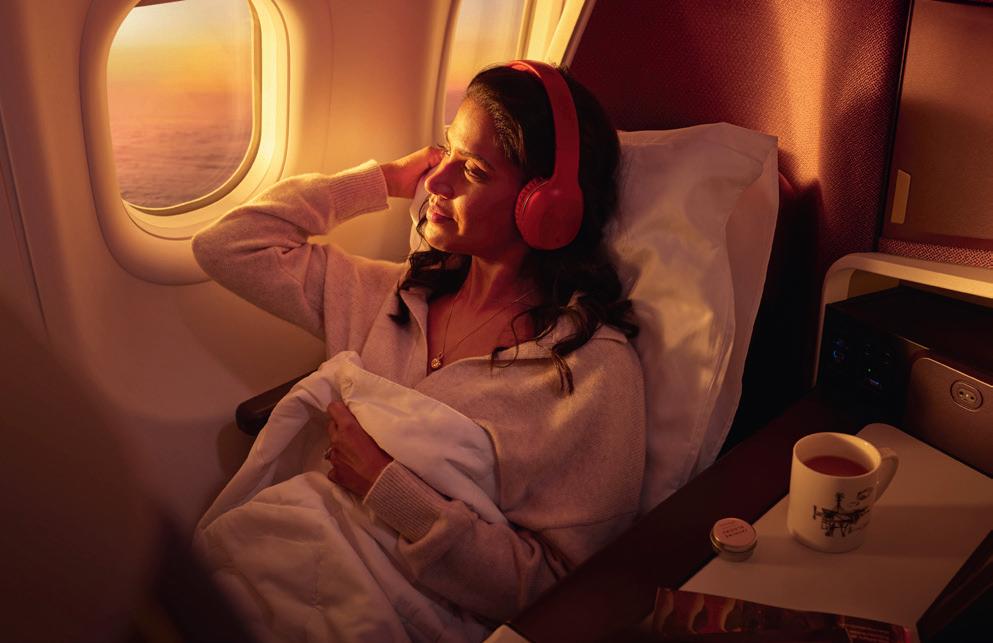
Once you set foot in a Virgin Atlantic Clubhouse, you won’t want to leave. Grab a bite to eat (or two), freshen up with an in-house shower, or find a quiet corner to send o a few emails. It’s all so relaxing, you’ll have to remind yourself you’ve got a flight to catch.
London Heathrow, Johannesburg, New York JFK, San Francisco and Washington DC are waiting for you. Our newest Clubhouse in LAX opens March 2025.
WELCOME TO TRAVELLING FOR BUSINESS
There was a time when travel was something you simply did. You went, you returned, and the only question worth asking was whether the flight had run on time. That era is over. This issue is, in many ways, about what we now ask of a journey, and the answer, increasingly, is everything.
Take our cover story on longevity travel, in which Andrea Thompson checks into Switzerland’s Grand Hotel Quellenhof and Italy’s Palazzo di Varignana to find that the spa weekend has quietly matured into something closer to a tune-up for body and mind. Wellness, as she puts it, is no longer aspirational but essential. It is a thread that runs right through the magazine, from the turquoise calm of Marassi on Egypt’s North Coast to the chalk-cliff serenity of the Isle of Wight, which this summer marks 200 years of Cowes Week.
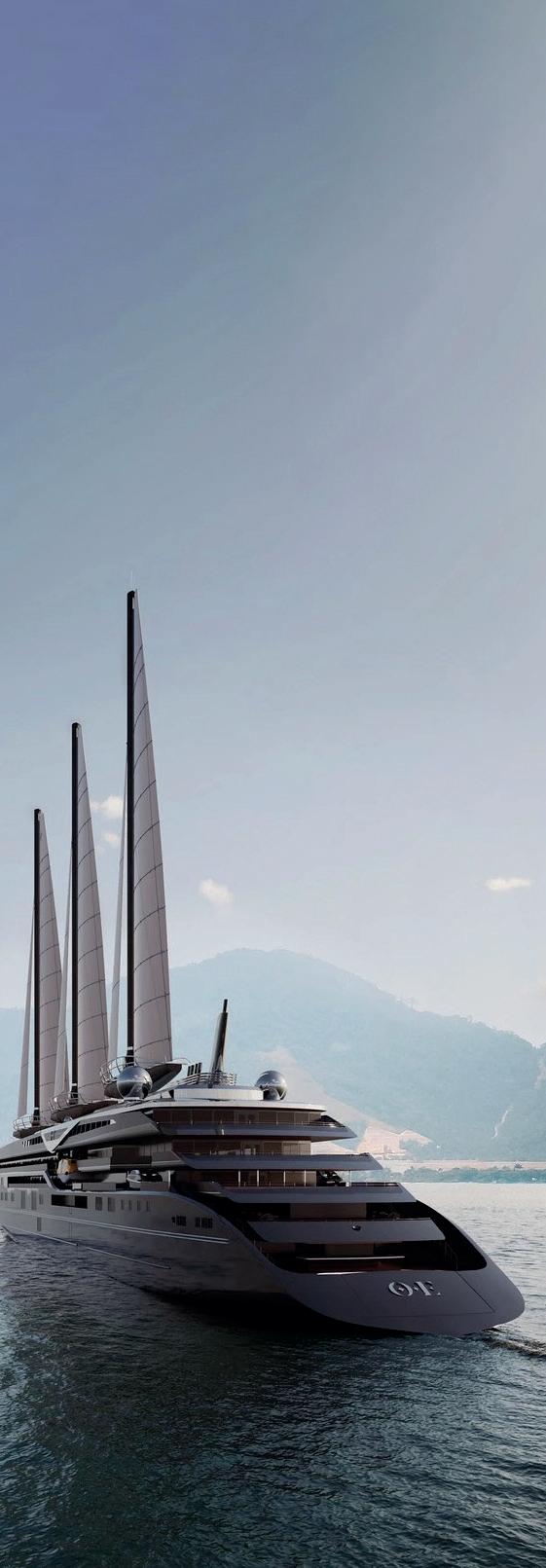
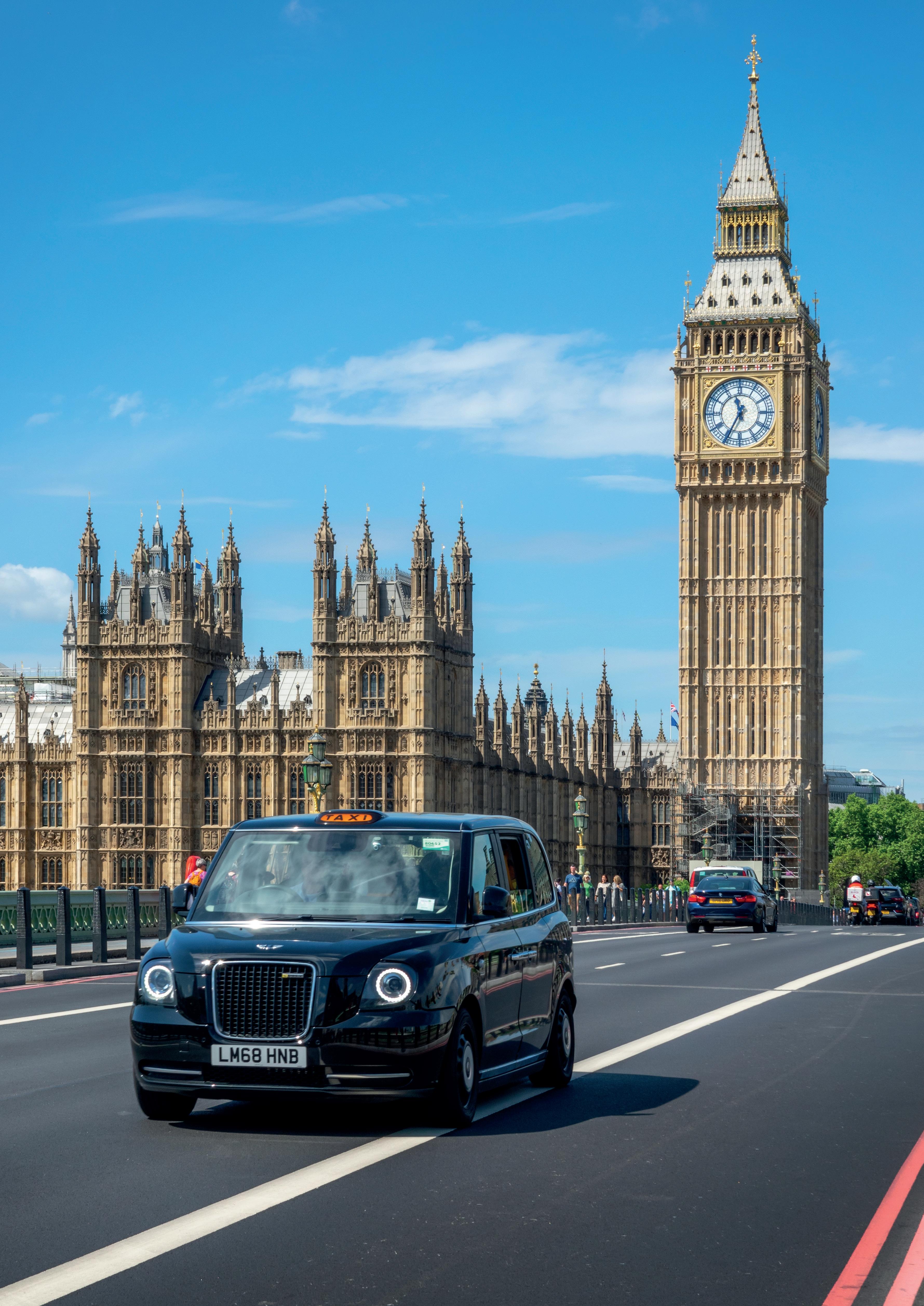
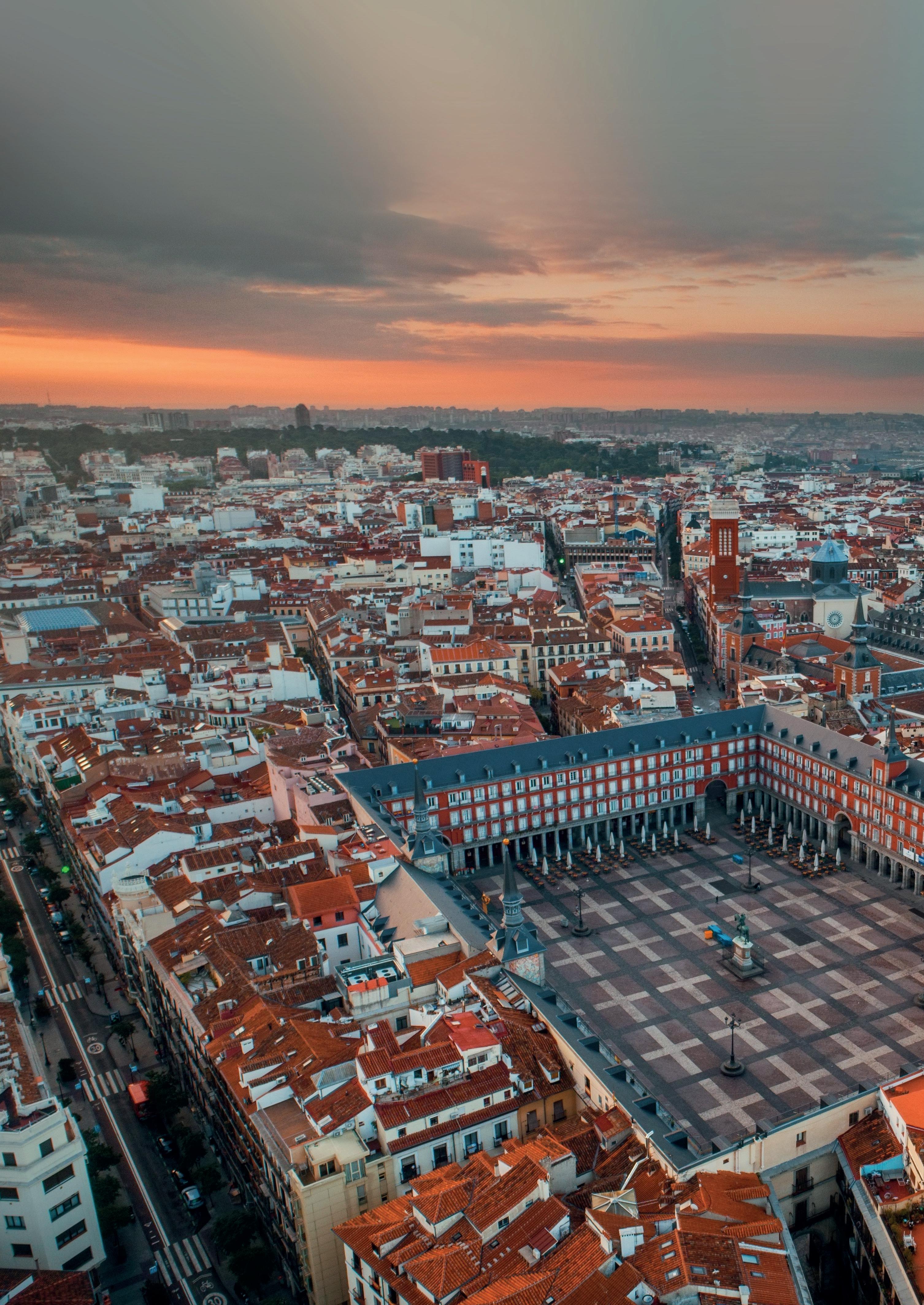
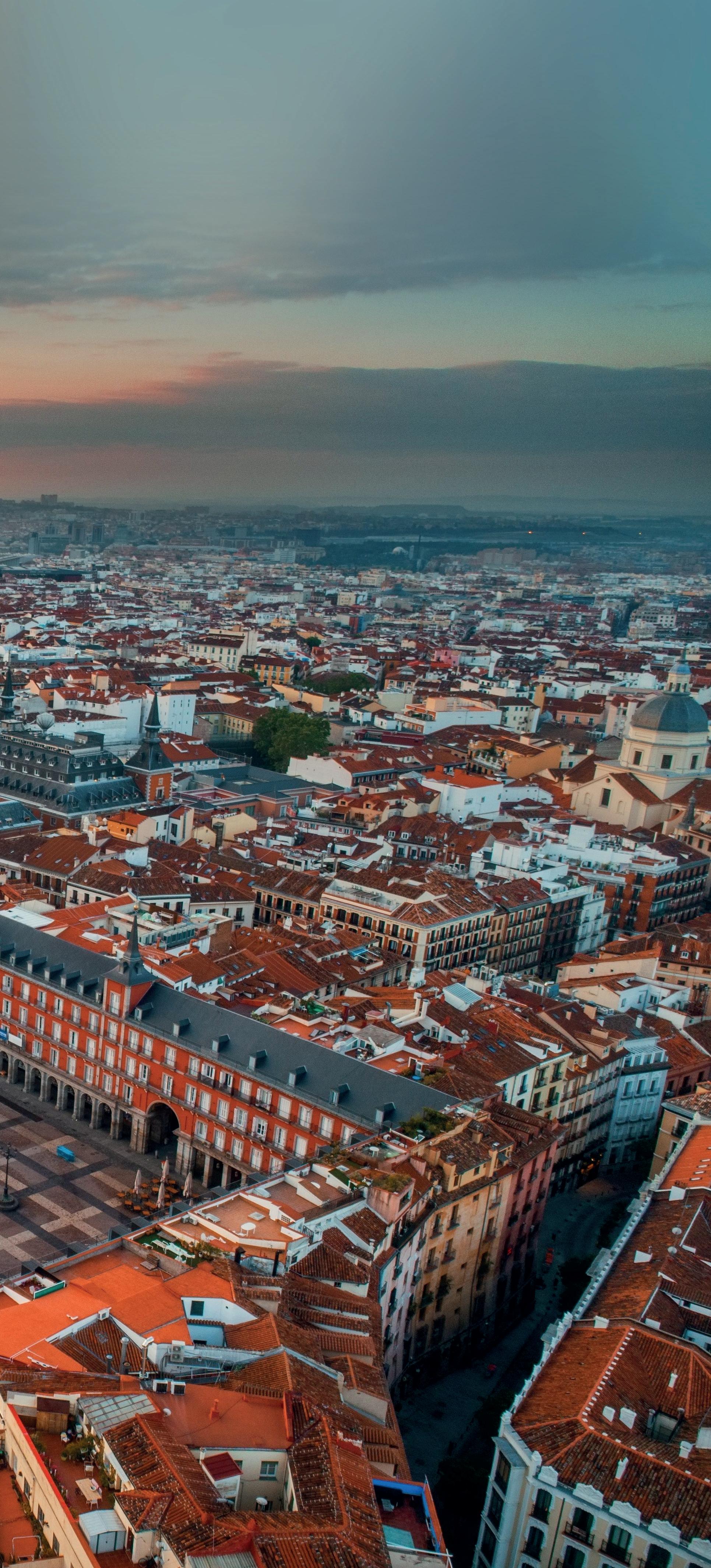
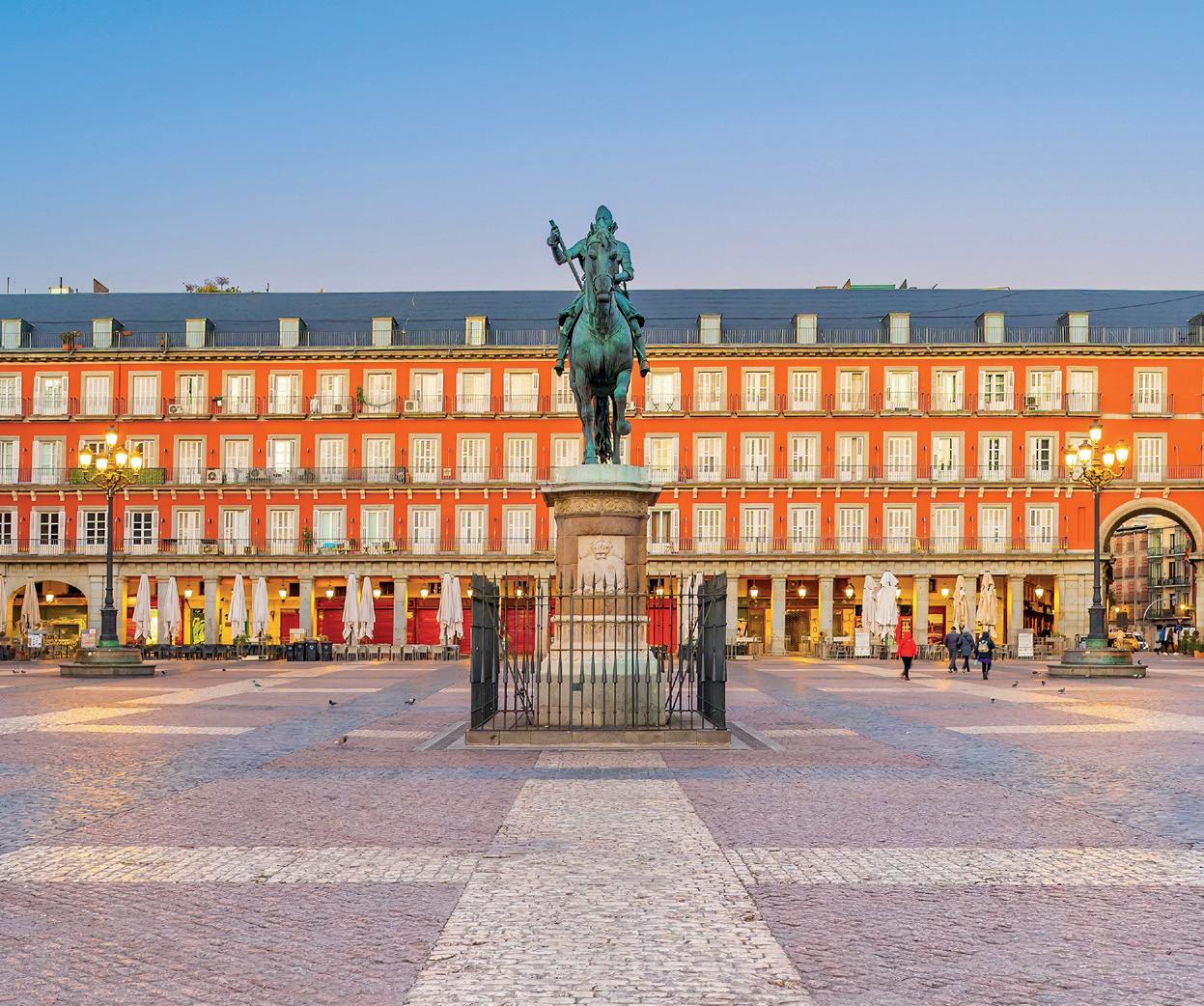
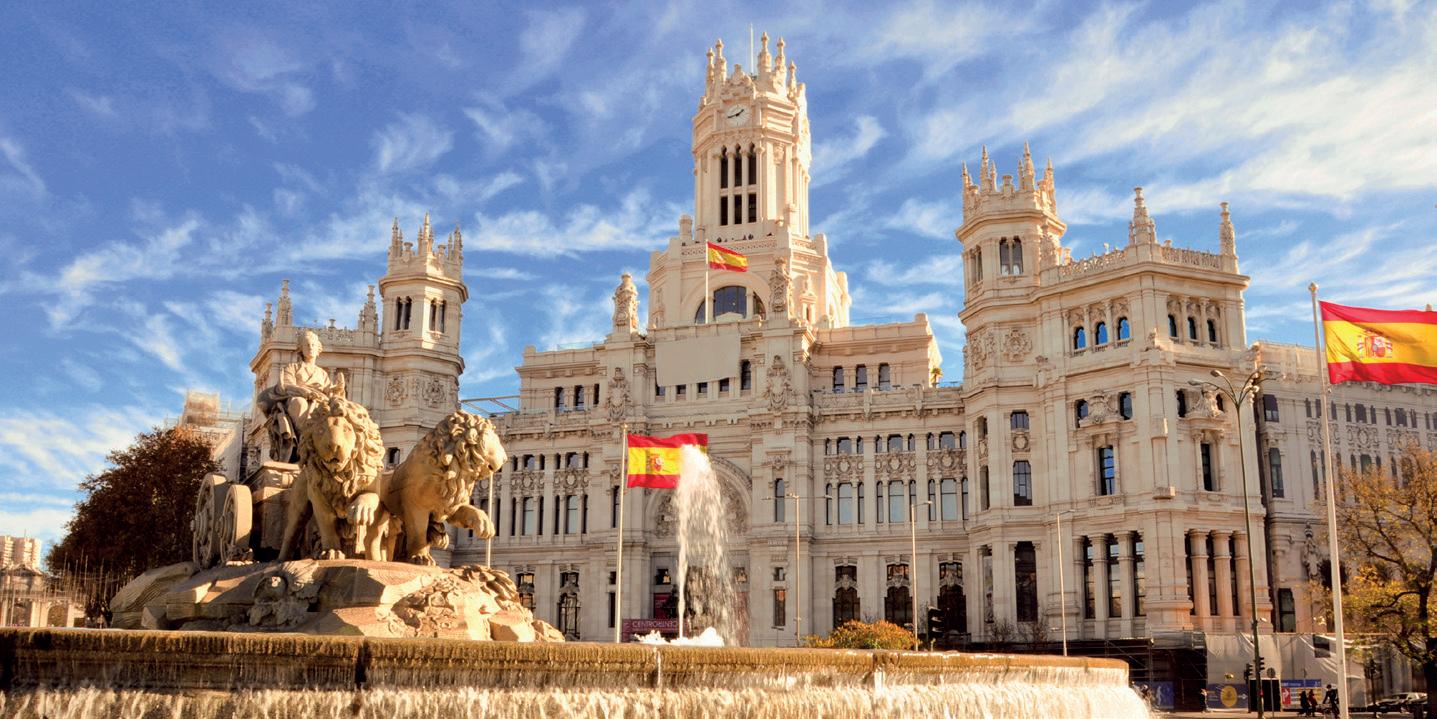
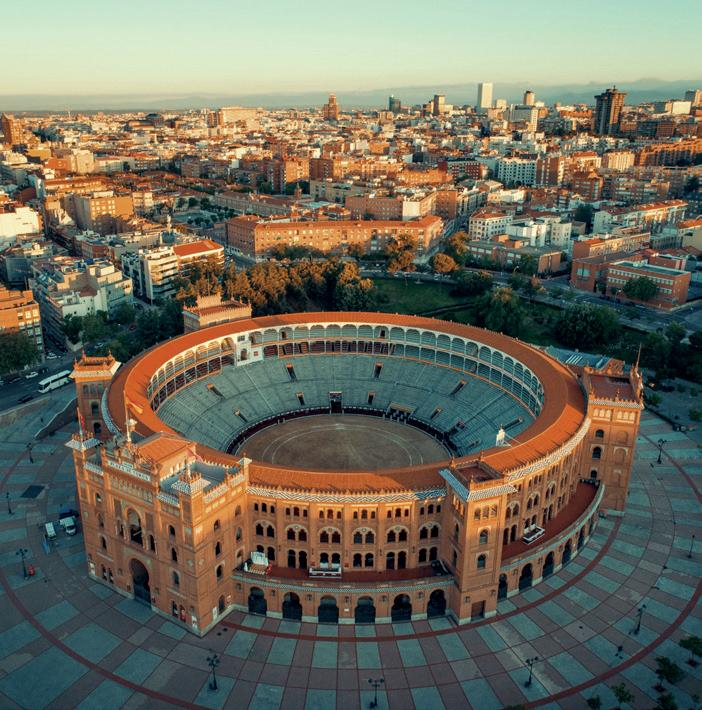
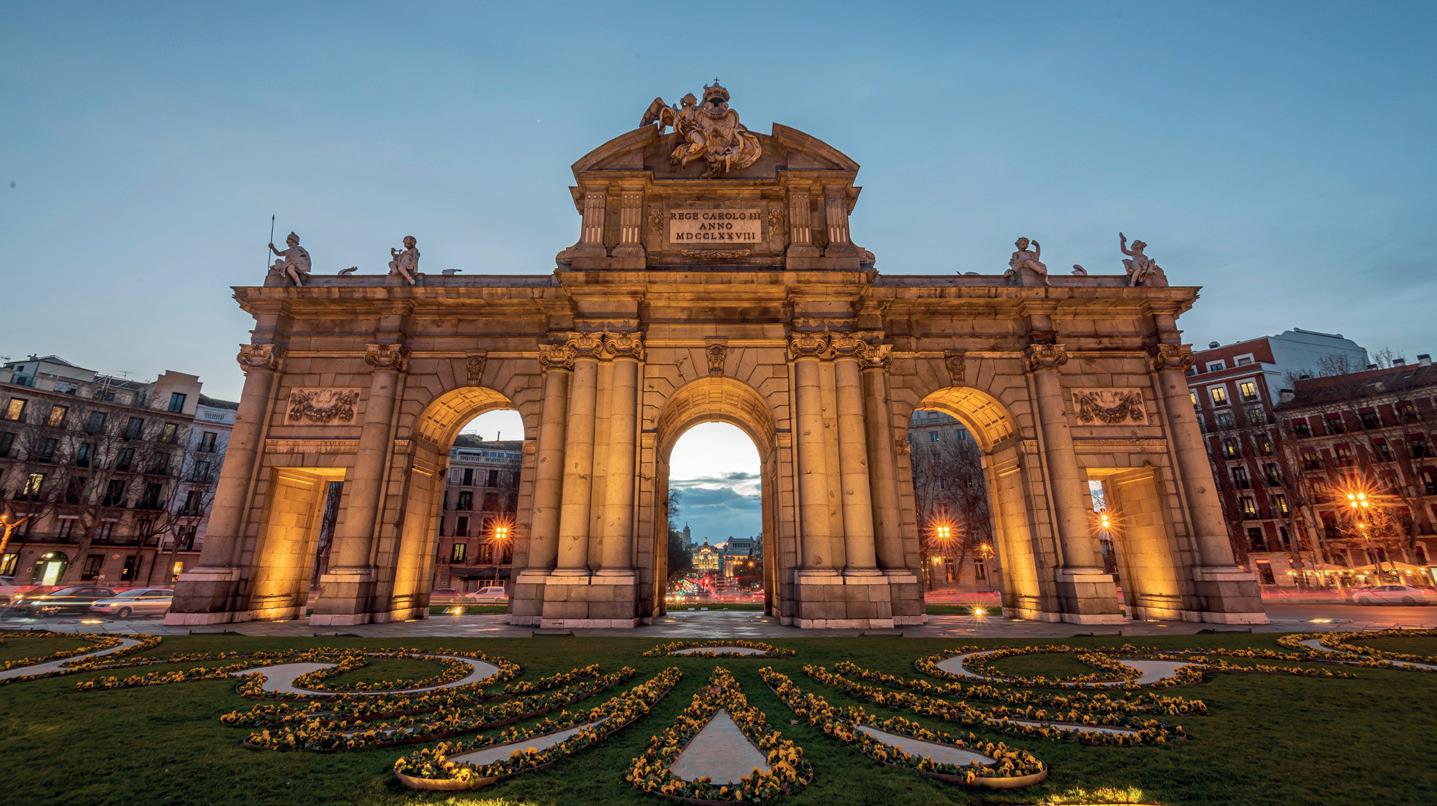
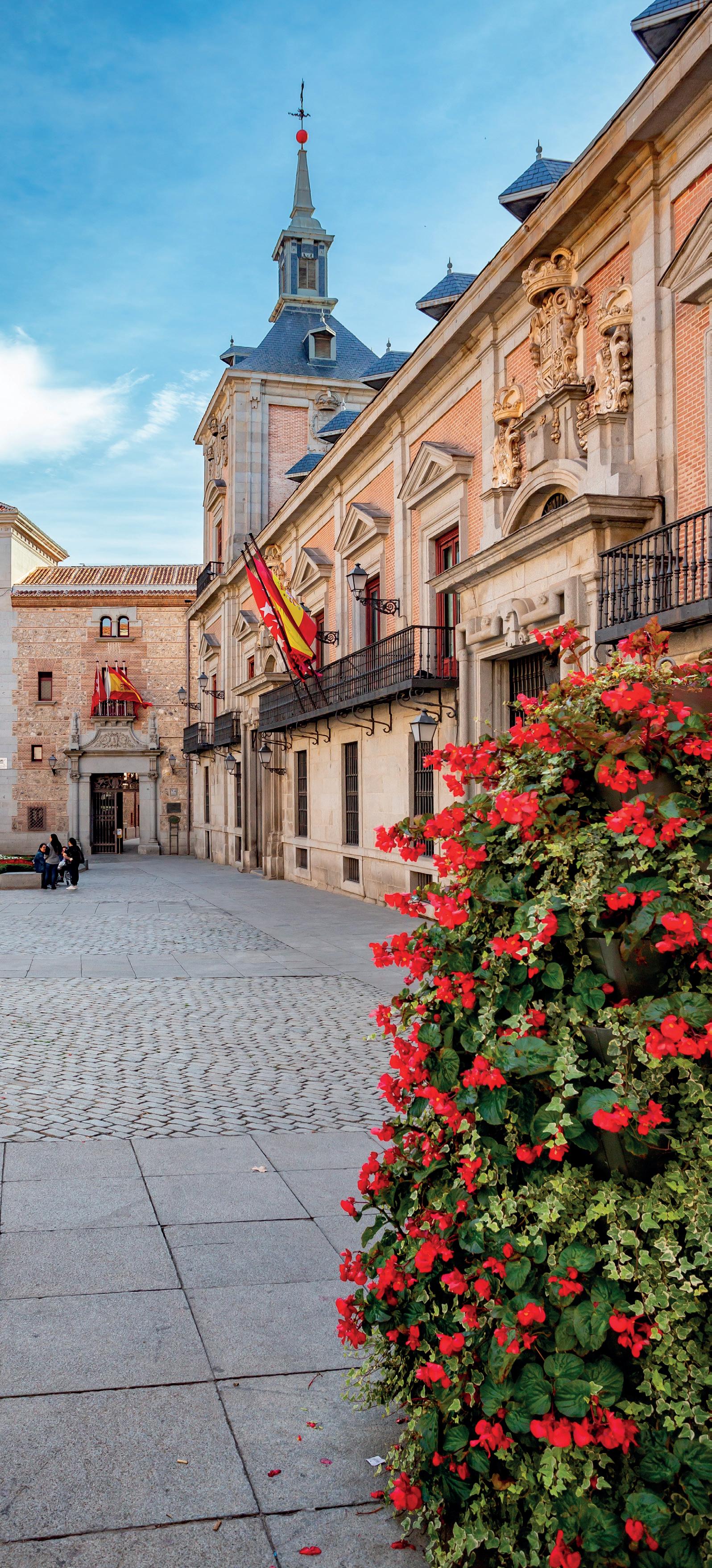
Business, of course, still drives us. Madrid makes its case as Europe’s most dynamic MICE capital, and Sébastien Bazin, the restless chairman of Accor, sits down to talk luxury, loyalty and the 220-metre sailing yacht he intends to float around the Mediterranean. Closer to home, Paul Jones mounts a stylish defence of the London black cab as the original concierge, just as the driverless future prepares to pull up at the kerb.
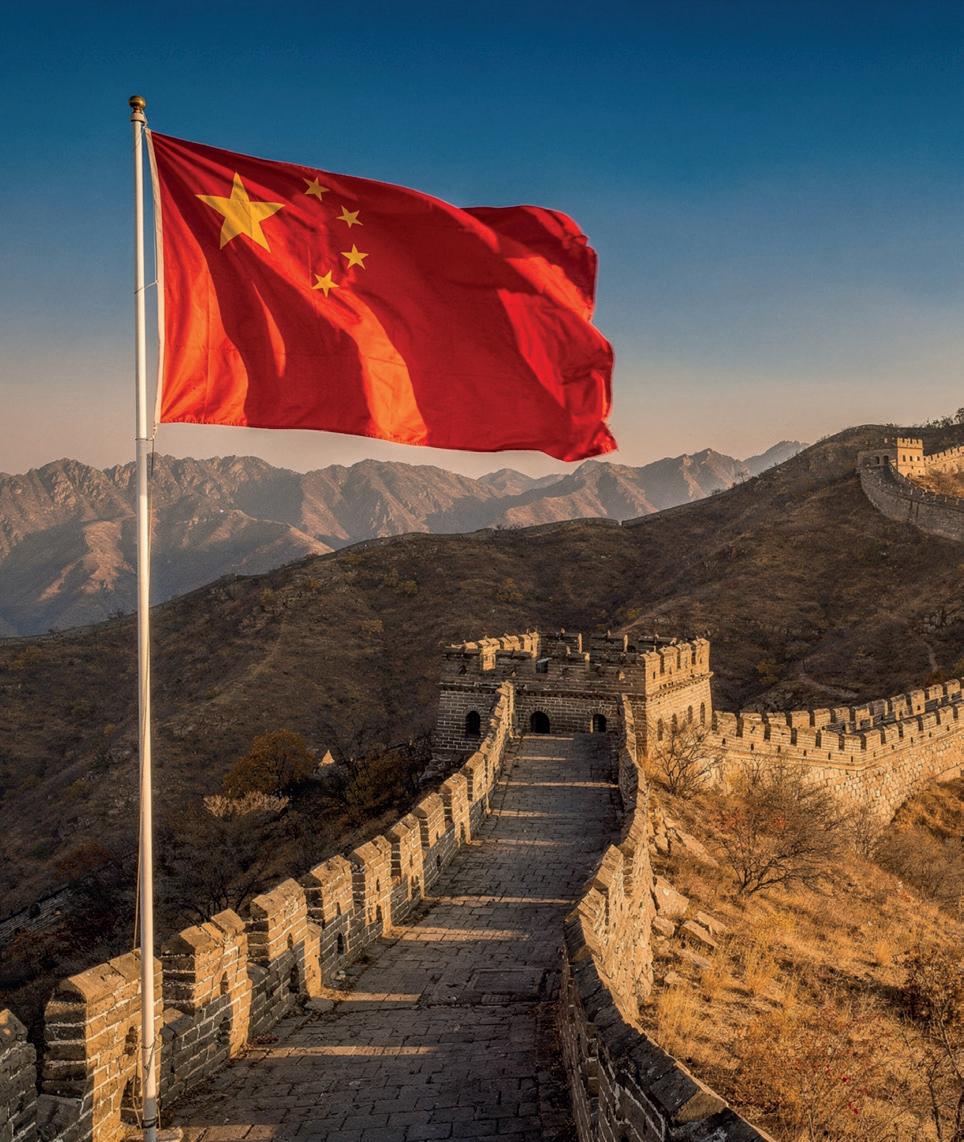
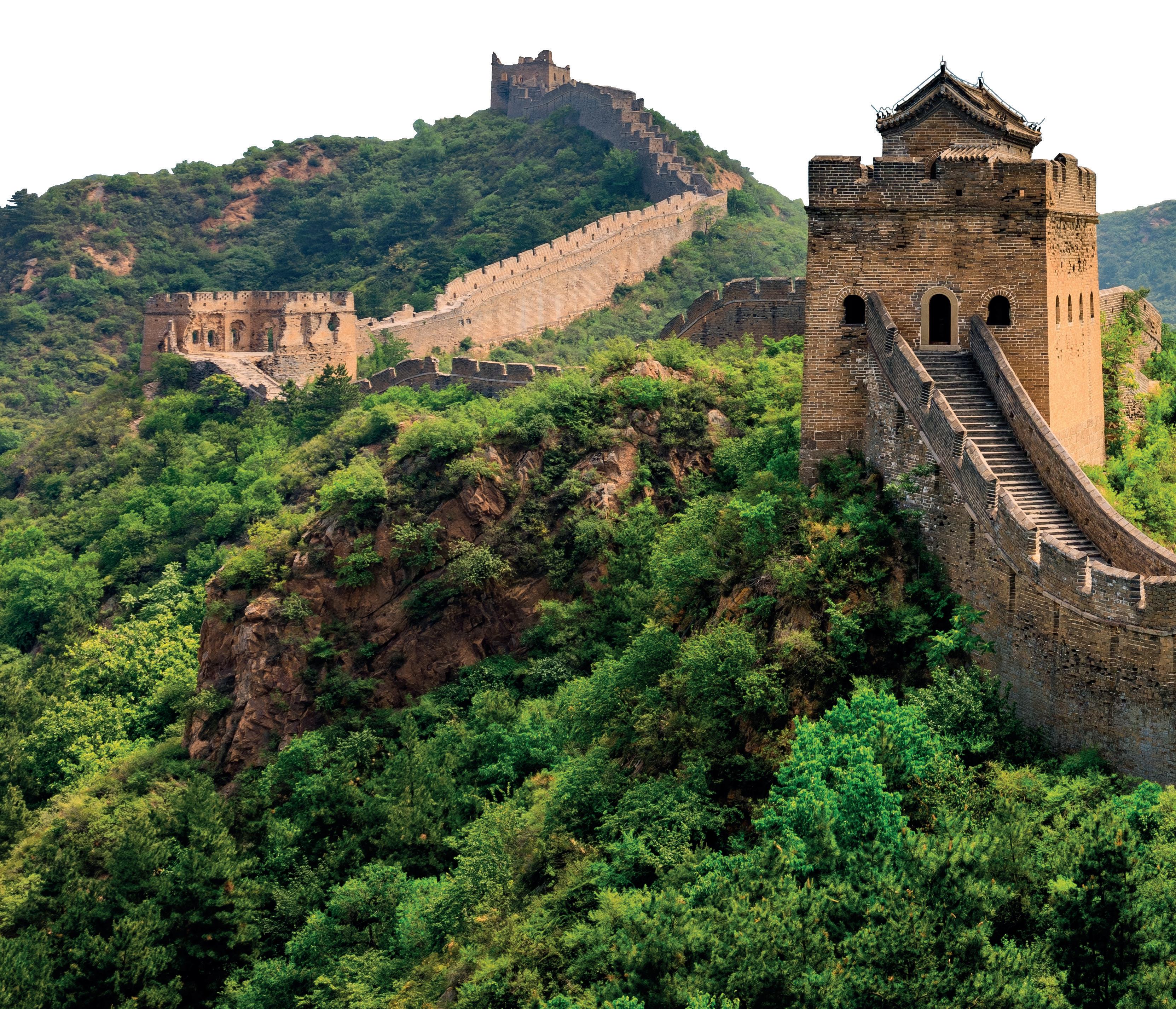
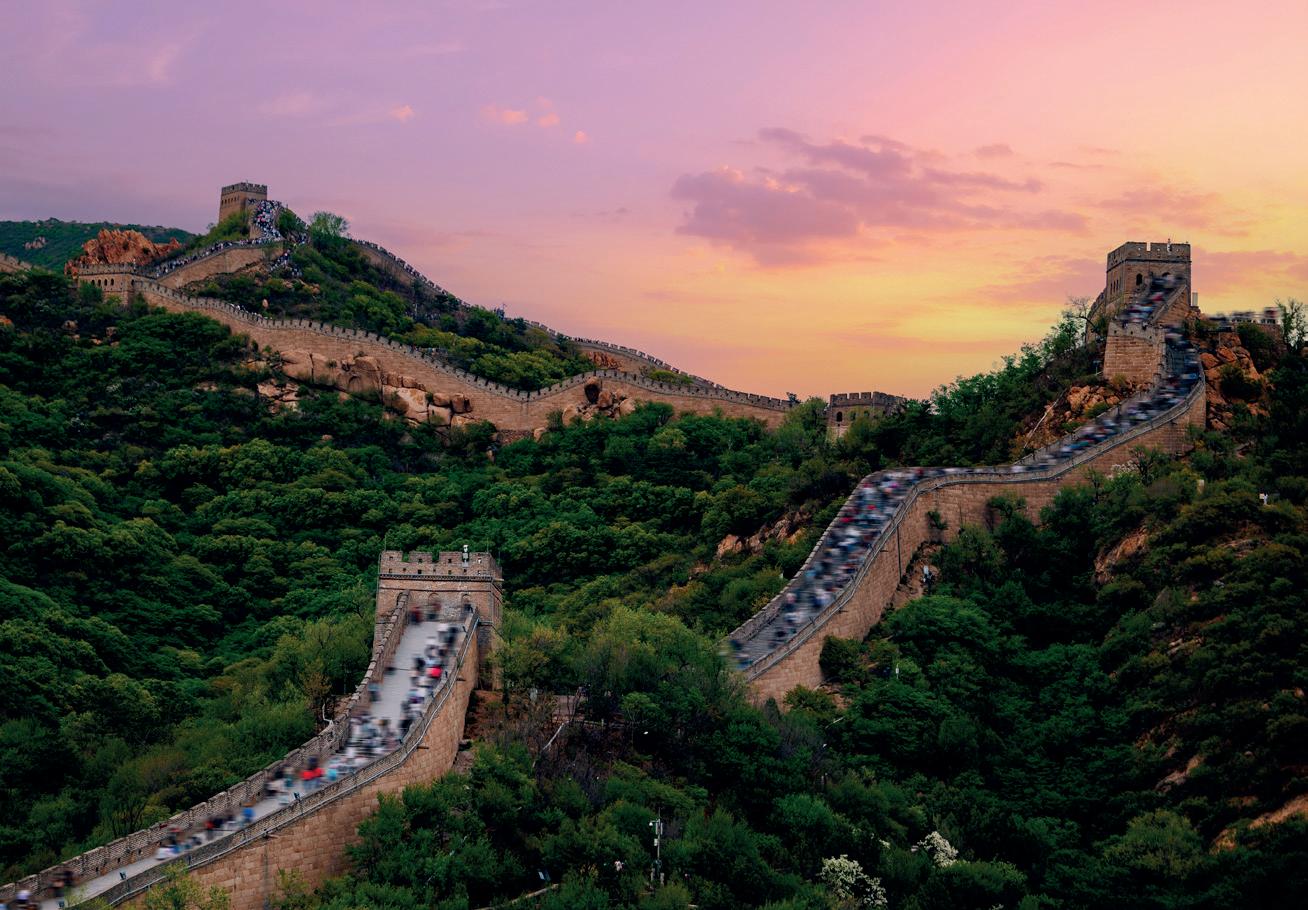
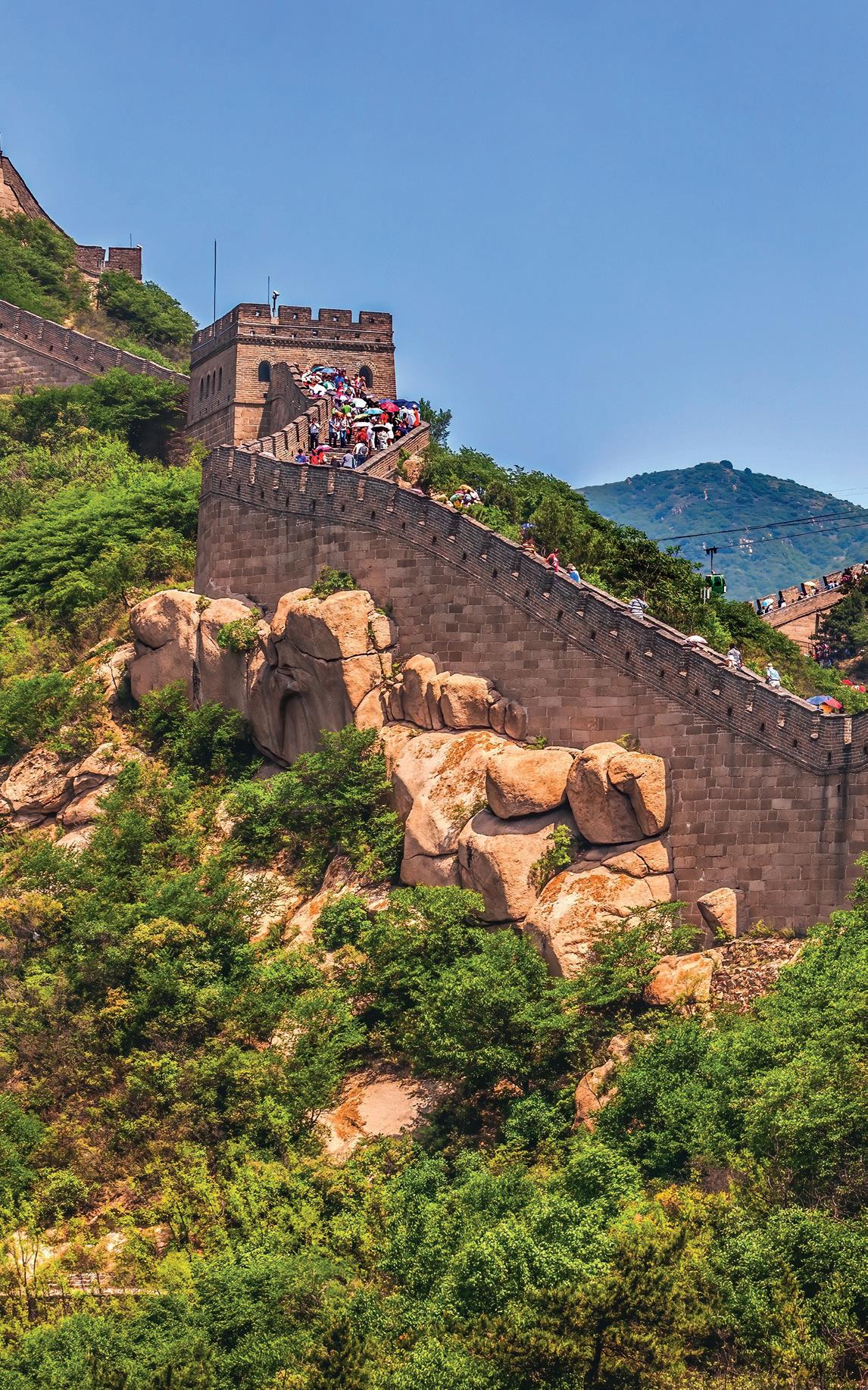
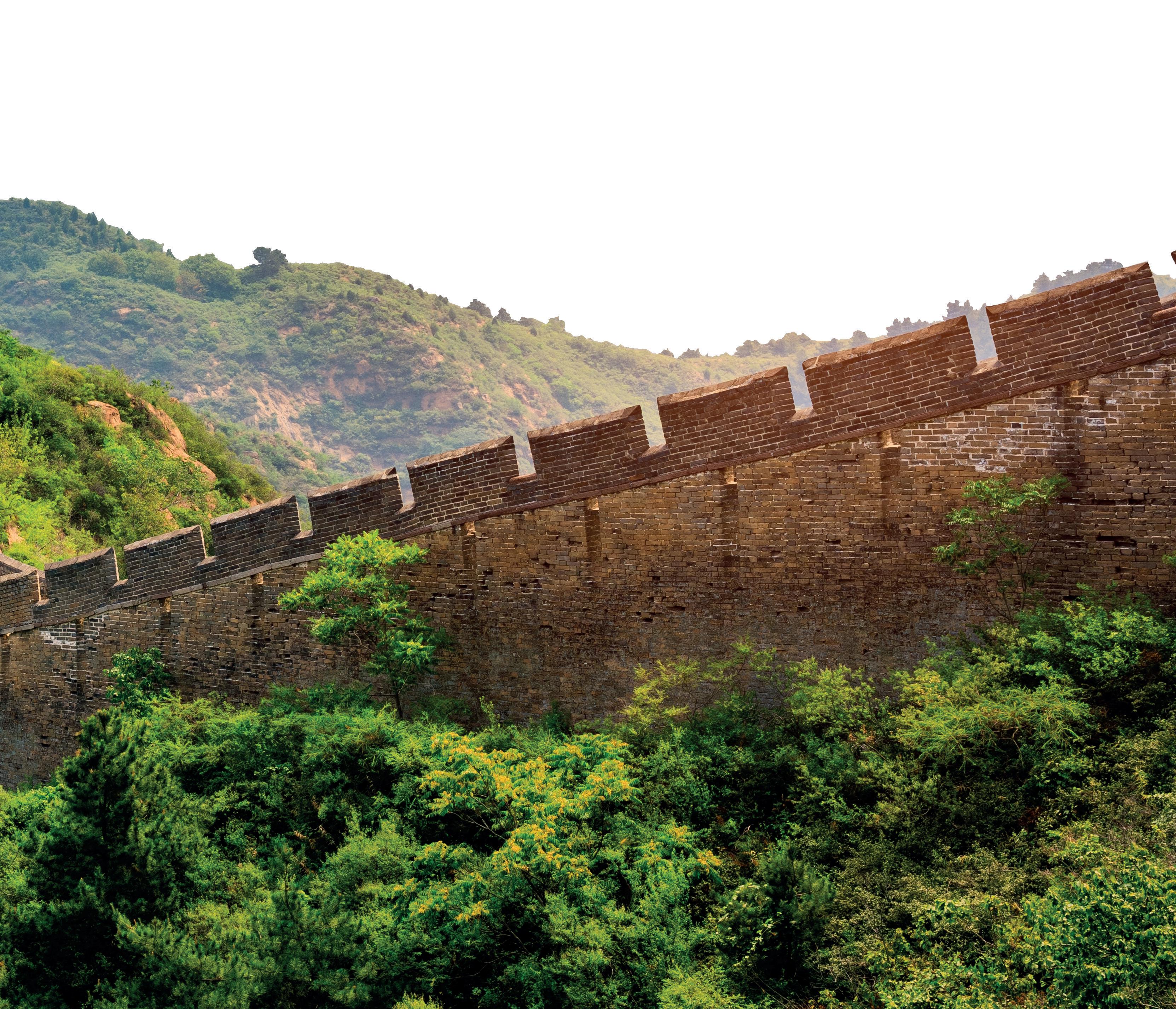
Elsewhere, we wander. We walk the Great Wall, strip cork from the oaks of the Alentejo,
Until next time…
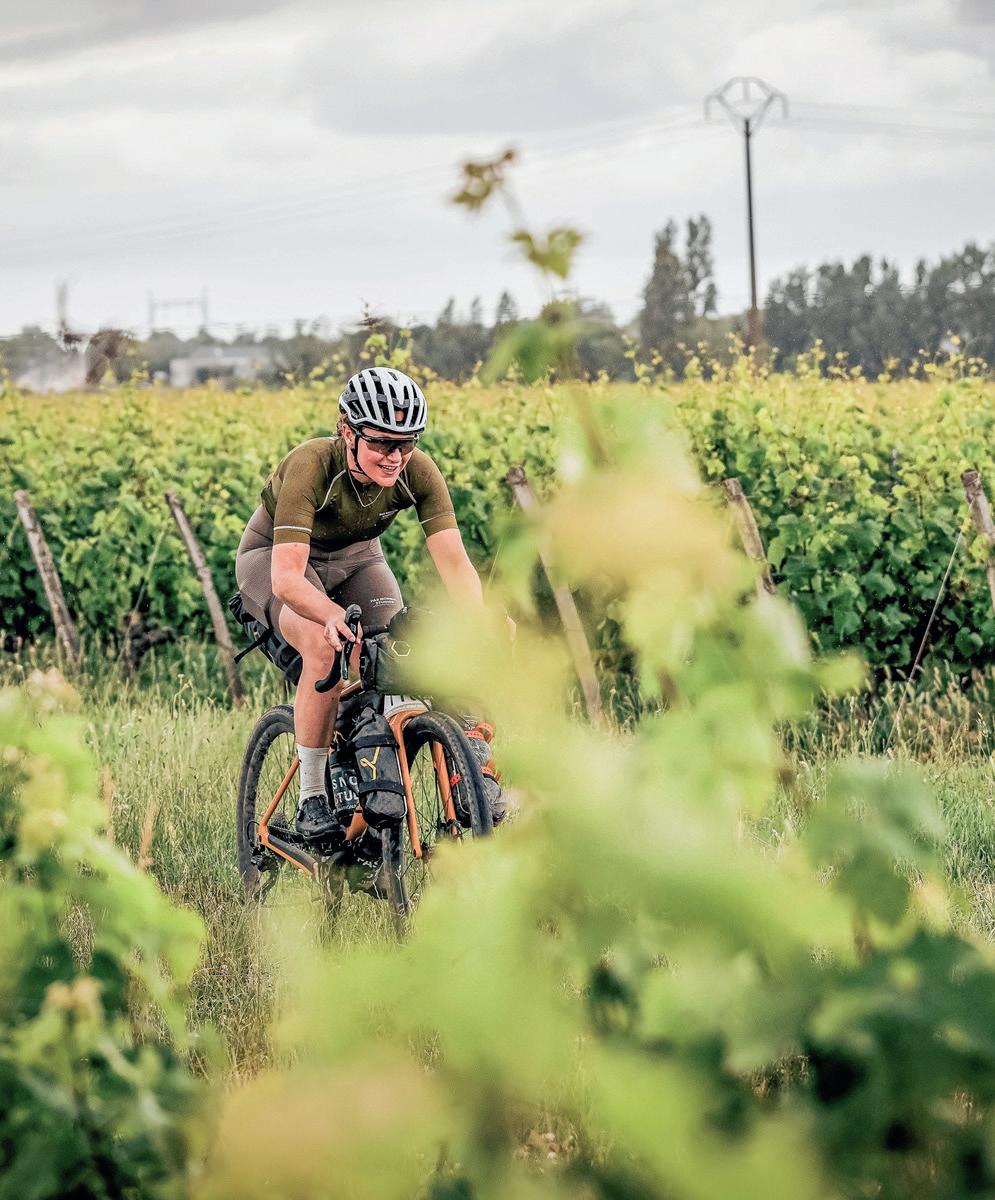
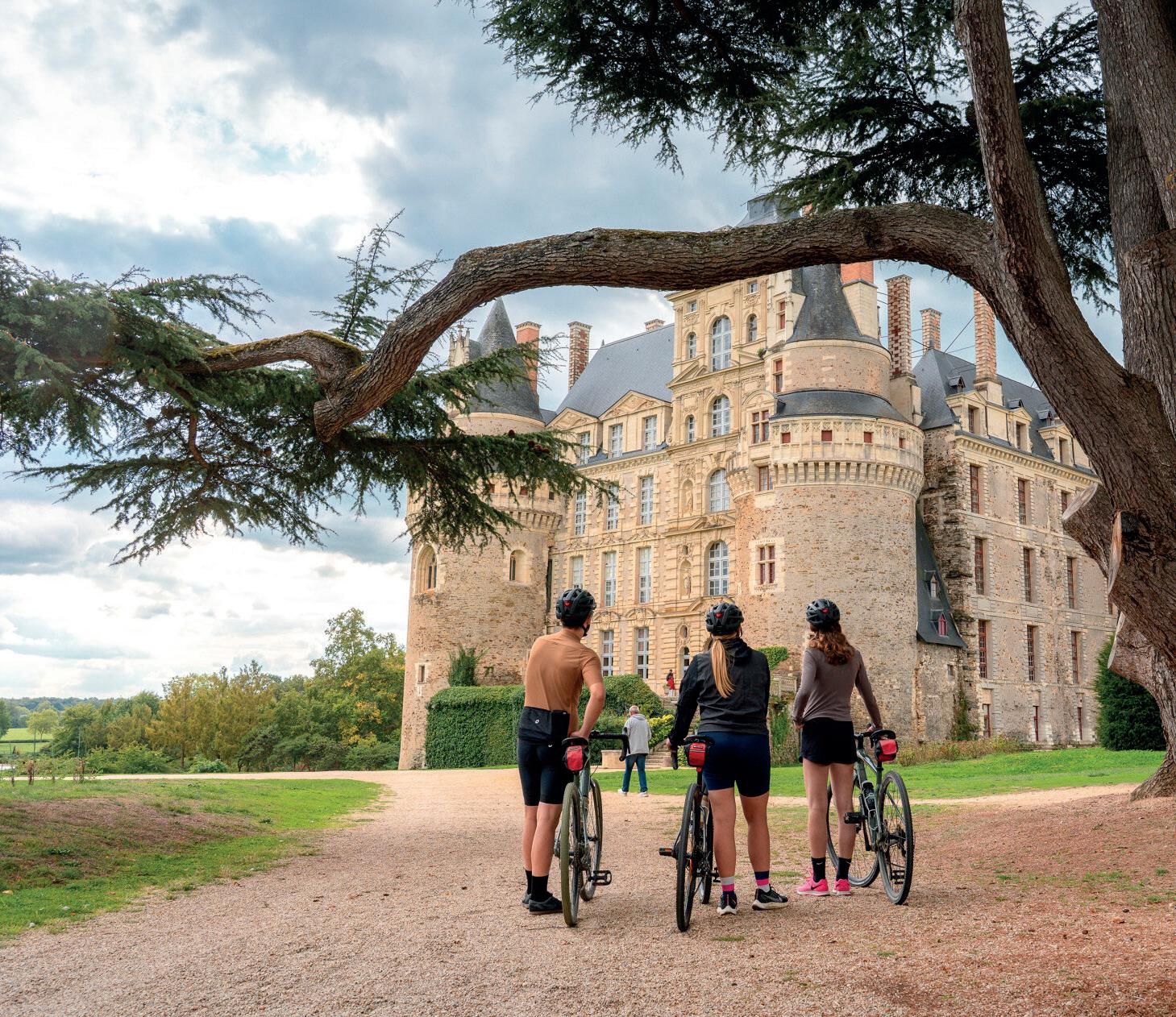
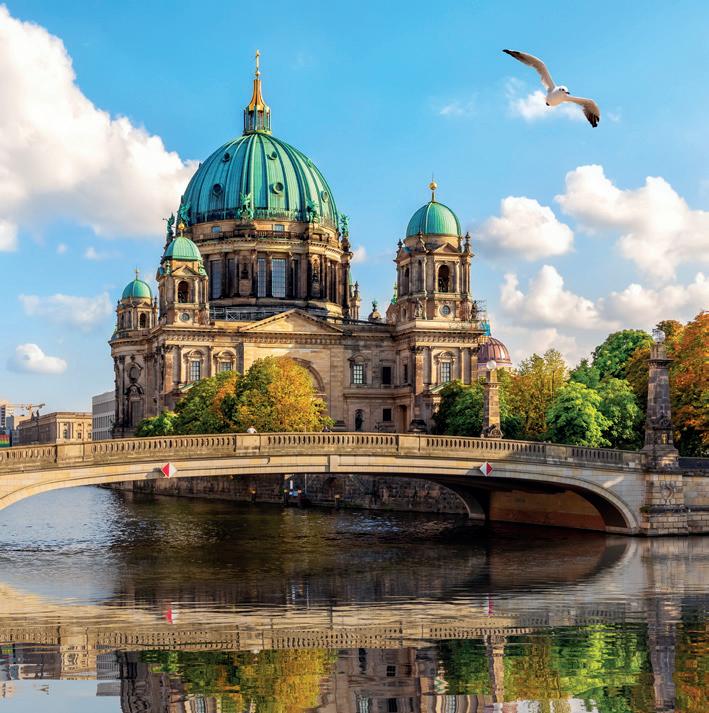
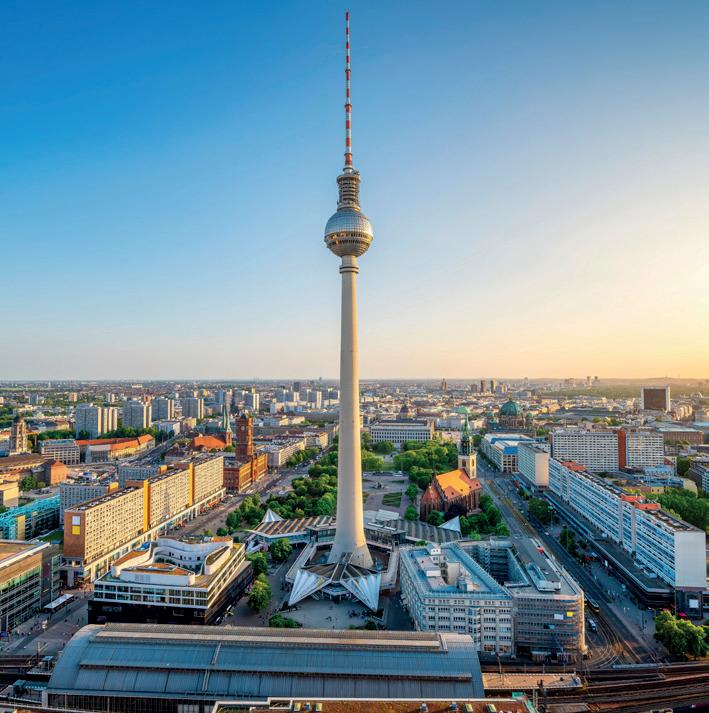
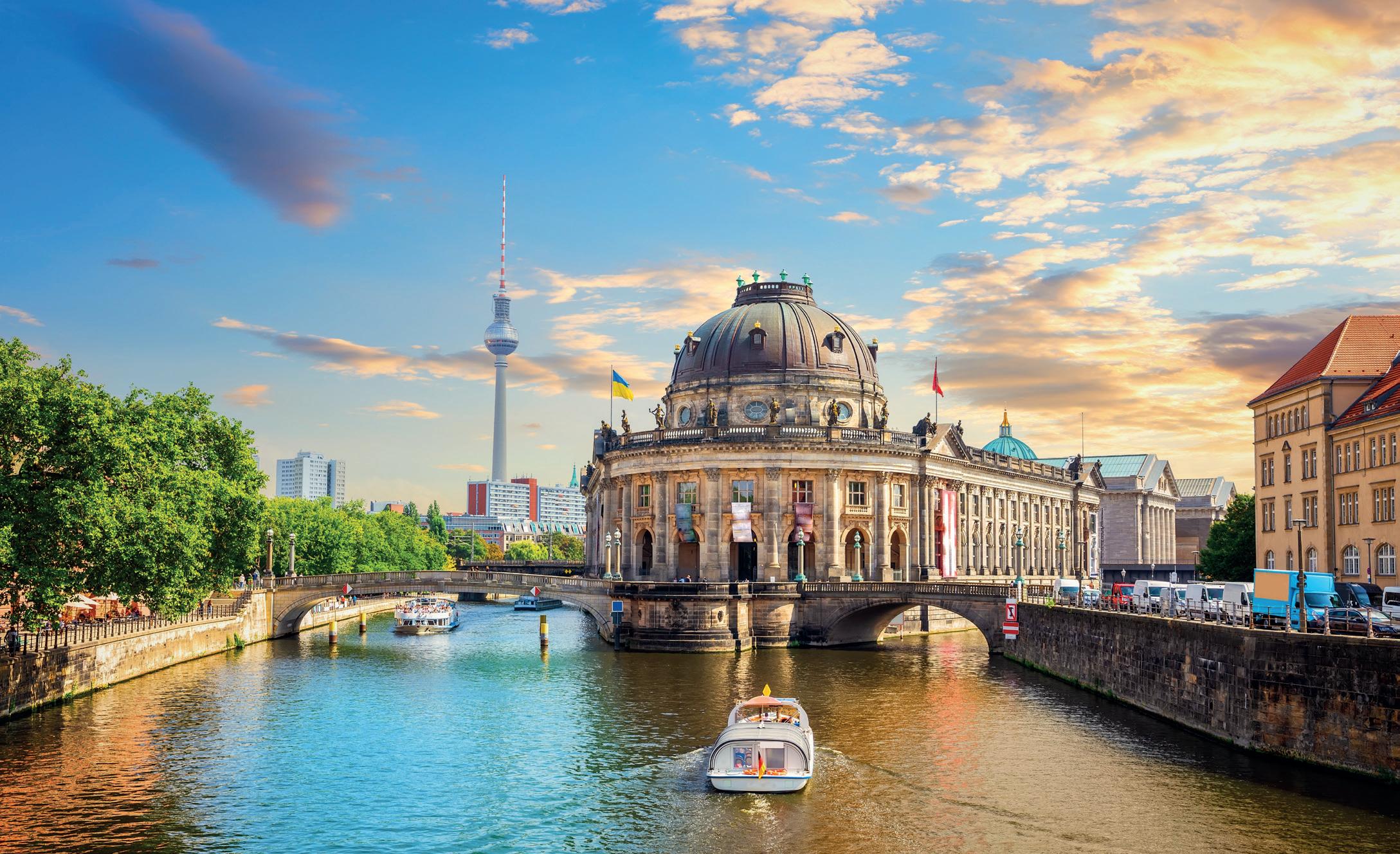
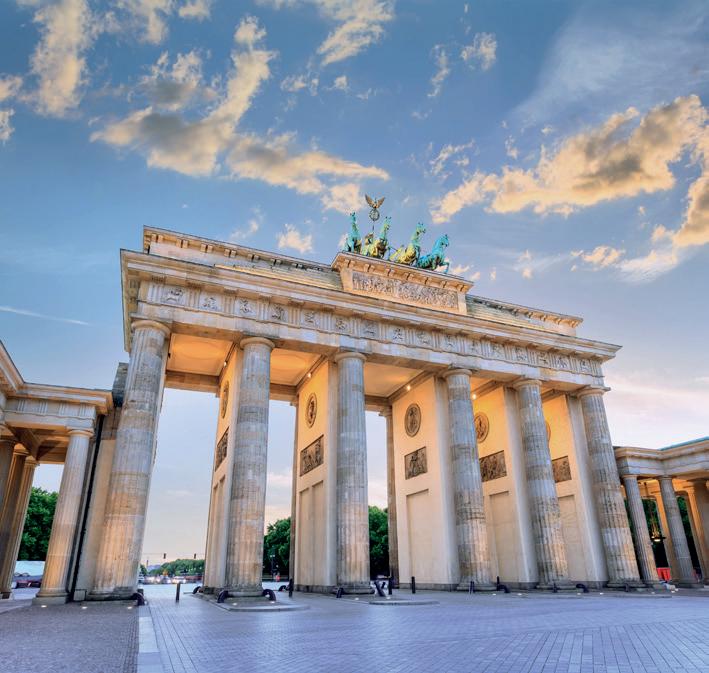
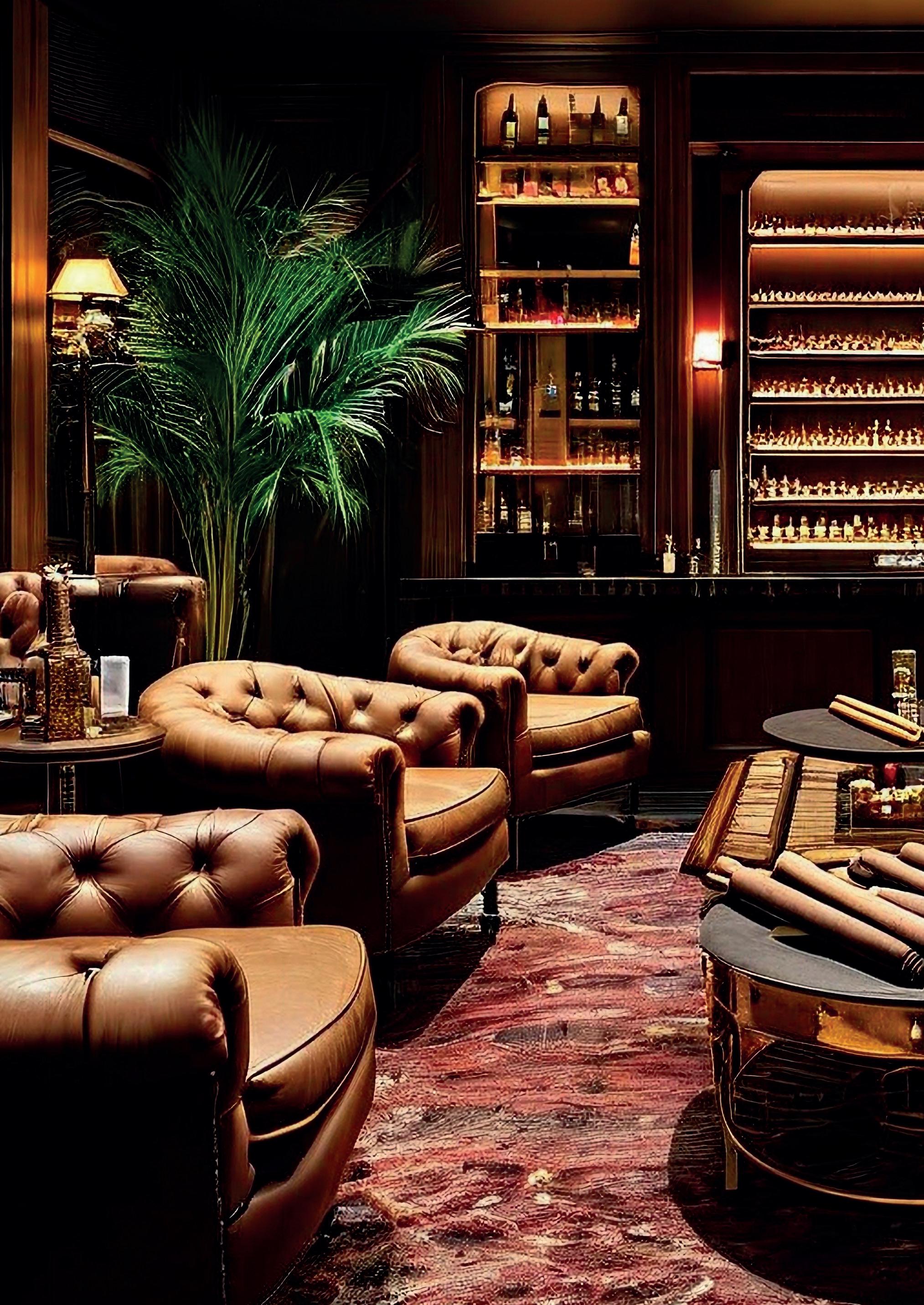
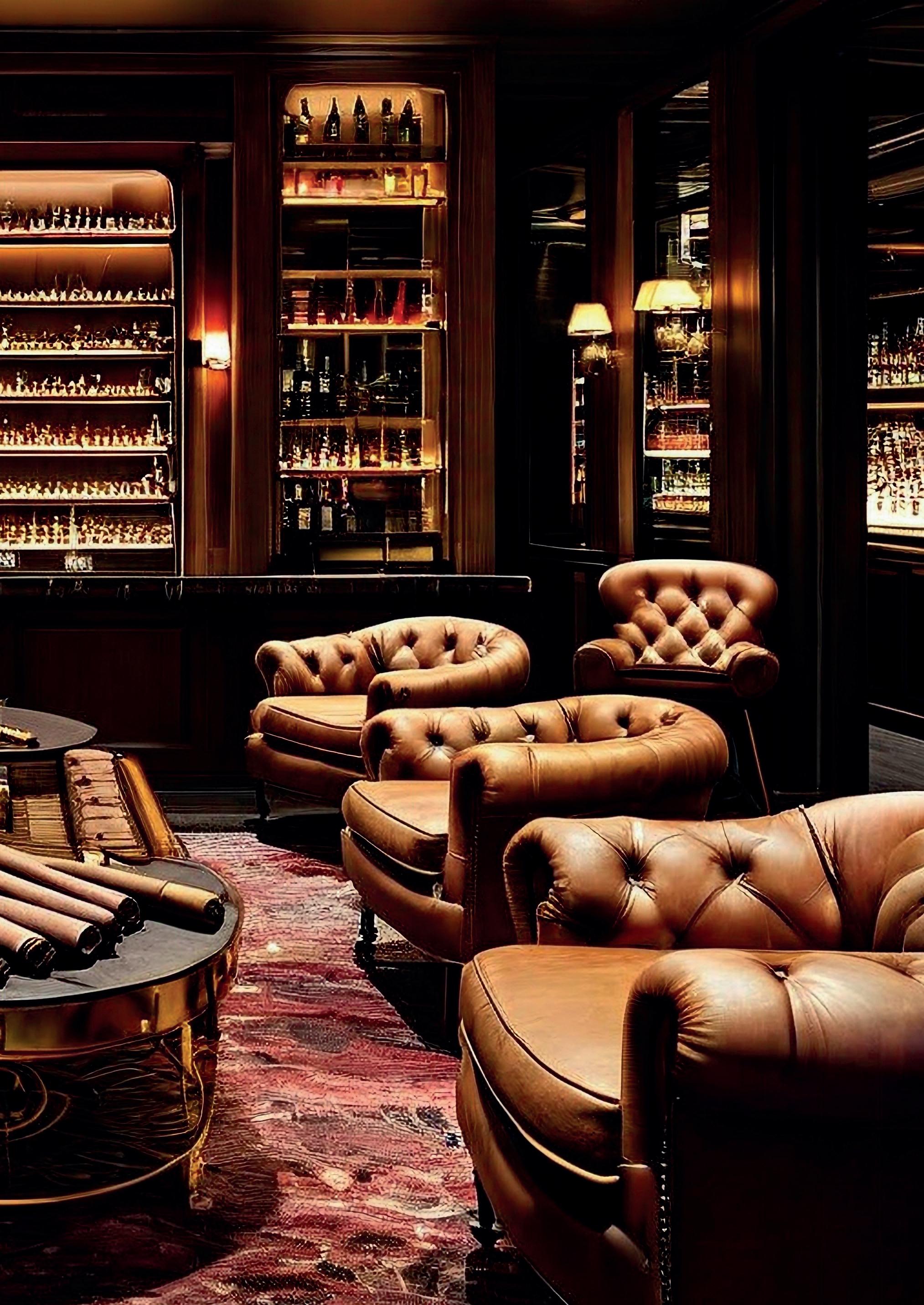
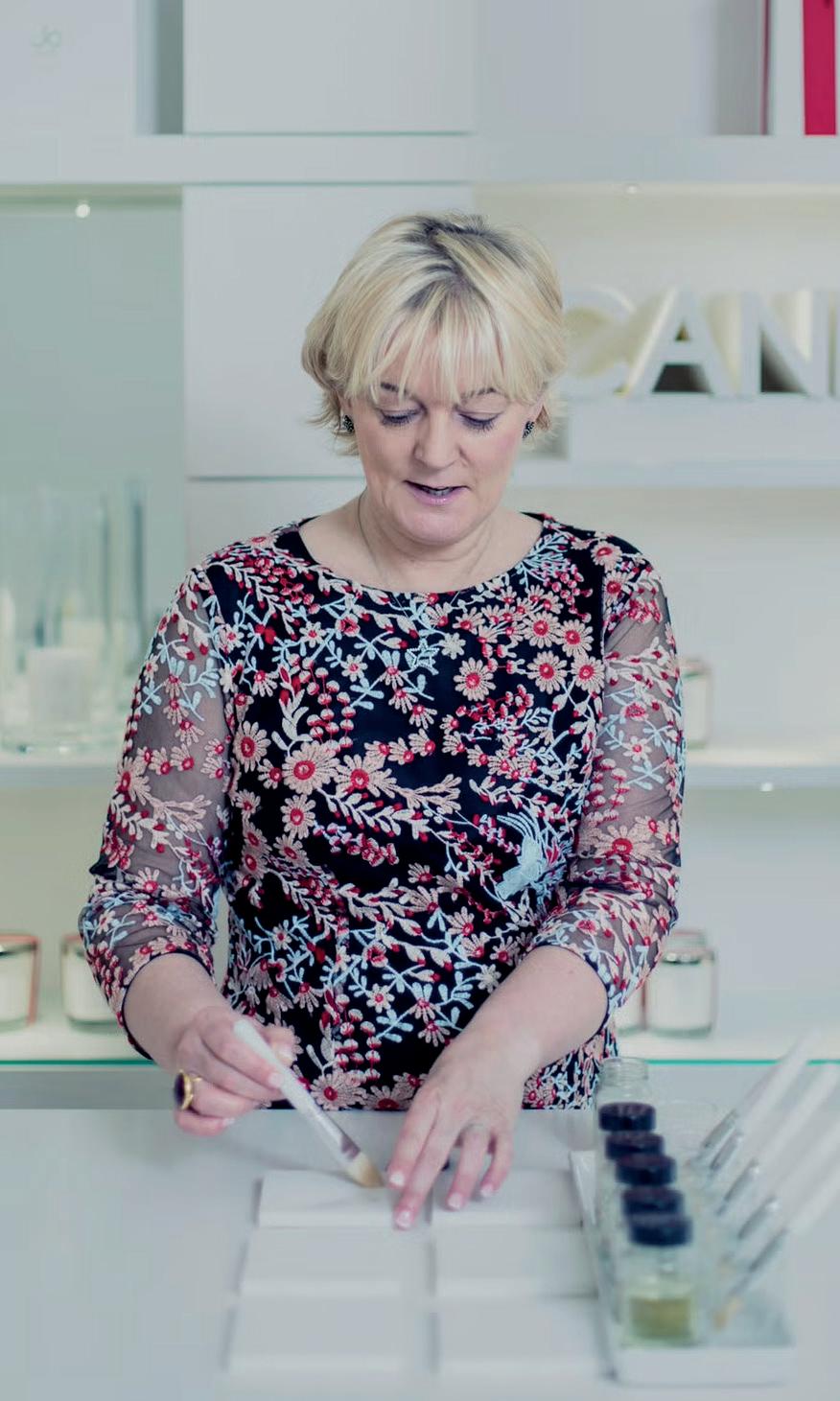
cycle out of Angers along the Loire and drive Maine’s Route 1 at our own unhurried pace. We take the pulse of a reborn Berlin, raise a glass in Champagne, and meet Jo Malone, who has swapped scent for spirits and fear for a skydive over the desert. For the incurably curious, there is the secret language of airport codes, the quiet hierarchy written on a pilot’s sleeve, and a slow tour of the world’s finest hotel cigar lounges.
There are rooms to covet, too, from the discreet calm of COMO The Halkin in Belgravia to the new sky-high suites at The Athenaeum and clifftop cabins on the Kent coast, our reviewers having done the hard work of staying put so that you can choose well.
Threaded through all of it is a single conviction: that how we travel for work can be every bit as considered as why. With our inaugural awards approaching in October, there has rarely been a better moment to celebrate the people and places raising the bar.
So settle in, ideally somewhere with good water pressure and a buzzing bar. The world, as ever, is waiting.
RICHARD ALVIN EDITOR, TRAVELLING FOR BUSINESS
Editor Richard Alvin
Reviews & Features Editor
Andrea Thompson
Graphic Designer
Grace Moseley
Videographer
Jacob Pinchbeck
Content Sales Manager
Laura Phillips
Capital Business Media, Group MD
Richard Alvin
Business Development Director
Stephen Banks
Chief Creative Director
Stuart Hyde
Finance Director
Andrew Martin
Travelling For Business is published in London by
34747 +1 212 531 5116
The Capital Business Media Group, Level 18, Forty Bank Street London, E14 5NR +44 20 7148 3861
Travelling For Business is printed using sustainable paper sources and vegetable ink, and is PEFC certified. Copies are recycled at the end of the issue.
CONTENTS DESTINATIONS
Egypt's North Coast Gem Marassi's Beaches, Resorts & Marina Life
Isle Of Wight Sunshine, Sea & 200 Years Of Cowes Week
Europe's New Powerhouse For MICE
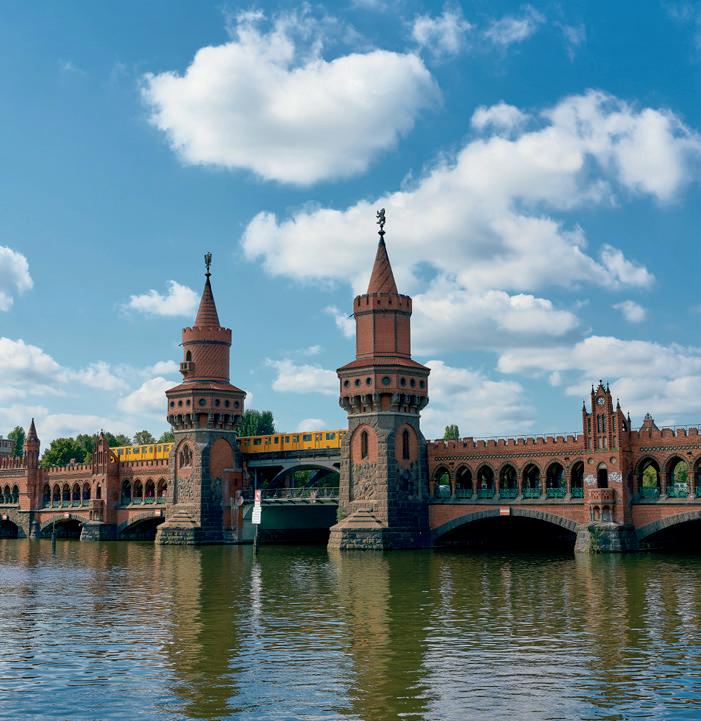
A City Rebuilt, Reimagined & Ready
Anthenaeum Hotel & Residences London, UK
Como The Halkin London, UK
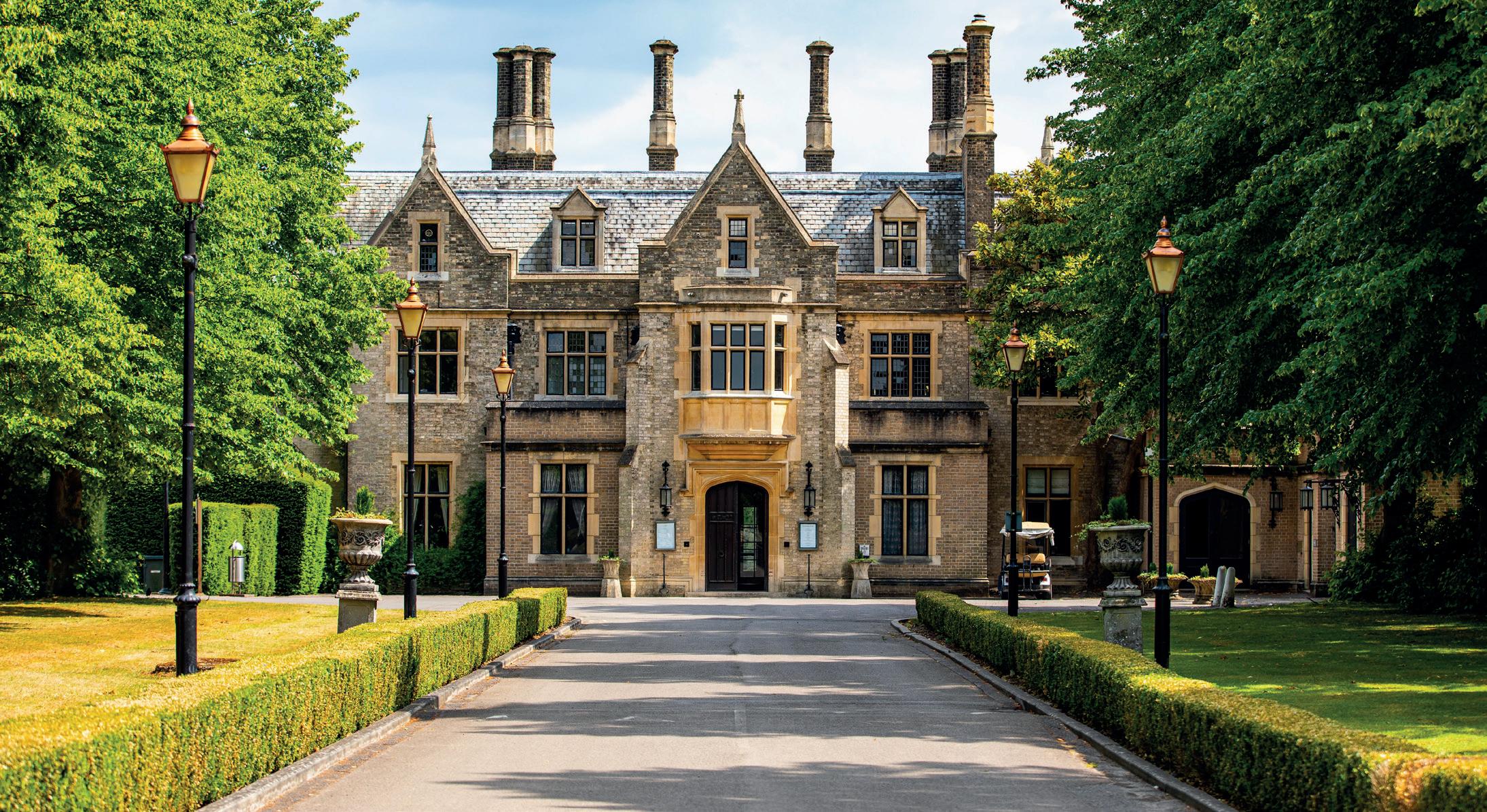
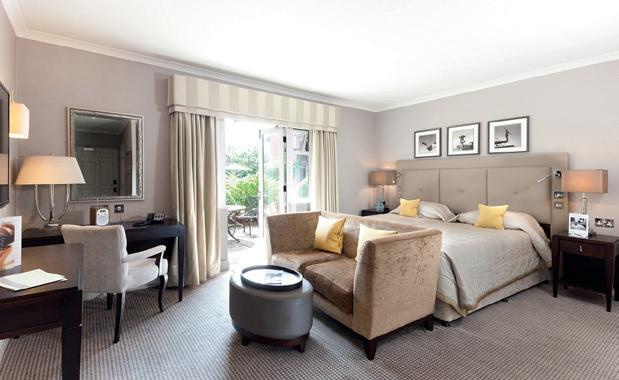
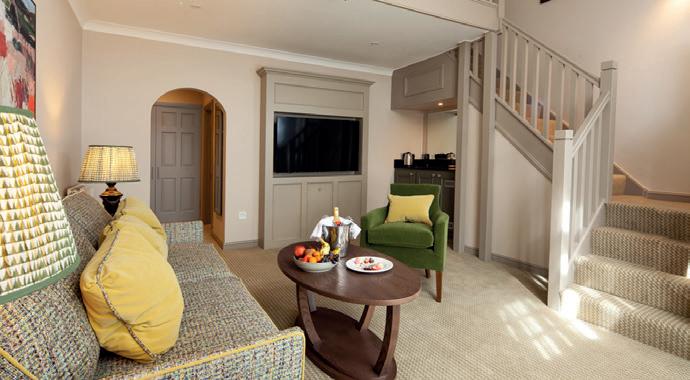
Foxhills Surrey, UK
CabÜ By The Sea Kent, UK
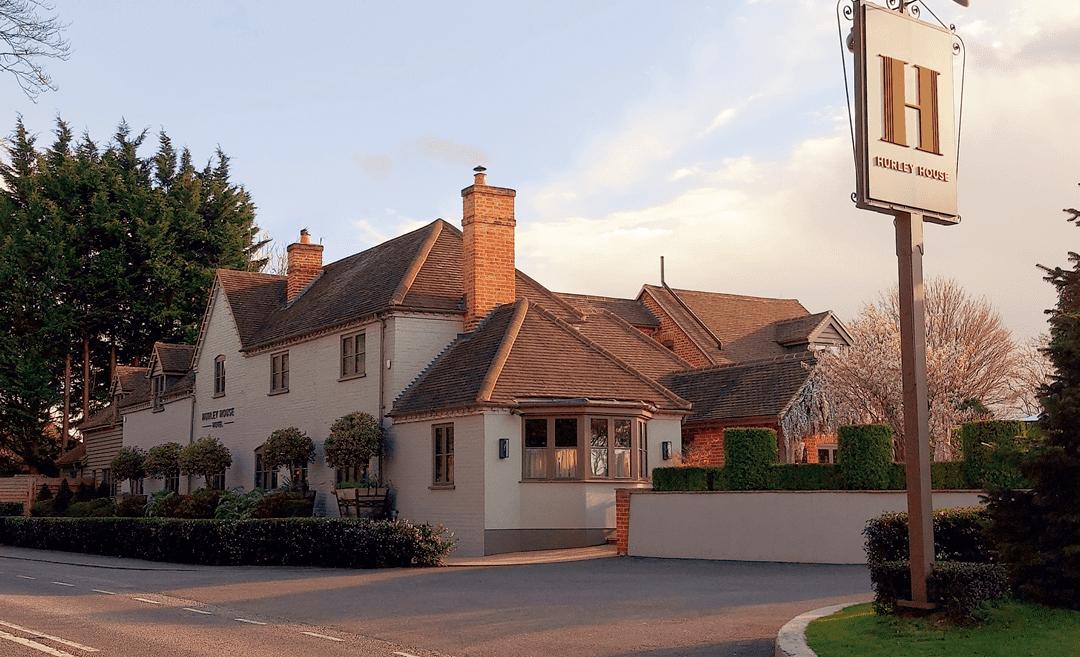
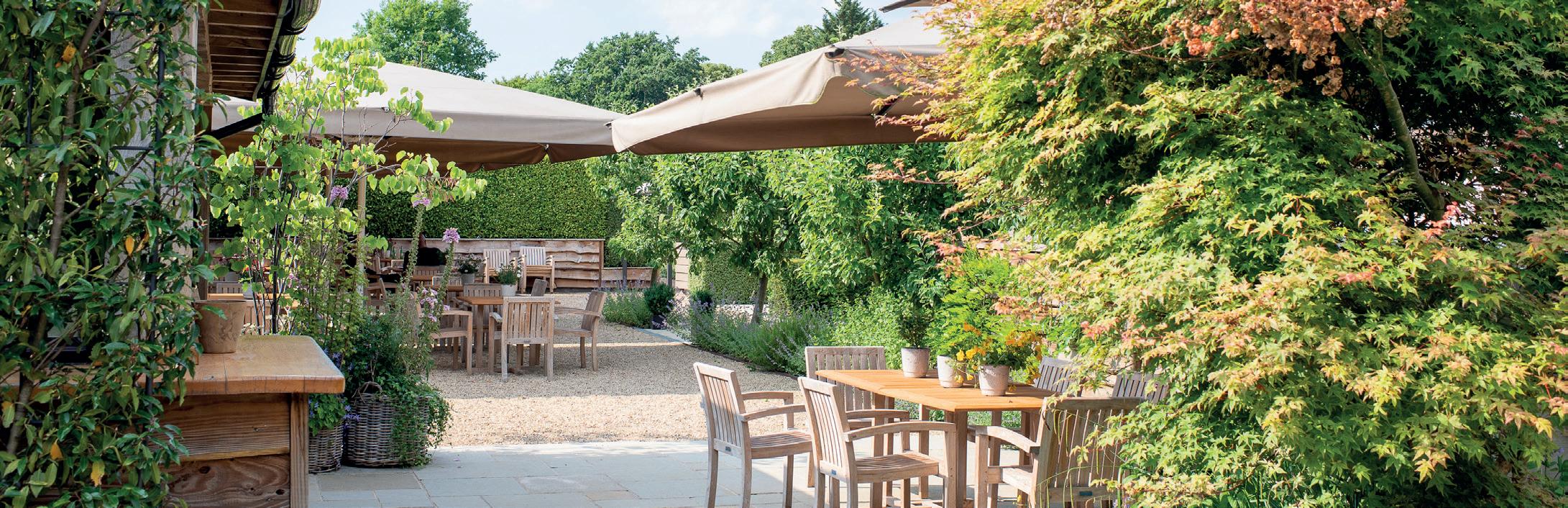
Hurley House Hotel Buckinghamshire, UK
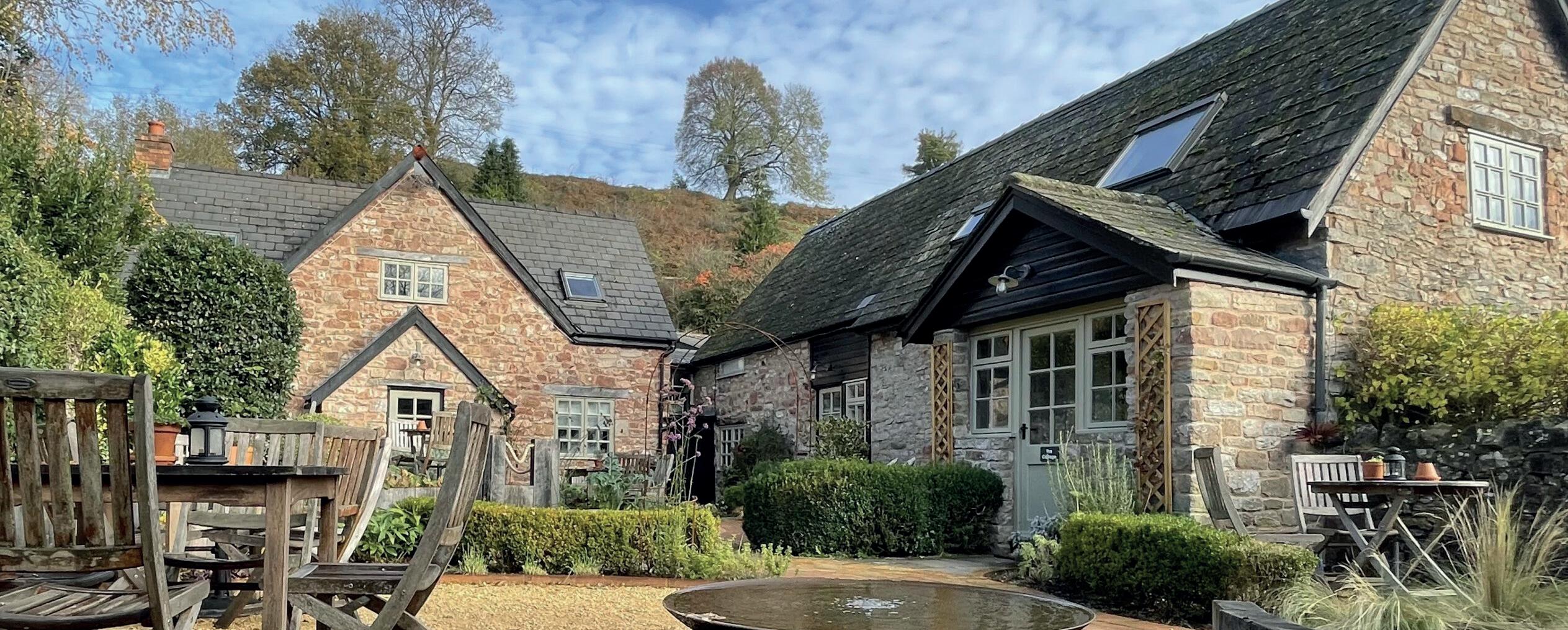
Tudor Farmhouse Gloucestershire, UK
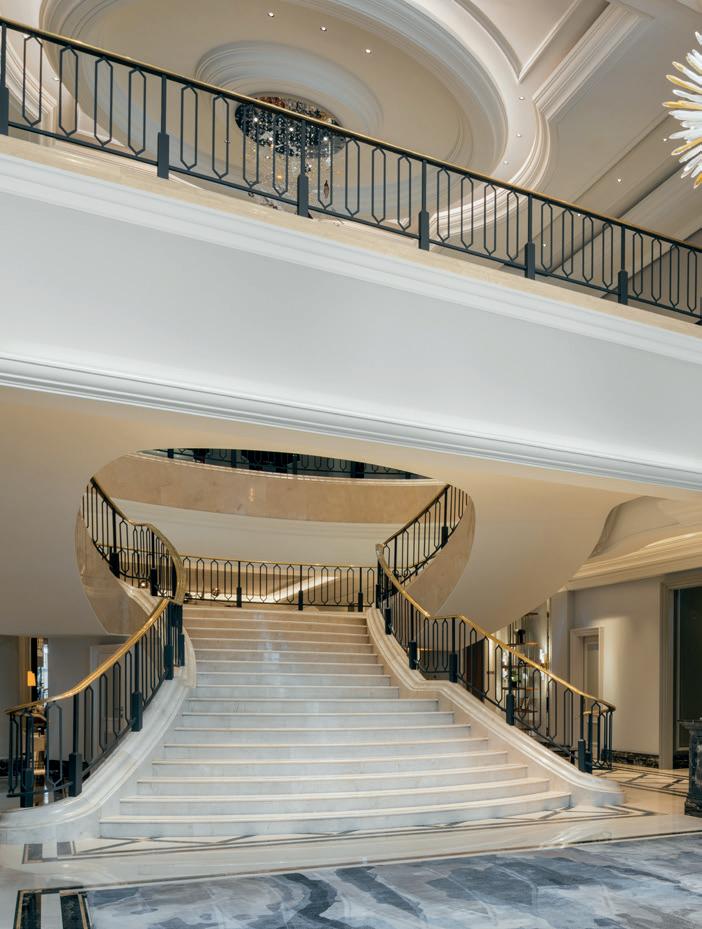
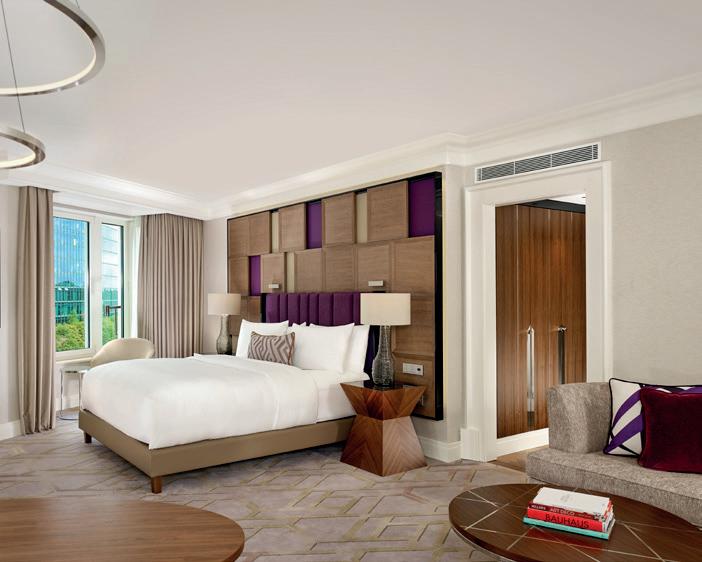
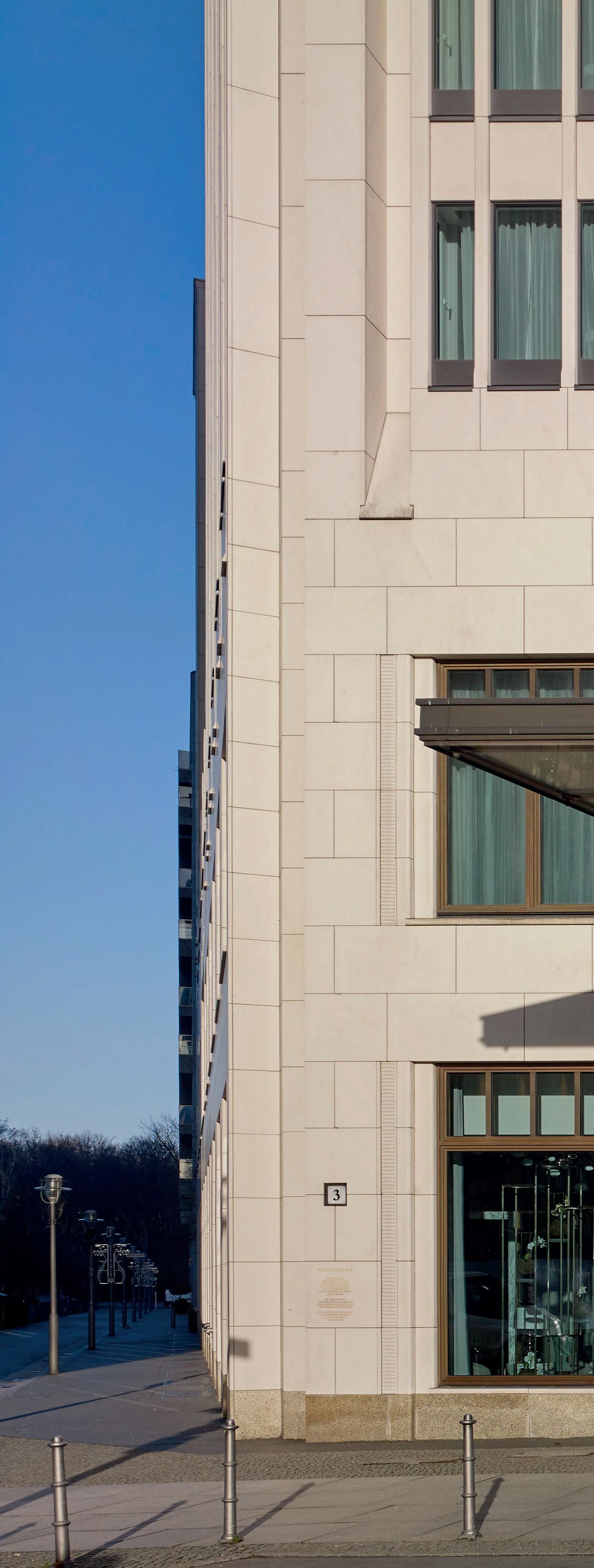
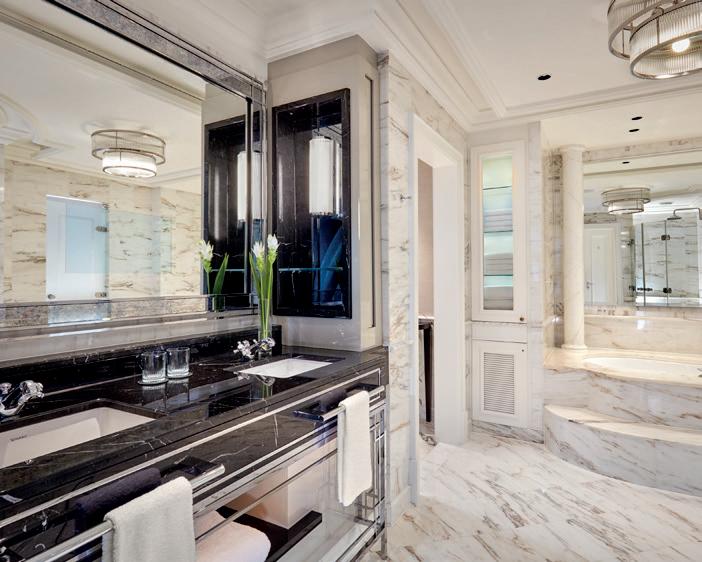
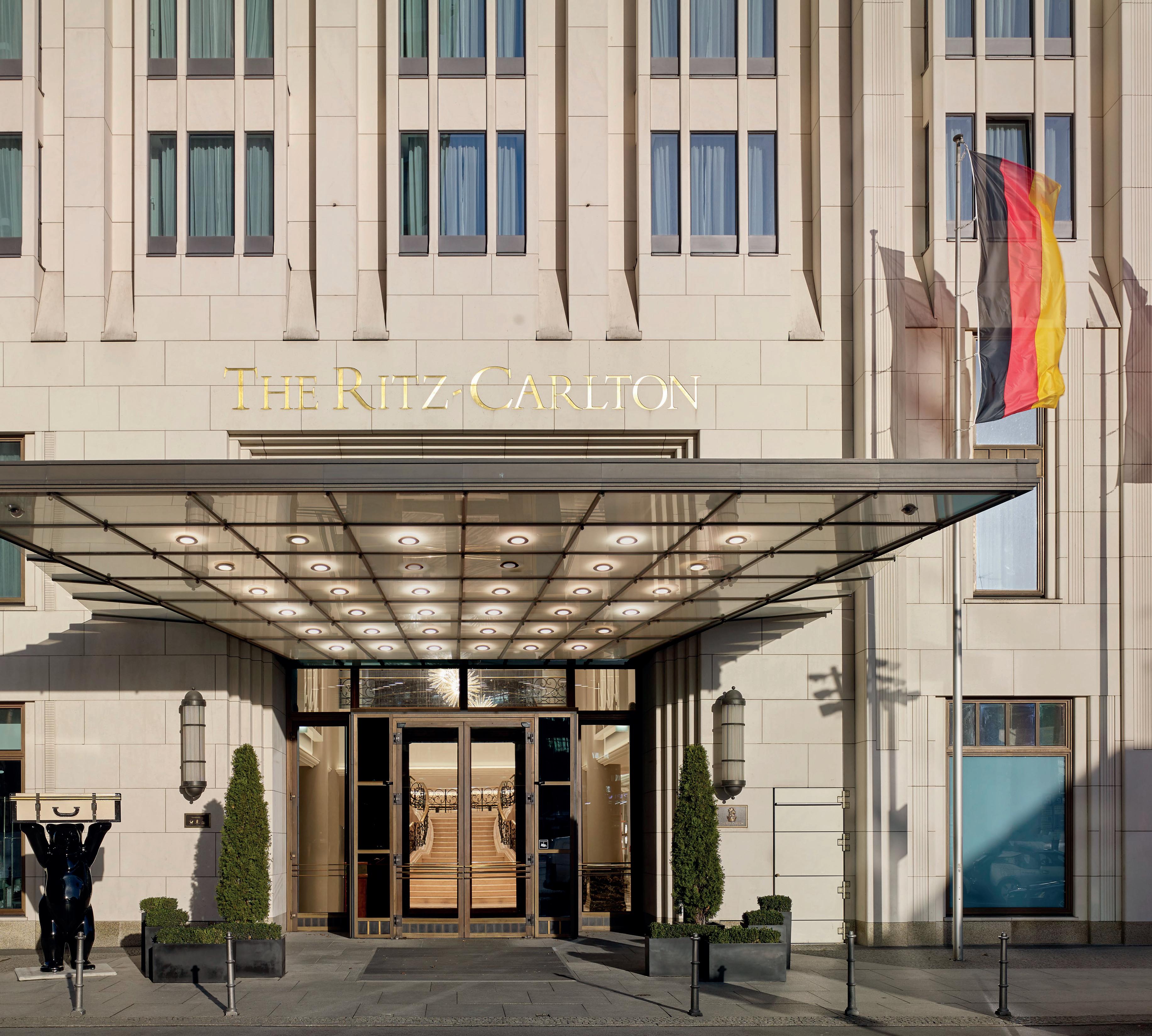
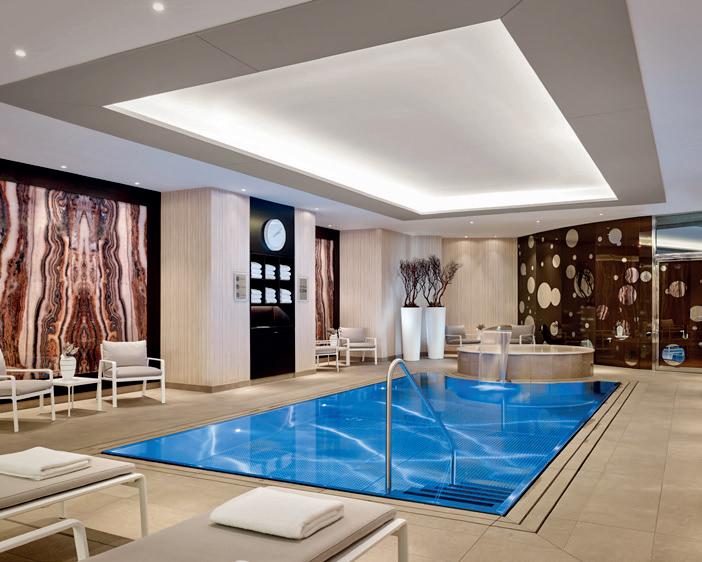
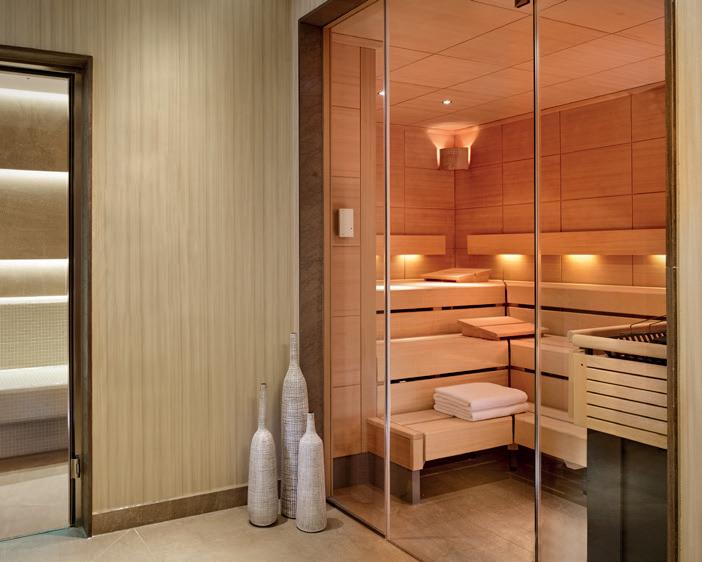
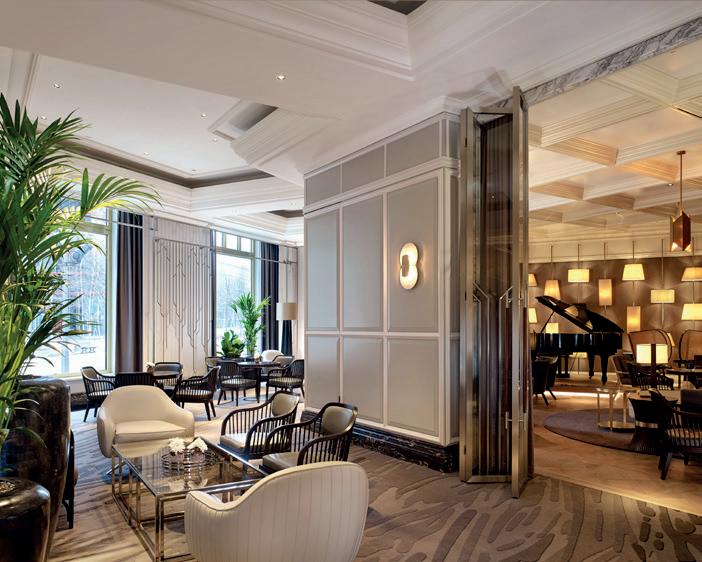
Ritz-Carlton Berlin, Germany
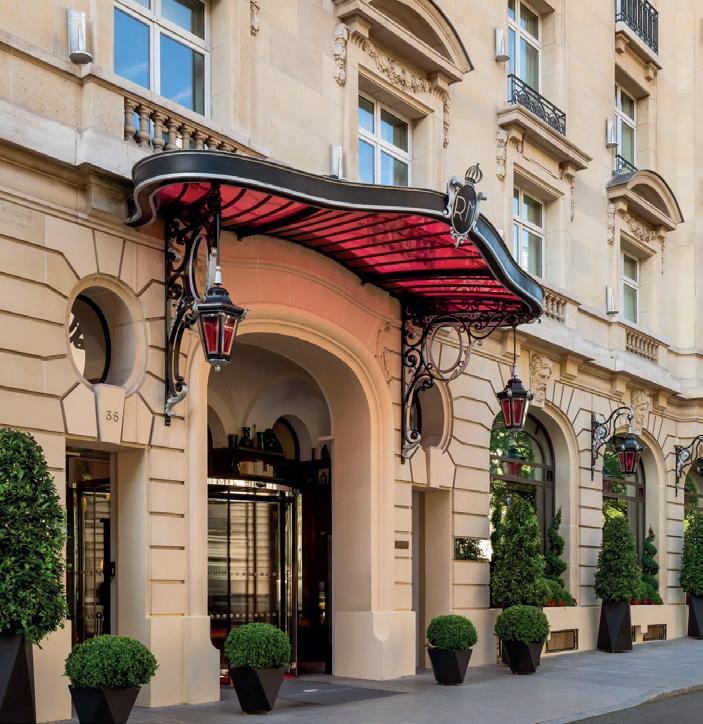
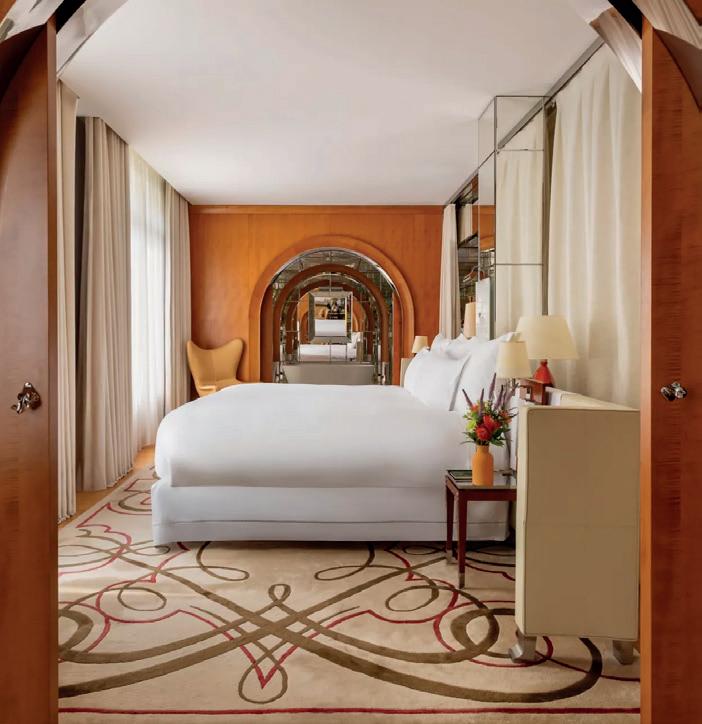
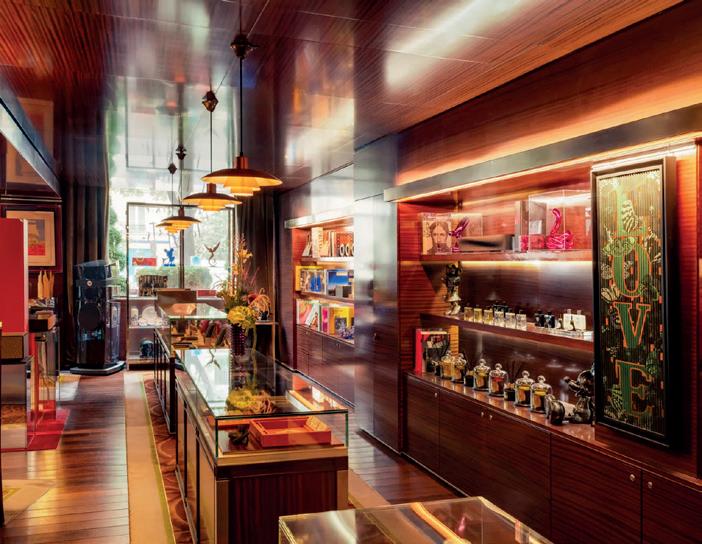
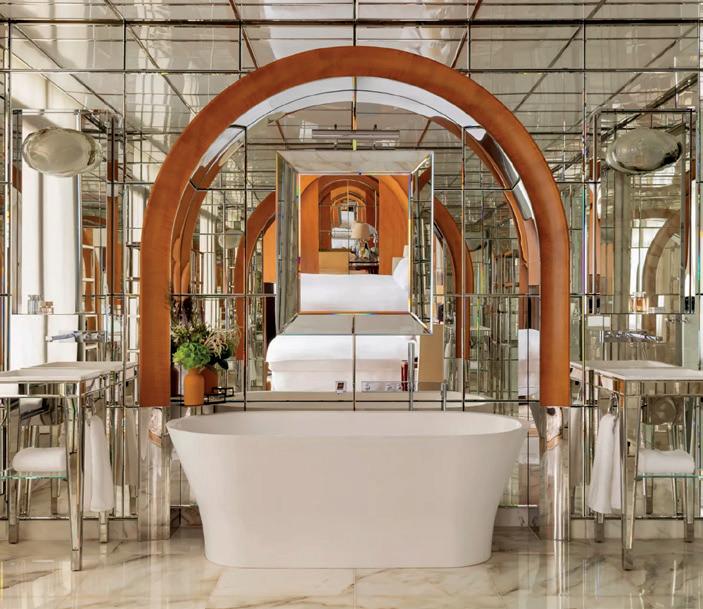
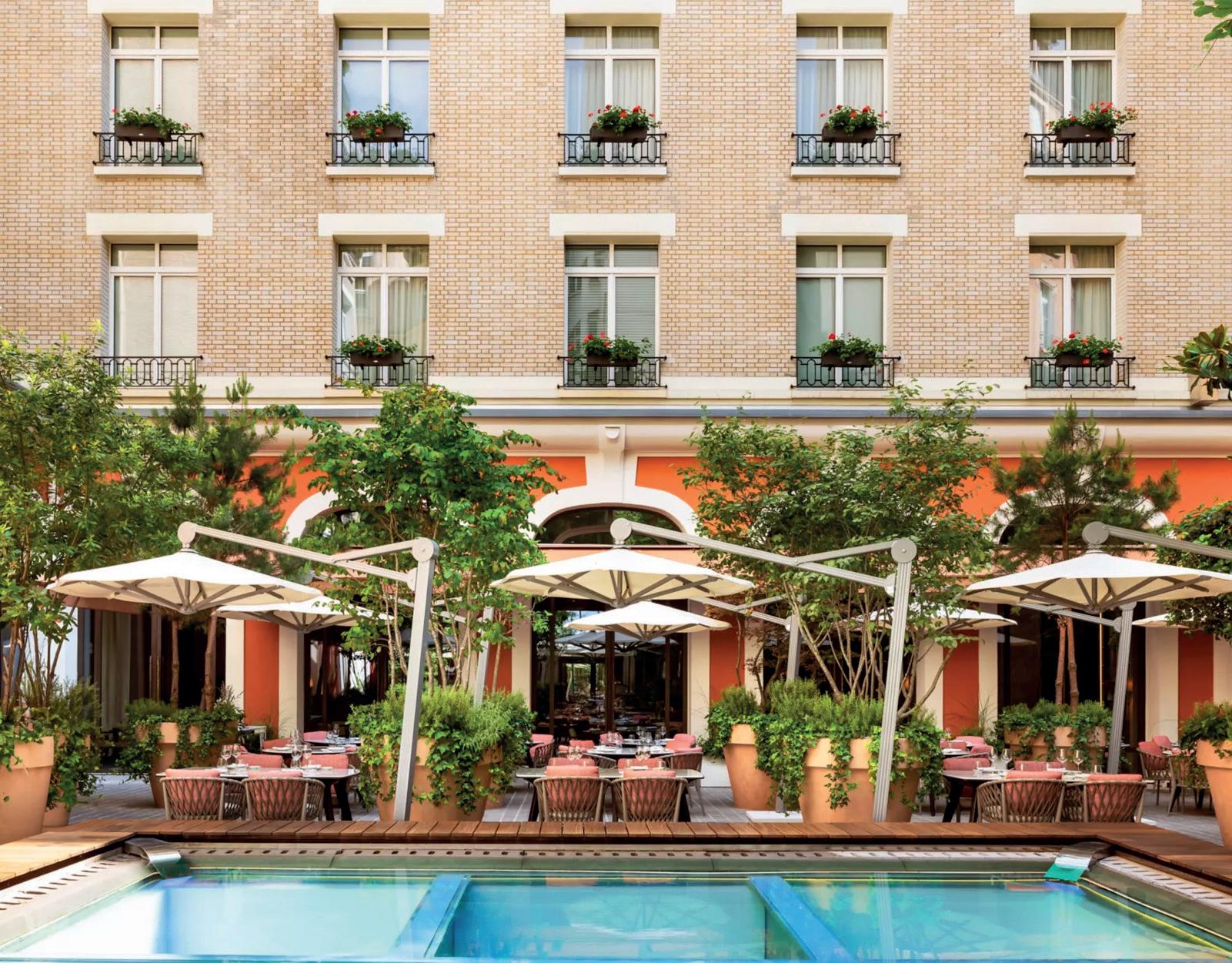
Raffles Le Royal Monceau Paris, France
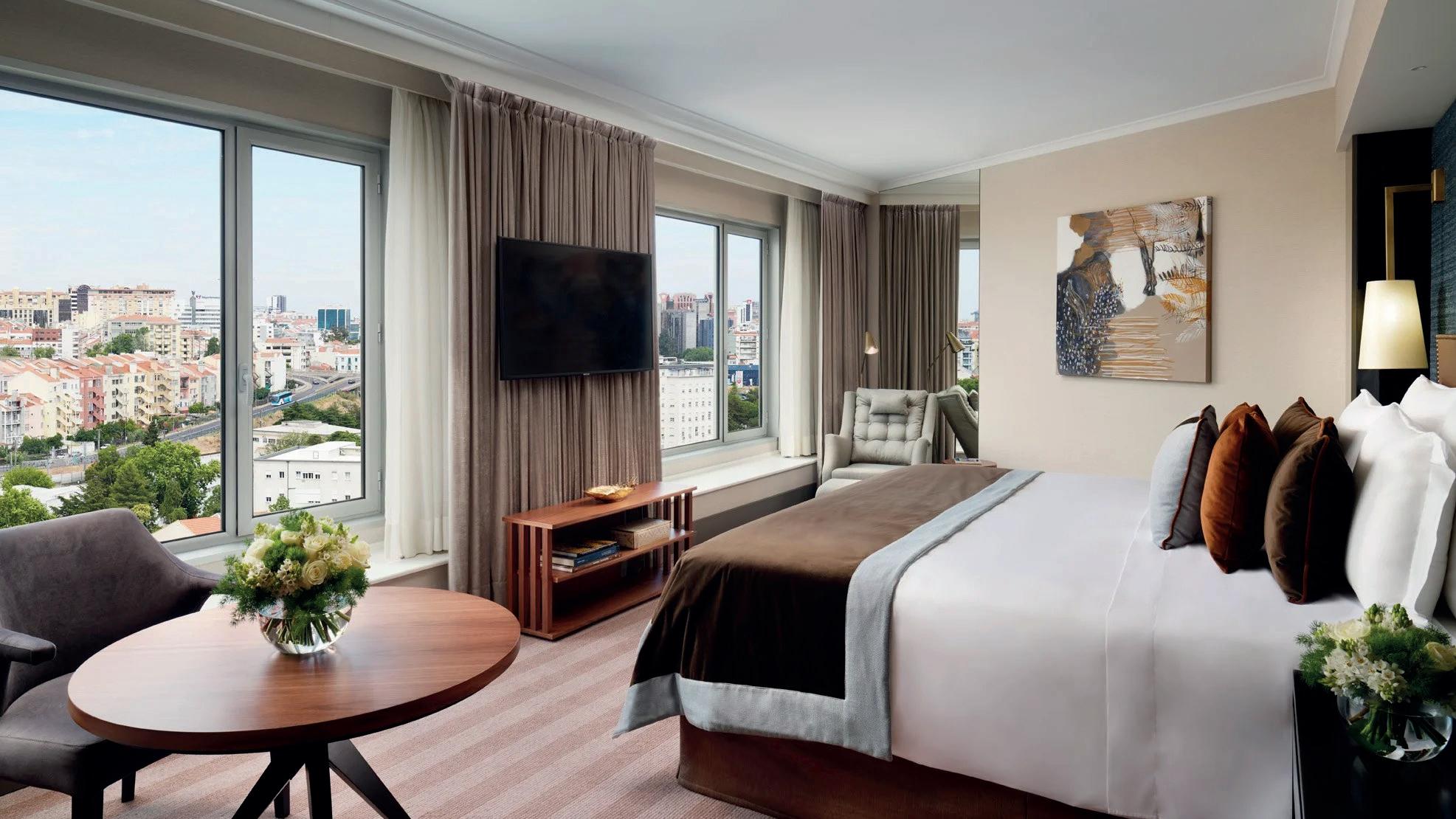
Corinthia Lisbon, Portugal
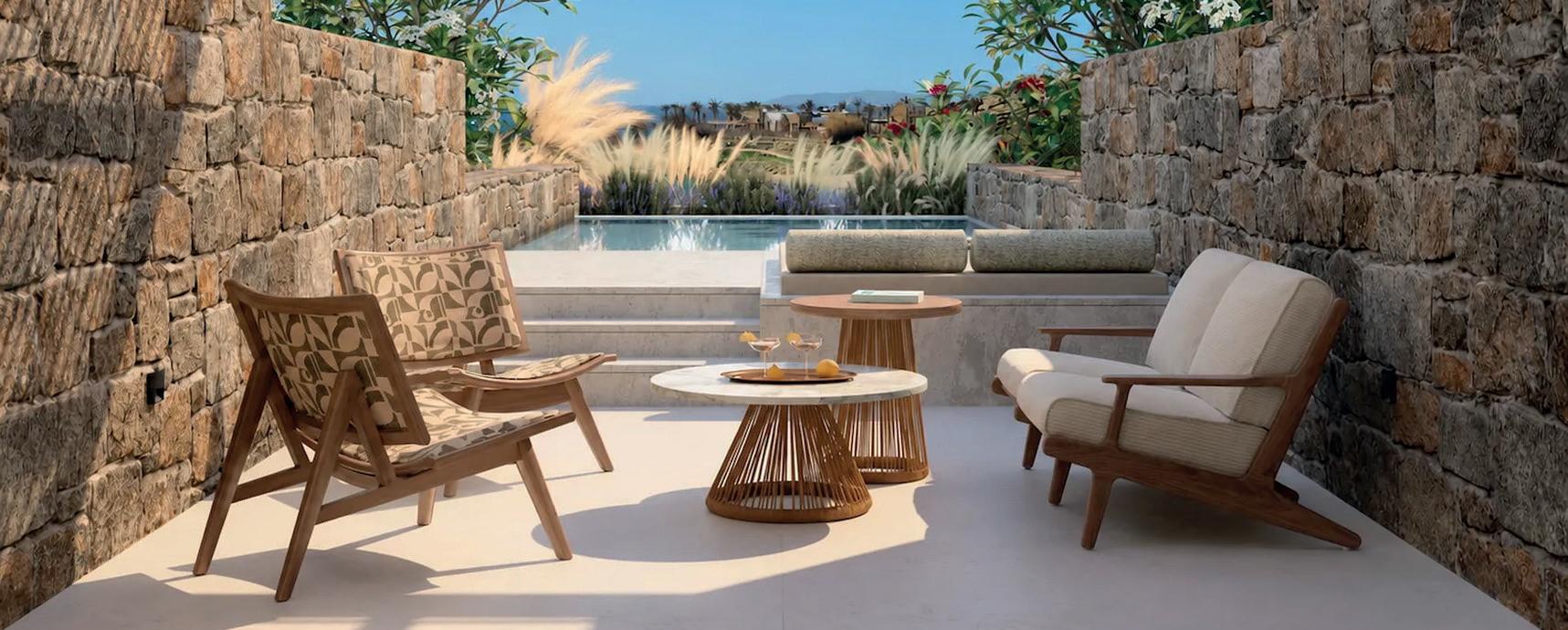
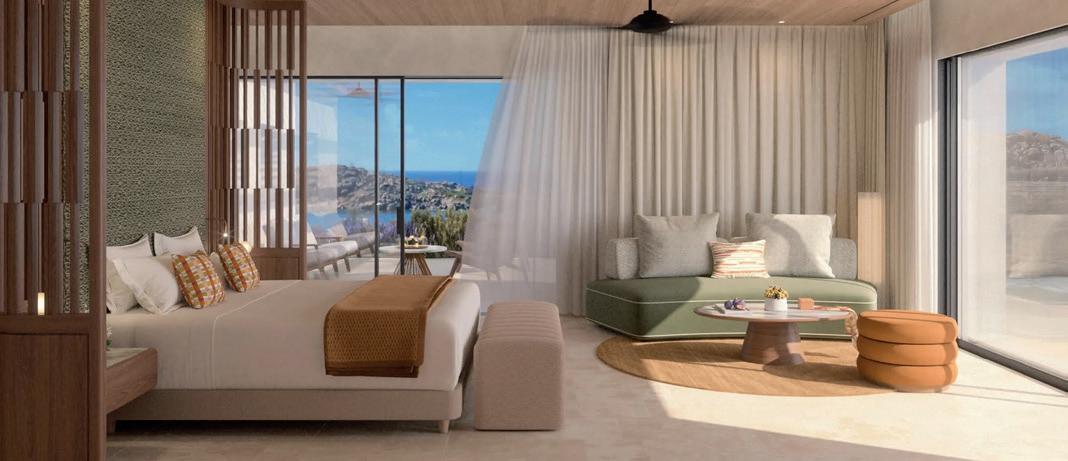
Mykonos, Greece
EXPERIENCES
The Great Wall Of China A Bucket List Journey
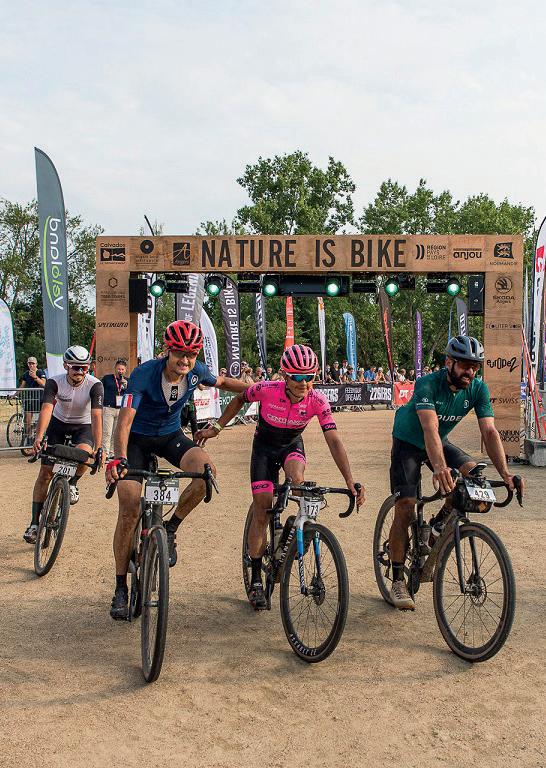
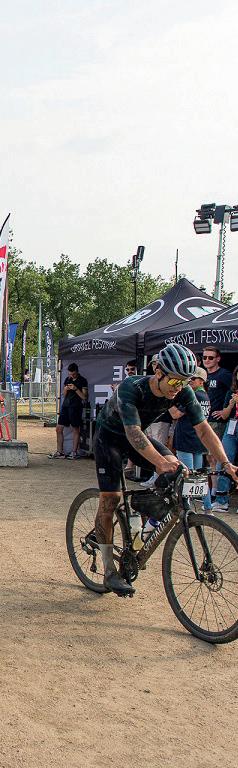
Backpacking In Angers Gravel, Vineyards & The Loire
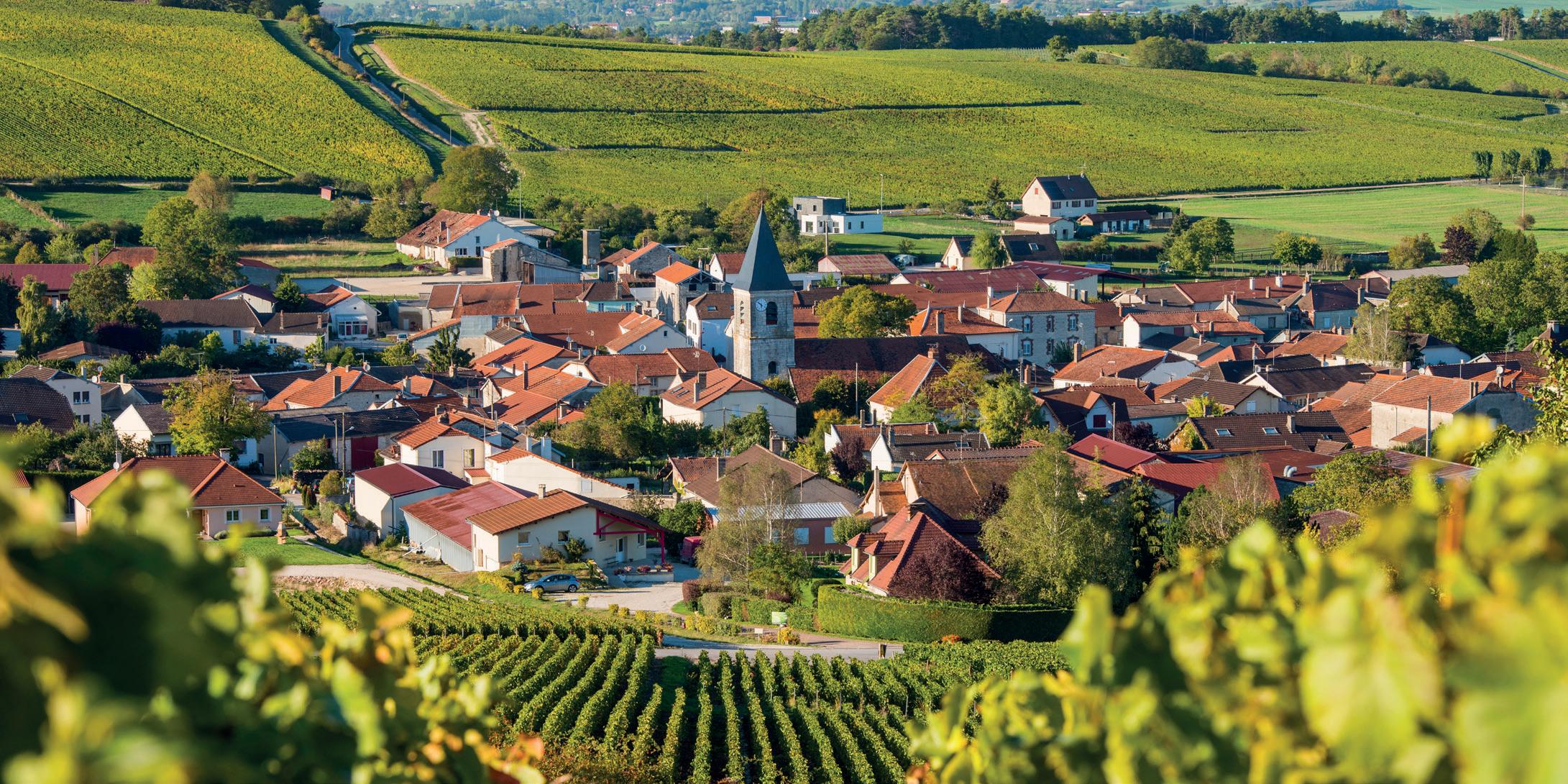
Champagne A French Spark That Became The World's Celebration
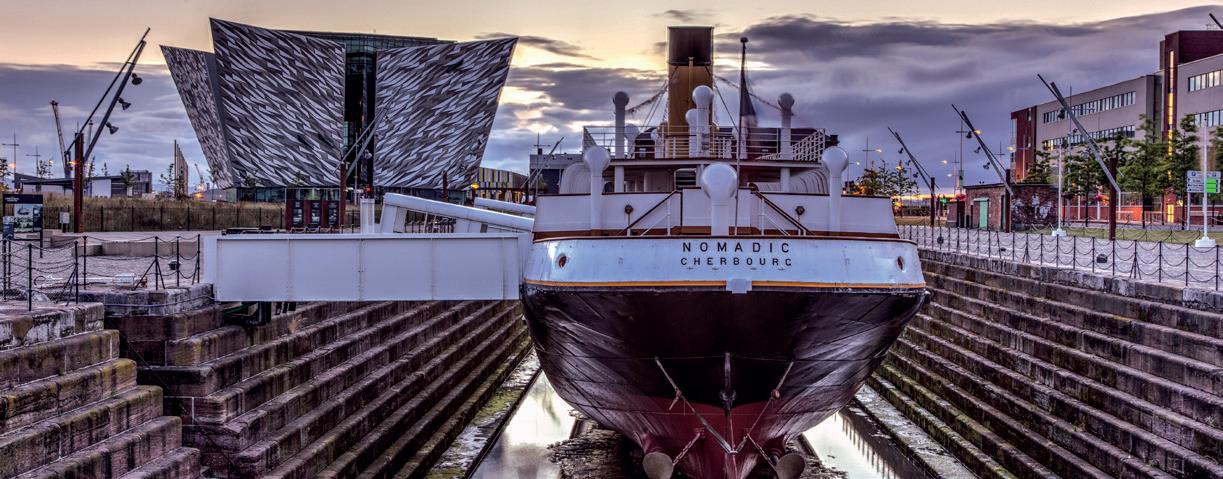
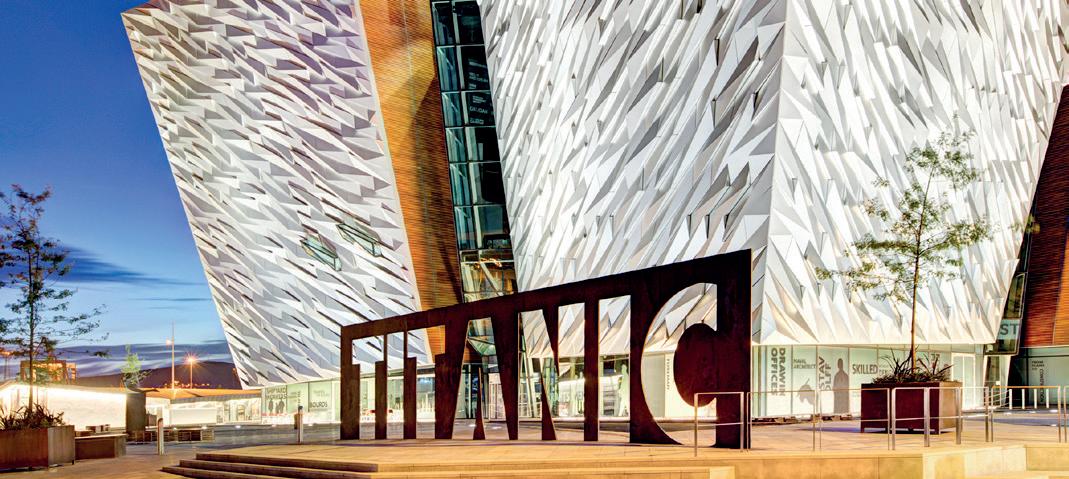
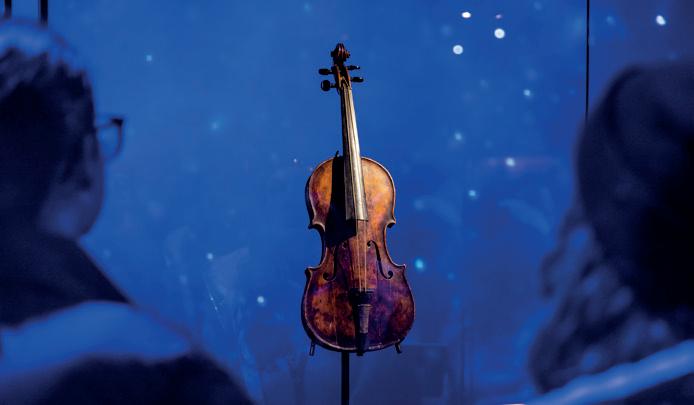
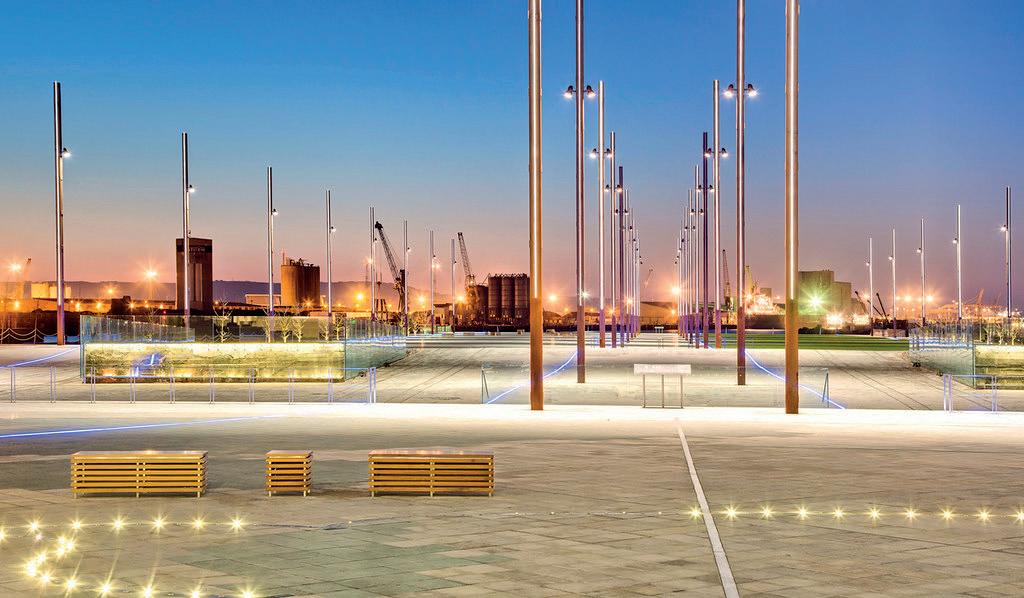
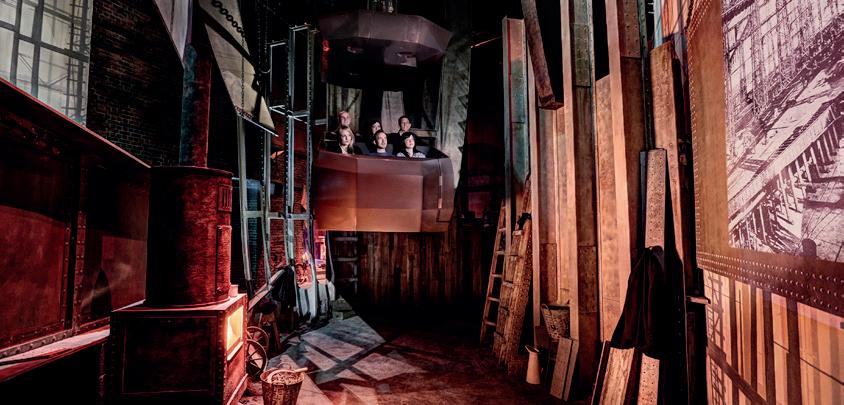
Titanic Belfast A Decade Of Legacy
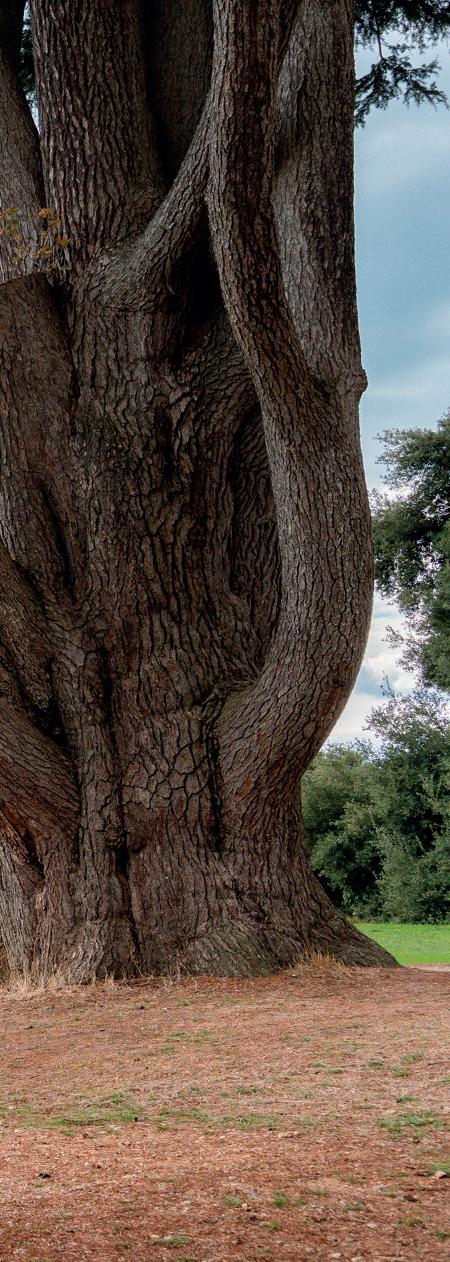
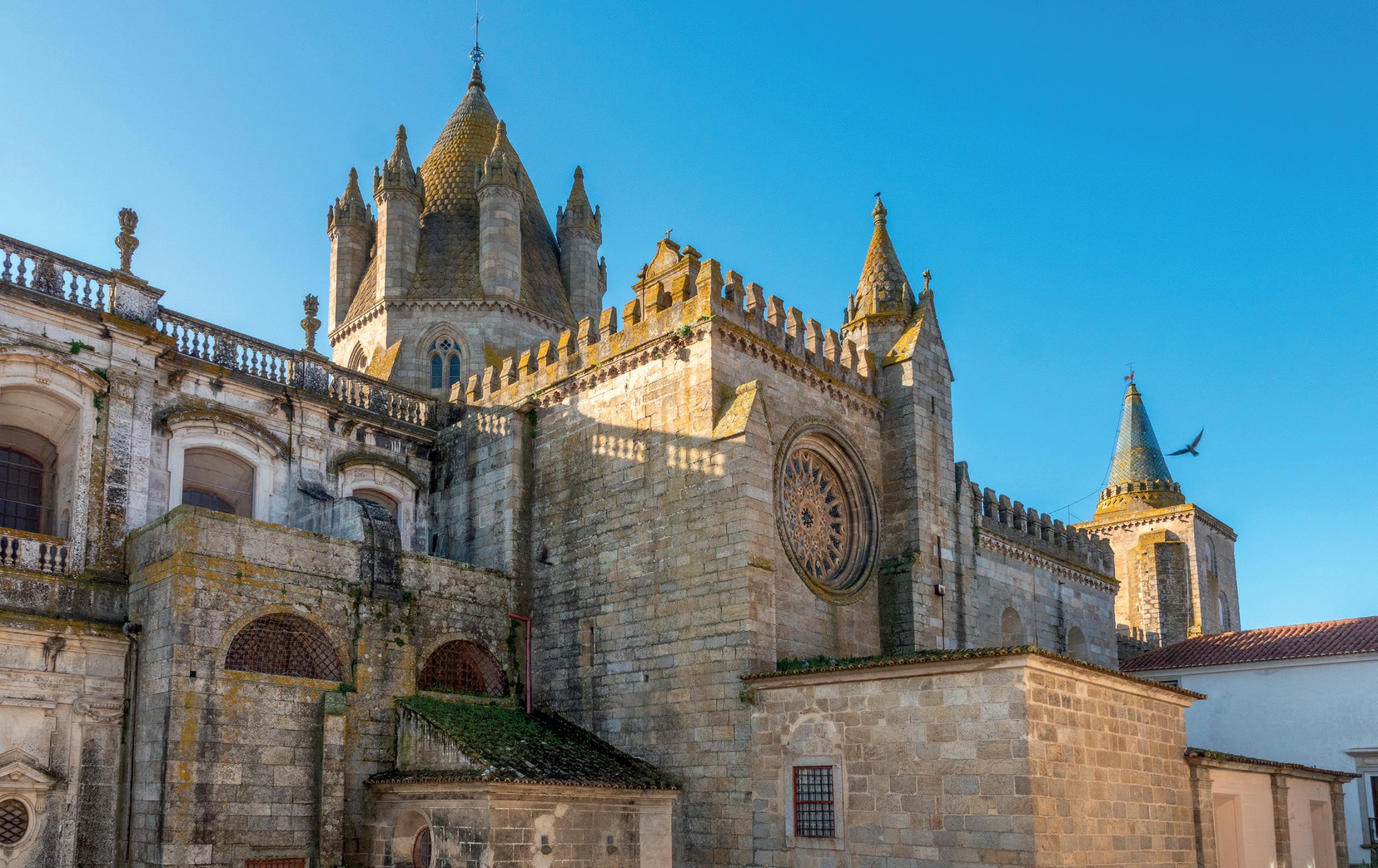
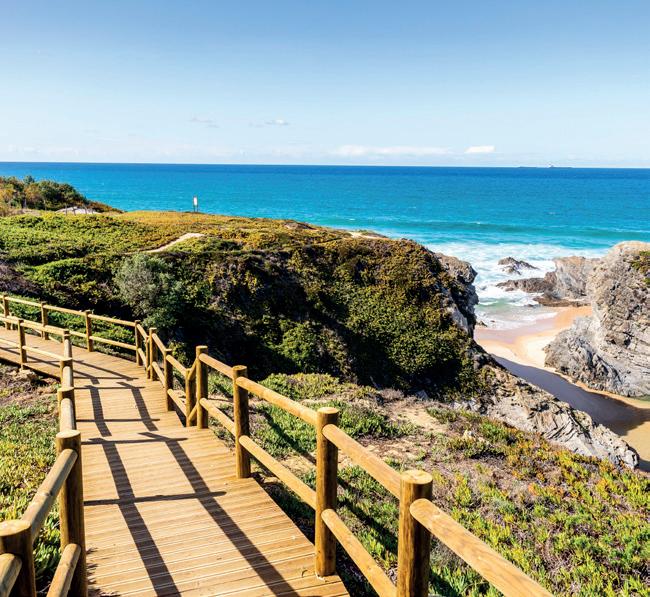
Alentejo Stripping Gold From The Trees
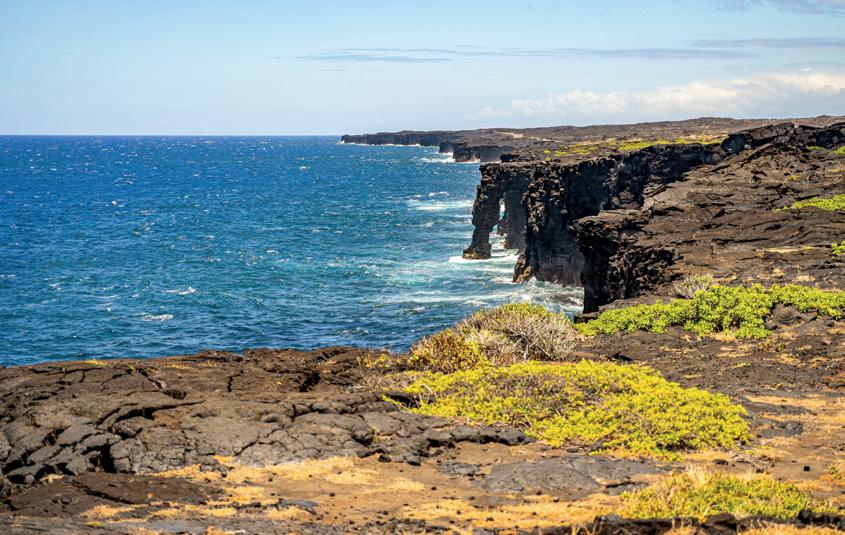
Big Island Hawai'i The Ultimate Eco Luxury Escape
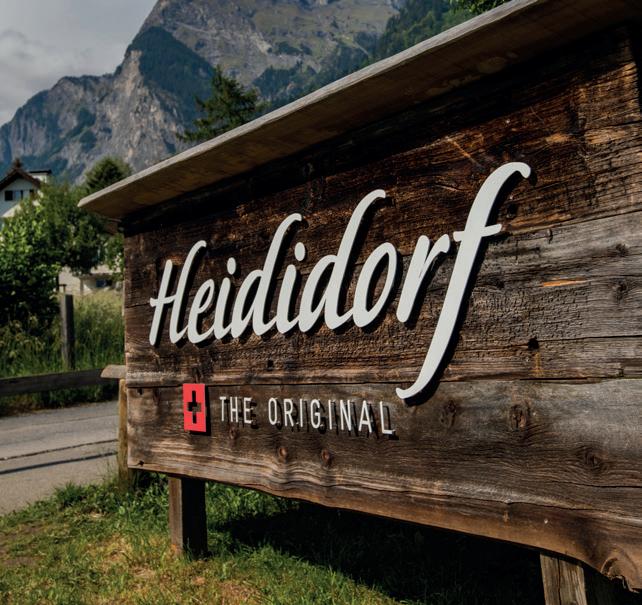
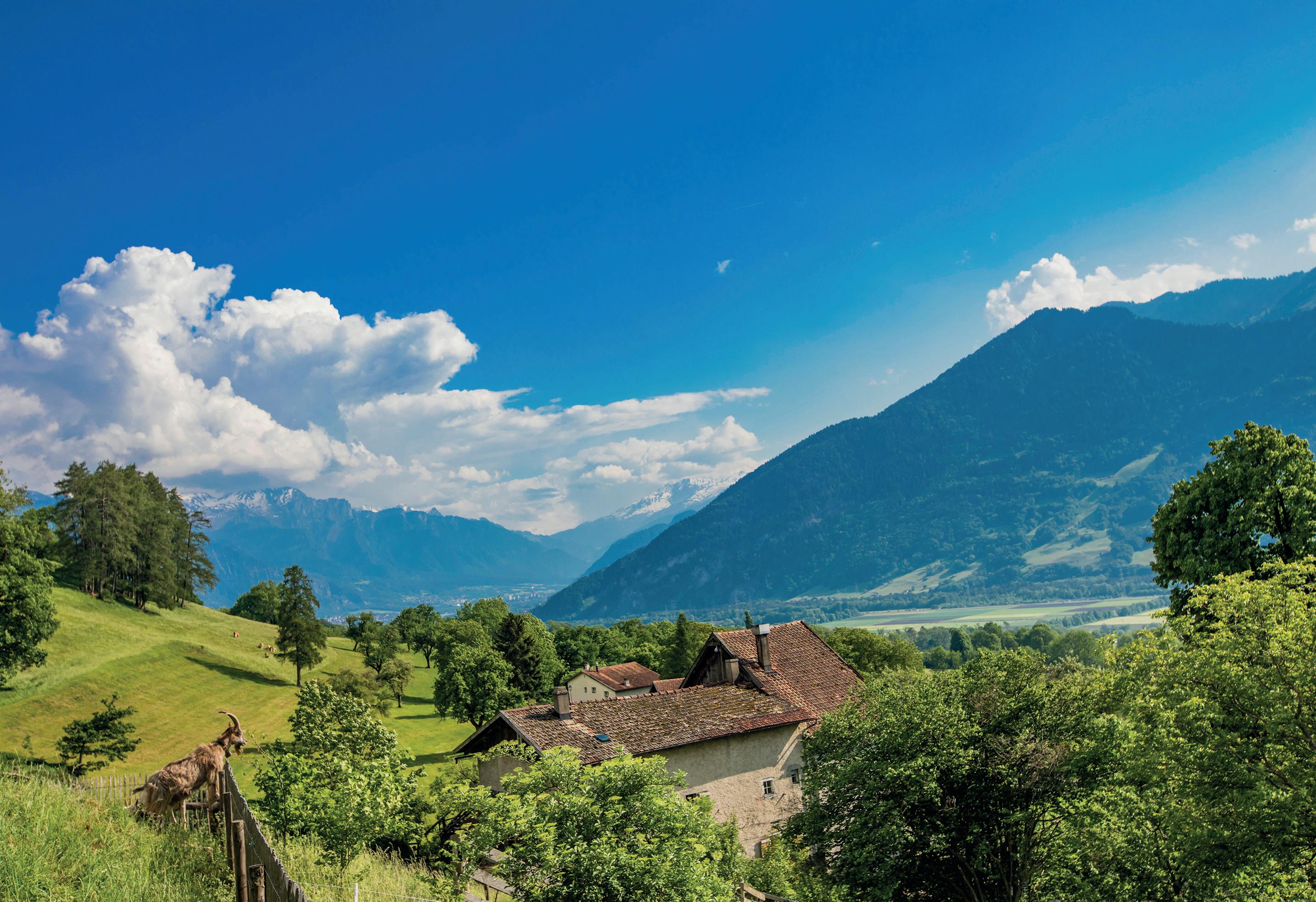
Heididorf The Swiss Alpine Village Driving Maine's Route 1 A Whistle Stop Seven Day Journey
Sébastien Bazin Accor's Chief On Luxury, Loyalty & The Lure Of India Jo Malone
A
The Cabbie Is The Concierge
LONDON'S RUNWAY RACE GATHERS PACE AS GATWICK CLEARS THE COURTS AND HEATHROW FILES ITS BLUEPRINT
Two of the capital's airports moved decisively closer to expansion this summer, handing corporate travellers the prospect of more capacity, more routes and, eventually, fewer congestion-driven delays.
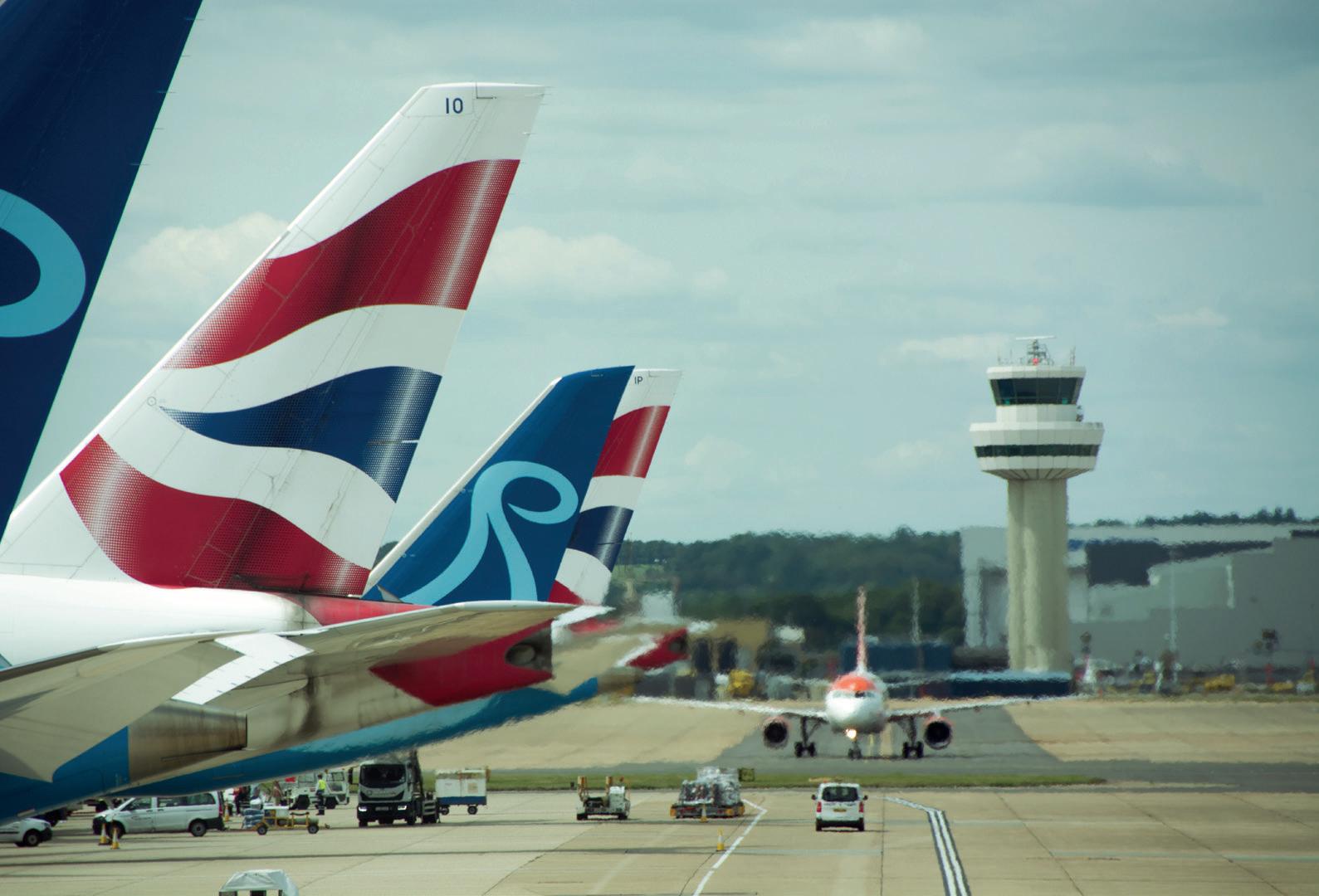
London's long-running airport capacity debate took two significant steps forward within days of one another in June, as Gatwick saw off a legal challenge to its second runway and Heathrow set out a fresh blueprint for its own expansion.
On 23 June, the High Court upheld the Government's decision to grant planning consent for Gatwick's Northern Runway Project. Mr Justice Mould dismissed two claims seeking judicial review of the scheme, finding that ministers' reasons for approval were "rational and supported by proper, adequate and intelligible reasons". The ruling clears the most serious obstacle still standing between the Sussex airport and a routine second runway, after the Secretary of State for Transport granted the Development Consent Order in September 2025.
Gatwick has long argued that bringing its existing northern runway into full use, by repositioning it a few metres north of the main runway, is among the most deliverable pieces of new aviation capacity in the country. The airport estimates the project could open by the end of the decade, deliver an annual economic boost of around £1 billion through trade and tourism, and support some 14,000 jobs. For business travellers, the practical promise is more morning slots, greater resilience when disruption strikes, and renewed competition on short-haul and long-haul routes from a base that already serves much of the South East.
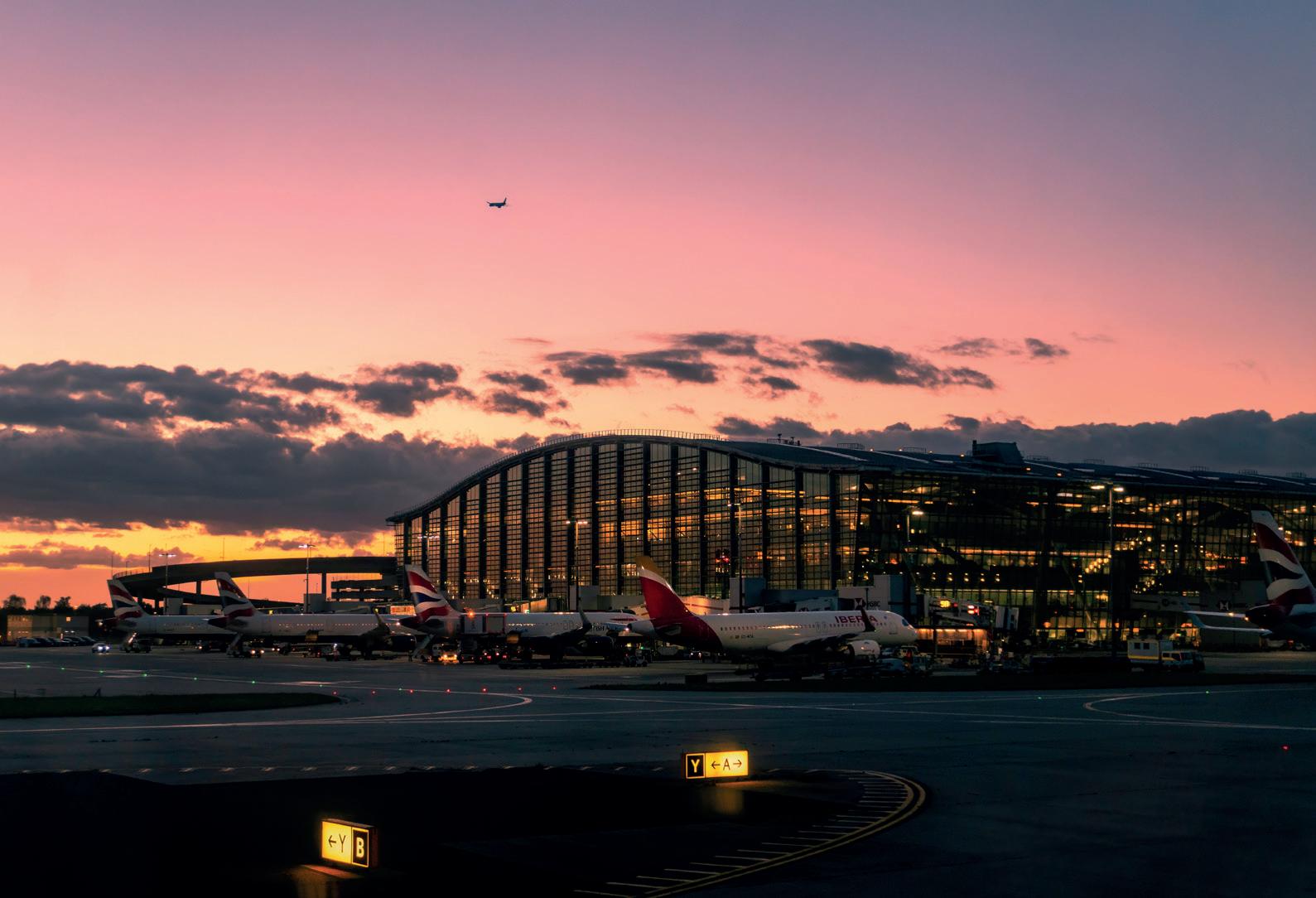
Heathrow, meanwhile, used June to publish a draft of its own expansion proposals, a milestone the hub described as a key step towards unlocking new capacity. The plan centres on a 3,500-metre northwest runway, with taxiways engineered to handle aircraft of every size and the potential to add up to 276,000 flights a year. A further public consultation is expected later in 2026, inviting comment from airlines, residents and the wider travel industry before any application is finalised.
The two schemes sit at very different stages. Gatwick's is consented and now legally tested, while Heathrow's remains a proposal facing fierce debate over cost, noise and carbon. The hub's third runway argument has grown more contentious, with the Government's own modelling pointing to a modest headline boost to GDP and questions still circling over who shoulders the early costs of expansion. Heathrow counters that the analysis understates the wider trade and investment benefits at stake.
For corporate buyers, the direction of travel is what matters. After years of stasis, both of London's largest airports are now advancing plans that, if delivered, would ease the slot scarcity that has kept fares high and schedules tight. The timelines stretch well into the 2030s, and neither project is without risk, but the message from this summer is clear: the race to add runway capacity in the South East is firmly back on.
ASIANA'S EXIT HANDS SKYTEAM A PRIZE AND LEAVES STAR ALLIANCE LOOKING THINNER IN ASIA
The South Korean carrier will leave Star Alliance in December as it is absorbed into Korean Air, reshaping loyalty earning and lounge access for British travellers heading to Seoul and beyond.
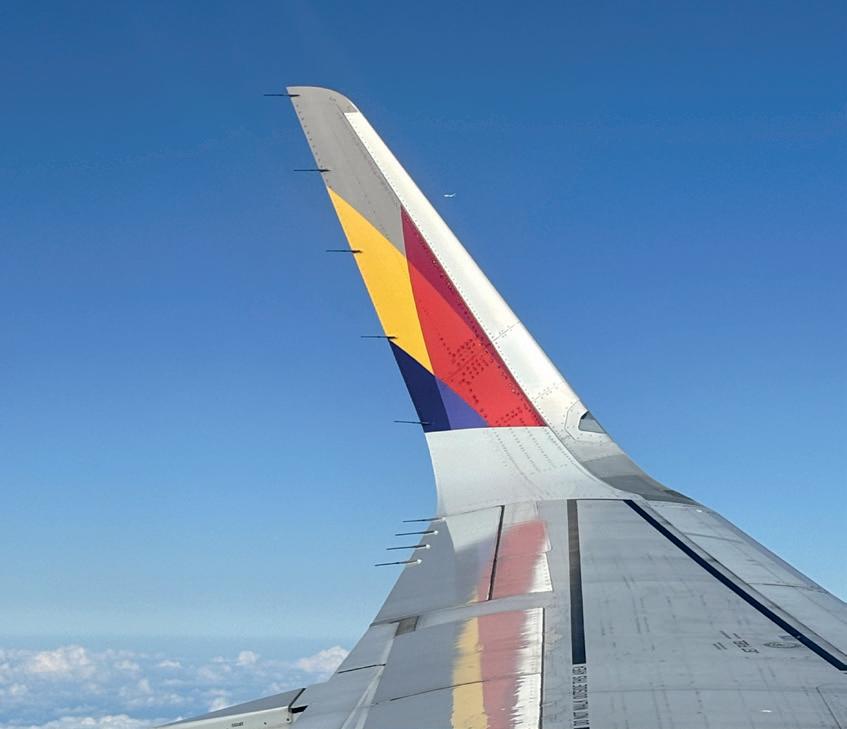
One of Asia's best-known carriers is about to switch alliances, and UK frequent flyers would do well to take note. Asiana Airlines will formally leave Star Alliance on 16 December 2026, ending a membership of more than 23 years, before being fully integrated into Korean Air the following day.
The move completes a marathon consolidation. Korean Air, which secured control of Asiana after years of regulatory review across multiple jurisdictions, signed the final merger agreement with its rival in May. When integration is finalised on 17 December, the Asiana brand will effectively disappear, its aircraft, routes and customers folded into Korean Air. Because Korean Air is a founding member of SkyTeam, Asiana's departure from Star Alliance doubles as a defection: the combined airline will sit squarely within the SkyTeam camp, and the Asiana Club loyalty programme will close.
NEWS
A new nonstop link to south-east China headlines a fresh wave of route launches at the capital's airports, widening the choice for outbound corporate travellers.
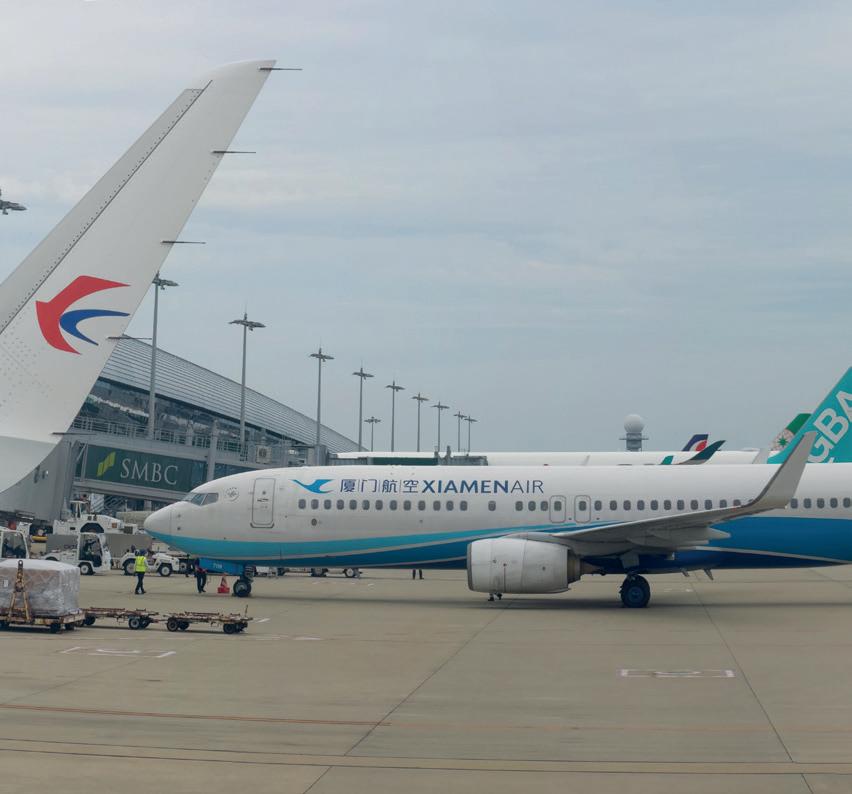
China's connectivity with the UK is set to deepen this autumn as Xiamen Air prepares to launch nonstop flights to London Heathrow, the latest in a run of long-haul additions at London's airports.
For the alliances, the symbolism is hard to miss. Asiana's exit is the second major loss for Star Alliance in less than three years, following Scandinavian carrier SAS's switch to SkyTeam in 2024. Star Alliance has been quick to reassure the market that connectivity to South Korea remains robust, noting that 14 of its member airlines will continue to serve Seoul Incheon.
The practical implications fall on loyalty. British travellers who credit Star Alliance carriers, through schemes such as Lufthansa's Miles & More or United's MileagePlus, will lose the ability to earn and burn on Asiana once the transition completes, and should review any planned itineraries that route through Seoul on Asiana metal. Those in the SkyTeam orbit stand to gain. Virgin Atlantic Flying Club members, in particular, will find a materially larger Asian network within reach as Korean Air's enlarged operation beds in, with reciprocal earning and status recognition across the alliance.
Seoul Incheon is no minor waypoint. It is a major gateway for onward travel across North Asia and a significant transfer hub for UK business travellers heading to secondary Korean cities, Japan and parts of
China. Consolidating two national carriers into one inevitably narrows competition on some routes, a point corporate buyers will watch closely, even as the merged airline promises a more coherent product and a deeper network.
For now, the advice to travel managers is straightforward. Audit traveller profiles for Asiana credits and status before the December deadline, flag any affected bookings that stretch into 2027, and factor the alliance shift into supplier negotiations for the next programme year. The Korean aviation map is being redrawn, and the loyalty consequences will be felt well beyond Seoul.
XIAMEN AIR ADDS HEATHROW AS LONGHAUL CARRIERS PILE BACK INTO LONDON
The SkyTeam carrier will begin its Heathrow service on 6 September 2026, operating three times a week on Wednesdays, Fridays and Sundays with a Boeing 7879 Dreamliner. The route opens a direct corridor between the UK hub and Xiamen, a major port city and manufacturing centre in Fujian province, and gives business travellers a new gateway into south-east China beyond the established Beijing and Shanghai links. For firms with suppliers and partners across the region, a direct service removes a connection and the time penalty that comes with it.
Xiamen Air's arrival is part of a broader pattern. British Airways has restored a long-dormant transatlantic link with a new four-times-weekly service between Heathrow and St Louis, flown by a Boeing 787-8, reopening direct access to a Midwest market that had lost its nonstop connection to the UK. At Gatwick, Norse Atlantic Airways is to add a three-times-weekly link to Phuket in Thailand on its 2026-27 winter schedule, also using Boeing 787 equipment, blending leisure demand with the growing appetite for long-haul bleisure trips.
Taken together, the announcements point to renewed confidence among carriers
in the London market, even against a backdrop of geopolitical uncertainty and cost pressure across the sector. New capacity tends to bring sharper pricing, and a wider spread of nonstop options gives travel managers more room to balance fares, schedules and traveller wellbeing on demanding long-haul itineraries.
The China link is arguably the most strategically significant of the trio. Direct services between the UK and Chinese cities have been slower to recover than other long-haul markets since the pandemic, and each new frequency matters to exporters, manufacturers and professional services firms maintaining a presence in the region. A 787-9 rotation three times a week will not transform capacity on its own, but it signals intent, and it adds a credible SkyTeam option for those routing onwards within China.
For corporate buyers, the immediate task is to fold the new services into preferredroute and fare policies as schedules open for sale, and to weigh the through-fares and loyalty implications of each carrier's alliance. London's long-haul map is filling out again, and the beneficiaries are the travellers who fly it.
EUROSTAR'S MONOPOLY ENTERS ITS FINAL CHAPTER AS CHALLENGERS LINE UP FOR THE TUNNEL
Virgin has cleared a crucial regulatory hurdle and a crowd of rivals is circling, promising the first genuine competition on cross-Channel rail since services began.
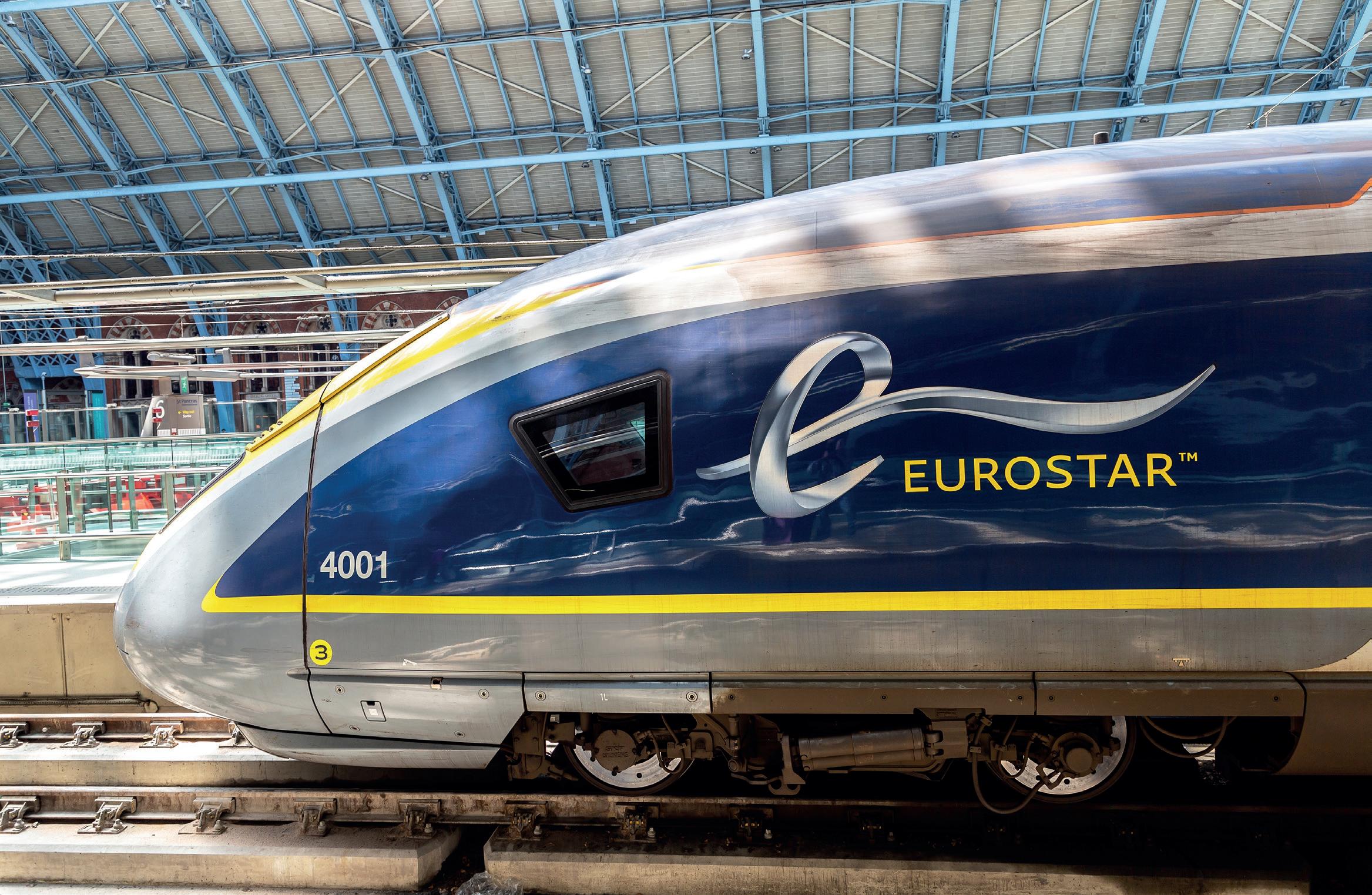
For three decades, anyone boarding a train from London to Paris, Brussels or Amsterdam has had a single choice. That is finally about to change, and corporate travellers stand to be among the biggest winners.
In a landmark ruling, the Office of Rail and Road approved Virgin Trains' bid to access Temple Mills, the only depot in the UK capable of servicing the specialist trains that run through the Channel Tunnel. The regulator granted Virgin access while turning down competing applications from Evolyn, Gemini Trains and Trenitalia France, removing what had been seen as the single biggest barrier to entry for would-be rivals. Virgin has signalled investment of around £700 million in new cross-border services and the creation of up to 400 jobs, with the aim of running as
many as 20 daily return services to Paris, Brussels and Amsterdam by the end of the decade.
The ruling is not the finish line. Virgin must still finalise commercial terms with Eurostar, secure track access rights, win safety certification and obtain crossborder authorisations from regulators on both sides of the Channel before a single passenger boards. Its target of launching by 2030 aligns with planned upgrades to the High Speed 1 corridor and the wider European high-speed network.
Behind Virgin, a remarkable field is forming. Trenitalia France has set out plans for up to ten daily return services between London and Paris from 2029. Gemini Trains is eyeing services from Stratford International to Paris and Brussels. Heuro, a Netherlands-based venture led by the former chief executive of Thalys and backed by technology investment, wants to run up to 15 daily services between London and Amsterdam from 2028. Even the sleeper concept is stirring, with Midnight Trains hinting at reviving its "hotel on rails" ambitions through the Tunnel.
The competitive logic is compelling. Eurostar's lack of rivals has allowed it to set fares and schedules with little external pressure, and business travellers have long paid a premium for the convenience of city-centre to city-centre rail. New entrants should change that calculus, spurring keener pricing, better onboard products, more flexible booking terms and fresh loyalty perks. Eurostar, for its part, is not standing still: the incumbent is investing in new trains, expanding capacity and preparing to join the SkyTeam alliance, a move that ties its loyalty proposition more closely to the airline world its corporate customers already inhabit.
None of this will arrive overnight. The earliest new services are years away, and the regulatory and commercial hurdles remain formidable. But the direction is now set. After thirty years of going it alone, Eurostar is preparing to compete, and for the business travellers who rely on the London to continent rail link, the decade ahead promises more choice than the route has ever known.
EUROPE'S BORDERS GO DIGITAL AS EES BEDS IN AND ETIAS LOOMS FOR THE AUTUMN
With the EU's biometric Entry/Exit System now fully live and a new travel authorisation due before the year is out, travel managers face a fresh layer of admin on every European trip.
The bureaucracy of crossing borders is being rewritten, and corporate travel teams need to keep pace. The European Union's Entry/Exit System (EES) is now fully operational, and a separate travel authorisation, ETIAS, is on course to launch before the end of 2026.
EES began a phased rollout on 12 October 2025 and became fully operational across the bloc on 10 April 2026. The system replaces manual passport stamping for non-EU visitors with a centralised digital record, capturing biometric data such as fingerprints and a facial image on a traveller's first crossing and logging entries and exits thereafter. It applies at the external borders of 29 European countries, covering air, sea and land, and more than 45 million crossings have already been registered. The headline consequence for business travellers is time: first registrations take longer than the old stamp, and travellers are advised to allow
extra minutes at the border, particularly at busy hubs and during peak periods.
ETIAS is the next layer. EU home affairs ministers have endorsed a revised timeline under which the European Travel Information and Authorisation System will become operational in the last quarter of 2026, with a specific date to be confirmed several months ahead of launch. ETIAS is not a visa but a pre-travel authorisation for visaexempt nationals, including UK passport holders, applied for online and tied to the traveller's passport. A six-month transition period means enforcement is not expected to become strictly mandatory until around April 2027, but corporate travellers will need the authorisation in hand for short stays once the system goes live in earnest.
The traffic is not all one way. The UK's own inbound regime, the Electronic Travel Authorisation (ETA), moved to full "no permission, no travel" enforcement on 25 February 2026, with the fee rising to £20 from 8 April. The ETA is valid for two years, or until the passport expires, and permits multiple stays of up to six months. It covers most standard business activities, attending meetings, conferences and trade fairs, negotiating contracts and intra-
company visits, but not paid work for a UK organisation. For British firms hosting overseas colleagues and clients, that means a quiet duty of care: visitors must apply before they fly, and the Home Office advises doing so at least three working days ahead. For travel managers, the to-do list is clear. Brief travellers that EES queues may lengthen journey times and build that buffer into schedules and connection planning. Track the ETIAS launch date closely and prepare to add the authorisation to pre-trip checklists for European travel from the autumn. And make sure inbound visitors to the UK hold a valid ETA well before departure. The era of the casual border crossing within and beyond Europe is over, replaced by a digital paper trail that rewards the organised and penalises the last-minute.
BUSINESS TRAVEL SPEND TO TOP $1.69 TRILLION IN 2026, BUT BUYERS TEMPER THEIR OPTIMISM
The latest forecast from the Global Business Travel Association points to record outlay this year, even as confidence cools under the weight of economic and geopolitical headwinds.
Global business travel is set to reach a new high in 2026, but the mood among the buyers who control the budgets is notably more guarded than a year ago.
The Global Business Travel Association forecasts global business travel spending of around $1.69 trillion this year, an increase of roughly 8.1 per cent on 2025 and comfortably above the pre-pandemic
benchmark of $1.43 trillion set in 2019. On the GBTA's numbers, the United States remains the largest single market at some $369 billion, followed by China at $217 billion and Germany at $89 billion, while European spending is projected to climb 8.2 per cent to €389.9 billion.
The growth, however, comes with a caveat. A clear majority of buyers, 84 per cent, expect their organisation's travel spend in 2026 to rise or hold at 2025 levels, with 44 per cent anticipating an increase. Yet overall sentiment has softened markedly, with buyer optimism down 12 percentage points compared with the start of 2025, a slip the association attributes to persistent inflation, geopolitical uncertainty and broader economic caution. Among those who do expect to spend more, the average projected increase is 12 per cent.
Several forces are driving the underlying expansion. The GBTA points to moderate but stubborn inflation, a packed calendar of global events including the 2026 FIFA World Cup, the rapid adoption of AI-powered travel management tools, sustainability mandates that are reshaping supplier choices, and significant growth from the small and medium-sized
enterprise sector. On pricing, the outlook is for relative stability after several volatile years, with air and hotel rates expected to rise by a manageable 2 to 4 per cent.
The SME strength chimes with what Travelling For Business reported earlier this year, when research from Travel Counsellors for Business found that 67 per cent of UK small and medium-sized firms remained confident about overseas travel and that average projected spend had jumped from £43,000 to £57,000. Far from retreating in the face of disruption, smaller British firms have been travelling with greater intent, rerouting around trouble spots and prioritising trips that deliver a clear commercial return.
For corporate buyers, the figures sketch a market that is expanding but disciplined. Record spend reflects genuine demand for face-to-face contact, yet the cooling of optimism is a reminder that budgets will be scrutinised and every trip expected to justify itself. The travel programmes likely to thrive in 2026 are those that pair ambition with rigour: investing where the return is clear, leaning on data and AI to control cost, and building the flexibility to adapt quickly when the next shock arrives.
THE NEW ERA OF
LONGEVITY TRAVEL
WHY WELLNESS DESTINATIONS ARE BECOMING ESSENTIAL, NOT ASPIRATIONAL
By ANDREA THOMPSON
Wellness used to be a pleasant add on to travel, a massage after meetings, a steam room before dinner, a yoga class squeezed between flights. But over the past decade, and especially in the years since global routines were disrupted, wellness has shifted from indulgence to intention.
Travellers are no longer looking for a break; they’re looking for a reset and that shift has given rise to a new category altogether: longevity travel.
Longevity destinations go far beyond the traditional spa model. They blend medical insight with restorative environments, pairing diagnostics with nature, and science with ritual. They are places where guests arrive tired, curious, or depleted and leave recalibrated. The appeal is obvious: modern life is fast, fragmented, and relentlessly connected. Executives, entrepreneurs and frequent travellers are increasingly seeking structured, evidence based programmes that help them feel sharper, lighter, and more resilient and they want to do it in places where the surroundings work as hard as the treatments.
Switzerland has long understood this. Its wellness culture is rooted in centuries old traditions of thermal waters, mountain air and clinical precision. The healing reputation of its thermal regions dates back to the 13th century, when mineral rich waters were first discovered deep within Alpine gorges,
flowing at a constant naturally warm temperature and believed to restore strength and vitality. Over time, these waters became the foundation for a modern approach to wellbeing that blends nature with medical expertise. Switzerland’s philosophy is clear: let the landscape do the talking, and let science refine the rest.
Italy, meanwhile, approaches longevity from a different angle. Where Switzerland offers precision, Italy offers warmth, a philosophy of wellbeing shaped by food, landscape, culture and the Mediterranean way of living. Italian longevity retreats often weave together nutrition, movement, sleep and emotional balance, drawing on traditions that feel both ancient and instinctively human. While the experience feels soulful rather than clinical, there is a quiet medical intelligence running through it particularly in the way food is used as a tool for metabolic reset, gut health, inflammation reduction and long term vitality. The result is not a clinical reset but a culinary one: a reminder that wellbeing can be deeply pleasurable, rooted in flavour, seasonality and the simple act of eating with intention.
What unites these destinations whether in the Alps or the Apennines is the growing recognition that people want more from their time away. They want to understand their bodies better. They want to feel energised rather than simply rested. They want programmes that are personalised, not prescriptive and environments that support long term change, not just short term escape.
Longevity travel is booming because it answers a need that traditional holidays no longer meet. It offers structure without stress, expertise without intimidation, and transformation without the performative gloss of “wellness culture.” It’s not about chasing youth; it’s about extending vitality. It’s about feeling capable, clear headed and grounded, qualities that matter as much in the boardroom as they do on a mountain trail.
As we explore two very different destinations, one in Switzerland, one in Italy this introduction sets the stage. They are not competing. They are complementary expressions of the same global shift: a move toward travel that doesn’t just take you somewhere, but brings you back better.
PALAZZO
DI VARIGNANA
A CULTIVATED RETREAT FOR LONGEVITY, TASTE AND TIMELESS ITALIAN LIVING
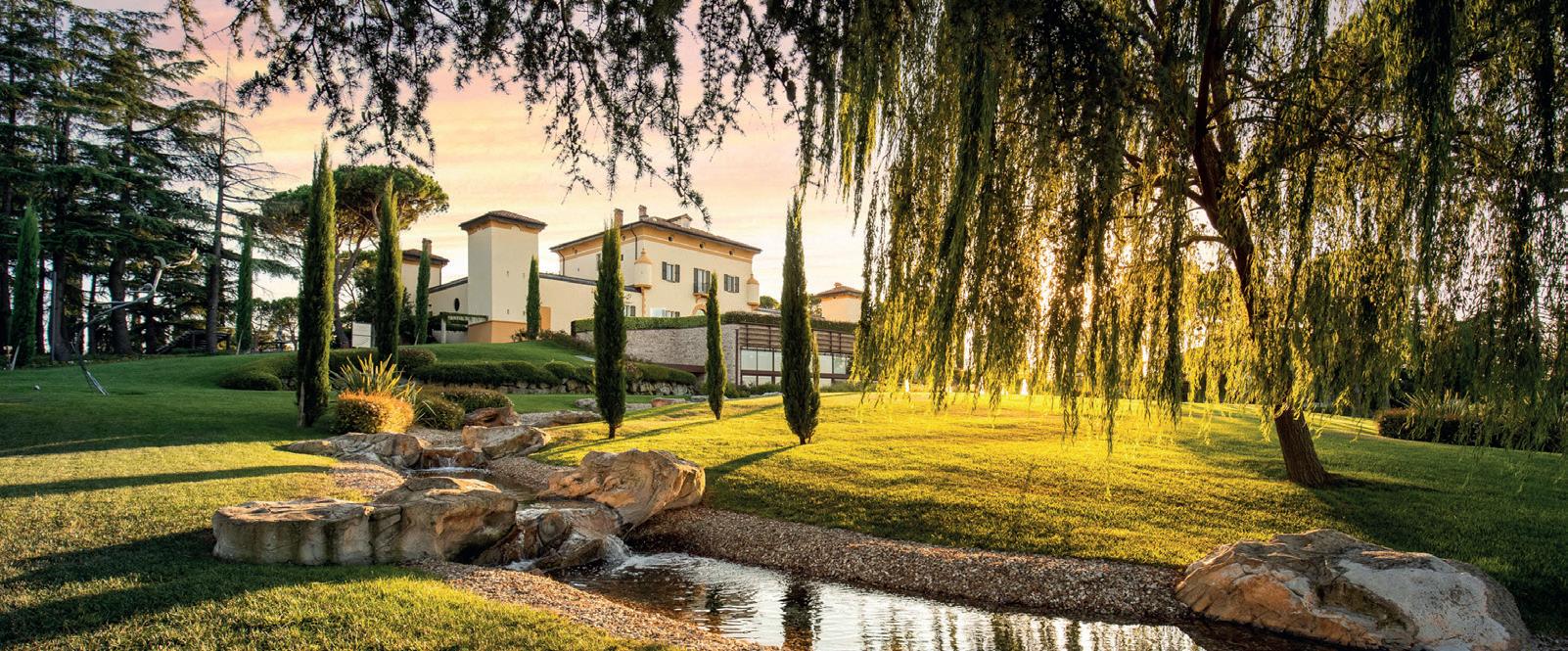
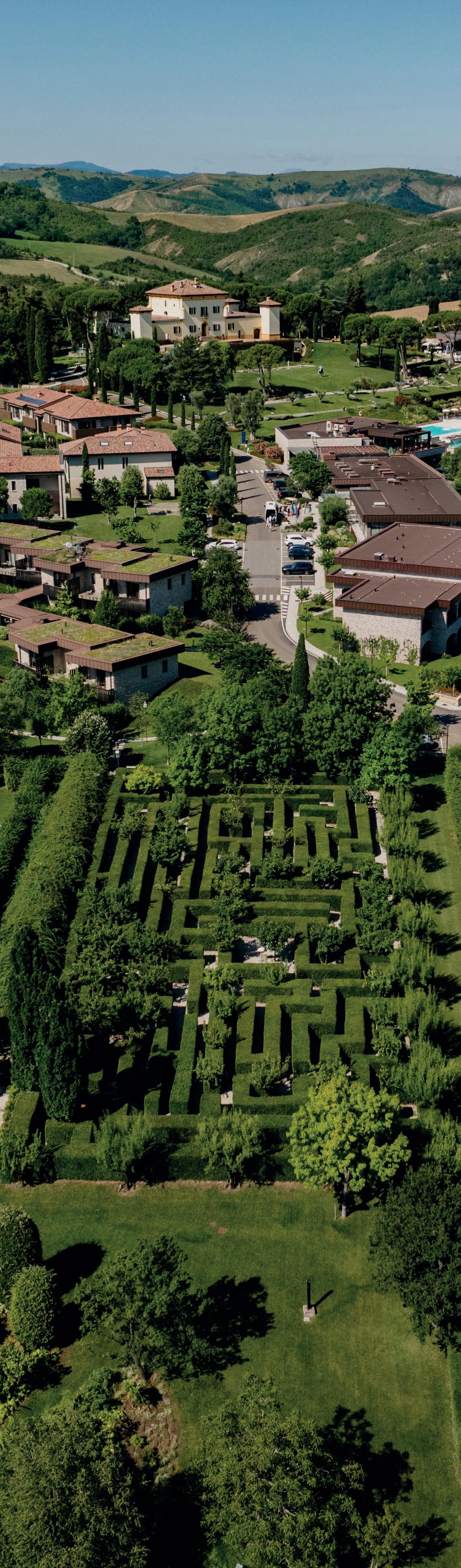
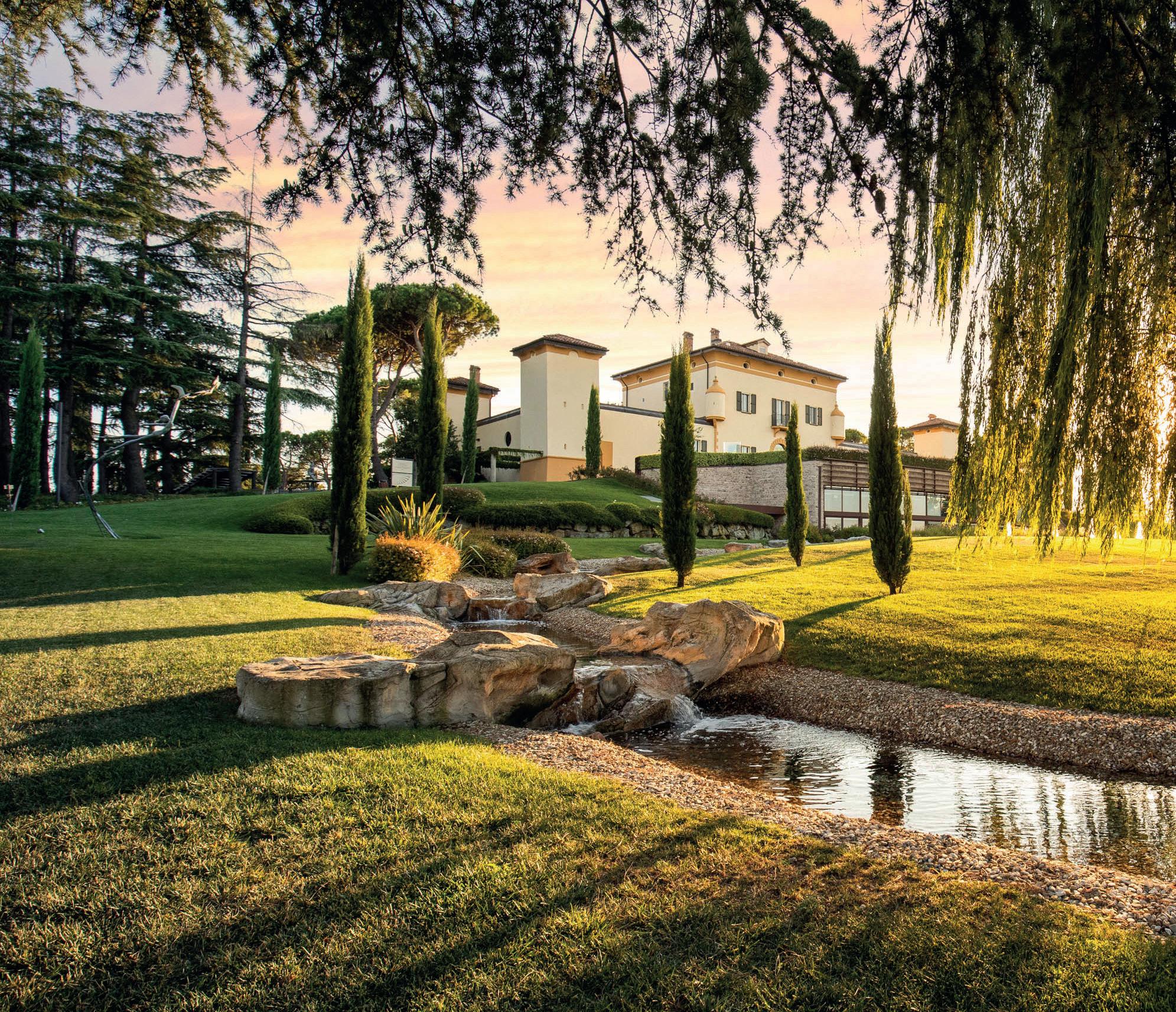
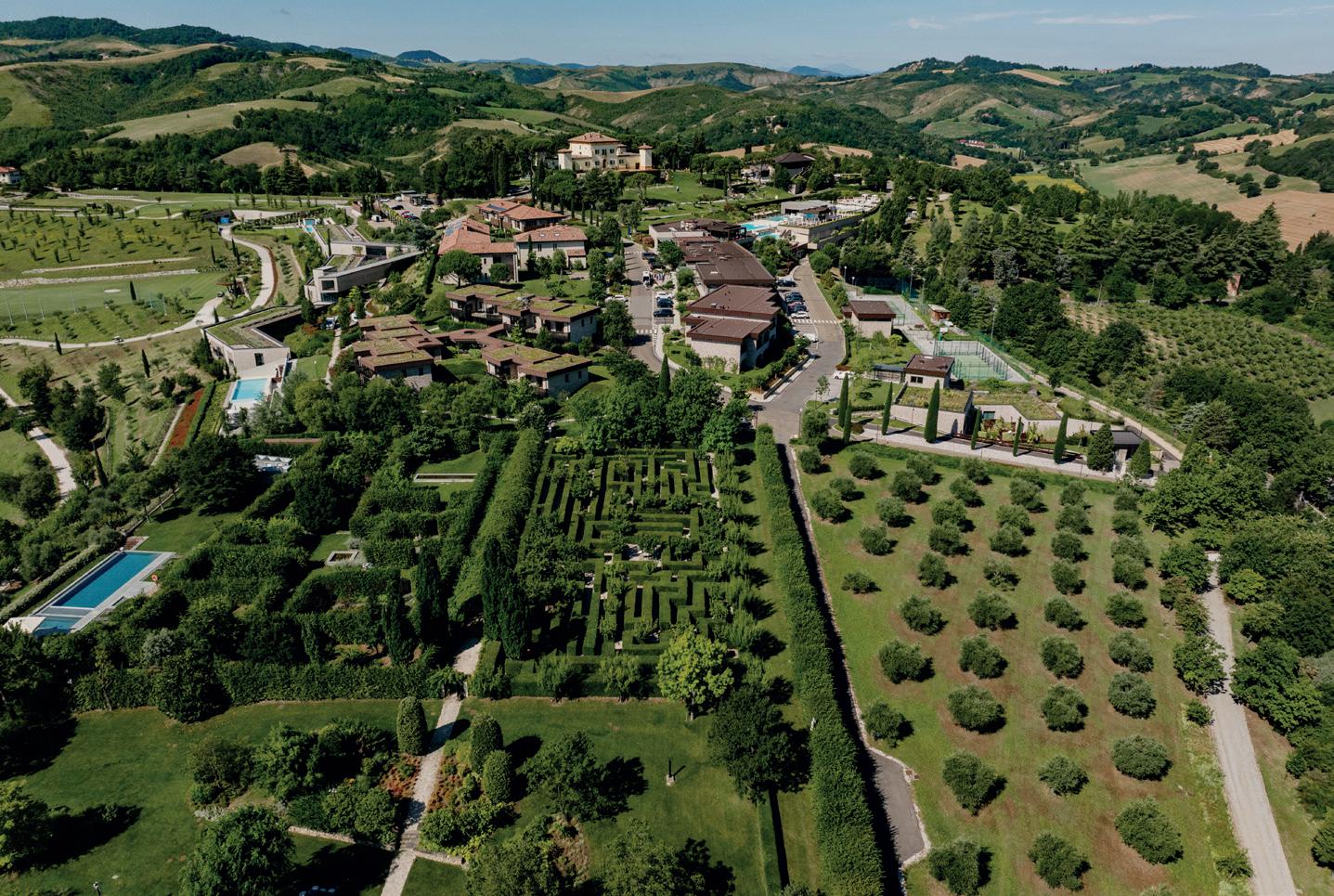
There are places that promise wellness, and then there are places that embody it. Palazzo di Varignana belongs firmly to the latter. Set across rolling hills outside Bologna, the estate is more than a resort; it is a philosophy made tangible, a living expression of the Italian ars vivendi, the art of well living.
From the moment you arrive, it becomes clear that this is not a retreat built around fleeting trends or superficial pampering. Instead, it is a place where longevity is approached with scientific depth, cultural richness and an almost monastic respect for nature.
The vision behind Palazzo di Varignana is rooted in the belief that wellbeing is multi layered. It is shaped by what you eat, how you move, how you sleep, how you connect with your surroundings and how you nourish your emotional landscape. The estate’s founder imagined a sanctuary where these elements could coexist in harmony, supported by the land itself - its vineyards, olive groves, orchards, gardens and
MORE ON THE NEXT PAGE
ancient architecture. The result is a destination that feels both timeless and forward thinking, a place where the past and future of wellness meet.
At the centre of this philosophy is Dr Annamaria Acquaviva, the resort’s Scientific Director, whose longevity methodology informs every aspect of the guest experience. Her five pillar mantra of nutrition, movement, sleep, emotional balance and targeted treatments is not presented as doctrine but as an invitation. Her approach is warm, human and deeply knowledgeable, and her presence gives the resort a sense of intellectual grounding that elevates it far beyond the typical spa escape.
THE RESORT AND ROOMS
The heart of the estate is the beautifully restored 18th century Palazzo Bentivoglio, a building that anchors the resort with its historic gravitas. Around it, a series of contemporary structures blend seamlessly into the landscape, creating a resort that feels expansive yet intimate. The architecture is a thoughtful interplay of terracotta, stone, warm woods and soft plaster, echoing the colours of the surrounding hills.
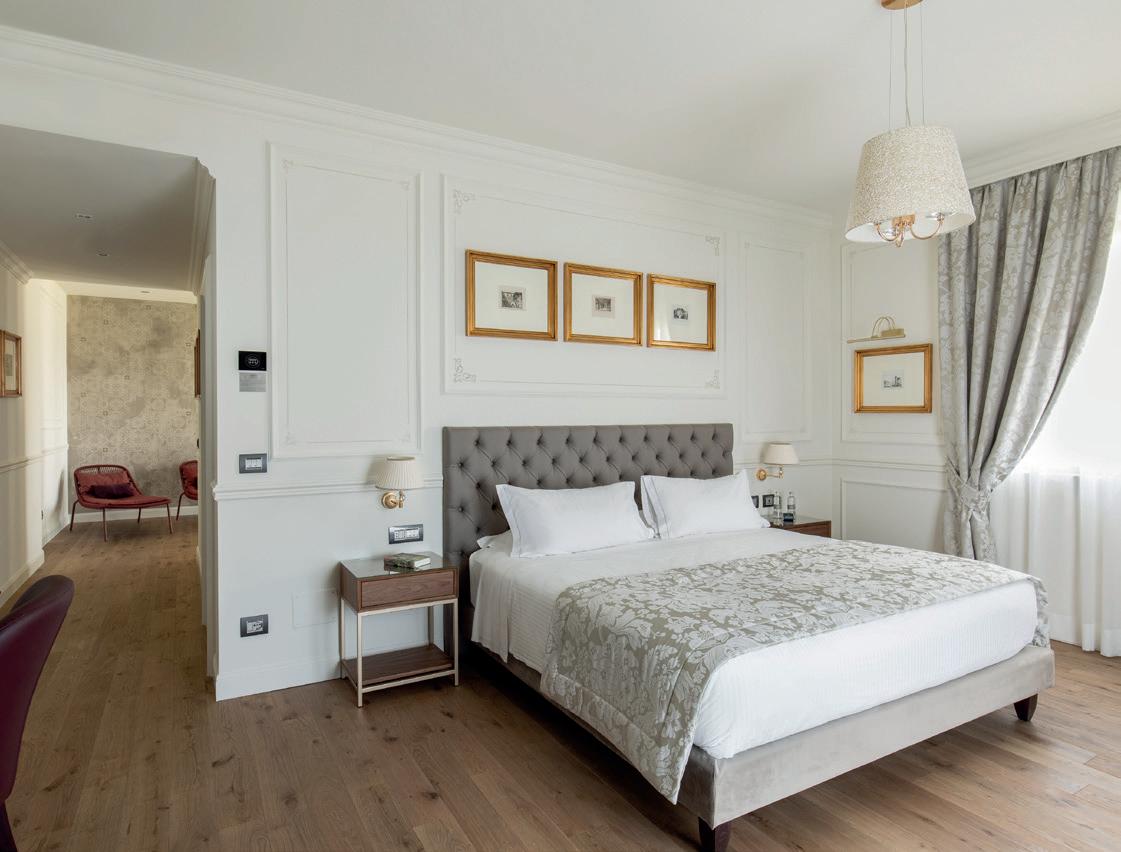
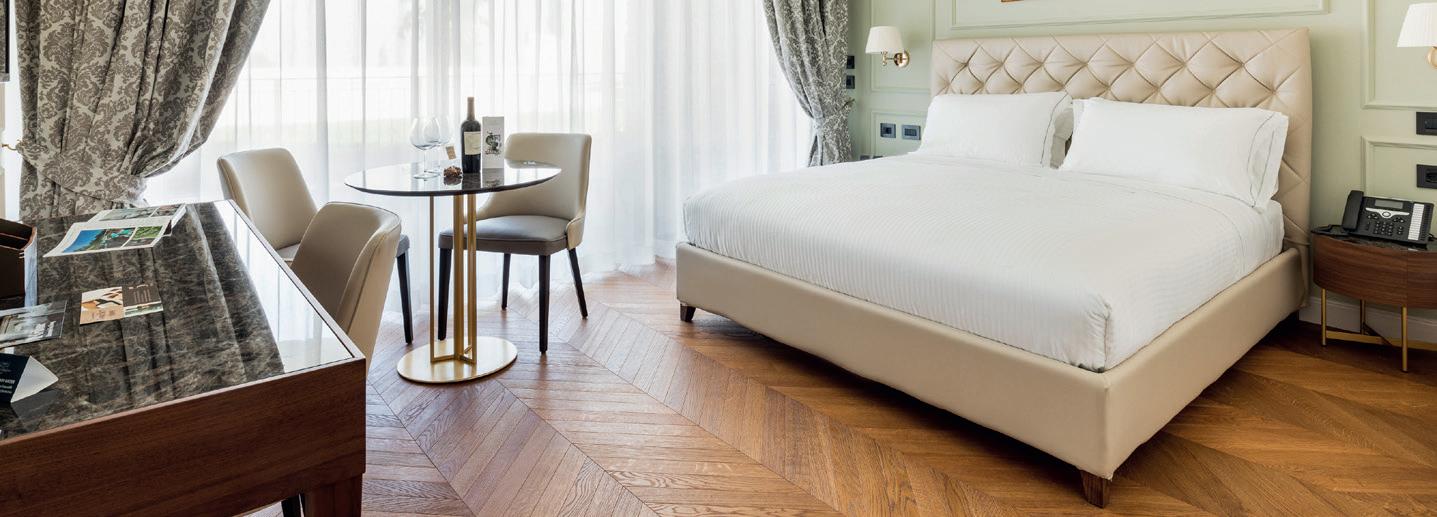
The resort offers 150 rooms and suites, each designed with a quiet, contemporary elegance. Interiors are warm and refined, with natural fabrics, handcrafted furnishings and a palette inspired by the Emilia Romagna countryside. Large windows frame views of gardens, vineyards or rolling hills, and the sense of space is calming. Rooms are equipped with everything you would expect from a luxury property with Nespresso machines, curated minibars, plush bedding but what stands
It is a place where longevity is lived, not lectured; where food is medicine but also joy; where art, agriculture, architecture and science coexist; where transformation feels natural, not forced
out is the attention to detail. Nothing feels generic. Everything feels considered. Bathrooms are particularly impressive, finished in smooth stone and marble, with generous walk in rainfall showers and deep soaking tubs in the higher categories and the Natural Remedies toiletries infused with botanical extracts from the estate’s own gardens. It is the kind of bathroom you linger in, not because you need to, but because it feels like part of the retreat.
THE VILLAS AND FARMHOUSES
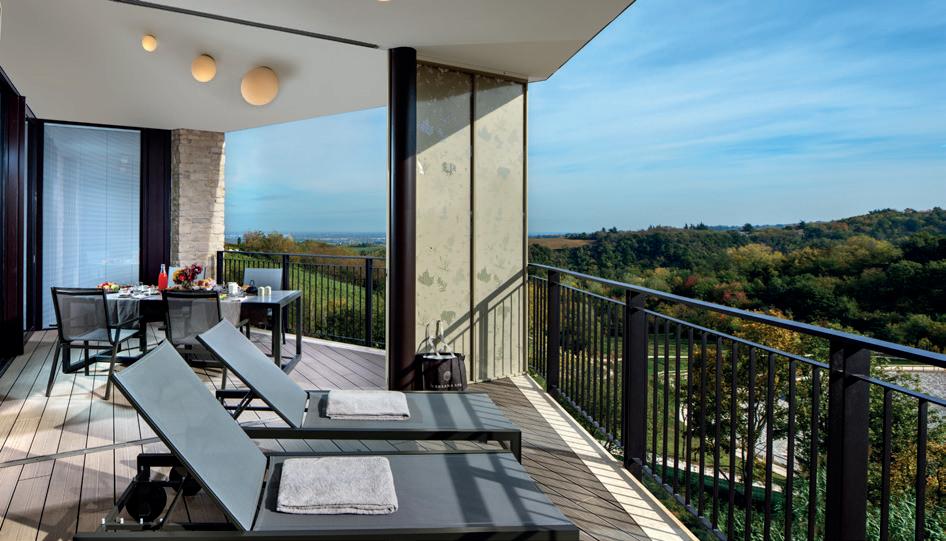
Beyond the main resort lies the Villas Collection, a series of restored farmhouses and contemporary villas scattered across the hillside. These properties offer a level of privacy and immersion that makes them ideal for longer stays, families or guests seeking a more secluded wellness experience. Each villa has its own personality, but all share the same refined aesthetic: natural materials, soft colours, expansive terraces and panoramic views.
The farmhouses retain their rustic charm but have been elevated with modern comforts. They feel authentic, rooted in the agricultural heritage of the region, yet polished enough to satisfy even the most design conscious traveller. Many villas come with private pools, gardens and fully equipped kitchens, allowing guests to live at their own pace while still accessing the full breadth of the resort’s wellness and gastronomic offerings.
RESTAURANTS AND GASTRONOMIC VISION
Food is not merely a pleasure at Palazzo di Varignana; it is a pillar of the resort’s longevity philosophy. The estate’s agricultural project spans vineyards, orchards, vegetable gardens, olive groves and saffron fields, all cultivated with a focus on biodiversity and regenerative practices. This connection to the land is evident in every dish served across the resort’s restaurants.
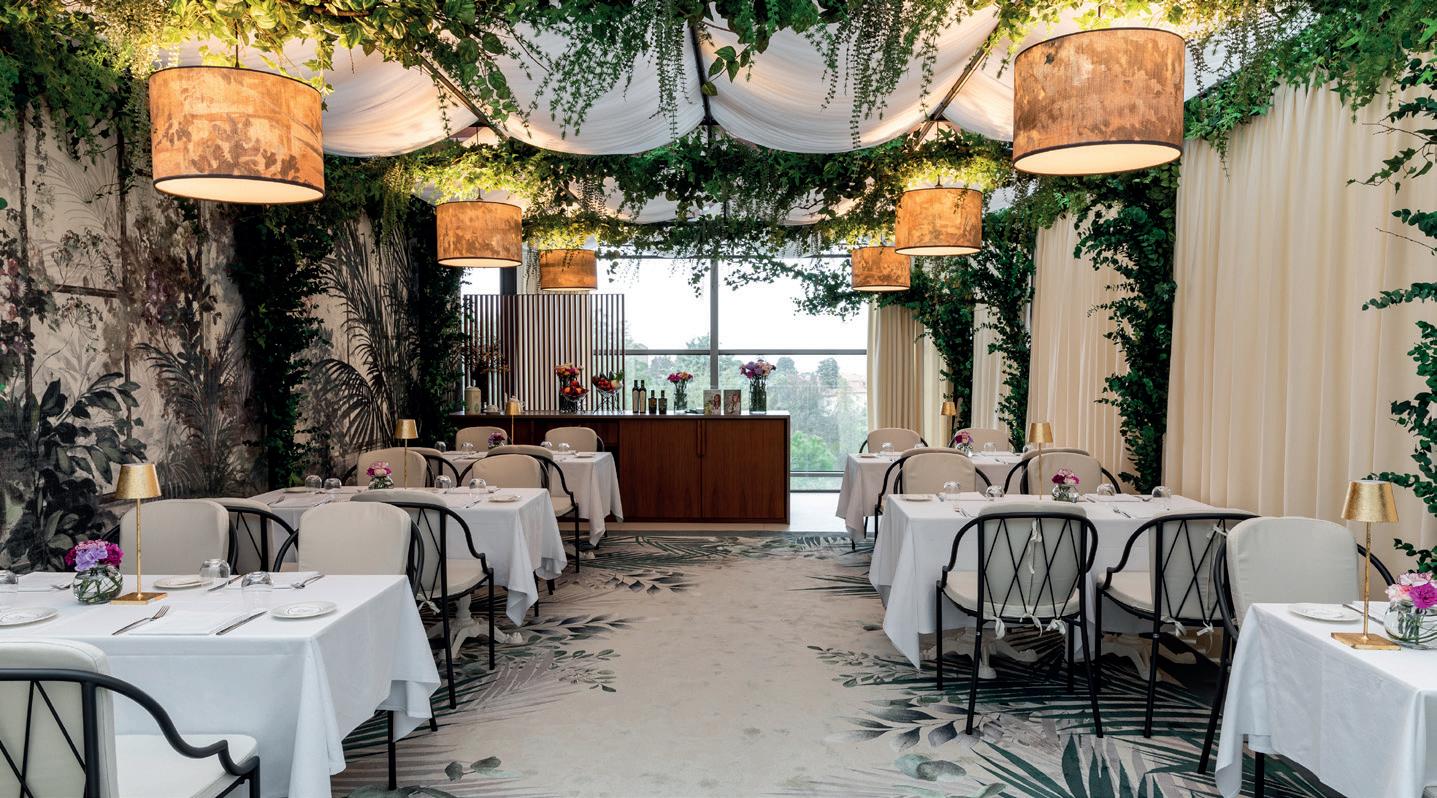
Dining here is a celebration of flavour, seasonality and nutritional intelligence. This is Italy, after all and pleasure is part of the prescription drawing on the estate’s produce to craft meals that feel alive with colour and freshness.
One of the most memorable experiences of my stay was a pasta making class with Chef Francesco Manograsso. In a sunlit kitchen overlooking the hills, we learned to make traditional sfoglia by hand, rolling dough into thin, silky sheets before shaping it into tortelloni. There was something grounding about the process from the rhythm of kneading, the scent of flour, the laughter shared between guests. It was a reminder that wellness is not only about discipline; it is also about joy, creativity and connection.
LONGEVITY AND THE GINKGO RESTAURANT
The intellectual and emotional core of the resort is its longevity programme, led by Dr Acquaviva. Her five pillar approach is woven
into every aspect of the guest experience, from the personalised consultations to the movement programmes to the spa treatments. But nowhere is her influence more evident than in the Ginkgo Longevity Restaurant.
Ginkgo is a culinary expression of the resort’s scientific philosophy. Menus are tailored to individual metabolic needs, drawing on anti inflammatory principles and the estate’s own produce. Dishes are beautifully presented, vibrant and deeply nourishing. Eating here feels like an act of self care, but also of pleasure. It is rare to find a restaurant that manages to be both gastronomically exciting and nutritionally precise, but Ginkgo achieves this with ease.
THE WINERY
The estate’s winery sits on a hill overlooking the amphitheatre, surrounded by vines that produce four types of wine. The tasting experience is intimate and atmospheric, with a terrace that opens onto sweeping views of the countryside. The wines reflect the character of Emilia Romagna elegant, expressive and shaped by the mineral rich soil.
Tasting them while looking out over the amphitheatre, with the late afternoon light turning the hills gold, was one of the most memorable moments of my stay. It was a reminder that wellness is not about abstinence; it is about balance, pleasure and connection to place.
MICE SPACES AND THE ART COLLECTION
Palazzo di Varignana is also a destination for meetings and events, with a range of MICE spaces that blend modern technology with historic charm. The settings are inspiring ideal for leadership retreats, wellness focused corporate gatherings or creative workshops.
The estate’s private art and antiques collection is extraordinary. Throughout the
property, you encounter pieces that surprise and delight: a terracotta soldier, ancient mosaics on loan from museums, rare artefacts displayed in quiet corners. One of the most intriguing objects is an engraved grain of rice, displayed via projection so that its microscopic detail becomes visible. It is a small but powerful symbol of the estate’s fascination with craftsmanship, precision and the beauty of the minute.
THE GROUNDS AND OLIVE OIL
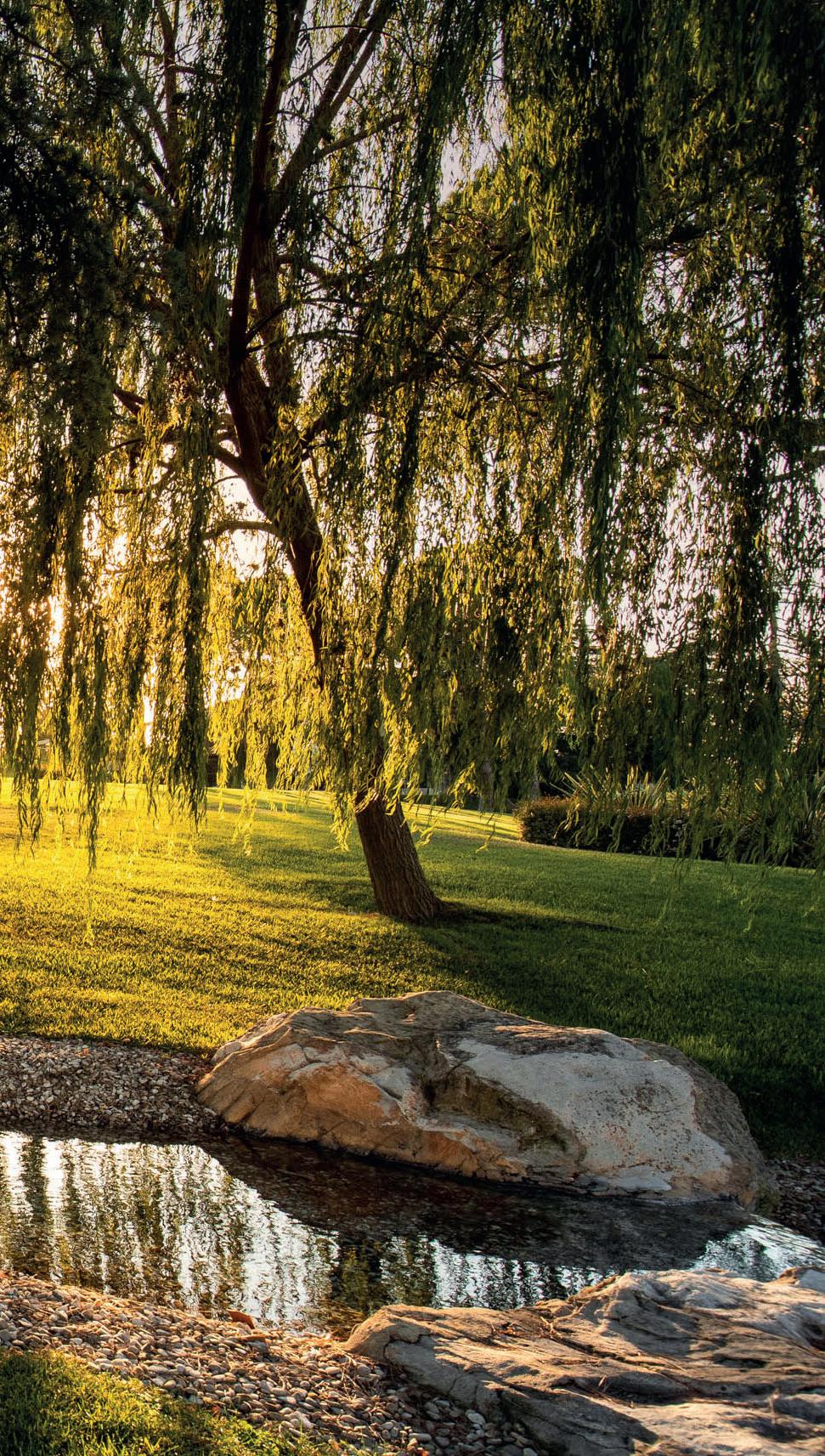
The grounds of Palazzo di Varignana are immaculate manicured yet abundant, filled with flowers, herbs, fruit trees and native plants. Walking through them feels like moving through a living botanical library. The gardens are not merely decorative; they are integral to the resort’s agricultural and wellness philosophy.
Above the olive groves stand the estate’s native olive trees, which produce five types of olive oil, all sold at Eataly. The oils are exceptional peppery, grassy, complex and reflect the estate’s commitment to agricultural excellence. The estate also grows saffron, adding another layer to its culinary identity.
VARSANA SPA AND THE ART OF WELL LIVING
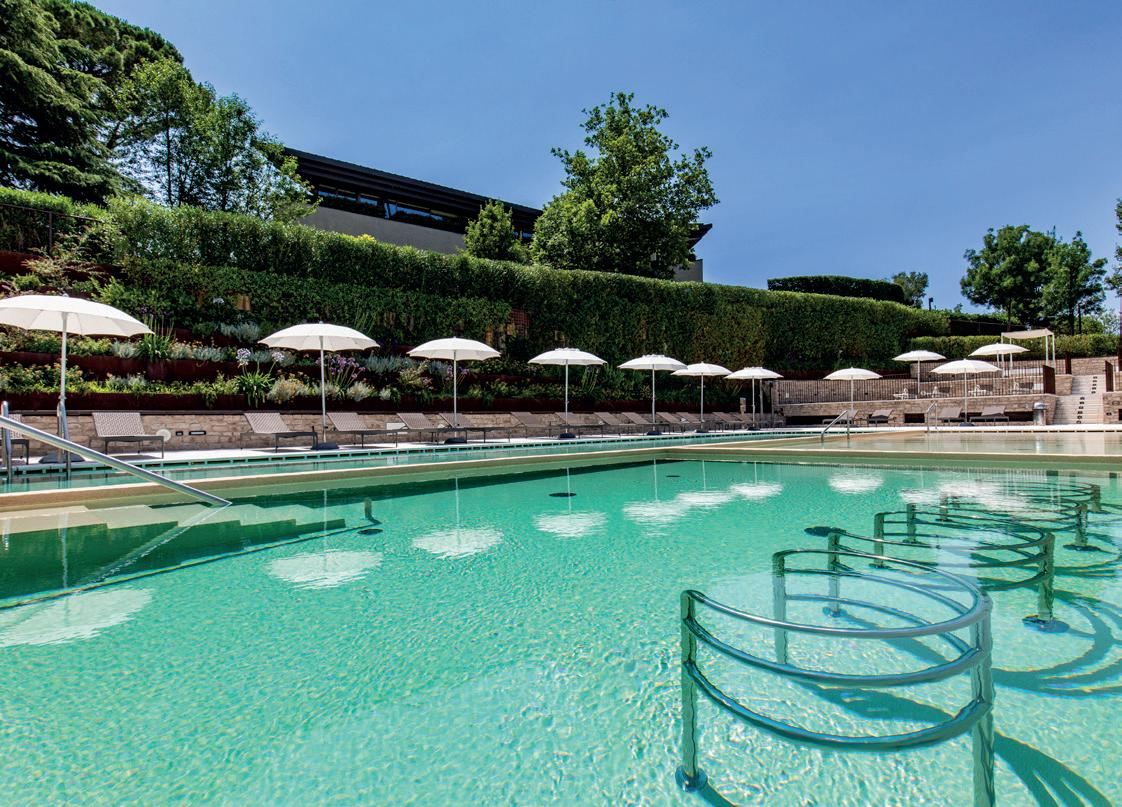
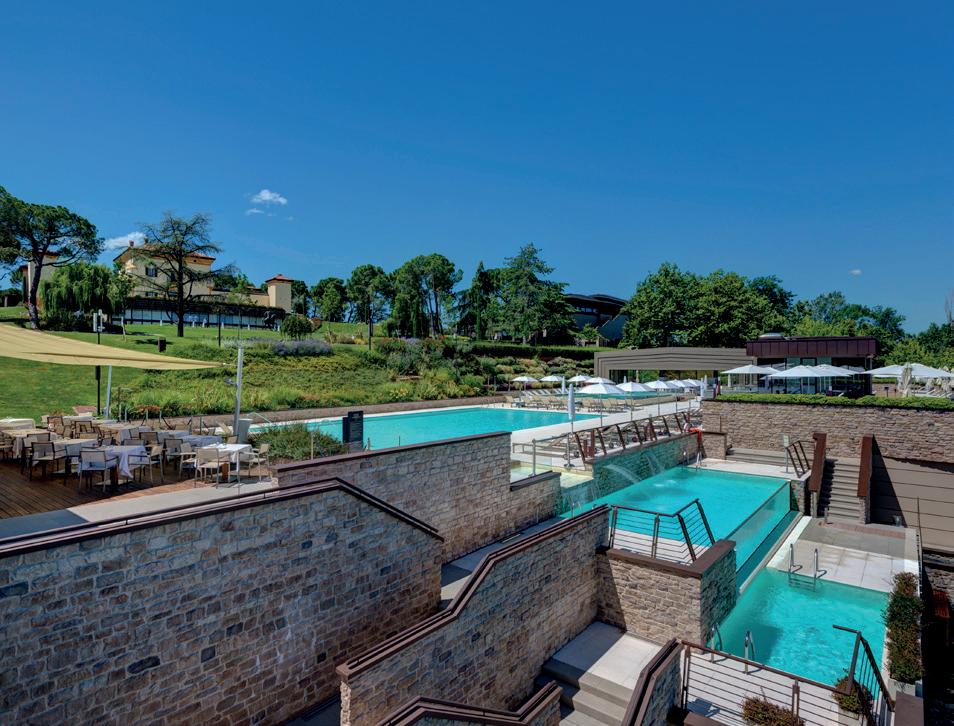
The Varsana Spa is a sanctuary of water, heat and ritual. It includes indoor and outdoor pools, a hammam, a sauna circuit, sensory showers, relaxation lounges and treatment rooms. The Japanese Ofuro and the traditional tea ceremony add a layer of cultural richness to the experience, blending Eastern and Western wellness traditions.
The spa’s philosophy aligns with the longevity programme where treatments are designed to support metabolic balance, reduce inflammation, improve circulation and restore emotional equilibrium. The Ars Vivendi programme offers private wellness rituals
that feel deeply immersive, drawing on both scientific principles and ancient practices.
MOVEMENT, TRAILS AND OUTDOOR LIVING
Movement is a core pillar of the retreat, and the estate offers endless ways to engage with the landscape. There are guided hikes, sports facilities, fitness classes, cycling routes and a beautifully designed maze. Walking trails wind through olive groves and vineyards, inviting guests to explore the land at their own pace. The landscape itself becomes part of the therapy grounding, expansive and restorative.
THE LOCOMOTIVE
One of the estate’s most extraordinary features is the fully restored Series 740 steam carriage, factory number 722. Once a working locomotive, it has been transformed into a fine dining venue a jewel of craftsmanship and history. Inside, the carriage is elegant and atmospheric, with polished wood, soft lighting and a sense of nostalgia.
Outside reception sits a glass garage which houses a red sports car, a playful unexpected detail that adds to the estate’s eclectic charm.
WHY PALAZZO DI VARIGNANA STANDS APART
Because it is not simply a resort. It is a philosophy, a landscape, a cultural project, a scientific endeavour and a deeply human experience. It is a place where longevity is lived, not lectured; where food is medicine but also joy; where art, agriculture, architecture and science coexist; where transformation feels natural, not forced. Without hesitation, among the most exceptional places I have ever stayed and dined.
GRAND HOTEL
QUELLENHOF BAD RAGAZ
A STAY SHAPED BY WATER, LONGEVITY AND QUIET LUXURY
Some hotels impress you instantly; others work more quietly, settling into your senses until you realise you’ve been changed by them.
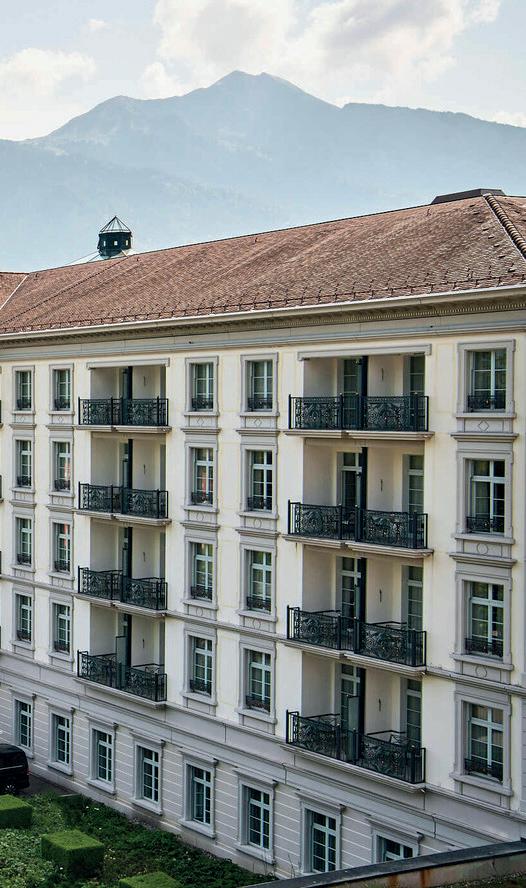
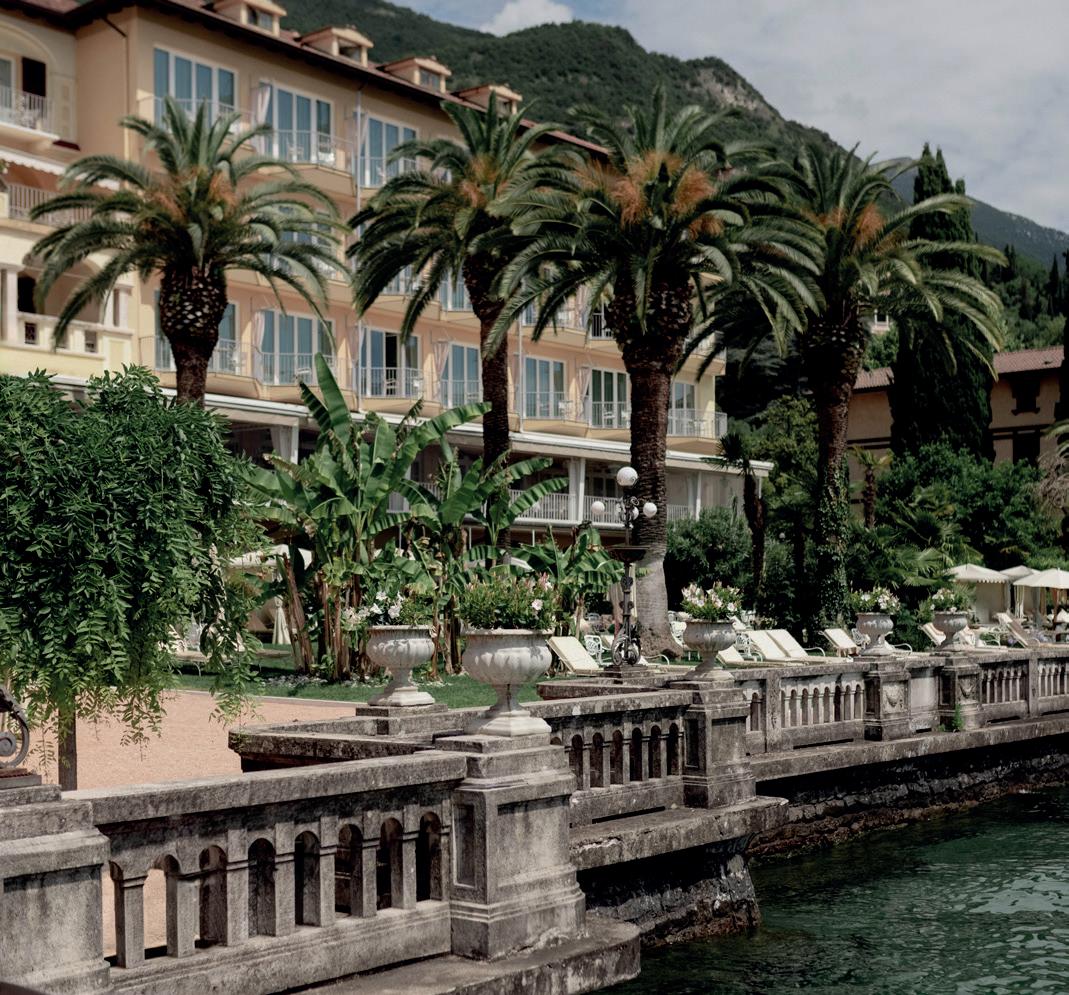
The Grand Hotel Quellenhof in Bad Ragaz is firmly in the latter category - a place where history, landscape, design and wellness come together with such clarity that staying here feels like stepping into a different version of yourself.
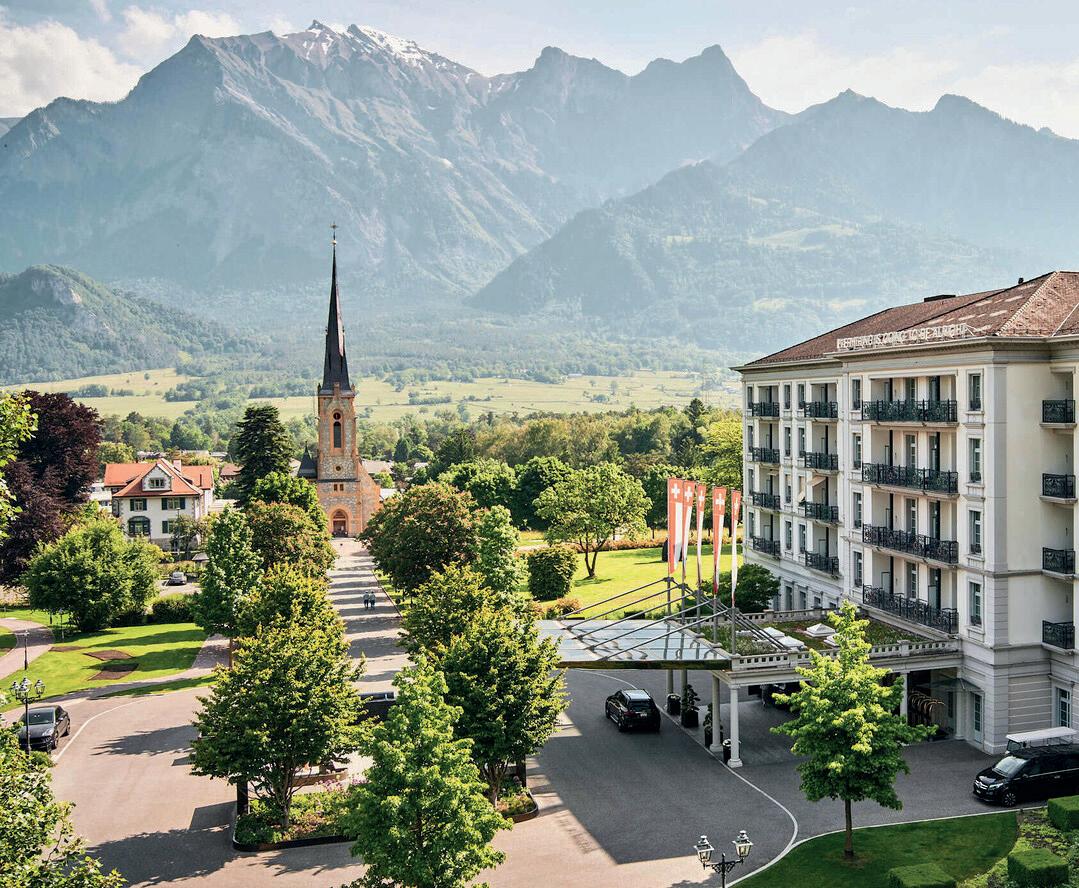
Set at the foot of the Swiss Alps, surrounded by manicured lawns and mountain air, it is a hotel built on the power of water, longevity and understated luxury.
The train journey from Zurich is the first hint of what awaits. The route curves along the lake, past vineyards and villages, before climbing gently into Alpine scenery so composed it feels cinematic. By the time you arrive in Bad Ragaz, you’re already softened by the landscape.
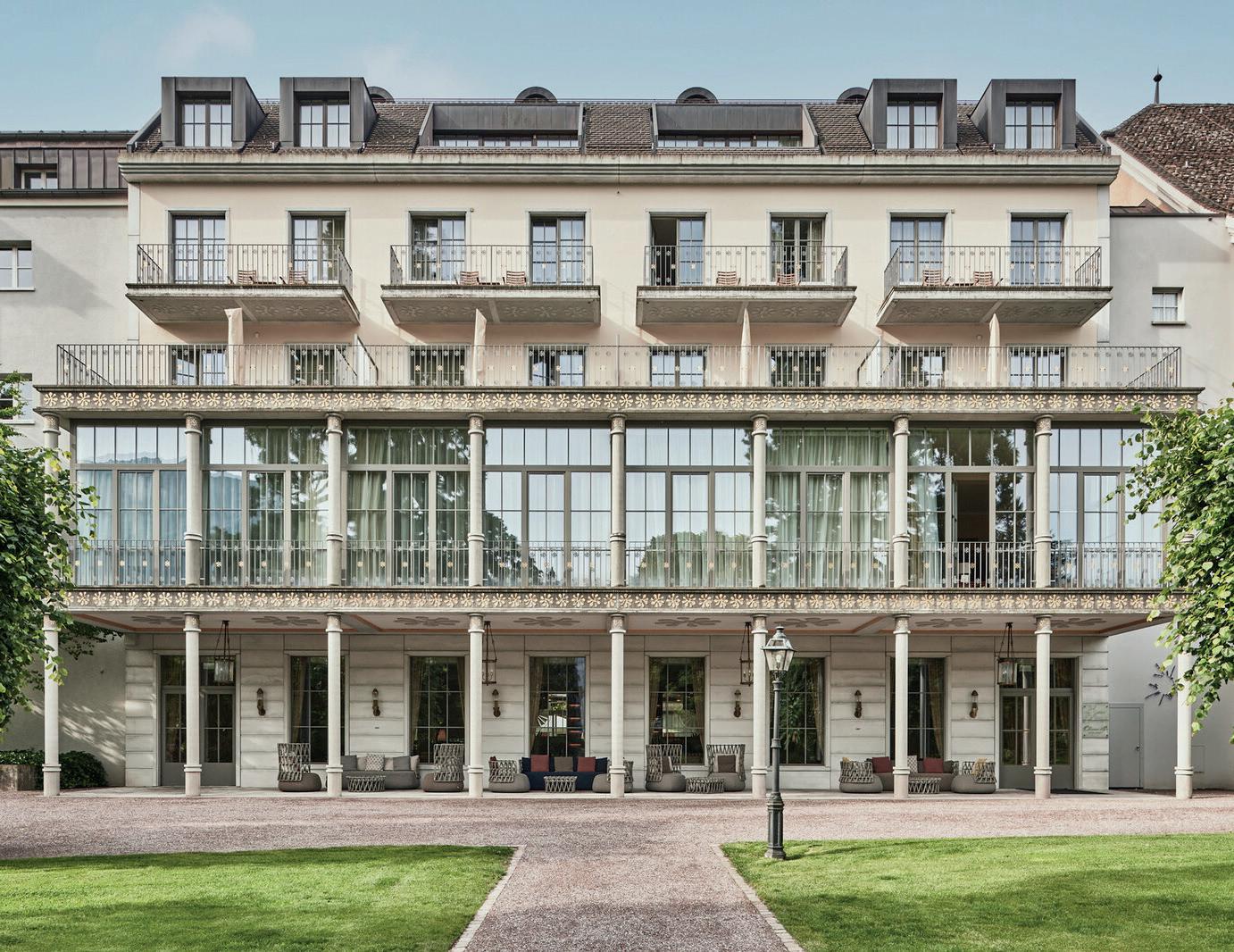
The hotel sits just minutes from the station, but the approach feels grand: immaculate gardens, sculpted hedges, and
MORE ON THE NEXT PAGE
mountains rising behind the property like a painted backdrop. It’s the kind of arrival that makes you instinctively slow down.
A HISTORY WRITTEN IN WATER
Bad Ragaz owes its reputation to the Tamina Gorge, where monks discovered thermal spring water in the 13th century. For centuries, people travelled to bathe in its healing warmth. In the 19th century, the water was channelled directly to the village, transforming Bad Ragaz into one of Europe’s great spa destinations.
The Grand Hotel Quellenhof is not simply a luxury hotel; it is a place shaped by history, landscape and water
Today, the Quellenhof sits at the heart of this story as part of a five-star resort that includes the Grand Hotel Hof Ragaz and Palais Bad Ragaz, with around 242 rooms and suites. Its mineral-rich thermal water emerges at 36.5°C (97.7°F) and has long been associated with healing, circulation and longevity. What began as hydrotherapy has evolved into a sophisticated, medically informed approach to wellness.
The lobby is a masterclass in contemporary Alpine elegance. The colour palette - blue, white and gold - feels crisp and serene, and natural light pours through tall windows. But the true centrepiece is the four storey chandelier, made from 2,500 hand blown blue and white glass bubbles, suspended in a shimmering cascade that mirrors the movement of the thermal spring water. It’s theatrical without being ostentatious a reminder that everything here begins with the source.
The space is anchored by an open fireplace, creating a lounge that feels equally suited to morning coffee reading the newspaper or an evening drink.
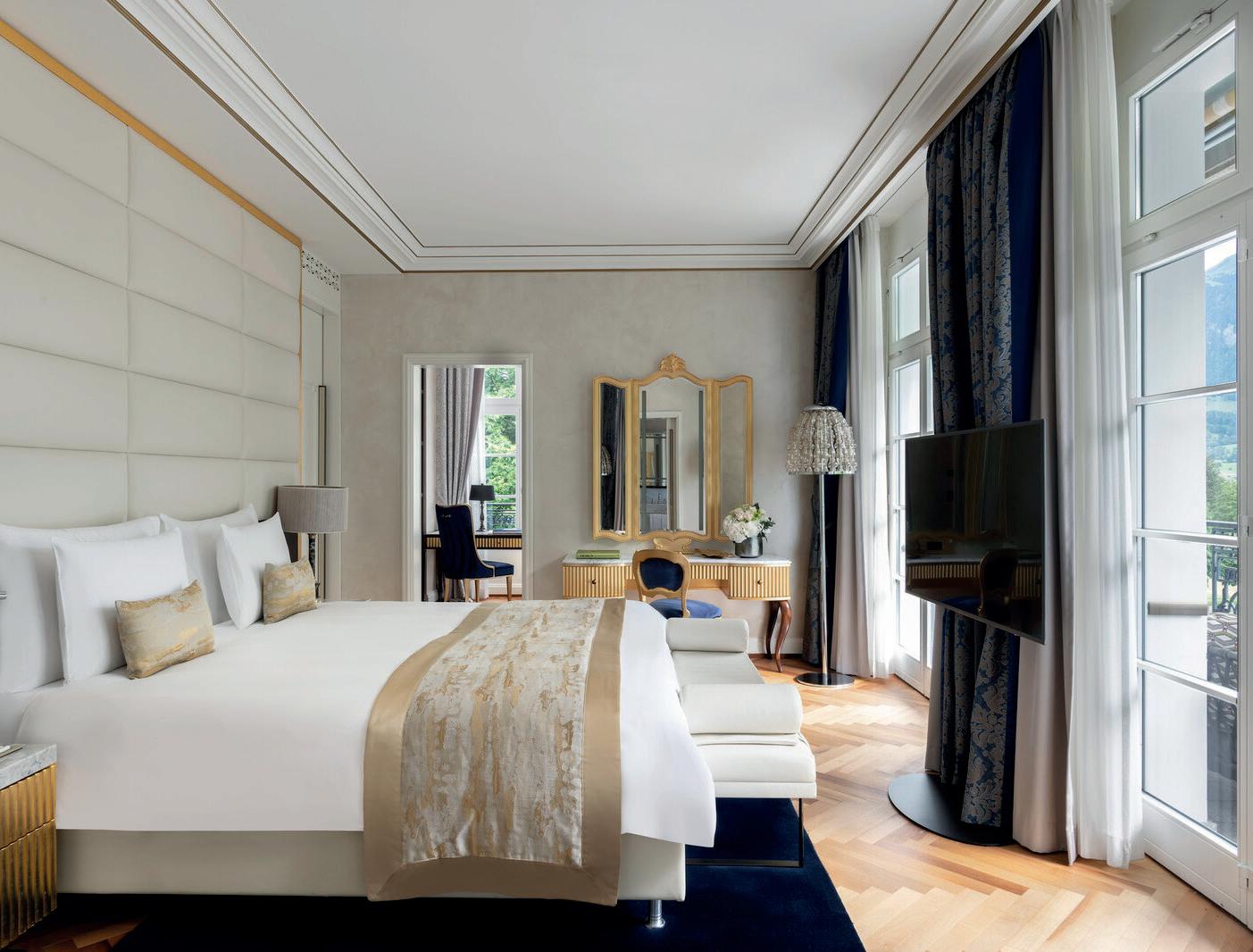
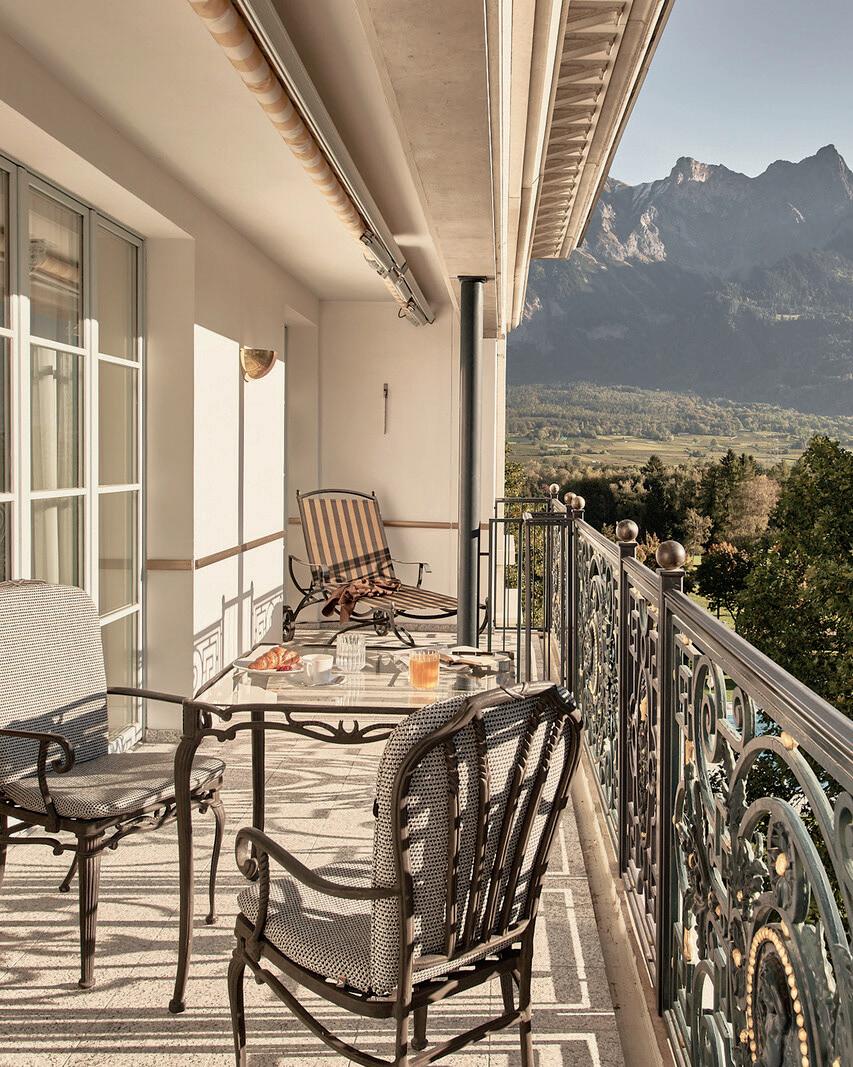
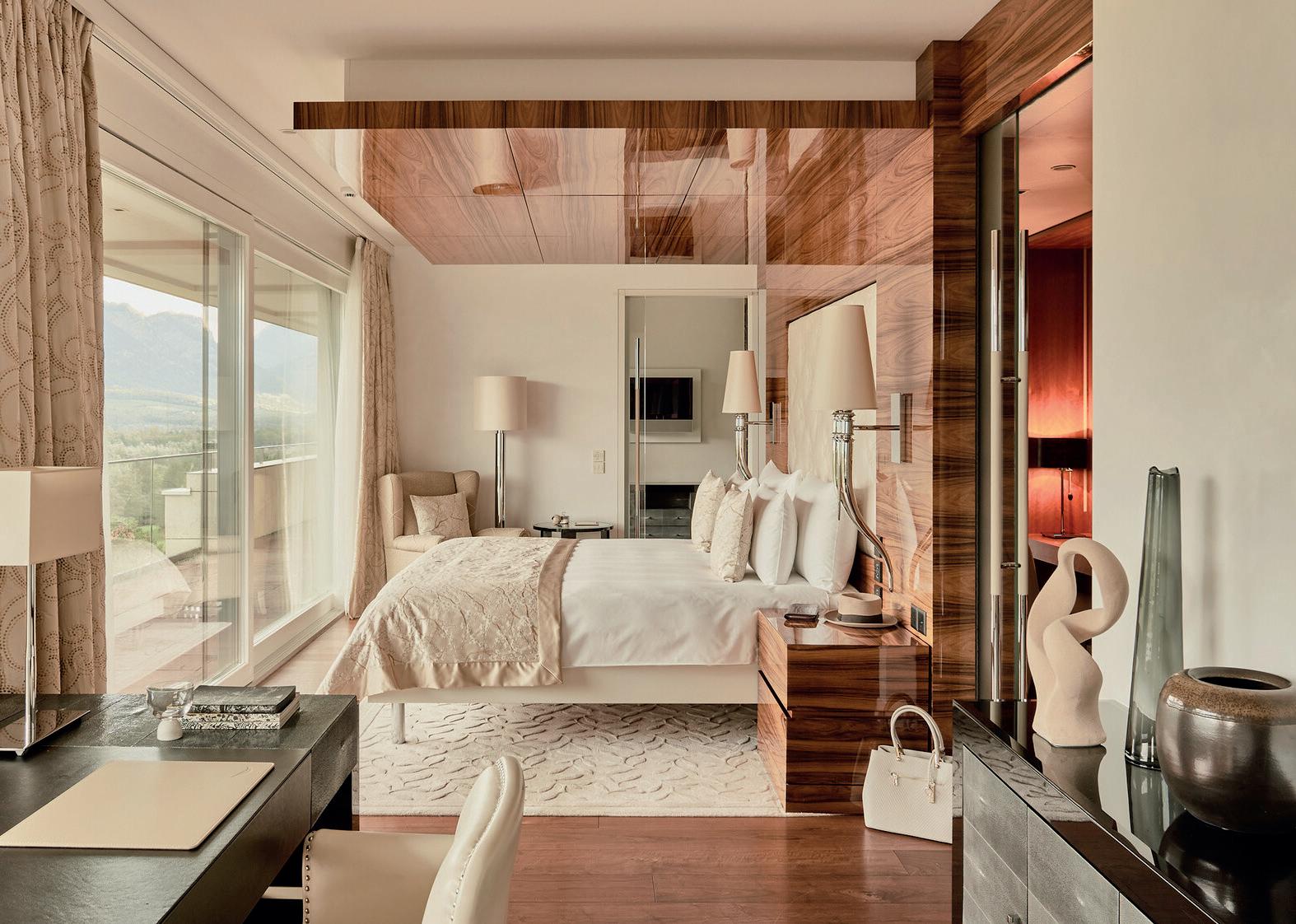
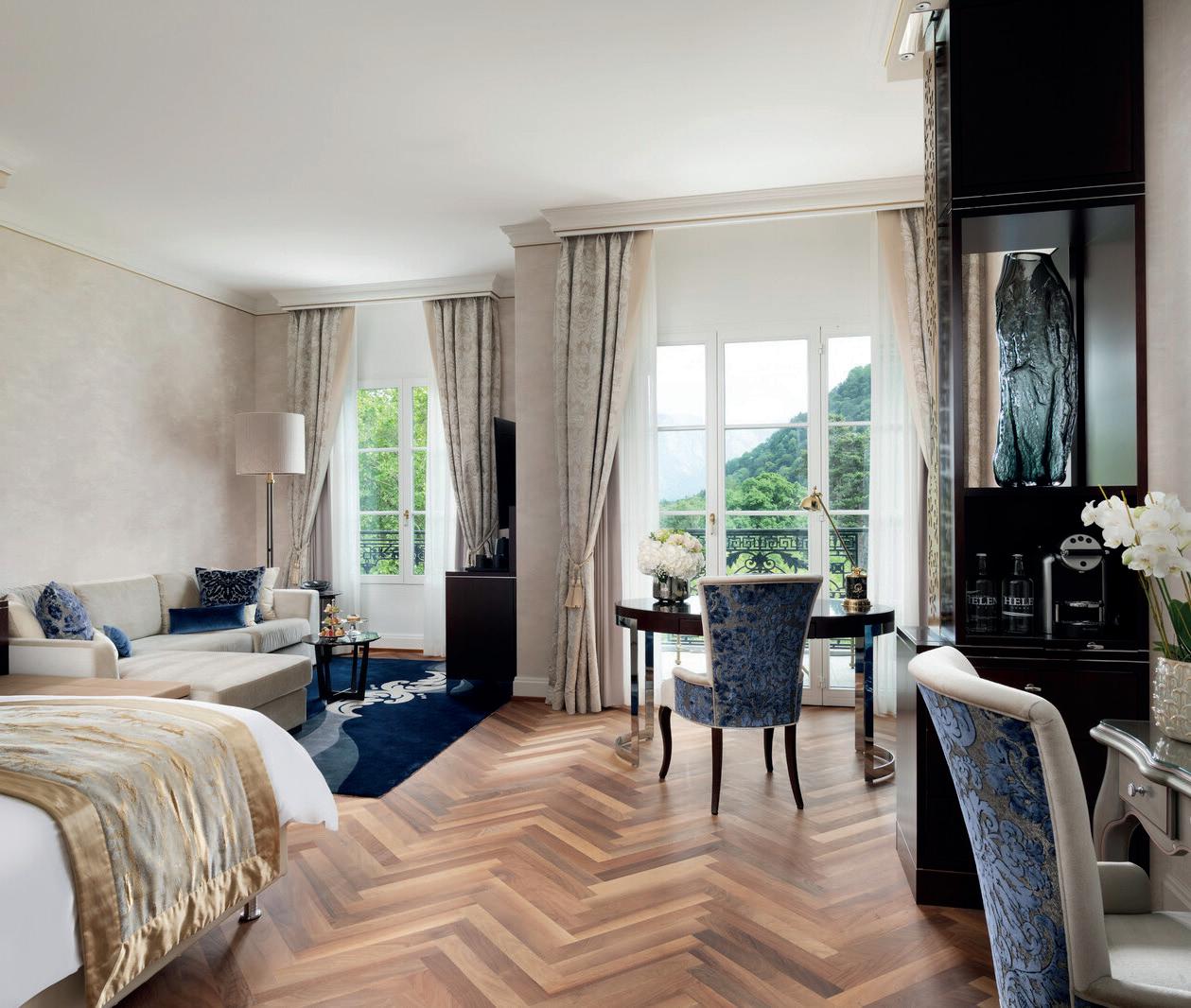
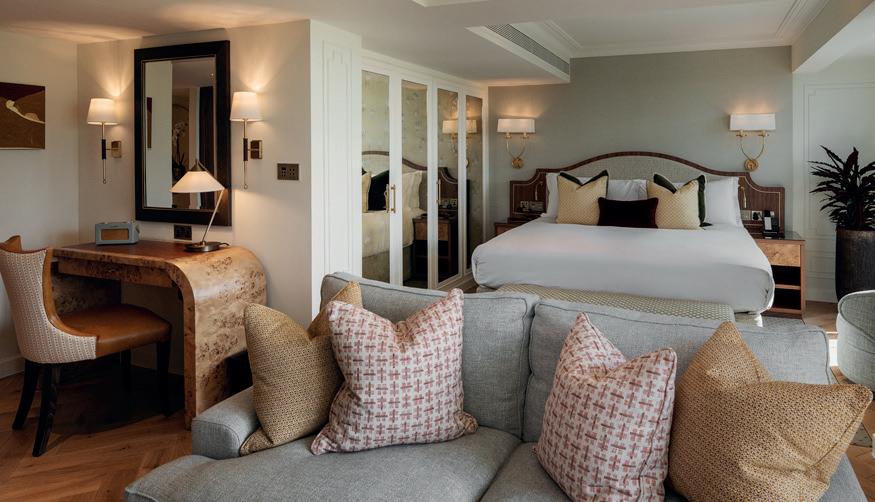
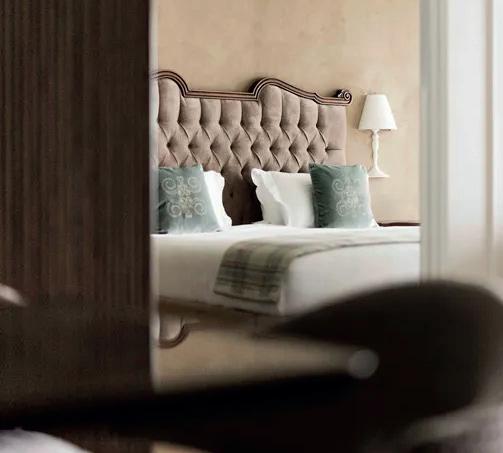
My suite overlooked the front gardens, with the mountains rising beyond them. The design is calm and contemporary, with Swiss walnut hardwood floors, soft earth tones and a sense of quiet spaciousness with a seating area and writing desk looking out onto the balcony. The bed was exceptional feather light, cloud soft, and paired with pillows (off menu) that made sleep feel like a treatment.
The bathroom was a highlight: black marble, mirrored walls, mosaic flooring, and a TV cleverly integrated into the mirror. A sink sat at either end of the bath, with a separate shower and toilet. The hotel’s own toiletries including sun lotion and after sun made with thermal water were beautifully scented and generously sized. Robes and slippers completed the sense of cocooning comfort.
WHY PEOPLE COME: LONGEVITY, PREVENTION AND PRECISION
The Quellenhof is no longer simply a luxury spa hotel; it is a longevity destination. Their four pillars of longevity are Movement, Nutrition, Sleep and Mental Health.. Guests come not just to relax, but to understand their bodies, reset their habits and invest in long term health.
The resort’s Medical Health Centre offers full diagnostic check ups, metabolic analysis, sleep assessments, physiotherapy, nutrition programmes and advanced preventive medicine. It’s delivered with Swiss precision but never feels clinical more like a partnership between guest and expert.
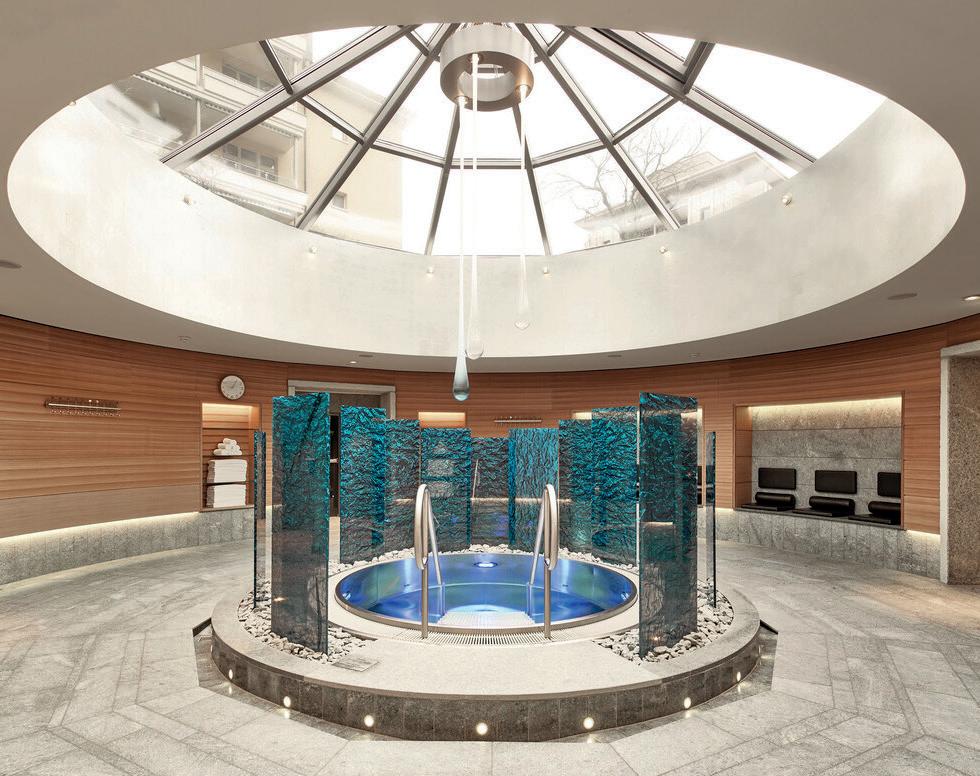
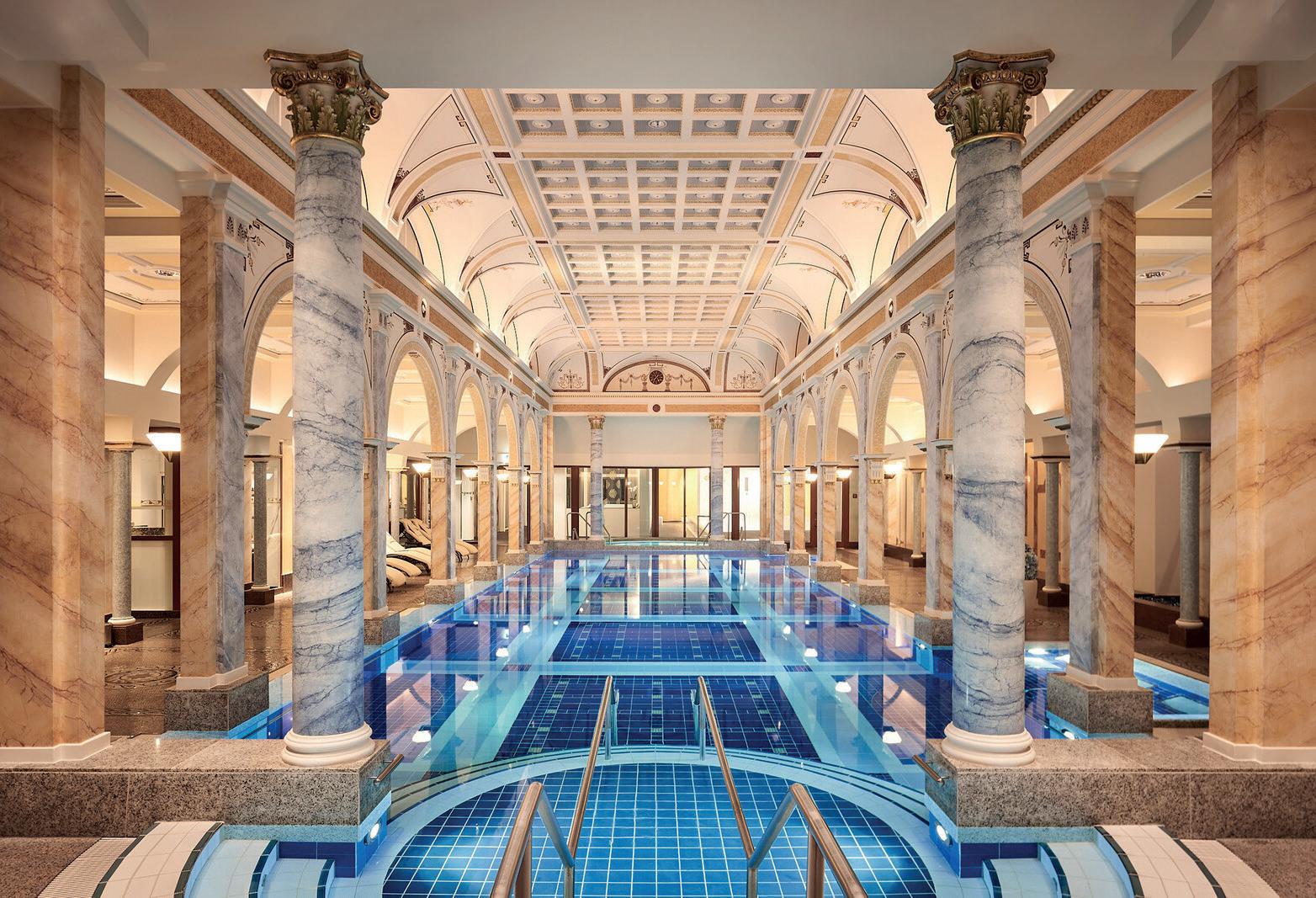
The spa’s centrepiece is Helenabath, a thermal pool hall inspired by classical Greek architecture. Columns rise around the warm, mineral rich water, creating a space that feels both ancient and serene. The water always 36.5°C is deeply soothing and floating beneath the vaulted ceiling is one of those rare travel moments that stays with you.
The path to the sauna is an experience in itself: a winding walkway designed as a miniature Tamina Gorge, complete with rock formations and a waterfall. It’s theatrical, and immersive. Treatments offered include the signature Tamina flow massage, Herbal stamp and sound bath to name a few.
Beyond the private spa, guests can also visit the Tamina Therme, the resort’s public thermal complex with multiple pools, steam rooms and relaxation areas.
Food is a major part of the Quellenhof experience, led by Chef Sven Wassmer (6 Michelin stars and 1 Green Michelin Star), whose culinary philosophy is rooted in purity, locality and Alpine identity. Every meal begins with a glass of Tamina spring water, reinforcing the idea that wellness here is woven into daily life.
A sushi takeaway, bistro, café and several boutiques add variety and convenience.
The resort offers two championship golf courses, a kids’ club, and even a casino, making it a destination that works for couples, families and multi generational travel. It’s rare to find a place where wellness, leisure and luxury coexist so naturally.
MICE
For business travellers, the Quellenhof offers a suite of meeting and event spaces that combine Swiss precision with the hotel’s signature elegance. Natural light, mountain views and refined interiors make even formal gatherings feel elevated. It’s an ideal setting for leadership retreats, board meetings or incentive programmes that blend productivity with wellbeing.
WHY BAD RAGAZ STANDS APART
The village itself is charming quiet streets, mountain air and a pace of life that feels restorative. Hiking trails, cycling routes and the dramatic Tamina Gorge are all within easy reach as is Heididorf.
The Grand Hotel Quellenhof is not simply a luxury hotel; it is a place shaped by history, landscape and water. Everything
from the chandelier to the spa to the softness of the bed feels connected to the idea of restoration. For those seeking longevity, clarity or a reset, it offers something rare: a place where wellbeing is not an add on, but the foundation. I arrived by train, watching the mountains rise around me. I left feeling lighter, clearer, and already planning my return. Some hotels you visit. The Quellenhof is one you absorb.
MARASSI’S BEACHES, RESORTS AND MARINA LIFE
EGYPT'S NORTH COAST GEM
Some destinations whisper their charm; others glow with quiet confidence.
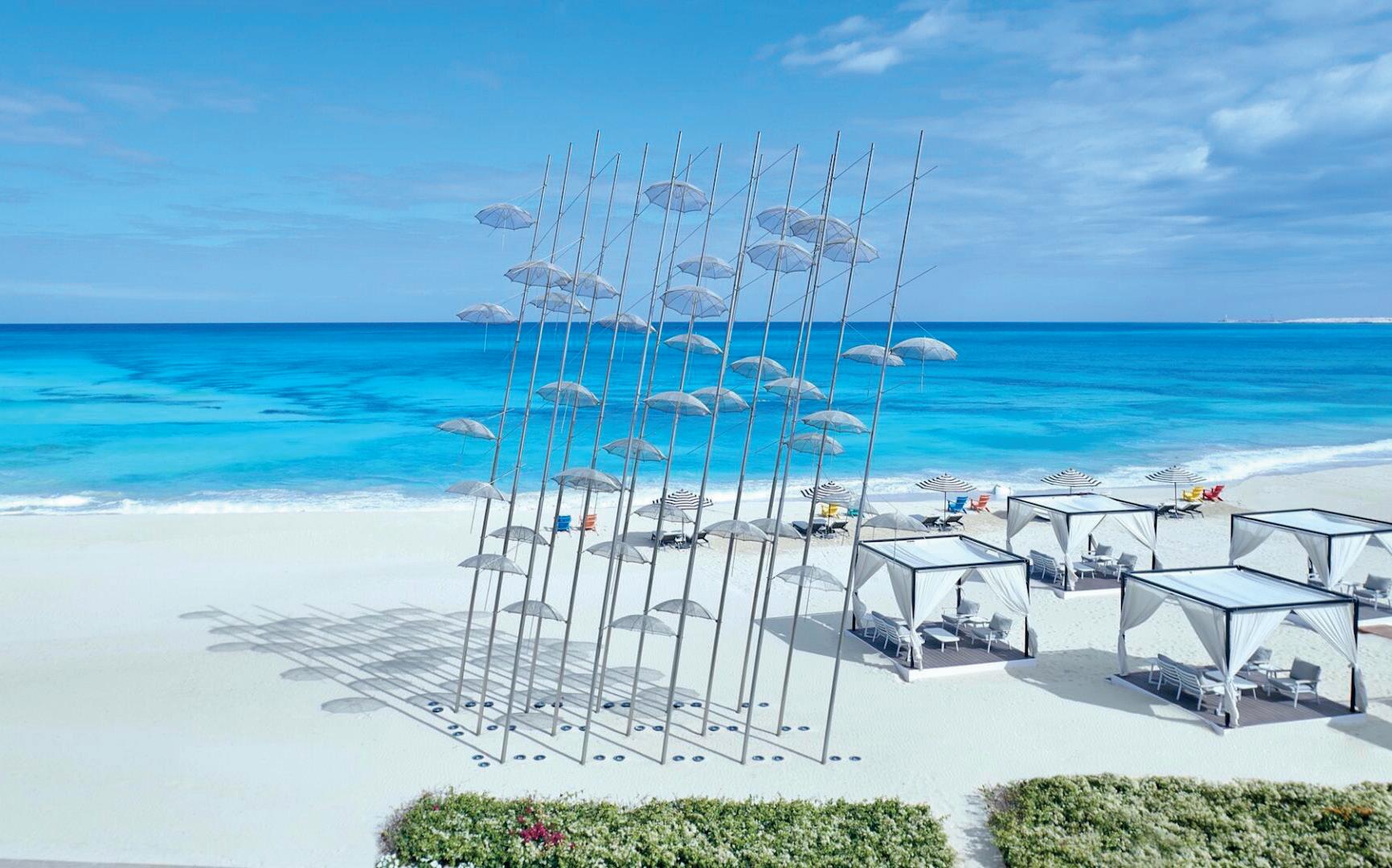
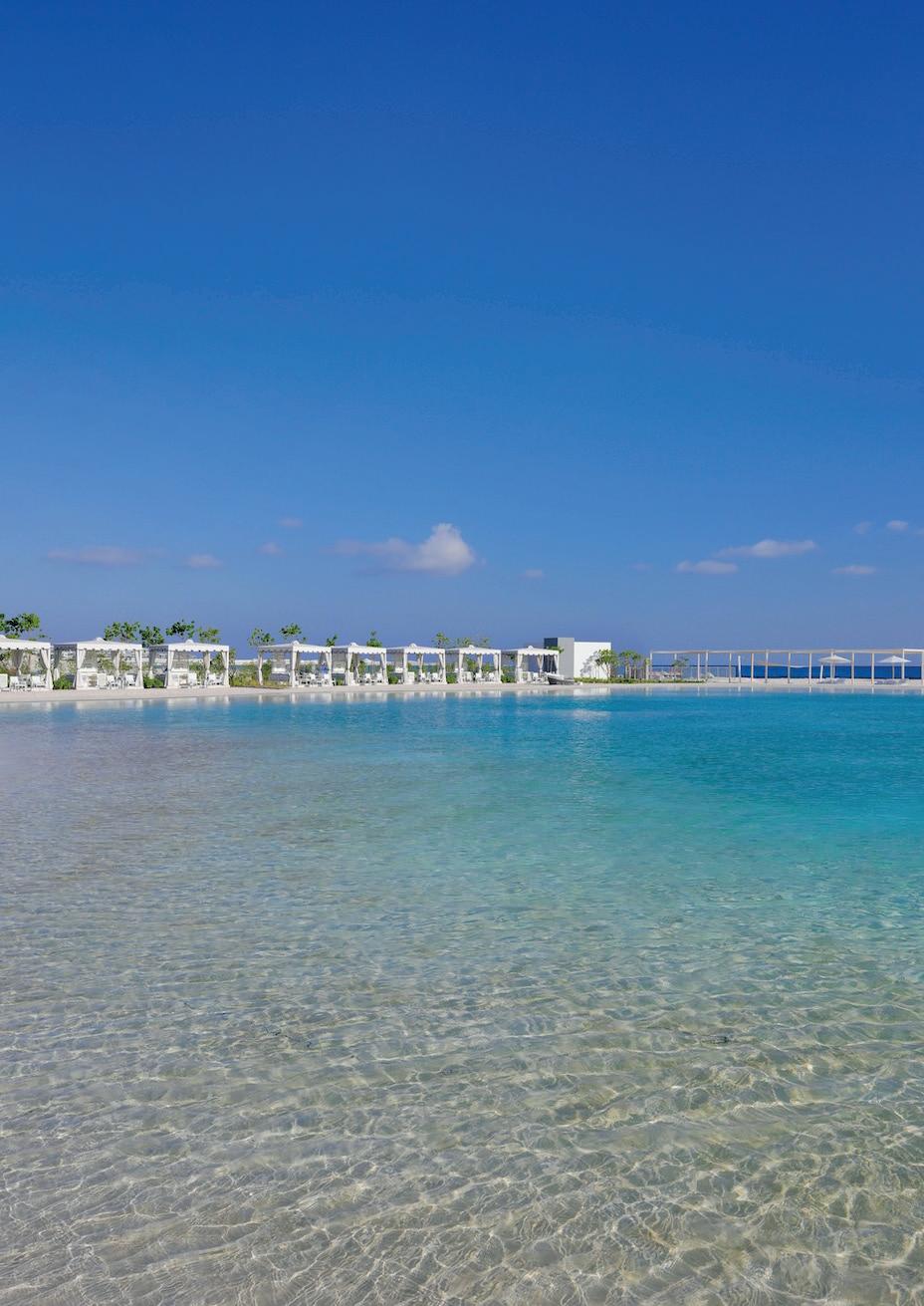
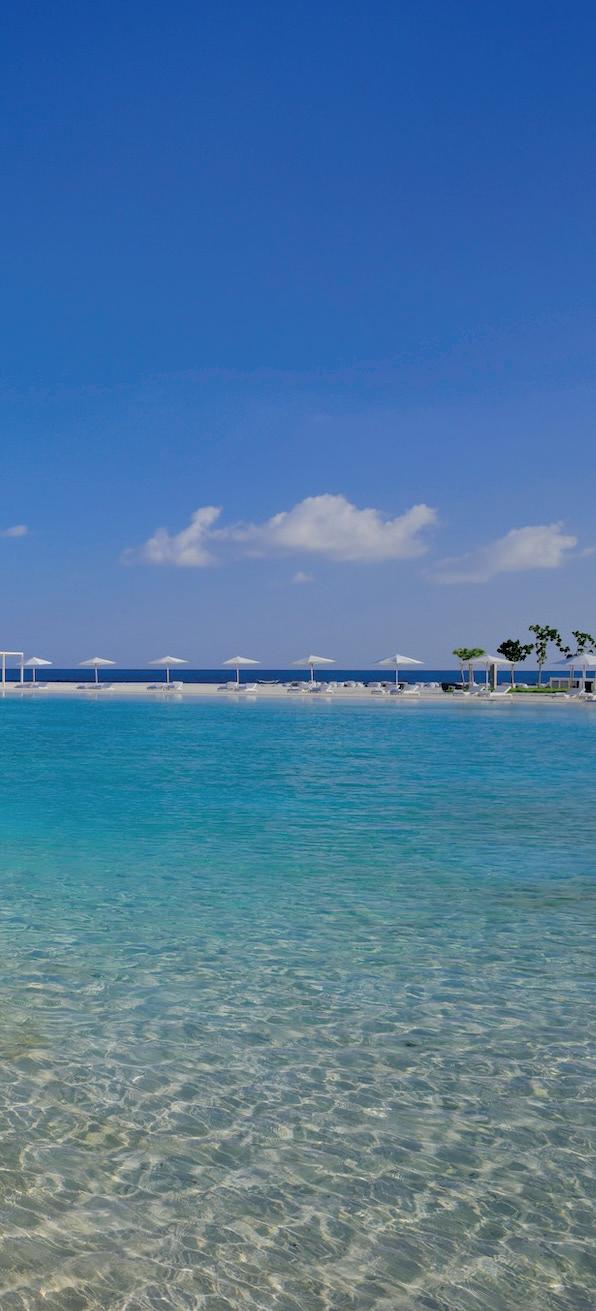
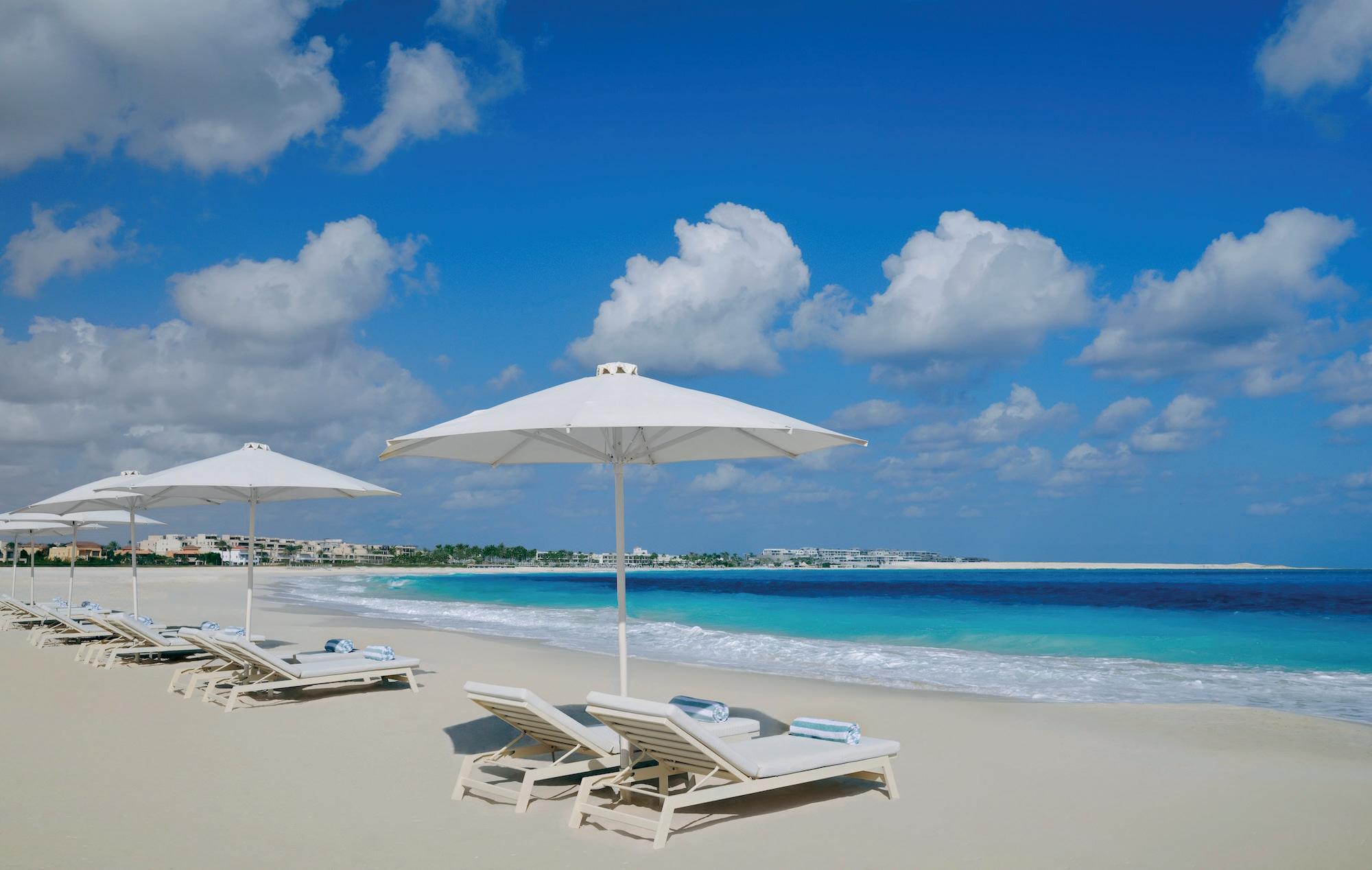
Marassi, stretched along Egypt’s North Coast, manages both. Here, the Mediterranean turns an almost impossible shade of turquoise, and summer unfolds with an elegance that feels far removed from Cairo’s intensity. It isn’t simply a holiday spot; it’s a coastal way of life: slow mornings, sun warmed afternoons, and evenings that shimmer under the marina lights.
By ANDREA THOMPSON
A NEW CHAPTER ON THE NORTH COAST
Set along the Sidi Abdelrahman–Alamein shoreline, Marassi has transformed over the past decade from a sweep of dunes into one of the region’s most coveted coastal enclaves. Conceived by Emaar as a modern Riviera, it was built with permanence in mind a place families return to, where Cairo’s summer migration finds its rhythm, and where international travellers discover a different Egypt, one shaped by sea breezes rather than ancient stone.
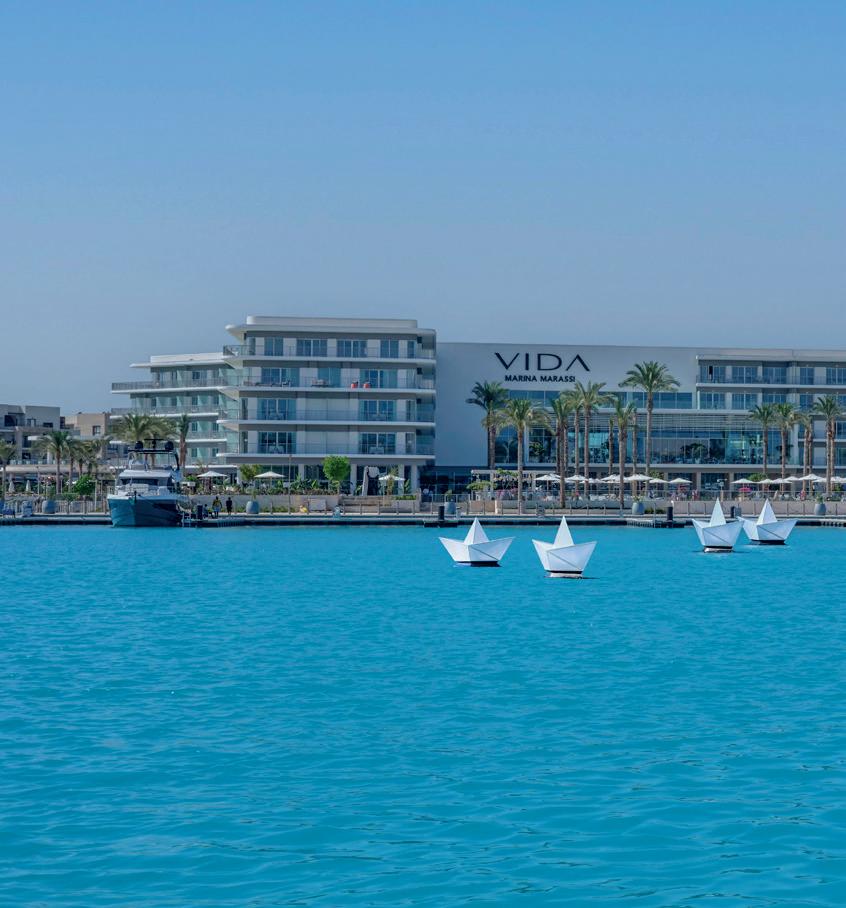
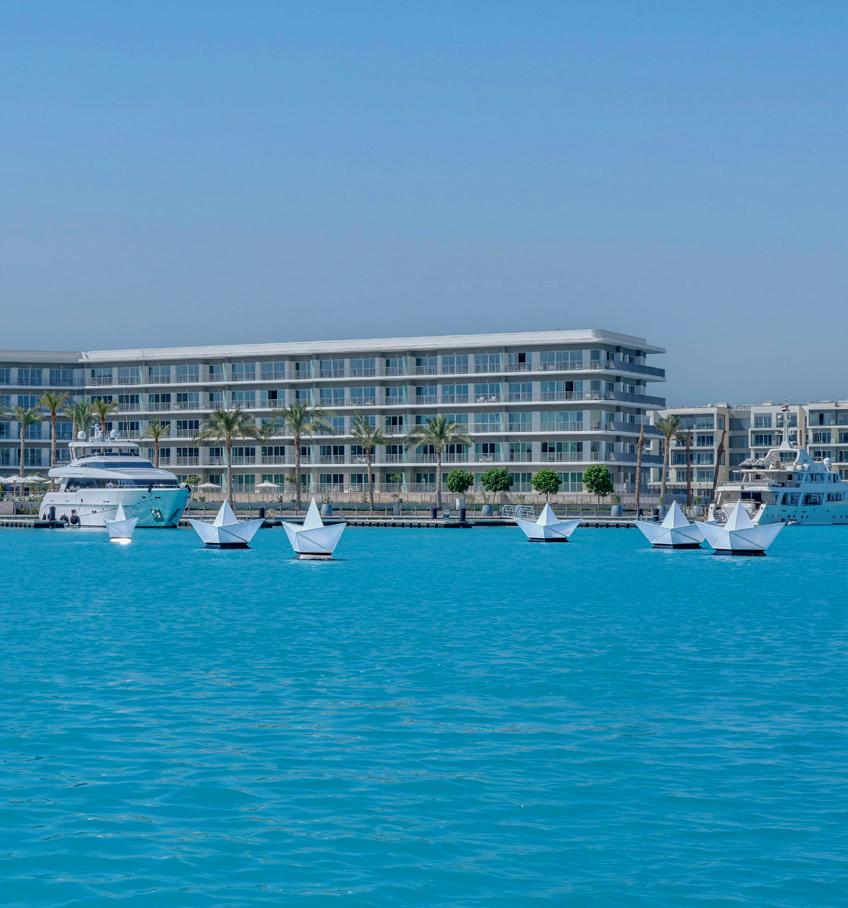
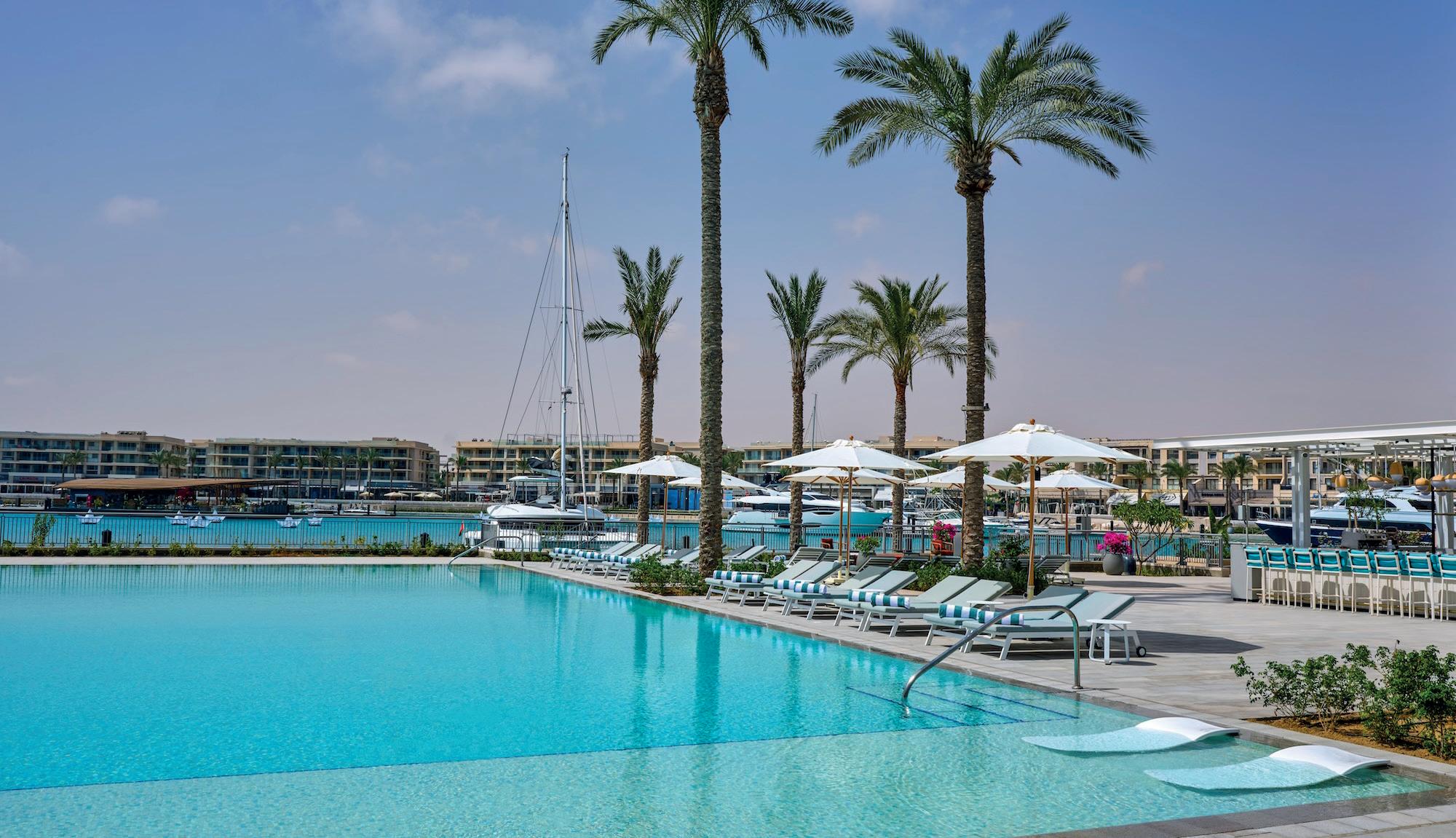
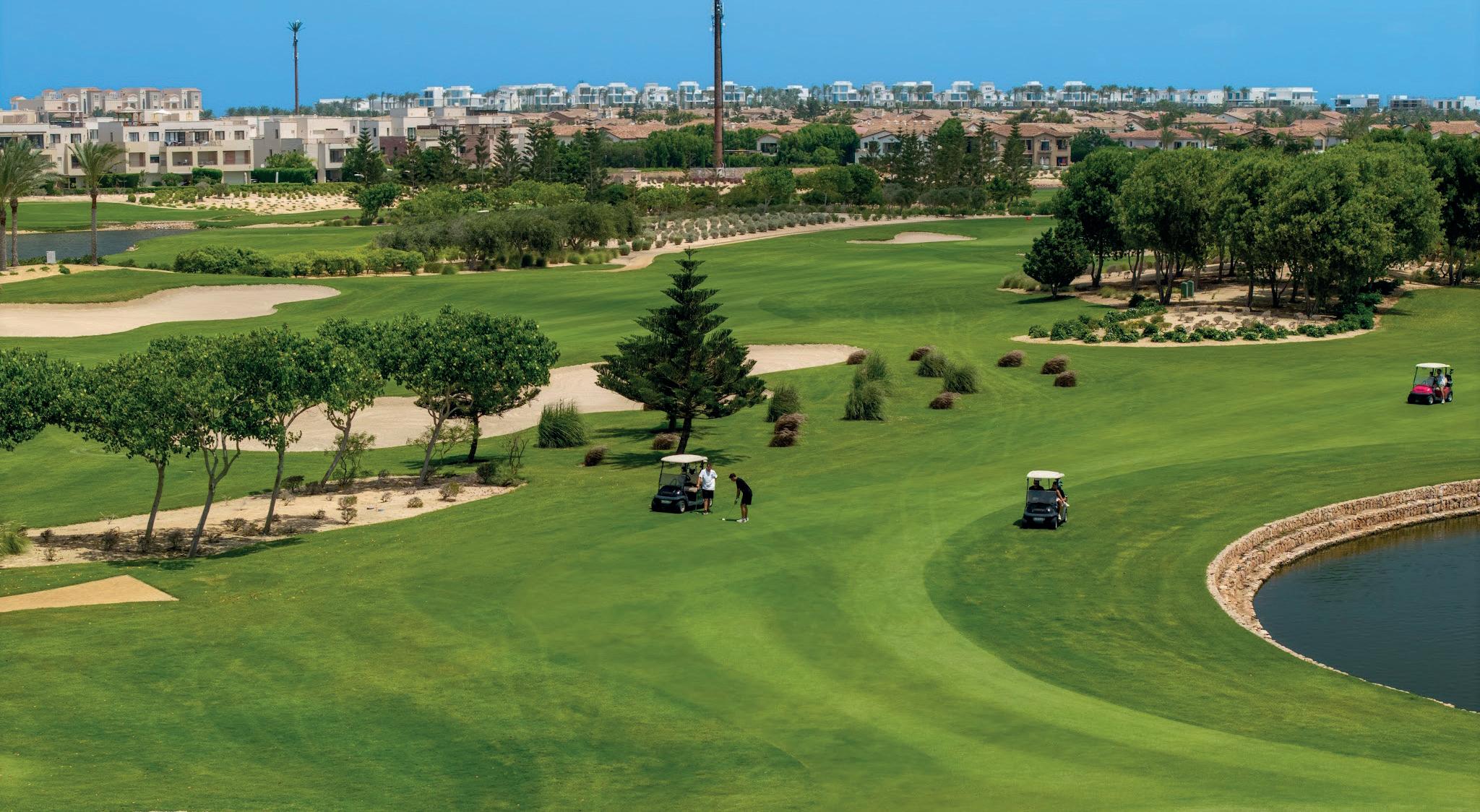
Its scale is remarkable: 6.5 million square metres, six beaches, a 267 berth marina, eleven hotels, landscaped neighbourhoods, an 18 hole championship golf course, and promenades designed for wandering. Yet despite its size, Marassi never overwhelms. Whitewashed lines, soft stone, bougainvillaea draped balconies and a palette drawn from the sea give it a cohesive, calming identity. The marina is the resort’s beating heart and the largest on the southern Mediterranean coast where the promenade is lined with upscale retail, dining and even a floating spa that adds a playful, modern flourish to the waterfront.
A MEDITERRANEAN IDENTITY OF ITS OWN
Marassi borrows architectural cues from Greece, Italy and North Africa, but its spirit is unmistakably Egyptian warm, sociable, sun soaked. Mornings begin with the sea; evenings drift into golden lit marina strolls. The marina’s Riviera style energy is lively without being chaotic: yachts glow under the evening lights, families wander, couples linger, and the waterfront hums with the gentle energy of summer nights.
DESTINATION REVIEW
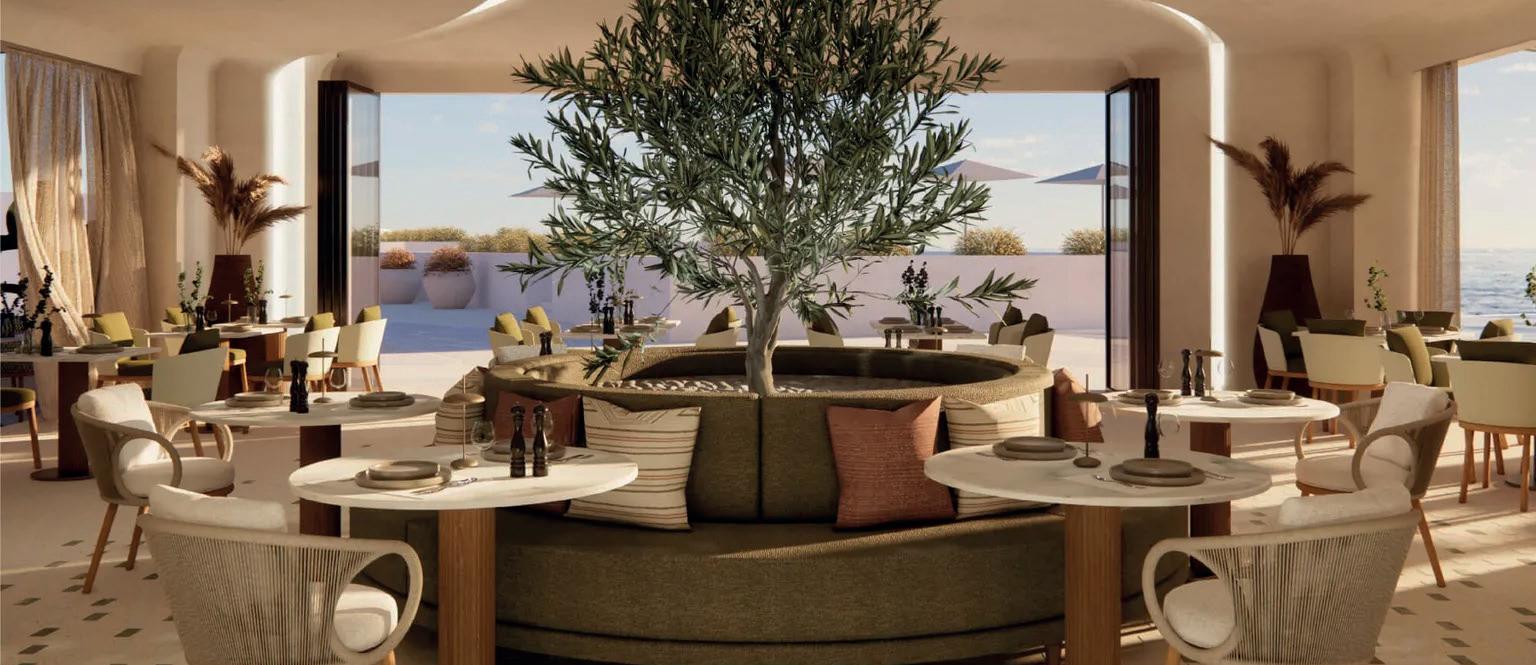
STAYING BY THE SEAPALACE BEACH RESORT
My base was the Palace Beach Resort, a serene, contemporary property set on one of Marassi’s most beautiful stretches of sand. The resort combines 87 rooms with 31 villas some with private pools and offers a private beach, multiple outdoor pools (including adults only and family options), an open air stage, a kids’ club and a full leisure programme that includes padel courts, a yoga studio and a fitness centre. These facilities make it as well suited to families as to couples or business travellers seeking a restorative break.
The main reception is a genuine showstopper a soaring, light filled space where the bar glows like a jewel box and sculptural lighting casts a warm, golden sheen. It’s quietly glamorous, theatrical in the most tasteful way, and the kind of lobby that makes you pause simply to absorb it.
My room continued that sense of calm sophistication: spacious, beautifully finished, with a proper desk and a comfortable seating area that made it feel like a place to live, not just sleep. The private terrace opened onto the pool, the beach and that surreal turquoise sea, a view that makes morning coffee feel like a ritual.
A charming surprise waited inside: a life size chocolate shoe, crafted with such precision it felt like edible art a small detail that speaks to the chef’s skill and the hotel’s attention to craft. The bathroom was equally impressive with a rainfall shower, elegant finishes, and the unmistakable scent of Lorenzo Villoresi (Firenze) toiletries. Even the minibar felt curated, complete with a china teapot.
Outside, comfort is taken seriously. The sunbeds are exceptionally plush, and staff deliver a cool bag filled with chilled water and soft, fluffy towels a thoughtful touch that elevates a simple beach day. Dining was consistently strong, with breakfast a standout: numerous flavoured fresh pastries, Middle Eastern classics, healthy options and made to order dishes.
The spa is another highlight. Beautifully designed with separate areas for men and women, it offers privacy and calm. Each side includes a sauna, relaxation spaces and cocoon like treatment rooms. My massage was exceptional unhurried, attentive and delivered with real skill, leaving me floating rather than merely relaxed.
What I loved most about Palace Beach Resort was its balance: polished but never pretentious, warm but never intrusive, and designed with a level of care that makes every moment feel considered. Whether you’re decompressing after Cairo or slipping in a quiet working escape, it gives you space to breathe its greatest luxury.
FLAVOURS ACROSS THE COAST
Marassi’s hotel collection offers distinct dining personalities. Address Marassi Golf Resort presents Tuscan style elegance and terrace dining after a round on the 18 hole
course; it also features multiple restaurants, a world class spa and indoor heated pool. Al Alamein Hotel leans into nostalgic Egyptian coastal cuisine — grilled fish, mezze and beachfront dining that feels cinematic — while Vida Marina Resort sits on the marina promenade with an infinity pool and lively bars for sunset cocktails. Nightly rates vary by property, giving a clear sense of Marassi’s premium positioning.
THE RHYTHM OF MARASSI
Days here fall into an easy cadence. Mornings belong to the sea either swimming, walking or simply watching the light shift across the water. Each beach has its own personality: lively, serene, family friendly or blissfully still. The sand is pale and powder fine; the water so clear it seems lit from within.
Afternoons drift between the marina and the pool. Even the simplest poolside lunch feels elevated: crisp salads, grilled fish, icy drinks and attentive service. Beach clubs offer their own moods some upbeat with music and cocktails, others quiet with shaded cabanas and the hush of waves.
Families will find plenty to keep younger guests occupied: Marassi Water World
offers slides and adrenaline fuelled fun, while The Hub provides teen friendly entertainment including a bowling alley and arcade. The resort team is on hand to arrange activities and reservations, and a dedicated security team ensures a safe, relaxed environment.
A STEP BACK IN TIME
A highlight was visiting the Al Alamein Hotel, a North Coast icon with a nostalgic, almost cinematic charm. Black and white photographs line the interiors like stills from a 1950s film set glamorous, sun kissed, unmistakably Egyptian. Its beachfront arts and crafts sessions, decorating straw hats and beach bags under a pergola were unexpectedly joyful, a reminder that luxury can be playful.
GOLF, WELLNESS AND THE ART OF DOING VERY LITTLE
At the Address Marassi Golf Resort, I had a golf lesson with an Egyptian pro relaxed, encouraging and surprisingly meditative. The course itself is a beauty: rolling greens, Mediterranean breezes and views that make even a mis hit forgivable. Afterwards, the pool offered pure serenity: loungers,
palms, quiet music and food far better than poolside dining needs to be.
EVENINGS ON THE MARINA
Nights in Marassi have a softness to them. The heat eases, the breeze lifts, and the resort glows gold. The marina becomes a stage with yachts reflecting the lights, terraces humming with conversation, the scent of grilled seafood drifting through the air. Dining ranges from elegant hotel restaurants to lively waterfront terraces. The pleasure is in the wandering letting the lights, the music and the mood guide you.
A DESTINATION WITH ITS OWN SOUL
Marassi’s magic lies not just in its beauty or scale, but in its ability to feel both luxurious and deeply relaxing. It’s a place where you can do everything golf, spa, beach clubs, marina dining or nothing at all. For me, it was the perfect counterpoint to Cairo: a coastal sanctuary where the intensity of ancient Egypt softens into memory. Marassi isn’t trying to imitate any other Mediterranean destination. It is its own polished, atmospheric and effortlessly enjoyable, with a rhythm and soul entirely its own.
MARASSI INFORMATION
LOCATION
North Coast, Egypt — Sidi Abdelrahman–Alamein shoreline.
GETTING THERE FROM CAIRO
By Road: 3.5–4 hours via the Desert Road and North Coast highway.
By Air: Domestic flights are limited; most travellers drive or arrange private transfers.
NEAREST AIRPORTS
El Alamein International (DBB): ~40 minutes
Borg El Arab International (HBE): ~1 hour
Cairo International (CAI): ~4 hours by road
TIME DIFFERENCE
GMT +2 (Egypt does not observe daylight saving). +1 hour ahead of the UK during British Summer Time.
VISA REQUIREMENTS
UK travellers need a visa. E visa recommended; visa on arrival available.
Passport must be valid for 6 months beyond arrival.
BEST TIME TO VISIT
June–September: Peak beach season. April–May & October: Warm, quieter, ideal for golf and marina life.
Winter: Mild, sunny, cooler sea.
FACT BOX
FACT BOX
Elevate your Egyptian itinerary and discover Egypt with Emeco (+20 2 25749360). Blending the country's most prestigious accommodations, including Marassi and Four Seasons First Residence Cairo, with seamless, expertled tours of the pyramids of Giza, the Grand Egyptian Museum, and more.Nightly rates at the Palace Beach Resort at Marassi start from $1,183/£876* for a double room in a premiere sea view room. For more information on Marassi and to book, please visit https://marassi.eg/
Elevate your Egyptian itinerary and discover Egypt with Emeco (+20 2 country's most prestigious accommodations, including Marassi and Four Seasons First Residence Cairo, with seamless, expertled tours of of the Grand Egyptian Museum, and more.Nightly rates at the Beach Resort at Marassi start from $1,183/£876* for a double room in a premiere For information
the world according to Sébastien Bazin
Accor's chief on luxury, loyalty and the lure of india
There is a particular kind of restlessness that comes with running one of the world's largest hotel companies, and Sébastien Bazin wears it lightly. He travels 250 days a year, spends roughly 100 nights at 35,000 feet, exercises for 45 minutes wherever he lands and, by his own admission, never closes the curtains. "I want to see when it's dark," he tells me. After more than a decade as chairman and chief executive of Accor, he has turned that perpetual motion into a management philosophy. The man does not sit still, and neither, it turns out, does his company.
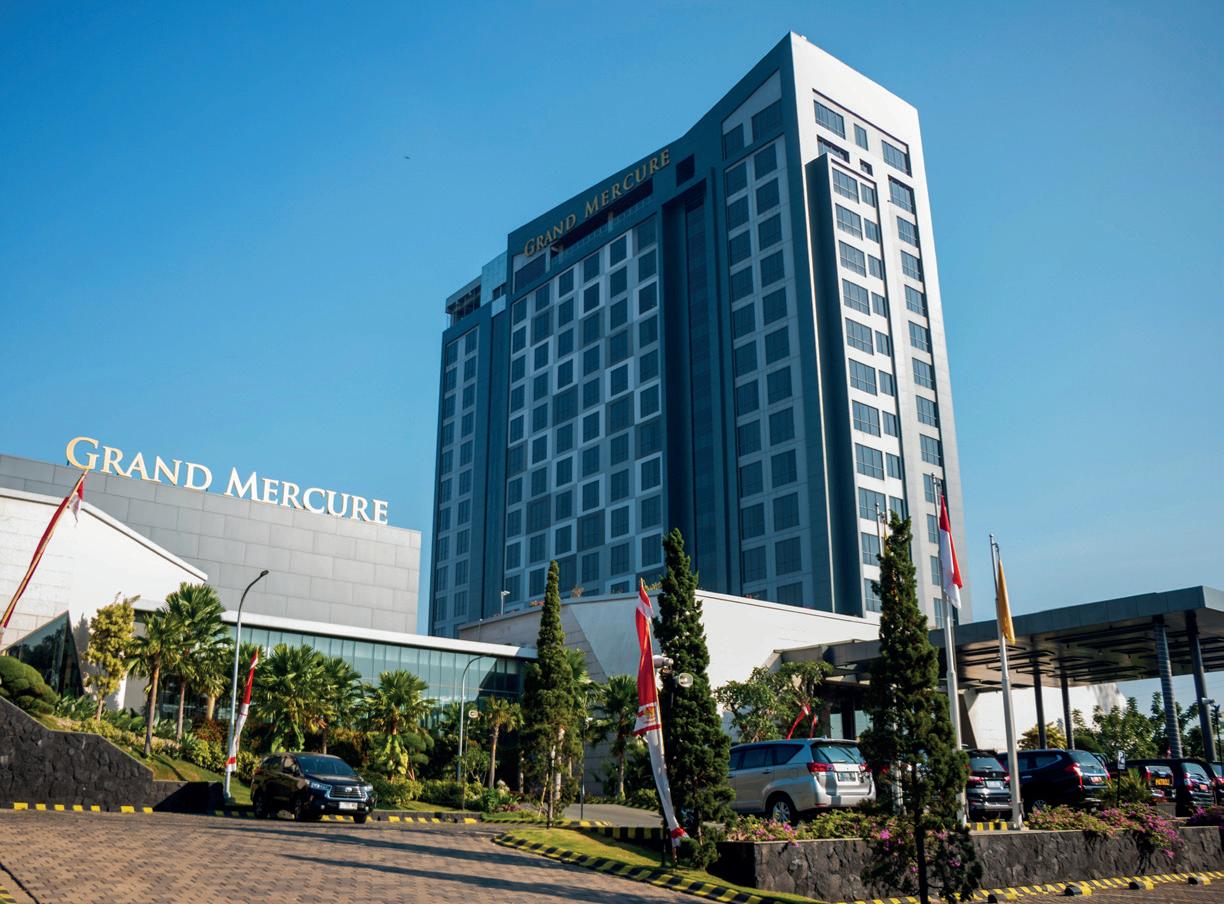
When Bazin took the top job in 2013, Accor was a sprawling but conventional hotel group. Today it spans 48 brands across more than 110 countries, from the value-driven ibis to the rarefied air of Raffles and Orient Express. I sat down with him to talk about how the industry has changed on his watch, why he is betting big on India, and the audacious plan to build, in his words, "the best hotel ever built" and then float it around the Mediterranean.
FROM 11 BRANDS TO 48
Ask Bazin what has shifted most over his 13 years in charge and he reaches first for the idea of choice. "Accor has gone from 11 to 48 brands in my time," he says. "We have listened to the market and offered more brand diversity. We've also entered territories where our competitors haven't gone yet."
INTERVIEW
The second great shift, he argues, is structural: the rise of the non-branded hotel. "Twenty years ago, the majority of demand was channelled through branded hotels, non-branded hotels were virtually unknown on any distribution channel." The third is lifestyle, and here Bazin allows himself a rare flash of triumph. He is disarmingly frank about Accor's historic habit of arriving late to a trend. "Accor has always been 20 years late to the party. We've been late on distribution, loyalty, so many things. But finally in this niche, lifestyle, we're ahead of the game. We're in the premier league now."
That confidence is not misplaced. Through Ennismore, the lifestyle joint venture whose brands include The Hoxton, 25hours Hotels, Mama Shelter, Mondrian and SLS, Accor has positioned itself at the front of a category that barely existed when Bazin joined the board in 2005.
THE BUSINESS TRAVELLER HAS CHANGED
The pandemic rearranged Accor's customer base in ways that still shape its strategy. "Before Covid, Accor's customers were 60% business, 40% leisure," Bazin says. "Today it's exactly the opposite." Business travel has returned, he is keen to stress, but its character has altered. The thousand-person seminar is a rarer beast. "Business travel is back but has slowed down for large groups. Interestingly, no hotels with more than 600 rooms have been built in America in the past two years. We see a lot of small groups now."
The brands he believes are best suited to this new world of "bleisure", the blurring of business and leisure travel, are the dependable midmarket and premium workhorses: Novotel, Mercure, Mövenpick, Swissôtel and Pullman. Accor has been expanding precisely these names across its fastest-growing regions, as covered in our roundup of Accor's new hotels and planned openings.
So what does the man at the top actually want from a hotel when the corporate diary sends him on the road? His answer is refreshingly unpretentious. "It needs to be buzzing," he says. "It's difficult to travel on business, you don't want to end up in an empty place. You want to see people at the bar, at breakfast. It's much more important than a spa." He points again to Ennismore. "25hours, Mama Shelter and The Hoxton, they're full of people during the day, and 80% are locals. The recipe for success is that mix between local and business travellers."
And the rest? Bazin's checklist is endearingly practical. "On top of this, you want cleanliness and water pressure. Eighty per cent of business travellers are going to order four things: pasta, pizza, burger and Caesar salad. Do those super well and you're home
free." It is the sort of unglamorous truth you rarely hear from a luxury hotelier, and it explains a great deal about how Accor has scaled.
THE FLOATING PALACE
If the mid-market is about discipline, the top end is where Bazin lets his imagination run. Accor's push into the ultra-luxury segment is built on a simple observation about scarcity. "Ultra-wealthy individuals, above US$2 billion, have enormous appetite to live, to enjoy and share with their families. But there's a lack of product."
He describes the annual migration of America's ultra-rich along the Riviera with the precision of a man who has watched it closely. "They land privately at Nice Airport, spend two days at Hôtel du Cap-Eden-Roc, two days at Hôtel de Paris Monte-Carlo, two days in St Tropez, and two days in Capri. They pack, they unpack, they drive, unpack, pack, drive." The inefficiency of it all clearly nags at him. "Why do we push customers to go to the product they like? Can we inverse it and bring the product to them?"
The answer is the Orient Express Corinthian, the 220-metre sailing yacht that Accor has billed as the largest in the world and which was formally named in Saint-Nazaire in April 2026 ahead of its maiden Mediterranean season. Bazin's pitch to his own board was characteristically bold. "I told the board: I'm going to create the best hotel ever built outside of Nice Airport, the Orient Express Corinthian yacht. Travellers will have the best suite, the boat will dock in Monaco, St Tropez and Capri, and guests can invite friends onboard for a black tie dinner. It's the same ritual, except you're eliminating the constraint."
The most intriguing element is social engineering. The vessel will operate on what Bazin calls a "club" model. "You're not on the boat by accident," he says. "It's the team's job to curate and select who's going to be onboard. People don't mix well unless they relate to another guest. How do the crypto guys cope with the Vanderbilt family of New York? We'll learn by walking, but it will be interesting." Asked whether it can actually be pulled off, he is unbothered by the uncertainty. "Can we do it? I have no idea. Should we do it? Yes."
WHY INDIA WILL BE A "SMASHING SUCCESS"
If the yacht is the romance, India is the strategy. Bazin identifies three regions accounting for some 70% of Accor's network expansion: the Middle East, India and Southeast Asia. India towers above them. "The biggest opportunity by far is India, but this is also where you have the biggest complexity. I'm a big fan, and I go every five weeks. India will be a smashing success."
The centrepiece is a tie-up with the low-cost carrier IndiGo, which Bazin notes holds the largest aircraft order from Airbus, with more than 500 new planes on the books. The partnership links IndiGo's BluChip Rewards with Accor's ALL loyalty programme, letting members earn and redeem points across flights, stays and experiences, part of a wider effort with InterGlobe to build one of India's fastest-growing hospitality businesses. The infrastructure tailwind is striking. "India will have approximately 240 airports by 2030," Bazin says. "These are perfect for Novotel and Mercure properties." At the luxury end, the ambition is equally pointed, with Raffles and Sofitel Legend among the names heading to the country, as we reported when Accor brought its most prestigious brands to Rajasthan.
THE LOYALTY MACHINE
For all the talk of yachts and emerging markets, loyalty may be the quiet engine of Accor's strategy, and Bazin speaks about it with evangelical enthusiasm. ALL (Accor Live Limitless) now counts 120 million members, adding 13 million a year, up from 7 million four years ago. "Loyalty is one of the biggest drivers for us in terms of direct bookings," he says. "It's a fabulous success."
His guiding principle is frequency. "The value of a partnership is the frequency of usage, if you can use it on a daily or weekly basis then you win. You can't be too picky on the partners, make sure you
"The biggest opportunity by far is India, but this is also where you have the biggest complexity. I'm a big fan, and I go every five weeks. India will be a smashing success."
have common values, and they have a quality, affordable product, but the name of the game is the frequency of usage." That logic explains a string of recent alliances, including a multi-market deal that lets members earn across rides and food deliveries, which we examined in detail when Accor and Uber forged their loyalty tie-up.
He is also quick to demolish a common assumption: that loyalty schemes and ultra-luxury do not mix. "People have the wrong perception that loyalty members aren't the ones you want for ultra-luxury properties. This is rubbish. The ultra-rich get the loyalty system, they might not use it themselves, they may give it to employees or family members. But there's pricing and value across all segments for Accor Live Limitless."
Then there is Dis-loyalty, Ennismore's deliberately contrarian membership scheme that rewards members for trying new venues rather than returning to old favourites. It very nearly did not survive. "It was a slow start, because it's the reverse of a loyalty programme. Everyone at Accor said: kill it. I didn't want to because it's fun." He sees the two as complementary rather than competing. "You can have double points with Dis-loyalty and ALL, it's a break-even operation. I like the gimmick of it, and it's fresh."
THE GENERATION QUESTION
The one subject that visibly troubles Bazin is youth. The average Accor guest is around 48, and he is candid about the gap. "This is the toughest question for me. I'm not sure Accor is there yet with the 18-30 category. Do we address them properly? Do they know us?" Once again, Ennismore is the bridge. "Ennismore permits Accor to exist in the minds of those new generations," he says, noting that the average guest age across those brands is 32, and younger still, around 26, among the people working in their public spaces.
He offers a neat illustration of how that ecosystem is cultivated. "At The Hoxton in London, we accept students working in the public spaces free of charge. The only thing we ask is that they leave the space from noon to 2pm, so those spaces can be used for lunch by paying customers. It's an unwritten rule that works very well." It is a small policy, but a telling one: a glimpse of a hotel group thinking less about room nights and more about belonging.
After 13 years, Bazin shows no sign of slowing, and certainly no inclination to close the curtains. "You need to be draconian on your discipline," he says of the relentless schedule. "But I enjoy it, it's fun." Coming from a man planning to curate dinner parties for billionaires on the world's largest sailing yacht while opening hotels next to 240 Indian airports, that may be the only believable answer.
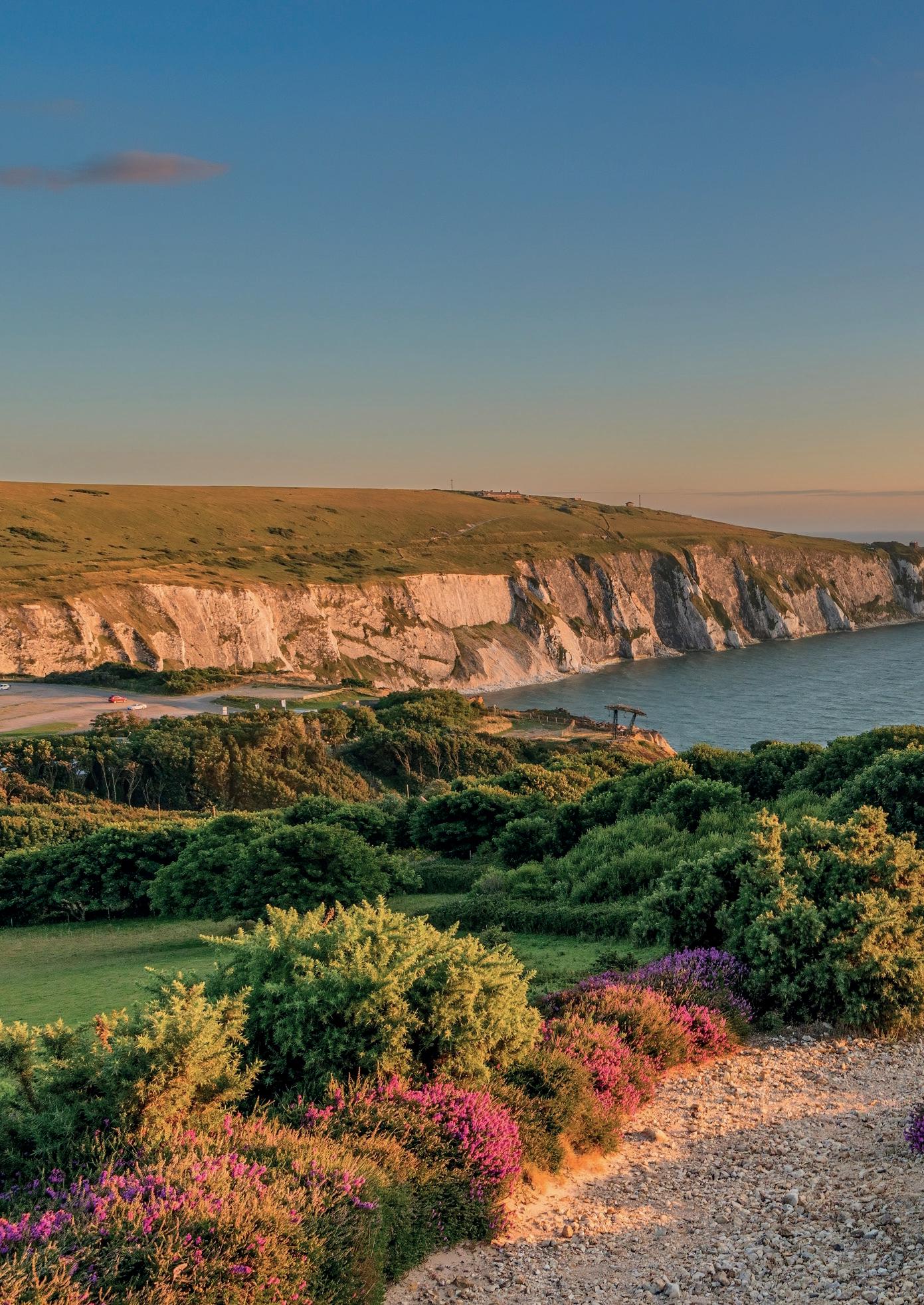
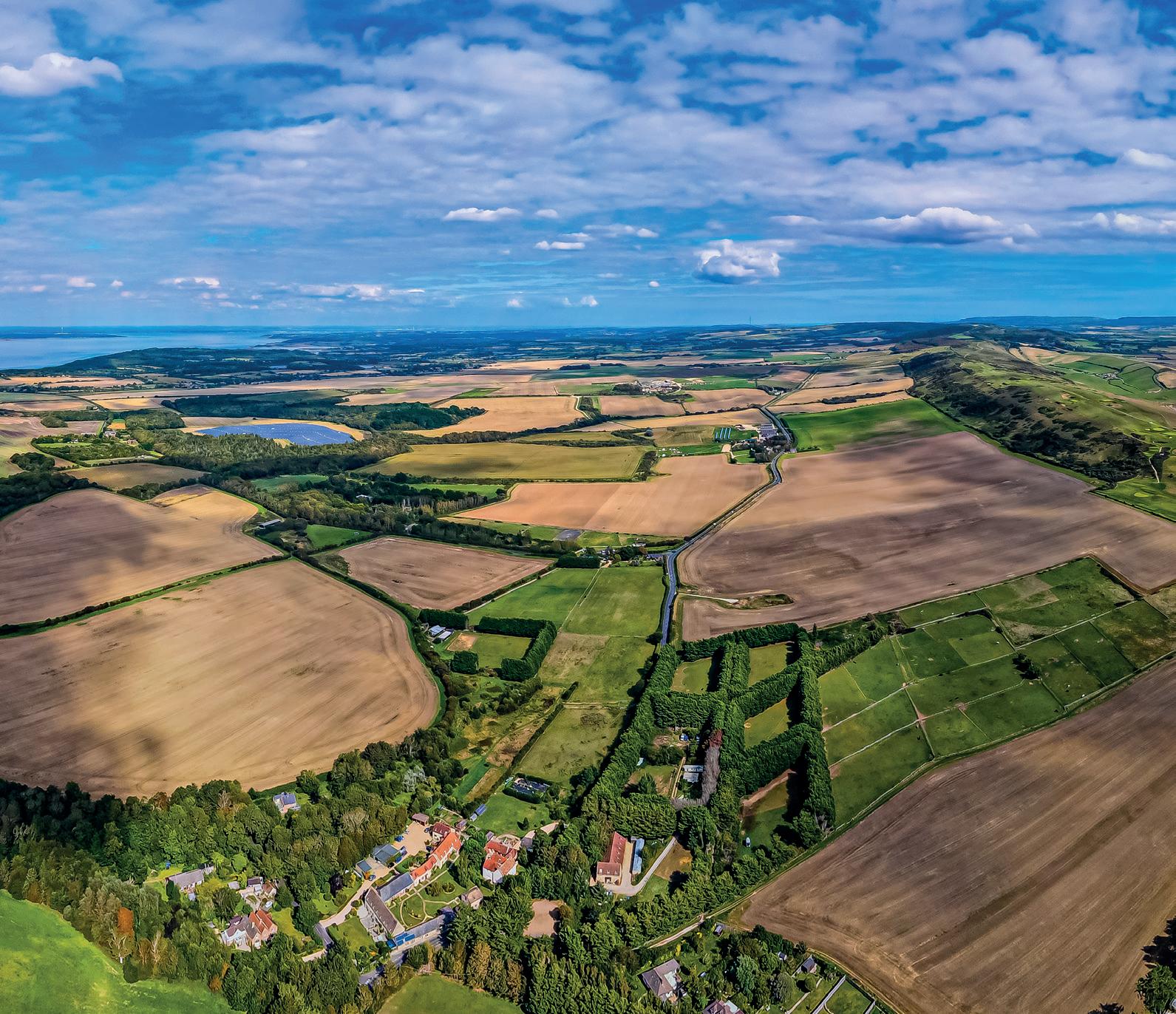
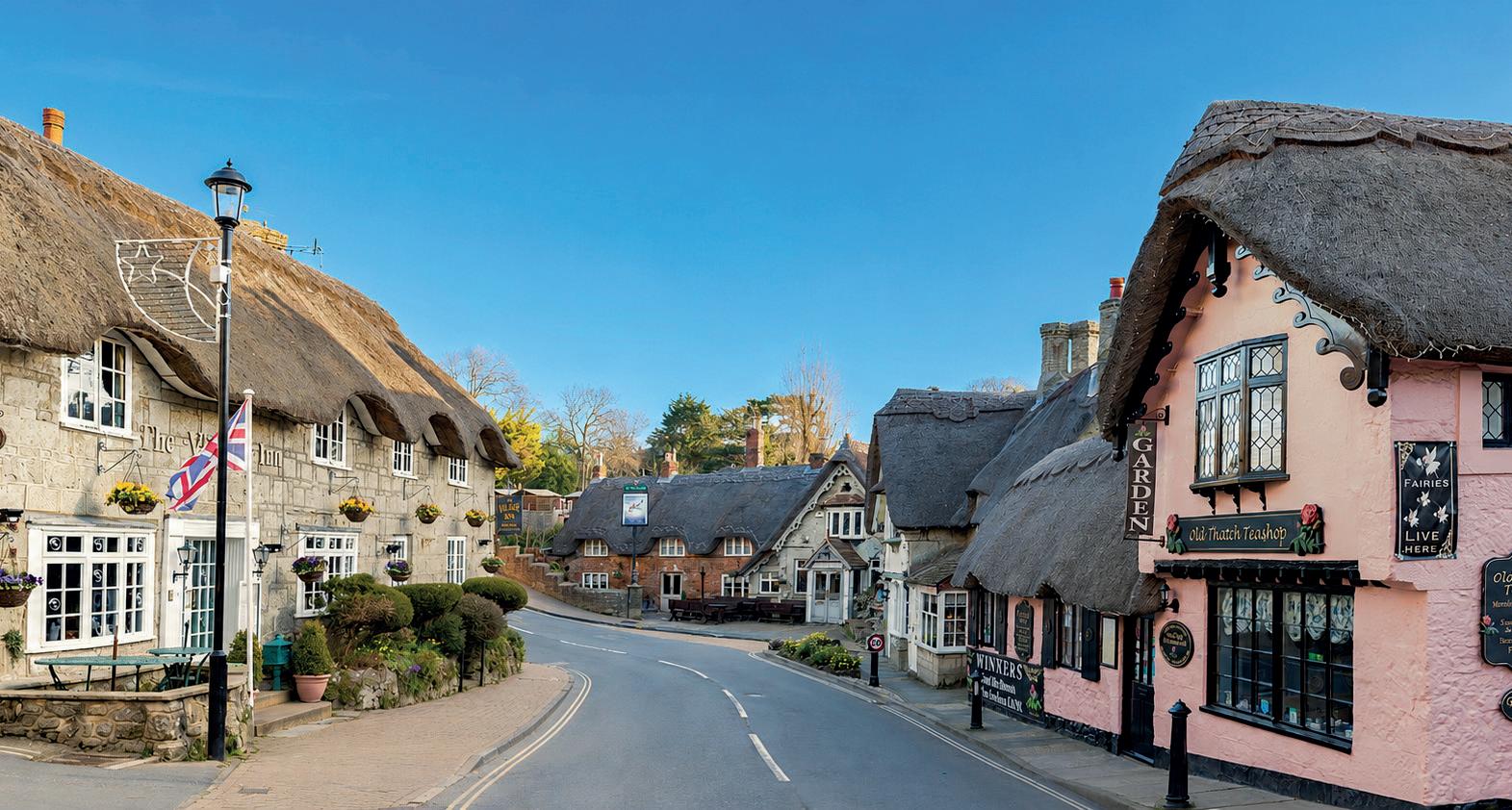
There’s a particular moment, just as the ferry pulls away from the mainland, when the Isle of Wight reveals its charm. The Solent widens, the air shifts, and the island rises aheadchalk cliffs, wooded hills and Victorian rooftops catching the light.
By ANDREA THOMPSON
SUNSHINE, SEA AND 200 YEARS OF COWES WEEK
ISLE OF WIGHT
DESTINATION REVIEW
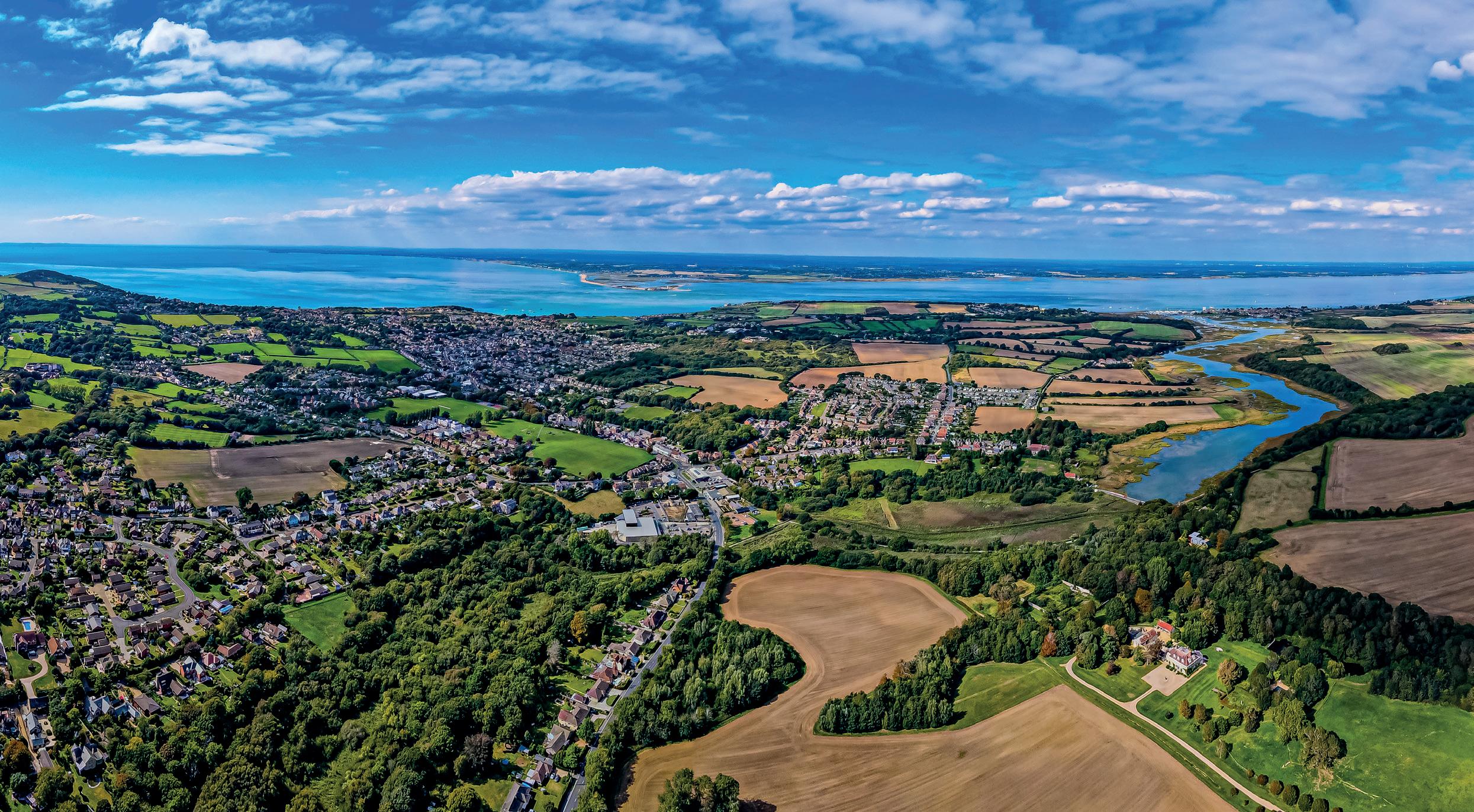
For generations, the Isle of Wight has been a place of escape: close enough for a spontaneous weekend, yet far enough to feel like a genuine break. It’s a landscape of coastal paths, hidden coves, pastel painted beach huts and a food scene that has quietly blossomed into one of the South Coast’s most interesting. It also happens to be one of the UK’s sunniest corners, regularly topping national sunshine charts thanks to its sheltered position and unique microclimate, a longer, warmer season that suits everything from the island’s famous heritage tomatoes to its flourishing vineyards, gardens and even its celebrated garlic, grown in rich, sun soaked soils.
Those same conditions, combined with nutrient rich tidal waters, support an exceptional coastal larder: brown crab, lobster and a wide range of fish thrive here, shaping menus across the island. Inland, the Isle of Wight’s agricultural identity is equally distinctive - from its celebrated garlic fields to the botanicals that inspire local producers. Mermaid Gin, distilled on the island, is infused with shoreline samphire, local elderflower and Boadicea hops grown at Ventnor Botanic Garden, a nod to the island’s rare microclimate and its almost Mediterranean growing conditions.
THE ISLE OF WIGHT:
A LANDSCAPE MADE FOR SLOW TRAVEL
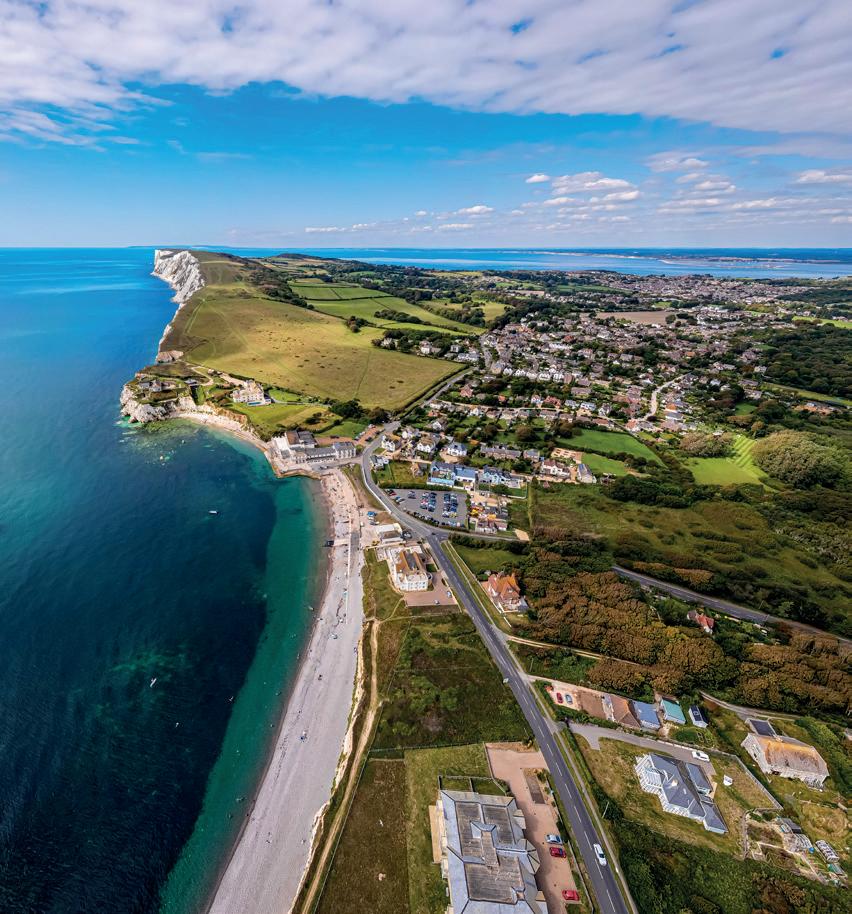
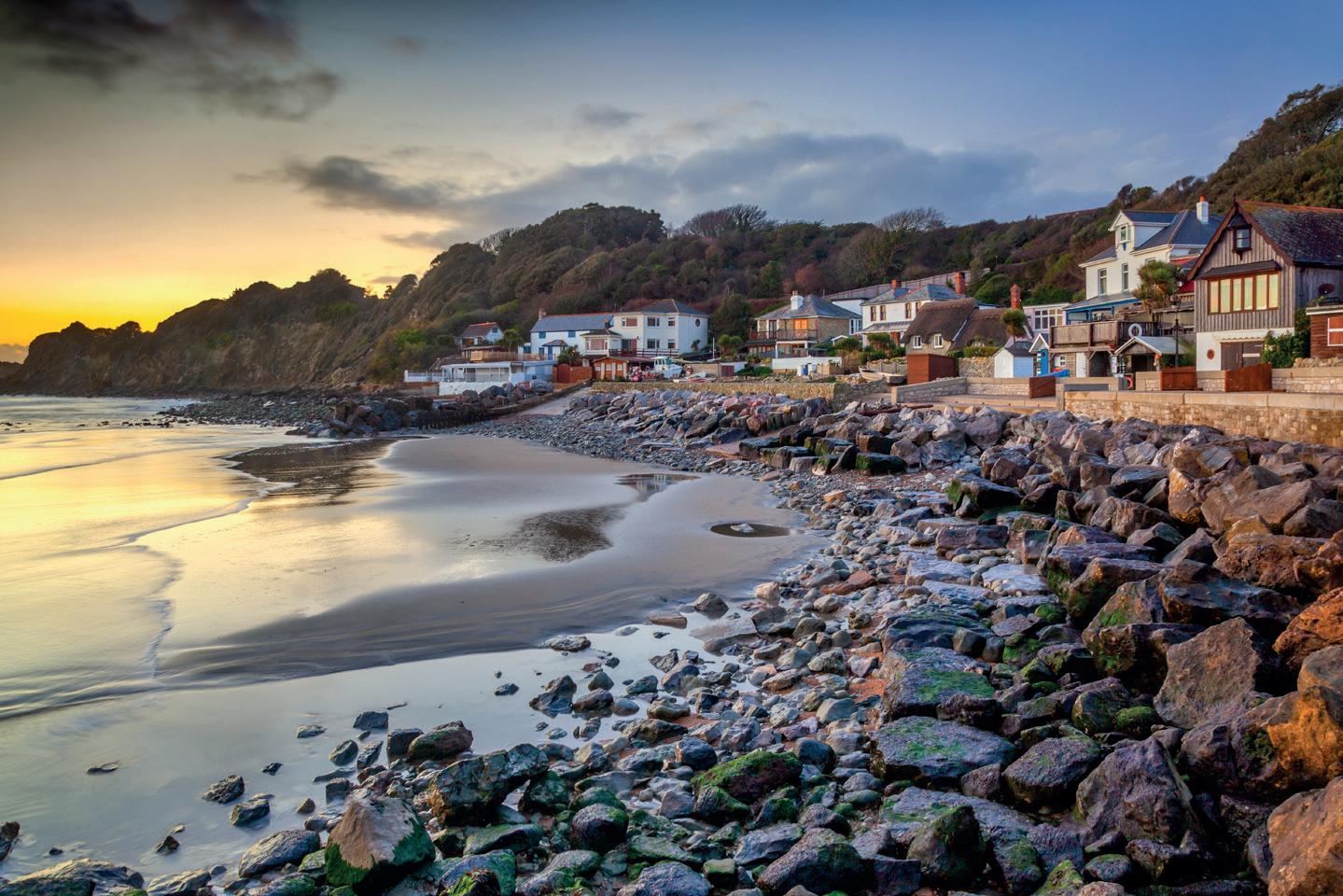
The Isle of Wight may be compact, but its landscapes shift with surprising drama. One moment you’re standing above sheer chalk cliffs, the next you’re dipping into sheltered bays, strolling Victorian promenades or crossing wild, wind brushed stretches where the Channel rolls straight in. Everything feels wonderfully close on this island, you’re rarely more than 25 minutes from an entirely different coastline.
THE WEST:
CHALK CLIFFS AND WILD
BEAUTY
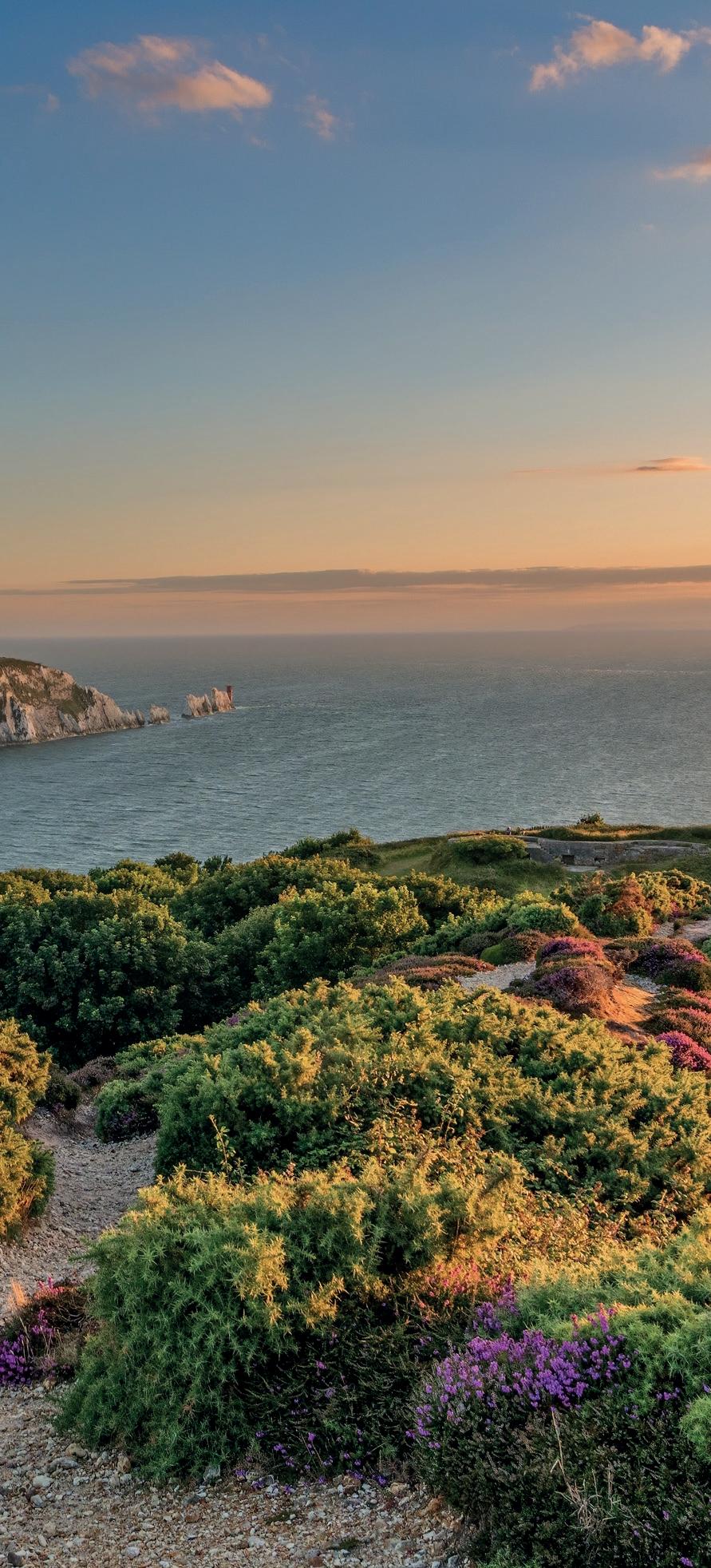
The island’s western edge is its most dramatic. The Needles, three jagged chalk stacks rising from the sea, remain the island’s most photographed landmark, but the surrounding coastline is equally compelling. Freshwater Bay offers a wilder, more elemental feel, with waves crashing against the cliffs and kayakers exploring sea caves at low tide. Compton Bay, beloved by surfers and paragliders, glows amber at sunset.
THE SOUTH:
MICROCLIMATES AND MEDITERRANEAN MOMENTS
The southern coastline, warmed by a unique microclimate, feels almost Mediterranean in summer. Ventnor, with its Victorian terraces and botanical gardens, has long attracted artists, writers and musicians. Charles Dickens holidayed here; more recently, the town has become a magnet for chefs and creatives drawn to its bohemian energy.
THE EAST:
SEASIDE NOSTALGIA AND FAMILY FRIENDLY SHORES
The eastern side of the island offers classic British seaside charm. Shanklin and Sandown are all promenades, beach cafés and long sandy stretches perfect for families. Bembridge, with its harbour and houseboats, is one of the island’s most quietly beautiful corners and a favourite of the late Queen Mother, who often visited friends here.
THE NORTH:
MARITIME HERITAGE AND ROYAL FOOTPRINTS
The north is dominated by Cowes, the island’s maritime heart, and Osborne
House, Queen Victoria’s beloved seaside retreat. Victoria and Albert adored the island, spending long summers here with their children. Osborne’s Italianate architecture, private beach and sweeping gardens remain one of the island’s most atmospheric attractions.
FAMOUS FACES AND ISLAND LEGENDS
The Isle of Wight has long attracted writers, musicians and cultural icons. Tennyson lived at Farringford, walking the downs daily; Lewis Carroll holidayed here; Jimi Hendrix famously performed at the 1970 Isle of Wight Festival. In more recent decades, the island has drawn everyone from Benedict Cumberbatch to Jeremy Irons, who has a home in Cowes. The island’s combination of privacy, scenery and creative energy continues to make it a magnet for artists and actors seeking a quieter pace.
COWES WEEK:
A SEPARATE STORY AND A GLOBAL ICON
While the Isle of Wight stands firmly on its own as a destination, Cowes Week is its most internationally recognised moment, a regatta that has shaped the island’s identity since 1826. From the 1st to 8th August, this year marks a landmark 200th anniversary and brings renewed attention to an event that remains one of the oldest and largest sailing regattas in the world.
WHY COWES WEEK IS SO FAMOUS
Cowes Week is not just a sailing competition; it is a cultural institution. Its fame rests on three pillars:
HERITAGE - Few sporting events can claim nearly 200 years of continuous history. The regatta has hosted royalty, Olympians, adventurers and some of the world’s most skilled sailors.
THE SOLENT - The stretch of water between the island and the mainland is notorious for its fast changing tides and challenging conditions, making it one of the most exciting racing environments in Europe.
ATMOSPHERE - Cowes transforms during the regatta. The waterfront becomes a festival village, yacht crews spill into pubs still smelling faintly of sea spray, and live music carries late into the night. Even non sailors find themselves swept up in the energy.
The 200th anniversary brings expanded shoreside events, heritage exhibitions, family friendly activities and special races honouring the regatta’s history. Spectator boats offer front row views of the action, while the town’s yacht clubs and waterfront bars host nightly celebrations.
For many visitors, Cowes Week is less about the racing and more about the spectacle a uniquely British blend of tradition, competition and summer festivity.
WHAT TO SEE AND DO ACROSS THE ISLAND
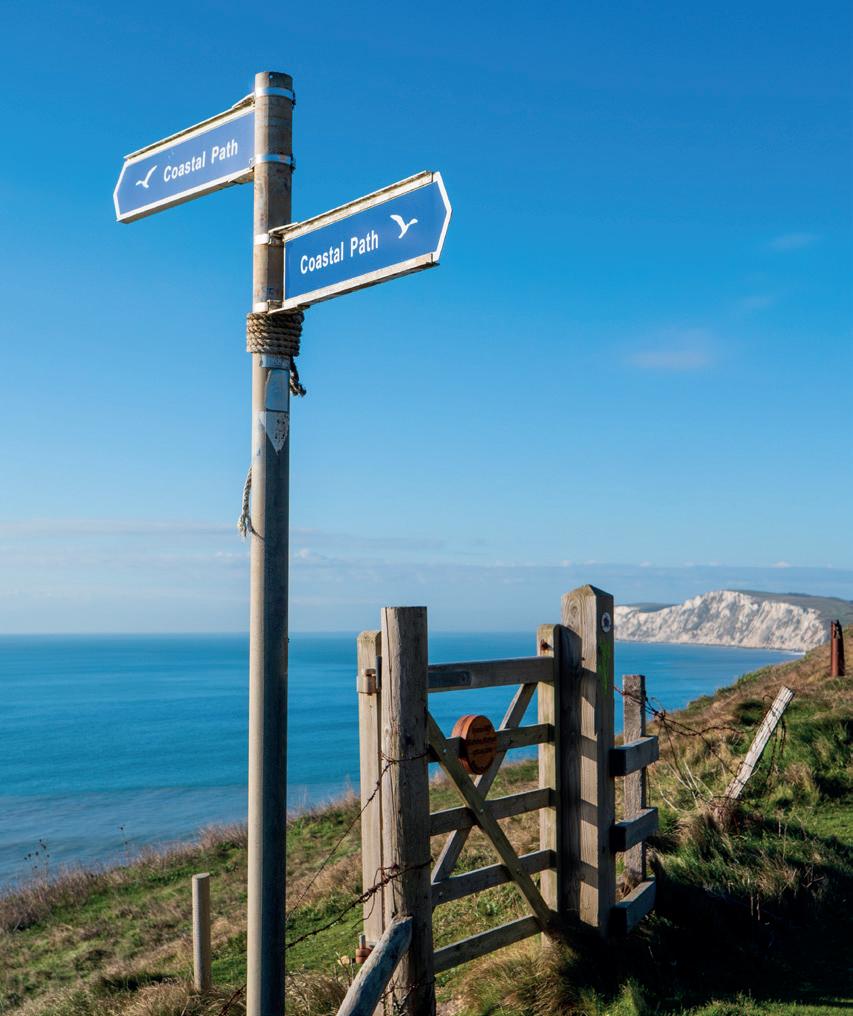
WALK THE ISLE OF WIGHT COASTAL PATH
The 70 mile circular route offers some of the UK’s most accessible long distance walking, with clifftop panoramas, wildflower meadows and sea views that shift with every turn.
EXPLORE OSBORNE HOUSE
Queen Victoria’s private beach, Swiss Cottage and Italianate terraces offer a rare glimpse into royal domestic life.
EAT YOUR WAY AROUND THE ISLAND
From The Hut in Colwell Bay to Smoking Lobster in Ventnor and the Isle of Wight Distillery, the island’s food scene is rooted in local produce and coastal influences.
ADVENTURE ACTIVITIES
Kayaking, paddleboarding, cycling the Red Squirrel Trail and paragliding over Compton Bay offer a mix of gentle and high adrenaline experiences.
WHY NOW IS THE PERFECT TIME TO VISIT
The island is enjoying a quiet renaissance. Boutique hotels are replacing tired B&Bs, coastal towns are being revived with independent shops and cafés, and the island’s natural beauty is being foregrounded through conservation and slow travel initiatives.
Pair that with the anniversary of Cowes Week, a moment that brings global attention back to the island and summer becomes the ideal time to rediscover this classic British escape.
Direct trains from London Waterloo to Portsmouth Harbour or Southampton Central, connecting with ferry terminals
BY AIR
Nearest airports: Southampton, Bournemouth and London Gatwick
WHY LONDON’S BLACK CAB IS STILL A BUSINESS-CLASS AMENITY
THE CABBIE IS THE CONCIERGE
By PAUL JONES
As Waymo and Wayve prepare to launch their driverless fleets on the streets of London, the business traveller is about to be sold a frictionless future. Before hailing it, consider what is quietly being switched off.
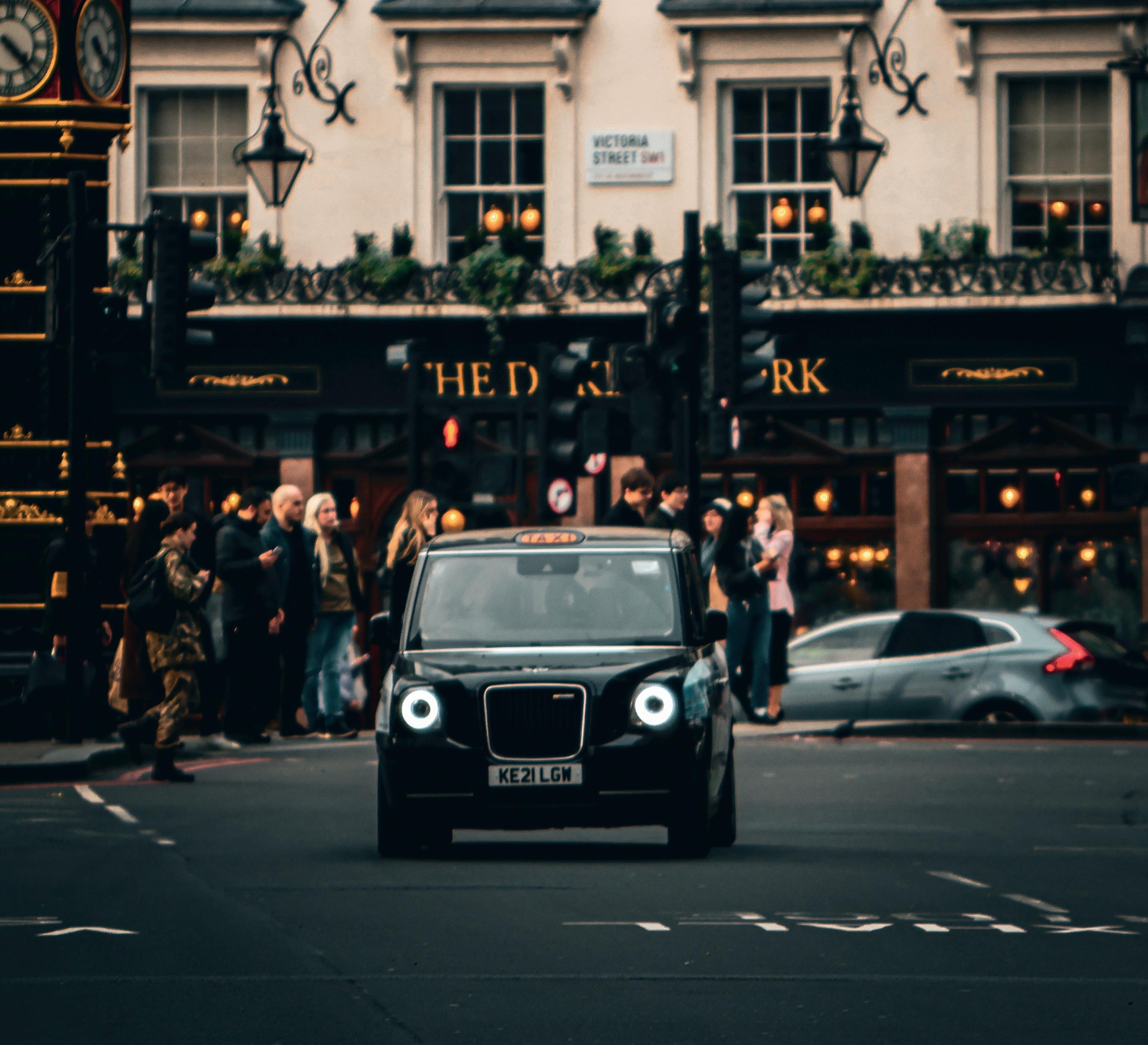
There is a moment, somewhere between the Limehouse Link and Tower Hill, when a London cabbie earns his fare. Mine, on a wet Tuesday at the end of April, did it without looking up from the road.
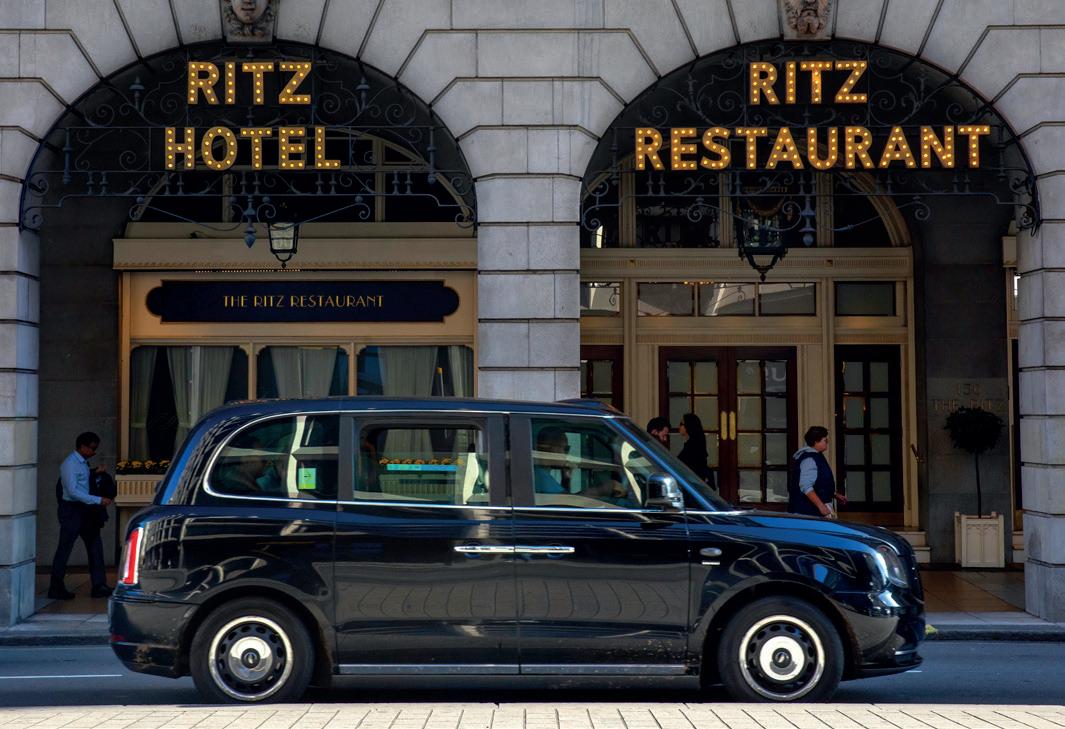
“Don’t bother with the Connaught for lunch, guv, they’ve had a change in the kitchen and it’s not what it was. Try Quo Vadis instead. I’ll have you there in twelve minutes if I cut up through Soho.”
He was right on both counts. He also knew that the lobby of the building I was visiting was hosting a livery dinner that evening and warned me, apropos of nothing, that the Embankment would be shut from six because of a march. Total elapsed cost: £18.40. Total value to my afternoon: incalculable.
This is the unwritten line item on every London expenses claim. It is also, if you believe the technology industry, about to be made obsolete.
Sometime between this issue going to press and the August bank holiday, Waymo intends to begin charging fares for driverless rides in London, the first non-American city in which the Alphabet-owned company has hung out its shingle. A fleet of around a hundred Jaguar I-Pace SUVs, each fitted with twentynine cameras, six radars and five lidar sensors, has been quietly mapping a hundred-squaremile zone of the capital since the spring. A pilot service for invited passengers began in April; commercial app-hailing is pencilled in for September. Wayve, the British startup backed by Nvidia and Microsoft, is on the next starting block; Uber is on the one beyond. All are waiting on the government’s promised update to the Automated Vehicles Act, expected in the second half of the year.
For the business traveller, the proposition is seductive. No driver to tip. No partition to lean through. A guaranteed quiet ride between Paddington and Mayfair in
which to make the call you should have made before boarding the train. Tekedra Mawakana, Waymo’s co-chief executive, calls it “the chance to take care of all of those things and let the Waymo Driver safely get you from point A to point B.” Her company points to its data: five times safer than a human driver, more than two million fleetmiles every week, what she describes as “the most experienced driver in the world”. It is a tidy pitch. It also misunderstands what a London cab is for.
The numbers, briefly, look bad for the cabbie. According to Transport for London, just 15,978 drivers held a Green Badge in April, the lowest figure since 1975, and a long way down from the 2013/14 peak of 25,538. The pass rate for the Knowledge of London, that famously merciless oral examination first introduced for horse drawn drivers in 1865, has slumped from 59 per cent in 2020 to 38 per cent in 2025. Two in three trainees never make it to a badge. Tom Scullion, who has been driving cabs for thirty-four years and who took me through Limehouse that Tuesday, knows what is coming. “We are the icons of London,” he said. “But the youngsters can earn more on Uber tomorrow than I’ll earn in a fortnight.”
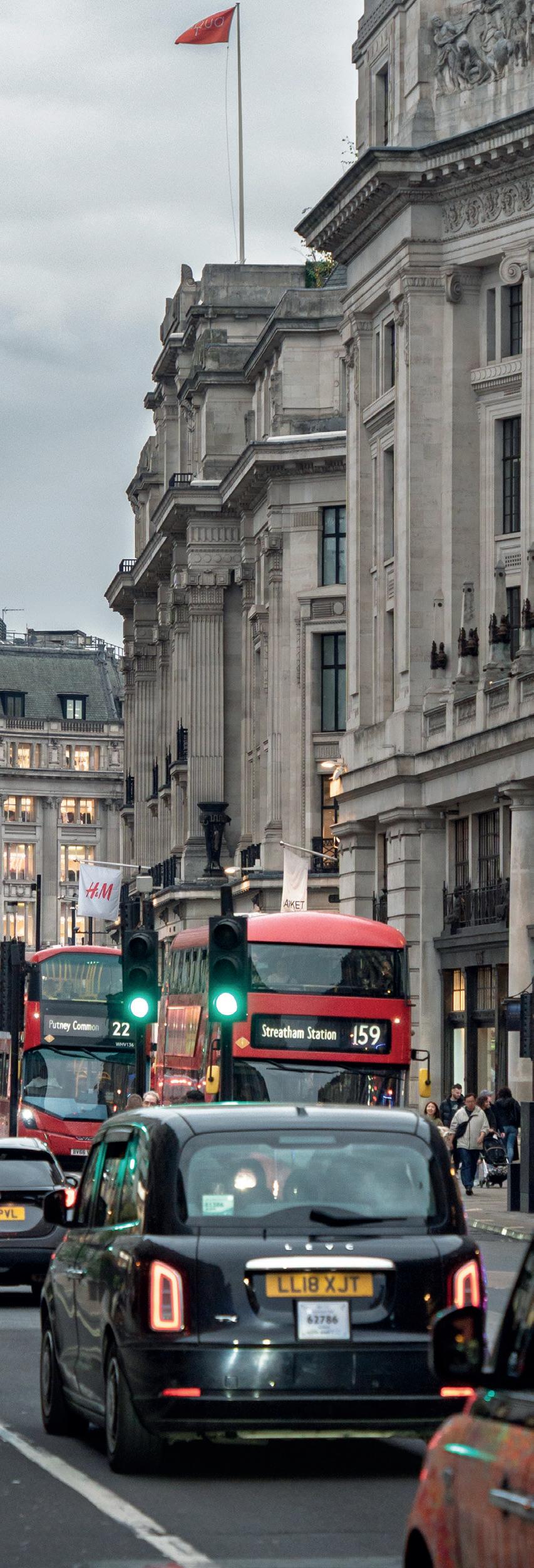
The Licensed Taxi Drivers’ Association sets out the cultural balance sheet in its recent report, Saving the Black Cab. Black cabs, it points out, are the only taxi service in any major world city that is one hundred per cent wheelchair-accessible. They are the only vehicles in central London licensed to ply for hire on the street, the only ones, in other words, that can be physically hailed in the rain. Around six in ten of them are now LEVC TXs, the Coventry-built, zeroemission-capable hybrid that has already cut the nitrogen-oxide output of the entire fleet by 59 per cent. None of these things are accidents. All of them are vulnerable.
This is the part of the story that the robotaxi pitch glosses over. Steven Fairbrass, an aspiring cabbie I met at the TfL examination hall on his twentieth attempt at the Knowledge, put it to me bluntly. “Imagine you’re trying to hail a vehicle with no driver in it. You’re standing there in the rain, and it just drives straight past you, because it hasn’t got a sensor or a human brain or an eye to turn.” The Waymo, for all its twentynine cameras, will not see your raised arm. It is not coming to you. It is coming to your app, having priced the ride dynamically against eight other passengers in EC2.
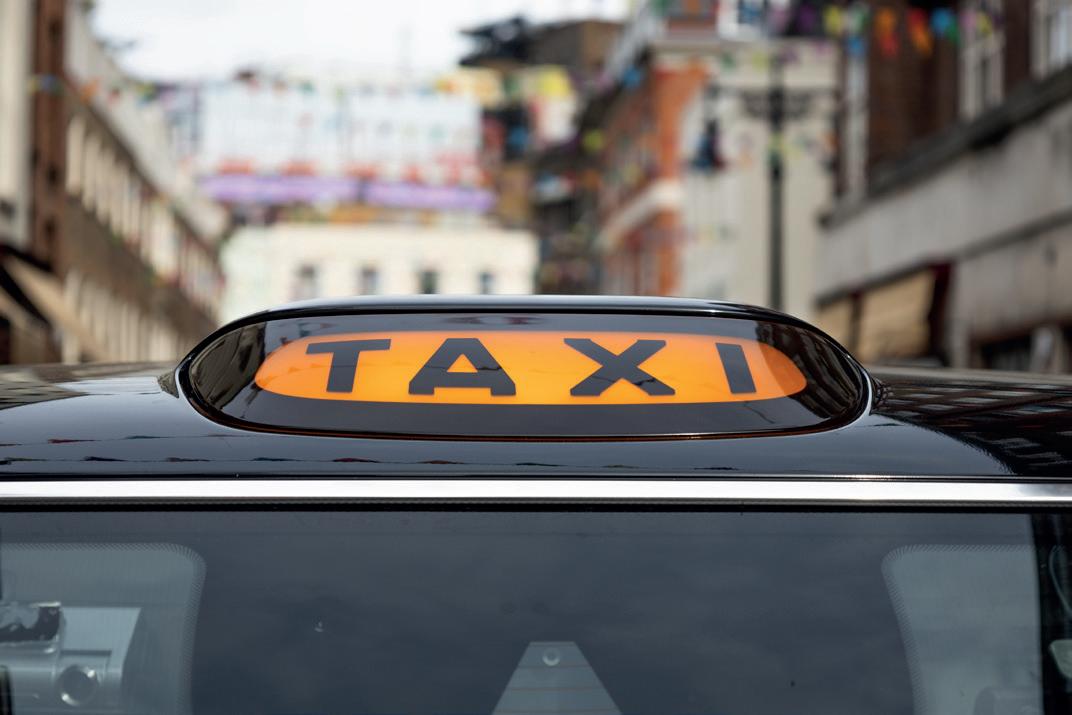
A passing cab, by contrast, has a yellow light, a partition window and an obligation, codified in the Hackney Carriage Act of 1831, to take you by the shortest legal route. Then there is the Knowledge itself, the thing that turns a driver into a concierge.
A celebrated 2000 study by Professor Eleanor Maguire at University College London found that licensed cabbies had a measurably larger posterior hippocampus than the rest of us, with the difference growing the longer they had been driving. The Knowledge is not a quaint bit of pageantry. It is a neurological re-wiring exercise that produces, at the end of three to seven years’ study, a human who has internalised every shortcut, every one-way reversal, every restaurant, hotel and livery hall within six miles of Charing Cross. Since February of last year TfL has narrowed the syllabus to a defined 6,000-point list, making the exam fairer rather than easier — and applications have crept back up: 742 new candidates in the year to November, a rise of nearly 69 per cent on 2022. The trade is bleeding, but it is not yet beaten.
For a business traveller, the value of that wiring shows up in small, unbillable moments. The cabbie who tells you a client’s office has moved two streets over because he heard it from the building manager last week. The driver who clocks that your guest uses a wheelchair and slides the ramp out without being asked. The veteran who, when the protest you didn’t know about closes Whitehall, takes you the back way through Great Scotland Yard and gets you to the meeting on time. Waymo will get faster. Waymo will not get curious.
None of which is to argue that the algorithm has no place. Waymo’s safety record in Phoenix and San Francisco is, on the published numbers, better than that of a tired human in a rented Toyota. Wayve’s chief executive, Alex Kendall, makes the credible case that an AI trained on millions of hours of global driving will adapt more deftly to a temporary diversion than a satnav reading from an outof-date map. Both will likely be cheaper than a black cab at four in the morning, when no cabbie wants to take you to Heathrow
Terminal Five. The point is not that the new technology should be refused entry. It is that the corporate travel programmes hurrying to welcome it should not, in the same gesture, let the old one wither.
Here, I would offer a small, heretical proposal. Most large London employers already operate tiered ground-transport policies: rail and Tube reimbursed for the everyday, ride-hailing apps for the inbetween, executive cars at the top. There is room, in the 2027 redraft, for a Knowledge Premium tier, a modest surcharge that books a Green Badge driver in preference to a robotaxi for client pick-ups, latenight airport runs, journeys flagged for accessibility, and any pick-up of a guest from somewhere they have not visited before. Travel managers already pay a premium for an airline lounge. They should be willing to pay one for a driver who knows that the rear entrance to the Cabinet Office is on Horse Guards Road, not Whitehall, and who can spell the name of the restaurant the chairman is being taken to.
There is a duty-of-care argument tucked inside this, too. Last year a Waymo in Los Angeles drove through an active police scene; another illegally passed a stopped school bus; both prompted a software recall and a federal investigation. None of which makes the technology unsafe. All of which makes it the sort of thing that should be specified by name, in writing, in a corporate travel policy, not adopted by default because it appeared, one Tuesday, as the cheapest option in an app. The Global Business Travel Association’s 2025 review noted, obliquely, that the dutyof-care category is now projected to be worth £170 billion globally by decade’s end. London will be its most-watched test bed.
This week, while writing this piece, I watched Anshu Moorjani finish his Knowledge. It had taken him five years and fortyone appearances. The examiner did not congratulate him so much as quietly nod. Moorjani will now collect his badge, choose a TX from one of the rental fleets and begin work as one of the youngest Green Badges in town. Sometime in September, while he is still learning where the new restaurants are, a fleet of driverless Jaguars will start collecting paying passengers from the same kerbs.
It is tempting, in business travel as in everything else, to assume that the future is whatever Silicon Valley has decided to ship next. Tempting, but lazy. London has, in its black cabs, one of the most accessible, most knowledgeable, most useful concierge services in the world, included, free, in the meter price. We are about to discover what it costs to let it go. And, more importantly, what it costs not to.
London has, in its black cabs, one of the most accessible, most knowledgeable, most useful concierge services in the world, included, free, in the meter price
the GREAT WALL of CHINA
A Bucket List Journey Along the Spine of an Ancient Empire
Some places are impressive; others are so vast they reset your sense of what human ambition can look like. The Great Wall of China belongs firmly to the latter. Stretching across mountains, deserts and grasslands for more than 21,000 kilometres when all historical sections are combined, it remains one of the most extraordinary engineering achievements in history, a structure that has shaped China’s identity for nearly three millennia.
The Wall’s origins reach back to the Spring and Autumn and Warring States periods, when regional kingdoms built their own defensive barriers. These were later unified under the Qin dynasty, and over the centuries successive rulers rebuilt, extended and fortified them. The most recognisable sections - the stone battlements snaking across dramatic ridgelines - were constructed during the Ming dynasty between the 14th and 17th centuries, when the Wall became a sophisticated military system of watchtowers, garrisons and signalling stations. Its purpose was to protect China’s northern frontier from nomadic groups of the Eurasian Steppe, controlling movement, trade and military incursions.
Its grandeur, however, carries a darker legacy. Hundreds of thousands of labourers, soldiers, peasants and prisoners worked in punishing conditions, and many died during construction. Although their bodies were not buried within the Wall itself, the scale of loss gave rise to its enduring, haunting nickname: the longest cemetery in the world.
For all its mythic status, one legend doesn’t hold: the Great Wall cannot be seen from the Moon and is only rarely visible from low Earth orbit under perfect conditions. Its colour and narrow width blend too closely with the surrounding landscape.
For travellers, the Wall is not a single experience but a series of landscapes and moods. The restored stretch at Mutianyu offers sweeping mountain views and an unexpectedly joyful descent by toboggan, a playful counterpoint to the centuries of
history beneath your feet. Badaling, the most accessible section, provides broad walkways and a cable car, making it ideal for first time visitors. Further east, Jinshanling offers a more rugged, cinematic experience, with a mix of restored and wild sections that reward hikers with some of the Wall’s most dramatic vistas. Jiankou, steep and unrestored, is reserved for experienced adventurers seeking the Wall at its most raw and untamed.
Reaching the Wall is straightforward from Beijing, with most sections accessible by organised transport, private drivers or public buses. Chairlifts and cable cars at several sites make the ascent easier, while the toboggan at Mutianyu has become a modern rite of passage.
The Great Wall earns its place on every bucket list because it is more than a monument. It is a physical timeline, a story written in stone across mountains and valleys, shaped by dynasties, ambition and unimaginable labour. To walk it is to feel the weight of history and the scale of a civilisation that built not just a wall, but a world.
The best times to visit are spring and autumn, when the air is clear, the temperatures comfortable and the mountains either blooming or turning gold. In these seasons, the Wall feels most alive.
EUROPE'S NEW POWERHOUSE FOR MICE
MADRID
By ANDREA THOMPSON
For years, Madrid was admired for its culture, cuisine and sunshine, but in the last decade it has quietly and then decisively become one of Europe’s most dynamic MICE capitals.
Today the Spanish capital is a city where global conferences, leadership summits and incentive programmes sit comfortably alongside world class museums, Michelin starred dining and a lifestyle that feels effortlessly warm. It is a destination that understands business travel not as a transaction, but as an experience.
Madrid’s rise has been deliberate. Investment in infrastructure, venue capacity, hotel development and international connectivity has transformed the city into a heavyweight for events of every scale. Yet what sets Madrid apart is not just its capability, but its character: a city that blends efficiency with personality, and professionalism with a sense of place.
A CITY BUILT FOR CONNECTION
Madrid’s strategic location at the heart of the Iberian Peninsula has always made it a crossroads, but its modern transport network elevates that advantage. Adolfo Suárez Madrid–Barajas Airport is one of Europe’s busiest hubs, with direct links to more than 170 destinations worldwide and fast, reliable transfers into the city centre. High speed AVE rail lines connect Madrid to Barcelona, Valencia, Málaga and Seville in under three hours, making multi city itineraries seamless for delegates.
Once in the city, mobility is easy. Madrid’s metro is one of the largest and cleanest in Europe, taxis are plentiful and the compact city centre means many venues, hotels and cultural attractions are walkable. For organisers, this translates into smoother logistics, shorter transfer times and a more relaxed delegate experience all of which are crucial factors in the success of any event.
MORE ON THE NEXT PAGE
WORLD CLASS VENUES FOR EVERY SCALE
Madrid’s venue portfolio is one of the most diverse in Europe. IFEMA Madrid remains the city’s flagship a vast, technologically advanced exhibition and congress centre capable of hosting major global events. But Madrid’s strength lies in its range, from contemporary cultural spaces to historic palaces and design led boutique venues.
Among the city’s most striking additions is the newly redeveloped Santiago Bernabéu Stadium. No longer just a football arena, the Bernabéu has been transformed into a state of the art events complex with a retractable roof, immersive LED screens, premium hospitality lounges and adaptable spaces suitable for large scale conferences, product launches and gala evenings. It offers organisers a rare combination of prestige, capacity and cutting edge technology, a venue that delivers impact the moment delegates walk in.
At the opposite end of the spectrum, The Palace Hotel, Madrid offers a more intimate, heritage rich setting. Its grand salons, marble details and iconic stained glass dome have hosted diplomats, artists and global leaders for more than a century. For high level board meetings, leadership retreats or elegant gala dinners, the Palace provides a sense of occasion that few venues can match, all within steps of the Prado and Congress of Deputies.
These two venues - one futuristic, one historic - illustrate Madrid’s unique ability to cater to every style of event, from the spectacular to the refined.
A HOSPITALITY SCENE DESIGNED FOR DELEGATES
Madrid’s hotel landscape has undergone a renaissance. International brands and independent luxury hotels have opened across the city, offering high spec meeting rooms, executive lounges and polished service. Properties such as the Four Seasons, Mandarin Oriental Ritz, Rosewood Villa Magna and The Madrid Edition have redefined the city’s premium offering, while business focused hotels near the financial district and IFEMA provide convenience without sacrificing style.
What makes Madrid’s hospitality particularly effective for MICE is its flexibility. Hotels understand the needs of corporate groups - early breakfasts, late check-ins, breakout spaces, hybrid meeting technology - and deliver with a level of warmth that feels distinctly Spanish.
CULTURE, CUISINE AND THE POWER OF PLACE
If infrastructure is Madrid’s backbone, culture is its heartbeat. Delegates can step out of a conference and into the Prado, Thyssen Bornemisza or Reina Sofía - three of the world’s most important museums, all within walking distance of each other. The city’s neighbourhoods, from the literary quarter of Las Letras to the elegant streets of Salamanca, offer a sense of authenticity that enriches any itinerary.
MADRID’S APPEAL FOR ORGANISERS COMES DOWN TO A COMBINATION OF SCALE, EFFICIENCY AND ATMOSPHERE
Food is another of Madrid’s strengths. The city has more than 20 Michelin starred restaurants, but its culinary identity is just as strong in its traditional tabernas, markets and vermouth bars. For incentive groups, tapas tours, market tastings and chef led workshops offer relaxed, sociable ways to experience the city. For gala dinners, Madrid’s palaces, private dining rooms and rooftop restaurants provide unforgettable settings.
The climate also plays its part. With more than 300 days of sunshine a year and long, warm evenings, outdoor events are possible for much of the year from courtyard receptions to rooftop networking sessions.
WHY MADRID WORKS FOR MICE
Madrid’s appeal for organisers comes down to a combination of scale, efficiency and atmosphere. It is large enough to host global congresses, yet compact enough to feel navigable. It has the infrastructure of a major capital, but the warmth of a Mediterranean city. It offers world class venues, but also the kind of cultural depth that turns business travel into something richer.
The city’s value proposition is strong, too. Compared with other European capitals, Madrid offers competitive pricing for accommodation, venues and dining, without compromising on quality. For companies seeking to balance impact with budget, this makes the city particularly attractive.
WHAT TO SEE AND DO AROUND THE AGENDA
For delegates extending their stay or organisers building in downtime, Madrid offers a wealth of experiences. Morning runs in Retiro Park, private tours of the Prado, flamenco evenings in intimate tablaos, wine tastings featuring Spanish varietals, and day trips to UNESCO listed cities such as Toledo and Segovia all add depth to an itinerary.
For incentive groups, the city’s rooftop culture is a highlight. From Gran Vía to Plaza de España, terraces offer panoramic views, signature cocktails and a relaxed, celebratory atmosphere. Shopping in Salamanca, exploring the boutiques of Malasaña or discovering the design studios of Chueca adds another layer of interest.
A CITY LOOKING FORWARD
Madrid’s momentum shows no sign of slowing. Continued investment in sustainability, digital infrastructure and hospitality is positioning the city as a leader in the future of meetings and events. Its commitment to accessibility, inclusivity and environmental responsibility aligns with the priorities of modern organisations and delegates.
But beyond strategy and statistics, Madrid’s greatest strength is its spirit. It is a city that welcomes, energises and inspires. A place where business feels more human, and where events become experiences.
For organisers seeking a destination that combines capability with character, Madrid is not just an option. It is one of Europe’s most compelling choices.
By Andrea Thompson
BACKPACKING
ANGERSIN
Gravel, Vineyards and the Loire at Handlebar Height
IIf business travel has taught me anything, it’s that the best way to reset after a day of meetings isn’t always a spa.
Sometimes it’s a gravel bike, a pair of saddle bags and a long ribbon of riverside trail and few places reward that impulse quite like Angers, the Loire city that has quietly become France’s capital of gravel riding thanks to its Nature Is Bike culture and its exceptional network of bikepacking routes.
Angers itself is a delight: elegant, green, endlessly walkable and regularly recognised for its quality of life. Step just beyond the city and you’re in a different world one shaped by the Loire, its tributaries and the vineyards that roll across Anjou. It’s here that the region’s gravel routes begin, inviting you to pack light, ride slow and let the scenery do the work.
The principle is simple: a gravel bike, saddlebags and a thirst for discovery. From Angers, the trails fan out in every direction, each one offering a different flavour of the region. The Loire banks, the rivers, the vineyards it’s all there, and it’s all astonishingly accessible.
For a classic introduction, the 107 km “Between Loire and Vineyards” circuit is the perfect two or three day escape. Leaving from Angers, the route sweeps you along the Loire’s wide, shimmering banks before climbing gently into wine country. Expect long, quiet stretches of gravel, the smell of warm earth, and the kind of views that make
you stop mid ride: slate roofed villages, rows of vines marching into the distance, and the occasional château rising above the treeline. It’s the kind of landscape that makes you feel like you’ve pedalled into a painting.
If you prefer water to wine, the 109 km “Along the Rivers” route follows the Mayenne, the Loir and the Sarthe, threading through the Lower Angevines Valleys in a loop that feels wonderfully remote despite starting right in the city centre. Herons, reed beds, mirror flat water - it’s a meditative ride, ideal for clearing the head after a week of deadlines.
What makes bikepacking here special is the sense of ease. The trails are well marked, the terrain is forgiving, and the scenery is endlessly varied. You can stop at vineyards, chat with locals, picnic by the Loire or simply ride until the light turns golden.
Angers may be a business destination but give yourself a gravel bike and a couple of saddle bags, and it becomes something else entirely: a place where work melts away, replaced by the rhythm of the pedals and the quiet magic of the Loire.
CHAMPAGNE
The French Spark That Became the World’s Celebration
There are wine regions, and then there is Champagne. A place whose very name has become shorthand for celebration, luxury and the art of marking life’s brightest moments.
Stretching across rolling chalk hills east of Paris, Champagne is a landscape of pale soils, regimented vines and quiet villages whose cellars run deeper than their streets. It is a region shaped as much by geology as by ingenuity, and its story is one of science, chance, ambition and a little myth making.
Champagne’s rise to global fame was never inevitable. In the Middle Ages, the wines of the region were pale, still and delicate. Admired, but hardly the effervescent icons we know today. The cold climate meant fermentation often stopped in winter and restarted in spring, trapping bubbles in the bottle. At first, this was considered a fault. Bottles exploded. Barrels burst. Winemakers despaired. By the 18th century, producers began to understand how to stabilise this unruly sparkle. Advances in glassmaking, cork technology and sugar measurement allowed them to control the second fermentation, turning a once accidental fizz into a deliberate craft.
As the technique spread, so did the ambition. Dozens of entrepreneurs including merchants, farmers, aristocrats and widows attempted to enter the Champagne business. Some failed spectacularly. Others became legends. Houses like Ruinart, Moët, Bollinger and Veuve Clicquot built reputations not only on quality but on innovation, marketing and the ability to charm the courts of Europe.
Champagne became the drink of kings, tsars and emperors; a symbol of diplomacy, seduction and power. By the 19th century, it was the most sought after libation in the world, poured at coronations, christenings, treaties and triumphs.
Today, the most expensive Champagne on the market can reach astonishing heights. Bottles such as Goût de Diamants “Taste of Diamonds”, adorned with a diamond set
logo, have been valued in the hundreds of thousands. Rarer still are historic vintages from houses like Krug or Moët’s Grand Vintage Collection, where scarcity and provenance push prices into the stratosphere. Champagne has become both a drink and a collectible, a liquid time capsule.
Yet the region faces a new challenge: climate change. Warmer summers and shifting weather patterns are altering ripening cycles, pushing acidity levels down and sugar levels up. Champagne’s signature tension that razor sharp freshness is harder to maintain. Producers are adapting with canopy management, new rootstocks and revised harvest dates, but the long term picture is complex.
The changing climate has also sparked a quiet revolution across the Channel. Southern England, particularly Kent, now shares the same chalk seam that runs through Champagne, and its cooler temperatures are increasingly ideal for sparkling wine. Major Champagne houses have taken note, buying land and planting vines in Kent as a hedge against the future.
Yet, despite the pressures, Champagne remains incomparable. Its cellars, carved into ancient chalk; its villages, steeped in centuries of craft; its wines, shimmering with history and celebration. Champagne is not just a region but a ritual a place where geology, culture and human ambition combine to create the world’s most enduring symbol of joy.
MAKING BUSINESS TRAVEL TIME
MORE PRODUCTIVE
Face-to-face
meetings remain one of the best ways to build relationships, generate ideas and drive business growth. For many business travellers, though, the time spent organising transport, finding a meal and managing expenses can be a big drain on productivity and energy.
If you need to be somewhere at a specific time you often spend more time worrying about the logistics of getting there than on preparation for whatever event or meeting you are attending. Perhaps you are visiting an unfamiliar city and face the challenge of navigating the local transport options. Or if you’re relying on an unfamiliar local taxi company, you may face long wait times and little certainty over the type of vehicle that will turn up.
Once you’ve arrived at your accommodation, you may be hungry after a long journeyso the next task is to find a meal that will keep you going. The local corner shop that offers cold sandwiches and snacks doesn’t always cut it. Equally, you don’t want to walk around spending time trying to find the right restaurant.
But the unproductive use of time doesn’t end there. Once the trip is over, the expense
claims have to be dealt with. Time may be spent gathering paper receipts and filling in forms. Then there’s the processing time occupying travel managers and finance teams, who need to review, approve and reconcile multiple expense claims. Not to mention handling any disputed claims.
What businesses need is a quick and reliable way of booking a ride and ordering food that takes the strain away from travellers. Ideally it should also avoid the post-trip loss of productivity - by automating the expense process.
FOCUSING ON YOUR WORK
By bringing together transport, meals and expense management in a single app, we’re helping to remove much of the friction from this travel experience so that travellers can focus more on work tasks rather than worrying about logistics.
We found that users of our own Uber for Business platform say they are more productive now that they are using it. In a recent survey of business travellers, 51% of employees said that Uber’s convenience and ease of use means they can spend more time focusing on important work tasks.
Frequent travellers, who take more than 10 trips a month through Uber for Business, save an average of 33 hours a year - equivalent to more than four working days - through faster booking, shorter wait times, more efficient journeys and simplified expenses.
Business travel will always involve time on the move. But this can be turned into productive working time - whether that’s preparing for a meeting, catching up on emails or simply getting yourself ready to perform at your best.
BY ANDREW LAUGHLAN, HEAD OF ENTERPRISE, UBER FOR BUSINESS UK
A WORLD OF CHOICES . YOUR SKYWAY TO
Discover our 2025 summer schedule, now open for booking, with some of the best premium cabins in the sky and an experience that makes out of office out of this world.
ATHENAEUM
HOTEL & RESIDENCES
The Athenaeum Hotel & Residences has long been one of Mayfair’s most recognisable addresses, a family owned fiercely British institution overlooking Green Park, with Buckingham Palace just a short stroll away.
Its history is woven into the fabric of Piccadilly, where the hotel has welcomed royalty, actors, writers and travellers seeking a discreet but characterful London base. Now, as part of a wider investment programme, The Athenaeum has unveiled a new chapter: the transformation of its former top floor lounge into two exceptional luxury suites, perched high above the city and offering some of the most impressive views in the neighbourhood.
Located on the 10th floor, these new suites have been designed as a one bedroom and a two bedroom configuration, with the option to interconnect into a three bedroom penthouse, a rare offering in central London. The position alone is remarkable: floor to ceiling windows frame sweeping panoramas across Green Park, with the treetops rolling towards Buckingham Palace and the London skyline unfolding beyond. It’s a vantage point that feels both cinematic and deeply serene, a quiet aerie above the bustle of Mayfair.
Inside, the design is a celebration of British craftsmanship, with “luxury British fabrics,”
bespoke furnishings and curated detailing throughout. The aesthetic is warm, tactile and unmistakably local and a modern interpretation of residential Mayfair style. Each suite, measuring 40 and 46 sqm, feels generous and thoughtfully composed, with plush textures, soft lighting and a palette that complements the natural light pouring in from those vast windows that open onto a small balcony perfect for a sundowner or two.
Technology is seamlessly integrated: Bang & Olufsen sound bars, LG TVs and Dyson haircare elevate the in room experience without overwhelming the calm, home like atmosphere. The minibar continues the British theme with Tregothnan loose leaf tea, London Essence soft drinks and Cartwright & Butler biscuits a charming nod to local producers.
Bathrooms are a standout feature. Spacious and lined with marble, they feel indulgent without excess, and the exclusive Paul Smith Botanist toiletries available only in the 10th floor rooms add a stylish, contemporary touch that aligns perfectly with the hotel’s identity.
Guests staying in these suites also enjoy access to a personal concierge, ensuring seamless arrivals, curated experiences and effortless departures a level of service that reinforces the hotel’s commitment to refined, residential style hospitality.
General Manager Edward Bracken describes the suites as offering “a rare sense of tranquillity, space and privacy” while remaining immersed in the energy of Mayfair. With their outstanding views, beautifully sourced British design and thoughtful amenities, these new suites mark an exciting evolution for The Athenaeum and a compelling reason to revisit one of London’s most storied hotels.
HIGH ABOVE MAYFAIR: THE ATHENAEUM’S NEW SUITES BRING BRITISH CRAFT TO THE SKYLINE
COMO
THE HALKIN
Tucked away on a peaceful Belgravia street, COMO
The Halkin feels like one of those London secrets you only learn through word of mouth.
Minutes from Hyde Park, Knightsbridge and Sloane Street, it’s astonishing how quickly the city’s noise falls away the moment you step through its doors. The building itself has the understated confidence of a contemporary classic, sleek lines, warm timber panelling and a calm, almost residential atmosphere that immediately slows your pace.
The hotel opened in the early 1990s as one of London’s first truly design led boutique hotels, and today it remains one of the most discreet five star addresses in the capital. Recent enhancements have refreshed the interiors with soft furnishings and feature colours inspired by the elements, complementing the original Pommele Sapele woodwork that gives the lobby and corridors their signature warmth. With just 41 rooms and suites, it feels intimate in a way few central London hotels manage. Staying in a Halkin Room, one of the hotel’s generously sized corner spaces. Mine had a serene, open plan layout with a king size bed, a sofa lined sitting area and plenty of natural light. The palette was soothing creams, soft greys, touches of blue with subtle design cues echoing earth, air, fire and water. The marble bathroom was a highlight: spacious, bright and fitted with a walk in shower stocked with COMO Shambhala toiletries, whose signature eucalyptus peppermint scent is instantly grounding. A Nespresso machine, Egyptian cotton linens, Chromecast enabled TV and a COMO tablet controlling everything from lighting to the doorbell rounded out the thoughtful in room touches.
The hotel’s public spaces are deliberately minimal, but that’s part of its charm. The Halkin Bar serves as an all day lounge for quiet meetings, light bites and evening martinis. There’s a compact but naturally lit gym, and guests can also access COMO Shambhala Urban Escape at the nearby COMO Metropolitan London for Asian inspired therapies, facials, reflexology and yoga.
Step outside and you’re perfectly placed for some of London’s best experiences: shopping on Sloane Street, exhibitions at the V&A, strolls through Hyde Park, or dinner in Mayfair. Yet returning to The Halkin each evening feels like slipping back into a private townhouse quiet, refined and one of London’s most elegant hideaways.
OFFERING SPACE, TRANQUILLITY AND A SENSE OF OCCASION
FOXHILLS
A GRAND SURREY ESTATE WHERE HERITAGE, SPORT AND MODERN LUXURY MEET TRAVELLERS
Some hotels make an impression the moment you arrive; Foxhills begins its seduction long before that. On a bright, golden afternoon, the driveway unfurls like a cinematic reveal with sunlight flickering through ancient trees, rhododendrons bursting into colour on either side, and the manor house rising at the end of the approach with a kind of quiet, English grandeur.
Set within 400 acres of rolling Surrey countryside, just 25 miles from central London, Foxhills is a country estate that manages to feel both deeply rural and effortlessly connected.
The estate’s story stretches back to the 18th century, named after Charles James Fox, the influential Whig statesman who once owned the land. Today, the manor house remains the architectural heart of the property: a handsome, cream stone building framed by two stone Great Danes and landscaped gardens, clipped lawns and views that sweep across one of the three championship golf courses. It is elegant without being ostentatious, the kind of place where history feels present but never heavy.
Foxhills offers 66 rooms and suites spread across several buildings, each with its own character. I stayed in Lyne House, recently refurbished and with a particularly compelling
backstory. During the London 2012 Olympics, it served as the home of Team GB’s road cycling squad. My room once belonged to Sir Bradley Wiggins, and his signed yellow jersey hangs proudly on the wall a subtle but thrilling reminder of sporting excellence woven into the fabric of the estate.
The interiors are calm and contemporary, decorated in soft grey green tones with sage and jewel coloured accents. A small balcony overlooked the golf course, catching the late afternoon light. The bathroom was generously sized, with a separate walk in shower and Proverb Life Fuelled skincare amenities that added a quietly luxurious touch.
Foxhills is, in every sense, a resort. There are five swimming pools, including indoor and outdoor options; three restaurants; and three golf courses - two 18 hole championship layouts and a nine hole course, plus a practice den and driving range. The HealthSpa
offers an extensive menu of treatments, a full fitness programme and daily classes. Racquet sports include tennis, padel and pickleball, and families are exceptionally well catered for with more than 300 activities across the estate.
For corporate groups, Foxhills is one of the strongest countryside options near London. The estate offers nine MICE spaces, all with natural daylight and the capacity to host everything from intimate board meetings to 200-person weddings and conferences. Its proximity to the capital makes it ideal for leadership retreats, incentive groups and away days that need fresh air without logistical complexity.
Dining is a highlight. Lomri, the estate’s newest restaurant, draws inspiration from the spice ports of India, serving vibrant, flavour driven dishes in a relaxed, contemporary setting. Nineteen, overlooking the 18th hole, is a casual brasserie perfect for long lunches on the terrace, where golfers drift past and the estate’s pace slows to an easy rhythm.
What makes Foxhills special is its balance. It is grand but not intimidating, luxurious yet warm, family friendly without compromising on sophistication. Whether you’re here for golf, wellness, a corporate retreat or simply a restorative countryside escape, the estate offers space, tranquillity and a sense of occasion. It is the kind of place where days stretch out gently, where history and modern comfort coexist beautifully, and where you leave feeling lighter than when you arrived.
The cabins themselves are built for all seasons: weather-tight, wood-clad and quietly luxurious, the kind of hideaways where you can watch a storm roll in or throw open the doors to a summer breeze.
CABÜ is self-catering but never isolating. At the heart of the site is the Sitooterie, a relaxed communal space with two wood-fired pizza ovens and barbecues, where guests drift in for long, easy evenings. The Cabin Club adds a social pulse, a place for cocktails, conversation and the gentle hum of people who have finally slowed down. There’s also CABÜ Corner, a beautifully curated lifestyle shop and grocer, stocked with essentials, local treats and the kind of coastal-leaning homeware you immediately want to take home.
The site itself is extraordinary. Designated a “Site of Special Scientific Interest”, it sits on land of geological significance, home to rare flora, wildlife and even prehistoric shingle ridges that
CABÜ
BY THE SEA
Some places feel designed for escape; CABÜ by the Sea feels designed to exhale. Set on a quiet stretch of Kent coastline, this intimate cluster of timber cabins sits on natural grassland overlooking the sea, a landscape that feels both elemental and deeply calming.
ripple through the landscape. Rabbits dart across the grass at dusk, and the sense of being somewhere quietly important both environmentally and historically is unmistakable.
Each cabin is designed with an attention to detail that feels both thoughtful and indulgent. Outside, you’ll find comfortable tables and chairs, deckchairs, a windbreak and parasol for beach days, and Aran blankets for cooler evenings. Inside, the palette leans coastal: soft blues, sandy neutrals, natural textures, shelves of books and a scattering of board games. Kitchens are compact but cleverly equipped, with a microwave oven, two-ring induction hob, kettle, coffee machine and eco-friendly touches throughout. Our cabin had its own private hot tub, a log fire and a layout that made it feel more like a boutique beach house than a cabin.
Bathrooms are surprisingly generous, with large showers, soft robes and Wild’s sweet orange & cardamom toiletries. Towels are plush, and the blue-and-white beach towels feel like a small but welcome luxury. Enamel Falcon-style tableware adds a nostalgic, outdoorsy charm. CABÜ’s natural spa is another highlight. With an outdoor bathing area, hot tub and sauna plus treatments that lean into the restorative nature of the landscape. It’s the kind of place where time stretches, where you find yourself doing less but feeling more.
The history of the site adds a poignant layer. In 1899, the land was purchased by Rugbeians as part of the old coastguard station, later becoming a seaside camp for boys and eventually girls from Notting Hill, housing up to 100 children at a time. The caretaker’s house, built in 1922, stands as a memorial to the 117 members of the Notting Hill Rugby Club who lost their lives in the First World War. The property was later owned by Rugby School, immortalised in Tom Brown’s School Days.
Today, CABÜ by the Sea feels like a modern continuation of that legacy: a place built for retreat, restoration and the simple joy of being by the water. It is, in every sense, a luxury cabin experience and after staying here, the anticipation for their upcoming Cotswolds opening feels entirely justified.
What began as a traditional roadside inn has, under private ownership, been transformed into a contemporary country retreat, intimate, design led, and surprisingly versatile. It’s the sort of place that understands modern travellers: those who want warmth without fuss, style without pretension and service that feels instinctive rather than scripted.
The hotel’s exterior still nods to its heritage whitewashed walls, slate roofs, and a sense of rural English charm but step inside and the mood shifts to something more cosmopolitan. Soft greys, natural textures, and warm lighting create an atmosphere that feels more
HURLEY
HOUSE
HOTEL
Tucked between the riverbank calm of Marlow and the rolling Berkshire countryside, Hurley House Hotel is the kind of boutique hideaway that feels both deeply personal and quietly polished.
“private members’ club” than countryside B&B. It’s boutique in the best sense: thoughtful, curated, and quietly luxurious.
Hurley House has just a handful of rooms, each individually designed, which adds to its sense of exclusivity. I stayed in Room 10, a space that manages to be both indulgent and calming. The centrepiece is impossible to ignore, a freestanding bathtub positioned at the foot of the bed. The sort of detail that instantly signals you’re somewhere that takes pleasure seriously. The bathroom is equally generous, with a walk in rainfall shower and Floris toiletries that elevate the experience beyond the expected. It’s the kind of room you want to linger in and taking morning coffee by the window or a long bath in the evening and the sense that someone has considered every detail. For corporate retreats and MICE, Hurley House is something of a hidden gem. Its event spaces are flexible with capacity for up to 160 seated and can be hired exclusively. A beautifully neutral blank canvas, it shifts from boardroom to private dining room, to weddings or creative workshops, without losing its sense of intimacy. The manicured gardens add another layer of possibility, offering outdoor space for summer receptions, team building sessions, or simply a breath of fresh air between meetings. It’s rare to find a venue that feels both polished enough for executives and relaxed enough to encourage genuine connection, but Hurley House manages it effortlessly.
What sets the hotel apart is its balance: boutique charm with professional capability, rural calm with easy access to Marlow, Henley, and the Thames Valley business corridor. It’s a place that works as well for a quiet weekend escape as it does for a high level offsite buyout.
I left genuinely impressed not just by the design or the food, but by the feeling that Hurley House understands what today’s travellers want: authenticity, comfort and the sense of being looked after. A small hotel with a big heart.
TUDOR
A CHARACTERFUL FOREST BASE FOR REST, WORK AND SLOW EXPLORATION
FARMHOUSE
In the quiet village of Clearwell, on the edge of the Forest of Dean, Tudor Farmhouse feels like a place that has always belonged to the landscape. Parts of the building date back to the 13th century, when it served as a working farm and the sense of heritage is unmistakable.
Thick stone walls, exposed beams and the occasional charmingly uneven staircase remind you that this is a property shaped by centuries of life, labour and reinvention. Today, it stands as a boutique retreat that blends rural character with a modern, understated elegance.
The aesthetic is a thoughtful take on contemporary rustic. Public spaces are warm and intimate, with flagstone floors, soft greys and earthy tones, woollen throws and a scattering of antiques. Woodburning stoves and low lighting create a cocooning atmosphere, the sort that encourages guests to linger with a glass of wine after a day exploring the forest.
Across the main farmhouse and its converted outbuildings, there are twenty individually designed rooms and suites. Each one has its own personality, but the overall mood is consistent: natural textures, handcrafted furniture, crisp linens and a palette inspired by the surrounding woodland. Some rooms are compact and cosy whilst others open into generous
suites with freestanding tubs or quiet corners perfect for reading. Bathrooms are particularly well executed, with rainfall showers or roll top baths, sleek modern fittings and a sense of space that feels indulgent. Bramley toiletries add a distinctly British, botanical touch, their scents echoing the greenery outside.
In room comforts are quietly thoughtful. Fresh milk waits in the fridge, alongside quality teas and artisan coffee. Beds are deep and inviting, dressed in crisp white linens. Robes and slippers add a sense of ceremony to slow mornings, while smart TVs and reliable Wi Fi keep the experience contemporary without intruding on the tranquillity. Small local treats appear as welcome gestures, reinforcing the hotel’s connection to its region.
The restaurant is a destination in its own right, championing produce from the Forest of Dean and Wye Valley. Menus shift with the seasons, often featuring wild mushrooms, local venison, heritage vegetables and beautifully balanced desserts. Breakfast is equally strong, with
homemade granola, local honey and cooked to order classics that set the tone for a day outdoors. A relaxed lounge bar offers craft spirits and local ciders, while the gardens become a natural extension of the dining experience in warmer months.
The hotel also curates a range of forest experiences, from wild foraging and stargazing to wildlife safaris, each designed to deepen guests’ connection to the landscape. Indoors, there are quiet corners for reading or working, making it as suitable for a restorative escape as it is for a working retreat.
Beyond the property, the Forest of Dean offers an extraordinary backdrop. Puzzlewood, with its moss covered pathways and ancient rock formations, feels almost otherworldly. Clearwell Caves reveal centuries of mining history beneath the village. Symonds Yat offers dramatic viewpoints and river walks, while the Wye Valley invites canoeing, hiking and slow exploration of its picture perfect villages. It’s a region that rewards curiosity and Tudor Farmhouse positions you perfectly to explore it.
TITANIC BELFAST
A Decade of Legacy, Design and the Human Stories That Stay With You
By Andrea Thompson
I’ve visited countless museums in my career, but few have stayed with me quite like Titanic Belfast.
The shimmering, six storey landmark that rises from the slipways where RMS Titanic was designed, built and launched. Standing before it, you feel the weight of history and the ambition of a city that has rebuilt itself through storytelling, design and sheer determination.
The building itself is a statement of intent. Designed to echo the height and geometry of Titanic’s hull, its four pointed “prows” catch the Belfast light in a way that feels both industrial and ethereal. It sits exactly where it should: on the historic Harland & Wolff shipyard site, the birthplace of the world’s most famous ship. This location wasn’t chosen for convenience, it was chosen for authenticity, anchoring the experience in the very ground where thousands of workers once clocked in, riveted steel and shaped maritime history.
Inside, the museum unfolds as a powerful, immersive journey. What struck me most wasn’t just the scale of the ship or the glamour of its interiors, but the human stories. The workers who built her, the communities shaped by the shipyard, the pride and the tragedy intertwined. The galleries use original maritime heritage and modern technology to bring those stories to life, from the roar of the shipyard to the quiet poignancy of the aftermath. It’s emotional, thought provoking and unexpectedly intimate.
Clearly, I’m not alone in feeling that impact. Titanic Belfast has just welcomed its 10 millionth visitor since opening in 2012, a milestone celebrated with a VIP welcome for Brianna and Matt Hubbert, who travelled from Canada to mark their own anniversary.
Since its launch, the attraction has drawn visitors from 145 countries and now sees 54% of guests arriving from outside the UK and Ireland. It has generated more than £70 million in additional annual spend for Northern Ireland’s economy and played a transformative role in the resurgence of tourism across Belfast and beyond.
It’s easy to see why. Beyond the main Titanic Experience, the building houses temporary exhibitions, conference spaces, community facilities and the beautifully restored SS Nomadic, the last remaining White Star Line vessel.
Walking out onto the slipways after my visit, I felt a mix of awe and quiet reflection. Titanic Belfast isn’t just a museum, it’s a monument to craftsmanship, loss, resilience and the city that shaped it.
STRIPPING GOLD FROM THE TREES: THE CORK COUNTRY OF ALENTEJO
ALENTEJO
This is the Alentejo, Portugal’s vast central southern region running from the Atlantic coast to the Spanish border, a place locals affectionately describe as “fifty years behind the rest of Portugal”. Storks nest on chimneys, shepherds still walk their flocks at dusk and lunch remains a long, serious ritual.
Yet beneath this unhurried surface lies one of Portugal’s quiet industrial engines. The country is the world leader in cork production, responsible for more than half of global output and the greatest concentration of cork oak forest “the montado” lies here in the Alentejo. Cork comes from the outer bark of Quercus suber, the cork oak. A gnarled evergreen with silvery, lichen dusted branches that look as though they’ve stepped out of a folk tale. Protected by law, these trees grow slowly, live for more than two centuries, and many you pass are older than the United States.
What makes cork extraordinary is its regenerative magic: it is the only tree bark on earth that can be peeled away without harming the tree. The bark grows back, richer and more productive with age. Most people think of wine stoppers and rightly so, as that’s where the finest cork ends up but the material is enjoying a renaissance.
Drivesouth from Lisbon and within an hour the country begins to breathe more slowly. The motorway loosens, the hills soften into rolling plains the colour of toasted hay, and the horizon stretches wide and warm, almost African in scale.
It appears in high end flooring, eco fashion, acoustic design and even spacecraft insulation. It is also carbon negative, with cork oaks absorbing more carbon than they release, even during harvest.
At the centre of this world are the tiradores, the cork strippers. Their work is entirely manual, performed with a long handled axe sharpened to a surgical edge. There has never been a machine for this as the job is too delicate. Harvest takes place in the heat of summer, from late May to August, when the sap rises and the bark separates cleanly from the trunk. Tiradores are seasonal workers but among the best paid in rural Portugal, earning €80 to €120 a day.
The process has barely changed in centuries. A vertical cut opens the bark, horizontal cuts release it and curved planks are prised away in clean, resonant sheets. Too deep a cut wounds the tree; too shallow tears the cork. As Alentejanos say, the art is “to strip the tree without hurting it.” When finished, the newly exposed trunk glows a vivid orange red - one of the most striking sights
in European agriculture. Painted numbers mark the year of harvest; a “23” means the tree will not be touched again until 2032. The first harvest comes at 25 years, but the finest cork the kind destined for vintage Bordeaux doesn’t appear until the third harvest, when the tree is in its fifties.
After stripping, the planks are stacked and dried for months before being boiled, pressed, sliced and sorted. Virgin cork from young trees is too coarse for stoppers and goes to flooring and insulation; only mature bark becomes the premium material that made Portugal famous.
The cork country stretches between Évora, Estremoz, Reguengos de Monsaraz and the Serra de Grândola, with pockets reaching toward Comporta and Melides. For the harvest itself, visit from late May to mid August. For the landscape at its most cinematic, go in spring or early autumn, when wildflowers bloom or the wine harvest overlaps with cork season and the whole region feels like one long, sun drenched celebration.
BERLIN
A CITY REBUILT, REIMAGINED
AND READY TO EXPLORE
Few cities in Europe carry as much history, energy and creative tension as Berlin. It is a place shaped by reinvention, a city that has been divided and reunited, scarred and rebuilt, fractured and fused back together with extraordinary imagination.
Today, Berlin stands as one of Europe’s most compelling destinations: a cultural powerhouse, a political centre, a playground for design and gastronomy and a city whose past is never far from view, yet never dictates its future.
A CITY WITH A STORY ETCHED INTO EVERY STREET
Berlin’s history is not something you visit in a museum; it is something you walk through. The Brandenburg Gate, once a symbol of division, now stands proudly as a monument to unity. A short walk away, the Reichstag blends 19th century grandeur with Norman Foster’s glass dome, a literal and symbolic gesture of transparency in modern German democracy.
The city’s darker chapters are preserved with honesty and clarity. The Memorial to the Murdered Jews of Europe is a powerful, disorienting field of concrete stelae that invites quiet reflection. The Topography of Terror, built on the former Gestapo headquarters, documents the rise of the Nazi regime with unflinching detail and of course, the Berlin Wall - or what remains of it - runs like a scar and a reminder through the city. The East Side Gallery, its longest surviving stretch, has become an open air canvas of murals, hope and political expression.
Yet Berlin is not defined by its past. It is energised by it. The city’s ability to confront history while embracing reinvention is what makes it so compelling.
WHAT TO SEE: From Imperial Grandeur to Avant Garde Culture
Berlin’s cultural landscape is vast, varied and endlessly stimulating. Museum Island, a UNESCO World Heritage Site, is home to five world class institutions, including the Pergamon Museum with its monumental ancient architecture and the Neues Museum, where the iconic bust of Nefertiti resides. For contemporary art lovers, the Hamburger Bahnhof offers one of Europe’s most exciting collections of modern and post modern works.
The city’s neighbourhoods each tell their own story. In Mitte, you’ll find elegant boulevards, flagship galleries and the city’s most recognisable landmarks. Kreuzberg, once the epicentre of counterculture, is now a vibrant mix of street art, independent boutiques and global cuisine. Prenzlauer Berg, with its leafy streets and restored 19th century buildings, offers a softer, more residential
charm, while Charlottenburg brings a touch of old world elegance with its palace, theatres and classic cafés.
Berlin’s green spaces are equally impressive. Tiergarten, the city’s vast central park, offers lakes, shaded paths and quiet corners perfect for escaping the urban buzz. Tempelhofer Feld, a former airport turned public park is one of the most unique open spaces in Europe, where cyclists, skaters and picnickers spread out across the old runways.
WHAT TO DO: A City of Layers, Experiences and Contrasts
Berlin is a city best explored through experiences. Start with a river cruise along the Spree, drifting past the Reichstag, Museum Island and the futuristic government district. Visit the Berlin Philharmonic, one of the world’s great concert halls, or catch an opera at the Staatsoper Unter den Linden.
Food is a major part of Berlin’s identity. The city’s culinary scene is a reflection of its diversity from Michelin starred dining to Turkish street food, from contemporary German cuisine to experimental tasting menus. Markthalle Neun in Kreuzberg is a must for food lovers, especially on Street Food Thursday, when vendors from across the city gather under one roof.
For nightlife, Berlin remains legendary. While the techno temples are famous, the city also offers intimate jazz clubs, rooftop bars, cocktail lounges and late night cafés. It is a city that doesn’t dictate how you should spend your evenings - it simply offers possibilities.
HOW TO GET THERE: One of Europe’s Easiest City Breaks
Berlin is exceptionally well connected. Direct flights operate from London, Manchester, Edinburgh and most major European cities, with journey times from the UK averaging around 1 hour 45 minutes. Berlin Brandenburg Airport (BER) is modern, efficient and linked to the city centre by fast regional trains, S Bahn lines and express buses. Within 30 minutes of landing, you can be in Mitte, checking into your hotel or strolling towards the Brandenburg Gate.
Once in the city, Berlin’s public transport system is one of the best in Europe. The U Bahn and S Bahn networks are extensive, reliable and easy to navigate, while trams and buses fill in the gaps. Cycling is also hugely popular, with dedicated lanes and flat terrain making it ideal for exploring at your own pace.
WHY GO: A City That Rewards Curiosity
Berlin is not a city you simply visit, it’s a city you feel. It rewards curiosity, invites exploration and offers a sense of freedom that is increasingly rare in major capitals. It is a place where history is honoured but never frozen, where creativity thrives, where ideas collide, and where every neighbourhood feels like a different chapter in the same story.
For business travellers, Berlin offers world class hotels, exceptional MICE facilities and a thriving innovation ecosystem. For leisure travellers, it offers culture, cuisine, nightlife, green spaces and a sense of openness that makes even a short break feel expansive.
Most of all, Berlin is a city that stays with you. Its layers, contrasts and contradictions create a destination that is endlessly fascinating. A place where every visit feels different and every return feels like coming back to a city that is still evolving.
CHAMPAGNE, CHANDELIERS AND ART DECO DREAMS AT THE
RITZ-CARLTON BERLIN
Some hotels wear their history lightly; The Ritz Carlton, Berlin wears it with a flourish. Standing proudly on Potsdamer Platz, once the beating heart of pre war Berlin’s cultural scene the hotel channels the city’s golden age with a level of Art Deco splendour that feels both cinematic and impeccably modern. It is a property that understands glamour not as excess, but as atmosphere, craftsmanship and a sense of occasion.
The moment you step inside, the tone is set. The lobby unfolds in polished marble, anchored by a sweeping staircase and crowned by a spectacular starburst chandelier a dazzling installation inspired by the flashbulbs of 1920s photographers capturing Berlin’s elite “putting on the Ritz.” It’s theatrical without being overwhelming, a perfect prelude to the hotel’s design language: bold geometry, rich materials and a devotion to detail that borders on obsessive.
The hotel’s 303 rooms and suites continue the Art Deco narrative with remarkable consistency. From the patterned carpets to the lacquered dressing tables shaped like Marlene Dietrich’s vintage luggage, every element feels considered. The palette is a sophisticated blend of cream, gold and deep purple, creating a cocooning warmth that softens the city’s sharp edges. Bathrooms are fully clad in marble, with gleaming chrome fixtures and Diptyque toiletries in generous proportions that echo the glamour of old Hollywood. It’s a room you settle into immediately elegant, serene and unmistakably Ritz Carlton.
At the heart of the hotel lies The Lounge, a light filled space that serves a classic afternoon tea by day and transforms into something far more theatrical at 6pm. Each evening, guests gather for the hotel’s signature ritual: “Putting on the Ritz.” A vintage gramophone is wound up, champagne corks are caught mid air and the room fills with a sense of playful nostalgia. It’s a small moment, but one that captures the hotel’s spirit perfectly refined, joyful, and rooted in tradition.
For business travellers and event planners, the first floor is a revelation. Entirely dedicated to MICE, it offers a suite of meeting rooms and salons that are as beautifully designed as the guest spaces. Each room is dressed in bespoke lighting, sculptural chandeliers and rich textures, creating an environment that feels far removed from the generic corporate aesthetic. The Grand Ballroom is a showstopper with its soaring ceilings, shimmering fixtures and a sense of grandeur that elevates any event.
By night, the hotel’s personality shifts again. The Curtain Club, its sultry jazz bar, comes alive with live music, low lighting and a cocktail menu that nods to Berlin’s decadent past. For those seeking something more exclusive, the Secret Champagne Garden, a hidden terrace available for private hire. Whether for yoga or a drinks reception, it’s a secluded escape under the city sky. Then there is the Cigar Club, offering 20 varieties, each paired with
a selection of pours from its luxury spirit collection. This dark, atmospheric enclave where the aroma of fine tobacco drifts out each time the door opens, transports you instantly to another era.
Dining is equally impressive. Pots, the hotel’s signature restaurant, celebrates German classics with a contemporary twist, served from an open kitchen that brings energy and theatre to the room. Breakfast is widely regarded as one of the best in Berlin generous, beautifully presented and full of local touches.
Guests staying on the Executive Level enjoy access to the Club Lounge, a serene, elevated space offering all day refreshments and exceptional service.
With an indoor pool and health spa with state of the art fitness centre, we cannot also forget our four-legged friends who will find a cosy dog bed with matching blanket in their room, along with tasty dog treats and wet wipes. Toys are also available to help pass the time.
Getting to The Ritz Carlton, Berlin is wonderfully simple. Berlin Brandenburg Airport is just 35 minutes by car, or 18 minutes on the new airport express train, which stops right outside at Potsdamer Platz.
What truly sets The Ritz Carlton, Berlin apart is its polish. The hotel is immaculate spotless, gleaming and maintained with a level of precision that feels almost choreographed. The staff are warm, professional and genuinely passionate about their work, creating an atmosphere that is both luxurious and deeply welcoming.
This is Berlin at its most glamorous: a hotel that honours the city’s past while delivering contemporary luxury with confidence and style.
MIRRORS, MURANO AND MICHELIN STARS
RAFFLES
LE ROYAL MONCEAU PARIS
Paris has no shortage of storied hotels, but few can claim a guest list as glittering as Le Royal Monceau Raffles Paris.
Since opening in 1928, it has welcomed everyone from General Eisenhower and Walt Disney to Madonna and Ray Charles, the latter staying long enough to earn a suite in his name. For a business traveller, that pedigree sets the tone this is a hotel where creative energy and quiet power coexist, and where you feel plugged into the city’s cultural current the moment you arrive.
Set on a calm, limestone lined avenue in the 8th arrondissement, the hotel’s red glass lanterns and Art Deco awning signal its playful spirit before you even step inside. Philippe Starck’s 2010 reinvention of the property is immediately apparent: a dramatic lobby that opens into intimate, wood panelled corners, an art focused bookshop, and even a 99 seat cinema, useful for private screenings or corporate events with flair. The on site Art District gallery, with its own street entrance, reinforces the hotel’s identity as a cultural hub rather than a cloistered luxury enclave.
The 149 rooms and suites continue Starck’s exuberant aesthetic. Expect Murano glass chandeliers, mid century leather sofas, and Philippe Hurel writing desks printed with illustrated maps of Paris, details that make working from your room feel more like inhabiting a beautifully curated studio than a standard hotel space. Acoustic guitars stand
ready in the corner, a whimsical touch that somehow works. But it’s the bathrooms that have become the hotel’s calling card: mirrored and stainless steel cocoons that create the surreal sensation of bathing inside a disco ball. Dining is a strong suit. Le Bar Long serves as the hotel’s social heart, ideal for informal meetings over thick hot chocolate or a Croque Monsieur. For more formal hosting, Matsuhisa Paris, Nobu’s only French outpost offers polished Peruvian Japanese plates, while Il Carpaccio delivers Michelin starred Italian cooking in partnership with Da Vittorio. Breakfast at La Cuisine is a standout: a generous Parisian buffet that rewards the effort of coming downstairs.
Wellness is equally impressive. The Clarins & myBlend spa centres on a 23 metre pool, one of the longest in Paris and bathed in white light, with adjacent spaces for Thai boxing, yoga, and Pilates.
For business travellers, the appeal is clear - discreet, ever present service that gives you space when you need it. A location just a moment from the Champs Élysées and Arc de Triomphe and a property that feels plugged into the city rather than sealed off from it. Le Royal Monceau is luxury with personality, creative, confident and unmistakably Parisian.
CORINTHIA
A LANDMARK OF CONTEMPORARY PORTUGUESE LUXURY
Rising above the northern edge of Lisbon’s historic centre, Corinthia Lisbon is one of the city’s most established luxury hotels.
A polished, contemporary retreat perfectly placed for both business travellers and culture seekers.
Set near the Calouste Gulbenkian Museum and within easy reach of the city’s business district, the hotel occupies a modern high rise whose clean lines and glass façade hint at the light filled interiors within.
Originally opened in the early 2000s, the building was conceived as a flagship for modern Portuguese hospitality. Elegant, spacious and designed to frame the city’s soft Atlantic light. Inside, the aesthetic leans towards understated sophistication with warm muted ecru and charcoals paired with polished stone, sculptural lighting and generous public spaces that feel calm even at full occupancy. The lobby, with its soaring atrium and contemporary artworks gives an international feel but it is unmistakably “Lisbon” in spirit.
The hotel offers over 500 rooms including suites, each designed with a quietly luxurious residential feel. Decorated in soft greys, creams and natural woods, paired with floor to ceiling windows that open onto views of either the Monsanto Forest Park or the city skyline.
Bathrooms are generously sized, finished in marble and equipped with walkin showers or deep soaking baths Portuguese made Santa Maria Novella toiletries reflect the hotel’s commitment to local craftsmanship. Suites add separate living areas, Nespresso machines, upgraded amenities and access to the Sky Lounge, a private space for breakfast, drinks, canapes and panoramic views.
Dining is a highlight. The hotel’s signature restaurant showcases modern Portuguese cuisine with Mediterranean influences, while the more relaxed brasserie offers
all day dining built around seasonal produce. The bar, with its dark woods and low lighting, is a favourite for pre dinner cocktails or late night nightcaps, a polished but unpretentious space that attracts both guests and locals.
The Corinthia Spa is one of the largest in the city, spanning multiple treatment rooms, a heated indoor pool, hydrotherapy facilities and a well equipped gym. It’s a genuine sanctuary offering a wide range of treatments using both ESPA and IIISKIN, ideal for decompressing after meetings or long days exploring Lisbon’s hills.
Striking a rare balance being business ready but deeply comfortable and offering space, service and serenity that frequent travellers crave, all within a capital that rewards every spare hour with culture and cuisine.
FOUQUET'S
PARISIAN GLAMOUR MEETS CYCLADIC COOL
MYKONOS
Somehotels slip quietly into the landscape; others arrive with a kind of cinematic flourish. Fouquet’s Mykonos, newly opened on the sun drenched curve of Paraga Beach, manages both bringing more than a century of Parisian glamour to the raw, elemental beauty of the Cyclades.
It marks the fifth global address for the storied Fouquet’s name, following Paris, New York, Courchevel and Saint Barthélemy, and its first ever outpost in Greece.
The setting is classic southern Mykonos: rugged rock, wide Aegean horizons and a sense of discreet exclusivity. Yet the aesthetic is unmistakably Fouquet’s. The hotel’s 61 suites and three private villas are shaped with Cycladic purity of clean lines, natural textures and an architectural language that remains in constant dialogue with the light and sea. Inside, the mood is sculptural and serene: creamy tones, soft curves, refined furnishings and a quiet French polish that never overwhelms the island’s simplicity.
The villas are extraordinary in both scale and ambition. Ranging from 600 to 1,000 m², each offers five to ten bedrooms, private pools, jacuzzies and even private coves. A level of seclusion that places them among the most exclusive accommodations on the island. With rates reaching €40,000 per night, they represent Mykonos at its most rarefied.
Two architectural gestures define the property’s bold personality. First, an indoor swimming pool a rarity on Mykonos and a welcome retreat from the island’s high summer heat. Second, a full size basketball court carved directly into the rock, a dramatic, almost sculptural intervention that gives the resort a distinctive, playful edge.
Wellness here is not an afterthought but a philosophy. The Rock Spa, created in partnership with Dr Barbara Sturm, offers hyperbaric oxygenation, a floatation tank and ice baths, all set within natural rock formations that feel grounding and elemental. It’s wellness with intention less about pampering, more about recalibration.
Dining is anchored by an exclusive partnership with Roka, the sister brand to Zuma, bringing contemporary Japanese influenced dishes and a cosmopolitan energy to Paraga Beach. It’s a beautifully judged pairing: Roka’s urban cool meeting Fouquet’s expressive French heritage,
creating a dining experience that feels international yet deeply rooted in place.
What makes Fouquet’s Mykonos so compelling is how seamlessly it translates the brand’s DNA. Founded in 1899, Fouquet’s has long embodied a particular strain of French glamour polished, expressive, unapologetically theatrical. Here, softened by Cycladic light and landscape, that glamour becomes something new: quieter, more sculptural, more attuned to the rhythm of the Aegean. Developed with the Yoda Group and operated by the Barrière Group, the opening marks a significant moment for the island a meeting of two hospitality cultures that complement one another beautifully. Why go? For the architecture, the villas, the Roka partnership, the Dr Sturm spa and the rare pleasure of watching a global icon reinvent itself in the Aegean. Fouquet’s Mykonos isn’t just another luxury arrival; it’s a new chapter for both the island and the brand.
GRAND
HOTEL FASANO LAKE GARDA
Arriving at Grand Hotel Fasano feels like stepping into a beautifully restored postcard from Italy’s golden age of travel. The butter yellow villa sits directly on the shores of Lake Garda, its façade glowing softly against manicured gardens, palms and the glimmering water just metres away.
It’s the kind of arrival that instantly shifts your mood with the lake, the mountains and the gardens working together in a quiet, cinematic harmony.
The estate’s story stretches back to the 18th century, when it served as a hunting lodge for the Austrian imperial family. With the opening of the Brenner Railway in the late 19th century, Lake Garda blossomed into an international destination, drawing travellers from across Europe. The building later served as a hospital during both World Wars, before returning to hospitality in the 1930s and officially opening as Grand Hotel Fasano in 1962. Over the decades, it has welcomed royalty and cultural icons from Shirley Temple to Dino Zoff and Dolce & Gabbana all drawn to its lakeside serenity.
Inside, the aesthetic is refined yet relaxed, a contemporary interpretation of classic Italian elegance. Neutral toned tiled floors, creamy palettes, soft lighting and a polished piano in the main salon create an atmosphere that is both sophisticated and deeply comfortable. The décor never tries too hard; it simply allows the lake and the architecture to speak.
The hotel now offers 86 elegant rooms and suites, each individually styled, but the suites are where the Fasano magic truly unfolds. Mine overlooked the gardens and lake, dressed in soft checked fabrics and a palette that mirrored the landscape outside. The standout feature was the
A TIMELESS RETREAT OF HISTORY, ELEGANCE AND MICHELIN DINING
freestanding bath positioned within the room, a sculptural centrepiece that made the space feel indulgent and quietly glamorous stocked with Acqua di Parma toiletries, a detail that always signals impeccable taste.
Days here fall into an easy rhythm. Breakfast on the terrace as the lake catches the morning sun. A swim in the expansive indoor–outdoor pool, connected by a tunnel passage to the AVQA spa offering a hydromassage area, sauna, Turkish baths, state of the art gym and the serene spa garden on the lake. Then there’s the hotel’s signature indulgence and my favourite the “bed on the lake”, a private decked platform hovering above the water perfect for reading, sunbathing or simply watching the boats drift by.
Dining is a highlight. Il Fagiano, the hotel’s Michelin starred restaurant, is led by Chef Maurizio Bufi, whose cooking is elegant, expressive and deeply rooted in Italian tradition. For something more relaxed, Osteria Il Pescatore sits beneath the shade of 200 year old magnolia trees, offering a romantic, almost secret garden atmosphere and when in Italy for aperitivo, Ramas Bar delivers classic Italian cocktails with a view that turns molten gold at sunset.
The hotel also offers two new multifunction meeting spaces for private events and executive gatherings, alongside an attentive concierge team who can arrange everything from local wine tastings to helicopter tours and sailing trips.
Grand Hotel Fasano is a lakeside sanctuary where elegance, gastronomy, Italian hospitality and natural beauty come together in perfect harmony.
BIG ISLAND
Where fire meets sea on the ultimate eco
Hawaiʻi Island, or as it is universally known, the Big Island, is a place where the planet feels - and literally is - alive beneath your feet. Larger than all the other Hawaiian islands combined, it’s a landscape of extremes.
Molten lava fields still radiate heat, cloud brushed rainforests, black sand beaches and some of the clearest night skies on Earth. For travellers who crave nature with narrative, adventure with intention or luxury with a light footprint, the Big Island is one of the Pacific’s most compelling eco tourism destinations.
What sets the island apart is its sheer geological drama. Hawai‘i Volcanoes National Park is the headline act, home to Kīlauea and Mauna Loa, two of the world’s most active volcanoes. Hiking here feels almost lunar as trails cut across rippling
luxury escape
lava flows, steaming vents whisper from the earth and at dusk the caldera glows with an otherworldly red when the volcano is active. It’s a rare chance to witness the planet in the process of becoming.
Along the coast, the island softens. The west side around Kona, is known for its crystalline waters and exceptional marine biodiversity. Snorkelling in Kealakekua Bay reveals coral gardens alive with reef fish, while winter brings migrating humpback whales that breach just offshore. For a more intimate encounter, night time manta ray snorkels are a signature Big Island experience that offer a surreal ballet of giant, winged creatures gliding inches away.
The island’s interior offers a different rhythm entirely. Waipi‘o Valley, once home to Hawaiian royalty, is a lush amphitheatre of waterfalls, taro fields and towering cliffs. Meanwhile, the saddle road between Mauna Kea and Mauna Loa climbs into a stark, high altitude desert where stargazing
becomes almost spiritual. With some of the clearest skies on the planet, the Mauna Kea Visitor Information Station is a must for astronomy enthusiasts.
What to See and Do
Volcano hiking in Hawai‘i Volcanoes National Park, from the Kīlauea Iki crater trail to lava tube explorations.
• Snorkelling and marine encounters in Kona, including manta ray night dives and whale watching in winter.
Stargazing on Mauna Kea, where the Milky Way appears startlingly close.
Rainforest exploration around Hilo, with waterfalls such as Rainbow Falls and ‘Akaka Falls.
Black sand beaches, including Punalu‘u, where endangered green sea turtles often bask onshore.
• Cultural immersion, from coffee farm tours in Kona to traditional Hawaiian storytelling and hula performances.
Luxury Hotels Worth the Journey
The Big Island’s luxury scene leans towards understated, eco sensitive design, the kind
that blends into the landscape rather than competes with it.
Four Seasons Resort Hualālai
A benchmark for barefoot luxury, Hualālai combines volcanic rock architecture with serene pools, a world class golf course and exceptional dining. Its naturalist led experiences, including tide pool explorations and cultural workshops, make it ideal for travellers seeking depth as well as indulgence.
Mauna Lani, Auberge Resorts Collection
Fresh from a multimillion dollar transformation, Mauna Lani is a contemporary sanctuary set on ancient fishponds and a protected coastline. Expect airy suites, a superb spa, and a strong focus on Hawaiian heritage woven into daily programming.
Fairmont Orchid
Set on 32 acres of oceanfront gardens, the Fairmont offers a more classic resort feel with a sheltered lagoon perfect for relaxed snorkelling. Its cabana lined beach and polished service appeal to couples and business travellers wanting a quieter base.
Where to Eat
The island’s food culture is rooted in local produce such as Kona coffee, grass fed beef, macadamia nuts, tropical fruit and Pacific seafood.
Merriman’s Waimea is a pioneer of Hawai‘i Regional Cuisine, championing farm to table long before it became fashionable. Island flavours elevated with finesse.
Ulu Ocean Grill at the Four Seasons Hualālai delivers refined, ocean front dining with a 75% local sourcing ethos.
For something more casual, Umekes Fish Market Bar & Grill in Kona serves some of the island’s best poke bowls, while Hilo Bay Café offers inventive, Asian influenced dishes with sweeping bay views.
How to Get There
Travellers can fly into Ellison Onizuka Kona International Airport (KOA) on the west coast or Hilo International Airport (ITO) on the east. Given the island’s size and dispersed attractions, a rental car is essential for exploring at your own pace.
In Heididorf, perched above Maienfeld in eastern Switzerland, that world still exists exactly as remembered not recreated but preserved in a landscape that feels almost unchanged since Johanna Spyri first imagined it.
Set on a sunny plateau in the canton of Graubünden, Heididorf is a postcard come to life: rolling green pastures, chalets trimmed with bright geraniums, and the dramatic sweep of the Falknis and Grauspitz peaks rising behind. The air is crisp, the colours impossibly vivid and the soundscape is pure Alpine theatre Swiss cows grazing lazily on the slopes, their musical bells echoing across the valley, creating a rhythm that feels both ancient and soothing. On clear
days, the horizon is lined with snow capped mountains, giving the whole village a cinematic, almost dreamlike quality.
At the heart of Heididorf is the original Heidi House, a traditional wooden chalet furnished as it would have been in the late 19th century. Inside, the simplicity is striking: wooden beds, hand stitched linens, rustic kitchen tools and the kind of pared back mountain living that feels both historic and quietly modern. Nearby, the Heidi Museum explores Spyri’s life and the global impact of her story, which has been adapted for British screens for generations.
From the village, the Heidi Path winds through meadows and goat pastures
For many in the UK, Heidi wasn’t just a book it was a Sunday afternoon ritual. A soft focus world of Alpine meadows, wooden chalets and the comforting clatter of cowbells drifting across the hills.
towards the Heidialp, the high summer pastures that inspired the book’s most iconic scenes. It’s a gentle, uplifting walk, punctuated by viewpoints where the Alps stretch out in layers of blue and white. For more adventurous travellers, the wider Graubünden region offers some of Switzerland’s finest hiking, from ridge trails to forest routes overlooking the Rhine Valley. Back in Maienfeld, the storybook charm gives way to real Swiss culture. This is the heart of the Bündner Herrschaft wine region, known for elegant Pinot Noir and crisp whites. Many local wineries offer tastings, pairing perfectly with a day spent exploring the mountains above.
Heididorf may be small, but its appeal is enduring. It’s a place where nostalgia meets nature, where the landscapes that shaped a beloved childhood classic still feel untouched and where the sound of cowbells and the sight of snow dusted peaks make the whole valley feel timeless.
HEIDIDORF
THE SWISS ALPINE VILLAGE THAT BRINGS A CHILDHOOD CLASSIC TO LIFE
Win the ultimate trip
Race to Necker with Sky High Club
There are one-of-a-kind trips. And then there’s shout it-from-the-mountaintops, pinch-me-I’m-dreaming incredible. And if you’re a member of our Sky High Club, that experience could be closer than you think.
Log the most bookings between now and 31st July, and you could be packing your bags for a five-night stay at Richard Branson’s private island, Necker, courtesy of Virgin Limited Edition.
Start your engines, the race is on! Visit virginatlanticskyhighclub.com
You’ll be treated to Upper Class flights, two nights at the sensational Sandals resort in Antigua and then get whisked away by private jet thanks to Tradewind to the sparkling waters and white sands of Richard’s home in the British Virgin Islands.
A Whistle Stop Seven Day Journey Through Small Towns with the Quiet Magic of the Coast
DRIVING MAINE'S
By Andrea Thompson
ROUTE 1
I started the week the way all good road trips should begin: at the rental desk, choosing a car that felt like a small indulgence. I ended up with a sleek little sports car low, quick and just playful enough to make the open road feel like part of the holiday. Not a midlife crisis convertible, nothing flashy; just something with sharp steering and a bit of character. Perfect for a coastal drive where the scenery does most of the talking. With the engine humming and the roof tucked away, I headed south toward York and let Route 1 unfold.
DAY ONE
YORK & CAPE NEDDICK
Easing into the Coast
York was my soft landing. The Cliff Walk around York Harbor was the perfect way to shake off the travel day sea air, old, shingled houses, the Atlantic rolling in long, steady breaths. I drove on to Cape Neddick to see the Nubble Lighthouse glowing against the late afternoon sky.
I checked into The ViewPoint, a cluster of cottages perched above the water, and watched the light fade over the ocean. Dinner at The Central was unfussy and excellent.
DAY TWO OGUNQUIT & WELLS
Ocean Paths and Marshland Stillness
The next morning, I followed the coastline to Ogunquit, a town with an artistic streak and a coastline that feels almost too pretty to be real. The Marginal Way a cliffside path carved into the rocks was one of the highlights of the entire trip.
In Wells, the landscape shifted to salt marshes and long, pale beaches. I stayed at The Beachmere Inn, where the ocean was the first thing I saw when I opened the curtains. Dinner at Fisherman’s Catch was loud, local and perfect.
DAY THREE PORTLAND
A Small City with Big Appetite
Portland surprised me. It’s compact but full of energy cobblestones, indie shops, breweries, and a food scene that feels far bigger than the city’s footprint. I wandered the Old Port, lingered on the Eastern Promenade and ate a lobster roll overlooking the harbour.
Staying at The Francis, a beautifully restored mansion with a calm, grown up feel. Dinner at Scales was a standout.
DAY FOUR
YARMOUTH & FREEPORT
River Towns and
Forested Edges
North of Portland, Route 1 softened. I stopped in Yarmouth for a walk along the Royal River, then continued to Freeport, where historic buildings sit comfortably alongside forested coastline.
I checked into The Harraseeket Inn, a family run hotel with fireplaces and the kind of old school hospitality that feels increasingly rare. Dinner at Muddy Rudder in Yarmouth came with river views.
DAY FIVE
BATH & PHIPPSBURG
Maritime Heritage and Wild Sand
Bath is a shipbuilding town with a working waterfront feel. After a morning exploring, I drove out to Phippsburg, where the coastline becomes wilder and more dramatic. Popham Beach wide, windswept, ever changing was one of the most beautiful beaches I’ve ever seen.
I stayed at Sebasco Harbor Resort, a classic Maine retreat with cottages and a lighthouse tower suite. Dinner at the Pilot House came with a sunset that felt almost staged.
DAY SIX DAMARISCOTTA & NEWCASTLE
Oyster Country
This stretch of Route 1 is oyster heaven. I stopped at a riverside shack in Damariscotta for oysters so fresh they tasted like the tide itself.
Spent the nights at The Newcastle Inn, a historic B&B overlooking the water. Dinner at King Eider’s Pub was hearty and comforting.
DAY SEVEN
ROCKPORT & CAMDEN
The Classic Maine Finale
My final day took me to Rockport and Camden, two towns that feel like the distilled essence of coastal Maine. I hiked Mount Battie for a panoramic view of Penobscot Bay, then wandered Camden’s harbour, watching schooners drift in and out.
I ended the trip at The Hartstone Inn, a refined, intimate property where the rooms feel like a warm embrace. Dinner at Natalie’s was a fitting finale elegant, coastal, and quietly confident.
Route 1 isn’t a drive you rush. A week is barely a whistle stop tour, and the coastline deserves far more time than that - a place to slow down, breathe and let the small towns and salt air unfold properly. I left knowing I’d only skimmed the surface and that I’d have to come back to do it justice.
AIRPORT CODES
THE SECRET LANGUAGE OF TRAVEL (THAT WE ALL PRETEND TO UNDERSTAND)
A
irport codes are the tiny three letter riddles that decorate your boarding pass, luggage tag and, occasionally, your nightmares.
They’re aviation’s version of shorthand: cryptic, slightly chaotic and far more dramatic than they have any right to be. Pilots, airlines and passengers rely on them to keep the global travel machine running and the stories behind them are often juicier than the codes themselves.
HOW AIRPORT CODES COME TO BE
There are more than 11,000 IATA codes in circulation, which means the world ran out of sensible combinations sometime around the 1970s. The simplest method is to use letters from the city name - ADD for Addis Ababa, AKL for Auckland but that only works until someone else gets there first.
When a preferred code is taken, creativity (or chaos) kicks in. DXB? Dubai, but with an “X” thrown in like a wildcard. JFK and CDG? Named after the VIPs whose faces once graced currency and postage stamps.
THE GLORIOUS ODDBALLS
Some codes cling to history like a vintage suitcase. MCO (Orlando) comes from McCoy Air Force Base, and ORD (Chicago O’Hare) harks back to Orchard Field charming, but not exactly intuitive when you’re sprinting through a terminal.
Canada, meanwhile, decided to start most of its codes with Y, a relic of old weather station identifiers. Hence YUL for Montréal Trudeau, where the remaining letters nod to a long retired radio beacon. Because why make it easy?
And then there are the city codes LON, TYO, NYC aviation’s way of saying “close enough” when a city has more airports than you have patience.
THE SURPRISINGLY SERIOUS BIT
Despite the apparent free for all, assigning an IATA code is a formal process. An airport can’t simply declare itself FAB or WOW (tragically). It needs an IATA member airline to sponsor the request, plus paperwork proving the airport exists, functions and isn’t just a very enthusiastic field.
FOUR LETTERS, MORE LOGIC
Behind the scenes, aviation uses four letter ICAO codes for flight planning. These follow actual patterns: the US starts with K (so LAX becomes KLAX), Canada uses C, Hawaii uses P, and so on. Compared to IATA’s creative chaos, ICAO is the sensible older sibling.
WHY ANY OF THIS MATTERS
If you’ve ever wondered why ORD isn’t Chicago or why MCO isn’t Orlando, you’re not alone and you’re not wrong. Airport codes reveal aviation’s history, explain booking quirks and occasionally save you from boarding a flight to the wrong continent.
And if you’re the kind of traveller who enjoys a good rabbit hole, sites like airportcod.es offer hours of oddly satisfying browsing.
CREW SLEEVES
THE SECRET LANGUAGE OF PILOT STRIPES: WHAT YOUR CREW’S SLEEVES REVEAL
Most of us have walked through an airport and seen it: a pilot striding through the terminal, uniform immaculate, sleeves marked with crisp stripes.
It’s a familiar image almost cinematic yet for all the times we’ve watched those stripes pass by, very few travellers ever stop to wonder what they mean.
They’re so woven into the visual language of flying that they almost disappear into the background and yet, as it turns out, those stripes are not decorative at all. They are a code, a quiet and instantly readable hierarchy worn on the sleeve.
People see the uniform constantly but rarely understand the significance of the details. The stripes are, in fact, a clear indicator of rank and experience within the cockpit a visual shorthand for who is responsible for what at 38,000 feet.
THE SYSTEM IS SIMPLE:
Fewer stripes indicate a pilot earlier in their commercial career, mid level stripes belong to experienced first officers, and four stripes mark the captain, the pilot in command of the aircraft. Airlines may vary slightly in styling, but the meaning is broadly consistent across the industry, a blend of training level, flight hours and command responsibility.
What makes this so fascinating is not that the information is hidden - it isn’t. It’s right there, in plain sight, every time you board a flight. It’s that most of us simply never think to ask. We glide past pilots at the gate, nod politely as we step onto the aircraft, and settle into our seats without ever realising that the person greeting us may be the captain, the senior first officer, or a junior pilot building hours toward command.
Once you know you can’t unsee it. The stripes become a small but revealing detail, a glimpse into the structure and discipline behind commercial aviation. They tell you who is leading the flight, who is supporting and how the cockpit team fits together. It’s a reminder that flying is not just technology and turbulence forecasts, but a human craft built on experience, training and trust.
So next time you’re boarding, take a moment. Look at the sleeves. Those stripes aren’t just part of the uniform they are the story of the journey ahead, written in four simple lines.
THE WORLD'S FINEST HOTEL
CIGAR
LOUNGES
My visit to the Ritz Carlton Berlin’s cigar lounge, despite being a non smoker, revealed something I hadn’t expected: cigar lounges are less about cigars and more about atmosphere. They are sanctuaries of ritual, craftsmanship and unhurried conversation.
That curiosity led me to explore the world’s most exceptional hotel cigar lounges, the ones that elevate the experience into an art form and draw travellers from across the globe.
In Dubai, the cigar culture is almost architectural. At the Burj Al Arab’s Juna Lounge, the experience begins the moment you step into its gold washed, velvet lined interior. The humidor is a cathedral of rare labels, curated with the precision of a museum collection. Even as a non smoker, you feel the theatre of it - the way the staff handle each cigar with white gloved reverence, the quiet clink of crystal, the skyline glittering through the windows like a backdrop designed for indulgence. Dubai’s lounges are unapologetically opulent, but Juna stands apart for its sense of ceremony.
Across the Atlantic, New York offers a different kind of sophistication. The Grand Havana Room, perched high above Midtown, feels like a private club from another era. Dark woods, deep leather chairs and a skyline that stretches from the Chrysler Building to the Hudson River create an atmosphere that is both cinematic and intimate. It’s the kind of place where deals are made, friendships are forged and time seems to slow. The humidor is legendary, stocked with rare Cuban and Dominican cigars that attract collectors and connoisseurs from around the world.
In Hong Kong, cigar culture meets Asian precision. The Cigar Lounge at The Peninsula Hong Kong is a masterclass in refinement a space where the lighting is soft, the service discreet and the selection curated with almost academic rigour. The Peninsula’s approach is less about grandeur and more about balance: temperature controlled lockers, perfectly calibrated
humidity, and a whisky list that reads like a global atlas. It’s a favourite among business travellers who want a quiet, club like retreat after a day of meetings.
Then there is Havana, the spiritual home of cigar craftsmanship. The Partagás Lounge at the Gran Hotel Manzana Kempinski offers something no other lounge can: proximity to the birthplace of the world’s most iconic cigars. The atmosphere is warm and unhurried, the air thick with history. Here, cigars are not luxury objects but cultural artefacts, rolled by hand in nearby factories that have shaped Cuba’s identity for generations. Even without smoking, you feel the heritage in the room the pride, the tradition, the artistry.
Europe, too, has its icons. In Switzerland, the Cigar Lounge at Badrutt’s Palace, St. Moritz blends Alpine glamour with old world charm. Snow dusted mountains frame the windows while inside, the atmosphere is all mahogany, leather and soft jazz. It’s a place where winter evenings stretch long, where cigars are paired with rare cognacs and where the ritual feels almost meditative.
What keeps these lounges relevant today is not nostalgia but purpose. People go because they offer something hotels rarely provide anymore: a controlled, curated space where the pace shifts and conversations can unfold without interruption. For some, it’s the craft, the precision of a perfectly kept humidor or the expertise of a cigar sommelier. For others, it’s the privacy, the club like atmosphere, the sense of stepping into a room designed for focus rather than distraction.
They serve a specific kind of traveller, someone who values ritual, discretion and a setting that encourages connection, whether over a cigar, a whisky, or simply the luxury of time that isn’t scheduled to the minute.
A JOURNEY THROUGH SMOKE, CRAFT AND QUIET LUXURY
Feel the business
We believe doing brilliant business deserves a brilliantly di erent travel experience. That’s what the Virgin Atlantic partnership with Delta Air Lines is tailor-made for, to o er more choice, more connections and second-to-none service at every step of the journey. With plenty of delightful touches along the way.
Unmatched choice and flexibility
With 86 daily nonstop flights between the UK and US, including up to 34 daily flights from London Heathrow to 14 US gateways, there’s no better Joint Venture across the Atlantic. Whether you’re heading to New York for an all-important pitch or LA for a big launch event, our extensive network ensures you have the options you need to get there on time, and in style.
Silky smooth connections
Our partnership with Delta goes much further than just a flight. With seamless transfers to 220 destinations, connecting across North America is smoother than a Dreamliner takeo .
A network with a growth mindset
We’ve never been ones to rest idle on the tarmac. And our expanding direct network proves it, with 9 daily flights between London and New York, Atlanta 3 times a day, and a new direct Toronto service taking o in March 2025.
Priority boarding, seats for free Business travel shouldn’t feel like hard work. That’s why we o er free seat assignment, priority boarding and priority rebooking to our corporate contract travellers in all cabins as standard*
Preflight, made delightful
Our airport lounges are a destination in themselves. Glide through our Heathrow Upper Class Wing and private security before heading straight to our flagship Clubhouse, and enjoy one-of-a-kind experiences in the newly opened and achingly high-end Delta One® Lounge in New York.
*T&Cs apply
Suite dreams are made of this Our Upper Class and Delta One® cabins o er the ultimate in comfort and privacy. With entertainment you can’t wait to dive into, premium dining and lie-flat seats, and WiFi* on all flights to and from the UK, we’ve thought of everything you need to make your journey as relaxing, or productive, as you want it to be. Plus little extras like the softest sleepsuit and Delta’s Missoni-designed amenity kits take flying in style to a whole new level.
Virgin Atlantic and Delta. Ten years taking care of business. *International WiFi coverage may vary across Delta aircraft
Every model is front-wheel-drive and uses a new motor and battery setup designed to cut weight and complexity in the name of performance and efficiency. While the focus in lesser models might be about saving energy, in the spicy VZ version, it’s
This is a proper hot hatch intended to take the fight to the Alpine A290, Peugeot E-208 GTI and John Cooper Works Mini.
The VZ gets bespoke steering hardware and tuning, along with 15-stage adaptive damping and an electronic limited slip differential. There’s also an E-launch mode, which will get it from 0-62mph in 6.8
When a family SUV can hit 62mph in 3.9 seconds, that doesn’t sound fast but hot hatches aren’t just about straight line speed, they’re about the whole driving experience. Which is where the Raval
On the tight twisting mountains around its native Barcelona, all that steering and chassis work comes to the fore. The steering is immediate and laser accurate, and you can throw the Raval around with complete confidence. The package is completed by a combination of grippy Bridgestone tyres, clever E-diff and a responsive throttle that delivers oodles of mid-range torque, backed up by exceptional brakes.
Prices for the Raval start at £23,785 for the basic Origin to £36,310 for the rangetopping VZ Extreme, with V1 and V2 trims between them both available with the choice of battery size. There’s also a “standard” VZ that gets all the high-end hardware but a slightly more modest
Cupra wants the Raval to be a statement, to declare its arrival as a major EV player. And, on first impressions, it nails that brief. It’s a lively, fun and stylish new entrant that delivers genuine hot hatch performance without any of the compromises rivals have made. As well as being a hoot to drive, it is spacious, comfortable, refined and solidly
TOP SPEED: 109mph
0-60MPH: 6.8 seconds
RANGE: 239-273 miles
CONSUMPTION: 3.9-4.5m/kWh
CHARGING: Up to 105kW
TAKING TO THE SKIES WITH
JO MALONE
The British scent maverick talks to Ana Ives about the launch of Jo Vodka, a new era of liberation, and a love of flying that has carried her from a Grasse flower market to a skydive over the desert.
There are people who build a single great thing and spend a lifetime protecting it. Jo Malone CBE is not one of them. Having created two of the most recognisable fragrance houses in the world, then walked away from both, she now spends her days in Dubai, paper scent strips in hand, building something nobody expected: a super-premium vodka.
"For the first time in my life, I feel incredibly liberated," she says. It is a striking thing to hear from a woman whose name has been a luxury byword for three decades. But liberation is the thread that runs through everything she is doing now, in the laboratory, on the runway, and at the open door of an aircraft 13,000 feet above the ground.
Malone is refreshingly unbothered by her own legend. She is not, she insists, a trained nose. "I have a natural ability. In fact, I have had my nose tested against medical detection dogs and I am on a par." Severely dyslexic, she describes smell as the compass that has governed her emotions and steered her through a world that did not always make room for the way her mind works. She also has synaesthesia, so she sees colour when she smells.
The love affair began, fittingly for a woman who now lives out of a suitcase, on a trip. "I fell in love with fragrance when eating steak frites with rosé wine in the middle of a flower market in Grasse, France. I am still in love with it today." She talks about ingredients the way other people talk about old friends, of how you can make "the orchestra of orange blossom just sing forever."
"SOMETIMES WE ARE SO FRIGHTENED OF THE THING THAT WILL LIBERATE US."
INTERVIEW
That instrument has been taken from her twice. When she was diagnosed with breast cancer in 2003 and underwent chemotherapy, she lost her sense of smell entirely for around six months, until one day it simply returned. During the pandemic the opposite happened. With the world's everyday smells switched off, no bakery, no coffee shop, her nose became almost painfully acute. "My home became my laboratory, and I worked my nose every day for about two to three hours. I created some of the best things during that time because it was like looking down the lens of a telescope."
FROM SPRITZES TO SPIRITS
Which brings us to the vodka, and to the question everyone asks. Why spirits, and why now? "Smell and flavour are not that different," she says. "One is on your palate, and the other is through your nose and memory." The idea came from her friend Fran, one of the partners in the venture, but the leap was hers to make. "Everyone knows me for the sense of smell, but could I bring the spirit of Jo, my entrepreneurial creativity, into those other five senses? It has literally exploded my world."
She approached the liquid exactly as she would a fragrance, which made for an entertaining first meeting with master distiller Joanne Moore. "During the first tasting session I got out my paper strips, dipped them in the liquid and smelt them. She said, no, we taste. And I said, no, we smell." The result of that gentle stand-off is
a range built nose-first, where, as Malone puts it, "the two senses had fused into this third identity."
The three expressions are, she says, three parts of her own character. "101, The Purist is uncomplicated and clean with a dry finish. 102, The Bohemian is about being barefoot on the beach, with citrus notes of bergamot, pomelo, bay leaf and yuzu. 103, The Artist recalls the King's Road in Chelsea where I lived as a 16-year-old, from punk rock through to beautiful roses." There are, she promises, three more to come.
For a business travel readership, the most interesting part of the story is where it is heading. Asked about collaborations with airlines and hotels, she calls it "the golden ticket, without a doubt. Everybody is already on the phone asking what we can do together. So, yes, you will see it on airlines and hotels probably by the end of the year." The brand is already stocked across more than 100 airport duty frees worldwide.
"I ALMOST LOVE THE DISRUPTION NOW."
DUBAI AND THE CURE FOR FEAR
The move that reshaped Malone's life was not professional but personal. Four years ago, in the grip of severe anxiety, she relocated to Dubai. "I would have a panic attack walking out the door, and I thought, I have got to break this cycle and stop being frightened of being frightened." The pandemic had already taught her that a business could be run from anywhere. Dubai showed her a different way of living. She and her husband Gary, she says, "have stripped our lives right down to what makes us happy, which is working, creating and enjoying travelling. I don't think I could ever live in one place again."
That reframing of disruption, from threat to fuel, produced the best travel story she tells. "One day, I said to Gary, tomorrow morning, why don't we skydive?" She did it almost as a dare to herself. "It was almost as if I had confronted something in myself. Sometimes we are so frightened of the thing that will liberate us. And once you stop fighting, you realise you are missing out on life." For a woman who once could not leave the house without panic, leaping from a plane over the desert is a statement of intent.
THE VIEW FROM SEAT 1K
Get Malone onto the subject of flying and she lights up. "I love every single minute of it, it is an adventure. I will look out the window and dream, writing thoughts down in my notebook. Or I will watch a film." She travels Emirates most often, and when she flies with Gary she favours "the two business class seats in the middle, it is like a little studio." She is just as happy, she insists, on a short hop. "I have also just travelled with easyJet to Greece, and it was a lovely experience."
Her equanimity about the indignities of travel is bracing. A lost bag is "a pain, but it is a tiny part of the bigger picture." A delay is "just life, isn't it?" Her one true loathing is mundane. "The only thing I hate is when they turn the heating up. I like to be really cold."
Then there is the confession that surprises. Asked whether she is for or against in-flight wifi, she laughs it off. "This is going to shock you, but I don't have an email because I cannot turn a computer on, so I don't care about wifi. I switch off on a plane." Her travel kit is just as pared back: a lip gloss and an old cashmere jumper with kimono sleeves that doubles as a sleeping bag. Her dream destination is India, "the colours and smells, from saffron to rose petals and sandalwood." Next on the itinerary is a cooking course in Tuscany.
She is, for now, content to stay in the vodka's world. "I am learning at the speed of light, so I am happy in that space." But she is not done. "I am never going to give up creating fragrances, but I think to myself, what else could I do? That is always the question in my head. That is where the journey starts." It is a fitting place to leave her: not at a destination, but at the start of another departure.
Jo Vodka is available at jovodka.com and across more than 100 airport duty frees worldwide.