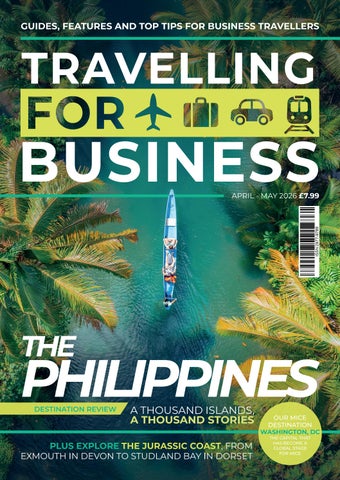
Travelling For Business Magazine - April/May 2026 Edition
PHILIPPINES THE
Check
in,
chill out
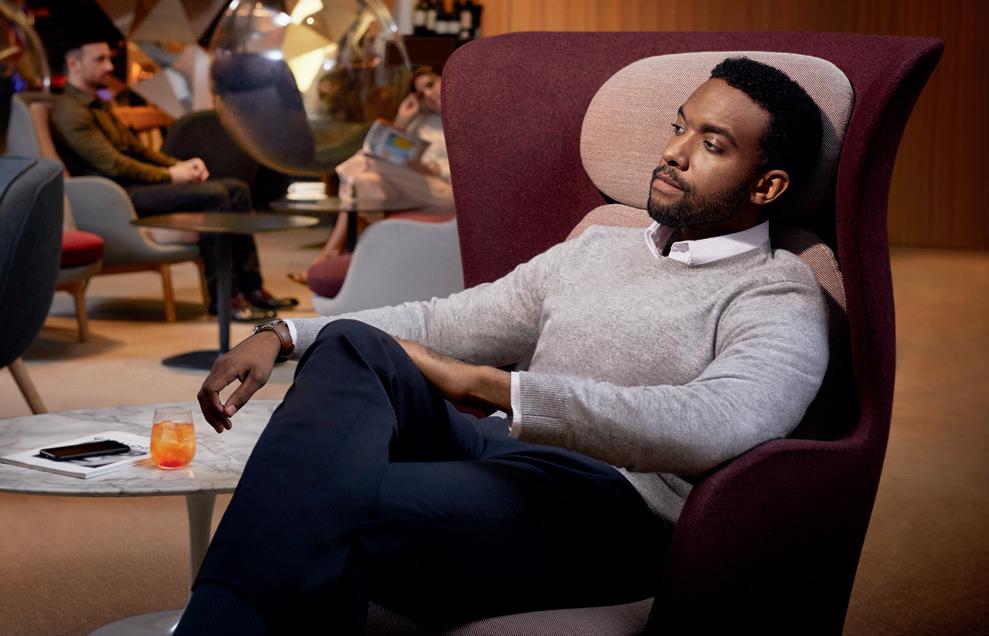
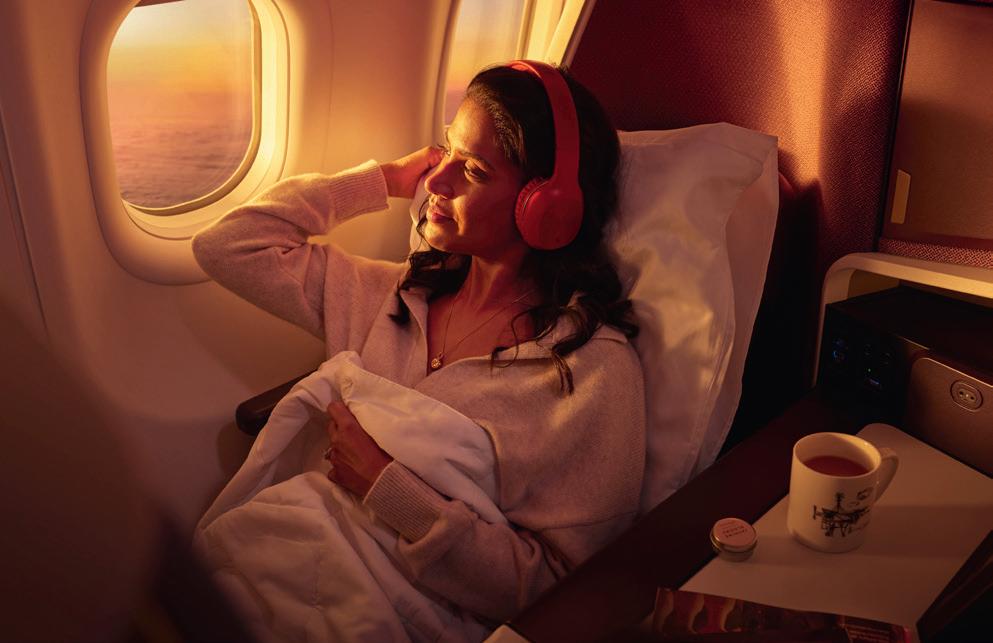
Once you set foot in a Virgin Atlantic Clubhouse, you won’t want to leave. Grab a bite to eat (or two), freshen up with an in-house shower, or find a quiet corner to send o a few emails. It’s all so relaxing, you’ll have to remind yourself you’ve got a flight to catch.
London Heathrow, Johannesburg, New York JFK, San Francisco and Washington DC are waiting for you. Our newest Clubhouse in LAX opens March 2025.
WELCOME TO TRAVELLING FOR BUSINESS
Asthis issue goes to press, geopolitical tensions, most notably the escalating conflict involving Iran, are casting a long shadow across global mobility. We are already seeing the knock-on effects: rerouted air corridors, rising insurance costs, and the very real prospect of sustained pressure on global aviation fuel prices. For an industry still recalibrating post-pandemic, the implications are significant. Cost, capacity and confidence are once again in delicate balance.
And yet, turn the page, and the story is not one of retreat.
In our lead news feature, UK SMEs are pressing ahead with international travel despite turbulence in the Middle East, rerouting intelligently and prioritising opportunity over hesitation. It’s a telling shift: business travel is no longer reactive; it’s strategic, adaptive, and increasingly resilient.
That same spirit runs through this issue.
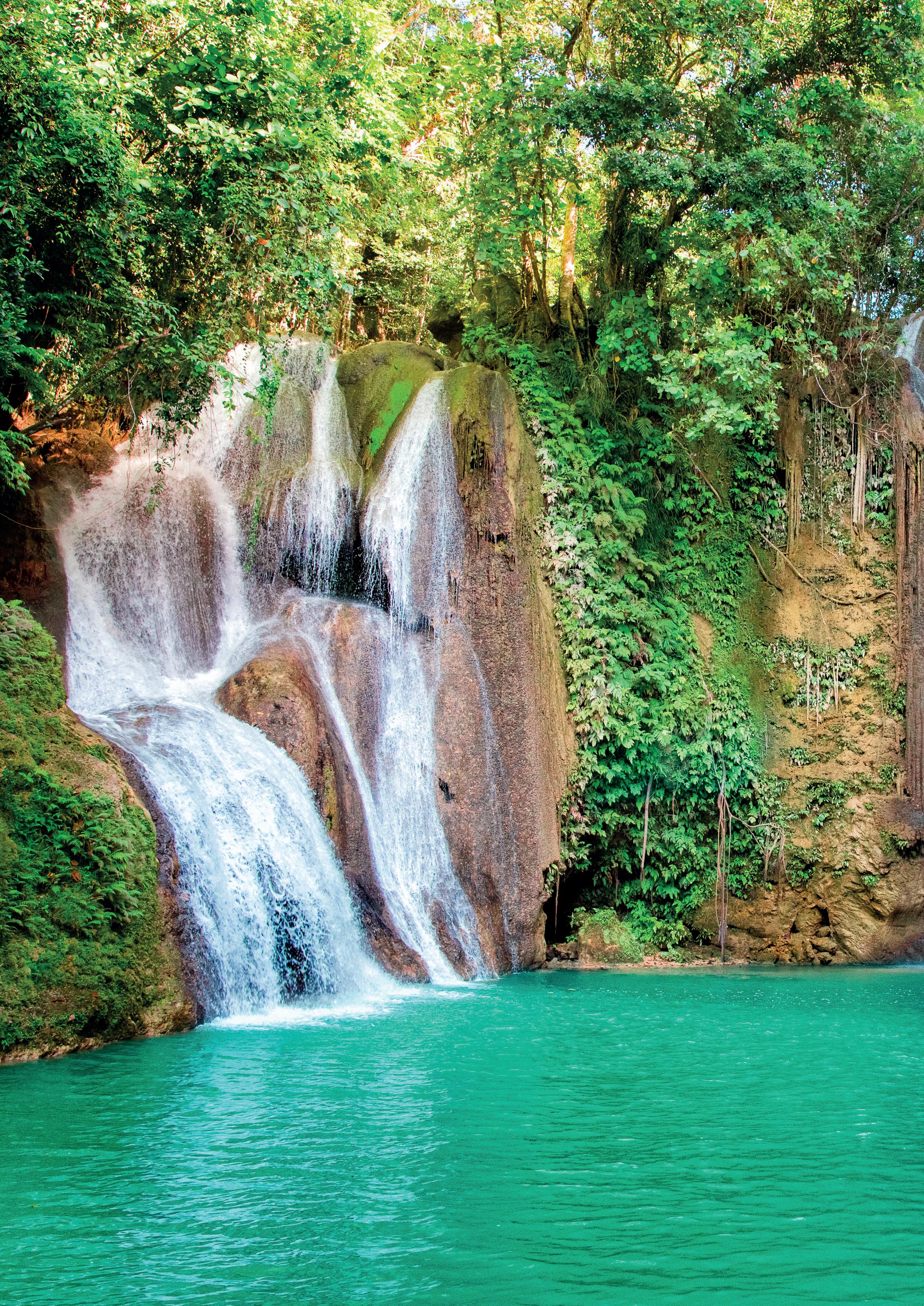
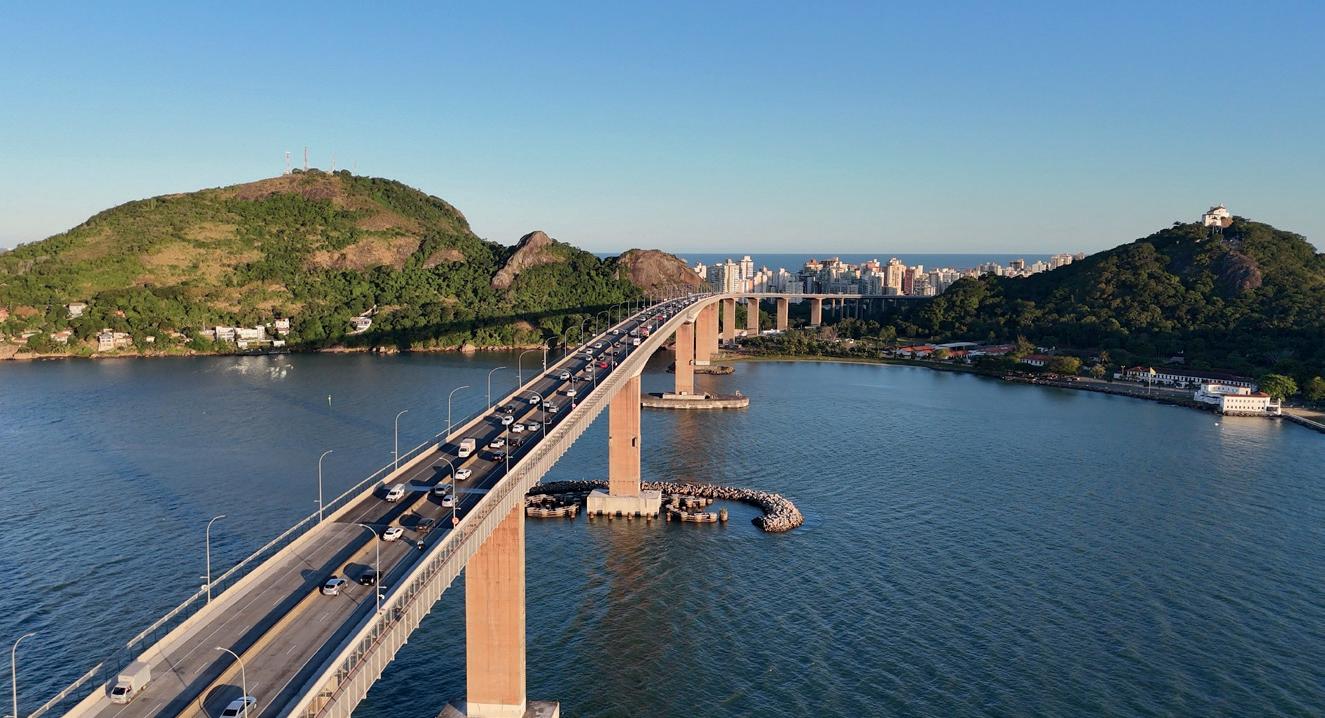
Our cover story takes you to the Philippines, a nation of more than 7,600 islands where geography shapes experience and where business travel blends seamlessly with discovery. From Manila’s evolving skyline to the elemental beauty of Palawan and the creative energy of Siargao, it’s a reminder that some destinations don’t just host meetings, they reshape perspective.
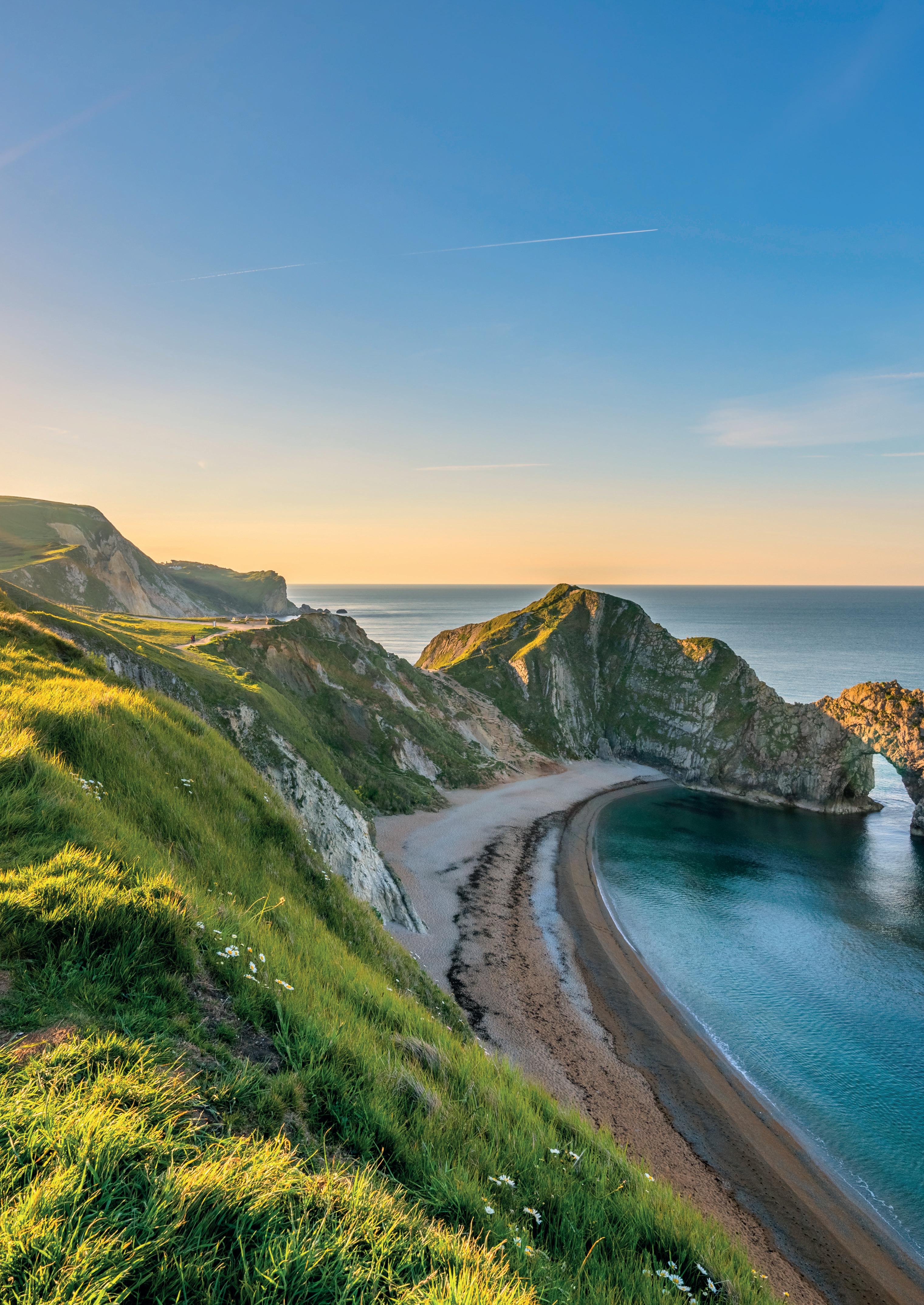
Closer to home, we explore the Jurassic Coast, where 185 million years of geological history meets a new wave of design-led hospitality and corporate retreat thinking. It’s Britain at its most elemental, and increasingly, its most strategic for offsites and leadership reset.
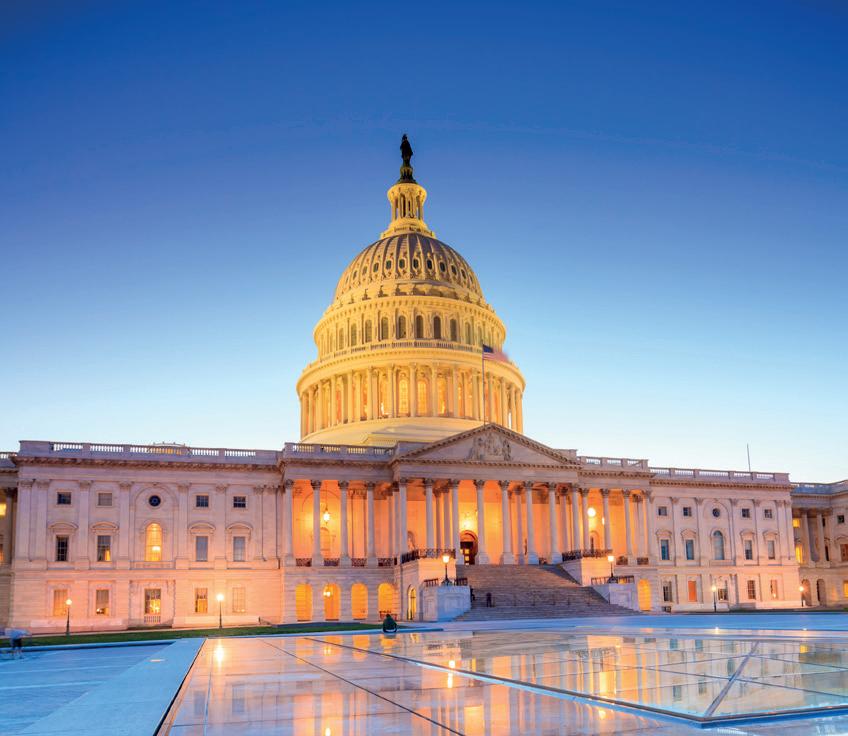
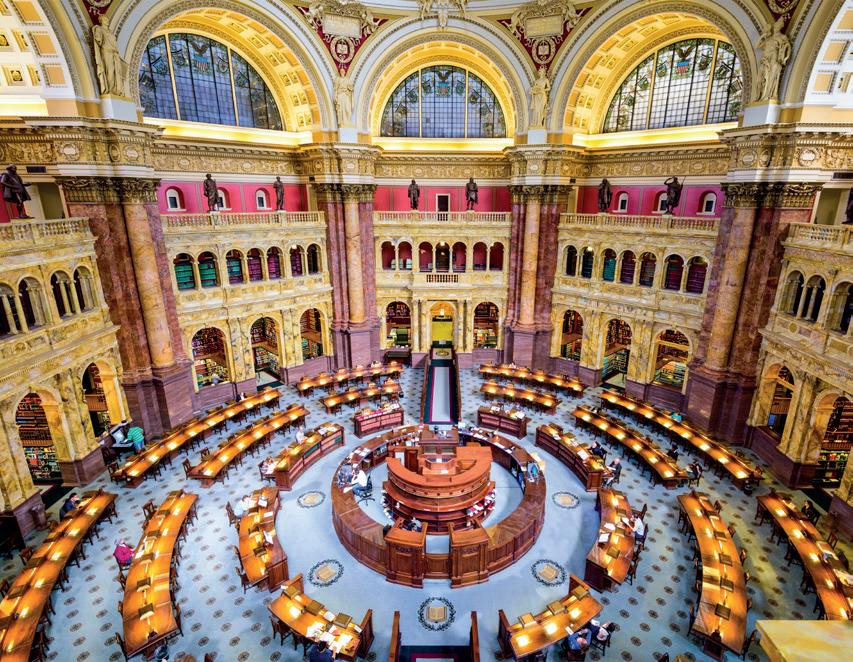
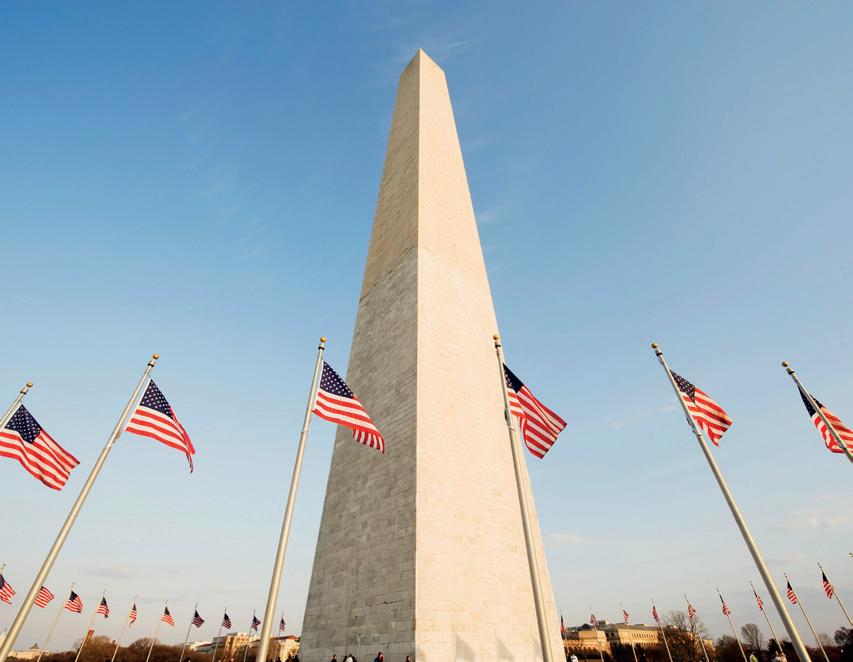
Further afield, Washington, DC emerges as a global MICE powerhouse, a city where policy, power and proximity converge to create one of the most compelling business event destinations in the world.
Until next time…
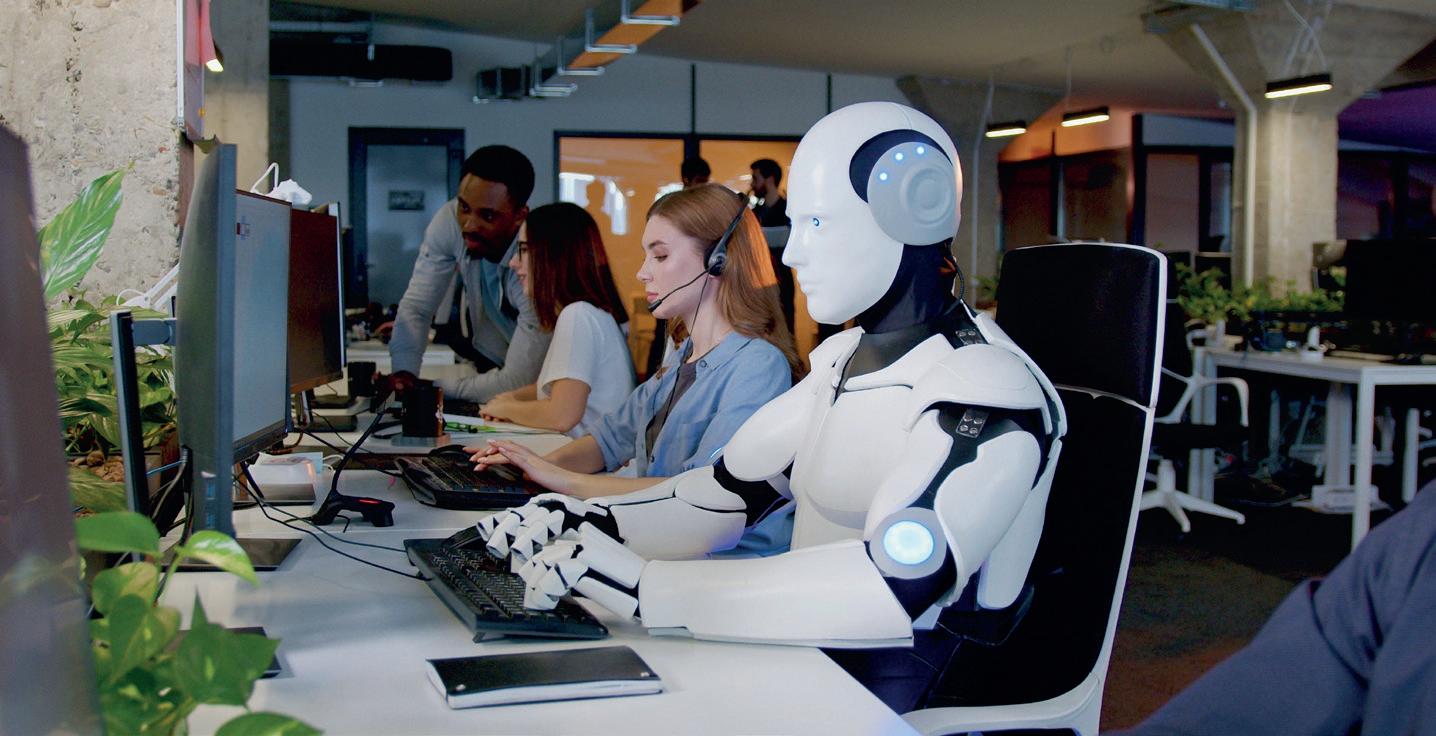
This issue also leans into the future. We examine how AI is rebuilding the entire business travel ecosystem, compressing booking, expense and concierge into a single, seamless layer.
The promise is extraordinary. The questions, equally so I am also delighted to announce that Uber for Business will be the headline partner of the Travelling For Business Awards 2026, taking place in London this October. The awards continue to grow as a credible, editorially led platform recognising excellence across our industry, from airlines and hotels to mobility, MICE and travel technology. To have Uber for Business at the forefront of that journey reflects not just their commitment to improving the traveller experience, but their understanding of where business travel is heading next.
Because ultimately, that’s what this issue is about.
A sector navigating uncertainty, yes, but also one evolving at pace. Smarter, more connected, more intentional. Whether it’s a rerouted long-haul flight, a last-minute meeting in DC, or a moment of stillness overlooking the Adriatic or the Pacific, business travel continues to prove its value, not just economically, but intellectually and emotionally.
The world may feel more complex. But the instinct to move, to connect, to explore, that remains unchanged and perhaps more important than ever.
The Travelling For Business Team
Editor Richard Alvin
Reviews & Features Editor
Andrea Thompson
Graphic Designer
Grace Moseley
Videographer
Jacob Pinchbeck
Content Sales Manager
Laura Phillips
Capital Business Media, Group MD
Richard Alvin
Business Development Director
Stephen Banks
Chief Creative Director
Stuart Hyde
Finance Director
Andrew Martin
Travelling For Business is published in London by
The Capital Business Media Group, Level 18, Forty Bank Street London, E14 5NR +44 20 7148 3861
Travelling For Business is printed using sustainable paper sources and vegetable ink, and is PEFC certified. Copies are recycled at the end issue.
RICHARD ALVIN EDITOR, TRAVELLING FOR BUSINESS
The Philippines A Thousand Islands, A Thousand Stories
Coast From Fossils To Fine Dining
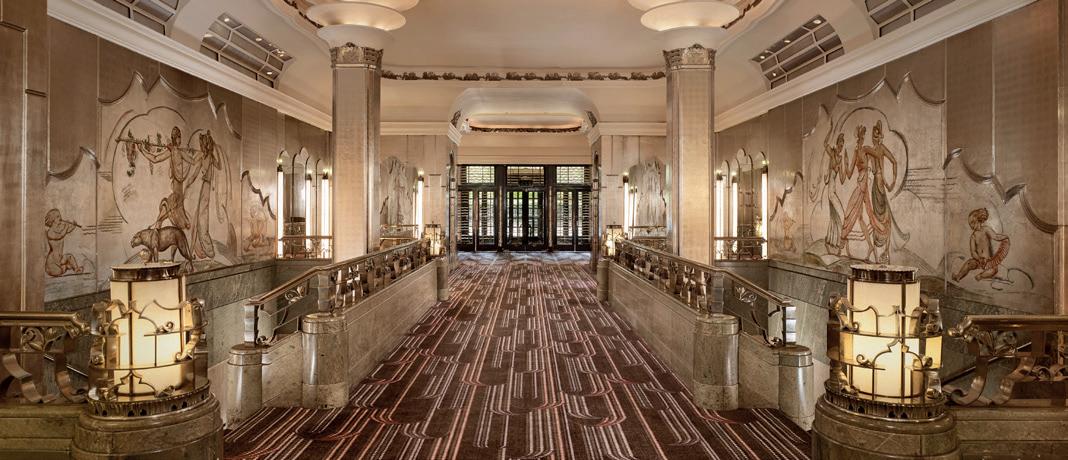
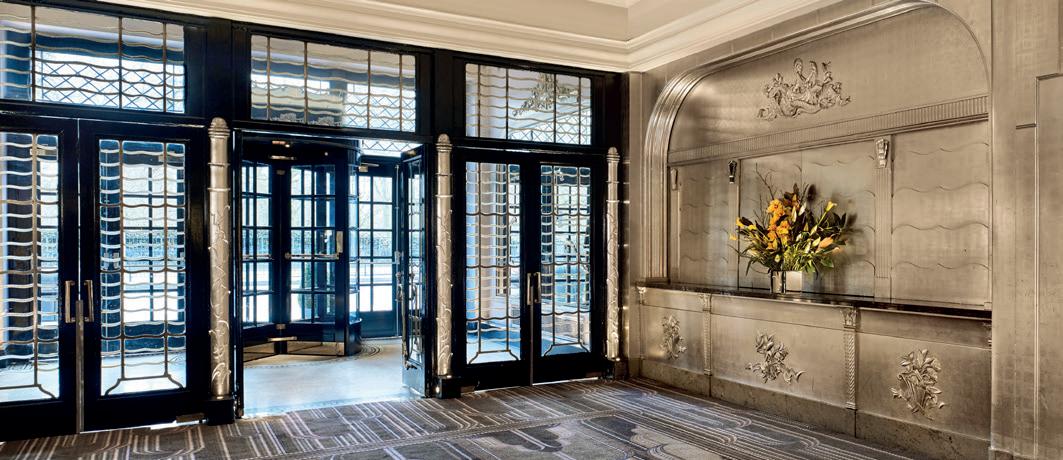
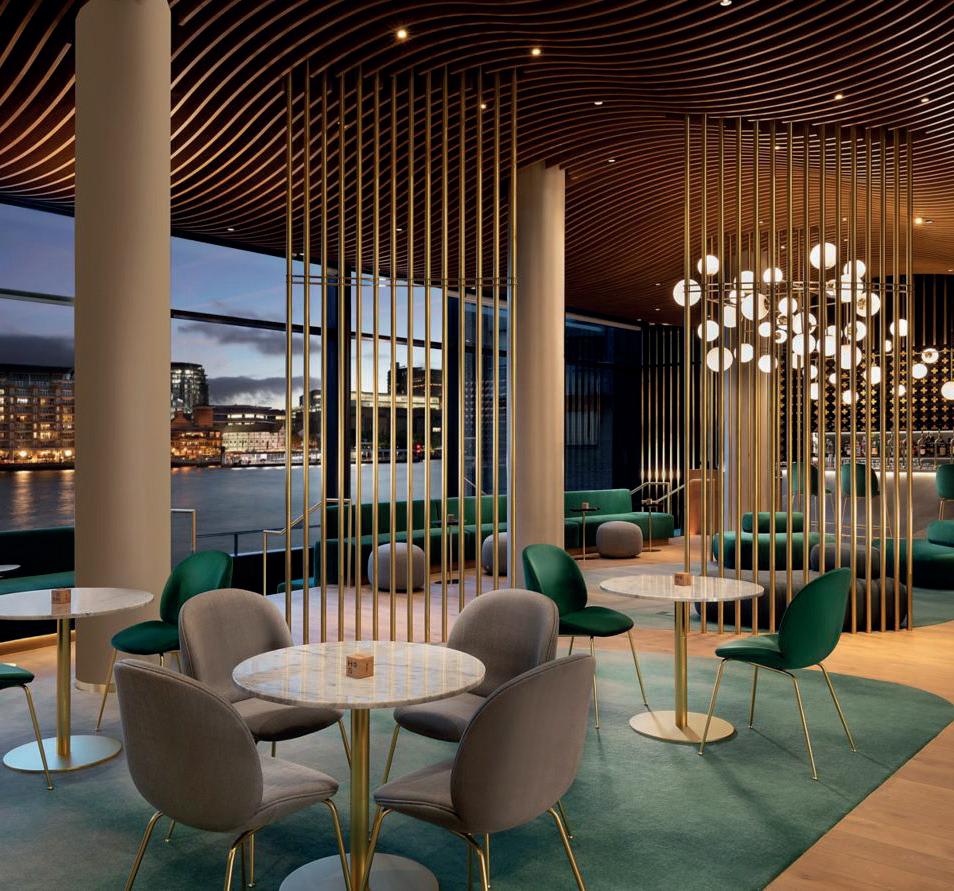
Sheraton Grand London Park Lane London, UK
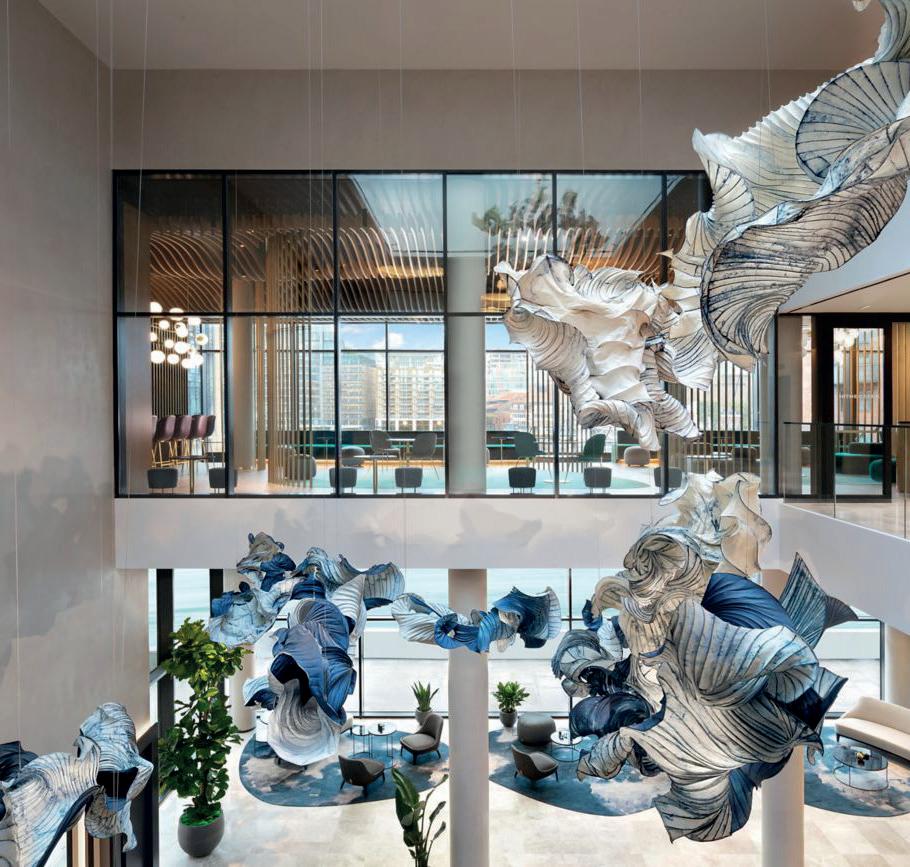
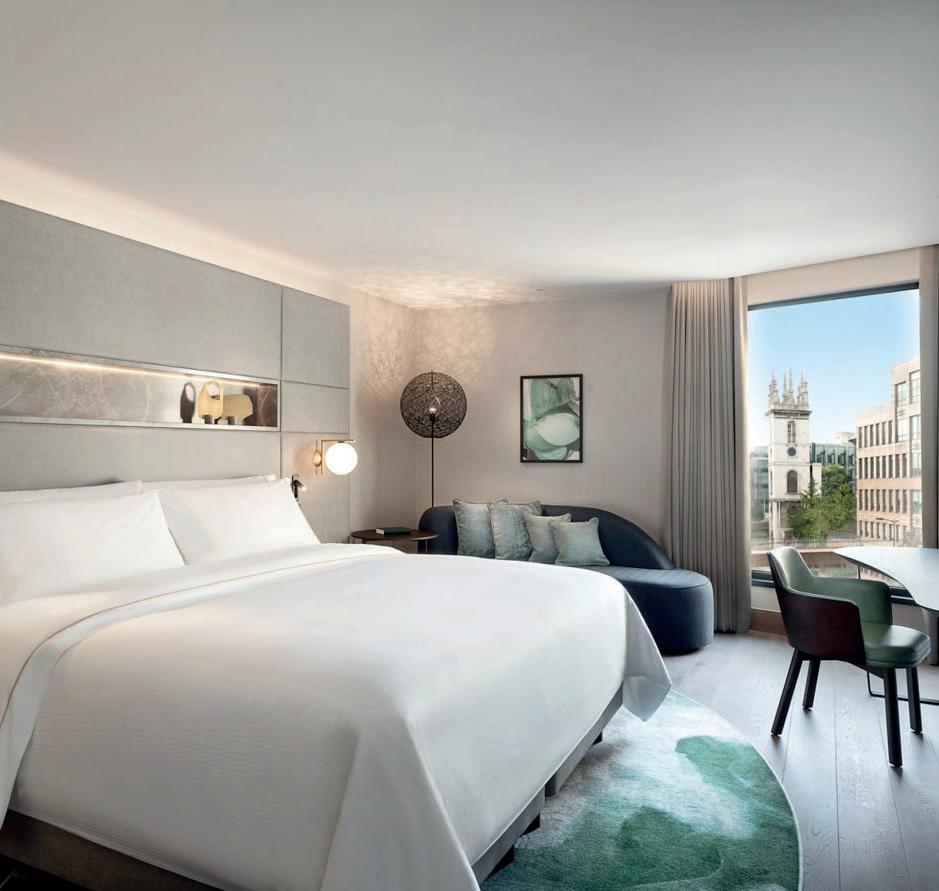
The Westin London City London, UK
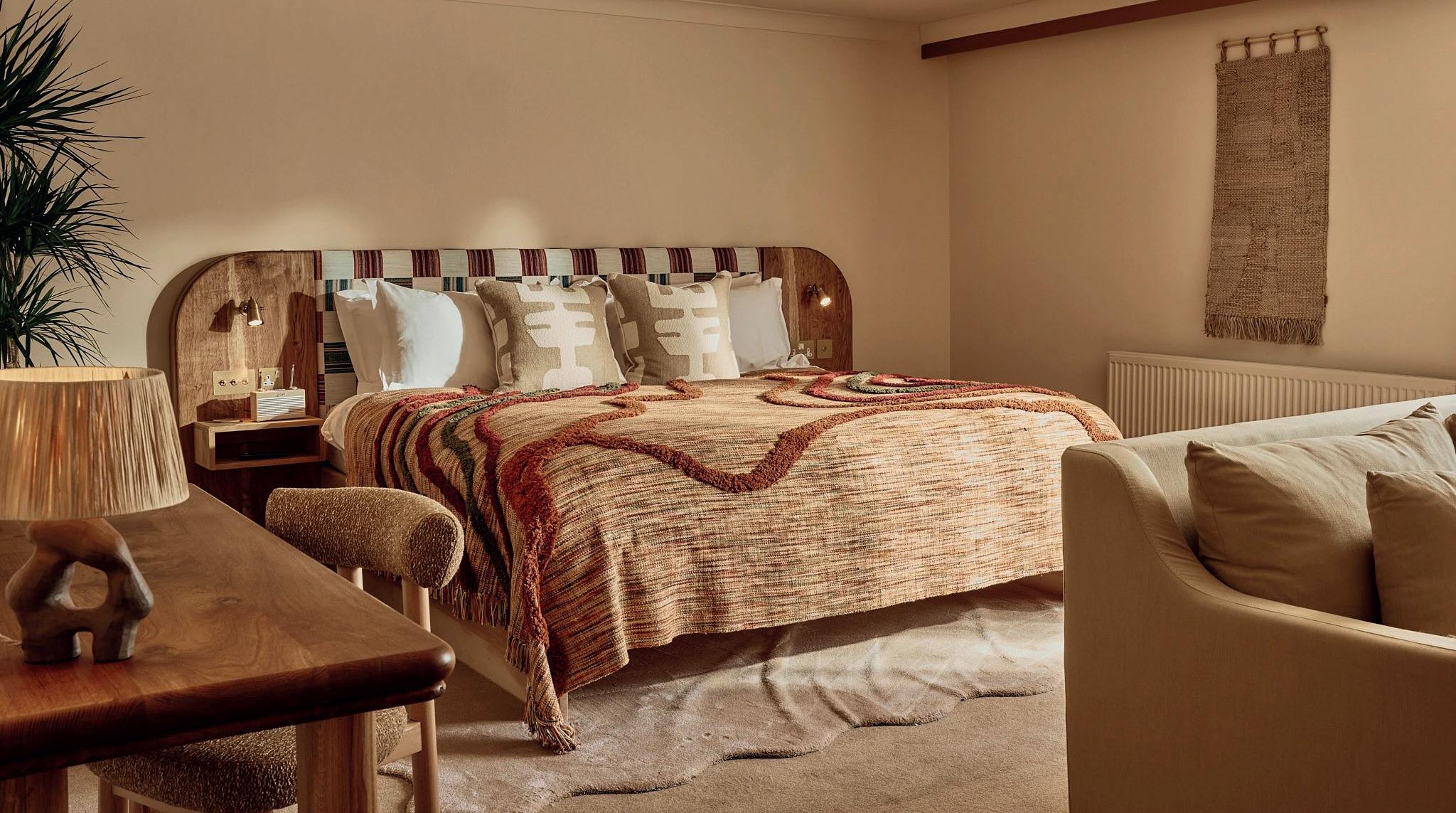
Crafted At Powdermills Sussex, UK
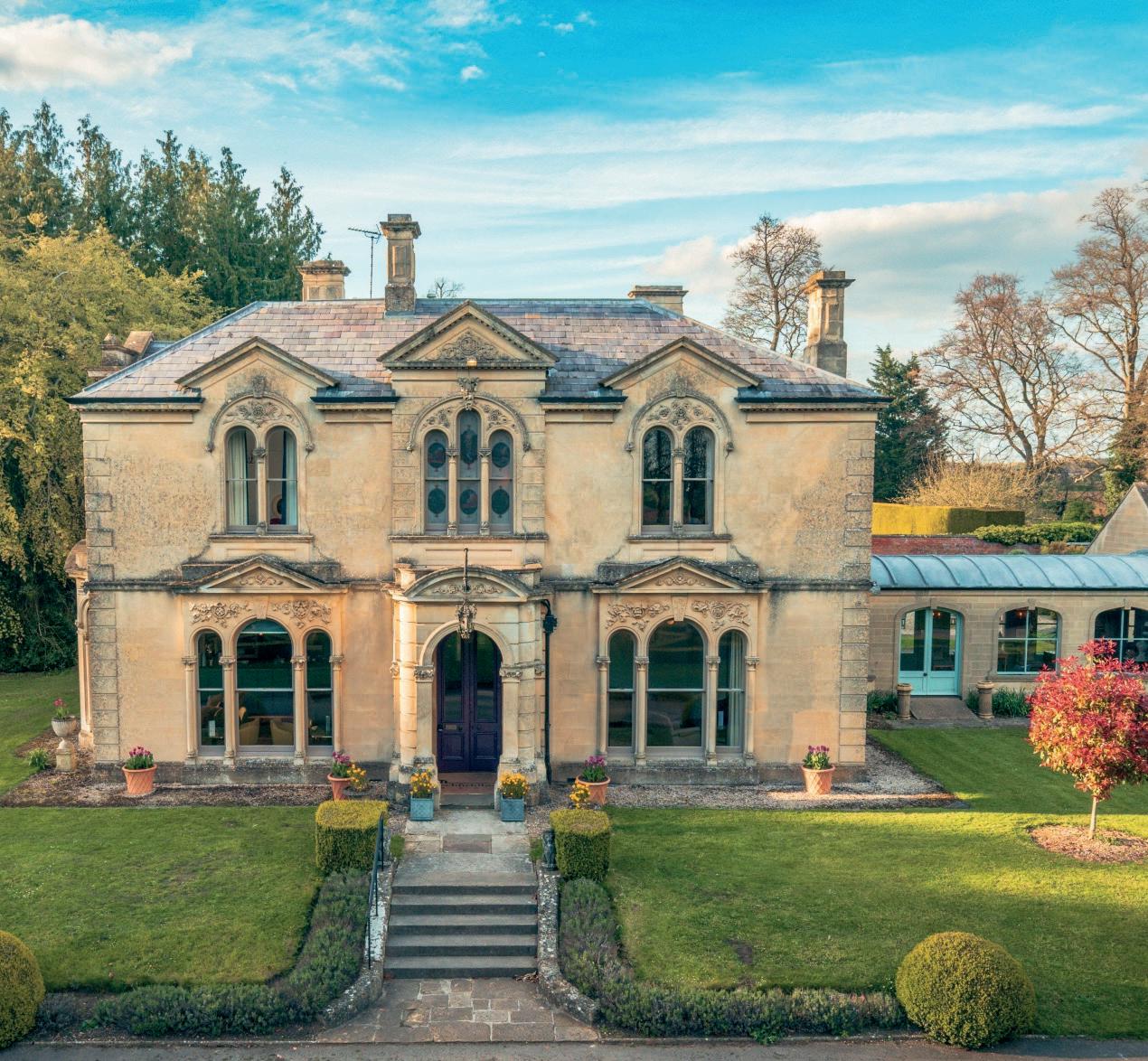
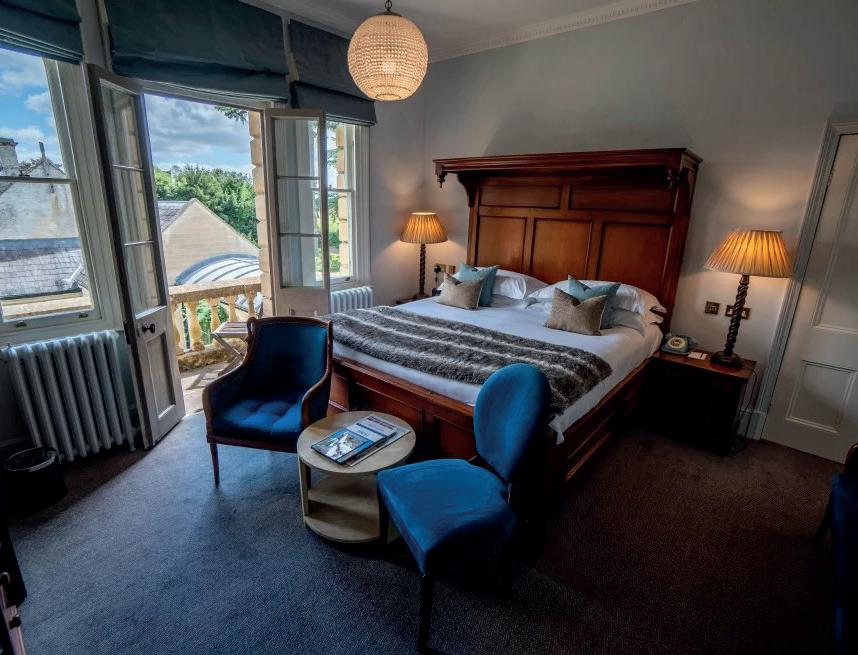
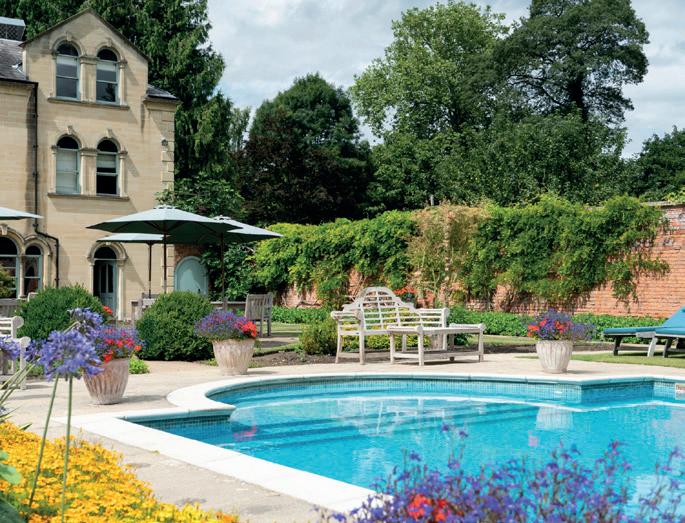
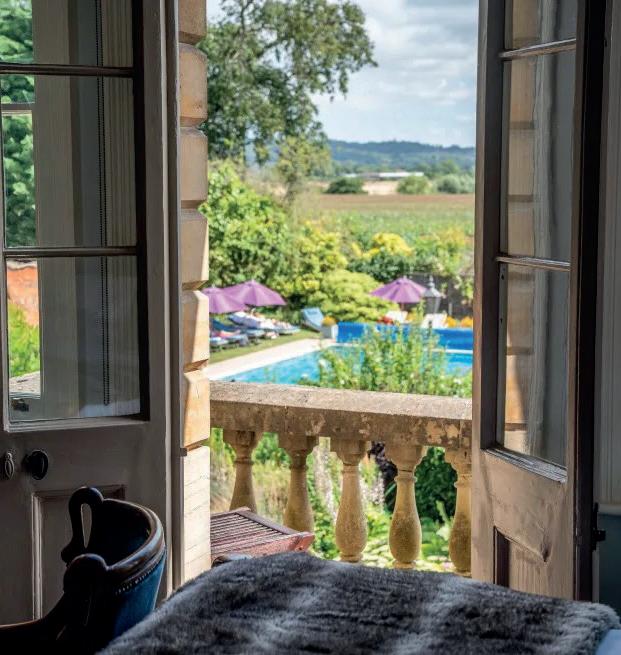
Beechfield House Wiltshire, UK
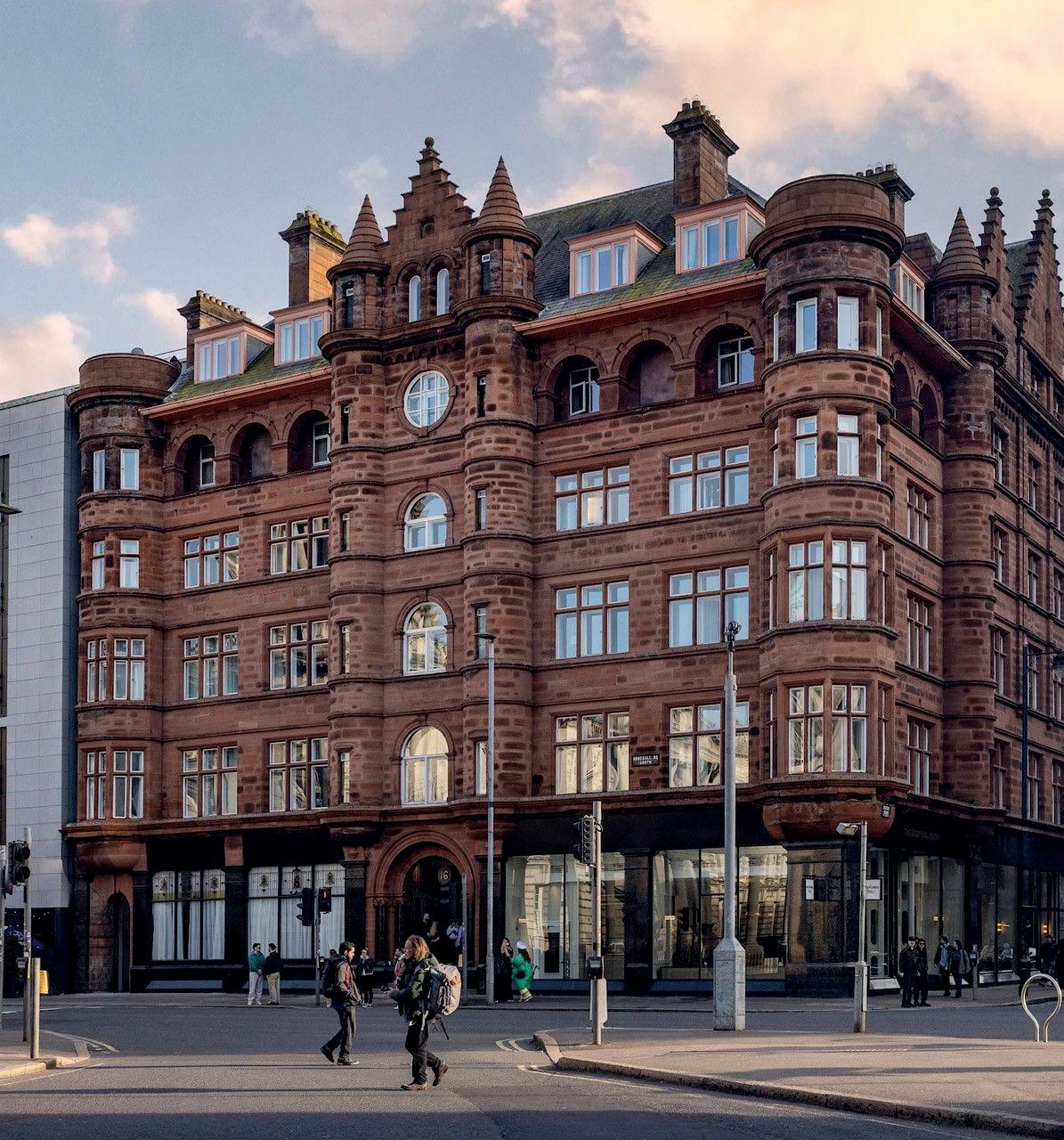
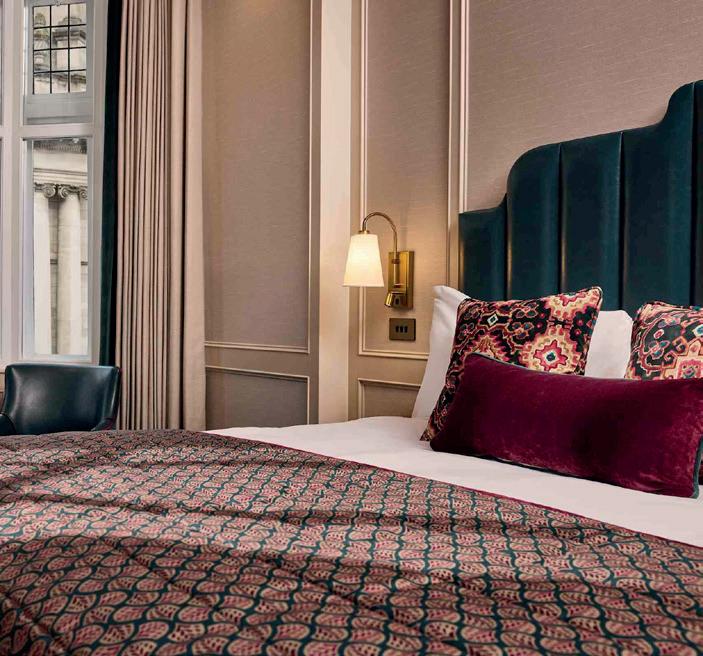
The Bedford Hotel Belfast, UK
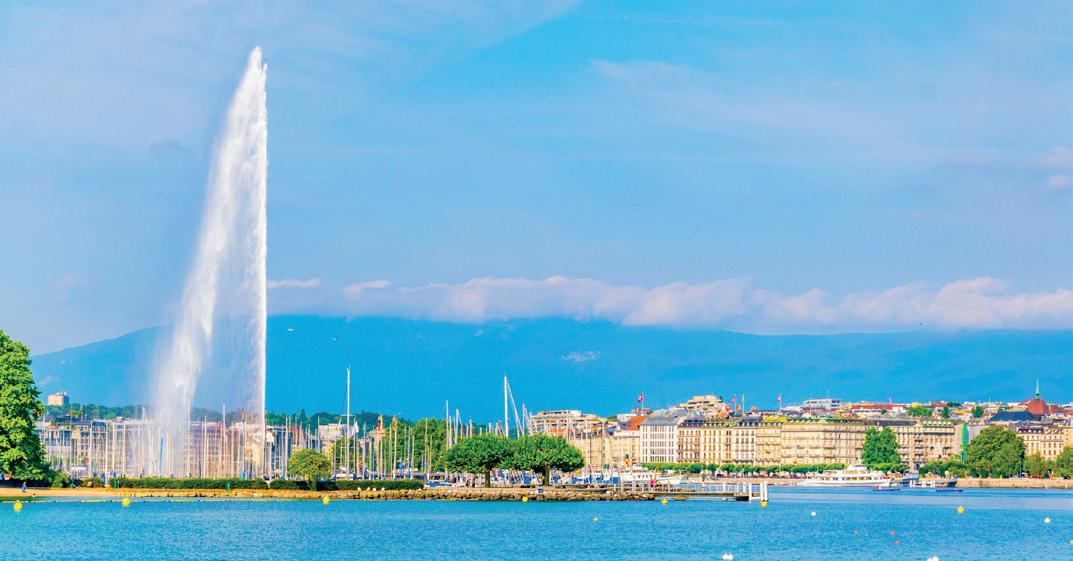
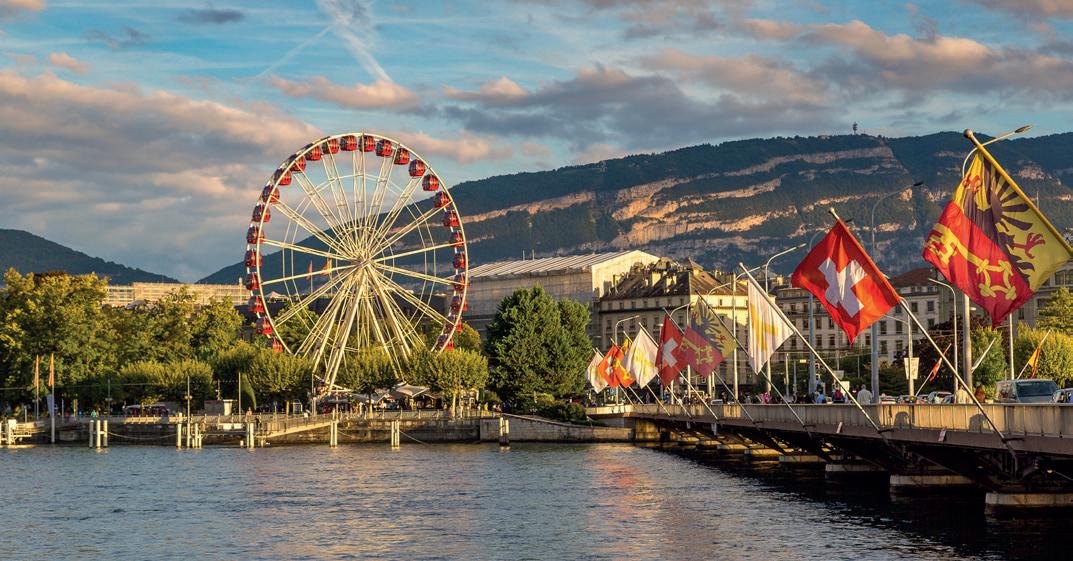
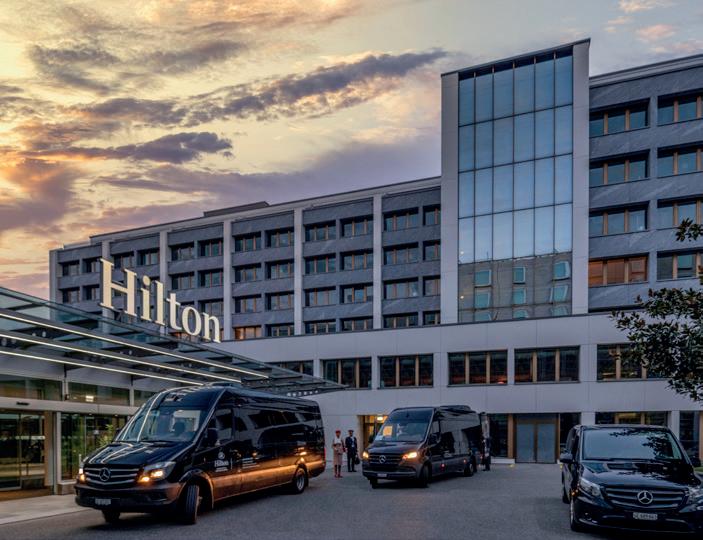
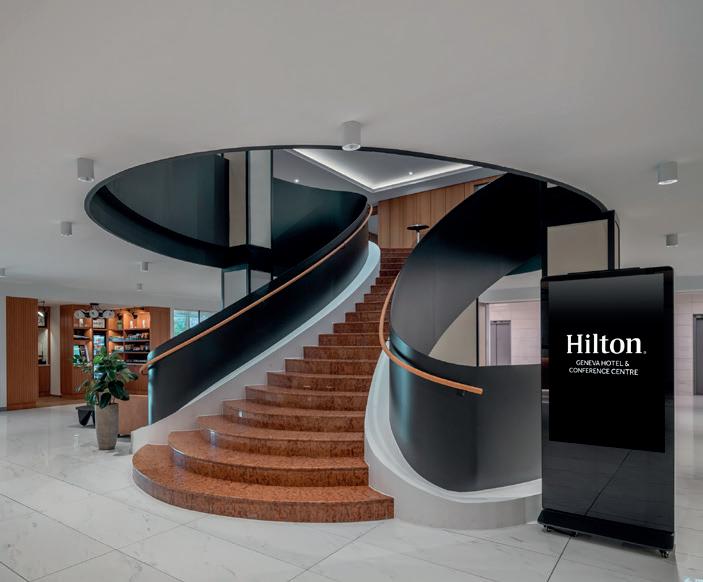
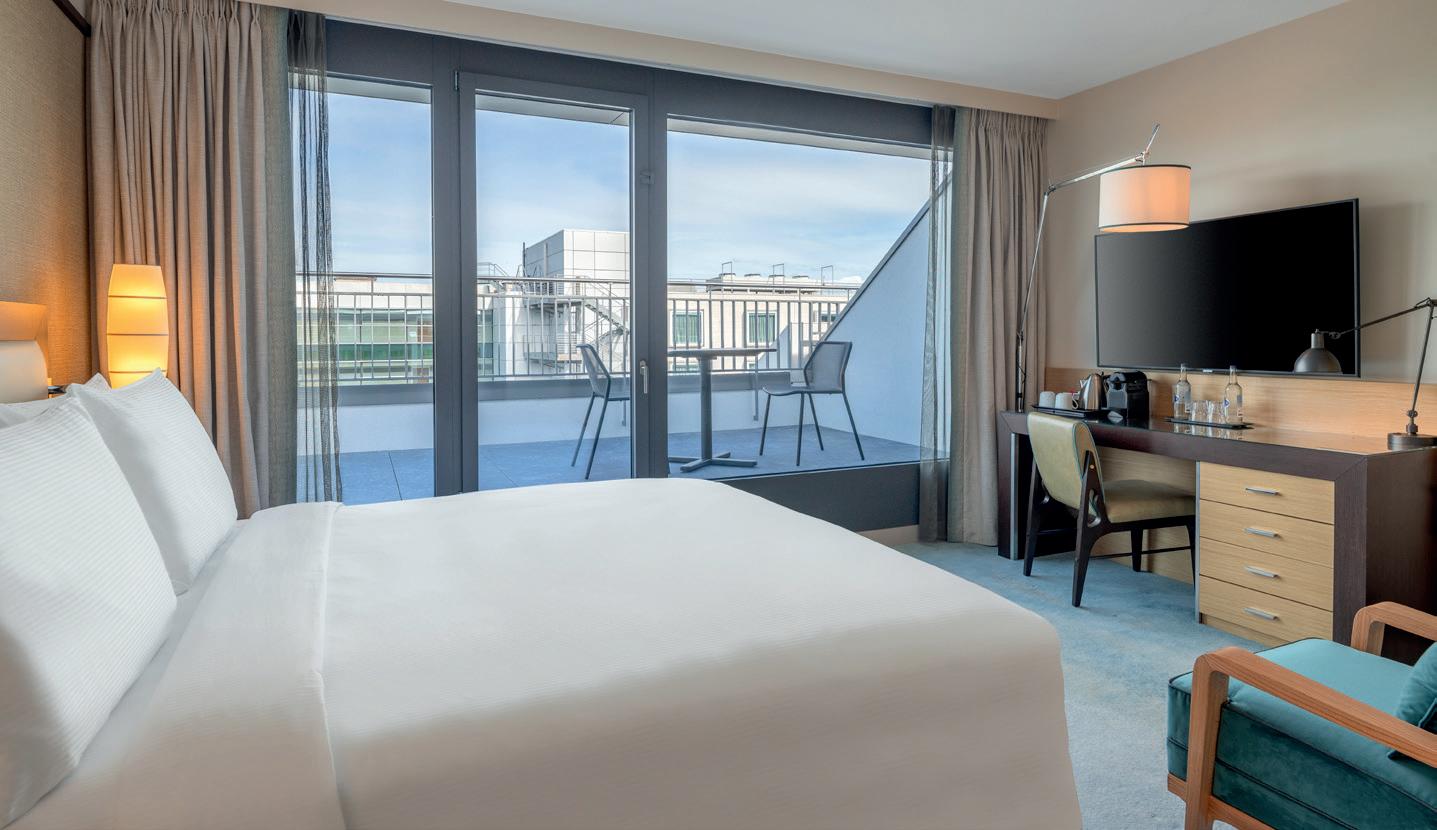
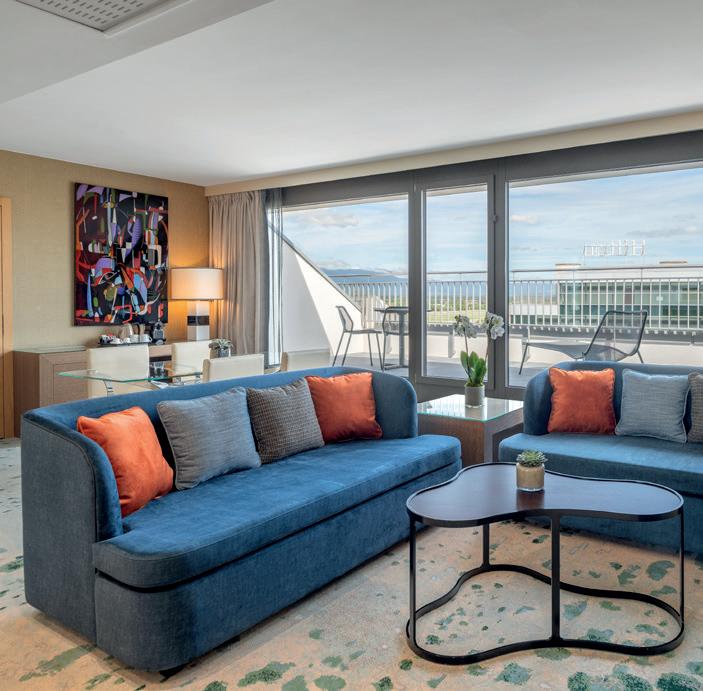
Hilton Geneva Hotel Switzerland
Opus XVI Bergan Norway
EXPERIENCES
Beyond The Brand The Quiet Rise Of Family Owned Hotels
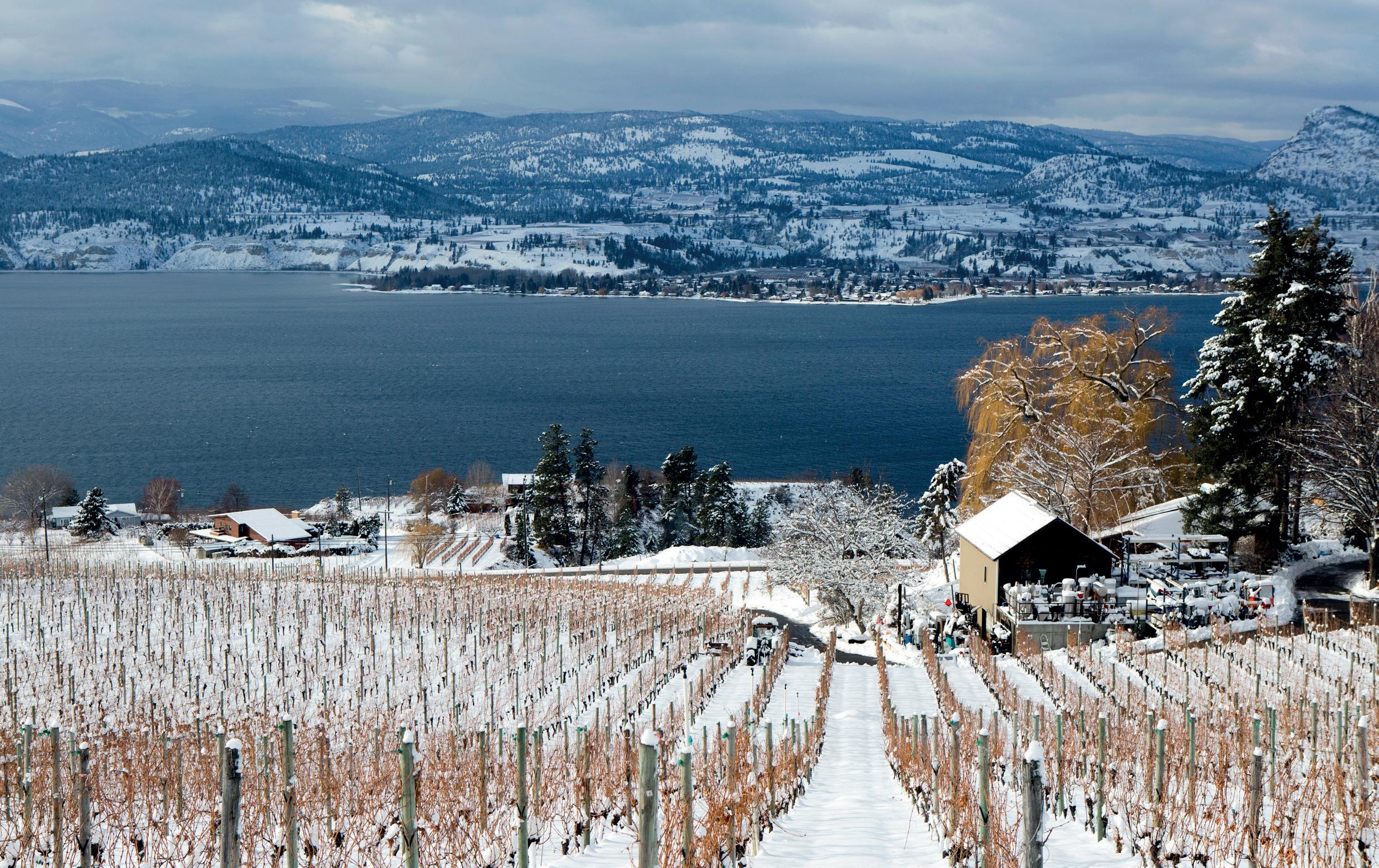
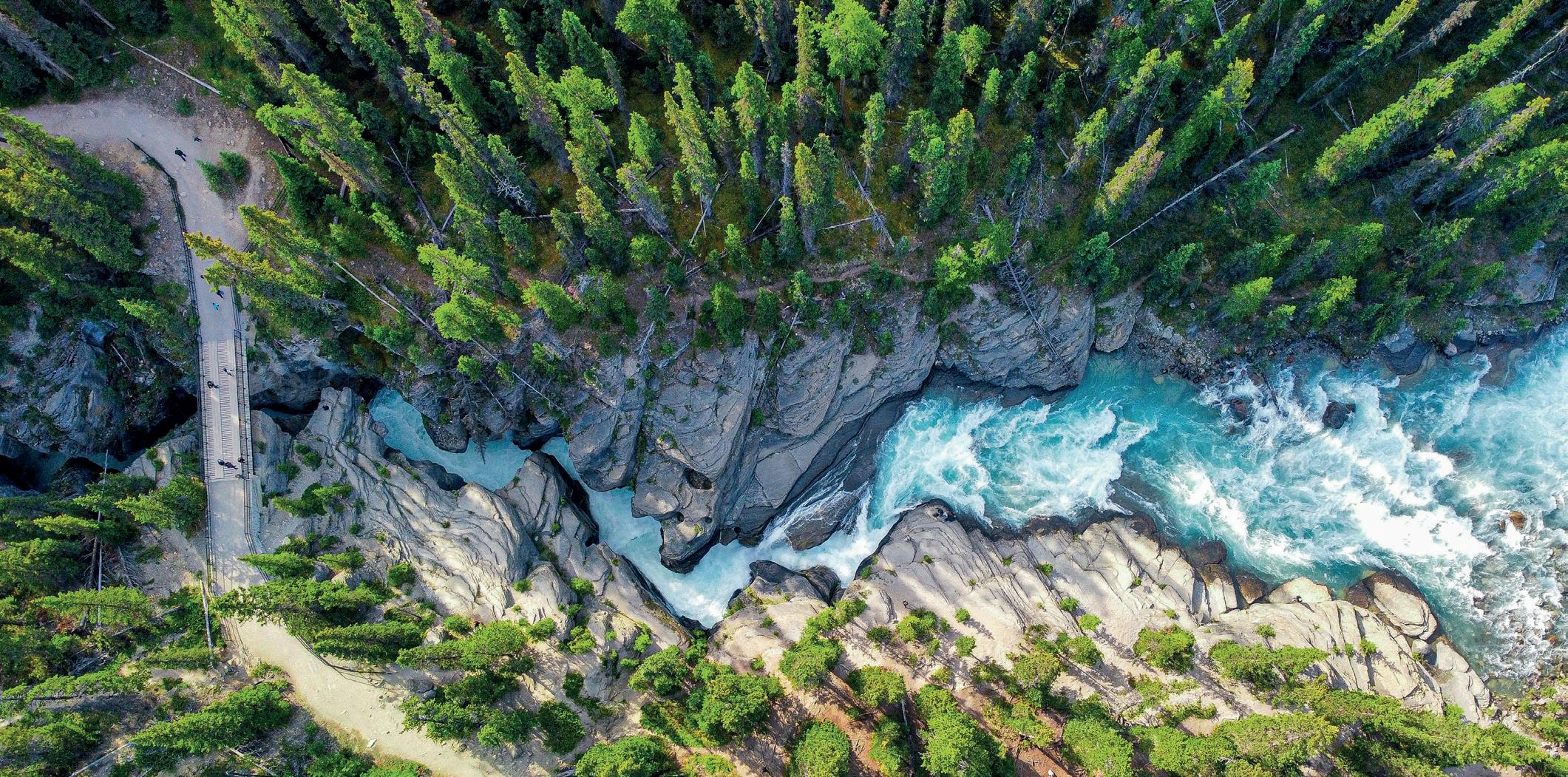
Ice Wine Winter's Sweet Gold & The Festivals That Celebrate It Germany's Great Outdoors Three National Parks
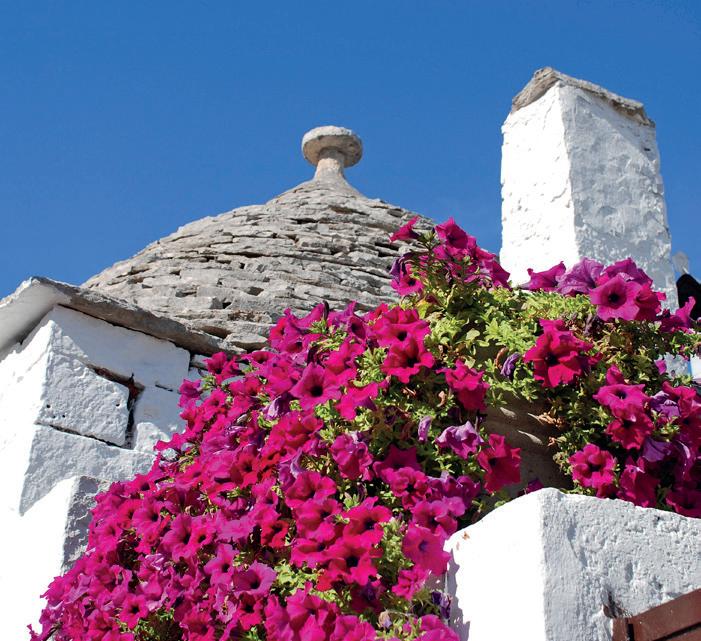
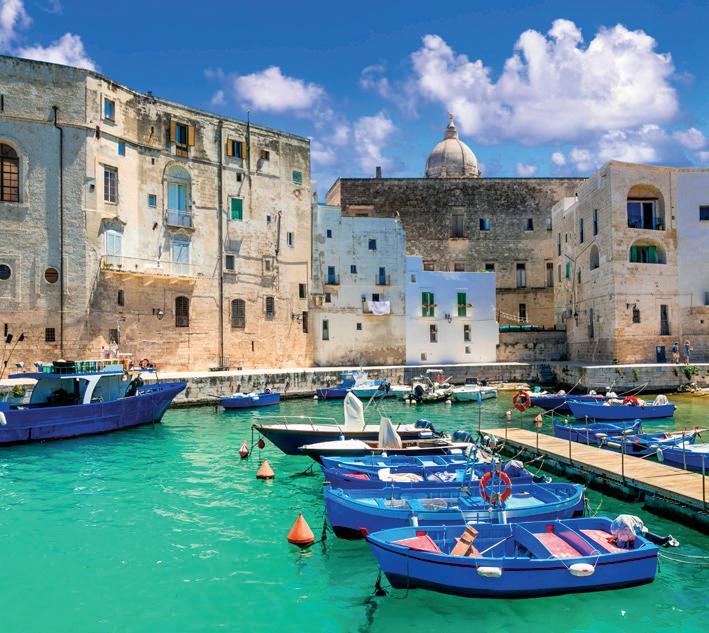
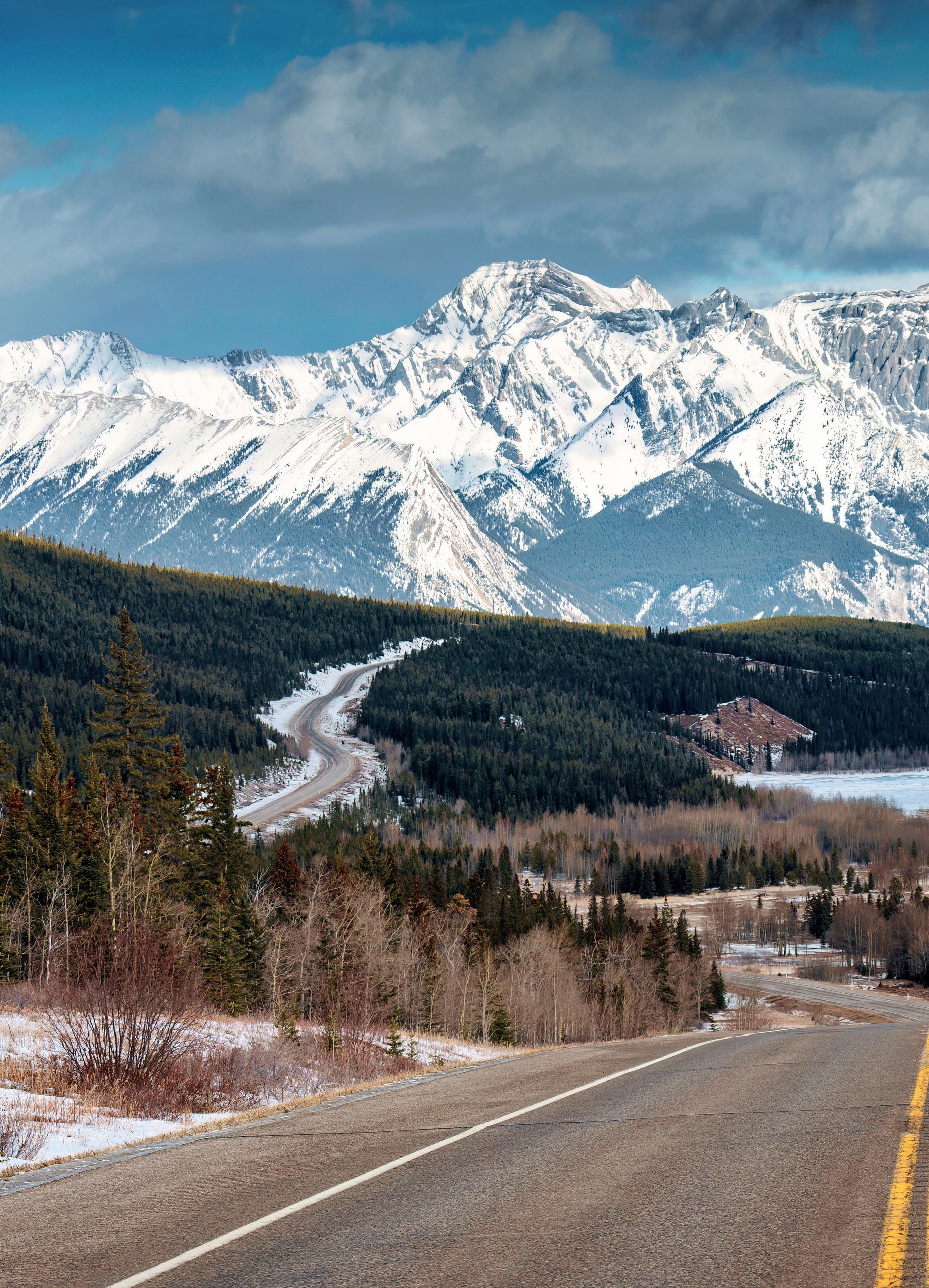
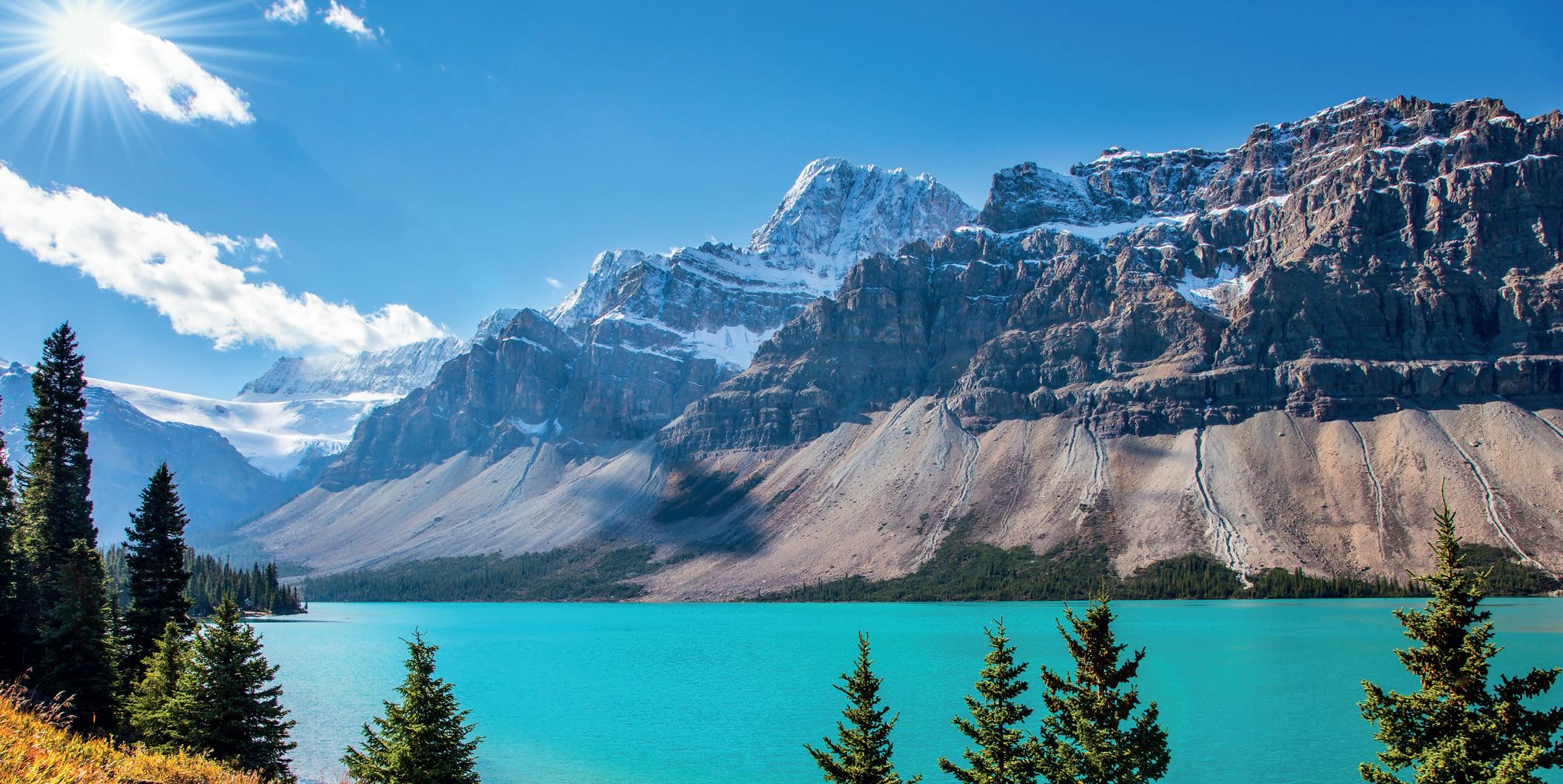
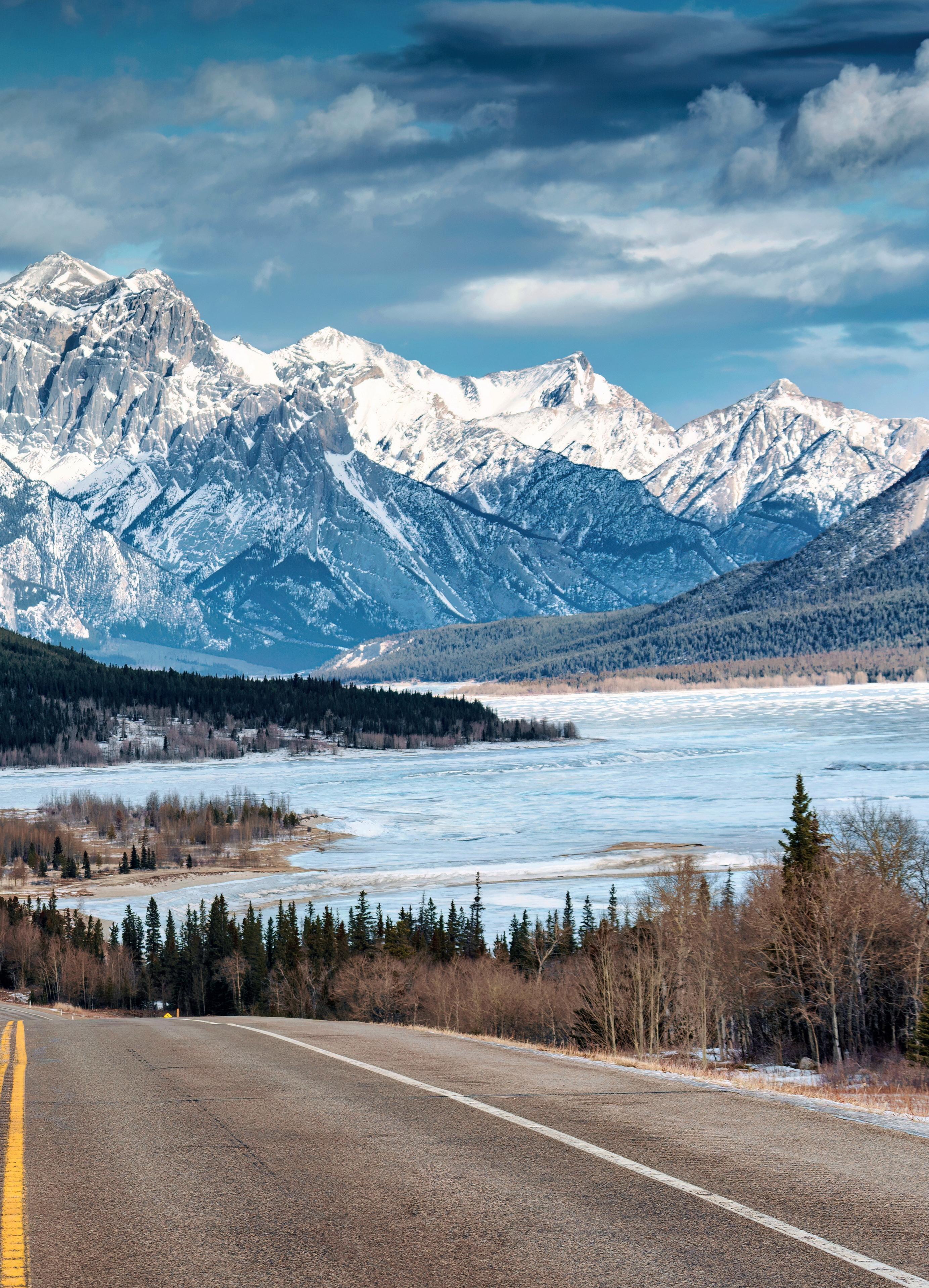
Puglia Here's How To Make The Most Of A Long Weekend The Icefields Parkway Canada's Most Majestic
Dooley Founder @ Roamr
UBER FOR BUSINESS NAMED HEADLINE PARTNER FOR TRAVELLING FOR BUSINESS AWARDS 2026
Uber for Business has been confirmed as the headline partner of the Travelling For Business Awards 2026, marking a significant milestone for both the awards programme and the wider corporate travel sector.
The partnership will see Uber for Business take centre stage at this year’s ceremony, which will be held at Together, 88 Wood Street in London on 22 October 2026. The black-tie event is expected to bring together senior leaders from across aviation, hospitality, mobility, MICE, and travel technology, reinforcing its growing status as one of the most credible and commercially relevant fixtures in the industry calendar.
Now in its latest iteration, the Travelling For Business Awards continue to evolve alongside the sector they represent. Categories span the full journey, from airlines and airport lounges to hotels, ground transportation, loyalty programmes and travel apps, reflecting the increasingly integrated nature of modern business travel, as highlighted on the awards pages of this issue.
The appointment of Uber for Business as headline partner signals a clear alignment with that evolution. As corporate travel becomes more seamless, digitised and experience-led, the role of ground transportation and integrated mobility has never been more critical. Uber for Business, with its global platform connecting travel, meals and expense management, sits at the heart of that shift.
Commenting on the partnership, Richard Alvin, Awards Director of the Travelling For Business Awards, said:
“We are incredibly proud to welcome Uber for Business as our headline partner for 2026. This is a brand that truly understands the modern business traveller, where efficiency, flexibility and experience must work together seamlessly. As our industry continues to evolve, it is partners like Uber
for Business that are helping to shape what the future of corporate travel looks like. Their involvement elevates the awards and reinforces our mission to recognise the organisations setting new standards across the sector.”
The 2026 awards arrive at a pivotal moment. Business travel is navigating a complex landscape, balancing geopolitical uncertainty, rising costs and sustainability pressures with continued demand for face-to-face connection. Against that backdrop, the awards aim not simply to celebrate recovery, but to recognise those organisations driving meaningful change. With entries now open and a growing roster of high-profile partners and attendees, the Travelling For Business Awards 2026 are set to deliver an evening that is as much about industry insight and connection as it is about celebration.
On 22 October, the sector will gather in London, not just to reflect on the year behind it, but to define the one ahead.
UK SMES PRESS AHEAD WITH OVERSEAS TRAVEL DESPITE MIDDLE EAST TURBULENCE
British SMEs are doubling down on international business travel, shrugging off the drag of Middle Eastern instability to chase new markets, suppliers and deals overseas, fresh research from Travel Counsellors for Business has revealed.
The travel management company's survey of 1,000 UK small and medium-sized enterprises found that 67 per cent remain confident about travelling abroad for work, while 39 per cent intend to step up the number of international trips they take over the coming 12 months — a vote of confidence that runs sharply counter to the mood elsewhere in the corporate travel market.
Those pushing to travel more are doing so with clear commercial intent. Some 38 per cent cited the pursuit of new business opportunities, 35 per cent pointed to meetings with fresh suppliers or manufacturers, and 31 per cent said they would be attending overseas events and conferences.
That appetite is translating into bigger budgets. Nearly two-thirds (62 per cent) of SMEs told Travel Counsellors they expect to spend more on overseas trips in the year ahead, with just 10 per cent bracing for cuts. Average projected spend has jumped from £43,000 in 2024 to £57,000, a striking leap that underlines the strategic weight businesses are placing on face-to-face contact.
Travel Counsellors' own booking data echoes the picture. UK corporate sales are up 6.1 per cent year on year over the past four weeks, driven by a 6.9 per cent uplift in average booking value, which the TMC said points to a clear shift towards higher-value, more considered trips.
The findings stand in stark contrast to the latest Global Business Travel Association barometer, which polled 500 travel buyers worldwide and saw optimism about business travel slide from 59 per cent in January to just 39 per cent in April. Europe was the only region in that survey where pessimism outweighed optimism.
Melanie Quinn, director of Travel Counsellors for Business, said the UK SME picture reflected a maturing approach rather than a retreat. "What we're seeing is not a slowdown in business travel, but a shift in how it's approached. SMEs are continuing to invest in travel because they recognise the value of face-to-face interaction, but they're doing so more carefully, with greater focus on risk, flexibility and return on investment," she said.
"We're also seeing businesses adapt how they travel, whether that's re-routing journeys or prioritising destinations where they feel more confident."
That re-routing is playing out vividly in the TMC's figures. Bookings through Middle Eastern hubs have collapsed 85 per cent year on year, while alternative routings via Asia have surged 166 per cent. Demand for the United States is up 17 per cent and Australia up 61 per cent, trends broadly mirrored in the GBTA's own data.
Travel Counsellors said SMEs were demonstrating "a more deliberate and riskaware approach to travel planning". More than a quarter (26 per cent) are actively avoiding certain regions or routes, and 55 per cent said they were less willing to send staff to the Middle East.
Europe is the clear beneficiary. Some 68 per cent of SMEs expect to travel there most frequently over the next year, and 40 per cent said they were more likely to send colleagues to European destinations "in light of current geopolitical uncertainty".
Flexibility, meanwhile, is cementing its place as a core purchasing lever. It emerged as the second most influential factor in booking decisions at 33 per cent, sitting behind cost (45 per cent) and just ahead of the ability to adapt plans quickly in response to disruption (32 per cent), further evidence that, for Britain's SMEs, the road ahead is one of careful ambition rather than retreat.
HAWAIIAN AIRLINES JOINS ONEWORLD, OPENING UP THE PACIFIC FOR GLOBAL BUSINESS TRAVELLERS
The 96-year-old island carrier becomes oneworld’s 15th member, handing British corporate flyers smoother connections, reciprocal status and lounge access across the Pacific.
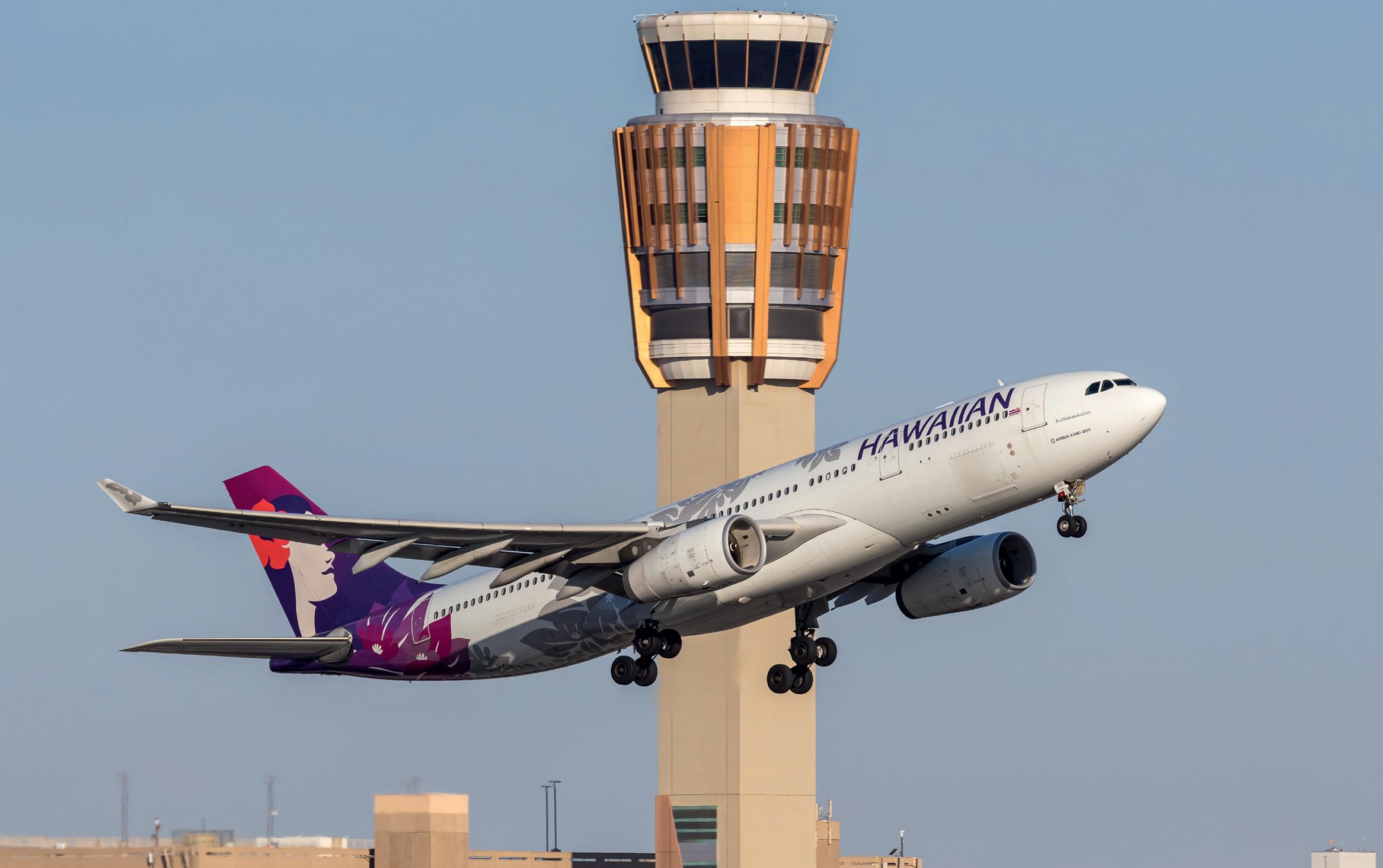
Hawaiian Airlines has formally joined the oneworld alliance, marking the 96-yearold carrier’s first move into a global airline grouping and giving British business travellers a far more joined-up route across the Pacific.
The Honolulu-based airline becomes oneworld’s 15th member, bringing with it around 230 daily services to, from and within the Hawaiian islands. Hawaiian carried more than 11 million passengers in 2025 and links the archipelago with key hubs in Los Angeles, New York–JFK, Seattle, Sydney and Tokyo — all of them shared with established oneworld partners such as British Airways, American Airlines, Cathay Pacific, Japan Airlines and Qantas.
For corporate travellers used to the alliance’s reciprocal benefits, the move closes a long-standing gap on the South
Pacific and Asia–Pacific map. Members of any oneworld carrier’s loyalty scheme, including British Airways’ Executive Club, can earn and redeem points on Hawaiian flights and have their elite tier recognised on board with immediate effect.
The accession also deepens the integration of Hawaiian with Alaska Airlines, which joined oneworld in 2021 and is now its sister carrier under Alaska Air Group. Members of the combined Atmos Rewards programme will be able to accrue and burn points on the alliance’s other 14 airlines, which between them serve close to 1,000 destinations in more than 170 countries.
Elite-tier Atmos Rewards members will be granted equivalent oneworld Ruby, Sapphire or Emerald status, unlocking access to nearly 700 lounges worldwide, including the new oneworld-branded facilities at Amsterdam Schiphol and Seoul Incheon. Sapphire and Emerald members will also benefit from an extra checked-bag allowance and priority baggage handling, priority check-in, prereserved seating, priority boarding and fasttrack security at participating airports when flying partner carriers.
Bookings on partner airlines can now be made directly through hawaiianairlines. com, alaskaair.com or the unified Alaska Hawaiian app, a point of convenience that will be welcomed by travel managers consolidating itineraries across the Pacific.
The combination of Alaska and Hawaiian forms what Alaska Air Group describes as the fourth-largest US global airline. The group says the enlarged network will give travellers greater choice, reach and value while strengthening competition in the American market, a point likely to resonate with corporate buyers who have watched consolidation among the country’s legacy carriers narrow their options.
Hawaiian has signalled that it will mark its alliance entry later this year with a special oneworld livery on one of its Airbus A330 wide-bodies.
Beyond the immediate frequent-flyer mechanics, both airlines are cornerstone investors in the oneworld Breakthrough Energy Ventures fund, which is backing the development and scaling of nextgeneration sustainable aviation fuel technologies, an issue that continues to climb the agenda for sustainability-minded travel programmes in the UK.
For British travellers whose work takes them through the Pacific, whether to Tokyo, Sydney or the US west coast, with a stopover in Honolulu, the practical upshot is straightforward: simpler bookings, broader lounge access and consistent loyalty earning on a single ticket.
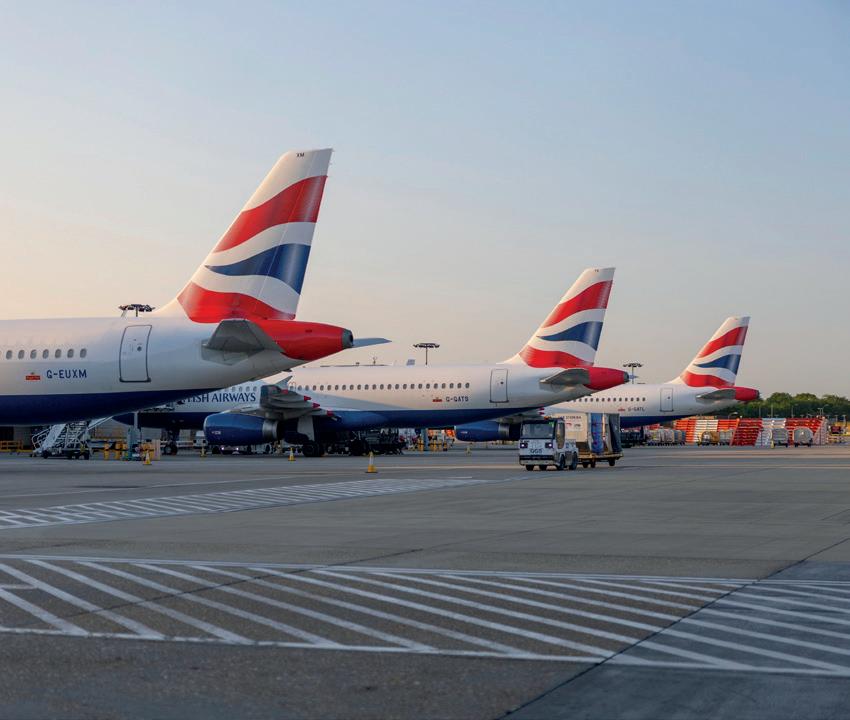
BRITISH AIRWAYS QUIETLY BLOCKS AVIOS REDEMPTIONS TO
INDIA WITHIN 45 DAYS OF DEPARTURE
British Airways has quietly imposed a 45-day advance booking deadline on Avios reward redemptions to India, in a move that has caught loyalty programme members and the wider business travel community off guard.
The restriction, which appears to have come into force in recent days, prevents Executive Club members from using their Avios to book seats on any of the carrier's services to the subcontinent within the 45-day window before departure. Industry sources confirm the block is operating on a rolling basis and applies across all cabin classes, from World Traveller through to First.
It is a notable departure from British Airways' usual approach to reward availability. While sister carrier Aer Lingus is known to apply varying restrictions on its redemption inventory, the Heathrowbased flag carrier has historically taken a more open stance, releasing reward seats up to and including the day of departure where availability allows.
The timing of the move has raised eyebrows across the travel trade. British Airways has
NEWS
significantly expanded its India operations in recent months, with additional frequencies and new routes coming online to capitalise on surging demand between the UK and the subcontinent, making the decision to single out these services for restriction all the more curious.
Evidence of the change has been picked up by SeatSpy, the reward seat alert platform widely used by frequent flyers and corporate travel managers to monitor redemption availability. Screenshots from the service show a clear pattern of suppressed availability on routes including London Heathrow to Delhi within the affected window, with seats reappearing only once the 45-day threshold is cleared.
British Airways has not publicly commented on the rationale behind the restriction, and the airline has issued no formal communication to Executive Club members regarding the change. Speculation within industry circles points to commercial pressures on a route network where revenue passenger loads remain strong, though this has not been confirmed.
For business travellers and corporate buyers who rely on Avios redemptions for last-
minute travel to Mumbai, Delhi, Bengaluru, Hyderabad and Chennai, the practical implications are significant. Companies that lean on points-funded travel as a flexible alternative to cash fares on shortnotice trips will need to factor the new lead time into their booking processes, or look to alternative carriers and partner airlines on the oneworld alliance to fill the gap.
Whether the 45-day block proves to be a permanent feature of British Airways' India redemption strategy or a temporary commercial intervention remains to be seen. For now, the message to Avios collectors is clear: if India is on the itinerary, book early.
REUBEN BROTHERS AND JOBY AVIATION LAUNCH FIRST RESIDENTIAL AIR TAXI SERVICE AT CENTURY PLAZA
Business travellers heading to Los Angeles could soon swap notorious freeway gridlock for a five-minute eVTOL hop after Reuben Brothers and Joby Aviation unveiled plans for the city's first residential air taxi vertiport.
TThe property group, controlled by the billionaire brothers David and Simon Reuben, has struck an alliance with the California-based aircraft manufacturer to install the vertiport on the existing helipad at Park Elm Residences at Century Plaza, South Tower, in Century City. Once operational, the scheme will make Park Elm the first residential development in Los Angeles to integrate an on-demand air taxi service into its amenity package, with residents able to book flights across the greater Los Angeles area directly from the building.
Journeys that regularly exceed two hours by road could, the partners say, be completed in as little as five minutes by air — a pitch that is likely to resonate with the senior executives and international business travellers for whom Century City has become a preferred west coast base.
Joby's all-electric aircraft, which produces zero operating emissions and is engineered to operate at noise levels
significantly below those of conventional helicopters, is in the final stages of United States Federal Aviation Administration certification for commercial service. Last month the company completed a series of piloted demonstration flights across the San Francisco Bay Area, using one of the world's most recognisable skylines to showcase what it described as operational readiness — evidence, it argued, that air taxis are no longer a concept but a commercial proposition in waiting.
Under the partnership, Joby will build out and operate both the vertiport and a dedicated passenger lounge, its first in a residential setting, while Reuben Brothers will fold the service into the Park Elm amenity offer. The lounge will draw on the expertise of Blade, the urban air mobility operator now a division of Joby and widely regarded as the leading name in the sector, which runs nine passenger lounges in the New York area and across the South of France.
The companies are jointly pursuing the local, state and federal approvals required to launch operations.
The announcement arrives at a pivotal moment for the advanced air mobility sector. Joby, which counts Delta Air Lines and Uber among its strategic partners, was recently named in several winning applications under the White House-backed eVTOL Integration Pilot Programme (eIPP), giving the company the opportunity to begin early commercial operations this year across 12 US states. Industry observers view the federal scheme as a potential accelerant for the American air taxi industry as a whole, and a useful tailwind for Joby's path to commercial service.
For the business travel market, the Century Plaza tie-up offers a tangible preview of a segment that has long been promised but rarely delivered: seamless, point-to-point premium urban transport that bypasses congestion entirely. If the service launches as planned, Park Elm residents, and, in time, a wider pool of corporate flyers, could find that the run from Century City to Los Angeles International Airport, Santa Monica or downtown becomes a matter of minutes rather than hours.
There are destinations that reveal themselves instantly and then there are those that unfold like a novellayered, surprising and impossible to summarise in a single chapter.
A THOUSAND ISLANDS, A
THOUSAND STORIES
By ANDREA THOMPSON
PHILIPPINES THE
The Philippines belongs firmly in the latter category. A nation of more than 7,600 islands scattered across the western Pacific, it is a place where geography shapes identity, where history and modernity coexist in a kind of effortless duality, and where the warmth of the welcome is as memorable as the landscapes themselves.
For the business traveller, the Philippines offers something rare: a destination where the practicalities of meetings, connectivity and commerce sit comfortably alongside the promise of island escapes, culinary discovery and cultural immersion. It is a country that rewards curiosity, encourages lingering, and leaves an imprint long after departure. DESTINATION
A GEOGRAPHY WRITTEN IN WATER AND LIGHT
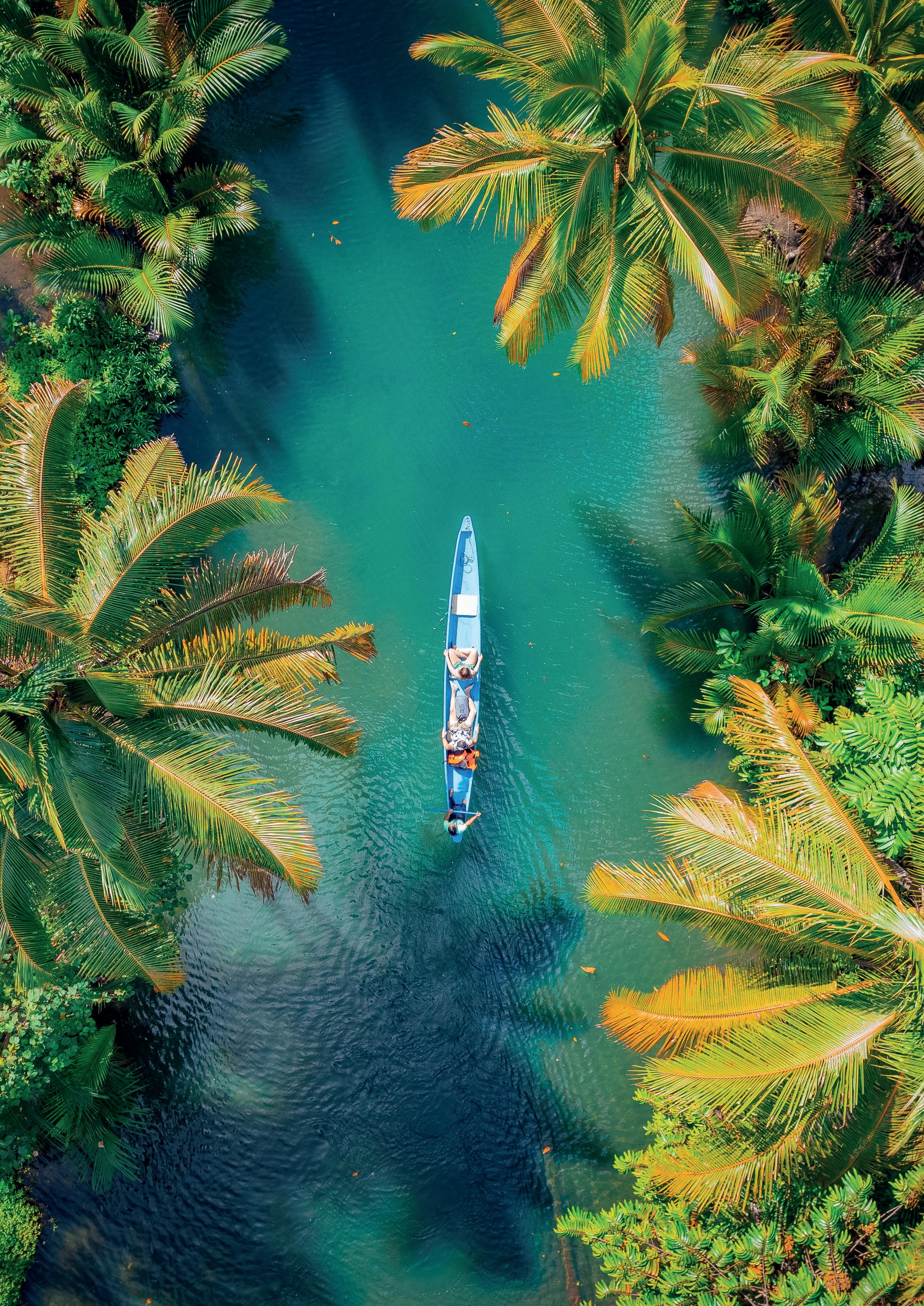
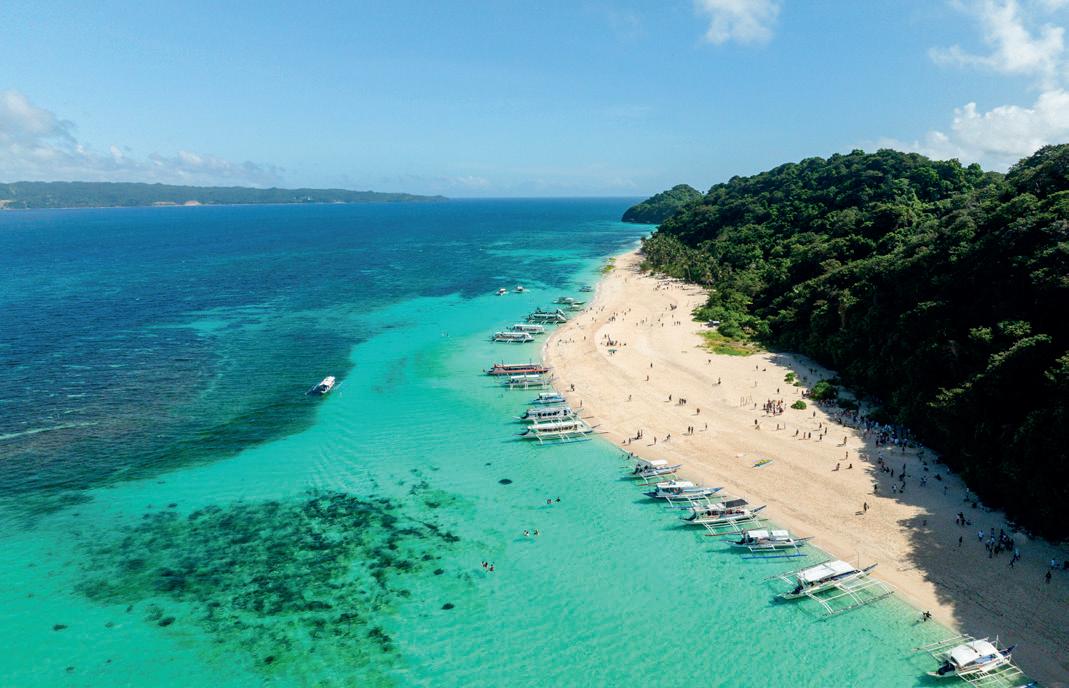
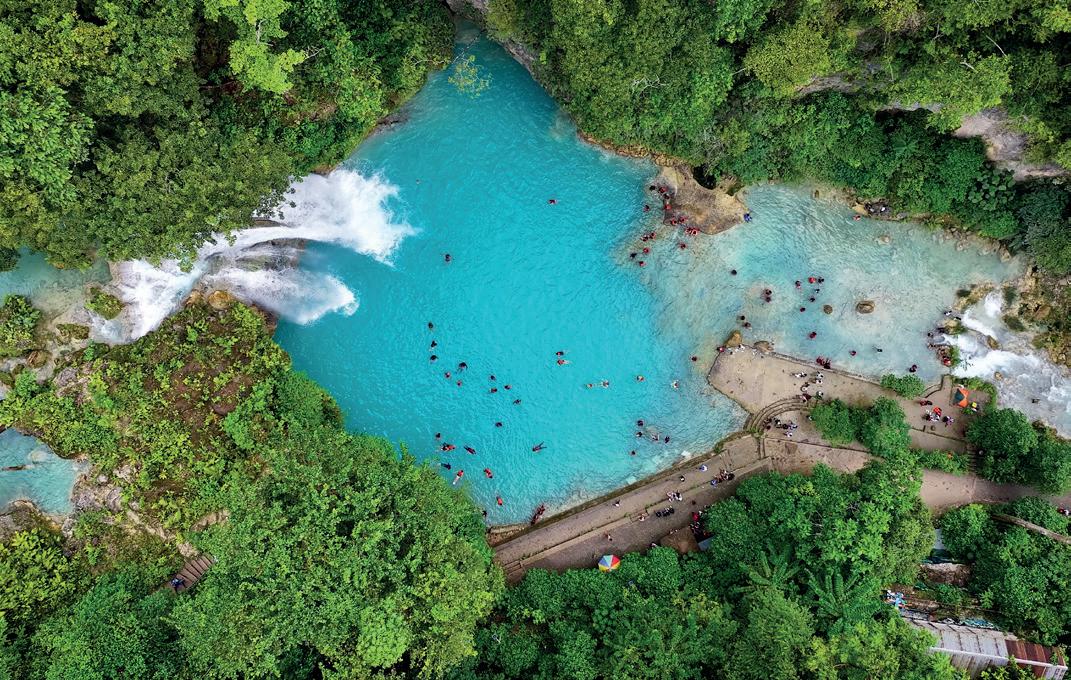
Seen from above, the Philippines resembles a constellation, a scatter of emerald fragments floating in a sea of impossible blues. Its three major island groups, Luzon, Visayas and Mindanao, each carry their own character. Luzon is the political and economic engine, home to the capital, Manila, and the country’s major business districts. The Visayas form the archipelago’s beating heart, a central cluster of islands known for beaches, diving and heritage. Mindanao, in the south, is vast, fertile and culturally rich, with landscapes that feel almost untouched.
This is a country shaped by water. Ferries, outriggers and inter-island flights stitch the archipelago together, creating a rhythm of movement that feels uniquely Filipino. Travel here is not simply about getting from A to B; it is about the journey itself, the slow glide across a lagoon or the hum of a turboprop skimming over coral reefs.
MANILA: A CITY IN MOTION
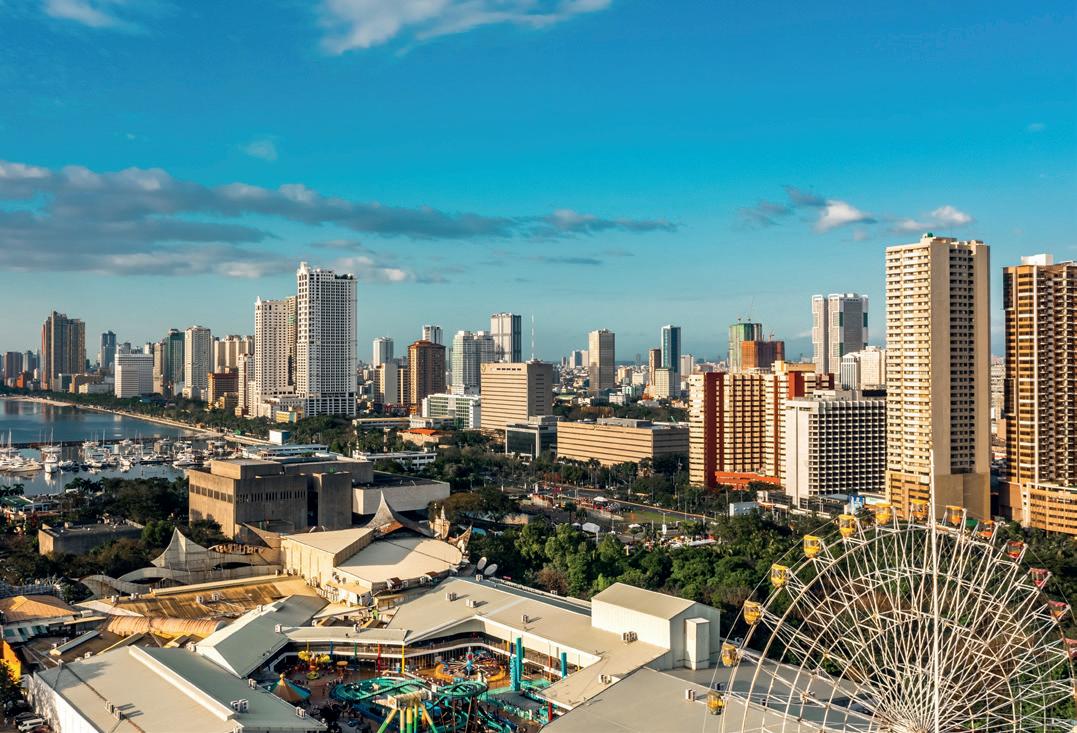
Manila has long been misunderstood dismissed as a stopover, a gateway, a place to transit through rather than explore. But the city has undergone a quiet transformation, and today it feels like a metropolis on the cusp of something. Its energy is unmistakable a blend of Spanish colonial heritage, American urban planning and a distinctly Filipino sense of creativity and resilience.
In Intramuros, the old walled city, the past is palpable. Cobblestones echo with centuries of history, and the baroque curves of San Agustin Church stand in elegant contrast to the modern skyline beyond. A short drive away, Bonifacio Global City offers a different Manila entirely glass towers, contemporary galleries and a dining scene that rivals any Asian capital. Meanwhile, Binondo, the world’s oldest Chinatown, remains a sensory feast: steaming dumplings, neonlit alleyways, and heritage shopfronts that feel frozen in time.
Luxury hotels have played a significant role in Manila’s renaissance. The Peninsula Manila remains a grand dame of Asian hospitality, its lobby a stage for business deals and reunions. Raffles Makati brings a quieter, more intimate elegance, while Shangri-La at the Fort anchors BGC with contemporary confidence. Okada Manila, with its vast suites and theatrical fountain displays, offers a resort-style escape within the city limits. Together, they signal a capital ready to be taken seriously.
PALAWAN: THE PHILIPPINES AT ITS MOST ELEMENTAL
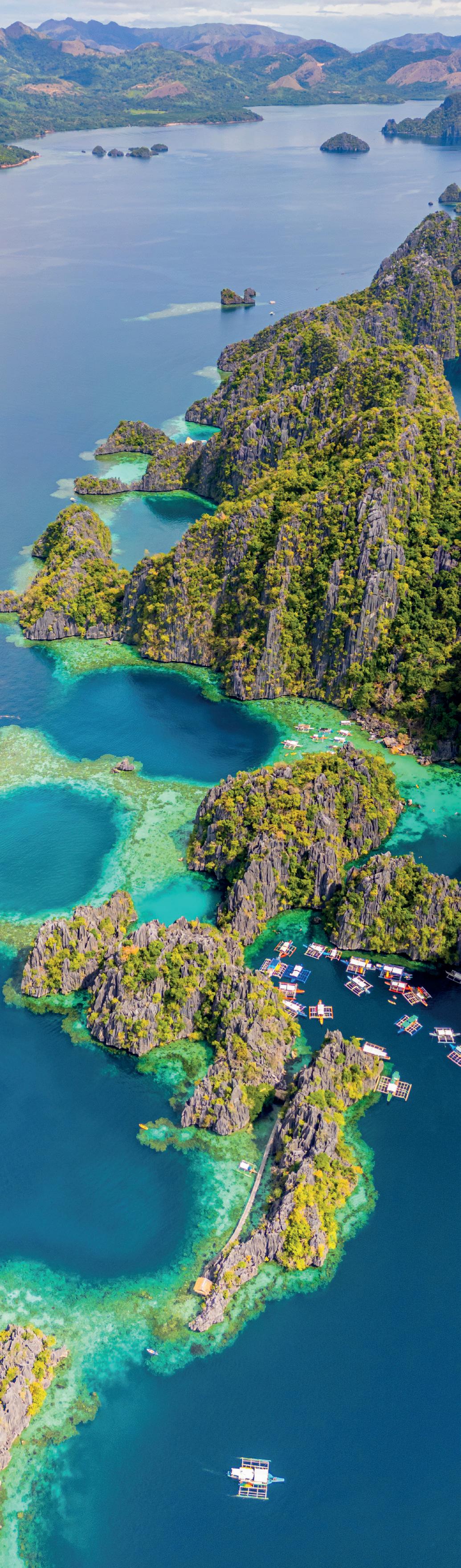
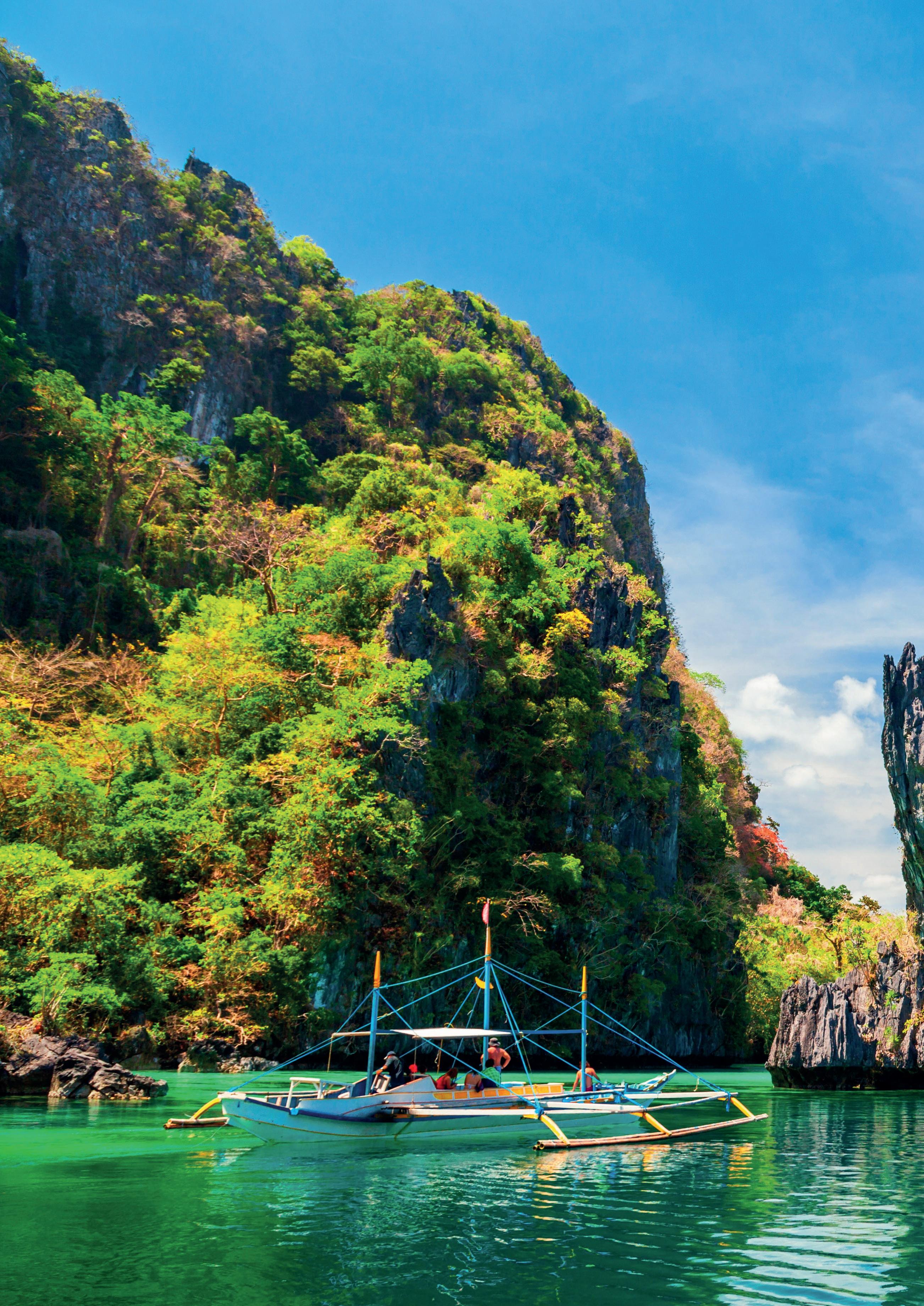
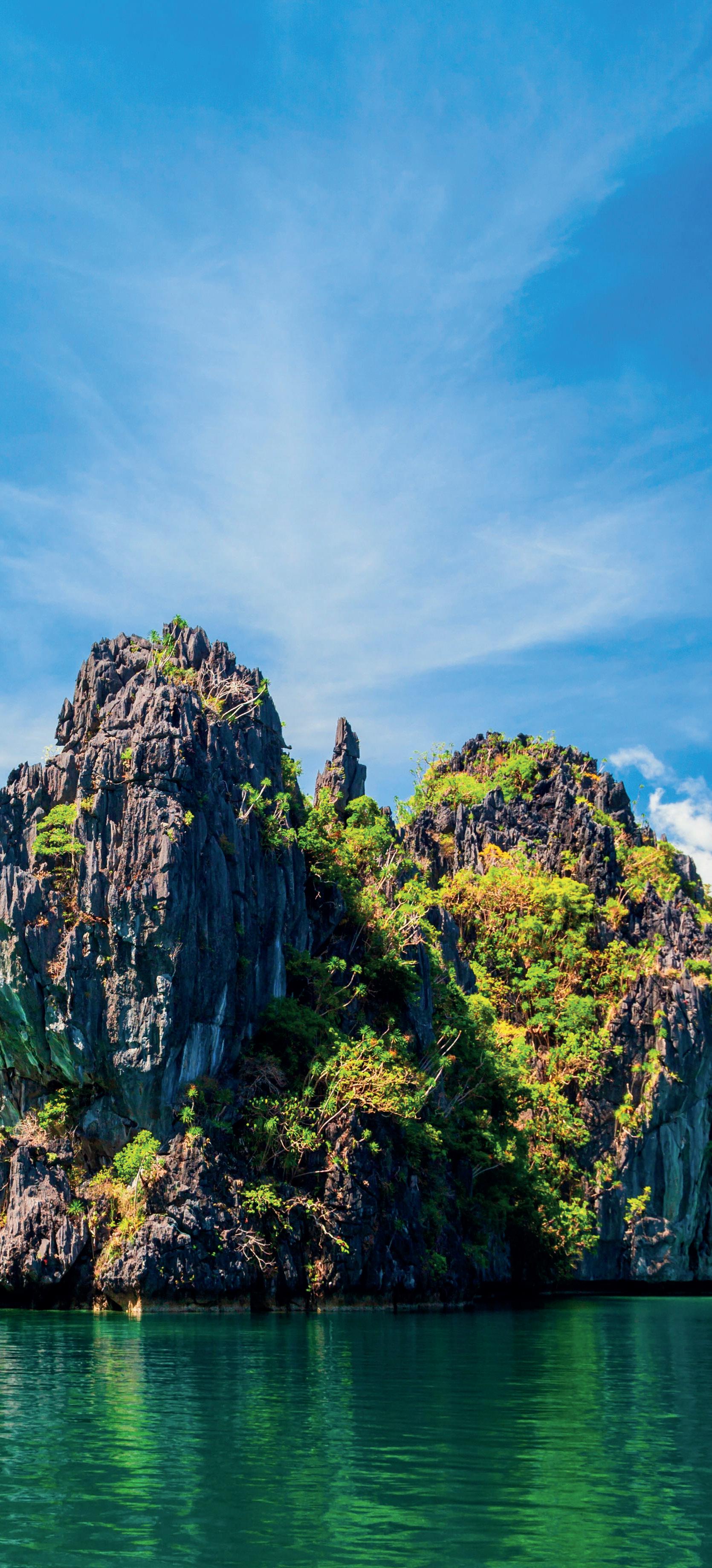
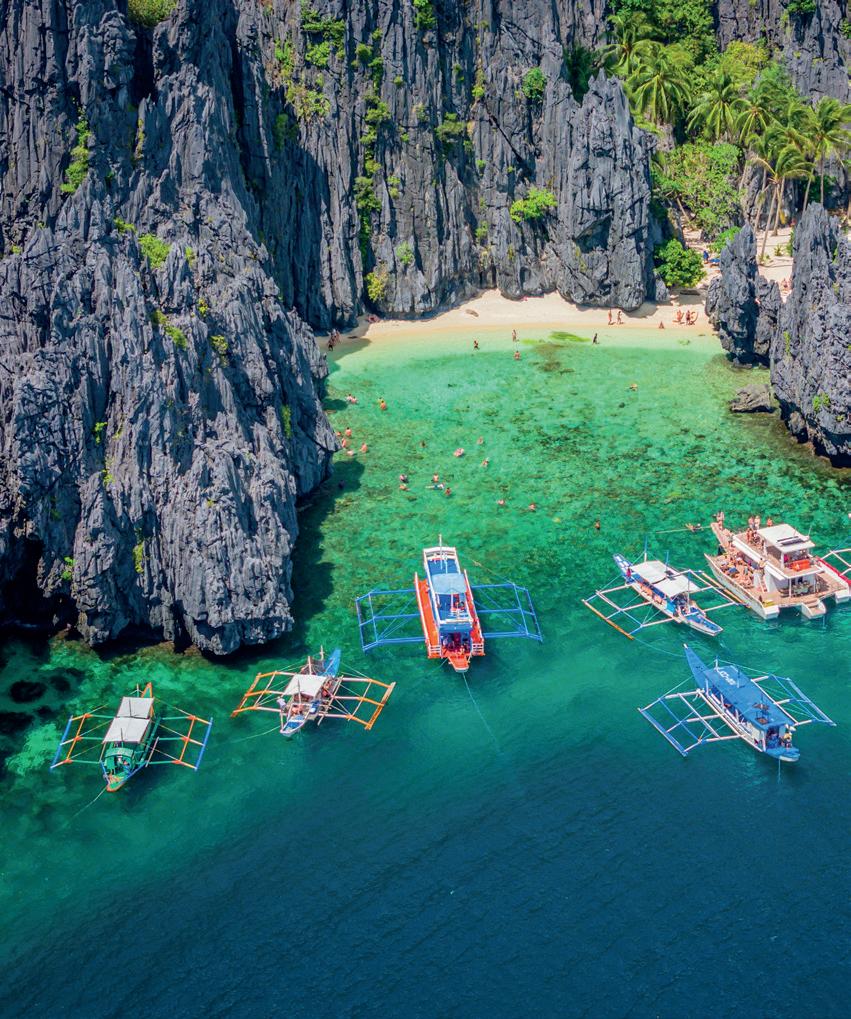
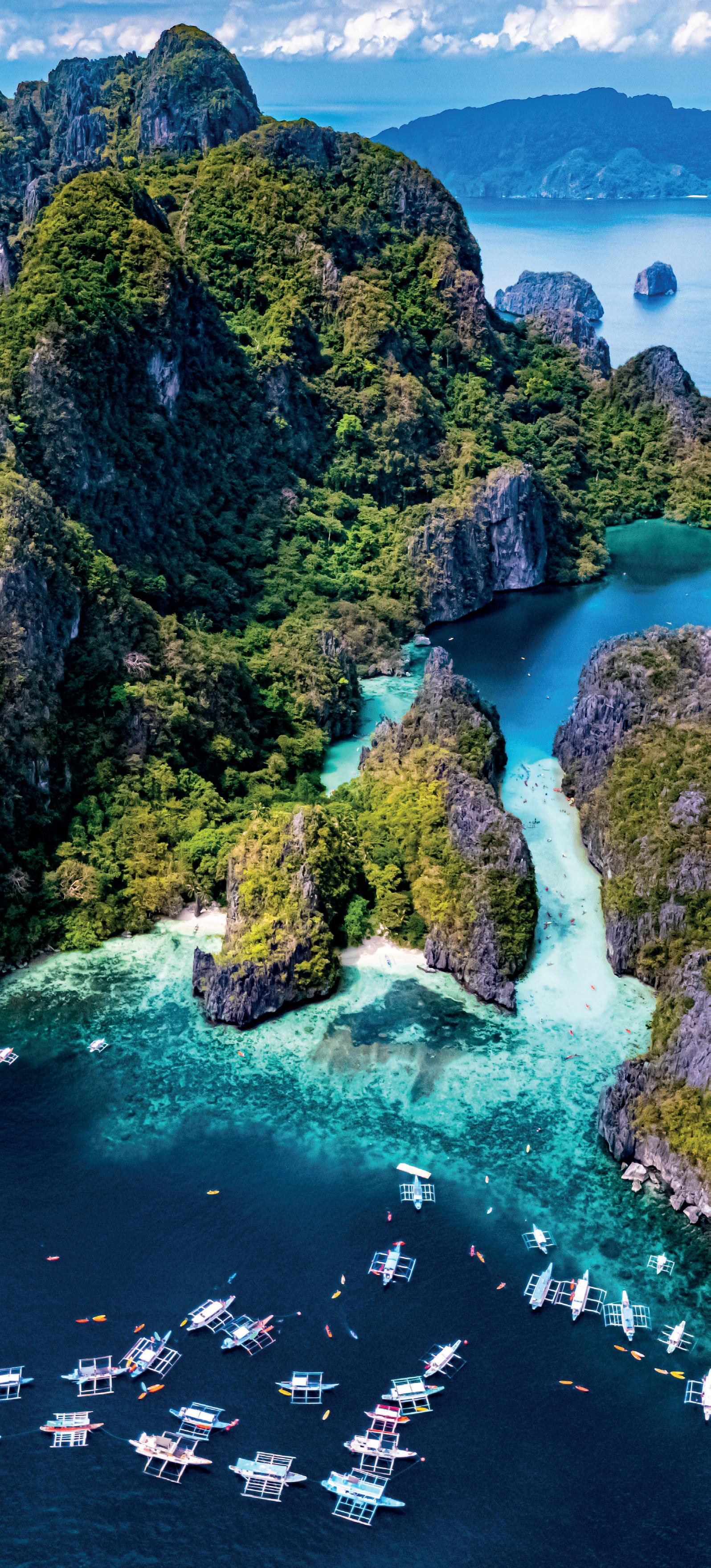
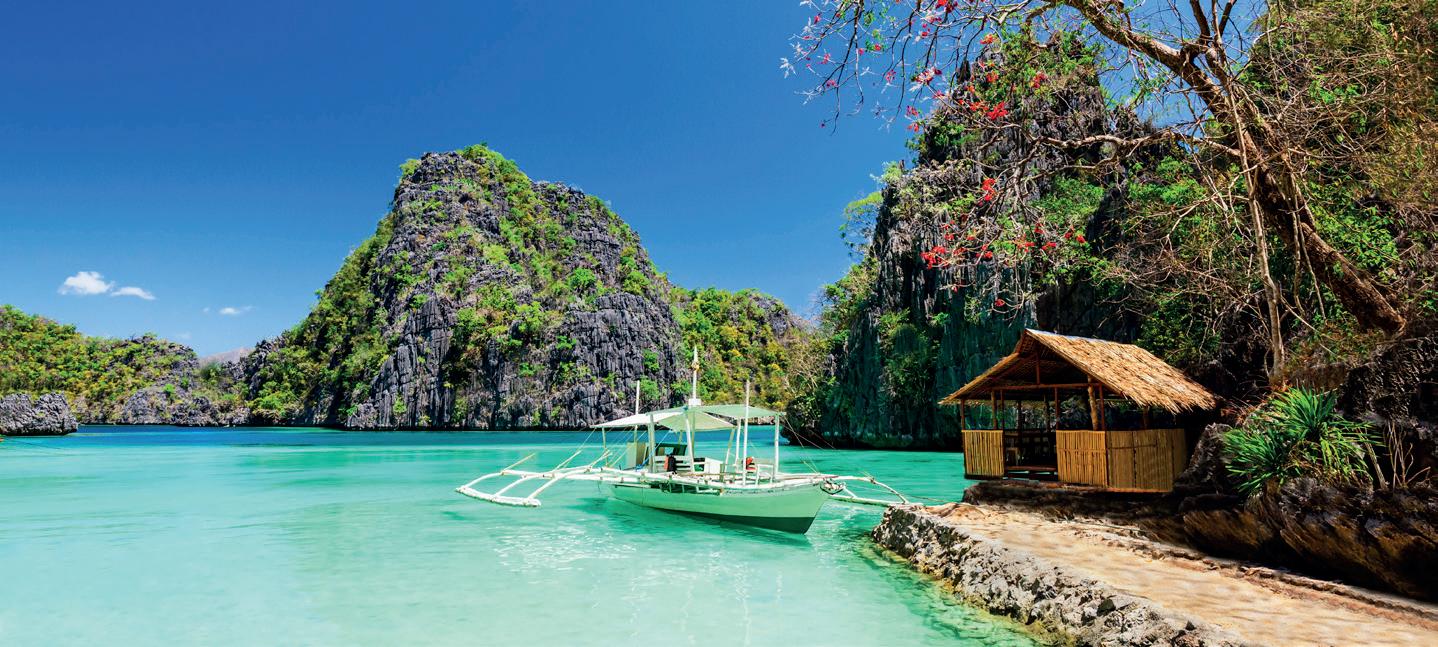
If the Philippines has a soul, many would argue it resides in Palawan. This long, slender island often described as the country’s last frontier is a place where nature still feels sovereign. In El Nido, limestone cliffs rise like cathedrals from turquoise water, their silhouettes shifting with the light. Hidden lagoons reveal themselves through narrow crevices; beaches appear as if conjured; and the water is so clear it feels almost unreal.
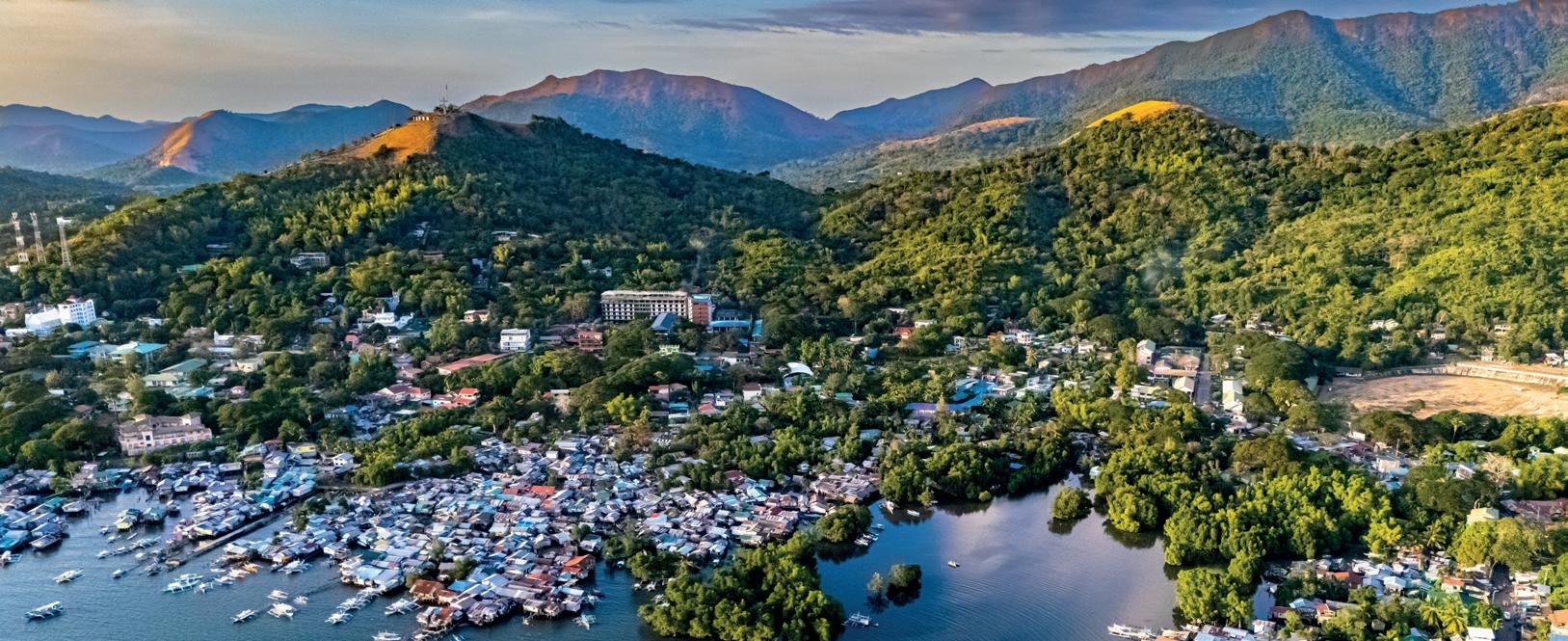
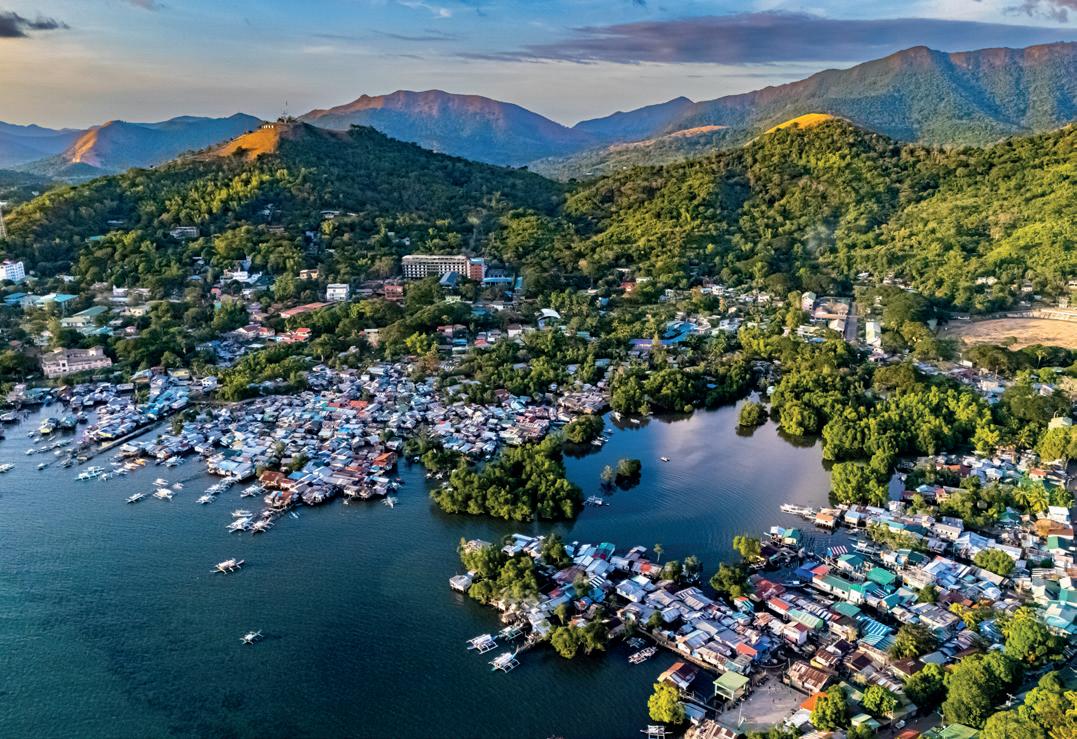
Coron, further north, offers a different kind of beauty. Its lakes, framed by jagged karst formations, glow in shades of jade and sapphire. Beneath the surface lie Japanese shipwrecks from the Second World War, now transformed into thriving marine ecosystems. Divers speak of Coron with a kind of reverence a place where history and nature intertwine.
Luxury here is understated, often eco-led. Resorts like Pangulasian and Lagen blend into the landscape, offering villas that open directly onto the sea. In Coron, island sanctuaries such as Club Paradise and Two Seasons offer seclusion without sacrificing comfort. Palawan is not a place you visit; it is a place you feel.
THE COMEBACK QUEEN
Boracay’s story is one of reinvention. Once synonymous with over tourism, the island underwent a dramatic rehabilitation that has transformed it into a model for sustainable beach destinations. Today, White Beach a four kilometre stretch of powder soft sand is cleaner, quieter and more curated than ever.
The island’s luxury hotels have embraced this new ethos. Shangri La Boracay, perched on a private cove, offers villas with sweeping views and a sense of tranquillity that feels worlds away from the island’s lively centre. Crimson Resort brings contemporary design and a refined calm, while The Lind, one of only two hotels in the Philippines recognised by the MICHELIN Guide and the sole listed property on
Boracay adds a touch of modern glamour to the beachfront. Its inclusion signals a new era for the island: one where style, service and sustainability are held to global standards.
Boracay remains the Philippines’ most famous island, but its new chapter is defined by balance between indulgence and responsibility, between energy and serenity.
CEBU: CULTURE, CONNECTIVITY AND COASTAL CALM
Cebu is the Philippines in microcosm: a blend of heritage, modernity and natural beauty. Cebu City is one of the country’s major economic hubs, its streets lined with tech parks, universities and historic
landmarks. Magellan’s Cross and the Basilica del Santo Niño offer glimpses into the country’s colonial past, while the city’s markets and eateries showcase its culinary identity.
Across the bridge, Mactan Island provides a softer counterpoint. Here, luxury resorts stretch along the coastline, offering private beaches, water sports and spa retreats. Shangri-La Mactan remains a favourite for both business and leisure travellers, while Dusit Thani and JPark Island bring their own interpretations of island luxury.
Cebu’s appeal lies in its versatility. It is a place where meetings can be followed by sunset cocktails, where heritage sits comfortably alongside innovation, and where the pace can shift from urban to island in minutes.
BORACAY REMAINS THE PHILIPPINES’ MOST FAMOUS ISLAND, BUT ITS NEW CHAPTER IS DEFINED BY BALANCE BETWEEN INDULGENCE AND RESPONSIBILITY, BETWEEN ENERGY AND SERENITY
MANILA
PALAWAN
BORACAY
CEBU
SIARGAO: THE ISLAND OF NOW
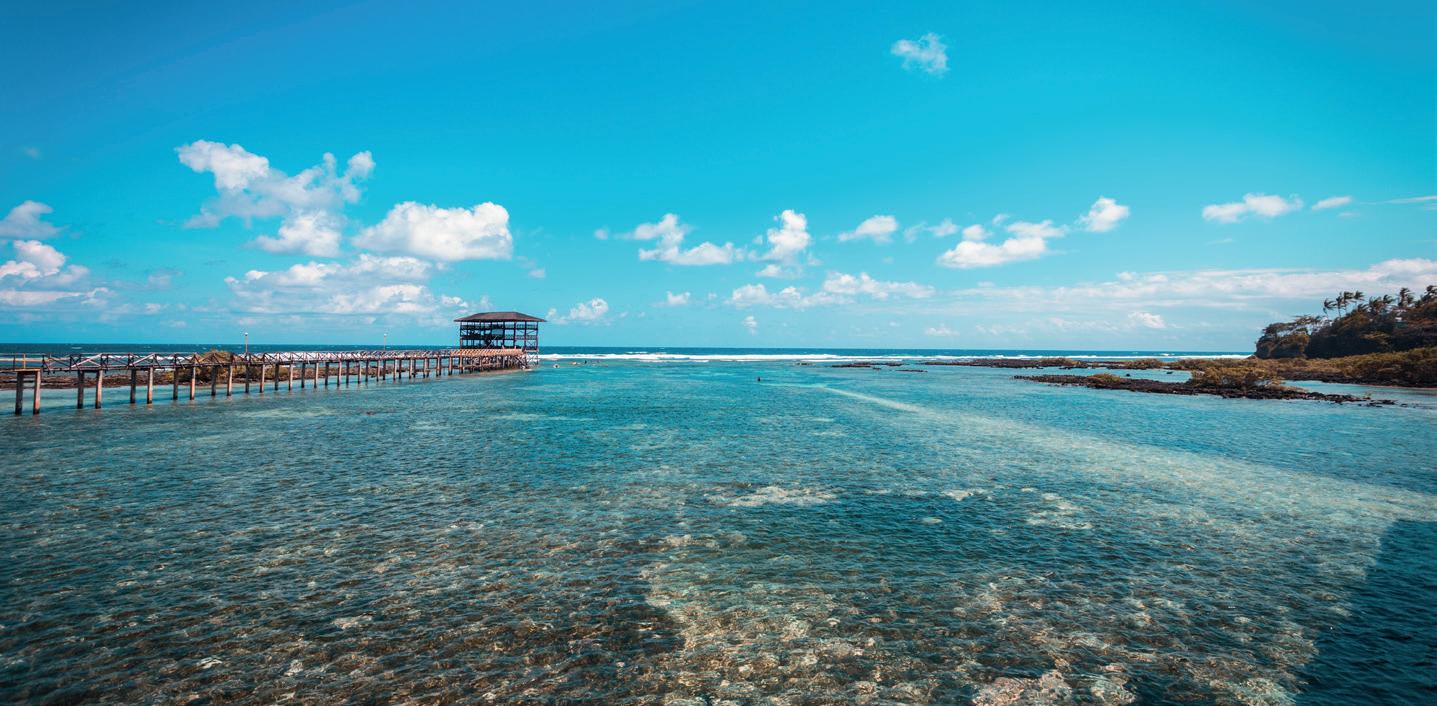
Siargao is the Philippines’ rising star. A teardrop-shaped island that has captured the imagination of travellers seeking something more soulful. Known for its surf culture, particularly the legendary Cloud 9 break, Siargao has evolved into a creative hub filled with independent cafés, boutique stays and a community that values sustainability and slow living.
The island’s charm lies in its authenticity. Palm-lined roads lead to tidal pools, mangrove forests and beaches that feel untouched. Luxury here is more bohemian than polished think barefoot elegance, open-air villas and menus built around local produce. Siargao is not trying to be the next Bali or Tulum; it is confidently, quietly itself.
A CULINARY IDENTITY ALL ITS OWN
Filipino cuisine is one of Asia’s most misunderstood and most rewarding. It is a cuisine shaped by geography, colonisation and creativity, blending indigenous flavours with Spanish, Chinese and American influences. In Manila, chefs are redefining Filipino food with modern techniques and global sensibilities. Dishes like adobo, sinigang and kinilaw appear on tasting menus alongside inventive reinterpretations of regional classics.
Across the islands, food becomes a narrative. In Cebu, lechon - slow-roasted suckling pig is a point of pride. In Palawan, seafood is the star, often grilled simply and served with calamansi. In Siargao, the café culture is strong, with smoothie bowls and fresh seafood pasta sitting comfortably alongside traditional fare.
GETTING THERE: ROUTES THAT MAKE THE ARCHIPELAGO WORK
The Philippines is surprisingly well connected. Manila and Cebu serve as major international gateways, with onward flights to Palawan, Boracay, Siargao and beyond. Domestic carriers operate frequent interisland routes, while ferries and private charters offer alternative ways to explore.
For business travellers, the combination of international connectivity and island accessibility makes the Philippines uniquely appealing. Meetings in Manila can be followed by a weekend in Palawan; a conference in Cebu can segue into a few days in Siargao. The country lends itself to blended travel not as a trend, but as a natural extension of its geography.
A COUNTRY THAT STAYS WITH YOU
The Philippines is not a destination you tick off; it is a destination you return to. Its beauty is undeniable, but it is the people
THE PHILIPPINES IS NOT A DESTINATION YOU TICK OFF; IT IS A DESTINATION YOU RETURN TO
warm, expressive, generous who give the country its soul. Whether you’re navigating Manila’s modern districts, drifting through Palawan’s lagoons, or sharing a meal in a seaside village, the feeling is the same: you are welcome.
For business travellers, the Philippines offers far more than efficient connections and modern infrastructure. It brings a shift in pace, a sense of space, and the kind of experiences that stay with you long after the trip ends, a reminder that travel can still feel meaningful, even in a world that moves fast.
ESSENTIAL INFORMATION
Time Difference
The Philippines is GMT+8, eight hours ahead of the UK.
Temperature
Warm and tropical year round, typically 25°C to 32°C.
Best Time to Visit
November to May is the dry, reliable season with calm seas and clear skies.
June to October is wetter, with higher humidity and occasional typhoons.
Visa Requirements
UK travellers can enter visa free for up to 30 days with a passport valid for six months and an onward ticket.
Health & Vaccinations
• Routine travel vaccinations such as hepatitis A, typhoid and tetanus are commonly recommended.
• Travellers should seek personalised medical advice before departure.
Who Flies There
• Philippine Airlines operates direct London–Manila flights.
One stop routes are available via Emirates, Qatar Airways, Singapore Airlines, Cathay Pacific, Etihad to name a few.
SIARGAO
INTERVIEW
Stephen Dooley spent four years researching why people trust strangers on platforms like Airbnb and Uber. Then he built a startup that turns that trust inward, asking business travellers to stay with friends and colleagues rather than check into a hotel. Richard Alvin meets the Cork-based founder whose four-person company is already operating in more than 100 countries.
There is a particular kind of startup founder who, when asked to describe what their company does, cannot resist delivering the pitch as a provocation. Stephen Dooley is one of them. The premise of Roamr, the company he co-founded in Cork in 2023 with Jason O’Gorman, is simple enough to explain on the back of a boarding pass: when an employee travels for work, instead of booking a hotel, they stay with a friend, a colleague, or a family member. The money the company would have spent on accommodation is split three ways — 30 per cent to the host, 30 per cent to the guest, and 30 per cent returned as a saving to the employer. Everyone, in Dooley’s telling, wins. It sounds, at first, like the sort of idea that might have emerged from a particularly spirited brainstorming session at a fintech incubator, clever, counterintuitive, and impossible to scale. But Roamr is already live in more than 100 countries. Its client roster includes Deel, Remote, Oyster, and RemoFirst, some of the biggest names in the distributed-workforce economy. It has raised $2.9 million in pre-seed funding, been named to PhocusWire’s prestigious Hot 25 Travel Startups for 2026, and is doing all of this with a team of just four people. For a company that bills itself as the antithesis of the hotel industry, it is making a surprisingly large amount of noise.
FROM PHD TO PLATFORM
Dooley’s route to founding a travel startup was not a conventional one. He did not
come up through the ranks of a travel management company or cut his teeth at an online travel agency. Instead, he spent four years at University College Cork completing a PhD in financial technology, researching the mechanisms by which platforms such as Uber and Airbnb generate trust and drive adoption among users who have never met one another. It was, in hindsight, the perfect intellectual preparation for what came next.
The pandemic sharpened his thinking. As companies around the world began allowing employees to work from anywhere, Dooley noticed a contradiction. Firms were embracing geographic flexibility but doing nothing about the financial inefficiencies that came with it. Employees were travelling more, to team off-sites, client meetings, company gatherings, but the accommodation model remained stubbornly unchanged. Hotels or Airbnbs, booked through corporate travel platforms that are incentivised to make you spend more because that is how they earn their commission.
The insight that became Roamr emerged from a deceptively simple question: what if, instead of paying a hotel, you paid the person whose spare room the traveller was already planning to use? The idea sat at the intersection of Dooley’s academic research and the practical reality of remote work. All he needed was a co-founder who could build it.
He found Jason O’Gorman through Y Combinator’s founder matching programme. O’Gorman, a software engineer, had spent a decade building travel and
hospitality startups including stints at Cloudbeds and RentalMatics. Where Dooley brought the theoretical framework — trust dynamics, adoption curves, platform economics — O’Gorman brought the engineering discipline to turn it into a product. They launched Roamr in April 2023.
HOW IT ACTUALLY WORKS
The mechanics of Roamr are straightforward, which is part of its appeal. When a company signs up, Roamr integrates with its existing travel policy. An employee preparing for a business trip can choose to stay with a friend, family member, or colleague instead of booking conventional accommodation. The platform verifies both parties, it is a gated, professional network where every user is a verified working professional, and sets a rate based on what the equivalent hotel or serviced apartment would have cost in that location.
Roamr uses AI-driven algorithms and market pricing data to establish the benchmark rate, ensuring it reflects the genuine alternative cost. It can set rates by country, by city, or even by neighbourhood, downtown Manhattan versus outer Brooklyn, for example. That benchmark becomes the figure that gets redistributed: 30 per cent to the company as a direct saving, 30 per cent to the travelling employee as a reward for choosing the cheaper option, and 30 per cent to the host as compensation for opening their home. The company charges a transaction fee based on the alternative hotel spend. Crucially, no employee is ever required to use Roamr. It is entirely opt-in. In practice, Dooley says, the people who use it tend to be those who were already planning to stay with someone they know. Roamr simply formalises what was previously an informal arrangement and ensures everyone benefits financially.
For compliance-minded travel managers, the platform sends invoices that can be processed through standard corporate channels or payroll. Companies can build in whatever approval terms they wish. It is, in other words, designed to sit within existing corporate travel infrastructure rather than replace it.
THE DISTRIBUTEDWORKFORCE SWEET SPOT
Roamr’s early traction has come overwhelmingly from companies with distributed or remote-first workforces, precisely the sort of organisations where employees are scattered across multiple countries and travel frequently to meet in person. Its partnerships with Deel, Remote, and Oyster are not coincidental. These are platforms whose entire business model depends on making remote work frictionless, and accommodation is one of the biggest remaining friction points.
Through its partnership with Deel, Roamr offers accommodation savings as a global mobility perk. With Oyster, it provides remote workers with free accommodation for a year through a co-branded benefit. The RemoFirst integration follows a similar pattern. In each case, Roamr is positioned not as a standalone travel tool but as a layer within a broader employee benefits ecosystem.
This is a deliberate strategy. Dooley is candid about the fact that Roamr’s model works best in specific contexts. A multinational with rigid travel policies, preferred hotel rates negotiated across dozens of properties, and a dedicated travel management company is probably not going to adopt Roamr wholesale. But a 200-person tech company with employees in 15 countries, no corporate hotel programme, and quarterly off-sites in Lisbon or Austin? That is Roamr’s sweet spot. There is also, Dooley argues, a less quantifiable benefit. When an employee stays with a friend or colleague in a new city, the quality of the trip changes. There is local knowledge, a shared meal, a sense of connection that a hotel room, however comfortable, simply cannot replicate. For companies trying to build cohesion across distributed teams, this matters. It turns a business trip into something closer to a relationship-building exercise, which is precisely what many remote-first companies are trying to achieve when they bring people together in the first place.
SCALING WITH FOUR PEOPLE
Perhaps the most remarkable thing about Roamr is its headcount. At the time of writing, the company employs four people. Four. Operating in more than 100 countries, servicing partnerships with some of the fastest-growing companies in the remote-work economy, and doing so on $2.9 million in pre-seed funding.
The early fundraise tells its own story. Dooley and O’Gorman closed an initial preseed round of roughly €500,000 through the New Frontiers programme at TU Dublin and a group of handpicked angel investors. They had not expected to raise again until late 2025. But within four months, existing backers came back with an additional $2.3 million, having seen enough early traction to want to pre-empt the next round.
The lean operation is partly a function of the platform’s design. Because Roamr sits on top of existing employer-employee relationships and uses algorithmic pricing, there is no inventory to manage, no properties to inspect, and no complex supply chain to maintain. Unlike a hotel aggregator or an online travel agency, Roamr does not need to negotiate contracts with thousands of properties or maintain a global sales force. The platform’s supply, friends, colleagues, family members with a spare room, already exists. Roamr simply provides the commercial and administrative framework to make it work within a corporate travel policy. The company’s costs are overwhelmingly technology and product development, which is exactly where Dooley wants to invest next.
THE QUESTIONS THAT MATTER
For all its elegance, Roamr invites obvious questions. The first is about duty of care. When an employee stays in a hotel, the employer has a clear and well-understood set of responsibilities around safety, insurance, and accountability. When that same employee stays on a friend’s sofa, the picture becomes murkier. Dooley insists that Roamr addresses this through its verification processes and its integration with corporate travel policies, but he acknowledges that the conversation is ongoing.
The second question is whether the model can move beyond its natural constituency of remote-first tech companies. Roamr’s current clients are, almost without exception, digitally native, geographically distributed, and culturally inclined to experiment. Traditional corporates, banks, law firms, consultancies, operate in a different universe of compliance, procurement, and risk appetite. Dooley is aware of the challenge but unhurried about it, preferring to go deep with the companies that already understand the model rather than spread the team thin trying to convert sceptics.
The third question, inevitably, is about AI. In a year when virtually every travel startup is leading with artificial intelligence, Roamr’s plans for 2026 include launching AI-powered features to drive further savings and personalisation. Dooley is characteristically
measured about it. The technology, he argues, makes the platform smoother but does not replace the thing that makes it work, real relationships, real homes, real connections.
WHAT COMES NEXT
Roamr’s immediate priorities are clear: ramp up its customer base in the United States, where the distributed-workforce trend is most advanced, and continue building out the product with AIdriven features. Dooley describes the company as “unapologetically globally ambitious”, a phrase that carries particular weight from a four-person team in Cork.
The broader context is favourable. Business travel accommodation costs continue to rise. Corporate budgets are under pressure. And the remote-work revolution shows no sign of reversing, meaning more companies have employees scattered across more cities than ever before. Every one of those trends plays to Roamr’s strengths.
Whether Dooley’s anti-hotel model can grow from a clever niche play into a genuine force in corporate travel remains to be seen. The hotel industry is not standing still, major chains are investing heavily in loyalty programmes, flexible booking, and extended-stay formats designed to capture exactly the kind of longer-duration business trips where Roamr thrives. And as corporate travel budgets tighten further, the competition for every pound of accommodation spend will only intensify. But the combination of academic rigour, lean execution, and a model that quite literally pays people to do something they were going to do anyway is hard to dismiss. In an industry drowning in AI hype and platform consolidation, Roamr is refreshingly, almost stubbornly, human. Four people, one idea, 100 countries, and a PhD thesis that turned out to be worth rather more than the paper it was printed on.
FROM FOSSILS TO FINE DINING THE JURASSIC COAST’S NEW APPEAL
JURASSIC COAST
It is one of the UK’s most studied and best preserved coastlines, known for its exposed rock strata, globally important fossil beds and distinctive landforms shaped by erosion, landslips and shifting seas.
For travellers seeking a destination that combines natural heritage, outdoor activity, strong hospitality and easy access from major cities, the Jurassic Coast offers a compelling mix.
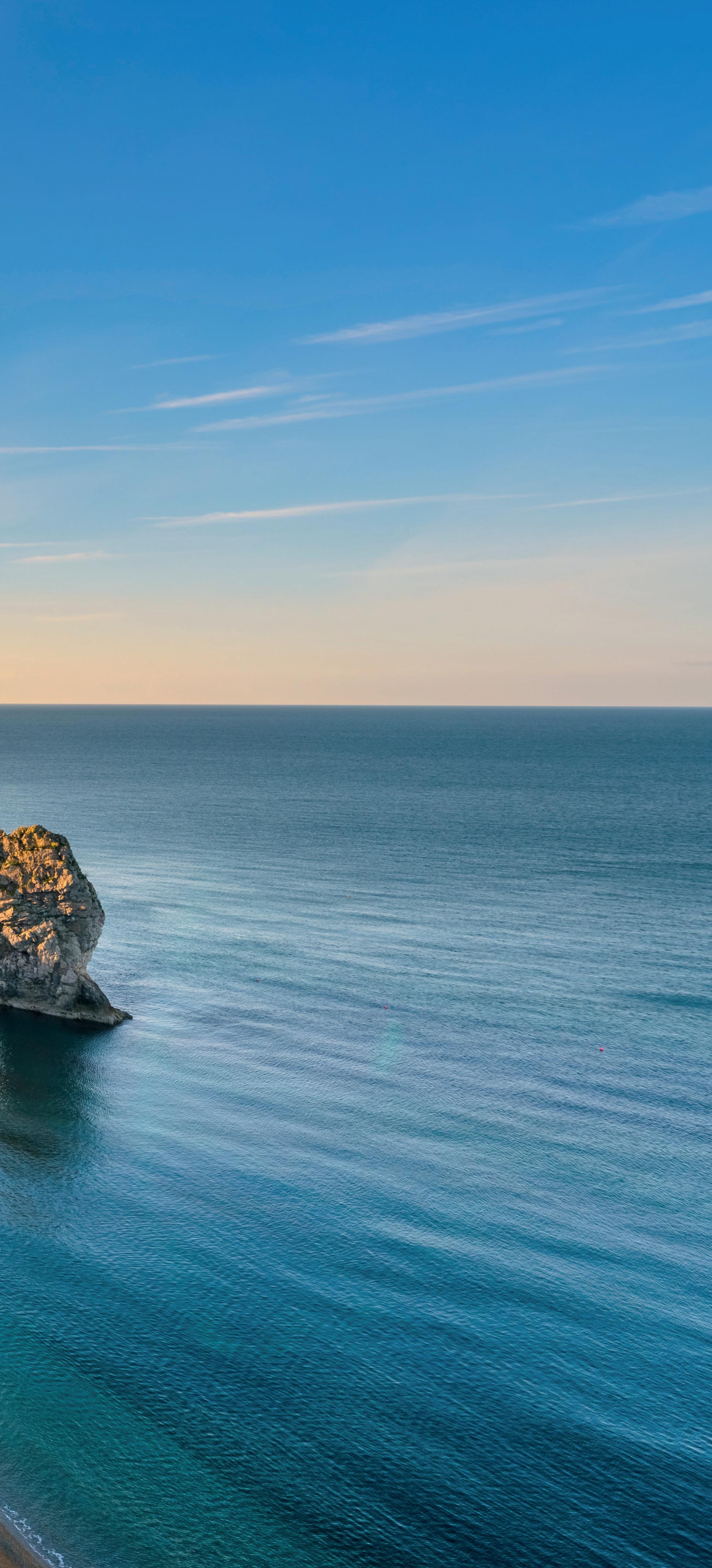
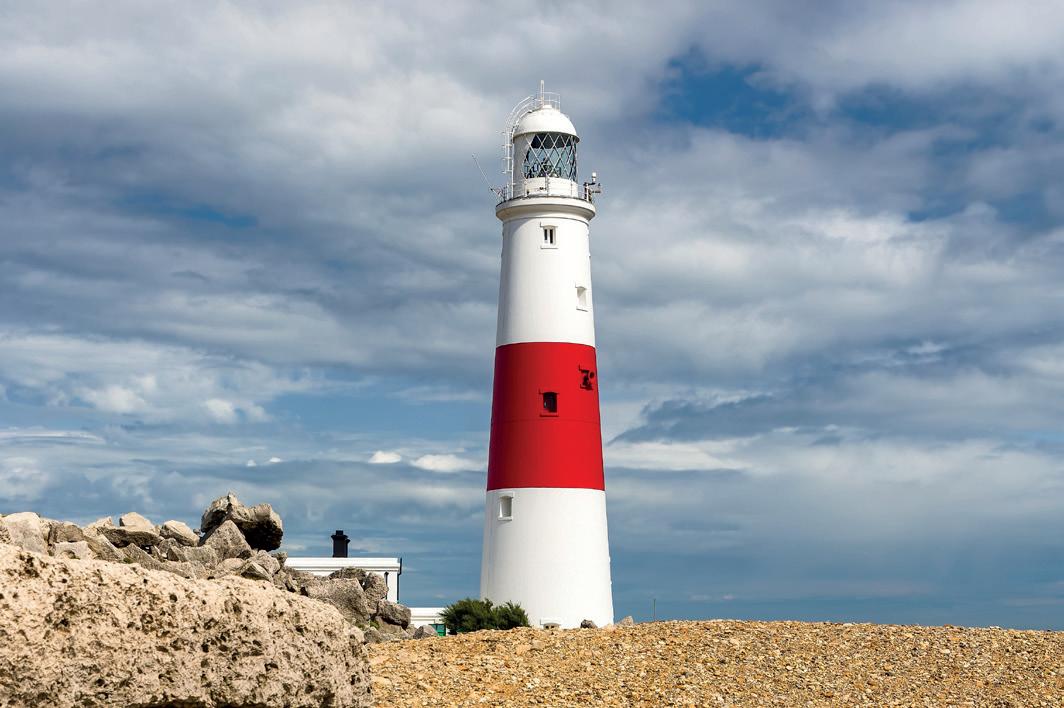
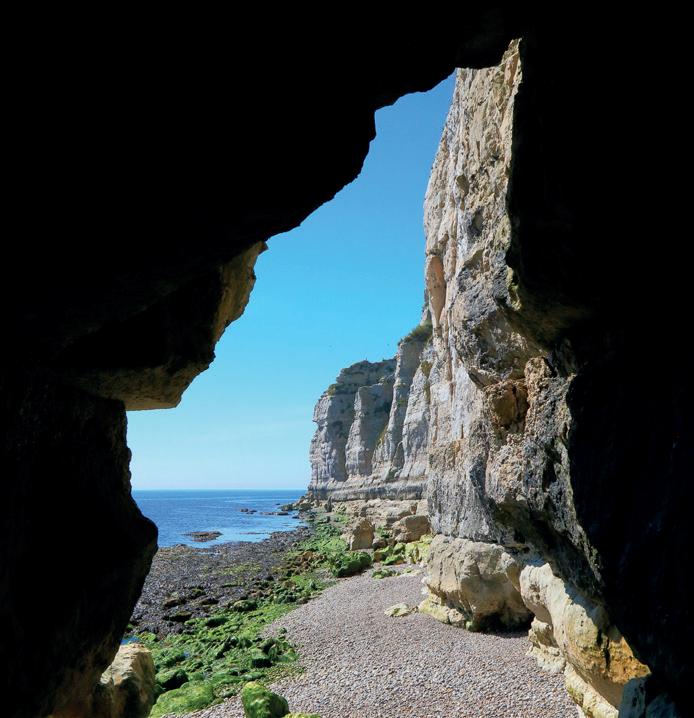
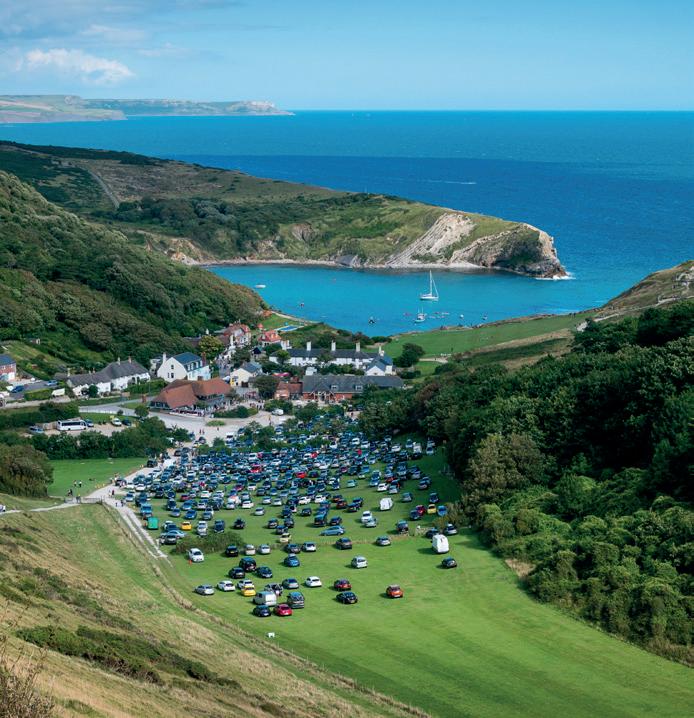
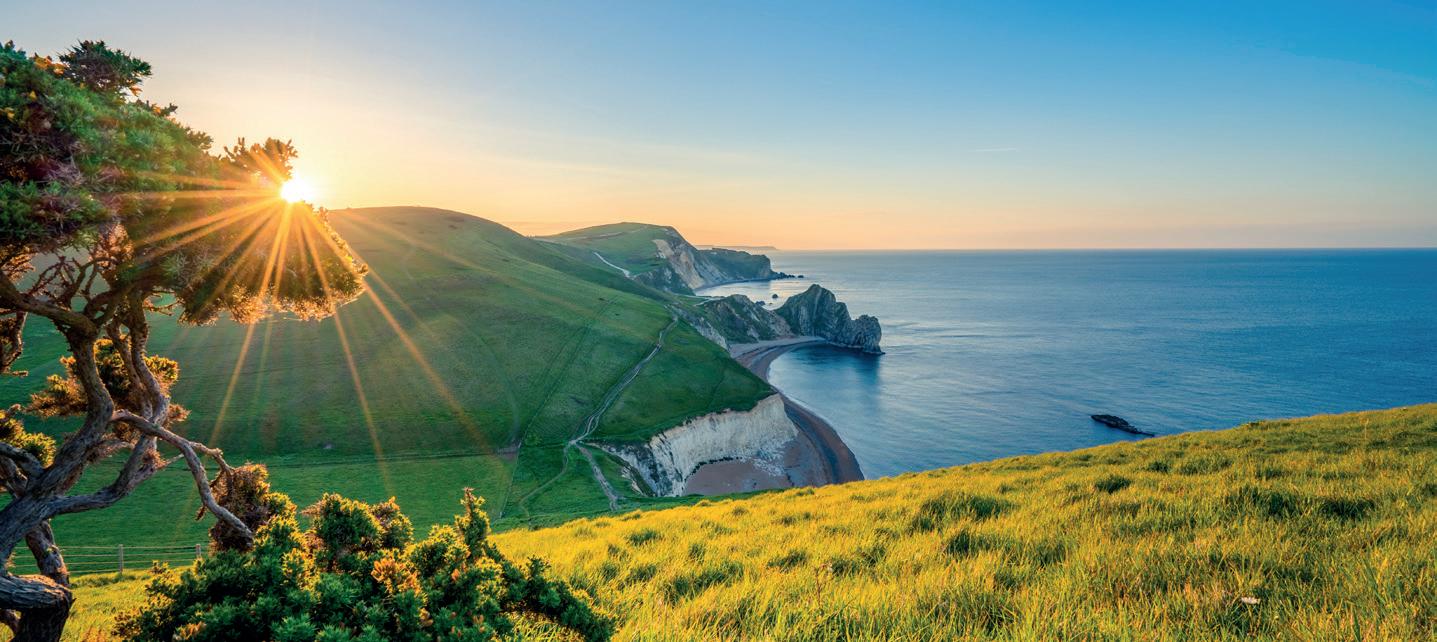
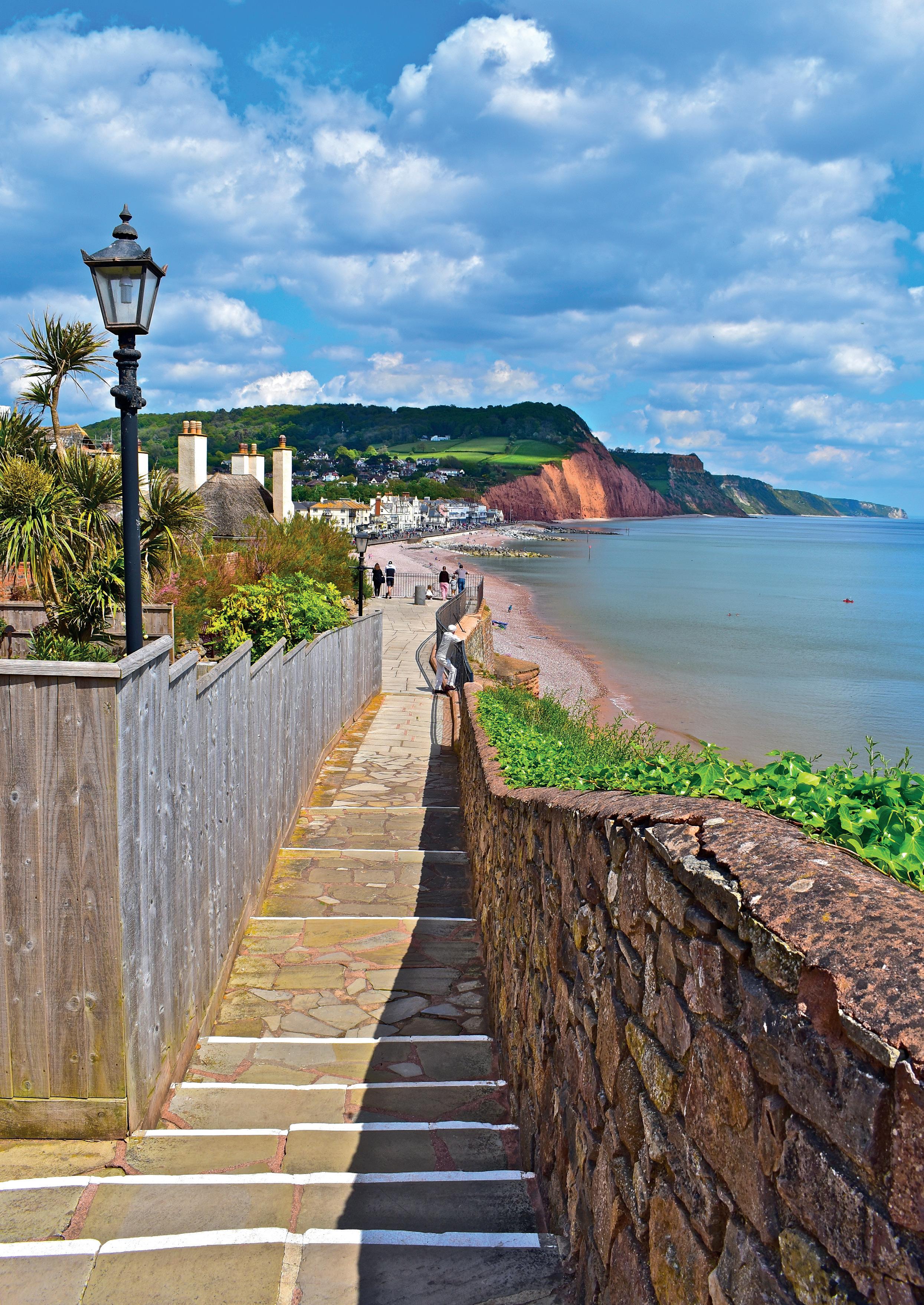
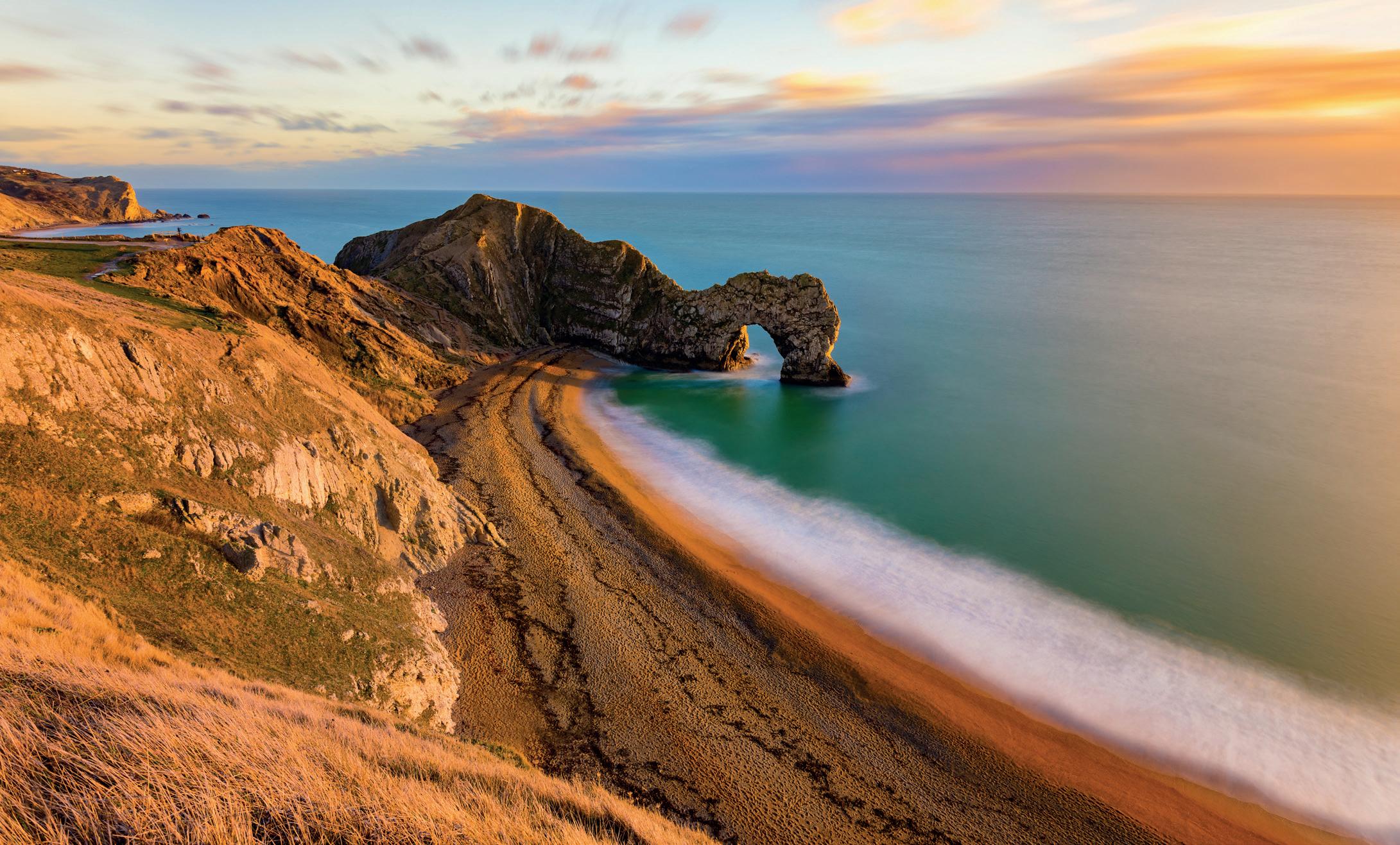
The coastline’s geological variety is one of its defining features. Different sections reveal different eras: the red Triassic cliffs of East Devon, the Jurassic limestone around Lulworth and Portland, and the white Cretaceous chalk stacks at Old Harry Rocks. These layers are visible from footpaths, beaches and viewpoints, making the region one of the most accessible outdoor classrooms in the world. Landmarks such as Durdle Door, a natural limestone arch and Lulworth Cove, a textbook example of coastal erosion are among the most photographed natural sites in the UK. Further west, the vast sweep of Chesil Beach and the rugged Isle of Portland add another dimension to the coastline’s character.
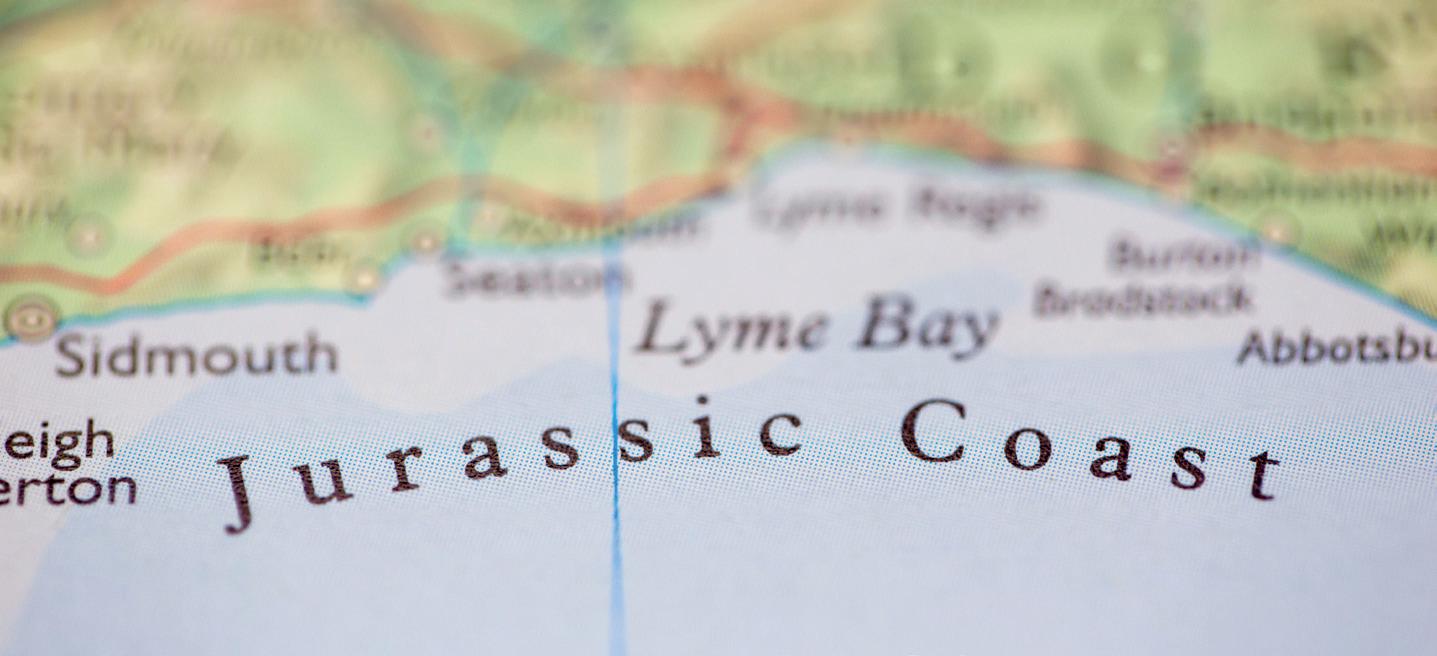
Running for 95 miles along the southern edge of England, from Exmouth in Devon to Studland Bay in Dorset, the Jurassic Coast is Britain’s only natural UNESCO World Heritage Site, a designation earned for its clear, continuous record of 185 million years of geological history.
By ANDREA THOMPSON
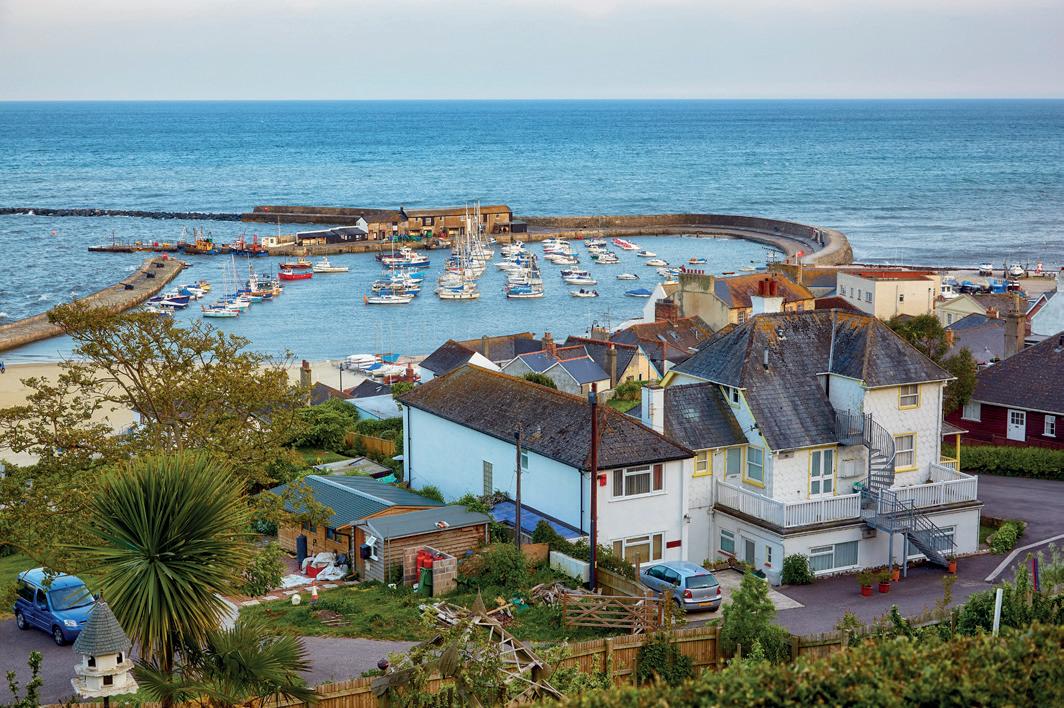
Fossils remain central to the region’s identity. Lyme Regis and Charmouth are internationally recognised for their abundance of ammonites, belemnites and marine reptile remains. This is where Mary Anning made her groundbreaking discoveries in the early 19th century, including the first complete ichthyosaur skeleton. Today, guided fossil walks, visitor centres and museums help explain the science behind the finds, while responsible fossil hunting remains a popular activity. Kimmeridge, with its fossil rich clay and excellent geology museum, is another key stop for visitors interested in earth science.
MORE ON THE NEXT PAGE
WALKING IS ONE OF THE MOST POPULAR WAYS TO EXPERIENCE THE REGION, AND THE JURASSIC COAST FORMS ONE OF THE MOST CELEBRATED
STRETCHES OF THE SOUTH WEST COAST PATH
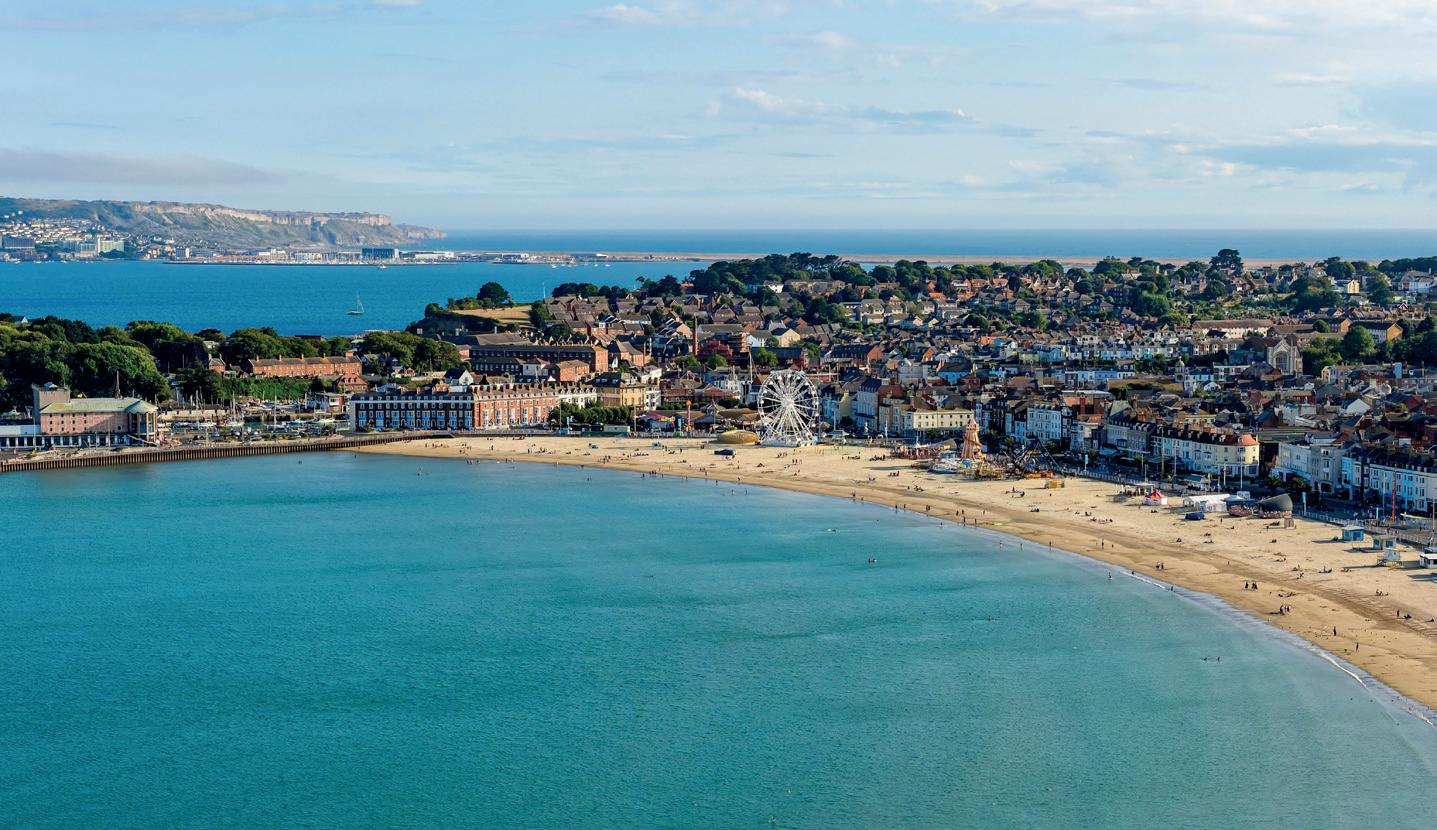
Beyond geology, the Jurassic Coast is known for its varied landscapes and coastal towns. Weymouth offers a traditional harbourfront and sandy beach, while West Bay with its vertical golden cliffs has become a hub for walkers, photographers and fans of the TV series Broadchurch. Inland, nature reserves and rolling countryside provide additional walking routes and wildlife watching opportunities. Beer, with its fishing fleet and historic quarry caves, adds industrial heritage to the mix.
The region’s hospitality offering has strengthened significantly. The Pig on the Beach in Studland is one of the area’s most notable luxury stays, known for its kitchen garden led dining, relaxed interiors and views across to Old Harry Rocks. In Lyme Regis, the Alexandra Hotel provides refined coastal accommodation with sea facing rooms and a restaurant focused on local produce. For travellers wanting proximity to major landmarks, the Limestone Hotel in West Lulworth offers boutique comfort within walking distance of both Durdle Door and Lulworth Cove. These properties suit leisure travellers but also appeal to business travellers seeking quiet, design led environments for short breaks or off site meetings.
Food is a major draw along the Jurassic Coast, with menus shaped by the region’s fishing industry and agricultural hinterland. Local seafood including hand dived scallops, mackerel, lobster and Portland crab features prominently. Hix Oyster & Fish House in Lyme Regis remains a standout for its harbour views and seasonal approach. Bridport’s independent food scene continues to grow, while the cafés at Hive Beach and Burton Bradstock offer some of the most scenic dining settings on the coast.
Walking is one of the most popular ways to experience the region, and the Jurassic Coast forms one of the most celebrated stretches of the South West Coast Path. Running for 630 miles around the edge of Devon, Cornwall and Dorset, it is the longest waymarked footpath in England and one of Europe’s most significant long distance trails. Originally created for coastguards patrolling for smugglers, it now attracts walkers from around the world for its combination of accessible routes, varied landscapes and well developed visitor infrastructure.
Sections of the path that cross the Jurassic Coast are particularly notable: the steep climb to Golden Cap, the highest point on the south coast; the gentle, scenic stretch between Swanage and Studland; and the rugged cliffs around Portland. Walkers encounter fishing villages, Victorian resorts, nature reserves and working harbours, with regular sightings of seals, dolphins and seabirds. Many stretches are easily accessible from rail hubs such as Exeter, Weymouth and Poole, making them suitable for long weekends or corporate off sites that incorporate outdoor activity.
DESTINATION REVIEW
Exploring the coastline from the water provides another perspective. Boat trips run from multiple towns, offering views of Durdle Door, the Isle of Portland and dramatic cliff formations that are less visible from land. Kayaking tours allow visitors to access smaller coves and sea caves, while wildlife cruises provide opportunities to spot marine life.
Culturally, the Jurassic Coast has more depth than many visitors expect. Bridport has a well established arts scene, with galleries, studios and regular markets. Lyme Regis hosts literary festivals and has strong links to writers including Jane Austen and John Fowles. The area’s history is visible in its towns: Beer’s smuggling heritage, Weymouth’s maritime past and the Iron Age hillforts that overlook much of the coastline.
What sets the Jurassic Coast apart is its combination of scientific importance, outdoor recreation and modern hospitality. It is a place where visitors can examine a 200 million year old fossil in the morning, explore a contemporary gallery in the afternoon and finish the day with a seafood dinner overlooking the Channel. Its ability to balance heritage with present day culture makes it one of the UK’s most versatile destinations - equally suited to leisure travellers, business travellers and anyone looking for a meaningful coastal escape.
WHAT SETS THE JURASSIC COAST APART IS ITS COMBINATION OF SCIENTIFIC IMPORTANCE, OUTDOOR RECREATION AND MODERN HOSPITALITY
THE LIFETIME ACHIEVEMENT AWARD
THE BEST LONG HAUL AIRLINE AWARD
THE BEST SHORT HAUL AIRLINE AWARD
THE BEST STANDARD CLASS AWARD
THE BEST AIRLINE LOUNGE (EUROPE) AWARD
THE THIRD-PARTY LOUNGE (EUROPE) AWARD
THE BEST AIRLINE LOUNGE (ROW) AWARD
THE THIRD-PARTY LOUNGE (ROW) AWARD
THE BEST AIRPORT IN THE WORLD AWARD
THE BEST BUSINESS CLASS EXPERIENCE AWARD
THE BEST PREMIUM ECONOMY EXPERIENCE AWARD
THE BEST UK HOTEL AWARD
THE BEST LUXURY HOTEL BRAND AWARD
THE BEST UPSCALE HOTEL BRAND AWARD
THE BEST BUDGET HOTEL BRAND AWARD
THE BEST MICE DESTINATION (UK) AWARD
THE BEST MICE DESTINATION (EUROPE) AWARD
THE BEST MICE DESTINATION (ROW) AWARD
THE BEST HOTEL LOYALTY PROGRAMME
THE BEST FREQUENT-FLIER PROGRAMME
THE BEST CAR RENTAL COMPANY AWARD
THE BEST GROUND TRANSPORTATION COMPANY (UK) AWARD
THE BEST GROUND TRANSPORTATION COMPANY (EUROPE) AWARD
THE BEST GROUND TRANSPORTATION COMPANY (ROW) AWARD
THE BEST LUGGAGE BRAND AWARD
THE BEST TRAVEL APP AWARD
LONDON · 22nd OCTOBER 2026
Beyond the Brand THE QUIET RISE OF FAMILY OWNED HOTELS
In an era when hotel brands can feel interchangeable think same lobbies, same lighting, same politely neutral greetings, a quiet counter movement is taking hold.
A growing number of business travellers are seeking out family run hotels, drawn not by nostalgia but by something far more contemporary: the desire for travel that feels meaningful, rooted, and unmistakably human.
Brand standards promised identical pillows in identical rooms from Boston to Bengaluru but as luxury evolves, so too do expectations. Today’s business traveller
wants efficiency, yes, but also warmth; seamless Wi Fi, but with a sense of place; a property that remembers not just their loyalty number, but their name.
Family owned hotels offer precisely that. These are places where the welcome is not scripted, where the owner might pour your morning coffee, and where the design reflects generations of local history rather than a global style guide. The experience is
textured, personal, and often surprisingly elevated. Many of these properties have invested heavily in contemporary comforts, smart room tech, high pressure showers, ergonomic workspaces without sacrificing the character that makes them distinctive.
There’s also a growing recognition that authenticity is its own form of luxury. A family run townhouse in Porto or a heritage villa in Jaipur can offer a richer sense of the destination than any multinational chain. For business travellers who spend much of their year in transit, that grounding can be quietly restorative.
Service, too, takes on a different dimension. Staff in family run hotels tend to stay longer, know the neighbourhood intimately, and operate with a level of discretion that comes from pride rather than policy.
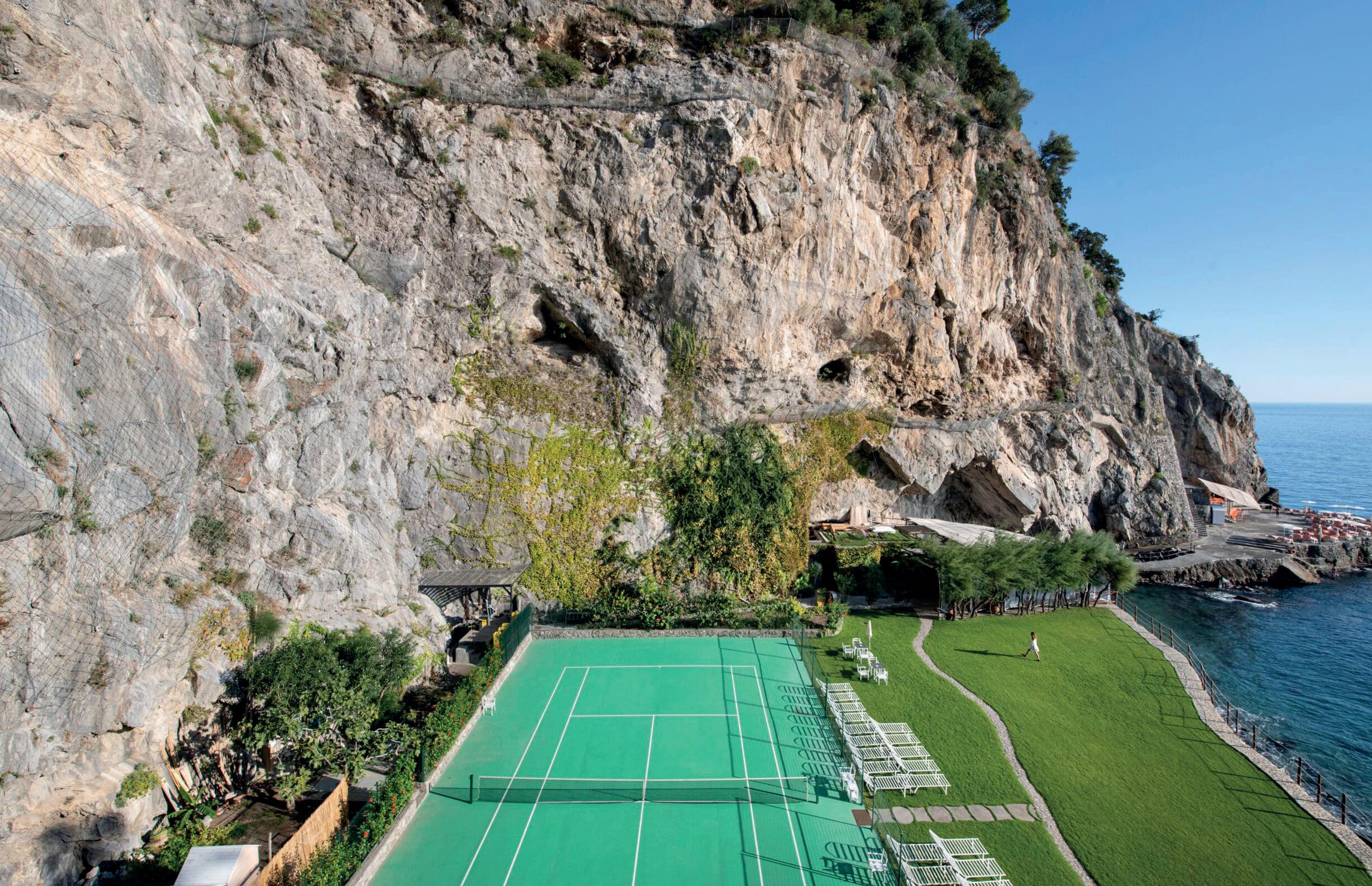
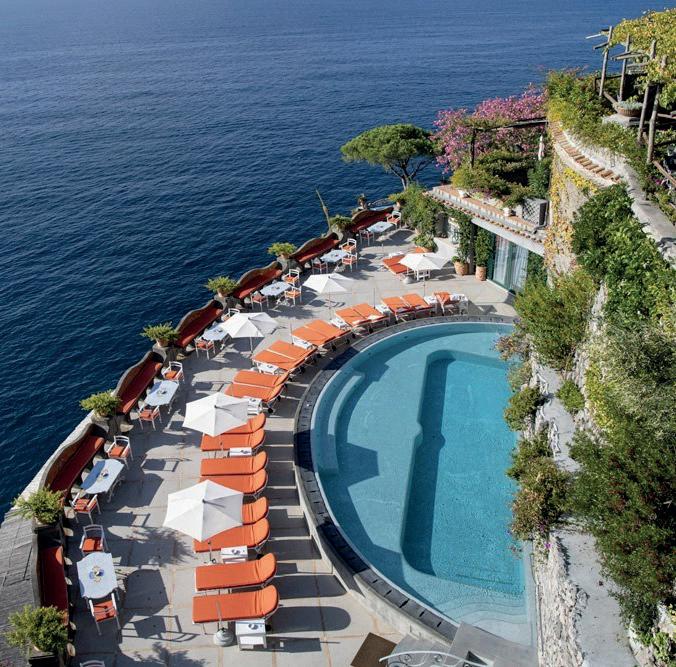
IL SAN PIETRO DI POSITANO
Amalfi Coast, Italy
Run by the Cinque family since the 1970s, this cliff side Relais & Châteaux icon is intimate, cinematic and effortlessly polished the kind of place where staff remember your favourite breakfast before you do.
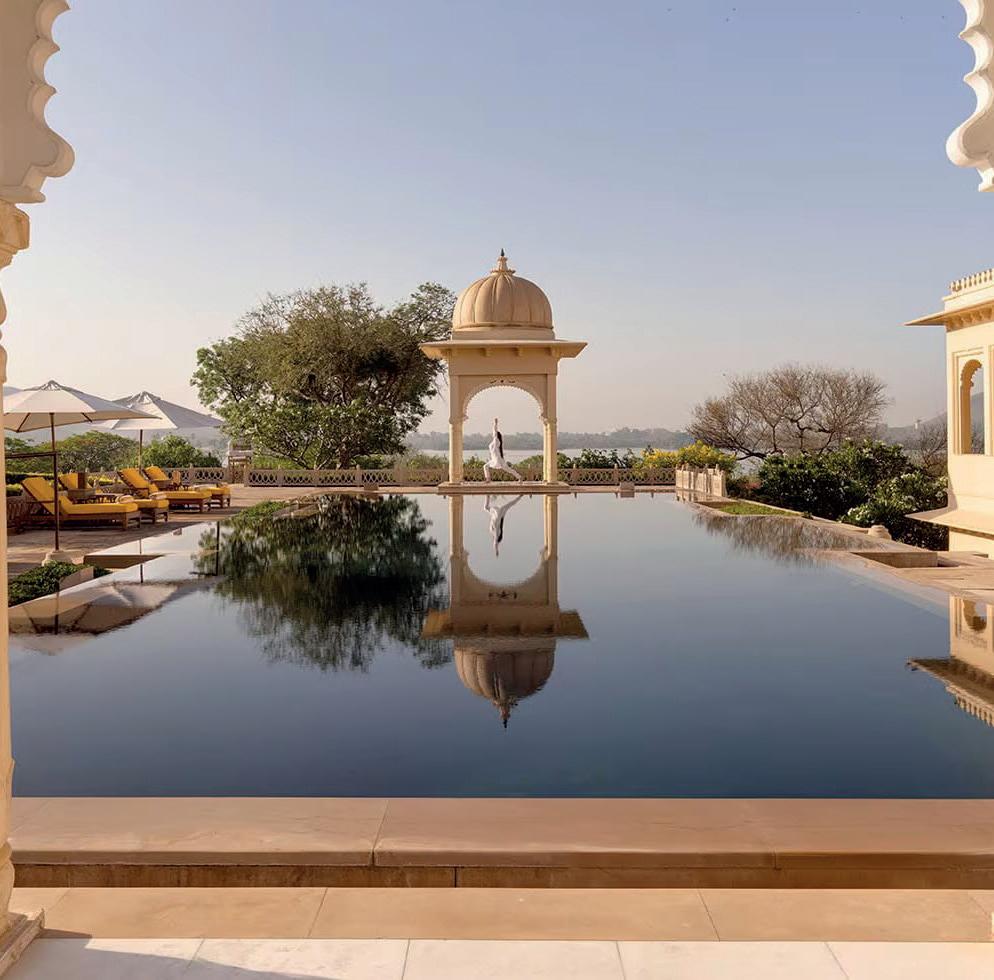
THE OBEROI UDAIVILAS Udaipur, India
The Oberoi family’s lakeside masterpiece pairs domes, courtyards and extraordinary craftsmanship with some of the most attentive service in India.
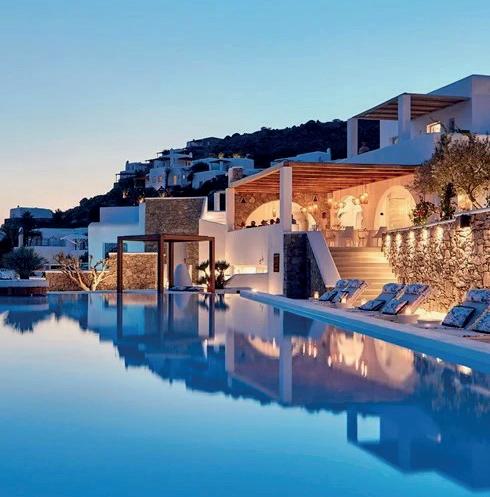
KATIKIES SANTORINI Oia, Greece
Still family owned despite its global reputation, Katikies delivers cliffside elegance, whitewashed suites and service that feels genuinely attentive.
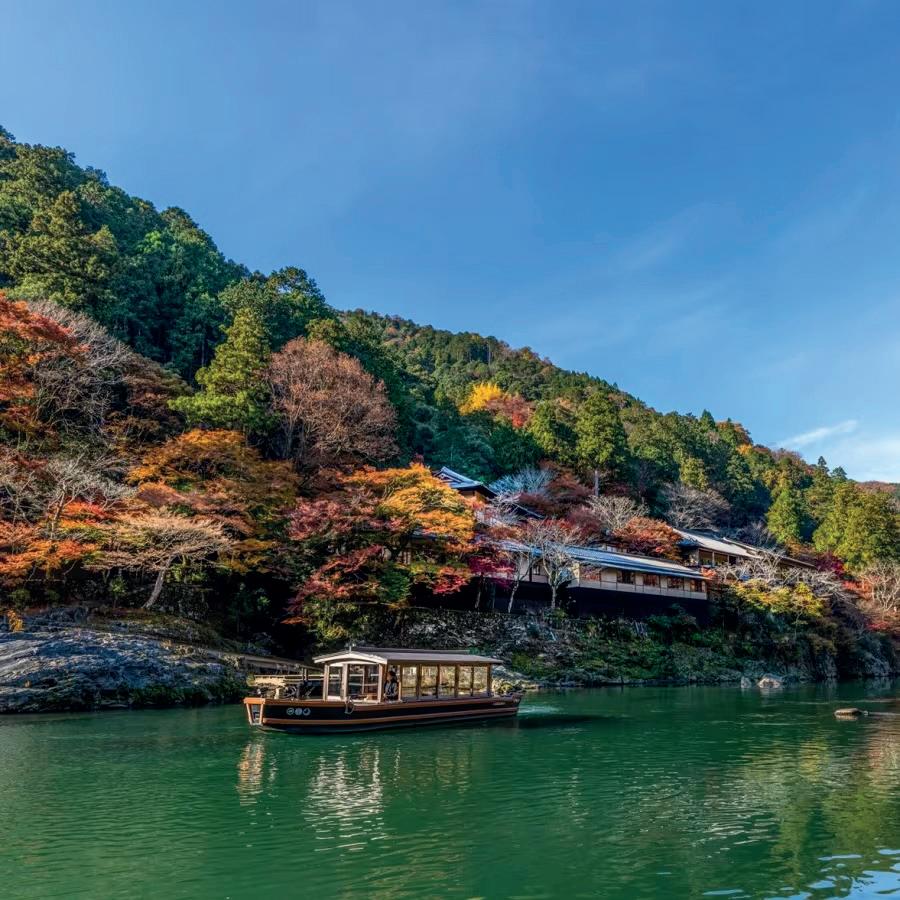
HOSHINOYA KYOTO Kyoto, Japan
Owned by the Hoshino family for over a century, this riverside retreat blends Japanese tradition with contemporary refinement. Arriving by boat sets the tone: serene, precise and deeply rooted in place.
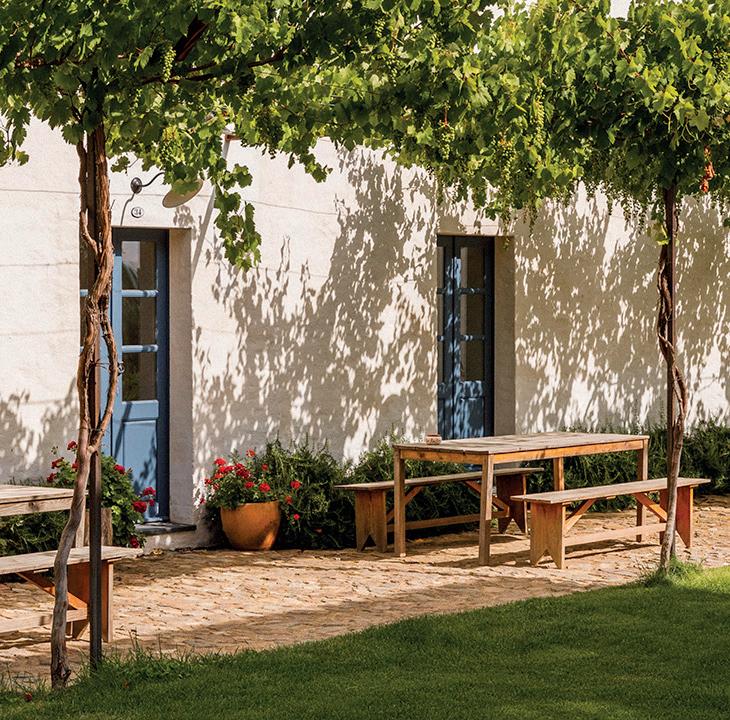
SÃO LOURENÇO DO BARROCAL Alentejo,
Portugal
A 200 year old estate still owned by the same family, offering understated luxury, vineyards, olive groves and a palpable sense of heritage.
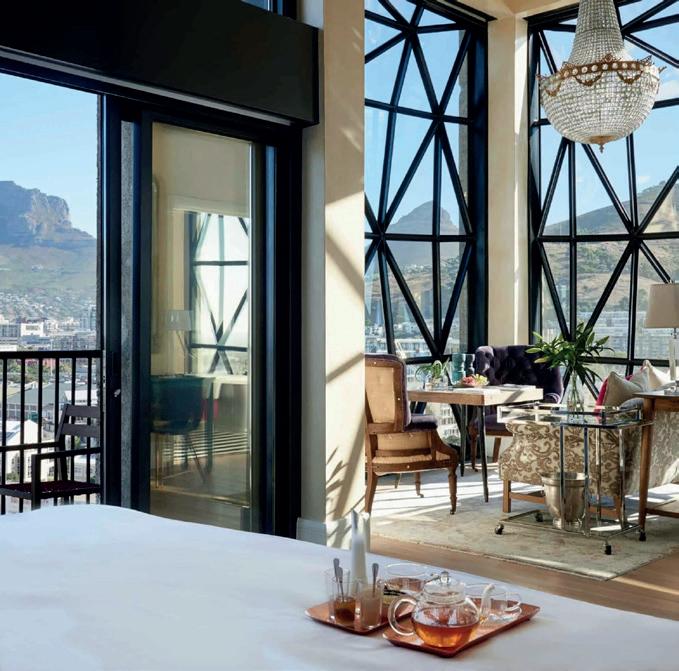
THE SILO HOTEL
Cape Town, South Africa
Owned by the Biden family of The Royal Portfolio, The Silo is bold, architectural and art forward, with sweeping views over the V&A Waterfront.
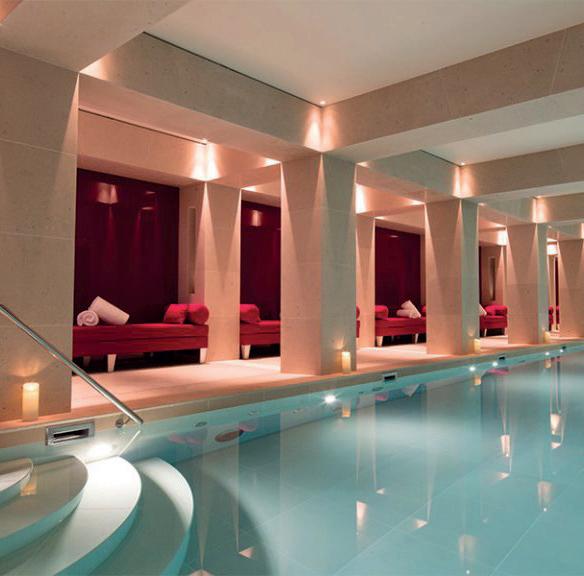
LA RÉSERVE PARIS
Paris, France
Michel Reybier’s discreet 40 room mansion hotel feels like a private residence, with velvet lined quiet luxury, Michelin starred dining and service that’s anticipatory without being intrusive.
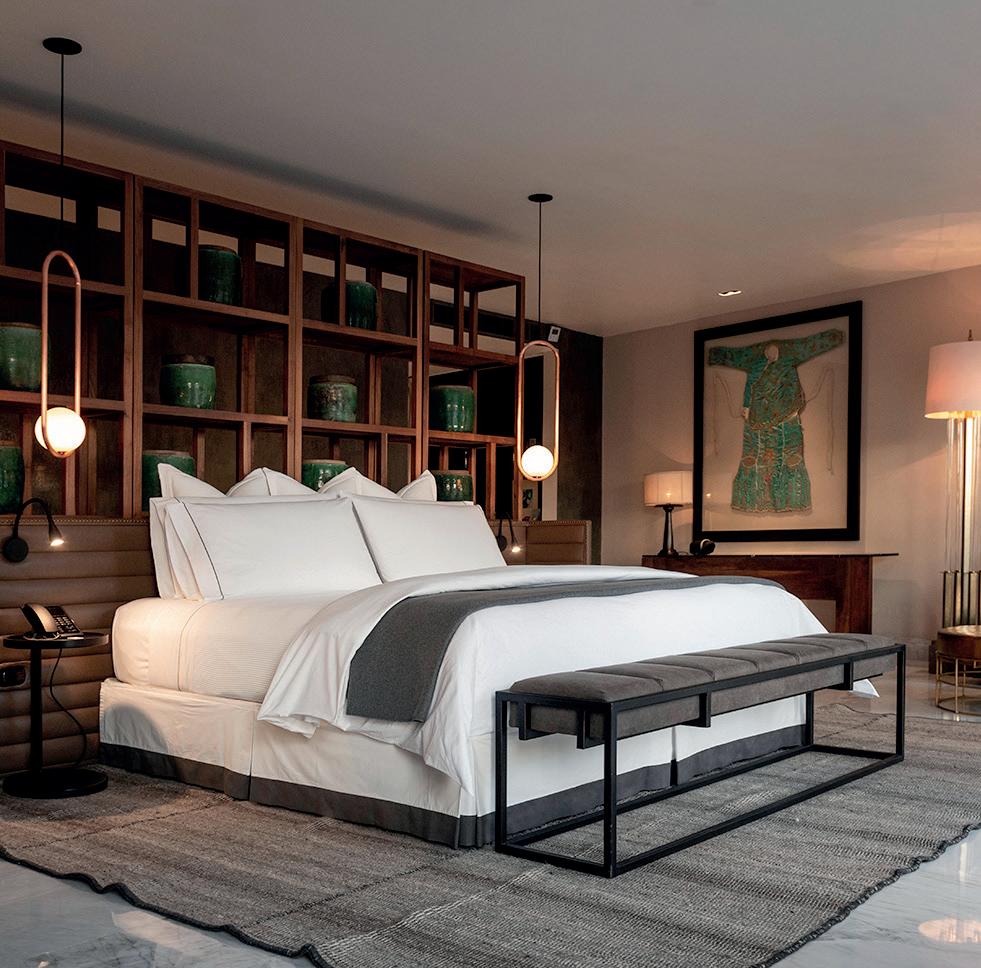
HOTEL MATILDA
San Miguel de Allende, Mexico
Run by the Díaz family, this art driven boutique hotel blends modern Mexican design with a warm, residential feel.
Of course, brand hotels still dominate for scale, loyalty perks, and global consistency. The rise of family run properties signals a shift in what business travellers value the sense of being personally looked after is more than a luxury it’s a reason to return.
FROM BOOKING TO BEDSIDE
HOW AI IS REBUILDING THE BUSINESS TRIP FROM END TO END
By RICHARD ALVIN
Corporate travel platforms are merging booking, expenses and AI concierge services into seamless end-to-end systems. From Navan’s smart cards to Hilton’s AI Planner and IHG’s digital concierge, artificial intelligence is reshaping every stage of the business trip.
THE TRIP THAT RUNS ITSELF
It is a quarter to six on a Monday morning and Sarah Langford, a senior account director at a professional services firm in the City, is standing in her kitchen scrolling through her phone. She has a client meeting in Frankfurt at noon. She did not book the trip. She did not file a preapproval form. She did not compare hotels. Three days ago she blocked the meeting in her calendar and her company’s travel platform did the rest.
An AI assistant selected a policy-compliant British Airways flight from Heathrow departing at seven-fifteen, a room at the InterContinental Frankfurt that matched her loyalty preferences and proximity requirements, and issued a virtual corporate card loaded with her preapproved daily allowance. The expense reconciliation began the moment the card was generated. When Langford lands in Germany, her hotel room will already be set to nineteen degrees, her preferred floor will have been requested, and a digital concierge will have a curated list of restaurants suitable for a working lunch with a new client.
This is not a technology demonstration. It is, increasingly, the reality of corporate travel in 2026. The fragmented world of separate booking tools, expense platforms, corporate card portals and hotel front desks that knew nothing about you beyond a confirmation number is collapsing into something altogether more coherent. Artificial intelligence is no longer a collection of isolated innovations scattered across the travel journey. It has become the connective tissue of the entire business trip, threading from the moment a traveller searches for a flight to the moment they check out of their hotel. The question facing travel managers, technology vendors and hoteliers alike is no longer whether AI will reshape corporate travel but how gracefully the industry can manage the transition, and whether the promise of seamlessness truly delivers for the road warrior on the ground.
THE SUPER-PLATFORM WARS
The corporate travel management industry is undergoing a consolidation that would have seemed improbable five years ago. The old model, a travel management company for booking, a separate tool for expense reporting, another for corporate card reconciliation, is being replaced by integrated super-platforms that promise to handle the entire trip lifecycle from a single interface. Three companies are leading this charge, each with a distinct philosophy.
Navan, the San Francisco-headquartered platform formerly known as TripActions, has taken perhaps the most aggressive approach to integration. Its AI assistant, Ava, now handles half of all support interactions end-to-end, resolving common issues in seconds while managing complex multileg flight changes and cancellations autonomously. The company reports a seventy-eight per cent customer satisfaction score for Ava’s interactions with zero critical hallucinations, a notable claim in an industry where a booking error can mean a missed client meeting in another time zone. Crucially, Navan has integrated smart corporate cards directly into its booking engine, so expenses are reconciled the instant a card is swiped. The manual expense report, that bane of every frequent traveller’s existence, is effectively eliminated. In early 2026, the company launched Navan Edge, which its chief executive Ariel Cohen has described as a hyper-personalised executive assistant, capable of booking flights, hotels and restaurants with an understanding of individual preferences that deepens with every trip.
American Express Global Business Travel, the world’s largest travel management company, is pursuing a different strategy. Having spent several years consolidating the market through acquisitions, Amex GBT has repositioned itself from a traditional agency into what it now calls a software-and-services operation. Its updated Egencia platform,
relaunched in early 2026, deploys agentic AI, artificial intelligence that acts autonomously rather than merely responding to prompts, to monitor real-time travel data, identify potential disruptions and generate alternative itineraries within corporate policy. The platform also incorporates natural language search, allowing travellers to book by describing what they need in conversational English rather than navigating dropdown menus and filters. A strategic alliance with SAP Concur integrates expense management directly into the booking flow, creating a closed loop from trip planning to financial reconciliation. For travel managers, the platform’s analytics suite offers natural language querying — a travel manager can simply ask the system what the quarterly spend trend looks like and receive a visual answer in seconds.
The European challenger in this contest is Perk, the Barcelona-founded platform formerly known as TravelPerk, which rebranded in 2026 to reflect its expanded ambition. Where Navan and Amex GBT have built their platforms primarily for the American market and scaled outwards, Perk was designed from the ground up for European corporate travel, with native VAT reclaim functionality, broader European hotel and rail inventory, and a flat platform fee rather than per-user charges. Its AI assistant automates what the company claims is sixty-seven per cent of the most frustrating administrative tasks, filing receipts, approving expenses, generating invoices — and its pricing model has made it particularly attractive to mid-market firms with fifty or more travelling employees. For British companies with significant European travel, the distinction matters: Perk’s depth of Continental rail and hotel content remains difficult for the American-born platforms to match.
MORE ON THE NEXT PAGE
WHAT TRAVEL MANAGERS ACTUALLY THINK
Vendor promises are one thing. The view from a travel manager’s desk is often rather different. The shift to super-platforms has delivered measurable improvements in policy compliance, when the booking tool and the policy engine are the same system, travellers have far less opportunity to go off-piste. Several UK travel managers report that out-of-policy bookings have fallen by as much as a third since moving to integrated platforms. Expense processing times have collapsed from days to hours, or in some cases to zero, where virtual corporate cards eliminate the need for manual reporting entirely.
But the transition has not been without friction. Integration with legacy HR and finance systems remains a persistent headache, particularly for larger organisations running SAP or Oracle environments that were not designed to talk to cloud-native travel platforms. Airline content can be patchy: not every carrier’s full inventory is available through every platform, and business travellers who are loyal to a particular airline can find themselves presented with limited or less competitive options. There is also the matter of change management. Persuading a workforce accustomed to booking through a familiar portal, or, in many cases, through a preferred travel agent, to trust an AI assistant with their next trip to Munich requires investment in communication and training that technology vendors sometimes underestimate.
And then there is the question of vendor lock-in. When all your travel data, corporate card transactions, expense records and traveller preference profiles sit within a single platform, switching providers becomes an undertaking of considerable complexity and cost. For travel managers accustomed to negotiating from a position of choice, that concentration of dependency is a source of quiet unease.
CHECKING IN WITH THE MACHINES
If the super-platforms are reshaping the journey to the destination, the hotel chains are racing to transform the experience at the destination itself. The three largest global hotel groups have each taken a distinct approach to deploying AI for the business traveller, and the variation is instructive.
Hilton’s AI Planner, which entered beta testing on hilton.com in March 2026, represents a fundamental rethinking of how travellers discover and book hotels. Rather than the traditional search-andfilter model, enter a city, scroll through dozens of properties, compare star ratings and distances, the AI Planner uses conversational intelligence to guide the process. A business traveller can describe what they need in natural language: a hotel near the Frankfurt Messe with reliable WiFi and a quiet restaurant suitable for a client dinner, for instance. The system interprets the request and surfaces curated recommendations across Hilton’s portfolio of more than eight thousand properties worldwide. For business travellers, it might emphasise proximity to convention centres or transport hubs; for a bleisure extension, it shifts to resort amenities and familyfriendly features. It is currently available on desktop and tablet, with broader rollout planned throughout the spring.
Marriott’s approach, through its Renaissance Hotels brand, is more experiential. RENAI by Renaissance is an AI-powered virtual concierge that blends insights from the chain’s on-the-ground Navigator associates, hotel staff who scout local neighbourhoods for the best restaurants, bars and cultural experiences, with data from large language models to deliver hyper-local recommendations. Guests connect via QR code and WhatsApp, making it frictionless to use. For the business traveller seeking the hidden cocktail bar for an evening with a client or the quiet breakfast spot for a
working morning, RENAI offers something that a generic hotel concierge desk or a Google search often cannot: vetted, insider knowledge delivered at speed. Marriott’s broader technology commitment is substantial, the company is investing more than one billion dollars in its 2026 technology programme, a significant portion of which is allocated to cloud migration and AI-driven initiatives.
IHG Hotels and Resorts has taken perhaps the most operationally ambitious approach. Its AI Operator digital concierge system is not merely a recommendation engine but an integrated service layer that supports the entire guest journey. The system automatically handles guest telephone calls, identifies needs, assigns housekeeping and maintenance tasks, and integrates with in-room controls. For a business traveller arriving late after a delayed flight, the AI Operator can arrange a late room-service order, adjust the room temperature and set a modified wake-up schedule without the guest needing to call reception. IHG describes the system as part of a broader commercial strategy built on three engines: network-wide connectivity, digital intelligence and collaborative partnership — positioning it as a differentiator for corporate buyers negotiating hotel programmes.
THE HUMAN QUESTION
For all the efficiency gains, there is a counterargument that deserves serious attention. Not every hotelier is persuaded that AI concierges represent progress for the business traveller. The case against rests on something difficult to quantify but immediately recognisable: human intuition.
A skilled hotel concierge reads the room, sometimes literally. They notice the guest who arrives looking exhausted after a long-haul flight and quietly arrange a late checkout without being asked. They sense when a guest wants conversation and when they want to be left alone. They remember that a returning guest once mentioned a preference for a particular newspaper or a specific brand of mineral water. These are acts of emotional intelligence that operate below the threshold of data collection, and they are the reason some business travellers remain loyal to particular hotels for decades.
The early evidence from AI deployments is mixed. Hotels that have introduced AI concierge systems report improvements in response times and operational consistency, the machine never forgets a request or misroutes a housekeeping task. But satisfaction scores for the quality of personal interaction have, in some cases, dipped. There appears to be a generational dimension: younger business travellers, accustomed to managing their lives through apps and voice assistants, tend to embrace AI-mediated hotel experiences, while more senior executives who have built relationships with hotel staff over years remain sceptical. The smartest hoteliers recognise this tension and are deploying AI not as a replacement for human service but as an invisible layer
that frees staff to spend more time on the interactions that matter most.
DATA, PRIVACY AND THE COST OF KNOWING TOO MUCH
The seamless, connected business trip depends on vast quantities of personal data flowing between platforms, hotel systems, loyalty programmes and corporate travel policies. The AI systems that power these services all learn from traveller behaviour, booking patterns, room preferences, dietary requirements, spending habits, even the time of day a guest typically checks in. The more data they ingest, the better the personalisation. But the more data they hold, the greater the regulatory and ethical exposure.
In January 2026, the UK Information Commissioner’s Office published a report setting out its early thinking on the data protection implications of agentic AI, precisely the kind of technology now being deployed across corporate travel. The findings should give travel buyers pause. The ICO noted that agentic systems built on probabilistic models may be prone to hallucinations and that their ability to infer and generate new personal information at scale compounds accuracy challenges under the UK GDPR. It also flagged that opaque data flows and multi-agent interactions can make it difficult to honour
data subject rights. For a corporate travel programme using an AI platform that shares data with airline systems, hotel chains and expense tools, the question of who serves as data controller, who is the processor, and where accountability sits in the event of a breach is far from straightforward.
The vendor lock-in concern takes on a sharper edge in this context. When a company’s entire travel data estate, years of booking histories, traveller profiles, spending patterns and preference data, resides within a single super-platform, migrating to a competitor is not merely operationally difficult. It raises questions about data portability, the right to erasure, and whether the departing client’s data has been used to train models that benefit the platform’s remaining customers. These are not abstract legal questions. They are live concerns for any travel manager evaluating a long-term technology commitment in 2026.
THE END-TO-END TRIP IS HERE - ALMOST
The technology to connect booking, expense management, hotel personalisation and digital concierge services into a single intelligent layer exists today. It is deployed, in varying degrees of maturity, by the platforms and hotel groups profiled in this feature. A business traveller making a routine trip within Europe can, in 2026,
experience something close to a fully AImanaged journey from search to checkout. But adoption remains uneven. Large multinationals with sophisticated travel programmes are moving faster than mid-market firms. The hotel chains are at different stages of deployment, and the gap between a flagship property in a major city and a franchise hotel in a secondary market can be considerable. Trust is still being built, both among the travellers who must surrender control to these systems and among the travel managers who must stake their programme’s performance on a technology vendor’s promises.
What is beyond doubt is the direction of travel. By the time the next generation of business travellers enters the workforce, a generation that has grown up with voice assistants, app-based everything and the expectation that technology should anticipate rather than merely respond, the idea of manually booking a flight, submitting a paper expense claim or asking a hotel receptionist for a restaurant recommendation will seem as quaint as sending a fax. The question is not whether AI will own the end-to-end business trip. It is whether the industry can manage the transition with enough care to preserve what matters: the human judgement, personal warmth and institutional trust that no algorithm has yet learned to replicate.
A SPORTS TRIPPING CONVERT
MY FIRST GOLF (AND PADEL) PILGRIMAGE TO LA MANGA, SPAIN
By ANDREA THOMPSON
A LEGENDARY RESORT WITH SPORTING ROYALTY IN ITS DNA
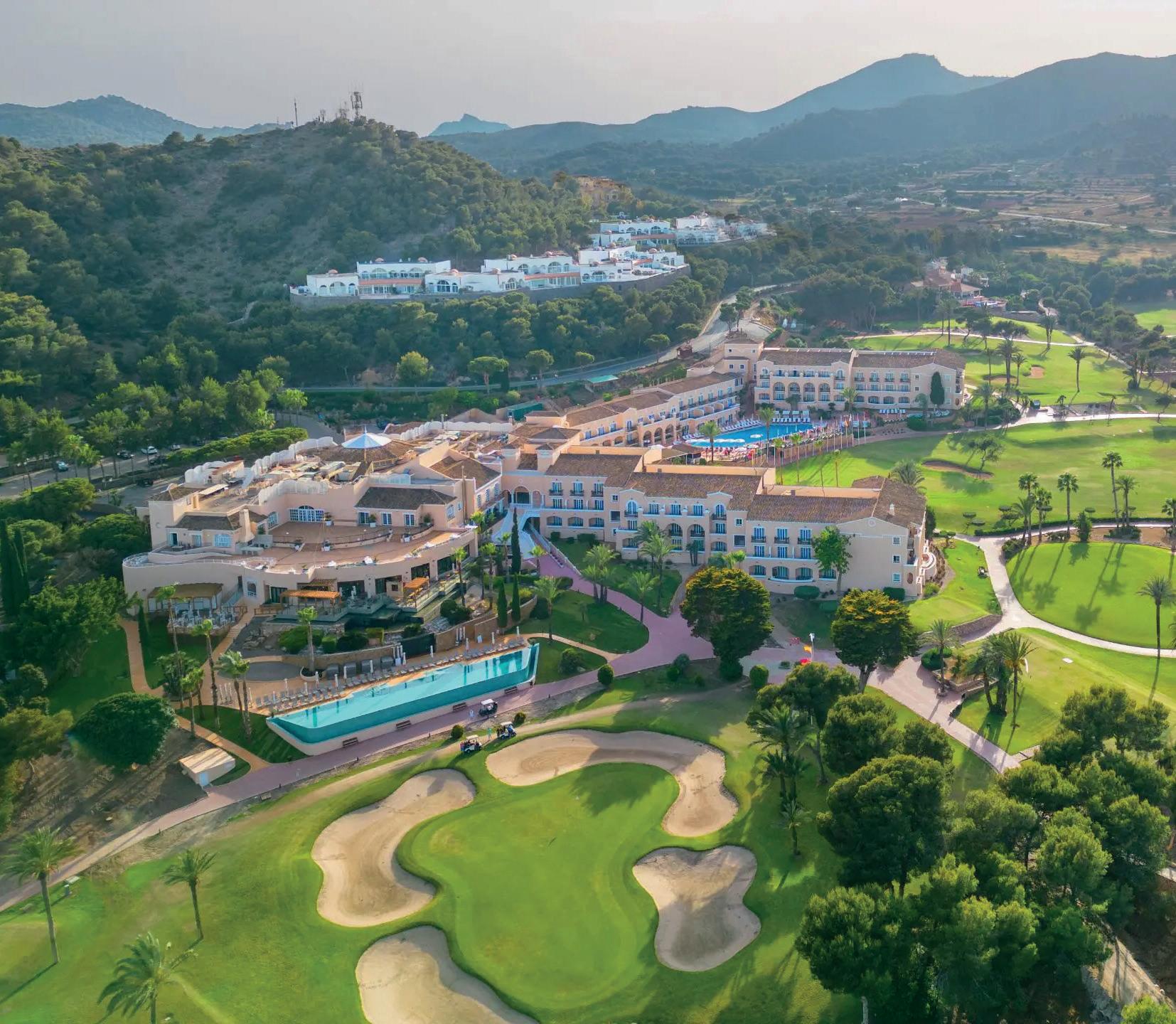
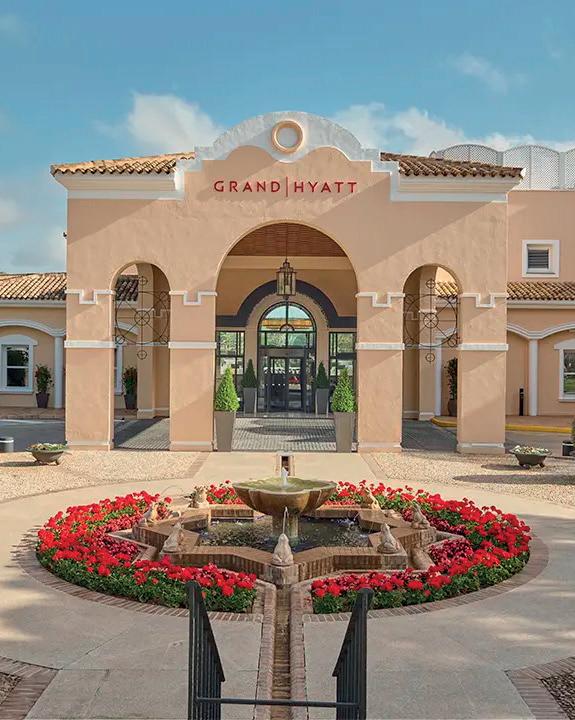
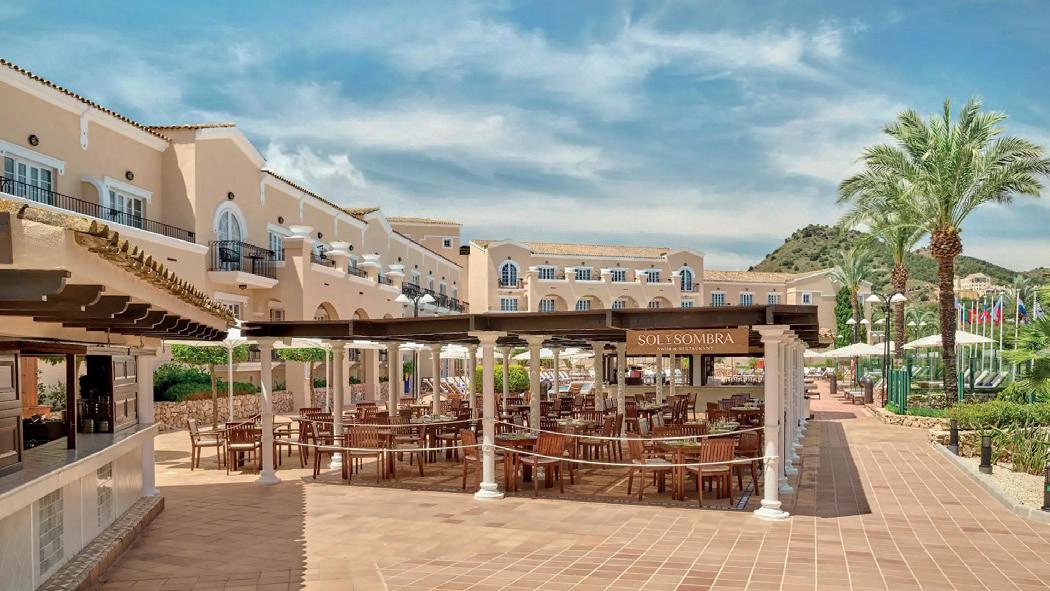
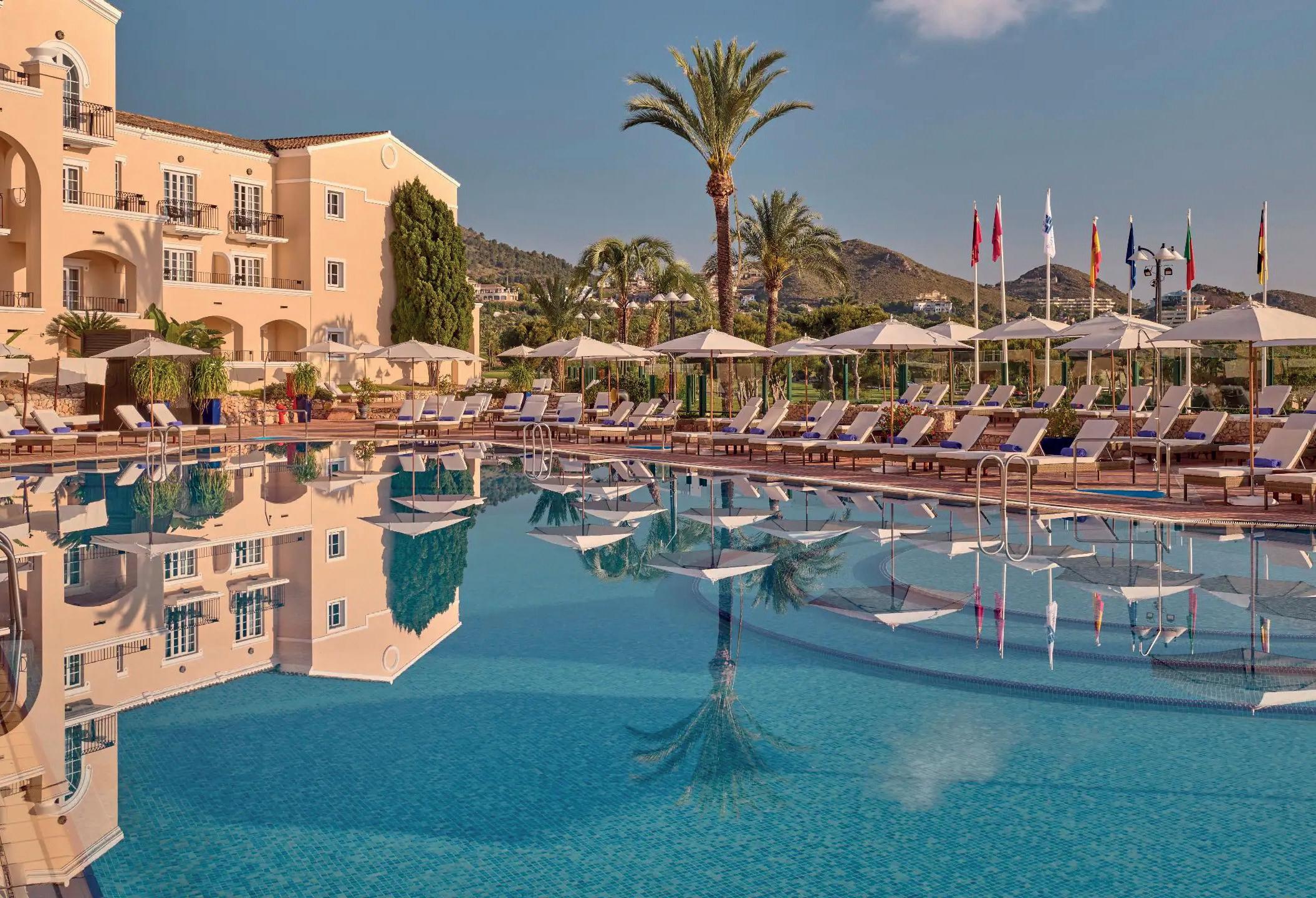
Grand Hyatt La Manga Club Golf & Spa opened in 1972 and has been a magnet for athletes, celebrities and serious golfers ever since. Today it’s owned by Grupo Inversor Hesperia, who have restored its prestige while keeping its heritage intact. The resort sits just 40 minutes from Murcia Airport, an easy drive that winds through sun bleached hills before revealing a sprawling oasis of palm trees, terracotta buildings and immaculate landscaping.
Even before I checked in, I understood why people return year after year. There’s a sense of arrival here not just at a hotel, but at a destination with its own mythology.
I arrived at Grand Hyatt La Manga Club Golf & Spa with a suitcase full of summer clothes, a faint idea of what a golf swing should look like and absolutely no business being at one of Europe’s most iconic golf resorts. I’d never played a proper round in my life. I’d never even held a scorecard. Yet here I was, pulling up to the gates of a place golfers speak about in reverent tones, the Spanish home of the sport, a 1,400 acre sanctuary of greens, fairways and sunshine.
Somehow, from the moment I stepped out of the car, it felt exactly right.
ARRIVAL:
CAVA, SCENTS AND THAT FIRST GLIMPSE OF THE GREENS
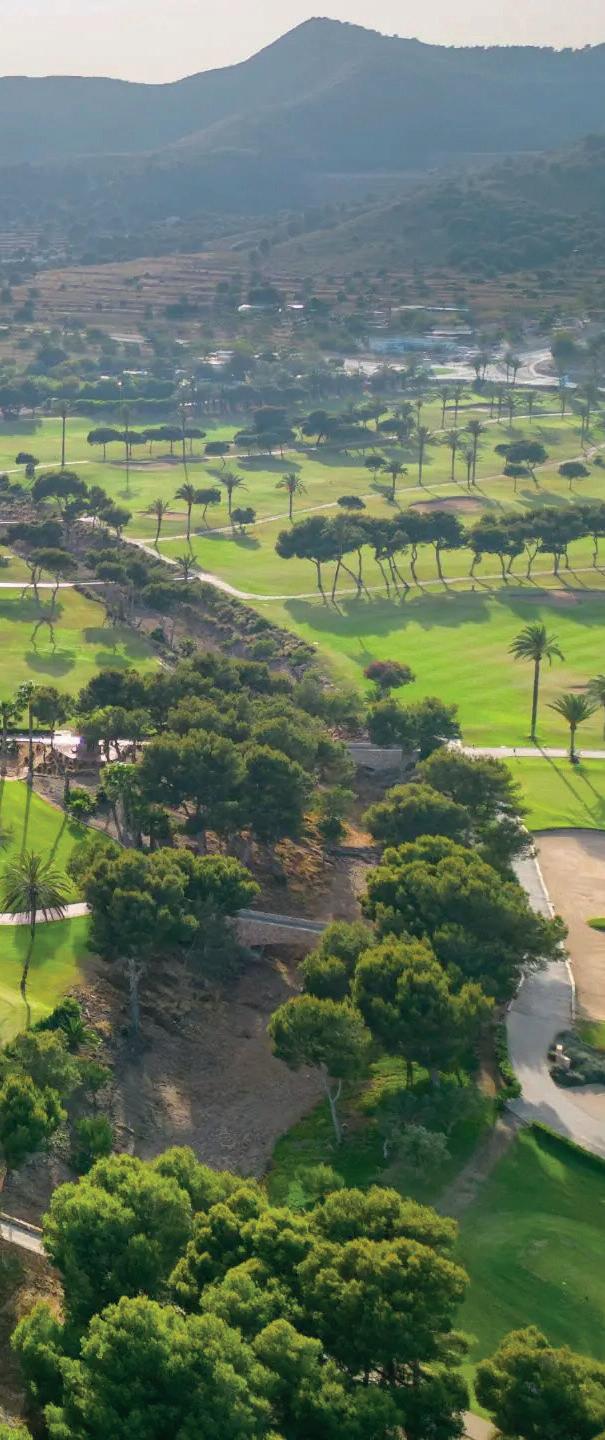
The first thing I noticed was the golf course - vast, sculpted and impossibly serene. Even in winter, when the Bermuda grass lies dormant, the fairways looked like a painter’s study in soft greens and golds. It was surreal to think I’d be stepping onto them with my beginner’s enthusiasm and questionable coordination.
Then came the scent. The hotel has its own signature fragrance, warm and woody with a citrus lift, drifting through the lobby like a welcome hug. It’s the kind of scent that makes you want to redecorate your entire home around it and also available for sale at reception.
Check in was a gentle ceremony: a glass of cava, snacks and hot towels that felt like a tiny spa ritual after the journey. It set the tone for a stay where nothing felt rushed and everything felt considered.
MY ROOM: A BALCONY OVER THE GREENS AND A BATHROOM TO SWOON OVER
My room overlooked the adult only infinity pool and the greens beyond. A view that shifted from bright Mediterranean blue to dusky gold as the day faded. A small balcony made it easy to sit outside with a coffee and watch golfers glide past like slow moving choreography.
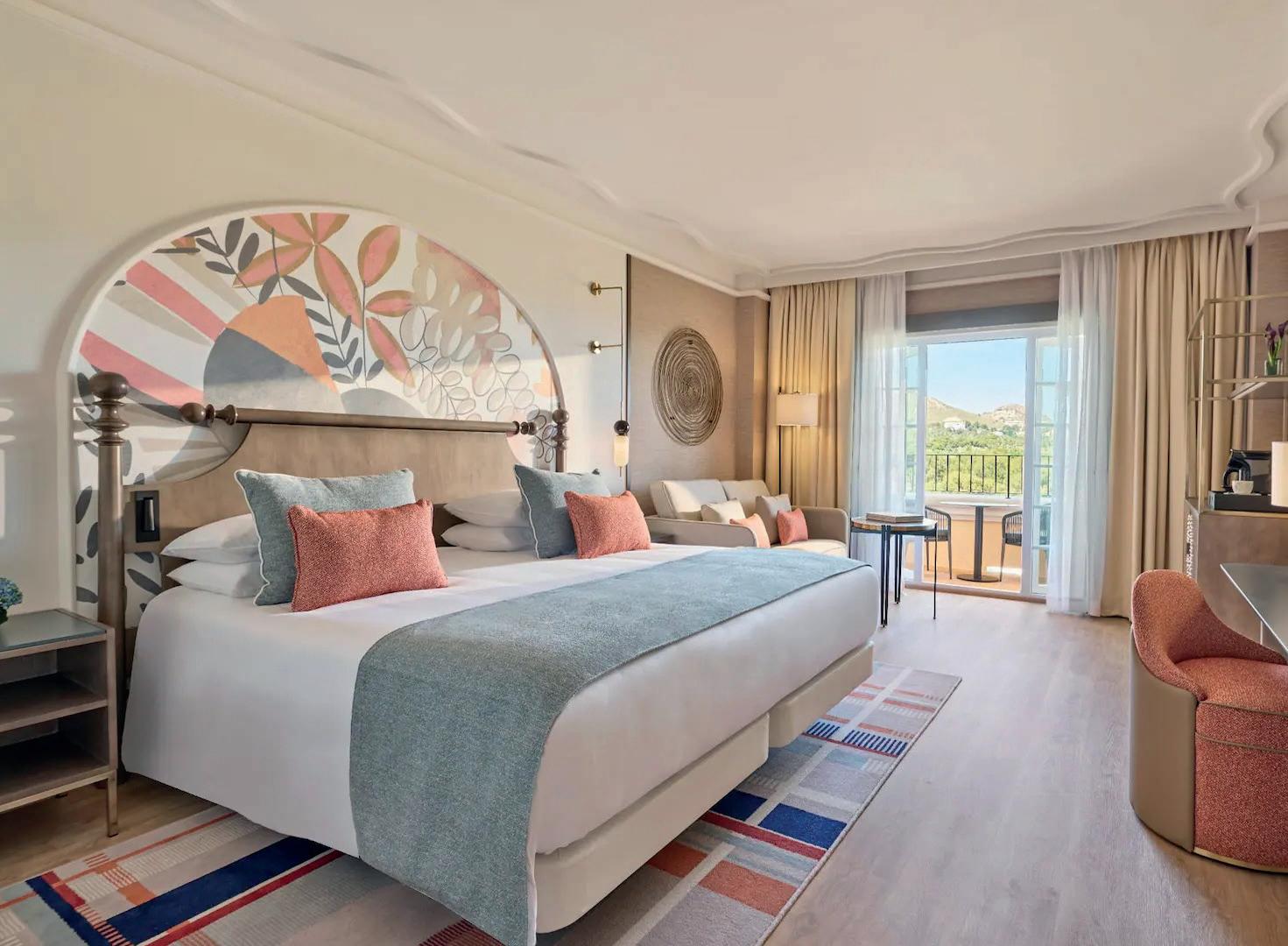
Inside, the room was modern, calming and beautifully appointed the cloud soft king bed, Nespresso machine, Minibar, Smart TV and Plush seating area
But the bathroom was the real showstopper: a glass walled cube with an electric privacy blind, a deep soaking tub. With a separate rainfall shower and the most divine Balmain toiletries - rich, fragrant and far too tempting not to take home. Fresh fluffy towels, a soft bathrobe and slippers completed the picture. Turn down service added a touch of theatre: the bed folded back, a quote of the day card, chocolate and a sleep kit with pillow mist that I gratefully used.
DINING:
SEASONAL ROTATIONS AND A STANDOUT ASIAN SURPRISE
Because I visited in the quieter season, the resort alternated its restaurants - a clever way to keep quality high. The Asian restaurant, which took over the executive lounge in the evenings, was a standout: beautifully presented dishes, warm service and a relaxed atmosphere that made it easy to linger.
Breakfast was a feast. Plentiful, varied and almost overwhelming. With everything from fresh fruit, pastries to hot dishes, local cheeses and made to order options. Choosing was the hardest part.
One of the loveliest discoveries of my stay was the roof terrace bar and restaurant in the Club House - a space that feels purpose built for lingering. Perched above the greens with a clear view of the final hole, it’s the kind of spot that makes you slow down without even realising it. As the sun begins to dip behind the hills, the whole terrace glows in warm amber light with the fairways below turning a soft, velvety green.
It became my favourite place to end the day. Golfers would appear in the distance, silhouettes against the fading sky, finishing their last shots as the evening breeze drifted across the course. There’s something quietly mesmerising about watching that final putt while sipping a cold drink - even as a non golfer, I felt the satisfaction of it.
The terrace itself is elegant without being formal: cushioned seating, soft lighting and a relaxed hum of conversation. The menu leans into Mediterranean flavours, with fresh seafood, grilled meats and vibrant salads, all served with the kind of unhurried charm that makes you want to order “just one more” before heading back to your room
If La Manga Club has a single spot that captures its essence of sport, sunshine, serenity it’s this terrace at golden hour.
The gardens, meanwhile, were immaculate - manicured, fragrant and lovely to wander through after a meal. Every path felt intentional, every flowerbed tended with care.
It isn’t just for golfers. It’s for anyone who wants to try something new, relax somewhere beautiful and feel quietly looked after. For a first time sports tripper, it was perfect.
THE ALMA SPA: THERMAL BLISS AND A THERAPIST WITH 20 YEARS OF MAGIC
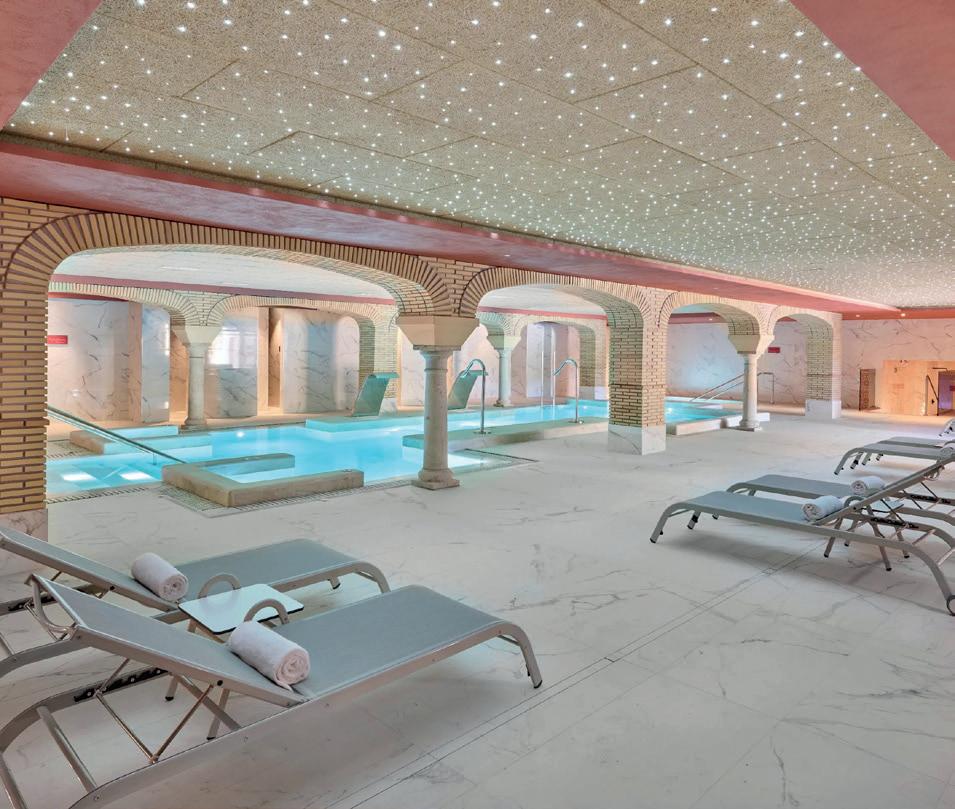
After my first golf lesson (more on that shortly), I headed straight to the spa and it was exactly what my aching shoulders needed. The hydrotherapy area with its thermal pools, sauna and steam room were soothing, but the highlight was my massage.
Having found out my therapist has worked there for over 20 years, you could feel her experience in every movement. It was one of those treatments where you walk out taller, looser and slightly dazed in the best possible way.
GOLF: A PRIVATE LESSON WITH THE RESIDENT PRO
You can’t come to the home of Spanish golf and not try it properly. With three 18-hole golf courses spread over almost 6 square kilometres each offering a different route for the players. I booked a private lesson at La Manga Club Golf Academy led by the resort’s resident pro, Craig Donnelly, a patient and encouraging expert who somehow made me feel both relaxed and capable.
He taught me how to grip, how to swing and even recorded my attempts so I could see where I was going wrong. After an hour, something clicked. I could hit the ball nearly 100 metres and he even said I had a “decent swing.” I floated out of the academy feeling absurdly proud.
For someone who had never played before, it was transformative - the moment where golf shifted from intimidating to intriguing.
PADEL: A NEW OBSESSION
The next day, I tried padel at the nearby academy. I’d never played before and my only tennis experience was from school many years ago. But the coach was brilliant again a very patient man, energetic and was determined to get me moving.
He taught me the rules, the serve, the footwork and before long I was running around the court, laughing, sweating and genuinely enjoying myself. For someone who doesn’t consider themselves sporty, it was a revelation.
Padel is fast, fun and surprisingly addictive. I left the court flushed, exhilarated and already planning my next session.
MICE FACILITIES: A CORPORATE PLAYGROUND WITH SUNSHINE
Grand Hyatt La Manga Club Golf & Spa isn’t just a sporting paradise - it’s a serious contender for corporate events. The resort has:
• A grand ballroom
• Multiple meeting rooms
• Outdoor spaces for receptions
• Breakout areas
• Team building activities (golf, padel, tennis, hiking)
It’s the kind of place where you can host a conference, run a client meeting or plan a corporate retreat and then follow it with a round of golf or a spa session. Weddings, too are beautifully catered for with sweeping views and elegant spaces.
WHY IT ALSO WORKS FOR NON PLAYERS
This is the part that surprised me most: you don’t need to be a golfer to love this place.
While your partner or friends are on the course, you can:
Lounge by the infinity pool
Book a spa treatment
Wander the gardens or walk the coastal trails
• Take a padel lesson
• Visit nearby Cartagena or Murcia Or simply just enjoy the sunshine with a book
There’s no pressure to play. No expectation. Just space to enjoy yourself in whatever way feels right.
THE STAFF: WARM, GENUINE AND EFFORTLESSLY PROFESSIONAL
Every interaction felt sincere. From the check in team to the spa therapists, the
golf pros to the restaurant staff, everyone seemed genuinely invested in making the stay special. It’s rare to find a resort where the service feels both polished and personal.
A SPORTS TRIPPING CONVERT
I arrived at Grand Hyatt La Manga Club Golf & Spa as a non golfer, a non padel player and someone who wasn’t entirely sure what a sports tripping holiday even was and left as a convert.
Golf no longer feels intimidating. Padel is my new favourite sport. The spa reset my shoulders and my mind. The hotel wrapped me in comfort and the resort itself - with its scent, its gardens and its views felt like a place designed to make you breathe a little deeper.
It isn’t just for golfers. It’s for anyone who wants to try something new, relax somewhere beautiful and feel quietly looked after. For a first time sports tripper, it was perfect.
THE CAPITAL THAT HAS BECOME A GLOBAL STAGE FOR MICE
Washington, DC may be the political heart of the United States, but its influence extends far beyond government. Over the past decade, the city has evolved into one of the world’s most sophisticated hubs for meetings, incentives, conferences and exhibitions.
WASHINGTON, DC
A destination where global decision makers, innovators, academics and industry leaders converge. Its appeal lies not only in its symbolism, but in the rare combination of international connectivity, world class venues, a deep knowledge economy and a cultural landscape that elevates the delegate experience.
A CITY BUILT FOR GLOBAL DIALOGUE
Washington’s infrastructure is designed around the idea of gathering people. The Walter E. Washington Convention Centre anchors the city’s large scale events landscape with more than two million square feet of flexible space, supported by a network of luxury hotels, university campuses, cultural institutions and specialist venues. This ecosystem allows the city to host everything from intimate leadership retreats to global congresses. What sets Washington apart is the density of influence. Federal agencies, embassies, NGOs, think tanks and international organisations sit side by side, creating a natural magnet for conferences that require regulatory insight, policy engagement or cross sector collaboration. Delegates attending events in cybersecurity, public health, sustainability, defence, education or global development find themselves surrounded by the very institutions shaping the future of their industries.
The city’s 2026 calendar reflects this breadth, with major gatherings in pharmaceuticals, space technology, healthcare innovation, navigation, communications and global policy drawing thousands of delegates. Washington’s knowledge economy shaped by institutions such as Georgetown University, George Washington University, the Brookings Institution and the World Bank provides intellectual depth that few destinations can match.
VENUES THAT ELEVATE THE EXPERIENCE
Washington’s venue portfolio is unusually diverse, offering both scale and character.
The Convention Centre remains the flagship for large scale events, but the city’s luxury hotels provide some of the most refined meeting environments in the country. Museums, galleries, historic buildings and university halls add further layers of atmosphere and prestige.
For planners seeking distinctive spaces, the city offers everything from contemporary waterfront venues to stately neoclassical halls. The Smithsonian museums, the Kennedy Centre, the National Archives and the Library of Congress all host private events, giving delegates access to some of the most iconic cultural institutions in the world.
This variety allows organisers to shape events that feel purposeful and place specific, a key advantage in an era where delegates increasingly expect experiences rather than simply meetings.
MONUMENTS AND MUSEUMS AS INCENTIVE STAGES
Washington’s monuments and museums are not just sightseeing attractions; they are powerful incentive assets. Private evening access to the Lincoln Memorial, receptions at the National Portrait Gallery, or curated
memorable, culturally rich experiences that elevate incentive programmes.
The National Mall, with its sweeping lawns and monumental architecture, provides a dramatic backdrop for outdoor events, wellness sessions or team building activities. Meanwhile, the revitalised Wharf district offers waterfront dining, live music, boat charters and rooftop venues ideal for social programmes.
For leadership retreats, the city’s green spaces from Rock Creek Park to the Tidal Basin offer opportunities for morning runs, yoga sessions or reflective breaks between meetings. Washington’s cultural depth enhances the delegate experience in ways few cities can replicate.
LUXURY HOTELS DESIGNED FOR EXECUTIVE LEVEL TRAVEL
Washington’s luxury hotel scene has matured into one of the most compelling in North America, and several properties stand out for the sheer scale of their rooms and suites, a major advantage for executives who need space to work, host private meetings or decompress between sessions.
Two of the strongest examples include:
• Four Seasons Hotel Washington, DC, known for some of the largest standard rooms and suites in the city. Its
oversized layouts, generous living areas and residential style suites make it a favourite for C suite travellers, diplomatic delegations and incentive groups seeking privacy and comfort. Its meeting salons and terraces add a refined backdrop for high level gatherings.
• The Ritz Carlton, Washington, DC, which offers expansive rooms and suite configurations that easily accommodate in room meetings, small team huddles or private dining. Its club level floors and wellness facilities make it particularly appealing for leadership retreats and incentive stays where rest and recovery matter as much as productivity.
These properties sit within a wider network of luxury hotels offering flexible meeting spaces, polished service and amenities that support both business and leisure.
A DESTINATION THAT BLENDS BUSINESS WITH CULTURE
Washington’s cultural landscape enhances the delegate experience in ways few cities can replicate. The Smithsonian museums, national monuments, Kennedy Centre performances, embassy events and historic neighbourhoods create a rich environment for pre and post conference exploration. The city’s culinary scene from Michelin starred restaurants to globally influenced neighbourhood dining adds another layer of appeal.
tours of the Smithsonian museums create
The city’s walkability is a major advantage. Delegates can move easily between meetings, monuments and museums, reinforcing a sense of place and purpose. For incentive groups, curated experiences such as private museum tours, chef led dining events, embassy receptions or behind the scenes political briefings create a sense of exclusivity and access.
CONNECTIVITY AND GLOBAL ACCESS
Washington’s position on the East Coast makes it a natural gateway for international delegates. Three major airports Dulles International, Reagan National and Baltimore/Washington provide extensive global and domestic connectivity, supporting multi city itineraries and easing long haul travel. This accessibility is a key factor in the city’s ability to attract international congresses and academic gatherings.
WHY WASHINGTON MATTERS FOR BUSINESS TRAVELLERS
Its infrastructure supports seamless event participation, while its cultural and hospitality offerings create a destination that balances productivity with experience. It is a global stage for ideas, innovation and international collaboration.
WASHINGTON, DC TRAVEL INFORMATION ALL YOU NEED TO KNOW
Getting there
Washington, D.C. sits five hours behind the UK, making it an easy long haul hop for business travellers who need to hit the ground running.
Flight Time & Connectivity
Direct services from London to Washington take around eight hours, with most nonstop routes landing at Washington Dulles International Airport (IAD). British Airways, Virgin Atlantic and United Airlines all operate daily direct flights, while American Airlines, Delta and Icelandair offer competitive one stop options via their US or European hubs.
Airports & Access
Dulles is the primary long haul gateway, located 22 miles from downtown and well connected by the Silver Line Metro and express services. Reagan National (DCA) sits much closer to the city centre, ideal for domestic connections and onward travel once delegates are stateside.
ICE WINE
WINTER’S SWEET GOLD AND THE FESTIVALS THAT CELEBRATE IT
There are wines that speak of sunshine, wines that whisper of soil, and then there is ice wine, a liquid that tastes unmistakably of winter.
Born from grapes frozen on the vine and pressed while still icy, ice wine is one of the world’s most labour intensive, climate dependent and emotionally charged styles. It is also a wine that has shaped entire regions, inspired festivals, and turned frigid nights into moments of collective celebration.
Canada is the modern heartland of ice wine, and Ontario its beating pulse. Although Germany pioneered the style centuries ago, it was in the 1970s that Canadian winemakers began experimenting seriously with the technique, discovering that their reliably cold winters offered the perfect conditions for consistent production. By the 1980s and 1990s, Ontario had become a global force, with producers such as Inniskillin putting Canadian ice wine on the world stage. Today, the Niagara Peninsula remains one of the most important ice wine regions on the planet, its vineyards lining the shores of Lake Ontario like frost kissed ribbons.
The annual Niagara Icewine Festival is the season’s great celebration - a glittering, frost edged ode to craftsmanship, patience and the peculiar joy of drinking something intensely sweet while your breath hangs in the air. The festival transforms the region into a winter playground of tastings, outdoor bars, torchlit walks and vineyard events. Visitors sip golden Riesling ice wine
or deep ruby Vidal ice wine from glasses that steam in the cold, while chefs pair the wines with everything from foie gras to fire roasted desserts. It is a festival that feels both luxurious and deeply local, a reminder that winter can be a season of indulgence rather than endurance.
China, too, has emerged as a major player in the ice wine world, particularly in the northeastern region of Liaoning. The climate there mirrors the cold, dry conditions needed for natural freezing, and Chinese producers have embraced the style with enthusiasm. Their ice wines tend to be lush, aromatic and fruit forward, often made from Vidal or local hybrid grapes. In recent years, China’s ice wine industry has grown rapidly, with dedicated festivals, export markets and a rising reputation among sommeliers. It is a fascinating counterpoint to Canada, two countries on opposite sides of the world, united by a shared mastery of winter.
Back in Ontario, the story of ice wine is also a story of place. The region’s historic properties have become part of the narrative, from the Prince of Wales Hotel in Niagara on the Lake, a Victorian landmark that has hosted generations of wine lovers to the Shaw Club, a boutique retreat that blends contemporary design with the charm of the town’s theatre district. These
hotels have become unofficial hubs during the Icewine Festival, offering fireside tastings, themed dinners and the kind of cosy luxury that makes winter feel like a privilege. Guests wander from vineyard to village, from glass to glass, wrapped in scarves and the soft glow of streetlamps reflecting off snow.
What makes ice wine so compelling is the sheer improbability of its existence. The grapes must freeze naturally at around –8°C or colder, often in the dead of night. Vineyard crews head out with headlamps, harvesting fruit that feels like marbles and must be pressed immediately before it thaws. The yield is tiny sometimes just a few drops per grape which is why ice wine is often described as “liquid gold.” The result is a wine of extraordinary concentration: honeyed, vibrant, electric with acidity, and capable of ageing for decades.
A winter visit to Ontario or Liaoning is not just about tastings; it’s about witnessing a craft that depends on nature’s harshest conditions. It’s about meeting winemakers who speak of frost the way others speak of sunshine. It’s about stepping into a landscape transformed by snow and discovering that some of the world’s most decadent flavours are born from the cold.
Ice wine also reflects a broader trend in travel: the desire for experiences that feel rooted, seasonal and meaningful. The Icewine Festival is not a manufactured event; it is a celebration of a process that cannot be rushed or replicated. It is the antithesis of mass tourism, intimate, atmospheric and tied to a specific moment in the year.
Whether enjoyed in a crystal glass at a grand hotel like the Prince of Wales, sipped fireside at the Shaw Club, or tasted straight from the barrel in a snow covered vineyard, ice wine is a reminder that luxury can be found in the most unexpected places even in a frozen grape. It is a wine that captures a season, a region and a sense of wonder.
Win the ultimate trip
Race to Necker with Sky High Club
There are one-of-a-kind trips. And then there’s shout it-from-the-mountaintops, pinch-me-I’m-dreaming incredible. And if you’re a member of our Sky High Club, that experience could be closer than you think.
Log the most bookings between now and 31st July, and you could be packing your bags for a five-night stay at Richard Branson’s private island, Necker, courtesy of Virgin Limited Edition.
Start your engines, the race is on! Visit virginatlanticskyhighclub.com
You’ll be treated to Upper Class flights, two nights at the sensational Sandals resort in Antigua and then get whisked away by private jet thanks to Tradewind to the sparkling waters and white sands of Richard’s home in the British Virgin Islands.
Germany's Great Outdoors THREE NATIONAL PARKS WORTH TRAVELLING FOR
Germany’s national parks reveal a country of striking contrasts from tidal worlds sculpted by the moon to dense, myth laden forests and Alpine peaks that feel almost cinematic. These three parks offer some of the most immersive nature experiences in Europe, each with its own rhythm, landscape and sense of place.
WADDEN SEA NATIONAL PARK
Schleswig Holstein
The Schleswig Holstein Wadden Sea National Park stretches along Germany’s North Sea coast and forms part of the UNESCO listed Wadden Sea, the world’s largest continuous tidal flats system. This is a landscape shaped entirely by the tides: twice a day, vast mudflats emerge, revealing a fragile ecosystem teeming with life. Visitors can join guided mudflat walks, spot seals hauled out on sandbanks, and watch millions of migratory birds sweep across the sky.
HOW TO GET THERE
Fly into Hamburg Airport, then continue by train or car to the coastal towns of Husum, Büsum or St. Peter Ording — all gateways to the park.
BEST TIME TO VISIT
Spring and autumn are ideal for bird migrations; summer offers the warmest conditions for mudflat walks and boat trips.
WHERE TO STAY (LUXURY)
• A ROSA Sylt: A stylish coastal spa hotel with sea views and a strong wellness focus
• StrandGut Resort, St. Peter Ording: Contemporary design with direct access to the beach and dunes
HARZ NATIONAL PARK
Located in central Germany, Harz National Park is a world of ancient forests, rugged mountains and folklore rich landscapes. The region’s highest peak, the Brocken, has long been associated with myths and legends but today it’s better known for panoramic views and scenic hiking trails. Expect peaceful lakes, waterfalls, and the chance to spot lynx, wildcats and black storks.
HOW TO GET THERE
Fly into Hannover or Leipzig/Halle airports, then travel by train to Wernigerode, Braunlage or Bad Harzburg, the main park bases.
BEST TIME TO VISIT
Year round: spring and summer for hiking, autumn for fiery foliage, and winter for snow dusted forests and atmospheric trails.
WHERE TO STAY
• Schloss Hotel
Wernigerode: A historic castle style stay with elegant rooms and mountain views
• Romantik Hotel
FreiWerk: A boutique hideaway blending modern design with forest tranquillity
BERCHTESGADEN NATIONAL PARK
In Bavaria, close to the Austrian border, Berchtesgaden National Park showcases Germany at its most dramatic. Alpine peaks rise sharply above emerald lakes, including the iconic Königssee, whose mirror like surface reflects sheer rock walls. Trails lead to high viewpoints, deep gorges and pristine meadows, while wildlife ranges from golden eagles to chamois.
HOW TO GET THERE
Fly into Munich or Salzburg (the closest), then continue by train or car to Berchtesgaden.
BEST TIME TO VISIT
Late spring to early autumn for hiking and lake excursions; winter for snowshoeing and crisp Alpine scenery.
WHERE TO STAY (LUXURY)
• Kempinski Hotel
Berchtesgaden:
A five star Alpine retreat with panoramic views, a world class spa and refined dining
• Hotel EDELWEISS
Berchtesgaden:
A polished, centrally located luxury stay with a rooftop spa
TAKING THE STRESS OUT OF BUSINESS TRAVEL
BY ANDREW LAUGHLAN, HEAD OF ENTERPRISE, UBER
Travelling for business is rarely straightforward. When you land in an unfamiliar city, where you don’t know the local transport systems, simply getting to your hotel or first meeting can be a challenge. This becomes even harder when you’re having to communicate in a language other than your own.
Any disruptions just make situations worse. If your flight is delayed for any reason and you’re running late to meet your client, stress levels can build. Delays can also mean you arrive at your accommodation late at night, feeling tired and hungry. Trying to find something suitable to eat at these moments, when most outlets have shut for the evening, can be a real source of frustration.
These are the types of pains and strains that Uber for Business has set out to remove. Through our global platform, we enable travellers to quickly and easily book rides and order food - wherever they are, whenever they arrive. We’re constantly talking to travellers, and travel managers, to try and understand where we can add functionality that will make their journeys as smooth and enjoyable as possible.
EASE, COMFORT AND RELIABILITY
One request we regularly hear is a desire for the travel experience to be made as seamless as possible. For example, when travellers step off a flight, and they need to get to a meeting or event, they don't want to waste time vetting the local taxi companies before ordering a ride.
The ideal scenario is that a ride is waiting or they can use a familiar app to book a car to meet them. These options are both available through Uber for Business. You just need to go to the Uber app and toggle access to your Business profile to access a range of options.
When your body is feeling the strain of travel, but you still need to get work done on the way to your destination, it may even be possible to access premium vehicles - if this functionality has been enabled by your employer. Options such as Uber Business Comfort or Exec will allow you to stretch out and enjoy some extra legroom.
REMOVING HEADACHES
It’s not unusual for flights to be delayed, so we’ve also built features that help manage these moments too. For example, if you reserve a ride to pick you up from the airport, and your arrival time changes, our flight-tracking technology will automatically adjust your pickup time. Ensuring your driver will still be there after you’ve made it through the airport. We also provide additional wait times to further remove the stress of these situations.
FOR BUSINESS UK
If you do need to order food on arrival at your destination, and want something that matches your dietary requirements, it’s also possible to order food from Uber Eats through Uber for Business. When you want both your meals and transport to be expensed properly, this is an ideal solution.
Our platform helps you to keep track of all receipts and ensure they are automatically submitted to your employer. Everything is then captured on a central dashboard so both you and your employer have clear visibility over your expense claims, without any additional admin required.
This all allows you to focus on your work rather than the logistics of getting around or the worry of finding a meal. By bringing transport, food and expense management into a single app, Uber for Business is helping to remove friction and ensuring that, even when plans change, all your needs are covered.
A WORLD OF CHOICES . YOUR SKYWAY TO
Discover our 2025 summer schedule, now open for booking, with some of the best premium cabins in the sky and an experience that makes out of office out of this world.
CORPORATE how to choose your next
RETREAT
Few things matter more when it comes to corporate getaways than selecting the right venue. That single choice shapes everything else about the whole event. The location sets the mood, the program, and the results. Amenities and available features determine productivity; the local setting frames team experiences.
LOCATION AND ACCESSIBILITY
Even the most perfect venue loses some of its appeal if it is difficult to reach. So, the first step is the practicality of travel and access. This includes factors like distance from main hubs, service by international and regional flights, rail access, and road traffic. A venue on an island or remote coast can be quite special but reaching it should still be stress-free so research flight schedule, connections and the scale of mobility options. Having a clear travel plan reduces stress for attendees and keeps the schedule tight.
FACILITIES AND AMENITIES
Not only should it have comfortable accommodations and a relaxing ambience. The focus should be on the meeting space's features and amenities. These are the visible and invisible
factors that determine how smoothly events and conferences run. How much information can be shared and how much attendees benefit. Some features to consider include lighting, acoustics, and flexibility. Modular layouts that convert easily from plenary sessions to workshops are gaining traction because they are flexible and convenient.
MEETING SPACES AND TECHNOLOGY
One important consideration are the communications systems including video conferencing setups, projector connections, and displays. These features boost the flow of events.
WELLNESS, DINING, AND LEISURE OPTIONS
With the meeting space sorted, it is worthwhile to ensure the leisure side. No
corporate retreat is complete without an itinerary that balances intense work sessions with downtime. The first step is to design the program to support productive rhythms by breaking sessions into smaller chunks. Reserve time for social meals and short outdoor breaks. The second step is to make sure that resources are available for recreation.
Whether it be a quality spa, fitness centre, and swimming pool. These facilities give attendees space to unwind. The bars and restaurants should serve quality food and, importantly, accommodate any unique dietary needs. If the plan includes bonding activities, the hotel should offer team-building programs or local excursions.
A well-chosen venue ensures a retreat is a strategic investment that delivers real, intrinsic benefits to the team. It allows the group to focus on learning and communicating while providing comfort and an environment that supports creative thinking. For teams planning away days or longer corporate retreats, a property that blends flexible meeting rooms with quality leisure options is ideal.
MAYFAIR’S ART DECO ICON FOR BUSINESS AND LEISURE
SHERATON
GRAND LONDON PARK LANE
The Sheraton Grand London Park Lane is one of those rare London hotels that feels both timeless and quietly glamorous. Opened in 1927, it remains one of the capital’s finest examples of original Art Deco architecture, a gleaming Mayfair landmark overlooking Green Park.
Its history is woven into every curve of its façade and every polished surface inside; even the moulds used to create the hotel’s ornate ballroom ceiling are preserved in the V&A Museum, a testament to its architectural significance.
The hotel sits on Piccadilly, moments from Buckingham Palace, Hyde Park, Bond Street and the West End. It’s a location that works beautifully for business travellers who want to be close to London’s commercial heart, yet still enjoy the elegance and calm of Mayfair. Step inside and the Art Deco story unfolds immediately: sweeping lines, marble floors, mirrored accents and the soft glow of period lighting that makes the lobby feel like a scene from a 1930s film.
The hotel has 305 rooms and suites, all styled with a contemporary interpretation of Art Deco design. Expect soft metallic tones, geometric patterns, dark woods and plush fabrics. Rooms facing Green Park feel especially serene, with large windows framing the treetops. Bathrooms are sleek and modern, with walk in showers
or deep tubs, marble surfaces and high quality Gilchrist & Soames toiletries. In room amenities include the Sheraton Signature Sleep Experience bed, a large TV, Nespresso machine, minibar, robes, slippers and thoughtful touches that make longer stays comfortable.
Dining is a highlight. Mercante, the hotel’s Italian restaurant, brings a relaxed, market inspired approach to Mayfair, while Smith & Whistle (takes inspiration from the fictional story of Detective Inspector Smith and his pursuit of legendary high-class criminal Mr. William Whistle), offers craft cocktails and a more intimate bar atmosphere. The jewel in the crown is the Palm Court, a stunning Art Deco lounge with a stained glass ceiling the perfect setting for afternoon tea or informal meetings. It’s one of the most beautiful hotel spaces in London, and its original 1920s detailing has been meticulously restored. For guests staying in Club Rooms or suites, the Sheraton Club Lounge provides a quiet, elevated space for breakfast, drinks, canapés and all day refreshments. It’s ideal for business
travellers who need somewhere calm to work or decompress between meetings.
Where the hotel truly stands apart is in its meeting and events spaces. The Grade II listed Ballroom is one of London’s most spectacular - a vast, opulent space with its own separate entrance on Piccadilly, making it perfect for high profile events, galas and corporate gatherings. Its history is remarkable: during the hotel’s construction, artisans created intricate plasterwork moulds for the ceiling, which were later archived by the V&A Museum due to their craftsmanship. The hotel also offers the Oak Room, a richly panelled space ideal for board meetings, private dinners or executive sessions.
Sheraton Grand London Park Lane offers a blend of heritage with modern comfort, where Art Deco glamour meets contemporary business travel. It’s elegant without being formal, historic without feeling dated and perfectly placed for both work and leisure. In a city full of luxury hotels, this one remains a true Mayfair.
Set at the foot of the Millennium Bridge, with St Paul’s rising behind it and Bankside stretching out across the water, the hotel occupies a site layered with history. Roman remains were uncovered during construction, and the building now sits as a contemporary counterpoint to the ancient river wall that once defined the edge of Londinium. It’s a fitting metaphor for the property itself: a modern, wellness led retreat designed for travellers who want the City’s energy without sacrificing balance.
The design language is unmistakably Westin, clean lines, soft neutrals and a palette inspired by nature but elevated with a London sensibility. The lobby is bright and sculptural, with sweeping curves and warm textures that soften the business hotel formality. Throughout the property, the décor leans into light woods, stone, greenery and subtle metallic accents, creating a space that feels both polished and restorative.
The hotel offers 222 rooms and suites; each designed with Westin’s signature focus on wellbeing. The Heavenly Bed remains the star, but the details matter just as much:
Straddling the line between the City and the Thames, The Westin London City brings a rare sense of calm to one of London’s busiest postcodes.
generous workspaces, soft lighting, and bathrooms finished in marble tones with rainfall showers or deep soaking tubs. Westin’s own White Tea toiletries add a fresh, spa like note and every room includes a BRITA filtered carafe to ensure guests have access to purified water without relying on single use plastics. For those who prefer it, carton water is also available, a small but thoughtful sustainability touch that aligns with the brand’s wider environmental commitments.
Business travellers will find the hotel particularly well equipped. Seven meeting rooms, all with floor to ceiling windows, bring natural light into the working day, while the ballroom complete with its own separate entrance offers a flexible space for conferences, launches and private events. The third floor Hithe & Seek wine bar is a standout, overlooking Bankside and the Thames with an outdoor terrace that becomes one of the most atmospheric spots in the City on a warm evening. The hotel’s restaurants continue the wellness theme, serving fresh, seasonal dishes with a focus on balance and flavour rather than formality.
The spa is a genuine retreat, anchored by a serene indoor pool and jacuzzi. With a steam room and sauna offering a welcome reset after meetings or long haul flights. It’s the kind of spa that encourages you to slow down, even if only for half an hour.
For longer stays, the Westin Residences offer a more private, residential style of living. These spacious apartments include separate bedrooms, living areas and fully equipped kitchens, making them ideal for extended business trips or for travellers who want the option of hosting informal meetings in a more relaxed setting. They feel like a natural extension of the hotel, but with the added comfort of home.
With the river on its doorstep, the Tate Modern a short walk away and the City’s financial district just minutes behind, The Westin London City is perfectly placed for travellers who want to blend work, wellbeing and culture. It’s a hotel that understands the modern business guest: efficient when it needs to be, restorative when it matters most and always connected to the city around it.
WESTIN LONDON CITY
POWDERMILLS
A SEXY, CREATIVE REINVENTION IN THE SUSSEX WOODS
Some hotels whisper their arrival; Crafted at Powdermills strides in with confidence.
Set within 78 acres of woodland and lakeside scenery on the edge of Battle in East Sussex, this newly reimagined hotel and members’ club is the first opening under Chris King’s new Crafted brand and a fresh chapter after his success with the Birch hotels.
What was once an old country hotel has been transformed into something far more youthful and quietly seductive, thanks in no small part to the design alchemy of House of Dré, the interiors studio known for turning heritage buildings into modern, tactile spaces with soul.
The name “Crafted” is more than branding. It nods to the site’s remarkable past. This was once Battle’s first formal powder mill, part of a network that produced some of Europe’s finest gunpowder from the 17th century until 1874 and reportedly even supplying the Gunpowder Plotters. Today, the only explosions are creative ones: ideas, workshops, wellness rituals and culinary experimentation.
The Georgian main house still carries its original bones, elegant proportions, tall sash windows, a vine draped façade but inside, warm woods, sculptural lighting,
deep colours, contemporary art and a sense of playfulness.
ROOMS: Cosy, Contemporary, and Calm
Guest rooms continue the Crafted ethos: stylish without shouting, tactile without fuss. Soft earthy palettes, natural textures, and thoughtful touches that make the space feel like a creative retreat rather than a standard country house room. Beds are generous and cloud soft; lighting is warm and flattering and bathrooms are sleek, modern and indulgent, with rainfall showers, deep tubs and high quality toiletries that echo the hotel’s wellness first philosophy. It’s the kind of room where you can decompress after a day of meetings or open your laptop and actually enjoy working.
AMENITIES: A Playground for Grown Ups
Crafted at Powdermills isn’t just a place to sleep; it’s a place to do. The hotel’s ethos is built around expanding your horizons, whether that’s through cold water therapy, pickling workshops, paddleboarding on the lake, or padel on the estate courts.
There’s also a spa, offering treatments that lean into natural ingredients and restorative rituals, and a private members’ club style atmosphere in the communal spaces, relaxed, creative, and designed for lingering. Dining is central to the experience: seasonal, thoughtful menus served in spaces that feel both intimate and social. The bar is low lit and inviting, ideal for a post meeting drink.
A Setting That Invites Exploration
Step outside and the estate opens into a landscape that feels worlds away from the city. Powdermill Lake glints through the trees; walking trails weave through ancient woodland and the quiet is punctuated only by birdsong and the crunch of gravel underfoot. Yet you’re only minutes from Battle, a town steeped in history and home to the site of the Battle of Hastings. Independent shops, galleries and cafés make it an easy afternoon wander.
For business travellers, the location is ideal: close enough to London for a quick escape, but far enough to feel like a genuine reset. The hotel’s blend of creativity, comfort and countryside calm makes it a compelling choice for off sites, solo work retreats or simply adding a restorative edge to a business trip.
BEECHFIELD A SECLUDED WILTSHIRE RETREAT WITH COUNTRY HOUSE CHARM
HOUSE
Beechfield House is the kind of English country house hotel that feels instantly restorative. Set within eight acres of landscaped grounds just outside Melksham, and only 30 minutes from Bath and the Cotswolds, it offers a peaceful, grown up escape with the warmth of a private home and the polish of a four AA Red Star property.
The house itself is a handsome Bath stone building inspired by 16th century Italian Renaissance architecture, giving it a romantic, timeless presence from the moment you arrive.
Inside, the hotel feels intimate and characterful. There are 24 individually designed rooms, each named after a tree on the estate. Rooms vary in size and layout, but all share a calming, country house aesthetic: soft colours, garden views, super king beds dressed in Egyptian cotton sheets, and a sense of quiet luxury. Bathrooms are modern and well equipped, with walk in showers or deep tubs, complimentary Temple Spa toiletries, fluffy towels and thoughtful touches that make the stay feel personal. Some rooms in the main house are especially spacious, with
high ceilings and period features that nod to the building’s heritage.
The grounds are a highlight. Wander through lawns, kitchen gardens and mature trees, or settle beside the heated 40 foot outdoor pool, enclosed within a walled garden that feels almost Mediterranean in summer. Open from April to October, it’s a rare luxury in a boutique country hotel and a favourite spot for early morning laps or lazy afternoons with a book.
Dining at Beechfield House is relaxed and rooted in the seasons. The kitchen draws on locally sourced produce, serving classic, comforting dishes across four dining spaces, including a terrace overlooking the gardens. Whether you’re here for a long lunch, afternoon tea or a more formal dinner, the atmosphere remains warm and unpretentious - a hallmark of the hotel’s charm. The bar and lounges offer cosy
corners for pre dinner drinks, fireside chats or a quiet nightcap.
For business travellers or those mixing work with leisure, the hotel offers a peaceful alternative to city meeting rooms. Its Work & Meet spaces are designed for focus and clarity, surrounded by greenery and far from office distractions. The atmosphere lends itself to strategy days, small gatherings or creative sessions where calm is essential. Free superfast Wi Fi extends throughout the hotel, gardens and terrace, making it easy to work from anywhere on the property.
Beechfield House also excels as a base for exploring Wiltshire. Bath, Lacock, Longleat and the southern Cotswolds are all within easy reach, and the hotel’s quiet location just outside Melksham makes it ideal for day trips.
Looking for a country house escape that blends tranquillity with understated luxury? It’s perfect for couples, families, solo travellers and business guests alike — a place where you can swim, stroll, dine, work or simply switch off in one of the prettiest corners of Wiltshire.
In the heart of Belfast’s historic Linen Quarter, The Bedford Hotel blends heritage, craft and contemporary comfort in a way that feels distinctly local. Set just steps from Donegall Square, the Neo-Baroque building has lived many lives.
Originally the Scottish Temperance Assurance Company Offices, its recent transformation into a boutique hotel that honours the city’s industrial past while offering a polished, modern stay. The renovation is thoughtful rather than showy. Original tiled corridors, uncovered during restoration, set the tone: geometric patterns in deep greens, creams and ochres that now inform the hotel’s wider colour palette. Those same hues reappear in the carpets, upholstery and artwork, creating a visual thread that runs from reception to the top floor. As well as preserving original features including 32 bank vault doors, mosaic floors and ornate stained glass. The result is a space that feels cohesive, characterful and unmistakably Belfast.
THE
The hotel offers a compact collection of rooms and suites each designed with a warm, urban softness. We stayed in one of the vaulted rooms, a clever nod to the building’s past. The bedroom retains the original safe door, now restored and framed as a feature. Step through it and you enter a tiny, charming hideaway: the former safe has been transformed into a snug room with a small table and chairs, overlooking the main square. It’s quirky, intimate and surprisingly atmospheric, a space that feels like a secret within the hotel.
The main room pairs deep navy walls with brass accents, soft lighting and tactile fabrics, creating a cocooning, apartment like feel. Bathrooms continue the theme: clean lines, generous walk in showers and a muted palette lifted by the hotel’s signature tiles. The Acqua di Colonia toiletries add a refined, old world touch - citrus, herbs and light woods that nod to classic European perfumery.
One of the hotel’s standout spaces is the private dining room, framed by restored stained glass windows that cast warm, jewel toned light across the table. It’s an atmospheric setting for intimate dinners, small celebrations or discreet business meetings.
The restaurant champions seasonal Irish classics, local seafood, slow cooked meats and produce from across Ulster beautifully executed with a modern sensibility. It’s relaxed enough for casual dining but polished enough for client lunches or pre theatre meals.
The Bedford is ideal for travellers who want a boutique base with a strong sense of place. Its location makes it perfect for exploring Belfast on foot, while its design and service offer a level of warmth and individuality that larger hotels can’t match. For business or leisure, it’s a stylish, story rich choice in one of the city’s most atmospheric quarters.
BEDFORD HOTEL
BELFAST
PUGLIA
BAROQUE CITIES, COASTAL DRIVES AND THE JOY OF GETTING LOST
There’s something wonderfully liberating about landing in Bari with nothing but a hire car, a loose plan and a few days to explore the heel of Italy’s boot.
By ANDREA THOMPSON
Collecting the car was effortless. A quick signature, keys in hand and then came the part every traveller remembers: pulling out onto the open road and realising that driving in Puglia requires you to channel your inner Italian racing driver. Once you embrace the rhythm, the assertive overtakes, the confident roundabout entries, the joyful disregard for lane markings, it becomes part of the adventure.
HERE’S HOW TO MAKE THE MOST OF A LONG WEEKEND IN PUGLIA
BARI TO MONOPOLI: The First Taste of the Coast
We headed south along the Adriatic, the sea flashing into view between olive groves and low stone walls. Monopoli made the perfect first stop: a whitewashed fishing town with a harbour full of bobbing boats and a historic centre that feels like a maze of sun bleached alleys. Lunch was simple and perfect seafood, of course eaten outdoors with a crispy white wine. The sound of church bells and the smell of the sea drifting in. It was the ideal introduction to Puglia’s coastal charm.
LECCE:
The Florence of the South
From Monopoli, the drive to Lecce takes you deeper into Salento, where the landscape flattens and the light turns golden. Lecce is a city that stops you in your tracks. Its Baroque architecture, carved from warm honey coloured stone, glows at every hour of the day. Piazza del Duomo is a masterpiece of theatrical design, while the Basilica di Santa Croce is so ornate it feels almost sculpted from butter. The Roman amphitheatre in Piazza Sant’Oronzo adds another layer of history, a reminder that Lecce has been important for many eras.
We checked into a boutique hotel in the historic centre — one of those elegant Lecce townhouses with vaulted ceilings, cool stone floors and a courtyard scented with citrus. Dinner that night was a revelation: Puglian cuisine at its best, with homemade orecchiette (little ears), burrata, grilled vegetables and local wine that tasted of sunshine and soil. Lecce is a city that rewards wandering, lingering and eating well.
A
MASSERIA LUNCH AND WINE TASTING: The Heart of Puglia
The next morning, we left Lecce and drove through endless olive groves towards a traditional Masseria, one of Puglia’s fortified farm estates. These whitewashed buildings, often centuries old, are the soul of rural Puglia. Lunch was served under a pergola: handmade pasta, vegetables from the garden, olive oil pressed on site. Afterwards came a wine tasting, where we sampled Primitivo and Negroamaro the bold, sun ripened grapes that define Salento’s wines. It was slow travel at its finest.
GALLIPOLI: Fishing Boats, Sea Views and Salento Soul
From the masseria, we continued west to Gallipoli, a town that sits like a jewel in the Ionian Sea. The old town is built on an island, connected to the mainland by a 17th century bridge, and its fishing heritage is everywhere: nets drying on the quay, boats unloading their catch, restaurants serving seafood so fresh it barely needs cooking. We wandered the sea walls, watching the water shift from turquoise to deep blue, and stopped for a plate of grilled fish overlooking the harbour. Gallipoli has a relaxed, sun drenched charm the kind of place where time slows down and the day unfolds at its own pace.
OSTUNI: The White City on the Hill
The next morning, we drove north again, stopping in Ostuni for lunch. Known as the “White City,” Ostuni rises above the olive groves like a mirage a cluster of whitewashed houses, winding
alleys and sunlit terraces. From the top, the views stretch all the way to the Adriatic. Lunch was eaten outdoors, surrounded by locals, cats and the hum of conversation. Ostuni is effortlessly photogenic, but it’s also full of life: tiny shops, hidden courtyards, and the kind of restaurants you stumble upon and never forget.
BRINDISI: A Port City with Layers of History
That evening we arrived in Brindisi, a city often overlooked but full of surprises. Once a key Roman port, it still feels like a gateway — a place where cultures meet. The waterfront promenade is perfect for an evening stroll, with yachts bobbing in the harbour and the Roman column marking the end of the Appian Way standing proudly above it. Brindisi’s historic centre is compact and atmospheric, with churches, palaces and lively piazzas. Dinner was seafood again — when in Puglia, it’s impossible to resist — and the city’s relaxed, lived in charm made it a memorable stop.
ALBEROBELLO: The Fairytale of the Trulli
The next morning, we set off towards Alberobello, home of the famous trulli the conical stone houses that look like something from a storybook. Seeing them clustered together is magical, and wandering the lanes between them feels like stepping into another world. The trulli are a UNESCO World Heritage Site, and for good reason: they’re unique, historic and utterly captivating. It’s worth taking your time here, exploring both the quieter residential areas and the more bustling streets lined with artisan shops.
POLIGNANO A MARE: Clifftop Beauty and a Final Lunch by the Sea
From Alberobello, we drove to Polignano a Mare for our final lunch. Perched dramatically on limestone cliffs above the Adriatic, Polignano is one of Puglia’s most striking towns. The views are spectacular turquoise water, sea caves, and white houses clinging to the rock. Lunch was eaten overlooking the sea, the waves crashing below, and it felt like the perfect finale to our journey.
BACK TO BARI: A Last Wander Before Goodbye
Returning to Bari, we had time for one last wander through the old town — a maze of narrow streets where Nonnas still make orecchiette by hand outside their doorways. Bari Vecchia is full of life: washing lines, children playing, the smell of focaccia drifting from bakeries. It’s a city that feels authentic, warm and wonderfully real.
Then it was back to the airport, the car returned, and the weekend already turning into a story we knew we’d tell again and again.
Puglia is a region that rewards curiosity. It’s easy to drive, full of character, rich in history and blessed with some of Italy’s best food. In just a few days, you can experience Baroque cities, fishing towns, hilltop villages, beaches, vineyards and olive groves. It’s a place where every stop feels different, yet everything is connected by the same warmth, generosity and sun drenched beauty.
A weekend in Puglia is a love affair waiting to happen.
GENEVA SWITZERLAND
Precision, Pleasure and the Art of Living Well
Geneva is one of those rare cities that manages to feel both grand and intimate at the same time. Set at the southwestern tip of Switzerland, where the Rhône slips out of Lake Geneva and begins its journey towards France, the city has long been a crossroads of ideas, trade and diplomacy.
Its history is a tapestry of thinkers, reformers, bankers, watchmakers and internationalists, all drawn to a place that has always valued neutrality, craftsmanship and a certain understated elegance. For business travellers, it’s a city that works hard, thinks deeply and still finds time to enjoy a perfect pot of molten cheese.
The Geneva we know today grew from a medieval settlement that became a refuge during the Reformation, attracting scholars and printers who helped shape the city’s intellectual identity. Later, it became the birthplace of the Red Cross and the European home of the United
Nations, cementing its reputation as a global meeting point. Walk through the Old Town and you feel that history in the cobbled streets and quiet courtyards; stroll along the lake and you sense the city’s modern rhythm efficient, polished and quietly confident.
Lake Geneva, or Lac Léman as the locals call it, is the city’s defining feature. Its vast, glassy surface reflects the Alps and the Jura, creating a backdrop that feels almost theatrical in its beauty. But the lake is more than scenery; it’s a way of life. Locals swim in it year round, commute along its edges and gather at its promenades for long lunches and even longer conversations and then, of course, there is the Jet d’Eau - Geneva’s most famous landmark and one of the tallest fountains in the world.
The Jet d’Eau wasn’t originally meant to be a symbol of anything. In the late 19th century, it was simply a safety valve for a hydraulic power network, releasing excess pressure by shooting water into the air. The plume became so beloved that the city moved it to the lake and turned it into a permanent feature. Today it soars 140m high, visible from almost anywhere in Geneva, a plume of pure theatre that has become as iconic as any cathedral spire or palace dome.
Geneva’s reputation for precision is most famously embodied in its watchmaking heritage. This is the home of some of the world’s most prestigious horological houses, where artisans still craft timepieces with the same meticulous attention to detail that defined the industry centuries ago. The Patek Philippe Museum is a pilgrimage site for enthusiasts, while the boutiques along the Rue du Rhône feel more like galleries than shops. Even if you’re not in the market for a tourbillon, the craftsmanship is mesmerising - a celebration of patience, skill and the Swiss belief that excellence is always worth the effort.
Geneva is not all diplomacy and diamonds. It is also, delightfully, one of Switzerland’s great fondue capitals. The city has the highest concentration of fondue serving restaurants in the country and locals take the ritual seriously. The classic versionfondue moitié moitié - blends Gruyère and Vacherin Fribourgeois into a silky, bubbling pot of comfort. That pot has a name: the caquelon, a sturdy, earthenware vessel designed to hold heat and withstand enthusiastic dipping.
Geneva’s devotion to indulgence doesn’t stop at cheese. The city also has a deep, delicious connection to chocolate, one that helped shape Switzerland’s global reputation for confectionery excellence. In the 19th century, Geneva was home to pioneering chocolatiers who refined techniques that would later become Swiss signatures - smoother textures, finer grinds and the art of balancing sweetness with depth. Today, the city is dotted with artisanal boutiques where master chocolatiers still temper, mould and sculpt by hand, producing pralines, truffles and bars that feel more like jewellery than snacks. Step inside one of these ateliers and you’ll often see the craft in motion: copper pans bubbling with ganache, marble slabs streaked with glossy ribbons of melted chocolate and displays that turn cocoa into architecture.
For business travellers, the city offers a rare blend of efficiency and indulgence. Meetings run on time, public transport is immaculate, and the airport is astonishingly close to the centre. Yet between appointments, you can wander through the Old Town’s antique shops, sip coffee in a lakeside café, or explore the city’s excellent museums. The Musée d’Art et d’Histoire offers everything from ancient artefacts to modern masterpieces, while the International Red Cross and Red Crescent Museum provide a moving look at humanitarian history and for those who prefer fresh air, the Parc des Bastions and the Botanical Garden offer quiet corners to decompress.
Geneva’s dining scene reflects its international character. You’ll find Michelin starred restaurants, cosy bistros, lakeside brasseries and of course, countless places to enjoy fondue, raclette and other Swiss classics. The city’s multicultural population means you can eat your way around the world without leaving the centre, but there is something particularly satisfying about ending a day of meetings with a glass of local Chasselas and a view of the Jet d’Eau glowing against the night sky.
What makes Geneva compelling is its balance. It is a city of contrasts that somehow coexist effortlessly: global yet intimate, serious yet playful, precise yet indulgent. It’s for travellers who want a destination that blends culture, comfort and character, Geneva offers all the precision of Swiss engineering with the warmth of a shared caquelon.
GENEVA HOTEL
Staying at the Hilton Geneva Hotel & Conference Centre is a reminder that airport hotels don’t have to be soulless stopovers. In fact, this one turns the stereotype on its head.
Just two minutes from Geneva Airport via the hotel’s frequent shuttle, it feels more like a gateway to the city’s business, leisure, and sustainability ambitions than a transient layover. Even mid renovation, its full transformation is due in September 2026, the hotel already operates with the confidence of a premier destination.
The scale is impressive: once complete, the property will seamlessly connect its Rive Droite and Rive Gauche buildings, expanding to 486 rooms including 45 suites. Yet despite its size, my stay felt surprisingly personal. My garden view room was a calm, lake inspired retreat, decorated in soft blues and greys that echo Geneva’s shoreline. The signature Hilton bed and pillow menu delivered the kind of sleep that makes early flights almost
enjoyable. Practical touches elevated the experience: a cleverly designed glass desk perfect for working, multi voltage plugs that removed the usual adaptor scramble and a well stocked minibar. Bathrooms vary by category, mine featured a generous walk in shower but all come with Crabtree & Evelyn toiletries, a welcome luxury.
The hotel’s amenities stretch well beyond the expected. An honesty shop keeps late night cravings covered, while the fitness studio is impressively equipped and even offers complimentary classes for guests who want to keep their routine on track. The spa brings a welcome dose of calm, with treatments that include a Japanese head spa, an indulgence I didn’t realise I needed until I floated out the Spa doors.
OXBO, the seventh outpost of the brand’s growing restaurant concept, is a genuine standout. The kitchen champions local producers, proudly listing suppliers and their regions on the back of the menu, and the result is a dining experience that feels rooted in place. Seasonal dishes and Swiss wines make it a destination in its own right, rather than a convenient hotel option - the kind of restaurant you’d happily return to even if you weren’t staying the night.
Sustainability threads through the renovation. Smart energy systems, rooftop solar panels, LED lighting and new facades designed for sound and thermal insulation all contribute to a greener footprint. Most impressively, the hotel connects to Lake Geneva’s hydrothermal network for heating and cooling - a forward thinking move that aligns with the city’s environmental leadership.
For business travellers, the offering is strong. Eighteen reconfigured meeting rooms sit on a single level, with natural light and breakout spaces. The executive lounge is currently in a temporary location, but even so, it provides a quiet, efficient space for work or a quick refresh. The hotel’s position opposite the convention centre and just seven minutes by train from the city centre makes it ideal for both conferences and urban exploration.
What truly sets the Hilton Geneva apart, though, is its atmosphere. Despite its proximity to the airport, there’s no hint of noise just a sense of calm efficiency. Cabin crew from multiple airlines drift through the lobby, a reassuring sign of trust from those who know hotels best. Breakfast caters to early schedules without feeling perfunctory, and throughout my stay the staff were warm, polished, and genuinely helpful.
Far from a one night only hotel, this is a base for business, a springboard into Geneva, and a glimpse of what sustainable hospitality can look like. With the renovation works nearing completion, that promise is only set to grow. The upgrades hint at a hotel evolving into its full potential, one that will combine thoughtful design, smart amenities and a genuinely forward thinking approach to comfort.
Once everything is finished, it’s poised to become a standout address in the city, the kind of place you return to not just for convenience, but because it makes travel feel easier, calmer and more considered.
A LITERARY SOUL
OPUS XVI A BOUTIQUE HOTEL WITH
BERGEN
Tucked beside Bergen’s Vågsallmenningen square, Opus XVI is the kind of boutique hotel that feels both quietly grand and intimately personal.
Housed in a 19th century former bank, the building is part of the city’s architectural heritage and its cultural one too. The hotel is owned by descendants of composer Edvard Grieg, and its name nods to one of his early piano works. That lineage gives the property a sense of narrative: this is a hotel with a family story, not a corporate gloss.
Inside, the aesthetic blends classical bones with contemporary Scandinavian restraint. High ceilings, polished stone in soft greys and blues and curated artworks that reference Bergen’s musical and maritime history. The public spaces feel warm rather than formal, a welcome contrast to the city’s often bracing weather.
The hotel offers 65 rooms and suites, each shaped by the building’s original architecture, so no two layouts are quite the same. Classic and Petite rooms are compact but elegant, while Superior and Deluxe categories introduce more
space, seating areas and, in many cases, views of Mount Fløyen or the lively square below. Suites dial up the personality with generous living rooms and heritage details.
Bedrooms follow a refined Nordic palette: wool throws, tactile fabrics, clean-lined furniture and soft lighting. Amenities typically include Nespresso machines, minibars, large TVs and thoughtful touches like umbrellas and plush robes. Bathrooms are sleek and modern, with walk in showers, underfloor heating and high quality toiletries (the hotel typically opts for premium Scandinavian brands, in keeping with its design ethos).
Dining centres on the hotel’s restaurant and bar, which serve Norwegian led menus with a contemporary twist on seafood, seasonal produce and a strong sense of place. While Opus XVI doesn’t have a spa or swimming pool, it leans instead into cultural programming, live music and partnerships around the city. Its location
makes it ideal for exploring Bryggen, the fish market and the Fløibanen funicular.
For business travellers, the hotel offers several meeting and event spaces, including rooms adapted from the former bank’s grand halls. Capacities vary, but the largest spaces can typically host mid sized corporate gatherings, private dinners or intimate conferences. The atmosphere is more boutique than business hotel, which many teams prefer.
Sustainability is a core focus: the hotel prioritises local suppliers, energy efficient systems and responsible waste management, a natural fit for a city known for its environmental leadership.
Clientele are a mix of design minded leisure travellers, culture lovers, couples on weekend breaks and business guests who prefer character over chain hotel anonymity. Opus XVI is, ultimately, a hotel with a heartbeat which is its greatest luxury.
MARRAKECH’S MOST STYLISH RIAD-HOTEL
EL FENN
hotel’s natural ethos. All have luxury linens, air conditioning, minibars, robes, slippers and thoughtful touches that make the stay feel personal.
El Fenn is one of those Marrakech hotels that stays with you long after you’ve left. A place where colour, craftsmanship and calm collide in the most intoxicating way.
Hidden behind an unassuming doorway in the Medina, just a few minutes’ walk from Jemaa el-Fnaa, it opens into a labyrinth of courtyards, plunge pools, gardens and rooftop terraces that feel like a private world. Co owned by Vanessa Branson, the hotel has become a byword for Marrakech cool: artistic, bohemian, luxurious and utterly unique.
The property is spread across a series of restored riads, each one connected by corridors, staircases and open-air walkways that reveal new pockets of beauty at every turn. Think tadelakt walls in jewel tones, hand carved plasterwork, patterned tiles, oversized lanterns and contemporary art
from Branson’s personal collection. It’s a hotel that celebrates Moroccan design without ever feeling staged - stylish and deeply comfortable.
With a mix of 40 rooms and suites, each one individually designed. Some are intimate and cocooning, with deep colours and fireplaces; others are vast with high ceilings, private terraces or plunge pools. The décor is unmistakably El Fenn: bold hues, mid century furniture, Berber textiles, sculptural lighting and handcrafted details everywhere you look. Bathrooms are generous and spa like, with tadelakt walls, either with large baths or walk in showers and local artisanal toiletries that echo the
The rooftop is considered one of the best in Marrakech - a vast, multi level terrace with daybeds, shaded lounges, a bar and panoramic views of the Koutoubia Mosque and the Atlas Mountains. Perfect not only for breakfast but to work quietly or enjoy cocktails as the city glows at sunset. Downstairs you can enjoy leafy courtyards and plunge pools which offer cool quiet corners to escape the Medina’s energy.
The rooftop restaurant serves modern Moroccan and Mediterranean dishes made with fresh, local ingredients, while the bar offers a chic setting for evening drinks. The hotel also has a boutique filled with Moroccan fashion, homeware and art.
There are plenty of quiet corners to work from, strong Wi Fi throughout, and a sense of privacy that makes it easy to blend work with leisure. The location is ideal for meetings in the Medina or Gueliz, yet the moment you step back inside, the noise of the city disappears.
If you want a Marrakech experience that feels both luxurious and soulful, El Fenn remains one of the city’s most iconic boutique stays, a sanctuary of colour, calm and contemporary Moroccan style.
High above Rishikesh, in the quiet foothills of Uttarakhand, Ananda in the Himalayas has long been regarded as one of India’s most influential wellness retreats.
Set on the former palace estate of the Maharaja of Tehri Garhwal, the property blends royal history with sweeping Himalayan views, terraced gardens and a deep commitment to Ayurveda, yoga and holistic wellbeing.
What distinguishes Ananda today and what we wanted to highlight in this feature is how seamlessly it translates ancient principles into measurable, modern sustainability, a philosophy that runs through its operations, its food systems and its community partnerships.
A Sense of Place and History
Ananda occupies a storied hillside overlooking the Ganges Valley. The palace, once a royal residence, now forms the heart of the retreat, with colonnaded verandas, manicured lawns and panoramic views that shift with the light. The atmosphere is serene but not austere a blend of Himalayan stillness, understated luxury and the gentle rhythm of daily wellness rituals.
Rooms & Atmosphere
Guest rooms and suites are designed to frame the landscape: large windows, private balconies and warm, natural materials create
a sense of calm and spaciousness. Interiors lean toward soft colours, handcrafted textiles and subtle Indian detailing. The experience is intentionally quiet, a place where guests wake to birdsong, move through gardens scented with Himalayan herbs, and end the day with meditation or a soak in the spa’s hydrotherapy facilities.
Environmental Stewardship in Action
Ananda’s sustainability work is rooted in Ayurveda’s five elements, translated into quantifiable environmental operations. The retreat runs a zero wastewater discharge system using a chemical free MBBR plant that recycles greywater for landscaping, supported by automatic pop up sprinklers that save 3,600 kilolitres of water annually. Single use plastics have been eliminated across guest services through refillable stainless dispensers and in house glass bottled water and wellbeing products.
The results are significant: in 2024, Ananda recorded a 65% reduction in tanker water, 60% lower natural draw, and 7% lower overall consumption, avoiding 1,658 kilograms of CO₂ by eliminating tanker trips. Food systems are circular and hyper local, with daily changing menus built around
ANANDA
seasonal produce from nearby farms and edible scraps diverted to local animal farms. Biodiversity is supported through bamboo feeders, hanging water pots and guided birdwatching that connects guests to the surrounding ecosystem.
Community, Culture and Seva
For Ananda, sustainability is inseparable from community wellbeing. The retreat has expanded its people first approach through the Ananda Skill Development Institute, relaunched with the Ambuja Foundation. The programme trains cohorts of 10–20 women from rural and underserved backgrounds in hospitality and wellness, placing graduates in luxury hotels and wellness centres across India.
Partnerships with local farms bring indigenous grains and seasonal produce into the kitchen, while Ayurvedic herbs grown on site support both the spa and culinary programmes. Underpinning everything is seva, the Sanskrit principle of selfless service which shapes how the land is tended, how resources are used and how relationships with the community are nurtured. Guests encounter seva through stewardship activities, mindful wildlife engagement and opportunities to support local students.
IN THE HIMALAYAS
A HIMALAYAN RETREAT WHERE WELLNESS, ECOLOGY AND COMMUNITY INTERTWINE
A LUSH, LOW SEASON ESCAPE AT THE FOOT OF ARENAL
TABACÓN
For business travellers looking to pair productivity with genuine restoration, Tabacón Thermal Resort & Spa in La Fortuna, Costa Rica, offers a rare kind of reset.
Set at the base of the Arenal Volcano, the resort is surrounded by rainforest so dense and alive it feels almost cinematic and visiting in June, July or August, Costa Rica’s so called green season, only heightens the experience. Yes, it’s the rainy season, but this is when the landscape is at its most vibrant, wildlife is more active, and crucially the crowds thin out. For travellers who need space to think, recalibrate or simply breathe between meetings, it’s the perfect moment to go.
Tabacón is built around one of the region’s greatest natural assets: 18 naturally flowing thermal pools, fed directly from the volcano and surrounded by lush vegetation. The atmosphere is immersive and deeply calming more private jungle sanctuary than resort. Even at full occupancy, the property feels spacious, thanks to its sprawling grounds and the constant soundtrack of running water and birdsong.
Accommodation is contemporary Costa Rican luxury: warm woods, soft neutrals, and large windows that frame the rainforest as if it were part of the décor. Rooms are generous in size, with comfortable workspaces, strong Wi Fi, and thoughtful touches like local textiles and natural materials. Bathrooms are sleek and spa like, with rainfall showers, deep soaking
THERMAL RESORT & SPA
tubs in higher categories, and high quality, botanical toiletries that nod to the region’s natural heritage.
The thermal circuit is the resort’s signature and it’s taken seriously. Guests can tap into the expertise of a Balneotherapy Concierge, who offers personalised guidance on how to move through the pools to maximise the therapeutic benefits from muscle recovery to improved circulation. It’s a rare, almost meditative experience that feels tailor made for travellers who spend too much time in airports and boardrooms.
A standout addition is the resort’s new private Hiking Trail, carved through a previously unexplored 900 acre reserve.
Guided by an in house naturalist, the trail offers a deeper look at the region’s flora and fauna, ideal for travellers who want to connect with nature without committing to a full day excursion. It’s accessible, well paced, and rich in wildlife encounters.
Dining leans fresh, local and seasonal, with menus that highlight Costa Rican produce and flavours. The bars and lounges offer relaxed, open air spaces for unwinding or informal catch ups, with views that shift from misty mornings to dramatic volcanic silhouettes at dusk.
Tabacón is ideal for business travellers who want more than a hotel. They want a restorative environment that supports wellbeing, creativity and focus. The green season offers better rates, fewer crowds and a richer natural experience, making it a smart time to visit.
MOANA SURFRIDER WHERE WAIKIKI’S STORY BEGINS
Waikiki’s original grande dame, the Moana Surfrider, opened in 1901 and has been charming travellers ever since.
Known affectionately as the First Lady of Waikiki, it was the very first hotel on this now famous stretch of sand, welcoming guests who arrived by horse drawn carriage and marvelling at modern luxuries such as telephones, private baths, and even the first electric elevator in the Hawaiian territory.
Today, the Moana Surfrider remains one of Honolulu’s most atmospheric stays. A Westin resort that blends Gothic colonial architecture with breezy plantation style elegance. Its sweeping verandas, soaring columns and the iconic 75 foot banyan tree planted the year it opened still anchor the property, offering a sense of continuity that few Waikiki hotels can match.
Perfectly positioned on Kalākaua Avenue, the hotel sits at the heart of Waikiki Beach, steps from the surf and directly opposite the International Market Place. The original 1901 building forms the centrepiece, flanked by the Surfrider and Tower wings added in later decades.
Offering 793 rooms which includes 46 suites, spread across its three wings. Expect a blend of classic and contemporary: high ceilings, soft coastal palettes, Westin Heavenly Beds,
and views ranging from cityscapes to full ocean panoramas. Bathrooms typically feature marble, rainfall showers, and the Westin’s signature White Tea Aloe toiletries.
Amenities lean into both relaxation and heritage. There’s a freshwater pool overlooking the beach, a private stretch of sand with loungers, and the Moana Lani Spa, an open air sanctuary offering Hawaiian inspired treatments. Dining spans six restaurants and bars, from the shaded Veranda under the banyan tree to beach facing venues ideal for sunset hour cocktails.
Also catering to business and social gatherings, with multiple meeting rooms housed within its historic architecture. These spaces tend to be intimate rather than convention scale. All very elegant, light filled and suited to executive retreats, weddings, and small conferences. Their appeal lies in atmosphere, heritage woodwork and ocean breezes.
Attracting travellers who want more than a bed for the night, drawn to its old Hawaii charm, design lovers chasing character and business guests who prefer a Waikiki base with a story. They come for the location but stay for a feeling.
ALQUEVA PORTUGAL’S QUIET FRONTIER
OF WATER, WILDERNESS AND SLOW TRAVEL
Set in the eastern reaches of Portugal’s Alentejo, close to the Spanish border, the Alqueva region is one of Europe’s most quietly transformative landscapes. Centred around Alqueva Lake, the largest artificial lake in Western Europe.
This is a place where the horizon seems endless, the silence feels restorative, and the pace of life slows to something deeply grounding. For travellers who are used to the intensity of Lisbon or Porto, Alqueva offers a different Portugal: wide, open and elemental.
The scenery is shaped by rolling plains, cork forests, olive groves and mirror still water that stretches for more than 80 kilometres. Whitewashed villages sit on hilltops like punctuation marks, each with its own rhythm, castle or church tower. It’s rural, but never empty, a region defined by agriculture, astronomy and centuries of cross border culture.
HOW TO GET THERE
Alqueva is easiest to reach from Lisbon, around two hours by car, or from Évora, which sits just an hour to the west. Travellers arriving from Spain can approach via Badajoz or Mérida, crossing into Portugal through peaceful countryside. Public transport is limited, so hiring a car is the most practical way to explore the lake, villages and surrounding estates.
WHERE TO STAY
The region excels at understated luxury rooted in landscape and heritage.
São Lourenço do Barrocal, near Monsaraz, is the standout. A beautifully restored farm estate with minimalist rooms, a spa, vineyard, and a restaurant built around Alentejo produce.
• Herdade do Sobroso offers a more intimate wine estate experience, with rustic chic rooms, a pool overlooking the plains and generous hospitality.
• For something different, Alqueva houseboats allow guests to sleep directly on the water. A slow travel experience ideal for couples or small groups seeking total stillness.
WHAT TO EAT
Alqueva sits in the heart of Alentejo, one of Portugal’s most flavour driven regions. Expect dishes built around black pork, açorda (a comforting bread and herb broth), migas, local cheeses and olive oil.
In Monsaraz, restaurants such as Sabores de Monsaraz serve hearty regional classics with sweeping lake views.
Wine is central to the region’s identity, with estates offering tastings of full bodied reds, fresh whites and olive oil pairings.
WHAT TO SEE AND DO
The lake is the region’s anchor. Visitors can sail, kayak or take gentle cruises across its calm waters, stopping at tiny islands or mooring for swims in secluded coves. On land, the Alqueva Dark Sky Reserve, the world’s first starlight tourism destination, offers extraordinary night sky viewing, with observatories and guided stargazing sessions that reveal constellations rarely visible elsewhere in Europe.
The medieval hilltop village of Monsaraz is a must see - cobbled lanes, artisan workshops, panoramic viewpoints and a timeless atmosphere. Cycling routes, vineyard tours, walking trails and birdwatching spots weave through cork forests and open plains.
WEATHER
Alqueva enjoys a Mediterranean climate, with long, hot summers and mild winters. Spring and autumn are ideal for outdoor activities, offering warm days, cooler evenings and clear skies. Summer brings heat often above 30°C but the lake provides a natural escape.
WHY GO
Because Alqueva offers something rare: space, silence and a sense of connection to nature that modern travel often forgets. It’s a region that rewards unhurried exploration. A place where you can watch the sun set over water, dine under the stars and feel the landscape settle around you. For travellers seeking calm, authenticity and a slower rhythm, Alqueva is Portugal at its most elemental.
A place where you can watch the sun set over water, dine under the stars and feel the landscape settle around you
SupermarketTourism
Why the Smartest Travellers Head Straight for the Aisles
There is a particular type of traveller - often frequent flyers, often time poor, often curious by instinct who lands in a new country and bypasses the landmarks, the museums and the glossy restaurant recommendations. Instead, they go straight to the supermarket. Not for practicality, but for insight.
Because if you want to understand a place quickly, honestly and without the filter of tourism, the supermarket is where the story is told.
For business travellers, this habit has become a quiet form of cultural research. A supermarket reveals what a country eats on an ordinary Tuesday, what it values, what it produces, and what it imports. It shows the flavours people grow up with, the brands they trust, the snacks they crave and the ingredients that anchor their home cooking. It’s anthropology with a trolley.
In Japan, travellers fill baskets with KitKats in flavours that never leave the country, yuzu infused everything, and the kind of beautifully packaged convenience meals that make you question your own lunch habits. In Italy, the pasta aisle alone is a masterclass in regional identity, orecchiette from Puglia, trofie from Liguria, bronze cut spaghetti that costs less than a coffee back home. France offers entire walls of yoghurt, butter with terroir, and tinned fish so elegant it feels gift ready. In the US, the cereal aisle is a technicolour cultural study in itself.
People don’t just browse they buy. Supermarket souvenirs have become a category of their own. Travellers return with spice blends, local chocolates, regional crisps, small batch condiments and the kind of everyday items that feel exotic once you’re home. Spanish smoked paprika, Korean gochujang, Swiss herb salts, Greek mountain tea, Australian Tim Tams, Scandinavian liquorice, Canadian maple butter all cheaper, fresher or simply more authentic than their exported equivalents.
For business travellers, the appeal is also practical. Supermarkets are open late, require no reservations, and offer a sense of local life that’s hard to access between meetings. They’re ideal for picking up hotel room snacks, breakfast on the go, or a quick dinner that isn’t room service beige. They’re also a reliable place to find gifts that feel thoughtful without being extravagant from a bar of local chocolate for colleagues, a regional spice mix for the home kitchen, a bottle of something interesting that fits in hand luggage.
There’s also a sustainability angle. Buying local products supports regional producers and reduces the footprint of imported goods. Many supermarkets now highlight origin, farming practices and small suppliers, giving travellers a clearer sense of the food ecosystem they’re stepping into.
Supermarket tourism is, ultimately, a way of travelling with curiosity rather than spectacle. It’s a reminder that culture isn’t only found in grand buildings or famous restaurants; it’s also in the everyday choices people make about what to eat. For the frequent flyer, it’s a simple, reliable way to connect with a place - one aisle at a time.
Top 10 Supermarket Souvenirs Around the World Japan
Regional KitKats
Matcha, sakura, yuzu, sweet potatothe flavours change by prefecture and season, making them the ultimate edible collectible.
Spain
Smoked Paprika (Pimentón de la Vera)
A staple of Spanish home cooking and a fraction of the price you’ll pay in the UK. Essential for paella, patatas bravas and everything in between.
France
Salted Butter & Tinned Fish
Brittany butter is a cult item; French sardines and mackerel come in packaging so beautiful they double as gifts.
Italy
Bronze Cut Pasta
Supermarket shelves are a masterclass in regional shapes. Trofie, orecchiette, paccheri all better (and cheaper) than their exported versions.
Greece
Mountain Tea
A caffeine free herbal staple with a clean, floral flavour. Light, packable and deeply local.
South Korea
Gochujang
The backbone of Korean cooking. Supermarkets sell travel friendly tubs perfect for marinades and stews.
Switzerland
Herb Salt (Aromat or Herbamare)
A national obsession and a brilliant all purpose seasoning.
Australia
Tim Tams
A cult biscuit with endless limited editions.
Canada
Maple Butter
Not syrup - richer, creamier, and dangerously addictive.
Scandinavia
Liquorice
Polarising, yes. But Nordic supermarkets stock varieties you’ll never find elsewhere.
Through GLACIERS and GREATNESS
Not just for business travellers looking to reclaim a few hours between commitments, it offers one of the most extraordinary, time efficient journeys in the world: three hours of uninterrupted mountain drama, glacier carved valleys and wildlife rich wilderness, all unfolding along a single, beautifully engineered highway.
The route begins at Lake Louise, where the turquoise water sits framed by steep, forested slopes and the distant shimmer of Victoria Glacier. Even before you leave the village, the scale of the Rockies asserts itself. Within minutes, the Parkway sweeps northward, climbing gently into a landscape that feels increasingly remote, increasingly elemental.
The first stretch carries you past Hector Lake and the wide, braided channels of the Bow River, before the mountains close in and the road begins to trace their contours. Peaks rise like cathedral spires on either side slate grey, snow dusted and impossibly sheer. The air feels different here: thinner, cleaner, scented with pine and cold stone.
A natural pause comes at Bow Lake, one of the most photogenic stops on the route. Even from the roadside, the water appears almost opaque in its blueness, reflecting the Wapta Icefield above. A little further on, the Parkway reaches Peyto Lake, whose fox shaped outline and vivid colour have made it one of the Rockies’ most iconic views. If time allows, a short walk to the viewing platform rewards you with a panorama that feels almost unreal.
As the kilometres unfold, the landscape becomes more dramatic. The highway threads between towering peaks, past avalanche chutes and through valleys carved by ancient glaciers. Wildlife sightings are common: elk grazing in meadows, bighorn sheep perched on rocky ledges, and if you’re lucky the fleeting silhouette of a bear disappearing into the treeline.
Canada’s Most Majestic Drive: THE ICEFIELDS PARKWAY
Some roads are built for efficiency; others are built for wonder. The Icefields Parkway is a 232km stretch linking Lake Louise with Jasper manages to be both.
The midpoint of the journey is dominated by the Columbia Icefield, one of the largest accumulations of ice south of the Arctic Circle. Even without stopping, its presence is unmistakable: vast, white, ancient and close enough to feel the temperature drop as you drive past. The Athabasca Glacier, a tongue of ice spilling down from the icefield, sits just metres from the road, a stark reminder of the forces that shaped this landscape.
For those wishing to turn the drive into a fuller experience, the Parkway offers a handful of understated but well placed lodges. The Glacier View Lodge, perched opposite the Athabasca Glacier, provides floor to ceiling views of the ice and a rare sense of stillness. Further north, Sunwapta Falls Rocky Mountain Lodge offers cosy cabins ideal for early morning starts, while Jasper’s hotels - from boutique inns to polished resorts - make an elegant base for exploring the national park. These stops transform the Parkway from a scenic transfer into a restorative, multi day escape.
From the Columbia Icefield, the Parkway begins its gradual descent toward Jasper, passing waterfalls, glacial lakes and sweeping valleys that seem to stretch into infinity. The final approach is gentler, the mountains softening into rounded peaks and wide, open
What makes the Icefields Parkway remarkable is not just its beauty, but its efficiency. In a world where business travel often compresses time and experience, this route offers a rare gift: a world class natural spectacle that fits neatly between meetings, flights or conferences. It is three hours that feel expansive, restorative and quietly transformative. A reminder that sometimes the most memorable journeys are the ones that require
COFFEE COUNTRY BRAZIL'S
WHERE BEANS, LANDSCAPES AND HISTORY SHAPE THE JOURNEY
Coffee isn’t just a morning ritual in Brazil, it’s a force that has shaped the country’s landscapes, culture and economy for more than a century.
Travel beyond the major cities and you enter regions where the bean is part of daily life, from mist covered plantations to small towns built around the harvest.
Brazil remains the world’s largest producer and exporter, sending its coffee to more than 120 countries and cultivating it across 1,900 municipalities. That scale brings extraordinary diversity: different altitudes, soils and biomes create distinct aromas and flavours, many nurtured by family farmers whose expertise spans generations.
In recent years, these coffee growing regions have opened their gates to travellers. Historic estates have restored their mansions, roasteries now host tastings and workshops, and rural communities are welcoming visitors keen to understand the journey from plant to cup. It’s a slower, more sensory way to experience Brazil and one rooted in heritage, flavour and stories of the people who grow the beans.
For business travellers extending a trip, these routes offer a meaningful detour into the country’s agricultural heart. Walk through plantations at sunrise, meet producers shaping Brazil’s modern coffee identity, and taste beans roasted metres from where they were grown. It’s an immersion in landscape, craft and culture and a reminder that in Brazil, coffee is far more than a drink.
CONTINUED ONTO NEXT PAGE
1. CERRADO MINEIRO COFFEE ROUTE
(Minas Gerais)
The Cerrado Mineiro Coffee Route stretches across the Alto Paranaíba and Triângulo Mineiro regions of Minas Gerais, centred around the cities of Patrocínio, Monte Carmelo and Patos de Minas, where visitors can explore farms, a roastery and a specialty coffee shop. The route offers a full immersion into the world of specialty coffee through guided farm visits, professional tastings, brewing workshops, gastronomic pairings and behind the scenes access to processing stages from post harvest to roasting. On select properties, travellers can walk through the plantations, learn about sustainable production practices and meet the producers shaping the region’s reputation, with the experience rounded out by lunches and dinners featuring traditional Minas Gerais cuisine.
TIP: Plan to spend two to three days travelling through the region. The most strategic city for accommodation is Patrocínio, located 160 kilometres from Uberlândia Airport, the main access point to the route.
2. SOUTH OF MINAS COFFEE ROUTE
(Minas Gerais)
The South of Minas Coffee Route unfolds across one of Brazil’s most traditional and internationally recognised coffee regions, linking towns such as São Lourenço, Carmo de Minas, Três Pontas, São Sebastião do Paraíso, Machado, Varginha and Campos Gerais in a circuit of farms, cafés, roasteries and rural landscapes. Travellers can explore century old estates and family run properties, follow production stages from drying patios to artisanal roasteries, and take part in guided tastings and brewing courses, all while sampling the region’s celebrated cheeses, sweets, breads and classic Minas Gerais dishes. Many farms also offer accommodation, giving visitors the chance to experience the rhythm of countryside life and the daily routines of a working coffee estate.
TIP: Plan to spend three to five days in the region. The most strategic cities for accommodation are São Lourenço, Carmo de Minas and Varginha. The main access airport is Belo Horizonte Airport, followed by a five to six-hour drive to southern Minas Gerais.
3. SERRA DO CAPARAÓ COFFEE ROUTES
(Minas Gerais and Espírito Santo)
The Serra do Caparaó coffee routes span the border between Minas Gerais and Espírito Santo, a high altitude region where many plantations sit above 1,000 metres, producing complex, often award winning coffees. On the Minas Gerais side, the route winds through Alto Caparaó, Caparaó, Espera Feliz and Alto Jequitibá, while in Espírito Santo it connects Muniz Freire, Iúna, Irupi, Divino de São Lourenço and Ibatiba. Small family farms dominate the landscape, offering an intimate, producer led experience in which visitors can walk through mountain plantations, learn each stage of production, join tastings and speak directly with growers. Depending on the property, travellers can also take part in the harvest, visit drying patios, follow the roasting process and enjoy regional gastronomic pairings that reflect the area’s rural traditions.
TIP: Plan to spend three to four days in the region. The most strategic cities for accommodation are Alto Caparaó (Minas Gerais side) and Muniz Freire (Espírito Santo side). The nearest airports are Vitória Airport and Belo Horizonte Airport.
4. VALE DO CAFÉ (Rio de Janeiro)
Vale do Café lies in the countryside of Rio de Janeiro state, between the Serra do Mar and Serra da Mantiqueira ranges, a region that once powered Brazil’s 19th century coffee economy and still preserves the architecture, culture and gastronomy of that era. The route links historic towns such as Vassouras, Valença, Conservatória, Barra do Piraí, Rio das Flores and Paraíba do Sul, where former coffee estates have been restored as hotels, museums, cultural centres and restaurants. Visitors can tour grand mansions and old machinery, wander drying patios, and stay overnight on heritage farms offering traditional meals, tastings, horseback riding, hiking and cultural experiences ranging from concerts to serenades — a vivid immersion into the legacy of Brazil’s Imperial coffee past.
TIP: Plan to spend two to three days in the region. The most strategic cities for accommodation are Vassouras, Valença and Conservatória. The main access airport is Galeão International Airport in Rio de Janeiro, followed by a two to three-hour drive.
5. SÃO PAULO COFFEE ROUTES
The state of São Paulo’s history is inseparable from coffee, a crop that fuelled the growth of cities, the expansion of railways and the economic rise of the region. Today, this legacy has evolved into a series of tourism circuits across the countryside and coast from Campinas and Mogiana to Centro Oeste Paulista, Alta Paulista and the Santos region where visitors can tour historic farms, join tastings, visit roasteries and specialty cafés, ride restored coffee railways and explore gastronomic routes and cultural events tied to local cuisine. In Santos, the standout is the Coffee Museum, housed in the former Coffee Exchange building where millions of bags once passed before being shipped around the world, anchoring the state’s deep connection to Brazil’s coffee story.
TIP: Since the routes are spread across different regions of the state, travel time depends on the chosen circuit, but it is recommended to spend three to five days exploring each area. Cities such as Campinas, Ribeirão Preto and Santos are good accommodation bases. Access is mainly through São Paulo International Airport in Guarulhos.
6. ROTA VERDE DO CAFÉ (Ceará)
The Rota Verde do Café unfolds in the Serra de Baturité mountains in Ceará’s countryside, one of Brazil’s most distinctive coffee growing regions, where production dates back to the 19th century and remains largely in the hands of small family farmers. Linking towns such as Guaramiranga, Mulungu, Pacoti and Baturité, the route brings together rural properties, restaurants, accommodations and nature focused attractions. Visitors can meet producers, walk through plantations and learn about shade grown cultivation, a method that supports local biodiversity while following the full production process and tasting artisanal coffees grown in the cool, misty highlands.
TIP: Plan to spend two to three days in the region. Guaramiranga is the main base for accommodation. The main access airport is Fortaleza International Airport, about 100km away, approximately a two-hour drive.
7. NORTHERN PARANÁ COFFEE ROUTE (Paraná)
The Northern Paraná Coffee Route runs through one of the regions that shaped Brazil’s 20th century coffee expansion, linking towns such as Jacarezinho, Ribeirão Claro, Carlópolis, Santo Antônio da Platina, Ibaiti, Pinhalão, Tomazina and Joaquim Távora in a circuit that blends specialty coffee, rural tourism, gastronomy and historical heritage. Travellers can visit historic farms and producers, join tastings, explore cafés and roasteries, and follow the production process while travelling along rural roads framed by plantations, hills and forested areas. The itinerary also highlights rural restaurants, family agro industries and artisanal producers of cheese, honey, cachaça and other regional specialities, offering a rounded immersion into the flavours and traditions of northern Paraná.
TIP: Plan to spend about three days in the region. The most strategic cities for accommodation are Jacarezinho, Santo Antônio da Platina and Ribeirão Claro. Access to the region is mainly through the airports of Londrina and Maringá.
Feel the business
We believe doing brilliant business deserves a brilliantly di erent travel experience. That’s what the Virgin Atlantic partnership with Delta Air Lines is tailor-made for, to o er more choice, more connections and second-to-none service at every step of the journey. With plenty of delightful touches along the way.
Unmatched choice and flexibility
With 86 daily nonstop flights between the UK and US, including up to 34 daily flights from London Heathrow to 14 US gateways, there’s no better Joint Venture across the Atlantic. Whether you’re heading to New York for an all-important pitch or LA for a big launch event, our extensive network ensures you have the options you need to get there on time, and in style.
Silky smooth connections
Our partnership with Delta goes much further than just a flight. With seamless transfers to 220 destinations, connecting across North America is smoother than a Dreamliner takeo .
A network with a growth mindset
We’ve never been ones to rest idle on the tarmac. And our expanding direct network proves it, with 9 daily flights between London and New York, Atlanta 3 times a day, and a new direct Toronto service taking o in March 2025.
Priority boarding, seats for free Business travel shouldn’t feel like hard work. That’s why we o er free seat assignment, priority boarding and priority rebooking to our corporate contract travellers in all cabins as standard*
Preflight, made delightful
Our airport lounges are a destination in themselves. Glide through our Heathrow Upper Class Wing and private security before heading straight to our flagship Clubhouse, and enjoy one-of-a-kind experiences in the newly opened and achingly high-end Delta One® Lounge in New York.
*T&Cs apply
Suite dreams are made of this Our Upper Class and Delta One® cabins o er the ultimate in comfort and privacy. With entertainment you can’t wait to dive into, premium dining and lie-flat seats, and WiFi* on all flights to and from the UK, we’ve thought of everything you need to make your journey as relaxing, or productive, as you want it to be. Plus little extras like the softest sleepsuit and Delta’s Missoni-designed amenity kits take flying in style to a whole new level.
Virgin Atlantic and Delta. Ten years taking care of business. *International WiFi coverage may vary across Delta aircraft
Niʻihau Inside
Hawaii’s Forbidden Island Open to Visitors for the First Time in a Century
For most of the past hundred years, Niʻihau has existed more as myth than destination. Just seventeen miles off the coast of Kauaʻi, the tiny, privately owned island has long been known as “The Forbidden Island,” a place sealed off from the outside world and fiercely protected by the family who purchased it from King Kamehameha V in 1864.
While the rest of Hawaii modernised, globalised and welcomed millions of visitors, Niʻihau remained suspended in time, a living enclave of Hawaiian language, tradition and subsistence life.
The island closed to outsiders in the early 20th century, largely to protect its residents from disease and to preserve a way of life that was already under pressure elsewhere in the archipelago.
For generations, only invited guests, government officials and the occasional researcher were allowed ashore. Stories circulated of an island without cars, without shops, without the noise of modern life - a place where Hawaiian was still the first language, where families lived by fishing and gathering and where the rhythms of daily life followed the wind, the sea and the seasons.
Now, for the first time in a century, Niʻihau has cautiously reopened to visitors. The decision is rooted in both preservation and practicality. Climate pressures, economic realities and the desire to share, carefully, the island’s cultural significance have led the Robinson family, who still own Niʻihau, to create tightly controlled, small group visits. These experiences are designed not as tourism in the traditional sense, but as cultural encounters that support the island’s community while maintaining its integrity.
Those who make the journey will find a landscape unlike anywhere else in Hawaii. Niʻihau is dry, windswept and hauntingly beautiful, with long, empty beaches, red earth plains and a sense of stillness that feels almost otherworldly. There are no resorts, no paved
roads, no commercial distractions only the sound of the ocean and the presence of a culture that has endured against all odds. Visitors may meet residents who still craft the island’s famed pūpū shell lei, considered among the most intricate and valuable in the world. They may hear Hawaiian spoken as it was generations ago, or learn how islanders have sustained themselves through fishing, hunting and deep knowledge of the land.
Niʻihau’s reopening is an invitation to understand. It offers a rare glimpse into a Hawaii that predates tourism, skyscrapers and surf culture, a Hawaii defined by resilience, tradition and profound connection.
For several
years, sustainability dominated the business travel conversation. from PRIORITY
Corporate travel policies were rewritten, suppliers raced to showcase greener credentials, and travellers themselves expressed a desire to make more responsible choices. Yet as the industry settles into a new post pandemic rhythm, it’s clear that sustainability no longer commands the same urgency it once did. The question is not whether the topic still matters, it does, but why it has slipped from the top of the agenda for many organisations and travellers.
One of the biggest drivers is economic pressure. Businesses are operating in a climate defined by cost control, inflation, and shifting global priorities. Travel managers are being asked to deliver savings, not expand budgets for greener flights, upgraded rail options, or carbon offset programmes. When organisations are focused on financial resilience, sustainability initiatives that require investment or long term planning can be deprioritised, even if the intention remains.
There is also a growing realism about what sustainable travel actually entails. Early enthusiasm was fuelled by the belief that small behavioural changes could make a meaningful difference. As companies have dug deeper into emissions reporting and supply chain impact, they’ve discovered that genuine progress is complex, slow, and often expensive. This has created a sense of fatigue not because sustainability is unimportant, but because the path to achieving it is more challenging than many anticipated.
Traveller sentiment has shifted too. While people still express support for responsible travel, there is less willingness to pay more or accept inconvenience in the name of sustainability. Many travellers expect greener options to be the default, not an upgrade. They want airlines, hotels, and travel providers to build sustainability into their products without passing on the cost. This disconnects between expectation and commercial reality has contributed to a cooling of the conversation.
At the same time, the sustainability narrative has broadened. What was once a clear focus on carbon reduction has expanded to include biodiversity, supply chain ethics, waste reduction, and social impact. This wider lens is valuable, but it has also diluted the clarity of the message. When sustainability becomes “everything”, it risks becoming nothing or at least, less actionable.
Yet the current moment shouldn’t be mistaken for a retreat. In many ways, the shift reflects a maturing of the industry’s approach. Sustainability is moving from a marketing-led talking point to an operational priority that must be embedded quietly and consistently. Instead of grand declarations, companies are focusing on incremental improvements: smarter route planning, better data, more efficient aircraft, greener hotel operations, and internal education. The work continues - just with less noise.
to AFTERTHOUGHT the changing role of sustainability in business travel
For business travellers, the challenge now is to re-engage with sustainability in a way that feels practical, not performative. The industry has an opportunity to reset the narrative, emphasising that responsible travel is not an optional extra, but a strategic imperative tied to resilience, efficiency, and long-term value.
Sustainability may have slipped down the agenda, but it hasn’t disappeared. It is entering a new phase one defined by realism, integration and the recognition that meaningful change happens steadily, not loudly.
the man who wants to kill
TOM ROMARY, FOUNDER & CEO OF YAPTA the search bar
Tom Romary built Yapta, sold it, advised half the travel tech industry, and then teamed up with Google Brain co-founder Andrew Ng to launch BizTrip AI, a platform that replaces the booking tools business travellers have used for decades with a conversational AI that does the searching, the booking, and the policy compliance for you. Richard Alvin meets the veteran entrepreneur who thinks the search bar’s time is up.
Tom Romary has been trying to fix business travel for the better part of two decades. In the mid-2000s, as a former vice president of marketing at Alaska Airlines who had overseen everything from the Mileage Plan loyalty programme to inflight entertainment, he co-founded Yapta“Your Amazing Personal Travel Assistant” - a platform that tracked airfare volatility and alerted travellers when prices dropped below a threshold they had set. The idea was elegant and the timing was right. Yapta attracted more than a million registered users, secured distribution partnerships with major credit card companies, and was
eventually acquired by Coupa Software in 2019. It was, by any measure, a success. But Romary was not finished.
In 2024, he launched BizTrip AI with a proposition that makes Yapta look like a gentle overture. Where Yapta nudged the corporate travel experience in a better direction, BizTrip wants to demolish the existing architecture altogether, replacing the fragmented, search-heavy booking systems that have defined corporate travel management for a generation with a single, conversational AI layer that does the thinking for you.
THE END OF THE SEARCH BAR
The central premise of BizTrip AI is that the way business travellers currently book trips is absurdly inefficient. An employee needing to fly from London to Chicago for a client meeting will typically open a booking tool, enter dates and destinations, scroll through dozens, sometimes hundreds, of flight options, cross-reference them against a corporate travel policy they may or may not fully understand, repeat the process for hotels and ground transport, and then submit the whole package for approval. It is a workflow that has barely evolved since the early days of online booking tools, and Romary argues it is ripe for replacement. BizTrip’s agentic AI replaces that entire ritual. Instead of searching, the traveller simply asks. The platform’s proprietary Travel LLM, trained on booking patterns, corporate policies, and individual traveller preferences, delivers a short list of highly relevant options for flights, hotels, and cars that are automatically compliant with company policy. Over time, it learns.
It knows you prefer aisle seats, that you always stay near the client’s office rather than in the city centre, that you will accept a connection through Amsterdam but never through a hub with a tight transfer window. The search bar, in Romary’s vision, simply disappears.
The platform goes further. A multi-agent architecture deploys specialised AI agents for real-time trip support, expense management, itinerary changes, and analytics. If a flight is cancelled, the system does not wait for the traveller to notice; it rebooks automatically within policy. If a hotel rate drops after booking, it re-shops and captures the saving. BizTrip claims these capabilities can reduce a company’s travel programme costs by up to eight per cent annually — four per cent through persistent price tracking and re-shopping, and another four per cent through reduced fees, time savings, and decreased policy leakage.
paradigm that Ng has championed as the next frontier beyond large language models.
Romary’s co-founder and chief technology officer, Scott Persinger, brings complementary expertise as a specialist in
INTERVIEW
shifts from operational firefighting to strategic oversight, analysing patterns, negotiating supplier deals, and shaping policy rather than policing it.
the central premise of BizTrip AI is that the way business travellers currently book trips is absurdly inefficient
agentic AI systems. Between the three of them, Romary’s deep domain knowledge of travel, Persinger’s engineering chops, and Ng’s AI pedigree, BizTrip has assembled a founding team that punches considerably above its funding class.
ANDREW NG AND THE WEIGHT OF CREDIBILITY
What gives BizTrip unusual heft for a startup with just $2.5 million in total funding is the involvement of Andrew Ng. The Stanford professor, Google Brain co-founder, and Coursera creator is not merely an investor; he is a co-founder, and his venture studio, AI Fund, launched the company. In the world of artificial intelligence, there are few names that carry more weight. Ng’s participation signals to the market that BizTrip’s technology is not a chatbot bolted onto a booking engine but something architecturally distinct, a genuine application of the agentic AI
The company is already translating that credibility into commercial traction. In January 2026, Sabre Corporation announced a strategic partnership with BizTrip to develop AI-powered corporate travel assistants for TMCs, airlines, hotels, and enterprise clients worldwide, a deal that included a minority investment from Sabre. Enterprise pilots are under way with organisations including Moderna and TMC Cain Travel, with general availability planned for the second quarter of 2026.
THE TRAVEL MANAGER QUESTION
The obvious tension in BizTrip’s story is what it means for the people who currently manage corporate travel. If an AI can book, re-shop, enforce policy, and handle disruptions autonomously, what remains for the travel manager to do? Romary is diplomatic but direct. The role, he argues,
Whether travel managers embrace that vision or resist it will depend on how effectively BizTrip can demonstrate that the AI genuinely delivers. An eight per cent cost reduction sounds compelling on a conference stage, but corporate procurement teams will want to see it proved across multiple quarters, multiple geographies, and multiple edge cases before they dismantle their existing systems.
Romary, who has a mechanical engineering degree from Duke and an MBA from Harvard, is patient about this. He built Yapta over more than a decade. He spent time at Rearden Commerce, advised TripActions and Deem, and watched the corporate travel industry resist innovation cycle after cycle. He knows the sales cycle is long and the switching costs are real. But he also knows that the underlying technology has shifted decisively. The large language models and multi-agent architectures that power BizTrip simply did not exist three years ago.
For the UK business travel market, BizTrip’s Sabre partnership is the detail worth watching. Sabre’s global distribution network reaches the TMCs and corporate clients that dominate European business travel. If BizTrip’s AI can prove itself within that ecosystem, the implications for how British companies book and manage corporate travel could be profound. The search bar, as Romary likes to put it, has had its day.
T&T BOOKS
DISCOVER THE WORLD THROUGH THE PAGES OF THESE TRIED & TESTED TRAVEL BOOKS
WILD EYE BY BEVERLY & DERECK JOUBERT
Few photographers have shaped our understanding of Africa’s wildlife quite like Beverly and Dereck Joubert. For more than forty years, the National Geographic Explorers in Residence have lived in some of the continent’s most remote wilderness areas, documenting lions, leopards, elephants and the fragile ecosystems that hold everything together. Wild Eye, their latest book, distils that lifetime of work into a vivid, deeply felt portrait of the natural world.
The Jouberts are far more than photographers. They are storytellers and conservationists whose images come from extraordinary patience sometimes years spent following a single pride or shadowing a lone leopard. That intimacy is what gives Wild Eye its power. The book feels less like a curated collection and more like stepping directly into their world: raw, unpredictable and astonishingly beautiful.
Visually, the book is breathtaking. Sweeping landscapes sit alongside close, emotional portraits that reveal
the intelligence and vulnerability of each animal. A lioness washed in golden light, elephants moving as one through dust, a leopard’s unblinking stare these are images that stay with you. The Jouberts have always had a gift for capturing the soul of a moment, and this volume showcases that gift at its purest.
The accompanying essays add depth, offering glimpses into their life in the field, their conservation work with Great Plains, and the urgent threats facing Africa’s wildlife. Their writing is reflective and honest, shaped by decades of witnessing both beauty and loss. It grounds the photography in lived experience and purpose.
Wild Eye is absolutely a coffee table book worth owning, the kind guests pick up and can’t put down. But it’s also more than that. It inspires awe while reminding us how fragile these animals and landscapes truly are. It is a work of craft, passion and profound connection, a book to display, revisit and treasure.
YOU ONLY LIVE ONCE BY LONELY PLANET
Lonely Planet’s You Only Live Once is a bright, quietly persuasive reminder to make room for the kinds of experiences that stay with you. It positions itself not as a guidebook but as an invitation - a nudge to look up from the itinerary, loosen the grip on routine and allow travel to feel expansive again. The book’s optimism is deliberate, its message simple: life is short, the world is wide, and waiting for the “perfect time” is a trap many of us fall into without noticing. What makes the book compelling is its focus on perspective rather than place. The photography is bold and immersive, capturing moments that feel both cinematic and intimate: a horizon opening unexpectedly, a street scene alive with colour, a quiet pause that shifts the tone of a day. The accompanying text is warm and uncluttered, encouraging readers to
think less about ticking off destinations and more about cultivating the kind of curiosity that makes travel meaningful.
For business travellers work trips often compress experience into a narrow corridor of airports, meeting rooms and predictable routes. You Only Live Once suggests that even within those constraints, there is space for wonder, a detour between meetings, a sunrise glimpsed from a hotel balcony, a small discovery that recalibrates a demanding schedule. These moments don’t require grand gestures; they simply require attention.
The book won’t tell you where to stay or what to pack. Instead, it leaves you with something far more valuable: the impulse to go, to notice, and to treat travel - even work travel - as an opportunity to live a little more fully.
WHAT DO YOU LOOK FOR IN TRAVEL LUGGAGE?
BRIGGS & RILEY SYMPATICO
Front Pocket Carry On Expandable Spinner
JULY CLASSIC Checked CaseSafe™
The July Classic Checked CaseSafe™ in Dark Brown is one of the most stylish checked cases I’ve travelled with this year. The colour is rich, modern and very on trend, and the metallic reinforced bumpers give it a premium, architectural look that stands out on the carousel without shouting for attention.
In use, it’s impressively practical. The case is lightweight, curved German polycarbonate shell and inside a simple compression system. Easy to manoeuvre and glides smoothly thanks to July’s SilentMove™ 360° spinner wheels.
The real game changer is the built in CaseSafe™ tracking, which integrates directly with the Find My network on iPhone and Android’s Find Hub. After multiple flights, being able to check exactly where my case was offered genuine peace of mind. No extra tags, no setup fuss.
Stylish, robust, secure and incredibly easy to travel with, the July Classic Checked CaseSafe™ has quickly become a dependable, good looking case that earns its place in any frequent traveller’s rotation.
After several trips it’s clear why this brand has such a loyal following. The case feels solid, smooth and built for travellers. We tested the Navy model, one of four colours, and it strikes the right balance between smart and understated.
The four spinner wheels glide with almost no effort, making it feel like an extension of your arm. The build quality is unmistakably Briggs & Riley: robust, precise and reassuringly stable.
Its biggest advantage is the CX® one touch expansion and compression system. Press once to expand for extra packing space; zip and push down to compress it back to cabin friendly size. It’s quick, intuitive and ideal for anyone who tends to return with more than they left with.
Because the Outsider® handle sits on the exterior, the interior is completely flat no ridges, no wasted space. The built in tri fold garment folder with a foam roll bar holds one to two business suits and keeps them crease free, a genuine advantage for work trips.
The front pocket is structured and practical for laptops, documents and last minute essentials. With self repairing zippers, impact resistant corner guards and TSA approved lock, all add to its durability and ease of use.
After multiple flights, hotel changes and station platforms, this case has proven itself reliable, stylish and genuinely easy to travel with. A new favourite cabin.