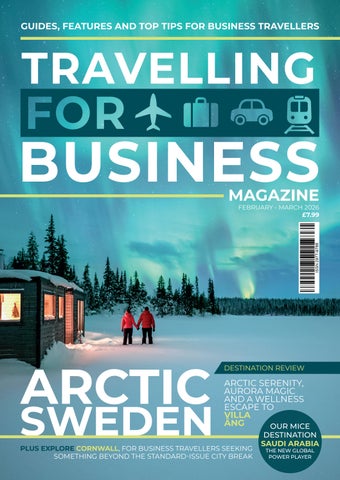
Travelling For Business Magazine - February/March 2026 Edition
Check
in,
chill out
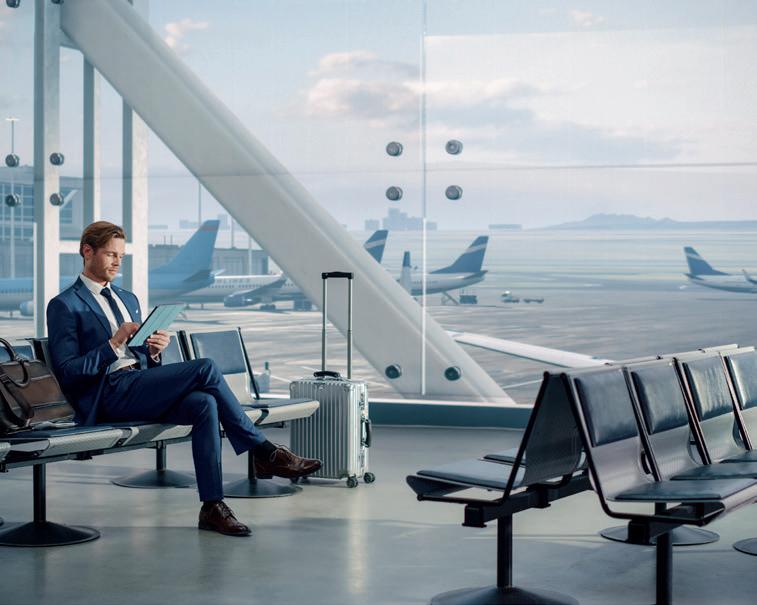
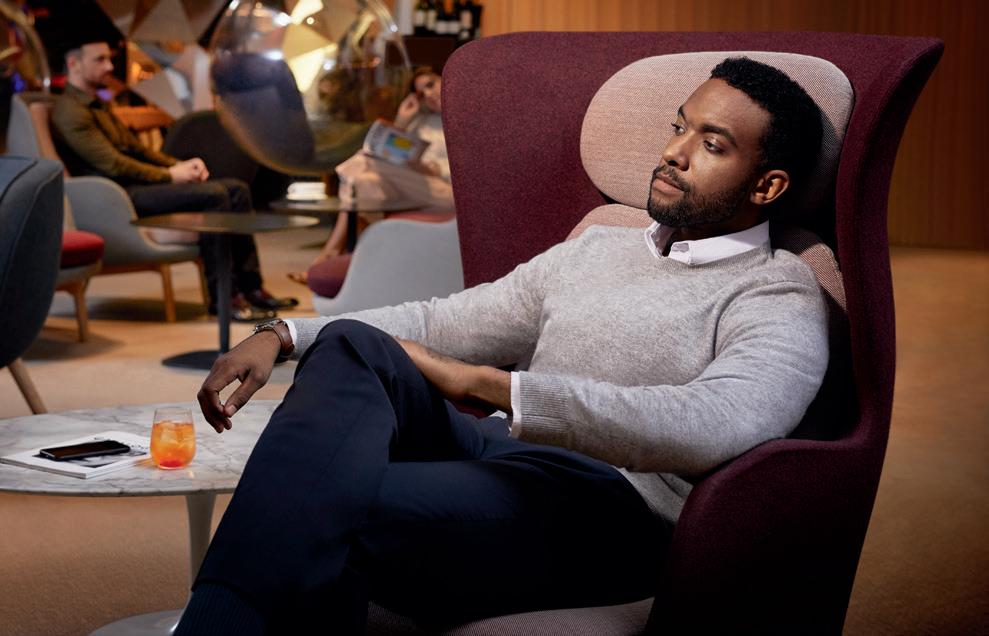
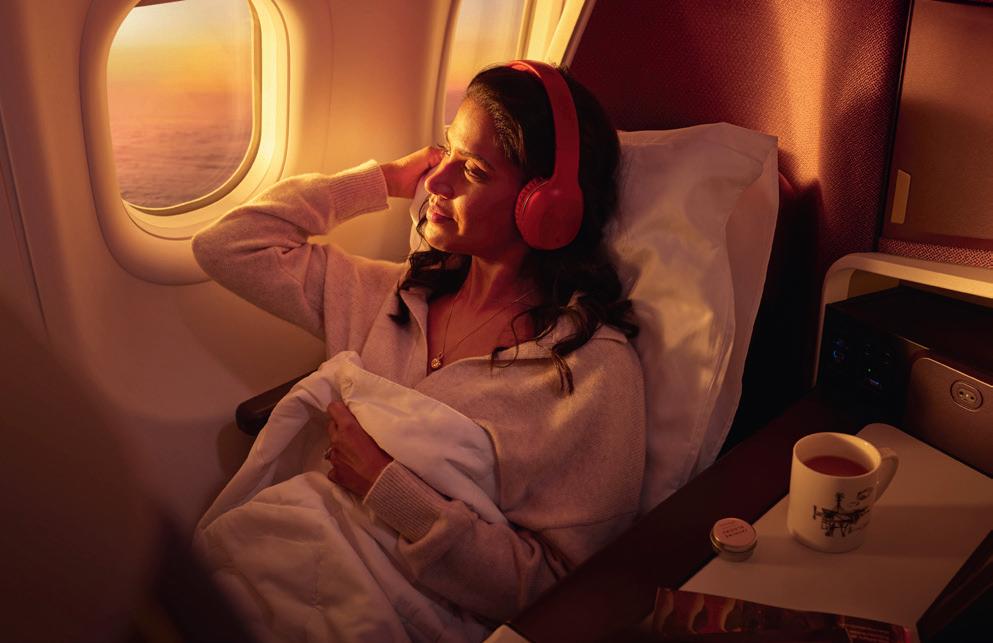
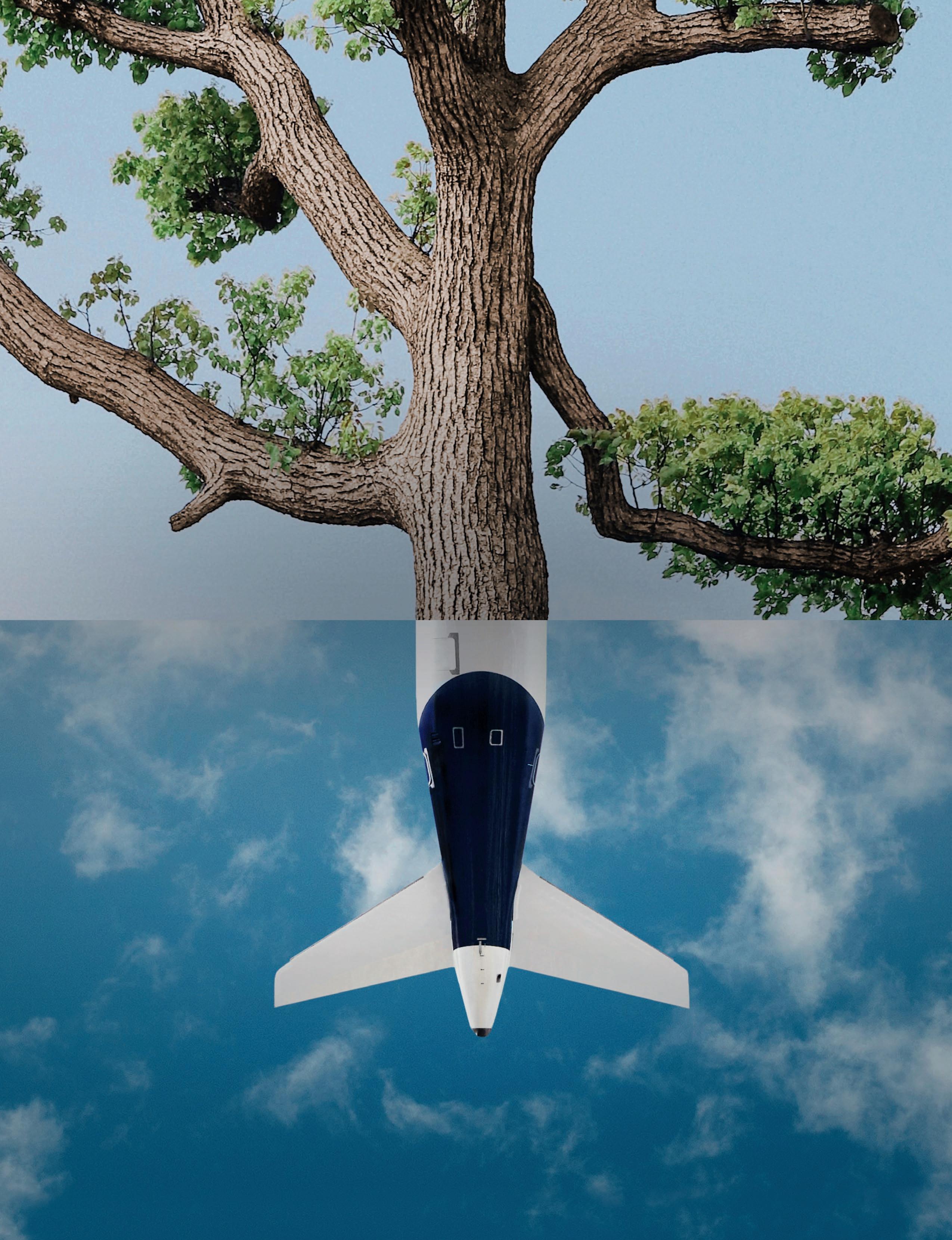
Once you set foot in a Virgin Atlantic Clubhouse, you won’t want to leave. Grab a bite to eat (or two), freshen up with an in-house shower, or find a quiet corner to send o a few emails. It’s all so relaxing, you’ll have to remind yourself you’ve got a flight to catch.
London Heathrow, Johannesburg, New York JFK, San Francisco and Washington DC are waiting for you. Our newest Clubhouse in LAX opens March 2025.
WELCOME TO TRAVELLING FOR BUSINESS
YOUR ULTIMATE GUIDE FOR
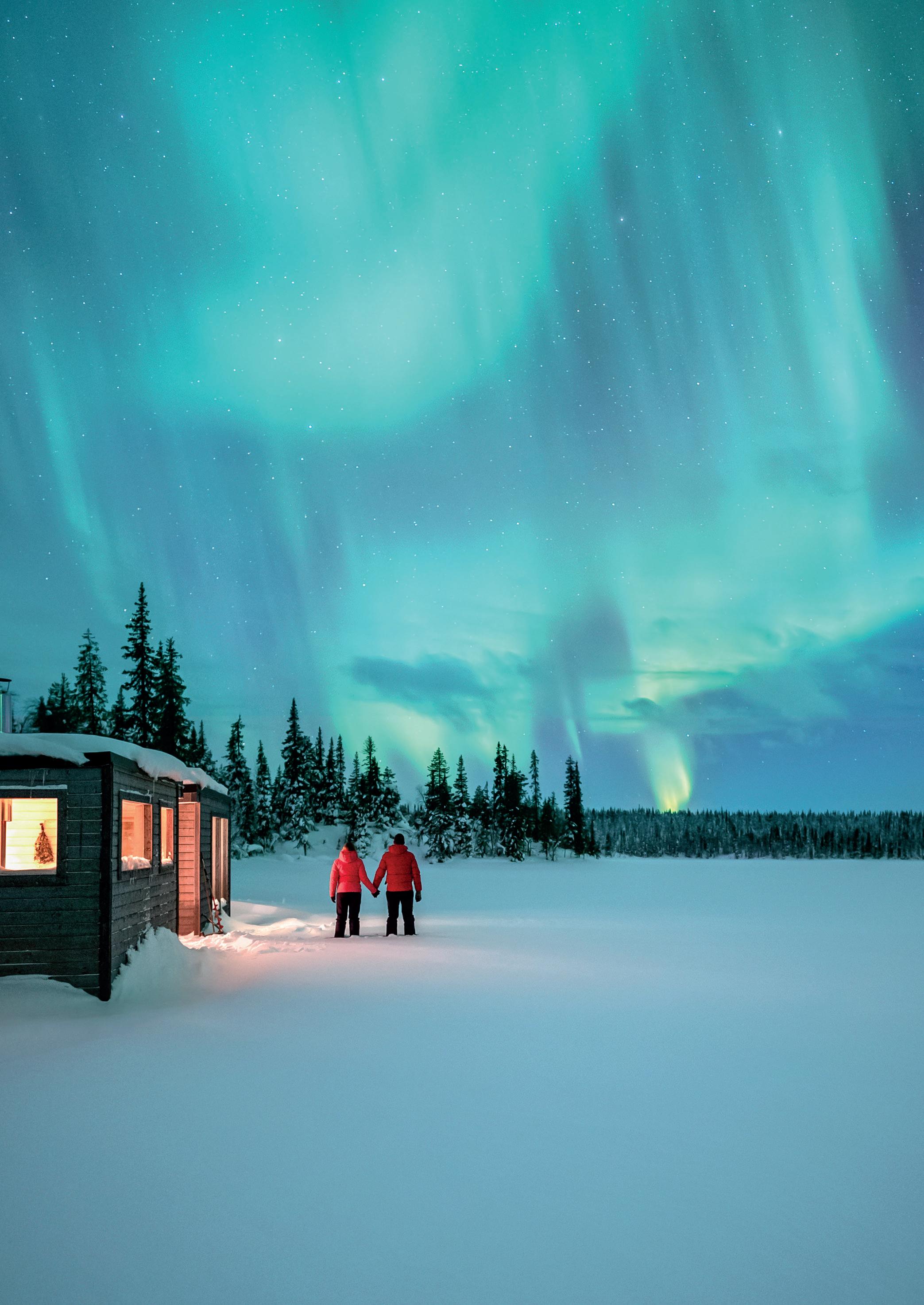
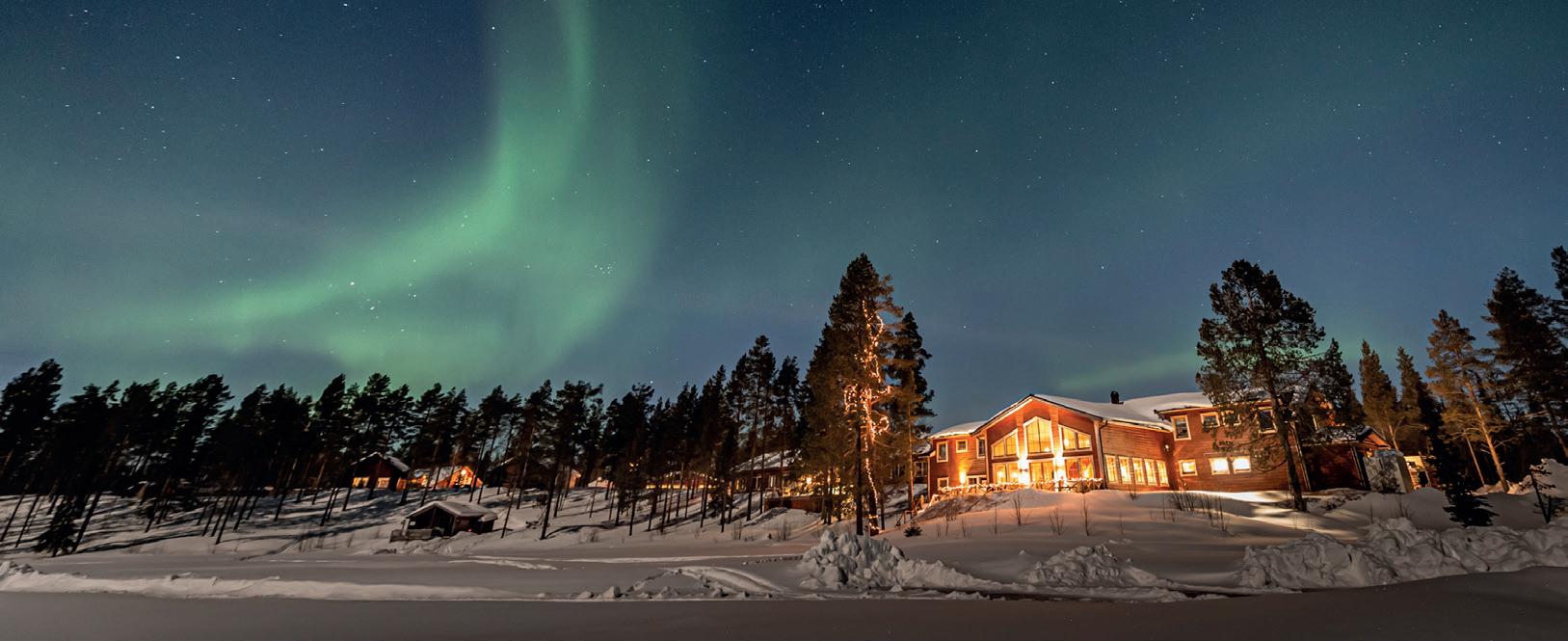
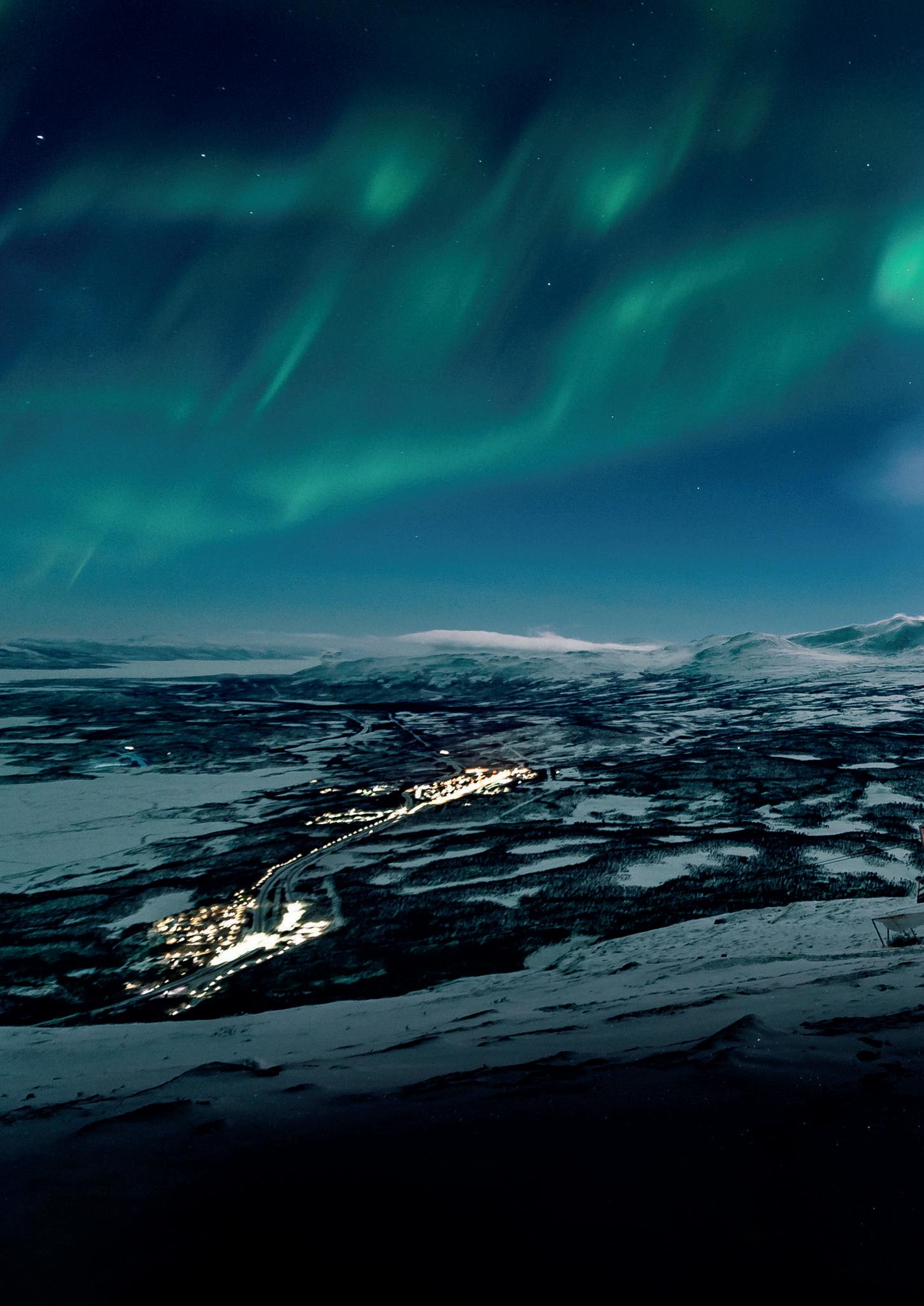
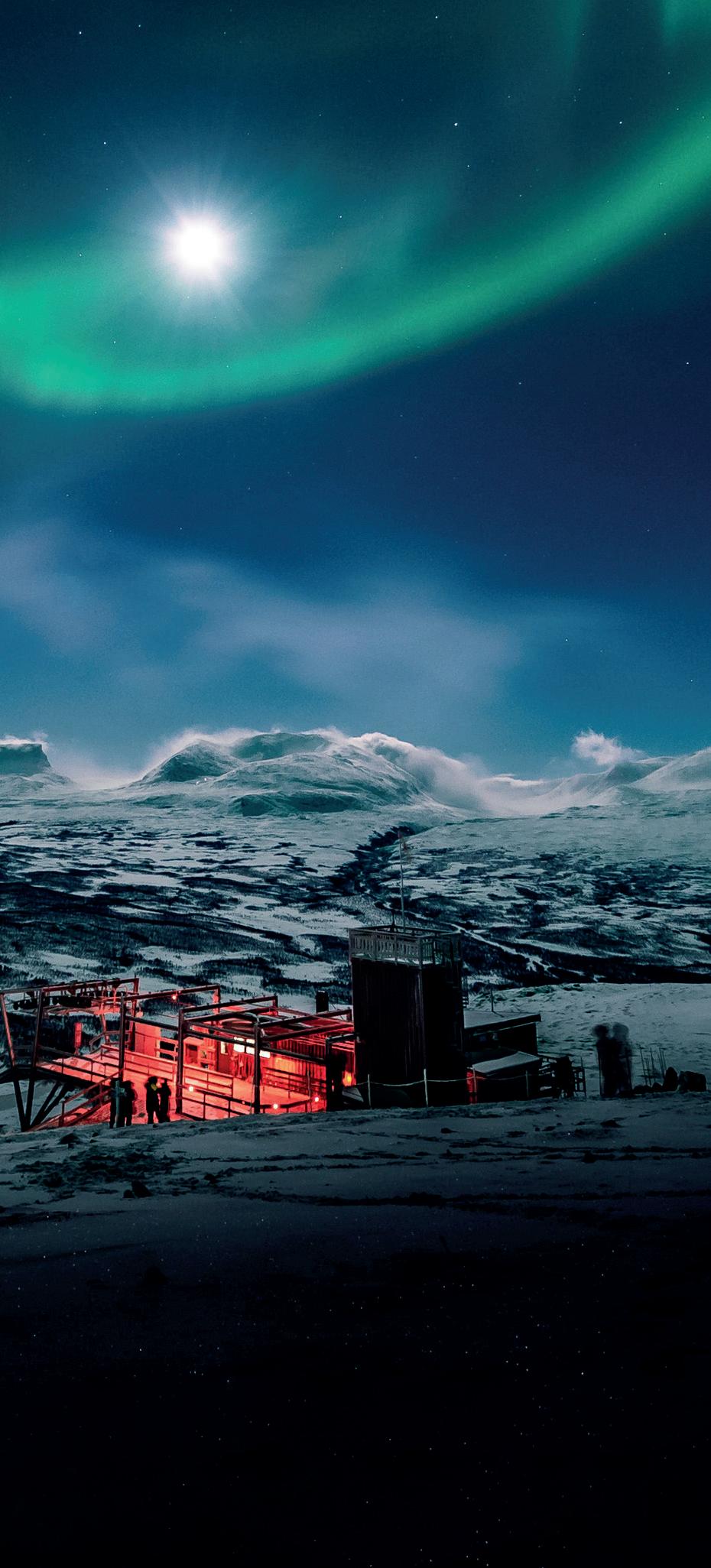
This issue begins at the very edge of Europe, under a sky streaked with aurora, where Arctic Sweden redefines what it means to travel well.
In our cover story - Arctic serenity and aurora magic - Andrea takes you to Villa Äng, a fivebedroom Nordic dream set between forest and frozen lake, where wellness is not a menu of treatments but a confrontation with cold, silence and sky. It is a reminder that in 2026, the most sophisticated luxury is often the simplest: air you can taste, darkness you can see, and space to think.
From the stillness of Lapland, we pivot to motion. In this issue’s major interview, Gilda Perez-Alvarado outlines the rebirth of Orient Express, not as nostalgia, but as a fully realised ultra-luxury ecosystem spanning rail, hotels and sea. Her thesis is compelling: in a world addicted to speed, the future of high-end business travel may lie in deceleration. Rail over rush. Craft over convenience. Narrative over noise.
Elsewhere, the tempo rises.
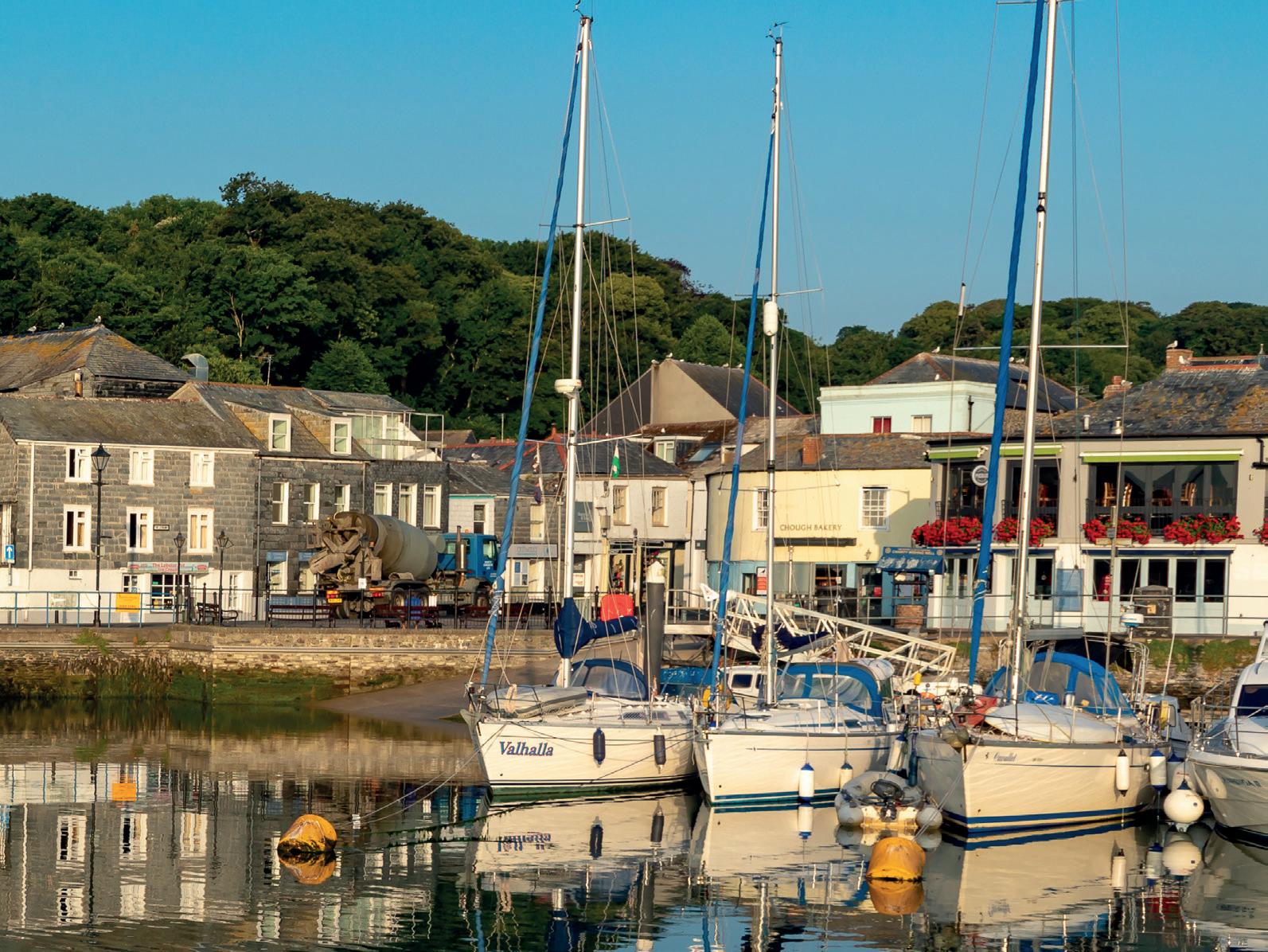
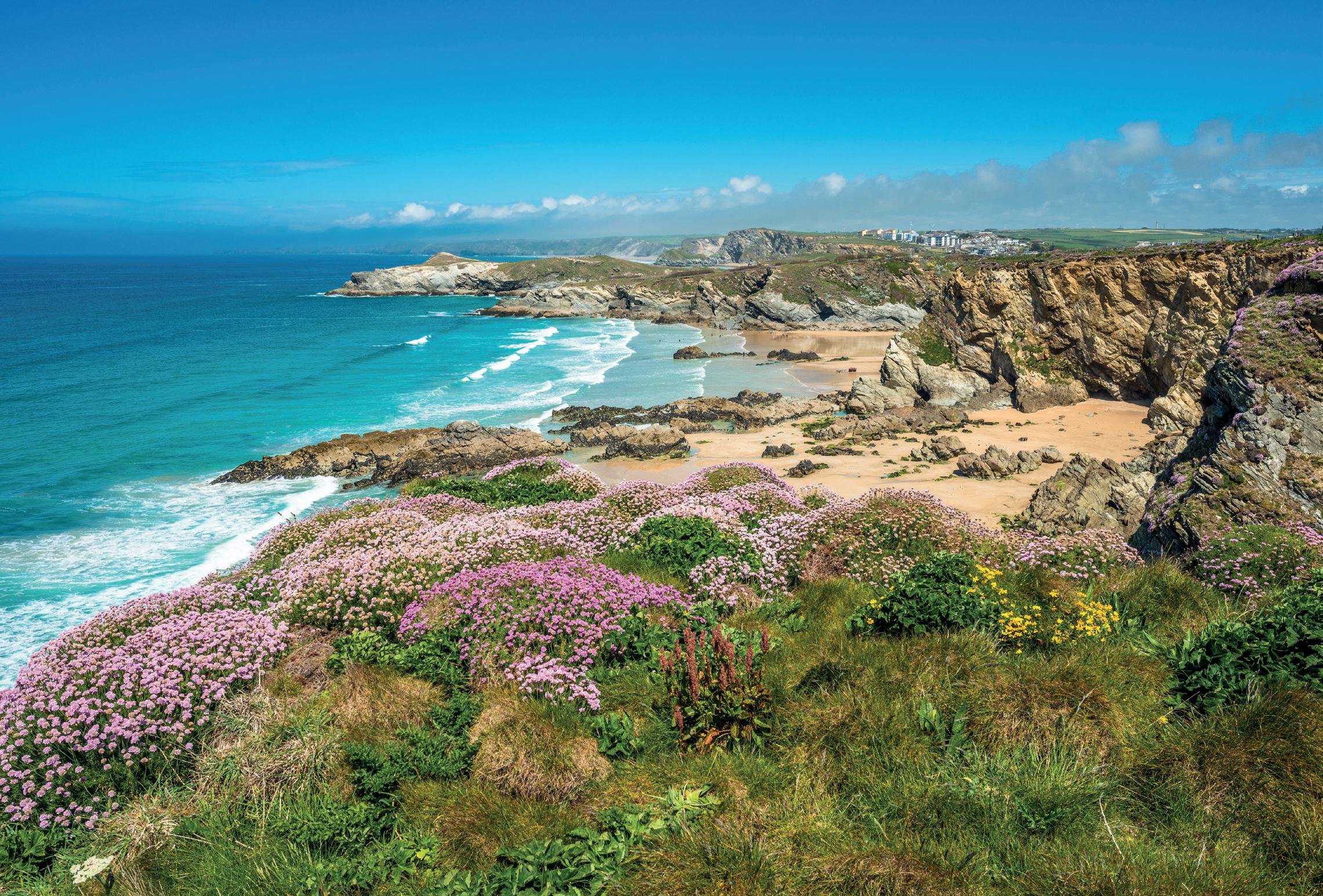
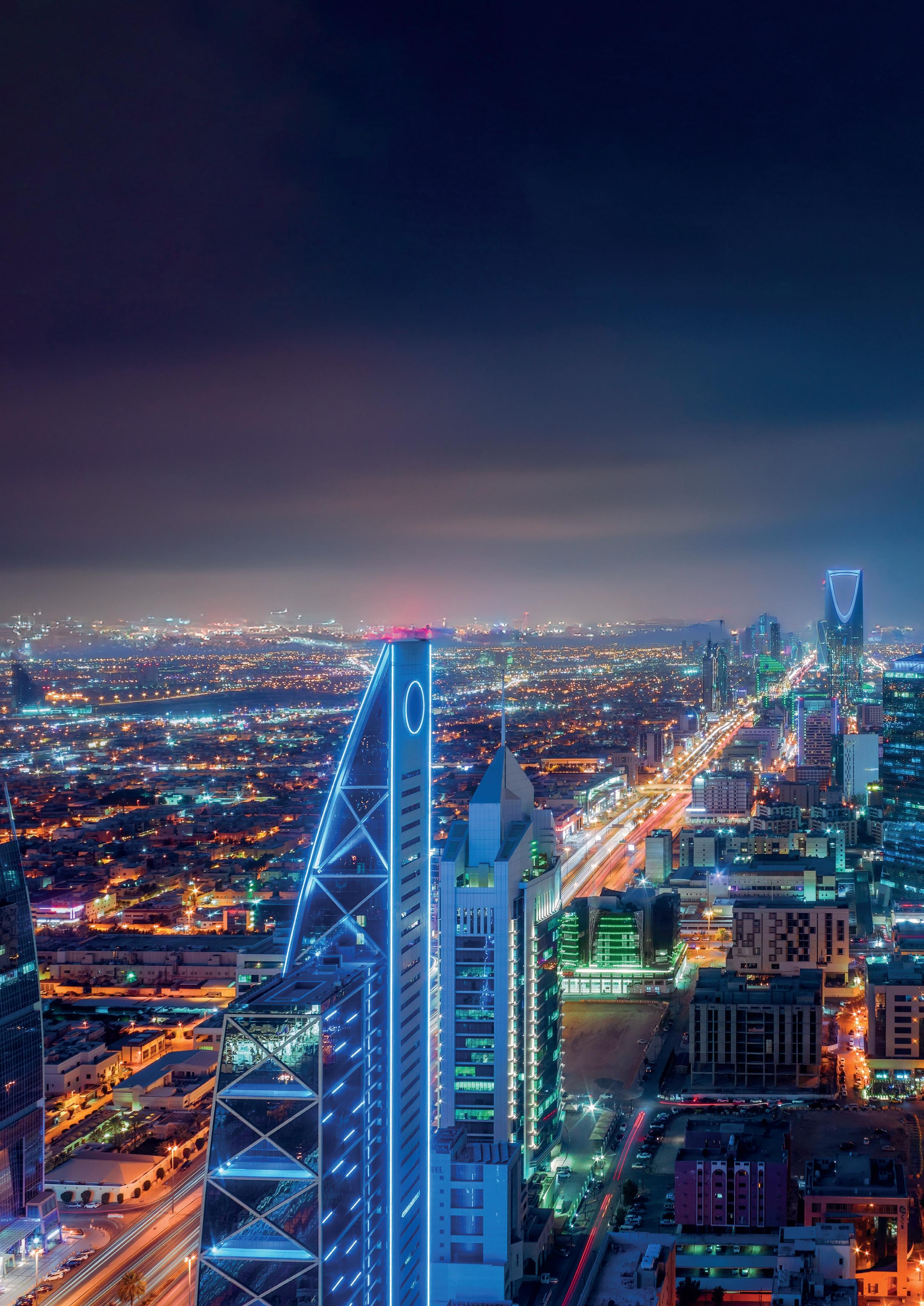
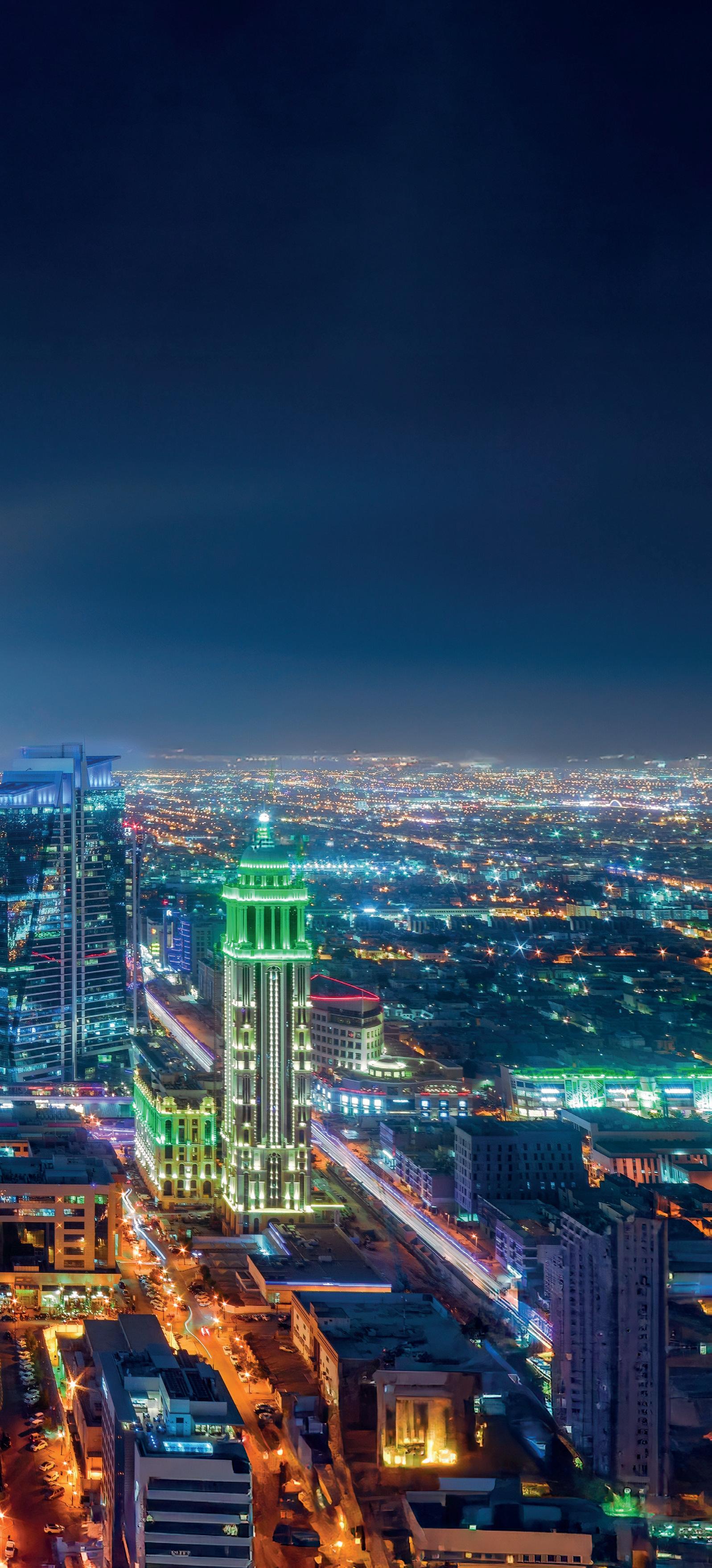
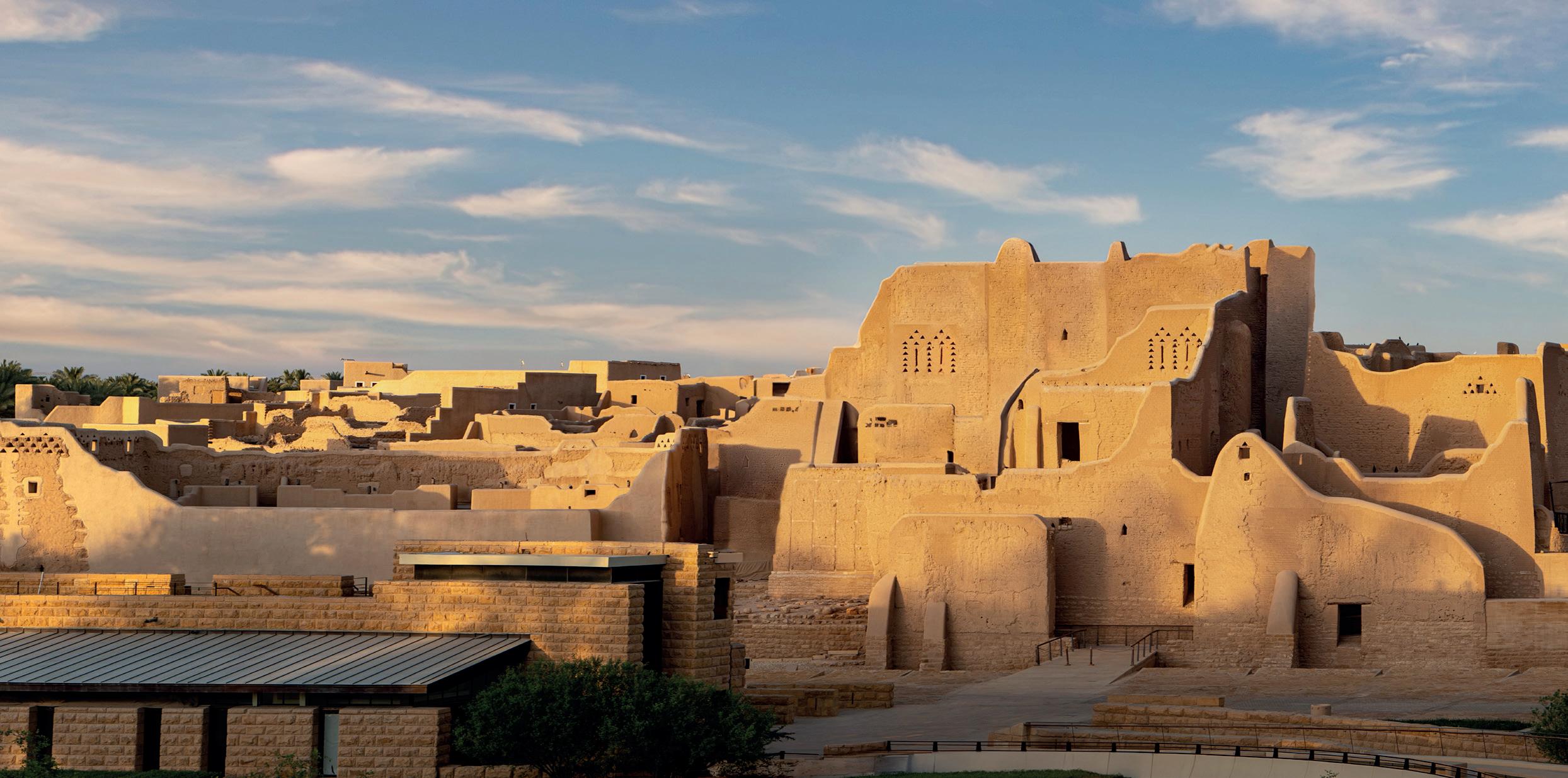
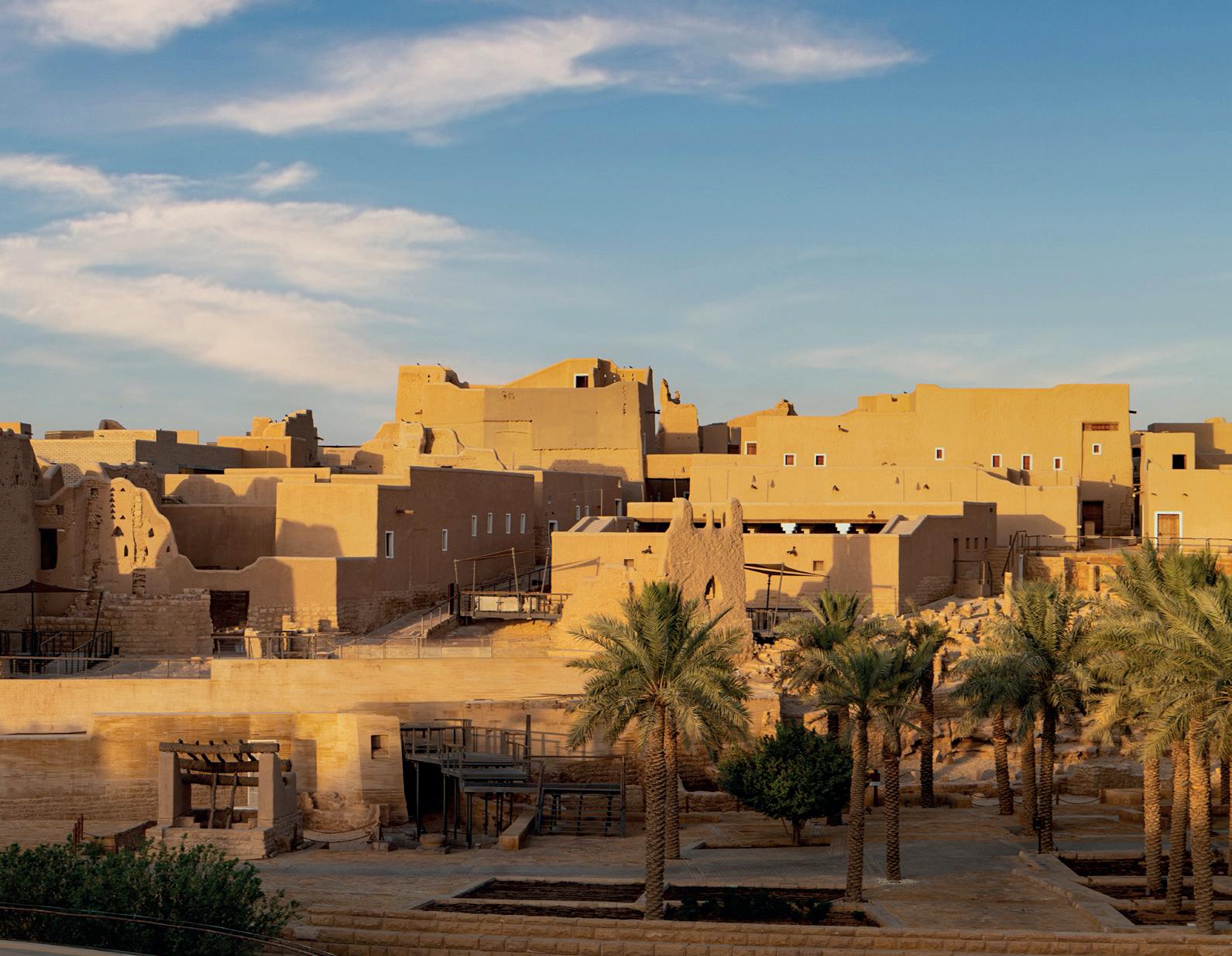
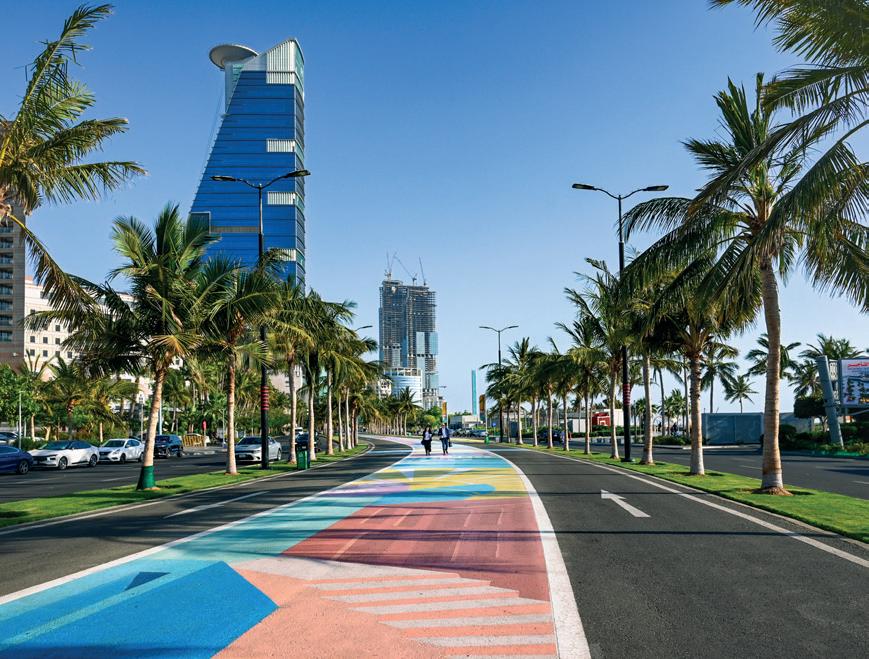
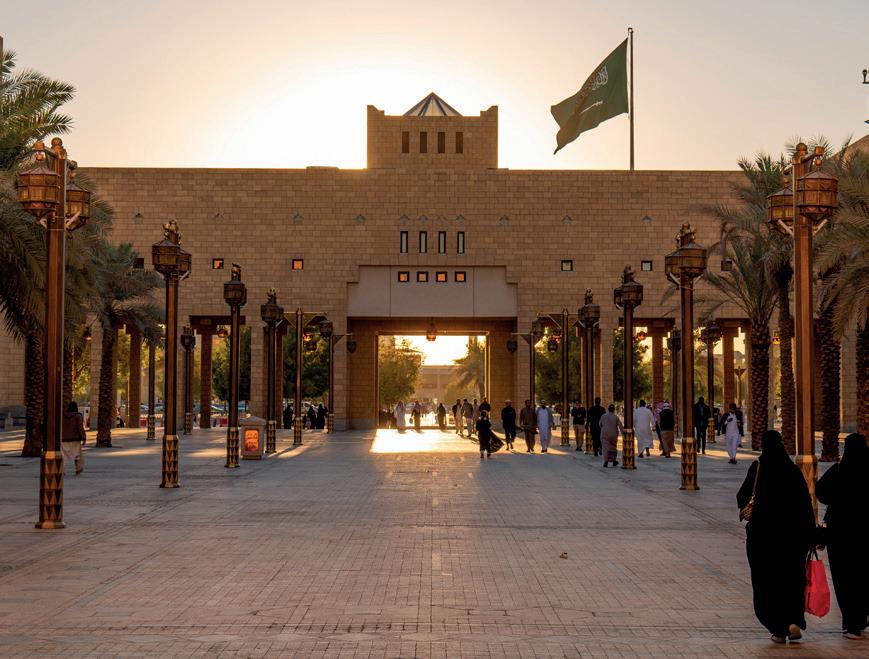
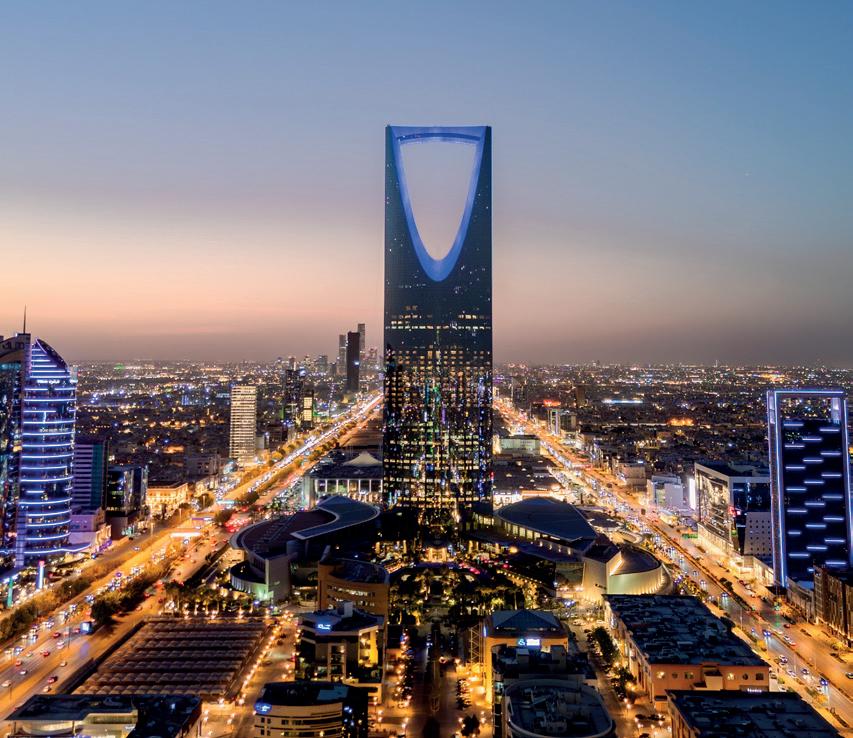
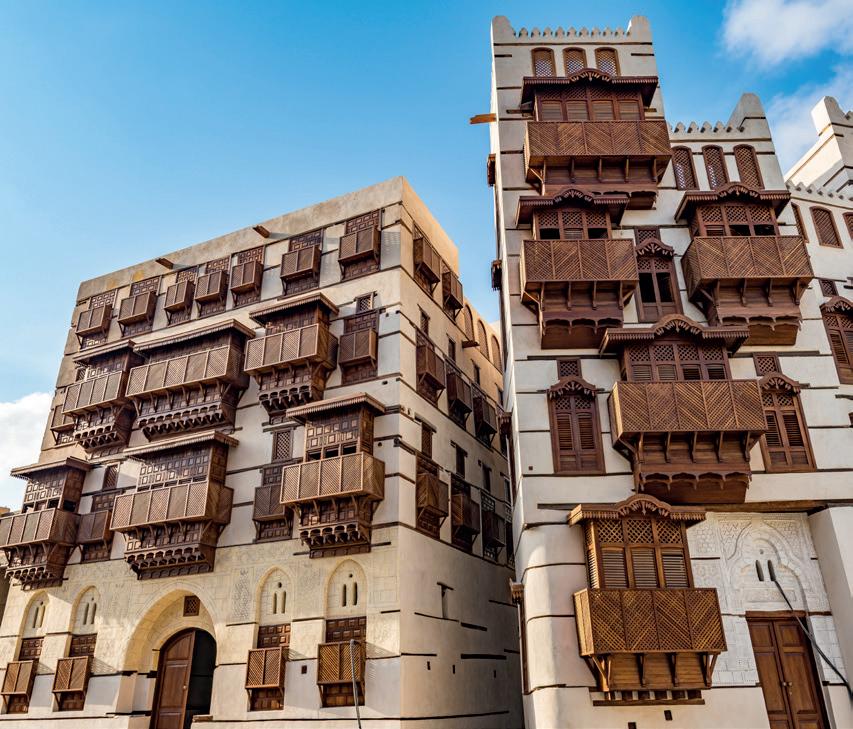
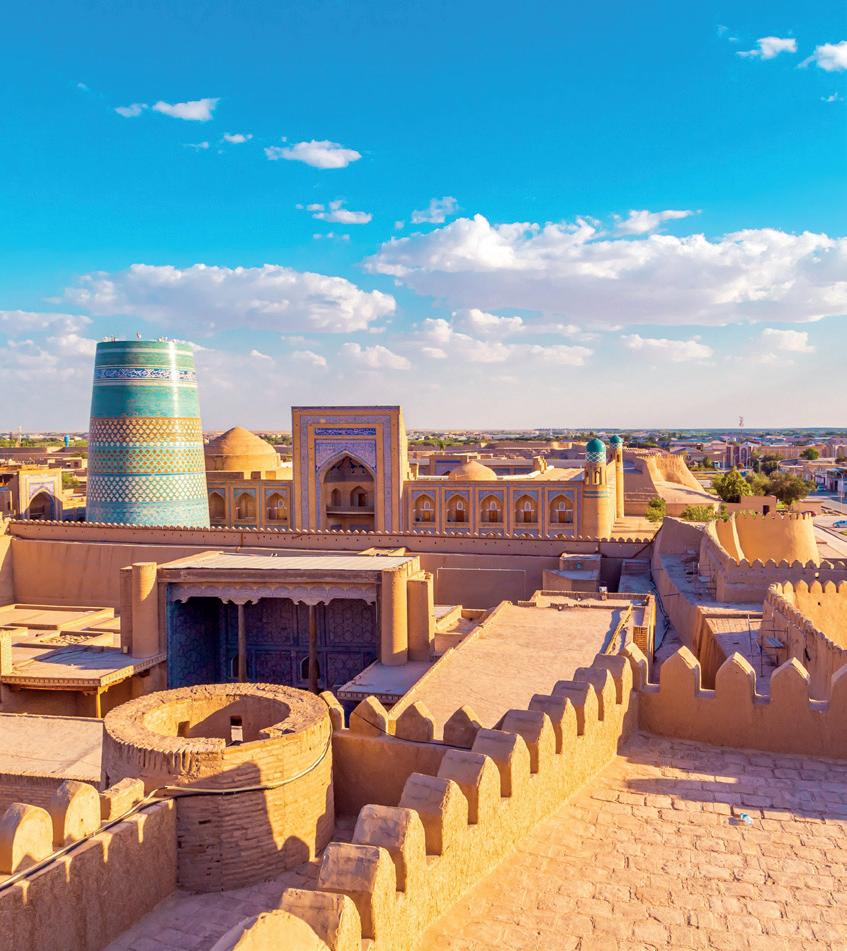
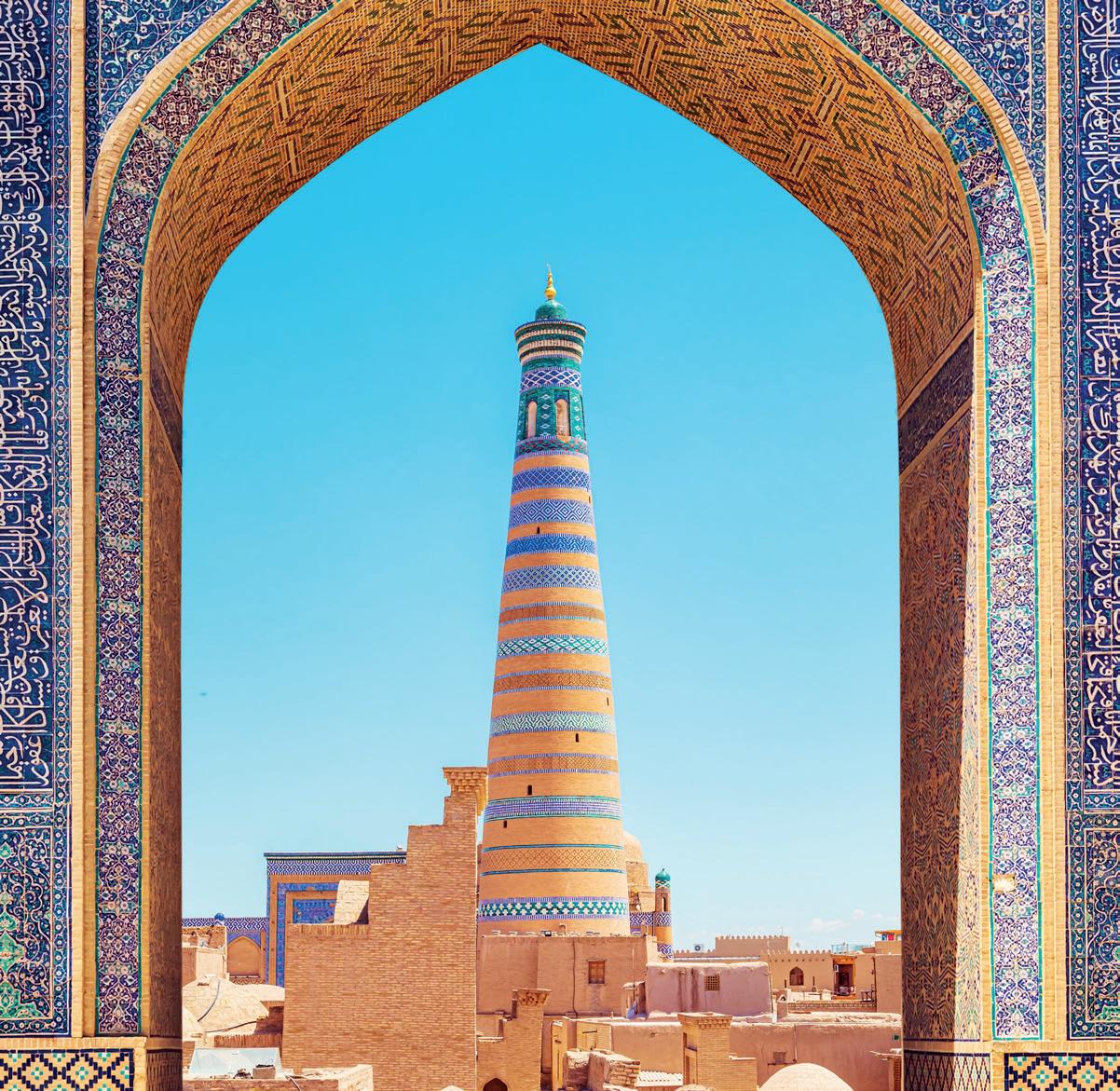
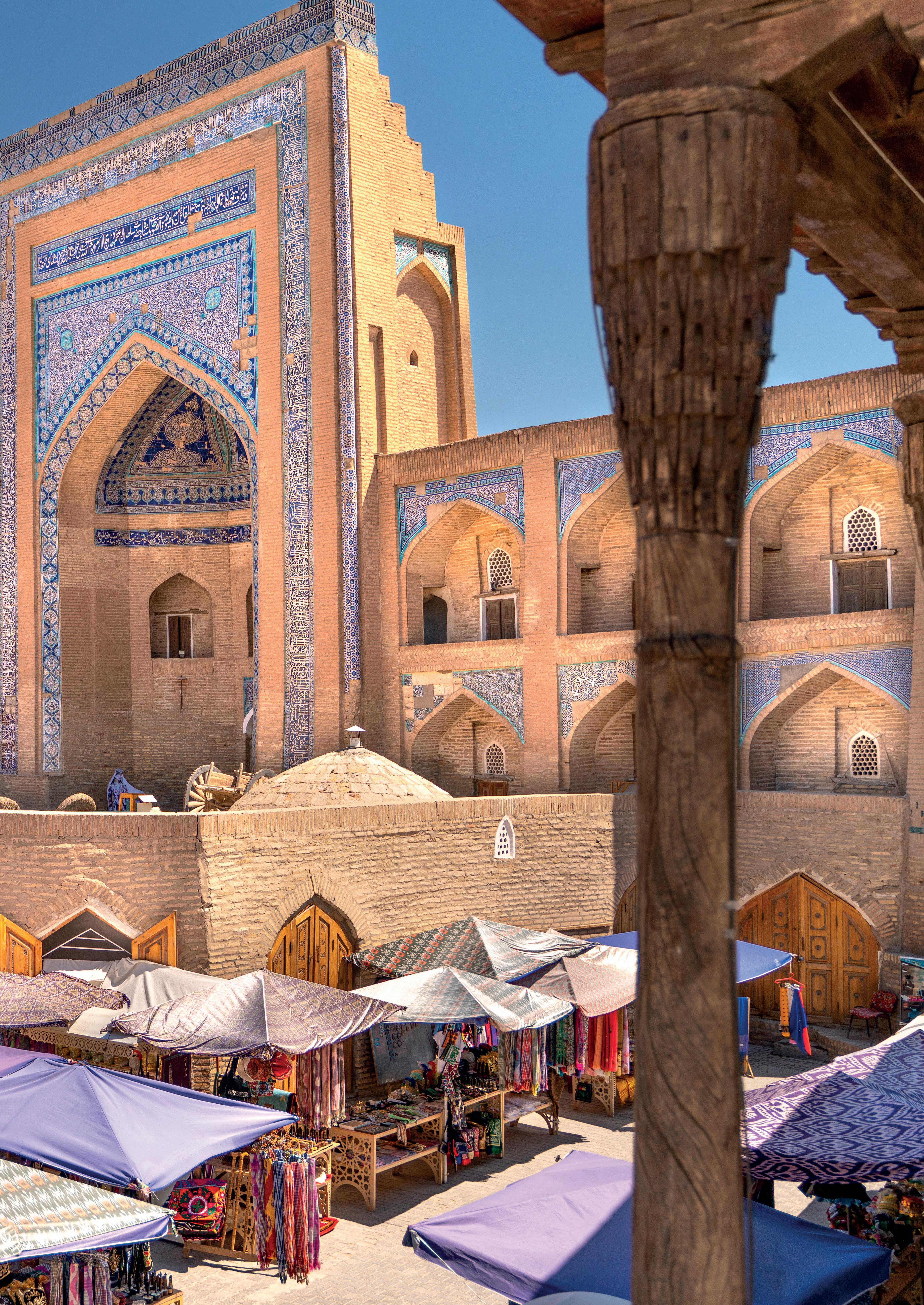
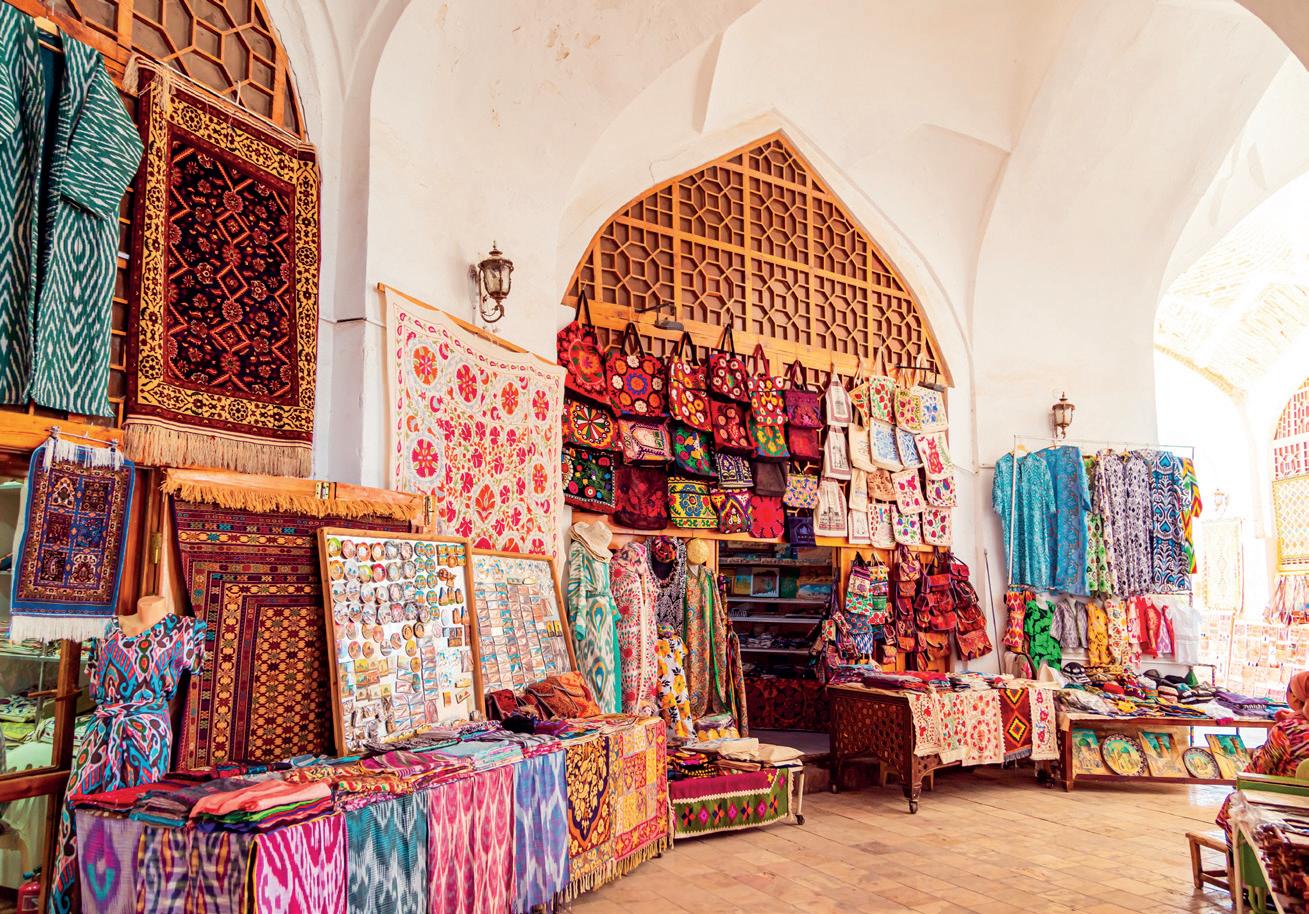
I headed to Cornwall, which is no longer simply a holiday shorthand for cream teas and cliffs, but a credible leadership retreat, tech cluster and MICE contender in its own right. Anna reports from Saudi Arabia, now impossible to ignore as a global business events powerhouse, its Expo 2030 trajectory reshaping the MICE conversation entirely. And in Uzbekistan, we chart a Silk Road renaissance that feels less like rediscovery and more like arrival.
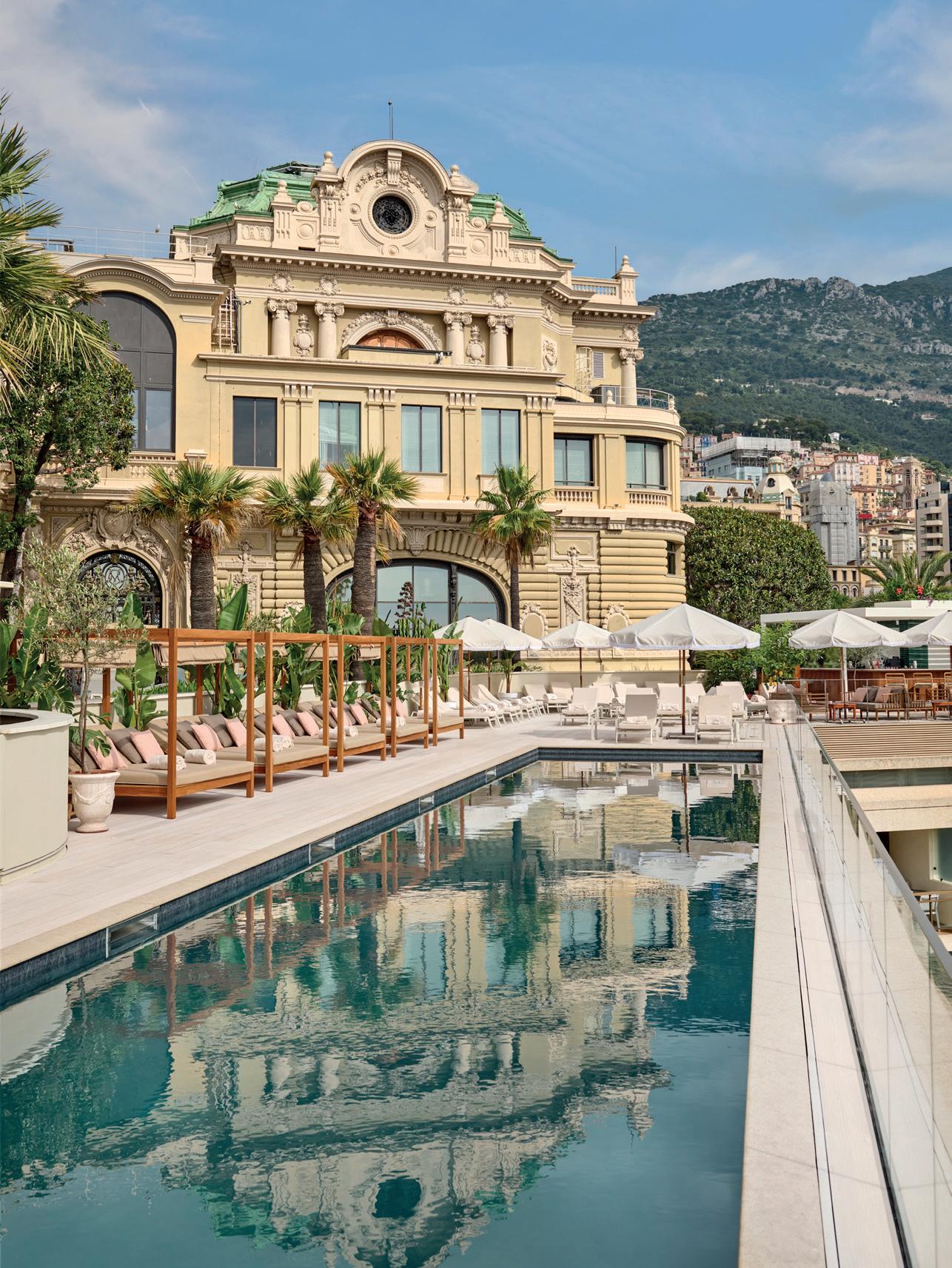
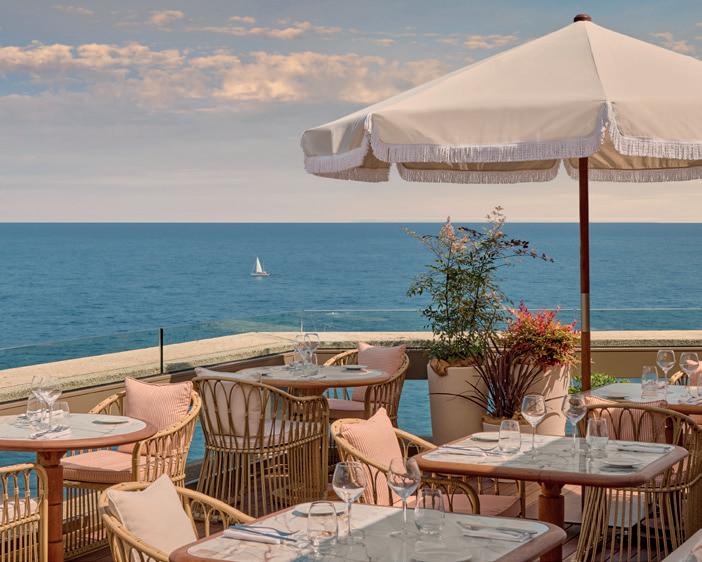
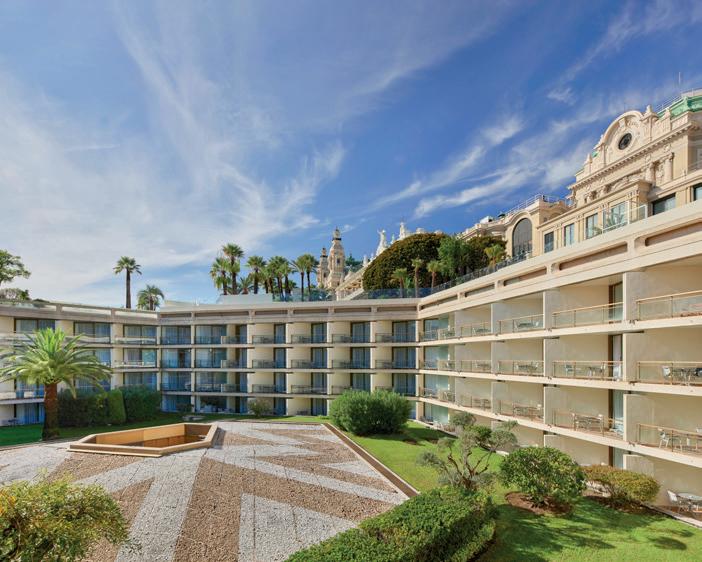
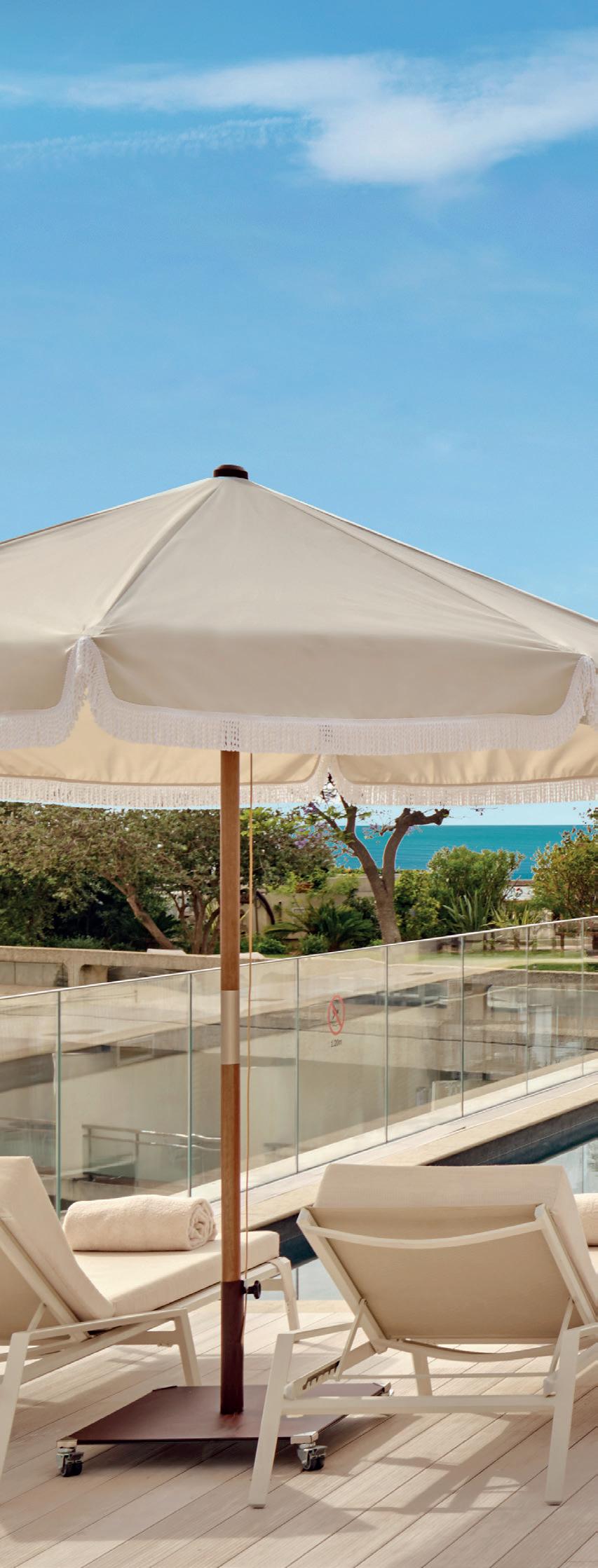
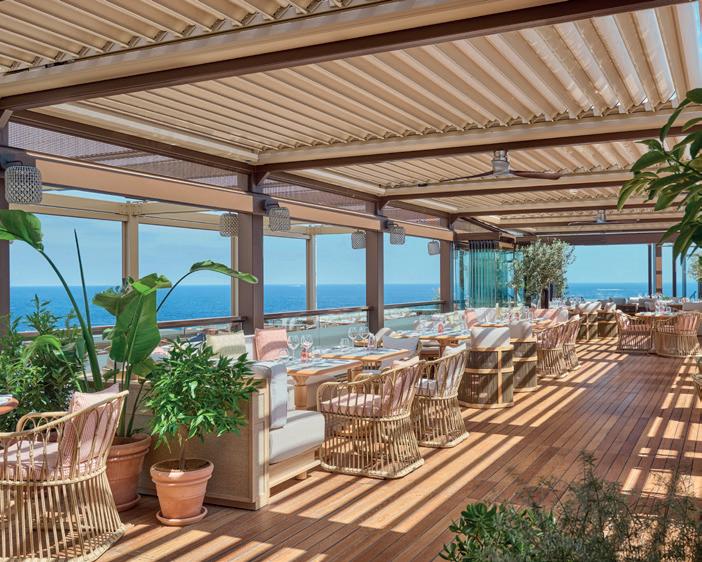
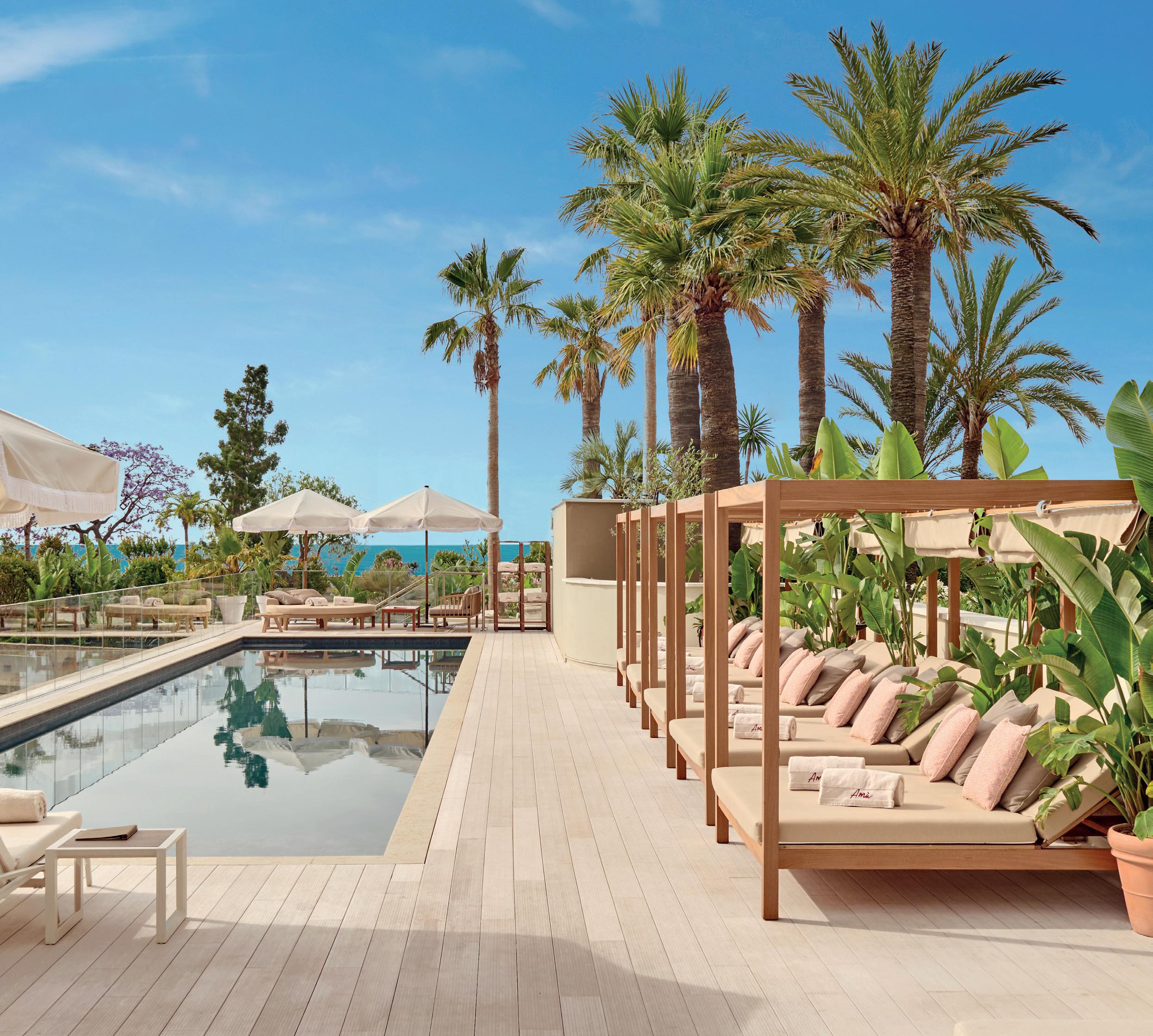
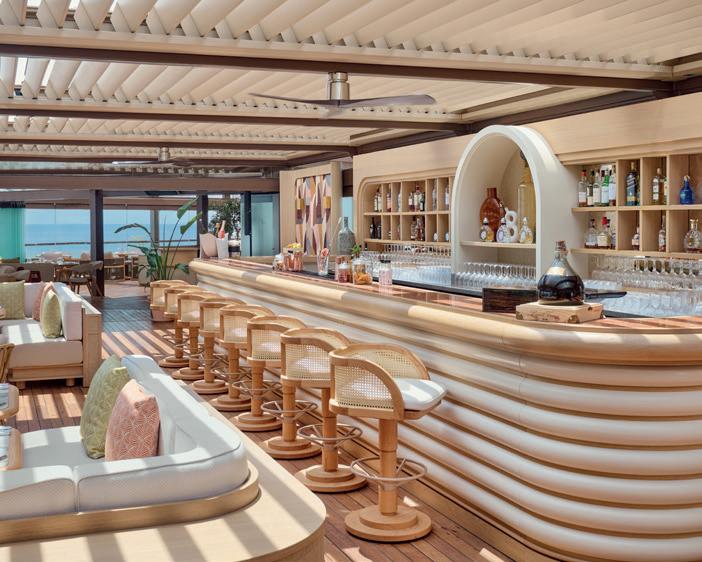
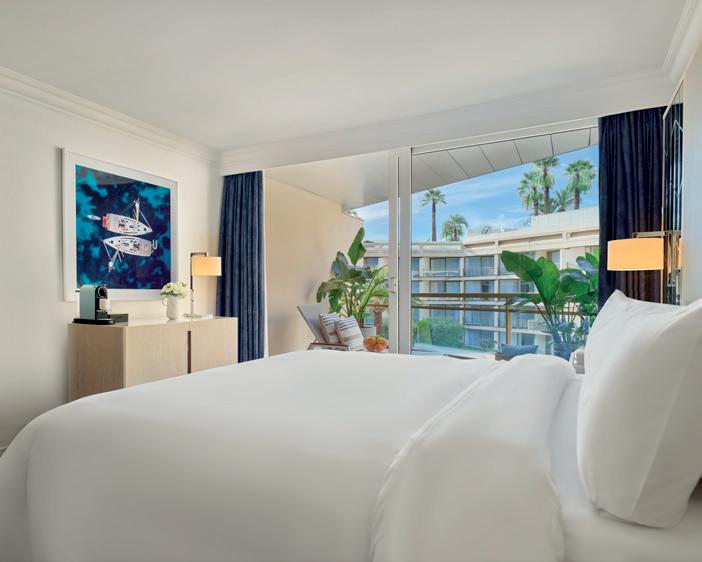
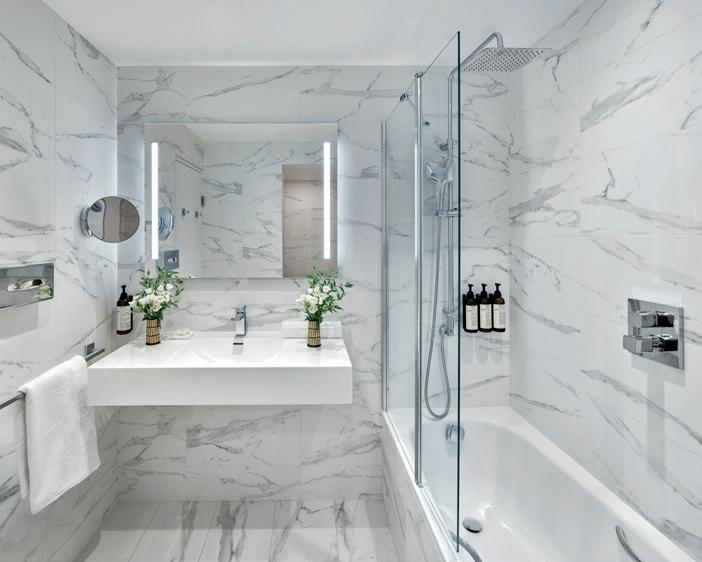
Hotels, as ever, anchor the narrative. From the Riviera glamour of the Fairmont Monte Carlo
Until next time…
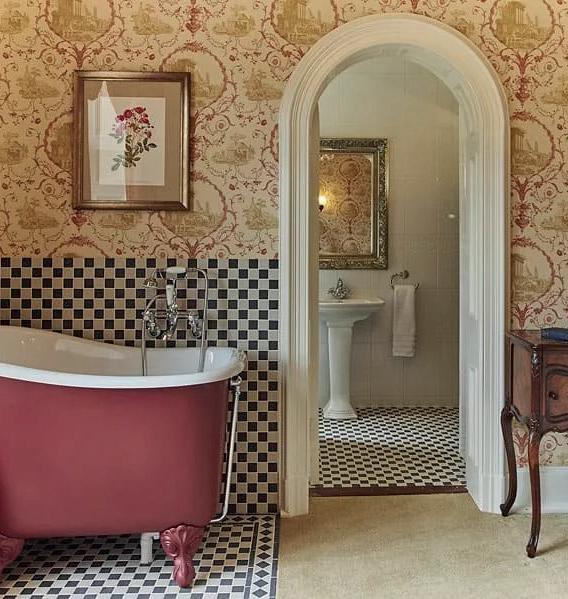
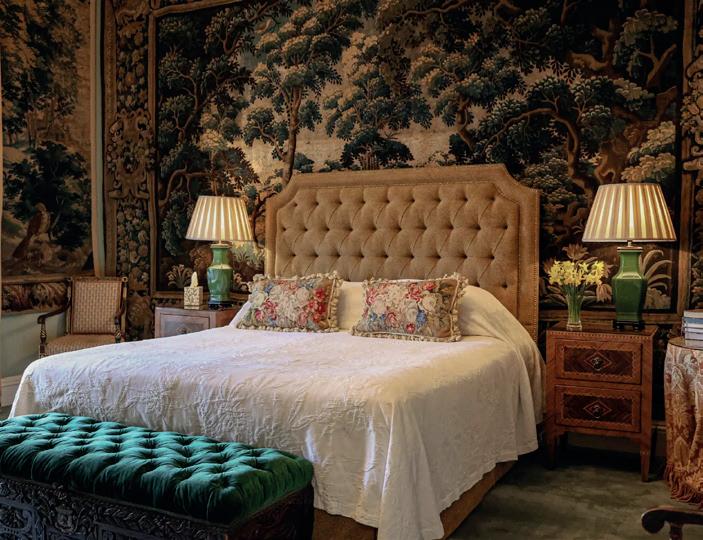
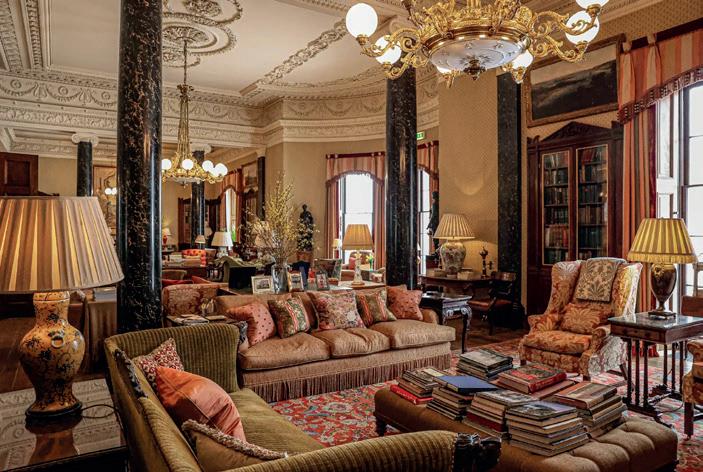
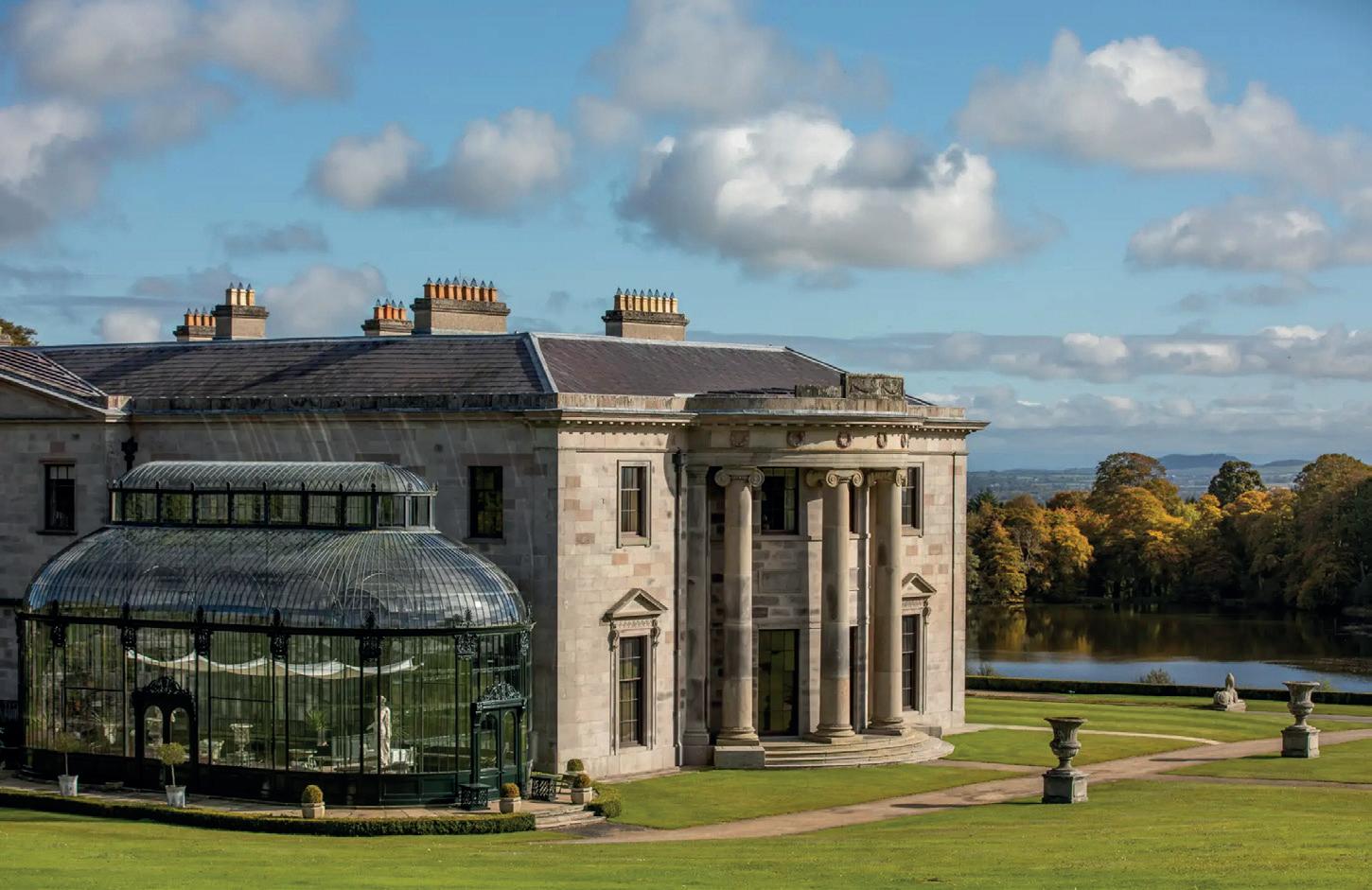
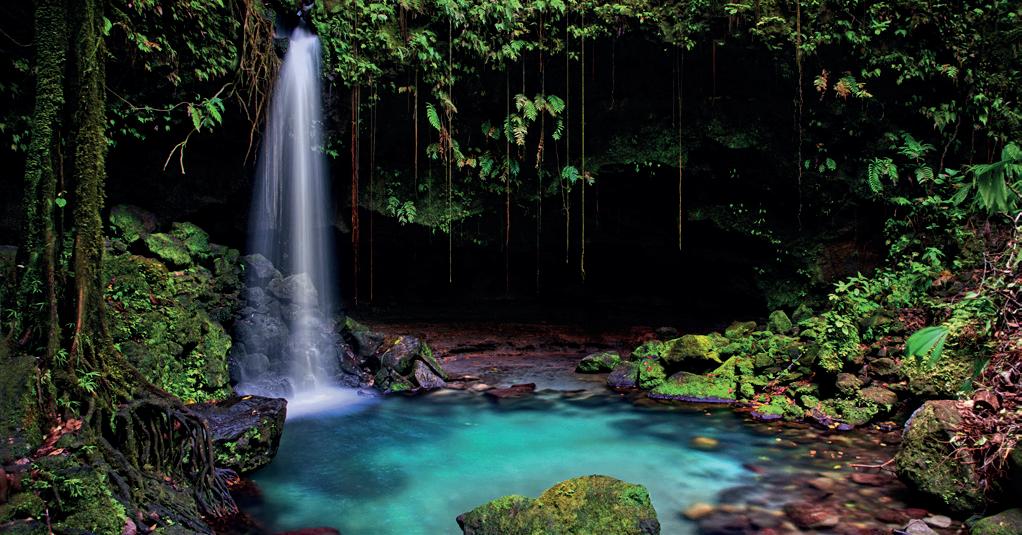
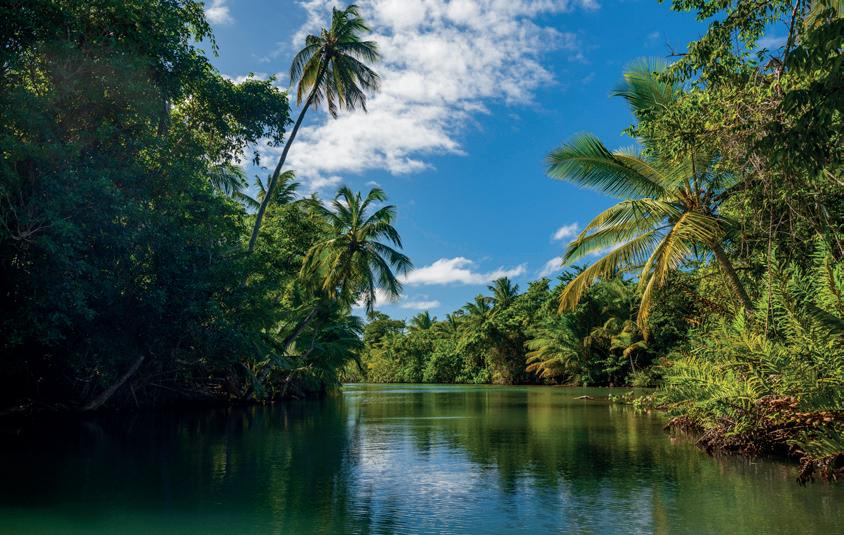
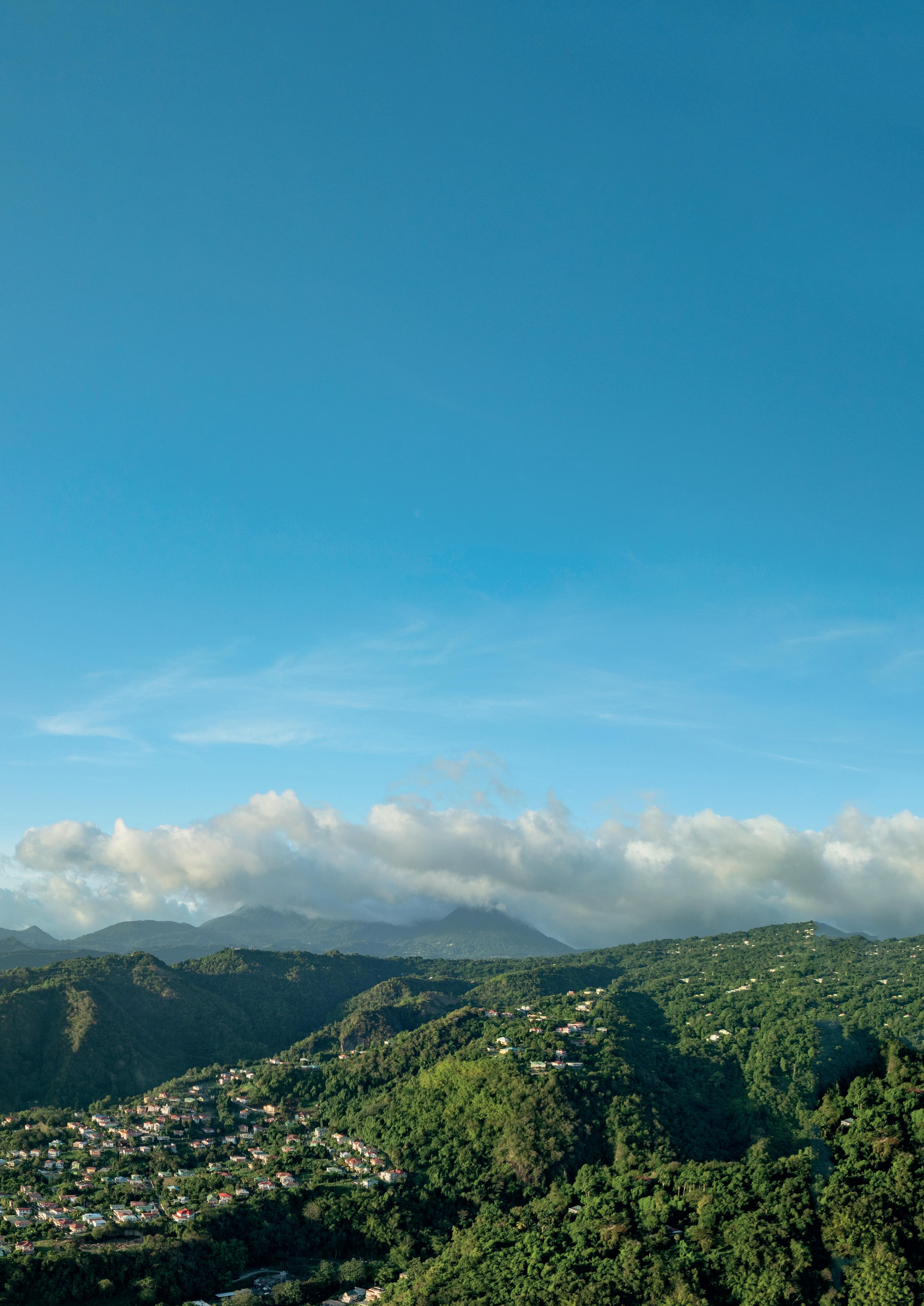
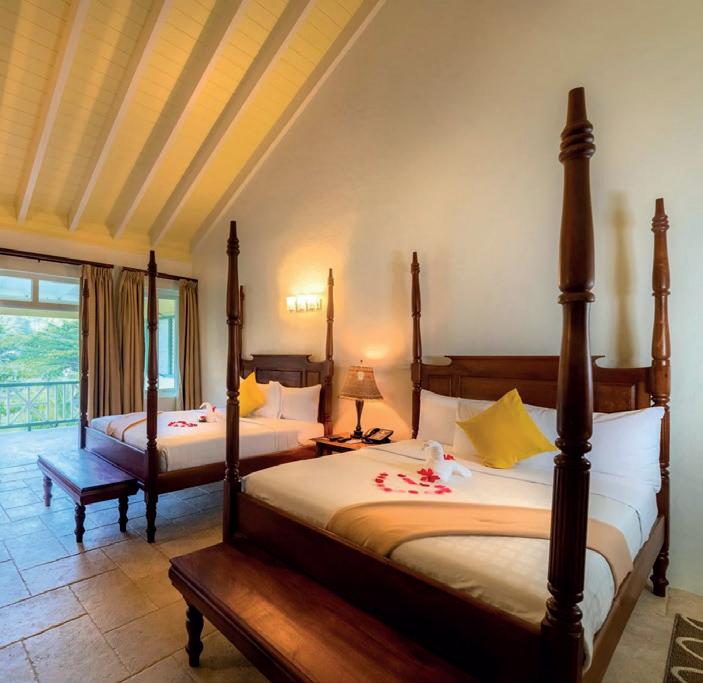
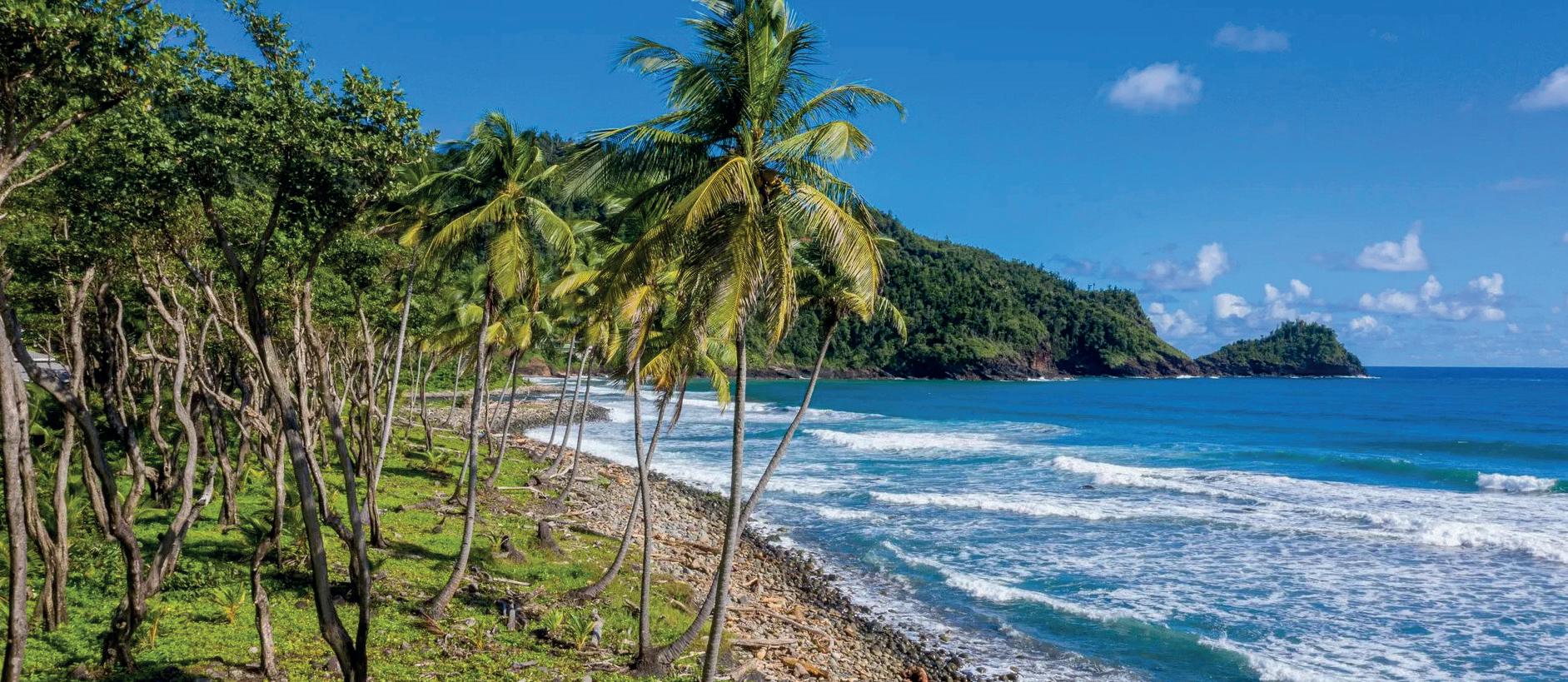
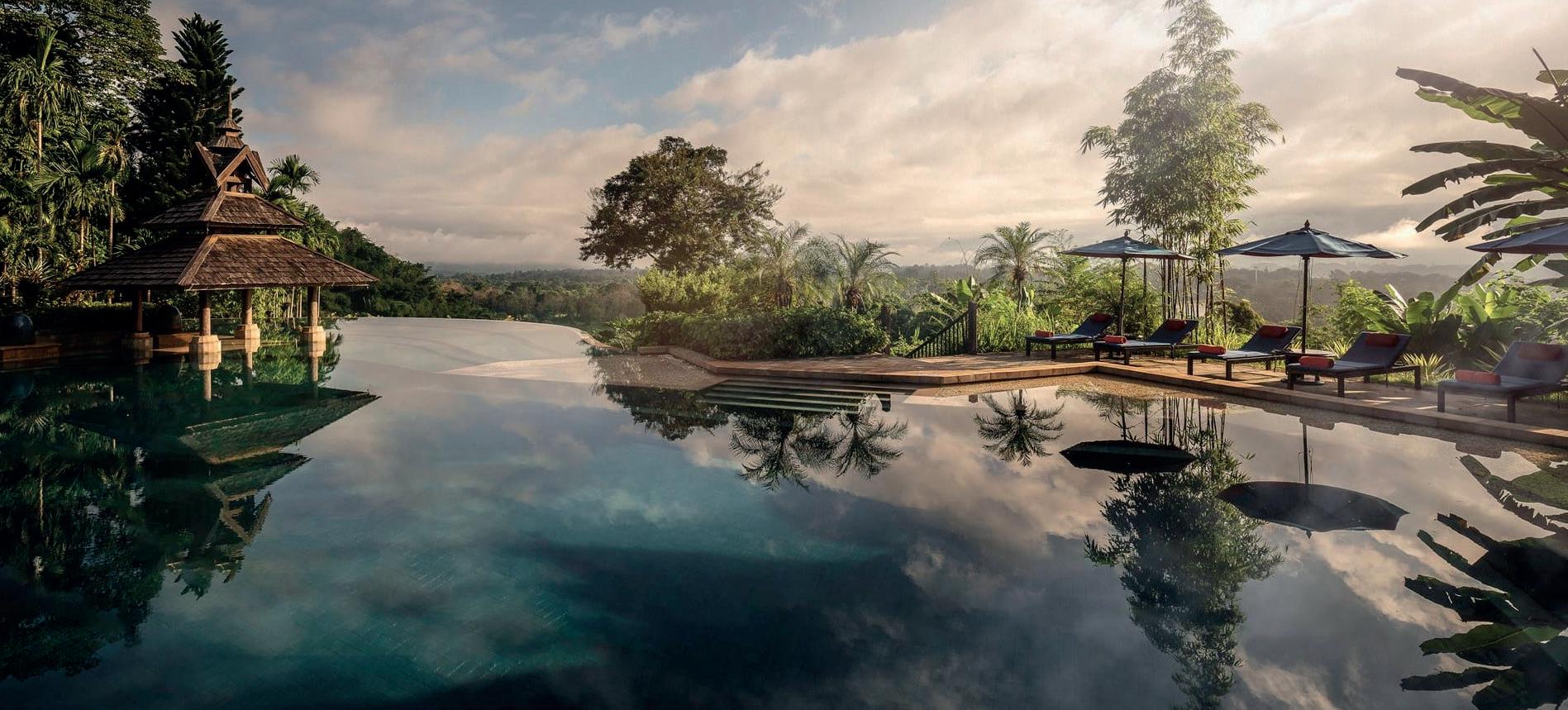
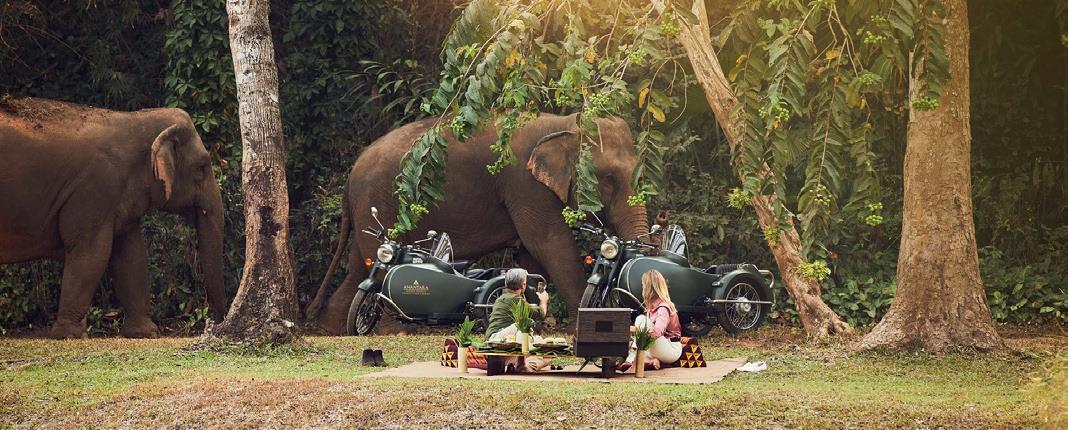
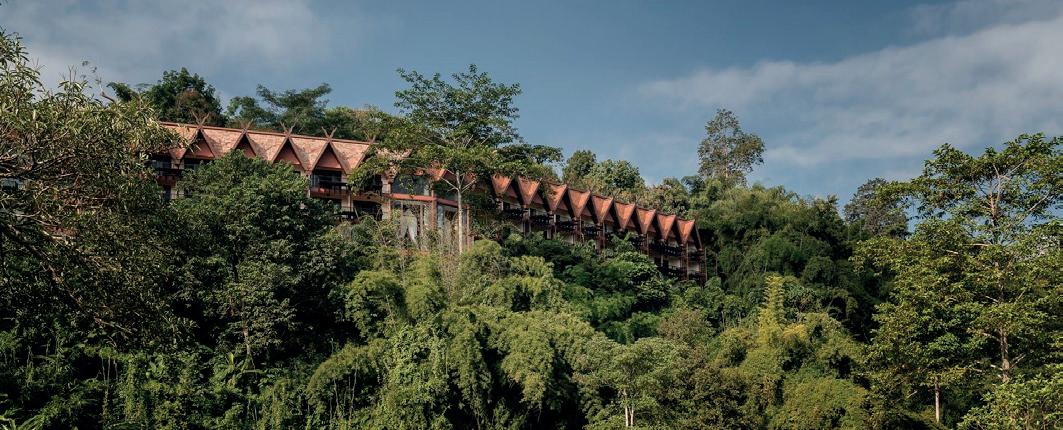
at 50 to the jungle-hung terraces of Anantara’s Golden Triangle Elephant Camp, from Ballyfin’s Irish theatricality to Rosalie Bay’s soulful eco-ethos in Dominica, this issue asks a simple question: what does modern luxury stand for? Increasingly, the answer is purpose.
We explore that idea further in our features. From the rise of grief retreats and Blue Zones to sports tripping in Cyprus, where even a self-confessed non-golfer finds joy on a TrackMan range. Travel is no longer simply about where you go. It is about what shifts when you get there.
And, because business travel never stands still, we examine loyalty battles between airlines, Heathrow’s raised SAF targets, and the evolving economics of premium aviation. The industry is not just recovering; it is recalibrating.
Finally in this issue we also mark the official launch of the Travelling For Business Awards 2026, returning to London on 22 October for a black-tie gala. Fast becoming established as one of the most credible fixtures in the corporate travel calendar, the awards will be hosted by broadcaster Kate Silverton and will bring together senior leaders from aviation, hospitality, mobility, MICE, loyalty and travel technology.
Wherever your next journey takes you: Riyadh, Reykjavik, or simply Terminal 5 at dawn, may it offer clarity, connection and just enough wonder to change the way you see the return.
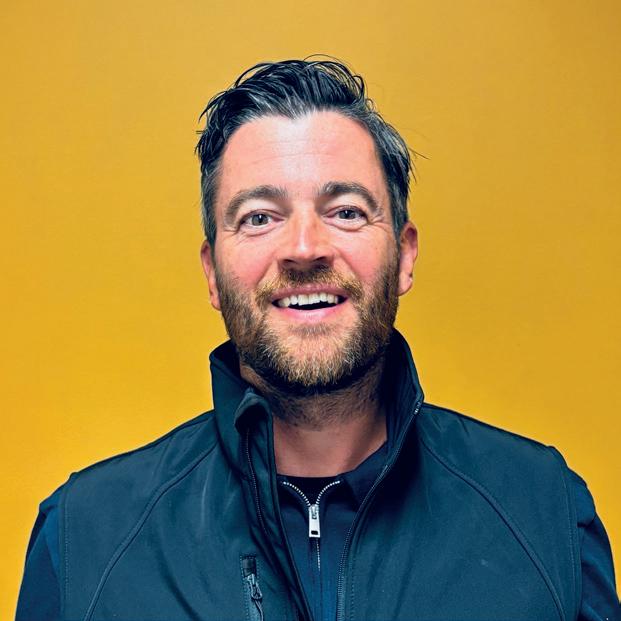
RICHARD ALVIN EDITOR, TRAVELLING FOR BUSINESS
Editor
Andrea Thompson
Graphic Designer
Grace Moseley
Videographer
Jacob Pinchbeck
Content Sales Manager
Laura Phillips
Capital Business Media, Group MD
Richard Alvin
Business Development Director
Stephen Banks
Chief Creative Director
Stuart Hyde
Finance Director
Andrew Martin
Travelling For Business is published in London by
531
The Capital Business Media Group, Level 18, Forty Bank Street London, E14 5NR +44 20 7148 3861
Travelling For Business is printed using sustainable paper sources and vegetable ink, and is PEFC certified. Copies are recycled at the end issue.
DESTINATIONS
Artic Sweden A Wellness Escape To Villa Äng
Cornwall Britain's Edge, Reimagined
Saudi Arabia The New Power Player In Global Mice
Dominica The Caribbean's Quiet Powerhouse
Uzbekistan A Silk Road Classic Stepping Into Its Future Belize A Small Country With A Big Sense Of
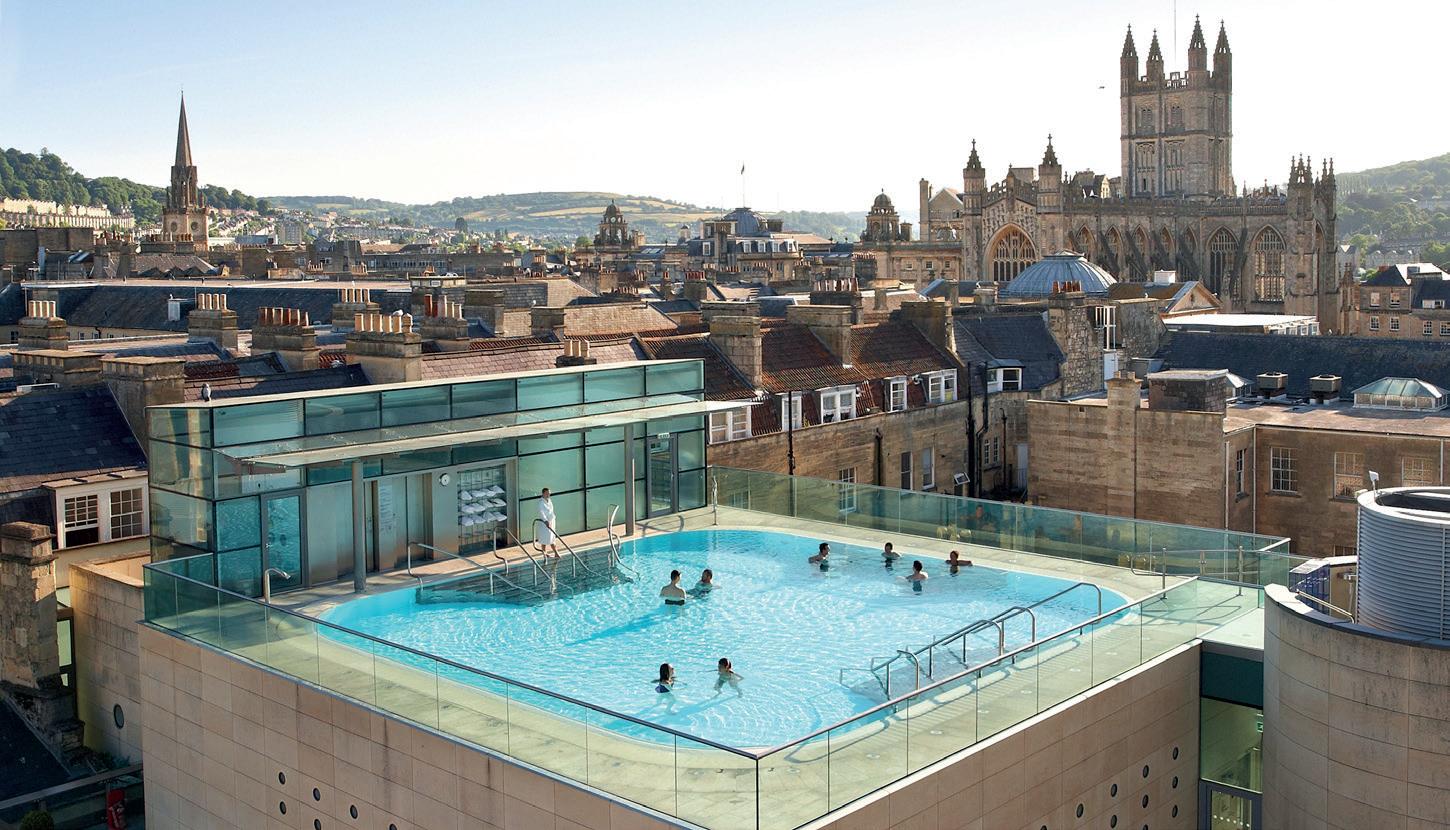
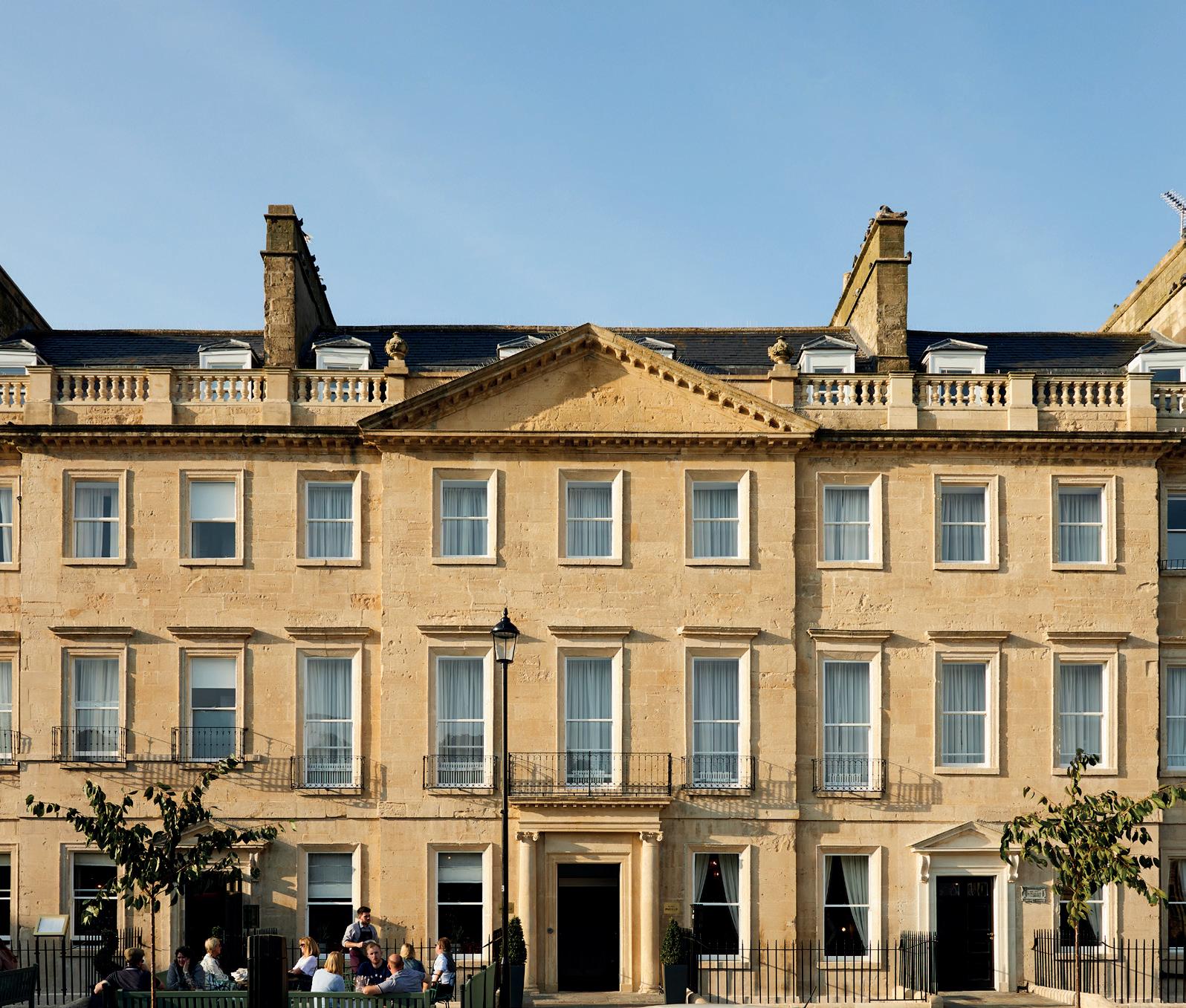
Hotel Indigo Bath, UK
Randy Pike Lake District, UK
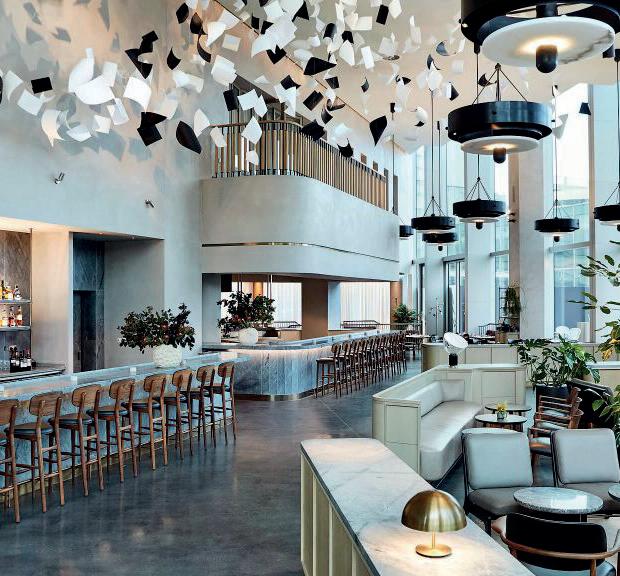
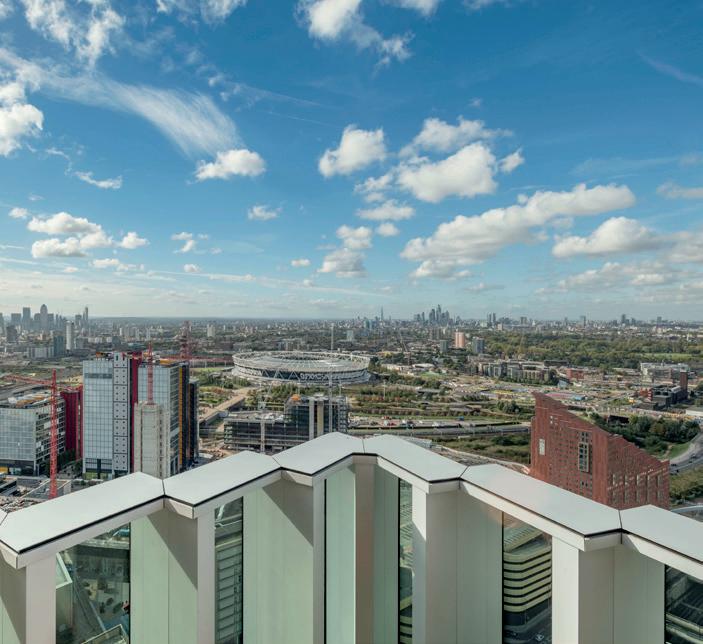
The Stratford London, UK
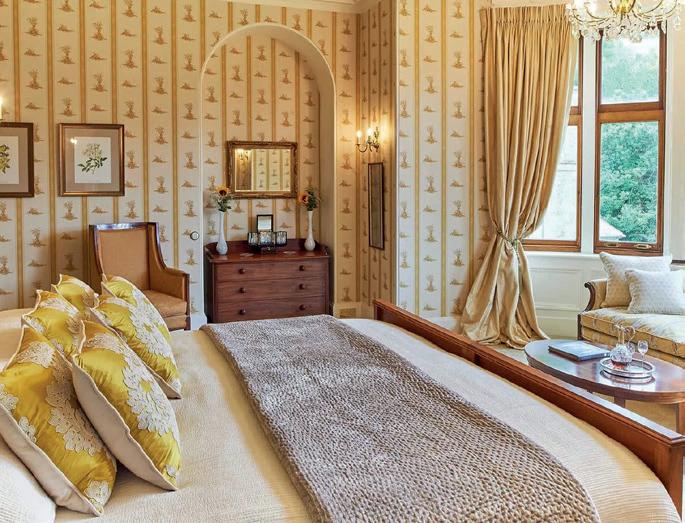
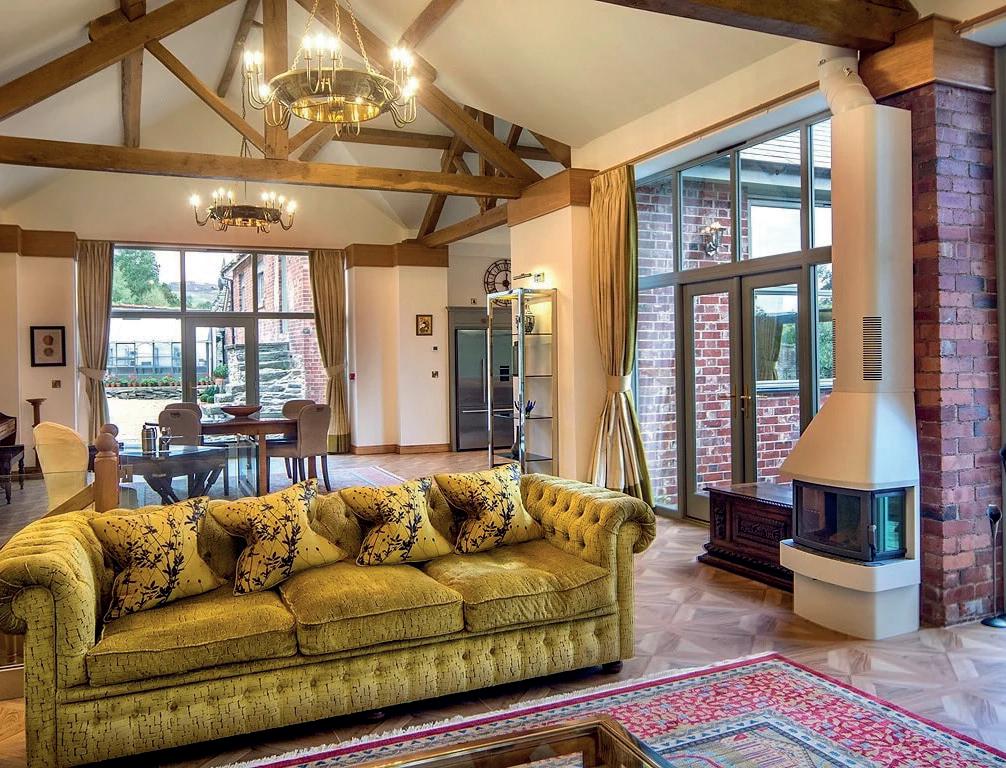
Palé Hall Wales, UK
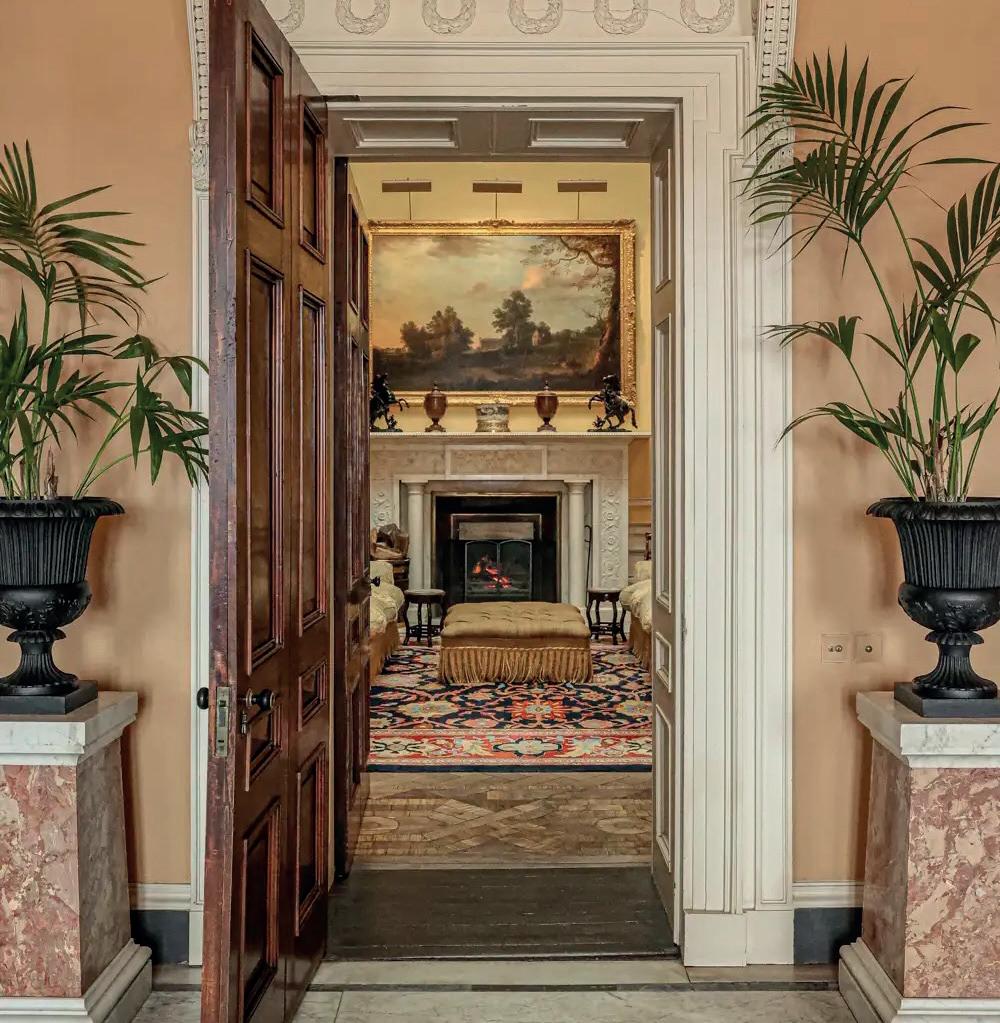
Ballyfin Ireland
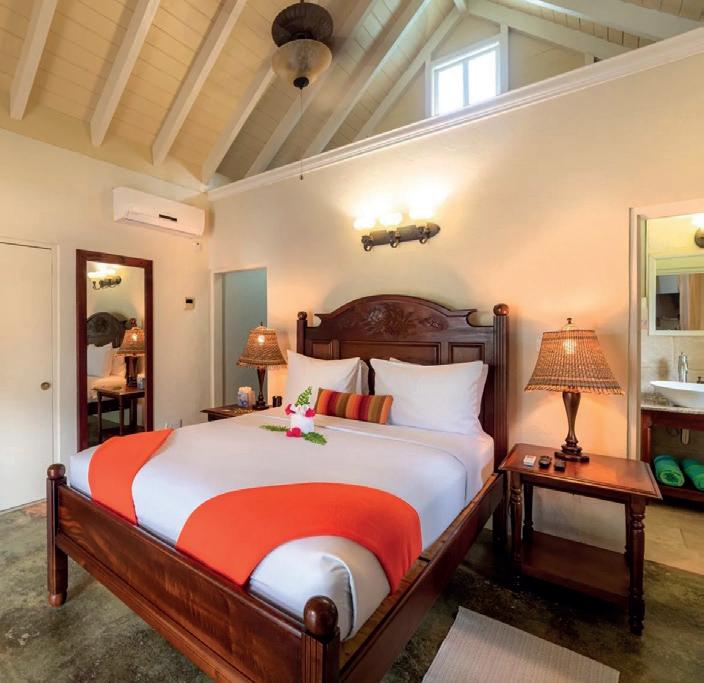
Rosalie Bay Dominica
EXPERIENCES
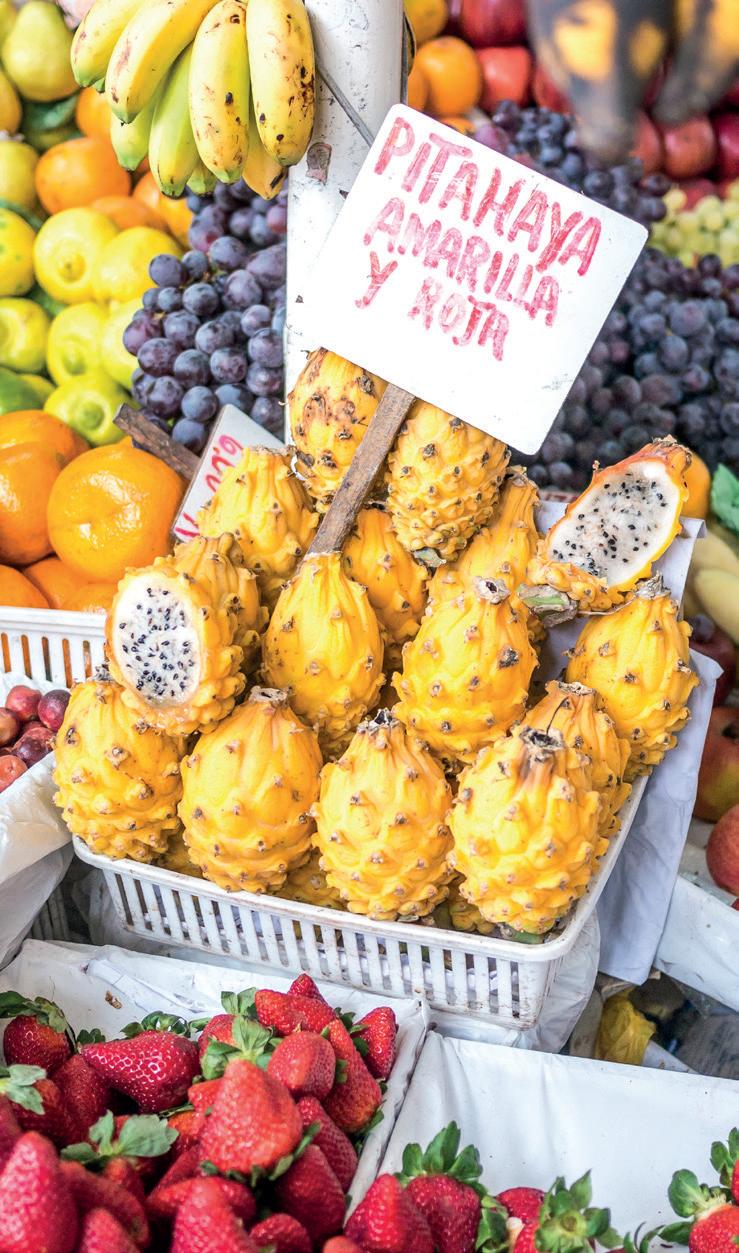
Peru One Of The World's Most Varied Countries
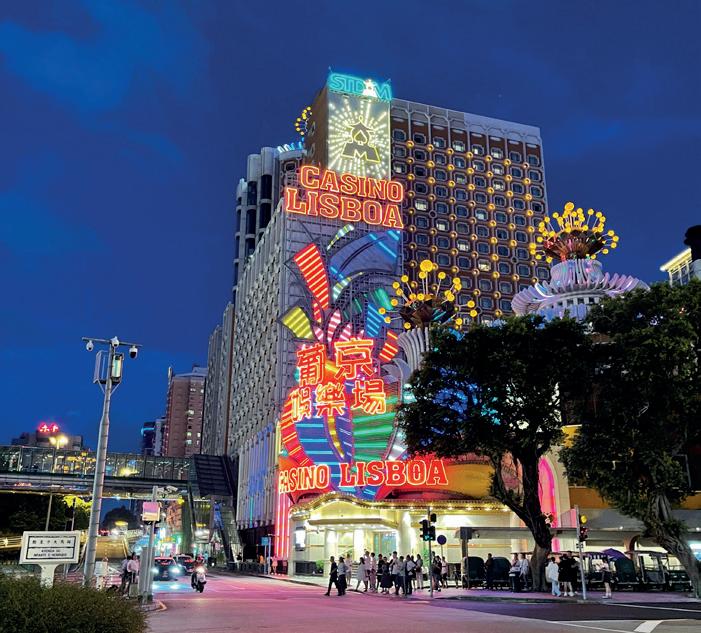
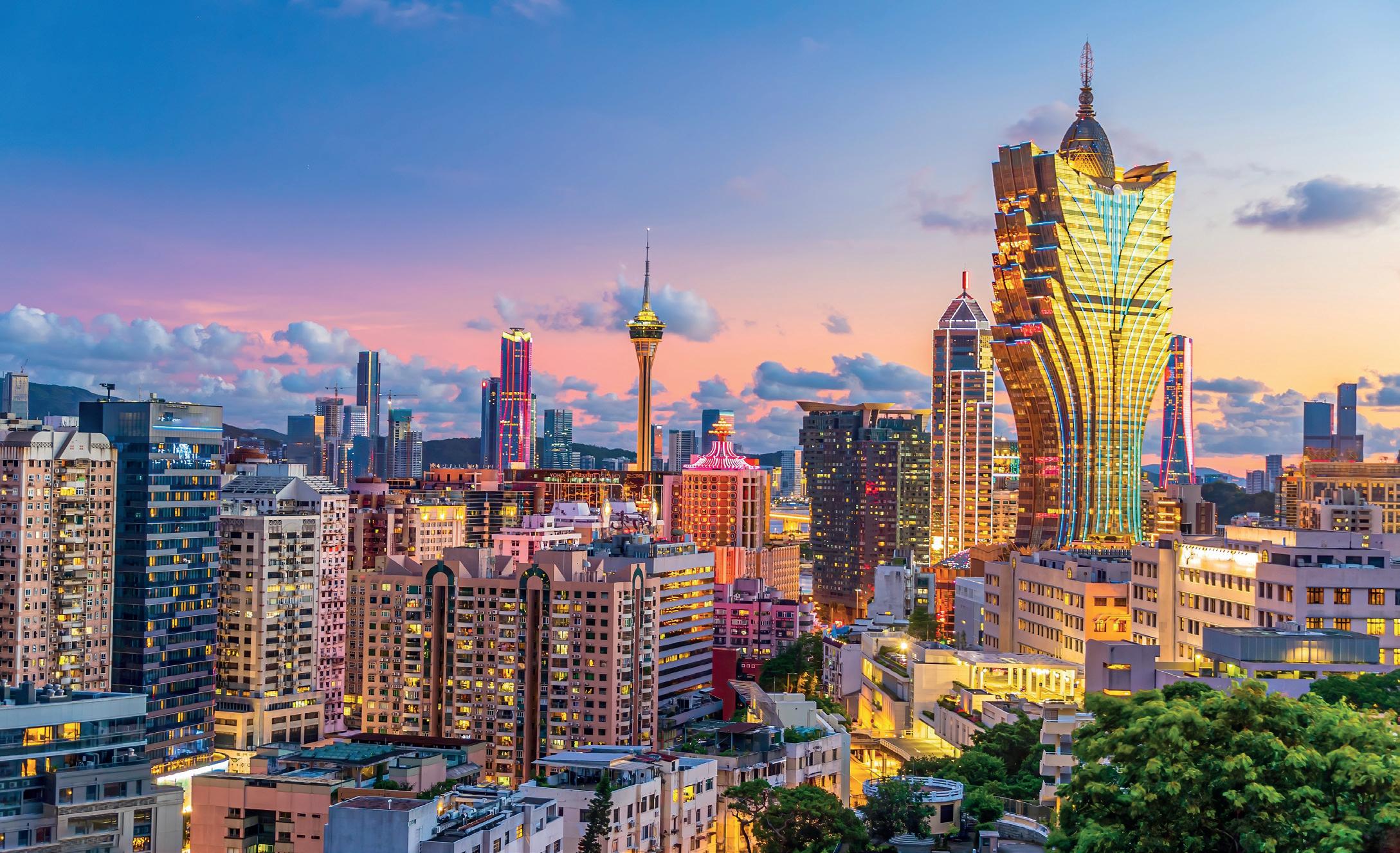
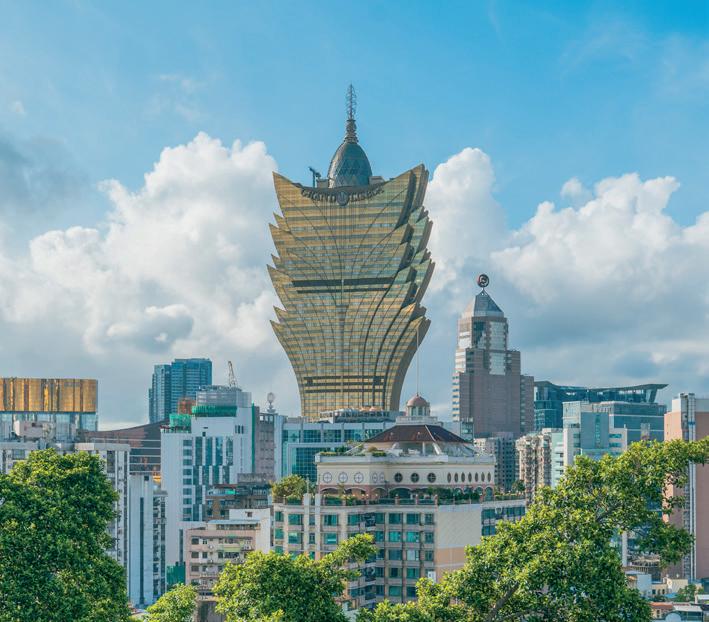
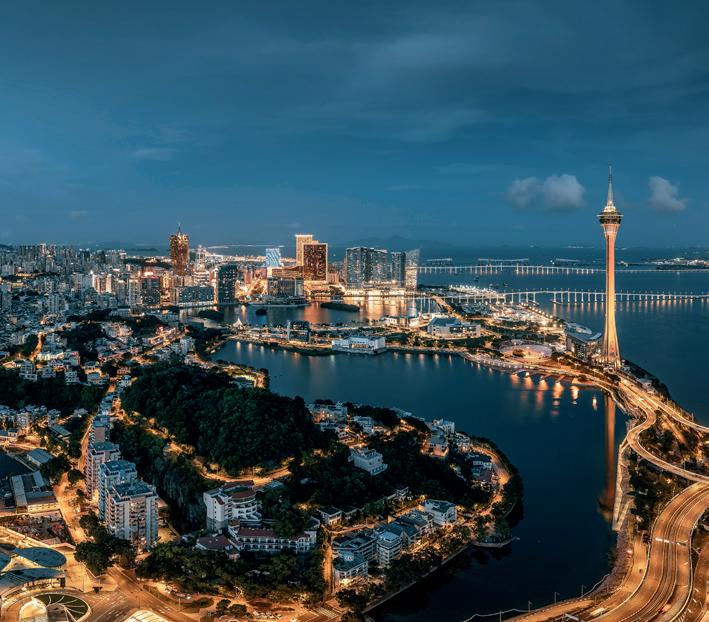
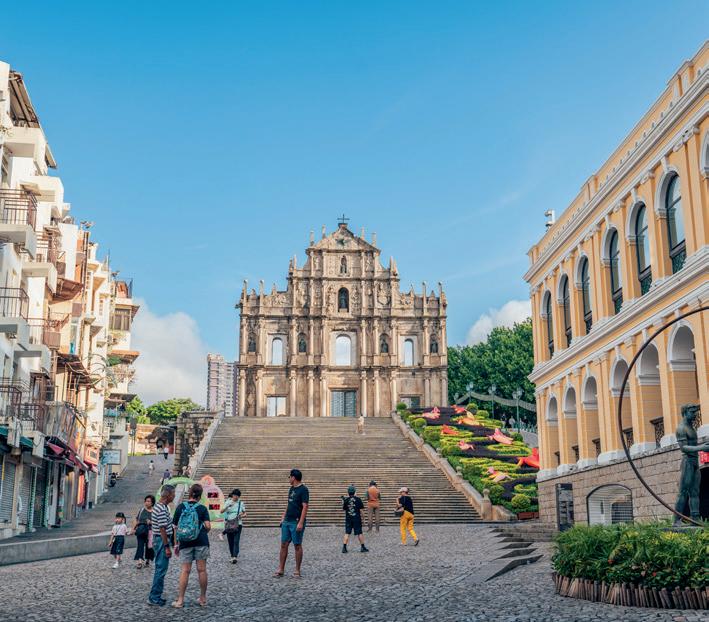
Macau How To Spend 48 Hours
Flashpacking The Luxe-Lite Evolution Of The Backpacker
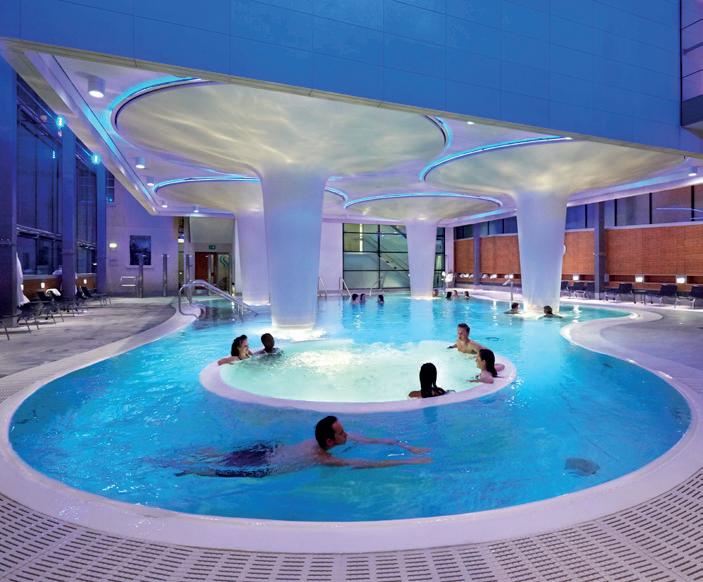
Britain's Original Wellness Capital
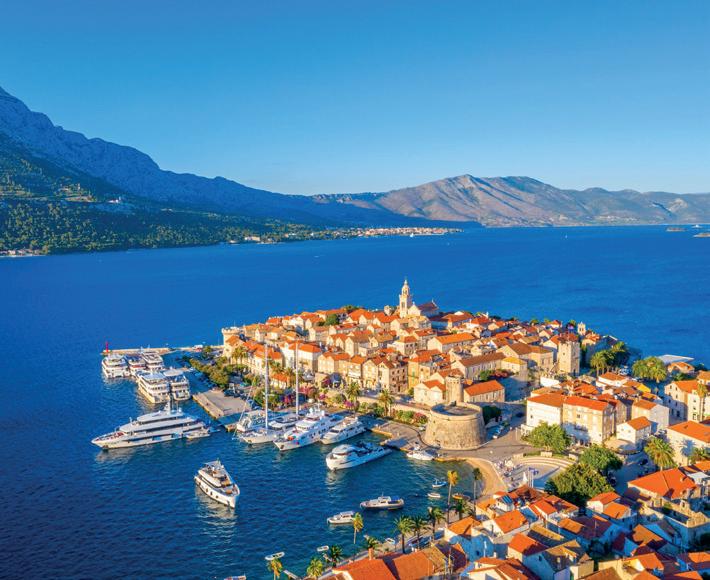
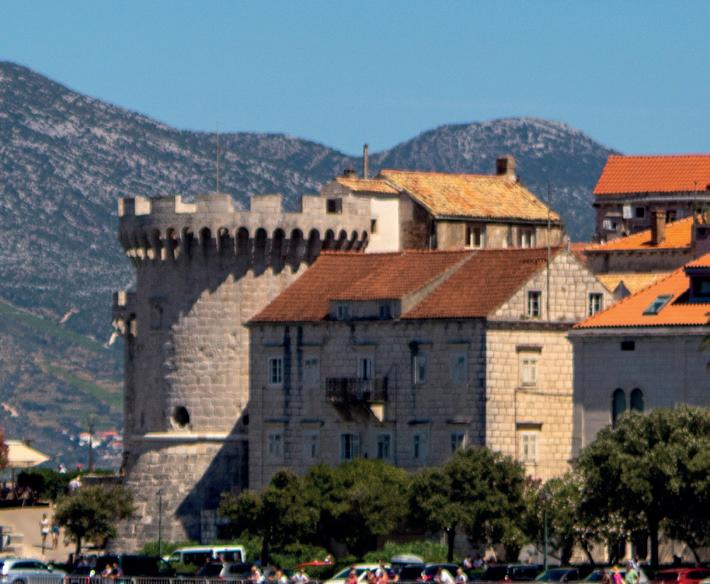
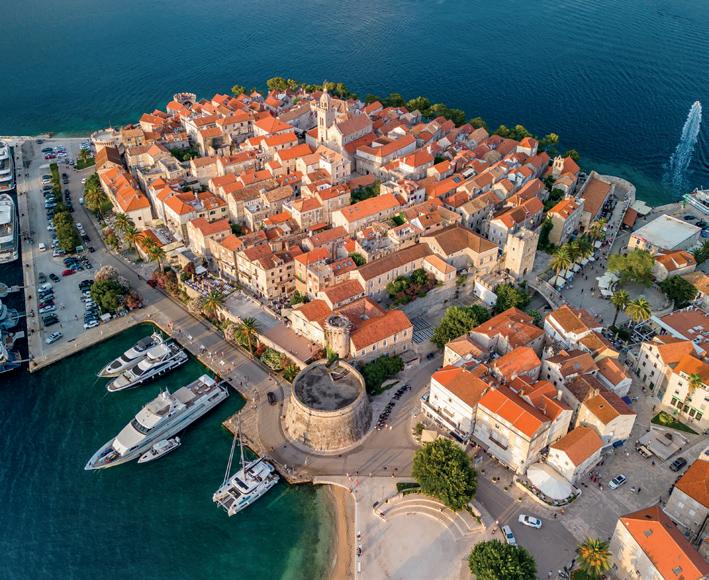
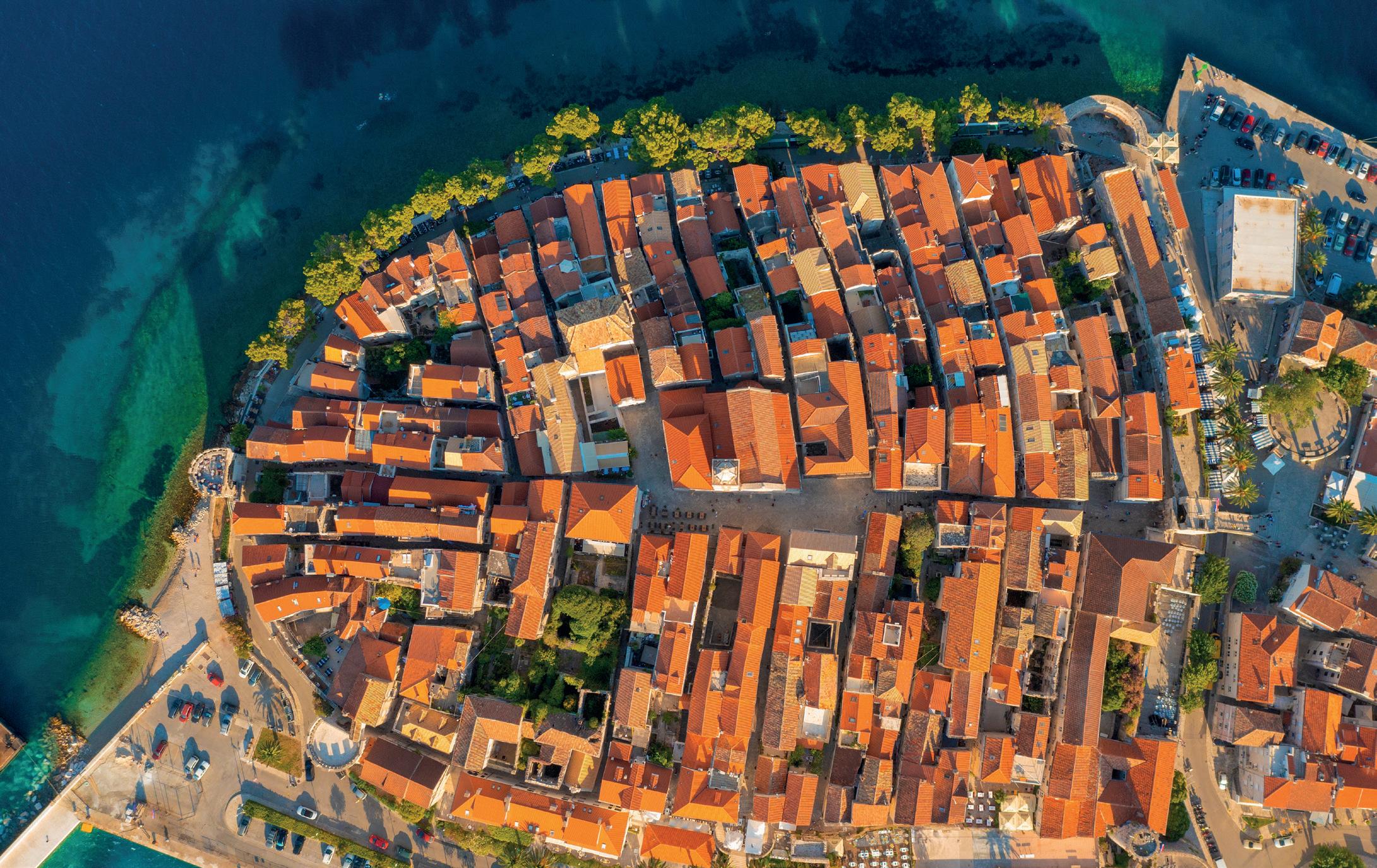
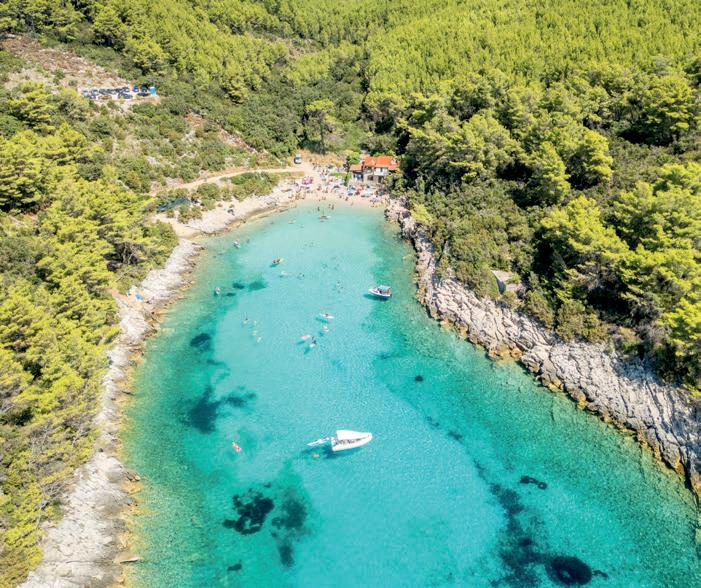
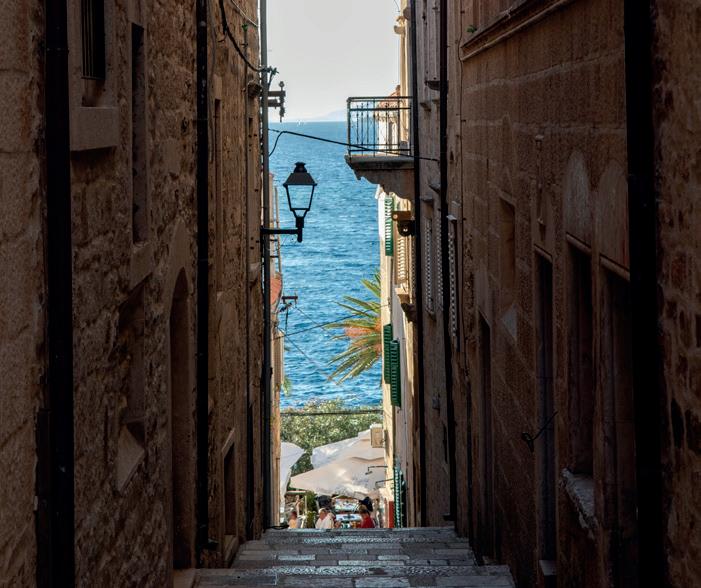
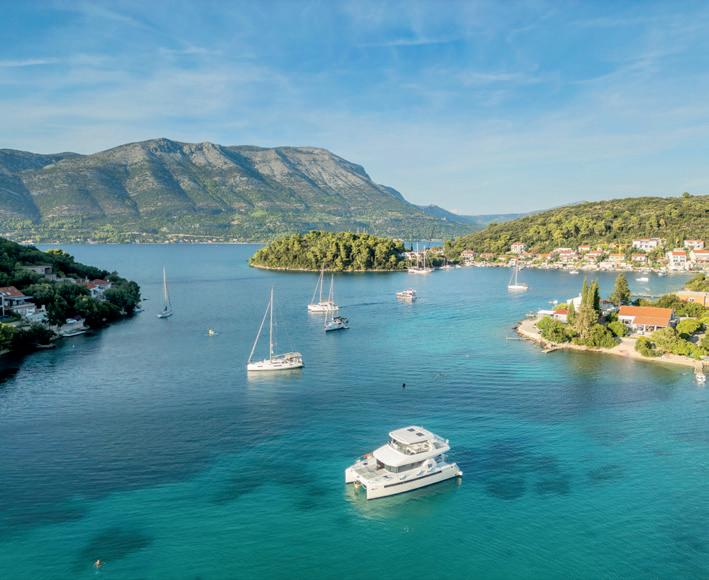
Korčula How To Spend 48 Hours Grief Retreats Finding Stillness After
Perez-Alvarado Orient Express Reborn
UK AVIATION SETS NEW RECORD WITH 302 MILLION PASSENGERS IN 2025
UK aviation recorded its busiest year on record in 2025, with 302 million passengers travelling through the country’s airports, a 2% increase on 2024 and the clearest sign yet of sustained long-term recovery and growth.
New figures released by the UK Civil Aviation Authority show that passenger volumes have tripled since 1989, with travel demand continuing to strengthen. The regulator also reported that one in three travellers intends to fly more frequently in 2026.
On-time performance also improved during the year, with 73% of flights operating punctually — up six percentage points year-on-year, although still below pre-pandemic benchmarks.
Selina Chadha, Group Director for Consumers and Markets at the CAA, described 2025 as “officially a recordbreaking year” and said the regulator would continue working with industry partners to enhance passenger protection and safety standards.
Cargo volumes also rose, with UK airports handling 3 million tonnes of freight, an increase of three percentage points compared with 2024.
The record figures have intensified debate around airport capacity. Aviation Minister Keir Mather said the data underlined the need to expand infrastructure, citing progress on Heathrow Airport’s proposed third runway and approved expansion plans at Gatwick Airport and London Luton Airport.
He said expansion would unlock greater consumer choice, generate skilled employment and strengthen the UK’s global connectivity.
Industry leaders echoed that view. Airlines
UK Chief Executive Tim Alderslade described aviation as a “growth engine for the UK economy”, while AirportsUK CEO Karen Dee highlighted the importance of maintaining competitiveness amid intensifying global aviation investment.
The most-flown destinations from UK airports in 2025 were Dublin, Alicante, Dubai, Malaga and Palma de Mallorca.
Among the fastest-growing routes were Milan Linate (+453,000 passengers), Krakow (+326,000) and Malta (+301,000), reflecting continued demand for both European city breaks and sun destinations.
Regionally, Liverpool recorded the strongest percentage passenger growth at +11%, followed by Edinburgh and Newcastle.
For business travellers and corporate travel managers, the 2025 figures reinforce aviation’s resilience despite cost pressures and operational challenges.
With long-haul demand recovering and European short-haul routes strengthening, the data suggests that the UK’s aviation sector has moved firmly beyond post-pandemic stabilisation and into renewed expansion.
As policymakers weigh environmental considerations against economic growth, 2025’s record passenger numbers set the stage for a pivotal debate about capacity, sustainability and the future shape of UK aviation.
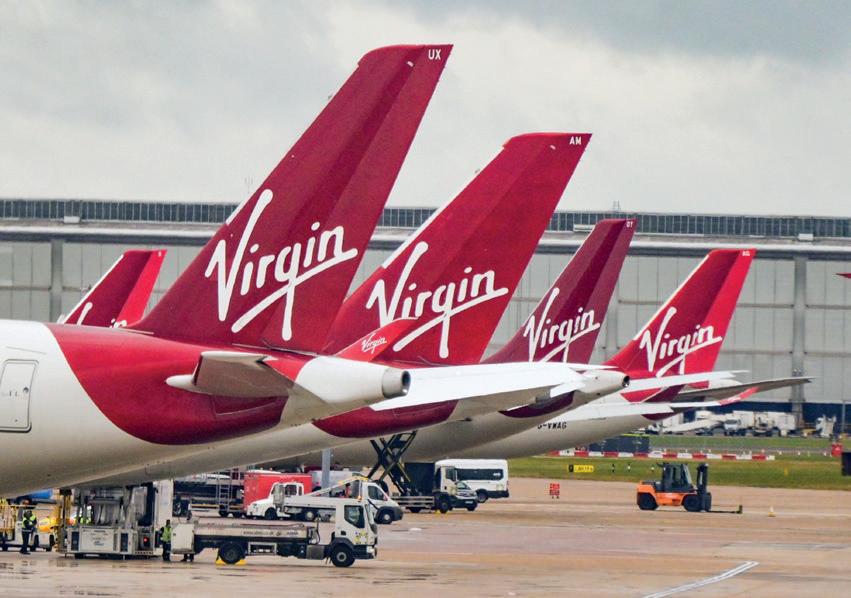
VIRGIN ATLANTIC GAINS ‘TENS OF THOUSANDS’ OF BA FREQUENT FLYERS WITH STATUS UPGRADE CAMPAIGN
Virgin Atlantic said it is has attracted “tens of thousands” of disaffected British Airways customers to its loyalty programme, following a targeted status upgrade campaign aimed at frequent flyers.
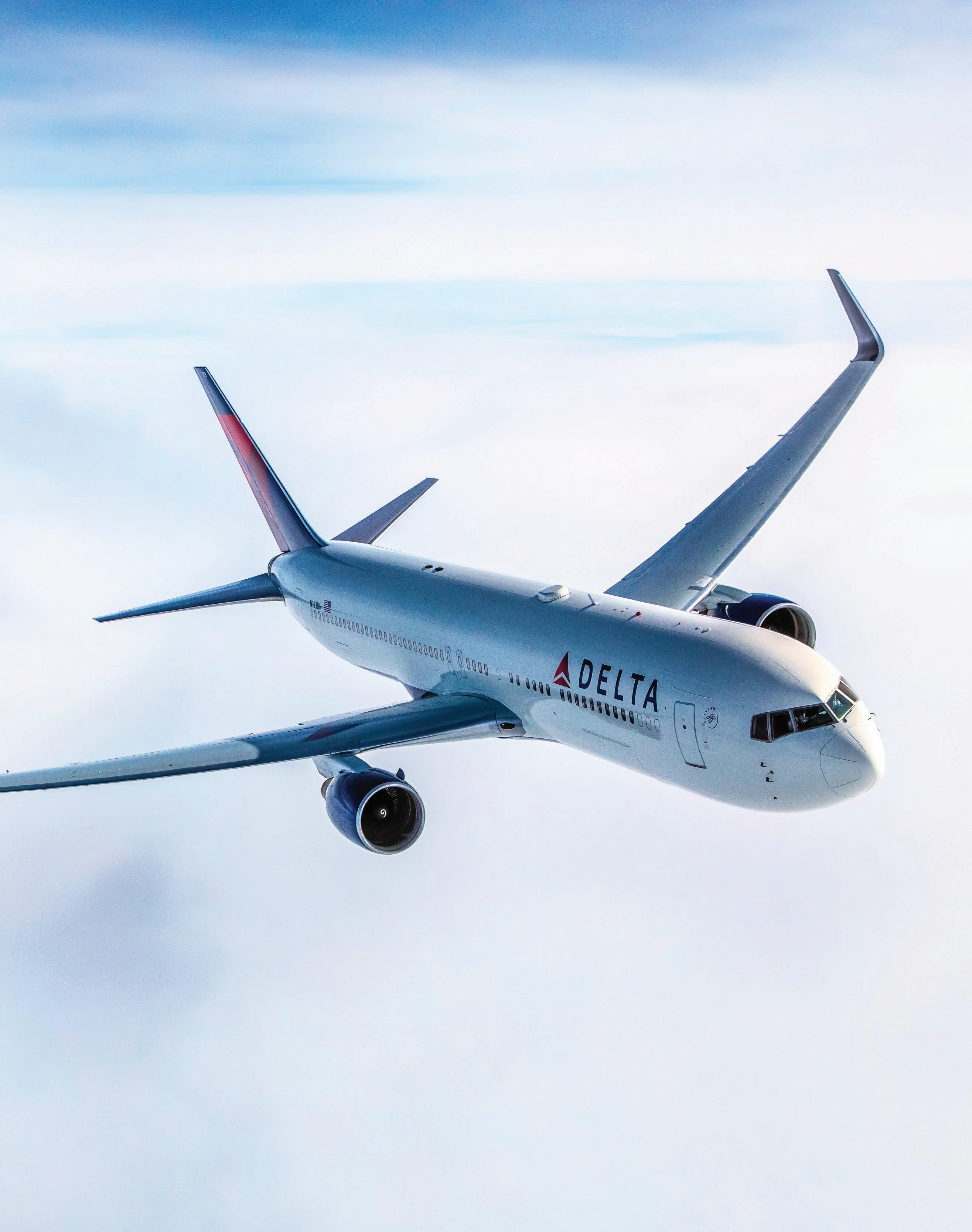
TThe carrier, founded by Sir Richard Branson and part-owned by Delta Air Lines, launched its “Save Your Tiers” promotion around Valentine’s Day, offering BA frequent flyers an upgraded membership tier if they joined Virgin’s Flying Club.
The offer, which ran until 23 February, allowed customers with an upcoming Virgin Atlantic flight to receive enhanced status, regardless of whether they are already members.
The move comes amid ongoing dissatisfaction among BA’s frequent flyers following changes to its loyalty programme introduced last April. The overhaul shifted qualification criteria from distance travelled to total spend, a change designed in part to reduce overcrowding in airport lounges.
The full impact of those changes will be felt next month, with some long-standing customers expected to lose Gold tier status, particularly leisure travellers who previously qualified through frequent long-haul travel rather than high annual spend.
Virgin’s status offer is reportedly more generous than similar “status match” campaigns launched by Air France-KLM and Lufthansa, which have also sought to lure BA customers.
Anthony Woodman, head of Virgin Flying Club, told the Financial Times that the airline was already “firmly in thousands” of new sign-ups and expected significant additional volume before the campaign closes.
“We expect our Gold and Silver members to grow by double-digit percentages comfortably over a 12-month period,” he said.
The strategy carries potential financial implications. If newly upgraded Gold members choose to fly with partner airlines such as Delta or Air France, Virgin may need to compensate those carriers for lounge access without capturing the associated ticket revenue.
However, the airline’s objective appears longer term: encouraging BA loyalists to trial Virgin’s product and, ultimately, switch future bookings.
New members will retain their upgraded status for one year but must meet standard Flying Club requirements to requalify thereafter.
Woodman acknowledged the scale of the opportunity, saying the campaign had initially made commercial teams “nervous” about uptake, but argued it was the right move for customers seeking recognition and flexibility.
Virgin operates roughly 70 departures per day, about one-tenth of BA’s scale, but believes its lounges can absorb additional elite members without overcrowding.
BA described the promotion as “a wellexecuted PR stunt”, adding that customers would ultimately judge on service and value.
The airline maintains that its revamped loyalty model rewards customers more fairly and has expanded reward seat availability while reducing redemption costs.
For UK business travellers, the campaign signals an intensifying battle for premium loyalty with lounge access, tier recognition and perceived value now central to airline competition on key transatlantic and longhaul routes.
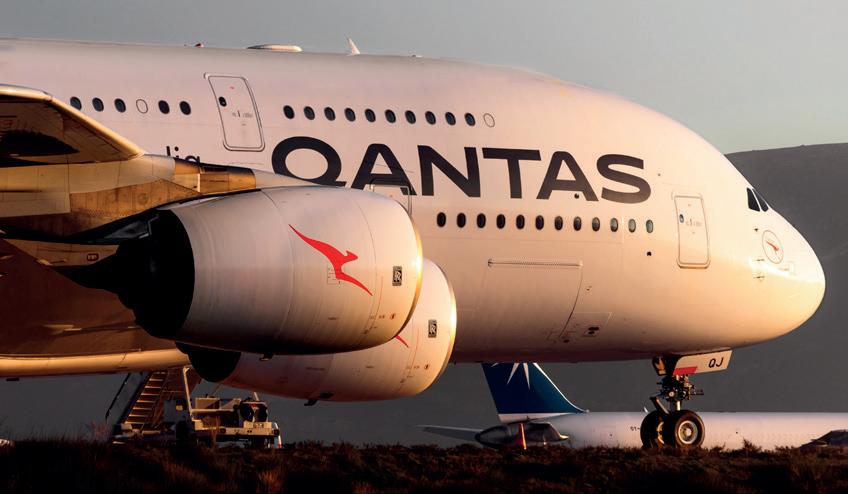
QANTAS STRENGTHENS BUSINESS TRAVEL OFFER AS 1H26 PROFIT HITS $1.46BN
Qantas has reported a strong financial and operational performance for the first half of FY26, delivering an underlying profit before tax of $1.46 billion while accelerating a series of upgrades aimed squarely at premium and corporate travellers.
The airline paired its solid financial result with network expansion, fleet renewal and loyalty programme reforms, reinforcing its competitive position across long-haul and domestic markets.
A key highlight for business travellers is the launch of Qantas’ first direct service between Australia and Las Vegas, cutting travel time compared with existing one-stop routings.
The carrier’s new Airbus A321XLR aircraft will also begin international operations in October, initially operating Brisbane–Manila. The narrowbody long-range type is expected to unlock new medium-haul international routes while offering a more modern onboard experience.
Meanwhile, Project Sunrise, utilising Airbus A350-1000ULR aircraft, is progressing towards test flights, marking a significant milestone in
Qantas’ ambition to operate ultra-long-haul non-stop services from Australia to cities such as London and New York.
Fleet renewal remains central to strategy, with approximately 40 aircraft already delivered from an order book exceeding 200.
Qantas is introducing Economy Plus seating across key aircraft types, giving corporate travellers an additional midtier product option between standard economy and business class.
The airline is also investing heavily in ground experience, with major lounge refurbishments underway in Auckland, Los Angeles and Sydney, hubs critical to transpacific and transTasman corporate traffic.
Operationally, Qantas retained its position as Australia’s most on-time major domestic airline throughout the half, with customer satisfaction scores improving across both Qantas and low-cost subsidiary Jetstar.
The Qantas Frequent Flyer programme is undergoing its most significant update since launch. Members will be able to roll over unused Status Credits and earn them through everyday spending, broadening engagement beyond flight activity alone.
NEW MIDDLE EASTERN FUND ACQUIRES TWO MAYFAIR LUXURY HOTEL SITES IN £1.1BN DEAL
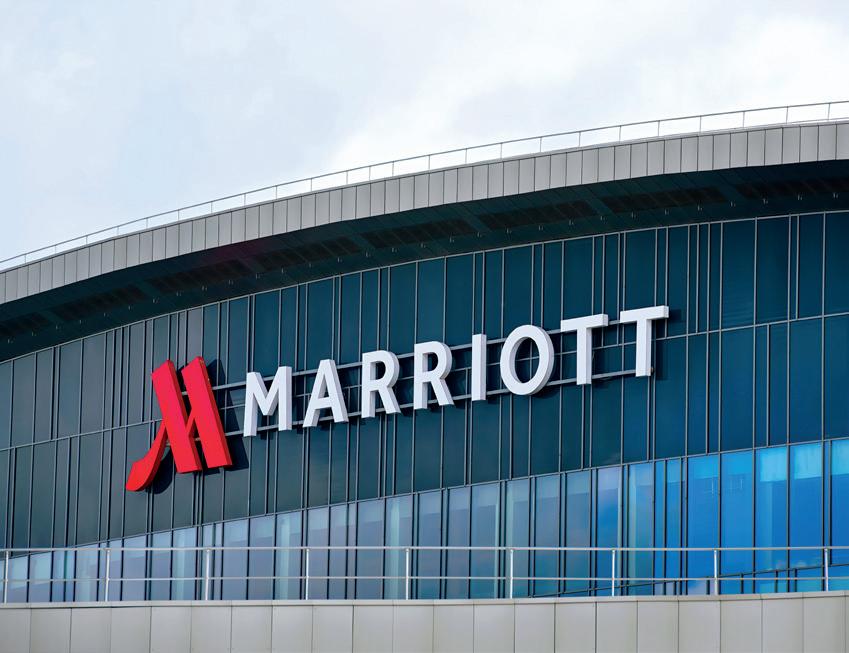
Evolution Investment Fund has secured a leasehold interest in the London Marriott Hotel Grosvenor Square, alongside a fully consented development site near New Bond Street.
The total capital commitment of approximately £1.1 billion includes both acquisition and development costs.
The Grosvenor Square Marriott is a 237room property spanning approximately 198,000 square feet, located among
embassies, private members’ clubs and luxury retail boutiques in one of London’s most prestigious districts.
The second scheme, located at Grafton Street and Barlow Place, comprises a 157,000 square foot project with plans for 94 hotel rooms and six luxury residences. Architectural proposals drafted by Foster + Partners include a 12-storey tower as part of what is described as an “ultra-prime hospitality offering in Mayfair”.
The fund said the acquisitions represent a “significant vote of confidence in London’s long-term growth prospects and as a destination for world-leading experiences”.
Evolution has appointed Nadhim Zahawi as a director of the acquisition entities.
Zahawi, who co-founded YouGov in 2000 and later served as Conservative MP for Stratford-upon-Avon before becoming chancellor under Boris Johnson, said he was “delighted to have joined the two UK boards at this exciting stage of Evolution’s history”.
The Shanshal family, founders of the fund and based in the UAE, launched Evolution in 2025 with a strategy focused on acquiring prime real estate in global gateway cities.
For business travellers who rely on status benefits such as lounge access, priority boarding and upgrades, the changes aim to provide greater flexibility and retention incentives.
The Group’s $1.46 billion underlying profit before tax was supported by sustained demand and strong growth in loyalty revenue. Qantas approved a $300 million interim dividend and announced a planned $150 million share buyback.
For corporate travel managers and frequent flyers, the results signal a carrier investing in both hardware and service, from nextgeneration aircraft and route expansion to lounge upgrades and loyalty reform.
As global aviation competition intensifies, Qantas’ 1H26 performance suggests the airline is not only financially stable but actively positioning itself to capture premium and long-haul business demand in the years ahead.
A newly launched Middle Eastern investment vehicle has committed £1.1 billion to acquire and develop two ultra-prime hospitality assets in London’s Mayfair, underlining renewed international confidence in the capital’s luxury hotel market.
Beyond hospitality, the family has interests across logistics, telecoms, automotive and construction.
In a statement, the Shanshal family described the Mayfair acquisitions as more than prime assets, citing a “longterm conviction in the enduring quality, resilience and global appeal” of London.
For the business travel and luxury hospitality sectors, the £1.1 billion commitment signals sustained overseas appetite for prime London real estate, particularly in Mayfair, a district synonymous with ultraluxury accommodation and high-yield international demand.
Despite wider macroeconomic headwinds and evolving political dynamics in the UK, investor confidence in London’s premium hospitality market appears robust.
As global capital continues to target trophy assets in established gateway cities, Mayfair remains a focal point — reinforcing its position as one of the world’s most competitive and resilient luxury hotel sub-markets.
BUSINESS TRAVEL LEADERS CALL FOR EXEMPTION FROM UK OVERNIGHT VISITOR LEVY
Three leading industry bodies, the Business Travel Association, the Global Business Travel Association and the Institute of Travel Management, have submitted a joint response to the UK Government’s consultation on a proposed Overnight Visitor Levy, calling for business travel to be explicitly excluded from any new local tourism taxes.
The consultation forms part of government proposals to grant Mayors of Strategic Authorities the power to introduce local visitor levies, with revenues earmarked for infrastructure, cultural investment and regeneration initiatives.
While the associations support the principle of local reinvestment, they argue that essential business travel should not be categorised or taxed in the same way as discretionary tourism.
“business travellers are not tourists”
In their joint submission, the organisations emphasise that business travel is economically productive and nondiscretionary. They argue that including corporate stays within a visitor levy would effectively create a new tax on UK businesses.
Andrew Clarke, Commercial Director at the Business Travel Association, said: “An overnight visitor levy should apply solely to discretionary tourism activity and should not apply to business travel undertaken for and on behalf of work. Business travellers
are not tourists. Their travel is nondiscretionary, economically productive, and directly linked to employment, investment, skills development, and regional growth.”
The associations warn that applying a levy to corporate travel would increase costs for employers and employees, disrupt supply chains and risk undermining inward investment.
A key concern outlined in the submission is the potential for fragmented local schemes to create administrative complexity for organisations operating across multiple UK regions.
The bodies argue that any levy framework must be nationally consistent and simple to administer. Percentage-based or locally varied charges, they say, would add cost and operational burden to managed travel programmes and SMEs alike.
Catherine Logan, Executive Vice President, Global Operations at GBTA, noted that the UK is projected to see business travel spend of £44.37 billion in 2025. She described corporate mobility as a “multiplier” for the
“Business travel is not discretionary travel. It is a strategic catalyst for growth, delivering a clear and measurable return on investment for UK and global firms,” she said.
Scott Davies, Chief Executive Officer of ITM, added that poorly designed local charges risk adding cost and complexity “at a time when productivity and regional growth depend on mobility”.
The joint response also calls for clarity around how levy revenues would be allocated. Where visitor levies are introduced, the associations say funds should be directed towards tourism-related infrastructure, transport and public realm improvements that benefit both visitors and local communities.
They further urge government to provide clear guidance, adequate lead-in times and transparent reporting mechanisms to prevent unintended economic consequences.
For corporate travel buyers and procurement leaders, the outcome of the consultation could have material cost implications. With many UK cities exploring new funding mechanisms for regeneration, the debate over whether business travel should be ring-fenced from tourism taxes is likely to intensify.
As policymakers consider next steps, industry bodies are making clear that safeguarding business mobility is central to protecting regional competitiveness and economic growth.
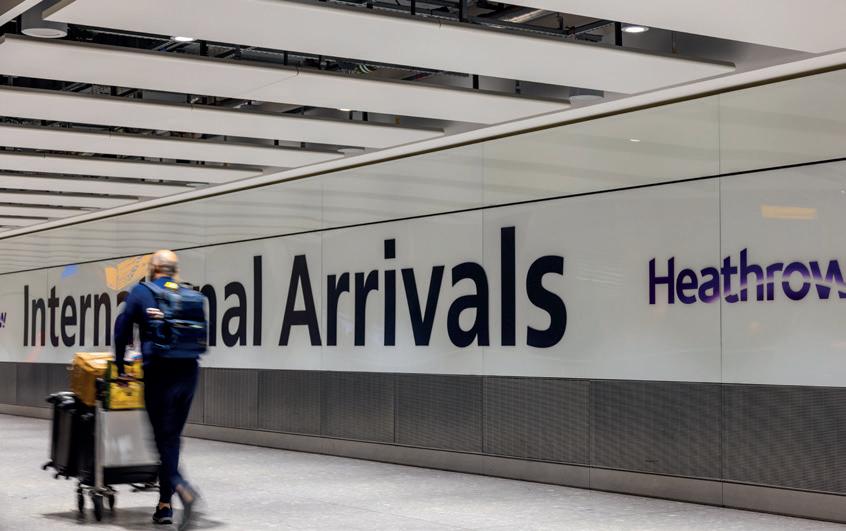
HEATHROW RAISES ALTERNATIVE AVIATION FUEL TARGET TO 5.6% FOR 2026
London Heathrow Airport has raised its target for alternative aviation fuel usage to 5.6 per cent of its total fuel mix in 2026, stepping beyond the UK government’s sustainable aviation fuel (SAF) mandate and intensifying its decarbonisation strategy.
The revised goal is two percentage points higher than the UK’s SAF mandate of 3.6 per cent for 2026, which was introduced in January last year and increased for this calendar year. It also marks a significant uplift from Heathrow’s previous target of 3 per cent for 2025.
Sustainable aviation fuel is widely viewed as one of the most immediate levers available to reduce aviation’s lifecycle carbon emissions. Unlike conventional jet fuel, SAF can deliver substantial carbon savings when assessed across production, distribution and use.
Heathrow stated that achieving its 5.6 per cent target in 2026 would reduce lifecycle carbon emissions from flights by more than 600,000 tonnes during the year.
The airport previously committed £86 million in incentives to encourage airlines to adopt alternative aviation fuels. It has not
NEWS
confirmed whether additional funding will be made available to support the higher 2026 target.
According to Heathrow, 17 per cent of global SAF supply in 2024 was used at the airport, a figure it cites as evidence of its leadership role in scaling alternative fuel adoption.
Matt Gorman, Heathrow’s director of sustainability, said: “Sustainable aviation fuel is not a hypothetical concept for the future, it’s already producing real impact in 2026.
“Heathrow is leading the way globally, with 17 per cent of the world’s SAF supply in 2024 used at the airport. SAF is a key lever on aviation’s journey to net zero by 2050, and a key element of Heathrow’s Net Zero Plan.”
The airport’s longer-term ambition includes reaching at least 11 per cent SAF usage by 2030, aligning with broader industry targets as airlines, fuel producers and governments work to accelerate production capacity.
For corporate travel buyers and sustainability leads, Heathrow’s announcement is significant. As Europe’s busiest international hub, its fuel strategy directly affects the carbon footprint of long-haul corporate travel.
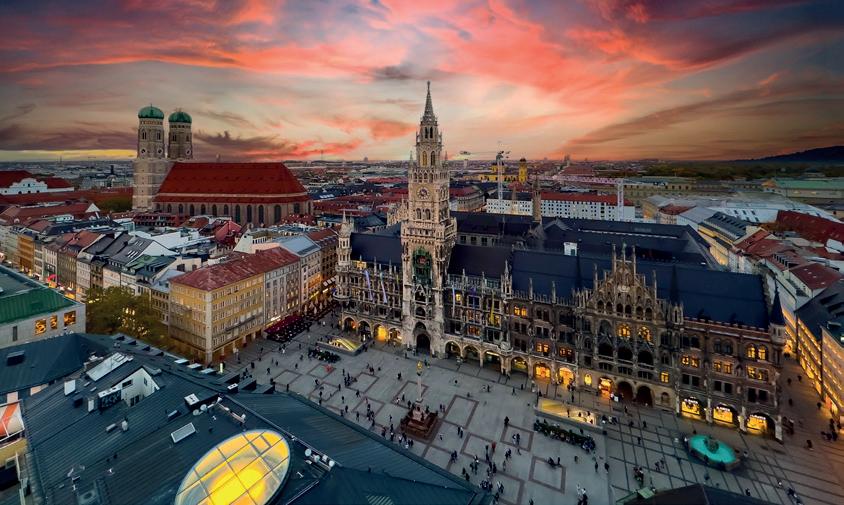
STAYCITY GROUP EXPANDS INTO MUNICH
WITH 255-ROOM APARTHOTEL SIGNING
Staycity Group has entered the Munich market for the first time, signing a long-term lease for approximately 11,000 square metres at the Weisses Quartier development.
The project will bring 255 fully equipped rooms under the Staycity Aparthotels banner and represents one of the largest leasing transactions in Munich in recent months.
Andrew Fowler, Chief Development Officer at Staycity Group, described Munich as “one of the most important hotel markets in Germany” and a central pillar of the group’s expansion strategy.
The Munich property will debut an enhanced, upscale positioning for Staycity Aparthotels in Germany, with increased emphasis on design, guest experience and communal spaces.
The Weisses Quartier’s architectural language — inspired by the work of Richard Meier — features clean lines and distinctive white façades, aligning with the group’s updated brand identity.
Each unit will include a fully equipped kitchen, reflecting growing demand for flexible, extended-stay accommodation that blends residential functionality with hotel service standards.
Munich’s appeal as an international business hub and major trade fair destination makes it a strategically important addition to Staycity’s DACH footprint.
The property is located in the city’s southeast, close to the ‘new balan’ campus and Werksviertel district, with direct public transport links to the city centre and Ostbahnhof, as well as onward connections to Munich Airport.
Fowler said demand for aparthotel and extended-stay products continues to grow as travel patterns evolve, with guests
While SAF currently commands a price premium over conventional jet fuel, greater adoption at scale could gradually support price normalisation and improved availability. For companies with science-based targets or net-zero commitments, the increased SAF blend at Heathrow provides a tangible emissions-reduction mechanism without requiring operational changes from travellers.
As regulatory pressure intensifies and environmental reporting becomes more rigorous, Heathrow’s move positions the airport ahead of the UK mandate, and signals a competitive shift among global hubs to demonstrate credible progress on decarbonisation.
seeking more space and flexibility for longer stays while maintaining reliable service standards.
The Weisses Quartier forms part of one of Germany’s largest building revitalisation projects, spanning 61,000 square metres. Between 2019 and 2024, developer and owner ESR Europe undertook extensive energy-efficient refurbishment, including the addition of a new top floor and 12 terraces.
Sustainability was cited as a decisive factor in Staycity’s leasing decision. The group has set Science-Based Targets to reduce carbon emissions by 59% by 2034 against a 2023 baseline, with an interim 50% reduction by 2030.
Staycity’s ESG strategy focuses on green electricity procurement, transitioning fossil fuel-based assets to electric systems, reducing water and energy consumption and aligning with lower-emission suppliers.
The Munich signing expands Staycity’s growing footprint across German-speaking markets. The group’s Staycity Aparthotels and Wilde brands currently operate in Berlin, Frankfurt, Heidelberg, Dresden, Leipzig and Vienna.
With Munich now secured, Staycity reinforces its strategy of targeting strong, year-round business destinations across the DACH region — combining design-led aparthotels with sustainability-driven growth.
ARCTIC SERENITY AND AURORA MAGIC A WELLNESS ESCAPE TO VILLA ÄNG
ARCTIC SWEDEN
Once known internationally as Swedish Lapland, and not to be confused with Finnish Lapland, the region has reintroduced itself as Arctic Sweden: a name that better reflects its geography, its Sámi heritage and its growing appeal to travellers seeking wilderness, stillness and a kind of beauty that feels almost otherworldly. It’s a destination where the light behaves differently, where the horizon stretches endlessly, and where the quiet is so complete it feels like a form of therapy.
Wellness here comes in far more forms than a list of spa treatments. In Arctic Sweden, wellbeing is woven into the landscape - the crisp, pine scented air that wakes you up before your first coffee, the quiet crunch of snow underfoot, the shock of an ice dip that resets your entire nervous system. It’s the kind of wellness that doesn’t rely on dimmed lights or soft music, but on immersion: stepping into the outdoors, letting the cold sharpen your senses, and finding calm in movement, whether that’s a slow forest walk, a glide across frozen lakes or simply watching the sky shift into ribbons of colour. Wellness is less about pampering and more about presence.
Flying into Luleå, the gateway to the region, you immediately sense the shift. You walk out into a winter wonderland - the kind of crisp, crystalline cold that catches your breath and a landscape so white it feels almost luminous. The airport is small, efficient and surrounded by forests that stretch endlessly in every direction. From here, the Arctic Circle lies just over an hour away - a geographical threshold that feels symbolic as much as scientific. Cross it, and you enter a world shaped by extremes: extreme cold, extreme light, extreme quiet, and extreme natural beauty.
There are winter landscapes, and then there is Arctic Sweden - a place where the world seems to exhale, slow down and fall silent beneath a blanket of snow so white it glows.
By ANDREA THOMPSON
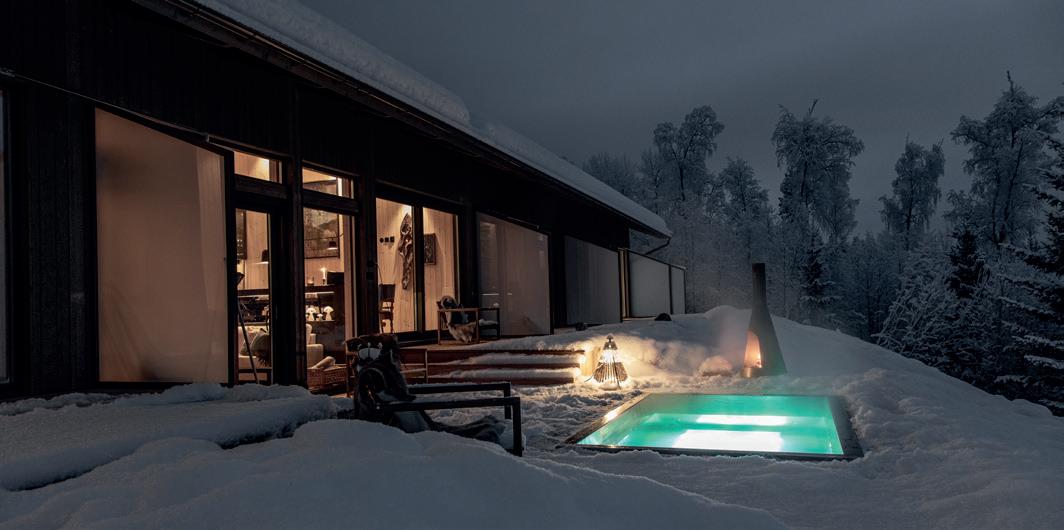
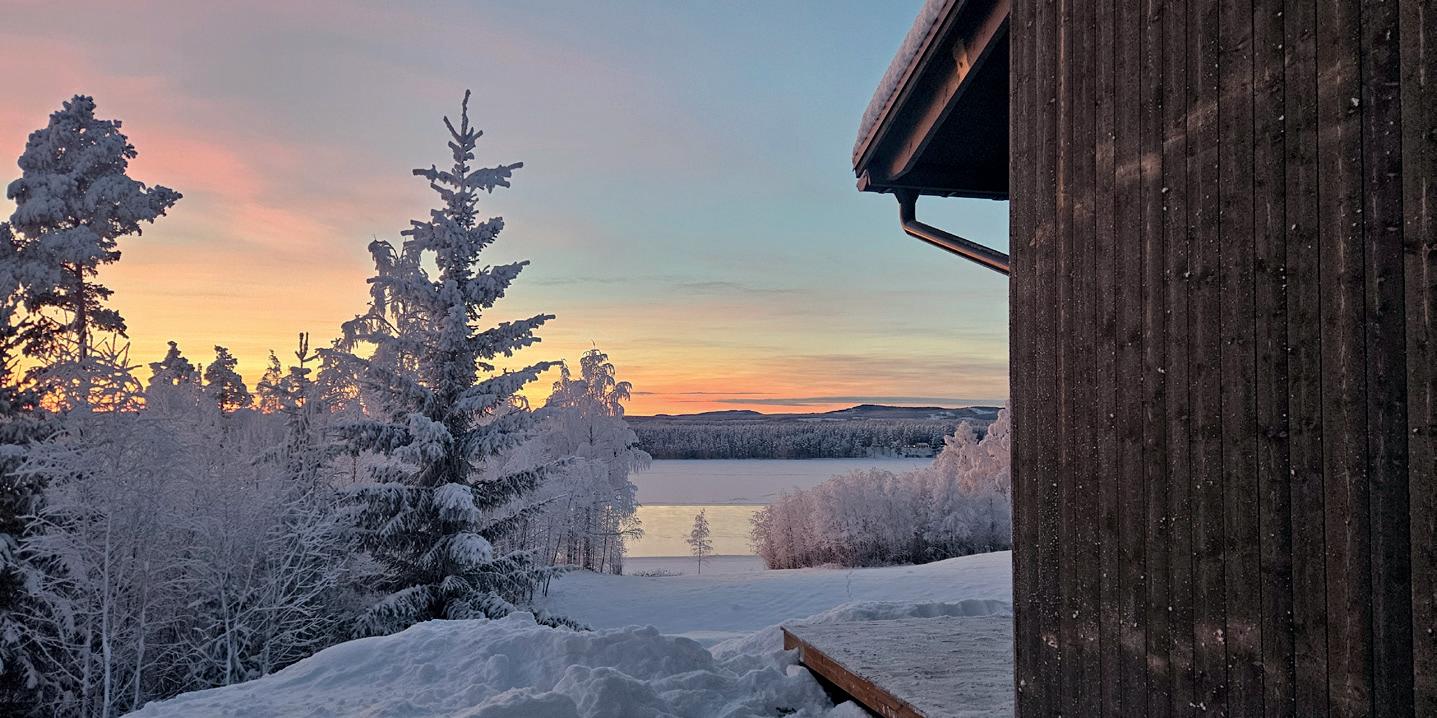
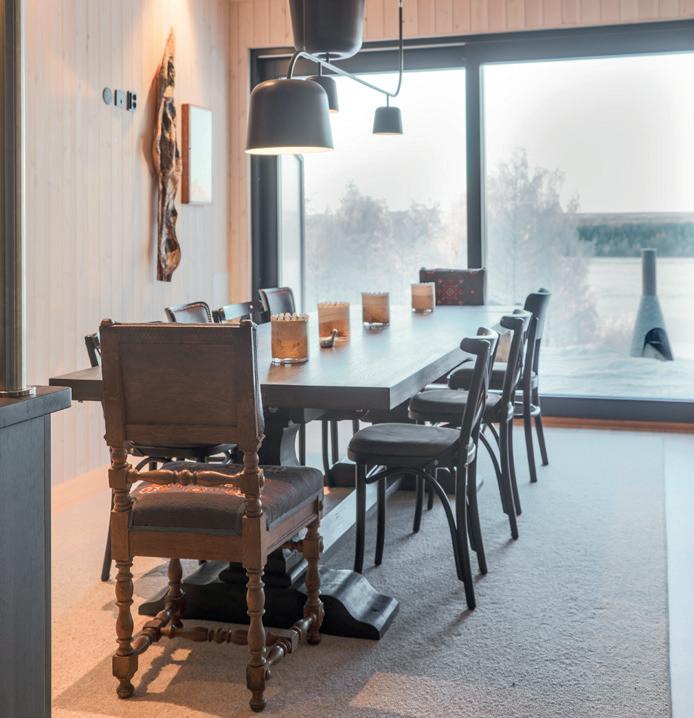
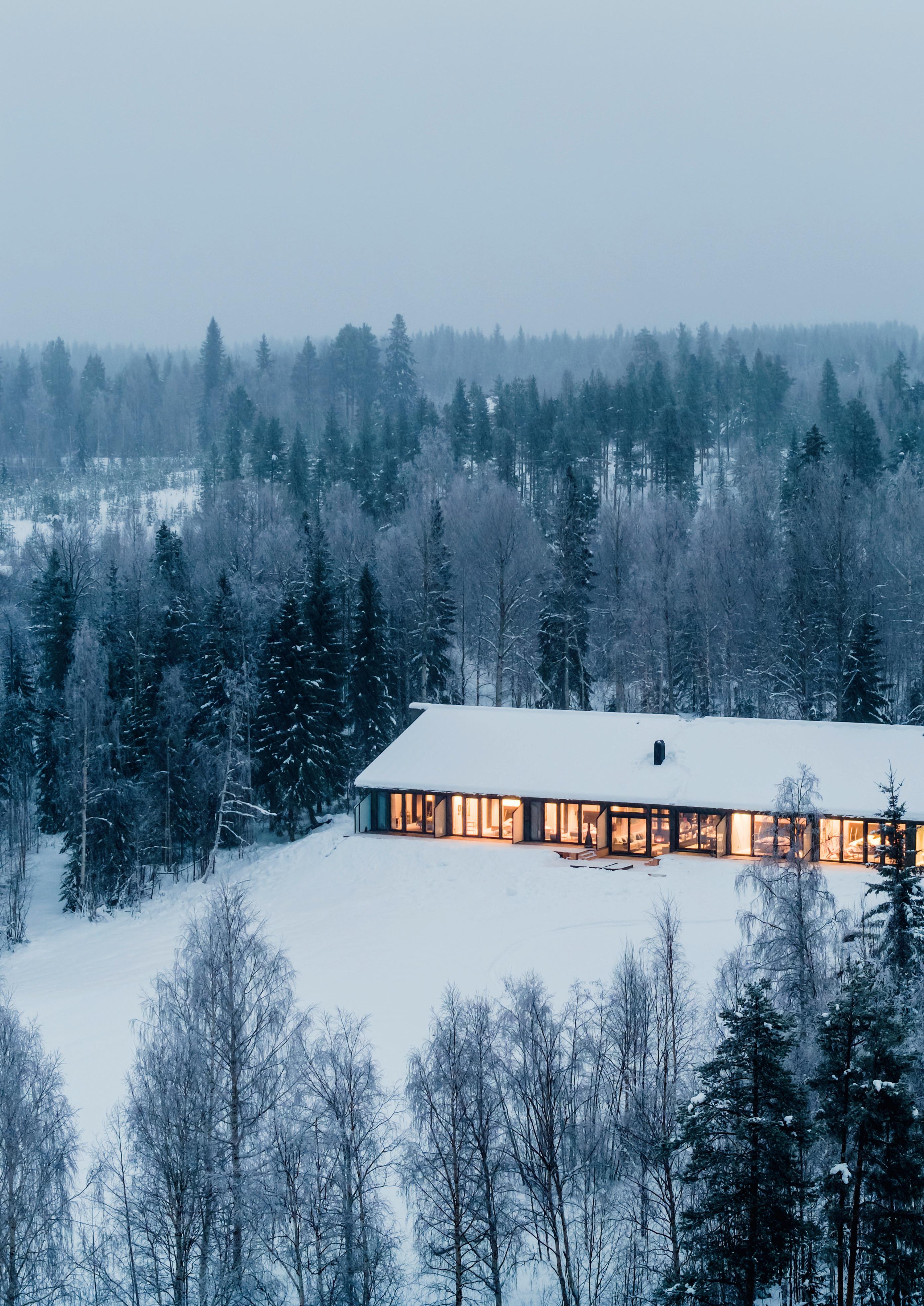
It is here, in this vast northern expanse, that Villa Äng sits tucked between forest and frozen lake. A five bedroom luxury villa so magical, so fairytale like, that words struggle to do it justice. Snow piles softly on its roof, icicles glint from the eaves, and the lake frozen into a shimmering white plain that looks like it has been painted into existence. It is the kind of place that makes you stop, breathe and simply stare.
MORE ON THE NEXT PAGE
VILLA ÄNG: A NORDIC DREAM IN THE SNOW
Villa Äng is the kind of property that feels both deeply Scandinavian and deeply personal. Born from the imagination of the couple behind Arctic Bath and Treehotel - two of Sweden’s most celebrated design led retreats - the villa became their next creative chapter after the success of those iconic projects. They wanted something more intimate this time, something that distilled everything they’d learned about architecture, nature and wellbeing.
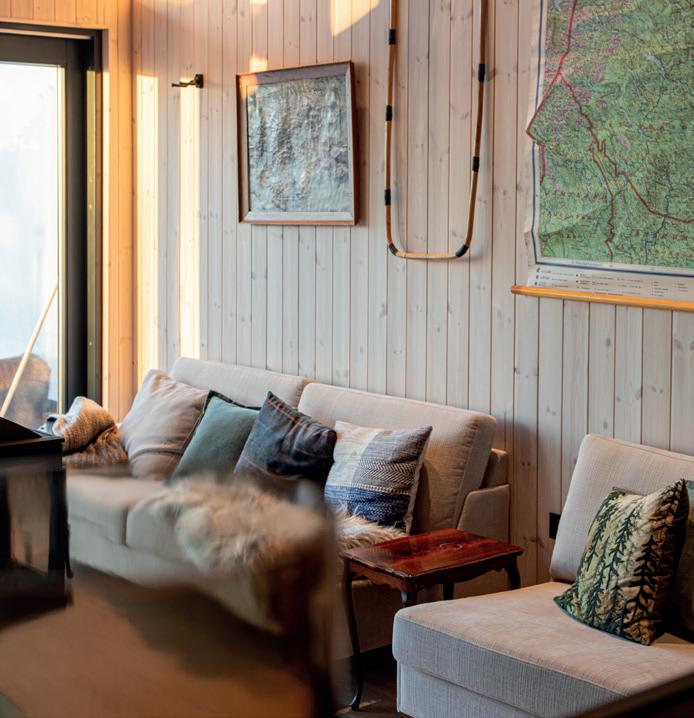
It is luxurious, yes, but not in a way that shouts. Instead, it whispers. Soft lighting pools gently across pale timber floors; wool throws, sheepskin rugs and reindeer hide invite you to sink in; At the centre a wood burning hanging hearth, a sculptural focal point that radiates warmth and anchors the room with quiet drama. Natural materials echo the forests outside and a palette that mirrors the winter landscape. The design language is unmistakably Nordic - calm, clean and quietly confident
That blend of design pedigree and personal history gives Villa Äng a rare quality: it feels like a retreat shaped not by trends, but by intention. There are no TVs, and none are needed - the windows provide all the entertainment. Every texture, every muted tone, every perfectly framed view has been chosen to soothe. It’s the kind of luxury that makes you exhale the moment you step inside. With discreet AV equipment available and generous communal spaces, it also works beautifully for corporate retreats, offering a setting that encourages focus, creativity and calm.
The villa is meticulously prepared for guests, with snow boots, thermal suits, gloves and hats provided in every size so you can step straight into the Arctic without a second thought about kit. Bedrooms are spacious and serene, each named after a meadow flower with a dual identity woven through natural science, folklore, mythology and everyday use. Floor to ceiling views frame the landscape, with a patio and furniture ideal for stargazing or simply breathing in the stillness. Bathrooms are modern and indulgent, stocked with locally made c/o Gerd toiletries such as Lingonberry hand cream and Lemongrass body lotion. Soft, fluffy towels, cosy bathrobes and eco friendly slippers make it effortless to warm up after a day outdoors.
Then there is the food. Simone, the villa’s Michelin trained private chef and a Roman by birth, creates dishes that feel deeply rooted in the region yet elevated in technique. Arctic char, reindeer, moose, hand-picked cloudberries, local vegetables - everything is seasonal, considered and presented with the kind of precision that turns each plate into a small work of art. Swedes adore dining outdoors, and even the simplest meal becomes a moment: freshly caught perch grilled over the fire and served on wooden boards that are returned to the flames afterwards, a gesture that feels both timeless and deeply grounding.
ARCTIC SWEDEN IS NOT JUST A LANDSCAPE, BUT A LIVING CULTURE SHAPED BY PEOPLE WHO KNOW THIS LAND BETTER THAN ANYONE
SNOWSHOEING AND CROSS COUNTRY SKIING
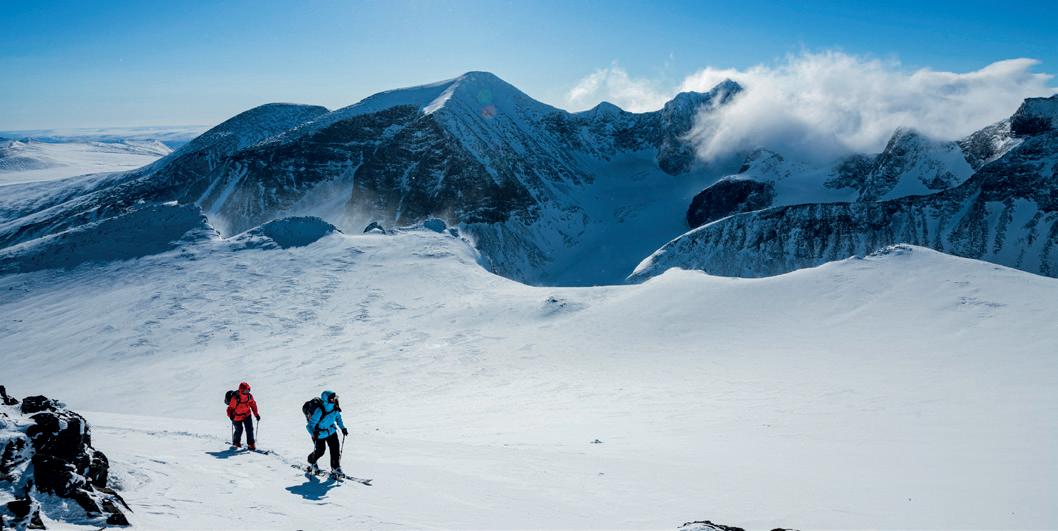
The Villa offers activities including Snowshoeing and cross country skiing, two of the most peaceful ways to explore. Provided with the necessary equipment and after an induction we follow our guide. The silence is profound, broken only by the soft crunch of snow beneath your feet or the whisper of skis gliding across powder. Trails weave through forests, across frozen lakes and over gentle hills, offering views that shift from intimate to expansive in moments. The villa’s guides tailor routes to your ability, ensuring the experience is accessible whether you are a seasoned skier or a complete beginner.
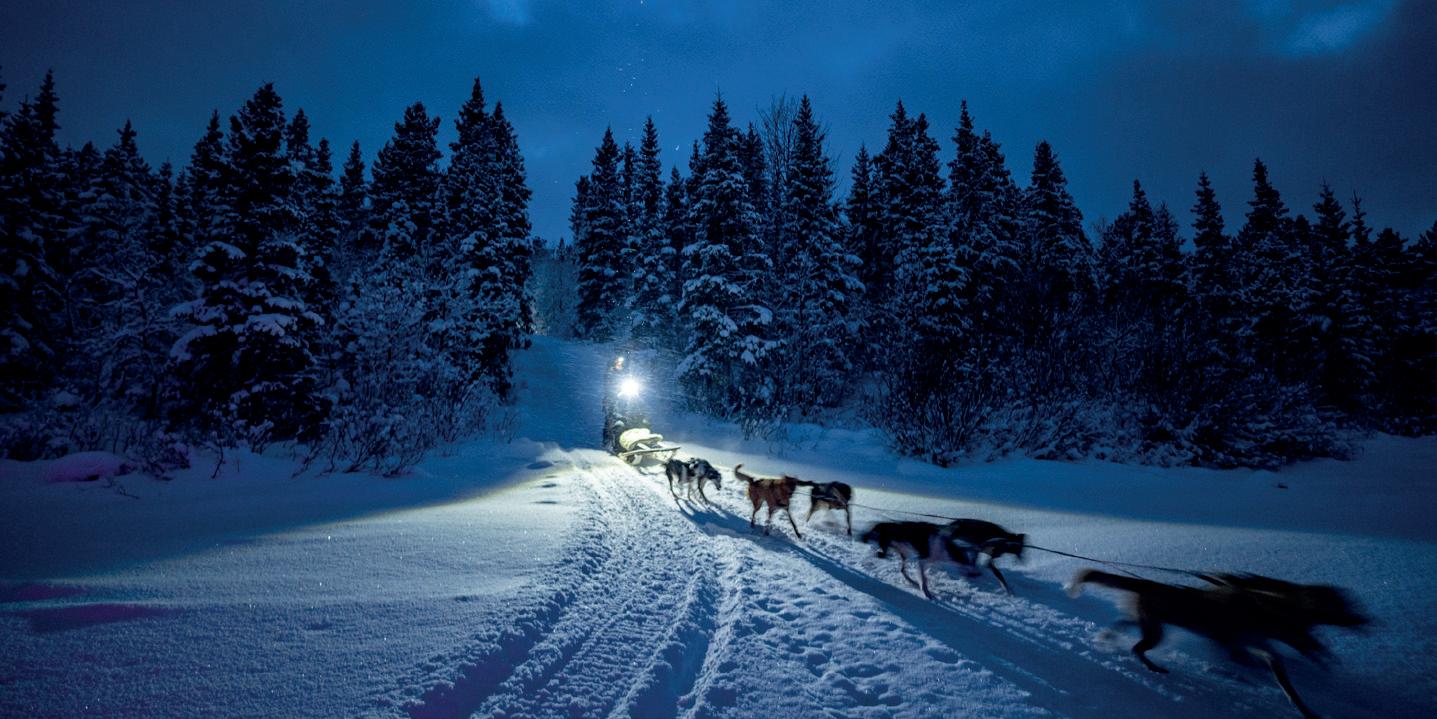
DOG SLEDDING: DRIVING A TEAM OF HUSKIES
Few experiences capture the spirit of the Arctic quite like dog sledding. Organised by Villa Äng, you don’t just sit in the sled - you drive it. Your team of six huskies, a mix of Siberian and Alaskan breeds, are born to run. Their excitement is palpable as they leap and howl before setting off, only to fall into complete silence the moment the sled begins to move. The sensation of gliding through the forest behind a team of powerful, eager dogs is unforgettable.
MEETING ANNA: A SÁMI REINDEER HERDER
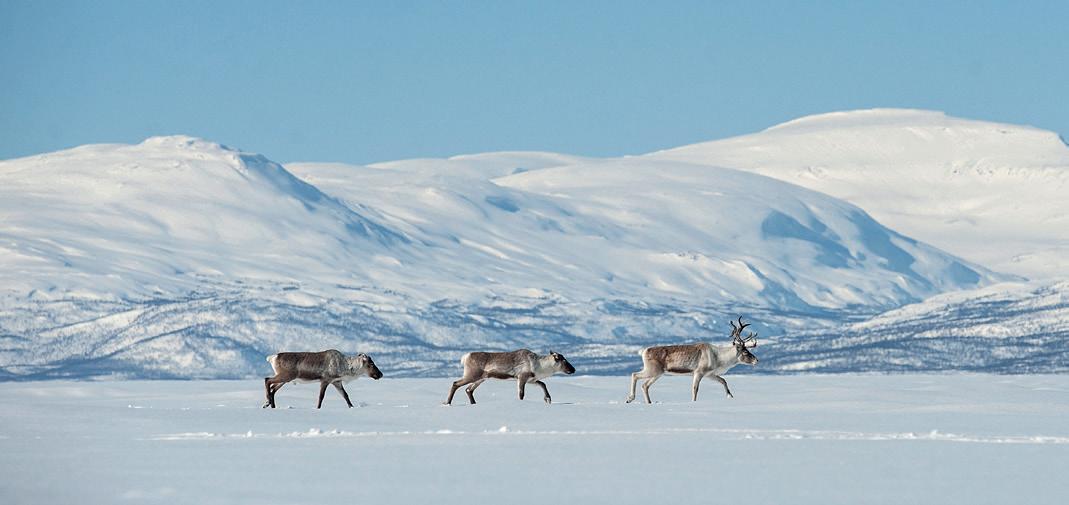
To understand the area and its culture, one of the most meaningful moments of the trip is meeting Anna, a Sámi reindeer herder whose family has lived in the far north for generations. The Sámi are the Indigenous people of the Arctic, with a culture that spans Norway, Sweden, Finland and Russia’s Kola Peninsula. Reindeer herding is not just an occupation — it is a way of life, a cultural identity and a living connection to land, migration routes and tradition.
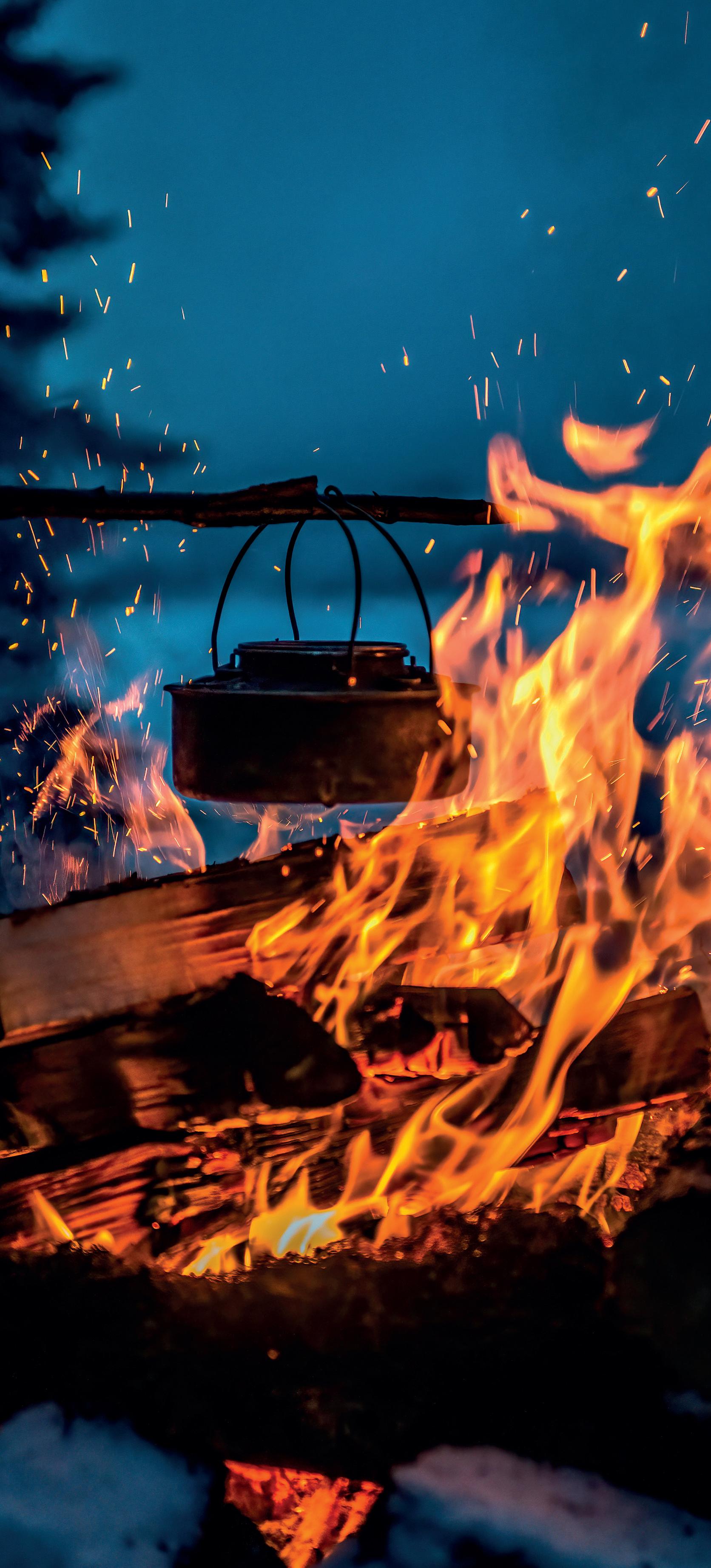
Anna tells her story with warmth and humour. She explains that she comes from an area thirteen reindeer herds above where she lives now, and with real passion she describes the history and culture of her clan, which stretches back centuries. She welcomes you into her lávvu, the traditional Sámi tent often mistaken for a tipi, where she cooks over an open fire and shares stories of ancestral lands, seasonal movements and the challenges of preserving culture in a rapidly changing world.
Then comes the moment everyone secretly hopes for: meeting the reindeer themselves. You walk out into the snow softened landscape where the herd waits, gentle and curious. Anna hands you reindeer moss, a type of lichen that is their favourite winter food and the animals come forward, soft nosed and surprisingly delicate. There is laughter, a little awe, and yes, the delight of discovering that Anna really does have a reindeer called Sven. It is intimate, authentic and deeply grounding — a reminder that Arctic Sweden is not just a landscape, but a living culture shaped by people who know this land better than anyone.
CROSSING THE ARCTIC CIRCLE
Being this far north no trip can miss the chance to cross the Arctic Circle. This symbolic moment, marked by a simple sign and a sense of stepping into a different world. The light feels different, the air sharper, the silence deeper. It is a geographical milestone that carries emotional weight, especially when surrounded by such pristine wilderness.
ARCTIC BATH AND TREEHOTEL
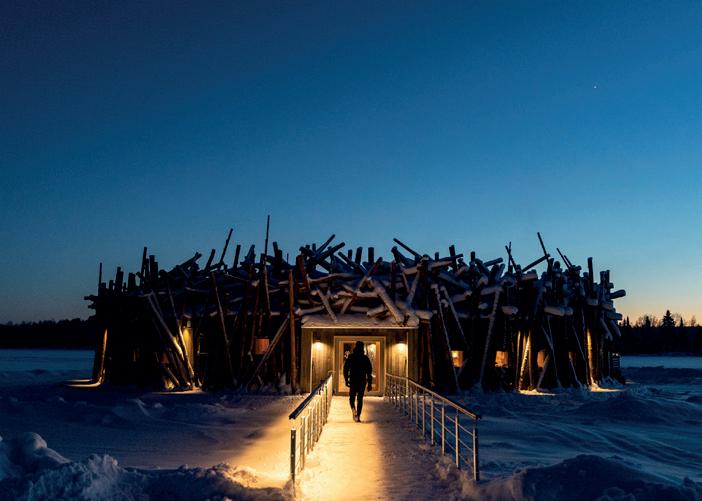
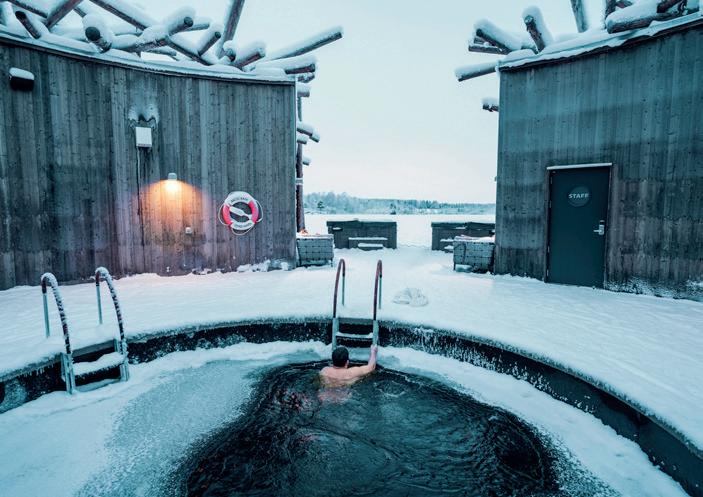
A quick mention of these two unique hotels, Arctic Bath and Treehotel both of which are pioneers of Scandinavian design, and their influence is felt throughout the region. The Arctic Bath — a floating, circular spa that freezes into the river each winteroffers saunas, cold plunges and treatments inspired by the landscape. The Treehotel, with its mirrored cube, UFO shaped cabin and other architectural marvels, is one of Sweden’s most iconic stays and known worldwide. Villa Äng carries the same design DNA: luxury innovation, nature and a sense of quiet wonder.
THE SAUNA, THE ICE HOLE AND THE NORTHERN LIGHTS
No trip is complete without embracing the sauna ritual. At Villa Äng, the experience becomes transcendent. Tucked away down by the lake is a traditional red cabin.
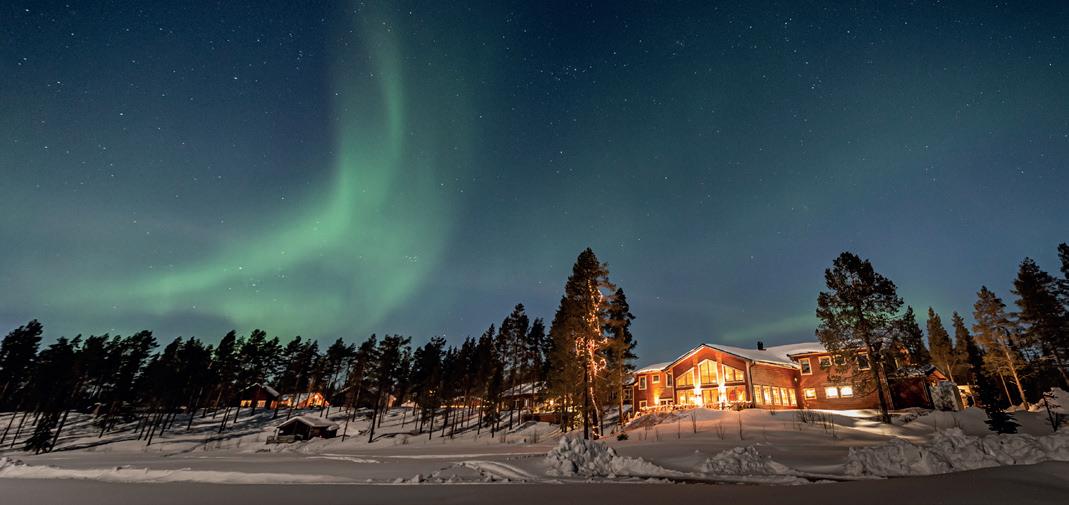
Nearby a hole has been freshly cut into the frozen river. The steam rises from the sauna, and the air outside bites at your skin with temperatures dropping to -40°C, never have I experienced anything like it. You move from heat to ice, from fire to water, from comfort to shock. The plunge is instant, breathtaking, electrifying - a jolt that clears the mind in a way no spa treatment ever could - and then, as if the moment needed anything more, the Northern Lights appear: ribbons of green and violet unfurling across the sky, shifting and shimmering as though the night itself has come alive. Even now, the hairs on my arms rise at the memory. It is a moment that feels almost too perfect to be real.
Up here, the aurora is not an occasional treat but a familiar guest, one that locals build their evenings around. At Villa Äng, they are use to dinners being paused mid course, wine glasses left half raised, conversations suspended as guests rush outside to watch the sky ignite. No one minds - in fact, it’s part of the rhythm of life this far north, where nature sets the schedule and the aurora always gets top billing.
This year, that anticipation is even greater. Thanks to heightened solar activity, 2026 is forecast to be one of the strongest Northern Lights seasons in decades, with Arctic Sweden singled out as one of the best places on the planet to witness the display.
WHY ARCTIC SWEDEN CAPTIVATES
Arctic Sweden is not a place you visit casually. It is a destination that demands presence, attention and a willingness to embrace extremes. The cold is intense, the silence profound, the beauty overwhelming. But it is also deeply restorative.
Villa Äng amplifies that magic. It offers comfort without excess, luxury without pretension, and a sense of home in a landscape that feels almost lunar. It is a place where you disconnect from the world and reconnect with yourself - where the days are filled with adventure and the nights with stillness.
A FINAL REFLECTION
The trip was out of this world - a phrase often overused, but here entirely accurate. Arctic Sweden is a fairytale made real, a place where nature dominates and humans adapt. Villa Äng is its perfect base: warm, welcoming, beautifully designed and prepared for every little luxury, imprinting itself on your memory with the sharpness of cold air and the softness of falling snow. While winter casts its own magic, it’s an all year round destination — you can only imagine the colours that unfold when the snow melts, revealing a landscape transformed yet no less enchanting.
THE TRIP WAS OUT OF THIS WORLDA PHRASE OFTEN OVERUSED, BUT HERE ENTIRELY ACCURATE
REBORN EXPRESS
GILDA PEREZ-ALVARADO
ON RAIL, SAIL AND THE FUTURE OF ULTRA-LUXURY TRAVEL
Now, under the stewardship of Gilda PerezAlvarado, the brand is undergoing its most ambitious reinvention since its inaugural departure from Paris in 1883. No longer confined to sleeper trains, Orient Express is evolving into a fully fledged ultra-luxury hospitality universe spanning rail, hotels and sea, a deliberate strategy that reflects both shifting traveller expectations and the renewed appetite for experiential, slower journeys.
Perez-Alvarado, who joined Accor as chief strategy officer in 2023 before assuming the CEO role at Orient Express in January 2024, speaks of the transformation in narrative terms. “Each product is a chapter,” she says. “Together they form the book called Orient Express.”
A HERITAGE BRAND, REIMAGINED
The revival began in earnest in 2022, when Accor acquired the Orient Express brand, separate from the Venice Simplon-OrientExpress operated by Belmond. A year later, Accor deepened its luxury ambitions through a strategic partnership with LVMH, signalling that this would not be a nostalgic vanity project but a serious bid to compete at the apex of global hospitality.
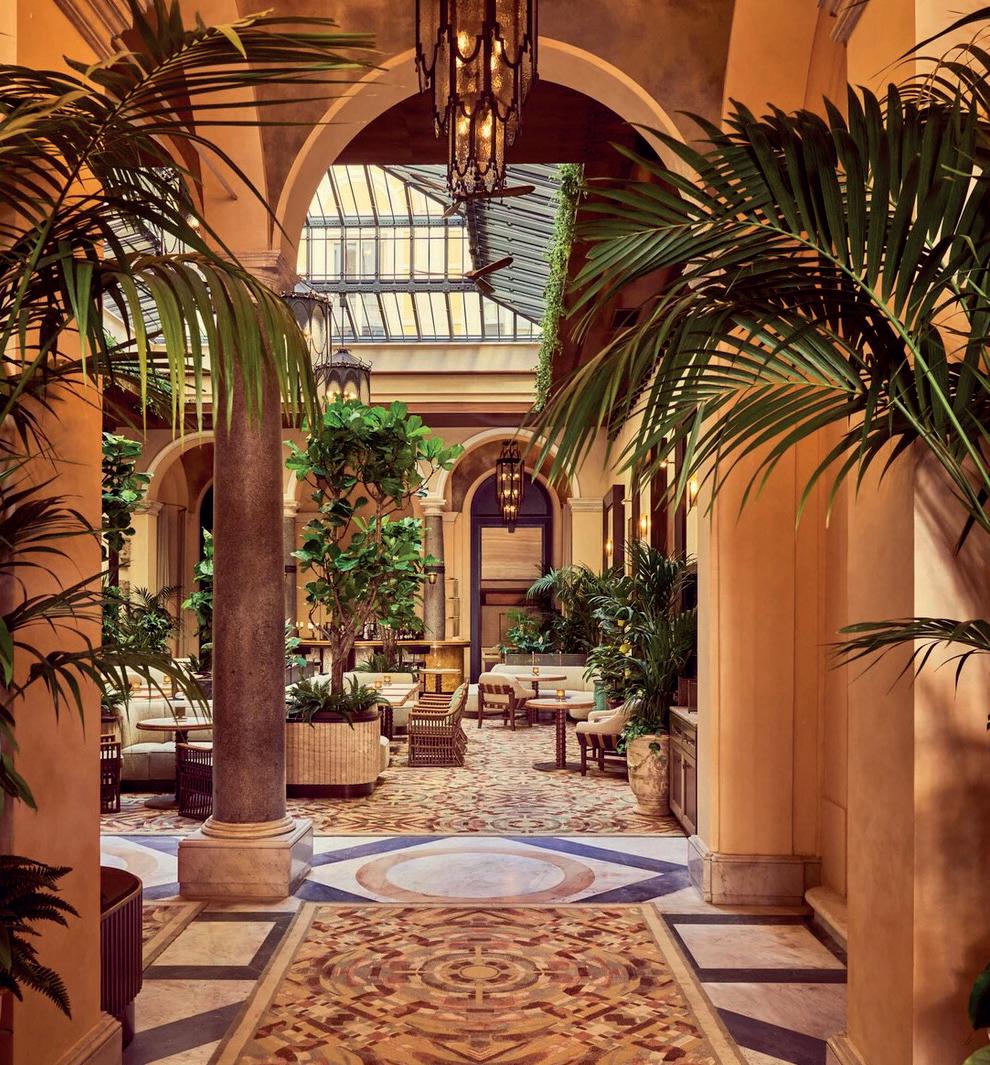
In April, the first tangible expressions of this strategy came to life. The La Dolce Vita Orient Express began rolling through Italy, while Rome welcomed the 93-room Orient Express La Minerva, housed within the 17th-century Palazzo Fonseca, steps from the Pantheon.
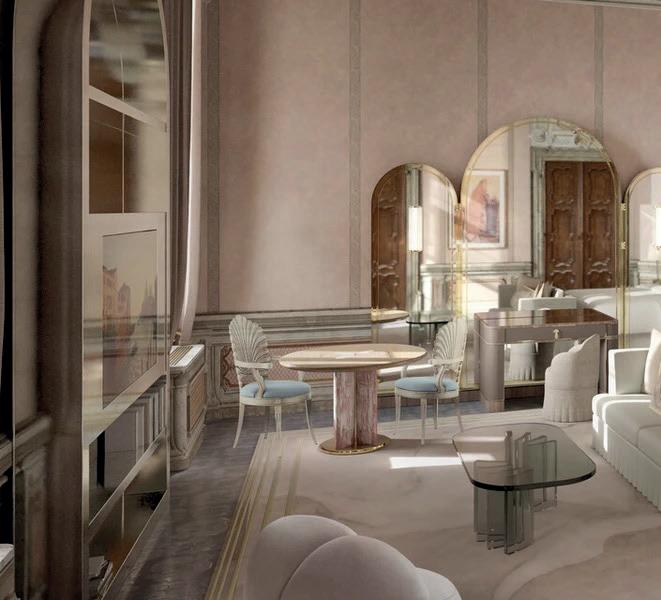
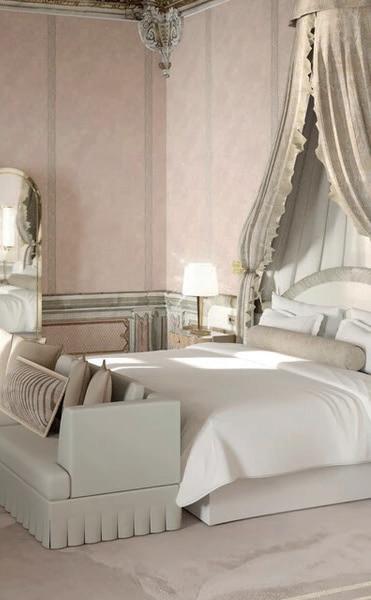
Further milestones loom. Orient Express Venezia is scheduled to open in 2026,
For more than 140 years, the name Orient Express has conjured images of lacquered marquetry, cutcrystal decanters and a Europe stitched together by moonlit rail. It is shorthand for romance and intrigue, immortalised in the pages of Agatha Christie and forever associated with the golden age of travel.
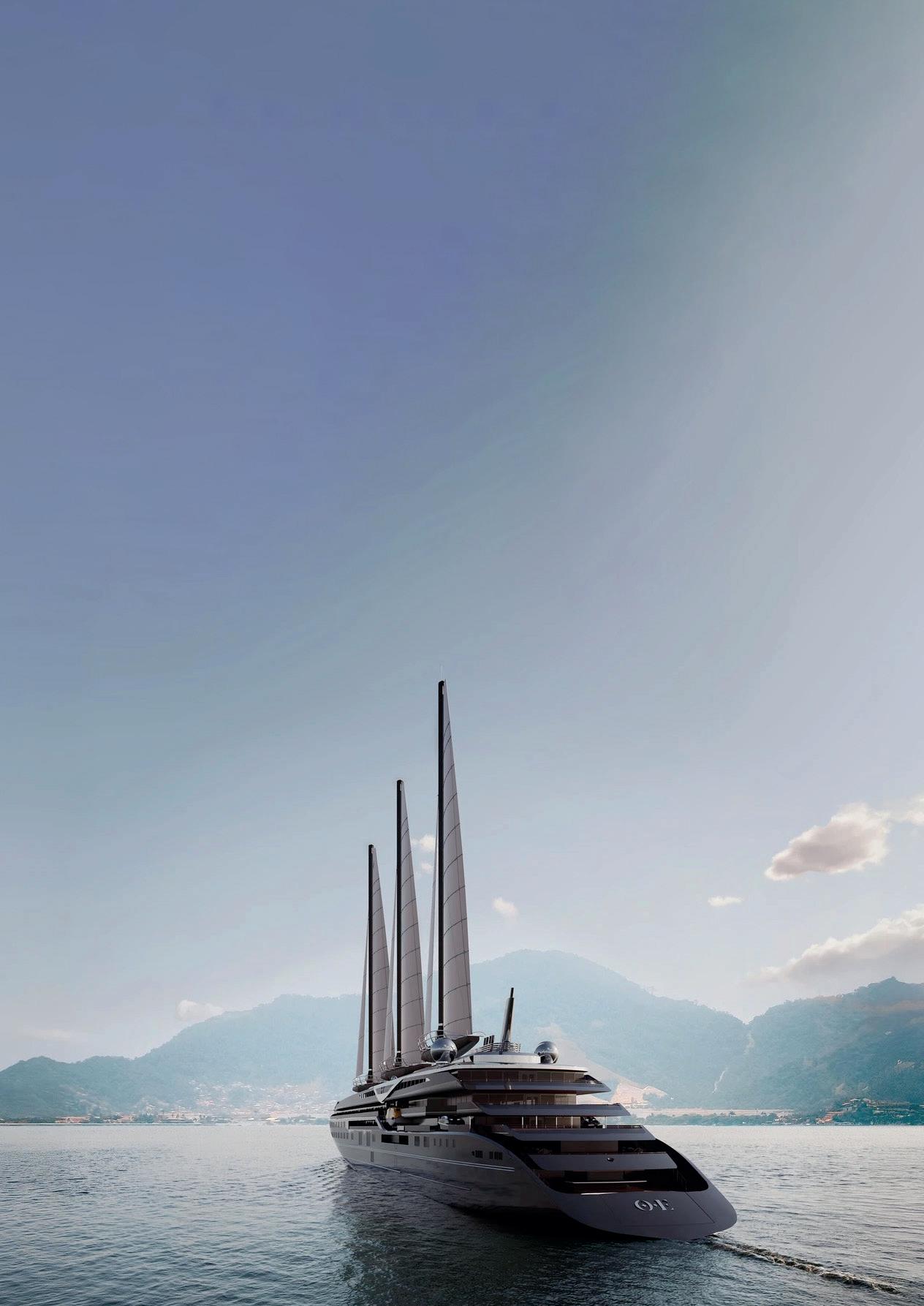
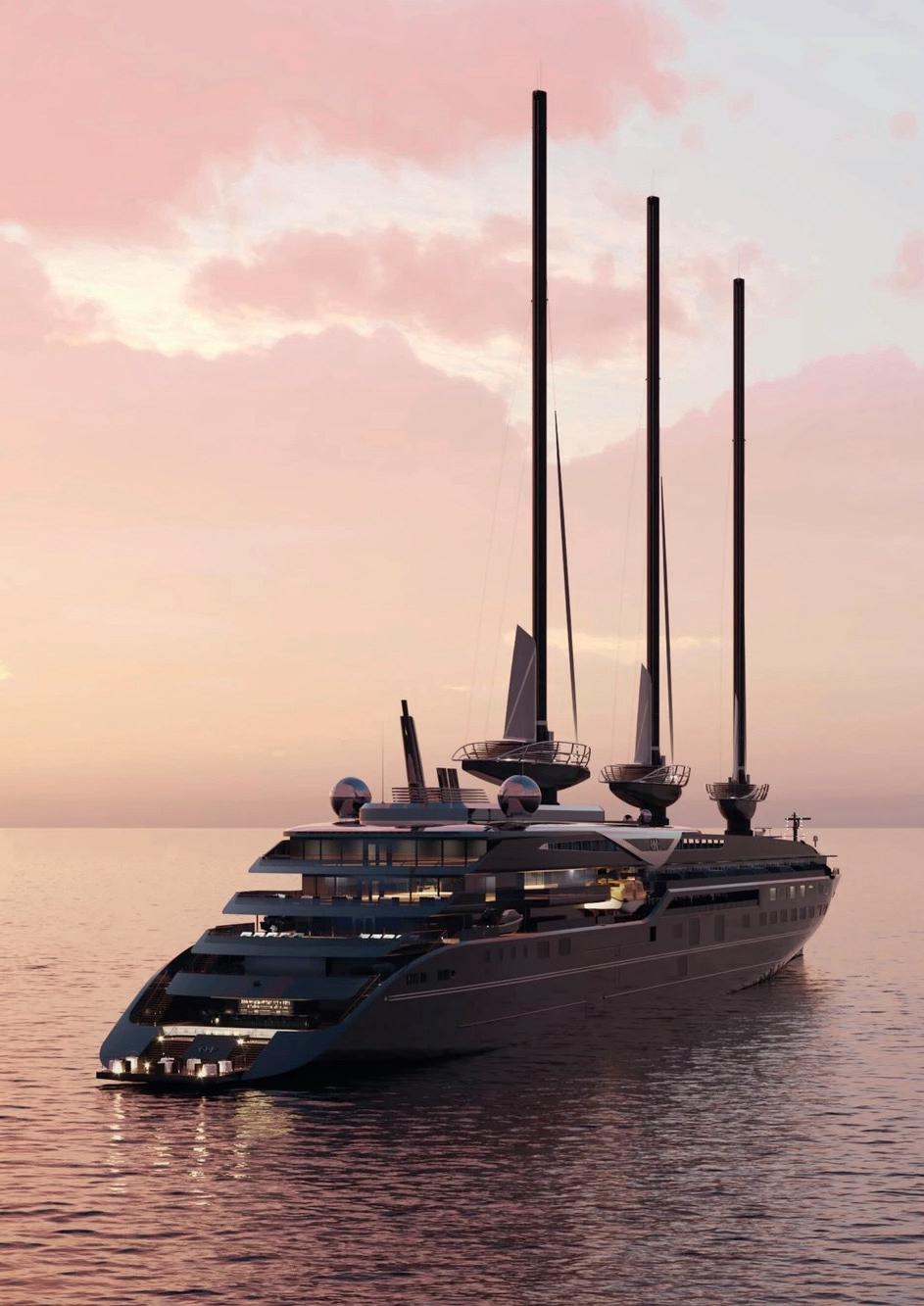
occupying a restored Venetian palazzo. In the same year, the brand will launch its most audacious venture yet: the Orient Express Corinthian, a 220-metre sailing yacht poised to become the world’s largest of its kind.
For Perez-Alvarado, these launches are not disparate projects but components of a coherent ecosystem. “We are aesthetically inclined, Art Deco is part of our DNA, but it is never design for design’s sake. There is always a story behind it. That story enhances the guest experience.”
SLOW TRAVEL IN A FAST WORLD
The brand’s resurgence coincides with a structural shift in luxury travel. The pandemic accelerated a move away from accumulation, of stamps, of selfies, of status goods, towards immersion. Slow travel, once niche, has become a serious commercial proposition.
Rail, by definition, embodies deceleration. The new Italian itineraries meander through lesser-known regions as well as icons such as Venice and Rome, combining Michelinstarred dining with curated excursions into private estates, artisan workshops and historic caves. Guests might find themselves dining beneath frescoed ceilings one evening and listening to musicians perform in ancient Matera grottoes the next.
“Our guests are incredibly well travelled,” Perez-Alvarado says. “They have seen it all. What they want is to see the places they love through a different lens.”
This reframing is central to Orient Express’ appeal. In cities strained by overtourism, the brand’s ability to unlock access, whether through private viewings, after-hours cultural visits or introductions to local custodians, is a defining competitive advantage. The emphasis is not on volume but depth.
Behind the scenes, that requires painstaking relationship-building. “You cannot commoditise these experiences,” she insists. “Our teams work closely with local communities. The staff are the linchpin. They are attuned to guest preferences and they orchestrate the emotional current of the journey.”
FROM LEISURE LEGEND TO BUSINESS PLAYGROUND
Although Orient Express remains synonymous with romance, PerezAlvarado is clear-eyed about its corporate potential. The price point, and the privacy, naturally attracts senior decision-makers from finance, technology, fashion, media and real estate.
“We’ve seen it all,” she says with a smile. “From a networking perspective, it’s a remarkable place to do business. You never know who you’re going to meet.”
There is historical symmetry in that observation. In its 19th-century heyday, the original Orient Express connected not just capitals but elites, diplomats, industrialists and aristocrats who forged alliances as the train threaded across Europe.
INTERVIEW
Today, entire trains or select carriages can be reserved for corporate buy-outs, from discreet board retreats to high-profile product launches. The format lends itself to incentive travel, where the journey itself becomes the reward. On board, private suites offer both sanctuary and workspace; communal dining cars facilitate conversation that feels organic rather than transactional.
For C-suite travellers increasingly fatigued by anonymous five-star boxes, the proposition is compelling: a contained, design-rich environment where business can be conducted without sacrificing pleasure.
RESTORING CRAFTSMANSHIP, SUSTAINING COMMUNITIES
If heritage is the aesthetic backbone of Orient Express, craftsmanship is its moral compass.
In Venice, the forthcoming hotel is being restored in close collaboration with the Italian state, drawing on artisans capable of replicating centuries-old techniques to modern safety standards. Cabinetmakers, glassblowers and textile specialists are not decorative afterthoughts but core contributors. A similar philosophy underpins the restoration of the historic NostalgieIstanbul carriages that will form part of a future French train, L’Orient Express, slated for 2027. Seventeen carriages dating from the 1920s and 30s are being painstakingly revived, engaging more than 30 trades — from marquetry to bespoke lighting.
In an era dominated by digital acceleration and AI automation, this commitment to analogue mastery is striking. “We are helping to keep industries alive,” Perez-Alvarado notes. “These skills are part of cultural heritage. Preserving them is a responsibility.”
For the business travel sector, where ESG criteria increasingly shape procurement decisions, such investments are more than romantic gestures. They are strategic differentiators.
THE SUSTAINABILITY SCORECARD
Luxury is being redefined. As PerezAlvarado puts it, “In the future, the scorecard will be more than just five stars. It will be: what are you doing for sustainability? Who are you partnering with? What is your carbon footprint?”
Rail already carries inherent environmental advantages over short-haul air. But the brand is extending sustainability considerations into design, sourcing and operations.
The forthcoming Corinthian yacht illustrates the balancing act between indulgence and innovation. Developed in partnership with engineers at Chantiers de l’Atlantique, the vessel will be powered by liquefied natural gas, reducing emissions compared with conventional marine fuels. Advanced systems will identify marine life to minimise ecological disruption.
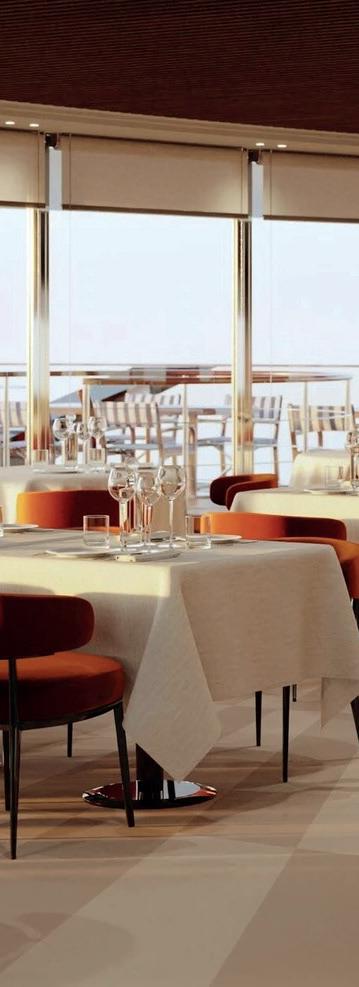
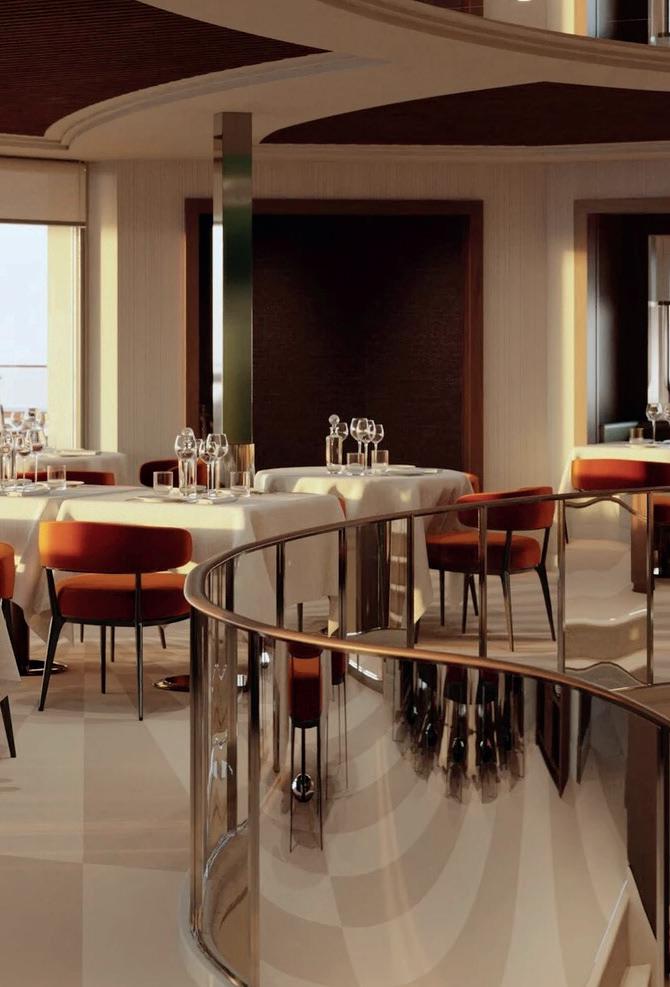
On board, the yacht will feature 54 suites, five restaurants overseen by multi-Michelinstarred chef Yannick Alléno, and expansive wellness and entertainment areas. It is a study in contrasts: Belle Époque-inspired interiors paired with cutting-edge naval engineering. For corporate clients under pressure to demonstrate credible sustainability credentials, such measures matter. Hosting a leadership summit on a yacht with a demonstrably lower emissions profile, or incentivising teams via rail rather than private jet, reframes luxury as conscientious rather than conspicuous.
THE ACCOR AND LVMH EFFECT
Accor’s experience with heritage brands such as Raffles and Fairmont provides operational ballast. “Europe is blessed with heritage brands,” Perez-Alvarado observes. “We understand how to honour the past while making it relevant.”
Meanwhile, the partnership with LVMH brings ultra-luxury acumen, an understanding of how high-net-worth consumers think, spend and align their values. The objective is not simply to create beautiful assets but to build a coherent, aspirational universe.
That universe is designed to be modular yet interconnected. A guest might begin with a stay in Venice, board La Dolce Vita to Rome, check into La Minerva and then transfer to the Corinthian for a Mediterranean voyage. Each component is distinct, yet the narrative thread, Art Deco elegance, curated access, meticulous service, binds them.
For the business travel community, this creates opportunities for multi-stage programmes: incentive trips that evolve across cities and modes of transport, executive journeys that blend board meetings with cultural immersion.
THE ART OF EXCLUSIVITY IN AN AGE OF EXCESS
Luxury’s paradox is that as access expands, exclusivity becomes harder to sustain.
Orient Express’ strategy hinges on controlled scale. The trains carry limited guests. The hotels are intimate. The yacht, despite its size, houses just 54 suites.
This scarcity is deliberate. It preserves the sense of theatre, the anticipation of boarding, the ritual of dressing for dinner, the choreography of service.
It also fosters community. On a train or yacht, encounters are inevitable yet curated. Conversations unfold over multiple courses and shared vistas rather than fleeting networking receptions.
For senior executives accustomed to hyperscheduled conferences, that slower cadence can be transformative. Deals may be discussed, but they are framed by sunsets over the Dolomites or the Ligurian coast.
What, then, is the ultimate ambition? PerezAlvarado speaks not of scale for its own sake but of cohesion. “Every asset is unique, but we want to loop it together,” she says.
In practical terms, that might mean crafting grand itineraries that weave through the portfolio. But it also means aligning leadership, sustainability commitments and brand values in a way that resonates with a new generation of affluent travellers, those who measure luxury not just in thread counts but in impact.
Orient Express was born in an age when rail symbolised modernity. Its revival, paradoxically, is rooted in a desire to slow down, to rediscover craftsmanship, connection and narrative in travel.
For the corporate world, where business journeys often blur into obligation, the proposition is refreshingly distinct. Here, transit becomes theatre; accommodation becomes story; and networking unfolds against a backdrop of lacquered wood and passing landscapes.
More than a resurrection, this is a reinvention, one that suggests the future of ultra-luxury travel may lie not in ever-faster movement, but in travelling better.
As Perez-Alvarado puts it, with quiet conviction: “You can do it all.
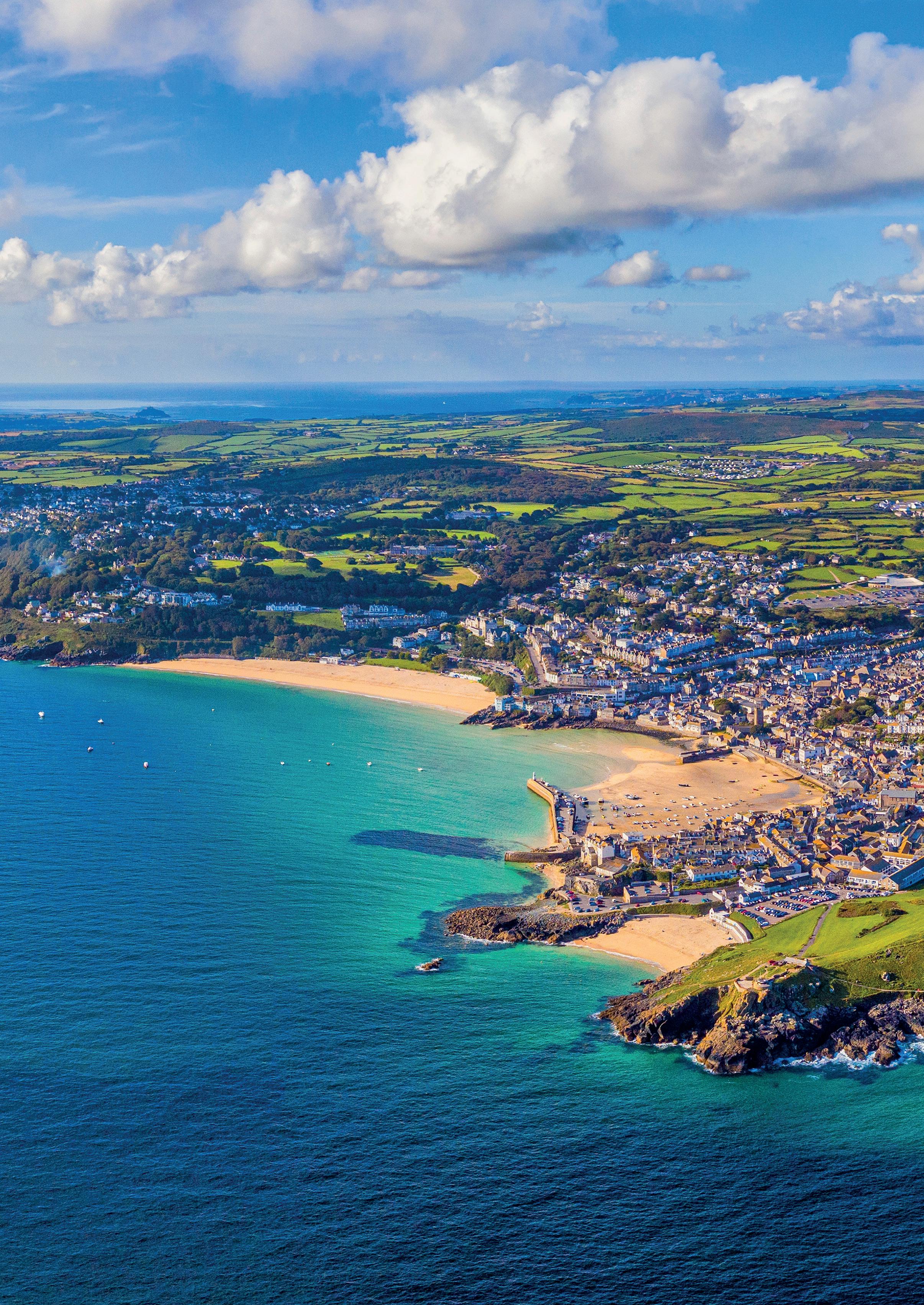
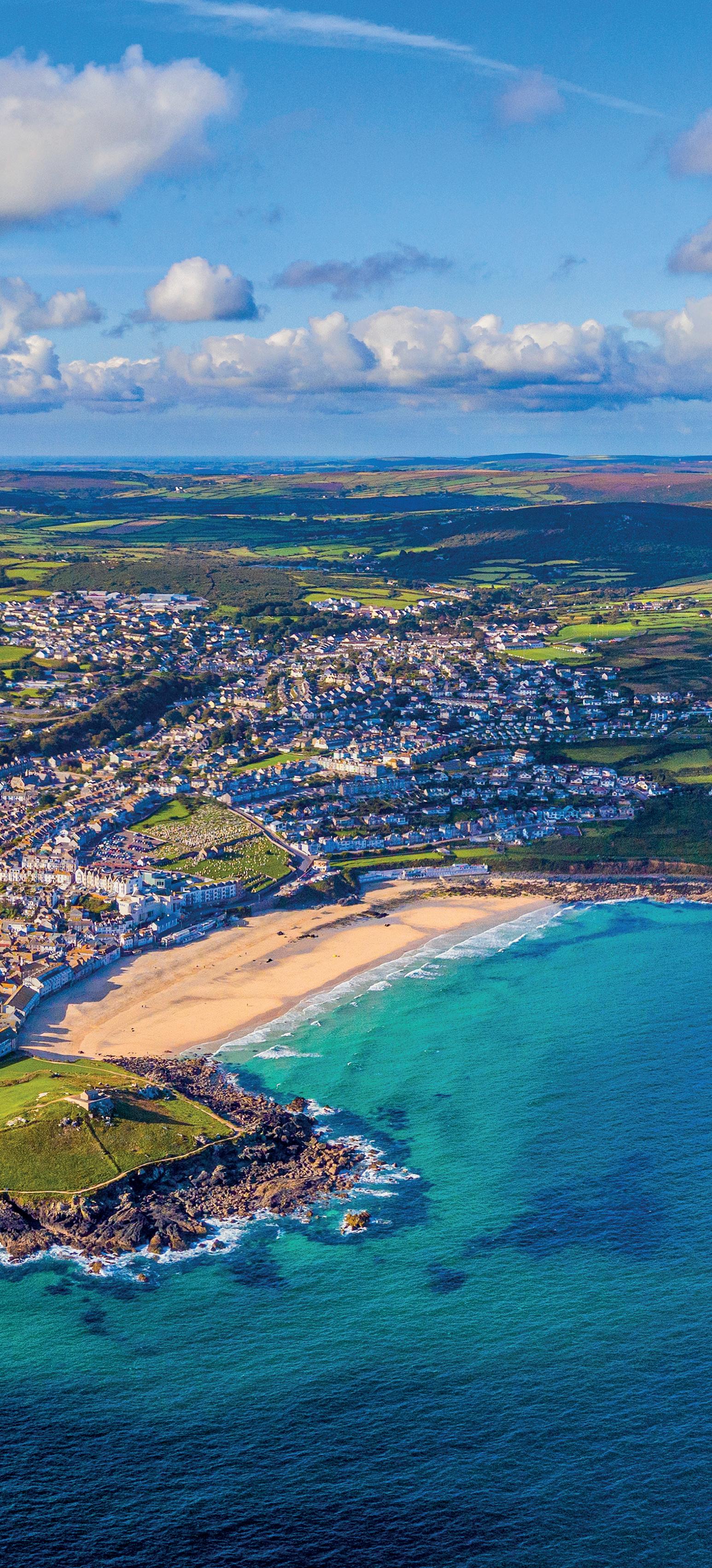
For decades, Cornwall was shorthand for a certain kind of British escape: windwhipped cliffs, buckets and spades, smugglers’ coves and cream teas consumed with nearreligious fervour. It was, in the national imagination at least, a place you went to switch off.
BRITAIN'S EDGE, REIMAGINED
By RICHARD ALVIN
DESTINATION REVIEW
CORNWALL
Today, that remains true. But it is no longer the whole story.
In 2026, Cornwall is as likely to host a leadership retreat for a London fintech as it is a family from the Midlands on half term. It is home to cutting-edge space technology, Michelin-starred kitchens, design-led hotels and a quietly confident business community that has learned how to turn geography, once perceived as isolation, into a formidable asset.
For business travellers seeking something beyond the standard-issue city break, Cornwall offers an experience that feels both restorative and strategically useful: somewhere to think, to build relationships and, increasingly, to do serious business.
ARRIVAL AT THE EDGE
Cornwall’s transformation has been helped, in no small part, by improved connectivity. The Great Western Railway service from London Paddington to Penzance, one of the most scenic rail journeys in Britain, remains a civilised four-to-five-hour glide past estuaries and sea walls. It is entirely possible to leave a 9am meeting in the capital and be walking along a Cornish beach before dusk.
For those pressed for time, Newquay Airport has steadily expanded its routes, with regular services to London, Manchester, Edinburgh and Dublin. The airport’s proximity to the north coast, and to fast-growing business clusters around Newquay and Truro, makes it a surprisingly efficient gateway.
Driving, too, has become more straightforward thanks to continued upgrades to the A30. What was once a psychological barrier, the sense that Cornwall was simply too far, has, for many, dissolved. And yet, when you arrive, it still feels like you have travelled somewhere distinct. The light is different. The horizon is bigger. The pace is subtly recalibrated. MORE ON THE NEXT PAGE
THE RISE OF THE CORNISH MEETING
As we all know, the pandemic accelerated a shift in how businesses think about place. Remote working became mainstream. Offsites became more intentional and Cornwall benefited handsomely.
Hotels such as Carbis Bay Estate near St Ives, The Headland Hotel in Newquay and St Enodoc in Rock have repositioned themselves not simply as leisure destinations, but as credible venues for executive retreats, strategy sessions and incentive trips. High-speed connectivity is now standard; private dining rooms double as boardrooms; spa facilities provide structured downtime.
What Cornwall offers, uniquely, is perspective. It is difficult to obsess over quarterly KPIs when you are looking out across the Atlantic. Teams tend to walk more, talk more openly and, according to several HR directors I spoke to, reach decisions more quickly.
Cornwall is also tailor-made for bleisure trips. A Friday planning session in Falmouth can slide seamlessly into a weekend of coastal hiking or paddleboarding.
A CULINARY HEAVYWEIGHT
If there was a single catalyst for Cornwall’s reinvention, it might well have been food.
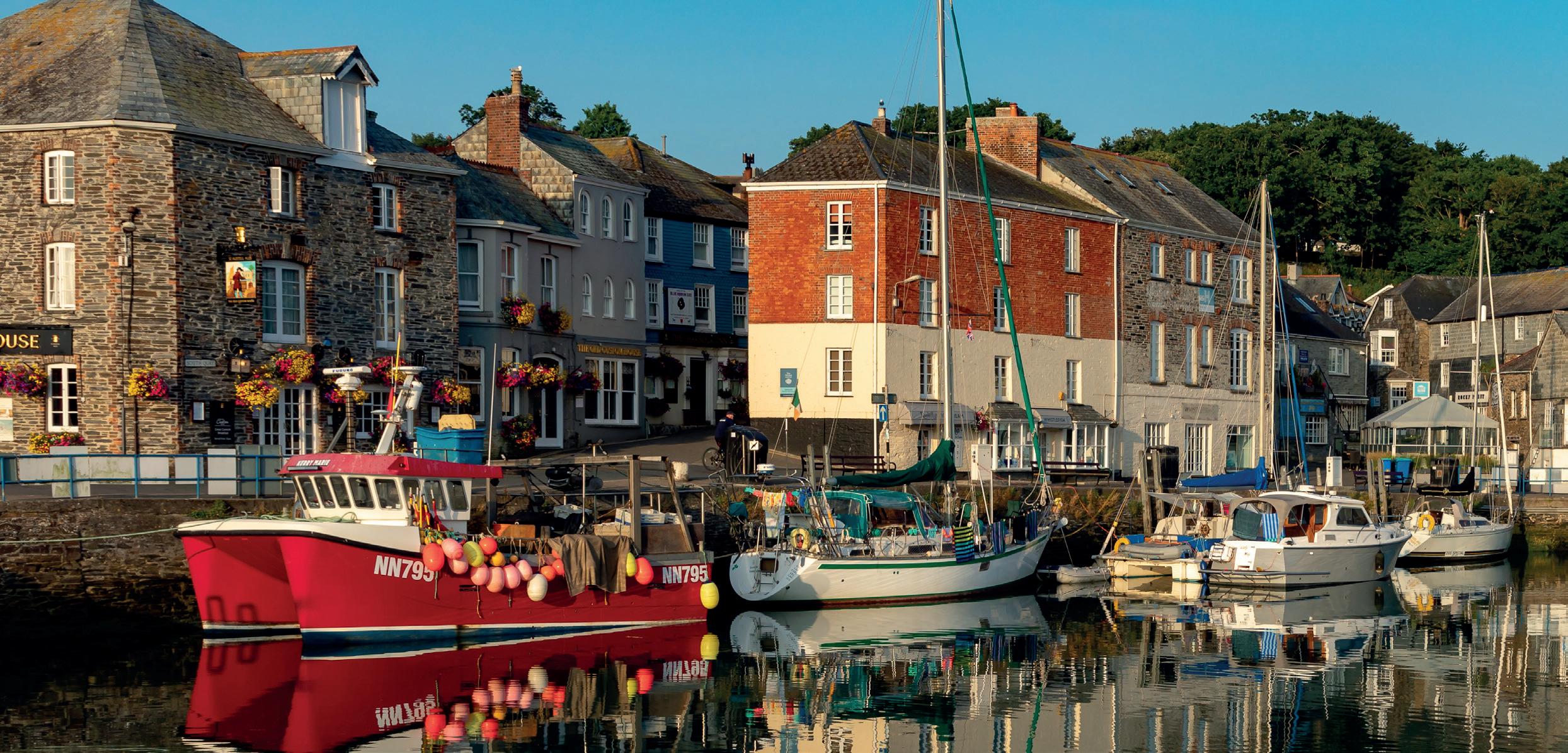
Long before farm-to-table became a metropolitan cliché, Cornish chefs were working directly with day-boat fishermen and small-scale growers. The result is a dining scene that now punches far above its weight. Restaurants from Port Isaac to Padstow have attracted national and international attention. Rick Stein’s long-standing presence in Padstow – sometimes jokingly dubbed “Padstein”, paved the way. Today, chefs such as Nathan Outlaw and Paul Ainsworth have built reputations that draw discerning diners from across Europe.
For the business traveller, this matters. Cornwall can now host a client dinner that rivals anything in Mayfair, but with the added theatre of sea views and the scent of salt air.
Even more informal venues, from beach cafés to harbour-side bistros, operate at a level of quality that feels reassuringly contemporary. Sustainability is not an afterthought; it is embedded. Local shellfish, grass-fed beef, artisan cheeses and increasingly ambitious Cornish wines form the backbone of many menus.
CREATIVE INDUSTRIES AND COASTAL CONFIDENCE
It would be easy to assume that Cornwall’s economy is still dominated by tourism. That view is decades out of date.
The county has become a quietly dynamic hub for creative industries, digital startups and marine technology. Falmouth University has played a pivotal role, nurturing talent in design, film and gaming. The town of Falmouth itself has evolved into a lively blend of maritime heritage and modern enterprise, with coworking spaces tucked between sail lofts and galleries.
Truro, Cornwall’s only city, functions as the administrative and commercial centre, while Newquay has emerged as a focal point for tech entrepreneurs drawn by lifestyle as much as opportunity.
The Spaceport Cornwall project at Newquay Airport, ambitious and symbolically powerful, has further shifted perceptions. The idea that rockets might launch from Britain’s far south-west would have seemed fanciful not long ago. Now, it
speaks to a broader narrative: Cornwall as frontier rather than periphery.
For corporate leaders considering regional investment, Cornwall’s lower property costs, strong digital infrastructure and quality of life are compelling. Recruitment, once seen as a challenge, is increasingly facilitated by professionals willing to relocate for a better balance between work and wellbeing.
NATURE AS STRATEGY
Cornwall’s most obvious asset remains its landscape. The South West Coast Path snakes for hundreds of miles, offering cliff-top walks that feel cinematic in their drama. Kynance Cove on the Lizard Peninsula looks almost Mediterranean on a bright day. Falmouth Harbour hums with sailing culture. Surfers at Fistral Beach carve through Atlantic rollers with studied nonchalance.
For business travellers, this is not merely scenic garnish. It is a strategic advantage.
Corporate retreats increasingly integrate outdoor activities: guided coastal hikes, sailing regattas, cold-water swims followed by structured reflection sessions. These are not token gestures. Research into team cohesion and cognitive performance repeatedly underscores the value of time spent in natural environments.
Cornwall provides that in abundance, without the need for long-haul flights or complex logistics.
HERITAGE AND IDENTITY
Cornwall’s distinct identity is more than marketing. The Cornish language, recognised as a minority language in the UK, has seen a revival. Historic mining landscapes, now part of a UNESCO World
Heritage Site speak to a past defined by global trade and engineering prowess.
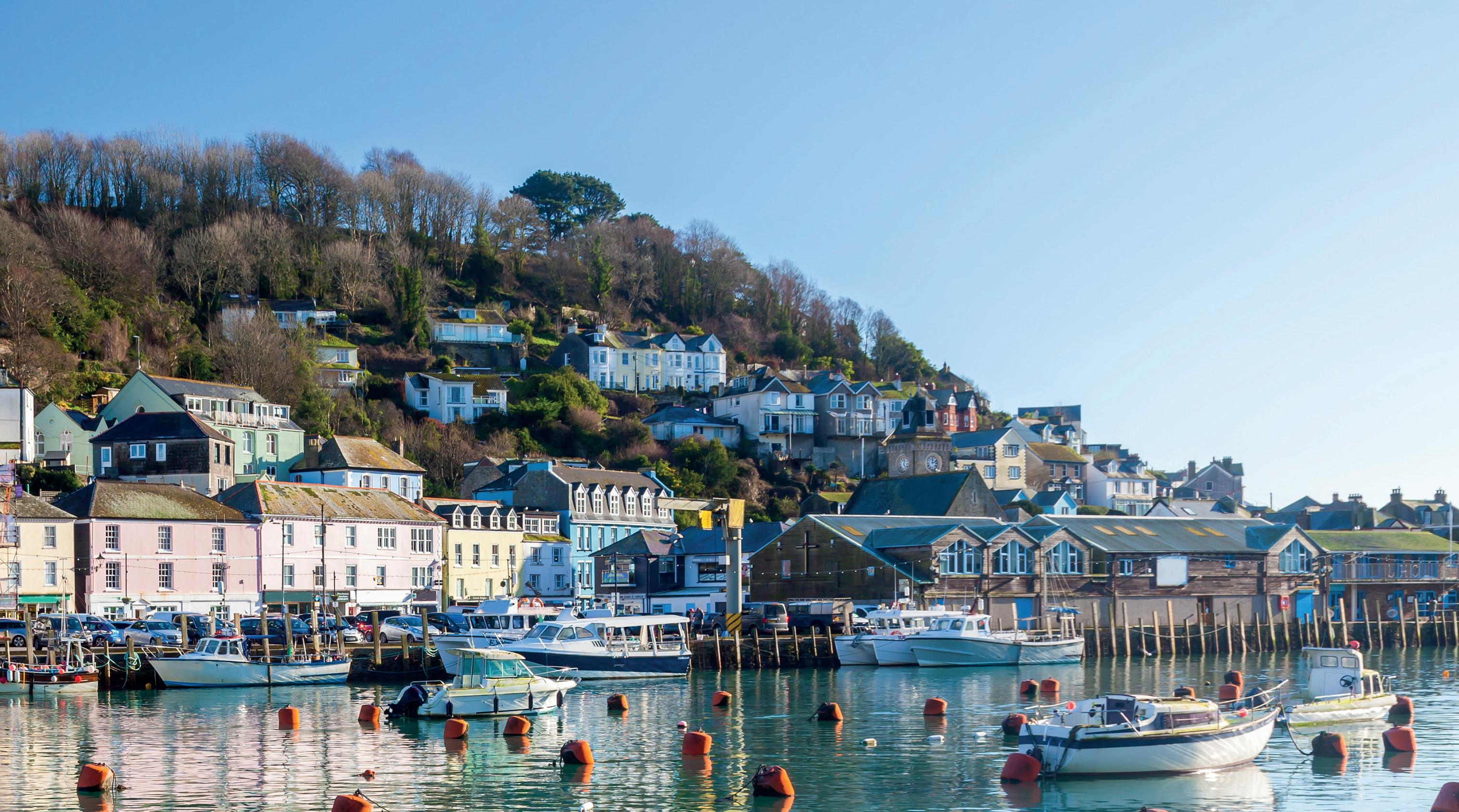
St Michael’s Mount, rising dramatically from Mount’s Bay, embodies the county’s layered history. So too do the fishing villages of Mousehole and Polperro, where narrow lanes still wind between granite cottages.
For visiting executives, this depth of character adds texture to any stay. It is one thing to hold a strategy session in a generic hotel meeting room; quite another to convene in a building that once stored pilchards for export across Europe.
Cornwall’s story is one of adaptation. From tin mining to tourism, from fishing to film production, it has repeatedly reinvented itself. That resilience resonates with business leaders navigating their own industries’ upheavals.
SUSTAINABILITY AT THE FOREFRONT
Cornwall’s geography makes it acutely aware of climate change. Rising sea levels and coastal erosion are not abstract concepts here; they are lived realities.
As a result, sustainability is embedded across much of the county’s hospitality and business landscape. Renewable energy projects, from offshore wind to wave power research, have found fertile ground. Hotels increasingly prioritise local sourcing, waste reduction and low-carbon operations.
For companies under pressure to demonstrate credible ESG commitments, hosting events in locations that take environmental stewardship seriously carries weight. Cornwall’s ethos aligns neatly with the values many organisations now seek to project.
PRACTICALITIES FOR THE CORPORATE TRAVELLER
While Cornwall’s appeal is emotional, its practicality should not be overlooked.
Wi-Fi standards in leading hotels and serviced apartments are robust. Conference facilities range from intimate boardrooms to larger venues capable of hosting several hundred delegates. Private chefs, activity organisers and event planners operate at a level comparable to London agencies, albeit often with a more personal touch.
Transport within the county is best managed with a car, though rail links between major towns are serviceable. For high-end travellers, helicopter transfers and private charters can be arranged with relative ease.
Seasonality remains a factor. Summer brings crowds and premium pricing; shoulder seasons, March to May and September to October, often provide the sweet spot for corporate bookings, combining reasonable rates with dramatic coastal weather.
THE INTANGIBLE ADVANTAGE
What ultimately distinguishes Cornwall is something less easily quantified.
There is a psychological shift that occurs when meetings take place at the edge of the land. Conversations seem to widen. Hierarchies soften. The Atlantic, vast and indifferent, has a way of putting internal politics into perspective.
In an era when business travel is increasingly scrutinised for its necessity, destinations must justify themselves. Cornwall does so not through spectacle alone, but through substance. It offers infrastructure, talent and serious venues, yet wraps them in an environment that fosters clarity and connection.
The message is straightforward: Cornwall is no longer simply a holiday afterthought. It is a credible, compelling setting for modern enterprise.
Arrive by train as the sea wall curves into view. Check in to a design-led coastal hotel. Walk the cliffs before dinner. Host your strategy session the following morning with the horizon stretching endlessly westward.
At Britain’s edge, business feels different.
CORNWALL’S FAMOUS RESIDENTS
Cornwall’s cultural cachet is reinforced by a roster of high-profile residents who have been drawn to its elemental light and relative privacy.
The novelist Daphne du Maurier made her home near Fowey, setting Rebecca and Jamaica Inn against the county’s brooding landscapes, while restaurateur Rick Stein transformed Padstow into a gastronomic destination long before “food tourism” became fashionable.
Olympic sailing champion Ben Ainslie has long been associated with Cornish waters, reflecting the county’s deep maritime heritage.
In recent years, actors including Kate Winslet and comedian Dawn French have chosen to base themselves in Cornwall, attracted by its discretion, creative community and sweeping coastal scenery. Their presence underscores a broader truth: Cornwall is not merely picturesque, but culturally magnetic, a place where artistic, culinary and sporting excellence feel entirely at home.
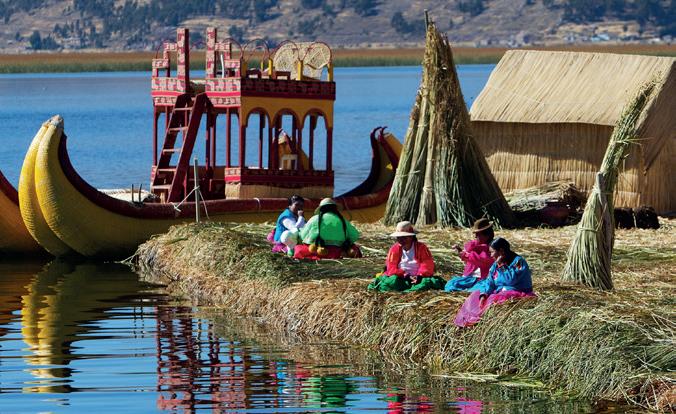
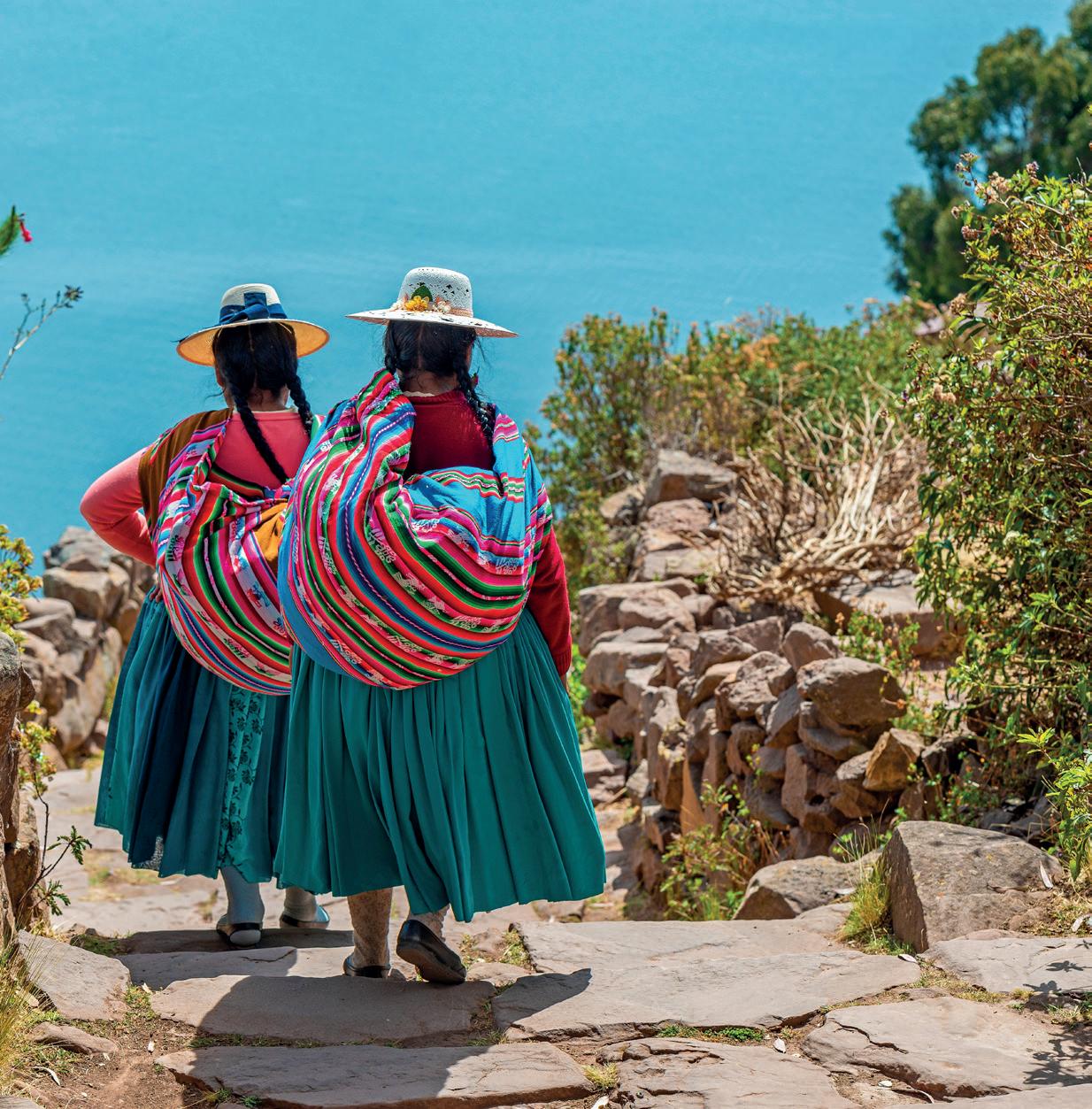
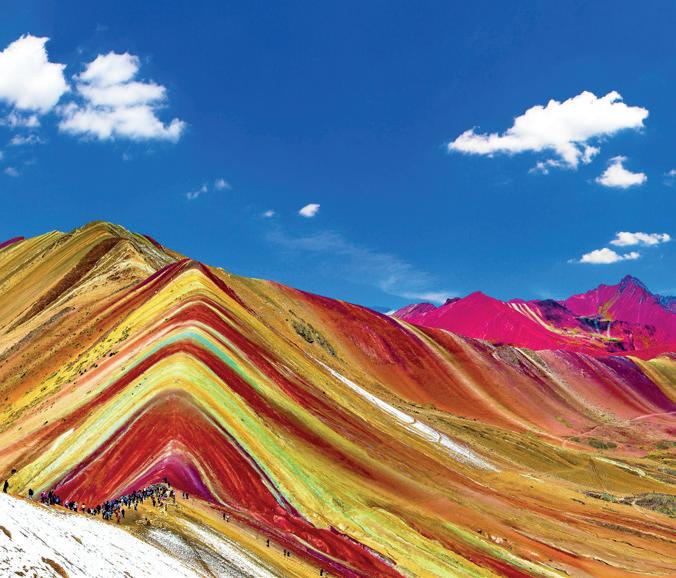
Peru is situated in the western part of South America and shares borders with Ecuador, Colombia, Brazil, Bolivia and Chile.
Home to 12 UNESCO World Heritage Sites and 84 of the planet’s 117 life zones. Its enormous territory, covering more than 1.2 million square kms, is composed of three regions: Coast, Highlands and Jungle
Its current population exceeds 31.5 million inhabitants. Thanks to a long history defined by major ancient civilizations, Peru is home to more than 5,000 archaeological sites. Many of these remain shrouded in mystery but are still capable of transporting visitors to the periods when such societies flourished.
ONE OF THE WORLD’S MOST VARIED COUNTRIES
and a multicultural nation, filled with traditions, a unique gastronomy and vast natural reserves
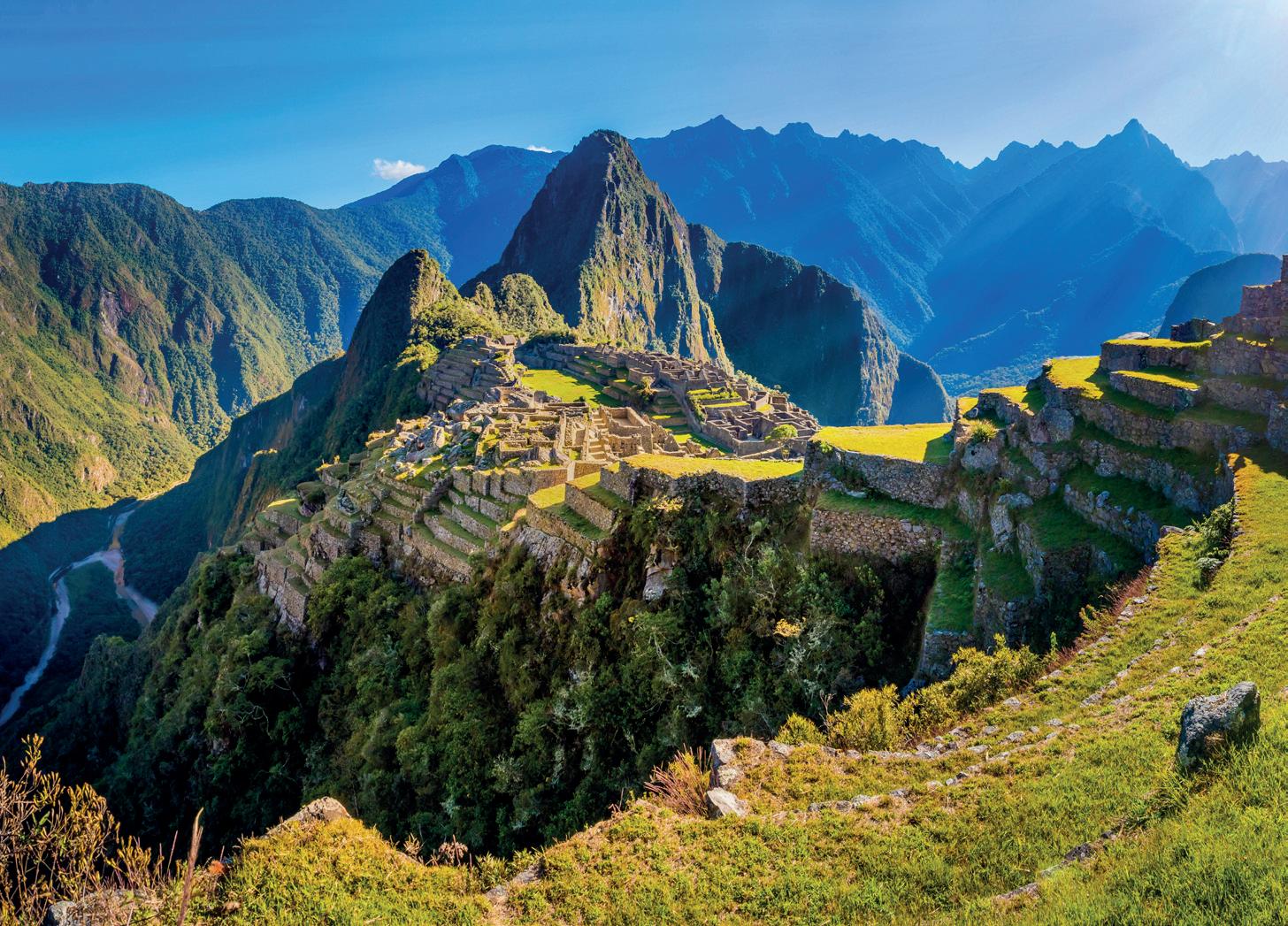
A visit to Machupicchu reveals the perfection of the Inca empire; this sacred city can be reached onboard the luxurious trains that run through imposing mountain scenery dotted with colourful Andean villages.
Peru is synonymous with natural beauty, and it is one of the world’s ten most biologically diverse countries. It has created 14 national parks, 15 national reserves, 9 national sanctuaries and 11 reserved zones.
It is home to more than 1,800 species of birds and 10% of all the reptile, mammal and fish species that exist on Earth. It also has 3,500 varieties of orchids.
A paradise for lovers of adventure, offering a range of outdoor sporting activities for the curious, beginners, amateurs and experts, including trekking, climbing, mountain biking, surfing, paragliding, hang gliding, camping, canoeing and kayaking.
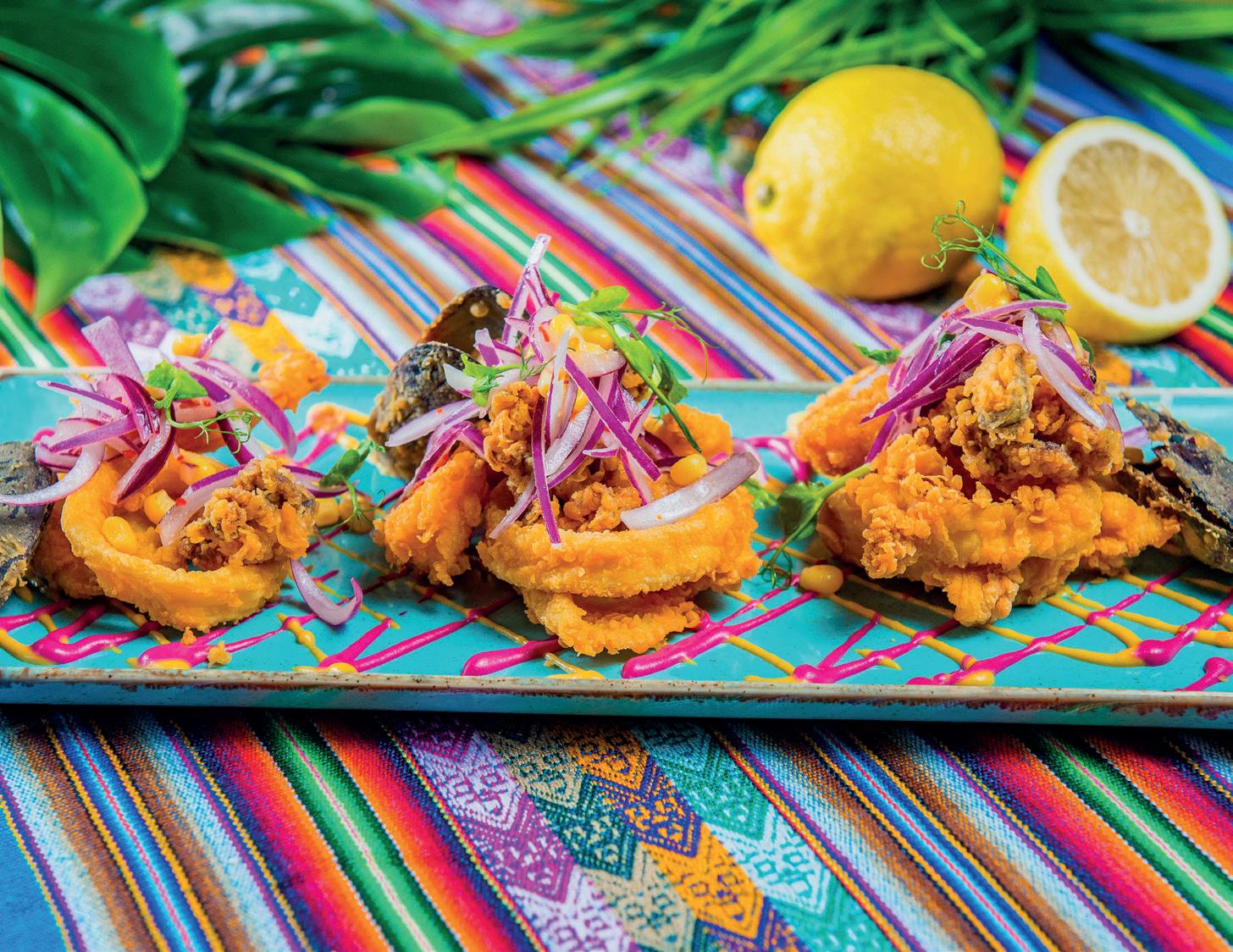
PERU ON A PLATE a
culinary journey across regions
From Lima’s world class restaurants to ancestral cooking in the Amazon, Peru’s cuisine is a tapestry of biodiversity, tradition, and innovation. Each region offers flavours that tell the story of a nation where food is both heritage and art.
The Michelin Guide has not yet expanded to cover Peru, which means no restaurants in Lima or elsewhere in the country have been officially awarded stars.
LIMA: the capital of taste
Peru’s capital has become a global culinary powerhouse, home to four of the World’s 50 Best Restaurants 2025: Maido (1), Kjolle (9), Mérito (26), and Mayta (39). Lima’s chefs are celebrated for their ability to fuse tradition with modern technique, elevating native ingredients into dishes that resonate worldwide. Yet Peru’s gastronomic story extends far beyond the capital, reaching
from the Pacific coast to the Amazon rainforest and the Andes mountains.
NORTHERN COAST: bold and briny
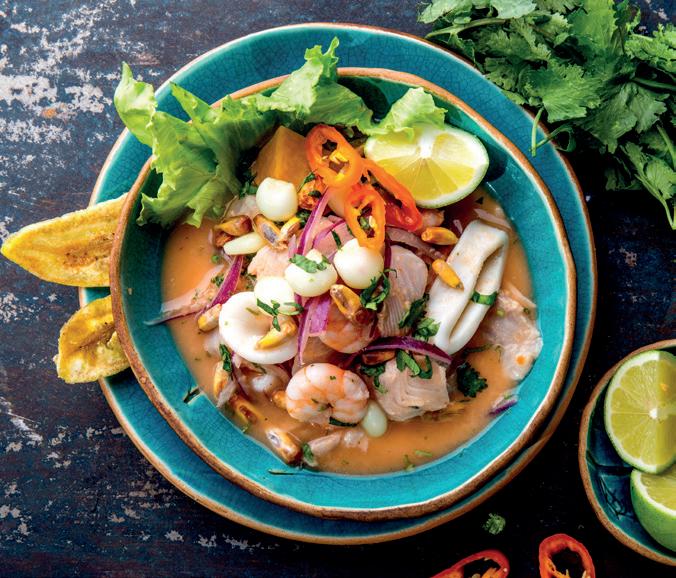
The northern cities of Tumbes, Piura, Chiclayo, and Trujillo are defined by coastal abundance. Here, ceviche takes on a distinctive twist in ceviche de conchas negras, made with black clams instead of fish, offering a deeper, earthier flavour.
Other emblematic dishes include cabrito a la norteña, a tender goat stew, and arroz con pato, duck with rice infused with ají amarillo paste, the spicy hallmark of Peruvian cooking. Meals are often accompanied by chicha de jora, a slightly tangy fermented corn beer with low alcohol content, linking modern plates to ancient traditions.
AMAZONIAN RAINFOREST: ancestral techniques
Further inland, the regions of Loreto, Ucayali, San Martín, and Madre de Dios
showcase cooking rooted in indigenous heritage. Dishes such as juane and patarashca are wrapped in bijiao leaves and steamed, a technique passed down through generations. Juane, eaten during the feast of San Juan, combines rice, meat, olives, and a hardboiled egg, while yuca juane replaces rice with cassava and freshwater fish. The giant paiche, native to Amazonian rivers, is central to both cuisine and sustainable fishing practices. Drinks include uvachado, a grape based spirit, and chapo, a warm blend of sweet plantains, cinnamon, and cloves. Indigenous fruits such as chonta, aguaje, and the tart camu camu enrich the rainforest’s culinary palette, often appearing in juices and desserts.
AREQUIPA: picantería traditions
In Arequipa, the famed picanterías serve dishes that are bold, hearty, and deeply local. Specialities include rocoto relleno (spicy peppers stuffed with beef and pork), solterito de queso (a refreshing mix of cheese, onion, corn, olives, and beans), and chupe de camarones, a rich shrimp chowder. The city also claims the invention of queso helado, or cheese ice cream, a sweet curiosity that has become a regional hallmark.
THE
ANDES: ritual and nutrition
From Cajamarca to Cusco, Andean cuisine is steeped in ritual and nutrition. Staples include quinoa and tubers such as olluco, oca, chuño, and moraya all
potatoes preserved through freeze drying techniques that date back centuries. Pachamanca, a dish of roasted meats and vegetables cooked in a traditional earthen oven beneath hot stones, is recognised as part of Peru’s national cultural heritage. Another regional treasure, puka picante, blends beets, peanuts, and potatoes into a vibrant stew so beloved in Ayacucho that it has its own annual day of celebration.
NOVO ANDEAN CUISINE: tradition reimagined
In recent years, Peru’s top hotels and restaurants have embraced Novo Andean cuisine, reclaiming pre Hispanic methods and reinterpreting them with contemporary flair. Dishes such as quinotto (quinoa risotto), fish marinated in carob syrup, cassava casseroles, and cheese rolls in passion fruit sauce exemplify this movement. Even ceviche, Peru’s most iconic dish, is being reinvented with bold new ingredients and techniques, ensuring the country’s culinary heritage remains dynamic and relevant.
Peru’s gastronomy is more than food it is a living archive of culture, biodiversity, and innovation. From Lima’s Michelin level dining rooms to the steaming bijiao leaves of the Amazon, every dish tells a story. For travellers, “Peru on a Plate” is not just a meal but a journey across landscapes of unforgettable flavour.
TRYING SPORTS TRIPPING AS A NON GOLFER
SPORTS TRIPPING
MY UNEXPECTEDLY BRILLIANT INTRODUCTION TO PRO LED TRAINING IN CYPRUS
By ANDREA THOMPSON
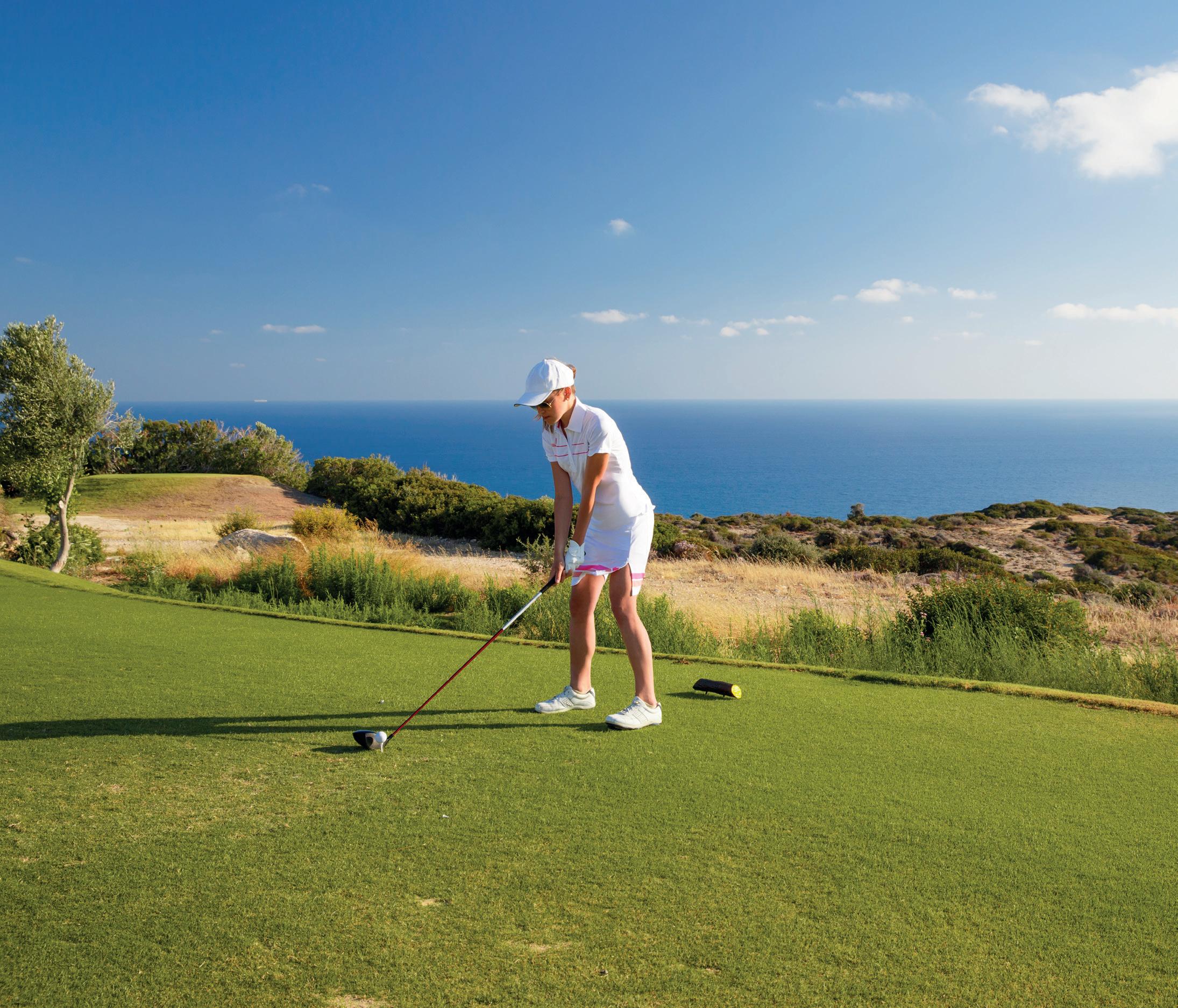
Sports focused travel has quietly reinvented itself. What used to be the domain of golf weekends and earnest tennis camps has evolved into something far more enticing: sports tripping — immersive, professionally led escapes that blend elite coaching with resort level comfort. For business travellers, it’s becoming the new way to reset: purposeful, energising, and far more memorable than a standard spa break.
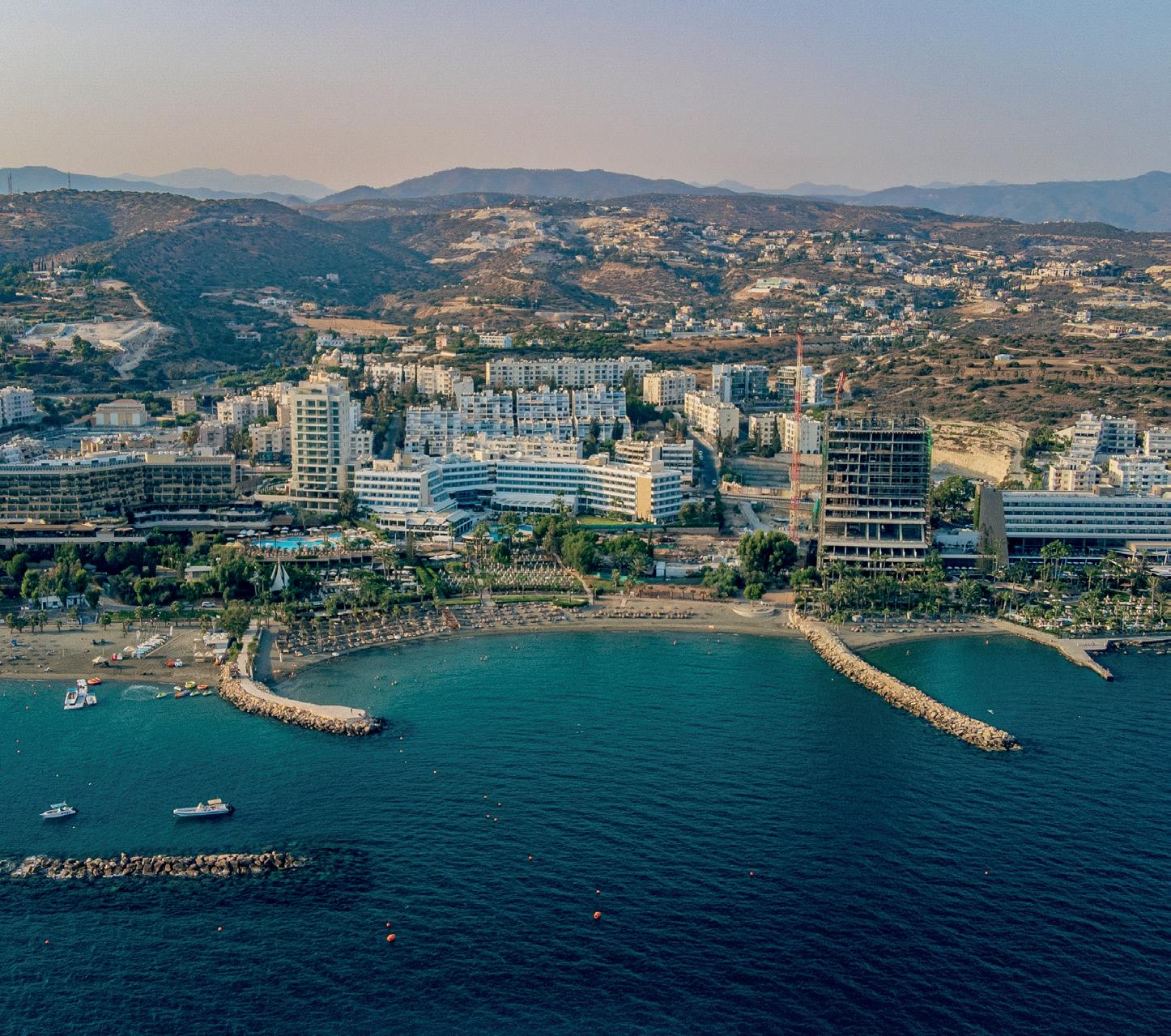
I went to Cyprus to see what the fuss was about, visiting two destinations at the forefront of this shift: Limassol Greens and City of Dreams Mediterranean. As someone whose golfing experience begins and ends with the occasional round of crazy golf, I wasn’t expecting to be converted. But that’s the thing about sports tripping — it’s designed not just for the already sporty, but for the curious, the hesitant, and the “I’ll just watch from the sidelines” types. People like me.
DISCOVERING LIMASSOL GREENS
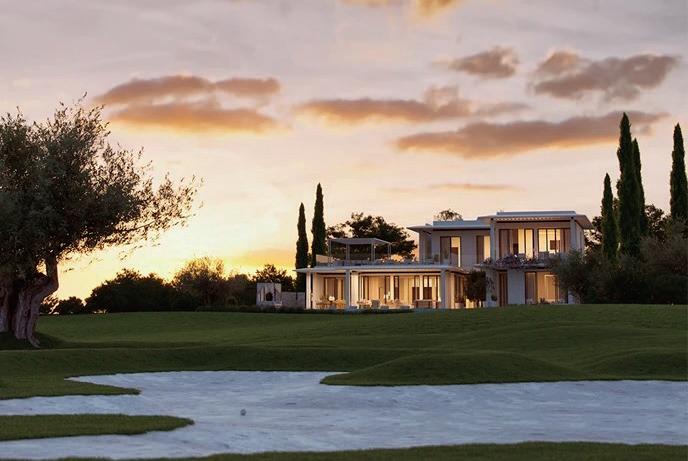
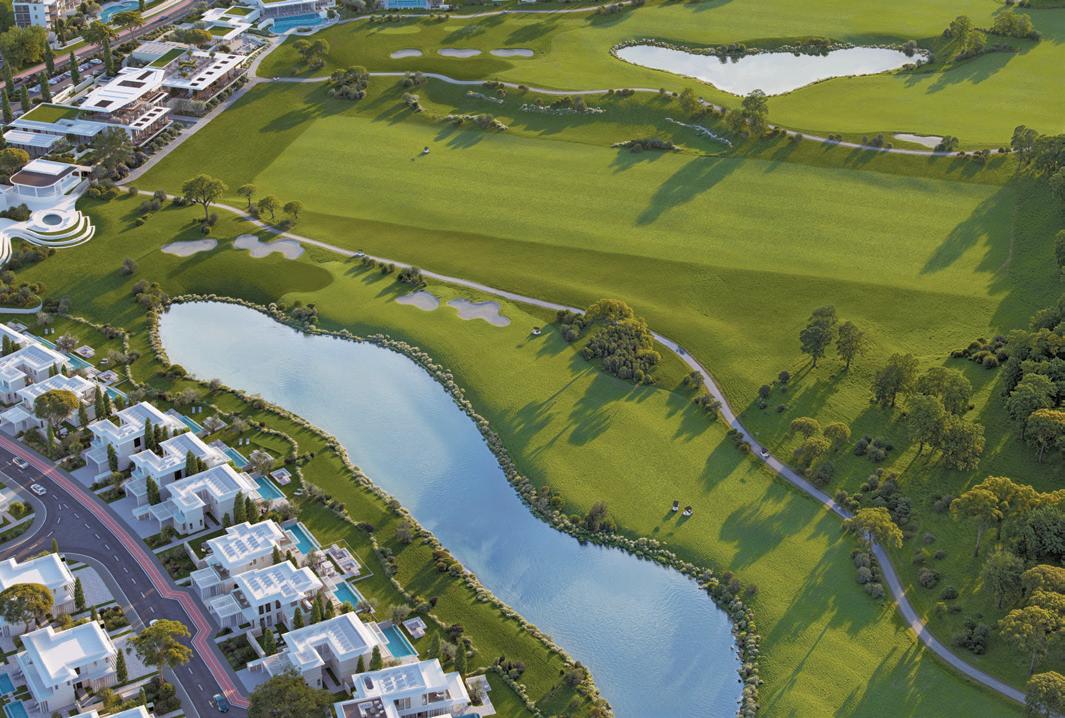
Limassol Greens has become one of Europe’s most talked about new world class golf destinations, and it’s easy to see why. The resort crafted by Cabell B. Robinson is still in its early phases, yet it already feels ambitious — a master planned community rising from what were once an orange grove. The land has been reshaped into a par 71 championship course with sculpted fairways, strategically placed bunkers, water features and young vegetation that will look spectacular once it matures. A dedicated road will eventually link the resort directly to City of Dreams Mediterranean, creating a seamless flow between championship golf and luxury hotel living.
We toured the course and its facilities, and even as a non golfer I could appreciate the scale and detail. Experienced golfers in our group were quick to point out the quality of the greens fast, smooth and impressively refined for such a new course. Each round includes a GPS equipped buggy, halfway hut for refreshments and rest stations are dotted thoughtfully around the layout, making it feel both premium and practical in the Mediterranean heat.
But the real revelation came when I stepped onto the driving range.
MY FIRST GOLF LESSON AND A SMALL TRIUMPH
Arriving at the TrackMan-powered 320m driving range which includes a chipping
and pitching area, my hour-long lesson was with Mike, the resident pro, who greeted me with the kind of calm confidence that suggested he’d seen every possible swing disaster and lived to tell the tale. He promised - with a straight face - that I’d be hitting the ball by the end of the session. I wasn’t convinced.
Within minutes, he had me working through the basics: stance, grip, swing path. Instant video analysis popped up on the screen beside us, showing exactly what my body was doing versus what it should be doing and he was there to tweak and encourage. It was strangely addictive and I never thought I would hear myself say that with any sport.
Then it happened. Contact. Clean, satisfying contact. By the end of the hour, I was sending balls down the range with a personal best of 81 yards at 66 mph and I have proof! For someone who has only ever wielded a putter shaped like a cartoon character, it felt like a genuine achievement.
With high fives all round my lesson was fun. It was energising and it made golf - a sport I’d never imagined myself playing, feel suddenly accessible even at my age!
A DESTINATION IN THE MAKING
Limassol Greens is still a work in progress, but the vision is unmistakable: high level sport with luxury living which are set to expand in phases. The resort style amenities (wellness, sports and dining) will all be woven into one destination. Once the landscaping fills out and the full master plan unfolds, it will be one of the most compelling luxury new golf communities in the region.
But what struck me most was this: sports tripping isn’t just for the pros. It’s also for the people like me who have never picked up a club or racket, who want to try something new without feeling out of place. With the right tuition, you’re not left on the sidelines you become part of the experience.
If Limassol Greens was my gentle initiation into golf, then City of Dreams Mediterranean was the full throttle plunge into the other side of sports tripping, the high energy, high gloss world of tennis, padel and resort living.
CITY OF DREAMS MEDITERRANEAN: WHERE LUXURY, SPORT AND A HINT OF CHAOS MEET IN CYPRUS
If Limassol Greens was my gentle initiation into golf, then City of Dreams Mediterranean was the full throttle plunge into the other side of sports tripping, the high energy, high gloss world of tennis, padel and resort living. It’s the kind of place that doesn’t simply host your holiday; it engulfs it, wraps you in marble, neon and Mediterranean light, and then hands you a racket before you’ve even unpacked.
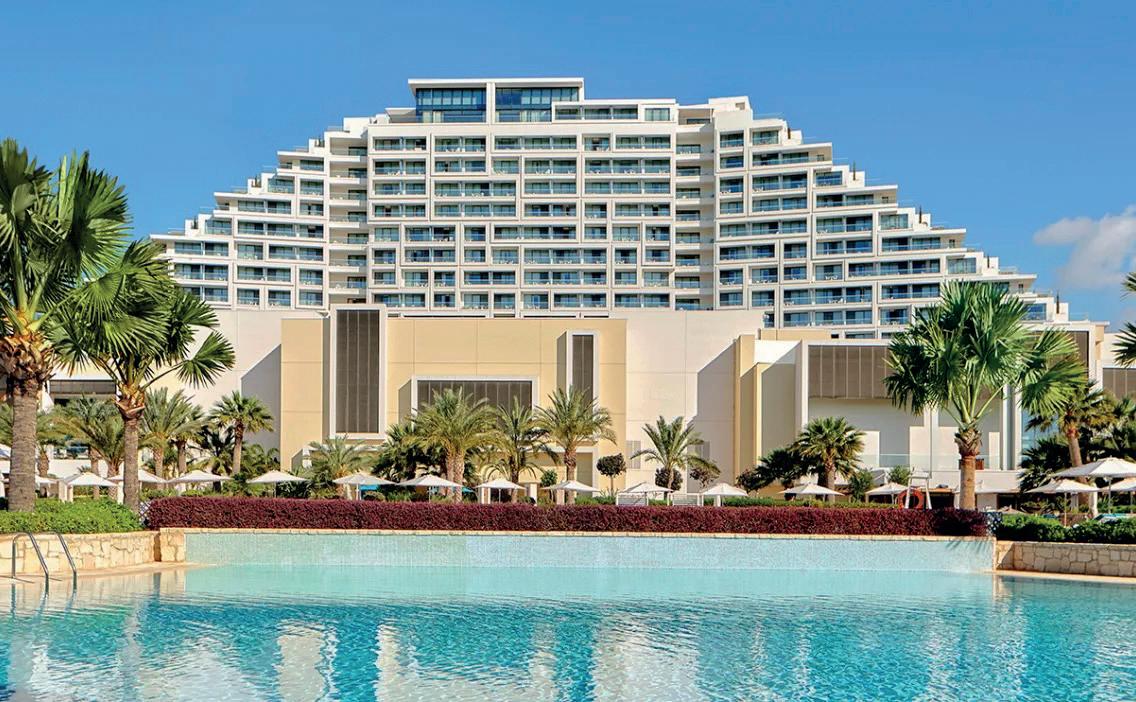
Owned by Melco Resorts & Entertainment, the hotel proudly holds the title of Europe’s first integrated casino resort and it wears that distinction with confidence. The building rises above the coastline in sweeping glass curves and sculpted stone, its interiors polished and purposefully dramatic, anchored by a designer lined promenade that wouldn’t look out of place in Middle East. It’s big, bold and unapologetically theatrical, yet once inside it has a surprising warmth.
CHECKING IN: A SEA VIEW SANCTUARY ABOVE THE BUZZ
My sea view room offered instant calm after the sensory buzz of the casino floor. Flooded with natural light from floor to ceiling windows, it felt serene and contemporary, dressed in soft blues and beige with rattan accents and a cloud soft bed. The bathroom was a showpiece: a glass wall separating it from the bedroom (mercifully concealed by an electric blind), a freestanding tub, separate rainfall shower and toilet, a towel ladder, fleece lined robes and wonderfully plush towels. Bath salts and Nutra Bliss toiletries added a thoughtful touch.
Other amenities included sustainable bottled water, Nespresso machine and well stocked minibar. A corner chaise and small table doubled as a workspace, giving the room a quietly luxurious, lived in feel which carried on outside with table and chairs on the balcony overlooking the sea and salt lake. There was, however, one quirk impossible to ignore: the hairdryer. Fixed inside a bathroom drawer with a flexi cord so short it was practically ornamental; it turned drying my hair into a full body workout. With no plug near a mirror for my own straighteners, it became my only real grumble in an otherwise polished stay.
THE RESORT: A WORLD BUILT AROUND THE CASINO
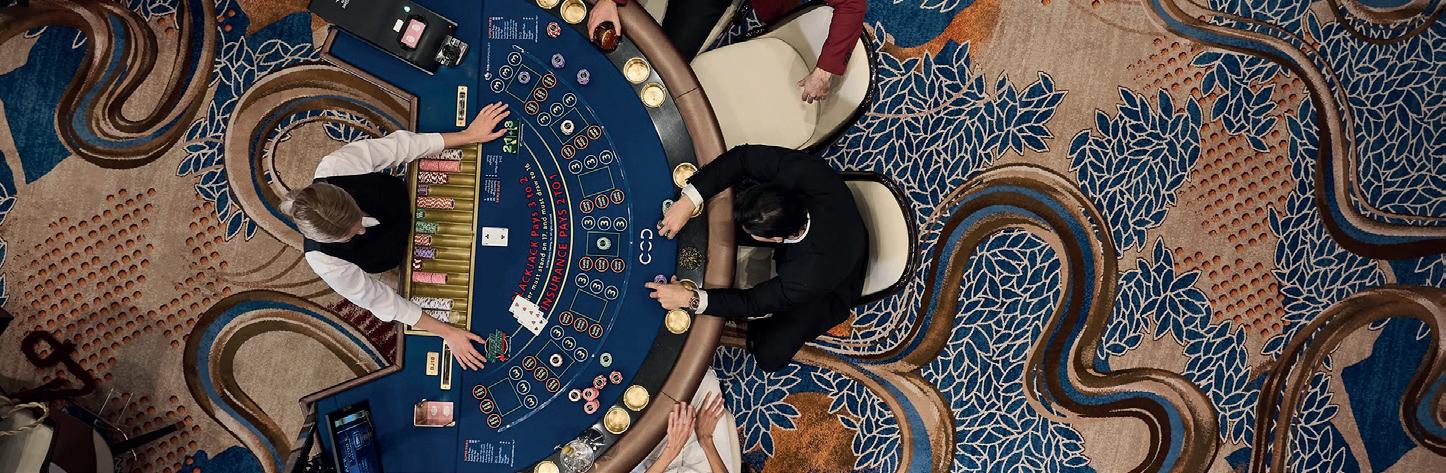
At the heart of City of Dreams is its casino. A buzzing, smoky, high octane core where gaming tables, slot machines and live entertainment merge into one hypnotic blur. Smoking is permitted both inside the casino and on
room balconies, something to bear in mind if you prefer a smoke free environment. There’s also a Platinum Lounge for high rollers, tucked away from the main floor.
Beyond the casino, the resort unfolds into a constellation of bars, lounges and restaurants, each opening on different days of the week, giving the hotel a shifting rhythm depending on when you visit. Every restaurant carries a sustainability commitment on its menu, and each has its own wine and cocktail identity.
Anais, the French restaurant, offers a modern twist on classic dishes, with an elegant terrace and live music.
Prime Steakhouse serves exceptional charcoal cooked cuts from around the world, complete with tableside carving, a cigar lounge and an impressive collection of rare whiskies.
Amber Dragon, inspired by the group’s Michelin starred heritage in Macau, is home to the only authentic Chinese wood fired oven in Cyprus — chefs visible behind glass, Beijing ducks hanging in perfect formation.
There’s also Aura, the buffet restaurant, along with The Lounge, Centre Stage and Aqua Bar, each with its own personality.
THE SPA: A WORLD BUILT AROUND THE CASINO
The spa deserves its own applause. My massage was exceptional, but it was the thermal and relaxation areas that truly impressed serene, spacious and beautifully run. Even the walk down to the lower level spa felt like a ritual, guided by candle lit lanterns and a soft, seductive scent that lingered in the air. Outdoor pools and surrounding areas
were undergoing refurbishment during my stay, but the scale of the work suggests they’ll be spectacular once complete.
THE TENNIS & PADEL ACADEMY: WHERE SPORTS TRIPPING COMES ALIVE
What truly elevates City of Dreams for sports trippers is its tennis and padel academy led by Marcos Baghdatis, Cyprus’s own tennis legend. The facilities are immaculate — crisp courts, modern equipment, and a coaching team that treats every session as an opportunity to refine, encourage and elevate.
Padel is the sport of the moment: fast, social and instantly addictive. It’s ideal for travellers who want something energetic without the intimidation factor of traditional tennis. The academy leans into that accessibility, offering sessions that are fun, technique driven and surprisingly confidence boosting.
Tennis coaching is equally strong, with programmes shaped around footwork, serve mechanics, match strategy and the kind of micro adjustments that make you feel genuinely seen as a player. It’s the sort of training that makes you want to keep going even if you arrived thinking you’d just “give it a try.”
MEETINGS, EVENTS AND FAMILY LIFE: THE RESORT’S OTHER PERSONALITIES
City of Dreams also reveals its scale through an impressive suite of MICE facilities. A dedicated entrance leads directly into the meetings and events wing, creating a discreet flow for conferences, incentives and large scale gatherings. Inside, flexible meeting rooms
sit alongside a grand ballroom capable of hosting gala dinners, corporate celebrations or weddings, while expansive exhibition space accommodates product launches and trade shows. The resort even hosts concerts every weekend, adding a cultural pulse that business travellers can tap into.
Families are equally well catered for. The kids’ club and children’s facilities are bright, engaging and thoughtfully run, giving younger guests their own world to explore while adults enjoy the spa, casino or sports academy. It’s a rare balance — a resort that feels indulgent without excluding families.
A RESORT MADE FOR THE NEW ERA OF TRAVEL
City of Dreams Mediterranean is built for travellers who want more than a sun lounger. It’s for those who want to move, learn, improve and then unwind in a spa, sip a cocktail, or wander through a casino.
IT’S LUXURY WITH MOMENTUM. A resort where sport isn’t an afterthought but a central part of the experience. And for someone like me a non golfer who found joy in a driving range breakthrough and then discovered the thrill of padel it proved exactly what sports tripping is all about.
YOU DON’T NEED TO BE SPORTY. YOU DON’T NEED TO BE SKILLED. YOU JUST NEED TO BE WILLING TO TRY.
And in Cyprus, that willingness is rewarded with sunshine, expert coaching and a surprising amount of fun.
Travelling for Business Awards 2026 officially launched with Kate Silverton confirmed as host
The Travelling for Business Awards will return to London on 22 October 2026, bringing together senior leaders from across aviation, hospitality, mobility, destinations and travel technology for what is fast becoming one of the most credible fixtures in the business travel calendar.
Now officially launched for 2026, the awards will culminate in a black-tie gala dinner at the City’s immersive new venue, 88 Wood Street. Designed to celebrate excellence across the global business travel ecosystem, the event will once again recognise the
organisations and leaders shaping the future of corporate travel at a time of profound transformation for the sector.
This year’s ceremony will be hosted by award-winning broadcaster and journalist Kate Silverton, whose background
spanning BBC News, current affairs and high-profile live events brings authority and warmth to the evening.
Silverton said she was “delighted” to be hosting an awards programme that celebrates leadership, innovation and service in a sector that connects businesses and economies around the world.
“I’ve spent much of my career reporting on the forces that shape our world, from politics to global events, and travel sits at the heart of that story,” she said. “Recognising the organisations that make business travel work safely, efficiently and sustainably feels particularly timely.”
Recognising excellence in a changing industry
The 2026 awards arrive at a pivotal moment for business travel.
Corporate travel has rebounded strongly since the pandemic, but the sector is evolving rapidly. Sustainability commitments are reshaping airline fleets and ground transport strategies. Hotels are investing heavily in hybrid meeting spaces and wellness-led design. Loyalty programmes are becoming increasingly data-driven. MICE destinations are competing on infrastructure, connectivity and ESG credentials.
Against that backdrop, the Travelling for Business Awards aim to highlight organisations that are not merely recovering, but redefining standards.
Categories for 2026 span the full business travel journey, from Best Long Haul Airline and Best Business Class Experience to Best UK Hotel, Best MICE Destination Europe and Best Travel App. Awards will also recognise excellence in airport lounges, ground transportation, loyalty programmes and frequent-flyer schemes, reflecting the increasingly integrated nature of corporate travel.
A highlight of the evening will be the Lifetime Achievement Award, honouring an individual whose leadership has had a lasting impact on the global business travel sector.
Editorially led and independently positioned
Unlike many industry awards, the Travelling for Business Awards are editorially led, with categories shaped by the publication’s ongoing coverage of the market and informed by reader insight and sector expertise.
That editorial independence is central to the awards’ positioning.
As a media brand dedicated to the needs of corporate travellers, travel buyers and industry leaders, Travelling for Business has consistently reported on the trends shaping aviation, hospitality and global mobility. From airline sustainability strategies and SAF investment to the growth of hybrid meetings and the transformation of loyalty schemes, the publication’s coverage reflects the real priorities of its audience.
A
premium industry gathering
Unlike previous years, which saw last year’s come from Las Vegas, the 2026 ceremony will be held as a black-tie gala dinner, designed to encourage meaningful conversation as much as celebration.
The guest list will include airline executives, hotel owners and brand directors, corporate travel buyers, MICE decisionmakers, mobility providers and technology innovators. The emphasis is on senior representation and sector relevance.
In an industry where long-term relationships and procurement cycles often extend over several years, the value of curated, high-level networking remains significant. The awards evening provides an opportunity for leaders to meet peers across adjacent sectors, airlines with hotels, destinations with travel buyers, mobility providers with corporate decision-makers, in a setting that is both celebratory and commercially relevant.
Sustainability and responsibility
Sustainability will once again feature prominently in the conversation surrounding the awards.
The business travel sector continues to face scrutiny over its environmental impact, with airlines investing in sustainable aviation fuel and fleet renewal, hotels pursuing netzero commitments and ground transport providers accelerating electrification.
While the awards are not solely sustainability-focused, they will reflect the growing importance of responsible travel practices. Judges will consider how
nominees balance service excellence with environmental responsibility, recognising that future leadership in business travel will depend on credible ESG performance.
Celebrating the people behind the brands
At its heart, the Travelling for Business Awards remain about people.
Behind every airline route expansion, hotel refurbishment, loyalty innovation or digital travel tool is a team of individuals driving change. The Lifetime Achievement Award, in particular, aims to shine a light on those whose careers have shaped the sector over decades, leaders whose vision and resilience have guided organisations through economic cycles, geopolitical shifts and technological disruption.
Entries and nominations for the 2026 awards are now open, with further details available via the Travelling for Business website. Over the coming months, the publication will feature shortlisted organisations, sector analysis and interviews with industry leaders ahead of the October ceremony.
As business travel continues to evolve in response to economic pressures, sustainability demands and technological innovation, the awards will celebrate those organisations that are not simply navigating change, but setting the pace.
On 22 October 2026, the sector’s leaders will gather in London to do just that, acknowledging excellence, forging new connections and reaffirming the central role that business travel plays in powering global commerce, make sure you are there!
AWARD CATEGORIES
THE LIFETIME ACHIEVEMENT AWARD
THE BEST LONG HAUL AIRLINE AWARD
THE BEST SHORT HAUL AIRLINE AWARD
THE BEST STANDARD CLASS AWARD
THE BEST AIRLINE LOUNGE (EUROPE) AWARD
THE THIRD-PARTY LOUNGE (EUROPE) AWARD
THE BEST AIRLINE LOUNGE (ROW) AWARD
THE THIRD-PARTY LOUNGE (ROW) AWARD
THE BEST AIRPORT IN THE WORLD AWARD
THE BEST BUSINESS CLASS EXPERIENCE AWARD
THE BEST PREMIUM ECONOMY EXPERIENCE AWARD
THE BEST UK HOTEL AWARD
THE BEST LUXURY HOTEL BRAND AWARD
THE BEST UPSCALE HOTEL BRAND AWARD
THE BEST BUDGET HOTEL BRAND AWARD
THE BEST MICE DESTINATION (UK) AWARD
THE BEST MICE DESTINATION (EUROPE) AWARD
THE BEST MICE DESTINATION (ROW) AWARD
THE BEST HOTEL LOYALTY PROGRAMME
THE BEST FREQUENT-FLIER PROGRAMME
THE BEST CAR RENTAL COMPANY AWARD
THE BEST GROUND TRANSPORTATION COMPANY (UK) AWARD
THE BEST GROUND TRANSPORTATION COMPANY (EUROPE) AWARD
THE BEST GROUND TRANSPORTATION COMPANY (ROW) AWARD
THE BEST LUGGAGE BRAND AWARD
THE BEST TRAVEL APP AWARD
THE NEW POWER PLAYER IN GLOBAL MICE
SAUDI ARABIA
That position has shifted, and not quietly. In the space of a few short years, the Kingdom has gone from “interesting, but complicated” to a destination that serious organisers are now expected to understand, because Saudi is building the infrastructure, air links, venue pipeline and government support system of a country preparing to host the world.
For decades, Saudi Arabia sat slightly outside the welltrodden MICE circuit: a market admired from afar, occasionally visited, often misunderstood, and, crucially, rarely bid for with confidence.
By ANNA IVES
It’s not just the scale of investment, although that is unmistakable, it’s the intent. Saudi’s Vision 2030 programme has turned tourism and business events into a strategic instrument: a way to diversify the economy, accelerate skills, attract international partners and, frankly, reintroduce the country to decision-makers who have never set foot in Riyadh or Jeddah.
For corporate travel buyers and event planners, the practical question is no longer “why Saudi?” but “which Saudi?” Because the Kingdom’s MICE proposition isn’t one destination: it’s a portfolio, capital-city congresses, Red Sea incentives, heritage-led leadership offsites, and trade exhibitions aligned to fast-growing sectors such as technology, construction, mining, healthcare and sport.
THE MACRO SHIFT: WHY MICE IS ACCELERATING NOW Saudi’s business events push sits at the intersection of three big forces.
FIRST: international visibility. Riyadh will host Expo 2030, a seven-year runway that typically catalyses convention centre development, hotel openings, transport upgrades and citywide wayfinding—exactly the ingredients that make planners more comfortable about committing to multi-year cycles.
SECOND: connectivity is being engineered, not hoped for. Riyadh Air, backed by the Public Investment Fund (PIF), has already begun the work of positioning the capital as a premium hub, including a high-profile London service that reinforces the UK–Saudi corporate corridor. And beyond that near-term connectivity, the planned King Salman International Airport is designed on a genuinely global scale: six runways, 57 km² footprint, and a stated ambition of up to 100 million passengers by 2030 (with longer-term capacity beyond that).
THIRD: the Kingdom is standardising the “how” of bringing events in. The Saudi Conventions and Exhibitions General Authority (SCEGA) has been formalising an organiser support model, stakeholder coordination, proposal support and matchmaking, so events can be permitted, delivered and scaled more predictably. That combination—headline moments, structural connectivity and an increasingly legible delivery framework—is why Saudi now appears on more international RFPs, and why global organisers are opening offices, signing partnerships and treating the country as a long-term market, not a one-off novelty.
A DATA POINT WORTH NOTICING
Association meeting rankings are never the whole story (corporate events and trade shows often sit outside the same datasets), but they provide a directional signal. ICCA’s 2023 rankings show Saudi Arabia placed third in the Middle East by number of inperson association meetings recorded, with Riyadh appearing in the city ranking table.
Meanwhile, SCEGA-linked reporting points to fast expansion in accredited exhibition capacity and a broadening national venue footprint, useful context for organisers assessing whether a destination can handle concurrent programmes at scale.
RIYADH: WHERE THE BIG CONGRESSES (AND BIG STATEMENTS) LIVE
If Saudi is making a global MICE play, Riyadh is the flagship. The capital has the government ministries, the national headquarters effect (which is accelerating as multinationals expand local presence), and the feel of a city actively rehearsing for Expo 2030.
For planners, Riyadh’s appeal is straightforward: it is built for delegation travel. Modern road infrastructure, a growing premium hotel supply, and venues capable of hosting everything from political economy summits to sector-specific exhibitions.
A visible example of Saudi’s MICE ambition is the International MICE Summit in Riyadh, a platform explicitly designed to attract global event leaders and accelerate partnerships. The symbolism matters: you don’t host an international summit about MICE unless you intend to be taken seriously as a destination, and unless you’re prepared to invite scrutiny on standards, sustainability and operational maturity.
What works well in Riyadh right now:
• Large-scale conferences and exhibitions with complex stakeholder needs
• Government and policy-adjacent gatherings where proximity to decisionmakers is an advantage
• Regional sales kick-offs and leadership forums that need premium hospitality and controlled logistics
Riyadh is also where the Kingdom’s future travel narrative is being assembled: Riyadh Air for routes, and King Salman International Airport for long-term hub positioning. For UK corporates, that matters because it directly affects flight options, fares, group movements and the likelihood of avoiding Middle East hub connections on high-value itineraries.
JEDDAH: THE COASTAL COUNTERPOINT (AND EXHIBITION HEAVYWEIGHT)
If Riyadh is the political and corporate centre, Jeddah is Saudi’s extrovert commercial gateway—a port city with a different rhythm, strong international links, and a coastal geography that naturally suits incentives and attendee experience design.
Jeddah’s venue story has an unmistakable headline: the Jeddah Superdome, promoted as the world’s largest geodesic dome and positioned for exhibitions and large-scale events. For organisers, what matters is less the superlative and more the function: large footprint, show-friendly configuration, and the potential to stage high-attendance programmes without the compromise that can come from retrofitted spaces.
Jeddah also has a deepening luxury meetings proposition, led by major hotels with significant on-site facilities. The RitzCarlton, Jeddah, for example, markets nearly 8,665 sq m of meeting space across 22 event rooms, with capacity reaching around 1,000 for certain formats—useful for singleproperty conferences where planners want to keep delegates under one roof.
Where Jeddah is particularly strong:
• Trade exhibitions and large-format showcases
• Board-level meetings where a resortstyle setting and privacy are priorities
• Incentive programmes that want coastal experiences without leaving the Kingdom
ALULA:
WHEN INCENTIVES NEED MEANING, NOT JUST LUXURY
Then there is AlUla, which is arguably the most distinctive element of Saudi’s MICE offer. For incentive designers bored of “another beach, another ballroom”, AlUla’s proposition is emotional: landscape, heritage, and a sense of place that can’t be replicated in a conventional city hotel.
The icon is Maraya, the mirrored venue in Ashar Valley, positioned explicitly as a multipurpose space for concerts, events and conferences. The venue’s own conference facilities cite hosting high-profile gatherings, a useful indicator for planners considering whether the destination can deliver on discretion, production values and security.
AlUla lends itself to:
• C-suite retreats and strategic offsites
• Client incentives built around culture and once-in-a-lifetime settings
• Brand experiences where storytelling and exclusivity justify the travel time
It also changes the tone of an event. A leadership meeting in AlUla doesn’t feel like a meeting you could have held anywhere. That matters when employee engagement, retention and client intimacy are part of the ROI.
THE
RED
SEA
AND GIGA-PROJECT
DESTINATIONS:
INCENTIVES WITH A FUTURE-FACING NARRATIVE
Saudi’s west coast developments— marketed through Red Sea Global’s destinations including The Red Sea and AMAALA—are shaping a particular kind of incentive: high-end, design-led, and increasingly tied to sustainability messaging. Red Sea Global explicitly positions itself around responsible and
regenerative development, which will appeal to organisations under pressure to justify long-haul travel with credible sustainability frameworks.
For now, planners should treat this part of the proposition as fast-evolving: some assets are live, others are ramping up, and the most successful programmes will be those built with on-the-ground DMC intelligence and realistic assumptions about what is operational at the time of travel.
Saudi Arabia’s rise as a MICE destination isn’t a marketing line, it’s a structural shift. Expo 2030 is a global deadline, connectivity
is being built with intent, and the national events ecosystem is becoming more navigable for international organisers.
For UK-based corporates and agencies, the opportunity now is to get ahead of the curve: understand which Saudi city fits which brief, build trusted local partnerships, and develop the cultural competence to deliver programmes that feel confident rather than cautious.
Because by the time Expo 2030 arrives, Saudi won’t be the “new” destination. It will be the expected one, and the planners who learned it early will be the ones winning the best briefs.
THE REAL QUESTION: IS SAUDI RIGHT FOR YOUR EVENT?
Saudi is not a universal answer. It is, however, becoming a very compelling answer for specific briefs.
• A destination that feels “new” to delegates who have done the usual circuit
• Meaningful incentives where culture and landscape create lasting memory
Think twice if your programme depends on:
• Ultra-casual nightlife culture as a central pillar of the experience Minimal pre-planning or “we’ll figure it out on arrival” attitudes
A destination that requires no cultural adaptation whatsoever
HOW TO PLAN SAUDI WELL: A QUICK CHECKLIST FOR UK BUYERS
• Start venue sourcing early: peak weeks are increasingly busy, and high-demand properties can move quickly.
• Build a compliance timeline: passports, visa category, invitation letters (if relevant), delegate data handling, insurance.
• Use a local DMC with proven delivery: not just transport—protocol, production, translation, security and contingency planning.
• Design the experience around place: Saudi’s edge is its difference; copy-pasting a European programme wastes the point of being there.
• Plan comms carefully: give delegates confidence on dress guidance, cultural norms and practical logistics.
HOW BUSINESS TRAVELLERS CAN EARN ADDITIONAL
PERKS ON THEIR TRIPS
BY ANDREW LAUGHLAN, HEAD OF ENTERPRISE, UBER
Business travel can be extremely demanding and, at times, exhausting. Jumping straight off a plane, then dashing between offices and your accommodation, before heading out to engage and entertain clients, can quickly take its toll.
But, there are ways to relieve the strain and stress. For example, being able to reserve a more comfortable vehicle with extra legroom between locations can significantly reduce fatigue. And, knowing you can order food to your hotel or apartment after arriving late at night in an unfamiliar city means one less thing to worry about.
Uber for Business is enabling this experience by providing business travellers with reliable access to transportation and meals through Uber and Uber Eats worldwide. By automating expense capture and reporting, we’re helping to remove the post-trip administrative burden and allow travellers to focus on what matters most.
However, making work trips smoother and less stressful is only one part of the equation. We know that employees increasingly value - and often expect - added benefits when travelling for business. This is where perks and loyalty schemes play a crucial role.
LOYALTY SCHEMES
In addition to streamlining travel and expense management, we’re working
to help travellers also gain access to meaningful rewards and a broader range of perks. One way we’re doing this is by syncing with several business travel loyalty programmes. With most business travellers enrolled in airline loyalty schemes (82% according to OAG research), the ability to connect corporate Uber for Business accounts means travellers can earn points and build rewards every time they travel for work.
Whether collecting Avios with British Airways, Delta SkyMiles, Qantas Points or participating in the KLM Flying Blue programme, credits can be earned when reserving, riding or ordering food with Uber. Hotel loyalty programmes are equally significant with approximately 675 million people enrolled globally. To reflect this, it’s now also possible for travellers to collect Marriott Bonvoy points through eligible travel activity.
Beyond hotels and flights, we are continuing to expand into other widely used reward ecosystems around the world. This includes programmes offered by major payment service providers, such as Rakuten in Japan and Livelo in Brazil.
FOR BUSINESS UK
RECEIVE BENEFITS THE EASY WAY
Alongside external loyalty partnerships, Uber’s own membership programme also plays a role. Uber for Business users can currently access Uber One free of charge for one year. The membership allows users to earn credit from rides, train journeys and flights, which can then be used on personal trips. It also includes benefits such as free delivery on grocery orders, discounts on Uber Eats, and access to limited-time promotions. In select regions, an active Uber One membership may also unlock eligibility for Marriott Elite status.
These types of benefits and perks matter and make a big difference to people.
Research shows that nearly half of employees (48%) consider expanded perks, such as meal vouchers and discounts, an important factor when evaluating employers. Yet, many workplace benefit platforms and programmes still struggle to achieve meaningful engagement.
By connecting loyalty programmes directly to the services business travellers already use, access becomes seamless. Employees benefit and often prefer familiar tools rather than needing to adopt new systems. This way, business travel becomes simpler, more rewarding, and enjoyable.
Win the ultimate trip
Race to Necker with Sky High Club
There are one-of-a-kind trips. And then there’s shout it-from-the-mountaintops, pinch-me-I’m-dreaming incredible. And if you’re a member of our Sky High Club, that experience could be closer than you think.
Log the most bookings between now and 31st July, and you could be packing your bags for a five-night stay at Richard Branson’s private island, Necker, courtesy of Virgin Limited Edition.
Start your engines, the race is on! Visit virginatlanticskyhighclub.com
You’ll be treated to Upper Class flights, two nights at the sensational Sandals resort in Antigua and then get whisked away by private jet thanks to Tradewind to the sparkling waters and white sands of Richard’s home in the British Virgin Islands.
A
CULTURAL
LAYOVER DESTINATION WITH
OF VEGAS ENERGY MACAU HOW TO SPEND 48 HOURS IN
A DASH
Macau is a place where histories overlap in ways few cities can match. Once a Portuguese colony and now a Special Administrative Region of China, it blends European architecture with Chinese heritage, Catholic churches with Taoist temples, and pastel coloured colonial squares with neon lit casino towers.
t’s often called the “Vegas of the East”, but that nickname only captures one side of the story. Look beyond the gaming floors and you’ll find a compact, culturally rich destination that rewards a short, well planned stay which is ideal for a layover between long haul flights or as a detour from Hong Kong.
Most visitors begin in the historic centre, a UNESCO listed district where cobblestone streets, tiled plazas and butter yellow civic buildings feel unmistakably Mediterranean. Senado Square is the heart of it all, framed by arcades and cafés, while the Ruins of St Paul’s, the stone façade of a 17th century church remains Macau’s most iconic landmark. Wander a little further and you’ll reach the quiet lanes of St Lazarus, one of the city’s most atmospheric neighbourhoods, filled with galleries, small boutiques and restored colonial houses.
Food is one of Macau’s greatest pleasures, shaped by centuries of cultural exchange. Macanese cuisine blends Portuguese techniques with Chinese ingredients, producing dishes like African chicken, minchi and egg tarts that are worth seeking out. Taipa Village is the best place to graze, with narrow streets lined with bakeries, noodle shops and family run restaurants. For something more contemporary, the Cotai Strip’s hotels offer everything from Michelin starred tasting menus to sleek cocktail bars.
Shopping ranges from luxury malls inside the major resorts to independent shops in the older districts. Rua do Cunha in Taipa is ideal for picking up local snacks and gifts, while the designer boutiques of the Galaxy and the Venetian cater to travellers looking for international brands.
For a change of pace, head to Macau Tower, where the glass fronted lift whisks you to the observation deck in seconds. The views
stretch across the Pearl River Delta, and the Skywalk - an open air loop around the tower’s rim - offers a thrill without requiring a full bungee jump. It’s one of the city’s most memorable experiences, especially at sunset.
Macau’s beaches are often overlooked, but Hac Sa on Coloane Island is a welcome escape from the city’s intensity. It’s not a tropical postcard, but it’s peaceful, breezy and perfect for a quiet hour before heading back into town. Coloane itself is worth exploring for its temples, hiking trails and pastel coloured village square.
When it comes to hotels, the city offers everything from grand integrated resorts to boutique hideaways. The Cotai Strip is home to the big names ideal if you want restaurants, spas and entertainment under one roof, while the peninsula offers smaller, more characterful stays closer to the historic centre. For business travellers, the convenience of the larger resorts often wins out, especially for short visits.
Macau works beautifully as a brief stopover because it’s compact, easy to navigate and packed with experiences that don’t require long travel times. It’s an ideal pause on the way to destinations like Japan, Southeast Asia or Australia, especially if you’re flying through Hong Kong and taking the high speed ferry or the Hong Kong–Zhuhai–Macau Bridge.
A couple of days is enough to taste the food, explore the heritage districts, enjoy a little nightlife and take in the skyline from the tower. Macau may be known for its casinos, but its real charm lies in the layers of culture that reveal themselves the moment you step away from the gaming tables.
A couple of days is enough to taste the food, explore the heritage districts, enjoy a little nightlife and take in the skyline from the tower ”
FLASH PACKING
THE LUXE-LITE EVOLUTION OF THE BACKPACKER
Flashpacking has become one of the most defining travel shifts of the past decade, blending the freedom of backpacking with the comfort, style and digital ease expected by modern travellers.
At its heart, flashpacking is the natural evolution of a generation who once travelled the world with a rucksack and a shoestring budget — and who are now returning with more money, more experience and a far greater appreciation for comfort.
These travellers still crave the cultural depth, spontaneity and sense of discovery that defined their early adventures, but they’re no longer willing to sacrifice sleep, safety or style to get it. Instead of dorm rooms, they’re choosing boutique hostels, design led guesthouses and affordable luxury hotels. Instead of 12 hour bus journeys, they’re booking short haul flights or private transfers to maximise precious time and instead of rigid itineraries, using apps, digital tools and flexible working patterns to plan on the move.
Part of flashpacking’s appeal is that it fits neatly into shorter travel windows. A long weekend in Porto, a five day loop through Vietnam or a week exploring Mexico’s cenotes and food markets can all be done with a flashpacker mindset: light, flexible, experience driven and comfortable. It’s especially popular with travellers in their late twenties to forties who want immersion without the rough edges.
Destinations with strong infrastructure, good value and rich culture are thriving. Chiang Mai, Medellín, Tbilisi and Porto have become flashpacker favourites thanks to their café culture, creative neighbourhoods and easy access to nature. Even classic backpacker hubs like Bali, Siem Reap and Oaxaca are seeing a shift toward boutique hostels, co working cafés and curated day trips designed for travellers who want authenticity without the hassle.
Food is a major draw. Flashpackers are as happy eating street food as they are booking a table at a rising star restaurant. Shopping follows the same pattern: local markets for crafts and snacks, paired with neighbourhood boutiques for design pieces and clothing. Experiences are chosen for meaning rather than price - cooking classes, guided hikes, photography tours, wellness sessions and small group cultural activities.
The rise of flashpacking is also tied to the way people now travel for work. Hybrid schedules and the growth of “bleisure” mean travellers are extending business trips by a day or two to explore nearby neighbourhoods, try local food or hop to a second destination. Flashpacking fits perfectly into these short, high impact windows.
Ultimately, flashpacking is becoming popular because it offers the best of both worlds: the authenticity of backpacking and the comfort of modern travel. It’s adventurous without being exhausting, spontaneous without being chaotic, a style that reflects how travellers want to explore now.
A WORLD OF CHOICES . YOUR SKYWAY TO
Discover our 2025 summer schedule, now open for booking, with some of the best premium cabins in the sky and an experience that makes out of office out of this world.
FBATH
or more than 2,000 years, travellers have come to Bath in search of healing. Long before wellness became a global movement, the Celts and later the Romans recognised the power of the city’s natural hot springs - Britain’s only thermal waters they built an entire culture around them.
Temples, bathing rituals and communal spaces grew around the steaming pools, creating a legacy of restoration that still shapes the city today.
That heritage is celebrated each year during ReBalance Bath, a citywide programme that reframes wellness as something joyful, accessible, and deeply rooted in place. Across Georgian townhouses, gardens, and historic venues, visitors can join movement classes, talks, guided walks, and sensory experiences that echo Bath’s long tradition of nurturing both body and mind.
At the centre of it all is Thermae Bath Spa, the modern expression of the city’s ancient bathing culture. It remains the only place in the UK where you can soak in naturally warm, mineral rich waters that rise from deep beneath the Mendip Hills. The Romans believed these waters were a divine gift; today, visitors come for their soothing warmth, their mineral content, and the sheer pleasure of floating in a piece of living history.
The experience unfolds gently: thermal pools, aromatic steam rooms, and quiet corners designed for unhurried
relaxation. But the moment that stays with you happens above the city. The rooftop pool, offers a view that feels almost cinematic. Steam curls into the cool air as Bath Abbey’s spires rise in the distance. Swimming here is both grounding and elevating, a reminder that wellness doesn’t need to be complicated. Sometimes it’s simply warm water, open sky, and a rare moment of stillness.
Bath’s appeal, though, extends far beyond its waters. The city has embraced a broader, more holistic approach to wellbeing, and one of the most memorable experiences was a sound bath, a meditative immersion in vibration and tone. Held in atmospheric venues such as converted chapels or candlelit studios, these sessions use singing bowls, gongs or harmonic frequencies to quiet the mind and release tension. Lying back as waves of sound ripple through the room feels deeply restorative, a modern complement to the ancient rituals of the springs. It’s the kind of experience that lingers long after you’ve stepped back into the daylight.
This layering of old and new is what makes Bath so compelling. The city’s honey coloured architecture has a calming effect of its own, and its compact size encourages slow exploration. The Royal Crescent and The Circus, masterpieces of Georgian design, offer sweeping views and settings that have inspired generations of writers and filmmakers. Bath’s literary heritage runs deep from Jane Eyre to Mary Shelley writing Frankenstein here, and more recently the instantly recognisable backdrops for Bridgerton, drawing a new wave of visitors eager to step into its Regency world.
The Roman Baths, one of the best preserved ancient sites in Europe, provide a vivid window into the city’s original wellness culture - complete with sacred pools, altars, and stories of pilgrims seeking cures. Bath’s magic lies in its ability to blend the ancient with the contemporary. A day in Bath offers a reset that stays with you whether soaking in thermal waters, drifting through a sound bath or just wandering the Georgian streets.
BRITAIN’S ORIGINAL WELLNESS CAPITAL FINDS NEW WAYS TO RESTORE THE SOUL
Opened after an extensive restoration, the property is owned by IHG and designed to reflect Bath’s layered history from its literary heritage to its Georgian eccentricities. The result is a boutique hotel that feels stylish, comfortable and just a little mischievous, ideal for business travellers who prefer character over corporate blandness.
The exterior is classic Bath: honey coloured stone, elegant proportions and a sense of quiet grandeur. Step inside and the mood shifts to playful sophistication. The décor is delightfully quirky, with framed butterflies, vintage keys, oversized animal portraits and gallery style picture clusters that give the hotel a curated, slightly eccentric charm. Even the toilets lean into the theme, decorated with bold bird patterned wallpaper that guests inevitably comment on. It’s a hotel that doesn’t take itself too seriously and that’s part of its appeal.
There are 154 rooms and suites, each designed around one of several themes,
HOTEL INDIGO BOUTIQUE CHARM WITH A BUSINESS FRIENDLY EDGE
SBATH
et in a row of handsome Georgian townhouses just a few minutes’ walk from Bath Spa station, Hotel Indigo Bath blends heritage architecture with a distinctly modern, whimsical personality.
from “Romance & Mischief” to “Literary Hideaway.” Room 520, where I stayed, was comfortable and well appointed, though worth noting it sits close to the lift meaning you’ll hear guests arriving and departing. The room itself features plush bedding, warm lighting, a smart TV, a Nespresso machine and thoughtful touches that make working from your room easy. Bathrooms are very sleek and modern, with large walk in rainfall shower and free-standing tub, good lighting and full size toiletries by Biology Smart Skincare - a premium, eco conscious brand with clean, elegant scents.
In addition The Private House has two private meeting and event spaces – The Parlour and The Historic Kitchen. The two rooms can be used as meeting spaces for corporate guests or lounge and dining areas for leisure guests. There are eight ensuite rooms in the Private House ideal for a private family or corporate retreat. There is also a dedicated private courtyard, exclusively yours for the entirety of your stay.
The hotel’s public spaces are equally inviting. On the second floor, a bookcase filled with old, characterful volumes that guests are encouraged to browse. Downstairs a cosy lounge area offers board games. Brasserie Beau and The Elder restaurants serve modern British dishes with a focus on local produce ideal for a relaxed client dinner or a solo meal that feels like a treat and of course a Bridgerton-inspired Afternoon Tea. There’s also a bar for cocktails, wine or a quick nightcap and a gym.
While Hotel Indigo Bath doesn’t have a spa, its location more than compensates. You’re steps from Bath Abbey, the Roman Baths, the Thermae Bath Spa and the city’s independent shops and cafés perfect for squeezing in a little culture or relaxation between work commitments. Hotel Indigo Bath offers comfort, personality and convenience in equal measure. It’s a hotel that makes work trips feel a touch more enjoyable.
THE LAKE DISTRICT’S MOST STYLISH SECRET
RANDY PIKE
Tucked just outside Ambleside on the quieter, more contemplative side of Windermere, Randy Pike is one of the Lake District’s most characterful boutique hideaways - a place where Victorian grandeur meets playful, design led eccentricity.
Once a private hunting lodge on the Wray castle Estate, the property was transformed by owners Andy and Chrissy Hill, the duo behind the acclaimed Drunken Duck Inn. Their vision, a luxurious adults only retreat that feels more like staying in the home of a wildly creative friend than a traditional country hotel.
The house itself sits in woodland at the foot of Loughrigg Fell, with glimpses of the fells through the trees and a sense of seclusion that’s rare this close to Ambleside. Inside, the décor is bold almost theatrical. Deep jewel tones, oversized mirrors, ornate chandeliers, velvet upholstery, and a curated mix of antiques and contemporary pieces. Colours run rich emerald greens, ruby reds, midnight blues all balanced
by soft lighting and generous space. It’s maximalism done with confidence and humour.
Randy Pike has just three suites, each enormous and individually named and designed. There is also Juniper House slightly away from the main house but equally indulgent and all have their own quirks.
Think super king beds, statement headboards, hand painted wallpapers, and lounge areas that feel like private salons. Bathrooms are equally indulgent: freestanding tubs, walk in rainfall showers, underfloor heating and their own luxurious range of toiletries. Suites come with coffee machines, well stocked mini fridges, plush robes, and thoughtful touches that make working from your room
feel surprisingly enjoyable - plenty of space, natural light, and quiet.
There’s no restaurant on site, but guests have priority bookings at the Drunken Duck Inn, a short drive away, where the Hills’ culinary reputation shines. Breakfast is served in room a generous, beautifully presented spread of pastries, fruit, yoghurt, and cooked options allowing for slow mornings or early laptop sessions without leaving your suite.
Facilities are intentionally minimal; this is a place designed for privacy and retreat rather than resort style bustle. There are woodland walks from the door, scenic running routes, and easy access to Ambleside’s cafés, Windermere cruises, and the wider Lakeland fells. For business travellers, the appeal lies in the combination of tranquillity and indulgence a restorative base after meetings in nearby Manchester or Cumbria, or just a stylish bolt on to a work trip.
Randy Pike offers a rare blend of personality, privacy and luxury a place where you can think clearly, sleep deeply and just enjoy the beauty of the Lake District.
Rising beside Queen Elizabeth Olympic Park, The Stratford is one of East London’s most striking contemporary hotels—a place where architecture, design, and hospitality come together with quiet confidence.
Part of the Manhattan Loft Gardens development, the hotel occupies the lower levels of the dramatic double cantilevered tower, a building that has become a landmark in its own right. Its location places guests at the crossroads of culture, sport, and innovation, with the Olympic legacy woven into its identity. Designed by Space Copenhagen, the interiors balance Scandinavian warmth with urban sophistication. Soft woods, sculptural lighting, and tactile fabrics create a sense of calm the moment you step inside. The hotel’s 145 rooms follow the same design language: minimalist yet inviting, with clean lines, natural textures, and a soothing palette. Floor to ceiling windows are a signature feature, flooding rooms with natural light and framing expansive views across London’s ever changing skyline. Bathrooms are sleek and spacious, stocked with high quality toiletries that elevate the experience without shouting for attention.
Above the hotel floors sit 248 loft apartments, designed for longer stays and those seeking a residential base with hotel level service. These lofts—ranging from studios to expansive multi bedroom layouts—offer generous living spaces, full kitchens, and the same floor to ceiling glazing that makes the tower so distinctive. Food and drink are central to The Stratford’s appeal. Kitchen E20, the all day restaurant, serves seasonal dishes with a modern European sensibility, while the Mezzanine bar offers crafted cocktails in a moodier, late night setting. On the 7th floor, the hotel introduces Kokin, a Japanese restaurant built around a fire led, omakase style menu. It’s intimate, theatrical, and beautifully executed—one of the most exciting dining additions to East London in recent years.
For business travellers, The Stratford’s five meetings and events rooms are a major asset. Each space is bathed in natural light and equipped with modern AV, with layouts that flex between board meetings, workshops, private dining, and
creative sessions. The largest room offers a polished, contemporary setting ideal for presentations or launches, while the smaller spaces feel more like stylish studios than traditional corporate venues.
Wellbeing is woven into the hotel’s lifestyle offering. The 24 hour gym is well equipped, and The Stratford’s partnership with the Olympic Park opens up a world of outdoor fitness—from running tracks and landscaped trails to world class sporting facilities just steps away.
Stratford itself is evolving fast. Once defined by the 2012 Games, it’s now one of London’s most dynamic cultural districts, with the new V&A East, Sadler’s Wells East, and the BBC Music Studios transforming the area into a major creative hub.
Connectivity remains one of The Stratford’s greatest strengths. With Stratford International and Stratford stations on the doorstep, guests enjoy fast links to central London, the City, Canary Wharf, and even Paris via Eurostar connections at St Pancras.
STRATFORD THE
A REFINED COUNTRY RETREAT FOR THE BUSINESS TRAVELLER
PALÉ HALL
WALES
Tucked on the edge of Snowdonia National Park, Palé Hall is one of Wales’s most distinguished country house hotels: a Victorian mansion with aristocratic roots, immaculate service, and the sort of quiet luxury that suits a restorative business break.
Built in 1871 for railway magnate Henry Robertson, the house has hosted everyone from Queen Victoria to Winston Churchill. Today it’s privately owned by Angela Burns and Alan Harper, who restored the estate with a meticulous eye for heritage and comfort. The result is a property that feels both stately and warmly personal, a rare balance in the UK’s country house circuit. From the outside, Palé Hall is all turreted gables, manicured lawns and dramatic mountain views. Step inside and the tone shifts to high Victorian splendour: carved oak panelling, marble fireplaces, glittering chandeliers and a grand staircase that sets the scene for a quietly indulgent stay. The décor leans traditional but never stuffy, with rich fabrics, period antiques and
contemporary touches that keep the spaces feeling fresh rather than museum like.
The hotel has 18 individually designed rooms and suites, each with its own personality. Plush beds, heritage wallpapers and seductive lighting the sort of environment that makes working from your room feel surprisingly pleasant. Many have views across the gardens or the rolling Welsh hills. Bathrooms are a highlight very spacious, marble lined and equipped with deep soaking tubs or powerful walk in showers. Toiletries are by Noble Isle, a British brand known for elegant, fragrance led formulations that feel suitably premium.
For downtime, Palé Hall offers more than its size suggests. The main restaurant, overseen by a talented kitchen team, serves refined,
locally sourced dishes in a formal but relaxed setting ideal for client dinners or a quiet solo meal. There’s also the Huntsman Bar, a cosy, wood panelled space perfect for a nightcap or informal meeting. While the hotel doesn’t have a full spa, it offers in room treatments and plenty of restorative alternatives: riverside walks, landscaped gardens, and easy access to Snowdonia’s trails if you’re craving fresh air between calls.
Beyond the estate, the region offers gentle adventures: steam railway journeys, lakeside strolls, and charming market towns like Bala and Dolgellau. It’s a part of Wales that rewards slow exploration, even if you only have an hour to spare.
For business travellers, Palé Hall delivers something increasingly rare: a sense of calm, privacy and genuine hospitality. It’s a place to decompress after meetings, to think clearly, and to return to work feeling sharper. In short, it’s a luxurious reset wrapped in Welsh warmth and well worth the detour.
BALLYFIN
Some hotels whisper luxury; Ballyfin sings it in full orchestral colour. Set at the foot of the Slieve Bloom Mountains, this 19th century Regency mansion painstakingly restored over nearly a decade is widely considered one of Ireland’s finest country house hotels.
The hotel’s restoration described as “nothing short of heroic” became a nine year labour of dedication led by owners, architects, historians, conservators and master craftsmen. What took longer than the house originally took to build demanded urgent attention from roof to foundations. Stonework was carefully cleaned, stabilised and repaired by hand, restoring the crisp neoclassical lines. Inside, inlaid floors were rebuilt using rare woods to revive their original patterns and sheen, while gilding and stucco work from the 1820s were conserved using traditional techniques to preserve authenticity.
The approach alone feels cinematic: a long, tree lined drive, glimpses of the lake, and finally the house itself a honey coloured façade reflected in still water. Inside, the restoration is astonishing. Silk damask walls, gleaming parquet floors, Irish art, chandeliers, and a library that looks lifted from a period drama. Colours are rich and confident: deep greens, burgundies, golds and creams, all softened by candlelight and roaring fires. It’s grand, yes, but never stuffy more like staying in a beautifully run private estate.
Ballyfin has 20 rooms and suites and a 1 bedroomed Gardeners cottage, each individually designed and named after Irish historical figures. Romantic four poster beds, antique furniture, marble bathrooms and views over the gardens or rolling parkland. The décor leans towards classic but not fussy: heritage fabrics, hand painted wallpapers, curated antiques and a sense of calm that feels almost monastic. Bathrooms are generous, with freestanding tubs, walk in showers and luxurious Irish toiletries from Voya.
Amenities are quietly exceptional. There’s an indoor pool, a spa offering seaweed based treatments, a gym, a wine cellar, and acres of landscaped grounds. Guests can borrow bicycles, row on the lake, try archery or falconry, or simply wander the walled gardens. The service is intuitive
and warm and the kind that anticipates rather than interrupts.
Dining is a highlight. The restaurant showcases Irish produce with finesse: local lamb, garden vegetables, fresh fish, and desserts that feel both nostalgic and modern. Breakfast is a slow, elegant affair; dinner is more formal, often preceded by cocktails in the Gold Room or the bar, where the staff mix a superb Irish whiskey sour.
Step outdoors to enjoy 614 acres of private parkland, a 28 acre lake, ancient woods, follies and grottoes. Beyond the estate, the Slieve Bloom Mountains offer gentle hikes, while nearby heritage towns provide a glimpse of rural Ireland. But most guests come to Ballyfin to stay put.
This sanctuary of Irish elegance, is a reminder that true luxury is about time, space and being exquisitely looked after.
IRELAND’S MOST
SOUL KORČULA HOW TO SPEND 48 HOURS IN
CROATIA’S MINI DUBROVNIK WITH
If dubrovnik dazzles, Korčula charms. Often described as its quieter, more intimate cousin, this Adriatic island blends medieval drama with sun drenched ease, the kind of place where you can wander centuries old lanes in the morning and be swimming off a tiny islet by lunch. With two days to explore, you can experience the island’s history, nature, and coastal glamour without ever feeling rushed.
HERE’S HOW TO MAKE THE MOST OF 48 HOURS ON KORČULA
DAY ONE:
Old Stones, Sea Breezes, and Sunset Cocktails
Begin in Korčula Old Town, a perfectly preserved medieval citadel that juts proudly into the sea. Its narrow limestone lanes spiral like a fishbone, designed centuries ago to protect residents from the fierce Adriatic winds. As you wander past red roofed houses, Venetian flourishes, and tiny artisan shops, the town feels both cinematic and lived in. Don’t miss the climb up the bell tower of St Mark’s Cathedral - the panoramic sweep over terracotta rooftops and cobalt water is worth every step.
From here, stroll along the waterfront promenade, where fishing boats bob beside wine bars and gelaterias. Lunch is best enjoyed al fresco: grilled fish, a glass of Pošip, and the slow rhythm of island life unfolding around you.
In the afternoon, take a water taxi east to Moro Beach Stupe, a stylish beach bar perched on a tiny islet that feels like a secret whispered between locals. The water here is impossibly clear, a shade of turquoise that seems almost unreal and the vibe is laid back luxury. Order a plate of classic Dalmatian snacks, stretch out on a sunbed, and let the hours slip by to the soundtrack of soft music and lapping waves.
Return to Korčula Town for sunset, when the stone walls glow honey gold and the sea turns glassy. Dinner in the Old Town is a must: think seafood risotto, octopus salad, and local white wines that rival anything on the mainland.
DAY TWO: Nature, Prehistory, and a Touch of Legend
Start your second morning inland at Kočje Nature Park, a shaded green labyrinth that feels worlds away from the coast. Moss covered stones, ancient rock formations, and narrow passages create a mystical atmosphere a natural playground that dates back to the Stone Age. It’s a refreshing escape from the heat and a reminder that Korčula’s beauty isn’t confined to its coastline.
From there, head west to Vela Spila, or “The Great Cave,” one of Europe’s most important prehistoric sites. Standing inside its vast chamber, with sunlight pouring through the opening, you get a sense of the thousands of years of human history embedded in its walls. Archaeological finds here have revealed insights into life on the island dating back millennia.
Return to Korčula Town for a final dose of history and a touch of myth at Marco Polo’s alleged birthplace. While historians debate the claim, the small museum dedicated to the explorer is undeniably charming. Exhibits trace his journeys and the island’s maritime heritage, offering a fitting end to a trip defined by discovery.
A FINAL TOAST TO KORČULA
As your 48 hours come to a close, find a waterfront bar, order a glass of Grk or Pošip, and watch the boats drift across the bay. Korčula may be quieter than Dubrovnik, but that’s precisely its magic: a place where history, nature, and island life blend effortlessly, inviting you to slow down, explore, and savour every moment.
a place where history, nature, and island life blend effortlessly, inviting you to slow down, explore, and savour every moment ”
DOMINICA
The Caribbean’s Quiet Powerhouse of Wellness and Wild Beauty
In a Caribbean crowded with big name islands, Dominica remains a quieter, greener, and far less visited than its neighbours Martinique and Guadeloupe.
Where the others lean into beach clubs, shopping districts, and cruise ship gloss, Dominica offers something altogether different: a deep exhale. For business travellers seeking a restorative escape between meetings, or a place to decompress after a demanding quarter, this volcanic island delivers a rare combination of raw nature, ancient healing traditions, and modern comfort.
Dominica’s nickname is the Nature Island. The landscape is a dramatic sweep of emerald mountains, rainforest canopies, black sand beaches, and river valleys threaded with waterfalls. Mist clings to the peaks at dawn, parrots flash through the trees, and the air carries the scent of bay leaf, citrus and wild ginger. It feels untouched because, in many ways, it is.
A Legacy of Healing: From Kalinago Knowledge to Modern Wellness
Long before wellness became a global industry, Dominica’s Indigenous Kalinago people understood the island’s natural pharmacy. They used volcanic muds, sulphur springs, and bush teas to treat inflammation, fatigue, and skin conditions, practices that still shape local life today.
The Science Behind the Springs
Dominica sits atop a highly active geothermal system. Rainwater seeps deep into the earth, heats against volcanic rock, and rises back to the surface infused with minerals such as sulphur, magnesium, and calcium. These minerals are known to:
Support circulation
Ease muscle tension
Reduce inflammation
• Improve skin clarity
For business travellers arriving with laptop hunched shoulders and long haul fatigue, the effect is almost immediate: muscles loosen, breathing deepens, and the mind quietens.
Where to Experience
Dominica’s Natural Wellness
Wotten Waven Hot Springs
The island’s geothermal capital. Here, a cluster of small, rustic bathhouses offer pools ranging from warm to piping hot, each fed directly from volcanic vents. It’s the perfect post meeting decompression ritual — no spa soundtrack required, just the sound of the rainforest.
Ti Kwen Glo Cho
A lush garden spa where hot pools sit beneath bamboo groves. Visitors can slather themselves in volcanic mud before soaking in mineral rich water. It’s earthy, authentic, and deeply relaxing.
Screw’s Sulphur Spa
A favourite among locals, with cascading pools of varying temperatures. The atmosphere is lively, the water silky, and the effect on tired muscles undeniable.
Bush Medicine in the Villages
Across the island, herbalists still prepare traditional remedies using:
• Bay leaf for digestion and stress
• Lemongrass for sleep
• Ginger for circulation
• Noni for immunity
• Turmeric for inflammation
Many guesthouses and boutique hotels offer bush tea tastings or guided walks with local healers — a fascinating insight into a living tradition.
The Boiling Lake:
Dominica’s
Fiery Heart
No visit is complete without witnessing the Boiling Lake, the world’s second largest hot lake, perched inside a volcanic crater. The six hour trek is demanding but unforgettable: steam rising from the valley, sulphur vents hissing, and the lake itself roiling like a giant cauldron. For business travellers used to boardrooms and airport lounges, it’s a visceral reminder of the planet’s power.
What Else to See and Do
Champagne Reef
Named for the streams of warm bubbles rising from the seabed. Snorkelling here feels like swimming through a glass of sparkling wine.
Trafalgar Falls
Twin waterfalls - one hot, one coldcascading into natural pools. A quick dip between the two is an instant energy reset.
Indian River
A slow, cinematic boat ride through mangroves and overhanging trees. Guides share folklore, history, and the occasional rum punch.
Kalinago Territory
A chance to meet the island’s Indigenous community, learn about traditional crafts, and understand the cultural roots of Dominica’s healing heritage.
Cabrits National Park
Home to Fort Shirley, hiking trails, and sweeping views of the coastline and ideal for a pre flight leg stretch.
Why Dominica for Business Travellers
• Wellness here is natural, not curated
• Fewer visitors mean more space to think, reset, and breathe
• Easy connections from Antigua, Barbados, and Guadeloupe
The island’s landscapes and traditions offer a rare sense of perspective
Dominica isn’t the Caribbean of glossy brochures. It’s deeper, wilder, and more nourishing - a place where business travellers can step out of the slipstream, reconnect with themselves, and return home with a clearer mind and a lighter body.
What began as a painstaking restoration project by American Dominican conservationist Beverly Deikel has evolved into one of the island’s most thoughtful eco retreats, blending community ownership, sustainability, and barefoot luxury with a deep respect for the surrounding nature.
The resort’s design is quietly striking, dark woods, hand crafted Caribbean furnishings, and a palette of rainforest greens, ocean blues, and volcanic greys that echo the landscape outside. Interiors feel airy and grounded, with high ceilings, tiled floors, and wide verandas that frame the sea or the lush gardens. It’s the kind of place where you wake to birdsong, not traffic, where the air smells of salt, hibiscus, and warm earth.
Rosalie Bay offers 28 rooms and suites, each spacious and soothingly simple. Four
Rosalie Bay Eco Resort sits on one of Dominica’s wildest, most cinematic stretches of coastline where the Atlantic crashes against black sand beaches and rainforest folds down to the water’s edge.
poster beds draped in crisp white linens, locally made art, and splashes of colour inspired by Dominica’s flora. Bathrooms are generous, with walk in showers, stone accents, and eco friendly toiletries that lean botanical rather than perfumed. Rooms come with mini fridges, coffee makers, ceiling fans, and balconies that make early morning coffee feel like a ritual.
The resort’s amenities are designed for travellers who want to decompress without disconnecting. There’s a freshwater pool overlooking the ocean, a small but serene spa offering island inspired treatments, and a fitness centre for those who want to balance indulgence with routine.
The bar and restaurant sit at the heart of the property, serving fresh, locally sourced dishes, grilled fish with Creole flavours,
tropical fruit, and cocktails infused with herbs from the garden. Dining is relaxed, open air, and accompanied by the soundtrack of waves.
Rosalie Bay is also a hub for nature led experiences. The resort is known for its sea turtle conservation programme, where guests can join rangers for night patrols during nesting season. Hiking trails weave into the surrounding rainforest, waterfalls are within easy reach, and the island’s famed hot springs and boiling lakes are accessible on guided excursions.
It’s a destination for Eco minded travellers, wellness seekers, couples, and business travellers extending Caribbean work trips with a restorative escape with the rare combination of sustainability, seclusion, and soul.
ROSALIE BAY
DOMINICA’S WILD, SOULFUL ECO ESCAPE
VIK CHILE
VIKChile isn’t just a hotel, it’s a hilltop statement piece. Set high above the Millahue Valley, two hours south of Santiago, this striking retreat is the flagship of Norwegian entrepreneur Alexander Vik’s wine and art empire.
Opened in 2014, the property was designed as a fusion of cutting edge architecture, sustainability and world class winemaking, all wrapped in the drama of Chile’s wild central valleys.
The approach alone sets the tone: winding roads through vineyards, sculptural installations emerging from the landscape, and finally the hotel itself - a futuristic titanium and glass structure that seems to hover above the vines. Inside, the aesthetic is bold, eclectic and unmistakably VIK: polished concrete, oversized contemporary artworks, sculptural furniture and a palette that shifts from warm neutrals to vivid jewel tones. It feels more like staying in a private art museum than a traditional wine lodge.
The hotel offers 22 suites and 7 Puro Vik glass bungalows, each individually designed by international artists and designers. No two rooms look alike. Expect floor to ceiling windows, curated art pieces,
hand crafted furnishings and views that stretch across vineyards to the Andean foothills. Bathrooms are spacious, with freestanding tubs, rain showers and VIK’s own line of natural, vineyard inspired toiletries. The Puro Vik bungalows, perched on the hillside, are the showstoppers each glass encased, ultra private and designed to immerse guests in the landscape.
Amenities are as impressive as the setting. The infinity pool appears to spill into the valley, the spa offers wine based treatments and Andean botanicals, and the fitness pavilion overlooks the vines. The heart of the experience, however, is the wine. Guests can tour the gravity fed VIK winery, taste limited edition vintages and learn about the estate’s sustainability driven viticulture.
Dining is a highlight. The restaurant serves seasonal, locally sourced dishes — think
Patagonian lamb, fresh vegetables from the on site garden, and desserts infused with regional fruits. Menus are designed to pair with VIK’s wines, and dinners often feel like intimate culinary events rather than standard hotel meals.
Beyond the glass and gastronomy, there’s plenty to do: horseback riding through the vineyards, guided hikes, mountain biking, yoga, and art tours. The guest mix is international from wine lovers, design aficionados, honeymooners and business travellers extending Santiago trips with a high impact escape.
VIK Chile delivers a rare combination of architecture, art, wine and wilderness. It’s a place that feels both indulgent and intentional, offering a deeply sensory experience in one of South America’s most beautiful valleys, a retreat that lingers long after you’ve left the hilltop.
ONE OF ASIA'S MOST EVOCATIVE LANDSCAPES
ANANTARA
GOLDEN TRIANGLE ELEPHANT CAMP & RESORT, THAILAND
Perched high above the confluence of Thailand, Laos and Myanmar, Anantara Golden Triangle Elephant Camp & Resort is one of Southeast Asia’s most singular stays - a place where mist drifts over jungle covered hills, elephants wander through the grounds at sunrise, and luxury is delivered with a deep sense of purpose.
Opened in 2003 and owned by Minor Hotels, the resort was conceived as both a sanctuary and a statement: that high end hospitality can coexist with meaningful conservation.
The setting is extraordinary. The resort’s teak and terracotta architecture blends seamlessly into the hillside, framed by bamboo groves and sweeping river valleys. Interiors are warm and elegant, drawing on Lanna style design: dark woods, hand woven silks, burnished gold accents and deep, earthy tones that echo the surrounding forest. It feels both intimate and expansive - a retreat that invites you to slow down.
There are 61 rooms and suites, all spacious and beautifully layered with Thai textiles, carved furnishings and floor to ceiling windows that open onto panoramas of the Golden Triangle. Bathrooms are generous, with terrazzo tubs, rain showers and Anantara’s
signature spa grade toiletries scented with lemongrass and jasmine. Expect thoughtful touches: espresso machines, daybeds on the balcony, and curated minibars that lean towards local produce.
The resort’s amenities are exceptional. The infinity pool overlooks three countries at once, the Anantara Spa offers jungle inspired treatments using indigenous botanicals, and the fitness pavilion sits among the trees. Dining is a highlight: Sala Mae Nam serves refined northern Thai cuisine, while Baan Dhalia offers Mediterranean dishes with a Thai twist. The open air bar is perfect for sunset cocktails as the valley turns gold.
But what truly sets Anantara Golden Triangle apart is its elephant experience. The resort partners with the Golden Triangle Asian Elephant Foundation, supporting rescued elephants and their mahouts. Guests can join ethical,
observation based encounters walking alongside elephants in the forest, learning about their care, or watching them bathe in the river. It’s immersive, educational and handled with sensitivity.
Beyond the elephants, there’s plenty to do: longtail boat trips on the Mekong, hill tribe village visits, cooking classes, rice planting experiences, and sunrise yoga overlooking the valley. It attracts a mix of honeymooners, wellness travellers, conservation minded guests and business travellers extending Bangkok or Chiang Rai trips with a restorative escape.
Few resorts manage to feel this serene, this purposeful and this connected to their environment. Anantara Golden Triangle is not just a luxury stay it’s a reminder that travel can be both indulgent and impactful, offering a rare blend of comfort, culture and conservation in one of Asia’s most evocative landscapes.
Leading an icon into its next chapter
“Although the territory is comparable in size to a small village, the Principality stands out for its exceptional density of international events, its very high standards, and the elevated expectations placed on us,” he reflects. “The diversity of the audiences we welcome gives Monaco a scale far greater than its geographic size.”
That intensity has shaped his first year — a period defined by recalibration, renewed purpose, and a deep focus on people. Before any physical transformation, Ariel prioritised rebuilding the hotel’s internal culture. “The change I’m most proud of is the human dynamic,” he says. “We clarified our positioning, strengthened operational excellence, and restored the true meaning of hospitality. Our economic results in 2025 were exceptional, but it’s the human results that matter most.”
It’s a timely reset as the Fairmont Monte Carlo approaches its 50th anniversary, a milestone Ariel describes as “not just an anniversary; it is a privilege.” Few hotels can claim such a long-standing connection to the identity of their destination, and the celebrations have been designed to honour that legacy. “This milestone reflects both the journey we have undertaken and a determined outlook toward the future,” he explains. The hotel will mark the occasion with a series of elegant events involving clients, partners, and most importantly the staff who safeguard the property’s DNA. “These celebrations reinforced the hotel’s role as a genuine epicentre of Monaco’s social life.”
Keeping a 50 year old icon relevant requires discipline rather than reinvention. “An iconic hotel must be willing to question itself every day,” Ariel notes. “Striking the right balance between heritage and modernity is subtle: it means respecting history while having the courage to evolve.”
For Monaco’s global business travellers, a core audience for the hotel, that evolution is already visible. “Today’s business traveller expects far more than a room or a meeting space,” he says. “They seek speed, seamless service, flawless connectivity, but also inspiring environments and genuine moments to recharge.” In response, the Fairmont has focused on flexible spaces, enhanced digital experiences, and elevated wellness and dining offerings. “We’re designed to be a place of professional performance… without ever forgetting the pleasure.”
Nowhere is the hotel’s dual identity more evident than during Monaco’s major events, particularly the Formula 1 Grand Prix. “These events are true collective challenges,” Ariel says. “Everything relies on anticipation, preparation, and trust in our teams.” The contrast between high pressure operations and the hotel’s serene guest experience can be surreal. He recalls watching a guest enjoy a peaceful breakfast on the rooftop terrace while F1 cars screamed past one of the sport’s most legendary corners just metres away. “It’s quintessentially Monaco… and quintessentially the Fairmont Monte Carlo.”
For Ariel, the spirit of the hotel is best captured in the guests who arrive for business, stay for pleasure, and return with their families. “When a hotel can accompany a guest through all the important moments of their life, it has found its rightful place.”
ALEXANDRE ARIEL on
one year at the helm of the
FAIRMONT MONTE CARLO
Looking ahead, he distils the next decade into a single word: humanity. “Our focus will remain on people — our guests, our teams, and the connections we create. It’s about fostering engagement, pride, and shared experiences, while continuing to balance heritage and innovation.”
A fitting vision for a hotel that has spent half a century at the heart of Monaco — and shows no sign of slowing.
When Alexandre Ariel stepped into the role of General Manager at the Fairmont Monte Carlo just over a year ago, he knew he was taking charge of one of the Riviera’s most recognisable hotels. What he didn’t anticipate was the sheer intensity of Monaco itself.
FAIRMONT MONTE CARLO
There are hotels that simply host your stay, and then there are hotels that define it. The Fairmont Monte Carlo falls firmly into the latter category, a Riviera landmark celebrating its 50th anniversary this year, and still managing to feel as glamorous, effortless and unmistakably Monaco as the day it opened.
Built in 1975 on a bold, man made extension over the Mediterranean, the Fairmont has long been one of the principality’s most recognisable addresses and remains one of the largest luxury hotels in Europe. Its scale is impressive: over 590 rooms and suites, multiple restaurants, two pools, a spa, and a shopping arcade all wrapped around one of the most famous corners in motorsport.
Step outside the lobby and you’re practically on top of the Fairmont Hairpin, the slowest and most photographed bend of the Formula 1 Monaco Grand Prix. Even in the off season, you can hear the low, satisfying thrum of engines as supercars glide around the curve.
Despite its size, the hotel doesn’t feel overwhelming. The design leans into Riviera elegance: soft neutrals, polished stone, warm woods and subtle nautical touches that nod to its over water foundations. My sea view suite was a serene retreat, opening onto a balcony that framed the Mediterranean in widescreen. Inside, the details elevated the experience. Le Labo Rose 31 toiletries, a white veined marble bathroom with a generous rainfall shower, and sustainable Monacqua water that felt perfectly aligned with Monaco’s growing eco initiatives. The suite also included thoughtful touches such as an electronic mini bar and a Nespresso machine, ideal for early mornings watching the sun rise over the harbour.
Dining at the Fairmont is a pleasure in itself with 6 restuarants and although Nobu and Amù (“ Love” in Monégasque) were closed for the winter break (reopening in March/April), the hotel’s other venues more than compensated. The lobby lounge and Nikki Beach’s poolside restaurant served exceptionally fresh dishes, with portions far larger than you’d expect from such a polished property.
The flavours were bright, the produce high quality, and the service warm without being intrusive. Up on the roof, Nikki Beach adds a splash of Miami meets Mediterranean energy in the warmer months, while a new smaller, quieter Amù by the pool area overlooking the gardens and with views of the casino, offers a peaceful alternative for guests seeking calm. What impressed me most, however, were the staff. During my stay, the hotel was hosting two conferences, yet everything ran with seamless precision. Public spaces remained spotless, service was swift, and the atmosphere never felt crowded or chaotic. The Fairmont’s reputation for handling large scale events is well earned - its extensive conference and meeting facilities (16 rooms in total) are among the best in Monaco, with flexible rooms, advanced AV capabilities and a dedicated events team that clearly knows how to manage high profile gatherings.
The hotel’s location is another major advantage. From the front entrance, it’s
an easy stroll to the harbour with its super yachts, the Casino, and the surrounding luxury boutiques, cafés and gardens. The convenience makes it ideal for both leisure and business travellers, especially those who want to experience Monaco on foot rather than relying on taxis or transfers.
Inside, the hotel’s shopping arcade adds another layer of interest, with luxury boutiques and lifestyle stores tucked between the lobby and conference areas. Outside, the constant parade of supercars circling the hairpin provides its own form of entertainment - a reminder that in Monaco, spectacle is never far away.
Overall, my stay at the Fairmont Monte Carlo was flawless. From the suite to the service, the food to the location, everything felt polished, welcoming and effortlessly luxurious. As the hotel celebrates its 50th anniversary, it remains not just a place to stay but a timeless Riviera icon that continues to set the standard for Monte Carlo hospitality.
Uzbekistan
A Silk Road Classic Stepping Into Its Future
There are destinations that feel rediscovered, and then there is Uzbekistan - a country in the midst of a full scale cultural and tourism renaissance. Sitting at the very heart of the Silk Road, both geographically and spiritually, Uzbekistan is where ancient empires, desert horizons, and modern ambition collide in a way that feels utterly compelling.
Roughly the size of Spain and home to 37 million people, it is one of the fastest growing tourism destinations in Central Asia. International arrivals are expected to jump from 11 million in 2024 to 15 million in 2025, a surge driven by improved connectivity, major global events, and a renewed appetite for destinations with depth, authenticity, and a strong sense of place.
Cities of Legend, Reimagined for Today
The country’s three UNESCO listed showstoppers, Samarkand, Bukhara, and Khiva remain the backbone of any journey. Their architectural silhouettes are instantly recognisable: turquoise domes, mosaic clad madrassas, and minarets rising above ancient caravan routes. Samarkand, once a glittering prize for Alexander the Great and later transformed by Amir Timur during Uzbekistan’s Second Golden Age, continues to command global attention. In 2025, it hosted the UNESCO General Assembly, the first time in 40 years the event had been held outside Paris — a symbolic moment that underscored the country’s growing cultural influence.
But Uzbekistan’s appeal now extends far beyond its monuments. A dynamic calendar of international events from the Bukhara Biennial and the avant garde Stihia Festival on the Aral Sea, to the joyful Khiva Melon Festival, the Samarkand Marathon, and the International Festival of Handicrafts in Kokand and is reshaping the country as a vibrant creative hub.
A Rising Star for Business Travellers
What’s striking is how quickly Uzbekistan is becoming a serious contender for business travel and MICE events. Tashkent, the capital, has long been the region’s commercial centre, but recent investment has transformed it into a polished, globally connected city with modern infrastructure, efficient transport, and a growing portfolio of international standard hotels.
The opening of Swissotel Tashkent in 2025 set a new benchmark for upscale business accommodation, offering contemporary rooms, strong meeting facilities, and the kind of service international travellers expect. The Ritz Carlton Tashkent, now under construction, will elevate the city’s luxury landscape even further, while Mercure Khiva, opening in 2026, brings the first international brand to one of the Silk Road’s most atmospheric cities - ideal for incentive groups seeking something truly distinctive.
Domestic travel is equally smooth. Uzbekistan’s expanding high speed rail network soon to reach Khiva in September 2026 and allows business and leisure travellers to move between major cities with ease, comfort, and surprising affordability.
A Culinary Scene
Rooted in Tradition, Evolving With Confidence
Food is one of Uzbekistan’s great pleasures. The cuisine is hearty, fragrant, and deeply tied to the rhythms of the Silk Road. Plov, the national dish, is a must: a rich, saffron tinged rice pilaf cooked with lamb, carrots, and spices, often prepared in vast kazan cauldrons. Samsa (tandoor baked pastries), lagman noodles, and shashlik skewers are staples, while markets brim with pomegranates, figs, melons, and freshly baked non bread.
In Tashkent and Samarkand, a new generation of chefs is blending tradition with modern technique, creating restaurants that appeal to both international travellers and the growing business community. Expect elegant interpretations of Uzbek classics, stylish interiors, and a dining scene that feels increasingly cosmopolitan without losing its roots.
A Destination With Momentum
With more than 100 nationalities now able to visit visa free including the USA from January 2026 and new flights from Air Asia X, Etihad, and Centrum Air, Uzbekistan is more accessible than ever. Add in boutique hotels, family run guesthouses, yurt camps, and a rapidly expanding luxury offering, and you have a destination that caters to every style of traveller.
Uzbekistan today is a country in motion: confident, creative, and ready to welcome the world. For business travellers, culture seekers, and adventurous food lovers, it offers something rare, a place where the past feels alive, and the future is still unfolding.
HOW HOTELS SHAPE THE WAY WE DECORATE
why business travellers are bringing the suite life home
Step into almost any beautifully designed home today and you’ll spot it: the quiet influence of hotels.
From the crisp bedding to the rainfall showers, the soft lighting to the curated coffee corner, the modern home has absorbed the language of hospitality. and for business travellers the people who spend the most time analysing, comparing and living inside hotel rooms, that influence is even more pronounced.
Hotels have become design laboratories. They test ideas, materials, layouts and amenities long before they filter into residential spaces. What works in a hotel room tends to work at home: comfort, efficiency, calm, and a sense of being looked after. It’s no surprise, then, that the places we stay on the road are shaping the way we live when we return.
THE BEDROOM: the ultimate hotel blueprint
The hotel bedroom has become the gold standard for how we want to sleep. Business travellers, in particular, have adopted the elements that make a room feel instantly restorative:
Crisp white bedding that signals cleanliness and calm
• Layered pillows and throws for a sense of indulgence
Soft, warm lighting instead of harsh overheads
• Blackout curtains that guarantee rest, even across time zones
These touches have migrated into homes because they work. They create a sanctuary which is something every frequent flyer craves.
BATHROOMS: spa rituals made everyday
Hotels were the first to normalise spa style bathrooms, and travellers have been copying them ever since. Think: Rainfall showers
• Oversized towels
• Full size toiletries
Heated floors
Minimalist, stone and glass palettes
For business travellers, who often decompress in the bathroom after long days of meetings, these details become non negotiable at home. The bathroom becomes a private retreat, not just a functional space.
SMALL SPACE GENIUS: lessons from boutique hotels
Boutique hotels especially those in major business hubs have mastered the art of compact luxury. Their influence shows up in:
• Open rail wardrobes
• Built in desks Under bed storage Foldaway seating
• Multi purpose lighting These ideas translate seamlessly into urban apartments, where space is precious and efficiency is everything.
THE RISE OF THE “HOTEL CORNER” AT HOME
One of the most copied hotel features is the curated amenity station: a tray with a coffee machine, glassware, a candle, maybe a small vase. It’s a tiny ritual space that signals care and order. Business travellers recreate it because it brings a sense of structure as in a moment of calm before the day begins.
WHY BUSINESS TRAVELLERS LEAD THE TREND
People who travel for work spend more nights in hotels than anyone else. They notice what works. They compare properties. They experience the best (and worst) of global hospitality. Over time, they develop a sharp instinct for comfort and efficiency and they bring those instincts home.
Hotels also offer something business travellers often lack, control. A well designed room feels predictable, soothing, and intentional. Recreating that at home is a way of reclaiming calm in a life defined by movement.
THE HOTELS THAT INFLUENCE US MOST
While every traveller has their favourites, a few brands consistently shape residential design trends:
• SOHO HOUSE for its warm, layered, lived in aesthetic
• THE HOXTON for industrial chic small space solutions
• EDITION HOTELS for minimalist, “quiet luxury” palettes
• AMAN for serene, spa like interiors
• FIRMDALE HOTELS for bold, patterned English eclecticism
These properties set the tone for what “good design” looks like and homeowners follow.
Ultimately, hotels influence the way we decorate because they show us how we want to feel. Rested. Considered. Cocooned. Efficient and inspired.
FINDING STILLNESS AFTER LOSS:
THE RISE OF GRIEF RETREATS AND WHY THEY MATTER
Grief has a way of rearranging the world. It slows time, distorts routine, and leaves even the most capable among us feeling unmoored. In recent years, a growing number of people have been seeking out grief retreats.
Gentle, structured spaces designed to help individuals process loss away from the noise of daily life. These retreats are not about “moving on” or fixing what cannot be fixed. They are about creating room to breathe, to feel, and to begin stitching together a life that can hold both sorrow and hope.
Why Grief Retreats Are So Powerful
Grief is deeply personal, yet it can feel profoundly isolating. Retreats offer something that everyday environments rarely do, uninterrupted time, compassionate guidance, and a community of people who understand the language of loss without explanation. They create a safe, quiet, and intentional area where emotions can surface without judgement.
Many attendees describe the experience as a softening. Instead of pushing through pain, they are encouraged to sit with it, to understand its contours, and to recognise that grief is not a problem to solve but a human experience to honour. The structure of a retreat helps people feel held at a time when everything else feels uncertain.
What Happens at a Grief Retreat
While each retreat has its own philosophy, most combine therapeutic practices with restorative rituals. A typical programme might include:
• Guided group sessions led by trained facilitators, therapists, or grief counsellors
• One to one support, offering space for personal reflection
• Mind body practices such as yoga, breathwork, meditation, or somatic healing
• Nature based activities, from forest walks to ocean swims, designed to ground the nervous system
• Creative expression, including journalling, art therapy, or music
• Rituals of remembrance, allowing participants to honour the person they’ve lost in meaningful, symbolic ways
The tone is gentle and unhurried. There is no expectation to share more than you wish, no pressure to be “better” by the end. Instead, the focus is on connection — to yourself, to others, and to the world around you.
Where to Find Grief Retreats Around the World
Grief retreats now exist across continents, each offering its own atmosphere and approach. Some are rooted in spirituality, others in psychology, and many blend the two.
United Kingdom
• The Good Grief Project Retreats (various locations): Known for their compassionate, creative approach, these retreats support individuals and families navigating bereavement through photography, storytelling, and shared experience.
• The Bereavement Retreat, Lake District: Set among fells and still water, this retreat uses nature as a healing companion, offering guided walks, reflective sessions, and quiet time.
United States
• The Art of Living Retreat Centre, North Carolina: A serene mountain setting offering grief specific programmes that combine meditation, breathwork, and therapeutic workshops.
• Our House Grief Support Centre, California: Their retreats focus on community and guided healing, particularly for those who have experienced sudden or traumatic loss.
Europe
• The Sanctuary, Portugal: A holistic retreat blending counselling, somatic therapy, and restorative practices in a peaceful coastal setting.
• Burgundy Countryside Retreats, France: Small, intimate gatherings that emphasise mindfulness, slow living, and gentle emotional processing.
Asia & Oceania
• Ananda in the Himalayas, India: A luxury wellness retreat offering grief focused Ayurvedic therapies, meditation, and personalised healing programmes.
• Grief & Renewal Retreats, New Zealand: Nature immersive retreats that use landscape, movement, and guided reflection to support emotional recovery.
Why They Matter Now More Than Ever
In a world that often rushes grief or avoids it altogether, these retreats offer a rare gift. Permission to pause, to feel deeply, to rest, to remember, and to rebuild at your own pace. They remind us that healing is not linear, and that being surrounded by understanding, even from strangers, can be profoundly transformative.
For many, attending a grief retreat becomes a turning point. Not because the pain disappears, but because they rediscover the possibility of living alongside it with tenderness, resilience, and a little more light.
The National Cherry Blossom Festival is, at its core, a diplomatic love letter - rooted in the 1912 gift of 3,020 cherry trees from the Mayor of Tokyo to the people of the United States. More than a century later, that gesture still blooms, drawing more than a million visitors who come not just to see the blossoms, but to feel the city exhale after winter.
A FESTIVAL BUILT ON SYMBOLISMY
Cherry blossoms – Sakura - have long been associated with renewal, impermanence, and the beauty of transience in Japanese culture. In Washington, they’ve taken on an additional layer: a reminder of international friendship and the quiet power of cultural exchange. The festival’s programming reflects this duality, blending American pageantry with Japanese artistry. Expect everything from taiko drumming and kimono demonstrations to contemporary art installations and lantern-lit evening strolls.
WHERE THE MAGIC HAPPENS
The epicentre is the Tidal Basin, where the original trees were planted. At peak bloom, the water mirrors a ring of pale pink clouds, and the Jefferson Memorial appears to float in a pastel dreamscape. Photographers, joggers, diplomats, school groups, and business travellers all converge here, united by the same instinct: to pause.
Beyond the Basin, the festival spills into neighbourhoods and institutions across the city. The National Mall hosts kite festivals; museums curate blossom themed exhibitions; restaurants craft limited edition menus infused with cherry, yuzu, and matcha. Even the city’s notoriously serious commuters soften, lingering a little longer on their walk to work.
TheNational Cherry Blossom Festival Washington
DC
20 March – 12 April 2026
Washington
DC does pomp and ceremony better than most capitals, but each spring the city trades marble gravitas for something softer: a blush pink haze that settles over the Tidal Basin and transforms the nation’s political heart into a fleeting work of art.
WHY 2026 MATTERS
The 2026 edition promises to be particularly resonant. With global travel firmly back in full swing and Washington leaning into its role as a cultural hub, the festival is positioning itself as a showcase of cross Pacific creativity. Expect elevated culinary collaborations, expanded wellness programming, and a renewed focus on sustainability—ensuring the trees (and the symbolism they carry) endure for generations.
FOR THE BUSINESS TRAVELLER
For those visiting DC on work trips, the festival offers a rare kind of decompression. Early-morning walks around the Basin before meetings, rooftop bars overlooking the Potomac at sunset, and hotel lobbies scented with cherry blossom arrangements all add a sense of occasion to an otherwise functional itinerary. It’s a reminder that even the most buttoned up cities have their moments of softness.
The National Cherry Blossom Festival isn’t just a seasonal spectacle; it’s a cultural bridge, a diplomatic artefact, and a masterclass in how a city can reinvent itself each year.
BELIZE
Tucked between Mexico, Guatemala and the Caribbean Sea, Belize is one of Central America’s most intriguing destinations yet compact enough to explore with ease, rich enough in culture, landscapes and history to feel endlessly expansive.
At just over 22,000 square kilometres, it’s roughly the size of Wales, but its diversity far outstrips its footprint.
For travellers seeking a blend of adventure, relaxation and cultural depth, Belize offers a rare balance that appeals to luxury seekers, nature lovers, families, honeymooners and experience driven travellers alike.
What makes Belize so compelling is the way its landscapes shift dramatically within short distances. Along the coast, the Caribbean laps at white sand beaches and mangrove islands, while offshore lies the world’s second largest barrier reef, a UNESCO World Heritage Site and a paradise for divers and snorkellers. The famous Blue Hole, a near perfect marine sinkhole, draws underwater enthusiasts from around the world, but the reef’s quieter stretches are equally mesmerising, with coral gardens, rays, turtles and technicolour fish drifting through crystalline water.
Head inland and the scenery transforms. The country’s interior is a tapestry of dense rainforest, limestone caves, waterfalls and protected reserves. The Mountain Pine Ridge Forest Reserve offers a cooler, highland escape, while the Cayo District is the heart of Belize’s eco adventure scene, home to river tubing, jungle hikes and wildlife encounters. This variety allows Belize to cater to multiple markets simultaneously: luxury travellers seeking seclusion, adventure travellers chasing adrenaline, and culture minded visitors drawn to its ancient past.
Belize’s history is as layered as its landscapes. Once a thriving centre of the Maya civilisation, the country is dotted with archaeological sites that remain remarkably accessible. Caracol, deep in the Chiquibul Forest, was once one of the most powerful Maya cities, its towering Caana pyramid still rising above the canopy.
A small country with a big sense of discovery
Closer to the Guatemalan border, Xunantunich impresses with its hilltop views and intricate friezes, while Lamanai - reached by boat along a jungle river - offers a more atmospheric, wildlife rich experience. These sites are not roped off relics but living windows into a civilisation that shaped the region for millennia.
Belize’s cultural blend is equally distinctive. English is the official language, a legacy of British colonial rule, but the country’s identity is a vibrant mix of Creole, Garifuna, Maya, Mestizo and Mennonite influences. This diversity is most deliciously expressed through its food. Expect fresh seafood such as snapper, conch and lobster paired with coconut rice, plantains and local spices. Traditional dishes such as hudut (a Garifuna coconut fish stew), fry jacks at breakfast, and slow cooked stews reflect the country’s multicultural roots. For travellers who enjoy culinary exploration, Belize offers both authenticity and refinement.
Luxury accommodation has grown steadily, with boutique properties that blend sustainability with comfort. Blancaneaux Lodge, owned by Francis Ford Coppola, sits in the Mountain Pine Ridge and offers thatched villas, waterfalls and jungle serenity. Turtle Inn, also part of the Coppola collection, brings barefoot luxury to the coast with Balinese inspired cottages and exceptional seafood dining. For reef side seclusion, Cayo Espanto, a private island resort near Ambergris Caye, delivers personalised service and overwater tranquillity. These properties cater to travellers who want immersion without sacrificing indulgence.
What sets Belize apart is its sense of intimacy. Distances are short, the tourism footprint is light, and the welcome is warm. Whether you’re diving the reef, exploring Maya temples, drifting through caves or simply watching the sun sink into the Caribbean, Belize feels both adventurous and deeply restorative—a rare combination in a world of over curated travel.
TRAVEL ESSENTIALS
TIME ZONE: Belize is six hours behind the UK (GMT 6).
FLIGHT TIME: There are no direct flights from the UK. Most routes connect via the US, Canada or Mexico, with total travel time typically 12–15 hours depending on layovers.
VACCINATIONS: No mandatory vaccinations for UK travellers, though routine boosters are recommended. Hepatitis A and typhoid are commonly advised; travellers should consult a medical professional for personalised guidance.
BEST TIME TO GO: The dry season, December to April, offers the best weather—warm, sunny and ideal for both reef and rainforest exploration. The green season (June to October) brings occasional showers but fewer crowds and lush landscapes.
The Secret Geography of Longevity EXPLORING THE WORLD’S BLUE ZONES
Scattered across the globe are rare enclaves where people live not only longer, but with remarkable vitality. Known as Blue Zones, these regions offer a living blueprint for wellbeing, where diet, community, and purpose intertwine to create lives that often stretch beyond a century.
OKINAWA Japan
In Japan’s southernmost prefecture, longevity is woven into the fabric of everyday existence. Okinawa’s 160 subtropical islands bask in a climate as gentle as Hawaii or Miami, with landscapes that shift from lush forests to coral bright waters and golden beaches. Here, the diet is rich in vegetables, tofu, and sweet potatoes, while the cultural concept of moai - lifelong social circlesensures that no one grows old alone. It is a place where community is as nourishing as food.
SARDINIA Italy
High in the rugged mountains of Nuoro Province, Sardinia’s shepherds and farmers embody a life of endurance. Their days are marked by physical labour, their meals by simplicity: beans, whole grains, garden vegetables, and a splash of red wine. Longevity here is not just about diet, but about the strength of family ties and the reverence for elders, who remain central to village life well into their tenth decade.
IKARIA Greece
On the windswept island of Ikaria, time seems to move differently. Afternoon naps, herbal teas, and a diet steeped in olive oil and legumes create a rhythm of life that is both restorative and enduring. Festivals, music, and dance keep spirits buoyant, while the island’s hilly terrain ensures daily activity. It is often said that in Ikaria, people “forget to die”, a phrase that captures both the vitality and serenity of this Aegean enclave.
A CARTOGRAPHY OF WELLBEING
Longevity is often spoken of as a mystery, an elusive combination of genetics, luck, and circumstance. Yet in certain corners of the world, researchers have identified communities were reaching 100 is not an anomaly but an expectation. These Blue Zones are not defined by miracle
NICOYA PENINSULA Costa Rica
Sun drenched and vibrant, the Nicoya Peninsula is a place where longevity is nourished by beans, corn, and tropical fruits, alongside water naturally rich in calcium and magnesium. Families often span multiple generations under one roof, faith is a cornerstone of community, and outdoor living is a way of life. Here, the plan de vida, a clear sense of purpose, guides residents into old age with resilience and joy.
cures or modern medicine, but by the rhythms of daily life: the food on the table, the bonds between neighbours, the respect accorded to elders, and the quiet sense of purpose that carries people through the decades.
LOMA LINDA California, USA
In Southern California, the community of Loma Linda stands apart as North America’s only Blue Zone. Home to a large population of Seventh day Adventists, it is defined by plant based diets, regular exercise, and abstinence from alcohol and tobacco. Spirituality and weekly gatherings reinforce social bonds, and residents live, on average, a decade longer than their American peers. It is proof that lifestyle choices can profoundly shape longevity.
THE COMMON THREADS
Though separated by oceans and cultures, the Blue Zones share striking similarities:
• Plant based diets that favour vegetables, legumes, and whole grains.
• Movement woven into daily life, from farming to walking hilly terrain.
• Deep social connections that reduce stress and foster resilience.
• Respect for elders, ensuring they remain valued and engaged.
• A sense of purpose, whether expressed as “ikigai” in Japan or “plan de vida” in Costa Rica.
Together, these elements form a tapestry of wellbeing that transcends geography.
Blue Zones remind us that longevity is not a secret locked in laboratories, but a way of living available to us all. They show that the path to a longer, richer life lies in the everyday: in the meals we share, the communities we nurture, and the purpose we carry. Whether in Okinawa’s coral fringed islands, Sardinia’s rugged hills, or Ikaria’s sun drenched villages, these enclaves offer more than a lesson in ageing well. They invite us to reimagine what it means to live fully, gracefully, and with joy.
Feel the business
We believe doing brilliant business deserves a brilliantly di erent travel experience. That’s what the Virgin Atlantic partnership with Delta Air Lines is tailor-made for, to o er more choice, more connections and second-to-none service at every step of the journey. With plenty of delightful touches along the way.
Unmatched choice and flexibility
With 86 daily nonstop flights between the UK and US, including up to 34 daily flights from London Heathrow to 14 US gateways, there’s no better Joint Venture across the Atlantic. Whether you’re heading to New York for an all-important pitch or LA for a big launch event, our extensive network ensures you have the options you need to get there on time, and in style.
Silky smooth connections
Our partnership with Delta goes much further than just a flight. With seamless transfers to 220 destinations, connecting across North America is smoother than a Dreamliner takeo .
A network with a growth mindset
We’ve never been ones to rest idle on the tarmac. And our expanding direct network proves it, with 9 daily flights between London and New York, Atlanta 3 times a day, and a new direct Toronto service taking o in March 2025.
Priority boarding, seats for free Business travel shouldn’t feel like hard work. That’s why we o er free seat assignment, priority boarding and priority rebooking to our corporate contract travellers in all cabins as standard*
Preflight, made delightful
Our airport lounges are a destination in themselves. Glide through our Heathrow Upper Class Wing and private security before heading straight to our flagship Clubhouse, and enjoy one-of-a-kind experiences in the newly opened and achingly high-end Delta One® Lounge in New York.
*T&Cs apply
Suite dreams are made of this Our Upper Class and Delta One® cabins o er the ultimate in comfort and privacy. With entertainment you can’t wait to dive into, premium dining and lie-flat seats, and WiFi* on all flights to and from the UK, we’ve thought of everything you need to make your journey as relaxing, or productive, as you want it to be. Plus little extras like the softest sleepsuit and Delta’s Missoni-designed amenity kits take flying in style to a whole new level.
Virgin Atlantic and Delta. Ten years taking care of business. *International WiFi coverage may vary across Delta aircraft
TRUST IN TRANSIT
RICHARD KRULIK AND THE QUIET POWER OF BETTER LUGGAGE
In the world of business travel, where status is often telegraphed through lounge access and airline tiers, there is another, subtler signal of experience: the bag. On the baggage carousel at Heathrow or Changi, amid a sea of scuffed polycarbonate and hopeful optimism, certain cases carry themselves differently. They look as though they have been somewhere, and are ready to go again.
For Richard Krulik, chief executive of Briggs & Riley, that quiet resilience is no accident. It is the product of family history, engineering discipline and an almost forensic curiosity about how travellers actually move through the world.
A LEGACY FORGED IN SURVIVAL
Krulik’s story begins long before he entered the luggage trade. His grandfather fled Austria during the Holocaust and, having rebuilt his life in the United States, founded London Leather in 1940. It was, in every sense, a business born of survival.
“Business was always part of the conversation,” Krulik reflects. “My grandfather and father instilled a strong work ethic, fairness and values that have shaped everything we’ve done.”
That intergenerational continuity is more than sentiment. It manifests in employee loyalty, in
long tenures, and in a leadership philosophy built on reciprocity. “My staff knows they can count on me just as I know I can count on them,” he says. “That builds trust.”
In an era when many brands pivot with each quarterly trend cycle, that emphasis on trust feels almost radical.
AN ACCIDENTAL CAREER IN LUGGAGE
When Krulik joined the family business in 1987, it was not part of a master plan. He had imagined corporate life as static, desks and warehousing rather than design and global supply chains. It was a summer trip to Asia with his father that altered his perception. That immersion proved crucial when, in 2000, he acquired Briggs & Riley. At the time, the operation was deeply hands-on. Warehousing, logistics, customer service, it was all in-house.
“Those early years were invaluable,” he says. “When you’re managing repairs and dealing directly with travellers, you see very quickly where things succeed and where they fall short.”
THE POWER OF A PROMISE
From that proximity emerged one of the brand’s defining features: its unconditional
lifetime guarantee. Not a limited warranty hedged with caveats, but a commitment to repair functional damage for life, even if an airline was responsible.
“The lightbulb moment,” Krulik says, “was realising that traveller frustrations are universal. Once we focused relentlessly on solving those problems, we knew it could resonate globally.”
Today Briggs & Riley operates across North America, Europe and Asia, with a particularly strong following among corporate road warriors who prioritise reliability over flash.
THE CEO AT THE CAROUSEL
Krulik is, by training, an engineer. He cannot help but observe luggage in the wild.
“I’m less focused on how a bag looks and more on how it’s being used,” he admits. “You can tell a lot by how easily someone moves through an airport, or whether they’re struggling with a handle or wheels.”
Airports, he argues, are the ultimate stress test. A bag’s design should disappear into the background. “When luggage is doing its job properly, the traveller isn’t thinking about it at all.”
He frequently approaches fellow passengers to ask about their cases, a habit that has yielded both candid criticism and effusive praise. At one dinner party, a stranger declared that her Briggs & Riley case had “changed her life”.
For a CEO, that level of emotional attachment is revealing. Luggage, after all, is an object that accompanies moments of consequence: career milestones, family reunions, personal reinventions.
WHAT BUSINESS TRAVELLERS WANT NOW
The business travel landscape has shifted markedly since the pandemic. Hybrid working has blurred the lines between corporate obligation and leisure intent. “Bleisure” is no longer a marketing buzzword but a structural reality.
Krulik sees that reflected in buying behaviour. “Business travellers aren’t choosing between weight, durability or organisation, they want it all working together,” he says. “Time is their most valuable currency.”
Briggs & Riley’s compression-expansion system, which allows travellers to expand a case for packing and compress it back to carry-on dimensions, is a direct response to that need for efficiency. Similarly, the brand’s Outsider handle design, mounted externally to create a flat interior packing surface, reflects an obsession with usable space.
Hybrid working has also driven growth in the company’s H·T·A (Here, There, Anywhere) collection: premium day bags designed for commutes, co-working spaces and longer trips alike. Features such as RFID-blocking pockets and quick-access compartments acknowledge modern travel rituals, security lanes, device checks, digital wallets.
Interestingly, while generational preferences differ superficially, Krulik observes convergence around quality. Drawing on research from Bain & Company indicating that Gen Z will account for nearly a third of luxury purchases by 2030, he notes a growing appetite among younger travellers for investment pieces.
“They’re leading the shift toward fewer, better products,” he says. Millennials and Gen Z view premium luggage not as indulgence but as rational long-term value, especially when backed by a lifetime guarantee.
TECHNOLOGY: SUBTLE, NOT SHOWY
The luggage industry has flirted with overt “smart” technologym GPS trackers, builtin batteries, app integrations. The results have been mixed, not least because airline regulations have tightened around lithiumion batteries.
Krulik’s view is pragmatic. “Technology must earn its place,” he says. “If it adds complexity without genuine benefit, it won’t last.”
SUSTAINABILITY THROUGH
LONGEVITY
Sustainability, increasingly central to procurement decisions in corporate travel policies, is another area where the brand leans on durability.
“For us, sustainability starts with longevity,” Krulik explains. “The most sustainable bag is the one you don’t have to replace.”
Repairability is designed into the product architecture. The company favours screws over rivets to facilitate component replacement, a seemingly small choice with significant lifecycle implications. By encouraging customers to repair rather than discard, Briggs & Riley positions itself within the circular economy conversation without resorting to greenwashing.
Materials are also evolving, with recycled fabrics incorporated into newer lines. Yet Krulik resists framing sustainability as a trend. “It’s about responsibility,” he says. “Standing behind what we make.”
TRAVEL AS CURIOSITY
Despite decades on the road, Krulik’s appetite for travel remains undimmed. Australia, New Zealand and the Galápagos sit high on his bucket list. His packing advice is characteristically practical: travel light, stick to mix-and-match colours, and always leave your expandable case unexpanded on departure to accommodate acquisitions.
TRIED & TESTED
WHOOP WRISTBAND
Why WHOOP has become the wristband of the moment
Wellness in 2026 has shifted from doing more to understanding more — and WHOOP is the device leading that quiet revolution. Once worn almost exclusively by elite athletes, it has now become the discreet badge for thos who want deeper insight into their bodies. Its rise is no mystery: WHOOP promises personalised, behaviour shaping data rather than another stream of notifications.
WHOOP focuses on three pillars: strain, sleep and recovery. Using heart rate variability, resting heart rate, skin temperature and sleep staging, it distils your physiological state into a single daily recovery score. It’s a simple, colour coded cue that tells you whether to push, pace or rest - a surprisingly liberating shift from the usual “more is better” mindset. The app goes further, showing exactly how late night emails, alcohol, travel or training affect your readiness. Over time, it builds a behavioural map that’s both humbling and motivating.
OURA RING
The smart ring for all types of people wanting to enhance their health journey.
For frequent travellers, wellbeing can quickly unravel. Red-eye flights, shifting time zones, hotel-room insomnia and back-to-back meetings take their toll. That’s where the Oura Ring earns its place in your carry-on.
Designed in Finland and rooted in Nordic wellness principles, the discreet smart ring tracks more than 20 biometrics, with insights delivered via the Oura app. While it’s best known for its Sleep Score, its real value for travellers lies in context, understanding how your body is coping with the stress of travel.
Each morning, the ring analyses total sleep, REM cycles, resting heart rate and sleep efficiency. After a long-haul flight or late
The band is feather light, soft against the skin and slim enough to disappear under a cuff. It feels more like performance fabric than tech, and its screen free minimalism means it blends any wardrobe. You can sleep, shower and train in it without noticing it’s there.
So, is it worth it? If you want a device that mirrors your phone, WHOOP isn’t for you. But
if you’re curious about how your body truly responds to stress, sleep, travel and daily habits, it’s one of the most insightful tools available. For high performers, frequent travellers or anyone seeking balance in a demanding world, WHOOP feels less like a gadget and more like a coach — one that quietly improves how you live.
client dinner, it’s an immediate reality check. The Readiness Score, based on heart rate variability, body temperature and recovery, is particularly useful when deciding whether to power through a workout or prioritise rest.
During busy itineraries, the Activity Score tracks steps and movement accurately (even on city walking tours or airport dashes between gates) and prompts you to stand and move, invaluable on long workdays.
Battery life runs to around five days, meaning fewer charging cables in your bag. It syncs with platforms such as Apple Health and Strava, making it easy to integrate into existing routines.
Visually, it’s closer to a modern band than a gadget, lighter and subtler than a smartwatch, and available in multiple finishes.
For the road warrior, the Oura Ring isn’t about chasing perfect metrics. It’s about maintaining rhythm, recovery and resilience wherever work takes you.
BRAMLEY BOTANICAL MAGIC HOLIDAY KIT
A small bag with big impactexactly what a travel kit should be
Travel washbags often fall into two camps: overly basic or unnecessarily bulky. Bramley’s Botanical Magic Holiday Kit sits in the sweet spot compact, beautifully made.
The first thing that stands out is the eco washbag itself. Made from vegan friendly recycled paper blended with fibres from recycled PET bottles, it’s lightweight, waterproof and surprisingly stylish. It feels durable enough for repeated trips yet soft enough to tuck easily into a carry on. The grey cotton lining adds a premium touch, and the whole thing has that understated, natural aesthetic Bramley does so well.
Inside, the kit brings together a selection of Bramley’s signature toiletries in 50ml travel sizes — just enough for a week away. The scents are fresh, botanical and instantly uplifting, thanks to the brand’s use of pure essential oils and naturally
derived ingredients. Even in a generic hotel bathroom, the fragrance brings a sense of calm and countryside freshness.
Performance-wise, the products are reliable and gentle. Everything in the kit is Vegan
Society and Leaping Bunny approved, and all packaging is recycled, recyclable or biodegradable. It’s a small detail, but one that makes the kit feel aligned with modern travel values.
WHAT DO YOU LOOK FOR IN TRAVEL LUGGAGE?
JULY CASESAFE
The High Tech Checked Bag That Survived My Toughest Trip Yet
Australian luggage brand July has built its reputation on precision engineering, minimalist design, and a quietly obsessive approach to durability.
Founded with the aim of creating luggage that lasts a lifetime rather than a season, the company has steadily evolved from premium suitcase maker to genuine travel tech innovator. Its latest leap , CaseSafe, the world’s first integrated trackable TSA lock — marks a new chapter not just for July, but for the future of smart luggage.
CaseSafe emerged from July’s collaboration with Apple and Google, responding to a global rise in mishandled bags and the growing reliance on third party trackers. Instead of expecting travellers to attach AirTags or tiles, July built the tracking technology directly into the suitcase’s lock. The result is a seamless, secure system that works with Apple’s Find My and Google’s Find Hub networks, allowing travellers to monitor their luggage in real time from their phone or smartwatch.
Set up is instant: pull the activation tab, pair it with your device, and the case becomes part of your digital ecosystem. The system runs on a replaceable button battery with a lifespan of over a year before needing to be replaced.
Testing the Navy July CaseSafe Checked model - a striking, modern shade that stands out on the carousel without shouting. The case is built from aerospace grade German polycarbonate, a material chosen for its balance of strength, flexibility, and impact resistance. The corners are reinforced with July’s signature bumpers, giving the case a more robust feel than many competitors.
Inside, the layout is intelligently structured:
A water resistant lining
A hidden laundry bag
A Y strap compression system
Smooth, durable zippers
Thoughtfully placed pockets
The exterior features SilentMove 360° spinner wheels, which glide effortlessly even when the case is fully loaded. The multi stop telescopic handle feels sturdy, with no wobble - a small but important detail for business travellers who often navigate tight airport corridors at speed.
I took the CaseSafe on a long haul trip to Riyadh, tracking it through Heathrow, transit zones, and King Khalid International Airport. The tracking was flawless: the case updated its location quickly, and I could see precisely when it was loaded, unloaded, and moved across the airport. For anyone who has ever waited anxiously at baggage reclaim, this alone is worth the investment.
In use, the case felt exceptionally stable. The wheels handled polished floors, carpeted terminals, and kerbside surfaces with equal ease. Manoeuvrability was excellent - light, responsive, and balanced.
On the return journey at Heathrow, my heart sank when I spotted a scratch on the corner. But the polycarbonate shell lived up to its promise: the mark wiped clean instantly, leaving no trace. It’s rare to find luggage that looks this good and shrugs off wear so easily.
VERDICT
The July CaseSafe Checked Luggage is a standout for business travellers who value reliability, durability, and smart functionality. The integrated tracking is effortless, the build quality is exceptional, and the real world performance is genuinely impressive. With over a year of battery life and a design built to endure global travel, this is luggage engineered for the modern traveller - and after testing it, I wouldn’t fly without it.