London City
The business traveller's airport, mastered
A deep dive for the frequent business flyer: the airport built for the City, the twenty-minute arrival, the DLR at the door, where to sleep, and how to make the capital's most efficient airport work even harder for you.
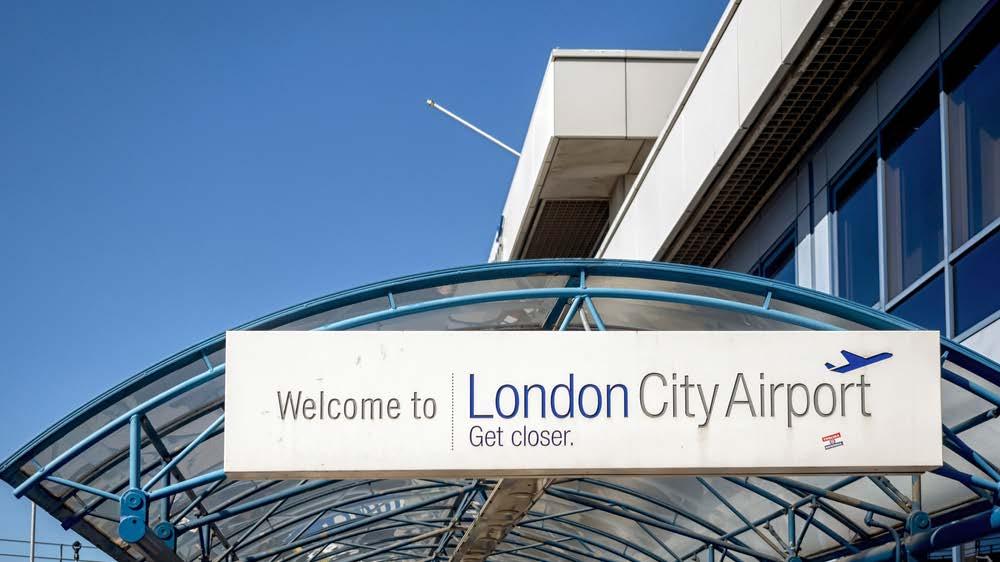
LONDON CITY (LCY) Edition 2026 / No. 05 in the series

London City at a glance
One small terminal, one short runway and a singular purpose. London City is the only airport built expressly for the business traveller, and it behaves like it.
Every other airport in this series is, in the end, a mass-market operation. London City is not. Tucked into the Royal Docks barely a few miles east of the Square Mile, it was conceived in the 1980s to put the City of London within touching distance of Europe's financial capitals, and it has never lost that character. It is comfortably the smallest of the capital's main airports, carrying around 3.6 million passengers a year against rivals counting in the tens of millions, and its route map reads like a directory of business destinations: Frankfurt, Zurich, Amsterdam, Dublin, Luxembourg and Milan sit alongside the Alpine ski gateways and a growing band of summer leisure routes. British Airways, through its CityFlyer arm, is by far the largest operator, joined by a clutch of European carriers.
Two things define the experience and neither has a parallel elsewhere in London. The first is speed: this is an airport you can walk into twenty minutes before departure and still make your flight, a promise no other London airport comes close to matching. The second is its peculiar rhythm, dictated by a short runway, a steep approach and a strict planning regime that even closes the airport for much of the weekend. Understand those quirks and London City becomes the most civilised way to fly from the capital. This guide shows you how to use it like the regulars in the surrounding towers already do.
LONDON CITY BY NUMBERS
Passengers: around 3.6 million a year - the smallest of London's main airports. Terminal: one compact terminal; a single short runway.
Largest operator: British Airways (through BA CityFlyer), plus European carriers.
Fastest possible arrival: through security as little as 20 minutes before departure.
Quirk: closed from early Saturday afternoon until around midday on Sunday.
Page 2 - Introduction and key figures
One terminal, one runway
There is no terminal to choose and no satellite to find. What shapes London City instead is its remarkable little runway, and the aircraft built to use it.
London City could hardly be simpler to navigate: a single compact terminal handles check-in, security, departures and arrivals, all within a few minutes' walk. What gives the airport its character is not its layout but its runway, which is short by the standards of commercial aviation and approached on an unusually steep glide path threading between the Docklands towers. Only specific aircraft types, and specially trained crews, are certified to fly it, which is why you will see the trim Embraer jets and Airbus A220s rather than the larger fleets of the other airports, and why there are no long-haul widebodies. For the passenger this means smaller aircraft, a memorable approach over the city, and a route network deliberately weighted towards the business and financial centres of Europe.
That specialised character is the airport's strength. Because it serves a defined market through one terminal, everything is close at hand and quick, with none of the long pier walks or interterminal shuttles that define the bigger hubs. British Airways and its CityFlyer subsidiary anchor the schedule with the densest network, joined by carriers such as KLM, Lufthansa and ITA Airways linking the City to their own hubs and on to the world. There is nothing to get wrong here in terms of buildings, so the only preparation that matters is turning up at the right time and travelling light.
The shape of the schedule
Strand
Carriers
Where they fly
and ski BA CityFlyer and partners
RULE OF THUMB
Alpine gateways in winter, the Riviera and islands in summer
One terminal, so nothing to choose - the only decision is what time to arrive.
Expect smaller jets, a steep scenic approach, and a network built for business: financial centres, plus winter ski and summer sun.
Page 3 - The terminal and the airline network
The City network
British Airways / BA CityFlyer Frankfurt, Zurich, Amsterdam, Dublin, Edinburgh and more
European hubs
KLM, Lufthansa, ITA, LOT and others
Onward connections via the continental hubs
Leisure
The DLR at the door
No other London airport puts the railway this close to the gate. The DLR station is part of the terminal, and the City is barely twenty minutes away.
London City's location is its trump card. The Docklands Light Railway station sits directly alongside the terminal, an elevated platform reached in moments from the door, and it threads straight into the heart of the capital's business districts. Bank, in the City of London, is around twenty-two minutes away; Canary Wharf is a short ride with one change; and the line also runs east to Woolwich and north to Stratford. For onward reach, a single stop to Custom House connects with the Elizabeth line, putting Liverpool Street, the West End, Heathrow and beyond within an easy further hop. For a traveller bound for a meeting in the City or the Wharf, no airport anywhere near London comes close to this for sheer convenience.
The beauty of it is the absence of friction. There is no airport rail premium to pay, no separate express to book, just a turn-up-and-go ride on the ordinary DLR using the same contactless tap as the rest of the network, with trains every few minutes. The walk from aircraft steps to railway platform can be a matter of minutes, which is precisely why the airport is so prized by those who fly for work: the journey from the City to a continental capital, airport access included, can genuinely be quicker door to door than the equivalent trip through a larger hub. Tap in, ride the DLR, and the airport's promise of speed begins before you have even left the building.
Rail at a glance
Bank / the City
Canary Wharf
Elizabeth line
DLR direct approx. 22 min
DLR, one change
approx. 15 to 20 min
DLR one stop to Custom House a few minutes to interchange
INSIDER NOTE
Contactless, ordinary fares
Contactless, ordinary fares
Contactless, ordinary fares
There is no airport surcharge: the DLR uses the same contactless tap as the rest of London's transport, so it is as cheap as it is quick.
For Heathrow or the West End, change at Custom House for the Elizabeth line - one DLR stop from the terminal.
Page 4 - Getting there by rail
By road, taxi and car
For all the DLR's brilliance, a taxi to the City or Canary Wharf is quick and, shared, can make sense. Parking, by contrast, is minimal and the kerb is costly.
Because the airport sits so close to its core market, a taxi or private car to the City or Canary Wharf is genuinely fast outside the worst of the traffic, a short run through the Docklands rather than the long motorway slog of the outer airports, and for two or three colleagues travelling together it can rival the DLR on convenience if not on certainty. Black cabs wait outside the terminal and licensed private hire is plentiful. What London City does not have, given its tight island site, is much room for cars: on-site parking is limited and premium-priced, geared to the short business stay rather than the fortnight's holiday, so anyone leaving a car for any length of time is usually better served by an off-airport option.
Stopping at the terminal has also become an expensive business. Since the start of 2026 the dropoff zone charges £8 for up to five minutes, then a pound a minute to a ten-minute maximum, payable online by the day after, which makes the kerb one of the steeper short stops in London for the time it allows. The simple answer, given everything above, is that very few business travellers should be arriving here by car at all: the DLR is faster, cheaper and drops you inside the building, and a taxi covers the rest. Save the car for the genuinely awkward early start or the trip the railway cannot serve.
The road traveller's checklist
• For the City or Canary Wharf, a shared taxi is quick outside peak traffic; black cabs wait at the terminal.
• On-site parking is limited and premium-priced - fine for a short business stay, costly for longer.
• The drop-off zone is £8 for up to 5 minutes, then £1 a minute to a 10-minute maximum; pay online by the next day.
• For most trips the DLR beats the car outright on speed and cost, and sets you down inside the terminal.
THE HONEST VERDICT
London City is the one London airport where you should barely think about driving. The DLR is faster and cheaper than anything on four wheels, and a taxi handles the exceptions.
Page 5 - Getting there by road, taxi and car
The twenty-minute airport
This is London City's headline act, and the reason the City's bankers swear by it: you can clear security and reach the gate in minutes, not hours.
The single most valuable thing about London City is time. The airport asks only that you have passed through security at least twenty minutes before departure, a threshold no other London airport approaches, and in practice a hand-luggage traveller who knows the building can be from the front door to the gate in a quarter of an hour when it is quiet. The terminal is small, the queues are usually short, and the whole experience is designed around the assumption that its passengers are busy people who value every minute. For anyone used to the two- and three-hour rituals of the larger hubs, the first visit is something of a revelation.
That speed is not a happy accident, and the airport is investing to protect it as it grows, with additional security lanes added in early 2026 to lift capacity by half and keep the queues moving as passenger numbers rise. The usual discipline still applies, travel hand-luggage only wherever you can, keep liquids and electronics ready unless the newer scanners say otherwise, and check in online, but here those habits pay off more handsomely than anywhere else, because there is so little process to slow you down. The lesson is simply to trust the system: you do not need to arrive hours early at London City, and arriving too early rather defeats the point of choosing it.
Clearing the airport quickly
• You need only be through security 20 minutes before departure - but leave a sensible margin for the unexpected.
• Travel hand-luggage only and check in online to take full advantage of the airport's speed.
• New security lanes added in early 2026 have increased capacity by around half, easing the busiest periods.
• Do not over-insure with a very early arrival; arriving hours ahead defeats the reason for flying from here.
TIMING THE ARRIVAL
For a typical short-haul departure, arriving 60 to 75 minutes ahead is comfortable and still leaves lounge time.
Pushed for time and travelling light? The airport's own minimum is 20 minutes through security - it really is that quick.
Page 6 - Security and speed
WHERE
The lounge worth knowing
At an airport this quick, the lounge is less a refuge from queues than a quiet office for the hour before a flight. There is essentially one to know.
London City's compact scale means a single principal lounge rather than the tiered estates of Heathrow, and for once that suits the airport's purpose. The executive lounge, available to qualifying premium passengers and, for everyone else, by direct booking from around £32 to £35 a head or on a membership such as Priority Pass, offers a calm, well-appointed space with complimentary food and drink, fast wi-fi and proper places to work. For a Monday morning departure or a Friday evening flight home, it is excellent value, a place to clear an inbox and take a coffee in peace while the short interval before boarding ticks down. Given how brief the airport experience is, an hour here is usually all you need.
The calculation is slightly different from the bigger airports. You are rarely buying refuge from a long queue, because there is seldom much of one; you are buying a comfortable, productive base for the short wait, and quite possibly recouping the cost in the food and drink you would otherwise buy in the concourse. As ever, check whether your fare or card already grants access before paying separately. If you are simply passing through in fifteen minutes, you may not need it at all, which is rather the point of London City: the lounge is a pleasant option here, not the necessity it can feel elsewhere.
The lounge picture
Lounge Access
Executive lounge
Concourse seating
Premium fares, direct booking, or Priority Pass
Open to all
WORTH IT, BUT NOT ESSENTIAL
Best for
A quiet, productive hour before a flight
The fallback when your wait is genuinely short
Unlike the bigger airports, you are not paying to escape a queue here - you are buying a quiet office for an hour. Check your fare or card before booking separately.
Page 7 - Airport lounges
Dining and shopping
Compact and quick rather than grand, London City's food and shops are sized for a traveller who will be airside for forty minutes, not four hours.
London City makes no pretence of being a dining destination, and given how fast most people move through it, that is no failing. The offer is sensible and business-like: a bar and kitchen for a proper sit-down plate, familiar coffee houses and quick counters for those on the move, and enough to assemble a decent breakfast or a glass and a bite before an evening flight. Everything is close at hand in the single departures area, so there is no question of a long walk to find food, and the pace suits the airport's clientele, who are more likely to want a fast flat white and a working table than a leisurely three courses. If you do want to linger over a meal, the lounge is the more comfortable choice.
Retail follows the same compact logic. There is duty-free and a tidy selection of the essentials, the pharmacy, the technology and the reading matter that a forgotten item demands, but nobody comes to London City for the shopping, and nor should they. The virtue of the place is that you can find what you actually need in a couple of minutes and still make a flight you arrived for barely half an hour earlier. Treat the concourse as a quick pit stop rather than a destination, gather a coffee and anything you have forgotten, and let the airport do what it does best, which is move you on with the minimum of fuss.
Eating and buying, the essentials
• Expect a bar and kitchen, reliable coffee and quick counters rather than fine dining - all close at hand.
• For a proper sit-down or a quiet glass, the lounge is the more comfortable option than the concourse.
• Duty-free and the basics are covered; nobody flies from here for the shopping.
• The compact terminal keeps everything minutes away, so a quick pit stop is all it takes.
Page 8 - Dining and shopping
Where to stay
There is no hotel attached to the terminal, but a cluster of good ones sits a single DLR stop away around the Royal Docks and ExCeL.
London City breaks the pattern of the other airports in one respect: there is no hotel joined to the terminal itself. What it has instead is an excellent cluster a stop or two along the DLR, gathered around the Royal Victoria Dock and the ExCeL exhibition centre, which for a short, quick airport is no real hardship. The waterfront DoubleTree by Hilton at ExCeL is among the nearest fullservice choices, a few minutes away by DLR or a short taxi, while the striking Sunborn London, a permanently moored super-yacht hotel beside ExCeL, offers something genuinely different for those who want a memorable night before an early flight. A Novotel, an Aloft and budget options round out a cluster that covers every price point.
The deciding logic is unusually simple here. With a single terminal there is no building to match, and because the DLR is so quick and so central to the airport, a hotel one or two stops away is barely less convenient than one on the doorstep would be, while giving you the run of the Royal Docks for an evening meal. For a genuinely early Monday start, pick a hotel a short DLR ride from the terminal and check the first trains, remembering that the airport itself does not open until quarter to five on weekdays. For most trips, the ExCeL cluster is comfortable, well-priced and entirely fit for purpose.
A hotel shortlist
Hotel
DoubleTree by Hilton ExCeL
Sunborn London
Novotel / Aloft, ExCeL
Location
Royal Victoria Dock, short DLR / taxi
Why it earns its place
Full-service and waterfront, among the nearest choices
Moored by ExCeL A super-yacht hotel - a memorable preflight night
Royal Docks, a DLR stop away
A DLR STOP IS CLOSE ENOUGH
Reliable mid-range, well placed for an evening meal
With no terminal hotel and such a quick railway, a bed one or two DLR stops away by ExCeL is barely less convenient - and gives you the Royal Docks for dinner.
Page 9 - Where to stay
Connecting and onward travel
London City is a beginning-and-end airport, not a hub. Where it connects, it does so through the European networks rather than within its own walls.
Unlike the low-cost bases at Stansted and Luton, London City is dominated by full-service carriers, which changes the connection picture. It is not designed as a hub, and the great majority of its traffic begins or ends here, but where you are connecting onward, you are usually doing so through the continental networks: a British Airways or partner itinerary that runs City to a European hub and beyond, with bags checked through and the connection protected in the ordinary way of legacy travel. The single small terminal makes any transfer within the airport itself trivially simple, a short walk rather than a shuttle, though in practice few journeys actually connect at London City.
The more common reality is that London City is one half of a door-to-door journey rather than a place you change planes. Its value lies in how quickly it links the City to a single onward flight and how little time the airport itself consumes at either end. The guidance, then, is less about transfers and more about the through-ticket: book City connections on a single full-service itinerary so your bags and timings are protected, lean on the airport's speed to keep the home end brisk, and treat the DLR as the true connecting service, the link between the aircraft and the meeting that is the whole reason for flying from here.
Connecting well
• Most journeys start or end here; genuine connections usually route through a European hub on a full-service ticket.
• On a single interlined itinerary, bags are checked through and the onward connection is protected as normal.
• Any transfer within the single terminal is a short walk, not a shuttle - but few journeys connect here.
• Treat the DLR as the real connecting service: the quick link between aircraft and meeting.
Page 10 - Connecting and onward travel
London City, mastered
Everything above distilled into the habits of the City regulars who treat this airport as an extension of the office, not an ordeal to be survived.
London City rewards a confidence the other airports never allow. Because it is small, quick and built for exactly the traveller reading this, the winning approach is to trust its speed, travel light, and lean on the DLR that runs from its door. There is no terminal to choose, no shuttle to catch and no two-hour ritual to endure, but there is one rhythm to respect above all, the weekend closure, which has caught out many a Saturday traveller. Master these few points and London City becomes less an airport than a fast, civilised front door to Europe.
Ten habits of the seasoned London City flyer
• Take the DLR from the terminal door; it is the quickest, cheapest way to the City and Canary Wharf.
• For the West End or Heathrow, change at Custom House, one stop away, for the Elizabeth line.
• Travel hand-luggage only and check in online to exploit the twenty-minute arrival.
• Do not arrive hours early; 60 to 75 minutes is ample, and arriving too early wastes the airport's advantage.
• Book the lounge from around £32 only if you want a quiet hour, not to escape a queue.
• Barely consider driving: the DLR beats the car, and the £8 kerb charge buys only minutes.
• Sleep a DLR stop away by ExCeL for an early flight, and check the first trains and the 04:45 opening.
• Book onward connections on a single full-service ticket so bags and timings are protected.
• Never plan a Saturday-afternoon or Saturday-night departure: the airport is closed.
• Remember Sunday is a late start; the airport does not reopen until around midday.
Page 11 - The frequent flyer's playbook
WHAT COMES NEXT
The bigger picture
London City wants to grow, but on its own particular terms: more passengers, not more flights, and not at the cost of its protected weekend.
The defining story at London City is a carefully constrained kind of growth. The Government has approved plans to raise the airport's passenger cap from 6.5 million to 9 million a year by 2031, but the increase is to come chiefly from larger, quieter, more efficient aircraft carrying more people per flight rather than from a big rise in the number of movements, an unusual model that reflects the airport's tight urban site and its sensitive neighbours. Tellingly, ministers approved the extra passengers and a handful of additional early-morning flights, but rejected the airport's bid to fly on Saturday afternoons, so the long-standing weekend closure, from early Saturday afternoon until around midday on Sunday, survives intact. Owned by a consortium of Canadian and Kuwaiti institutional investors, the airport is investing in security and facilities to handle the planned growth.
For the traveller, the next few years promise a busier but still compact airport: more seats on slightly larger aircraft, an expanding band of European and leisure routes, and improved security and facilities to keep the famous speed intact as numbers rise. What will not change is the essential character, a small, quick, business-first airport that closes for the weekend and prizes the minutes of its passengers above all. London City will grow, but it intends to remain recognisably itself, and for the frequent flyer working in or near the City, it will stay the most civilised way out of the capital.
Quick reference
The essentials
Layout
Fastest into the City
For the Elizabeth line
Arrival promise
At a glance
One compact terminal; one short runway, smaller jets only
DLR to Bank, approx. 22 minutes, ordinary fares
DLR one stop to Custom House
Through security as little as 20 minutes before departure
Drop-off charge (2026) £8 for up to 5 min, then £1/min, 10-minute maximum
Lounge
Closest hotels
Key quirk
Executive lounge from around £32 to £35, or Priority Pass
DoubleTree and Sunborn at ExCeL, a DLR stop away
Closed early Saturday afternoon to around midday Sunday
Page 12 - The bigger picture and quick reference