Gatwick
The world's busiest single runway, mastered
A deep dive for the frequent business flyer: the two-terminal layout, the fast way in and out, the lounges worth the walk, where to sleep, and how to make London's second airport work for you, not against you.
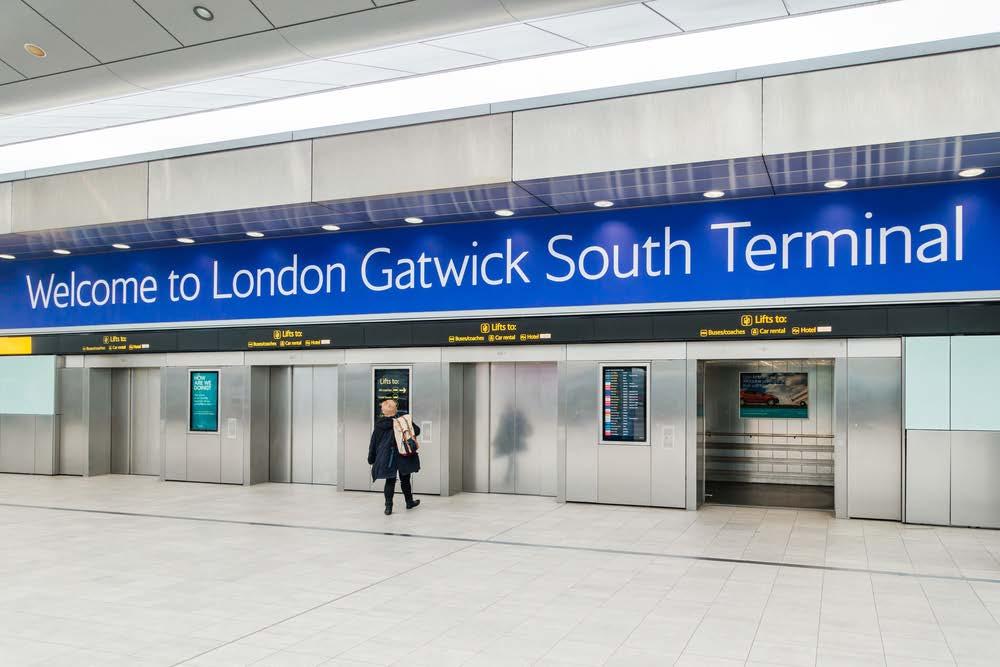
LONDON GATWICK (LGW)

Gatwick at a glance
Two terminals, one extraordinarily busy runway and some forty-three million passengers a year. Gatwick is the most efficient airport of its kind in the world, and it is about to change.
Gatwick has long held a singular distinction: it is the busiest single-runway airport on the planet, moving close to forty-three million passengers a year on one strip of tarmac. In 2025 it handled 42.8 million, a shade below the previous year as short-haul wobbled and long-haul grew, but the operational story was one of record runway efficiency, squeezing more movements per hour out of that single runway than anywhere else. Owned since 2019 by France's VINCI Airports alongside Global Infrastructure Partners, it has spent the past few years investing heavily in security, terminals and technology, and it carries a broad mix of traffic: low-cost giant easyJet at its largest base, British Airways short-haul, a thick band of leisure and charter carriers, and a growing roster of long-haul.
Two things define the traveller's experience here. The first is the two-terminal layout, North and South, set a little apart and linked by a free passenger shuttle, which makes getting your terminal right the first decision of any trip. The second is change: in 2025 the Government granted consent to bring Gatwick's existing northern runway into routine use alongside the main one, a multibillion-pound project that will, in time, end the single-runway era and reshape the airport. For now the practical picture is a busy, well-drilled, two-terminal operation, and this guide is built to help you move through it with the ease of a regular.
GATWICK BY NUMBERS
Passengers in 2025: 42.8 million, the world's busiest single-runway airport.
Terminals: two, North and South, linked by a free passenger shuttle.
Runway: one in routine use, with a second (the Northern Runway) now approved.
Fastest link into London: 30 minutes to Victoria on the Gatwick Express.
Owner: VINCI Airports (50.01%) with Global Infrastructure Partners.
Page 2 - Introduction and key figures
North or South?
Gatwick's two terminals are a short shuttle apart, so the terminal is the one decision you cannot afford to get wrong on the day.
Unlike Stansted's single building or Heathrow's alliance-based map, Gatwick splits its airlines across two terminals whose allocation has shifted recently, which makes checking on the day essential. From 2026 easyJet, the airport's dominant carrier, has consolidated all of its operations in the North Terminal, the larger and busier of the two. British Airways flies its short-haul from the South Terminal, which also handles a wide spread of long-haul, leisure and charter carriers. The roster is growing fast: Gatwick is welcoming a clutch of new airlines for summer 2026, among them Jet2, which is opening a major new base, along with Air France, Eurowings, Condor and others, so allocations are more fluid here than at the settled hubs.
The terminals are linked by a free, frequent passenger shuttle that takes only a few minutes, but it runs airside-to-airside for connecting passengers and landside for everyone else, and crucially it is for people, not cars: a vehicle cannot cross between the two forecourts without rejoining the road network. That has real consequences for anyone being dropped off or collected, who must be delivered to the correct terminal in the first place. The rule, as ever, is to confirm your terminal when you book, check it again on the day, and make sure whoever is driving you knows which forecourt they need.
The terminal map
North easyJet (all flights), plus others
South British Airways short-haul, long-haul, leisure and charter
Both Linked by free passenger shuttle
RULE OF THUMB
Flying easyJet? North Terminal, every time.
Notes
The larger, busier terminal; easyJet consolidated here from 2026
Wide carrier mix; new 2026 arrivals largely here
A few minutes between them - but no vehicle crossing
Flying British Airways short-haul? South Terminal. Being dropped off? Make sure the driver heads to the right forecourt - there is no vehicle crossing between terminals.
Always confirm on the day; allocations are shifting with new airlines arriving in 2026.
Page 3 - Terminals and airline allocation
THE FAST WAY IN
Into London by rail
Gatwick sits directly on the main line to London, which gives it three distinct rail options and, for once, a genuine choice of fast and cheap.
Few airports anywhere are as well connected by rail as Gatwick, whose station sits beneath the South Terminal on the Brighton main line. The premium option is the Gatwick Express, which runs non-stop to London Victoria in about thirty minutes, twice an hour, at £24.10 for a single with a ten per cent discount for booking online or through the app. For many business travellers, though, the smarter value is Thameslink, which threads straight through central London, calling at London Bridge, Blackfriars, City Thameslink, Farringdon and St Pancras International, for a single around £15, putting you within a short walk or a single connection of much of the City and beyond. Southern services add further trains to Victoria and London Bridge, often cheaper still if a little slower.
The choice comes down to where in London you are headed. If your meeting is near Victoria, the Gatwick Express is fast and effortless. If it is in the City, around London Bridge, or anywhere on the Thameslink spine up to St Pancras, that line will very often deliver you closer to the door without a change, and for less money. Southern is the budget fallback. Whichever you take, the train comfortably beats the road into central London at the morning and evening peaks, and from St Pancras the Eurostar and the Midland main line put a remarkable amount of the country within one connection.
Rail at a glance
INSIDER NOTE
For the City, the Thameslink to London Bridge or Farringdon usually beats the Gatwick Express on both cost and convenience, landing you closer to most meetings without a change.
The rail station is at the South Terminal; allow a few minutes on the free shuttle if you are flying from the North.
THE OTHER WAYS IN
By coach, road and car
Gatwick now holds an unwelcome title: the most expensive airport in Britain at which to drop someone off. The car deserves careful handling here.
There is plenty of choice beyond the train. National Express and other operators run frequent coaches from both terminals to central London and to a wide spread of regional towns and the other London airports, a useful and economical option for anyone whose destination the trains do not serve directly. By car, however, Gatwick has become a place to think twice before pulling up at the terminal. From January 2026 the forecourt drop-off charge rose to £10 for up to ten minutes, the steepest such increase of any UK airport, with a pound a minute thereafter up to a thirty-minute maximum and a £100 penalty beyond that. The same charge applies at both the North and South forecourts.
The way to sidestep it is simple and well worth knowing. Each terminal's Long Stay car park gives up to two hours free, with a free shuttle bus to the terminal, around five minutes from the North and a little longer from the South. For any drop-off or pick-up that is not a ten-second handover, that turns a £10 charge into nothing. For longer trips the Long Stay car parks are the value option, with valet and shorter-stay parking available at a premium nearer the terminals. The M23 spur links the airport to the M25 and the wider motorway network, quick away from the peaks but, like every London approach, prone to delay when it matters most.
The road traveller's checklist
• Use the Long Stay car park's two free hours and the shuttle bus for drop-offs and pick-ups, rather than paying £10 at the forecourt.
• If you do use the forecourt, it is £10 for ten minutes, then £1 a minute, with a £100 penalty beyond thirty; pay online by midnight the next day.
• Make sure your driver delivers you to the correct terminal - there is no vehicle crossing between North and South.
• Consider the coach for regional destinations or the other airports; allow margin for the M23 and M25 at peak times.
THE HONEST VERDICT
Into central London, the train wins comfortably. If you must come by car, never pay the forecourt charge for an ordinary pick-up - the two free hours in the Long Stay car park, plus a five-minute shuttle, cost nothing.
Page 5 - Getting there by coach, road and car
Security and fast-track
Gatwick has poured money into its security halls, and the experience is much improved, but the volumes are vast and Fast Track remains the regular's friend.
Moving forty-three million passengers through two terminals means security is the part of the journey most likely to test your patience, and Gatwick has responded with one of the larger investments in the country, rolling out next-generation scanners that, where in use, let you keep liquids and laptops in the bag. The result is a noticeably smoother passage than in years past, particularly outside the holiday peaks. Even so, this is a high-volume leisure airport, and queues can build quickly when the charter and half-term crowds arrive together, so the prudent traveller still plans to be ahead of them.
Fast Track security is the tool for that, sold per terminal as a standalone product and, usefully, bundled free into the airport's Clubrooms lounges, so a single purchase can buy both a quick passage and a comfortable wait. For the business traveller the calculation is the familiar one: the modest cost is trivial against the value of a guaranteed quick passage through the one part of the journey you cannot otherwise control. Buy it ahead for any early flight or any departure in the school holidays, and check whether your lounge booking already includes it before paying twice.
Clearing the airport quickly
• Buy Fast Track in advance for the relevant terminal, or get it free by booking a Clubrooms lounge.
• Travel hand-luggage only where you can; the low-cost carriers reward it and you skip the bag drop.
• Where the new scanners are in use, follow the signage on leaving liquids and electronics in your bag.
• Allow extra time in the school holidays and at the early-morning charter peak, when volumes are highest.
TIMING THE ARRIVAL
Short-haul European departures: arrive around two hours ahead, more in peak holiday weeks.
Long-haul: three hours is the comfortable standard, particularly from the South Terminal.
Page 6 - Security and fast-track
The lounges worth the walk
Both terminals have a proper choice of lounges, and one of them folds in your Fast Track. Knowing which door your card opens is half the battle.
Gatwick is better served for lounges than its low-cost reputation suggests, and unlike Stansted both terminals are covered. The independent No1 Lounges group runs the principal spaces under three names: the flagship No1 Lounge, the more premium, members-club-styled Clubrooms, and the relaxed My Lounge, with the South Terminal's My Lounge notable for the airport's only outdoor terrace. Walk-up and pre-booked access starts from around £44, but the more economical route for many is a lounge membership such as Priority Pass, Lounge Key or Dragonpass, which can bring entry down to a few pounds, with Clubrooms available to cardholders for a modest top-up.
The detail worth remembering is that a Clubrooms booking includes Fast Track security, which makes it the canny choice for anyone who wants both a quick passage through security and a quieter, more polished room at the other end. As with everything at Gatwick, terminal dictates access: the lounges are specific to North or South, so check that the one your ticket or card opens actually sits in the terminal you are flying from before you build your timings around it. Arrive with the time to enjoy it, and the wait becomes the most productive hour of the trip.
A lounge shortlist
BEYOND THE LOUNGE
Dining and shopping
Gatwick eats rather better than most people expect, with a strong line in familiar British names across both terminals.
For a leisure-led airport, Gatwick's dining is a cut above. The most recognisable name is Jamie Oliver, whose restaurants are dotted across both terminals, from Jamie's Italian and a bakery in the North to a diner in the South, giving the business traveller a dependable sit-down option close to most gates. Landside in the North Terminal, the Nicholas Culpeper, a pub and dining room named after the seventeenth-century botanist born barely two miles from the end of the runway, is a pleasant spot to gather before security, complete with its own gin distillery. Beyond the marquee names, both terminals carry the full spread of cafes, bars, quick counters and reliable coffee that a busy morning demands.
The retail follows suit, with a broad sweep of fashion, technology, beauty and the practical, plus the duty-free hall that the leisure crowd expects. For the working traveller the value is the usual safety net: the charger, adaptor, book or umbrella you forgot can be replaced airside before you board. The discipline, in a busy two-terminal airport, is to do your eating and buying in the main departure area rather than leaving it to a far gate, and to keep half an eye on the boarding screens, because Gatwick's piers can involve a longer walk than the calm of the lounge suggests.
Eating and buying, the essentials
• For a proper sit-down, Jamie Oliver's restaurants span both terminals; the Nicholas Culpeper is the landside favourite in the North.
• Do your dining and shopping in the main departure area, where the choice is widest, rather than at a far gate.
• Use the shops as a safety net for chargers, adaptors, toiletries and reading rather than a way to fill time.
• Watch the boarding screens: the walk to a Gatwick pier can be longer than it looks, so buy early.
Page 8 - Dining and shopping
SLEEPING CLOSE TO THE GATE
Where to stay
Both terminals have a hotel you can walk to, and the choice of which to book follows the same rule as the rest of the airport: terminal first, brand second.
Gatwick is well stocked with hotels at both terminals, which makes the early flight or the late arrival genuinely manageable. At the North Terminal the standout is the Sofitel, the most polished hotel on the airport, connected directly and offering spacious rooms, some with a runway view, while the Hampton by Hilton sits moments from check-in along a covered walkway and a Premier Inn faces the terminal entrance for the dependable budget night. At the South Terminal the Hilton connects directly to the building, the compact, design-led Bloc sits inside the terminal itself, landside, for a pared-back stay steps from the concourse, and YOTELAIR offers cabins within the terminal for a few hours' rest between flights.
The deciding question, as always, is which terminal you are flying from in the morning. Because there is no vehicle crossing between North and South and the forecourts are a shuttle apart, a hotel attached to the wrong terminal undoes much of its convenience, so match the bed to the building. For a genuinely early departure, the connected and covered-walkway options, the Sofitel or Hampton in the North, the Hilton or Bloc in the South, buy the calm of a short, dry walk to check-in over a familiar logo a transfer away.
A hotel shortlist
MATCH THE BED TO THE BUILDING
There is no vehicle crossing between the terminals, so a hotel at the wrong one means a shuttle in the morning. Book the connected or covered-walkway hotel at the terminal you actually fly from.
Connecting and transferring
Gatwick is part hub, part point-to-point, and how you connect depends heavily on whether your two flights are on one ticket or two.
Gatwick sits between the worlds of the legacy hub and the low-cost base, and your connection experience reflects that. Where both flights are on a single ticket with a carrier that interlines, your bags and boarding passes are handled through in the usual way, and a same-terminal connection is a straightforward walk. The complication is that a great deal of Gatwick's traffic is low-cost and point-to-point, where the two flights are separate bookings: here a connection is a self-transfer, in which you clear immigration, reclaim your bag, leave the controlled area, check in again and pass back through security. The airport offers a bag-assistance product to ease selfconnections, but the principle holds, treat two separate tickets as two separate journeys.
Add the two-terminal geometry and the guidance becomes clear. If your connection involves changing terminals, factor in the free passenger shuttle and the time it takes, and never assume a tight turnaround across buildings. Allow generous margins for any self-transfer, travel handluggage only if you can to strip out the reclaim and re-check, and remember that on separate tickets a missed onward flight is your risk, with no automatic re-routing. Connect methodically, clear each stage in turn, and keep your documents to hand, and even a cross-terminal change at Gatwick is perfectly manageable.
Connecting well
• On a single interlined ticket, a same-terminal connection is simple; your bags are checked through.
• On separate low-cost tickets, assume a self-transfer: reclaim, re-check and clear security again.
• If you change terminals, allow time for the free passenger shuttle - never plan a tight crossterminal turnaround.
• Travel hand-luggage only where possible to remove reclaim and re-check from the equation.
• On separate tickets, a missed connection is your risk - build in a generous buffer. Page 10 - Connecting and transferring
Gatwick, mastered
Everything above distilled into the habits that separate the traveller who glides through Gatwick from the one who merely keeps up with the crowds.
Gatwick rewards a particular kind of preparation: get the terminal right, lean on the rail line that serves you best, and never pay the forecourt charge when two free hours sit a shuttle away. The frequent flyer's advantage here is knowing the airport's two-terminal logic and its handful of expensive traps, then routing around them. Make these decisions in the right order and the world's busiest single-runway airport becomes brisk, predictable and, for all its volume, surprisingly civilised.
Twelve habits of the seasoned Gatwick flyer
• Confirm your terminal on the day - easyJet North, BA short-haul South - and tell your driver which forecourt.
• For Victoria, take the Gatwick Express; for the City and St Pancras, Thameslink usually wins on cost and convenience.
• Keep Southern in mind as the cheaper, slightly slower fallback to Victoria and London Bridge.
• Never pay the £10 forecourt drop-off; use the Long Stay car park's two free hours and the shuttle.
• Buy Fast Track ahead, or get it free by booking a Clubrooms lounge.
• Travel hand-luggage only where the trip allows, and skip the bag drop.
• Check your lounge sits in the terminal you fly from before booking - access is terminalspecific.
• Arrive with lounge time in hand, around two hours short-haul and three long-haul.
• Eat and shop in the main departure area; Jamie Oliver and the Nicholas Culpeper are the standouts.
• For an early flight, sleep at a connected hotel in the terminal you actually depart from.
• Treat separate low-cost tickets as a self-transfer with a generous buffer, not a protected connection.
• Allow for the shuttle and the pier walk; clearing security is not the same as reaching your gate.
Page 11 - The frequent flyer's playbook
WHAT COMES NEXT
The bigger picture
Gatwick has spent decades as the world's busiest one-runway airport. That definition is now, finally, coming to an end.
The defining story at Gatwick is the Northern Runway. In September 2025 the Secretary of State for Transport granted development consent to bring the airport's existing northern runway, long used only as a taxiway and standby strip, into routine use alongside the main runway, a multibillion-pound, privately funded project that will lift capacity materially over the coming years. It is an unusual expansion in that it adds a second operational runway largely within the existing footprint rather than carving out new land, and it promises a meaningful increase in flights and passengers once delivered. In the nearer term the airport continues to wring more out of its current single runway, with scheduled movements rising from fifty-five to fifty-seven an hour in 2026, a record for any single runway anywhere.
For the traveller, the next few years will bring construction alongside a steadily growing airline roster, with eight new carriers arriving for summer 2026 and Jet2 establishing a substantial base. None of it transforms next week's trip, but the trajectory is unmistakable: under VINCI's ownership Gatwick is investing to become a bigger, busier, dual-runway airport and to cement its place as London's essential second gateway. Expect more destinations, more competition on fares, and, in time, the quiet retirement of the single-runway record that has defined the place for so long.