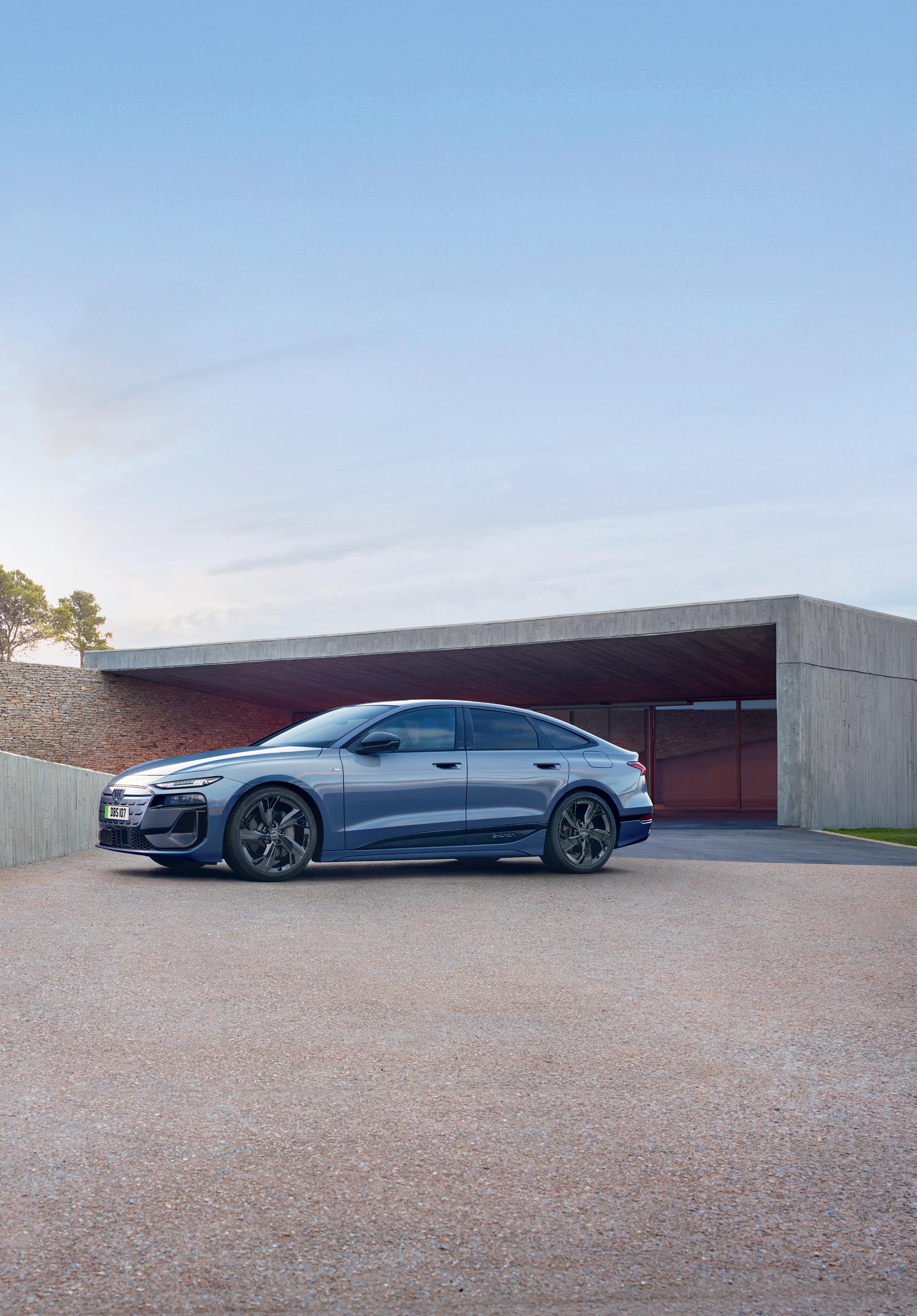
BLACK BADGE SPECTRE
PLUS TAKE A LOOK
3 EV POWERED MAGAZINE
EDITOR’S NOTE
Fuelling debate
Welcome to the May edition of EV Powered.
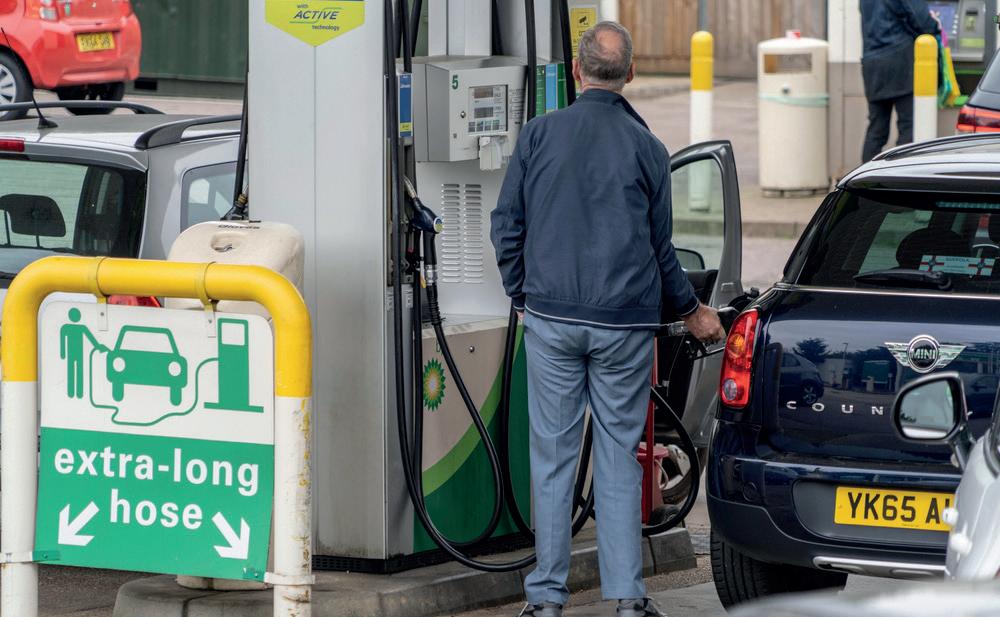
As I write this we continue to see and feel the impact of the war in Iran, with fuel price volatility a near-daily topic of conversation.
I touched last month on how this highlighted one of the key benefits of owning an EV and data released over the last few weeks shows that the message is reaching drivers. Since the conflict started, an average petrol fillup has become more expensive than a full charge on a public device; interest in and orders for EVs have soared and used EV sales have hit record levels.
Obviously, it’s not the way any EV supporter would want to see public interest increase. However, it is exposing people who were previously agnostic about EVs to their benefits and, as survey after survey has shown, once people go electric, they seldom go back.
It will be interesting to see how the market shifts again if and when fuel prices settle but there’s a feeling in the industry that we won’t see such significant rollback as we have after previous periods of fuel instability.
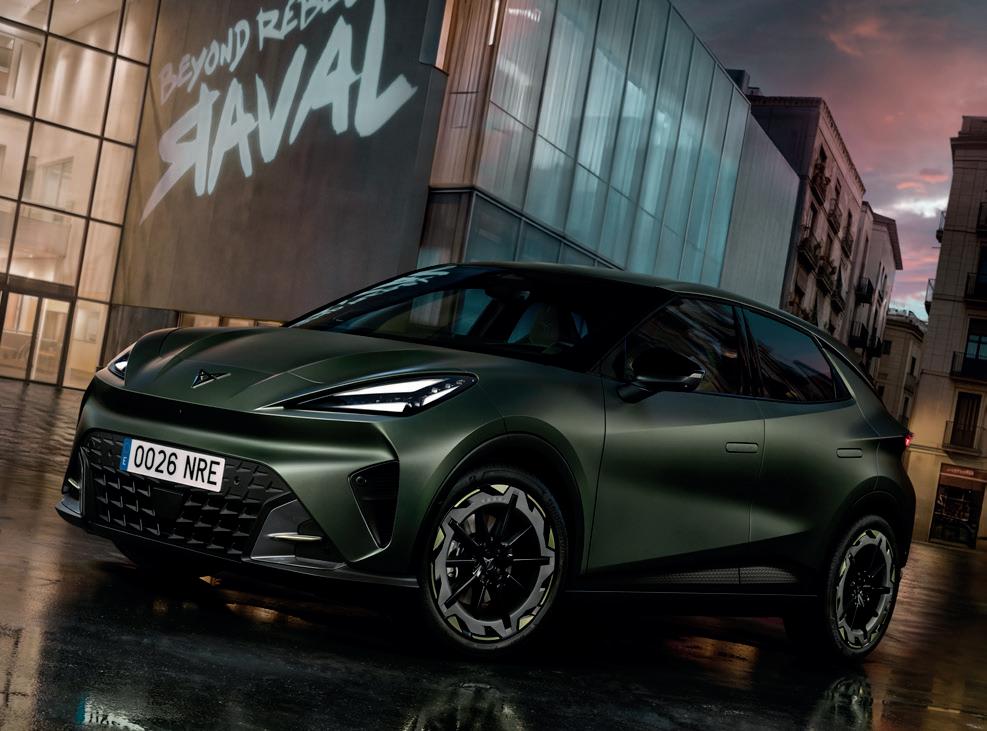
That’s undoubtedly helped by the ever-expanding selection of EVs of all shapes, sizes and prices. This month we’re covering every facet of the EV world, from sub-£20k superminis that qualify for the Electric Car Grant to half-million-pound super-coupes; a plethora of electric vans and family SUVs with supercar power.
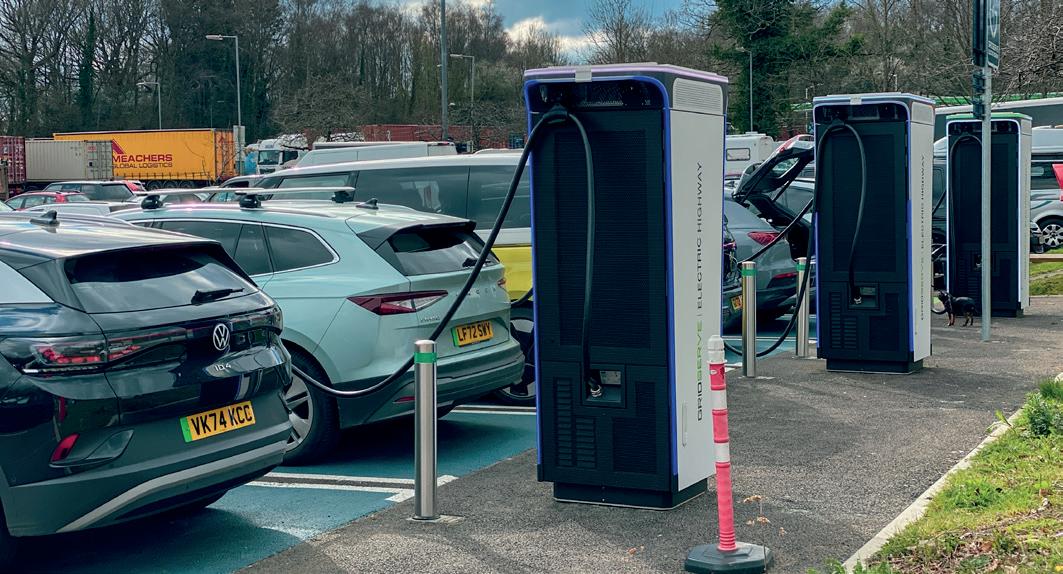




I’ve said it before and I’ll say it again, the variety of electric cars on offer now puts paid to any idea that there isn’t an EV to suit just about anybody. It’s just about persuading those uncertain about electric cars to give them a try, and letting the cars speak for themselves. That’s something that we here at EV Powered are committed to doing, in print, online and in person whenever we meet people with EV questions.
A massive contributor to the rapid expansion of the UK and Europe’s EV sector has, of course, been China and its seemingly endless tide of new energy brands. Every week there seems to be another new make or model popping up to challenge this region’s established players.
To understand how and why Chinese EV makers have managed to so quickly become major players in the market, we spoke to Dr Andy Palmer — the man behind the very first mainstream EV. He gives a fascinating insight into the machinations of the global auto industry as well as sharing his thoughts on what legacy brands can do to regain the advantage. He’s someone who really knows what he’s talking about so it will be interesting to see whether his views tally with the actions of car makers in coming years.
What we do know for certain is that the rise of the EV shows no sign of slowing and EV Powered will be here to keep you updated on all of it.
Until next month, enjoy the mag.
Matt
Allan Editor, EV Powered
The EV Powered Team
Editor
Matt Allan
Reporter
George East
Graphic Designer
Grace Moseley
Videographer
Jacob Pinchbeck
Content Sales Manager
Laura Phillips
Capital Business Media, Group MD
Richard Alvin
Business Development Director
Stephen Banks
Chief Creative Director
Stuart Hyde
Finance Director
Andrew Martin
ROLLS-ROYCE reveals first details of bespoke PROJECT NIGHTINGALE EV
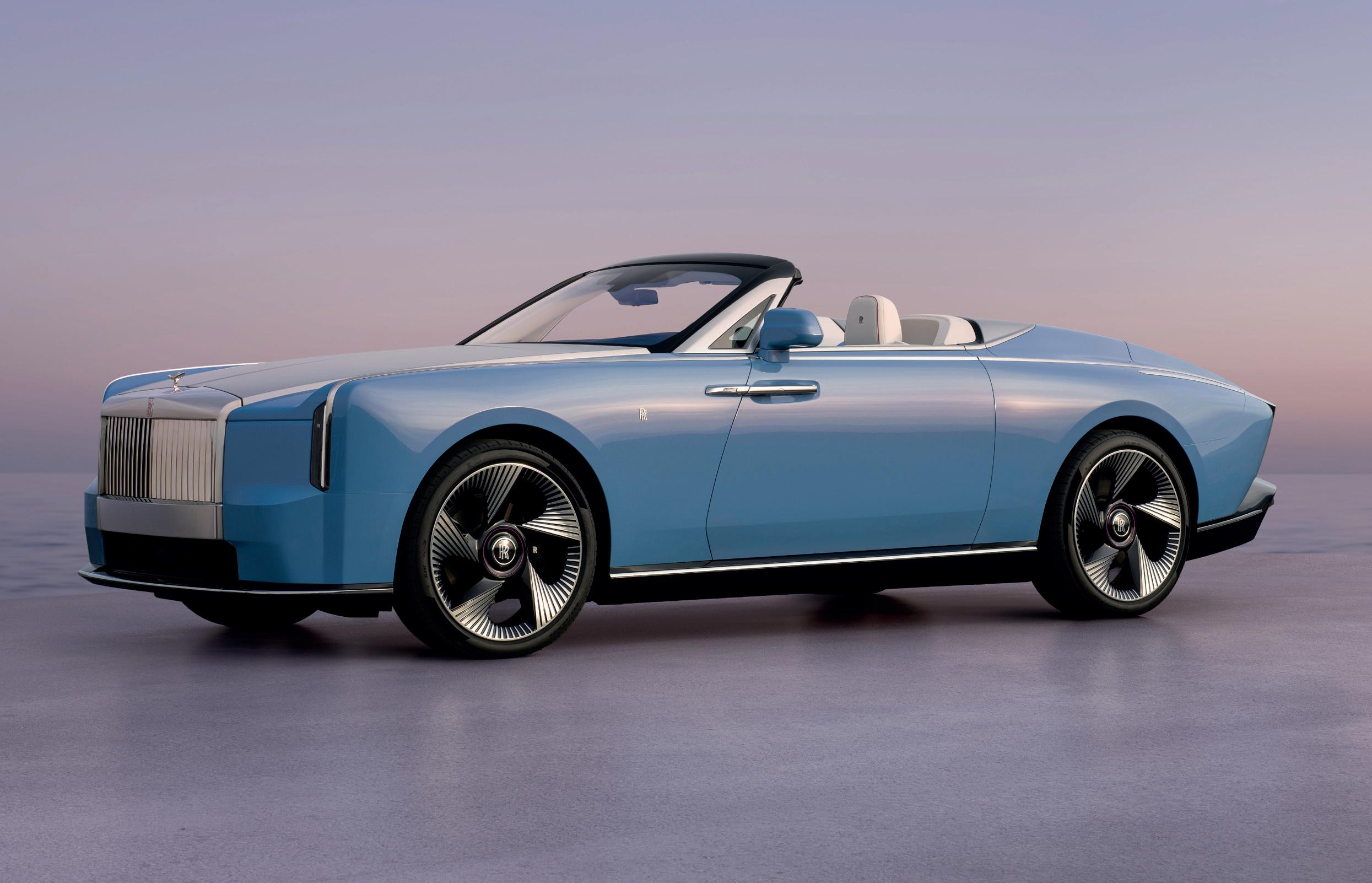
Rolls-Royce has unveiled the first electric model in its new Coachbuilt Collection as a 1920s-inspired drop-top named Project Nightingale.
Set to be limited to just 100 examples, Project Nightingale marries the EV powertrain of the Spectre coupe with a striking two-seat convertible body.
As you’d expect from a limited edition from one of the world’s most exclusive car makers, Project Nightingale packs a wealth of fancy features, from 10,500 interior “stars” to a side-hinged bootlid, bespoke paint tone and 24-inch wheels inspired by yacht propellers.
At 5.76m long, the car is almost as big as the Phantom saloon, but is a two-door convertible with a folding fabric roof. Rolls-Royce describes it as a “motor car that is almost entirely bonnet and tail”, with huge bodywork cocooning an “intimate” two-seat cabin.
Design inspiration has been drawn from the Art Deco movement and the radical 16EX and 17EX cars of 1928. Their clearest influence is in slim upright headlights which are set into the nearvertical leading edge of the front wings. Between
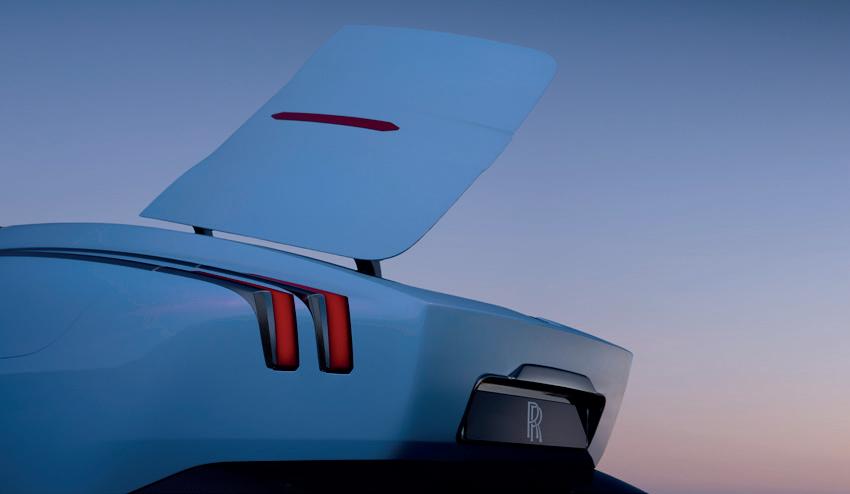
them an almost one-metre-wide take on the Pantheon grille is capped with the famous Spirit of Ecstasy, which sits in a specially recessed mount. Rolls-Royce’s designers declared that they wanted Project Nightingale to showcase the brand’s focus on grand dimensions and clean lines through smooth, uninterrupted flanks designed to look like they are carved from a solid piece of aluminium.
A steeply raked windscreen flows towards the dipping rear deck, which incorporates a sidehinged bootlid that its designers say echoes the lid of a grand piano. Like the headlights, the rear lights are thin upright units.
The Nightingale name comes from the name of the designers’ house on Henry Royce's French estate but extends beyond just a title.
The car’s interior also draws from the bird, with a unique illumination called the “Starlight Breeze suite” inspired by soundwaves of birdsong. More than 10,000 individual “stars” run from the front edge of the doors around the cabin and into the horseshoe behind the seats.
Like every Rolls-Royce there’s extensive use of leather, from the seats and door cards to the powered central armrest, which slides back to reveal the rotary controller for the infotainment system. A handful of other rotary controls along with traditional Rolls-Royce features such as the organ stop vent controls keep the interior design simple.
White leather, with Peony Pink detailing. The exterior is painted in an exclusive pale blue flecked with red, with a silver fabric roof. This features multiple layers of cashmere, fabric and sound deadening to deliver a typically serene drive with the roof up, while bringing the pleasure of open-air motoring when it’s down.
Rolls-Royce hasn’t given any specifics about Project Nightingale’s powertrain but we do know it’s based on the system that drives the Spectre. We wouldn't be surprised if this special edition uses the more powerful Black Black iteration, which delivers up to 650bhp and 793lb ft via a two-motor arrangement. This brings all-wheeldrive, all-wheel steering and Rolls-Royce’s famous magic carpet ride courtesy of its adaptive air suspension.
There’s also no word on price. But that doesn’t matter because the Project Nightingale cars will only be offered to a select 100 customers hand picked by the manufacturer.
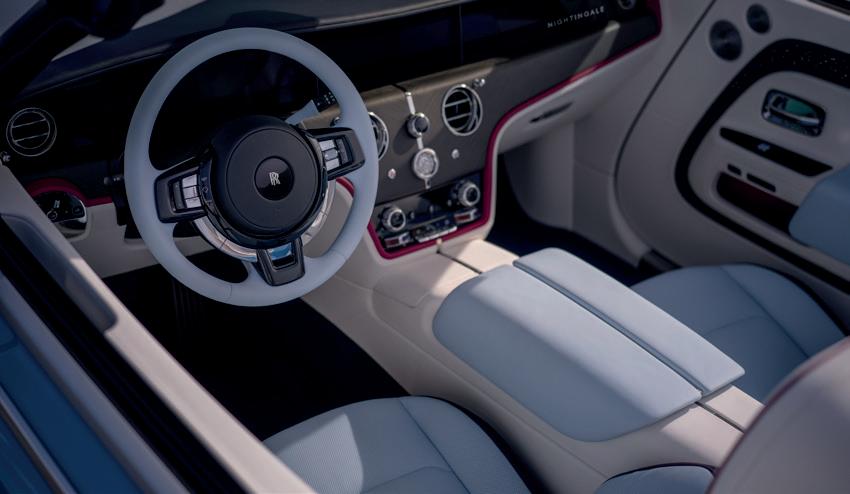
The interior is finished in Charles Blue and Grace
NEW NISSAN JUKE
brings radical new look and EV power
The Japanese manufacturer revealed the thirdgeneration Juke at a special “Vision” event at its global headquarters and confirmed it will launch across Europe in spring next year.
Nissan said the new Juke would form a core part of its European electrification strategy, sitting alongside the new Leaf, Micra, Ariya and a new A-segment car. It will go head-to-head with rivals such as the Ford Puma Gen-E, Renault 4, Kia EV2 and Skoda Epiq.
The new Juke will be built at Nissan’s Sunderland plant alongside the Leaf and is based on the same CMF-EV platform as the larger crossover.
Nissan has not given technical details but it is likely that the smaller Juke will get a detuned version of the Leaf’s 175bhp motor, and may only come with the smaller 52kWh battery. Nissan has also promised that the new Juke will be agile and bring personality and emotion
to the segment through its lively handling and “bold” design.
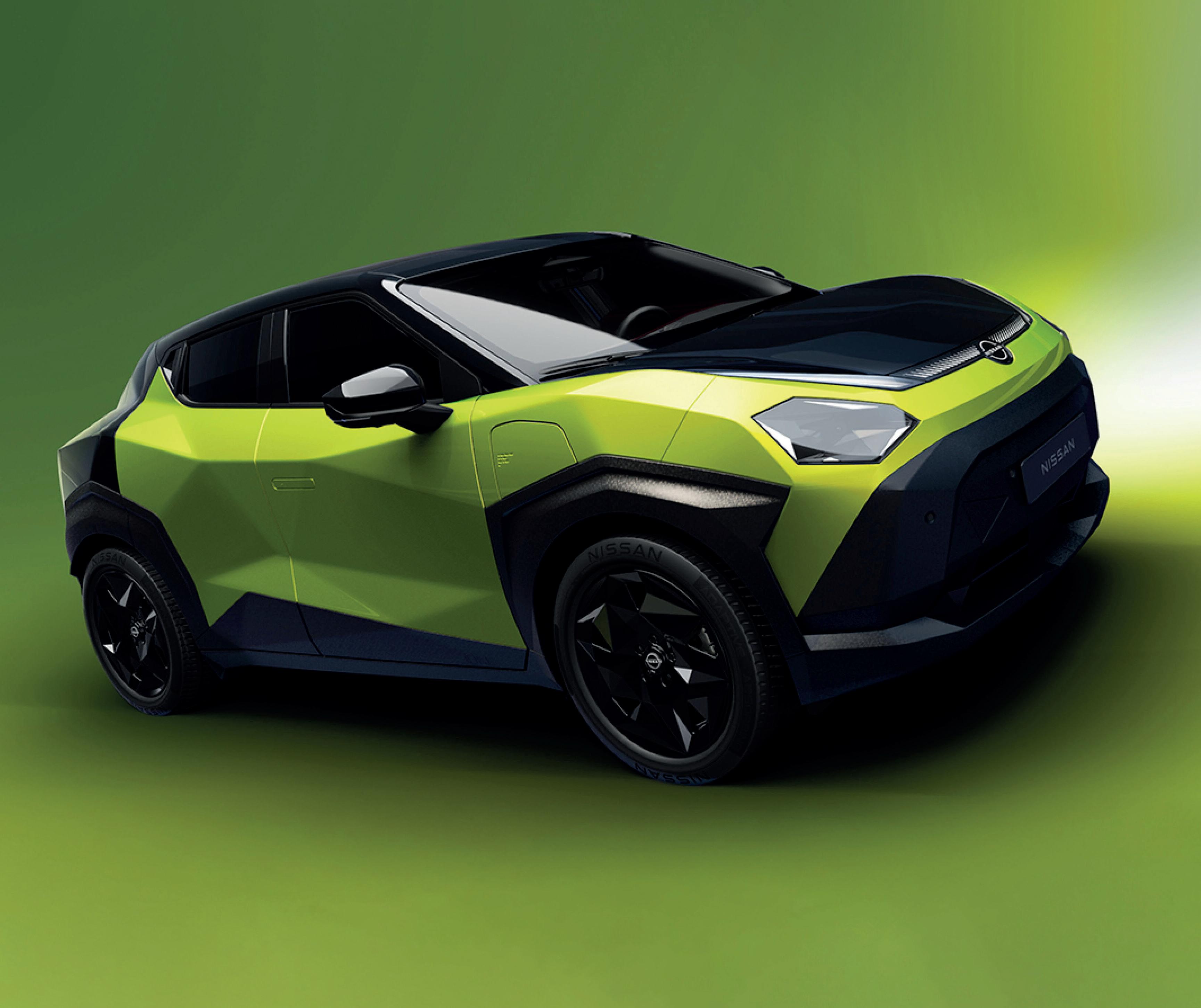
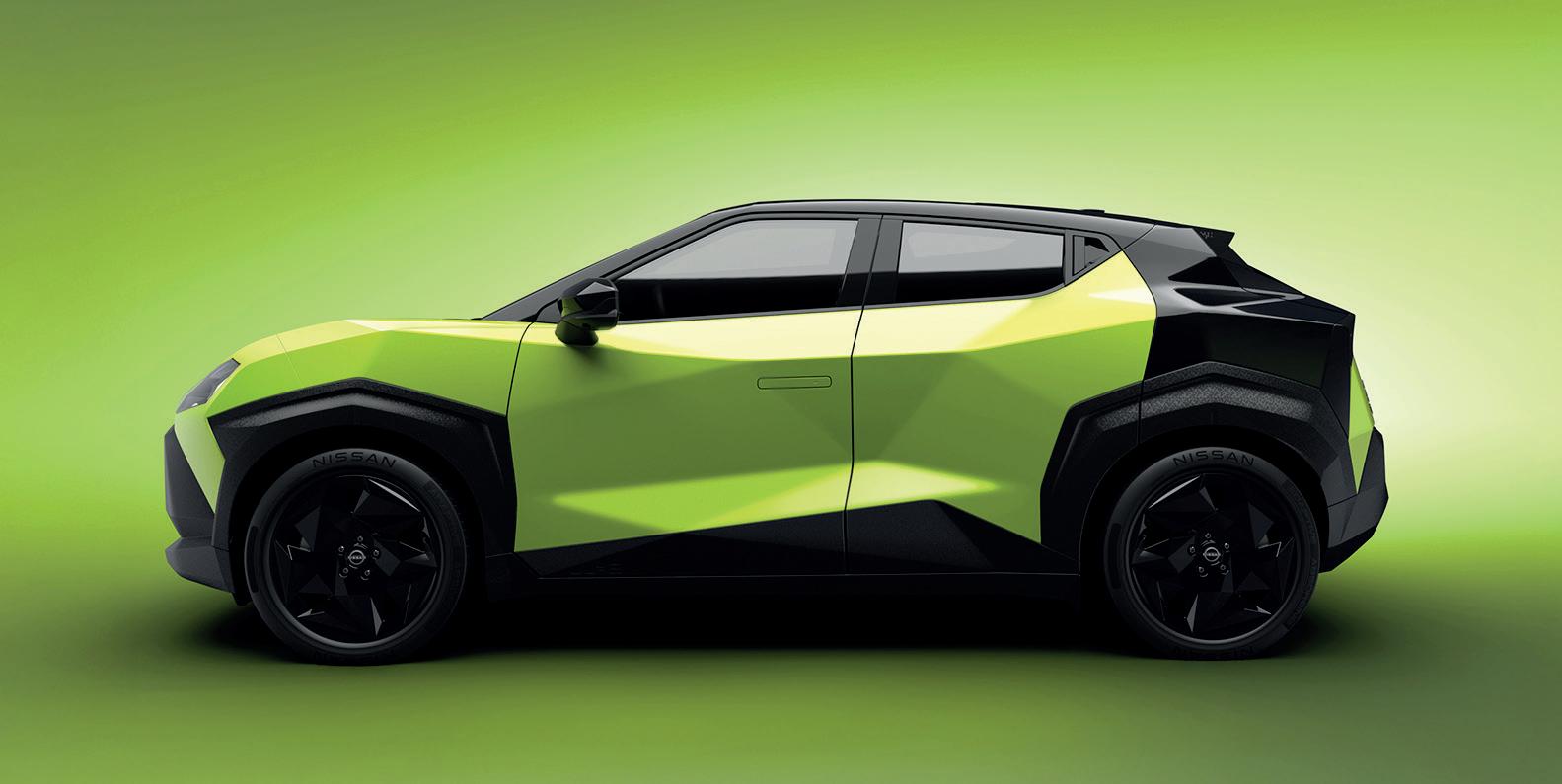
The Juke has always been famous for its avante garde design and the third generation is the most radical yet, drawing clear inspiration from the 2023 Hyper Punk concept car.
The car’s familiar bug-eyed front end and high rear haunches have been carried over from previous generations but are wrapped in a hyperangular design with a riot of sharp lines and bold contrasting coloured body panels.
The new Nissan Juke will go on sale in 2027, bringing a sharply-styled new contender in the compact EV segment.
The Juke is Nissan’s second-best selling model in Europe after the Qashqai. It has sold 1.5 million units since the first generation’s launch in 2010 and Nissan’s vice president for product, Clíodhna Lyons, said the brand expects the introduction of a pure EV to bring new customers to the model.
“Juke has always stood for bold design and a willingness to challenge convention. With this third generation, we are bringing that spirit into the electric age,” she said.
“Europe is central to Nissan’s electrification strategy, and we remain firmly committed to a fully electric future,” added Massimiliano Messina, chairman of Nissan AMIEO. “With a rapidly expanding EV line-up, we are bringing greater choice and innovation to every segment. Together, this next generation of vehicles will accelerate our transition to zeroemission mobility.”
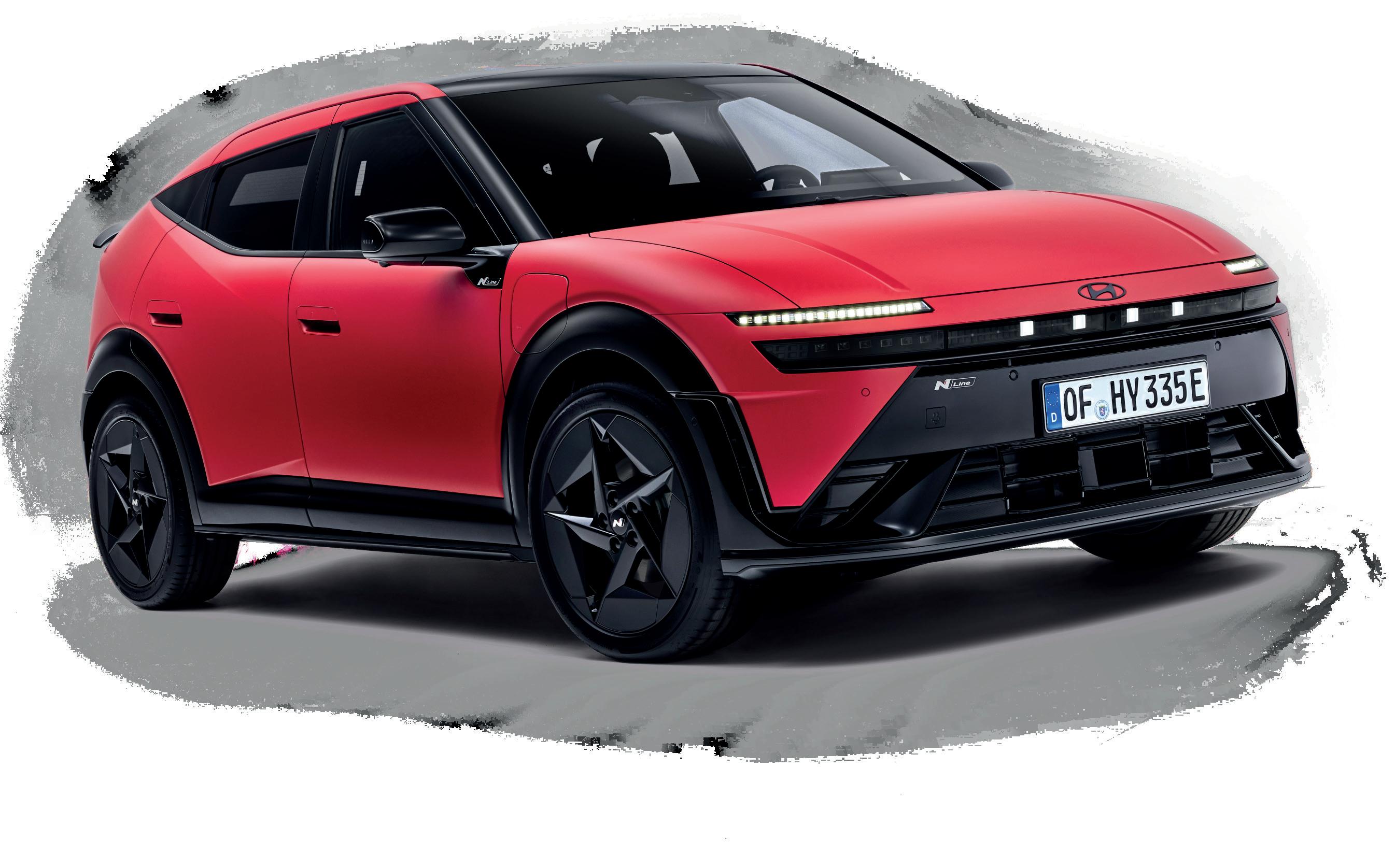
HYUNDAI IONIQ 3
brings space-age looks and 300 miles of range
The Hyundai Ioniq 3 has been revealed in productionready form for the first time as it looks to shake up the compact EV segment.
The Korean brand’s new five-door “aero hatch” will sit just above the tiny Inster in its growing EV range and is expected to compete with key models from Renault, Volkswagen and Kia when it arrives in the UK later this year.
At 4.15m long, the Ioniq 3 sits between more traditional B and C-segment cars. However power and range figures, along with comments from Hyundai, suggest it’s aiming to compete in the smaller segment with the likes of the Renault 5, Mini Electric and upcoming Cupra Raval and VW ID.Polo.
There’s also the small matter of the Kia EV2, with which the Ioniq 3 shares its 400V E-GMP platform.
The sharp exterior styling shows a clear connection to the Concept 3 revealed last year, albeit without the rear-hinged back doors or bumper-mounted digital display screen. Hyundai says that the Ioniq 3 has been designed to balance simplicity, aerodynamics and generous interior space.
Although taller than the Concept 3, the Ioniq 3 shares its curved bonnet line, raked roofline and
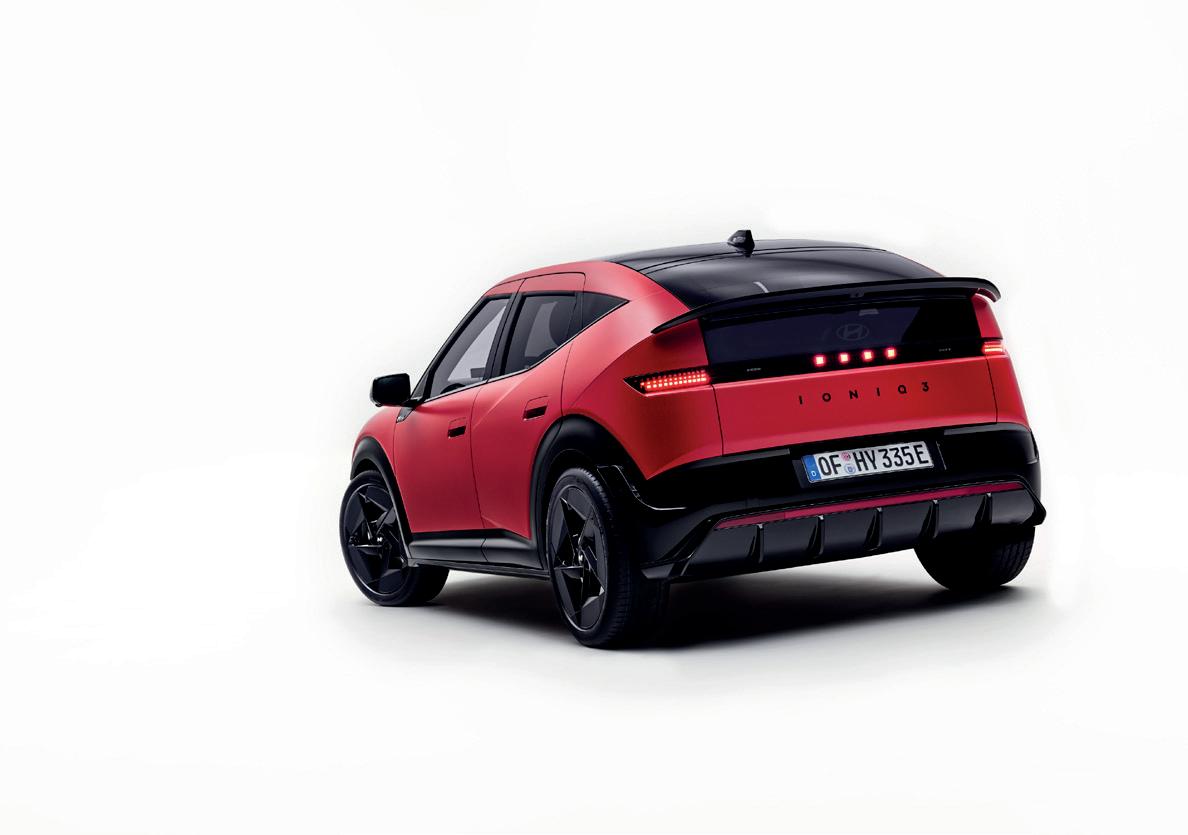
pinched rear glasshouse split by a prominent ducktail spoiler. Hyundai says the Ioniq 3 draws on its “art of steel” philosophy with a few simple lines creating a “strong and precise” visual impact. Like larger Hyundai EVs, the Ioniq 3 features pixel-style LED lights front and rear.
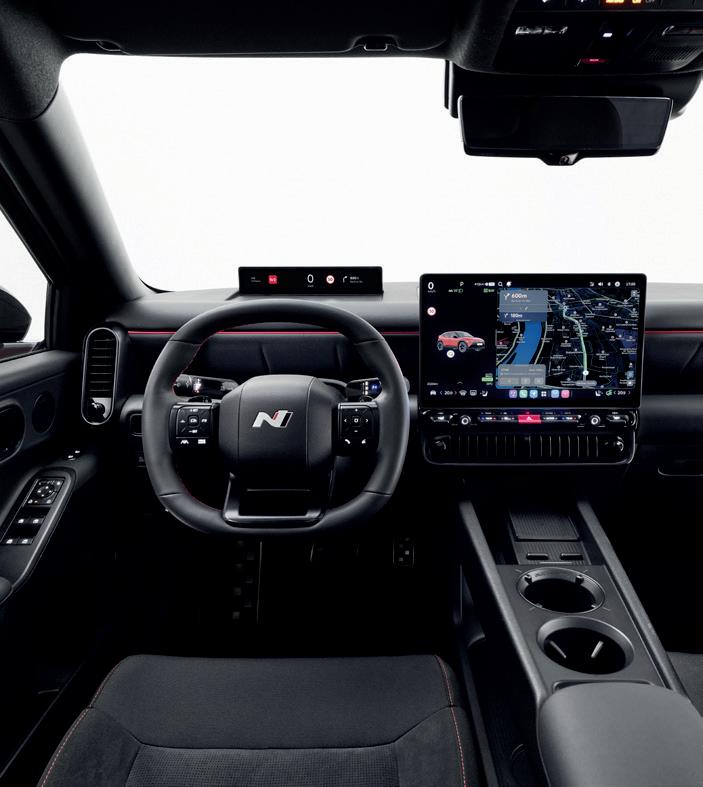
The Ioniq 3’s interior designers have apparently drawn inspiration from household furniture for the interior, including 1970s Italian fabrics, and say the cabin is intended to remove distractions for the driver. Hyundai claims best in class passenger space and a 322-litre boot that expands to 441 thanks to a Ford-aping “Megabox” beneath the floor. High-spec cars will feature heated and cooled “relaxation” seats.
The Ioniq 3 is the first European Hyundai to use a Google-based infotainment system. Central touchscreens of 12.9 inches or 14.6 inches will run the Android Automotive-base Pleos OS to allow for a more intuitive and integrated setup.
Running on the Hyundai Group’s ubiquitous E-GMP platform, the Ioniq 3 comes with two powertrain options offering up to 308 miles of range.
The Standard Range model uses a 42.2kWh battery married to a 145bhp front-mounted motor for a predicted range of 214 miles and a 0-62mph time of 9 seconds.
The Long Range car, meanwhile, uses a less powerful 135bhp motor and a 61kWh battery
to maximise range. It delivers 0-62mph in 9.6 seconds and up to 308 miles of range. Hyundai says this is class-leading, reinforcing its view of the Ioniq 3 as a B-segment hatch.
Hyundai says both batteries will top up from 1080% in around 30 minutes and will accept AC charging at up to 22kW.
Prices for the Ioniq 3 are yet to be announced but they are widely expected to start at around £25,000 after government or manufacturer discounts, putting it in the same region as the Cupra , Kia and VW models.
HONDA SUPER-N to land in the UK this summer
Honda
has confirmed that
its
all-electric Super-N kei car will go on sale in the UK this July with a starting price of less than £20,000.
The five-door hatchback will rival the Renault Twingo and promises to “redefine what is possible for a small EV” with a blend of unique styling, extensive personalisation and driver-focused dynamics.
For the most part, the Honda Super-N is powered by a 64bhp electric motor. However, its compact e-Axle has a Boost mode that unleashes 95bhp in short bursts. As it seeks to deliver "entertaining handling and dynamics", the Super-N gets a simulated seven-speed manual transmission, and an “active sound control system”.
Honda hasn't confirmed any battery or charging details, but we do know that the Super-N will provide up to 128 miles on the combined cycle, and 198 miles in an urban environment.

FORD trims CAPRI and EXPLORER prices
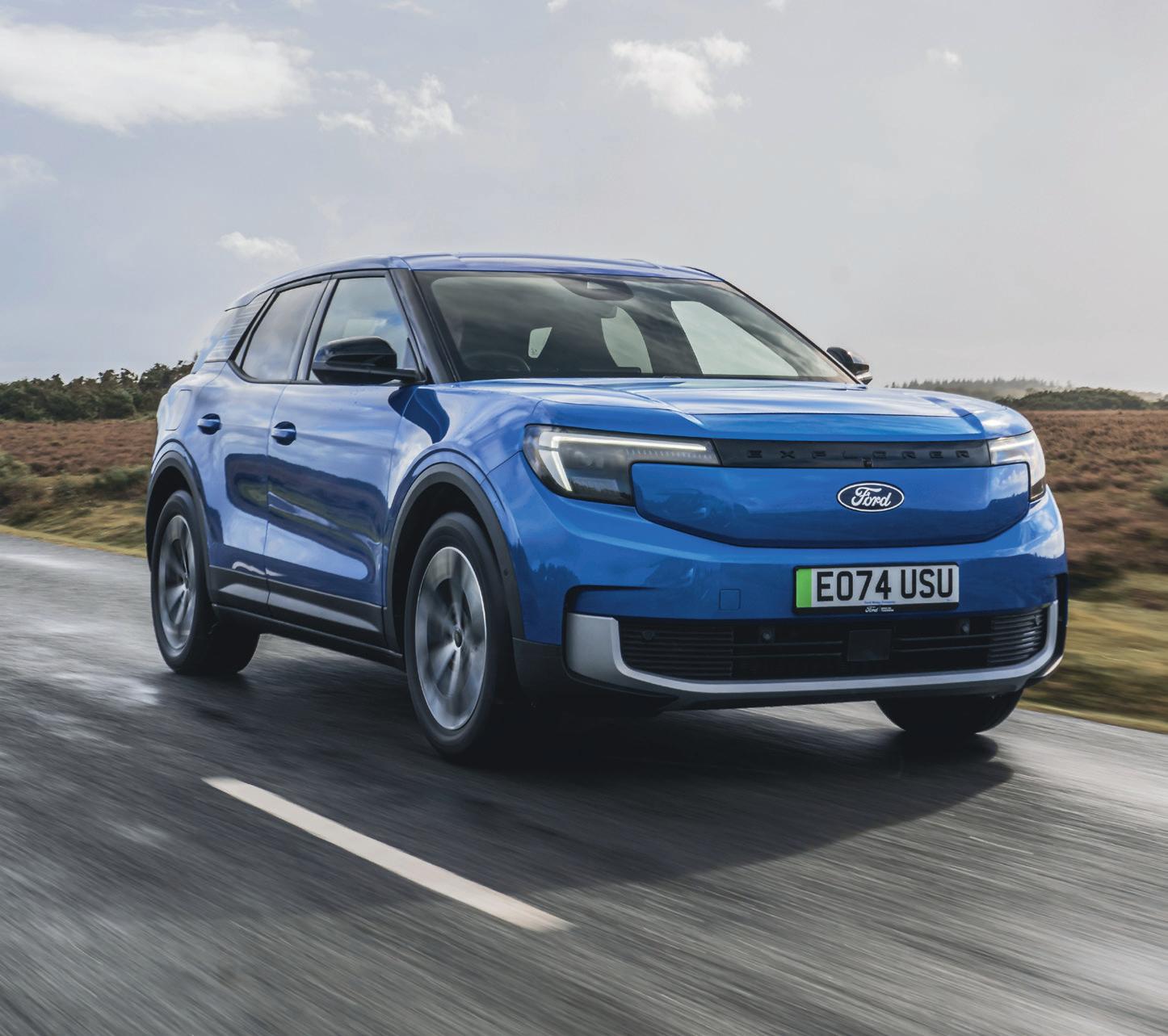
Ford has slashed the price of its all-electric Capri and Explorer by up to £5,000.
Pricing for the Explorer SUV has been dropped by between £4,035 and £4,800, depending on the powertrain and trim level. The price reductions mean that the entry-level, Style model with its rear-mounted motor and 58kWh battery now costs £35,185.
Meanwhile, the flagship, 77kWh-batteried allwheel-drive Premium now costs less than £50,000. Before the discount, it started at just under £54,000.
Its sibling, the Ford Capri, has been reduced from between £4,080 and £5,070. The base Style model with a 58kWh battery now starts at £36,985.
At the same time as cutting prices, Ford has added more kit to both cars. Extra toys now include an updated version of Ford's Sync infotainment system, improved cruise control, a reversing assistant, driver monitoring, and a three-pin outlet that can power devices up to 2.3kW.
to take on the
Neue Klass i3
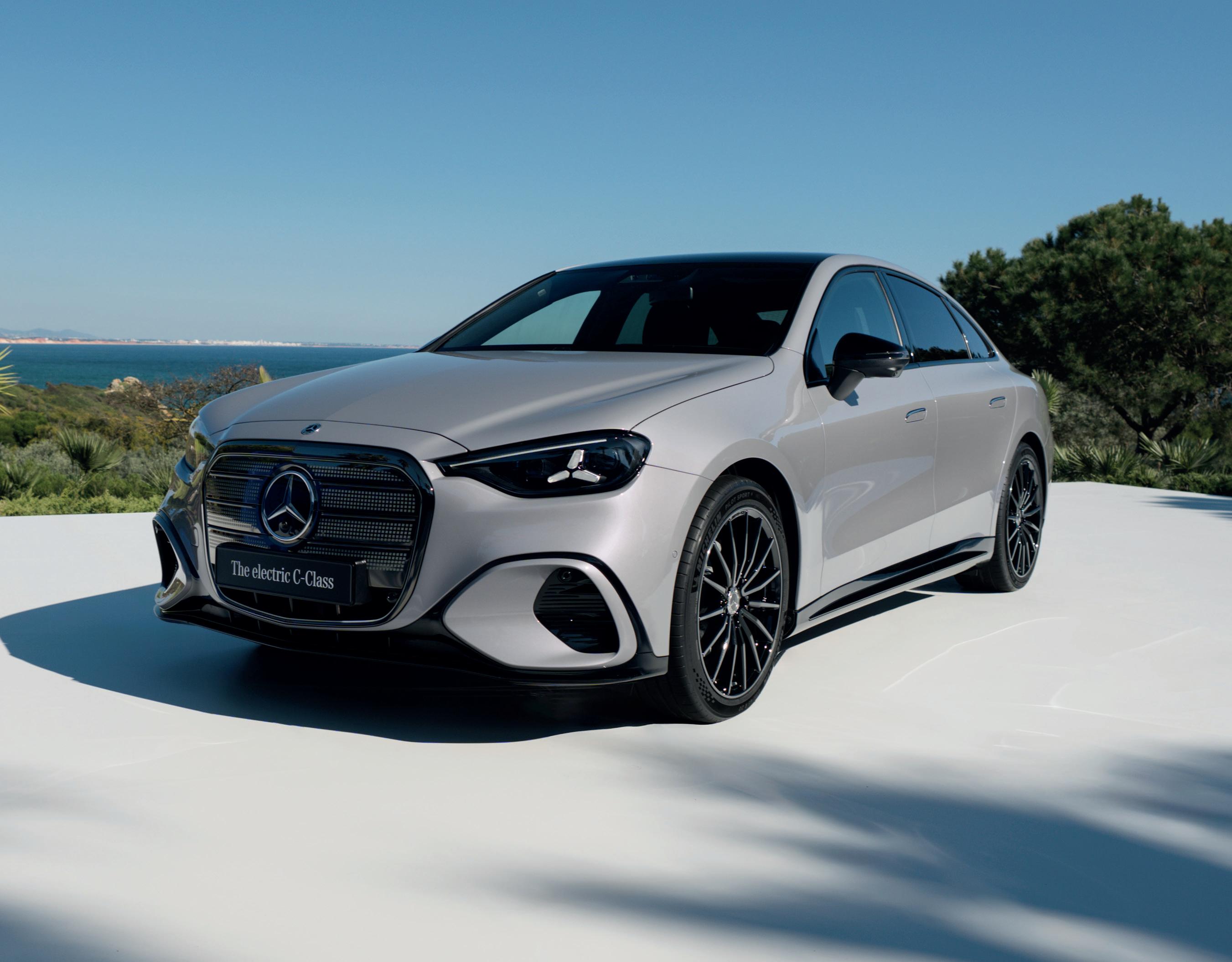
MERCEDES C-CLASS EV arrives
For the first time since it debuted in 1993, Mercedes is now offering its mid-sized saloon with an electric-only drivetrain.
Riding on the same EV-only MB.EA platform as the GLC SUV, the new C-Class EV packs a 94.5kWh battery with a 473-mile range. Meanwhile, its 800V hardware promises charging speeds of up to 330kW, which translates into 199 miles of range in just 10 minutes.
Later down the line, Mercedes promises a less powerful, rear-wheel-drive model with an i3rivalling range of around 500 miles, along with other choices of battery and power. These will include a tri-motor AMG car, which will go toe-totoe with BMW's upcoming iM3 super saloon, which promises four electric motors and around 1,000bhp.
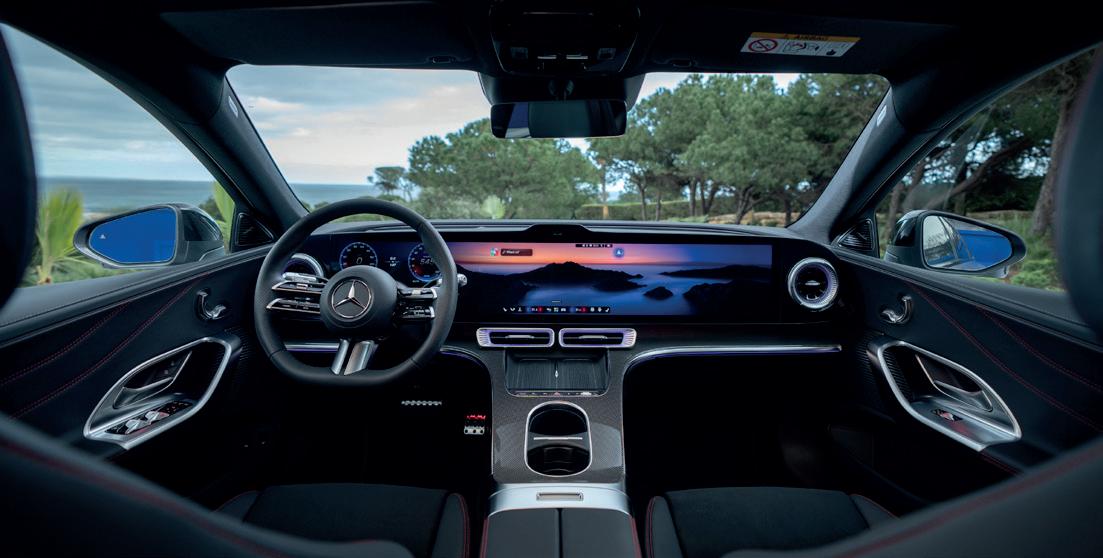
Inside, the first-ever electric C-Class is a largely buttonless affair, and the cabin is dominated by a dashboard-wide, 39.1-inch Hyperscreen running Mercedes's MBUX operating system. The difference between the optional Hyperscreen and the standard-fit
Superscreen is that the latter doesn't get the third passenger display.
Mercedes promises that the C-Class EV will set "a new benchmark for quality, craftsmanship, and comfort" thanks to its use of metal, lighting, and various materials, including vegan and optional Nappa leather.
The seats come with four-way, electro-pneumatic lumbar support, while an optional Sky Control panoramic roof is offset with 162 illuminated three-pointed stars. Top-tier cars will come with a Burmeister 4D Surround Sound system, which fits bass-transmitting transducers into the seats, allowing passengers to “feel” the music.
The Mercedes C-Class EV has debuted with up to 473 miles of range as it squares up to the new BMW i3.
The C-Class EV shares its bold front end with the GLC, and its distinctive grille is embedded with 1,050 LEDs. Meanwhile, the headlights come with an embedded three-pointed star signature.
Around the back, the electric C-Class has a "GT rear end" with four tail-lights, once again finished with Mercedes's three-pointed star in the centre. Their black surround - along with a high waistline, large wheels, and an extended glassbox - come together to create a fastback design; another first in the C-Class's 33-year history.
The Mercedes C-Class EV comes with 470 litres of boot space and a 101-litre frunk for charging cables and the like. Mercedes has no plans to introduce a larger estate model, as it claims the GLC is for buyers who want their EV with more space.
No pricing for the C-Class EV has been made public yet, but it is likely to cost around the same as the BMW i3, which is pegged at around £50k. The new electric C-Class is expected to go on sale in the UK this summer, with deliveries made before the end of the year.
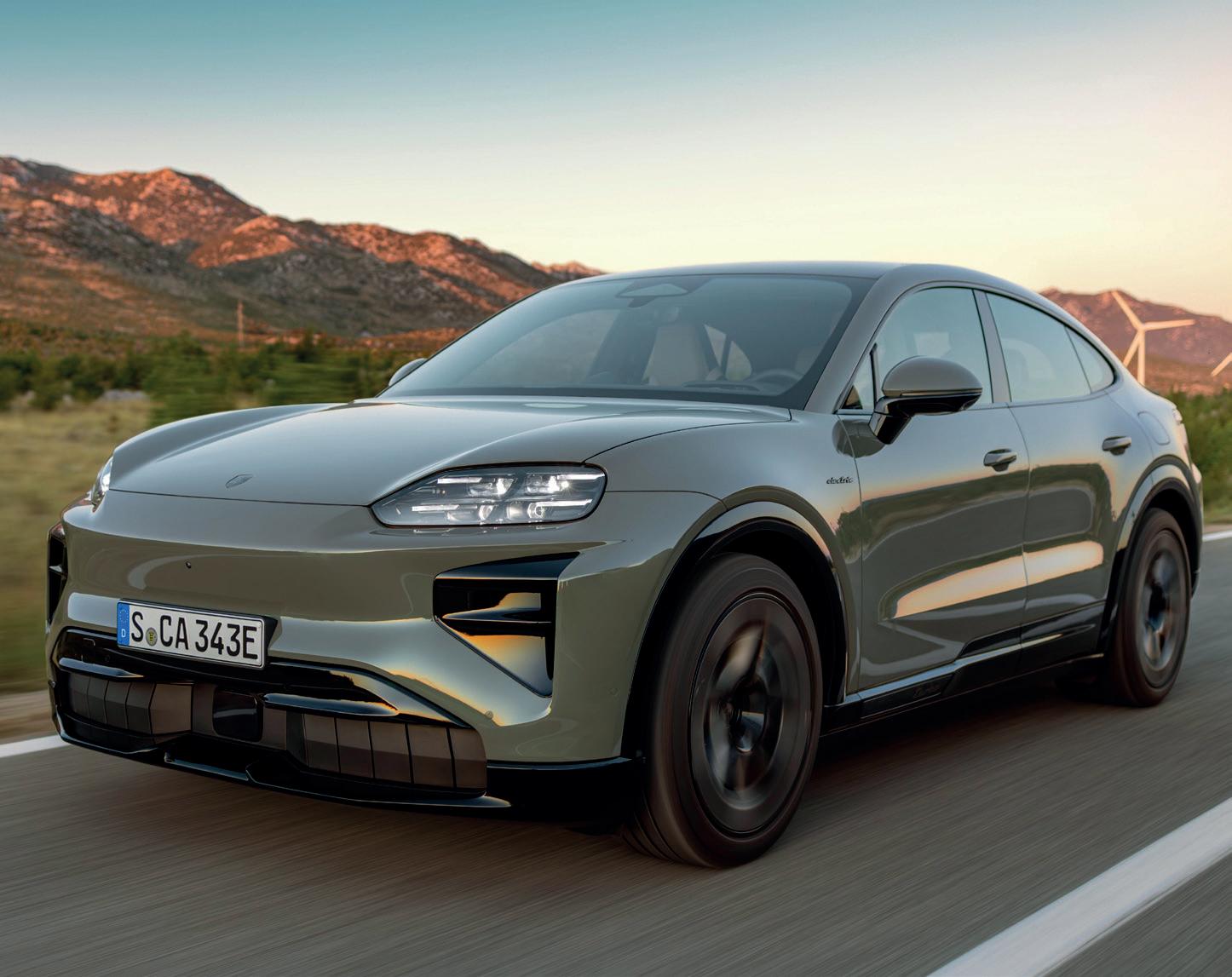
PORSCHE CAYENNE COUPE brings 911-inspired looks and longer range
Using the same underpinnings as the SUV model, the new Cayenne Electric Coupe’s body is different from A-pillar back, with a design Porsche says pays tribute to the iconic 911.
The gently sloping roofline brings improved aerodynamics which add 11 miles to the Cayenne’s range. The pay-off is boot space that’s reduced by 247 litres to 534 litres.
The Cayenne Electric Coupe line-up mirrors that of the SUV and starts at £86,265 for the 402bhp Cayenne Coupe – £3,000 more than its boxier sibling.
Above that, the Cayenne S Coupe starts at £103,165 and It bumps up the power to 537bhp (657bhp on overboost), while also managing to eke out 415 miles.
At the top of the range, the Cayenne Turbo Coupé produces a regular 845bhp which can be temporarily boosted to 1,140bhp, delivering a 0-63mph time of just 2.5 seconds. Prices for the flagship coupe start at £133,365.
Porsche has revealed its new Cayenne Electric Coupe, promising a more “emotive design” and improved range over the standard SUV.
SMART gives first hints of new #2 design
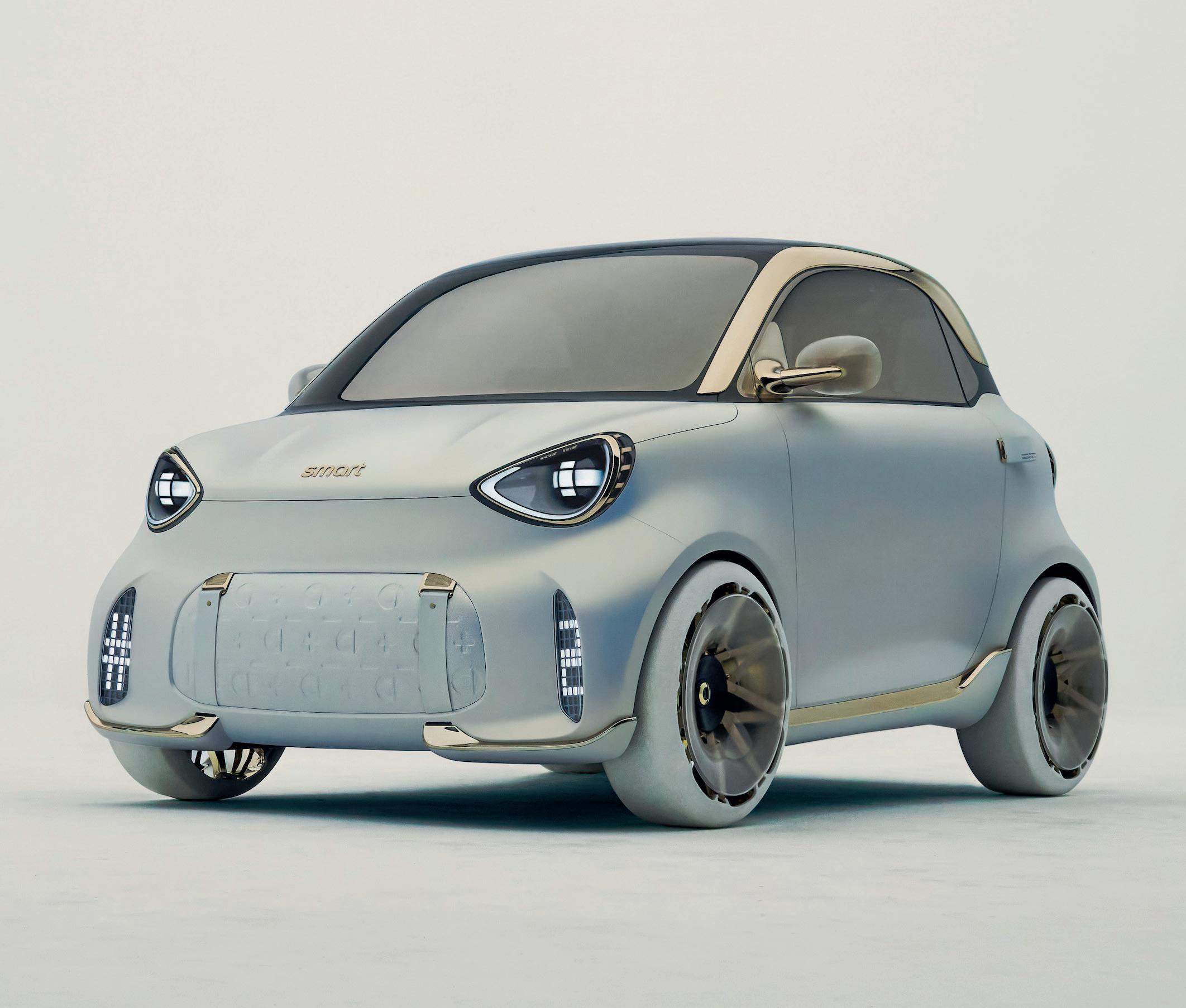
Smart has released the first images of its Concept #2, as it prepares to re-enter the city car segment later this year.
The Smart Concept #2 is an all-electric reinterpretation of the Smart Fortwo city car, which was introduced in 1998. According to the Chinese-German carmaker, the Concept #2 "interprets smart design through a style-inspired lens, where function becomes form".
Inside and out, it has been penned by the design team at Smart's co-owner, Mercedes-Benz using modernist minimalism and premium fashion influences.
The Concept #2 closely reflects the Fortwo's one-box design and ultra-compact dimensions, suggesting an overall length of under three metres, not dissimilar to that of its 2.7m-long predecessor.
Riding on Smart's Electric Compact Architecture platform, the Concept #2 has a rear-wheel-drive configuration, along with a two-door, two-seat layout like the Fortwo. It’s expected to offer a much-improved range and power balance compared with the previous Fortwo EQ.
LUCID to bring Cosmos SUV to UK
US EV manufacturer Lucid has confirmed it will make its UK debut in 2027, five years after launching its Air saloon in mainland Europe.
The brand's first UK vehicle will be the BMW iX3 and Volvo EX60-rivalling Cosmos, a premium C-segment SUV based on a dedicated 800V platform.
Set for release later this year, the Lucid Cosmos will be built at the firm's recently built plant in Jeddah, Saudi Arabia, and will be developed for right-hand-drive (RHD) markets from the off.
In 2028, Lucid will add a rugged, off-road and adventure-focused Earth model to its line-up, followed by a more practical, and presumably larger version of the Cosmos.
While UK pricing for the Lucid Cosmos has yet to be confirmed, reports suggest that Lucid's smallest SUV will be priced from less than $50,000 - the equivalent of just over £37,000.
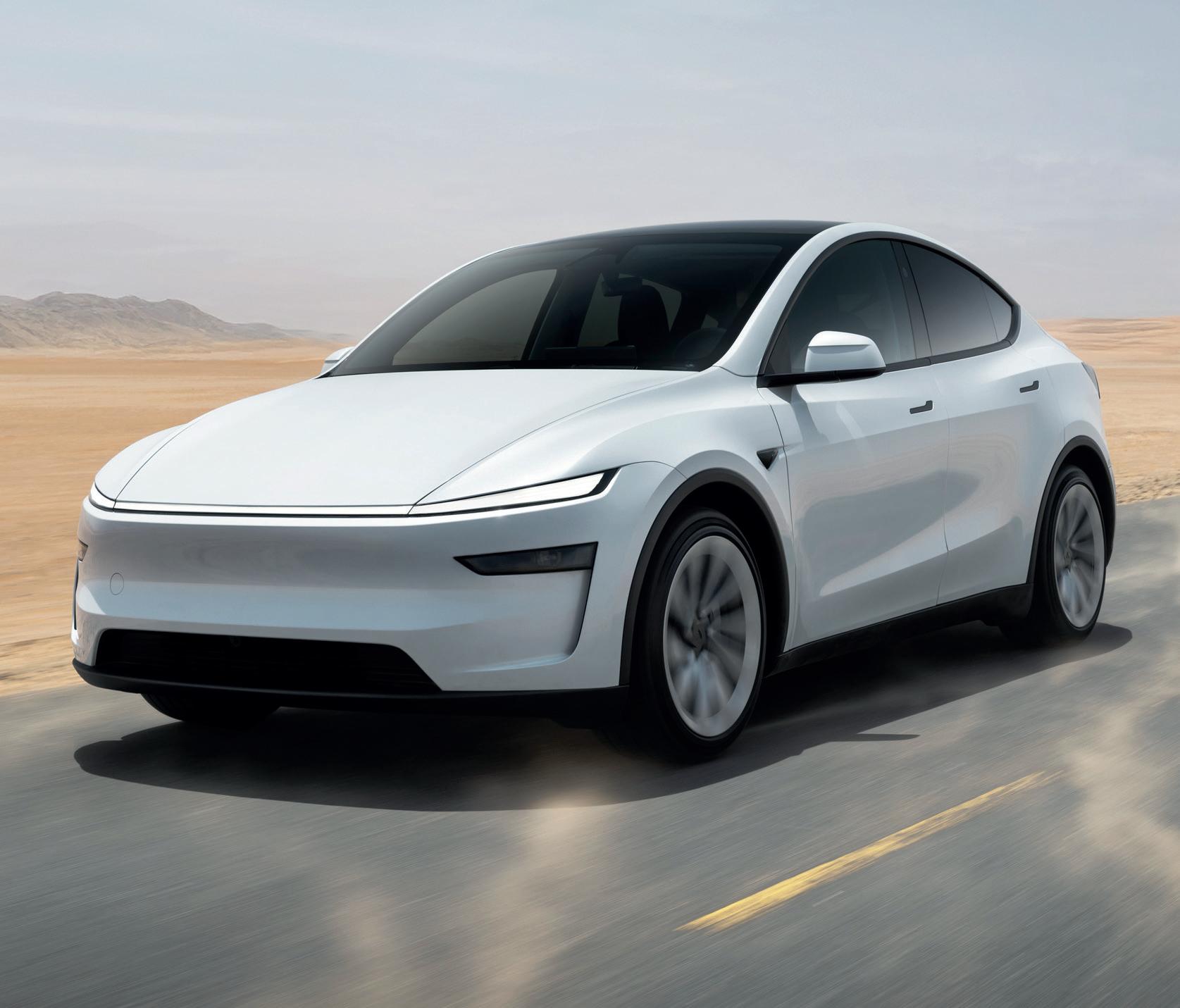
TESLA launches seven-seat Model Y in UK
US brand adds more flexibility to best-selling SUV from this month.
Aimed at the likes of the Peugeot E-5008 and upcoming Skoda Peaq, the Model Y seven-seater will be solely available in top-spec, Long Range All-Wheel Drive trim powered by a twin-motor setup.
The additional two seats will carry a £2,500 premium over the standard car, bringing the starting price to £54,490.
The extra weight from the third row of seating reduces the Model Y's range from 391 to 372 miles. With the rear seats in place, the Model Y seven-seater retains 381 litres of luggage capacity, which rises to 894 litres when folded. As usual with Tesla, figures are measured to the roofline.
Alongside the extra two seats, the Tesla Model Y gets a sliding middle row and USB-C charging ports for those travelling in the boot.
CV SHOW
DELIVERS MAJOR UPDATE FOR ELECTRIC VAN MARKET
Recent weeks have seen the annual Commercial Vehicle (CV) Show take over Birmingham's NEC. As well as the traditional pallet-load of diesel-powered vehicles, this year’s show delivered more electric commercial vehicles than ever before.
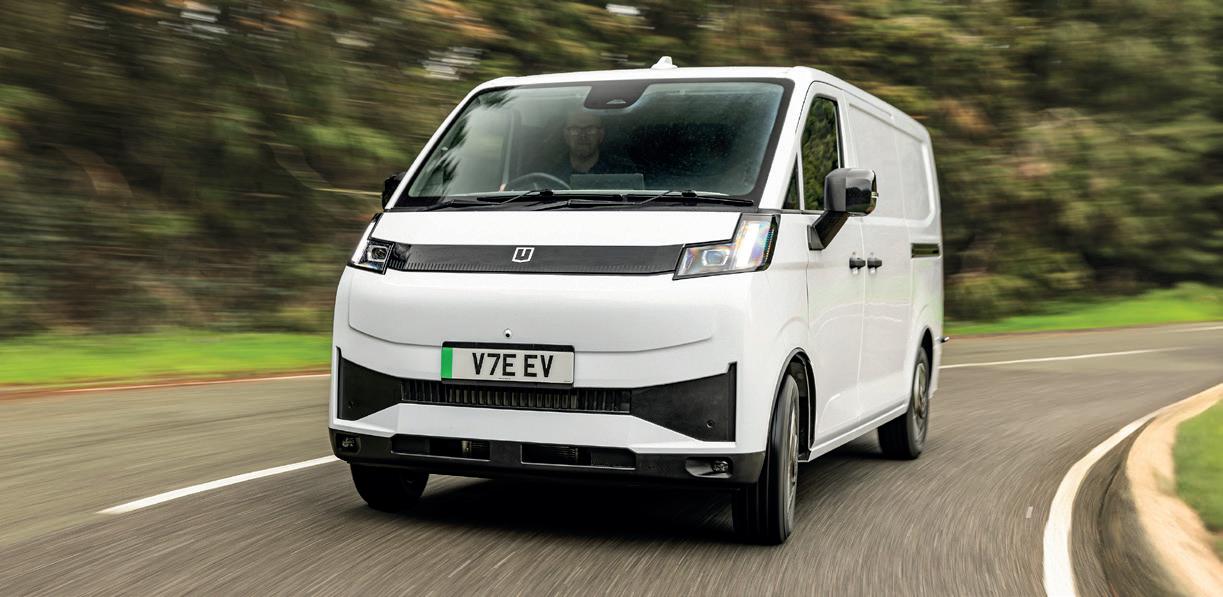
Farizon is already a familiar name in the electric van segment thanks to its Ford Transit-rivalling SV. At the CV Show it revealed its second UK-bound model, the V7E.
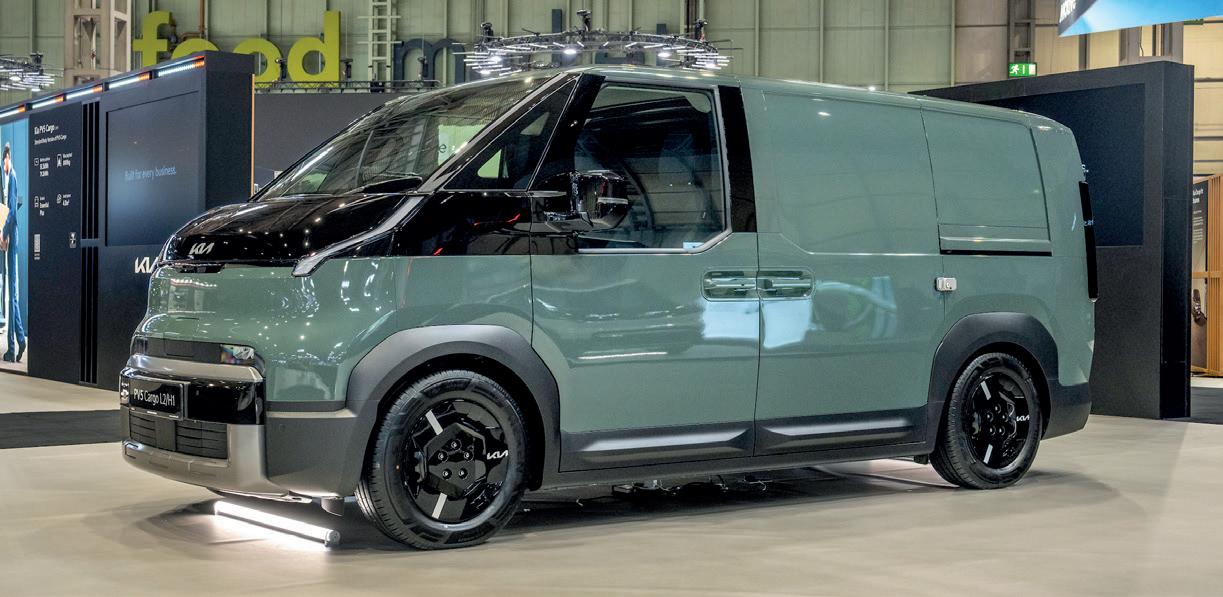

Kia’s PV5 made its UK debut at last year’s CV show but was back again this year as the Korean brand continues to expand its commercial vehicle operations. After launching the PV5 Cargo in L2H1 configuration last year, it has now added new models either side, to give operators wider choice.
We take a look at some of the key new model announcements to come out of the Commercial Vehicle Show 2026
Alongside additions to existing EV line-ups, the threeday showcase saw the unveiling of several brand-new models and brands as manufacturers look to serve the growing number of businesses looking to decarbonise their operations.
FARIZON V7E
The Farizon V7E is intended as an affordable, pared-back companion to the SV, and is set to compete with the Ford Transit City and Kia PV5.
Set to cost between £28,000 and £30,500 before VAT or any grants, the V7E will be offered in just one bodystyle – L1H1 – with one motor and a choice of two batteries. At 4.99m long, it is roughly the same size as the more expensive SV and offers up to 6.95m3 of space, with a payload of up to 1,338kg.
The Chinese brand says the V7E shares the same drive-by-wire technology as the SV but to keep costs down it uses smaller batteries and motors. All versions use a 148bhp/170lb ft front-mounted motor with a top speed of 75mph. The entry-level van uses a 50kWh battery with a Transit City-rivalling range of 149 miles. For longer routes, a 67kWh battery has a claimed maximum range of 204 miles. Both models get 100kW DC charging.
KIA PV5
The L1/H1 is 200mm shorter than the L2, and features a 4.0m3 cargo space – 0.4m3 less than the L2/H1 model. Maximum payload is up to 800kg – 10kg more than the L2/H1.
The new entry-level PV5 will come with a choice of batteries – Standard Range 51.5kWh and Long Range 71.2kWh. In its most efficient guise, Kia says the PV5 L1/H1 will cover up to 248 miles.
At the opposite end of the range, the new PV5 Cargo L2/H2 will come exclusively with the larger battery offering a range of around 230 miles. The larger model is 311mm taller than H1 models and offers 5.2m3 of space – 0.8 more than the L2/H1. Payload is still to be confirmed but is expected to be 630kg.
As well as revealing the additional models, Kia confirmed its first approved conversion specialists. The firms, including Wurth, TGS Automotive, Modul-System, GM Coachworks and Coolkit, provide everything from internal racking and lining to wheelchair accessible conversions and tipper bodies for chassis cab models.



13 CV SHOW 2026
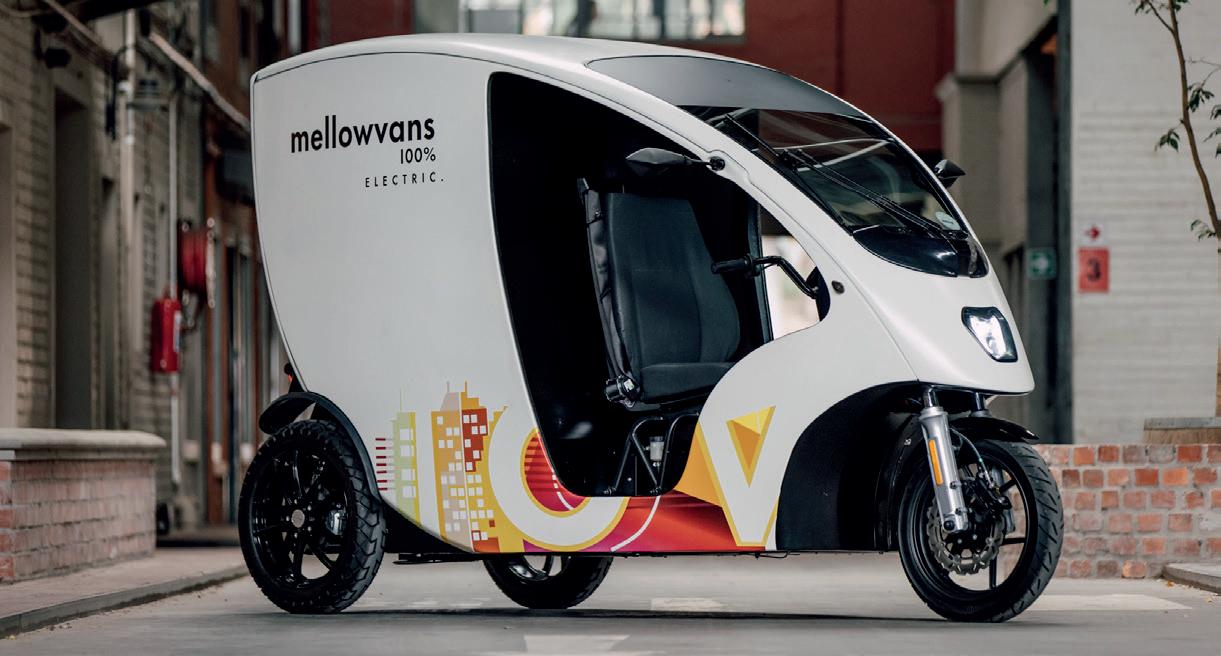
MELLOWVANS
Among the more eye-catching launches at the CV show was MellowVans, a South African firm specialising in urban logistics.
The company's debut UK vehicle is called the MellowVan, and is intended to meet tightening emissions regulations, rapid e-commerce growth, and rising operational costs. The compact three-wheeler is seen as an alternative to existing compact vans such as the Ford E-Transit Courier in tight urban environments where regular-sized vans can struggle in heavy traffic.
The MellowVan has a 70-mile range and can be charged using a standard wall socket. It has 2m3 of cargo capacity and can be driven with a standard driving licence to speed up driver onboarding and fleet deployment.
BYD DOLPHIN CARGO E-VAN
The Dolphin Cargo e-van is one of a rapidly growing number of commercial vehicles based on existing passenger cars (see also Ford, Citroen, Dacia, Leamotor and more). As the name suggests, it’s a regular Dolphin hatchback with the rear seats removed, the windows blanked off and a bulkhead fitted behind the two front seats.
The Dolphin Cargo uses the same 204bhp front-mounted motor and 60kWh battery as the passenger model. BYD says this provides up to 357 miles of city motoring – where the Dolphin Cargo is expected to find its home. We’d expect the combined range to be unchanged from the car’s 265 miles.
CHERY DELIVAN
Not content with launching four passenger car brands in less than two years, Chinese automotive giant Chery is also entering the electric van sphere.
At the heart of the plan is the Delivan, which Chery says is “designed for high-frequency, short-distance urban logistics, supporting last-mile delivery, e-commerce fulfilment and professional fleet use”. In other words it’s an urban delivery van in the vein of the Ford Transit City or Farizon Z7E.
The group also says that the Delivan aims to meet European fleets’ needs and offer a modular approach allowing for different body styles.
Expected to arrive some time in 2027, the Delivan will launch in the UK ahead of other European markets, “reflecting its position as one of Europe’s most advanced and influential commercial vehicle markets”.
ISUZU D-MAX EV
While most of the EV focus at the CV show was on vans, Isuzu used the event to unveil the UK-specification D-Max EV for the first time as it looks to compete in the slowly expanding electric pick-up market.
Set to go on sale in the UK this month, the D-Max EV will be the country’s first electric pick-up to deliver the traditional one-tonne payload and 3.5-tonne towing capacities. Isuzu says it will also offer the same rugged performance as its existing diesel.
The D-Max EV is powered by a two-motor powertrain for permanent fourwheel-drive. Combined, the two motors deliver 200bhp and 256lb ft of torque. A 66.9kWh battery brings a claimed 163 miles of range and peak DC of just 50kW.
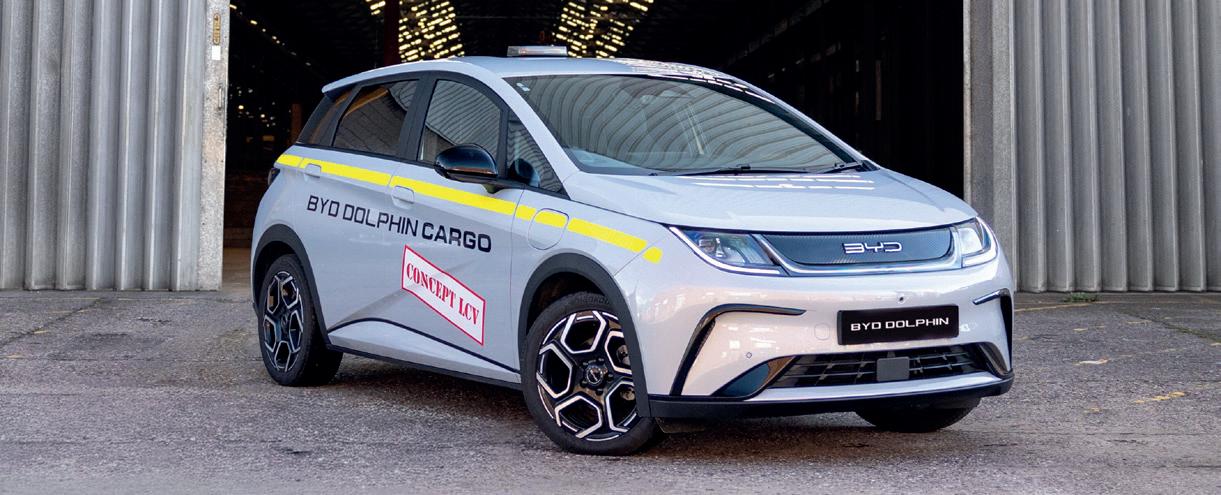
Carrying capacity is limited to 363kg but BYD says the Cargo provides 1,000 litres of space for last-mile deliveries and other light commercial uses.
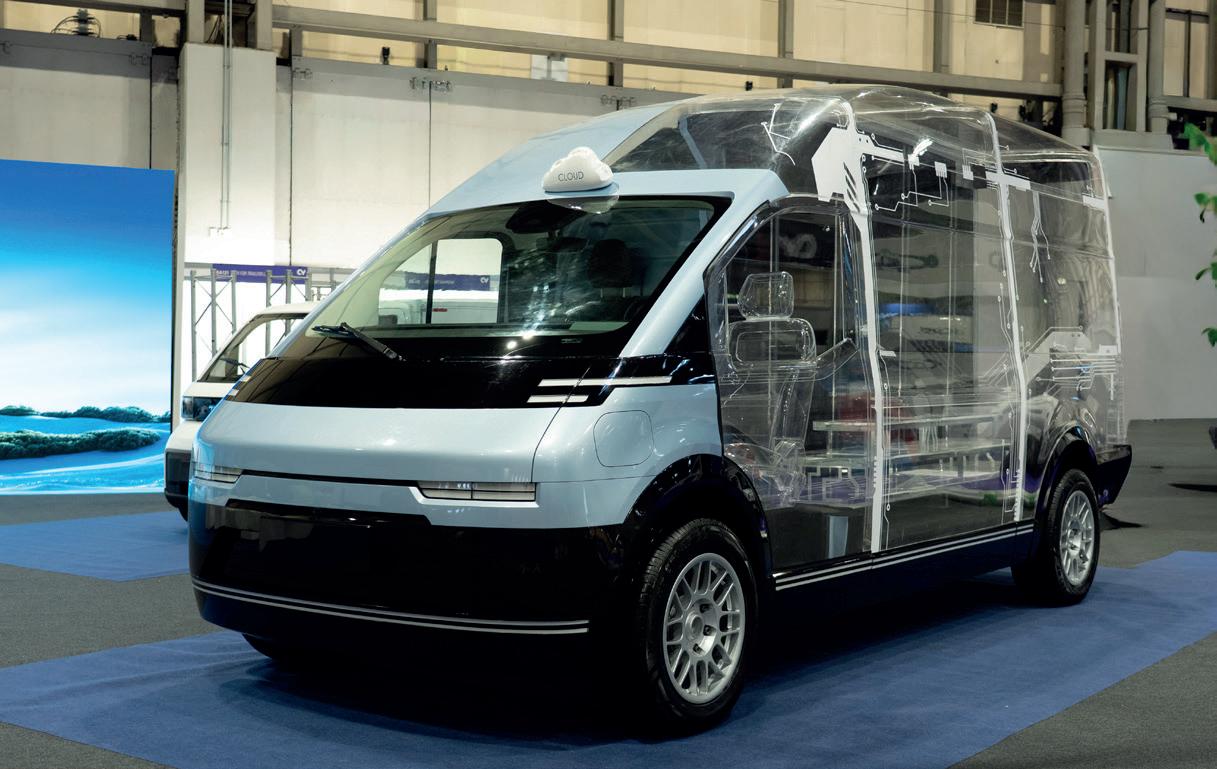
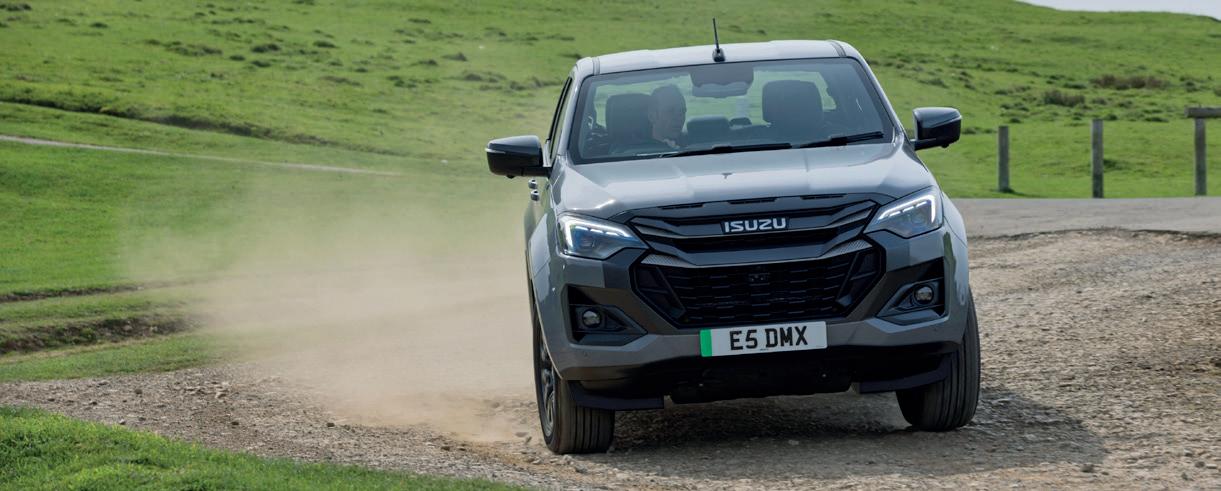
Prices start at £59,995 excluding VAT for the eDL40, which is available as an extended cab or double cab. The eV-Cross is only available as a five-seat double cab priced from £62,495 before VAT.




DR. ANDY PALMER
CHINESE EVS HAVE COMPLETELY EATEN OUR LUNCH
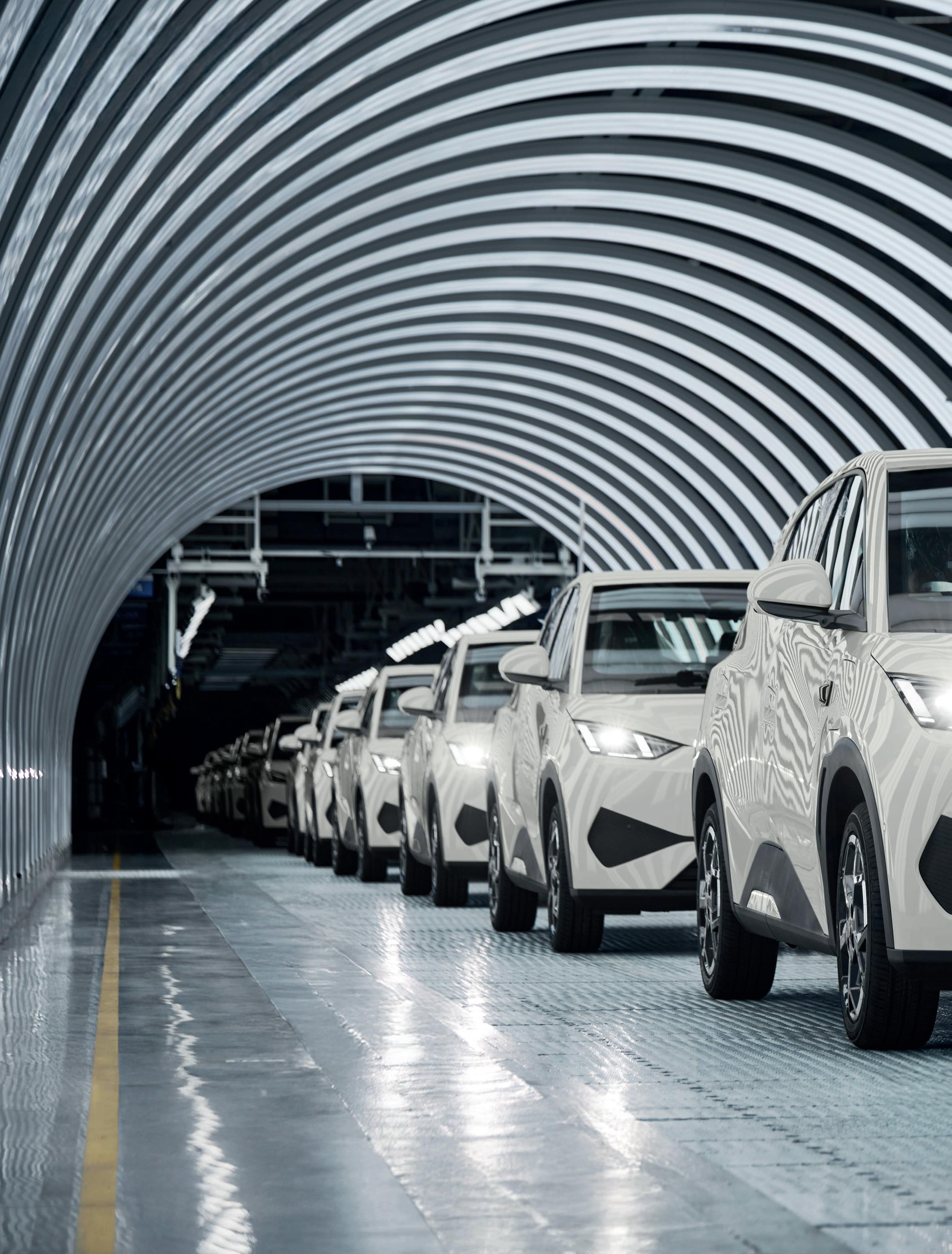
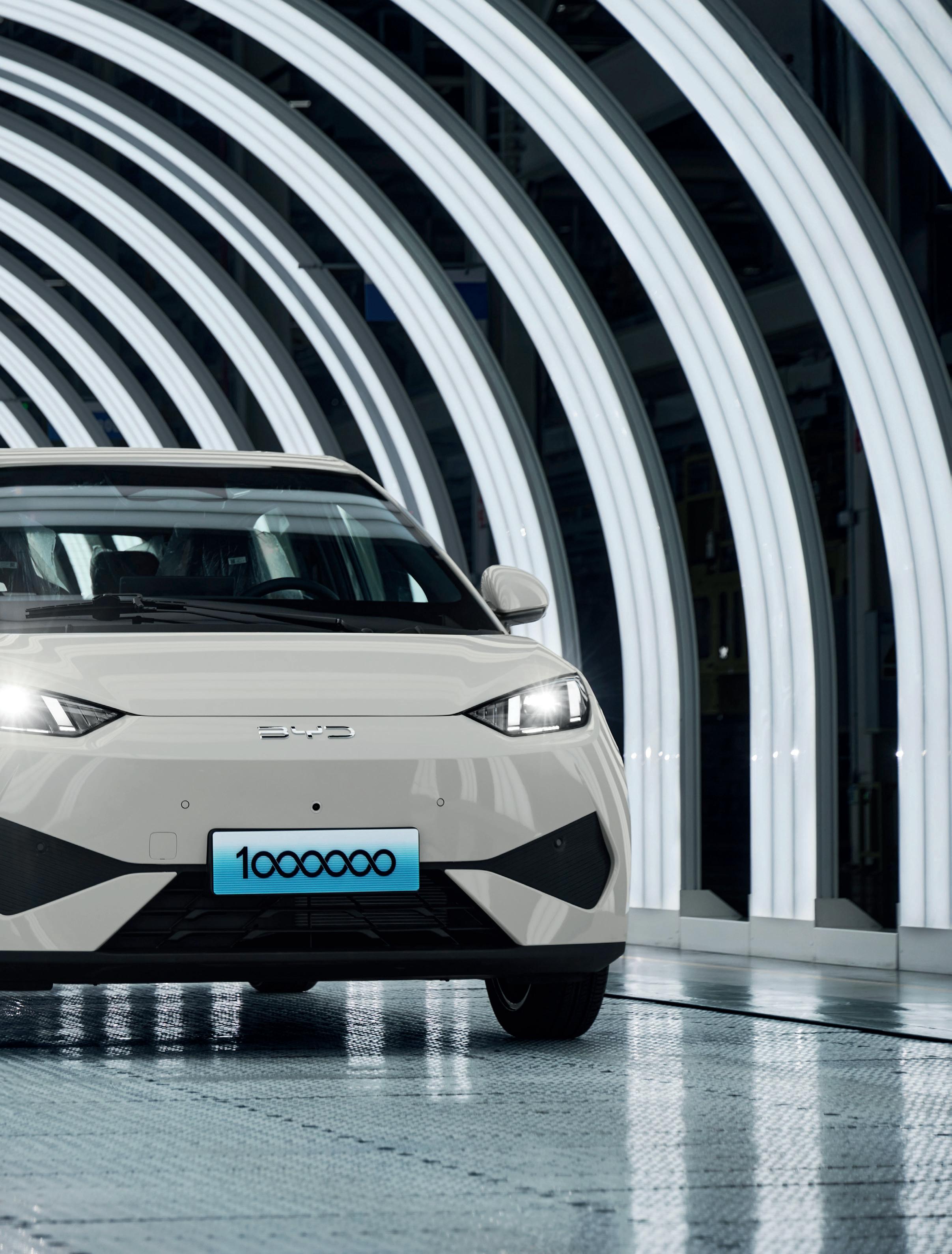
In the automotive world there are an awful lot of voices making an awful lot of noise and fighting to be heard. Especially when it comes to the transition to electric vehicles. But some voices carry more authority than others, and when someone like Dr Andy Palmer speaks, everyone really should listen.
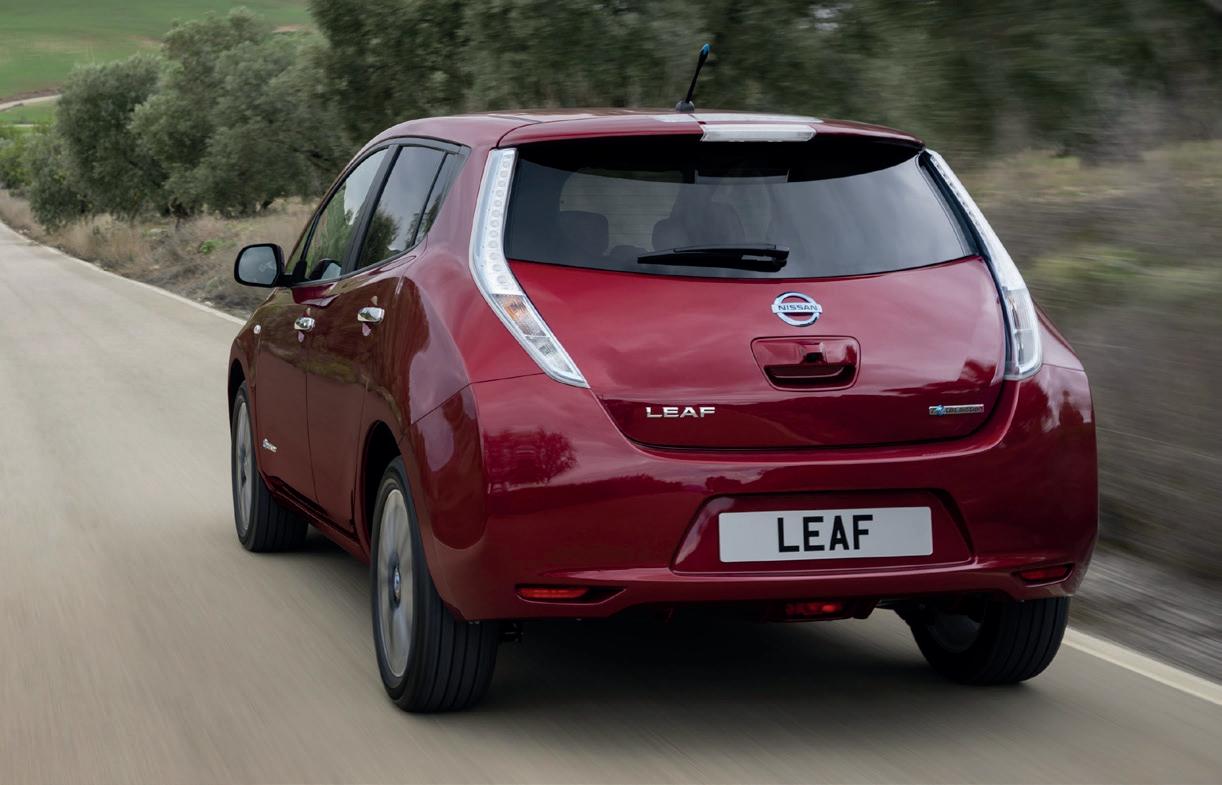
Responsible for overseeing the development of the groundbreaking Nissan Leaf, the now 62-year-old helped make EVs a mainstream proposition for the first time. He also reversed Aston Martin's fortunes in just under six years. Under Palmer's leadership, "the once perennially loss-making company" introduced four new core models including the DBX, Aston Martin's best-selling vehicle to date.
But Palmer isn't here to talk about his past achievements. What's done is done, and in the spirit of any visionary, the "Grey Cardinal of the EV world"
DR. ANDY PALMER
The man responsible for the MK1 NISSAN LEAF tells George East about what Western carmakers can learn from China and outlines his plans for an affordable EV-driven future
– a term he is keen to play down – has his eye firmly on what's next on the EV landscape.
LOOKING EAST
Given BYD’s current status as a global best-selller, and closer to home, the Jaecoo 7’s achievement of becoming the UK’s best-selling car in March this year, his attention is fixed on the meteoric rise of the Chinese automotive industry.
"Look at China, you've got to admire what they've done – they've completely eaten our lunch," he chuckles. "Back in 1992 when they came up with the idea of New Energy Vehicles (NEVs), basically electric cars, they said 'how do we catch up with Western carmakers, and then overtake them?'
"'Well, first of all, we have to learn how to make cars, so let's create joint-venture companies with Western manufacturers'. That suited us, because if you wanted, broadly speaking, to sell cars in the Chinese market, you had to make them there."
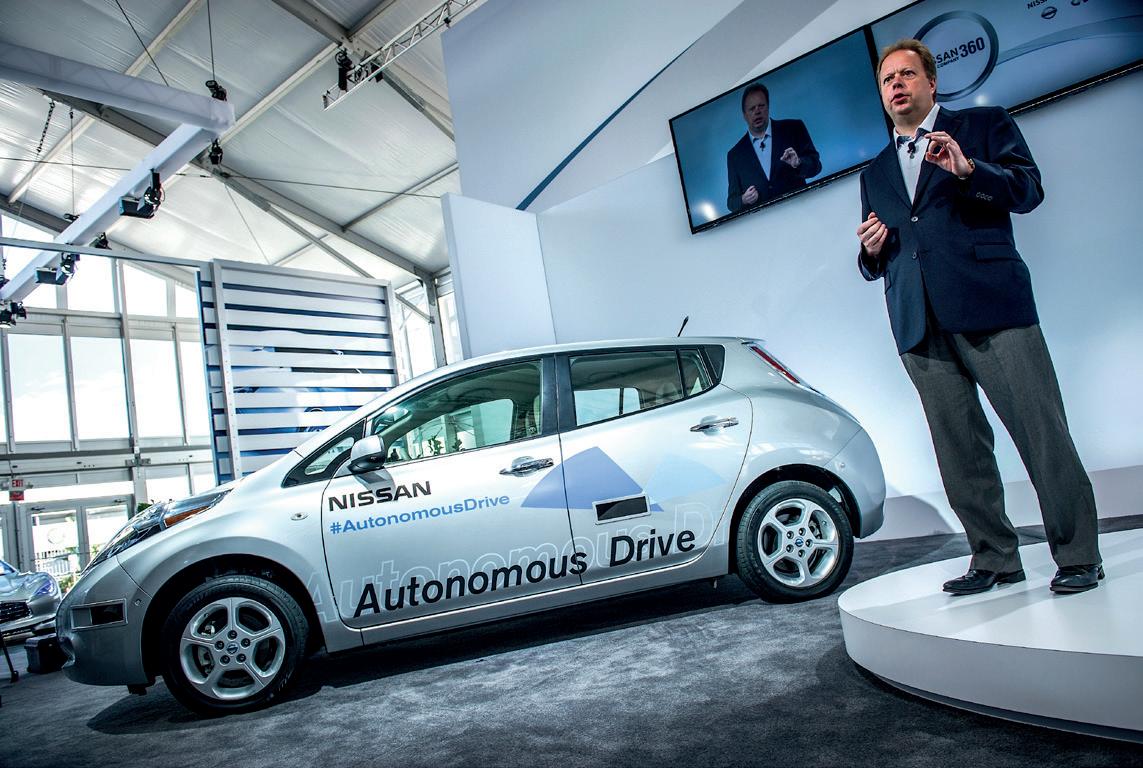
At the time of writing, the Sino-Western joint ventures are numerous. Stellantis and Leapmotor are happy bedfellows. Volkswagen has paired with Xpeng to pursue its 'in China, for China' strategy, while Audi has launched its confusingly named AUDI brand with the help of Chinese automotive giant SAIC for the domestic market.
"As the years passed, China learned how to make cars from their Western partners, then they started dominating in their own market," Palmer continues. "They got to scale, meaning they got their costs down, and that allowed them to export."
The result of that is the tide of low-priced Chinese-made EVs flooding UK and European forecourts and stealing sales from the “legacy” brands we’re all familiar with.
Continue on next page
DR. ANDY PALMER 20 INTERVIEW AN
PUSHING BOUNDARIES
It's a bleak picture Palmer paints. While China was developing its car industry hand-in-hand with becoming the world's second-largest economy behind the United States, Western carmakers found themselves "really on the back foot".
While a fine line between arrogance and complacency exists, Palmer doesn't feel the former is what has led to China becoming "five to 10 years ahead of the West in terms of making electric vehicles".
"Why would you kill the golden goose?" he asks rhetorically. "The European and American manufacturers have a 100-year history of making internal combustion engines and making them well. Why change that?
"Meanwhile, China has started from pretty much nothing, and they've been playing 3D checkers while we've been playing chess - they've totally leapfrogged us. In an industrial space, there's always someone pushing the boundaries, so the next big thing isn't today's battery space, it's tomorrow's.
"For Western carmakers to survive, we have to think about what these boundaries are, and how we can push them to make the next generation of cars."

LEARN FROM THE BEST
It's at this point that I ask Palmer whether it's a case of manufacturers listening to him.
Again, rather modestly, he downplays his importance as a leading EV advocate. Nonetheless, he addresses the elephant in the room for Europe and America's carmakers.
"Just like the Chinese did with us 30 years ago or so, we've got to find that same leapfrog strategy, which may well be inclusive of collaborating with Chinese manufacturers," he says pointedly.
"There is that necessity to learn now, and it sounds strange, to learn from the Chinese and accept that companies like CATL, a battery maker from China, are far ahead of the capabilities we currently have in Europe."
Another example is in the charging sphere where BYD is on the cusp of wheeling out its megawatt-strong 'Flash' charging network across the UK. When it arrives, it'll dwarf the Tesla Supercharger network's fastest-charging speed by an enormous 1,250kW.
Yet it's not just Western manufacturer complacency and China’s nous that has put the Chinese automotive industry in its current position. Since the mid-20th century, the UK has shifted from manufacturing towards a service-based industry.
As successive governments hollowed out UK manufacturing from the 1960s onwards, China went the other way. While the service sector now accounts for 81% of the UK’s output, China has become the world's foremost manufacturing superpower.
In car terms, as Palmer explains, this has allowed China to develop new products and export them to the West. "You can't just have a service economy, because you've got to make things to develop," he stresses. "That way, you control software, batteries, and next-generation chemistries."
"I don't think Western carmakers are a lost cause, though," he adds with a touch of optimism. "Volkswagen has said 'yes, we know what we need to solve in this space' and I think BMW is a good example of a company that has recognised the need to change."
21 DR. ANDY PALMER INTERVIEW AN
EVS NEED TO BE BETTER AND CHEAPER
For all of his success, Palmer is far from a diehard EV evangelist. While he drives a VW ID.7 as his daily, his garage, amongst others, comprises a Caterham 7 that runs on synthetic fuel, and an Aston Martin Valkyrie – one of the cars he oversaw during his tenure at Gaydon.
It comes as little surprise, then, that he adopts a pragmatic approach to converting UK motorists from internal combustion to electric daily drivers. Given the rising fuel prices on the back of the Iran War, his rationale behind financial incentives is especially pertinent.
Most of all, an EV has to be much cheaper to run than an ICE, otherwise there’s no point. THIS IS THE BIGGEST CHALLENGE.
"Simply telling people that their car is green and it'll save the planet simply won't work," he stresses. "We're selfish by nature as humans, and we want to take care of ourselves and our immediate loved ones. First and foremost, taking care means paying the bills, and putting food on the table."
What, then, is the secret to persuading more motorists to make the electric switch?
“To move humanity towards decarbonisation, carmakers must make EVs the best technology possible for most of us, and you’ve got to make them cheaper,” he explains. “That means scaling up, which is what we can do via the joint ventures we touched on earlier.
“Most of all, though, an EV has to be much cheaper to run than an ICE, otherwise there’s no point. This is the biggest challenge.”
Pointing to his work at Palmer Energy, a firm specialising in the design and manufacture of battery energy storage systems, he envisions an ecosystem where EVs are on par with an internal combustion car to buy, but free to run.
“My North Star is to democratise electricity generation, and to do that, you’ve got to be able to trade energy with the grid, and you’ve got to create your own energy,” he outlines. “Generally speaking, that means using solar to take electricity into a battery, which could be your car if it has vehicle-to-grid (V2G) functionality.
“You buy it during off-peak hours when it’s 7p, then sell it back to the grid at 70p. While you’re using your car’s battery for trading, you’re also generating at least 50 miles worth of electricity for free, and that’s more than what most people need on a daily basis.
“Here is where I think OEMs have it wrong. Instead of creating affordable vehicles, they focus on low-carbon ones. When someone comes up with an EV that’s the same price as an ICE, you’ll see the volume come through, because at the end of the day, anyone buying that car will get cheap, if not free running costs.”
And there you have it. Dr Palmer has spoken and perhaps the car industry should listen.

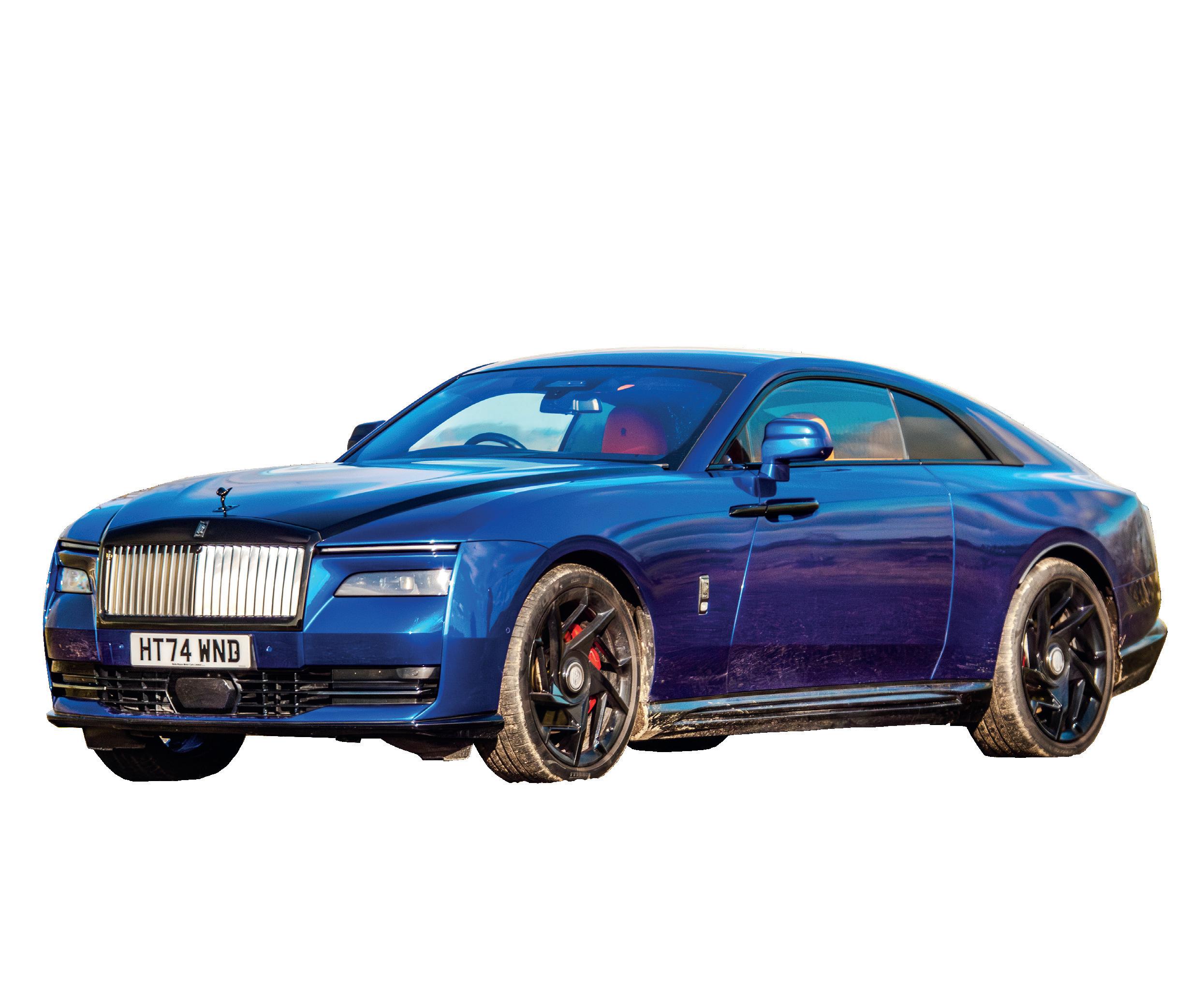
ROLLS-ROYCE BLACK BADGE SPECTRE
By MATT ALLAN



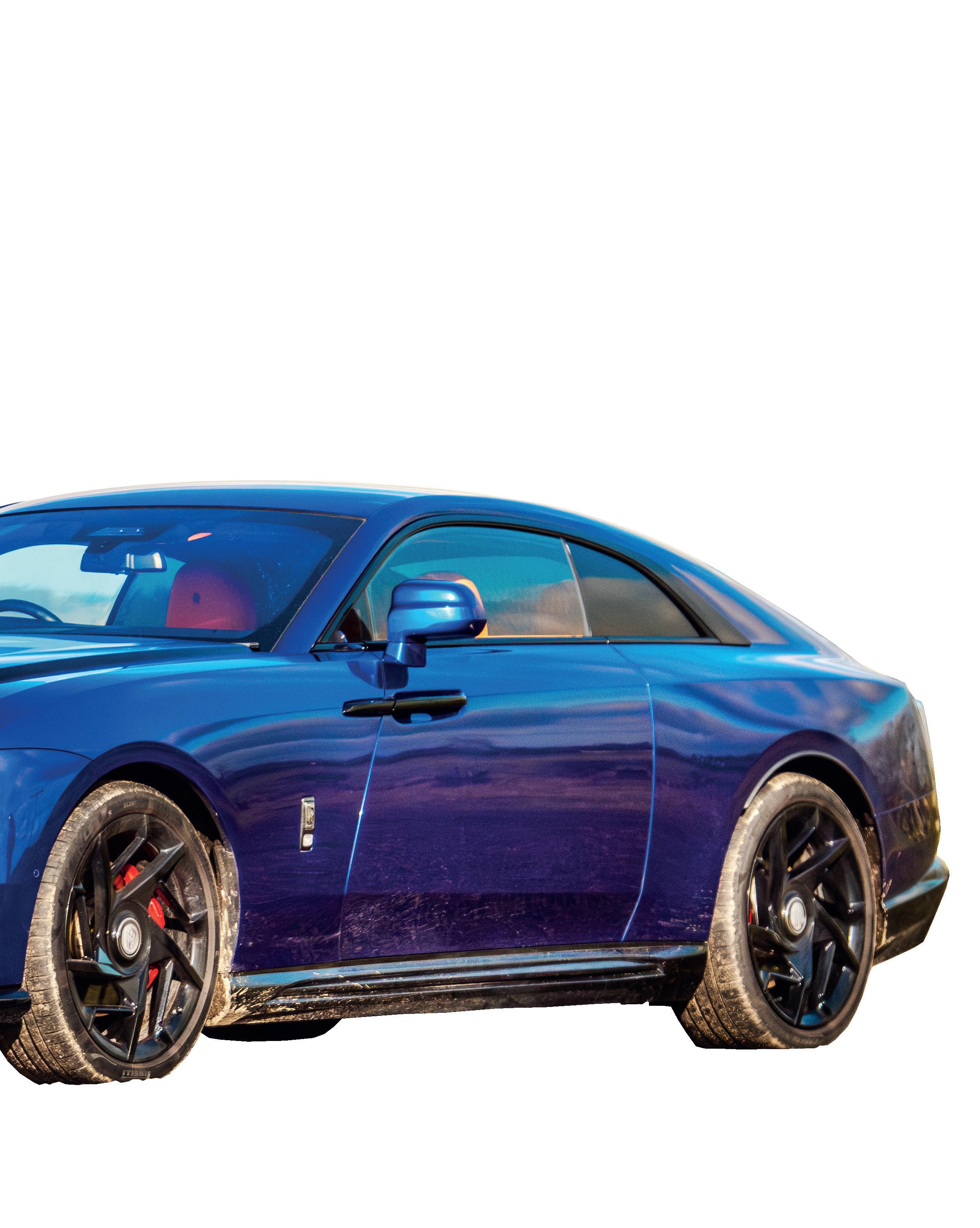
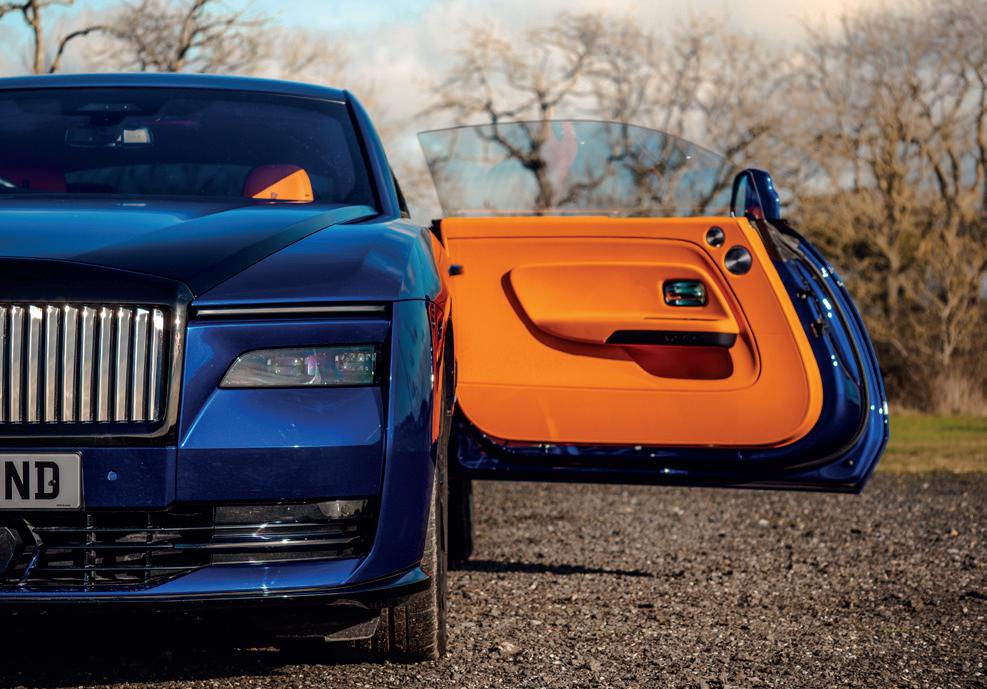
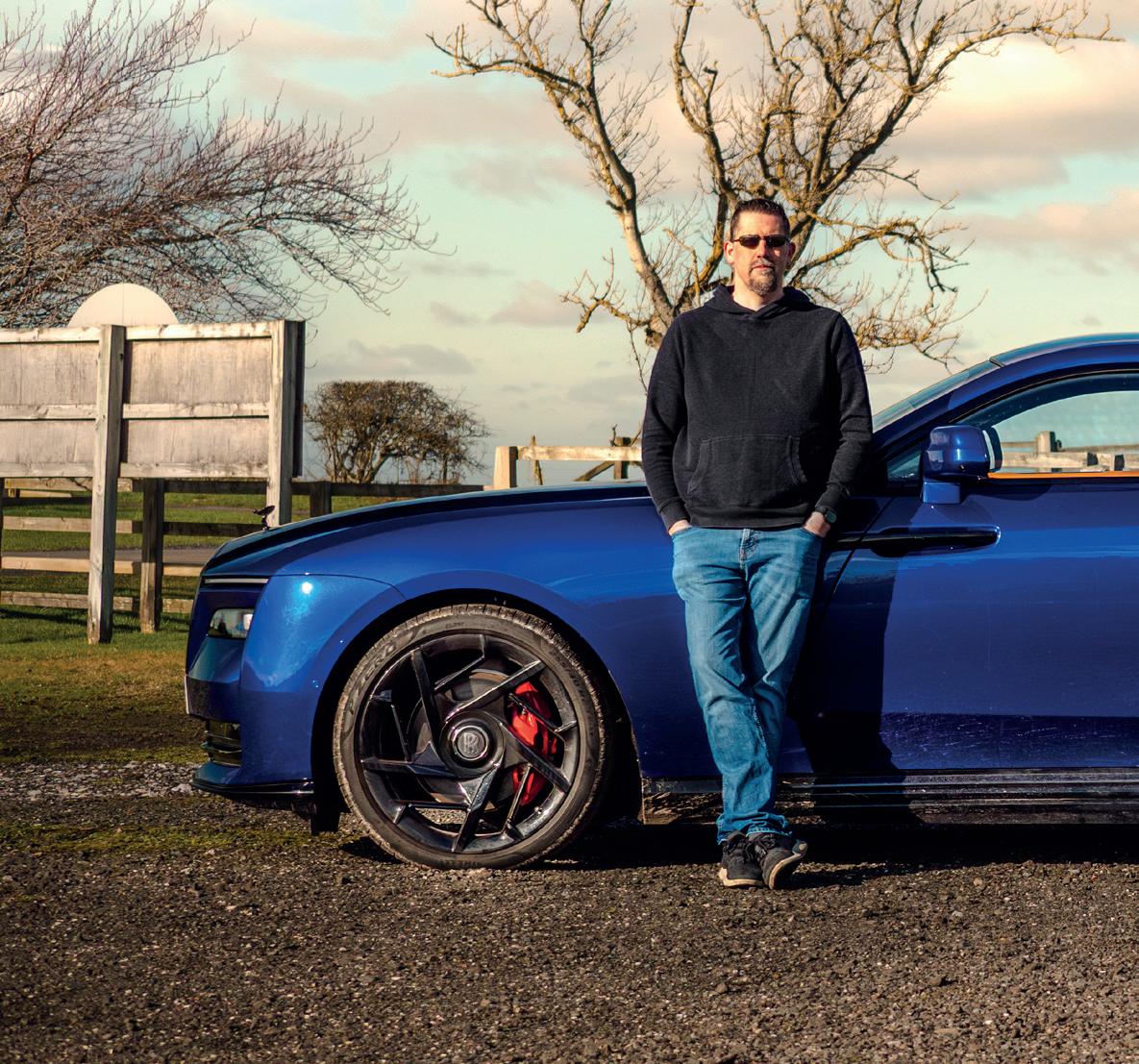
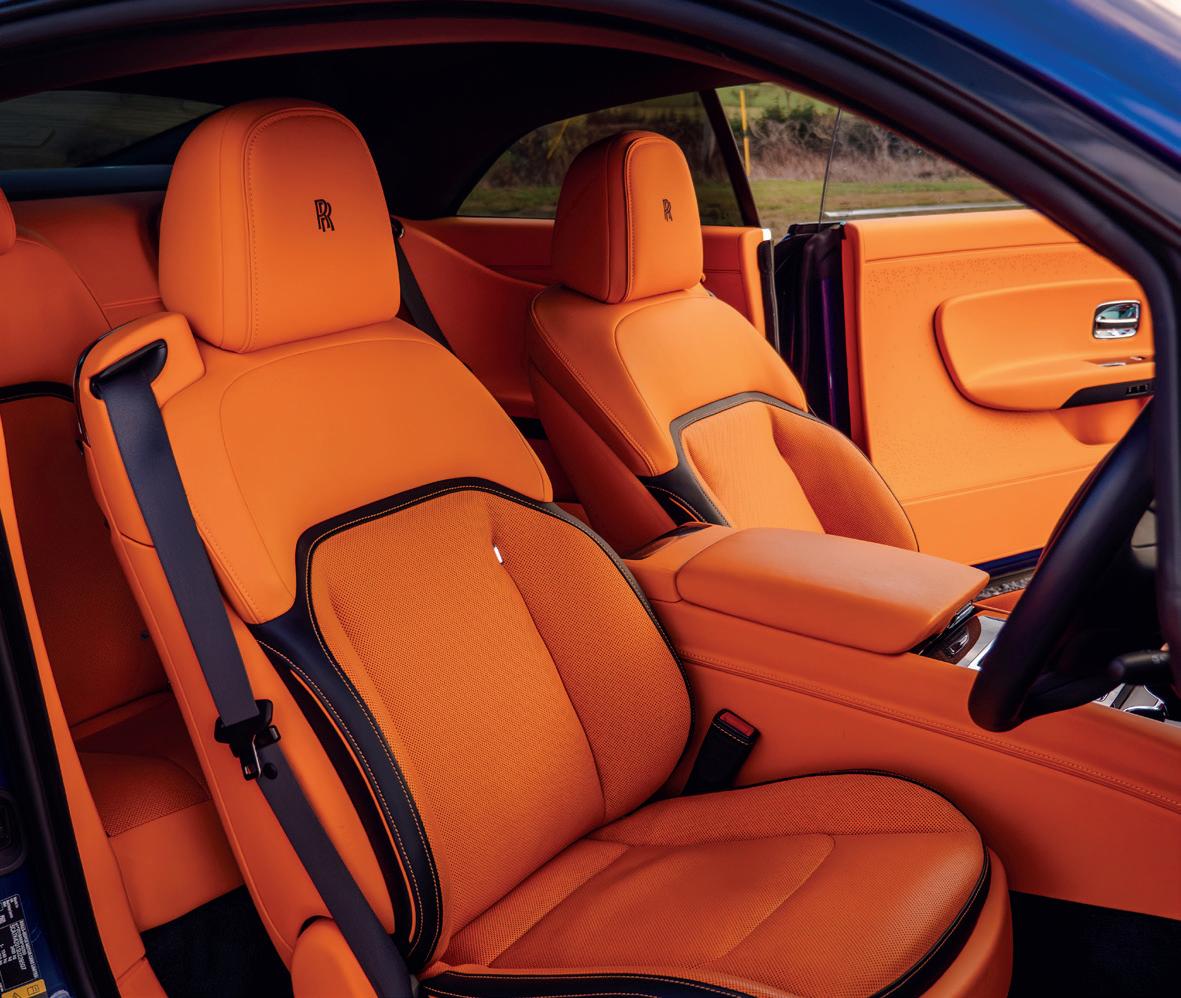
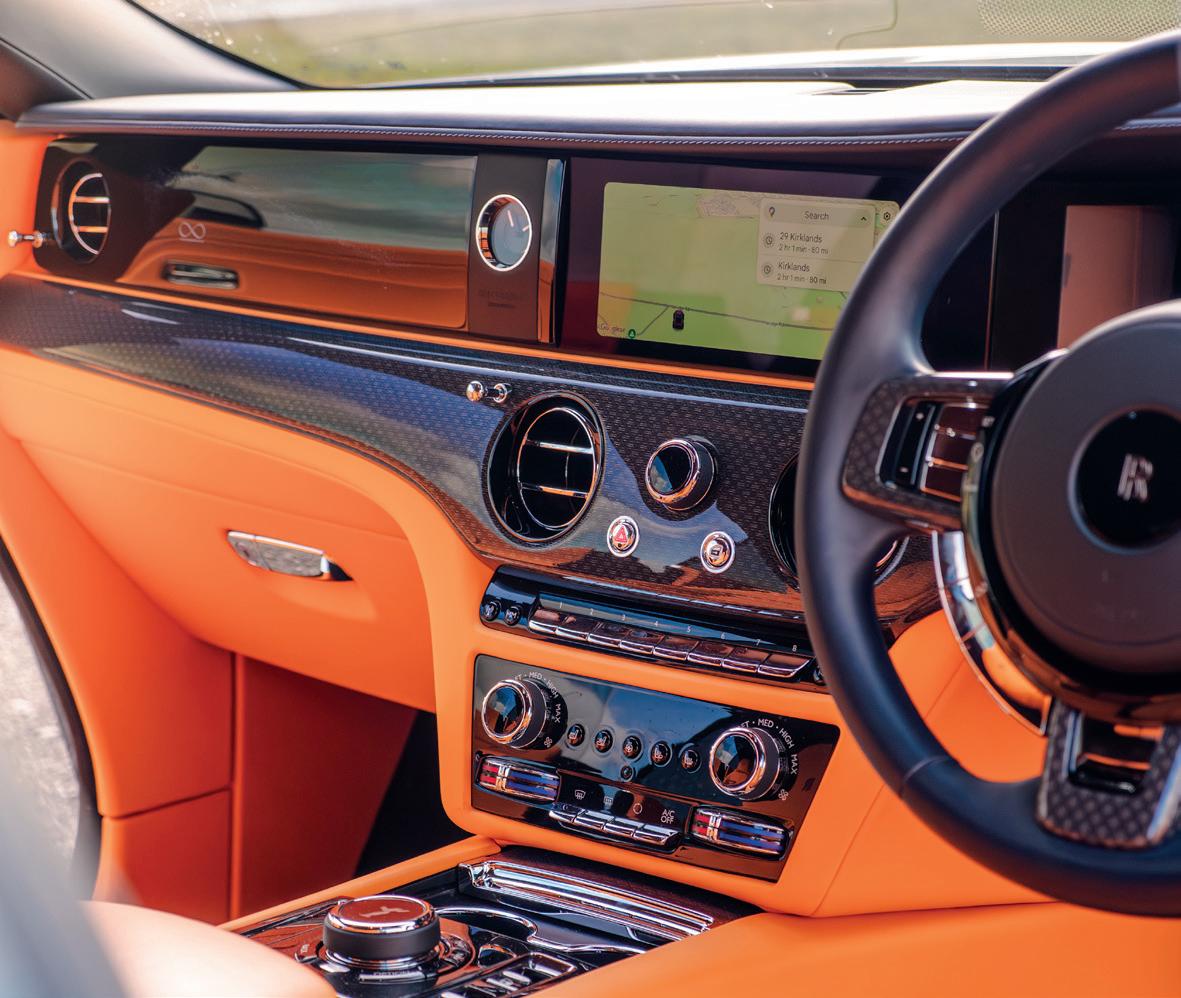
The Black Badge Spectre is the most technologically advanced Rolls-Royce ever but leaning too far into “modern” designs and buttonless interfaces would be like installing a karaoke booth at the Athaneanum. So instead, all the controls and switchgear are the same as you’d find in the Ghost or Phantom. And they’re all utterly exquisite, from the chromed organ-stop vent controls to the beautifully machined door and window controls.
There are 21st-century touches such as the Technical Fibre surface, which replaces wood veneer with layers of metal thread woven into carbon fibre. There’s also the digital dashboard with its instruments which change colour when you engage Infinity mode – more on that later.
THE BLACK BADGE SPECTRE IS THE MOST TECHNOLOGICALLY ADVANCED ROLLS-ROYCE EVER BUT LEANING TOO FAR INTO “MODERN” DESIGNS AND BUTTONLESS INTERFACES WOULD BE LIKE INSTALLING A KARAOKE BOOTH AT THE ATHANEANUM
The Spectre is marketed as a four-seat grand tourer. However, unlike other Rolls-Royces, this is very much about the people in the front – from the driving experience to the levels of space and comfort in the massive heated and cooled massage seats. There’s still plenty of room in the rear for an averagesized adult, and luxuries such as heated seats and individual climate control zones, plus a better view of the stunning starlight headliner.
Spectre is the first car to extend that starlight motif to the doors with another 5,000 fibre optic lights, and the pattern is echoed in the passenger-side dashboard where thousands of pinprick lights surround an infinity logo.
That infinity logo is one of the hallmarks of a Black Badge Rolls-Royce and tells you that this car has more power and poise than the regular Spectre.
How much more power? Just an extra 73bhp but that takes the regular car from a healthy 577bhp to a more-than-adequate 650bhp and 793lb ft. That makes the Black Badge Spectre the most powerful Rolls-Royce in history.
It also makes the 2.9-tonne super-coupe staggeringly quick.
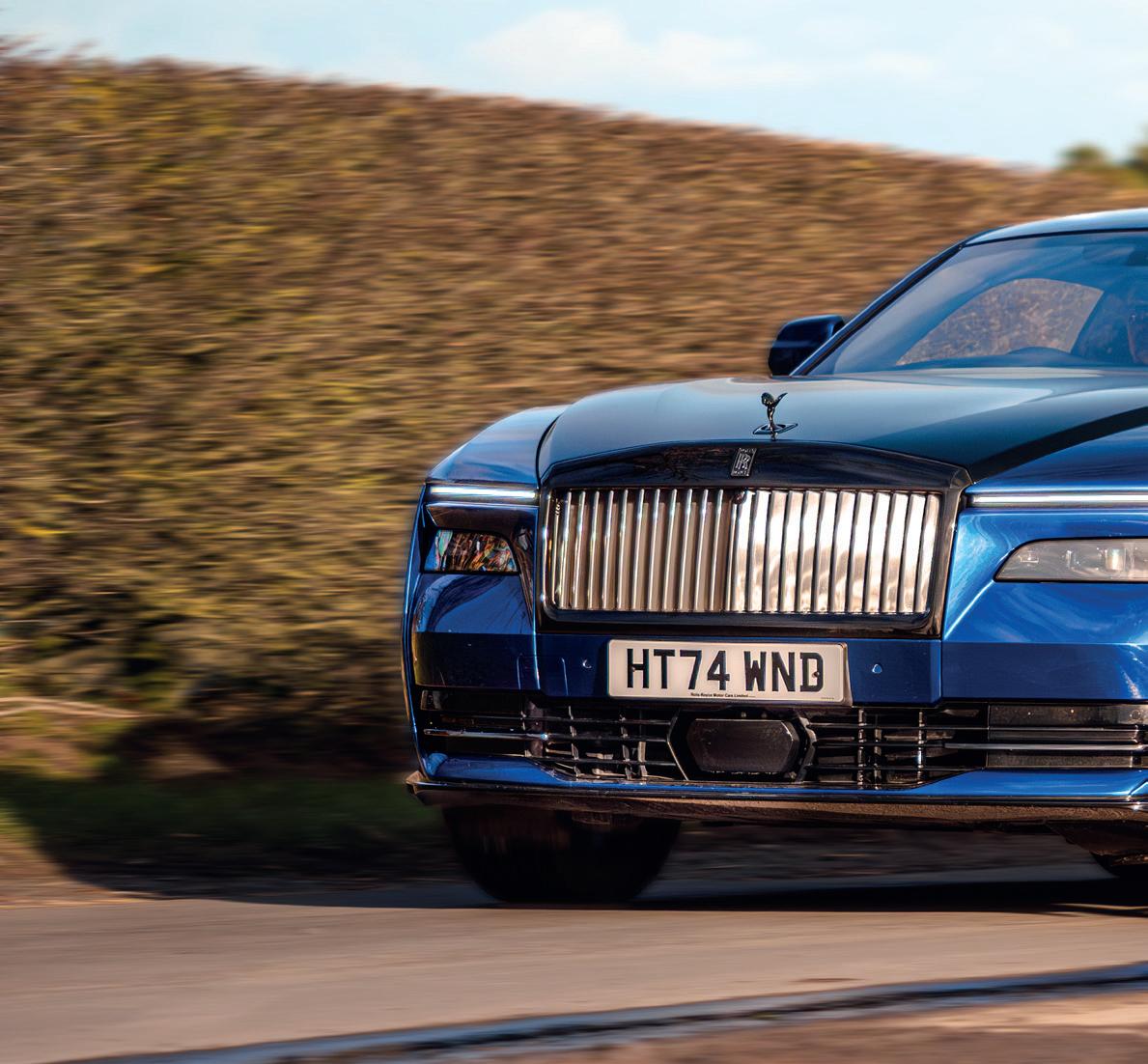
Engage “Spirited” mode (posh launch control) and the 0-62mph run is dispatched in just 4.1 seconds. Yet while it’s stupidly quick, the Spectre’s acceleration doesn’t have the neck-snapping violence of some fast EVs. Instead it’s a relentless muscular shove that seems to send the rest of the world into reverse.
The only other drive mode is the Infinity setting, which unlocks the full complement of power and torque. I imagine most owners will leave this permanently activated and revel in the bottomless well of torque that means effortless pace and response at any time.
Infinity also unlocks bespoke Black Badge tuning for the steering, throttle and adaptive air suspension. The active anti-roll setup has been stiffened to reduce body movement and there are revised dampers and heavier steering for a more positive, controlled drive.
That hasn’t turned the Spectre into some Lotus Elise-like marvel but it has made it remarkably easy to hustle along. The heavier steering delivers sharper turn-in and provides a touch more confidence, backed up by the absence of any body roll. And the four-wheel-steering means this 5.5m beast tucks into corners far more neatly and tightly than it has any right too.
In truth, it’s an odd arrangement. You can press on along a country road with a planted, purposeful feel – like an old-school German super-saloon – but with the overarching serenity and comfort of a traditional Rolls-Royce.
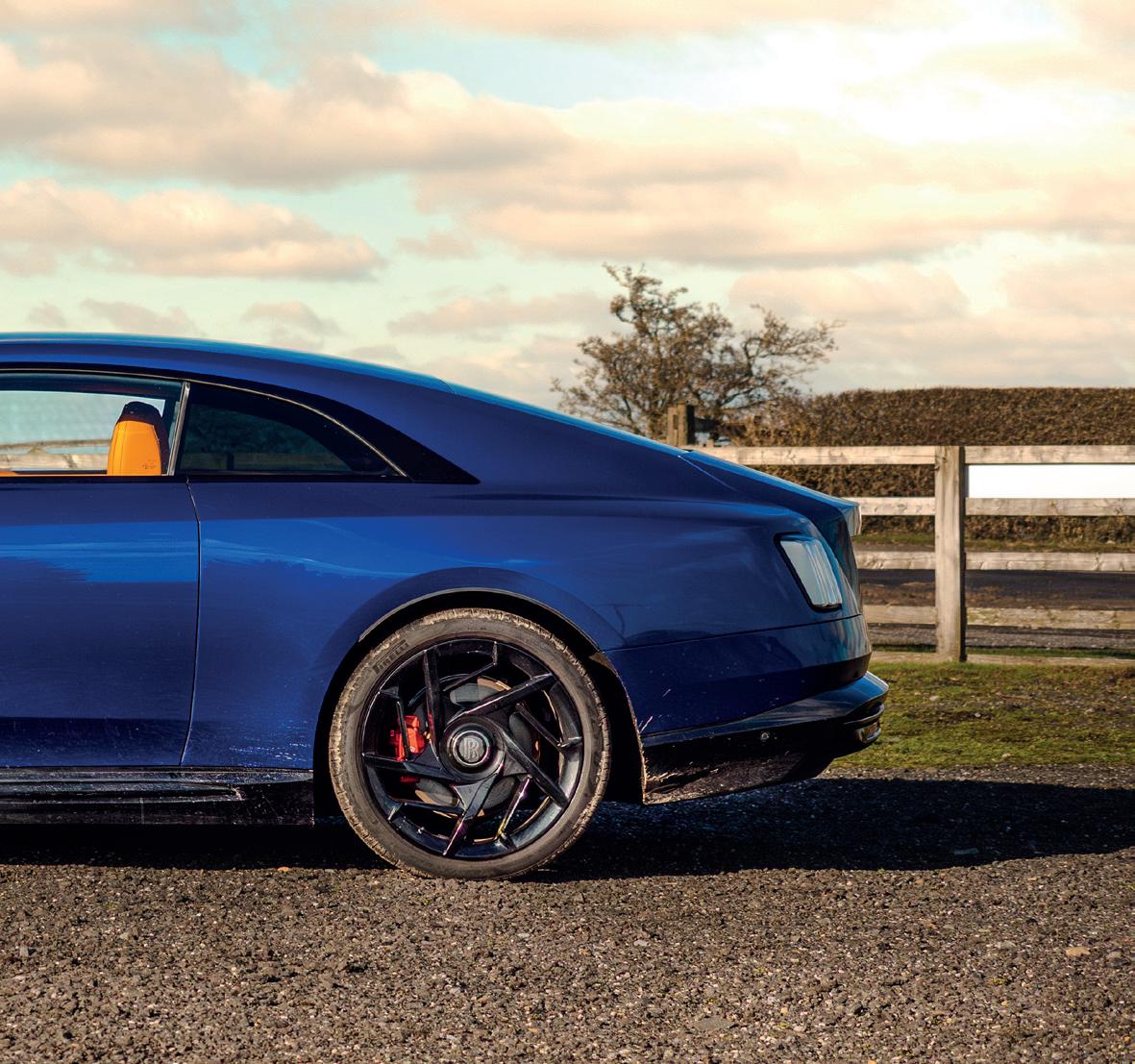
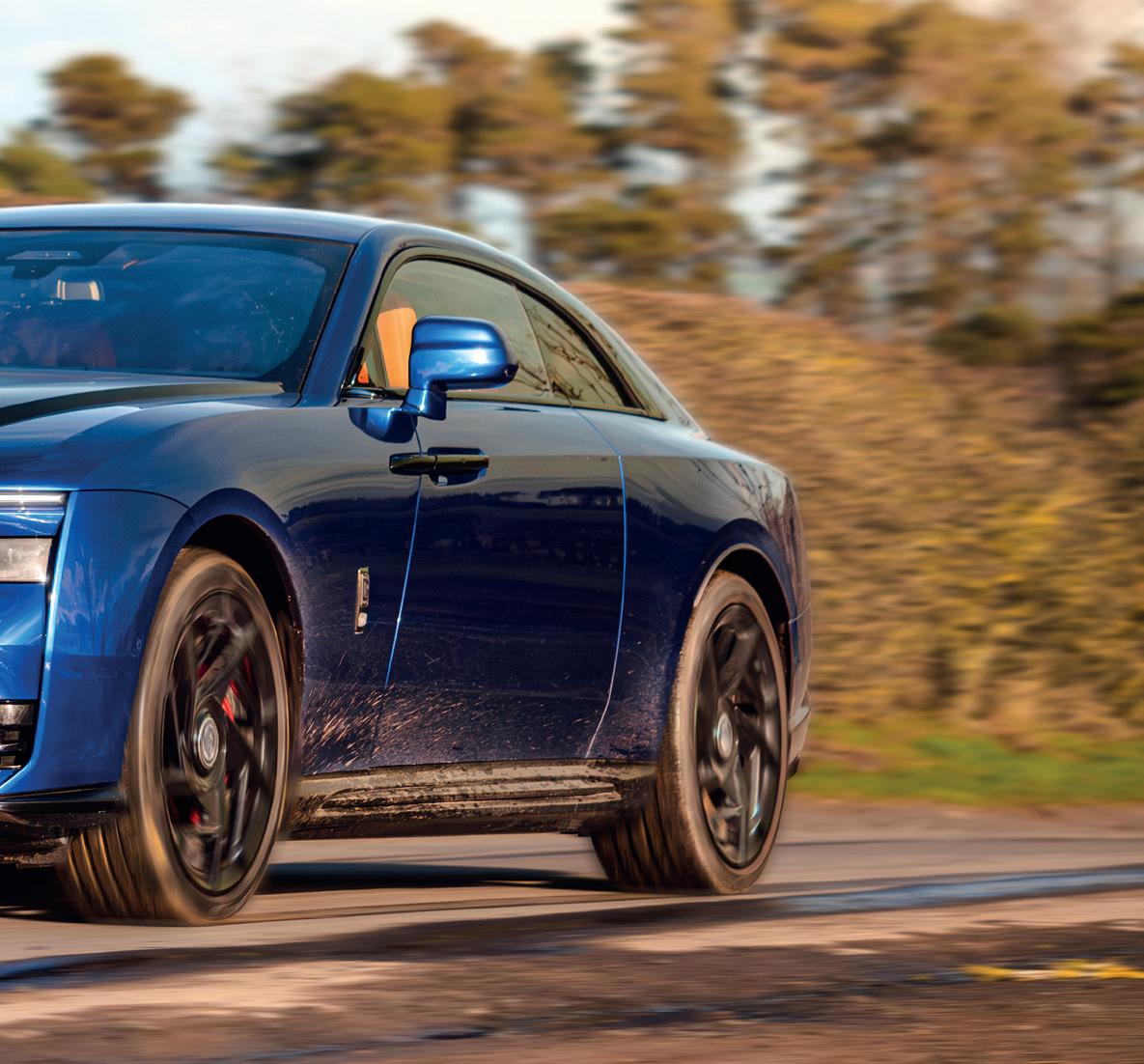
And it is serene. With the optional Rolls-Royce sound deactivated, the cabin is virtually silent. The remarkable Flagbearer road-scanning system and planar suspension make sure that this most dynamic Rolls-Royce still irons out imperfections in the road and delivers its famous magic carpet ride.
In combination, it's like floating along in your own isolation chamber.
On the prosaic matter of range and charging, Rolls-Royce quotes 306 miles of range from the 102kWh battery. Charging peaks at 195kW, which will deliver a 10-80% top-up in 34 minutes.
However, it’s likely that any Spectre owner travelling further than 300 miles will simply take one of their six other cars rather than worry about finding the nearest Ionity station.
Which brings us to the vulgar matter of money. Frankly, if you’re in the market for a Black Badge Spectre, price is irrelevant.
Rolls-Royce says the Black Badge Spectre starts somewhere around £350,000 but the sky is the limit. Every car is unique, built to the individual customer’s demands and with the scope to add six-figure sums to the final price.
Fundamentally, though, that doesn’t matter. Part of the joy of a Rolls-Royce is that it can be whatever the customer wants it to be but will always be ultraexclusive, ultra-refined and ultra-comfortable.
And the Black Badge Spectre is all of those things, with a little sprinkle of something extra on top.
The Spectre already delivers unrivalled refinement, comfort and luxury blended with impressive EV abilities. The Black Badge Spectre brings a more youthful, daring visual edge to it, plus a dash of extra performance that sets it apart from anything else on sale.
ROLLS-ROYCE BLACK BADGE SPECTRE
PRICE: From c.£350,000
TRANSMISSION: Two-motor, all-wheel-drive
BATTERY: 102kWh
POWER: 650bhp
TORQUE: 793lb ft
TOP SPEED: 155mph
0-62MPH: 4.1 seconds
RANGE: 306 miles
CONSUMPTION: 2.2m/kWh
CHARGING: up to 195kW
By MATT ALLAN
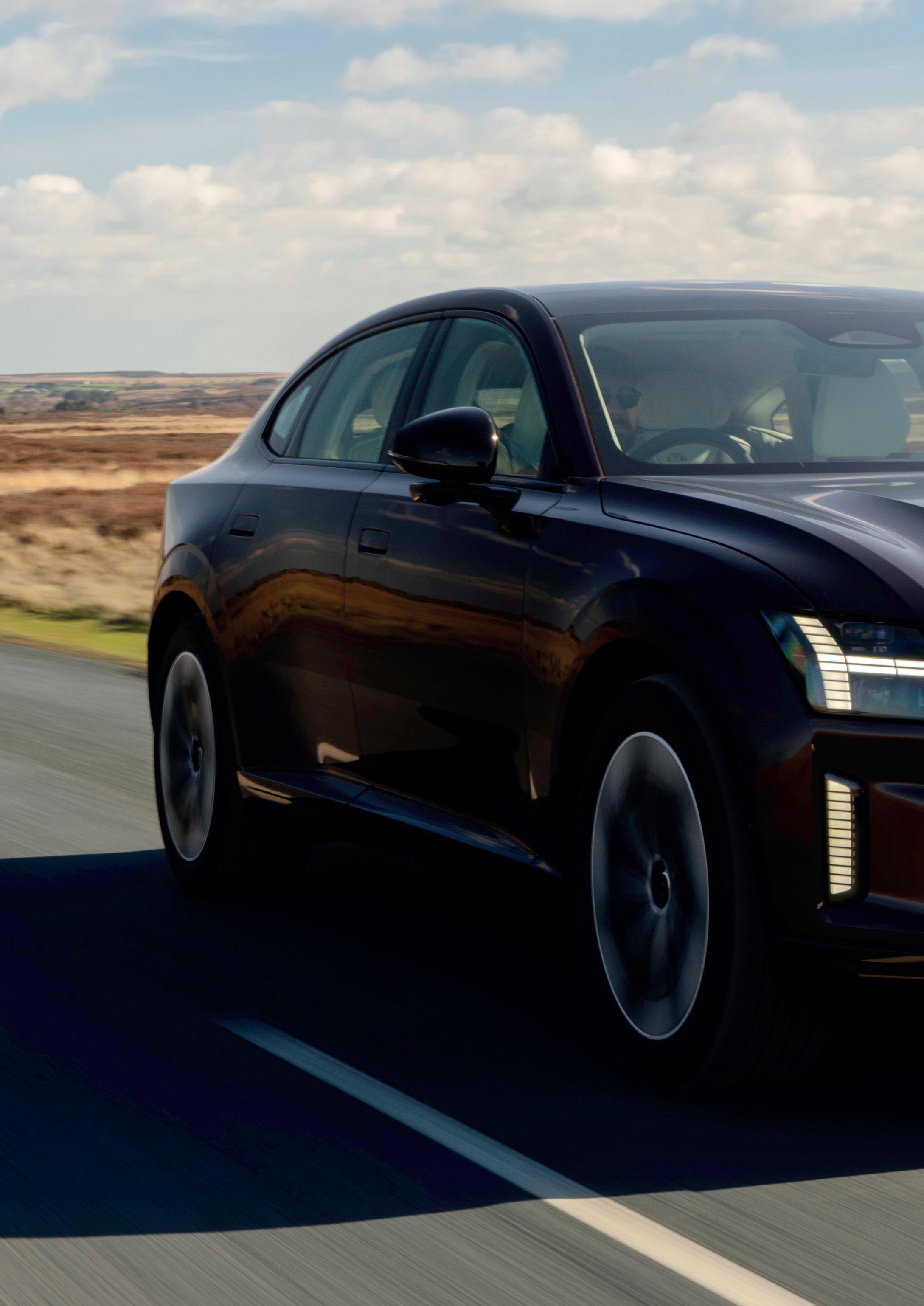
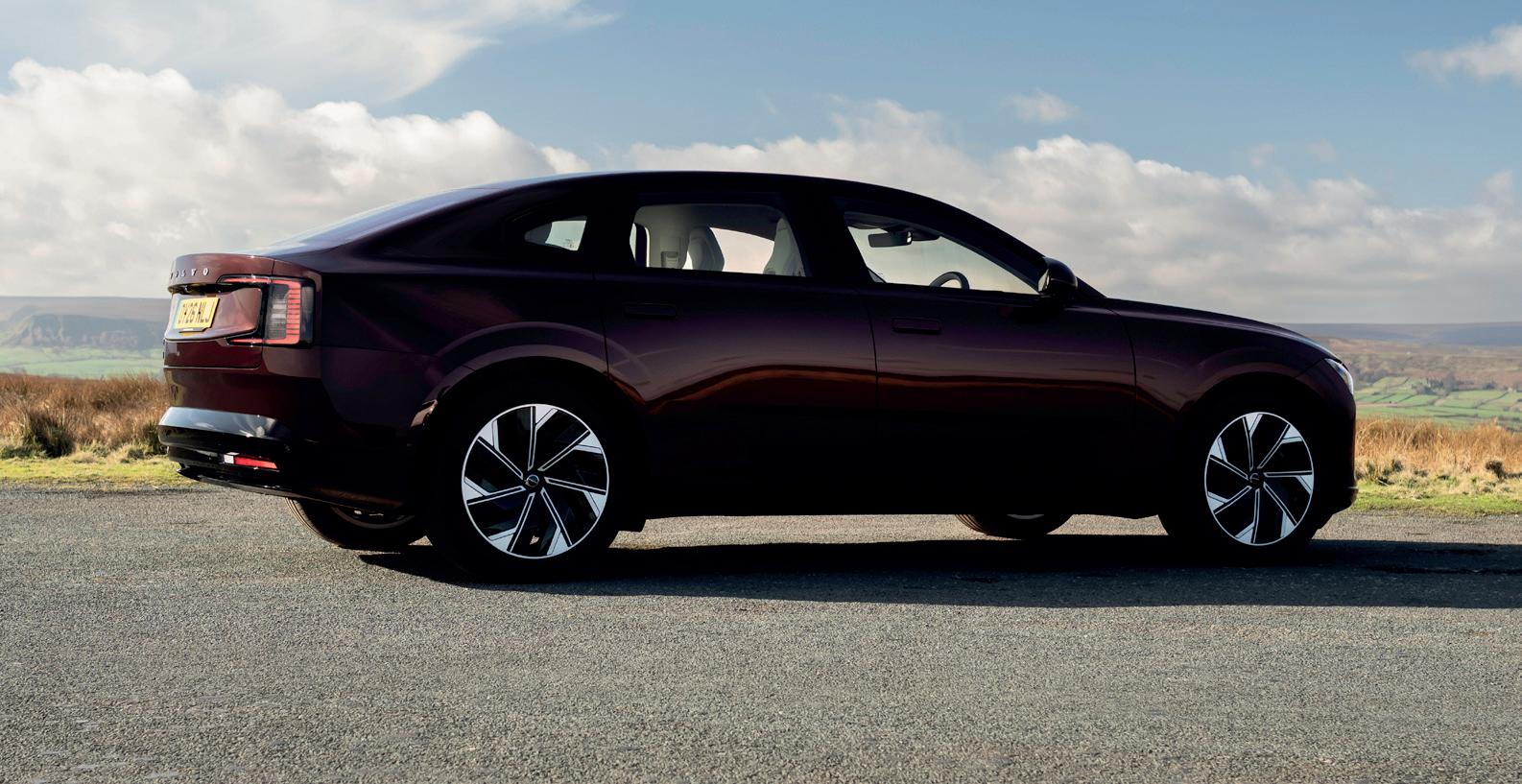
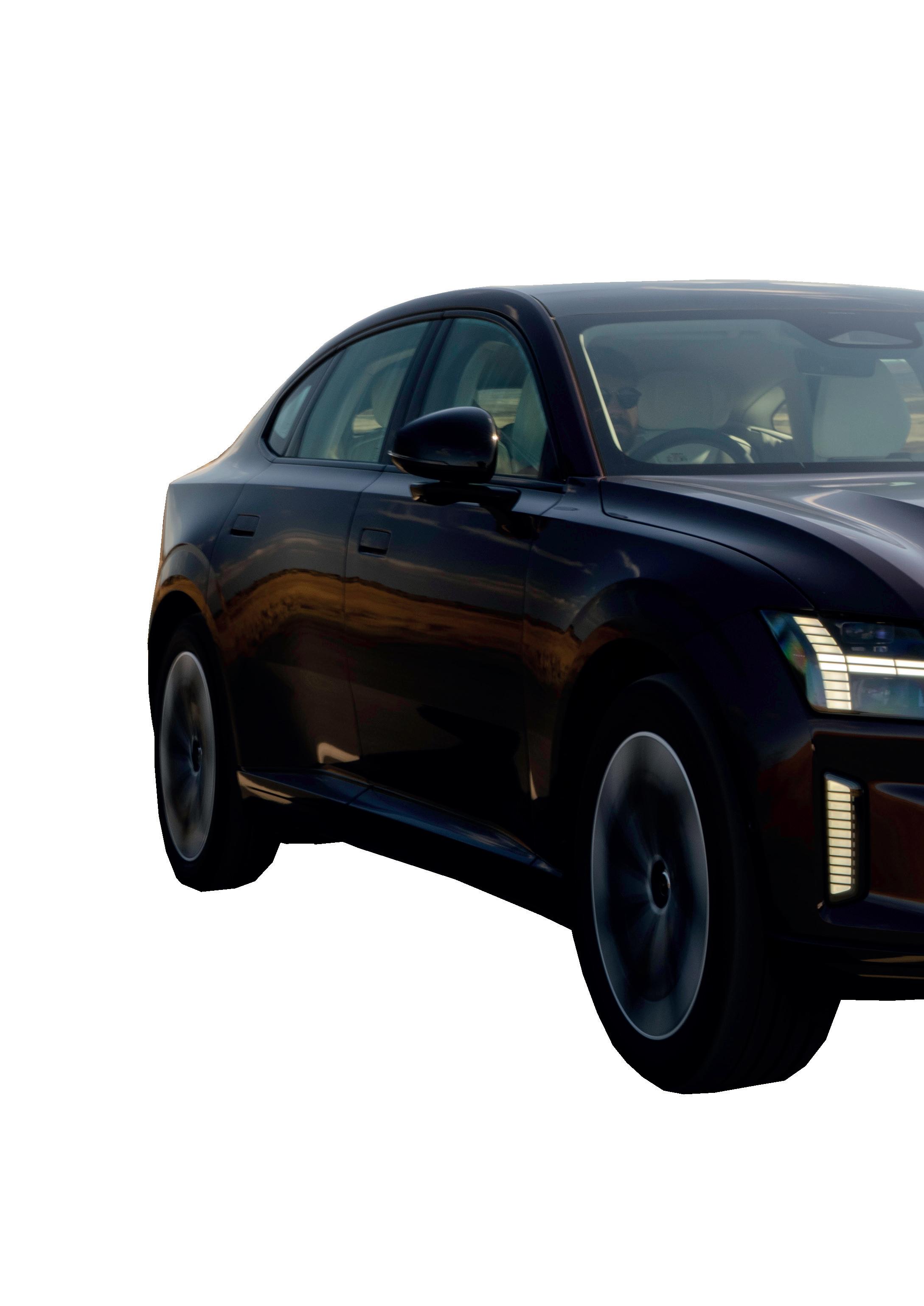
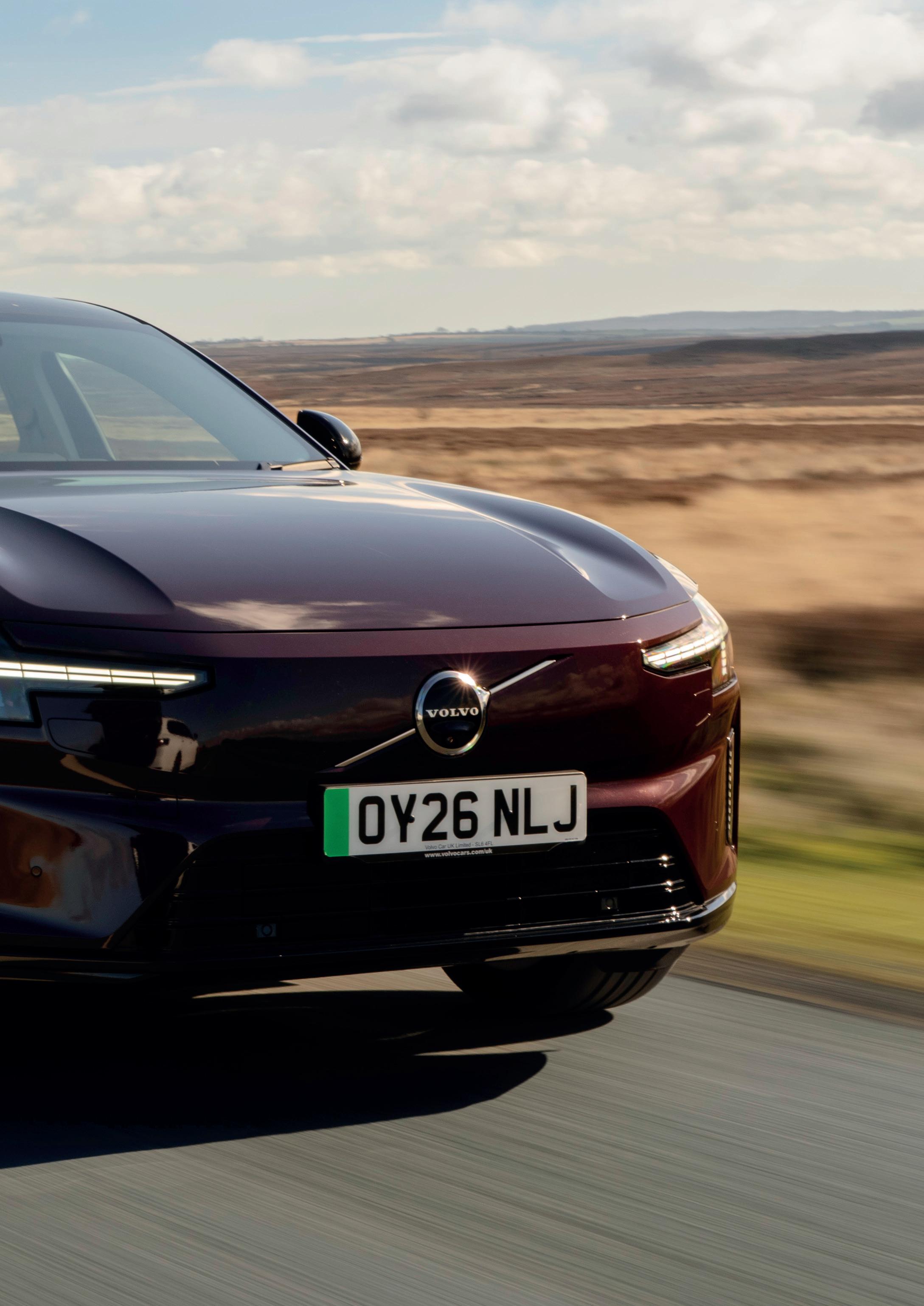
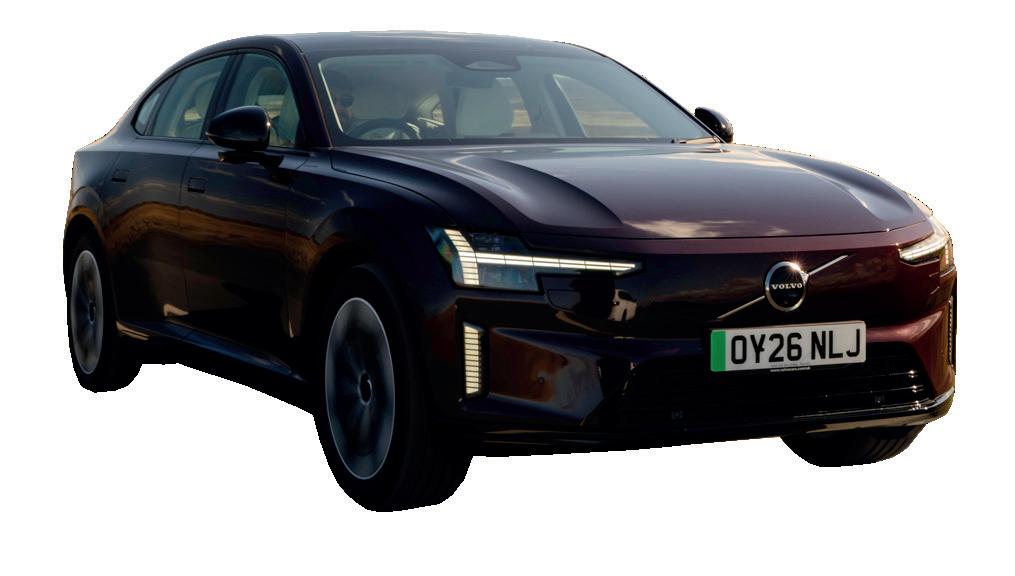
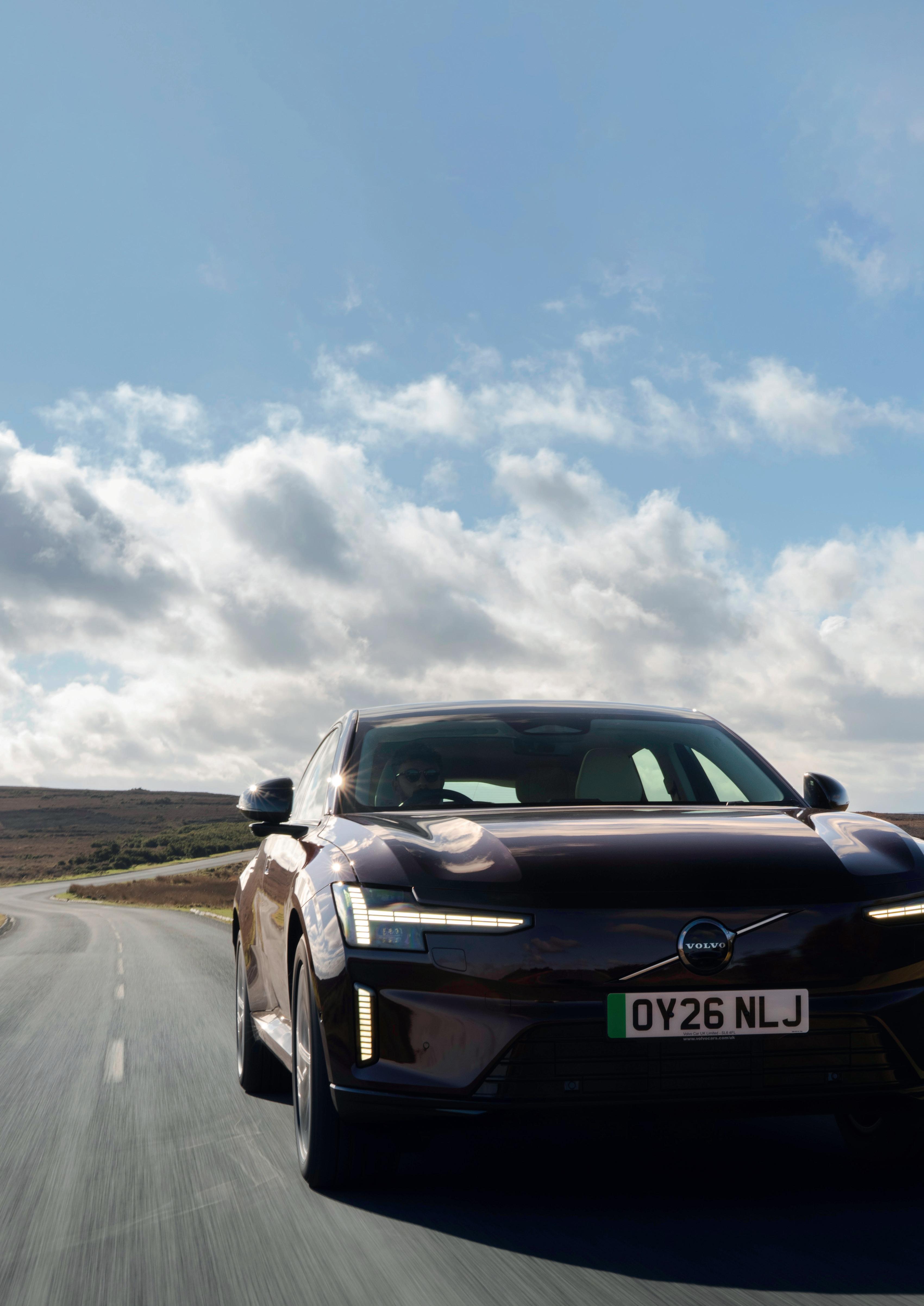
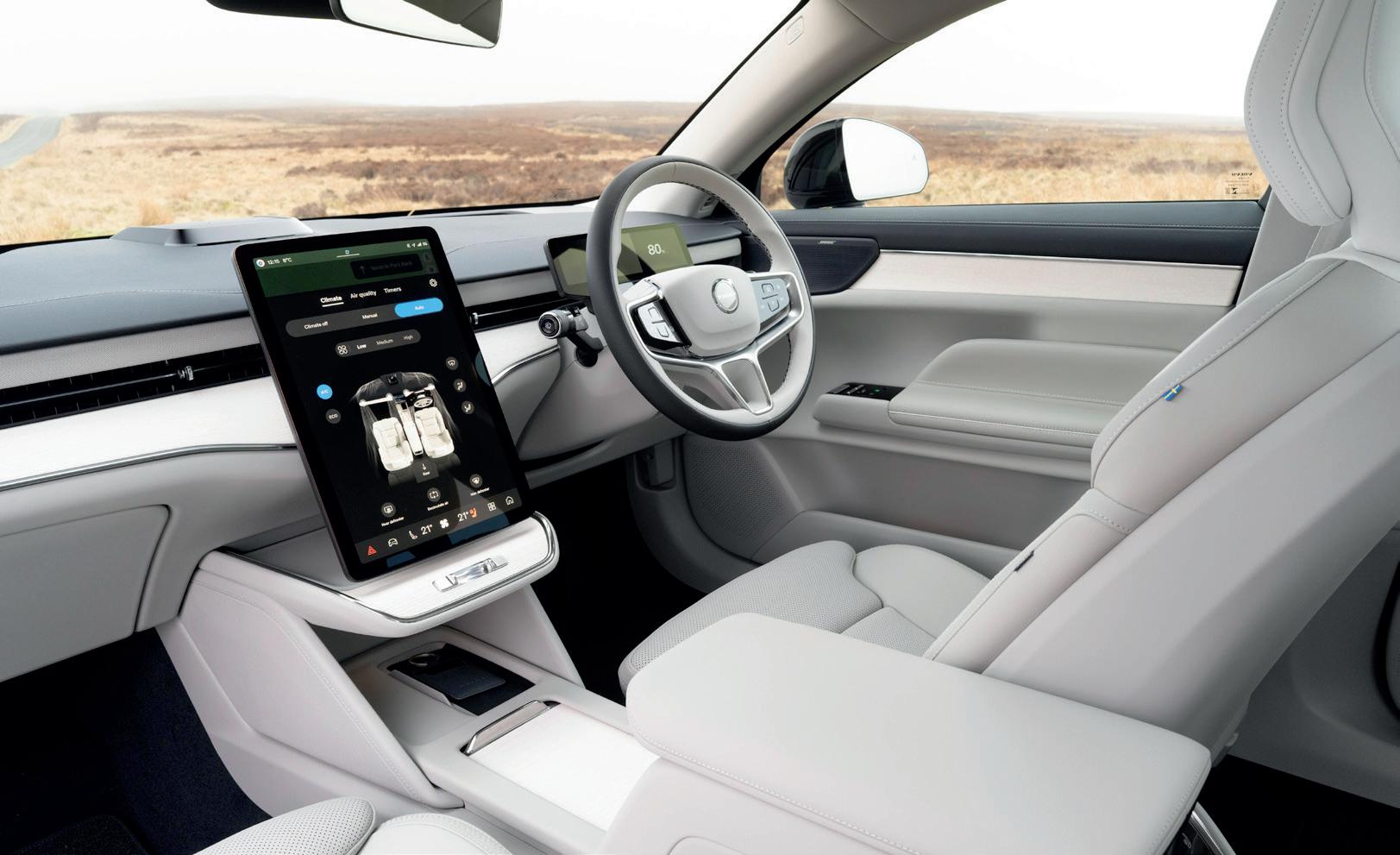
That generous length and a mighty 3.1-metre wheelbase translates into a generous amount of interior space. Front seat passengers have more than enough room in every direction, along with plenty of adjustment for Volvo's supremely supportive and comfortable seats.
Rear passengers are almost as well catered for. Even the most strapping of Scandinavian types will find plenty of headroom and loads of legroom, although the raised floor leads to a slightly kneesup seating position.
Volvo says it was going for a living room ambience in the ES90 and it hits the nail on the head. My test car’s pale wood and cream leather finish created a welcoming, peaceful and light environment that will soothe on long journeys.
The interior fit and finish is similarly pleasing, with simple, high-quality materials and construction, making plenty of use of reclaimed and recycled materials.
Like other modern Volvos, it’s a clean, minimalist look that oozes cool and calm right up until you want to adjust any setting.
Just like the EX90 and EX30, there are no buttons. Every function, no matter how major or minor, is controlled via the Android-powered 14.5-inch touchscreen.
On the plus side, the Google-based OS means that navigation, music streaming and other elements are a piece of cake to manage.
On the negative side it means diving into a variety of menus to do simple things such as deactivate “driver assistance”, adjust the steering wheel position, or even open the glovebox. There are permanent shortcuts for climate controls and the app tray, plus a contextual bar that throws up different buttons depending on the circumstances. It’s not as frustrating as the system in the EX30 but it flies in the face of Volvo’s credo of not having tech just for tech’s sake.
Sticking with tech, the ES90 doesn’t get the planned LiDAR sensor for its ADAS. Volvo dropped it from the 2026 model year after problems with its supplier. Nonetheless, Volvo says the ES90 offers exceptional safety thanks to its usual focus on
passive safety design and smart active functions that range from junction collision mitigation to lane assist which adapts to your driving style.
Unlike the EX90, the ES90 is launching with 800V architecture. That sounds very geeky but basically means the potential for more power, better efficiency and faster charging.
From launch there are three versions. The entry point is the rear-wheel-drive model badged Single Motor Extended Range, above which are two all-wheel-drive models – Twin Motor and Twin Motor Performance.
Despite the “extended range” name, the singlemotor car gets a smaller battery of 92kWh, providing up to 411 miles of range. Both twin motor variants get a 106kWh battery and a shared maximum range of 438 miles – that’s 70 miles more than a BMW i5 but around 40 miles less than the most efficient Audi A6 e-tron.
The Volvo outstrips all its rivals, however, with charging speeds that peak at 350kW (320kW for the smaller battery). Find a suitable charger and a
29 REVIEW
10-80% recharge will take as little as 22 minutes, or you can add 180 miles in just 10 minutes.
Power from the single motor is a respectable 329bhp – similar to the mid-spec A6 e-tron Performance or entry-level i5. That means 0-62mph in 6.6 seconds and a governed top speed of 112mph.
The regular twin motor boosts that to 443bhp and takes torque from 354lb ft to 494lb ft for a 0-62mph time of just 5.4 seconds. Performance does what it says on the tin, taking the ES90 to an i5 M60-rivalling 671bhp/642lb ft and cutting 0-62mph to just 4 seconds.
I only got the chance to drive the single-motor version but even that feels sufficiently swift. There’s lots of instant shove from the rearmounted motor and the ES90 will hit motorway speeds in the swift but undramatic fashion of the best executive saloons.
Once at those speeds there’s a touch of wind noise but it’s generally a supremely quiet and refined cruiser with decent road manners. The
long wheelbase and wide track means it feels well planted at any speed, and the ride (at least on the air suspension) is generally well composed. Really big bumps will send a bit of judder into the cabin but overall it ties in with the relaxed, easy vibe of the car.
Big Volvos have never been famed for their dynamism and the ES90 is no match for an i5. However, for such a big car it's actually quite manoeuvrable and neat feeling on smaller roads, aided by light, but not too light, steering.
The Volvo ES90 range starts at £67,560 for the RWD in Plus trim. The jump to Ultra takes the price to £77,260 and unlocks the twin-motor options which are a £4,200 or £8,800 price walk.
Even entry-level ES90 Plus models get LED headlights; 20-inch alloy wheels; heated front and rear seats; heated steering wheel; four-zone climate control; a Bose sound system; head-up display and panoramic sunroof. As expected, the Pilot Assist ADAS system is also standard, along with a powered tailgate.
Plus adds extra comfort function, a Bowers & Wilkins sound system, and adaptive chassis with air suspension.
It's the kind of all-encompassing spec that you'd expect from a large executive saloon and, pleasingly, there's no great long options list.
Verdict
The ES90 feels like an EV in the tradition of its famous Swedish predecessors.
It’s a spacious, comfortable, refined and stylish machine capable of cruising long distances and –crucially for an EV – recharging incredibly quickly. It looks smart, is packed with high-end equipment and is effortless to drive, too.
It’s just when it comes to “good technology” that it slips up. A slavish reliance on the touchscreen for even the most basic of physical functions feels very much like tech for tech’s sake, rather than anything designed to make life easier for those on board.
VOLVO ES90 PLUS SINGLE MOTOR EXTENDED RANGE
Price: £77,260
Powertrain: Single-motor, rear-wheel-drive
Battery: 92kWh
Power: 329bhp
Torque: 354lb ft
Top speed: 112mph
0-62mph: 6.6 seconds
Range: 411 miles
Consumption: 3.98m/kWh
Charging: up to 320kW
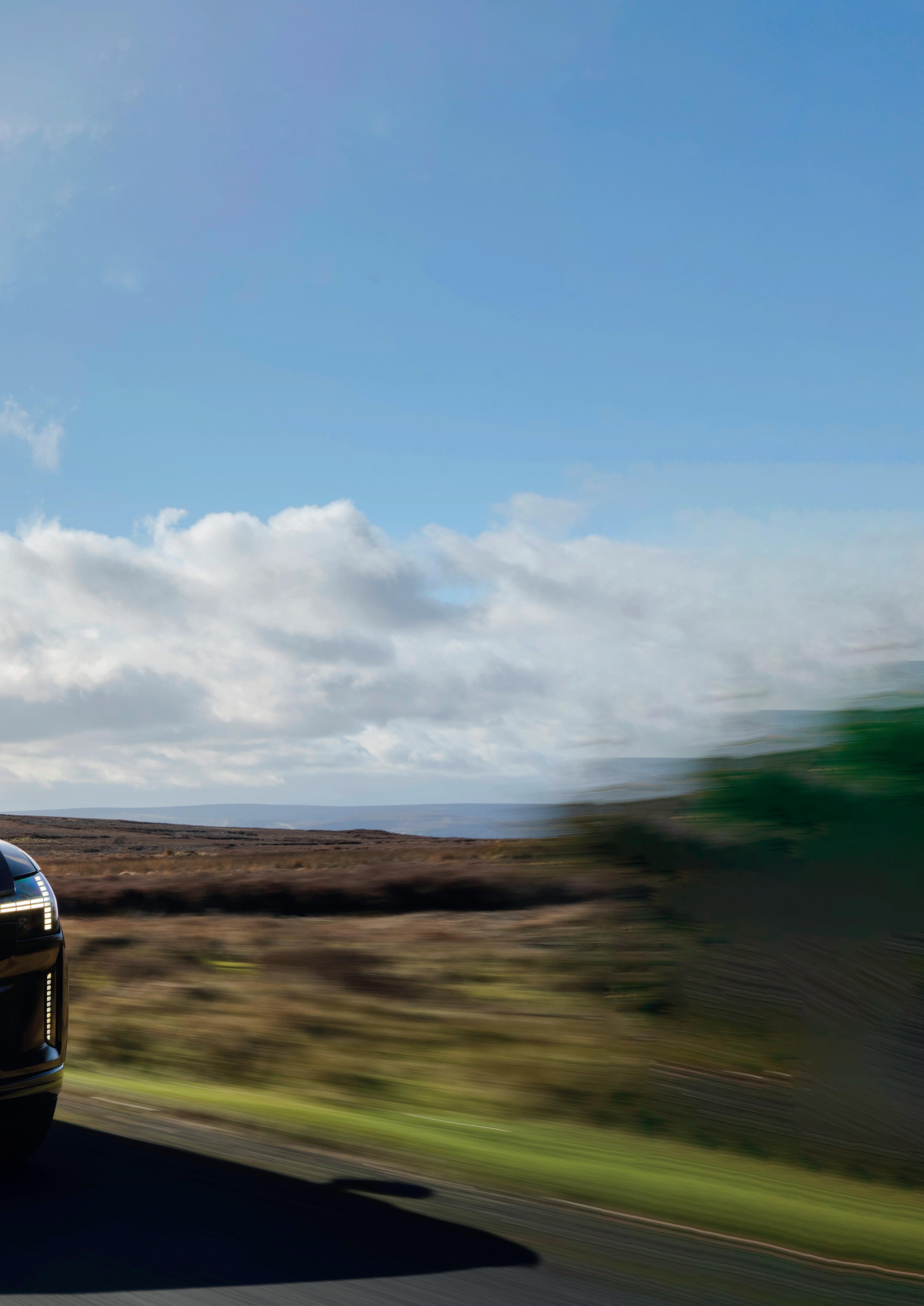
Do major changes beneath the skin turn this family SUV from ALSO-RAN to CLASS-LEADER?
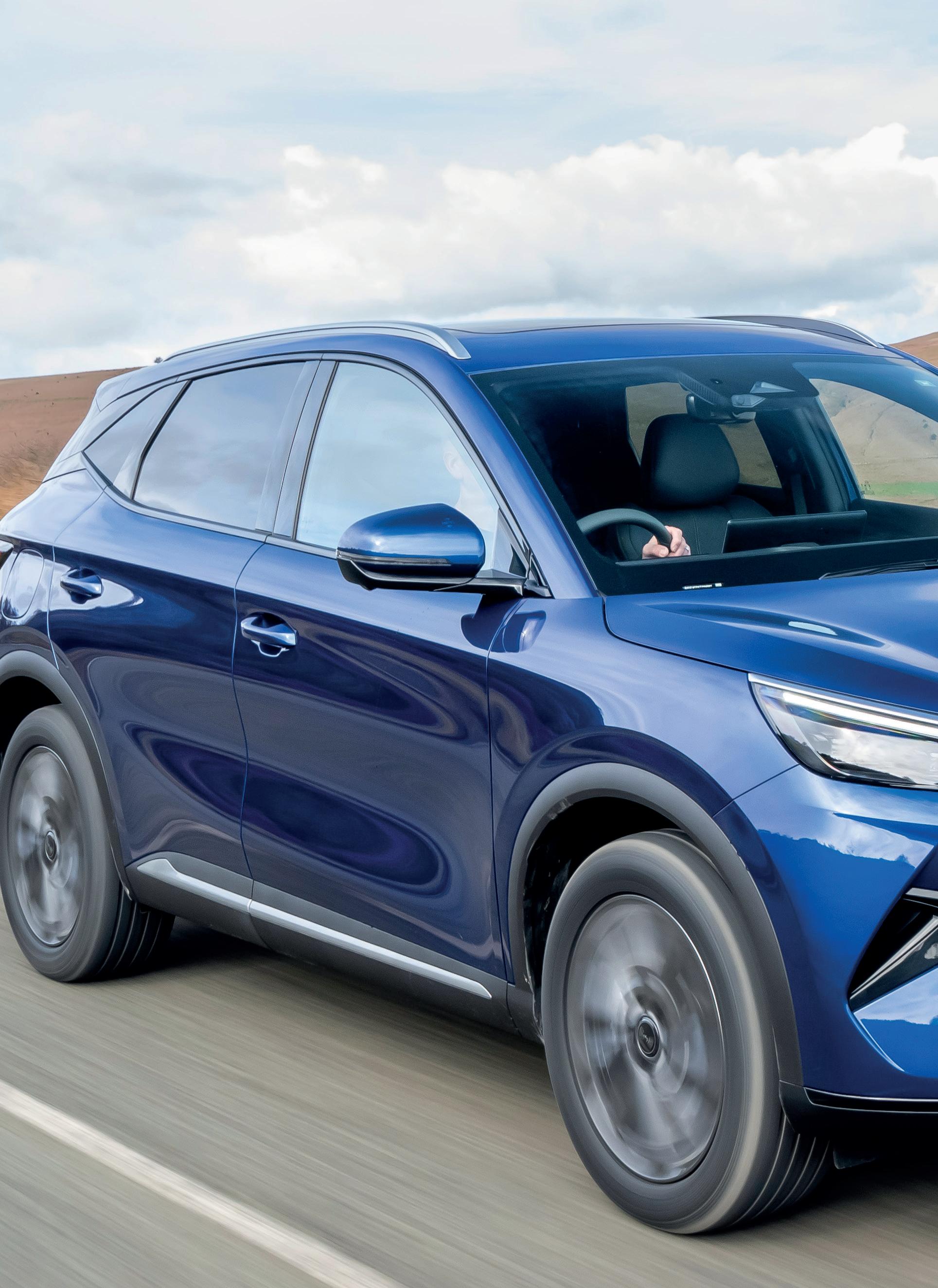
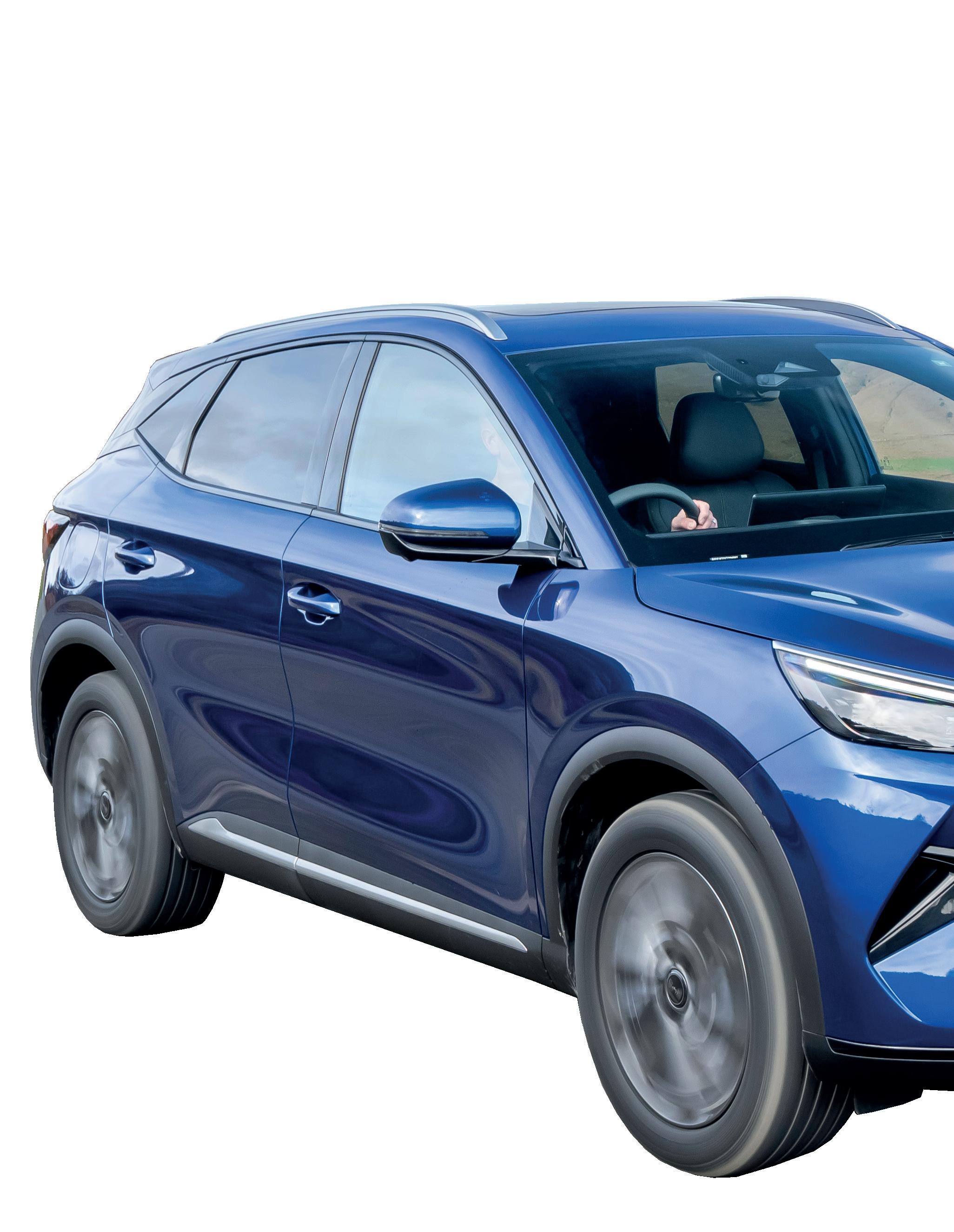
By MATT ALLAN
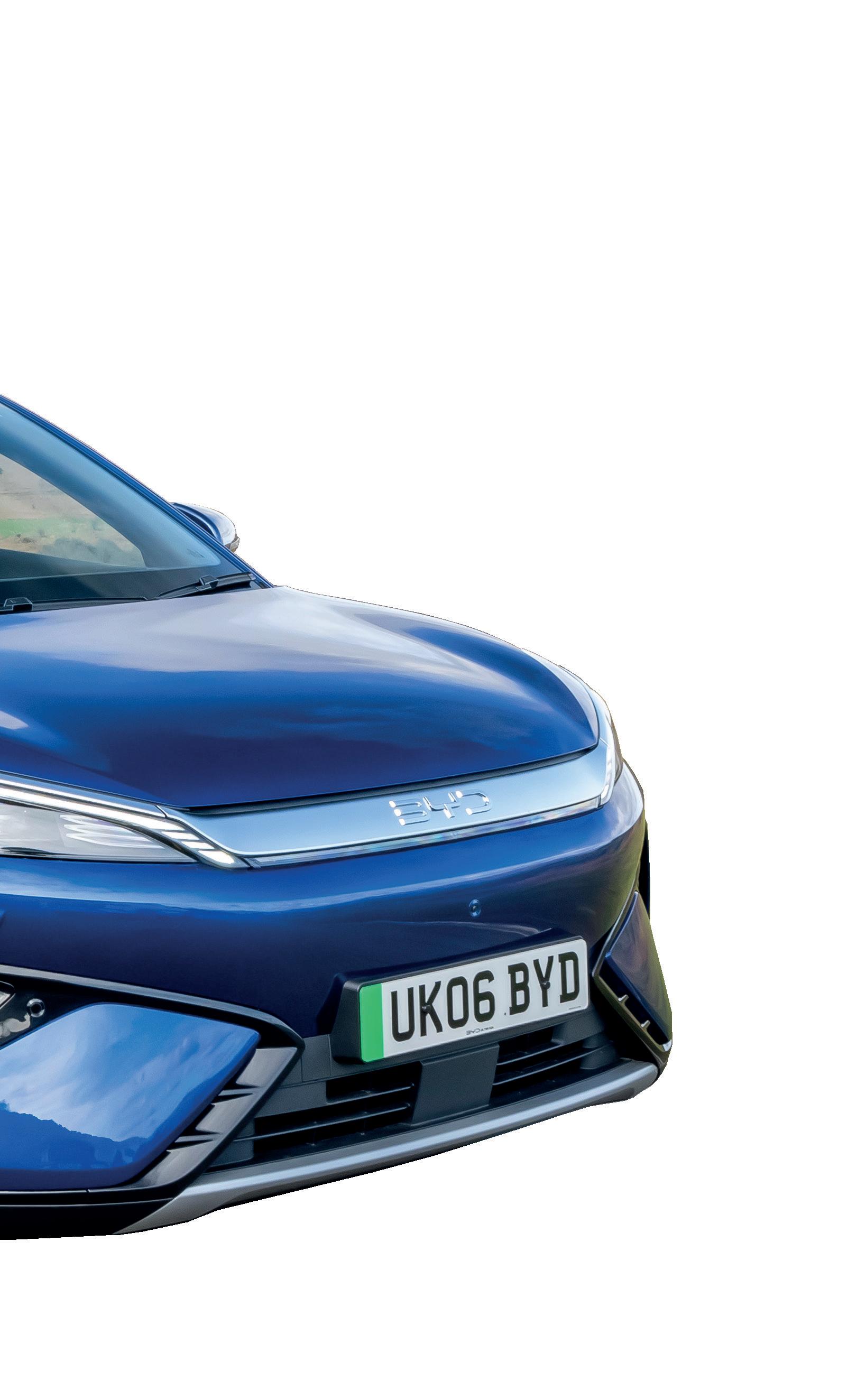
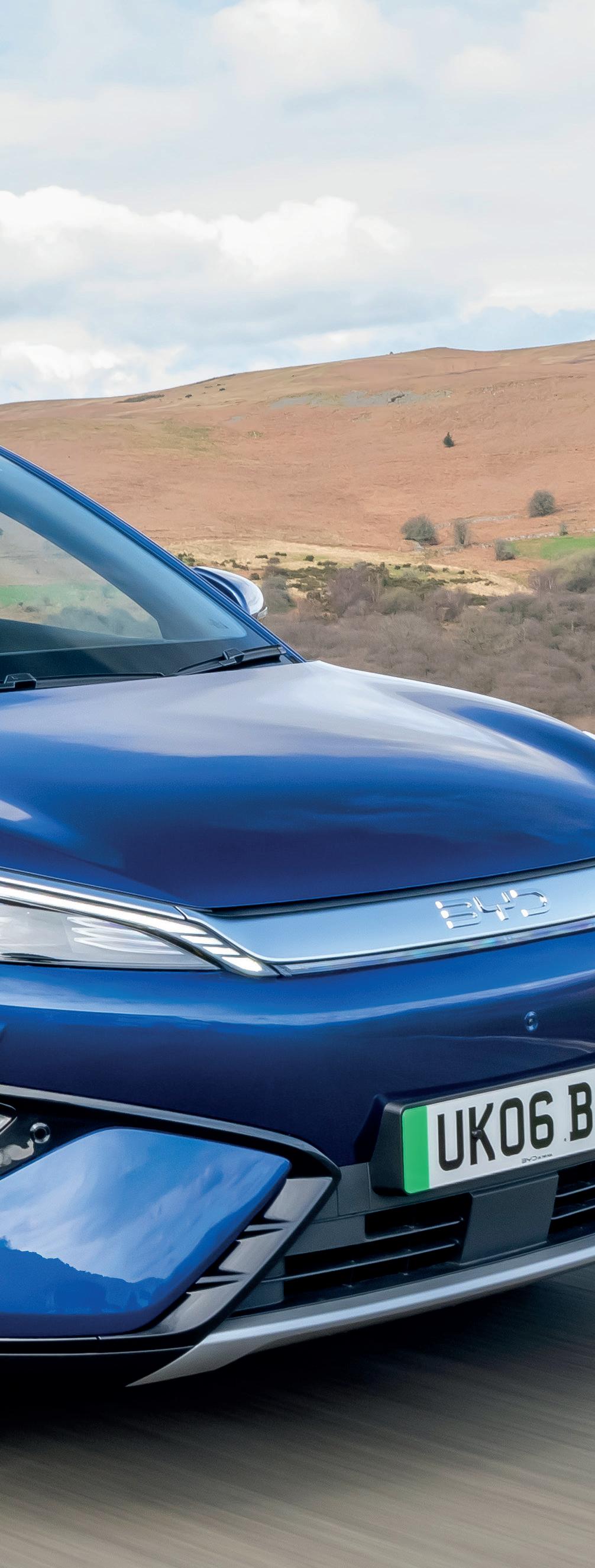
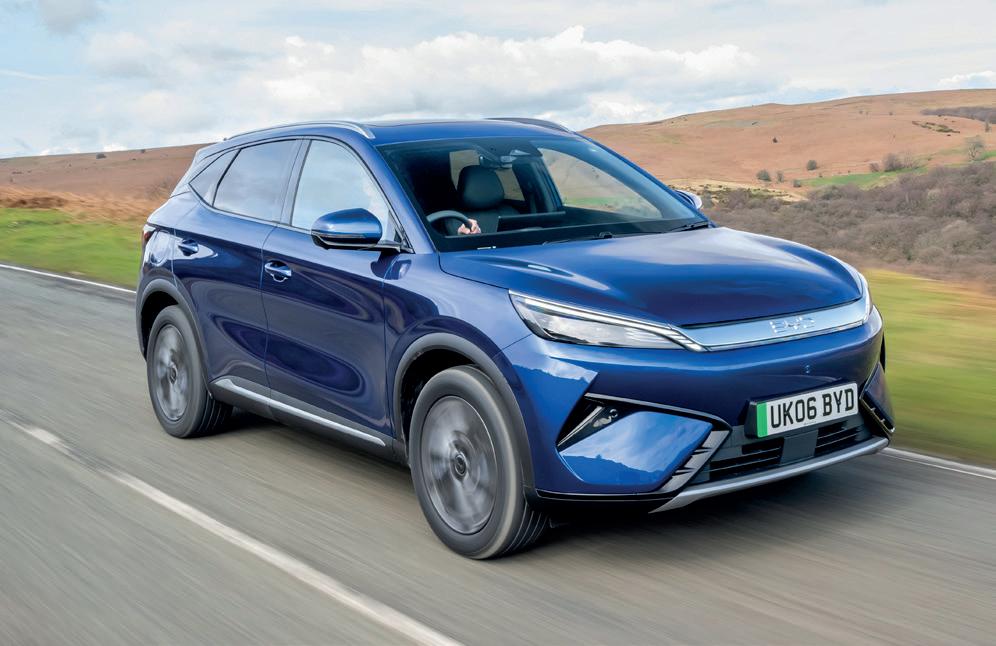
Back in late 2023 I attended the launch of the original BYD Atto. Held in a modest venue in the English countryside, it gave no indication of the head-spinning pace at which the brand would go from Chinese unknown to the UK’s sixth biggest car brand and the world’s biggest EV maker.
The Atto 3 of 2023 was an unremarkable C-segment SUV. Apart from some quirky interior touches and a competitive price it was
But BYD doesn’t want to be average, so after just three years, the Atto 3 is getting an update. And this isn’t your usual “new headlights and a bigger touchscreen” affair. The Atto 3 has been seriously reengineered to make it one of the most powerful and quickest cars in its class.
The old 201bhp front-wheel drive setup has been binned in favour of a more powerful rear-drive one, or even more powerful all-wheel-drive version. There’s also a bigger battery for better range, and updated technology. Plus the small matter of a new name. In reference to the scale of the changes this
So has it evolved from an also-ran to class leader?
Externally, you’d be hard-pushed to identify this as the new Atto 3 Evo rather than the original car. The front and rear bumpers have a new profile and slimmer side skirts aim to give a neater look. There’s also a new high-level spoiler and a redesigned diffuser element, plus some
Despite the exterior changes you’d still have to say the Atto 3 Evo remains a fairly generic SUV.
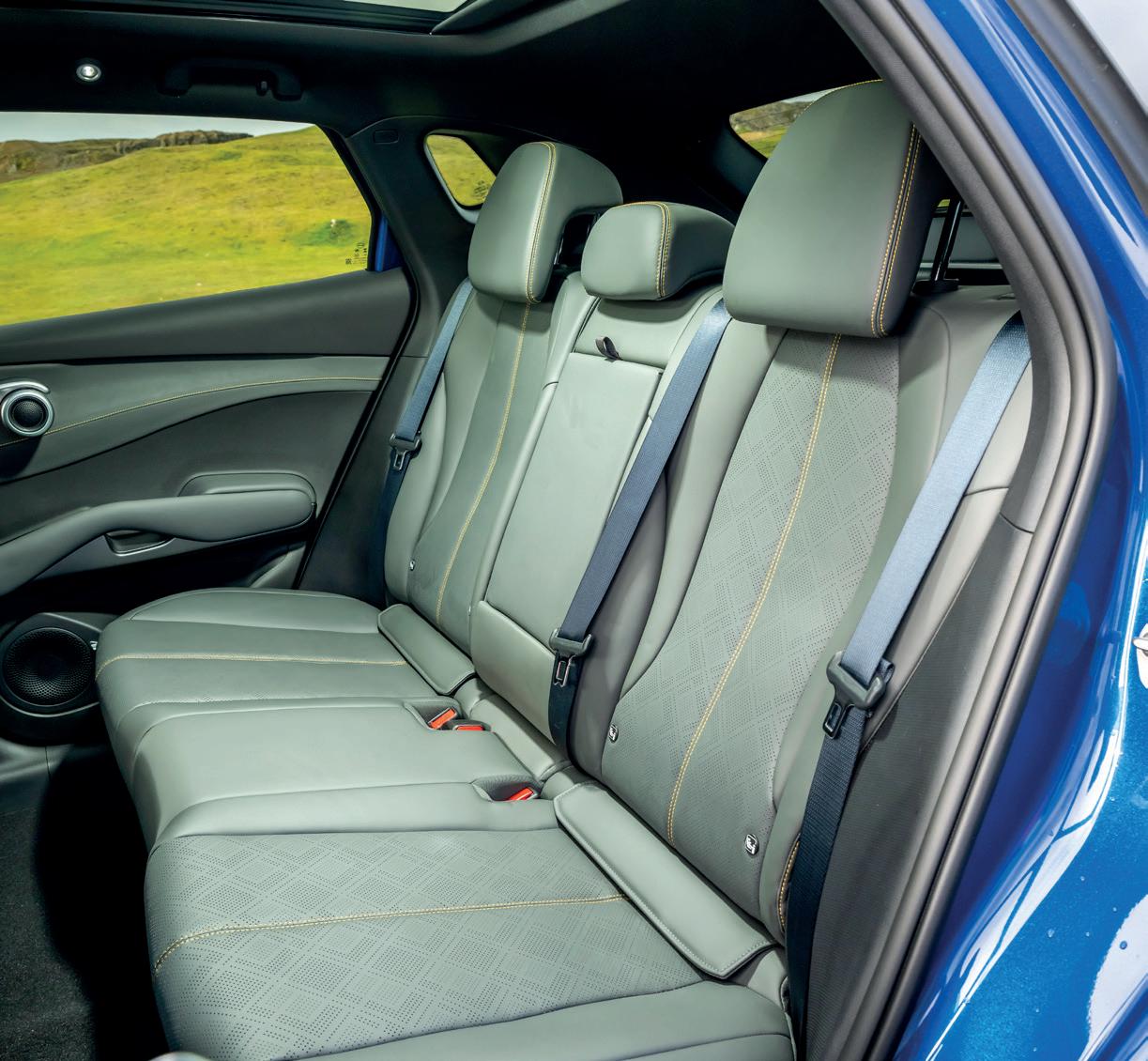
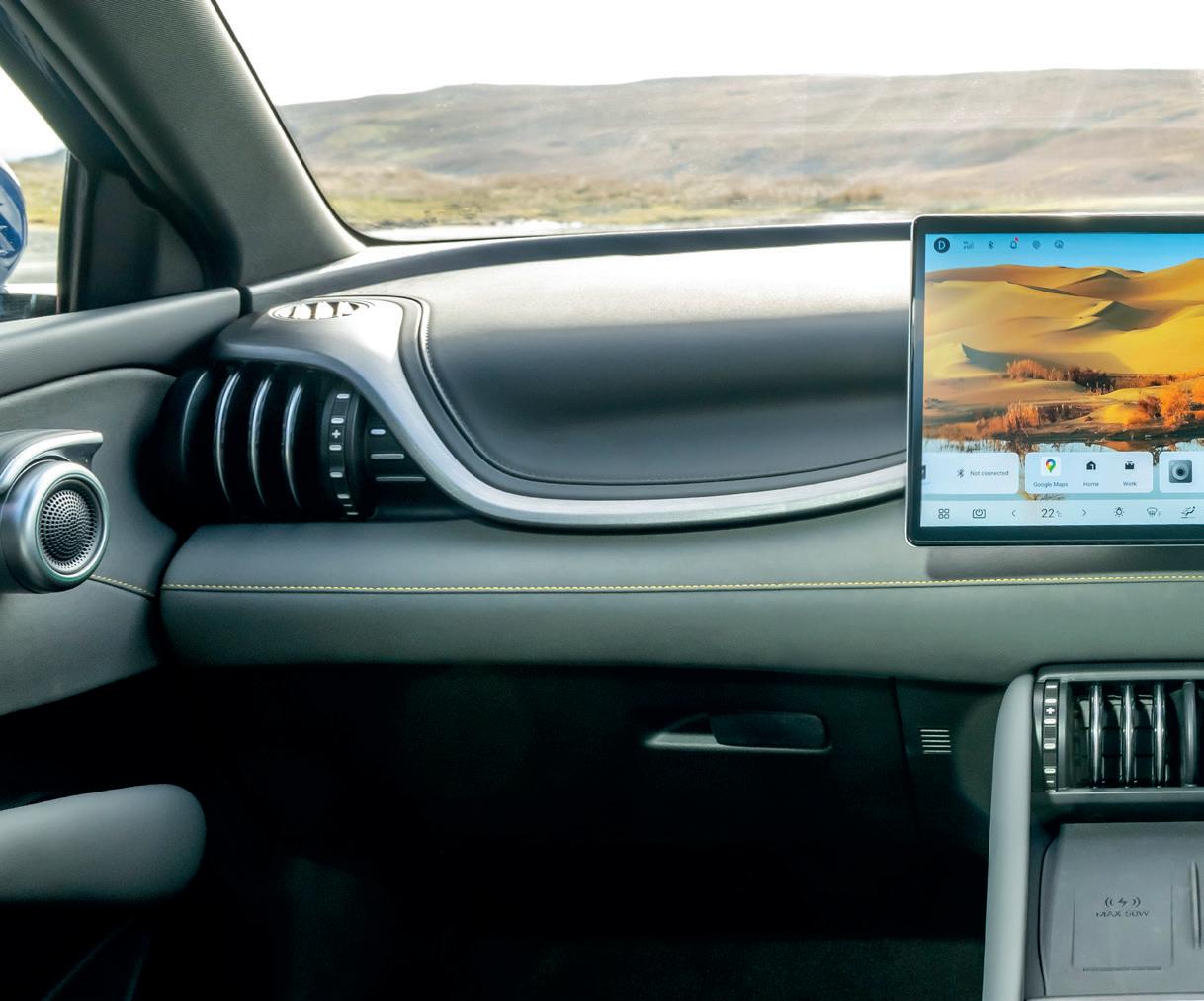
Inside, however, it remains one of the more unusual cars in its class. There have been subtle updates which have toned down the gym-inspired ambience, but the overall attention-grabbing design remains. The door handles still have a barbell aesthetic, the air vents remain inspired by free weights and the guitar string-style door pockets remain to entertain kids and infuriate parents. However, the centre console is neater and the kettle bell-shaped drive selector has gone, with that function now managed by a column stalk. There’s also a new 8.8-inch digital instrument display. This is similar to that in newer BYD models
Beside that, the Atto 3 retains its 15.6-inch central screen but here as with other models BYD has ditched the pointless rotating feature and introduced a new user interface with Google facilities built in. This is an improvement on the outgoing setup but is still frustratingly clogged with menus, and while there are shortcut keys they are confined to a thin bar at the bottom of
Continued on next page
BYD is very keen to stress that the Atto 3 Evo Excellence is the fastest car in its class. THE QUESTION IS, WHO CARES?
Through clever reengineering of the car’s platform BYD has managed to unlock an extra 50 litres of boot space and add a 95-litre frunk, giving the Atto 3 Evo a total luggage capacity of 585 litres.
While there’s no such clever trickery to unlock more passenger space, the Atto 3 is still spacious enough to compete with the likes of the Skoda Elroq, Ford Explorer and Mini Countryman – all cars BYD holds up as rivals. An average-sized family of four will fit just fine. One small change in the name of comfort is a new seat design that ditches the one-piece backrest in favour of an adjustable headrest – a minor but welcome change.
While the visual changes are pretty subtle, there are big differences beneath the skin.
The old car’s front-mounted 201bhp motor is gone. In its place, entry-level versions of the Atto 3 Evo are equipped with a 309bhp rear-mounted motor good for a 0-62mph time of just 5.5 seconds. That immediately puts this “regular” model in the same arena as the Skoda Elroq vRS and inbound Kia EV3 GT.
Above that is an all-wheel-drive variant packing a massive 443bhp, 413lb ft and a 0-62mph time of just 3.9 seconds.
BYD is very keen to stress that this makes the Atto 3 Evo Excellence the fastest car in its class. The question is, who cares?
Nobody who drove the original Atto 3 thought “what this needs is 443bhp”. Yet, here we are. And the twin-motor version certainly pours on the pace with eye-opening vigour. It’s very easy to get to 60mph very quickly but beyond that the Atto 3 seems to oddly run out of urgency.
The brakes have a similar problem, engaging with a brutal initial bite before fading away slightly. Neither characteristic instills confidence to exploit that power and nor does the chassis. While there’s new multi-link suspension and
retuned steering, the overall feeling is still largely lifeless, with artificially heavy steering and slow responses, plus a ride that never feels settled.
Frankly, it’s hard to see why you would choose the dual-motor model when there’s not much fun to be had exploiting its power. The single motor model is still plenty quick enough and comes with the benefit of a longer range.
Supplying power to the new motors is a new iteration of the BYD Blade Battery which boosts capacity from 60.5kWh to 74.8kWh. The single-motor Atto 3 Evo will now cover 316 miles on a charge, while the more powerful model manages 292 miles.
The facelift also marks a shift to 800V architecture, which means peak DC charging of 220kW.
While that puts the Atto 3 ahead of the pack, with a 10-80% top-up in 25 minutes, the overall range is still some way behind most of its key rivals, which offer well over 350 miles WLTP.
Like the rest of the BYD family, the Atto 3 Evo line-up is simple.
There are two models – the single-motor Design grade priced from £38,990, and the dual-motor Excellence AWD, which costs £42,730.
The Design is actually £740 cheaper than the outgoing model despite the major mechanical improvements and, on both models, the only paid-for option is £750 paint.
Every model gets 18-inch alloy wheels, adaptive LED headlights, heated front seats, 360-degree parking cameras and sensors, a heat pump, vehicle to load function and an array of high-power USB ports and wireless charging.
As well as the extra motor, Excellence grade adds a panoramic sunroof, heated rear seats and a head-up display.
BYD said it listened to customers and the media when updating the Atto 3 to become the Atto 3 Evo.
That shows in the improved range and charging speeds along with some of the ergonomic and practical changes, all of which are welcome upgrades.
However, this is a hugely competitive segment and, despite its prodigious power, the Atto 3 is nowhere near as good to drive as its rivals, nor can it match them for driving range. If it were substantially cheaper, that might not matter so much, but there’s an awful lot of choice for very similar money, meaning the Atto 3 Evo still fails to stand out from the crowd.
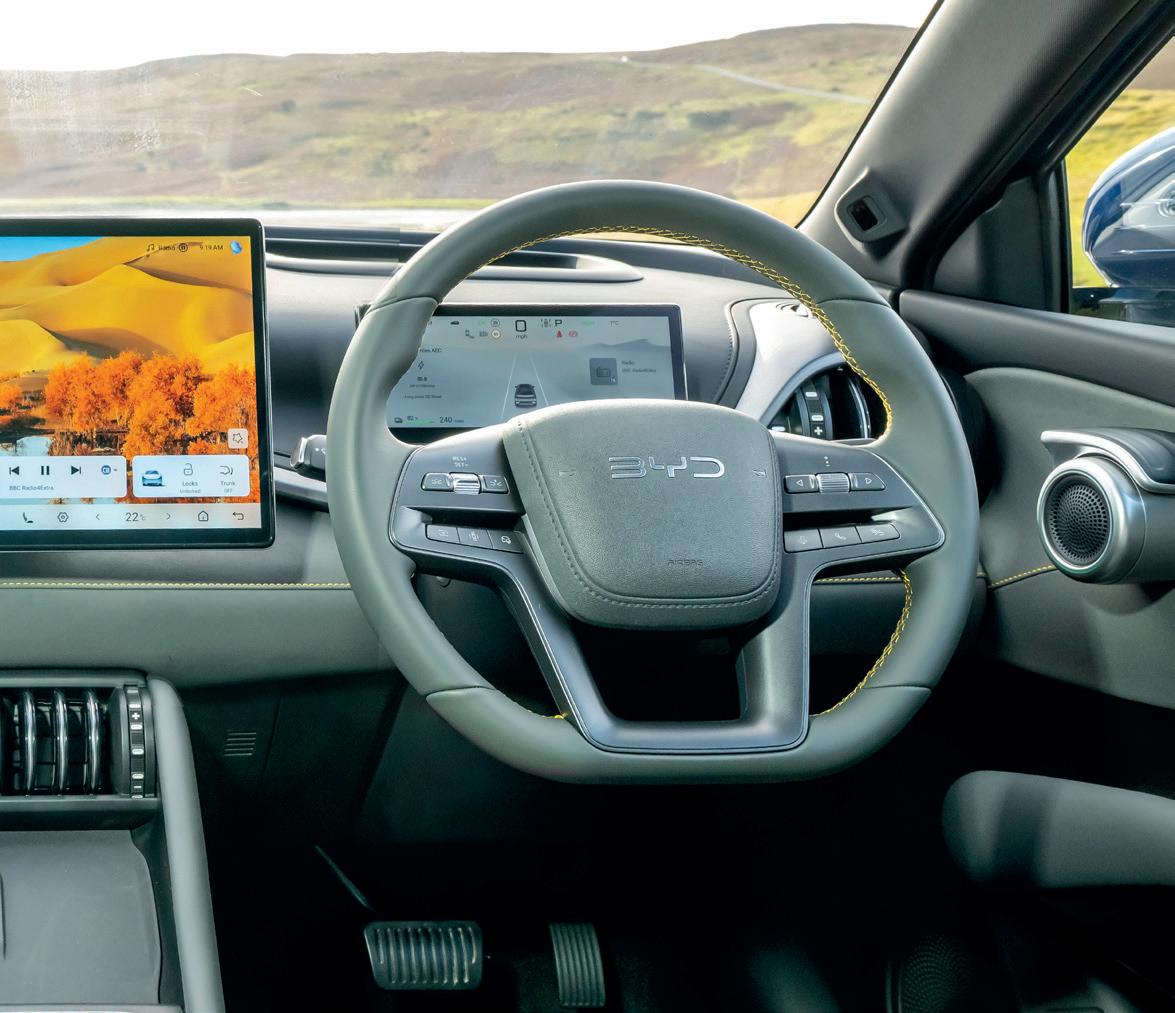
BYD ATTO 3 EVO EXCELLENCE AWD
PRICE: £42,730
TRANSMISSION: Two-motor, all-wheel-drive
BATTERY: 74.8kWh
POWER: 443bhp
TORQUE: 413lb ft
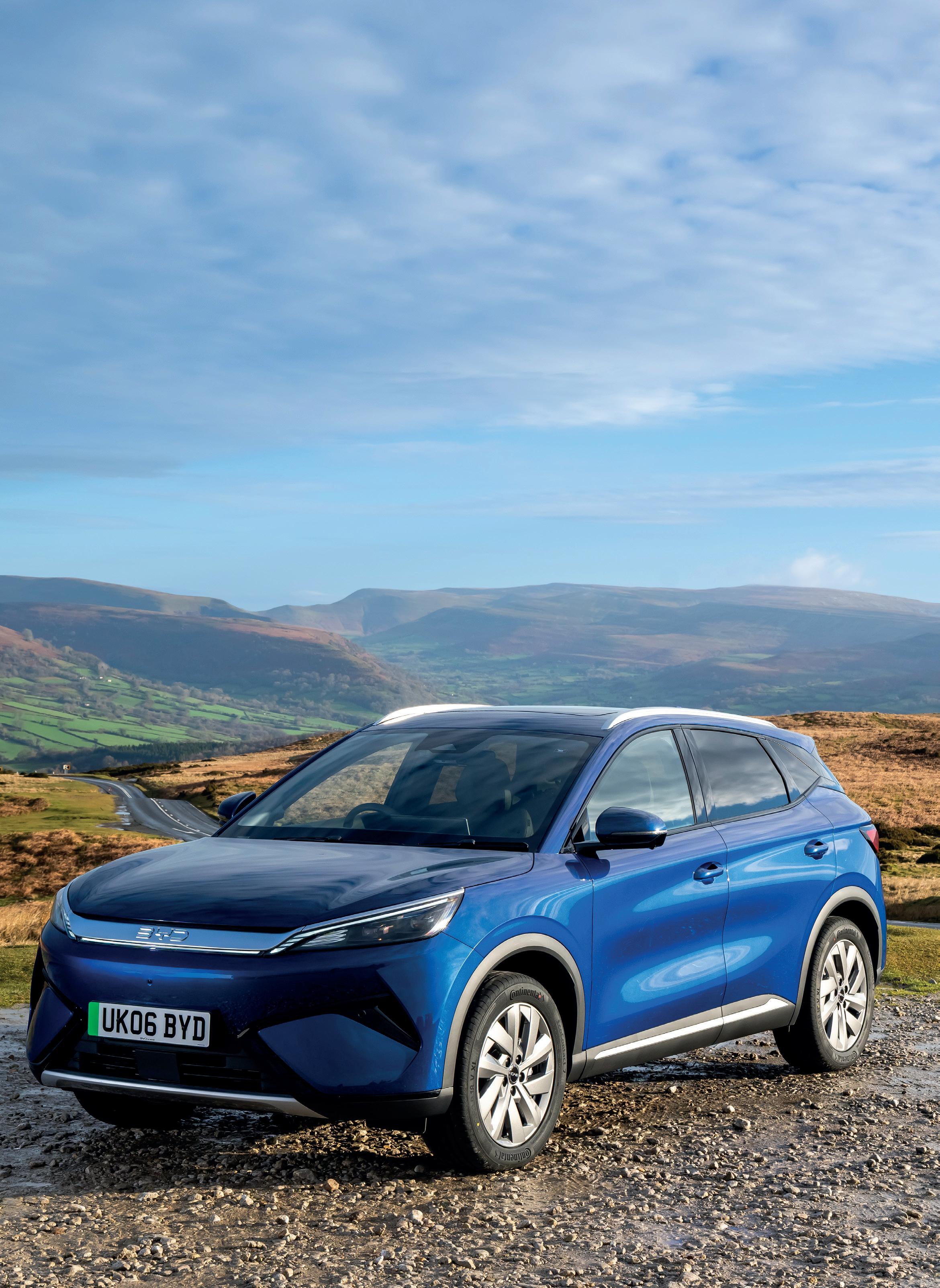
TOP SPEED: 124mph
0-62MPH: 3.9 seconds
RANGE: 292 miles
CONSUMPTION: N/A
CHARGING: up to 220kW
RENAULT 5 LONG-TERM MONTH FOUR
THE LONG AND SHORT OF IT
The Renault 5 faces its toughest task yet –a trip to another country
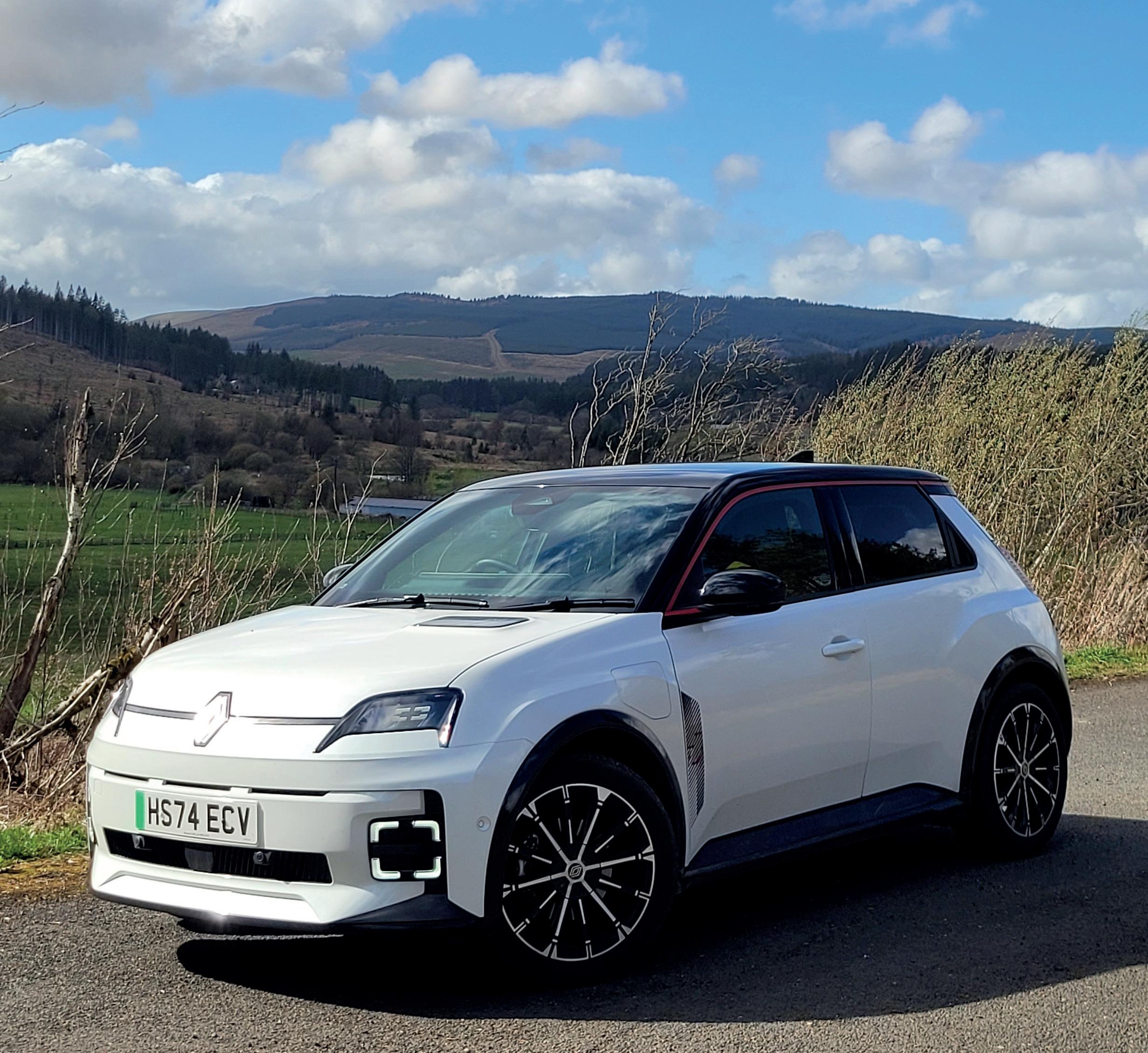
This month marked a bit of a milestone for me and my Renault as I took it on its first “proper” drive.
In keeping with the whole supermini vibe, until now the R5 has been the go-to choice for school runs, local shopping trips and regular 70-mile round trips to Edinburgh. However, for anything longer, I’ve turned to the bigger-batteried ID Buzz or whatever test car is parked on the driveway that week.
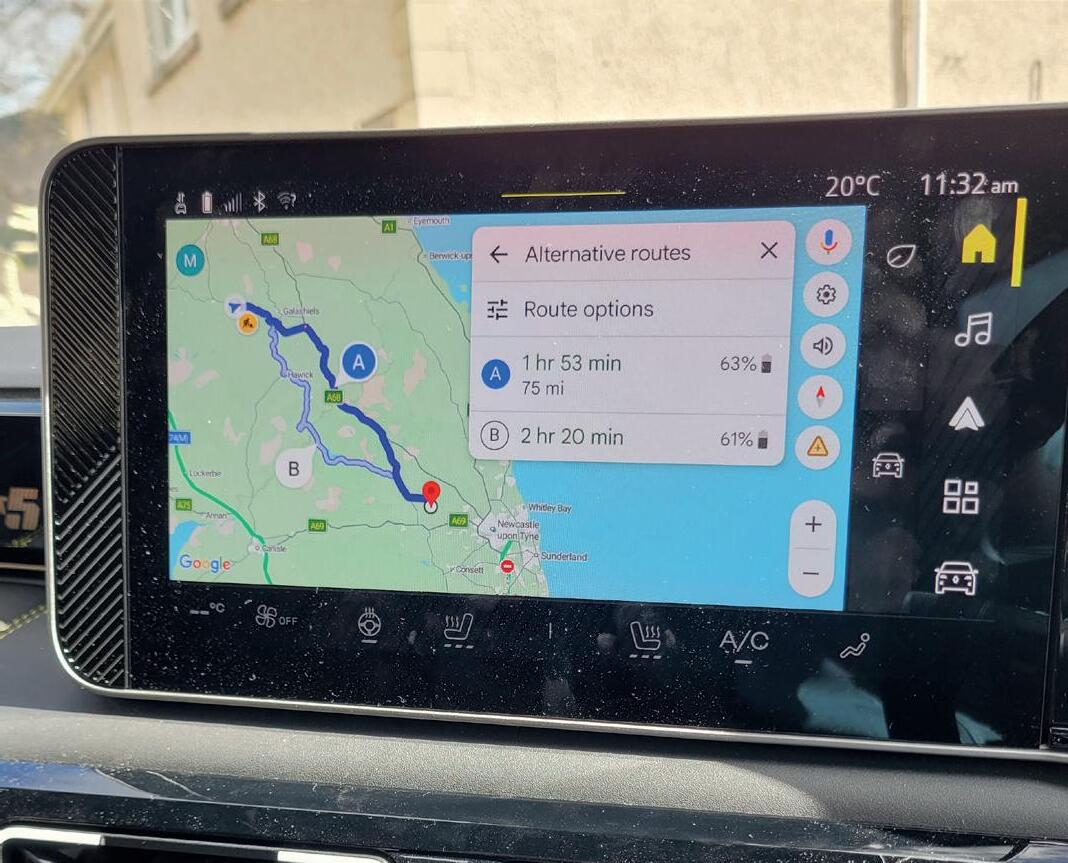
Of course, most owners won’t have that luxury and will rely on their R5 to do the occasional long journey as well as the day-to-day running around. So an invitation to Northumberland to drive the new Polestar 3 seemed like an ideal opportunity to see how the Renault 5 coped on these longer runs.
By MATT ALLAN
35 LONG-TERM REVIEW
RENAULT 5 ICONIC 5+
PRICE: £28,995 excluding ECG (£30,045 as tested)
POWERTRAIN: Single-motor, front-wheel-drive
BATTERY: 52kWh
POWER: 148bhp
TORQUE: 181lb ft
TOP SPEED: 93mph
0-62MPH: 7.9 seconds
RANGE: 251 miles
CONSUMPTION: 4m/kWh
CHARGING: up to 100kW
The longer drive over some fantastic and familiar roads was useful in highlighting what a fun, lively little car the Renault 5 is. Its 150bhp might not be much in this age of 450bhp family SUVs, but it makes the most of it with a positive throttle response and good pick-up. Yes, it will run out of puff a little at higher speeds, but for some B-road fun, it’s punchy enough. More importantly, bung it in sport mode and there’s enough weight to the steering to give confidence in the twisty bits, backed up by a chassis that feels like it could handle a lot more power.
In fact, while showcasing the potential of the chassis, that drive also showed the limitations of the efficiency-focused Continental EcoContact tyres. Yes, they’re great for eking out miles, but on the twistiest bits of Northumbria’s brilliant roads, the chassis felt it had a lot more to give than the rubber.
Of course, if such things are a massive issue, there’s always the Alpine A290, which takes the basic R5 and adds an extra 70bhp, an even tighter chassis and some Michelin Pilot Sports for better traction. It also deletes the cupholders, which just proves, you’ve always got to compromise.
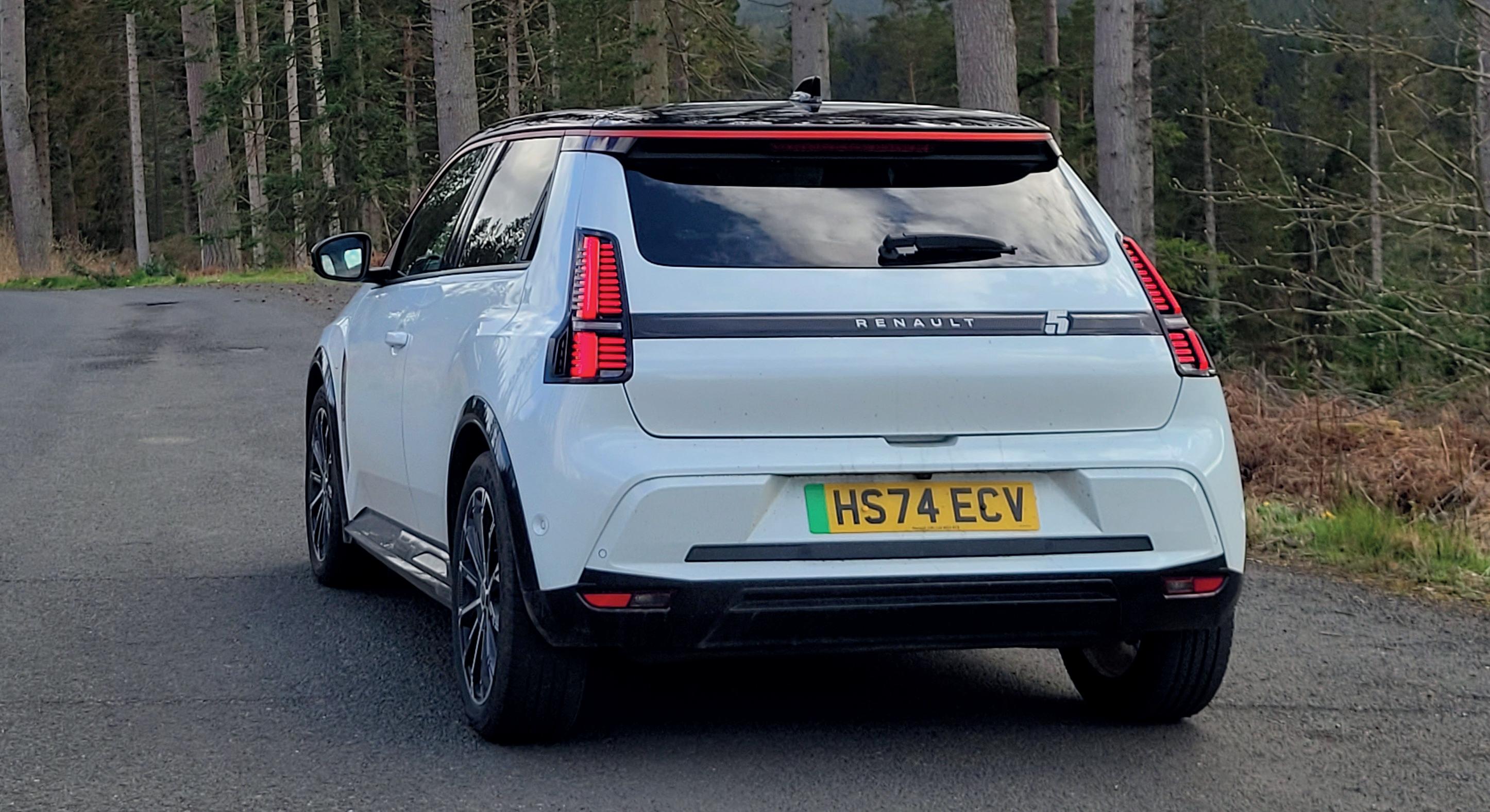
My route was around 150 miles with just under four hours of driving on the famously winding and undulating roads between the Scottish Borders and Newcastle. They’re not the best for efficiency, but the wee Renault coped well, even with my sometimes enthusiastic driving. I got home with 20% battery remaining, meaning a real range of around 200 miles. While that’s not stellar, it shows that the R5 can still serve for those bigger trips as well as being the exemplary commuter car.
Interestingly, I had toyed with the idea of using the Renault for a twoday 700-mile round trip a few weeks ago. My route planning app insisted that its better efficiency compared with my 86kWh ID Buzz would offset the smaller battery and slower charging. In the end, the lure of the Buzz’s faultless 200kW charging, ability to go further between stops and bigger, comfier seats won out, but if the Renault performed as predicted, the entire trip would only have taken 30 minutes more.
USED SKODA
37 USED BUYING GUIDE
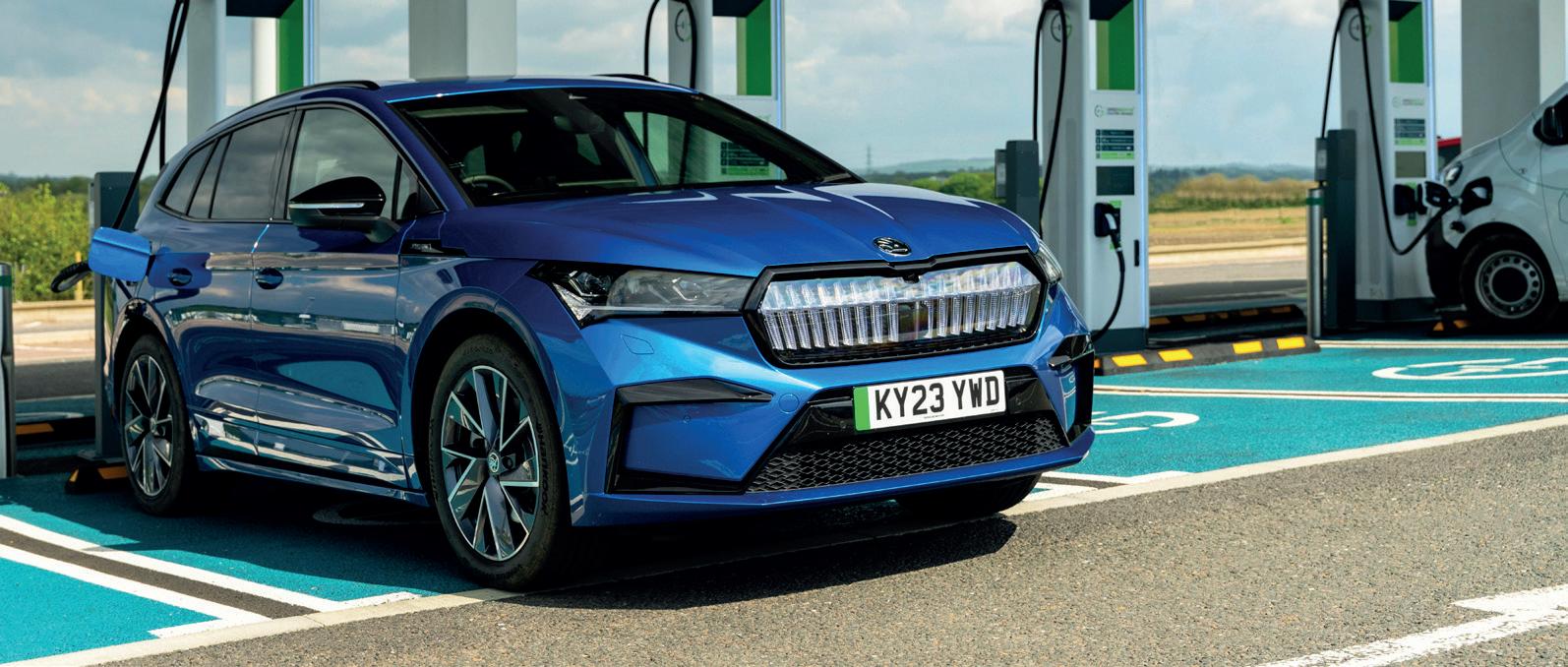
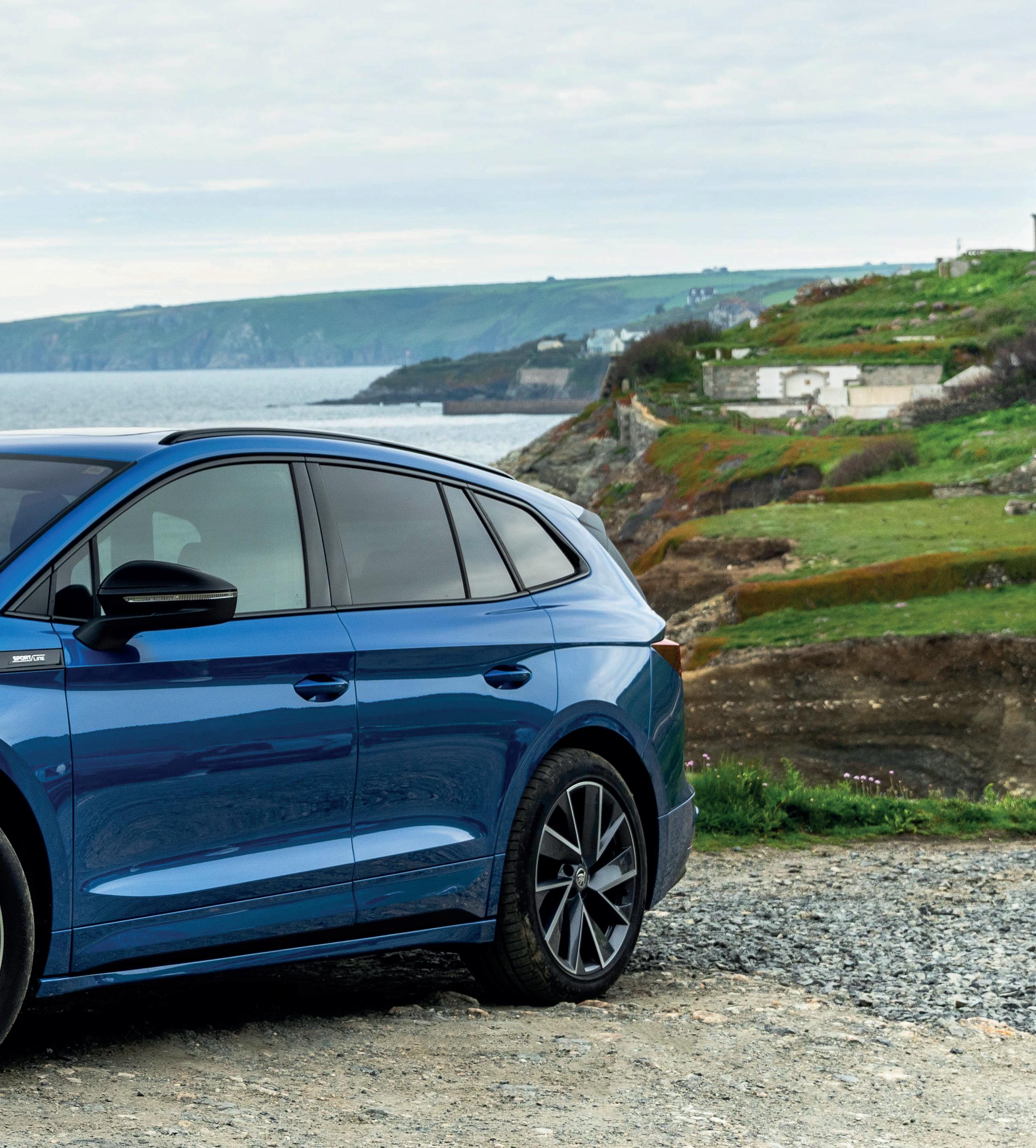
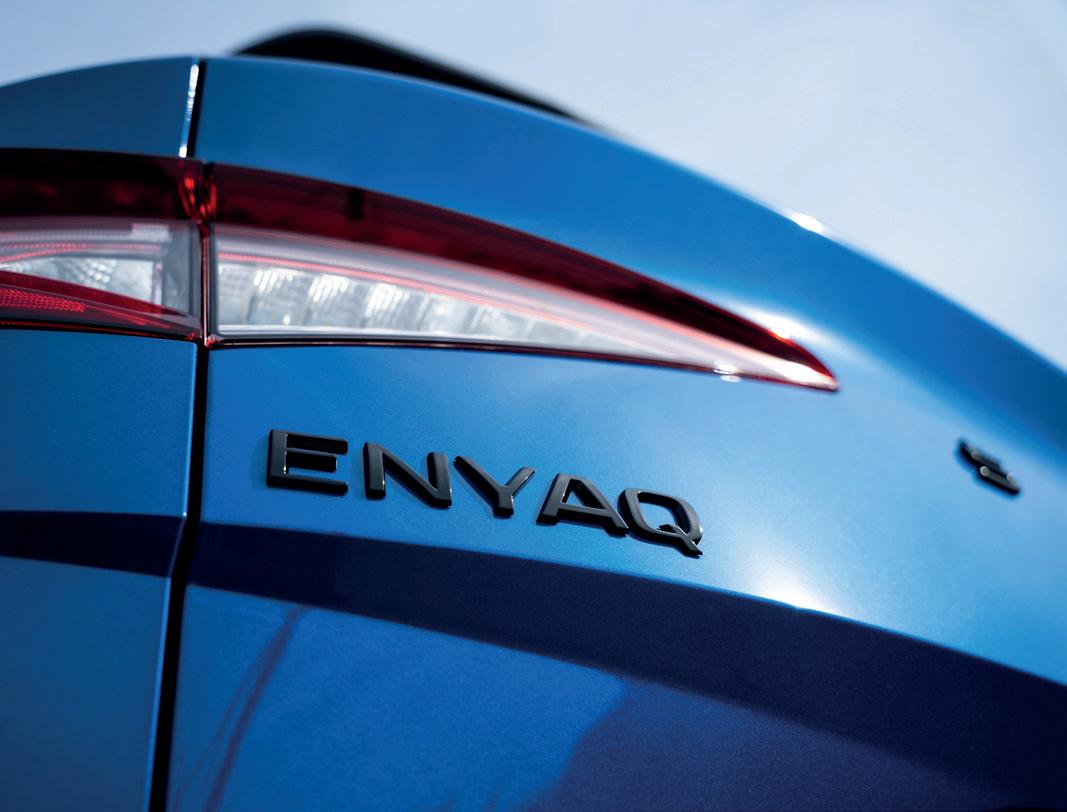
Fun fact - the Enyaq wasn't Skoda's first dedicated EV. That title goes to its 1938 'Beer Float', an electric van used by breweries to deliver barrels around Plzen.
Yet when initial Enyaq deliveries were made in 2021, it showed that Mlada Boleslav could build
its sister cars, the Volkswagen ID.4 and the Audi Q4 e-tron.
Despite sharing the same underpinnings as its more expensive siblings, the Skoda is our choice of the three MEB triplets thanks to its charm, affordability, and vastly superior cabin. It's also not as awkward looking
generating 177bhp, and the latter 201bhp. Meanwhile, the all-wheeldrive (AWD) 80X gets 261bhp and a sub-seven second 0-62mph time.
After almost three years on sale, the Enyaq underwent a mild facelift. The 80 and 80X were replaced by the 85 and 85X, which boosted power to 282bhp,
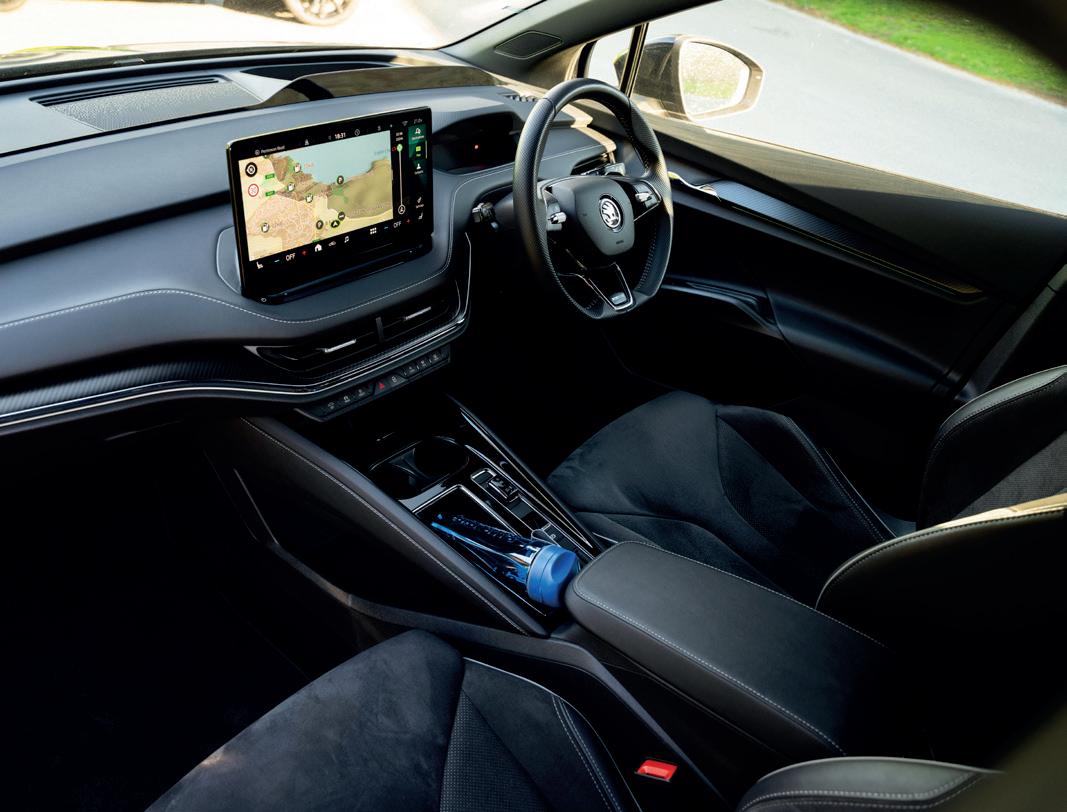
is no different. All models get a 13inch driver-focused infotainment display with Android Auto and Apple CarPlay integration, plus a 5.3-inch display in front of the driver.
It is worth noting that while there are physical buttons for the hazard lights and heated screens front and
USED BUYING GUIDE 38
Base 50 and 60-spec cars come with dual-zone climate control, 19-inch alloy wheels, electronically-folding door mirrors, auto-dimming door mirrors, and cruise control.
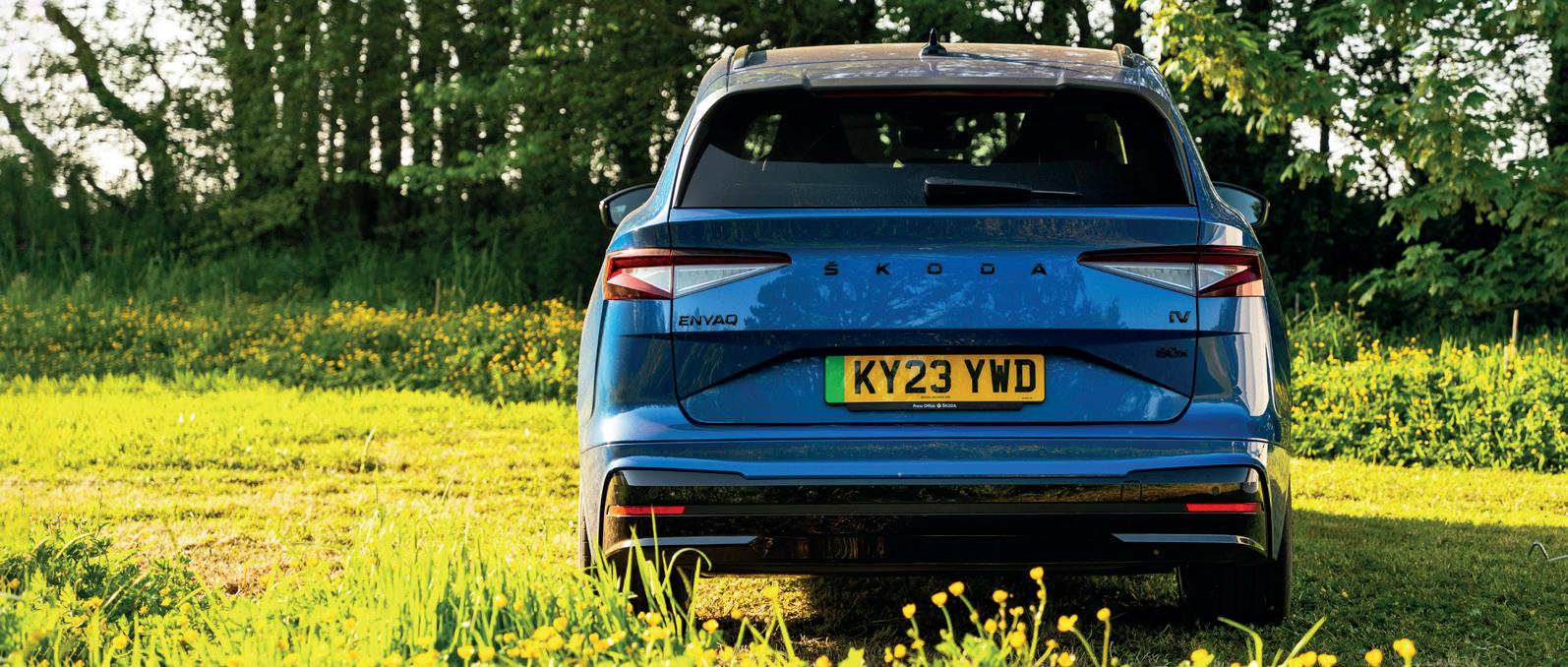
The 80 and the 85 that replaced it add steering wheel-mounted paddles to adjust braking regeneration, a heated steering wheel, and extra parking aids. The Sportline and Sportline Plus trim add wireless phone charging, a more aggressive exterior, and - if specified with the Maxx pack - gets adaptive dampers and a massaging driver's seat.
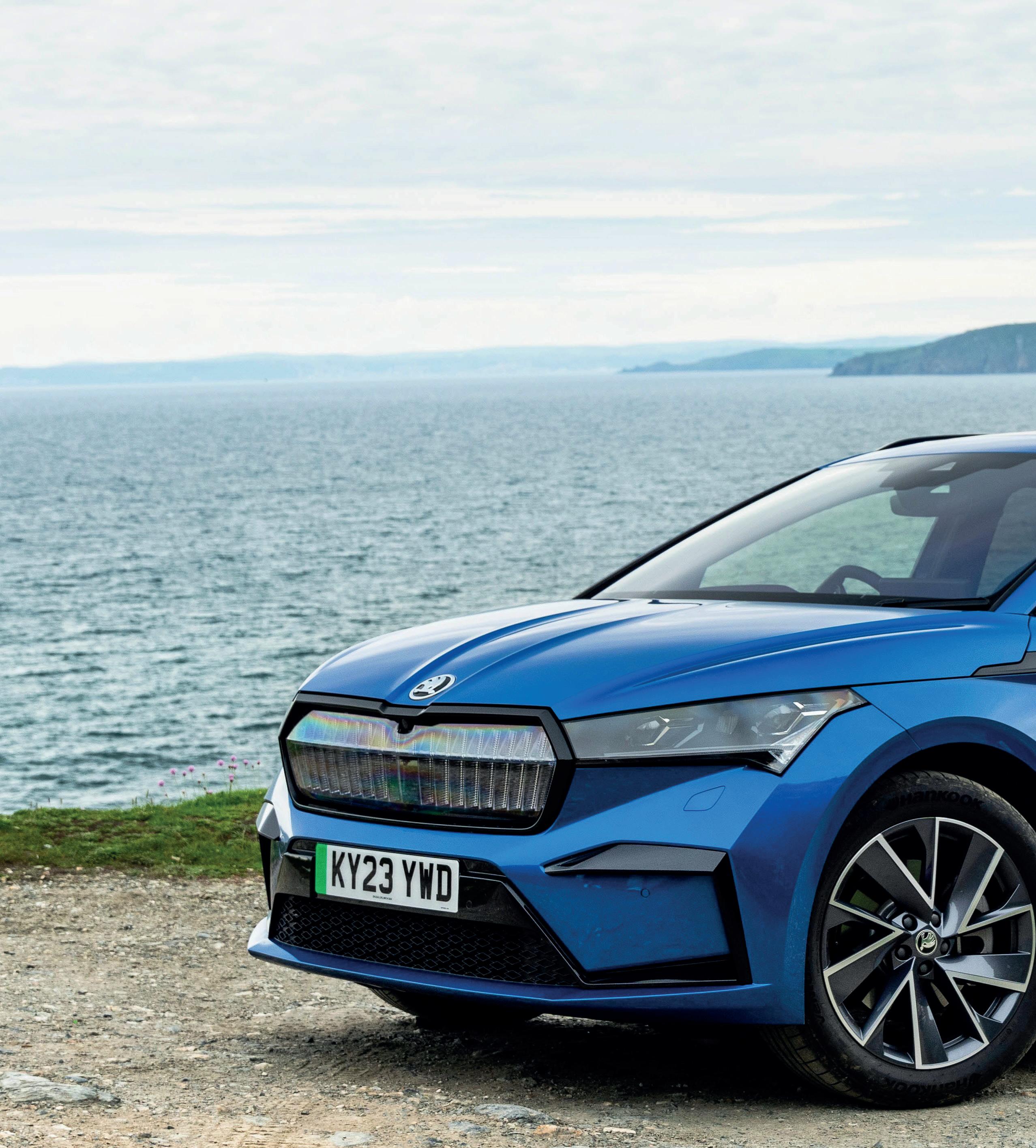
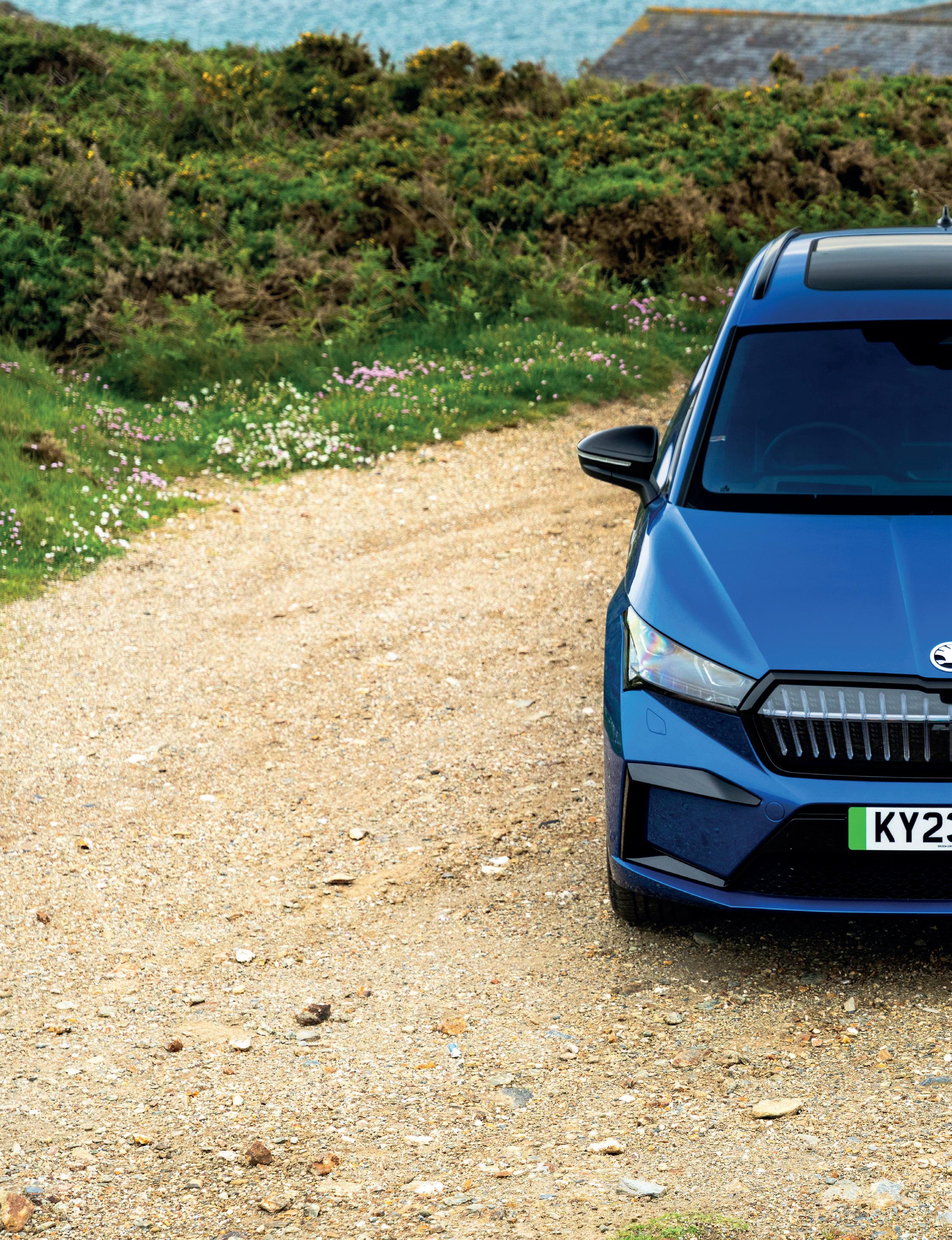
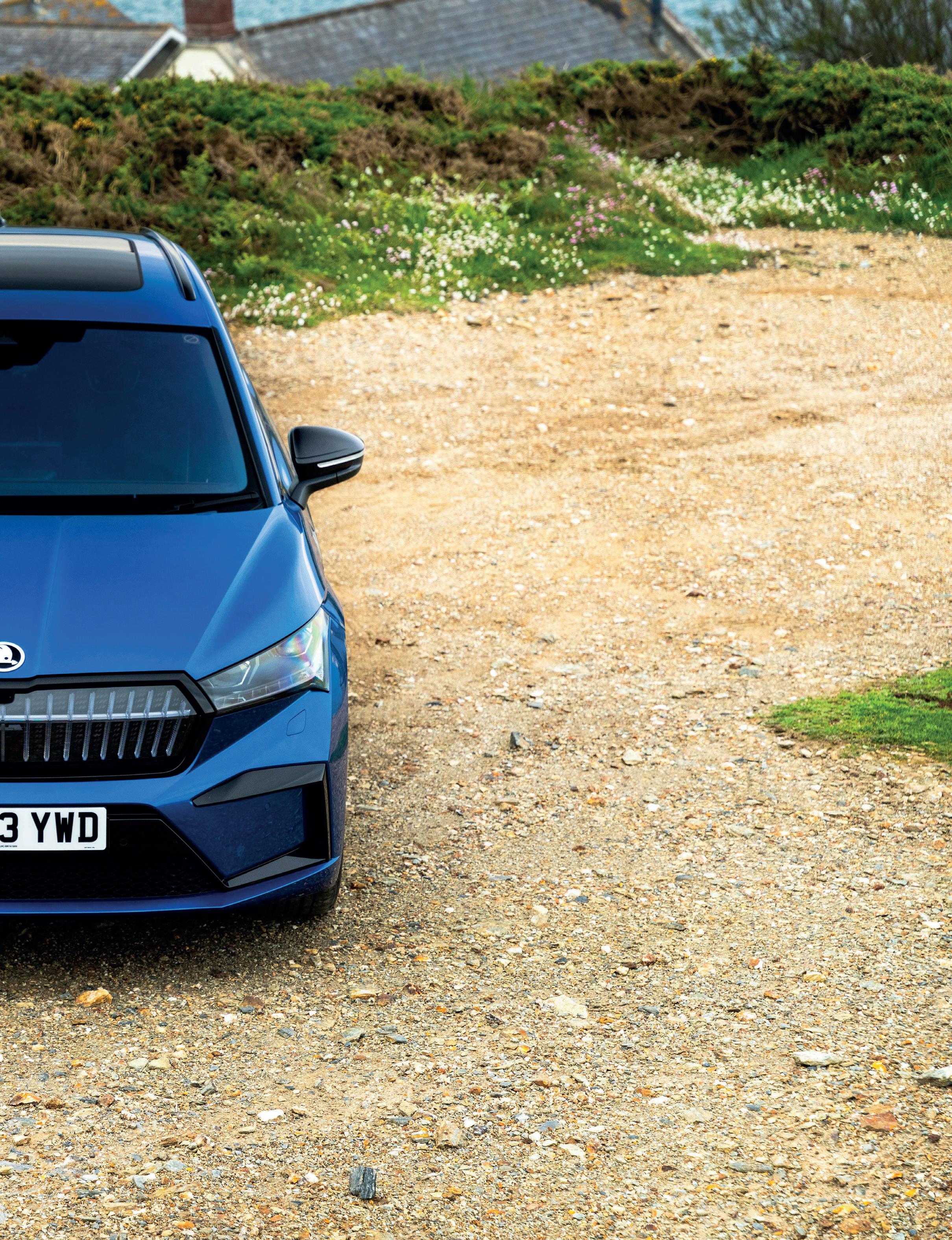
Skoda also offered the Enyaq with a 'Crystal Face'. Originally a £1,650 option, this visually striking and divisive design element replaces the regular blacked out 'grille' with a light-up alternative introducing 130 LEDs across 18 vertical ribs.
For a brand that prides itself on simplicity, Skoda's way of speccing the Enyaq is little short of baffling. After choosing the trim level and powertrain, it's on the owner to select the interior they want.
'Loft' cars sit at the bottom of the rung, and come with a somewhat gloomy, black and grey fabric-heavy interior. Next up is 'Lodge', which combines natural wool and polyester woven from recycled bottles, and adds a muchneeded splash of colour to things.
Further along the range is the 'Lounge' option. This pairs black leather and light microfibre with soft suede and yellow stitching, with a similar setup trimming the dash.
'Suite' brings in cognac-coloured stitching, and EcoSuite adds cruelty-
free leather to the inner door panels and dashboard. Meanwhile, the matching tan seats are upholstered in a material tanned using sustainable olive trees.
The Sportline trim is solely available on 80 and 85 cars, and has seats finished in perforated suede with leather inserts, a perforated leather steering wheel, and black rooflining.
There is also a little known Skoda Enyaq 'Founders Edition' created to commemorate Skoda's 1895 foundation year. Just 50 of them made their way to the UK.
Based on the Enyaq 80, the Founders Edition is marked out with its own set of unique 21-inch wheels, the Crystal Face, and a numbered steering wheel plaque. Available solely with the Suite interior option, the Founders Edition adds copper elements to the badging, wing mirrors, and wheels. Irrespective of trim level, the Enyaq is well-built and logical to use. The trim level and interior simply boil down to what the driver needs, and their taste in colours and materials.
If we dig deep and find any criticism of the Enyaq's cabin, it would be that the VW-derived infotainment system is laggy at times, and the haptic heating controls can be difficult to use.
Price, range and running costs
We found 264 pre-facelift Enyaqs for sale on Autotrader. The cheapest was £10,295 for a 2021 60 car
39 USED BUYING GUIDE
finished in white, with 115,723 miles on the clock. At the other end of the scale, a 5,553-mile Sportline Plus car from 2024 was the most expensive, with a £31,999 asking price.
With a home EV charger and dedicated EV tariff costing as low as 7p/kWh, the cost of charging the Enyaq will depend on if you opt for the 60 or 50 model with its 50kWh battery, or the 80 or 85 with its 77kWh unit.
The smaller setup will cost £3.50 to charge fully, while the larger of the two will set you back £5.39. Relying on a public charger will cost significantly more, but still less than petrol or diesel at present.
When it comes to range, the Enyaq has more than enough for daily driving, as the 50 and 60 trim achieve either 234 or 246 miles on a single charge. It's when you step up to the 80 and 85 models that long distance drives become a real possibility, with anything the range figures coming out at from 318 to 348 miles.
The Enyaq 50 and 60 come with a maximum charge rate of 100kW, providing a 10%-80% charge time of between 35 and 38 minutes. The 80 has peak DC charging of 125kW, and top-up time remains largely unchanged.
With the arrival of the 85 version, Skoda introduced 175kW charging, bringing the charge time down to 28 minutes.
Don't forget that EVs are no longer road tax exempt, meaning that all electrified vehicles registered
after April 1, 2017 will be charged £200 in VED (Vehicle Excise Duty) each year.
Thankfully, the Skoda Enyaq won't break the bank when it comes to insurance costs. Entry-level 50 and 60 cars sit in insurance groups 22 and 24. Even the AWD Sportline 85X won’t bankrupt you, as it sits in category 37.
Reliability
The Skoda Enyaq has proven to be a reliable companion, and has still not been subject to any sort of recall after half a decade on sale.
In the most recent What Car? reliability survey, the Enyaq ranked sixth from 16 electric SUVs, ahead of the VW ID.4 and the Audi Q4 e-tron. As a brand, Skoda was 13th out of 31 manufacturers.
Skoda dealers were a mixed bag, and the car's main issues were centred on the glitchy infotainment system. Electric gremlins were also cited as reasons behind charging and connectivity issues.
The 'one to have'
There really is no such thing as a bad Enyaq. Ultimately, it boils down to how much range and equipment you need.
If we were parting with our own hard-earned, we'd be looking at one of two models: Either an 80 with the EcoLodge cabin, or one of the ultra-rare Founders Edition cars. Setting a budget of £20k upwards will go far.

By RICHARD ALVIN
VELOTRIC TEMPO
LIGHTWEIGHT, CLEVER AND BUILT FOR FITNESS
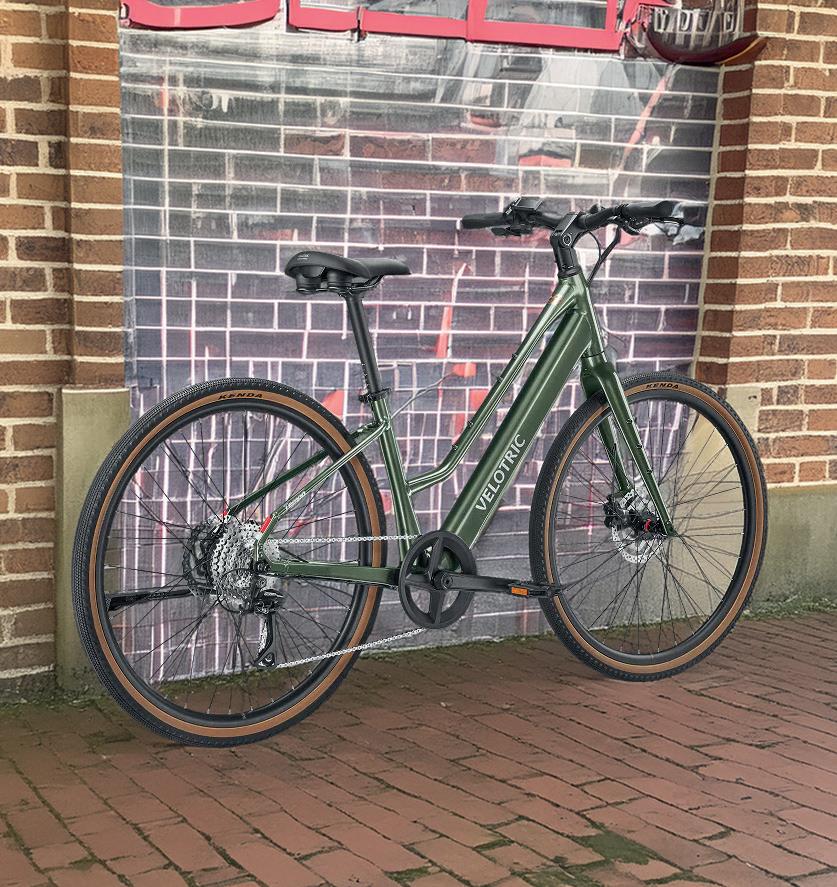
The Velotric Tempo feels like a major step forward for the brand’s fitness-focused e-bike line. At just 17kg or around 15kg without the battery, it is light, sleek and easy to live with, but it also packs in a surprising amount of technology.
At first, I assumed this was simply a refreshed Velotric T1. It isn’t. The Tempo is more refined, more capable and far more customisable. Its 350W rear hub motor peaks at 650W and delivers 45Nm of torque, which is plenty for a bike this light. On the road, it feels lively, quick and more powerful than the numbers suggest.
The ride position is nicely judged. My large highstep test bike suited me well at 5ft 11in, helped by a 60mm adjustable stem, micro-adjust saddle rails and a comfortable hybrid stance. It can feel relaxed or more purposeful depending on how you set it up. The 700x42c Kenda gravel tyres add comfort and hint at the bike’s adventure potential, especially with fork mounts, bottle mounts and rack/fender-ready frame points.
The headline tech is SensorSwap, which allows riders to choose between torque and cadence sensing. That is a clever move. Torque mode feels natural and fitness-focused, while cadence mode gives an easier, more relaxed ride. There are also four PAS levels, three “Experience Modes”, Slow, Smooth and Turbo, plus detailed motor tuning via the display or app.
Most interesting is Pulse Mode. Velotric includes a heart-rate monitor, and the bike can adjust assistance dynamically to keep you in a target heart-rate zone. For riders who want an e-bike that supports fitness rather than replacing effort, it is genuinely useful.
Range is strong. In testing, the Tempo managed 71 miles in Eco and 24 miles in maximum assist, with realistic rider weight, stops and elevation.
For most riders, 45–60 miles should be achievable in mixed use. That is impressive from a hidden 374Wh battery, which can be removed for charging.
The component package is sensible: Shimano Acera 8-speed gearing, Shimano MT200 hydraulic brakes, 700c wheels, a comfortable Velotric/Selle Royal saddle and front-to-back LED lighting. The rear lights, brake light and indicators are integrated into the frame, which looks excellent and improves visibility. Security is also strong, with a key fob, PIN code, Apple Find My and Google Find Hub support.
There was one concern on my pre-production test bike: a creaking sound around the battery/ downtube area when pedalling hard. It may be limited to that early sample, but it is worth mentioning.
VERDICT
The Velotric Tempo is a smart, lightweight and genuinely enjoyable fitness e-bike. It climbs better than expected, delivers excellent range, and offers some of the best customisation in its class. For riders who want an e-bike that still feels like cycling, this is a very strong option.


















Thinking about electrifying your commercial fleet?





Electrifying commercial vehicles and HGVs is not just about the vehicles themselves – it involves a detailed consideration of how to keep them on the road without disrupting existing operations. Mer has the experience and knowledge to support you on this journey.






Download Mer’s free eguide for fleet managers to learn more about installing the right EV charging to keep your vehicles powered for their mission-critical journeys

Click here to find out more







TOP 10 ELECTRIC CAR GRANT PICKS
THE EV POWERED TEAM PICK OUR FAVOURITE CARS THAT QUALIFY FOR THE GOVERNMENT’S DISCOUNT SCHEME
After a slightly confusing start, the UK’s Electric Car Grant seems to be having a positive impact on EV orders.
Offering between £1,500 and £3,750 off the list price of new models, the grant is helping make EVs more accessible for more people and the list of eligible cars is growing regularly.
Of course, some cars are better than others. So here we’ve rounded up our favourites among the ECG-eligible models, covering everything from superminis to SUVs and vans.
RENAULT 5
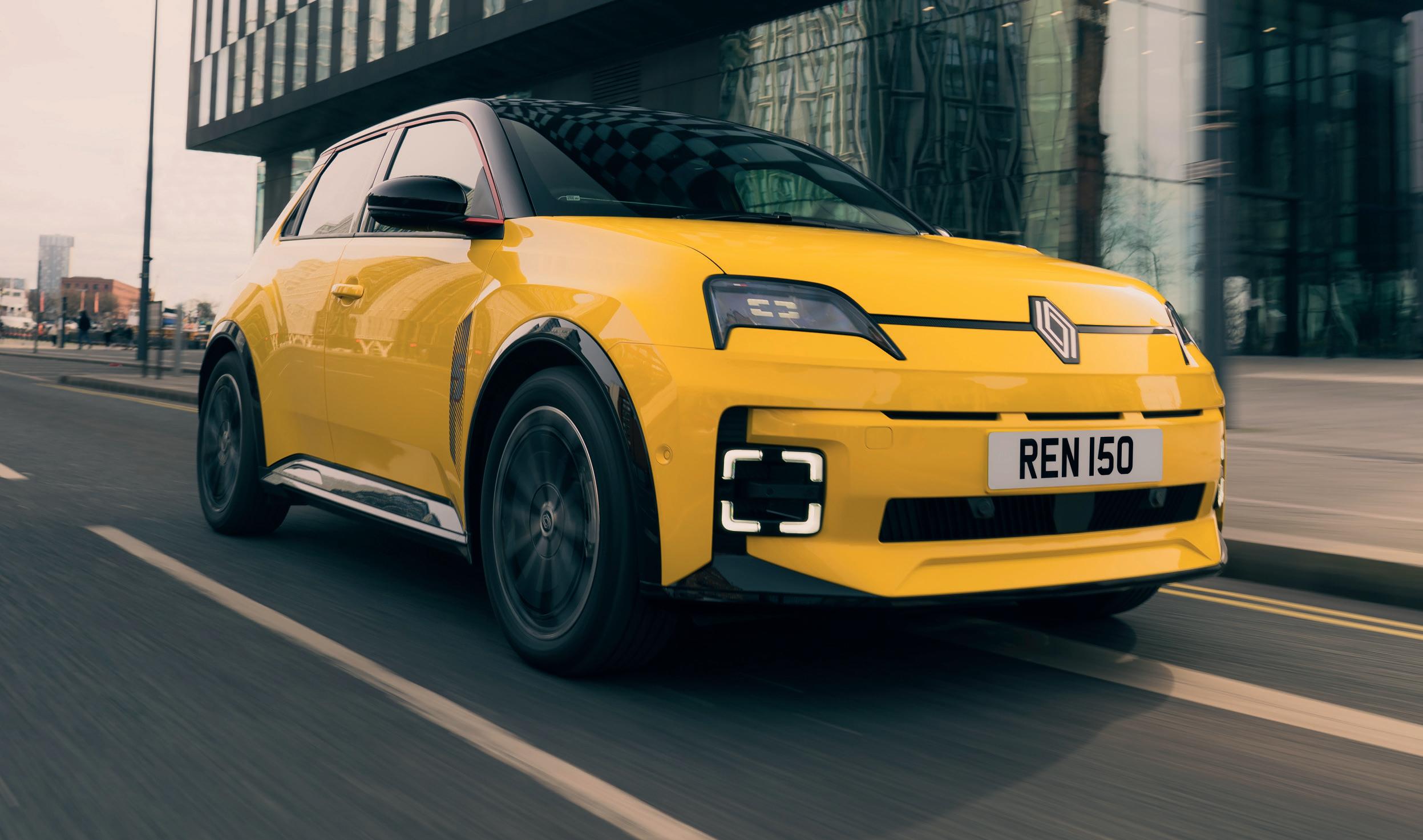
Renault’s design team have crafted a sharp, smart supermini that appeals just as much to those who’ve never seen the original as those who revel in its nostalgic nods. But there’s so much more to
it than looks. A balanced but lively chassis delivers a truly pleasurable driving experience, backed up by a responsive 148bhp motor. And powering it all is a 52kWh battery good for an official 252 miles.
Add in a brilliantly executed user interface with full Google integration and you’re onto a winner. The ECG grant that cuts prices to just over £21,000 is just the icing on the cake.
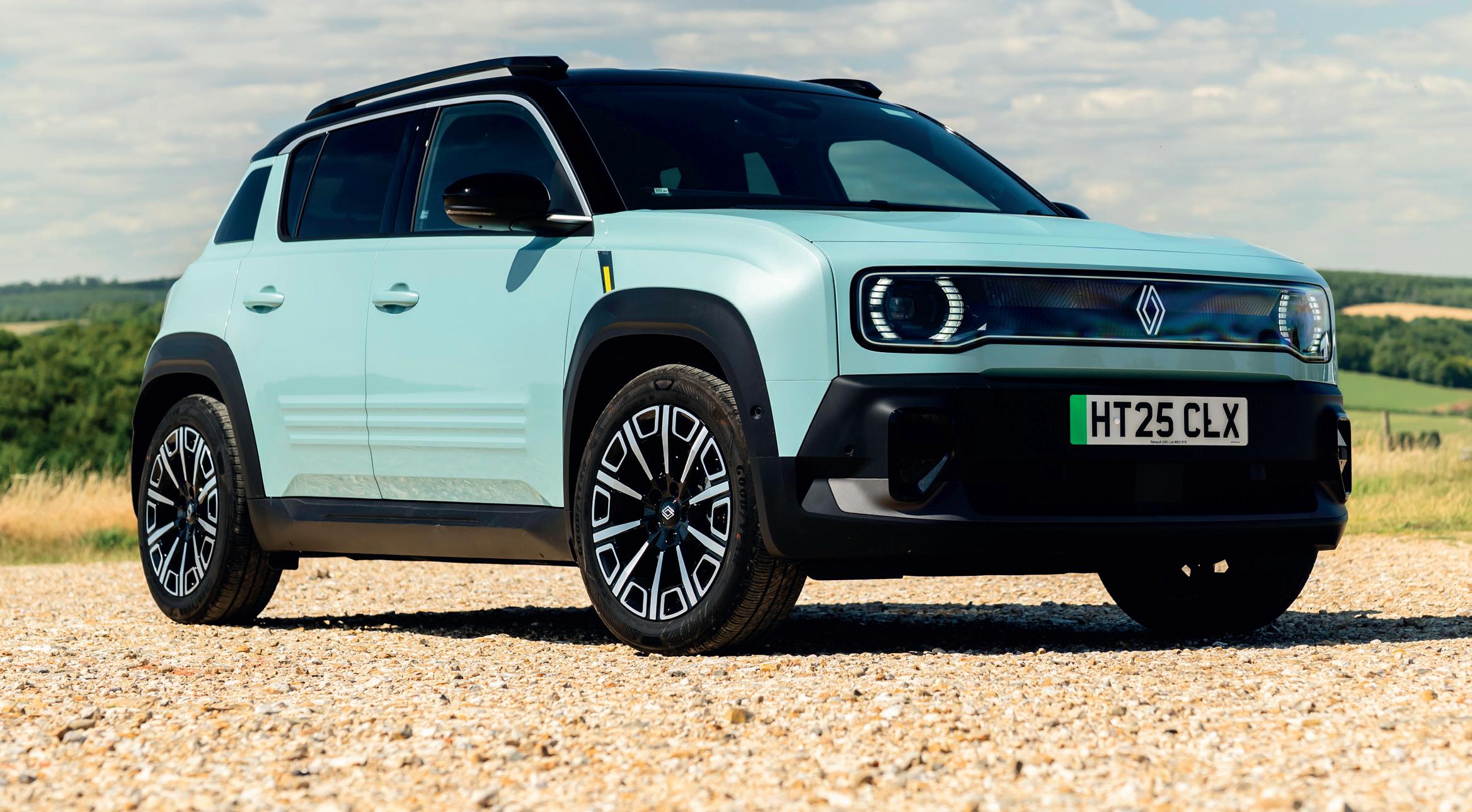
RENAULT 4
Take everything we’ve just said about the Renault 5, add a healthy dose of practicality and you’ll see why the Renault 4 is also on this list. Using the same underpinnings as the big-
batteried R5, the R4’s crossover body delivers more passenger and luggage space plus a slightly softer ride, without compromising on the charm or fun of the hatchback. Like the
52kWh R5, the Renault 4 qualifies for the highest level of ECG, meaning prices currently start at around £23,500, adding affordability to its long list of qualities.
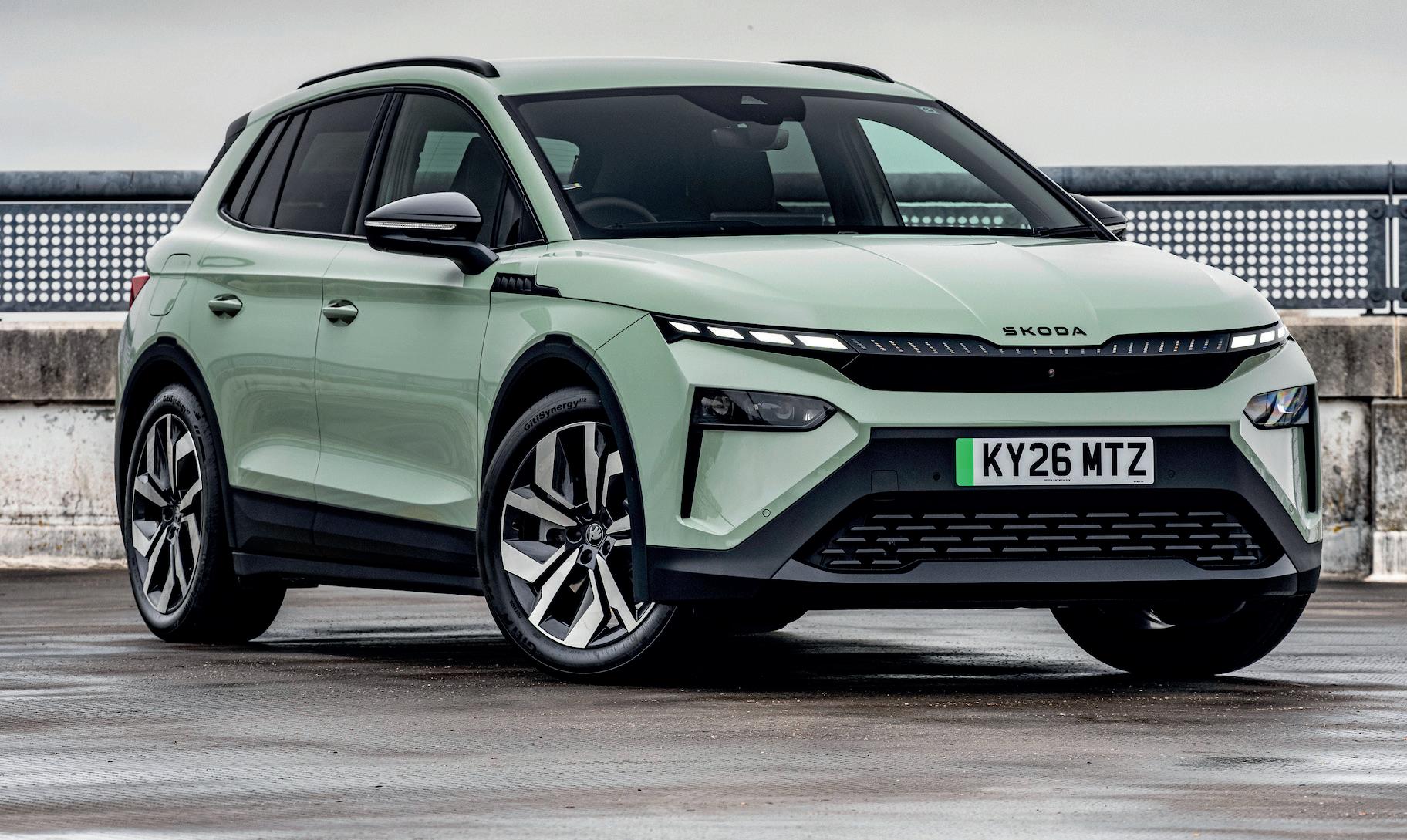
SKODA ELROQ
Regardless of the ECG, the Skoda Elroq is one of the best electric cars on sale at the moment. Starting from around £33,000 it pulls off Skoda’s usual trick of offering more space, practicality
and features than just about anything else for the money. A range of up to 355 miles is among the best in its class and it backs this up with a positive drive, user-friendly cabin and charging of
up to 185kW. Some very high-spec variants aren’t eligible for the grant but there’s plenty of choice beneath the £42,000 threshold, including our pick – the Edition 85.
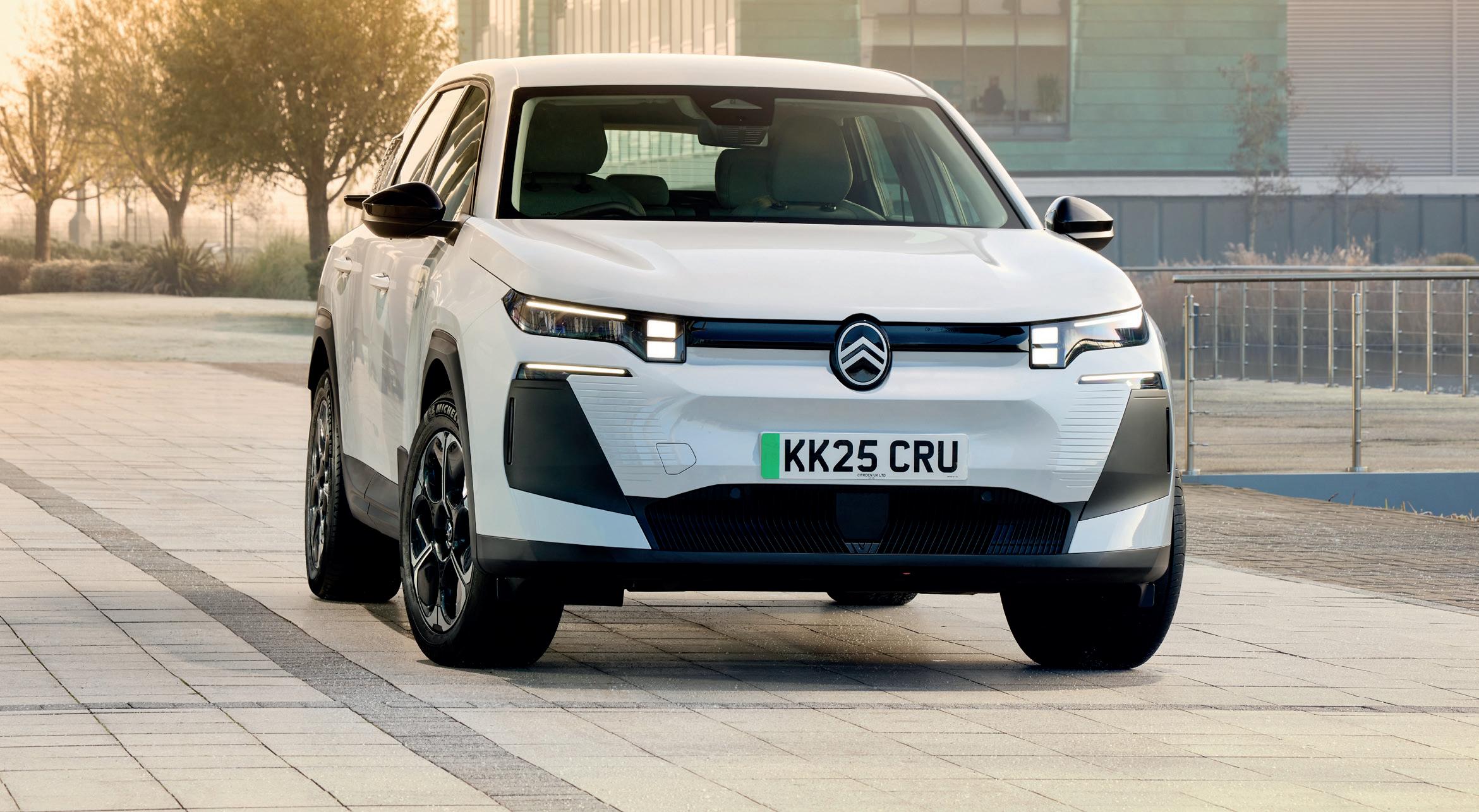
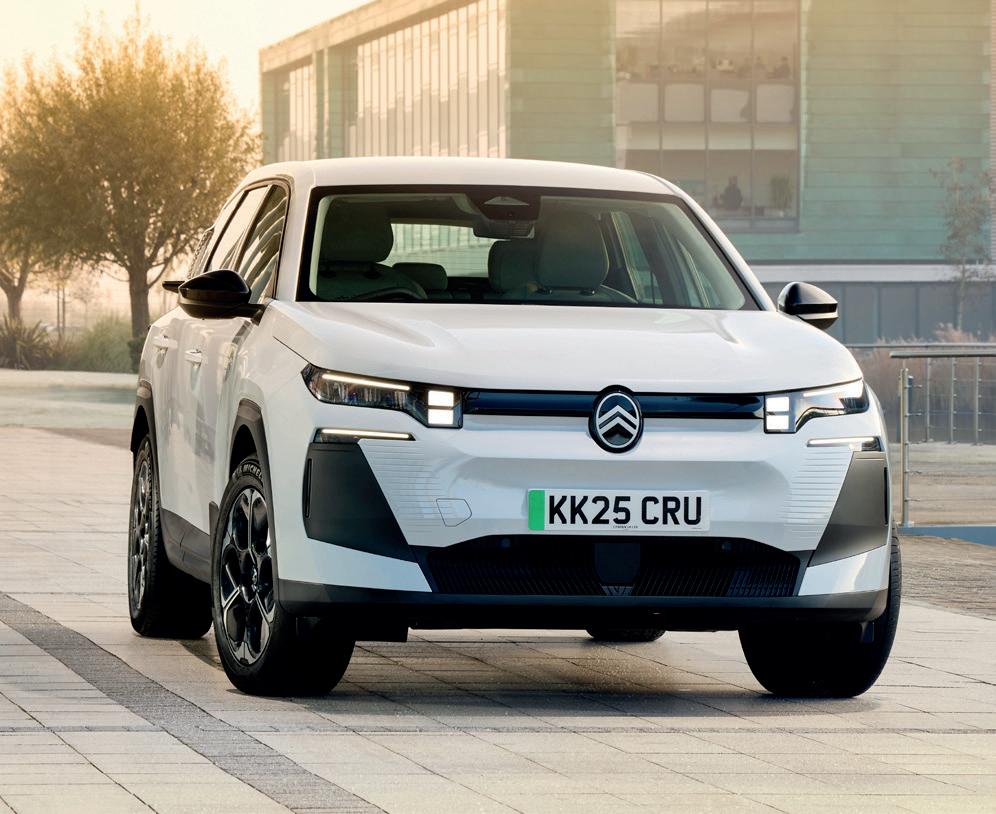
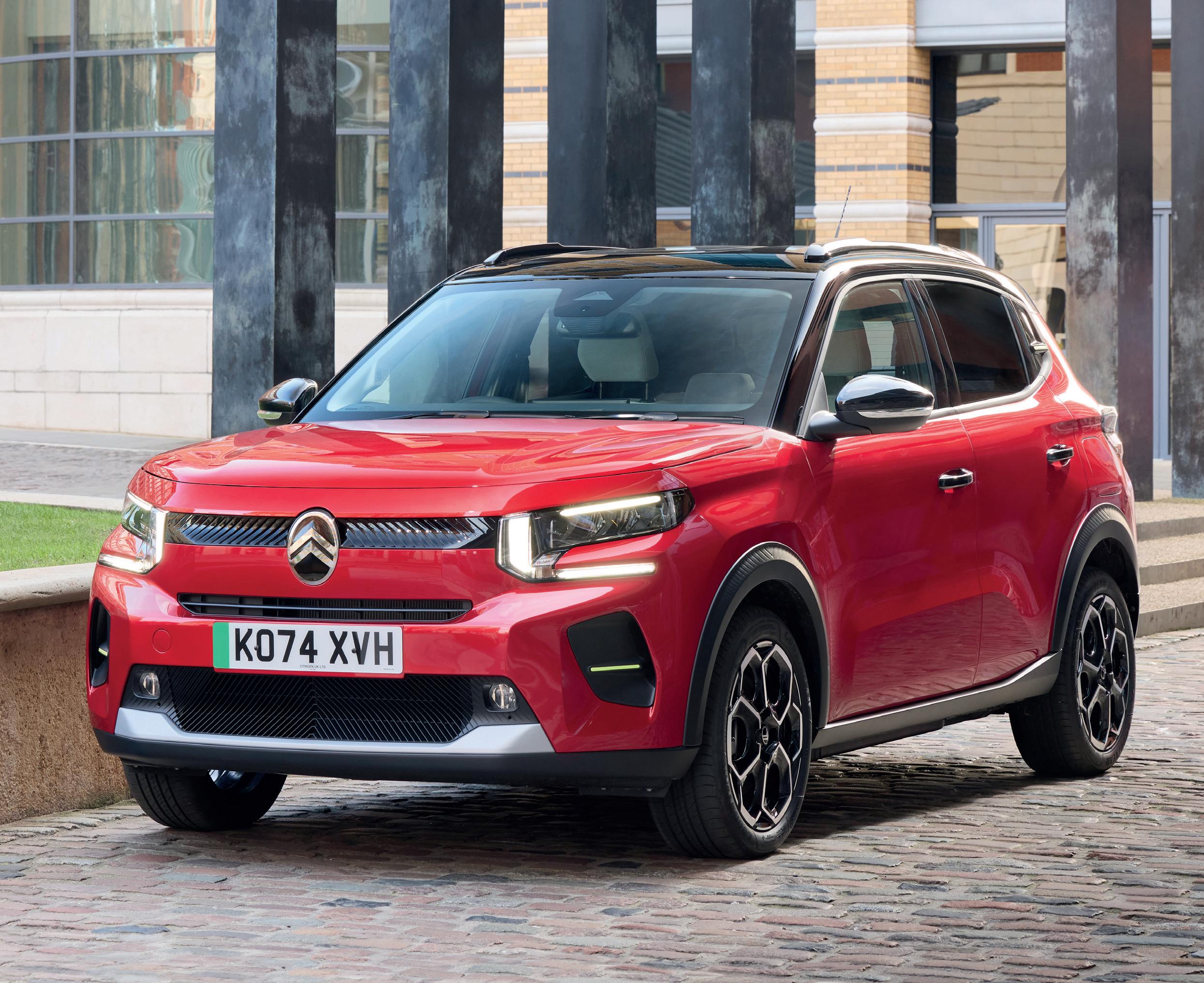
CITROEN E-C5 AIRCROSS
It’s not clear how, but Citroen has managed to build a full-size family SUV with a range of more than 400 miles that still qualifies for the ECG. The E-C5 Aircross already represented good value with
a starting price of £34,000 for the entry-level car and £39,000 for the long-range version. The fact that the long-range one also qualifies for a £3,750 discount means it represents ludicrous value. But
it’s also a thoroughly pleasant car. Its ride comfort is unrivalled, it has a quirky but user-friendly interior, plenty of modern technology and one of the biggest boots in its class. Well played, Citroen.
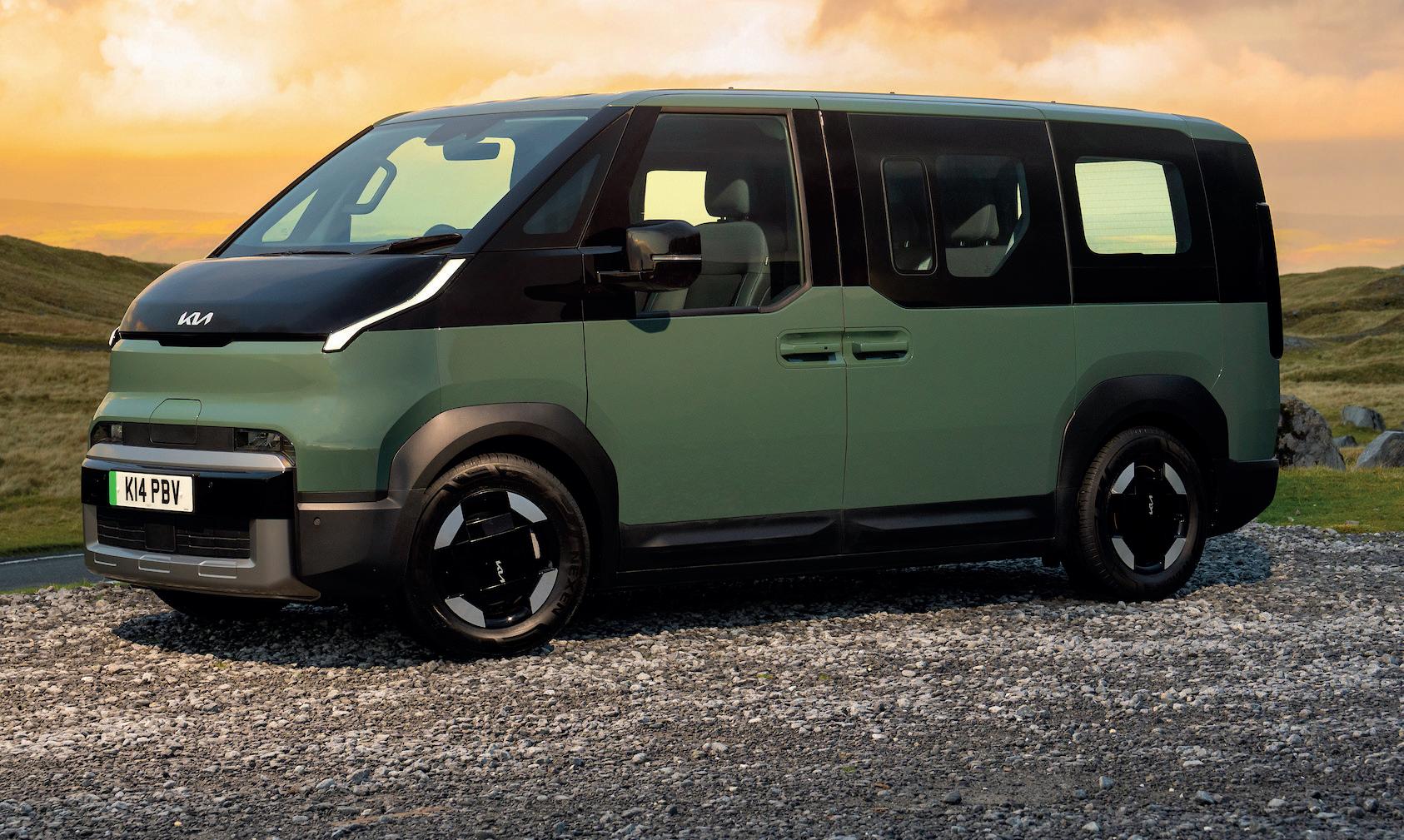
KIA PV5 PASSENGER
A growing number of Kia vehicles qualify for the ECG. There’s the excellent EV4, EV3, and the inbound EV2, but we’ve chosen the PV5 because it’s entirely different from anything else on this
list. It’s a large van-based people carrier in the spirit of the great MPVs of the 1990s. It offers incredible passenger and luggage space, heaps of user-friendly features and is backed by Kia’s EV
expertise that delivers up to 256 miles of range. It’s every bit as practical as the VW ID Buzz, but with the ECG applied it is literally half the price, starting at £31,500.
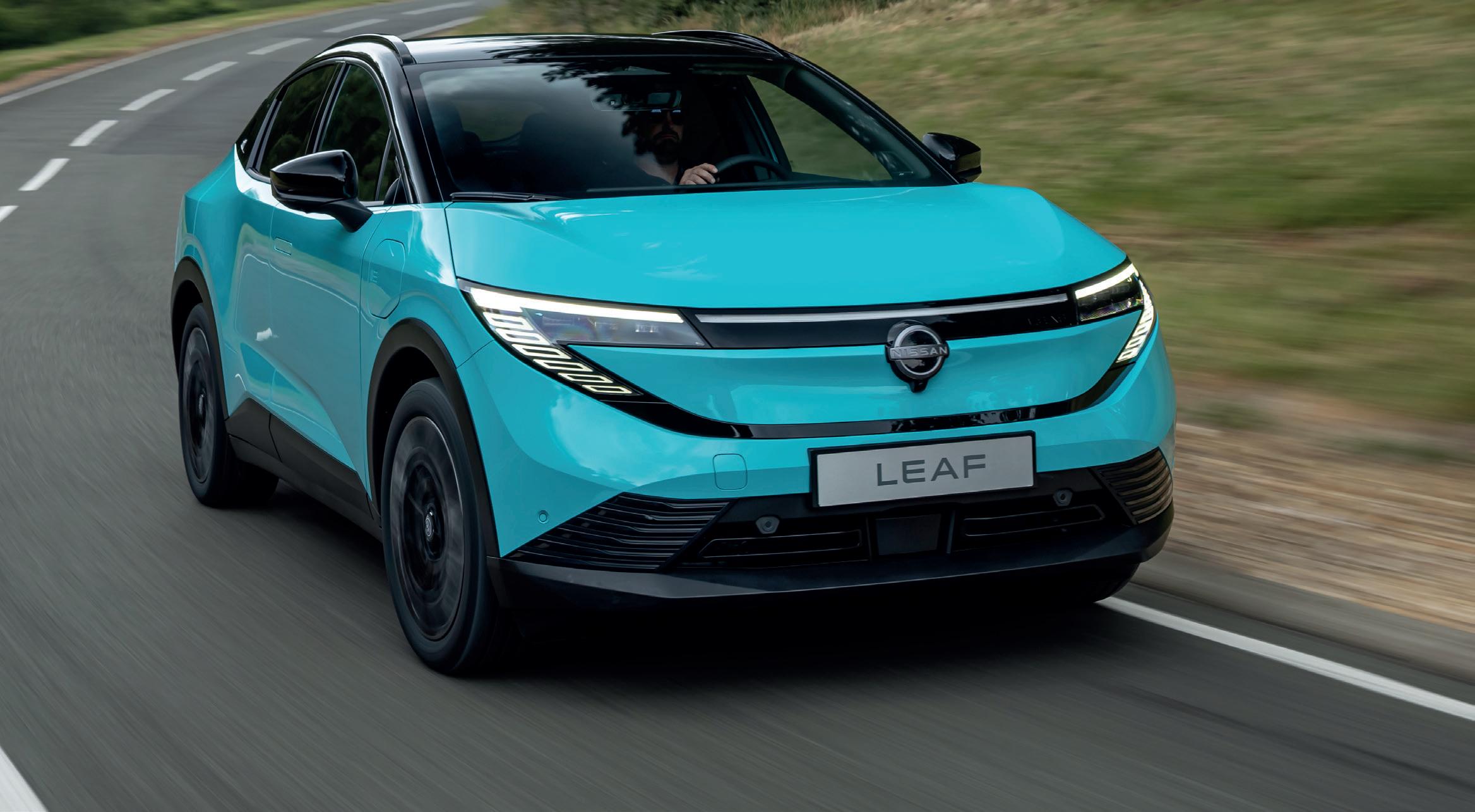
NISSAN LEAF
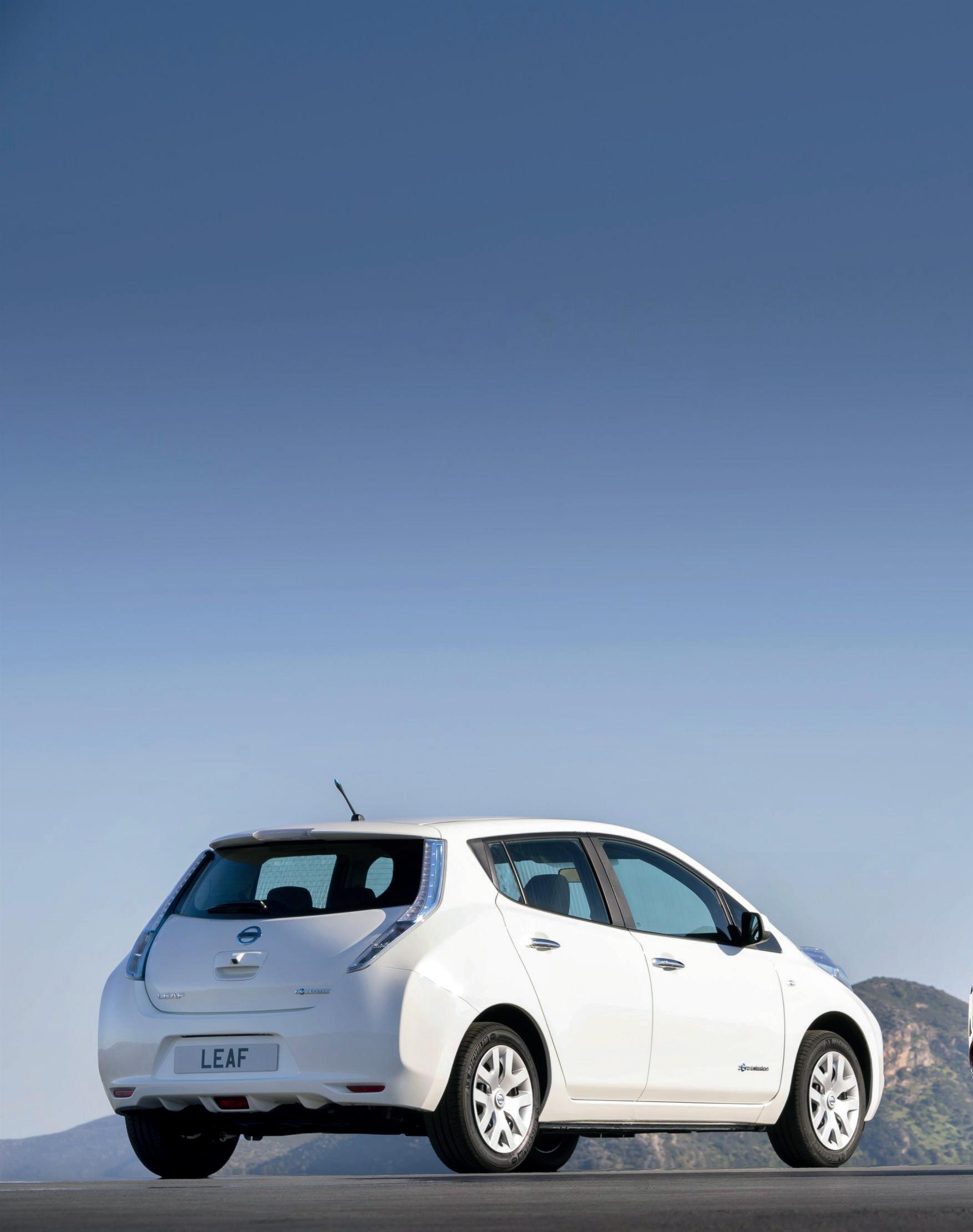
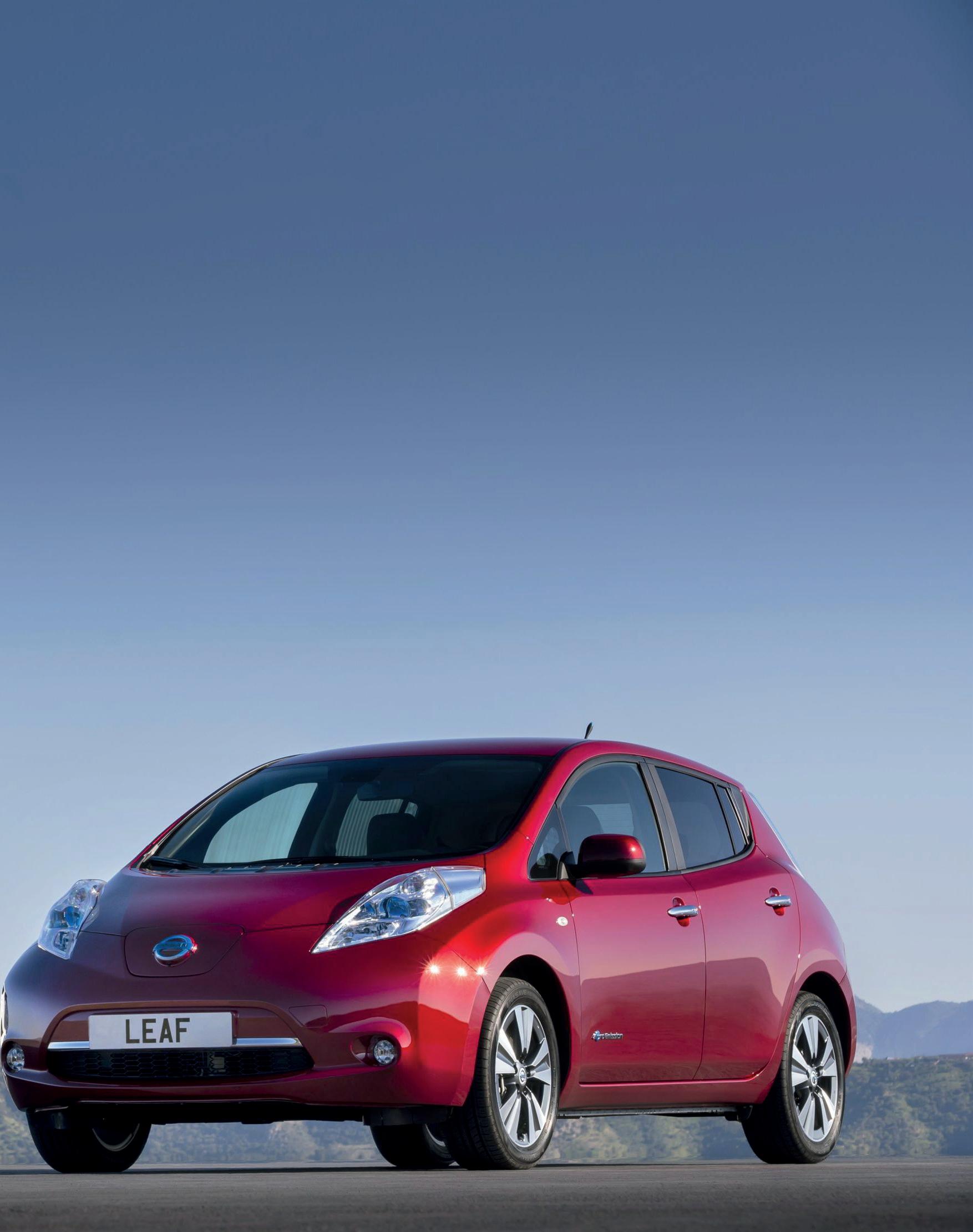
Nissan helped pave the way for mainstream EVs with the original Leaf before falling behind rivals. But it’s back in the game with the third-generation Leaf. This segment-defying hatchback/crossover brings
quirky design features plus a bright airy interior and a focus on driver and passenger comfort. There’s also a pleasingly logical approach to controls plus an excellent Google-based user interface. With two
battery options offering between 271 and 386 miles of range, it’s a sensible choice as a family’s main car. And thanks the the ECG, prices start at under £33,000.
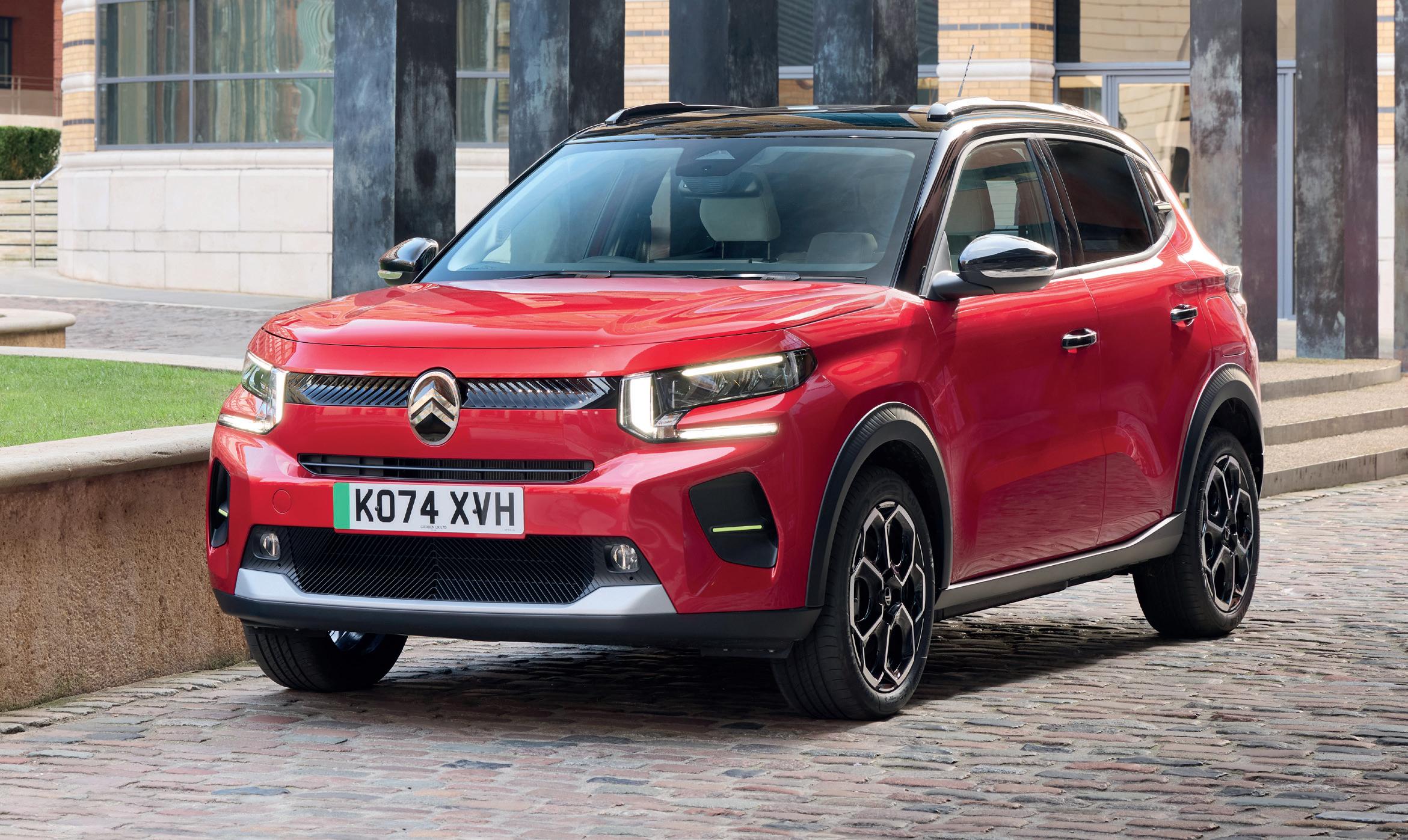
CITROEN E-C3
Among a sea of overly complicated new cars, the E-C3 is refreshingly simple. It’s a honest small hatchback with a focus on comfort and delivering a usable experience for not a
lot of money. It lacks some of the shine and gadgets of rivals like the Renault 5 – it even has a physical key to start it! – but has bundles of character, a class-leading ride and
a decent enough range of around 200 miles. Thanks to the ECG the E-C3 is also cheaper than the basic petrol version, starting at £18,500.
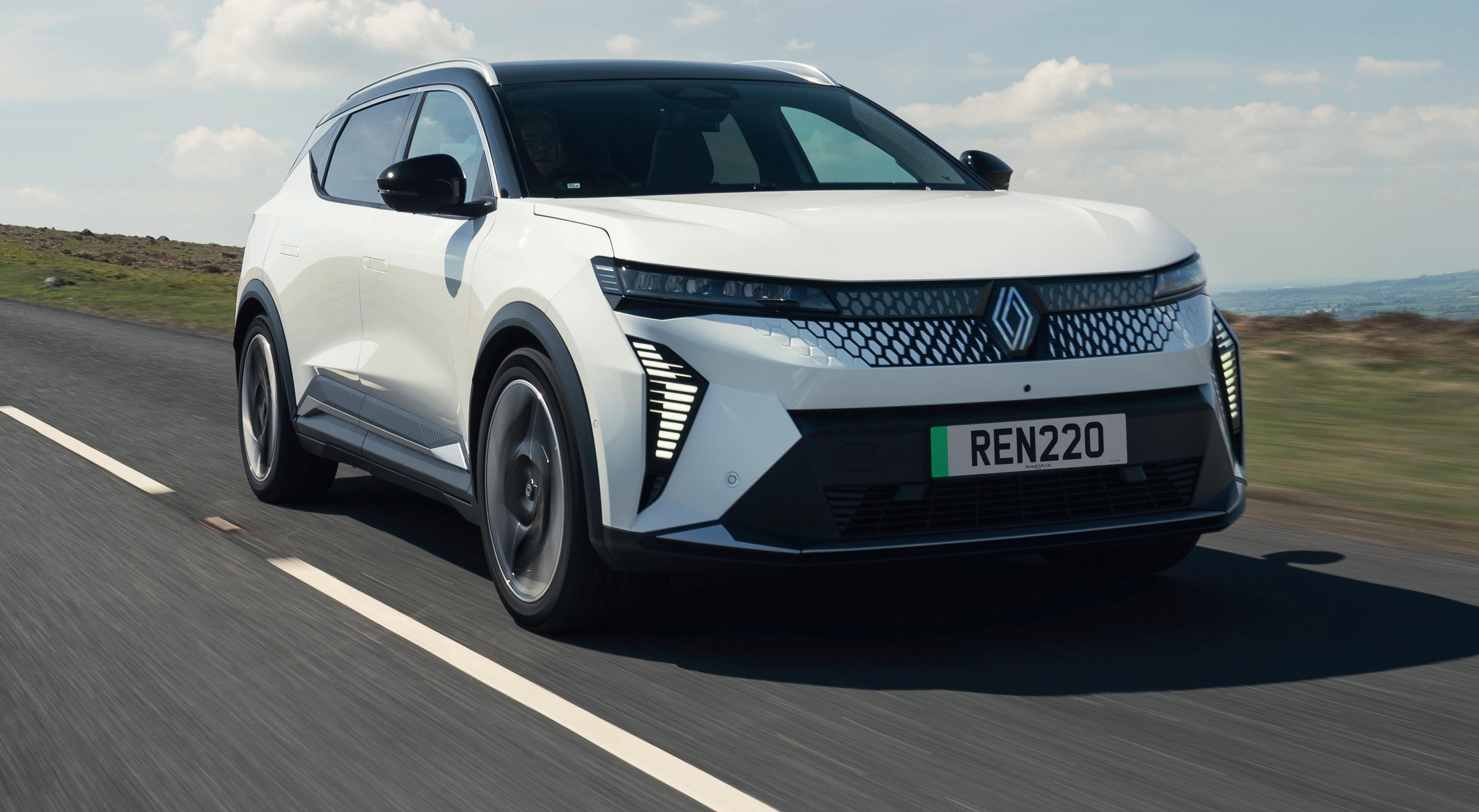
RENAULT SCENIC
We make no apology for making this the third Renault on our list. The French brand is knocking it out of the park with its current range of EVs. The Scenic is its flagship model, a C-segment SUV that
offers among the best specification in its class while undercutting most rivals. Its 375-mile range is among the very best, the light and spacious cabin is packed with smart family-friendly features and,
as our long-term test proved, it delivers stress-free family motoring for a very competitive price. What’s more, it has just qualified for the Band 2 grant, bringing it starting price down to £33,245.
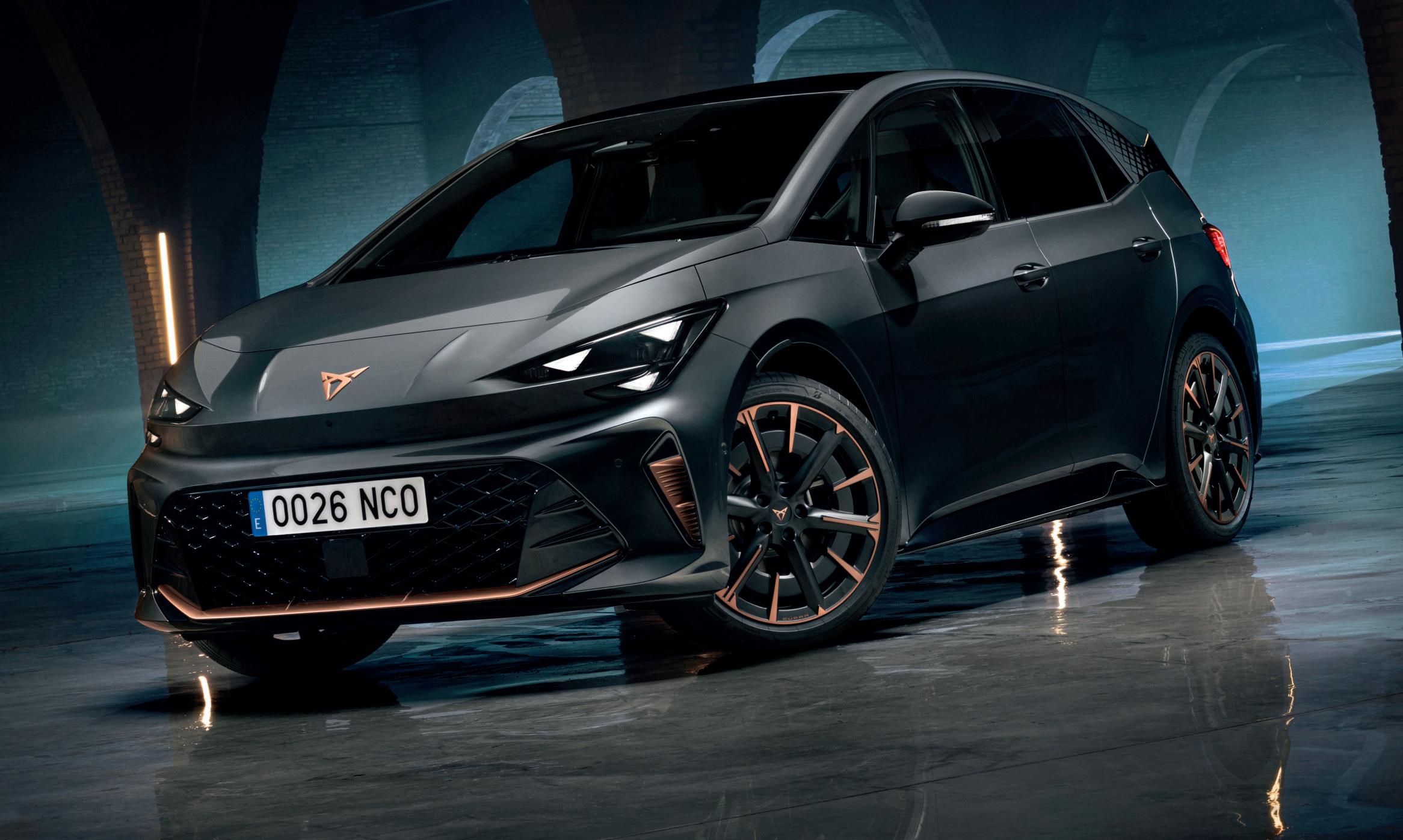
CUPRA BORN
The Cupra Born is the only Cupra model to currently qualify for the ECG but it’s a great option for buyers seeking a sharply styled and capable hatchback. It’s not the cheapest
car on the list, with prices starting at around £34,000 after the grant, but it brings the Spanish firm’s flair to the family car segment while delivering plenty of space,
strong performance and up to 340 miles of range. Sadly, the 322bhp VZ version is the only Born model not covered by the £1,500 grant.
TOYOTA C-HR+
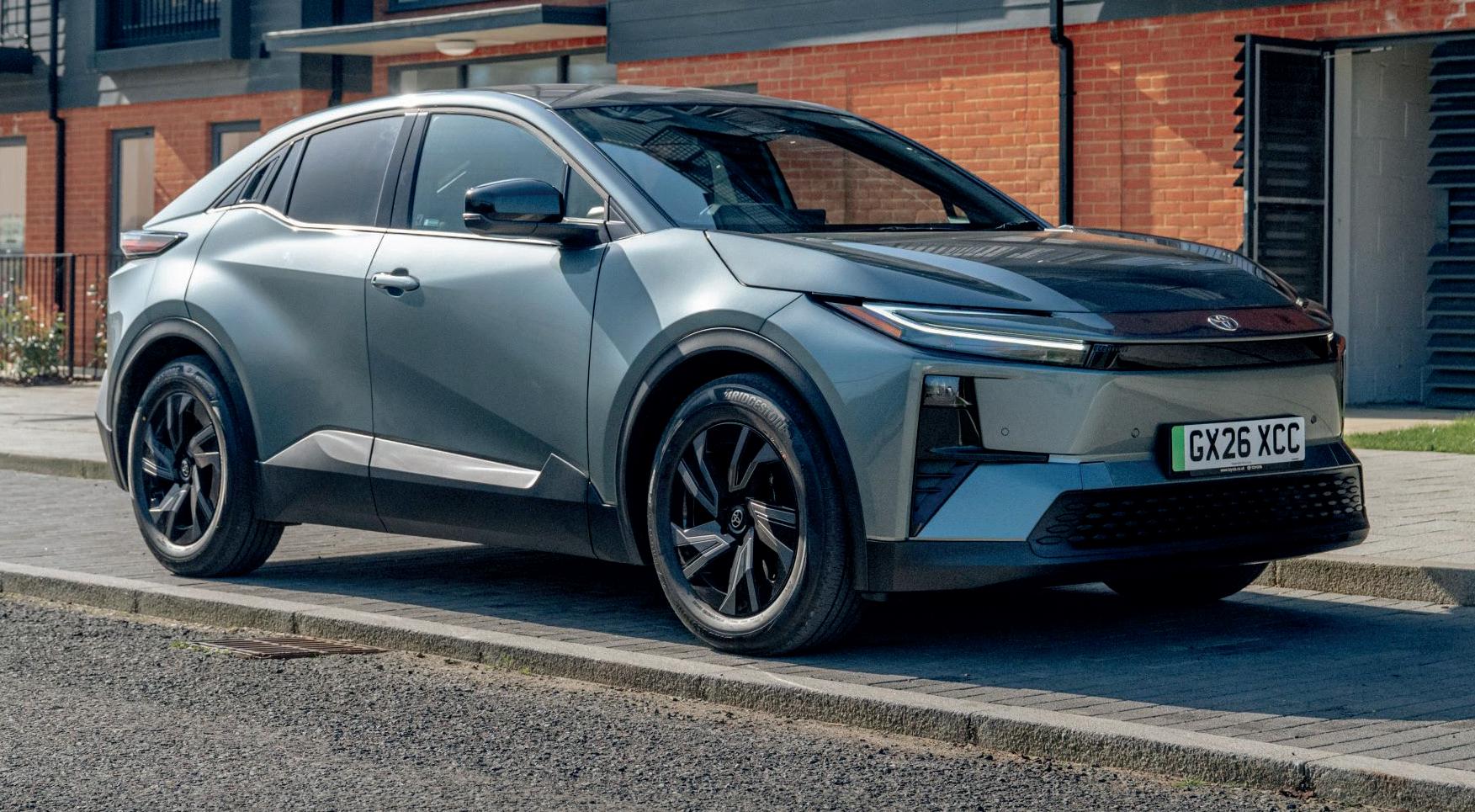
It’s taken Toyota some time but it seems to finally have got a hold on EVs with the C-HR+. It uses the same underpinnings as the much-improved bZ4X but in a neater package. It’s so neat that it could actually
threaten its larger stablemate thanks to sharper styling but comparable space and practicality. With up to 378 miles of range and 221bhp, it’s a strong allrounder that can compete with the best in its class,
backed by Toyota’s unrivalled reputation for reliability. We said when we drove the prototype that its success would come down to cost and with prices starting at £32,500, it’s a top pick among ECG-eligible cars.
PUBLIC EV CHARGING NOW CHEAPER THAN PETROL FOR MOST DRIVERS
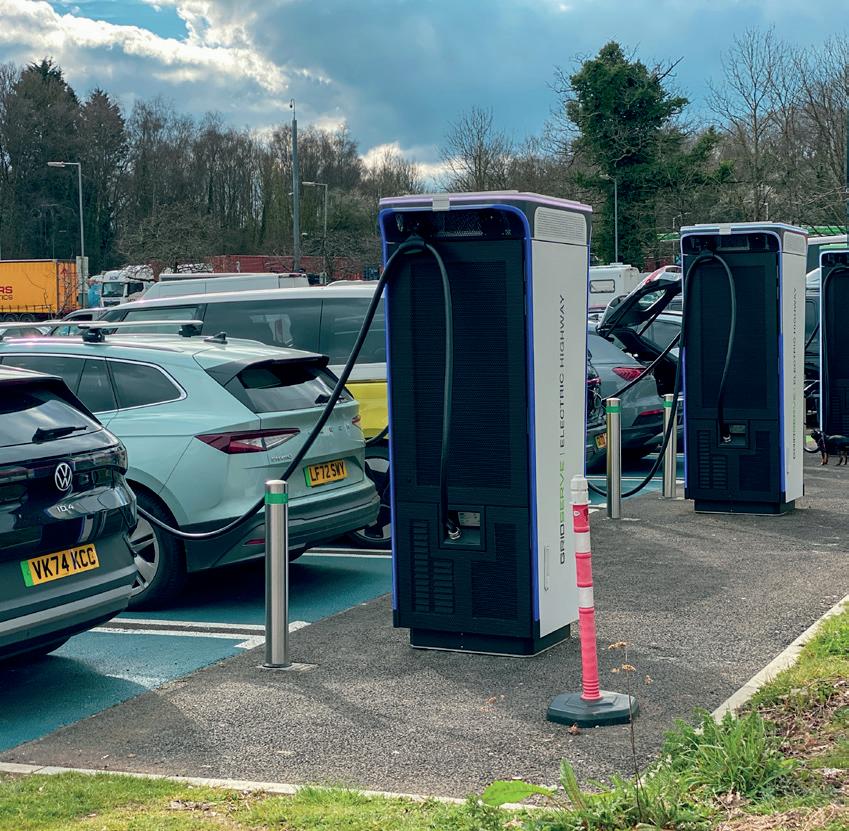
Soaring fuel prices caused by the Iran war mean EV owners are better off than petrol or diesel drivers even if they only ever use public chargers.
An analysis of the latest figures from ChargeUK shows that as a result of soaring fuel prices, the per-mile cost of running a petrol or diesel car has overtaken the cost of EV charging in almost every scenario for the first time since May 2024.
The Iran war has seen petrol and diesel prices increase by around 20% in recent weeks while EV charging has remained relatively stable.
ChargeUK’s analysis of data from Zapmap and RAC Fuel Watch shows that when charging solely on a “standard” charger – such as on-street or in a local car park – at the national average of 54p per kWh drivers can expect to pay around 15p per mile. In contrast, petrol drivers are currently paying an average of 17p per mile while diesel drivers pay 17.5p per mile.
Based on using standard chargers 80% of the time and more expensive rapid chargers 20%, EV owners would pay around 16p per mile. Only those relying 100% on ultra-rapid devices, which cost an average of 76p/kWh, are worse off –paying 21p per mile.
At current rates and over an average annual mileage of 7,100, an EV driver relying on standard chargers or a mix of standard and rapid will save between £32 and £119 per year.
Those who have at-home charging continue to enjoy massive savings of up to £1,000 per year thanks to running costs as low as 2p per mile.
Until 2021, public charging was cheaper than fuelling a combustion engined vehicle but rapid price increases between then and last year mean the market has shifted in petrol and diesel's favour.
ChargeUKs’ CEO Vicky Read said the latest changes and the instability of fuel prices reinforced the need for action to make public charging cheaper again.
She said: “While this is not how we wanted to see the gap between public EV charging and
petrol prices closed, it once again demonstrates the urgent need to make driving an EV more affordable for all.”
While fuel prices may fall again, ChargeUK is calling on the Government to take action to ensure that EV charging remains cheaper in the long term.
Read added: “We need to see Government take control of the situation to ensure the numbers stack up not just in a time of global crisis, but for the long term. The cost pressures currently pushing up public EV charging prices are largely within the government’s grasp, whereas the global pressures pushing up petrol and diesel prices are not.”
She repeated calls to address uncapped standing charges and to cut VAT on public charging. The Government recently announced it was appealing against a tribunal ruling which declared that public charging should be subject to the same 5% VAT as domestic charging, rather than the current 20%.
Simon Williams, the RAC’s head of policy, added his calls for a rethink on charging tax.
He commented: “While the dramatic increase in petrol and diesel prices due to the conflict in Iran
has understandably sparked increased interest in going electric, it remains the case that public charging costs are higher than they need to be.
“Issues outside of operators' control such as 20% VAT on public charging, compared to 5% at home, and high standing charges aren't helping. We hope the government will seek to address these issues so more people can make the switch to electric driving and charge affordably away from home."
Want more control of your business budgeting?
This is Jasmin. She’s one of many business owners who already use a smart meter to feel more in control of their budgeting, because smart meters help you track your energy use and costs over time.
So like Jasmin, you can spend less time guessing and instead know how much you’re spending on your energy bills.
Search ‘get a smart meter’ today.


FUEL PRICE VOLATILITY IS CHANGING
THE CONVERSATION AROUND CHARGING
As petrol and diesel prices continue to fluctuate, the benefits of stable, sustainable EV charging are becoming obvious, says Jason Simpson, CEO of RAW Charging
Fuel price volatility has once again put the cost of driving firmly back in the spotlight, with the average prices rising to almost 158p for petrol and 190p for diesel, as of mid April this year.
This upward trend is causing real and immediate pressure on household budgets and day-today confidence behind the wheel for countless motorists. As a result, the conversation around electric vehicles is no longer defined by
sustainability and is instead being increasingly shaped by affordability and control.
In other words, the uncertainty around fuel costs is leading more drivers to look at electric vehicles through a practical lens. They are asking whether EV driving can offer greater stability and a more manageable long-term cost base than constant exposure to fluctuations at the pump.
The shift is not a knee-jerk reaction to recent price rises, but part of a growing trend that has been building for some time. According to the RAC, 473,348 new battery-electric vehicles (BEVs) were registered in the UK in 2025, a 23.9% increase compared to 2024. The second-hand market tells a more compelling story, with a record 274,815 used electric cars being sold in 2025 - a massive 45.7% increase year-on-year. This suggests that
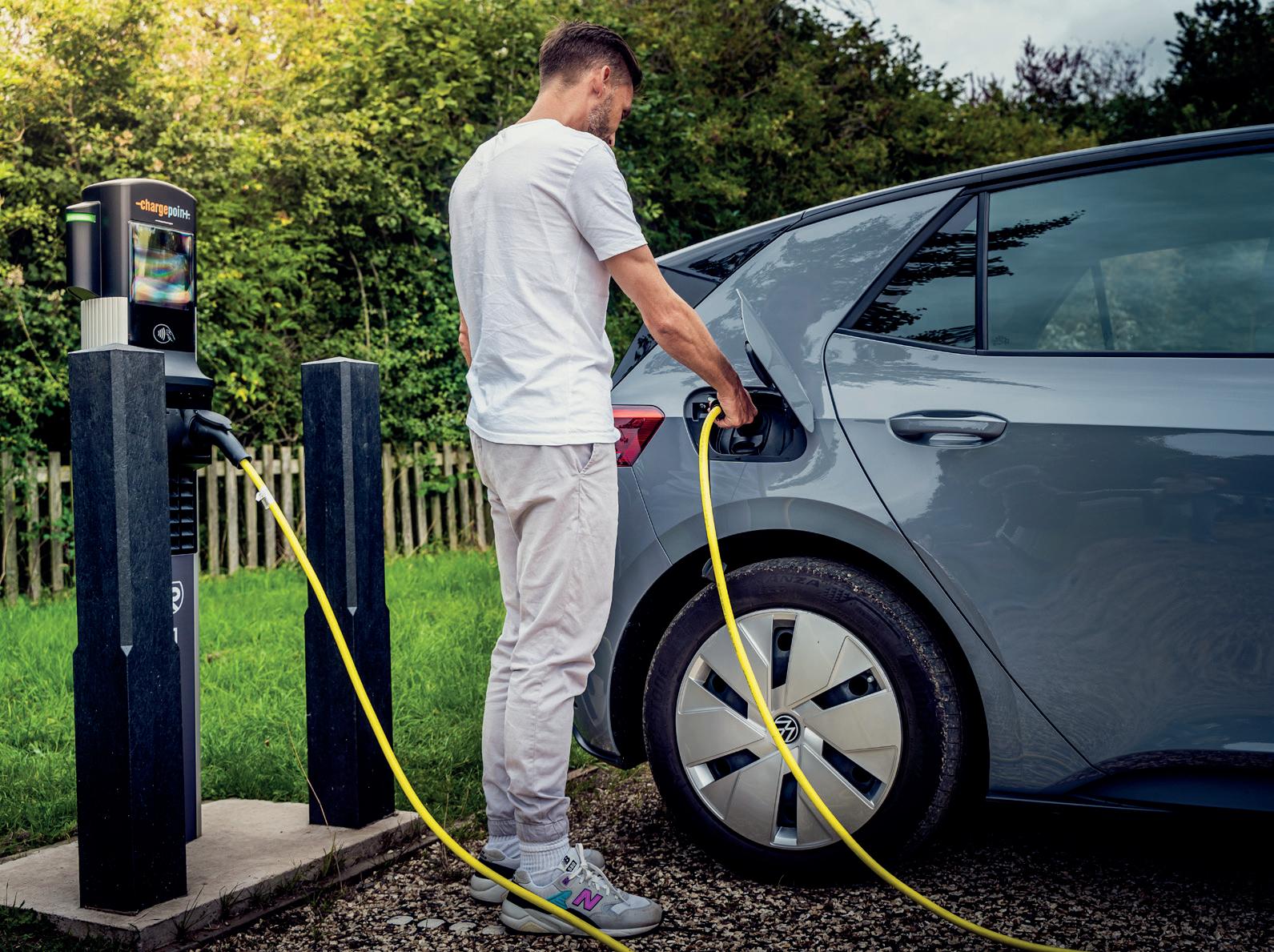

many motorists are making the switch by opting for more affordable, two-to-three-year-old electric models rather than buying brand new.
In this context, EV charging represents a different relationship with motoring. Instead of relying exclusively on forecourts and being vulnerable to rapid changes in fuel prices, EV drivers can charge in ways that suit their lifestyle, whether at home, at work or while visiting retail and leisure destinations. That ability to plan EV charging around existing schedules and routines can give peace of mind, while also creating a stronger sense of control over travel.
This matters because consumer expectations are changing. Motorists want the confidence that they’re able to travel in a way that is both cost effective and environmentally friendly. A sustained period of fuel price volatility is only going to strengthen that expectation.
For the EV sector, this presents an important opportunity to support the UK’s transition to greener transport by embedding a high-quality, future-ready EV infrastructure. The industry should not assume that the debate must always begin with carbon reduction or technological innovation, however important those themes remain. There is also a compelling and highly relevant consumer story to tell about financial visibility and peace of mind. While fuel prices remain directly exposed to global oil instability, the combination of a falling domestic energy price cap and specialised EV tariffs provides motorists with a more predictable and significantly cheaper long-term financial outlook.
At a time when many households are watching costs closely, the practical case for EV adoption is becoming harder to ignore. Rising fuel prices are not the only factor driving the transition, but they are helping to sharpen the appeal of alternatives that offer motorists more certainty. In the current climate, that may be one of the most persuasive arguments for EVs of all.