MOTORSPORT SUSTAINABLE THE DUKE OF RICHMOND
ALSO DON’T MISS ALL OF THE LATEST NEWS IN THE EV WORLD
MOTORSPORT SUSTAINABLE THE DUKE OF RICHMOND
ALSO DON’T MISS ALL OF THE LATEST NEWS IN THE EV WORLD
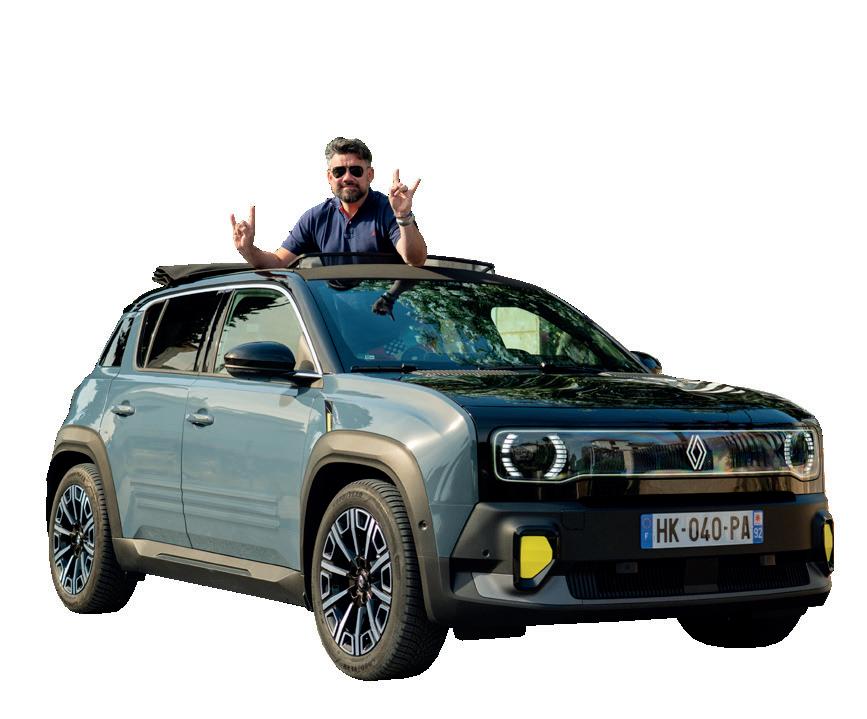
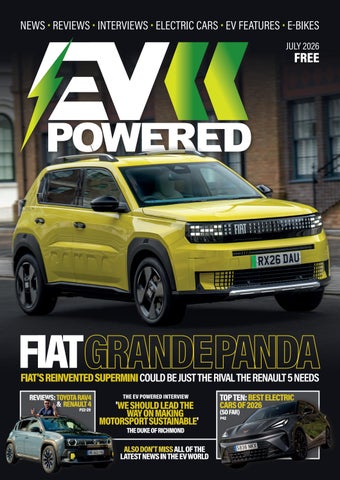
Welcome to the July edition of EV Powered.
As I write this at the end of June, the EV world is still taking stock of reports that the ZEV mandate could be watered down as early as next year.
The idea that targets could be softened has invited plenty of opinion from both sides of the EV divide, and given us observers lots to think about.
Despite being thoroughly pro-EV, I’m going to voice a perhaps unpopular opinion – that some change to the targets is probably necessary.
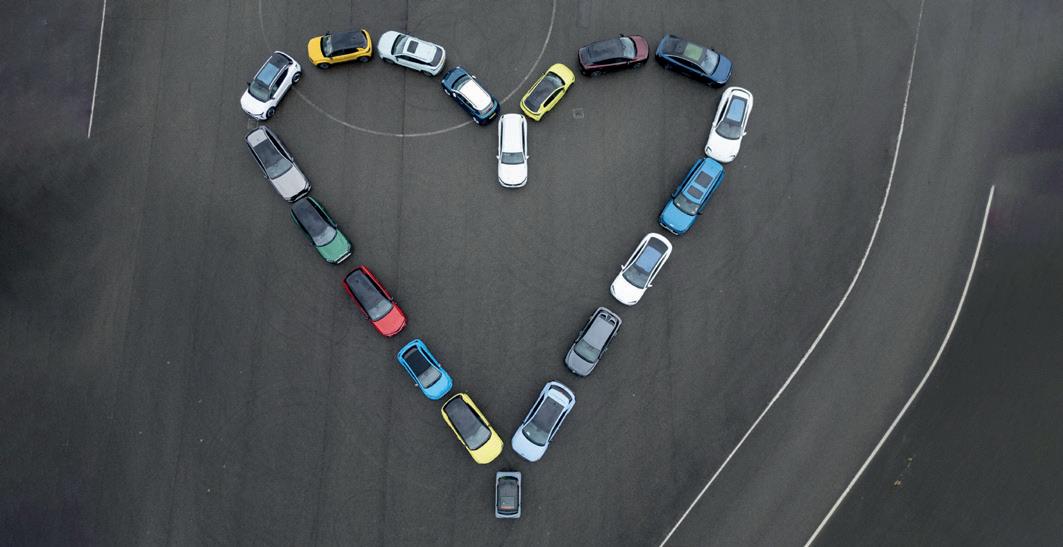
We at EV Powered are fully behind a transition to an all-electric future but we’re also realistic about the shape and pace of that transition.
In an ideal world, the UK’s new car market would be in a position to hit the targets as set out back in late 2023. But we don’t live in an ideal world.
Economic confidence has taken a hit in recent years, the car buying public is uncertain, and even though many of us espouse the benefits of EVs, there’s still a wall of misunderstanding and misinformation that’s holding many buyers back.
Whether or not the scale of the problem is being exaggerated, we are simply not in a place where the targets look attainable.
Annual trends show that EV uptake is constantly increasing, and that it’s outperforming petrol and diesel demand. But the figures also show that adoption is not increasing fast enough to get close to the ZEV mandate targets.




So the Government must be realistic. Car makers and their supporters will overplay the difficulty of hitting the targets and of the potential impact of the mandate’s penalties. But there’s no question that a £12,000-per-vehicle fine could do serious damage and inadvertently threaten the UK’s and Europe’s car industry.
The purpose of the mandate should be to help shape the market and industry, not harm it.
That being said, the idea of slashing the target to 50% EV share – as has been suggested – seems ridiculous.
EVs’ market share is increasing and it’s not just fleet and company car buyers. As you can read about on page 48, private retail sales are growing –something that is vital to the overall transition.
Likely to accelerate that is the ever-growing list of electric cars that make the switch more accessible or more convenient. The next 18 months will see a glut of sub-£20,000 EVs as well as a growing number of cars capable of diesel-rivalling range.
Those opposed to any change in the mandate will argue that car makers should simply work harder, and, of course, they should. Some brands have dragged their heels on EVs, and changes to the mandate should not be seen as a reward for their reluctance, nor should it be an excuse to take the foot off the gas.
To do so would be to jeopardise net zero targets and potentially harm other parts of the economy. The charging industry has spent billions in anticipation of growing demand, and garages and workshops around the country are investing in training and hardware to handle EVs. Not to mention the trades, services and manufacturing enterprises that rely on EV production and use for their survival.
So it is essential that any review of the mandate strikes a compromise. It must keep pressure on the car industry while also acknowledging the realities of the market.
That’s no easy task, so I’ll leave that to those far better qualified than me to worry about while I swan off on holiday.
I’ll be back next month, hopefully with more uplifting news.
Editor
Matt Allan Reporter
George East
Graphic Designer
Grace Moseley
Videographer
Jacob Pinchbeck
Content Sales Manager
Laura Phillips
Capital Business Media, Group MD
Richard Alvin
Business Development Director
Stephen Banks
Chief Creative Director
Stuart Hyde
Finance Director
Andrew Martin
The UK Government is preparing to soften the country’s ZEV mandate targets in the face of intense industry pressure, drawing widespread criticism from the EV industry.
The mandate sets out targets for new car sales, requiring manufacturers to ensure a minimum proportion of new cars are zero emissions or face fines of up to £12,000 per vehicle. For 2026, that figure is 33%, rising annually to 80% in 2030 and 100% in 2035.
However, the government is reportedly set to consult on watering down the targets after car makers and their representatives argued the current ambitions are unattainable.
The news, first reported by the Sunday Times, has been described as an “astonishing act of self-harm” with critics claiming it will “slam the brakes” on the country’s transition to electric vehicles.
According to the Sunday Times, the 2030 target could be reduced to as little as 50%.
The ZEV mandate was introduced in 2023 as part of efforts to cut the UK’s transport emissions. Its targets are among the most stringent in the world, and since their introduction, the car industry has repeatedly argued they are unachievable.
EVs sales have been growing rapidly and in May this year were 34% higher than in May 2025. However, they still only represented 27% of the market share, well short of the 33% demanded by the end of the year. The SMMT, which represents the UK car industry, also claims sales are being propped up by “unsustainable” discounting.
The government had already committed to a review of the mandate in 2027 but is now understood to be bringing this forward.
SMMT chief executive Mike Hawes said: “It’s clear that the assumptions underpinning the mandate no longer hold. It was designed for a market with stronger demand, greater stability and cheaper energy – not the market we have today. This is not about weakening ambition, but restoring credibility. Regulation must reflect real-world conditions.”
However, Vicky Read, chief executive of industry body, ChargeUK said any change to the targets would be a backward step.
She commented: “Weakening the ZEV mandate for a third time would not only slam the brakes on infrastructure rollout and send the entire transition into a tailspin. It would bring Britain’s entire reputation as a market worth investing in into disrepute.
“This government said it would not flip flop like the previous did. To move the goalposts again would be exactly that — an act of self-harm denying the country a forward facing, economically prosperous industry.”
Vicky Edmonds, CEO of EVA England, branded the review a mistake and said: “EV demand is clearly accelerating, and our research shows 95% would not go back to petrol.
“Rather than endlessly tweaking targets and creating more uncertainty, manufacturers should be focused on turning demand into sales, and the Government should be focused on making the switch easier, fairer and more affordable."
Matt Adams, head of electrical transport systems at electrotechnical trade union BEAMA added: “IWeakening the ZEV mandate risks sending exactly the wrong signal to businesses backing the UK’s EV transition.
“Manufacturers have committed to the UK because government set out a clear and ambitious direction of travel for electrification. Moving the goalposts now risks undermining confidence just as demand for electric vehicles and charging infrastructure continues to grow.”
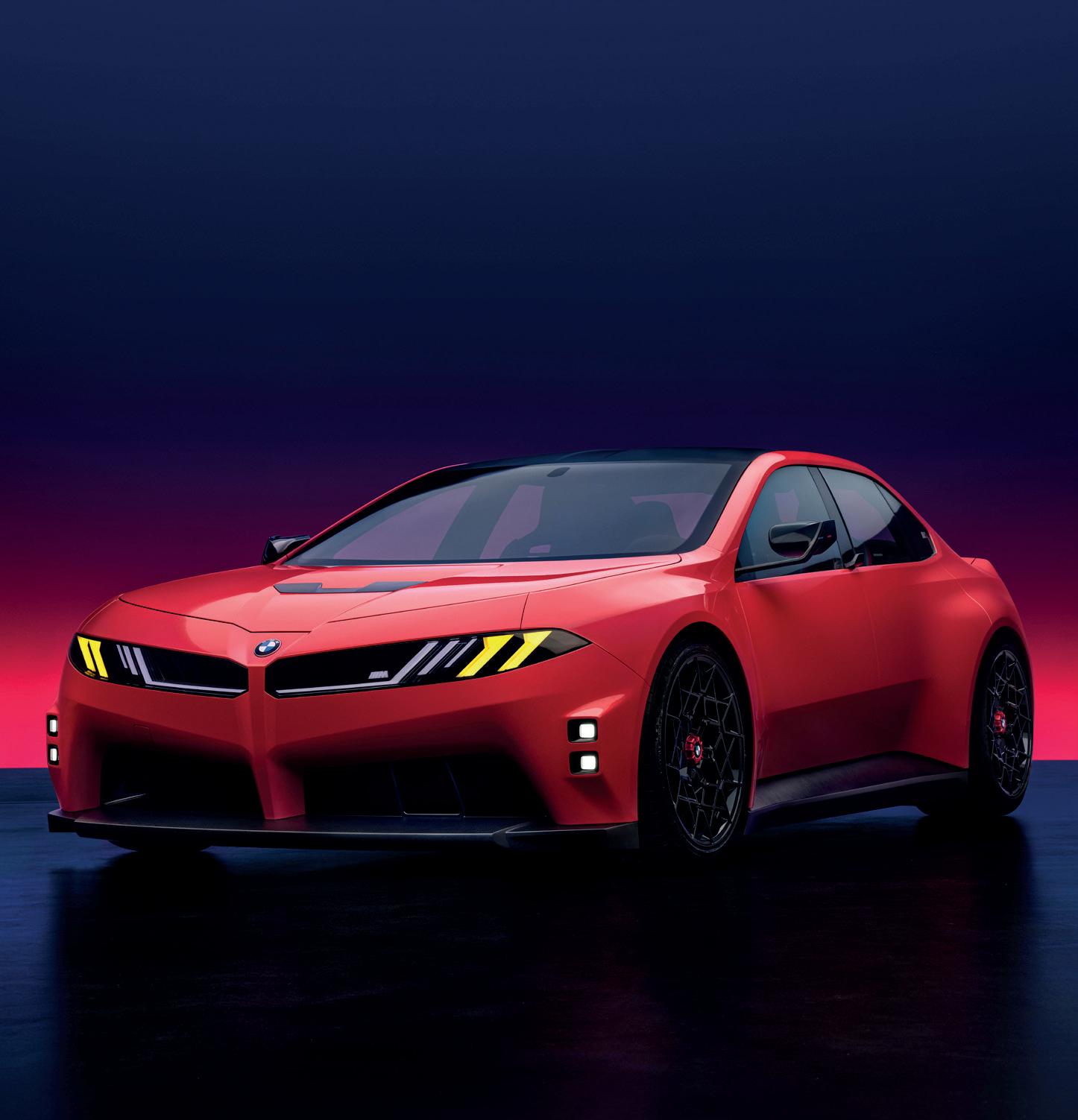
The electric BMW M3 concept has been unveiled at the 2026 24 Hours of Le Mans.
Officially named the 'M Concept Neue Klasse', the concept is understood to give a very close indication of how the production car will look.
The electric BMW M3 adopts an aggressive V-shaped bonnet, topped with an air intake to cool the drivetrain. The angular 'shark nose' is a contemporary riff on the 'shark nose' from the iconic 3.0 CSL and the 635 CSi. Meanwhile, the dedicated M3-only wing mirrors were designed with aerodynamic efficiency in mind. Like the beefy rear arches and other aero devices, these are made from natural fibres.
Official figures are still under wraps but we know that the electric M3 will adopt a four-motor, allwheel-drive (AWD) setup generating around 1,000bhp - almost twice as much as the current straight-six car.
The electric BMW M3 will benefit from the same 800V architecture as the i3 and iX3 and is expected to get the same 108kWh battery, with range reduced from the regular i3’s 567 miles.
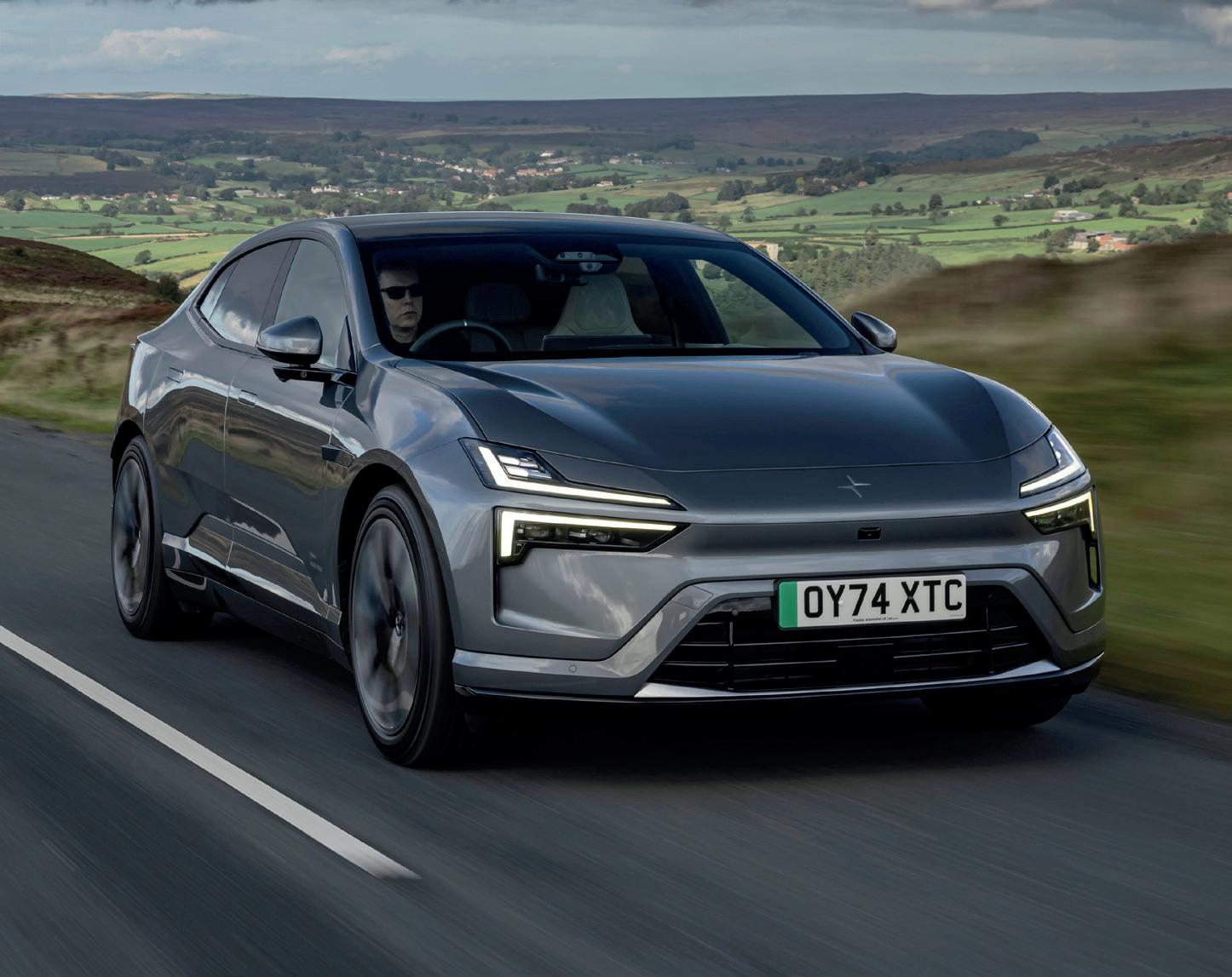
Polestar USA has ceased to exist, due to impositions placed on the performance EV brand by the Trump administration.
The marque has been forced to stop US sales due to new security rules targeting Chinese and Chinese-owned carmakers.
While marketed as a Swedish brand, Polestar is owned by Chinese auto giant Geely and in late June, the US Department of Commerce's Bureau of Industry and Security refused the carmakers approval to sell new cars from the 2027 model year onwards.
This is due to the 'Connected Vehicle Rule' that restricts the sale of "connected vehicles by connected vehicle manufacturers owned by, controlled by, or subject to the jurisdiction or direction of China or Russia, and vehicles using their covered software”.
Polestar is now seen as a security threat as the White House believes products from these countries may be obligated to share data or allow remote access to connected vehicles in the US.
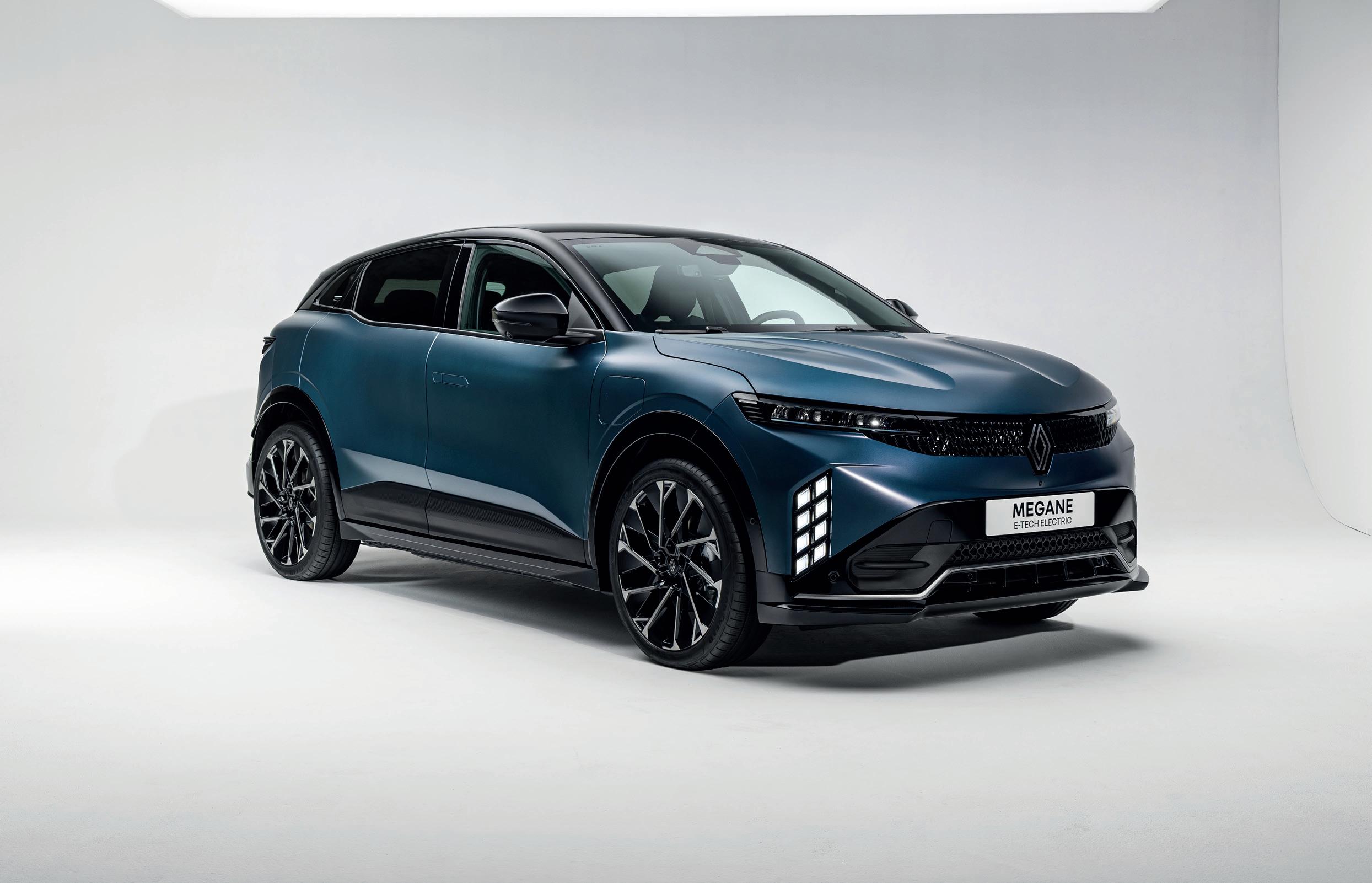
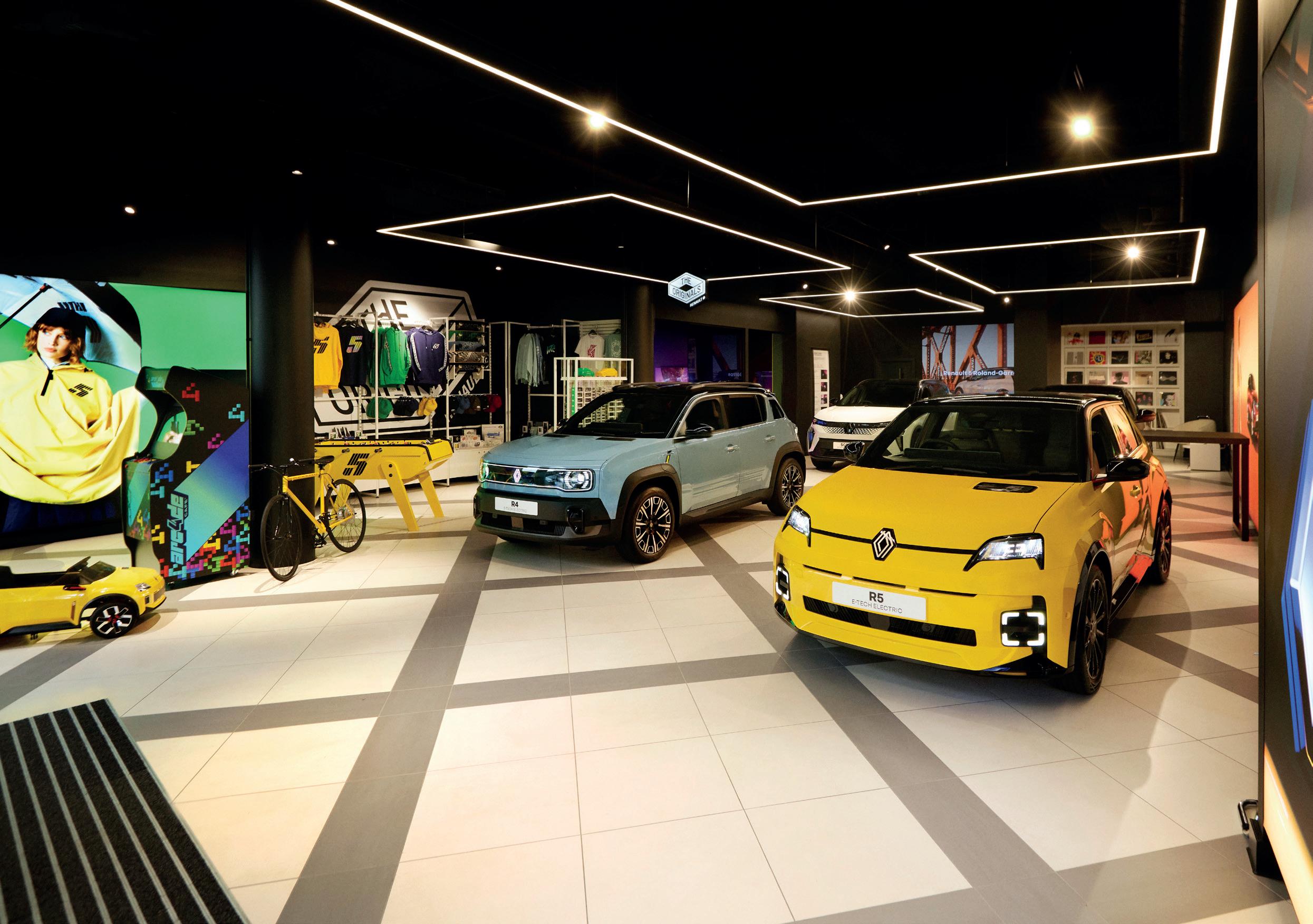
The Megane was the first car in the so-called Renaulution that has also spawned the awardwinning Scenic, Renault 4 and Renault 5, and launched in 2022.
It helped set the course for family friendly electric hatchbacks but with a growing tide of rivals from new and established brands, Renault has treated it to an upgrade.
The French carmaker has ditched the 60kWh Nickel Manganese Cobalt (NMC) unit from the previous car, and replaced it with a 67kWh Lithium-Iron Phosphate (LFP) pack. LFP batteries use fewer rare earth materials and have a longer lifecycle than NMC packs, making them a greener, cheaper proposition.
The new battery means that the Megane can now cover 310 miles on a charge - a 30-mile increase. Peak charging is also up to 165kW – a 35kWh boost – which translates into a 15-80% top-up time of 24 minutes.
Despite its new battery tech, the facelifted Megane gets the same motor as before – a frontmounted unit producing 217bhp and a 0-62mph time of 7.8 seconds.
Building on what was already a well-balanced chassis, the new car is fitted with multi-link rear suspension, which aims to strike a balance between comfort and engagement. At the front, an updated steering system promises a more precise drive.
Externally, the new Megane is quickly identifiable thanks to a front end inspired by the Scenic SUV. The black front grille is finished with a diamond pattern to reflect the Renault logo, and the centrally-positioned badge now sits beneath the bonnet line.
Gone are the previously shaped front air intakes, which have been replaced with a light signature comprising eight diamond-shaped DRLs. In fact, the only visual carry over from the previous electric Megane are the slim headlights.
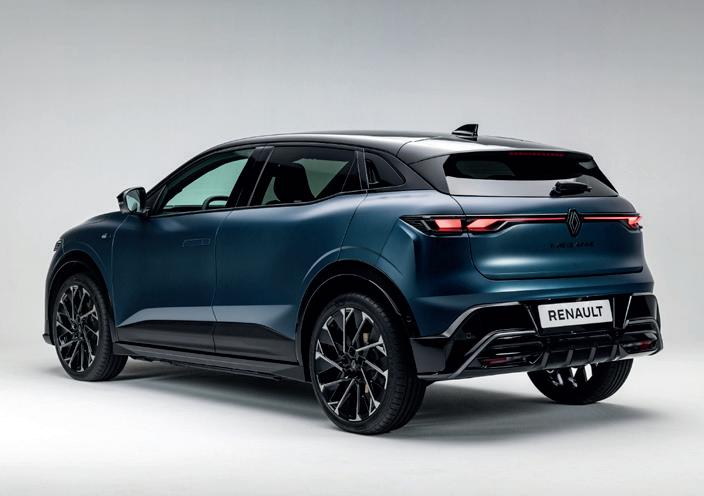
The addition of flush door handles creates a smoother, more aerodynamic appearance, and around the back, the redesigned rear skirt reflects the front end’s robust appearance.
Step inside, and not much has changed visually. The digital instrument cluster and infotainment screen are still combined into one unit, and the
latter retains its bank of physical keys for the climate controls.
Renault claims that it has focused on improving the quality of the Megane’s interior, with better materials, including a TPE – Thermoplastic Elastomer – dashboard.
The new Renault Megane comes with the same Google Built-in system as the Scenic, which features an integrated route planner, Apple CarPlay and Android Auto.
This latest car is also the first Megane to come with the Google Gemini AI bot, which lets you have a “natural” conversation with your car, if you’re so inclined.
Another key new piece of tech is the camera-based driver recognition function, which can store and recognise up to five driver profiles for preferences such as seating position and favourite apps.
The Megane is the first Renault to benefit from its Smart Mode driving function which automatically selects from either Eco, Comfort, or Sport driving mode depending on your driving behaviour. It also gets one-pedal driving for the first time.
Prices and exact on-sale date are still to be confirmed, but we’d expect a September launch and a minor uplift from the current car’s £31,295 price tag.
Dacia has announced a fresh drop in price for its compact Spring EV ahead of the car’s replacement next year.
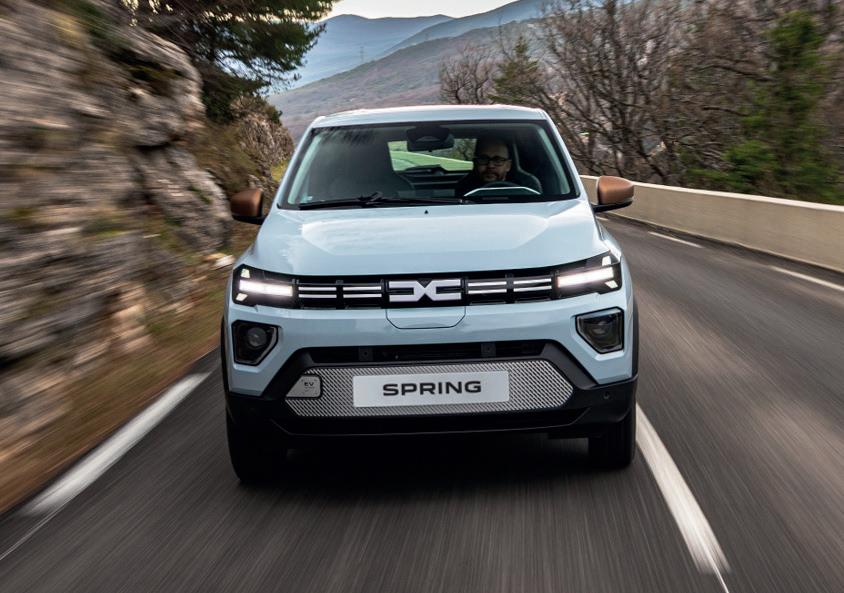
Already the UK’s cheapest full EV, the Dacia Spring now starts at just £11,990.
Dacia says it has been able to make the price cut thanks to “production efficiencies”.
Following a significant update at the start of the year, every Spring now features air conditioning, cruise control, rear parking sensors, and a digital instrument display, along with improved motors and chassis upgrades.
The Expression model features a 69bhp motor, while the Extreme version gets a 99bhp unit. Both use a 24.3kWh battery for up to 140 miles of range.
On top of the basic trim level, the £12,990 Extreme adds a 10.1-inch infotainment touchscreen with wireless Apple and Android, vehicle-to-load functionality, copper-accented styling, electric rear windows, and a reversing camera.
The Chinese-built Spring will be replaced with an all-new European-made model in 2027, set to share its underpinnings with the new Renault Twingo and cost under £15,000.
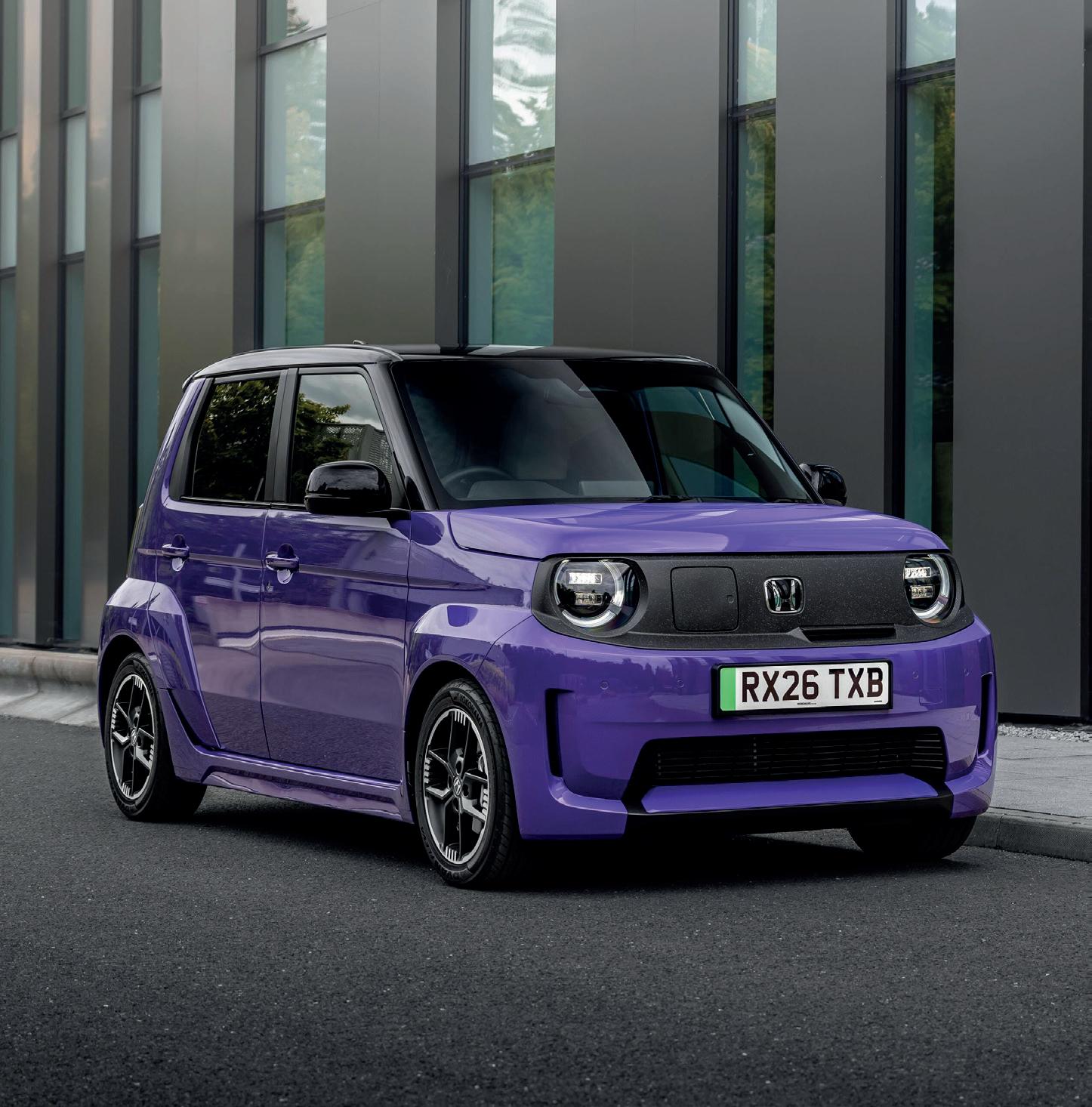
Honda has opened order books for its new Super-N city car, with prices starting at £18,995.
Derived from Honda's Japan-only kei cars and set to rival the Renault Twingo, the Super-N is inspired by the Japanese firm's City Turbo II from the 1980s, and measures less than 3.6 metres long and 1.6m wide.
Packing a tiny, front-mounted 64bhp electric motor, the Super-N comes with a clever e-Axle that increases power to 95bhp in short bursts with 'Boost Mode'.
Thanks to a kerb weight of just 1,097kg and a small 29.6kWh battery, the Super-N has a quoted 128-mile WLTP range. DC charging is capped at 50kWh, but given the Super N's tiny battery, a 10 to 80% top-up is doable in around 30 minutes.
The Super N's party piece is a simulated seven-speed transmission that can be used as either an automatic or a manual and features a synthesised engine note derived from the City Turbo II and the Integra Type R.
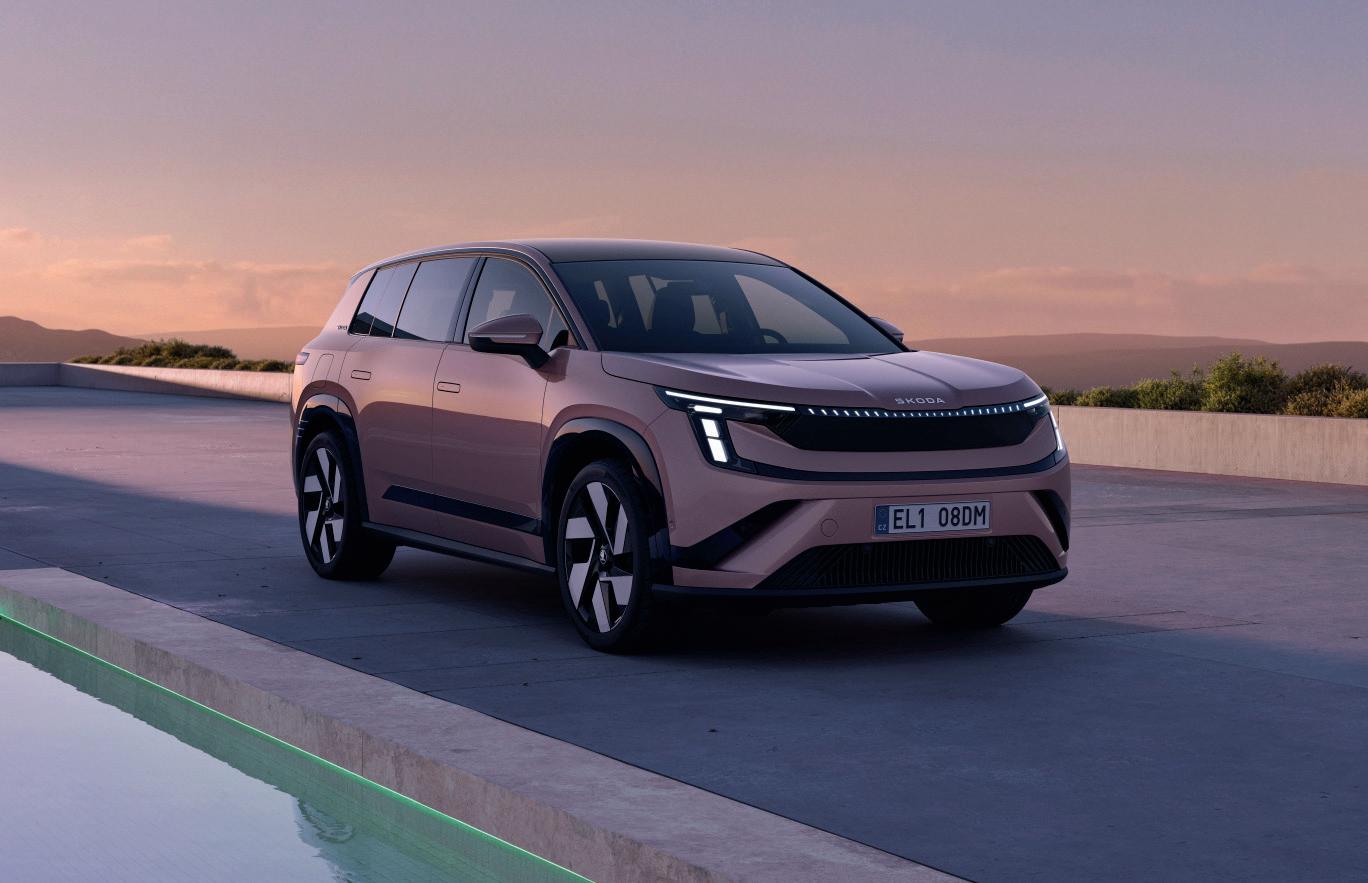
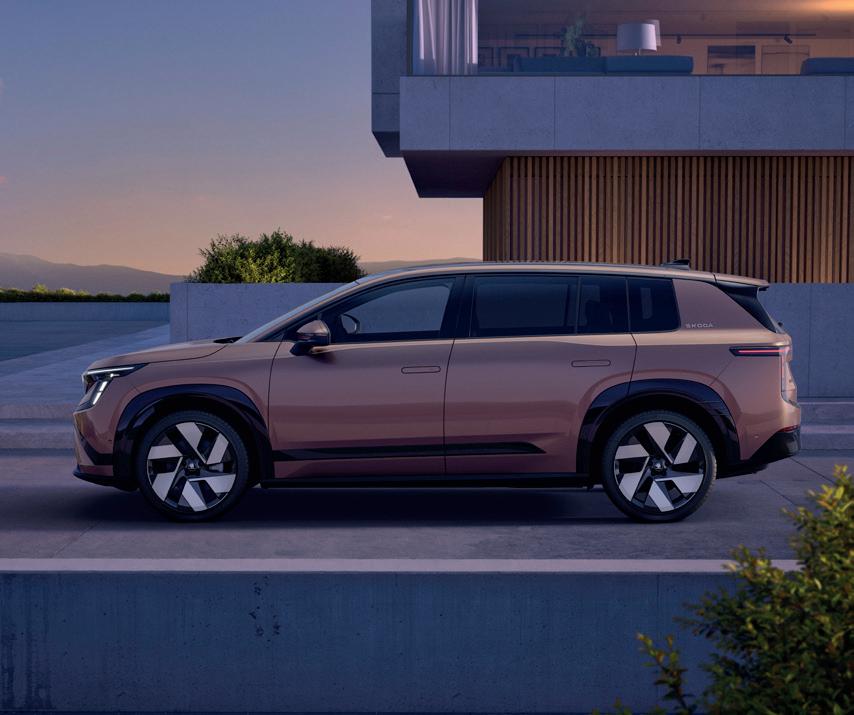
Skoda has taken the wraps off its new seven-seat Peaq SUV, which will be priced from £51,980 when orders open in September.
The most expensive Skoda to date, the Peaq is the largest model in the brand's line-up, measuring almost 4.9 metres long and 1.7 metres in height.
Sitting at the top of Skoda's electric-only range above the recently introduced Epiq, and the highly acclaimed Elroq and Enyaq, the Peaq is the first seven-seat EV offered by the Czech manufacturer.
The Peaq's familiar Tech-Deck Face carries over from Skoda's existing EV range, while the T-shaped head- and tail-lights are unified by a black loop carried over from Skoda's Vision 7S and Vision O concepts. Flush door handles are part of the Peaq's exterior, and retract into the body when the car is locked for security, or at speed to improve its aerodynamics.
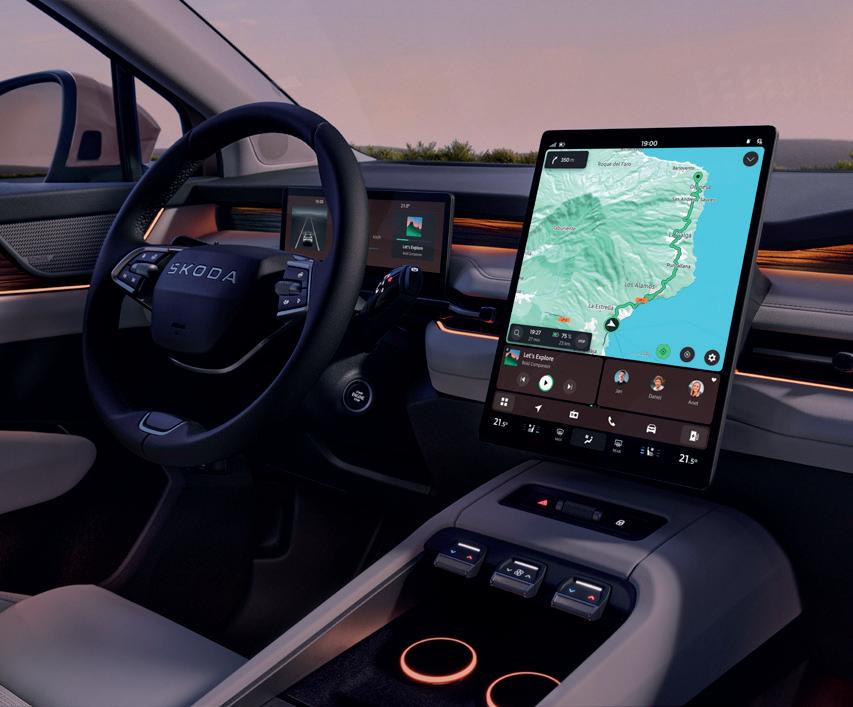
Step inside, and the Peaq's interior is dominated by a vertical 13.6-inch touchscreen running a Google-based OS. For the most part, the infotainment screen is operated by haptic feedback. However, physical switchgear for the interior temperature, fan speed, and volume is fitted to the centre console.
Beneath the row of buttons sits a pair of wireless charging pads with MagSafe built-in; a system that ensures mobile devices remain in place while accelerating, braking, or cornering.
Skoda has stretched the Peaq's wheelbase to 3.9 metres, which translates into a boot capacity of 299 litres of space with all three rows in use. Fold the third row flat, and this rises to 890 litres; fold the second row, and this increases to a huge 2,075 litres.
Across the Skoda Peaq SUV range, a 2.1m electrochromic roof with adjustable opacity is standard, which can act as a virtual sunshade on warm, sunny days.
The Skoda Peaq is available in three trim levels: Entry-level SE L priced from £51,980, mid-tier Edition priced from £55,130, and range-topping Sportline priced from £58,280.
Each model comes with an 86kWh battery and rides on parent company Volkswagen's MEB platform. However, the Edition and Sportline cars benefit from a choice of two powertrains named
90 and 90X. The former has a 282bhp rear-mounted electric motor, while the latter adds a second motor for all-wheel-drive (AWD) and 294bhp.
The SE L is rear-wheel-drive only, but irrespective of trim level, all versions of the Skoda Peaq come with a 390-mile range and a maximum charging speed of 199kW. This means the Peaq has a 1080% top-up time of 28 minutes. Vehicle-to-Load (V2L) compatibility to power external electronic devices is also a standard feature.
Among option packs is the new 'Relax Package' that includes reclining, massaging seats with hidden footrests, plus pillow-soft headrests. It also adds a Sonos sound system, a foldable table in the centre console, cup holders, and wellnessfocused apps that manage the climate control, ambient lighting, and other functions to create a calming environment for those on board.
“
”
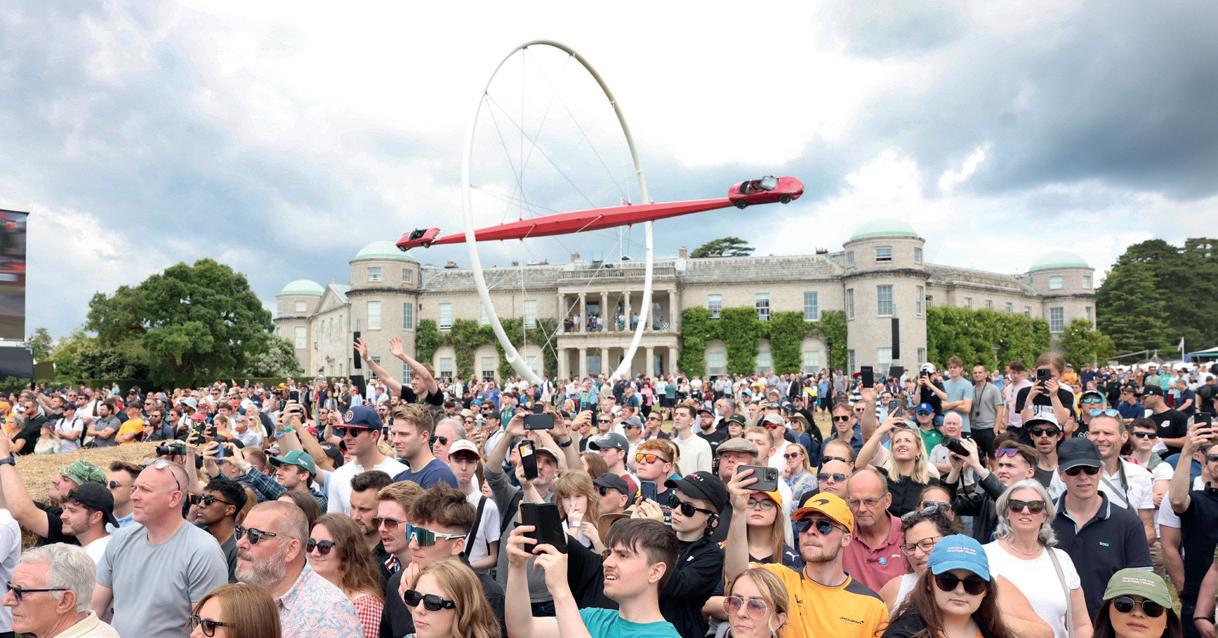
With the 2026 GOODWOOD FESTIVAL OF SPEED taking place this month, the 11th DUKE OF RICHMOND, explains to EV Powered why electrification is more important than ever for the world's greatest motorsport festival.
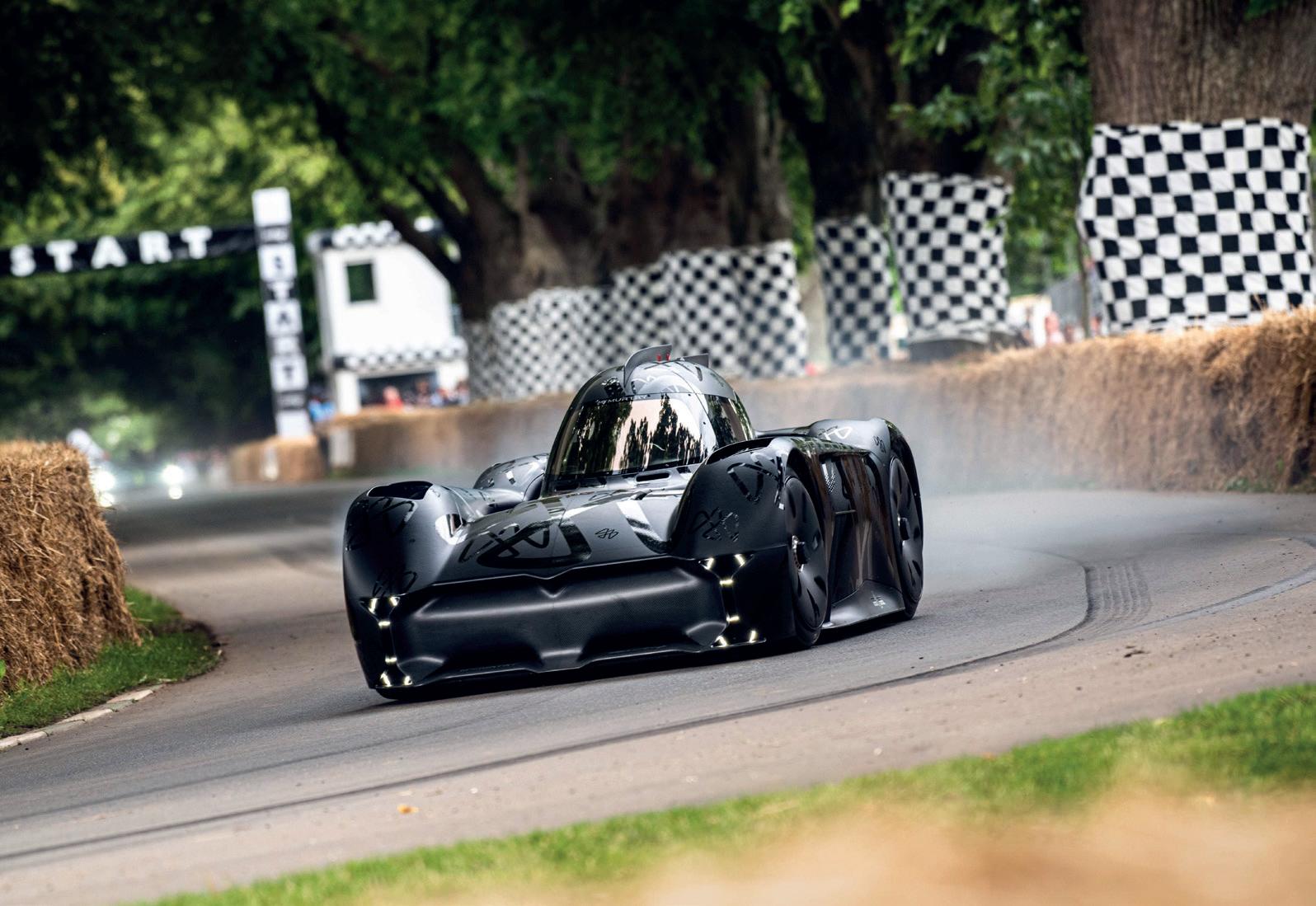

If you think about it, the Goodwood Festival of Speed is arguably the most open-minded car meet on the planet.
The event was founded in 1993 by Charles Gordon-Lennox, the 11th Duke of Richmond, and was created to bring motorsport back to the Goodwood Estate; a site steeped in Britain’s rich motorsport folklore.
The premise for the Festival of Speed was – and still is – simple. Cars and drivers attending the event in the sprawling 4,900-hectare grounds surrounding Goodwood House are required to blast up the 1.16-mile hillclimb course in as short a time as possible. That’s it.
As for what drivetrain is used? That's an irrelevance, according to The Duke.
"At the Festival of Speed, we are pleased to promote an agnostic approach, with a combination of EVs, hybrids, sustainable fuels, and even hydrogen-powered cars and bikes," he explains to EV Powered. "Since FoS started, I have always been determined that we should not just stay abreast of a fast-changing world, but lead the way in making our motorsport events as sustainable as possible."
Continued on next page

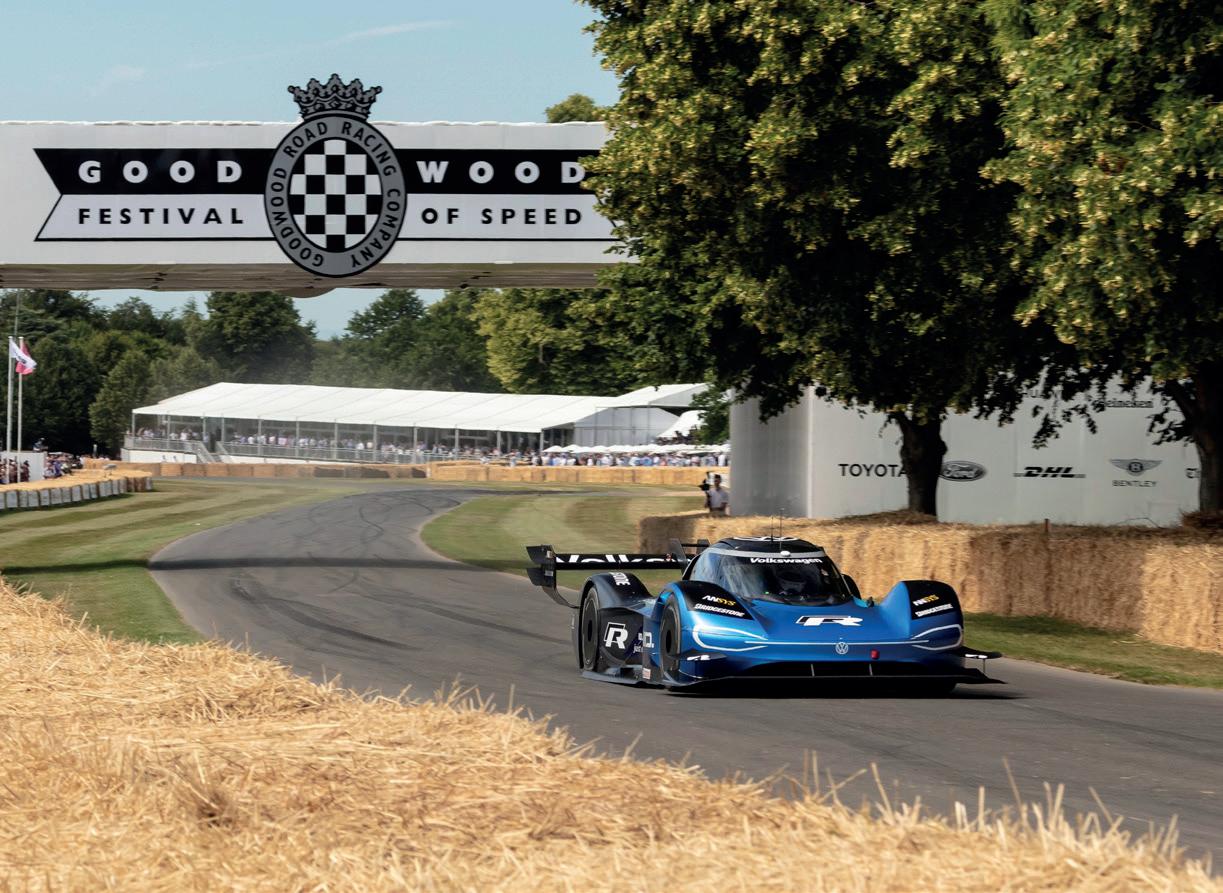
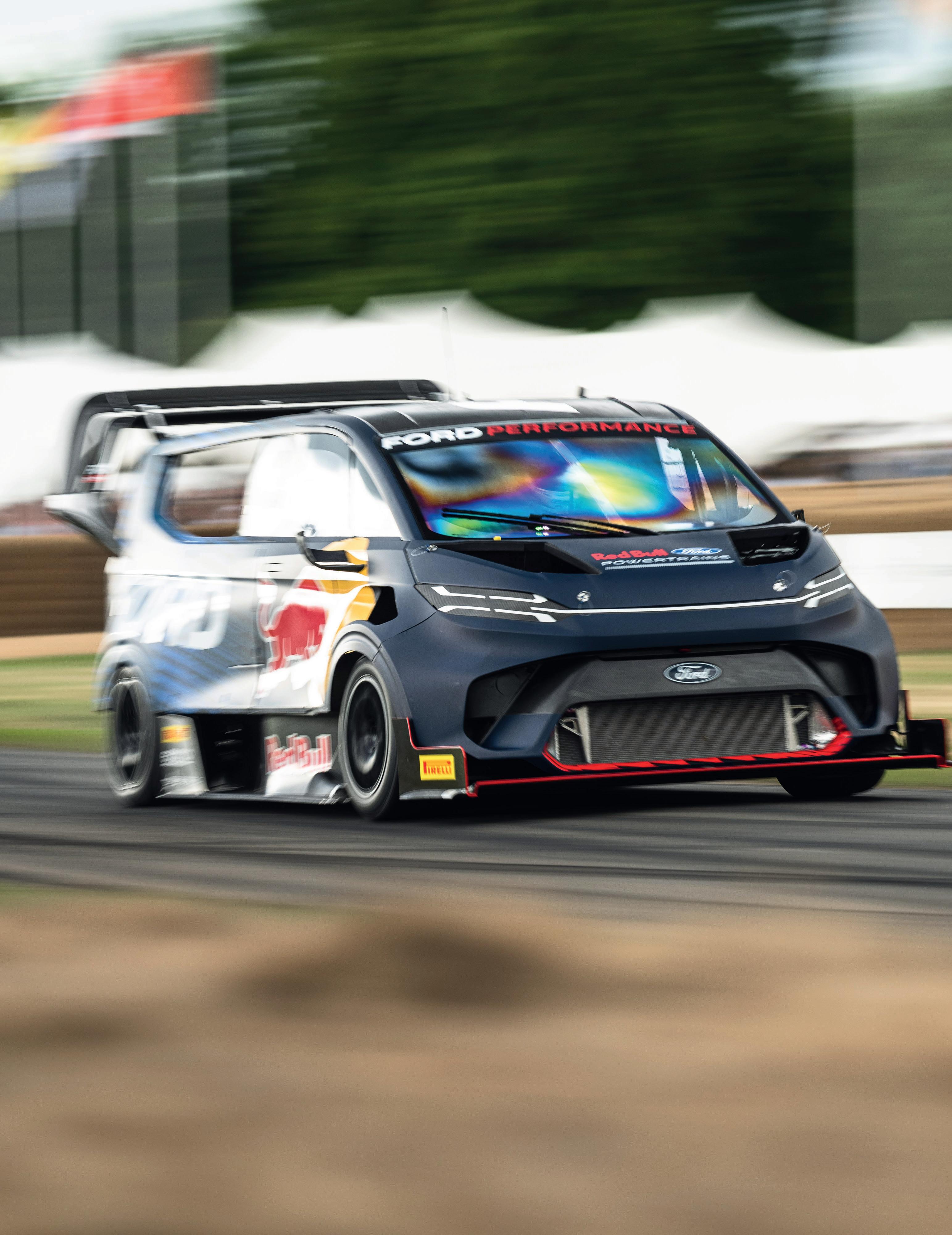


Even prior to the UK's love-in with electric vehicles, which exploded in 2021 when the number of EVs on the nation's roads crossed half a million, the Festival of Speed had already established itself as a safe haven for manufacturers wishing to demonstrate the power of electrification in motorsport.
Wind back the clock to 2019, and Romain Dumas didn't just set a new hillclimb record in the Volkswagen ID.R, he smashed it with a time of 39.9 seconds.
Prior to the Frenchman's record-breaking run the best part of a decade ago, the previous-fastest blast up this hill was a 41.6s set by Nick Heidfeld in the V10-powered McLaren-Mercedes MP4-13 Formula 1 car two decades prior.
The symbolism of Dumas’ achievement wasn’t lost. It was almost a changing of the guard, and a sign that electric vehicles were now a proper part of the motorsport and performance car fabric, and not just niche products.
In 2023, it was another turning point for Team EV. Max Chilton set a time almost a second faster than Dumas with the remarkable allelectric McMurtry Spierling fan car, with the exF1 and IndyCar driver recording a 39.08s run.
"Electric cars have certain natural advantages in performance terms: instant power, all-wheel drive, and the ability to place the batteries low down in the chassis to improve weight distribution," The Duke continues.
"Up to now, those advantages have been largely offset by the weight of the batteries. But technology is improving all the time, and as batteries become lighter and more efficient, more of the performance potential of electric vehicles can be unlocked.
"With a steady stream of performance-focused EVs being launched, and Ferrari recently entering the market with the Luce, the line between ‘car’ and ‘electric car’ is becoming increasingly blurred – ICE, EV or hybrid is less important than the dynamic ability of the car."
And since 2021, the Festival of Speed has been on a mission to eliminate that barrier between electrification and internal combustion.
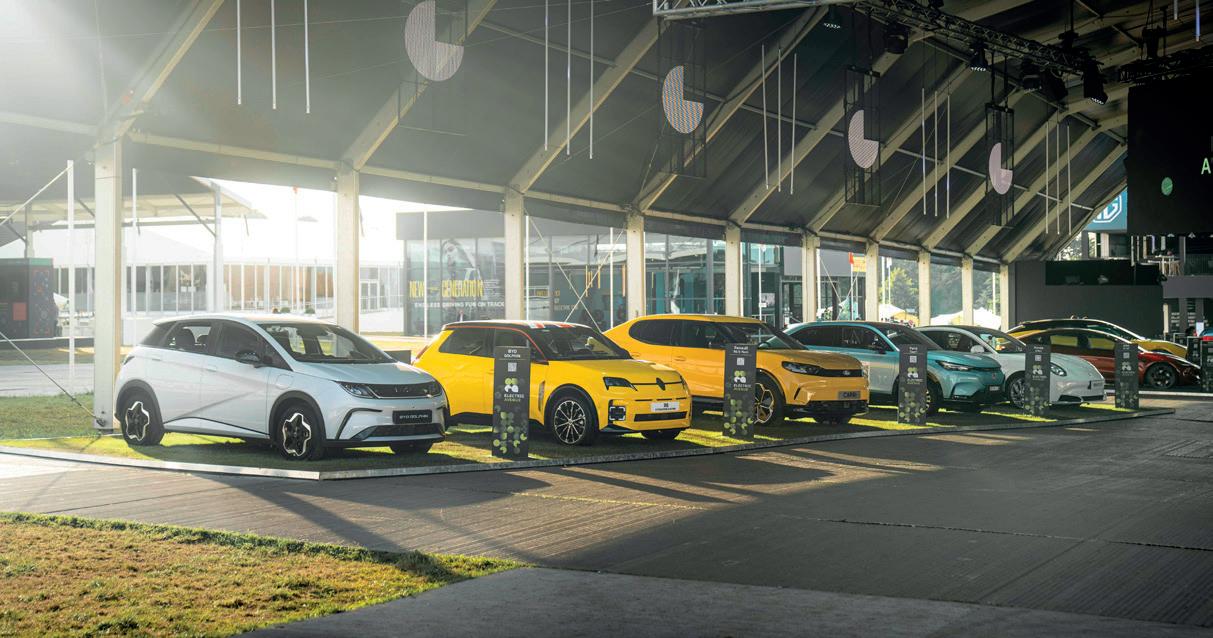
The inaugural Electric Avenue exhibit served as what The Duke describes as a "one-stop-shop", where festival-goers could ask questions about everything from finance and running costs, to the
realities of range and reliability, take a closer look at some of the latest EVs, and find out more about the benefits of going electric.
"It was a great success, providing manufacturers with a platform to showcase their latest models, and helping to break down some of the barriers to ownership for potential new customers," he recalls. "Five years later, electric cars are everywhere at the event – in the paddocks, on the Hill, on manufacturer stands and, crucially, in the car parks."
Over the following years, the likes of Polestar, Renault, Alpine and Lotus have all used FoS as a springboard to show off their line-up of current and upcoming electric vehicles, as has BYD.
This year, the Chinese automotive giant plans to go large at the Festival of Speed with a 2,016 square-metre stand, where it will display a gamut of new models, and officially introduce its premium-focused Denza brand to the UK market.
“IGNORE THE NAYSAYERS. Electric performance cars are here, and electric motorsport is in the ascendance."
As the number of EVs registered in the UK has soared to over two million in the UK, the influence that electrification has had on the world of motorsport has rocketed in parallel with the popularity of all-electric drivetrains amongst motorists.
Come the end of Season 11 last year, Formula E's global fanbase expanded to 422 million, a 13% increase from the previous season. Cumulative TV viewership rose to 561m, and social media followers increased by 10%.
The likes of four-time Formula 1 World Champion, Max Verstappen, and 13-time Grand Prix winner, David Coulthard, respectively described the upcoming 800bhp Gen4 cars as "cool" and "like hyperdrive from Star Wars".
With such public praise out there, expect that upward trajectory to continue when the Gen4 era kicks off at the end of this year.
Meanwhile electric rallycross has undergone a rebirth courtesy of Rallycross Americas, which has garnered the attention of two-time World Rally Champion, Marcus Grönholm.
The series, founded by Olsbergs-MSE chief, Andreas Eriksson, has already signed the likes
of 2019 FIA World Rallycross champion, Timmy Hansen, and Lia Block.
While all of this may, for now at least, sound like the ramblings of an EV evangelist – and you’re right, they are – the growth of electric motorsport ties into this year's FoS theme of iconic motorsport rivalries.
Undoubtedly, electric motorsport still has some way to rival internal-combustion racing in terms of pedigree. After all, the latter has had a 132-year head start: The world's first organised motor race was the Paris-Rouen in 1894.
In its current form, the EV world simply does not have the historic chops to match the likes of Ford vs. Ferrari, Senna vs. Prost, Schumacher vs. Häkkinen, or Grönholm vs. Loeb. To suggest otherwise would be outright silly.
Yet great EV rivalries are already in the making, and they’re largely China’s doing.
As recently as last year, the 2,959bhp Yangwang U9 Xtreme obliterated the Nürburgring Nordschleife's EV lap record with a time of six-minutes, 59.157 seconds. That particular achievement served as a wakeup call to legacy European manufacturers that China couldn't only match them in their back yard, it could better them.
Fellow Chinese newcomer, Xiaomi, laid down a similar gauntlet after setting an even quicker Nürburgring lap time of 6:22.091 with a heavilymodified SU7 Ultra; a tri-motor, 1,548bhp version of its Tesla Model 3 rival. Once again, China had claimed honours – this time for the outright EV prototype lap record.
The man behind Europe's foremost celebration of motorsport believes that the increasing number of EVs coming to market will play their part in creating major EV rivalries during the coming years. It’s a tantalising thought for any EV enthusiast and motorsport fan.
"Naturally, more manufacturers and more models mean greater competition, with consumers ultimately benefiting from more choice," the Duke contemplates. "We’re now seeing OEMs faced with Net Zero targets, which will only add to the competitive nature of the market."
Ignore the naysayers. Electric performance cars are here, and electric motorsport is in the ascendance. Enjoy the future.
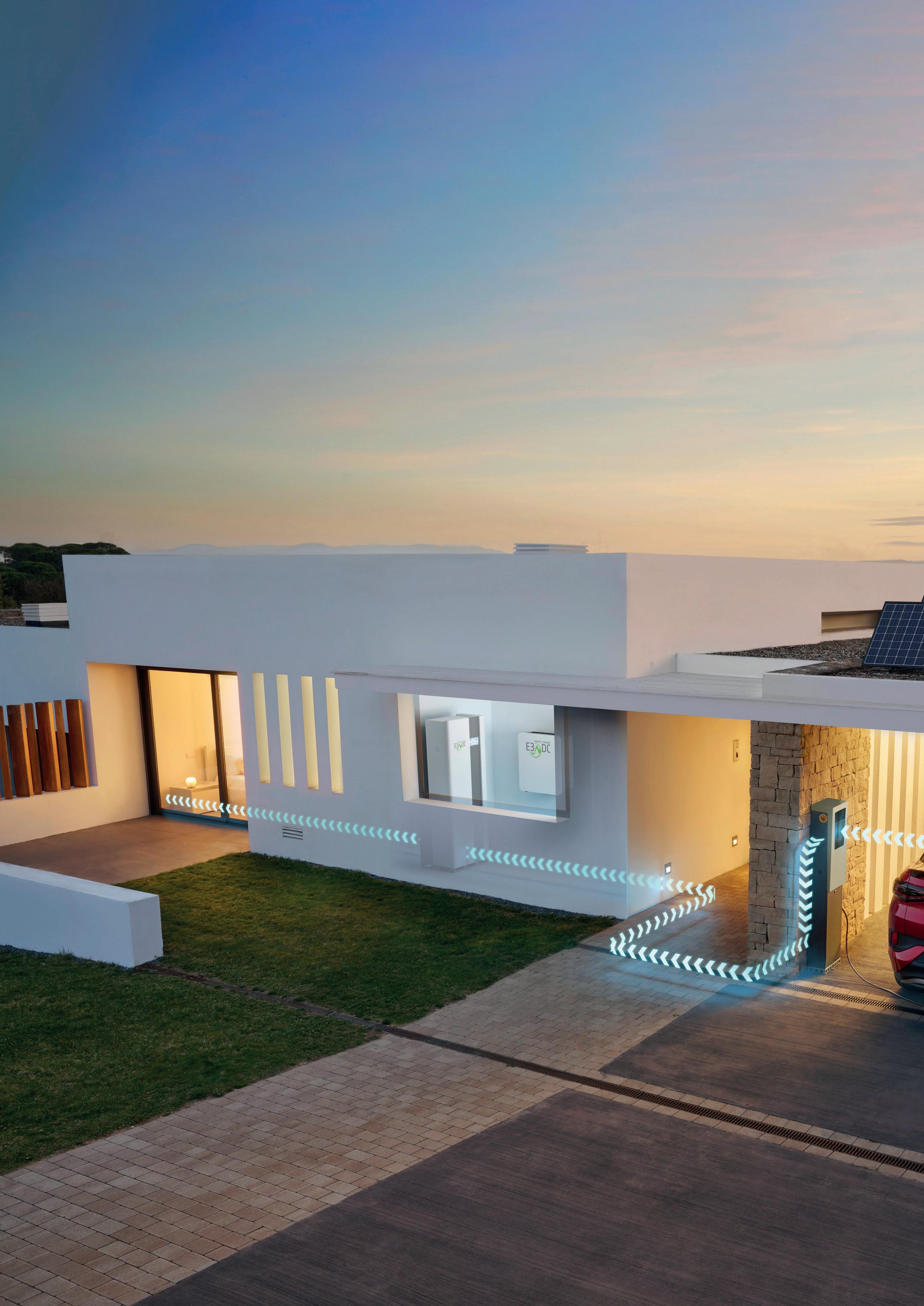
Our guide to VEHICLE-TO-GRID TECHNOLOGY, its BENEFITS and DRAWBACKS and what it means for EV owners.

The arrival of electric cars has brought a whole new world of jargon for drivers to get their heads around – from charging curves to kilowatt hours. But one term that is getting an increasing amount of attention is vehicle-togrid technology.
More and more car makers are talking about it and its potential to save money and perhaps the environment. So what is it and why should you care?
In simple terms vehicle-to-grid (V2G) technology allows an electric vehicle to send power stored in its battery back to the energy grid.
A lot of cars already support vehicle-to-load (V2L) charging, known as bi-directional charging. This is where small appliances such as laptops, coffee machines or e-bike chargers can be run from the car’s main high-voltage battery via an adaptor or in-car three-pin socket.
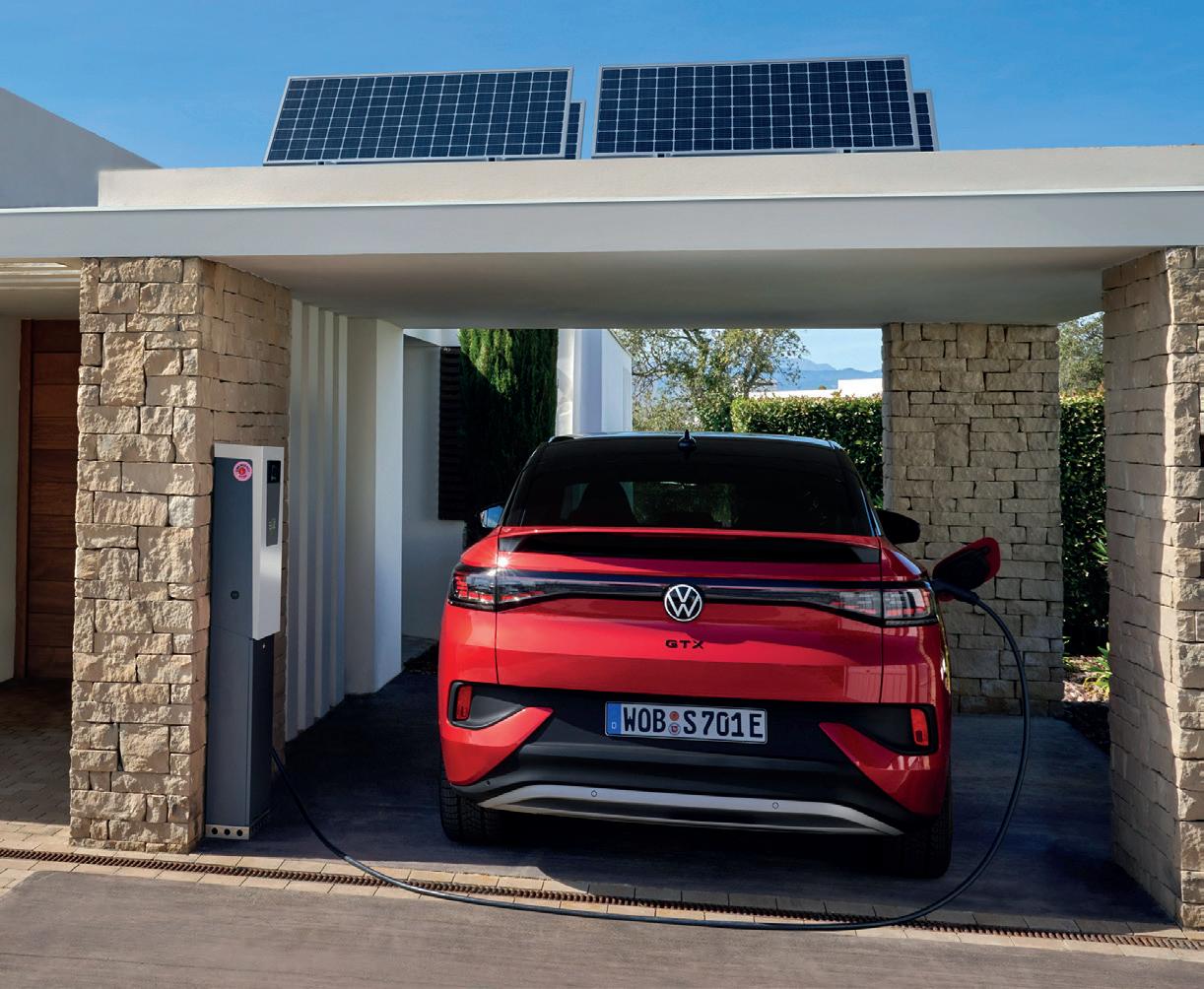
Unlike “normal” EVs which can only draw power to their batteries, cars equipped with V2G systems use special on-board hardware and dedicated chargers to send energy away from the vehicle. This hardware is managed by software which allow EVs, home chargers and the wider energy grid to communicate in real time. Doing this enables the technology to manage cars’ charging and discharging in line with wider energy demands and support the national supply. It can top up batteries when demand is low then send it back to the grid when demand is high.
While it sounds fairly simple, the technical process is very complicated.
At the home user end, the charger has to be able to convert AC from the grid to DC for storage in the EV battery. It then needs to be able to convert this back to AC in order to send it back to the grid. This requires very precise synchronisation with the grid. It also requires the car and charger to be in constant communication with the grid via complex software to make sure energy flow is matched to demand from both the grid and the car.
CONTINUED ON NEXT PAGE
There are a few major benefits of V2G technology both financial and environmental.
Financially, V2G allows EV owners to charge their cars when demand and prices are low, then sell the energy back to the grid when demand and prices are high. It is thought that drivers could cut energy costs by 70% and make up to £320 per year by charging their cars at off-peak times then selling the energy back at peak periods.
For homeowners with solar panels, the benefits could be even greater –generating free energy from their home array then selling it on to the grid when needed.
V2G is also good for the environment as it means excess renewable energy can be stored in EVs for use later. This means wind and solar energy generation in low-demand times isn’t wasted or curtailed. It also means that the grid can draw on stored energy at peak times rather than placing more demand on fossil fuel power stations.
Widespread V2G use could also help stabilise the grid, smoothing out supply fluctuations and reducing the likelihood of power cuts.
Although V2G has clear benefits, there are issues around its adoption.
The first obstacle is the limited availability of compatible vehicles and chargers. Beyond that, setting up V2G infrastructure and connecting it correctly with the national energy supply is nowhere near as simple or cheap as a regular singledirection home charger.
There are some concerns that an increase in charging cycles could accelerate battery degradation. However, it’s not clear how much effect this might have and some studies have suggested that cycles which keep the battery in its optimal charging window might help prolong battery life.
There’s also the issue of cost. While some systems use AC technology like current home chargers others use DC technology. These units are up to six times more expensive than a standard home wallbox, are far larger and more complex to install.
Despite lots of talk around V2G and various pilot schemes, the technology is still in its infancy in the UK.
Several manufacturers build cars that are V2G compatible, including Renault, Nissan, Volkswagen, Kia and Polestar, and some already offer it in other countries. However, most haven’t said when it will be offered on UK models or what hardware will be needed to make it work.
There’s also not much in the way of charging hardware. Just four companies in the UK offer chargers that can support V2G operations, and only three of them –Humax, Quasar and Zaptec – are compatible with domestic single-phase supplies.
V2G tariffs are also still under development. Octopus Energy trialled a bespoke V2G tariff in 2024 and plans to launch its “Power Pack” leasing bundle later this year. This will offer an EV lease deal on a BYD Dolphin, a Zaptec Pro home charger and free home charging for the duration of the vehicle lease.
Beyond that there’s not much on offer for drivers looking to explore V2G.
However, with the potential financial and environmental benefits and the number of brands exploring the technology, it seems likely that we’ll hear a lot more about vehicle-to-grid in the coming years.
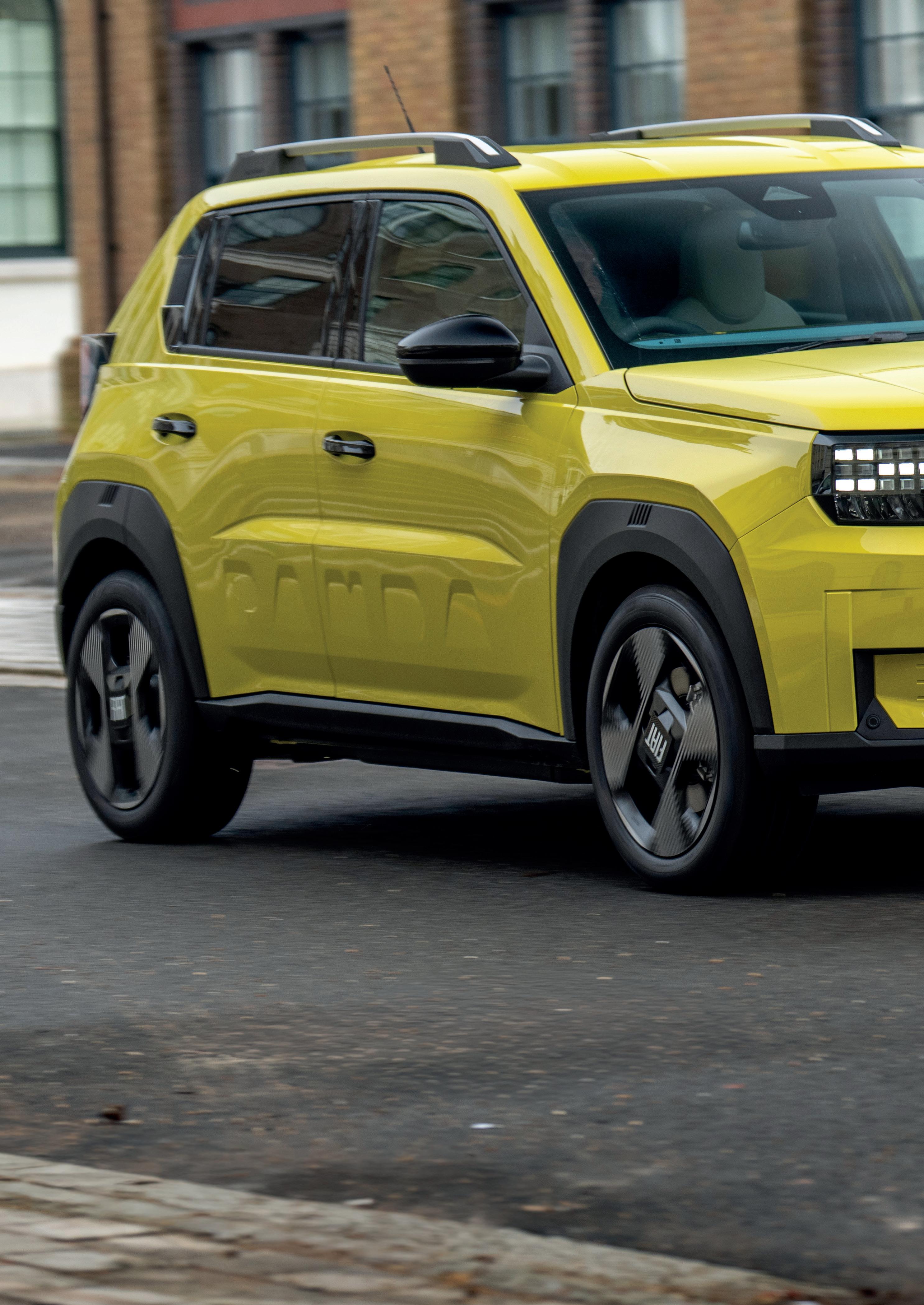
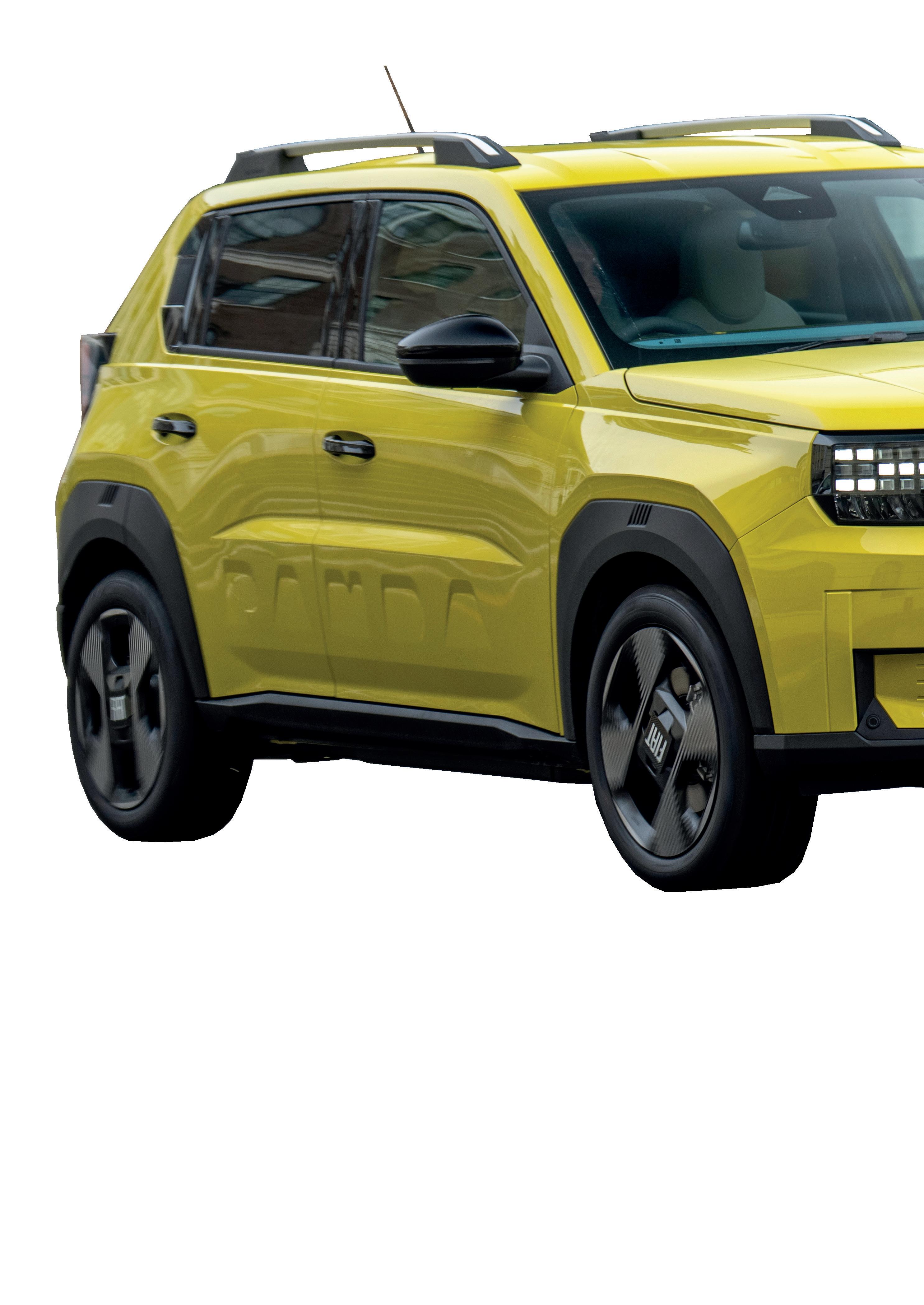
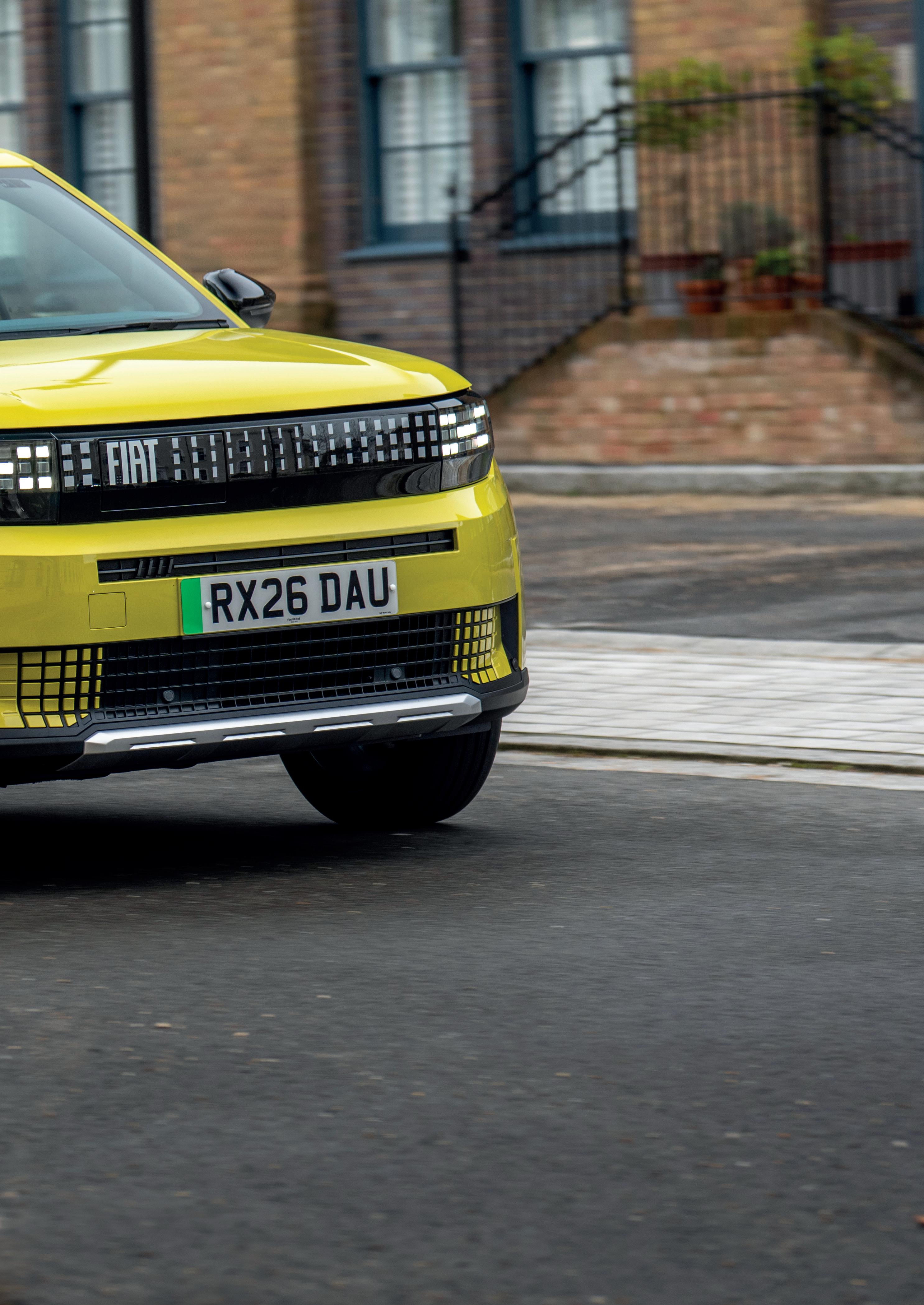
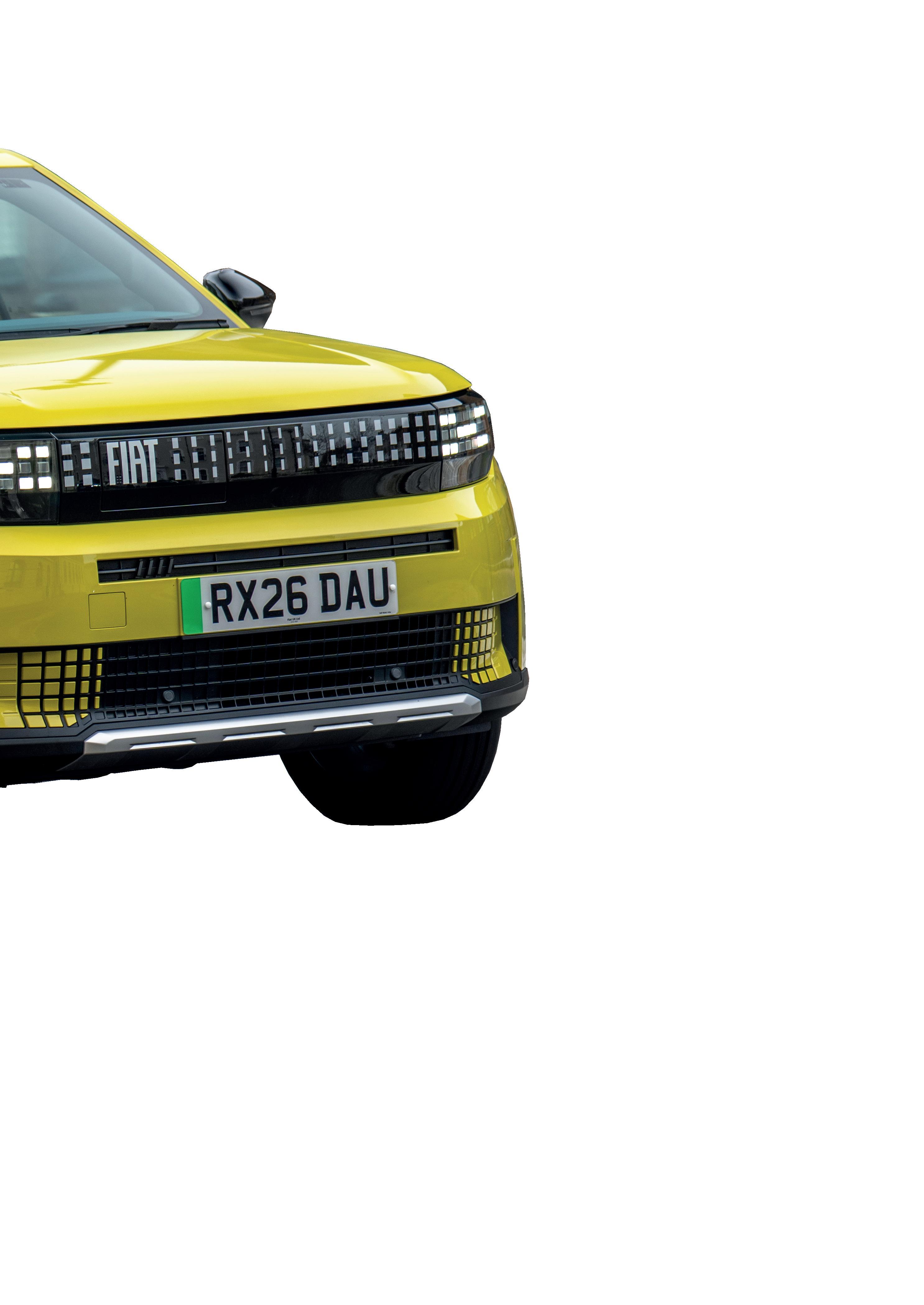
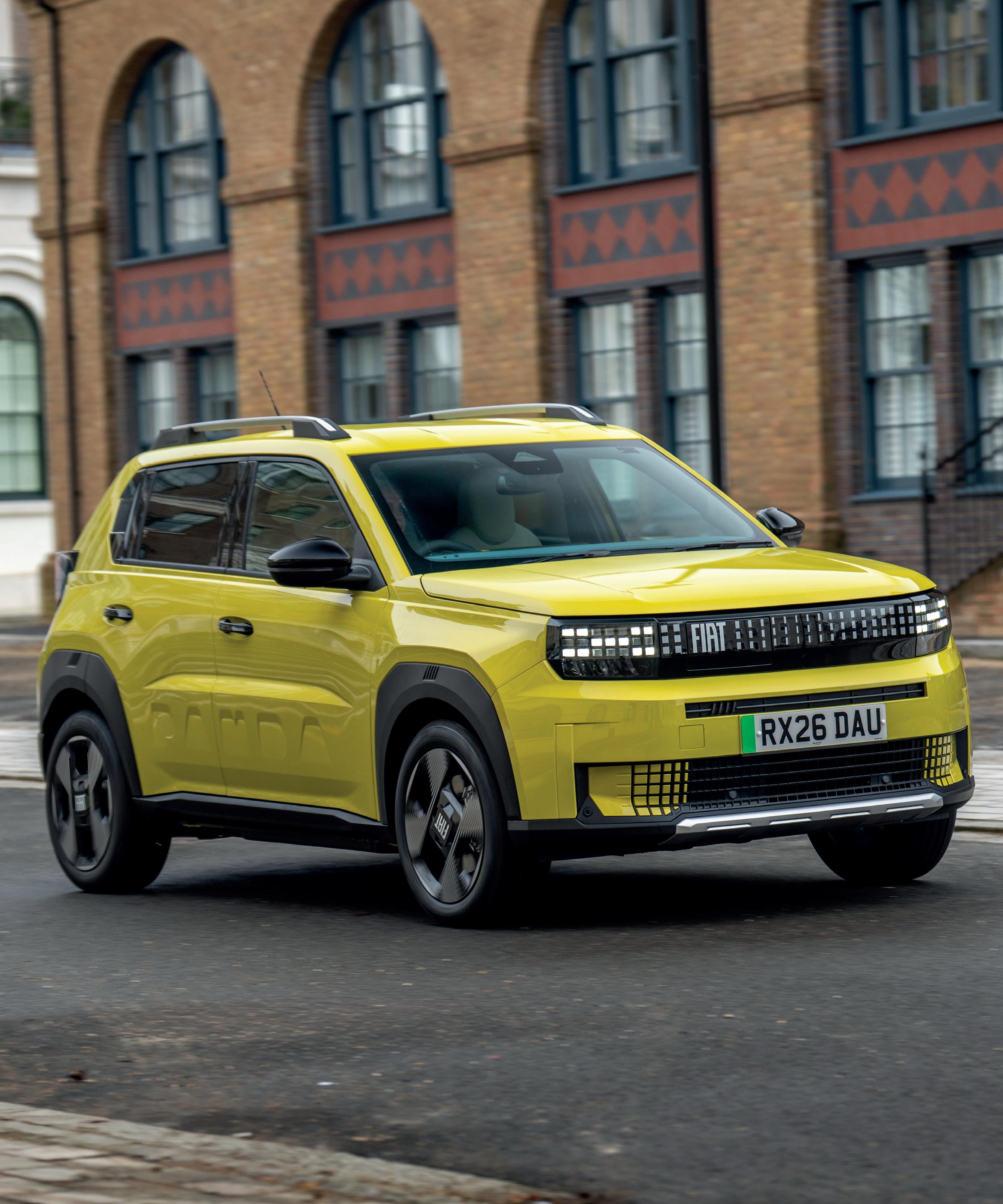
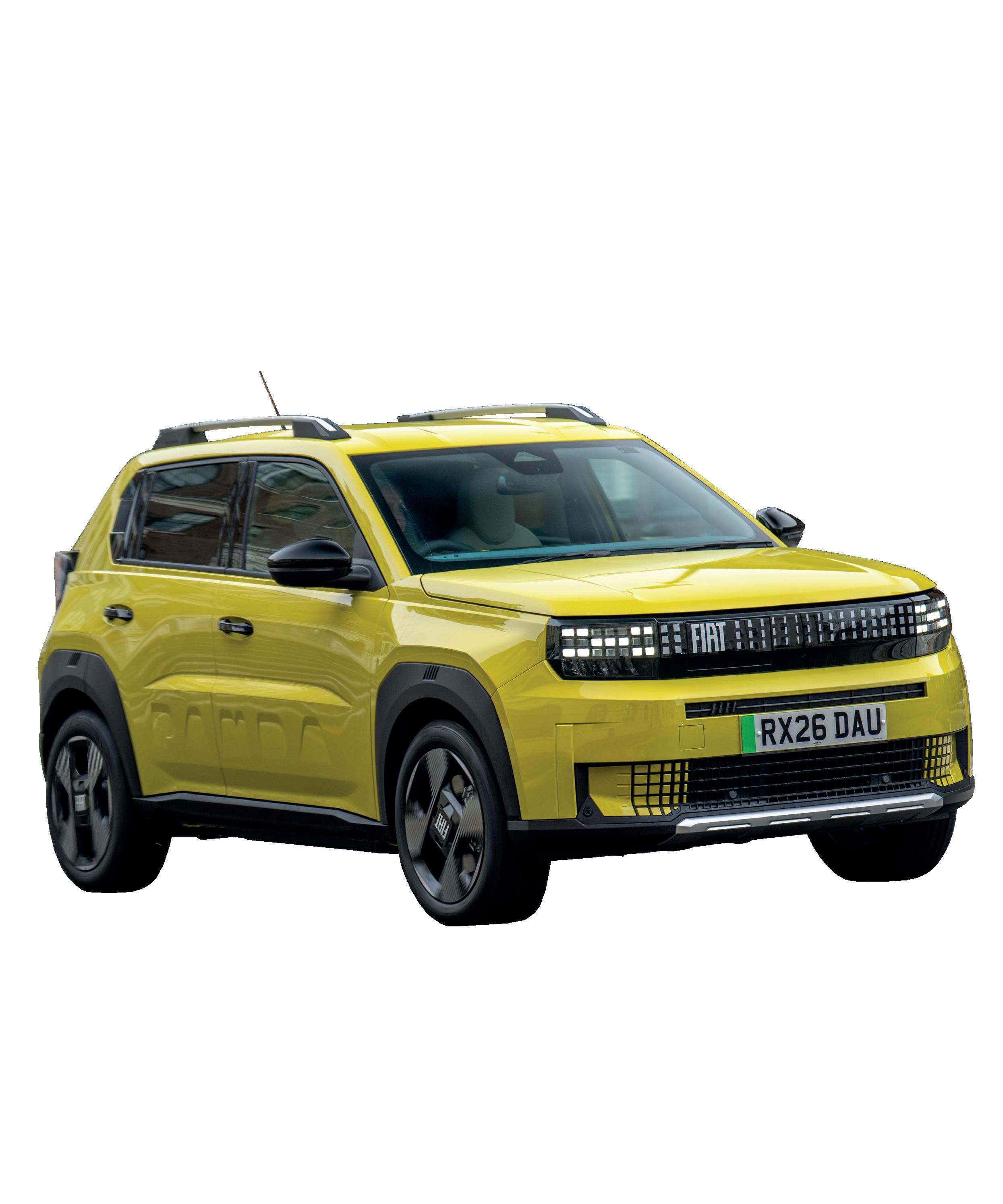
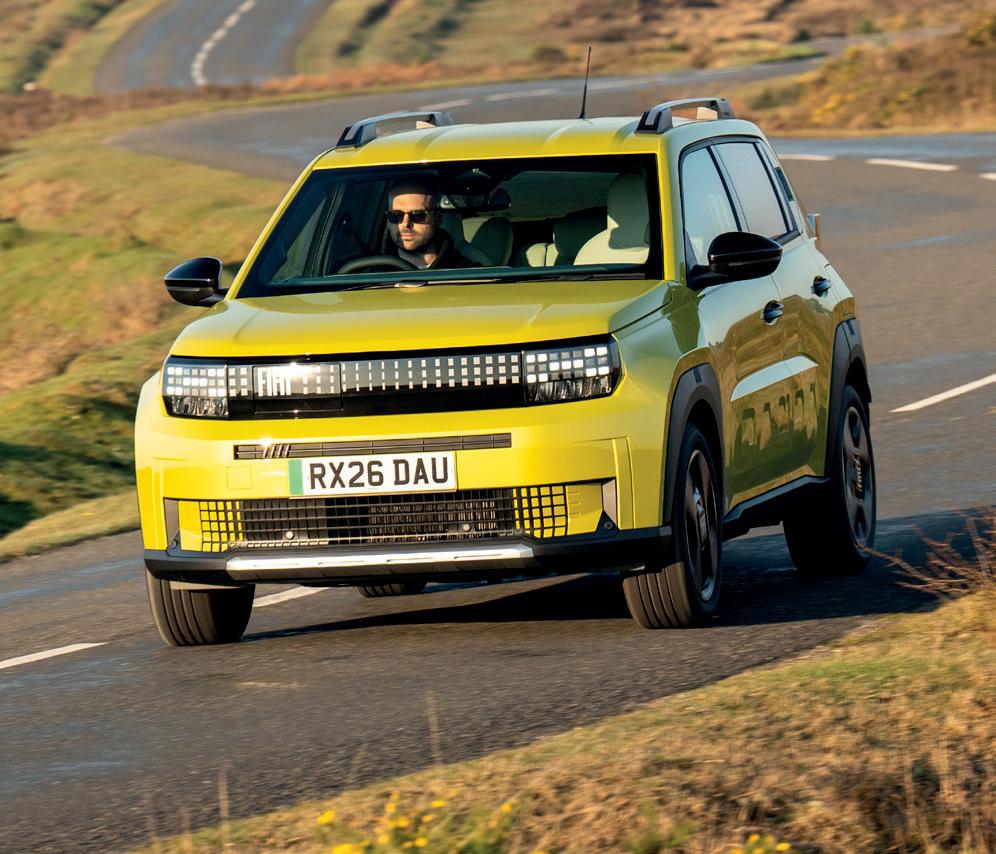
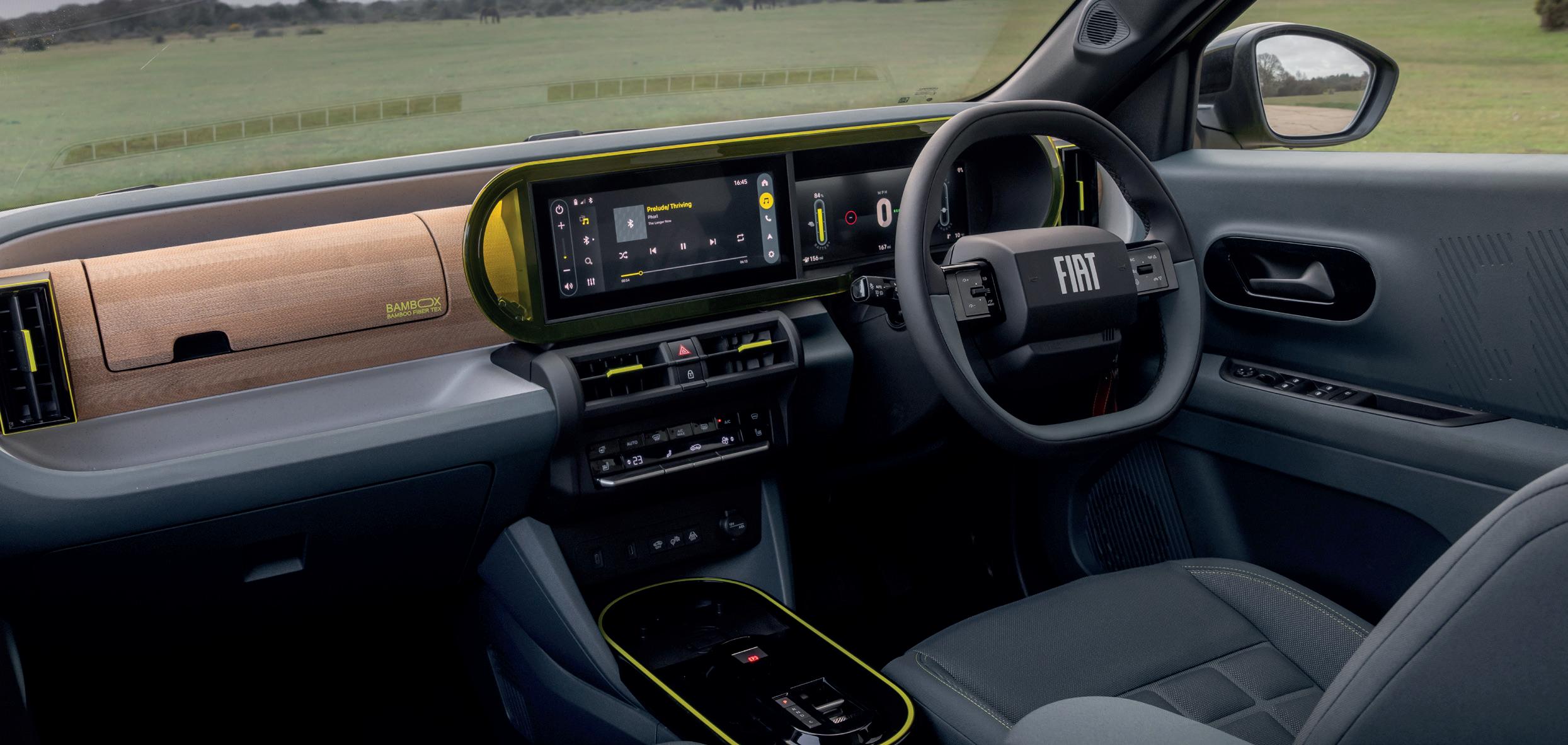
Inside, things are a lot less 80s. There are further tributes to Fiat’s past in the instrument surround and centre console which mirror the shape of the Lingotto test track, but there’s a very 21st century feel. There’s widespread use of sustainable materials, including the neat Bambox – a secondary glove box made using real bamboo fibres. The seat fabrics, door and dashboard surfaces are all made from recycled drinks containers but bring a quality and character you don’t always get at this price point. Elsewhere, there are still a few cheaper plastics but the overall mixture of colour and texture does well to disguise them.
Old Fiats were pleasingly simple to use and the Grande Panda is similarly straightforward. The layout is clear and logical and everything important is within easy reach. There are also solid-feeling physical controls for the air conditioning, plus two easy buttons to deactivate the most annoying ADAS systems.
Like any modern EV, there are digital instruments – big and clear – and a central touchscreen, which slightly lets the Grande Panda down. It’s slow to respond and incredibly basic. Positively, that means you won’t be distracted by it, but it
also means that rivals offer a far more feature-rich and user-friendly infotainment system.
Fiat claims the Grande Panda “guarantees comfort for five people”, which stretches the truth to breaking point. There’s actually pretty good legroom in the back, and the boxy shape gives good headroom too, so a couple of adults will fit. But the rear bench isn’t wide enough to accommodate even three children. In the boot, there’s 361 litres of storage, which is generous for the class.
Like most other cars on the Smart Car platform, there’s just one powertrain offering in the Grande Panda.
Every version gets a 111bhp motor driving the front wheels and drawing its energy from a 43.8kWh battery with 100kW DC charging. Fiat says a full charge should get you 199 miles of range.
Those specs put the Panda close to the entrylevel Renault 5 and higher-spec BYD Dolphin Surf, as well as the Citroen E-C3. It’s worth noting, however, that Renault will sell you an R5 with an extra 47bhp and 53 miles more range from a 52kWh battery for around £24,000 after the ECG.
That’s particularly relevant because, despite the official figures, during a warm spring week, I saw real-world range of closer to 130-140 miles from the Grande Panda while the 52kWh Renault was promising 190+.
In isolation, however, the Panda’s range is probably enough for most people most of the time. This is a car designed as an urban runaround, after all, and it feels utterly at home in the city.
The small footprint (it’s just under 4m long), upright driving position and squared-off shape make placing it easy in tight conditions. While the throttle and steering could be sharper, as long as you’re firm with them there’s enough verve to keep up with the cut and thrust of traffic.
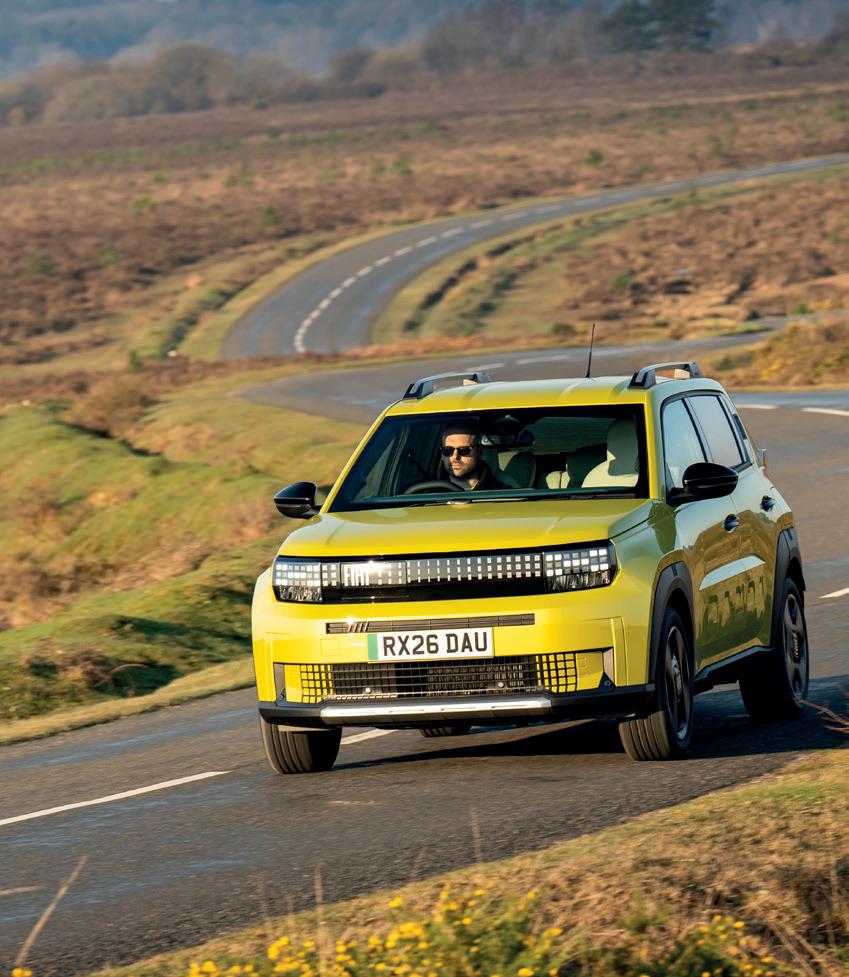
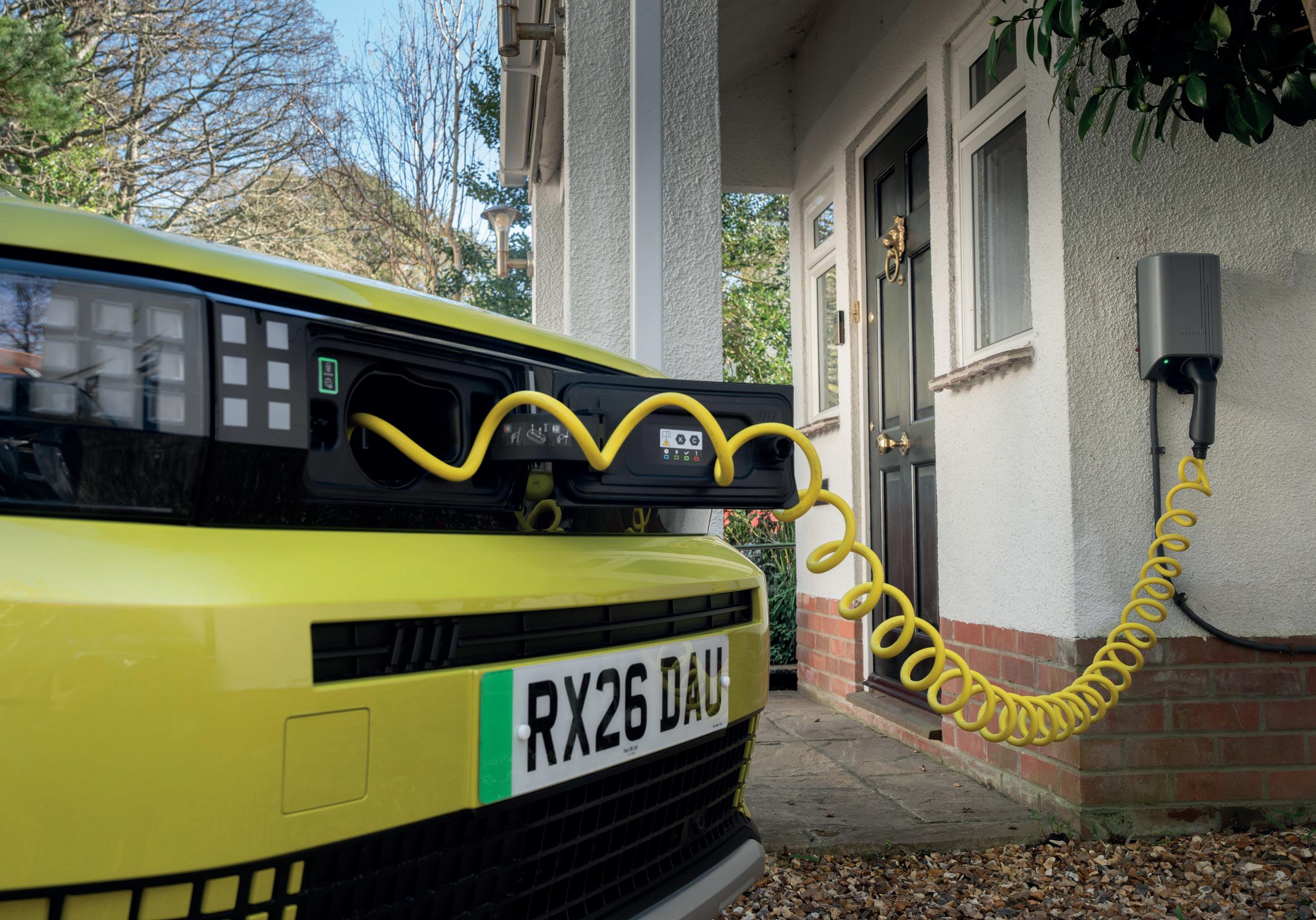

The 111bhp is plenty for town driving and is just about enough to cope on faster roads, but a 0-62mph time of 11 seconds and that slightly languid throttle response means you’ll need to plan overtakes well in advance. Cruising along, the Panda copes fairly well with faster roads. There’s a touch of body roll and the steering remains a little sluggish, but it generally feels as composed and planted as you’d expect from a small car.
For a small car, it also rides pretty well. Around town constantly battling broken drain covers and potholes, there’s a little stiffness but it’s certainly no worse than any car in its class (apart from the mega-squishy E-C3).
Thankfully for a basic city car there are no pointless driving modes but, frustratingly, the braking regeneration controls are similarly limited. There’s the standard setting and a coasting mode access via a button. There’s no one-pedal option nor a way to totally deactivate it, so you’re stuck with a choice of “not much” regen or “a little bit more”.
The Fiat Grande Panda electric range starts at £20,995 for the basic Pop trim and rises to £24,035 for the top-grade La Prima model I tested.
Every model gets the cool LED headlights with auto dimming, cruise control, rear parking sensors and the 10.25-inch infotainment screen.
Pop versions also get the trendy white steel wheels, whereas the La Prima gets fancy 17inch diamond cut alloys. That top spec also adds bi-tone upholstery, heated seats and steering wheel, automatic air conditioning and built-in navigation. Electrically folding mirrors, front parking sensors and a reversing camera are also standard, as are cosmetic upgrades shared with the mid-tier Icon.
That’s most of what you need day to day, but at the top of the range, rivals bring more equipment – from keyless entry to adaptive cruise control –for similar money.
Putting the Panda in context, the Renault 5 range starts at £21,495 for the 40kWh/118bhp model, and rises to £25,945 for the 52kWh/148bhp Iconic Five+ (both with the ECG applied). A BYD Dolphin Surf with 150bhp and a 200-mile range is £21,975. There's not much in it when it comes to parting with your cash, then. So should you consider the Grande Panda?
That’s going to come down to how you use it. It’s not the quickest car in its class, nor does it have the longest range or offer the most tech. If those are your key considerations, go and speak to your local Renault dealer.
However, if you’re willing to compromise a little on the technical front, the Panda is affordable, practical and pleasant to drive.
It’s also packed with charm and character and will make you smile every time you see it parked outside your house. And, after all, is that not what it’s all about?
PRICE: £24,035
POWERTRAIN: Single-motor, front-wheel-drive
BATTERY: 43.8kWh
POWER: 111bhp
TORQUE: 89lb ft
TOP SPEED: 83mph
0-62MPH: 11.5 seconds
RANGE: 199 miles
CONSUMPTION: 3.7 m/kWh
CHARGING: up to 100kW
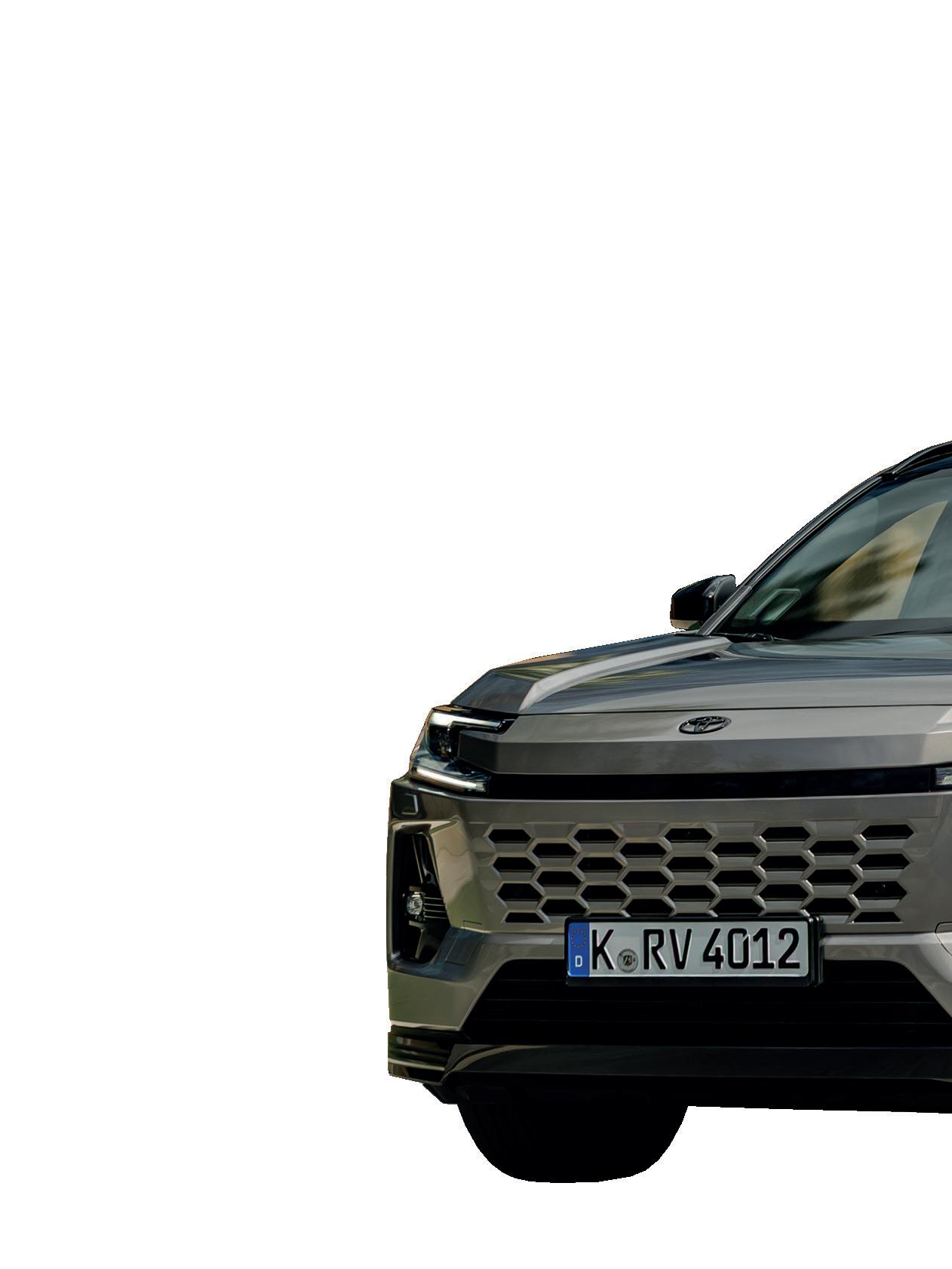
Leapmotor C10 REEV and Chery Tiggo 8.
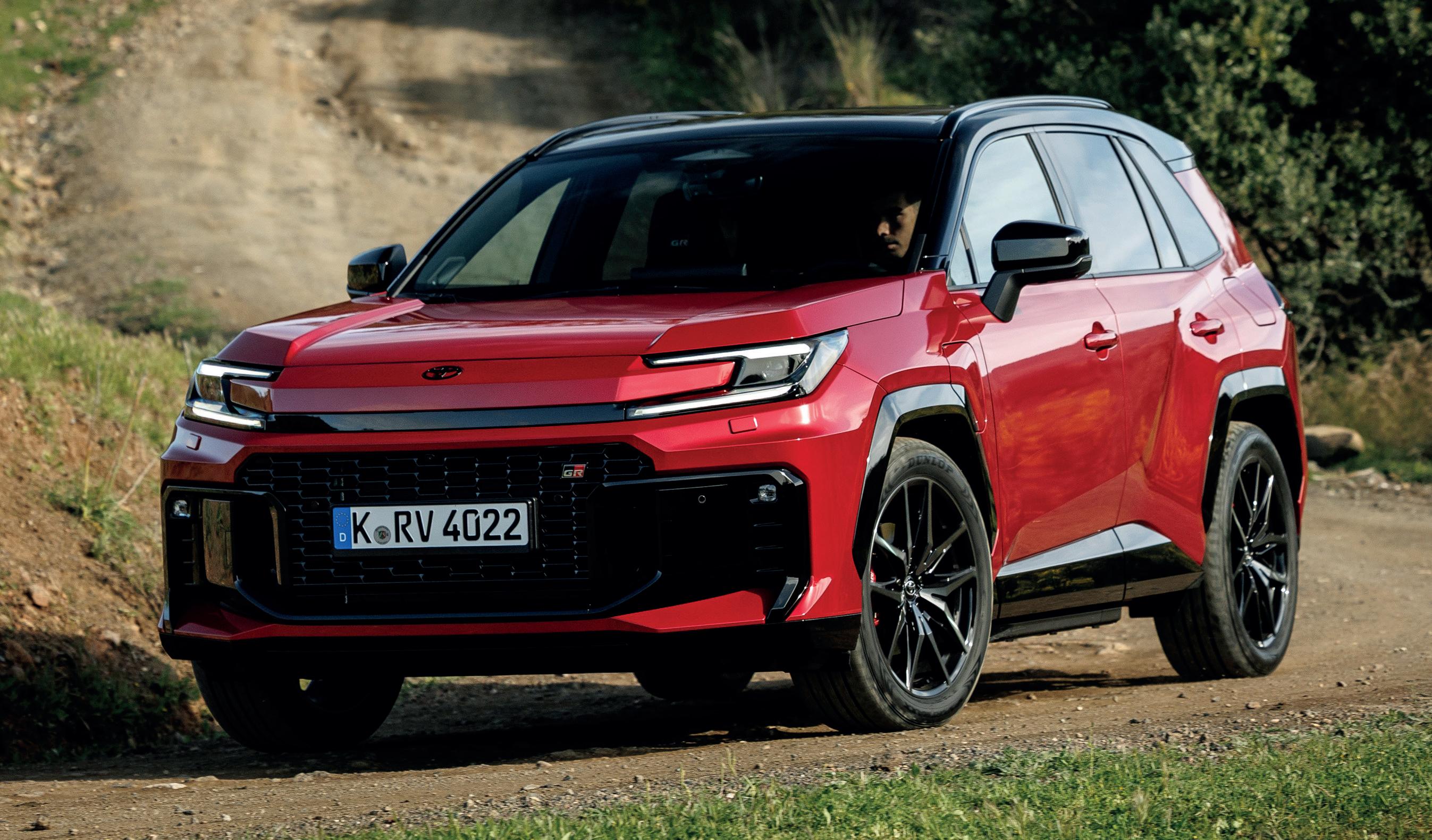
To keep pace with them, Toyota has recently launched its sixth
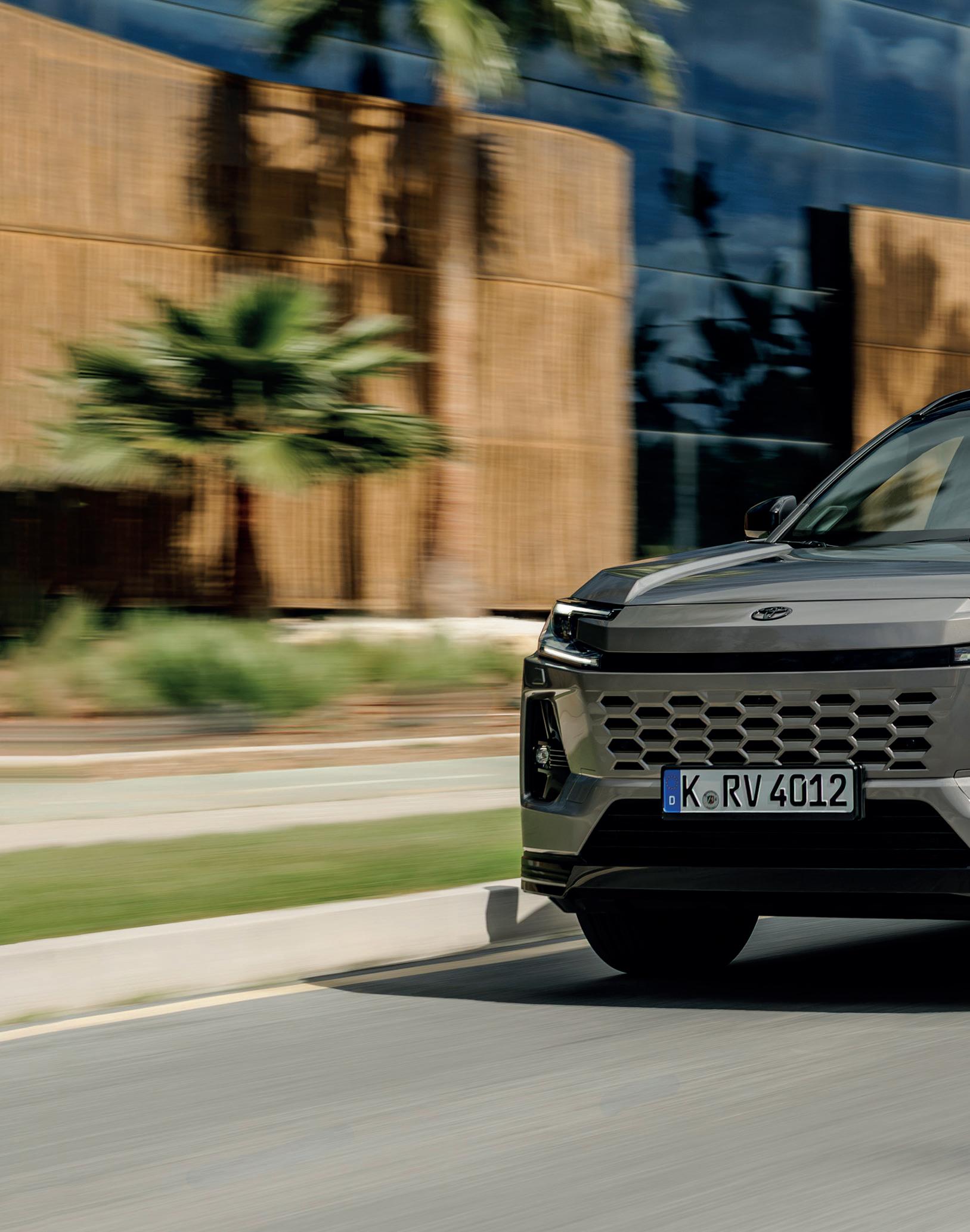
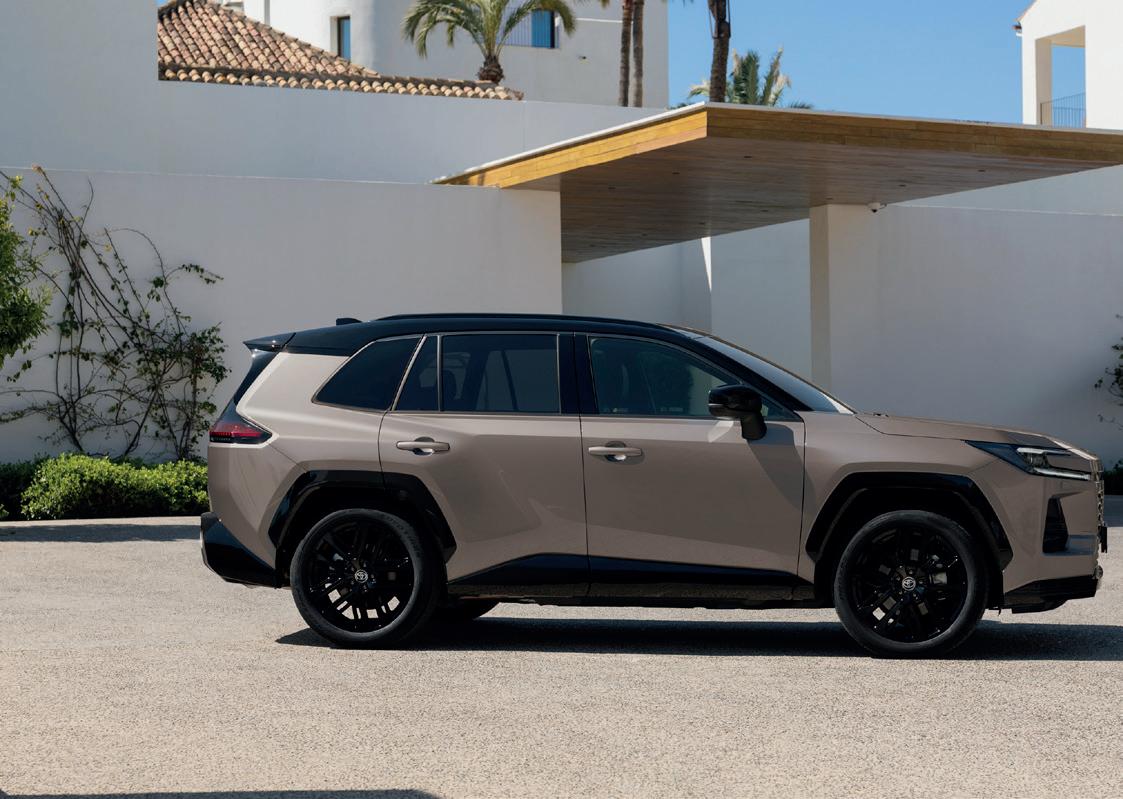
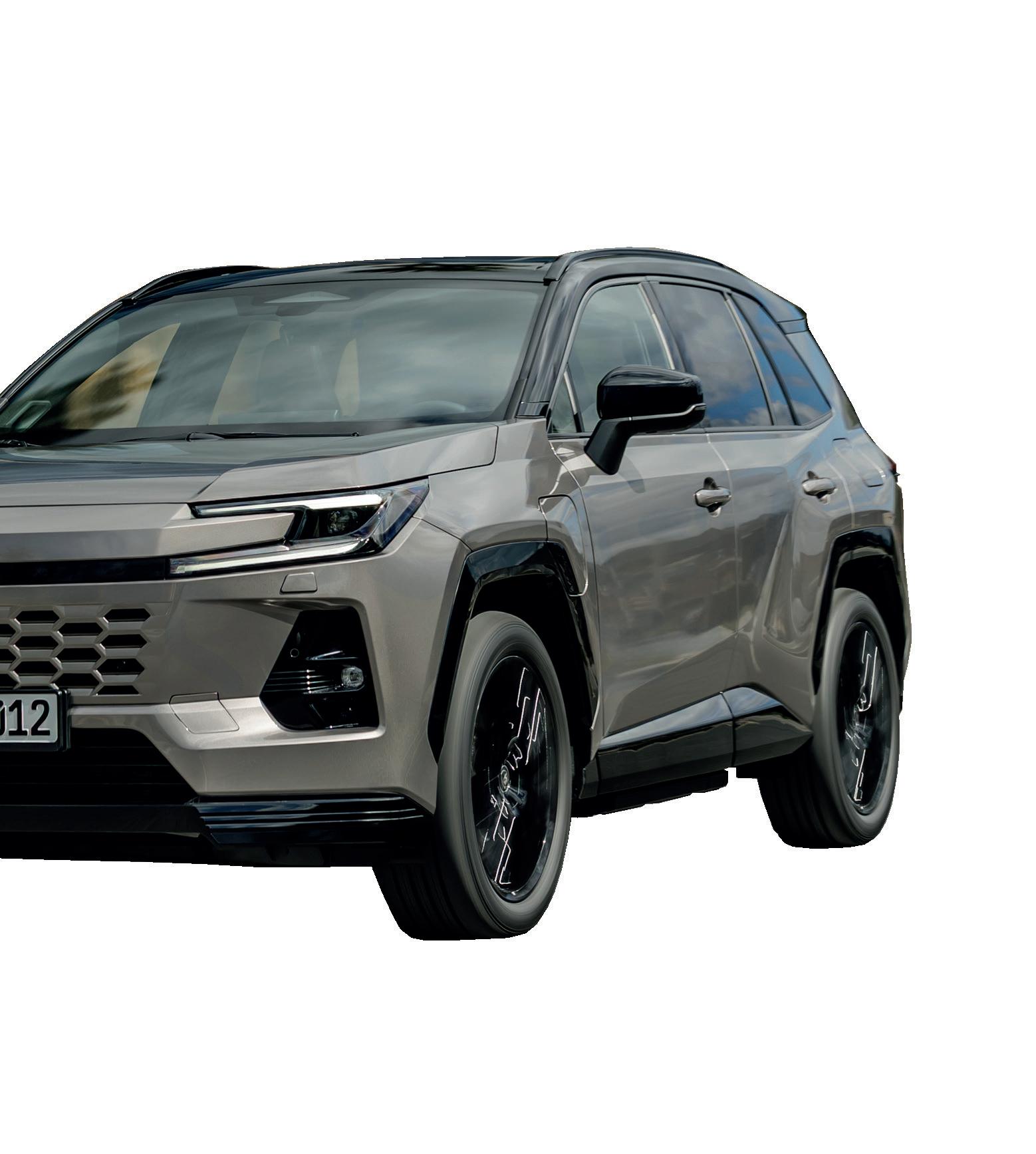
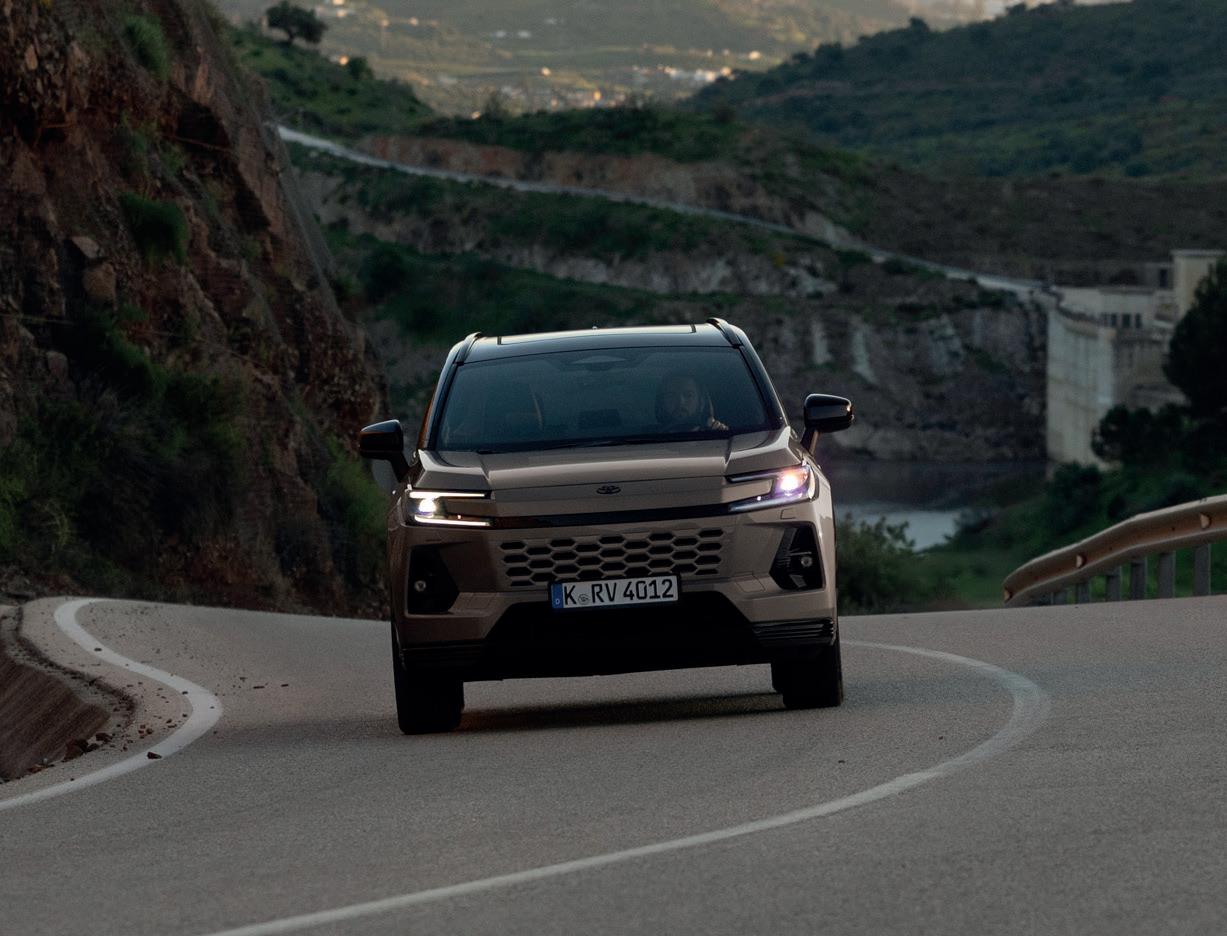
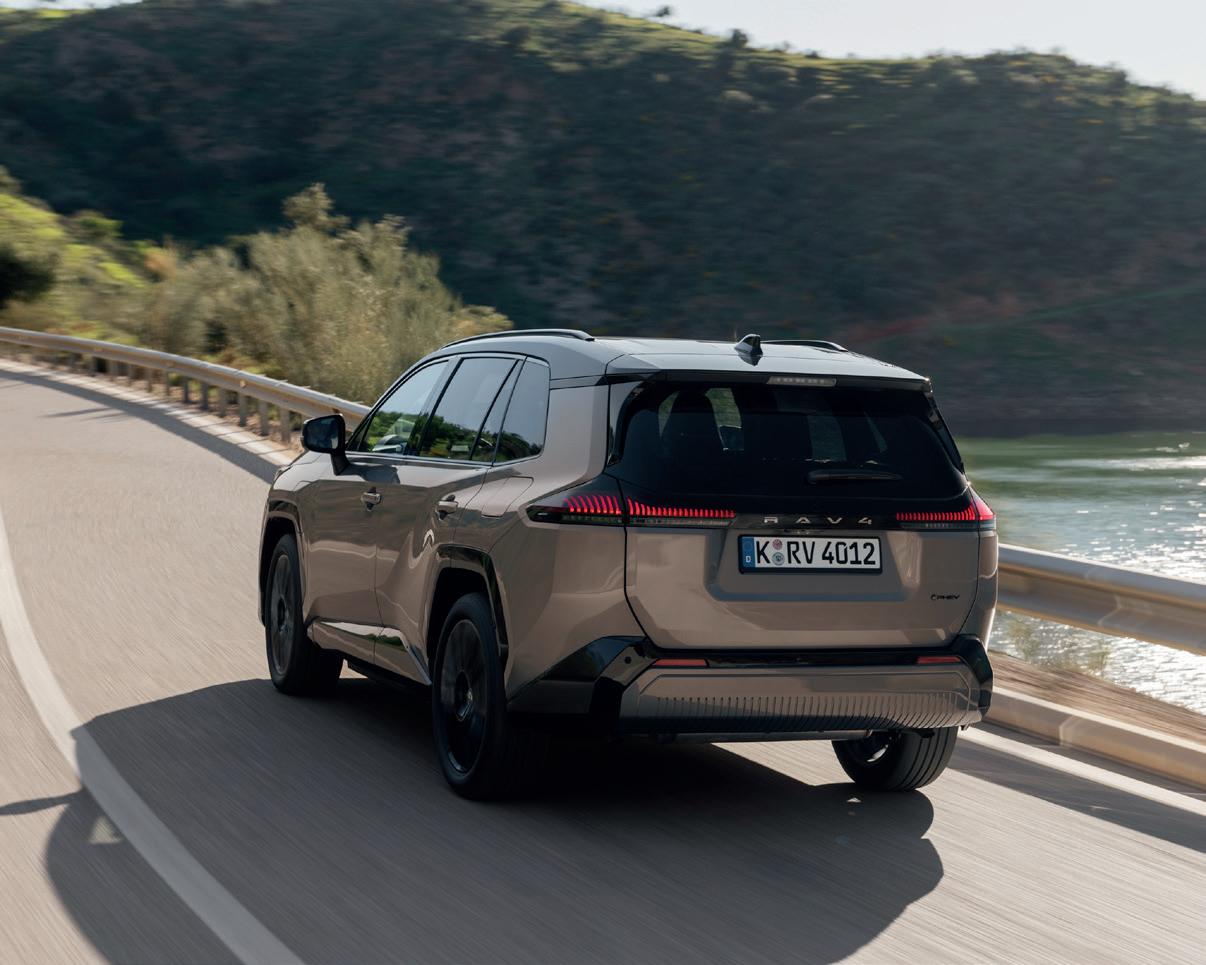
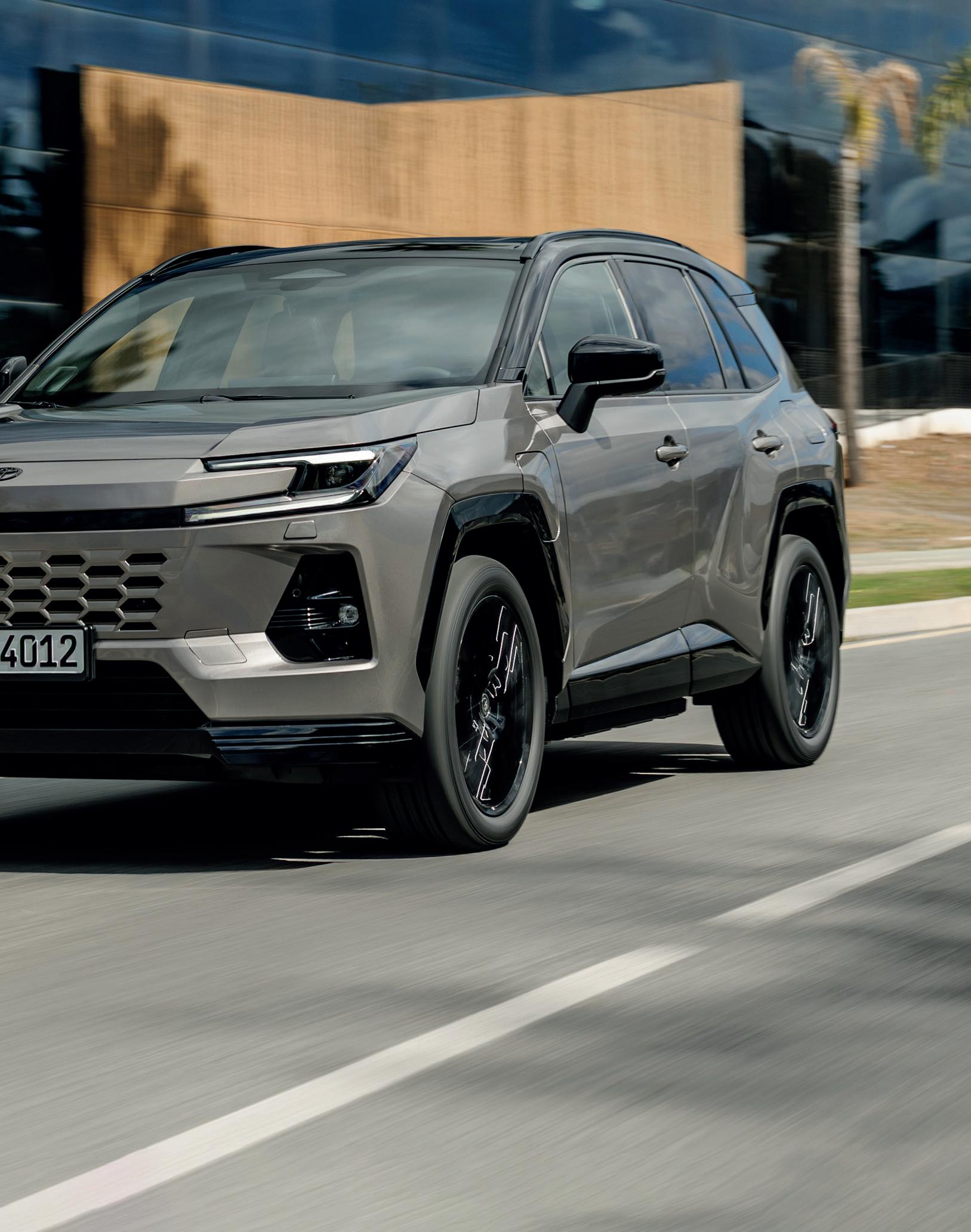
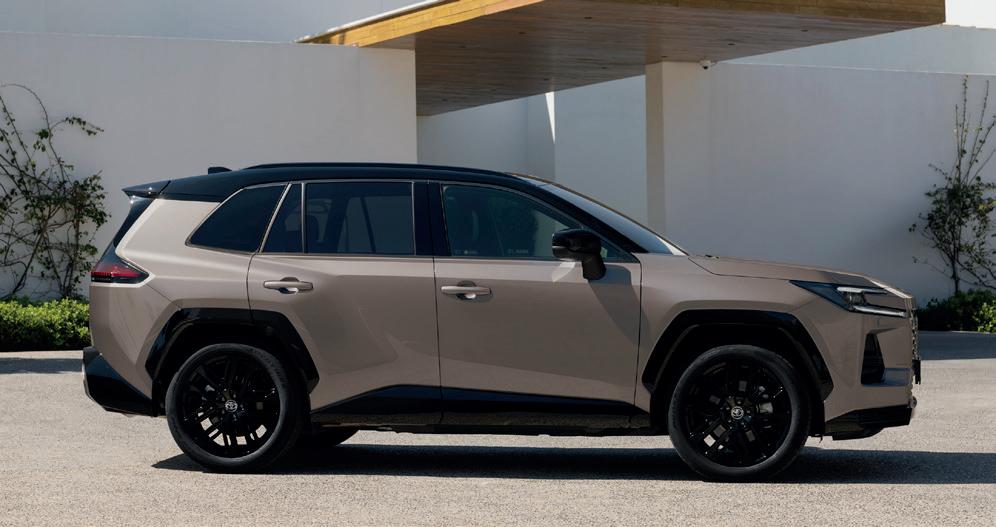
There’s heaps of space in the supportive front seats and more steering wheel adjustment than before, which makes it easier to find a comfortable driving position. And the reconfigured battery layout means the boot’s bigger than before even though the car isn’t. It’s now 446 litres in the PHEV version.
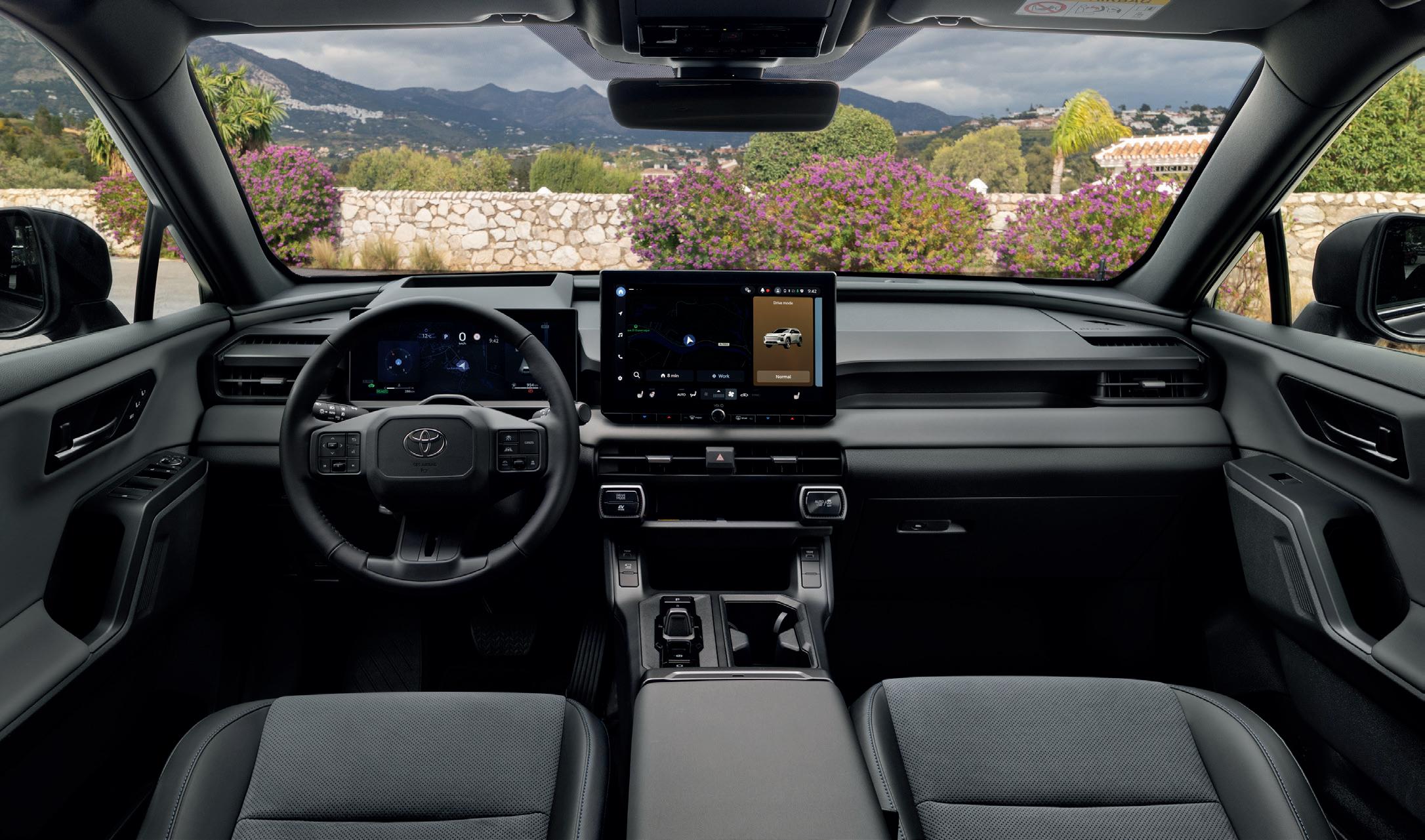
The Rav4’s interior has been redesigned with a simple one-piece dashboard, high-level centre console and some chunky rectangular controls for drive modes that link back to Toyota’s “rugged and robust” tagline.
And the robust line is more than just words. You could take a hammer to this car’s interior and the hammer would come off worse. There’s a satisfying solidity to every operation and touchpoint.
But it’s very, very dull. You cannot fault its quality, the logical layout or the welcome presence of proper buttons for any feature that needs a button. But it’s all made up of huge slabs of flat, grey plastic and there’s no colour or character to it. A little playfulness would be welcome, but it’s not really in keeping with the Rav4’s tough image.
A key part of the Rav4's update centres on the new Arene software powering the configurable digital instruments and the main 12.9-inch touchscreen. This runs on new processors and is four times quicker than the old Rav’s system. It has also been designed to specifically meet European user’s tastes and put more important functions close to hand. It’s certainly sharp and responsive, and the number of menus and sub-menus seems to have been cut down for easier use.
Other tech upgrades include a mobile phone-based digital key; a drive recorder that automatically saves camera footage if it detects an incident; navigation-led geofencing that will save enough battery for any lowemissions zones en route; and a remote immobiliser that can kill the car via phone app if it’s stolen.
While other markets get “full” hybrid versions, the UK is only taking the plugin hybrid Rav4, which has been given a thorough overhaul.
There’s a new e-axle developed by Toyota's EV division, which saves space and weight while delivering more power. And there’s a new, bigger battery mounted in the floor to improve cabin space and structural strength.
For the first time, there’s also a two-wheel-drive version, which Toyota expects to be its best seller.
This pairs a 2.5-litre petrol engine with a 151kW e-motor to deliver up to 268bhp. Above that, there’s a four-wheel-drive model that adds a second electric motor for a total of 305bhp.
Toyota says that the front-wheel-drive version will cover up to 85 miles on electric power alone, thanks to its new 20kWh battery, while the AWD version manages up to 75 miles. Maximum DC charging has also been upgraded to 50kW, allowing a 10-80% recharge in under 30 minutes.
The system certainly feels more sophisticated and battery-led than previous efforts. The upgraded electric motor does far more of the work and the petrol only kicks in during high-demand situations. Over a couple of mixed test routes in different models, both operated in EV mode more than 85% of the time.
In EV mode, the Rav4 is brilliantly smooth and quiet, and even the twowheel-drive version has sufficient punch, although the all-wheel-drive has just a little bit more urgency. Unless you’re brutal with the throttle, most acceleration is taken care of by the electric power.
When the petrol kicks in there’s none of the jerkiness or hesitation that used to plague PHEVs, just a smooth transition. A really brutal application of throttle will raise some obvious roar from the engine but gentler controls keep the noise to a faint rumble.
In general, the Rav4 is pleasantly quiet until you get to European motorway speeds, when wind noise around the D-pillar becomes apparent. It also rides incredibly well, feeling completely composed in urban, rural and highway environments. Even on a stretch of pretty rough unsurfaced trails the AWD model did a remarkable job of dulling the bumps and bangs.
And it steers positively for such a big car, too. It’s not going to set the world alight with its dynamics – it’s tall, heavy and really not designed to be driven hard. But there’s actually very little body roll and enough grip and steering feel to give you confidence behind the wheel.
Once again it shows the difference between the Chinese companies that claim to set their cars up for European tastes and the companies that actually do, like Toyota.
The GR Sport model gets a fractionally wider track and retuned suspension and steering for what Toyota claims is a sharper driving experience. Maybe more time would unlock this, but I struggled to detect much difference between the “sporty” and regular versions of the car.
Toyotas have sometimes carried a bit of a price premium over similar models but the Rav4 is priced pretty competitively.
Prices start at £43,845 for the Icon grade and rise to £52,045 for the GR Sport.
The Design FWD is destined to be the best seller, and that starts at £45,745.
Icon models all get 18-inch wheels, LED lights, heated front seats and steering wheel and a powered tailgate. They also get the latest suite of safety and driver assistance, including adaptive cruise control and blind spot monitoring.
Design adds 20-inch wheels, two-tone paint, power adjustment and cooling to the front seats and a hands-free sensor for the boot, plus a single wireless phone charging dock.
Excel adds a second wireless charge pad along with unique 20-inch wheel designs, leather upholstery, heated rear seats and a head-up display as well as a JBL stereo and upgraded safety systems. It also gets the option of allwheel-drive for an extra £2,345.
AWD GR Sport is based on Excel but gets the chassis adjustments, GR badging inside and out and part-Alcantara upholstery with red stitching.
Some people will point out you can get a Chinese-built alternative for a lot less than the Rav4 PHEV. And for some buyers that will be the end of the discussion. But there’s no doubt that the Rav4 is a better vehicle – it’s better built, better to drive and easier to use.
It’s also more than capable of matching any of its European rivals in those stakes while sticking close to them on price.
In fact, it feels like a perfect embodiment of Toyota. It’s refined, robust and technically clever. It’s also spacious, comfortable and just a little dull. But that’s worked well for the past 32 years and there’s no reason why it won’t continue to.
PRICE: £45,745
POWERTRAIN: 2.5-litre, four-cylinder petrol, 151kW electric motor, FWD
BATTERY: 20kWh
POWER: 268bhp
TOP SPEED: 112mph
0-62MPH: 7.5 seconds
RANGE: 85 miles
CONSUMPTION: 157-217mpg
CO2 EMISSIONS: 117-129g/km
CHARGING: Up to 50kW
By
Sud
is yet another brilliant offering from one of Europe’s most in-form EV makers
I’d like to start this review with a confession. For my sins, until now, I hadn’t driven an electric Renault. I knew they were good. After all, the many awards the Renaults 4 and 5 have scooped since their arrival in 2025 speak for themselves. But just how good are they?
Well, the answer is ‘very, very’ and every piece of silverware and accolade Renault wins is richly deserved.
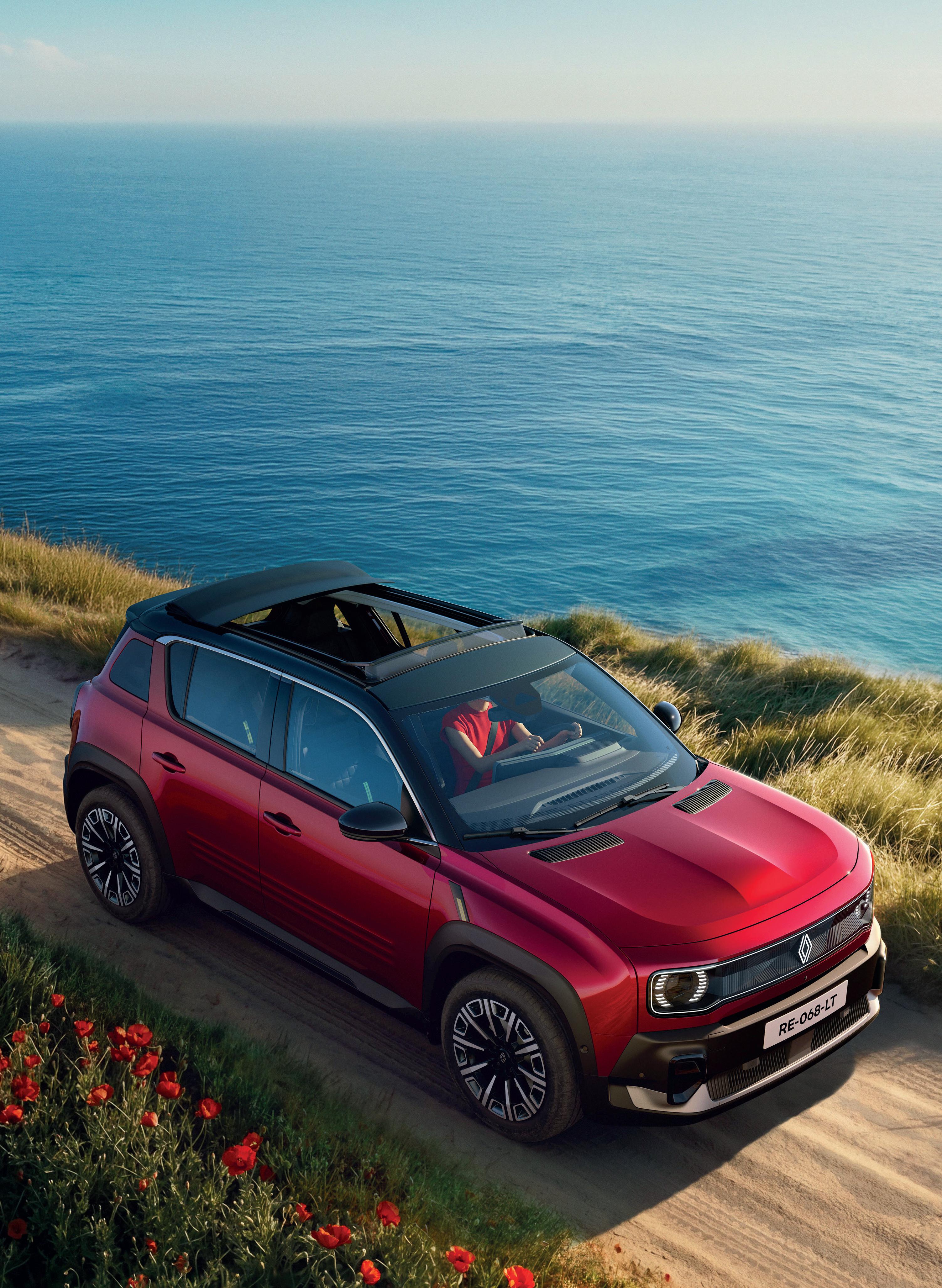
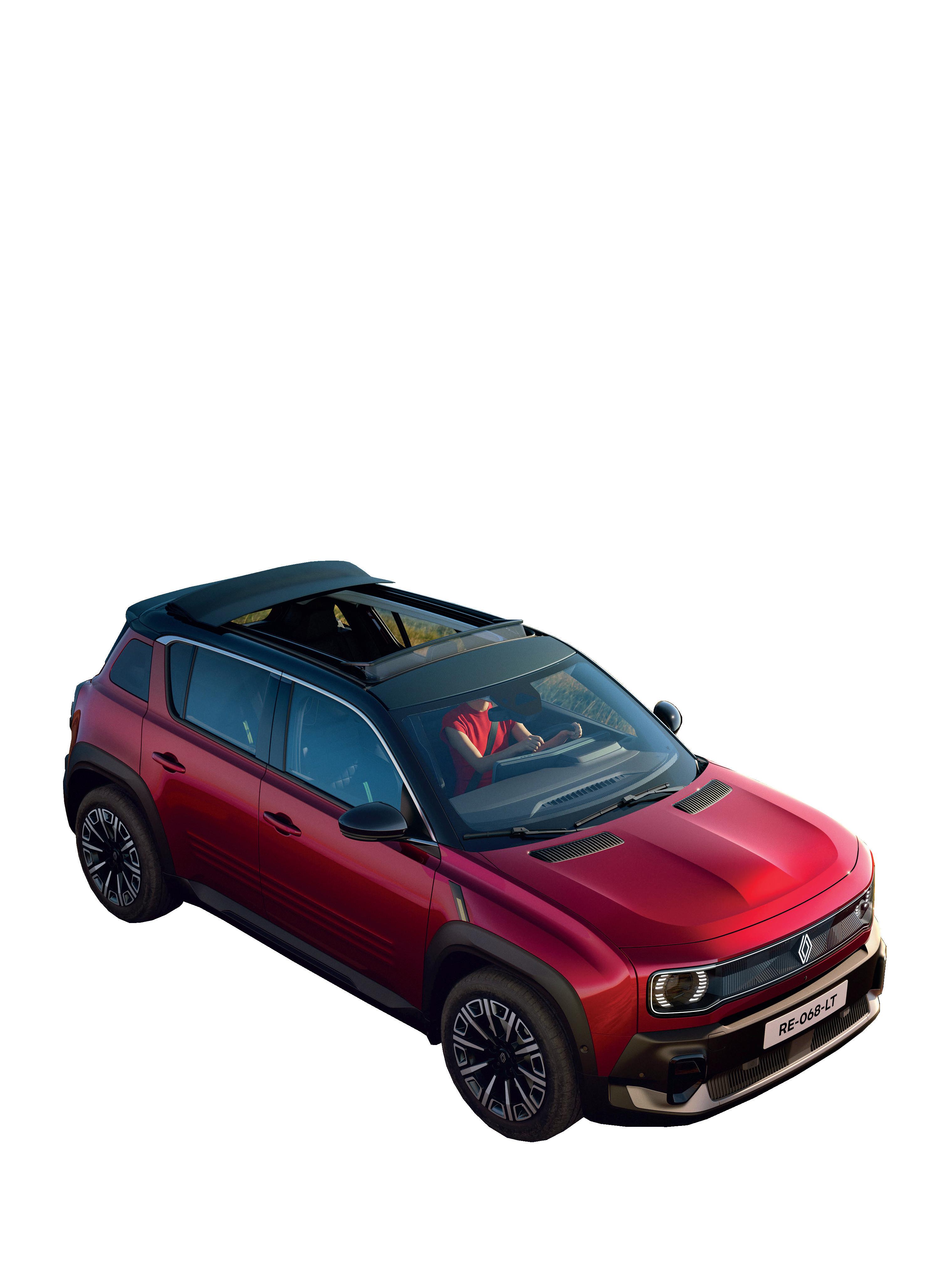
My introduction to the Renaultution was with the R4 Plein Sud, an open-top version of the charming and rugged Renault 4. The ‘Plein Sud’ - or ‘Due South’ - moniker is taken from the original R4 ‘Plein Air’ of 1969; a doorless, fully-convertible version of the world’s first mass-produced hatchback, and Renault’s answer to the likes of the Citroën Méhari and the Mini Moke.
According to Renault, the brief for the electric-only R4 Plein Sud was to invoke feelings of venturing south to the Côte d’Azur during the warmer, summer months. It’s all about wind in your hair, Lait de Coco on the radio, and for want of a better term, “the vibes”.
In design terms, the Renault 4 Plein Sud isn’t hugely dissimilar to the standard car, as both share the same boxy visuals, flat bonnet, and squaredoff wheel arches. In fact, there’s very little to tell the two apart on first impressions. That is, of course, until you get inside and look up to see the massive gaping hole in the roof.
Now, Renault has been somewhat generous with the term ‘convertible’ to describe the Plein Sud. It’s more of a regular R4 with an 80cm x 97cm canvas sunroof. Instead of folding all the way back as per a trad drop-top, it folds backwards into three sections and can be done fully within 10 seconds at speeds of up to 90 kilometres per hour.

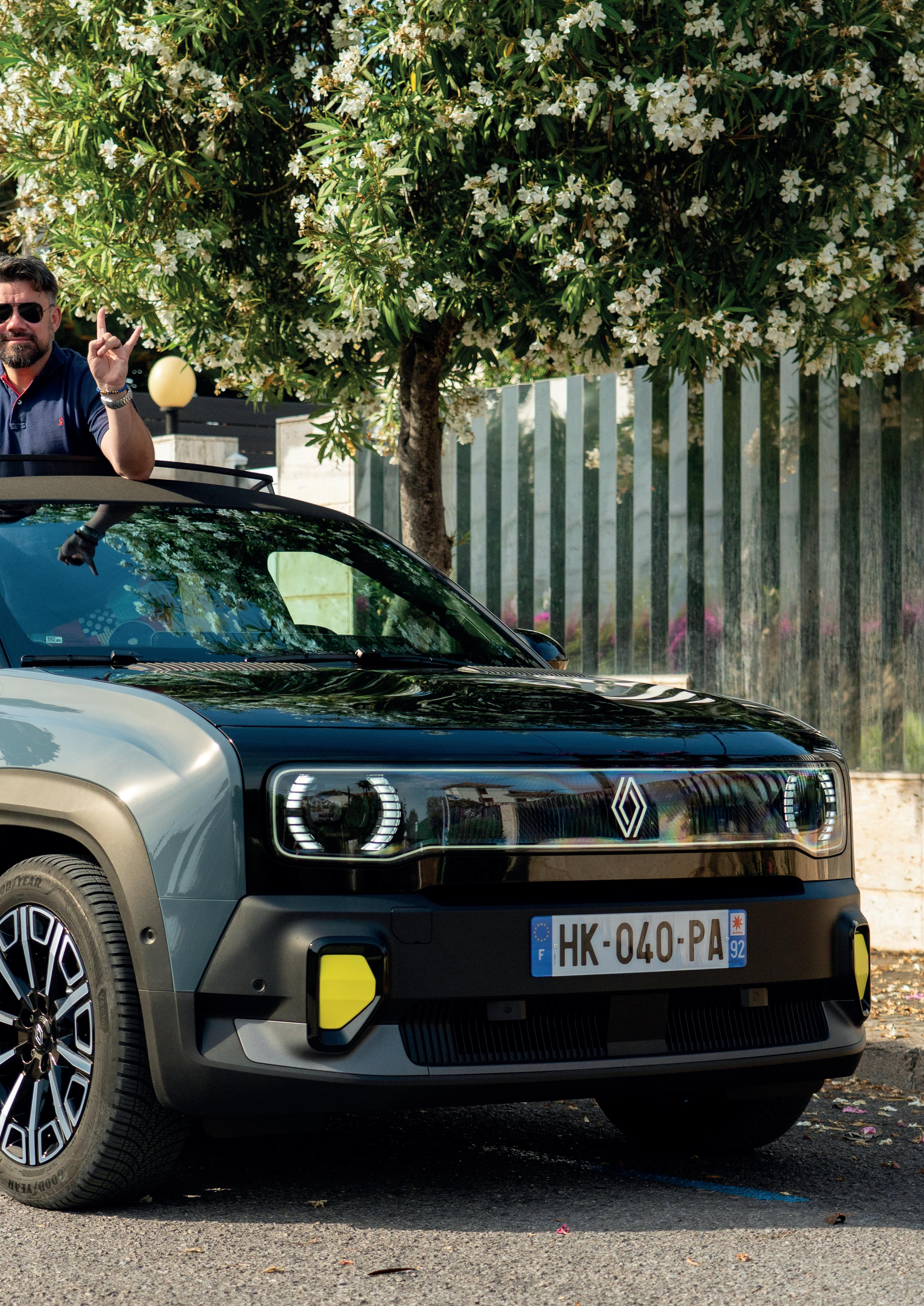
THE R4 PLEIN SUD IS ANOTHER ENDEARING ELECTRIC RENAULT. Renault has taken an already cheerful car, and made it even happier.
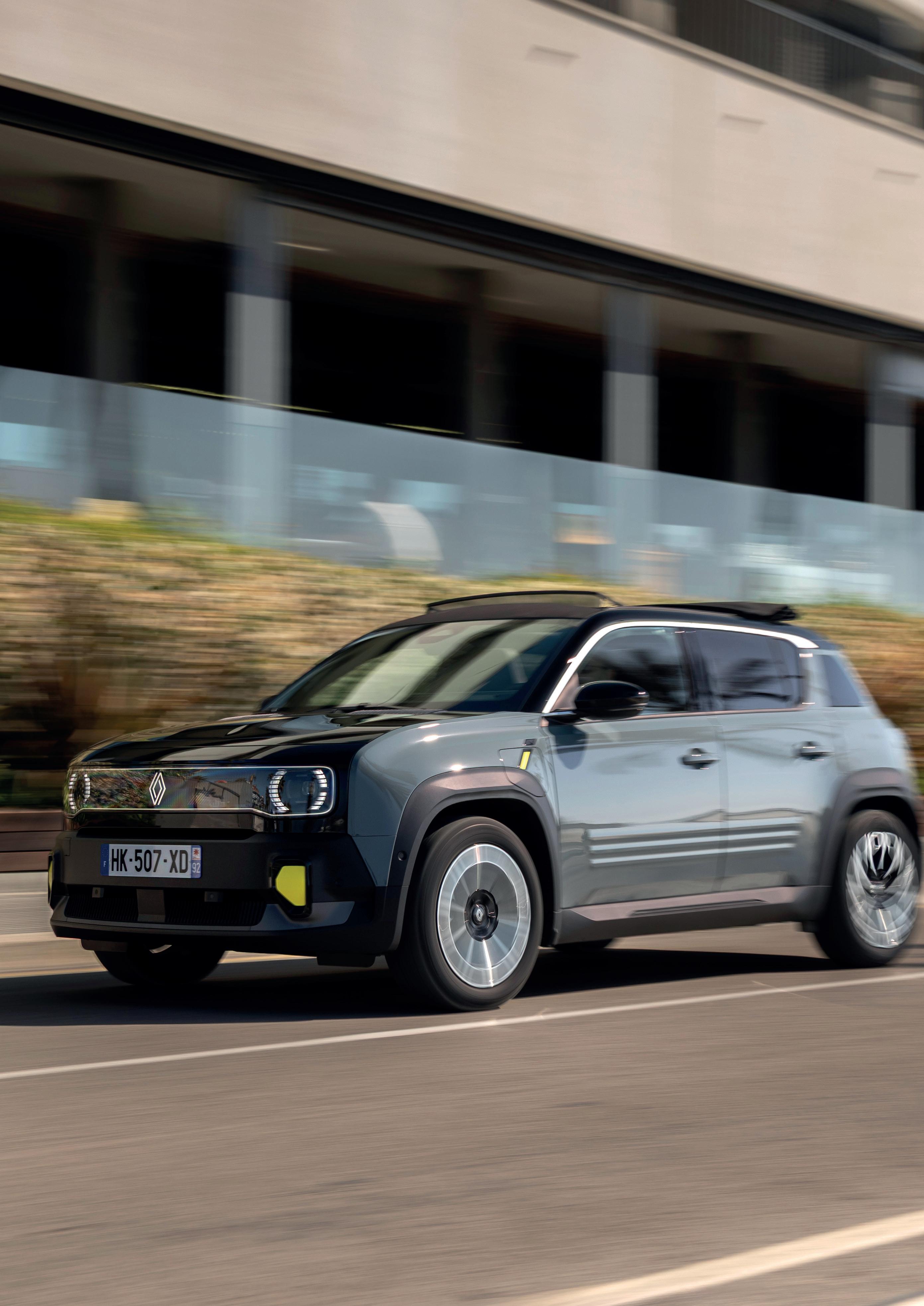

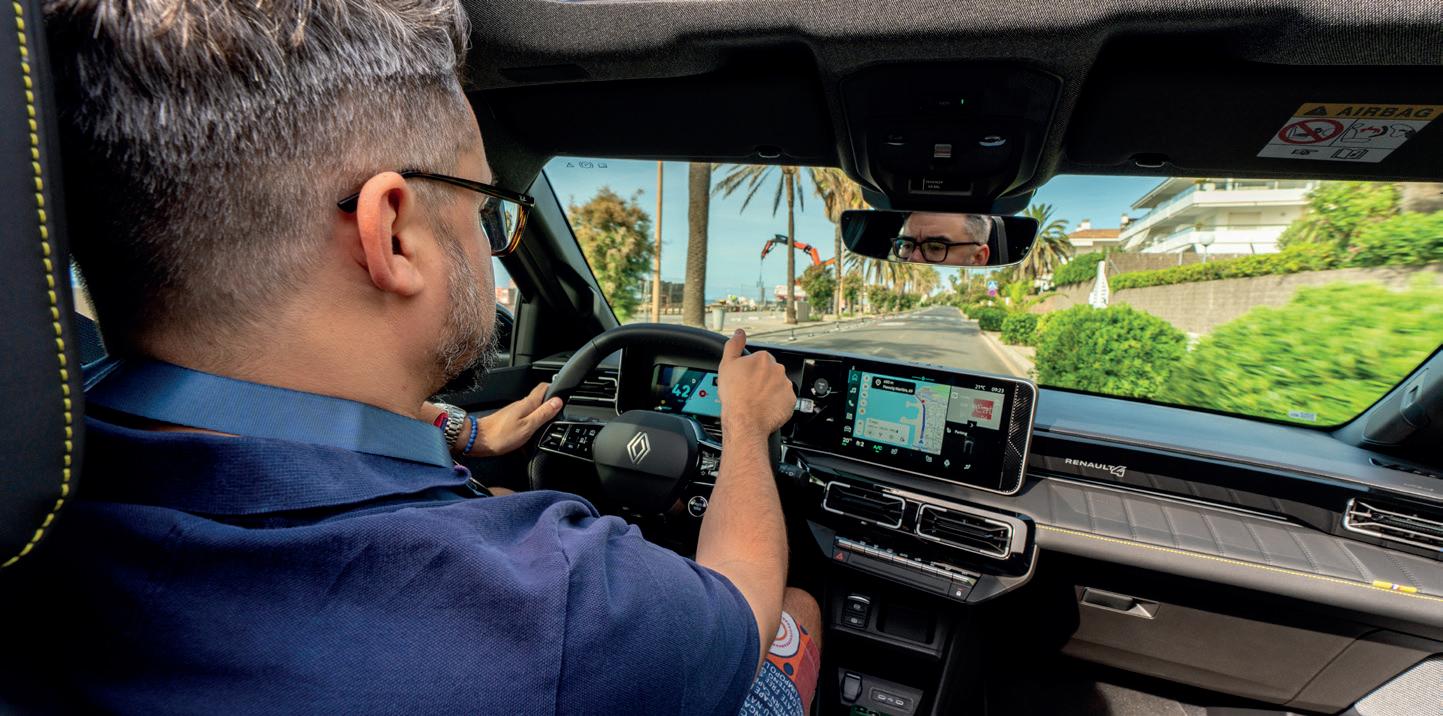
While naysayers may scoff that the Renault 4 Plein Sud isn’t a “proper” drop-top, it does mean that this “rag-top” retains the standard car’s impressive 420 litres of boot space. By not lopping off the Plein Sud’s B and C pillars, the chassis’ stiffness remains uncompromised and there’s no nasty scuttle shake or feelings of flaccidity from behind the wheel.
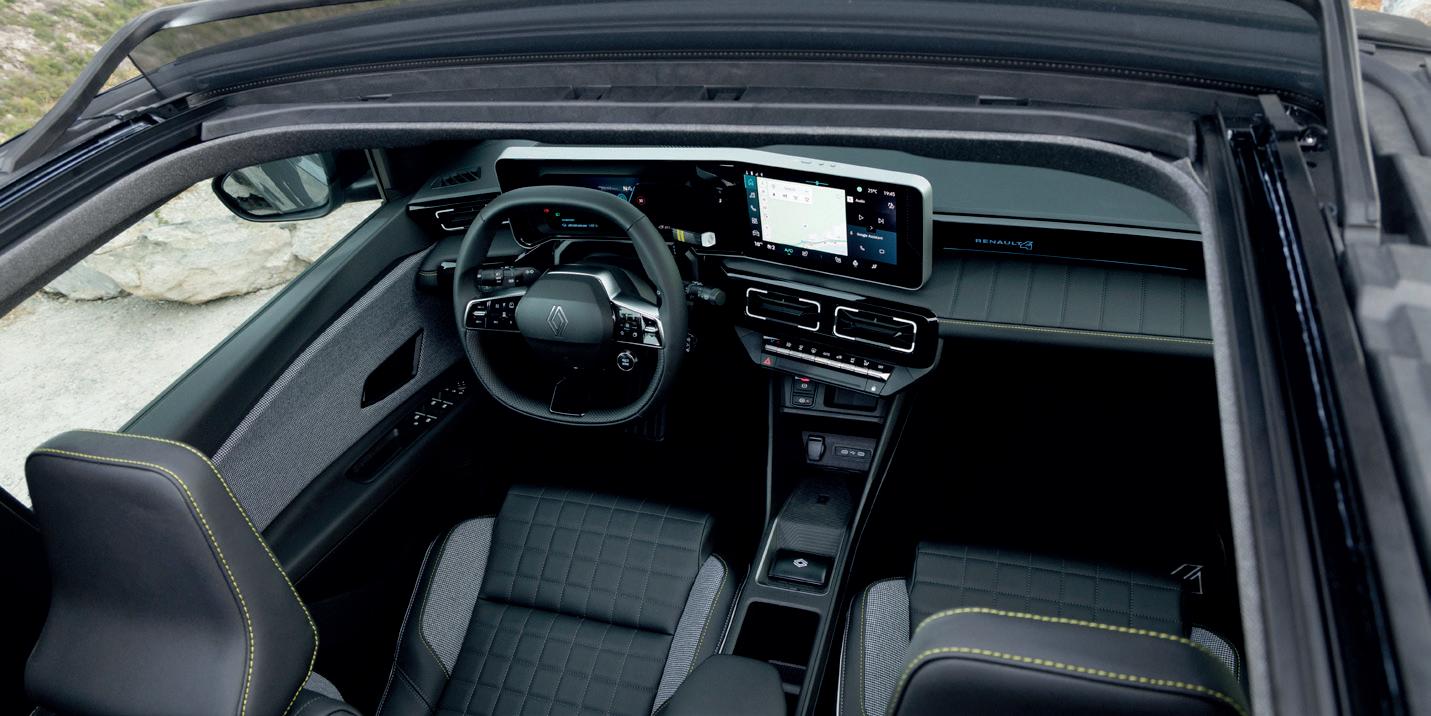
The interior of the R4 Plein Sud is unchanged over the regular car. The stepped dashboard remains, and all of the materials, bar a few scratchy plastics lower down, feel well screwed together and pleasant to touch.
When it comes to screens, the driver benefits from a 10.3-inch instrument binnacle adjacent to another 10.3-inch infotainment screen running the rather excellent Google built-in. Given this is 2026, the R4 Plein Sud comes with Apple CarPlay and Android Auto functionality. Renault was also keen to stress that the system comes with Amazon Prime Video and HBO app integration, the need for which escapes me. In the back, there are seatbelts for three, but realistically the Renault 4 is strictly a four-seater. At 3.9 metres long, leg room is tight in the rear, and the bench also sits quite high, providing those in the back with an elevated seating position. It’s not uncomfortable, but it does feel a bit... odd initially. However, this does translate into some properly pleasant ‘wind in your hair’ moments, which add another layer of joy to what’s already a happy little car.
Thankfully, Renault has kept things simple with the 4 Plein Sud’s powertrain. Like its closed-top sibling, just one configuration is available: a front-mounted, 148bhp motor paired with a 52kWh battery.
As a result of the extra weight added from the roof, the R4 Plein Sud’s overall range is reduced slightly from 247 to 242 miles. Charging speeds are bang average with a 100kW peak, and a 1580% top-up time will take 30 minutes.
However, the Plein Sud is the first Renault 4 to benefit from Vehicle-to-Load (V2L) functionality. To keep
things simple, this means the car can be used as a battery storage device to power anything from an electric BBQ to an entire house in the event of a power outage. Vehicle-to-Grid (V2G) also allows owners to sell the electricity stored in the battery back to the grid, and reduce their home charging costs.
When it comes to performance, the R4 Plein Sud will do the 0-62mph run in 8.2 seconds and power through on to a top end of 93mph. At a time when EVs are easily generating four-figure power outputs and neck-snapping levels of acceleration, these numbers seem mid at best.
But honestly? The R4 - Plein Sud or otherwise - doesn’t need silly performance. The power was more than enough for some Marcus Grönholm-style heroics on the rather splendid and somewhat challenging blacktop that once served as the stages on Rally Catalunya. While reasonably soft-riding, the R4 felt chuckable with very little lean and plenty of composure. The steering is nicely weighted with a good level of connection between the steering wheel and the road. Paired with a reasonably low driving position, the sensation of licking along is somewhat amplified. In town, the little Plein Sud’s throttle response and one-pedal driving makes it perky enough to ensure driving is a stress-free affair.
Out on the open road, though, is where the Renault 4 Plein Sud really shines. It’s just easy. With the roof
closed, road noise is barely audible and Renault claims that the absence of a full-time roof means it’s just 10dB louder than the standard car. Paired with those comfy seats and a much-needed armrest, motorway journeys are an absolute doddle.
Overall, then, the R4 very much has a “big car feel”. It’s easy to drive, easy to live with, and best of all, you can turn the ADAS off with a double press of a button beneath the right-hand side air-vent.
There’s no such thing as a cheap new car in 2026, so don’t expect the Renault 4 Plein Sud to be challenging the likes of the Dacia Spring and the Leapmotor T01 when it comes to pricing. That said, it’s far from daft money and the addition of the canvas roof calls for a relatively modest £1,500 premium over the standard car.
Both trim levels, entry-level techno+ and rangetopping iconic+, are also eligible for the £3,750 Electric Car Grant. As a result, techno+ cars are priced from £27,445, while the iconic+ kicks off at £29,445.
When it comes to specs, the Techno+ cars come with a massively quirky denim upholstery, rear tinted windows, a two-tone paint job with a non-body coloured roof, heated and electrically adjustable mirrors, and automatic daytime running lights.
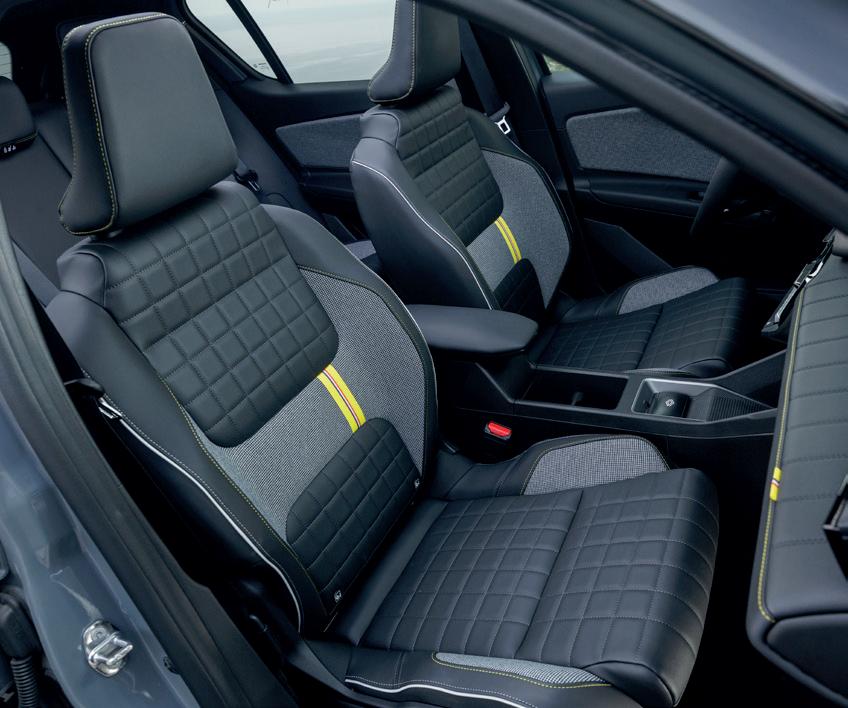
Iconic+ trim drops the Techno+’s 18-inch ‘Sixties’ alloy pattern in favour of 19-inch ‘Parisienne’ wheels, and the additional kit includes a lightup grille, an electric boot, plus heated seats and steering wheel, and a a fetching 80’s-inspired black, grey, and yellow upholstery.
The R4 Plein Sud is another endearing electric Renault. Renault has taken an already cheerful car, and made it even happier. Ultimately, I think we underestimate the wonders that a rag-top and a cabin filled with sunlight can do for the soul.
The R4 Plein Sud invoked fond memories of family summer holidays to mainland Europe as a kid. But here’s the thing - given how easily the Plein Sud slots into your life, it’s not just a feel good hit of the summer: it’s another of Renault’s year-round success stories.
Price: £29,445
(inc. £3,750 Electric Car Grant)
Powertrain:
Single-motor, front-wheel-drive
Battery: 52kWh
Power: 148bhp
Torque: 181lb ft
Top speed: 93mph
0-62mph: 8.2 seconds
Range: 242 miles
Consumption: 3.5 m/kWh
Charging: up to 100kW
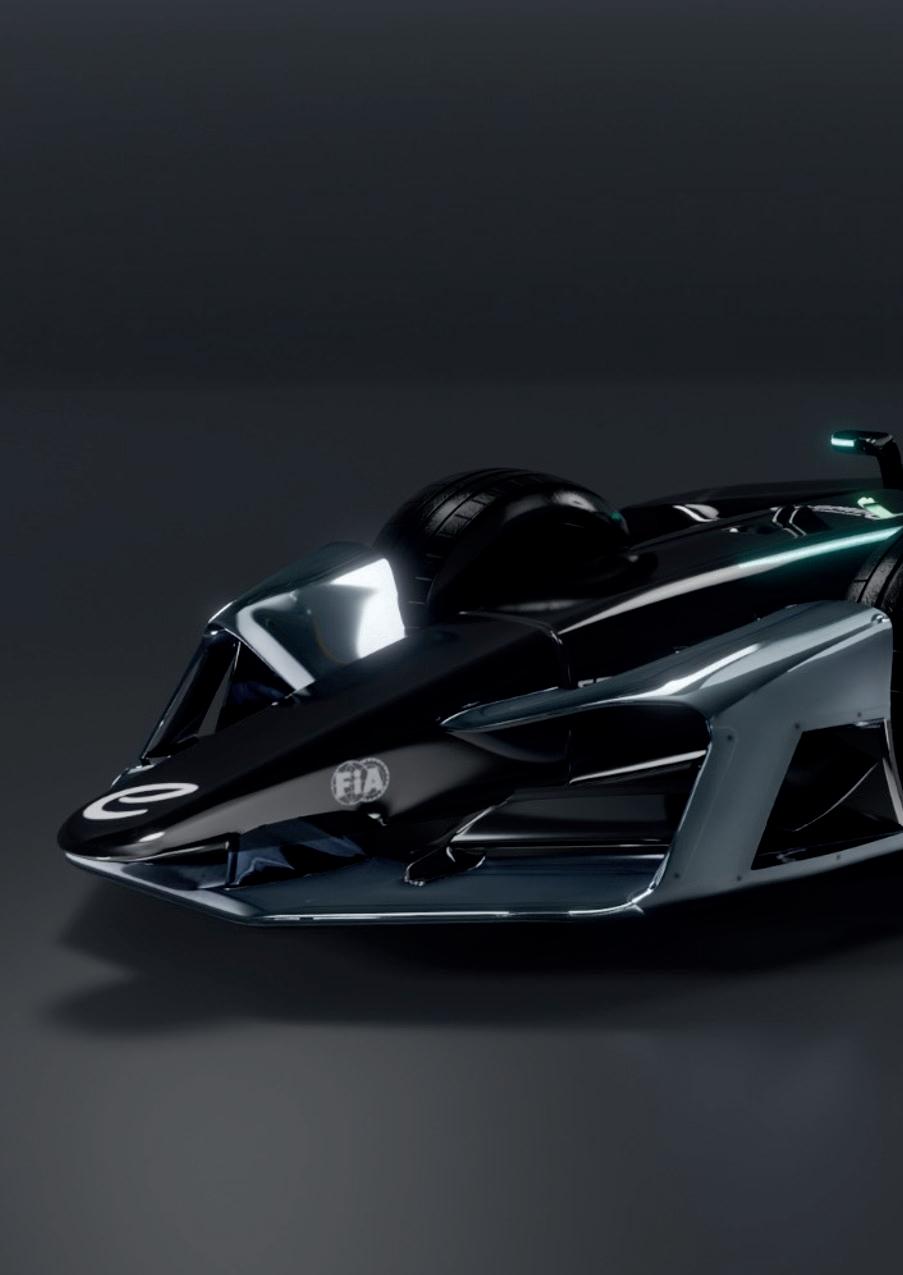
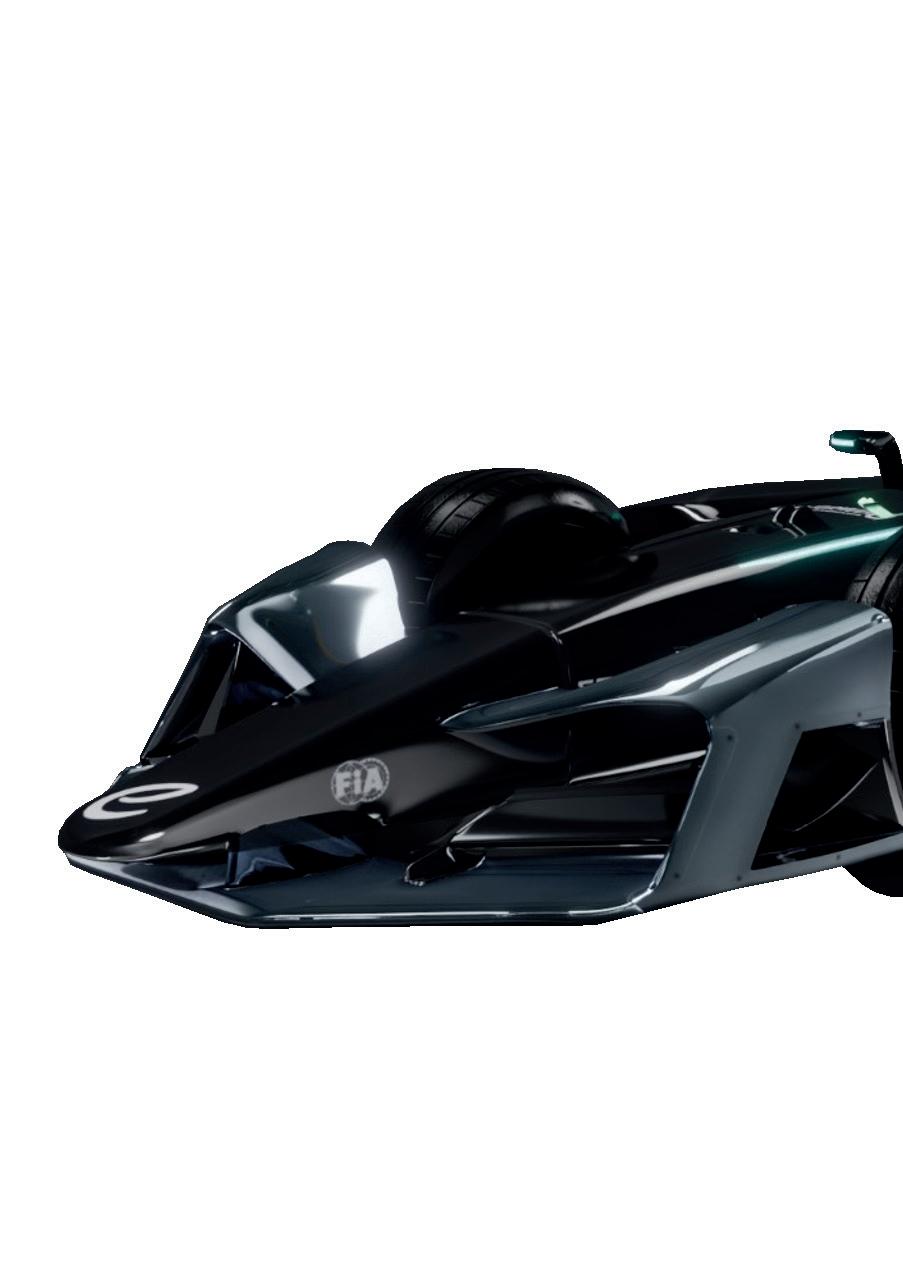
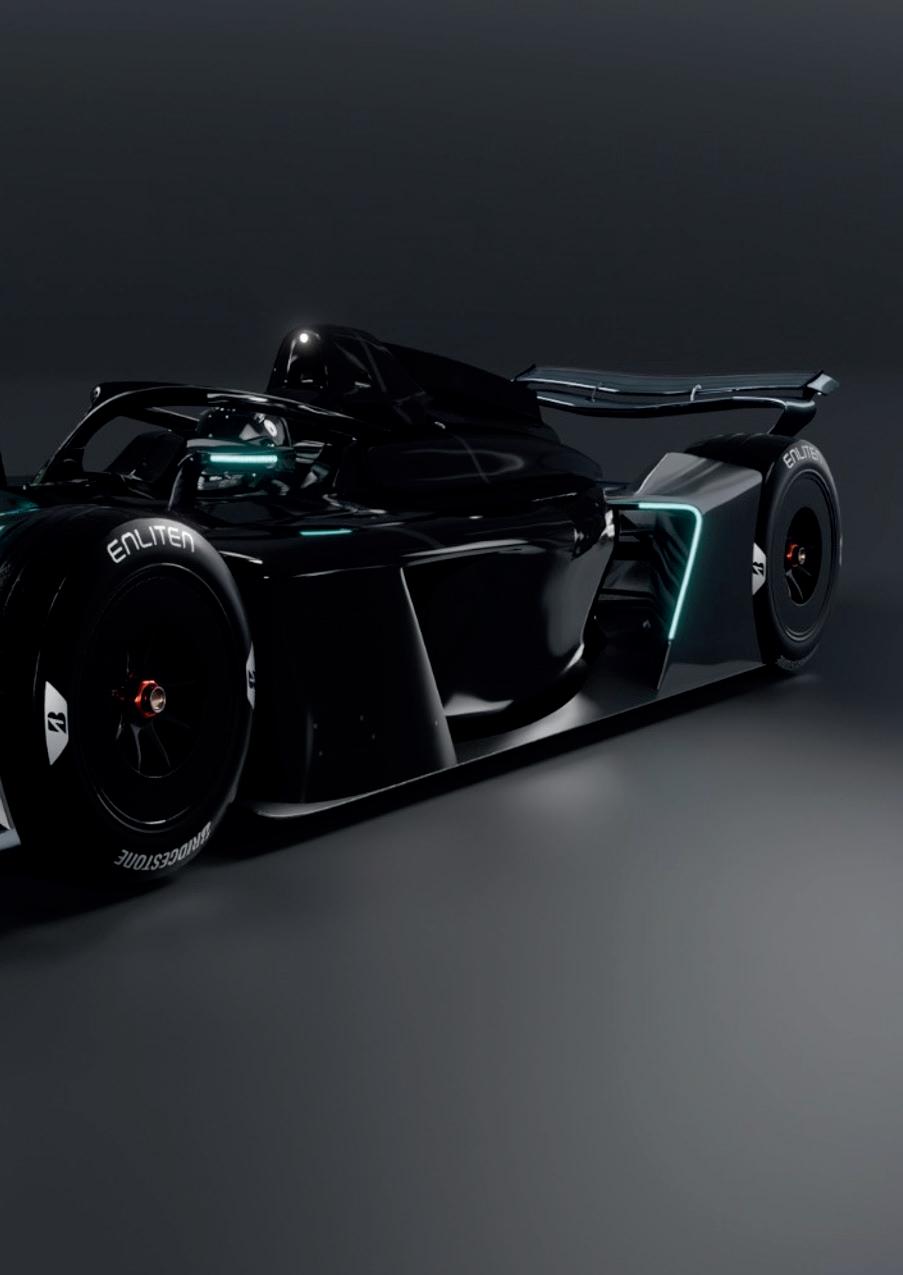
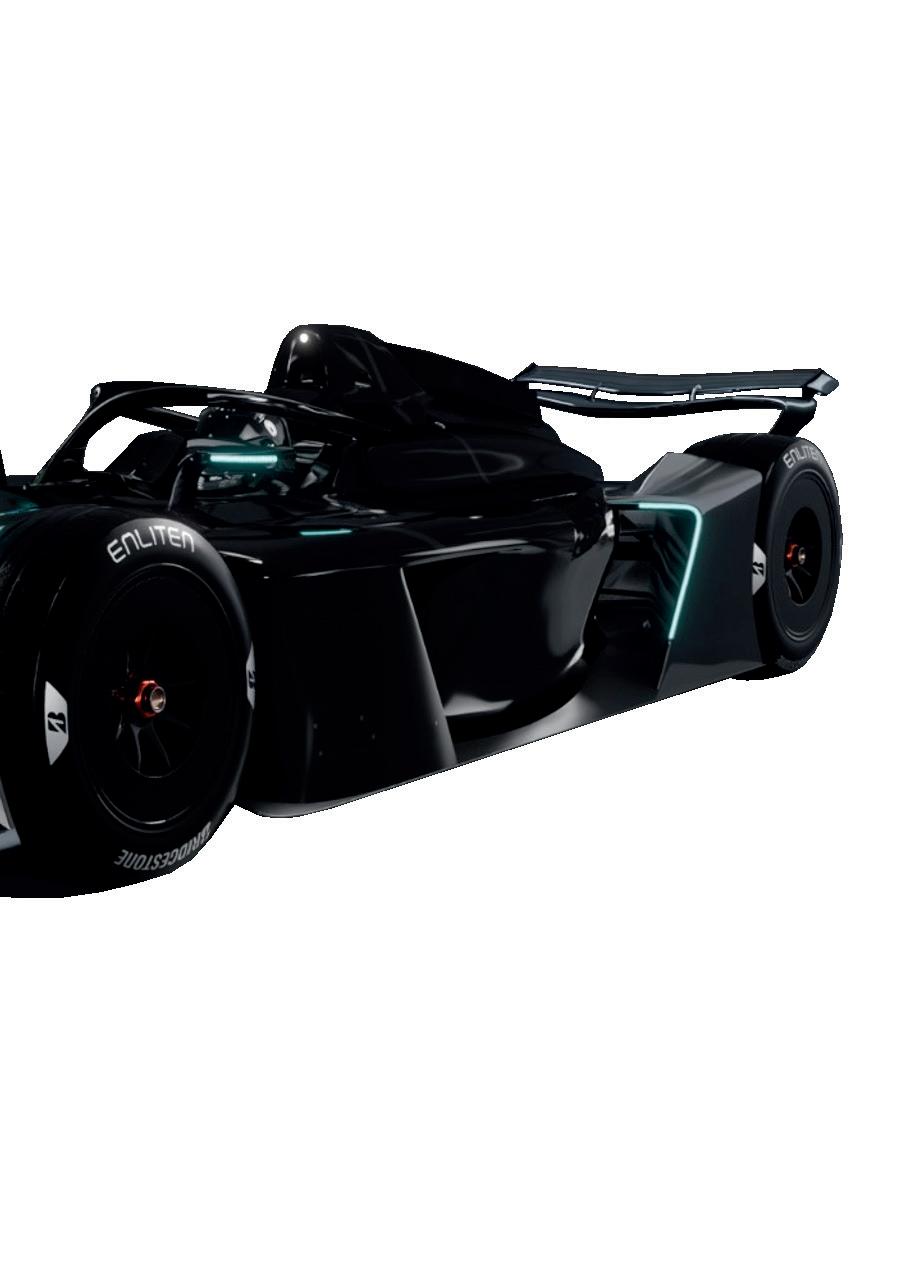
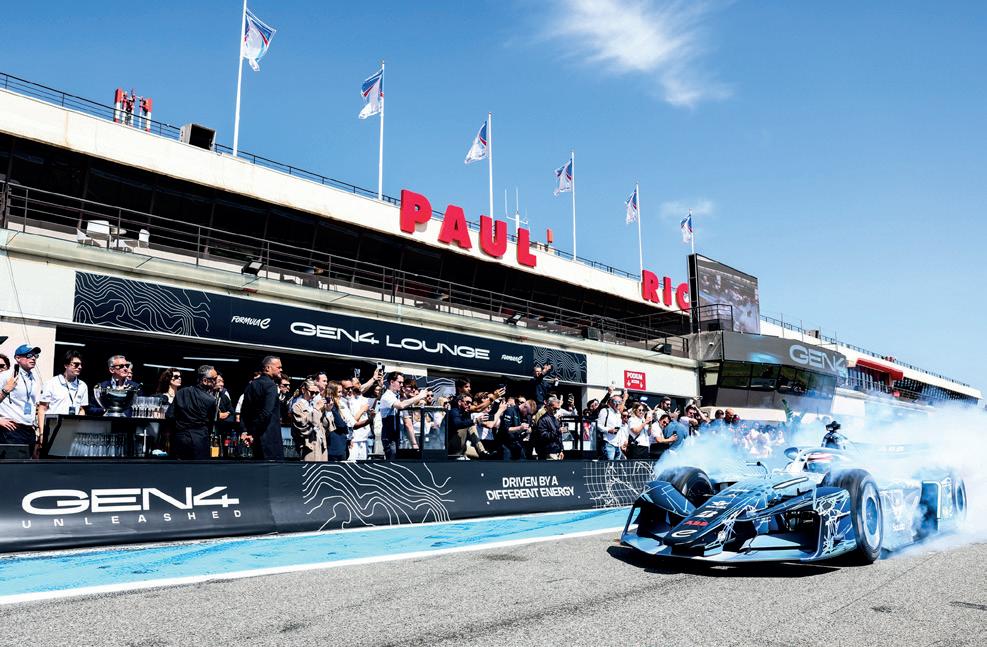
If Brands Hatch is the heart-on-sleeve homecoming, Zandvoort is the statement signing. The famous Dutch circuit has agreed a multi-year deal to host Formula E from 2027, bringing the Gen4 cars among the North Sea dunes for a double-header on 18 and 19 June. The series had been courting the venue for some time, with talks gathering pace through 2026 and principal co-owner Prince Bernhard of Orange-Nassau attending the Monaco E-Prix as Dodds' guest.
The timing suits everyone. With Zandvoort hosting its final Formula 1 Dutch Grand Prix this August, the circuit had a summer slot to fill, and Formula E has stepped neatly into it, working with the very same promoters. There is a neat sustainability fit, too: Zandvoort is widely regarded as F1's greenest event, which chimes with Formula E's own environmental credentials.
"It's no coincidence that they hosted the most sustainable race in Formula 1," Dodds told RacingNews365. "In all the conversations we've had with them, I just think we found a lot of common ground very early on, and they've been an absolute joy to work with."
On track, the Gen4 car looks tailor-made for Zandvoort's tight, twisty and steeply banked layout. The initial deal runs for three years with an option to extend, potentially keeping the venue on the calendar for the whole Gen4 cycle, and the weekend doubles as a home race for Dutch driver Nyck de Vries. The plan, as things stand, is to use one of the circuit's shorter configurations with a right-hand hairpin at the traditional Turn 5, coming in around the series' ideal three-kilometre length, with no chicanes added to the start/finish straight. The format will break the usual mould, too, running Friday and Saturday with a festival-style event and live music on the beach after Friday's race.
"We are going to be able to create a fan zone and a real festival vibe within that space that's going to be busy and very energetic, and that's exactly what we want," said Formula E's vice president for host cities, Oli McCrudden, pointing to the success of the enclosed, atmospheric Jarama round in Madrid as the template.
Brands Hatch and Zandvoort are not the only new names. Austin's Circuit of the Americas joins as well, taking the championship to a record 21 races across 13 cities. The official figures were confirmed when Formula E and the FIA unveiled the calendar, and the wider shake-up is regarded as one of the most significant in the series' history.
The season opens under the lights in Jeddah on 18 and 19 December 2026 and closes in Tokyo the following July. COTA, in talks with the series for several years, becomes the second American round alongside Miami. Dodds argued that more racing in the United States helps "raise the awareness of other styles of racing" beyond NASCAR and IndyCar.
Crucially, the calendar has been deliberately grouped by continent to cut freight mileage and emissions: the Americas leg runs from January to March, Europe from May to June, and Asia closes things out in July. It is a quietly significant piece of housekeeping for a series that trades heavily on its green credentials, and a reminder that Formula E still wants to win arguments on sustainability as well as spectacle.
The venue choices tell their own story, too. By reviving Brands Hatch and adding Zandvoort, the championship is trading temporary street furniture for permanent, purpose-built circuits with history, gradient and grandstands, the kind of venues that lend an event instant credibility. For years Formula E leaned almost exclusively on city-centre tracks to take racing to the fans.
The Gen4 era marks a subtle but deliberate pivot towards established racing cathedrals that can actually contain the new car, without abandoning the urban events that remain the series' calling card.
The final piece of the puzzle is the sporting format, and it is the boldest change of all. Eight double-headers, in Jeddah, Monaco, Berlin, Zandvoort, Brands Hatch, Jarama, Shanghai and Tokyo, will now carry two very different races.
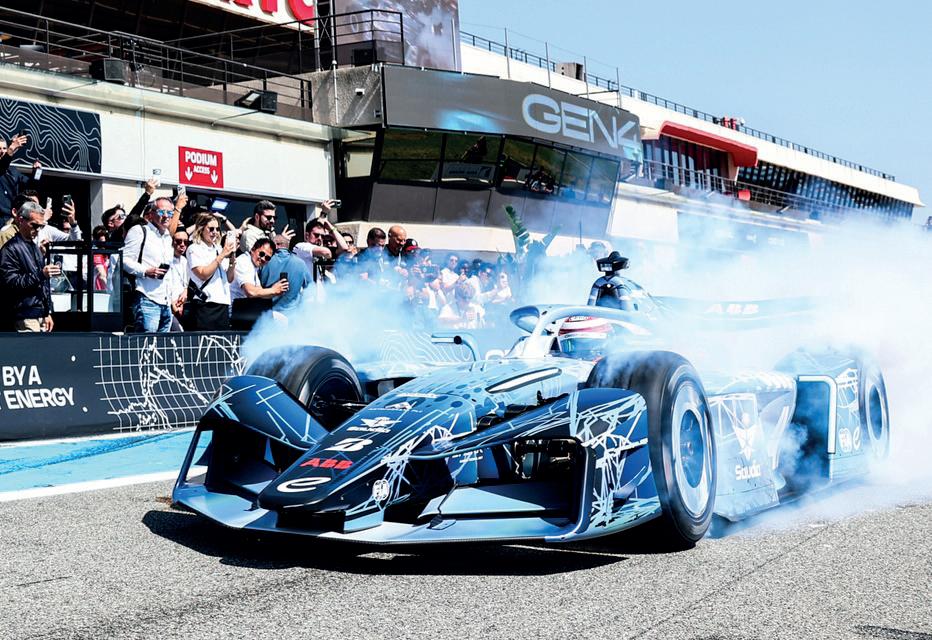
Saturday, in effect, stays familiar: a traditional E-Prix of around 45 minutes built on energy management, harvesting and the in-race PitBoost stop, with roughly a 25 per cent lift-off requirement. The other day brings the headline act, the "E-Prix Unleashed", a shorter 25 to 30-minute sprint run on higher-downforce bodykits with minimal energy saving, where drivers are simply told to push.
"We have prepared a championship format that we believe is going to showcase primarily all the capabilities of the new car," explained the FIA's sporting chief for Formula E, Pablo Martino. The unleashed races, he added, will "provide much more of a showcase of the performance capacities of the car". Standalone rounds in Mexico, Austin, Miami, Sao Paulo and Sanya keep to traditional lengths, and the main points system is unchanged, though qualifying points have been tweaked across the top eight.
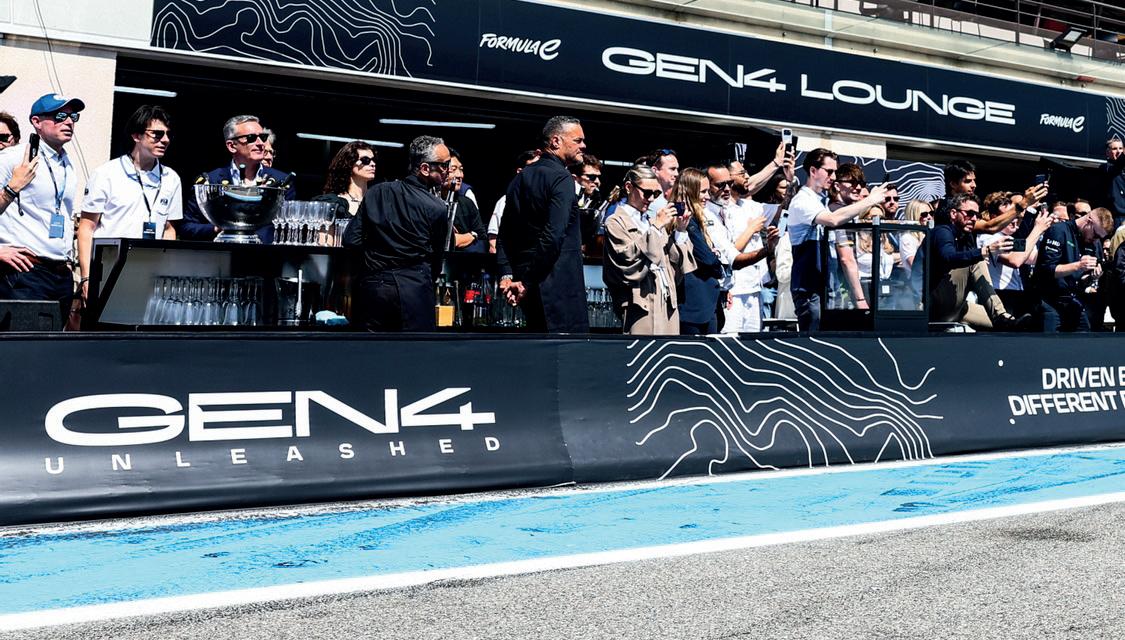
The paddock is cautiously optimistic. Jaguar team principal Ian James believes the series has "struck a nice balance", calling it "exactly the direction we should be going", while Porsche driver Nico Mueller told EV Powered the plans looked "pretty promising" given the "brutal" pure pace
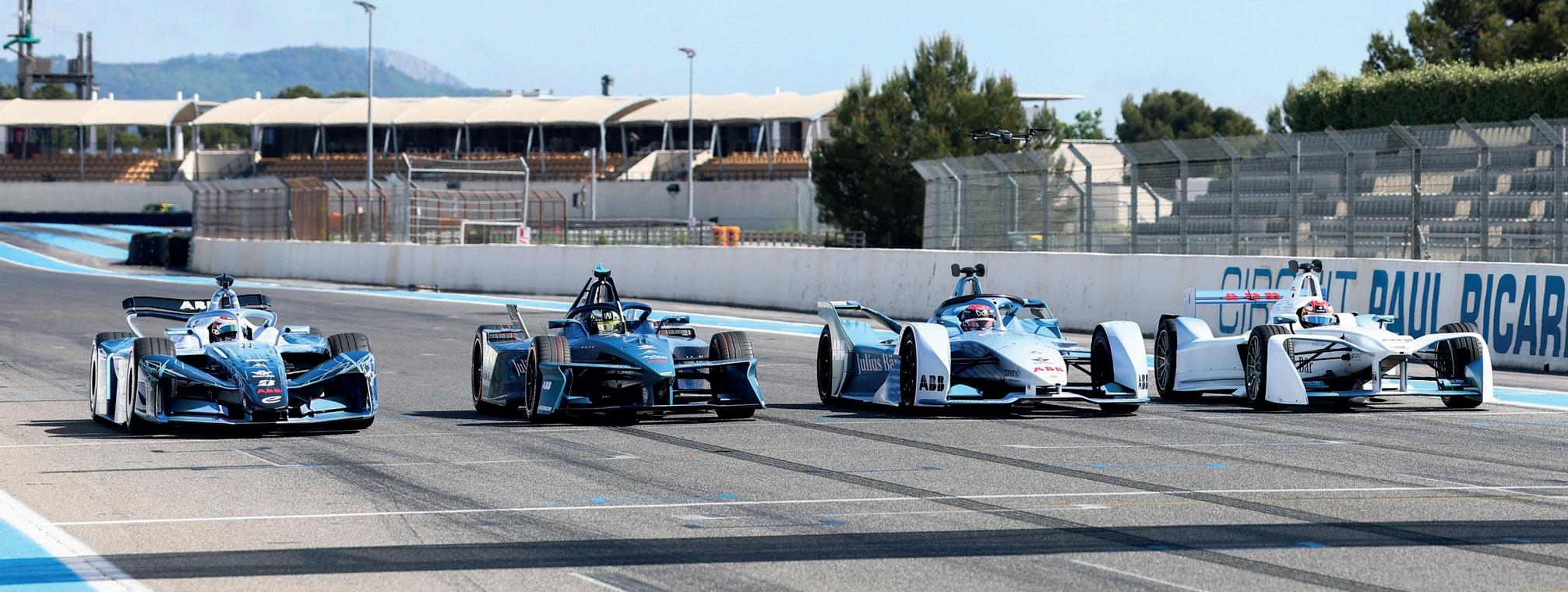
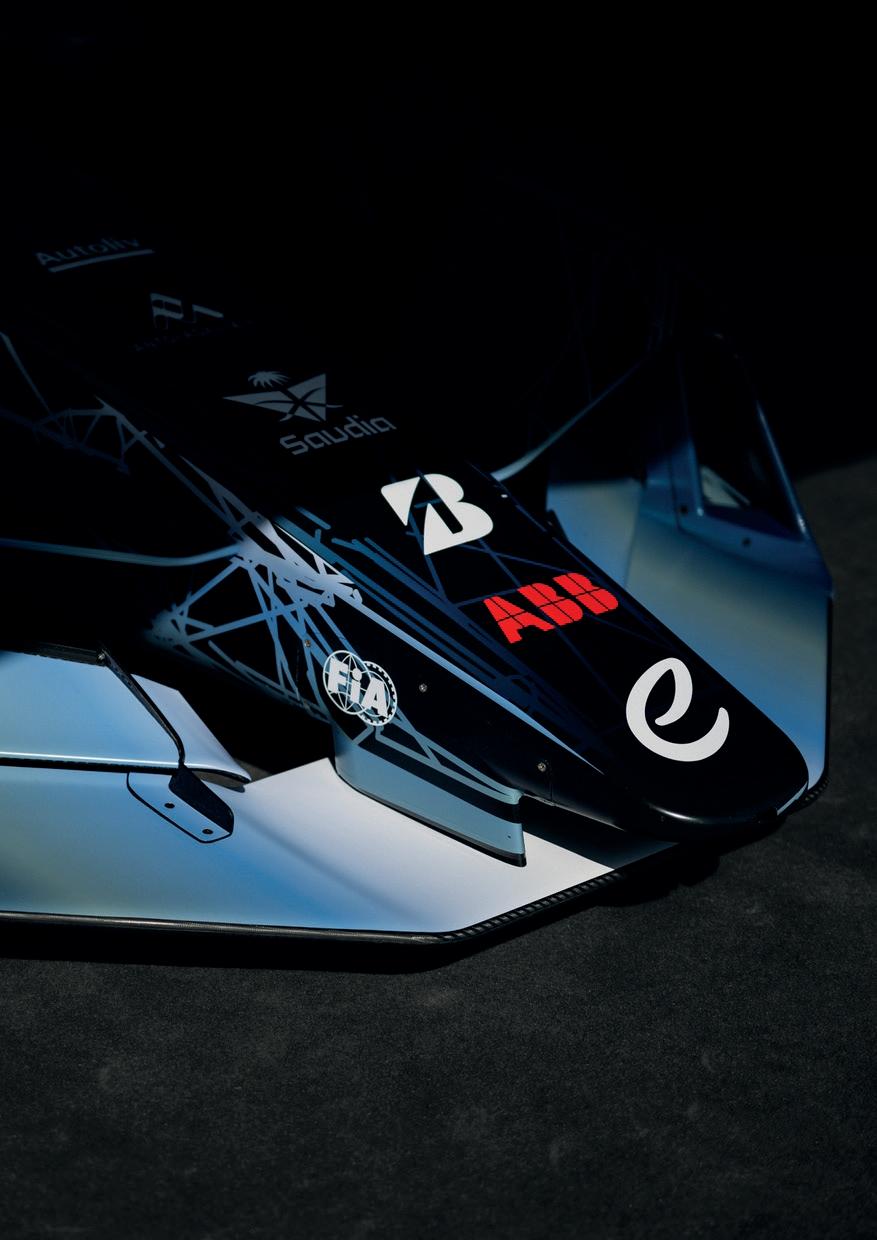
of the car. Andretti's Roger Griffiths welcomed the concept but flagged that technical detail on running two set-ups in a weekend is still to come. There are open questions. With a genuine 205mph now on the table, tighter venues such as Tokyo, Sao Paulo and Sanya will need to contain a car with far more pace than run-off, and some of the old ultra-energy-saving circuits have quietly dropped off the schedule as a result. But the intent is unmistakable. As Dodds put it: "Gen4 gets us right on the heels of F1. And Gen5 is probably faster." On this evidence, electric racing's next chapter is not arriving quietly.
RENAULT 5 LONG-TERM MONTH FIVE
Matt’s mum takes the wheel of her first EV in the name of science and nostalgia
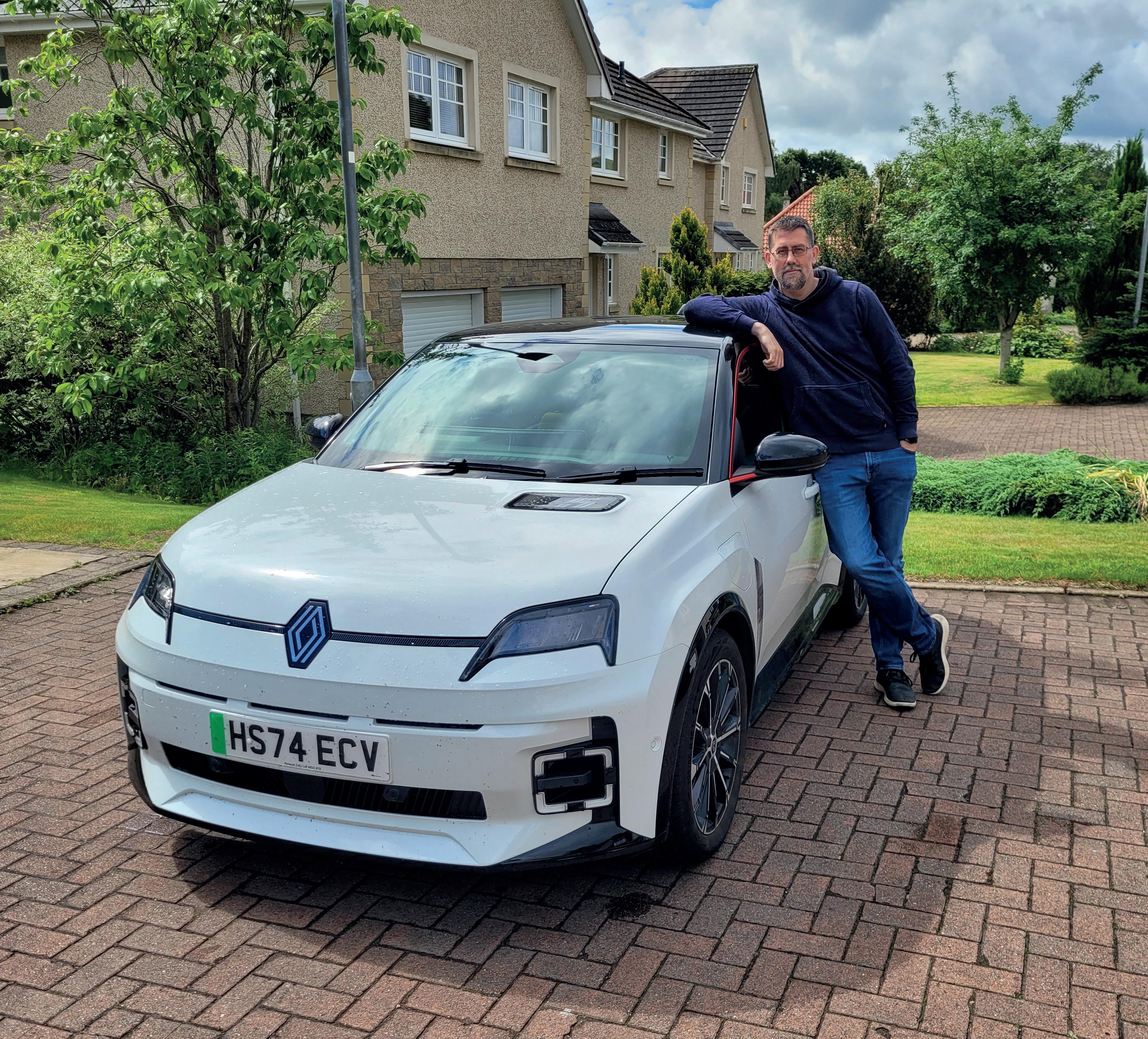
By MATT ALLAN
It’s
widely accepted that your family cars from childhood stick with you.
The whole “we used to have one of those” nostalgia is a common theme and the reason that some people get all misty-eyed about bland midspec repmobiles with cloth seats.
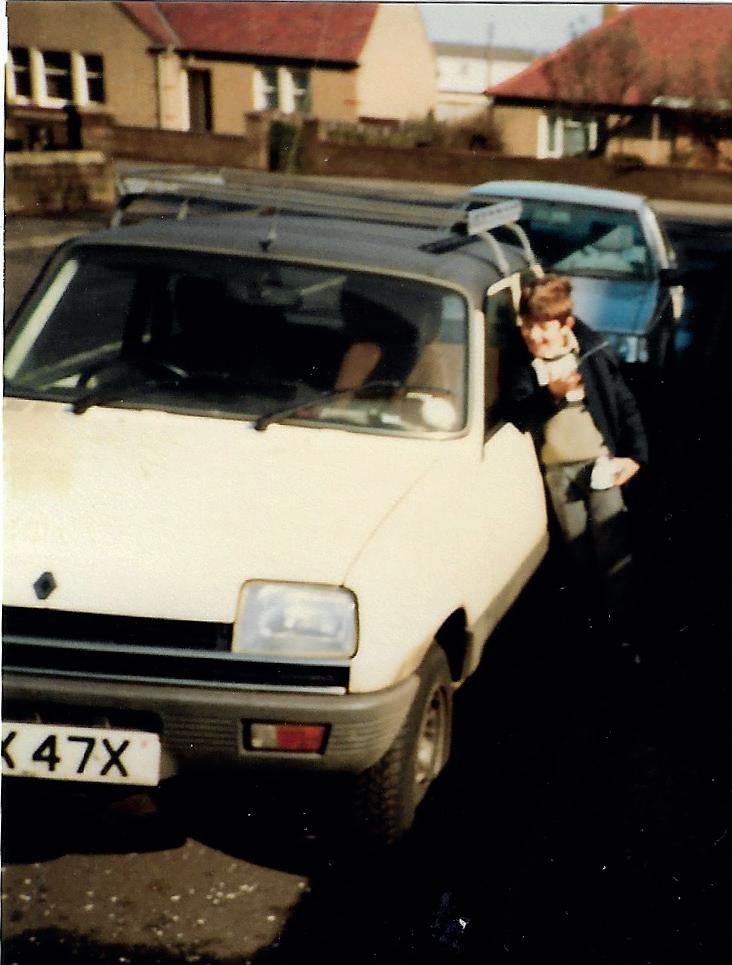
I’m as guilty of that as anyone. I’m 100% sure that part of the reason I’ve been such a fan of the Renault
5 since it was first unveiled is because my parents had one when I was little.
I have fond memories of being strapped into my brown and orange car seat and taken here, there and everywhere (including Belgium) in our 1981 R5.

PRICE: £28,995 excluding ECG (£30,045 as tested)
POWERTRAIN: Single-motor, front-wheel-drive
BATTERY: 52kWh
POWER: 148bhp
TORQUE: 181lb ft
TOP SPEED: 93mph
0-62MPH: 7.9 seconds
RANGE: 251 miles
CONSUMPTION: 4m/kWh
CHARGING: up to 100kW
Providing a particular hit of nostalgia is the fact that my current longtermer is white with a black roof, just like the car from my childhood. Yes, the black roof this time isn’t vinyl, and the wheels are 18-inch diamond-cut alloys rather than 13inch steelies, but in my rose-tinted vision, they could just about be the same car.
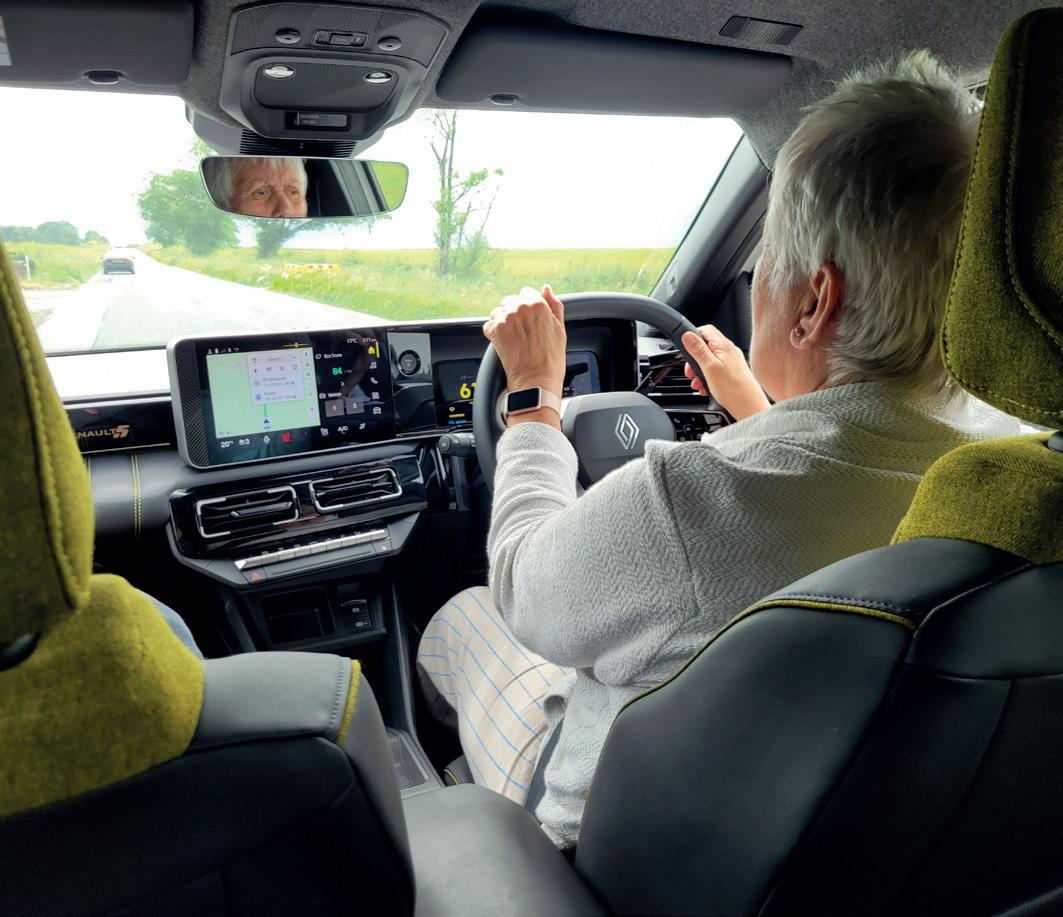
It’s not just me, though. My mum said something similar, which of course led me to suggest she gave the new car a whirl to see how they compare and to drive an EV for the first time.
I’ve spoken to some people, young and old, who are terrified at the idea of driving an electric car. They seem to think there’s some massive leap in driving skill required. Not my mum, though. As she pointed out: “It’s just a car, at the end of the day”.
So as soon as I’d pointed out the column-mounted drive selector, she was off as if she’d been driving EVs for decades.
“It’s pretty zippy, isn’t it?”, she quickly opined which, from a woman with a notoriously heavy right foot, should be seen as a compliment.
Instantly, she was completely at ease with the feel and response of the R5. Even the braking regen – sometimes an odd sensation to EV newbies – didn’t phase her and within minutes she was using it to help decelerate rather than diving for the brake pedal.
“It feels really solid, it doesn’t meander like little cars used to,” she pointed out, before praising the comfort and quietness – a major
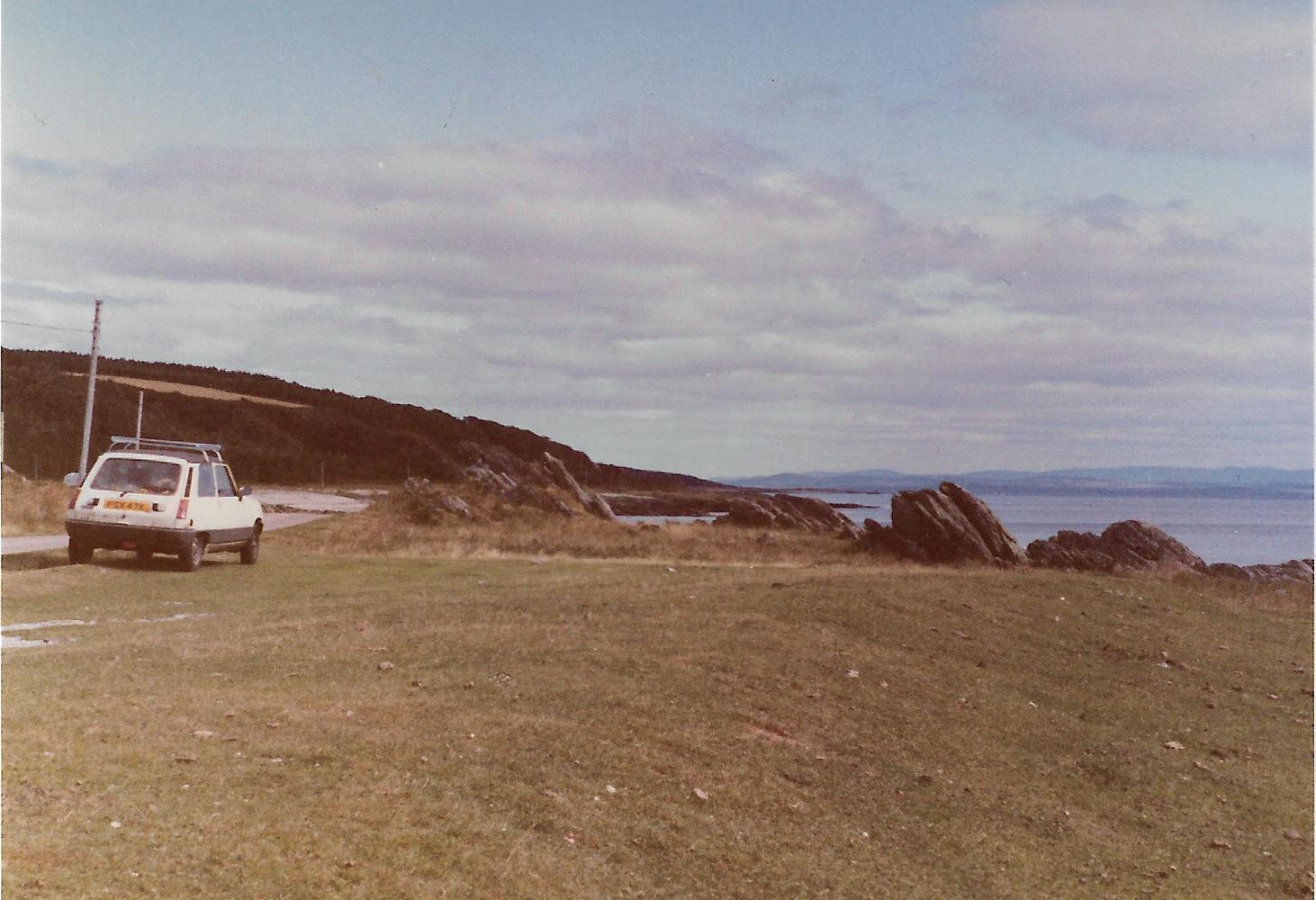
improvement over our old X-reg original. Quelle surprise!
She was slightly dubious about the range, especially when I mentioned the impact of winter, but admitted that 200 miles was still more than enough for her largely local usage.
What I found pleasing was that, beyond how much she enjoyed the driving experience, the things that stood out to my mum were largely the same things I like so much about the car.
As soon as she got in, she wanted to know where the lights and wipers were and was delighted that they were exactly where she’d expect them.
Within minutes she had the reckoning of all the major physical and screen-based controls.
“It’s just normal and easy”, was her observation. She was also thoroughly in favour of the My Perso Safety button to silence the bings and bongs, and the electronic indicator tone – not something I think I’ve ever noticed.
As motoring writers sometimes we worry about minutiae that “regular” drivers don’t care about. So it was reassuring that the wee Renault’s qualities really are the things the everyday driver cares about.
So, was her spin in our longtermer enough for her to consider swapping out her hybrid Toyota for an EV? Yes, but not for a Renault 5. Sadly, its low entry height and limited rear space didn’t suit her ageing back or need to regularly transport grandchildren. Perhaps a Renault 4 instead...
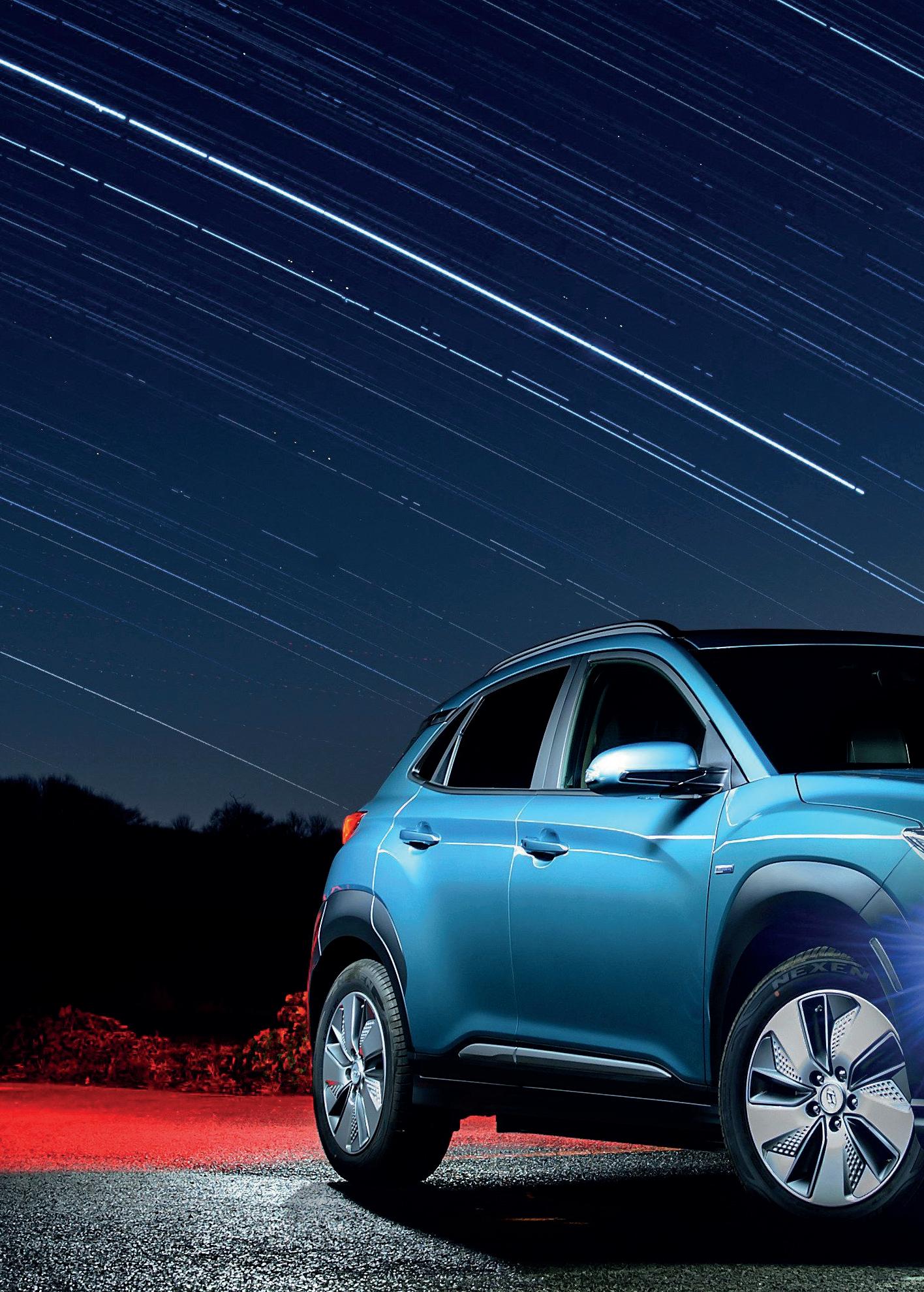
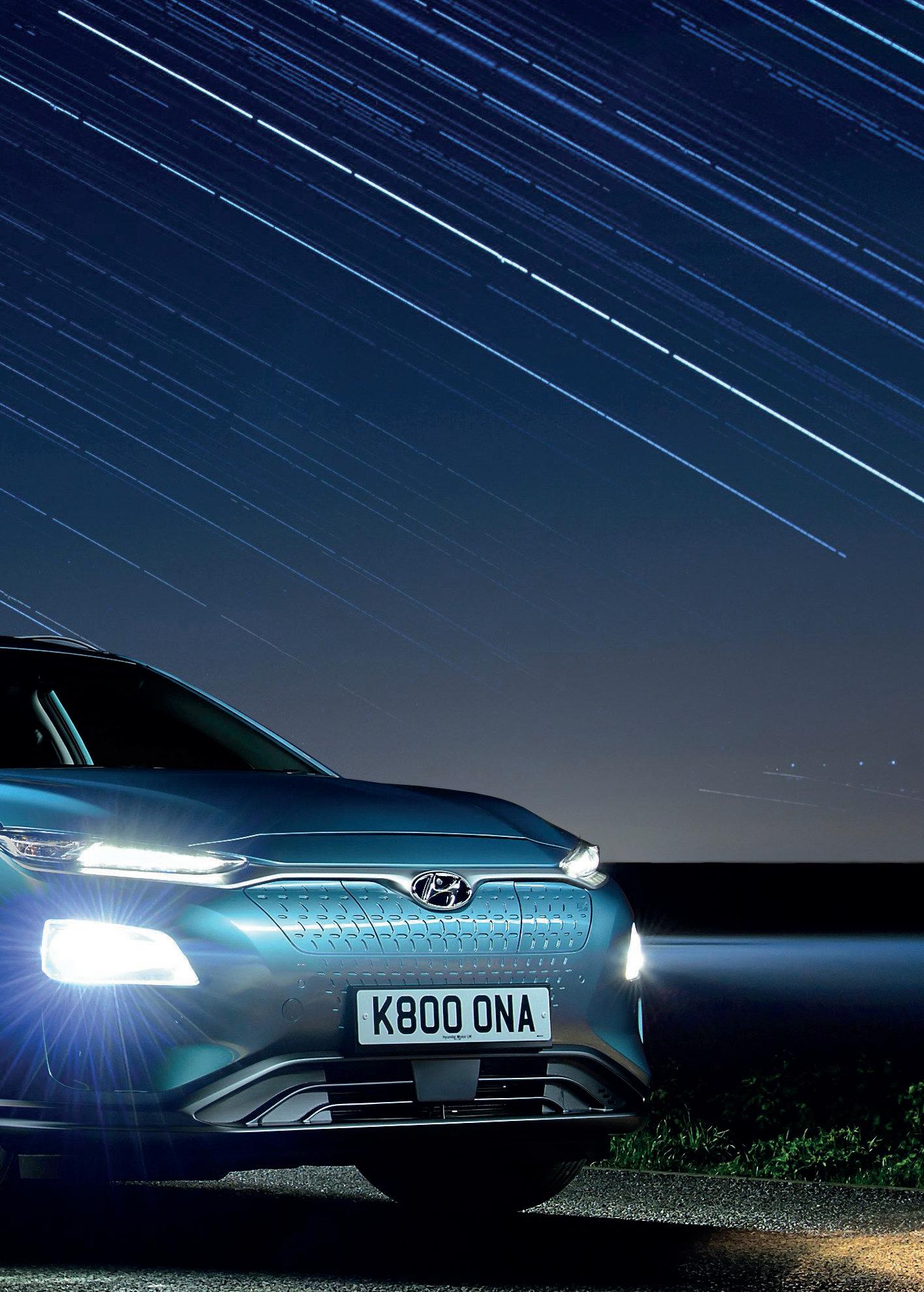
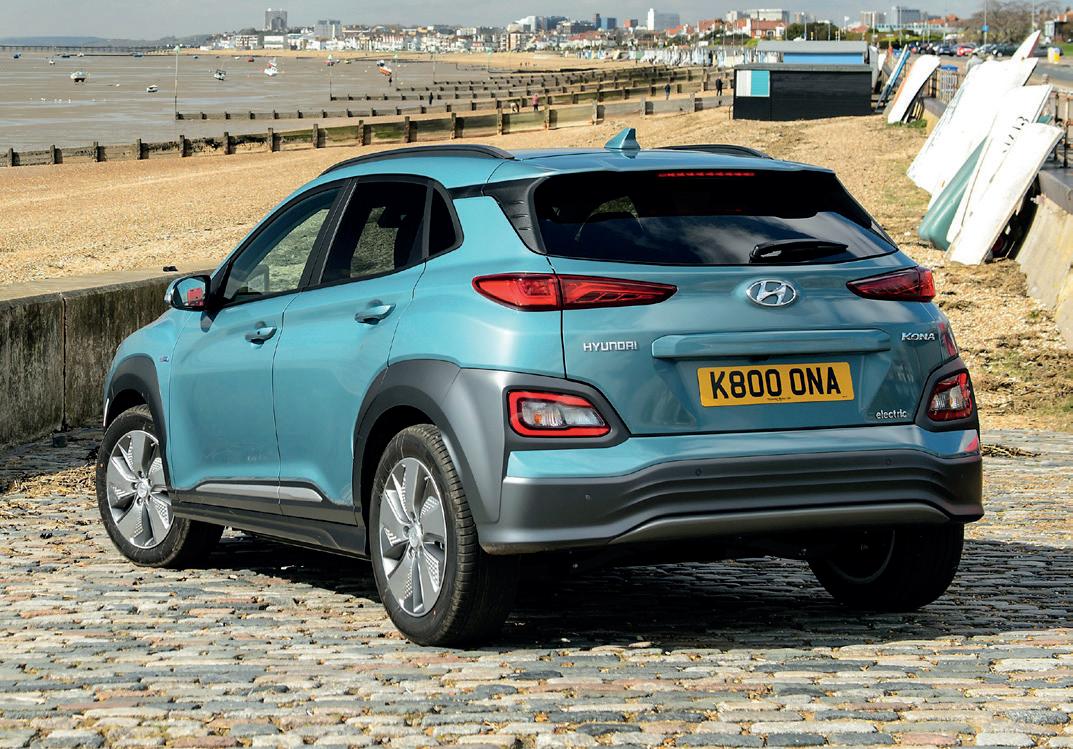
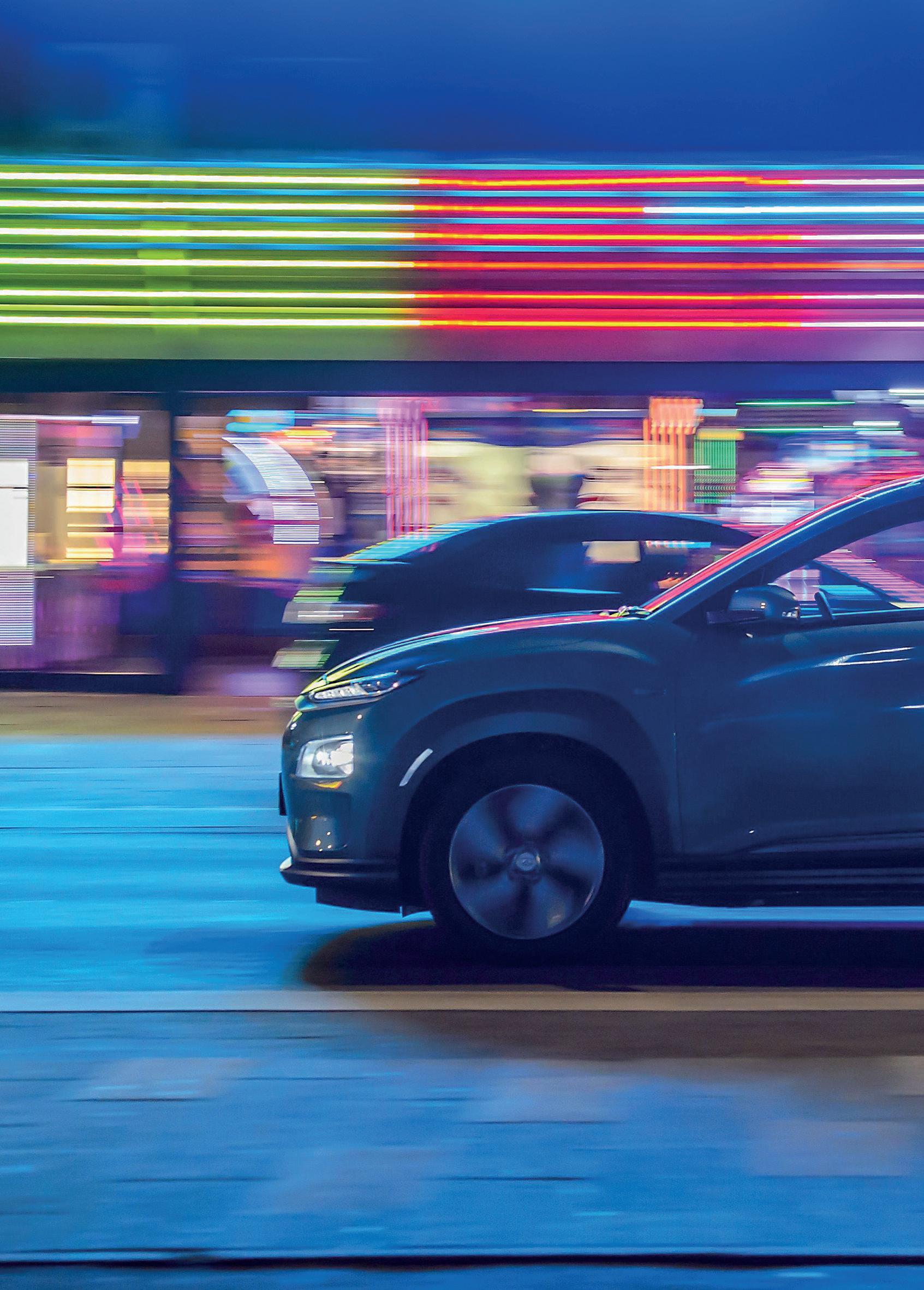
The Hyundai Kona Electric arrived in 2018 and helped set the current path for mainstream EVs, making a used one a compelling choice
Hyundai is regarded today as one of the world's leading EV manufacturers. Its cars are efficient, well-made, sensibly priced, and good looking.
As with sister company Kia, that wasn't always the story. Prior to Hyundai's electrification pivot during
the mid-2010s, the South Korean carmaker had earned a reputation as a manufacturer of solid, if unspectacular, value-focused cars.
Yet following the debut of the Hyundai Kona Electric in 2018, that all changed. Seoul's first B-segment
SUV showed the world that if you wanted massive range, you didn't need a Tesla.
The Kona Electric proved that making the jump from petrol or diesel to electric need not be a daunting prospect. After all, the Kona felt like, well... a regular combustionpowered Kona, and it packed a Model 3-beating range of up to 273 miles.
While the first-gen Hyundai Kona Electric has been outclassed by the facelifted version and newer rivals, it still remains one of the UK's top 10 selling used EVs, with prices starting at under £10,000.
For the 2021 model year, it was heavily updated with a restyled, smoothed off front end, a revised interior, blindspot and rear-cross traffic detection, and a new suite of the ADAS features we've all come to know and love. Not.
Fast-forward two years, the Kona Electric was replaced by a new second-generation model, which ushered in a new design language inside and out.
However, this latest iteration shares its 400V architecture with its predecessor, meaning it doesn't charge as quickly as some of Hyundai's electric Ioniq models, despite being aesthetically closer to them than ever.
Continued on next page
The Hyundai Kona Electric made its way to the UK with a choice of two batteries: a 64kWh unit paired with a 201bhp, front-mounted electric motor, and a smaller, 39kWh pack with a 134bhp motor.
The UK-spec Hyundai Kona Electric was available in three trim levels: Base-spec SE, mid-tier Premium, and flagship Premium SE.
SE cars were available solely with the 39kWh battery, and the subsequent smaller range that came with it. Nonetheless, it remained true to Hyundai's ethos of generous standard equipment, and was fitted with 17-inch alloy wheels, rear parking sensors, a reversing camera, plus automatic emergency braking and lane keep assistance.
Inside, a digital dashboard, plus a seven-inch touchscreen with Apple CarPlay and Android Auto integration were also part of the package.
The Hyundai Kona Electric Premium added blindspot monitoring, rearcross traffic alert, and front parking sensors. The interior was also improved courtesy of integrated sat-nav, a Krell audio system, and an eight-inch touchscreen, which was upgraded to 10.3 inches for the 2021 overhaul.
Premium SE versions of the Hyundai Kona Electric added LED headlights, a driver's head-up display, electrically-adjustable heated and cooled leather seats up front, plus a warmed rear bench.
Overall, the Kona Electric is a wellmade, albeit slightly dated, place to sit in comparison to Hyundai's latest tranche of EVs. Yet given it’s a lastgen EV, there are physical controls assigned for vital car functions such as the air-conditioning, radio, builtin sat-nav, and transmission.
Like its sister car, the Kia E-Niro, this alone makes the Hyundai Kona Electric worthy of consideration for motorists unconvinced of manufacturers putting everything in a touchscreen and the issue surrounding ease-of-use this can cause.
Given its age, a used Hyundai Kona Electric isn't an expensive used choice. In fact, we found early cars
for under £8,000 on Autotrader. But if you've been reading our used buyer guides for the last year or so, you'll have noticed that we always recommend buying from an approved dealer.
With that piece of advice in mind, we found just 16 used first-gen Kona Electrics on the official Hyundai UK
website. The cheapest we came across was a 2020 Premium with a 64kWh battery and 66,500 miles on the clock for £10,948. Conversely, the most expensive was another 64kWh Premium from 2021 with a total mileage of 41,300, and a £17,495 asking price.
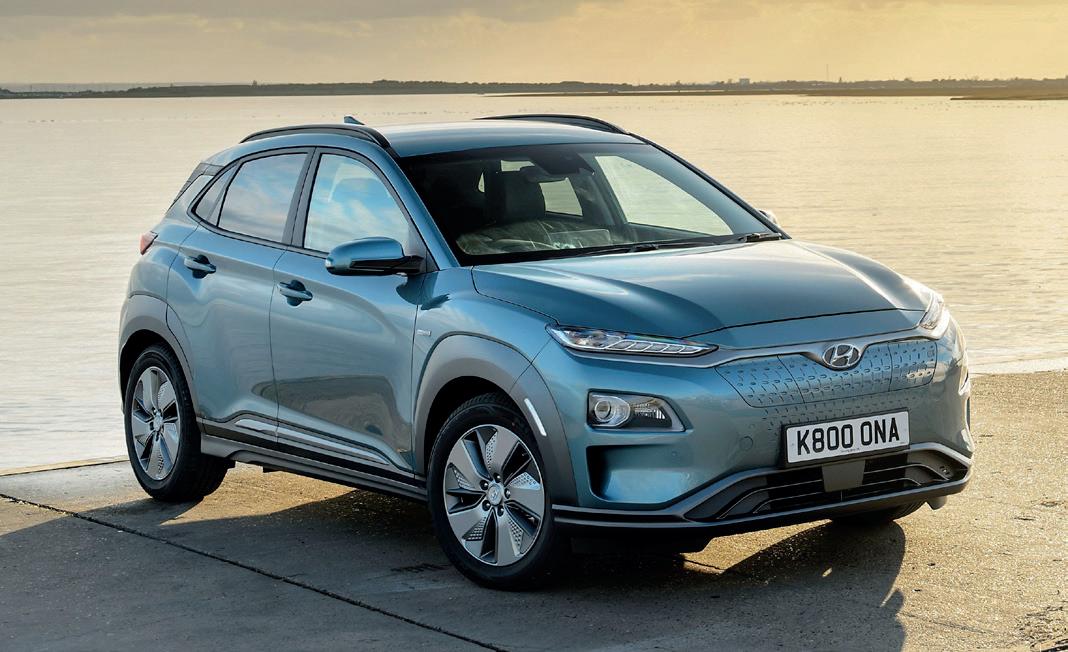
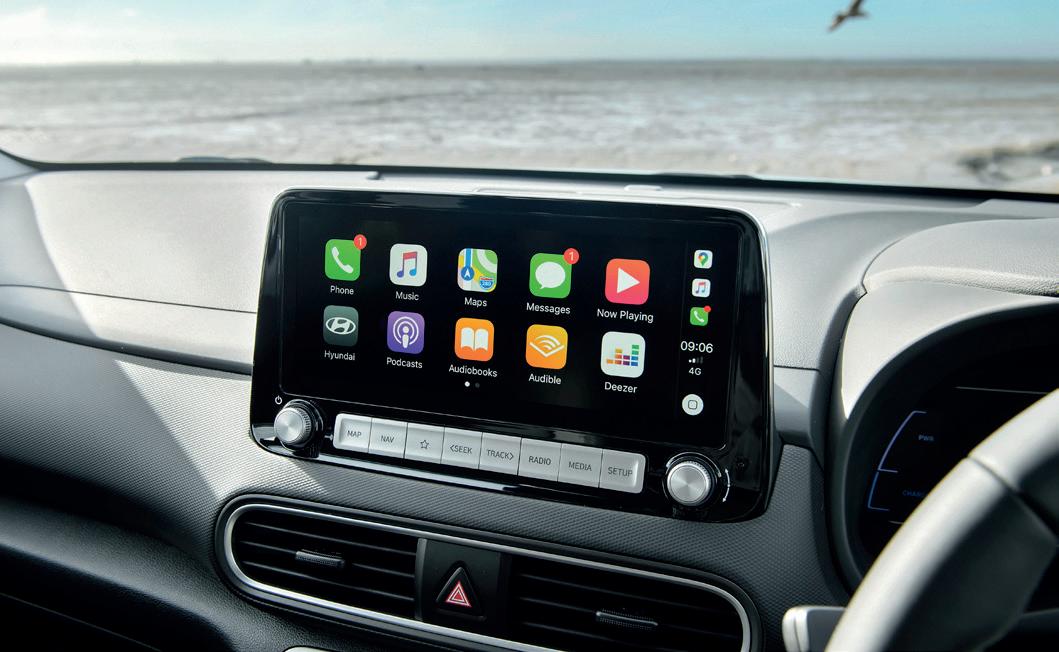
Battery charging times are where a used Hyundai Kona Electric shows its age. Its peak charging speed is 100kW, which translates into a nowglacial 10-80% top-up time of 47 minutes. With a 7kW home wallbox, the 39kWh cars fully charge in six hours, while the 64kWh models take
nine hours. Using a three-pin trickle charger, a full charge is 31 hours.
We don't hide from the fact that EV charging at home is significantly cheaper than relying on the public charging network. Using a 7kW home charger paired with a dedicated home charging tariff, the 39kWh Hyundai Kona Electric can be fully charged for £2.73, while its 64kWh will cost just £4.48.
The Hyundai Kona Electric sits in insurance groups 20-27 from 50, adding to its wallet-friendly credentials. Versions with the smaller battery are the cheaper of the two to insure.
On April 1, 2025, EVs became taxable under new government legislation, meaning they are no longer exempt from road tax. All-electric cars registered from April 1, 2017, onwards will now be taxed £200 annually.
Unusually for Hyundai, the Kona Electric has been a bit of a mixed bag when it comes to reliability, and ironically, it's the electrics that have been the main problem.
Short-circuiting within the battery pack and potential fires led to a 2021 recall, as did an abnormality in the intelligent emergency braking (IEB) that same year. In 2020, a batch of cars was recalled for faulty battery management systems.
No more recalls have been recorded since. According to online owner fora, draining 12V batteries can be a problem, while problems with fastcharging connections between car and charging station have also been noted.
Like with every dealer network, Hyundai's is a mixed bag with some owners citing great service, while others have bemoaned delays in parts and poor communication.
The 'one to have'
If it were our money being spent on a used Hyundai Kona Electric, then our pick of the bunch would be on a post-2020 facelift Premium model. As well as a futuristic design, it comes with all the equipment you'd need, including the bigger infotainment screen, and that beefy Krell audio system.
The Premium SE would also make a good purchase, but the heated seats aren't necessarily a dealbreaker, and nor is the driver’s head-up display.
By RICHARD ALVIN
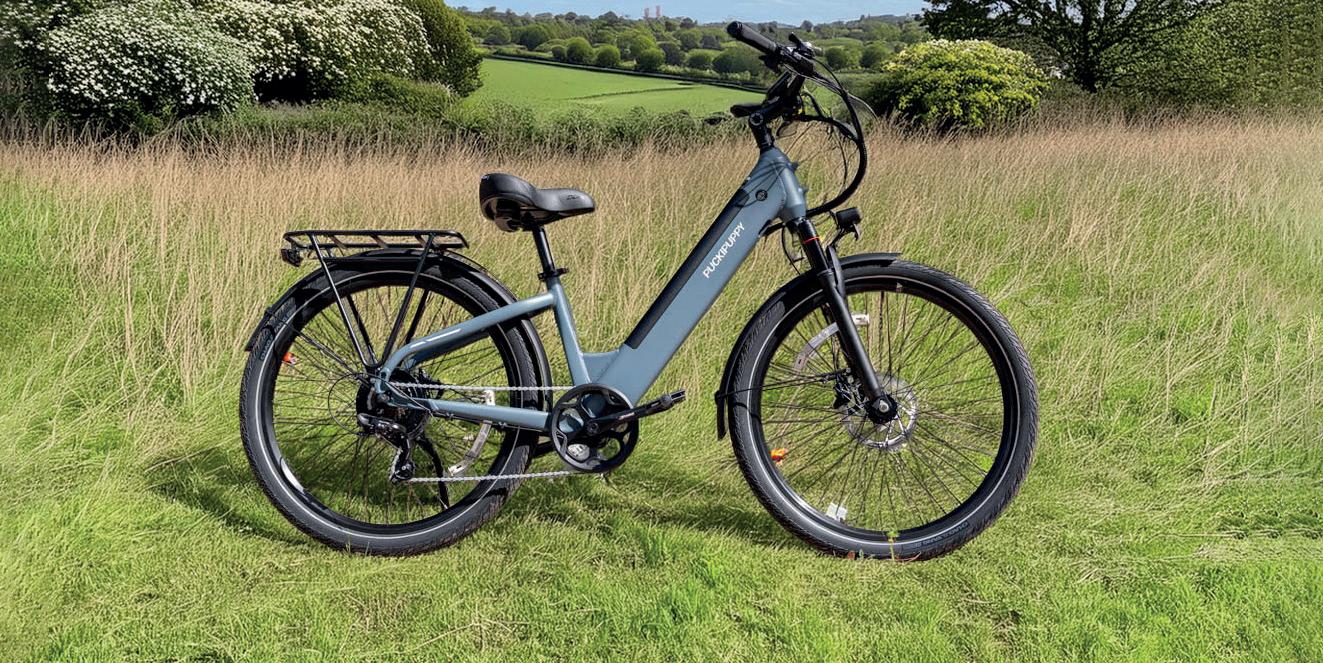
The Puckipuppy Poodle is a Dutch-style step-through commuter priced at right around $999, and it arrives carrying more kit than that figure usually buys.
Puckipuppy pitches it at casual commuters and cruiser riders who want a capable everyday bike without spending over a grand, and to hit that brief it ships with hydraulic disc brakes, a 750W rear hub motor, a 720Wh battery and an accessory bundle that would otherwise cost $300 to $500 in extras.
One note for British readers. The Poodle is a US-market machine built to American Class 2 and Class 3 standards, meaning a 750W motor and assistance up to 28mph. That places it well outside UK road-legal rules, where an Electrically Assisted Pedal Cycle must have a motor rated at no more than 250W with assistance cutting out at 15.5mph. Read this, then, as an international review of where budget commuters are heading rather than a buying tip for UK cycle paths.
At 5ft 10in the Poodle fitted me well. The Dutch-style step-through frame puts you in an upright position that sits in the sweet spot between a laid-back beach cruiser and a more forward-leaning commuter. The standout is the adjustable 0 to 90-degree stem, which gives a wide spread of positions, though riders at the very top of the stated 5ft 3in to 6ft 4in range will not get full leg extension.
The 80mm coil fork does its job within its limits. For urban riding and light paths it takes the edge
off bumps, but do not expect the confidence of an air fork. The 27.5in x 2.4in fishbone-tread tyres roll well and grip noticeably better than slicks over damp tarmac or light gravel.
Motor feel is where the cadence sensor shows its character. There is roughly half a pedal revolution of lag before it engages, and a slight overrun when you stop pedalling. Take care dismounting and keep a hand on the brake, because the sensor will catch accidental pedal movement and surge the motor. Once I found a rhythm, particularly in PAS 4 at commuter speeds, it felt reasonably smooth.
At 720Wh the battery is larger than the 499 to 540Wh packs most sub-$1,000 rivals offer. Puckipuppy claims 75 miles, but that looks optimistic: my early estimate is 25 to 30 miles on maximum assist and 55 to 60 on eco. The bike is UL 2271 certified, with system-level UL 2849 certification still in progress, and the standard 2A charger takes about seven hours.
The 750W motor peaks at 960W. Puckipuppy quotes no torque figure, but on ride feel I would estimate around 60Nm, at the lighter end of the segment. On a 0.34-mile, 10.1% climb it managed 1:57, a touch slower than the Lectric XPress2 and Aventon Pace 5 REC. The motor runs louder than newer units, but no dealbreaker.
The highlight is the Logan hydraulic disc brakes, with 180mm rotors front and rear. Across six to seven repeated downhill stops they showed no sponge, no fade and consistent lever feel, better than I expected at this price. The Shimano 7-speed drivetrain is reliable and easy to service, though the 14 to 28T cassette is narrow, and I wanted a lower gear on the steepest climbs.
The leather saddle and butterfly lock-on grips are genuinely comfortable. The 6061 aluminium frame is sound. Puckipuppy spent where it matters, on brakes, battery and frame, and compromised on drivetrain and suspension. Worth checking your spoke tension and bolts before the first ride, as we found a few loose ones.
The colour LCD display is well positioned but dimmer than ideal in bright sun, and the boomerang-style battery bars are harder to read than a percentage. There is no companion app, a gap I will not hold too harshly against the bike at this price.
For the right rider, yes. The brakes are good, the 720Wh battery delivers decent range, and the accessory bundle is among the most generous in the category. I would not recommend it to a heavier rider tackling serious hills, or anyone wedded to torque-sensor feel. But for the returning rider, the budget-conscious city commuter or the weekend cruiser, the Poodle is well worth a look.























Electrifying commercial vehicles and HGVs is not just about the vehicles themselves – it involves a detailed consideration of how to keep them on the road without disrupting existing operations. Mer has the experience and knowledge to support you on this journey.






Download Mer’s free eguide for fleet managers to learn more about installing the right EV charging to keep your vehicles powered for their mission-critical journeys

Click here to find out more







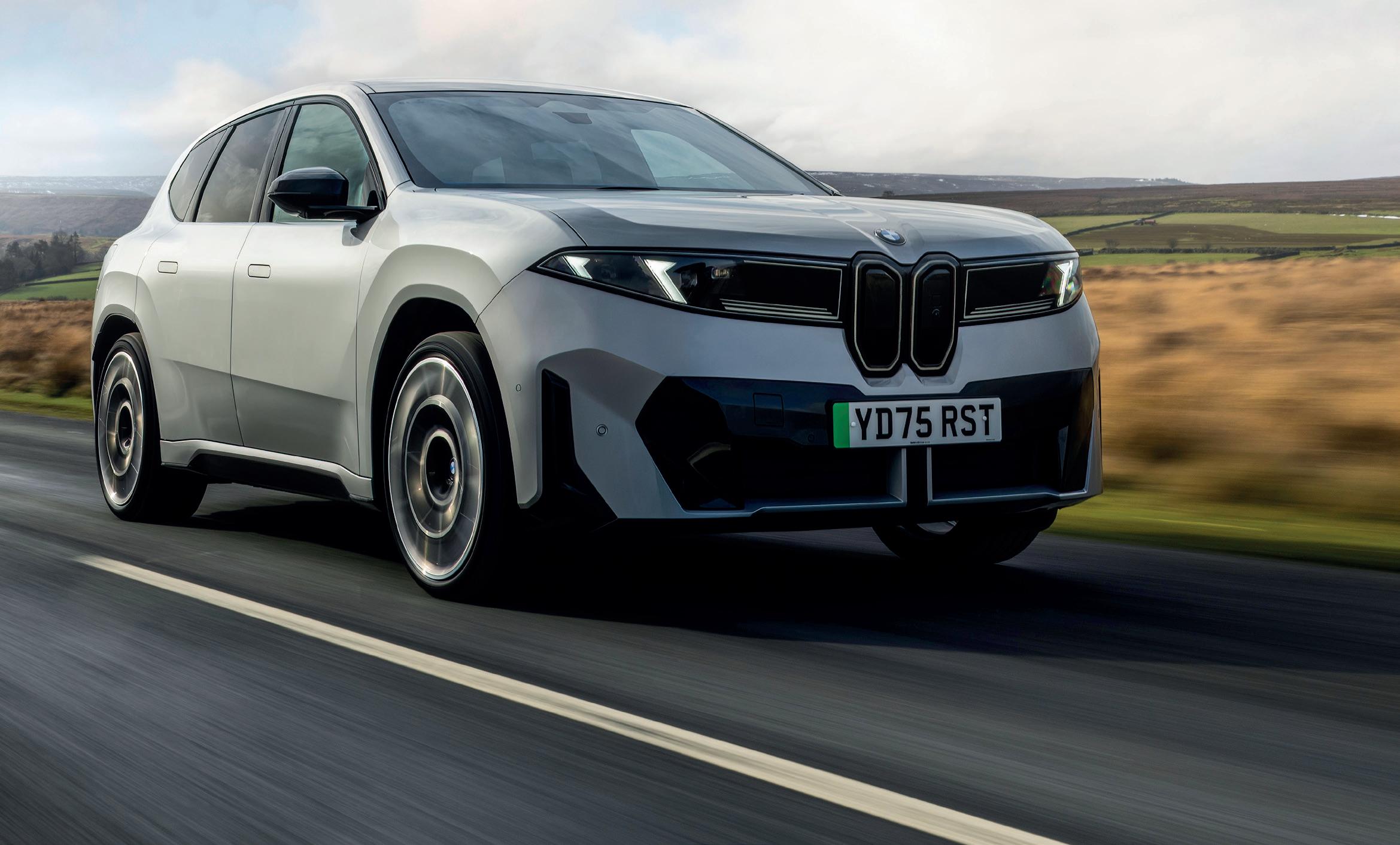
Remember when all those EV skeptics said they’d only ever drive one once they could do 500 miles? Well their time is here. The BMW iX3 is the UK’s first EV with an official 500-mile range. That in itself (and the engineering that allows it) is an achievement to be celebrated, but it’s also just a brilliant all-round car. It’s a big, comfortable SUV with space for the entire family. The interior is high-quality and high-tech but smart and user-friendly. It’s also a pleasure to drive and packs a punchy 463bhp for typical BMW performance. And with peak charging of 400kW, it’s one of the fastest charging cars in the country, adding 231 miles in just 10 minutes.
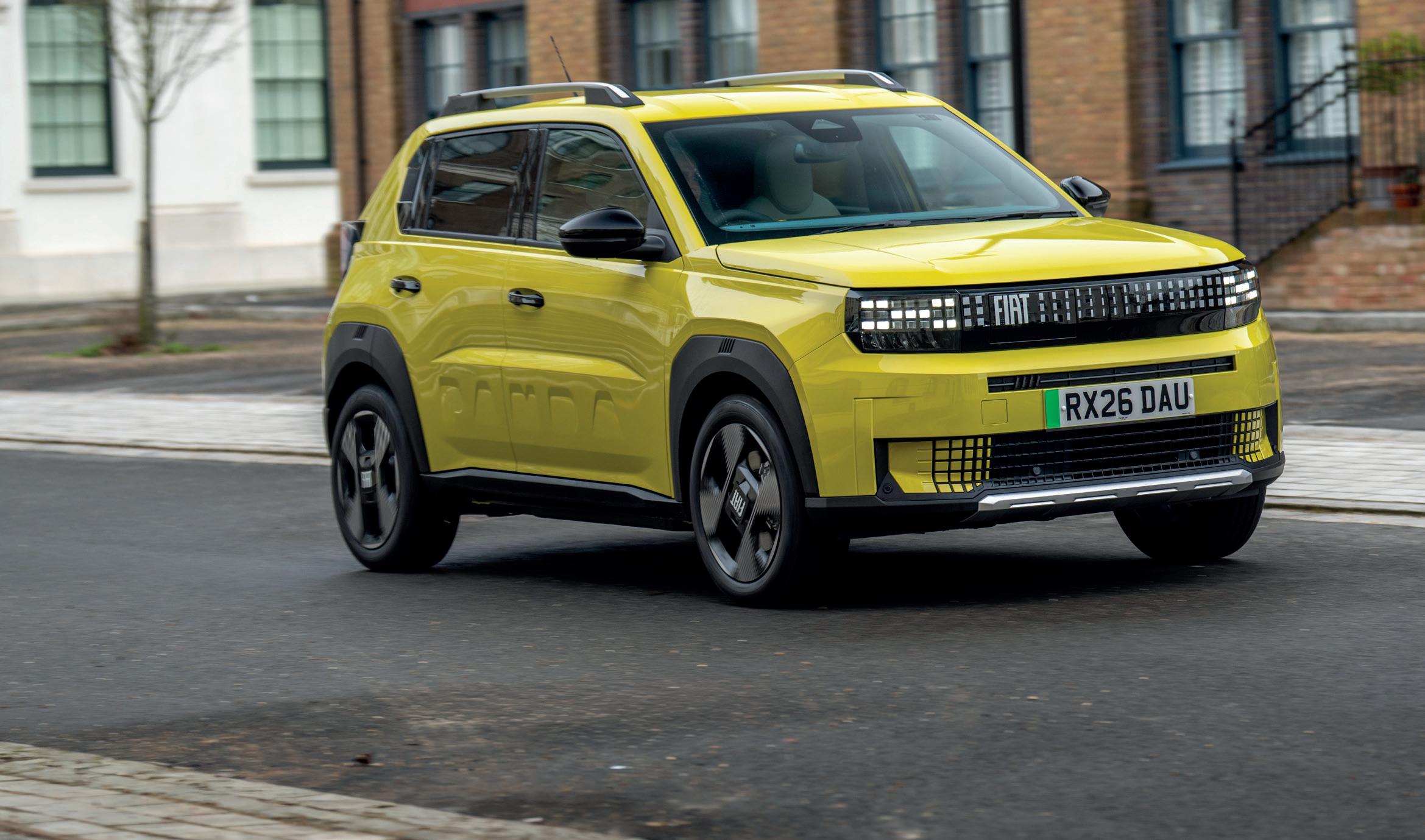
The Fiat Grande Panda is part of the new wave of affordable, fun small EVs alongside the likes of the Renault 5 and Hyundai Inster, and continues Fiat’s long history of building cheap and cheerful little cars that owners will fall in love with. Its design alone is almost enough to win a place on this list thanks to its loving homage to the original Panda. However, there’s more to it than just looks which brilliantly blend retro and modern. Its 111bhp motor and 44kWh battery aren’t massive, but provide all that most city drivers need, and the interior is stylish, simple and surprisingly spacious.
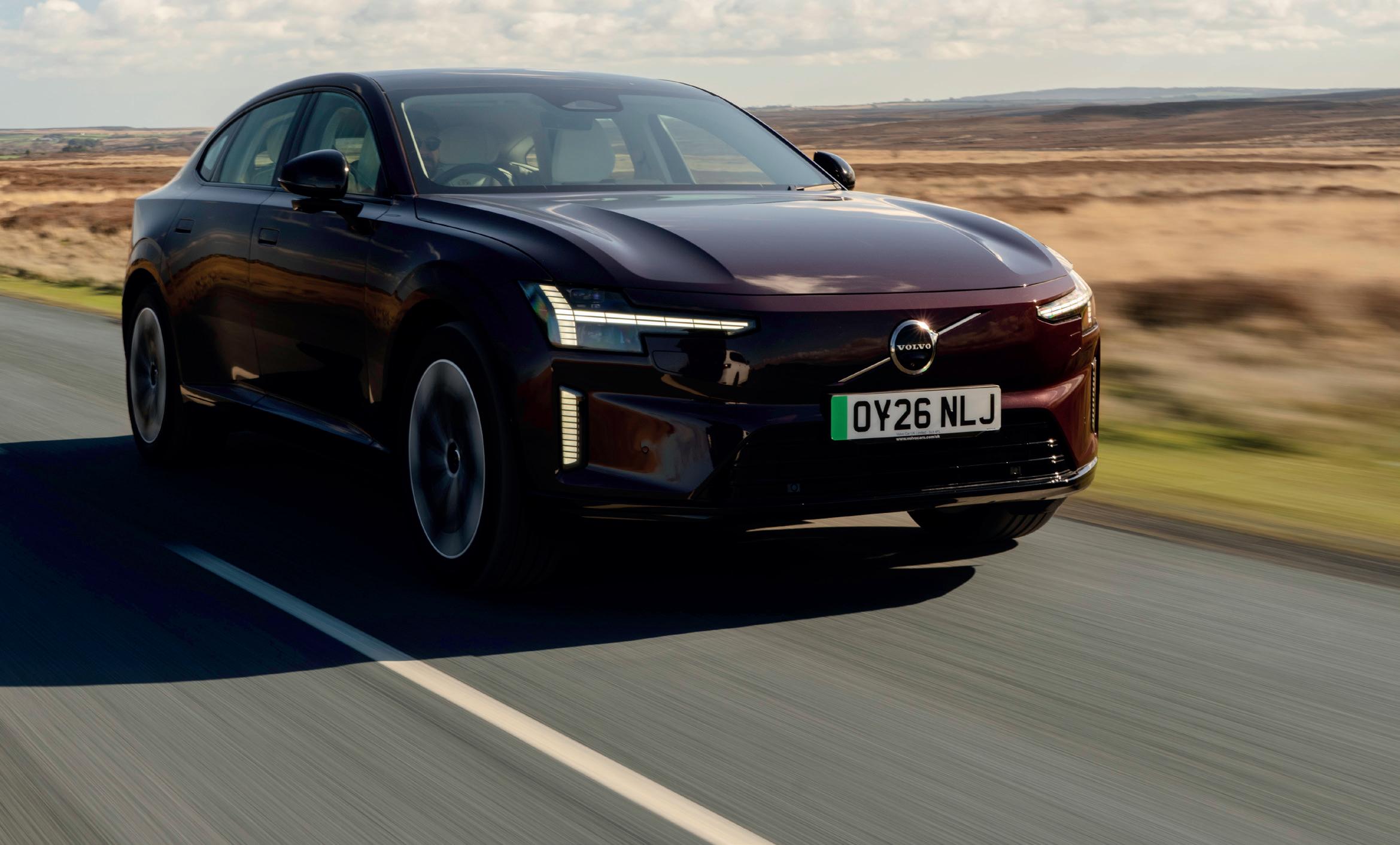
Volvo’s first attempt at an all-electric saloon earns its place on this list with one caveat. As we’ve talked about with other Volvo cars, every function is controlled via the touchscreen and it’s neither clear or intuitive enough. Putting that aside, however, the ES90 is a delightful executive saloon that deserves to be considered against the best from Audi, BMW or Mercedes. It delivers on all the usual Volvo qualities, being hugely spacious and comfortable, and refined and effortless to drive. It’s also loaded with the latest high-tech equipment and offers some of the longest range and fastest charging out there, with almost 440 miles per charge and the ability to top-up at 350kW.
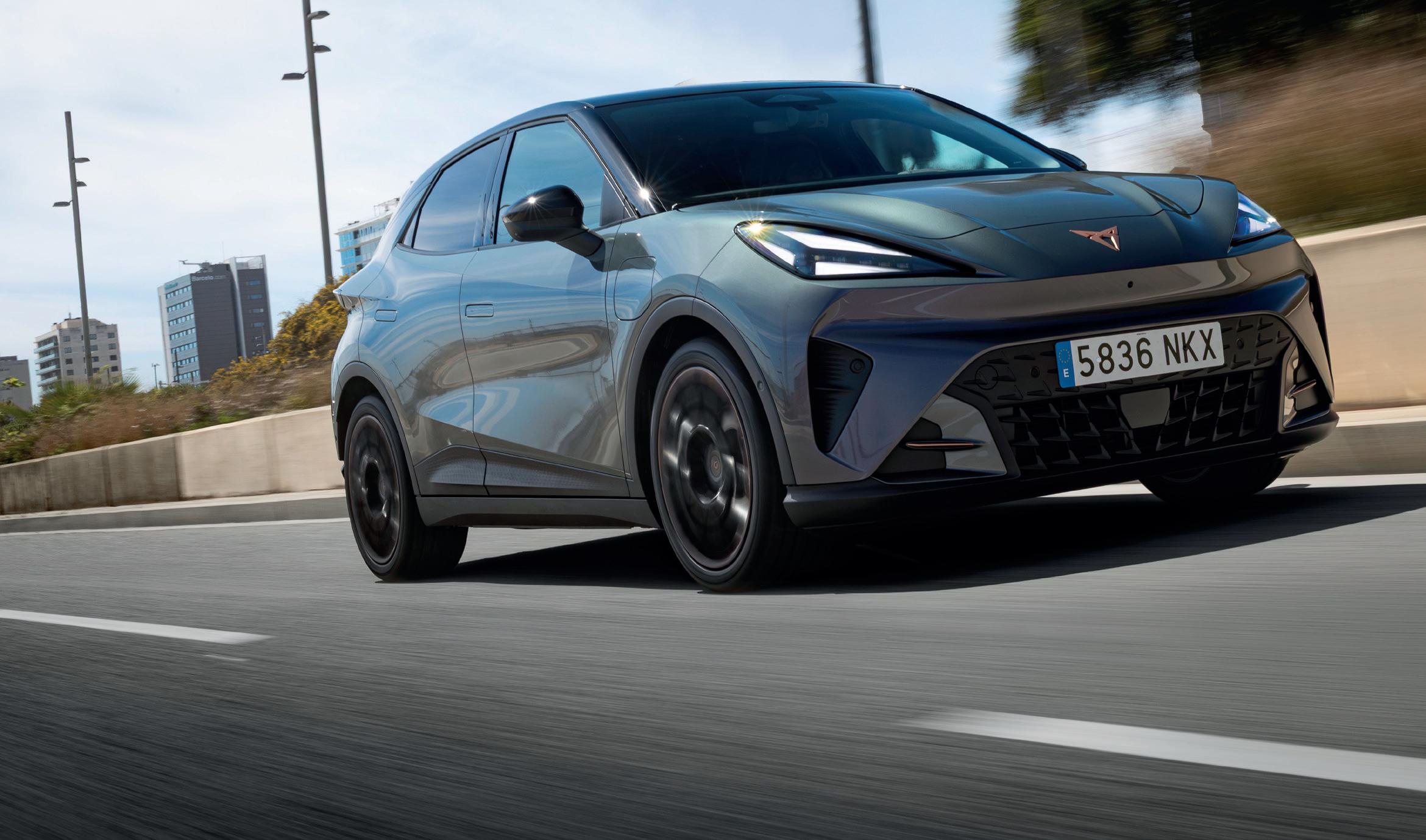
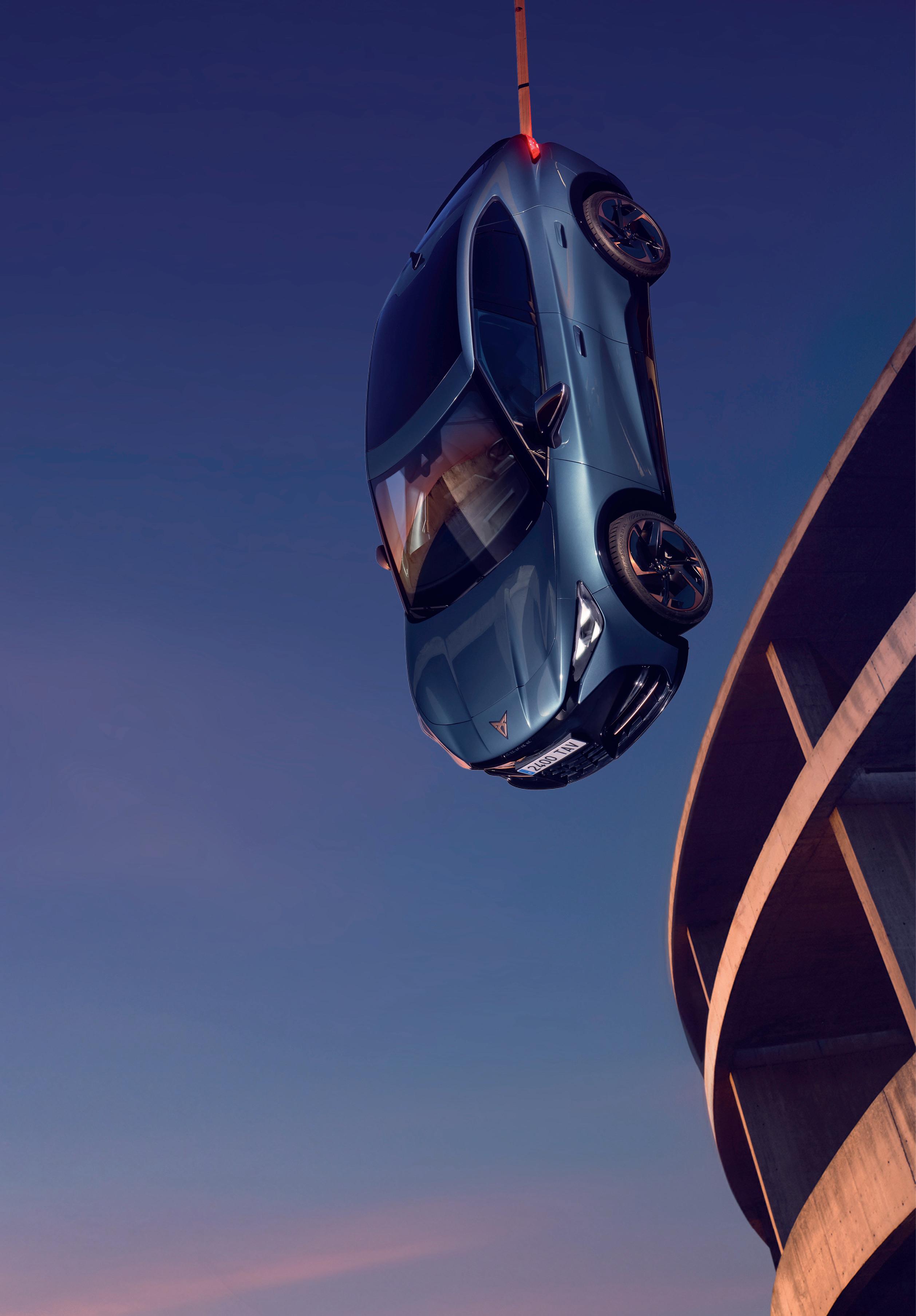
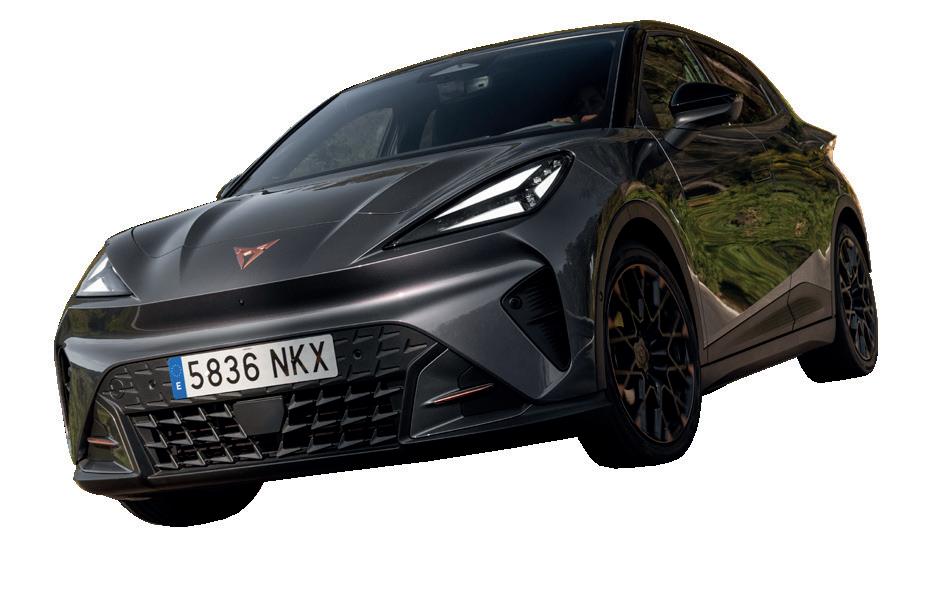
Cupra has quietly evolved from Seat’s sporty sub-brand to the head of the family and the Raval is the latest and probably best example of that. Its new MEB+ platform was developed from the ground up by Cupra’s engineers for the entire VW Group, and it’s a compact hot hatch that delivers on Cupra’s ambitions with razor-sharp looks and performance. There are “sensible” powertrain options and a starting price of £23,785 for those seeking a regular small car, but the VZ spec brings 223bhp and bespoke chassis hardware/software that deliver a thoroughly lively and engaging driving experience. Amid overpowered all-wheel-drive monsters, it embodies the timeless joy of a well set up front-driven hot hatch.
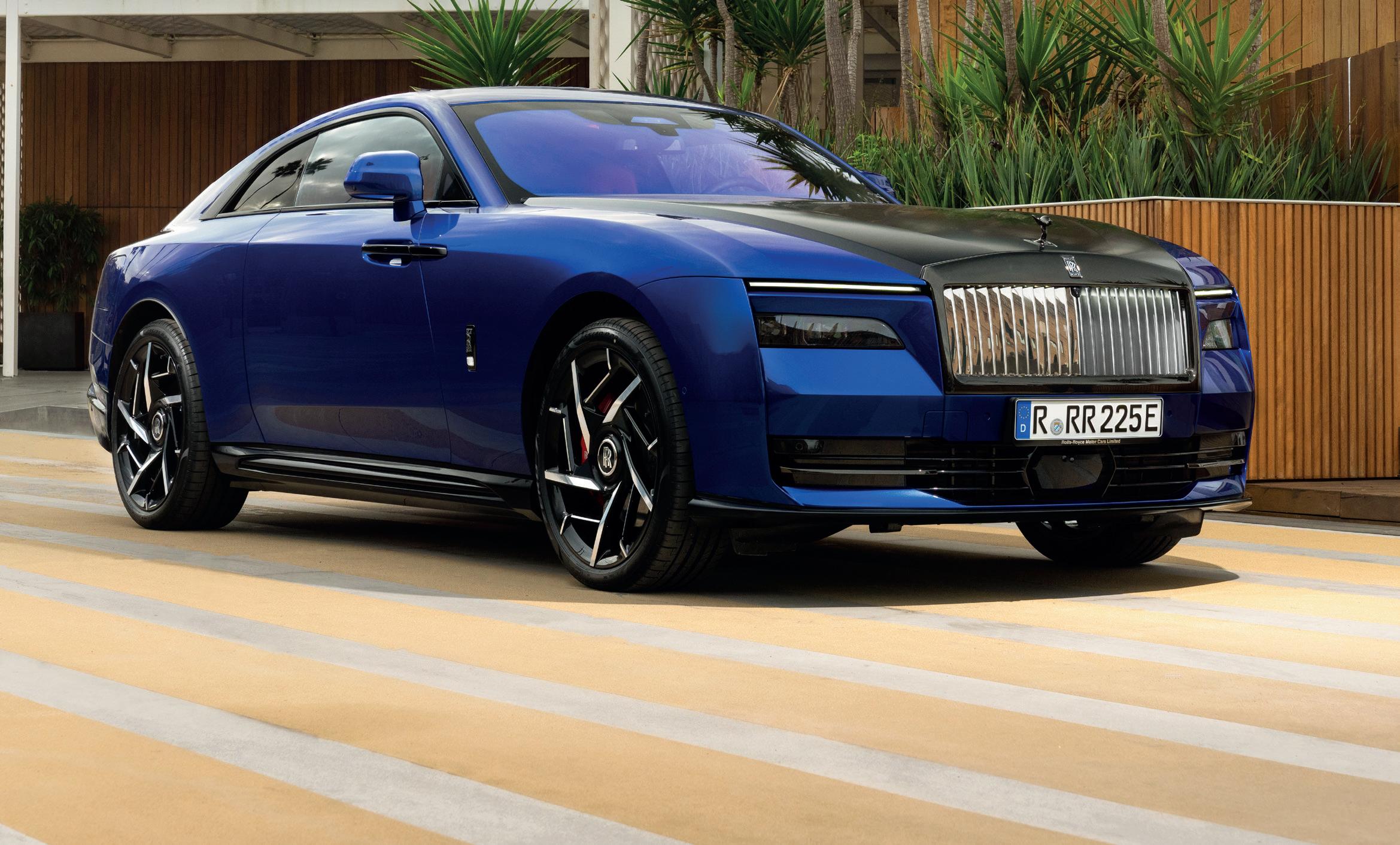
Yes, we’re bending the rules slightly here since this car launched in 2025. But we only drove it this year, and it made such an impression it’s impossible not to include. How do you make the best electric car in the world even better? Give it more power, obviously. But the 650bhp Black Badge Spectre does more than that. It also tweaks the chassis and motor management for a more dynamic feel. This is still a Rolls-Royce, so refinement and comfort are still the primary concern, but the Black Badge brings a sharper edge and can swallow up tough cross-country routes with remarkable aplomb for a 5.5-metre, 2.7-tonne private lounge on wheels.
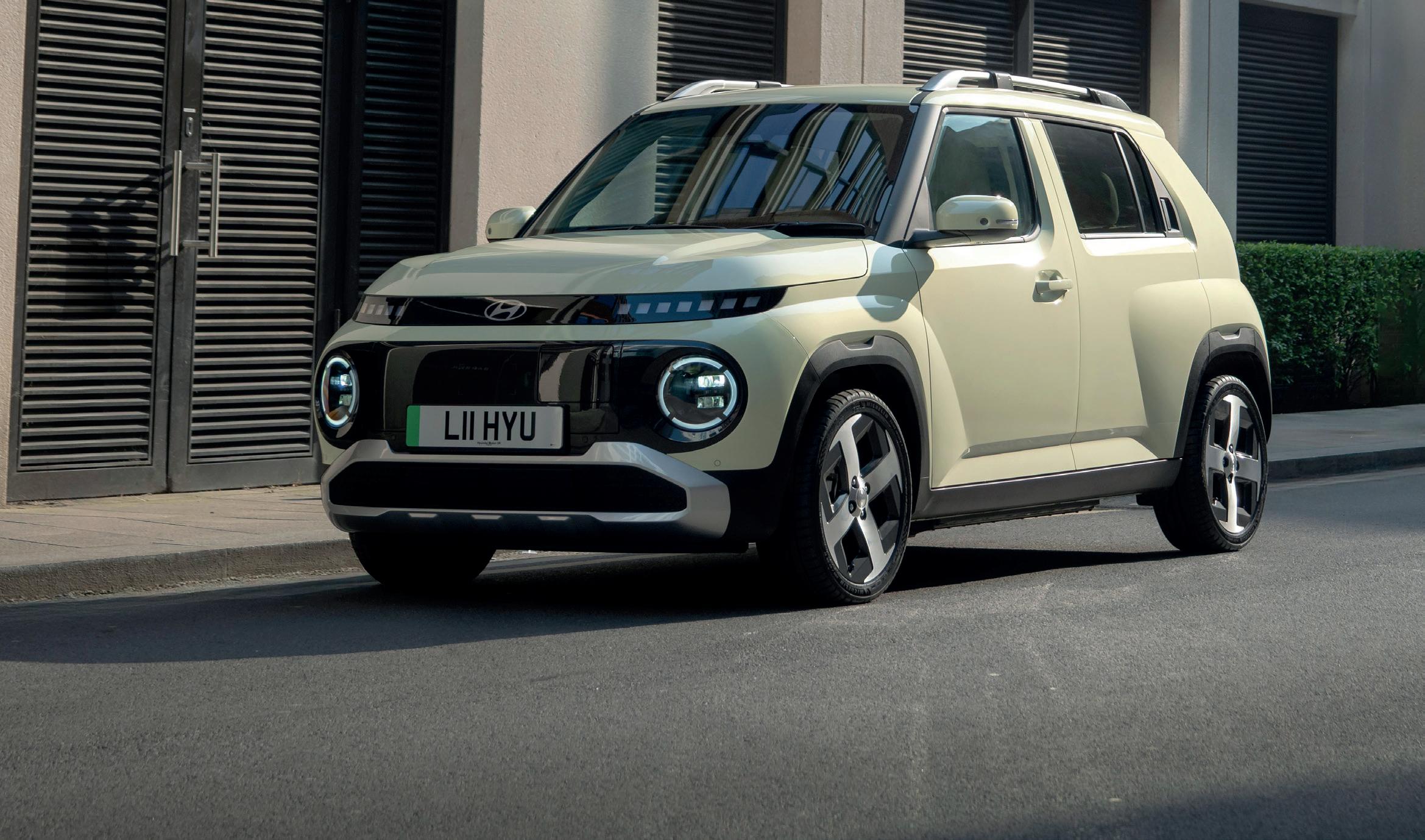
The Inster is another car we’ve cheated with. It launched in the UK in summer 2025 but both Matt and George drove it for the first time in 2026 and were immediately charmed by this unusual little machine. Its Fisher Price look and feel will definitely divide opinion, but amid so much bland automotive design, this quirky little pseudo-SUV exudes charm and character. It also packs remarkable practicality into its tiny 3.8-metre footprint and there’s genuinely space for four average adults on board. On top of (or beneath) that, Hyundai’s EV expertise shines through in a range of 224 miles and a city-friendly setup that makes urban motoring a breeze.
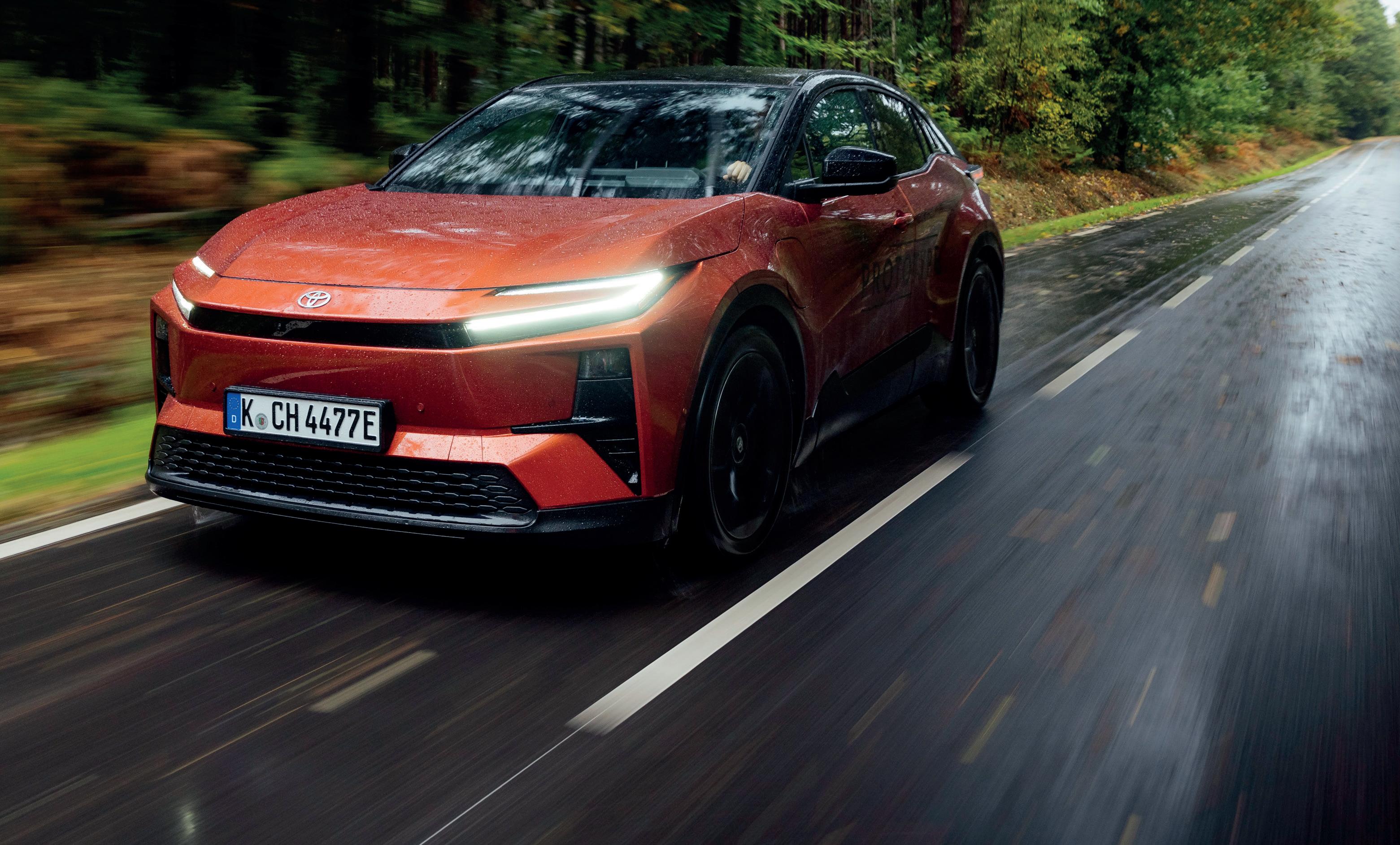
Toyota’s EV game got off to a wobbly start with the original bZ4X, and it’s still not as far along as some other “legacy” brands, but this year’s C-HR+ shows that the Japanese giant is getting its act together. Not only is this family-focused C-segment SUV Toyota’s best EV to date, it’s also a serious contender in a field of strong options. Starting at under £33,000, it’s competitively priced, well equipped, good to drive and offers up to 376 miles of range. It also comes with Toyota’s unrivalled 10-year warranty on car and battery, plus its traditional bombproof construction.
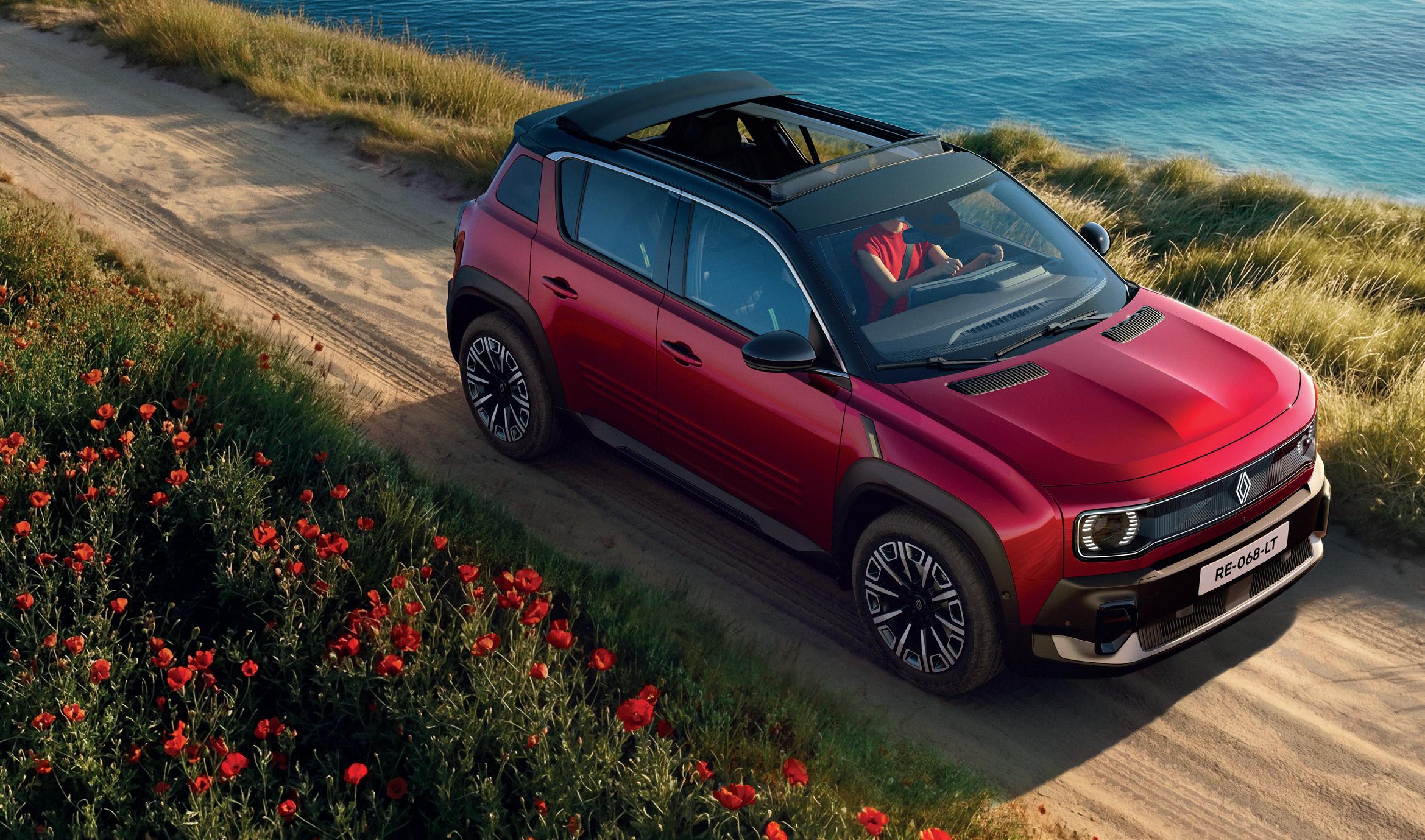
The Renault 4 just missed out on a place in the list of best cars of 2025, nudged out by its smaller sibling, the R5. However, it remains a brilliant car thanks to its well-balanced powertrain offering 148bhp and up to 249 miles, competitive £23,500 starting price, and charmingly retro design. To add to its appeal this year, Renault has gone back to its heritage again and fitted a fabulous canvas fabric sunroof. This 80x97cm panel means the 2026 R4 Plein Sud is the only car in its class to have a fulllength opening roof, which floods the stylish, spacious cabin with sunlight. If only we had more of the weather to go with it...
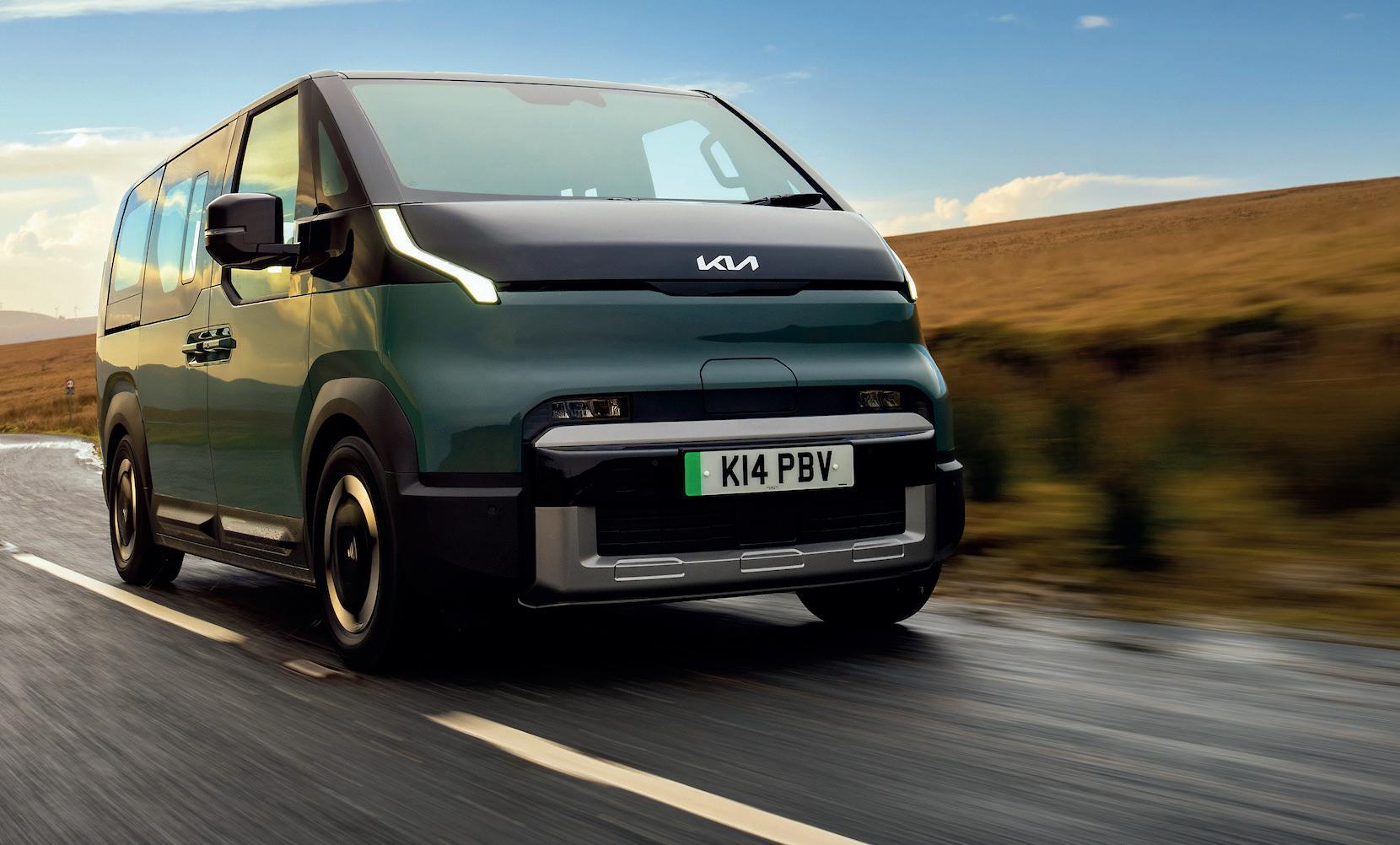
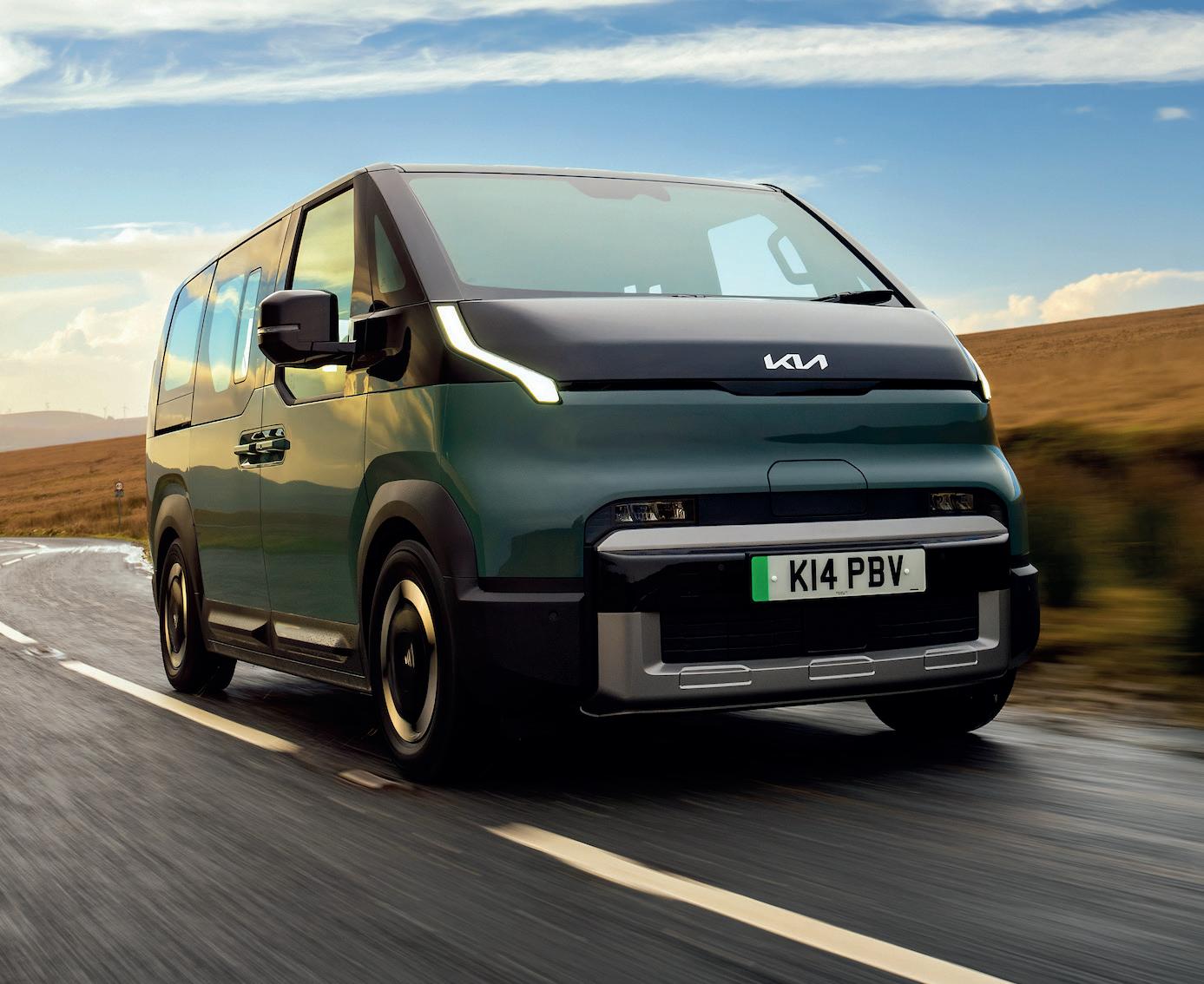
Technically, the PV5 is an electric van, not a car, but we’re not going to split hairs. In PV5 Passenger configuration, it’s a realistic everyday choice for families seeking more space and flexibility than your average SUV. The enormous van-based platform means acres of space for passengers and luggage (up to 1,300 litres), plus lots of practical storage spaces around the cab. Kia has just added a sevenseat option to boost practicality and appeal further. Under the surface, Kia’s EV expertise means this people carrier drives relatively well and can cover more than 250 miles on a charge. Best of all, starting at under £32,000 after the ECG, it’s almost half the price of its closest rival, the VW ID Buzz.
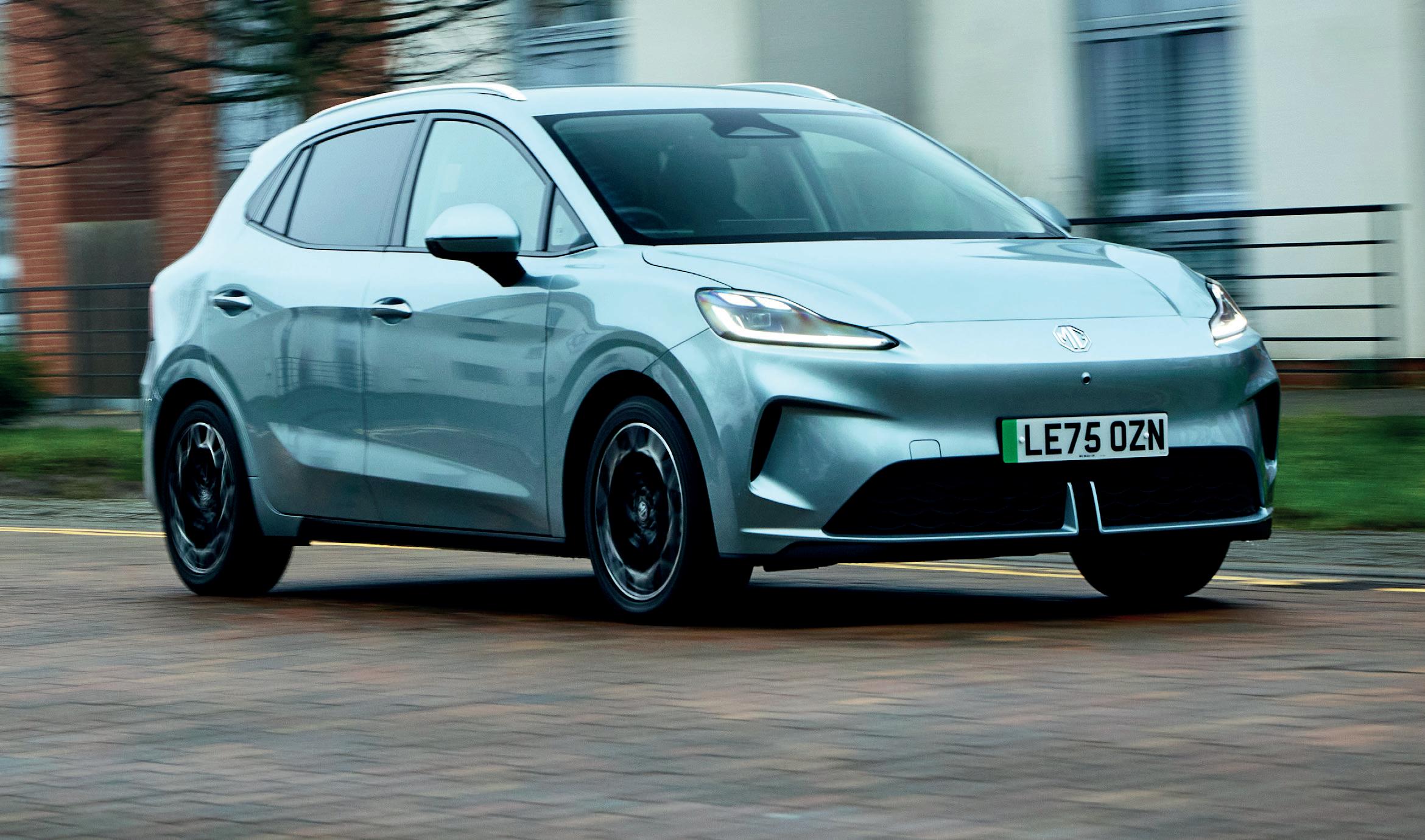
MG’s launch of two cars bearing the MG4 name earlier this year has caused some confusion. To be clear, the updated “regular” MG4 is a much improved car, but the car on our list is the MG4 Urban – an entirely new model built on a different platform, which offers more space for less money. It’s that level of value that has earned the MG4 Urban its place. While it’s not the most attractive or high-tech car on offer, it delivers Renault Megane or VW ID.3 practicality for Renault 5 or VW Polo costs. It’s also far better built and easier to use than old MGs, come well equipped and offers up to 250 miles of range.
Analysis of DVLA figures by the drivers’ organisation shows that there were 777,198 privately owned EVs registered in the UK in the final quarter of 2025, up from 533,039 in the same period in 2024.
Uptake increased across the whole of the UK, with average growth of 45.8%, and the data showed the largest change in areas that have historically lagged behind.
Private EV uptake is seen as vital to the UK’s aims to decarbonise transport. In recent years EV sales have been dominated by the fleet and company car sectors, where tax benefits make them a far more attractive option than petrol or diesel. Private buyers, however, have received far fewer incentives.
AA president Edmund King said the growth in private sales showed that interest in EVs was being driven by more than just corporate tax incentives.
UK-wide, Wales saw the sharpest increase in private EV ownership, rising 53.7% between Q4 2024 and Q4 2025. Behind it, Scotland saw growth of 45.7% and England 45.4%. While uptake remains lowest in Northern Ireland, there it also rose 44.9%.
The analysis also broke the English data down by region and revealed the differing rates of growth across the country. Areas where uptake has previously been lower recorded the sharpest growth while the shift has slowed in earlyadopting regions, such as London.
The North-West recorded a 58.8% increase over 12 months, with 80.365 privately owned EVs registered. The East Midlands saw similar growth, at 58.1%, up to 62,607 cars. Meanwhile, the South-East and London, which have led England’s EV uptake saw shifts of 39.6% and 24.4% respectively. The AA said this likely reflected the capital’s position as an early adopter of EVs, meaning growth is being measured against a more established ownership base.
Despite slower growth the South East remains the English region with the highest number of privately owned EVs, with 139,578 vehicles in Q4 2025.
Edmund King said: “Private EV ownership continues to accelerate, with more than 244,000 additional electric cars registered to private owners compared with the same period last year.
“What is encouraging is that the strongest growth is now being seen outside some of the more established EV areas. This suggests the switch to electric is broadening across the country and these figures are even more compelling as they relate to private sales rather than fleet or company sales that might be influenced by further tax incentives.
With fewer incentives for private buyers, vehicle price has been seen as an obstacle to private ownership, with EVs often more expensive than petrol or diesel counterparts. However, the past 12 months have seen an increase in more affordable EVs and those offering price parity with petrol models.
The number of private car buyers going electric has increased by almost 50% in the last year, according to new AA data.
The early months of 2026 and recent fuel price volatility have also seen more motorists becoming aware of the running cost benefits of EVs.
Separate AA analysis has shown a 43% rise in views of secondhand EVs on AA Cars between March and April 2026, against a backdrop of rising fuel prices.
The AA’s latest EV Readiness Index, published in March 2026, also found that used EV prices were on average 10% cheaper than petrol in Q1 2026 and that conditions for switching to electric are improving.
King noted that while the Index results were positive, the transition “remains fragile” due to variable confidence around charging and vehicle longevity. He added: “More EVs on driveways is good news, but the growth in ownership needs to be matched by growth in confidence.”
This is Jasmin. She’s one of many business owners who already use a smart meter to feel more in control of their budgeting, because smart meters help you track your energy use and costs over time.
So like Jasmin, you can spend less time guessing and instead know how much you’re spending on your energy bills.
Search ‘get a smart meter’ today.


Kyle Brown, CCO at energy data specialists Chameleon Technology explores how revolutionary charging systems can turn cars into household assets and help create a more flexible energy grid
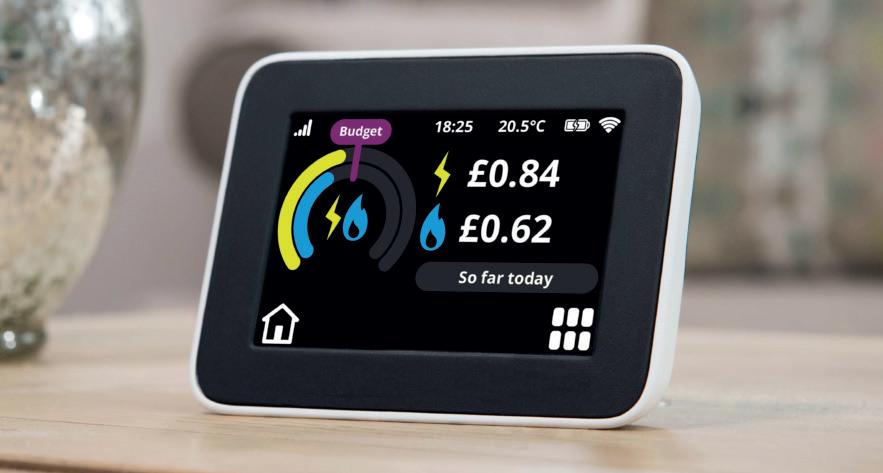
It finally feels like we’ve tipped over the precipice into mass adoption of electric vehicles. With more and more green licence plates on the road, consumer understanding and opinion of EVs appears to have finally overcome the years of misinformation.
This may feel like a monumental shift – but the biggest change is still yet to come. The next phase of EVs means their recognition as flexible energy assets, capable of storing electricity and feeding it back into homes or the grid during periods of high demand.
The strides being made in vehicle-to-everything (V2X) functionality are key to the wider vision of a modernised energy grid: a free-flowing, flexible network of energy, where consumers store or feed excess energy back to the grid. This supports the necessary shift to renewable integrations and wider electrification.
This shift from purely transport to a portable battery will require the industry to really distill the benefits of this capability to the core benefits for households, including reduced energy costs, and improved grid stability.
EVs are becoming one of the most significant and fast-growing sources of home electricity demand. New analysis based on energy data from 48,000 British households shows that overall energy use fell in December 2025 compared with December 2024 – yet EV charging increased by 6%, making it the only household energy category to record an increase.
For manufacturers, this shift presents new opportunities. EVs with intelligent, bi-directional charging capabilities can soon become valid tools for home energy management.
ARe-framing the idea of EVs as ‘home batteries on wheels’ will necessitate learning from the original scepticism of EVs. Combating range anxiety meant helping consumers rethink how they filled up their cars. It took time, but with the help of EV tariffs and shifting consumer habits, things began to click. The same efforts
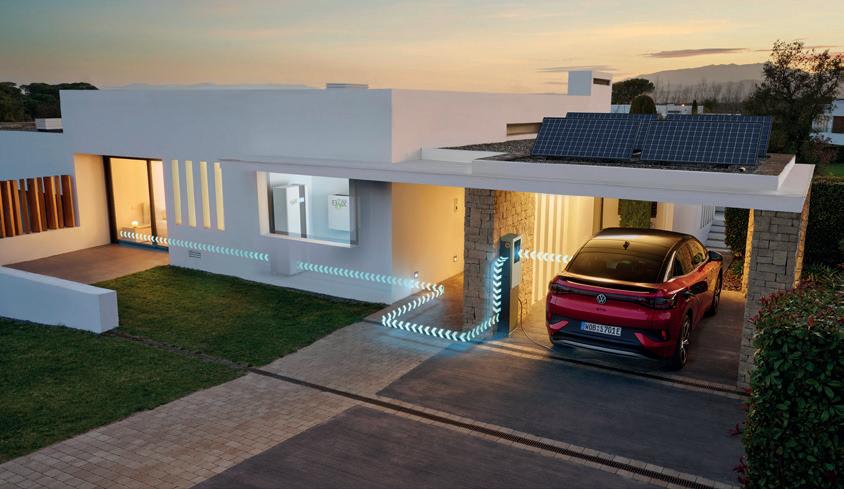
will be crucial for introducing this idea of mobile batteries with V2X.
There are a plethora of possibilities to unlock by turning EVs into active energy assets. But cultivating this V2X system relies on real-time energy data. Why? Understanding the amount of energy used, and the behaviours behind this usage, is integral to recognising how best EVs can become active energy assets.
For consumers, this real-time data will be a crucial part of incentivising uptake. For innovators, data overcomes any friction between an initial idea and proving the use case. If they can see how much energy an EV could provide to their house – and how much money this could save them – then they’re far more likely to become active participants.
The aim behind vehicle-to-grid (V2G) is that EV owners can provide energy back to the grid to enhance its flexibility and efficiency. In return, these owners receive payment for it. Then, when it comes to vehicle-to-home (V2H), if consumers can see when there are surges in demand they can plug their vehicle into their home at peak times to avoid paying for grid electricity.
Crucially, all of this helps to reduce the level of strain on the grid, while also plugging the gap when renewable energy supplies are naturally lower.
If the industry can collectively drive forward a cohesive vision of EVs not only as vehicles but as strategic energy assets, then the future of a fully-flexible, electrified grid is an awful lot closer to realisation.