Car makers lobbied to scrap 2035 ICE BAN
BMW, Ford, Nissan and Toyota, along with component manufacturer Bosch wrote to the Secretaries of State for Scotland, Wales and Northern Ireland in April calling for a rapid review of the ZEV mandate and an “open technology” approach to sales from 2035.
Currently, sales of any combustion-engined car or light van are due to be banned from 2035.
The letter, obtained by the Fast Charge newsletter, describes the current ZEV trajectory as “unsustainable” and “not fit for purpose”.
The companies want the rules to be changed to allow a multi-pathway approach beyond 2035 to “provide a range of more affordable low and zero emissions vehicles”. This, they suggest, should include “highly efficient ICE, hybrids, plug-in hybrids, range extenders and combustion engines (when utilising green steel and sustainable fuels)”.
They argue that this is in line with proposals under consideration in the EU, which will require 90% of new cars and LCVs to be zero-emission from 2035. However, such a move flies in the face of government ambitions for all new car sales to be zero emission vehicles by 2035.
The manufacturers, which employ 30,000 people in the UK, also urge the Government to bring the UK’s CO2 “regional framework” more closely in line with Europe’s, arguing that further divergence creates added challenges for the automotive sector.
The Government is already under intense pressure to revise the ZEV mandate targets, which will require 80% of all new cars and 70% of vans to be zero emission by 2030, and 100% by 2035.
In the letter, the five companies claim the 2030 target is “significantly higher” than the EU’s CO2 regulatory framework. They warn that it doesn’t reflect real customer demand and brings “significant” compliance costs in the form of fines or CO2 trading.
A spokesperson for BMW said the brand was “heavily invested” in EVs and in 2025 exceeded the ZEV mandate target, with a 28.1% EV sales mix.
However, they added: “We have concerns about the trajectory of the ZEV mandate as the sales requirements for 2026 and beyond do not reflect current levels of consumer demand.”
Toyota has long championed a multi-powertrain pathway for emissions reduction and a
Leading car makers privately lobbied government ministers to allow pure petrol and diesel cars to remain on sale in the UK beyond 2035.
spokesperson told EV Powered the brand "views carbon as the enemy".
The spokesperson added: "While consumer uptake of electrified vehicles continues to grow, the pace of adoption has yet to fully match the pace of regulatory ambition.
"It is important that policy frameworks support continued progress towards net zero while reflecting consumer needs. We believe policymakers should remain open-minded about the range of low- and zero-emission technologies that can help reduce carbon emissions and accelerate the transition."
Ford told EV Powered its commitment to the future remained unchanged, with five new European-built electrified models in the pipeline and a belief in a zero-emissions future. However, its CEO Lisa Brankin said that the mandate and market "have drifted apart" and called for the ZEV Mandate to be “recalibrated”.
A Nissan spokesperson said Nissan remained committed to a fully-electric future. However, they added: "The UK ZEV Mandate must align with real life consumer EV demand to ensure a gradual transition."
VOLKSWAGEN ID. POLO arrives with £25k price
Launch editions on sale ahead of cheaper
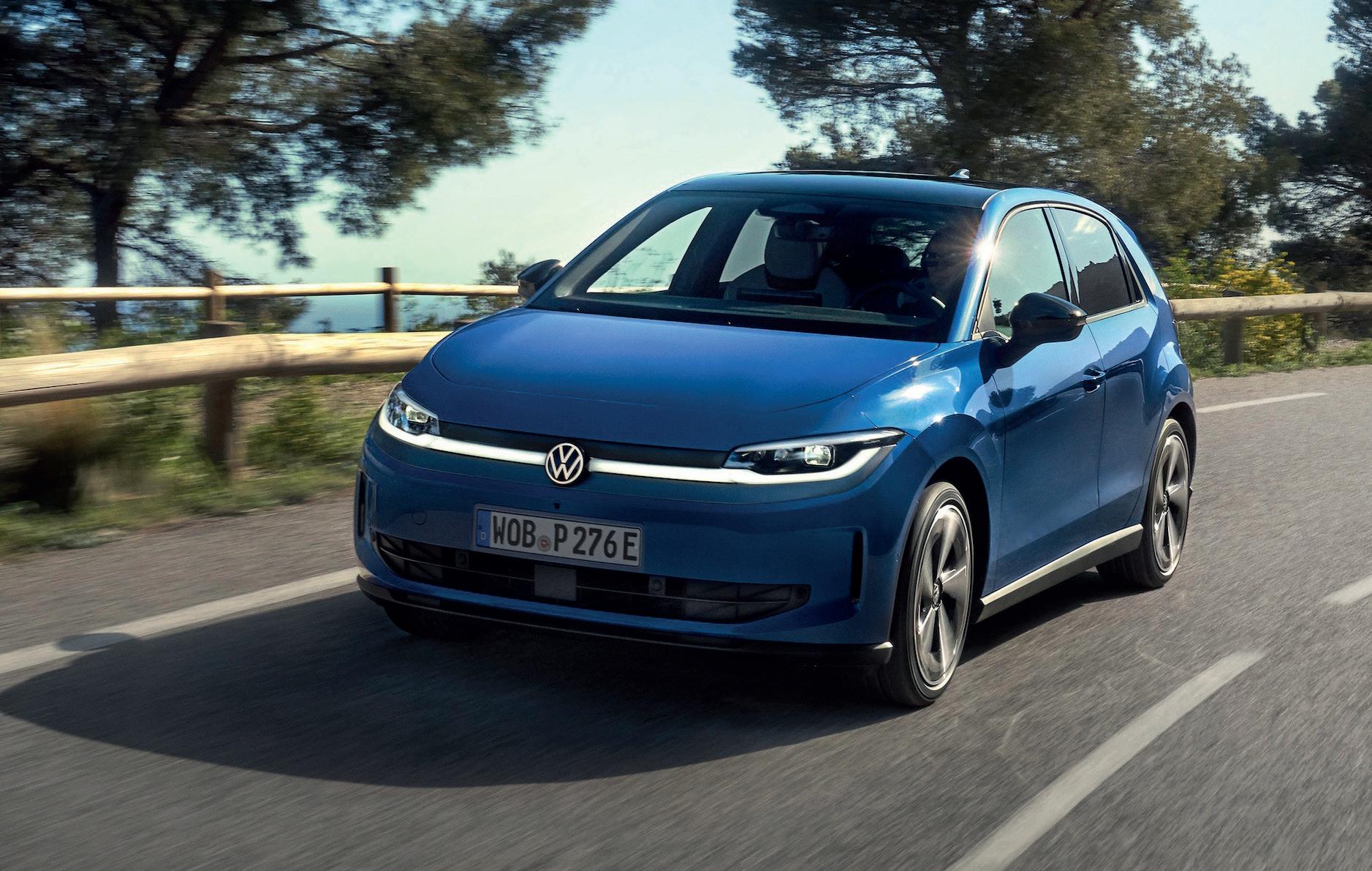
The Volkswagen ID. Polo has gone on sale, priced £25,555.
VW’s first all-electric B-segment car is now available in two special launch editions, ahead of series-production cars arriving in September.
The ID. Polo Life Launch Edition and Style Launch Edition, are both open for orders with a 52kWh battery and 208bhp front-mounted motor. Prices for the Life model start at £28,830, while the Style model is £32,995.
The headline £25,555 entry price applies to the Life Launch Edition with the smaller 37kWh battery and 133bhp motor, which will only be available from existing stock.
The special editions bring extra equipment on top of the standard Life and Style specification, including heated seats, dual-zone climate control, and in the Style model, a panoramic sunroof.
From September 10, the range will expand with the regular Life and Style specifications. Prices
mainstream models due in September.
will then start at £23,945 for the Life 37kWh with a 114bhp motor. Stepping up to the 133bhp motor takes the price to £25,055.
All 52kWh/208bhp versions of the ID. Polo qualify for a £1,500 Electric Car Grant, with prices starting at £28,330 for the Life version and £31,745 for the Style model.
ELECTRICITY VAT cut to save EV drivers money, if you charge at home

Six-month scrapping of energy tax set to widen gap between public and private charging costs.
Home charging an EV will get cheaper this winter after Prime Minister Andy Burnham announced he was scrapping VAT on electricity bills.
In one of his first announcements after taking over from Keir Starmer, the new Prime Minister confirmed a temporary end to VAT on domestic energy bills.
The change will come into effect from October 1 – the day of the next Ofgem energy price cap change – and will remove the current 5% VAT charge from home electricity bills.
The move could save an average EV driver up to £25 per year and has been widely welcomed. But observers have warned it will widen the gap between those who can charge at home and those reliant on public charging, where VAT remains at 20%.
PEUGEOT E-208 GTI roars into showrooms
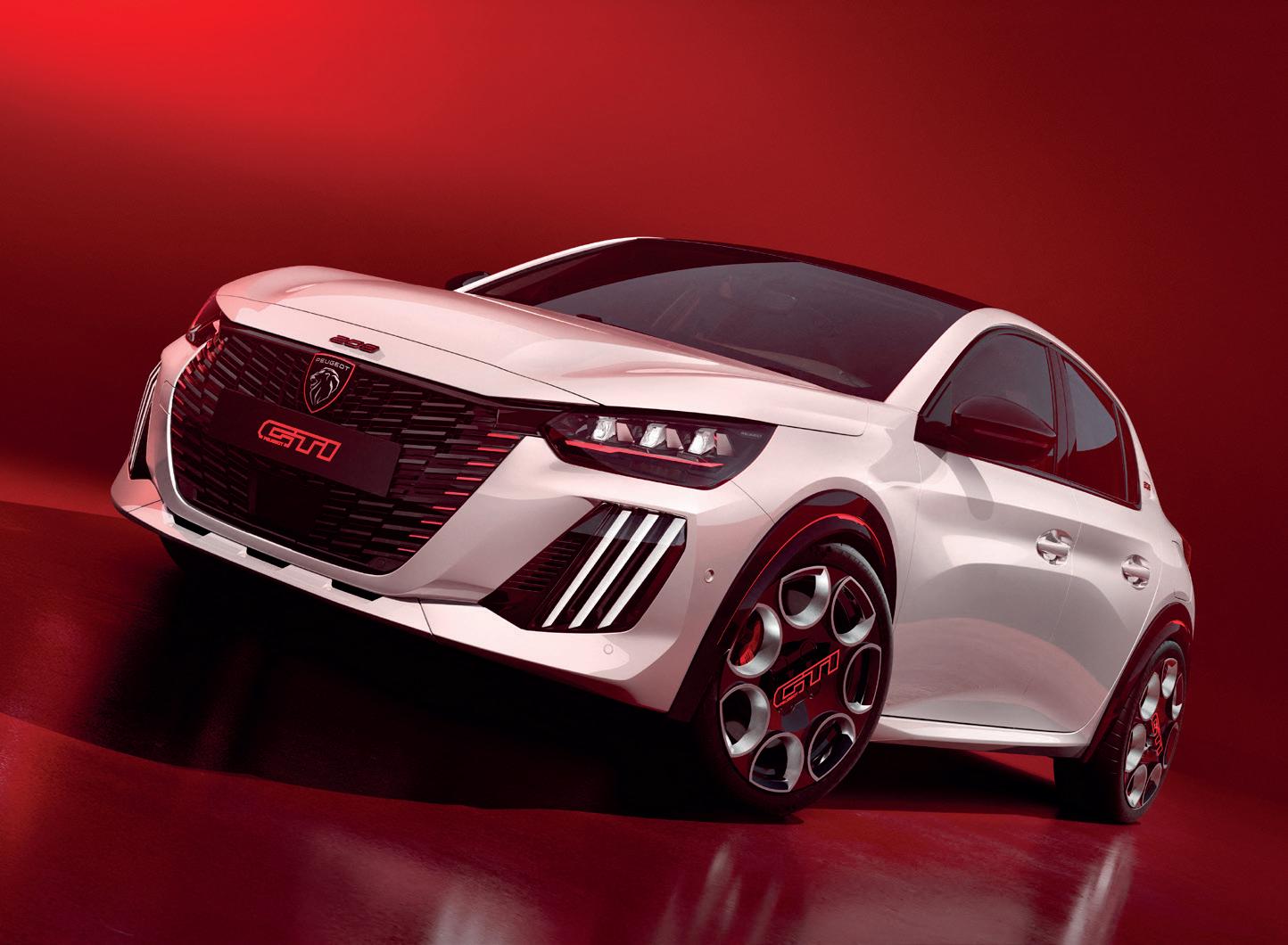
Peugeot has confirmed that its upcoming E-208 GTi will qualify for the £1,500 Electric Car Grant, with order books now open.
NEW BMW IX5 gets NEUE KLASSE look and almost 500 miles of range
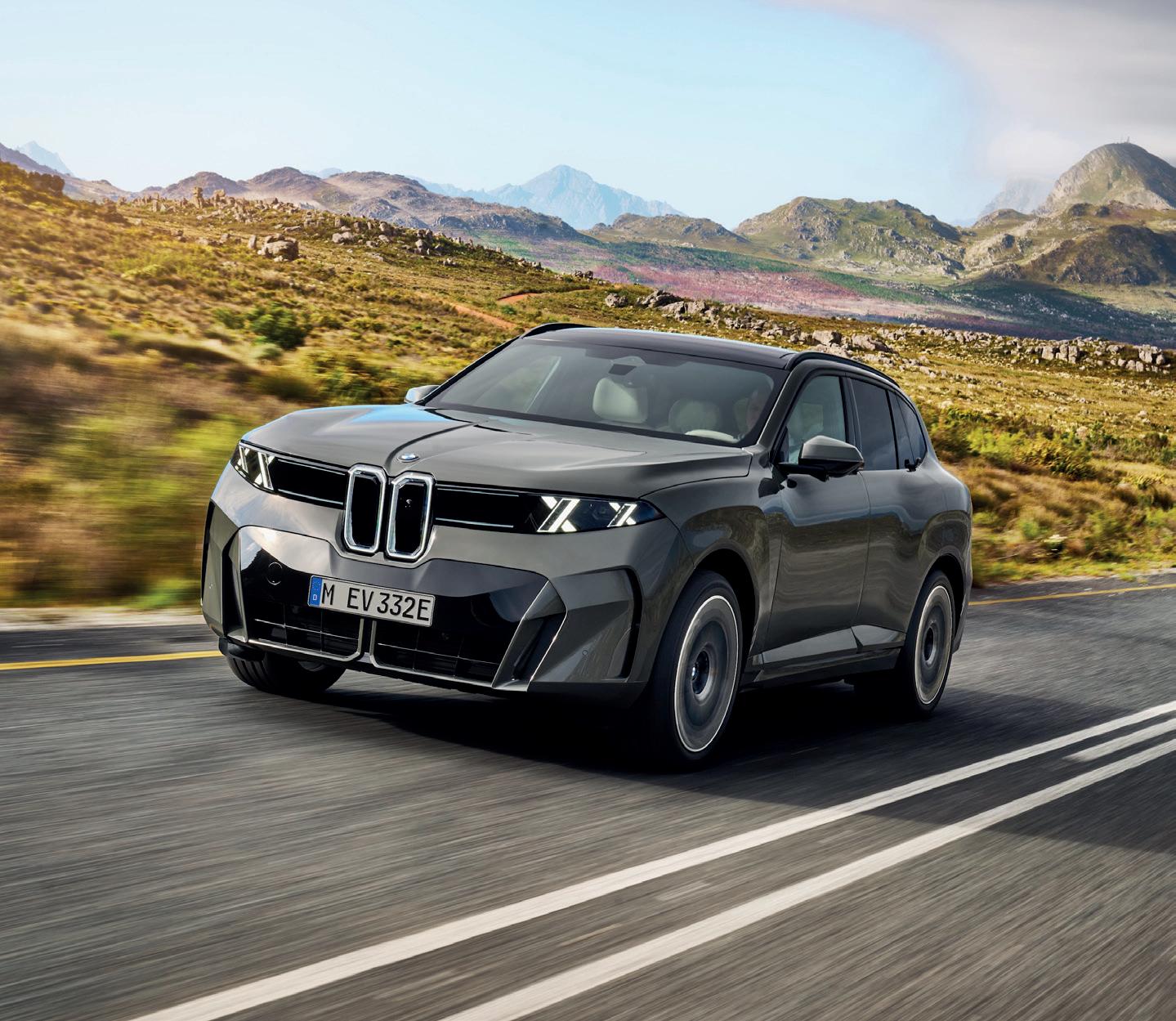
The new iX5 marks the first time the X5 has been offered with a fully electric powertrain, and adopts the ‘Neue Klasse’ design language introduced by the new iX3 and i3.
While it doesn’t share the same platform as those two models, the new iX5 does use the same ‘Heart of Joy’ software stack, and gets 800V architecture and some seriously big numbers.
The iX5 features a 141kWh battery – the largest fitted to any production EV in Europe – capable of up to 497 miles of WLTP range. The battery is among the fastest charging in Europe, with a peak of 450kW.
BMW has only shared technical specs for one variant so far. The iX5 60 xDrive gets a two-motor all-wheel-drive setup producing 570bhp and 593lb ft of torque. This translates into a 0-62mph time of just 4.7 seconds and a top speed of 130mph. Other variants are expected to follow.
Initially priced from £34,995, the all-electric spiritual successor to the iconic Peugeot 205 GTi qualifies for the band 2 Government discount, meaning that OTR prices actually start from £33,495.
Unveiled at the 2026 24 Hours of Le Mans, the E-208 GTi shares its e-CMP Stellantis platform with the highly-acclaimed Abarth 600e Scorpionissima and Alfa Romeo Junior Veloce, and brings a lower, wider and more aggressive look to the compact hatchback.
The E-208 GTi packs 276bhp and 221lb ft of torque from a single front-mounted motor which will allow the electric hot hatch to get from 0-62mph in just 5.7 seconds.
It also features a mechanical limited-slip differential, and bespoke suspension, steering and braking setup, including 355mm discs and four-piston callipers.
Under the skin, Peugeot’s electric GTi will feature the same 54kWh battery as the standard E-208, offering up to 217 miles of range.
The new BMW iX5 is here with a bold look and some of the fastest charging around.
FIAT MULTIPLINA CONCEPT hints at super-cheap mini-MPV
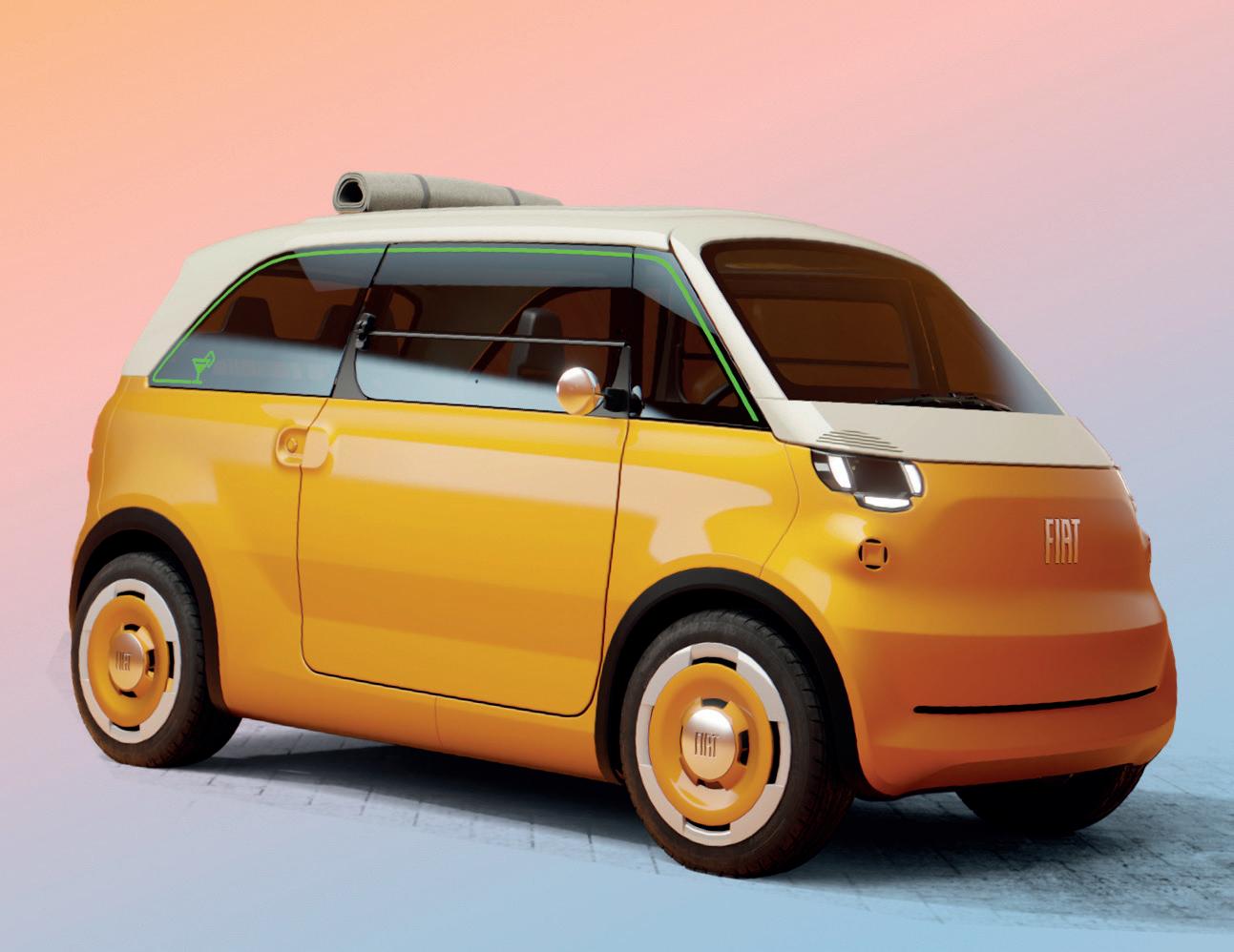
Fiat is set to launch a new urban four-seat EV called the Multiplina as it expands its micromobility line-up.
The Multiplina Concept was revealed at a special micromobility event in Rome, where the Italian brand outlined its plans for super-affordable passenger and commercial EVs.
The Concept is inspired by the iconic Fiat 600 Multipla from 1956. That compact MPV was based on the tiny 600 city car but could carry six people in its unusual teardrop-shaped body.
Conceived as the “missing link” between the Topolino quadricycle and a car, the Multiplina Concept is based on the EV underpinnings of the Topolino but will offer four seats and enhanced technical specs.
Fiat says that the boxy urban runaround will “maximise space efficiency through an intelligent, human-centric architecture”.
It is understood that the Multiplina will be built to the L7 quadricycle standard, rather than the L6 standard to which the Topolino conforms. That could mean a 55mph top speed rather than the Topolino’s 28mph, and a bigger battery offering more than the current 46-mile range.
ICONIC LONDON ROUTEMASTER goes electric
London’s world-famous Routemaster bus has been brought into the 21st century with an all-electric makeover.
Yorkshire EV specialist Magtec transformed the 1960s open-top diesel bus into a fully electric vehicle, packaging a 200kWh battery within the original bodywork to deliver a 120-mile range without altering its classic appearance.
Magtec converted the 1960s example for tour company Golden Tours, which is now operating it on its sightseeing route around the capital with its iconic red livery. The firm has already begun work on two more hard-top vehicles which will be painted pink and used for Golden Tours’ afternoon tea on wheels service.
Matt Kasprzycki, senior programme manager at Magtec, said: "The Routemaster is one of the most recognisable vehicles in the world and preserving that appearance while completely transforming what powers it was the central engineering challenge.
"We also engaged closely with the Routemaster enthusiast community throughout the project, and the response has been overwhelmingly positive.”

GEORGE CLARKE:
‘ We’ll look back at carspetrol and wonder what the hell we were doing ’
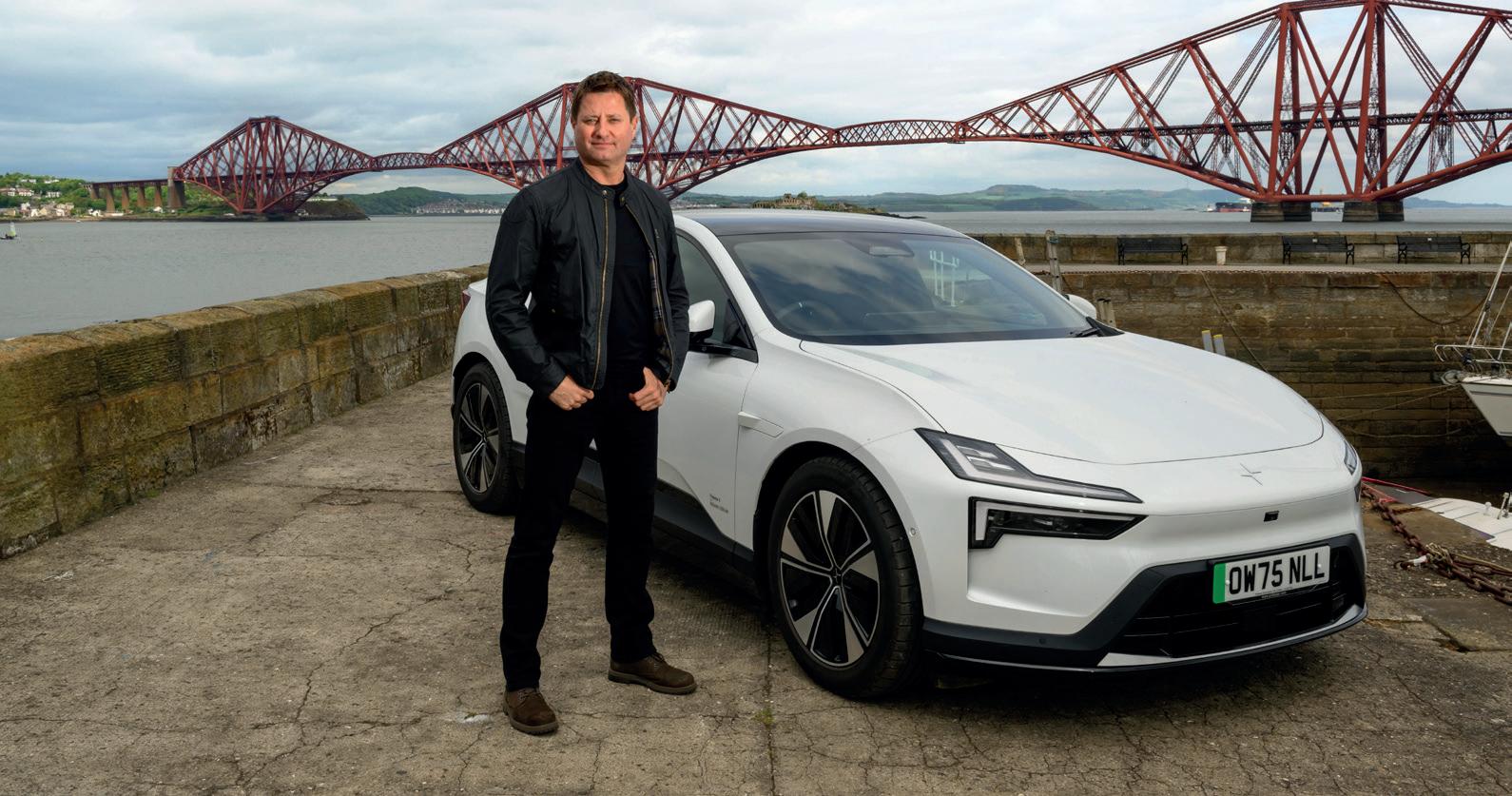
TV’s favourite architect and Polestar brand ambassador talks to EV Powered about his false start with EVs, the longstanding love affair between architects and Swedish cars, and why he’ll never buy a Tesla
11 GEORGE CLARKE INTERVIEW AN
Ifyou find yourself reading this, then you’re probably not averse to a bit of ‘lifestyle’ telly of an evening, or a Sunday supplement at the weekends.
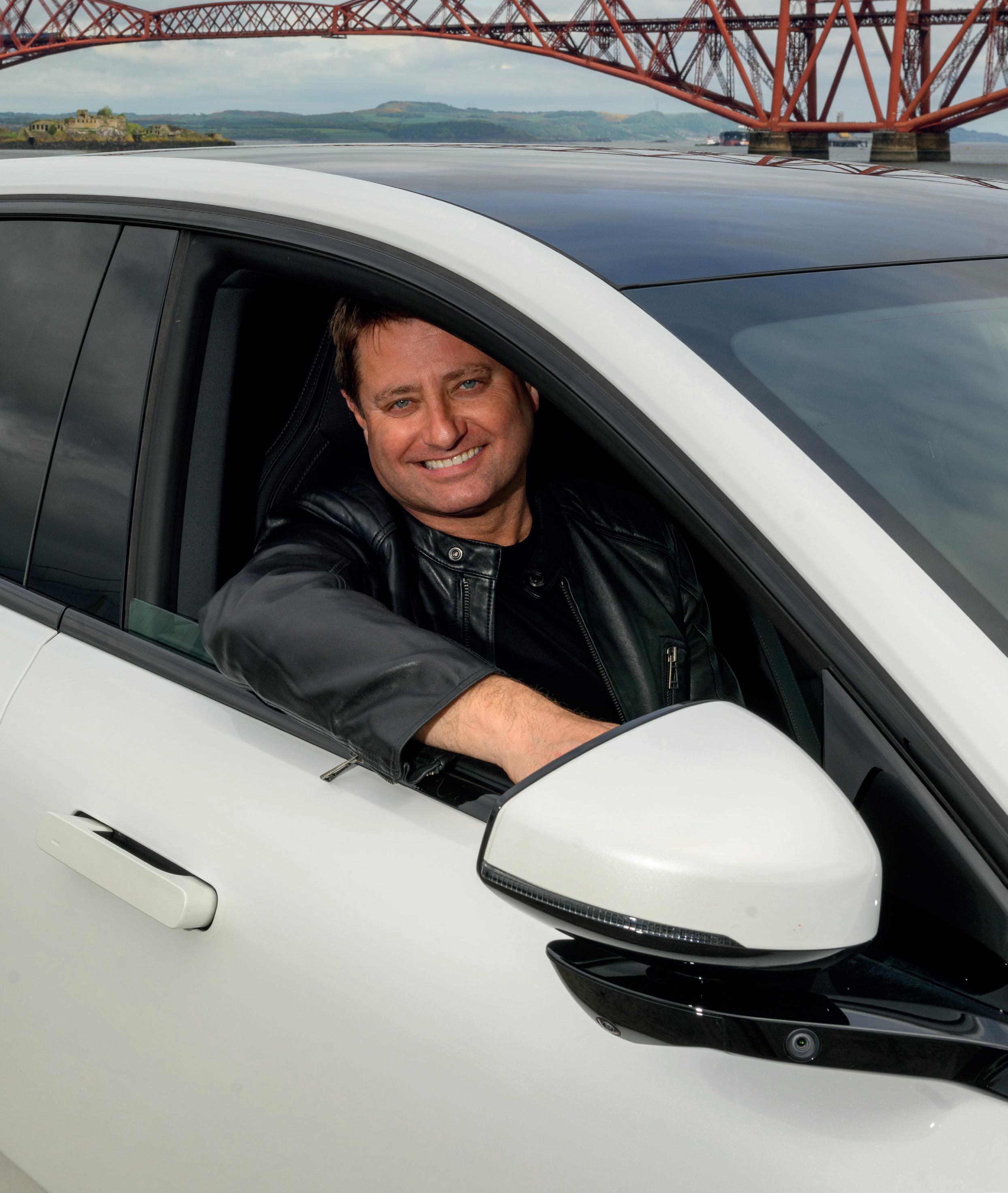
So you’ll be familiar with today’s interview subject: George Clarke – architect, TV presenter and, as we’re about to find out, a fan of EVs, especially those from Sweden.
Speaking from his home, Clarke looks very much the part. Wearing a black T-shirt, he’s talking to EV Powered from what appears to be a very airy, openplan kitchen. Cascades of natural light tumble in, creating the impression that his setup could be any of the achingly cool Nordic capitals, and not, in fact, West London.
With a broad, cheerful Sunderland accent, he immediately dispatches my first question with a hefty dose of North East self-deprecation.
“You can’t be an architect if you don’t wear a black T-shirt every day, right?” he laughs. “And it makes you look slimmer - that’s the main reason I do it, it’s pure, pure vanity.”
But if his fashion choices are driven by presentday considerations, Clarke’s automotive tastes are more deeply rooted and can be traced back to childhood.
SCANDI-COOL
“Why do I love Swedish cars? Well, there are two reasons,” he explains. “Firstly, when I was growing
up, my dad had a Volvo 240 Estate – it was kind of boxy, quite blocky, and had a quirky coolness to it, and I mean that in a really positive way.”
It was the Gothenburg car’s unapologetic sense of national identity via design that struck a chord that remains with Clarke to this day.
“At that time there were other cars like the Ford Capri that thought they were uber cool,” he recounts. 'Meanwhile, the Volvo would park alongside and almost give them two fingers. It was like: “we’re Swedish, we’re a bit quirky, we’re a bit eccentric, and we’re passionate about good design - what are you going to do about it?'
CONTINUED ON NEXT PAGE
Fast forward a few years, and while reading Architectural Studies at the University of Newcastle, Clarke developed a life-long appreciation for Scandinavian design, which then led to a life-long love of Swedish cars.
We’ve all heard the cliché about architects and Swedish cars, but if there’s anyone to explain the age-old trope that places the creative behind the wheel of a Saab, a Volvo – or a Polestar – then it’s Clarke.
“I think as architects, we all love Scandinavian design in general,” he muses. “A favourite architect of mine is the Finnish architect Alvar Aalto, and he really pioneered the use of human-centric modernism by using plenty of natural light and natural materials in his work – everything he did was quite light and quite minimal, but elegantly designed.
“I think with any piece of design, you need to have an emotional connection pretty quickly for it, and that’s what Scandinavian design – and by default car makers – manage to do so well.”
PASSION FOR INNOVATION
Almost certainly, a cynic would scoff here and suggest that he’s paying lip service to Polestar because he’s a brand ambassador for the Swedish performance marque.
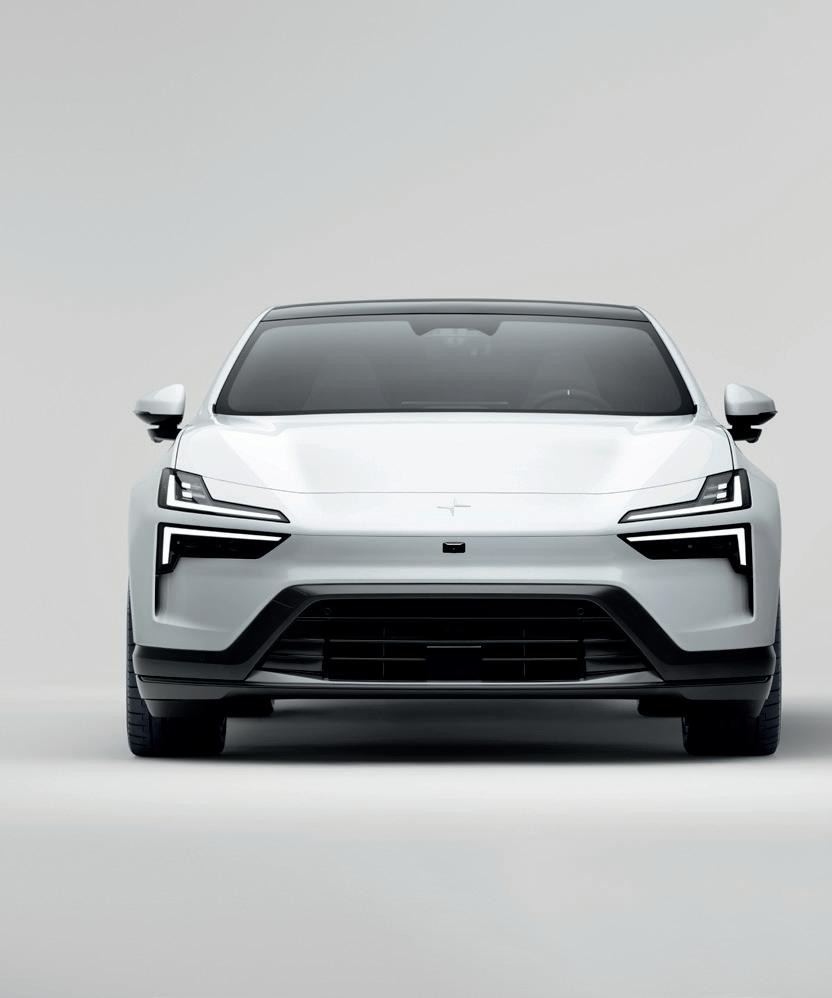
And while, yes, this particular deal has put him behind the wheel of Polestar 4, it’s a general love for innovation that positions Clarke firmly in the EV camp. It’s not always been this way, though.
“Before I got the Polestar 4, I’d had EVs in the past,” he explains. “But while they were lovely pieces of design and great to drive, the range was terrible. That was a real stress in my job, which involves doing a lot of miles, so I didn’t have one for five or six years.
“But with this, that gap of what I expected then and what we have now has completely disappeared. Instead of using all these apps and accounts on my phone to charge the car, I just plug in, tap, and that’s it.
“All of the technology around charging, payments, and bigger batteries has changed massively
GEORGE CLARKE 12
in such a short space of time. You’re no longer hanging around these slow public chargers, which used to make EV ownership a bit of a chore, unfortunately. Now, though, I’m so glad I’ve made the switch properly at last.”
While emissions reduction is another motivation behind Clarke’s move to electric motoring, he refuses to be evangelical about the issue. “After all, I don’t think any of us are perfect, and I’m sure that even some of the most amazing eco warriors could probably look in their cupboard and find something that’s not as sustainable as they thought it was.
“I know there’s a debate about batteries, but crikey, we can have an even longer debate about oil if you want,” he sighs with exasperation. “In a very few years time, I am sure people are going to look back and say ‘why the hell were we burning petrol to power cars?’
“It’s like now we look back and say ‘why did we put asbestos in buildings’? “I think the electrification of the world is happening, and EVs are part of that.”
13 GEORGE CLARKE INTERVIEW AN
And Clarke believes that electrification will be built on a symbiosis of design and technology.
“The more innovation in design happens, then the more innovation will happen in technology,” he continues. “Hopefully, we’ll then realise we need to live in an electrified world because we can generate electricity by renewable clean, green ways – that’s the way we’re going with our homes, and that’s the way we’re going with our cars.”
AN EMOTIONAL CONNECTION
When it comes to Polestar’s net zero goals, the Swedish firm’s roadmap is simple: Halve pervehicle-sold greenhouse gas emissions by 2030; build a climate-neutral car by 2035, and achieve climate neutrality five years later.
Without question, Polestar’s ‘0 Project’ appeals to Clarke’s moral compass. Yet it’s Gothenburg’s emphasis on uncluttered, quality design that holds the most sway. After all, the car you drive is “your home away from home”.
Indeed, it was a road trip across New Zealand that cemented the 52-year-old’s relationship with Volvo’s sister brand.
“I was filming a show in New Zealand and the production team asked me what I wanted to drive on this architectural roadtrip throughout the country, and I said ‘well, what about a Polestar?’” he recalls.
“I’d been aware of Polestar for a few years, and they really stood out for me in design terms. The sustainability credentials are really interesting, too, so they organised me a Polestar 4 from a dealership in Auckland.
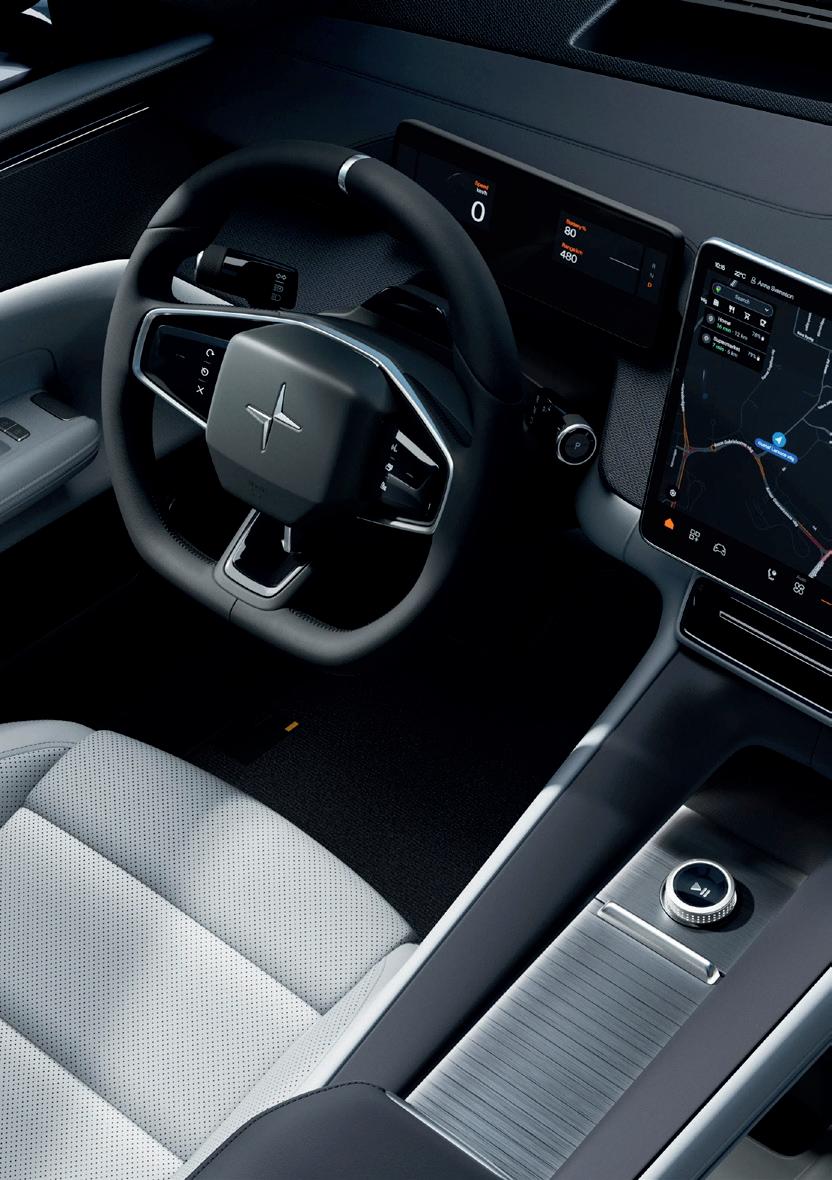
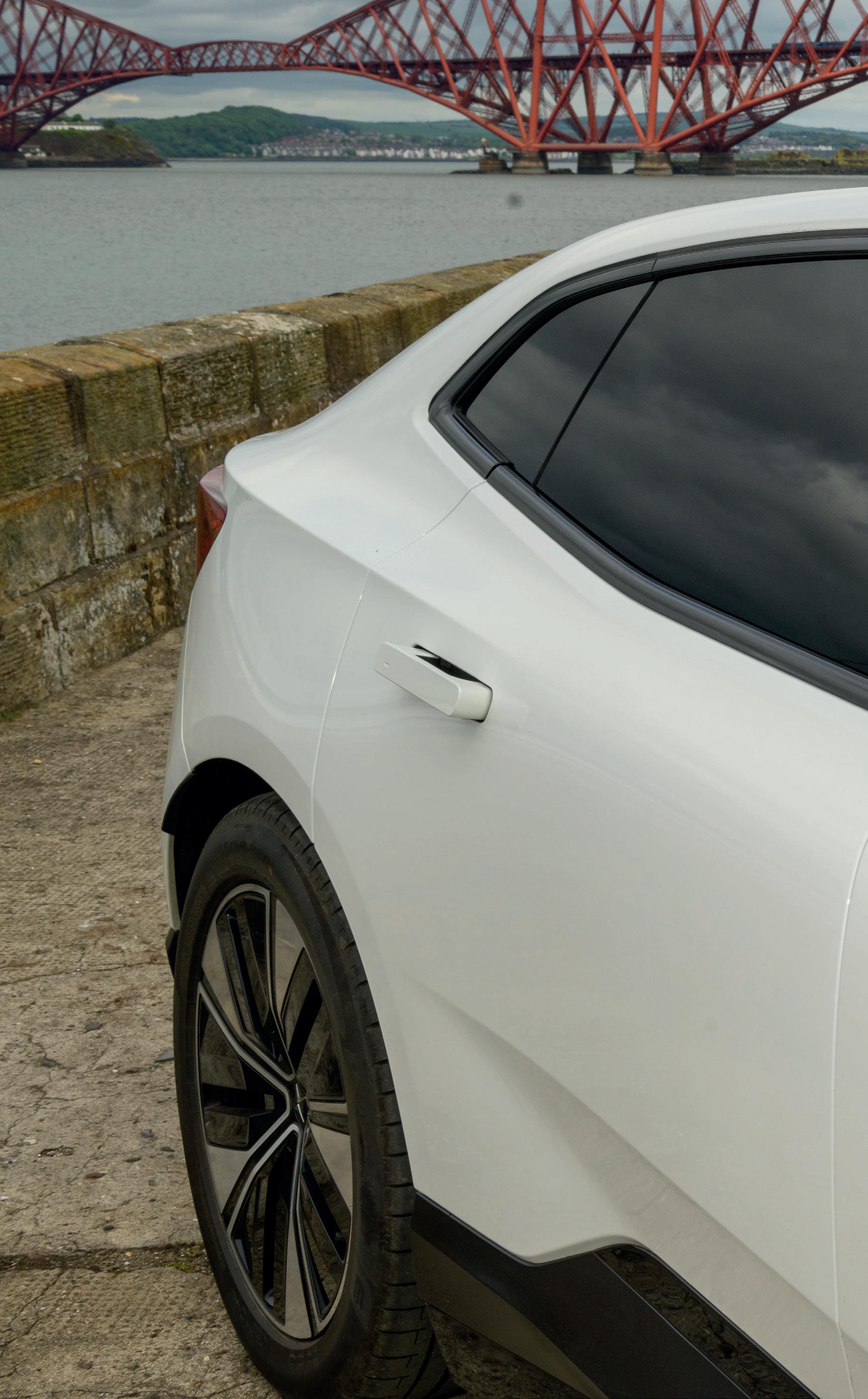
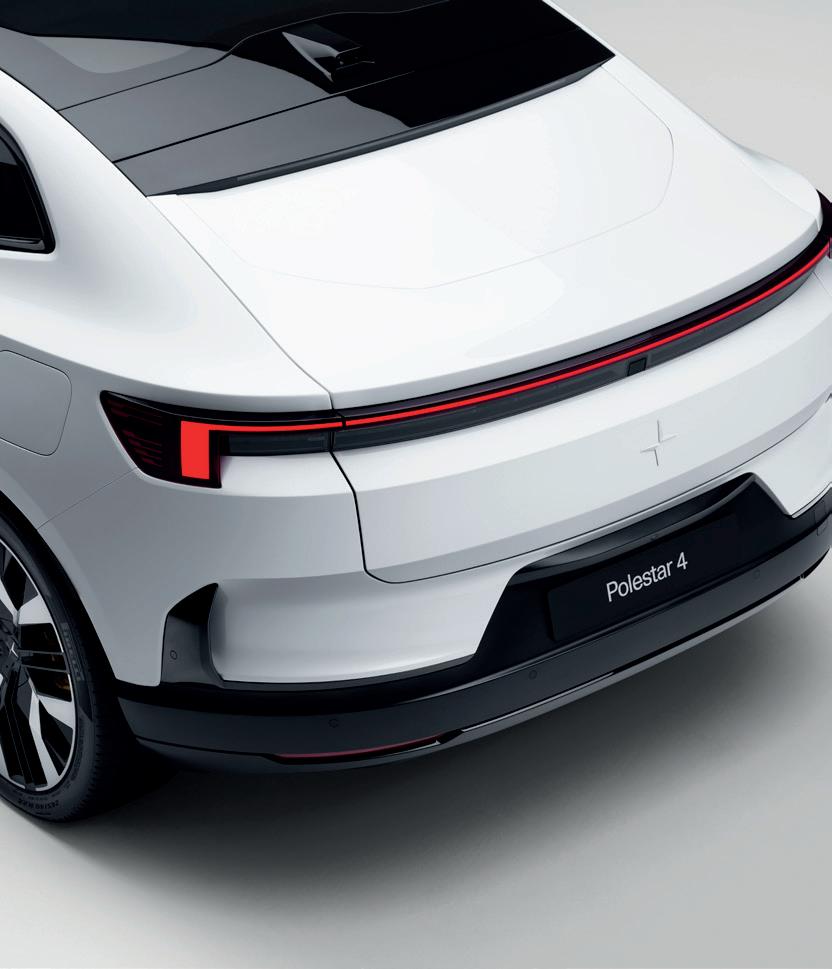
“When I picked it up, it was brand spanking new, super clean and all ready for me to go. I thought, ‘that’s a smart looking car’ and then I got inside and it was a proper ‘wow’ moment for me. It was a white car already, so quite light and minimal anyway – but you’ve got this huge expanse of glass over your head, and it didn’t take me long to develop an emotional attachment with it.
“For me, it’s great to have that connection, because your car is like a home on wheels. You spend a lot of time with your car, and it’s a piece of architecture that’s enveloping you.
“I think being in your car is just like being at home or at your desk, because you’ve got a tangible connection with it – you’re touching the steering wheel, you’re sitting in that chair; you’re touching screens and you’re adjusting things. I think that connection between a human and a piece of design is a really powerful thing.”
If a car is like an extension of your home, it can also be an expression of your character. Which brings us to a serious moral struggle for Clarke.
“I’ll be honest with you, I used to be an enormous fan of Elon Musk,” he admits. “I’ll say that on record too, because I thought what a phenomenal,
innovative, disruptive person. I remember listening to audio books about him – you can’t look at SpaceX and say that’s a bad company, can you? I mean, they’re working with Nasa!”
Yet with Musk’s slide into far-right politics, Clarke – like so many others – has revised his opinions on the controversial figurehead and been turned off Tesla for life.
“I’ve completely gone off the guy and even if I weren’t involved with Polestar, I just couldn’t buy one because of his political views,” he explains. “There’s a whole debate about separating the art from the artist, but I can’t do it.”
WE’RE DOING BETTER THAN EVER
Thankfully, things wind down on a positive note, and Clarke cites EV adoption and the UK’s transition to net zero by 2050 as something the country – and clean tech enthusiasts – can look forward to.
At the time of writing, EVs comprise 30% of the UK’s new car sales, while used models have reached a record 32% market share – giving Clarke further cause for optimism.
“The second-hand car industry is enormous, so it’s good to have something that's timeless and classic that you can use for as long as possible before it’s passed on to someone else,” he notes.
“So, hopefully when I get my Polestar 5 (that’s a supersonically beautiful car, if I may say!) someone will take my Polestar 4 and use it for many years.
“In terms of net zero, I think we’re on the right track. There might not be enough solar and wind energy to power everything that we need at the minute, and we’ve got to tap into other things to be able to do that.
“Overall, though, I think we’re absolutely on the road to a green energy transition, and we’re doing the best we’ve ever done.”
THE BEST EV ROAD TRIPS FOR SUMMER 2026
From the Scottish Highlands to the French Riviera and the Norwegian fjords, these are some of Europe’s most spectacular EV-friendly driving routes
Summer and road trips go together like the seaside and ice cream, or, bank holidays and beer gardens. With longer days and better weather, now is the perfect time to get out and enjoy time behind the wheel.
So we here at EV Powered got to thinking about the drives we’d like to take in our EVs. From those right on our own doorsteps to adventures in far-flung places. Our main priority has been to pick routes that drivers and passengers can enjoy, whether that’s

NORTH COAST 500

through thrilling roads, stunning scenery or fascinating stops along the way. This being an EV-specific list, though, we’ve also given consideration to the infrastructure in place to support electric vehicles en route.
You can’t have a list of road trips without including the NC500. The ever-changing roads of this 516-mile route are a driver’s dream and something to be relished in an Alpine A290 or Hyundai Ioniq 5 N. But to race around it like your hair’s on fire is to miss so much more.
Running in a loop from Inverness Castle, the NC500 follows the northern coastline of Scotland, encompassing the Highlands at their most spectacular. From soaring mountains and deep lochs to towering cliffs and white-sand beaches, the route is a nature-lover’s paradise. But it’s also famous for the wealth of food, drink, history and culture to be discovered along the way.
Infrastructure along the route is still variable and many chargers are limited to 50kW but there are enough of them dotted along the way to allow top-ups. It’s also only 500 miles, which is less than two full charges in something like a Skoda Elroq. And if you’re taking it easy to appreciate the views (or stuck behind a rental motorhome), you won’t be racing through your energy anyway.
15 FEATURE
THE COASTAL WAY
The Grand Tour of Switzerland is exactly what it sounds like – an epic touring route that wraps around almost the entire country and takes in every aspect of the vibrant and varied nation. In total it stretches more than 1,000 miles and encompasses 22 lakes, five Alpine passes, 13 Unesco World Heritage sites and 46 top tourist attractions. Helpfully, it’s also broken down into eight well-planned stages, in case you don’t have time to do the full whack in one trip.
Like every route on our list, it provides plenty of options whatever your interests. For driving thrills, nothing gets the pulse racing like negotiating the world-famous Furka Pass. There are an almost embarrassing number of historic castles and sights along the route for those with a passion for the past, plus the cultural highlights of Bern, Lausanne and Geneva. For foodies there’s the rich culinary tradition and endless vineyards of the Vaud and Valais regions, while active lifestyles are catered for at every turn.
The icing on the cake is that those behind the Grand Tour have fully embraced the electric age. Switzerland is well provided for in the charging stakes and there’s even a section on the Grand Tour website highlighting hotels and attractions with on-site charging.
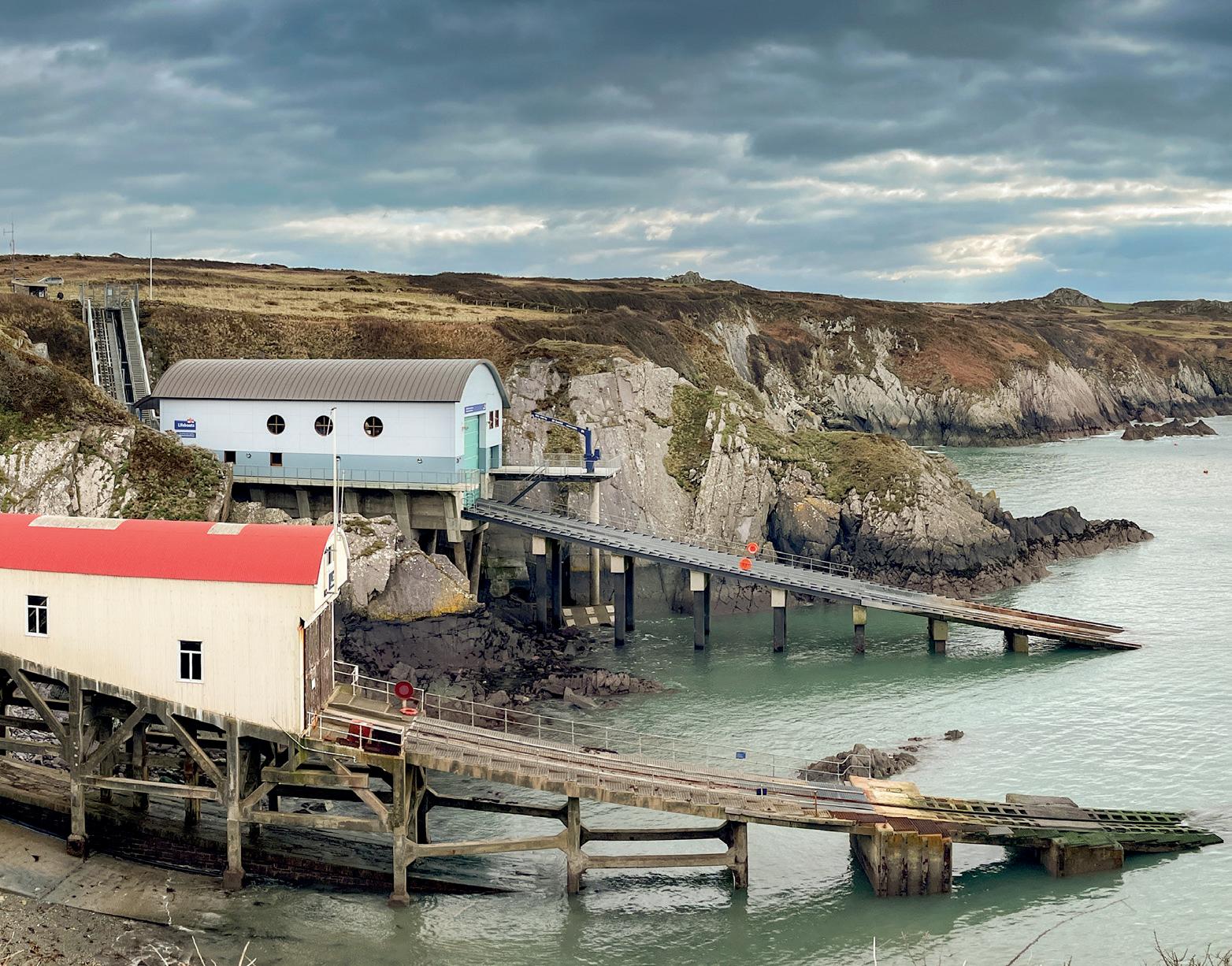
From the tip of mainland Britain to its western edge, and the Coastal Way. Like the NC500, this tour along the twisting Welsh coastline offers a blend of great driving routes, fascinating history, food, culture and more.
Nestled between the mountains of Snowdonia and the beaches of Cardigan Bay, the 180-mile route runs from the pretty fishing town of Aberdaron to Britain’s smallest city, St Davids. Along the way it passes through the Llŷn Peninsula – an official area of outstanding natural beauty – winds past golden beaches and picturesque fishing villages where you can enjoy fresh-caught seafood, and takes in colourful Portmeirion and bustling Aberystwyth. Like the NC500, you can spend as little or as much time as you like exploring the route, enjoying everything from neolithic remains to adventure sports.
EV infrastructure along the way is ‘adequate’ rather than generous but slower chargers just mean you’ve got more time to enjoy the scenery and attractions as you stop. And at less than 200 miles in length, you can probably do it on a single charge anyway.
GRAND TOUR WALES


History, great food, great driving, plentiful charging and sunkissed sand, the Route Napoleon has everything you need for an EV road trip. Following the path the French emperor took back from exile in 1815, it starts at Golfe Juan on the south coast and heads into the Alps to finish in Grenoble. We would suggest running the other way, though, so you finish on the glittering Cote D’Azur.
Whichever direction you go, the Route Napoleon offers phenomenal driving roads that change from the flowing coastal stretches to sinuous Alpine paths clinging to (and cutting through) the side of mountains, with breathtaking views of the valleys far below. Whether you’re in a Taycan or a Toyota, you’ll get a kick out of the ever-changing roads and scenery. But there’s also more to the route – from Grasse, the “perfume capital of the world” to the glamour of Cannes, the gastronomic delights of Provence and the rich history of the region, including Napoleon’s famous trek.
France has some of the best EV charging in Europe and apart from a stretch between Chateau-Arnoux-Saint-Auban and Grasse, the route is littered with high-speed chargers that will keep you topped up on this 200-mile adventure.

ROUTE NAPOLEON FRANCE
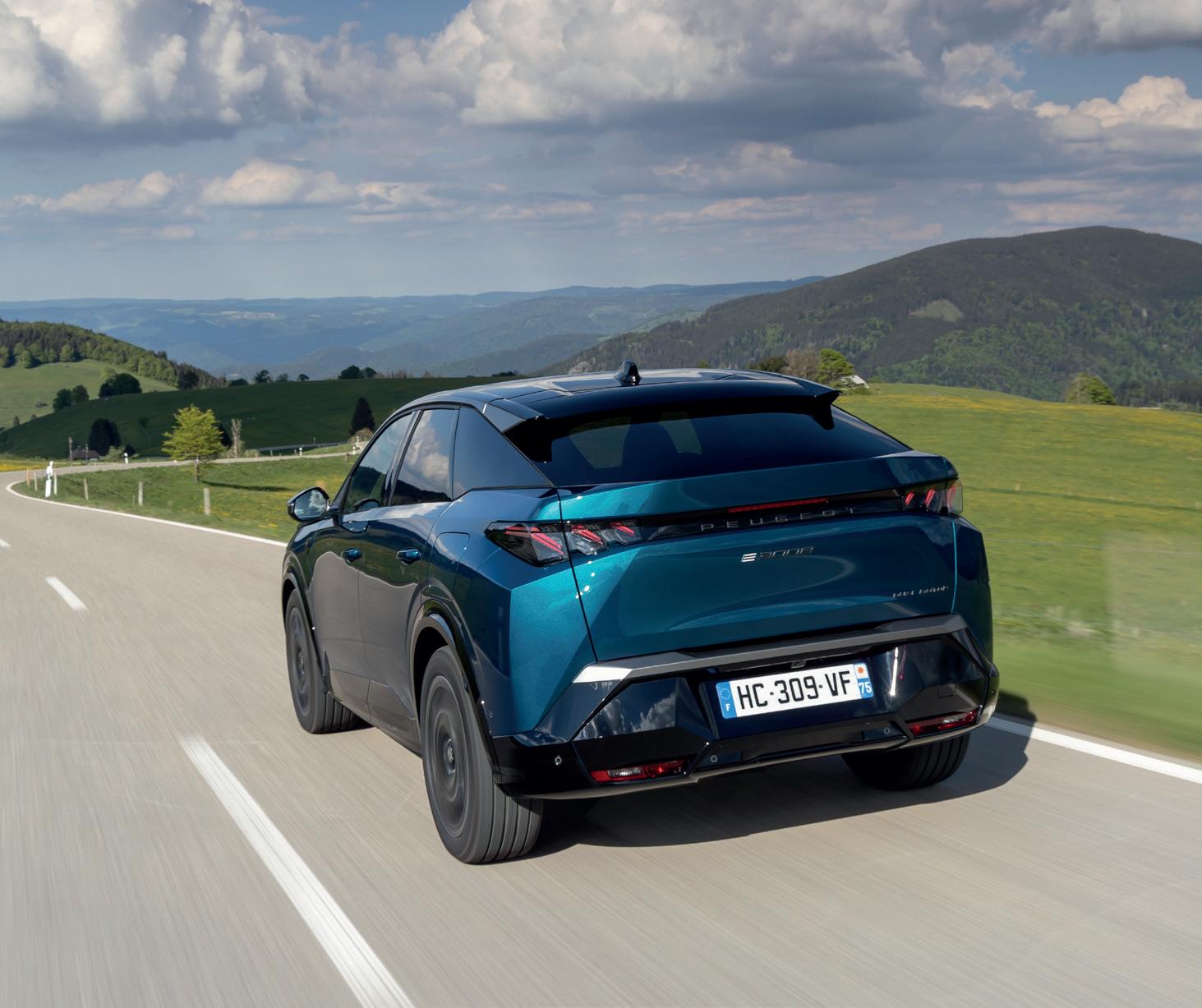
GERMANY
THE BLACK FOREST
We make no apologies for the scenery-heavy nature of our list. One of the best things about a road trip is seeing sights you don’t normally see. So Germany’s Black Forest is an obvious choice. Its smooth Tarmac sweeps between dramatic swathes of dark pine trees, emerging into broad sunlit valleys and diving up and down mountainsides via networks of hairpin bends.
We’d recommend starting in Stuttgart and ending in the spa town of Baden-Baden, taking in the famously beautiful B500 Black Forest High Road along the way. The run from Stuttgart to Baden-Baden is less than 100 miles while the famous “High Road” is a mere 37 miles long, so range anxiety isn’t a concern. Although the B500 itself is light on charging options there are plenty of high-powered devices at either end, and between Stuttgart and the road’s start in Freudenstadt.
While the road can be tackled in a few hours, you can still lose days taking in the attractions along the way. Car fans can explore automotive history at the Porsche and Mercedes museums in Stuttgart, while there are endless walking and cycling routes through the magnificent countryside for nature lovers. Fairytale castles such as Hohenzollern offer something for the historically inclined, and there’s the small matter of the region's famous cake...
17 FEATURE
Norway is famous for being Europe’s most pro-EV country. Virtually all new cars registered there are all-electric and it has led the way for years on infrastructure and incentives.
That alone would make it worthy of an EV road trip, but Norway also happens to be stupendously scenic. There are 18 officially recognised “Scenic Routes” taking in the country’s wealth of fjords, mountains, waterfalls and more.
We’d recommend linking a few of these together on a route from the bustling coastal city of Bergen to Ålesund via the “snow road between the fjords” at Aurlandsfjellet, across Norway’s highest mountain pass at Sognefjellet then down to Lom. From there, loop up to complete the Geiranger to Trollstigen route, tackling the Troll’s Ladder, a hairraising 38km stretch of road that writhes through the Romsdalen valley, encompassing 11 hairpin bends and gradients of 1 in 12. If your jaw is still attached to your head by the time you reach Ålesund, head north-east to the Atlantic Road. Arguably the most beautiful stretch of road on earth, this connects the island of Averøy to the mainland via a series of eight bridges spanning a series of tiny islands and islets.
NORWAY
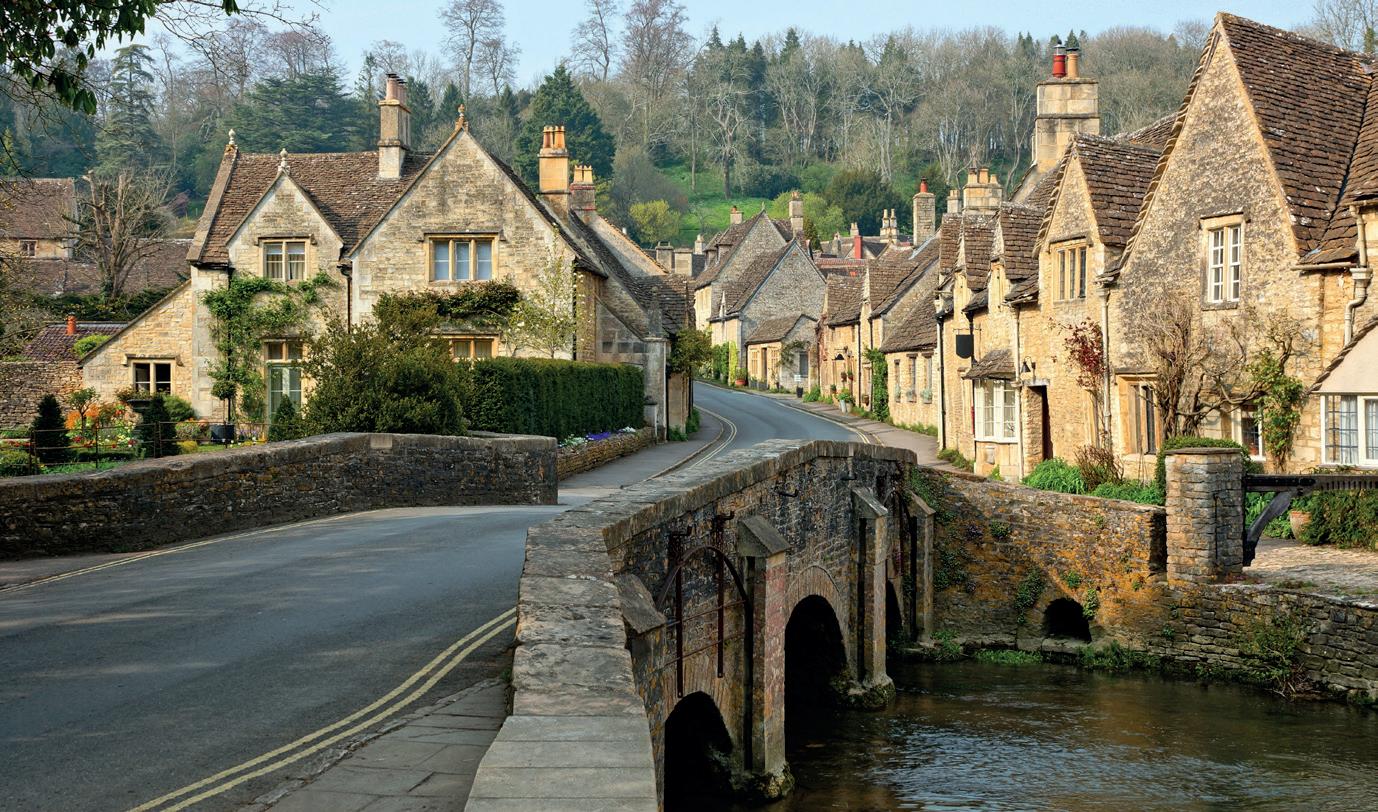
GREAT WEST WAY
The Netherlands is another leader in the European EV scene, which means you’ll have no problem staying mobile. In fact, it has more public chargers than anywhere else in Europe, so you can explore the whole country with ease. Also, it’s flat, so great for efficiency. Being flat means the scenery isn’t as spectacular as other routes on our list, but taking a relaxed drive from Amsterdam to Rotterdam there’s still plenty to see. A short hop north of Amsterdam delivers the comically stereotypical windmills, canals and clog shops of Zaanse Schans, before heading toward trendy Rotterdam via the world-famous tulip fields of Keukenhof. Along the way there’s also a wealth of history and culture to explore. Before leaving Amsterdam you can overdose on art at the Rijksmuseum or museums dedicated to Van Gogh or Rembrant, or get your science on at the NEMO centre. Once you arrive in Rotterdam, there’s more art to enjoy, plus experimental architecture and the achingly cool bars and restaurants of Witte de Withstraat.

The Great West Way can, in theory, be driven in about three hours and without a single stop but that would be to miss the point. One of England’s historic “Great Roads”, it runs from Bristol to London (or vice versa) through some of the most picturesque parts of the country. The route itself largely follows the line of the A4/M4 but invites you to use smaller parallel roads. From there you can embark on myriad detours to explore its picture-postcard Cotswolds villages and country lanes. History buffs can dive into the past of Hampton Court Palace or Stonehenge; foodies can indulge themselves at Michelin-starred restaurants and film fans can geek out at locations used in everything from Paddington to Poldark.
At around 150 miles long, it’s easily manageable on a single charge for an average EV. But even if you spend days getting lost among the lanes, its location in some of the more densely populated parts of the UK means there’s no shortage of public charging.

By MATT ALLAN
bZ4X TOYOTA TOURING
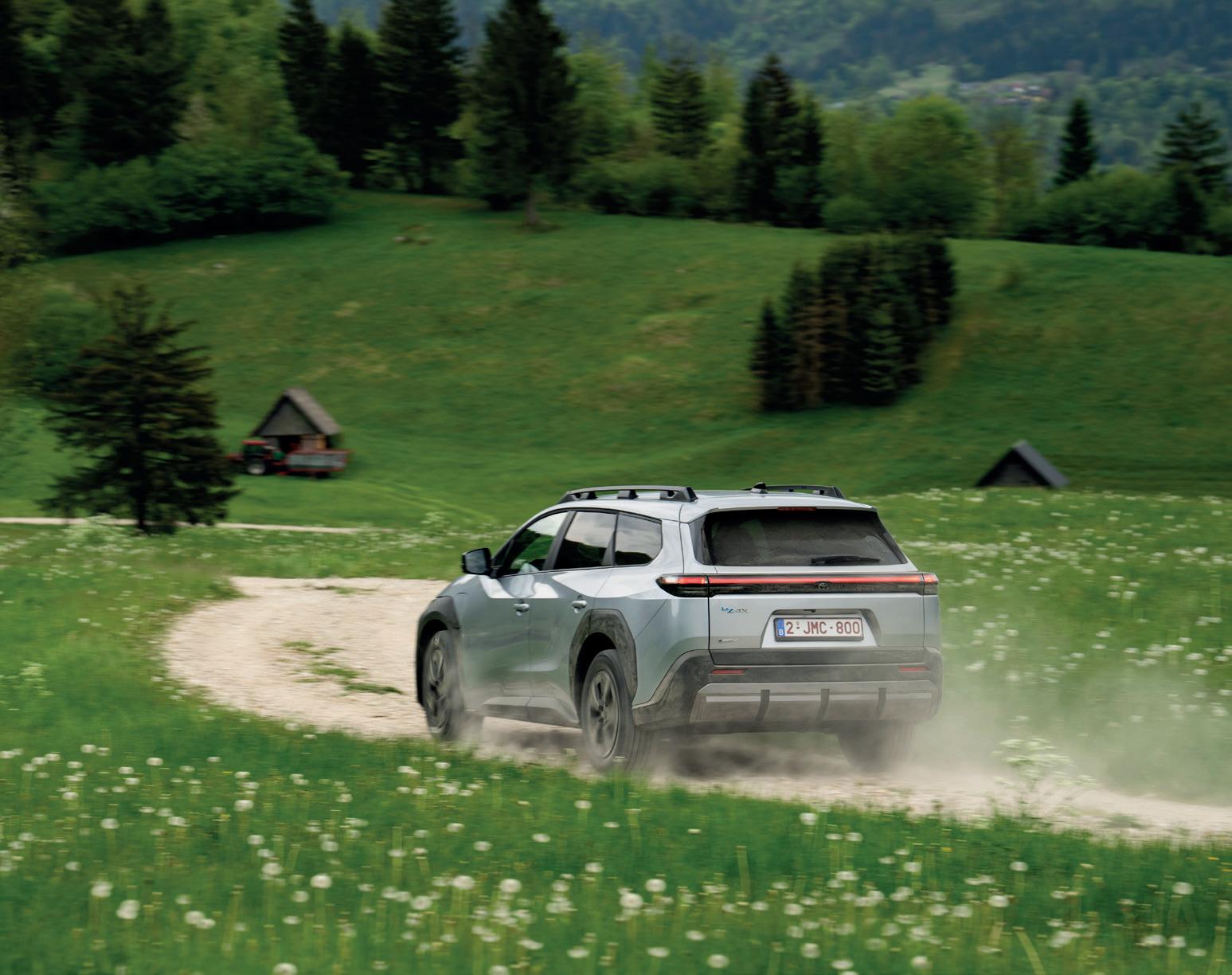
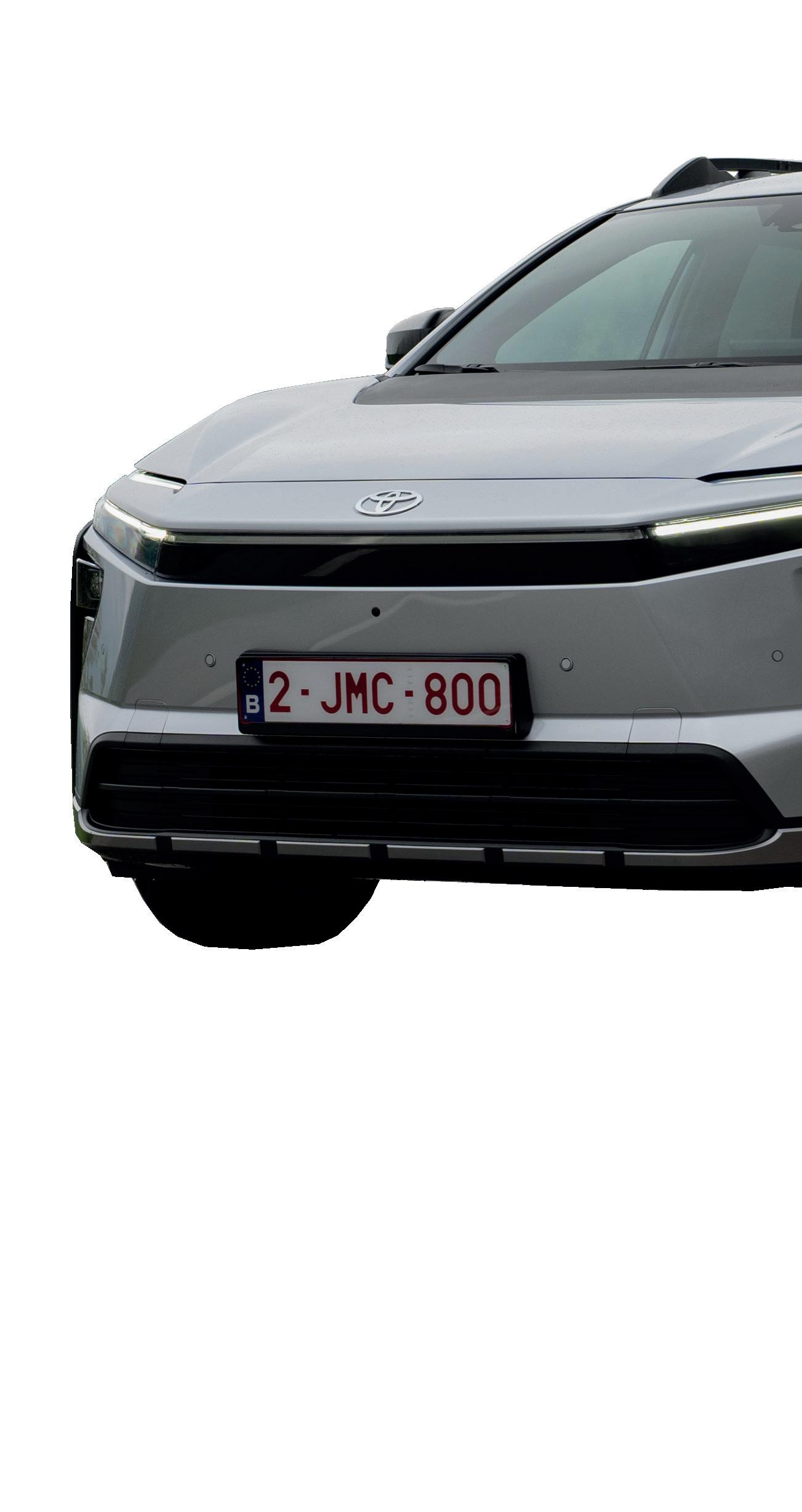

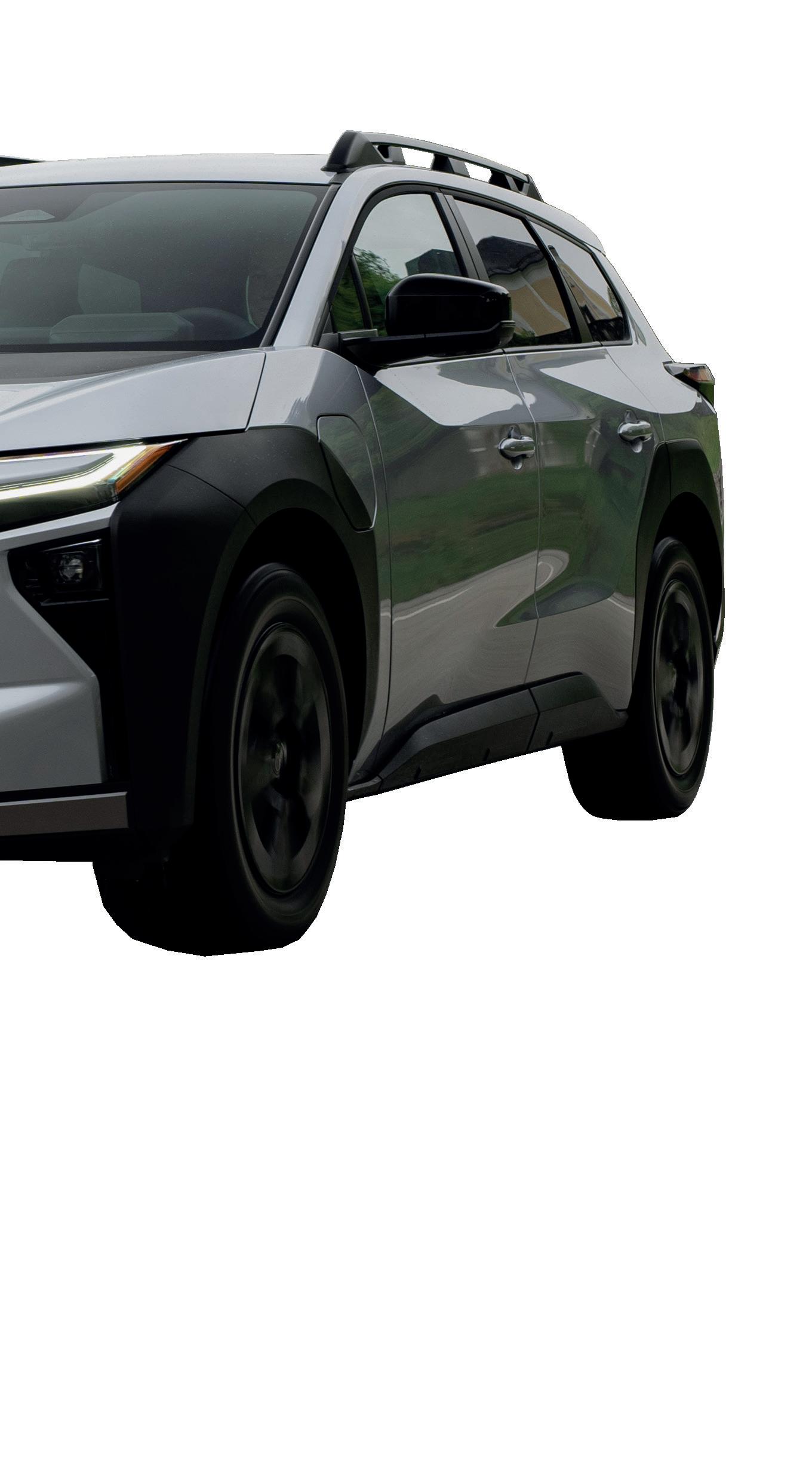
TOYOTA AIMS TO GIVE ITS FLAGSHIP EV A MORE PRACTICAL SPIN IN THE SHAPE OF THE BZ4X TOURING, BUT IS THERE ROOM ON THE ROAD FOR THIS ODD SUV/ESTATE CROSSOVER?
TheToyota bZ4X had a bit of a rocky start to life but we won’t dwell on that since last year’s facelifted car fixed most of the early problems.
way back. There’s the VW ID.7 Touring, Audi A6 e-tron Avant and the inbound Polestar 4 estate, plus models from Vauxhall, Peugeot and BMW. So does Toyota’s oddball actually make a lot of sense?
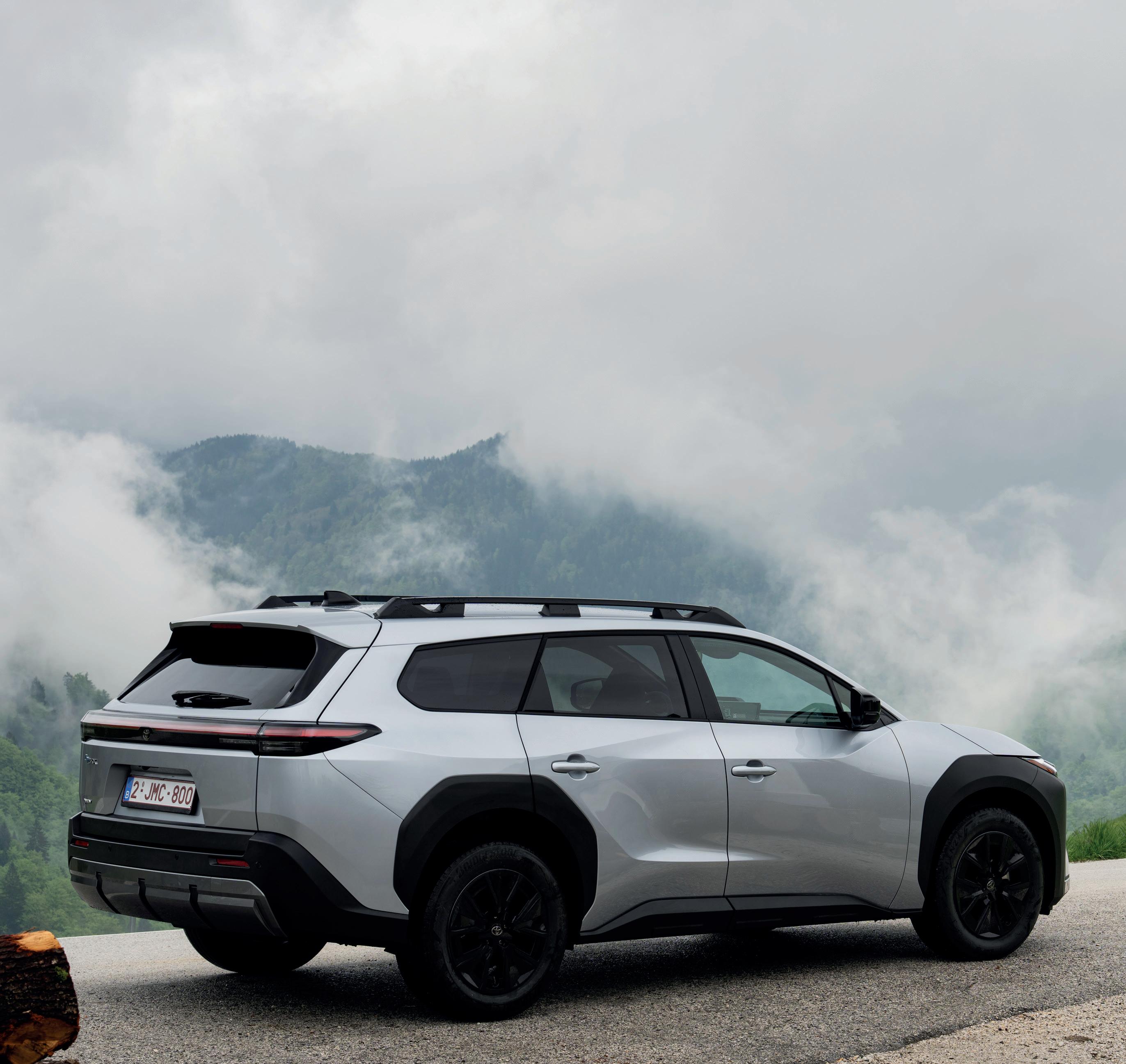
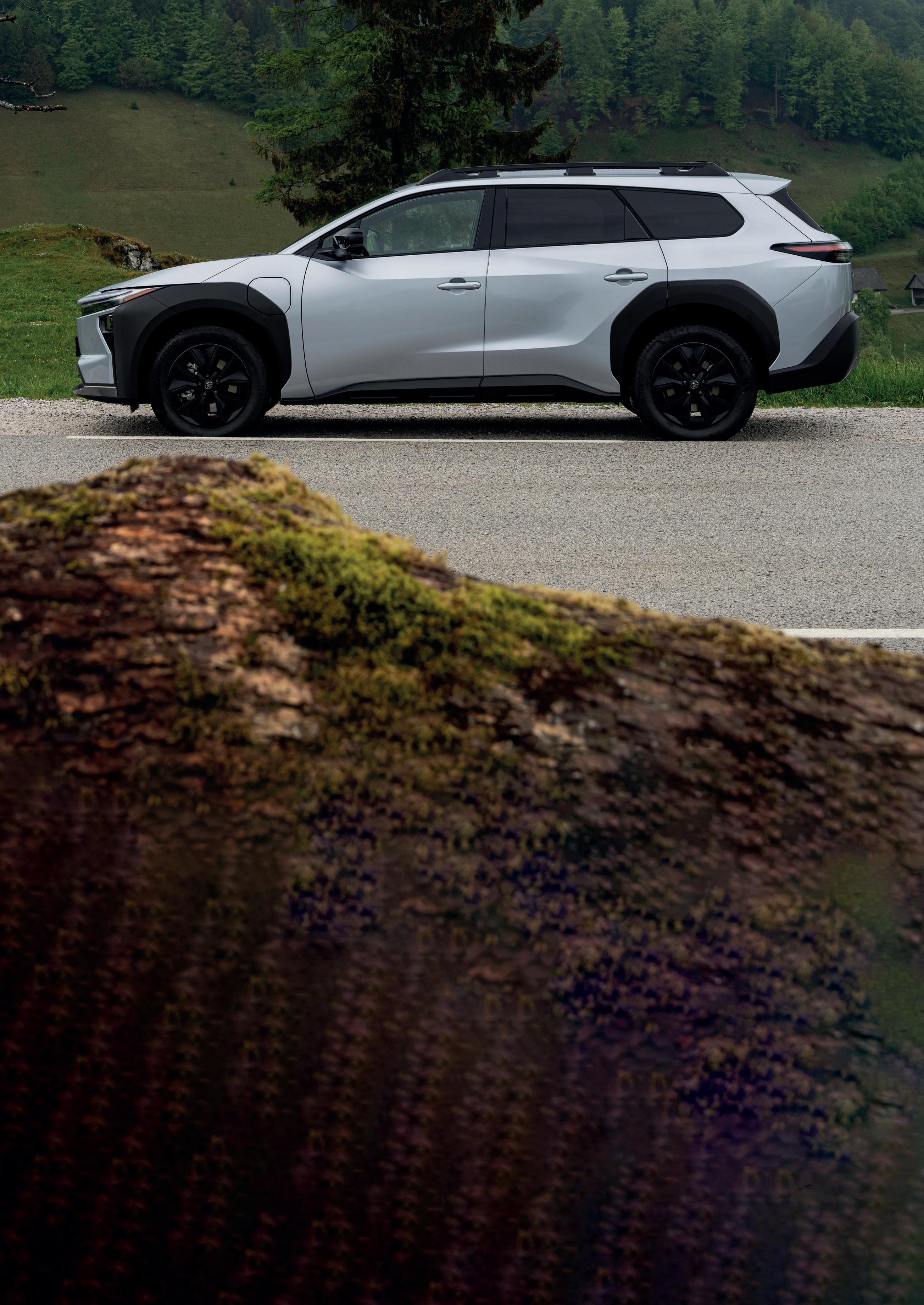
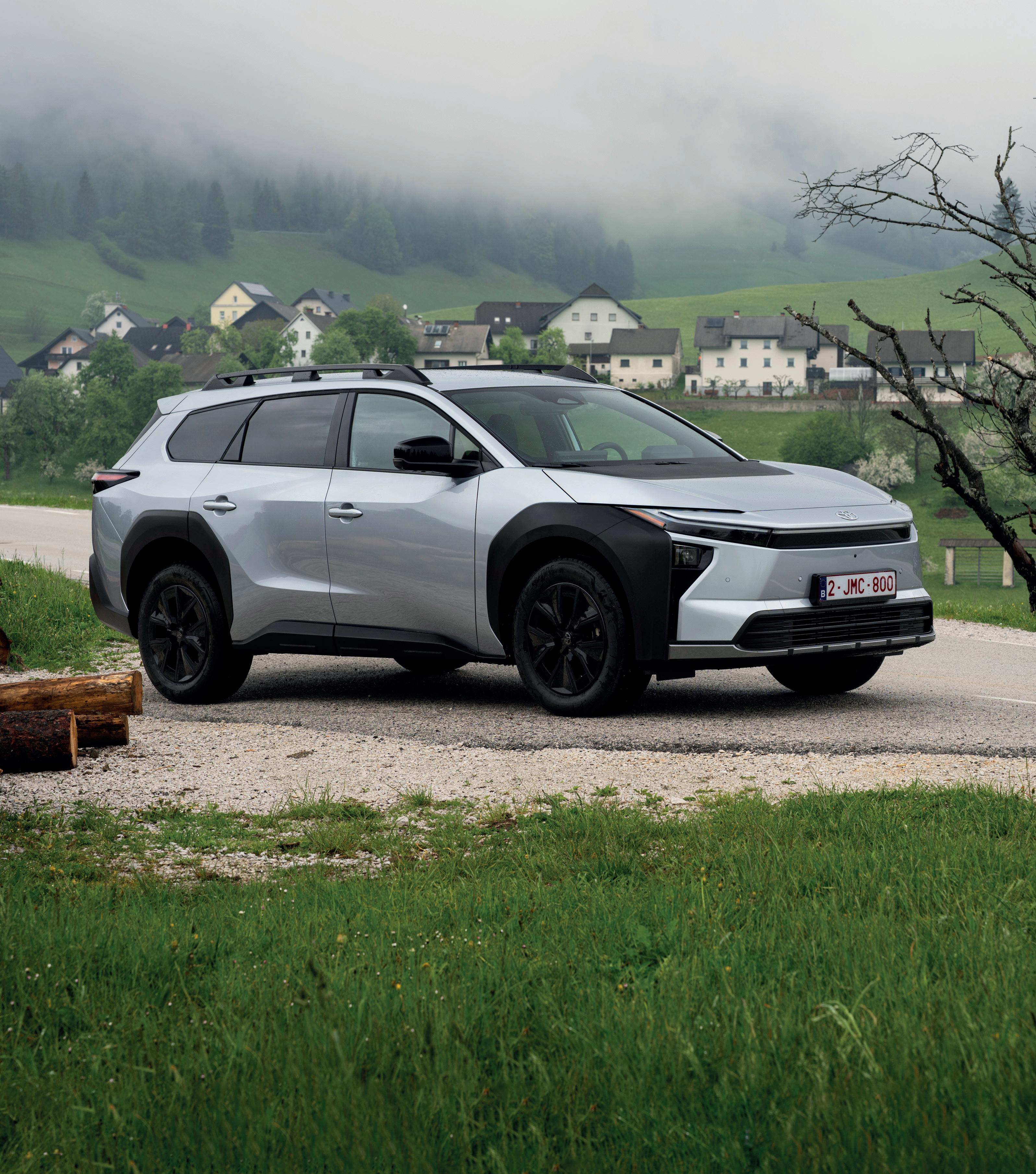
The bZ4X Touring has a more rugged and purposeful look than the SUV variant. The pointy front end with its slimline LED lights is the same but elsewhere there’s a heap of matte black body cladding, prominent roof rails and some skid plate-style lower bumpers for a goanywhere look.
The tougher image is aided by the larger proportions of the estate body. It’s 140mm longer than the SUV and 25mm taller and has noticeably more road presence.
Continued on next page
It’s also got noticeably more interior space thanks to that longer wheelbase. The boot has gone from a faintly disappointing 452 litres in the SUV to a generous 699 litres (to the roof). That puts it way ahead of any similarly priced SUVs from other brands or other electric estates such as the ID.7. Fold the back seats down (using the boot-mounted levers) and you’ll get a gargantuan 1,700 litres.
Leave the seats in place and you’ll get plenty of space for five passengers. At 6’ 5”, I had space behind a driver of the same height with knee room to spare, and headroom wasn’t an issue either. The only shortcoming is that the floor is noticeably high and means you sit with your knees pointing towards the ceiling.
Oddly, while there’s lots of room for people, there’s not so much space for their stuff. Estates should be universally practical but the bZ4X Touring lacks much in the way of cabin storage. There’s a clever double-sided central bin, but the lower centre console is virtually inaccessible and the door pockets are barely big enough for a drinks bottle. There isn’t even a traditional glovebox.
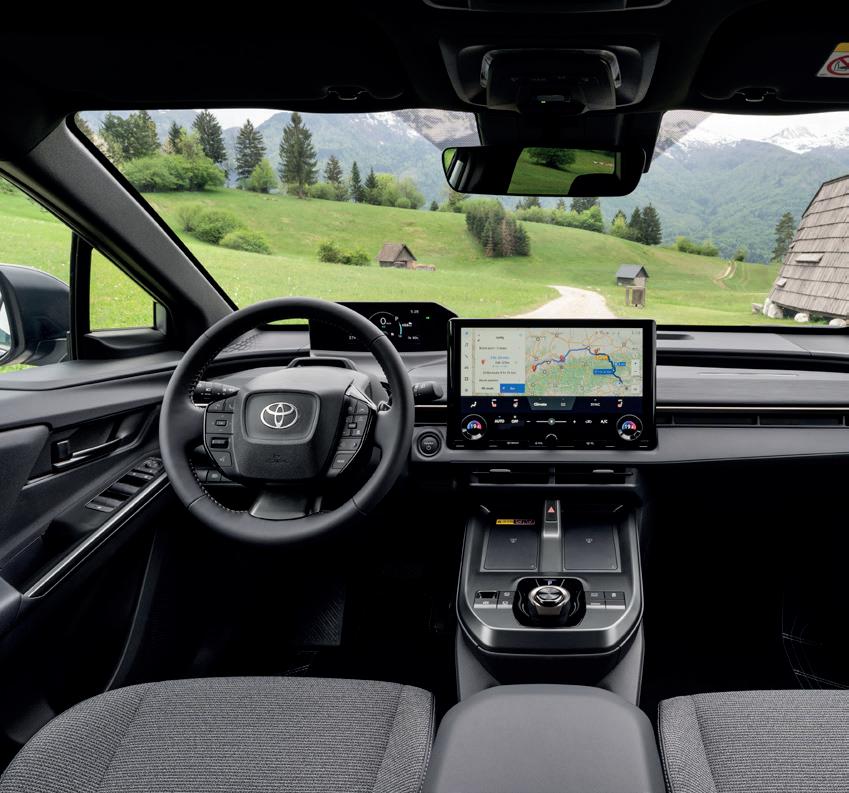
Ahead of the boot, the Touring has an identical cabin design to the SUV which is logical, clear and dull. It suffers the same 50 shades of grey problem that every Toyota has, which leaves it feeling flat and characterless. It’s a pity because, as ever, it’s incredibly well constructed and with a focus on putting key controls close to hand.
Of course, there is still a screen – a 14-inch unit shared with all new Toyotas. This is big and responsive, with large icons to make selections. However, it seems light on features and some obvious things such as phone mirroring aren’t as straightforward as they should be due to the peculiar menu system. It’s better than old Toyota systems but still far from class-leading.
There are two versions of the bZ4X Touring available – a single-motor model with 221bhp and a twomotor all-wheel-drive model with 375bhp.
We haven’t tested that AWD version yet, but Toyota says it will do 0-62mph in an impressive 4.5 seconds and deliver a range of 298 miles from a 71kWh battery.
The front-wheel-drive car we have tested uses the same battery for a claimed range of 366 miles, which is pretty competitive in this peculiar C/D-segment middle ground, and is backed up by 150kW DC charging.
There’s plenty of response from the single motor that would fool you into thinking it’s got more than 221bhp/198lb ft. Not a lot more, but definitely a bit. It only begins to feel a little less lively when accelerating at higher speeds.
I’m sure the AWD will be entertaining with its additional grunt and grip, but I’d need to drive it to be convinced that it’s worth the £6,000 over this model, especially given its impact on efficiency.
The FWD model acquits itself remarkably well here for a car of its size. On one near-three-hour test drive on A-, B-roads and a good chunk of motorway, I saw a remarkable 4.5m/kWh. The longer-term trip computer on this factory fresh car was saying 3.9m/kWh, which still translates to 291 miles per charge against an official 4.44m/ kWh and 366 miles WLTP.
There is an eco button to aid efficiency but in my time with it, it made no discernable difference. There's also a snow mode to tweak the traction control in slippery situations, but that’s your lot.
It’s pleasing to find a car that doesn’t have a pile of driving modes. So often these are pointless affairs that make minimal adjustments to things like steering and throttle response. The bZ4X Touring has instead just been set up properly. Its controls are all really well calibrated and balanced. Often you only become aware of these things when something feels “off”, so it’s a compliment to say that you don’t notice them in the bZ4X Touring. Response
and weight from the throttle, brakes and steering are all bang on the money.
It feels utterly composed on the motorway but equally controlled on twisting country roads.
It’s no Subaru Legacy Spec B, but it can manage a B-road with surprisingly little body roll and really impressive damping. It’s not quite as cosseting as the Citroen C5 Aircross but is brilliantly damped to absorb impacts without the spongy feeling that often comes with softer ride. That’s perhaps helped by the magnificently tall 60 profile tyres.
There are just two trim levels in the bZ4X range each linked to a different powertrain.
The tested Design spec is only front-wheel-drive and comes with a list price of £45,995. At the time of writing Toyota is offering a £1,500 discount on that starting price.
That makes it £6,000 more than the SUV, which is quite the step up for an extra 200 litres of boot space. However, it’s a similar price to the midlevel Kia EV5 I drove recently, and £6k cheaper than a basic ID.7. It’s arguably a slightly different prospect than either but at the same time could
21 REVIEW
realistically be considered against either, along with the likes of the Skoda Enyaq.
Design spec is pretty well equipped, with adaptive LED headlights, keyless entry, heated front seats, a powered tailgate and 360-degree parking camera. It also gets a comprehensive ADAS suite incorporating adaptive cruise control, plus a heat pump and tinted rear glass as standard.
The higher-spec Excel grade does bring goodies such as cooled front seats, heated rear seats and a panoramic sunroof, plus 22kW AC charging but is only available in AWD guise. That means an extra £6,000 on the price and a near-70-mile cut to range.
VERDICT
The Toyota bZ4X Touring is an interesting and welcome addition to the family EV market.
It’s not quite one thing or another, but it’s no worse for that. It’s an interesting rival to the
TOYOTA BZ4X TOURING DESIGN FWD
PRICE: £45,995
(£46,675 as tested before Toyota EV discount) POWERTRAIN: Single-motor, front-wheel-drive
BATTERY: 71kWh
POWER: 221bhp
now-traditional C-SUV while also providing a legitimate alternative to “normal” estate cars.
The interior is a bit drab and could do with more practical storage spaces but the overall passenger and luggage space is generous, and it’s robustly constructed.
TORQUE: 198lb ft
TOP SPEED: 99mph
0-62MPH: 7.3 seconds RANGE: 366 miles
CONSUMPTION: 4.4m/kWh
CHARGING: up to 150kW
It also drives really well, with impressive efficiency and solid range, and it even has an interesting exterior design.
Toyota might just have fixed the bZ4X for good this time.
RIVALS
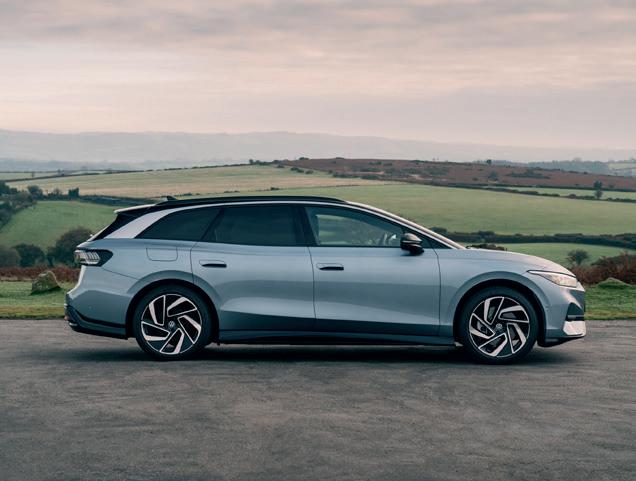
VOLKSWAGEN ID.7 TOURING
Less rugged and more expensive but with better range and arguably more prestige.
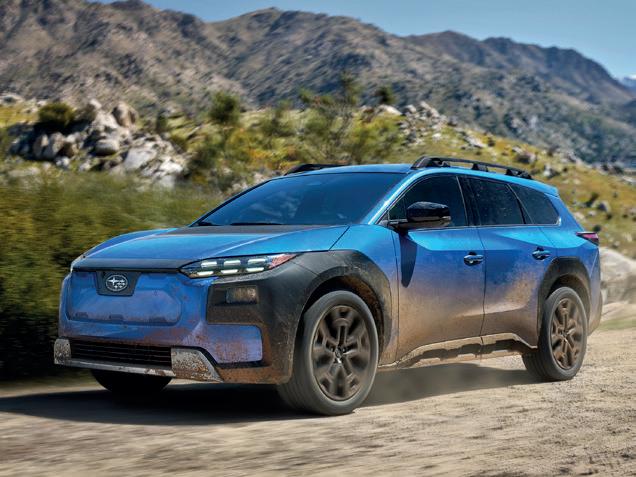
SUBARU E-OUTBACK
Sister car to the Toyota means all the same qualities, but only sold in AWD guise.
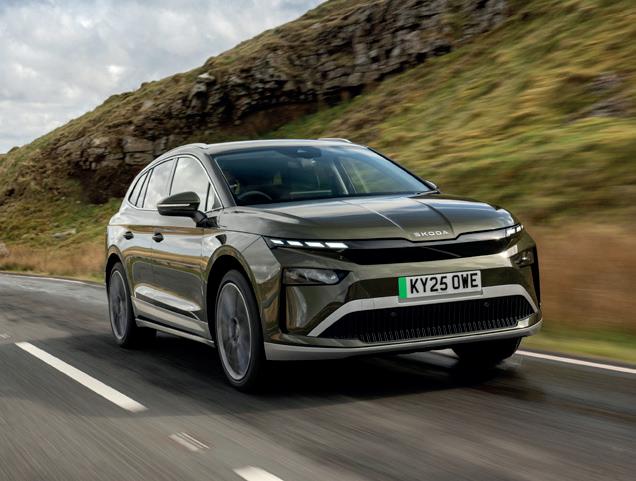
SKODA ENYAQ
A more traditional SUV but still one of the best family EVs out there and with variants to suit lots of budgets and needs.
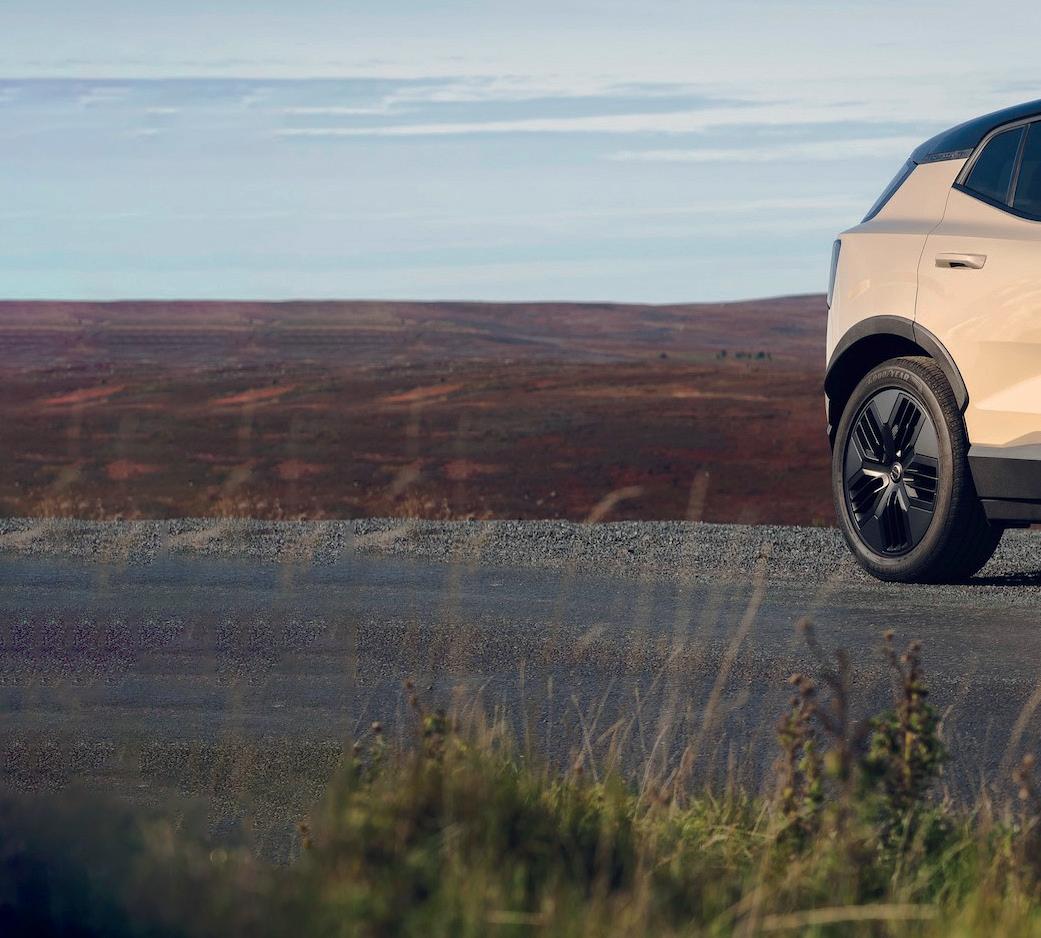
EX30 CROSS VOLVO

VOLVO’S COMPACT SUV BLENDS OFF-ROAD STYLING WITH RAPID PERFORMANCE, BUT DOES IT MAKE ANY SENSE?
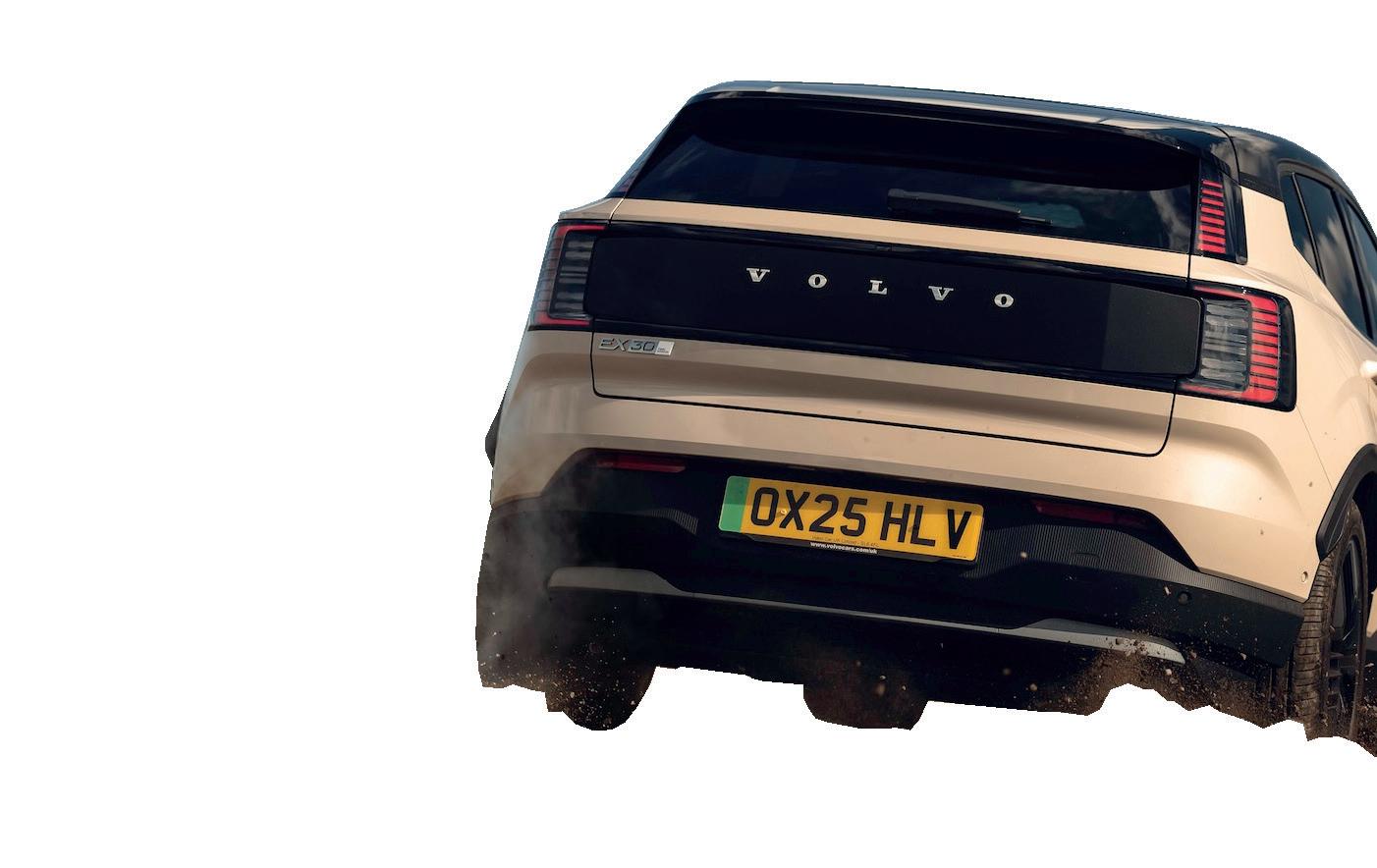
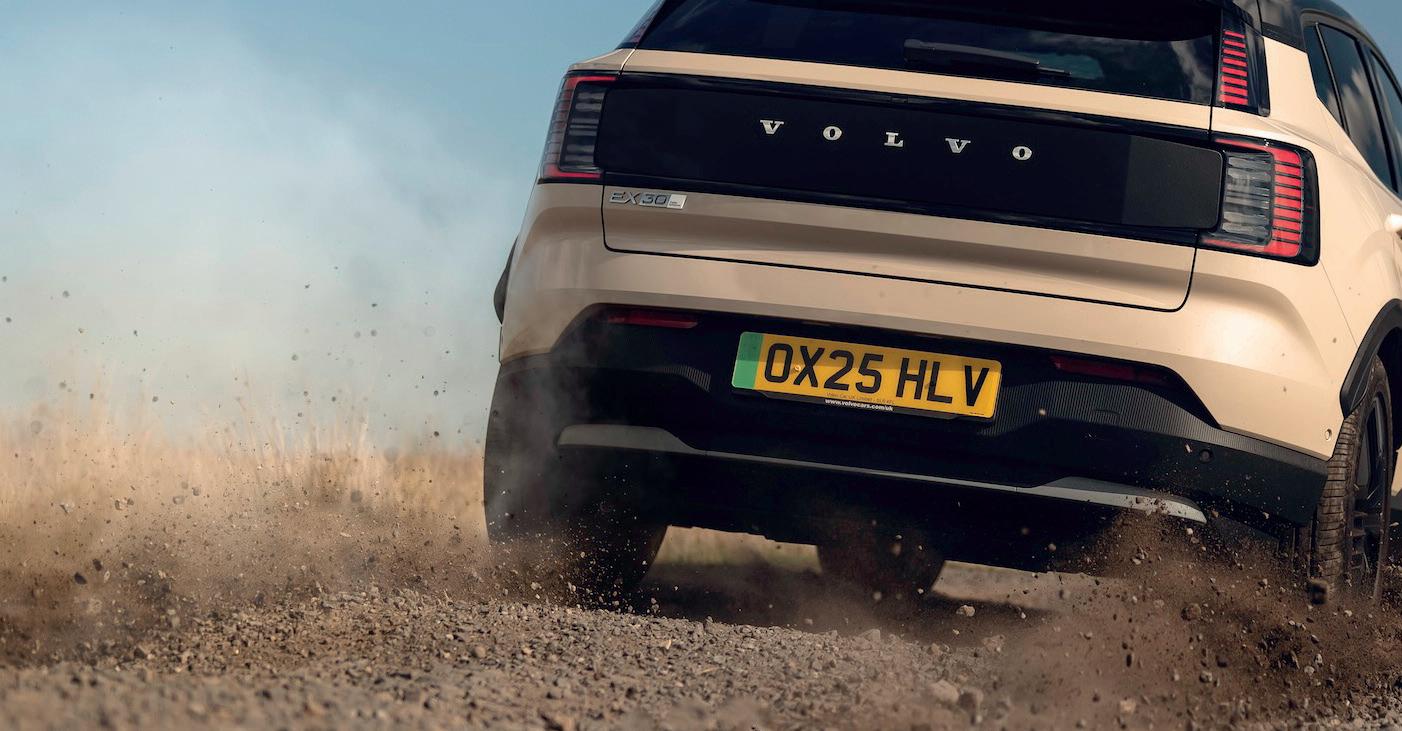
As someone who grew up as part of a ‘Volvo Family’, the EX30 Cross Country ticked all of my boxes on paper. It’s premium without feeling gittish like similar brands from across the Baltic, and it appeals to that part of my brain that answers to the automotive call of the weird.
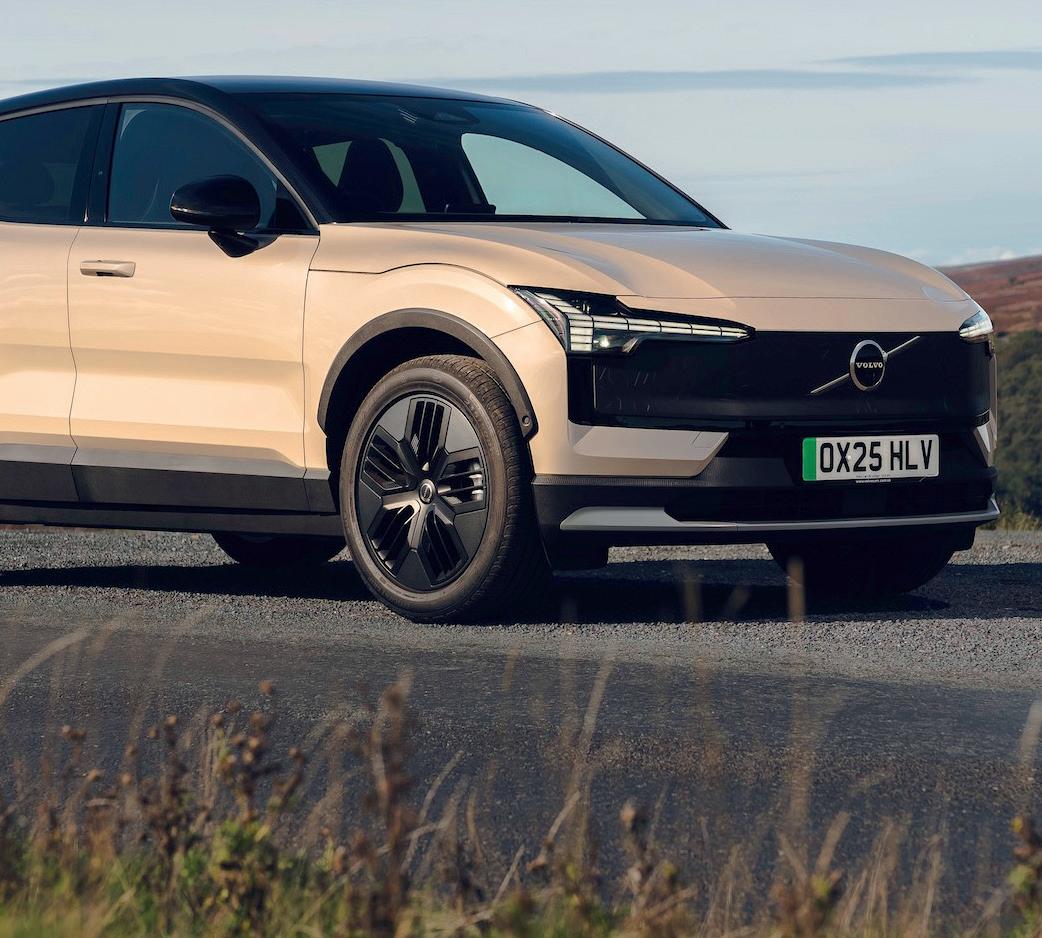

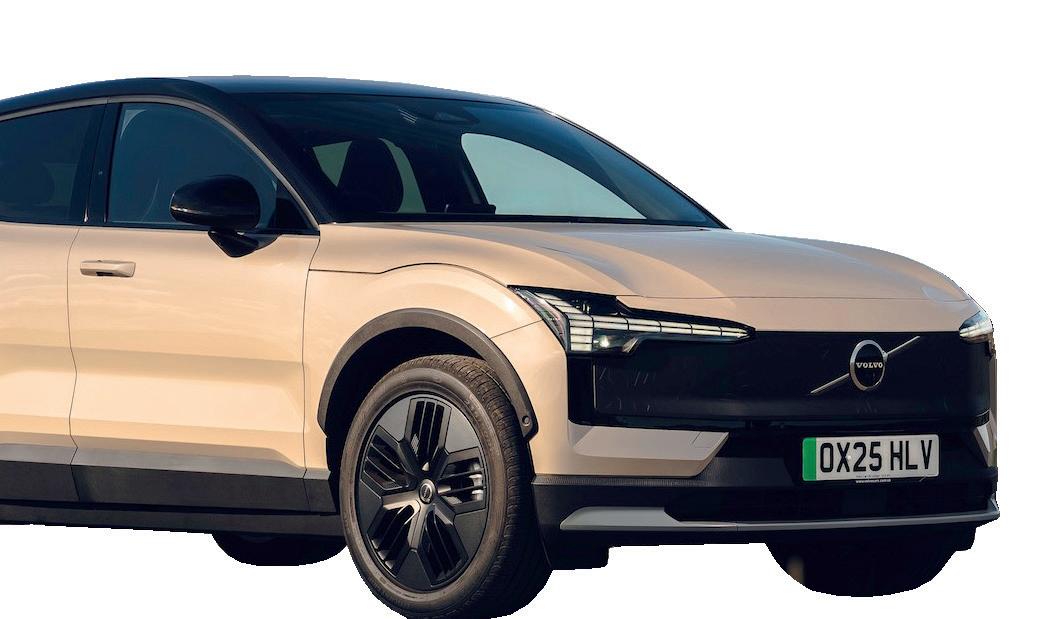
Visually, the EX30 Cross Country combines the ruff ‘n tumble style of its ‘CC’ predecessors, the original V70 Cross Country, then the XC70, with the Scandinavian minimalism exuded by the standard EX30. Think Alvar Aalto in Goretex.
Yet for all of its left-field charm and ultra-silly 422bhp, the Volvo EX30 Cross Country remains a difficult car to recommend...
There’s plenty to like about the EX30 Cross Country’s design. Volvo takes the standard car’s fuss-free aesthetic, and introduces a chunky new rear bumper, roof rails for outdoorsy things, body cladding, and a new front panel etched with a topographical map of Kebnekaise, the highest mountain range in Sweden. All of these design elements are finished in matt black.
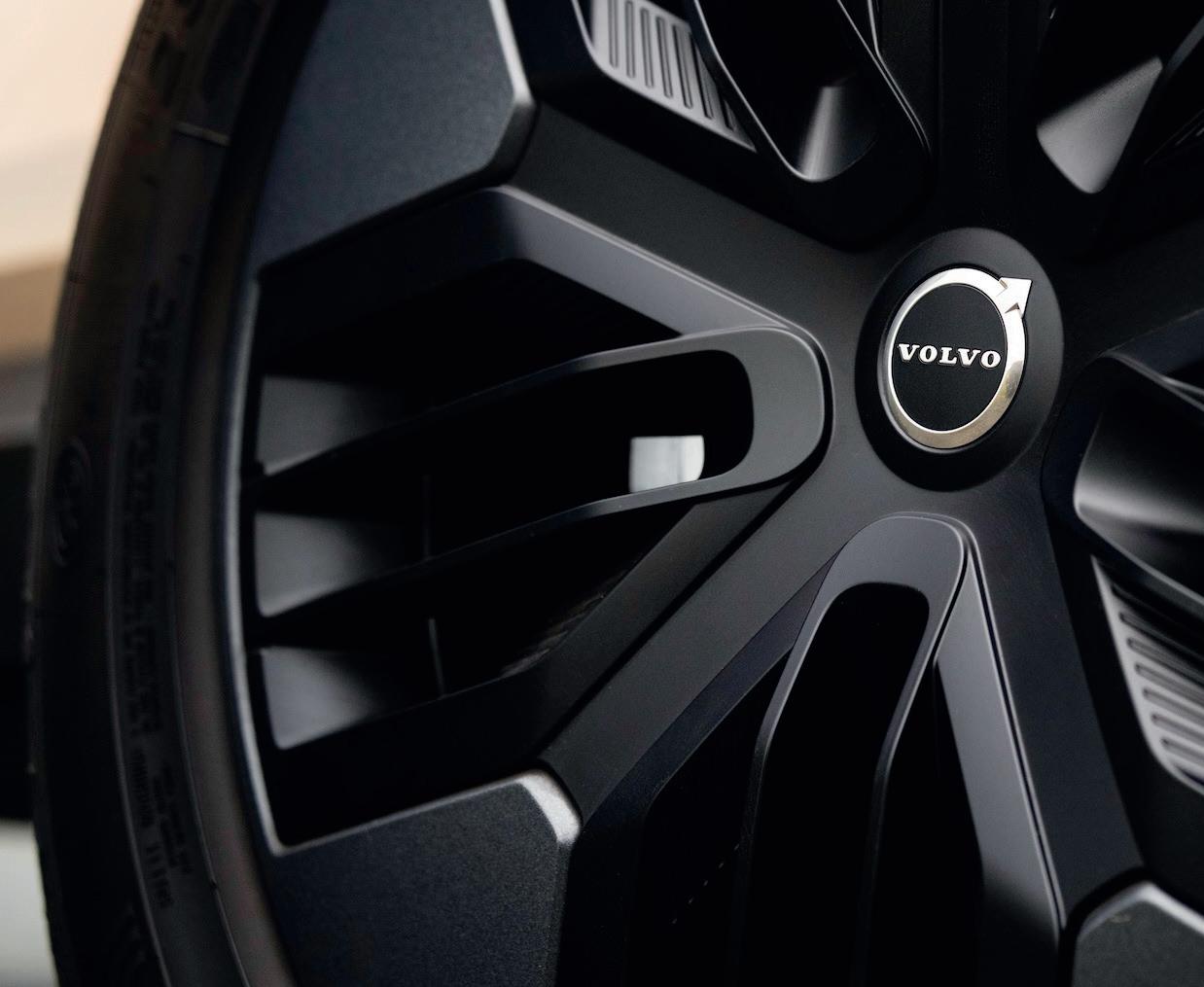
Adding to the EX30 Cross Country’s outdoorsy chops are a set of 19-inch blacked-out alloys, which can be swapped out for a smaller set of 18-inchers for improved efficiency.
Paired with our car’s “Sand Dune” finish inspired by “the sand dunes of Sweden’s west coast”, all of this looked, well... rather elegant. However, EV Powered’s MD, Richard, decided it was a “brown Volvo” and promptly ridiculed me.
Step inside the EX30 Cross Country, and it’s like no Volvo

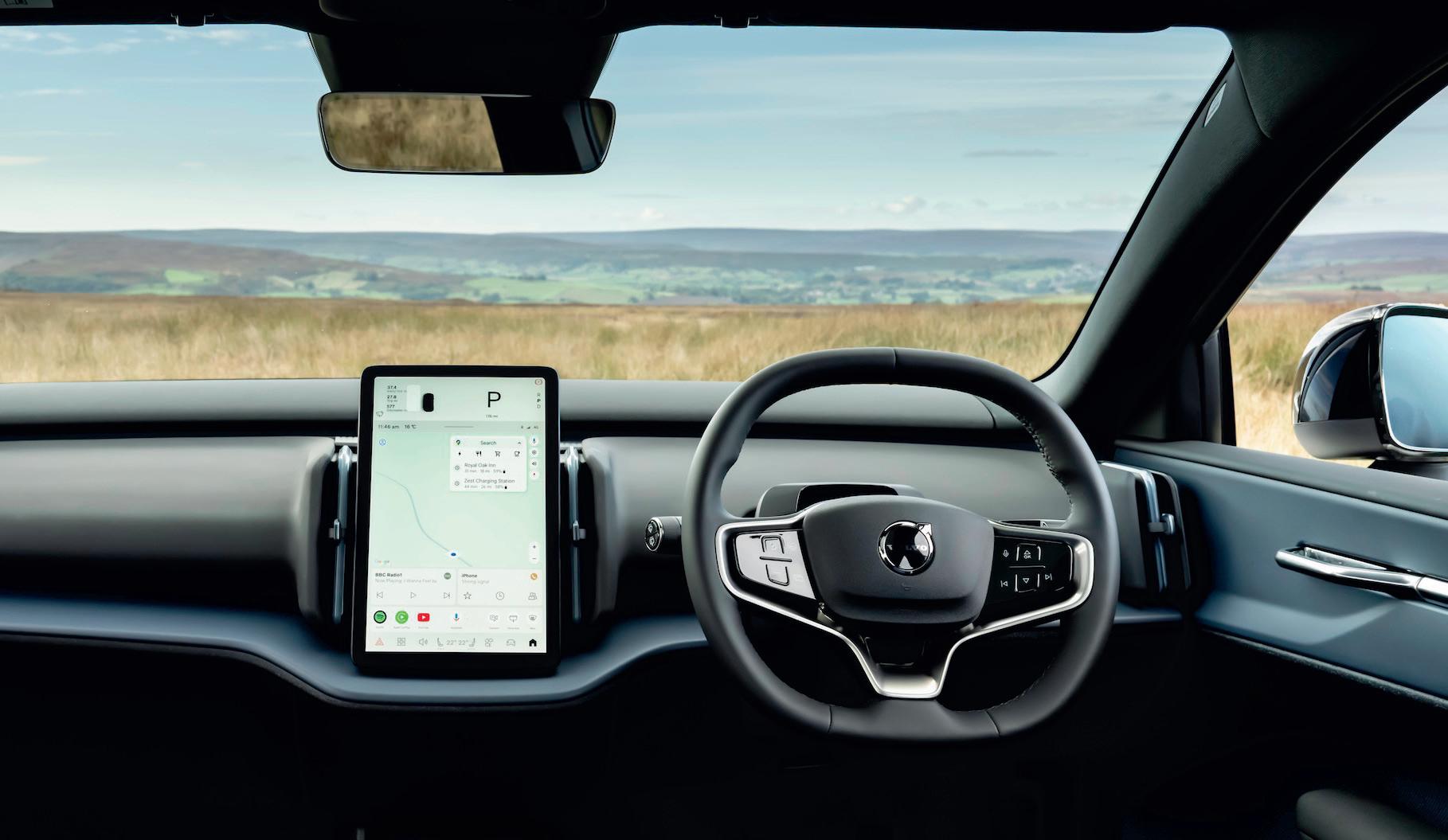
before. Everything - and I mean, everything - is in the centrally-mounted, 12.3-inch touchscreen. Even the speed readout. For me, this wasn’t a problem as I quickly got used to it, but I understand if you’re coming from a car that has a traditional speedometer or even a head-up display.
The overall problem was the touchscreen itself. I’ve long said that Volvo hasn’t made a decent infotainment system since the second-generation S60, and my time with the EX30 Cross Country only served as a reminder that this is a hill I’ll die on. Things aren’t quite BYD horrible, but they’re not far off. Want to adjust the heating? Touchscreen. Want to open the centrallymounted glovebox? Touchscreen. Want to adjust the drivemode? Touchscreen. More than once, I was told to “keep your eyes on the road and stop fiddling with that screen”. I genuinely wasn’t being funny when I responded to passengers, “but I can’t”.
Given Volvo is – historically – a by-word for both safety and logic, I found this approach to things disappointing. The same can be said for opening and closing the windows. The driver and passenger windows can be operated via two switches in front of the arm rest. This is fine. But to open the rear passenger windows, you have to flick a rocker switch a la early Volkswagen ID cars, and then use the switches. It just doesn’t make much sense.
Things aren’t all bad, though.
The blue interior ‘Textile & Nordico’ trim is fashioned from upcycled denim on the seats and door inlays, making a nice change from the swathes of vegan leather (see, ‘plastic’) so commonplace in EVs today.
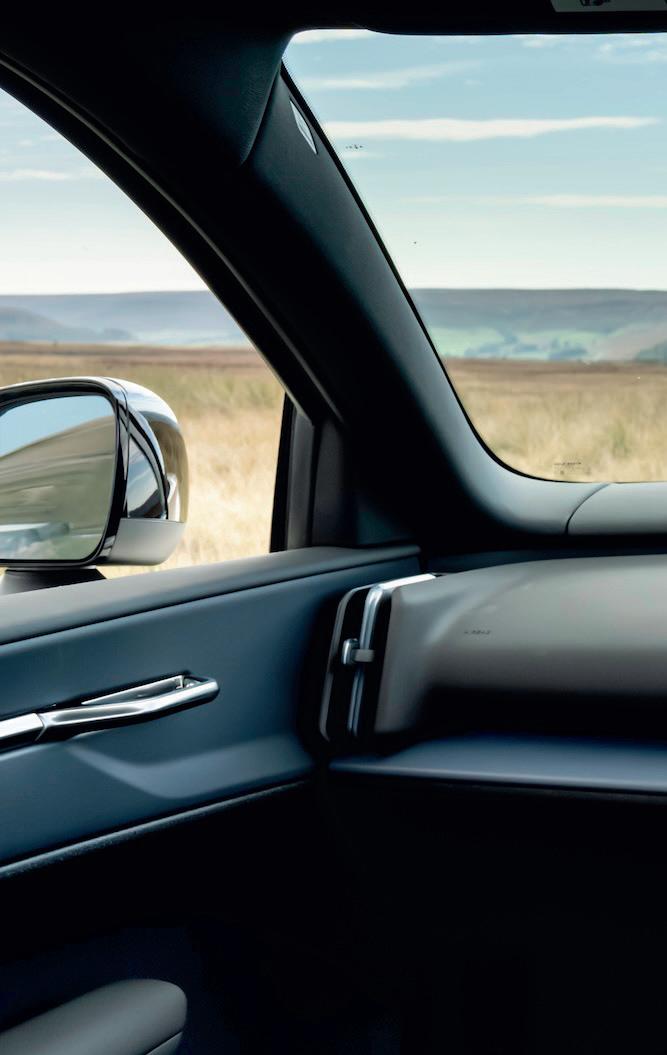
The white-flecked, blue dashboard is crafted from recycled plastic bottles, but there’s nothing to suggest this, as it feels sturdily finished as you’d expect from a Volvo. Meanwhile, a full-length sunroof floods the cabin with natural light, providing the EX30 Cross Country with a unique sense of Scandinavian modernism and a real sense of place.
The square steering wheel, or ‘squeal’ sits at ‘just right’ in terms of dimension and girth. It also looks decent, and I apologise to the Austin Allegro and owners thereof for being cruel about its similar setup.
When the EX30 launched, its ADAS system was one of the main points of contention. I don’t know if Volvo has wheeled out an update with the introduction of the Cross Country, but it was easy to deactivate with a single push for ‘EVERYTHING OFF’ once you’ve figured out how to via the touchscreen.
The Volvo EX30 Cross Country has a 69kWh battery, irrespective of trim level. Our car has the dual-motor, all-wheel drive (AWD) P8 drivetrain, which packs 422bhp and a 0-62mph time of 3.7 seconds. Yes, that’s right - 422 electric horses from a small family Volvo.
Volvo insists the 2000s supercar-beating performance is to ensure safe overtaking. I believe it’s a sign that the ladies and gentlemen at Volvo HQ in Gothenburg have a sense of humour.
While it is a laugh to smoke the usual suspects away from a set of traffic lights in a brown Volvo, this does mean range is compromised at 271 miles, and efficiency is far from spectacular with a consumption rate of anything between 3.1 and 3.4 miles per kilowatt hour. However, these are the sort of numbers associated with 422bhp.
Despite its ruff ‘n tumble design, the Volvo EX30 Cross Country is very much a softroader, so don’t be taking it to your local green-laning meet unless you want to look silly.
However, in the twisty stuff, Volvo’s smallest model is pleasantly engaging thanks to a compact 4.2 metre by 1.8m footprint. Having enough point ‘n squirt power under your right foot to spin a moon helps, too. In fact, the EX30 Cross Country put me in mind of an electric rallycross car, and it certainly put a smile on my face more than once.
Yet the motorway was where the EX30 Cross Country truly excelled. It was quiet and refined, with minimal road noise and comfortable seats. That extra suspension travel makes absorbing any potholes a doddle, and top marks to Gothenburg for not forgetting these crucial ingredients that make a Volvo a Volvo.
If 422bhp doesn’t sound like your smorgasbord, Volvo offers the EX30 Cross Country as a rear-wheel-drive (RWD) car with 276bhp. Named the P5 Long Range, this single-motor powertrain can manage 288 miles from a single charge.
The Volvo EX30 Cross Country isn’t cheap. In entry-level ‘Plus’ guise, it starts at £41,260 with the single-motor P5 drivetrain. Step up to our test car’s twin-motor ‘Ultra’ trim, and you’re looking at £47,060.
25 REVIEW
All versions of the EX30 Cross Country come with a beefy Harman Kardon stereo system, a heat pump, Apple CarPlay and Android Auto integration, plus adaptive cruise control, and an electronically controlled tailgate.
The Ultra adds that much welcome panoramic roof, parking assist, a 360-degree camera, and tinted rear windows.
As a ‘Volvo Guy’, I wanted to sing the EX30 Cross Country’s praises and talk about it in the same breath as the Amazon and the 850 R.
RIVALS
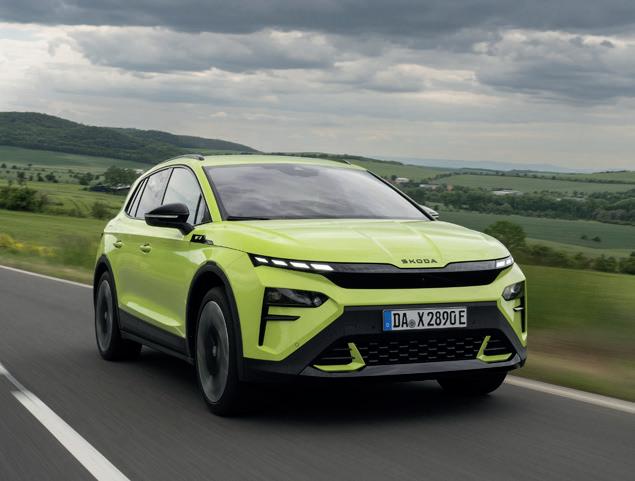
Less powerful than the Volvo but more focused on on-road performance and with a similar starting price.
VOLVO EX30 CROSS COUNTRY ULTRA
PRICE: £47,060
POWERTRAIN: Dual-motor, all-wheel-drive
BATTERY: 69kWh
POWER: 422bhp
TORQUE: 400lb ft
TOP SPEED: 112mph
0-62MPH: 3.7 seconds
RANGE: 271 miles
CONSUMPTION: 3.1-3.4m/kWh
CHARGING: up to 175kW
Its Scandinavian modernist design language is truly unique, and the Littlest Volvo certainly doesn’t take itself too seriously with 422bhp. Most importantly, it feels like a proper Volvo, albeit one that’s been shrunken down into a compact package.
But at the end of the day, the EX30 Cross Country is a heart over head car. It’s not cheap, and that software package/infotainment screen is a serious departure from the sensibleness usually synonymous with Volvo.
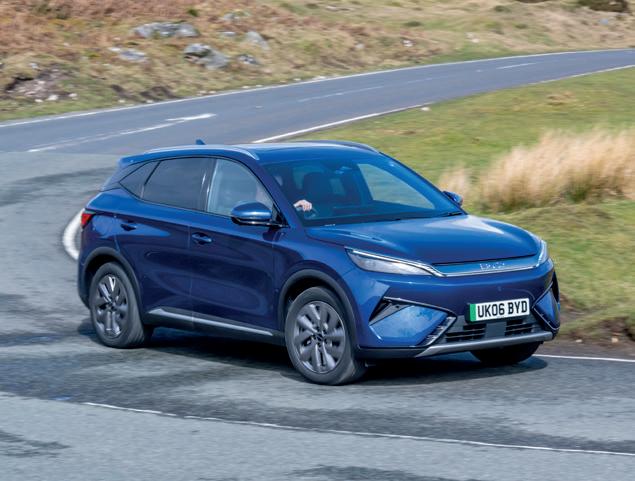
A far larger car than the Volvo but with similar pricing and performance, plus an equally infuriating user interface.
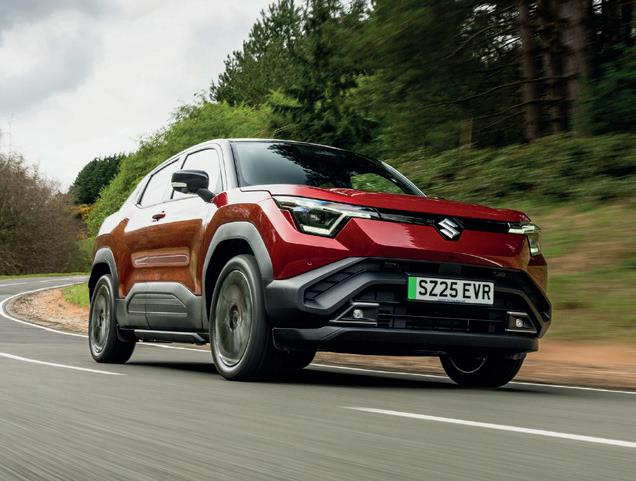
There aren’t many real rivals to the Volvo but Suzuki does offer similar 4x4 claims in a similar-sized package if that’s what you need.
SKODA ELROQ VRS
BYD ATTO 3 EVO
SUZUKI E-VITARA
VAUXHALL
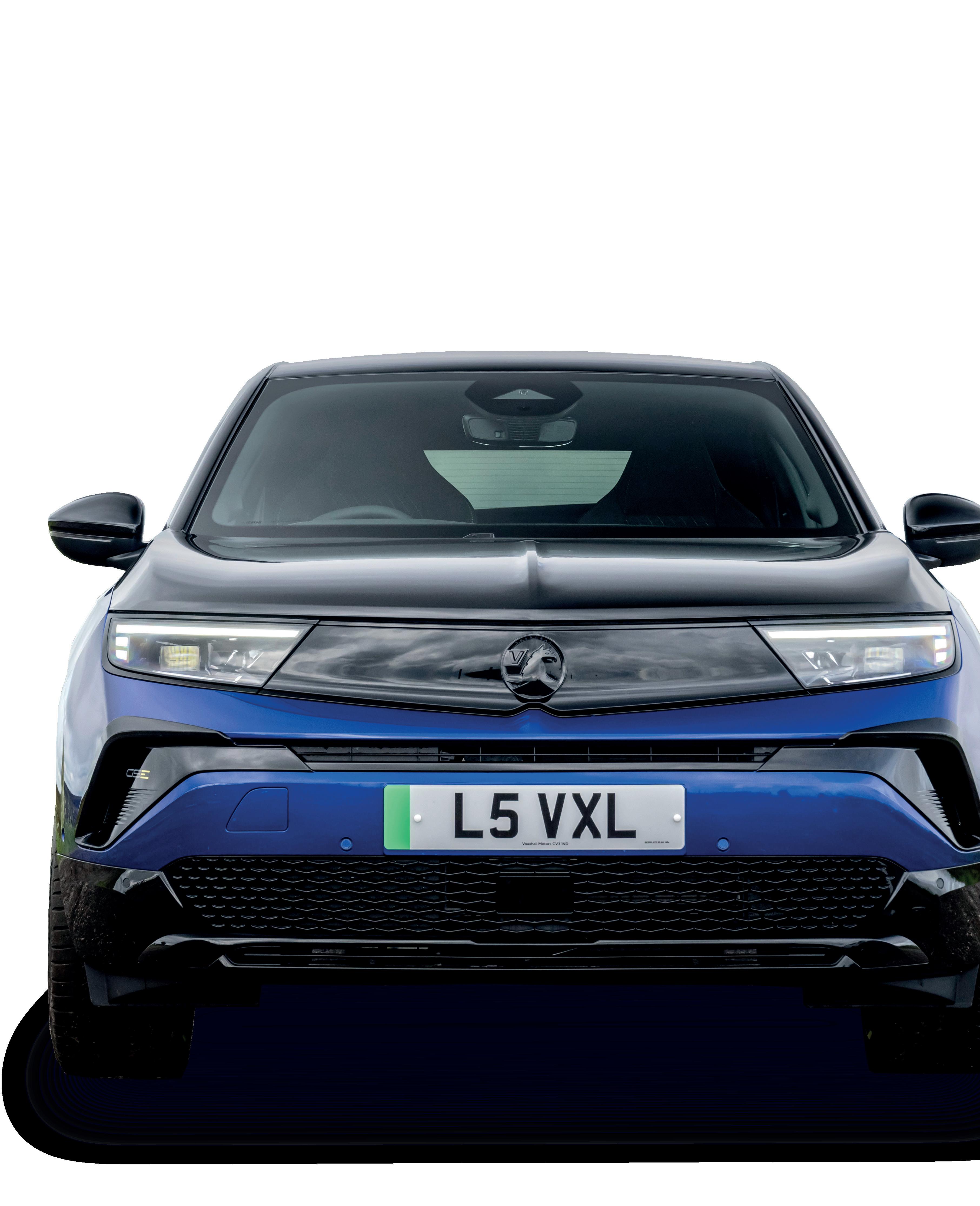
THE MOKKA GSE IS A PROPER WORKING CLASS HERO IN THE SPIRIT OF PERFORMANCE-FOCUSED NOVAS, ASTRAS, AND CORSAS OF OLD
VAUXHALL MOKKA GSE
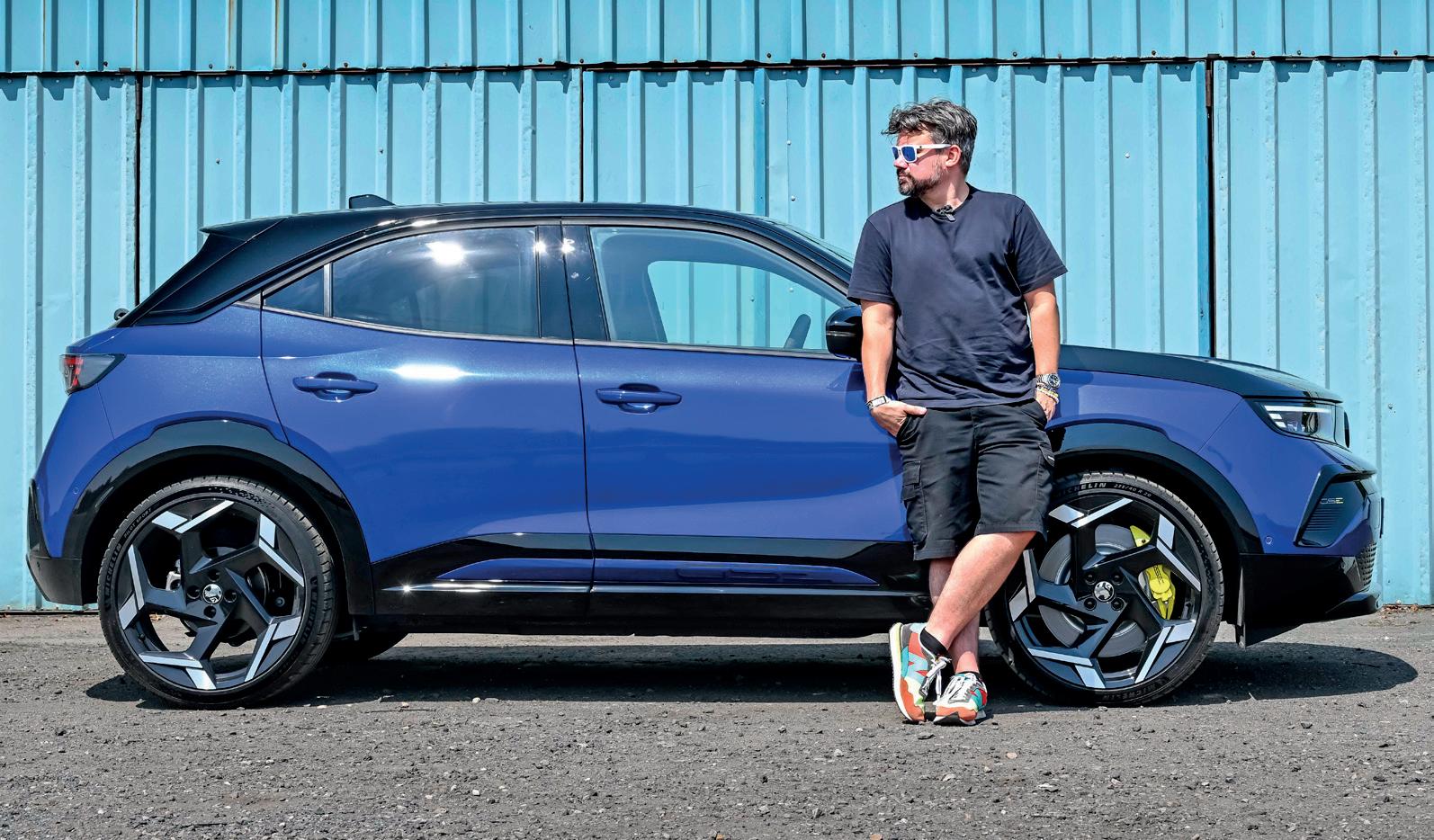
FACT TIME: Vauxhall is a carmaker that’s a vital part of the nation’s automotive fabric.
After all, your grandad may have owned a Viva during the 1970s. Fast-forward to the ’90s, and maybe your dad was lucky enough to have an Omega as a company car. Perhaps you, yourself, learned to drive in a Corsa - a car that’s been the UK’s best-selling supermini pretty much forever.
No surprise, then, that the Vauxhall Mokka Electric is one of the UK’s most popular EVs and for good reason. In cooking form, this crossover offers
a real-world range of up to 250 miles, a sharp design, and its distinctive ‘Vizor’ nose wears a badge that can be trusted.
On the used market, you can bag one for under £10k, which, at the time of writing, costs the same as a weekly shop in Aldi. If you’re buying brand new, a Mokka Electric will set you back £31,680, making it sort-of affordable in 2026 terms.
But the GSE isn’t your regular Mokka. It’s Vauxhall’s first model to launch as part of its revived GSE performance sub-brand, which now
BY GEORGE EAST
stands for ‘Grand Sport Electric’ - the successor to Vauxhall’s sporty and beloved GSE, GSi, and VXR nameplates.
It’s no secret that Britain loves a crossover. In fact, the B-segment (to which the Mokka belongs) is amongst the most popular vehicle types in the UK. What’s more, the demand for spicy small EVs is on the up - look at the Alpine A290. And the Cupra Raval. And the Mini Cooper Electric JCW. And the Volkswagen ID Polo GTI.
Then there’s the matter of the Abarth 600e and the Alfa Romeo Junior Veloce, with which the Mokka GSE shares several key components.
Having now driven both the Italian cars and the Mokka GSE, the Vauxhall is my pick of the three. Easily. And it’s the cheapest.
The regular Mokka isn’t a bad-looking car, and Vauxhall hasn’t tampered with the GSE’s angles. What it has done, however, is lower the ride height by 10mm and fitted a set of chunky 20-inch wheels to give it a more squat, aggressive aesthetic. Behind them sit a pair of 380mm ventilated brake discs finished in GSE yellow.
To remind you that you’re in a spicy model, Vauxhall has added various bits of GSE branding to the Mokka’s exterior, and an optional black bonnet (a nod to the Opel Ascona and Manta rally cars) is available as a £250 option. Meanwhile, the contrasting black roof can be done away with for free.
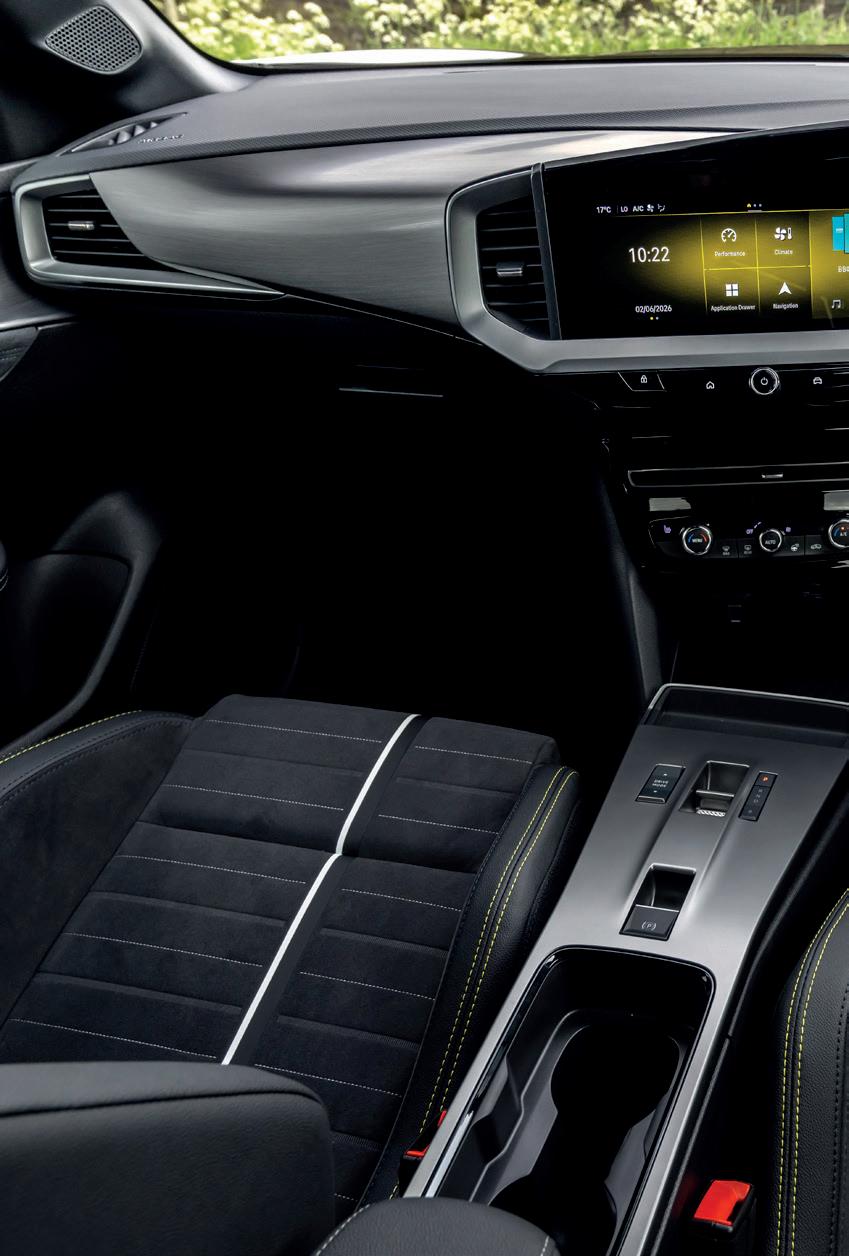
Inside, the Mokka GSE doesn’t differ massively from the normal car, and you gradually get the feel that it’s more Q-car than some of its lairy VXR predecessors.
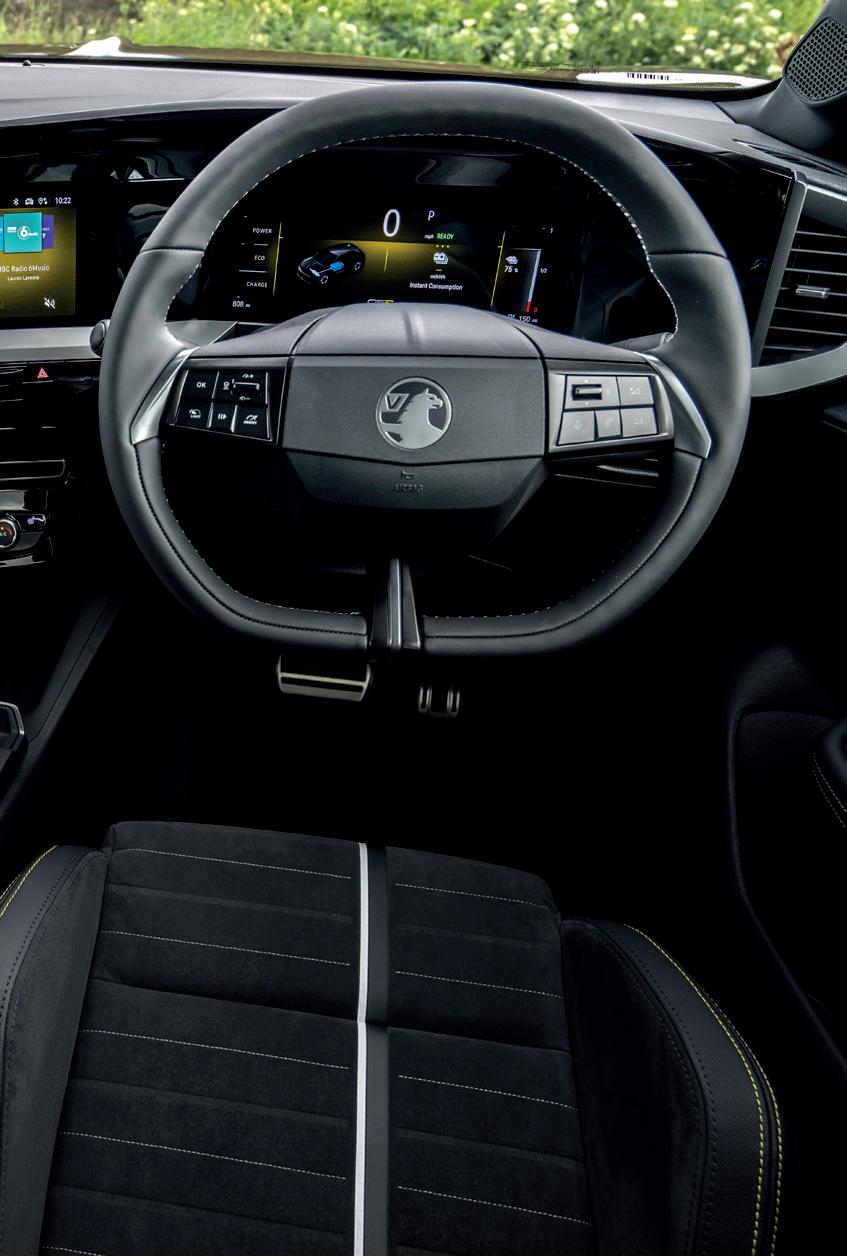
There’s a smattering of GSE logos, and the dashboard gets some silver elements, along with door inserts, a thin-rimmed and flat-bottomed Alcantara steering wheel, racy stitching, plus sports seats also trimmed in Alcantara. Otherwise, it’s pretty much business as usual - the cabin won’t blow your socks off in terms of design and visuals, but it’s easy to use. In the era of the touchscreen, what more do you want?
It’s also worth noting that the Mokka feels much more solidly put together than either the Abarth or the Alfa. This isn’t to cast any stereotypes on Italian build quality, but the Mokka’s dashboard didn’t flap while on the move...
Things aren’t all perfect, though. While Apple CarPlay and Android Auto work fine, the 10-inch
touchscreen and the 10-inch driver display still run on parent company Stellantis’s old-gen software - it’s pretty slow, and the graphics lag behind its competitors. The 'comedy' Stellantis gear selector remains. It would have been nicer if Vauxhall could have created something sportier here.
However, the yellow GSE graphics and the ‘Performance’ screen displaying live torque distribution, 0-62mph time, and battery management are engaging - if not encouraging - touches for the driver.
Under the skin, the Mokka GSE rides on Stellantis’s e-CMP platform. Like the Abarth 600e Scorpionissima and the Alfa Romeo Junior Veloce, the Vauxhall has a front-mounted, 277bhp motor, and a 54kWh battery...
...but there’s a catch! If you stick with the standard 225/40 Michelin Pilot Sport EV tyres, you’ll manage an official range of 201 miles. Bolt on the Goodyear Eagle F1s for an extra £100, and the Mokka will manage 209 miles on a single charge. Charging tops out at an unremarkable 100kW, promising a 20%-80% charge time of between 27 and 32 minutes.
The Mokka GSE's range is a bit of a problem because, under the skin, Vauxhall has done some serious work to make the Mokka GSE seriously fun to drive.
Here’s why: The chassis is derived from Opel Motorsport’s Mokka GSE Rally, a rally car built to the FIA’s eRally5 regulations.
Unsurprisingly, then, it packs all sorts of roadgoing, rally car wizardry including lower, stiffer springs, uprated axles, and a new rear antiroll bar. Pull everything together, and the GSE is 48% stiffer than the standard Mokka.
Add in the faster steering rack, and Alcon fourpiston brakes optimised using “GSE-optimised pedal tune”, and you’ll soon find yourself wanting to drive the Mokka GSE everywhere - absolutely everywhere - in ‘Sport’ mode.
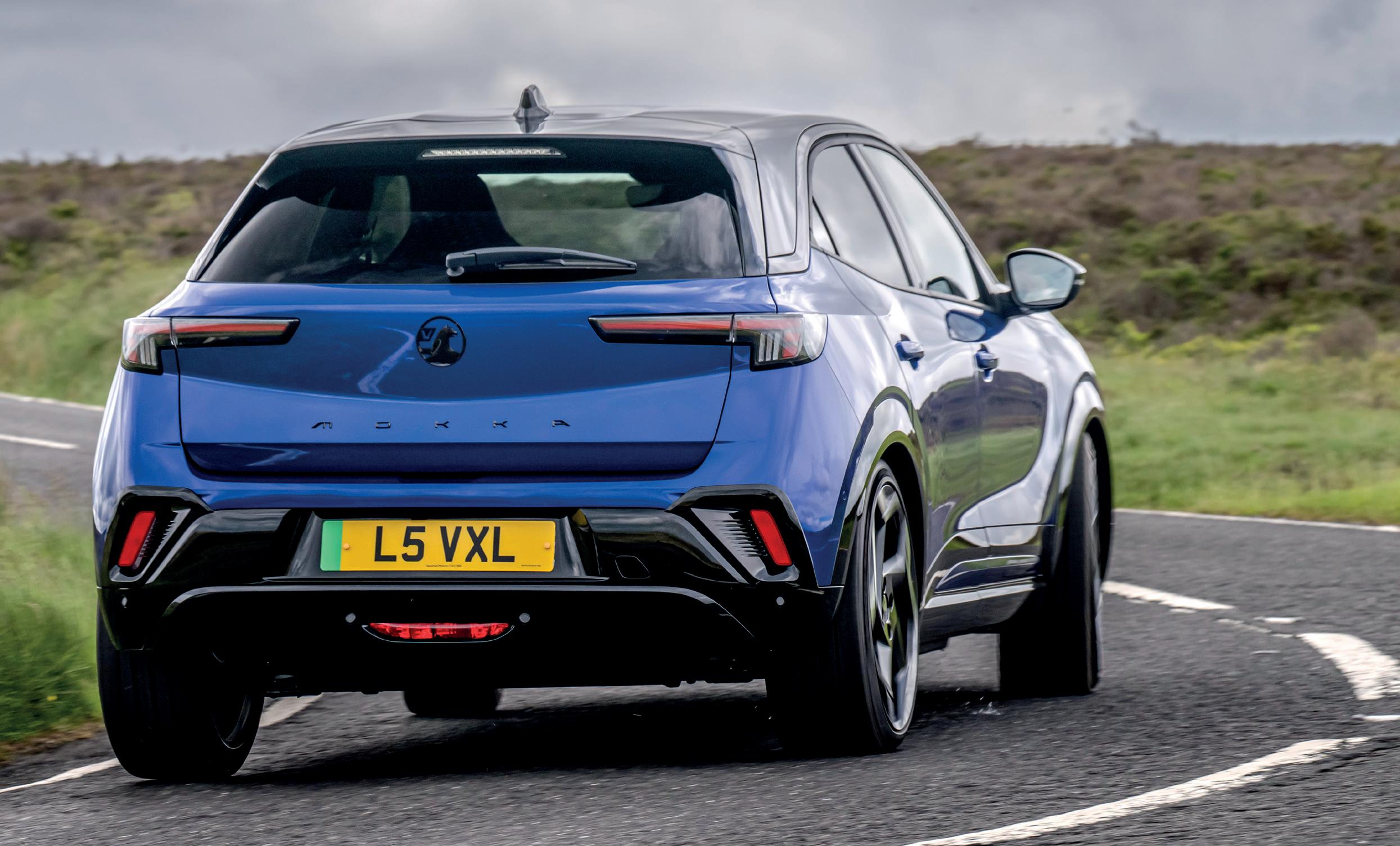
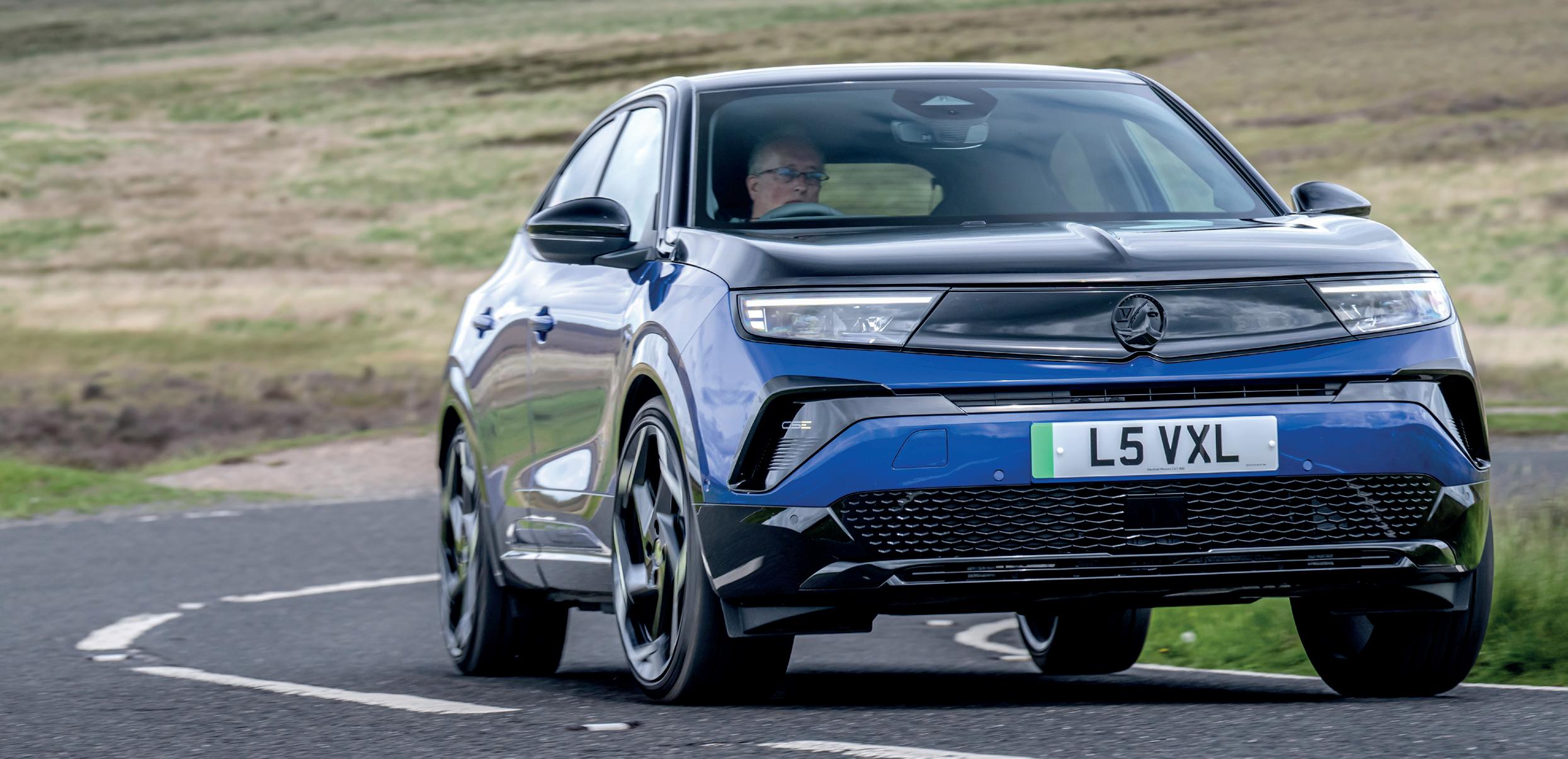
Do this, and the Mokka GSE’s range takes a hit. In fact, you’ll be looking at between 150 and 170 miles of real-world range.
B-roads are where the Mokka’s rally-derived chassis comes alive. It remains planted with very little roll, while the suspension's hydraulic bump stops prevent the ride from being boneshatteringly uncomfortable like its gobby Abarth sibling.
With the torque-splitting front differential, it skips along B-roads, biting at corners, and pulling you tightly through them with very little understeer and zero of the torque steer that afflicted hot Vauxhalls of old. If I were of a racing driver persuasion, I would even suggest that when pushing on, it feels like you’re dancing with the car. The whole
sensation from behind the wheel is organic and fluid.
The steering sits somewhere between medium and heavy, and with that thin rim, there’s plenty of feedback and room for shuffling to ensure you won’t get crossed up when driving in a spirited manner. Ultimately, you’ll run out of bottle before the Mokka GSE runs out of grip. It is a wildly entertaining piece of engineering.
Yet unlike the Abarth or the Alfa, when you stick the Vauxhall into either ‘Normal’ or ‘Eco’ mode, it feels like a regular Mokka, albeit one with a slightly firmer ride and plenty of poke.
As with the regular Mokka, Vauxhall has kept the trim levels for the GSE simple. There’s just oneunsurprisingly, it’s called GSE.
Prices start from £36,995m but it qualifies for the £1,500 Electric Car Grant, bringing costs down to £35,495. This makes it £2,500 cheaper
than that Abarth, or a whopping £7,000 cheaper than the Alfa. In fact, the GSE is also £1,100 less than the range-topping Mokka Ultimate, which has half the power and the same amount of standard kit.
Performance bargain à la old school Vauxhall? Absolutely.
Vauxhall has nailed its brief with the Mokka GSE and then some. Not only is it an absolute blast to drive, but you can also use it daily. The Mokka GSE, then, leans into proper ‘working class hero’ status like its predecessors - think Nova GSE, Astra GSi, and Corsa GSi.
The Mokka GSE’s siblings, the Abarth 600e Competizione and the Alfa Romeo Junior Veloce, are good. It just so happens that the Vauxhall is simpler to use, more engaging to drive, and easier to live with. That's what makes it better. Much better.
VAUXHALL MOKKA GSE
PRICE: £35,520 (inc. £1,500 Electric Car Grant)
POWERTRAIN: Single-motor, front-wheel-drive
BATTERY: 54kWh
POWER: 277bhp
TORQUE: 254lb ft
TOP SPEED: 124mph
0-62MPH: 5.9 seconds
RANGE: 209 miles
CONSUMPTION: 2.8-3.5m/kWh
CHARGING: up to 100kW
TOKYO DOUBLE HEADER SETS UP FIVE-POINT FORMULA E TITLE DECIDER
By Richard Alvin
Dan Ticktum and Nyck de Vries took a win apiece in Japan, and a chaotic weekend leaves just five points covering the top three going to London
FORMULAEARRIVEDINTOKYOWITHPASCALWEHRLEINLEADINGTHEDRIVERS'WORLDCHAMPIONSHIPANDLEFTWITH THEGERMANTHIRD,AFTERADOUBLEHEADERTHATPRODUCEDTWOFIRST-TIME-IN-A-WEEKENDWINNERS,ALAST-LAP MUGGING, A RED FLAG AND A WHOLESALE REORDERING OF THE TITLE FIGHT.
Jake Dennis now heads the standings, with Mitch Evans two points back and Wehrlein five adrift, ahead of the Excel London finale on 15 and 16 August.
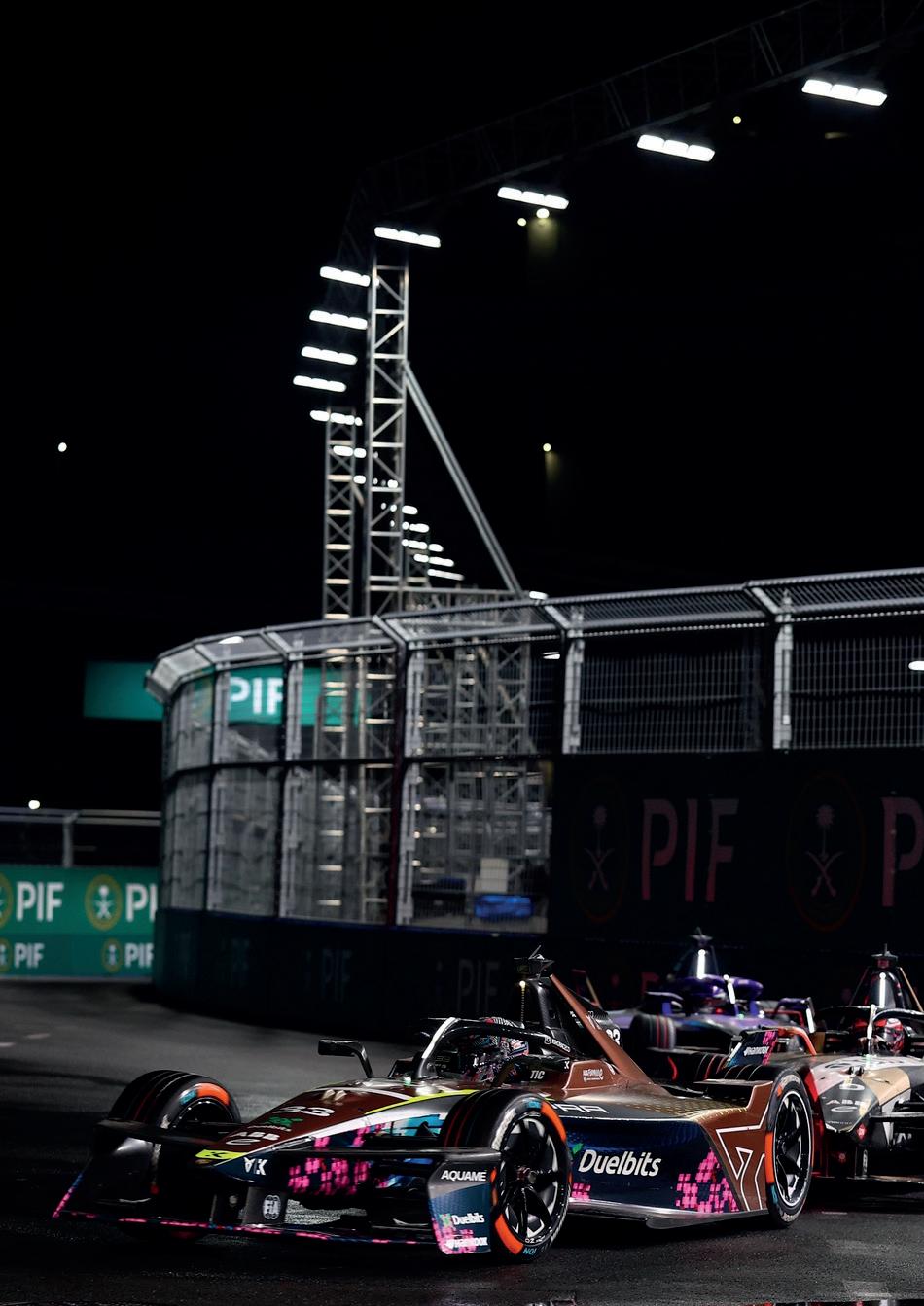
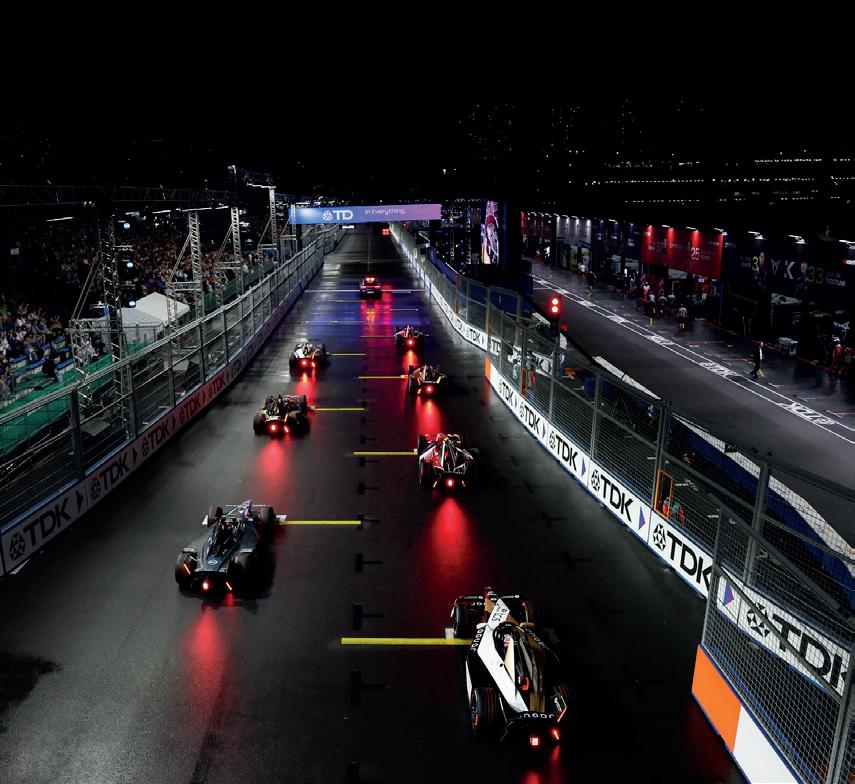
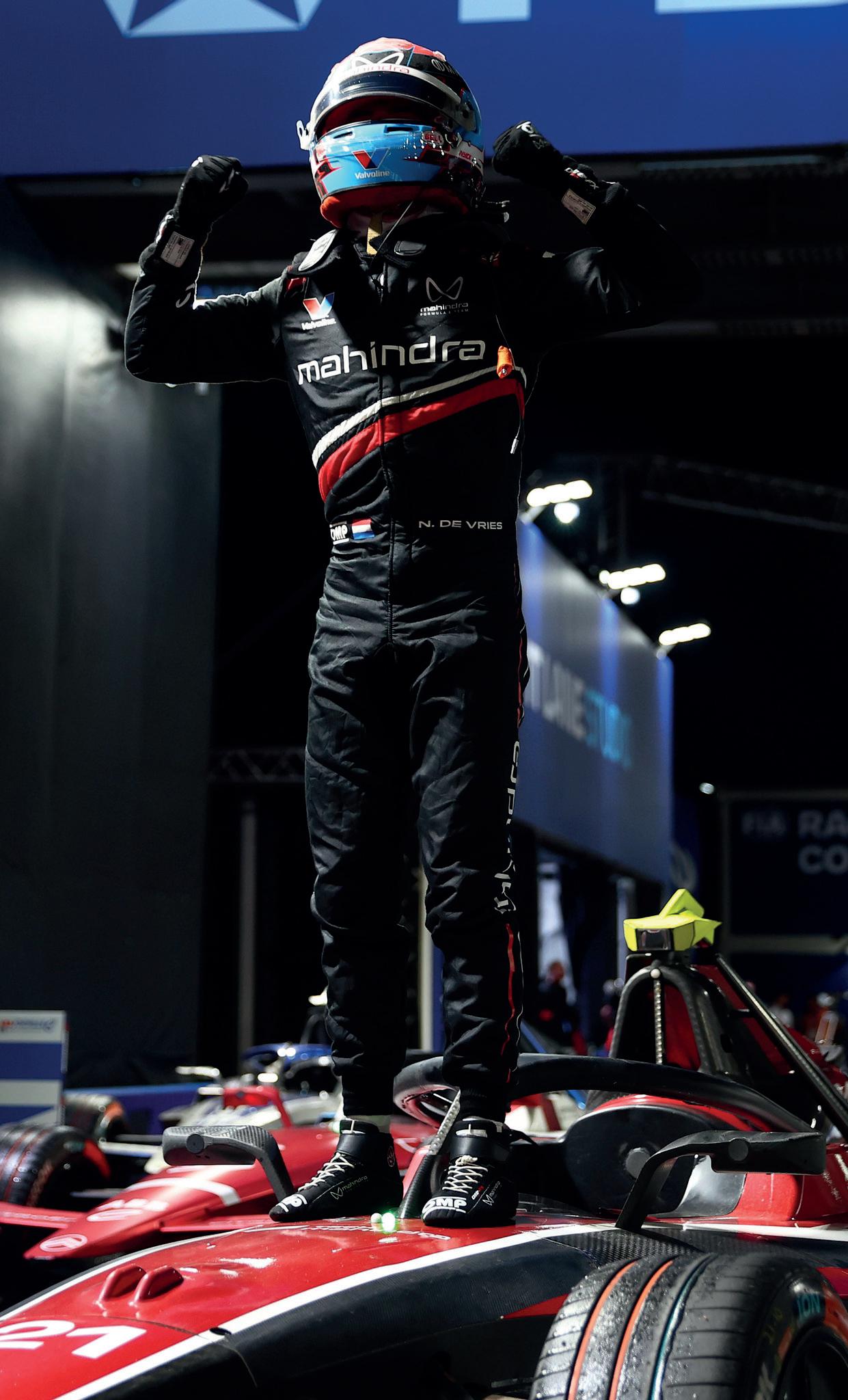
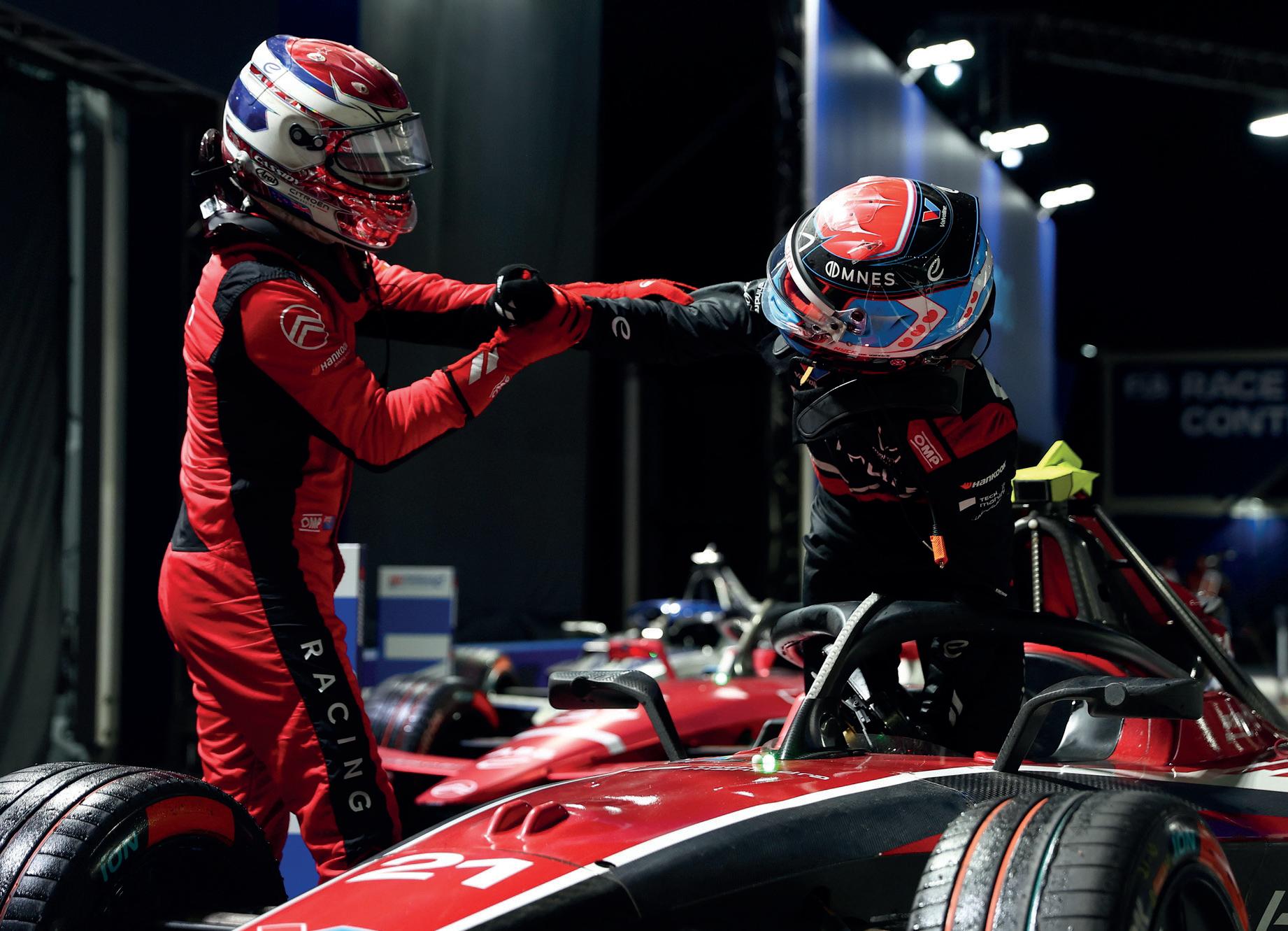
Dan Ticktum won Saturday's Round 14 for CUPRA Kiro, picking off Dennis at the penultimate turn of the final lap in Formula E's first Tokyo night race. Nyck de Vries then took Sunday's Round 15 for Mahindra Racing from fifth on the grid in conditions that changed by the lap. Nick Cassidy stood on the rostrum twice for Citroën Racing, on a weekend the paddock spent honouring the team's late principal.
TICKTUM pounces on the last lap
Saturday belonged to a driver who currently has no contract for next season. Ticktum started sixth and went aggressive early, CUPRA Kiro triggering both PIT BOOST and ATTACK MODE before the field had settled, a strategy that spat him out of the stops as net race leader.
Dennis had other ideas. The Andretti driver deployed a late 50kW all-wheel-drive boost on Lap 29 to clear both Cassidy and Ticktum, and looked to have it sewn up.
Then came the sting. Running down to Turn 16 on the final lap with his energy on the floor, Dennis had to lift early. Ticktum, sitting in his mirrors and rather better off after six laps in the tow, drove around the outside and made it stick. Nine rounds, nine different winners.
"This has been one of the hardest seasons I think I can remember in my whole career," said Ticktum, whose maiden Formula E victory came in Jakarta last summer. "We really haven't had any fortune. We've made mistakes as a team, I've made mistakes, but today was the opposite. We nailed it."

31 FORMULA E
He was candid about the endgame. "Dennis got past with his last few seconds of ATTACK MODE, and I didn't want to fight that one too much. I was actually quite happy with second position because I think we executed very well up to that point. He was ahead of me for about six laps, which allowed me to save a bit of energy, probably more than him."
Then he made his point about 2027. "A lot of people know that I'm currently a free agent, and
I don't really know what more I can do to prove that I should remain in Formula E. I hope I can be here for GEN4 because that's going to be right up my street."
Dennis was gracious in defeat and quick with the maths. "We take the 18 points, which closes the championship lead, and we are only 14 points back now, so it is on." Rain, he said, had cost him: "When you lead 70 to 80 percent of the race in clean air, I had no energy at the end and was pretty cooked."
Behind them, Wehrlein tangled with António Félix da Costa and failed to finish, handing Evans the points lead on 144 to the Porsche man's 141. Evans took fourth, Edoardo Mortara fifth.
Cassidy's third place carried its own weight. The weekend doubled as a tribute to Citroën Racing team principal Cyril Blais, who died earlier this month. "Everyone's hurting right now, but I'm glad we could do our best in conditions like today," the New Zealander said.
DE VRIES gambles on a drying track
Sunday's TDK Tokyo E-Prix was decided long before the lights went out. A deluge earlier in the afternoon left Mahindra with a call to make, and the team set the car up for a drying surface on the assumption the rain would stay away. It did.
De Vries kept his powder dry through the opening stint, banking energy while rivals burned theirs, then took ATTACK MODE on Lap 28. He picked off the cars ahead, took reigning World Champion Oliver Rowland for the lead, and a late Red Flag closed the door on any comeback.
It is his second win of 2025/26 and Mahindra's second of the season, a double the team has not managed since 2017/18. The Dutchman also won in Monaco earlier this year.
"I do want to thank the gods because I think we were a little bit lucky today," de Vries said. "Obviously, we had a poor start, I think we opted for a drying track and, in hindsight, that obviously worked out in our favour. I think it was very important to save energy at the beginning of the race because once the track dried, you needed the energy.
"I think we were a little bit lucky with the Red Flag at the end because Jake was coming on strong in ATTACK MODE, but I am very, very happy and proud of my team."
Cassidy made exactly the same call and was rewarded with second, having carved through from 13th. Dennis produced the drive of the day for third from 18th, at one point 35 seconds off the lead, helped past Rowland by the Nissan driver's late ATTACK MODE call and thin energy margin.
Wehrlein blanked for a second round running. Evans, who had provisionally led, retired. There was consolation for Stuttgart, with Porsche confirmed as 2025/26 Manufacturers' World Champion, though Jaguar TCS Racing still heads the Teams' standings.
"Championship leader sounds incredible," said Dennis. "I had this pressure back in
Season 9, so I'm used to it. There's no difference there. Obviously, the gap is much closer, but you know, I'm just fully motivated, focused to get the job done, and it's going to be an incredible fight with the five of us who can probably go for it."
Rounds 16 and 17, the 2026 Hankook London E-Prix, run on 15 and 16 August and bring the curtain down on the GEN3 era. Full detail on Sunday's race is in the FIA's official report.
DROGBA'S DAY: Monaco pole heartbreak hands E1 its most unlikely winner
Team Monaco stunned the paddock with a last-gasp home pole, then threw it away with a single wrong turn. Team Drogba Global Africa picked up the pieces, and Tom Brady walked away with the championship lead.
PORT HERCULE HAS SEEN MOST THINGS. IT HAS NOT, UNTIL THIS JULY, SEEN A NINE-YEAR-OLD CHAMPIONSHIP'S NEWEST TEAM PUT A MONEGASQUE BOAT ON POLE IN FRONT OF PRINCE ALBERT II AND THEN CONTRIVE TO FINISH SEVENTH.
Round four of the UIM E1 World Championship presented by PIF was, by some distance, the season's most compelling weekend. It ended with Team Drogba Global Africa taking a maiden victory that almost nobody had forecast, Team Brady leading the standings for the first time in 2026, and the home crowd left staring at the water wondering what might have been.
FRIDAY: the roughest water of the year
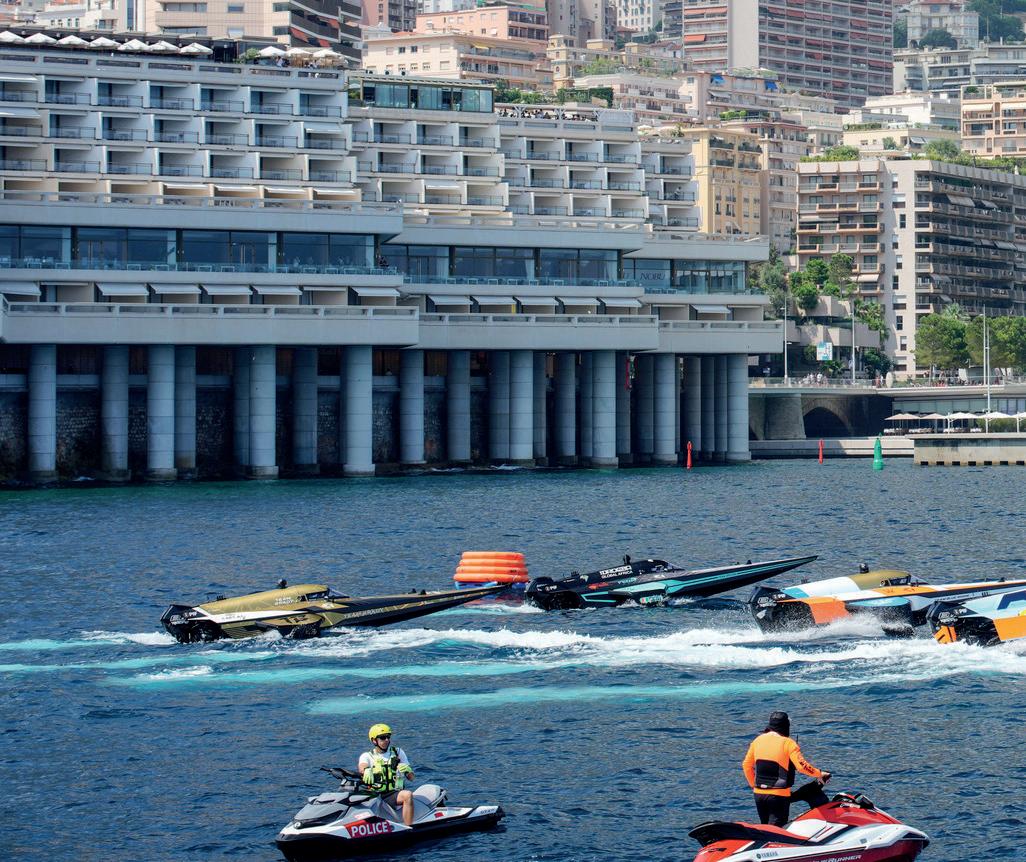
Qualifying on Friday 17 July was run in the choppiest conditions E1 has faced all season, and the Principality's tight, technical course punished anyone who got greedy.
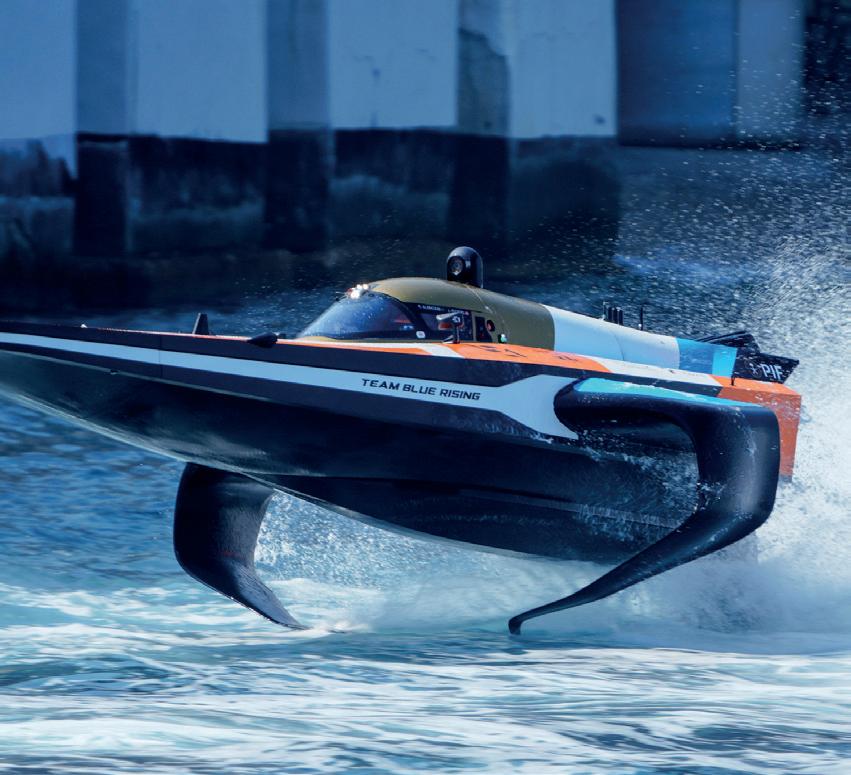
Oban Duncan, the youngest pilot in the field, produced the lap of the day at the very last opportunity, snatching pole from John Peeters of Team Blue Rising. It was a remarkable result in only Team Monaco's fourth E1 outing, and Duncan shared it with French co-pilot and Yacht Club de Monaco member Maxime Nocher.
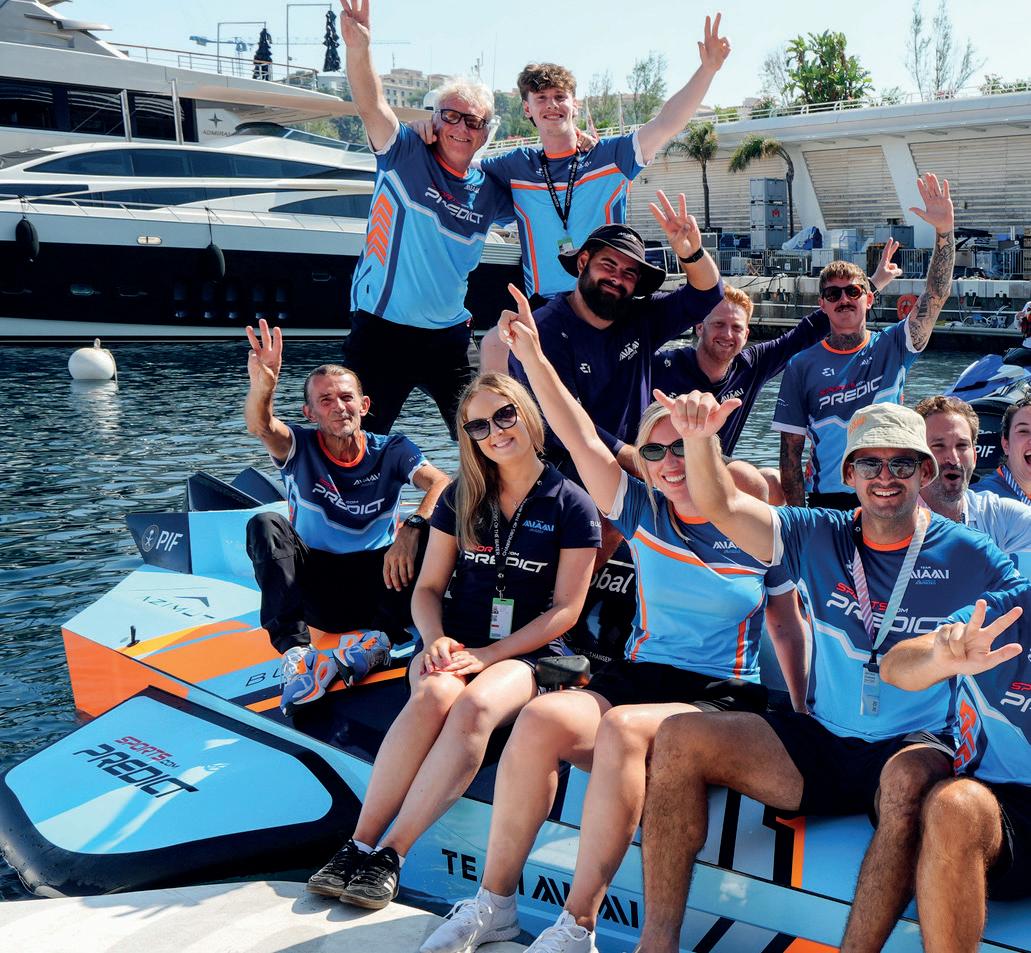
The session was brutal before that. Team Brady, double reigning champions, looked to be heading out in Q1 until Emma Kimiläinen dragged the boat clear of the drop zone on her final run. Her reprieve came at the expense of Sports.com Predict Team Miami Powered by Magnus and Team Rafa, both eliminated in the first segment.
Q2 accounted for Sierra Racing Club, watched from the dock by NBA forward and team coowner Kyle Kuzma, and Team AlUla, the outfit championed by LeBron James. AlUla at least had
By Richard Alvin
recent form to lean on, having carved from ninth on the grid to third in Dubrovnik a month earlier.
The genuine shock arrived in Q3. Westbrook Racing by Visit Angola had reached the final segment of qualifying at every round of the season, but Sara Price suffered a prop overspeed in the swell and was left underpowered for the remainder of her lap. The championship leaders slumped to fifth, in full view of team owner Will Smith. Aoki Racing Team went out alongside them, narrowly missing the top four.
That set up the shootout, where Peeters had bettered his own benchmark on a second run and looked set for a first career pole. Then Duncan went out and turned the session upside down.
"Congratulations to Team Monaco on a fantastic home pole and to all teams for a thrilling qualifying here today," said E1 chief executive Jamie Copas. "It sets up the prospect of an exciting race tomorrow. With its racing heritage
33 E1 SERIES

and coastal beauty, the Principality is a natural home for E1 and one of the standout events of the Championship."
He was right about the racing. He could not have known how the plot would turn.
SATURDAY:
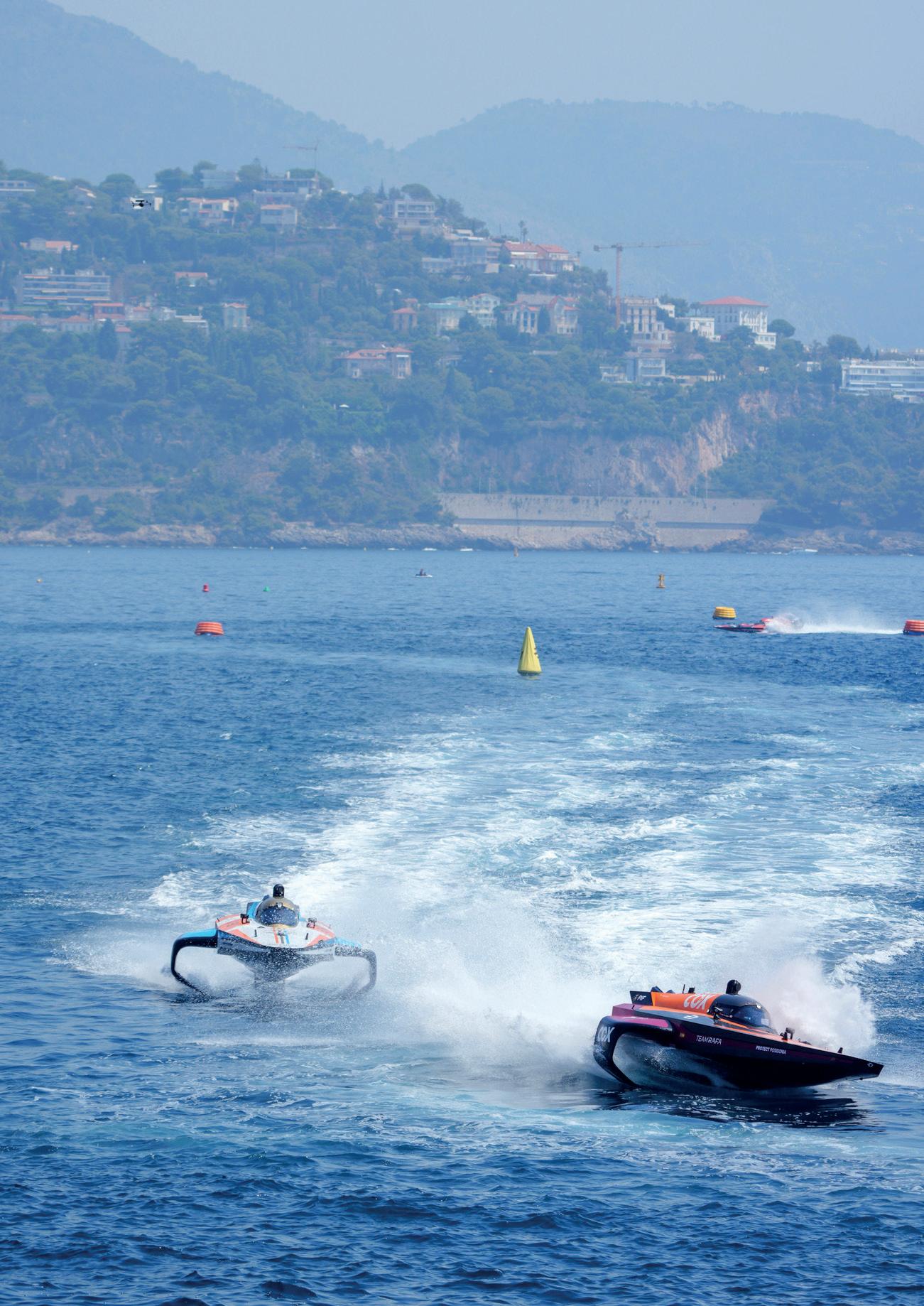
flat water, and a costly wrong turn Saturday brought a different sea entirely. The chop had gone, replaced by the glassy surface that lets an E1 RaceBird do what it was designed to do: climb onto its foils and stay there.
The one-design carbon-fibre hull carries a 150kW Mercury Racing electric outboard, worth roughly 201bhp, fed by a 37kWh Kreisel battery pack. On foils, drag falls away and the boats nudge 50 knots, which in a harbour the size of Port Hercule feels considerably faster than the number suggests. Every team fields one male and one female pilot, alternating through the heats, with both sets of results combining into the weekend total.
Team Monaco started as the boat to beat and looked it. Nocher led the opening race and set the

weekend's fastest lap at 1:15.422, comfortably the most convincing pace anyone showed in anger. Then came Race 2, and the mistake that decided the home team's weekend. Team Monaco missed the first corner of the mandatory start lap. Duncan recovered brilliantly to fourth on the water, but the penalties that followed turned the result into a disqualification and dropped the local favourites out of the Finals and into the Place Race. They took second there, salvaging seventh overall.
"There are a lot of emotions, actually. I did everything I could," Nocher told Monaco Life afterwards. "It's a bit hard to refocus after a disqualification. We have our first trophy, and it says 'Monaco' on it, so we did enough of a job yesterday. We would prefer another today, but this is good."
The rank outsiders who read the conditions right
Few would have tipped Team Drogba for the top step. Didier Drogba's team arrived in Monaco with a best finish of seventh, at Lake Como, and 20 points from three rounds. They left with 39 from one.
Tara Pacheco took Final 1, holding off Kimiläinen in the Brady RaceBird. Micah Wilkinson then repeated the trick in Final 2, keeping Sam Coleman behind him to the flag. Two Finals, two wins, no arguments. Wilkinson collected the PIF Pilot of the Day award.
"We definitely knew that we had the pace on the qualifying laps, and today Monaco woke up with flat water and we knew how to perform with the boat on it," Pacheco said. "And we did it."
Behind the leading pair in Final 2, Timmy Hansen brought his Miami boat home third alongside teammate Rianna O'Meara-Hunt, ending a barren run of 13 races without a podium for the Marc Anthony co-owned outfit. It was a timely lift for the Swede, who has been open about wanting to fight for the E1 title rather than make up the numbers.
BRADY ON TOP, Angola next
Team Brady's second place did the quiet, unglamorous work that wins championships. Nine points is not much of a cushion over Westbrook, who could only manage eighth on a weekend that unravelled from qualifying onwards, but it is the first time Brady have led the table in 2026.
"Huge congratulations to everyone at Team Drogba on securing a remarkably assured maiden victory here in Monaco," Copas said. "We leave with a new Championship leader in Team Brady with Will Smith's team in close contention.
"The Principality once again delivered an extraordinary weekend of thrilling on-water action to reinforce our belief that E1 is creating a new chapter in global motorsport. We now head to Angola, Africa, for the next round as the Championship battle intensifies."
Monaco was the last European stop of the year.
The championship now makes its first visit to southern Africa for the E1 Luanda GP on 12 and 13 September, which, for a team called Drogba Global Africa arriving as race winners, is timing you could not script.
E1 CHAMPIONSHIP STANDINGS AFTER MONACO
1. Team Brady 119pts 2. Westbrook Racing by Visit Angola 110pts 3. Team AlUla championed by LeBron James 75pts 4. Aoki Racing Team 71pts 5. Team Blue Rising 64pts 6. Team Drogba Global Africa 59pts 7. Sports.com Predict Team Miami Powered by Magnus 50pts 8. Sierra Racing Club 46pts 9. Team Monaco 44pts 10. Team Rafa 38pts
RENAULT 5 LONG-TERM MONTH SIX
PARTING IS SUCH SWEET SORROW
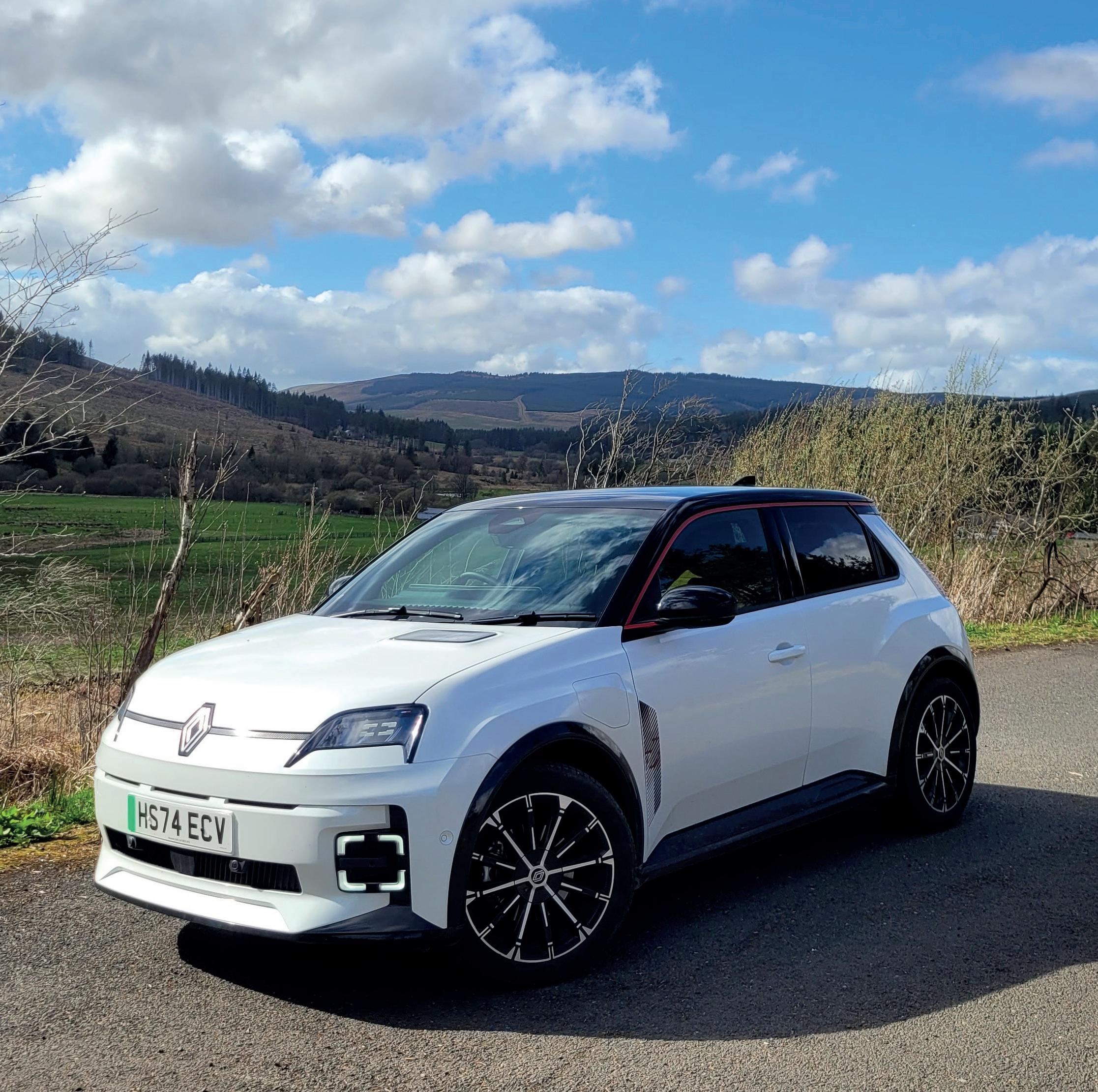
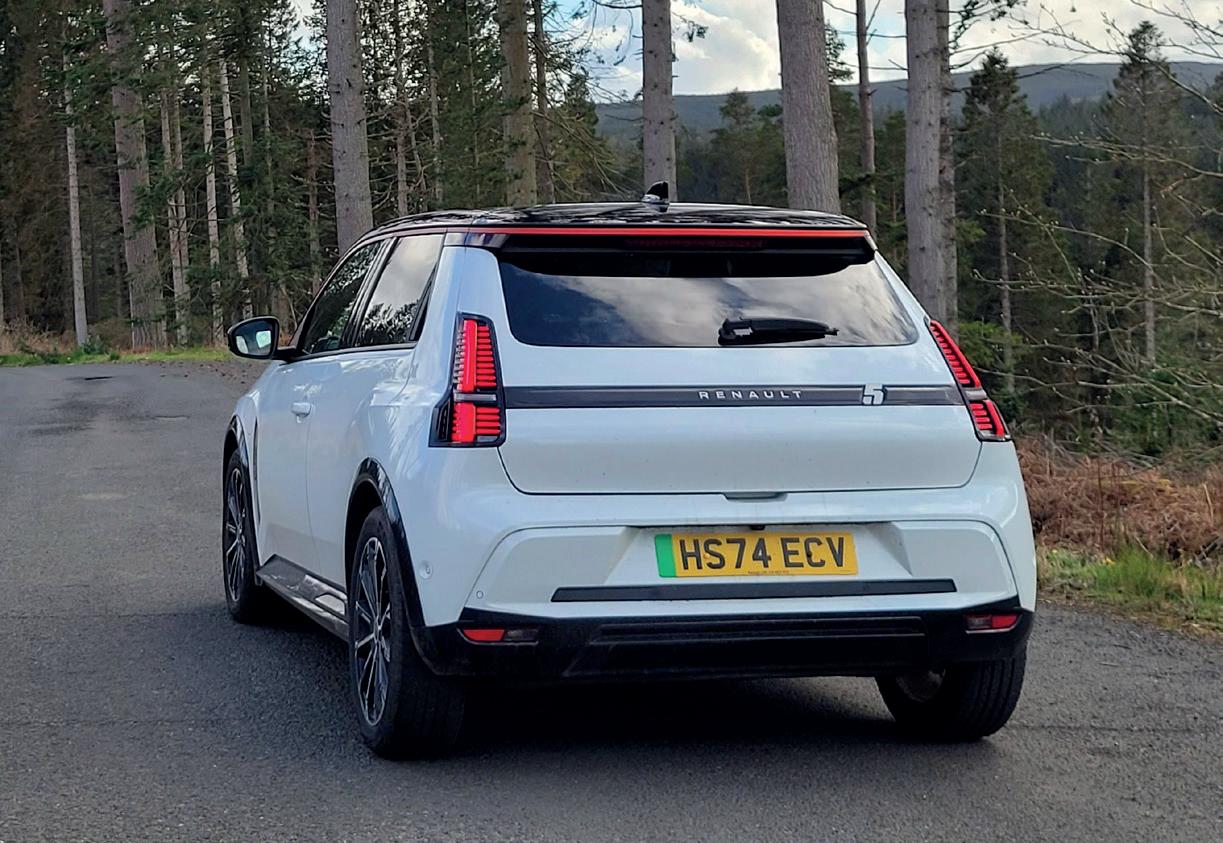
So, after six months, it’s time to bid farewell to my long-term Renault 5.
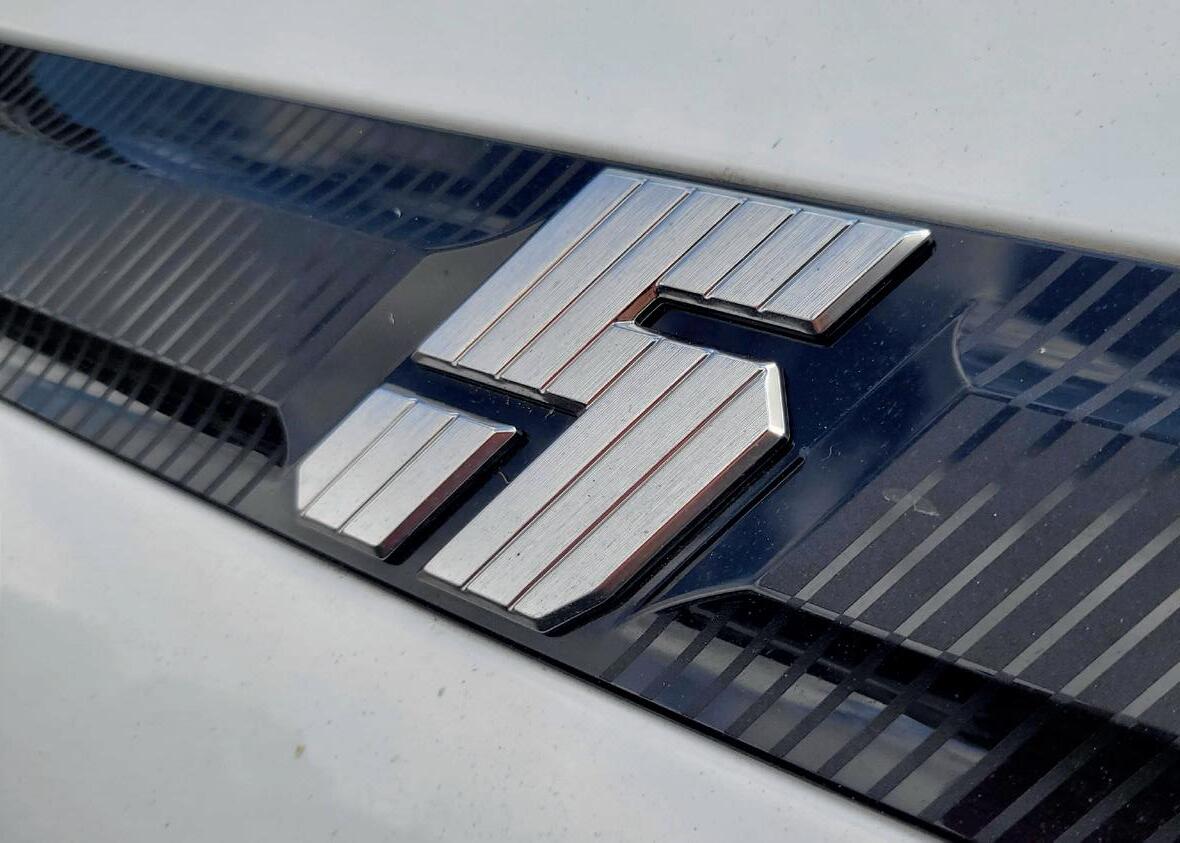
35 LONG-TERM REVIEW
There’s always a bit of a wrench when a longterm test car leaves. After many months, they inevitably become a fixture of day-to-day life.
RENAULT 5 ICONIC 5+
PRICE: £28,995 excluding ECG (£30,045 as tested)
POWERTRAIN: Single-motor, front-wheel-drive
BATTERY: 52kWh
POWER: 148bhp
TORQUE: 181lb ft
TOP SPEED: 93mph
0-62MPH: 7.9 seconds
RANGE: 251 miles
CONSUMPTION: 4m/kWh
CHARGING: up to 100kW
But the R5’s departure isn’t just affecting me. My wife has fallen in love with “her” commuter car, which she’s nabbed regularly when I’ve been driving something else. And the eldest child has asked why we can’t just keep it to sit alongside the ID Buzz as the perfect two-EV garage.
The wee Renault has charmed its way into our lives and it feels like a genuinely ideal fit for us.
It has flaws. Some of the interior plastics are a little shiny and brittle. There’s really not much space in the back, and the low, dark roof means it doesn’t feel as airy or spacious as the similarly sized Grande Panda. And you have to be prepared for the stark difference in summer and winter range, when it drops to under 180 miles.
But those minor points aside, it’s been a phenomenal day-to-day companion. It’s coped with everything I’ve asked of it, and been my default choice of transport for virtually every trip.
Time and time again, when presented with a choice of cars to nip to the shop in, or to slot into the multi-storey at the airport, the Renault has been my go-to choice. Its compact size makes it perfect for supermarkets
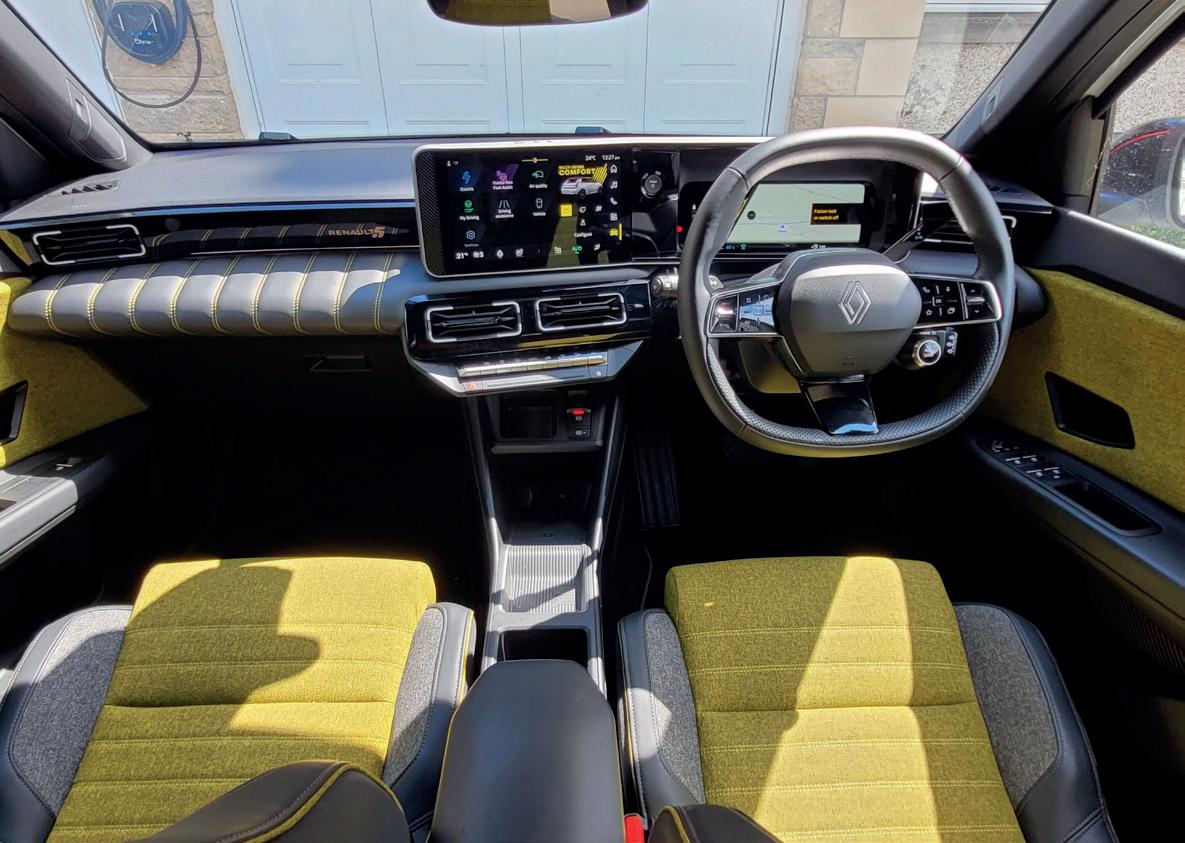
and the school run. Its lively platform and nippy motor make it a pleasure to drive. And its onboard tech – from the one-touch ADAS deactivation to the route planner that uses real-time battery data – makes it a doddle to use. On top of that, its retro styling still puts a smile on my face every time I look at it.
Yes, the 250-mile range means long trips will require charging stops. And the variation between summer and winter range is quite pronounced. But as a day-to-day family runaround, part-time commuter car it has performed brilliantly.
And it’s getting better. My car was an early model. Since it was built, the price has come down and Renault has added multi-stage regenerative braking and a one-pedal mode. What’s more, from next year it’s getting, a more efficient new motor, which should push up the range of both battery variants.
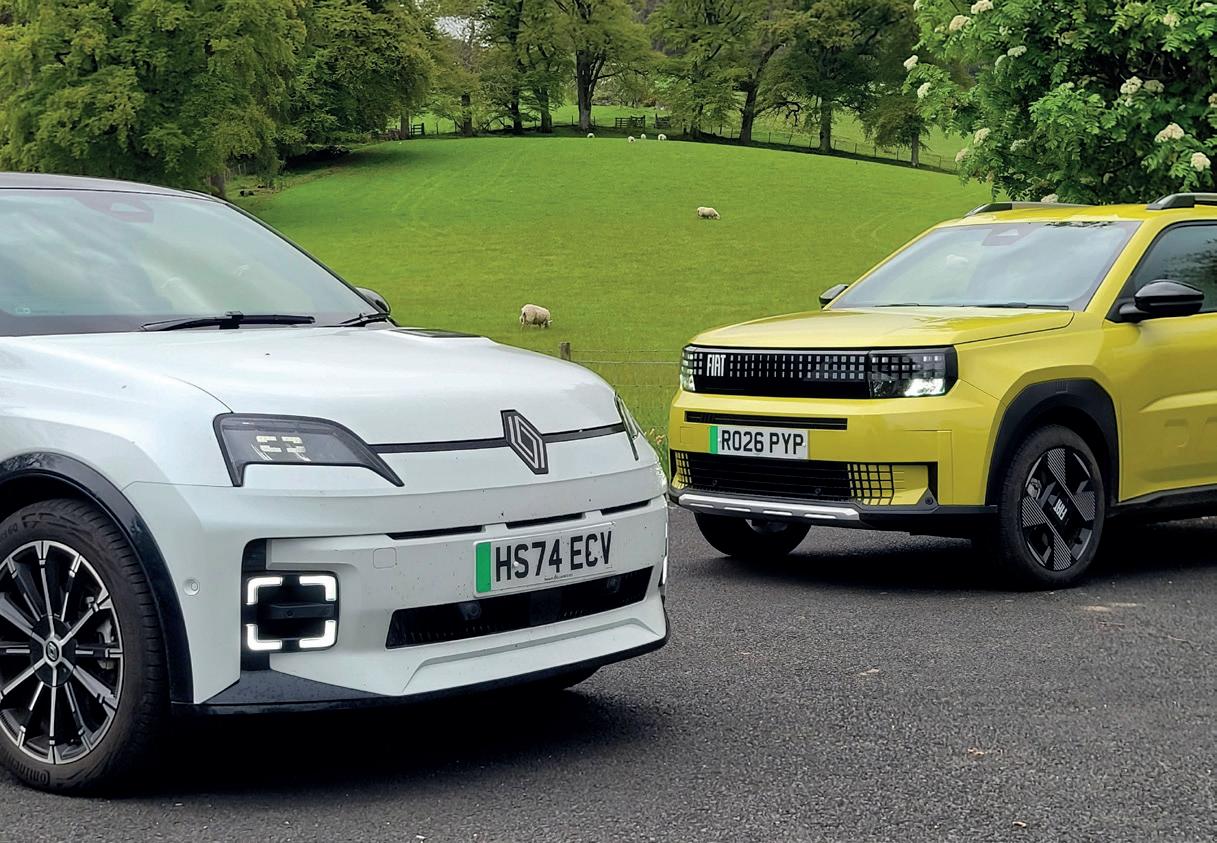
As I write this, VW has just opened orders for its ID. Polo and Geely has just launched the EX2, both of which are direct rivals to the Renault 5. The Fiat Grande Panda has also finally arrived in the UK, the Cupra Raval is due any day now, and next year we’ll get the MG2.
That’s on top of the likes of the Mini, Citroen E-C3 and BYD Dolphin Surf, which are already on sale.
So there’s plenty of competition out there, some of it very capable indeed. But after living with it for six months, the Renault 5 remains the small EV to beat for me.
Arrived:
since arrival:
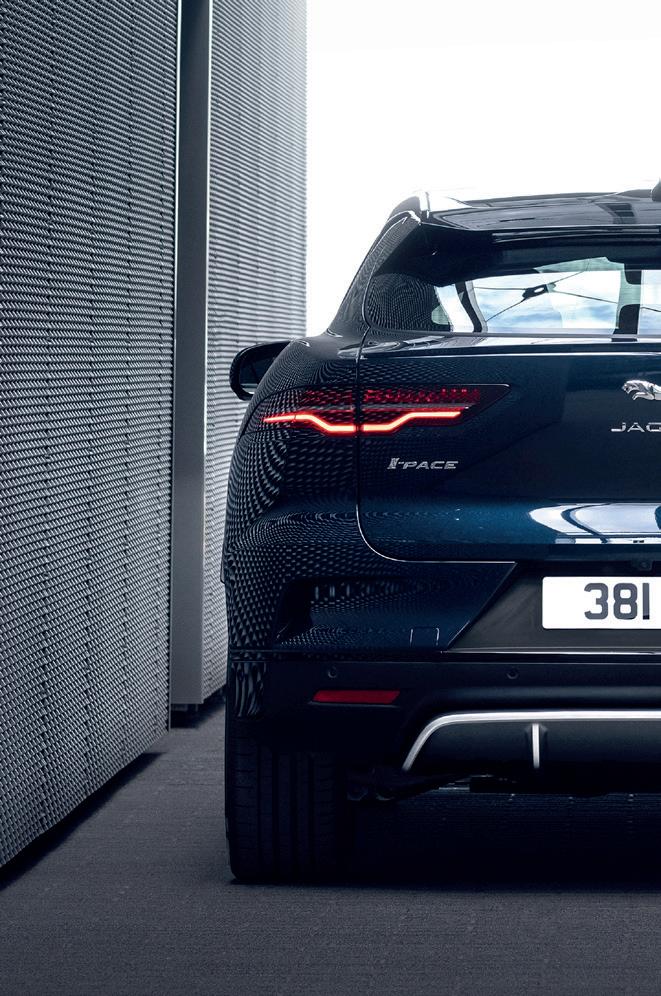
USED JAGUAR I-PACE BUYING GUIDE
The Jaguar I-Pace looks like a steal, and it is if you get a good one - tread carefully, though, because that cheap dream Jag can quickly turn into an expensive nightmare
Get beyond the Old Testament narrative that full-electrification has been Jaguar’s death knell, and you’ll quickly discover that the Type 01 GT isn’t the first EV to be produced by the ‘Big Cat’.
In fact, that accolade goes to the I-Pace, which debuted in 2018 and remained on sale until 2024. It did quite well, too, shifting 25,000 units in the UK alone, and a total of around 70,000 globally.
Hardly killing the brand or a sales disaster, right?
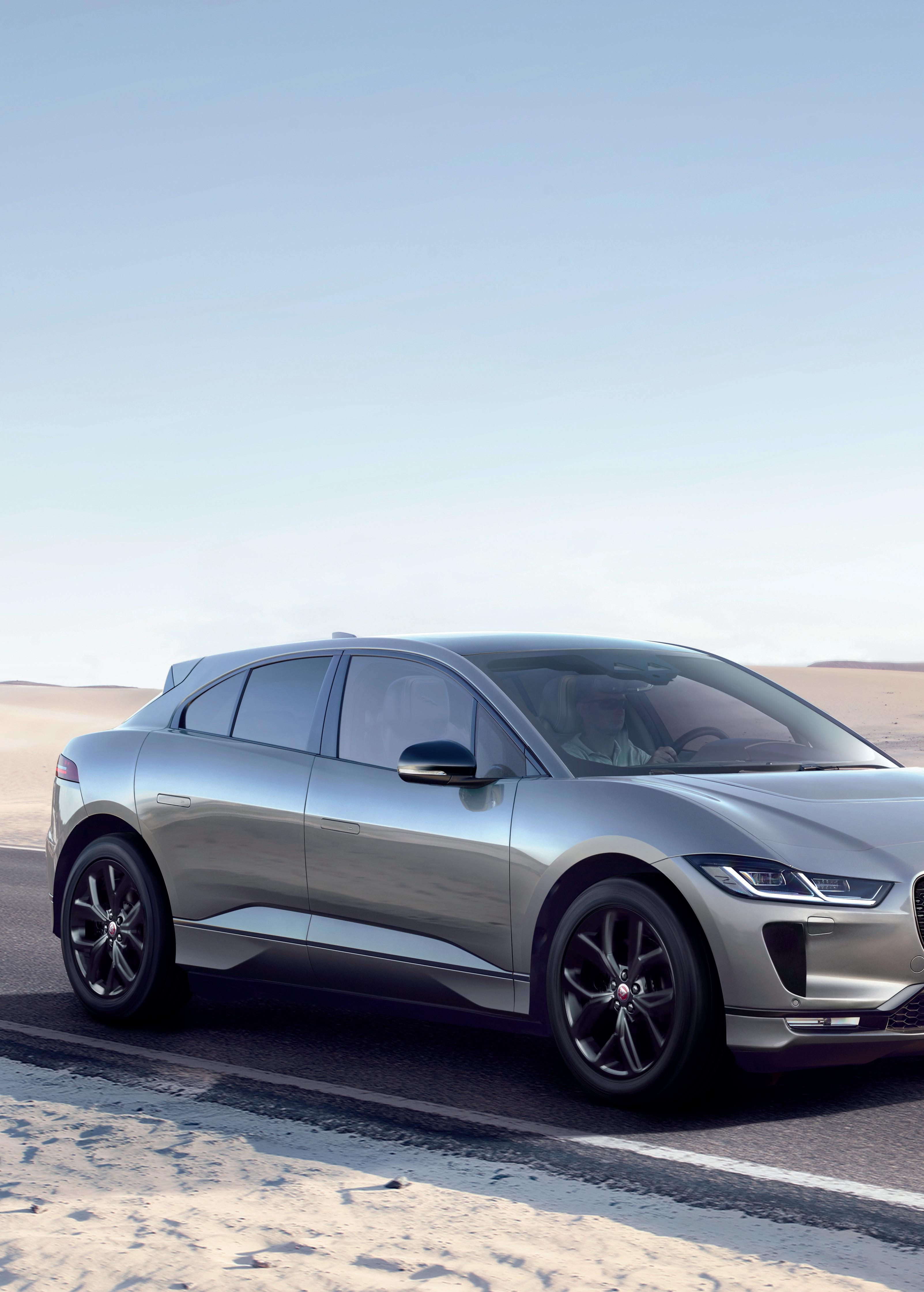
When it arrived, the I-Pace was a groundbreaking proposition in the still fairly young EV market thanks to a powerful twin-motor setup wrapped up in a futuristic body comprising 94% aluminium to keep weight down.
The I-Pace underwent a mid-life facelift in 2021, which introduced a sharper design and new tech including 11kW AC charging and a PiviPro infotainment system.
However, that was as much effort as Jaguar was willing to put into
supporting its impressive first EV, and towards the end of its life, the I-Pace began to lose ground to the likes of the Tesla Model Y, the Skoda Enyaq, and the Kia EV6 in terms of range and charging speed. Moreover, reliability became a particular bugbear, particularly in relation to the battery.
Nonetheless, choose wisely, and a used Jaguar I-Pace should return plenty of happy zero-emissions miles and makes for a great value, left-field choice. And at the end of
the day, you’ll drive a Jaaaaaaag - a cool, non-Brexity one, too.
Model history
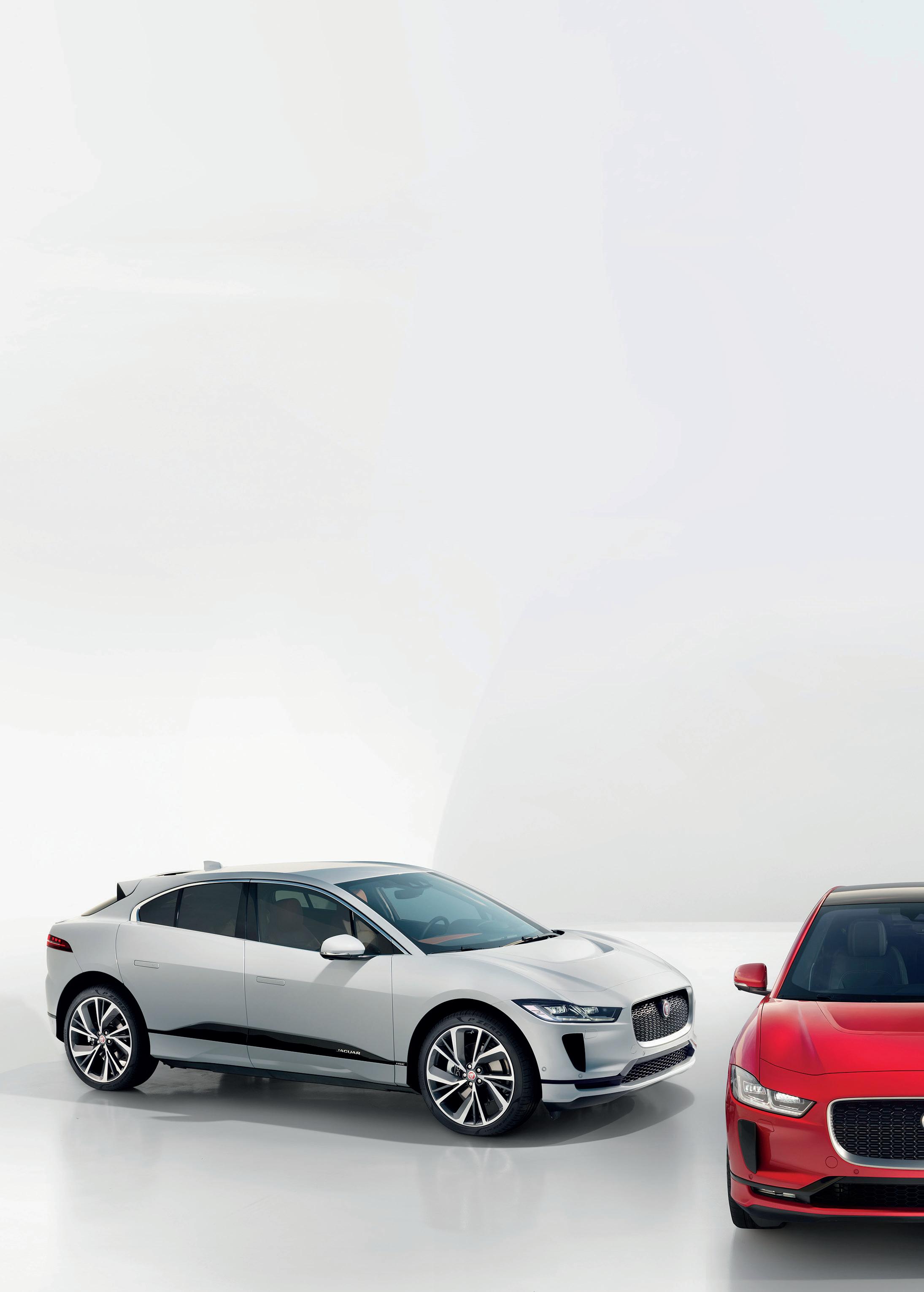
The Jaguar I-Pace arrived on UK shores in March 2018, and was priced from £58,995 for the entry-level S trim. Jag’s first foray into the EV world was an immediate hit, and was praised for its “entertaining handling” and high-quality, classy cabin.
In fact, it was even described as “the best electric car on sale today”
37 USED BUYING GUIDE
and “unmatched” by the motoring media.
To attract new buyers, Jaguar kept things simple with the I-Pace’s powertrain. Each model was powered by a dual-motor setup generating 394bhp paired with a 90kWh battery delivering up to 292 miles of range.
In 2021, the I-Pace underwent a midlife facelift.
In terms of tech updates, Jaguar changes added wireless Apple
CarPlay and Android Auto, an entirely new PiviPro infotainment system, along with a ClearSight digital rear-view mirror, and a 3D surround reversing camera. Slow ‘AC’ charging was also improved from 7kW to 11kW.
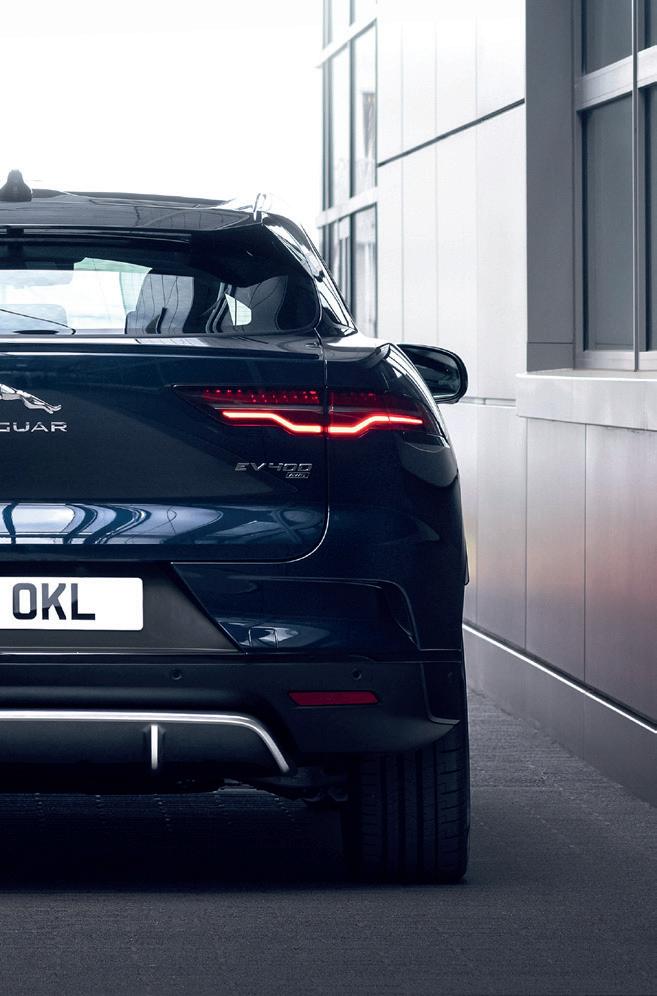
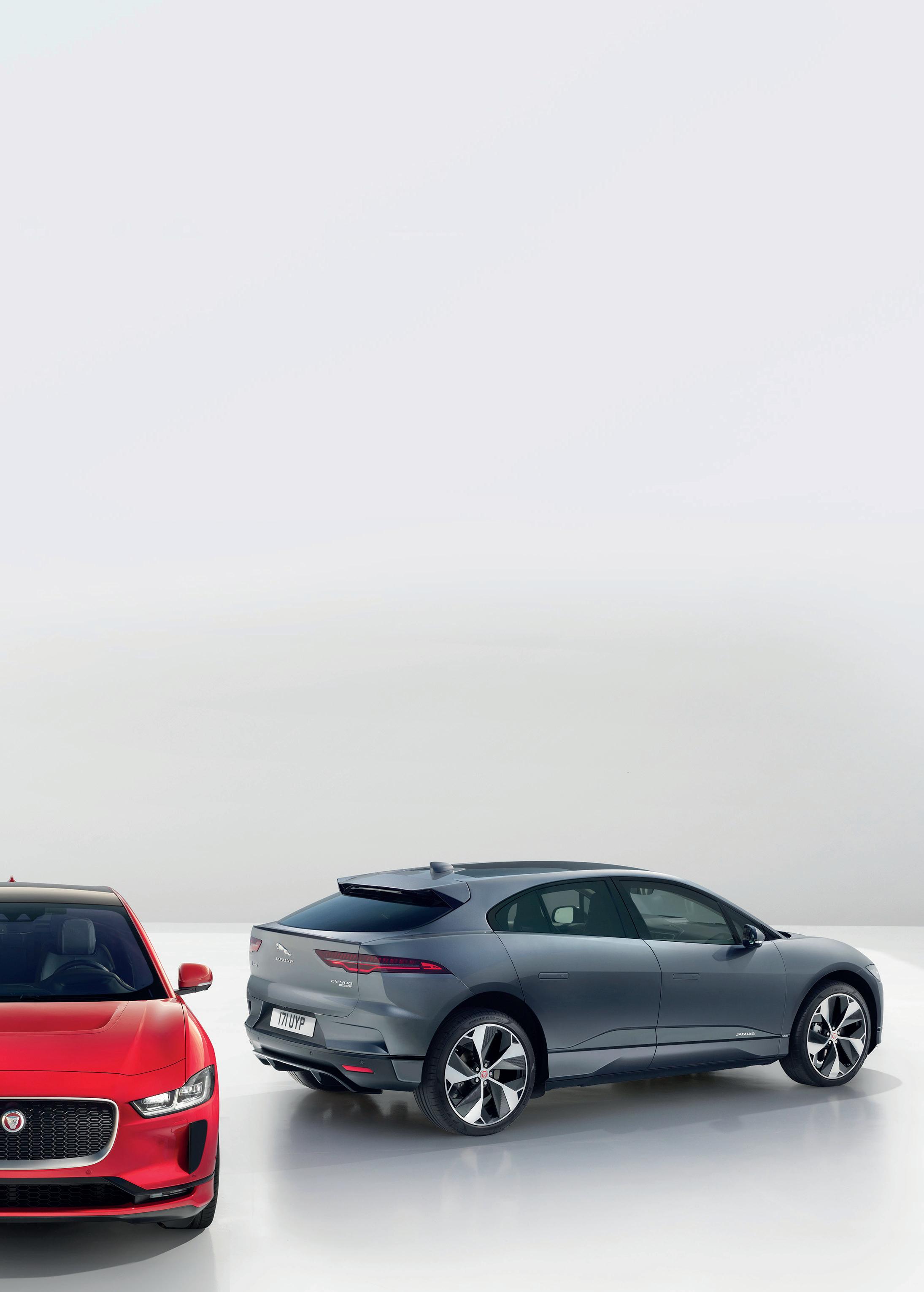
Externally, cars from 2021 and beyond came with an Atlas Grey ‘grille’ in place of the textured panel on previous cars, while the Jaguar logo was changed from red to monochrome.
Atlas Grey was also added to the air vent blades on the outer edge of the front bumper, while the gloss black finish on the front bumper, lower door trims, and rear diffuser was dropped in favour of a matching body colour.
Sadly, Jaguar appeared to forget about the car after this point and it never received the technical upgrades it needed to stay competitive.
Equipment
Jaguar kept things relatively simple with the I-Pace’s trim levels, with just three – Entry-level S, mid-level SE, and range-topping HSE.
As standard kit, the S came with LED headlights, a 12.3-inch infotainment screen with a DAB radio, plus a rear-
view camera, lane keeping assist, and traffic sign recognition.
The SE increased the wheel size from 18 to 20 inches, and added adaptive cruise control, blind-spot monitoring, heated front seats, and an electric tailgate. A set of optional 19-inch wheels were also available as a way of striking a sweet spot between range and looks.
At the top of the Jaguar I-Pace tree sat the HSE. Inside, it came with heated and cooled front seats, while those in the rear were also heated. Matrix LED headlights were fitted, and the 20-inch wheels could be upgraded to 22-inchers as an option.
In 2023, Jaguar added the performance-focused ‘R Dynamic’ trim to the I-Pace range. Akin to Audi’s S-Line or BMW’s M-Sport packages, it ushered in a series of aesthetic changes inside and out.
R Dynamic I-Pace models introduced a gloss black grille, plus matching bumpers, sideskirts, and a discreet rear spoiler. Standard-fit air suspension, plus 22-inch black alloys were also part of the package.
Inside, the Jaguar I-Pace R Dynamic was fitted with slimline performance seats trimmed in Windsor leather. As well as being heated and ventilated
up fronts, the seats were also adjustable 14 ways.
Overall, the I-Pace’s cabin is a nice place - the materials are of a high quality, and the seats are considered supportive and well positioned.
However, pre-2021 facelift cars come with the Touch Pro Duo infotainment system, which is slower than its PiviPro successor, and has been criticised for being laggy and confusing to use: A case in point is its split-screen layout, which split infotainment between its top half, and climate control down below.
Later cars fitted with PiviPro adopted a simpler layout, and benefited from over-the-air (OTA) updates. The system was universally praised for its crisp graphics, smartphone-like interface, and quicker processor.
It also came with a Google built-in style navigation system, that would calculate the distance and duration of a trip based on battery charge, and would factor in charging stops if necessary, and display charger availability, cost, and estimated charging time...
... and that was before Google builtin became a thing.
Continued
USED BUYING GUIDE 38
Price, range, and running costs
A used Jaguar I-Pace can be found for around the £10,000 mark, but it’ll be a pre-facelift car without the updated infotainment system and exterior.
As always, we’d recommend buying from an approved dealer and buying the best car you can afford. We scoured the Jaguar website, and found 30 used I-Paces.
The cheapest was a 2020 car (69 plate) with 34,927 miles on the clock. Meanwhile, the most expensive was a 2024 model (23 plate) priced at £41,494 and a total mileage of 4,275 miles.
To find a happy medium between what’s up-to-date and what’s
affordable, we would suggest setting aside a budget of around £20,000.
Given there is just one battery choice available – the 90kWh unit –the I-Pace will cost from just £6.30 to charge from 0-100% at home with a dedicated overnight EV charging tariff.
When out and about, the price of using the public charging network will fluctuate wildly. Nonetheless, don’t expect it to be anywhere near as cheap as charging at home.
Charging is also an area where the I-Pace lags behind newer rivals. With a maximum charging speed of 100kW, a 10-80% top-up takes 40 to 50 minutes, which is now medieval in EV terms.
Meanwhile, a full charge will take 13 hours with a 7kW homecharger, while an 11kW AC charger cuts that time to nine hours.
On April 1, 2025, EVs became taxable under new government legislation, meaning they are no longer exempt from road tax. Allelectric cars registered from April 1, 2017, onwards will now be taxed £200 annually.
Jaguar recommends a full service every two years or 21,000 miles. Cost estimates sit at around £200.
Insurance
The I-Pace comes with a premium badge, so expect to pay premium insurance prices. Jag’s OG EV falls under insurance groups 47, 49, and
50 from 50, with owners online describing quotes as “insane”.
Expect to pay anything from £950 to around £3,000 depending on your I-Pace’s model year, trim level, along with where you live and your driving record. As with most ‘early’ EVs, the cost for replacement parts is also high.
Reliability and faults
Like any ‘proper’ Jag, the I-Pace isn’t famed for its reliability and, for the most part, the battery sat at the heart of issues.
Cars built from 2019 to 2021 suffered battery thermal overload, which was addressed via Jaguar issuing an OTA update that limited charging capacity from
39 USED BUYING GUIDE
78% to 80%. Nonetheless, the car was still recalled and frustrated owners were unable to use the car to its full.
Battery condensation could lead to internal corrosion, plus 12V battery issues and problems surrounding high-voltage insulation forced the car into safe mode, rendering it undrivable.
Beyond the battery, customers cited water ingress, cracking bodyshells, plus braking transition delay and a loss of brake pedal feel as extra problems.
From 2019 to 2024, the I-Pace underwent four recalls for battery thermal overload, battery fires (twice), and incorrectly mounted or manufactured seat frame assemblies.
The ‘one to have’
Buying an early I-Pace and having a Jaguar on your driveway for around £10k is a tempting proposition, but cheap Jaguars often have a way of becoming very expensive in the long-term, and, to be honest, we’d advise against it.
If you can, make the effort to find a post-2021 car - it’ll be a much better bet in terms of reliability and tech. Entry-level S cars will have all the kit you need, but the 18-inch wheels make it look a bit awkward.
The mid-tier SE gets bigger wheels and looks better. What’s more,
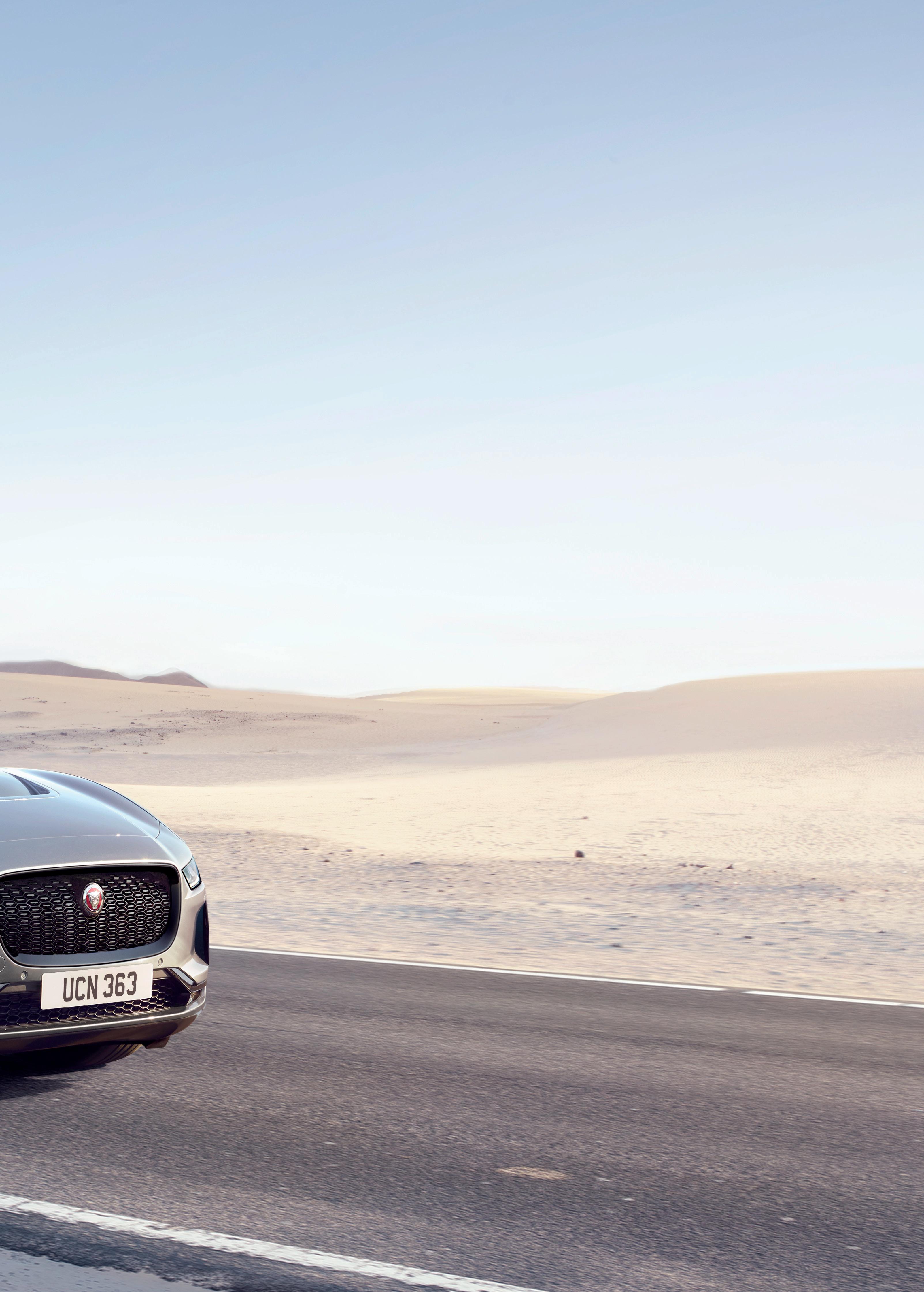
it comes with heated seats and they’re a bit of a dealbreaker once you’ve had them.
The HSE, however, comes with antidazzle matrix LED headlights. Given we’re big on being considerate to our fellow motorists, that’s the one we’d have.
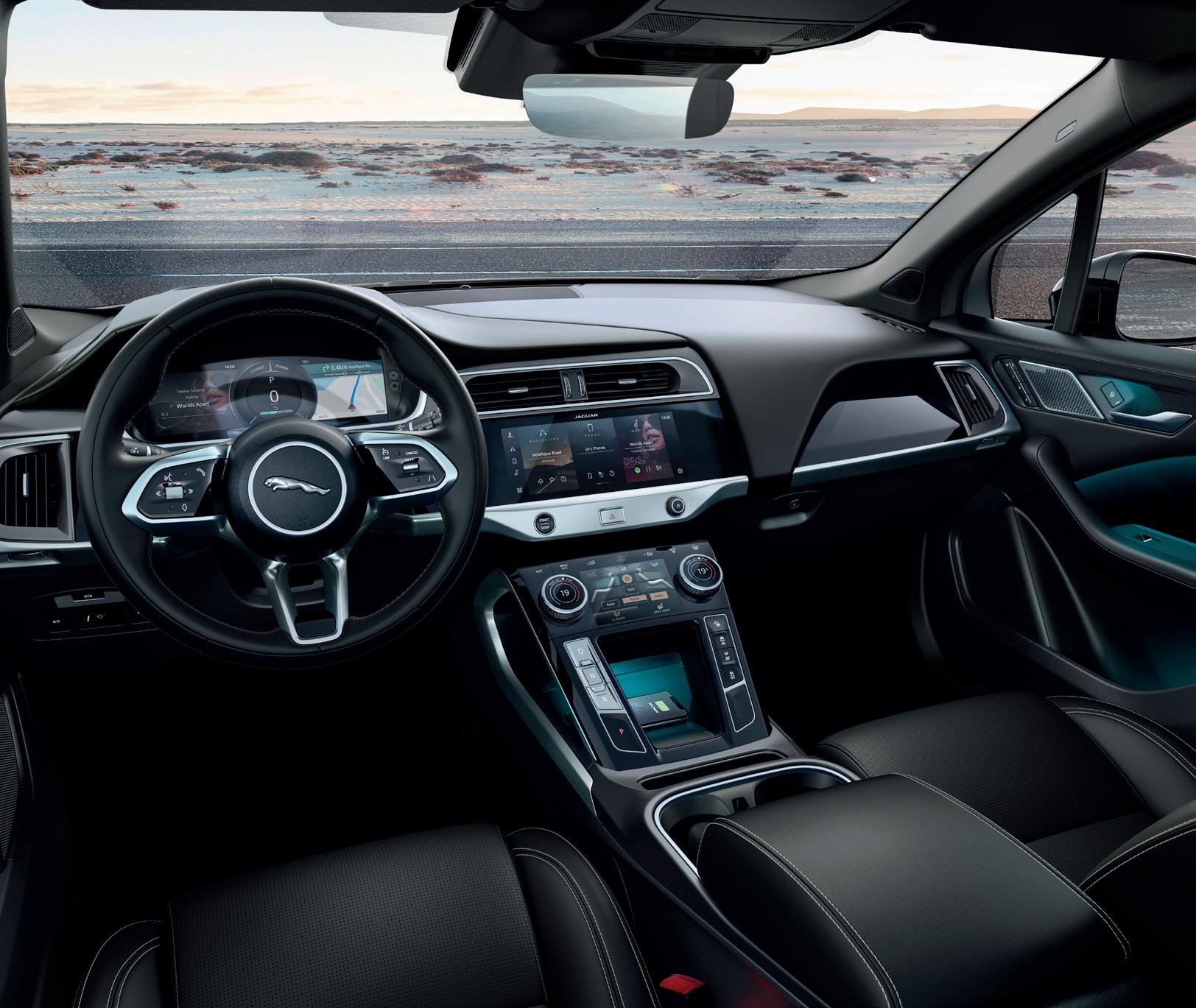
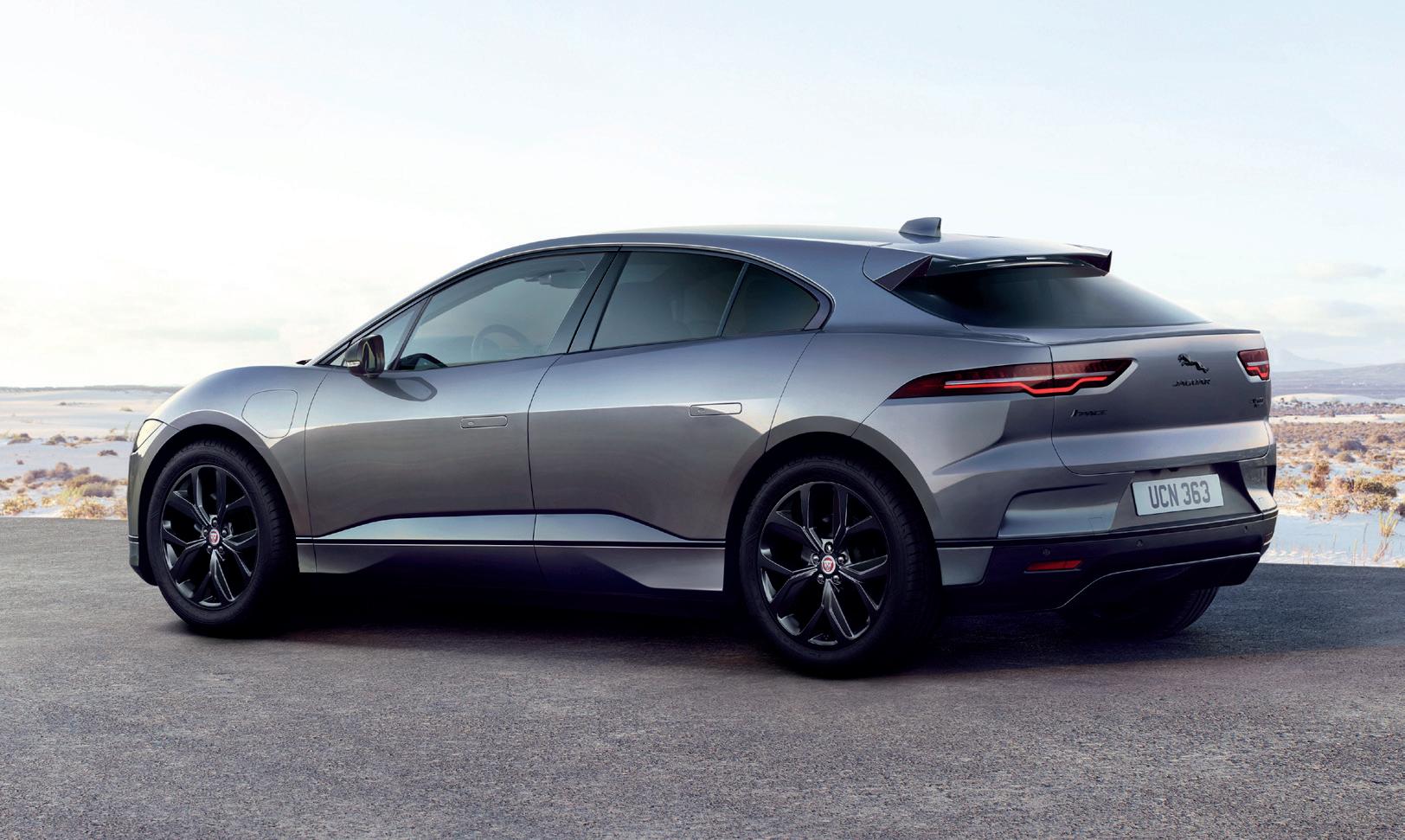
E-BIKE REVIEW 40
By RICHARD ALVIN
COMFORT, CLASS AND A CLEVER DROPPER POST MOMENTUM VIDA E+ EX
Giant's lifestyle brand has taken an already likeable Dutchstyle commuter and added a dropper post, a throttle and cruise control. We put the $1,985 Vida E+ EX through its paces.
So many electric bikes never let you forget the electric bit. The Momentum Vida E+ EX is the opposite. Momentum has poured decades of cycling know-how inherited from parent company Giant into a machine that rides, first and foremost, like a really good bicycle, and that makes it a commuter almost anyone can get along with.
At $1,985, roughly £1,500 before local taxes, the EX takes the standard Vida E+ and adds three upgrades: a dropper seatpost, a 0-start throttle and cruise control. It went on sale through the Giant Group dealer network on 14 July 2026, squaring up to upright town bikes such as the Volt Burlington and Electra Townie Go! S.
A note for British readers first. This is a US-market machine, switchable between American Class 2 and Class 3 settings via the RideControl app, meaning assistance to 28mph and an optional $65 throttle. That sits well outside the UK's EAPC rules, which cap motors at 250W and assistance at 15.5mph, and no UK price or on-sale date has been confirmed. Read this as an international review of where Giant's thinking is heading.
Comfort is the headline act. Momentum has built a low, approachable step-through with Dutch bars and a deliberately short reach, giving a riding position that keeps your head up and your back happy. At 5ft 11in the large fitted me perfectly, and the two sizes genuinely cover riders from 5ft 1in to 6ft 3in, which is rare. The 720mm bar with
its 20-degree back sweep neither cranks your wrists nor loads your palms.
The masterstroke is a Giant Contact Switch AT dropper post, something you almost never see on a Dutch-style commuter. Roll up to a red light, drop the saddle with a crisp flick, stand flat-footed without dismounting, then pop it back up as the lights change. It transforms stop-start town riding and has been faultless throughout the test.
The 500W nominal, 750W peak SyncDrive Move S rear hub motor makes 60Nm of torque, midpack on paper but far stronger in feel. Momentum blends a torque sensor with speed and cadence sensors, and the result is power that arrives within a fraction of a pedal turn and cuts the instant you stop, with no surge or overrun. It is one of the most precise hub systems I have tested, and on the flat I genuinely forgot it was not a 750W motor. Even our videographer, over 275lb with camera kit aboard, remarked how quick it felt.
Hills expose the limits. On our 0.35-mile test climb, throttle alone gave up after 0.3 miles at an average of 8.6mph; under pedal assist the bike topped out the full climb in 135 seconds at 9.6mph, though I had to work on the final pitch. That is exactly what 500W and 60Nm should deliver, no more.
The 700Wh, 48V Energy 700 battery is UL 2271 certified, with full UL 2849 system approval. Momentum claims 40 to 55 miles on assist, and
our tests back it up: just over 34 miles on maximum, 58.5 miles on minimum. Most commuters will charge weekly.
The kit list punches well above $1,985. A Shimano Acera 8-speed drivetrain with a 52T chainring means no ghost pedalling at speed, while Tektro hydraulic brakes, 4-piston front on a thicker 2.25mm rotor, shrugged off a two-minute descent with repeated hard stops without fade. An SR Suntour fork with stout 34mm stanchions and a thru-axle keeps the front end planted, and a MIK HD rack, integrated lights with brake signal and a 300lb payload complete a package I expected to cost nearer $2,500. Gripes are minor: a non-adjustable stem, a busy left-hand cockpit and internally routed headset wiring that adds servicing time.
The minimalist RideControl Dash Core display suits the bike's uncluttered character, with an impressively accurate battery percentage alongside speed and trip data. The RideControl app pairs easily and handles the bigger jobs, including dropping the top speed to 20mph, disabling the throttle for stricter markets, over-the-air updates and a digital E-Lock that kills motor assistance. Per-level motor tuning and theft tracking would be welcome next, but for a commuter this does everything it should.
Momentum set out to build a bike for everyone and has largely succeeded. The natural motor feel, dialled-in geometry and that brilliant dropper add up to a commuter that makes you want to keep riding. Steep-hill dwellers need more torque, and UK buyers must wait for a road-legal EAPC version. Everyone else should pay close attention, because this is where the well-sorted commuter e-bike is heading.


















Thinking about electrifying your commercial fleet?





Electrifying commercial vehicles and HGVs is not just about the vehicles themselves – it involves a detailed consideration of how to keep them on the road without disrupting existing operations. Mer has the experience and knowledge to support you on this journey.






Download Mer’s free eguide for fleet managers to learn more about installing the right EV charging to keep your vehicles powered for their mission-critical journeys

Click here to find out more







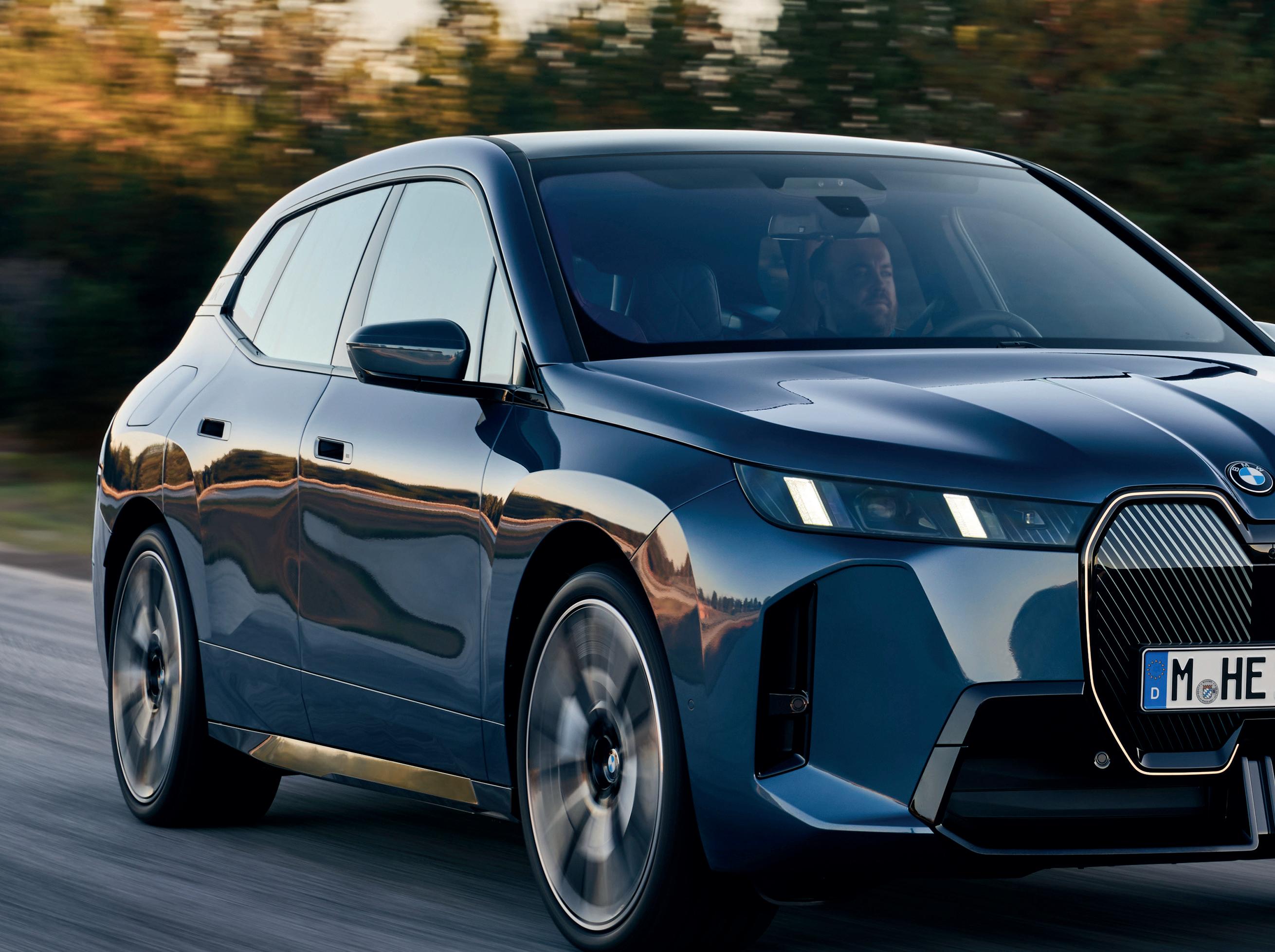
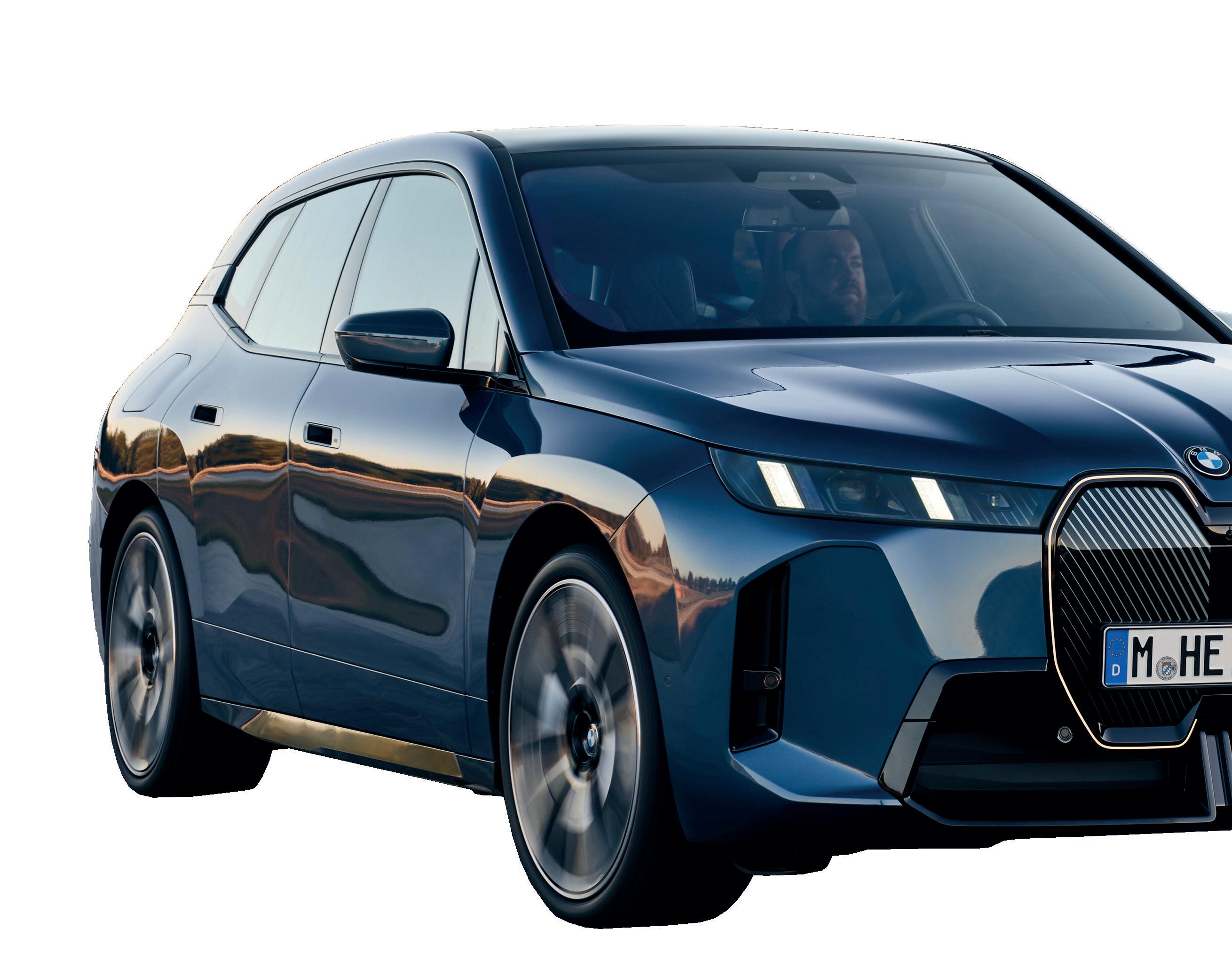
D-MAX EV 3,500KG
The first model on our list isn’t technically a car, but it is noteworthy. The Isuzu D-Max EV is the first electric passenger vehicle on sale in the UK to offer a 3,500kg towing capacity. That’s important because it gives this electric pick-up the same ability as any diesel truck on the market. And,
because it’s a double-cab body, it also has five seats, so can be used as an everyday “car” as well as a workhorse. There are compromises – a 163-mile range and a £60k + VAT starting price – but for ultimate electric towing, also nothing matches it.
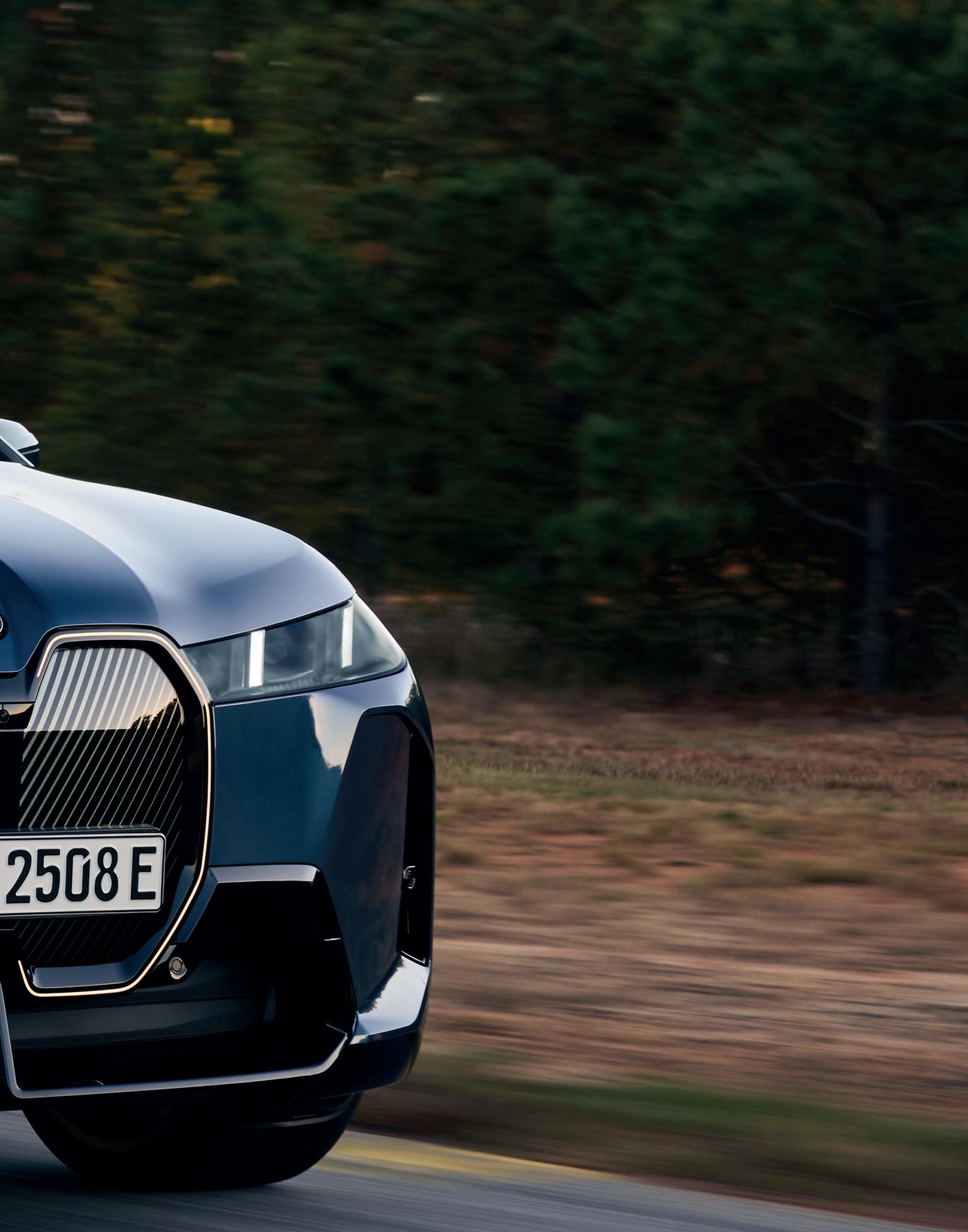
TOWING
FROM KIA AND PORSCHE FORD, THESE ARE THE BEST ELECTRIC CARS FOR TOWING A TRAILER OR CARAVAN
Electric tow cars have taken a while to become a “thing” but after a slow start, there’s now a wealth of EVs capable of towing even the chunkiest trailers.
Just three years ago not a single EV in the UK could tow more than 1,800kg. Now, a two-tonne capacity isn’t even enough to make it into the top 10 of the most capable electric tow cars.
TOP TEN EVs FOR MAXUS
With most caravans weighing between 1,000kg and 2,000kg, that means there are plenty of electric cars capable of towing even the most luxurious models, or a laden trailer. So here we’ve gathered the 10 EVs with the biggest towing capacities currently on sale.
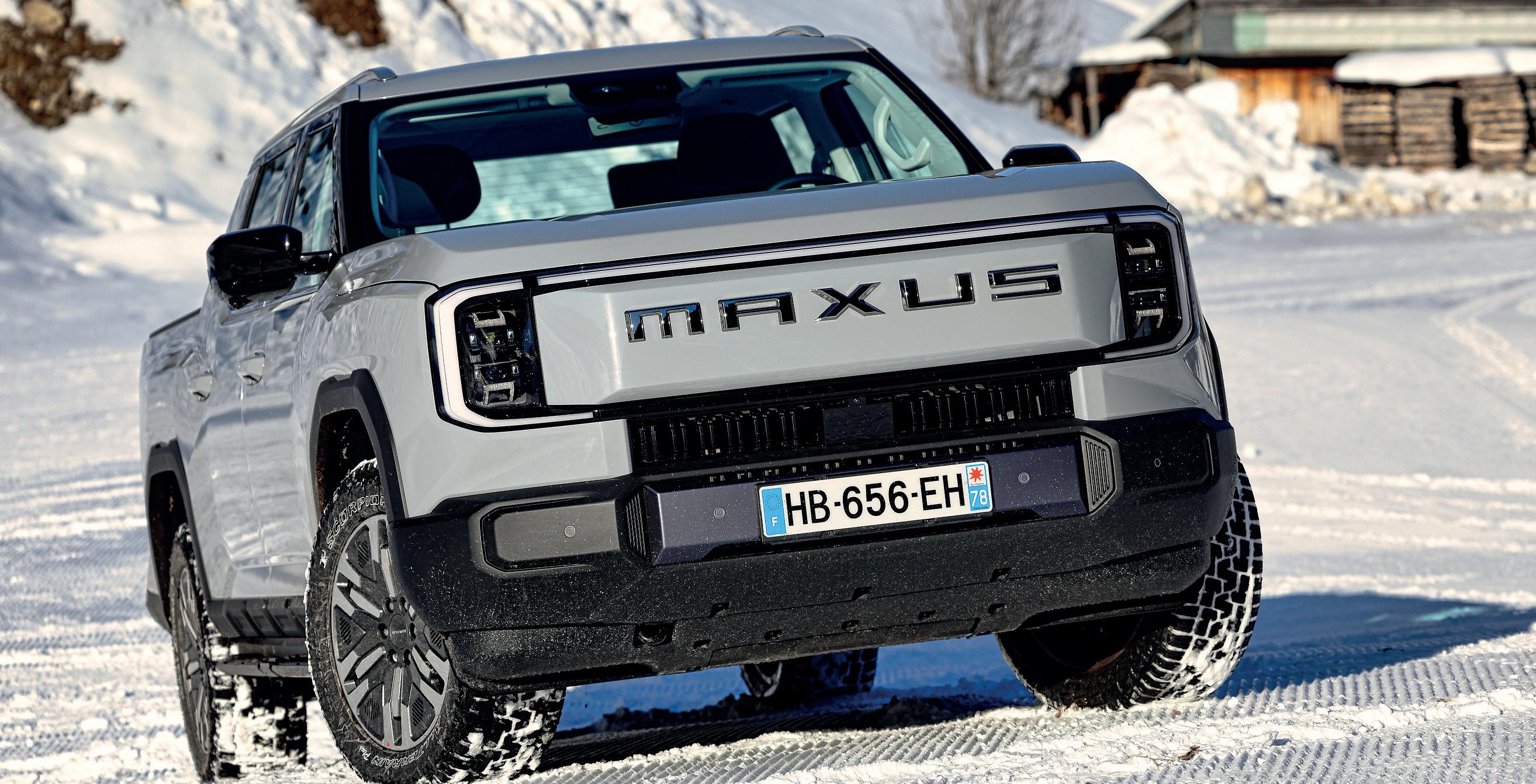
eTERRON9 3,500KG
Maxus is another name that doesn’t usually crop up among passenger cars, given its focus on low-cost vans. However this year has seen it launch its second attempt at an all-electric pick-up, with the arrival of the eTerron 9. With prices starting at around £53,000+VAT you get another
double-cab pick-up with a 3,500kg towing capacity and 267-mile range, plus a pretty generous equipment list. All in all, it appears to be a major improvement over the earlier Maxus T90 and a realistic rival to the Isuzu.
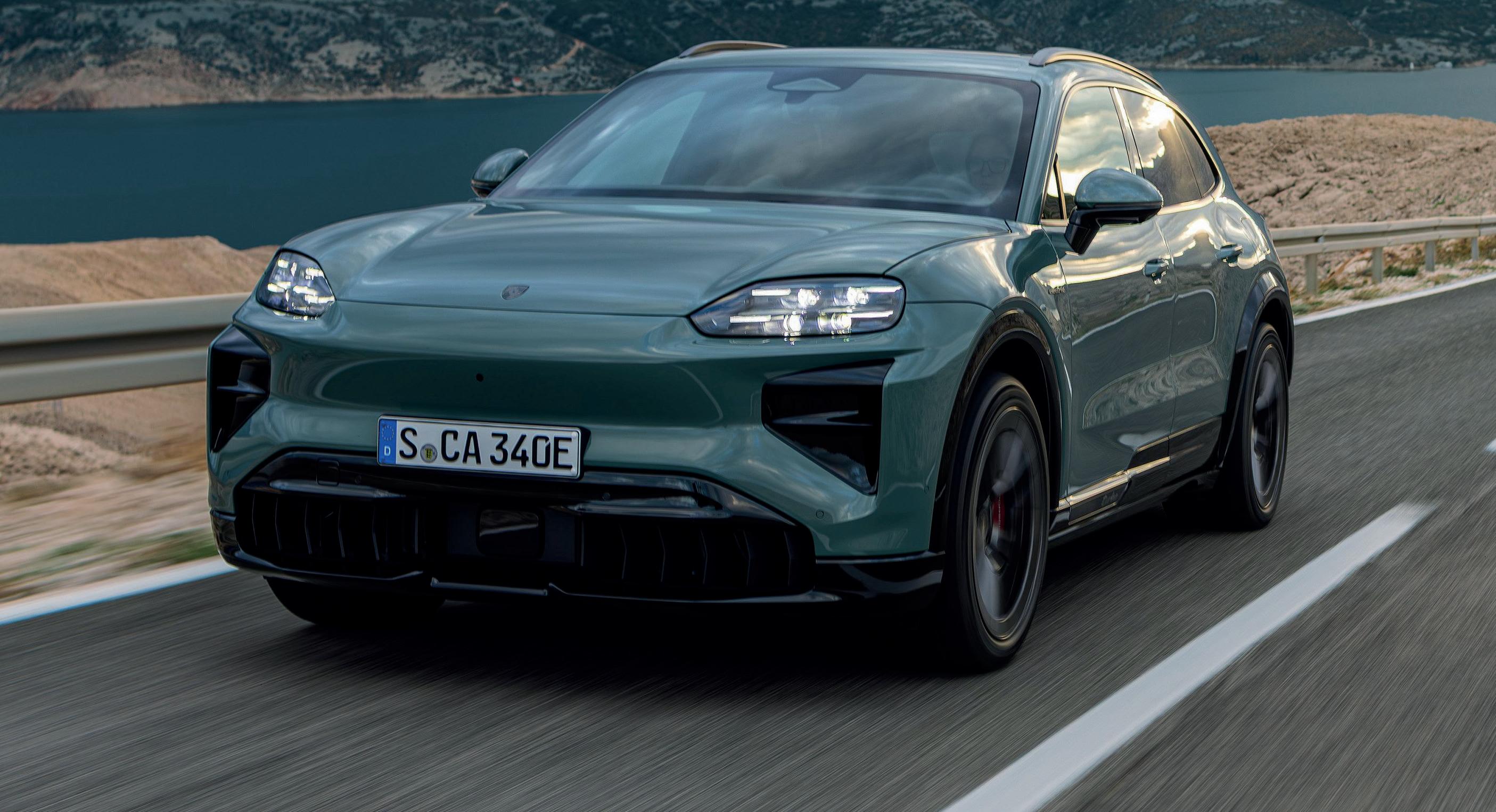
PORSCHE CAYENNE ELECTRIC
If the D-Max is the rough side of EV towing, the Porsche Cayenne Electric is surely the smooth. Stuttgart’s new super-SUV goes big everywhere, from its massive road presence to the Cayenne Turbo’s 1,140bhp all-wheel-drive setup and £133,000 price tag. That goes for towing, too, with a 3,000kg
capacity that no other “proper car” can match. And every version of the Cayenne offers the same ability, from the 402bhp entry level SUV up to the outrageous Turbo Coupe. With a 108kWh battery and 290kW charging range anxiety isn’t a problem either.
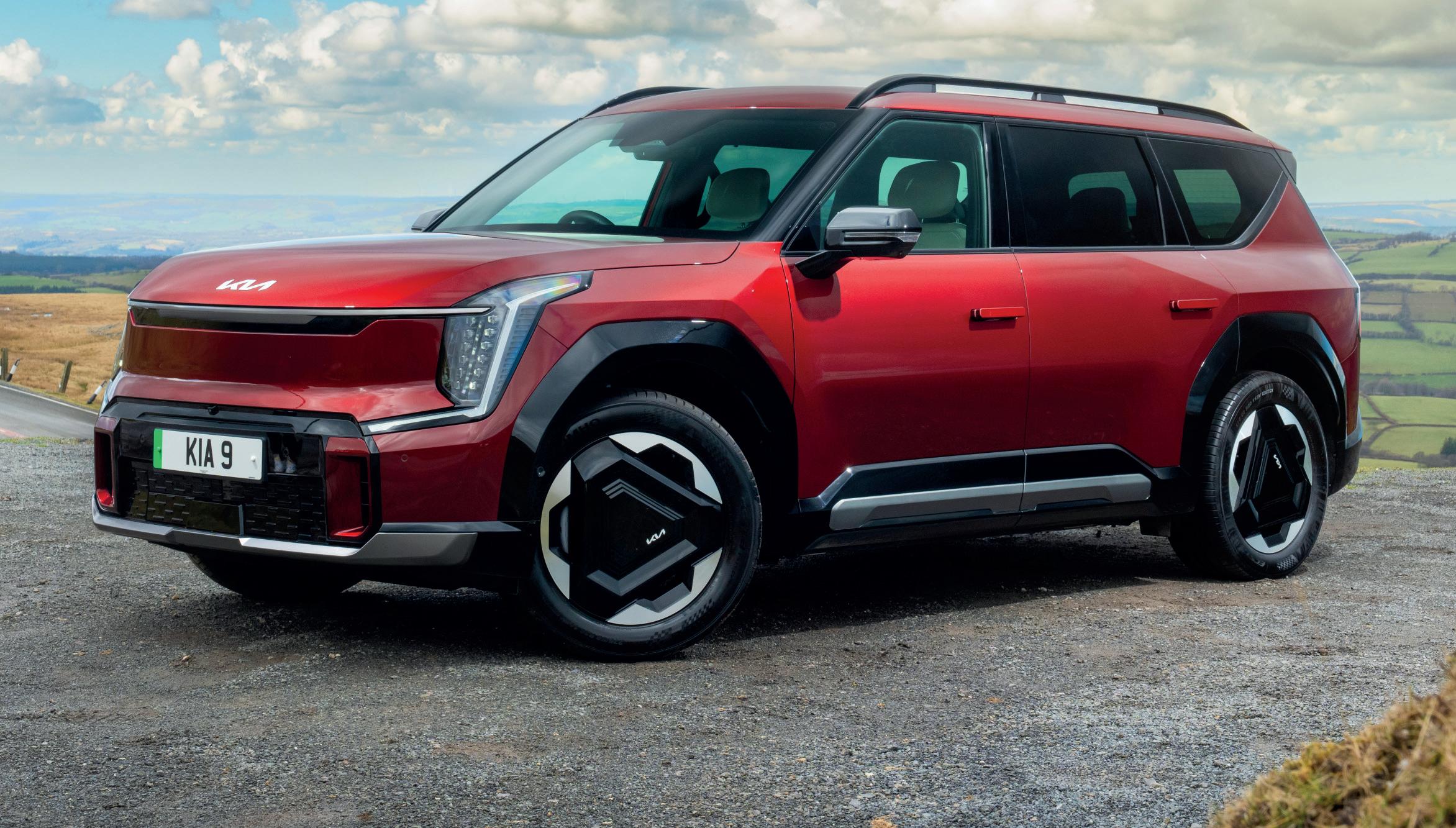
KIA EV9 2,500KG
The Kia EV9 is one of our favourite large family cars. It is a phenomenally practical seven-seat SUV that has all the space, comfort and technology a family could ask for. Its three rows of seats are spacious enough to carry seven adults and the boot is a massive 828 litres in five-seat
configuration. In GT Line specification with twin motors, the EV9 produces 378bhp and 516lb ft, allowing it to pull up to 2,500kg, making it quite possibly the best electric tow car as well as one of the best electric family cars.
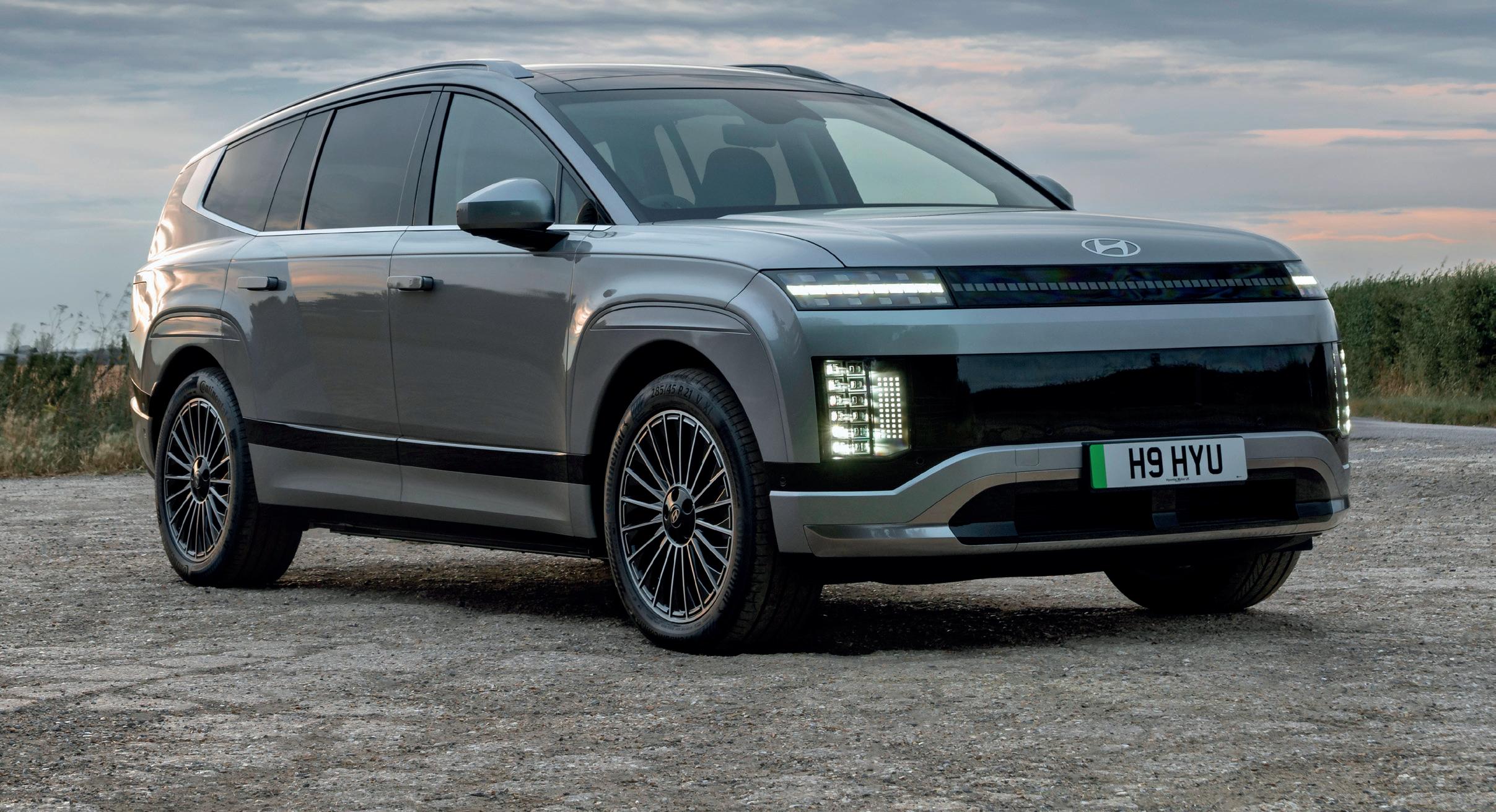
HYUNDAI IONIQ 9 2,500KG
Everything we’ve said about the Kia EV9 could be said about the Hyundai Ioniq 9 as well. That’s hardly surprising, given that the two are closely related. But the Hyundai does manage to set itself slightly apart from its Korean cousin, and not just by how it looks. While the towing
capacity is the same, the Hyundai offers an extra 80 litres of boot space. Notably, the standard all-wheel-drive version is slightly down on power (303bhp) but makes up for that with an extra 60 miles of range (376 v 316).
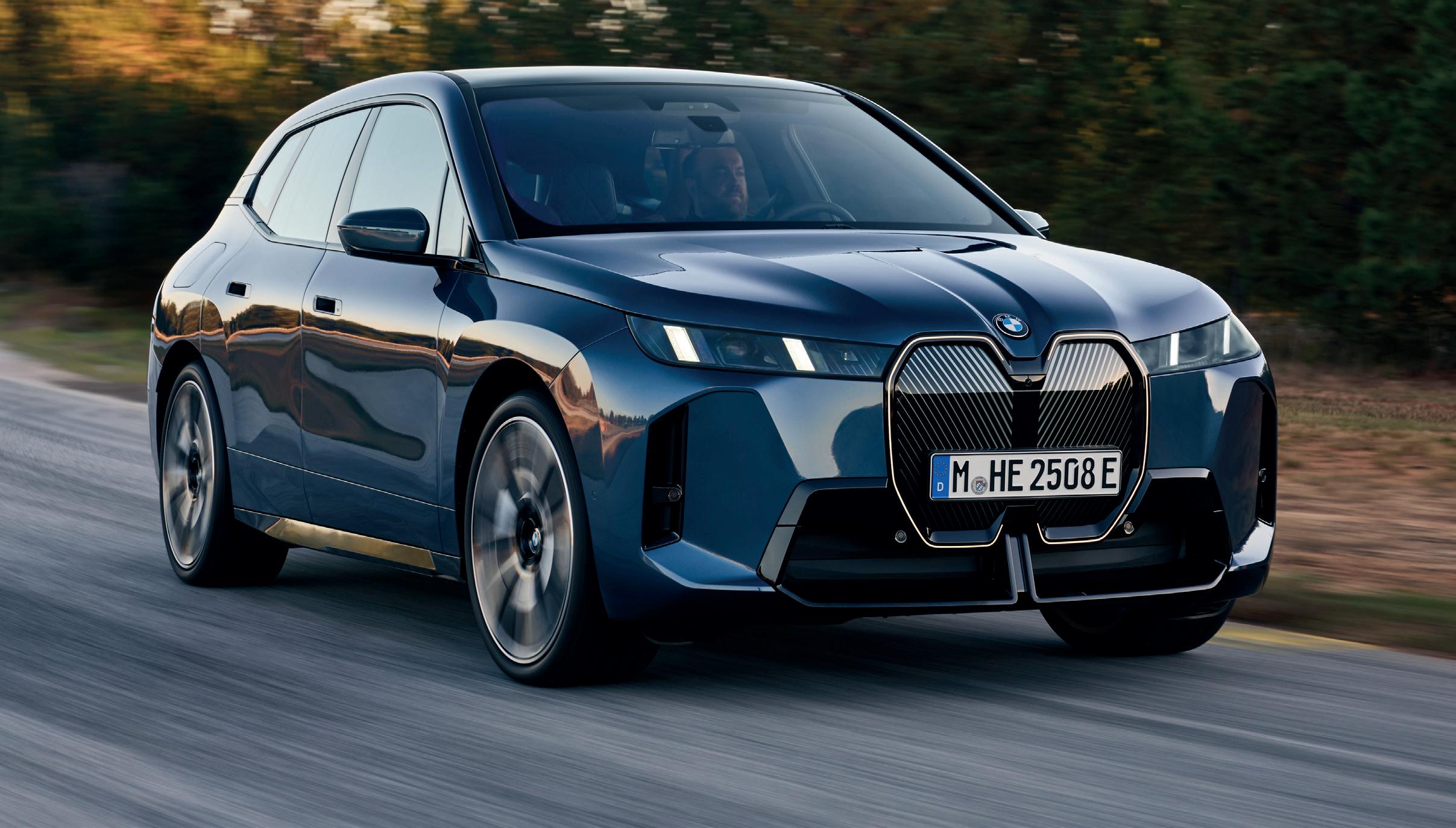
BMW i X 2,500KG
The BMW iX is a challenging thing to look at but it makes up for its peculiar looks with some impressive pulling power. The powertrain was upgraded in 2025 to offer more power and range, but whether you opt for the range-topping 659bhp, 749lb ft M70 xDrive variant or the lesser xDrive
45 or xDrive 60, it’s capable of towing 2,500kg. And without a trailer attached, it offers impressive performance in every guise and a range in excess of 370 miles. There’s also plenty of comfort and one of the most hightech interiors around.
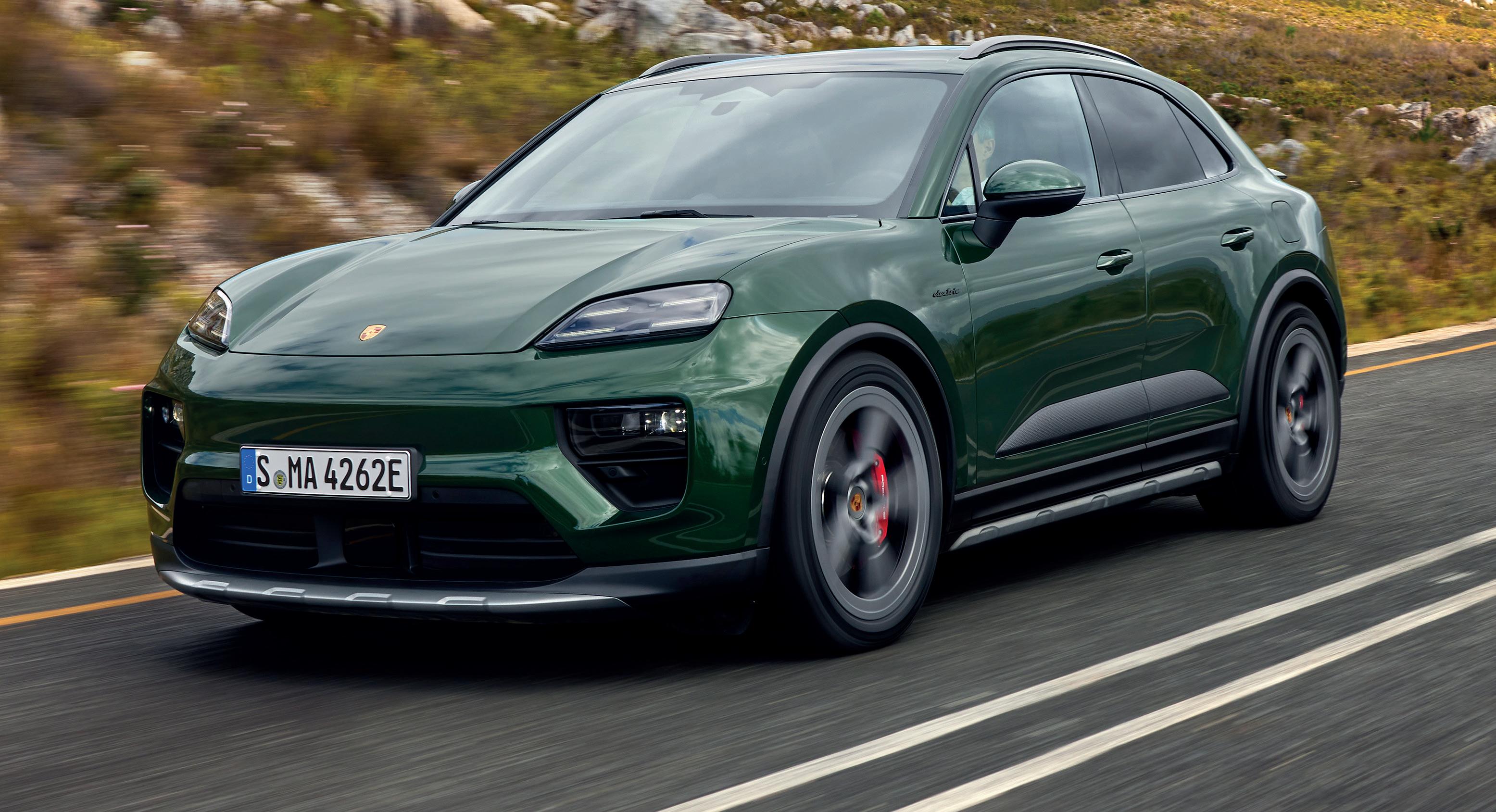
PORSCHE MACAN 2,500KG
Porsche’s smaller SUV isn’t an immediately obvious towing choice but the latest electric model has the chops to tow a decent-sized trailer or caravan if necessary. Even the entry-level Macan – a single-motor version with 340bhp and 563lb ft – delivers typical Porsche pace but also provides plenty
of pulling power. Four-wheel-drive models add more punch and an extra 500kg of towing capacity. There’s also the usual Porsche appeal of sharp looks, a high-tech luxurious interior and the potential to spend a fortune personalising the car to your heart’s content.
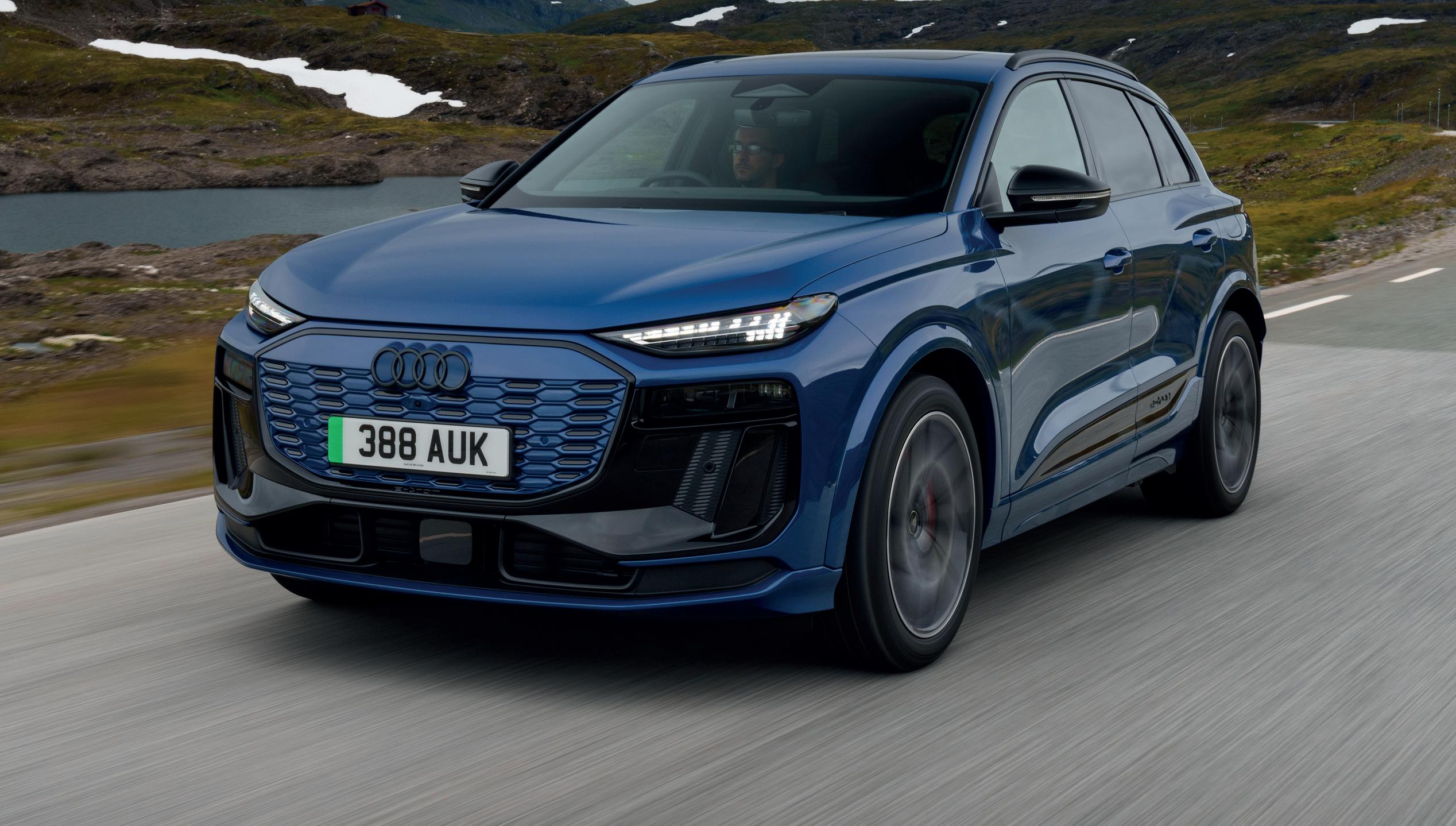
Q6 E-TRON QUATTRO 2,400KG
The Q6 e-tron is Audi’s follow-up to its first EV, the Q8 e-tron, and despite sitting below it in the Audi range, improves on it in virtually every way. From range and power to tech and charging speeds, the Q6 is a leap forward
and its towing capacity knocks the larger Q8 into a cocked hat, too. While rear-wheel-drive models can tow an impressive 2,000kg, the more powerful quattro variants can haul up to 2,400kg.
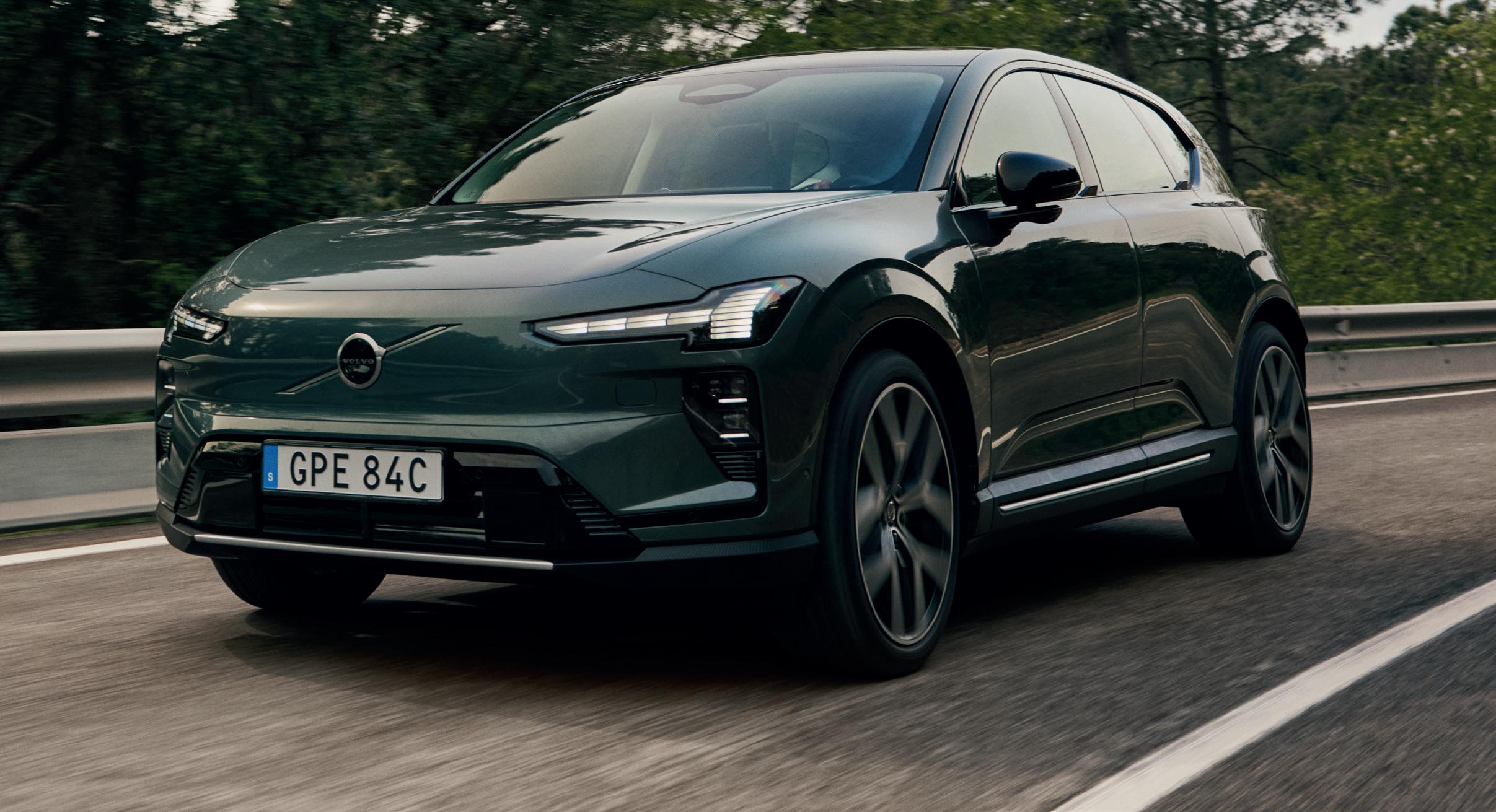
VOLVO EX60 2,400KG
Squaring right up to the Q6 is Volvo’s newest EV. The EX60 distills everything the Swedish brand has learned so far into perhaps its most impressive electric model yet. The five-seat family SUV promises all the usual Volvo space, style and quality, plus a staggering 503 miles on a single charge of
its 117kWh battery. Ultra-rapid charging that can add 200 miles in under 10 minutes is also among the best in the business. And topping it all off, allwheel-drive variants can tow up to 2,400kg, making it a convincing all-round package.
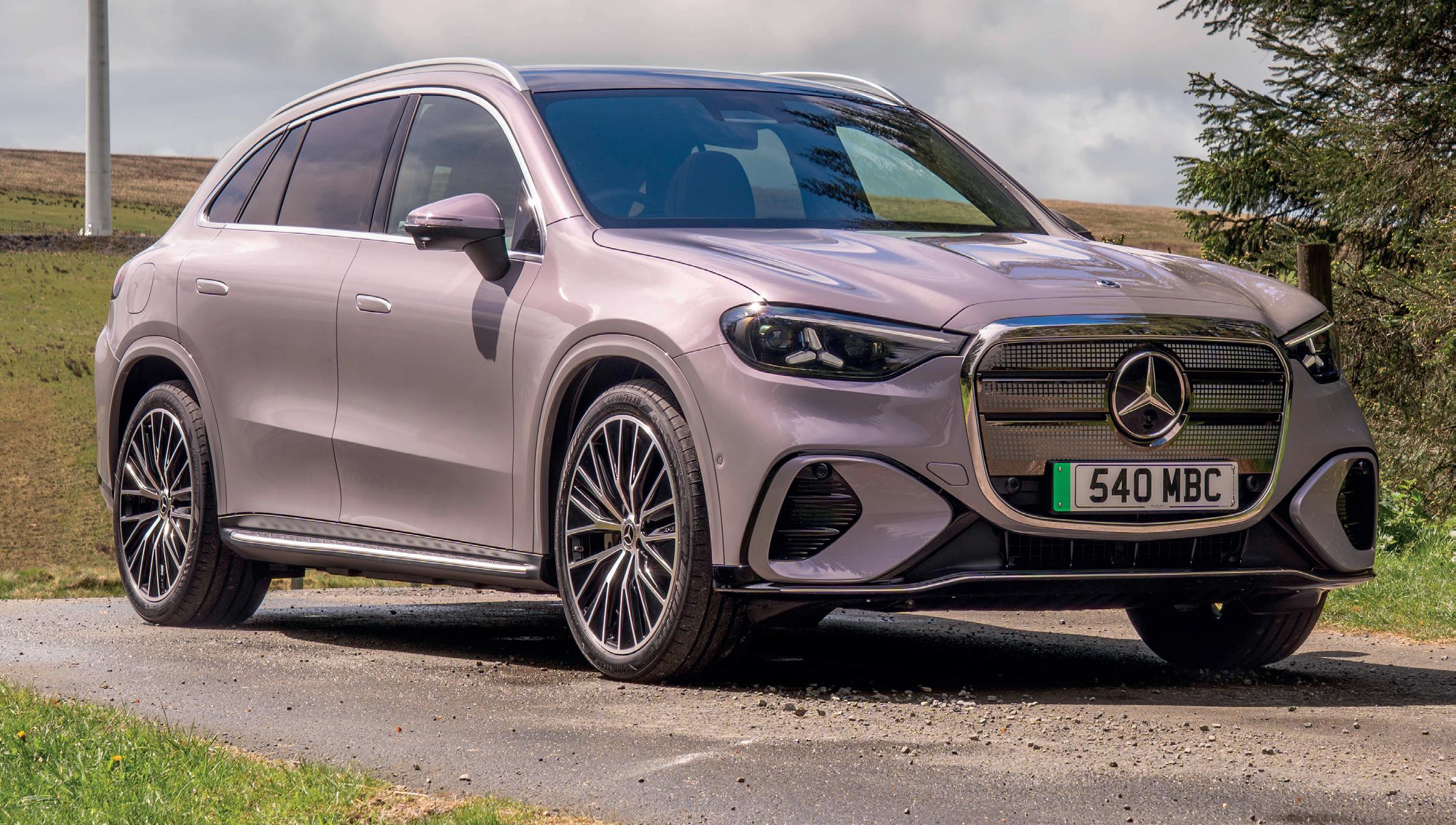
MERCEDES GLC 2,400KG
Don’t fancy an Audi or Volvo? How about a Merc? The GLC is a direct rival to the EX60 and Q6 and matches them kilo for kilo in the towing stakes. Its range and charging aren’t as impressive as the Volvo’s (403 miles and 320kW), but are still pretty darn good. It also brings buckets of cutting-edge
technology, from a massive 39-inch dash-wide “hyperscreen” to adaptive air suspension that can be primed using data shared by other cars on the road. Perhaps crucially, its towing chops also outshine its other key rival – the BMW iX3 – by 400kg.
EV OWNERSHIP DRIVEN BY DESIRE, NOT DUTY, FINDS STUDY
Eco concerns far less important than design and costs to new car buyers
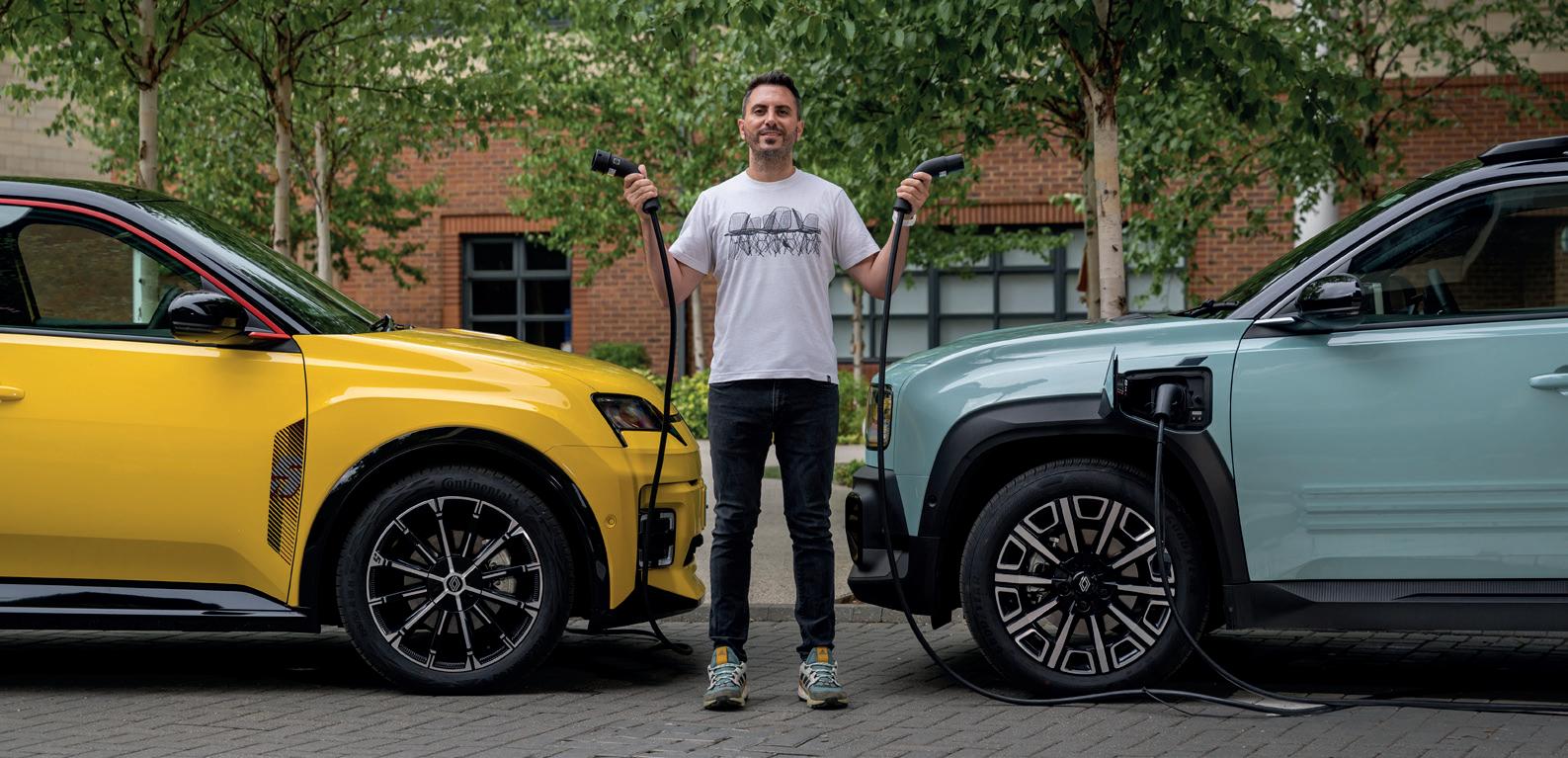
A new study has identified a major shift in why drivers are choosing electric cars, with style and costs outstripping all other concerns.
The survey of more than 1,600 Renault EV owners found nearly two thirds (64%) cited design as their key motivating factor in choosing an electric model, making it the single most influential element.
Among buyers of the sharply-styled Renault 5, that figure rose to 71%, proving that the retroinspired hatchback has struck a chord with young and old buyers.
Early EV adopters were largely thought to be driven by a passion for cutting-edge technology or a desire to be more environmentally friendly, so the new study suggests a change in mindset among motorists as EVs become more mainstream.
Behind looks, affordability was the second most important reason for drivers choosing an EV, and after taking ownership 66% of respondents said their EV was cheaper to run than expected.
In contrast, just 8% said that environmental reasons had motivated their choice to go electric.
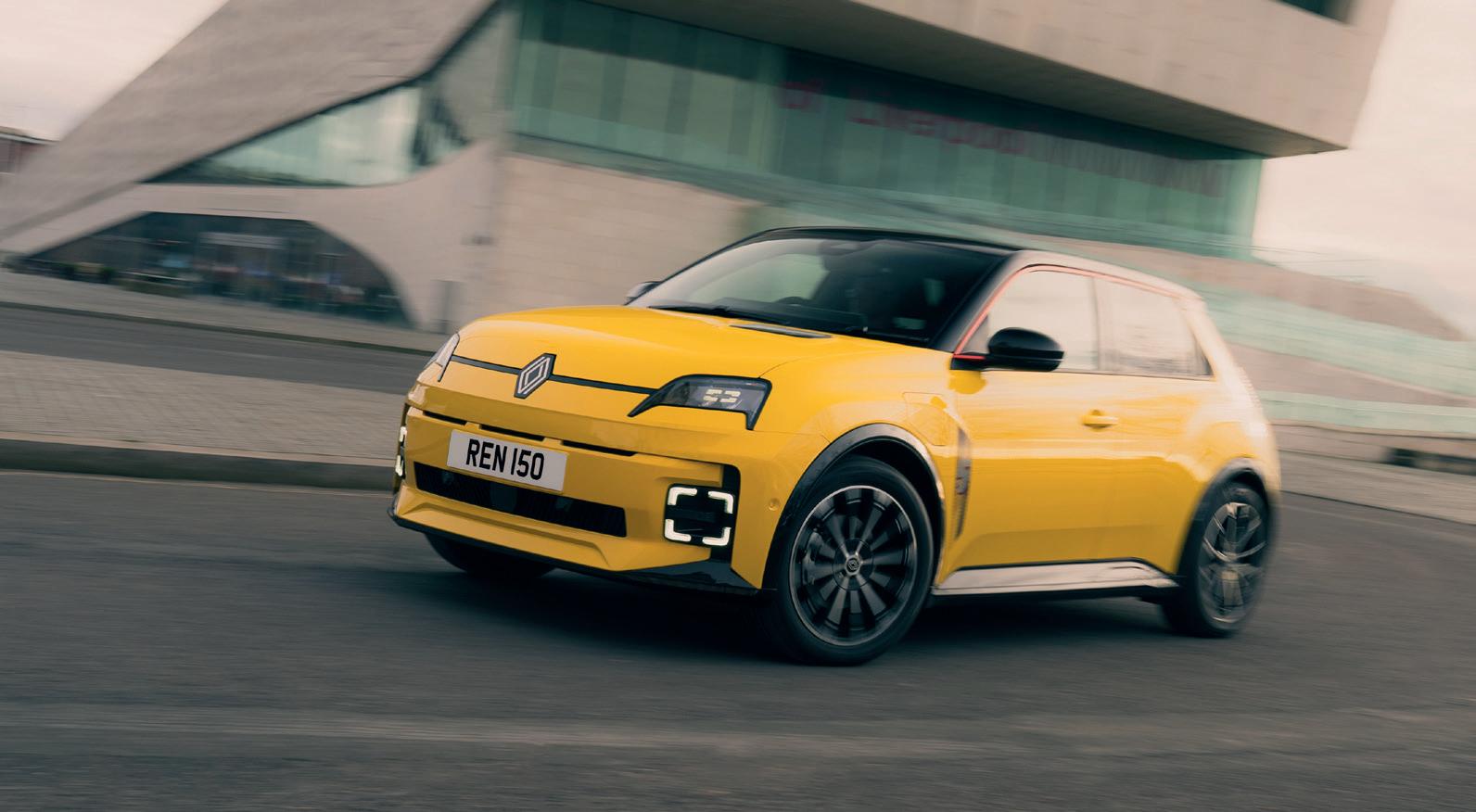
Of those questioned, 69% were first-time EV buyers rather than returning “EVangelists”, and the survey echoed previous reports which show the vast majority have no regrets about making the switch.
A massive 96% said that they would recommend an electric car to friends and family and just 9% said they would ever consider switching back to a combustion-engined vehicle.
Away from the forecourt, the survey also found widespread satisfaction, with 60% saying their EV was even easier to live with than expected and just 8% expressing any concerns around range.
However, it also identified that major concerns still exist around public charging.
Asked about the biggest challenges as an EV owner, 57% identified the cost of public charging, which can exceed 80p/kWh at the most expensive sites. That was followed by problems with charger availability, both in public locations and for drivers without access to a private driveway.
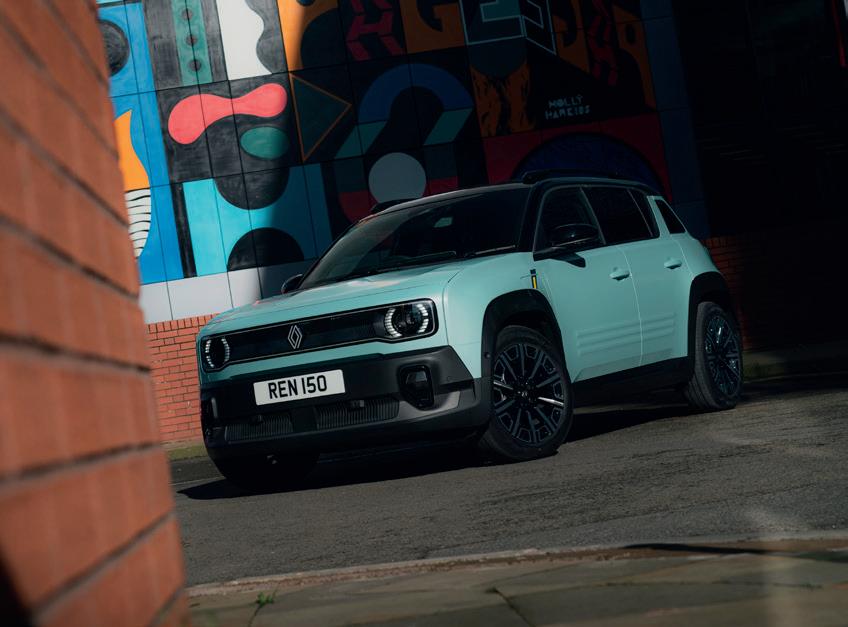
Adam Wood, managing director of Renault UK, said that the survey proved the key to driving EV adoption was not compelling motorists to switch through regulation but building cars they actually want to own and drive.
He commented: “The responses show that the next wave of EV adoption will be driven by making cars that people genuinely want. That’s why Renault has focused on developing cars with personality and charm, then made them accessible and affordable.
“They are cars bought for what they are, not simply what powers them. And the strongest proof of that is the owners themselves: the people who chose Renault EVs because they wanted them, are now proving just how well they work in the real world.”
Want more control of your business budgeting?
This is Jasmin. She’s one of many business owners who already use a smart meter to feel more in control of their budgeting, because smart meters help you track your energy use and costs over time.
So like Jasmin, you can spend less time guessing and instead know how much you’re spending on your energy bills.
Search ‘get a smart meter’ today.


THE UK’S EV TIPPING POINT IS HERE
HOW DO WE CREATE RESILIENCE?
Michelle Little, head of propositions at So Energy explores the next big challenges as the UK looks to build on its EV momentum
New data suggests that the electric vehicle market has reached a “tipping point” in many parts of the world. After years of gradual momentum, the shift to electric mobility is now accelerating into the mainstream, with global EV sales surpassing 17 million in 2024, making it one of the “fastest technology diffusion processes” in the history of transport.
The economic landscape is now also shifting in favour of EVs. For the first time, average purchase prices have reached parity, with some electric models now cheaper than petrol and diesel ones. Additionally, with scaling charging infrastructure and home charging innovations such as solar integration and tariffs, running costs continue to deliver meaningful annual savings for drivers.
There is no doubt about whether EVs will scale, but we need to pay attention to how quick this uptake is, and whether the industry is equipped to grow at the speed of increasing demand.
Transport is no longer a passive energy user
The growth of EV demand fundamentally changes the role of transport within the energy system.
Transport has been treated as a passive consumer of fuel or electricity, largely separate from how energy systems are planned and operated. That assumption no longer holds.
Transport is now one of the largest emitting sectors in the UK, responsible for around 29% of total greenhouse gas emissions, with cars accounting for most of that footprint. Electrifying transport is therefore essential to achieving net zero, but it also introduces a more complex form of electricity demand.
Unlike traditional demand patterns, EV charging is dynamic, location-dependent and increasingly concentrated. As more drivers plug in at similar times, whether at home or at public rapid charging hubs, electricity systems face new peaks and pressures than originally planned for the grid.
Transport is therefore no longer simply drawing power from the grid but actively reshaping how that grid must function.
A growing cost imbalance in charging
The UK has made rapid progress in expanding its charging infrastructure, with more than 86,000 public charge points installed by late 2025, representing annual growth of over 20%. This expansion reflects strong investment, and a clear recognition of the role infrastructure plays in supporting adoption.
However, as the market matures, a more pressing challenge of the rising cost of charging away from home is emerging.
For most drivers, public charging is significantly more expensive than home charging, often by a wide margin. While home charging allows EV owners to benefit from lower residential tariffs and off-peak rates, public charging prices, particularly at rapid and ultra-rapid sites, can approach or even exceed the cost of running a petrol or diesel vehicle. This disparity is becoming more visible as UK EV numbers approach two million and reliance on the public network grows, especially among drivers without access to off-street parking and fleet operators with high utilisation needs.
The challenge, therefore, goes beyond simply increasing charger numbers. High energy costs, network charges, and connection constraints are feeding directly into higher prices for consumers, creating an uneven experience between those who can charge at home and those who cannot.
Without action to address the cost structure of public charging, the EV transition risks becoming not only an infrastructure challenge, but an affordability one – potentially slowing adoption among precisely the groups it most needs to reach.
Integrating EV infrastructure in the energy transition
Much of the UK’s energy transition to date has focused on decarbonising generation. However, the transition is not only defined by how energy is produced but also how it is being used.
Electric vehicles are often framed as a source of additional demand, but they also represent a significant opportunity. At scale, EVs could become one of the largest sources of flexible load within the energy system, capable of absorbing excess renewable generation and smoothing peaks if managed effectively.
Realising this potential, however, depends on integration. Charging behaviour must be aligned
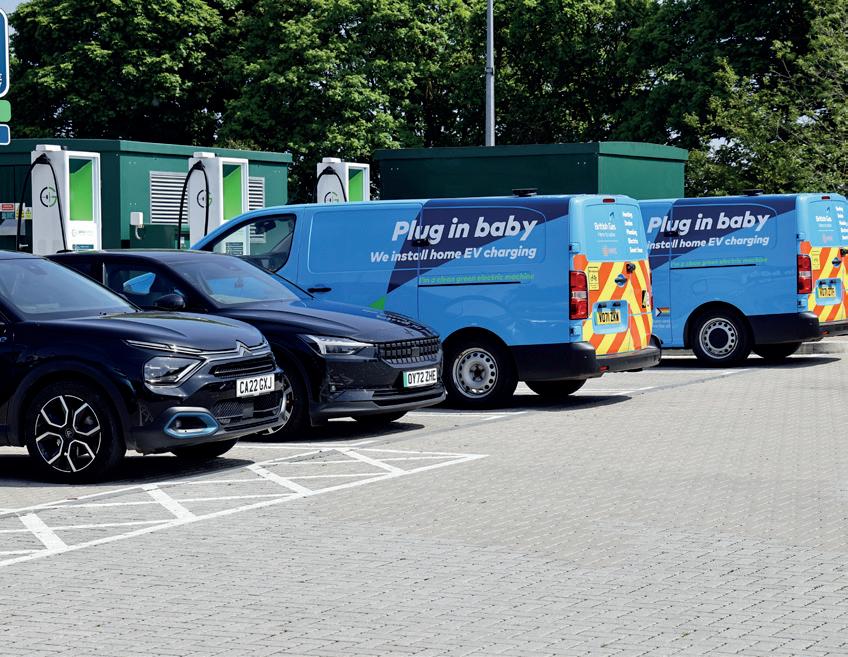
with grid conditions through smart tariffs and digital tools. Infrastructure deployment must be coordinated with network capacity. And over time, advances such as vehicle-to-grid could allow EVs to operate not just as consumers of electricity, but as active participants in balancing the system.
Collaborating with policymakers
While EV uptake is being driven forward through ambitious targets and incentives, energy system planning and policy must keep evolving in tandem.
Transport policy, energy regulation and infrastructure planning must be developed as part of a single, coordinated strategy. Flexibility, accessibility, and smart charging must move from niche solutions to standard practice, from both home and public charging perspectives. Collaboration across all relevant sectors will be essential to ensure that growth is both sustainable and efficient.
Looking ahead
The UK’s EV tipping point is a milestone worth recognising. It reflects years of progress in technology, policy and consumer confidence, and it brings the goal of decarbonised transport within reach.
However, it also marks the start of a more complex phase of the transition. As adoption accelerates, the focus must shift from individual vehicles to the entire energy system.
If the energy system cannot keep pace, the consequences will be felt in higher costs, slower infrastructure rollout and a diminished user experience, especially for those who cannot charge at home. Yet, if integration is prioritised, a cleaner, more flexible and more resilient energy system, with transport at its centre can be built.