
A deep dive for the frequent business flyer: Belfast's convenient city airport, the tenminute bus into town, the lounge worth the walk, where to sleep, and how to make George Best Belfast City work for you, not against you.
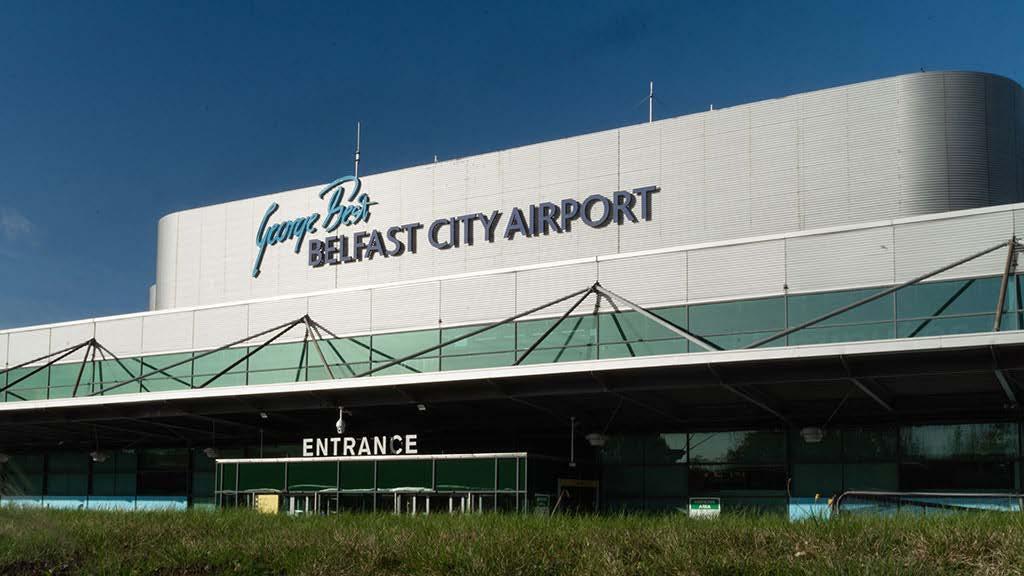
One terminal, one runway and a location no other Belfast airport can match. George Best Belfast City sits minutes from the centre, and it is built for the business traveller.
George Best Belfast City Airport is the convenient, close-in airport of Northern Ireland's capital, named in 2006 after the province's most famous footballer and sitting on the shore of Belfast Lough barely a few miles, and a few minutes, from the city centre. It is the smaller of Belfast's two airports, carrying around 2.4 million passengers a year, but it is the one geared to business: where Belfast International out at Aldergrove handles the low-cost and leisure flying, City is the home of the frequent, full-service links that the working traveller wants, with British Airways and Aer Lingus Regional running to London Heathrow, BA also to London City, KLM connecting to Amsterdam and the world, and easyJet adding a fast-growing network of Gatwick and Great Britain routes. For business, its trump card is simple: you are in the city centre minutes after landing.
Two things are worth knowing from the outset. The first is the distinction from its larger sibling: this is Belfast City, close to town and business-focused, not Belfast International, further out and low-cost, and the two are not interchangeable. The second is ambition: owned by a fund managed by the investor 3i, the airport has set out a vision backed by up to £200 million of investment to grow towards seven million passengers, with improved connectivity including long-held plans for a dedicated rail halt. The result is a compact, convenient, business-like airport with room to grow. This guide shows you how to use it like a regular.
Passengers: around 2.4 million a year - Belfast's business-focused city airport.
Terminal: one compact terminal; a single runway.
Key links: London Heathrow and City (BA, Aer Lingus), Amsterdam (KLM), Gatwick (easyJet). Into the city: the Airport Express 600 bus, around 10 minutes.
Owner: a fund managed by 3i, with a vision to grow towards 7 million passengers.
Page 2 - Introduction and key figures
There is a single terminal to find, and one thing to settle before you travel: that you are heading to Belfast City, not Belfast International.
Belfast City keeps the on-the-day arrival as simple as it gets, with every flight using one compact terminal where check-in, security and gates sit close together under a single roof, and the walk from kerb to gate is among the shortest of any UK airport. The one genuine source of confusion is shared with the rest of the city: Belfast has two airports, and travellers sometimes turn up at the wrong one. City, the subject of this guide, is the close-in, business-oriented airport on Belfast Lough, served by British Airways, Aer Lingus Regional, KLM, easyJet and Loganair; Belfast International, out at Aldergrove and a good half-hour further from the centre, is the larger, lowcost and leisure airport. Always check which airport your ticket names.
Beyond that, the discipline is light, because this is a small, efficient airport built around speed. Check in online, read your carrier's bag rules, and arrive in good time for the early-morning bank of London and Amsterdam departures, the busiest of the day and heavy with business travellers. The compact terminal means short queues and a quick passage on a normal day, which is precisely why the corporate traveller prizes it. Confirm the right airport and Belfast City is one of the quickest and most painless airports in the country to use.
KLM The global connector
Schiphol and onward worldwide easyJet / Loganair Growing low-cost and regional Gatwick, GB cities and Scottish and regional routes
Check which Belfast airport your ticket names - City (close in) and International (Aldergrove) are a half-hour apart.
One compact terminal at City means a short walk from kerb to gate; arrive in good time only for the morning rush.
This is the airport's whole point: a frequent express bus has you in the centre of Belfast in about ten minutes, with a railway halt close by as well.
No UK airport gets you into its city faster for less. The Airport Express 600 bus runs from outside the terminal straight to Belfast Grand Central station, the city's large new transport hub, in around ten minutes, with departures every twenty minutes or so through the day and a single costing only about £2.20, a fraction of the airport express fares on the mainland. For a business traveller, that combination of speed, frequency and price is unbeatable: you can be from the aircraft door to a city-centre meeting in well under half an hour. From Grand Central, the city's bus and rail networks, including the cross-border service to Dublin, fan out across Northern Ireland and beyond.
There is a rail option too. Sydenham railway halt, on the Belfast-to-Bangor line, sits a short walk from the terminal along the Sydenham Bypass, with a courtesy bus available on request, and trains run frequently into the city centre, a useful alternative for destinations on the line or towards the Lough and Bangor. Taxis and private hire wait at the terminal as well, quick into the centre given how close it is and a sensible choice for two or three travelling together. The rule for the regular is simple: take the 600 bus for the city, where it is fast and remarkably cheap, and a taxi or the train only when your destination suits it better.
4 - Getting into the city
Belfast City sits right on the edge of the centre, so the car journey is short, and the airport's closeness changes the calculation entirely.
Belfast City's great advantage is how close it is, and that shapes the road journey as much as everything else. The airport sits just off the Sydenham Bypass on the eastern side of the city, a short hop from the centre and from the wider road network, so a drive in from much of greater Belfast is a matter of minutes rather than the long run associated with airports out in the country. Buses link the airport to the surrounding area, and for travellers driving themselves the airport's car parks sit close to the terminal, with the usual choice of short and longer stay, and booking online in advance is markedly cheaper than the gate price. For an airport this close to the city, the car is a genuinely quick option.
Stopping at the terminal carries a charge, as it does almost everywhere now, paid by the usual camera system, with the cost rising the longer you stay. The sensible way to keep the cost down, as elsewhere, is to use a nearby car park with a short transfer for a quick set-down rather than pulling up at the kerb, and to check the airport's current drop-off options when you travel. But because the airport is so close to the centre and so cheaply reached by the 600 bus, many business travellers skip the car altogether, which is rather the point of choosing City in the first place.
The road traveller's checklist
• Use a nearby car park with a short transfer for a quick set-down rather than paying at the terminal kerb.
• Book parking online in advance for the best rates, short or longer stay as your trip needs.
• The airport sits just off the Sydenham Bypass on the east side of the city, minutes from the centre.
• Given the speed and low cost of the 600 bus, many business travellers skip the car entirely.
The airport's closeness is its whole appeal. The 600 bus is so quick and cheap that the car is rarely worth it for a city trip, though the short drive in keeps it an easy option for the wider area.
A small, compact terminal means Belfast City is usually one of the quickest UK airports to clear, which is much of its appeal to the business traveller.
Because Belfast City is small and channels a business-heavy traffic through one compact security hall, it is usually among the quickest UK airports to get through, with the early-morning London and Amsterdam departures the busiest moment of the day. New scanning equipment is being introduced across UK airports, and the rules on liquids and electronics have been changing as it beds in, so it is worth checking Belfast City's current guidance before you fly, but the compact scale means that, outside the morning rush, the passage is generally swift. The airport's whole character rewards the traveller who values speed, and on a normal day you do not need the long margins the bigger airports demand.
For certainty at the peak, Fast Track security is sold where available and is worth the modest cost for the early business departure, and is included in some premium fares and lounge packages. The usual discipline still helps most at the busiest times: travel hand-luggage only where you can, follow the signage on liquids and electronics, and check in online, all second nature to the corporate regulars who fill the early flights. For most of the day, though, Belfast City's appeal is that it simply does not detain you, which is exactly why so many business travellers choose it over its larger sibling.
Clearing the airport quickly
• Check Belfast City's current liquids and electronics guidance before you fly, as the rules are evolving with new scanners.
• Use Fast Track if available for the early-morning business rush, or check whether your fare or lounge includes it.
• Travel hand-luggage only where you can to skip the bag drop entirely.
• Outside the morning peak, the compact terminal is quick; you need not arrive hours early.
Short-haul to London and Amsterdam: arrive around 90 minutes ahead, a touch more at the morning peak.
The compact terminal is one of the quickest in the country; do not over-insure with a very early arrival.
Page 6 - Security and speed
Belfast City keeps a comfortable airside lounge for the business traveller who wants a calm base before an early flight.
Belfast City's lounge offer is modest in scale but well suited to its business clientele. The airport's airside lounge provides the dependable formula of complimentary food and drink, fast wi-fi and proper places to work, bookable ahead from sensible prices or accessible on a membership such as Priority Pass, and it makes a useful base for the early-morning London or Amsterdam departure that fills so much of the schedule. For a working traveller with an inbox to clear and a coffee to take before the flight, it does exactly what is needed, and at a small airport where the wait is rarely long it is more about comfort and productivity than escaping a queue.
The advice is the familiar one: book ahead at the busy times, when walk-up space is tight, and check what your fare or card already opens before paying separately. The lounge does not pretend to the scale of a Heathrow flagship, but for a compact business airport it is comfortable, well-run and good value, and a sensible counterpart to the airport's quick passage through security. Arrive with a little time before an early flight and the lounge becomes a productive start to the day rather than a wait at the gate.
The lounge picture
At a small, quick airport you rarely need the lounge to escape a queue - it is a comfortable, productive base for the early-morning departure. Book ahead at the peaks.
Compact and business-like, Belfast City's food and shops are sized for a traveller who will be airside briefly, not for a long browse.
Belfast City makes no pretence of being a dining or shopping destination, and given how quickly most people move through it, that is no failing. The offer is sensible and business-like: familiar coffee houses and quick counters, a bar and a place or two for a proper sit-down plate, and enough to assemble a decent breakfast or a coffee and a bite before an early flight. Everything is close at hand in the single departures area, so there is no question of a long walk to find food, and the pace suits the airport's clientele, who are more likely to want a fast flat white and a working table than a leisurely meal. If you want more time and comfort, the lounge is the better choice.
Retail follows the same compact logic, with a tidy selection of the essentials, the technology, the reading matter and the Northern Irish gifts that a forgotten item or a last-minute present demands, plus the duty-free for those travelling beyond the common travel area. For the working traveller the value is the familiar safety net of the forgotten charger or cable, replaceable airside before you board. The sensible habit is to treat the concourse as a quick pit stop rather than a destination, gather a coffee and anything you have forgotten, and let the small airport do what it does best, which is move you on quickly.
Eating and buying, the essentials
• Expect coffee, quick counters and a bar rather than fine dining - all close at hand in one departures area.
• For a proper sit-down or a quiet hour, the lounge is the more comfortable option than the concourse.
• The shops cover the essentials and Northern Irish gifts; nobody flies from here for the shopping.
• The compact terminal keeps everything minutes away, so a quick pit stop is all it takes.
Page 8 - Dining and shopping
Belfast City's closeness rewrites the usual advice: there is no need for an airport hotel when the whole city is ten minutes away.
Belfast City turns the airport-hotel question on its head. There is no hotel attached to the terminal, and for once that scarcely matters, because the airport is so close to the city that the sensible choice is simply to stay in Belfast itself. The city centre, ten minutes away on the 600 bus, offers the full range of business and boutique hotels, while the neighbouring Titanic Quarter, almost on the airport's doorstep, has its own modern hotels within a short hop, among them well-known chain and design-led options a few minutes from the terminal. For a working trip, a city-centre or Titanic Quarter hotel gives you dinner, an evening and a proper base, with the airport an easy ride away in the morning.
The choosing logic is therefore unusually pleasant. Rather than trading convenience against comfort at an isolated airport hotel, you can have both: a good hotel in the heart of Belfast or by the waterfront, and an airport a few minutes away when you need it. For a genuinely early flight, a Titanic Quarter hotel keeps the morning run short; for everything else, the city centre is the natural base, with the 600 bus or a quick taxi covering the last stretch. It is one of the quiet advantages of a close-in city airport, and a reason the business traveller values Belfast City so highly. As always, book with the morning's timing in mind.
Belfast city centre
Titanic Quarter
approx. 10 min by the 600 bus
The full range of business and boutique hotels, plus the evening
a few minutes by taxi Modern waterfront hotels almost on the doorstep
Airport car parks at the terminal
For the very earliest start, park and go
Belfast City is so close to town that there is no need for an airport hotel. Stay in the city centre or the Titanic Quarter and ride the 600 bus or a quick taxi in the morning.
Page 9 - Where to stay
Belfast City is a beginning-and-end airport, but its full-service carriers make it a genuine springboard to the world through the great European hubs.
Most journeys through Belfast City begin or end here, but the airport's full-service character gives it a real connecting role, above all through KLM and the London hubs. KLM's Amsterdam service feeds one of Europe's great hub airports, from which the airline and its partners reach destinations across every continent, so a passenger from Belfast City can fly to much of the world on a single through-ticket, with bags checked through and the connection protected, changing at Schiphol rather than at the airport itself. British Airways and Aer Lingus offer similar onward reach via Heathrow and Dublin. For the business traveller heading well beyond Belfast, those hub connections are the airport's quiet strength, and where a connection does happen at City the single compact terminal keeps any transfer simple.
The complication, as everywhere, is the low-cost self-transfer. A connection stitched together from two separate budget tickets, most often involving an easyJet flight, is not protected: you must reclaim your bag, leave the controlled area, check in again and pass back through security, all to be planned as two journeys with a generous buffer rather than a single booking. The compact terminal at least keeps the walking short. As ever, travelling hand-luggage only simplifies everything, and the rule holds: know before you fly whether your connection is on one protected full-service ticket or two separate ones, and build your buffer to match.
• KLM via Amsterdam, and BA and Aer Lingus via Heathrow and Dublin, connect Belfast City to the world on protected through-tickets.
• Any transfer within the single compact terminal is a short walk, not a trek between buildings.
• Two separate low-cost tickets mean a self-transfer: reclaim, re-check and clear security again.
• Travel hand-luggage only where possible to simplify any connection.
• Know before you fly whether your connection is on one ticket or two, and build the buffer to match.
Page 10 - Connecting and transferring
Everything above distilled into the habits that make the most of Belfast's quick, convenient business airport.
Belfast City rewards the traveller who values speed and closeness, which is the whole reason to choose it. There is no terminal to choose, the security is quick, and the city is ten minutes away, so the winning approach is to confirm you are at the right Belfast airport, take the cheap, fast 600 bus into town, and stay in the city itself rather than at the airport. Lean on the KLM and London hub connections for journeys to the wider world, and enjoy the fact that, of all the airports in this series, this is the one that detains you least. Master these points and Belfast City is the most effortless business airport in the country.
Ten habits of the seasoned Belfast City flyer
• Check you are at the right Belfast airport - City (close in) is the business one, not International.
• Take the Airport Express 600 bus to Grand Central station - around 10 minutes and only about £2.20.
• Use the Sydenham rail halt for destinations on the Bangor line.
• Stay in the city centre or the Titanic Quarter rather than at an airport hotel.
• Use a car park transfer rather than the terminal kerb if you do drive.
• Outside the morning rush, the compact terminal is quick; you need not arrive hours early.
• Use Fast Track if available for the early London and Amsterdam departures.
• Book the airside lounge ahead for a productive start to an early day.
• For the wider world, connect through Amsterdam on KLM, or Heathrow on BA, on a single through-ticket.
• Treat a self-connection on separate low-cost tickets as two journeys with a generous buffer.
Page 11 - The frequent flyer's playbook
Backed by new investment and a bold growth plan, Belfast City is looking to build on its great advantage of closeness to the city.
The defining story at Belfast City is ambition built on a natural strength. Owned by a fund managed by the international investor 3i, the airport has set out a vision underpinned by up to £200 million of private investment to grow towards seven million passengers a year in a sustainable way, improving its terminal, facilities and connectivity. Central to that vision are longheld plans for better public-transport links, including a dedicated rail halt to add to the existing Sydenham connection, which would make an already convenient airport more convenient still. Much of the recent growth has been led by easyJet, which is expanding its Belfast City capacity sharply, broadening the network beyond the traditional business core.
For the traveller, the coming years should bring the dividend of that investment: a modernised terminal, better transport links and a wider choice of routes, all building on the airport's unbeatable closeness to the city. There are constraints to navigate, including the planning agreements that have long shaped the airport's size and the balance to be struck with its city-edge neighbours, but the direction is clear. Belfast City intends to grow while keeping the speed and convenience that are its whole appeal, remaining the business traveller's airport of choice for Northern Ireland. For the frequent flyer, it is already the quickest, easiest way in and out of Belfast, and it means to stay that way.