Civil Air Patrol
June and July 2026
June and July 2026
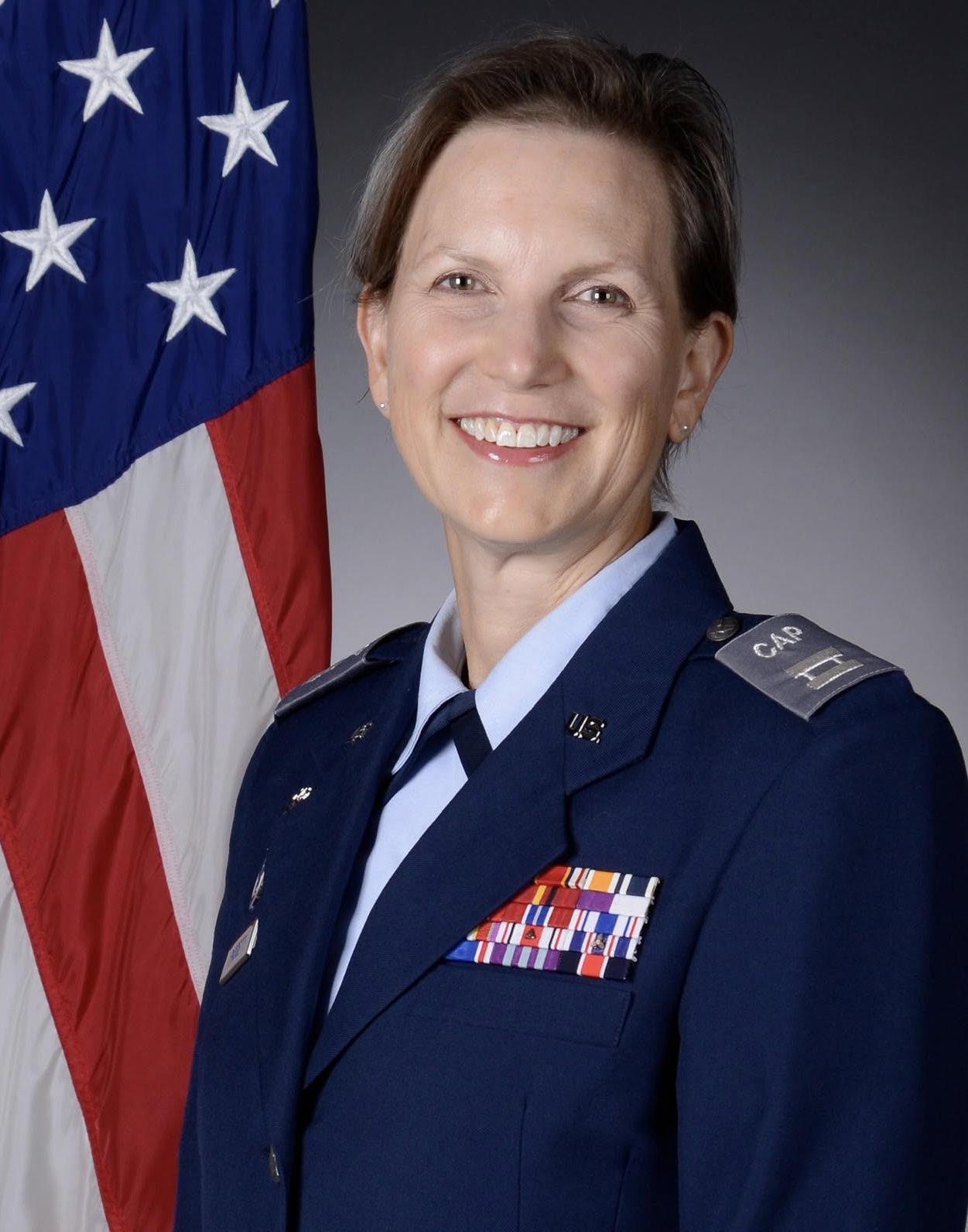
Major Karen Padgett has been selected as the next Alaska Wing Commander of the Civil Air Patrol. She will be responsible for CAP operations in Alaska, overseeing more than 800 members across 15 statewide units. Her vision for Alaska Wing CAP is to be a safe and effective non-profit that continues to earn the public trust as the best place to lead and to serve.
Major Padgett first joined Civil Air Patrol in 1999 and served as a mission scanner and observer. She rejoined CAP in 2018 when her youngest son turned 12, helping establish the Lake Hood Cadet Squadron, then serving as its commander from 2020 to 2023. Major Padgett also previously served as the Alaska Wing’s Director of Cadet Programs from 2021 to 2024. She currently serves as a CAP Volunteer University Instructor, Wing Character
Development Instructor, and Activity Director for the Alaska Wing National Flight Academy.
“Congratulations to Major Karen Padgett on her selection as the next Alaska Wing Commander,” said Col. Brett Dolnick, Pacific Region Commander. “Major Padgett brings a wealth of experience in cadet programs, leadership development, and organizational excellence. Alaska Wing is gaining a thoughtful and dedicated leader whose collaborative approach and commitment to developing leaders will benefit not only Alaska Wing but the entire Pacific Region. I look forward to working with Major Padgett as we continue to share ideas, learn from one another, and strengthen our ability to serve our members, communities, and Air Force partners across the region.”
Major Padgett worked as an environmental engineer for 16 years. Since 2002, Major Padgett has worked as a financial advisor. She and her family live in Anchorage, Alaska.
Founded in 1941 and established as the official civilian auxiliary of the U.S. Air Force seven years later, Civil Air Patrol is chartered by Congress as a nonprofit organization for youth development, aerospace education, and the promotion of general aviation. In an auxiliary role as a Total Force partner of the Air Force, CAP operates the world’s largest fleet of singleengine aircraft for search and rescue, disaster relief, training, and education. Civil Air Patrol is dedicated to serving America’s communities, saving lives, and shaping futures.
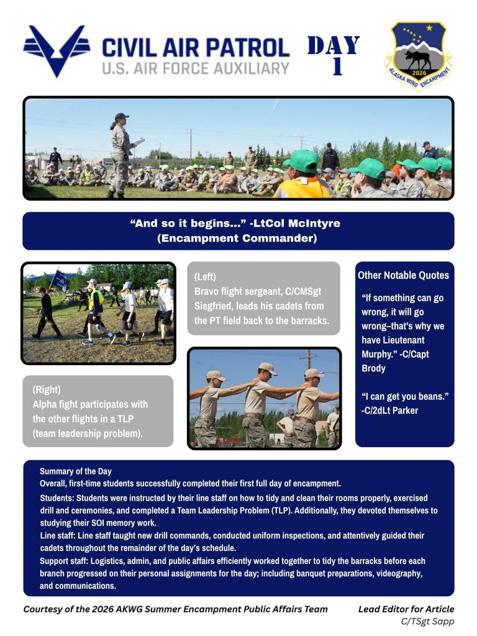
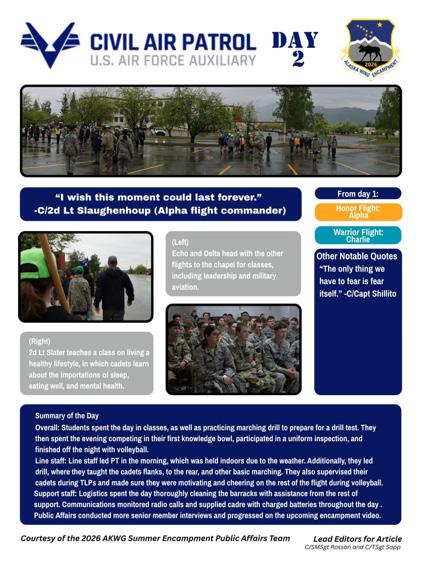
Encampment Cadet Commander Message
Encampment Gallery
AKWG Graduates
Alaska Wing Cadets Enter US Service Academies
Arcturus
Homer Tok
kodiak
Kenai
Brichwood
Civil Air Patrol cadets visit JBER
Readiness Forged: Kodiak Arctic Care 2026 partners with Civil Air
Patrol cadets during a mass casualty exercise
Andrew Gecsedi Memorial
High Frequency (HF) Ionospheric Propagation Prediction
Great opportunity
Basic Radio Communications Test Equipment
CDI August Lesson
Change at the Helm of the Alaska Wing Inspector General Corps
LtCol Michael Chiesa Biography
AKWG QR Codes
Tail Section
u Greetings Alaska Wing!
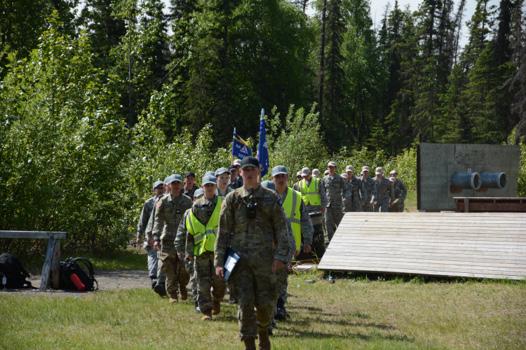
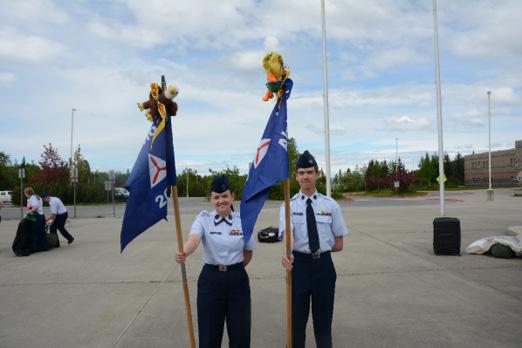
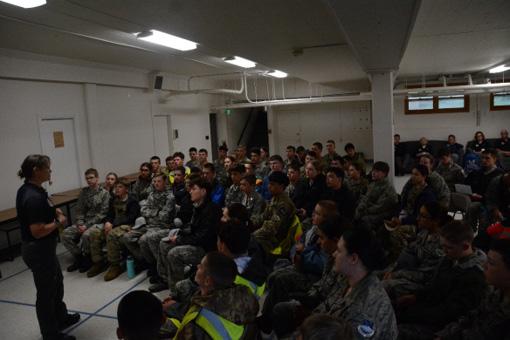
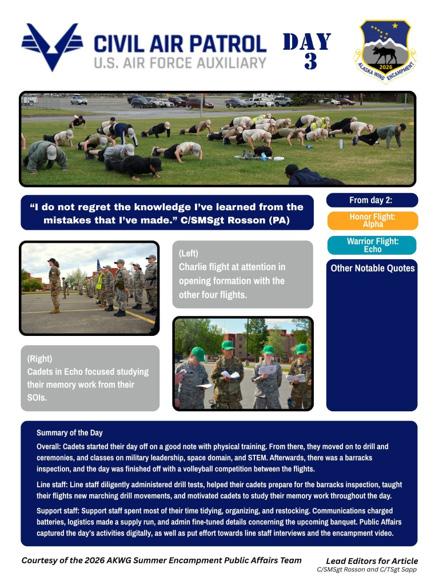
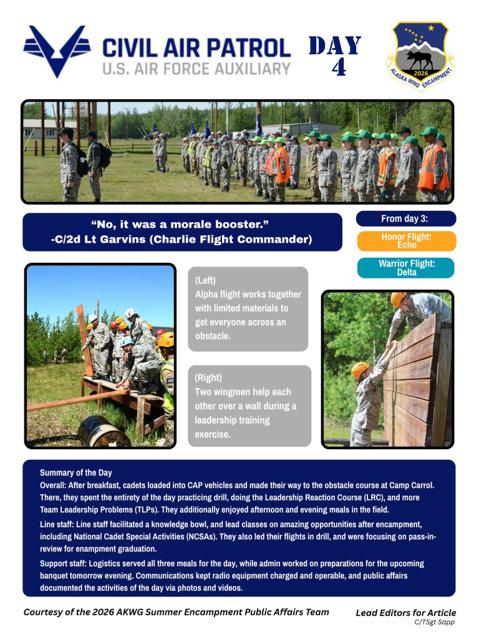
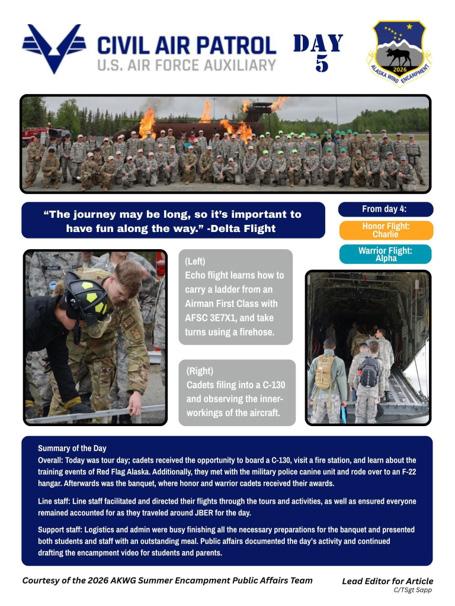
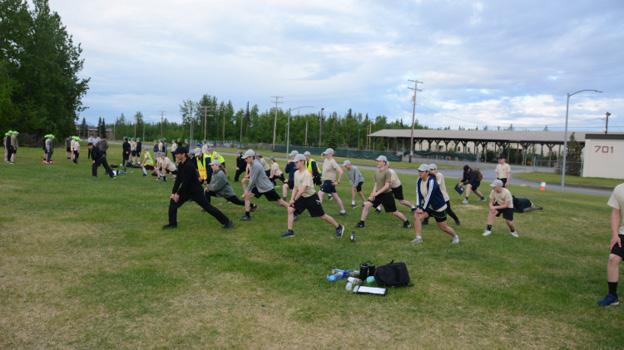
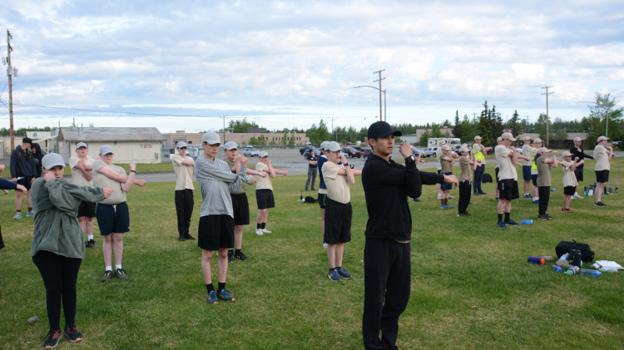
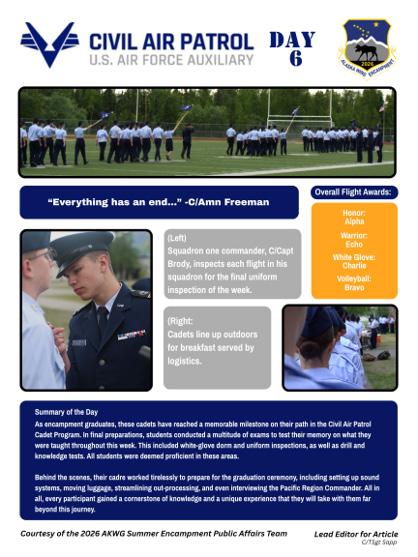
As many of you know, we just finished the 2026 Alaska Wing Summer Encampment. It was an absolute honor to serve as the Cadet Commander for this event, and now that it is over, I want to encourage you and tell you about future opportunities!
Student Cadets, now that you have graduated, you have a whole new world of CAP open to you. Not only do you now have the required encampment credit for promotion to Cadet Second Lieutenant (Billy Mitchel Award), but you also have a plethora of CAP events around the world that you can apply for! As an Encampment graduate, you can now apply for National Cadet Special Activities (NCSAs)! NCSAs are like Encampment but with more specific learning objectives. There are many NCSAs with many different focuses, such as: Flying, Cybersecurity, Search & Rescue, Robotics, Geospatial Damage Assessment, Rocketry, Technology, Engineering, Leadership, Drill, Science, and more!
NOTE for all the cadets out there aspiring to become pilots, CAP has several Flight Academies that you can go to! Going to a CAP Flight Academy will definitely help to pave the way towards your pilot's license, and you may even have your solo flight by the end of the event! I highly recommend
going to the CAPNHQ website and looking at all the NCSAs to see if there's something that strikes your interest! The NCSAs I have been to provided very unique experiences that were forming for me as a person, gave me useful qualifications, helped me to find new interests, and expanded my connection to CAP members around the world!
As Graduated Students, I charge you to do two things: First, build up your local Squadron, and Second, give back to future Encampments.
Now that you have graduated from Encampment, take all that you have learned and use it to develop your home Squadron. Take all the things that you have learned and teach them to your fellow cadets. You are now in a position to lead by example, having learned proper bearing, drill, professionalism, customs & courtesies, and discipline. The purpose of this Encampment is not just to develop you but to equip you with the skills to go and develop others. Find opportunities to implement what you have learned at your local Squadron so that others can benefit from what you have learned!
I also charge you to return to future Encampments as Cadre, whether it be at Alaska Wing or other Encampments. You now have the opportunity to give other future student cadets the same kind of experience that you just had. Student Encampment is a
very formative time (definitely was for me), but what has been even more impactful was my time staffing Encampments. There is not much more fulfilling than challenging yourself in new leadership roles while simultaneously serving new cadets by staffing at an Enampment. So I'd better see you back next year!
Thank
A special thank you is due to all the Cadre that staffed Encampment, and especially the Senior Member staff who made this event possible! Encampment could not have happened without the hard work of many Senior Members who worked in the background, making sure that we had the resources needed for the activity. We had faithful Senior Member support working directly with the flights, in administration, transportation, command, safety, and more. I also thank the parents of the cadets for entrusting us with your cadet for Encampment and all that you do to support them in their CAP career! I urge parents to consider supporting CAP as a Senior Member, since more Seniors are something we are always looking for. Seniors are an invaluable resource for us, and you would be doing the Alaska Wing and the entirety of CAP a great service by helping in this capacity. Our Senior Members are constantly making a huge difference in the youth of this nation, and you can be a part of that! (Plus it’s pretty fun).
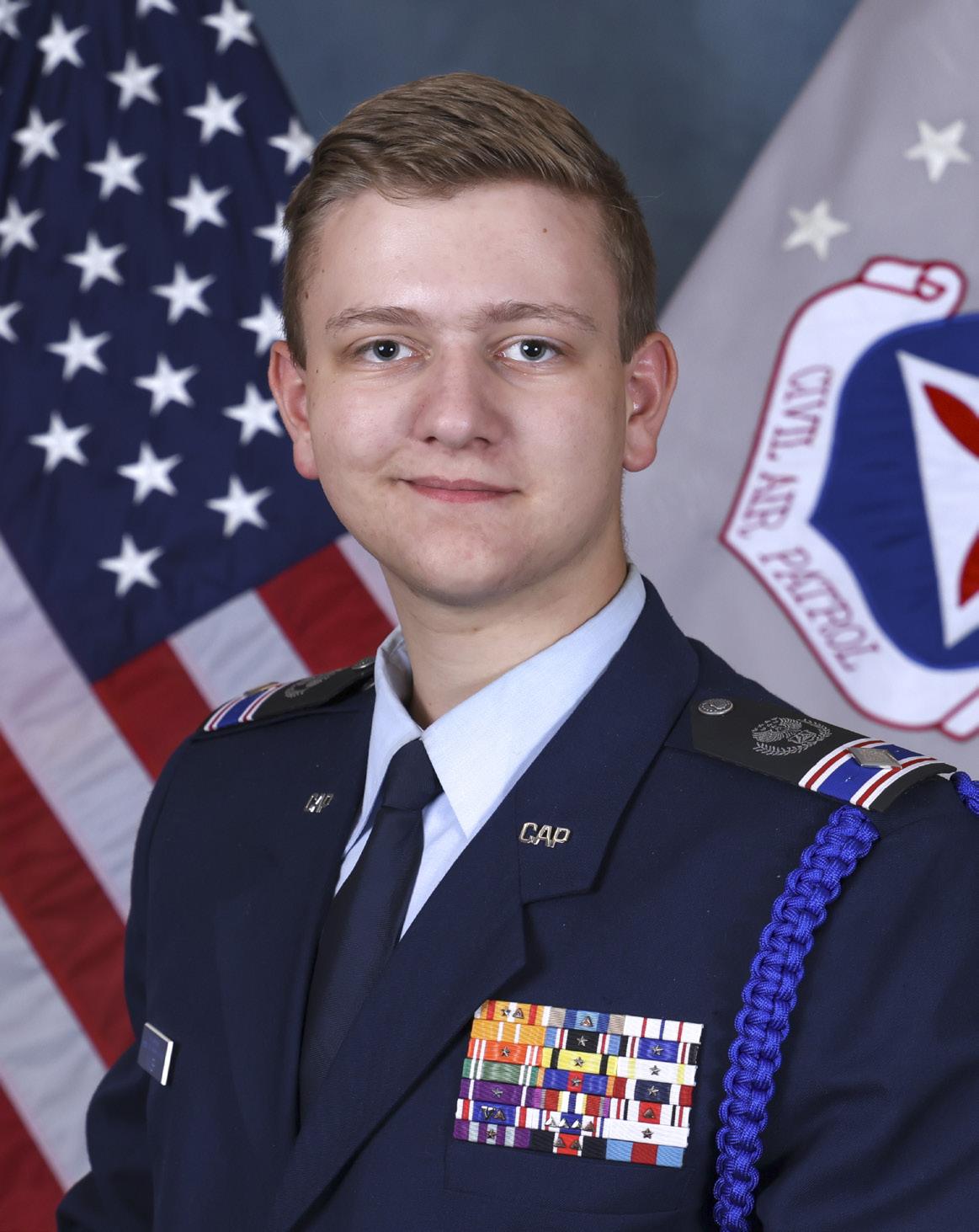
Again, it was an honor to serve as the Cadet Commander of the 2026 Alaska Wing Encampment, and I could not be prouder of a group of cadets and seniors. The Encampment met and exceeded my expectations in many ways. I can’t wait to see you all at future Encampments and around Alaska Wing! Until then, remember our motto: “Servimus ut alii floreant” (We Serve so others may Flourish)!
Daniel A. Moser, C/Lt Col, CAP Cadet Commander
Alaska Wing Summer Encampment, 2026
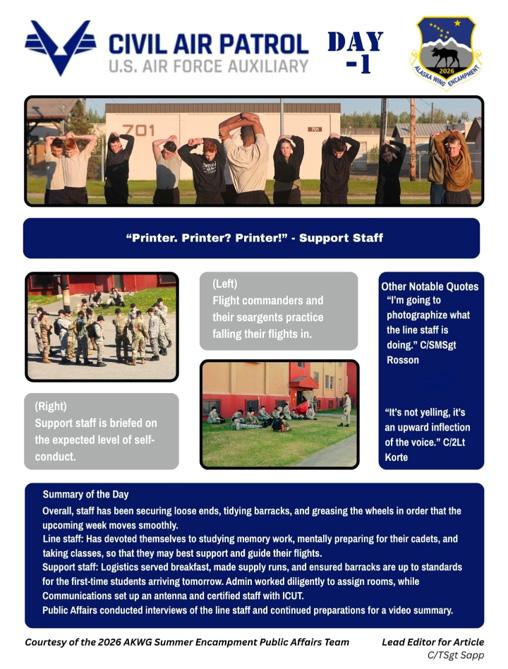
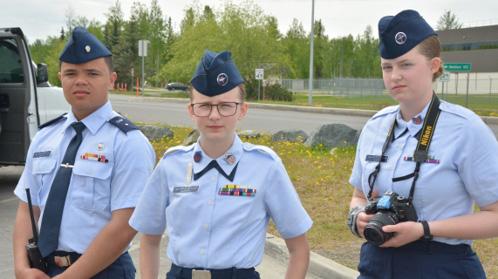
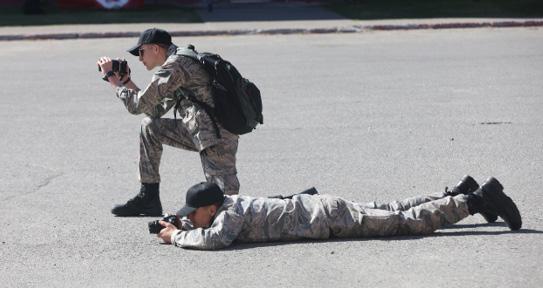
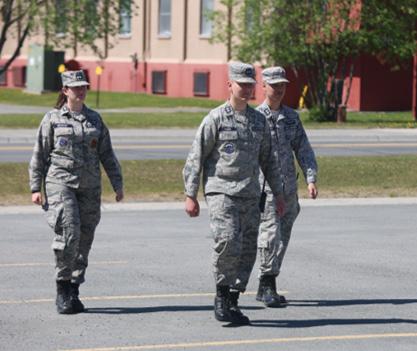
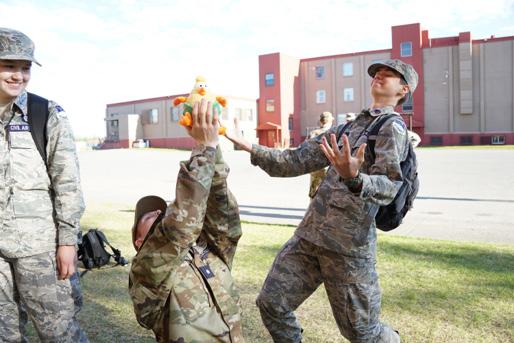
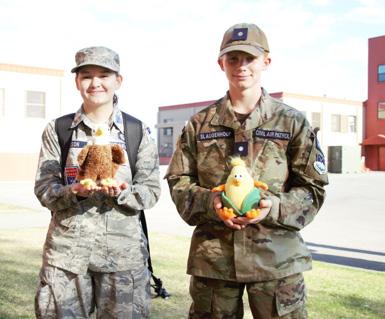
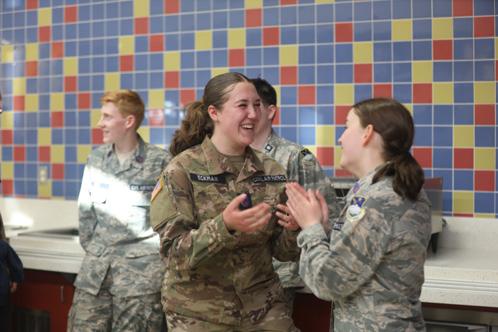
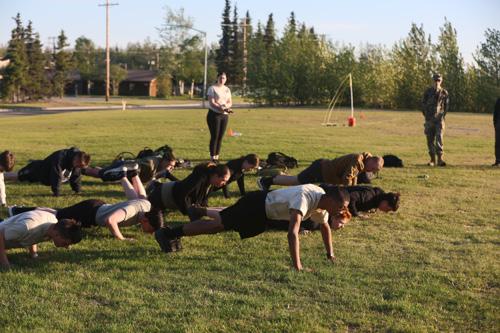
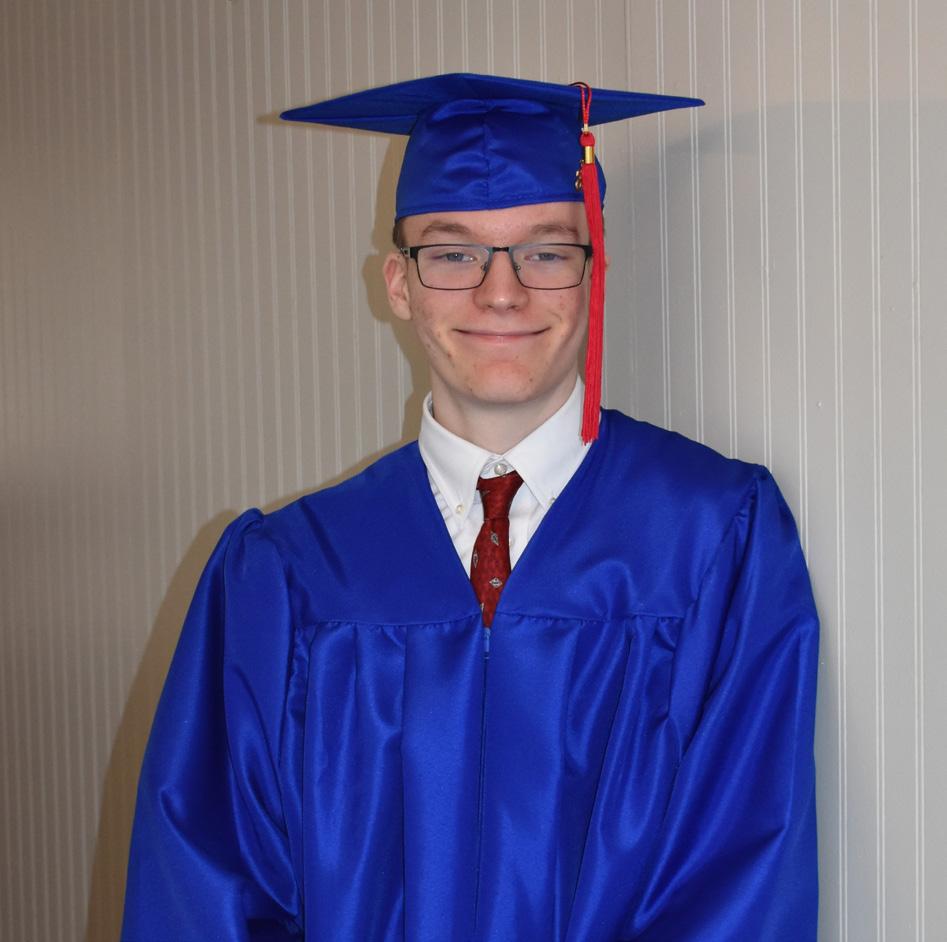
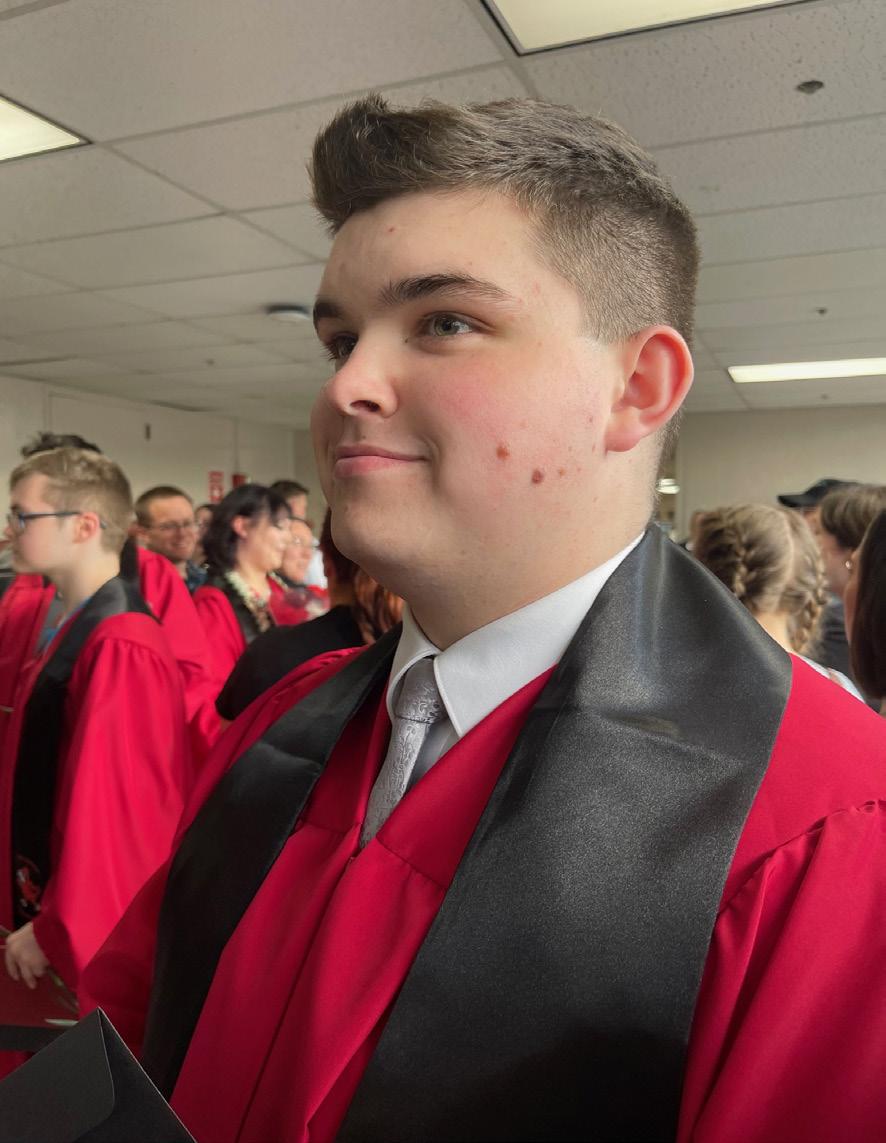
C/CMSgt. Joshua Sims
From: Valdez Composite Squadron
12th grade
Graduated from: FOCUS Homeschool
C/Capt. Luke Cole
From: Kenai Composite Squadron
12th Grade
Honors Graduate
Graduated from: Kenai Central High School

Squadron
Homeschool group
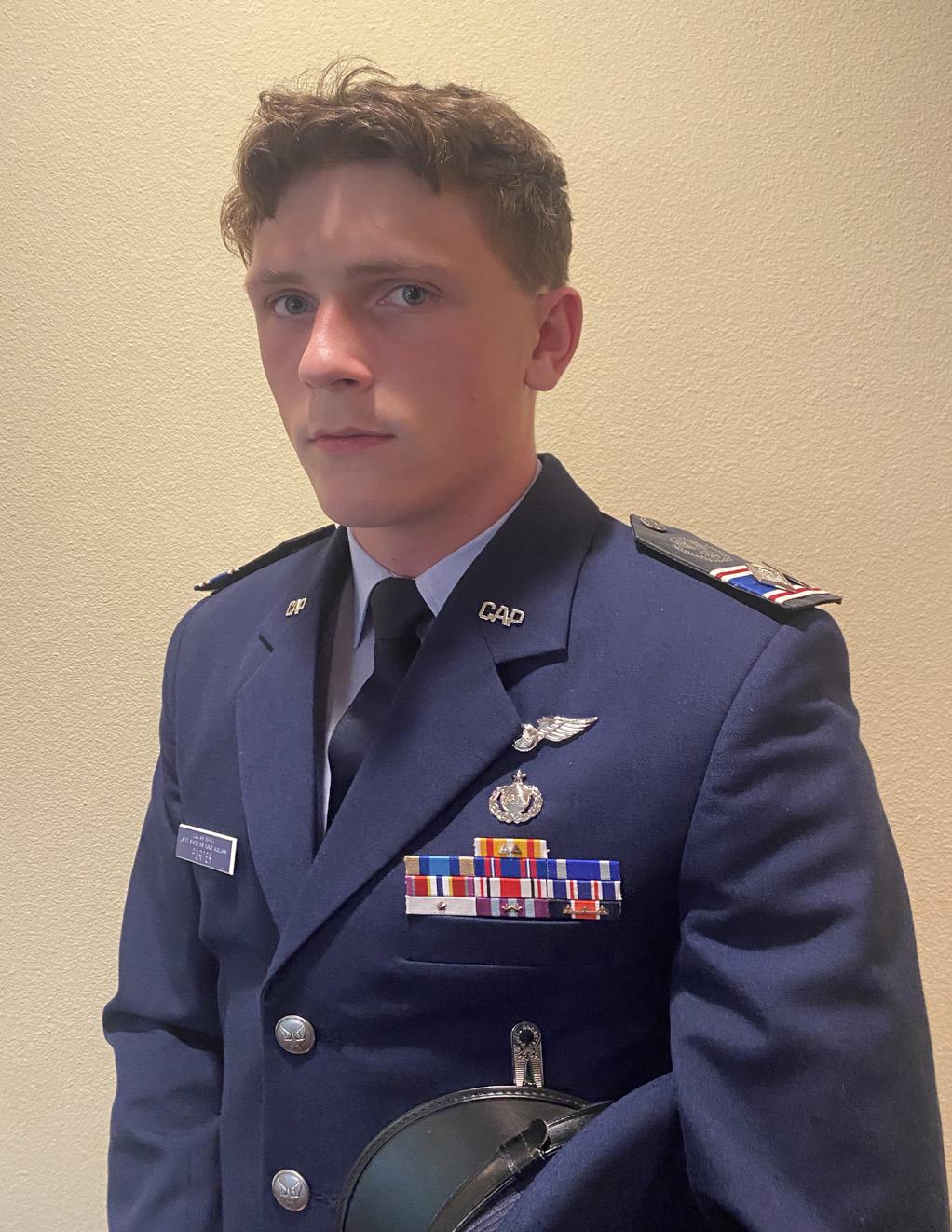
C/Lt Col Michael Porter
From: Alaska Wing
Graduated from Eagle River High School 12 May 2026, Captain of the Men's Varsity Soccer team and completed his Commercial Glider Pilot and Certified Flight Instructor-Glider ratings and will report to the United States Military Academy at West Point with the incoming Class of 2030 this June.
LtCol Brian Porter: "I am grateful for all the opportunities CAP provided him and other cadets, and appreciated all the support, mentorship and friendship shared with Alaska Wing members over the past six years."
By: Maj. Karen Padgett
Congratulations to CAP AKWG Cadets Bennett, Dolan, and Porter! All three of them were recently appointed to prestigious US Service Academies!
C/1st Lt Keena Bennett from Lake Hood Squadron in Anchorage, Alaska was sworn into the US Air Force the day after her In-Processing Day (I-Day) on June 25, 2026 in Colorado Springs, Colorado.
To learn more about cadets' first year at USAFA, follow this link: https://www.usafa.edu/parents/ freshman-year/
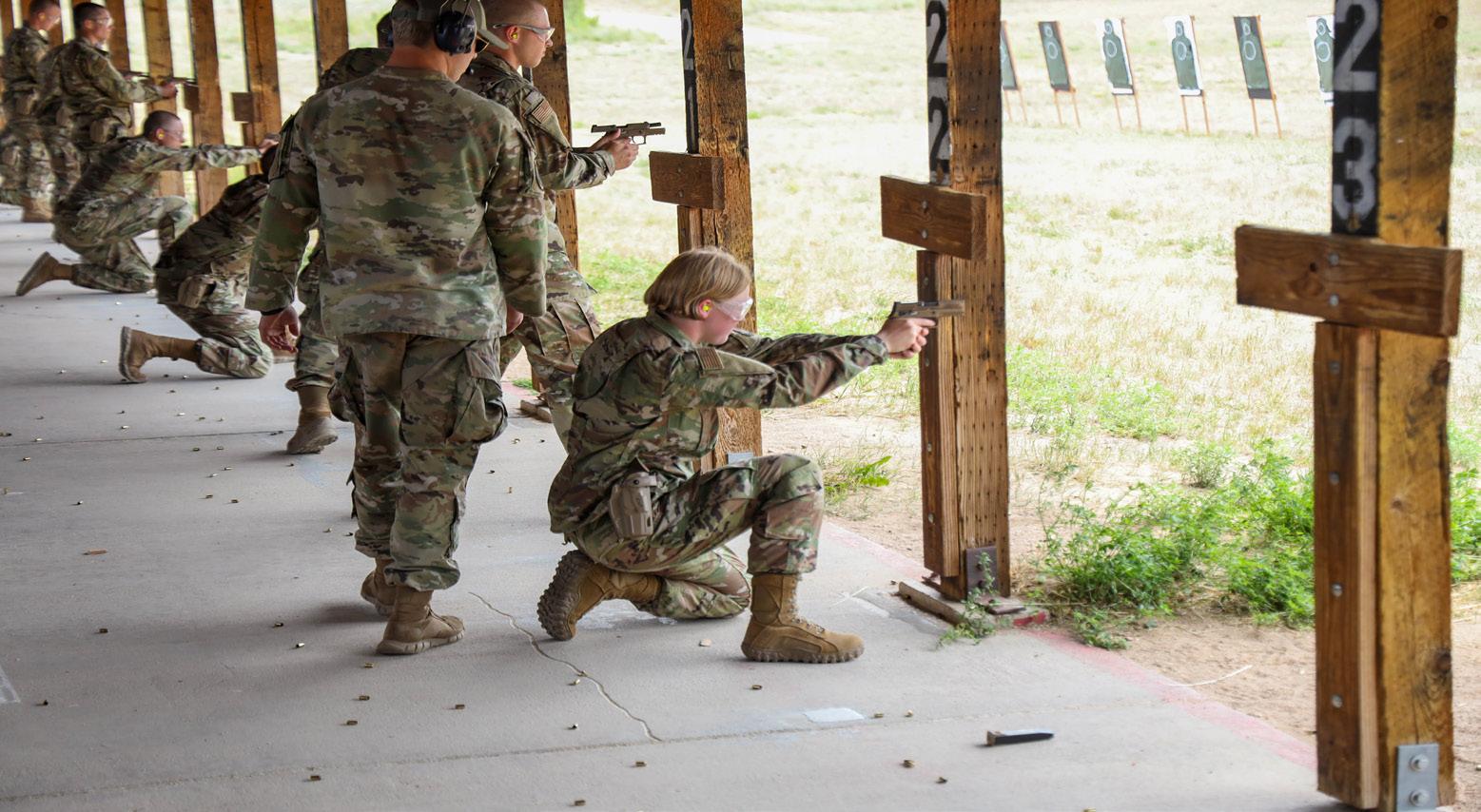
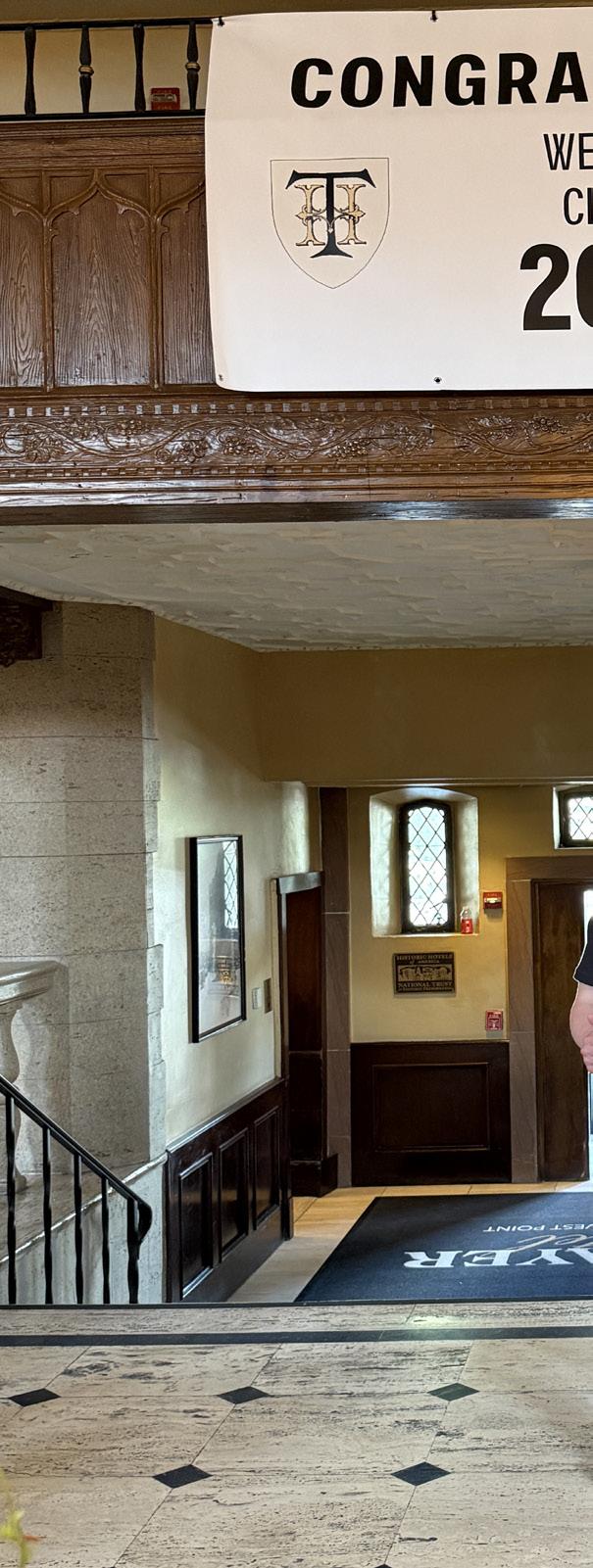
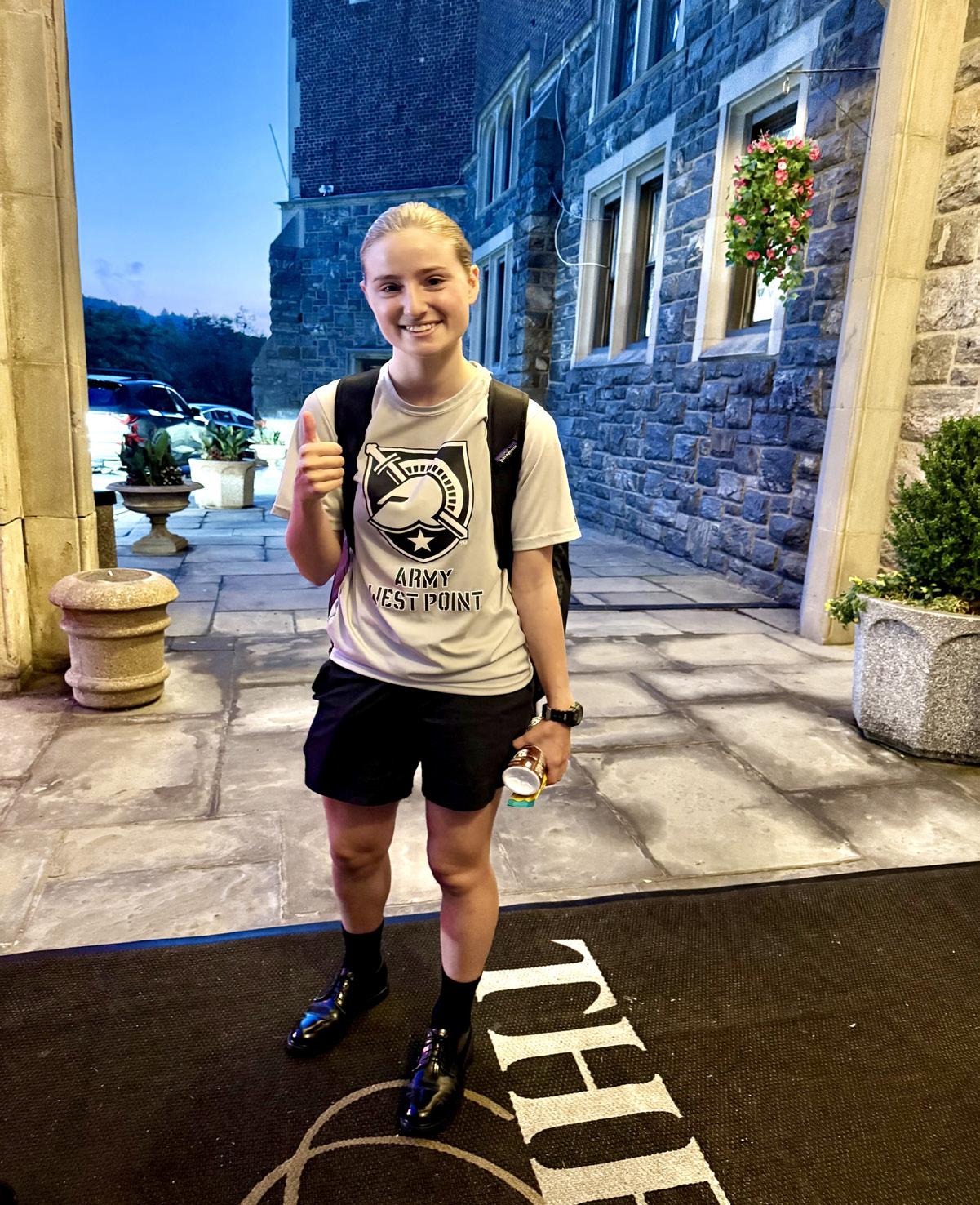
were sworn into the US Day (R-Day) on July 1, Academy in West Point, more about cadets' Point, follow this link: edu/cadet-journey/milestones-and-traditions/ plebe-milestones
C/ Lt Col Michael Porter from Polaris Squadron in Anchorage, Alaska, and C/SSgt Alyssa Hansen from Eielson Squadron in North Pole, Alaska,
If you know of other attending any of the five (USAFA, USMA/West Point,
Porter '30 Ready for R-Day
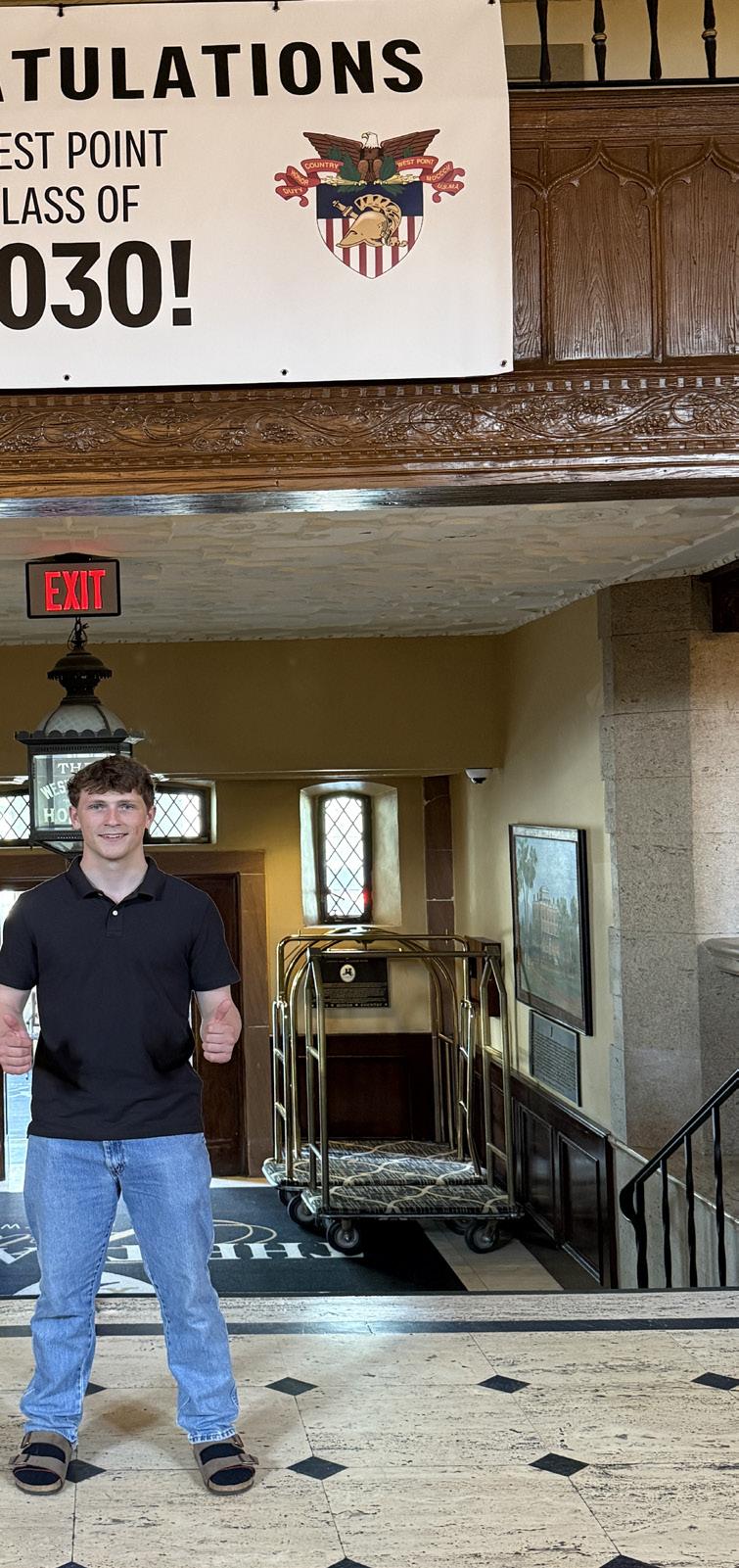
US Army on their Reception 1, 2026, at the US Military Point, New York. To learn first year at USMA/West link: https://www.westpoint. edu/cadet-journey/milestones-and-traditions/ AKWG cadets currently five US Service Academies Point, USNA/Annapolis, the
US Coast Guard Academy, and the US Merchant Marine Academy), please notify Maj Karen Padgett at karen.padgett@akwg.cap.gov
We wish all Alaska Wing cadets who graduated recently the best of luck. We are standing by to encourage them in their challenges and excited to celebrate their successes!
By:By: Eowyn Davidson
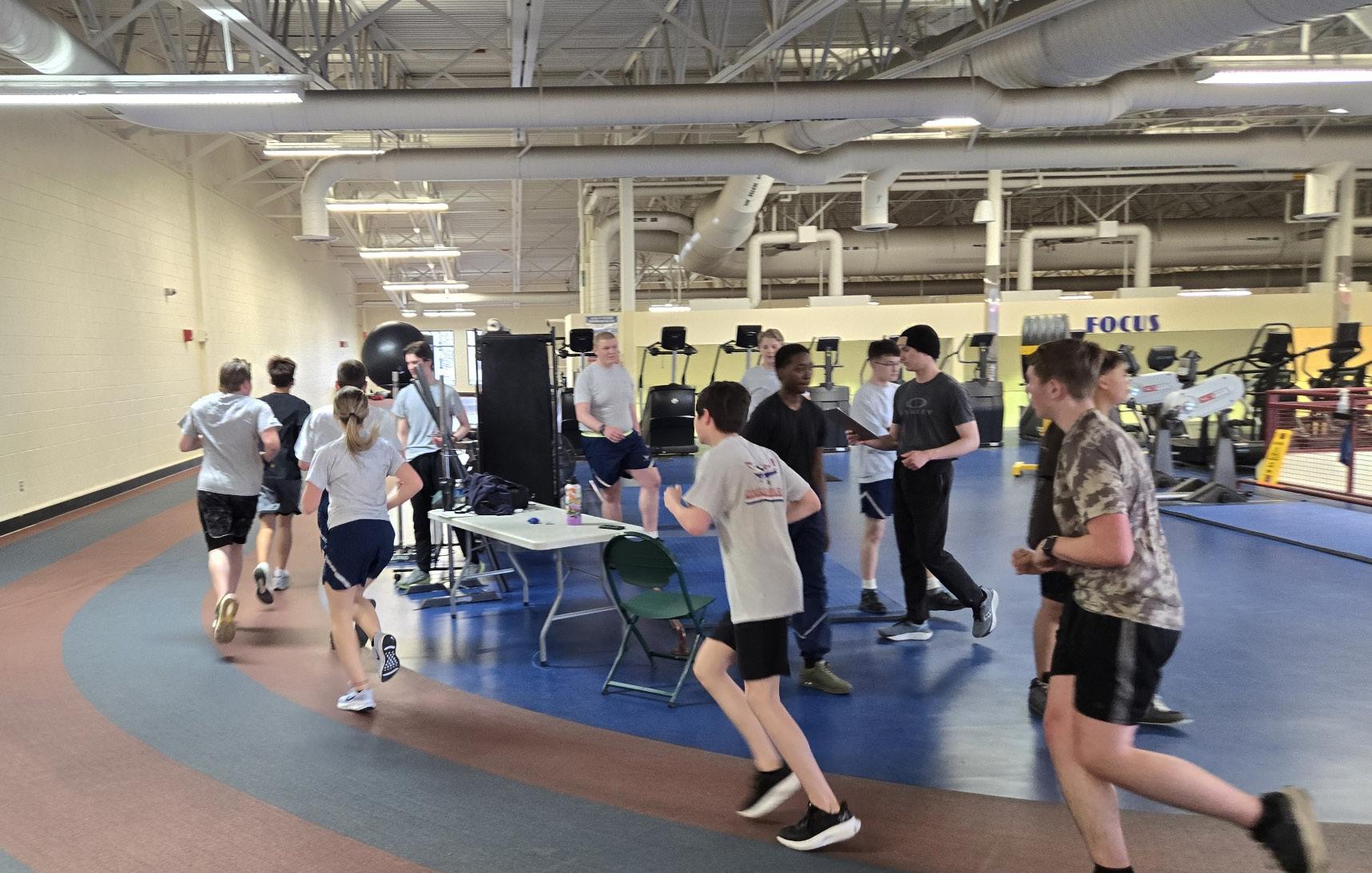
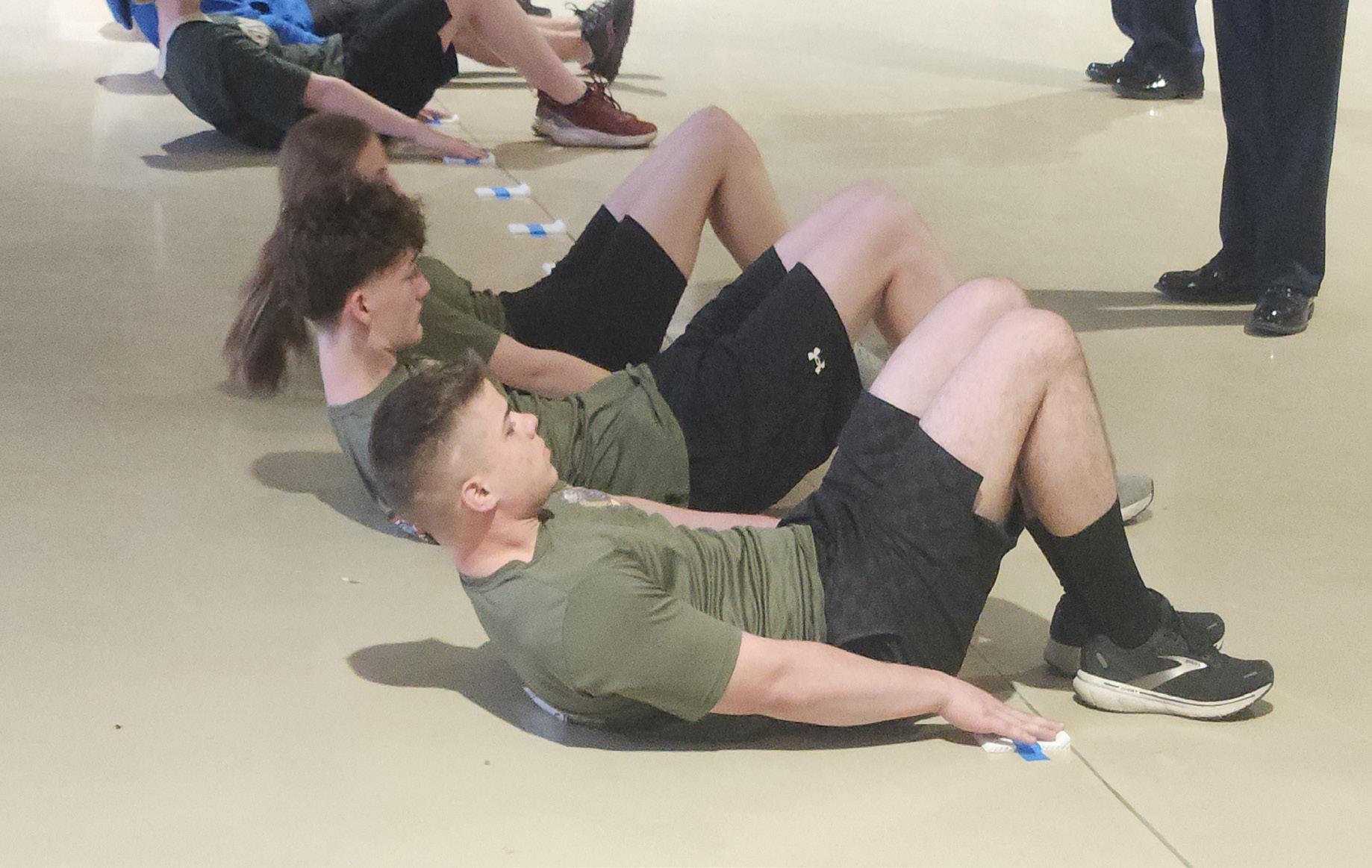
Throughout May, the Arcturus Squadron demonstrated commendable dedication and discipline. In addition to participating in drill and marching exercises, the cadets completed numerous physical training assessments.
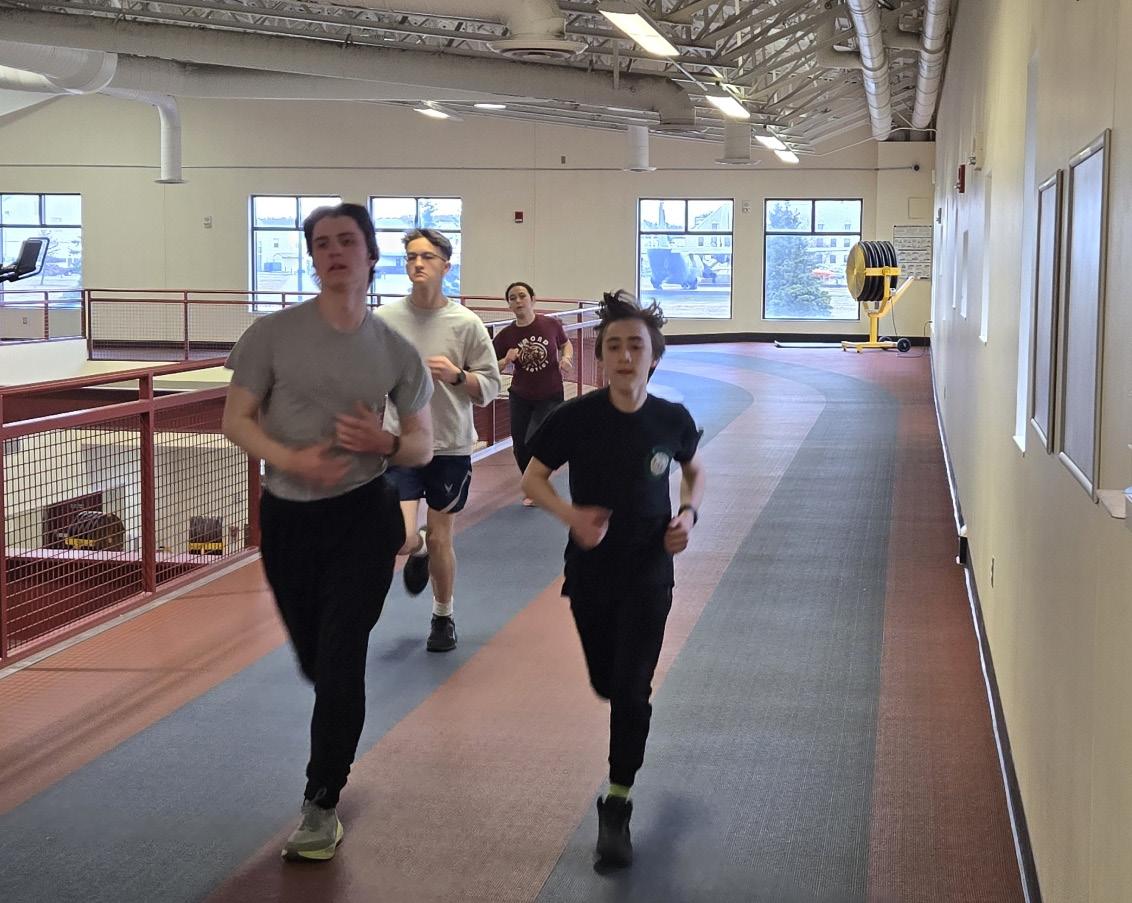
During the monthly Saturday received an overview of Geographic Systems (GIS) and their applications. highlighted the importance Rescue operations, demonstrating to provide vital geospatial assessment, informed decision-making, efficient resource allocation This training equips cadets for real-world response scenarios. For Cyber Patriot, the cadets the significance of cybersecurity, critical thinking, comprehension network concepts, and strategies against malicious software and
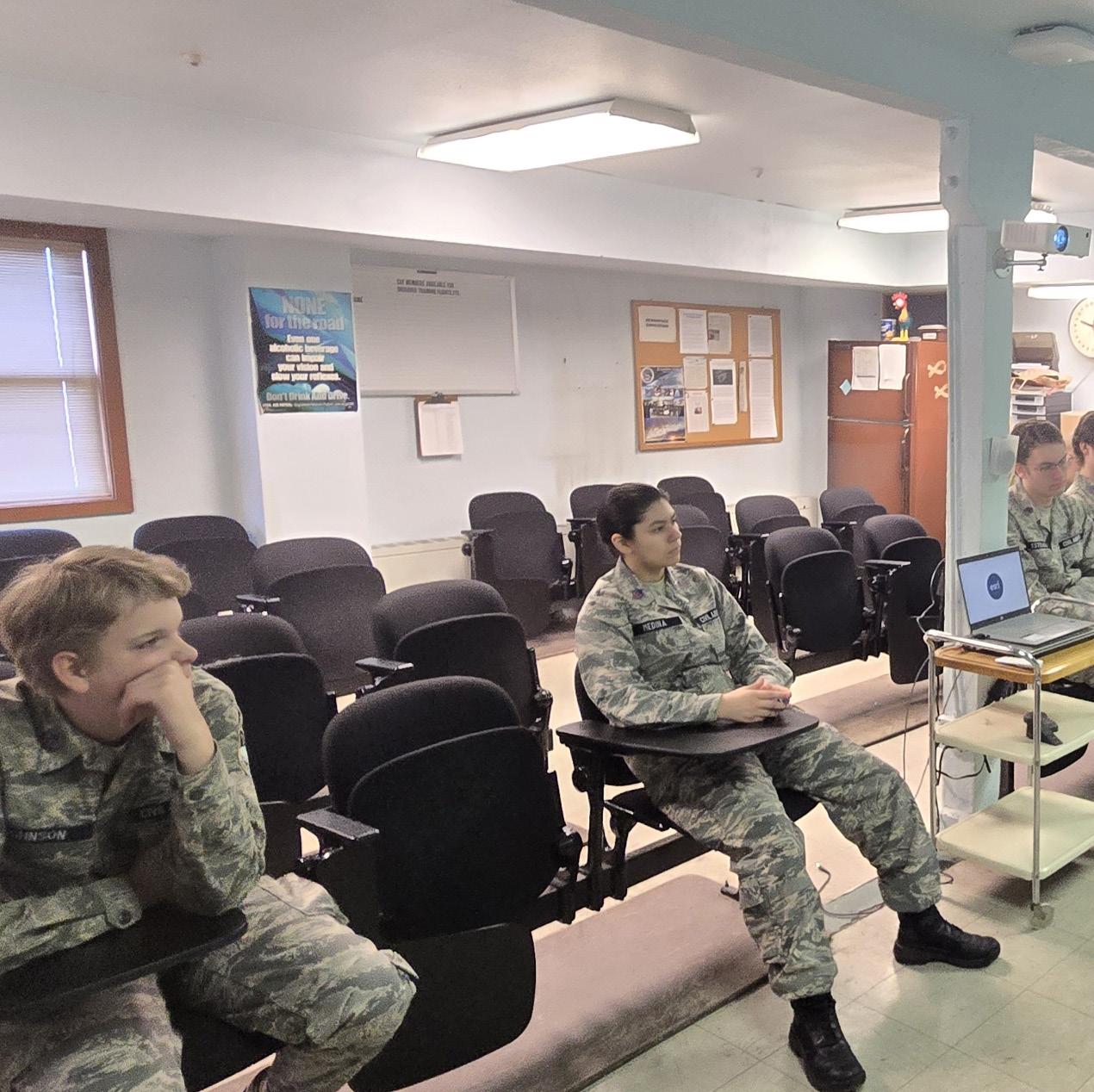
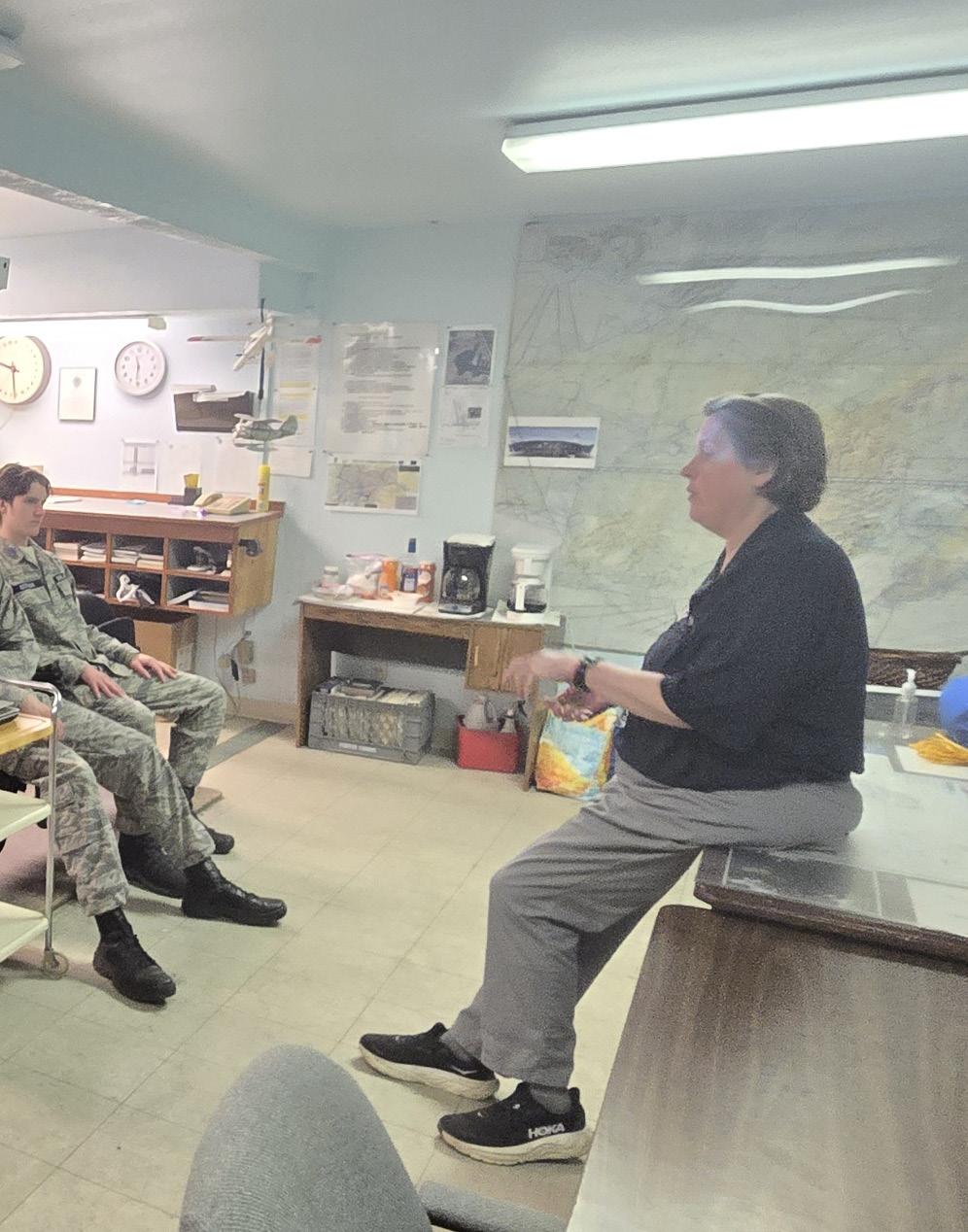
Saturday meeting, the cadets Geographic Information applications. The session of GIS in Search and demonstrating its capacity data for rapid area decision-making, and during emergencies. with essential skills scenarios. cadets gained insights into cybersecurity, emphasizing comprehension of fundamental strategies to defend and hackers.
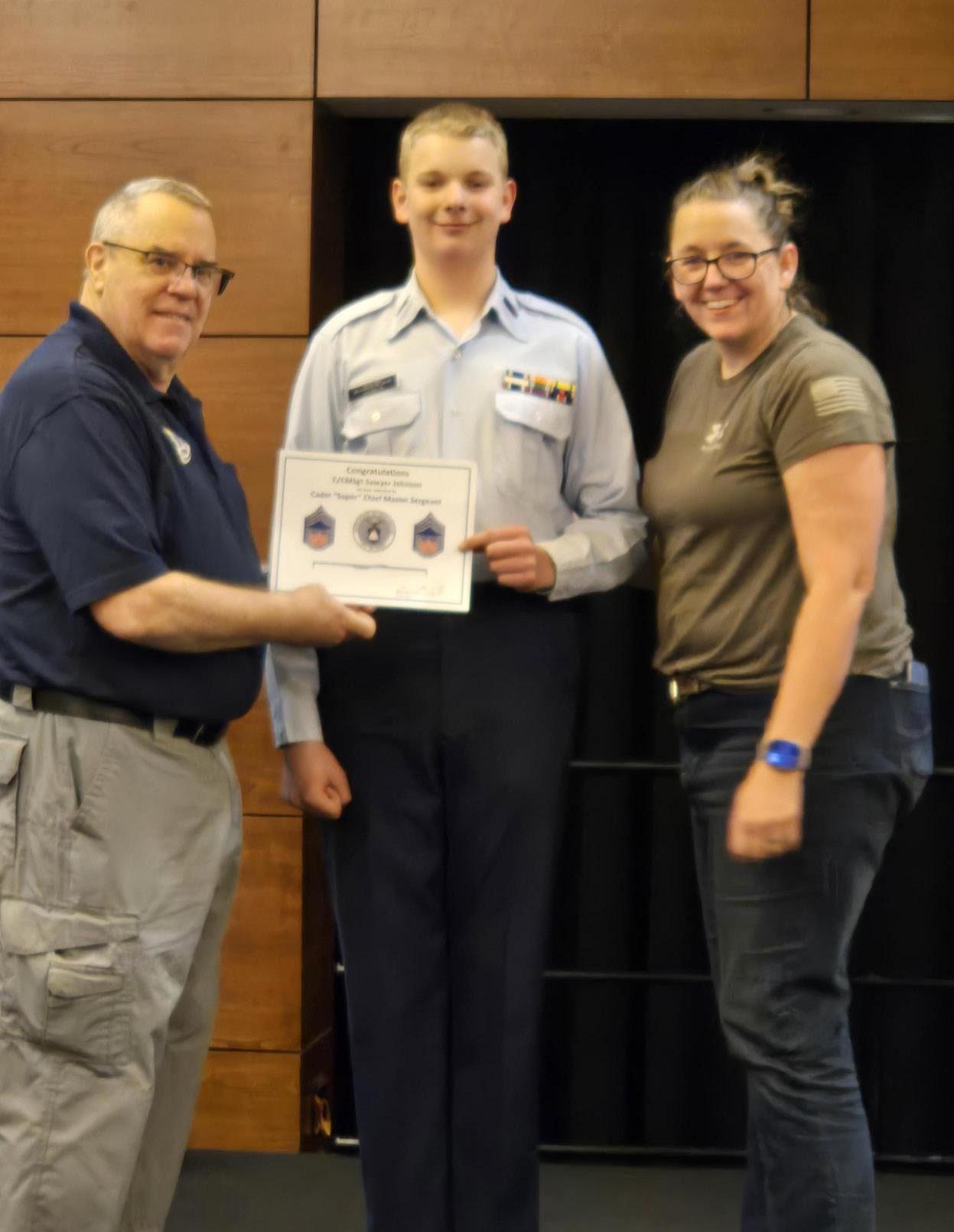
Cadet Chief Master Sargent Sawyer Johnson promoted to Super Chief
Through hard work and perseverance, a few cadets were able to promote. Cadet Chief Master Sargent Sawyer Johnson was promoted to Super Chief. Cadet Airman Evryn Jones was promoted to Cadet Airman First Class.
Cadet Evryn Jones promoted to A1C
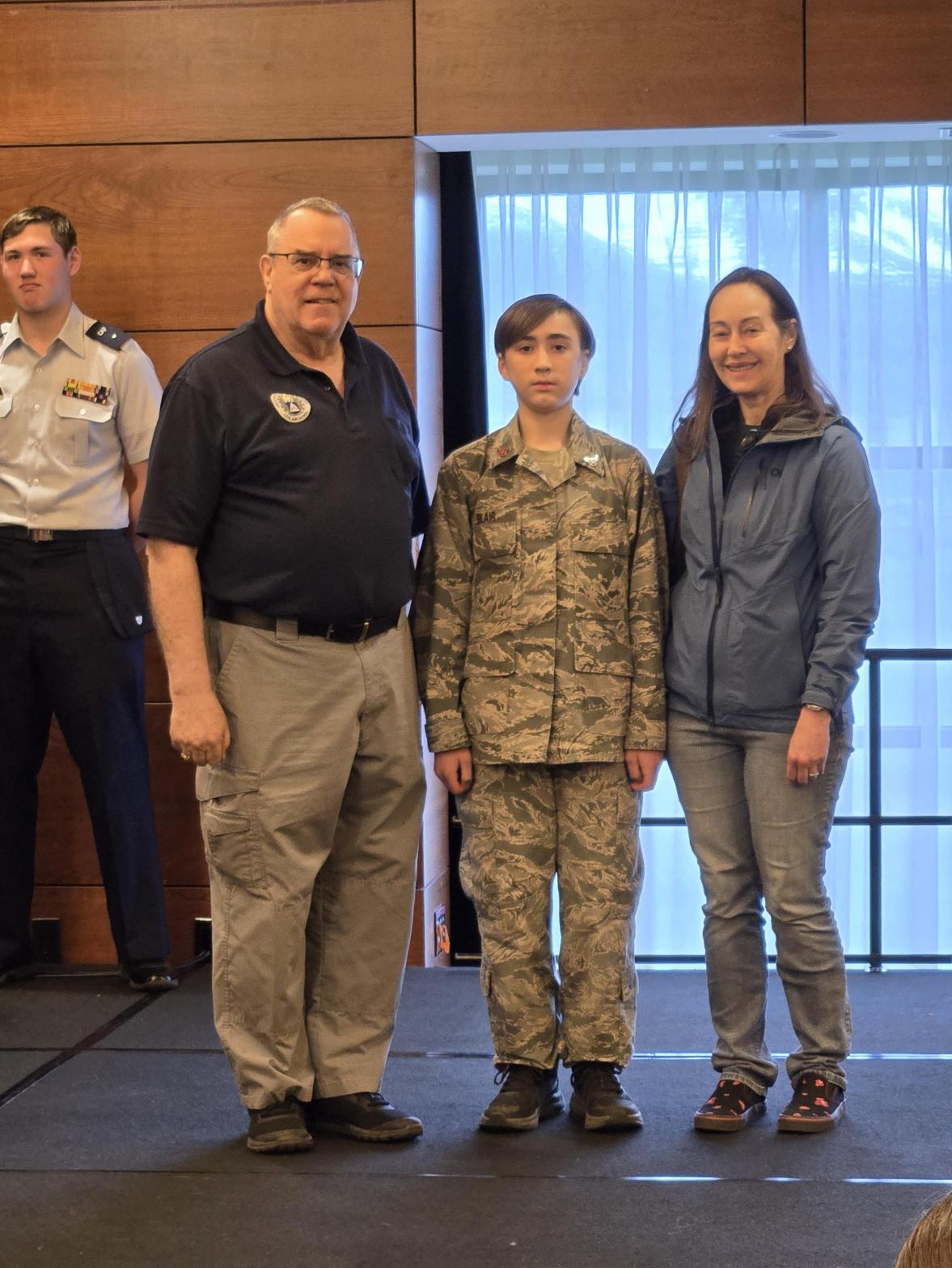
During June, the Arcturus Squadron had several notable events. Guest speaker Jesse James from California discussed the benefits of the Civil Air Patrol for the cadets. Additionally, Colonel McCarthy provided a safety briefing.
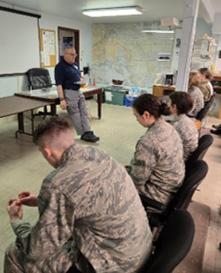
The cadets also had the opportunity to attend an FAA tour, where they learned about the essential functions of the FAA. They explored various topics,
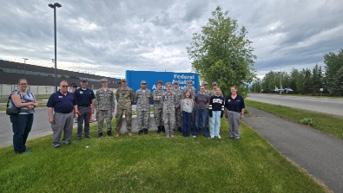
including how flight plans different types of airspace, sites, and more. The cadets into how weather conditions and had the chance to traffic frequencies.
On promotion night, C/2dLt. was promoted to C/1stLt., Jones was promoted to event, Lieutenant Colonel talked about character development cadets.
2dLt. Keegan Garvens was promoted to 1stLt
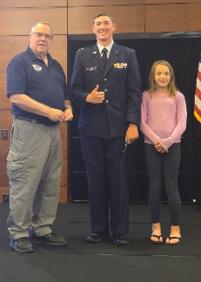
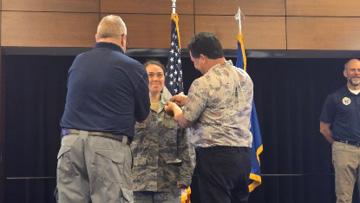
plans are created, the airspace, flight data, radio cadets gained insight conditions are monitored to listen to different C/2dLt. Keegan Garvens C/1stLt., and C/A1C Hazel C/SrA. During this Colonel McCarthy also development with the
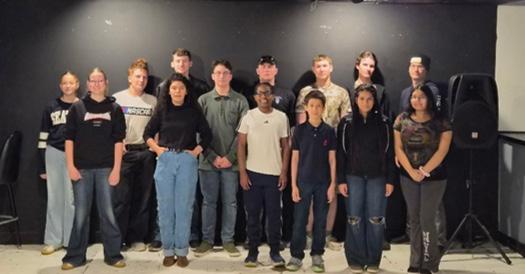
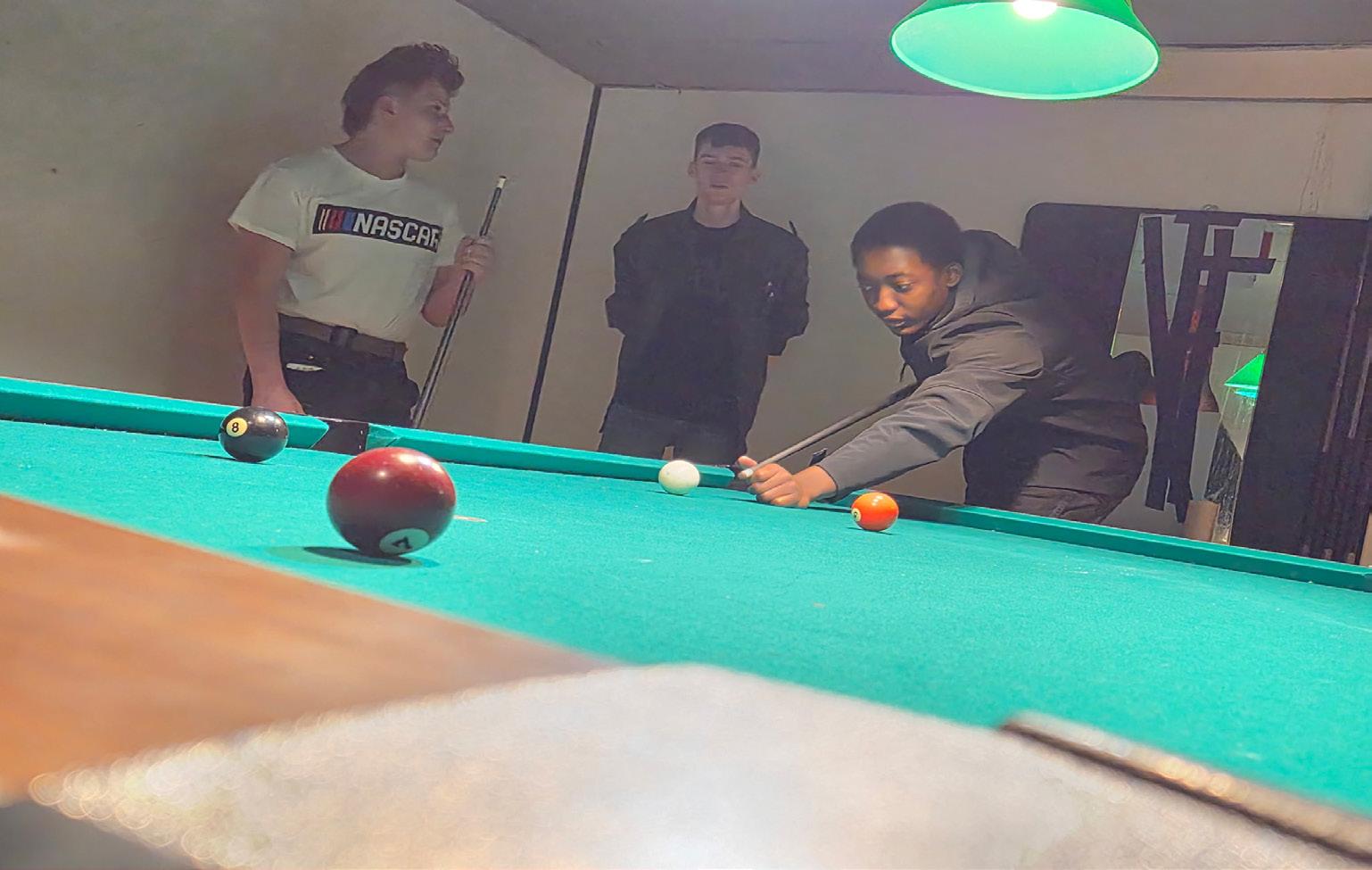
The cadets organized a fun night at the Arctic Warrior Events Center, where they played games and had a great time. They organized a mix of classic and interactive activities, which included board games, pool, and much more.
By: SM Laurie Gentel
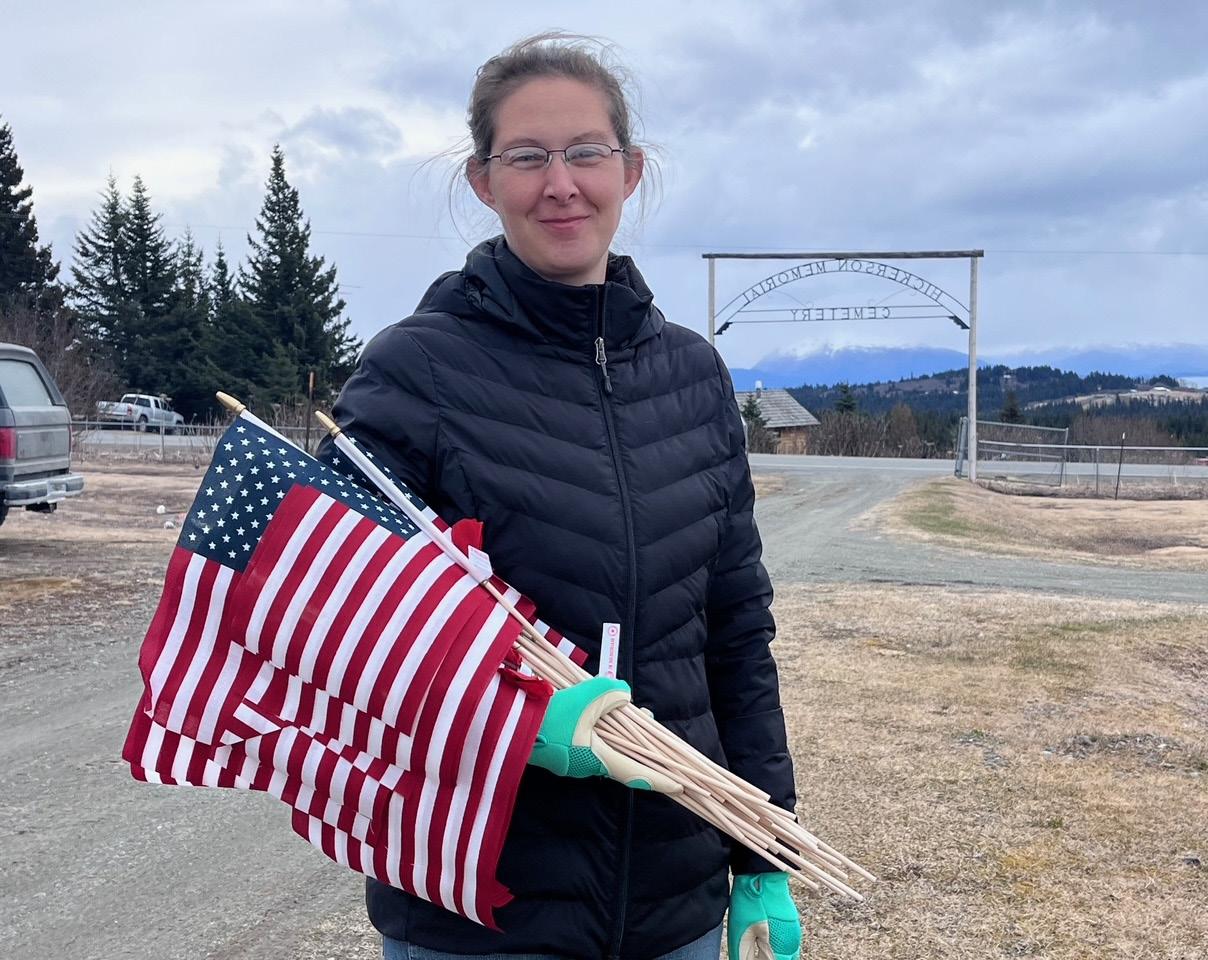
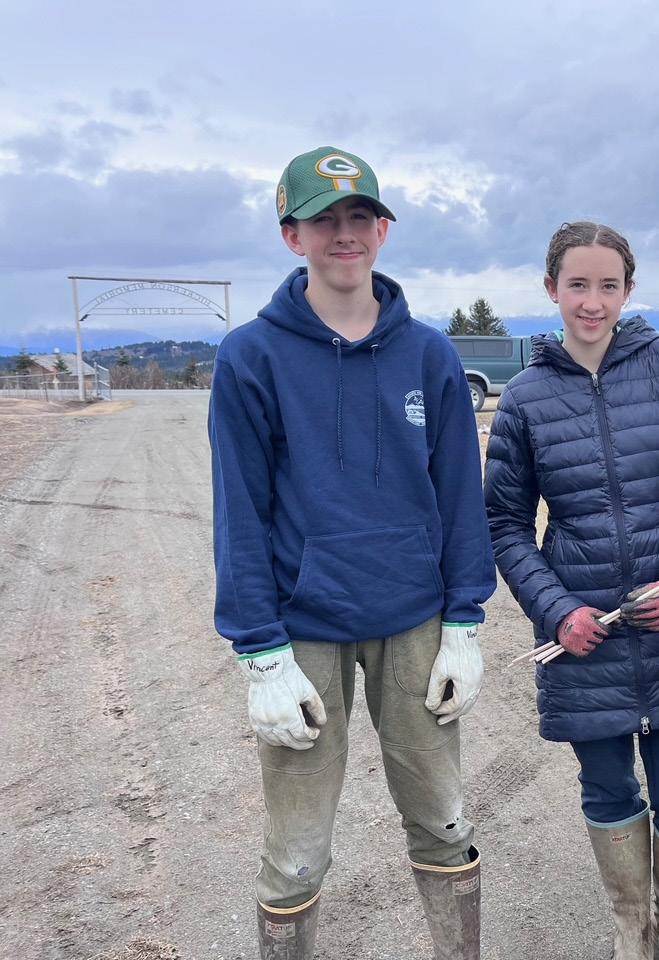
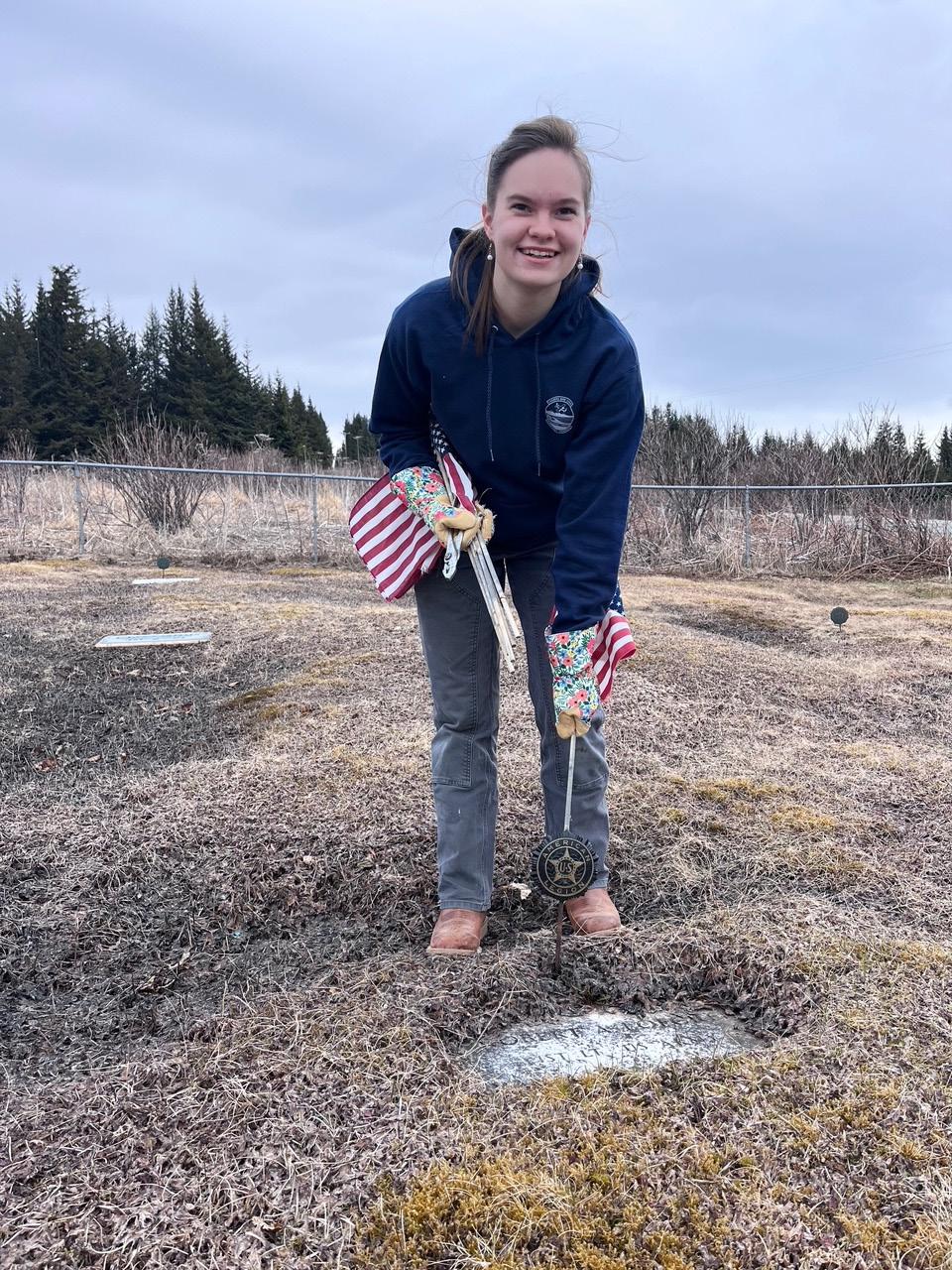
Cadets and senior members of together for this annual community
Hickerson National Cemetery received cleanup, where each American set at gravesites.
For the Squadron, it has become and parents joining in this very event for the Lower Peninsula.
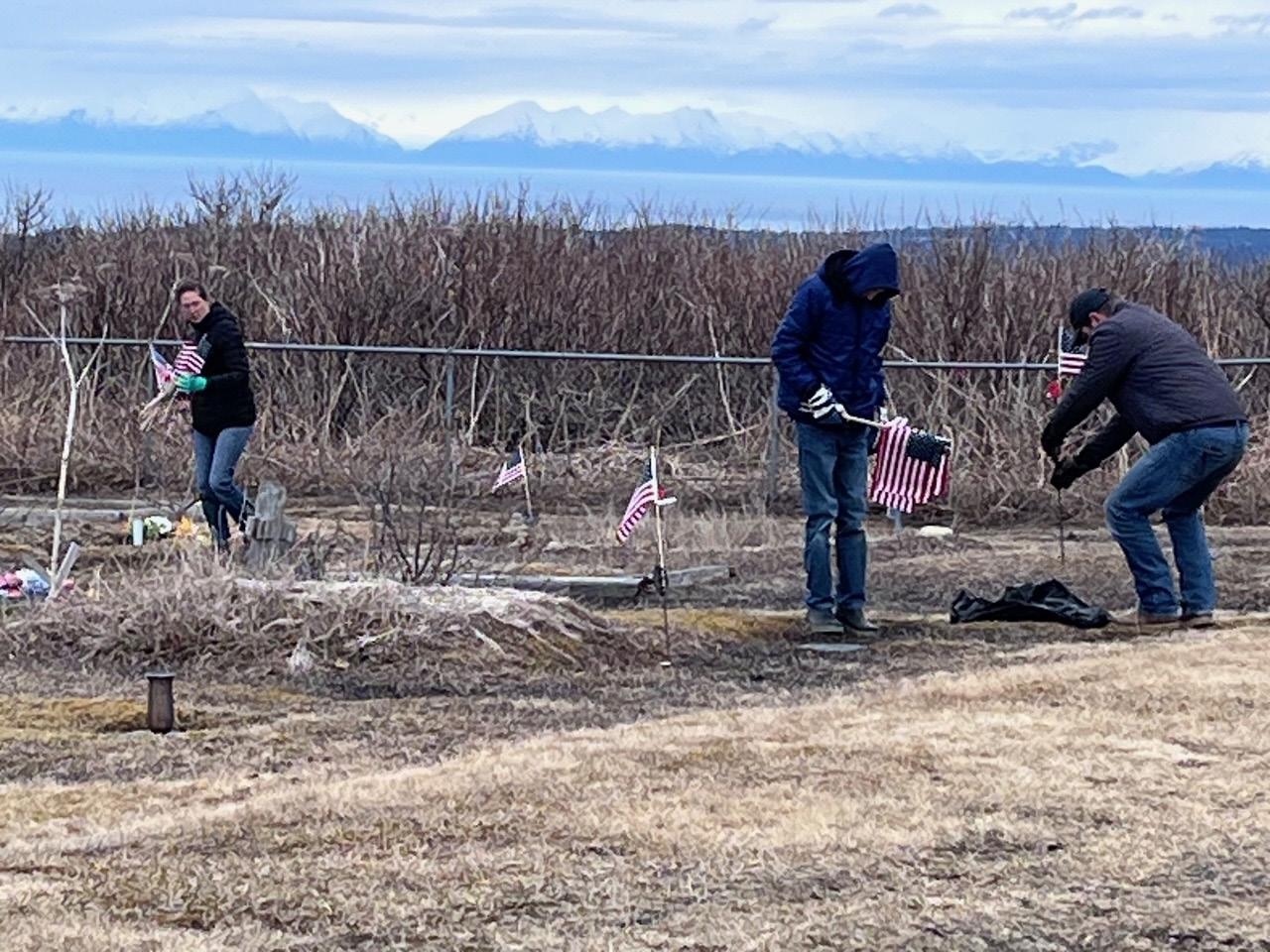
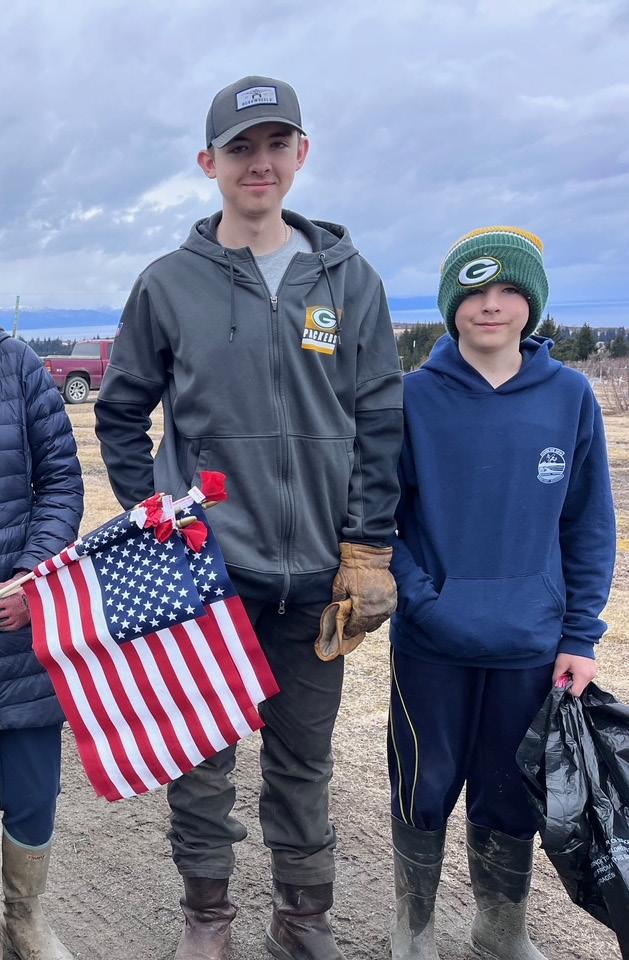
of the Homer squadron came community service project.
received its pre-Memorial Day flag was replaced and poppies
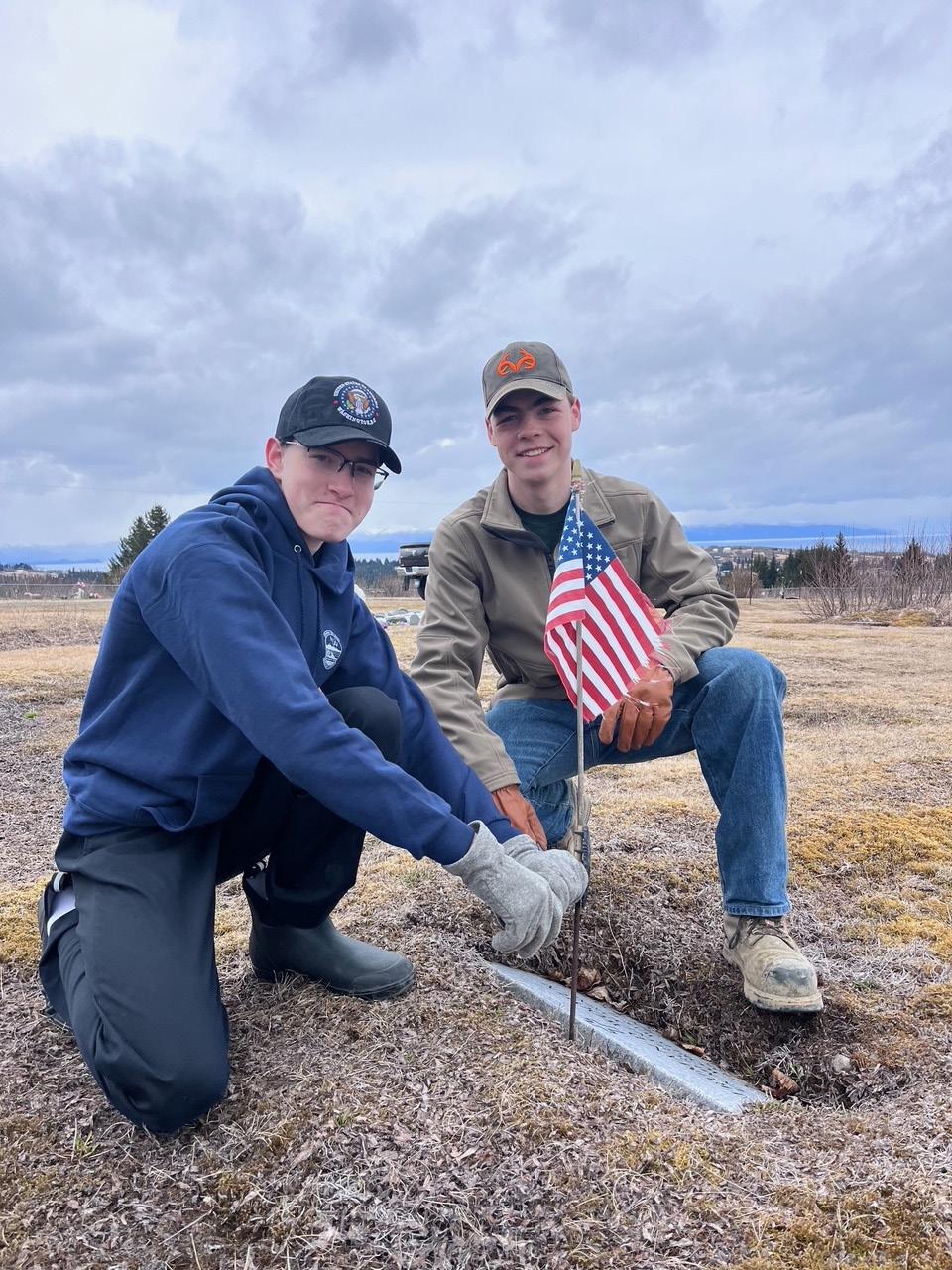
become a family effort with siblings very gratifying and beautifying Peninsula.
by David P. Briar, Lt Col, CAP, Commander
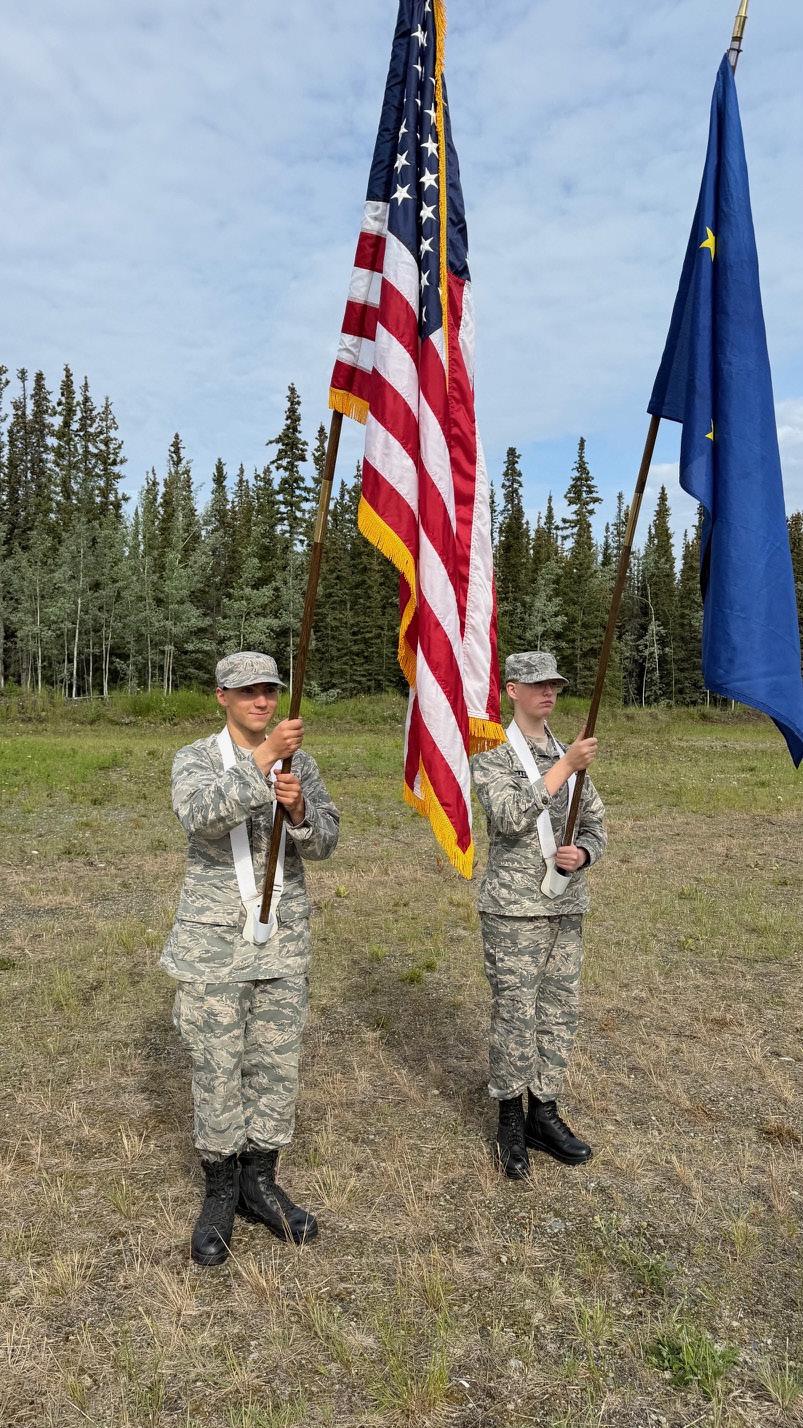
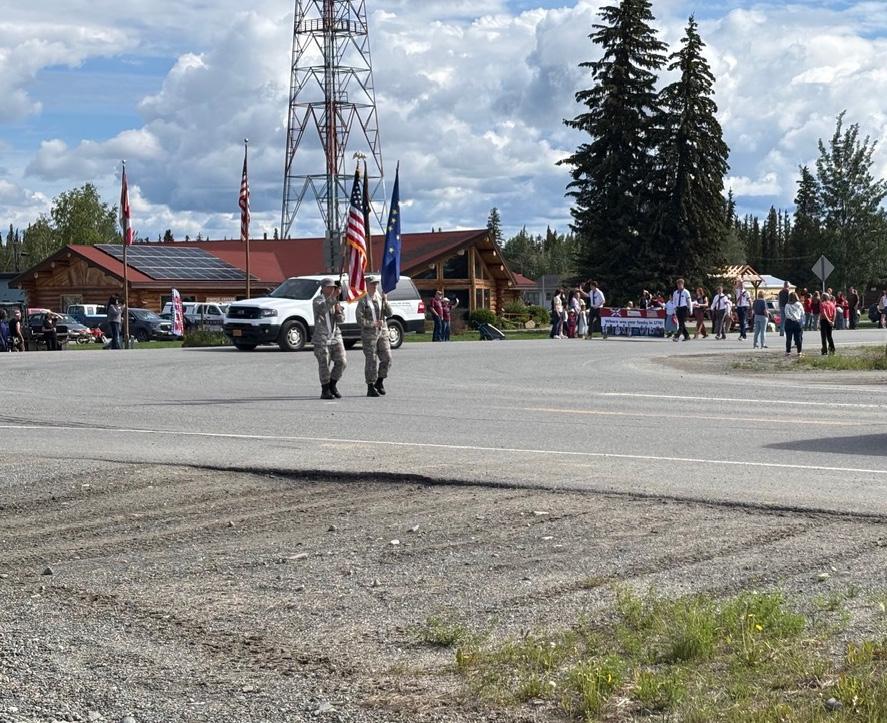
Tok Alaska 4th of July Parade. Our 250th year of Independence
Special shout out to Cadets Basye and Gross for serving as our squadron's Color Guard! In many cities around
the US, this duty is performed by active duty military personnel. Our cadets performed on par with these active duty color guards and were highly professional. Great job!
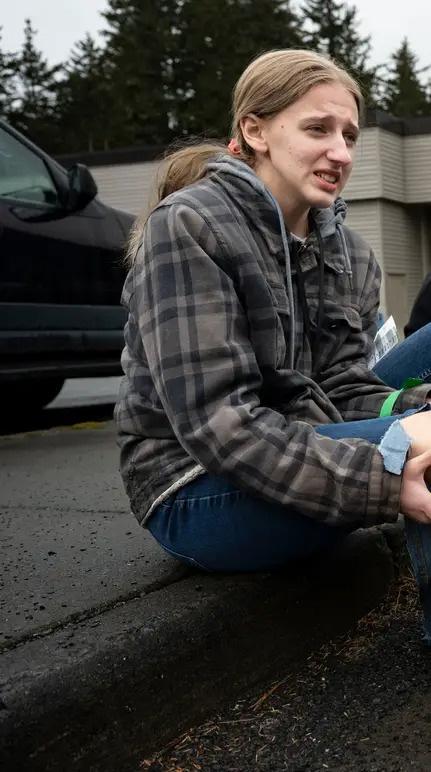
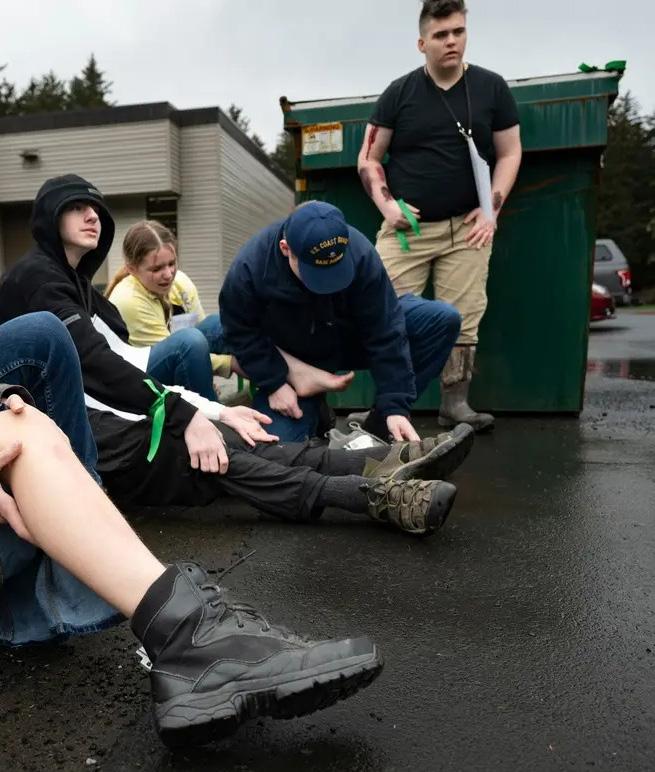
On May 18, the cadets went to strengthen their real-world readiness when local medical professionals invited them to participate in a mass casualty drill organized by the Providence Kodiak Medical Center and Arctic Care teams, where twelve cadets served as simulated victims in a bus accident scenario involving injuries and fuel exposure.
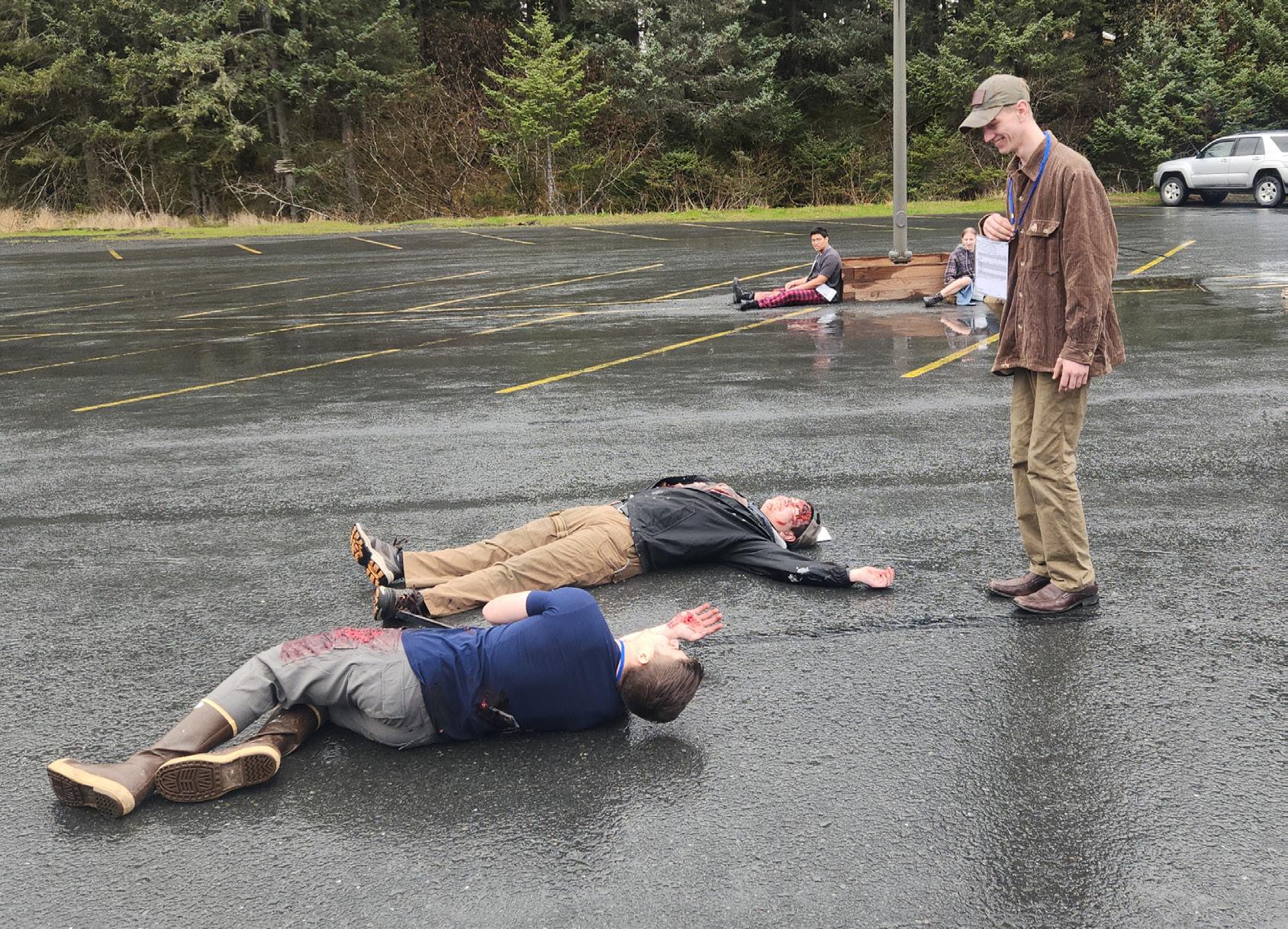
C/Capt Isaac Hall, C/2nd Lt Hunter Simeonoff, and C/Capt Branden Lorch
In the rain at the mass casualty on May 18th, 2026.
The cadets were initially triaged on scene before being transported to the hospital by EMS, where a more comprehensive triage was conducted. They were then directed through decontamination procedures prior to being admitted into the emergency department.
The Kodiak Color Guard appreciation to the for bringing a strong competitive year’s competition. We train the teams that Congratulations to Birchwood first place in regional forward to joining you take on the rest of the
Demonstrating exceptional preparation, and teamwork
Screaming Eagles secured the Wing Competition Showcasing consistent earned first place in Indoor, Written Exam, Uniform Volleyball, while also achieving in Element, Uniform Build, Challenge, and Flight Simulator accomplishments reflect the
Guard team extends its other wing competitors competitive spirit to this We look forward to helping have reached out. Birchwood for securing regional scoring, we look you in Nevada as we region! exceptional skill, teamwork the Kodiak secured first place in (Olympic scoring).
excellence, they Indoor, Physical Fitness, Uniform Inspection, and achieving second place Build, the Engineering Simulator events. These the team’s dedication,
C/2nd Lt Vivian Lorch, C/SSgt Nathan Lorch, C/ SSgt Kylie Martin, Coast Guard Coreman, and C/Amn Jacob Butts
Kodiak Composite Squadron helping with the mass casualty drill put on by Providence Kodiak Island Medical Center and Artic Care, at the Kodiak College, May 18th, 2026.
discipline, and ability to perform under pressure, bringing pride to the Kodiak community and setting a high standard for future competitions. We sincerely appreciate the instructors, mentors, and supporters whose guidance and encouragement made this success possible.
C/Capt Isaac Hall, C/MSgt Alek Nicols, and C/2Lt Vivian Lorch
By : Maj. Jan Bobek
Every Monday from 6:30 to 8:30 Kenai Cadets provide: Aerospace, Leadership, Health Fitness Zone/Safety, and Character Development Presentations. The presentations are full of knowledge and excellence. Speaking in public is a fear that many people have, so working on it builds strength in most areas of life. Cadets practice to alleviate this universal fear. The Cadets work hard so that public speaking becomes something to look forward to. They volunteer readily to make Aviation and Core Values Presentations. Senior members do appreciate and recognize Cadet progress. The more Cadets practice, the more confidence they become. This process includes the Civil Air Patrol CORE Values of Integrity, Volunteer Service, Excellence and Respect. Cadets continue to strengthen in personal development. The Cadet Program supports the process of becoming the best person one can be. The Cadets even begin to enjoy the process as proven by the results, and they volunteer to speak in public. That certainly is progress. When a person conquers his/her fears, he becomes stronger and more confident. Cadets realize that they can achieve most anything! The process makes each cadet a stronger human being and a much better Cadet.
Orientation flights are provided which helps to keep cadets involved in the cadet program. Flying builds confidence in all areas of their lives. They work and study very hard to meet their life goals. They become safe pilots and join the military or make aviation their life’s work. Learning to
fly is an important and crucial Program. These Orientation by the EAA Young Eagles thankful for that program.
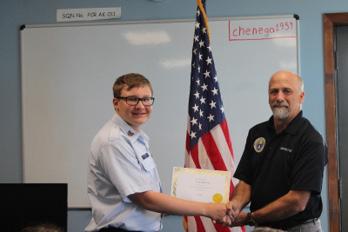
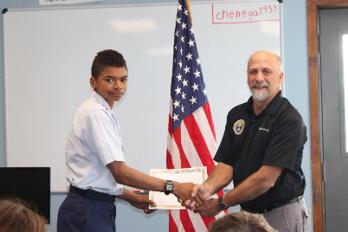
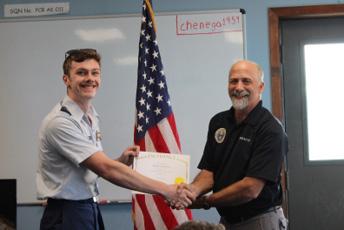
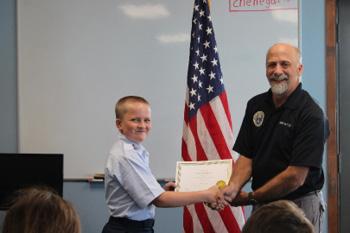
Twenty-four Kenai cadets of July Parade. Some of C/A1C Esther Andrade, C/Maj C/C/1stLt Declan Cobb, C/ Cole, C/ SMSgt Bjorn David, CMSgt Victor Henderson, C/A1C David Lipps, C/SrA Shane Matthews, C/ A1C A1C Dillon McAnelly, C/SrA Liam McBride, C/1stLt Jacob and C/TSgt Isaac Wohlers. presentation.
Cadets continue to volunteer Cadets worked at the Kenai another Appreciation dinner. volunteer in our community. parking areas when requested Volunteering brings people Cadets set a good example appreciated by our community.
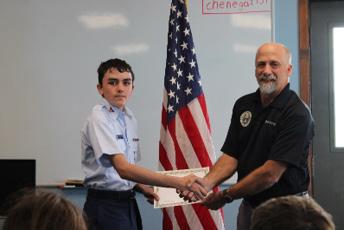
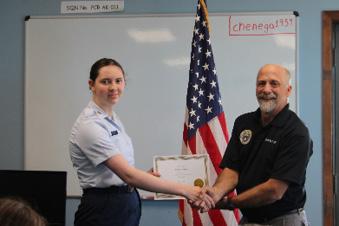
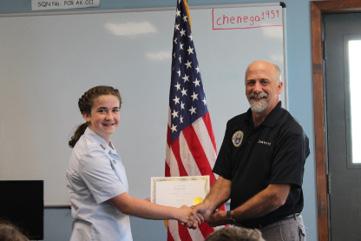
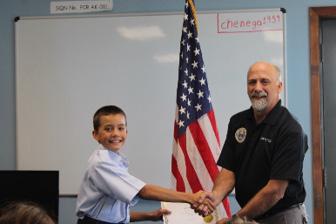
Cadets worked very hard achievements recently. Spencer Gatlin, Achievement Moyer, C/A1C Esther Andrade, Roberts, C/A1C David Lipps. SrA Cheston Clark, C/SrA
crucial part of the Cadet Orientation flights were provided Eagles Program. We’re very program.
cadets marched in the Fourth of the participants were:
C/Maj Thomas Anthony, Noah Cole, C/TSgt Tayla David, C/2ndLt Elodie Frisk, C/ C/CMSgt Gunnar Jensen,
C/SrA Cole Matthews, C/ SrA Gabriella Matthews, C/ C/SrA Erik McBride, Cadet Jacob Ries, A1C Peter Ufkin Wohlers. They made a great
Cole Matthews. Achievement 4: C/TSgt Tayla Cole, C/TSgt Isaac Wohlers. Achievement 6: C/SMSgt Gunnar Jensen. Achievement Wright Brothers: C/2d Lt Elodie Frisk. Achievement 10: C/1st Lt Declan Cobb. Achievement 14: C/Maj Thomas Anthony. We’re very proud of all the great effort and hard work to advance in the program.
Joining CAP makes a positive difference in our community. We’re proud to have these cadets in the Kenai Squadron. All cadets are working hard, setting a good example in our community, and supporting each other in continuing to practice the Core Values. The world is a much better place with these young cadets in it. Our cadets continue to make America stable and strong. They are trustworthy people. We are very proud of them.
volunteer in the community. Kenai Senior Center for dinner. They continually community. They actually sweep requested by military groups. people closer together. Kenai example of good work and are community.
hard and passed many Curry Award: C/Amn
Achievement 2: C/A1C Sophia Andrade, C/A1C Camilla Lipps. Achievement 3: C/
C/SrA Porter Holladay, C/SrA
C/TSgt Isaac Wohlers
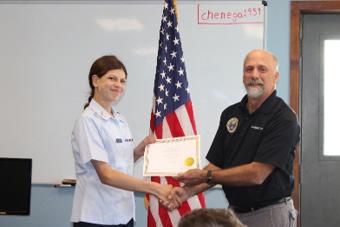
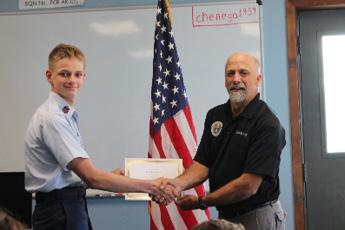
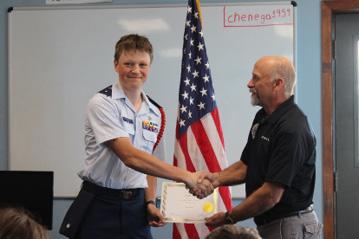
Written by: SM Kathy Kenney, Assistant PAO
The first weekend of May marked the second Search and Rescue Exercise (SAREX) of the year, hosted right here at Birchwood Squadron. Despite a windy start, the event saw fantastic participation and even better results. The weekend kicked off with high winds on Friday, leaving the team wondering if the fleet would remain grounded. However, the Alaska weather cooperated just in time as Saturday and Sunday delivered calm winds and perfect flying conditions. While crews did encounter some light snow during sorties, it wouldn't be a true Alaska mission without a little white stuff!
A huge congratulations to our very
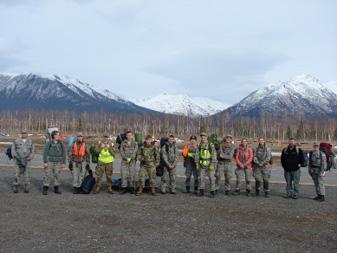
own 2d Lt Debbie Slater, who served as the Activity Director for the first time. Under her leadership, and the collaboration with Alaska Wing and Birchwood’s Cadet CMSgt Cage Klayum, the event ran smoothly, safely, and, most importantly, was a lot of fun for everyone involved.
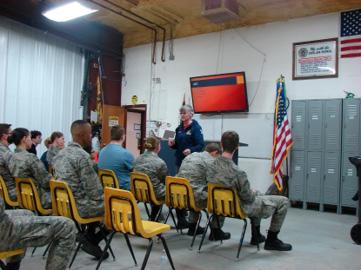
Our first meeting of the month was a combined session for both cadets and seniors, featuring a special guest presentation by Jean Adams from Alaska Solstice Search Dogs. Jean shared her extensive experience in the field, focusing on how modern
tech is changing the way we find the lost.
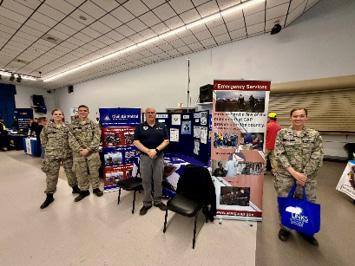
During the final weekend of May, a dedicated team from Birchwood Squadron traveled to Willow to represent the Civil Air Patrol at the 5th Annual Su-Valley Emergency Preparedness Fair.
It was a fantastic opportunity to connect with our neighbors, answer questions about CAP’s multi-faceted missions, talk with some prospective cadets/parents and engage with the local community. A special thank you to those who volunteered their weekend to represent the Wing:
Jean gave us an in-depth look at CalTopo (the platform formerly known as SARTopo), which is used by her team and the State of Alaska during active search missions. Jean also highlighted a vital resource, the "Lost Person Behavior" book and mobile app by Robert Koester and she passed around a copy of the book for all to glance at.
A big thank you to Jean Adams for her time and for showing us how we can better integrate with our state Search and Rescue (SAR) partners!
• Squadron Commander Dave Thompsen
• Senior Members Ian and Sara Cole
• Cadets Riley Cole, Mya Cole, and Haley Cole
Our final meeting of the month concluded with a major milestone; a Change of Command for the position of Deputy Commander of Cadets (DCC), alongside a packed awards ceremony recognizing the incredible hard work of our members.
After a highly successful tenure leading our youth program, 1st Lt Rick Benedict officially turned over the leadership reins to Capt Mallory Fichera.
We want to extend our deepest gratitude to 1st Lt Benedict for his dedicated service, mentorship, and leadership as DCC. We wish him the absolute
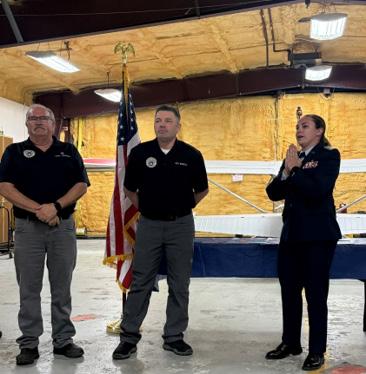
best in his future endeavors!
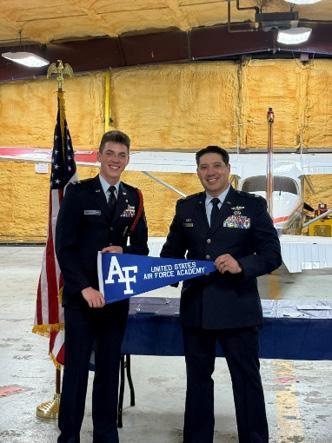
Next Stop: The Air Force School
The pride of the squadron Cadet Lt Col Reagan Benedict the U.S. Air Force Academy pennant by Lt Col Jon Billman. Cadet Benedict will be heading to begin his journey as Birchwood Squadron is achievements and we wish high speeds at the Academy
endeavors!
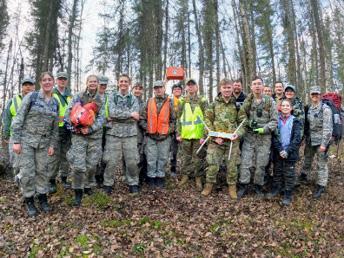
Following up on the success of May's SAREX, several members were officially recognized for advancing their operational ground capabilities:
• GTM3 (Ground Team Member 3) Qualification:
Cadet Riley Cole
Cadet Zachary Kenney
Cadet Haley Cole
• GTM2 (Ground Team Member 2) Qualification:
Cadet Mya Cole
Cadet Charles Slater
• GTM1 (Ground Team Member 1) Qualification:
Cadet Klayum
squadron was on full display as Benedict was presented with Academy Preparatory School Billman. heading out this summer as an Academy Cadet. incredibly proud of his wish him clear skies and Academy and beyond!
A special Volunteer Award was presented to squadron parent and resident handyman Scott Klayum. Scott was recognized for his countless behind-the-scenes contributions that keep our squadron running smoothly. Thank you, Scott, for your dedication and hard work!
Written
and photos
by: C/CMSgt Zachary Kenney, Cadet PAO
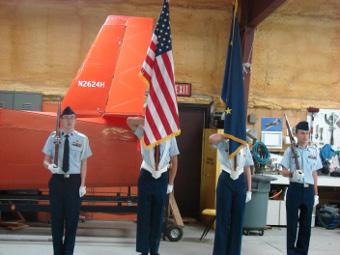
Before the start of our meetings, our cadet competition team has been hard at work preparing to represent our Wing at the Pacific Region Cadet Competition. With determination, they have been practicing flag folding, posting the colors and standard element drill. The Birchwood Squadron team is stoked to compete in Vegas later this month! After opening formation and depending on the meeting schedule, we have either
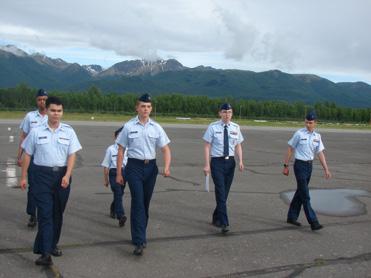
character development instruction or physical training, which is immediately followed by drill. For the second part of the meeting, we generally do either aerospace education or safety. We then wrap up the night with a team leadership problem.
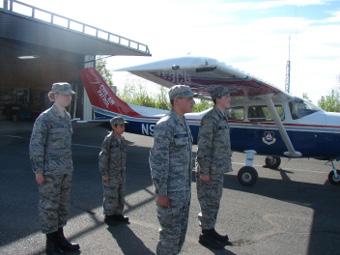
Finally, we had five Tuesdays this month! So our squadron held a fun civvies night where cadets played two games. The first game was a three part relay race and in the second game the Cadet put a balloon on their shoe and tried not to have it pop from another player stepping on it all while trying to step on others balloons. We also had a class led by former squadron cadet and active duty pilot 1st Lt Garrett Anderson on Air Force Reserve Officer Training Corps and what it is like to fly the B-52. We wrapped up with a Taco Tuesday potluck brought in by cadets and was a wonderful way to finish off the month of June.
Written and photos by: SM Chris Hixson
The Orientation flight started after work on Friday 5 June 2026. As an active duty C-17 pilot, I had not offered orientation flights in months due to my job’s high operating tempo. With the limitless Alaskan summer sunshine and the cadets' schedules clear, we were taking advantage of the good weather to get in some overdue orientation flights. Our plan was to knock out three orientation flights via a large triangle from Birchwood to Seward to Soldotna and back to Birchwood. This is my favorite route because you never cross the same terrain twice and there is everything from mountains and glaciers and rivers to mountain goats and bears and fishermen. Taking three cadets up simultaneously also triples their total flight time and helps build more confidence in the air. C/Amn Summers was in the co-pilot seat first with C/A1C Vanderlooven and C/A1C Cato in the backseat.
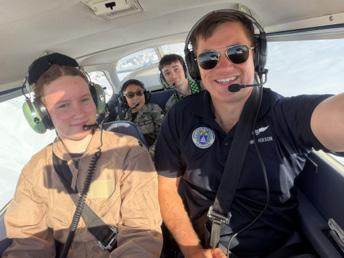
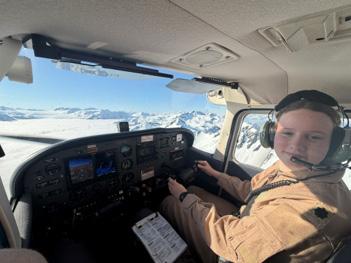
Trusty N9694L, the workhorse Cessna 172P of Birchwood, was our ride. Today would be the second orientation flight for all three Cadets. After a quick brief and discussion of aerodynamics, we departed Birchwood and skipped Anchorage airspace by shooting up the Eagle River and punching through Crow Pass to Girdwood. Summers flew 90% of the way as our restriction during
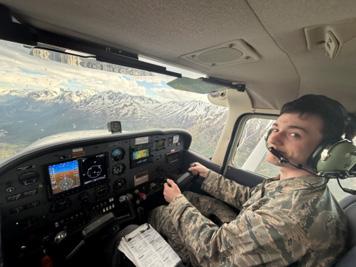
orientation flights is that cadets cannot touch the controls under 1,000ft (essentially takeoffs and landings). I like to maximize cadets' time with hands on controls and often coach them through most of a flight without having to take over. We were following the Seward highway down past Moose Pass when over Kenai Lake we started to hear a static transmission coming over COMM2 which was tuned to monitor the VHF Guard emergency frequency. This was the first aircraft we had heard or seen the entire flight that far. As we turned up the volume, we heard a distressed aviator calling out
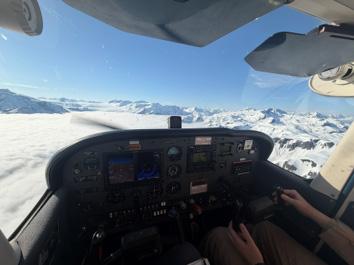
for assistance to anyone on the Guard frequency. We responded and asked what help he needed and where he was located. Through the static and distress, all we could make out was "Need help", "landing on gravel bank" and "Snow River."
At this point the orientation flight was on hold and we were at full alert. This was obviously a first for the cadets, but I had not experienced anything like this in 3,000+ hours either. I responded that we would try to find him and tried to get more information, but the emergency frequency was eerily silent. There were no other aircraft on frequency even though we were only 20nm north of Seward.
Snow River was not labeled anywhere on the Visual Flight Reference (VFR) chart; so, initially, we flew west along the shore of Kenai Lake looking for a tributary that might be the river. Nobody on the aircraft was CAP Mission qualified to do search and rescue, but we were the ones on scene, and we had a duty to help our fellow aviator in distress. There was about 3 hours of fuel remaining before we would have to land in Seward and I was willing to use all of it, if necessary. The cadets were fully engaged with eyes outside calling out every creek they saw and any idea that came to mind. The Cadets recommended using our phones to do an internet search for Snow River, but we were out of service. After going far enough to the west that I was sure we were past reception from where we first heard the transmission, we turned back to the east determined to search the river flowing south of Kenai Lake
towards Seward. As we approached Moose Pass, we surprisingly picked up a few bars and were able to locate Snow River on Google Maps. It was up a high mountain valley to the southeast of Kenai Lake. We were in business.
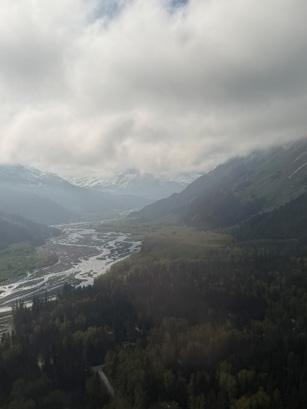
Snow River starts from nearly 6,000ft in the snowpack of the Kenai Mountains down a narrow valley gorge to follow the Seward Highway briefly north before draining into Kenai Lake. We now had around 20nm of river to search. As we ascended into the gorge and got buffeted by the mountain winds and bounced by turbulence, even I was feeling a bit queasy. 7001000ft above ground level (AGL)
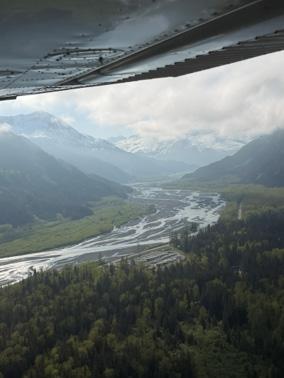
seemed to be about the optimum searching altitude for visibility and ground spotting. We had been making periodic guard calls since the initial transmission, hoping to re-establish contact with the pilot, but to no avail.
Finally, about 8 miles up the gorge we started to hear a static attempted call on guard that soon started coming through clearly. It was the downed pilot, and he could hear, but not see us yet. Suddenly, he called out that he was off our right wing, and I immediately put the aircraft into a steep right bank. There he was! It was exceptionally hard to spot him or his aircraft apart from the flotsam along the river because he was flying a paramotor. As we circled the pilot, we confirmed that he was unable to make contact with any other rescue, was uninjured, and unable to restart his aircraft due to a fuel tank malfunction. He didn't have an Emergency Locator Transmitter (ELT) or an inReach so that emergency radio was his only hope and it didn't have the range or line of sight to get out of that narrow valley.
We took his lat/long position using Foreflight, a few pictures to aid future rescue and let him know we would get him help. There was no road or trail access to his position. While
theoretically possible to hike out 10nm on foot back to the Seward Highway, it would have entailed multiple river crossings, craggy gorges, waterfalls, and thick alder forests all without proper gear. Not a recipe for success.
As we recovered to Seward, we made contact with Seward Helicopter Company on Common Traffic Advisory Frequency (CTAF) and passed the position and situation of the downed aviator. After landing and securing the aircraft, we stopped by the Fixed Base Operator (FBO) where we repeated the report, gave them the lat/long and pictures, and they promised to send a helo up that evening to rescue him. We made a duplicate report to the State Troopers and fielded a nervous phone call from our CAP Flight Release Officer Dennis Eby, since we were overdue ourselves (sorry Dennis). Based on timing, we could only do one more orientation flight that evening, so I placed Vanderlooven in the front, and we were shortly wheels-up and back to Birchwood.
After flying down Resurrection Bay in search of whales and a quick jaunt over the Harding Ice Field, it dawned on me to pay a courtesy call to our downed aviator. We easily located him again and re-established comms on
guard. We let him know that both the helicopters and State Troopers had been notified and there was a plan to pick him up that night. We made the recommendation that he stake out his paramotor sail to increase visibility (he had rolled it up in the fear it would be a hazard for rescue helicopters.) We also told him that our VFR chart indicated a cabin on the north shore of a small lake about a mile north of his position in case the weather rolled in and he got stuck there for a while.
As an afterthought, we got a phone number for his family so we could alleviate their fear of his situation. After a comparatively uneventful flight back to Birchwood, we called his worried family and filled them in on the situation. They had already started to worry as he was overdue and were just about to start calling the search parties themselves.
It is a marvel that we happened to be in the right place at the right time to be the only ones to hear the distress call in the first place. After a harrowing day, I can only imagine the pilot's relief at hearing our engine steadily draw closer and seeing that red, white and blue Civil Air Patrol paint job flying up the gorge and orbit overhead. For closure, I texted his family the next
day, and they informed me that he had indeed been rescued by helicopter that evening.
What had started as a routine orientation flight turned into an operational, realworld rescue for the cadets. They weren't just passengers; they stepped up as observers, scanning the rugged
terrain, and playing a vital role in bringing that downed pilot home safely. The three primary CAP missions are Emergency Services, Aerospace Education and Cadet Programs. Our sortie that afternoon accomplished all three and was an experience none of us will ever forget, especially that downed aviator.
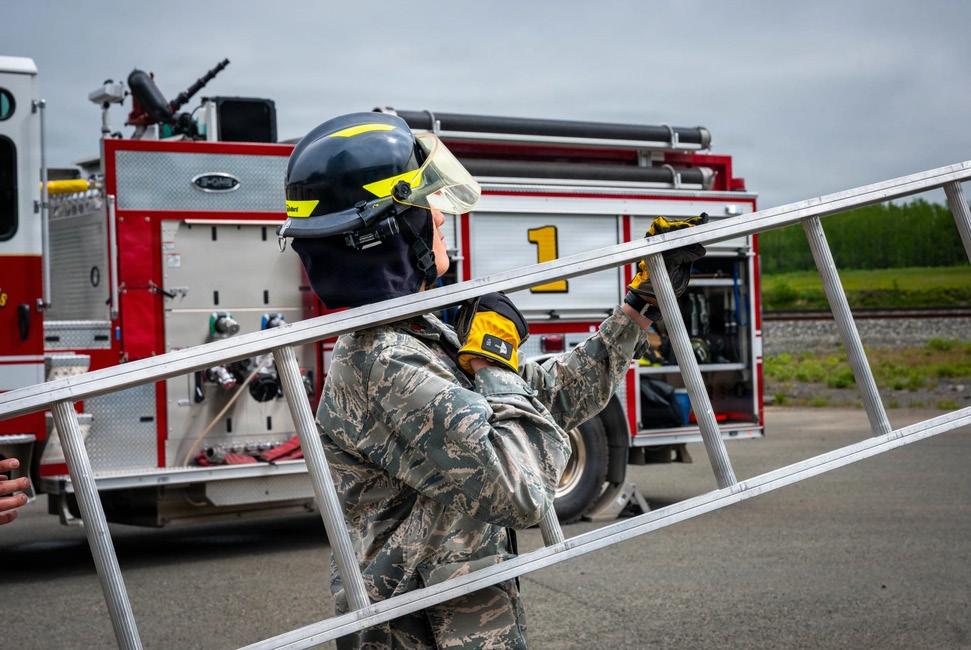
Civil Air Patrol cadets gathers for a photo in front of a C-130 Hercules assigned Richardson, Alaska, June 12, 2026. The CAP toured the installation, gaining their understanding of military service opportunities and strengthening recruitment partners. (U.S. Air Force photo by Senior Airman Raina Dale)
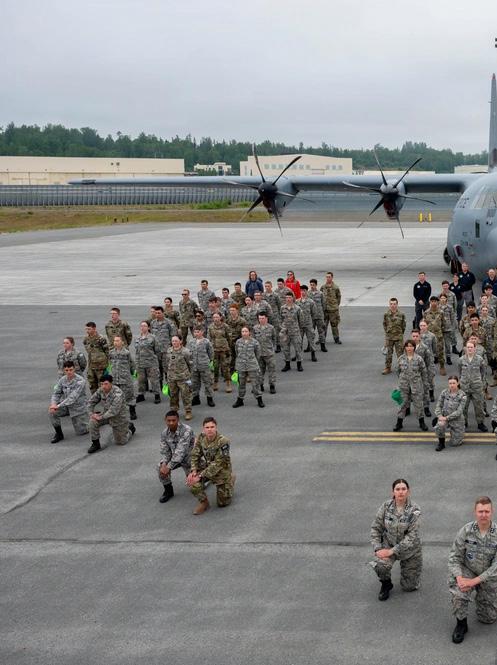
assigned to the 176th Wing Alaska Air National Guard at Joint Base Elmendorfgaining firsthand exposure to operations and mission capabilities while enhancing recruitment efforts through engagement with active-duty personnel and mission
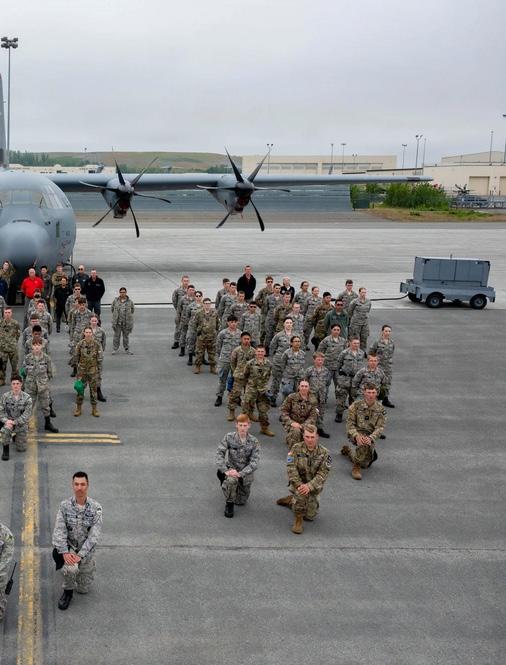
ALASKA, UNITED STATES 06.12.2026
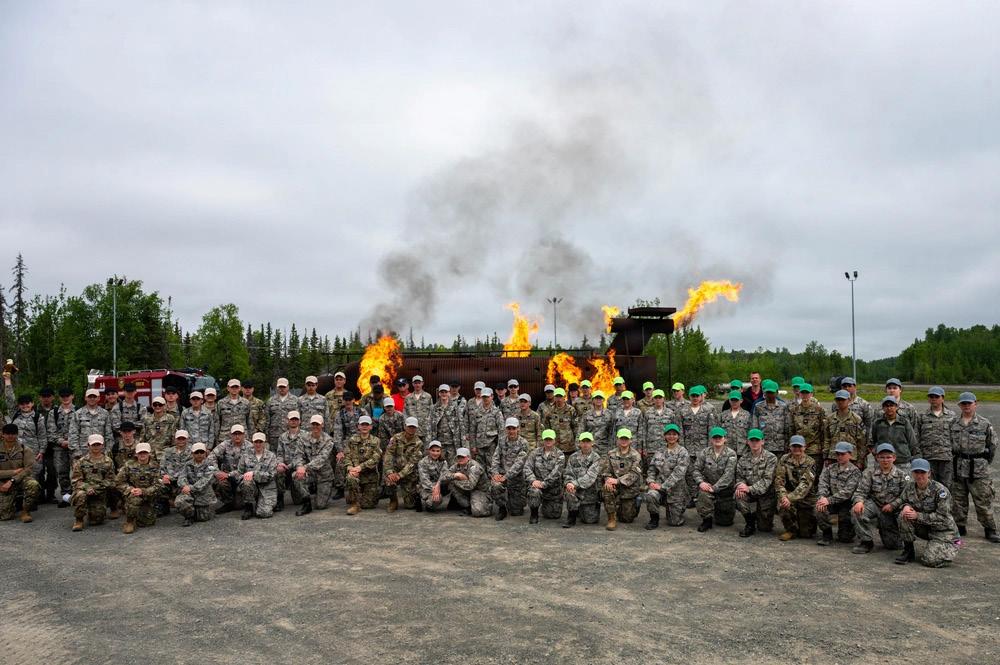
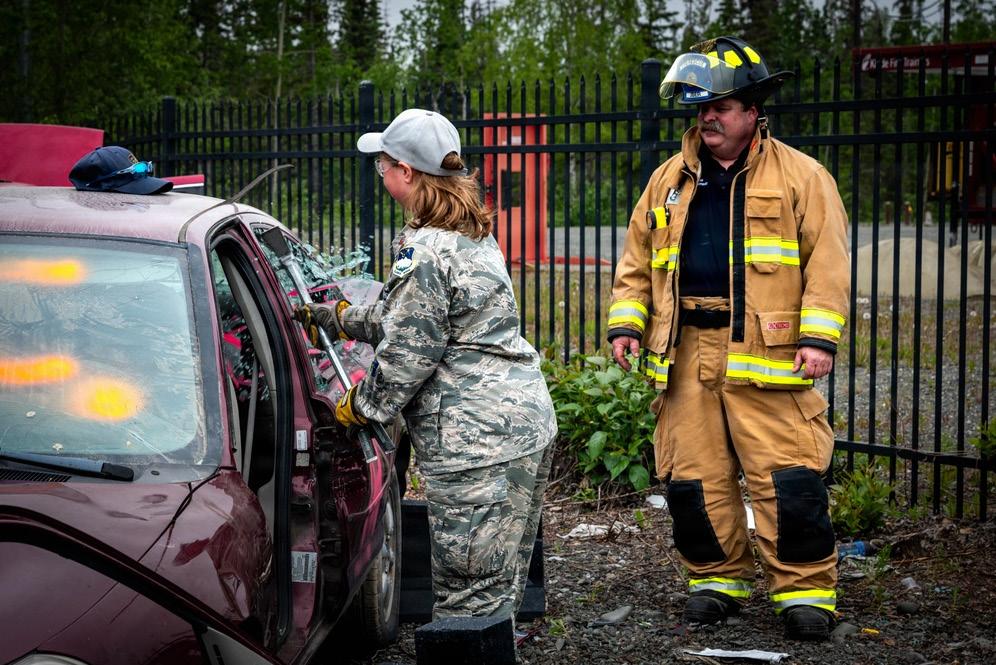
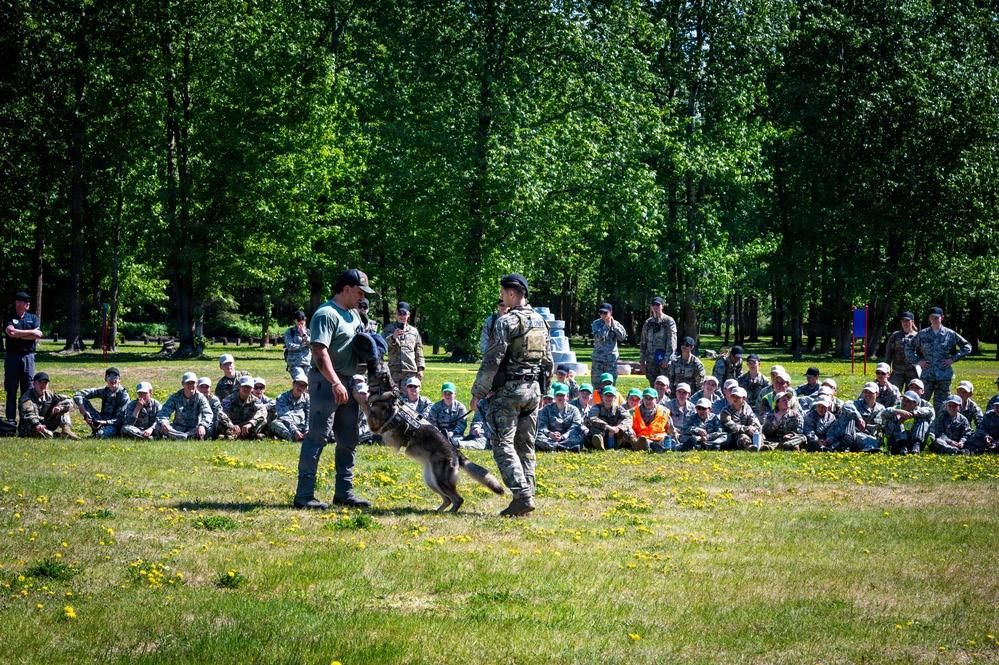
Joint-service members and Civil Air Patrol Cadets from the Kodiak photo after completing a simulated mass casualty exercise at the culminating event for everyone who participated in the Tactical 2026. (U.S. Air Force photo by Senior Airman Katriel Coffee).
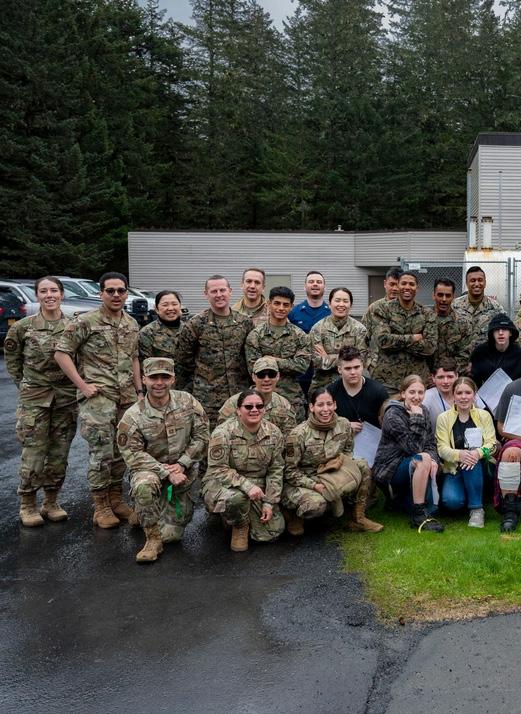
Kodiak Composite Squadron, PCR-AK-087, pose for a group at Kodiak College, Alaska, May 18, 2026. The exercise was Tactical Combat Casualty Course during Kodiak Arctic Care
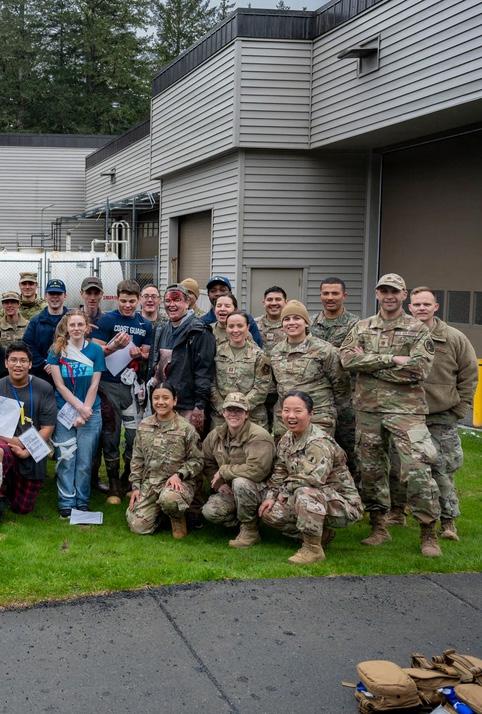
KODIAK, ALASKA, UNITED STATES 05.18.2026
507th Air Refueling Wing
Alaska Wing Civil Air Patrol is saddened to learn of the passing of 1st Lt Andrew
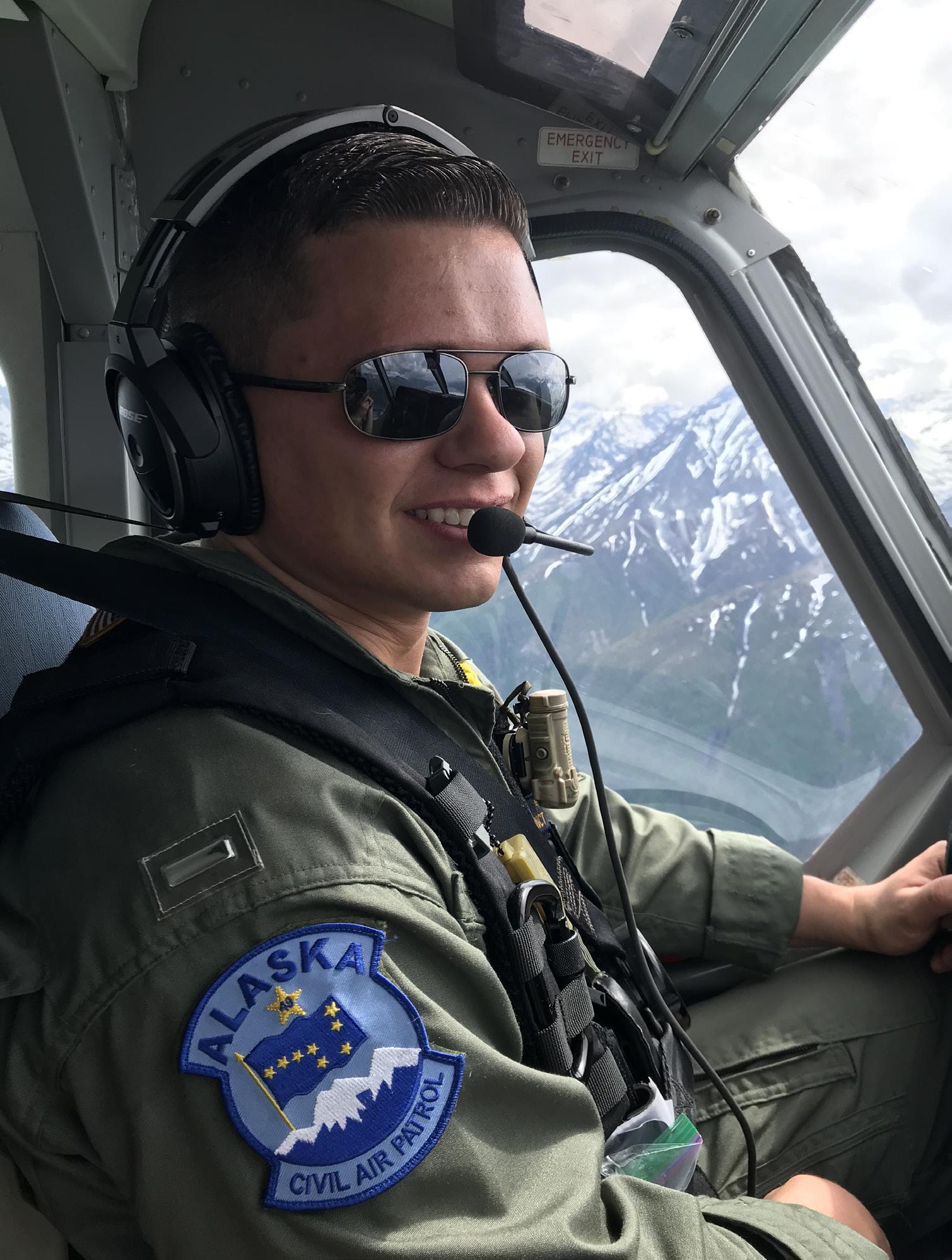
A longtime member of the Polaris squadron in Anchorage Alaska, Andrew served a mission pilot, enjoying Air Force and Coast Guard missions in rural Alaska. For more than three years, he served as Deputy Commander for Cadets, leading and teaching young people as he loved to do. He was kind and helpful and will be missed all who knew him.
"A beautiful life"
A beautiful life that came to an end, he died as he lived, everyone's friend.
In our hearts a memory will always be kept, of one we loved, and will never forget.”
the Anchorage as enjoying Guard For he Commander and he and by he everyone's will will Andrew Gecsedi.
High Frequency (HF) Ionospheric Propagation Prediction
2Lt. Alan Sorum
Radio operators in the Civil Air Patrol (CAP) depend on ionospheric propagation to communicate across great distances. Ionized layers of the atmosphere act like a mirror, reflecting high frequency (3-30 MHz) radio waves beyond the curve of the earth, without the need for commercial infrastructure.
During daylight hours, the F1 and F2 layers of the ionosphere provide the primary reflection needed by HF radio for long range communications. The F1 layer is found at an altitude of around 150 to 250 kilometers and the F2 layer
extends from 250 to 400 kilometers from the surface. The F2 layer reflects the highest frequency back to the earth which determines the maximum useable frequency (MUF).
Solar activity is the dominate factor responsible for ionospheric propagation. The sun operates on a 11-year solar cycle as measured by the number of sunspots present. Increased sunspots are an indicator of amplified x-rays, solar ultraviolet and charged particles. Measures of the sun’s activity or indices provide hints of potential radio propagation. Key
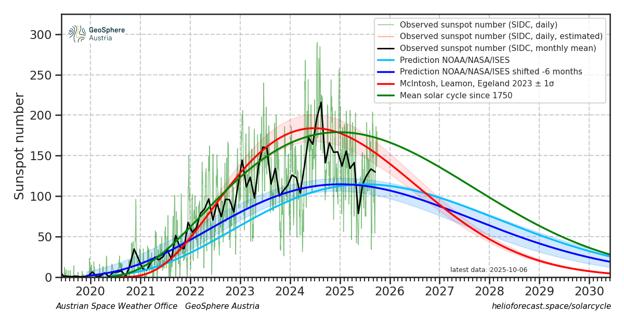
Solar Flux Index (SFI) – The sun emits radio emissions from its chromosphere at 10.7 cm (2800 MHz). The solar radio flux is an excellent gauge of solar activity. SFI represents one of the longest consecutive records of solar activity. An increase in sunspots pushes the SFI higher. A higher SFI tends to raise the MUF.
indices are the Solar Flux Index, K-index and Bz.
Interplanetary Magnetic Field (IMF) and Bz – The earth is surrounded by a magnetic field that helps protect it from solar radiation. The sun has a similar magnetic field. High numbers of sunspots produce high levels of magnetic fields that are pushed out into space by the solar wind. The IMF
is expressed as a vector with three axes, two (Bx and By) are parallel and one (Bz) is perpendicular to the ecliptic. Bz is created by waves and disturbances to the solar wind. Bz is
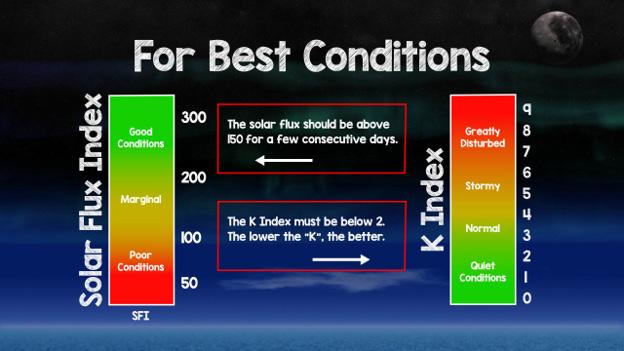
K-index – An active sun generates coronal mass ejections, flares and highspeed coronal holes that disturb the earth’s ionosphere. The K-index, and by extension the Planetary K-index (Kp), are used to characterize the magnitude of these geomagnetic storms. Kp is an excellent indicator of disturbances in the Earth's magnetic field.
the most important factor in the appearance of auroras and disturbance of radio waves.
“When Bz is south (Bz-), that is, opposite Earth's magnetic field, the
two fields link up," explains Christopher Russell, a Professor of Geophysics and Space Physics at UCLA. "You can then follow a field line from Earth directly into the solar wind -- or from the solar wind to Earth. South-pointing Bz's open a door through which energy from the solar wind can reach Earth's atmosphere! Southward Bz's often
herald widespread auroras, triggered by solar wind gusts or coronal mass ejections that are able to inject energy into our planet's magnetosphere." [Bz-] The HF propagation is usually negatively impacted during these events.

In a nutshell, good HF propagation is found when the SFI is high, K is low and Bz is not negative. Radio communicators can improve their chances by developing a better understanding of the impact the sun has on radio signals.
For all who are interested
USCG will be hosting in-person offerings of ICS 300: Intermediate Incident Command System for Expanding Incidents & ICS 400: Advanced ICS for Command and General Staff-Complex Incidents with instruction provided by AK DEC & USACE.
ICS 300 is scheduled for August 17th-19th, 2026. ICS 400 is scheduled for August 20th-21th, 2026.
These trainings have separate registrations.
The training location will be the National Guard Armory at JBER, AK. Base access is a requirement to attend this training. If you are unsure about your ability to access the base please contact the POC prior to registering for either training.
You can find more information and registration information in the Acadis Portal listings:
ICS 300 (Training Event Details - Acadis® Portal)
ICS 400 (Training Event Details - Acadis® Portal)
The point of contact for this training is:
Michael Chiesa
Chief Investigator, DEC - Environmental Crimes Unit michael.chiesa@alaska.gov
907-269-7567
907-312-9481 - SOA Mobile
You can also reach out to the State Training Office if you have additional questions. Best regards,
Jonathan Nichols (He/Him)
Training Specialist 1 & EMAC DC
AK Division of Homeland Security & Emergency Management Office Line: 907-428-7065
Email: Jonathan.nichols@alaska.gov
DMVA Email: Jonathan.Nichols@ak-prepared.com
Message me on Teams.
uLt Col Bryan Emerson, CAP Co - Editor
Alaska Wing PAO, Assistant bryan.emerson@akwg.cap.gov (M) 1 (907) 795-5586
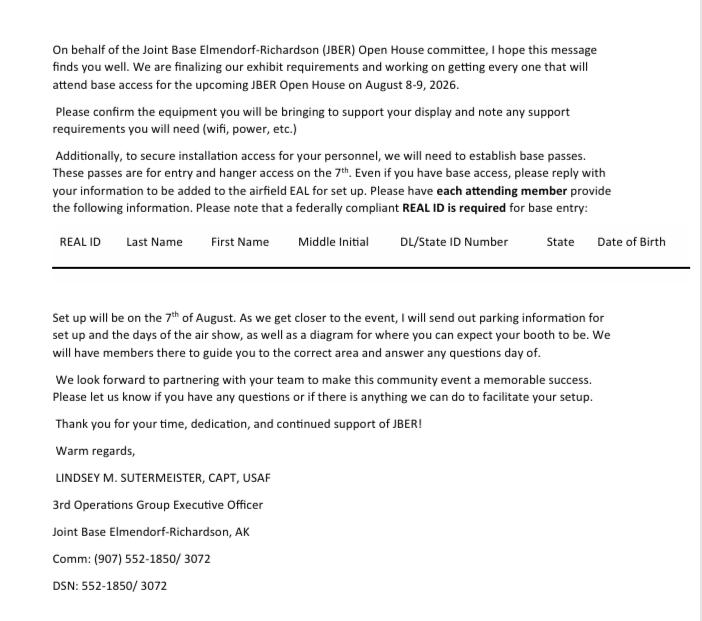
Looking for Volunteers to participate
Arctic Thunder Open House 2026 August 8-9, 2026
Contact us for more information to participate
Col Alaska bryan.emerson@akwg.cap.gov
squadron. You'll meet people and be able to tell them about Patrol program.
participate in this activities.
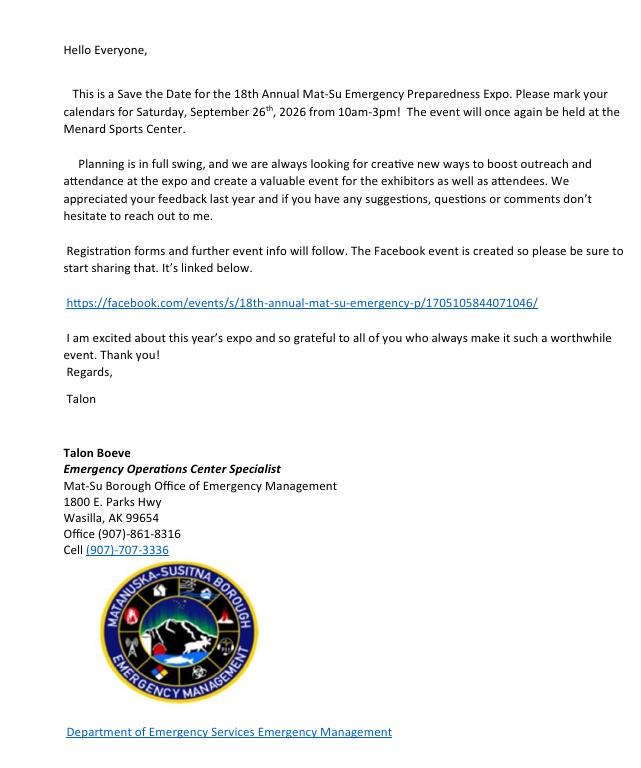
18th Annual Mat-Su Emergency Preparedness Expo. September 26th, 2026 from 10am-3pm
Bryan Emerson, CAP Wing PAO, Assistant
bryan.emerson@akwg.cap.gov (907) 795-5586
Maj. Julie G. Rivera Mercado, CAP Alaska Wing PAO, Director
julie.rivera@akwg.cap.gov (M) 1 (787) 424-0560
2Lt. Alan Sorum
The continued and effective operation of a radio station can be supported with the use of some basic test equipment. Trouble shooting, optimizing station performance and minor equipment adjustments are greatly simplified with the availability of some fundamental testing gear. Having test equipment available is especially helpful in Alaska where immediate help is not always close by.
Operational issues with a radio station usually fall into three measurable categories. These are coaxial cable (feedline) or impedance matching issues, poor antenna performance, and basic electrical faults. Each of these problems requires its own set of testing gear. Having the proper testing equipment on hand can eliminate much of the trial and error seen in radio troubleshooting. Test equipment allows the radio station operator to check things like the
power output of a radio, the standing wave ratio (SWR) of an antenna, and continuity of a coax jumper cable. A modest collection of testing gear is not very expensive. A good beginning would be purchases of a multimeter, SWR/power or wattmeter, dummy load, antenna analyzer, and vector network analyzer (VNA).
Multimeter – Multimeters measure the basic electrical fundamentals. These are voltage, current and resistance. Many multimeters measure capacitance and provide continuity testing. Radio station problems can sometimes be traced to inadequate supply voltage, broken connectors, short circuits, blown fuses and polarity problems. These can be found by a multimeter.
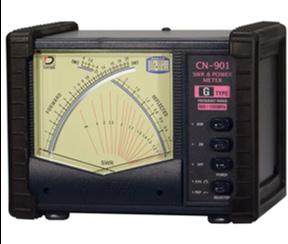
These meters are placed in line between the transceiver and antenna. They can provide readings
for peak and average power output. Many meters have cross needles on their displays to show forward and reflected power. Most SWR/Power meters support multiple ranges of 20/200/2,000 watts of power output. These meters can help diagnose feedline and connector problems as seen in unexpected changes in power and SWR readings.
Load – Dummy loads simulate an ideal antenna with a perfect 50ohm resistive impedance seen by the transceiver. Having a dummy load lets the operator allow the radio to transmit without causing interference to other
stations. This is especially useful in checking the output of a transceiver. It helps separate transmitter problems from issues that could be caused by a feedline or antenna.
– These devices have become very affordable and can provide advanced measurements useful in the adjustment and building of antennas. These devices provide accurate measurements of antenna SWR, impedance, capacitance, and frequency range. An antenna analyzer aids in the tuning and optimization of antenna systems.
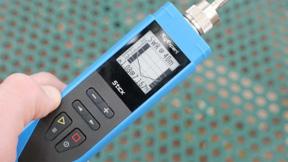
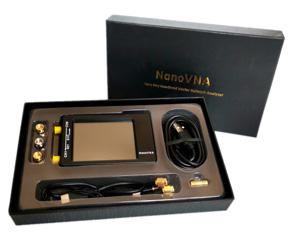
Network
(VNA) – VNAs are potentially the most complicated and useful piece of test gear a radio operator can encounter. These devices generate an internal signal used to describe a device under test (DUT). Operators can use a VNA to design more efficient antennas by measuring reflection loss, passing loss, complex impedance, both resistance and reactance and SWR. A VNA can be used to detect faults in coaxial cables and design matching networks for antennas. NanoVNA sells a VNA that offers a good starting point for learning about these devices for under $150.
Operating a radio station and becoming a better communicator takes some effort and dedication. The pursuit of this learning can be its own reward. Take time to consider how to work safely around electrical and radio equipment. Power supplies are often connected to the utility grid, transmitters can cause RF burns similar to how a microwave oven operates and working on antennas can pose the risk of falls. Whenever possible, work and troubleshoot radio stations with a partner and you both will be safer.
By:Maj. Julie G. Rivera Mercado, AKWG CDI
Teamwork within our units and missions is fundamental because it builds strong relationships of trust and cooperation among all members. The importance of collaborating closely, whether by mentoring others or firmly serving as a wingman, lies in allowing us to encourage one another and maintain a common commitment oriented toward our goals and personal growth. By guiding our collective efforts with core values like respect and excellence, we learn to choose words that make our teammates feel appreciated and encouraged. This keeps us focused on our shared objectives and transforms us into more effective servants of our community, state, and nation.
Furthermore, a team's achievements are maximized when its members choose not to resist collaboration and instead openly share their goals, progress, and challenges. This joint effort acts as a true force multiplier that accelerates mutual learning, improves accountability, and drives us to demonstrate our core value of excellence. By working unitedly and evaluating our performance, we successfully record our progress as volunteers and leaders, ensuring that every member knows they are actively contributing to the overall success of the unit and its missions.

LtCol. Michael Chiesa has been appointed Alaska Wing Inspector General by Alaska Wing Commander Col. Derk MacPherson, effective July 4, 2026.
LtCol. Chiesa previously served as an Assistant Inspector General for the Alaska Wing and brings broad professional and volunteer experience to his new position. We look forward to introducing LtCol. Chiesa in greater detail in the next edition of the Alaska Wing Magazine.
LtCol. Martin C. Krebs has been appointed the inaugural National Deputy Inspector General for Compliance Analyses (CAP/IGU), a position established under the latest revision of CAPR 20-1. LtCol. Krebs served as the Alaska Wing Inspector General since 2024.
In his new position, he will establish and lead CAP/IG's new Compliance Analyses function, as prescribed by CAPR 20-3, Section 15. Under this mandate, CAP/IG will conduct analyses of the leadership, management, and compliance of selected Civil Air Patrol programs and operations, whether managed by CAP's volunteer leadership
or National Headquarters subject, these analyses may process reviews, focus management, or evaluate regulations and policies.
Krebs began his professional counsel in the automotive primarily coordinated advised internal clients matters. Compliance was responsibilities, and later, he developed the company's compliance program.
Following a sabbatical the United States, Krebs became an airline pilot ago. He currently flies for
Krebs joined the Alaska as a Stan/Eval Officer, Check Mission Check Pilot, and appointed Alaska Wing Inspector where he focused on standardizing processes, sharing best practices, the Wing's Inspector General contributed to the Cadet Program Education instructor, served European Encampment Cadet Competitions. Krebs holds a Master of
Headquarters staff. Depending on the may resemble enterprise on organizational risk evaluate compliance with CAP professional career as in-house automotive industry, where he product litigation and clients on product safety was an integral part of his later, as General Counsel, company's first comprehensive and his immigration to Krebs changed careers and approximately 12 years for Southwest Airlines.
Alaska Wing in 2013, serving Check Airman Examiner, Instructor Pilot. He was Inspector General in 2024, standardizing inspection practices, and expanding General team. He has also Program as an Aerospace served on the staff of the in 2023, and supported of Laws degree from the
University of Wisconsin–Madison and is admitted to the practice of law in Germany and the State of California.
In his new national role, Krebs will help establish and shape Civil Air Patrol's Compliance Analyses program while remaining actively engaged in flight operations and cadet activities whenever possible. His appointment reflects both the growing importance of the Inspector General program and the significant contributions of Alaska Wing volunteers at all echelons.
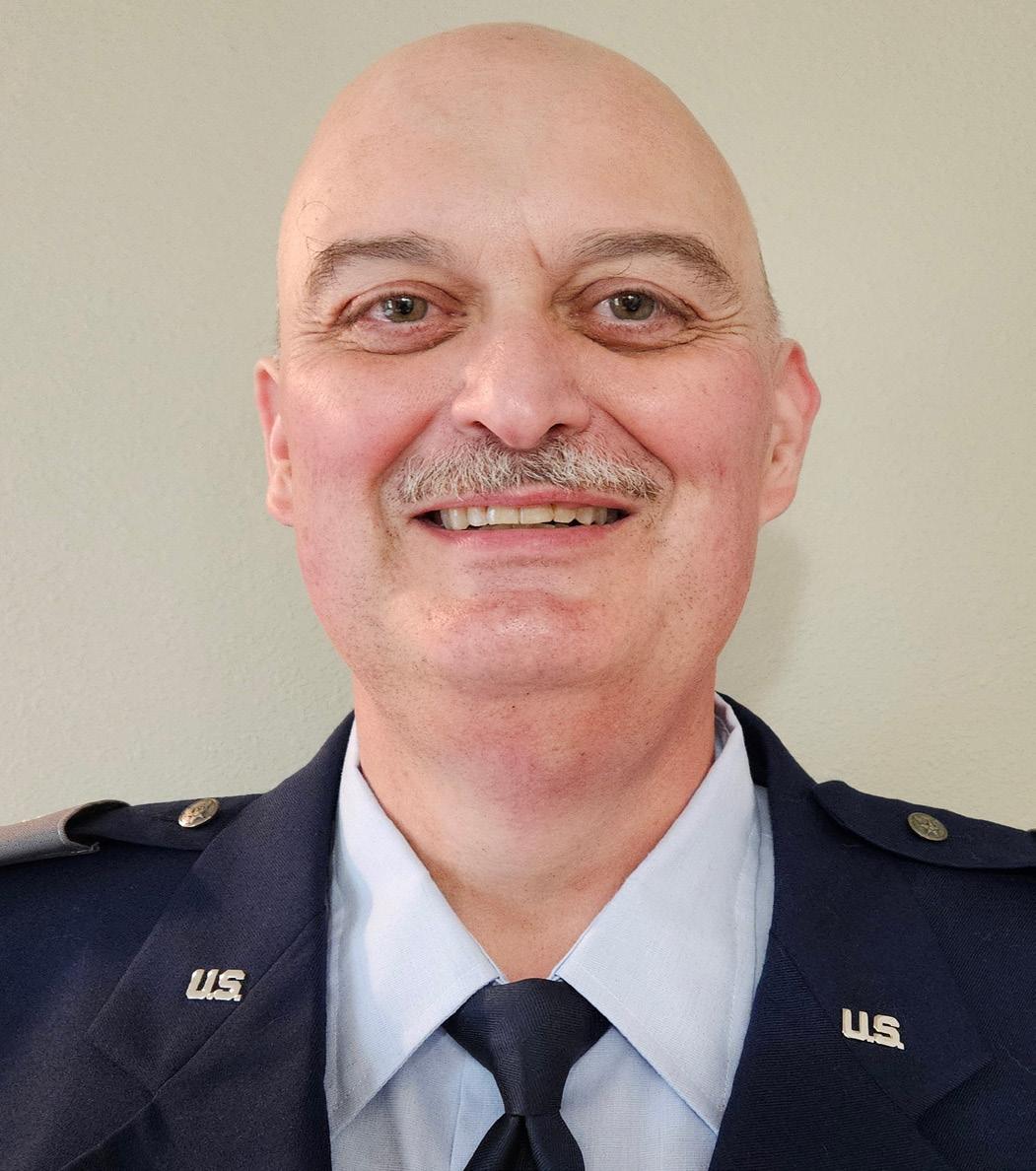
LtCol Michael Chiesa joined Civil Air Patrol in 2003 in California Wing, Group 5 with the Redwood Empire Composite Squadron in Sonoma County, California. Lt Col Chiesa held various positions with the Redwood Empire Composite Squadron with a focus on communications and emergency services. Lt Col Chiesa participated in several SAR and disaster relief missions in California Wing. Lt Col Chiesa served as Squadron Commander of the Redwood Empire Composite Squadron developing close working relationships with public safety agencies in his squadron’s area of responsibility. While serving as the squadron communications officer Lt Col Chiesa acquired a surplus ambulance he converted into a mobile communications and incident command unit that was used to support CAP activities and missions throughout California Wing.
LtCol Chiesa transferred to Alaska Wing in 2017 and joined the Eielson Composite Squadron, along with his wife, Capt Elizabeth Chiesa. He served as the Squadron Communications Officer and the squadron’s deputy commander for three years.
Lt Col Chiesa’s professional Wasilla, Alaska in 2021. Lt Col Chiesa and Capt Arcturus Composite Squadron Assistant Squadron Communications Chiesa also accepted positions Headquarters serving as Services Officer, Assistant Assistant Activities Officer.
LtCol Chiesa’s professional a law enforcement officer began his law enforcement Moon Bay Police Department Bay Area in 1991. He law enforcement park Sonoma Coast in 1995 enforcement, emergency rescue and wildland firefighting
In 2011 LtCol Chiesa and Kodiak, Alaska for jobs Department. Lt Col Chiesa Kodiak Police Department to the Sand Point Police Department Aleutians where he also the department.
In 2017, LtCol Chiesa took investigator with the Alaska Control Office (AMCO) Enforcement to the Fairbanks Outpost. transferred to the Wasilla to Deputy Chief Investigator Enforcement Unit.
professional career took him to After moving to Wasilla, Chiesa transferred to the Squadron where he served as Communications Officer. Lt Col positions with Alaska Wing as Assistant Emergency Assistant Inspector General and Officer. professional career has been as officer for over 35 years. He enforcement career with the Half Department in the San Franciso later took a position as a ranger on the northern where he performed law emergency medical, search and firefighting duties until 2011.
and Capt Chiesa moved to jobs with the Kodiak Police Chiesa was a sergeant with the Department then lateral transferred Department in the Eastern served as a sergeant on took a position as a criminal Alaska Alcohol & Marijuana Enforcement Unit, assigned Outpost. In 2021, Lt Col Chiesa Wasilla Office and was promoted Investigator of the AMCO
In 2023, Lt Col Chiesa promoted to Chief Investigator of the Environmental Crimes Unit of the Alaska Department of Environmental Conservation where he still serves today.
A consummate professional volunteer, Lt Col Chiesa also serves in the Alaska State Defense Force (ASDF), a voluntary state military reserve, that augments and supports the Alaska National Guard. Lt Col Chiesa currently serves as the Brigade Operations and Training Director (S-3). He formerly served as a Company Commander and a Detachment Commander in the Interior of Alaska.
Lt Col Chiesa also serves in the U.S. Coast Guard Auxiliary, Arctic District. He is currently the Division Commander for South Central Area and the District Staff Officer for Communications and Human Relations for Arctic District. He previously served as the Flotilla Commander for the Mat-Su Flotilla. Lt Col Chiesa also serves as a Culinary Assistant where he augments active-duty U.S. Coast Guard with culinary duties aboard coast guard cutters. Lt Col Chiesa is an American Safety Health Institute Emergency Medical Care Instructor, a FLETC Basic Tactical Medicine Instructor, an Alaska Police Standards Council firearms instructor, use of force instructor and Taser instructor and FEMA Incident Command Systems Core Instructor.
Lt Col Chiesa looks forward to working with members of Alaska Wing in his new role as Inspector General.
We close this edition celebrating a period of renewal in the Alaska Wing with the arrival of the new Wing Commander, who will assume command this coming November. Looking back on a month filled with activities where our members demonstrated exceptional dedication as volunteers and leaders, remaining firmly focused on our objectives, we can say that we are a great team.
This online publication is designed to attract, inform and motivate readers through photographs, text and stories. We see and feel the four core values in the faces and body language of the cadets and senior members portrayed herein. Submissions are accepted through the 10th of each month. Be safe and live our core values!
And please, thank, congratulate, and mentor your fellow CAP members whenever possible. In any volunteer organization, the only form of compensation is saying “job well done; thank you.”
The highlight of the month was undoubtedly our camp, with incredible participation from both cadets and seniors. As true comrades, the cadets openly shared their progress and challenges as they pursued our core value of excellence. This teamwork acted as a force multiplier, accelerating learning and building the relationships of trust and cooperation necessary to continue contributing successfully to our missions. Thank you for your dedication!
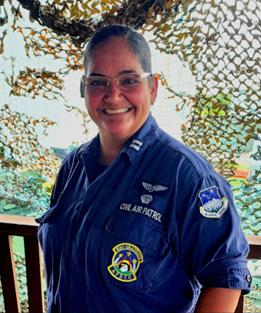
Maj. Julie G. Rivera Mercado, CAP Publisher and Editor
Alaska
Wing PAO, Director
julie.rivera@akwg.cap.gov (M) 1 (787) 424-0560
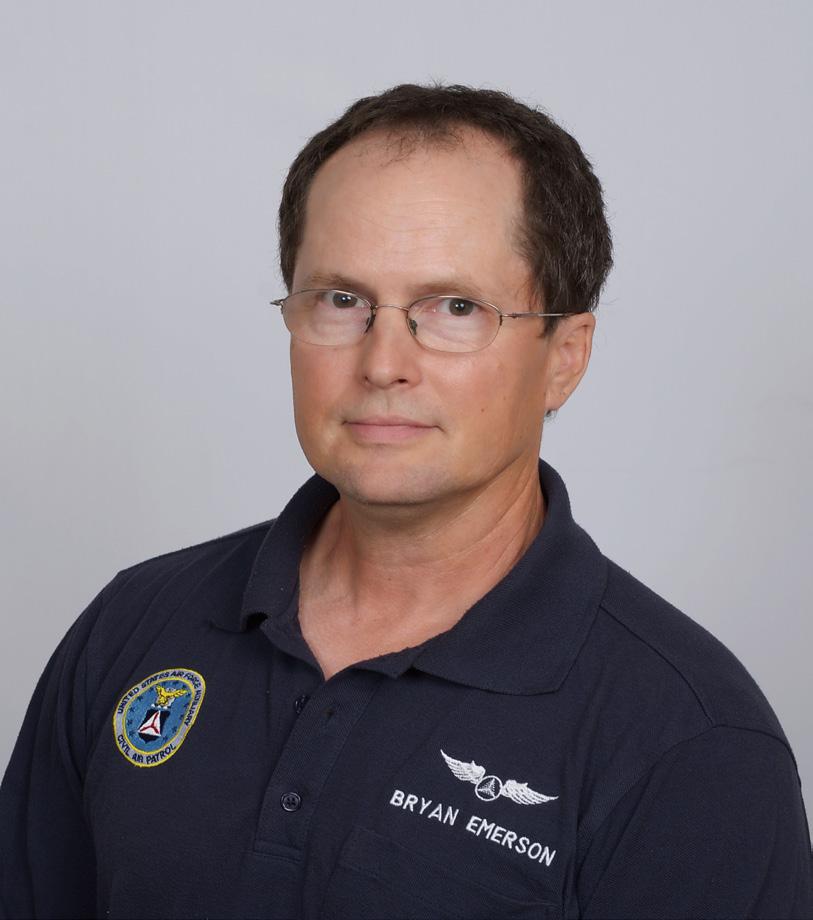
Lt Col Bryan Emerson, CAP Co - Editor
Alaska Wing PAO, Assistant bryan.emerson@akwg.cap.gov (M) 1 (907) 795-5586