The FMG Young Farmer of the Year is a highlight in the rural calendar, with a track record of showcasing the rising stars in New Zealand’s food and fibre sector and setting the bar for excellence in agriculture.
The Tasman regional final was held at the Courtenay A&P Showgrounds in Kirwee while Woodbury Domain, near Geraldine hosted the Aorangi regional final.
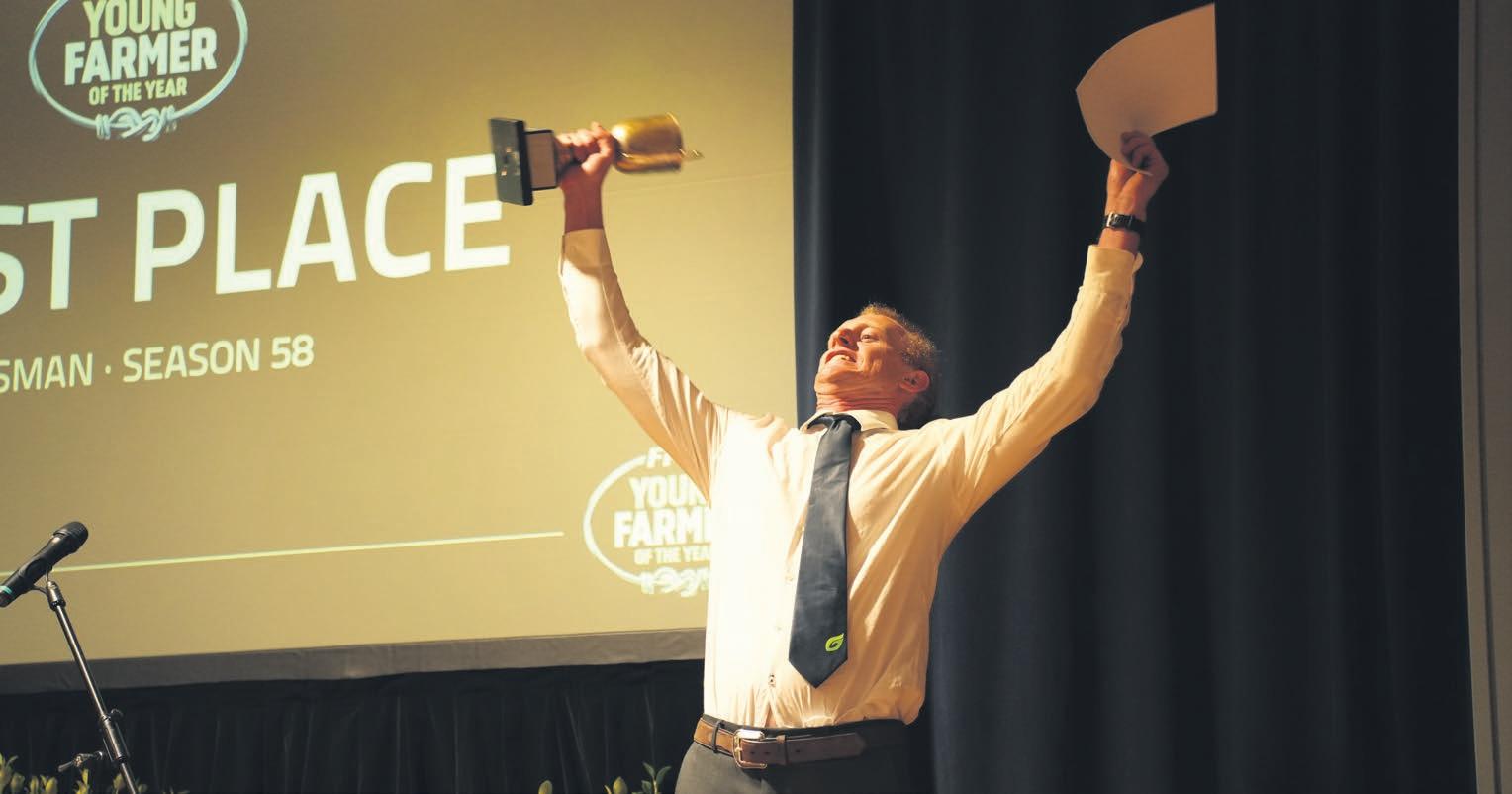
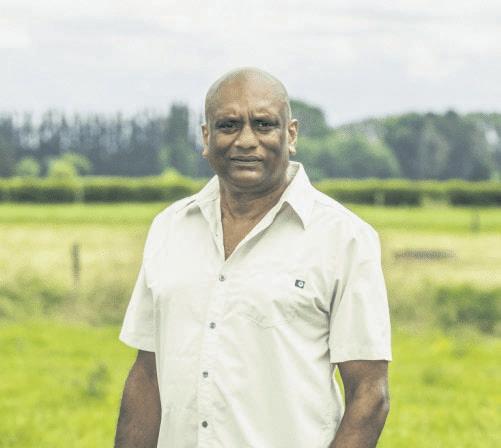
Coldstream dairy farmer Jack Taggart is now in the running for national victory after being crowned Aorangi’s top young farmer.
The 26-year-old Taggart from the Hinds Young Farmers club, clocked up the most points on the day with 292, defeating former grand finalist George Letham who finished up with a score of 280.
James Wilson rounded out the final spot
on the podium after a day of competition.
“It’s definitely been a long time coming, and I can’t quite believe it just yet,” Taggart said.
The competition featured five challenges including the Agri-Sports competition and an intense ‘buzzer-style’ quiz which rewarded quick thinking.
Each task was crafted to expose how well contestants could apply their practical skills and technical knowledge while working against the clock.
The head-to-head and the Agri-sports were where Taggart really shined taking out these challenges with comfort and a lot of speed.
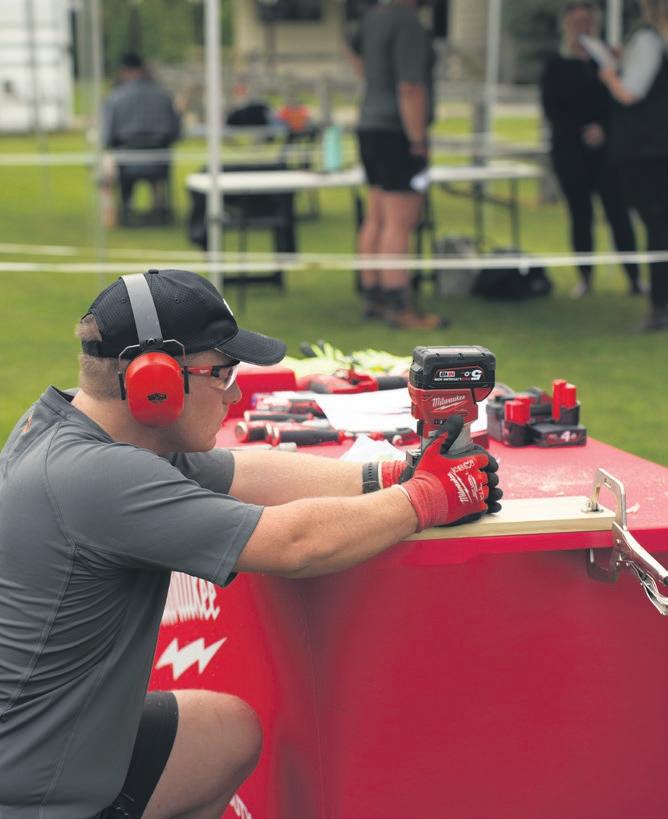
The head-to-head featured the contestants making a bird house out of pallets which he breezed through with time to spare.
Meanwhile sixth generation sheep and beef farmer Bryce Win from Upper Moutere is
also heading to the grand final with a win in the Tasman regional final.
Win, aged 29 and a member of the Tasman Valley Young Farmers club, secured the most points on the day with 272, ahead of Jack Dennehy-Coles (250.5) from Lincoln University and Sam Smithers (238.9) from the West Coast.
Win’s reaction to his triumph in the final was one of both surprise and relief.
“It’s just so surreal, I don’t know what to say. I’m getting married in a couple of weeks, I’m glad to get this one ticked off the list.” Win seemed calm under the pressure of the day moving from task to task, acing the headto-head challenge while having a lot of fun in the Agri-sports challenge which involved a series of small challenges, finishing with some lassoing of the bull they made during the head-to-head.
Elections and enrolling to vote
The next parliamentary election will take place on 7 November 2026. Everyone who is eligible to vote needs to ensure that they are enrolled to vote in the electorate which is in the area where they live.
The amendments made significant changes to the Electoral Act which are aimed at improving the “timeliness, efficiency, integrity and resilience of Elections and their operations.”
] by Bessie Paterson LLB
] Ronald W Angland & Son
In December 2025 a major amendment to the Electoral Act was passed in Parliament and most of the provisions came into force on 20 December 2025 and some on 1 January 2026.
One of the alterations to the Act provides that the last day to enrol to vote is 13 days prior to election day to give the Electoral Commission time to complete the processing before election day.
As one who worked on elections many years ago I recall there were always a number of voters who were not enrolled to vote before election day and they would turn up to enrol on the day which delayed final results being available for some time after voting day.
Prisoners who have been sentenced to less than 3 years imprisonment for offences committed after the legislation took effect will be disqualified from voting.
Voters’ occupations and preferred honorific will be removed from enrolment information but an e-mail address and phone number must be provided to enable the Commission to contact voters and encourage them to vote.
An advance voting period of 12 calendar days before election day will be set in law. This will enable people who will be away from their electorate on election day to vote before the day. It should be noted that the legislation closes enrolment before advance voting begins. Voters will need to make sure they enrol or update their enrolment details by
midnight on the Sunday, before advance voting opens on the Monday morning.
The requirement for mandatory postal contact with voters has been deleted and the commission may contact voters digitally by email or text message.
A new offence will be created to prohibit the provision of free food, drink or entertainment within 100 metres of the entrance of a voting place while voting is taking place.
There are many more changes and introductions to electoral law and many of these refer to administrative matters.
This article has been prepared by Bessie Paterson, a partner at Ronald W Angland & Son, Lawyers, 2 Chapman Street, Leeston
Future farmers rise at national grand final
FROM PAGE 1
In addition to the Young Farmer competition both regional finales also featured two agegroup competitions with Primary school pupils tackling AgriKids NZ challenge and high school students competing for the FMG Junior Young Farmer of the Year title.
More than 300 spectators watched on in support of the AgriKids NZ competition in the Aorangi finals.
The competition saw New Zealand’s youngest farmers share their new-generation know-how across a series of modules, with the top teams then competing in the infamous race off.
Angus Ward, Tessa Croft and Hunter Clark (Beaconsfield Redbands) from Beaconsfield School took out first place, the Flynns of AIS Farmers (Flynn Lovett, Flynn Chudleigh and Flynn Tait) from Ashburton Intermediate place second just ahead of the Hinds Hustlers (Ebony Groves, James Sheppard and Sophie Sheppard) of Hinds School who trailed close behind.
Meanwhile, Emma Kinzett and Meghan Nish from Mount Hutt College took out the title of Aorangi FMG Junior Young Farmer of the Year, ahead of Niamh Hawe and Libby Jackson of Ashburton College.
In the Tasman finals in Kirwee the Waikari Wanderers (Waikari School, Rosie Barton, Max Beach and Fergus Butters) took out the
top spot for the AgriKids NZ, followed by the Broomfield Stockmen (Broomfield School, Arlo Knight, Jack Hope-Pearson and Nixon Keane) and Marlborough Musterers (Seddon School, Tom March, Louis Gorman and Tom Barker) rounding out the top three.
Charlie Clark and Leo Acland from Mount Hutt and Christ’s College took out the Junior Young Farmer of the Year title for Tasman securing themselves a spot at Grand Final for the second year in a row. They will be joined by Tabitha White & Mikayla Molloy from Rangi Ruru. Harriet Craw and Danica Minson (Christchurch Girls High School and St Andrews College) came in third.
Along with Taggart and Win, the top AgriKids NZ and FMG Junior teams will now also compete in July’s Grand Final in New Plymouth.
New Zealand Young Farmers CEO Cheyne Gillooly said it was great to see friends, family, and Young Farmers club members supporting their fellow contestants, with season 58 turning over the highest attendance of entrants in recent years.
“FMG Young Farmer of the Year is a true celebration of agriculture and the people who drive it,” Gillooly said.
“From the youngest contestant just beginning, to the oldest who is giving it their last shot, the strength in which people show up for their community makes me so proud of
Ronald W. Angland & Son LAWYERS
what Young Farmers represents.”
The FMG Young Farmer of the Year is the flagship event for the non-profit NZ Young Farmers organisation, and the competition
has run annually since 1969. Now in its 58th year, the annual event boasts a strong track record of showcasing the very best talent in New Zealand’s food and fibre sector.
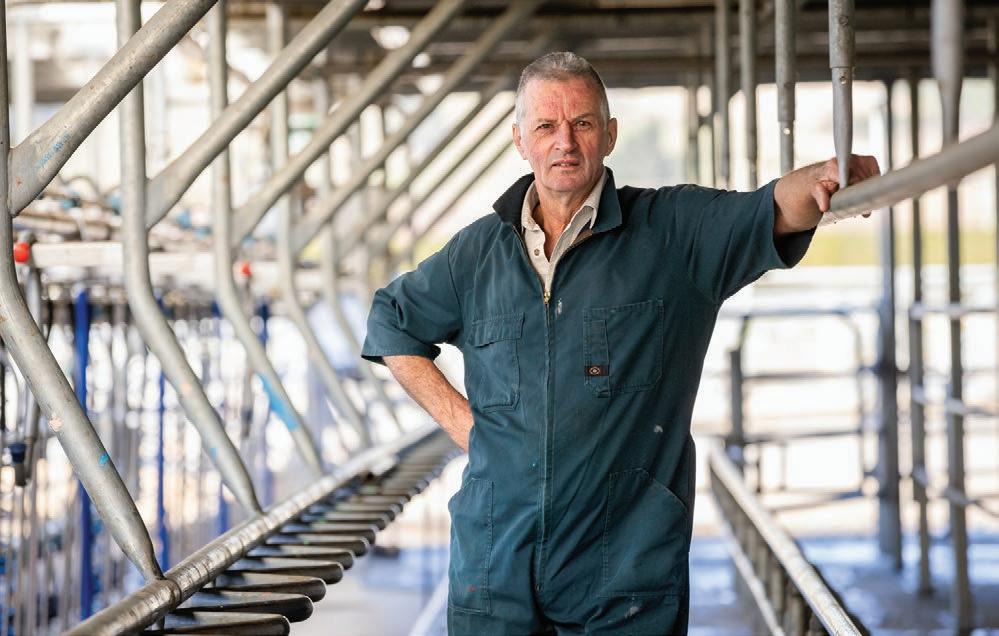
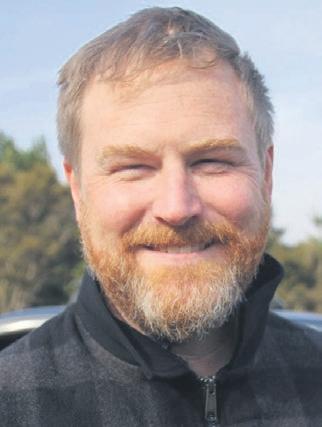
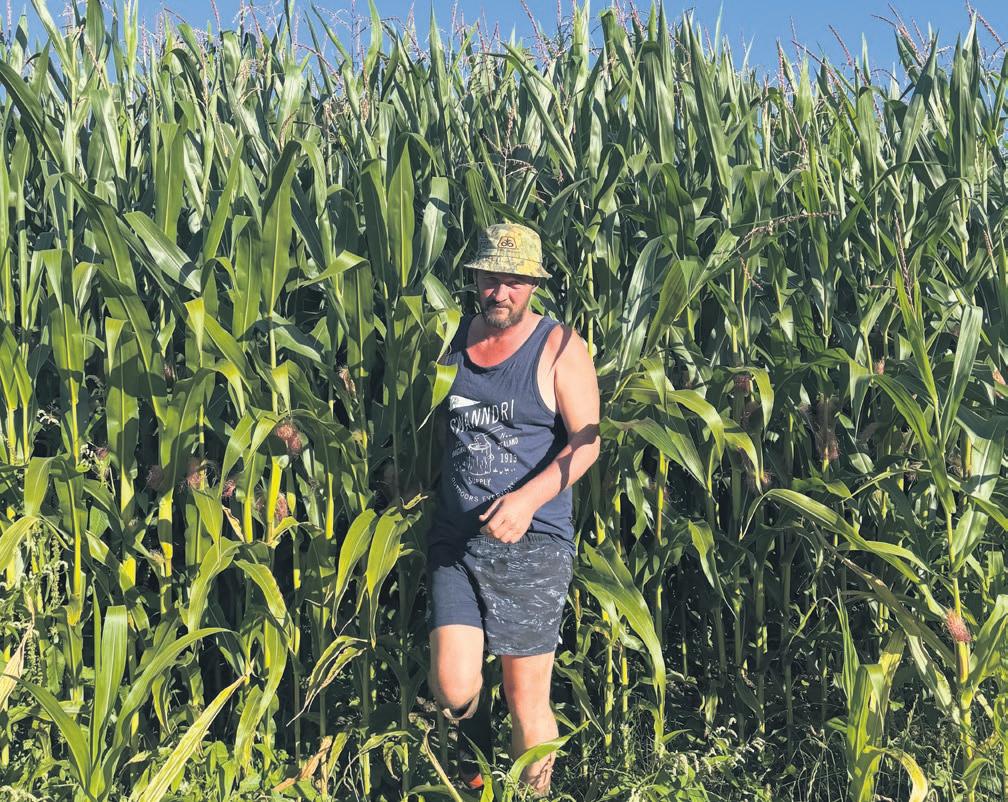
Focused: Coldstream dairy farmer Jack Taggart is all concentration during the Tasman regional final of the New Zealand Young Famer of the Year competition
Behind the gates of Canterbury’s Central Plains irrigation scheme
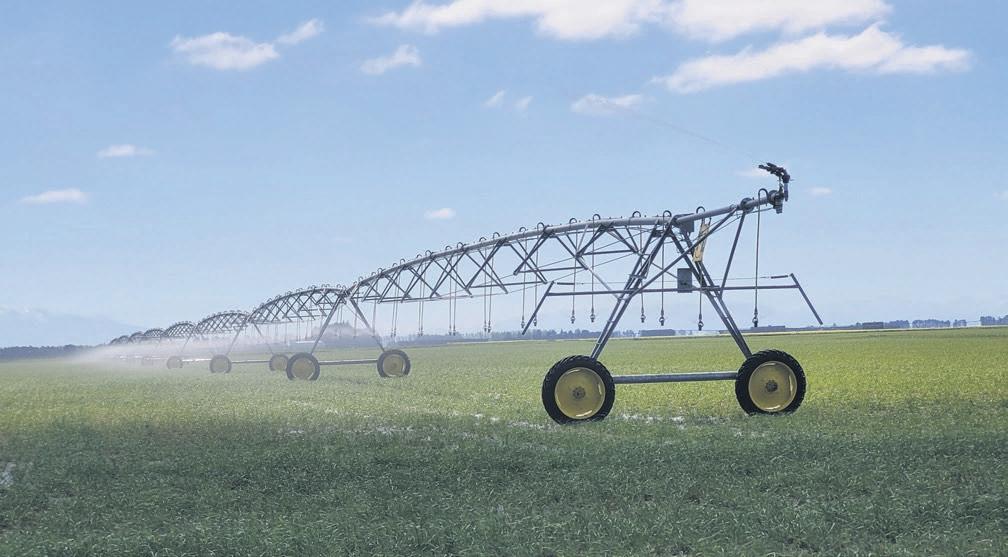
Canterbury farmers and other interested parties will have a rare opportunity to get a closer look at one of the region’s most significant water infrastructure developments when Central Plains Water Limited opens the scheme to the public for a special bus tour this month.
] by Kent Caddick
The Central Plains Water Limited’s (CPWL) ‘Behind the Gates’ tour will be held on Sunday, 15 March.
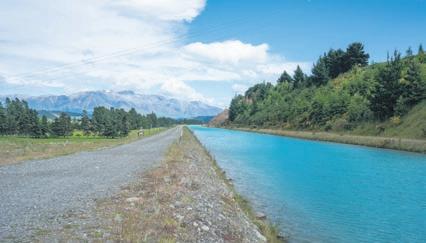
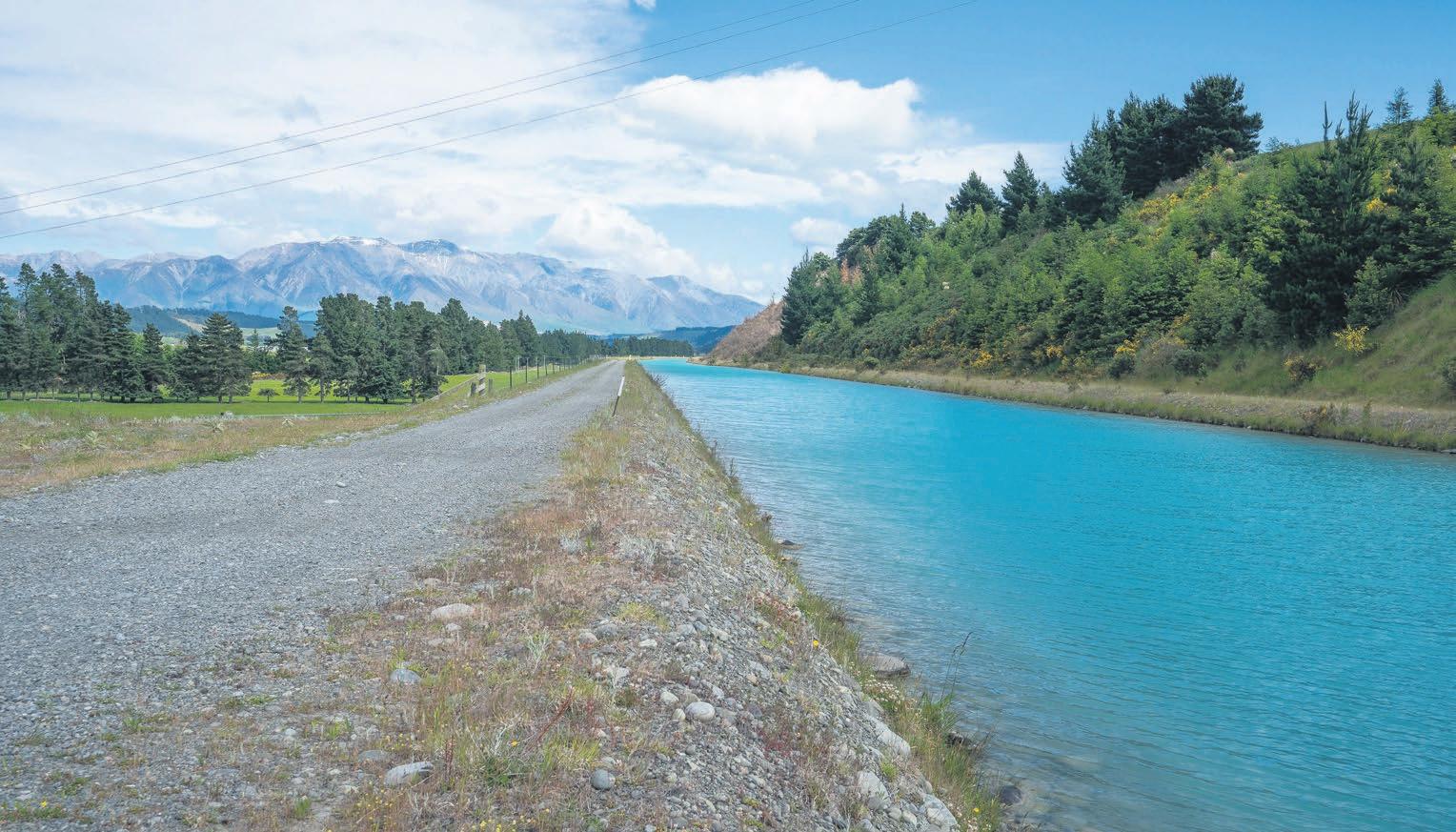
The tour, which starts and finishes in Hororata, will take visitors from river to farm, revealing how water from the Rakaia River is captured to ensure environmental limits are adhered to and delivered to the farm to support food production and local communities across the Central Plains.
Run in partnership with the Hororata Community Trust and the Central Plains Water Trust, the guided experience includes exclusive access to the Rakaia River intake, via a journey along part of the scheme’s 17-kilometre headrace canal, and a close-up view of the recently constructed labyrinth weir. Guides will share the story and engineering behind the project throughout the tour.
“The aim is to give people a genuine understanding of what the Central Plains Water Scheme does,” CPWL Chief Executive, Susan Goodfellow said.
“We invite the community to see how water moves from river to land, supports food production, and underpins farms and livelihoods across Canterbury, while also learning about the environmental management strategies CPWL has in place to ensure careful management of the water resource.”
Participants will also visit a working farm to see how irrigation water is used in practice before returning to Hororata Hall for a community sausage sizzle and question-and-answer session with the team.
Behind the gates: Cantabrians will have an opportunity to get a close up look at Central Plains Water Limited’s irrigation scheme this month.
Goodfellow said designed as a relaxed and informative afternoon, the tour is open to anyone interested in learning more about local infrastructure, responsible water management, and the systems that support farming within the scheme area.
“All proceeds will go straight back to the local community,” she said.
“This initiative reflects what’s important to us: sustainable water use, food production, positive environmental outcomes, and strong Selwyn communities.”
Tour tickets are $20 per person and are limited to 100. For more information go to: www.hororata.org.nz/event/ central-plains-water-behind-the-gates-tour
Celebrating the Kiwi lamb legacy
As MPs, farmers, diplomats and industry leaders gathered on Parliament’s lawn recently for a celebratory barbecue in the name of sheep farmers, this year’s National Lamb Day was the perfect moment to honour the enduring legacy of lamb in New Zealand, and to mark some remarkable recent successes.
] with Todd McClay ] Minister for Agriculture
The world clearly values our high-quality, safe, and sustainable food and fibre. Kiwi lamb exports reached a new milestone in 2025, topping $4 billion for the first time –a 29% increase in value – contributing to red meat and fifth-quarter exports hitting a record $11.7 billion for the calendar year.
Looking more broadly, meat and wool export revenue grew strongly, with forecasts showing continued momentum. Food and fibre exports overall are on track to reach a record $62 billion in the year to June 2026, building on 2025’s impressive $60.4 billion. Rural communities, including those in Canterbury, are powering this growth and driving New Zealand’s economy forward.
This Government fully recognises that our hardworking farmers and growers are central
to creating jobs, boosting exports, and building prosperity. We remain committed to supporting the sector’s success.
Since taking office, we’ve cut red tape and removed Labour’s costly rules that penalised rural New Zealand and we’ve delivered better market access for farmers. Major trade wins include implementing the EU FTA quickly saving missions on tariffs and boosting exports by $2 billion in the first 18 months, negotiating our fastest ever trade deal with the UAE with goods exports increasing 37.9% in the first four months compared to the year before, concluding negotiations with the Gulf Cooperation Council including Saudi Arabia, and securing a high-quality, once-in-a-generation Free Trade Agreement with India and their 1.4 billion people.
The India FTA is particularly transformative for our red meat and wool sectors. From day one of entry into force, tariffs are eliminat-
ed on sheep meat (previously 33%) – delivering zero-tariff access and levelling the playing field with Australia, which has dominated the sheep meat market since its 2022 FTA (we used to supply almost 90% of India’s lamb imports but now only have an 8% share of this market compared to Australia at 91%).
Wool exports to India, currently worth around $76 million annually, will also benefit immediately from zero tariffs. India is home to some of the world’s leading premium handmade carpet and rug manufacturers, and this opens strong opportunities for New Zealand wool in high-value finished products supplied to global retailers.
This provides unprecedented access to 1.4 billion consumers in one of the world’s fastest-growing economies. It delivers more options, guaranteed market access amid unpredictable global trade conditions, and a long-term boost for our farmers, growers, and
wool producers – helping put a lamb chop on plates around the world.
We will keep removing trade barriers, forging new partnerships, and strengthening existing ones to maximise returns at the farm gate.
At the same time, we are focused on building a stronger future at home: cutting red tape through meaningful reforms, replacing the RMA, we’ve banned full farm to first conversion and we’re investing in rural health and wellbeing.
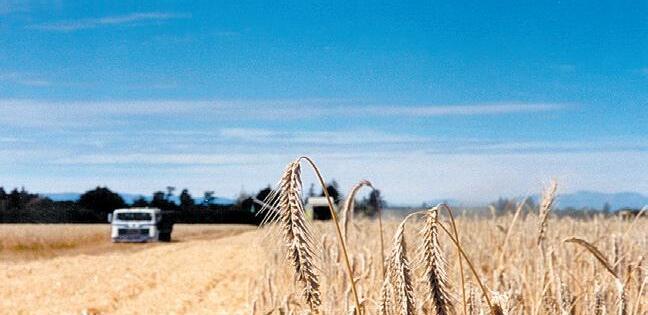
This past growing season has been tough for many, particularly arable farmers in Canterbury facing hailstorms and prolonged wet weather that caused significant crop damage. Severe conditions in January across Bay of Plenty, Tairawhiti, and Canterbury have been classified as a medium-scale adverse event, unlocking additional support including tax relief.
Positive progress for meat and wool sector
It’s been incredibly encouraging to see positive results emerging from New Zealand’s meat and wool sector, especially for our farmers, who have faced many challenges in recent seasons.
] with Jo Luxton ] Labour spokesperson for Agriculture
The numbers speak for themselves: in 2025, we delivered record red meat export returns, with revenue reaching $11.7 billion.
Despite some reduced volumes across various categories, this marked a 19% increase over the previous year and is a strong testament to the resilience and hard work of our primary sector.
What stands out to me is that these gains were achieved even with steady or reduced volumes. Sheepmeat volumes remained relatively unchanged, yet the value per kilogram surged by an extraordinary 31%, hitting $12.62 in a single year. Similarly, despite a decline in beef exports, their value rose by 15%, reaching a record $5 billion.
On the wool front, we’ve seen price growth too. Strong wool prices have climbed by $1.36 from last year, now sitting at around $5.01 per kilogram. And remarkably, crossbred hogget wool recently achieved more than $9 per kilogram at NZ Merino Company’s first sale of the product in Melbourne on February 5. From speaking with farmers across the country, it’s clear that these gains aren’t just the result of global demand or tighter international supply. While our May 2023 NZ-UK Free Trade Agreement certainly played a part in driving up UK beef exports, there’s a clear and collective effort to rebuild the momentum of the post-war boom days, and it’s starting to pay off.
In the wool space in Canterbury, companies like PGG Wrightson are building strong relationships with wool growers, and work-
RURAL MATTERS
ing alongside brands like Norsewear, which has a contract with the New Zealand Defence Force.
Wools of New Zealand is also doing great work, collaborating with international partners to develop high-end wool carpets. The 2025 Wool Impact Report revealed a remarkable 80% increase in wool prices since 2022, bringing in an estimated $140 million in additional farm gate revenue, and this success is attributed to support from across the political spectrum.
The global conversation is shifting toward sustainable products, and sheep could once again be a viable dual-income animal for our farmers. As Ross from Wool Impact said; “There is greater value if we keep the collective work going”, and the formation of the Wool Alliance to unite Wool Impact, Campaign
for Wool New Zealand, the Wool Research Organisation of New Zealand, and Beef + Lamb New Zealand, is a significant step forward. It will provide scale, better coordination, and a unified voice for wool, ensuring that we can continue to grow sustainably.
Of course, challenges remain. Farmers are navigating volatile weather patterns, rising costs, land-use change, and ongoing geopolitical uncertainty. These are complex issues, and it’s vital that policy settings are practical, science-based, and workable on the ground.
But with the right support, and with continued collaboration across the sector, New Zealand’s meat and wool industry will remain a vital part of our economy and a source of pride for rural communities across the country for years to come.
] with Andrew Wyllie
] Forsyth Barr
Investment markets resilient despite global uncertainty
The end of 2025 and the start of 2026 gave investors plenty to think about. Geopolitical tensions resurfaced across several regions, US trade rhetoric again made headlines, and concerns lingered around valuations in parts of the artificial intelligence (AI) market.
These developments drove short bursts of volatility; however, despite the noise, financial markets proved relatively resilient.
The US economy continued to grow at a steady pace, corporate earnings held up well, and earlier interest rate cuts by major central banks helped support financial conditions. Together, these factors helped offset geopolitical uncertainty and allowed equity markets to edge higher overall.
Bond markets continued to provide diversification and income, although returns were softer this quarter. With policy rates now close to cyclical lows in many economies, bond performance has become increasingly sensitive to movements in longer-term interest rates and fiscal concerns, but coupon rates are starting to improve.
NZ economy in recovery mode
The Reserve Bank of Australia (RBA) has been one of the first central banks in the developed world to begin lifting interest rates again in this economic cycle (with Japan a notable exception).
Closer to home, there is a growing expectation that the Reserve Bank of New Zealand (RBNZ) may not be too far behind, with interest rate increases potentially back on the agenda later this year.
At the end of last year, the RBNZ cut the Official Cash Rate (OCR) by a further – 25bp in November, taking it to 2.25%. Barring any major economic shocks, this is widely expected to mark the final rate cut of the current cycle.
After several challenging years, the NZ economy shifted into recovery mode in the second half of 2025. There are increasing signs this momentum will carry through into 2026.
Economic activity is picking up across a range of regions and sectors. Business and consumer confidence have improved, retail spending is gaining traction, and the labour market is beginning to stabilise.
If this recovery proves durable, the next move in interest rates is likely to be upwards, with increases potentially starting later in 2026.
NZ firms show improving momentum
New Zealand’s November reporting season provided further evidence that a cyclical recovery is taking hold.
Company updates across several domestically focused sectors pointed to improving trading conditions. While the headline NZX 50 index has declined in the past three months, cyclical and consumer-related companies within the index have delivered relatively stronger returns.
New Zealand equities continue to appeal for their defensive characteristics, particularly high-quality, dividend-paying companies. With interest rates still low, yield-oriented sectors such as infrastructure and property continue to offer relatively attractive income streams, in some cases with the potential for steady dividend growth.
Now could be a good time to review where your savings are parked – and whether other options might offer
a better balance between risk and return. If you would like to review your investments or discuss the market outlook in more detail, please get in touch.
This article was prepared as at 31 January 2026 and provides market commentary for the three-month period ending on that date. Andrew Wyllie is an Investment Adviser and Forsyth Barr’s Christchurch Manager. He can be contacted regarding portfolio management, fixed interest, or share investments on 0800 367 227 or andrew.wyllie@forsythbarr.co.nz. This column is general in nature, has been prepared in good faith based on information obtained from sources believed to be reliable and accurate, and should not be regarded as financial advice.
] with Laura Wood ] LGW Accounting
Home office on farm: What can you actually claim?
When your home sits in the middle of your farm, it’s easy to assume everything blends together. After all, you’re never really “leaving work” on a farm.
Whilst Inland Revenue draws a line between your private home and your farming business, it does understand that a lot of business is conducted at the kitchen table for farmers and allows deductions accordingly.
Traditionally we use a m2 apportionment for non-farming businesses where an office is used in the home rather than on separate premises. However, with farmers there is a different type of calculation for farmhouse expenses allowed through IRD. This is described as being a type 1 or type 2 home, with differing calculations for each.
Historically there was a 25% flat rate claim but this all changed in 2019 when new guidelines were published by IRD. Before undertaking any farmhouse expense claim, you will need to establish which type you fall into:
A Type 1 farmhouse is the most common situation we see on farms. This is where the value of the farmhouse (including curtilage and improvements) is 20% or less of the total farm value.
Type 1 farmhouses can claim 20% of all farmhouse expenses as a deductible business expense, including: rent, power, internet, insurance, and repairs. Farmers who operate their business from home may claim 50% of their telephone charges, unless they can show that it is greater than 50%, in which case you can claim more.
100% of rates and 100% interest are also deductible for type 1 farmers. Capital improvements are not claimable.
Type 2 farmhouses are where the value of the dwelling and curtilage is more than 20% of the total farm value.
For example, horticulture farms or farming activities where it is full time, but the farmhouse value is significant. Unlike type 1 homes, there is no automatic deduction percentage.
These farmers will instead need to undertake a “home office” type calculation based on the actual use (m2 and time) to determine the percentage of expenses that may be claimed for business purposes.
For example, if your home office is 10m2 and your house is 100m2 then the percentage of these expenses you can claim would be 10%.
However, type 2 farms are also allowed a default deduction of 50% for telephone rental and capital improvements remain not claimable for type 2 farms also.
All of the above calculations are included for GST. So, where you are GST registered there is the ability to claim GST on the relevant percentage deductible.
Power, Internet, rates, insurance and repairs will often have GST charged on them, whereas interest and rent will not. For any repairs, please check the invoice as not all repairers are GST registered and charge GST.
It is also important to note that you must be in business to claim home office/farmhouses expenses. You cannot claim if you are an employee of a business.
When you are thinking about your investment options, talk to Forsyth Barr
To get personalised investment advice and portfolio management specific to your investing needs, talk to Investment Adviser Andrew Wyllie in confidence on (03) 365 4244 or email andrew.wyllie@forsythbarr.co.nz
Why Christchurch’s momentum matters to the rural economy
PMG Funds have been invested in Christchurch for some time, and after several years of nationwide adjustment, the city has reached a point of maturity and stability that’s been years in the making.
Population growth, stronger visitor numbers and sustained infrastructure investment are all feeding into a commercial market that we’re seeing operate with far more certainty than even two or three years ago.
That matters to Canterbury farmers because a thriving city underpins a thriving region. Christchurch is the engine room for logistics, processing, professional services and retail, all of which support the primary sector. When those systems function well, they reduce friction from farm gate to market.
From our perspective, industrial property has become the anchor of Christchurch’s commercial market. Vacancy rates across key industrial zones are sitting between 2-5%, some of the tightest in the country. Tenant demand for warehouse and logistics
space remains strong, even through a cautious economic period. For a region built on production and export, that demand reflects real, ongoing need, not short term optimism.
We’re also seeing steady enquiry across our Christchurch office portfolio. The city centre, rebuilt from the ground up, now offers modern, efficient buildings that meet what businesses want today.
Over the past year, we have welcomed new tenants into these spaces, reinforcing our confidence in the quality of the city’s rebuild and its long term appeal as a place to do business.
Retail strength tells a similar story. Our acquisition of large format, needs based retail assets in Christchurch aligns with how the region is growing. Developments like the Mitre 10 MEGA at Prestons are designed to serve expanding communities over decades. That kind of growth tends to endure, because it s driven by people settling, building and investing locally.
Looking ahead to 2026, we see a market defined less by urgency and more by discipline. Investors are focusing harder on tenant quality, lease strength and income resilience.
Developers are being selective, with most new projects tenant led rather than speculative. That’s a healthier cycle, and one that supports long term capital preservation.
For farmers and rural businesses thinking about diversification, succession planning or how to put capital to work beyond the farm gate, understanding where demand is com-
ing from, how cities like Christchurch support the rural economy, and who is managing assets for the long term can make all the difference.
DISCLAIMER: The information in this article is of a general nature and was current as at February 2025. It is not intended to be regulated financial advice for the purpose of the Financial Markets Conduct Act 2013 and does not take any investor’s individual circumstances and financial situation into account.
Any views expressed are PMG’s views, which may change. As with any investment, commercial property carries risks, including the risk of loss of capital. Past performance is not a guarantee of future results. PMG does not provide financial advice about whether an investment in one of its funds is right for you.
Please seek advice from a licensed financial advice provider before making any investment decisions.
Learn more about PMG Funds, and the sectors and trends shaping New Zealand’s commercial property landscape in our upcoming webinar. Register by scanning the QR code below or get in touch with our team at invest@pmgfunds.co.nz.
The new Employment Leave Act
The new Employment Leave Act is slated to replace the Holidays Act 2003 during the course of this year, likely prior to the elections.
] with Grant Edmundson ] Helmores Lawyers
The Holidays Act 2003 is unpopular due to its complexity which has resulted in payroll errors, widespread non-compliance arising from diverse working arrangements and complex remuneration packages not being adequately catered for under the existing Act.
The Employment Leave Act seeks to remedy a number of these pitfalls.
A raft of key features and changes are to be introduced focusing on simplicity and certainty. There is a significant shift and simplification in the manner in which holidays and leave are calculated. There is a move away from entitlements calculated in weeks or days and it introduces a new accrual system for annual and sick leave.
The changes to be introduced include the following:
• All permanent or fixed term employees will accrue annual leave / sick leave on hourly basis from first day of employment. Currently, the Holidays Act requires 12 months continuous employment for annual leave and 6 months for sick leave.
• Annual leave will accrue at 0.0769 hours for each contracted hour worked which will include periods of paid leave, parental leave, jury and volunteers leave but excludes ACC leave or unpaid leave.
• Sick leave will accrue at 0.0385 hours for each contracted hour worked and shall be applicable to the same types of leave calculated for annual leave.
• Payments for annual and sick leave also change with single rate for all leave types. This removes the distinction between how annual, sick and other leave types are paid. This amendment eliminates different pay methodologies such as ordinary weekly pay and average weekly earning.
Moving forward
• Annual leave rates will not take into account bonus or commission payments.
• Payment for additional or overtime hours will be excluded from annual leave calculations.
• Employers will be required to pay a 12.5% loading (“Leave Compensation Payment”) for each additional hour an employee is paid for.
The bottom line is that rates won’t fluctuate for employees with variable hours or remuneration.
New changes also affect casual employees.
• The proposal is for casual employees to receive 12.5% Leave Compensation Payment for all hours worked. Currently, casual employees receive 8% hourly pay received on a “pay as you go” basis or at the end of each engagement.
Other notable features addressed include:
• Eligibility for bereavement and family violence leave – the 6 months eligibility threshold is removed
• Cash up annual leave – employers / employees allowed to cash up to 25% of an employees accrued annual leave each year (currently the Holidays Act 2003 only allows cash up of 1 week)
Overall, the feedback to the proposed Employment Leave Act has been positive and well received by most major parties across the political spectrum. It will be interesting to see which of the proposed changes however survive to be adopted in the final legislation.
‘A raft of key features and changes are to be introduced focusing on simplicity and certainty. It will be interesting to see which of the proposed changes however survive to be adopted in the final legislation.
Mission underway for Rescue Warriors
Months of planning and thousands of kilometres of training are being put to the test, as the Rescue Warriors embark on their life-saving, across-country mission.
] by Kent Caddick
The Rescue Warriors, a group of 12 mid-Canterbury blokes, are cycling the length of New Zealand to raise money for the Westpac Rescue Helicopter.
“It’s been a hell of a ride to get to this point, but we’re all itching to get to the start line and start peddling,” says Bruce Kell, one of the ‘original’ Rescue Warriors.
The Rescue Warriors was formed after Bruce Kell’s wife bought a coffee table book about the inaugural 2016 Tour Aotearoa Brevet event.
Kell said he looked at it and thought “I’ll do that”. He mentioned his intent at a Hinds & Districts Lions Club meeting and went home with the names of three keen Lions club members.
From there the Rescue Warriors was launched and a plan established to ride New Zealand’s 2022 Tour Aotearoa Brevet.
The original Rescue Warriors were Bruce Kell, David Keeley, Warren Harris and Willy Leferink and in 2022 they raised $100,000 for the Canterbury West Coast Air Rescue
Trust and the Westpac Rescue Helicopter.
Four years on, the Rescue Warriors has tripled in size, with 12 riders committing to the 3,000 km challenge this year.
All funds raised will go towards MISSION 2026, the Canterbury West Coast Air Rescue Trust’s campaign to transform the rescue helicopter service. The cornerstone of MISSION 2026 is the purchase of replacement H145 helicopters to modernise the rescue helicopter fleet.
“All of the Rescue Warriors have either been picked up by the Westpac Rescue Helicopter or know someone who has. It’s a vital link for our rural community,” Kell said.
Rescue Warrior Graham Thomas has been picked up twice by the rescue helicopter due to heart issues, but in 2025 doctors discovered he required major heart surgery.
“I’m gutted I’ve had to pull out because I know how important the rescue helicopter is for our community. I’ve had two life-saving rescue helicopter rides so I’m supporting as much as I can from the sidelines to give back to the service that saved me,” Thomas said.
While riding, they will be wearing their bespoke yellow and red Rescue Warriors riding tops, which have become a familiar sight around mid-Canterbury during their many training rides.
Canterbury West Coast Air Rescue Trust CEO Christine Prince said the Rescue Warriors were an inspiration.
“To have this group of rural blokes take on such a mammoth challenge for the rescue helicopter service is truly humbling,” Prince said.
“Since launching this ride, they have built
Good cause: The Resue Warriors on a training run in the build up to their fund-raising ride for the Canterbury West Coast Air Rescue Trust.
momentum for MISSION 2026 across midCanterbury, raising not only an incredible amount of money but also bringing awareness to this life-saving service.
“We will be watching the Rescue Warriors ride every step of the way – we can’t thank them enough for taking on this challenge for our cause,” she said.
To track the Rescue Warriors on their ride you can follow their Maprogress page: https://mission26. maprogress.com
] with John Arts
Trace minerals
One of the reasons I enjoy talking to farmers is their knowledge of the importance of trace minerals for animal health and profitability. Trace elements have now become one of the first considerations for profitable pasture for optimal animal health. What is concerning is that except for iron, there is little medical attention given to trace elements. Maybe it is that unlike animals, we do not have a commercial value. Unfortunately, this means that our bodies are highly vulnerable to chronic disease caused or worsened by sub-optimum trace elements.
Trace minerals, though required by our bodies in small amounts, play a crucial role in supporting energy levels and maintaining overall vitality. These include iron, zinc, selenium, copper, molybdenum, boron, manganese and chromium that are involved in a wide variety of processes that help us convert food into usable energy. For example, iron is an essential component of haemoglobin, which transports oxygen from the lungs to the cells. Without enough iron, our cells cannot produce energy efficiently, leading to fatigue and decreased stamina.
Zinc and selenium support the function of enzymes that are involved in energy metabolism, ensuring that carbohydrates, fats, and proteins are proper-
ly broken down and utilised by the body. Copper aids in the production of adenosine triphosphate (ATP), the primary molecule that carries energy within our cells. Manganese also contributes to the metabolism of amino acids and carbohydrates, further supporting energy production.
When trace mineral levels are inadequate, this can result in sluggishness, mental fog, and a general lack of motivation. By maintaining a balanced diet rich in trace minerals plus a good trace mineral supplement can help our bodies sustain optimal energy levels, improve focus, and stay active throughout the day.
I recommend that everyone takes a high quality multi-mineral supplement. My preference is to add the maximum amounts permissible as this will help maintain energy and general health.
John Arts (Adv.Dip.Nut.Med) is a nutritional medicine practitioner and founder of Abundant Health Ltd. For questions or advice contact John on 0800 423559 or email john@abundant.co.nz. Join his newsletter at www.abundant.co.nz
Busy month for A&P shows
March will be an extremely busy month for Canterbury A&P show-goers as the show season begins to wind down.
] by Kent Caddick
The 2026 Cheviot Agricultural & Pastoral Association’s annual show will be held in Cheviot on Saturday March 14.
Show President Kelly Hanna said the theme for 2026 is Young & Old.
“Once again, we will have our awesome shearing and wool handling competition with massive prize money up for grabs.
“Sheep are back at the show after going so well last year, and the Giant Pumpkin competition is making a comeback, so join us for a fun-filled family day out and we look forward to seeing you there.”
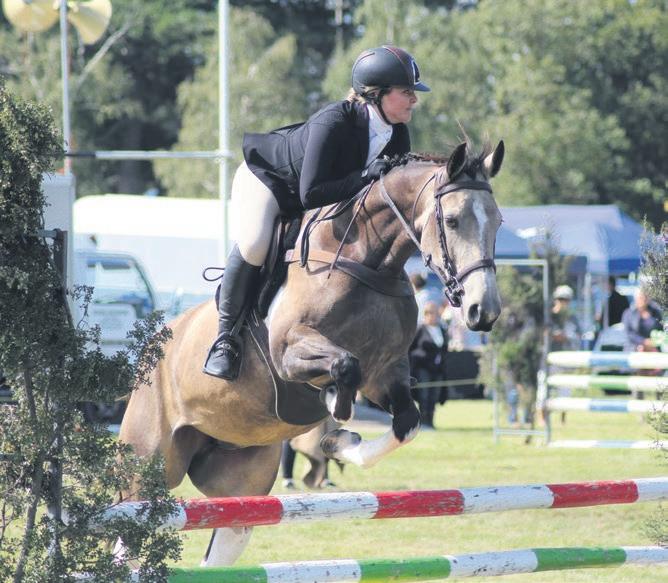
Also featuring on the programme are: Equestrian events and the return of Showjumping; Duck Herding; Wood Chopping; Kids Agri Skills Competition; Youngest and Oldest at Show along with local entertainment.
The Cheviot Show is just one of the many shows to be held around Canterbury and the West Coast over March.
Kicking off the month with the Amuri and the Temuka & Geraldine shows both being held on March 7.
The following weekend, March 14, the Mayfield and Cheviot A&P Association shows will be held.
Harwarden and Methven shows will both be held on March 21 while the month will wrap up with the Malvern A&P Show on March 28 in Sheffield.
The Malvern A&P show has been around for over 126 years and it’s 127th show at the Sheffield Domain is promising to be one of the biggest yet.
Once again, the Malvern Show will showcase the district’s finest animals, crop, baking and much more. Full of exciting ringside
events and trade stands, the evolving show is not to miss.
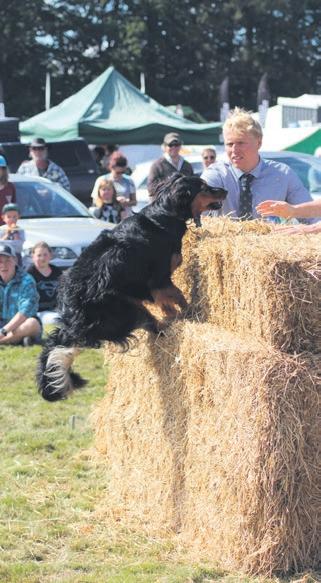
Showjumping is a staple of the Malvern Show while the dog race and other canine events always draw the crowds. Also on the programme are: a Vintage Machinery Display; Giant Pumpkin Weigh competition; Woodchopping and Speed shearing while the Ellesmere Pipe Band will be strutting its stuff.
The show season will come to a close with the Mackenzie County A&P Show in Fairlie on April 6 and the Oxford A&P Show on April 11.
The Mackenzie A&P Highland Show is one of the largest one day shows in New Zealand with up to 15,000 through the gates, a fun family day out with something for everyone for the cost of a movie.
You will enjoy watching sheep shearing, a live sheep auction, sheep dog trials, wood chopping, agri-sports, fencing, the NZ Kennel Club and Highland dancing and music.
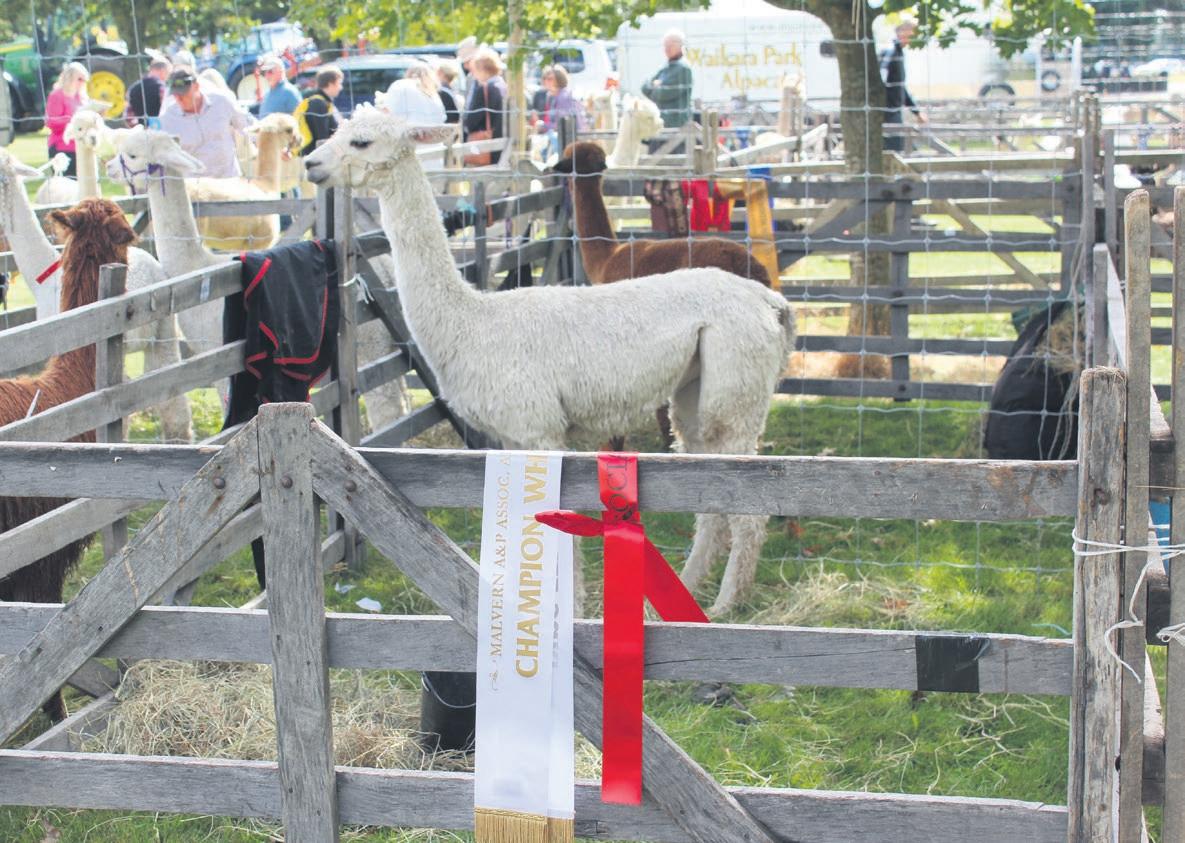
Simply the best: The district’s best livestock of all varieties will be recognised at the Malvern A&P Show in Sheffield.
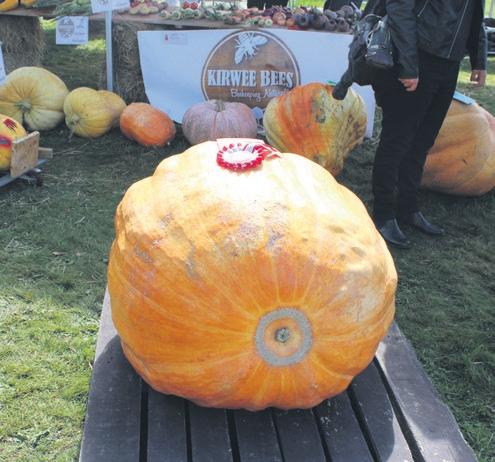
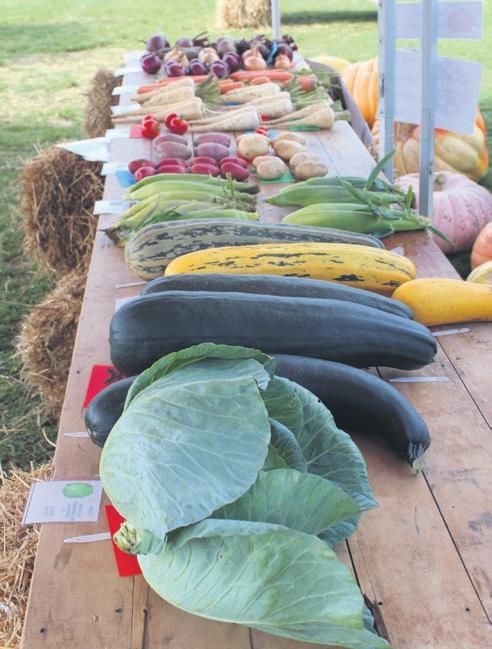
Pumpkin pride: Pumpkin growers will; be out to take out the biggest pumpkin title at the Malvern A&P Show.
Here
for you!
We wish the Malvern A&P Association all the best for a successful 2026 show.
As I write this, our region is drying out after yet more rain. My thoughts are with farmers on Banks Peninsula dealing with the damage caused by slips and flooding and with arable farmers challenged with getting harvest done.
] by Nicky Hyslop
] Director B+LNZ
While the rain has been great for grassgrowth, I am hearing reports of winter forage crops rotting in the ground which means farmers will have to quickly consider their winter feed options.
Fortunately, we are being promised some more settled, warm weather before autumn which hopefully will give farmers a window to get alternative forages in the ground.
This warm, damp weather also favours internal parasites and B+LNZ’s Wormwise programme manager and vet Ginny Dodunski strongly recommends farmers think about their stock rotations to try and minimise young stock’s exposure to worm burdens. There is some great information about this on the Wormwise website.
On February 15, we celebrated National Lamb Day which commemorates the first
shipment of frozen sheepmeat to the United Kingdom in 1882, a historic event which marked the beginning of New Zealand’s multi-billion-dollar meat industry.
B+LNZ partnered with farmer organisation AgProud and the Meat Industry Association to plan activities for the occasion. We were grateful for the support from principal partners, Rabobank and FMG, who contributed to making this year’s National Lamb Day bigger and better than ever!
One of the higher profile events was a lamb BBQ at Parliament hosted by Agriculture Minister Todd McClay.
About 250 guests, including Prime Minister Christopher Luxon, Ministers and MPs from across all political parties, many wearing their National Lamb Day t-shirts, gathered to honour the red meat sector’s success and acknowledge the significant contributions it makes to New Zealand’s economy.
Senior industry representatives made the most of the opportunity to discuss the value of the sector with guests.
On May 20 and 21, our region will be hosting B+LNZ’s annual Out the Gate event.
Centred around the theme “A sector fit for the future, today”, Out the Gate 2026 brings farmers together for two and a half days of learning, connection and inspiration.
This year’s programme is the most comprehensive yet, with three major events combined into one to help farmers make the most of their time away from the farm. The expanded programme includes the Sheep
Breeders Forum, the flagship Out the Gate event, and the Beef + Lamb New Zealand Awards Dinner, along with a new half day of science sessions focused on farmer relevant research and innovation.
Out the Gate is free for all B+LNZ levy payers, so I really encourage farmers to go to B+LNZ’s website and register.
The B+LNZ Awards Dinner promises to be a fantastic evening, celebrating the talent and technologies that drive our red meat sector forward.
Rex Morgan, one of B+LNZ’s Ambassador Chefs will be cooking the meal which will showcase the best of this country’s beef and lamb.
Tickets for the B+LNZ Awards Dinner are also available via the website.
‘The B+LNZ Awards Dinner promises to be a fantastic evening, celebrating the talent and technologies that drive our red meat sector forward.
New Zealand red meat exports reach record levels
New Zealand exported red meat and fifth quarter products worth $11.7 billion during 2025, a 19% increase on 2024, and a record value for a calendar year.
] by Kent Caddick
That’s according to figures released by the Meat Industry Association (MIA). The United States was the largest market for the year, up 17% to $3.2 billion, followed by China, up 2% to $2.5 billion.
Exports to the European Union increased 42% to $1.8 billion, the United Kingdom by 64% to $858 million and Canada by 52% to $644 million.
MIA chief executive Sirma Karapeeva said the increase was driven by strong global demand and tight supply across the board.
“This reinforces the assessment from the Ministry for Primary Industries’ Situation and Outlook for Primary Industries (SOPI) report in December that tight global beef and sheep meat production is lifting prices, outweighing economic challenges in China and global tariff impacts,” Karapeeva said.
“This result was achieved despite the volume of New Zealand sheepmeat exports being unchanged from 2024. Beef exports were down by volume but also rose in value.
“There was also a very good result for fifth quarter exports, which were up by eight per cent to $2 billion.”
Karapeeva said the 2025 also finished on a high note with overall red meat and fifth quarter exports worth $1.3 billion for the December month, 29% higher than December 2024.
“A growing middle class in many countries and changing eating habits have been factors in the strong performance.
“Consumers are becoming more healthconscious and seeking out natural protein and nutritious whole foods. We are seeing many people eating less but better-quality food at higher price points.
“Farmers, processors and exporters and the wider supply chain deserve a great deal of credit for this outstanding performance.
“The red meat sector’s export revenue is generating much-needed income not just for the New Zealand economy, but also regional and rural communities up and down the country.”
Sheepmeat exports for the 2025 calendar year totalled 371,222 tonnes, almost the same as in 2024 but with value up 31% to $4.7 billion. The average value was $12.62 per kg, compared to $9.65 per kg in 2024.
China was the largest market by volume, taking 156,345 tonnes. This was 7% lower than 2024 but a recovery in prices during 2025 saw value increase 17% to $1.1 billion.
The EU was the second largest market by volume at 69,837 tonnes, up 17%. It was the most valuable sheepmeat market in 2025, with the value of exports up 50% to $1.4 billion.
In the 2025 calendar year the volume of beef exports fell 7% compared to 2024 to 447,610 tonnes but the value increased by 15% to a record $5 billion.
The US was the largest market for the year, taking 173,056 tonnes, a drop of 5% however, high prices saw the value increase by 17% to $2.1 billion.
Karapeeva said the drop in volume likely reflected the reduced volume of overall New Zealand exports and may also be partly due to increased exports to the US by other countries.
Value: While the volume of New Zealand’s red meat exports dipped in 2025 the value of those exports rose sharply to new highs.
Deer science and research gains momentum
A standout moment for the deer industry in February was the International Deer Biology Congress, which returned to Dunedin after the southern city played home to the inaugural event back in 1983.
] with Cameron Frecklington ] DINZ
Co-hosted by Deer Industry New Zealand (DINZ) and the Bioeconomy Science Institute (BSI) and built around the theme of Your Deer Here, the event drew an impressive cross-section of people working with deer in very different ways, from scientists and environmental researchers to conservationists, farmers and hunters.
Delegates came from around the world, but the common ground was clear: a shared interest and experiences with deer and their role in both managed and natural landscapes.
The programme balanced big-picture thinking with hands-on learning. High-profile keynote speakers set the tone, while tightly paced presentations kept fresh ideas circulating throughout the week.
Learning also moved well beyond the conference room, with visits to a deer farm, an ecosanctuary, a venison processing facility and Invermay Research, part of the Bioeconomy Science Institute (formerly AgResearch).
Unsurprisingly, research took centre stage at the Congress, with two projects underscoring how science is sharpening both animal health and on-farm performance in the deer industry.
BSI’s Bryan Thompson presented on the role of red deer’s internal seasonal clock, showing how aligning management with natural growth rhythms can support heavier animals and more efficient production, while DRL, in conjunction with BSI, announced a promising new PCR test capable of detecting parasite DNA in deer, opening the door to more targeted parasite management and reducing the risk of possible drench resistance.
More information on both projects can be found on BSI’s website or on the DINZ Facebook page.
The North American Retail Accelerator (NARA) programme for New Zealand venison is now into its second half, with the first half of the three-year programme coming at the end of 2025.
The first year of NARA benefited from strong tailwinds, namely high beef prices and
• Driveways
Earthquake Repairs
New Home Specialists
Patios & Paths
rising interest in exotic proteins, but since mid-2025, the operating environment has become more complex, driven by tighter supply, stronger EU pricing for comparable cuts, and the ongoing impact of U.S. tariffs.
The programme has transitioned from a fast start into a more disciplined, executionfocused phase.
“What we’re seeing now is a programme that’s doing what it was designed to do, which is building resilience,” says DINZ CEO Rhys Griffiths. “The early momentum was important, but the real test is how venison performs when markets get tougher. On that front, we’re encouraged.
“This is about building something that lasts. The signals we’re seeing give us confidence that North America can remain a strong, stable market for venison, and that’s good for farmers over the long term.”
Since the updated VelTrak Terms of Use came into effect on 1 August 2025, the velvet industry has seen a clear lift in compliance and accountability.
The goal remains simple: to maintain a fair and transparent system, where all par-
‘Delegates came from around the world, but the common ground was clear: a shared interest and experiences with deer.
ticipants operate on a level playing field, and the integrity of velvet is protected all the way to the point of export.
A key part of this work is the VelTrak verification programme, which involves checks of accredited account owners, including exporters and agents. This verification process was approved and communicated by DINZ at the start of the 2025/26 season and is now an embedded part of the compliance framework.
The past three months have shown a noticeable improvement in monthly filing and payment compliance. Compliance has lifted steadily through December, January, and February, marking a step up on the 2024/25 season.
Max out your cool season growth
Whether you’re finishing winter lambs, growing out replacement heifers, or ramping up dairy pasture renewal, fast-growing hybrid ryegrass is the ultimate multi-tool for Canterbury farms this autumn.
] Article supplied by Barenbrug
Sow the right one, and before you know it, you’ll have happy animals and tonnes of palatable, high-energy feed, particularly in the cool season from May to September.
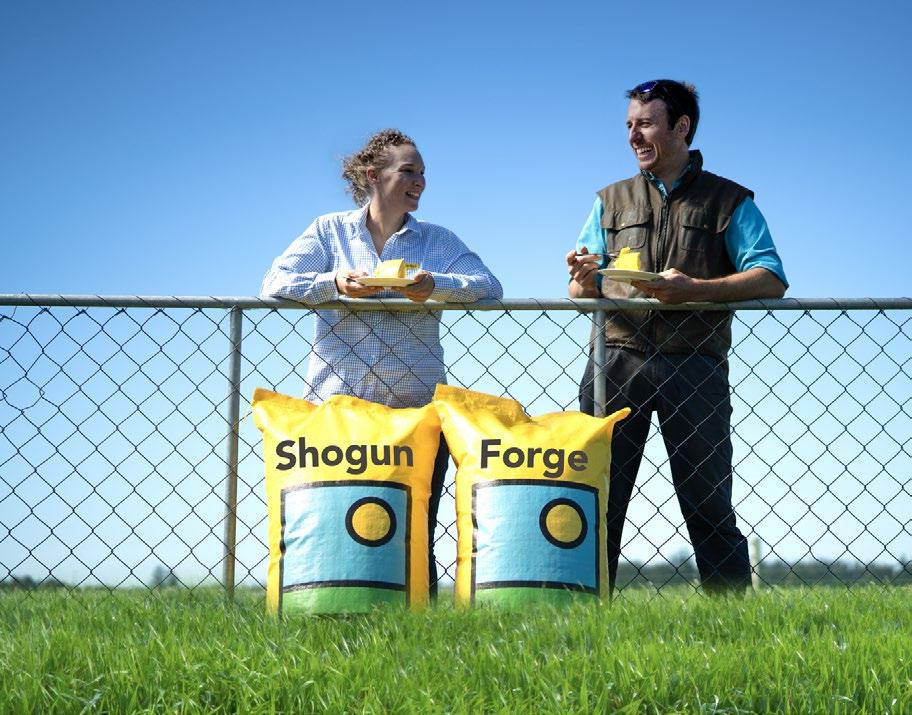
In fact, the best performing hybrids, like Forge and Shogun, can grow about one tonne of dry matter more per hectare than top perennial pastures in Canterbury during those months.
That’s the word from pasture specialist Graham Kerr, Barenbrug, who says few farms would not benefit from this sort of reliable, high octane home-grown feed, whether they’re dryland or irrigated, red meat or dairy.
“The beauty of hybrids is they are so flexible – they can fit into virtually any system, and offer opportunities that otherwise might not be viable.”
Latest yield results from the National Forage Variety Trials quantify the potential, he says.
Forge NEA is again head and shoulders ahead of its nearest competitor in the New Zealand trials, as it has been every year since it was launched in 2021, especially in winter and spring.
Forge is a three to five year hybrid for those seeking a longer-term pasture.
Runner-up in the latest results is Forge’s cousin Shogun NEA12, which offers high yield and quality for farmers wanting a shorterterm hybrid. It’s also a great one to two year pasture in summer dry areas, Graham says. Both Forge and Shogun are tetraploids. How might either of them help local dairy farmers?
“In Canterbury we often see a high burden of both broadleaf and grass weeds in paddocks. Hybrids are an excellent breakcrop that allow you to get on top of the weeds while still producing a big volume of
quality feed over from one to five years.”
With their fast establishment, suitability for spray-drilling or direct drilling and minimal grazing down-time, they also help speed overall pasture renewal rates on dairy platforms.
For red meat producers, the higher metabolisable energy (ME) of Forge and Shogun drive approximately 10% greater per head liveweight gain potential, and they can be mixed with different legumes as well as white clover to accentuate that feed value.
“For top quality early spring feed, for example, you could add something like Persian
clover; for summer, you could add red clover.
“As well improving liveweight gain for finishing stock or young animals, they can also provide extra feed through early lambing and calving. The question is not so much why would you grow them, but why not?”
Rapid cool season growth has the extra benefit across all systems of soaking up soil nitrogen at the time of year it can be most prone to leaching, he adds.
Forge NEA and Shogun NEA12 are available for sowing now. Order yours from your seed retailer today.
Max growth: Shogun doing the heavy lifting: hybrid ryegrass that keeps the feed coming.
Wet summer kickstarts autumn sowing early
A soggy summer has created favourable conditions for farmers to start repasturing early this autumn.
] Article supplied by ] Pastoral Improvements
This has left many farms with some excess feed. With covers higher than planned, this takes the pressure off grazing at a time of year that is typically quite dry.
While managing surplus grass can be challenging, these conditions offer farmers more options around pasture and forage crops to get ahead of future feed demands.
Tips for planning autumn repasturing
With feed supply running ahead of demand, some farmers are now in a position to:
• Take poorer-performing paddocks out of rotation
• Reduce pressure on tired or thin pastures
• Control weeds before they become a bigger issue
• Plan earlier autumn re-grassing or pasture renewal
• Set up higher-quality feed for winter and spring
Periods of strong growth often highlight differences between paddocks. Identifying these weaker areas now gives time to plan improvements properly, rather than rushing decisions under pressure later in autumn.
Now is a good time to walk the farm and ask:
• Which paddocks responded quickly to moisture?
• Which areas are still thin, open, or dominated by poor grasses?
• Where has persistence dropped away sooner than expected?
• Which paddocks require more fertiliser to maintain production?
If you are considering re-grassing or oversowing, early planning allows you to:
• Match species to soil type, drainage, and grazing pressure
• Align sowing with the best establishment window
• Address fertility limitations before seed goes in
• Reduce the risk of slow or uneven establishment
One of the biggest differences between an average pasture and a high-performing one is how well it gets away in the first 6 to 8 weeks.
How Pastoral Improvements can help you achieve your repasturing goals
Pastoral Improvements is an established Rolleston-based agricultural seed supplier. Our expert team take the time to understand your local conditions, your farm goals
and tailor a seed mix that meets your budget. Our seeds are top quality and our pricing is often better than our competitors. We offer fast distribution to Canterbury customers, as well as pick up options. We also have a wide selection of fertilisers available at competitive prices.
Some of our best selling autumn pastures include:
• Dual Hydrid Ryegrass (price from $7.31 per kg): Late heading (+23 days); More persistent than Italian ryegrass; Year round DM production, high digestibility and palatability; 3+ year option.
• 20 Way Perennial Mix (price from $9.77 per kg): High diversity and re-
duces soil compaction; Good feed in tough conditions; High DM, ME and protein; Winter bulk.
• Tactic Perennial Ryegrass (price from $8.08 per kg): Resilient under heavy grazing; Great winter and early spring production; Tough and persistent; Adaptable to lower soil fertility.
We have a wide range of grasses, grass premixes, legumes and herbs, brassicas, cereals and cover crops. We also offer custom mixes, fertilisers and growth promoters (biostimulants).
If you’d like to talk through your options we can help. Phone us on 03 302 7909 or visit www.pastoralimprovements.co.nz
We are an established Rolleston-based agricultural supplier providing highperformance seeds designed for local conditions, at great prices.
Our high quality seeds are often better priced than competitors, and our knowledgeable team are ready to help you!
Early signs: One of the biggest differences between an average pasture and a high-performing one is how well it gets away in the first six to eight weeks.
A hands-on approach to attacking slugs
Pieter Van Der Westhuizen, UPL NZ Ltd Regional Manager Upper North Island, has a novel way of demonstrating the efficacy of Ironmax Pro slug bait.
]Advertorial supplied by UPL NZ Ltd
Pieter says slugs will always ingest a lethal dose of Ironmax Pro, even juveniles.
“I had a field representative say to me that they’d seen slugs still in the field after Ironmax Pro had been applied.
“I suggested a simple test – squeeze the slug. If there’s visible blue residue inside, it means they’ve eaten the bait and definitely won’t be eating anything else.”
Pieter says efficacy of the product should be judged by the lack of feeding not the slugs in the field.
Ironmax Pro slug bait contains iron phosphate, a natural component of soil in a specially formulated bait. It works as a stomach poison and is fatal once ingested.
It leads to vital organs (digestive gland) being overloaded with iron which impairs the digestion process and ultimately the ability of slugs and snails to process food with feeding stopping almost immediately.
The key distinguishing feature that separates Ironmax Pro from other slug baits, is the breakthrough Colzactive® technology. Colzactive is made up of specially selected oil seed rape extracts.
Pieter says 20 different plant species were analysed and 50 potential molecules for their attractiveness to slugs identified.
“Ultimately two molecules from oil seed rape were selected for their extraordinari-
ly attractive and palatable characteristics to slugs. These are the basis of the Colzactive technology, which enhances the Ironmax Pro bait attractiveness and palatability.
The smell draws slugs away from seedlings. The taste ensures that slugs always consume a lethal dose, with feeding and plant damage stopping immediately after.”
Ironmax Pro is manufactured by using a unique wet process manufacturing, and hence it is very rainfast so it will not disintegrate under the first shower of rain.
There are possibly no better judges than Murchison, Tasman, South Island dairy farmers Chris and Stacey Hatfield.
With its high rainfall, temperate climate, and lush pastures, the area is an ideal environment for slugs. But when it comes to protecting their valuable grass (and recently planted maize) the Hatfields are taking a tough, no prisoners, approach.
Chris has a long-term vision for their business believes in an investment and result, rather than just a cost approach. And, he says, it pays off.
Chris’ approach, he says, is aggressive. He uses a 7 kg/ha application of Ironmax Pro to take-out not only the adults existing in the pasture but the next generation.
“If you go hard from the get go, that way every plant gets a crack,” Chris says.
Used to protect crops ranging from chicory and turnips to grass and maize and more, Ironmax Pro is very rainfast and contains the optimized active ingredient 24.2 g/kg ferric phosphate anhydrous, referred to as IPMax. Iron (ferric) phosphate is a natural component of soil. In Ironmax Pro, it works as a
stomach poison on slugs and is fatal once ingested.
For more information on Ironmax Pro, talk to your local technical merchant or contact Pieter Van Der Westhuizen, UPL NZ Regional Manager Upper North Island, at 021 392 740.
Slugging it out: Murchison dairy farmer Chris Hatfield uses Ironmax Pro slug bait for his pasture and recently planted maize to take out adult slugs, and the next generation.
Farmers urged to talk early as winter feed at risk
Canterbury arable farmers and dairy farmers are being urged to start conversations now about the potential for winter feed shortages this year, after a challenging season of hail and rain.
] Article supplied by ] Federated Farmers
Several significant hailstorms, combined with ongoing wet conditions, have made it a miserable season for arable farmers across the region.
Crops that would normally be harvested by this time have been severely affected, raising concerns about the availability of feed for winter-grazed dairy cows.
David Birkett, Federated Farmers arable chair, said the situation is serious but manageable if farmers communicate early.
“We want to encourage grazers of winter cows, whether they’re arable farmers or sheep and beef farmers, to talk to their dairy farmers if they think they might be short of feed because of the hail,” Birkett said.
“At the same time, it makes sense for dairy farmers to check in with their grazers about how much winter feed they expect to have.
“Early conversations now can prevent serious problems later.”
Birkett, who grows crops such as wheat, barley, and vegetable seeds on his Leeston
farm, said the damage has been very patchy, with some areas completely wiped out and others largely untouched.
“We were off to a really promising start, things were nice and dry early in summer, but then the heavy rain arrived and we had backto-back hailstorms,” he says.
“Some of those storms have been extremely localised, with entire fields flattened in one paddock while neighbouring farms escape almost unscathed.
“Wheat, barley, and vegetable seed crops have been hit in pockets across Mid and South Canterbury.
“Some growers are facing the second or third consecutive season where hail or rain has destroyed crops, which makes it extremely tough on cash flow.”
Typically, Canterbury might expect two or three hailstorms in a year, but Birkett said the region has already seen about a dozen so far this summer.
He estimated the total cost of the damage is around $10 million.
“It’s frustrating for growers because the crops were looking really strong, but now a lot of that potential feed isn’t usable at all,” Birkett said.
Canterbury dairy farmer Karl Dean, Federated Farmers dairy chair, said the importance of communication between farmers can’t be overstated.
“Dairy farmers rely heavily on winter feed from arable
Communicate: Federated Farmers arable chair David Birkett says communication between dairy and arable farmers is key to avoiding any winter feed issues.
farms and other grazers, so if there’s a shortage, everyone needs to know as early as possible,” Dean said.
“Talking now allows farmers to plan, whether that means adjusting stock numbers, sourcing alternative feed, or rearranging grazing agreements.
“It’s far better to work it out before winter rather than scrambling when the feed runs short.”
Birkett said arable farmers who provide winter grazing are facing tough decisions.
“If your crop has been damaged, you need to let the dairy farmers know,” he said.
“That way, both sides can explore solutions together. Some farms may be able to supplement feed, while others might need to reduce stock numbers.
“Good communication gives everyone options and avoids crises.”
Positive signs of continuing improvement
The positive start seen in January has continued into February with sales across both domestic and export segments and showing signs of continuing improvement with some exceptions.
]
with Allan Laurie MNZIF
] Laurie Forestry Ltd
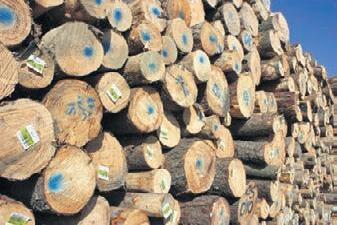
In China, daily consumption and the total softwood inventory across the eastern seaboard are key market robustness indicators. Just prior to New Year holidays, daily consumption was ticking along at 55,000 to 58,000 cubic metres and most of that was NZ Radiata pine logs.
Just to put that in to context, the timber created from 55,000 cubic metres of logs would be enough to build nearly 4,000 Kiwi houses and remember that is every day for 6 days a week (an average China work week in sawmills).
Commentators have suggested sawmill owners were stocking up prior to the Chinese New Year (CNY) holiday as they expected log prices to increase. It seems they were correct with most sales for March shipments looking at US$2 to $3 per m3 up.
The upward movement is in part the consequence of inventory not hitting the expected numbers. As at early February, the total eastern seaboard inventory sat at around 2.4 million m3, down 180,000 m3 from mid-January. The combination of less vessels from NZ than expected in tandem with good usage
rate and voila, you have supply/demand 101 working as it should.
Many regions in NZ are experiencing harvesting declines, which for many is a function of age class distribution. This in turn reflects less numbers of hectares planted 26 to 28 years ago. The Nelson region is an exception with wind damage recovery hitting its straps and likely to continue until Christmas this year.
As stated last month, what happens when sawmills get into full swing again in China first week of March is going to impact our near-term future. Key manufacturing data coming out of China is generally just OK with business as usual, or slight contraction in some regions. The positive here is the market largely continues unabated despite President Trump’s tariff stupidities.
Most commentators are suggesting a continuance of manufacturing strength citing some shift around in where things are made. Vietnam is a rapidly growing market, in some cases a tariff dodging strategy, in others a reflection of the lower cost of processing.
In the latest news, break bulk log cargos are being investigated as an option for Vietnam but there are plenty of sceptics about that. Regardless, the demand for container-
ised logs is rising exponentially and that is all be good for NZ Forest growers.
In India, it is largely business as usual, but a large NZ log exporter is attempting the normal rule the world policy settings by dropping the price US$2 per cubic metre for March cargos to ensure market share. A crazy move given the market is strong and many buyers in India feel the current prices are OK.
India demand remains stable to slightly firm with log supply generally in symbiosis with demand. But it will only take an extra vessel from NZ more than expected in a month and this market will react adversely.
For both China and NZ, sea freight rates are on the rise as ship owners generally believe current levels are not sustainable. If history repeats, we have typically seen freight increase post CNY, a reflection of demand for cargos in the Northern Hemisphere which ship owners consistently tell us are more profitable.
The net result of the current push and pull is we are likely to see wharf gate prices remain largely unchanged in March, meaning stability continues.
Despite the current levels being slightly below where forest owners prefer, they are stable and that is starting to see more com-
‘We are
likely to see wharf gate prices remain largely unchanged in March, meaning stability continues.
petitive rates for getting the standing tree off the stump and to the market. Ultimately the total supply chain benefits from stability.
The NZ domestic sawmilling scene is tending toward a game of two halves. The South Island, particularly Canterbury, is scoring the most runs, with demand increasing and the mood optimistically cautious with the order book starting to fill.
My spies in the North Island suggest a very low run rate is prevailing with the market generally sitting on its hands, demand weak to just OK, and the mood optimistically hoping it will get better.
As always, please remember the thoroughly important message. It remains, as always, fundamentally important, the only way forward for climate, country and the planet, is to get out there and plant more trees”.
Boost for hill country erosion control
The Government is looking to further protect productive land by committing nearly $28 million over four years for erosion control projects.
] by Kent Caddick
Applications for funding support under the Hill Country Erosion Programme (HCEP) have opened, and councils across the country are invited to submit proposals for eligible projects.
This round allocates $27.8 million for erosion control work to be delivered between 2027 and 2031.
Agriculture Minister Todd McClay said the programme helps reduce impacts of severe weather, protect soil health, and limit downstream damage.
] by Solis Norton
“This programme is one of our most effective tools for supporting farmers and growers to protect their land and prepare for future storms,” McClay said.
“We want to continue safeguarding productive farmland around the country, while reducing the environmental and economic impacts of erosion on local communities.”
He said cabinet established the programme in 2007 and Te Uru Rakau –New Zealand Forest Service’s current $25.2 million investment (2023–2027) is supported by $87 million in cash and
in-kind contributions from 14 partner councils and from landowners, reflecting their strong support.
“The funding went towards the councils delivering regionally tailored programmes that include treating vulnerable land, working with landowners to create farm-scale erosion control plans, and building regional capability.
Information on the HCEP and the 2023-2027 regional programmes can be found on the MPI website.
Boost: The Government has committed nearly $28 million to hill country erosion control work.
The rise of the Wilding Conifer Army
After the post-covid years of good funding, resources for the control of wilding conifers are constricting. The spread of these trees is worsening in many areas. Are we fighting a losing battle? The implications for our iconic landscapes can hardly be overstated. Is that just progress?
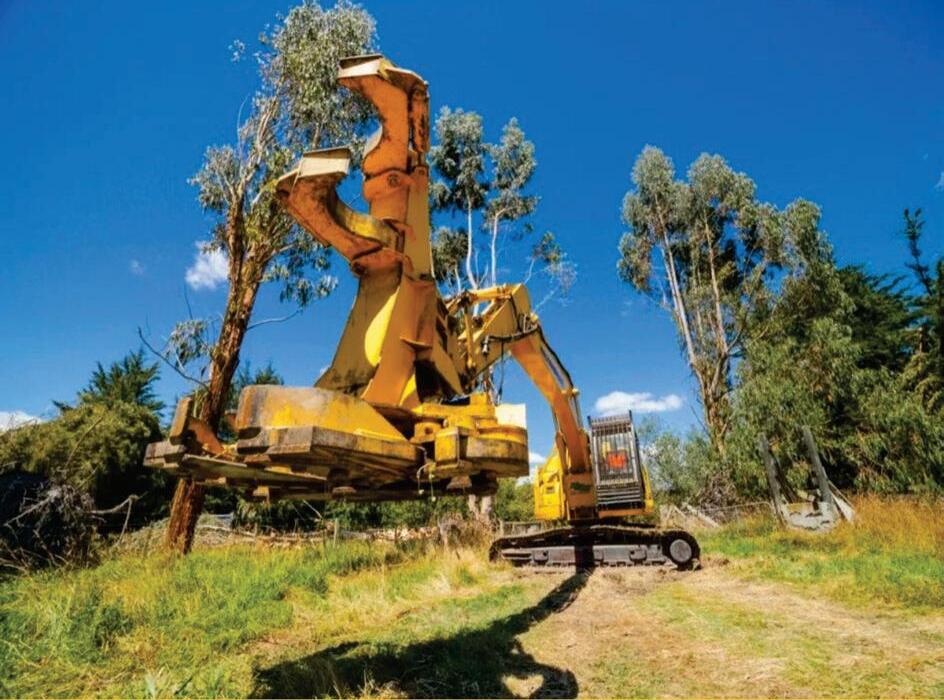
can be comparatively benign: no firearms, or toxins, no explosives or helicopters, or blindfolds or ethical conundrum. Just some loppers, a silky saw and the trusty Stihl. Simple and low cost. Almost like anyone could do it.
Maybe new weapons over the next twenty years will give us the absolute resolve to turn the tide against yet another unfortunate invasion story.
Fire may be one such weapon. Used with caution. It inherently gives us the heebies, surely there are others.
The unique characteristics of wilding conifers as a pest present unique opportunities for their control. In many places the trees are reasonably accessible. Control methods
A new resource may also emerge in a couple of years to combat these trees. Over the next decade economic activity will decline with de-industrialisation and its knock-on implications for other sectors and the government coffers as natural gas supplies dwindle to a sputter. We’ve relied on gas as a cheap, dense source of energy a lot over the last fifty years. Its loss will be significant. Unemployment will rise and frustration too. The importance of people and their physical work will be enhanced as a result.
So maybe a new wilding conifer control system could mimic George Yerex’s culling teams of the 1930s. His staff were employed to knock back vast numbers of red deer and other ungulate pests at the time.
Priority locations picked out with mapping data and artificial intelligence to show where the trees are and which areas are safe, accessible, and close enough for our new Wilding Conifer Army.
Army members overnighting locally three nights per week in smallish towns to bolster rural activity.
Funding would be from a combination of landowners and the government. For landowners it creates an obligation to act, without being unduly onerous. I’m too blunt a tool to incise the politics but it could surely work.
Government funding of pest control is enduring and essential and very high at times. Around 1900 about a quarter of the entire Department of Agriculture budget went on rabbit control.
For perspective, that would be over a billion dollars from MPI each year, or 30% more than the entire budget (estimated) for eradication of mycoplasma bovis.
For sobriety, we ought to consider the cost of energy from the Wilding Conifer Soldiers with the cost of energy from that natural gas we mentioned.
Our Conifer Army would make a great story. Elements of farm productivity, biodiversity, conservation of national values, social support. Giving another unfortunate invasion the chainsaw.
Considerations when planting trees
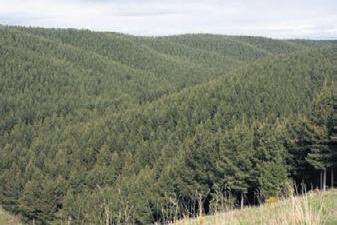
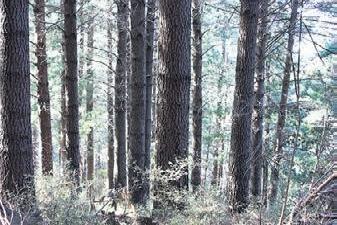
There are a lot of benefits to planting trees on your land, but there’s also a lot to consider before you commit your land to forestry.
] by Kent Caddick
Tree planting can:
• help diversify your income from timber, honey, and carbon credits
• improve the productivity of your land, especially rough areas that don’t grow good pasture
• help soil retention on steep slopes
• provide windbreaks, and shade for livestock
• provide landscape diversity and wildlife habitat
• help combat climate change by absorbing carbon
• help protect the environment
• create jobs
What to think about before you plant forest
There’s a lot to consider when you’re planning to plant trees on your land or grow your own forest including your location, the characteristics of your land and your reasons for planting
These factors will dictate what and where you plant, and how you manage your trees. Good planning will increase your likelihood of success.
Know what you want to achieve from planting trees. Think about why you want to plant, and what you’re hoping to achieve by planting trees. What benefits do you want to get from planting?
Are you aiming to harvest the trees at some point? Are you trying to stabilize erosion-prone land? Are you planting manuka to generate income from honey? Do you want to revert some of your land to native forest to improve biodiversity and create habitat for wildlife? Are you trying to enhance water quality on your land by planting along waterways
(riparian planting). Or are you trying to reduce carbon emissions?
Knowing why you’re planting should help you identify what and where you should plant. What is the capability of your land?
Think about whether the benefits you’re hoping to get from planting a forest will match the capabilities of your land. You need to make sure your land is suitable for the type of tree planting you want to do. Consider the local climate and micro-climates, and the soils, terrain, and geology of your land, along with the optimal growing conditions for the tree species you want to plant.
Talk to neighbours who have forest on their land to see what grows best. Your local plant nursery or garden centre can also provide advice on which trees and plants do well in your area.
Some land will be ideal for growing your own forest. You could plant your new forest: on a slope or area of high land that’s prone to erosion; near livestock paddocks that have no natural shelter; in areas prone to high wind where a break is needed; in a riparian zone (beside a waterway) – a great way to restrict stock access.
It’s better not to plant forests where: native vegetation is growing, particularly if you
Get advice: There’s a lot to think about before embarking on planting trees on your land.
plan to plant pines; land is classed as ideal for arable or pastoral farming; land is in an area of significant value.
Know the rules
A number of rules and regulations apply to forests, including the Forests Act (for native forest), the National Environmental Standards for Commercial Forestry (NES-CF), and the Emissions Trading Scheme (ETS).
Information for this article was supplied by Ministry of Primary Industries. For more information go to: www. mpi.govt.nz/forestry/getting-started-forestry
] by Blair rooney
]
Growth Farm Focus
What farming AI should be
AI is becoming part of everyday business decision-making, and farming is no exception. In farm financial management, however, the role of AI should never be to replace judgement.
For this support to be genuinely useful, it must fit naturally into existing financial workflows. Insights should sit alongside the reports and records farmers and advisors already rely on, not in separate dashboards or disconnected tools.
Farming is a financial business built on uncertainty. Cashflow fluctuates, seasons vary, costs shift, and decisions are often made with imperfect information.
Financial choices carry real consequences for farm businesses, families, and long-term sustainability.
The challenge farmers face is not a lack of data. Most already have reports, budgets, forecasts, and historical records. The real challenge is understanding what those numbers are saying at the moment decisions need to be made, without adding more mental load.
This is where financial decision support matters.
AI should help turn farm financial data into clarity. It should highlight meaningful changes, emerging trends, and potential risks that deserve attention.
Its role is to act as a sense-check, helping farmers and advisors pressure-test assumptions and think things through before acting. It should support understanding, not deliver answers without context.
When insights require extra steps or new habits, they quickly become another task. The best decision support works quietly in the background and helps people move forward with confidence.
This clarity is just as important for trusted financial advisors, including accountants, rural bankers, and consultants. These professionals help translate farm data into strategies, risk assessments, and long-term plans. When farmers and advisors can see and understand the same insights, conversations become more productive, proactive, and focused on the future.
AI can strengthen the partnership between farmers and their advisors by surfacing important signals early. Changes in cashflow, shifts in spending patterns, or emerging pressure points can be identified sooner, allowing advice to happen before issues compound. In this way, AI does not replace advice. It strengthens the foundation it is built on.
Control and trust are essential in farm financial management. Farmers need to understand why an insight is being shown and what data it is based on. Advisors need the
same transparency so they can confidently stand behind the guidance they provide. Explainable, data-driven insights build trust and support better decisions on both sides.
The future of farming AI in financial management should be human-led. Technology should reduce uncertainty, improve under-
standing, and strengthen financial judgement without taking responsibility away from the people who know the farm best.
Progress comes from giving farmers and their advisors clearer information and better support to make confident decisions, together.
That is what farming AI should be.
Helping out: AI can strengthen the partnership between farmers and their advisors by surfacing important signals early.
A Home That Belongs to the Land
Supplied by David Reid Homes Christchurch North
There’s something unmistakably fitting about a home built for rural Canterbury. It’s not just the view. The open skies, long horizons, and life beyond the gate shape daily life, and a well-designed home sits naturally within that setting.
This contemporary farmhouse does exactly that. Strong black gable forms echo the region’s traditional rural buildings, while large windows bring the outdoors in. From dawn to dusk, the changing seasons become part of life inside.
Inside, spaces are generous and practical. Vaulted ceilings give scale without losing warmth. Natural textures and a simple, neutral palette provide a calm backdrop to busy country days. Open-plan living makes it easy to gather, whether it’s family dinners after work on the farm or friends around the kitchen bench.
Durability and practicality are built in. Materials are chosen to withstand country living, ensuring the home works hard today and for the years ahead.
“Farm and lifestyle homeowners plan for decades. We build homes that work hard today and for the years ahead.”
—
Carl Fordyce, Director
This is a home designed to live well on the land. Warm in winter, cool in summer, and built to last. Every room, every material, and every detail is made to support rural life, creating a home where family, friends, and farm life come together effortlessly.
Start your rural build today Get in touch with Carl today on 021 0272 8839 or visit our website: davidreidhomes.co.nz
Protecting concrete surfaces on farm
In a dairy farming environment, concrete floors work harder than almost any other surface on site.
Advertorial supplied by
] Totalsite Supplies
Daily exposure to moisture, effluent, cleaning chemicals, and constant hoof traffic quickly takes its toll, leading to cracks, erosion, and uneven surfaces that can compromise animal welfare and shed efficiency.
That’s why Rockbond Mix & Pour has become a trusted repair solution for modern dairy operations.
Designed specifically for harsh agricultural conditions, Mix & Pour is a high-performance, quick-setting concrete repair compound that delivers long-lasting results where standard patching products fall short.
Its waterproof, acid and alkali-resistant formulation makes it ideal for dairy sheds,
yards, and high-washdown areas where hygiene and durability are critical. Repairs can often be walked on within hours, allowing farmers to carry out maintenance between milkings with minimal disruption.
Ease of use is another major advantage. Simply mix with water and pour into damaged areas, no specialist tools or contractors required. Once cured, the surface bonds strongly to existing concrete, reducing further breakdown and helping prevent pooling, slips, and hoof injuries.
By maintaining smoother, safer concrete surfaces, farmers can protect livestock, reduce ongoing repair costs, and extend the life of existing infrastructure.
Rockbond Mix & Pour is a practical, farmer-focused solution that supports efficient,
Established in 1987, Southern Woods has been growing millions of quality plants for over a generation.
Talk to our knowledgeable team about fruit trees for your next project.
Over 75 varieties of
compliant, and well-maintained dairy operations, because downtime in the dairy shed is never an option.
Rockbond Mix & Pour is available through Totalsite Supplies, with locations in Christchurch and Timaru.
Results: By maintaining smoother, safer concrete surfaces by using Rockbond Mix & Pour, farmers can protect livestock, reduce ongoing repair costs, and extend the life of existing infrastructure.
DairyNZ holds Milksolids Levy vote
Canterbury dairy farmers are being encouraged to have their say on whether to continue with a Milksolids Levy in the upcoming vote, which closes on Friday, March 13.
] by Kent Caddick
DairyNZ chair Tracy Brown said the Milksolids Levy enables the organisation to support farmers in driving on-farm profitability and sustainability through science and research, policy advocacy, and extension behind the farm-gate.
“For generations farmers have been part of each other’s success. Through the Milksolids Levy, you’ve shared knowledge, the cost of future-focused research, and its onfarm benefits, and established the clear, united voice of dairy that has generated more government support and practical policy,” Brown said.
“The Milksolids Levy vote is a chance to do what you’ve always done for the sector, to come together to continue building a stronger future for New Zealand dairy farming.
“This vote is about whether DairyNZ can keep backing farmers with the research, development and advocacy that move our industry forward.
“There are no plans to change the current milksolids levy of 4.5 cents per kilogram of milksolids (MS).”
Collected under the terms of the Commodity Levies (Milksolids) Order 2020, the levy is capped at a maximum of 5c/kgMS.
Under the proposed Commodity Levies (Milksolids) Order 2026, the maximum rate will stay capped at 5c/kgMS for the term of the new levy order.
“We encourage farmers to vote. Our vision is to ensure the levy is the best investment of every New Zealand dairy farmer.
“A recent independent audit on our industry-good activities funded by the levy revealed a seven-fold return in value.”
Brown said the Milksolids Levy helps New Zealand farmers be competitive on the world stage through productivity, strong farm systems, and sustainability.
“New Zealand leads the world in responsible dairy production. Together, we support a thriving dairy sector that is intergenerational, where our care for land, people, animals, and community is world class.” she says.
50 HEAD OR 1,000 HEAD, WE’LL HELP YOU STAY AHEAD.
At FMG, we’re here to help dairy farmers stay informed and get ahead. That’s why along with offering useful advice and tips, we support dairy workshops and seminars happening right across the country. Because at the end of the day, learning the latest techniques and developing new skills will help you make positive changes and better decisions. So take the opportunity to stay ahead at a dairy event near you. Head to fmg.co.nz/dairyevents to find out more. We’re here for the good of the country. SUPPORTING
Vote now: DairyNZ chair Tracy Brown says the Milksolids Levy helps New Zealand farmers be competitive on the world stage through productivity, strong farm systems, and sustainability.
Data showing Canterbury farmers have made giant strides on environmental performance under a farm plan model highlights the worth of that tool according to Federated Farmers vice president Colin Hurst.
] by Kent Caddick
Environment Canterbury (ECan) data revealed the number of farms receiving A grades in Farm Environment Plan audits in the province has jumped from 14% in 2017 to 77% during 2024-25. The number of C and D grades dropped from 12% to 2% over the same period.
ECan introduced the plan audits to check that farm practices were being managed to reduce risks to water quality and to protect mahinga kai (food gathering) values.
“The huge progress on stock and nutrient management, handling effluent, pinpointing erosion risk and other aspects covered by these plans shows the vast majority of farmers are highly motivated to lift their game,” Hurst said.
“Our sector is constantly being bagged by certain greenie groups as uncaring stewards of land and water, yet these results show completely the opposite.
“Farmers are frustrated by this sort of criticism, anyone would be. Maybe the findings from this independent monitoring by the regional council will blunt some of the carping we face from some quarters.”
In releasing seven years of Farm Environment Plan (FEP) data this, ECan noted a shift in how Good Management Practice is interpreted and applied.
“Guidelines have tightened up and there’s
been lots of great feedback from industry on that as well, so that’s been quite a collaborative effort,” an ECan statement said.
Hurst said Federated Farmers has consistently argued that progress on environmental indicators takes time, and the pace is picking up.
“That is also backed up by the ECan audits. The audits show that farmers in Selwyn are outperforming the wider Canterbury results by about 10%. This reflects the fact that FEPs were introduced in that district first, with on-boarding of the rest of the province happening on average two-to-three years later.
“Both Canterbury and Selwyn have lifted, but Selwyn led the way – A grades
have become the norm and C and D grades are now almost gone,” ECan said.
Hurst said a standout area of performance has been irrigation management, while ground water nitrates are also trending down.
“Central Plains Water Limited’s (CPWL) latest groundwater monitoring shows nitrate levels have been trending down in most wells the company monitors over the past five years.”
FEP auditor Charlotte Senior said that was no coincidence.
“That’s farmers making changes and sticking with them. Efforts are really starting to add up,” Senior said.
Hurst said the next big change expected in Canterbury, and around the rest of New Zealand, is the rollout of Freshwater Farm Plans, or as farmers know them, farm plans.
Trending: according to Federated Farmers Central Plains Water Limited’s latest groundwater monitoring shows nitrate levels have been trending down in most wells the company monitors over the past five years. Photo supplied by CPWL.
“With the overhaul of the Resource Management Act, the Government has said that farm plans will be a key tool.
“They’ve pledged that these will be flexible and farmer-led, helping farmers identify environmental risks on their farm and then plan practical actions to manage these.”
He said Federated Farmers agrees that farm plans should become the primary compliance tool where there is a risk to the environment.
“The aim should be to replace complex, overlapping farm regulations with a single, practical, risk-based farm planning system that improves environmental outcomes while reducing unnecessary compliance and cost.”
Information for this article was supplied by Federated Farmers. For more go to: www.fedfarm.org.nz
] with Peter Burton
Are animal rights encroaching too far into farming?
A recent by chance conversation set me thinking. The person involved was closely connected with the closing down of the grey hound racing industry in this country.
That took me by surprise along with numerous people I’ve spoken with, and I was keen to know the thinking behind the move.
The major reason given was the unacceptable loss of young dogs during and after training. It was also claimed that the animals were primarily regarded as a means of income with little consideration given to their welfare after racing.
That set me to thinking how those criteria might be applied to the horse racing industry. As always there are grey areas that could be debated at length.
Somewhat cynically I pondered on the monetary aspects of the two industries and the influence that could have.
There is little doubt that animal rights groups are applying pressure in all sorts of ways by changing the perception of what pets are and how they ought to be treated.
Far fewer lone goats chained to a peg with only basic shelter are seen now compared to 50 years ago, however there are just as many blackberry patches and rough areas now as then.
Where does the dairy industry fit in this scenario, if in fact it does? For many baby boomers small dairy farms were common on the outskirts of towns and cities.
There were few that hadn’t spent time on a friends or relatives dairy farm, been involved in taking cream cans to the gate and feeding the whey to the pigs.
In the Waikato where I grew up 50-acre farms were common and 50 cows provided a worthwhile income for a family of mum dad and four children.
Prior to computerisation which began in the mid-1960s, production and breeding data
was entered by hand alongside the name of the cow.
Most cows were named and the characteristics of each animal were generally well known due to being milked twice a day.
They were valuable animals and it was not uncommon to see complete herds wearing canvas cow covers during the depth of winter.
The size of farms and herds have grown exponentially primarily due to the steady erosion of income. More cows were required to provide a financially economic unit, herds of over 500 milking cows are now common.
When visiting a robotic milking shed the manager seated in front of several computer screens informed us that, “milking cows was for Muppets”, with the inference being that actual contact with animals was unnecessary.
Long term it has to be asked how that might play out as dairy cows are social animals domesticated by people over hundreds of years.
The current loss of young animals is an aspect few in the industry wish to discuss. Typically, animals are milked for the first time as two-year-olds, and figures indicate that less than half of those make it to the second season.
Dairy cows don’t reach peak production until seven years of age, and a top well cared for animal can still be making a worthwhile contribution at twelve years of age.
As all things are cyclical, might we start to see the breakup of large herds into smaller units managed by people with a genuine love of farming and cows?
Yili Group appoints new CEO
The Yili Group has appointed a new Chief Executive Officer to lead all five Yili Oceania Business Division companies in New Zealand.
] by Kent Caddick
Experienced New Zealand agribusiness executive Alex Turnbull took up up the role of CEO of Westland Milk Products, Oceania Dairy, Canary, EasiYo and Pure Nutrition, last month.
Turnbull was most recently Chief Executive of Manuka Health, where he led a significant business turnaround and delivered sustained improvements in profitability, cashflow and operational performance.
Previously, he held senior executive and board roles at Fonterra, including Managing Director for Latin America, and leadership positions across global ingredients, nutri -
tion and consumer businesses.
Turnbull said he was excited to be joining a company so well-placed to play a major role in furthering the reputation of New Zealand dairy with global consumers.
“New Zealand plays a unique and important role in Yili’s global portfolio,’’ Turnbull said.
“I’m excited to be joining the business and to work closely with our farmers, customers and teams to build on the strong foundations already in place and create enduring value together.”
Turnbull will report to the Director of the Yili Oceania Business Division of Yili in New Zealand, Zhiqiang Li.
New job: Former Chief Executive of Manuka Health Alex Turnbull has taken up the role of Chief Executive Officer for all five Yili Oceania Business Division companies in New Zealand.
Li said the Mr Turnbull’s strong track record across New Zealand dairy and food sectors made him the ideal candidate to build further on the global gains made by Yili’s New Zealand companies in recent years.
“Alex brings with him more than three decades of senior leadership experience with a strong New Zealand focus across the global dairy and food sectors, spanning ingredients, consumer brands and foodservice.
“He has a mandate to strengthen performance, deepen farmer and customer partnerships, and support the long-term success of Yili’s New Zealand businesses.’’
Li said Yili’s investment in its high-value strategy is continuing to reap dividends with extra production capacity in the high-value protein and fats categories leading to increased global sales.
“Across a number of categories, demand continues to outstrip supply.”
Accurately control flow-rate to dose screened effluent into irrigation mainlines.
Jim Vaughan invented the first chopper pump in 1960 after working on local dairy pumps in his repair shop.
Vaughan s pump will handle raw effluent with ease, even that containing problem solids like rope, twine, or eartags.
These American made extreme duty pumps are commonly used for heavy industrial, or municipal wastewater pumping.
On farm they are great for:
• Raw effluent
Saucer pump-out
• Saucer/pit mixing
• Flows up to 2,000m3/hr
Separate solid from liquid & produce high quality dry bedding materials from raw dairy cow effluent for barn operations.
The RotoSieve rotating drum screen from Sweden is designed to effectively separate fine stringy
from a liquid stream.
The
DairyNZ calls for changes to RMA reform
The Government’s proposed Resource Management Act reform needs further work to ensure it delivers on its intent according to DairyNZ.
] Article supplied by DairyNZ
In December 2025 the Government released two new bills, the Planning Bill and the Natural Environment Bill, to replace the Resource Management Act.
DairyNZ Chair Tracy Brown said reform was needed, but it needed to be done right.
“We fully support the need for change, but it needs to be practical for farmers and beneficial for the environment,” Brown said.
“The current act is more than 30 years old, so any new legislation needs to reflect the realities of farming now and set both the sector and wider New Zealand economy up for success into the future.
“Reducing complexity, fewer consents, more consistency, and better recognition of the non-regulatory work farmers are already doing, are things we strongly support.”
However, Brown said after reviewing the legislation and talking to farmers there are some significant concerns that need to be looked at.
“The proposed changes to permitted activities make things more onerous for farmers. We need clear and practical permitted activity rules for low impact farming activities like grazing, track maintenance, and standoff pads.
“We also have concerns about how environmental limits will be set. We want to ensure they are based on environmental outcomes such as ecosystem health which are achievable and effective in a real working catchment.
“The legislation proposes market based approaches to allocation and resource use levies. These need to be deferred until there is clear evidence they are a suitable and effective approach.
“It’s encouraging to see the Government
taking on the views of the sector and already ruling out any sort of water tax.”
Browwn said the proposed changes also mean Freshwater Farm Plans would duplicate consent requirements farmers already face.
AUTOMATIC GATE RELEASE TIMER
• 60 - 70% reduction in lameness
• Up to 450 hours labour saved per year
• Open new breaks for cattle, horses and sheep
• Release cows for milking (ideal for feedpads)
• Break-feeding or holding back after milking
• One-off cost and fast ROI
• 24 month warranty with excellent backup service
NEW FEATURES
• Metal gearbox
• Heavy duty solar panel
• Backlit display
“These plans should be the main tool for managing waterway risks on-farm to avoid duplication and be better tailored to farms individual needs.
“We will continue working with the Govern-
ment and our sector partners to ensure any reform is effective, workable and enduring.”
You can read the DairyNZ submission at dairynz.co.nz/ rma-submission.
Reform it: DairyNZ says while RMA reform was needed, it needs to be done right. Photo courtesy of CPWL.
Biochar, Humates as enviro saviour
In the previous article, I discussed the role of humates, biochar, plant roots and foliar strategies in slowing nitrogen movement through the soil.
] by Dr Gordon Rajendram
Building on that foundation, it is useful to look more closely at the research behind carbon-driven nitrogen retention and why these tools are gaining increasing attention within New Zealand farming systems.
Biochar has been investigated across a range of agronomic settings for its capacity to alter nitrogen dynamics.
Its porous structure and surface charge characteristics increase sorption capacity, improve microbial habitat, and moderate nutrient movement through the soil profile.
Controlled trials have demonstrated measurable impacts on nitrate mobility. For example, research published in Agronomy reported that incorporating biochar at approximately 10% by volume prevented detectable nitrogen leaching under experimental conditions, highlighting its capacity to physically and chemically retain nitrogen in the root zone rather than allowing downward migration.
Further work examining “bioactive carbon” amendments has reinforced this functional outcome.
Studies evaluating nitrogen fertiliser efficiency and ecological sustainability observed improvements in nitrogen use efficiency alongside reductions in environmental losses.
These findings align with the broader international literature and complement observations made in New Zealand soil science research, where carbon additions influence microbial immobilisation pathways and nitrogen cycling behaviour.
Humates, particularly in solid form, have also shown significant promise as a food
source for microbes. Their complex organic structure supports cation exchange capacity, microbial activity, and nutrient buffering.
Reported trial data indicate reductions of up to 60% in nitrate leaching when solid humate materials were integrated into fertiliser strategies.
Such results are consistent with the theoretical framework long outlined by soil scientists, including Hedley and colleagues, where
AGRI-SHELL
organic matter fractions regulate nutrient retention through chemical binding and biological mediation.
It is important to emphasise that these tools are not substitutes for sound nutrient management planning. They function best when integrated with appropriate fertiliser timing, application rates, and soil monitoring.
A brief note should also be made regarding pure sucrose. While not a retention agent
‘
It is important to emphasise that these tools function best when integrated with appropriate fertiliser timing, application rates, and soil monitoring.
in the structural sense, carbon supplementation through simple sugars can stimulate microbial uptake of available nitrogen, temporarily immobilising nitrate within microbial biomass.
This mechanism has been explored within nitrogen cycling research and can contribute to reduced short-term losses when used strategically.
Taken together, the emerging research evidence indicates that carbon-based amendments can play a meaningful role in addressing nitrogen leakage pathways.
For farmers facing increasing environmental accountability and regulatory pressure, these tools deserve consideration not as silver bullets, but as practical components within a broader nutrient stewardship strategy.
9
10
Crushed Mussel Shell For Raceways
] with Matt Bubb ] Aqualinc
Renewing your resource consent
The article I wrote for the last Canterbury Farming publication generated much interest and feedback. Because of this, the article this month continues with a similar subject, relating to consent replacements and the Resource Management (Consent Duration) Amendment Act.
The purpose of the Act is to provide consent holders with some degree of certainty during the transition associated with of the resource management reforms.
What this new legislation does is automatically extend the expiry date of some resource consents by law. If your consent expires before 31 December 2027, then the duration will automatically extend to that date. This includes replacement applications that the Regional Council may already be processing. What happens after 31 December 2027?
This is not certain at this stage. Government is proposing that the switch from the RMA to the new resource management system should occur by 2029.
The Government has then proposed a further extension to consent durations until two years after the transition period ends. That would take us to 2031.
However, given this further extension is only a proposal at this stage, the details may change as the Bills progress through the legislative process.
In some respects, it will be sensible if there are changes to the current proposals. The setting of these dates provides more cer-
tainty and helps to prevent wasted time and costs associated with replacing consents in the transition period. That is a major win for affected consent-holders and so is great news.
However, the alignment of dates for replacing consents will mean that consent-holders, their consultants and Regional Councils will be expected to develop and process huge numbers of applications for consents at the same time.
Although some may feel that this is not a problem for the farming community, I am not sure that this is the case. If there is a lack of appropriate expertise to cope with the work, costs are likely to increase, and significant delays are also likely. Such delays would be associated both with getting the applications drawn up in the first place, and with processing by Council.
Given this situation, it would seem sensible for there to be a more staggered or staged approach, rather than fixed dates. A better approach may be to extend consents for a fixed period, with that period applying from the current date of expiry for the consent.
This would help manage the resourcing impacts over the transition period, while still providing certainty to existing consent holders that consents will remain in place during this period.
Submissions have been made on this point hopefully this ‘tweak’ can occur to help prevent significant future resourcing issues.
For those who hold consents that will be expiring soon, you currently have a choice whether to extend the duration of the existing consent or apply to replace the consent under the existing framework.
Most will choose to extend the consent, and this does not require any action: this will happen automatically. However, there are situations where replacing the consent now may be beneficial.
Aqualinc Research Limited has Clients in both camps, with the most common reason for proceeding to replace consents now being to provide certainty if there is the possibility of a farm sale in the near future. It may also become something for banks to consider where the consent holder is looking to re-finance. If you have consents that are due to expire in the next few years, or if you want more information about whether to renew your consent now, or wait, then contact your trusted resource management advisor to discuss your best option.
IRRIGATE WITH CONFIDENCE. IRRIGATION SYSTEMS REMOTE MANAGEMENT PRECISION VRI
BY LINDSAY ™
Irrigation installation tips and in-season maintenance
When designing and installing a new irrigation system, it needs to fit your land, business and water restrictions. A well-designed system means efficient use of water, energy, labour and capital.
Article supplied by Irrigation NZ
A new system is a major investment and should be thoroughly researched. Use a ‘Blue Tick’ accredited operator for installation work and advice.
IrrigationNZ has a range of resources to help in the design and installation of a new irrigation system. When designing a new irrigation system, consider installing a soil moisture monitoring system.
This will help with irrigation scheduling and allow you to irrigate efficiently. IrrigationNZ has information on soil moisture monitoring equipment and how to install it.
When installing a new irrigation system or pump, make sure you get the performance specifications from the supplier which will be a benchmark for future checks and testing.
Failures of pumps and irrigation equipment during the season can waste a lot of time, restrict pasture growth and create stress. Regular equipment checks and ongoing maintenance is vital in preventing breakdowns and reducing the chance of serious damage.
Having a weekly or monthly and annual task list for irrigation maintenance, where you can check tasks off easily, ensures maintenance is kept up-to-date.
Below is a summary of some essential maintenance procedures for most irrigation systems. For more detail specific to your system, contact the service provider. If you install a new pump, ensure the supplier provides the specifications and a pump commissioning report. This will serve as benchmarks for future checks.
Maintenance checklist during irrigation season
At the pump:
• grease pump and motor
• check flow readings, operating pressures and amp readings to compare with initial readings or specifications.
At the irrigator:
• check sprinklers for condition, rotation, blockage, nozzles not hooked up, wear and tear
• check irrigation speed and operating pressure
• check application depth and compare against design specifications
• check hoses and pipes for damage or leaks
• follow maintenance schedule for regular greasing of travelling irrigators
Checklist for high winds
Have a plan to manage travelling irrigators in high winds. This may include:
• turning water off but keeping the irrigator filled with water
• parking the irrigator behind shelter
Check it: Regular equipment checks and ongoing maintenance is vital in preventing breakdowns and reducing the chance of serious damage to your irrigation system.
• parking the irrigator in the same direction as the wind to minimise the contact area.
• Tieing down rotary booms.
Problems which occur with irrigation can range from minor issues which take time to fix, through to major problems that cost time, money and loss of pasture production (from delayed irrigation) or loss of nutrients (through over watering).
It is important that any problem is fixed quickly and the cause identified to stop it happening again.
Outback redesigned from the wheels up
The all-new, seventh-generation Subaru Outback takes one of New Zealand’s most trusted outdoor playground-conquering SUVs to a whole new league of toughness, capability and everyday ease.
] Advertorial supplied by Subaru NZ
Redesigned from the wheels up as a purpose-built SUV, the 2026 Outback ushers in a bold new design and engineering direction with backcountry adventure at its core. It stands taller, looks tougher and feels more purposeful in every detail.
Leading the charge is the Outback Wilderness, making its New Zealand debut as the most adventure-ready and capable Subaru ever produced.
The all-new Outback is available in two direct-injection Boxer engines. A refined 2.5-litre naturally aspirated engine delivers more useable torque, reduced noise and smoother performance.
Wilderness exclusively receives the more powerful 2.4-litre turbocharged Boxer, producing 194 kW and 382 Nm (a boost over the previous generation turbo) delivering greater response on highways, inclines and remote routes.
Distinct suspension tuning with electronically controlled dampers help keep the chas-
Wilderness rewrites what an SUV can do away from the tar-sealed highways and is supremely at home on New Zealand’s gravel back roads, with 240 mm of ground clearance, greater approach and departure angles and distinctive tough styling.
TRACTOR PARTS DIRECT TO YOUR DOOR
All-new: The 2026 Subaru Outback and Outback Wilderness are bigger and more powerful than ever before, ideal for those tough country roads.
sis composed when the road runs out, so it feels stable and controlled even when the surface doesn’t. Together, these elements make Wilderness the choice for drivers who want to go further and tackle terrain that would hold most SUVs back.
Across the range, the new design adopts more traditional SUV-style proportions while staying true to Outback’s rugged character, with increased height and width, a stronger, more upright front end and bolder surfacing that projects confidence on any road or trail.
A new era of Subaru technology comes to life, making this the most technologically advanced Subaru yet. The interior introduces an all-new 12.1-inch horizontal infotainment touchscreen – replacing the previous vertical display – with up to 2.5 times faster process-
ing than the prior generation, enhancing usability, widget layout and customisation, while continuing to support wireless Apple CarPlay® and Android Auto™ connectivity.
Capability has long been at the heart of Outback’s reputation, and this new generation raises the bar to new heights. X-Mode remains standard across the range, while Subaru’s Symmetrical All-Wheel Drive system now features improved Active Torque Split control for more precise delivery, helping ensure confidence on various surfaces.
Naturally aspirated variants now benefit from increased minimum ground clearance of 220 mm1 (up from 213 mm1 in the previous generation), further enhancing gravel road grappling ability.
In Wilderness, capability is elevated again through exclusive suspension tuning, even higher ground clearance and electronically controlled dampers linked with X-Mode.
Underneath, a stronger body structure with increased use of high-tensile steel, together with nine SRS airbags including a new far-side airbag, provides improved passive protection for everyone on board.
The next-generation Subaru Outback, including Wilderness, is available to order now. Test drives will be offered at all Subaru authorised centres from May for Outback, and Wilderness will follow two months later in July. For more information visit: www.subaru.co.nz/ all-new-outback-wilderness