








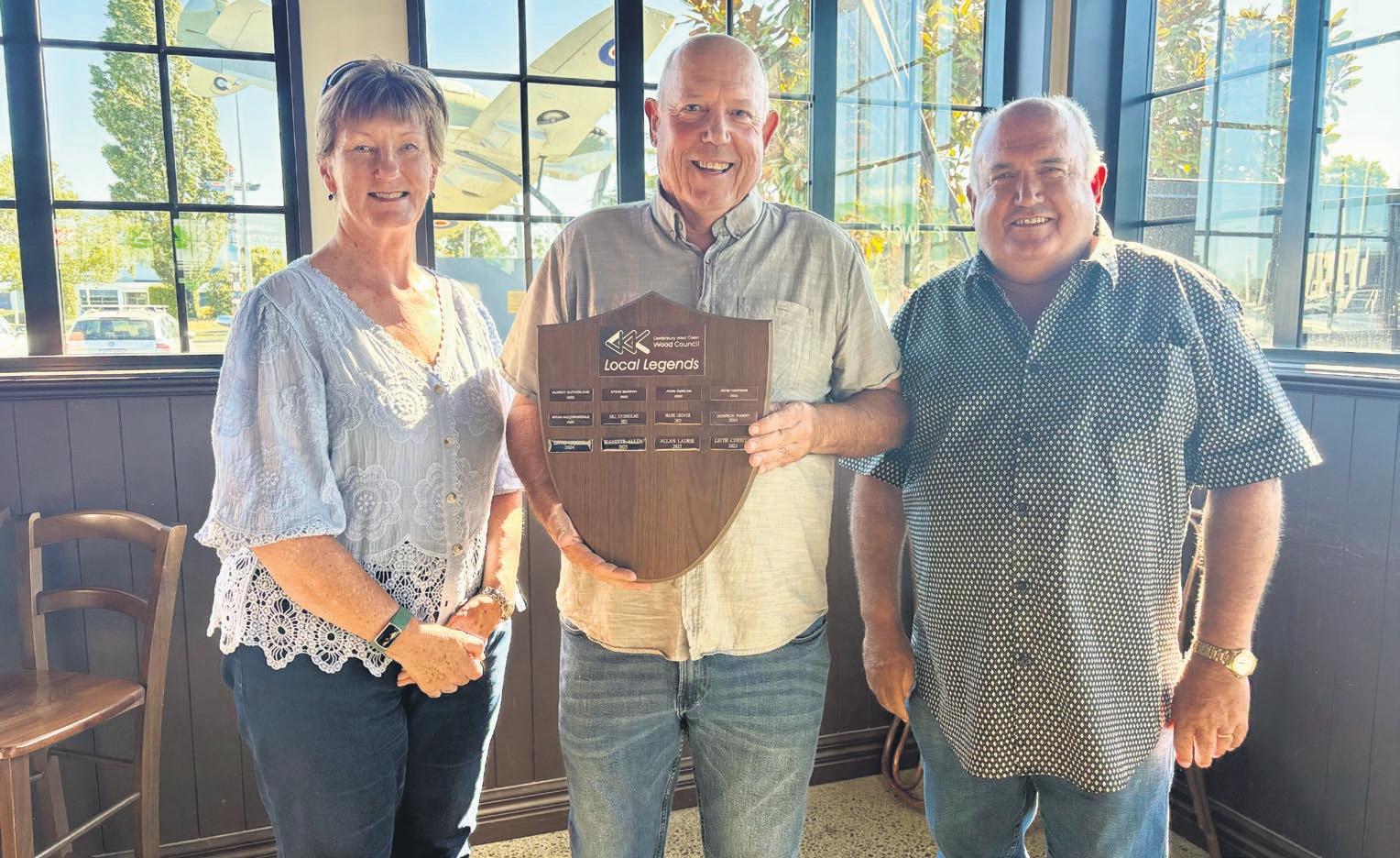
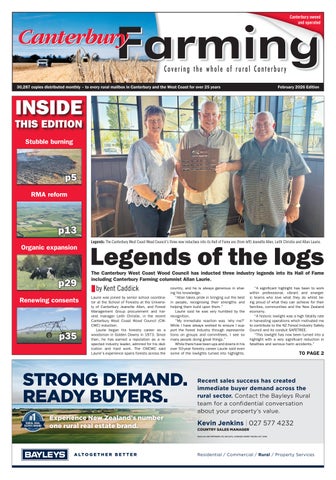
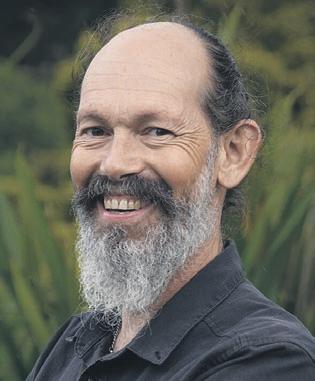
The Canterbury West Coast Wood Council has inducted three industry legends into its Hall of Fame including Canterbury Farming columnist Allan Laurie.
Laurie was joined by senior school coordinator at the School of Forestry at the University of Canterbury Jeanette Allen, and Forest Management Group procurement and harvest manager Leith Christie, in the recent Canterbury West Coast Wood Council (CWCWC) induction.
Laurie began his forestry career as a woodsman in Golden Downs in 1973. Since then, he has earned a reputation as a respected industry leader, admired for his dedication and hard work. The CWCWC said Laurie’s experience spans forests across the
country, and he is always generous in sharing his knowledge.
“Allan takes pride in bringing out the best in people, recognising their strengths and helping them build upon them.”
Laurie said he was very humbled by the recognition.
“My immediate reaction was ‘why me?’ While I have always worked to ensure I support the forest Industry through representations on groups and committees, I see so many people doing great things.”
While there have been ups and downs in his over 50-year forestry career Laurie said even some of the lowlights turned into highlights.
“A significant highlight has been to work within professional, vibrant and energetic teams who love what they do whilst being proud of what they can achieve for their families, communities and the New Zealand economy.
“A historic lowlight was a high fatality rate in harvesting operations which motivated me to contribute to the NZ Forest Industry Safety Council and its conduit SAFETREE.
“This lowlight has now been turned into a highlight with a very significant reduction in fatalities and serious harm accidents.”




Ronald W Angland & Son
There are many people who do not fully understand the legal obligations imposed by some of our laws especially in respect to property ownership and our laws are constantly evolving and many changes are brought in without much publicity.
In the past, if someone requested assistance from another person with the assurance that their help would be compensated in their Will there was no remedy available to enforce that promise.
In 1949 the Government of the day passed the Law Reform (Testamentary Promises) Act which provided for the enforcement
At the start of a new working year it would be timely to consider resolving to put your legal affairs and obligations in order.
of promises made but not honoured by the Will maker.
In the mid-1950s the Government introduced the Family Protection Act which gave family members a right to dispute if they had been unfairly treated or omitted from their relative’s Will.
These two enactments which are still in force are used to rectify unfairness which has arisen and they should have been considered when making a Will.
It is also quite common to find people who believe that when they die, their property and other possessions will automatically pass to their surviving spouse. If all property and possessions are jointly owned, a surviving spouse will automatically inherit.
If a deceased person has Kiwi-saver, life insurances and other personal entitlements or where property is owned as tenants in common the deceased’s share becomes part of the deceased’s estate and is distributed under the terms of their Will or under the Administration Act where a person has died without a valid Will.
If you give your lawyer instructions for a Will or write an informal document yourself, it is now possible to have the unsigned Will or informal document validated as your last Will. This is the last thing most people would want so it is essential that you leave a valid, signed Will.
Another enactment which has radically affected property ownership if the Property (Re-
lationships) Act which provides that where a couple has lived together in a relationship of three years or more and they have not signed a contracting-out (or “pre-nup”) agreement there is a presumption that their relationship property will be shared equally.
Ownership in those circumstances is not conclusive and a partner who “owns” the property may be ordered by the Court to hand over a half share to a partner
The above are just a few common misconceptions which many of us need to address when we are considering what the future holds. It is most important to leave a valid Will providing fairly for the present and next generations to ensure that our legal obligations are fulfilled.


FROM PAGE 1
Laurie said the people around him have all contributed to his longevity in the commercial forestry industry.
“My opportunity to grow as a professional and a person, whilst greatly enjoying the last 50 plus years, is in no small part due to my late wife Gail, and being surrounded by great teams of people.”
He is positive about the future of the industry.
“The future of the commercial forestry sector is assured. The world needs wood.
“We are able to supply local sawmills whilst also providing a significant volume of softwood logs, lumber and componentry into international markets with associated export revenues.”
Another inductee Jeanette Allen holds the position of senior school coordinator at the
University of Canterbury’s School of Forestry.
She started at School of Forestry in February 1990 and has seen 39 cohorts of students come and go.
“The success of the school, and its staff and students, is in no small measure due to the work Jeanette does, quietly and behind the scenes,” the CWCWC said.
“When recently asked what she liked about her current role she replied, without hesitation, ‘it’s the people’,”.
Procurement and harvest manager with the Forest Management Group Leith Christie began his career as a woodsman and has gone on to dedicate over 50 years to New Zealand’s forestry sector.
“From hands-on work in the forest, to training and inspiring others Leith has become a much-respected leader in the forestry community,” the CWCWC said.
This plant is invading our wetlands and waterways –we need your help to find it!
How to spot the great willowherb:
• Up to 2 metres tall.
• Blooms with pink flowers and notched petals.
great-willowherb-hunt More info at ecan.govt.nz/GWH
Join the hunt now until 28 February.
Take a photo and upload your sighting to iNaturalist or reportpests.nz










Dawn Meats group chief executive Niall Browne has been appointed acting chief executive of the Alliance Group following the announcement that current chief executive Willie Wiese is stepping down from the role.
] by Kent Caddick
Chairman of Alliance Group Tom Moran said Mr Wiese has decided to leave the company after eight years, including almost three years as chief executive, to attend to some pressing family matters and focus on new opportunities.
“Willie’s decision to step down follows an intensive two-year re-set of the entire business, a pleasing return to profitability and the completion of a successful capital raise with Dawn Meats,” Moran said.
“I would like to thank Willie for his leadership and commitment in leading the significant turnaround of the company alongside the Alliance team and the support of the farmer-shareholders. I wish him every success in his future endeavours.”
Wiese said he has delivered all his goals for the company and now was the right time to leave the company.
“After much reflection over the holiday period, and in discussion with the Board, I have decided it is the right time for new leadership to lead the next phase of growth,” Wiese said.
“I’m proud of the hard work and support of the Alliance team and our farmer shareholders that has brought the company to this point, with the business now well positioned for the future.
“I am delighted to have Dawn as a partner in the Alliance joint venture and have full confidence that this will be a successful partnership for Dawn and farmer-shareholders.”
Niall Browne, group chief executive at Dawn Meats, who will take over the role as acting chief executive said Willie has worked extremely hard over the last two and a half years to help find a suitable partner for Alliance and played an integral role in the successful capital raise.
“Willie and the Alliance team have brought the business back to profitability and we thank him for his contribution. We wish him well for the future.”
Browne said the integration process with Dawn Meats is underway with senior representatives from Ireland and the UK visiting New Zealand to share information, make plans for the future and secure further synergies with Alliance.
Alistair Parris Owner/Operator • Ph: 027 434 7278 20 Hinds Gorge Rd RD8, Ashburton 7778 E: mtsomersexcavation@xtra.co.nz www.mtsomersexcavation.co.nz

“With the first quarter results under our belt, we are tracking ahead of budget, with supply from both current and returning shareholders and new suppliers.
“As part of the completed transaction with Dawn Meats, Alliance farmer-shareholders will receive a $20 million payment scheduled for the end of the 25/26 season and a further $20 million scheduled at the end of the 26/27 season, subject to livestock flows.”





New Zealand’s farmers and growers are the backbone of our economy, feeding the world with premium, sustainable high-quality food and fibre.
Yet for years, the Resource Management Act has held them back with excessive red tape, crippling costs, and endless delays that have eroded confidence and stifled innovation.
Our Government is changing that. We are delivering on our promise to replace the RMA with a modern, efficient planning system that puts farmers first.
The new Planning Bill and Natural Environment Bill will cut unnecessary bureaucracy, respect property rights, and unlock the full potential of our primary sector.
Independent analysis shows these reforms will save taxpayers and ratepayers $13.3 billion over 30 years while slashing the number of resource consents by up to 46%, that’s potentially 15,000 to 22,000 fewer consents each year.
For farmers, this means real relief: less time and money wasted on paperwork, and more freedom to get on with what they do best.
These changes are designed specifically to benefit farmers and growers:
• Fewer consents and faster decisions: Low-risk farming activities will no longer require consents if their effects are less than minor, giving you certainty and reducing compliance costs.
• Clearer, consistent rules: Standardised national and regional standards mean you’ll know exactly what applies to your farm – no more navigating a patchwork of confusing regulations.
• Farmer-led solutions: Freshwater farm plans put you in control. You identify risks and implement practical actions tailored to your land, often replacing the need for multiple individual consents and giving councils confidence that environmental limits are being met.
• Greater investment confidence: With restrictive rules removed and proper-
ty rights respected, you can invest in new technologies, higher-value crops, precision agriculture, and improved supply chains – creating more jobs and higher returns in rural communities.
• Relief from unfair impacts: Where planning rules disproportionately affect your land use, mechanisms are in place to provide fair outcomes.
To support you through the transition, all expiring RMA consents will be automatically extended until at least mid-2031. You can keep farming and growing without interruption while the new system beds in.
‘Farmers have told me loud and clear: the old system was punishing productivity and driving good people away from the land.
Farmers have told me loud and clear: the old system was punishing productivity and driving good people away from the land. This overhaul directly addresses those frustrations. It empowers you to farm smarter, grow more profitably, and pass stronger businesses on to the next generation – all while upholding high environmental standards. These long-overdue reforms will unleash the ambition and ingenuity of New Zealand’s farmers, driving higher incomes, stronger rural communities, and a more prosperous future for our country.







Federated farmers in their latest monthly bulletin showed a photo of a very young girl sitting on the shoulder of a pony while facing the wrong way and grinning immensely.
The headline was ‘Farm Kids’ and the caption was ‘Built Different’... I think they nailed it.
It is very easy to think that all children and youths are the same, and are brought up the same way, until you look at those who were privileged enough to have a farm upbringing.
The media is full of reports about young people in crime circles, 13-year-olds stealing cars and breaking into businesses, holding up shopkeepers and attacking strangers, and goodness knows what else, but as usual the media emphasis the minority and never mention the law abiding folk.
While there are many city youths who are totally law abiding and setting themselves up for successful careers, I think farm raised children have a head start on them.
The picture in Fed’s newsletter summed it all up for me. Totally relaxed with animals and comfortable in herself.
Farm children live with animals; they understand them and have a rapport with them.
From an early age farm children learn how to relate to animals, build fences, drive ve-
hicles and do an honest day’s work, without being paid.
They learn the value of things, not just the price of things, and they are not exposed to the boredom that many city children are, which of course, leads to joining up with the wrong crowd. A saying that is used by many parents.
Yes, city children may be street wise, but personally I would prefer launching children into an adult world well-grounded in a balanced and clam atmosphere, a feeling for the universe and understanding of nature.
Probably most important is their work ethic. Farm children know they have chores to do from a very young age. Chickens need to be fed, ponies groomed and lending a hand doing whatever stock work is under way.
The only thing they are likely to think of stealing is a quick kiss with their boyfriend or girlfriend.
Hands on, practical, gentle, hardworking, accountable, polite, trustworthy, prepared to work for everything they get, and all-round nice people.
Yes, farm kids are built differently.
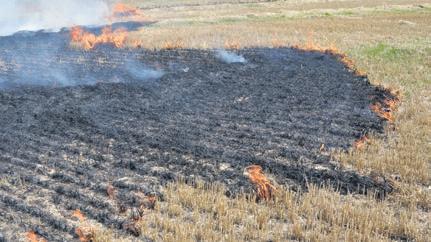
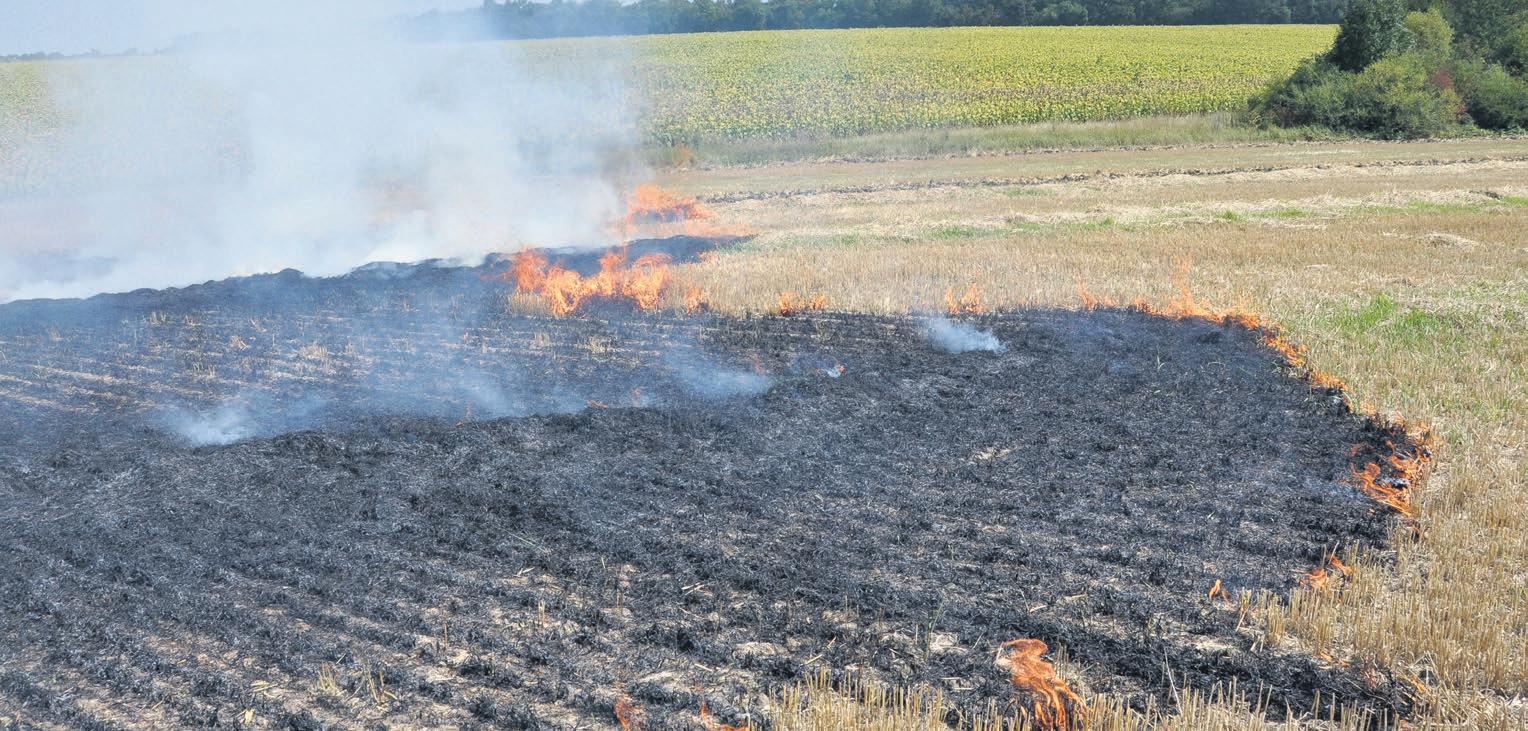
With summer many Canterbury farmers are preparing for or undertaking crop residue burning, commonly called stubble burning.
] Article supplied by ECan
It’s an important part of arable farming, but it comes with responsibilities to help keep our communities safe.
Stubble burning helps manage soil health and pests, but if it’s not done right, the impacts can spread far beyond the paddock. Smoke, ash, and reduced visibility can have wide impacts. Every year, there are reports of problematic fires and concerns about health and safety.
“Late February means the start of crop residue burning season is upon us. This practice is also known as stubble burning and it’s a common practice for arable farmers to clear their fields,” Environment Canterbury Team Leader Northern Compliance Brian Reeves said.
“However, the impacts of these burns can be far-reaching and can negatively impact people several kilometres away from where the burn is located, with reports of ‘out of control’ fires and concerns about smoke, ash and visibility common through the late summer.”
Most people don’t realise stubble burning is a common farming practice in Canterbury but there are rules that must be followed to minimise health and safety risks.
“With several agencies involved, it’s important to join forces to provide guidance and information to both those who undertake crop residue burning and those impacted by it, to address frequent misunderstandings about what is or is not acceptable,” Reeves said.
Check it’s alright before you light
Start your crop residue burn planning at Checkitsalright.nz run by Fire and Emergency New Zealand. This will tell you if you can burn and how to apply for a permit.
Key steps:
• Apply early – get your permit in good time and follow all conditions. Keep a copy with you during the burn.
• Notify Fire and Emergency New Zealand – once you have a permit, you may need to let them know you’re burning. Do this via firepermit.nz or call 0800 FENZCALL (0800 336 922).
• You’ll also need a Smoke Management Plan for any crop residue burning.
• Double-check when finished – make sure the fire is completely out before you leave.
• Never take risks – don’t try to beat changes in the weather or skip preparation. You have a duty of care to keep fires under control.
• Consider signage – a ‘controlled burn’ sign along road boundaries helps the public understand your burn is not a wildfire.
Other essentials:
• Pick the right day – avoid windy conditions and check the forecast.
• Have a plan and the right gear – firebreaks, water supply, and trained people on site.
• Talk to your neighbours – a quick heads-up goes a long way.
If you’re planning to burn crop residue in Timaru or Ashburton, check whether your property is inside a designated buffer zone. If you are in one of these zones, you must have a resource consent from Environment Canterbury before burning. This is in addition to any Fire and Emergency NZ permit required during a restricted fire season.
If you’re unsure whether you’re in a buffer zone, view Canterbury maps here, or call us on 0800 324 636 for advice. If smoke or ash from a crop residue burn is causing a nuisance, call 0800 329 276 (24 hours) or use the Snap Send Solve app. If you’re concerned about people or property, call 111 immediately.




spokesperson

Many Kiwis know that the decisions we make today will shape our future for years to come. With the election now announced for 7 November, the country faces a critical question: What choice will we make for our future?
When the Prime Minister suggests we shouldn’t expect much from them this election year, it implies New Zealand can’t afford the clear-eyed thinking needed to secure a sustainable, productive future.
But the suggestion that we can’t afford to invest in key infrastructure projects or job creation is an argument we must push back on. And cutting public spending and selling assets also undermines our region’s longterm success. Because the question isn’t whether we can afford these investments, but it’s whether we can afford not to make them.
Countries around the world, such as The Netherlands, Australia, and Japan, have prioritized investments in sustainability, resilience, and infrastructure, and they are seeing the benefits: more jobs, a better quality of life, and a more stable economy. Building and maintaining infrastructure like irrigation schemes and developing sustainable land use policies not only supports agriculture but boosts productivity across the entire economy.
The reality is that the economic return on these investments far outweighs the upfront costs.
Between 2017 and 2023, Labour backed rural communities. We opened new export opportunities and market access, and we invested in research and development to improve productivity.
At the same time, we worked with farmers to improve waterways and address climate change – and protecting rural communities for the future.
] with Steve Abel
With nearly one third of Canterbury’s rivers deemed unsafe for swimming this summer, Labour’s values are more relevant now than ever. We:
• Secured seven new and upgraded trade deals, including with the UK and EU, against the odds.
• Eradicated mycoplasma bovis, a worldfirst achievement that protected the national herd and ensured better returns for farmers.
• Funded 200+ catchment groups to restore water quality within a generation.
• Upgraded 542 rural schools, many of which had been neglected for years.

• Improved mobile networks and connectivity for over 84,000 rural homes and businesses.
• Invested in rural mental health services, part of our work to build a mental health system from the ground up, including Rural Access and Choice Support and Rural Support Trusts.
• Funded rural hubs and resilience projects, responded to major weather events, and set aside $6 billion for infrastructure to ensure rural communities were prepared and protected (now scrapped).
When in Government, we provided a clear

‘As we look ahead to 2026, we must ask ourselves: Do we really want to continue to follow a Party that looks for excuses to delay a better future?
direction to lay the foundation for a stronger future, and our rural communities need that vision to continue.
As we approach the 2026 election, Labour remains focused on what matters most: real action on the cost of living, creating decent jobs, and making healthcare and housing affordable for all New Zealanders.
But we’ll do more than just meet our priorities. We’ll support farmers to build a stronger, more resilient rural economy.
As we look ahead to 2026, we must ask ourselves: Do we really want to continue to follow a Party that looks for excuses to delay a better future?
On the penultimate week of Parliament at the end of last year the government rammed through another tranche of laws under urgency to evade public scrutiny.
] Green Party Spokesperson
] for Agriculture
One of them, a Bill to weaken our methane emissions target, was introduced without warning and forced through all stages in one fell swoop.
One of the Luxon Government’s legacies will be its disdain for democracy. Having already, only two years into its term, beaten the record for the most hours spent under urgency of any New Zealand Parliament.
In my speech on the new law I called-out the Climate Change Response (2050 Target and Other Matters) Amendment Bill for having been, “Rushed upon us like a slash-laden flash flood on the Esk valley.”
I went on to say that, “John Clarke, the creator of the great Fred Dagg, said that recognising a problem and doing nothing about it has the same effect as not noticing the problem in the first place. That is a charitable
take on this Government’s climate strategy, because worse than saying that they believe in climate change and doing nothing about it is saying that they believe in climate change and then doing all the things that make it worse.”
Methane matters because it is a superheating gas. Over a 20-year timeframe Methane has 80 times the global heating potency of carbon dioxide.
The specious argument from the global dairy and meat industry that methane is a short-lived gas denies the fact that the heating caused by methane lingers long after the gas has dissipated in the atmosphere.
Like running a heater at full tilt in a closed room, you may switch the heater off but the heat it generated will remain.
This particular Bill locked in the pseudoscience of “no additional warming,” and ensured a binding target of only a 14% reduction on 2017 levels as opposed to the previous goal of a 24-47% reduction.
Officials warned Ministers in April that such a diminished ambition was consistent with global heat intensities that UN Boss Antonio Guterres previously described as “catastrophic”, and which leading climate scientists pointed out would set us on track for “unprecedented peril”.
The Bill introduced the impact on food production as a new consideration in our climate targets. This is sensible, but the profound irony is that farmers the-world-over are on the frontline of weather extremes driven by global heating including worse floods, droughts and wildfires.
The biggest threat to global food production over coming decades is climate change itself. Weakening our methane targets risks the livelihoods of all farmers and food producers.
Ambition, on the other hand, is the way to drive land use change and innovation that can make New Zealand part of the solution.
‘Just because we’re small doesn’t mean we shouldn’t play our part. Whenever has that been the ethos of our nation?”
In conclusion, to quote again from my speech on the methane bill, “No nation is an island unto itself. We are all a part of the whole planet, and we are all a part of that community of humanity who faces the existential challenge of climate change.” We should have a sense of responsibility and duty to do our bit, however little that bit may be. Just because we’re small doesn’t mean we shouldn’t play our part. Whenever has that been the ethos of our nation?”
Arable growers worried that some weeds in their crops may have developed herbicide resistance can now get the suspected plants tested for free.
]Article supplied by FAR
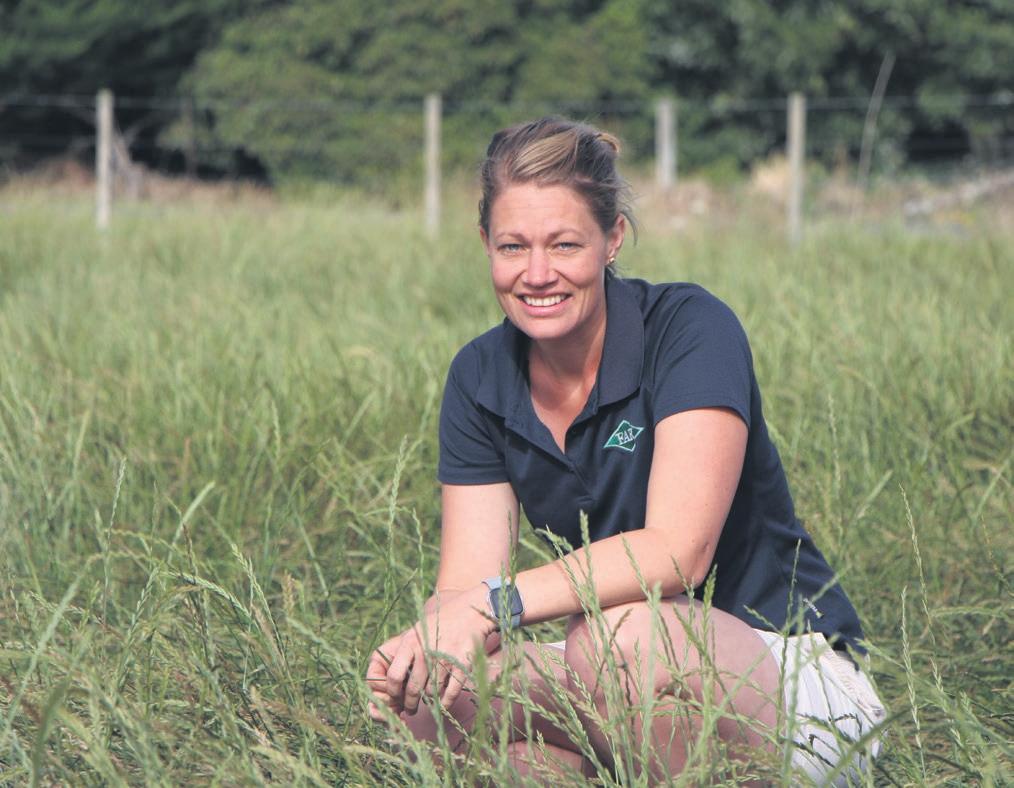
Foundation for Arable Research senior field research officer Matilda Gunnarsson said that prior to harvesting, farmers should get weeds growing in their crops tested for herbicide resistance.
“While some weeds will have emerged after the final herbicide application some may have survived treatment and have resistance. To find out, get it tested,” Gunnarsson said.
“Resistance is a numbers’ game. The more weeds you have in a paddock, the more likely it is that there will be resistance.”
She said typical weeds are grass weeds in cereal crops.
“It can be grasses or broadleaf weeds. Whatever you suspect is resistant, get it tested.”
To get the suspect plants tested, farmers need to cut off dry, mature weed seed heads and put them in a paper or plastic zip lock
Get tested: FAR senior field research officer Matilda Gunnarsson says growers should get suspect weeds tested.
bag. Go to the FAR website, print out the herbicide resistance testing form and fill out the details including what herbicides have been used. Send this to the FAR office.
Seed will be tested at AgResearch facilities (now part of the Bioeconomy Science Institute). Depending on the amount of seed available, samples will be tested over one to six herbicides at label rates to determine resistance. This includes both pre and post emerge herbicides if applicable.
“Make sure the weed seeds are viable to achieve a good germination rate at testing. Keep the plants in separate bags, as this gives a better understanding of the resistance profile in the paddock,” Gunnarsson said.



Every year, as balance dates approach, I hear the same line: “If I buy a new ute before balance date, that’ll sort my tax, right?”
It’s one of the most persistent myths in rural business, and one of the most misunderstood. Let’s be clear from the outset: buying a ute does not magically reduce your tax bill, and in many cases it can actually put more pressure on your cashflow, not less. The tax deduction isn’t what you think:
When you buy a ute through your farming business, you don’t get to deduct the full cost straight away. Instead, the vehicle is treated as a capital asset and is written off gradually through depreciation over several
years. The depreciation percentage to claim for each year varies depending on what the asset is.
For example, if you buy an $80,000 ute, you might only claim a depreciation deduction of a few thousand dollars in the first year, not $80,000.
That deduction may reduce your taxable profit slightly, but it’s nowhere near enough to justify the cash outlay if the purchase wasn’t needed anyway.
And to make matters worse, depreciation is calculated on a monthly basis so if you purchase a few days before balance date then your tax claim is virtually nil. In other words, you’re spending real cash today to get a very small deduction off your tax bill.
Cash out the door vs tax saved: This is where things often don’t add up. Let’s say your tax saving from depreciation is $3,000.
To get that saving, you’ve just spent $80,000 or committed to loan repayments, with only the interest on these deductible as an expense.
From a business perspective, that’s a very expensive way to save tax. Tax should never be the reason you buy an asset. It should only ever be a secondary consideration once the business need is clear.
Instead of asking, “What can I buy to reduce tax?” a better question is: “What does my business actually need over the next 12 to 24 months?”



If the ute genuinely needs replacing for reliability, safety, or operational reasons, then the tax deduction is a bonus, not the driver. But if the current vehicle is doing the job, tying up cash or increasing debt just to chase a tax outcome rarely stacks up.
Good tax planning is about timing income, managing expenses, understanding cashflow, and planning asset replacement over several years, not panic purchases in in the last month before year end.
The best time to talk tax isn’t when the dealer says, “last chance before balance date”, but earlier in the year, when decisions can be made calmly and strategically.
Because at the end of the day, the IRD doesn’t pay for your ute, you do.






Global financial markets ultimately delivered strong returns for the 2025 year, reinforcing the value of maintaining a disciplined and diversified investment approach.
] with Andrew Wyllie ] Forsyth Barr
Trade policy–related volatility largely faded over the second half of the year, although concerns around AI-related valuations resurfaced briefly in late October. Even so, international equity markets continued to post positive gains over the quarter.
Solid corporate earnings, easing policy interest rates, and a resilient global economy provided ongoing support. For New Zealand investors, a weaker New Zealand dollar against most major currencies further enhanced offshore returns.
Australian markets mixed
A key headwind has been the growing ex-

pectation that Australian interest rates may rise, rather than fall, in 2026. Stronger inflation data and a resilient domestic economy have prompted economists and interest rate markets to increasingly price in potential rate hikes from the Reserve Bank of Australia (RBA).
In December, the RBA reinforced this outlook, noting that the next move in the cash rate could well be higher rather than lower.
New Zealand turning the corner
After several challenging years for the New Zealand economy, lower interest rates over the past year have eased borrowing costs for households and businesses, providing welcome relief after a prolonged period of elevated repayment pressures.
The Reserve Bank of New Zealand (RBNZ) cut the Official Cash Rate (OCR) by 50 basis points in October and a further 25 basis points in November, taking the OCR to 2.25%.
Encouragingly, signs of an economic recovery are becoming more evident in New Zealand. Heading into 2026, activity levels are picking up across a range of regions and sectors.
Business and consumer confidence have
• Take a water sample and send it to the lab
• Protect your well head
• Know the well’s location and depth
• Check the land-use history.
out more ecan.govt.nz/drinkingwater
lifted, retail sales are strengthening, and the labour market is beginning to stabilise. If this momentum continues—and assuming no major economic or financial shocks—the OCR is now likely to be close to its cyclical low and remain on hold at the current level until late 2026 or early 2027.
New Zealand’s reporting season in November provided further evidence that a cyclical recovery may be taking hold. Company updates across several domestically focused sectors pointed to improving trading conditions.
The headline S&P/NZX 50 has picked up in recent months and, within the index, cyclical and mid-cap companies have delivered stronger returns.
New Zealand equities
New Zealand equities also continue to appeal for their defensive characteristics, particularly high-quality, dividend-paying companies. With interest rates still low, yield-oriented sectors such as infrastructure and property continue to offer relatively attractive income streams, in some cases with the potential for steady dividend growth.
Now could be a good time to review where your savings are parked—and whether other options might offer a better balance between risk and return.

When you are thinking about your investment options, talk to Forsyth Barr
To get personalised investment advice and portfolio management specific to your investing needs, talk to Investment Adviser Andrew Wyllie in confidence on (03) 365 4244 or email andrew.wyllie@forsythbarr.co.nz
If you would like to review your investments or discuss the market outlook in more detail, please get in touch.
This article was prepared as at 31 December 2025 and provides market commentary for the three-month period ending on that date. Andrew Wyllie is an Investment Adviser and Forsyth barr’s Christchurch Manager. He can be contacted regarding portfolio management, fixed interest, or share investments on 0800 367 227 or andrew.wyllie@ forsythbarr.co.nz.
This column is general in nature, has been prepared in good faith based on information obtained from sources believed to be reliable and accurate, and should not be regarded as financial advice.






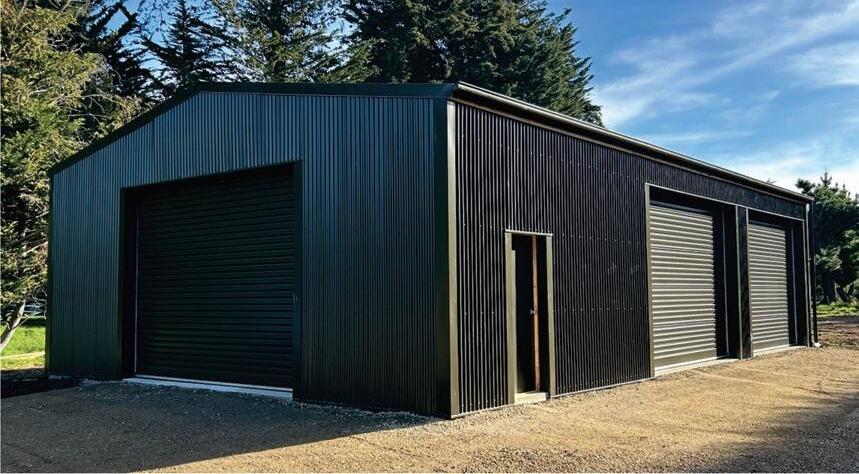
Changes to the Building Act 2004 have now come into effect which mean homeowners building garden sheds, garages, or sleepouts face less red tape and fewer delays.
] with Samantha Couch
] Helmores Lawyers
Prior to these changes, garden sheds and other single storey detached buildings needed to be at least the same distance from any boundary or residential building as their own height – otherwise a building consent was required.
Under the new legislation there are updated setback requirements. Homeowners can now:
• Build a single storey detached building between 10 and 30 square metres in floor area one metre away from any boundary or another building without building consent provided there is no plumbing and it is overseen or designed by a Licensed Building Practitioner (LBP).
• Build single storey detached buildings under 10 square metres up to the boundary or another building without building consent.
These exemptions will also cover some prefabricated or kitset buildings, but will depend on the manufacturer, so that should be checked carefully.
It should be noted that homeowners still need to make sure that all building work is compliant with the Building Code, relevant regulations, and local district plans. It will also be very important to be confident where the legal boundaries of the property are, as those are not always located in the same place as the fences dividing properties, so this may require a surveyor to confirm the actual boundary location.
These rules will not operate retrospectively, so any buildings constructed prior to these changes will still fall under the old rules.
There has also been a recent increase to the size of granny flats covered by a consent exemption. Granny flats up to 70 square metres in size can be built without a building consent if:
• they have a simple design and meet the Building Code



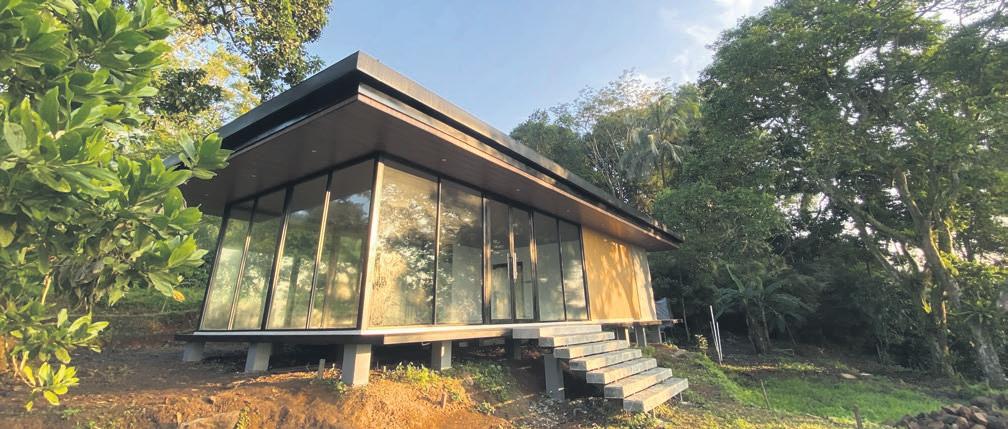
• homeowners notify their local council before they commence building and once it is completed
• the work is carried out or supervised by licensed building professionals
• all exemption conditions are met.
The “notification” to the council is through an application for a Project Information Memorandum (PIM), which must be issued before work begins.
There is a two year time limit for completing the construction of the granny flat once the PIM is issued by the Council.
There are also some changes for building
pole sheds and hay-barns on rural properties, which have also reduced some overall compliance costs.
All these changes to the Building Act are designed to lower costs and delays to homeowners and maximise the space that can be used on properties, ultimately giving homeowners more freedom when it comes to utilising their land.
This also means that it is critical for purchasers of property to obtain a comprehensive building inspection by a suitably qualified LBP to ensure that any work done is within the scope of these exemptions.









“Cell eXtra has essential minerals and vitamins needed for the thousands of enzymes that make our body function. Insufficient minerals and vitamins can prevent healing and cause disease.
Damage from free radicals causes many health problems.
Cell eXtra contains some of nature’s most potent antioxidants to help build your antioxidant defences against free radical damage to body tissues. Try Cell eXtra for 3 months and see what you have been missing. Call me to see if Cell eXtra is right for you.”
How do you manage unhealthy stress? Awareness is key. The earlier you recognise the signs of unhealthy stress the better you’ll be able to manage them.
]Article supplied by Farmstrong Recovery periods are vital. Daily and weekly ‘down time’ is important as well as taking a holiday after really busy times.
Secondly, come up with a plan. Instead of trying to do everything, it’s about asking yourself what are the one or two top things I need to work on right now?
Focus on them and park everything else. Once you’re feeling back in charge and your stress levels go down, some of the other issues bugging you may disappear.
A way to cope with lots of demands is by reducing or delegating them to others. At what point would you consider it more than just ‘calving stress’ and be seeking help?
A general rule of thumb that a person is under unhealthy stress, is when their daily functioning and relationships are being impacted.
For example, if the person doesn’t seem themselves and shows ongoing changes in their normal behaviour and thinking patterns.
When we just keep going without a break from the ongoing physical or mental demands we are facing, our body finds it hard


3
to keep up and the cracks begin to show.
A catch-up with your GP, a local counsellor, Rural Support Trust worker or supportive friend, can give you some ideas or a plan to get things back on track.
How do you prevent burnout?
When people are under pressure the things that disappear are often the things that keep us well and prevent us getting burnt out. Continue to:
• socialise with other people
• exercise regularly
• eat well
• continue to learn
• contribute to the community
• get off the farm and do something you enjoy with others.
Building in enjoyable activities is really important. Those are the things that give us more coping space and keep us feeling on top of things.
For more on how to maintain your mental health wellbeing on the farm go to: www.farmstrong.co.nz.

I recently spoke to a sheep farmer who told me that his lambs were 1kg heavier than the previous year after supplementing with trace minerals. 3
Cell eXtra contains nature’s most potent antioxidants to protect from free radical damage including grape seed OPC, Green tea, NZ Blackcurrant, Hesperidin, Lutein, Lycopene, Beta Carotene and natural Vitamin E.
Cell eXtra is a multi-vitamin with Vitamins D, E and B complex.
Cell eXtra is a multi-mineral including calcium and magnesium with trace minerals selenium, zinc, copper, boron, manganese, molybdenum, chromium, vanadium and a 50+ trace mineral extract from sea water.
Protects joints against free radical damage
Supports immune function and optimum energy levels
Supports heart health and circulation
Includes a specific eye health formula
Farmers know that NZ soils are deficient in selenium and other trace minerals and the benefits of adding these for animal health and productivity.
It is a pity that the human health system essentially ignores most trace elements leading to many health problems.
Minerals are critical for the health and development of every cell in our body. Insufficient trace minerals can weaken immune response and leave people feeling tired and run down. Addressing trace minerals my first step for those who are tired with no medical cause.
The major minerals are calcium, magnesium and potassium. Of these it is usually magnesium that is insufficient in many diets. Low magnesium can cause many health problems including cramp, restless legs and heart rhythm problems.
We use zinc, copper, boron, selenium and manganese to make a group of antioxidant enzymes. The two most important are superoxide dismutase (SOD) and glutathione peroxidase (GPx).
We make SOD from zinc, copper, iron and manganese while boron increases SOD and GPx activity.
We make GPx from selenium. These antioxidant enzymes are the front line of our cell defences against free radical damage and are important for immune defences. While people often respond quickly to antioxidants and vitamins, the benefits of minerals can be significant over time. This is why any good multi-nutritional will have these minerals at the right levels and in a form our body can absorb.
Over the years I have seen profound health improvements by adding a multi that is a true multi-mineral. Try a good multi mineral/vitamin and antioxidant for three months and see what you have been missing.
John Arts ( Adv.Dip.Nut.Med) is a nutritional medicine practitioner and founder of Abundant Health Ltd. For questions or advice contact John on 0800 423559 or email john@abundant.co.nz. Join his newsletter at www.abundant.co.nz
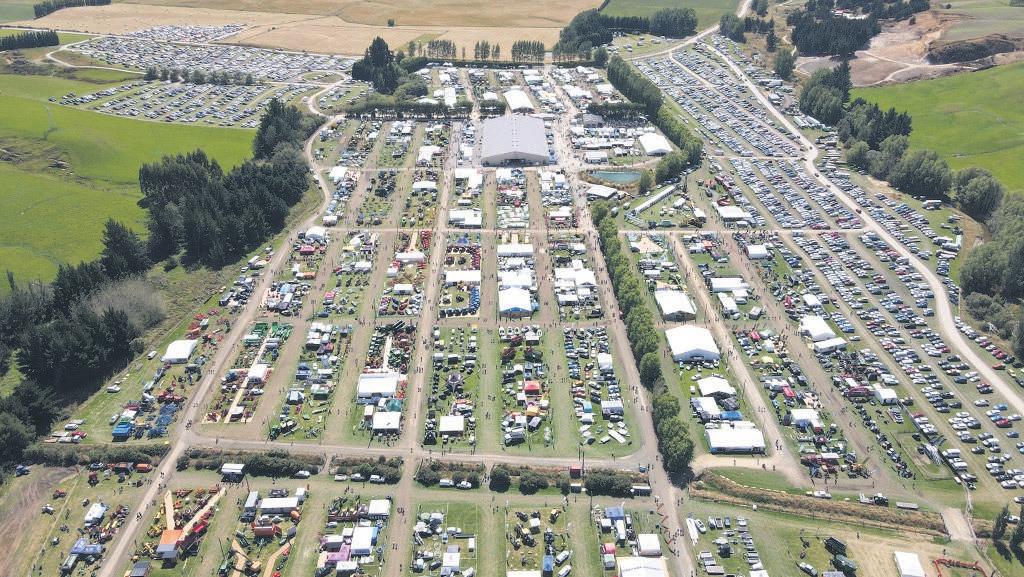
The Southern Field Days were first held in 1982 on Ken Bowmars property at Waimumu with 60 exhibitors, the main focus being on working demonstrations.
] by Kent Caddick
Fast forward around 40 years and Southern Field Days (SFD) now owns 57ha of its own land at Waimumu just outside Gore. This year’s biennial event will be held at the site from February 11 to 13.
The last field days had over 700 exhibitors from New Zealand and some from overseas with around 40,000 people through the gates.
On show over three days, the latest in rural technology, equipment and ideas from around the world will be displayed, with most leading rural businesses exhibiting.
“We are once again going to be at capacity come 2026 with companies recognizing this as a great way to market their products to the local public,” SFD chairman Steve Henderson said.
“Without our hardworking committee the field days wouldn’t be possible.”
Southern Field Days 2026 will be a jam packed few days, as well as hundreds of great exhibitors from all around the country showcasing the latest in rural machinery and technology, we also run several engaging events.
The finest in NZ ingenuity and mechanical marvel is on display in tractor form as 4 different classes of Tractor: Standard, Pre85, Sport and Modified compete to see how far they can drag the TPNZ weight transfer sled.
New Zealand Fencing Competitions (NZFC) are the organisers of the NZFC South Island Doubles Fencing Competition at the Southern Field Days.
This competition is a national level competition and consists of four competitions, with points accumulations adding up to determine the winner and placings. The focus is on installation aspects including post placement and height wirework, tensioning, end assemblies and utilises industry tools in the handwork.
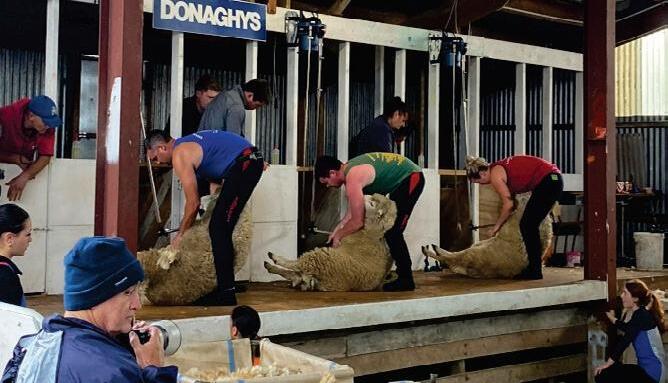
Come and see the wool fly as these gun shearers battle it out to be the 2026 Southern Field Days Champions. There will be three grades: Open, Senior and Women.
We’re excited to announce a special fundraising event with Adam Newton Homes Ltd and Country & Co Realty, coming to life at the Southern Field Days.
With the generous support of Adam Newton Homes’ subcontractors and suppliers, a stunning four-bedroom home is being built and will be auctioned on-site by the team at Country & Co Realty.
All net proceeds from the auction will be donated to the Southland Rural Support Trust, helping them to continue their support for farmers and growers across the region when times are tough.
4WD trials showcase
The Southern Trailblazers 4WD Club and the Clutha 4WD Club are both family focused groups dedicated to safe, responsible off roading.

Our trips range from relaxed camping weekends and scenic day outings to competitive events like winching enduros and 4WD
trials. You can catch a taste of the action with a 4WD trials showcase at the Field Days on Thursday, 12 February.


Two of New Zealand’s leading wool companies, Wools of New Zealand and PGG Wrightson (PGW), are exploring possible ways to consolidate aspects of their wool logistics operations.
] by Kent Caddick
The companies say entering discussions to consider sharing logistics where appropriate is in response to the over-capacity across New Zealand’s wool logistics infrastructure following a long-term decline in production volumes, which has driven up operating costs.
By exploring ways of working together, Wools of New Zealand and PGW aim to reduce costs, improve asset utilisation and help secure a stronger future for wool growers and the sector.
Both companies will continue to independently operate and compete for wool, ensuring farmers retain full choice over who they choose to transact their wool with.

Efficient: PGG Wrightson Wool general manager rachel Shearer and Wools of New Zealand chief executive John McWhirter are joining forces to improve efficiency in the wool sector.
Wools of New Zealand chief executive John McWhirter said the discussions are about two companies taking the lead to look to deliver the structural change the industry needs.
“As a 100 per cent farmer-owned company, our growers expect us to be proactive in leading change that supports a strong future for New Zealand wool,” McWhirter said.
“Coming together to seek solutions is an important step towards a more sustainable and competitive future for New Zealand’s wool sector, a key contributor to the country’s economy.”
PGG Wrightson Wool general manager Rachel Shearer said the discussions make sense at a time when the wool supply chain is under pressure, illustrating their continued faith in the fibre and its future.
“Farmers are facing rising costs, and like them, we must control our costs too. Continuing to support a large, under-utilised infrastructure is simply not sustainable. It doesn’t serve our farmers or shareholders well,” Shearer said.
“This joint approach represents a practical example of industry leadership to discuss how to reduce duplication, improve efficiency and ensure the infrastructure that remains is fit for the future.”


Canterbury’s governance is facing its most significant test in decades.
The intention is to reduce duplication and simplify governance. But one core issue is left hanging: when problems cross district boundaries, who is responsible for joining the dots and leading the regional response?
] by Dr Deon Swiggs ] Canterbury Regional Council chair
Before Christmas, central government dropped three new bills, an amendment, multiple changes to national direction instruments, proposed rates caps, and a complete governance restructure on our desk.
We’re not just tweaking the system, we’re in the most consequential moment for regional governance in New Zealand’s history.
The Canterbury Regional Council (Environment Canterbury) has advocated for Resource Management reform for years and worked on constructive solutions. Now the Government has delivered, and it’s landing all at once.
A rates cap limiting rises to 2%-4% will fundamentally constrain our fiscal tools, with targeted consultation due 4 February.
We’re facing four new bills: the newly passed Resource Management (Duration of Consents) Amendment Bill (now an Act), two bills replacing the Resource Management Act entirely (the Planning Bill and Natural Environment Bill, with submissions due 13 February), and the Emergency Management Bill (submissions due 3 February).
Beneath all of this sit new and amended National Direction Instruments that form the technical framework.
Then there’s the Simplifying Local Government proposal. This would replace elected regional councillors with a board of local mayors, potentially backed by a commissioner.
Canterbury faces some complex regional issues including cross boundary water challenges, sea level rise and erosion along its coastline, climate-driven intensive rainfall events, housing markets that span multiple districts and tourism pressure on small communities where the impacts are local, but the benefits are regional.
These issues don’t stop at district lines. They require coordinated planning and longterm investment. Yet the Government’s proposal has the potential to weaken, rather than strengthen, the ability to deliver that coordination. Submissions on the Simplifying Local Government Proposal are due 20 February 2026.
This scale of change demands collaboration across councils, with mana whenua, and with our communities. Our job is to navigate these reforms with both principle and pragmatism, advocating fiercely for what serves Canterbury best while adapting intelligently to whatever emerges. Canterbury Regional Councillors were elected by, and remain accountable to, you.
Ahead of the reform programme, let’s acknowledge what Canterbury accomplished in 2025. Measurable progress was made across environmental restoration, biodiversity protection, farm support, regional resilience, and public transport.
This included award winning restoration projects, major Government investment in flood resilience, timely Civil Defence responses, and continued action on wilding pines.
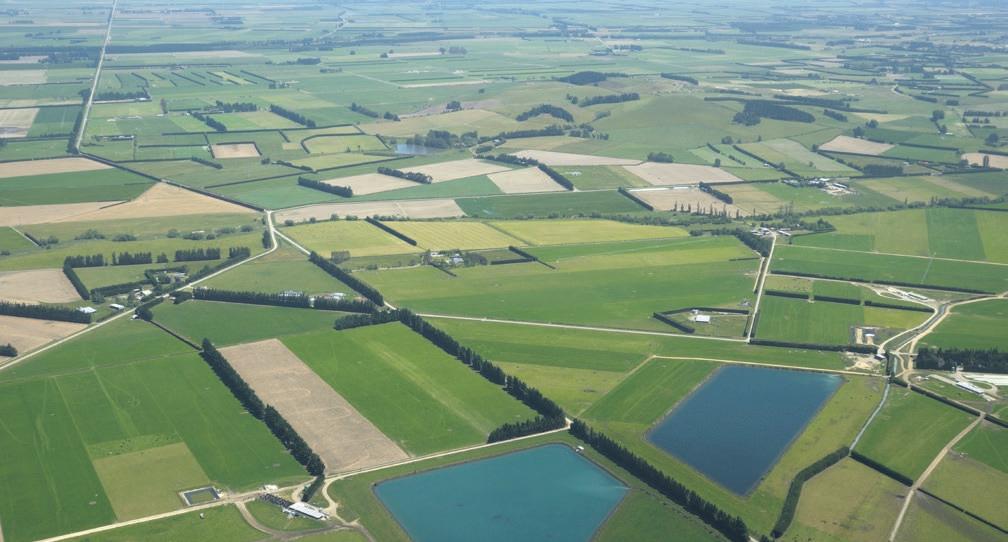
Canterbury accomplishments: Measurable progress has been made across environmental restoration, biodiversity protection, farm support, regional resilience, and public transport.
These outcomes reflect strong community partnerships and a shared commitment to protecting the region’s environment and economic future.
In 2026, we’ll continue that partnership with communities and stakeholders to ensure Canterbury’s voice is heard clearly, and that any changes to local government strengthen, not weaken, our region’s ability to thrive. This is governance at the coalface. We’re ready.
Visit bills.parliament.nz to have your voice and ensure Canterbury is heard.
‘Our job is to navigate these reforms with both principle and pragmatism, advocating fiercely for what serves Canterbury best while adapting intelligently to whatever emerges.



Keeping spray on target and using it to its best advantage is a science. In addition to staying inside regional legislation regarding spray drift, there’s also the economic realities of the need to reach intended targets and avoid waste of a significant investment.
]
Advertorial supplied by UPL NZ Ltd
For decades, UPL NZ Ltd. (formerly Etec Crop Solutions Ltd) have provided the agricultural sector with over twenty targeted adjuvants, which enhance spray performance and even clean up after the sector.
Pieter Van Der Westhuizen, UPL NZ Ltd Adjuvant Lead and Regional Manager Upper North Island, has some tips for good agricultural practice, and being a good neighbour.
“Firstly, read the label carefully, even if you’re really familiar with a product.”
He says it’s particularly important to look at timings for re-entry, withholding and plant back periods.
“These can be very specific and can vary if you’re using the same product over a variety of crops. It’s also important to choose products that are fit for purpose. That includes adjuvants – the products that make sprays spread, stick or help sprays penetrate plants).
“If you’re using a water-based chemical, use a water-based adjuvant. It you’re using an oil-based chemical, use an oil-based adjuvant.”
Watching the weather is another essential.
“It sounds obvious. But if rain was to fall it washes the spray onto the ground where a lot of chemistry is lost, which is a massive waste. It’s supposed to work on the leaves, not the roots. It’s throwing money away.”
He also suggests using a “spotter” to watch for potential spray and sudden changes in wind direction.
Multi-purpose Li-1000 and Unison are other important tools. Pieter says either Li-1000 or Unison is the perfect partner, particularly for spray-out, knockdown herbicides such as glyphosate, enhancing activity and penetration.
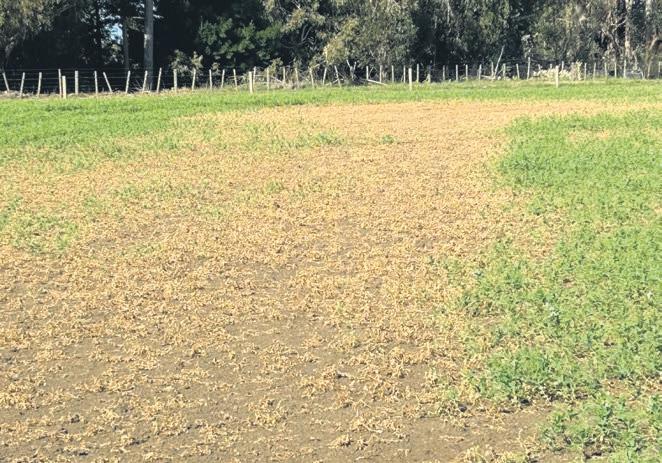
Oops: residue crop damage caused by inadequate spray tank decontamination.
“Glyphosate remains an important part of pastural farming practice, especially when fast turnaround for a new crop, or re-grassing.”
Pieter says foaming in the spray tank is another spray efficacy robber. Fortunately, there is an easy and effective solution: FoamMaster. It only takes a tiny amount to save the waste that comes from foaming – 1 mL to 100 L.
“FoamMaster sits on the top and pops the bubbles.”
Probably the best known of UPL’s adjuvants is Du-Wett. Pieter recommends using the super spreader for optimal crop coverage.
“It saves time, reduces waste and, critically, there’s going to be a better outcome. Du-Wett will easily pay for itself. You get the most out of every drop of the spray and you get as close as possible to 100% coverage of the plant.”
Last but not least, Pieter says the adjuvant All Clear is the insurance policy spray contractors, growers and farmers can’t afford not to have.
“Even tiny quantities of the wrong chemical left in the spray tank can have a huge impact.”
Pieter says to avoid cleaning spray tanks with laundry powder or ammonia.
“They’re not going to remove every trace of spray – that’s not what they’re formulated to do. But, above all, always read the label.”


Yes, there are other adjuvants.
But not with our track record.
We’ll work harder in every paddock, vineyard and orchard block.
UPL adjuvants have stood the test of time, trials, and most importantly, distributor, grower and farmer scrutiny. From water conditioning right through to tank cleaning along with the spreaders, stickers, penetrants, and drift agents UPL is known for. Still not sure? Ask one of our UPL Regional Managers.



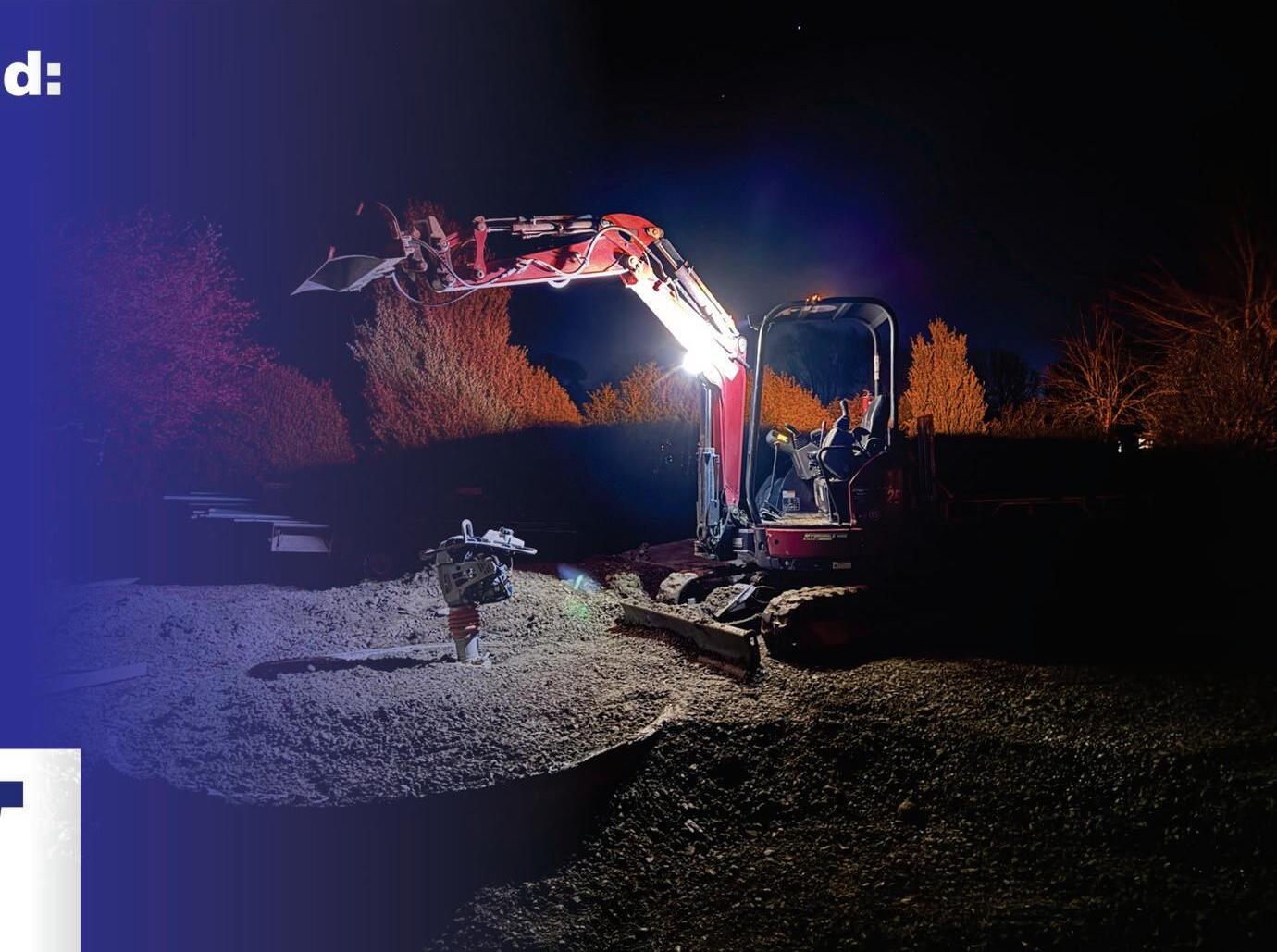
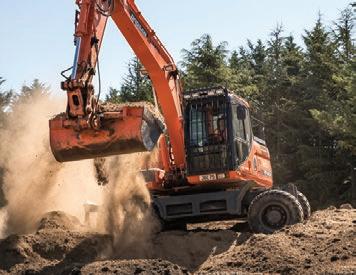
For their excavation, drainage, and foundation work more and more Cantabrians are turning to Bagrie Excavation & Drainage for quality work and reliability.
Bagrie Excavation & Drainage, owned and operated by Scott Bagrie who is experienced in excavation, drainage, and foundation work, provides hands-on, reliable service from quote to completion.
“I am proud to deliver reliable, high-quality excavation and drainage services to Canterbury’s farms, homes, and building projects,” Scott says.
“We are locally owned and operated and growing steadily through strong word of mouth and repeat clients Canterbury wide.
“I believe in fast communication and honest pricing backed by one-person accountability with rural and residential expertise using modern, efficient machinery.”
Bagrie Excavation & Drainage services include Foundations and site prep; Drainage and soak pits; Plumbing groundworks and service trenches; Rural earthworks, driveways, cartage, and material supply; Free quotes and practical advice.
Foundations
The ground is prepared to create a sturdy foundation for your architectural dreams. This involves digging, levelling and making sure everything is just right to create that sturdy foundation.
Your yard would get a makeover turning a blank canvas into a masterpiece giving you an outdoor space you could relax in be proud of.
Arenas, foundations, farm work
We specialise in laying the perfect foundation for your all-weather arena. Don’t compromise on safety or drainage, get it built right from the ground up. We handle all your rural and farm earthwork needs, from arena prep to farm tracks and essential drainage.
Site scrapes and yard clearing
Out with old in with the new by giving your yard a fresh new start. From demolition to tree removal, re-levelling and removal of concrete and asphalt.
Service installation
We take you from the stone age to the new age, working with local plumbers and electricians to get you the services that you require.
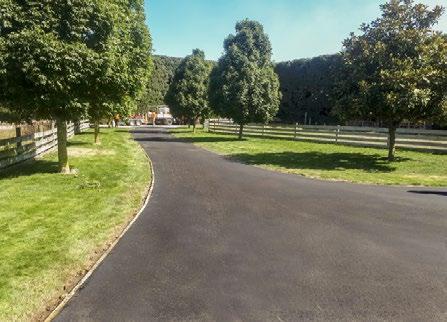
Driveway and path prep
The starting blocks to an exceptional driveway and or path entrance whether that be concrete, asphalt, bricks or gravel, whatever you need.

Maintenance or new builds either way we’ll keep that brown heading on down.
For more information on what bagrie excavation & Drainage has to offer contact Scott bagrie on 027 349 9079; email: bagrieexcavation@gmail.com or view them on Facebook at bagrie excavation & Drainage.
SPECIAL OFFER
Free on-site appraisal for Canterbury Farming readers. Just mention you read about bagrie excavation & Drainage in the February issue of Canterbury Farming.
Russley Portables are here to make your vision a reality. We understand that every project is unique, which is why our approach is built around flexibility, transparency and your complete satisfaction from the very first conversation to final handover.
Whether you are looking to expand your farm accommodation, invest in a minor dwelling or create an additional income stream, we are your trusted supplier of portable housing, lunchrooms, offices, toilet blocks, freezers and so much more.
We use EPS (Expanded Polystyrene) panels in construction, which provide excellent insulation, reduce energy costs and deliver strong, lightweight, and long-lasting walls.
This means your home stays cooler in summer, warmer in the winter and more energy efficient, all while remaining easy to transport and install.
Every home we build meets New Zealand’s building code and comes with a Code of Compliance Certificate. This gives you peace of mind for insurance, finance and complete assurance that your home has been constructed to the highest standard.
When you choose Russley Portables, you’re not just buying a home, you are partnering with a team that guides you every step of the way.
From your first enquiry, we take the time to understand your goals, site conditions and requirements. We will work with you to explore suitable designs, discuss in-
clusions and help you make informed decisions that will save you time, stress and unnecessary costs.
Our homes are perfect for a wide range of uses. Farmers look for reliable, practical on site accommodation which are comfortable, easy to install and suited to rural conditions.
Investors, or those considering minor dwellings can take advantage of our efficient code-compliant designs, which maximise functionality while keeping ongoing maintenance low.
Whatever project you have in mind, our team will ensure the design, durability and delivery process is seamless and stressfree.
We pride ourselves on our hands on approach and strong communication. Before any of our builds begin, we carefully assess site requirements, council needs and logistics, such as foundations and access.
We keep you informed at every stage so that there is no surprises – just progress toward the new home you have imagined. Our goal is to make the process simple and enjoyable, guiding you from concept to completion.
Investing in a portable home is a big decision and we understand the importance of trust. That is why Russley Portables has



built a reputation for honest, quality and reliability.
Every home we deliver is the result of careful planning, skilled construction and attention to detail. Whether it is a cosy farm residence, self-contained unit or a property designed to generate rental income, you can rely on us to deliver a home that exceeds expectations.
Get in touch today and let us show you how easy and rewarding the process can be. Your home, your way, made simple.
Why choose Russley Portables?
• We are locally owned and operated, and one of the most trusted providers


Whether you are looking to expand your farm accommodation, invest in a minor dwelling or create an additional income stream, russley Portables are your trusted supplier of portable housing, lunchrooms, offices, toilet blocks, freezers and so much more.
of portable building in the South Island, with over 30 years’ combined experience.
• We provide a full build contract from concept to completion, along with great advice, show homes to view, designs and quotes, all with no obligation.
• We offer peace of mind by making sure your building is fully insured by us while under construction and delivery.
• We back every home with a 10-year structural guarantee and 12-month warranty for minor defects, and our team is always available to assist with any issues, even after your home is delivered.

Farmer confidence remains elevated but has fallen from the near-record highs recorded across the first three quarters of 2025, the fourth and final Rabobank Rural Confidence Survey of the year has found.
] Article supplied by Rabobank
Following net readings in excess of +40% across the first three quarters of 2025, farmer confidence in the broader agricultural economy fell to a net reading of +28%.
The latest survey, released in December, found 40% of New Zealand farmers were now expecting the performance of the broader agri-economy to improve in the year ahead (down from 51% in the previous quarter), while the number expecting conditions to worsen had risen to 12% (from 5% previously). The remaining 45% of farmers expected conditions to stay the same (43% previously).
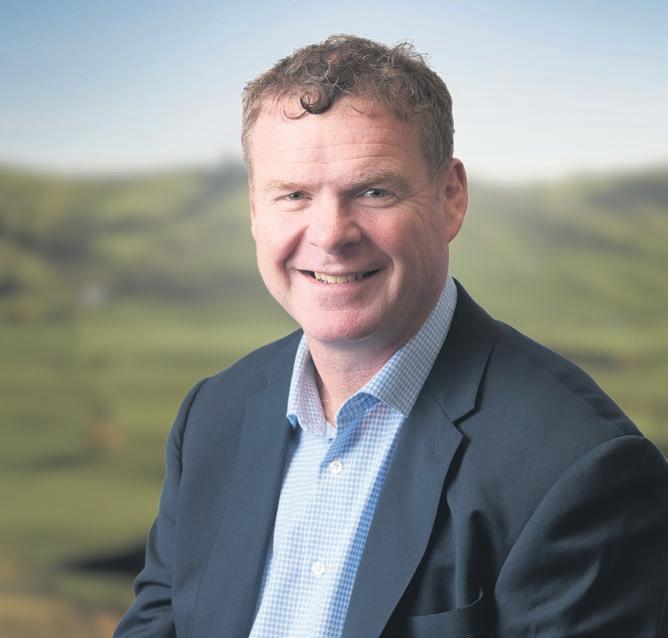
While confidence was lower, Rabobank New Zealand CEO Todd Charteris said, it was important to put the latest result into context.
“The confidence readings across the first three quarters of the year had been incredibly high and, while confidence has come back a bit since September, it’s important to note the latest result is still very strong,” Charteris said.
“We’ve still got four in 10 farmers expecting conditions in the broader agri-economy to improve across the next 12 months, and positivity remains the dominant sentiment across the sector.”
Charteris said the dip in sentiment the last quarter had been driven by lower confidence among dairy farmers.
“Since our last survey in September, we’ve seen increased milk supply, both here in New Zealand and around the globe, result in string of falls at recent global GDT events as well as a downgrade in Fonterra’s pay-out forecast for the 2025/26 season,” he said.
“These developments have clearly weighed on dairy farmers, and their confidence in the outlook for the broader agri-economy over the coming year was significantly lower this quarter than it was just three months ago.”
Charteris said growers and sheep and beef farmers were now significantly more upbeat about the prospects for the agri-economy than their dairy counterparts.
“Zespri’s counter seasonal global supply programme is now up and running and their latest forecast for the 2025-26 season is tipping record returns across all fruit groups,” he said.
“This is all great news for their growers, while the outlook for other horticultural industries this season also looks strong.
“Red meat producers are riding high too, with pricing for sheepmeat and beef elevated across recent months. And with global supply for both beef and sheepmeat tight, the expectation is that sheep and beef farmer incomes should stay strong in 2026.”
Among all farmers with a positive outlook on the agri-economy, the survey found the major reason for holding this view was rising commodity prices (59%).

Overseas markets/economies (21%) and falling interest rates (19%) were the next most frequently cited reasons.
For those with a negative outlook, falling commodity prices (67%) was the dominant reason cited, while rising input prices (25%), overseas markets/economies (23%) and government intervention policies (20%) were also prominent.
Charteris said the latest confidence reading for 2025 rounded out a year of exception-
Positive year: rabobank New Zealand CeO Todd Charteris said while there was a late dip in farmer confidence in 2025 overall it was a positive year for farmers, and one where the stars largely aligned for the rural sector.
ally high overall farmer sentiment.
“In fact, if we look back across the 20-plus year history of the survey, we’ve never seen a calendar year with a higher average farmer confidence rating,” he said.
“Demand and pricing for all of New Zealand’s key agri-exports has been incredibly strong across the year. I think most across the industry will look back on 2025 as one where the stars largely aligned for the sector.”

New Zealand farmers can now insure sheds, workshops, and storage buildings insulated with spray foam under standard insurance policies, removing one of the biggest hurdles to adopting the country’s best-performing insulation technology.
Following an on-site inspection and fire safety demonstration, Hazlett Insurance has confirmed it will offer nationwide Material Damage cover for agricultural buildings insulated by NZ Foam Limited, with premiums comparable to traditionally insulated structures.
For farmers weighing up options for new builds or retrofits, the announcement opens the door to insulation that delivers measurable benefits where it counts: animal welfare, operational efficiency, and long-term durability. Why farmers are choosing spray foam
Spray foam insulation is increasingly specified for agricultural buildings because it addresses the practical challenges Kiwi farmers face daily:
• Livestock comfort: Maintains stable temperatures year-round, reducing cold stress in winter and heat stress in summer
• No more condensation: Creates an airtight seal that eliminates moisture buildup, protecting machinery from rust and preventing feed spoilage
• Lower running costs: Superior thermal performance can cut heating and cooling expenses by up to 30 percent
• Stronger buildings: Adds structural rigidity while providing a seamless thermal barrier


• Built to last: Unlike fibreglass or wool, spray foam does not settle, compress, or degrade over time
• Faster construction: Reduces build time and material costs with minimal upfront capital outlay
Until now, uncertainty around insurance has held many farmers back. This agreement changes that.
James Smith from Hazlett Insurance said the decision followed a thorough assessment of NZ Foam’s installations in working farm environments.
“We conducted an on-site inspection of




NZ Foam’s spray foam installations in agricultural settings, examining fire safety performance,” Smith said.
“NZ Foam demonstrated good fire-retardant qualities which will help support compliance with safety standards, and we saw firsthand how it’s performing in real farm buildings.
“We’re confident offering full Material Damage cover to our farming clients who choose this insulation method, with premiums reflecting the quality of the installation and the added structural benefits the product provides.”

Foamed: Spray foam insulation is increasingly specified for agricultural buildings because it addresses the practical challenges Kiwi farmers face daily, including maintaining stable temperatures year-round, reducing cold stress in winter and heat stress in summer, and adding structural rigidity.
Farmers planning new builds or seeking to insure existing spray foam installations should:
• Contact Hazlett Insurance before construction to confirm coverage terms and any specific requirements
• Use certified installers: Installation must be completed by NZ Foam with full documentation retained
• Provide building details: Including size, construction type, and intended use
• Standard assessment applies: Buildings are assessed under Hazlett’s Material Damage policy framework, with premiums based on replacement value and standard risk factors
Farmers with existing NZ Foam installations can contact Hazlett Insurance to arrange a coverage assessment.






A blueprint to ensure farmers, growers and veterinarians can access the tools they need to fight pests and diseases has been launched as New Zealand’s primary sector faces ongoing regulatory delays.
] Article supplied by APHANZ
Developed by Animal and Plant Health New Zealand (APHANZ), the Blueprint for Rapid Change recommends practical steps the Government and regulatory agencies can take to streamline approvals for agricultural and horticultural products.
The blueprint comes seven months after the Ministry for Regulation’s review of the regulatory approval process. It includes options discussed with regulators since December 2023.
While legislative reform to the Agricultural Compounds and Veterinary Medicines (ACVM) and Hazardous Substances and New Organisms Acts (HSNO) is underway, APHANZ’s blueprint identifies three operational levers that can be pulled immediately by regulators.
These include a specialist taskforce to clear applications that matter most for farmers and growers including new active ingredients and new label uses, and greater use of international harmonisation and trusted regulator data to streamline approvals.
“This isn’t about asking for shortcuts,” APHANZ Chief Executive Dr Liz Shackleton said.
“It’s about asking regulators to use the tools they already have to make timely, riskbased decisions,” Shackleton said.
“Every delay adds stress, cost and risk to our farmers and growers who are trying to
Blueprint: APHANZ’s blueprint for rapid Change recommends practical steps the Government and regulatory agencies can take to streamline approvals for agricultural and horticultural products.
do the right thing – grow healthy food, protect the environment and meet rising standards. We need to move from promises to progress.”
She said despite Cabinet greenlighting re-
form and Ministers setting targets, access to new products remains stalled. In the queue, applicants report no meaningful change to the process.
“One recent approval for a new active in-


gredient has moved apple growers one step closer to the first blackspot tool in 18 years, but more are needed,” Dr Shackleton said.
“A broad toolkit with new actives and new label uses is needed by farmers and growers so they can rotate products to manage resistance, improve environmental outcomes and phase out older chemistry.
“In the business world, global R&D companies are voting with their feet. Projects for grass grub, crown rot, nematodes, vaccines and other actives are being deprioritised to other countries – leaving New Zealand behind. These products are mission critical.”
She said APHANZ is hearing from farmers and growers about a toolbox that is near on empty to help them grow food for New Zealanders and our global markets.
“They’re frustrated knowing there are products that can solve certain diseases and insect problems that are stuck in the approval process.
“I’ve spoken to growers and farmers across the country who are facing mounting pressure – from rising costs and climate volatility to increasingly discerning markets.
“The solutions exist as safer, more effective tools are sitting right on our doorstep. They are already in use overseas, but our regulatory system is holding the door shut.”
For more information about APHANZ, go to www. animalplanthealth.co.nz
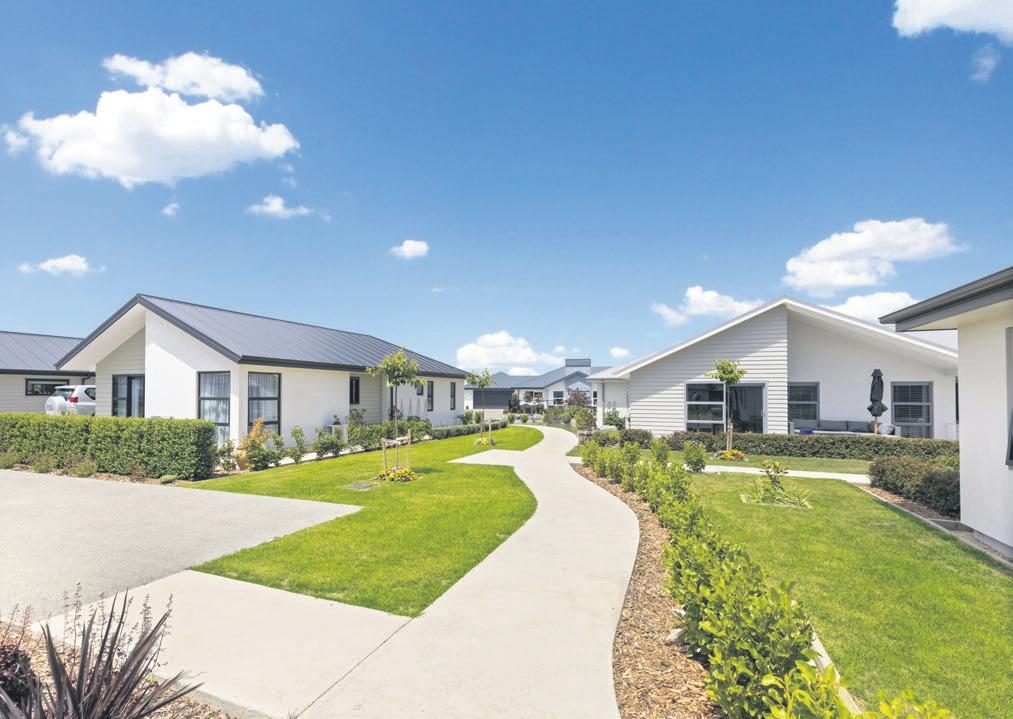
Amberley Country Estate, Canterbury’s most spacious retirement village, is located at the gateway to the Hurunui wine region.
]by Amberley Country Estate
When completed, it will have 250 homes set over 37 acres of beautifully landscaped grounds, with views of the surrounding hills.
With well-spread-out two and three bedroom villas, Amberley Country Estate looks more like a residential subdivision than a typical retirement village.
A wide range of single-level homes, from 94m2 to 189m2, means each street is unique.
Some have shared cul-de-sac-like settings, but, with rural people in mind, many homes have private driveways, double garages and spacious yards. Streets are beautifully landscaped with colourful plantings.
The 350m2 Clubhouse features a pool table, bar, library, gym, spa pool, pétanque and croquet and a men’s shed.
A new 1,350m2 resort-style Resident’s Centre, opening in 2026, will be the heart of the village, with a café, bar, pool tables, dance floor, library, gymnasium, indoor pool and spa, movie room, men’s shed and bowling green.
Residents enjoy a vibrant social life with something new on the calendar every day.
Regular happy hours, van excursions
and other activities and events allow residents to be as social as they please. For their peace of mind, the village will also have a modern hospital and medical centre with comprehensive care facilities, including memory care.
Amberley’s villas have been built with energy efficiency in mind and feature ducted central-heating, deeper walls with thicker insulation, thermally-broken, argon-filled, double-glazed windows and even industry-leading insulated foundations, so the home is comfortable yearround, with power bills that are extra low.
Their quality and fit-out is of an exceptionally high standard. Each has its own patio, lawn and garden area (maintained by village staff).
With extra warm homes, villas that are larger than typical, low weekly fees and a layout that features beautiful streetscapes with distinctive yards, Amberley Country Estate is a very special place to live.
Amberley Country estate already has 55 homes completed and has Villas available for occupation now. Villas start from $589,000, with showhomes available to view. To find put more, call Hamish Lamont on 0800 573 573 or visit www.amberleycountryestate.co.nz


] by Nicky Hyslop
] Director B+LNZ
Recent rain has been good news for sheep and beef farmers looking to maximise returns offered by this season’s strong prices.
in FECs. This has saved us money, time and stress on animals. It is also part of managing our way through drench resistance.
While it has been a good summer for livestock farmers, it has been very challenging for arable farmers, and our thoughts are with them as they once again struggle to get their crops harvested.
For those finishing lambs, Wormwise programme manager Ginny Dodunski is urging farmers to work with their vets and use Faecal Egg Counts (FEC) as a way to test the efficacy of their drenches.
We are seeing widespread triple drench resistance, so it is a waste of time and money to continue to use products that are ineffective or contributing to the development of drench resistant worms.
With or without drench resistance, FECs are a valuable tool to inform decisions around the timing of drenches. This season, we have so far delayed drenching our lambs post-weaning based on what we are seeing
Just before Christmas, the Government released legislation that will replace the Resource Management Act.
This is a once-in-a-generation chance to re-set how our productive resources are managed and it will be one of B+LNZ’s primary focuses over the coming months.
While B+LNZ applauds the Government’s intent to make NZ’s framework for managing the use of our productive resources more streamlined and practical, we do have some concerns:
• The proposed new system aims to replace the need for consents with farm plans. This is good for those that currently require consent, but most sheep and beef farmers do not.
• Our current reading of the legislation is that all farmers will be required to have
an audited farm plan, and some would also need plans to be certified.
• This would see many low-risk sheep and beef farmers being worse off than under the current system as they will be forced into a regulatory farm plan regime facing significantly higher administrative and regulatory burden and this is not something we could accept.
• The proposed new system still has limits. The national Government will set limits for human health. However, Regional Councils will be delegated authority to set limits for eco-system health across soil, water, air and biodiversity, with national guidance on how to do that.
• We need more detail to understand how this will work in practice and ensure appropriate guard rails are put in place.
Market based mechanisms for water allocation or water quality
• A key area we have concerns about includes the potential allocation of tradeable rights to individual farms, or cap and trade systems, as a way of ad-
dressing water quality or water quantity issues.
• While in theory this can allow the efficient allocation of resources, in practice it won’t work for diffuse contaminants such as nitrogen because of the challenges in accurately measuring losses at the farm level.
• We need further clarification about how the new approach to biodiversity will work.
• There is an intent to set limits for biodiversity, with a no net loss goal, which we need to understand more details on.
• But on the positive side if the regional proposed rules would have a big impact on the use of your land, then you may be able to get “relief” such as lower rates, cash payments or no-fee consents etc.
• This is intended to introduce a tension on Councils to consider the impact of what they are proposing, which we strongly support.
The public will have the opportunity to provide feedback, and there is more information on our website.







AgNova Technologies NZ Ltd is the distributor for MESH®, which is a new generation polymer-based material designed to reduce pod shatter and seed loss.
]
Advertorial supplied by AgNova MESH dramatically reduces the losses from pod shatter before and during harvest and also helps with reducing volunteer pressure in following crops.
Developed by De Sangosse UK, MESH is well-established and a market leader there for many years already.
“We are proud to bring this innovation to New Zealand cropping farmers”, says Mike Goodwin, South Island Area Sales Manager for AgNova NZ. What is Mesh?
It is a unique polymer blend, with a spreading system to give retention, spreading and coverage. Mesh ‘tacks’ and protects the pod seam, reducing its natural tendency to split and allowing the pod to expand, contract and mature normally.
Mesh works by “stapling” or tacking the pod suture line (seam) preventing it from opening or cracking, thereby preventing seed losses. As MESH dries, it produces a honeycomb structure (mesh), which develops interconnecting bonds and forms a continuous structure.
Mesh has some key advantages over current products used in the New Zealand mar-
ket, because of its unique make-up. It can be applied from Growth Stage 79, approximately eight weeks prior to harvest. The best timing is when pods are light green, still pliable and may be bent into a V shape without splitting, this is generally GS 80-82 in oil seed rape.
Trial work overseas and in NZ has shown that this early application gives the best return on investment as Mesh retains pod integrity from the earliest time where seed loss can occur, right up to harvest.
The other option is to apply MESH with your crop desiccant product, approximately 2-3 weeks before harvest. MESH is compatible with most glyphosate and diquat type products which may be used for desiccation.
Used at this timing, MESH will reduce infield losses due to physical crop movement and pod expansion and contraction.
MESH does not slow down desiccation and has no adverse effect on maturity or quality of the seed produced. MESH effectively reduces pre-harvest losses caused by ‘normal’ conditions.
Use rate – MESH is used at 1 litre per hectare in 100 to 150 litres of water. Using the lower water volume will allow for more
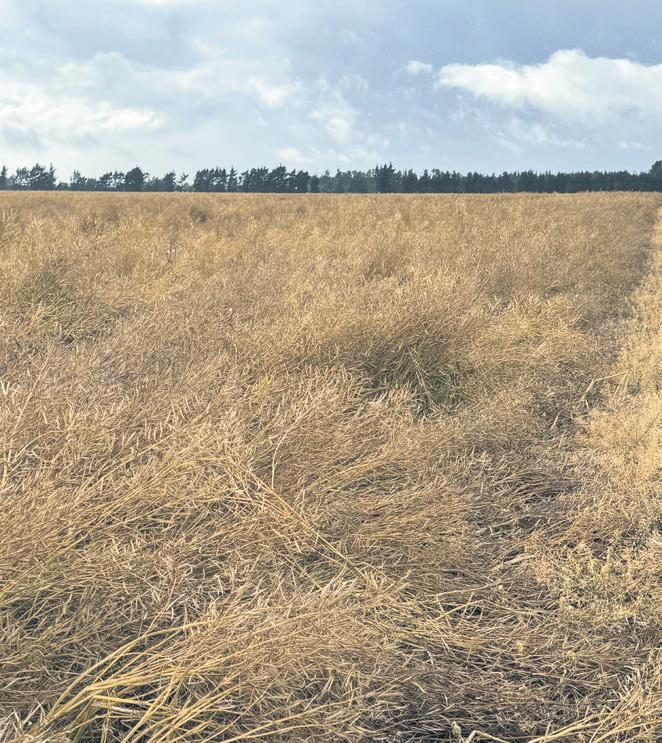
hectares to be sprayed around these key harvest times.
Once dried on the crop, this is the only application needed, as MESH has excellent rainfastness characteristics compared with other products.
MESH is registered for use in oilseed rape, other brassica & vegetable seed crops, and peas & beans.
Once dried on the crop, MeSH is the only application needed, as it has excellent rainfastness characteristics compared with other products.
Rainfast / Reduces both crop loss and post-harvest seed contamination / Long lasting / More hectares sprayed per tank load / Cost effective.
Contact: Mike Goodwin, AgNova NZ, phone: 022 517 7757 or email: mikeg@agnova,co.nz

Contact the AgNova Technologies NZ Ltd team for more information:
AgNova Technologies info@agnova.co.nz orders@agnova.co.nz 0800 500 599
David Lingan North Island Sales davidl@agnova.co.nz 022 555 7640
Mike Goodwin South Island Sales mikeg@agnova.co.nz 022 517 7757
Mesh® is a unique polymer blend which reduces pod shatter and seed loss before and during harvest in canola, other brassica seed crops, peas and beans.
Mesh tacks and protects the pod seam, reducing its natural tendency to split and allowing the pod to expand, contract and mature normally.
Mesh can be applied anytime from approximately 8 weeks before harvest and protect right through.
Mesh dramatically reduces the losses from pod shatter before and during harvest and effectively reduces preharvest losses caused by ‘normal’ conditions.
David Chamberlin Country Manager davidc@agnova.co.nz 021 966 945
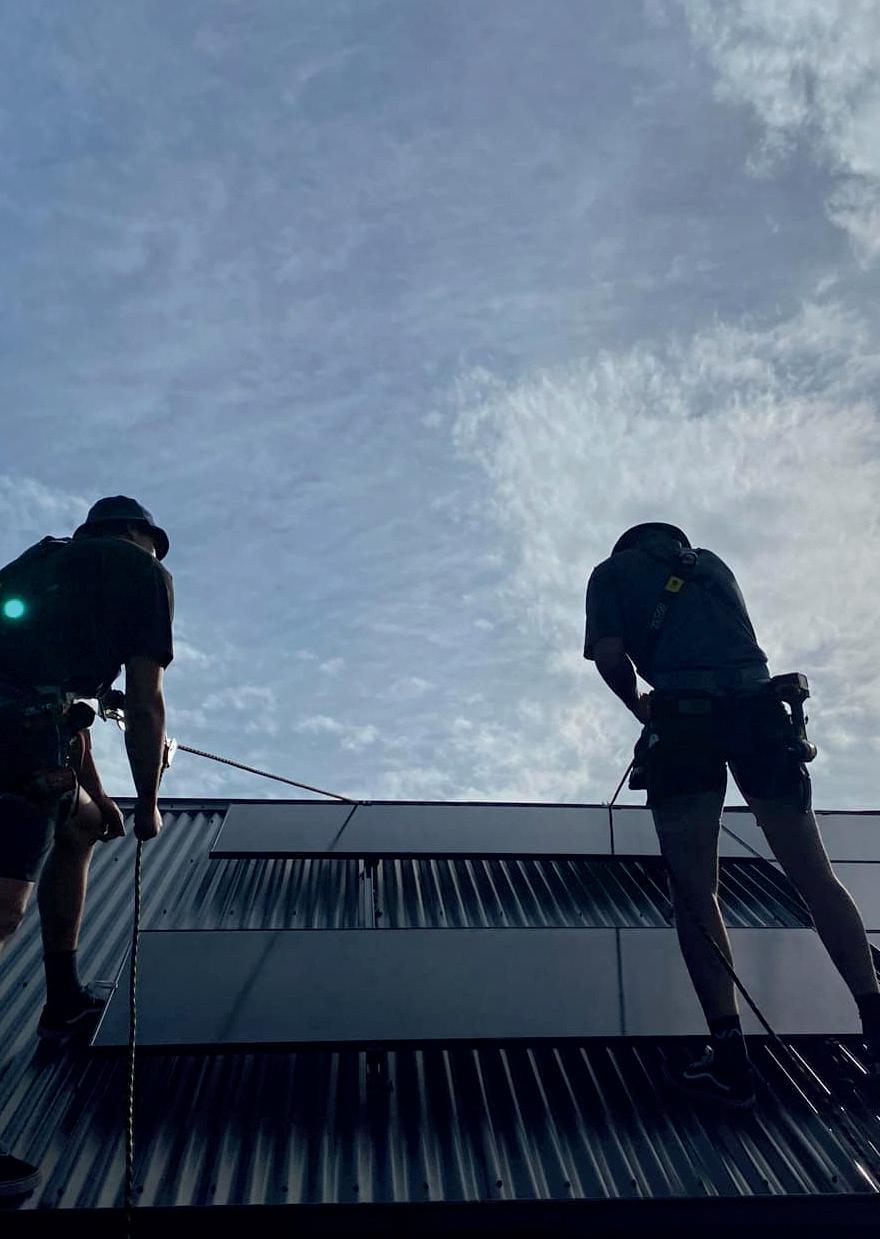
In Canterbury’s expansive farmlands, where agriculture drives the local economy, farmers grapple with escalating energy costs, and the need for sustainable practices, solar energy emerges as a viable solution, offering clean power which reduces reliance on the grid and aligns with New Zealand’s renewable goals.
Advertorial supplied by ]
SSP Electrical, a Christchurch-based company serving the Canterbury region, provides electrical services including solar installations, helping farms transition to efficient, eco-friendly energy systems.
SSP Electrical specializes in residential and commercial electrical work, encompassing new builds, repairs, maintenance, and solar setups.
With a focus on quality and innovation, they handle everything from system design to installation, ensuring compliance with New Zealand standards.
While not exclusively agricultural, their solar expertise extends naturally to rural applications, where farms can benefit from scalable panels for powering irrigation, sheds, and machinery.
Agri-solar, or agrivoltaics, integrates solar panels with farming to optimize land use. In New Zealand, this approach allows panels to coexist with crops or livestock, providing dual benefits.
For instance, elevated arrays offer shade, reducing heat stress on animals and potentially improving pasture growth. Research in regions like Marlborough shows that pan-
els can decrease water evaporation by up to 30%, conserving resources in droughtprone areas like the Canterbury Plains.
A study on sheep farms indicates that combining grazing with solar could boost profitability without significant yield loss, especially on marginal land.
In Canterbury, IEEE research highlights how agrivoltaics supports energy generation alongside livestock, aiding emissions reductions.
Economically, solar cuts costs dramatically. A typical farm system might reduce electricity bills by 50-70%, with payback in 5-10 years, depending on size and usage. Incentives like power purchase agreements (PPAs) provide stable pricing without upfront debt, as seen with initiatives from New Zealand Green Investment Finance.
Exporting excess power to the grid via schemes from providers like Meridian adds revenue. Environmentally, it lowers carbon footprints, supporting the country’s 2050 net-zero target.
SSP Electrical tailors solar solutions with options for battery storage and smart monitoring, ideal for remote farms. Their team, led by experienced electricians, conducts site assessments to fit systems to Canterbury’s windy, variable climate.
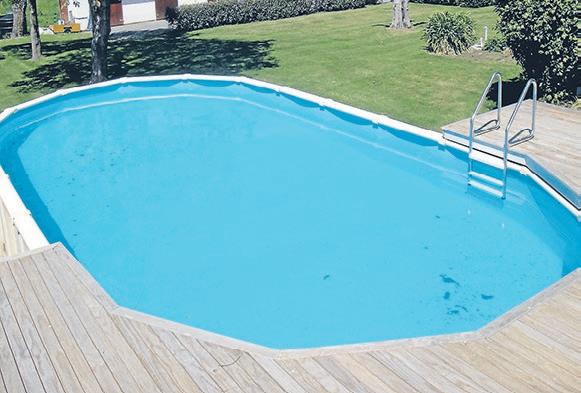
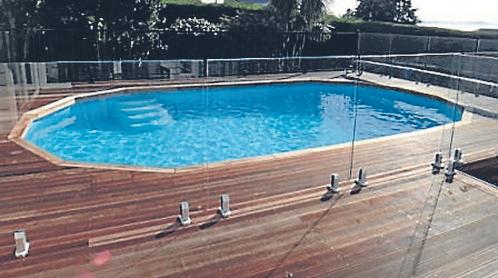

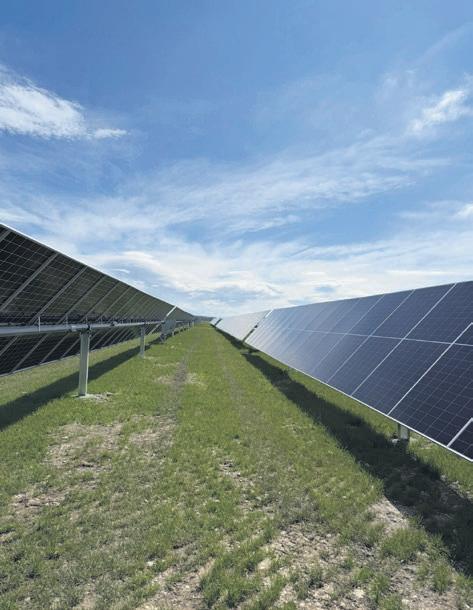
compliance with New Zealand standards.
Clients praise their efficiency; one property owner noted, “Scott’s knowledge and efficiency is second to none,” highlighting high standards in installations.
Challenges like initial investment exist, but SSP offers consultations to navigate options, including potential funding.
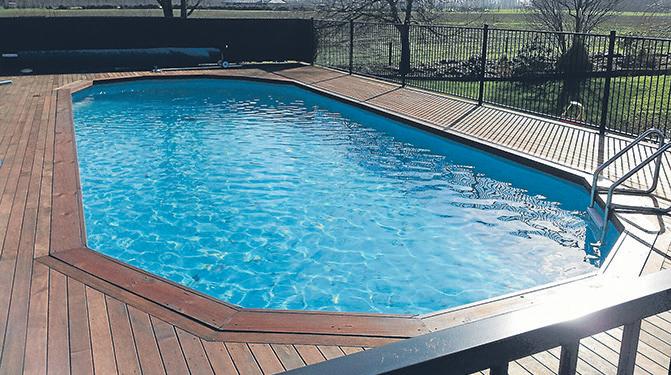
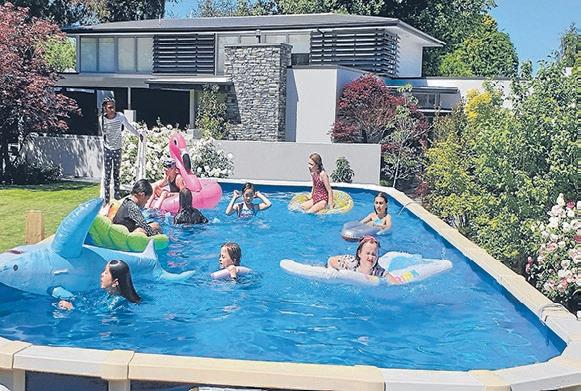

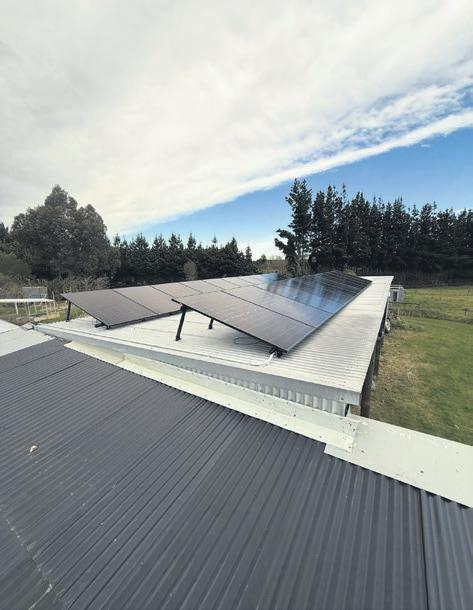
As climate pressures mount, solar isn’t optional – it’s essential for resilient farming.
Contact SSP electrical at 027 825 9554 or via sspelectrical.co.nz/contact for a quote. embrace solar to power Canterbury’s agricultural future sustainably.
Planting a tree seedling is easy – just dig a hole, place the roots in the hole and cover with soil. Right?
Article supplied by NZFFA
Successful establishment of tree seedlings so that they are still alive and growing vigorously a few years later and grow on to become mature trees, however, requires a lot more attention to detail.
Good forward planning pays dividends, so always plan just what you need to do well in advance of actual planting.
Key factors for success
• Make sure the species chosen is suitable for the site.
• Use good quality tree stock.
• Take great care in the handling, transport and storage of seedlings.
• Ensure the planting site is well prepared, where possible by deep cultivation with a winged ripper, and perhaps pre-plant spraying with a weedicide.
• Prevent weeds from competing with the seedlings for at least a year after planting.
• Protect seedlings from browsing by stock and wild animals.
Bare-rooted stock are preferred to container stock for large-scale planting because they are usually much cheaper to produce, more seedlings can be carried when planting away from roads and it is difficult to produce container stock large enough and sufficiently well-conditioned to establish well on harder sites.
However, some species, particularly many of the eucalypts, perform much better when container grown.
Under ideal planting conditions, small seedlings transplant better than larger ones, with less interruption to their growth.
In practice, a minimum size is required because the seedling must contain sufficient food reserves not only to survive until plant-
From nursery to forest: Careful handling, site prep, and attention to detail mean these seedlings will grow on to become the backbone of New Zealand’s landscapes.
ed, but also to make new root and shoot growth after planting. Root collar diameter is the best indicator of food reserves.
The stem must be sufficiently hardened to withstand handling and storage without damage, resist disease and insect attack, and tolerate harsh weather conditions after planting.
The seedling must be large enough to be planted deeply in uneven ground without being buried, and to be able to cope with any likely weed growth.
The future root system of the tree is largely determined by the way the roots are positioned at the time of planting.
Commonest faults in planting
• not planting deep enough. Such trees are much more prone to topple in strong winds and to suffer moisture stress under dry conditions.
• not creating a planting hole big enough to accommodate the root system without distortion. Roots bent horizontally around the lower stem will later strangle the main stem, resulting in wind throw. If the nurseryman has not trimmed the roots sufficiently, use a sharp pair of shears and trim the roots in a cool shady place before going out to plant.
• dragging the roots into a planting slot so that they all point in the same direction, resulting in unstable trees with ‘hockey stick’ root systems.
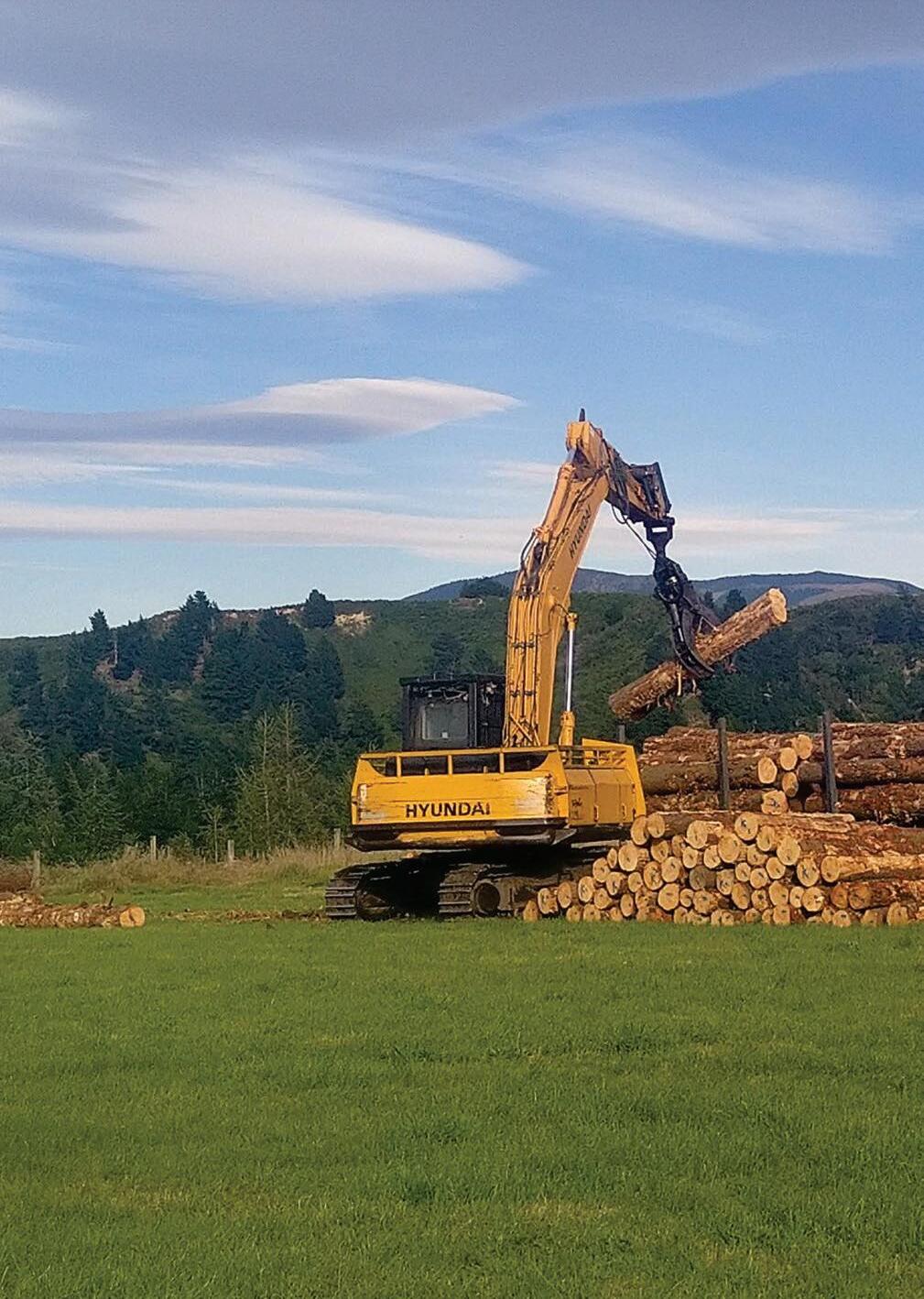
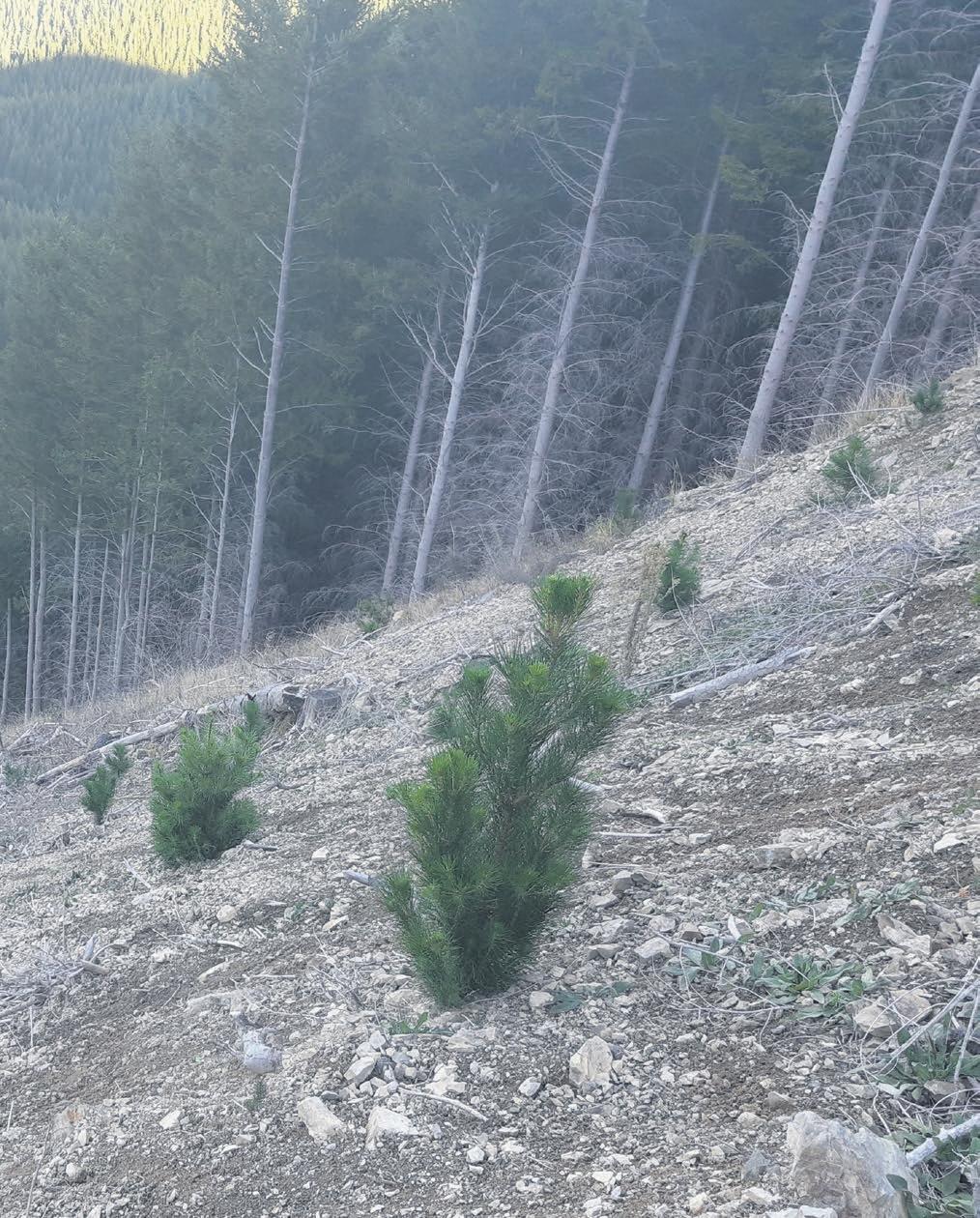
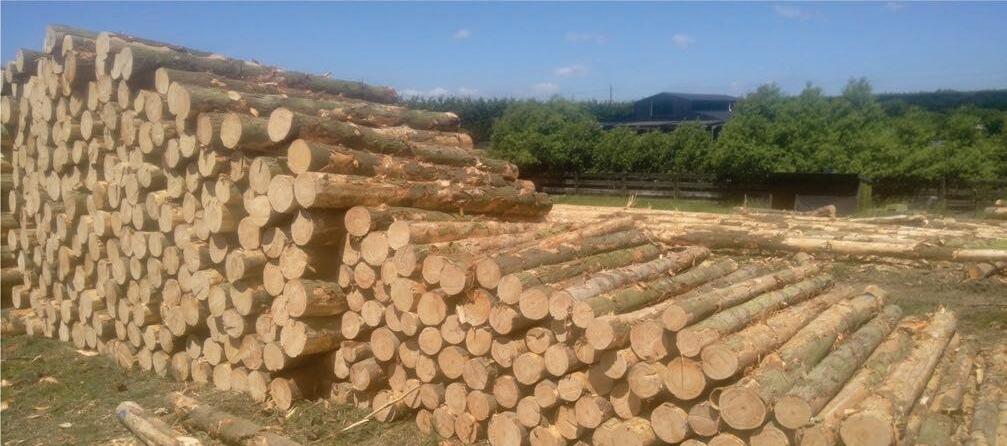
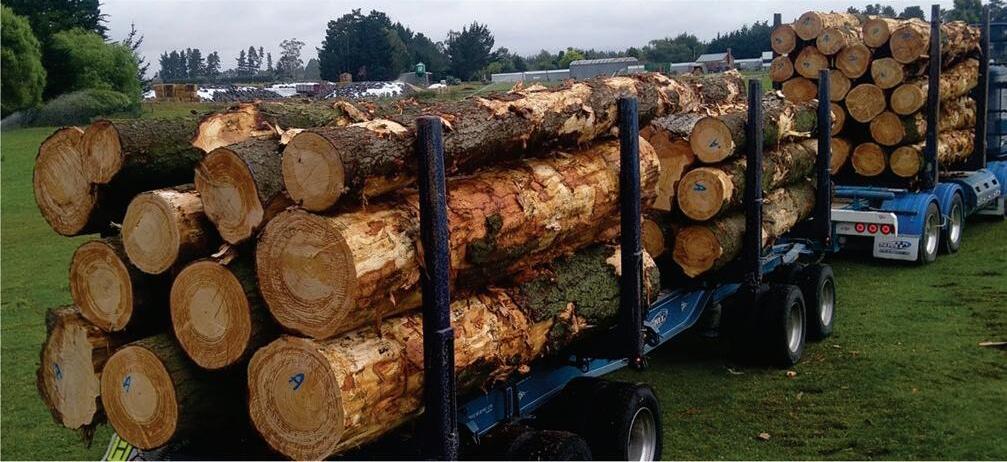
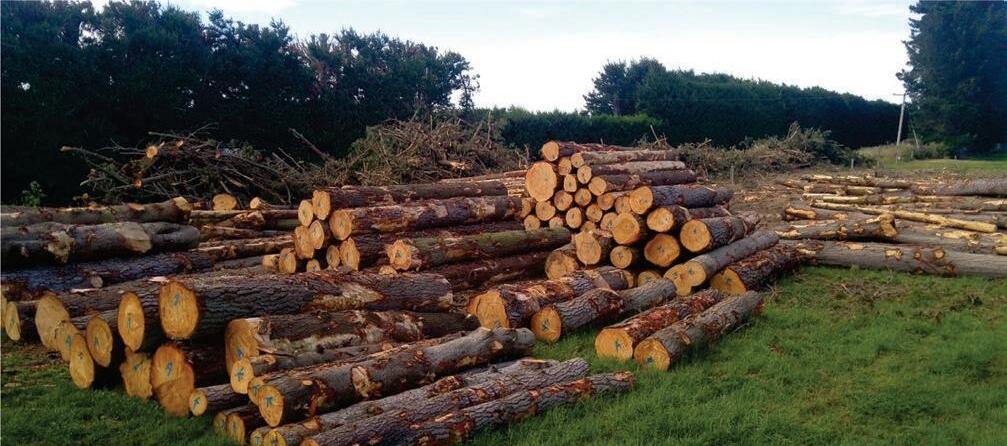


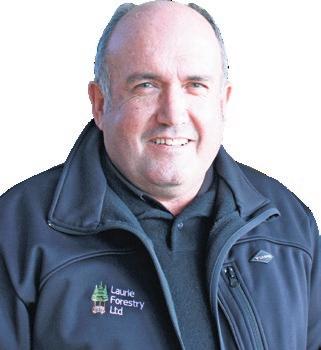
The harvesting of forests has swung back in to gear after the holiday break with both current sales and the near future looking mostly positive.
] with Allan Laurie MNZIF
] Laurie Forestry Ltd
The New Zealand domestic scene is currently leading the charge with some sawmill owners reporting reasonable order books.
More particularly, most believe 2026 is shaping up to be a better trading year with wider out enquiries and the volume of phone traffic suggesting a general improvement in house starts and light construction in our near future.
A vibrant domestic scene is good for forest growers with the associated money go round generated by log sales also good for economic vibrancy across all ranges of communities, including, of course, more jobs.
This year, Chinese New Year (CNY) is later than normal at a 17 February start. The first seven days are the main public holiday whilst festive celebrations continue up to 3rd March to include the Lantern Festival. 2026 is the year of the horse, considered generally to be positive.
All of this is relevant to the log trade with NZ going into full log export production whilst our key market is on holiday. Just to what degree the China Eastern seaboard returns to
good daily usage numbers following CNY will be critical to supply/demand and therefore log prices.
Recent trade numbers out of China are staggering: 2025 yielded a $1.2 trillion trade surplus, cash reserves are now in excess of $3 trillion, export sales up 6.6% with export sales to the US down 30% in 2025.
All of this is critical to a NZ Forest grower. Economic growth centred on manufacturing and exports equals more wood usage. With NZ currently supplying in excess of 80% of all softwood logs in to this massive market, increased wood usage equals “you beauty”.
For the moment, log prices have softened very slightly for January sales despite general market negative sentiment suggesting they might go lower. As reported previously we continue to see more downward pressure on low grade logs.
China buyers are showing a clear preference for higher grades logs whilst wanting to discount lower grades. I continue to see a future when the market for large knot industrial logs will disappear completely.
In India the market is positive despite additional shipments from NZ heading to the only port to receive break bulk logs, which is

Kandla on the upper and western seaboard.
In India, it is not possible to measure daily usage as the logs are discharged off the vessel, directly on to trucks which then deliver directly to the sawmill customers.
The only time we know when sales are slow is when ships arrive with insufficient sales and unsold logs go into bond yards near the port. Right now, and again despite additional deliveries there are no logs in bond yards.
To highlight some staggering statistics about India. The current middle-class population is in excess of 400 million people and that is expected to rise to over 700 million by 2030–31.
Middle income earners hold the largest discretionary spending purse. This means elevated new house construction, new furniture, new beds and new kitchens.
There is clearly going to be exponential growth in wood usage in India as a direct consequence of rapidly growing wealth. The recent Free Trade Agreement is huge for NZ Forest owners. By June this year the removal of the current tariff (about US$7 per m3 of log) in tandem with increasing demand should see additional shipments from NZ.
‘economic growth centred on manufacturing and exports equals more wood usage which equals “you beauty”.
In an earlier report I suggested another one to two shipments per month would be the likely outcome of the FTA.
In a recent discussion with a leading company based in Kandla, they believe near future demand with increase to 3 to 4 more ships per month from NZ and they are already gearing up for that growth.
A corresponding 5% to 7% drop in log shipments redirected from China to India will be very healthy for the NZ forestry sector.
Erstwhile we are also seeing exponential growth in the Vietnam log in containers trade. We have one customer wanting to go from 20 to 50 containers per week. That is from 400 to 1,700 cubic metres of logs. Another very good news story for the sector.
As always, please remember the thoroughly important message. It remains, as always, fundamentally important, the only way forward for climate, country and the planet, is to get out there and plant more trees”.


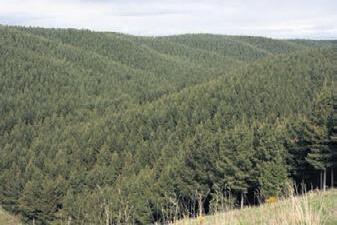
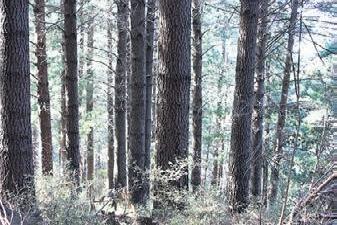
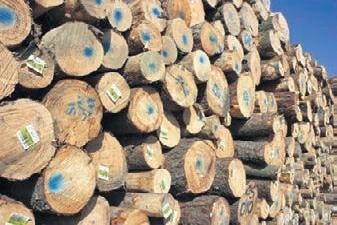
Timber harvesting has been, and unfortunately continues to be, a dangerous task. The Health and Safety at Work Act (HWSA 2015) makes it clear that all Persons Conducting a Business or Undertaking (PCBU) have a responsibility for safety.
A landowner engaging in a timber harvesting activity is by definition a PCBU and should actively take part in ensuring health and safety of the people working on their land.
It is unlikely that a small scale forest landowner will have the expertise to develop a detailed health and safety plan for the timber harvesting operation.
The most prudent option is to engage with a professional forestry company, consultant or contractor to ensure they have the appropriate health and safety plans in place.
The forest industry has been working hard at improving its safety record and has a dedicated Safety Council.
A comprehensive review of the forest industry was completed by an Independent Panel and a summary document outlining some of the main shortcomings, as well as an agenda for change, was published (IFSR 2014).
A number of initiatives have been undertaken including setting up ‘Safetree’ a website that provides resources such as documents and videos on how to complete timber harvesting safely.
WorkSafe, which is the New Zealand regulator for health and safety, have published a document entitled ‘Managing a Safe and Healthy Small Forest Harvest’ which provides an excellent resource in terms of practical step-by-step guide for managing your harvest.
For example, one task the landowner must complete is the identification of hazards on the property and making sure they are communicated to the logger. Examples of hazards on farm woodlots can be fences,
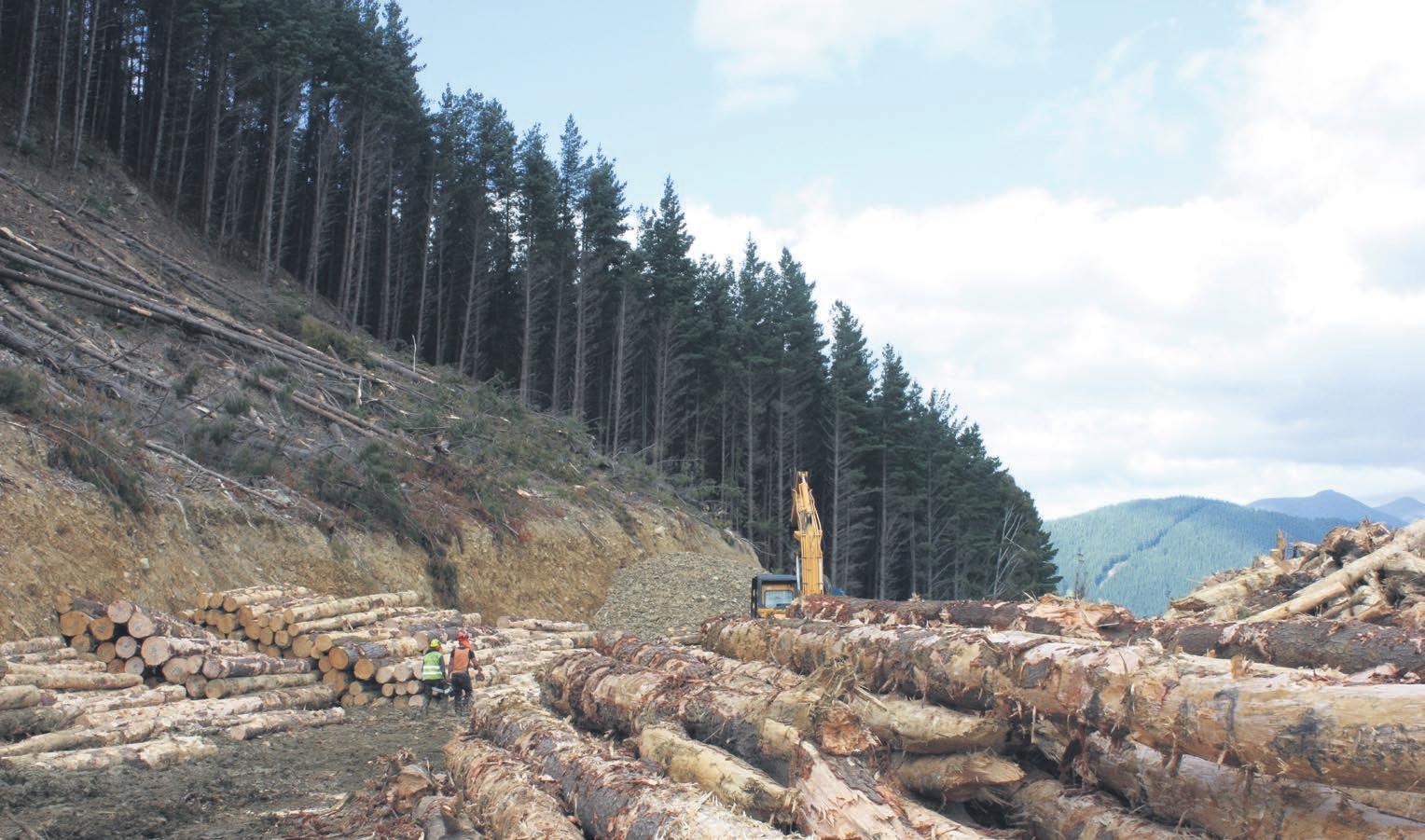
proximity to powerlines, but also the strength of stream crossing structures. You are also likely to be responsible for the safe access to the forest on the farm, so if the farm roads and tracks leading to the area to be harvested are steep and not accessible for a logging truck in wet weather, then

you need to take action to restrict access.
With regard to the individual harvesting tasks, there is an Approved Code of Practice (ACOP 2012) for forest operations that is considered a minimum standard, and it includes the expectation that all workers are both trained (or in training) and competent in
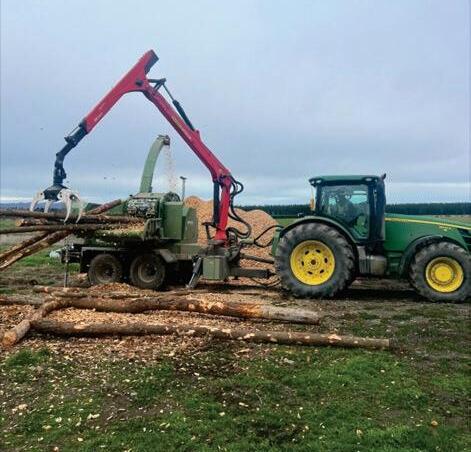
carrying out the designated harvesting task. Best practice guides are also available from various sources including for higher risk practices such as manual tree felling or choker-setting (known colloquially as ‘breakingout’ in NZ), or complex harvest systems such as cable logging.
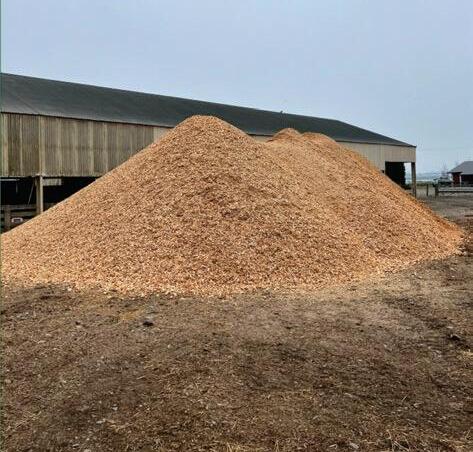

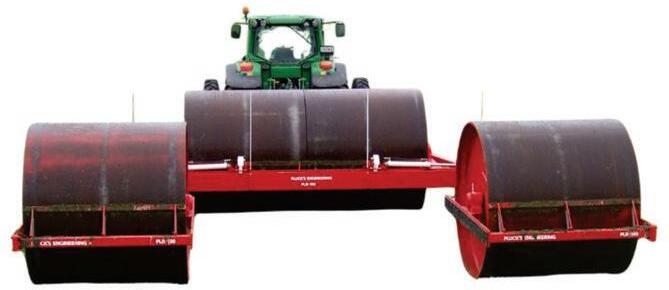
Fonterra’s organic business has been going from strength to strength in recent years, with the Co-operative now inviting applications from farmers in the South Island for the first time.
Article supplied by Fonterra
The new South Island recruitment of farmers interested in converting as well as existing organic farms will initially focus on those located around Southland and up to the Canterbury region.
This is in addition to continuing to recruit more organic farmers in the North Island, where more than 100 farms are currently part of the Fonterra Organic Programme.
Anne Douglas, Group Director for Fonterra Farm Source, said the expansion into the South Island is another positive news story for the Co-op.
“We already have a strong performing organic business but have more room for growth based on increasing demand from customers around the world,” Douglas said.
“Our plan is to be able to process organic dairy products at our Stirling site from the 2028/29 season, with the recruitment process starting now to allow time for converting farmers to achieve organic certification.”
She said before work commences at Stirling to enable the segregated processing of organic milk, the Co-op is looking to achieve minimum recruitment targets in the South Island that would ensure operational efficiencies.
“Expanding the programme seeks to offer South Island farmers another supply option and is also expected to benefit all Fonterra farmers based on the positive contribution our organic business makes to the wider Coop’s earnings.”
Fonterra’s General Manager of Organics Andrew Henderson said in recent years, the
global organic dairy category has shown consistent retail sales value growth year-on-year.
He said the Co-op offers support for its shareholding farmers throughout their transition to organic.
“Our support package includes conversion incentives, advice, networking opportunities and linking farmers up with peers who can mentor them through the process,” Henderson said.
“Organic farming might not be the right fit for all shareholders, but for those interested in converting it has the potential to unlock additional returns.
“For example, since the Organic Milk Price was first established in 2016/17, it has delivered an average premium of around $2 per kgMS above the Farmgate Milk Price. There’s also the potential for lower input costs that are typical in New Zealand’s grass-fed organic systems.”
New record highs have been set for the past three years on the back of growing demand, culminating in a final payout of $12.35 per kgMS last season. The current Organic Milk Price forecast for the 2025/26 season is $13.10 per kgMS.
“At the heart of this business are farmers who are passionate about the principles of organic farming and who create goodness for customers and consumers around the world that value organic dairy,” Henderson said.
If any farmers are interested in switching to organic, they can either call 0800 65 65 68, email specialty.milks@fonterra.com or get in touch with their local Fonterra Farm Source representative.
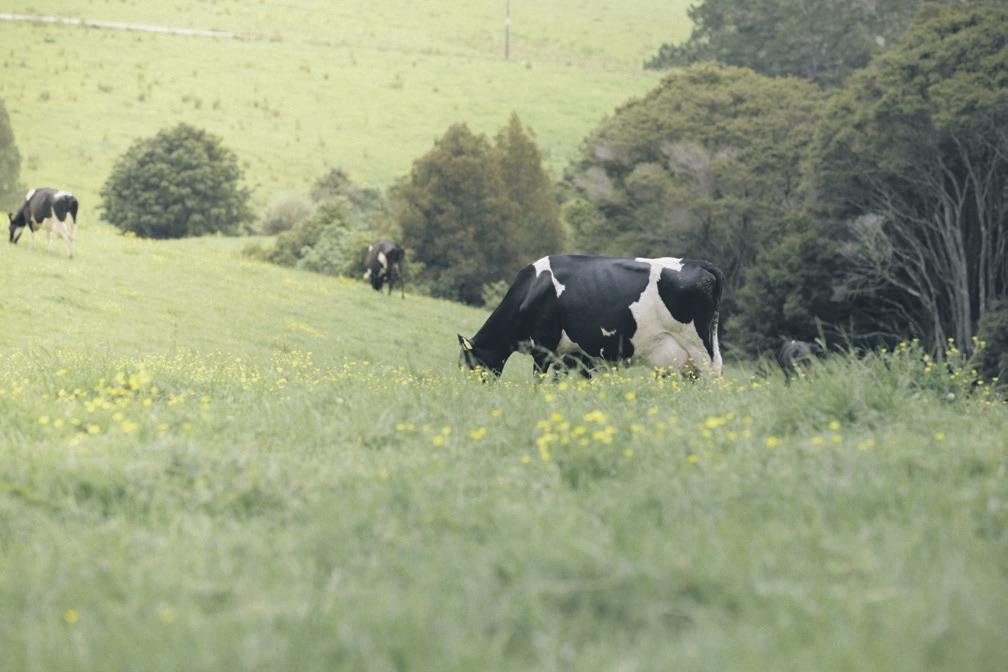
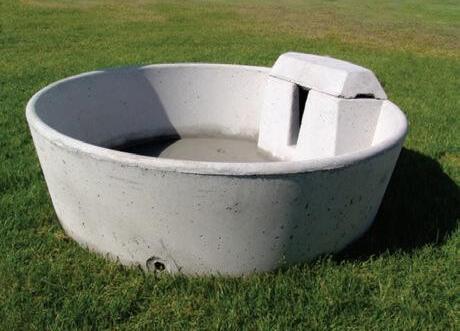
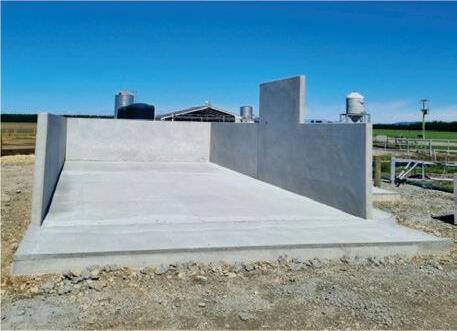
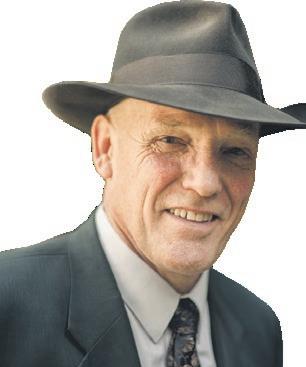



It is hard to recollect a time when future planning has been so uncertain.
Farmers have several variables to consider.
Prices received for milk, meat, wool, and horticultural products appear to be steadily lifting however volatility is also increasing.
Costs are on an upward escalator, particularly rates and those related to compliance.
International crude oil prices are low by historical standards and yet local fuel prices don’t seem to fully reflect that.
The cost of capital as shown by interest rates are close to long-term lows and any upward movement adds significant extra pressure for those heavily indebted.
Weather has perhaps the greatest influence and accurate long-term projections largely depend on where you look and what you want to see.
Farming is not for the short sighted or faint hearted, however there are steps that can be taken that provide a degree of certainty and comfort.
Magnesium requirements on farms, particularly intensive dairy, grow each year. Many soils are naturally magnesium deficient and for others the loss is induced through excessive nitrogen and potassium inputs.
Soil compaction with resultant shallow rooting of plants further compounds the problem with magnesium supplementation being required throughout the milking season.
Magnesium chloride and sulphate added to the water supply results in animals preferring to drink from puddles limiting production.
An unlimited supply of fresh clean drinking water increases milk production, improves weight gain, and strengthens immune systems.
To ensure sufficient magnesium a bin of dolomite made available next to a trough or in the race at the entrance or exit to the milking shed allows each animal to access what they require.
The amount of mag in the water supply can then be steadily reduced over a period of several weeks.
Magnesium and calcium requirements are closely related, and dolomite provides both as it contains 24% calcium and 11.5% magnesium.
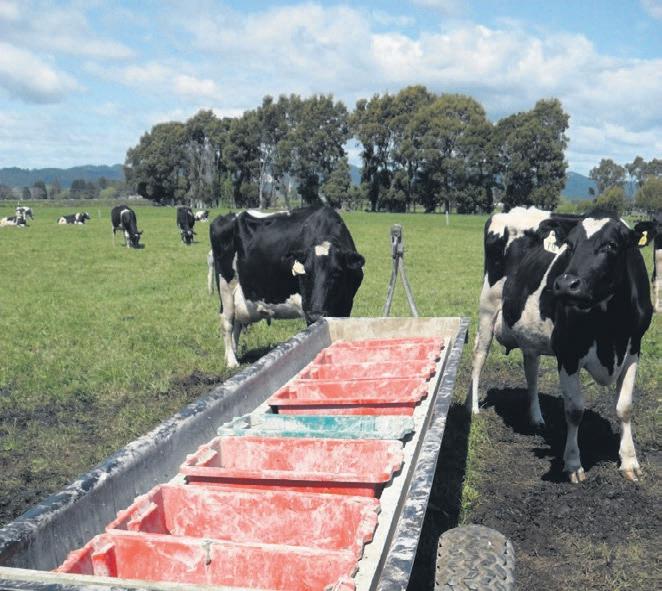
A bin of lime flour will allow animals with high calcium requirements the extra necessary.
Farmer clients often always have salt available as animals lose sodium during summer months as well as mobilising it to fight infections.
We recommend that these supplements never be mixed together, or with other feed, as stock may ingest excess which can be just as detrimental as a deficiency.
Access: To ensure sufficient magnesium a bin of dolomite made available next to a trough or in the race at the entrance or exit to the milking shed allows each animal to access what they require.
Electrical problems or maintenance?
Use our unrivalled industrial electrical service for:
• Dairy sheds and irrigation
• Power reticulation
• Effluent control
• Dryers, conveyors and generators
• Switchboards and central supplies


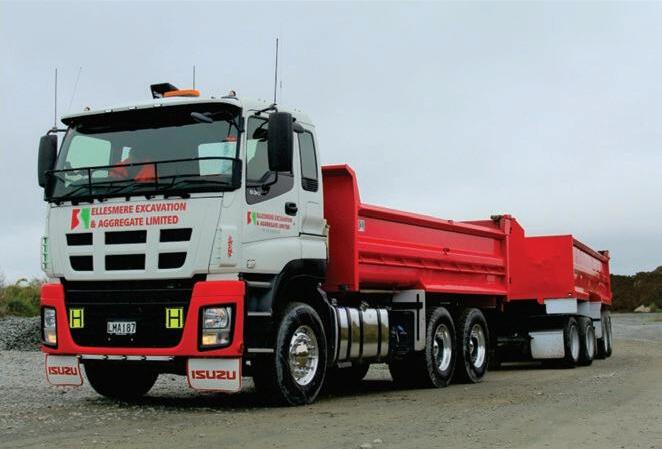
The basis of a sound magnesium supplementation programme is an annual application of dolomite, the only source here being that from Golden Bay.
An annual application of 200-250kg/ha is all that is required to replace losses with a 30 tonne truck and trailer load sufficient for between 120-150ha.
Where this isn’t enough to cover the whole property, targeting calving areas and paddocks receiving cowshed effluent will still provide worthwhile benefits.
Fewer animals exhibit clinical magnesium deficiency symptoms during calving and early lactation.
Cows that may become unsteady are treatable usually recovering fully with minimal loss of production.
Because dolomite remains fully effective for twelve months it may be applied at any time with autumn being an ideal time.
For a quote of product delivered to property call 0800 436 566 (0800 4DOLOMITe).



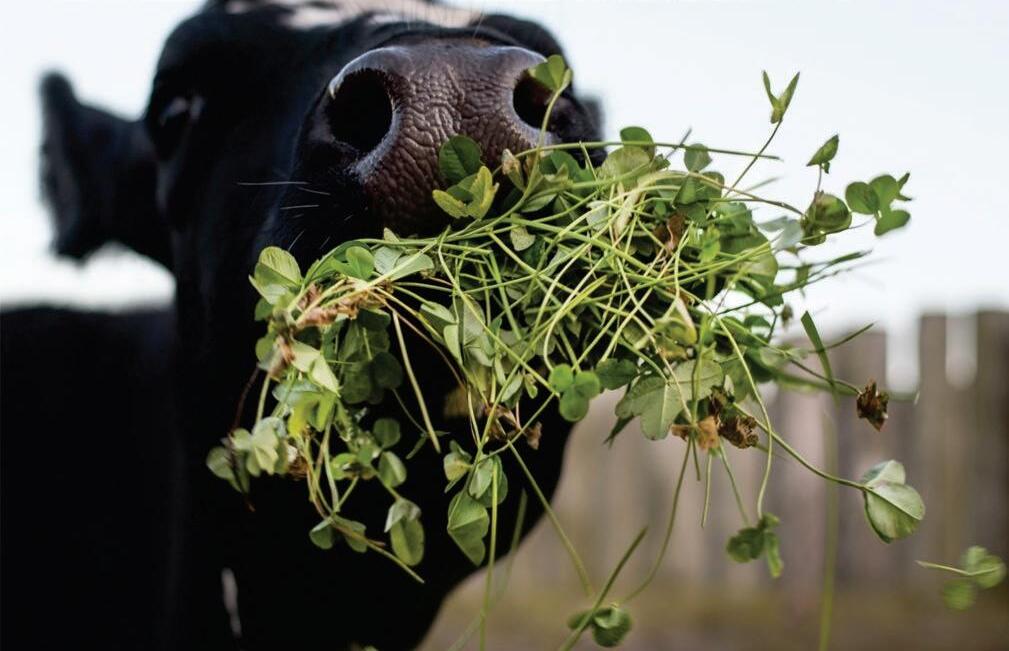

DairyNZ is giving Canterbury farmers a unique opportunity to gain hands-on governance and leadership experience within the dairy sector.
] Article supplied by DairyNZ
It has opened applications for its sought-after associate director role on DairyNZ’s board.
The one-year position offers levy-paying farmers with a passion for dairy the chance to contribute to one of their industry-good bodies and participate in discussion and debate.
DairyNZ chair Tracy Brown said 15 dairy farmers have taken up the role since it was first introduced in 2013 and it has been a key stage in their governance development.
“The associate director role isn’t just a seat at the table, it’s a stepping stone to shaping the future of New Zealand’s dairy industry,” Brown said.
“Supported by our eight DairyNZ board members, this role offers emerging leaders a rare chance to experience governance firsthand and contribute to sector-wide decisions.
“Farmer leaders who have taken on the role in the past have gone on to make valuable contributions to the sector in governance roles.
“Our current deputy chair, Cameron Henderson, was an associate director in 2020/21 and farmer-elected board member Richard McIntyre was an associate director in 2019. Others have gone on to governance roles in the sector.”
The incumbent associate director, Greg Collins, said the role is an excellent way to get governance experience in an industrygood setting.
“It has been a really positive learning experience for me,” Collins said.
“From a governance training perspective, it is very comprehensive. While it’s a nonvoting role, the associate director is very involved in a lot of the decision-making process, and your voice is heard. The mentoring
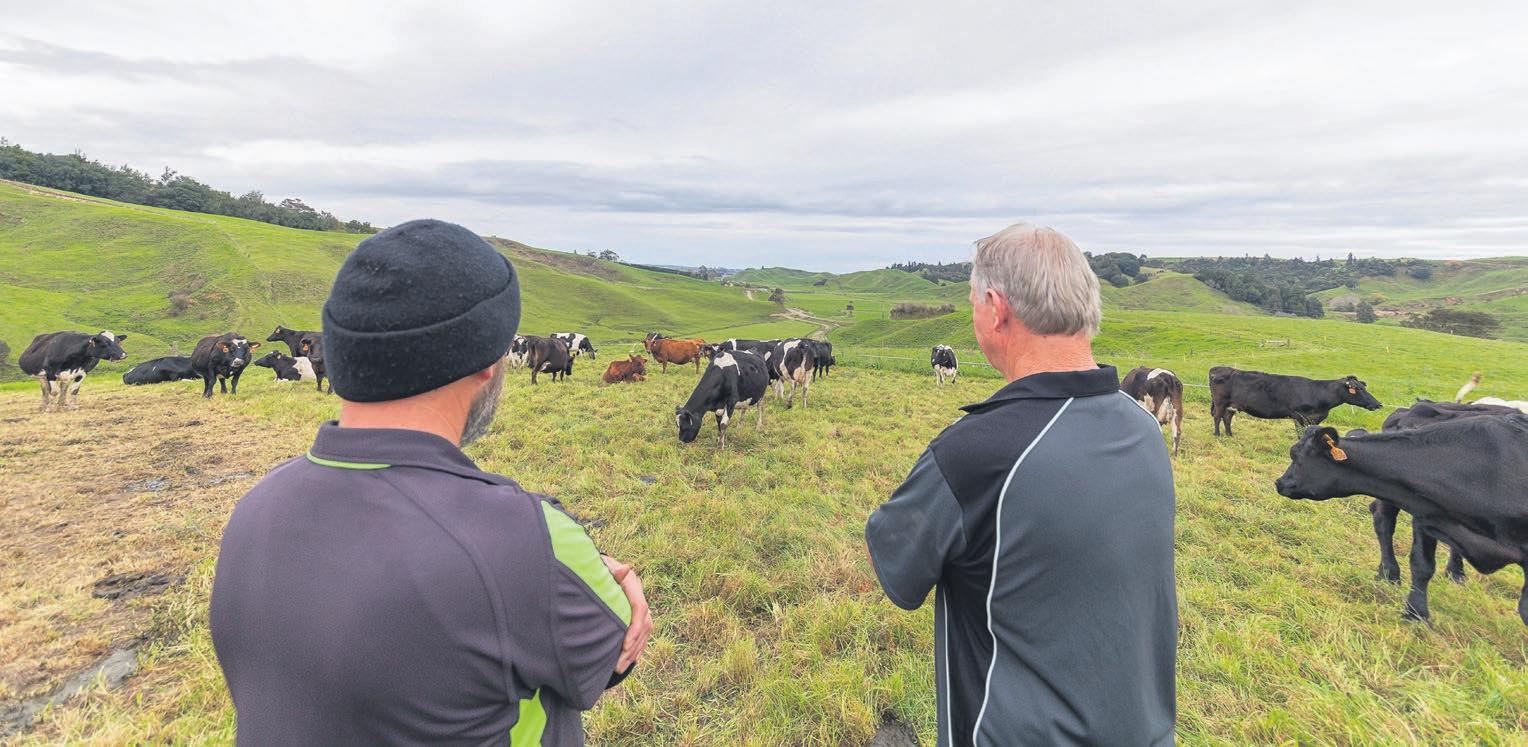
Opportunity: DairyNZ chair Tracy brown says the associate director role on DairyNZ’s board is a stepping stone to shaping the future of New Zealand’s dairy industry.
I have received and support from other board members has been invaluable and has vastly increased my governance knowledge and ability,” he said.
“I underestimated how extensive DairyNZ’s strategy is and the complexities of its workstreams. There’s an awful lot of behind the scenes work that farmers don’t really see, particularly in the political space well beyond the farm gate.
“I’d encourage all farmers who are eager to have more involvement in shaping the sector from a leadership position to apply for the role,” Collins said.
50 HEAD OR 1,000 HEAD, WE’LL HELP YOU STAY AHEAD.
There is one associate director position open to current levy-paying dairy farmers who are demonstrating leadership within their community and/or the dairy sector. It is a non-voting role and is appointed for a one-year timeframe beginning 1 June 2026. A commitment of approximately 30 days per annum and the ability to travel are required.
To apply, email your CV and cover letter to corporate. secretary@dairynz.co.nz. Applications close at 12 noon on Friday 20 February 2026. More details are available at dairynz.co.nz/director-vacancy

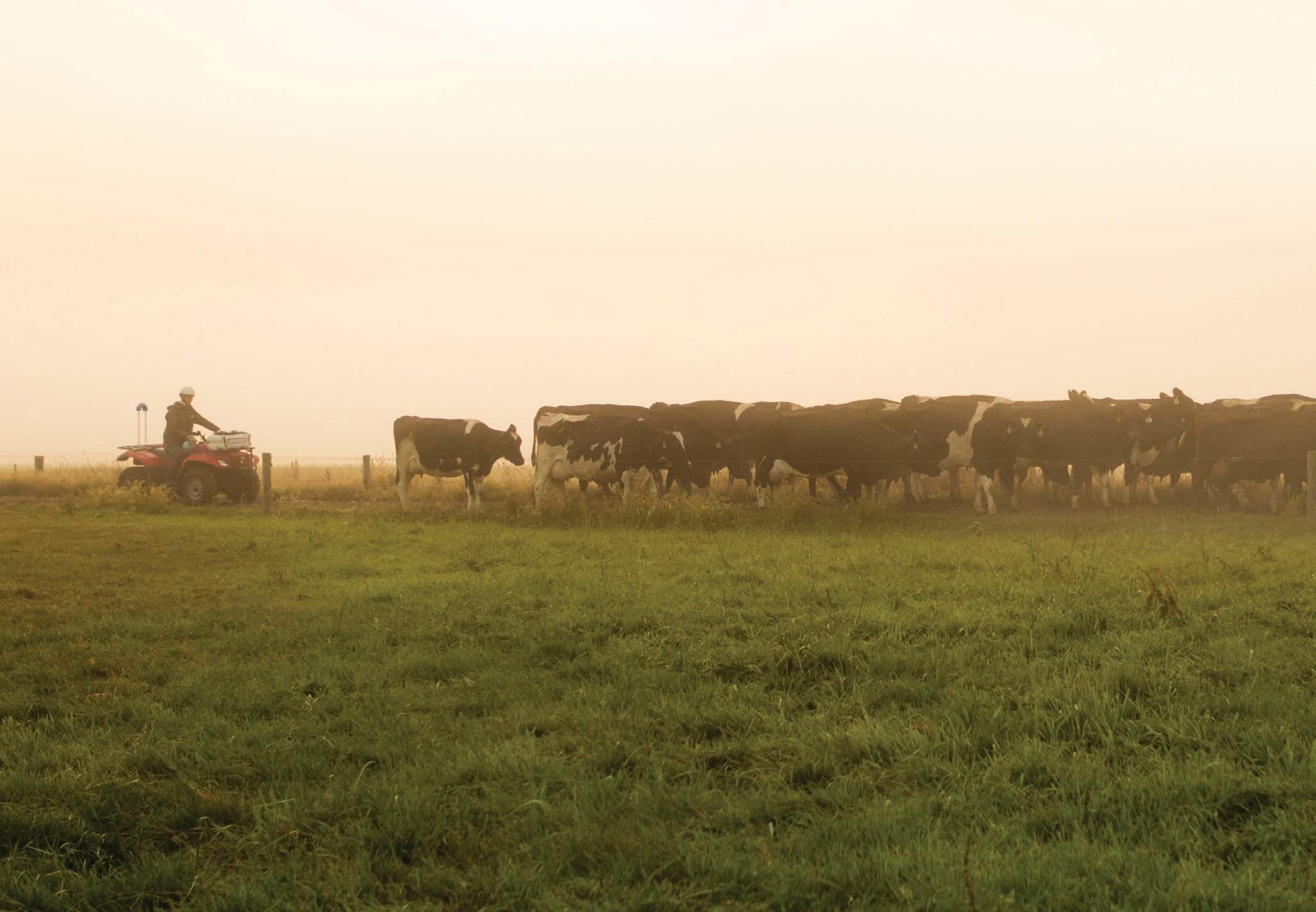
At FMG, we’re here to help dairy farmers stay informed and get ahead. That’s why along with offering useful advice and tips, we support dairy workshops and seminars happening right across the country. Because at the end of the day, learning the latest techniques and developing new skills will help you make positive changes and better decisions. So take the opportunity to stay ahead at a dairy event near you. Head to fmg.co.nz/dairyevents to find out more. We’re here for the good of the country. SUPPORTING
Thirty-two graduate veterinarians will begin their careers in rural New Zealand through the Government’s Voluntary Bonding Scheme for Veterinarians (VBS).
The VBS was launched in 2009 and is administered by the Ministry for Primary Industries and there have now been 516 recipients since inception.
Each VBS recipient receives $55,000 over five years, in return for working in rural areas with a focus on production animals and working dogs.
Agriculture Minister Todd McClay said veterinarians are essential to animal health and the productivity of our primary sector.
“It’s vital we support these regional roles,” McClay said.
“From Reporoa to Gore, and Whangarei to Dannevirke, graduates will be placed in 26 communities across the country.
“This scheme not only helps ease the rural vet shortage but also gives young professionals a strong financial start to their careers.
“The scheme remains a key part of the Government’s commitment to supporting rural resilience and primary sector growth.”
Canterbury will benefit from an additional four vets with three to be placed in Geraldine and one in Ashburton while the West Coast will base a VBS vet in Kumara Junction.
Associate Agriculture Minister Andrew Hoggard said it will ensure farmers have access to high-quality animal care, which is essential for maintaining productivity and animal welfare standards.
“It also gives new vets the chance to gain diverse experience in supportive, close-knit communities.”
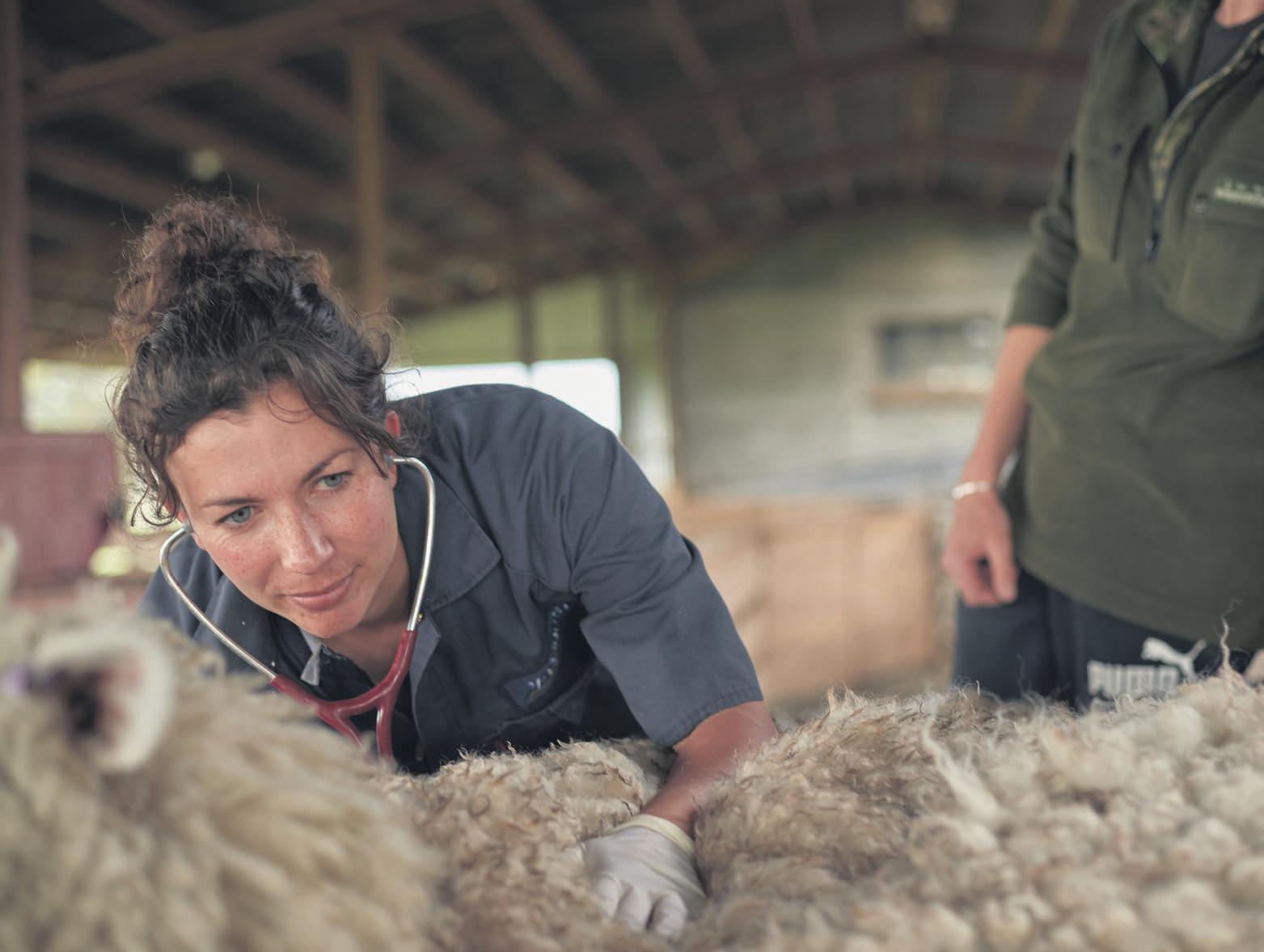



Positive displacement solids handling pumps & effluent screening / separation equipment from Germany


Accurately control flow-rate to dose screened effluent into irrigation mainlines.


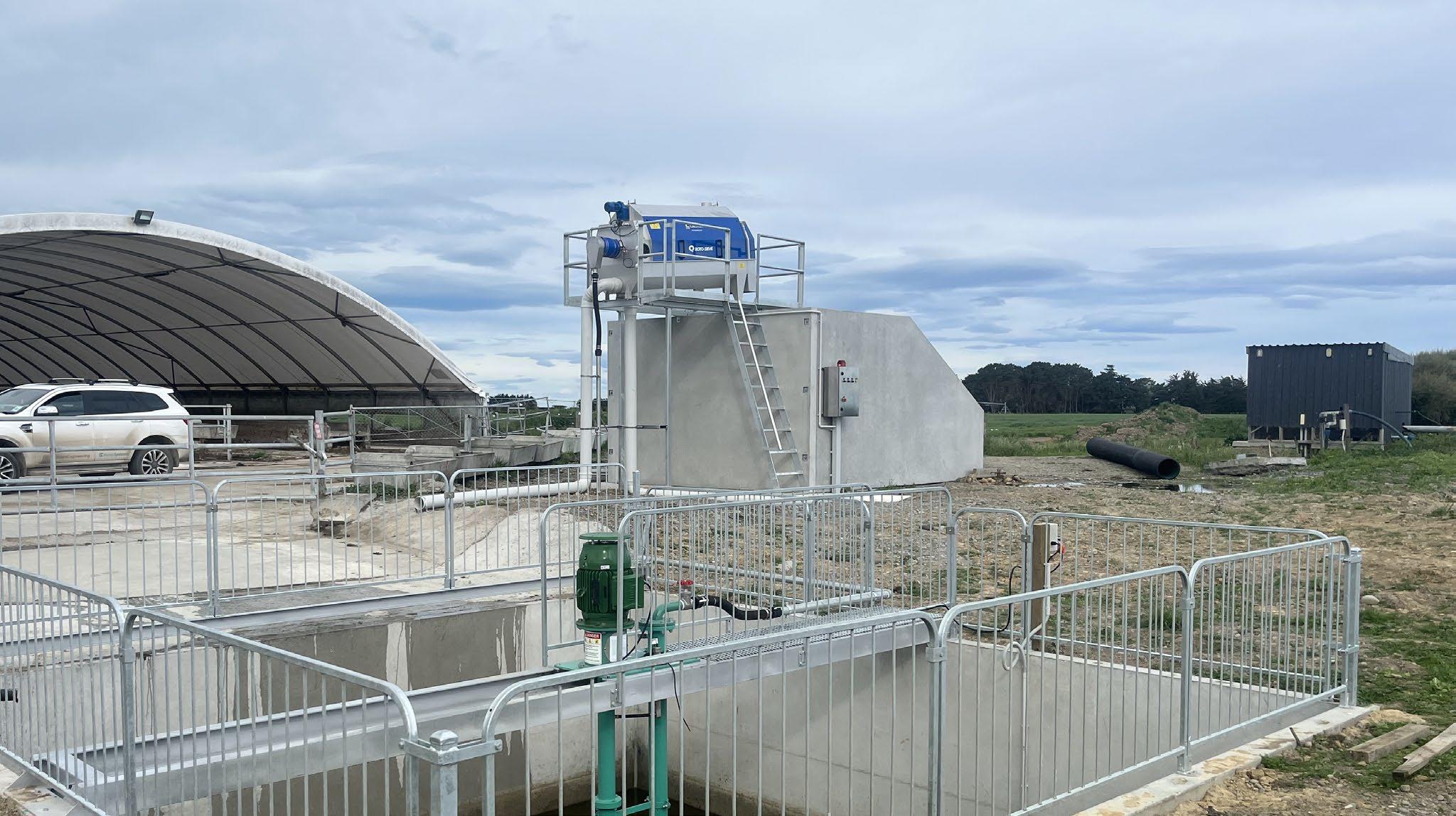






Jim Vaughan invented the first chopper pump in 1960 after working on local dairy pumps in his repair shop.
Vaughan s pump will handle raw effluent with ease, even that containing problem solids like rope, twine, or eartags.

These American made extreme duty pumps are commonly used for heavy industrial, or municipal wastewater pumping.
On farm they are great for:
• Raw effluent
Saucer pump-out
• Saucer/pit mixing

• Flows up to 2,000m3/hr


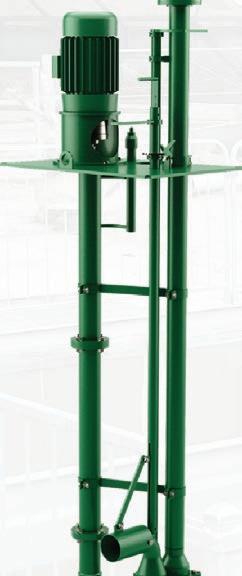




Separate solid from liquid & produce high quality dry bedding materials from raw dairy cow effluent for barn operations.






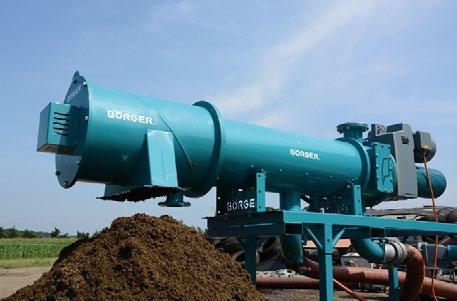




The RotoSieve rotating drum screen from Sweden is designed to effectively separate fine stringy fibres from a liquid stream.
The result is a solid free liquid effluent suitable for irrigation, current installations inject screened liquid effluent directly into irrigation mainlines.
Available in two sizes:
• Up to 18m3/hr
• Up to 36m3/hr



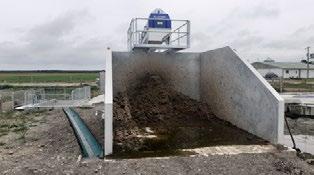






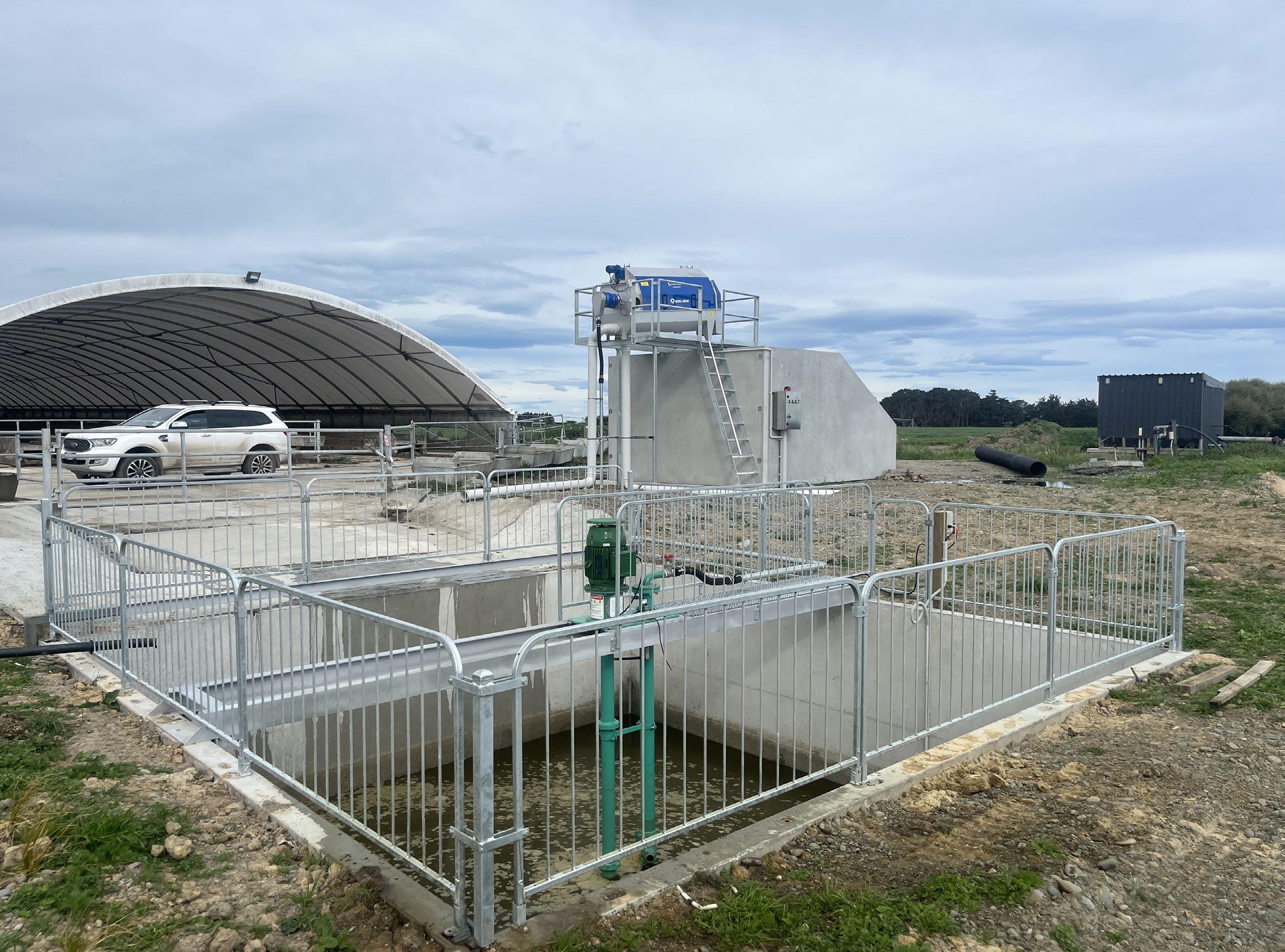
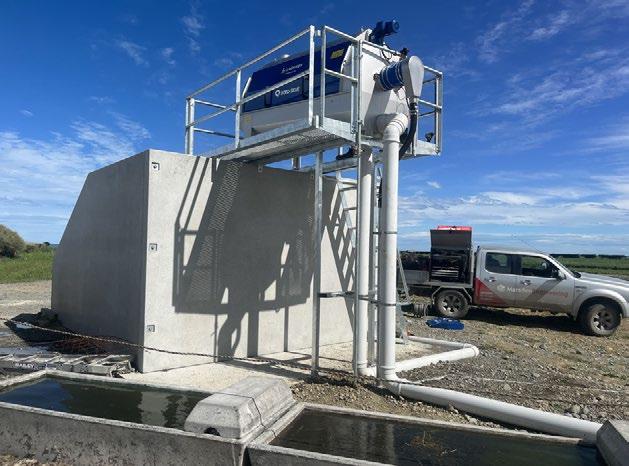
In the previous article, I focused on management changes that can help reduce nitrate leaching. Alongside those strategies, soil and plant-based tools also play a critical role.
] by Dr Gordon rajendram
Much of my work has centred on understanding how carbon, microbes and plant roots interact to keep nitrogen in the system for longer, rather than allowing it to be lost through leaching.
One option I often work with is the use of solid humates. Humates act primarily as a carbon source for soil microbes. When microbes have adequate carbon, they become more active and are able to temporarily hold nitrogen within their biomass.
This slows down the conversion of nitrogen into nitrate and reduces the speed at which it moves through the soil profile. The key point is that nitrogen is still available to plants, but it is released more gradually.
Biochar works in a different but complementary way. Rather than acting mainly as a food source, biochar provides physical structure in the soil.
It creates protected spaces where microbes can live and function more effectively, particularly under stress.
At the same time, both biochar and humates have the ability to hold onto nutrients, including nitrogen, helping to keep them in the root zone instead of allowing them to leach. Used together, they support a more stable soil system where nitrogen is retained for longer periods.
Plant roots are another important part of the picture. Typical ryegrass roots extend to around 20 to 30 centimetres. There is a lot of nutrients lost during leaching, and in dollar terms, this could be as much as half or
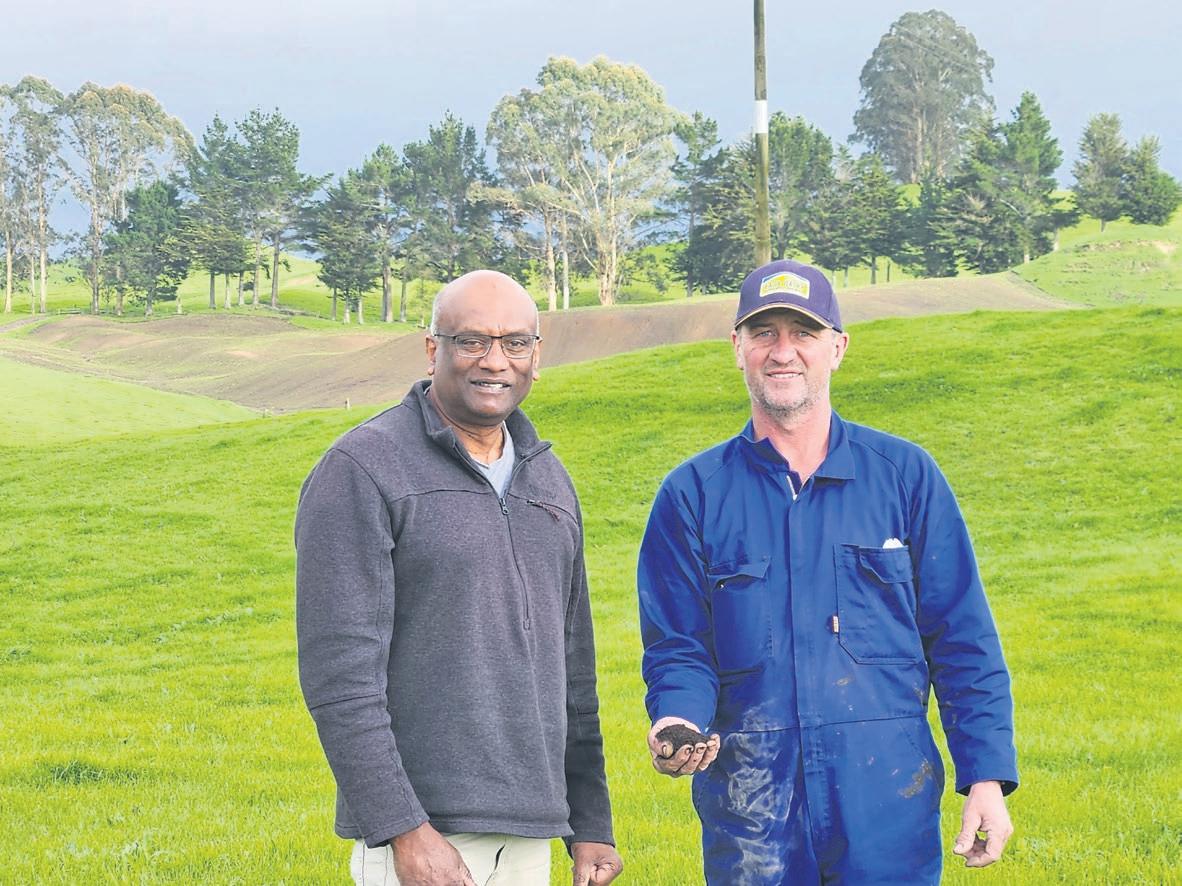
more of what you apply in a year as fertiliser.
Deeper-rooting species can intercept nutrients that move further down the soil profile, capturing nitrogen before it is lost below the root zone.
Encouraging deeper and more diverse root systems adds another layer of protection against nitrate leaching.
Foliar application is also a useful tool in this toolbox. By supplying nutrients directly to
the plant through the leaf, foliar feeding can improve nutrient efficiency and reduce the reliance on soil-applied nitrogen.
When plants are better balanced nutritionally, they use nitrogen more effectively, which means less excess nitrogen remains in the soil to be leached.
In Canterbury, I will soon be measuring the effectiveness of these systems more precisely using lysimeters to better understand
where the nitrogen is going and how effectively it is being retained.
The key takeaway is that reducing nitrate leaching requires a toolbox, not a single solution.
By combining management changes with carbon inputs, plant strategies and targeted foliar nutrition, farmers can significantly reduce losses while maintaining productive and economically viable systems.

Summer 2026 reminds us that irrigation seasons rarely follow a tidy pattern, and conditions can vary dramatically from place to place.
] by Stephen McNally
] Principal Technical Advisor
] IrrigationNZ
While some parts of the country have dealt with significant flooding and saturated soils, others have seen rainfall pass through quickly, barely touching deeper soil moisture levels.
In both cases, decision windows tighten. Confidence can wobble. And the cost of getting it wrong, either by irrigating too much or waiting too long, rises quickly.
In seasons like this, success is rarely about reacting fast. It’s about being prepared before conditions force your hand.
Good irrigation outcomes in unsettled summers usually come down to one thing: control. And control is built well before peak season arrives, through preparation, clarity, and systems that are ready to respond when conditions change.
Irrigation is often treated as a summer
problem to be solved in real time. In reality, the decisions that matter most are often made months earlier. Preparation gives you options, and options matter when rainfall is on-again, off-again.
One of the biggest risks in variable summers is false confidence, whether that comes from surface wetting after light rain, or from assuming field capacity conditions will persist after rain fronts recede. A decent rainfall event can green things up and wet the surface, while deeper layers remain drier than expected. Systems sit idle too long, restart decisions become rushed, and nutrient losses can increase when irrigation shifts from planned to reactive.
This is where a risk-based approach to irrigation management pays off. Risk management isn’t about being pessimistic, it’s about understanding what could derail your goals and having practical responses ready.
It asks simple questions:
What could go wrong? How serious would
it be? And how quickly could I respond if conditions change?
Variable summers don’t just mean drought versus flood, they mean uneven soil moisture levels. Unseasonably heavy rain fronts can disrupt planned schedules, damage crops, and delay field work. Lighter rainfall elsewhere can create the illusion of recovery without actually restoring soil moisture. Both scenarios increase the value of preparation, data, and clear decision-making.
Judgement backed by information
Good irrigation management always starts with judgement. Farmers and growers know their land, crops, and seasons well. That intuition is valuable — but in stop-start summers it needs backing from solid information gathering and data analysis.
Ask yourself honestly:
• Did rainfall events actually refill the root zone, or just delay irrigation?
• Did my system perform as expected when I needed it to restart?
• Was scheduling based on data, or assumption, or worse what the neighbour did?
Soil moisture information, knowledge of your system’s limits, water supply conditions, and crop demand all matter.
Knowing application rates, uniformity, and response times makes it easier to shift from a “just-in-case” mindset to a “just-in-time” approach. That shift reduces risk, protects nutrients, and helps maintain compliance when conditions are variable.
While checklists are a great help to avoid missing critical elements – good irrigation practice isn’t about ticking boxes. It’s about maintaining control when conditions are uncertain.
In summers like this, the best outcomes rarely come down to luck. They come from preparation, good communication, and systems and people you can rely on.
When the season keeps changing its mind, good decisions matter more than ever.

The end of 2025 brought news of a huge amount of proposed change in the resource management space, too much to cover in one article.
] by Matt bubb ] Aqualinc
The article I drafted last month focussed on the overhaul of the RMA and discussed the replacement laws and what they may mean for farmers. In that article I also provided brief commentary about the Resource Management (Duration of Consents) Amendment Act. This automatically extends the consent expiry date on many consents to two years after the end of the transition period for the new planning system.
Based on current expectations, this means most expiring consents will be extended to around 2031. This has widely been seen as positive for farmers and for many this will be the cause of great celebration.
However, we need to be careful about whether to accept the extension of all consents. There will be situations where this will not be the best policy and Aqualinc have already received instructions from some clients that have considered the options and decided to continue with their consent replacement.
For example, there will be situations where some longer-term certainty will be required relating to key activities, such as irrigation. Farmers, banks and investors all need certainty.
Because of this, some expiring consents will still need to be renewed under the “old system”. This is highly likely to be the case if the property is being offered for sale.
There are also some risks associated with waiting that need to be considered. Because many of the water resources in Canterbury are considered by the Regional Council to be over-allocated, it is reasonable to expect that gaining access to these resources may get more difficult, or that conditions on access may become more restrictive. It is possible that rules and controls might become tighter than they are now.
Also, because of the dynamic nature of our water resources, there is potential for a new planning regime to allocate water dynamically, with the aim of achieving a better match between the amount of water allocated and the sustainable yield of the resource at a point in time.
What this may mean is that when water resources are low, the taking and use of water would need to be restricted in different ways to what consent-holders are currently accustomed to.
Some consent holders will already be aware of Adaptively Managed consents, and it is possible (if not likely) that at some stage all water take consents will be managed in an agile or adaptive fashion, for example the availability of groundwater changing from year to year.
If such an allocation regime is imposed, there will be implications upon the reliability of supply. As such, there may be some ad-
vantages of continuing to use consents that have a fixed allocation for as long as possible.
At least this provides certainty for the duration of the consent and may help prevent having to be the first to have to use a new regime, avoiding any potential teething troubles associated with initial implementation.
Not being forced to renew consents that are expiring is a positive step, however, there are dangers associated with this option in some situations.
It will be worth considering whether to take the extension pathway, or to replace ex-
piring consents using the current, well-understood process. The best option will vary from one farm to another and will depend on a number of factors.
If you have consents that will expire in the next few years, or if you want more information about what to consider, then contact your trusted resource management advisor.




IRRIGATE WITH CONFIDENCE.





IRRIGATION SYSTEMS REMOTE MANAGEMENT PRECISION VRI





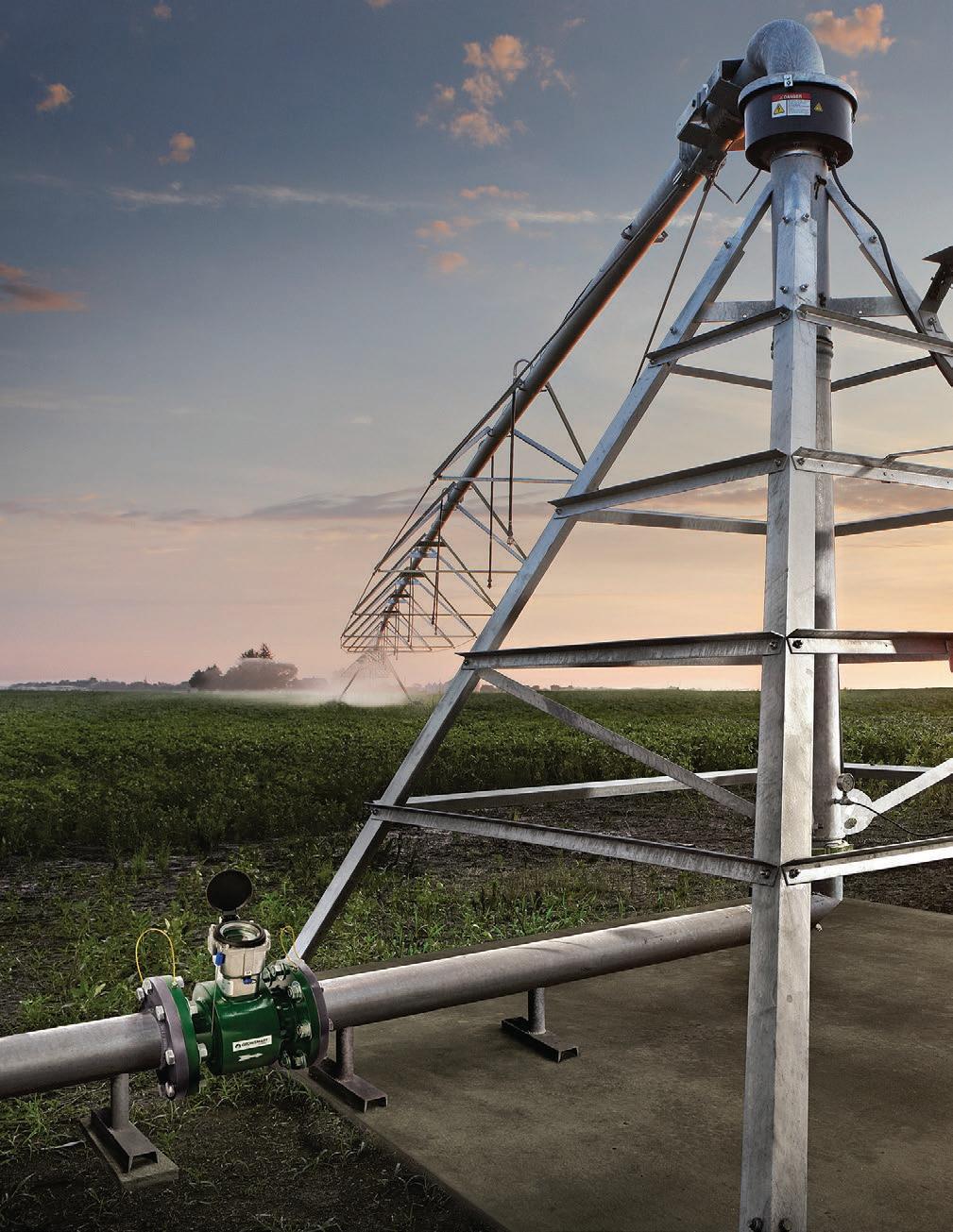

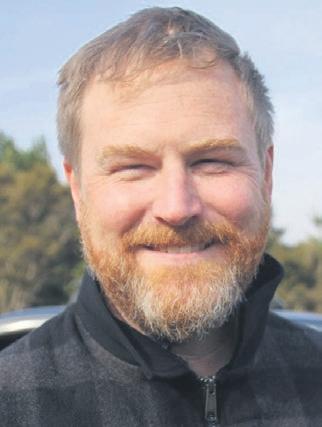

The uncertainty leading into deer sales season was cast aside with good crowds of motivated buyers attending sales throughout the country.
Although not the sky-high prices of past seasons, demand was strong and steady and reflected in the high clearance rates and price averages.
DINZ Board Chair Paddy Boyd attended five sales in Canterbury and Southland. He was uncertain how the season would pan out but was heartened by what he saw and heard from farmers.
“Having attended some sales and watched
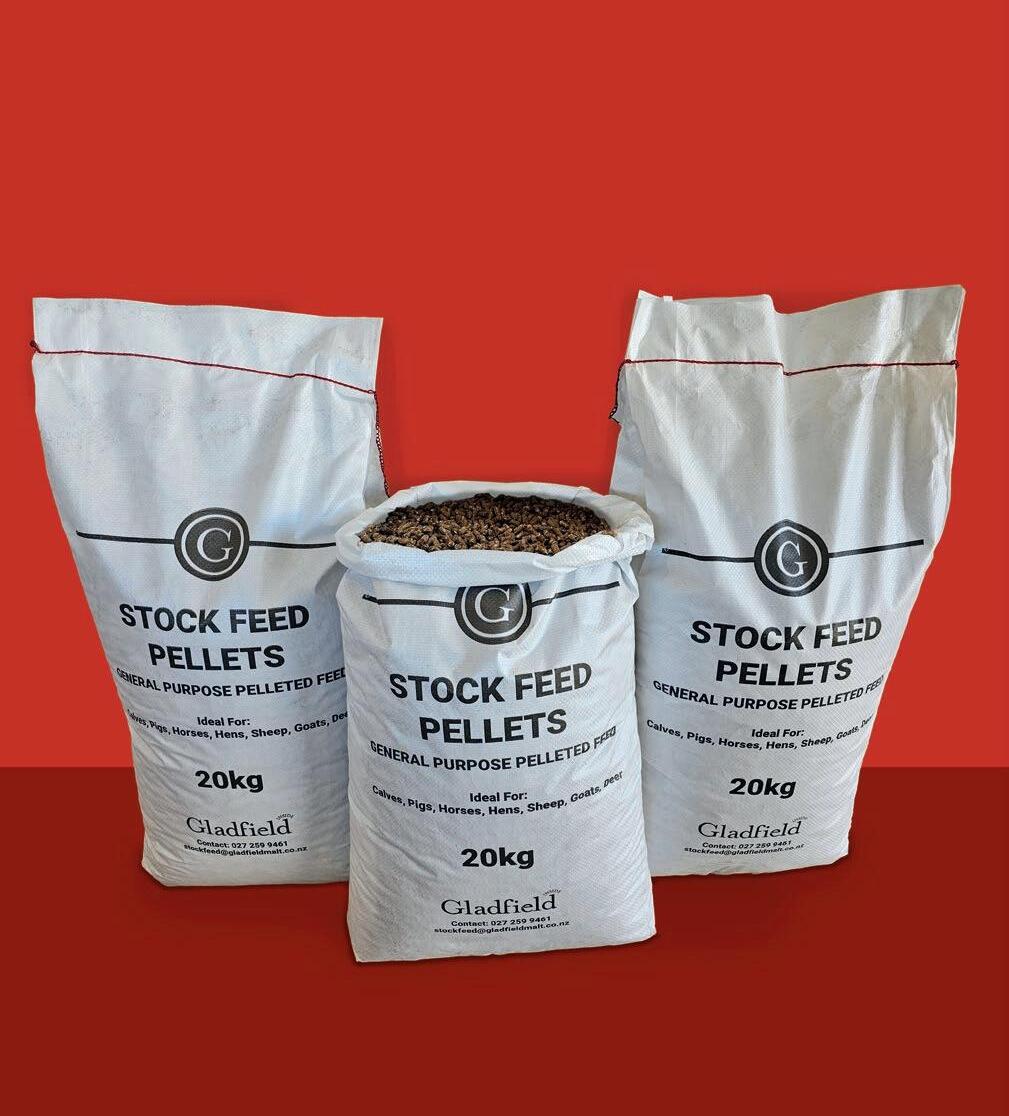


on Bidr, it was good to see the solid attendance and strength in the market even with velvet market pressures,” Boyd said.
“The pleasing thing for me was seeing the velvet heads from virtually all the stag sales were good examples of what the velvet guidelines are asking people to cut for: shorter, rounded, traditional-style velvet. There was also strong bidding on quality yearling hinds with similar velvet genetics, leading to full clearances at good values.”
This response to changing market demands for more traditional-style velvet has also seen an increase in cull stags and processing demand, beginning at the end of last year.
“Over the last couple of months [Nov-Dec], we have seen nearly 10,000 more stags than the previous year pass through the venison processors, with the average weight up significantly,” DINZ CEO Rhys Griffiths said.
“If this continues into January and February, and all signs indicate that is likely, then velvet production will be back for the 2026/27 season. By how much remains to be seen, but we’re hearing some buyers quoting around 200 tonnes.
“This gives us an ideal moment to reset supply, shifting emphasis to velvet quality over quantity while venison prices are good,” Griffiths said.
When the NZ-India Comprehensive Free Trade Agreement was announced a few days before Christmas last year, some deer farmers might have been disappointed to see that venison was left off the list of primary industry beneficiaries.
“First off, we need to recognise that this is great for New Zealand, for our economy, and the country’s primary sector, so that is
Reset: DINZ says shifting emphasis to velvet quality over quantity is the way forward while venison prices are good.
to be celebrated,” Griffiths said.
“Many of our deer farmers also farm sheep so to see tariff relief for sheepmeat and wool is a positive.”
“For venison, it is our understanding that this FTA was negotiated on the basis of existing trade business only. With no meaningful exports of venison to India yet, I might add, then venison was not included as part of the FTA. Like most FTAs, there will be regular review periods, and we will look to push our case with greater ambition in the future once our venison herd expansion, which we believe is underway, has come to fruition.”
The end of 2025 also saw two deer industry stalwarts honoured with being named Officers of the New Zealand Order of Merit for contributions to the deer industry: Graham Carr from Geraldine, and Andy Macfarlane, Ashburton. As the awards indicate, both men have played key roles over the years and are highly regarded for their efforts to see the entire industry thrive.
Congratulations to both Graham and Andy for their well-deserved honours, and DINZ extends our greatest appreciation for all the time and effort they have contributed toward the advancement of the deer industry.
Lastly, we are now in our final push of our integrated farm planning project, which is set to wrap up in April. As such, there is a flurry of workshops happening around the country, with a freshwater farm planning workshop and a Wormwise workshop both scheduled for Geraldine in February, with other events in Canterbury currently being planned, so keep an eye on the DINZ website Events page for updates.




The all-new KGM Torres Hybrid is a bold new entrant in the midsize SUV market, combining modern hybrid efficiency with a tough, standout design.
] Article supplied by Inchcape NZ
Developed in collaboration with BYD, the world’s second largest EV battery producer, the Dual Tech Hybrid System is a strong hybrid that maximises the efficiency and advantages of both the electric motors and internal combustion engine.
The system combines a 1.5-litre turbocharged petrol engine (220Nm) with in-series dual motors (300Nm) for a total output of 150kW through the dedicated e-DHT transmission, achieving a combined fuel consumption of 5.6L/100km.
The unique hybrid system enables the Torres Hybrid to seamlessly switch between electric-only, hybrid and engine-only power. This allows the Torres Hybrid to be driven up to 94% of the time on battery power in urban driving conditions.
On the motorway, the system blends engine and motor power for confident acceleration and efficiency, with all electric driving possible up to 100km/h, supported by a
three-level regenerative braking system with smart traffic-adaptive control.
With features including a dual 12.3” panoramic display, Apple CarPlay, Android Auto, and the new Athena 2.0 User Interface, optimised for Hybrid with energy flow visualisation, the Torres Hybrid delivers the latest tech as standard. It’s an SUV that’s wellequipped for everyday convenience and entertainment.
The KGM Torres Hybrid is kitted out with a comprehensive suite of advanced safety features, including eight airbags and innovative driver assist technologies like Autonomous Emergency Braking, Blind Spot Detection and Lane Keep Assist. Complementing its active safety features, the high tensile steel construction maximises occupant protection, providing extra peace of mind.
Jerry Delaney, General Manager of Inchcape New Zealand, the distributor of KGM said the Torres Hybrid’s striking design ensures it stands out from the crowd, with a

Advantages: The KGM Torres Hybrid’s Dual Tech Hybrid System maximises the efficiency and advantages of both the electric motors and internal combustion engine.
distinctive exterior and confident stance.
Inside, the spacious cabin combines modern styling with thoughtful practicality, delivering comfort for both driver and passengers.
The Torres Hybrid’s interior is enhanced by heated front seats and ample rear legroom, ensuring comfort for the whole family. A gen-
erously sized boot offers everyday versatility for weekend trips or the school run.
Delaney said the KGM Torres is a vehicle that turns heads without compromising on function.
“It’s great for drivers looking to save on fuel without blending into the crowd.”


















Welcome
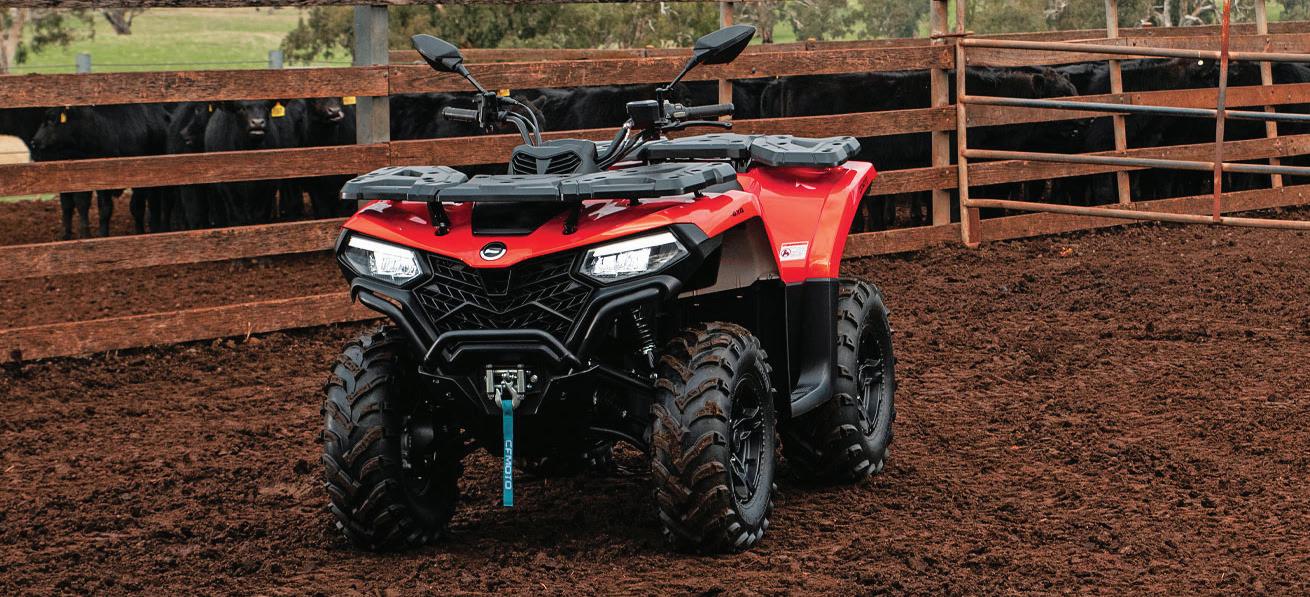
bases covered.

•
•
•