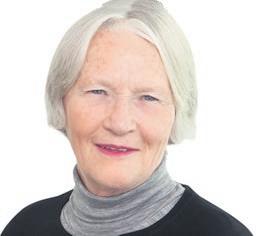
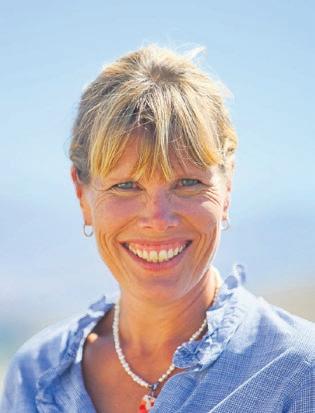
involvement with Meet the Need, she doesn’t describe it as a big decision or a formal commitment. Instead, she describes something simpler, and more human, “It just made sense”.
]
by Rachael Sutton
Meet the Need is a farmer-founded New Zealand charity connecting the generosity of farmers, businesses and everyday Kiwis with families experiencing food insecurity.
Through donations of livestock, milk, virtual food donations and financial contributions, Meet the Need provides nutritious protein and dairy to more than 130 foodbanks and community organisations nationwide, helping ensure families have access to the nourishing food they need.
Jane was one of the very first farmers to support the initiative, back when Meet the Need was just beginning to take shape.
For her and her late husband Mark, the motivation was grounded in fairness, perspective, and a belief in looking after others.
“Mark was someone who wanted to see everyone have a fair crack,” Jane said.
“We thought we’ve never had to go hungry, and to think someone couldn’t do that, it just seemed a seamless way of giving. And it’s directly to the need.”
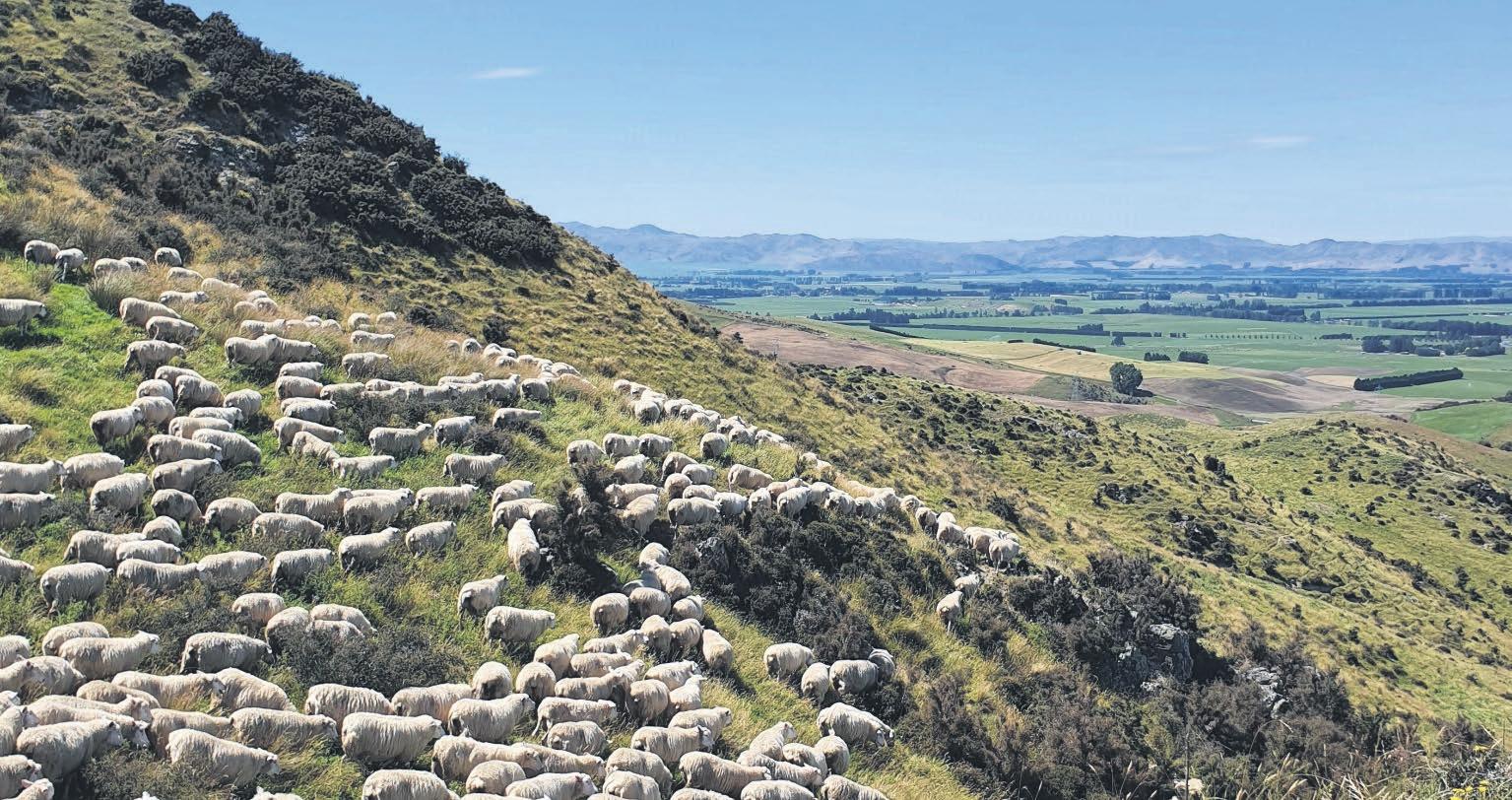
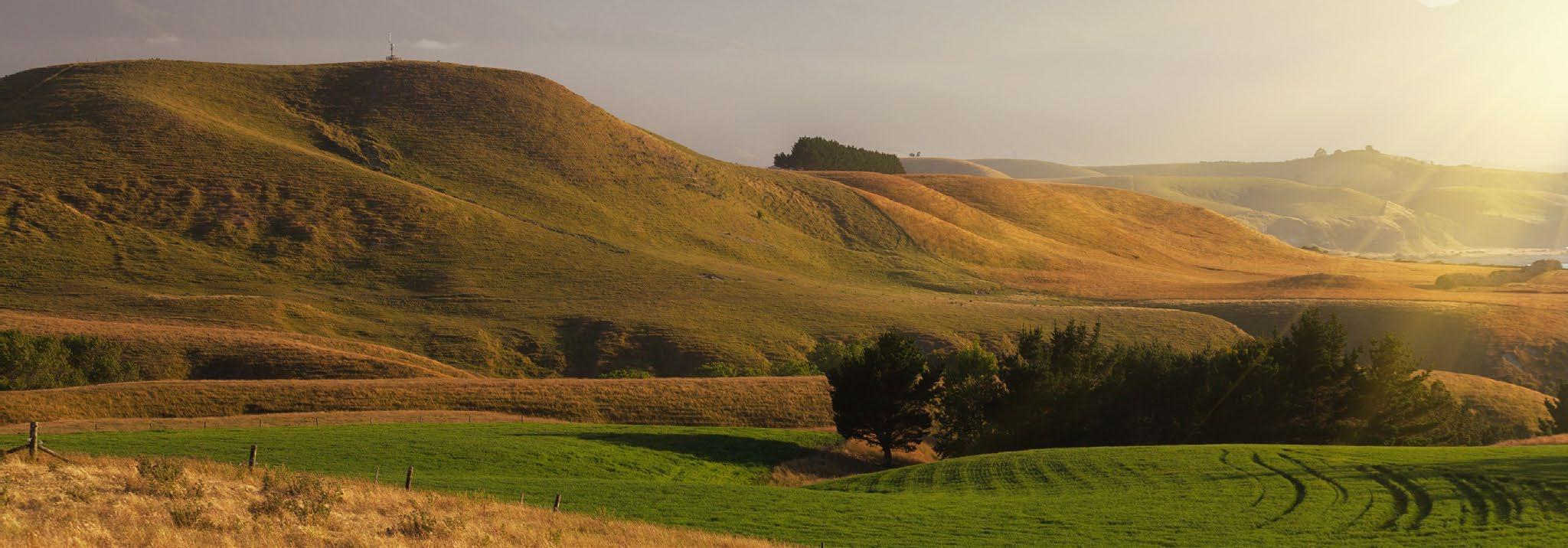
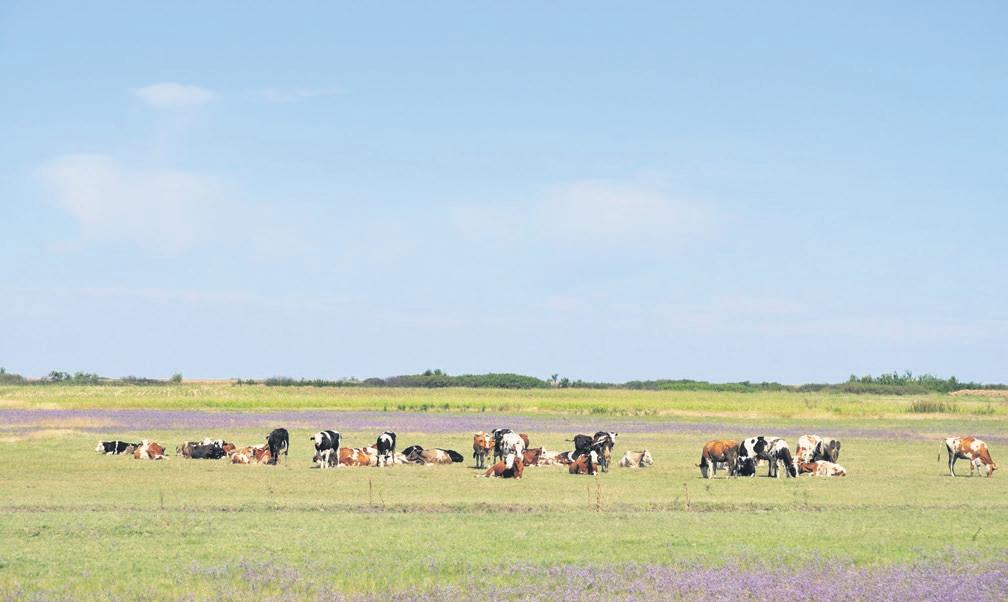
Jane farms in North Canterbury at Kaiora Downs, a substantial sheep and beef operation, running around 300 beef cows alongside sheep and dairy stock.
She describes the farm as “a pretty good scale,” something she and Mark steadily worked toward over many years.
“I’m pretty biased, but it’s a beautiful farm.”
The enterprise is also evolving. Alongside traditional farming, the operation is exploring value-add opportunities such as producing yoga mats from wool, a reflection of both innovation and diversification within the business.
Today, Jane farms alongside her son Jonathan.
“It’s special, we have a great respect for each other.”
They continue the same approach to supporting Meet the Need, giving once or twice a season, often in meaningful amounts when they can.
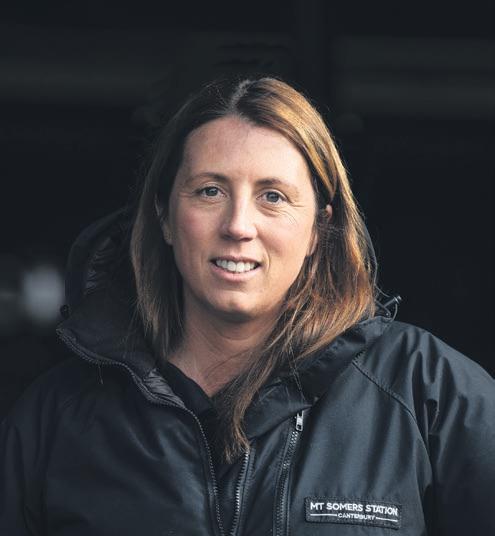
When North Canterbury farmer Jane Schwass reflects on her
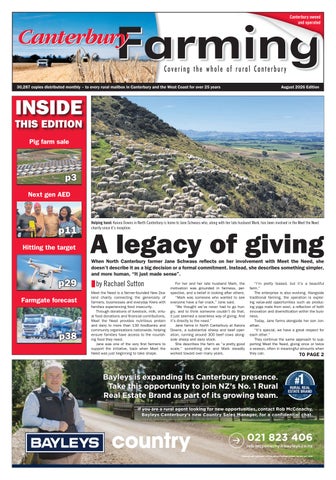
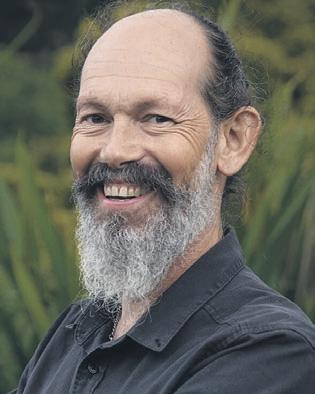
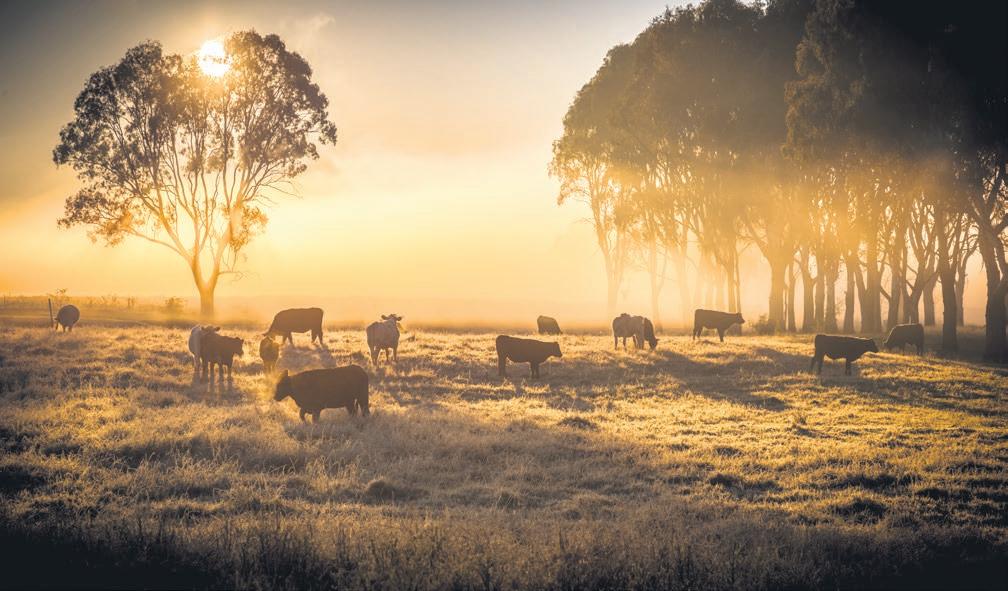
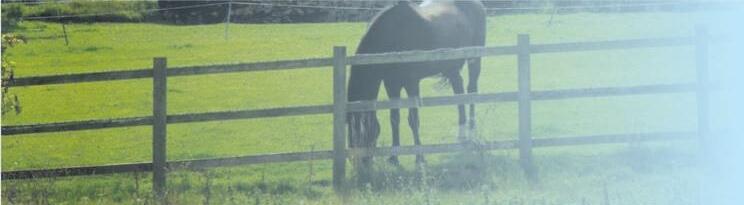
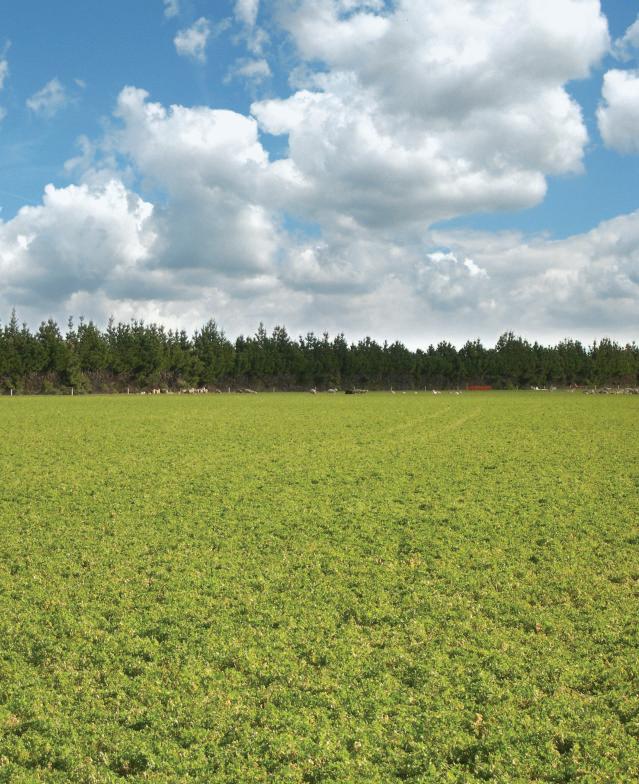
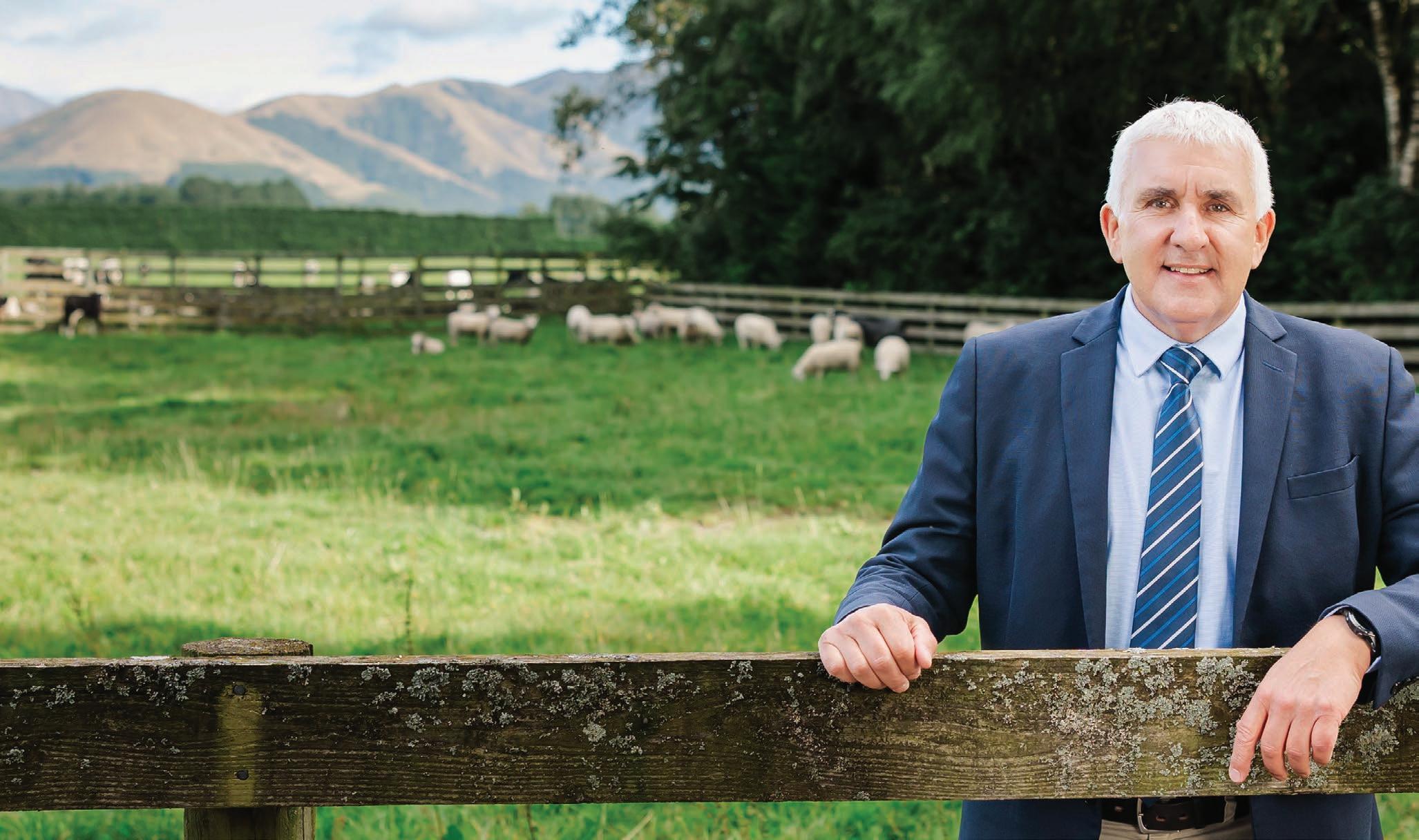
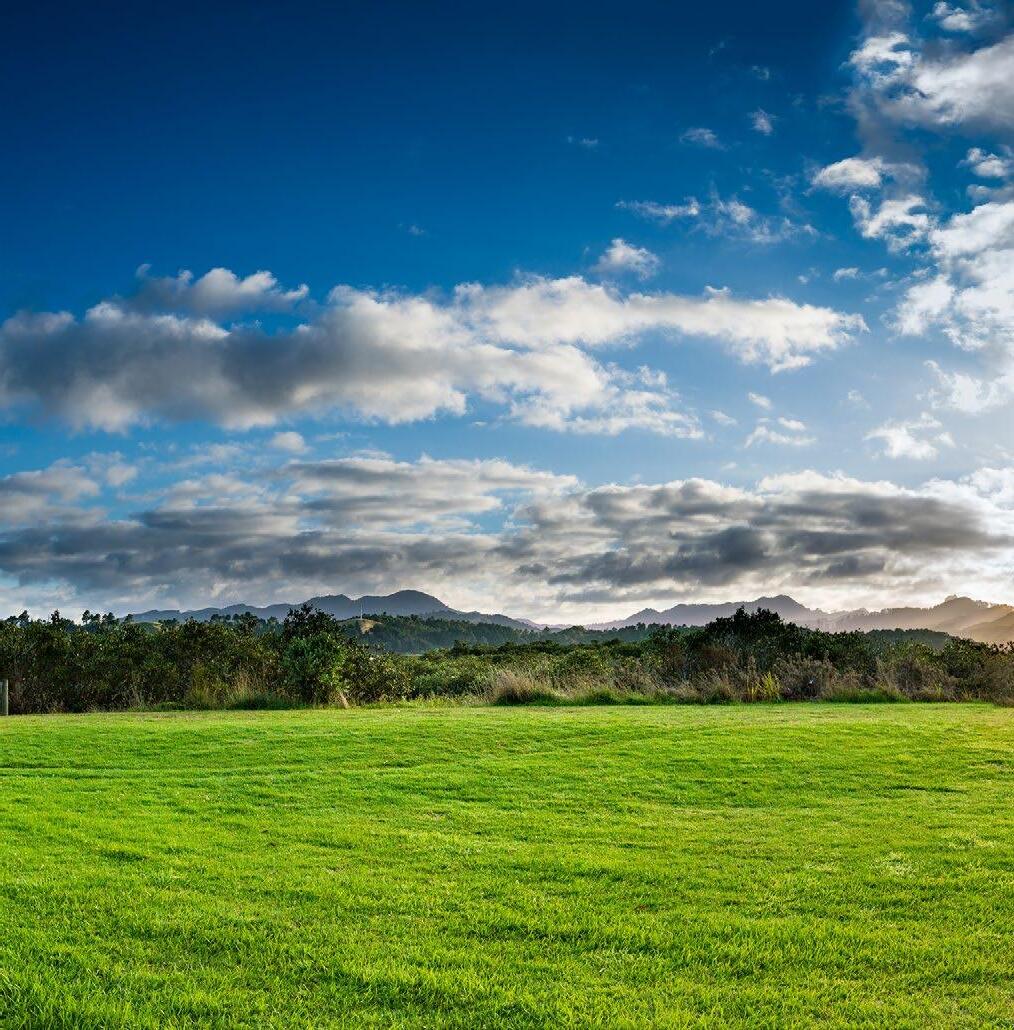
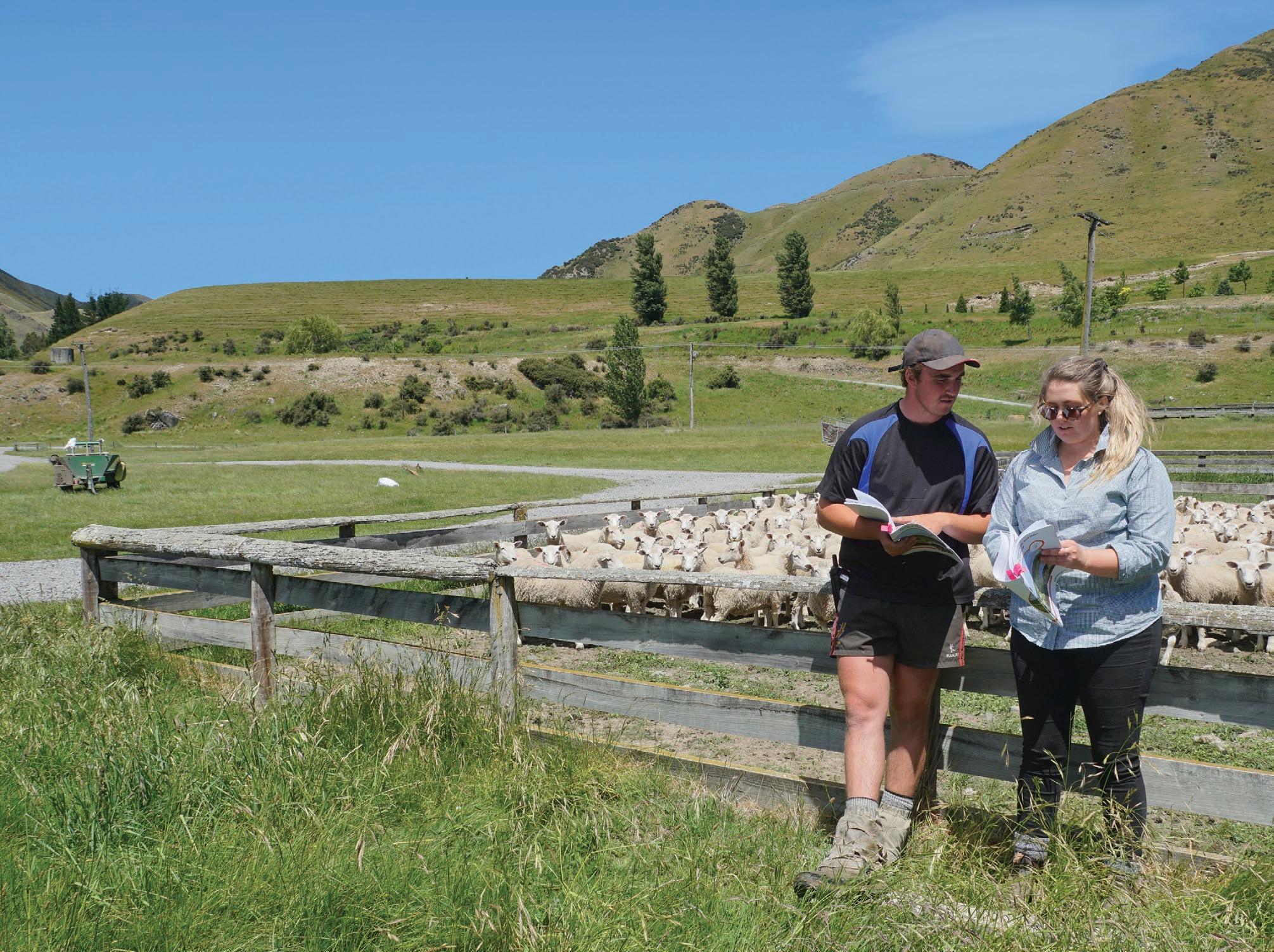
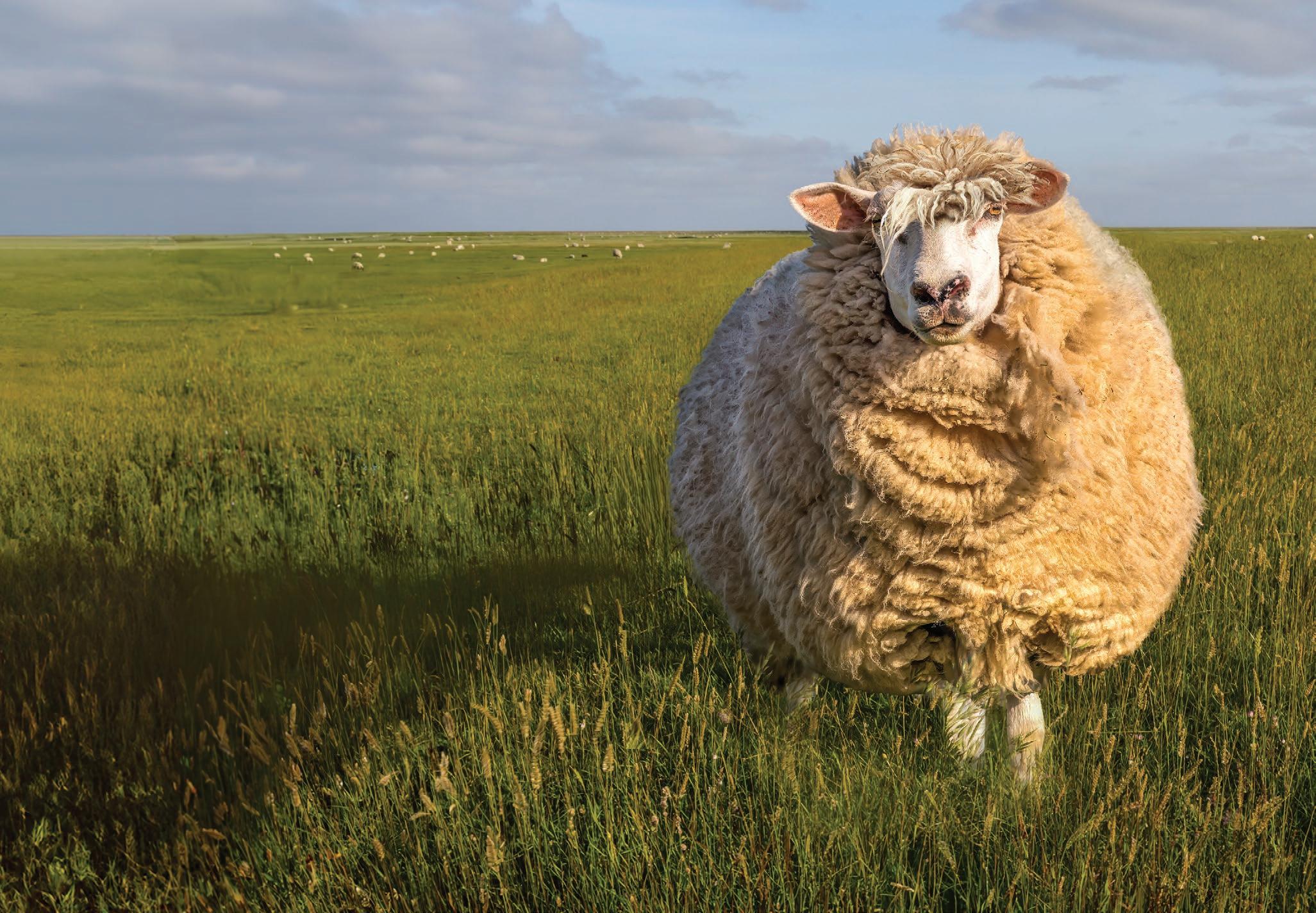
Helping hand: Kaiora Downs in North Canterbury is home to Jane Schwass who, along with her late husband Mark, has been involved in the Meet the Need charity since it’s inception.
Calling farmers to support families in need
FROM PAGE 1
For Jane, the kaupapa behind Meet the Need has never been complicated, and that’s part of its strength.
As someone deeply rooted in rural life, Jane is conscious of the broader responsibility that comes with farming in New Zealand.
“We all live on this planet,” she said.
“I don’t think we want to be seen to be elitist, looking out for others is a seamless way to do it.”
For her, it’s not about grand gestures. It’s about awareness and choosing to act on it in a practical way.
Jane has continued supporting Meet the Need because she can see the value in even modest contributions.
“It’s a wonderful thing to do, even one beast a year. It’s just a sprinkling where possible.”
She also sees room for greater awareness within the sector, particularly among others who may not yet realise how accessible participation is.
She said at the heart of it, she and Mark always came back to one thought: the importance of families having access to proper, nutritious food.
“It was the thought of people not having proper nutritious food for their family,” she said.
Jane doesn’t see farmers as separate from the communities they feed, but as part of them.
“I do mention it to other people in the farming community.
“People are struggling, and as farmers, we have an opportunity to be supportive,” she said.
She believes the first step is often simply awareness.
“I’d like to know people recognise that
others are struggling. We need to open our eyes a bit more.”
For Jane, supporting Meet the Need is also about the future, and the values being passed on.
She said generational farming carries responsibility beyond production. It’s about inspiring the next generation and recognising
the privilege of the rural life many enjoy.
“We need to be mindful that we are privileged. Our community is so lucky.”
And while she remains humble about her own role, one thing is clear: she intends to keep encouraging others.
“I’ll continue to encourage people, in a nice way, of course.”
Investigating the coroners’ inquest
When someone dies suddenly from an unknown cause and a doctor cannot sign a death certificate as the actual cause of death is unknown, the Police or Doctor will report the death to the Coroner for the locality.
] with Bessie Paterson LLB
]
Ronald W Angland & Son
The coroner is tasked with making enquiries and obtaining reports which will enable the coroner to establish the cause of death.
The coroner’s role is purely to establish the cause of death.
In some instances, it will be necessary to order a postmortem on the deceased, and an enquiry may follow if it is necessary to find out the circumstances of the death.
The coroner’s office manages the enquiry from the time the death is reported to them until the enquiries are concluded and the body released for the burial or cremation. In most instances family members are kept informed about what is happening.
The coroner may decide that postmortem is required. A full postmortem is a minute examination of the body both externally and internally carried out by a pathologist. If the relatives do not want a postmortem to be carried out, they can object to the procedure, but it is the coroner’s final decision as to whether a postmortem is required.
In cases where the death was most likely to have been caused by a crime, no objection will be allowed. Following the postmortem the pathologist will produce an interim report stating his/her findings about the cause of death and other procedural matters. A final report will be provided for the coroner over the ensuing weeks.
In many instances where the cause of death is apparent and it was not caused by a criminal act it would be unlikely that a coroner would order an inquest.
There are some deaths which a coroner must enquire into: where someone has died in police custody or prison, or in a children’s home or foster care, compulsory treatment under the Mental Health Act, detained in an institution for alcoholism or drug addiction and for intellectually disabled people who are in care or rehab.
Coroners conduct inquest hearings which may be in open Court or in some instances, especially where there are no issues, they will complete the process and issue their findings on the cause of death without holding a formal court hearing.
Where an inquest is held in court, the coroner will hear evidence from people who have been involved in the enquiry.
Following the inquest the coroner will report on the facts of the death including the cause of death which will appear on the
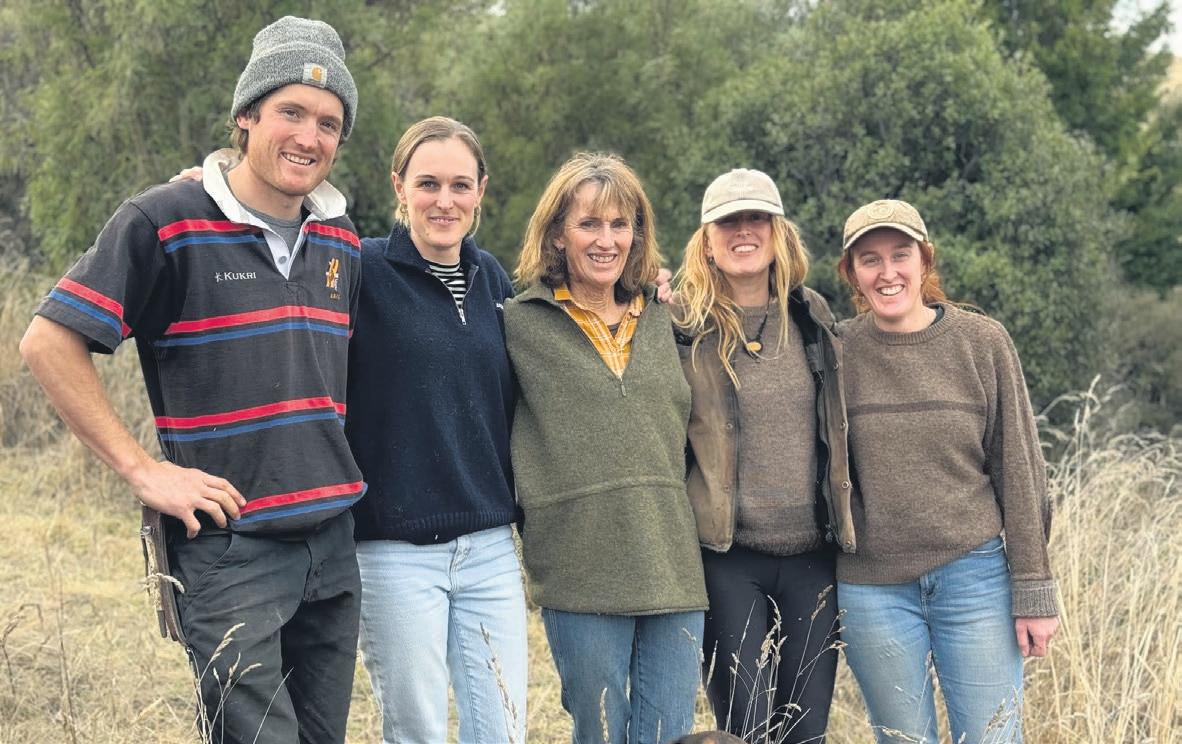
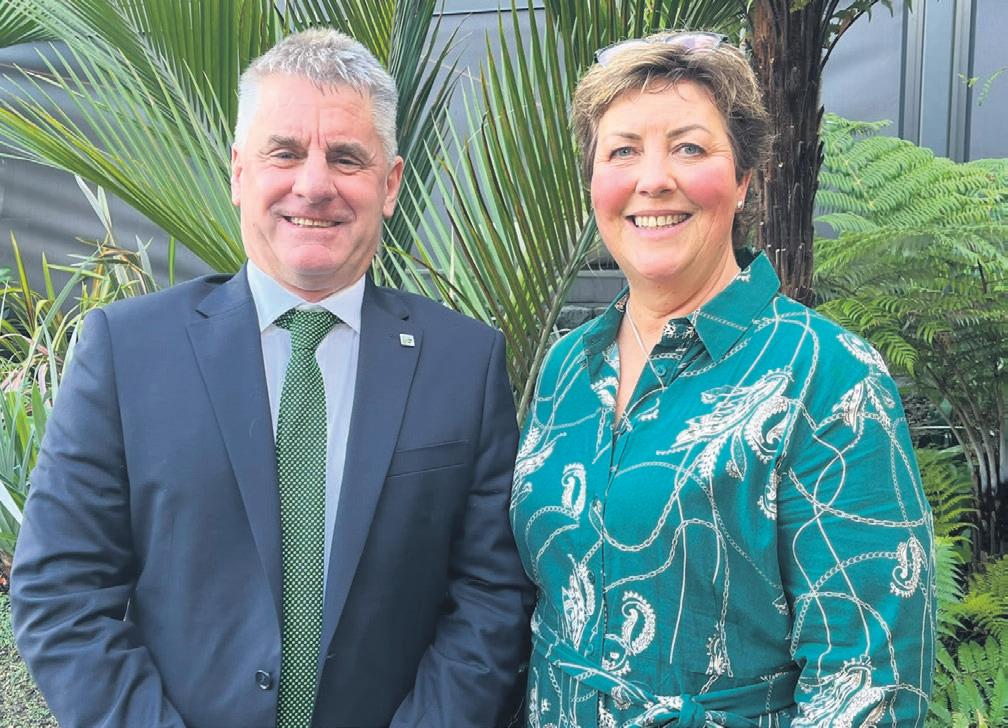
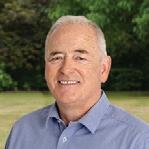
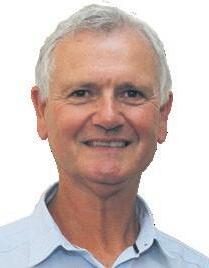
Legacy: Jane Schwass (centre) with children Jonathon, Monica, Eleanor, and Louise.
Photo permission by Jane Schwass
death certificate for the deceased person.
this article has been prepared by Bessie Paterson, a partner at Ronald W Angland & Son, Lawyers, 2 Chapman Street, Leeston.
New Zealand’s largest pig farm changes hands
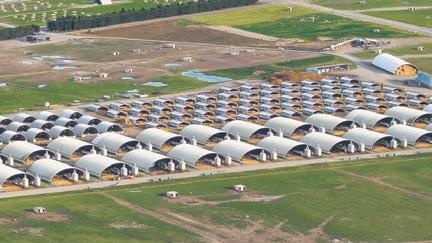
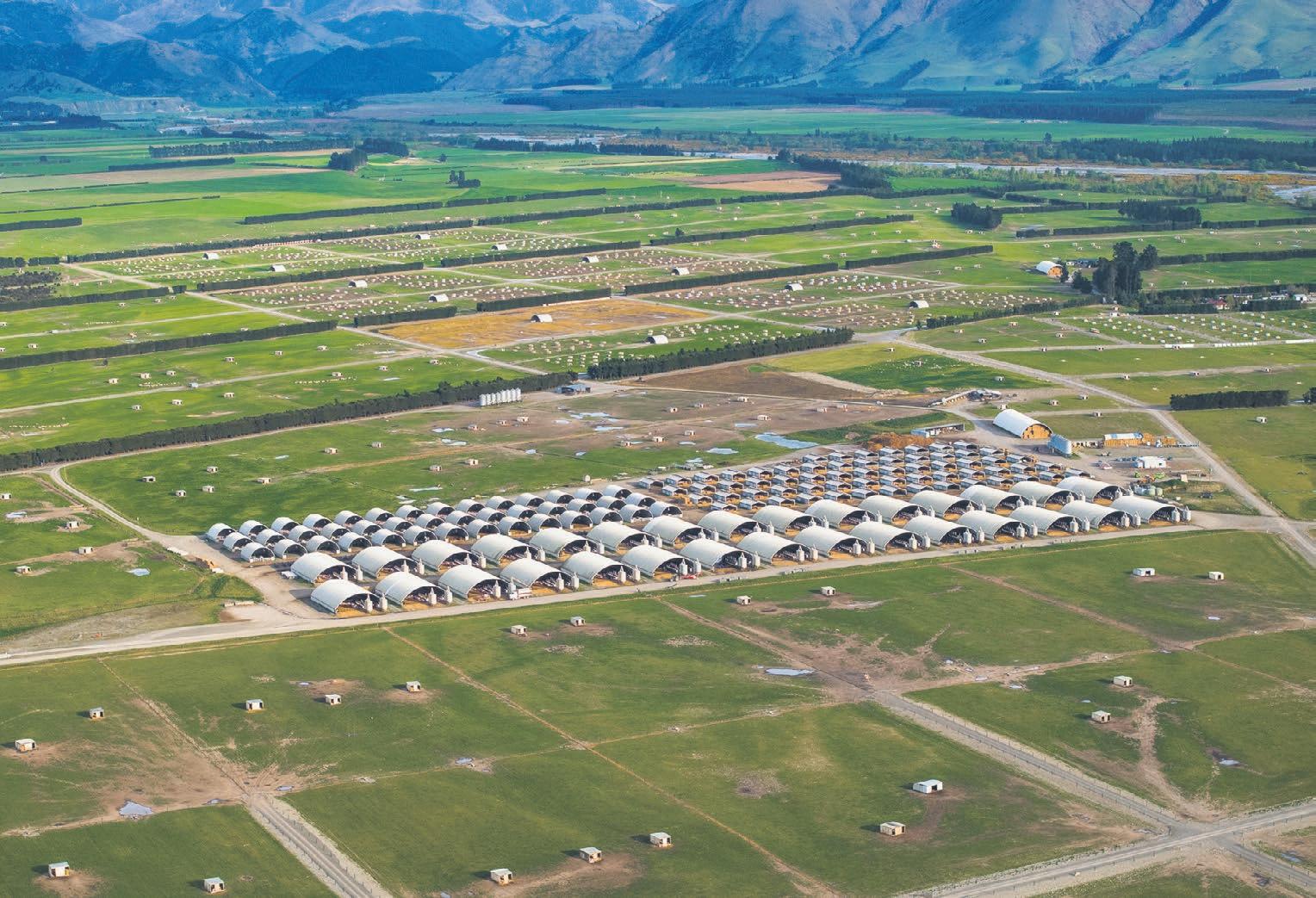
Patoa Farms Limited, New Zealand’s largest pig farm with a substantial 900 hectare land holding in the Hurunui district in North Canterbury, has been sold for an undisclosed price.
] by Kent Caddick
Patoa Farms was established almost 30 years ago by the Sterne and Ravn families as a visionary project to farm pigs outdoors and at scale.
Following the departure of the Ravns around 12 years ago, the farm has been owned by the Sterne Family Trust and run by Steve Sterne and his family.
The new owners comprise a consortium with extensive involvement in the New Zealand pork industry.
The consortium is led by David Lawton, Patoa’s long time veterinarian, animal health and productivity consultant, and Nick Harris, managing director of Harris Farms Limited based in Cheviot, North Canterbury.
Lawton said the consortium will continue pig farming and pork supply, operating business as usual.
“I know Steve Sterne is delighted that the farm and his legacy will be continued by a group who share his vision and commitment to the New Zealand pork industry, Patoa’s staff, and the local community.”
Patoa sold: Ownership of New Zealand’s largest pig farm, Patoa Farms in North Canterbury, has changed hands.
Cut Hot Water Costs
RMA: Going, going, gone.
] with todd McClay ] Minister for Agriculture
Canterbury is a place that works hard and gets things done. From farmers and growers to tradies, small businesses and families, people know that sensible rules matter.
When the rules are clear and practical, businesses can invest, homes can be built, and communities can get ahead.
July tested a lot of people. Kaikoura got double its average July rainfall in two days with much of the South Island getting hit hard with poor weather. The flooding and slips that followed did real damage to farms, to feed, and to roads and fences. Families along the coast and across North Canterbury are still cleaning up.
MPI staff were on the ground giving me regular updates while they worked alongside farmers, sector groups and the Rural Support Trust. The first job was animal welfare, with around 4,000 stock needing to be moved off flooded land onto safe grazing. We have put up to $50,000 into the Farmers Adverse Events Trust, and Federated Farmers is matching that through its own fundraising. That money is there to help people clean up, fix fences and feed stock.
Getting back on your feet after a weath-
er event is hard enough. It is harder again when many repairs need a consent. Rebuilding a track, shifting a culvert, putting a bridge back where it was. None of that should take months of paperwork and thousands of dollars in fees. Farmers I talk to have plenty of stories about waiting on a council while the next front rolls in.
That is why National has a long term plan to fix the basics and build the future. Replacing the Resource Management Act before the election with a planning system that is faster, clearer and more consistent is a big part of it.
Around 45 per cent of the consent and permit applications currently required under the RMA could go under the new system. That is somewhere between 15,000 and 22,000 consents that would simply no longer be needed.
This is a generational change to our economy and to the way we designate land, plan and build. It means clearer national direction, more consistent rules from one council
to the next, fewer consents, and more certainty for anyone who wants to invest, develop or expand.
The new system is projected to add $3.1 billion to GDP every year, on top of $13.3 billion in savings over the next thirty years. That is money that stays on farms, instead of going out the gate on consultants and consent fees.
It will unlock more housing across the country. It will speed up the infrastructure we badly need - things like roads, energy projects, hospitals and schools. And it will back our world class farmers and growers to get on with what they do best.
The Planning Bill and the Natural Environment Bill have now been reported back to the House by the Select Committee. For the first time our planning system will list food and fibre production as key goals to support primary sector growth and reduce regulatory hurdles. The committee listened to the sector and tidied up how freshwater farm plans will work on the ground. A farm plan that is
not certified will no longer need to be audited. Only farms doing higher risk activities will need a certified and audited plan.
The committee has also made it clearer that environmental limits have to weigh up environmental, social and economic outcomes, and that those limits need to be workable. Limits that are workable, and that are set with local conditions in mind, are what the sector has been asking for. I know that will be a relief to a lot of people in Canterbury.
For too long the RMA has added cost, delay and uncertainty for the people who grow and produce our food and fibre, and for anyone trying to get something built. By making it quicker, cheaper and easier to build in New Zealand, we grow the economy, create more jobs and lift wages.
That is how we fix the basics. That is how we build the future.
If you need a hand, please reach out - affected farmers can call the Rural Support trust on 0800 787 254.
Who would want to be an MP?
Over my career as a reporter and TV host I have done literally thousands of interviews including nine Prime Ministers and goodness knows how many MPs.
other words, the political world is vastly different to the commercial world.
As far as being the Prime Minister is concerned, they must all know that the chances of retiring as and when they chose are very remote.
] by Rob Cope Williams
I think that without question, all of the MPs were there for the right reasons as in wanting to help make New Zealand great. Apologies to President Trump for that comment.
Some lasted a long time, others were ground down by the “Wellington machine”. In
Most are rolled by the media who decide that their time is up. Sad that the media has such power that they can literally make or break an MP or shatter the career of a country leader. But it does happen. Jenny Shipley will vouch for that.
So, let’s look at the life of an MP.
You must wear your heart on your sleeve. You must apply for your job every three years, and everything you say or do is on record.
You fly out to Wellington very early every Tuesday morning, and don’t return home until late Thursday.
You don’t have the things that are important around you in your Wellington accommodation, so it never feels like home.
You spend the whole time trying to make headway while members of the other side continually take shots at you to stop any progress.
The rules of the House are a minefield for new MPs, despite standards falling through the floor of late.
When you do stagger off the plane on Thursday evening, you know there is a diary full of appointments waiting for your attention.
That only applies to an electorate MP. Ministers have vastly greater demands and are likely to not get home at all over the weekend. I seriously wonder how many ever get to sleep.
While we can enjoy time in public places such as restaurants, MPs know there is always someone ready to report to the media any comment overheard, or behaviour they think an MP should show.
I for one would never want to be under such full-time scrutiny, as I am sure you wouldn’t, but I really wish those who do put their lives on hold to make NZ a better place to live and bring up our families were allowed to do so.
Canterbury farmer elected Feds national president
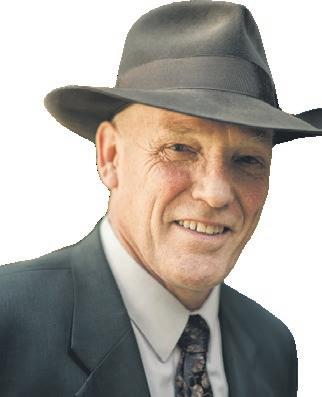
Federated Farmers has elected South Canterbury farmer Colin Hurst as the organisation’s new national president.
] by Kent Caddick
Hurst, a mixed arable and dairy farmer in the Waimate area, said he was deeply honoured to take the reins of New Zealand’s leading rural advocacy organisation.
“It’s a huge privilege to be entrusted with this role by my fellow farmers,” Hurst said.
“Federated Farmers has such a proud 127-year history of standing up for rural New Zealand, and I’m committed to building on that legacy.
“Farmers are facing no shortage of challenges, but they’re also full of determination and optimism for the future.
“My job as president is to make sure their voices are heard loud and clear wherever decisions are being made, and that’s exactly what I intend to do.”
Hurst steps into the role after serving as Federated Farmers’ vice president for the last three years.
He has also been the organisation’s spokesperson for freshwater, biodiversity, and fire and emergency issues.
Hurst was quick to acknowledge the work of his predecessor Wayne Langford.
“I want to pay tribute to Wayne Langford for his leadership, energy, and unwavering commitment to farmers during his time as president,” Hurst said.
“We’ve had six years on the board together and I love the guy. He’s been a phenom-
enal leader who has really transformed and modernised the organisation.
“Wayne has been such a strong and passionate advocate. I wish him all the best for whatever comes next. I have no doubt he will have a huge future.
Hurst said his focus will be on continuing to ensure farmers’ voices are heard clearly in national decision-making.
“Farmers are operating in an incredibly complex environment right now, from compliance pressures through to economic uncertainty.
“I’ll be working hard with a fantastic team of farming leaders from around the country –and that’s our strength. We are the trusted voice of grassroots farmers.
“Together we’ll be working to make sure farmers’ experiences and perspectives are front and centre in every discussion that affects them,” he says.
Hurst has nearly 40 years as a hands-on arable and livestock farmer, and extensive experience within Federated Farmers at both a regional and national level.
He was the 2019 Arable Farmer of the Year, is a former director for the Foundation for Arable Research, and has dedicated countless hours as a volunteer to the South Canterbury Rural Support Trust and United Wheatgrowers.
He has also been a staunch advocate for farmers at the Seed Quality Management Authority and on the Fertiliser Quality Council.
including sheep, beef, cropping, citrus, farm forestry and contracting.
The family has also just bought a dairy farm nearby.
Gisborne farmer Sandra Faulkner has been voted in as vice president. Faulkner farms with husband Rob at Wairakaia, near Gisborne, where they run a diverse operation
LOCAL EXPERTS. NATIONAL TEAM. RURAL RESULTS.
Meanwhile, Southland’s Chris Dillon joins the board as arable chair, taking over from David Birkett. South Canterbury’s Greg Anderson has been voted in as an at-large board member, and Mark Hooper has held his spot as the other at-large member. Richard Dawkins (meat and wool chair) and Karl Dean (dairy chair) also retained their positions.
Colin, his wife Janis, and their family farm 700ha, which includes 450ha in arable crops such as wheat, grass seed, plantain and turnips, and the rest for grazing cattle. Around 250ha is irrigated.
Top team: South Canterbury farmer Colin Hurst has been elected the new Federated Farmers’ national president while gisborne farmer Sandra Faulkner has been voted in as vice president.
Bird Flu
Keep distance, wash hands, report it.
It’s a tough pill to swallow that bird flu has finally arrived in New Zealand. This is a moment many of us have hoped would never come.
] with Jo Luxton ] Labour spokesperson ] for Agriculture
We’ve watched the highly pathogenic H5 strain spread across Europe, Asia, the Americas and, more recently, Australia.
With so many migratory birds travelling to and through New Zealand, experts have been warning since 2022 that it was only a matter of time before this strain reached our shores.
On 15 July the virus was confirmed in a brown skua north of Wellington City, followed by a kahu in Wairarapa.
The good news is that, so far, there have been no cases detected in poultry. That gives us a window to prepare, to understand what we need to do, and to work together to reduce the risk of an outbreak.
] with Steve Abel
But how we deal with this depends on all of us doing our part and following advice.
If you’re out and about:
• Keep your distance from sick or dead birds.
• Wash your hands and clean your footwear and equipment after spending time outdoors.
• Report groups of three or more sick or dead wild birds, marine mammals or other wildlife by calling the Exotic Pest and Disease Hotline on 0800 80 99 66.
These actions will make a difference.
I know this is an anxious time for many farmers. There are hundreds of poultry farms and egg production sites across the country, and Canterbury is one of New Zealand’s key poultry and egg-producing regions.
These businesses work incredibly hard every day to put affordable, high-quality food on our tables. And because we don’t import fresh chicken or eggs under our biosecurity rules, protecting our domestic poultry industry is incredibly important.
We do need to take this seriously, but there is no reason to panic. As of 24 July, there is no evidence the virus has spread into poultry. Chicken and eggs remain safe to eat, and the risk to human health remains very low. Biosecurity New Zealand is working hard to monitor the situation. They are checking coastal areas and responding quickly to high-value reports of sick or dead wildlife.
The Department of Conservation is also vaccinating around 300 breeding birds from five of our most endangered species, kakapo, takahe, kaki, taturuatu (shore plover) and kakariki karaka, as part of efforts to reduce
the risk to some of our most vulnerable native species.
Strong biosecurity cannot be taken for granted. It relies on all of us playing our part, alongside continued government investment in surveillance, preparedness, research, and science. Together, that will give us the best chance to protect our native wildlife, support our farmers and safeguard our food security into the future.
the Poultry Industry Association New Zealand has also developed a dedicated website to support poultry owners, farmers, and industry with practical guidance on avian influenza preparedness and response. It has prevention plan templates, preparation resources, and detailed response guidance, including information on locating contractors and support services across New Zealand for biosecurity and welfare support. You can find this at: birdflu.pianz.org.nz
Cutting fertiliser for healthier water
We should all be able to drink the water from our kitchen tap and swim in our local river without wondering if it will make us sick. Our oceans, fish and shellfish should not only be abundant but also safe from toxic algal blooms.
] Green Party Spokesperson
] for Agriculture
That’s why the Green Party launched our Drink Swim Fish policy, to protect our oceans and waterways for all of us.
Since we launched our policy there have been some extravagant claims about our call to phase out synthetic nitrogen fertiliser. One of them is that we need synthetic nitrogen to feed the world.
In fact, if we are to maintain the planet’s ability to sustain billions of people, phasing
out our dependency on synthetic nitrogen may be key. Nitrogen is essential to plant growth and so when a method was invented of artificially producing nitrogen – by cracking it from the air using fossil gas – there was an explosion of industrial farming across the globe.
For a century synthetic nitrogen fertiliser has driven an industrialised food system that we can now see is breaking the bounds of nature in catastrophic ways.
Our species has certainly taken a sugarhit from synthetic nitrogen but believing we can go on artificially exceeding the nitrogen balance, ignores the devastating long-term impact these chemicals have on soil and water health.
It also denies the part synthetic nitrogen plays in driving climate change with its paralysing heatwaves, droughts, floods, and wildfires that are the greatest threat to global food production and human health this century.
We need to do something different and remembering how nature gets nitrogen into soil is a solid clue.
Organic, regenerative, and agroecological farming methods work with natural cycles rather than fighting them. Nature already has a perfect mechanism for extracting nitrogen from air.
By utilising nitrogen-fixing plants (like white clover), a mix of grass species in pasture, cover cropping, and organic composts, farmers can build soil organic matter and naturally fertilize the land.
There are already organic and regenerative farmers in New Zealand making good livelihoods without synthetic nitrogen fertiliser.
In fact, the payout to farmers for organic dairy is sitting at around a third higher than for conventional dairy.
In New Zealand, up until the 1990s, the
main way farmers got nitrogen into the soil for pasture growth was through white clover.
In 1982 the Kapuni fertiliser factory was built to utilise gas from the Maui field.
Since 1990 we’ve had a sixfold increase in use of synthetic fertiliser which has fuelled a doubling of the dairy herd. In Canterbury we’ve seen a tenfold increase in dairy cow numbers.
This has led to severe nitrogen leaching from both the fertiliser itself and millions of litres of cow urine that seep down into groundwater and threaten rivers, the marine environment, and vital drinking water supplies, with nitrate that is now linked to increased risk of bowel cancer and preterm birth.
Because dairy is our biggest water polluter and uses over 60% of synthetic nitrogen, the Green policy would start by lowering the current cap on synthetic nitrogen fertiliser for dairying.
We will work with farmers across other sectors to cut fertiliser use but we’ve not set a timeframe on this phase out, recognising there are challenges.
Government and industry must step up. We need policies that support farmers who are already innovating more sustainable methods. We must prioritise soil health over short-term profits.
We can use the wisdom gained from millennia of farming, combined with the scientific knowledge we now have of planetary systems both large and microscopic, to create a food system that can achieve long term prosperity and sustainability for all of us.
The Greens know that we can provide nutritious food and decent farmer livelihoods without damaging nature and the right of all people to safe drinking water, swimmable rivers, and healthy abundant oceans.
Lincoln outperforming others in course completion rates
Students at Te Whare Wanaka o Aoraki Lincoln University are outperforming their peers around Aotearoa New Zealand in course completion rates, according to the latest Educational Performance Indicators (EPIs) released by the Tertiary Education Committee (TEC).
]Article supplied by Lincoln University
Measuring the educational performance of New Zealand university students at all academic levels, the EPIs include course and qualification completion rates and first-year retention rates.
In 2025, 93.8% of Lincoln University students at all levels completed their academic courses, up a further 2.8% on the University’s 2024 overall course completion rate of 91%. This is the highest course completion rate of any university in Aotearoa New Zealand.
Lincoln University also topped the overall retention rate for first-year students for the fourth consecutive year, at 87.6%. These results place Lincoln first in the country for both course completions and first-year retention, underlining the University’s commitment to supporting students to succeed.
Lincoln University demonstrated its support for Maori and Pasifika students through achieving the highest overall course completion rate for Maori, at 90.3%, the highest retention rate for Maori first-year students, at 89.7%, and the highest course completion rate for Maori students at Master’s and PhD level, at 93.1 %, 9.6% higher than the nexthighest university.
Pasifika students achieved the secondhighest qualification completion rate, the third-highest first-year retention rate, and the second-highest course completion rate.
Lincoln University Deputy Vice-Chancellor for student life, Damian Lodge, said the very pleasing EPI results demonstrate the effectiveness of the University’s learner success
framework (Manaaki Tauira) which underpins the success, fulfilment and wellbeing of all Lincoln students as they undertake their higher-education journey.
“Our priority at Lincoln University is to provide an enriching, distinctive Aotearoa, end-to-end student experience for all our students within an environment that empowers them to thrive and achieve their goals,” Lodge, said.
“These results are the product of great collaboration between our academic and professional staff, who work together every day to lift our students up and support them in their studies.
“Since the implementation of Manaaki Tauira, the University has undertaken multiple interventions across the student lifecycle.
“We have made significant progress in im-
proving participation rates and educational outcomes for all our students, and in particular for our Maori, Pasifika and disabled students.
“Our Disability Action Plan is now fully embedded in our digital platforms and classroom design, and has delivered an accessible and inclusive teaching, learning, research and working environment for all our students and staff.”
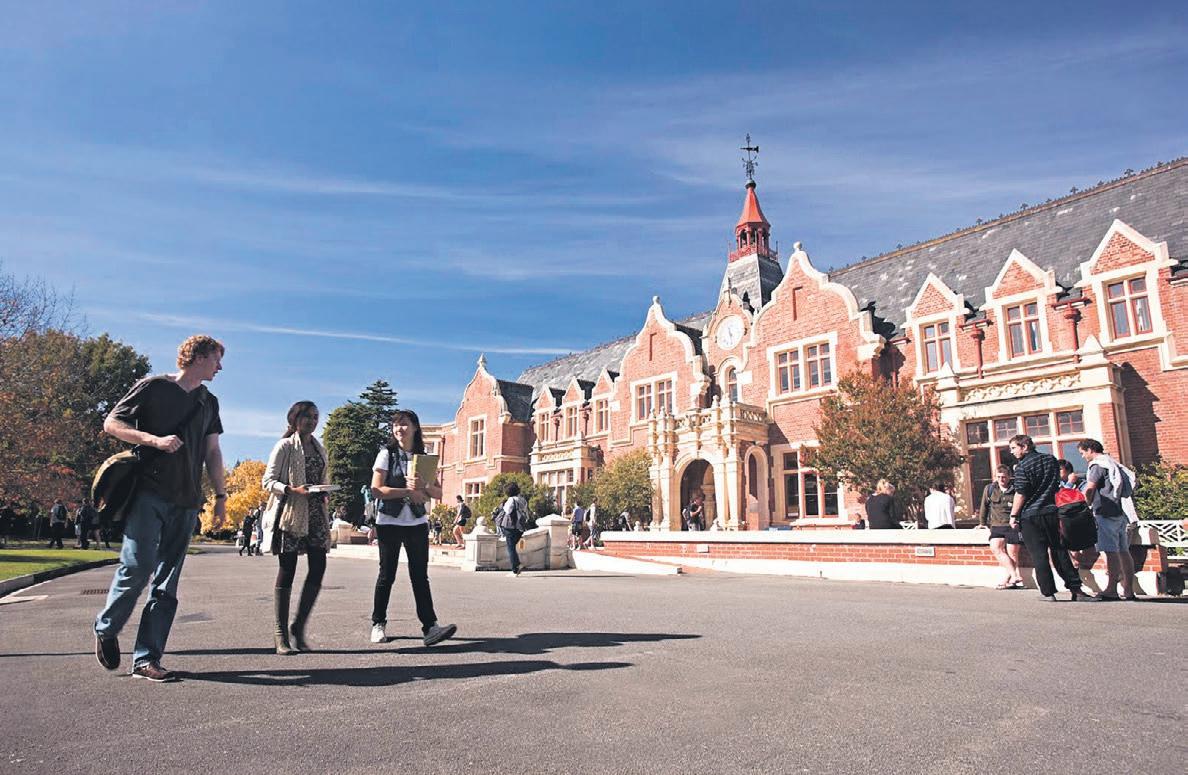
Number one: Lincoln university has the highest course completion rate of any university in New Zealand.
The power and risk of market concentration
Investment markets were broadly positive over the quarter, with the US market leading the global gains. Australian and New Zealand shares rose but lagged the broader global rally. Fixed income also delivered solid returns as inflation concerns eased, and longer-term yields fell back over the quarter.
] with Andrew Wyllie
] Forsyth Barr
One striking feature of this year’s rally has been just how much of it has been driven by a small group of very large technology companies.
The so-called ‘Magnificent Seven’ – nVidia, Apple, Microsoft, Alphabet, Amazon, Meta, and Tesla – now account for roughly a third of the entire S&P 500, with a combined market value of around US$22 trillion.
Widen the lens to the ten largest companies and they make up close to 40% of the index. That is a higher degree of concentration than at the peak of the late-1990s technology boom, and it means a broad ‘passive’ index fund is far less diversified than many investors assume.
However, unlike many companies during the dot-com era, today’s market leaders are highly profitable and generate a large share of global corporate earnings and cash flow.
Even so, the risks are real. These com-
panies share many common traits: they are large, growth-oriented, and closely tied to the artificial intelligence theme. As a result, they often rise and fall together, which can amplify gains in strong markets and losses when sentiment turns.
With enormous sums being invested in AI infrastructure, competition intensifying, and
Explosive IPO: SpaceX raised around uS$75 billion when the company listed on the NASDAQ in the largest initial public offering in history.
high expectations already reflected in share prices, a shift in sentiment towards just a few companies could have a meaningful impact on whole market indices.
The appetite for technology exposure was clear in June, when SpaceX listed on the NASDAQ in the largest initial public offering in history. The company raised around
US$75 billion. Its shares jumped close to 20% on debut, although they gave back some of those gains in the following days. The company remains lossmaking, and analysts are divided on whether the valuation can be justified.
AI model companies OpenAI and Anthropic are also reported to be weighing potential listings, which may add to the market’s concentration rather than reduce it.
For most investors, the key is to make sure exposure to this theme is deliberate and appropriately sized, rather than simply an accidental result of holding a broad index. Why diversification matters more than ever
With a handful of technology giants now driving so much of the market, investors who rely on a single index may be taking on more risk than the word ‘diversified’ suggests.
Holding a genuine mix of investments including bonds, which are offering increasingly attractive income opportunities, alongside listed property and infrastructure, remains one of the most dependable ways to participate in the recovery while helping to cushion the inevitable bumps along the way.
With decades of experience,
this article was prepared as at 30 June 2026 and provides market commentary for the three-month period ending on that date. this article is general in nature, has been prepared in good faith based on information obtained from sources believed to be reliable and accurate, and should not be regarded as financial advice. If you would like to review your investments or discuss the market outlook in more detail, please get in touch. Andrew Wyllie is an Investment Adviser and Forsyth Barr’s Christchurch Manager. He can be contacted regarding portfolio management, fixed interest, or share investments on 0800 367 227 or andrew.wyllie@forsythbarr.co.nz
The importance of a written grazing agreement
For many New Zealand farmers, grazing arrangements are still made with a handshake and a shared understanding.
] with Amelia Kearney ] Helmores Lawyers
Trust and long-standing relationships remain the cornerstone of rural communities, but even the strongest relationships can be tested when expectations differ, or unforeseen circumstances arise.
A written grazing agreement is not about replacing trust; it is about providing certainty. By recording the terms of the arrangement from the outset, both the landowner and the grazier have a clear understanding of their respective rights and obligations. Therefore, it reduces the risk of misunderstandings and costly disputes.
A grazing agreement provides more than just legal protection. It establishes clear expectations, promotes open communication, and creates a practical framework for managing the grazing arrangement throughout its duration.
A well-drafted agreement should also demonstrate good business practice by providing certainty for lenders, insurers, accountants, and clarity for third parties who may become involved in the future. For example, if the property is sold or ownership changes, the agreement allows prospective purchasers, lenders, or advisers to readily understand the existing grazing arrangement. Where appropriate, the agreement may also include provisions that allow the grazing rights and obligations to be assigned to a new owner, ensuring continuity of the arrangement and reducing the likelihood of disputes upon a change in ownership.
While every agreement should be tailored to the circumstances, several key matters should always be considered.
Payment arrangements are one of the most common causes of disagreements. A written agreement should clearly state the grazing fee, or how the fee will be calculated, together with when payment is due and how payment is to be made. The agreement should also record whether GST applies, whether interest will be payable on overdue accounts, and what consequences will follow if payment is late or not made at all.
The agreement should also explain whether grazing charges are based on stock numbers, grazing days, liveweight, or another agreed formula. If stock numbers fluctuate during the grazing period, it should specify how charges will be adjusted. Clear payment provisions give both parties confidence when budgeting and help avoid unnecessary disputes.
Even with the best management practices, unforeseen events can occur. Livestock may become ill or injured, be stolen, escape from the property, or be affected by a disease outbreak such as Mycoplasma bovis (M. bovis). A well-drafted grazing agreement should clearly state who is responsible if any of these events occur. For example, it can specify who is responsible for notifying the relevant authorities, meeting compliance requirements, and bearing any financial losses if stock is affected by M. bovis or another notifiable disease.
The agreement should also address insurance responsibilities and determine who bears the risk if stock cause damage to neighbouring properties, fencing, water systems, or other farm infrastructure.
Maintaining the property is another area where expectations should be clearly recorded.
The agreement should specify responsibility for maintaining fences, gates, water systems, tracks, and other infrastructure. It should also address pasture management practices, including stocking rates, fertiliser application, weed control, and measures to minimise pasture damage during wet conditions.
Clearly defining these responsibilities helps preserve the condition of the land while reducing uncertainty over maintenance costs and repairs.
Even where both parties expect the arrangement to continue, circumstances can change. Seasonal conditions, feed shortages, financial pressures, or the sale of a property may require the agreement to end earlier than anticipated.
A written agreement should clearly explain how either party may bring the arrangement to an end, including the amount of notice required and the circumstances that may amount to a breach of the agreement, noting clear processes for removing stock from the property and how any outstanding payments or claims for damage will be resolved.
A clause should be included to allow for immediate termination where there has been a serious breach, significant animal welfare concerns, or persistent failure to make payment.
‘A written grazing agreement is a practical risk management tool that benefits both the landowner and the grazier.
Just as importantly, the agreement should set out each party’s obligations following the termination or expiry of the grazing arrangement. For example, it can require the grazier to remove all stock by a specified date, reinstate any areas damaged during the grazing period, repair fences, gates or other infrastructure where damage has occurred, and leave pasture in an agreed condition. While acknowledging fair, reasonable wear and tear, documenting these obligations helps ensure the landowner receives the property back in substantially the same condition as when the agreement commenced.
A written grazing agreement is a practical risk management tool that benefits both the landowner and the grazier. By clearly documenting each party’s rights and responsibilities, the likelihood of disputes is reduced while protecting valuable farming relationships and providing a straightforward process for resolving any issues if they arise.
No two grazing arrangements are the same, and a generic template may not adequately address the specific risks of a particular farming operation. Obtaining legal advice before entering into a grazing agreement can help ensure the document accurately reflects the parties’ intentions and provides appropriate protection for everyone involved.
] with Laura Wood
] LGW Accounting
What farming and rugby teams have in common
At first glance, they seem worlds apart. One involves livestock, weather, and long days. The other is played over 80 minutes on a Saturday afternoon. But when it comes to building a successful business, there are some surprising similarities.
The biggest lesson? A successful team isn’t built around one star player.
Every rugby team relies on each position doing its job. The flashy tries might make the highlights reel, but games are often won by the players doing the hard work that nobody notices. The same applies on the farm.
It’s easy to focus on the big-ticket items
like stock prices, milk payouts or rainfall, but it’s often the smaller, consistent habits that determine whether a farming business performs well financially. Regular cashflow reviews, keeping costs under control, maintaining equipment, and making informed decisions all add up over time.
Another similarity is having a game plan. No rugby team runs onto the field hoping everything works out. They have a strategy, they know their strengths, and they adjust when conditions change.
The same should apply to your farm business. Do you have a budget for the year?
Do you know what profit you need to make?
Have you considered how a drop in schedule prices or a dry season would affect cashflow?
Often, annual accounts are prepared far after the season has finished.
While they’re an important reporting tool, they’re also an opportunity to review what worked, what didn’t, and how next season’s game plan might look.
Good teams also communicate well. Players, coaches, and support staff are constantly talking. They share information, solve problems early, and make decisions together. The same applies to farming businesses.
Whether you’re farming with family, in a partnership, or employing staff, regular conversations about finances can prevent misunderstandings and help everyone work towards the same goals.
And don’t forget the importance of the bench. Every successful rugby team has trusted people they can rely on when things get tough. Farming businesses need the same support network.
Your banker, accountant, agronomist, farm advisor and other rural professionals each bring different skills to the table. They won’t win the game for you, but they can help you make better decisions when it matters most.
Finally, the best teams don’t just celebrate the wins, they review the losses.
A disappointing season doesn’t mean you’re a bad farmer, just as one poor rugby season doesn’t make a bad team. The key is understanding what happened, learning from it, and making improvements for next time.
The most successful farming businesses I’ve worked with aren’t necessarily the biggest or the most profitable every year. They’re the ones that plan ahead, communicate well, adapt when conditions change, and focus on the fundamentals. Just like a good rugby team.
So, the next time you’re watching a game from the sideline or the couch, remember that many of the qualities that build a championship team are the very same qualities that build a financially successful farming business.
Because whether you’re chasing points on the scoreboard or profit on the farm, success rarely comes down to one big moment. It’s usually the result of good planning, strong teamwork, and consistently getting the basics right.
Improving cardiac arrest response
Hato Hone St John
] Article supplied by St John
The LifeBeat Mini packs the power of a fullsized defibrillator into a device around the same length and width as a mobile phone.
Weighing less than 700g, around half the weight of a traditional AED, it fits easily into a glove box, handbag or first aid kit, making it easier than ever to have a defibrillator within reach when every second counts.
Last year, almost 2,500 New Zealanders received treatment for cardiac arrest, but only 6% received defibrillation from a bystander before an ambulance arrived. Improving access to defibrillators in everyday settings is critical, according to Hato Hone St John. They say early CPR and defibrillation dramatically improve survival. There is a 2.1-times greater chance of survival for patients who receive CPR from a bystander, and for every minute without CPR or defibrillation, their chance of survival falls by 10% to 15%.
Cardiac arrests can happen anywhere, on farm and worksites, at home, in schools, on the sidelines of weekend sport, during remote bush walks, on the road or on the water.
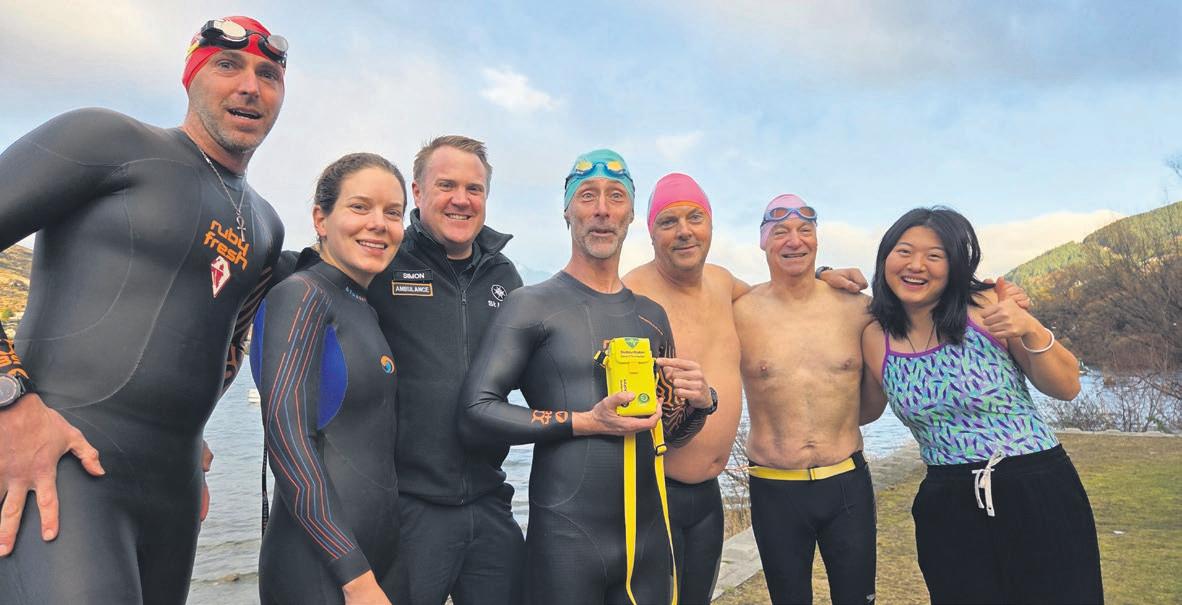
The importance of being ready when it matters has been recognised by Hato Hone St John customer, Southern Lakes Swim Club.
Preparedness is a priority for the club, which has previously invested in St John defibrillators for water-based emergencies. It recently secured funding for a LifeBeat Mini to better protect its growing community of open water swimmers on Lake Wakatipu.
The club attracts up to 50 swimmers aged from 18 to 70 during summer and regular-
ly organises swims in remote locations on the lake, where there is no road access. If a cardiac emergency occurs, responders may need to reach the scene by helicopter or boat, making immediate access to a defibrillator critical.
Simon Barnett, Hato Hone St John’s head of public training and medical products, said having a defibrillator within reach can make all the difference.
“You don’t need to be a medical professional to save a life, you just need the right tool at the right moment,” Barnett said.
“The LifeBeat Mini is designed for both trained responders and everyday members of the community.”
Beyond its breakthrough portability, LifeBeat Mini offers all the life-saving capa-
bilities of a traditional defibrillator. Voice prompts and intuitive smart pads guide users through every step, and the device recognises the patient’s heart rhythm to deliver a shock only when required. Its dust and waterresistant design operates in temperatures
from – 15degC to +50degC and at altitudes of up to 5000 metres.
Priced at $2,990 including gSt, the LifeBeat Mini is aimed at businesses, households and those looking to improve emergency readiness.
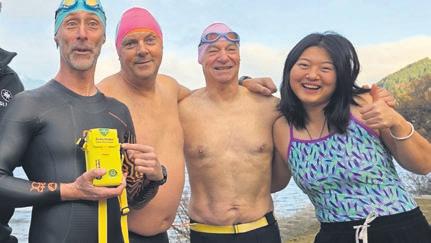
Life saver: Southern Lakes Swim Club members with their new LifeBeat Mini defibrillator.
Nitrate contamination and premature births
Environmental group Greenpeace says a new study from researchers at Canterbury, Otago, and Massey universities has revealed nitrate contamination in drinking water could be responsible for up to 120 premature births a year in New Zealand.
] by Kent Caddick
The study published in Science Direct concluded that higher nitrate concentrations in drinking water in the country were associated with increased odds of Preterm Birth (PTB).
“While residual confounding and exposure misclassification cannot be excluded, our findings are consistent with prior large cohort studies and suggest that low-level nitrate exposure may contribute to PTB risk,” the report said.
Greenpeace campaigner Will Appelbe said the intensive dairy industry, led by Fonterra, should be held responsible.
“When will Fonterra face up to the hundreds of families every year that have to deal with premature births thanks to the dairy industry’s nitrate pollution?
“It is a national disgrace these babies are born prematurely because Fonterra has poisoned rural drinking water with nitrate contamination. The dirty dairy industry is putting our children’s health at risk, and it’s still expanding.”
Appelbe said this research is just the latest in a series of studies indicating that there is significant health impacts associated with nitrate pollution.
“International studies have linked nitrate contamination at levels much lower than New Zealand’s legal limit to health risks including bowel cancer, and preterm birth.”
Appelbe said studies have shown that in New Zealand up to 100 cases of bowel cancer a year, and 40 deaths, could be caused by nitrate contamination in drinking water. Up
to 800,000 people in New Zealand are exposed to levels of nitrate that are potentially harmful.
“We need to stop nitrate pollution at the source. That means regulating the intensive dairy industry and limiting the amount of synthetic nitrogen fertiliser that can be applied to the land.”
Appelbe said the Danish Government recently announced it would set lower limits
Bettaflex
For many, joint health deterioration is the first obvious sign of aging. Gradual erosion of cartilage, is by far the most common issue.
What is Bettaflex?
Bettaflex is the most popular supplement in the Abundant Health range because of its positive support for joints affected by wear and tear, helping Bettaflex users to support mobility and quality of life.
How does Bettaflex work? Bettaflex has been formulated to support joint comfort and mobility, making it an ideal supplement for those seeking support for joint comfort and stiffness. Bettaflex combines high-grade chondroitin sulphate, glucosamine sulphate and patented BioSolve® Curcumin. This combination supports the maintenance of healthy cartilage and other joint tissue by supporting the joint processes that protect, maintain and renew cartilage.
Premature: greenpeace claims a new study has revealed nitrate contamination in drinking water could be responsible for up to 120 premature births a year in New Zealand.
for nitrate in drinking water, and regulate the intensive livestock industry, in response to high levels of pollution in drinking water.
He said it’s time for New Zealand to do the same.
“Everyone, no matter where they live, should be able to take a drink from their kitchen tap without getting sick. It’s a fundamental human right.
] with John Arts
“New Zealand should be acting in line with the most up-to-date science and lowering the nitrate limit to protect rural communities’ health both now, and for generations to come.”
For more on the New Zealand study linking nitrate contamination to preterm births go to: www.sciencedirect.com/science/article/pii/ S0013935126015008?via%3Dihub.
Farmers develop sore joints
Earlier this year, a farmer contacted me about severe osteoarthritis affecting his hands and shoulders. Joint pain is common among farmers; many experience it before age 50, often due to livestock accidents or years of demanding physical work.
His hands were so painful that closing them was difficult, and the discomfort was constant. Shoulder arthritis is also common and can be especially troublesome because pain often radiates through the ligaments, muscles, and tendons that support the joint, making everyday tasks harder.
Osteoarthritis usually develops in one of two ways: from direct injury or from gradual cartilage loss. As cartilage breaks down, bones can rub together, causing pain because bone contains many nerve endings. Cartilage degeneration may be driven by excessive destructive enzymes, free-radical damage to chondrocytes—the cells that produce healthy cartilage—and ongoing inflammation.
To address these problems, I started the farmer on an intensive three-month programme. It included 1600mg each of high-grade chondroitin sulphate and glucosamine sulphate and 400mg of watersoluble curcumin extract from turmeric.
After three months, the results were impressive. He reported major improvements in hand and wrist function, and his shoulder pain had eased enough to feel much more comfortable. His progress offers another reason to explore nutritional medicine as part of osteoarthritis management.
For people with similar concerns, highdose chondroitin combined with glucosamine and curcumin, supported by an anti-inflammatory diet, may provide meaningful benefits.
To learn more, email me for a copy of my Osteoarthritis programme and begin your journey toward better joint health.
John Arts (Adv.Dip.Nut.Med) is a qualified nutritional medicine practitioner and founder of Abundant Health. to read more articles by John and learn more about the Abundant Health products he has formulated, visit www.healthhouse.co.nz, call 0800 140 141, or email john@healthhouse.co.nz.
Making restoration planting easy and effective
Motukarara Nursery, the restoration planting experts, are in the business of making restoration planting easy, accessible and effective.
] Article supplied by the ] Department of Conservation
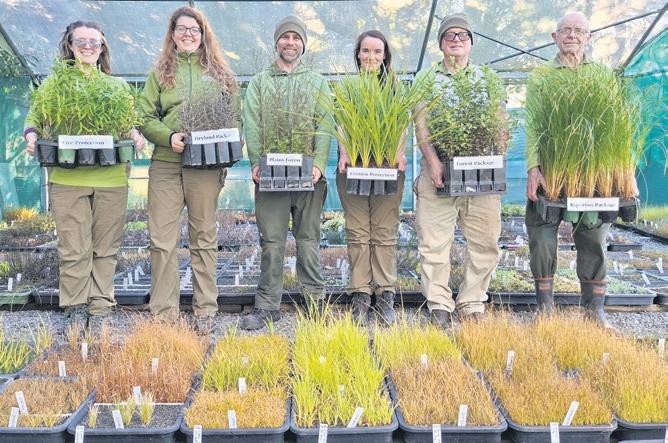
They have developed their first series of ecosource plant packages (with more to come in 2027). These purpose-built packages are tailored to specific restoration goals; riparian planting, erosion control, fire protection and forest creation. Each package contains 1,000 plants carefully selected to achieve the intended outcome.
So, what is eco-sourcing and why does it matter?
Eco-sourcing is where seed is collected from the closest remnant possible to where the plant will be planted. Eco-sourcing ensures a higher survival rate as plants have spent generations adapting to local conditions.
Jess Ward, Manager of the Motukarara Nursery, says, “My team and I saw a gap in the market and thought here is an opportunity for us to support local landowners to grow local plants that will thrive in local conditions.”
The Motukarara Nursery team has extensive experience growing plants for large-
scale restoration projects. Through Jobs for Nature, they supplied 350,000 eco-sourced native plants for Kahuria Te Waihora, a planting and maintenance programme around Te Waihora/Lake Ellesmere.
By working closely with the restoration team responsible for site preparation, pest control, weed management, planting and plant protection, the nursery was able to adapt its approach based on what was working best, helping achieve a 90 percent survival rate. Knowing the site and understanding what works, and what doesn’t, is key to the success of any restoration project.
The team at Motukarara Nursery is all about working smarter, not harder. They are committed to continually improving their growing practices with a focus on delivering better outcomes including higher plant survivability, improved habitat creation, greater carbon sequestration, increased biodiversity values and stunning landscapes.
Ward says she and her team are “committed to future ecosystems, not empty plant pots. Restoration is an investment; we want to make sure our customer’s investments succeeds.”
That practical, outcomes-focused approach is also proving valuable for farmers developing Environmental Farm Plans.
Motukarara Conservation Nursery’s plant packages provide carefully selected native species that help landowners achieve a range of environmental objectives, from riparian planting and wetland restoration to erosion control, biodiversity enhancement and waterway protection.
Because the plants are eco-sourced and suited to Canterbury conditions, they are designed to establish successfully while delivering long-term environmental benefits.
The packages offer a straightforward, cost-effective way for farmers to strengthen environmental resilience, improve habitat for native wildlife and support the goals of their farm plans while maintaining productive farming systems.
The team has experience working with
Restoring: the Department of Conservation’s Motukarara Nursery team with some of the plant packages created to make restoration planting easy and effective.
many restoration companies throughout Canterbury and is happy to connect landowners with trusted professionals who can provide support with planning, planting and ongoing maintenance.
Motukarara are looking to increase their plant production for this year for supply in 2027.
“We love growing plants and we are really good at it, now we just need the plant orders to come in so we can grow the right plants and have them ready in time for next year’s planting season,” Ward says.
If you would like to learn more about eco-source Plant Packages for Purpose, visit www.doc.govt.nz/conservationnursery and download a free information pack, or email motukarara@doc.govt.nz. Plant packages are grown to order – to secure your supply for 2027, order now. You can find a plant package order form on the website dov.govt.nz/conservationnursery
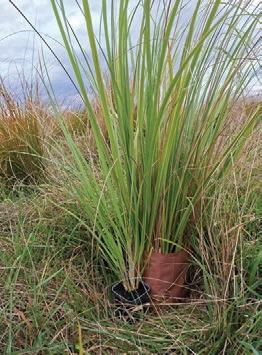
Toetoe. Photo: Jacque Bennett
A simpler approach to Solar
Ask most people what uses the most electricity in their house and they’ll say the heat pump, or maybe the dryer. It’s neither. It’s the hot water cylinder in the cupboard, quietly drawing between 30 and 50 percent of a typical household’s power, every day of the year.
] Advertorial supplied by ] OneEnergy.nz
The reason is old technology. Inside your cylinder sits a 3,000 watt element that works exactly as it did in the 1950s – fully on, or fully off.
Every time someone showers, cold water enters the tank and the element fires up. Usually that’s early morning and evening: the two moments of the day when there is no sun at all.
Comparing this 3,000 watt element to a 5 watt light bulb, it’s enough to give you sleepless nights. Yes, 600 light bulbs on for 3-4 hours each day. Solar-electric hot water will give you peaceful nights. Solarelectric hot water turns that on its head.
How it works
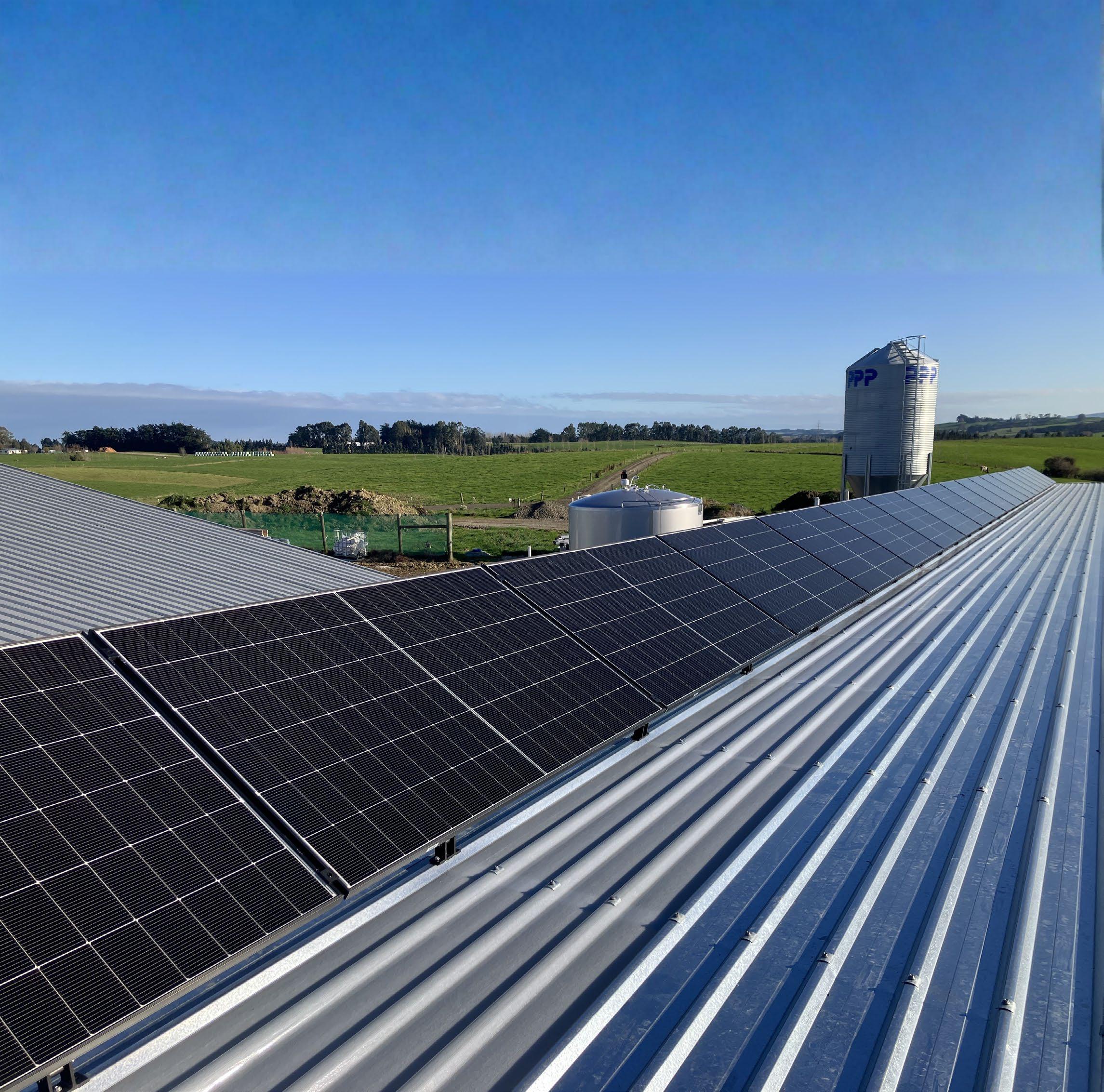
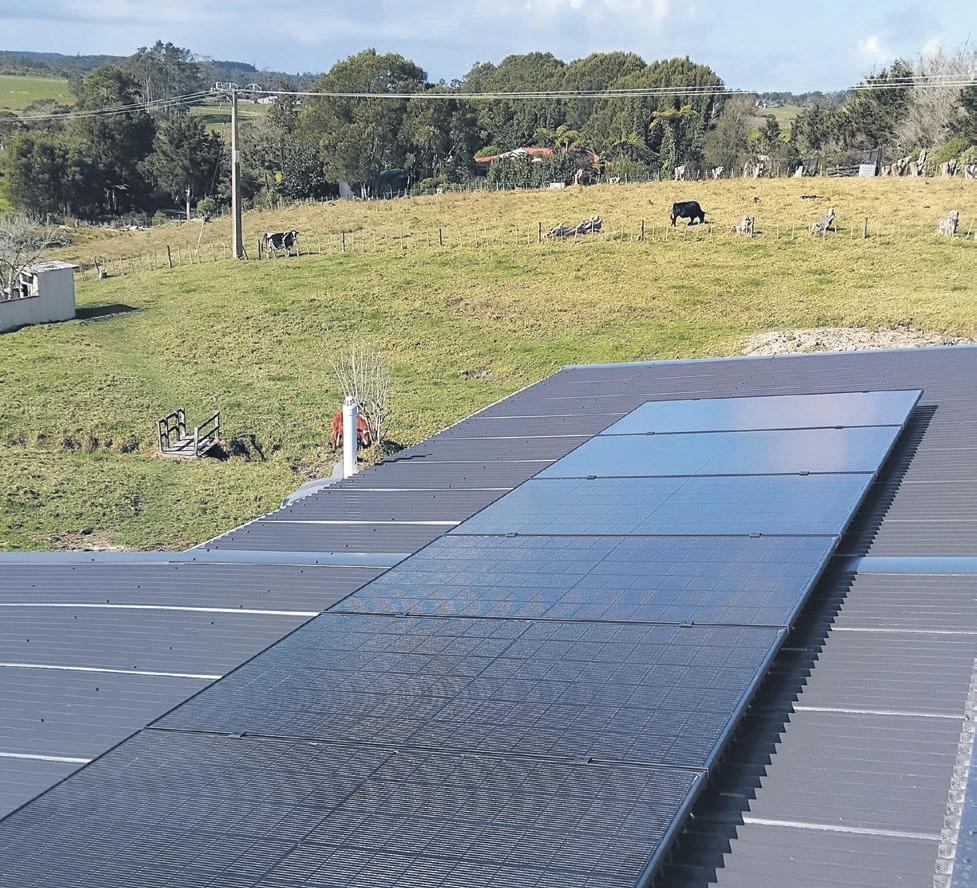
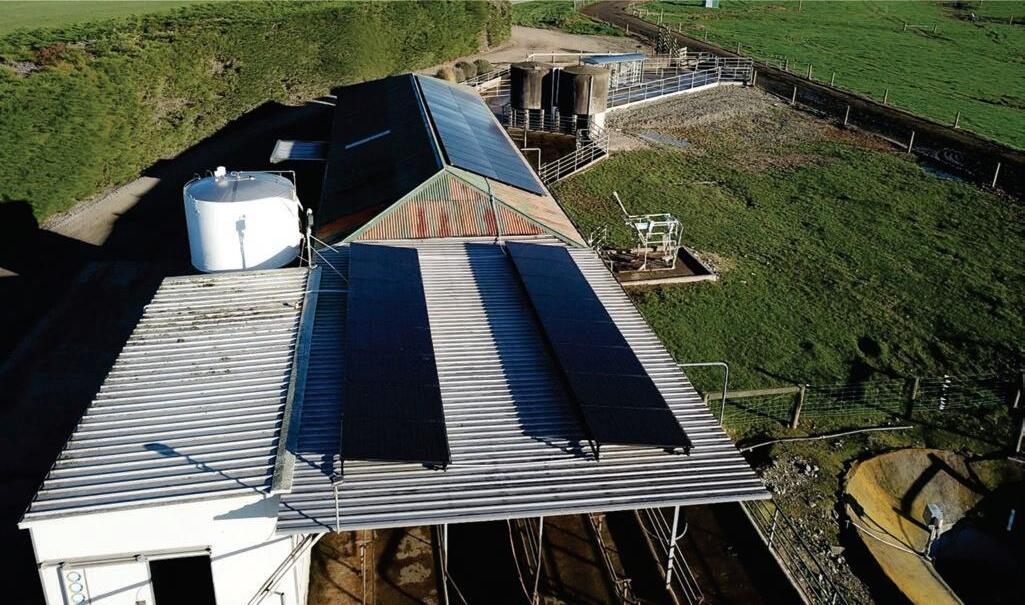
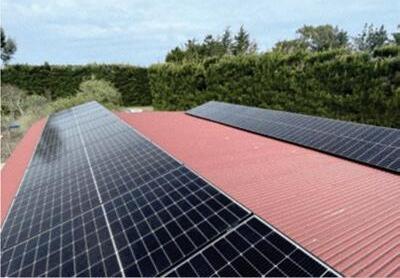
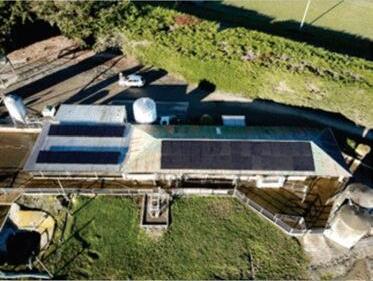
Four or six electric solar panels go on the roof. A cable runs down to a small Germanmade controller mounted beside your existing cylinder, and that controller feeds solar power straight into the water heating element you already have.
No inverter. No plumbing. No new cylinder, and no battery – because your cylinder becomes the battery, storing the day’s sunshine as hot water for the evening and the following morning use.
The controller uses whatever the sun is producing at any given moment, whether that’s 50 watts on a grey morning or 2,700 watts at midday, so nothing is wasted.
Why it suits Canterbury
There’s a common assumption that solar
doesn’t achieve much down here in winter. Not so.
We tracked a six-panel system in Canterbury right through June – the darkest month of the year – and it still covered most of that household’s hot water.
The reason surprises people. Panels don’t run on warmth, they run on light, and they actually work better when they’re colder. Those clear, frosty Canterbury mornings are close to perfect conditions for them. On
a good winter’s day, the system takes the cylinder past 60 degrees Celsius and up towards 70degC.
That stored heat carries into the days that follow, so one wet day costs you nothing.
Only after a genuine run of rainy, low-light weather does the system top up briefly from mains power – automatically, so you’re never left without hot water.
For rural properties there’s a further advantage. The system runs on sunlight rather than the grid, so when the power goes out, your water keeps heating.
What you don’t get
No pumps. No fans. No moving parts, no noise and nothing to service. The panels are self-cleaning in the rain and carry a 25-year manufacturer’s warranty.
The German-made controller won a German Design Award in 2025, has a super long design life and once installed, it’s a set and forget system.
The numbers
A four-panel system is from $5,995 fully installed, and six panels $6,495. Installation takes three to four hours and uses your existing cylinder, element and wiring.
Most households see the system pay for itself in under five years, and it qualifies for green home loans from all major New Zealand banks.
Cutting your single largest power user is the most sensible place to start with solar. Everything else can follow later.
To find out more, call us on 0800 20 60 20 or visit OneEnergy.nz for Home & Dairy Solar-Electric Hot Water Solutions.
Making farm property upgrades easy
For many South Canterbury farmers and farm managers, the priority is simple. Keep the operation running smoothly, look after staff, and stay focused on the day-to-day demands of the farm.
] Advertorial supplied by ] TMG Connect
But alongside the farm itself often sits another major responsibility. Managing farmhouses, staff accommodation, sheds, roofing, renovations, maintenance, and ongoing property upgrades across multiple sites.
It is work that can quickly become timeconsuming and difficult to coordinate.
That is where TMG Connect has carved out a valuable role for rural property owners across the region.
Based in South Canterbury, TMG Connect works with farmers, stations, and farm managers to take the stress out of property upgrades and maintenance. Whether it is a complete interior renovation, a new kitchen or bathroom, roofing replacement, healthy homes improvements, or ongoing maintenance planning, the team manages the entire process from start to finish.
For many farmers, the biggest challenge is not necessarily deciding what work needs doing. It is finding the time to organise it all.
Coordinating builders, plumbers, electricians, painters, roofing teams, suppliers, timelines, and consents can quickly become another full-time job. When multiple houses are involved, or properties are
spread across the region, the workload only increases.
TMG Connect acts as a single point of contact, handling all the moving parts so farm owners and managers can stay focused on what they do best.
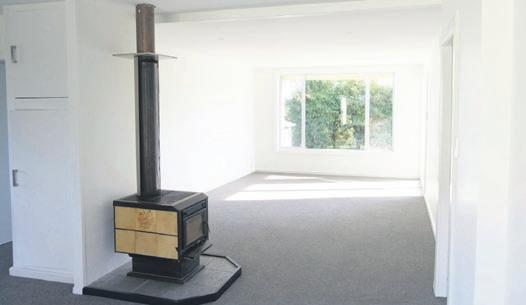
The company has worked on everything from full interior fit-outs and house extensions through to re-roofing projects, new shed builds, bathroom and kitchen upgrades, cladding replacements, and smaller maintenance improvements. In many cases, these upgrades play an important role in improving day-to-day living conditions for staff and tenants.
Good accommodation matters. Modern kitchens, functional bathrooms, warm and healthy homes, and well-maintained living spaces all contribute to creating proper-
ties where staff want to stay long term.
Rather than waiting until issues become urgent or costly, TMG Connect also helps farmers take a more planned approach to property maintenance. The team can provide maintenance reporting across housing assets, helping identify priority works and allowing upgrades to be staged in a way that suits budgets and operational needs.
With a lifetime spent in the building industry, TMG Connect’s project managers have worked across almost every type of renovation and upgrade imaginable. From complete interior fit-outs and major renovations through to kitchens, bathrooms, roofing, sheds, cladding, and extensions, the team brings decades of practical experience to projects across South Canterbury.
That breadth of experience gives farm
owners confidence that whether the job is a full house renovation, a bathroom upgrade, a replacement roof, or ongoing maintenance work, the project will be managed properly from start to finish.
For South Canterbury farmers managing multiple properties and ongoing maintenance demands, having one experienced team oversee the process can make all the difference.
With decades of experience across renovations, maintenance, and property upgrades, TMG Connect has become a trusted project management partner for farmers across the region.
From small upgrades through to largescale renovations, the goal remains the same. Make it easy, deliver it properly, and take the stress out of the job.
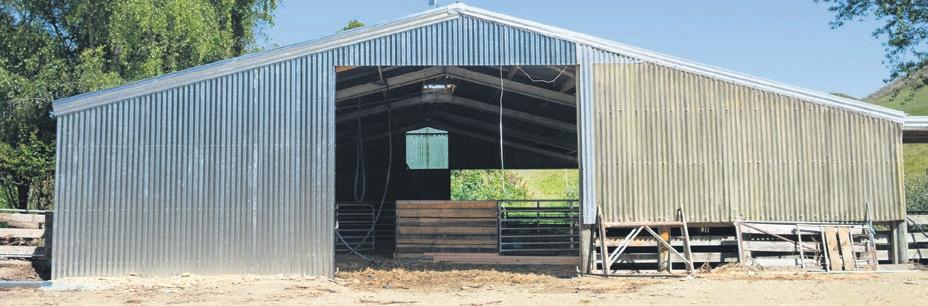
From interior home renovations to farm shed repairs tMg Connect has South Canterbury covered.
Your
boiler’s days are numbered Big boiler bills? Here’s a smarter way to heat your home.
] Advertorial supplied by Warmth.NZ
If you’re tired of watching the diesel truck pull up and dreading the invoice that follows, you can now replace your diesel or gas boiler with a high-temperature heat pump that runs your existing radiators or underfloor heating and cut your heating bills by 40 to 70 percent in the process.
No ripping out pipework, no compromise on warmth, no more fuel deliveries.
For years this wasn’t possible. Heat pumps couldn’t get water hot enough to run a proper radiator system. That’s changed.
The latest air-to-water heat pumps deliver water at 70degC and above which is plenty to keep your home warm through a Canterbury and they produce up to four units of heat for every unit of electricity they use.
That efficiency is where the savings come from, a typical rural home spending
$3,000 to $6,000 a year on diesel can expect most of that bill to disappear, with the conversion usually paying for itself within 5 to 10 years.
Just as importantly, electricity pricing is far steadier than diesel or LPG, which can spike on the back of events on the other side of the world. With a heat pump, those price shocks are no longer your problem.
The conversion itself is more straight-
forward than most people expect. Your existing radiators, underfloor circuits and pipework are typically retained, the old boiler comes out, the heat pump goes in, and your home heats exactly as it always has.
The difference is what you don’t have anymore: no fuel storage, no combustion, no deliveries, and no carbon emissions from your heating.
It’s an even better fit if you’ve got solar or are thinking about it. Running the heat pump during the day lets you heat your home and buffer tank using your own power, squeezing more value out of every panel and cutting your reliance on the grid further still.
Warmth.NZ has been designing and installing hydronic heating across Canterbury
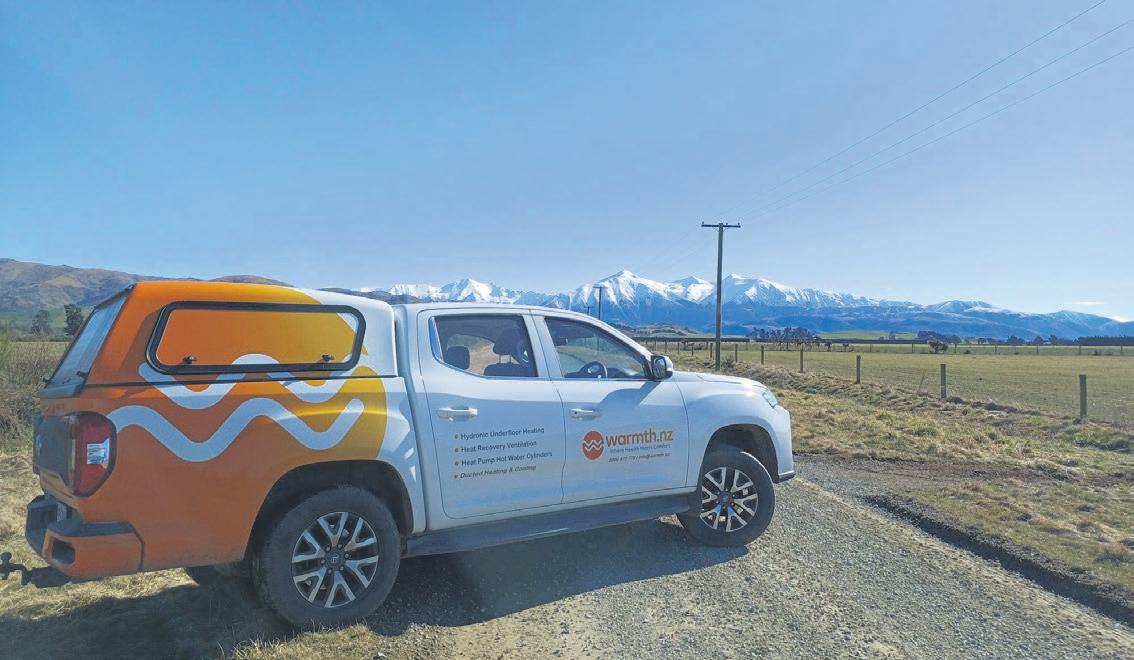
Warmth.NZ are experts in replacing old boiler systems with more efficient hydronic heating systems across Canterbury.
for over 15 years, handling everything inhouse from design to installation. If your boiler’s getting on, your bills are climbing, or you’re simply done being at the mercy of the diesel price, it’s worth a conversation.
Warmth.NZ – Christchurch. Visit warmth.nz or phone 0800 477 778
El Niño predicted to be one of the strongest on record
Earth Sciences New Zealand has confirmed that El Niño conditions have been reached in the tropical Pacific and are expected to strongly influence New Zealand’s weather into 2027.
] by Kent Caddick
El Niño is a global phenomenon, originating with the warming of ocean temperatures in the eastern and central equatorial Pacific.
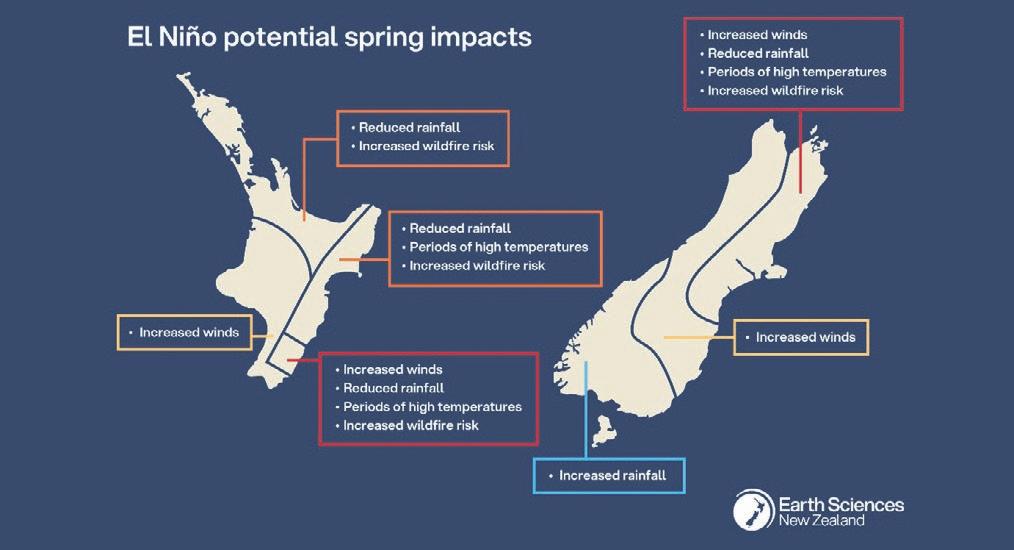
Historically this has resulted in a New Zealand spring dominated by westerly quarter winds (southwest to northwest), typically bringing drier than usual conditions for eastern and northern areas of both islands and wetter than usual conditions for the western and lower South Island.
“Observations of sea surface temperatures in the east-central tropical Pacific show the hallmarks of a historically strong event, which is also echoed by the modelling,” Chris Brandolino, Earth Sciences New Zealand chief scientist for weather and seasonal forecasting said.
He said a sea surface temperature (SST) difference from average, known as an ‘anomaly’, of 1.5degC is a marker of a ‘strong’ El Niño; if the anomaly reaches at least 2.0degC that’s considered very strong, sometimes termed a ‘super’ El Niño.
The top five strongest El Niño events (1972, 1982, 1991, 1997, 2015) all had SST anomalies near or slightly above 2.5degC. The SST anomaly recorded for this event has already exceeded 1.0degC and will continue to increase.
“At the very least we’re expecting this event to rival the intensity of these historical top five events, but it has considerable potential to exceed them all,” Brandolino said.
Earth Sciences New Zealand (ESNZ) and
MetService meteorologist Jon Tunster said it is important to recognise that New Zealand’s weather is influenced by many factors.
“These include the Indian Ocean Dipole (shifting ocean temperatures in the Indian Ocean), regional SSTs, occasional influences from Antarctica, and climate change,” Tunster said.
“There’s more to it than El Niño, or even Super El Niño, but this El Niño event is shaping up to have a major influence, potentially from September onwards.
“As we’ve seen with the previous El Niño events, the overwhelming majority of longrange models are favouring drier than usual
conditions for northern and eastern areas of New Zealand, while western regions – especially of the South Island – are likely to see increased rainfall.
“The combination of wind and reduced rainfall will dry soils, and lead to periods of increased wildfire danger – especially when temperatures are elevated and humidity is low.
These conditions are most likely to occur on the eastern, and perhaps northern, sides of the country,” Tunster said.
“The prospect of lower rainfall in several regions is likely to result in reduced groundwater recharge, creating challenges for water-reliant sectors.”
Weather patterns ahead of spring are likely to be mixed. The ESNZ Seasonal Climate Outlook for July to September forecasts:
An eventual lean towards drier than usual conditions for Canterbury, Marlborough, eastern Otago, Wairarapa, and from Hawke’s Bay to Gisborne.
Drier than normal conditions for Taranaki to Bay of Plenty through to Auckland and Northland.
Wetter than usual conditions for Westland through to Southland, perhaps extending into parts of Central Otago.
Windier than usual conditions for much of the country from late winter into spring.
Comparison of the top five historical El Niño events clearly indicates the recurring pattern of an unusually dry spring in the north and east, and wetter in the south and west.
These dry conditions were particularly pronounced in parts of Canterbury in all five events, with only two thirds of normal rainfall for the period of July to September.
“It’s important to bear in mind that while we know the average outcome of El Niño because of historical data, no El Niño is average as each comes with a unique set of climate characteristics and therefore can be expected to influence the weather differently,” Brandolino said.
Information for this article was supplied by Earth Sciences New Zealand. For more information about El Niño go to: niwa.co.nz/climate-and-weather/ el-nino-and-la-nina
Parched: Earth Sciences New Zealand is predicting reduced rainfall, high temperatures, and increased winds and wildfire risk for Canterbury in Spring as potential impacts of the El Niño weather pattern.
Go outdoors with Ironman 4x4
From farm tracks to backcountry trails, Ironman 4x4 delivers New Zealand’s toughest 4WD accessories. Built for both work and play, our gear is tested in the harshest conditions and backed by over 50 years of experience.
] Advertorial supplied by ] Terraquip Ltd
Established in 1958, we began as a suspension parts manufacturer and have since grown to become one of Australia and New Zealand’s largest suppliers of 4x4 accessories.
Our team has a long history of working with the world’s top car manufacturers, farmers, government organisations, mining companies and off-roaders.
We know how to help our customers find the perfect products to take their ride to the next level.
Whatever your off-road adventure throws at you, Ironman 4x4 has you covered. Our gear is built for getting through when others turn back.
We make products that protect your vehicle from damage and allow you to haul heavy loads safely as well as improving handling both on and off-road.
Every product we make is tested in real-world conditions – from high country stations to commercial worksites.
We supply gear to mining companies, defence forces, and commercial fleets across 120 countries because our stuff works, plain and simple.
Ironman 4x4 delivers New Zealand’s toughest 4WD accessories, tested in the harshest conditions and backed by over 50 years of experience.
Bull Bars
Bull bars are one of the first accessories to be added to any 4x4, improving your approach angle and frontal protection.
A bull bar is your first line of defence on
rural roads and off-road tracks. Ironman 4x4 bull bars are engineered to protect your vehicle’s vital components while providing mounting points for winches, lights, tow hooks and aerials.
From low-profile designs to more aggressive heavy-duty configurations, our bull bars cater to every need and preference. Our engineers have tested our bull bars to guarantee compliance with all relevant regulatory standards.
The installation process is simplified thanks to our fitting kits which include all the hardware and instructions you need. Our authorised dealers and technicians are also available to provide support. All Ironman 4x4 bars are winch, airbag and ADR compatible to ensure you and your family’s safety isn’t compromised.
Explore our range of bull bars today and discover how Ironman 4x4 can protect your vehicle and enhance your off-road experience.
Outdoor accessories
Ironman 4x4 have one of the largest ranges of 4x4 outdoor accessories including suspension upgrades, winches, roof racks, lights, tents, recovery gear, fridges, awnings and camping gear.
Visit our online store or drop by one of our authorised accessory dealers to discover the full range of Ironman 4x4 products, found nationwide. See us at www.ironman4x4.co,nz or call 0508 IRONMAN.
Lower interest rates are helping farm budgets, with Beef + Lamb New Zealand’s latest Sheep and Beef On-farm Inflation report showing total on-farm inflation was flat for the second year in a row.
] Article supplied by B+LNZ
According to the report on-farm inflation rate was – 0.9 percent in the year to March 2026. This follows a 0.6 percent fall in 2024-25.
The overall result was driven by a fall in interest rates which account for 18 percent of total farm expenditure and is the largest single expenditure category for sheep and beef farms.
The findings come at a time when sheep and beef farmers are experiencing record returns and continuing strong international demand for New Zealand red meat.
“There’s no doubt the red meat sector is in a stronger position than we’ve seen for some time,” B+LNZ Chair Kate Acland said.
“But while revenue has improved, we know that input prices are moving just as quickly. The focus now is on building resilience for whatever comes next.”
The report provides a detailed analysis of the changes in farm input prices and their impact on farm expenditure, offering valuable insights for farmers developing their budgets.
The annual report does not cover the impacts of the conflict in the Middle East. The Strait of Hormuz closed on 28 February, lead-
ing to sharp increases in fertiliser and fuel prices.
In the year to March 2026, the report shows that when interest is excluded, underlying on-farm inflation rose 3.9 percent.
This exceeded the Consumers Price Index (CPI) increase of 3.1 percent for the same period, meaning that most farm input prices are rising faster than general consumer prices.
The price of fertiliser, lime and seeds increased by 8.1 percent, the report shows. These products are the second largest farm expenditure category, accounting for around 15 percent of total expenditure.
There were also increases in rates (up 9.2 percent in the year to March), electricity (up 7.1 percent) and fuel (up 3.1%).
With interest rates forecast to rise later this year, Acland said on-farm inflation is expected to increase in 2026-27.
“Farm input prices are significantly above pre-2021 levels,” Acland said.
“Over the past five years, cumulative onfarm inflation has increased by 30 percent, compared with 25 percent for CPI.
“However, the continuing strong international demand for the high-quality meat and
wool that New Zealand sheep and beef farmers produce means our farmers are wellplaced to meet increasing input prices.
“They will need to remain vigilant to ensure they are maximising the value of all farm inputs.”
the full report can be found on the B+LNZ website: beeflambnz.com
Strong sector: B+LNZ Chair Kate Acland says the red meat sector is in a stronger position than it’s been for some time. Photo by Clare toia-Bailey
Helping pre-emergence herbicides to get into the right zone for weed control
• Trials with Undertaker showed a lift in herbicidal effect and of bare ground when partnered with tested pre-emergence herbicides
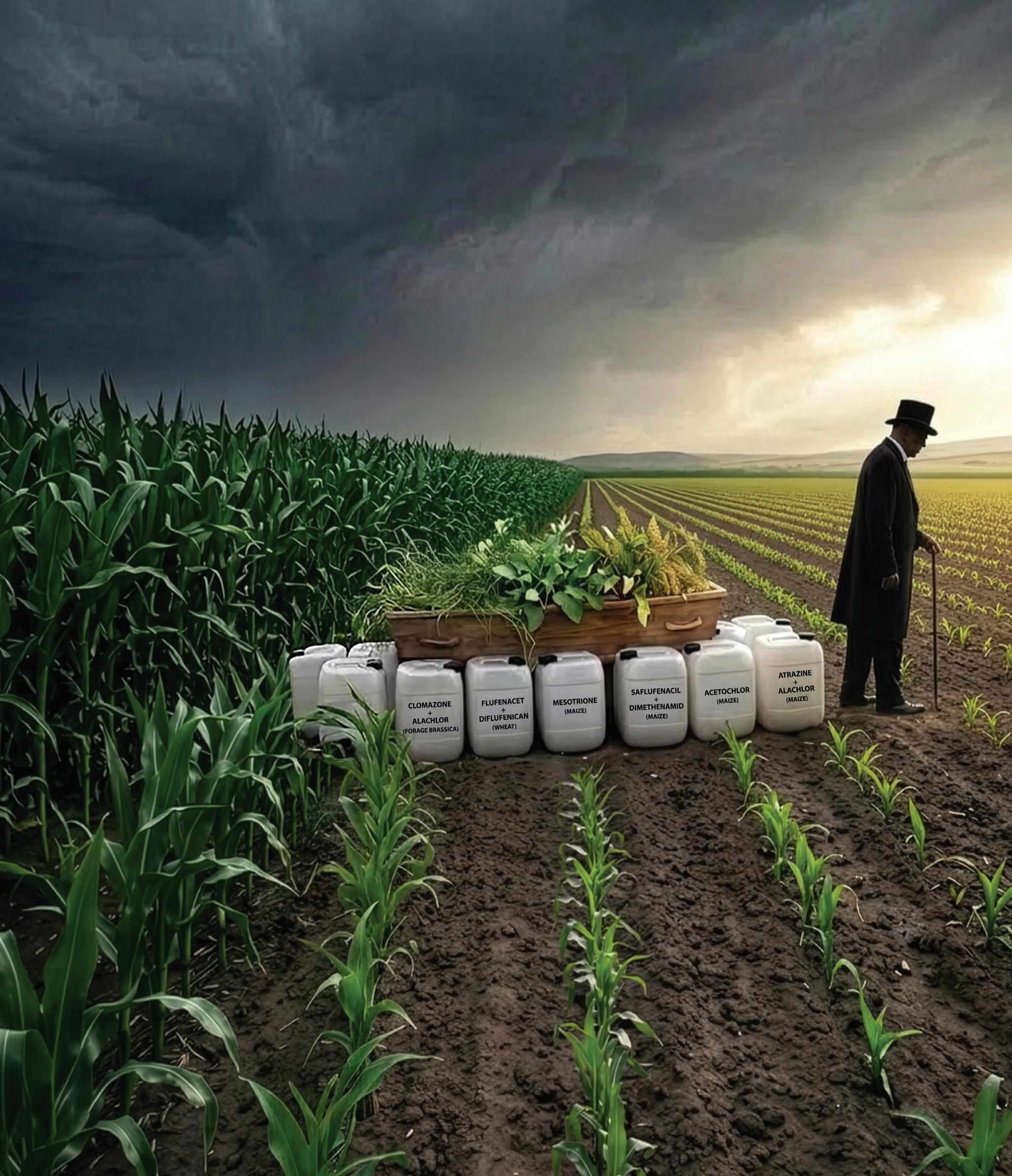
• Undertaker can be used safely on forage brassica (Rape), wheat and maize
Feature
Better deposition and spread on soil surfaces
Reduced photodegradation and volatilisation
Safe to use with tested pre-em herbicides on a range of crops
Benefit
Improved coverage = more certainty
Better protection of herbicide active
Convenient and low-cost
Bio-degradable plant-based oil Sustainability
Helps with both too little and too much rainfall
More certainty in lessthan-ideal conditions
Contact the AgNova Technologies NZ Ltd team for more information:
David Lingan North Island Sales davidl@agnova.co.nz 022 555 7640
Mike Goodwin South Island Sales mikeg@agnova.co.nz 022 517 7757
David Chamberlin
Country Manager davidc@agnova.co.nz 021 966 945
New weed control tool for farmers
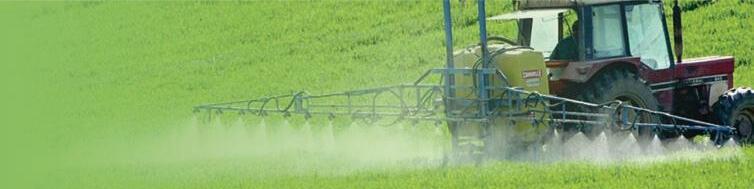
New Zealand farmers facing inconsistent results from soil-applied residual herbicides now have a powerful new tool.
]Advertorial supplied by AgNova AgNova has introduced Undertaker, based on a renewable plant-based oil with an adjuvant package added, to create a product specifically designed to improve the deposition, distribution, and reliability of pre-emergence herbicides while decreasing potential drift and environmental losses.
Pre-emergence residual herbicides are a cornerstone of early-season weed control in crops such as maize, forage brassicas, wheat, and others.
However, their performance is frequently compromised by environmental conditions.
Dry soils prevent proper activation and uptake, while excessive rainfall can cause run-off or leaching through the soil profile.
Exposure to sunlight may lead to photodegradation of the active ingredient of some herbicides, and poor spray coverage or drift means much of the product never reaches the target zone where weeds germinate.
Undertaker addresses these challenges directly. When mixed with soil-applied herbicides, it helps form uniformly sized spray droplets that can resist evaporation and reduce drift. More importantly, it enhances droplet deposition and spread on the soil surface, ensuring the active ingredient is placed precisely in the weed germination zone for optimal uptake.
Its plant oil base gives it a strong affinity for both soil particles and many lipophilic (oil-loving) herbicide chemistries, helping to hold the herbicide in place. This reduces variability caused by weather extremes and limits losses through volatilization and photodegradation.
Unlike traditional mineral oil-based adjuvants, Undertaker is largely derived from renewable plant sources which are biodegradable making it a more environmentally responsible choice.
Undertaker is compatible with most commonly used pre-emergence herbicides, including acetochlor, alachlor, atrazine, saflufenacil, dimethenamid, clomazone, mesotrione, diflufenican, and flufenacet.
For specific tank-mix recommendations, AgNova NZ Limited advises checking with their team.
Trials conducted in maize, forage brassicas (rape), wheat, and other crops have shown improved the efficacy of Undertaker with no adverse effect on crop safety.
David Chamberlin, AgNova NZ country manager, said it was really exciting for the AgNova NZ team as they walked through the trial and demonstration sites.
“You could clearly see the difference between the pre-em herbicide alone and the herbicide plus Undertaker plots.
“We saw a definite improvement in the Undertaker plus plots, and while a 5% to 10% difference in weed cover doesn’t look very impressive on a graph, in the field that
level of weed reduction is a clear improvement.”
By maximising the performance of residual herbicides, Undertaker helps protect valuable crop protection chemistry and supports better product stewardship.
This is particularly important as farmers seek to reduce reliance on post-emergence applications, which are often more expensive and come with higher risk when weed pressure escalates and competes aggressively with the crop.
Beyond performance, Undertaker delivers clear economic and sustainability benefits.
It is cost-effective and helps ensure that every dollar spent on herbicides works harder. Developed from proven technology and market-leading products used in the UK, it represents a green solution, replacing petroleum-based oils with a renewable, biodegradable alternative.
AgNova’s introduction of Undertaker reflects a growing focus on precision and environmental responsibility in NZ agriculture.
“By improving herbicide placement and persistence in the soil, it offers farmers greater confidence in their pre-emergence programmes and better protection of both potential yields and the environment.”
Undertaker was specifically designed to improve the deposition, distribution, and reliability of pre-emergence herbicides while decreasing potential drift and environmental losses.
Spray tank contamination demands a robust solution
Laundry powder and a bit of spit on a hanky both have their places, but also their limitations. So, when it comes to cleaning spray tanks it takes a specialist approach.
] Supplied by UPL New Zealand
Pieter Van Der Westhuizen, UPL New Zealand’s Technical Market Development Manager and adjuvant expert, says spray residue in tanks is a major threat to crops and often flies under the radar.
“People may think that their spray gear is clean, but cleaning spray tanks with laundry powder or ammonia is not going to remove every trace of spray. That’s simply not what they’re formulated to do. It’s the equivalent of ‘spot cleaning’ at best,” he says.
“You may think the tank is clean, but spray actives can still be there, even if it’s in small amounts. That’s where the risk lies. It only takes a drop to ruin a crop. All Clear 2X tank cleaner is the solution you can’t afford to be without.”
Pieter says All Clear 2X will out-perform ordinary tank cleaners on the widest range of agricultural chemicals, even products which are notoriously ‘sticky’, or difficult to remove.
“All Clear 2X cleans out all the chemicals currently available on the NZ market.”
All Clear 2X is a specifically formulated, non-corrosive, spray tank cleaner and decontaminator, designed to remove any agrichemical residues from the entire spray system.
Its unique three-way mode of action combines surfactants, sequestrants and detergents to lift residues from surfaces, dissolve deposits and prevent contaminants from reattaching within the spray equipment. It also locks ups, breaks down, and neutralises the agrichemical molecules.
Pieter strongly recommends using All Clear 2X when moving from herbicide applications to fungicides or insecticides, and for end-of-season sprayer maintenance.
By thoroughly cleaning tanks, pumps, hoses, filters, booms and nozzles, Pieter says All Clear 2X reduces the risk of contamination.
“This protects sensitive crops, preserves yield potential and gives farmers and growers complete confidence that every spray application gets off to a really clean start. There’s nothing lurking in the background
that will compromise the expected outcome from the spray programme.”
Pieter explains that even very small trace amounts of crop protection products left behind in tanks, hoses, filters, screens, booms and nozzles can cause significant damage when spraying subsequent crops.
“Common herbicide residues such as metsulfuron, picloram, carfentrazone-ethyl, glyphosate, dicamba, 2,4-D, sulfonylureas, and flumetsulam persist in spray systems and contaminate future spray loads, resulting in crop damage, reduced yields and quality, and rejected produce.
“It can also result in costly resprays and, worst case scenario, you’d have to start again from scratch.”
Residual herbicide damage resulting from insufficient tank clean-out.
He says a classic example of where the tank wasn’t fully cleaned was in a maize crop that was sprayed for broadleaf weeds with a highly selective post emergence herbicide.
Unfortunately, the maize was also taken out. Closer investigation found clethodim residue in the tank.
Pieter says All Clear 2X also has the advantages of being gentle on the environment.
For more information on All Clear 2X and crosscontamination risks talk to your local reseller or contact Pieter Van Der Westhuizen, UPL New Zealand, on 021 392 740.
Yes, there are other adjuvants. But not with our track record.
We’ll work harder in every paddock, vineyard and orchard block.
UPL adjuvants have stood the test of time, trials, and most importantly, distributor, grower and farmer scrutiny. From water conditioning right through to tank cleaning along with the spreaders, stickers, penetrants, and drift agents UPL is known for. Still not sure? Ask one of our UPL Regional Managers.
Groundspreaders gather for awards
Napier provided the perfect setting as Groundspread NZ welcomed more than 110 members, sponsors and industry partners for the 2026 Members’ Day and Awards Gala.
]Article supplied by Groundspread NZ Hosted by the Central Districts Branch, this year’s event embraced the theme ‘Riding the Wave of Success’, with a programme encouraging members to reflect on what drives successful businesses, explore new ideas and technologies, strengthen industry connections, and help shape the future of the Association.
From practical business advice and industry updates to reconnecting with colleagues and recognising excellence, Members’ Day highlighted the strength of New Zealand’s groundspread community.
Simon Pedersen officially welcomed attendees before keynote speaker David Todd of ‘Toddy Talks’ challenged members to think about what drives a successful business.
The afternoon featured a range of presentations designed to support members both on and off the truck.
Allister Holmes shared an update on the Sustainable Food & Fibre Futures (SFFF) project, Lawrence Field, a chartered accountant and well-known rural business facilitator, delivered an engaging workshop on understanding business financials, while the final presentation of the day saw Mike White introduce HawkEye Pro, demonstrating how biological science and precision technology are being combined to improve fertiliser application accuracy and deliver better outcomes for farmers and contractors alike.
A highlight of the AGM was the presentation of Life Membership to Brent Scully, recognising his outstanding service and longstanding contribution to both Groundspread NZ and the wider groundspread industry.
The evening concluded with the Groundspread NZ Awards Gala, celebrating the individuals whose dedication, innova -
tion and leadership continue to raise the standard across New Zealand’s groundspread industry.
the 2026 award recipients were: Ballance AgriNutrients President’s Award (Joint Winners) – gary Carr (Amberley) and Simon Pedersen; graymont Emerging talent Award – Matthew Scully; Keith Andrews Innovation Award – Paul Hoyle; Ravensdown Young Achiever’s Award – Matt Campbell (Oamaru); Spreadmark Trophy – John Schultz.
All in the family: Father and son, Brent and Matthew Scully were both recognised at groundspread NZ’s annual awards with Brent awarded a prestigious groundspread NZ Honorary Life membership and Matthew receiving the Emerging talent Award.
Rewarded: North Canterbury’s gary Carr was a joint winner of the President’s Award at the recent groundspread NZ’s annual awards evening.
Prepare your crops and pastures for a productive season
Successful crops and productive pastures are built long before the first grazing or harvest. Good establishment depends on many factors, including soil moisture and fertility.
] Advertorial supplied by
] Pastoral Improvements
As seasonal conditions become increasingly unpredictable and fertiliser remains a significant investment, finding practical ways to improve nutrient efficiency and maximise the return on every hectare has become more important.
One of the key advantages of foliar nutrition is speed. Nutrients applied to the leaf can be absorbed quickly, providing support during periods when root uptake is limited by cold soils, dry conditions, or temporary waterlogging. This makes foliar applications particularly useful during pasture establishment, early crop growth, and periods of rapid plant development when nutrient demand is high.
Establishment is one of the most critical stages in the life of any pasture or crop. Young plants rely on small root systems and have limited access to nutrients beyond the seed zone. Supplying readily available nutri-
tion during this period encourages stronger root development, improved leaf growth and greater plant vigour, helping establish a dense, productive stand that can better compete with weeds and withstand seasonal stress.
Equally important is the health of the soil itself. Healthy soils support beneficial microorganisms that break down organic matter, cycle nutrients, and improve soil structure. A biologically active soil helps unlock nutrients that may already be present but are not readily available to plants, increasing the efficiency of both existing soil reserves and applied fertilisers.
This is where biostimulants have an important role to play. A quality biological stimulant can help support soil biology while also promoting healthy plant growth. By encouraging microbial activity and stimulating root development, these products contribute to stronger, more resilient crops and pastures throughout the growing season.
• Driveways
•
Earthquake Repairs
• New Home Specialists
•
Patios & Paths
Timing is another important consideration. Applying foliar nutrition during key growth stages such as early establishment, after grazing, or ahead of periods of rapid growth can help maintain plant momentum when it matters most.
Applications made before anticipated environmental stress, including drought, heat or frost, may also assist plants in maintaining growth and recovering more quickly once conditions improve.
Pastoral Improvements’ foliar fertiliser range has been developed to work alongside traditional fertiliser programmes and enhance forage choices. Black Gold is the engine providing premium microbial feed to support soil biology and nutrient cycling.
KoFERT Bio-Base and KoFERT Bio-Plus are designed to optimise root growth, while
building resilience for premium yields. Rapid Boost NPKS and Black Gold NPK are performance turbochargers, providing readily available nutrients when crops and pastures require an immediate response.
As farming systems continue to evolve, success is increasingly about making better use of every input rather than simply applying more. Integrating foliar nutrition within your farming systems can help improve nutrient efficiency, strengthen plant establishment and support more consistent production throughout the year.
When you’re preparing a new pasture, establishing a forage crop, or planning for spring growth, investing in foliar feeds for efficient nutrition will set the foundation for stronger, healthier and more productive crops and pastures.
Boost forage: Pastoral Improvements’ foliar fertiliser range has been developed to work alongside traditional fertiliser programmes and enhance forage choices.
Unlock your soil’s potential this Spring
As Canterbury farmers prepare for another spring, attention naturally turns to maximising pasture production and making every fertiliser dollar count.
] Advertorial supplied by CP Lime
With increasing pressure on farm profitability, the focus is shifting from simply applying nutrients to ensuring the nutrients already in our soils are working as efficiently as possible.
One of the most overlooked foundations of productive pasture is maintaining the correct balance of calcium, magnesium and sulphur. These three nutrients play a critical role in supporting soil biology, improving nutrient availability and driving strong spring growth.
Before making fertiliser decisions, it pays to understand exactly what your soil needs. A comprehensive soil test provides valuable information on pH, nutrient availability and soil reserves, allowing nutrient applications to be targeted where they will deliver the greatest return. Including measurements such as Total Phosphorus can also help identify the potential to unlock nutrients that have accumulated in the soil over many years but are currently unavailable to plants.
Maintaining soil pH through adequate calcium levels remains one of the most effective ways to improve nutrient efficiency. Calcium carbonate not only helps maintain the optimum pH for plant growth but also
creates favourable conditions for healthy soil biology. As soil pH improves, nutrients such as phosphorus that have become chemically tied up can become increasingly available, reducing the need for unnecessary capital fertiliser inputs.
Magnesium is equally important. As a key component of chlorophyll, it supports photosynthesis and plant energy production, while also contributing to healthy soil structure and biological activity. Maintaining adequate magnesium levels alongside calcium helps create the balance required for efficient nutrient uptake.
Sulphur continues to be one of the most important nutrients for New Zealand pastoral farming. It is essential for protein production and plays a vital role in legume growth, supporting clover performance and the biological fixation of atmospheric nitrogen. Strong clover growth remains one of the most cost-effective ways of supplying nitrogen to productive pasture systems.
The form in which sulphur is applied is equally important. Finely micronised elemental sulphur offers several advantages over more soluble sulphate forms. During the cooler winter months, biological activity slows, allowing elemental sulphur to remain stable within the soil profile. As soil temper-
atures increase during spring and microbial activity accelerates, the sulphur is gradually converted into plant-available sulphate, providing a more sustained nutrient supply when pasture demand is highest. This gradual release also helps reduce the risk of sulphate leaching during periods of high rainfall. Sulphate is highly mobile in the soil and, as it moves, it can carry valuable positively charged nutrients such as calcium, magnesium and potassium beyond the root zone. Using more stable forms of sulphur can therefore contribute to improved nutrient retention and greater fertiliser efficiency.
Products that combine ultra-fine calcium carbonate, magnesium carbonate and micronised elemental sulphur provide an effective way of addressing several key soil requirements in a single application. Their high neutralising value helps maintain soil
Spring is an ideal time to review soil fertility and ensure nutrient programmes are based on accurate information rather than assumptions.
pH while supplying nutrients in forms that are readily utilised by both plants and soil microbes.
Spring is an ideal time to review soil fertility and ensure nutrient programmes are based on accurate information rather than assumptions.
A soil test is a relatively small investment that can provide valuable insights into nutrient availability, highlight hidden deficiencies and identify opportunities to unlock the productive potential already sitting within your soil.
In today’s farming environment, maximising nutrient efficiency is no longer simply about applying more fertiliser. It is about understanding your soil, supporting its biological processes and ensuring calcium, magnesium and sulphur are working together to create the best possible foundation for productive, resilient pastures.
Beyond Olsen P
Rethinking soil testing for modern agriculture
Einstein’s definition of insanity, “doing the same thing repeatedly while expecting a different result” applies to outdated soil testing and fertiliser practices.
] by Don Hart ] TopSoils
As farm economics improve, producers are seeking better production approaches and better ways to balance farm budgets. Recent high fertiliser costs driven by conflict, freight, and fuel, are forcing farmers to rethink fertiliser strategies.
Innovative producers are moving beyond traditional fertiliser models, soil testing, and practices. Many now see newer approaches delivering higher production and stronger gross margins.
A systems approach is emerging that reduces reliance on nitrogen and high rates of soluble fertilisers, emphasising practices that strengthen the whole farm system:
• Diverse pastures that improve feed quality, root depth, and resilience;
• Fertiliser strategies that build resilience, support plant energy, and stimulate photosynthesis.
• Active soil biology that improves nutrient cycling and structure;
• Balanced nutrients based on accurate testing, not routine inputs; and The next agricultural shift will be driven more by economics than ideology.
Most farmers ask how to build a more profitable, resilient business for future generations. If better soil function improves water use, reduces risk, or increases yield consistency, it becomes a practical business decision.
Resilience must be measured, not promised. Precision nutrition, accurate testing, and evidence-based agronomy remain essential because better decisions start with better information.
Building more sustainable farming systems
A key starting point is reviewing how soils and fertility are tested. Current procedures may miss soil problems or imbalances.
The Albrecht System focuses on balancing soil nutrients, applying fertiliser correctly, and identifying excesses and deficiencies. This system starts with Total Exchange Capacity (TEC), which measures a soil’s ability to hold and exchange cations such as calcium, magnesium, potassium, sodium, and hydrogen. Base saturation then shows how much exchange capacity each cation occupies, revealing whether nutrients are balanced enough to support structure, availability, biology, and efficient fertiliser use.
Soil ROI: If better soil function improves water use, reduces risk, or increases yield consistency, it becomes a practical business decision.
Over-reliance on Olsen P
The Olsen P test was developed by Dr Carl Olsen for plant-available phosphorus in alkaline soils (> pH 7), yet it has been New Zealand’s industry standard since 1976. Laboratories note it can overestimate phosphate in low-pH, recently limed, or calciumphosphate-treated soils.
By contrast, the Albrecht system through Perry Agricultural Laboratory uses the Bray P2 extract, expressed as P2O5, for soils up to pH 7. Soils above pH 7 are tested with Olsen P. Because most New Zealand soils have a pH of 5.5-6.5, it is worth asking why the industry still relies on Olsen P to assess phosphate.
Understanding soil pH and calcium
Soil pH alone does not indicate calcium levels; it reflects hydrogen ion concentration. Magnesium, Potassium, and Sodium can influence pH more than calcium, yet farmers are often advised to apply lime only when pH is low.
To bring soil structure into alignment with a textbook definition of an ideal soil, a proper understanding of the soils Total Exchange Capacity and Base Saturation, and how to use these measures effectively is necessary. If you always do what you’ve always done, you will always get what you have always got, that is you’ll keep getting the same result, and that is no longer sustainable today.
A first-class source of magnesium
There are few soils in this country where an increase in plant growth can be expected as a result of magnesium being applied.
] by Peter Burton
The late Emeritus Professor Tom (T.W.) Walker of Lincoln University wrote in Dolomite, a first class source of magnesium, “it makes good sense to me to correct animal deficiencies through the soil and the plant. If my diet were deficient in protein and carbohydrate, I would rather correct it by daily increments than a great blow out every few months.”
Magnesium currently applied is for the benefit of animals, primarily high producing dairy cows, although the health of any lactating animal is likely to improve markedly with an annual dolomite application.
The number and severity of magnesium related metabolic disorders in spring grows each year due to induced magnesium deficiencies.
Warm wet growing conditions along with the use of synthetic nitrogen and potassium mean magnesium available from parent-soil material steadily decreases.
Without replenishment more valuable time is spent treating animals and it is estimated that for every one animal treated for a calcium/magnesium related disorder there are another nine animals where production is lower had the problem not arisen.
Imagine if you will a situation where the number of cows requiring treatment in spring is no more than one in fifty with all those animals regaining their feet without assistance.
There’s more farms every year achieving that status and with the cost of imported magnesium oxide escalating and the availability uncertain we’re expecting more astute and forward thinking operators to be joining the club.
All it requires is a call to the below listed 0800 number for a price to be obtained and transport to be arranged.
A single application provides peace of mind knowing that regardless of weather conditions the health and wellbeing of valuable animals during calving and early lactation is largely secure.
A single application is sufficient to ensure that the magnesium content of a mixed herbage sample at grazing is between 0.22 and 0.25% throughout the next twelve months.
Animals well fed on pasture with that magnesium content are unlikely to be magnesium deficient any time during the year.
For optimum animal performance it’s essential that the rumen is functioning efficiently and over calving when sunshine hours are down extra energy and fibre will be necessary.
Meadow hay is the best option as it
is made over summer when sunshine and plant energy levels were at their highest and the fibre is at least 25cm long, the length required for a mat of fibre to form in the rumen.
Baleage may also work well provided it was made from pasture with a minimum of 10% seed head, however topquality meadow hay remains the best.
Hay was dismissed when we were milking cows with the throwaway line, “cows don’t milk on hay”. That’s fair, however when hay is made freely available to animals in spring, they eat not a mouthful more than is required to meet their requirements.
On a frosty morning followed by strong sunlight animals will eat little hay, however, they will make up for that by devouring every last little bit on a wet morning with a blustery southerly blowing.
The required rate of dolomite to provide peace of mind over spring is 250kg/ha. That applies close to 29kg of magnesium per hectare. Annual maintenance on high performing dairy properties is approx. 21kg Mg/ha.
Even if spreading the whole property is not feasible, applying to the calving areas will still be beneficial and provide a feel for what is possible.
For more information call Peter on 0800 436 566 (4 Dolomite).
Visiting experts target drone accuracy
Two Canadian spraying experts, Tom Wolf and Jason Deveau, are visiting New Zealand in early August to ensure that arable growers are hitting the target with this key piece of equipment.
] by Heather Chalmers
Crop spraying is an important job on an arable farm as it is vital that agricultural chemicals are applied accurately, not just to minimise inputs and costs but to avoid environmental affects such as spray drift.
Wolf and Deveau are co-founders of Sprayers 101, a non-profit, independent resource describing best practice in safe, efficient and effective agricultural spraying.
As well as providing resources on their website, they also hold workshops which provide technical information to enable farmers and contractors to make the most of every spray application.
The Foundation for Arable Research (FAR) has organised a series of grower workshops with the pair throughout New Zealand in August including Leeston, Ashburton, Timaru and Oamaru.
FAR technology manager Chris Smith said spraying is one of the biggest investments growers make during a season.
“Small changes in how a sprayer is set up and operated can have a big impact on crop performance, input efficiency and environmental outcomes.
“These workshops are about giving growers practical knowledge they can apply straight away on their own farms,” Smith said.
Tom Wolf said the Sprayers 101 workshops cover topics such as how to choose the right nozzle, how to minimize spray drift and how to get the timing right for fungicides.
“Our crops are valuable and we need to protect that yield and crop quality,” Wolf said.
The pair promise the workshops will be fun and interactive, while seeking to solve growers’ spraying issues including water volume, droplet size and spray pressure.
As interest in spray drones continues to grow, two drone-specific workshops, at Leeston in Central Canterbury, and Ongaonga in Central Hawkes Bay, will give growers a deeper look at where drone applications may fit within arable systems, where limitations remain, and how to make evidence-based decisions around their use.
For those unable to attend the drone workshops, key drone-related topics and insights will also be covered as part of the main Sprayers 101 programme.
Ahead of the workshops, the Canadian experts sounded a warning on drone spraying, with Wolf saying he’s rarely been as conservative about a new technology.
“I have yet to see evidence that the drone advances the state of the art over and above what a (land-based) boom sprayer currently does.
“It does not necessarily advance drift management, which we fought hard to obtain through good stewardship and also to build trust with our client groups and the general public,” Wolf said.
Deveau said unlike the United States, Canada has only just started to relax regulations around the spraying of pesticides from drones.
“Your swath, that is the width or the distance that you can reliably spray uniformly with as little variability as possible, is absolutely critical to drones working accurately,”
Deveau said.
“If you don’t know how much area you’ve covered in a pass, if you don’t know how much area is going to give you the efficacious
result you’re looking for, then that kind of variability is not what we’re looking for in broadacre crops.”
Sprayers 101 workshops will be held in the South Island on August 4 at Leeston, August 5 at Ashburton and Timaru, August 6 at
Oamaru and August 7 at Gore before heading to the North Island.
Register for the workshops on the FAR website, www. far.org.nz/events
Hitting the spot: Sprayers 101 presenters tom Wolf (left) and Jason Deveau from Canada are speaking at a series of FAR grower workshops in August.
] by Nicky Hyslop
Buoyant outlook for red meat producers
What a great year to be a sheep, beef or dairy farmer. Strong returns combined with a favourable growing season meant farmers at Beef + Lamb New Zealand’s recent Out the Gate event Christchurch were in good spirits – these were lifted further after listening to Global Agritrends analyst Simon Quilty.
Director Beef + Lamb New Zealand
He told us that the stars were aligned for sheep and beef producers for at least the next year.
Sustained global demand for protein and constrained supply in many producing countries was good news for New Zealand’s red meat industry.
He also noted that the advent of GLP-1 diet drugs, that require people to prioritise nutrient dense food, could be a game changer in terms of the value consumers place on products like red meat.
Strong meat returns are also great for our wider economy, and a recently released BERL report shows New Zealand’s red meat sector generates $48.7 billion in spending across the economy each year and supports one in every 20 jobs.
Our industry also generates $12.8 billion in export earnings annually, which flows through our economy and has a powerful multiplier effect that sees $133 million a day being spent across New Zealand.
This study found the sector contributes $17.5 billion a year to New Zealand’s Gross Domestic Product (GDP) and supports 120,580 full-time equivalent jobs across the country. Now that is something to be proud of.
More than half of that contribution hap-
pens beyond farm-gates and processing plants, flowing through supply chains, local services and household spending, particularly in rural and regional areas.
B+LNZ and the Meat Industry Association commissioned this report which aims to build a better understanding of the impact our sector has on the wider economy.
This buoyancy was also very evident at this year’s Fieldays where there was a lot of interest in our world leading agritech sector.
We are seeing some fantastic technol-
ogies such as virtual fencing, agricultural drones, apps and genetic tools that will support our decision-making.
Back behind the farm gate, despite the recent deluge of rain many Canterbury farmers received in early July, there is still the prediction of the Super El Ninoas we head towards spring.
This weather pattern could mean dry hot summer conditions, and it is worthwhile planning ahead and thinking about how and what levers you can pull if the dry conditions play
‘this weather pattern could mean dry hot summer conditions, and it is worthwhile planning ahead and thinking about how and what levers you can pull if the dry conditions play out.
out. There is some great information about drought management on the B+LNZ Knowledge Hub,
While we have been enjoying strong returns, we cannot take our eye off the ball as the cost of inputs continue to rise.
It never hurts to run a ruler over what we spend on fertiliser, animal health, transport, fuel and all the other inputs required to run our businesses. While are enjoying a golden run, we need to make the most of it so we can invest in future-proofing our businesses.
Not all ETS forests are equal
Recent commentary has highlighted just how easy it is for misconceptions about the Emissions Trading Scheme (ETS) to spread.
] by Kirsten Stuart ] RMNZIF, B.For.Sci (Hons)
In some cases, a lack of understanding can result in significant financial opportunities being missed. At the opposite end of the spectrum, forest owners who do not fully understand the long-term implications of registering their forest in the ETS can find themselves with legal obligations they neither expected nor budgeted for.
While the ETS has been with us for nearly 18 years, it has undergone several significant updates. It is therefore understandable that many people struggle to keep up with these changes and the impact they have on forest owners across New Zealand.
In particular, there seems to be some confusion around how carbon credits are claimed in the ETS and the long-term obligations that forest owners face as participants in the scheme. These obligations depend largely on which of the three ETS carbon accounting categories a forest is registered under: Stock Change, Averaging or Permanent Forest.
Until the end of 2022, all ETS forests used Stock Change, or the “saw-tooth” model for carbon accounting. In 2023, two additional categories, Averaging and Permanent Forest, were introduced to better reflect the different objectives of rotational forests destined for harvest and continuous-cover permanent forests.
For forests registered under the Stock Change category, carbon credits can be claimed annually but carbon losses due to harvesting must also be accounted for, which can result in a significant quantity of carbon credits needing to be surrendered back to the Crown.
Get
advice: It is important to seek professional advice before registering your forest in the EtS, purchasing a forest that has been registered in the EtS or selling carbon credits.
If the forests are not harvested, the forest owner will continue to accrue carbon credits across the lifespan of the forest.
Averaging accounting is well suited to forest owners who are planting a forest with the intention of harvesting. Carbon credits are claimed until the long-term average age for the species, typically 16 to 26 years for exotic forests.
Beyond this point no further carbon credits are claimed. For forests harvested after reaching their long-term average age, a full surrender of carbon credits is only required if the land is not replanted within four years,
or converted to a non-forestry land use.
The Permanent Forest category is aptly named; forest owners entering their forests into this category should be prepared to keep the trees in the ground in perpetuity.
The minimum sign-up period into this category is 50 years and during this time the forest owner is unable to voluntarily withdraw from the scheme or clear-fell their forest. Carbon credits continue to accrue across the lifespan of the forest. Selective tree harvesting can be undertaken, as long as 30% canopy cover is maintained across the entire forest area.
Whilst the benefits and outcomes under Averaging Accounting are easily understood, the waters can be murkier for forests registered under Stock Change or the Permanent Forest category. This often leads to questions such as:
My forest is registered under Stock Change, how many carbon credits can I sell liability-free, and still harvest my forest? The answer to this is that it very much depends; planting year, species, length of time registered in the ETS, harvest age, year of replant and replanted species are all inputs into this equation that can significantly impact the end result.
This carbon accounting method is the most complex and advice from a forestry professional is highly recommended.
My forest is registered in the Permanent Forest category, what will happen once the 50-year sign-up period is over?
Some forest owners have entered this category thinking that they will claim carbon credits for 50 years, exit the ETS and harvest their forests.
While exiting the scheme after 50 years is technically possible, doing so would generally require the surrender of a substantial quantity of carbon credits. Whether that is financially viable will depend largely on the carbon price at that time.
The ETS is a complex beast and it is essential to understand the weave of the specific forest characteristics, registration category, historic and future carbon credit claims and on-going compliance requirements.
I cannot stress enough the importance of seeking professional advice before registering your forest in the ETS, purchasing a forest that has been registered in the ETS or selling carbon credits.
Approaching India with caution
Some much better news this month across both China and India markets. Both are stable in sales prices with a reduction in shipping costs and a favourable US$/KIWI$ FOREX seeing prices at wharf New zealand recovering back up to close to where they were in May.
] with Allan Laurie MNZIF
] Laurie Forestry Ltd
However, both markets hold a, ‘tread with caution’ warning, and it is certainly time to be happy with our lot and not push on price or volume. Weather events and the market generally, has seen a lower harvest rate in New Zealand and that is certainly needed to give both markets a breather.
It is extremely disappointing to see one exporter pushing volume into India without sales contracts and LC’s in place. Those logs are now sitting in bond in Kandla with more on the way. This may yet have a debilitating impact on log prices in what otherwise remains a fragile market at present.
The India Free Trade Agreement is the hot topic at present with New Zealand Forestry said to be a big winner. I thought readers might be interested to learn more about this increasingly important market for New Zealand.
There is the usual plethora of misinformation about the opportunities in India. I can assure readers realising any opportunities will not be a cake walk.
One of the largest challenges lies in developing strategic long-term relationships with India companies. The strategic fundamentals include honesty, integrity and a strong desire
to see everyone make a profit. In my view, these need to be the three guiding principles.
If I look at the history of the New Zealand log trade with India to date, I see many examples where the three guiding principles on both sides have been sadly lacking. The one thing to know about dealing with the India trade is there are many who want a slice of the action. There are even more who give little or no regard for everyone being sustainably profitable.
Thus, any trade with India, must be approached with great caution and a great deal of research and investigation to ensure the people you are dealing with hold tight to, and believe in, the three guiding principles.
The majority of New Zealand Log trade to date has been via the Port of Kandla. At present and reflecting recent increases in the log trade, this port receives nine to ten vessels per month of softwood logs, each on average carrying about 40,000 cubic metres of logs. There are typically three from Australia, three from Uruguay and three to four from New Zealand.
There is also some ongoing deliveries of logs in containers to other ports but this comprises a very small volume by comparison.
Kandla is at the top North West side of India about 130km from the Pakistan border. The city has a population of about 400,000,
‘the one thing to know
about dealing with the India trade is there are many who want a slice of the action. there are even more who give little or no regard for everyone being sustainably profitable.
very close to the same size as Christchurch. The difference is, the population of Christchurch is a reliable number ascertained by census. The lack of a reliable census in India means any attempt at population numbers is pretty much a guess.
The Port of Lyttleton can berth six to seven large vessels at any one time. The Port of Kandla has 31 berths with seven of those just dedicated to oil tankers. There is one berth where log vessels have priority with
three other berths available depending on first at anchor, first unloaded basis.
At the Port of Lyttleton, the average load rate is about 5,000 m3 per day (24 hours continuous). The discharge rate in Kandla is about 3000 m3 but is very much an average. Ships discharging small Australia or Uruguay logs can be much slower.
Hence, if there is 360,000 m3 of logs in a month discharging at 3,000m3 per day, ships sitting at anchor waiting to discharge are common. The total five berths committed to breakbulk cargos include on-going discharge of the likes of Coal, grains and fertilizers.
Sitting at anchor usually results in demurrage, which is a penalty charge on the charterer of the vessel imposed by the ship owner for unloading delays and therefore loss of earning potential.
Some shipments have seen charterers pay in excess of US$1mil for demurrage. Herein lies one of the largest challenges facing Kiwi companies wanting to expand log sales to India. More about this market in future reports.
As always, please remember the thoroughly important message. It remains fundamentally important, the only way forward for climate, country and the planet, is to get out there and plant more trees”.
Potassium, downer cows and fertility getting calving season right
Calving is now in full swing across New Zealand, and this is the time of year I want to bring some attention to a risk that is largely preventable: the downer cow.
] with Dr gordon Rajendram
Every season, farms across the country deal with cows going down around calving, and while there are several contributing factors, one of the most controllable is often overlooked.
It comes down to how nitrogen fertiliser has been managed on the paddocks those cows are grazing in the weeks around calving.
Pasture that is naturally high in potassium, or that has recently received nitrogen, suppresses magnesium absorption in the rumen. That sets up the classic pre-calving trap: low magnesium, or hypomagnesaemia, often develops alongside low blood calcium, or hypocalcaemia. Together, these are among the leading causes of downer cows at this time of year.
A cow’s requirement of potassium is 0.6-1.2%. Generally, dairy pasture contains around 3% and higher so there is excess potassium in their diet.
As the chart shows, subclinical hypomagnesaemia affected around 22 percent of cows at calving in one study of grazing herds, and that figure nearly doubled to almost 49 percent by seven days postpartum, exactly the window when demand on the cow is highest and her reserves are most stretched.
Older cows and those in their third or later lactation are particularly vulnerable, since their ability to mobilise skeletal reserves is already declining.
There is a second, less visible risk running alongside this, and it plays out later in the season. When nitrogen intake is high relative to dietary energy, blood urea nitrogen climbs. This has a real cost when mating starts.
In a controlled feeding trial, first-service conception rate dropped from 48 percent on
a normal-protein diet to just 31 percent on a high-protein diet, a seventeen-point swing driven largely by elevated blood urea altering the uterine environment and interfering with early embryo survival. For cows already under metabolic strain around calving, that extra nitrogen load lands at exactly the wrong moment, and the consequences don’t show up until the in-calf rate comes back weeks later.
My advice for the next few weeks is straightforward. Hold off on heavy nitrogen
applications to paddocks that will be grazed by close-up and freshly calved cows. Keep a close eye on the potassium, calcium and magnesium balance in the diet, and where nitrogen has recently gone on, give the pasture time for potassium levels to settle before grazing.
Proactive magnesium, and calcium supplementation through the risk window makes a measurable difference, and costs far less than treating a down cow.
Growing support for once-a-day feeding
Great results are being achieved by adopting high milk rates earlier on once-a-day feeding.
] Advertorial supplied by ] Probiotic Revolution
Matt Collier of Probiotic Revolution has a simple message. “See how much milk calves will drink once-a-day with our probiotic Calf Xtreme, that’s when the magic happens.”
Collier points out that the abomasum of a new-born Friesian calf is only 1.2 litres so on big feeds the milk spills into the calf’s rumen.
Collier says Calf Xtreme has been developed to turn this into a positive.
“We’ve refined the probiotic strains, so calves avoid nutritional scours. At the same time, we’re establishing beneficial bacteria in the rumen at a young age, improving digestion of meal, hay and grass. Therefore, the intake of hard feed is not limited by high milk volumes, they simply grow faster and post weaning intake of grass is higher.”
Near Morrinsville, Toni Parry, from Parrydise Jerseys, adopted the programme after hearing positive reports from other farmers.
Last season her replacement heifers were fed 3 litres twice a day before transitioning to 6 litres once a day before three weeks of age.
“The calves always looked contented and full,” says Parry.
“They ate far more meal and hay than I’d seen previously, we actually ran out of hay because they were eating so much. They were also eating more grass before and after weaning. I wouldn’t rear calves without this product now.”
Growth rates before and after weaning have also impressed.
Collier says Friesian calves have been consuming 7-8 litres once a day by around 10 days of age while averaging close to 1kg of liveweight gain per day from birth to Christmas – indicating no post weaning check. Parry’s Jersey calves averaged approximately 0.9kg/day.
While early growth is encouraging, Collier believes the real value comes later.
“The objective isn’t simply heavier calves at weaning. Faster early growth leads to
better-developed heifers entering the milking herd, and that’s where the production gains can be realised.”
Dairy NZ guidelines indicate first-calving heifers typically produce around 75-80% of the milk solids achieved by mixed-age cows.
Last season, Ashburton farmers Rob and Hannah Stocker, who milk 1,200 Crossbred cows on an all-grass system, achieved 412kg of milk solids from their first-calving heifers, equivalent to 87.7% of their mixedage cows average. Their calves had been transitioned onto 6 litres once-a-day feeding after the first week of life.
Dairy laneways for cows with standards.
Whether you’re converting to dairy or upgrading infrastructure, we build durable, all-weather laneways designed for efficient farm access and long-term performance. Done Right, because your cows deserve better footing.
Request a quote today tarbotton.co.nz 03 307 7065
PROJECT MANAGED
LOCAL MATERIALS
BUILT TO LAST
COST-EFFECTIVE DELIVERY
Parrydise Jersey’s calves at nine weeks raised on six litres once-a-day and heading for 0.9kg liveweight gain per day.
This season Hannah will rear the calves, and to fit in with family commitments she will go onto once a day feeding right from the start.
“With Calf Xtreme I am confident they will be on 6 litres after a couple of days,” Hannah says.
As more farmers look for ways to improve labour efficiency as well as improve heifer milk production, once-a-day feeding programmes supported by nutritional technologies are attracting increasing attention across the dairy sector.
ADVANCED CALF REARING
CALF XTREME is a probiotic additive that improves calf health and enables faster growth rates in calves while on milk, resulting in rearing bigger heifers and bulls. By delivering probiotics efficiently through milk, it supports rumen health, protects against nutritional scours, and improves digestion and feed intake - setting calves up for success from day one. Compatible with once-a-day feeding, it reduces labour while maximising results.
"We’ve slashed our calf illness and deaths using Calf Xtreme. Just 212 in sick pens and only 8 losses out of 7,000 calves last year. This year is shaping up to be similar."
I stopped using Calf Xtreme for 2 seasons... but then my milk records showed that the heifers I had used Calf Xtreme on were averaging 40kg MS more than any other year"
"Calves exceed growth rates and with improved immunity from Calf Xtreme, our calves are better equipped to handle rotavirus.
Out of 800 calves, we only had 2 unexplained deaths"
Chris, Okoroire
Southland
Ozone water treatment applications
Ozone is nature’s powerful oxidiser and is eco-friendly. O3 represents the substance Ozone, consisting of three oxygen atoms joined together.
] Advertorial supplied by ] Ozone NZ Ltd
Ozone kills 99% of pathogens and bacteria on contact, and in water reverts back to Oxygen (O2) after approximately 30 minutes, leaving no harmful residues.
Ozone treatment in dairy farming is being used internationally, ranging from hoof treatment, teat spray, bore water treatment, clean in place milking equipment to drinking water disinfection.
Applications
Ozone water treatment has been around for over a hundred years, and there are multiple rural applications:
• Bore Water treatment
• Dairy Teat Spray treatment
• Green Water treatment in dairy
• Hoof bath treatment
• Potable drinking water
Exempt under ACVM Act as Ozone is a naturally occurring element and not an agricultural compound or veterinary medicine.
Testimonials
Ozone kills 99% of pathogens and bacteria on contact with no harmful residues.
Ozonation:
Ozone is a more powerful oxidising agent than chlorine and a stronger disinfectant, and it can be used in both roles during water treatment. It can rapidly inactivate Cryptosporidium and therefore provides a satisfactory barrier to this organism, as well as to viruses and bacteria.
It is a very reactive gas and even in ‘clean’ water it decomposes rapidly which means it cannot provide a disinfectant residual after treatment.
Source: environment.govt.nz
Mark Brown, dairy farmer from Pirongia, has been operating our custom 10G/hr Ozone teat spray generator since March 2023, replacing his chemical teat spray with ozonated water spray. This use has been included in his annual farm audit and no issues have been raised. According to Mark, there has been reduced mastitis incidence, overall improved udder condition and reduced operating costs since operating our ozone generator (please see Dairy Exporter on-farm story on our web-
site, www.ozonenz.co.nz). Mark milks over 400 A2 cows twice daily.
Matthew Downs, sheep dairy farmer from Hawera, has been operating our 5G/hr Ozone generator for hoof treatment in their hoof bath since November 2023, replacing previous chemical use of copper sulphate or zinc.
Since operating with ozone treatment, he’s noticed improved hoof health with significant cost savings and a smaller chemical imprint.
] with Peter Burton
The stop bank alternative
In 2011 Bay of Plenty Regional Council published a Land Management article titled Soil Organic Matter. It opened with, “Soil organic matter is a substance and a process. It is a mixture of materials, plant and animal remains. and products of decay processes that have been going on for years.”
It detailed the benefits of organic matter stating that it stabilised soil structures, improved soil water retention and drainage with a reduction in the susceptibility of soil to erosion.
Over recent weeks with excess rain throughout the country anything that helps reduce soil damage is worth examining.
With each 1% increase in soil organic matter an extra 144,000 litres of water per hectare is held and released steadily without damage as conditions ease.
It is the only viable alternative to increasingly higher stop banks, there is nothing else, and yet in many areas moisture holding capacity is being reduced.
From the same Regional Council Report is the following, “recent research has shown that in intensive lowland livestock systems (e.g. dairying) soils have lost organic matter by an average of 1 tonne carbon/ha/yr over the last twenty to thirty years.”
That is an extraordinary figure as each tonne is an exponentially higher percentage of that remaining,
It’s not the intensiveness of land use that is the issue; it’s the overuse of nitrogen fertiliser as the same research showed that hill country soil had gained organic matter.
The loss of soil organic matter resulting from the application of synthetic nitrogen is well documented, the reason for its use being strictly regulated in much of Europe.
A 2006 article by Richard Rennie published in the Farmers Weekly outlined the concerns a visiting Scottish soil scientist had about the $127 million annual cost of soil erosion in the Waikato.
He noted with concern an influential AgRsearch promotional video that extolled the virtues of nitrogen fertiliser as the “cheapest source of fertiliser money can buy.”
Times have changed somewhat and the cost of energy to manufacture synthetic nitrogen may well push the price beyond where models can claim its use to be economic.
Continued acceptance would be a shame because there is a genuine alternative with decades of results from numerous farms that shows not only greater profitability but also significantly higher overall farm production.
Where synthetic nitrogen had been replaced by nitrogen fixed by clover, research showed a 70% reduction in nitrogen lost to groundwater.
Dr Guna Mageson of Scion, who oversaw
the research was sufficiently impressed that two conferences were held on ‘biological’ farming based on those results alone.
A fact often ignored is that it is under permanent grazed pasture that soil organic matter is most rapidly sequestered.
In the 1960s, as a consequence of Bill Gallagher developing the first electric fence units, New Zealand farmers justifiably claimed
www.nairnelectrical.co.nz
Electrical problems or maintenance?
Use our unrivalled industrial electrical service for:
• Dairy sheds and irrigation
• Power reticulation
• Effluent control
• Dryers, conveyors and generators
• Switchboards and central supplies
LOW CALCIUM = LESS MILK
to be the best practitioners in the world. Being innovators by necessity, farmers adopted and refined its use and farming exports boomed.
There is now the opportunity for farmers supported by researchers to gain a further quantum leap in production and profitability by a simple shift in soil fertility practises aligned to sound grazing management.
Nairn Electrical, proudly supporting rural Canterbury since 1975.
Soil sponge: With each 1% increase in soil organic matter an extra 144,000 litres of water per hectare is held and released steadily without damage as conditions ease, providing an alternative to increasingly higher stop banks. Photo: Bay of Plenty Regional Concil
Fonterra revises farmgate forecast
Fonterra Co-operative Group has updated its forecast 2026/27 Farmgate Milk Price off the back of declining prices at recent Global Dairy Trade (GDT) auctions.
] by Kent Caddick
The revised forecast is $9.25 per kgMS, with a new range of $8.00 to $10.50 per kgMS.
This is down from the opening forecast of $9.75 per kgMS announced in May, when the Co-operative started with a wide range of $8.00 to $11.00 per kgMS to reflect the potential for volatility and varied outcomes throughout the season.
Fonterra CEO Richard Allen said the change to the 2026/27 forecast reflects softer-than-expected demand at a time of strong global supply.
“GDT prices have fallen 11% across the reference products that inform the Farmgate Milk Price since we announced the opening forecast in late May, while milk production from key exporting regions is up on last year,” Allen said.
“We’re expecting a strong start to the season in New Zealand, noting the potential for the El Niño weather pattern to impact global supply as the season progresses.
“It’s very early days in terms of the proportion of our FY27 sales book that has been contracted, so we face significant exposure to changes in commodity prices.”
Allen said the Co-operative continues to focus on maximising returns for its farmer shareholders.
“As the seasonal supply picks up, our plan will ensure we utilise our flexible operations footprint, strong customer relationships and robust supply chain to shift milk into the products and markets where we can get the best returns for our farmers’ milk.”
The 2025/26 forecast Farmgate Milk Price of $9.60 to $9.80 per kgMS, with a mid-point of $9.70, remains unchanged.
Forecast drop: Fonterra CEO Richard Allen says the decrease in the 2026/27 milk price forecast reflects softer-than-expected demand at a time of strong global supply.
DairyBase helps farmers stay on top
Signing up to a benchmarking tool is not about competition but about improving collectively. That’s according to former Cantabrians Ximena Puig and Alvaro Luzardo who are now 50-50 sharemilkers at a 164-hectare dairy farm in Eketahuna in the Lower North Island.
] Article supplied by DairyNZ
The couple, originally from Uruguay, signed up to DairyBase, a free benchmarking tool developed by DairyNZ which helps dairy farmers understand farm systems and performance by comparing key performance indicators with other farms, when they moved to a North Wairarapa farm from Ashburton four years ago.
“We were very new here and wanted to learn where we were sitting compared to the rest of the region,” Ximena said.
In June this year, the couple took over another farm across the road as equity partners and lower order sharemilkers. Combined, the farms have five full-time staff.
Ximena said DairyBase had a key role to play in staffing decisions.
“In the first year, we had one full-time and one part-time relief person at the farm where we were 50-50 sharemilkers. After reviewing the numbers, we moved to two full-time staff, which made management easier,” she said.
Alvaro and Ximena were named Hawke’s Bay/Wairarapa Share Farmers of the Year in 2024. This year, they won the ASB Alumni of the Year award at the New Zealand Dairy Industry Awards, with the judges praising what the couple had managed to achieve in the dairy industry since they arrived in New Zealand in 2015.
The couple said they like staying on top of their numbers and DairyBase helps them do that.
Number up: Ximena Puig and Alvaro Luzardo say they like staying on top of their numbers and DairyBase helps them do that.
“To get the most out of benchmarking, our farmers use the financial and the physical reports together,” Goudswaard said.
Data is collected annually either through completed questionnaires or with the help of the DairyNZ Farm Performance team.
“The collected data not only contributes to industry statistics and benchmarking but also helps DairyNZ to continue to respond to policy issues including water quality policies, greenhouse gas legislation, and to advocate on behalf of dairy farmers.
DairyNZ’s DairyBase Manager Jodie Goudswaard said DairyBase offers two types of benchmarking, the business’s financial performance and the farm’s physical aspects, and compares them to industry standards or targets.
“It helps us build on industry good information and keep New Zealand dairy farmers at the forefront of the world dairy industry,” Goudswaard said.
Meanwhile Alvaro said it’s hard to manage what you don’t measure.
“Information is power. The more information you have, the more power you have to make better decision,” he said.
“We expect fuel costs to spike this season. But when we compare ourselves to others, we know whether overall rising costs are because of our management or because of the circumstances.
“People say, at the end of the season, I make money. But could things have been better? Could you have done more? With DairyBase, you know,” he says.
Alvaro said the dairy sector is in a fortunate position to have a customised benchmarking tool.
“With DairyBase, we have a tool that not many other sectors have. As DairyBase users, we feed DairyNZ information that helps it develop tools and those tools in turn help us work better. We are paying our levy, and using this tool is a great way to get the most out of it. So, sign up and go for it.”
Building Blocks To Good Calf Health
Rotagen Combo
Vetsan “Super ” Concentrate
The NZ irrigation paradox
Internationally, the ‘irrigation paradox’ describes efficiency gains that fail to reduce water use. New Zealand’s paradox is different: a water-rich nation managing seasonal and geographic variability as if it was a scarcity.
] by Stephen McNally ] Principal Technical Advisor, IrrigationNZ
Internationally, the term irrigation paradox has been getting some airtime. It usually refers to a situation where improving irrigation efficiency fails to reduce overall water use. A paradox is two propositions that appear contradictory but are both true.
In some of the world’s driest regions, more efficient irrigation has enabled production to intensify or irrigated areas to expand. Water consumption has therefore remained unchanged or even increased. That is a genuine challenge in countries facing chronic water scarcity.
New Zealand’s irrigation paradox, however, is quite different. We have largely treated seasonal and geographic variability as an allocation problem, rather than recognising it as an infrastructure and water-management challenge. That distinction matters because it changes the questions we should be asking.
New Zealand receives plenty of rainfall by international standards. Measured per hectare or per person, we get a great deal of precipitation. The challenge is that it arrives in different places, at different times and in vastly different quantities than where we might need it most.
Winter and flood flows can carry enormous volumes of freshwater through our rivers and out to sea. Only a few months later, those same catchments can face water-take restrictions as natural river flows decline.
This variability is a defining feature of our climate, driven by our topography and our position between the Tasman Sea and the
Pacific Ocean. Climate change is likely to intensify the extremes. But variability is not evidence that New Zealand lacks water.
It is evidence that our water-management systems need to be better designed around when and where water arrives and where we need it.
Yet much of our policy discussion still centres on controlling allocation through limit setting. We spend considerable effort deciding who can access water during periods of shortage, but comparatively little on how water can be managed when it is abundant.
Floods and droughts are treated as separate seasonal incidents, rather than two sides of the same long-term water-management challenge.
The debate is often framed around ‘over allocation’, but that term is frequently misunderstood. It does not automatically mean a river or aquifer is being physically over-extracted.
In many catchments, total allocation figures are calculated by adding together the maximum authorised rates or volumes on individual water-take permits. Those paper allocations are then compared with environmental models and prescribed resource limits.
Water-metering data required by regulations, however, increasingly show that many consent holders consistently use substantially less than their maximum authorised allocation.
This is not an argument against environmental limits, nor a suggestion that every ex-
isting consent is appropriately sized for now and into the future. Environmental limits unquestionably matter. It is simply recognition that paper allocation and actual water use are not the same thing. If policy treats them as equivalent, there is a real risk of solving the wrong problem.
Irrigators who have invested in efficient systems, adopted good scheduling practices and demonstrated responsible use can find themselves caught in a framework that assumes they always push at maximum use. The conversation then becomes dominated by scarcity and clawback, even where measured evidence may point to a more nuanced conclusion.
Instead of viewing seasonal shortages solely as an allocation issue, we should also recognise them as an infrastructure challenge. Strategic storage, distribution networks and managed aquifer recharge, developed within integrated catchment planning, can help address the natural mismatch between when water is available and when it is needed.
Water storage does not create more water. It manages timing and enables redistribution. Capturing high flows during periods of surplus, assuming the quality is suitable, and making that water available when natural flows are low can reduce pressure on rivers at the times they are most vulnerable. Done well, it can improve resilience for communities, strengthen food production and support better environmental outcomes.
The real focus should shift away from how
we divide a resource at the time it is limited and instead move towards how we better manage one of New Zealand’s greatest strategic advantages – abundant freshwater.
Perhaps the greatest paradox is that New Zealand now has better information about actual water use than ever before, yet much of our public debate remains framed by concepts developed for countries facing chronic scarcity.
It is not whether water is valuable or whether environmental limits matter. Both unquestionably do. The challenge is to have a more mature conversation about how a water-rich nation manages variability across seasons and catchments.
A mature water conversation must make three distinctions clear:
Scarcity and variability. They are not the same problem and they require different responses.
Paper allocation and measured use. Environmental decisions should be informed by what is authorised and what is taken.
Regulating access and investing in management. Rules matter, but so do the systems that allow water to be captured, stored and distributed responsibly.
If we reframe the discussion in those terms, we are far more likely to develop freshwater policy that is environmentally responsible and fit for New Zealand’s unique circumstances.
Water is one of this country’s greatest strategic advantages. Our policy and infrastructure should help us manage it that way.
Registering your water supply
Good news for many rural landowners, if your bore or drinking water supply serves fewer than 25 people, you may no longer need to register as a drinking water supplier with Taumata Arowai.
] with Olivia Cranney ] Aqualinc
If your supply is still considered a regulated drinking water supply, the compliance requirements have also been simplified.
If you supply water to multiple households as a shared domestic supply serving fewer than 25 people, and the water is only for domestic use, you are generally no longer considered a regulated drinking water supplier and do not need to register your water supply.
However, if your supply also provides drinking water for employees (for example, a dairy shed lunchroom, employee accommodation), or additionally supplies a public, commercial or community facility (for example, a café, marae, hall), it will likely still be considered a regulated drinking water supply.
What if I still need to register?
If your supply is required to be registered, you have a legal obligation to provide safe drinking water and meet the requirements that apply to your supply size category.
Water suppliers can choose between two compliance pathways:
1. Follow the requirements of the relevant supply category (eg: Very Small Community Supply, Small Supply) under the Drinking Water Quality Assurance Rules; or
2. Follow a pre-defined Acceptable Solution. Acceptable Solutions are ready-made solutions that specify the treatment, monitor-
ing, and management requirements for common types of drinking water supply.
Compliance options and requirements
A Very Small Community Supply is a regulated supply serving fewer than 25 people (or up to 50 people for less than 60 days per year) that is not a shared domestic supply. Under the Drinking Water Quality Assurance Rules, requirements are simple and focus on 6-monthly microbial monitoring.
If your supply is larger and serves 26-100 people, you are classified as a Small Supplier. You will require more water sampling, and generally also treatment systems (if bore depth is < 30 m) such as filtration, UV disinfection (or chlorination), treated water monitoring, backflow prevention, and be subject to additional management and reporting requirements.
Alternatively, adopting one of three available Acceptable Solutions may provide the simplest compliance pathway for supplies this size (and those serving >100 people), as these clearly set out the required treatment, monitoring and management steps. You can find examples and details of these on the Taumata Arowai website.
Keeping your drinking water safe
Regardless of whether your farm water supply is required to be registered, anyone providing drinking water to others has a duty of care to ensure the water is safe. If contam-
ination occurs and reasonable precautions have not been taken, there may be serious consequences for the supplier.
If you are a bore water supply owner you can significantly reduce the risk of contamination by ensuring the borehead is raised above ground level, sealed, and fenced from stock access. Keeping chemicals and effluent clear of the bore reduces the risk of contamination.
Regular water quality testing for E. coli and nitrate is advised for bore water supplies in Canterbury. Water storage tanks should al-
so be regularly cleaned and disinfected as these are often a source of microbial contamination.
Consider installing treatment systems after storage tanks such as filtration and UV units. Routine maintenance of these systems is also essential to ensure effective protection.
Keeping an eye on the quality of drinking water and understanding your obligations helps protect the health of your family, employees and anyone using your water supply, regardless of registration responsibilities.
IRRIGATE WITH CONFIDENCE.
IRRIGATION SYSTEMS REMOTE MANAGEMENT PRECISION VRI
BY LINDSAY
New crop of arable leaders stand tall
From a couple who set up their own stone-ground milling enterprise to developers of a seed treatment that reduces nitrogen losses, the 2026 Arable Award finalists have been named.
]
Article supplied by ] Federated Farmers
“The annual awards are a celebration of the best and brightest in the industry, the individuals and teams who stand tall in what we do,” Federated Farmers arable chair Chris Dillon said.
“It’s said that when the going gets tough, the tough get going and that’s true of this year’s crop of finalists,” Dillon said.
“The fighting in the Middle East continues to put pressure on fuel and fertiliser prices and it’s really hurting arable prospects with the planting season looming.
“More than ever, we need the innovation, commitment to excellence and environmental sustainability, research and willingness to share knowledge that these growers, agronomists and companies bring to the table.”
Dillon said he’s particularly impressed by the three Innovation Award finalists.
Marty and Georgina Skurr, who work the Canterbury land Marty’s great-grandfather began farming in the 1920s, added another value stream by setting up Minchins Milling, an on-farm stone-ground flour enterprise.
Another Innovation Award finalist is agronomist Paul Oliver, who has played a key role in bringing H&T Agronomics’ Always N from development and extensive trials here and overseas, to commercialisation.
This microbial seed treatment helps reduce nitrogen losses, enabling growers to reduce their reliance on synthetic nitrogen inputs.
The third finalist is Lincoln University researcher Mariana Andreucci.
By investigating the relationship between cultivar characteristics, biomass production, and on-farm management practices, her research provides insights that enable growers to optimise crop performance and unlock the potential of individual wheat varieties.
Foundation for Arable Research (FAR) general manager business operations Ivan Lawrie, who convened the judging panels, said the calibre of Environment Award finalists shows growers’ determination to leave the land and water in better shape for the next generation.
Lovett Family Farms, led by Daniel Lovett near Ashburton, has implemented a comprehensive approach to sustainable farming focused on improving soil health, water-use efficiency, and biodiversity.
Up against the Lovetts is Tim Gorton, who runs a mixed arable, livestock and dairy farming business near Feilding.
Through extensive planting and management practices, and a commitment to improving waterway health, Tim has demonstrated how productive farming and environmental
responsibility can work hand in hand, judges said.
There are three Maize Grower of the Year finalists, in a year that’s seen a record maize silage harvest, one bright spot for arable.
Ashburton’s Mark Shera grows 250 hectares of maize as part of a 1,200-hectare arable operation.
Supported by a significant dryer and silo complex, his business is recognised as the largest maize grain operation in the South Island, demonstrating both scale and commitment to crop production.
Donald Stobie, the Federated Farmers Waikato arable chair, operates a 450-hectare farm in Gordonton, growing around 200 hectares of maize. His focus on excellence has resulted in some of the best maize yields in the country, consistently achieving outstanding grain and silage production.
The third contenders are Hawke’s Bay couple Patrick and Belinda Nicolle. They lease land and contract grow 300 hectares of maize grain and 60 hectares of popcorn, earning recognition from judges for their effectiveness and forward-thinking approach.
From these three finalists, and finalists from the Cereal Grower and Seed Grower of the Year, an Arable Farmer of the Year will be named on awards night on 20 August at the Air Force Museum of New Zealand in Christchurch.
The full list of 2026 Arable Industry NZ Award finalists: Maize Grower: Mark Shera, Ashburton; Donald Stobie, gordonton; Patrick and Belinda Nicolle, Hastings. Cereal Grower: guy and Kathryn Wigley, Waimate; Andrew and Amy Darling, timaru; geoff and Joy Hayward and family – Hayward Agricultural, timaru. Seed Grower: Brendan and Rachel Moore, Methven; Jeremy and Kate Simpson, Rakaia; John and Mel McCaw, Methven. Innovation Award: Paul Oliver, Feilding; Mariana Andreucci, Lincoln university; Marty and georgina Skurr, Sheffield. Environment Award: Lovett Family Farms, Ashburton; tim gorton, Feilding. Agronomist: Nicola Pace, Ruralco, Sean Mulligan, Pgg Wrightson Seeds; Mariana Andreucci, Lincoln university. Working Together Award: SCID Rebuild team; Ellesmere Sustainable Agriculture Incorporated; Oat Industry group,
DINZ success at home and abroad
Fresh from a three-week programme of market activity in the United States, the DINZ team has returned from New York where the centrepiece was the Summer Fancy Food Show, North America’s largest specialty food trade event.
] by Cameron Frecklington ] DINZ
With thousands of exhibitors and buyers from across the retail sector, the show is an important part of our North American Retail Accelerator (NARA) programme and provides valuable insight into emerging consumer trends.
One of the strongest themes this year was protein. High-protein claims were everywhere—not just on meat products, but across dairy, snacks, convenience foods and even ice cream. Another major talking point was the growing use of appetite-suppressing weight loss medications and how they may influence consumer eating habits, with many brands focusing on nutrient-dense foods that deliver more nutrition in smaller portions.
“Health and wellness messaging was impossible to miss, with terms such as ‘low processing’, ‘low sugar’ and ‘naturally sweetened’ featuring heavily across the exhibition floor,” says DINZ Market Activation Manager Virginia Connell.
“This trend is encouraging for New Zealand farmed venison. Our low-fat, high-protein, nutrient-rich story continues to resonate strongly. Demand is strong, only limited by current supply, to the point I was being asked often enough about our latest herd rebuild forecasts.”
From opportunity to achievement now.
DINZ extends our congratulations to Tony and Michelle Roberts on being named the deserved winners of the prestigious Gordon Stephenson Trophy at the 2026 Ballance Farm Environment Awards, where they became National Ambassadors for Sustainable Farming and Growing. Their Merino Downs farming operation in Southland, with a significant deer enterprise comprising both red deer for velvet production and fallow deer for the trophy market, showcases a strong commitment to environmental stewardship, innovation and long-term sustainability.
The award also continues a strong recent trend for deer farming, with two of the past three Gordon Stephenson Trophy winners operating farms with a significant deer component. (The Guilds of High Peak Station won in 2024.) It is further evidence that deer farmers are leading the way in balancing profitability, environmental performance and animal welfare, while demonstrating the positive role deer can play within diverse and sustainable farming systems.
Sticking with environmental stewardship, it was pleasing to see regulators and deer farmers come together in South Canterbury ahead of winter grazing regulations becoming operational next year. This winter, Environment Canterbury (ECan) has been carrying out flyovers to better understand winter grazing practices, while the South Canterbury/ North Otago branch of the NZDFA has been helping farmers prepare through winter grazing planning workshops.
In June, the branch hosted ECan and MPI animal welfare staff on two deer farms to view and discuss good winter grazing practices.
Despite a biting southerly, 18 attendees
SOMETIMES YOU JUST KNOW
took part in the day, gaining firsthand insight into deer grazing systems.
A key takeaway was that deer behave and feed very differently to cattle and sheep. When given adequate space, deer spread out naturally, resulting in minimal environmental impact and few animal welfare concerns.
Finally, it was encouraging to see around 20 livestock truck drivers gather at Mt Hutt Station in late June for a deer-specific training day. Organised by Philip Wareing Ltd, the event brought together drivers from across the wider Wareing transport group to focus on the unique requirements of transporting deer.
As DINZ Quality Assurance Manager Merryn Pugh noted, deer are unlike any other livestock species, and their transport demands specialist knowledge.
“Stress is the greatest risk to deer welfare, and accredited deer transport companies recognise that specialised driver training is fundamental to protecting animal welfare, minimising stress and ensuring that every journey meets the highest standards of care.”
While the programme covered the theory behind safe and efficient deer transport, the highlight was the hands-on experience. For many younger drivers, it was a valuable opportunity to build confidence around deer and gain a better understanding of their behaviour in a supportive environment.
Choosing the right ATV for your needs
When you’re in the market for an all-terrain vehicle (ATV), it can be pretty overwhelming to sift through all the options. After all, you want to find the one that’s going to serve your individual riding style.
] Article supplied by ] Northern Power Sports
The first thing you’ll want to do is decide what type of ATV you should buy, which means you also need to consider your intended purpose.
Each machine offers a different set of features that are often meant for a specific use and riding style. One way to ensure you receive the full potential of your ATV is to buy the one that’s right for your needs.
One popular choice is the utility model, which offers a bulky and boxy appearance.
These ATVs usually include several heavyduty features, such as tow hitches, cargo racks, and two-up seats. If you plan to use your machine for completing challenging tasks on the job site, this is the perfect model for you.
The rock-solid construction makes them ideal for enjoying hours of fun on the trails as well. This means you can use your quad for both fun and work.
Another common option is the sport model, which offers an improved suspension system for superior performance when you’re chasing those thrills.
It’s important to remember that this type of ATV is mostly used for entertainment pur-
poses. Therefore, if it’s endless adrenaline rushes you’re after, this might be the perfect quad for you. You’ll be able to hit top speeds and have unmatched agility when taking corners and handling bumps.
Most ATV riders will do well with a stand-
All-terrain: there are plenty of options when it comes to choosing an AtV for your farm, and then are those designed for fun in mind.
ard model that offers the basics when it comes to power and performance. If you’re more advanced in your riding style or simply crave an extra kick of power, there are models with special features you can choose from.
For example, you can search for models with larger seating accommodations and a suspension that’s capable of handling extra weight without sacrificing performance. If it’s comfort you’re after, look for quads with fenders that’ll keep mud and water off you.
Photo supplied by Action Power Sports
Remembering the legends
Sometimes it takes a while to sink in, but can you name 10 farming legends who are still actively farming and involved with farming organisations such as A&P show committees.
] with Rob Cope-Williams
During my 40 or so years as a farming presenter on radio and television, I had the privilege of meeting many farmers who fell into the arena of living legends.
Their stories about the goings on told with vigour and enthusiasm.
Many involved drinking, but in those days, it was what we did. The police knew the people involved and justice was dished out in a sensible manner.
The story of the chap who forgot to turn his headlights on after a day at the local show. The police asked him to pull over. The driver suggested all the electric windows be opened to dilute the smell of booze. The excuse given for the lack of lights was the fuse had blown
Always helpful, the cop investigated the fuse box, fiddled for a while and said he had fixed it, the lights worked but the windows stayed open as the appropriate fuse was missing. Those in car were very sober by the time they got home.
Or the chap who entered a committee bloke baking contest at his local show. The rule
was only four eggs were allowed to be used.
His was huge and a winning looking cake, but what about the number of eggs? He had realised there was no mention about what type of eggs, and swan eggs did a better job than hen’s eggs.
They were characters and I could write a book about those who I met and called mates, in fact I have noted many of the stories, but why are there no chaps coming through to replace those who have passed on.
Have we got numbed down with technology, the lack of fun and companionship, or is it that I just haven’t met the up-and-coming ones.
I recognise that the days of drinking and then driving have long gone, and probably for the better, plus the gathering places such as bull sales are dwindling as computers take over the need to be there.
Thinking of stock sales, the stock agents of old are few and far between.
I am very sure you will be sitting there thinking about the characters you have been privileged to meet and know.
Hold onto those, they are as precious as the folk who lived them.
Wool Impact signs new partnership
Wool Impact has signed a new partnership with ASB, with the bank providing financial backing to support the revitalisation of New Zealand’s strong wool industry.
] by Kent Caddick
ASB is the first bank to partner with Wool Impact which supports New Zealand’s wool sector to build a more resilient, higher-value future for strong wool by strengthening market connections, stimulating demand, and building essential sector capability.
Wool Impact CEO Andy Caughey said over the past 12 months we’ve seen average prices for strong wool increase by over $2/kg.
“Sustaining that increase means an extra $200 million into rural communities,” Caughey said.
“Wool is now appearing in new categories and new uses through the work of innovative brands, investment in product and value chain innovation, and new businesses working with wool.
“ASB has come on board at a pivotal time, and its support will help amplify these new opportunities.”
ASB General Manager Rural Aidan Gent said wool is part of our national identity, and we see the potential for significant gains to be made in farm returns by improving its market relevance.
“Wool Impact has been making great strides over the past three years, and we
want to help accelerate that momentum,”
Gent said.
“Wool Impact’s work aligns strongly with our focus on unlocking greater value for the food and fibre industry. Strong wool is a natural, renewable fibre with significant potential, and teaming up with Wool Impact will allow ASB to back practical initiatives that support rural communities, sustainable land use and long-term sector growth.”
Caughey said ASB has signed on at an important time for the sector.
“There is a real opportunity for strong wool products to improve wellbeing in a range of products, particularly in interior spaces where architects and designers are seeking
ways to improve building quality for occupant health and productivity, and to reduce the environmental toll of construction.
“Partnerships like this give us the confidence and capability to keep investing in the initiatives that will help unlock that value.”
Wool Impact works with wool businesses across the sector and is part of a Wool Alli-
Partners: Wool Impact CEO Andy Caughey says ASB has signed on at an important time for the wool sector.
ance with Campaign for Wool New Zealand, Wool Research Organisation of New Zealand, and Beef + Lamb New Zealand working on what’s needed for the wool sector and how this can be funded long-term.
Caughey said the partnership is both a practical investment in wool’s future and a recognition of the work already underway.