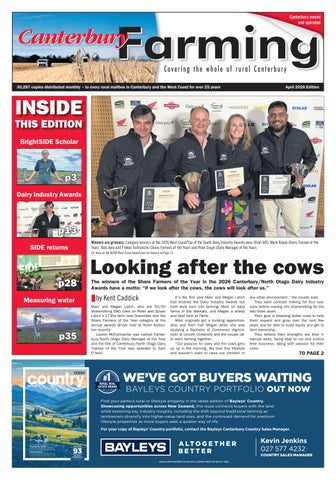
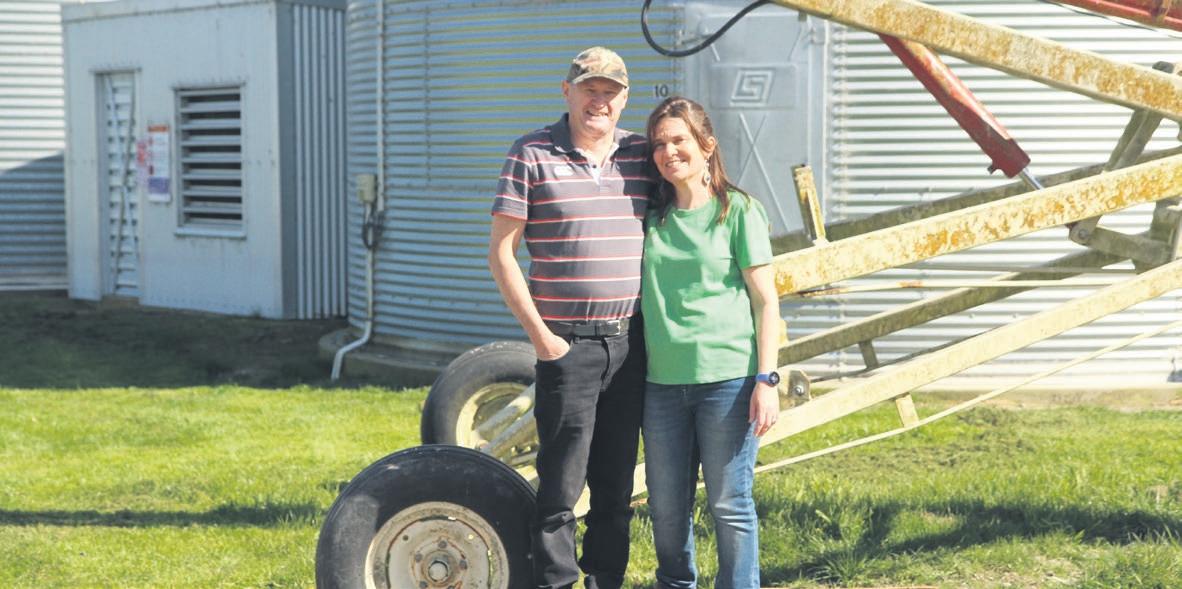
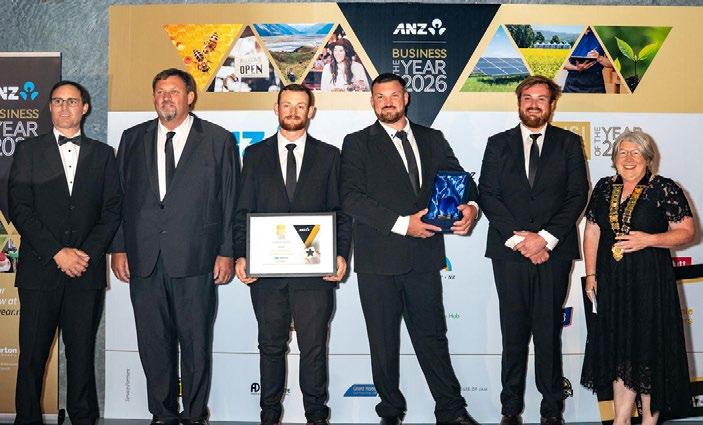
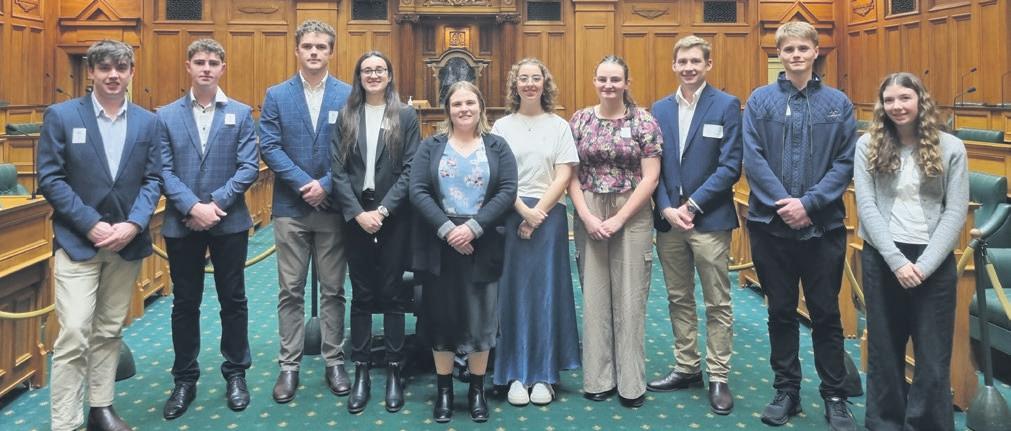
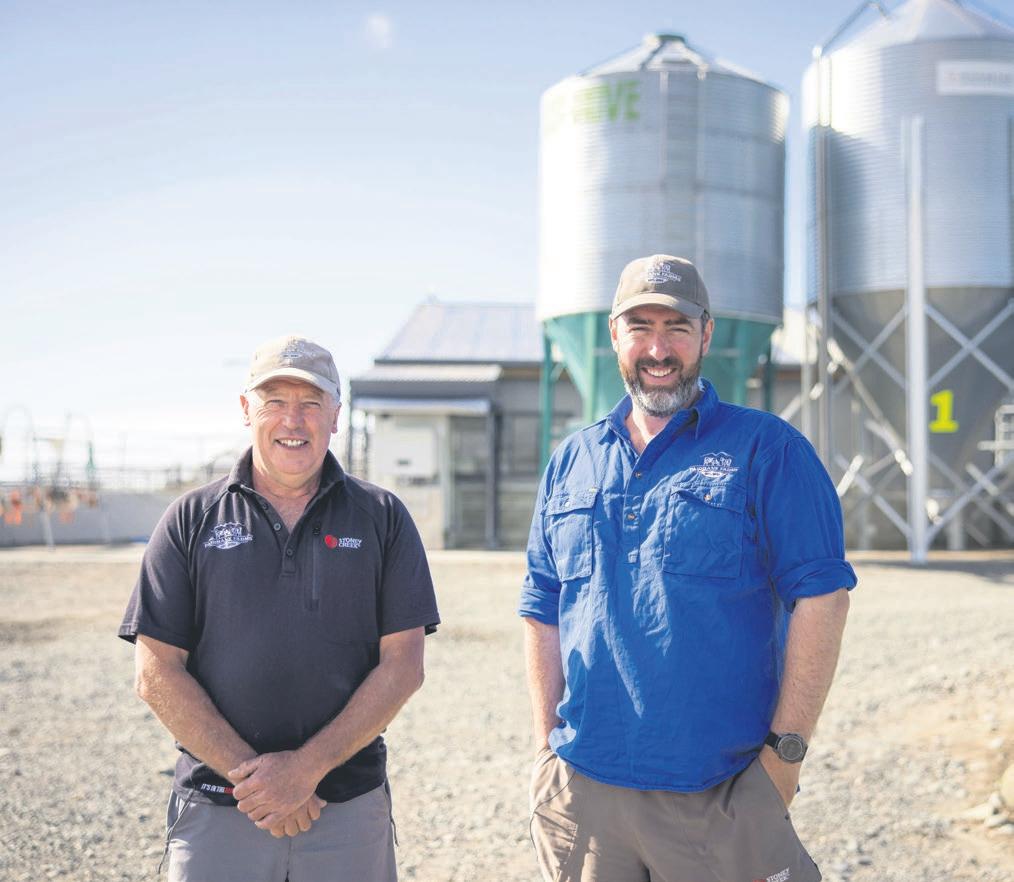
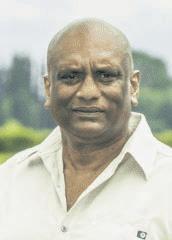
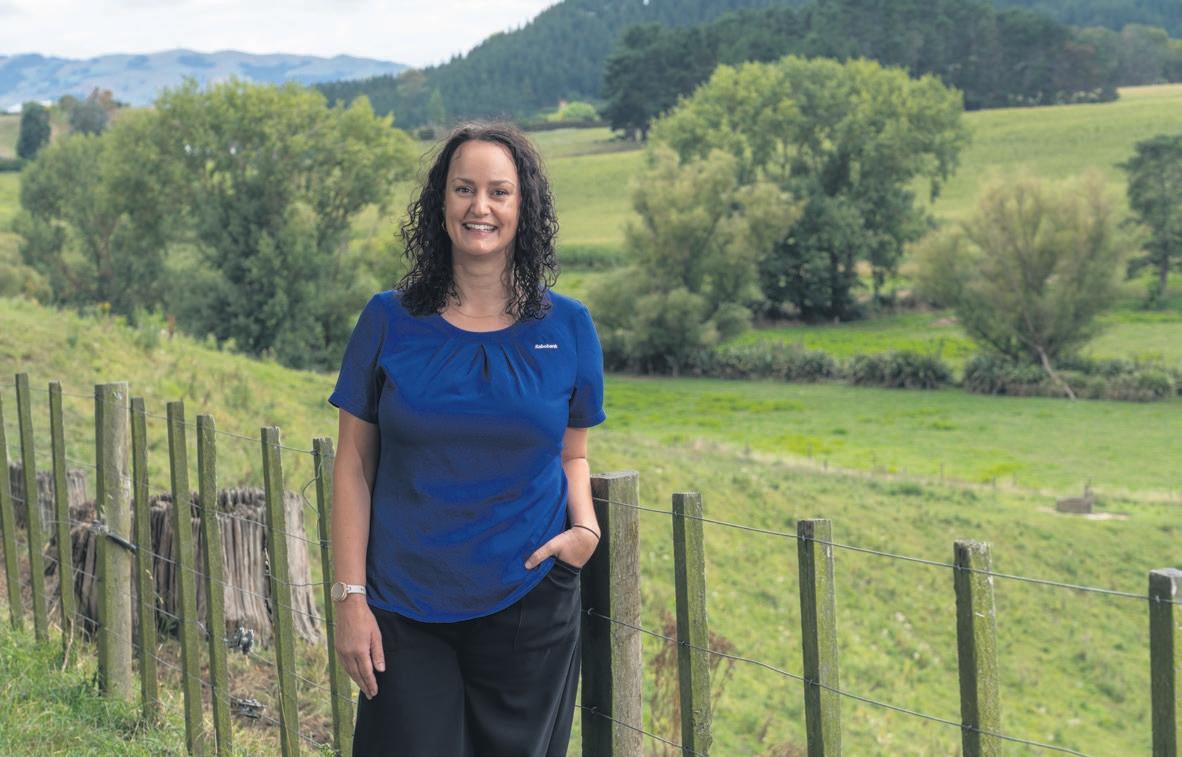
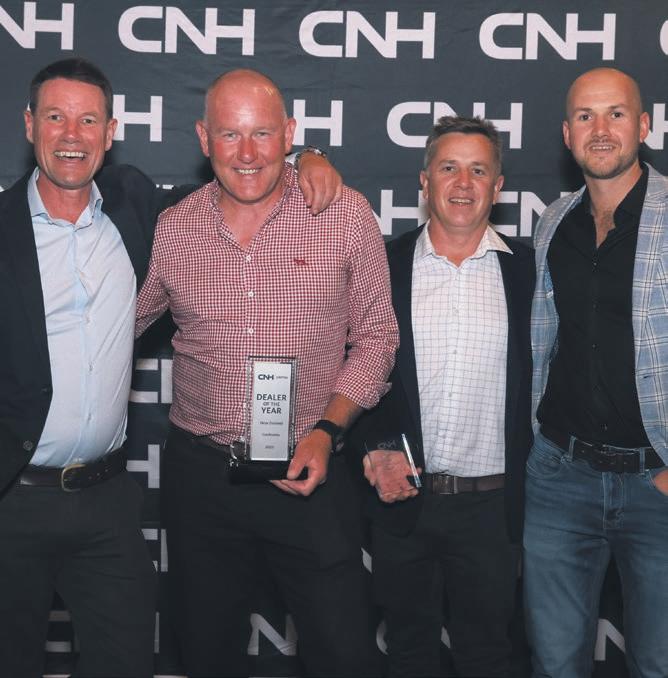
Marc and Megan Lalich, who are 50/50 sharemilking 680 cows on Peter and Susan Lalich’s 173ha farm near Greendale won the Share Farmers of the Year category at the annual awards dinner held at Hotel Ashburton recently.
Lauren McConnachie was named Canterbury/North Otago Dairy Manager of the Year and the title of Canterbury/North Otago Dairy Trainee of the Year was awarded to Sam O’Neill.
It’s the first year Marc and Megan Lalich had entered the Dairy Industry Awards but both were born into farming, Marc on dairy farms in the Waikato, and Megan a sheep and beef farm at Farlie.
Marc originally got a building apprenticeship and then met Megan while she was studying a Bachelor of Commerce (Agriculture) at Lincoln University and the couple later went farming together.
“Our passion for dairy and the cows gets us up in the morning. We love this lifestyle and wouldn’t want to raise our children in
any other environment,” the couple said.
They were contract milking for four seasons before moving into sharemilking for the last three years.
Their goal is breeding better cows to help them expand and grow over the next few years and be able to build equity and get to farm ownership.
They believe their strengths are their financial skills, being able to run and control their business, along with passion for their cows.
Enrolments for the 2026 parliamentary election
The next NZ parliamentary election will take place on 7 November 2026. Everyone who is eligible to vote needs to ensure that they are enrolled to vote in the electorate which is in the area where they live.
] with Bessie Paterson llB
] Ronald W Angland & Son
In December 2025 a major amendment to the Electoral Act was passed in Parliament and most of the provisions came into force on 20th December 2025 and some on 1st January 2026.
The amendment made significant changes to the Electoral Act which are aimed at improving the “timelines, efficiency, integrity and resilience of elections and their operations.”
One of the alterations to the Act provides that the last day to enrol to vote is 13 days prior to election day. As one who worked on elections many years ago I recall that there were always a number of voters who were not enrolled to vote before election day and they would turn up to enrol on the day which delayed final results being available for some time after voting day.
Prisoners who have been sentenced to less than 3 years imprisonment for offences committed after the legislation took effect will be disqualified from voting.
Voters’ occupations and preferred honorific will be removed from enrolment information but an e-mail address and phone number must be provided to enable the Commissioner to contact voters and encourage them to vote.
An advanced voting period of 12 calendar days before election day will be set in law. This will enable people who will be away from their electorate on election day to vote before the day. It should be noted that the legislation closes enrolment before advanced voting begins.
Voters will need to make sure they enrol or update their enrolment details by midnight on the Sunday before advance voting opens on the Monday morning.
The requirement for mandatory postal con-
tact with voters has been deleted and the commission may contact voters digitally by email or text message.
A new offence will be created to prohibit the provision of fee food, drink or entertainment within 100 metres of the entrance of a voting place while voting is taking place.
There are many more changes and introductions to electoral law and many of these refer to administrative matters.
Cows-first philosophy pays off for winners
FROM PAGE 1
“Our motto is ‘if we look after the cows, the cows will look after us’.”
The judges agreed, saying “Marc and Megan demonstrated exceptional business awareness and financial discipline”.
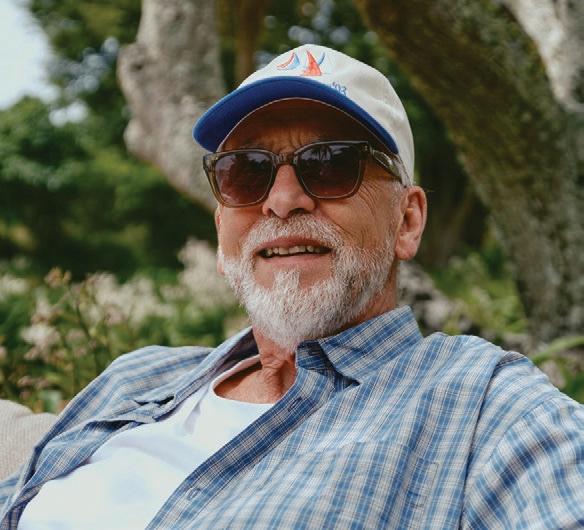
The Runners-up in the Share Farmer category were Raul Benavente and Vaneza Escobar who are contract milkers for Deebury Pastorals Partnership, milking 1080 cows on 286ha near Ashburton.
The couple moved out from Chile to work in the New Zealand dairy industry 16 years ago and have worked their way up from farm assistants to contract milking.
“We came to New Zealand not knowing a soul, and the language barrier was a big challenge to overcome. We now have two children and family who live nearby and very good friends - we have climbed the ladder to where we are today.”
A nod to their success is having built a strong relationship with Deebury farm owners over the last seven years.
The judges said “Raul and Vaneza have created an exceptional people-focused culture on farm. Their outstanding staff retention proves that people truly sit at the heart of their business”.
Ronald W. Angland & Son LAWYERS
Lauren McConnachie, who was awarded te 2026 Canterbury/North Otago Dairy Manager of the Year is Rob and Jenine Screen’s farm manager for Theland Farm Group at Purata, milking 2170 cows on 563ha.
McConnachie ventured from the tourism industry into dairy farming during the Covid pandemic, which was “only supposed to be a oneyear deal”.
“As I have learnt and developed in the dairy industry, I began to see why many peo-
ple choose this career,” McConnachie said.
“The main thing I love about farming is working with people both in the team and the wider farming community and working with the cows to provide them with a happy, healthy life.”
McConnachie has advanced quickly through the industry ranks and one of her proudest achievements has been maintaining an empty rate under 10%.
The judges said McConnachie “absolutely blew it out of the park” in the finance section. “She demonstrated exceptional clarity and foresight in her planning.”
Runner-up in the Dairy Manager category was Supinder Singh who is farm manager for Henry and Mike Askin, milking 1100 cows on 295ha in Hinds.
Having worked in a few careers, Supinder entered the dairy industry 10 years ago.
“It was in dairy farming that I truly found my peace and purpose.”
Entering the Dairy Industry Awards is an opportunity to network and benchmark your farm practices, he says.
“You also gain knowledge in sustainable farming and the best part of all is the journey toward achieving your ultimate goal.”
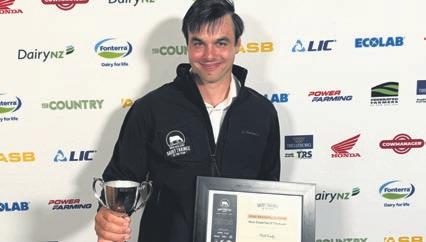
The winner of the 2026 Canterbury/North Otago Dairy Trainee of the Year was Sam O’Neill, a herd manager for Trevor Manson,
milking 850 cows on 231ha.
O’Neill grew up on a lifestyle block but always had an interest in the dairy industry and went to Lincoln University to study a Bachelor of Agricultural Science, which he achieved First Class Honours.
The judges said “Sam presented himself well and made a strong first impression. It was evident that he possesses a broad and well-rounded knowledge across all aspects of farming”.
O’Neill’s future goals involve owning multiple large-scale dairy farms and he aims to get there either via contract milking and sharemilking or building equity off-farm.
“I love the constant challenge of farming and the variety of work. I’m proud to have quickly progressed to a herd manager and hopefully a manager for next season,” O’Neill said.
“I am also proud of the network I have built, the skills I have learnt and the knowledge I have gained over the last year.”
The Canterbury/North Otago Dairy Industry Awards Field Day will be held on 8 April at 10.30am, at 527 Clintons Road, Greendale.
Information for this article was supplied by the New Zealand Dairy Industry Awards. Further details on the winners and the Field Days can be found at www. dairyindustryawards.co.nz
This article has been prepared by Bessie Paterson, a partner at Ronald W Angland & Son, lawyers, 2 Chapman Street, leeston
Lincoln student gets scholarship
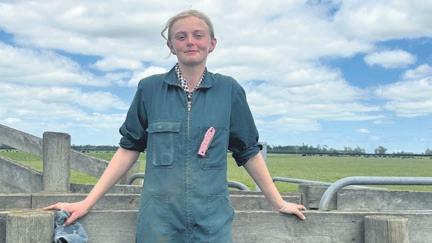
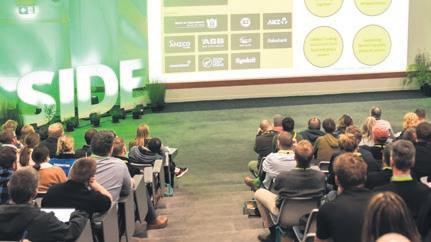
The South Island Dairy Event’s BrightSIDE programme has announced Lincoln University student Jessica Kilday as the recipient of the 2026 BrightSIDE Scholarship, recognising her commitment to furthering her education and future career in the New Zealand dairy industry.
] by Kent Caddick
Kilday is currently studying towards a Bachelor of Agriculture at Lincoln University and has recently begun her third and final year, where she plans to tailor her degree towards the dairy sector.
“The Bachelor of Agriculture has been a great degree so far, as it’s allowed me to study across a wide range of agricultural disciplines,” Kilday said.
“I’ve gained exposure to animal husbandry, soil management, plant sciences and farm systems management, which has really helped shape where I want to head next.”
With her final year largely made up of elective papers, Jessica is focusing on courses that will strengthen her knowledge and practical understanding of dairy farming systems.
She intends to enrol in Dairy Production Science and Pasture Agronomy, which she believes will best prepare her for a career in the dairy industry.
“I want to build a degree that gives me a strong foundation for working within the New Zealand dairy industry,” Kilday said.
“These courses will help me better understand both animal performance and pasture-based systems, which are so critical to our farming model.”
The BrightSIDE Scholarship was established as part of the BrightSIDE programme to extend its impact beyond the one-day BrightSIDE event. It reflects SIDE’s commitment to investing in the next generation of farmers and agricultural leaders.
The BrightSIDE Scholarship is open to past BrightSIDE attendees pursuing further education or training in agriculture, including those entering university-level agricultural study, beginning a career in the dairy industry through a recognised training provider, or upskilling as a working farmer through a highlevel course.
Successful applicants may receive funding of up to $3000 to support their education or training. Applications open later in the year.
This year, BrightSIDE will be held on April 1 at Ashley Dene Research Development Staton near Lincoln and is targeted at those considering a career in the dairy industry, particularly Year 11-13 students, school leavers, university students, and anyone look -
ing for a change in career.
Designed especially for young people curious about the opportunities in dairy, BrightSIDE showcases the breadth of careers available, from hands-on farming through to cutting-edge technology and science.
Participants will kick off the day rotating around a series of interactive, hands-on modules that highlight the diversity of skills required in modern dairying, such as measuring fodder beet, culturing a mastitis sample, exploring how collars are used to make decisions on farm, and taking and interpreting soil samples to make fertiliser decisions.
Information for this article was supplied by the South Island Dairy Event. For more go to: www. side.org.nz.
Future leader: lincoln University student Jessica Kilday has been awarded the 2026 BrightSIDE Scholarship.
] with Todd McClay
] Minister for Agriculture
Empowering resilience in rural communities
Living and working in rural New Zealand offers many rewards, yet it also presents distinct challenges. Isolation, extreme weather events such as floods and droughts, and the pressures of primary sector life can place significant strain on individuals, families, and communities.
Over the past two years, our Government has prioritised rural business and farm economic resilience. We have removed unworkable rules, lowered compliance costs, and are replacing the Resource Management Act with a more effective, streamlined planning system.
These reforms are designed to restore confidence, reduce uncertainty, cut red tape, and enable on-farm growth and productivity.
With these foundations strengthened, we’re focusing on our most important rural asset – the men and women of rural New Zealand and their personal and community resilience.
The National-led Government is committed to delivering faster access to mental health support for all New Zealanders, including the one in five who reside in rural areas.
Last week, I was pleased to announce 18 successful recipients of the Rural Wellbeing Fund. This follows from our Budget announcement last year to partner with community organisation that support rural New Zealand. These initiatives play a vital role in building the resilience of the sector and enabling it to thrive.
The fund supports wellbeing programmes that: Strengthen and expand existing initiatives; Broaden access to established initiatives; Enhance consolidation among existing efforts; Improve the long-term viability of organisations delivering wellbeing services; and Deliver new initiatives to address identified gaps.
In Budget 2025 we committed $4 million over four years to the Rural Wellbeing Fund and the support it will deliver. By partnering with grassroots and community-led organisations, this investment is leveraged to deliver meaningful, on-the-ground impact.
While many of the initiatives operate nationwide, several are tailored to specific regions, including Canterbury. Priority was given to proposals demonstrating strong potential for tangible outcomes, with an emphasis on addressing gaps and supporting innovative approaches.
These initiatives encompass community connection, targeted mental health support, and resilience-building activities. Canterbury has experienced significant adverse weath-
Supported: Minister of Agriculture Todd McClay announced the Rural Wellbeing Fund recipients recently at the Central Districts Field Days.
er impacts in recent months, impacting farmers, growers, and rural communities. Among the funded projects is Weathering the Storm, which delivers online workshops specifically designed to help rural residents manage stress, heightened emotions, weather-related anxiety, and concerns about the future arising from severe events.
Complementing this, earlier this month I was also pleased to announce a nationwide series of rural resilience workshops.
These practical sessions aim to equip farmers, growers, and landowners with the tools to prepare for, respond to, and recover from adverse events – building resilience across all phases of emergency management.
In Canterbury, a workshop is scheduled for 14 April at the Dunsandel Community Centre, from 11:00 am to 4:00 pm. Information can be found at the NZ Landcare Trust website.
This Government remains steadfast in its commitment to supporting the rural sector.
RURAL MATTERS
We will continue to strengthen the fundamentals of our primary industries, enhance farmgate returns, and invest in the health and wellbeing of rural New Zealanders.
The full list of Rural Wellbeing Fund recipients can be found on the Ministry for Primary Industries website www.mpi.govt.nz
Free and easily accessible supports available include:
• 1737 Need to Talk? is a mental health helpline number that provides access to trained counsellors who can offer support to anyone who needs to talk about mental health or addiction issues. It is free to call or text at any time.
• The Access and Choice website (www. wellbeingsupport.health.nz) includes information on free mental wellbeing services and a directory to find support near you.
• lifeline, a counselling service: 0800 543 354 or text 4357 (HElP)
• The National Depression Helpline: 0800 111 757 (available 24/7) or online (depression. org.nz) or text 4202
• The Mental Health Foundation (www. mentalhealth.org.nz) offers information, support services and resources on a wide range of mental health and wellbeing issues, including a list of support groups across New Zealand.
• Samaritans offer confidential, non-religious, and non-judgmental support to anyone who may be feeling depressed, lonely, or contemplating suicide: 0800 726 666.
News and views that matter to rural people
Prominent farmers step up for farm safety
Hororata dairy farmer and 2024 Young Farmer of the Year George Dodson will be one of three regional champions who will be taking Safer Farms ‘Farm Without Harm’ message directly into their rural communities.
] by Kent Caddick
Dodson along with Wairarapa sheep and beef farmer Roger Barton and Chloe Butcher-Herries, winner of the 2022 Ahuwhenua Young Maori Award for sheep and beef farming will be sharing their own safety experiences, practical tips and lessons learned with other farmers.
They will also be attending local events and speaking to community groups.
Farm Without Harm ambassador and Safer Farms director Lindy Nelson said the appointment of the Regional Champions marks a major milestone for the programme.
“Farmers trust farmers,” Nelson said.
“We were looking for relatable people with strong rural community connections, who are curious and keen to share their own journeys. Roger, Chloe and George really ticked all the boxes.
“Being a Regional Champion is about sharing stories, showing practical solutions and connecting with rural communities. Roger, Chloe and George will be playing a critical role in helping influence change from the ground up.”
Nelson said the Regional Champions role isn’t about having all the answers.
“It’s about reframing safety and the conversations we want to be having about practical solutions.
“Safer farms are happier, healthier and more productive farms. Our champions will be sharing what they do and what they learn from other farmers, so we can all be better.”
She said the Farm Without Harm strategy takes a practical, real-world approach to health and safety.
“It’s not about rules and tick-boxes. It’s about solutions that actually work on the ground – learning, trying new things, sharing what works and even acknowledging when it doesn’t.”
George Dodson, manager of a dairy farm in Hororata, Canterbury, is already sharing his ideas on social media.
“Farm safety isn’t about rules, it’s about looking after your team, your family and your business,’ Dodson said.
“I’m enjoying showing what works on my farm, hearing from other farmers and helping normalise a culture where failing safely is part of everyday farming.”
Barton said being a Safer Farms Regional Champion is about sharing what he’s learned on farm and hearing from others.
“As I’ve got older, I am much more aware of the cost of accidents on the business, but also on those around you impacted by a poor decision,” Barton said.
Chloe Butcher-Herries, a 2026 Zanda McDonald Award finalist, farms in Hawke’s Bay.
She said farmers are best-placed to have conversations with each other about how to farm safely.
“We all have had near misses, spot potential hazards and have all learned from them. None of us are perfect, I’m the first to admit that,” Butcher-Herries said.
“With every incident, I’ve learned something. By being proactive, I can help reduce
Helping out: Hororata dairy farmer George Dodson says farm safety isn’t just about rules, it’s about looking after your team, your family and your business.
the risk of harm for those who come after me.
“We can build systems that keep our people and ourselves safe, even during peak pressure days.”
Safer Farms is now building a wider team of Regional Champions across New Zealand. For more information on becoming a Safer Farms Regional Champion, email info@saferfarms.org.nz
Confused about consents?
] with Rob Cope-Williams
Election year and polls
We are back into the silly season that descends upon us every three years, the national elections for those who will be able to spend our taxes on whatever they wish with no accountability in most cases.
Yes, a wee bit cynical, but once there they are secure for the period of the term. What I find interesting is the recent polls both here and Australia. While we have normally a battle between National and Labour, the minor parties are now looming larger than ever before.
In Aussie the One Nation party has gone from being a radical party so far right it was likely to fall off the end, to now threatening the establishment. If we can believe in the local polls, which we probably shouldn’t, the main players are being forsaken by support from the minor runners.
Do we vote for what we traditionally do whatever happens, or do we listen to what the parties are saying?
Then stir in the subject of the personalities involved. Does Luxon have enough charisma to be the top man? Is Peters the charming chap with enough one liner to swing into the saddle or could Seymour out do Peters with his down to earth approach? Will Labour swing another coup and give us another Ardern or stick with the tried and true?
With only a few months to go one hopes that the result won’t rely on personalities and will be centred on policies and what is best for us and the country.
Sadly, that seems to be as likely as Razor getting his old job back.
The other wild card, of course, is who the media think we should have as a govern-
ment, but no, I am not going down that road again, I have already travelled it more times than not. What really matters, I suppose, is that we all exercise our right to vote.
Aussie has the answer as far as I can see, over there it is compulsory to enter a vote, but then again that opens the door for clowns to register a stupid party so people can avoid the reality of a serious one.
MMP doesn’t stand for Many Muppets in Parliament, but it does feel like that at times.
Let’s just hope that the nation can be in the best hands to govern in November, and that we as a nation can prosper until the next silly season.
Talk to us
Some activities that once needed consent may no longer require it, while others are being extended.
Environment Canterbury can help you understand what this means.
Visit our drop‑in days across Waitaha Canterbury from 30 March to 5 May for free guidance on the changes.
Get the right information upfront and avoid costly mistakes later.
For more information, call 0800 324 636 or visit ecan.govt.nz/drop‑in
Where’s the leadership?
Big signals from fuel, food processing, to farm support. The signals are clear that the whole system isn’t thriving as it seems; particularly for arable, seed, and vegetable growers in Canterbury who face a very different reality.
] with Jo luxton ] Labour spokesperson ] for Agriculture
I have big questions around the Rural Support Eligibility Payments following the series of medium-scale weather events in Canterbury and significant crop damage caused.
For many farmers and growers, these payments were meant to act as a safety net. Initial concerns focused on restrictive eligibility criteria, but it now appears the Rural Assistance Payments themselves were never actually activated.
So while Agriculture Minister Todd McClay said in February that his announcement enables “the Ministry of Social Development (MSD) to consider Rural Assistance Payments and activating Enhanced Taskforce Green for affected farmers and growers”, it’s hard not to see this as little more than a ‘let’s look like we’re doing something’ response when there isn’t any help there.
Then there is the proposal from Wattie’s to stop producing frozen vegetables. While it’s a private decision, processing plants are a critical part of our food system and overlooked middle of the supply chain between the farm gate and the grocery shelf.
When they close, workers lose jobs, growers lose a reliable buyer, and communities lose an important source of economic diversity. Around 220 vegetable growers are impacted in Canterbury alone, and what have we heard in support from the Government in response? Crickets.
We are facing huge uncertainty around fuel supply and cost with the events in the Middle East affecting the global market. We have a rough idea that there are anywhere
] with Steve Abel
] Green Party Spokesperson
] for Agriculture
between 3-7 weeks of fuel left in the country. Fuel powers tractors, utes, irrigation systems, transport, and the machinery that keeps food production moving.
So where’s the leadership? When Labour was in government, we initiated regulatory changes to increase the nation’s minimum fuel reserves for events like these. This Government cannot afford to bury their heads in the sand on this one.
It wouldn’t cost anything for the PM to ask the nation to conserve fuel where practical, for example in cities where public transport is easily accessible. But again, no strong front from the PM.
So where does that leave us?
• Support for farmers after adverse weather events from MSD? Non-existent despite announcements.
• Mid-scale processor closing down, affecting hundreds of jobs? No meaningful acknowledgement.
• Fuel uncertainty? Burying heads in the sand and waiting for it pass.
We have every reason to be proud of our agricultural success. Our dairy sector performs strongly, global demand for high-quality food remains solid, and our reputation as a trusted producer is a major advantage.
‘It wouldn’t cost anything for the PM to ask the nation to conserve fuel where practical, for example in cities where public transport is easily accessible. But again, no strong front from the PM.
But every issue like this puts more strain on our agriculture sectors that already aren’t thriving due to rising input costs, stagnant prices, and competition from cheaper imports.
Taken together, these issues highlight real vulnerabilities in our food system – ones that risk reducing land-use diversity, increasing food costs, and weakening our long-term food and economic resilience.
If we really want a secure food system into our future, we must measure success for regional economies by the viability of the entire system – from farm gate to processing plant to rural town.
We simply cannot afford a government that fails to see the critical signals demanding strong, proactive leadership that sees the whole picture.
Gas-tax for LNG a ‘disastrous plan’
The Luxon Government has decided to resuscitate the declining gas industry while increasing household energy bills, fuelling climate storms and wasting billions that could be spent on geothermal, wind, and solar resilience.
reliability, and resilience, then a gas terminal is the worst possible way to spend a billion dollars.
Let’s be clear, right when households are struggling to pay the bills, Luxon is going to make every household and business in the country pay more for energy as a “gas tax” to cover the cost of an import terminal for LNG (Liquefied Natural Gas) that will mainly benefit big energy-hungry corporates, not everyday New Zealanders.
It’s also a ridiculous example of corporate handouts with all of the money going to private interests to build, own, operate the terminal and lease back its services to the government for around $180 million per year.
As Bernard Hickey pointed out, the cost of building and leasing over 15 years is around $2.7 billion. That same investment is enough money to install solar generation and battery storage to power 2.5 million households –more than we even have.
If the objective was energy affordability,
The proposal undoes a decade of energy trajectory that utilises our country’s clean energy endowments including our vast existing hydro dam infrastructure and abundant wind and solar power potential.
Solar is the cheapest way to create electricity and the fuel source, sunlight, is free and effectively infinite. Sun energy is wildly underutilised in our country. New Zealand is also the Saudi-Arabia of wind.
Onshore wind sits alongside solar as one of the cheapest ways to make electricity. Investing a billion dollars of public money in these sources of energy, such as through rooftop solar grants, would vastly boost our available electricity and allow hydro dams to be used as batteries – storing energy for times of high energy demand.
And of course, rain, wind and sun energy is clean and thereby gets us off our dependency on the polluting fossil fuels that are driv-
ing more frequent extreme weather disasters and high power prices.
While world leaders are recognising the need for greater self-reliance in the face of Trumpian uncertainty – Luxon’s gas plan will make New Zealand more dependent on a very expensive and dirty imported fuel.
It is a plan that serves the interests of the fossil fuel industry who are happy to sacrifice a stable global climate for private profit.
LNG is the dirtiest and most expensive fossil fuel there is – even worse than coal in terms of total life-cycle emissions. It’s more polluting because of the energy needed to compress the gas for transport and the emissions from gas lost directly to the atmosphere during extraction and processing.
Methane is a super-heating climate gas that is 80 times more potent than carbon dioxide at cooking the planet.
Luxon has managed to find a fossil fuel that’s even dirtier than coal, and he’s making the public pay for it.
The greatest beneficiaries will be big gas
‘lNG is the dirtiest and most expensive fossil fuel there is – even worse than coal in terms of total lifecycle emissions.
users like Canadian-owned Methanex but the people will pay the cost – not only from their back pockets, but in the wrecked landscapes and communities reeling from extreme weather.
LNG is throwing good money after bad energy. The Green Party is committed to investing in a future where energy is affordable, resilient, and clean.
Fonterra CEO stepping down
Fonterra has announced its Chief Executive Officer Miles Hurrell has given notice he will step down from the position in six months.
] by Kent Caddick
Fonterra Co-operative Group board Chair Peter McBride said that after a 25-year career with Fonterra, including eight years as CEO, Hurrell has decided that the time is right for him to leave the Co-op.
“When he was appointed CEO in 2018, Miles was tasked with leading a reset of the business to turn around Fonterra’s financial performance and rebuild farmers’ trust,” McBride said.
“Under Miles’ leadership the team has done that and more. From day one, Miles was able to unite the team under a single purpose and drive performance right across the business, setting the Co-op up for the future.
“On behalf of the Board, I thank Miles for his courageous leadership. He has overseen a significant strategic reset, focused on getting the Co-op back to its core strengths. In doing so he has helped lift Fonterra’s financial discipline and built the
strong foundations the Co-op has today.
“I know I echo the sentiment of farmers when saying that Miles will leave with sincere thanks for his 25 years of loyalty and best wishes for the future,” McBride said.
Miles Hurrell said it had been an incredible privilege to have a long career with Fonterra which he has enjoyed immensely.
“When I took the role of CEO, I understood our financial results are not just numbers but the livelihood of thousands of New Zealand farming families. I have always felt a great sense of responsibility to do what’s right for farmers and I believe the Co-op is now in a really good place,” Hurrell said.
“While it’s not an easy decision to step away, the time is right for both the Co-op and me personally. Fonterra’s entering the next phase in its strategic implementation, which marks a natural turning point for a new leader to step in while I consider what’s next for me.
“I know that the business will be in good hands. There’s an exceptional team of people who will carry the Co-op forward and con-
tinue to drive value for farmers,” Hurrell said.
McBride said Hurrell has a six month notice period, which enables an organised leadership transition.
“Board and management regularly discuss succession as part of good governance practices.
“We are confident we can
run a robust selection process and appoint a new CEO in the coming months,” McBride said.
Farewell: After a 25-year career with Fonterra, including eight years as CEO, Miles Hurrell is stepping down.
Investment markets shift gears
A key development has been shifting market leadership. For several years, a small group of large US companies generated a substantial share of global equity returns.
] with Andrew Wyllie
] Forsyth Barr
More recently, technology shares, particularly those linked to AI, have faced a more challenging period.
Markets are reassessing the pace of AI
Looking at off-farm investments?
adoption and its broader implications, especially in sectors where it is viewed as a potential competitive threat. As these US market leaders have pulled back, equity markets outside the United States have begun to deliver relatively stronger returns since the start of the year.
When you are thinking about your investment options, talk to Forsyth Barr
To get personalised investment advice and portfolio management specific to your investing needs, talk to Investment Adviser Andrew Wyllie in confidence on (03) 365 4244 or email andrew.wyllie@forsythbarr.co.nz
Corporate earnings: fundamentally sound
Recent company results around the world have generally been encouraging. Profits are holding up well, and many businesses remain confident about the year ahead.
However, market reactions have been mixed, particularly in the technology sector, where expectations have been high. In some cases, even strong results were met with muted share price responses.
Despite this, the overall message remains encouraging: corporate balance sheets are sound, and earnings growth continues to provide support for markets.
In Australia, company results were also better than
many expected. While performance differed between businesses, overall profits were resilient.
Tax cuts, government spending, and population growth are helping support the economy, and expectations for earnings growth in the coming quarters have improved.
New Zealand corporate reporting has reinforced the view that the New Zealand economy continues to improve.
The tone of the latest earnings season was more positive than it has been for some time, with many companies pointing to better trading conditions and a cyclical recovery taking hold.
Geopolitical uncertainty elevated again
Tensions in the Middle East escalated at the end of February following coordinated US and Israeli strikes on Iran.
Financial markets initially responded cautiously, and oil prices jumped on concerns about supply disruption through the Strait of Hormuz, a critical route for around 20% of global oil shipments and a significant share of natural gas.
At the time of writing, the impact on global equity markets has so far been modest. Historically, conflicts in the region have tended to affect oil prices more than share markets, with equity volatility often proving short-lived unless energy supply disruptions persist.
US trade policy back in focus US trade policy came back into focus in February after the Supreme Court ruled that the President had overstepped his authority in imposing broad tariffs using the International Emergency Economic Powers Act (IEEPA).
In response, the White House pivoted to using another mechanism, which allows temporary tariffs of up to 15% for 150 days without Congressional approval.
A broad-based 10% tariff has been introduced, with indications it could rise to 15%. Any extension beyond 150 days would require Congressional approval.
Exemptions remain in place for selected goods, including certain agricultural products such as beef. For New Zealand, the overall impact of this change is expected to be modest but helpful for those sectors without exemptions that are exporting to the US.
This article was prepared as at 28 February 2026 and provides market commentary for the three-month period ending on that date. To review your investments or discuss the market outlook in more detail, get in touch. Andrew Wyllie is an Investment Adviser and Forsyth Barr’s Christchurch Manager. He can be contacted regarding portfolio management, fixed interest or share investments on 0800 367 227 or andrew.wyllie@ forsythbarr.co.nz. This column is general in nature, has been prepared in good faith based on information obtained from sources believed reliable and accurate, and should not be regarded as financial advice.
Mallards, maimais and the farm accounts
Around this time of year, many farmers start thinking about one thing: duck shooting season. The maimai gets checked, shells stocked up, and the group chat buzzes about who’s bringing bacon and eggs for opening morning.
Not long after that, The question often arises in farming circles: “Can I put duck shooting costs through the farm?”
The answer is: it depends – primarily on the purpose of the activity.
For most people, duck shooting is purely recreational. It’s a cherished sporting tradition, a social gathering with mates, and a highlight of the rural year. Expenses such as game bird licences, shells, decoys, fuel, and the opening morning breakfast typically belong in the personal “fun weekend” category, not the farm accounts.
For farmers, the picture can change. Ducks and geese landing on freshly sown paddocks or emerging crops can cause serious damage in a short time. It’s often said that a few paradise ducks can consume as much pasture as a sheep in a day, and large flocks create genuine production issues.
Unlike rabbits or possums, ducks are classified as game birds in New Zealand. They cannot be culled year-round as pests; hunting is restricted to a brief legal season. For many farmers, this season therefore becomes one of the few practical, legal opportunities to reduce bird numbers on their own land.
The critical question isn’t whether you went shooting – it’s why. If the main goal was enjoyment, catching up with friends, and perhaps bringing home a few birds, the costs remain personal. If the activity genuinely con-
tributes to managing bird pressure to protect crops or pasture, there can be a reasonable argument that some related expenses qualify as deductible pest control costs.
Not every expense automatically becomes tax-deductible simply because it occurred onfarm. The taxpayer must prove the business connection.
A shotgun costing over $1,000 is a capital item and must be depreciated. The deductible portion depends on its actual businessuse percentage – for example, for pest control throughout the year, including rabbits, hares, or possums outside duck season – which can strengthen the case.
Ammunition bought in bulk and used across multiple pest control activities may justify a partial deduction. Purely sporting gear such as decoys, a TV in the maimai, or the labrador’s camo wetsuit is much harder to claim.
Game bird licences are generally personal expenses, even for farmers facing bird damage. Land occupiers often qualify for exemptions under the Wildlife Act 1953 and may not even need one.
In practice, duck shooting can be both things at once: a recreational tradition for some, and a form of bird management for others. The season rolls around every May regardless of whether costs go through the accounts. And honestly, a crisp morning on the pond is worth it either way.
] with laura Wood
The Resource Management (Duration of Consents) Amendment Act 2025
The Resource Management (Duration of Consents) Amendment Act 2025 (Amendment Act) received royal assent on 16 December 2025, and came into force on the following day, 17 December 2025.
] with Tyler Burgess ] Helmores Lawyers
The Amendment Act is a targeted adjustment to the Resource Management Act 1991 (RMA), designed to provide temporary relief to consent holders while New Zealand transitions to a new resource management system, which is a massive undertaking. The Act and focuses on extending the duration of certain Resource Consents that
would otherwise expire during this transition period.
The Amendment Act aims to address uncertainty created by the government’s ongoing and anticipated reform of the resource management system.
The RMA is expected to be replaced by a new regime (with legislation being introduced into Parliament on 9 December 2025).
Many existing Resource Consents were due to expire before the proposed new system has taken effect.
Without intervention, consent holders would need to apply for replacements under the current RMA framework, potentially causing unnecessary administrative costs and delays for thousands of consent holders, which would be avoided if they were permitted to apply under the new regime.
To avoid this issue, the Amendment Act automatically extends the duration of most Resource Consents that were due to expire before 31 December 2027. These Consents are now deemed to remain valid until that date.
This extension applies automatically and does not require any action from Consent holders. This allows Consent holders to continue operating under their existing approvals until the new planning legislation is enacted.
The Act also addresses situations where a Consent had already expired but the holder had applied for a replacement. Under the Amendment Act, these recently expired Consents are reinstated and extended until 31 December 2027, provided a replacement application had been lodged but not yet determined.
Although the Amendment Act broadly extends Consent durations, several important limitations apply. Consents relating to water are subject to a maximum duration of 35 years, meaning the extension cannot result in a consent exceeding this total period.
In some cases, water-related consents may therefore expire earlier than 31 December 2027 if they reach this limit.
Additionally, certain wastewater consents that have already received extensions under
existing provisions of the RMA are excluded from the new extension provisions. This prevents overlapping or excessive extensions for those types of consents.
Importantly, the Act does not change the conditions attached to existing resource consents.
Consent holders must continue complying with all existing requirements, monitoring obligations, and enforcement actions while the extension is in place.
The Amendment Act also places responsibilities on consent authorities, such as regional or district councils. Authorities must update their records within six months to reflect the new expiry dates of affected consents.
They must also continue processing any pending replacement applications unless the applicant withdraws them.
If you are a Consent holder and you are unsure whether your Resource Consent has been extended, you should seek advice from your solicitor or get in touch with your local Council.
WHERE RURAL AND LIFESTYLE OPPORTUNITIES BEGIN
Rural Wellbeing Fund
The Government is backing rural New Zealand by supporting 18 community-based initiatives through its Rural Wellbeing Fund.
] by Kent Caddick
The 18 initiatives to receive funding were announced by Agriculture Minister Todd McClay and Mental Health Minister Matt Doocey recently.
“We established the fund mid-last year to boost wellbeing programmes that support the rural sector. These initiatives will ensure farmers and growers have the support they need to thrive,” McClay said.
Mental Health Minister Matt Doocey said the Government is committed to delivering faster access to mental health support, including for the one in five people who live in rural communities.
“We’ve focused on supporting proposals that can have the greatest impact on the ground, as well as new initiatives targeting gaps. Partnering with grassroots organisations enables the Government funding to go further and make a real difference,” Doocey said.
The Ministry for Primary Industries and Health New Zealand each allocated $2 million over four years for the fund through Budget 2025.
Federated Farmers president Wayne Langford said the $4 million rural wellbeing fund
] with John Arts
will be an absolute game changer for rural mental health and wellbeing.
“This funding will do so much good for rural New Zealand and help a lot of people who need it. There are some amazing organisations out there doing great work in our communities, but there have been real issues with central coordination and longer-term certainty of funding. It was no secret that mental health is a major issue for farmers and rural communities, with many factors contributing to that,” Langford said.
“Living in more remote communities, limited digital connectivity, reduced access to mental health services and healthcare, and the day-to-day stresses and pressures of farming all play a role.
“We’ve been aware of these challenges for a long time now, and a lot of different initiatives have popped up to meet a real need in our rural communities.”
Among those organisations to receive funding were: Whatever With Wiggy Charitable Trust, The Whanau Ora Community Clinic ltd, The NZ Federation of Young Farmers Clubs Incorporated, Seafood Sector Support Network Trust ‘First Mate’, Life-Supporting Communities NZ ‘Be A Mate’, Farmstrong Charitable Trust and Surfing for Farmers Charitable Trust.
Part 2
Long term benefits of Chondroitin
Research shows that Chondroitin supports cartilage health and inhibits enzymes that break down cartilage delaying joint degeneration.
I have the privilege of speaking with clients who have taken chondroitin combined with glucosamine and curcumin (from turmeric) for years.
These report three stages of improvement. There are the initial improvements noticed over two to sic months. This is important as it is usually the first relief they have had without pain medication.
Over 6 to 12 months the rate of improvement usually slows but there are still noticeable improvements. The rate of improvement slows further but is still noticeable for years.
Recently I had a phone review with a client who had been taking my high-chondroitin supplements. After just two months she said that her hips and ankle were much more comfortable. I have no doubt she will continue to improve.
I have one such client who contacted me over five years ago with moderate knee osteoarthritis. He noticed significant short-term improvements.
He noticed definite improvements as the years passed and after five years, he
stated he had effectively no knee discomfort.
This is confirmed by a six-year study into the benefits of using Chondroitin with Glucosamine for those with knee osteoarthritis. It showed that those who used this for six years had maintained cartilage and slowed cartilage loss.
The outcome was these long-term participants had much better results than would have been expected. The study showed that those who took chondroitin with glucosamine long term had less joint space narrowing than expected.
A study however does not guarantee that you will get the same results. This is why I am much more interested in how individuals respond. It is one thing to read a study; it is another for you to be more comfortable living with osteoarthritis.
John Arts (Adv.Dip.Nut.Med) is a nutritional medicine practitioner and founder of Abundant Health ltd. For questions or advice contact John on 0800 423559 or email john@abundant.co.nz. Join his newsletter at www.abundant.co.nz.
Joint Formula
What is Bettaflex?
• Bettaflex is a joint support formula to promote healthy joint cartilage function.
• Bettaflex has 400mg (per capsule) of high-grade avian chondroitin, 400mg of glucosamine and 100mg of BioSolve® bioavailable Curcumin (from turmeric).
• Try Bettaflex for 3 months and see for yourself.
How can Bettaflex help?
• Chondroitin and glucosamine are building blocks of cartilage.
$99.95 for 3 bottles free freight or 1 bottle for $36.95 plus $5.99 postage
60 Capsules per Bottle
• Supplementation with correct levels can support healthy cartilage function and cartilage repair processes.
• New BioSolve® bioavailable curcumin helps joint function while gentle on the stomach.
• Research indicates that chondroitin is highly effective at 800mg daily.
John Arts comments:
“My latest Bettaflex formula includes BioSolve® bioavailable curcumin for faster results. The normal dose is 2 capsules daily but I recommend an initial higher dose for 1-3 bottles to saturate joint tissue.” John
Christchurch & Dunedin
A middle of the night mission
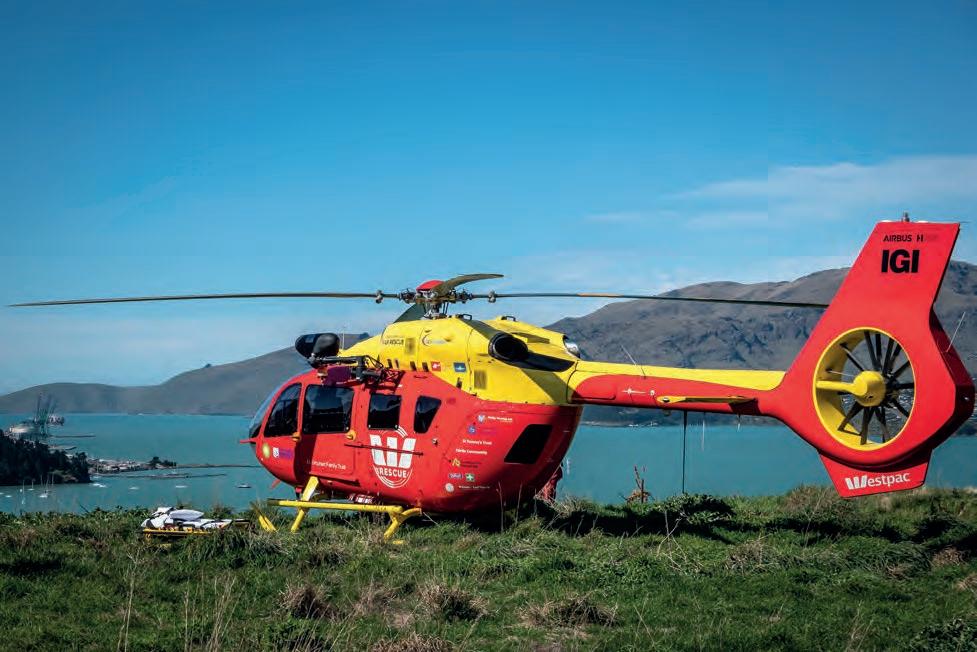
It’s still tough for Maria Logan to speak about the night her husband Blair used the Westpac Rescue Helicopter. She tells the story, because he can’t remember it and she feels it’s important people are more aware of meningitis.
] Article supplied by Canterbury ] West Coast Air Rescue Trust
“We really thought we were going to lose him. The Westpac Rescue Helicopter made a huge difference for our family,” Maria says.
The beginning of Blair’s illness was fairly non-eventful. It was November 2024 and the crop farmer from Ashburton had caught Covid, as had his two young girls. The girls were getting better, but Blair was still battling.
“He usually watches Clarkson’s Farm and laughs his head off, but he wasn’t finding it amusing, so I knew he wasn’t feeling great,” Maria says.
Later that night, Blair started vomiting.
“I thought it was all part of Covid and that it would take its course. I didn’t realise he was delirious until he fell over and wasn’t able to communicate with me.”
It was then that Maria made the decision that probably saved her husband’s life. She rang the ambulance. It was 3am.
“While waiting for the ambulance Blair started screaming in pain and holding his head. When the ambulance arrived, he was very distressed, flailing around. He had no idea what was going on around him.”
Blair’s parents came over to look after the girls while Blair was rushed to Ashburton Hospital.
“Looking back, I was in a daze while in the Ashburton Hospital Emergency Department that night. We had two senior doctors and a junior doctor giving Blair 100% of their attention. They guessed it could be meningitis and gave him a high strength antibiotic, but he needed specialist intensive care, which was only available in Christchurch.”
The doctors feared Blair was about to stop breathing, so they intubated him, putting a tube down his airway so they could breathe for him.
“I don’t think they had time to wait for the ICU team. I will always be truly grateful to them.”
The Westpac Rescue Helicopter arrived with staff from Christchurch Hospital’s Intensive Care Unit (ICU).
Together with the rescue helicopter crew they stabilised Blair enough for the helicopter ride to Christchurch Hospital.
“It’s still a bit of a blur how that all happened,” Maria said.
“I had just been told my husband could have died but I know I was very thankful he was on that helicopter.”
At Christchurch Hospital, Blair was admit-
Brand New Show Homes Now Open
ted to the ICU where he was kept in a coma for two days.
“My best friend is lying unresponsive in a bed and all I wanted to do is call him to talk about what had been happening, but I couldn’t.
“I remember a team of doctors standing around his bed when they brought him out of the coma, just looking at him and then me. I think they got as much joy as I did seeing him come back to us.
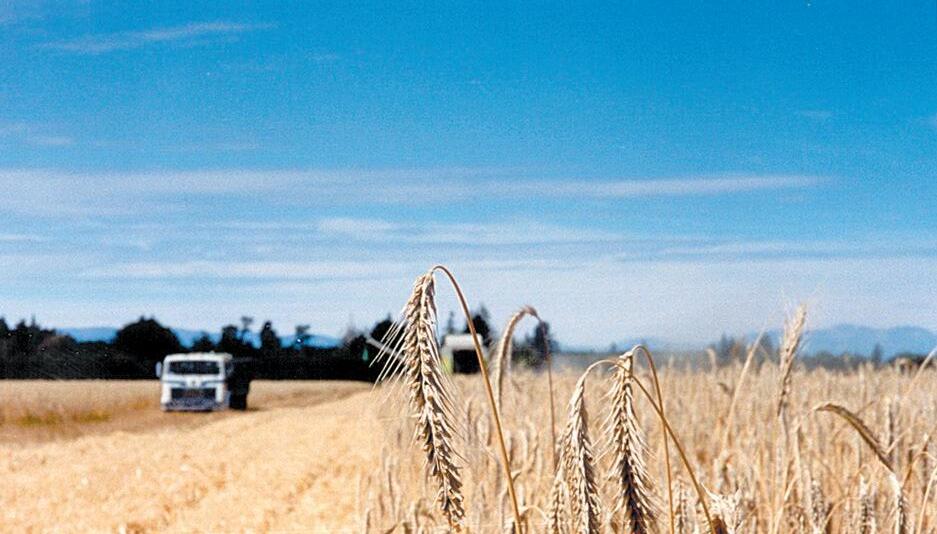
“The first thing Blair said when he came around was to ask if his wheat had been collected from the silos. It was such a relief to know that he was back and that his brain was functioning. I know we were truly blessed, not everyone has the same outcome.”
Doctors believe an infection in Blair’s ears, following Covid, sparked the bacteri-
Discover a new way of lifestyle village living, with architecturally designed homes for active over-50s who want modern living without the upkeep.
Homes now selling from $350,000
And like all Freedom Lifestyle Villages, our fairer capital gains model means when it’s time to sell, you sell at true market value and retain any capital gains.* Visit our brand new show homes and see what life at Ashburton Rivers could look like.
*Subject to a capped exit fee structure and market conditions at the time.
Show Homes Open 7 days Mon-Fri 10am-4pm | Sat & Sun 11am-3pm 74 Trevors Rd, Ashburton 03 423 2430 | ashburtonrivers.co.nz
Thankful: Canterbury farmers Blair and Maria logan credit the staff at Ashburton Hospital and the Westpac Rescue Helicopter for saving Blair’s life.
al meningitis infection which travelled to his brain.
Today, Maria says Blair is back to his old self, mostly.
“Being on a farm is good because he’s got lots of quiet space and can control when he works and when he rests, but if he’s around lots of people or stimulation he still gets exhausted.”
Maria credits the staff at Ashburton Hospital, the Westpac Rescue Helicopter and her middle-of-the-night 111 call with saving Blair’s life.
“The doctors at Ashburton Hospital were amazing and the speed at which the rescue helicopter and specialist ICU staff arrived blew me away. I have no doubt Blair is here today because of what they all did. Our family can’t thank them enough.”
West Coast dairy skills recognised
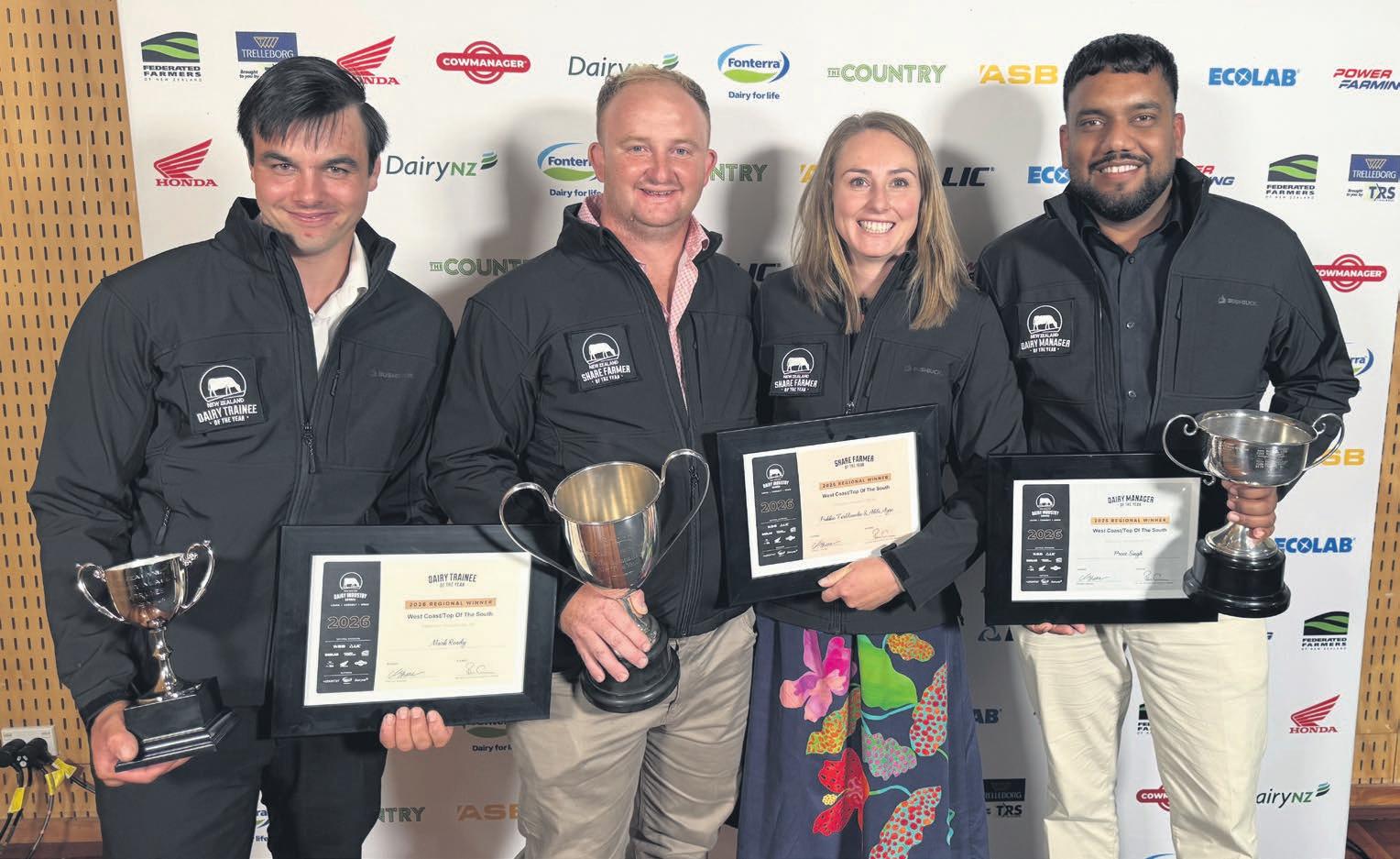
West Coast’s top dairy workers were recognised at the 2026 West Coast/Top of the South Dairy Industry Awards annual awards dinner held at the Murchison Event Centre recently.
] by Kent Caddick
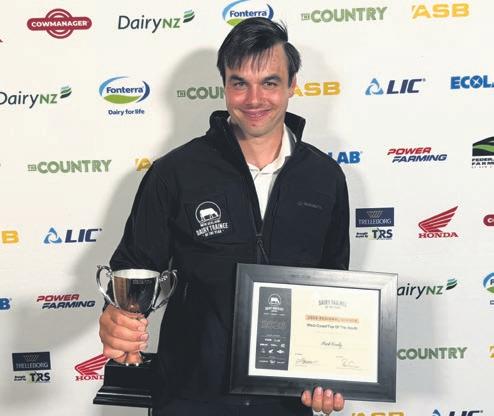
Abbi Ayre and Frikkie Terblanche were named as the 2026 West Coast/Top of the South Share Farmers of the Year, with Preet Singh taking out the Dairy Manager of the Year category and the title of Dairy Trainee of the Year was awarded to Mark Ready.
This is the first year Ayre and Terblanche had entered the Dairy Industry Awards.
The couple lease farm two milking platforms, 92ha and 106ha, off Aaron Slicock and Victor Kersten, milking 500 cows near Cronadun just outside Reefton on the West Coast.
Frikkie, originally from a farm in Zimbabwe, met Abbi “over the fence” while both were farming in New Zealand.
The couple have worked their way up from farm assistants, through contract milking and sharemilking to now be leasing.
“One of our strengths is adaptability. We are not afraid to challenge the status quo, try new things, and build strong relationships with the people around us,” the couple said.
The judges said, “Abbi and Frikkie have a clear and timebound pathway to farm ownership which is front of mind when making all business decisions”.
The couple, who have two children aged five and four, have the ultimate goal to achieve more freedom and not have to work on-farm every day.
Runners-up in the Share Farmer awards were Adam and Shania Pearce, who are 27% sharemilking for Stuart and Janice Moir, milk-
ing 266 cows on 110ha at Maimai on the West Coast.
The winner of the 2026 West Coast/Top of the South Dairy Manager was Preet Singh.
The 32-year-old is employed by Pamu Farms Limited at Cape Foulwind, milking 950 cows on 370ha.
Previously working in accounting, Singh has worked his way up through the dairy industry and loves working outside with the cows.
“I’m no stranger to farming, I come from a farming family and I love to be around animals, living on God-made land away from city life,” he said.
The judges were impressed with his record keeping and said “Preet had a good understanding of his livestock, showed good animal welfare, and had the lowest empty rate of 7% last season out of Pamu”.
The winner of the 2026 West Coast/Top of the South Dairy Trainee was Mark Ready.
The 23-year-old is farm manager for Michael Shearer on the Inch Family’s 130ha farm at Maruia milking 250 cows.
Ready has worked for two years as a farm assistant before stepping up to his current management role.
He said entering the Dairy Industry Awards appealed to his competitive nature.
“I love the opportunities the industry has to offer and the various skills you learn along the way. Also, the huge scope for personal development and self-improvement.”
Ready and his wife Lily have a one-yearold daughter Azra and the couple have al-
ready started saving to go sharemilking.
“My boss Michael Shearer has been an awesome mentor who has taught me a lot and is helping me achieve my goals.”
The judges said “Mark’s calm demeanour, practical problem-solving and commitment to continual learning set him apart. With a strong grasp of core principles and a clear drive to keep improving, Mark exemplifies excellence in on-farm capability”.
Information for this article was supplied by the New Zealand Dairy Industry Awards. Further details on the winners and the Field Days can be found at www. dairyindustryawards.co.nz
Top job: Winner of the 2026 West Coast/Top of the South Dairy Industry Awards in the Dairy Trainee of the Year Mark Ready says entering the awards appealed to his competitive nature.
Canterbury hosts this year’s Out the Gate event
While we are enjoying a relatively settled autumn with stock in great condition, it is the volatility in the Middle East that is creating uncertainty, despite our markets and prices remaining strong.
] by Nicky Hyslop
] Director, Beef+Lamb
] New Zealand
The most immediate concern is the impact of the rising cost of fuel, fertiliser and inputs and while we can’t control prices, we can ensure we make the most efficient and effective use of inputs.
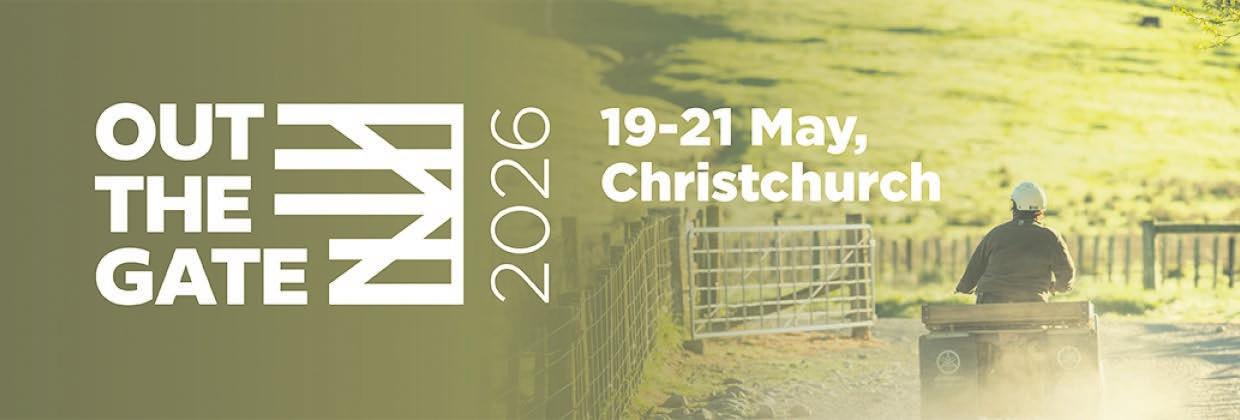
There are technologies and tools available to help us do this, and these will be amongst the topics discussed at Beef+Lamb New Zealand’s flagship event Out the Gate which will be held at Te Pae in Christchurch on 20-21 May.
Our region is fortunate to be hosting this event, and I really encourage Canterbury farmers to get along to a day and a half of
in-depth discussion and analysis. Out the Gate’s flagship day and science sessions are free to attend for farmers.
Centred around the theme “A sector fit for the future, today” Out the Gate is about setting farmers up to be future fit.
It will include expert insights into global markets, animal agriculture and food systems as well as a political panel.
There will be breakout sessions covering innovation, diversification, Maori agribusiness, farm electrification, AI, dairy-beef, biodiversity and more.
For the first time, the B+LNZ Awards Dinner will be part of Out the Gate and will also be held at Te Pae on Wednesday, 20 May.
This will be a fantastic opportunity to cele-
brate the people and technologies that make our red meat sector world leading.
The finalists have been named, and they will be profiled during the evening, and the winners of the eight award categories announced.
All the information about Out the Gate and the Awards Dinner is on the B+LNZ website.
Many of us are heading into the cooler months with a feed surplus. The challenge now is to maintain quality as we plan ahead to winter and next spring.
Farmers who are intensively grazing winter forage crops this winter are being encouraged to start putting together a Winter Grazing Plan and thinking about how they will manage their winter forage crops to protect both
animal welfare and their natural resources. These crops play an important role in keeping animals well-fed and healthy throughout the winter months, but it is important for farmers to assess and mitigate any risks associated with the practice.
Ideally, a winter grazing plan should include factors such as direction of grazing, the placement of fences, troughs, supplementary feed, critical source areas, proximity to waterways, shelter, loafing areas, and bad weather contingency plans.
There is a lot of information and support for farmers who are grazing winter forage crops so tap into these resources. The B+lNZ website is a good place to start: beeflambnz.com
Where tradition meets tomorrow
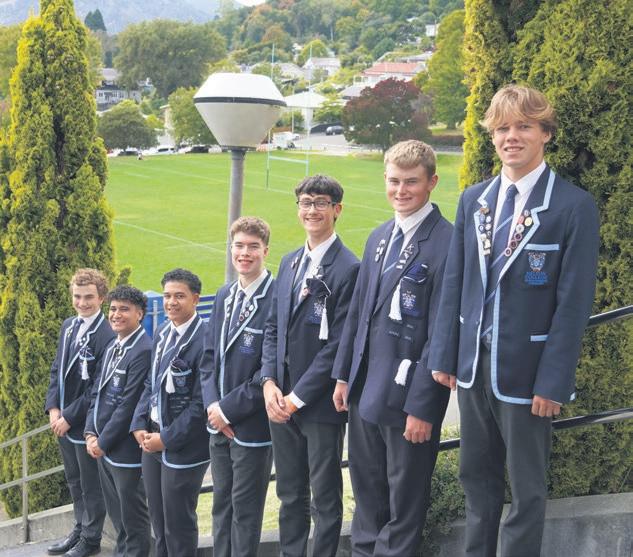
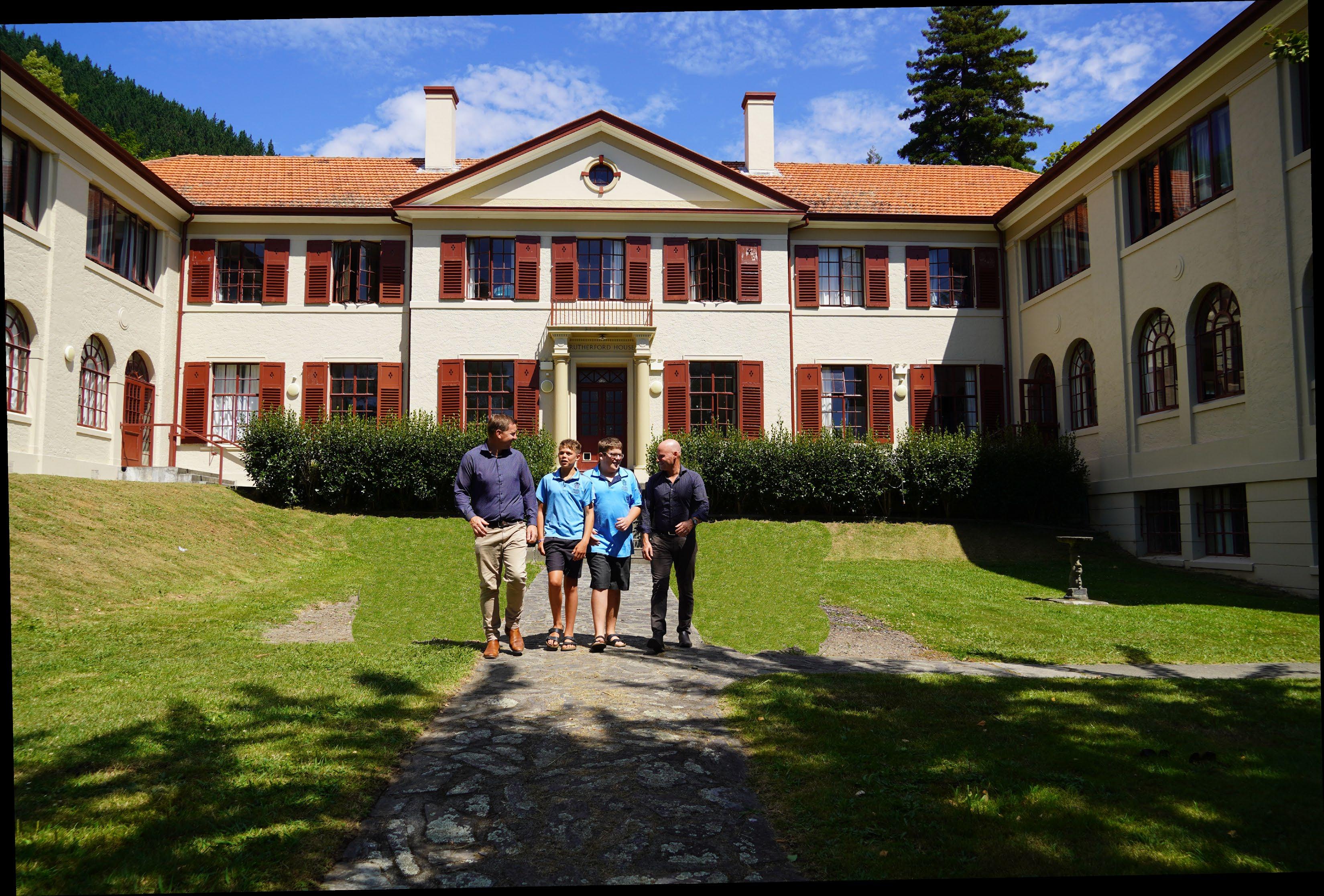
With almost 170 years of history, Nelson College has a proud tradition of providing boys with a supportive, purpose-driven environment to succeed academically, personally and socially. We specialise in boys’ education, tailoring our approach to meet the unique needs of young men.
] Advertorial supplied by ] Nelson College
From our curriculum to our pastoral care, every aspect of our school is designed to engage boys in meaningful learning experiences that prepare them for life in a rapidly changing world.
We encourage regular communication with home, particularly in those first crucial weeks. Houses remain open over weekends and public holidays with options available to board over the shorter school holidays.
Nelson is one of New Zealand’s most welcoming and liveable cities – big enough to offer opportunity, but small enough to ensure safety and community. It’s a step away from the complications and risks associated with big cities–and a step closer to peace of mind for you.
Nearby beaches, rivers, lakes, and mountains allow for year-round outdoor activity. Your son will be surrounded by nature, with national parks right on his doorstep, and cared for by emotionally invested staff who treat him as family.
Reminiscent of simpler times, your son can experience a life filled with friendship, wholesome adventure, and freedom. Board-
ing at Nelson College is built on these timeless values. Boys grow into young men with resilience, character, and friendships that last a lifetime.
Here, every boy has the chance to step up, in sport, culture, or leadership. With fewer barriers and a close-knit community, motivated young men can rise to the top, gaining experiences, sometimes harder to access in larger, more competitive systems.
Here, talent is nurtured, recognised, and given room to grow. Our students find themselves on the field, on the stage, and gaining national attention for their achievements sooner.
We strive for academic achievement, and we want our students to be happy and engaged. Combining traditional values with modern teaching methods, we’ve created an environment where boys can pursue their passions and discover their potential.
Our relationship with Nelson College for Girls allows us to learn apart, and together, providing opportunities for co-ed activities while retaining our single-sex character, the best of both worlds.
A sense of belonging is at the heart of our approach. As a boarder, your son will
enjoy a vibrant school life, with a variety of social clubs. We prioritise the development of leadership skills through opportunities like peer tutoring, our academic committee, and a student council.
Boarders are given access to gyms, music suites, and playing fields and enjoy the support of experienced and emotionally invested staff. Nestled in our picturesque campus, our heritage houses provide a
comfortable home environment in one of the country’s most desirable and sunny regions.
At Nelson College, we prepare young men for a future of success and resilience. When your son joins our community, he’ll be joining a place of potential and possibility. Register for our open day and make sure you consider every option as you search for the right boarding school for your son.
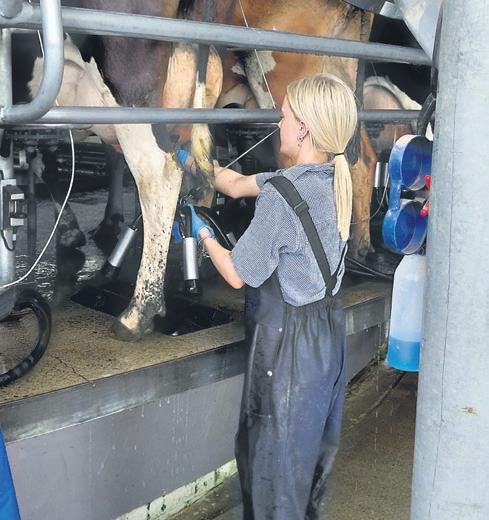
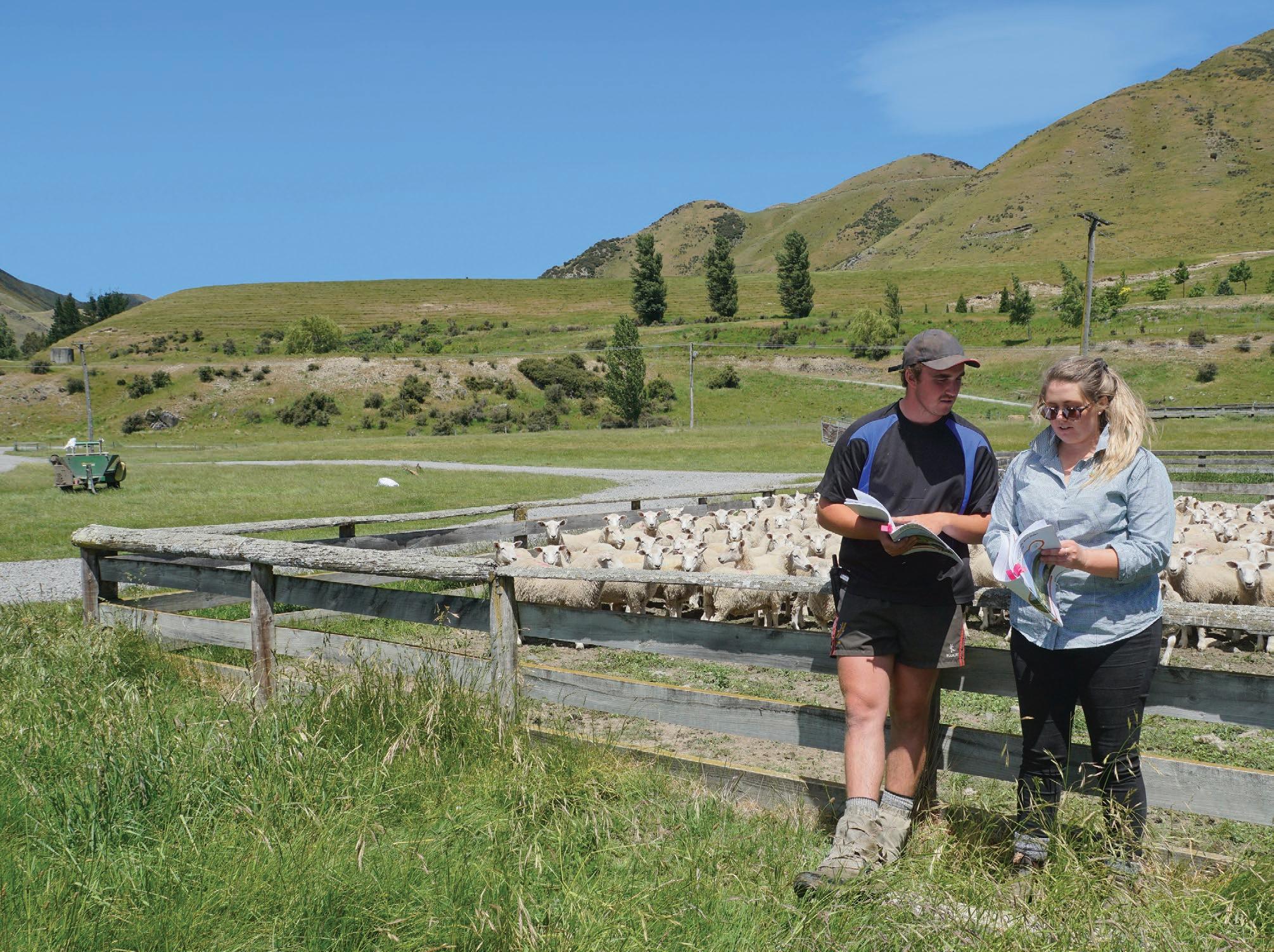
New Zealand’s dairy sector is taking a proactive step toward securing its future workforce with a training initiative designed specifically for the next generation of farmers.
]Article supplied by Dairy Training Ltd Dairy Training Ltd (DTL), a not-for-profit subsidiary wholly owned by DairyNZ is a dairyspecific training provider and delivers the NextGen Dairy Farmers Programme.
A practical 12 month on-farm training designed to prepare young people for careers in dairy farming and help build capability across New Zealand’s dairy sector.
NextGen host farmer Jacob says, “Programmes like this are really important for the future of the industry so that we get more young people coming through.”
The design of the programme was shaped by a farmers’ steering group who identified a growing need to bring more young people into the industry and for training that reflects the realities of modern dairy farming.
It develops the skills and knowledge dairy employers are seeking while supporting young people to transition successfully into the industry.
A series of micro-credentials are being developed as part of the programme, allowing participants to build practical competencies step by step. Participants complete the micro-credentials through regular face-to-face training days on working farms.
This approach allows students to gain re-
al-world experience while building confidence working with livestock, farm systems and equipment.
One of the key elements requested by the steering group was strong support for students as they transition into employment as a dairy assistant.
As a result, the programme includes guidance and training in soft skills, independent life skills, balancing the demands of training, work and life, and helping young trainees successfully adapt to rural work environments and the responsibilities of farm employment.
This holistic approach aims to help young people succeed both professionally and personally as they begin their dairy careers.
Farmers involved in the programme play an important role in mentoring participants, sharing knowledge and modelling the attitudes and behaviours required for long-term success in the industry.
“What I would say to other farmers out there thinking about taking on the programme is give it a go, if we don’t and we don’t get young people into the industry then were not going to have a future, they are the future of the dairy industry and we need to capture them before it’s too late,” says Aaron, a NextGen host farmer.
Beyond the practical training and life skills support, the programme places strong emphasis on pastoral care, which is coordinated by tutor and farmer Tania Burrows as well as Learning Advisor Tutor Jo Loe.
Jo serves as the main point of contact for the programme, overseeing students’ dayto-day wellbeing, providing ongoing support, and maintaining regular communication with host farmers to track each student’s progress and welfare.
She says, “the pastoral care provided is crucial. Host farmers have said that without it they probably wouldn’t have participated in the programme.
While running a farm, managing staff, looking after their own families and participating in their communities, they aren’t always able to provide the extra support young people need.”
After nearly two years of piloting and refinement, the programme is preparing for expansion, more farmers who want to contribute to developing the industry’s future workforce are needed.
Those interested in being involved are encouraged to connect with Dairy Training Ltd to learn more about how they can support the NextGen Dairy Farmers Programme
Developing skills: Budding dairy farmers are getting a head start through the NextGen Dairy Farmers Programme.
and help inspire the next generation. With strong support from farmers and industry stakeholders, the NextGen Dairy Farmers Programme has created a pathway for young people to build rewarding careers in New Zealand’s dairy sector.
Student applications and famer registrations can be completed on our website www.dairytraining.co.nz Student and general enquiries to Jo loe 027 323 2233, Host Farmer enquiries to Tania Burrows 022 025 5648.
Built for Canterbury farmers and lifestyle living
At Totalspan Canterbury, we understand what matters most on the land, buildings that work as hard as you do.
] Advertorial supplied by
] Totalspan Canterbury
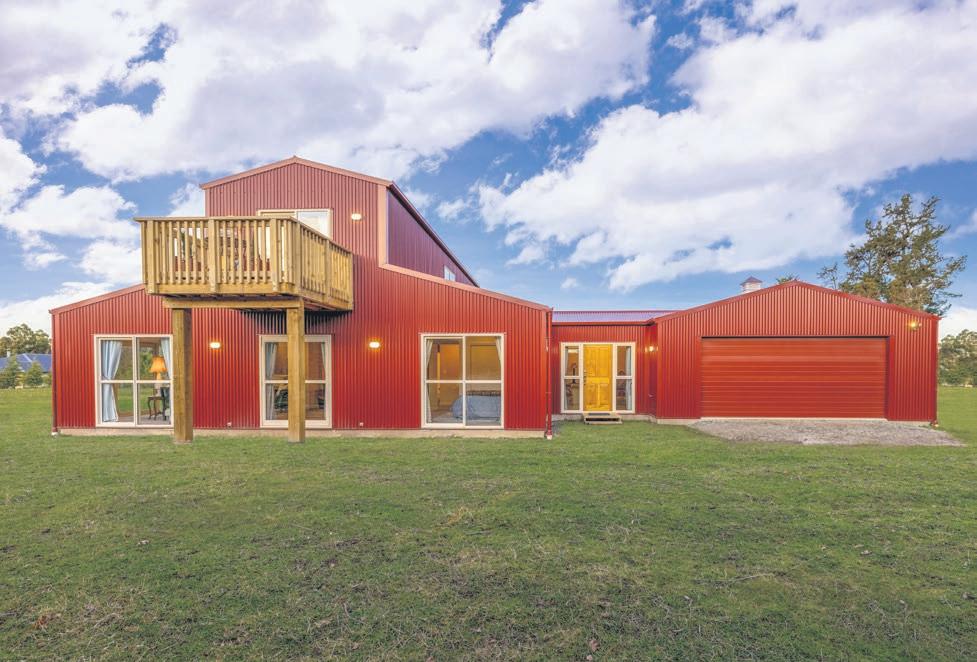
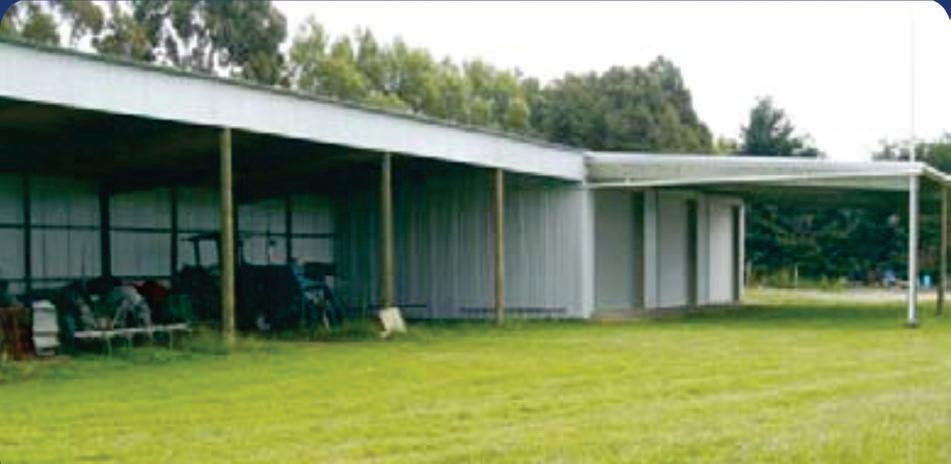
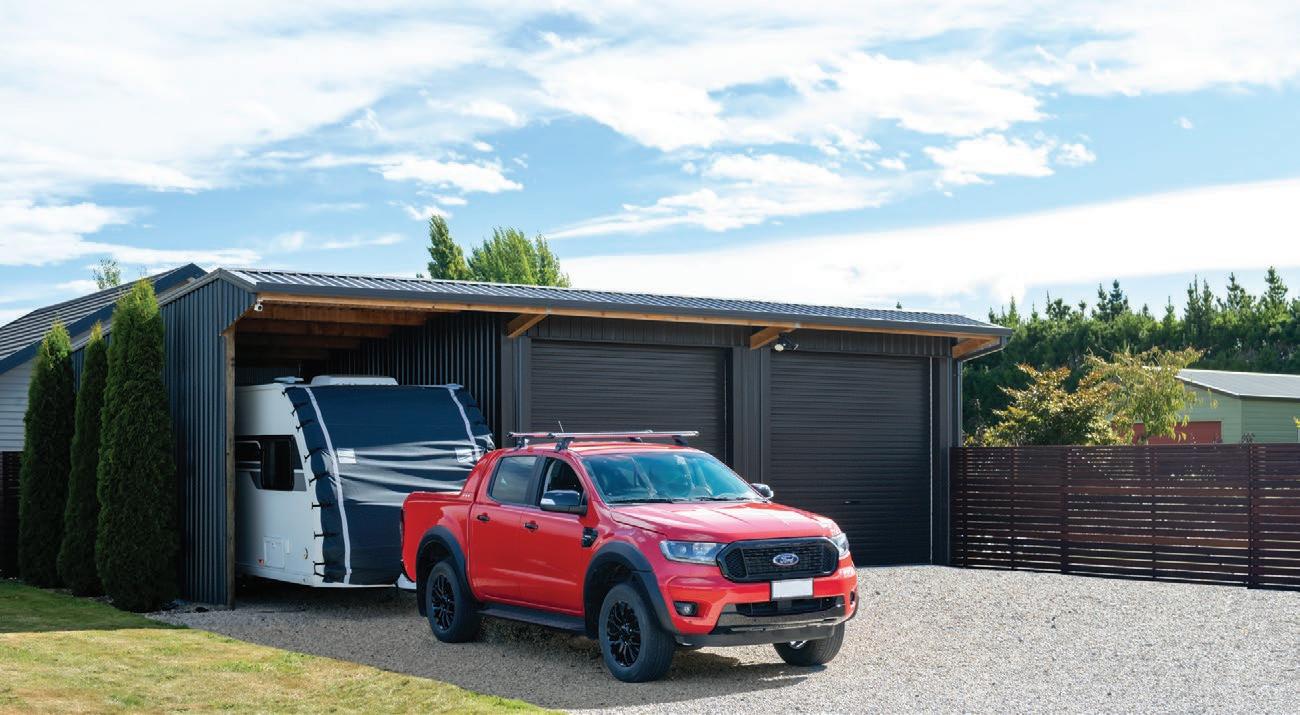
Whether it’s a hay shed, machinery workshop, horse arena, or a multi-use lifestyle structure, our team specialises in designing and delivering farm and lifestyle buildings built to last.
Proudly family-owned and operated by Billy Thompson and his uncle, Tom Fitzgerald, Totalspan Canterbury brings local knowledge, hands-on experience, and trusted service to every project.
Billy, a Licensed Building Practitioner (LBP) with over 20 years in residential, commercial, and rural construction, every build meets the highest standards of quality, safety, and compliance. Billy’s focus on precision and workmanship ensures your investment stands the test of time.
Tom’s background in public service, civil contracting, and operational management keeps each project running smoothly and efficiently, from consent to completion.
Curtis, our Operations Manager, is a third-generation builder with extensive ex-
perience across both commercial and residential sectors. His practical leadership ensures a seamless, on-schedule build process.
Brittany, our Administrator, is passionate about client satisfaction and ensures every customer enjoys a smooth and professional experience from first contact to handover.
Together, our team delivers top-quality steel buildings across the Canterbury region, combining trusted construction expertise with Totalspan’s proven engineering, and a genuine understanding of rural New Zealand life.
Why choose Totalspan Canterbury?
• We provide a full build contract service, ‘from concept to completion’.
• Our building teams are trained and approved by us to provide the best building quality, backed up by our 5-year workmanship guarantee.
• We offer quality steel buildings designed and built for life.
• Locally owned and operated, we are backed by one of New Zealand’s largest private building companies with over 40 years’ experience.
• We care about you and our staff so your building project will have a specific health and safety plan to ensure workplace safety.
• We stand behind our products with a 25-year Structural Guarantee.
• We offer peace of mind by making sure your building is fully insured by us while under construction.
• We offer you great advice, a site visit, design and quote all with no obligation.
Totalspan Canterbury building teams have built an extensive range of steel buildings backed by a 5-year workmanship guarantee and a 25-year Structural Guarantee.
Horticulture conference to be held in Wellington
More than 900 growers, employers, service providers and industry stakeholders are expected to gather in Wellington in July for the 2026 New Zealand Horticulture Conference.
] by Kent Caddick
Tickets are now on sale for the two-day event, hosted by Horticulture New Zealand at Takina Wellington Convention and Exhibition Centre on 28 and 29 July.
“The conference will once again deliver high-quality content with strong commercial relevance for growers and the wider horticulture sector,” HortNZ chief executive Kate Scott said.
“The conference promises to be stimulating and informative, featuring horticulturefocused speakers and sessions with real industry and business value. This year we’re bringing together the Horticulture Conference and the Recognised Seasonal Employer (RSE) Conference as one integrated two-day event.
“I know from the feedback we received following the conference last year that this
unified format will prove very popular, and Takina is a fantastic venue for bringing the sector together.”
Scott said the conference will feature three dedicated streams, strategic, RSE and technical, designed to appeal to a wide range of attendees.
“A dedicated forum for Recognised Seasonal Employers and countries involved in the scheme will be held on the day prior to the conference, providing the opportunity for targeted engagement.”
The event will also celebrate excellence across the sector through the Horticulture Industry Awards.
“As an industry, we love recognising our people,” Scott said.
“We’re looking forward to celebrating the individuals and teams who have made outstanding contributions to horticulture.”
The conference is organised by Horticulture New Zealand on behalf of the more than 4,300 growers it represents. The Horticulture New Zealand Annual General Meeting will al-
so be held during the conference.
For more information and to purchase tickets visit www.hortnz.co.nz
Quality content: HortNZ chief executive Kate Scott is promising strong commercial relevance for growers and the wider horticulture sector at this year’s New Zealand Horticulture Conference.
KiwiSaver breakthrough for young farmers
The Government is to allow young farmers to use their KiwiSaver funds to buy their first home or farm.
] by Kent Caddick
Finance Minister Nicola Willis and Commerce and Consumer Affairs Minister Scott Simpson have announced they will be making a technical change to the KiwiSaver Act.
It means farm staff in service tenancies (living on farm) will soon be able to use KiwiSaver to purchase a house without immediately moving in.
The move has been welcomed by Federated Farmers.
“Young Kiwi farmers have been incredibly frustrated that they haven’t been able to access their KiwiSaver to help get a foot on the property ladder,” Federated Farmers dairy chair Karl Dean said.
“This change to remove those barriers is a huge step forward for the next generation of farmers.”
Dean said until now, you could only use your KiwiSaver to purchase a house you’ll live in.
“That’s unfair because farm staff, along with the likes of rural teachers and rural po-
lice, haven’t been able to get on the property ladder, all because they live remotely and in employer-provided accommodation.
“They’ve been denied the same opportunity as their urban counterparts. This change means young rural workers can finally access their savings to secure financial security and begin building equity, even if they keep living in accommodation provided by their employer.”
The Government’s changes will also allow first-time farm buyers to use their KiwiSaver balances when buying through a commercial entity they majority own, provided it will be their principal place of residence.
“So many young farmers have worked hard to save a decent deposit but just aren’t able to get the bank’s backing to invest in their first farm.”
Dean said getting the KiwiSaver rules amended has been a key priority for Federated Farmers, forming part of its 12-point policy agenda for the incoming Government back in 2023.
Welcome change: Federated Farmers dairy chair Karl Dean is welcoming a move by the Government to change the KiwiSaver Act to allow young farmers to use their KiwiSaver funds to buy their first home or farm.
“The National Party committed to making the change, announcing so on the eve of the 2023 election.”
One young farmer celebrating the news is Waikato sharemilker Danielle Hovmand, who has challenged the Government several times to deliver on its 2023 campaign commitment.
“Talking with young farmers across the country, their most-asked question is: ‘When are we going to be able to use our KiwiSaver to better ourselves now, rather than having to wait until we retire, just because we’re farmers’,” Hovmand said.
“Many young people’s goal is to buy their first home and get on the property ladder, so it’s refreshing to see farmers will be able achieve this too.”
Hovmand said this will open doors for young farmers to use their hard-earned savings towards something that can have a huge impact on their financial position.
Legislation giving effect to the changes will be introduced to Parliament in the middle of the year.
Information for this article was supplied by Federated Farmers. For more go to: www.fedfarm.org.nz
Quality buildings to perfectly match
NZ processing sector names new scholars
Five young New Zealanders, including Lincoln University student Taya Lewis, have been selected for the Meat Industry Association (MIA) scholarship programme for 2026.
] by Kent Caddick
The new scholars, undergraduate students from Christchurch, Lincoln, Western Bay of Plenty, Marlborough and Wellington, have joined the programme alongside six returning scholars.
For the first time this year, two further recipients have also been awarded sponsorship to attend the 2026 Red Meat Conference Sector in September.
Every year, the MIA provides scholarships of $5,000 per annum for undergraduates and $10,000 per annum for post-graduate students. All are tertiary students, studying a subject relevant to the red meat processing industry and planning a career in the sector beyond the farm gate.
Participants in this year’s new scholar intake are pursuing subjects including agricultural science, food science, chemical and process engineering, operations and supply chain management, marketing and economics.
Returning scholars’ study subjects include commerce, marketing, environmental science and law.
Sirma Karapeeva, MIA chief executive, said the scholarship programme plays an important role in promoting the many and var-
ied opportunities in the red meat sector and supporting highly motivated young people to achieve their goals of rewarding careers in the industry.
“The red meat sector is a major contributor to the New Zealand economy and in order to sustain and grow the industry, we need to attract and nurture skilled and driven newcomers to our ranks,” Karapeeva said.
“It has been a privilege to meet our past and returning scholars, see their enthusiasm and passion for many different aspects of our sector and hear about what a positive experience the scholarship has been for them.
“I look forward to our new scholars enjoying an equally valuable experience and to seeing all of these young people going on to achieve the very best in their chosen fields of work, and to hopefully become leaders in our industry.”
As well as financial support, MIA scholars benefit from the organisation’s mentoring programme and participation in a range of industry events and networking opportunities.
Assistance may also be provided to help them to secure vacation or part-time work in the meat processing industry.
The new MIA scholars for 2026 are:
Ben Ballantyne, Brooklyn, Wellington, Bachelor of Commerce (marketing major, economics minor), University of Otago; Ella Hargreaves, Whakamarama, Western Bay of Plenty, Bachelor of Food Science (with minor in marketing), University of Otago; Taya lewis, lincoln, Bachelor of Commerce (agriculture), lincoln University; lara Murdoch, St Albans, Christchurch, Bachelor of Engineering (chemical and process Engineering jointly with operations and supply chain management), University of Canterbury; Shaun Woods, Blenheim, Bachelor of Agricultural Science, Massey University.
Recipients of sponsorship to the Red Meat Sector Conference are:
Katie Perkins, Dunedin, Bachelor of Science Agricultural Innovation, University of Otago; Freddie Saunders, lumsden, Southland, Bachelor of Commerce (agriculture and professional accounting), lincoln University.
NZ runs on unpaid heroes
This month I want us all to stop for a moment and think how this country would run if there weren’t any volunteers doing a huge range of good across every aspect of our lives.
] with Rob Cope-Williams
The most obvious is those who are involved with the local fire brigades. On call 24 hours a day and never seem to “have a couple” so can’t drive to the station.
Then there’s the raft of sports folk who give a huge number of hours coaching, refereeing or doing the running of the clubs.
With that in mind, now multiply the number of sporting clubs and the number of grades there are that need coaches etc. It is almost scary when you start looking at that figure across our amazing region.
Now add on the costs of petrol or fuel to get to and from each venue, whether for practice or the games.
Perhaps I should bring up the subject of
the weather. While most people will stay snug in their homes if the weather is foul, the volunteers are out there because they have committed themselves to their unpaid job.
Then, of course there’s the committees that run the clubs in a better manner than a lot of businesses.
They balance the income and outgoings in a manner that a trapeze artist walks along
a wire above astonished faces. Plus, they are the most amazing motivators getting others to attend working bees, helping to raise funds and getting others involved.
Now take a moment to think of the service clubs.
Again, you need a raft of volunteers to run the organisation. Perhaps the worst job is the poor soul who is expected to find a quest speaker every month, and before you ask, I am involved in other things and can’t do speaking roles anymore.
But wait, there’s more.
Organisations such as the Freemasons and the Order of St Lazarus, which most people have never heard of, donate millions of dollars to medical research and helping those less fortunate.
I have only scratched the surface of how amazing we Kiwis are, and I am sure that you are involved in areas I haven’t mentioned, but to all those who give time and money for their communities, take a bow, you are keeping New Zealand running without asking for any recognition or thanks.
Well done you.
Scholars: MIA 2025 scholars on a field trip to Parliament Buildings in Wellington last year.
EcoPond cutting methane emissions
Nearly 40 Canterbury dairy farmers are working with their processor Synlait and the world’s largest food producer Nestlé to reduce emissions and improve on-farm biodiversity.
] by Kent Caddick
The partnership’s next phase will deepen the use of digital tools to uplift farm efficiency, enabling the early deployment of, EcoPond, a Canterbury innovation which cuts methane emissions from dairy farms’ effluent ponds by over 90%.
Synlait’s Chief Revenue Officer Hamish Yates said the partnership’s growth is a great example of how businesses can work together to make a real difference to the planet.
“Synlait has a history of pioneering sustainability. This partnership means we, and our farmers, will maintain our leadership position,” Yates said.
“EcoPond is a scientifically proven ‘no brainer’ and the efficiency levers are impressive, showing farmers can reduce emissions while maintaining and even improving profitability.”
EcoPond is a simple and effective effluent pond treatment service which reduces methane emissions from effluent ponds (one of the largest source of emissions on a dairy farm) by over 90% while improving a pond’s performance.
Lincoln University has completed extensive research validating the effectiveness of EcoPond in agricultural settings. A pilot of the technology was undertaken on ten Synlait farms in 2025 which improved understanding of the delivery system requirements to enable EcoPond’s rollout to over 250 farms this year.
EcoPond is owned by Agnition, a subsidiary of Ravensdown focused on driving innovation in the agricultural sector through sustainable practices and advanced technologies.
Yates said EcoPond is already making a difference.
Methane reduction: EcoPond truck treating an effluent pond and helping to cut methane emissions from dairy farms’ ponds by over 90%.
“That is one of the reasons we are excited about this technology, its effect is instant. So far, we’ve treated around 30 ponds on Synlait farms, mitigating more than 2,700 tonnes of CO2-equivalent.
“To put that in perspective, it’s the same as 1,250 cars being taken off the road in under a year. It’s a gamechanger and only the first of many great things to come as a result of this partnership,” Yates said.
EcoPond Director Elliot Mercer said Synlait and Nestlé’s support has been crucial to enabling the development and early deployment of the technology.
“This backing helped move the latest version of EcoPond from a prototype into something that is now cutting emissions on New Zealand farms today,” Mercer said.
“We are working toward EcoPond being formally recognised as an approved methane reducing tool by the government’s Greenhouse Gas Inventory which would be a significant milestone.”
Information for this article was supplied by Synlait. For more go to: www.synlait.com.
Testing for effluent pond leaking
]
Advertorial supplied by Aqualinc
Most owners of dairy effluent storage ponds believe that their ponds don’t leak.
This is understandable, especially where they have been synthetically lined. However, the need to prove that this is the case is mounting.
The need for proof is driven by the requirement to run the farm at Good Management Practice (GMP). To meet GMP, storage facilities must be sealed and maintained to ensure containment of effluent.
The catalyst for requiring these tests is not always the regional council. It can also be the irrigation scheme or dairy company that ask for the tests to be carried out.
Although there may be a belief that the ponds won’t be leaking, without doing a test you can’t be sure.
This is reminiscent of the early days of introducing Farm Environment Plans (FEP), where some people would question the need for these, given that they considered themselves to be a good operator.
The response often given was that it was no longer sufficient to be a good operator, you now must prove that this is the case. This can be done via the FEP and auditing process, and with effluent storage ponds this can only be done by appropriate testing.
Testing needs to be accurate. In Canterbury the criteria for storage being a permitted activity is that leakage cannot exceed 1mm per day.
Does your effluent pond leak? How can you prove this?
In a dynamic environment where there may be evaporation, wind, pressure changes, rain, inflows into the pond etc. it’s not easy to measure and have the confidence that the results will have the required accuracy. Aqualinc have recently upgraded their pond testing equipment which has increased the degree of accuracy. It has also made it much easier to set up and dismantle, which saves time.
They have been busy recently carrying out tests, with many being done during the sum-
mer months. In the past it’s been a common misconception that these tests must be carried out when the dairy shed is not being used as this prevents in-flows during the test.
However, with the equipment, process and analysis Aqualinc use there is no reason that the tests can’t be done at any time of year.
For more information or to book your test call Aqualinc on 03 964 6521.
Got the runs? Without doing a test you can’t be sure your dairy effluent storage pond isn’t leaking.
‘Testing needs to be accurate. In Canterbury the criteria for storage being a permitted activity is that leakage cannot exceed 1mm per day.
Accurately control flow-rate to dose screened effluent into irrigation mainlines.
Jim Vaughan invented the first chopper pump in 1960 after working on local dairy pumps in his repair shop.
Vaughan s pump will handle raw effluent with ease, even that containing problem solids like rope, twine, or eartags.
These American made extreme duty pumps are commonly used for heavy industrial, or municipal wastewater pumping.
On farm they are great for:
• Raw effluent
Saucer pump-out
• Saucer/pit mixing
• Flows up to 2,000m3/hr
Separate solid from liquid & produce high quality dry bedding materials from raw dairy cow effluent for barn operations.
The RotoSieve rotating drum screen from Sweden is designed to effectively separate fine stringy fibres from a liquid stream.
The result is a solid free liquid effluent suitable for irrigation, current installations inject screened liquid effluent directly into irrigation mainlines.
Available in two sizes:
• Up to 18m3/hr
• Up to 36m3/hr
Take the stress out of recording where you have applied your effluent
Struggling to keep accurate effluent records? Want a simple, reliable way to prove where and when effluent has been applied?
Built for real farming
Our automated effluent proof of placement system is designed specifically for dairy farmers who need accurate records without the hassle.
Why farmers are switching:
• Agnostic, simple, cost-effective hardware that installs on any pivot—no need to replace existing infrastructure.
• Automatic compliance-level data recording—no more manual logs or guesswork.
• Clear, simple graphics showing exactly where effluent has been applied.
• Detailed records for every individual application event—perfect for audits and farm assurance.
• Easy to use for any team member, with upgrade options to full remote control when you’re ready.
• Flexible solutions to suit your system— direct injection, underslung, individual spans, or individual droppers.
This isn’t complicated tech for the sake of it. It’s a practical, farm-ready solution built to save you time, reduce risk, and give you peace of mind.
Whether you’re managing compliance, improving nutrient placement, or preparing for tighter regulations, this system gives you the confidence that it’s done right, every time.
Start simple. Scale when you’re ready.
Get started with automated recording today and upgrade to full remote control and advanced irrigation management as your operation grows. Future-proof your farm with a solution that works now and evolves with you.
Scalable, modular solutions that are fit for purpose.
Integrate Aquaflex soil moisture monitoring, pond level monitoring, Consent compliance monitoring for water, Irrigation control solutions, Fertigation, manual and remote-control options available.
Talk to us today about bringing automated effluent proof of placement to your farm.
Bottom lines for a farm plan system
Federated Farmers says it has made it clear to the Government that it could support a national farm plan system, but only if it meets four firm bottom lines.
] Article supplied by ] Federated Farmers
The Government is currently seeking feedback on its draft legislation to replace the Resource Management Act. This includes a proposal to introduce nationally consistent farm plans under the new Natural Environment Bill.
“We’ve been looking closely at the wording and it’s fair to say we have some serious concerns,” Federated Farmers vice president Colin Hurst said.
“Farm plans should be a positive, practical and enabling tool that help farmers improve environmental outcomes in a way that makes sense on their own farms.
“We don’t want to see farm plans adding unnecessary complexity, duplication, or another layer of expensive regulation for farmers to grapple with.
“Unfortunately, we don’t think the regulations as they’re currently drafted will deliver what farmers are expecting or what’s been sold to them by politicians.
“That’s why Federated Farmers is stepping up, drawing a line in the sand, and making it clear we have four clear bottom lines when it comes to farm plans.”
Hurst said Federated Farmers’ first and most important non-negotiable is that farm plans must replace regulation, not add to it.
“Farm plans need to be the primary compliance tool for farmers. That’s what will make a real difference for farming families,” Hurst said.
“That means a farm plan should be able to replace all of the overlapping rules, duplicated requirements and expensive resource consents from the current system.”
Under the proposed legislation, all commercial dairy farms and all other farms over
Bottom line: Federated Farmers vice president Colin Hurst says any replacement to the Resource Management Act shouldn’t add another layer of expensive regulation for farmers to grapple with.
thing. In fact, it’s actually adding more complexity and duplication for farmers,” he said.
The second bottom line is that farm plans must be proportionate, practical and scaled to risk.
“Farms that are low-impact and low-risk should be able to complete a simple, quick and easy plan themselves,” Hurst says.
“We agree that higher-risk farms may need more detailed plans, but there’s absolutely no point putting low-impact farms through the wringer.”
The third bottom line is that, while farm plans should be auditable, not every plan should be audited.
“Many farming activities are currently lowrisk and don’t require consents or ongoing oversight,” Hurst said.
“Requiring those activities to have a farm plan, and then auditing that plan, will put in place expensive red tape for absolutely no environmental gain.
“It will waste time and money that could be put to far better use improving the environment rather than just ticking boxes and shuffling paper.”
He said Federated Farmers is instead advocating for a model similar to the tax system.
50 hectares would be required to have a farm plan covering the whole farm.
However, Hurst said, those same farms could still be required to get a resource consent in addition to their farm plan.
“That framework doesn’t simplify any-
“That means everyone is expected to do the right thing, but only some are audited, either randomly or where non-compliance is suspected.”
The fourth bottom line is that existing farm plans must be recognised.
“Many farmers already have plans in place through industry programmes or local catchment groups,” Hurst said.
“Farmers have put real time, thought and money into these plans because they care about water quality.”
Federated Farmers wants existing plans that meet minimum standards to be recognised as equivalent.
“Forcing farmers to start again from scratch would be a completely unjustifiable waste of time and money,” Hurst said.
While the detailed regulations are still to come, Hurst said expectations are clear.
“Farm plans must be tailored to risk and, for higher-risk farms, should become a genuine one-stop shop that replaces permits and consents. That’s how farm plans can actually work.”
Dairy farms to benefit from new support for solar generation
DairyNZ is collaborating with EECA (the Energy Efficiency and Conservation Authority) to share real-life data and support dairy farmers considering solar energy and batteries.
] Article supplied by DairyNZ
Part of the Government’s Solar on farms initiative, the first 32 solar and battery demonstration farms, including six dairy farms, have been announced, receiving partial funding for inverters, batteries, and solar arrays.
The data and insights gathered as part of the programme will be shared with other farmers, with participating farms also hosting on farm demonstrations.
DairyNZ chief executive Campbell Parker said with the cost of energy increasing and the cost of solar dropping, it makes sense to look at renewable energy.
“The February storms illustrated just how crucial power is to keeping farms going,” Parker said.
“Farmers are busy and thinking about solar or a solar + battery system can feel like another costly item to add to the to-do list.
“This new initiative will provide the data and insights to give farmers confidence if solar might be right for them.
“Renewable energy is not just good for the environment; it makes financial sense
as well. Having an alternate power source means you can recover quickly and get back to business as usual sooner.”
Southland dairy farmers Michael Farmer and Chris Stewart at Fairbank Farm milk 800 cows on 300 hectares.
While not part of the programme, they’re part of growing group of farmers who are proving that solar power paired with battery storage isn’t just about cutting costs, it’s about resilience.
When a major windstorm knocked out power across the region in October 2025, many farmers faced dumping milk, alongside frantic generator hunts. Fairbank Farm kept milking, thanks to their solar array and 100kWh battery system.
“I don’t know why all dairy farmers don’t put in solar and battery system,” Stewart said.
“There’s no better time than now to put in a system.”
For more information on energy saving options on farm go to www.dairynz.co.nz/environment/climate/ energy-saving-on-farm
Seen the light: Southland dairy farmers Chris Stewart and Michael Farmer have seen the benefits of installing solar on their farm.
Empowering tomorrow’s dairy farming leaders
The South Island Dairy Event (SIDE) returns to Lincoln University this month, bringing a clear focus on the future of dairy farming and the people shaping it.
] by Kent Caddick
With the theme “Empowering Tomorrow’s Leaders to Turn Knowledge into Value,” SIDE continues its proud tradition as New Zealand’s leading dairy conference, run by farmers, for farmers.
Over three days (April 13 to 15), attendees will take part in ten interactive workshops designed to spark conversation, challenge thinking and drive innovation. The programme also includes a dedicated field trip visiting an apple orchard and a new dairy conversion, alongside three keynote speaker sessions.
Event Committee Chair Tom Chapman said a highlight of the event will be the Legends and Leaders of Dairy keynote session, bringing together respected dairy farmers Colin Glass, Leonie Guiney, and Will Grayling.
“All at different stages of their wealth journey, they will share what’s worked, what’s change, and what still holds true, while challenging the idea that ‘it was easier back then’,” Chapman said.
“Attendees will gain practical, relevant insights for every age and stage, along with alternative thinking and enduring principles of wealth creation.”
Chapman said the power of SIDE lies in its authenticity.
“Farmers speaking directly to farmers in our interactive workshops creates a dynamic where theory translates into practice right before your eyes.”
He said the 2026 event further highlights SIDE’s focus on developing leadership within the dairy sector.
The event is organised entirely by an Event Committee of industry leaders who are actively progressing through roles such as equity partnerships, contract milking and farm management, bringing real-world experience and fresh perspective to the programme.
SIDE Governance Group Chair, Glenn Jones, said they’re very goal driven and a really exciting group to be around.
“I’ve certainly learned a lot from them already. It’s going to be a conference that will really appeal to their colleagues or others in a similar position” Jones said.
“It is very much an event for our future generation and future leaders, organised by our future leaders.”
He said this year, SIDE has taken a fresh approach, stepping away from the traditional trade stand format to instead partner with organisations that genuinely support and invest in the future of the dairy industry.
Event partners including Fonterra, LIC, BNZ and DairyNZ will play a key role in the 2026 event, bringing their expertise, insight and commitment to farmers to the forefront.
Jones said he was excited to have these organisations on board and is looking forward to working closely with partners who share SIDE’s values and have both SIDE and the long-term success of the dairy sector firmly in their sights.
AGRI-SHELL
On again: The South Island Dairy Event will be held at lincoln University from April 13 to 15. limited discounted Earlybird registrations for SIDE 2026 are available at www.side.org.nz, along with full details of the programme and workshops. Up to date details will be released via SIDE Facebook page and website.
5
10
Crushed Mussel Shell For Raceways
War, crisis and why clover matters
Global conflict is once again exposing just how vulnerable New Zealand farming systems are to international supply chains.
] by Dr Gordon Rajendram
] Soil scientist
Rising fuel prices, disrupted shipping routes, and instability in key fertiliser-producing regions are driving up the cost of transport and nitrogen fertilisers such as urea. These are costs farmers cannot control, yet they directly impact farm profitability.
We have been here before. The difference now is that we have better knowledge and proven systems that show we do not need to rely so heavily on imported nitrogen.
A Canterbury case study I was involved in clearly demonstrated this. A large-scale dairy operation reduced nitrogen inputs from 290–300 kg N/ha/year down to under 190 kg N/ ha/year, while also cutting phosphate use from 45 kg/ha to 15 kg/ha annually.
At the same time, pasture production still reached up to 19 tonnes of dry matter per hectare and milk production wasn’t compromised.
The key was not applying more fertiliser, but improving soil pH and soil biology, nutrient balance, and clover performance.
Clover is central to this discussion. It is not just another pasture species, it is a natural nitrogen factory. Research has shown white clover can fix anywhere from 20 kg to as much as 400 kg N/ha/year in grazed systems, but under ideal conditions, 250-350 kg consistently is possible and even higher. That nitrogen is effectively free, produced in the paddock, and available to drive pasture growth without the cost of urea.
At the same time, clover is one of the highest-quality feeds available. With protein levels of around 34 percent compared to approximately 19 percent in ryegrass, it delivers significantly more nutritional value to livestock.
Higher energy, higher protein, and better mineral content, including calcium, all contribute to improved animal performance.
“One of the first things I look at is what the pasture looks like and how much white clover is in it.”
This translates directly into production. Research consistently shows higher liveweight gain and increased milk yield from cows grazing clover-rich pastures due to higher intake and better feed efficiency. Simply put, more clover means more milk.
However, excessive nitrogen fertiliser works against this system. Once nitrogen applications exceed around 200 kg N/ha/year,
clover fixation declines sharply, and at very high rates it can stop altogether.
Farmers then become locked into a cycle of dependency on purchased fertiliser, exactly the risk we are seeing play out today with global price volatility.
As I often say, “The more nitrogen you grow biologically through clover, the less you need to buy, and the more resilient your farming system becomes.”
The message is clear. In a world of rising costs and uncertainty, clover offers a proven pathway to reduce input costs, improve pasture quality, and lift milk production. It fixes the nitrogen problem naturally, efficiently, and economically.
Global events may be out of our control, but how we manage our soils and pastures is not.
‘Any fool can grow rye grass but it takes a real farmer to grow clover.
Thomas William Walker Emeritus Professor
Cautious commodity price recovery
Global dairy commodity prices have rallied this quarter, particularly for New Zealand and Australian product, despite the world’s milk supply continuing to grow and outpace demand.
] Article supplied by Rabobank
This is according to newly released research by specialist agribusiness bank Rabobank.
In its Q1 Global Dairy Quarterly report, Rabobank says overall global dairy prices have shown tentative signs of recovery in recent months, with consecutive increases seen in Global Dairy Trade (GDT) auctions lifting sentiment in the sector.
However, the report, by the bank’s RaboResearch division, notes that global dairy markets continue to be well supplied, with strong milk production growth across all the world’s major dairy-exporting regions, except Australia.
According to RaboResearch the global supply growth has been supported by relatively low livestock feed prices, which have encouraged production and kept milk supply levels elevated worldwide.
However, the report says current supply data does not yet indicate that the recent upward move in dairy markets is “structurally stable”.
RaboResearch senior agricultural analyst Emma Higgins said geopolitical instability, particularly the recent conflict with Iran, but also ongoing tensions involving Ukraine and other regions, could “quickly and temporarily disrupt global market balances”.
“As the Middle East is an important market for milk powders, fat-filled powders and evaporated milk, the dairy market will follow the evolving situation in Iran and possible trade disruptions closely.”
Higgins said abundant global milk supply had led to a pronounced impact on global dairy prices in the final quarter of 2025, with the prices of a number of dairy products,
including fats, whole milk powder, skimmed milk power, cheese and whey, declining.
The quarterly reports said dairy ‘protein’ markets, including skim milk powder (SMP), cheese and whey, had been more resilient, recording smaller price declines.
Higgins said whey prices had even continued to rise during this period, supported by strong demand for high-end protein products in many markets.
The report said milk production remains well above last year’s level in the EU, the US, South America and New Zealand.
“And, although the rate of growth is gradually returning to normal, the market is still flush with dairy products,” Higgins said.
“While total milk output remains ample, the availability of exportable product, particularly powders, has tightened.
“This is due to seasonal patterns in Oceania, shifting product mix in the U.S, and firm demand across multiple importing regions. This tightening has underpinned the modest price recovery seen in recent months.”
Looking ahead, RaboResearch expects global dairy markets to gradually tighten as
Price shock incoming: RaboResearch senior agricultural analyst Emma Higgins says geopolitical instability, particularly the recent conflict with Iran, but also ongoing tensions involving Ukraine and other regions, could quickly and temporarily disrupt global market balances.
farm margins come under pressure and supply growth cools across the major exporting regions.
The report said output from the world’s ‘big seven’ dairy exporters (the EU, US, New Zealand, Australia, Brazil, Argentina and Uruguay) is forecast to end 2026 only 0.2 per cent above the prior year, compared with an annual increase of 2.6 per cent in 2025.
“This outlook is largely driven by softening supply growth in South America, and Australia, as well as China,” Higgins said.
with Peter Burton
Fertiliser prices to escalate
With energy a major component of fertiliser production and New Zealand about as far away from production facilities as possible farmers current on-farm nutrient costs will never be cheaper.
where usage is considerably higher, fertiliser inputs can be markedly reduced due to increased root depth.
Around 30% of manufactured fertiliser travels through the Strait of Hormuz and either directly or indirectly its closure, temporary or otherwise, could mean some manufactured product may not be readily available.
For a small but significant number of farmers here that will be of little consequence. With farming being a competitive industry, they will prosper relative to their neighbours reliant on regular applications of synthetic nitrogen and water-soluble nutrient.
Recent soil tests from many farms show more than 1000kg/ha of phosphorus in the top 150mm. Annual removal of up to 50kg/ha means there is sufficient to cover any short-term deficit.
Soils naturally contain between 5,000-14,000kg N/ha within the root zone of pasture plants and with clover capable of fixing up to 670kg N/ha/ year (based on New Zealand research) the use of synthetic N can be eliminated.
Most intensively farmed South Island soils contain very large amounts of potassium and require little if any for pasture maintenance. Even in horticulture
Only a small proportion of total soil held nutrient is plant available at any given time. To ensure sufficient for maximum pasture and crop production nutrient utilised by plants must be rapidly replaced.
You can either use costly nutrients now or rely on the soil’s reserves, replenishing them later if required.
There is a group of farmers that are already in that position. They understand that the supply of nutrient is only one third of the soil fertility equation. The other two components are physical soil structures and biological activity.
The key to growing up to 20 tonnes of dry matter (DM)/ha with no reliance on synthetic nitrogen is stimulating the rapid organic cycle (ROC).
Calcium in the form of agricultural lime is the natural driver of beneficial soil biology of which the earthworm is the most obvious.
MAF research from the 1960’s showed, “numbers increased by 50% in response to 2.5 tonne of lime/ha and by 90% in response to 5 tonne/ha. Low populations are often associated with low calcium levels…”
Where earthworms flourish so do all other beneficial soil dwellers. Soils be-
The earthworm reproduction cycle:
Calcium in the form of agricultural lime is the natural driver of beneficial soil biology of which the earthworm is the most obvious.
come increasingly friable reducing damage by feet during wet weather.
Deep pugging may require mechanical remediation however shallow damage and scuffing quickly repairs with little visible sign after the next shower of rain.
The effect of plant roots being able to grow deeper into the soil profile means a reduction in the area where pasture renewal is necessary.
After a dry summer soil biology is at a low ebb and the quickest way to restore it is by applying either DoloZest or CalciZest. These products were developed close to thirty years ago by Functional Fertiliser Ltd and performance is well documented on commercial properties throughout the country.
For more info talk to Peter, 027 495 0041 or 0800 843 809.
Forest Management LTD
With 25 years experience in the industry, the Forest Management Team offer services in:
• Woodlot and shelterbelt harvesting
• Timber sales to domestic and export markets
• Forest establishment of harvested and greenfield sites
• Forest valuation
• Emission Trading Scheme advice and management
• Trainer/Assessor in NZQA forestry related units
Our highly experienced teams aim to ensure value optimisation in all aspects of forest management.
To find out more call us on 03 343 4101 or visit www.forestmanagement.co.nz
International events causing market turmoil
The positive news expressed in January and February has certainly turned turkey in March with fuel prices and fuel availability front and centre.
] with Allan laurie MNZIF
] Laurie Forestry Ltd
I have attempted to get as recent as possible information on the log trade in to this report at is sits mid-March. But I must emphasise this is a highly volatile and unpredictable space at present so by the time you see this report, some elements could have changed.
I could spend the next 400 words lambasting the illustrious Donald Trump but frankly the man is not worth the space. Suffice to say he appears hell bent on wrecking the world order and seemingly unstoppable. Let us hope the November US mid-term elections can sort that one out.
The Iran conflagration is destined to have major impacts. Your average vessel taking logs from a South Island Port to China in February and March was at a hire rate of US$30$33 per JAS cubic metre.
For those not familiar with the acronyms a JAS is a Japanese Agricultural Standard log measure. This is a fall back to the early export days in New Zealand (1960s) when the majority of log sales were to Japan and the measure has simply stuck.
April South Island to China voyages are
currently being quoted at US$42-$45 per JAS with the key driver being quoted as fuel (bunker) increases. A US$12 per m3 increase equates to about NZ$20.
This very significant increase could in part be off-set by market price increases and a drop in the FOREX rate. But the potential gains will be well off set with Harvesting and Cartage companies needing to increase their rates to pay for a higher fuel cost. In round numbers the current maths suggests export log sales netted back to the forest owner will see a drop of about NZ$8-15 per JAS m3.
I seriously hope that is not the net result by the time we get to end March, because a drop of that magnitude would see many forest owners calling harvest operations to a halt.
The impacts also stretch into our domestic sawmill customers who could run out of logs given reduced harvest activity. The sector wide impacts of the current prediction are likely the most significant our industry has experience since the Global Asian crisis.
We have been increasing our sales of logs in to containers with demand high and prices currently higher than break bulk equivalent grades. An initial demand of 40 to 50 containers per month has grown 250+ per
month with prices currently holding at February levels.
The very significant issue I have with all fuel companies is how can they lift the price of fuel at the pump when the fuel in the tank at the pump was purchased before the Brent Crude increase.
If there are 50 days’ supply of fuel in New Zealand why then does the fuel cost change immediately at the pump when, for the next 50 days, the fuel cost to suppliers is at the old price?
The current practice of lifting prices well before supply cost increases is nothing short of gouging by New Zealand fuel companies and that requires a please explain.
In China, daily consumption across the China eastern seaboard is a key market indicator. Daily consumption has been ticking along at 50-55,000 cubic metres a decrease of 5,000 m3 per day on February levels.
In early March the wholesale prices of lumber in China domestic dropped about RMB20 per m3. But commentators have suggested the China market is ticking along at good levels and all eyes are on New Zealand to see how supply will play out in April.
If supply does drop, and at present that would be worth taking a side bet on, sales
‘If there are 50 days’ supply of fuel in New Zealand why then does the fuel cost change immediately at the pump when, for the next 50 days, the fuel cost to suppliers is at the old price?
prices in China can be expected to increase further.
India is currently in similar shape as all eyes are what happens in China. Demand is strong with modest sales price increases in the mix.
But shipping is much more difficult, with some owners refusing charters or playing hard ball on price. Some are quoting the Strait of Hormuz being just a little too close for comfort but otherwise the cost of fuel dominates all negotiations.
As always, please remember the thoroughly important message. It remains, as always, fundamentally important, the only way forward for climate, country and the planet, is to get out there and plant more trees”.
WATER & IRRIGATION
What did irrigation deliver this season?
Autumn sets the scene for starting to leave irrigation behind. Pumps are slowing, pivots are parked, and attention begins to shift toward harvested yields, payouts, and winter pasture management.
] by Stephen McNally
Principal Technical Advisor
IrrigationNZ
It has been another mixed season. Periods of dry weather were punctuated by frustrating rainfall arriving at awkward times.
Some farms depended heavily on irrigation to maintain production, while in other cases sudden weather events damaged crops or interrupted scheduling plans.
Costs across the farm system are high, and the global situation continues to influence fuel, fertiliser, and other inputs. In seasons like this the performance of irrigation becomes even more important.
It’s a good time to ask, ‘did irrigation deliver value this year?’ While it might seem an obvious question, it is worth unpacking further.
Irrigation is not simply about applying water. Irrigation is an investment in infrastructure, energy, labour, and management decisions.
The expectation is that good practice irrigation stabilises production, protects against seasonal variability, and ultimately contributes to farm profitability. But being confident that it delivered the return you expected, is key to how you do things as you move forward.
Over recent seasons we have led a lot of discussion about the risks around irrigation system design, and the importance of properly commissioning new or renovated systems. If you installed new equipment or upgraded part of your system, you will have ideally looked at whether it performed as intended during commissioning.
Just as important as the equipment performance are the day-to-day decisions. Scheduling irrigation remains one of the most influential management choices farmers make.
Ask yourself: did the scheduling approach you used this year work for you? You might have been relying on one aspect more than another – soil moisture sensors, weather forecasts, evapotranspiration estimates, or simply field observation and experience.
Whatever method you used, make sure it gave you the right level of confidence in terms of timing and delivering the right volume of irrigation that was applied.
Did irrigators run reliably through the season? Were application depths consistent across paddocks? Address the realities –maybe maintenance issues interrupted irrigation when you most needed it. Even small issues such as blocked nozzles, worn sprinklers, or pressure losses can quietly reduce system performance over time.
The real test, of course, is the outcome in the paddock. Did the crops or pasture respond as expected? The best way to see this is if you can see the margin created by irrigation in the final production figures.
It may be as easy as saying ‘Irrigation supported strong growth and protected production through dry periods.’
For others the picture may be less certain
‘Ask yourself: did the scheduling approach you used this year work for you?
and may involve more exploring and more learning. If results were not what you hoped, now is the time to ask why. Break the questions down.
It may be one adjustment that really lifts things next season. Or it may be several adjustments needed. Or you may have a wider system performance issue that needs attention.
Either way, there are often opportunities to improve, if just by small increments – and it may start with better planning and decision support – or even using improved monitoring, better data or a different scheduling approach altogether.
Autumn reflection is one of the most valuable management tools available.
Wherever you land, with the season still fresh in your mind – make the most of the evidence that’s still visible in the paddocks aligning that with your records and financial outcomes, and using your time wisely so you can make improvements before next spring hits.
Taking time now to reflect on how well that control was used this season can make a real difference to the season ahead.
IRRIGATE WITH CONFIDENCE.
IRRIGATION SYSTEMS REMOTE MANAGEMENT PRECISION VRI
Measuring water to manage it well
] with Andrew Dark ] Aqualinc
For many Canterbury irrigators and other water users this won’t feel like a sudden change, as it has been signalled for a long time and larger takes are already subject to these requirements, but it does mark an important milestone in how water is managed in New Zealand.
The need to measure water takes comes back to a simple principle: you can’t manage what you don’t measure. That idea has underpinned the evolution of water measurement requirements over the past two decades, and it remains just as relevant today for regulators and water users.
Historically, water resources were managed largely on allocated volumes rather than actual use. While this worked when pressure on water resources was lower, there was no visibility of how much water was being used, and when, and how that aligned with catchment limits.
As irrigation expanded and competition for water increased, it became clear that better information was needed. National water metering regulations were introduced in 2010, initially focusing on larger water takes. Reporting was flexible, often relying on periodic manual downloads of meters. This meant that data was sometimes submitted long after it was collected, which limited its usefulness for real-time management.
An amendment to the regulations in 2020 introduced requirements for electronic reporting of water use data. The goal has remained consistent throughout: to provide reliable, timely information so water can be managed fairly, efficiently, and within environmental limits.
From a water user’s perspective, measured data helps to ensure that actual water use aligns with consented limits and provides confidence when engaging with regulators.
The September 2026 requirements
From September 2026, all water takes greater than five litres per second will need to be measured and recorded every 15 minutes, and the data telemetered directly to the Regional Council.
Data use: While regulation has been the driver for water measurement, the real opportunity lies in using the data well.
extend telemetry to all water takes above 5 L/s. This is the final tranche of the gradual roll-out of the regulations. The key change is automated data transfer to councils, removing the need for manual downloads and reporting.
Telemetry offers benefits well beyond compliance. It supports more responsive management, helping avoid unintended non-compliance when restrictions apply, or if irrigation systems are not operating as intended.
One option that is sometimes overlooked is whether a consented take needs to be above the 5 L/s threshold. In practice, some water permits are consented at rates that exceed what’s regularly required for the system to operate effectively.
If a higher rate is not actually needed, it may be beneficial to apply for a relatively simple change of consent conditions to reduce the consented rate below the measurement and telemetry threshold. This can be a cost-effective option to lower compliance obligations while still meeting onfarm water needs.
As with any consent change, this re-
quires careful consideration, but it’s an option worth exploring for some consent-holders. We recommend talking to a consenting expert if this may be applicable.
While regulation has been the driver for water measurement, the real opportunity lies in using the data well. Understanding actual water use can inform irrigation system design, scheduling, energy efficiency, and long-term planning.
In many cases, farmers discover they are using less water than their consent allows. This can be valuable information when facing increasing scrutiny of allocation and use.
Considering water meter data alongside soil moisture sensor data can provide even greater insights into the efficiency of water use.
Looking ahead, the September 2026 changes are best seen not as a new burden, but as the completion of a long signalled transition. Measurement and telemetry are now standard tools for managing Canterbury’s highly allocated water resources.
Clear signals for deer industry
DINZ has released its inaugural State of the Industry report, providing a comprehensive snapshot of the sector’s position and outlook.
] by Cameron Frecklington ] DINZ
The report covers key areas that include industry size and structure, prices and supply trends, export markets and demand, as well as costs and wider industry economics.
It is intended as a practical reference for those across the value chain and can be found on the DINZ website.
“Our goal with this report is to ensure farmers, processors, exporters and other industry stakeholders have access to the best information available,” said DINZ CEO Rhys Griffiths. “Good decisions depend on good data.
By bringing together the latest industry information, we aim to support business planning and help the industry respond with confidence to changing conditions.”
In mid-March, DINZ representatives attended the Meat Innovation Workshop in Palmerston North. Co-hosted by the Meat Industry Association and the Bioeconomy Science Institute, the workshop brought together researchers, processors, and technology providers to discuss emerging trends across the red meat sector. A strong theme throughout the day was the growing role of artificial intelligence, particularly its application in processing optimisation, quality assessment, and consumer insights.
One of the standout sessions was delivered by Dragon’s Den winner Ron Park, who presented on the use of targeted enzymes to improve meat tenderness and chewability. The work focused on developing products better suited to older consumers, for whom ease of eating can be a key factor in protein choice. The presentation sparked strong discussion around how science-led solutions can help maintain meat’s appeal across an ageing population, which aligns with DINZ’s ongoing interest in functional foods and venison’s strong nutritional profile.
“The high digestibility properties of venison, combined with its natural tenderness, are well positioned to capture some of the ageing population market,” says DINZ Markets Manager Terry Meikle. “In a world shifting back to whole functional foods, the concept of venison as medicine is fast becoming a reality.”
DINZ has finalised its Climate Change Strategy, setting out how the deer industry intends to respond to a rapidly changing global and regulatory environment. Climate pressures, shifting geopolitics, and growing expectations from overseas consumers are shaping how New Zealand food is produced and marketed.
The strategy follows several years of DINZ advocating for fair and practical regulation, much of which has now been confirmed by government.
Built around four practical pillars, the strategy focuses on: strengthening on farm and community resilience to weather extremes and regulatory demands; improving collaboration so that knowledge, research, and tools are shared widely across the industry;
empowering farmers to lead climate smart changes that lift efficiency, reduce emissions, and recognise gains already being made on farm; and positioning strong environmental performance as a genuine market advantage rather than a cost.
Put simply, this strategy recognises the progress some farmers have already made, but also acknowledges there is more to do if the deer industry is to stay viable, credible, and profitable as markets, regulation, and climate pressures continue to evolve.
Strong interest from Canterbury farmers is already building for an upcoming Freshwater Farm Plan workshop being delivered over two days in April.
The workshop, running on 8 and 22 April as part of the Integrated Farm Planning programme supported by Deer Industry New Zealand and funded by the Ministry for Primary Industries, is designed to help farmers understand and develop their own Freshwater Farm Plan in a practical and supportive environment.
Rather than focusing on theory, the sessions will be highly practical. Farmers will work directly on their own farms using mapping tools and the QCONZ platform, identifying key land uses, waterways, wetlands and critical source areas.
Sixteen farmers have already registered for the two-day workshop, highlighting the strong interest from local farmers wanting to get ahead of freshwater planning requirements and better understand what the process involves. As of writing, there were still limited places available, so if interested, head to the Events section of the DINZ website to register.
South Island excellence at dealer awards
The most outstanding CNH dealers from across Australia and New Zealand for the past year have been revealed, with several New Zealand dealerships amongst the major winners.
] Article supplied by CNH Whyteline from Paeroa on New Zealand’s North Island was named Case IH ANZ Dealer of the Year 2025 for one to two outlets.
South Island’s Cochranes was named the CNH Capital Dealer of the Year for New Zealand.
For Dealer Principal Chris West, the excitement of the achievement was unmistakable.
“It’s been a bit of a whirlwind ride with CNH over the last three to four years, and it really all started with Capital,” West said.
“I’d like to thank the CNH team, all of you guys are just legends and I appreciate all your help, so thanks very much for all that you do.”
The Dealer of the Year results are based on a number of different criteria, including finance and business management, performance in sales and marketing, and parts and service, a precision technology focus and total market share.
For Whyteline, who have owned and operated the business since 1976, the thrill of claiming the title for Case IH Dealer of the Year for one to two outlets is still sinking in.
Vaughn Carson, Agricultural Sales Consultant, said it was great recognition for his hardworking team.
“On behalf of Whyteline, we are a family focused business and we really appreciate this award. This year marks 50 years of being CNH dealers, which is something we’re incredibly proud of,” Carson said.
“We’ve got a great team—both men and the ladies—who have been dedicated to the cause. Our sales and service teams back us up every day, and that’s a core part of who we are.
“Our customers are very loyal and we appreciate that too, so this award is for them as well.”
CNH New Zealand Business Manager, John Gilbert, congratulated the winners, praising the level of excellence they’d achieved and the outstanding service they’d delivered to their customers.
“Congratulations to Whyteline and Cochranes for their well-deserved recognition,” Gilbert said.
“Our New Zealand dealer network has had to weather some challenges over the past year, but they continue to rise above it and have remained focused on delivering exceptional service to our customers.
“These awards reflect the dedication and professionalism of our dealers. We’re grateful to all of them for their ongoing support for our New Holland and Case IH brands.
“We’re proud of what our New Zealand dealers have achieved and look forward to another great year,” Gilbert said.
Stockists for:
• Chafer Adjustable Stream Bars for Liquid Fert applications.
• Needham Ag JD750a Air Seeder wearing parts, Discs, Bush Kits, Boots, Springs, Gauge wheels and firming wheels.
Driving on farm Profitability with high quality parts with proven performance.
The winners were announced at the Adelaide Oval during Case IH and New Holland annual dealer conference in South Australia.
Top job: Chris West, Barth landy, James Cochrane and Trent lindsay of Cochranes on receiving their CNH Capital Dealer of the Year 2025 trophy.