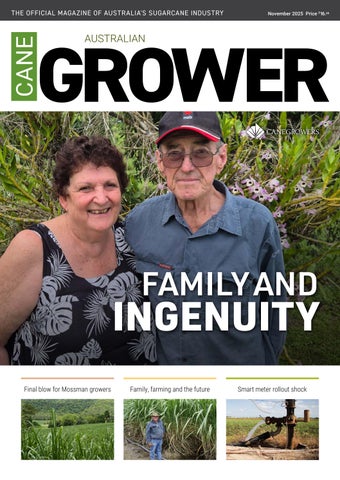
FAMILY AND INGENUITY
Final blow for Mossman growers
Final blow for Mossman growers



$4 5,000 excludes GST & Shipping
welcomes the new NFF leader
No more Mossman cane to go to Mulgrave Mill
Using growers’ sugar against them
Millers block QSL reforms, reigniting fairness debate
Smart meter irrigation issues
Mandated upgrades clash with pumps’ power demands
We need to have an industry mindset
International millers block fair QSL reform
One grower’s passion has brought cane back home
A new app helping growers with pesticide choices
Turning waste into wealth
One family’s fierce commitment to innovation
Editor: Robyn Devine
Advertising and Classifieds: Jane McGregor
Articles appearing in Australian Canegrower do not necessarily represent the policies or views of CANEGROWERS.
Published monthly by: CANEGROWERS, GPO Box 1032, Brisbane, Queensland 4001 Australia. ABN 94 089 992 969 Telephone: 07 3864 6444
Email: editor@canegrowers.com.au Website: www.canegrowers.com.au
Subscriptions
Yearly subscriptions for 12 hard copies (postage included)
• Within Australia: $190 inc GST
• Overseas (AUD): $290
12 Month Digital Subscription: $78 inc GST
COVER IMAGE
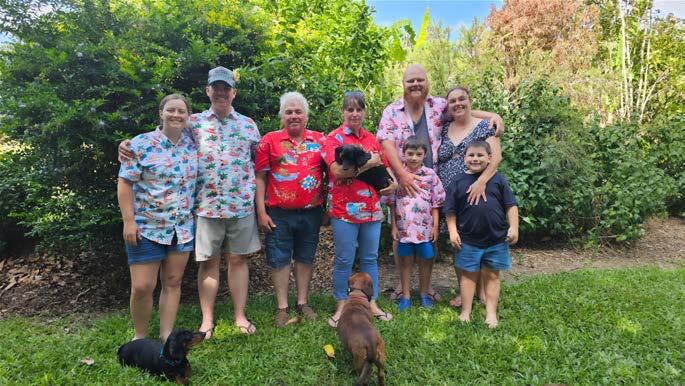
The Destro Family’s multigenerational operation is built on adding value at every step
Photo credit: Renee Cluff
Read more on page 24
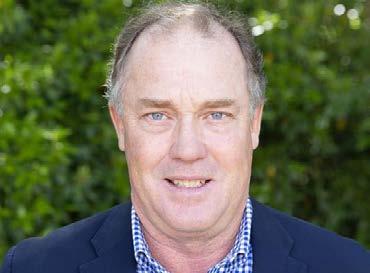
CANEGROWERS has congratulated Queensland farmer Hamish McIntyre on his election as President of the National Farmers’ Federation (NFF). Chairman Owen Menkens said Mr McIntyre’s leadership will strengthen the voice of Australian farmers on key issues like trade, energy, and sustainability, while also thanking outgoing president David “DJ” Jochinke for his service to the sector.
Based in southern Queensland, Mr McIntyre operates mixed farming, cattle and poultry enterprises, bringing extensive hands-on experience and a deep understanding of the challenges and opportunities facing regional industries.
Mr Menkens said CANEGROWERS looks forward to working closely with the new NFF leadership team to advance policies that support profitable, sustainable, and resilient farm businesses across Queensland and the nation.
The Queensland Government is delivering a statewide compliance campaign targeting the safe use of moving plant in the agriculture industry until 1 December 2025.
The campaign focuses on moving plant, with inspectors assessing compliance for farm machinery and worker interaction.
The campaign targets:
tractors, quad bikes and side-by-side vehicles
other mobile plant and vehicles such as telehandlers, trucks and utility vehicles (utes)
The Queensland Farmers’ Federation (QFF), in partnership with Biosecurity Queensland, has launched Biosecurity in the Boardroom, a new initiative urging businesses across all industries to recognise biosecurity as a key corporate risk.
QFF CEO Jo Sheppard said biosecurity must be embedded into business strategy and operations to protect continuity, reputation, and profitability.
Queensland’s Chief Biosecurity Officer, Dr Rachel Chay, said the state’s biosecurity landscape is becoming increasingly complex, with risks extending far beyond farms and regional areas.
To support this broader approach, QFF and Biosecurity Queensland have released a conversation guide to help companies assess and address biosecurity risks within their own operations.
To learn more visit business.qld.gov.au/ running-business/risk/biosecurity
operator competency and training
safe use and maintenance of machinery and attachments
in-field traffic management.
Workplace Health and Safety Queensland (WHSQ) inspectors can work with growers to meet any biosecurity requirements related to accessing your property.
Tips and resources to help growers prepare can be found from the Queensland WorkSafe website: worksafe.qld.gov.au
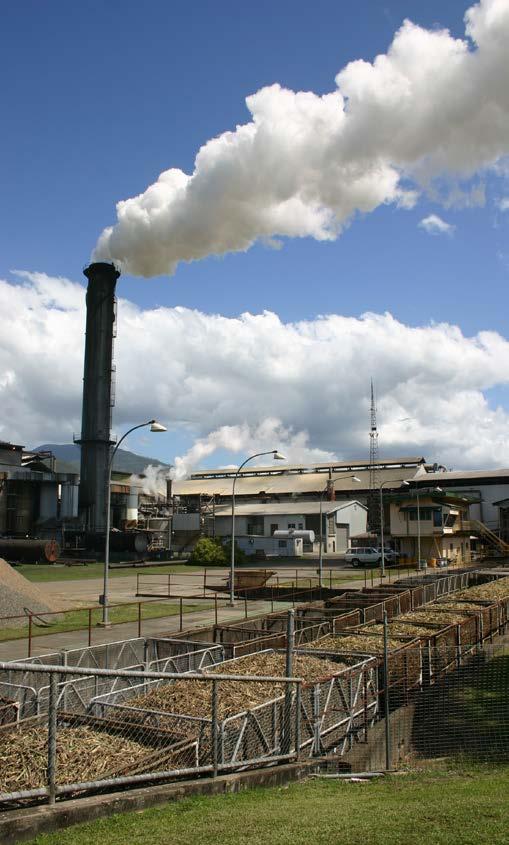
The Mossman sugarcane district’s crushing lifeline has been withdrawn.
The decline of sugarcane farming in the Mossman district has reached a critical juncture, with confirmation that MSF Sugar’s Mulgrave Mill will no longer accept cane from Mossman growers beyond this season.
The announcement has marked what many in the region are calling the final death knell for the local sugar industry, a sector that has underpinned the local economy and community for generations.
“Mossman needed the mill, and Mulgrave needed the cane,” said CANEGROWERS CEO Dan Galligan. “Unfortunately, an agreement still could not be reached.”
After the closure of Far Northern Milling’s Mossman Sugar Mill in December 2023, some 200,000 tonnes of cane annually was transported more than 100km south to the Mulgrave Mill – a stop-gap solution made viable only through substantial state government support.
The Queensland Government committed millions in subsidies and infrastructure upgrades to keep Mossman growers afloat. According to MSF Sugar, the arrangement allowed $34 million worth of cane to be processed over two years.
But despite efforts to develop a long-term logistics solution, including investment in specialised transport and receival equipment, MSF Sugar said the project is no longer viable.
“It is now clear that the majority of Mossman growers are reluctant to commit to produce sufficient cane volume for a sustainable long-distance cane haulage project,” the company stated.
The withdrawal of MSF Sugar’s support effectively ends any realistic path forward for Mossman growers to remain in cane. CANEGROWERS described the cancellation as deeply disappointing.
“This project represented the final opportunity for Mossman growers,” Mr Galligan said. “Its cancellation leaves major uncertainty for the district’s agricultural future.”
The loss of cane crushing access leaves growers in limbo. Many had been hoping for a longer-term solution. Others had begun exploring alternative crops, land uses, or a shift out of agriculture altogether.
CANEGROWERS said it will now focus on helping growers transition, with continued calls for government support and regional development planning.
“While this is not the outcome any of us wanted, our focus now is on standing with Mossman growers and helping the community chart a new path forward,” Mr Galligan said. “We’ll continue working with government and local industry to ensure the region’s farming heritage and community strength aren’t lost in the process.”
For many in Mossman, the end of sugar is more than economic – it’s emotional. The mill was a symbol of identity, stability, and shared legacy for more than 120 years. Its absence, and now the failure of the final haulage project, signals not just the end of an industry, but the end of an era.
Millers who no longer market through QSL have blocked reforms aimed at restoring fairness and accountability.
Growers are furious after Wilmar and MSF used the power of sugar supplied by Queensland farmers to vote down proposed changes to QSL’s constitution.
The reforms, which had unanimous grower support, would have stopped millers who no longer sell sugar through QSL from influencing its governance and board appointments.
Their votes have instead reignited anger over fairness, foreign interference and the erosion of growers’ right to access marketing options.
At its Annual General Meeting (AGM) last month, QSL proposed constitutional reform to align voting rights with members who actually use its services. The proposal required 75% support from both mill owner and grower members to pass.
While the grower vote was unanimous in favour, Wilmar and MSF Sugar’s opposition was enough to reject the changes. As a result, miller voting rights remain tied to the sugar volumes that growers in their regions nominate to QSL.
If passed, the change would have prevented millers who no longer market through QSL (including Wilmar and MSF Sugar) from influencing key decisions at the organisation including board selection processes.
QSL Chairman Guy Cowan did not mince words in the aftermath of the vote. “Despite marketing no sugar through QSL, our competitors Wilmar and MSF Sugar were able to use the sugar nominations from growers who actively choose not to market with them in order to vote and maintain control of voting outcomes,” Mr Cowan said.
“There is no legitimate reason at all for these millers to continue to have a say in QSL – the largest marketer of growers’ sugar – and to do so erodes the Marketing Choice legislation that growers fought so hard for to protect their interests.
“It is absolutely anti-competitive and, to be frank, hypocritical for these millers to retain voting control in their major competitor.”
CANEGROWERS Chair, Owen Menkens, said while the result was not unexpected, it is extremely disappointing.
“It’s just an absurd situation,” Mr Menkens said.
“Through historical legacy, direct competitors to QSL have influence over its governance – even a say in how Board directors are selected. That would never be accepted in any other company, and it shouldn’t be accepted here.
“I am surprised that Wilmar and MSF have again gone against the wishes of growers – and even their fellow millers.
“It’s a decade since the Queensland Parliament had to step in to ensure growers had access to a competitive sugar marketing environment – the fact that our two largest sugar milling companies are still trying to impose their corporate strategy over the will of Australian growers is extraordinary.
“So it seems that despite the will of growers and lawmakers – and in stark contrast to CANEGROWERS ’ efforts over the past decade to bring the growing and milling sectors together to move forward in the best interests of the entire industry –Wilmar and MSF never gave up their monopolistic ambitions, and they have chosen corporate manoeuvring over industry stability.
“It seems ... Wilmar and MSF never gave up their monopolistic ambitions and have chosen corporate manoeuvring over industry stability”
“This is not the only example of corporate pressure within the industry. These same two companies used their influence on the board of Sugar Terminals Limited (STL) to push through a decision to end QSL’s long-standing and highly successful agreement to operate the industry-owned bulk sugar terminals. That decision is due to take effect in July 2026.
“Once that happens, QSL will rely solely on its marketing business – selling sugar on behalf of growers and some millers. And that’s the very business over which its direct overseas-owned competitors still hold undue influence.
“Make no mistake – this is an attempt to damage QSL’s ability to be a viable marketing competitor and therefore stifle marketing choice.
“This is clearly an untenable situation and CANEGROWERS will not stand for it.”
The vote came as QSL prepares to cease its long-held management of the state’s bulk sugar terminals by mid-2026, following a controversial decision by STL to insource operations.
The outsized influence Wilmar holds at STL, where it is the only miller represented on the board, has raised conflict of interest concerns. The sugar terminal assets were originally funded by growers and the broader sugar industry.
There are now fears of a loss of visibility and control over the infrastructure and with it, grower choice.
STL will hold its AGM on 19 November.
Stay informed through CANEGROWERS
Participate in STL active shareholder verification to make your vote count
Consider succession planning for STL shares to ensure grower control remains active
Make sure you are active and involved in marketing choice decisions
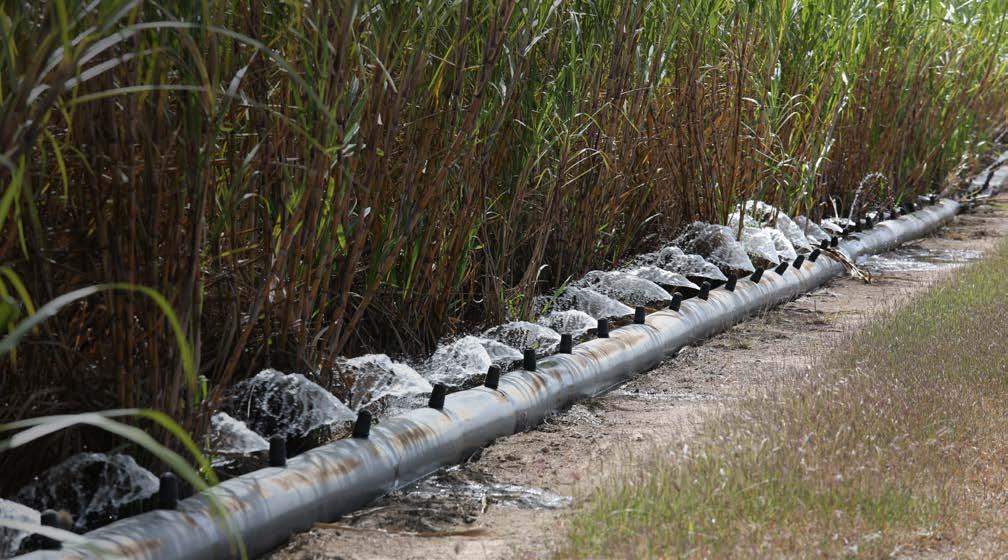
Federally mandated smart meter upgrades are clashing with the power demands of irrigation pumps.
When Mackay sugarcane grower Robert Thompson first received notice about an upgrade to his electricity meter, he quickly discovered it could cost him up to $10,000 – or force him to shut down a key irrigation pump.
The reason? A nationwide rollout of smart meters, mandated under federal energy reforms, is clashing with the high-power demands of rural irrigation systems, leaving farmers like Robert to pay the price.
“My current meter works perfectly fine, it’s rated at 125 Amps,” Robert says. “But the new ones they want to replace it with just won’t handle the power my pumps draw. I either downgrade my equipment or pay thousands to fix a problem I didn’t create.”
Smart meters are being installed across Australia under the Power of Choice reforms and in accordance with National Electricity Rules (NER)
and Australian Standard AS 62052.31. These digital meters are designed to provide better usage data, allow for remote reading, and give access to flexible time-of-use tariffs.
But there’s a major technical limitation: under national rules, smart meters must include an 80 Amp protection fuse and are not permitted to be directly connected to loads exceeding 100 Amps.
For many farmers, particularly those running irrigation pumps rated at 35kW or above, this is a serious problem.
Equipment without a soft start mechanism can draw a start-up inrush current many times its operating current, frequently tripping the fuse in the new smart meters.
The result? Unexpected outages, damaged equipment, or the need for expensive switchboard upgrades to Current Transformer (CT) metering, a solution more commonly seen in large industrial sites.
What are the costs?
Robert has a 50kW motor that operates at between 95 and 100
Ergon encourages customers with high-startup-load equipment to:
Review pump ratings and startup currents
Consider soft start solutions, though this is at the customer’s own expense
Request a deferral of smart meter installation if they are above the 80 Amp threshold
Submit details online to alert Ergon and begin discussions about a tailored solution.
For more information and to notify Ergon that your connection draws loads greater than 80 Amps, go to: www.ergon.com.au/retail/ business/support-forfarmers
Amps – or higher during startup. His options aren’t great:
Install a Variable Speed Drive (VSD) or soft starter – typically costing $7,500+;
Upgrade to CT metering, with total costs (hardware, labour, approvals) reaching $10,000 or more;
Downgrade pump capacity –risking irrigation reliability in hot or dry periods.
Across regional Queensland, multiple growers are discovering the same issue – either after the installation or during consultation with energy retailers like Ergon Energy Retail and Yurika, the state’s metering coordinator.
Ergon has acknowledged the problem, listing it on its website under the Support for Farmers section. The utility states that it is “committed to supporting customers during the transition to smart metering,
particularly those customers with pumps, motors or other loads with a large start-up current exceeding 80 Amps.”
Growers can notify Ergon if they believe their equipment exceeds the current threshold via an online form, potentially deferring meter swaps while longerterm solutions are explored. Robert has managed to delay installation for now.
“Once they change the meter, it becomes a me problem,” he says. “They’re not replacing like for like.”
The issue stems from national and state level compliance rules, which smart meter providers must follow. The requirements are reflected across several frameworks.
Energy Queensland (EQL) has advised CANEGROWERS that trying to roll back or tweak the rules is difficult.
“EQL has investigated the option of changes to these requirements, which would involve both national consultation processes through the Australian Energy Market Commission and Competitive Metering Industry Group, and state consultation on the Queensland Electricity Connection Manual, and assesses this could take several years to complete, with no guarantee of success,” a spokesperson said. A smaller scale and more affordable CT metering solution is also being investigated. Robert says for now, irrigators are being asked to shoulder both the cost and the complexity of a national upgrade program not designed with them in mind.
“Forcing smart meters onto us without a fit-for-purpose solution – and then making us pay for the fix – that’s not smart policy,” he said. “The more people that know about this, the better because it just doesn’t pass the pub test.”


BY DAN GALLIGAN, CEO, CANEGROWERS
Anyone familiar with CANEGROWERS knows that we’re one of Queensland’s leading agricultural industry bodies, and our focus is entirely on looking after grower interests.
This is hardly surprising when you consider our Board of Directors is made up entirely of cane growers, as is our 19-member Policy Council, which includes one grower representative from each mill area across the state.
Add to that the almost 90 grower-elected district representatives – again, all growers – and it’s clear that our organisation is truly grower-led from top to bottom.
Our leadership networks come from diverse backgrounds, though. Many started off as contractors or farm workers, while others came from roles within the mills as trades, operational or lab staff.
Our priorities focus squarely on the issues that impact cane farming businesses, and our organisational strategy reflects this clearly. Again, no surprise, given it was shaped and developed by growers themselves.
At the same time, our strategy, membership surveys, and ongoing conversations with growers (large and small) consistently reinforce one message – growers understand that for individual businesses to thrive, the whole industry must succeed.
Members have asked CANEGROWERS to act in the best interests of the overall development of the industry, so that we may all “grow” together.
It’s no surprise growers feel that way. They’ve lived the history – from investing in cooperative mills and building cane rail networks to helping construct bulk sugar terminals and driving efforts around trade policy and diversification.
It can be summarised by simply saying that at CANEGROWERS we act in the interests of the industry, but we do so with a laser like focus on all issues from the perspectives of what it means for growers.
From a harvester’s reliance on timely bin deliveries, to the need for equity so no grower is disadvantaged by an extended season, right through to a mill’s viability depending on the confidence of consistent cane supply – every part of the system is interconnected.
It is not a myth that the industry success is entirely reliant on us working together at all levels.
We see it when we do international trade negotiations or fight for a share of funding for R&D dollars – we need to have an industry mind set.
These are facts.
The story that dominates this issue of the magazine – that surrounding the QSL AGM – is a reminder that unfortunately not everyone in our industry shares this understanding.
Why would you choose corporate manoeuvring over industry stability? I don’t think we will ever understand that. Perhaps it’s as simple as some people have said –“just because they can”.
But we’ll keep pushing forward, because the facts haven’t changed – our shared success depends on our ability to pull together in the same direction.
And as always, our first priority is the growers –the backbone of this industry.
It’s unfortunate that not everyone takes this lesson to heart, but at CANEGROWERS we know there are still many who are willing, capable and eager to work alongside growers to share in opportunity and growth.
PROTECTING WHAT MATTERS MOST TO OUR MEMBERS & REGIONAL QLD
With over 25 years’ experience in the insurance industry and a strong connection to the regional community, Brad works closely with his clients and the community to deliver tailored insurance solutions that protect what matters most. Based in Cairns, Brad understands the unique challenges faced by his clients in Far North Queensland.
Farm Insurance
Machinery & Harvester Coverage
Business Insurance
Complex Claims
Home, Motor & Contents
Contract Harvester Solutions
Career snapshot
8 years as CANEGROWERS Insurance Manager (FNQ)
Banking Sector
Retail Underwriting (Suncorp Group)
Extensive Claims Management
True Local knowledge
Backed by CANEGROWERS and the Community Broker Network (CBN)
Builds a trustworthy Client/Broker relationship
Dedicated to delivering tailored solutions that support long-term financial security
Committed to exceptional service and ongoing client support
“I have been part of the CANEGROWERS family for more than four decades, as my mother worked at CANEGROWERS Cairns from the late 70’s until the day she retired. I have seen offices move and two mills close during my lifetime. I started my insurance career at Suncorp some 25 years ago.”
BRAD HANCOCK | CANEGROWERS Insurance Broker — Far Nth QLD brad_hancock@canegrowers.com.au 0408 630 426
CANEGROWERS Insurance is a Corporate Authorised Representative (CAR No 297969) for Community Broker Network ABN 60 096 916 184 AFSL 233750
CANEGROWERS ’ experienced insurance professionals service all sugarcane regions in Queensland
FAR NORTH QUEENSLAND & PROSERPINE
BRAD HANCOCK
Brad_Hancock@canegrowers.com.au 0408 630 426
HERBERT RIVER
FRANK SCARDAMAGLIA
Frank_Scardamaglia@canegrowers.com.au 0475 818 800
BURDEKIN 07 4790 3606 admin@solarisinsurance.com.au
MACKAY
GEOFFREY YOUNGS
Geoffrey_Youngs@canegrowers.com.au 07 4944 2620
KAYLAH GIDDY
Kaylah_Giddy@canegrowers.com.au 07 4944 2615
RESHMI SINGH
Reshmi_Singh@canegrowers.com.au 07 4944 2615
WIDE BAY
RAY GOODWIN
Ray_Goodwin@canegrowers.com.au 0418 891 783
SOUTHERN QLD & NORTHERN NSW
HELLE COOK
Helle_Cook@canegrowers.com.au 07 3864 6417

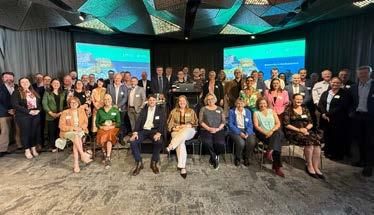
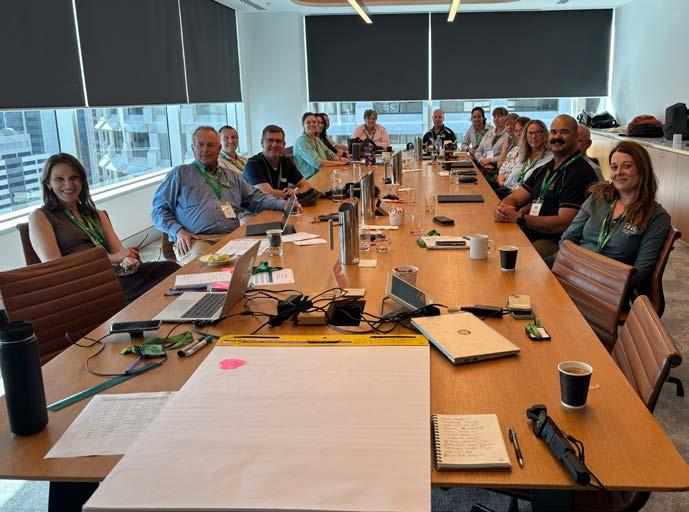
Smartcane BMP facilitators from across Queensland’s cane-growing regions came together in Brisbane last month for two energising days of collaboration, connection, and forward thinking.
The conference brought together the people who work directly with growers to help them achieve and maintain Best Management Practice (BMP) accreditation, the backbone of the industry’s commitment to sustainability and productivity.
For Tableland facilitator Kate Scullard, the gathering was about more than presentations and policy updates.
“It’s a really good opportunity to learn about the program, learn some hacks, how to approach things and hopefully come away with some enthusiasm for what’s next,” she said. “I’m taking home new ideas I can implement in my region straight away.”
Program coordinator Lindsey Perry said the event highlighted how differently each district approaches BMP while sharing a common goal.
“It’s been great to hear how districts are working with growers and what’s happening in the regions,” she said. “Hopefully everyone will go away with new ideas about how to operate the program and think about its future.”
With all districts represented, the event marked a milestone for Smartcane BMP – a program that continues to grow stronger through collaboration. While the Bundaberg district traditionally uses an alternative
accreditation system, organisers are hopeful that future Smartcane BMP events will bring every region under the same umbrella.
“It would be a great outcome for the industry unity to see statewide coverage under Smartcane BMP,” Lindsey said.
The conference program included opening remarks from CANEGROWERS CEO Dan Galligan on the importance of Smartcane BMP as an advocacy vehicle for the industry as a whole, updates on nutrient management tools, record keeping apps and breakout sessions to consider broader stakeholder needs and how to deliver value back to growers plus valuable time for networking, sharing success stories, tackling challenges, and exploring where Smartcane BMP can head next.
The feedback was overwhelmingly positive, with the cross pollination of ideas between districts and meeting other facilitators being the highlight. Tracey Jensen (Isis) remarked “so many lightbulb moments during these discussions on how to do things differently / better” with facilitators keen to make the conference an regular event, a standing opportunity to re-energise and align efforts across Queensland’s sugarcane regions.
In an industry that thrives on innovation and shared knowledge, the gathering reminded everyone why Smartcane BMP works: it’s powered by people.
Here’s to the facilitators leading the charge, helping growers in the paddocks and keep Queensland cane growing strong.
BY OWEN MENKENS, Chair, CANEGROWERS

As we head into AGM season, there have been some concerning developments in the area of sugar marketing.
On 22 October, I attended the QSL Annual General Meeting in Brisbane.
At this meeting, QSL proposed changes to its constitution to modernise it in line with how sugar marketing has operated for more than a decade.
Essentially, the proposal would have changed the voting rights of miller and grower members so that only those who market sugar through QSL could hold voting rights.
For millers, this meant only those marketing their own Miller Economic Interest (MEI) sugar with QSL would retain a vote as a QSL member.
At present, millers can use the total sugar marketed –including all Grower Economic Interest (GEI) sugar that is processed at their mills and marketed through QSL – to vote as members.
This structure is inherently unfair. It means millers like Wilmar and MSF, both of whom market none of their own MEI sugar through QSL, and in fact as miller marketers themselves are direct competitors of QSL, still hold a powerful say in QSL’s governance.
CANEGROWERS strongly supported the QSL proposal, as did grower members representing each mill area across the state. Bundaberg, Isis and Mackay Sugar milling companies also supported it.
Unfortunately, Wilmar and MSF voted against it, and because the motion required 75% support from both miller and grower members, it was defeated. This is a very disappointing outcome for the future of the industry.
Importantly, the proposed changes stipulated that they would also only taken effect once QSL ceased operating the terminals – addressing, once and for all, the argument that QSL faces a conflict of interest between marketing and operations. An argument most notably made by Wilmar.
Simply put, if QSL exits the terminals, then mills that do not market through QSL should also exit QSL.
Prior to the AGM, I wrote to all QSL miller members urging support for the changes, as they are vital to maintaining the integrity of grower choice.
The decision by Wilmar and MSF to reject theses changes shows they still want to maintain influence over their marketing rival.
CANEGROWERS will not stand still on this issue. We are working with QSL, government and the mills to seek a resolution.
Marketing choice is a fundamental pillar of the sugar industry, and if growers were to lose it, Queensland sugar production would collapse. It’s a shame that some milling companies in this industry have priorities their own self interest over and above the stability of the industry.
Plant the seeds for a stronger financial future. We offer financial guidance to help farmers like you protect, invest, and grow.
Morgans are proud supporters of Canegrowers.



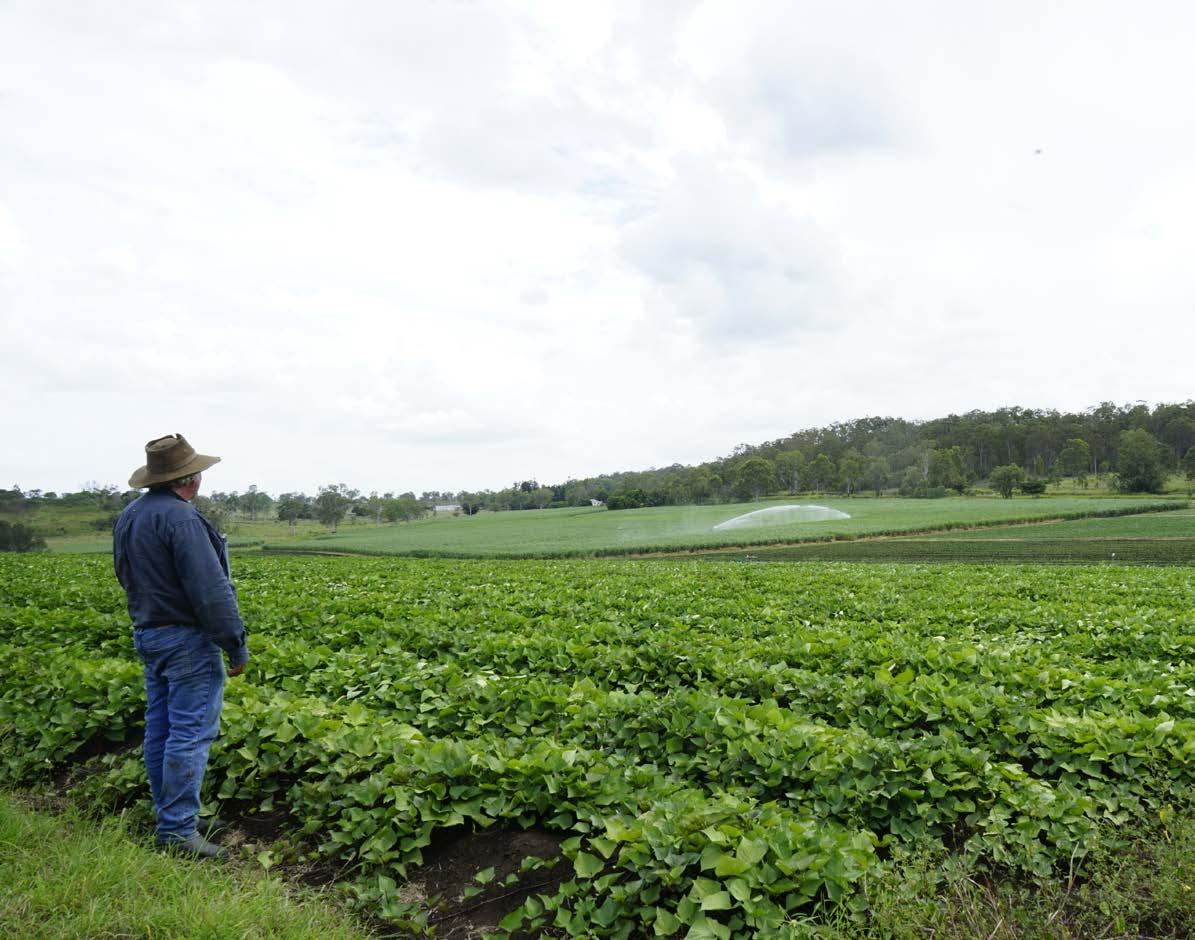
When Brendon Boon talks about farming, it isn’t with the flat practicality of someone just doing a job.
It’s with the conviction of a man who has weathered personal, financial, and environmental storms and still chooses to invest in the land.
For Brendon, farming is both his livelihood and sanctuary. After a health scare left him in hospital with dangerously high blood pressure, doctors told him to “go home and find your happy place.” He didn’t have to look far.
“That’s here, on the farm,” Brendon said. Brendon’s roots run deep in the sugar industry. A fifth-generation grower, his family traces their legacy to the
the early 1900s. Yet his own path has been anything but straightforward.
After leaving school in 1985, he worked alongside his father on the home farm, until illness forced its sale. Shut out of succession, Brendon and his wife Judy started from scratch, buying their Wallaville property in 1997. They built it up to 350 acres, with 240 now under cultivation.
Cane, however, wasn’t always in the mix. For more than a decade, the farm ran solely on sweet potatoes and pumpkins. Only in recent years has cane made its comeback.
“We’re very newly back into it,” Brendon said. “Our oldest cane is only in its second ratoon.”
That break gave Brendon perspective. While cane is his heritage, diversification has become his hallmark.
Today, the Boon farm produces around 6,500 tonnes of cane annually, alongside 3,000 tonnes of sweet potatoes and 200–300 tonnes of pumpkins. Each crop plays a role in the farm’s resilience – rotating for soil health, managing pests like soldier fly, and spreading financial risk.
“I’ve always said the cane won’t die today, but the small crops will,” he explained.
“When you are short of time, the sweet potatoes or pumpkins demand to be the priority, but cane is the stable, longterm backbone.”
It’s a model of balance, not dependence. Cane provides steady returns and rotational benefits; small crops inject cashflow and demand.
The mix helps Brendon ride the volatility that has long characterised agriculture.
Farming in the Bundaberg region means farming with water front of mind. Brendon relies on flood, trickle and winch irrigation but rising power costs bite into every pumping decision.
“Currently between 4.00-9.00pm it’s too dear to pump – because of the tariffs we face,” he said. “The cheapest power is between 9.00am – 4.00pm but the winds are too high for the winch during that time, so we use flood or trickle during the day for better efficiency.”
That shift highlights a broader industry reality: water and energy policy are inseparable from farm viability. Brendon, like many growers, keeps a close eye on technology that can deliver efficiency, but investment must match returns.
Unlike some, Brendon sees compliance not as burden but as proof. With decades of experience having to meet strict standards for small crops, he considers Smartcane BMP simply another way to demonstrate that farmers are custodians of their land.
“We don’t want to destroy the environment. This land is our home,” he said.
He’s pragmatic about consumer expectations, recognising that sustainability credentials aren’t just red tape – they’re tickets to market. If the industry wants to compete globally, proving its green credentials is part of the package.
The Boon farm is above all a family enterprise. Judy balances bookwork,
compliance, tractor driving, and management. “One of my proudest things is my wife – what she does, how she’s kept things going,” Brendon said.
Their son Matthew, 21, is training as a diesel mechanic but spends afternoons and weekends helping out. Their daughter Tiffany has moved away, but succession is already on Brendon’s mind.
“I don’t want my kids going through what I did,” he said.
For Brendon, pride isn’t measured in tonnes or dollars.
“It’s watching my kids grow up on the farm, learning resilience and responsibility,” he said. “Watching them being able to do anything in any situation, that’s what makes me proud.”
Beyond his own family, Brendon credits the wider farming community. He’s part of a cooperative harvesting group and values neighbours who step in when needed.
“Working together makes all the difference. It’s mateship. It keeps people in the industry when times are tough.”
That sense of solidarity extends beyond machinery and manpower. For Brendon, it’s about morale. Farming can be isolating, but knowing your neighbour has your back makes challenges feel lighter.
Agriculture is never short of obstacles, and Brendon names a few without hesitation. Labour costs are rising, with the mining industry drawing workers away from farms. Irrigation and energy bills remain relentless. And international competition means efficiency isn’t optional – it’s survival.
Yet he doesn’t dwell on complaints. Instead, he frames each challenge as part of the bigger picture: farming has always required adaptability.
“Every farmer’s got challenges, but it comes back to passion. Farming is in your blood, and you can’t take it out.”
Where Brendon sees real potential is in diversification at an industry level. He points to biofuels, plastics, and sustainable aviation fuel (SAF) as pathways to strengthen the future of cane.
He knows Brazil is ahead, but he’s convinced that Australia has the talent and land to make its mark if policies, investment, and markets align. “Once sugar is in a diet, it never leaves it,” he said. “Consumption keeps growing worldwide.”
In his view, the sugar industry has a dual opportunity: keep feeding traditional markets while branching into new ones that reduce reliance on raw sugar exports.
After decades of setbacks and rebuilds, Brendon has learned that farming is never about quick wins. It’s about persistence, planning, and perspective. The Boon farm is a mosaic of cane paddocks, pumpkin rows, and sweet potato fields, but it’s also a story of perseverance.
He looks at his farm not just as a business but as a legacy, one he hopes will carry forward without the painful succession struggles he endured. His “happy place” isn’t just about personal healing, it’s about continuity.
Standing on his land, Brendon sees more than crops. He sees a business that blends cane and crops into a balanced whole, a family that shares the workload, and a community that upholds its members.
In the end, what Brendon values most isn’t found on a balance sheet. It’s in the everyday resilience of his family, the quiet support of neighbours, and the enduring presence of cane across generations.
And after everything, family upheaval, illness, industry change, he’s still farming. Still planting, harvesting, and investing in the land he loves.
“My happy place – that’s what it is.”
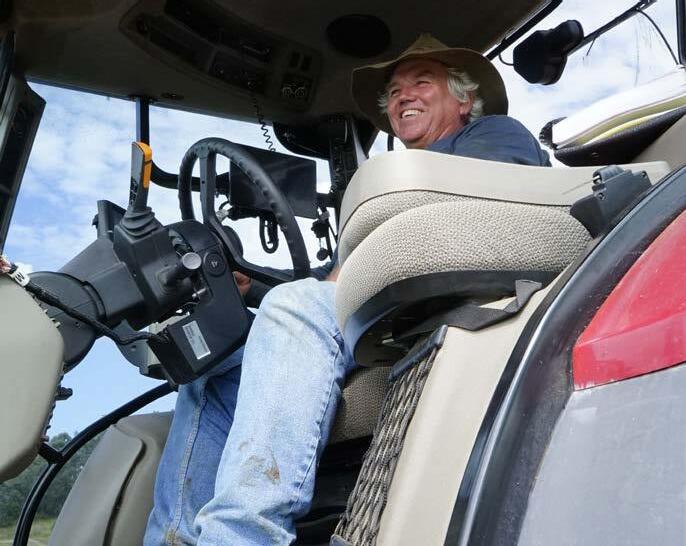
Farm Performance and Productivity Policy Committee has been held in a growing district for the first time.
The Herbert River district hosted sugarcane growers and industry leaders from across Queensland in mid-October, as the CANEGROWERS Committee met in Ingham.
The committee plays a vital role in shaping policy that supports the long-term sustainability, productivity, and safety of Queensland’s cane farming industry.
Across two days, members discussed key issues that directly impact growers, including workforce strategies, harvesting risk, transport logistics, research and development priorities, and workplace health and safety.
Chairman Steven Marbelli, who is also chair of CANEGROWERS Herbert River, says it was a valuable opportunity to bring policy leaders directly to the regions.
“It was exciting to welcome growers and policy representatives from across the state,” Mr Marbelli said. “This committee is committed to understanding and resolving the issues that affect our industry and our members every day.
“Hosting the committee in Ingham gives us a valuable opportunity to showcase our region and highlight the shared goals and challenges that unite growers across Queensland.”
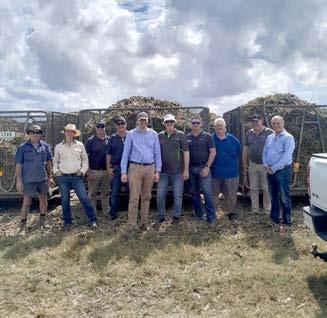
Day one featured a field trip which included visits to farms impacted by a major flood event in early 2025.
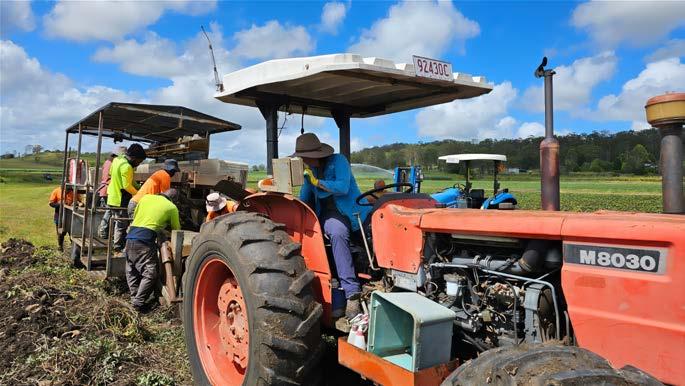
There was also a harvesting demonstration, providing key stakeholders, including representatives from the National Heavy Vehicle Regulator (NHVR), the Department of Transport and Main Roads (TMR), and Queensland Police with firsthand insight into the challenges faced during the cane harvesting process.
The demonstration aimed to improve collaboration on transport and safety matters affecting growers and the harvesting sector.
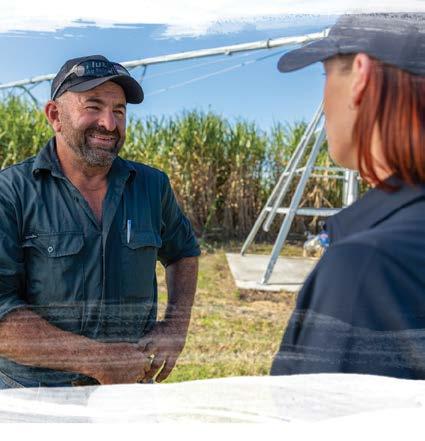
The committee also met with the Farm Safe Australia Executive Officer Stevi Howdle and Chairperson Felicity Richards to discuss strategies that help growers and workers remain free from harm in their workplaces, while a presentation from Sugar Research Australia (SRA) General Manager for Variety Development, Dr Garry Rosewarne, provided committee members with key updates and insights and into SRA’s plant breeding and release processes.
Mr Marbelli says the success of the program sets a precedent for future meetings to be held in cane growing regions, reflecting CANEGROWERS ’ strong commitment to advocacy, collaboration, and continual improvement.

A new app is helping Australian sugarcane farmers make more informed pesticide choices.
Developed over seven years, the Pesticide Projector app provides clear, science-based insights into how pesticide active ingredients might affect aquatic ecosystems – and it’s already helping to improve water quality in key cane-growing regions.
The app calculates aquatic risk scores for 126 pesticide active ingredients, offering an easy-to-understand comparison of the relative risk certain chemicals pose to plants and animals in waterways. The higher the score, the greater the potential aquatic impact, if the pesticide gets into the waterway.
“Growers are already juggling so many variables when it comes to chemical selection: efficacy, cost, resistance management – and now environmental sustainability is increasingly part of that decisionmaking process,” says Hannah Mitchell, Researcher at the Reef Catchments Science Partnership at the University of Queensland. “Pesticide Projector is designed to give growers another piece of the puzzle. It’s another tool in the toolbox.”
The idea for Pesticide Projector began after new restrictions were placed on Diuron, prompting many in the sugar industry to question how they could easily compare pesticide risks.
“Labels can be difficult to interpret, and growers were asking how they could make the right decisions,” says Dr Ryan Turner, Director of Reef Catchments Science Partnership.
“Initially, we just wanted a spreadsheet to compare Chemical A to Chemical B, but we quickly saw the potential for something bigger.”
The late Dr Michael St John Warne, a respected figure in environmental science and Dr Turner’s predecessor, was instrumental in shaping the app. He engaged directly with growers to ensure the tool would be practical, usable, and relevant on-farm.
The app doesn’t include cost comparisons – market prices shift too often – but future updates may allow users to enter costs manually. For now, its focus is purely on comparing aquatic risks.
And, it’s not just about what chemical is used, but when. “A sugarcane grower might normally use a more sustainable chemical but if they have a low-risk window for runoff they could choose to use the slightly more toxic one in the safer period,” Dr Turner explains.
One of the strongest testaments to the app’s value comes from the Mackay region, where the science behind Pesticide Projector was used in a local initiative involving agronomy firm Farmacist. Growers in the Sandy Creek catchment, part of the Plane Basin, worked with researchers to apply the app’s principles in real-world decision making.
The results were impressive: within 12 to 18 months, government monitoring showed a statistically significant reduction in pesticide levels in waterways. Clear water quality improvements were evident over a 3-year period through a coordinated grower-led effort based on science and practical advice.
“It just shows that when growers are empowered with good information and work together, they can deliver on the
The aquatic risk score is based on two key scientific factors:
1. Measure of Effect:
This indicates how toxic a pesticide active ingredient is to aquatic organisms. It’s calculated by dividing the application rate by the chemical’s aquatic toxicity. The higher the number, the greater the potential for harm if the pesticide enters a waterway.
2. Measure of Mobility and Persistence
This measures the likelihood of the pesticide to move from land to waterways and remain in the environment. Higher values mean a greater chance for transport through runoff or leaching and persistence in aquatic ecosystems.
Multiplying these two values gives the overall aquatic risk score, a number to compare different chemicals and guide environmentally conscious choices.
environmental goals that governments and the community are pushing for,” says Dr Turner. “It’s not about banning pesticides, it’s about managing them better. If we can show we’re being responsible stewards, we might have more say in keeping useful tools in our chemical toolbox.”
For more information visit pesticideprojector.net.au

Pesticide Projector was developed by the Reef Catchments Science Partnership in collaboration with the Department of Environment, Tourism, Science and Innovation and the Department of Primary Industries, Farmacist Pty Ltd, Truii Pty Ltd and other industry partners.
Foreign sugar giant Wilmar, together with MSF Sugar, have torpedoed efforts to evolve QSL, prompting outcry from industry.
A move to align voting rights of both growers and miller members with those who actually use QSL’s services failed during a vote at QSL’s 2025 Annual General Meeting on 22 October, with Wilmar and MSF Sugar voting down the resolution despite the unanimous support of QSL’s 21 Grower Representative Members and millers Mackay Sugar, Bundaberg Sugar and Isis Central Sugar Mill.
The vote against reform by Wilmar and MSF Sugar is the latest in a long line of actions from those mills which have damaged the Queensland sugar industry, including seeking to impede QSL competing on an even playing field and continuing to lobby for growers to have no choice of marketer so that their mills become monopolies.
The ability of QSL’s marketing competitors to vote on constitutional matters, including the appointment of Board directors, is enabled under QSL’s constitution, which was created in 1999 when QSL marketed all Queensland raw sugar and operated the terminals on behalf of industry.
Under this constitution, all Queensland millers and elected grower representatives from each milling region in the state and key grower organisations were given the ability to vote on QSL matters, with miller voting power determined by the amount of sugar they supply.
QSL Chairman Guy Cowan said that while these millers had been QSL’s competitors since the introduction of Marketing Choice in 2017, QSL’s ties to them would be removed completely when it ceased providing terminal operating services to industry next year, with the vote outcome a clear illustration of how the QSL constitution was no longer fit for purpose.
“Despite marketing no sugar through QSL, our competitors Wilmar and MSF Sugar were able to use the sugar nominations from growers who actively choose not to market with them in order to vote and maintain control of voting outcomes on QSL constitutional matters, which require 75% support from both miller and grower members” Mr Cowan said.
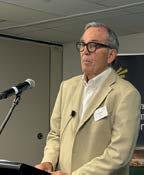
“It is absolutely anti-competitive and, to be frank, hypocritical for these millers to retain voting control in their major competitor when these same millers lobbied relentlessly for QSL to be removed as the operator of the state’s sugar terminals under the guise of it being a conflict of interest, despite QSL providing this service for no profit as a service to industry for decades,” he said.
“They also opposed the introduction of Marketing Choice and continue to undermine it, with MSF Sugar and Tully Sugar both actively blocking growers in their regions from accessing the same QSL services and products available to other growers around the state – effectively limiting what growers can access from their competitor.
“There is no legitimate reason at all for these millers to continue to have a say in QSL – the largest marketer of growers’ sugar –and to do so erodes the Marketing Choice legislation that growers fought so hard for to protect their interests.”
“With these same Millers currently wooing both the state and federal governments for taxpayer funding for their bioenergy ambitions, while Wilmar holds significant Board and shareholder influence over the industry’s monopoly terminal assets despite growers picking up the majority of terminal costs, state and federal governments and the ACCC need to take a hard look at how the Queensland sugar industry has effectively become a pawn for a small number of foreign players, with our grower members and other farming families constantly paying the price for it.”
Speaking from the floor at the QSL AGM, QSL Grower Representative Member for Plane Creek Kevin Borg summed up the widespread grower frustration regarding the continued attacks on QSL, urging the organisation to “take the gloves off” in order to preserve grower choice.
By
Brazil
India
Thailand
Harvesting in Brazil has progressed rapidly through October under optimal conditions and is now within the final 20% of the Season. The current pace suggests an early finish, likely by mid-November. As of 1 October, 490 million tonnes of cane had been harvested, producing 33.5 million tonnes of sugar.
The southwest monsoon officially withdrew from India on 16 October, delivering around 8% more rainfall than the long-term average. India’s oil marketing companies have announced ethanol allocations for grain and cane sources for the coming Season, setting total diversion from sugar at 3.4 million tonnes (sugar equivalent).
Thailand experienced abundant rainfall throughout the wet season, prompting market expectations of 95-105 million tonnes of cane to be harvested in the upcoming harvest. However, flooding and excessive rain in some areas have raised concerns about potential cane damage and CCS outcomes.
Speculators No Commitment of Traders Report has been published since 23 September due to the ongoing US government shutdown, leaving the market uncertain about speculative positioning through October.
Currency
The Australian dollar retreated to around 65 US cents in October as renewed US-China trade tensions led investors to sell riskier assets such as the AUD.
Neutral
Neutral
The outlook ratings above are in relation to AUD/tonne sugar prices. A bullish outlook is considered positive. A bearish outlook is considered negative.


From 1 July 2026 the Federal Government is planning to change how businesses pay their mandatory super contributions. This means you’ll be required to pay super at the same time as salary and wages. Watch this video to help you and your business prepare.
We issue this information and all Australian Retirement Trust products. When we say ‘we’, ‘us’ or ‘the Trustee’, we mean Australian Retirement Trust Pty Ltd (ABN 88 010 720 840, AFSL 228975), trustee of Australian Retirement Trust (ABN 60 905 115 063). Read the PDS and TMD before deciding at art.com.au 262533. 10/25.


1 x layer of Complex Carbide hard facing on a 3.0mm mild steel backing plate (4.0mm total thickness) will give equal performance of traditional 4 x layers (4 on 6mm) of chrome carbide plate (10.0mm).
Less than half of the weight (less stress on equipment)



When you think 2,4-D expertise, think Nufarm Australia. Our locally innovated and formulated solution, Nufarm DROPZONE sets a new standard for weed control. Upgrade your 2,4-D today.
Better efficacy & faster brownout. Unique formulation leads to improved control and consistency.
Droplet Optimisation. More herbicide to the target with the right sized droplets for better control and reduced drift. Low odour 2,4-D. Enhance your application experience with our new low odour formulation.
BY RENEE CLUFF
From pioneering harvest innovations to turning waste into wealth, the Destro family’s multigenerational cane farming operation in Babinda is built on adding value at every step.
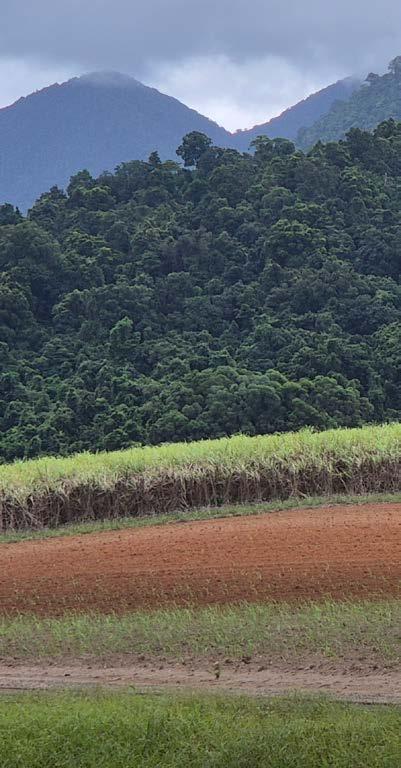
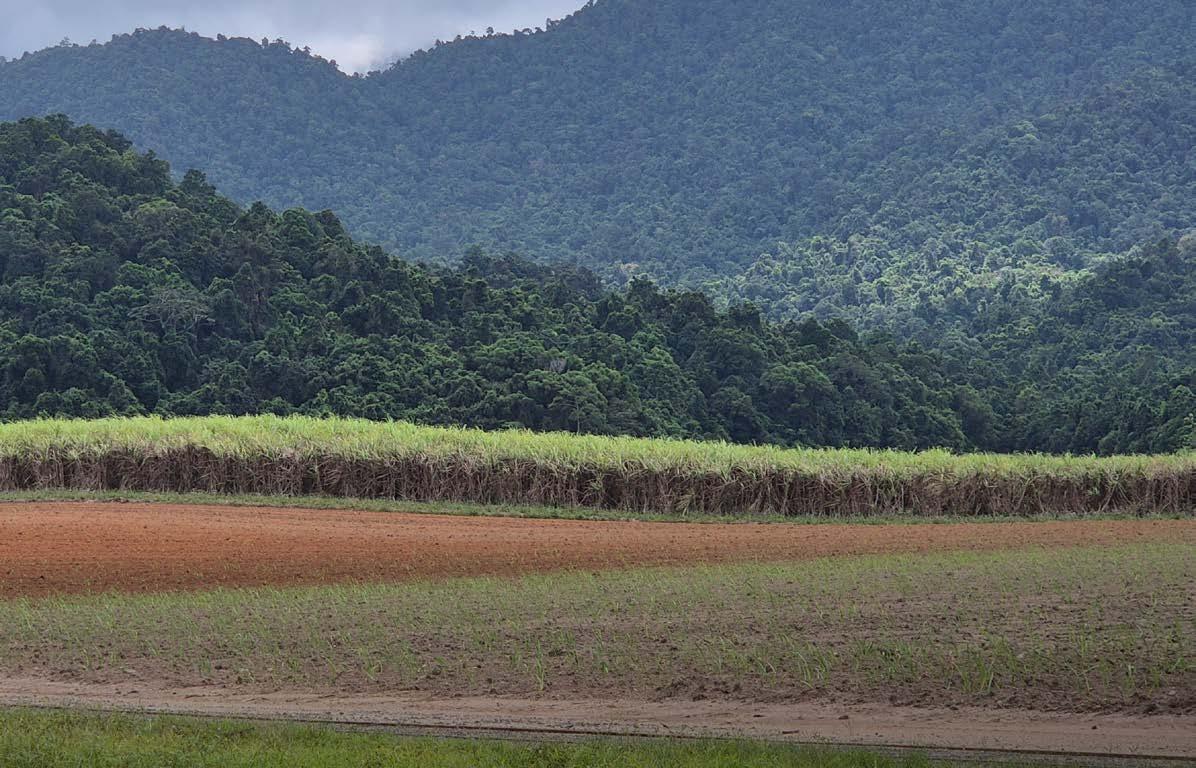
In the shadow of Queensland’s two highest mountains, the story of the Destro family is as deeply rooted in the Wet Tropic’s soils as the sugarcane they’ve farmed for generations. It’s a story of a fierce commitment to both innovation and family.
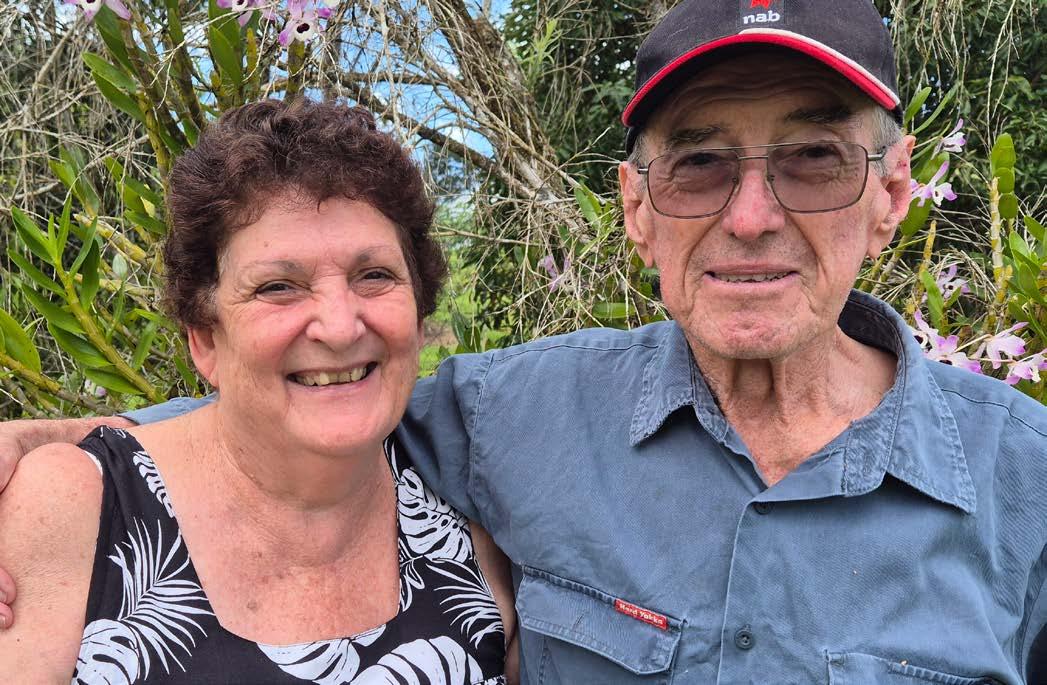
At the heart of the Destro operation are Rose and Steven, childhood sweethearts who have built not just a farming business, but a multigenerational legacy that stretches from river flats to mountainside blocks adjoining the beautiful Babinda Creek. Along the way, they’ve nurtured a fierce passion for adding value to every stalk of cane – and every drop of potential it contains.
Rose Corradi and Steven Destro’s story began, quite fittingly, in Babinda State School. Rose would ride her bike in from the nearby family farm; Steven
would catch the bus from Bellenden Ker. What began as a childhood friendship blossomed into love, and soon after, into a lifelong partnership –both personal and professional.
Steven, who had migrated from Italy in 1955 as a young boy, was quickly welcomed into the Corradi family. By his teens, he was already working alongside Rose’s father, Bonfiglio (“Bonny”), who was a second-generation Italian-Australian cane farmer.
Steven, drawn to machinery and mechanics, quickly carved his own path. He bought his first harvester and began contract cutting for local farms, including the Corradi family’s blocks, in a working relationship that would span more than 50 years and into the next generation. He later expanded into contract planting.
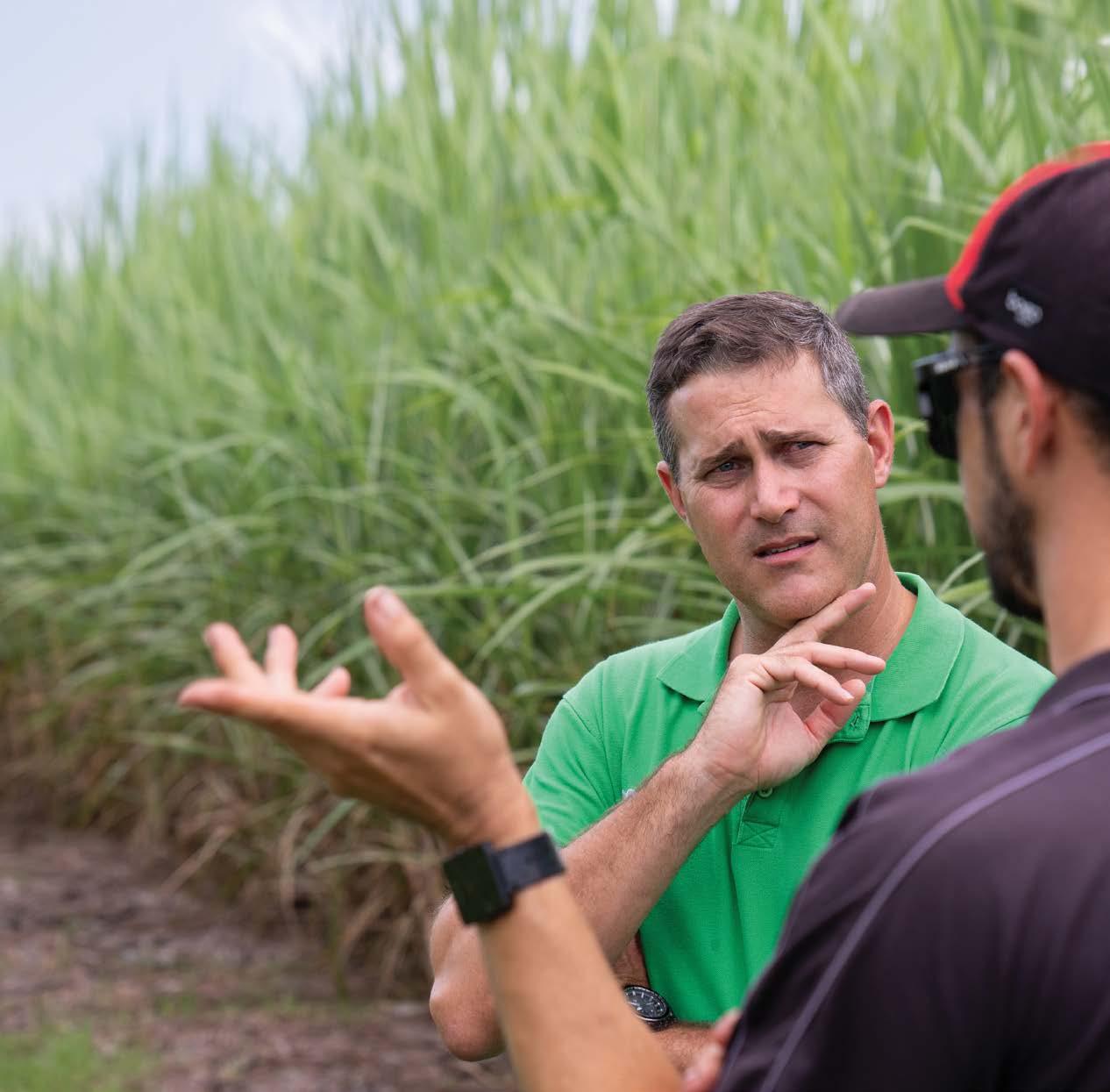
“I didn’t go to university, I learned on the job – mechanics, welding, engineering design, you name it, I’ve done it,” Steven says.
By the time the couple took over Rose’s inherited share of the original Corradi land (after buying out her brother), they were already operating as a formidable team – with Steven on the front lines of farming, harvesting and planting innovation and Rose steadily managing the business and day-to-day family life.
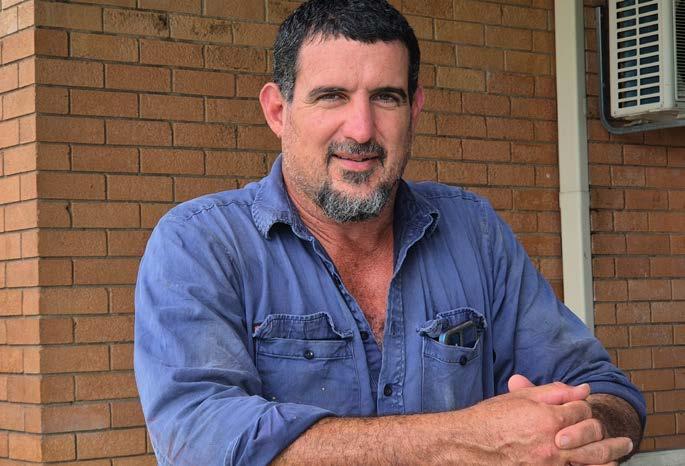
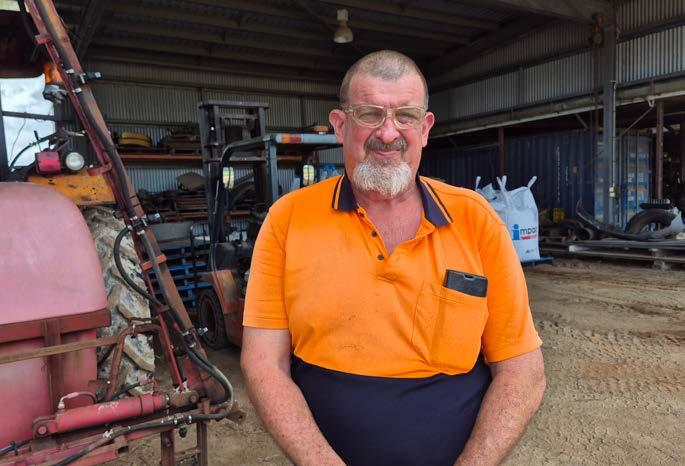
Today, the Destros oversee eight farms across more than 300 hectares, some owned, some leased, and all operated in a tight-knit family collaboration which spans three generations. Recent years have seen a generational shift. Sons Paul and Mark are now taking the reins on operations, with
Rose and Steven offering wisdom, support, and oversight.
“You’ve got to pay your children well and give them the incentive to stay,” Steven says firmly. “That’s how we’ve always viewed family succession.”
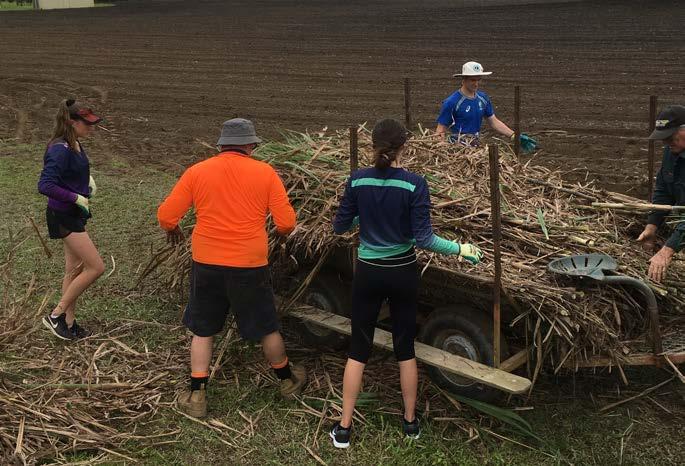
It’s a philosophy that’s paying off. Granddaughters Brooke and Cara are also happy to be involved, driving tractors, planting cane, and picking up rocks alongside the rest of the family.
“We’re all out there,” says Rose. “It’s a family affair.”
The Destro family’s commitment to innovation began early. Steven was among the first in the region to cut green cane, modifying his harvester long before it was standard practice. He says he was also the first to purchase a billet planter built by local trailblazing engineer Hans Binder,
which after countless modernisations remains in operation today.
The family also embraced GPS-guided planting and harvesting, participation in Regional Variety Trials (RVTs), and adopted precision nutrient refinement practices – the kind of forward thinking that helps buffer against the region’s often punishing climate.
Farming in Babinda is not for the fainthearted. The Destro farms sit just east of mountainous Topaz, which in one early morning downpour in September received nearly 400mm of rain, which washed down the mountainside to add to the 200mm that had already fallen in the Babinda area. The result? Silted plant cane, waterlogged paddocks, and logistical chaos.
It wasn’t the first time and won’t be the last.
Back in January and February, the family endured widespread inundation from the North and Far North Queensland Tropical Low. At the time, Steven was in hospital, leaving him anxious about what he’d return to.
“The crop actually coped really well with that, I couldn’t get over it,” he says. “The boys had done a great job in ensuring the plant cane was in early and was healthy.”
Despite the challenges of early and mid-season flooding, the Destros have still managed impressive CCS scores in the 14s and 15s this year – they believe in part thanks to Paul Destro’s work with crop ripeners, which has proven particularly successful in crops that have been water-affected.
“When I first got the invoice for 40 litres of Grappa, I said to Paul, ‘What are you doing with all this Grappa?
Are you going to have a party?
That’ll rot your guts if you drink all that Grappa!’” laughs Rose, referring to the Italian brandy whose name coincidentally matches the ripener Paul was experimenting with.
That strong Italian heritage, both from the Corradi and Destro families, is a defining part of their identity – not just in name, but in values: hard work, family unity, and respect for the land.
Beyond the paddocks, the Destros are deeply engaged in the potential of sugarcane waste products. They’ve been involved with making everything from paper to black urea.
Rose served as secretary of Enviro Fibre Babinda, now known as Ethtec, an enterprise dedicated to converting biomass into renewable fuels like E10 and Diesohol (a blend of ethanol and diesel).
“It’s unbelievable what you can do with the waste products from cane,” says Rose. “We only have a few weeks of reserve fuel in Australia, but we could be self-sufficient through this technology. “It’s proven, we’ve done it all at Ethtec’s pilot plant in Muswellbrook and we’re telling the millers to use it.”
“We want to see it happen for our kids, for them to benefit from it,” adds Steven. “We could be making triple the money, just using waste.”
The family believes these technologies could easily be implemented at existing mills, offering significant economic and environmental benefits.
“It’s all technologies that the mills can retrofit cheaply and easily, and the end products all reduce emissions,” says Steven.
Paul Destro now manages the farms
Mark Destro oversees much of the machinery work
The family planting together
Steven’s path to cane farming wasn’t paved with ease. Born in post-war Italy, he vividly recalls his father’s decision to migrate, sponsored by the Rossi family near Aloomba, south of Cairns.
“The German soldiers had told my dad, ‘Don’t give cheek to the SS guards. Do what you’re told and don’t get smart.’ Another young kid that my dad knew – they shot him because he got smart with them,” Steven recalls.
“My father had had a gutful of Italy. He wanted a different life for his kids, and he loved it here. We all did.”
Steven began his working life in Bellenden Ker, eventually moving into harvest contracting before taking on farm management. He recalls the backbreaking early days – stacking 20 tonnes of fertiliser by hand, in 100-pound bags.
“I used to put the bag on my stomach, flip it on my shoulder and run it into the shed,” he says.
“We were strong. I was pretty muscled up. We didn’t have cranes and loaders, we had to do it by hand, but we loved it.”
The Corradi family had arrived in far north Queensland in 1922. Rose’s father was born later that same year. “My father came into this world at Fishery Falls, under the coconut tree,” Rose laughs. “That’s how he always described his birthplace.”
Bonny’s colourful history included serving Australia in World War II, and bringing American troops home to the family’s Fishery Falls property during R&R. “The Americans would ride the horses, and my father would ride their Indian motorcycles,” Rose recalled.
The family later moved to their new farm at Daradgee, where Rose was born, and then bought the farm at Babinda, which had been previously owned by pioneering growers Dr George Knowles and the Jackson brothers.
Over the years, the combined Corradi/ Destro families have weathered it all –from floods and economic shifts to the closure of the local mill and even the ever-present threat of crocodiles.
Through it all, they’ve remained driven not only by the future of their own farms but by a belief in the broader resilience and potential of the Australian sugar industry.
With the harvesting side of the operation now wound back, the Destros have had more time to focus on long-term farm planning, the nuances of farming in their wet climate, and adding value to the industry through conversion of bagasse.
Most of all, Steven and Rose have stayed grounded in family, while continuing to make the very most of the opportunities their own parents and grandparents left their homelands for.
Across the Herbert, sugarcane growers are taking a closer look at what’s holding back productivity – and receiving tailored support to address the issues identified.
Thanks to Queensland Government funding, a collaborative project between Sugar Research Australia (SRA) and Herbert Cane Productivity Services Limited (HCPSL) is offering tailored one-on-one extension onfarm, focused on identifying and overcoming the specific challenges each grower faces.
At a project workshop in May, Dr Barry Salter, SRA Manager for Translation Research, supported by Nancy Rincon and Erin Headon, Translation
Research Agronomists, presented a whole-of-farm approach to identify and manage nutritional constraints using the guidance and tools in the SIX EASY STEPS® nutrient management program.
For some growers, the workshop was an opportunity to return to the basics of nutrient management decisions onfarm – understanding soil and nutrient uptake and loss processes – and developing a greater understanding of the principles underlying their nutrient management plan recommendations.
Daryl Morellini (below), who farms in the Lower Herbert district, is one of the project growers who attended the workshop. He found it to be a valuable reminder that understanding soils on your own farm is a ‘necessity’.
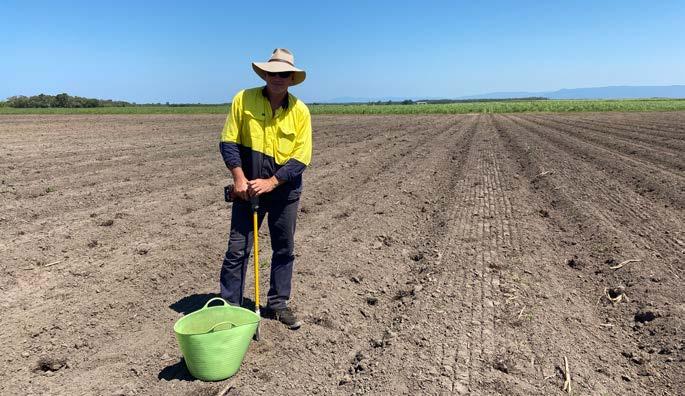
“I am always looking to improve yield [but] we only focus on putting four fertiliser requirements [Nitrogen, Phosphorus, Potassium, and Sulphur: NPKS],” Daryl said.
Awareness of the need for balanced nutrition and a long interest in establishing trials to better compare practices on his own farm is why Daryl has taken steps to address STEP 5 of the SIX EASY STEPS® – Check the adequacy of nutrient inputs on farm
As part of the project, Daryl and HCPSL Extension Agronomist Bethany Donker, collected leaf samples from key blocks to assess nutrient uptake. Daryl’s most recent leaf samples showed adequate nutrient uptake across key blocks of interest, while several other project growers’ leaf tests indicated potential nutrient constraints.
“Leaf tests are a valuable tool,” Bethany said. “Alongside soil tests, they allow you a two-fold approach where you can check the nutrients available in the soil by your soil test and then confirm the uptake of nutrients in your crop via the leaf test. In some cases, we can detect a hidden hunger in the cane where nutrient supply might not be adequate.”
Nancy Rincon, SRA agronomist, has been addressing soil amelioration with ten project growers to determine if the application of soil ameliorants during the fallow meets crop requirements, especially when the crop cycle extends beyond four ratoons.
This is especially important because a review of Herbert soil results in the past 15 years showed a decrease in exchangeable (plant available) calcium and magnesium that suggests ‘growers are not applying enough of these nutrients to maintain soil fertility’ (Sartor, 2025).
Further soil testing is recommended when the crop cycle is extended beyond four ratoons. “Liming is not a ‘set it and forget it’ task,” Nancy said. Amelioration plans and strategic soil testing of older ratoons are simple
steps that take the guesswork out of whether soil pH and nutrient supply are sufficient to support longer crop cycles.
In addition to practical recommendations to address soil amelioration and nutrient requirements, project participants also received guidance in pest and disease testing for Pachymetra root rot, smut and ratoon stunting disease (RSD).
Past analysis of productivity constraints in the Herbert pointed to Pachymetra root rot as a potential factor for poor ratooning in blocks where there is a history of growing intermediate or susceptible varieties, particularly in Lower and Central Herbert soils (Holzberger et al. 2016, Stringer et al. 2016).
Reduced yields, failed ratoons and stool tipping are serious constraints to production and should be a trigger for sampling to assess Pachymetra spore levels and the selection of the most appropriate variety.
In the past 12 months, the project team has collected more than 95 samples as part of a district-wide survey to determine the incidence and severity of Pachymetra. Sixteen of the 19 project growers obtained their first Pachymetra sample in five years as part of this survey and, where spore levels indicated potential yield loss, the growers altered their variety selection as a result.
Throughout the project, there has been a strong focus by the advisors in supporting growers gather more information to make informed decisions and identify potential strategies that enable growers to take practical steps towards addressing constraints. Adam Royle, HCPSL Manager, sees this approach generating immediate and long-term benefits for sugarcane growers in the southern Wet Tropics.
“So much of the work we [HCPSL and SRA] traditionally do with growers is either group-based or opportunistic
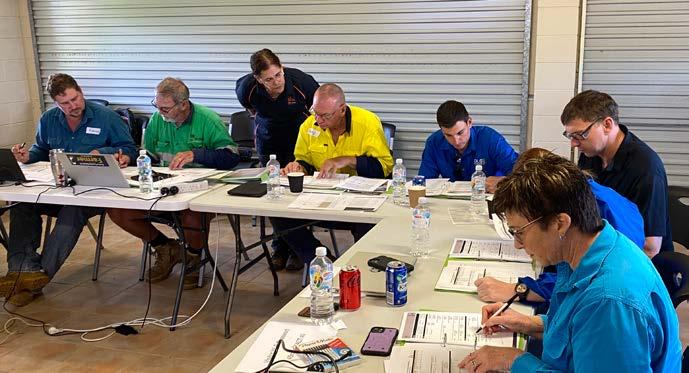
one-on-one extension and advice, so to be able to work much more closely with individual growers has allowed project staff to build better relationships with growers and provide more tailored advice.
“We’ve also noticed that growers have enjoyed the opportunity to work more closely with extension staff and agronomists to fine-tune their decisionmaking process and ultimately drive productivity and sustainability on their farms.”
In the coming months, Adam and the project team are keen to see expert advice implemented as on-farm actions to improve yields for Herbert region growers.
“It’s great to see growers becoming more confident dealing with some of the more complex constraints to their production, such as soil health and crop nutrition.
“Through the relationships that staff and growers have built together throughout the project, we certainly expect the good work to continue well beyond the project.”
Holzberger, G, Magarey, RC, Di Bella, L, Bull, JI, Nielson, R, 2016. Pachymetra root rot survey in the Herbert River district 20142015. Proceedings of the Australian Society of Sugar Cane Technologists conference, volume 38, pp. 65-71.
Sartor, JA, 2025. Trends in soil chemical fertility within the Herbert district Proceedings of the Australian Society of Sugar Cane Technologists conference, volume 46, pp. 330-335.
Stringer, J, Croft, B, Di Bella, L, Sefton, M, Nielson, R, Larsen, P, De Lai, R, Davies, I, 2016. Optimising productivity and variety recommendations through analysis of mill data. Proceedings of the Australian Society of Sugar Cane Technologists conference, volume 38, pp. 65-71.
Targeting balanced nutrition and productivity constraints in the Herbert is delivered by Sugar Research Australia (SRA) and Herbert Cane Productivity Services Limited (HCPSL) and is part of the $4.38 million Sugarcane Practice Change Program funded through the Queensland Government’s Queensland Reef Water Quality Program.

BY LINDSEY PERRY
Smartcane BMP Program Manager
We need your support to ensure Smartcane BMP continues to protect growers’ interests in reef catchments.
As a Smartcane BMP accredited grower you may have enjoyed the feeling of receiving a reef compliance audit only to whip out your Smartcane BMP accreditation certificate and say ‘not today mate!’.
Smartcane BMP accredited growers don’t receive compliance visits, because since 2020 Smartcane BMP has been a “Recognised Accredited Program” or an industry BMP program that is recognised by the Queensland Government as having standards in place that are equal to or better than the Reef Standards.
Smartcane BMP growers pride themselves on the high standard of their farming operations that promote “Your Farm, Your Way” principles.
In many cases these standards are better than the minimum required for regulations, as this is what industry believe is evidence based best practice for productive, profitable farms that demonstrate environmental stewardship and social license.
Smartcane BMP is a source of pride for the industry and leads the way in demonstrating cane farmers environmental credentials.
Recognised Accreditation programs need to satisfy the following criteria:
1. Is the program consistent with, or better than the Reef regulations?
Yes!
Smartcane BMP accredited growers operate at a better standard across a greater breadth of farm practices than the minimum requirements of Reef regulations.
2. Does the program include an independent, third-party audit?
Yes!
Smartcane BMP employs independent third-party auditors. Independent audits mean Smartcane BMP accreditation is trusted by our broader stakeholders including community, government and sugar supply chain customers.
3. Does the program have a register of accredited lands in place and provided annually to the government?
No
Not quite. The Smartcane BMP database is confidential even to CANEGROWERS . However, about 1 in 4 growers voluntarily share their information with the Queensland Government as they don’t want a compliance visit or the hassle of responding with a certificate if they receive a call.
What information is shared?
This is the data that is shared for growers who voluntarily opt in to share their Smartcane BMP Accreditation data:
Business Information (address, ABN/ACN, Lot on plan)
Contact information (name, phone, email)
Accreditation status and expiry date
No specific on-farm practice data is ever shared. This is private and confidential.
Why don’t we share the whole register?
Confidentiality is of paramount importance in Smartcane BMP. We never share any individual information that you have not consented to sharing.
This means you can have trust in your facilitator, auditor and the Smartcane
BMP office in Brisbane to have your privacy and confidentiality in mind at all times. Smartcane BMP is an industry led program for growers, and growers control what happens with their individual data.
Smartcane BMP provides only the voluntary register. This register is shared so compliance officers know which growers to leave alone.
Up to now the government has not enforced provision of the full register. We would like to keep this goodwill towards the cane industry’s own program and keep sharing voluntary.
With this aim in mind we encourage all Smartcane BMP growers to voluntarily share this basic information.
Talk to your local facilitator if you think you would benefit from peace of mind, knowing that compliance is not at the door.
In return, volunteering your information for the register helps us ensure Smartcane BMP remains a recognised accredited program now and into the future.
Confidentiality is of paramount importance in Smartcane BMP
We’re here today and we’re here to stay.
All things change. And we’ve built Smartcane BMP to ensure it’s here for the long haul.
The month of September was the start of Spring, which was forecast as possibly being a wetter than normal period.
The rainfall for the month didn’t disappoint with 161mm falling being two point three times the monthly average. There were periods of heavy rain, which did impact the harvest and crushing for several days.
There were some further heavy falls in October as well and the advertised finished date from MSF Sugar was 3 November for Mulgrave Mill, weather permitting.
It has been a challenge to get to the estimated 200,000 because of the reduced quality of cane and the amount of rat damage to the cane left for harvest.
Mossman hit its peak district average CCS at the end of Week 14 (W/E 28 September), at 12.19CCS. From there it started dropping.
The culmination of the rain and cane quality by the end of Week 17 (W/E 19 October) was a district average of 12.13CCS.
That same week the cane supply to Mulgrave dipped back under 10,000 tonnes at 9,211.82 tonnes of cane for a weekly district average of 11.19CCS.
The to-date tonnage supplied for the end of Week 17 was 168,152.23 tonnes of cane from Mossman coastal growers and we had 13,945.4 tonnes of cane supplied to MSF Tableland mill.
Negotiations with MSF Sugar for a Collective CSA for 2026 were not successful and there was not enough area or tonnage for an Individual CSA either.
At the current time there are no plans to deliver cane from Mossman to Mulgrave in 2026 under a CSA. There will be further meetings of the Mossman Advisory Group to look at the transition funds and options moving forward.
The Company Annual General Meeting along with an end of season wrap up for growers will be held on Thursday 13 November at Club Mossman commencing at 3pm.
(BLA)
The annual Aspire Awards provide incentives and opportunities for secondary students across a wide range of curriculum areas. Students are encouraged to participate by entering one or more of the 27 award and competition categories available.
All schools from Tully in the south through to Mossman in the north, including those on the Atherton Tablelands, are invited to participate.
For the past seven years, CANEGROWERS Tableland has proudly sponsored the Futures
For the third time in as many seasons, the Babinda zone has borne the brunt of another extreme weather event.
Heavy rainfall and associated flooding on 16 September caused considerable damage across the Russell Catchment, leaving many growers once again counting the cost of nature’s force. Those affected have now assessed the extent of the damage, with reports ranging from serious to catastrophic losses.
Agricultural Award. Angela participated as a panel member, interviewing nine students for this year’s award. It was a pleasure to engage with such passionate and capable young people – the future of the agricultural industry. This year, there was particularly strong representation from the sugar industry.
The Annual General Meeting for CANEGROWERS Tableland will be held around the middle of November. Please keep an eye out for the official announcement in the coming weeks.
The Tableland Mill has completed approximately 75% of the crush at the time of writing, with the crop estimate remaining steady at 872,000 tonnes, representing 99.4% of the original estimate.
The current average CCS is 13.72, which is expected to remain at a similar level for the remainder of the season.
This is slightly lower than the previous year’s CCS of 13.86. The estimated finish date for the 2025 season is 7 December 2025.
Growers who have not yet registered their damage via the Department of Primary Industries (DPI) link are strongly encouraged to do so, or to contact either office for assistance with the process.
The wet weather has also taken its toll on productivity, with the CCS in the Babinda area
plummeting whilst Mulgrave has managed to hold steady, overall crop yields across the Cairns Region remain below expectations. There is some nice plant cane around, with the flip side of that being those members who have lost blocks of plant in the lower reaches of the Russell Catchment.
Members are reminded that the organisation owns two direct drill bean planters available for use. Those anticipating using the equipment are encouraged to plan ahead and contact Toni Whyte on 4056 1251 to make arrangements.
In other industry developments, with the confirmation that Mossman cane will not be transported to Mulgrave for the 2026 season, industry leaders are increasing their focus on the long-term sustainability of Mulgrave Mills.
We’re now nearing the end of the 2025 season, and at the time of writing, the end date for the crush remains unofficial but is projected for late November.
Some of our growers are still recovering from the midSeptember flooding event, which disrupted farm management plans across the district.
We acknowledge and thank MSF Sugar for responding to the situation by extending its 2025 Planting Allowance to midOctober. The initiative is aimed at encouraging timely replanting. Fortunately, predominantly dry weather in recent weeks has aided in recovery efforts.
CANEGROWERS Innisfail Manager Debra Telford and Extension Officer Ilanah Baston recently returned from the Smartcane BMP facilitators’ workshop where they met facilitators from across the industry, shared ideas and received an update on the sustainable sugar pathways.
Chairman Joseph Marano has also been travelling, representing CANEGROWERS at AgXchange on the Gold Coast.
Our Cassowary Coast Reef Smart Farming (CCRSF) extension
team has been harvesting and milling trials under the Johnstone Sugarcane Practice Change Program, alongside conducting soil sampling to support a research initiative investigating silicon (Si) uptake in crops.
Led by Sugar Research Australia, this work builds on insights from a district-wide nutrient survey carried out by CCRSF in 2023.
Preparations are also continuing for CANEGROWERS Innisfail’s centenary celebrations, including the collection of historical stories, photographs and official documents that reflect the region’s rich farming heritage.
In other news, the sale of the Australian Sugar Heritage Centre, formerly home to our office, has now been finalised. The Australian Sugar Industry Museum Committee has advised that the museum’s collection remains intact and that it’s currently awaiting formal proposals from historical organisations interested in establishing a permanent home for the exhibits.
The committee remains committed to preserving the collection as a unified and accessible resource for the sugar industry and wider community.
It is anticipated that the 2025 season will be finaliSed by 16 November.
It will obviously depend on the unpredictable weather patterns that challenge the agricultural sector on a regular basis. It is also recognised that without regular precipitation, the crops will be limited in yield the following season.
Tully District is fortunate enough to not require the elements of costly electricity and water. But we do have the uncertainty of when and how much rain we will receive. Tully and the tropical north in general, grow the best yields in the driest years.
Unfortunately, we don’t have the capacity to anticipate what year that will be, nor does the available technology at the Bureau of Meteorology.
As of 22 October, the 2025 season is 20.2 weeks complete and has provided the following statistics.
79.9% of the total harvest area has been processed with average season-to-date yield of 76.6 tonnes per hectare. The expected yield at end of the season is 74.9 tonnes per hectare, only a small improvement on 2024 and well below the long-term average.
84% or 1,829,593 tonnes of the tonnage estimate has been completed leaving an estimated 346,660 tonnes remaining. Estimated total sugarcane through the rollers is 2,169,777 tonnes.
Other key statistics for the season to date are: EBD 336kg,
CCS 12.61, fibre 14.58, and mill crush rate 694.64 tonnes per hour. Lost time for the year is 402 hours of wet weather and cane supply associated with the growers and 203 hours lost associated with the mill and 36 hours for the district show.
Tully Sugar Limited has 1575 cane bin units which have been through the mill an average of 131 times each for a total of 206,143 bins tipped.
The highest volume varieties supplied to Tully Sugar this season are Q208, Q253, Q240, and KQ228. Highest supply of any SRA varieties is currently SRA28 delivering 69,250 tonnes. The second highest SRA variety was SRA26 delivering 43,881 tonnes.
Early ratoons are currently looking exceptionally good, with earlier fertiliser application having been taken up by the plant.
The last two weeks in particular have seen vigorous growth due to recent rain combined with heat and high humidity. Obviously, unwanted vegetation has also had a high growth period.
Tully Sugar’s Cane Productivity and Development Officer, Greg Shannon along with SRA, recently held a fallow crop presentation at Murray Upper. The meeting was well attended as usual. A new Fallow Crops Guide booklet was provided at the meeting.
It has been a busy month in the Herbert, with growers now well into the second half of the harvest.
Weather conditions have remained mostly favourable, allowing steady progress across the district. Despite the challenges faced earlier in the year, the region is tracking reasonably well against initial estimates.
At the time of writing, the Herbert mills have crushed 2,943,343 tonnes of cane, with a season to date CCS of 12.8. Crushing operations have been consistent, and the focus remains on maintaining this momentum to ensure an efficient and timely completion to the season.
In recent weeks, the Herbert played host to the CANEGROWERS Farm Performance and Productivity Policy Committee, bringing together growers and industry representatives from across Queensland. Discussions centred on workforce availability, harvesting logistics, safety and
The 2025 season is drawing to a close with Wilmar having now issued Cessation of Crushing Notices for all four of their mills.
Kalamia Mill was the first mill to finish with the last cane being harvested on 24 October and performance of this mill has been very good with an availability rate of 90%.
R&D priorities. A field tour also highlighted the strong recovery efforts of local farms following flood events earlier this year.
CANEGROWERS Herbert River also welcomed the recent expansion of the definition of “primary producer” for disaster recovery grants to now include sugar industry contractors such as harvesting contractors.
This positive outcome reflects the ongoing advocacy efforts of CANEGROWERS at both district and state levels, ensuring greater support for those who play a vital role in keeping the industry running.
As the season moves into its final stages, attention turns to sustaining harvest momentum, monitoring mill performance, and ensuring all cane is delivered before the close of crushing.
Once again, the Herbert community has demonstrated its hallmark resilience, cooperation and commitment in navigating what has been another challenging season.
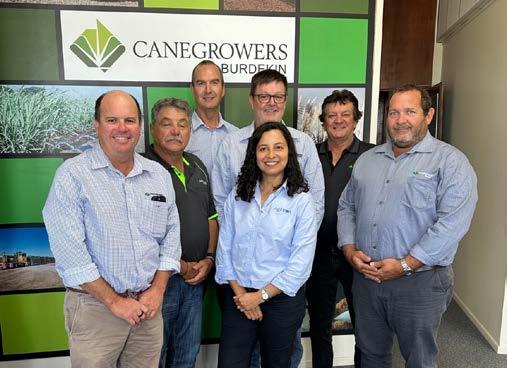
much as we are all looking forward to an early November finish. That said, we should be finishing earlier with a crop of only 7,850,000t or less.
Overall mill availability has been at 86% which is good and the long stretch of dry weather has put the district on a solid footing, which bodes well for a bigger crop for the 2026 season. That would be something to look forward to.
burnt cane condemned in the paddock if a mill chooses to cease crushing is devastating, particularly when the risk of this occurring could have been mitigated by Wilmar with early season cane transfer decisions.
At the CBL October Board Meeting, the guest speaker was Dr Maria Solis from AgEconomics who provided a presentation on carbon emissions knowledge in sugarcane systems and how this can be managed.
With the other mills, Invicta Mill was scheduled to finish on 31 October, followed by Pioneer Mill on 2 November and then Inkerman on 8 November.
These finish dates are subject to wet weather and mill performance, and rain was forecast to fall from 29 October so these dates may be pushed out, but hopefully not by too
The dry conditions have helped CCS keep it’s head above budget at 14.40 season to date. Whilst we are grateful for how the season has gone so far, what remains a constant source of frustration though is Wilmar’s reluctance to better optimise its district crushing capacity through increased cane transfer, as we have a two-week gap between when the first mill and last mill is due to finish.
The risk to growers who are still supplying cane after other mills has closed is the impact of wet weather and mill breakdowns which can significantly extend the season length for those growers who are still going.
Worst case is that they don’t get all of their crop off and the cost of standover, or having
Whilst there is a degree of scepticism around this issue, there are legislative requirements on sustainability reporting in train for suppliers, customers, bankers etc to report emissions impacting agricultural supply chains.
Growers are reminded that the QRIDA Disaster Assistance Recovery Grants – North and Far North Tropical Low expires on 14 February 2026 which will be here before you know it. Not only do you have to have your applications in by then but also your receipts for the work completed. If you wish to make an application for assistance under this program, we would suggest you do this sooner rather than later so that you do not miss out on this opportunity.
CBL also attended NQDT’s Burdekin Regional Water Quality Strategy Stakeholder Workshop which is currently in the process of formulating a 10-year strategy for this issue. Some of the language has softened compared to the past and there seems to be more understanding of the issue from
As at 18 October, Proserpine Mill had crushed approximately 1.35 million tonnes of cane, equating to nearly 89% of the adjusted seasonal estimate of 1.53 million tonnes.
Prolonged dry conditions were resulting in lower yields across recent cuttings, with the final crop now expected to fall below 1.5 million tonnes. Consequently, the crushing season was anticipated to conclude around 30 October, earlier than initially forecast.
With less than 150,000 tonnes remaining, visual assessments across the district suggested a total crop of approximately 1.45 million tonnes. This would be the smallest on record since Cyclone Debbie in 2017.
a growers perspective compared to when regulations were introduced.
Hopefully with next month’s report the 2025 season will be finished and that will be something worth celebrating compared to the 2022 and 2024 season experiences.
Two key areas under review included the potential expansion of the plan to a broader region and the conversion of areabased licenses to volumetric, metered allocations.
Both matters continue to be of concern to several growers, for whom reliable irrigation is critical to long-term sustainability. It is hoped that the forthcoming process will support the interests of growers and the wider industry.
various agricultural entities through financial audits and preparations for Annual General Meetings (AGMs). Members are encouraged to participate in this year’s CANEGROWERS / SSP AGMs, which will be held at 4:00 pm on 18 November at the Metropole Hotel.
This outcome was reflected in the combined impacts of a late finish to the previous season, when wet conditions affected late ratoon growth and planting, and an early finish this year driven by sustained dry weather and immature ratoons.
It is nonetheless hoped that the final production figure would finish closer to 1.5 million tonnes as the remaining cane is processed.
Sugar content (CCS) continued to improve over the final weeks of crush lifting to the most recent weeks mill average high of 15.36. This would take the season average to 14.32, just slightly above the 5-year average.
With the submission deadline approaching, input was received from members affected by the proposed updates to the Whitsunday Water Plan.
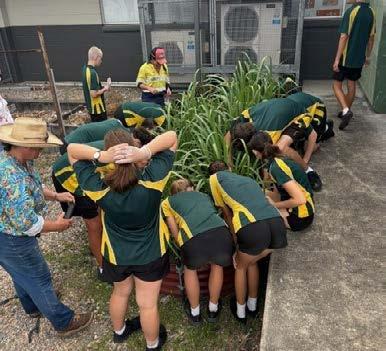
Side-dressing fertiliser at Proserpine State High for the Sweetest Schools program
The Sweetest Schools program continued to progress positively throughout October, with sidedress fertiliser applications providing students with handson engagement in agricultural practices. It is hoped that this experience will inspire some participants to consider future careers in the industry.
CANEGROWERS Proserpine also collaborated with members from the Herbert region to develop virtual reality (VR) training videos for haulout drivers, providing a practical tool to prepare new drivers for the challenges of this role. The aim is to have videos ready in time for the 2026 crushing season.
Moving closer to November, CANEGROWERS Proserpine continued to support the
Positively, the improved mill performance during the season reflected the effective management and staff operations both prior to and throughout the crushing period.
While more recent weeks did present challenges, primarily due to some poor-quality cane chokes, the seasonto-date crush rate averaged approximately 80,000 tonnes per week.
The result, an earlier-thanexpected end to the crush which is anticipated to provide an extended and improved growing period. This would likely support the prospect of an aboveaverage crop in 2026 assuming average rainfall over the coming summer months.
Hopefully we can see a lot more of even better performances in the coming years!
October was dominated by fine, dry weather, resulting in increased CCS for Mackay and Plane Creek, along with some great harvesting weather.
While Mackay’s crush rate could be better, there has been good progress. Marian has had a couple of fire incidents, causing delays also.
However, if conditions and mill performance maintain, it is looking like growers and harvesters may, for the first time in five years, enjoy Christmas with the family and not in the paddock. And that certainly is a reason to celebrate.
The local industry supply chain has seen a number of serious collision and derailment
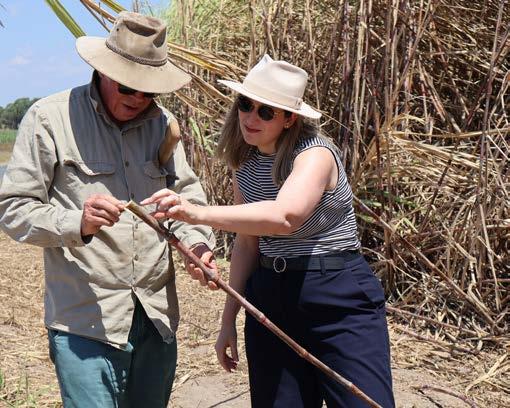
Grower and retired Director, the knowledgeable Tony Ross was happy to teach Federal Senator Corrinne Mulholland about sugarcane farming following her opening of the QUT Pioneer BioPilot Plant in Mackay
incidents on the road and rail networks over September/ October reinforcing a need for constant vigilance for all drivers.
With fire bans in place across the region, Chairman Joseph Borg engaged with local media on the issue of Cane Burning Permits, raising community awareness and understanding that those with permits are exempted from the fire bans, allowed to burn trash and standing cane after 6pm. He also reminded growers of the importance of notifying Fire Comm of the location, time and duration of any burns.
The QUT Pioneer BioPilot Plant was launched in late September, with new capabilities in precision fermentation. Federal Senator Corinne Mulholland opened the facility on behalf of the Australian Government that substantially funded the upgrade. After the opening, the Senator visited the farm of retired MCL Director Tony Ross to learn more about cane farming.
It has been positive to see interest in the QUT Pioneer facility as part of a new agreement with the
Bundaberg Sugar Mill processed 39,997.52 tonnes for the week ending 18 October, this brings the Season to date to 970,727.46 tonnes.
The average CCS for Bundaberg Sugar Mill for week 22 was 15.17 CCS and the season CCS average for Bundaberg Sugar Mill is at 13.98 CCS.
We are pleased that Sunwater has agreed to continue the electricity cost pass through trial for the 2024/25 year confirming a return to Bundaberg Sunwater customers of $15.50/ML.
Japan Bioindustry Association, from which organisation a Trade & Investment Queensland-led delegation visited Mackay earlier this year.
Members are reminded to RSVP for the Mackay CANEGROWERS Ltd AGM to be held on Thursday 20 November, 2pm at the Mackay Turf Club.
Our 2025 Guest Speaker is SRA CEO, Mr Mick Bartlett. RSVP to mackay@canegrowers.com.au, or on 4944 2600
Meetings over the past month have included a visit from Member for Dawson Andrew Willcox to discuss local issues and opportunities for the sugarcane sector, and with the Regional Director Biosecurity Queensland – Central.
Planning has begun for the QCGO Centenary Gala Dinner, to be held in Mackay on 12 March 2026. Save the date and keep an eye out for the launch of ticket sales in December! CANEGROWERS
Mackay is excited to host this event which will coincide with a Policy Council in Sugar City Mackay, and the QCGO Legends awards.
In October, the Bundaberg CANEGROWERS Board met with the CEO and senior staff from QSL for an update on the market and terminal operations. Directors were also briefed on the new FlexPay pricing tool, available for the 2026 Season onwards. A tour of Bundaberg Bulk Sugar Terminal was also arranged and well received by growers in attendance.
At the time of writing it is extremely dry and a fire ban remains in place. We thank growers for following the amended burning times and for complying with the conditions of their permits, including contacting Firecom prior to every fire.
Bundaberg CANEGROWERS Limited and Bundaberg Sugar Services Limited AGMs were held on Wednesday 22 October and Owen Menkens also attended to provide an update on current sugar industry matters.
Let’s hope the weather holds and we can get the season wrapped up in the quickest possible time.
A tour of Bundaberg Bulk Sugar Terminal was well received by interested growers
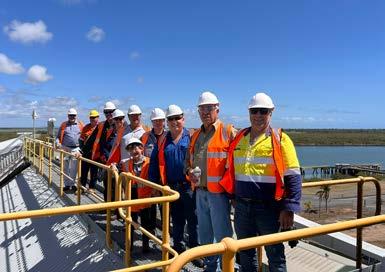
Favourable harvesting conditions continue throughout the Isis district, with Isis Mill on track to finish in mid-December.
The mill has processed over 896,000 tonnes to date, reaching approximately 70% completion.
Year-to-date CCS stands at 13.87, with the season’s standout performance coming from Brendon and Judy Boon of Wallaville. Their first ratoon KQ228 achieved an impressive 17.75 CCS – the highest recorded this season.
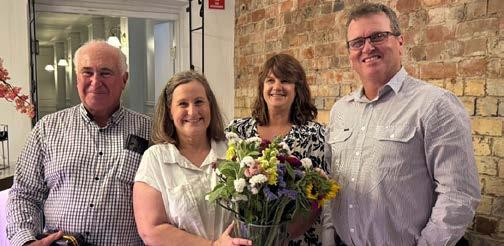
A total fire ban has been in effect across the district for the past month, with all seasonal fire permits suspended. We have been helping growers secure block-specific fire permits to prevent harvesting disruptions. The ban is expected to continue until significant rainfall arrives.
Isis Mill recently invited us to Coalstoun Lakes to observe the area’s first cane harvest. We connected with local farmers to discuss cane growing practices and opportunities. Located approximately 66km from the mill, Coalstoun Lakes represents a potential expansion area for cane production.
We recently participated in a QSL workshop reviewing their
Been a frustrating couple of weeks to end October with the mill experiencing electrical problems over a number of days and harvesters being limited to field stock almost perpetually.
The weather has remained dry and heating up rapidly.
With time remaining in the season running low, it is important to understand any areas not suitable for cutting so we can focus on the remaining cane.
Please update the mill for any changes needed on farm remains.
Mark and
Deran Mammino, Jo Hall Isis District Manager, Peter McLennan Chair CANEGROWERS Isis
upcoming FlexPay system, scheduled to launch in 2026.
We appreciate QSL’s invitation to provide feedback and recognise the potential benefits this system offers members.
We recently honoured former Chairman Mark Mammino at a small gathering. During his remarkable 27-year tenure on the board, Mark demonstrated tireless advocacy, dedication, and genuine commitment to the sugar industry. His achievements have secured protections that will benefit our members’ livelihoods for years to come.
Rocky Point has crushed 133,771 tonnes over the first 17 weeks of the season, at an average CCS of 12.85.
Week 16 was the best week to date this year with 20,276 tonnes through the Mill. The District has another nine weeks to crush the remaining estimated tonnes of 229,230.
We have urged the Rocky Point Mill to continue crushing after Christmas and also asked for some cane to be sent to NSW. At the time of writing, no commitment has been received to either request.
Dry conditions are allowing for excellent harvesting, and many harvest groups are just focusing on the 2 and 3 year old cane. Some of the 2 and 3 year old has deteriorated to a point that it is not millable.
With the amount of poor-quality cane arriving at the factory for some weeks, the Mill has had issues attempting to make sugar.
Planting is well underway, but with the continued dry weather some growers are watering plant cane with water carts to get a strike.
Growers are looking after their plant cane with irrigators in action around the district.
Feedback on some of the new varieties, such as SRA33, is very positive on early growth signs.
The forecasters continue to back a wet summer and the weather already feels like summer.
Happy birthday to Graham Bottcher, one of our Bauple area growers, who reached 90 this month and still calls in for a chat at the office from time to time. Hope the cake was good.

Your Pathway to Success

With Pathway Ag Finance, provided Pursehouse Rural, you can access the finance resources you need to invest in your farming inputs this season! Scan the QR to find out more *Terms and conditions apply pursehouserural.com.au






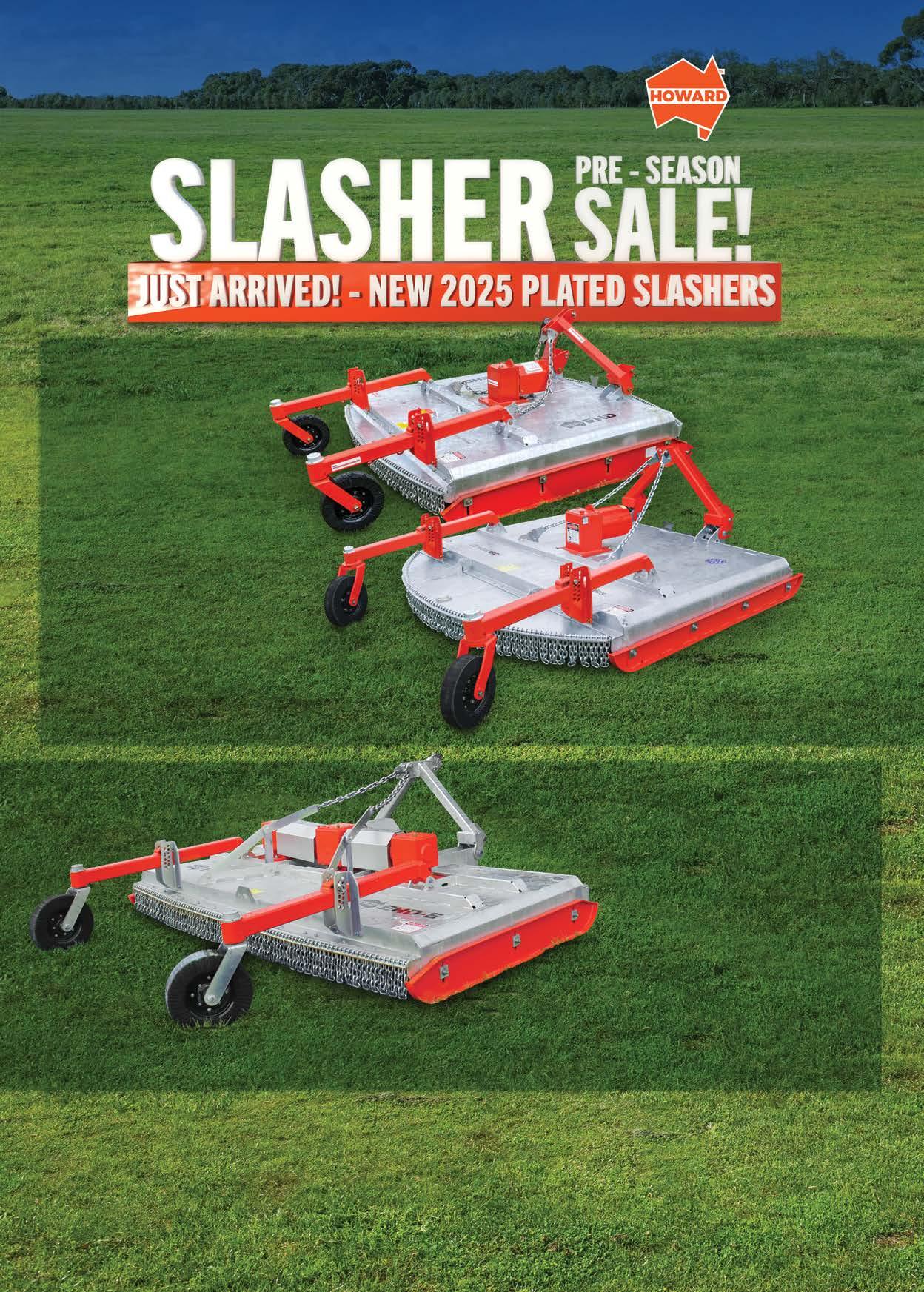





At AgDrone.au, we are dedicated to advancing aerial agricultural solutions through rigorous testing and innovative technology, with a focus on optimising crop management.
Our commitment to precision and excellence empowers Australian growers to achieve enhanced yields and crop health without leaving gaps or wasting resources where not needed. Our recent testing on the newly released DJI Agras T100 targeted avocado trees. This swath testing refines spray application settings, ensuring reliable coverage. By employing black
light and UV dye mixed with water, we visualised droplet coverage distribution, particularly on lower canopy leaves. Tests were conducted at a range of speeds, rates, and droplet sizes, enabling us to fine-tune distance and coverage parameters.
This approach, built on years of operational expertise with the DJI Agras T50, allows us to leverage evidencebased learning for superior crop penetration. These methods enhance precision and resource allocation. We continue to build this library of knowledge with further tests and collaboration.
To support the DJI Agras T100’s performance, AgDrone.au has introduced a custom 15kW charger, modified to meet Australian standards and equipped with standard 32A connectors. This charger surpasses the
OEM’s 12kW design, offering faster charging to maximise efficiency. Rapid charging is a critical tool in achieving cost-efficient crop application.
Time on the ground is time wasted. Contractors have been pushing the limits of these drones from the start, and we aim to push further. Fill faster, charge faster, fly longer. The T100’s significant capacity is a major upgrade, but we all have more work to do here.
Drones play an increasingly vital role in modern agriculture, and at AgDrone.au, we test for performance and precision. For producers seeking to elevate their operations, AgDrone.au offers proven solutions backed by innovative technology and extensive testing.
Contact us at info@agdrone.au to explore how we can support you and your land.
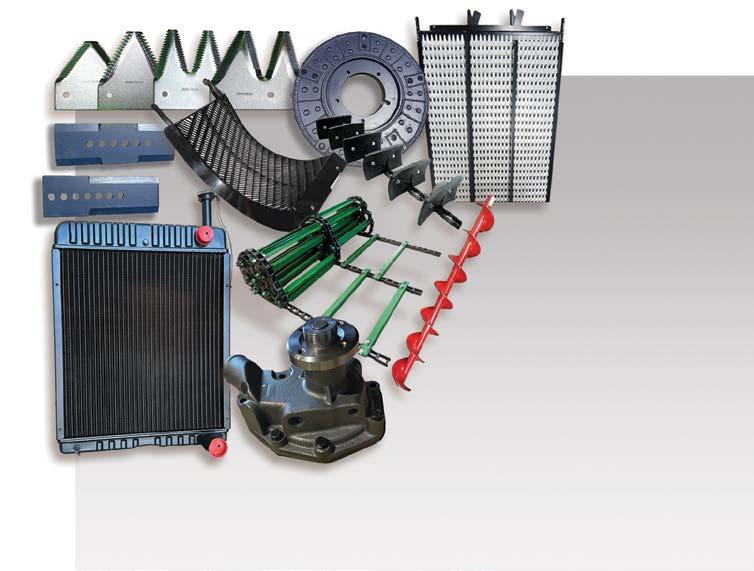


BY ELISA WESTMORE

Smartcane BMP continues to move steadily toward providing real financial benefits for accredited growers.
The latest milestone in this journey is CANEGROWERS ’ work to align Smartcane BMP with the Australian Sustainable Finance Institute (ASFI) Taxonomy, a national framework designed to guide the flow of investment into sustainable industries and activities.
The Australian Sustainable Finance Institute (ASFI) represents banks, insurers, superannuation funds, and investors. It’s mission is simple but transformative: to help Australia’s finance sector shift capital toward activities that are clean, green, and sustainable.
The finance sector plays an enormous role in shaping the direction of Australia’s economy. Increasingly, investors and banks are under pressure from both regulators and the public to prove that their funds are supporting the transition to a low-emissions, climate-resilient economy. This is where the concept of a “green finance taxonomy” comes in.
In simple terms, a taxonomy is a classification system –a set of agreed definitions about what counts as “green”.
The ASFI Taxonomy defines which activities, assets, or projects can be considered sustainable and therefore eligible for “green” finance.
Banks and private investors need this clarity because a growing portion of their capital is earmarked for green investment products like lower-interest green loans or sustainability-linked bonds. But to offer those products, they need to know where that money can legitimately go.
The ASFI Taxonomy provides that direction. It’s aligned with Australia’s commitments under the Paris Agreement, applies across the entire economy, and focuses on outcomes (such as emissions reduction or improved soil health) rather than prescribing specific practices. The taxonomy is already being adopted by the finance sector and will increasingly shape how money flows into agriculture and land management.
The ASFI Taxonomy includes a specific “Agriculture and Land” section. This part outlines the “green outcomes” expected from farming systems that qualify as sustainable – things like reducing greenhouse gas emissions, protecting biodiversity, and improving resource efficiency.
If CANEGROWERS can demonstrate that the Smartcane BMP program delivers these outcomes, the program could achieve formal recognition, or alignment, under the taxonomy. That alignment would make Smartcane BMP accredited growers more attractive to financial institutions looking to lend or invest in sustainable agriculture. In time, growers could gain access to better interest rates or other financial incentives from banks and loan providers seeking verified “green” clients.
While this is not a short-term project – alignment and recognition will take several years of technical and policy work – it represents a critical new direction for Smartcane BMP. By embedding Smartcane BMP within the national sustainable finance framework, CANEGROWERS is ensuring that growers who have invested in better management practices can also share in the financial rewards of being part of a genuinely sustainable industry.
This work is yet another way CANEGROWERS is working for you – making sure that the sustainability credentials of Australian cane are not only recognised but rewarded.

BY ALEXANDER DESSES
Transport has featured heavily on the CANEGROWERS agenda in recent years, with significant progress made across a number of areas.
Perhaps the most prominent transport issue faced has been around load restraint. Following the handover of enforcement responsibilities from TMR to NHVR in April 2024, concerns were raised that there would be a crackdown on load restraint practices used in the industry with potential changes to the rules around restraining sugarcane during transport on road.
CANEGROWERS immediately got to work, forming a task group with NHVR to address the issue in a well reasoned manner, with a field trip also organised by CANEGROWERS director Kevin Borg to showcase the different methods used to load and transport cane across the industry to NHVR leadership and Safety Compliance Officers (SCO) and answer any concerns they had.
Concurrently, CANEGROWERS started work on the Sugarcane Transport Load Restraint Guide which was
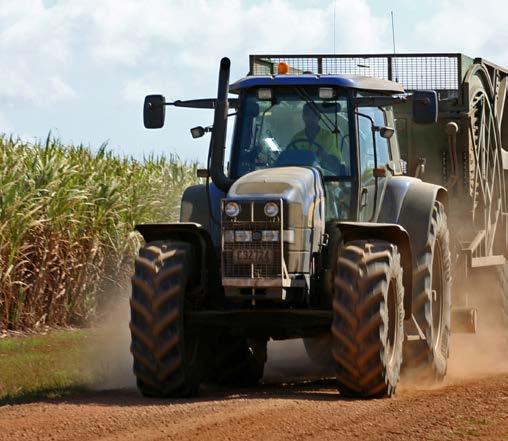
published in consultation with NHVR in December of 2024 and provided certainty for the industry. The guide outlines approved methods of restraint including freeboard alongside chain of responsibility obligations for operators.
Another major focus area has been around Vehicle and Network Access. Earlier this year following an application from CANEGROWERS , the BKT FL633 flotation tyre was added to the government’s notice. This was done following CANEGROWERS sourcing a test certificate and statement of compliance from the manufacturer, to get the tyre approved. This in effect doubled the flotation tyre options available for industry operators.
In addition, CANEGROWERS has been advocating for existing permit approved tracked harvester crossing points to be added to the notice, replacing the current permit-based approval system. Following discussions, TMR has indicated their support for adding approved crossing points in some districts to the notice with CANEGROWERS waiting for this to be actioned.
Beyond advocacy and regulatory engagement, CANEGROWERS has carried out a range of activities to educate members on relevant matters in the transport space. This has taken the form of articles, a podcast and webinars on various topics including the NHVR’s permitting system, chain of responsibility, load restraint and vehicle standards.
A highlight of CANEGROWERS recent educational work was the Transport and WHS compliance roadshow that took place at the start of this year with 10 workshops delivered to over 250 attendees.
Looking ahead, CANEGROWERS will continue to work closely with government to ensure practical transport rules are both safe, and practical for growers and contractors. By maintaining open communication and identifying issues before they become problems, CANEGROWERS is ensuring that the industry can continue to operate efficiently under framework that works for everyone.

BY MATT KEALLEY
Over the next decade, farm machinery is expected to undergo a dramatic transformation.
Tractors, implements and drones under the umbrella of agtech will have an influence on farm productivity and efficiency. These global shifts are already starting to influence Queensland’s sugarcane fields. So, what’s driving these trends and what should we be paying attention to?
Around the world, there’s a clear push toward smarter, cleaner, and more autonomous equipment. This is being driven out of Europe with electric and hybrid machinery gaining ground. Countries like China and Germany are investing heavily in next-generation tractors and harvesters influenced by sustainability targets and food security.
In parallel to this, robotics and automation are rapidly emerging in areas facing labour shortages. This is becoming a problem in many countries and a challenge Queensland sugarcane growers know all too well.
For the sugarcane industry, precision agriculture is part of the farming system and has been for easily a decade. Research and practical experience in the adoption of GPS-guided systems, soil mapping, and yield monitors has led to significant improvements in input efficiency and crop performance.
Drones are shifting from pretty pictures to prescription maps. Since 2017, The Department of Primary Industries has flown thousands of hectares to zone sugarcane blocks so growers can identify areas of poor crop yield, target soil sampling, variable-rate nutrition, weed distribution and use drones to spot spraying weeds. Sugar Research Australia as part of the 10th Anniversary Research Funding is backing a “Sugar Weed Mapper” that uses AI to classify weeds from drone images and used as spray maps for ground rigs
On the ground, implements are getting eyes and brains. Camera / AI spot-sprayers trialled in North Queensland show strong economics compared with blanket sprays and Queensland-built robots (e.g., SwarmFarm) and research platforms like QUT’s AgBot II are using autonomy to navigate
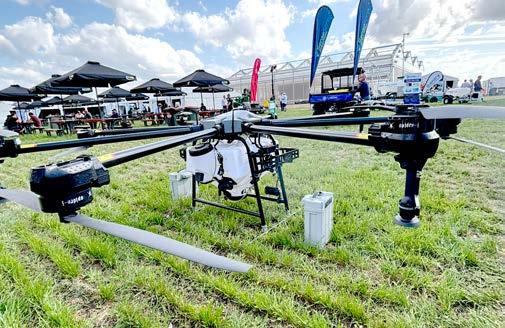
cane blocks, spot-spray, mechanically remove weeds, and apply fertiliser with targeted precision. Local manufacturing capacity is growing on the Darling Downs and while much of the deployment of these robots has been on broadacre, the technology is relevant to sugarcane systems.
I appreciate that we should be curious but cautious when it comes to agtech. Upgrading machinery is expensive, the IT and support is imperative and the pace of change can be overwhelming. While the return on investment maybe uncertain, options such as shared investment models or cooperative trials could reduce financial risk.
This is where a more balanced approach comes in. Rather than jumping into every new trend, growers could start small and look for opportunities to test, trial or retrofit older machinery with smart components.
In the end, the takeaway is clear: global trends in farm machinery and agtech are creating both opportunities and pressures.
By remaining curious, looking at investment options and considering how the technology could be applied on farm, growers can be in the driver’s seat. Adopting new tech at a manageable pace can allow growers to future-proof their operations without taking on unnecessary risk.

BY CHRIS COOPER

From 1 August 2025, a range of new property laws commenced under the Property Law Act 2023 which replaced the 1974 Act.
This article discusses several of the new laws as they apply to the rights of landlords and tenants under leases including leases of cane farms.
Implied terms
The 2023 Act updates and modernises the terms that will be implied into a lease unless the parties agree otherwise in writing. They are now called standard terms.
Landlord’s consent
The 2023 Act now provides that a landlord must act reasonably when considering an application for consent by the tenant in relation to:
a proposed assignment of the lease or any proposed arrangement to sublet part or share possession of the premises;
changing the use of the premises permitted under the lease;
granting a mortgage over the tenant’s interest in the lease; and
making an alteration to, or carrying out any works in, the premises.
The Landlord must respond to a request with 1 month of receiving the request. If the tenant believes the Landlord has unreasonably withheld consent or placed unreasonable conditions on consent, then the tenant can apply to Court to determine the dispute.
Further protections and processes have been introduced into the 2023 Act to deal with the situation where the tenant seeks to exercise an option in the lease to extend the term or purchase the property and the landlord refuses to accept the option because the tenant has :
breached the lease;
failed to satisfy a condition precedent to exercise the option (for example, by giving the exercise notice within the time period for giving the notice specified in the lease); or
failed to give a compliant notice exercising the option.
In such situations the landlord must give a breach notice to the tenant within 10 business days of the purported exercise of option. The tenant then has the right to apply to court for relief against the refusal.
Lease disputes and rights and entitlements of landlords and tenants are important matters and good advice should be obtained when considering and dealing with such circumstances.
This article contains general advice only. The particular facts and circumstances of each case always need to be taken into account.
The comments in this article are general in nature. For further free advice and information about this topic or other legal matters, members should contact their local CANEGROWERS office or please contact CANEGROWERS Legal Adviser, Chris Cooper on Free Call 1800 177 159
For 20 students from Coorparoo Secondary College, a school day in October looked a little different, no desks, no whiteboards, and definitely no city traffic.
Instead, they found themselves standing among rows of sugarcane in Rocky Point, Queensland’s southernmost cane growing district, discovering the modern world of sugar production firsthand.
The visit was part of the CQ Universityled Agribusiness Gateway to Industry Schools Project, which gives high school students a real-world look at career pathways across agriculture, engineering, and environmental science. And for most of this group, it was their first genuine encounter with the sugarcane industry, from the farm to the mulch facility to the mill.
Their first stop was to meet Ben Spann, CANEGROWERS Rocky Point director and third-generation farmer. Ben walked the group through how sugarcane is planted, grown, and harvested, and, importantly, how much problem-solving and innovation it takes to keep a farm running smoothly.
“I didn’t realise there were so many types of sugarcane,” said Jordan, a Year 11 engineering student.
“Farmers might not be engineers by training, but the way they figure things out and fix machinery – it’s really similar. I found that fascinating.”
Ben also opened students’ eyes to the future potential of the crop. Beyond sugar, sugarcane is now a key player in renewable energy and bio-based industries, supplying feedstock for ethanol, bioplastics, and even sustainable aviation fuel.
“It’s not just about sugar anymore,” Ben said. “It’s about sustainability, diversification, and creating value from every part of the crop.”
From there, the students headed to learn about the Rocky Point mulching facilities, where the Chief Operating Officer Josh Keith and Sales and Marketing Manager Vanessa Humphrey shared the diversity of products and showcased the immaculate facilities.
The students saw how cane byproducts once considered waste are now recycled into a valuable product, the garden mulch that’s become a staple in Australian landscaping.
Founded in 1949 by Alexander and Phyl Keith, the family-run business has grown into Australia’s only fully integrated cane-to-mulch operation. Today, the third-generation Keith family turns sugarcane and green waste into compost, mulch, and soil products, proof that innovation and sustainability can thrive side by side.
For Sakura, a Year 11 agriculture student, the connection between science, farming, and sustainability hit home.
“I didn’t know that after all the research, only one out of 25,000 new sugarcane varieties might be successful,” she said. “It shows how much effort goes into improving crops, it’s really rewarding when it works.”
After lunch, the students toured the Rocky Point Sugar Mill, guided by Process Engineer, Kelly Heck. They watched the full transformation, from cane crushing to juice extraction to crystallised sugar, a blend of chemistry, engineering, and precision logistics.
The experience tied everything together: innovation, sustainability, and the sheer scale of the industry that underpins something as simple as a spoonful of sugar.
It was also a golden opportunity to highlight the diverse career pathways available to students, from field science and engineering to biochemistry and agtech innovation.
For agriculture teacher Kerri Grimes, who led the student tour, the day offered something no classroom could.
“You can teach this in a classroom, but it doesn’t mean anything until they physically see it,” she said.
“These are city kids – they’ve never been this close to where food and fibre come from. As soon as they saw the harvester, you could see the curiosity spark.”
The tour drew links between subjects like geography, agriculture, and engineering, and the wide range of careers they can lead to.
“Some of these kids won’t go to university,” Kerri said. “This shows them there are so many options, from agtech to mechanics to environmental management, and that these industries are right on Brisbane’s doorstep.”
By the end of the day, the group of students, who’d chosen to spend their
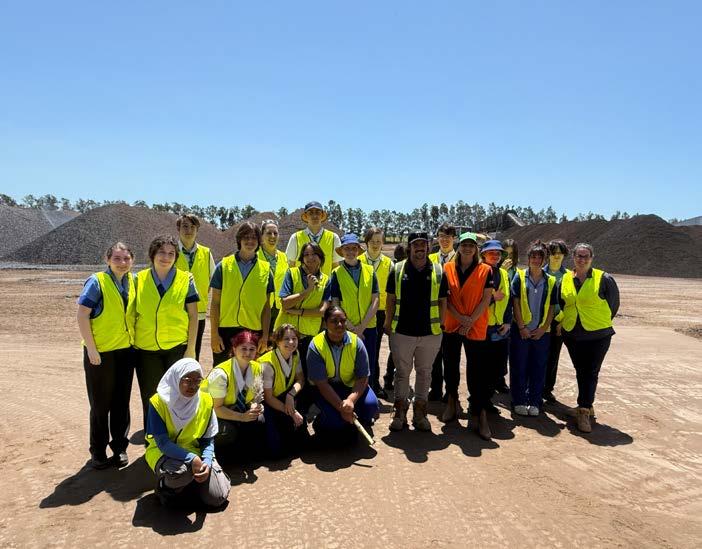
‘free Friday’ learning about sugarcane, left with a whole new appreciation for the science, innovation, and people driving one of Queensland’s most dynamic industries.
As one student summed it up perfectly: “It was a choice – but it was worth it.”
The Agribusiness Gateway to Industry Schools Project doesn’t just open doors for students.
As part of the program, teachers based in SEQ had the chance to tour the new Sugar Research Australia (SRA) IRIS laboratory facilities during a professional development day.
The visit showcased cutting-edge research into crop improvement, breeding, pest management, and biobased innovation, giving educators a firsthand look at the science driving the industry’s future.
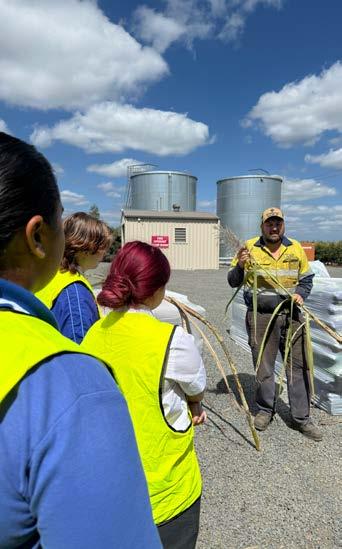
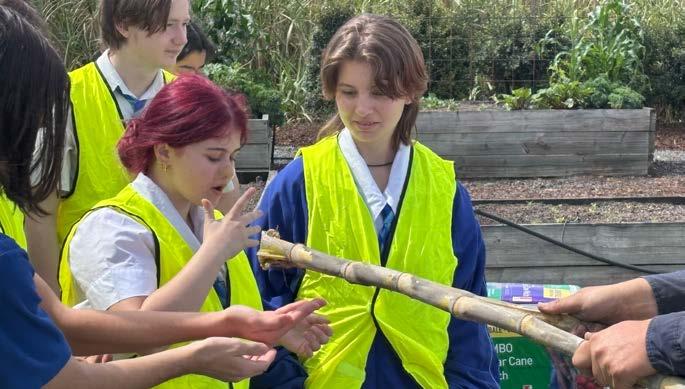
Students from Coorparoo Secondary College enjoyed the hands-on learning experiences while teachers had a sneak peek at the new SRA laboratories thanks to the Agribusiness Gateway to Industry Schools project
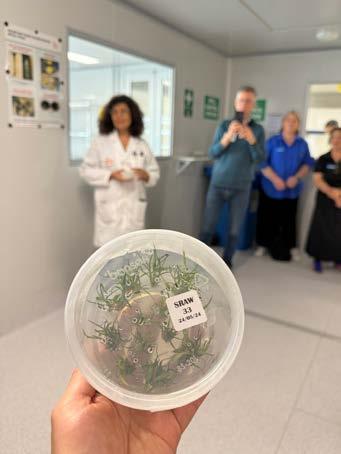
FIRST 5 LINES FREE* FOR CANEGROWERS MEMBERS!
Book online 24/7 at www.canegrowers.com au or email us at ads@canegrowers.com.au
Next deadline is 19 December 2025
Falc 3000 GL rotary hoe purchased new 4 years ago. Blades 70% and comes with new spare set. $32,000. Other farm machinery available. Ph: 0417 974 118
2012 MF5450 107hp 4wd, A/C, 5100 hrs, 3pl front weights, good tyres, great slashing tractor. Ph: 0429 984 920
1 x 23.1.26 tractor tyre, $900 + GST. 1 x 18.4.28 new tractor tyre, $800 + GST. 1 x 540/65R 28 tractor tyre, $800. 1 x Fiat 411R brake pusher and water tank with pump, fair condition, reliable, $1,500 + GST. 8870 Ford – 1994, 210hp, powershift super steer 8,512 hrs, good condition, selling due to mill closure, $65,000 + GST. 1994 28x28 Hodge offset, fair condition, $10,000 +GST. Ph: Brett 0419 988 158 or Frank 0417 720 764
Inter 766 /-Hyd Midmnts; 3 row S/S 1t fert. box; 2 row Coulter stool splitter 1t S/S fert. box; 3 row plant cane wheel packer; 7 tine Delta ripper, Am Farmall high cl’nce 5 row spray tractor. Ph: 0428 644 135
3 fan extractors for sale. Ph: 0427 327 977
Chicken manure is available for sale in bulk quantities in Mareeba. This is an excellent source of nutrient-rich fertilizer ideal for enhancing soil health and boosting crop growth. Ph: Osz Farming at 0457 756 392 for purchasing or inquiries.
Confidor applicator newly fabricated equipment, never used. Deceased estate disposing of equipment. $15,000. Ph: Alex 0403 774 885 for photos.
Holden dual cab Colorado 2020, 101,000km, canopy, extra battery, new tyres, $38,500. Hodge 5 farrow reversible hydraulic plough, $5,000. Parkinson canecutter with topper, $5,000. 3 cane trailers, $250 each. 7ft smart slasher $4,000. Howard 2 tyne ripper, $2,500. ONO on all items. Ph: 0408 770 054
2023 Massey Ferguson 7S.155 Dyna 6. Purchased new last year. Only 34 hrs. Surplus to requirements. $150,000 plus GST. Ph: 0403 774 885
Spit water 131 industrial pressure washer. Just been serviced. 15m hose. 12lpm at 1,800psi. $1,700 ONO. Ph: 0438 554 146
Heavy duty bar with two tine adjustable rippers, attachable straight to rotary hoe. $1,000 incl. GST. Ph: 0438 988 858
MSW S/S 3t fertiliser box, 178 Massey Ferguson with front end loader. Ph: 0497 857 368
* As a FREE service to CANEGROWERS members, Australian Canegrower will print suitable classified advertisements UP TO 5 LINES FREE, FOR ONE ISSUE ONLY. A charge of $5.50 will apply for each extra line or part thereof. A charge will apply for advertising of non-cane growing activities. Advertisements must relate exclusively to cane farming activities, such as farm machinery, etc. Advertisements from non-members are charged at $11 per line incl GST. Only prepaid ads will be accepted.
Olympic 20.8.42 65% $300 + GST; front end loader with 4 in 1 bucket, blasted and 2pac painted, resembling required. $2500 + GST Ph: 0437 434 280
Machinery and water allocation for sale – water allocation permanent sale, different parcels available. Krone Fortima V1500MC2 round baler, Bale King 5100 bale buster, Agrolead Lina Twin 4m double disc seeder with fert. box. All machinery as new with very little use. Price negotiable on all items. Ph: Robert pictures and pricing 0407 330 493
4 x 380/90R46 tyres and rims to suit JD self propelled sprayer. Mulgrave area. Ph: 0407 160 673
2009 Kubota M125X tractor good condition 4,294 hrs, air conditioned cab 16 speed –$44,000 + GST; centre buster heavy duty Gessner 30” coulters and legs adjustable crumbler rollers and adjustable row width –$10,000 + GST; fuel tank on trailer approx 2,400L has unfitted new electric pump – $1,900 + GST; Bonel bag lifter good condition $2,000 + GST. Ph: 0407 554 146 or 0438 554 146
1984 Toft 6000 plant cutter, 8,000 hrs. Rubberised rollers, elevator extension for 1.8m rows, swinging knife chop system. Good overall condition for its age, $12,000 + GST. Ph: 0419 021 012
John Deere CH570, 9,157 hrs, walking gear, 1 season 33,500t. Tidy machine. Ph: Frank 0417 720 764
JD 3140 needs attention. Ph: 0437 669 247 and leave a message.
2015 Massey Ferguson tractor 7624 Dyna 6240hp, front suspension, GPS fitted, 3,031 hrs, two-way radio, serviced regularly, tyres excellent – $130,000. Ph: 0427 525 173
Maschio G350 rotary hoe. Needs rebuild and new blades. $500. Ph: 0439 965 921
Hino FS. 2003, 6 x 4 tipper truck, 18 speed road ranger, 4.7m body, swing tailgate, pull over cover, ring feeder and some parts to go with sale. Very good condition. $65,000 (negotiable) + GST. Ph: 0437 434 280.
New cane stool splitter discs 30" x 10mm boron steel, $200. Ph: 0427 044 443
2020 Case 8810 fulltrack cane harvester. Purchased 2021, cut 3 seasons. In good condition with plenty of spares. Ready to cut. Tully. Ph: 0407 160 758
Howard Rota Vator HR51 Rota. Ph: 0457 255 961
12m V-blade $10k + GST. RES Dolly trailer $20k + GST. 10L Bunded fuel tank $10k + GST Ph: 0409 580 586
Set of half tracks to suit John Deere 3520 cane harvester. Ph: Ferdinand 0421 043 609
Kubota Zero Turn ZG 222 with catcher 48" cut. Fiat 980 2WD – 3,500 hrs, Fiat 1000 2WD –5,000 hrs, John Deere 4040 2WD – 3,600 hrs, Chamberlain JD 4080 2 WD – 5,000 hrs, Case 2590 2WD – 5,700 hrs. Silvan Euro Spand CX2 spreader, double row fert box, Bunning Lowlander Mk 40-60 ag spreader (near new), complete tracks to suit cane harvester, and fuel trailer tank. Mulgrave area. Ph: 0407 160 673
Expressions of interest for shares. Email: rigato.office@bigpond.com with offer or any questions.
2012 John Deere 7200R tractor PTO, 3PL with quick hitch, 4 sets of remotes, front weights, front tyres 540/65R34, rear tyres 650/85R38, 4,510 hrs. In good condition. $150,000 + GST Ph: 0427 976 416
Terranova rotary hoe 120", Mulgrave area. Ph: 4056 1474
One pair 21L-24 Armour earth moving/quarry tyres, currently on a backhoe. Good condition. $700 each tyre plus GST. Ph: 0419 150 350.
2 x 440/65 R24 tractor tyres $1,100 incl. GST each. 2 x 540/65 R34 tractor tyres $2,100 incl. GST each. All four types as new only done 500 hrs. Ph: 0427 665 759
36 plate case 770 offsets, 30" discs $40,000 and HBM plant cutter with topper $4,400. 7ft slasher with Howard box – all refurbished – $10,000 incl. GST ONO. Ph: Gavin 0448 345 139
3t fertiliser stool splitter stainless steel box 1.5–1.8m spacing $25,000 (+GST). Ph: 0429 912 135
Tractor TE20 good condition $3,300 GST inclusive. Tractor AV International 130 with fertiliser equipment and scarifier $3,300 GST inclusive. Tractor AV International 140 with spray equipment $3,500 GST inclusive. Ph: 0428 183 307
Howard CH 2000 rotary hoe 4.2m wide, hyd 5 tyne ripper hillers new blades. $45,000 plus GST. Ph: 0429 912 135
2016 John Deere R4023 self propelled sprayer 1,500 hrs, 2,200L tank, 85ft boom, GPS ready. $235,000 plus GST. Ph: 0429 912 135
10 blade Faggy chopper box for 3510/3520. $3,500 + GST. Ph: 0437 434 280
Fertiliser bin M.S.W, double row, 4t stainless bin, with double compartment and 4 cutters $25,000 (incl. GST). Ph: 0400 729 457
Celli Tiger spike rotor 2.23m – fits on a rotary roe, $300. 186 Ross Road Deeral. Ph: 0412 968 434
Valley centre pivot 8 span all running gear tyres and rims $1,000 gearboxes $750, electrical motors & gear boxes $1,000 each ONO. 2x torsion axles v-shape 2,200kg each $500 ONO. Ph: John 0418 198 177
6 cyl. Perkins turbo-charged motor, mounted on trailer to Kelly & Lewis water pump $5,500; 6t Newton bulk fertiliser bin $2,500. Ph: after 7pm or txt 0402 686 714 / 0407 144 637
2012 Case 8800 fulltrack cane harvester fitted with Trimble GPS and new walking gear. All in good condition. Mulgrave area. Ph: 0407 160 673
2022 Case 9900 cane harvester. Ph: Craig 0436 332 044
Liquid fertiliser applicator croplands rate controler, adjustable centres and new pump. Ph: Craig 0436 332 044
3 row cultivator with crumble rollers. 5ft (1,524m) centres. 1 rigid tyne and 4 spring tynes per row. Very heavy build with 7" box section top frame. This cultivator was built in 1998 by Maxi Built machinery in Home Hill. $11,000. Selling as no further use. Ph: 0429 181 276 for more details or photos.
3,000L water tank on trailer, needs limited repairs. $1,000 ONO. Vicon spreader, good for planting beans, good order. $1,000 ONO. Ph: 0431 458 850 or 0428 394 004
Bonal plant cane cutter, good going order, $1,000. Ingham. Ph: 0428 394 004 or 0431 458 850
Napier bearing home made solid frame 28 plate disc carries hydraulic lift, $5,000. 11ft crumble roller, $2,500. Don shearer 32 plate set of disc carries hydraulic lift, $7,000. Ph: 0409 346 966
Cane crate for hot water treating cane. Never been used. POA. Ph: 0408 889 446
Pair multiplyers with hydraulics suit JD3510 or JD3510 fulltrack harvester in GC, 3 row multiweeder $350 + GST, Dongough planter $1200 + GST, 80” Dondi rotary hoe $1200 + GST, 2 row Eureka ½ ton fert. box with 1 ¼ tynes S/S worm $1200 + GST, International BT D6 crawler and breakpusher, 1 pair 8 blade chopper drums for JD3510 or JD3510, 1 pair 10 blade chopper drums for JD3510 or JD3510 – 1 season old. Ph: 0428 879 341
New Holland T6030 tractor 1,750 hrs. Near new tyres VGC $57,000 + GST. Ph: 0407 154 250
Southern cross TCE3000 travelling irrigator. Herbert River. Ph: 0408 889 446
2 x International 766, 1 at 10ft spacing, 1 standard, spare rear end for parts. Both run. Ph: 0437 346 341
2 x 2015 JCB 3230 with 14t Corradini bins, 1 x 2017 JCB with 16t smart hauler, 1 x 2017 CH570 John Deere harvester. Ph: 0439 766 800
Toft 5000 harvester, rubber rollers, new tyres and hoods, in good condition, great plant cutter, $20,000 + GST. 3 ton side tipper for planting, $3,000 + GST. Ph: 0439 890 948
28 plate Napier offset discs, working condition, $5,000. Ph: 0448 842 792
1980 Ford TW20 tractor, 3,500 hrs maximum, recently painted, good condition, make an offer. Ph: Laurence 0419 666 544
2020 Case IH Austoft 8010 cane harvester, machine hours 8,250 and elevator hours 4,680, Scraper and Gripster tyres. All case modifications complete. All drive components current. Ph: 0428 635 922
BT D6 dozer, high lift, angle and tilt blade, five roller, 14" tracks, make an offer. Ph: 0438 743 685
Moore Scoopy LD3 4 wheel drive, fair condition, make an offer. Ph: Reno on 4777 6148 after 6pm.
3-point Linkage International plough, 4 furrows, 1 drag plough – 3 furrows, self lift, make an offer. Ph: 0438 743 685
2017 Isuzu dmax dual cab with alloy tray, 67,400km, new tyres, rwc, one owner in VGC $43,000 ONO. Ph: 0438 821 683
LD3 Moore Scoop 4WD in fair condition, runs good, brakes need help. Ph: after 6.30pm 07 4777 6148
Irrigator Avoka 75 model. Capable of carrying two hoses, however hoses are not included. Good condition. $5,000 + GST. Ph: 0417 714 209
Chamberlain 4080 tractor, 2WD, JD motor, AC cab, excess to needs. $6500 + GST. Ph: 0438 583 130
Speed tiller – $14,000 incl. GST. Ph: 0428 284 427
Feral pig removal services. Free service. All areas within 100km of Mackay. Ph: Jacob 0424 281 964
Brand new, never used Nu Tek 22t RollOver Hitch, $2,500 + GST. Netherdale/Mackay. Ph: 0427 583 277
Four wheel tractor 1300 DT Super, good condition. Ph: 0417 612 883
BSM double 6t side tipper, $45,000 plus GST. Ph: 0427 595 774
Two tyres and rims to suit fiat 1000 and 1300. Agri/Master; CB538 size 24.5/32R/1 12 ply and double row McLeod fertiliser box with various sprockets for various applications. Ph: 0417 612 883 for price.
1996 Austoft harvester track frames with solid dead axle, $4000 + GST. Netherdale/Mackay. Ph: 0427 583 277
1998 Moller billet planter with Hodge upgrades, dual chain feed, dual hydraulic pump, separate steering valve for steerable trailer, stainless fertiliser bin, suscon box, wide shute, wheel centres 1.6m, $24,000 + GST. Netherdale/ Mackay. Ph: 0427 583 277
Vass engineering 3 row wavy disc, brand new condition: 1.8m centres, adjustable, 2x adjustable ripper legs p/row, 26" wavy discs 13 flute, 7′x7′ box frame w/bungs. $50,000 plus GST. Mackay. Ph: Michael 0427 366 375
Refalo 4t tipper bin: good condition, always oiled and stored in shed. Price negotiable. Ph: 0459 596 782
12t self-propelled 6 x 6 elev infielder. VGC. 6t side tipper on Leyland tandem. Celli Tiger spike hoe, 2.5m wide with hydraulic crumble roller and oil cooler. VGC. Don Mizzi 741 model on Fiat 750 special turbo plus MF102 half-tracks to suit. GC. Mackay. Ph: 0438 606 578
GPS Autosteer kits – can be fitted to any tractor, FJ Dynamics brand, $10,500 plus GST. Ph: 0401 847 162
Hodge side dresser fertiliser box – with 4 front fertiliser coulters, 2 centre rippers with crumble rollers and centre drawbar at rear. Also can be used as a soil buster. Dimensions 1.7m to 2.05m. GC. Mackay area. $8,000 + GST. Ph: 0408 874 974 or 0418 874 974.
4t Newton side tipper $3,500 (incl. GST) 3m Niemeyer nr 1411 power harrows $5,000 (plus GST). Ph: 0437 184 822
2 of 6y Ruffalo side tippers with a partition to suit 5t bins. Ph: 0438 541 062
Elevator extension conveyer belt 600mm
$1,000. Lely spike power marrow 3m wide $3,000. 90" hr Howard rotary hoe and wheels $10,000. Hodge 6" dual chain front for billet bin $4,000. Fiat 540 high clearance tractor and spray tank $15,000. Ph: 0428 115 456
96 Cameco full track harvester good condition $55,000 + GST. Mackay area. Ph: 0428 654 350
Kinchant dam water allocation. Give away. Ph: 0448 055 047.
L & L Wilkinson Haulage Pty Ltd widening drop deck and A trailer. Transporting cane harvester. Farm machinery. Farm implements. Pilot. Ph: Lee Wilkinson 0427 474 064
Drag 26" 24 plate jarrett tandem disc harrow, discs bearing and tires, all new + 10 ford weights VGC, $15,500. 2 x avokah irrigators, $4000. 1 hi arch and 2 straight tool bars, 24 curley springtines 1 1/4", $4000. 2 x A.H 90" Howard rotary hoes, $4000. 2 x yoeman straight ripper legs and clamps, $1000. 1 x 1000L, 3PL, 8m croplands spray unit and s.s. legs, $4000. 26,734 STL shares. Ph: 0427 139 129
Hooper Delver-type drain plough built on Hooper heavy duty single tyne ripper. $880 incl. GST. Ph: 0413 584 728
Hodge 2000 series 2.5t side dresser, $12,000 + GST ONO. Trailco hard hose irrigator, 320m of hose, $12,000 + GST ONO. Ph: Roger 0419 788 376
1996 Kubota B6200 4wd tractor with 1,136 hrs use. Comes with 3 row high spray trailer, 7ft clearance & 300L tank, pump, regulator. Also operator mesh protective cage, 4ft finishing mower, 3ft cultivator-scarifier. $12,000 negotiable. Ph: after 6pm 07 4129 7109
USED MACHINERY FOR SALE
Secondhand 2022 Caseih 9900 track harvester
Secondhand 2023 Caseih 9900 track harvester All machines located in Ingham.
New zero turn Bobcat mowers
New 4 & 5 wheel rakes available
Contact us via phone or email for further information.
SNG MACHINERY SALES
90 Origlasso St, Ingham 07 4776 6003 (PARTS) 07 4776 1066 (SALES) admin@sngmachinerysales.com www.sngromano.net.au
Same Leopard 85 coupled to moller planter with 200ml chute hydraulic steering, rear sliding floor, 500kg fertilizer box. $38,500. Ph: 0411 845 439.
Brand new off rim, 2x Firestone 600/65R38; 2x Firestone 480/65R28. Recommended retail $12,000 selling for $9,000 the set, can separate. Ph: 0409 277 783
Kinchant dam water allocation to give away. Mackay. Ph: 07 4959 1075.
Tyres on rims, Deere – new 2x front – 380 70/R20, 2x rear – 480 70/R28. Ph: Scott 0401 245 581 or ellrotts@hotmail.com
2006 John Deere 7420 135HP 4WD tractor, 4,813 hrs, IVT, triple link suspension, hydraulics and wiring for ag leader Versa/Paradyme. All tyres replaced after 4,000 hrs. $60,000 plus GST. Ph: 0429 629 337
Celli 90" heavy duty rotary hoe in good condition, $8,000. Ph: 0413 584 728
Kubota KVT M152 FWA, cab suspension, front axel suspension, front linkage, 6 remotes, tinted windows, 50km/h. Has Trimble GPS, can be removed if not required. $187 000 incl. Ph: 0427 769 086
Ace 3.7m rotary hoe with crumble roller very good condition. New blades, only used in red soil. Fully hydraulic adjustable. $77,000. Ph: 0403 216 922.
Volvo BM 4400 front end loader, 14,000 hrs, good sound property machine for age. Works as it should. $35,000 incl. Ph: 0427 769 086
2 bin rams for a 4t HBM tipper bin $600. 2 HBM tipper tyres 23.1 x 26 on rims $800. Ph: 0403 064 708
Fruehauf tri axle drop deck trailer with elevator stand to cart cane harvesters, with hydraulic ramps in good condition. $35,000. Ph: 0407 398 852
John Deere shredder topper. Ph: 0427 039 051
Hi lift double 6t side tipper on 23.1-26 tyres. Load sharing hitch coupled to 7485 MF tractor with Dyna VT transmission. Ph: 0413 698 922.
Volvo BM 4400 front end loader. Good brakes and hand brake 14,000 hrs, works well + spares, $38,500. Assorted excavator buckets and rollers suit machines with 90mm pins, prices by negotiation. Toft J150 whole stick harvester modified to load onto planter trailers, $5500. Bonel trash stripper fan always shedded good condition, $660. Don whole stick trash planter has fert. boxes, water tanks (may need some repair) and suscon applicator, no trailers, $1,100. Croplands 1,100L tank and frame –no pump or boom, $4,400. 2 Farmall AMD tractors, tin work is no good engines have been open to rain, have 1 good engine to go with or separately. Best offers. International B 414 engine open to rain. Best offers. Prices include GST. Ph: 0427 769 086
One complete set of front and rear rims to suit John Deere 7810 tractor rear rim, size 23.1 34. $1,500 for the pair plus GST and front rim size 16.9 26, $1,000 for the pair plus GST. Genuine Toyota tray to suit 75 series Toyota Landcruiser ute, $3,000 plus GST. Ph: 0427 577 256.
Canetec BP2500 billet planter single row. New and ready for delivery. Built by Canetec in Bundaberg. $90K. Ph: 0422 669 695
Spring tynes 1 ¼ ins by 1 ¼ ins suit fert. box –set of six. $250. Ph: 0413 584 728.
Plant cane cultivator 2 x 1.6m row w/ 3 weeder rakes and tines, $1,320 incl. GST. 2x1.6m row cultivator w/ 10 x 30ml tines, $1,320 incl. GST. 4 wheel trash rake, $1,110 incl. GST Ph: 0408 761 463
Rotary hoe 90 degree blades to suit Maschio G series rotary hoe. Brand new. These normally sell at $20 each new but are for sale at $6 each. There are currently 72 left hand and 72 right hand blades available. Ph: 0402 993 500.
Bonel fertiliser unit, recently replaced auger, freshly painted, nothing to spend perfect working order. Ph: 0448 120 067
New or used quad bike fertiliser box. Txt pictures and details to 0427 846 246
2 x tractor tyres, 23 x 1 x 34, in reasonable condition. 1 x mound form in good order. Mossman, North QLD area. Ph: Joe 0488 010 030
Plant cane harvester up to $20,000. Ph: 0409 623 651
Crumble roller for Maschio G400 rotary hoe and a used 3 row stool splitter fertiliser box. Ph: 0410 468 344
Support local charity, COUCH Cancer Wellness Centre and locals living with cancer by donating your old unused batteries. Cairns Region (Mulgrave). Ph: Ron for pick up 0407 534 427.
Datsun motor or ute from 1000CC to 1300CC. Ph: 0407 412 848.
MSW or HBM ratoon trash incorporater with 4 scallop discs and hangers and ripper legs. Mulgrave. Ph: 0427 563 318
Double of triple binner suitable for billet planting. Ph: Roger 0419 788 376
Land plane/tow behind grader. Ph: Jason 0422 056 343
3 row Rinaudo engineering stool splitter in any condition. Any region. Ph: 0455 277 499
Looking for a stool splitter fertilizer box, draw bar type preferably with a confidor tank in good condition. Ph: 0400 557 764
240hp Komatsu motor, new or second hand in good order to suit 91 Toft 7700 harvester. Ph: 0749 583 153
2 row scarifier to fill plant cane. Mossman / Mulgrave / Babinda area. Ph: 0447 562 373
10t cane tipper bins to fit a tandem axle truck Ph: 0427 507 019
Looking for a good condition diesel irrigation set up to run travelling irrigator. Ph: 0428 368 923
TT75 New Holland front 4x4 axil parts – planetary etc. Ph: 0439 375 301
Kubota RTV side by side. Ph: 0407 761 364
2 x brake drums for front of Volvo F12–10 stud in reasonable condition. Ph: 0408 733 793
Cane farm for sale Bundaberg / Yandaran. Area: 113.7 HA, CPA: 40 HA + powered shed + 3 dams. 10 minutes from ocean. Ph: 0428 416 040
Permanent water allocation transfer Kolan River, medium priority AA 600 ML. Smaller parcels available on request. $3,650 per ml. Ph: Matthew at Colliers 0418 790 042
Banana land 40ha with house and shed, some machinery. Location Mareeba. Water via irrigation scheme, well drained soil, frost free location, strategic, suit other cropping for inspection. Ph: 0428 866 067
Cane farm Lannercost Ingham. 2 blocks under cane, 100 acres and 75 acres. Pig fenced. Ph: Ross 0417 778 547.
Title deed in the Mackay area. Ph: 0412 855 479
Land to lease or purchase. Proserpine district. We are a respected local family that require approx. 5 to 10 acres of farming type land with water allocation or reliable bore to lease (5 years) or purchase. Land would be used for private use only to make a motorcross track for our children to train (they compete at national level) The land would need to be out of town and not close to any houses so we don’t annoy anyone, no rocks, marginal type soil, sand, loamy ok. If leased – the land would be returned to owner in original condition at end of lease. No permanent structures etc. Ph: Sharon 0409 895 757
Cane farm growing approx 5,000t or more. Plane Creek Mill area. Ph: Andrew 0447 175 540
Cane farm to lease, Mackay to Carmila, young family wanting to expand. Ph: Lorraine 0427 474 065
Bundaberg cane grower looking for land to lease. Ph: 0403 200 805
Sugar cane, Marwood/Sunnyside. Looking to expand, 2025 and beyond. Ph: 0408 011 983
Wanting to purchase a land title – Mackay district. Council approval ready to go. Cash sale no finance needed. Ph: 0407 426 626
Cane farm in Mackay or surrounding areas. Ph: 0437 410 434
Sugar cane farm in Proserpine or surrounding area. Require land only no house needed. Ph: 0451 272 057
Farm in Victoria Plains, Eton, Pleystowe area. Ph: 0490 029 387
Permanent purchase lower Mary River water allocations on Mary River, Tinana Creek and channel pipeline sections of the scheme. Ph: 0427 930 696