FROM PADDOCK TO POLICY
All aboard the sugarcane train

New STL Chair a chance to reset Building a legacy from scratch
All aboard the sugarcane train
New STL Chair a chance to reset Building a legacy from scratch
The path to building a successful and sustainable business may not always be straightforward.
Join our workshops to spend time working on your business and not just in your business to plot your course to a more secure future.
The program will run as a series of workshops and webinars from March to May so get signed up for the first workshop in your district.
Workshops and webinars in the program will cover essential business knowhow topics designed to equip growers to become even better business leaders.
BUILDING A PROFESSIONAL BUSINESS
Setting goals, developing strategy and managing the risks you haven’t thought of
PEOPLE MANAGEMENT
Attracting the right people, getting the legal stuff right, working with family
WORKPLACE HEALTH AND SAFETY
Where do we start and stop? What are our obligations?
SUGAR PRICING STRATEGY
How to cut through the information and make sound decisions
SUGAR INDUSTRY KNOWLEDGE
What is relative payment? What’s CCS anyway?
TAKING YOUR BOOKKEEPING TO THE NEXT LEVEL
Webinar series
Our series, known as ‘Business Essentials’, is being refreshed for 2026 so be sure to express your interest and we will update you with further information once the program has been finalised.
Workshops are provided FREE of charge.
Visit www.canegrowers.com.au, your CANEGROWERS district office, or contact Chris Gillitt to find out more!

Chris Gillitt 0427 173 274
Chris_Gillitt@canegrowers.com.au
This program is jointly funded through the Australian Government’s Future Drought Fund and the Queensland Government’s Drought and Climate Adaptation Program.

with the team who’ll get you through the season.
Editor: Robyn Devine
Advertising and Classifieds: Jane McGregor
Articles appearing in Australian Canegrower do not necessarily represent the policies or views of CANEGROWERS.
Published monthly by: CANEGROWERS, GPO Box 1032, Brisbane, Queensland 4001 Australia. ABN 94 089 992 969
Telephone: 07 3864 6444
Email: editor@canegrowers.com.au Website: www.canegrowers.com.au
Subscriptions
Yearly subscriptions for 12 hard copies (postage included)
• Within Australia: $190 inc GST
• Overseas (AUD): $290
12 Month Digital Subscription: $78 inc GST
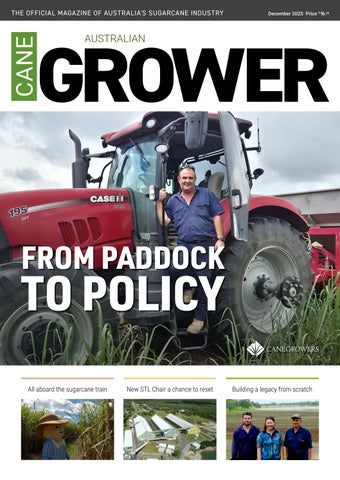
COVER IMAGE
Steven Marbelli has built a reputation as a quiet achiever from the farm to the boardroom
Photo credit: Renee Cluff
Read more on page 24
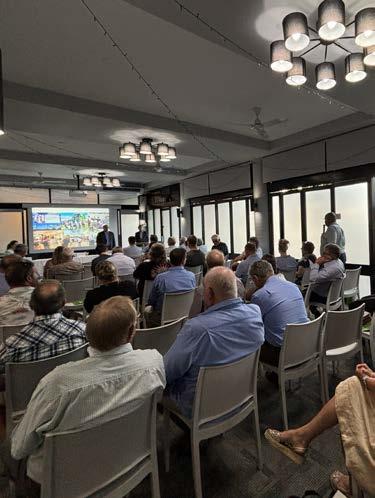
More than 60 growers turned out for the CANEGROWERS AGM in Proserpine last month, where members reflected on the achievements and challenges of the 2024 and 2025 seasons and received an exciting update on plans for the organisation’s 2026 Centenary celebrations.
Following the AGM, grower representatives gathered for the Policy Council, diving straight into the major issues shaping the future of the sugarcane industry.
CANEGROWERS has welcomed the Queensland Government’s announcement of the continuation of a 15% water discount for eligible irrigators, delivered through QRIDA.
The Irrigation Pricing Rebate Scheme provides rebates of 15% to eligible businesses on bills issued by Seqwater and Sunwater (including Burnett Water) in relation to the 2025–26 and 2026–27 financial years.
The 15% rebate will support owner-operated businesses that use water for irrigation and earn primary production income and will provide two years of price certainty.
Applications can be completed online through the QRIDA application portal, or via the paper application form. Learn more at qrida.qld.gov.au/program/irrigation-pricing-rebate-scheme or contact your local district office.
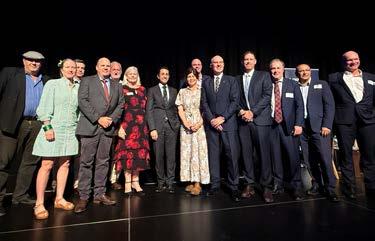
More than 300 guests including CANEGROWERS attended Queensland Farmers’ Federation's annual National Agriculture Day Breakfast at the Royal International Convention Centre, Brisbane RNA Showgrounds. The event featured keynote speaker, Queensland Premier Hon David Crisafulli MP, who reflected on his first 12 months in office and shared his vision for the future of agriculture in Queensland.
Queensland’s biosecurity frontline has shifted again, with the Department of Agriculture and Fisheries releasing Biosecurity (Fire Ant) Emergency Order (No. 15) 2025 on 19 November. The new order replaces No. 14 and brings another round of boundary changes for the state’s fire ant–infested area.
Fresh detections have prompted an expansion of the controlled zones, with increased coverage across Clumber, Moogerah, Ma Ma Creek, Mount Whitestone, Mount Alford and Veradilla. Authorities believe the incursion was caused by humanassisted movement.
Growers moving any defined fire ant carriers – including soil, mulch, baled material, machinery, plant products or goods stored on the ground – from the red, orange or yellow zones on the official map must comply with the updated Emergency Order requirements.
For full details, including the new order and the Plain English Guide, visit www.dpi.nsw.gov.au
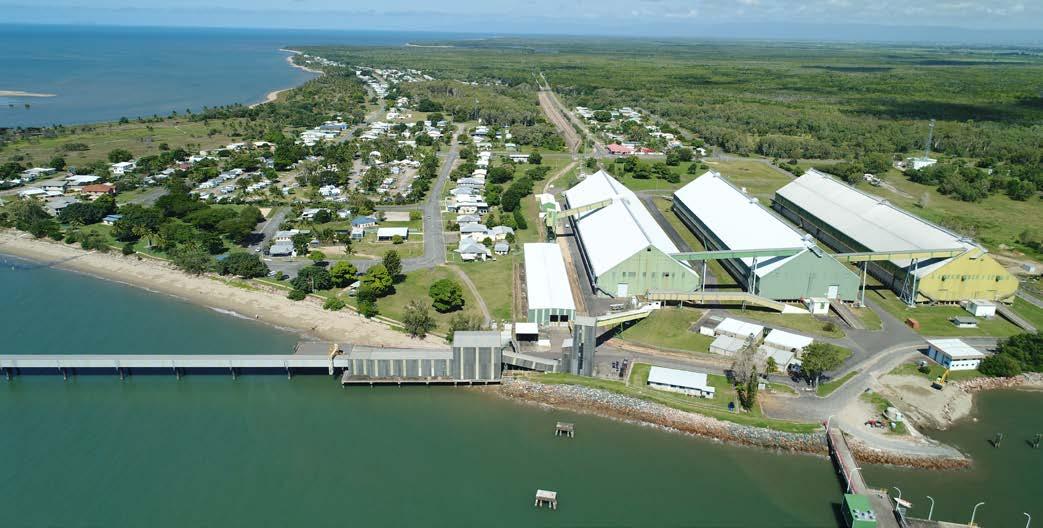
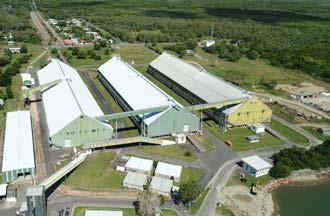
CANEGROWERS has welcomed the appointment of Peter Trimble as the new Chair of Sugar Terminals Limited (STL), calling it an important opportunity to restore confidence and rebuild unity after a period marked by division and uncer tainty.
CANEGROWERS Chairman Owen Menkens said growers will be looking to Mr Trimble to steer STL back toward stability, transparency, and genuine engagement.
“The sugar terminals are industry-owned assets. Growers paid two-thirds of the original construction costs, and today we continue to pay the bulk of storage and handling charges,”
Mr Menkens said. “Growers deserve respect and transparency in return – and in recent years, they’ve felt neither.”
He said frustration remains high following STL’s handling of the insourcing decision and the conflict that unfolded from it.
“The insourcing saga damaged confidence and continues to cast a long shadow across the industry," he said.
“This appointment is a chance to reset, rebuild trust and restore constructive relationships. We want to see open
communication, real accountability and a commitment to working with growers rather than shutting them out.
“Peter knows this industry, and we hope he brings a steady hand and a willingness to listen. The opportunity is there –now it needs to be taken.”
Mr Menkens also acknowledged outgoing Chair Mark Gray.
“We wish Mr Gray better success in his future endeavours. Hopefully he has learned some valuable lessons from the insourcing debacle and the division it caused. Our industry deserves better, and this is a chance to get back on track.”

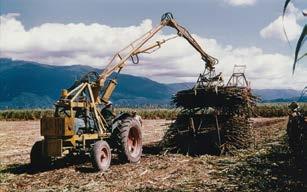

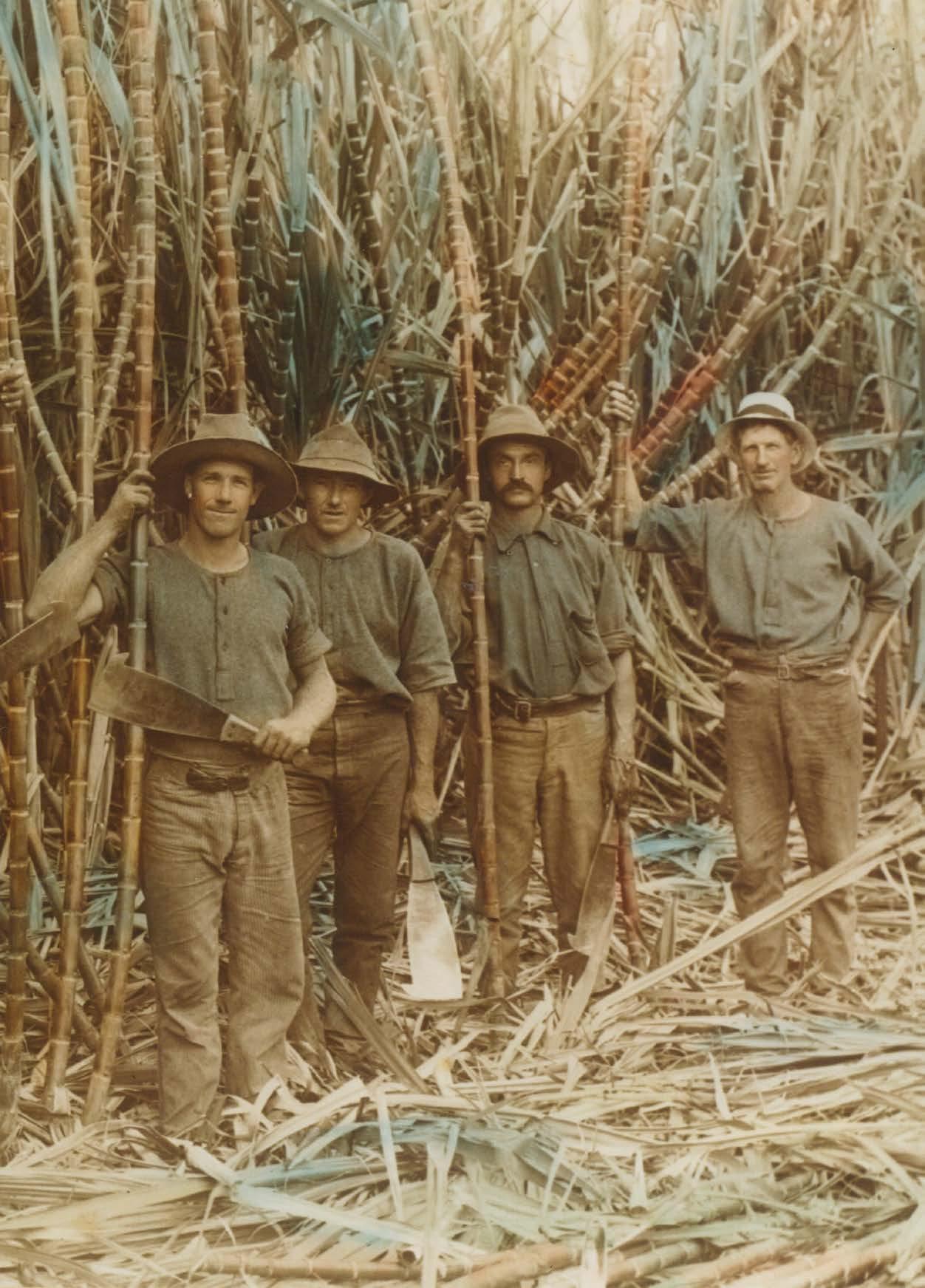
There’s
a new tune rattling through Australian classrooms – and yes, it’s every bit as catchy
as the kids say.
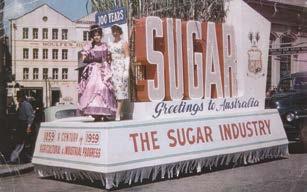
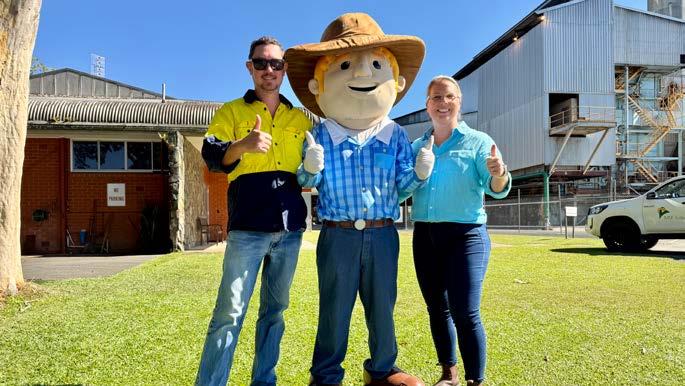
Sugarcane Train, the latest creation from much-loved children’s character George the Farmer, has officially launched in partnership with CANEGROWERS , delivering a bright, musical journey through one of Queensland’s most important agricultural industries.
The upbeat song and video whisk students from paddock to packet, breaking down the sugarcane story in a way that’s fun, factual and impossible not to hum for the rest of the day. Planting, growing, harvesting and milling all feature, along with sugarcane’s expanding role in renewable energy, including fuel, electricity and emerging bioplastics.
CANEGROWERS CEO Dan Galligan said the initiative is a fresh and engaging way to spotlight an industry that’s both innovative and deeply tied to regional communities.
“Sugarcane is one of Australia’s most vibrant, versatile and sustainable crops, and it’s great to see it come to life through George the Farmer’s unique storytelling,” he said.
“George’s new tune is fun, factual and might just get stuck in your head for days! It also continues CANEGROWERS ’ long-standing
commitment to helping students and teachers understand where their food and fibre come from.”
Sugarcane Train is just the beginning. The song and video form the first instalment in a new suite of curriculum-aligned STEM resources created for Prep to Year 4 students.
Developed collaboratively by CANEGROWERS and George the Farmer, the materials include hands-on activities ranging from designing cane farms to building model harvesters and exploring how growers care for soil, water and wildlife.
Simone Kain, co-creator of George the Farmer, said the new resources strike a balance between entertainment and education – an approach that resonates strongly with young learners.
“Kids can’t resist singing along –and Sugarcane Train is the perfect
way to show how clever, creative and sustainable our farmers really are,” she said.
Teachers, parents and budding young growers can jump aboard the Sugarcane Train now:
Watch the video on the George the Farmer YouTube channel
Stream the song on major music platforms
Learn more at georgethefarmer.com.au or canegrowers.com.au
With its playful rhythm and strong educational backbone, Sugarcane Train is poised to become a favourite –helping the next generation appreciate the ingenuity, environmental stewardship and community spirit at the heart of Australia’s sugarcane industry.
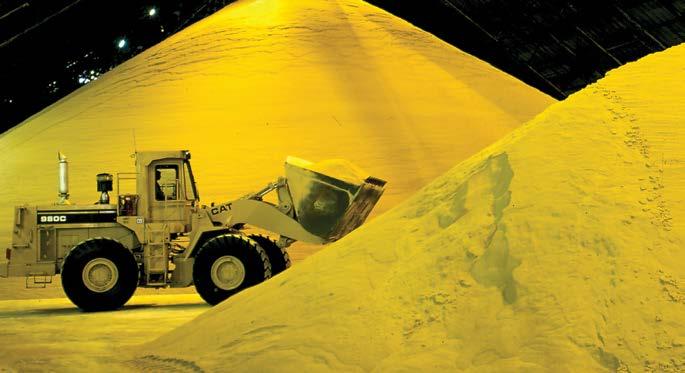
The 2025 Sugar Terminals Limited (STL) Annual General Meeting was widely anticipated by growers seeking clarity on the looming transition to insourced terminal operations.
Instead of reassurance, the meeting delivered heightened tensions, unresolved issues, and renewed concern over STL’s direction and leadership. Following is a summary of the issues central to growers’ concerns.
Cost-saving claims still unsupported
For almost two-and-a-half years, STL has argued that costs will be reduced by ending QSL’s long-held management role and bringing terminal operations in-house. Yet once again, at this year’s AGM, no modelling, no business plan, or side-by-side comparisons were provided to back up the claim.
Outgoing STL Chairman Mark Gray told the meeting that the insourcing business case forecasts an Internal Rate of Return (IRR) of around 25%,
but this business case has still not been released publicly.
Growers asked why, if the transition is progressing as planned, STL has not presented an operating budget. Mr Gray responded that STL does not traditionally publish forecast budgets and noted that the current operating model was designed by QSL.
In 2024/25, STL’s operating expenses rose by 6.3% – about $3.3 million –compared with the previous year. Mr Gray said more than $2.8 million of that increase (around 85%) came from higher service fees paid to QSL.
Mr Gray also pointed to the new Storage and Handling Agreement –signed by five of STL’s six customers but applied across the board – as a key driver of future savings. He said the terms of this agreement alone are expected to deliver cost reductions of more than 10%. A review of the pricing model is scheduled for 2026, which Mr Gray said would “set the scene for pricing arrangements post-insourcing.”
The AGM also delivered a warning that the costs of the insourcing transition may exceed initial estimates, with Mr Gray blaming this on “unresolved issues” with QSL during handover negotiations. While he said STL has set aside contingency funds, it is evident that insourcing will involve an initial financial impact for shareholders and customers.
This impact would have been materially less had Wilmar and MSF Sugar voted in favour of QSL’s constitutional amendments, as recommended by CANEGROWERS The amendments would have clarified QSL’s obligations during the handover, making the transition simpler, faster, clearer and cheaper. Wilmar and MSF Sugar effectively preserved avenues for dispute or delay.
Mr Gray further noted that STL may need to invest in system upgrades to modernise operations, potentially by bringing forward planned capital replacement projects. However, he said no decisions will be made until after the transition is complete.
Progress on dry shareholders but a new concern arises
STL reported further progress in identifying and removing “dry shareholders”, or G-class shareholders who are no longer active cane growers. According to Mr Gray, 89% of G-class shares are now confirmed as being held by current "active" growers.
But a new, unexpected issue has surfaced: the total number of shareholders has fallen. Since December 2023, the number of

shareholders is down from 4,720 to 4,194. Mr Gray suggested this trend may conflict with the intent of STL’s constitution and “may be questionable from a legal perspective.”
He noted that the board has not pursued legal remedies to address the trend, citing cost considerations.
For many growers the AGM also revived longstanding concerns around governance, including:
the dominance of Wilmar-linked directors in miller-appointed seats
the responsibilities STL holds as a monopoly owner and operator of this key export infrastructure
the need for stronger guardrails to ensure STL operates in the interests of the whole industry and a more representative board composition.
When growers questioned a decline in dividends, Mr Gray responded that the board had prioritised lower terminal charges for customers. Growers reiterated that STL, as custodian of assets originally built with grower capital, should serve the whole industry – not just major shareholders.
The outgoing STL Chairman did acknowledge that managing tensions and conflicts inherent in STL’s corporate structure will be a challenge for the future but again dismissed calls to maintain the original operating model, arguing that the industry has evolved significantly since STL was formed.
The tone of the meeting made clear that STL’s relationship with QSL is at its lowest point in years. Mr Gray framed the marketer as a central obstacle to transition progress and described
QSL’s vote against STL’s remuneration report as “grandstanding”.
CANEGROWERS Chair Owen Menkens was among growers who labelled the remarks unnecessary and divisive. He argued that airing such grievances publicly, especially as part of the outgoing Chair’s final remarks, only worsens instability at a time when the industry needs cohesion and confidence.
Mr Menkens has welcomed the appointment of new Chair Peter Trimble as a chance to rebuild industry unity that can start with a renewed respect for the legitimate views of growers. See the full story on page 5.
You can also re-visit the STL/QSL complexities explainer piece in the October issue, or a recap of the QSL AGM in the November issue.

BY DAN GALLIGAN, CEO, CANEGROWERS
A clear theme is emerging at our district AGMs. It’s not new, and for most growers it’s stating the obvious: short term pressures are piling up, while the long-term outlook feels increasingly uncertain.
The short-term issues are easy to articulate. We’re seeing a sugar market downturn, harvesting sector constraints, milling performance and reliability problems, rising costs of production, and increasing pressures on environmental sustainability and carbon emissions reporting – to name a few.
Looking further ahead, there are just as many topics to nominate: rural, regional and resource planning, succession planning and pathways for new farmers, making “hay” from the decarbonisation of liquid fuels and energy, and the performance of our research and development activities –particularly our varieties.
The feedback from growers is clear and unambiguous. They want CANEGROWERS to be the organisation that assists in dealing with the short term while anticipating and responding to the long term.
I don’t blame them. That’s the point of having a membership organisation that has been around for nearly 100 years. Growers across the state make an investment in CANEGROWERS to ensure we have the capacity to do the job.
Listing these issues is the easy part. The hard part is developing strategies that address them all – both the near term and the long term. Our ability as an organisation to anticipate future needs and the potential constraints on the industry is absolutely crucial.
Many growers rightly raise concerns about productivity decline and inconsistent performance of cane varieties. They note that we are often dealing with the consequences of decisions made incrementally five to ten years ago.
To move forward successfully, we must ask what we can see today that, if left unaddressed, will become the crisis of the future.
Harvesting constraints and regional planning fall squarely into this category – issues that are already overdue for action and will soon shift from analysis to crisis if we do not act.
Growers deserve an organisation that can address the here and now while also acting in the interests of our future prospects.
Our work on education, Next Ratoon leadership development, Sugar Cubed conferences and Project Headland are examples of long-term thinking by our Board, which has chosen to invest in programs that will yield benefits in years to come.
It is a real challenge to keep the massive ship that is the sugar industry moving while also navigating course corrections toward a stronger future. But the growers leading this industry are up for it.
As we approach a much-needed Christmas break with family and friends, I hope all members feel that while we face many challenges and some significant opportunities, you have an organisation that stands with you in making the future a bright one for you and your communities.




PROTECTING WHAT MATTERS MOST TO OUR GROWERS & OUR COMMUNITIES
Based in Brisbane, Helle services clients in Brisbane, Rocky Point, Sunshine Coast and Northern NSW. Call or email – she is here to help. Helle also welcomes the opportunity to pay a visit on farm. She enjoys working with CANEGROWERS members and the community to offer tailored insurance solutions.
Helle’s role equally includes looking after the CANEGROWERS Crop Insurance scheme: When a fire or hail claim comes past Helle, she works with the district offices and the insurer to get the optimal claim outcome for members. The Crop Fire Insurance scheme provides cover for all CANEGROWERS members – it gives peace of mind and financial assistance in the event of a covered accidental fire or hail incident.
Insurance for Farm and Farm vehicles
Insurance for Business, Home, Motor and Contents
Claims Support
Crop Insurance for all CANEGROWERS members
Building good relationships, industry knowledge and expertise
Backed by CANEGROWERS Insurance and the Community Broker Network (CBN)
Committed to tailored and efficient service, and ongoing support
Insurance Regional Manager – Southern, for CANEGROWERS Insurance
Helle has many years of insurance experience behind her, working in both Australia and Denmark. Her previous experience includes roles in underwriting, claims management and insurance broking.
She works Mon-Wednesday for CANEGROWERS . Any other day, you may find Helle in her art studio.
“Feel free to reach out, I am here to help”
MATTERS
HELLE COOK | Insurance Regional Manager – Southern (workdays: Mon-Wednesday)
helle_cook@canegrowers.com.au 07 3864 6417
CANEGROWERS Insurance is a Corporate Authorised Representative (CAR No 297969) for Community Broker Network ABN 60 096 916 184 AFSL 233750
CANEGROWERS ’ experienced insurance professionals service all sugarcane regions in Queensland
FAR NORTH QUEENSLAND & PROSERPINE
BRAD HANCOCK
Brad_Hancock@canegrowers.com.au 0408 630 426
HERBERT RIVER
FRANK SCARDAMAGLIA
Frank_Scardamaglia@canegrowers.com.au 0475 818 800
BURDEKIN 07 4790 3606 admin@solarisinsurance.com.au
MACKAY
GEOFFREY YOUNGS
Geoffrey_Youngs@canegrowers.com.au 07 4944 2620
KAYLAH GIDDY
Kaylah_Giddy@canegrowers.com.au 07 4944 2615
RESHMI SINGH
Reshmi_Singh@canegrowers.com.au 07 4944 2615
WIDE BAY
RAY GOODWIN
Ray_Goodwin@canegrowers.com.au 0418 891 783
SOUTHERN QLD & NORTHERN NSW
HELLE COOK
Helle_Cook@canegrowers.com.au 07 3864 6417
BY OWEN MENKENS, Chair, CANEGROWERS

As the crush in most districts comes to an end, it is an important time for growers to look closely at their pricing, now and into the future.
There has been a massive slide in the world sugar price, with a fall of more than 30% over the past six months. The price has now dropped below the cost of production. This is incredibly frustrating for growers as we move from higher prices to lower prices so quickly.
And the timing could not be worse, given this is the period when most of the sugar is delivered and forms a significant portion of the harvest pool.
The question many people are asking is: why is this happening?
Looking at the fundamentals, the global sugar balance is expected to be in deficit for the 2024–25 production year.
On a basic level, this means buyers will still need to source sugar from the market, which would usually push prices up during this period.
The complication is the expectation of a major surplus in 2025–26, and buyers may be waiting for that.
The surplus is expected to come from increased production in Brazil, India, Thailand and Europe.
However, this alone does not explain the dramatic fall in price that we have seen. The main driver has been speculative traders pushing prices down to these low levels.
Speculators can be both friends and enemies. We saw in 2023 that they drove prices to more than $900 a tonne on the back of a deficit, which proved to be a good result for the harvest pool because it came at the right time.
Predicting market direction is extremely difficult, and the more analysts I speak with, both here and internationally, the less confident I become in any forecast.
The most important thing for growers is to know their cost of production. With that knowledge, you can forward price at profitable levels and smooth out periods of low prices.
CANEGROWERS has a range of tools available on our member portal to assist with this. These include a Cost of Production tool that enables growers to determine their breakeven point and understand where prices need to be locked in to secure a profit. Also available is a sugar price ready reckoner to help growers make informed decisions.
Access to the portal is located in the top right corner of the CANEGROWERS website at www.canegrowers.com.au and if you need help logging in, please contact your local district office or the Brisbane office on 3864 6444
In addition, CANEGROWERS runs free Business Essentials workshops in every district, which can greatly assist growers to make more informed decisions about pricing and business management generally.
These workshops sit alongside our broader business resilience training offered each year and are designed to provide practical skills that support stronger business performance. Of course, none of these tools solve the low harvest pool prices we are facing this year.
We are heading into a tough 18 months for the growing sector, and we need to be prepared. The positive news is that everyone in the sugar world is losing money at these prices, which will eventually reduce supply on the market. That will lead to a lift in prices that we can take advantage of.
I would like to wish everyone the very best for the festive season, and I hope the end of the crush goes safely and smoothly. Let us hope this sets us up for a stronger crop next year.
BY ROBYN DEVINIE
When Paul Frohloff bought his first farm in the Childers district 24 years ago, he wasn’t following in anyone’s footsteps.
Unlike many of his neighbours, whose families had been farming cane for generations, Paul was carving out a life on the land from scratch. No inherited paddocks. No grandfather’s machinery rusting in the shed. Just determination, hard work, and a dream to build something lasting.
“I had to buy everything myself. I came here with nothing,” Paul reflects. “So yeah, I’m proud of what I’ve managed to do.”
For Paul, that pride isn’t boastful. It’s quiet and hard-earned – the kind of satisfaction that only comes from taking risks, surviving setbacks, and still showing up in the paddock every day.
Paul didn’t grow up with sugarcane in his bloodline. His decision to buy a farm and enter the industry was, in many ways, a leap into the unknown.
“I suppose I’ve always had the bug to farm,” he said. “If I wasn’t growing cane, I’d probably still be a farmer in some other way.”
The early years were tough. Land repayments, machinery costs, and long days in the paddock meant sacrifices had to be made. Like many in the industry, he supplemented income with off-farm work.
His wife, Deanne, also carries part of the load, working outside the business to help keep everything afloat.
“It works both ways for us,” Paul said. “That little bit extra was needed, kids going through uni, all sorts of things. You do what you have to do.”
That resilience has paid off. Today, Paul runs a well-established farming operation, growing cane and soybeans and running around 160 head of cattle.
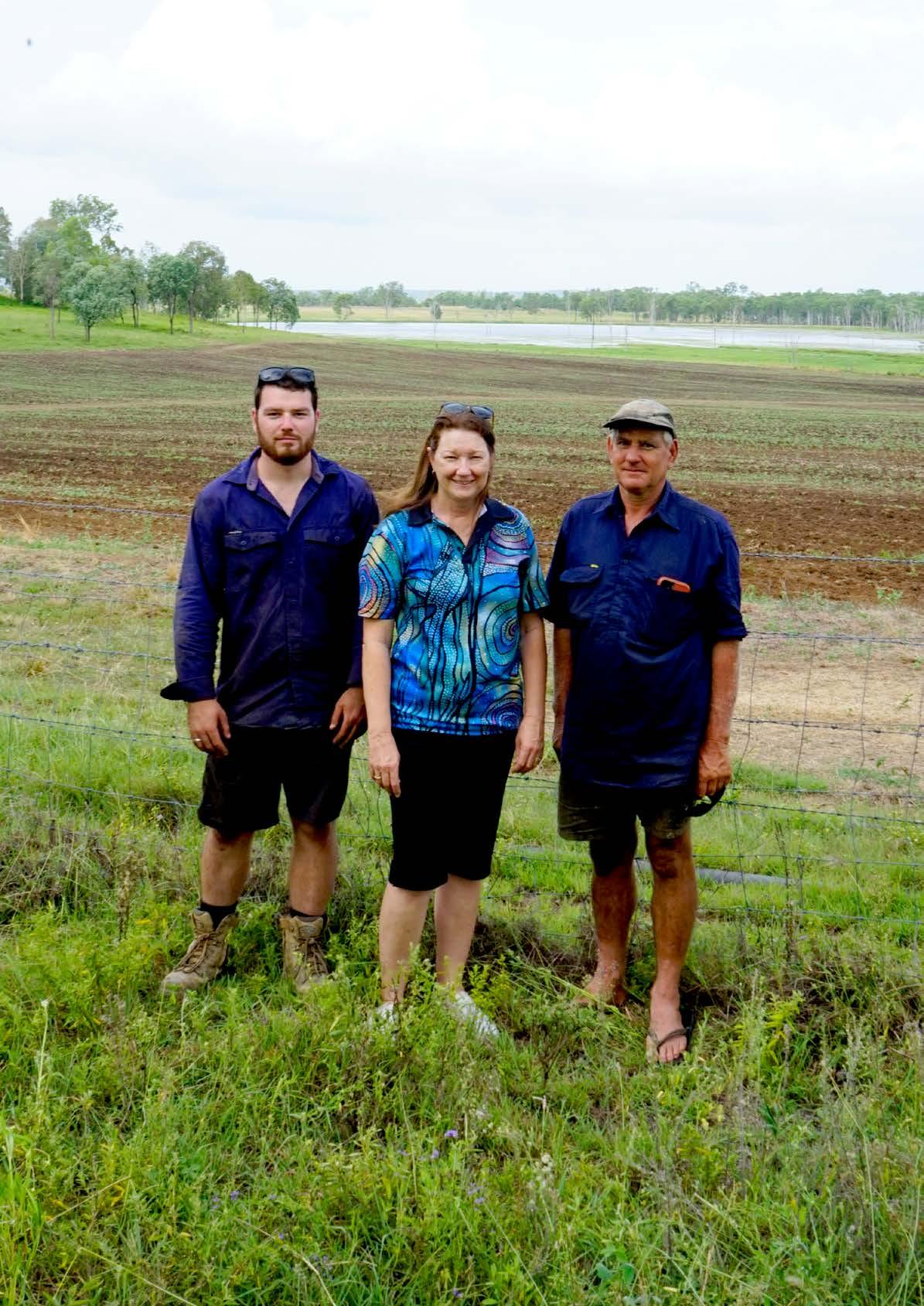
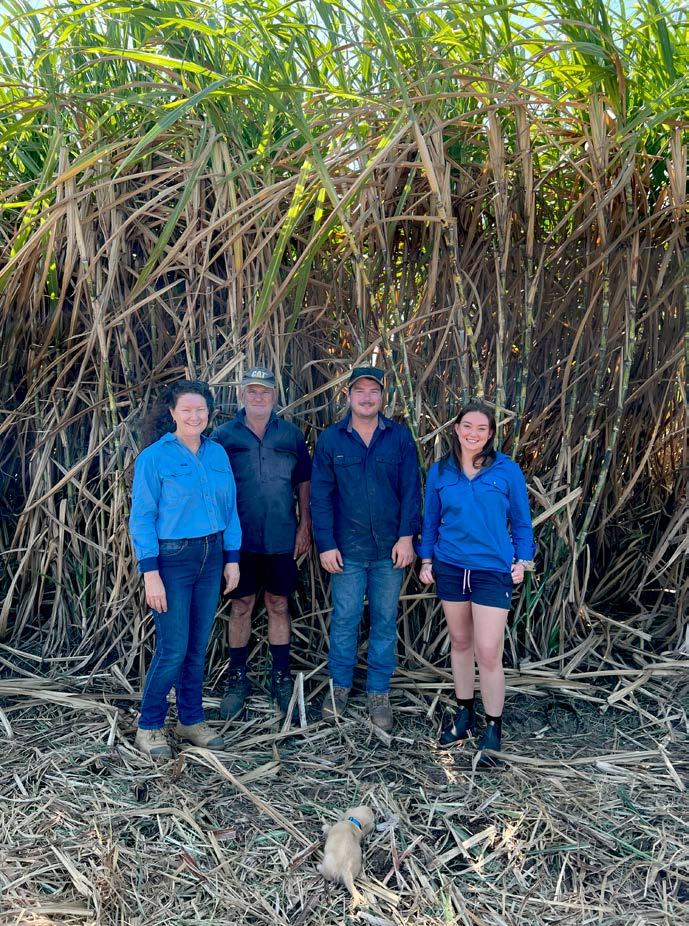
Growing cane in picturesque Wallaville is often a family operation with son Matt, and wife Deanne, supporting Paul's passion for farming
It’s a mixed enterprise that reflects both opportunity and necessity –diversity provides some insulation against the volatility of cane prices.
Being first generation has shaped the way Paul farms. Without inherited traditions dictating every decision, he’s been free to experiment and bring in new ideas from the outset. Soil testing, nutrient management, and GPS technology are core to his operation.
“I’ve always soil tested since day one,” he said. “The old fellas never used to do that, but it saves money, and you know exactly what you need to put back in.”
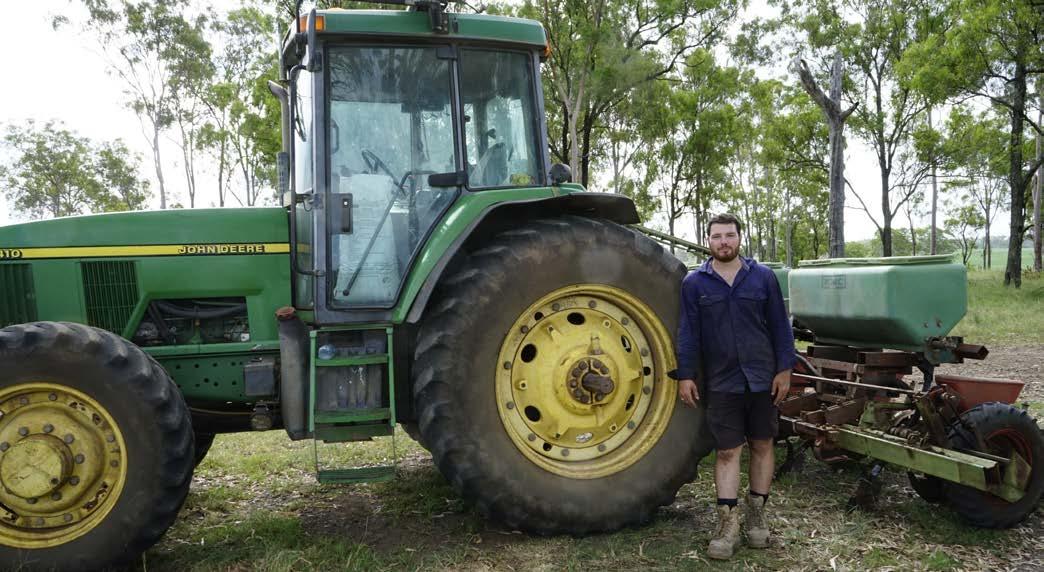
He’s also invested in precision farming tools, like GPS line tracking for planting and traffic control. These not only improve efficiency but reduce wear on machinery and soil compaction. “It just makes everything easier,” Paul said. “You’re not guessing anymore.”
On top of that, he’s working through Smartcane BMP accreditation, recognising that demonstrating good environmental management is just as important as doing it.
“We were ahead of the game before Smartcane BMP came along,” he said. “A lot of it is just paperwork, proving what you’re already doing.”
Like all cane farmers, Paul’s operation lives at the mercy of the weather. Too much rain, too little rain, or unpredictable flooding. Every season throws a different challenge.
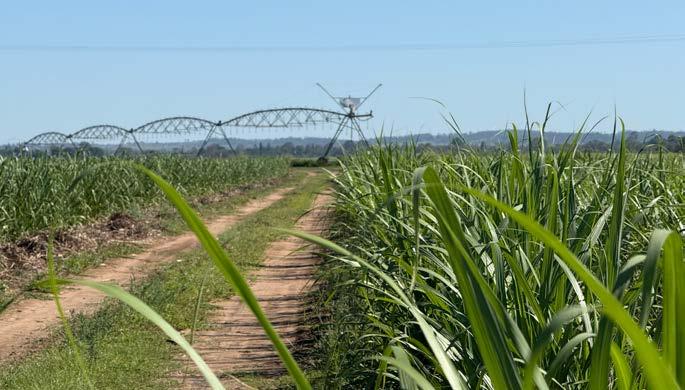
Some of his country is flood-prone, limiting what irrigation systems can be installed. Pivots, for example, don’t suit the triangular blocks. Winch irrigation is used in places, but water and electricity costs are never far from mind.
“That’s one of the big ones now, electricity tariffs, labour, all of it,” Paul said. “You can’t just change over to the newest system overnight. It’s a big cost.”
That pragmatism, balancing what’s possible against what’s financially realistic, runs through every part of his farm management. He’s cleareyed about the fact that farming is a long game.
“You put the hard yards in and when you see the rewards, it keeps you motivated,” he said. “Everything’s getting better all the time.”
Ask Paul about the industry’s biggest challenge, and his answer comes quickly: survival. More specifically, surviving the volatility of global sugar markets.
“Volatility is the hardest part,” he said. “Prices swing, and you’ve just got to ride it out.”
That’s why he values the forward pricing system so highly.
“We’re the only ones in the world who have it,” he said. “It’s something growers here fought hard for, and it makes a huge difference.”
Forward pricing allows growers to lock in sugar prices ahead of harvest, giving some certainty in a market that can change overnight. For Paul, that’s one of the few tools growers have to manage risk in an unpredictable industry.
For a first-generation farmer, the support of industry groups like
CANEGROWERS has been invaluable. Paul doesn’t take it for granted.
“They’re always there to help you,” he said. “I’ve heard people say in other industries, like dairy, you just don’t get that kind of backing. With CANEGROWERS , you know someone’s got your back.”
He likens membership to insurance. “It’s like your RACQ membership –you don’t think you need it until you really do.”
Having access to advice, advocacy, and collective bargaining power has given Paul the confidence to navigate challenges and focus on building his business. And it’s something he wants the next generation of growers to appreciate as well.
Paul may have started as the first Frohloff in cane, but he won’t be the last. His 23-year-old son Matt is already showing strong interest in coming back to the farm full-time. For Paul, that possibility is both exciting and reassuring.
“Better he comes in now and learns with me,” Paul said.
While his daughter, Katelyn aged 25, assists with the bookwork and other things on farm including working with the cattle on the property.
Like all families, succession conversations aren’t always easy. “They’re big decisions, and you’ve got to make it fit and suit everyone,” Paul acknowledged.
But he’s determined to make it work, because ensuring continuity matters – not just for his family, but for the community and the industry.
When pressed to name what he’s most proud of, Paul hesitated. Farmers aren’t always comfortable celebrating themselves.
But then he admits: “Just starting with nothing and building this. Having people say, ‘I couldn’t have done what you’ve done.’ That means something.”
At the same time, being first generation has given him perspective. He has seen growers from multi-generation families who sometimes feel boxed in by tradition. Paul has had the freedom to do things differently.
“It can be good and bad,” he said. “But it means you can bring your own ideas to the table.”
Paul isn’t about to slow down. There are still improvements to make, efficiencies to find, and crops to grow. And even if cane prices rise and fall, his commitment doesn’t waver.
“This is an industry where you’re always helping someone, always busy,” he said. “I’ll probably farm until the day I die.”
For Paul, farming is more than an occupation. It’s a lifestyle, a responsibility, and a legacy he’s building from the ground up.
“You’ve just got to keep putting the yards in,” he said. “And when you see the rewards – that’s what makes it all worthwhile.”

ATO SBSCH is closing. Payday super is coming!
From 1 July 2026, the ATO’s Small Business Super Clearing House (SBSCH) will close its doors for good. If you’re one of the many employers using the SBSCH, you’ll need to find a new way to pay super. At the same time, the government’s payday super reforms will take effect, requiring employers to pay super at the same time as wages.
We’re here to take the stress out of this change, with the Australian Retirement Trust Clearing House. You can pay all your employees’ super in one go – and keep on top of new rules, too. Visit art.com.au/employers/payday-super to learn how we’ve got you covered.

By QSL Assistant Manager Trading and Risk Elliott Apel
Late October through most of November was a challenging period for the ICE 11 sugar market, which fell 2.8 USc/lb over the month, slipping into a 14 USc/lb handle for the first time since 2021. Much of the pessimism was driven by the continued strong performance of the 2025 Centre South Brazil crop and growing market expectations of a sizeable global surplus heading into 2026/27.
According to the UNICA report dated 1 November 2025, by the end of October Centre South Brazil had harvested 556 million tonnes of cane and produced 38 million tonnes of sugar. While the sugar mix has eased towards the tail end of the season, the record-high sugar mix maintained through most of the season resulted in an average cumulative mix of 51.97%, compared with 48.59% last year.
The forward outlook for sugar supply continues to present strong headwinds for the market, with some analysts now estimating a 4-5 million tonne global surplus in 2026. Sugar production prospects from large northern hemisphere producers have also strengthened following favourable monsoonal rains across Asia. In addition, the Indian Government recently approved 1.5 million tonnes of sugar exports for the upcoming season, suggesting confidence in ample domestic supply.
One of the most significant uncertainties for the market is the Brazilian mills’ sugar mix for the 2026 season. Ethanol production from corn has grown rapidly and industry projections suggest corn ethanol could account for up to 30% of total ethanol output next year. Given its lower production costs, corn-based ethanol is expected to be favoured over sugarcane ethanol, which remains more expensive. Anticipation of increased ethanol supply has already placed downward pressure on forward ethanol prices, with projections in the 14-15 USc/lb equivalent range for next year.
Adding to the complexity, the recent US Government shutdown delayed the release of the Commodity Futures Trading Commission’s (CFTC) Commitment of Traders reports for all of October and most of November, leaving the raw sugar market uncertain about speculative positioning. While analyst consensus suggests the net short position exceeded 200,000 lots in early November, the extent of subsequent short covering remains unclear. The CFTC has confirmed the missing reports will be published in chronological order, though full catch-up is not expected until January 2026.
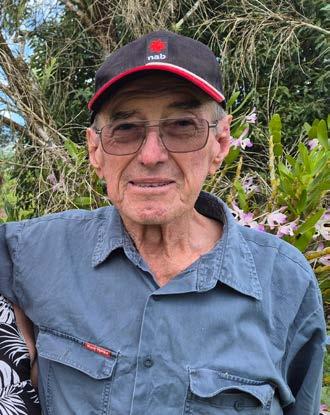

It is with sadness that we mark the loss of Steven (Stefano) Destro, who featured in the November issue of Australian Canegrower. Steven, late of Babinda, passed away peacefully on Friday, 7 November 2025, aged 75 years.
He was the devoted husband of Rose (Rosalina), the much-loved father and father-in-law of Mark & Nicole and Paul & Trudy, and the cherished Grandad of Brooke and Cara. To many in the district and the wider cane community, he was also a trusted friend, mentor, and collaborator.
Born in post-war Italy, Steven migrated to Australia in 1955 as a young boy whose parents were determined to seek a better life. He embraced that new beginning with characteristic grit and gratitude.
Steven, with his childhood sweetheart Rose by his side, not only built a thriving farming enterprise but a legacy for his descendants. At heart, he was always a family man: resilient, generous, and deeply proud of the life he’d created.
The Destro’s multi-site farming enterprise today comprises more than 300 hectares across eight farms, operated in close collaboration across three generations.
Steven was also renowned as an exceptionally skilled mechanic and engineer with a commitment to industry and innovation – from contract harvesting and planting to more recent work in bagasse value-adding.
Steven’s funeral service was held on 19 November, followed by burial at Babinda Cemetery. His footprint lives on in the land he cared for, the industry he strengthened, and the family who will carry his work forward.



We were fed up threading those fiddly elastic straps down the body and arms of the T100. Stretch them tight and the cheap plastic buckles shatter at the first knock.
Lost parts, flapping blades in the ute and a solid five minutes of swearing every battery swap.
Dylan from our R&D team fixed it. He designed a simple propeller holder that pulls the folded blades snug against
the motor cap. It locks them rock solid for transport and literally slaps on or rips off in two seconds on site. No straps. No buckles. No breakages. Just tough printed parts ready for work.
That is how we operate. Quick-release battery cradles, magnetic tool trays and drip-proof nozzle plates all started the same way because something annoyed us in the paddock.
We have been at it since the T20 days. We cut the top off the tank and glued on a hungry board to fill faster and
carry more. From duct tape hacks to overnight precision manufacturing, we never stop improving.
The newest example is our AgDrone Mixing System. This Australian-built batching station keeps perfect pace with the T100’s 100 L tanks. It mixes, agitates and pumps straight into the drone while the next load spins. Three switches and zero headaches.
The standard model is 300 L. We will scale it to 600, 900 or 1200 L for bigger jobs.
Want to see a T100 swap props without a single swear word or watch it refill fast enough to chase a genius-level world record run? Come watch one rip in Tamworth or Mareeba – we love proving gear that actually works.
Call 1800 DRONE 1 or email info@agdrone.au
We are already designing the next thing that will save you time.
The AgDrone.au team

BY RENEE CLUFF
From
the banks of Trebonne Creek to the boardrooms of Queensland’s sugarcane industry, Steven
Marbelli has built a reputation as a steady hand and a loyal advocate.
Most sugarcane growers are modest to a fault, uneasy with stepping into the public eye. Steven Marbelli takes that to another level. He’s the kind of man who doesn’t make a fuss, but gets the job done.
While he may not seek out the spotlight, Steven’s steady hand, quiet leadership, and deep commitment to his community have made him one of the most respected figures in Queensland’s sugarcane industry.
Now Chair of CANEGROWERS Herbert River, Steven has been part of its leadership for more than a decade. His involvement includes roles as Deputy Chair, Director, and Chair of the Operations Review Committee, in addition to his service on the Staff and Finance Committee.
Beyond the Herbert, he also holds the position of Vice Chair of the Queensland CANEGROWERS Board and leads the state’s Farm Performance and Productivity Policy Committee.
But ask him why he got involved, and he’ll shrug: “Not really sure. My father and uncle were CANEGROWERS directors, and I was encouraged by a neighbouring farmer to put up my hand.”
It’s that understated approach, combined with a work ethic rooted in generations of farming, that defines his leadership.
Steven began farming full-time at just 16, leaving school in 1986 to work the land his family had built their lives around.
His roots run deep: he’s a thirdgeneration grower, the grandson of Italian migrants who settled at Abergowrie in the late 1920s. His father, born in 1939, started on the family farm at age 15.
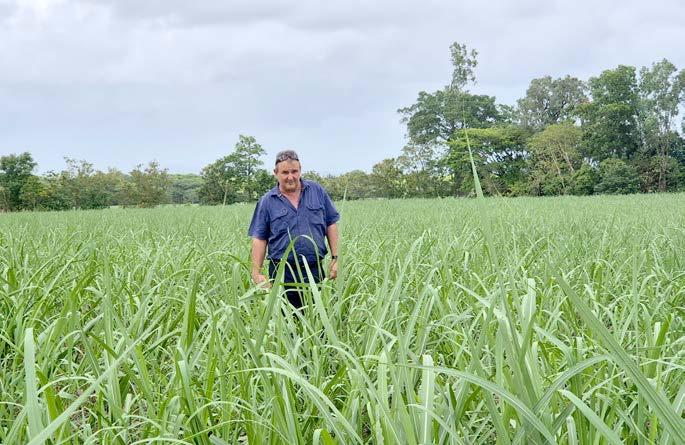
Today, Steven manages over 500 hectares of sugarcane in the Herbert River district, a mix of family-owned and leased land, including the original farm his grandparents worked, now rented from its current owner. The sandy loam soils here are his most productive.
Steven’s home base at Hamleigh is his largest single farm in the Ingham area, a 250-acre parcel of land bordering Trebonne and Cattle Creeks.
These waterways bring both opportunity and challenge. The fertile alluvial soils near the creeks are among his best-performing, but the
heavy clays on the low country require more management precision.
The waterways also make the property prone to flooding, something Steven knows all too well. During the 2025 North and Far North Queensland Low flooding event, his house was inundated and remains unliveable.
“You don’t recover from an event like that in one year”
“It takes a whole crop cycle,” he said. The flood crisis marked a demanding start to Steven’s tenure as Chair of CANEGROWERS Herbert River, thrusting him into high-level discussions with industry leaders, stakeholders, and government officials.
He and the Herbert River team played a central role in CANEGROWERS ’ successful push to reform disaster funding rules, securing eligibility for growers who also have off-farm, agriculturerelated income.
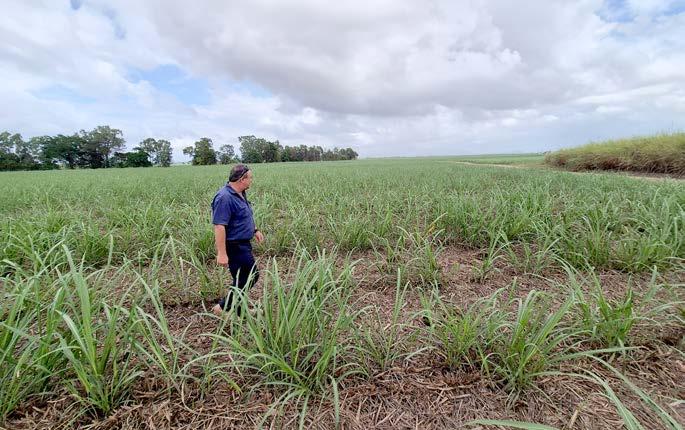
On a tour of Steven’s property, he points to a fridge that was lodged deep in the cane – a stark reminder of the flood’s power. Nearby, Cattle Creek gurgles with eerie calm.
“Crocodile central,” he says with a dry smile. “There’s 20-foot of water in there, it never dries up. There’s a croc living there who’ll come towards your car,
pushing a big wave. He’s a big fella and he gets cranky. Doesn’t like you being here.”
It’s no surprise feral pigs are a problem in this area. There’s evidence of the pests in both cane fields and in marshy, forested areas of the property.
A Council-led trapping and baiting program is underway, while an aerial shoot over just a few days reduced numbers by about 150. A previous program involving tracking pigs with GPS collars revealed they’re territorial.
Rats have also been a major problem for Steven in the past, but he says their numbers dwindled following the flooding. “Nature always has a way of balancing things,” he mused.
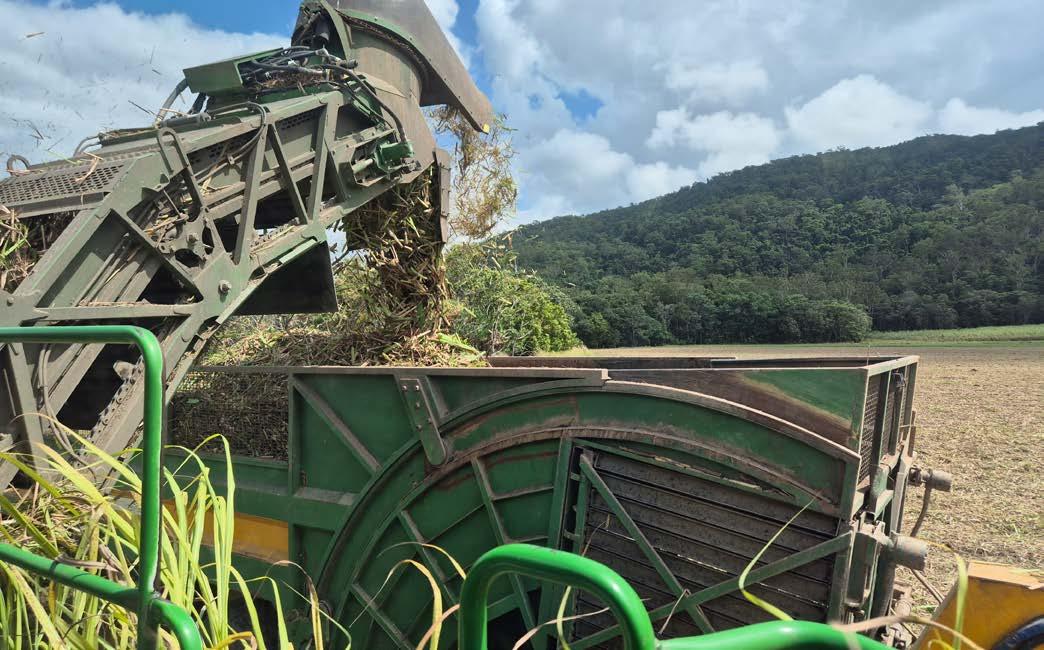
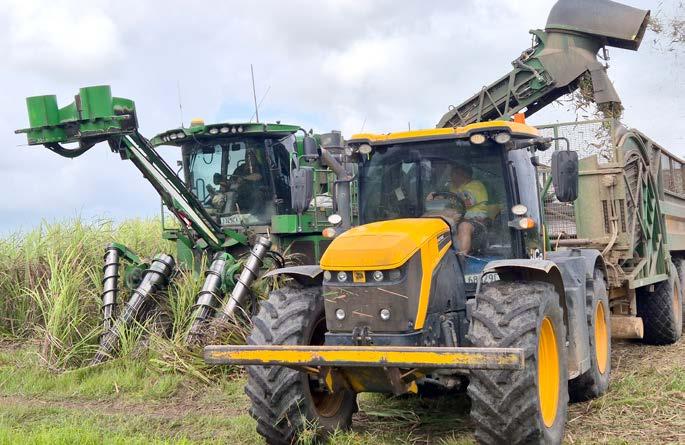
Steven’s farming operation is a model of modern efficiency. With controlled traffic farming, 1.7-metre row spacings and full GPS guidance, he’s streamlined his business to make the most of every hectare with minimal labour.
“When my father was farming, it was him, his father and two brothers working 150 acres,” Steven recalled. “Four families lived off that land. Now, it’s just myself and one other person looking after 500 hectares.”
He plants all his own cane alongside running a small planting contract.
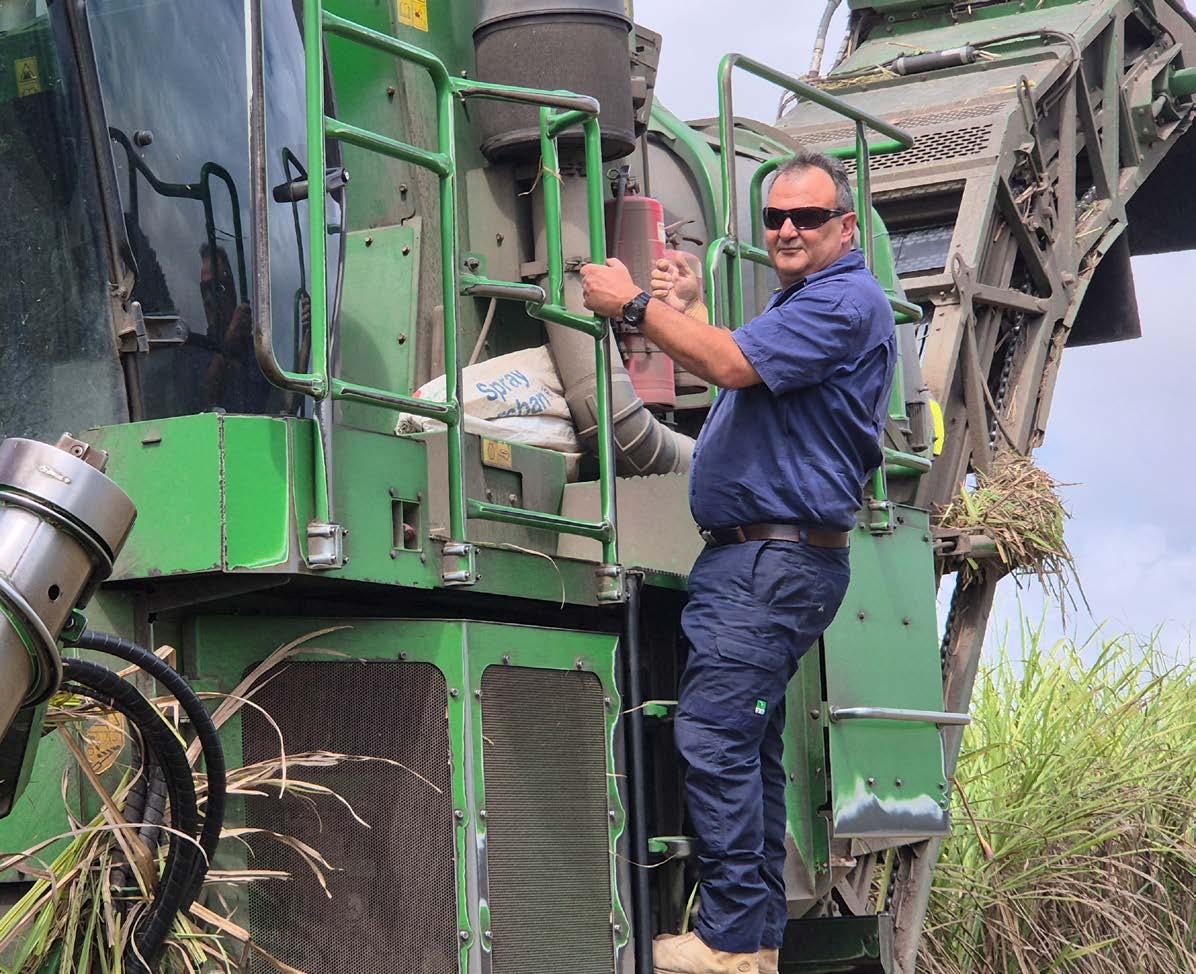
A harvester contracting business has been a part of his operation for more than 30 years, adding a unique perspective to his role in policy and advocacy.
“You understand the pressure on both sides,” he said. “You know what it’s like operating from both the paddock and as a contractor.”
Steven’s also hands-on with the administration side, preferring to manage his own accounts and bookwork, supported by a shared secretary with his brother, who runs a civil construction company in Ingham.
It’s not just the big blocks that Steven farms. One of the smaller properties he
leases belongs to a woman aged in her 90s, still living independently on the land she once worked with her husband.
For Steven, it doesn’t make economic sense to keep leasing it. But he does, allowing his landlord to stay in her home. That’s the kind of bloke he is. Doing the right thing, even when it’s not right for him.
The same applies to his involvement in grower representation. While Steven maintains leadership doesn’t come naturally to him, it’s clear his community trusts him to speak on their behalf.
“I’m always vigilant about becoming a better leader, but I’m not a natural, that’s for sure”
Even in his role as Vice Chair of the state CANEGROWERS body, his heart remains firmly planted in Ingham.
“If I’m going to do any good, I really want the Herbert River region to benefit,” he said. “But I do represent the whole organisation.”
Steven’s deep connection to the Herbert reflects the strong values that run through his family.
At the Macknade Bowls Club, one of the Greens bears the Marbelli name, a tribute to his grandfather Luciano, a founding and life member, and to the countless hours Luciano’s sons Peter, Luigi, and Steven’s father, Mario have devoted to the club over the years.
In local bowling circles, a ‘Marbelli Wick’ has become shorthand for a lucky deflection that lands just right, a nod to the family’s enduring presence and legacy on the green.
As a side note, Steven can’t help but laugh at the fact that his father and uncle, the Marbelli twins, happen to share names with two of pop culture’s most famous brothers: Mario and Luigi.
Steven’s daughters carry on the family’s tradition of giving back, with one working as a nurse in Townsville and the other as a teacher in Ingham, both drawn to careers rooted in care and connection. It’s no surprise. Quiet action speaks louder than words in the Marbelli household.
Whether it’s advocating for floodaffected farmers, pushing for productivity improvements, or simply helping an elderly neighbour by tending her land, Steven Marbelli shows what real leadership looks like – measured not in speeches, but in actions.
He’s the kind of man who doesn’t say much. But when he does, it’s worth listening. And when it comes to getting things done, he’s out in front.
SUPPLIED BY SUGAR RESEARCH AUSTRALIA (SRA)
Listening to and understanding the needs of Australia’s sugarcane growers and milling companies is central to Sugar Research Australia’s (SRA) purpose.
It ensures that research investment remains relevant and that SRA continues to deliver value back to the industry.
Each year, SRA commissions an independent research agency to seek direct feedback from levy payers on how the organisation is performing, where improvements are needed, and how future research funding should be prioritised.
During November and December this year, independent research
agency, Intuitive Solutions, will again undertake randomised telephone surveys of 400 growers. The survey gives growers an opportunity to share their views on performance and research priorities for the coming years.
To protect privacy, all individual responses are kept completely confidential. Intuitive Solutions provides only summarised results and anonymous comments to SRA.
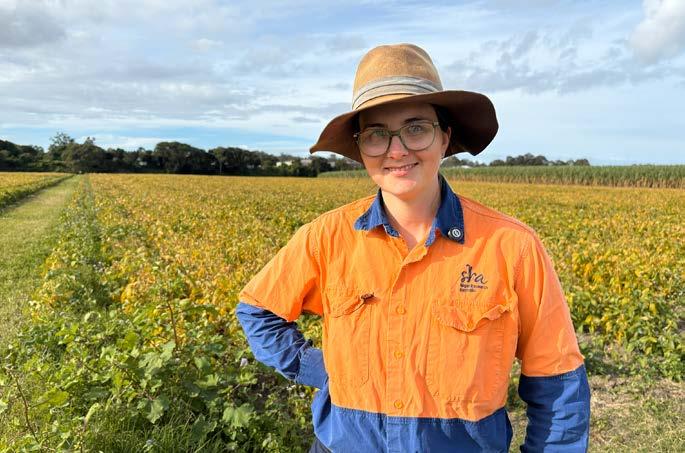
“If you get a call from Intuitive Solutions, I encourage you to participate – your feedback informs how we work and invest levies for the benefit of the industry’s productivity and profitability”
Results from the 2024 SRA Grower Survey showed that growers continue to hold a broadly positive view about the future of the Australian sugarcane industry.
Head of Strategy and Data, Ben Simpson, said that more than two in three (68%) were optimistic about the 2025 year ahead. Although slightly less than 2023, sentiment has remained positive for three consecutive years, reflecting improved commodity prices and better operating conditions across much of the industry.
“Optimism was consistent across different farm sizes and regions, though sentiment was lowest in those regions where local conditions continued to challenge operations during the 2024 crush,” Ben said.
“However, the survey also revealed areas where growers were looking for stronger performance from SRA. Overall satisfaction among growers averaged 6.3 out of 10, slightly below last year’s result but still within the historical range.”
Visibility of SRA staff in regions: Growers reported wanting more “boots on the ground” and more frequent, direct engagement with local staff. Satisfaction was strongly linked to perceptions about how active and visible SRA is in each district.
Variety performance:
Many growers expressed frustration that newer varieties were not consistently outperforming older ones and called for a stronger focus on breeding for productivity and resilience.
Pest pressure and regulation: Canegrub management and the reduced availability of certain chemicals, such as imidacloprid and paraquat, were recurring concerns.
Despite these challenges, growers said they continued to value the practical, research-based tools and information SRA provides. Examples were the Weed Management Manual and Variety Guides, other SRA publications and website downloadable factsheets.
When asked about the urgency of different research areas, growers ranked varieties as the number one priority for investment, followed
by crop protection and milling and processing.
At a more detailed level, the top five priorities identified by growers and millers were:
1. Developing new varieties with improved production and milling performance
2. Accelerating breeding efficiency and developing new traits
3. Sustainable pest management
4. Sustainable management of diseases and ongoing biosecurity
5. Supporting variety adoption decisions through robust performance data and availability of planting material.
These insights have directly shaped how SRA planned and delivered its research investments and engagement activities in 2025, with the Board and management taking swift actions to address key themes from the 2024 survey.
Accelerating variety improvement:
SRA is expanding its investment in genomic selection and accelerating testing of new clones to deliver higheryielding and more resilient varieties faster. Trials are being scaled up to 10,000 clones per year by 2030, supported by new data-driven tools to improve selection accuracy.
Responding to pest management challenges:
Following grower feedback, SRA has prioritised research to identify alternative insecticides and integrated pest management strategies for cane grubs and weeds management.
Field trials are underway to fasttrack viable alternatives following regulatory changes, and the Pl@ntNet app was launched earlier in the year along with online training to support grower IPM decisions.
Strengthening regional engagement:
SRA has increased its on-ground presence in several regions by recruiting new staff, recharging its District Manager network, appointing new experienced officers in Tully, Meringa, and the Burdekin, and aligning extension and adoption activities with local priorities.
This ensures growers have direct, trusted points of contact to discuss research outcomes and local issues.
In addition, a dedicated General Manager – Adoption was recruited and commences work in January.
Enhancing communication and access to information:
SRA has launched targeted campaigns to improve awareness and use of its digital tools and region-specific updates. Feedback from growers has guided improvements to the monthly email news, introducing Cane Matters Monthly
The team also streamlined the new Variety Guides, and collaborations were formed with local productivity services to ensure practical, timely advice.
Tailoring engagement by region:
Recognising that research priorities vary between districts, SRA is taking a more localised approach to planning and delivery. This includes regional stakeholder workshops and pilot programs for 2026 to trial new engagement models where grower satisfaction was lowest.
“At SRA, listening leads to action,” Mr Bartlett said. “The views of growers and millers directly influence our priorities – from variety development to pest control and beyond. Your feedback drives the improvements we make each year.”
Smartcane BMP recognises and celebrates the way you farm. And it’s not as hard as you think.
You’re always looking for ways to improve your farm. So chances are you’re already doing BMP on your own.
Get in touch with your district facilitator to see how easy it can be. We’re here to help.
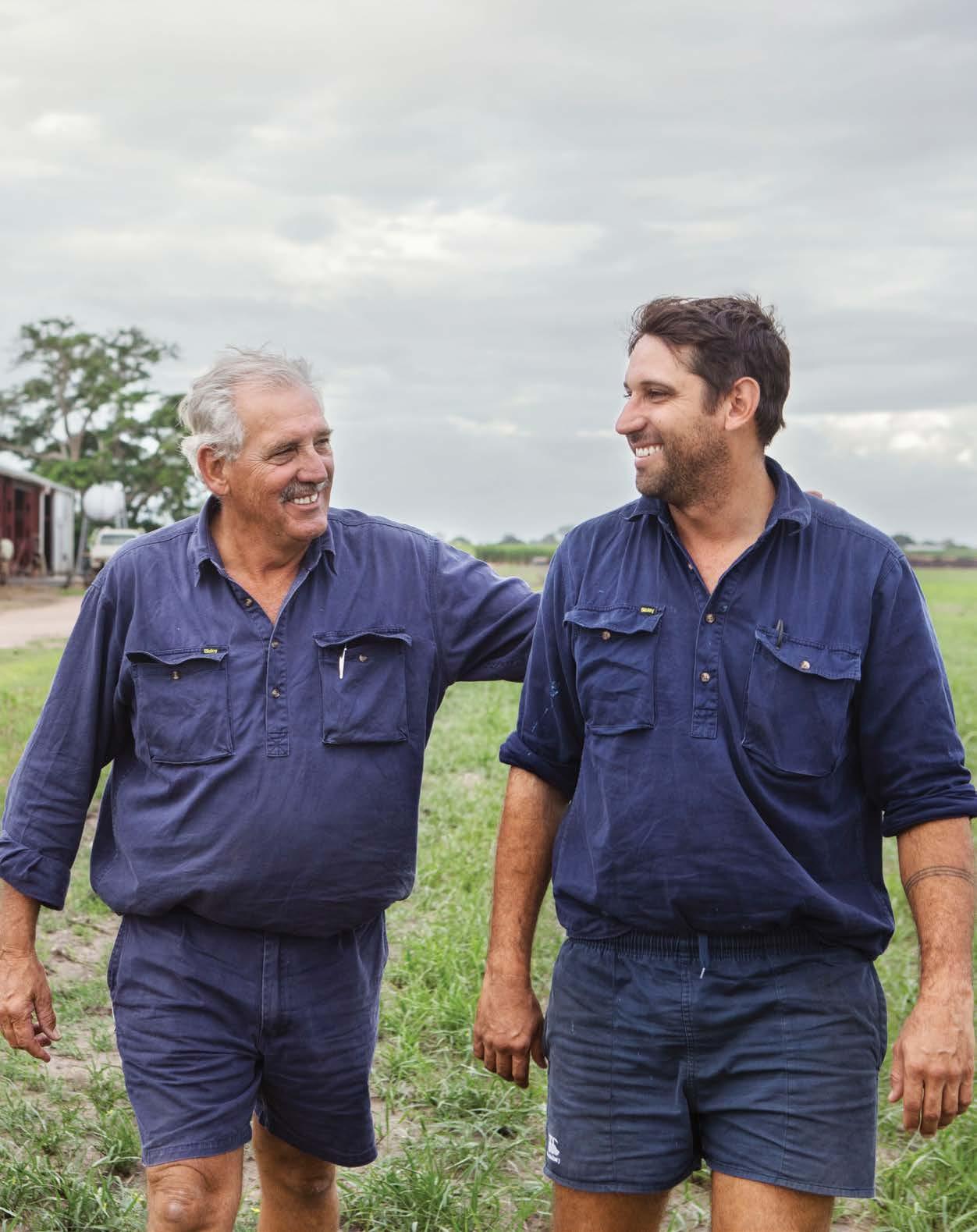
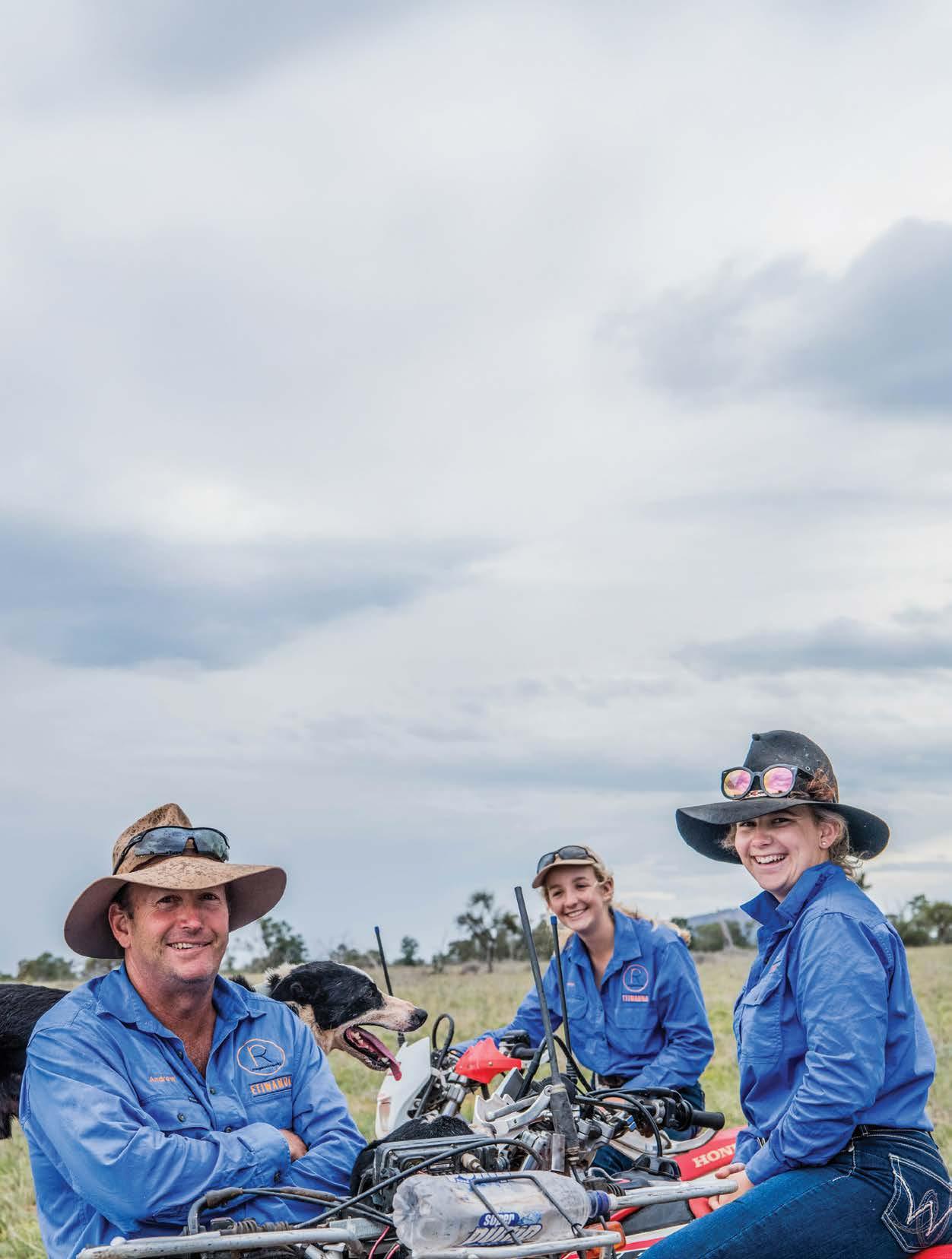
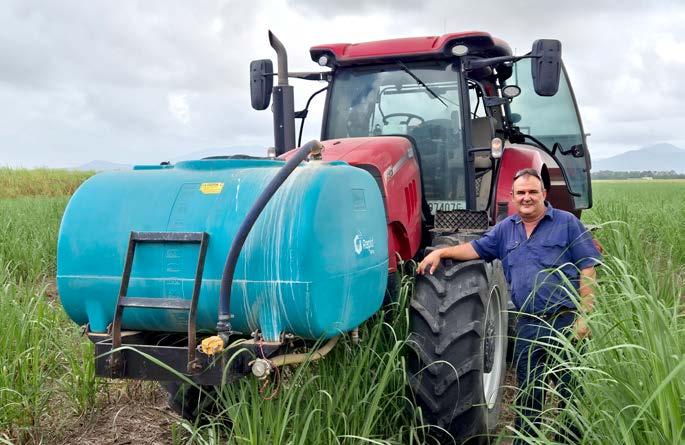
Mark and Andrew, Burdekin
BY LINDSEY PERRY
BMP Program Manager
Last week, I had a coffee with Michael Pisano on his farm north of Ingham
In 2014, Michael was the first grower ever accredited in the three core modules of Smartcane BMP and he remains a steadfast supporter of the program, completing his second reaccreditation in 2024.
Since I started in this role, some growers have asked ‘what benefit is there in Smartcane BMP for me?'
So I asked Michael what he views as the greatest value in accreditation. Without hesitation he said, “Social License.”
He indicated that having a third-party auditor confirm that farms are doing the right thing is critically important in the present time, when less people are involved directly with farming and even our local government and councils may not directly understand the progress and improvement that farmers have made over the years.
Social license is a topic that is often hard to understand until it is lost. It is the balance between agricultural practices, community expectations, and environmental stewardship.
Smartcane BMP provides a common language that translates farming
practices into a language the broader community and government can understand.
Smartcane BMP also sets the bar for what we as an industry believe should be standard practice and achievable on every cane farm. Michael and I discussed changes in standard practices over the years.
“It was all green cane harvesting until the cane cutters strikes in the 1930s –they were getting Weil’s disease from the rats in the cane," Michael said.
In the Herbert River district, it was farmers who led the way in returning to green cane harvesting again once mechanisation took over in the 1960s.
“Dad wasn’t keen on horses. He would joke that a tractor was always where he left it the night before. Starting out with machines in the early days meant we were open to new ideas from the start.”
Once tractors were in the game one fellow started harvesting green cane down the road. The trash blanket was a no brainer for moisture retention and weed suppression and more farmers took it up. Harvesters were slow to embrace the change.
“At home, we slowly transitioned to it by burning about 75% and if there was time at the end of the day, we
would encourage the rest to be cut green. In the end, the harvesters modified their machines and it became commonplace.”
The green cane trash blanket brought with it new problems. “In the early days, fertiliser was spread on top, but this resulted in so much volatilisation that there would be tears streaming down your face from the ammonia.”
Then chains rattled the trash to let the fertiliser sift through, this was better but still not good enough. Thankfully, times have changed and these days it is done with stool splitters and goes directly where the crop needs it.
It is a good reminder that growers have led the way for a lot of progress in the industry.
“It’s valuable because it’s not just farmers saying it, it's independent auditors,” Michael said.
As we look forward to an uncertain operating environment in the next few years, I am reminded that growers and industry have already adapted to so much change that once seemed inconceivable.
Smartcane BMP remains committed to independently verifying and supporting growers to demonstrate progress, innovation and best practice.
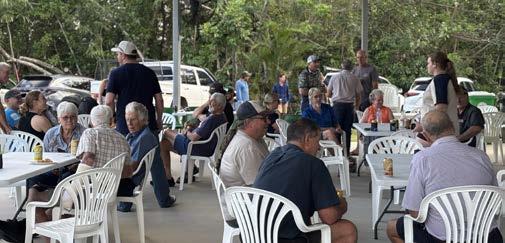
October began with a welcome shower, but the rest of the month turned very dry, leaving us with just 77.9 mm – 77.6% of the usual monthly average.
The lack of rain in the winter period really saw the crop estimate drop during the September and October period. While the sugar content dropped away early in some cane, other samples maintained reasonable levels.
By the end of the 2025 crushing, Mossman coastal growers cut and supplied only 95.5% of the 200,000-tonne target being 191,070 tonnes of cane. The Mossman crews final shift ended at 2am on Tuesday 4 November some 20 weeks after they started. Mossman Julatten growers had supplied 17,023 tonnes of cane to that point.
The final Mossman coastal district average CCS was affected by the quality of some cane in the last weeks of the crushing. A number of samples went below 7CCS but due to the delivery system this cane could not be separated or condemned, so the actual CCS reading
was included in the whole of district average. This meant the Mossman coast district average CCS for payment purposes ended up less than last year (2024) at 11.95CCS.
As a consequence, growers will be paid slightly less per tonne of cane in 2025 than they did in the 2024 season being $47.1855 per tonne of cane. However, due to no transport fee being deducted in 2025, growers will receive more income in their pockets for 2025.
The Mossman district had a combined cut-out party on 6 November being the last crushing for the area. It was well attended by growers, contractors and businesses that support the industry.
The CANEGROWERS Mossman AGM was held a week later 13 November, and it was followed by a general growers’ meeting. Those who attended heard about the final crushing figures, the latest on the Mossman Mill site, the discussions with MSF Sugar and government, following a Mossman Advisory Meeting which had been held on 4 November.
The Tableland Mill has completed approximately 88% of the crush at the time of writing, with the crop estimate reduced to 869,000 tonnes.
The current average CCS is 13.66, which is 0.2 units below last season’s average. The estimated finish date for the 2025 season is 10 December 2025.
Labour retention, particularly truck drivers, continues to be a key challenge for mill performance. Of the 18 prime movers available for cane transport, only 15 are currently operational. In addition, all allocated wet-weather days for the season have now been used, and growers are hoping rainfall remains minimal through to the end of harvest.
MSF Sugar representatives advised that their immediate focus is ensuring the current crop is removed; however, with storms already occurring, there is increasing concern about potential standover cane.
The tonnes were disappointing however the CCS was the highest seasonal average since 2018. With the news that nothing positive has been achieved regarding the delivery of Mossman cane in 2026,
While MSF Sugar has maintained equity between harvest groups, some growers noted that equity issues persist within groups between individual entities, which could become more significant should standover arise.
Concerns were raised regarding the mill’s capacity to process next year’s crop, which is expected to exceed 900,000 tonnes.
To complete the 2026 season efficiently, the mill will need to maintain an average crush rate of 240 tonnes per hour across the entire season.
This year, the mill has struggled to achieve an average of 200 tonnes per hour, contributing to a 29–30 week season.
CANEGROWERS Tableland wishes all a happy and safe festive season. The office will be closed from 22 December 2025 and reopen on 5 January 2026.
the impacts of this shortfall and managing cane supply for stakeholders in 2026 is under serious review.
At the time of writing and for those growers supplying South Johnstone mill the season continues. The likelihood on early storms remains concerning.
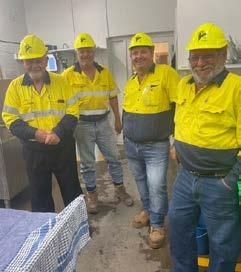
The bean deliveries have been achieved. A shout out to Tony Rossi (Mulgrave) and the Destro Family (Babinda) who assisted with the logistics and loading. Those members who are intending to utilise the organisations direct drill bean planters are asked to make your needs clear asap.
The launch of the ‘George the Farmer’ video has been an exciting time for the Region.
The crushing season for the South Johnstone mill area concluded in late November.
Final figures were not available at the time of printing, but total tonnes were certainly an improvement on the dismal 2024 harvest. Encouragingly, favourable weather this year
Celiamaree Zarins (Next Ratoon graduate) Jessie Di Maggio and Joe Bonso (farmers and harvester operators) along with Joel Tierney, (CANEGROWERS Manager) and not forgetting some little family members, all became a part of the production. Some great dancing skills were identified!
During 2025, CANEGROWERS
Cairns Directors undertook some professional development around cane analysis and payment. Classroom presentations took place pre-season, where historical formulas, CCS calculations, BSES procedures, cane plant structure, analytical techniques, and correct methods as well as audit procedures were all presented.
To finalise things Directors were given the opportunity to visit the Mulgrave laboratory under the guidance of Glenn Pope and Sarah Standen where they experienced the working laboratory atmosphere.
Most harvesters were able to maintain on schedule throughout the season; however, we are reviewing ways to better support growers regarding ‘within group equity’, as some issues did arise.
CANEGROWERS Innisfail has also been in contact with QSL and the marketing arm of MSF Sugar following the recent fall in sugar prices. Discussions are focused on understanding the impacts for growers and
developing strategies to manage payments moving forward.
Shed meetings are being held in December, where we will update growers on trial findings and on the activities of our Johnstone Sugarcane Practice Change Program, funded through the Queensland Reef Water Quality Program (QRWQP).
Our extension staff continue to work one-on-one with growers to address productivity constraints.
allowed for timely planting, and at this early stage we are confident of further gains for the 2026 harvest.
Overall, the mill performed well, although there were a few breakdowns in the latter weeks. MSF Sugar staff worked around the clock to minimise lost time.
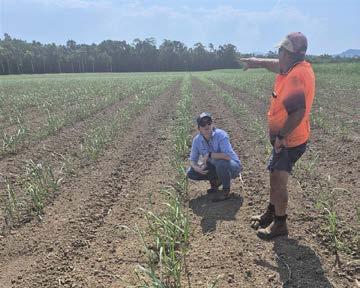
The 2025 season completed on the night of 14 November just before midnight.
Commencing on 3 June, the season entered the 24th week, with a total loss of 789.971 hours. The breakup of lost time consists of wet weather 384.784 hours, poor cane quality 0.134 hours, cane supply 11.103 hours, low bin weights 0.162 hours, empty units 0.079 hours and 2.561 hours to other loss.
Mill lost time totals 254.811 hours and 36 hours for the Tully Show. A total of 4.7 weeks was lost, with wet weather being the main contributor.
Total tonnage for 2025 season was 2,164,171 tonnes, only slightly higher than season 2024 total of 2,162,130 tonnes. Yield ended at 74.79 tonnes per hectare which is down on the long-term average of 85.5 tonnes per hectare.
After two years of wet weather, the Tully district will be looking for a drier start to the growing season. Currently, the season is looking exceptional because of the earlier finish.
2025 is complete, and we look forward to 2026.
Fertilising is complete, it is perfect timing to plant fallow crops due to the early finish. Some grower’s fallow crops have already been planted with high rates of germination.
Most of the plant cane has been side dressed and filled in, resulting in some of the best plant cane in the district for a few years. Cane tops in the plant and ratoon cane are dark green, which is encouraging for next crop.
Grass and weed control will commence in the next couple of weeks as growth patterns increase due to weather conditions.
Record keeping is necessary in modern farming for chemicals and fertilisers. It is important that users of chemicals understand the label that is provided on the container and ensure that you are aware of the Safety Data Sheet (SDS) that accompanies the chemical. Replace plastic measuring devices if they have cracks, chips or discoloration as they
will have the tendency to break off at the handle resulting in unwanted spills.
December holiday period will trigger oversize curfew, as it does every year. There will be restrictions in place between 12.01am 19 December and 11.59pm Friday 2 January for loads that require more than one pilot or escort. No travel is allowed for ALL other oversize loads between
12.01am Wednesday 24 December and 11.59pm Friday 2 January. If you require further information, please contact your CANEGROWERS office or visit the NHVR website.
CANEGROWERS Tully would like to take this opportunity to thank all persons involved in the sugar industry for the 2025 season and wish all a Merry Christmas and prosperous New Year.
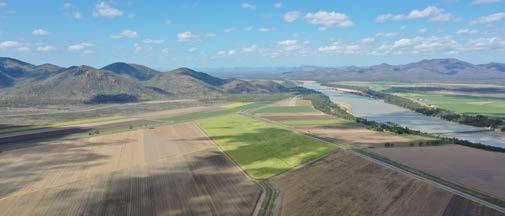
At the time of writing, we are just days away from the end of the 2025 crushing season.
The Herbert mills have processed approximately 3.7 million tonnes of cane, exceeding the original season estimate by around 450,000 tonnes. Season-to-date CCS remains steady at 12.8.
CANEGROWERS Herbert River continues to work closely with Wilmar to support a safe, orderly completion to the season and ensure all remaining cane is harvested and crushed efficiently.
In mid-November, CANEGROWERS Herbert River hosted two GPS workshops for growers, facilitated by Russo & Vella. These sessions focused on improving grower capability in the effective use of tractormounted GPS units, including
how to capture and utilise input data to support accurate recordkeeping and compliance.
The workshops were well attended and highlighted the growing value of digital tools in farm management.
Recently, CANEGROWERS Herbert River also met with candidates contesting the Hinchinbrook bi-election.
These meetings ensured that local growers and the wider sugar industry remain front and centre in election discussions, while reinforcing the key issues requiring State Government attention and support.
As we wrap up another busy year, the Board, management, and staff of CANEGROWERS Herbert River extend their warmest wishes to all members for a Merry Christmas and a happy, safe, and prosperous 2026.
The 2025 season for the Burdekin district concluded on 10 November with the final bin tipped at Inkerman Mill.
Kalamia Mill was the first to finish on 25 October, followed by Invicta Mill on 3 November and then Pioneer Mill on 4 November. Overall, the district harvested 7,598,528t of cane against an original estimate of 7,970,000t over a 23-week period and the provisional CCS was 14.37 against a budgeted CCS of 14.44.
The season was originally budgeted to finish on 22 November, and growers were relieved to be finished early for a change after several wet and late finishes in the 2022 and 2024 seasons. Yes, we started a week earlier than normal and the crop was smaller and fell away at the end, so we should have finished earlier, but it is good to be finished none-the-less.
Well done to Invicta for the highest CCS and congratulations to Kalamia Mill for the best mill performance. The small crop for the 2025 season is the price paid for the accumulated effects of prior seasons of late
finishes due to weather and mill related issues and this means less money for the community, but we can only look forward from here.
A big thank you goes out to; Mother Nature for giving us such a dry season, Wilmar for some steady crush rates and not too many nasty breakdowns and the contractors who as always do a marvellous job under pressure.
The planets are aligning for a decent crop for the 2026 season now that we have some decent growing time ahead of us.
We will have to wait to see what the hectares are under cane for the 2026 season but we could be looking at a crop somewhere in the range of 8.0Mt to 8.5Mt for the 2026 season, with some commentary that a lack of early plant may keep the 2026 estimate towards the low 8’s, but we will just have to wait and see.
If it is a big crop, then that would be a nice problem to have, but the pressure will come on to start the 2026 season even earlier which most growers would be agreeable to if Wilmar underpins the CCS.
It’s all over to Wilmar now to make sure that their capex and maintenance programs will put their factories on a solid footing to crush a big crop in 2026 and they have the time now to achieve this.
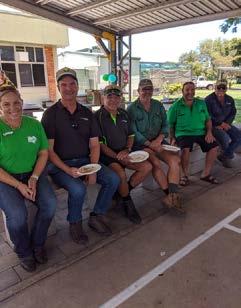
CBL attended the Home Hill State High School’s National Ag Day event. Their Ag program, facilities and produce, is a real credit to the school and the program which will churn out local kids who will seek to
pursue a career in agriculture which will benefit the district.
CBL representatives attended the QCGO AGM at Cannonvale which was followed by Policy Council where CBL represented the Burdekin district in a productive series of meetings.
CBL also attended the second workshop in Townville for the Queensland Government’s Biofuels Feedstock Expansion Study to consider feedstocks which have the highest theoretical suitability for the region in which sugarcane features prominently.
Finally, CBL would like to wish all of our members a Merry Christmas and a Happy New Year and thank you for all of your continued support which is appreciated. We look forward to being of service to you in the 2026 season and beyond.
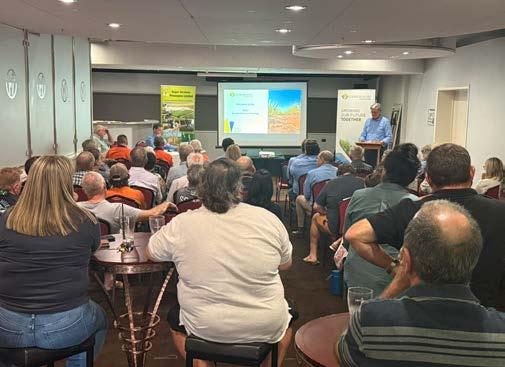
CANEGROWERS Proserpine Chair Glenn Clarke provided an update for the last year at the AGM
The mill completed its crush on 1 November, processing 1.48 million tonnes of cane at 14.42 CCS.
This represents the smallest crop since Cyclone Debbie in 2017, compared with the five-year average of 1.66 million tonnes. The reduced throughput reflected the impact of earlier wet conditions, followed by a prolonged dry period during the final months of the crush.
Access to water was an ongoing issue with further EOI meetings held by the Department of Local Government, Water and Volunteers in the region.
Growers are looking forward to opportunities to apply for additional allocation under the Whitsunday Water Plan following the anticipated releases of unallocated water in February 2026.
A CANEGROWERS Proserpine submission was lodged for the Whitsunday Water Plan review, with assistance provided to members on individual submissions. Progress on resurrecting the Myrtle Creek Sand Wier remained ongoing.
CANEGROWERS Proserpine initiated the development of virtual reality videos as a new haulout driver training resource aimed at assisting
harvesting groups. The aim is to help prepare new drivers for upcoming seasons through an immersive induction experience.
This development has received 50% QFF SmartAg funding and will be developed through the support of QCGO and other regional offices.
The CANEGROWERS Proserpine and Sugar Services Proserpine AGMs held on 18 November were well supported by members. Updates were also provided by QCGO Chair, Owen Menkens, who outlined the key highlights and major issues of the past year.
The Proserpine Mill Operations Manager, Cory-Dean O’Shea, also addressed the meeting, detailing the mill’s upcoming maintenance plans. With an early finish to the season this year, all eyes are now on the 2026 crop.
Positively, the crush rate showed a marked improvement on the previous three seasons, with weekly throughput averaging 78,000 tonnes for the year to date. Excluding the initial three weeks and the final two, throughput was closer to 84,000 tonnes for most of the season.
Another strong result was the high CCS achieved, with Proserpine Mill likely to finish as a top three result for the year.
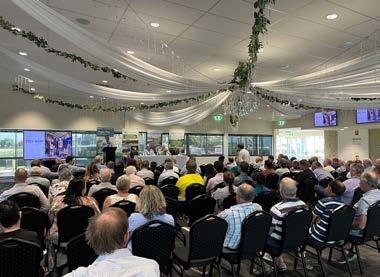
Member Dan Argent addresses Chairman Joseph Borg at the 2025 Mackay CANEGROWERS AGM
While the 2025 harvest has somewhat over-run, with sluggish crush rates, it is a huge positive that – for the first time in five years – both Plane Creek and Mackay milling area growers are looking likely to spend Christmas at home, and not out in the paddock slogging it through a building wet season.
That’s not just good for our farming and harvest sector families, but for the mill crews, and for the following crops, the soil they grow from and the waterways that surround us.
Plane Creek, at the time of writing was looking at a 26 November finish, while Mackay Sugar will finish progressively around 12 December, based on sufficient cane supply after that date.
As the end comes into sight, we remind all to take their time, and think safety every day.
The Mackay CANEGROWERS AGM was held 20 November, featuring guest speakers Mick Bartlett, CEO of SRA, and QCGO Vice Chair Joe Marano. Over 70 members and invited guests joined grower reps and staff to review 2024-25.
Any growers requiring assistance with any issues are encouraged to call 4944 2600 to get the ball rolling on a solution.
Keep an eye on our Facebook page, The Billet and weekly District Manager Updates for emerging training and industry opportunities.
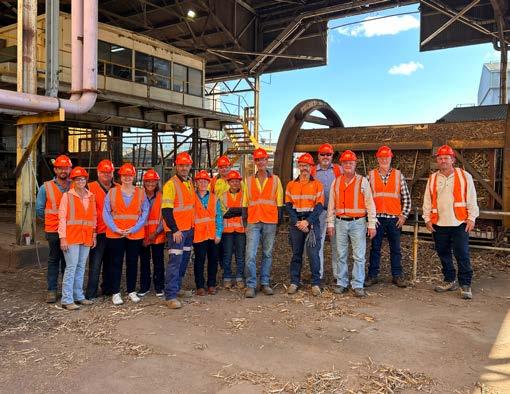
Bundaberg Sugar Mill processed 50,937 tonnes for the week ending 15 November 2025, this brings the season to date to 1,138,245.46 tonnes.
The average CCS for Bundaberg Sugar Mill for week 26 was 13.73 CCS and the season CCS average is at 14.03 CCS.
We extend our thanks to Lincoln and the team at Bundaberg Sugar for organising tours of Millaquin Mill for several grower groups. Gaining an upclose understanding of the final processing stages builds a deeper insight into the finished product.
Soybeans have been a backstop in the past when the sugar price has been low and once again could make an excellent option to help with cashflow, not to mention how good they are for the soil. Matt is available to assist with a wealth of knowledge around the selection of varieties and the growing husbandry of soybeans.
Growers are reminded that there are restrictions for moving vehicles wider than 2.5m during the Christmas period. If growers think they will be travelling
on critical roads between Christmas and New Year, they need to apply for permits to travel. For assistance, please contact Matthew Leighton on 0437 084 035
Bundaberg CANEGROWERS office will be closed from 2:30pm, Wednesday 24 December until 8:30am Monday, 5 January 2026.
Finally, we wish you all a safe and Merry Christmas and a happy new year and thank you for your support throughout 2025.
The Irrigation Pricing Rebate Scheme is now open for applications to receive a 15% rebate to eligible businesses on bills issued by Sunwater, including Burnett Water. Tanya or Matt are available to assist with applications.
Southern CANEGROWERS and Productivity Board representatives recently met to discuss the SRA Plant Breeding program and presented a proposal to Garry Rosewarne at SRA on the future of the Southern breeding program and Regional Variety Selection Committee.
The Isis district was recently hit by a severe hailstorm which caused significant damage to crops, irrigation systems, and farming infrastructure.
Our office continues to provide support and assistance to affected growers as they work through recovery efforts.
Widespread storm events have created challenging harvesting conditions throughout the district.
Despite these difficulties, Isis Mill is maintaining steady progress and expects to complete the 2025 crush by mid-December.
The mill has now processed just over 1,063,000 tonnes, achieving approximately 84% completion. Year-to-date CCS levels appear to have started their seasonal decline, currently sitting at 13.93.
On the water front, we welcomed the launch of the 15% irrigation rebate application process. While some early implementation issues have emerged, we're working to ensure these are resolved promptly by QRIDA.
Our office has been actively engaged in several important water meetings addressing both groundwater and surface water matters.
The groundwater discussions centred on proposed changes to convert water license entitlements to water allocations and potential amendments to water trading rules.
Meanwhile, surface water meetings focused on the QCA's review of irrigation pricing, particularly examining a new approach for funding capital replacements and improvements, and understanding how these
With only weeks to go in the season the weather has started to get in the way, showers are becoming more frequent and access a little trickier.
Plenty of activity on the fallow cropping with a good volume of soybeans being prepared and some peanuts planted.
proposed changes could impact future water charges.
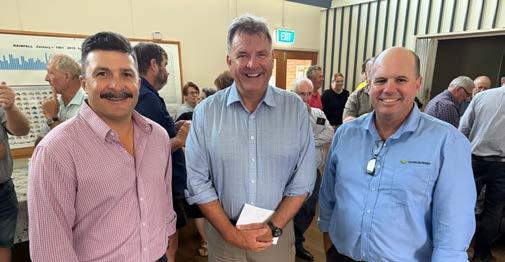
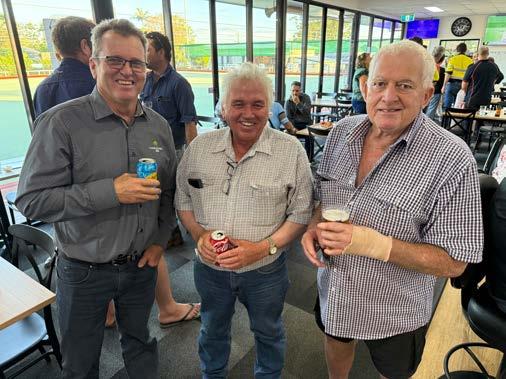
Our recent AGM drew strong attendance from growers keen to hear from our guest speakers: CANEGROWERS Chair Owen Menkens, Isis Mill CEO Craig Wood, and QSL Grower Services Manager Russell Campbell. The presentations provided valuable updates on industry challenges and upcoming opportunities.
The mill has progressed well over the 1 million tonne mark for combined supply, and the Maryborough component is 347,462 tonnes. The weekly CCS has slipped below 13 to end week 24 but season average is 13.51. Isis Mill is sticking to finish around 15 or 16 December.
at 2pm. Venue will be CANEGROWERS Hall with BBQ to follow the meeting.
Growers will notice some changes around the building with fencing out the back
Rocky Point’s crush continues very slowly due to a combination of Mill/Cogen issues and the recent wet weather.
By week 21, Rocky Point has crushed a total of 177,000 tonnes of cane at a season average CCS of 12.96. We still have approximately 43,000 tonnes of standover cane in the field.
meaning no car parking at the rear for the meeting. Probably time for some Christmas spirit so wear your Christmas shirt and we’ll see you on 16 December.
Over the weekend of 14–16 November, Rocky Point received a total of up to 100mm of rain. This resulted in another 4-day stop, on the back of mechanical issues causing the Mill/Cogen to stop for 3 days the week prior.
The district is looking forward to the second round of fire ant aerial baiting due to commence on 18 November if ground conditions are dry enough for the treatment to proceed.


The drop in the sugar price has also meant advances are not occurring without a rebound in the market as the early season rate for payment has effectively already absorbed the next round.
The Maryborough Board has opted not to increase our base CCS in the dropping market to hopefully achieve an outcome with the end of season washout for growers.
The end of season brings the end of season meeting, with our AGM set for 16 December


At XAG FNQ, we’re proud to be the authorised XAG dealership for Far North Queensland – and the region’s leading supplier in aerial application technology for agriculture.
In a landscape where precision, sustainability, and efficiency are becoming essential for farm performance, innovation is no longer a luxury; it’s a management tool as important as soil testing or crop budgeting.
Sugarcane growers across FNQ are embracing drone technology not just as a spray or spread solution, but as a vital part of modern farm management
records. With accurate data, targeted inputs, and automated reporting, growers can meet compliance standards, track field treatments, and optimize costs while supporting soil and crop health. This season, we’re excited to introduce the new XAG P150, the next step in agricultural aerial innovation. With an upgraded 50kg granular spreading capacity, 40L liquid tank, high-efficiency centrifugal system, RTK precision navigation, and enhanced obstacle-avoidance sensors, the P150 delivers unmatched accuracy and coverage – even in challenging FNQ terrain and climate. Faster application, reduced chemical use, and real-time digital logs make it a powerful tool for cane farms looking ahead.
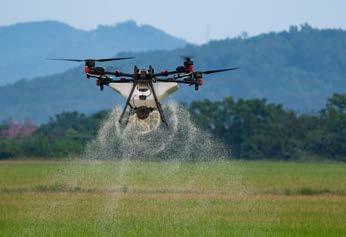
As the industry evolves, we’re here to support growers with the technology, training, and service needed to drive productivity from the sky down. Let’s grow smarter, together.
Get in touch today to book a tailored spray program or on-farm consult.
www.aztecdynamics.com.au info@aztecdynamics.com.au
Based in North Queensland
When people in the Ingham district speak of Aldo Minato, they speak of fairness. A man who lived by his word, worked hard for his community, and never lost sight of what mattered most: family, friendship, and a good day’s work.
Born in 1932 in the countryside of Venice, Italy, Aldo’s early years were shaped by the hardship of World War II. Life on the land built his resilience and strong sense of responsibility, qualities that carried him across the world when he followed his brother Maurice to North Queensland in search of new opportunities.
Arriving in the Ingham district, Aldo was no stranger to hard work. He began hand-cutting cane in the humid fields around Hawkins Creek and Trebonne. A gruelling, physical labour that forged both his body and his character. In time this hard work paid dividends and Aldo, with his brother and brother-inlaw Louis, who had also arrived from Italy, bought the Catasti’s cane farm at Bambaroo, which became the heart of
his working life and where his brother Joe still lives today.
In 1965 Victoria Mill began to accept cane cut from the area if it was cut with a mechanical harvester. This dramatically shortened the journey for Aldo’s cane to be harvested.
This opportunity provided the family to take another leap and purchase a Don Mizzi harvester in 1966 when they founded the Bambaroo Harvesting Company, one of the district’s first mechanical harvesting businesses. It was a pioneering step at a time when the industry was shifting from handcutting to machine harvesting.
“He always had a go,” recalled his younger brother Joe.
“He wasn’t afraid to try something new, but he always stayed fair, in business, in work, in life.”
Outside the paddocks, Aldo was a pillar of community life. A founding member of Ingham’s International Club, he was known for his cooking, camaraderie, and humour, turning pigs on the spit, cooking quail with polenta, cooking
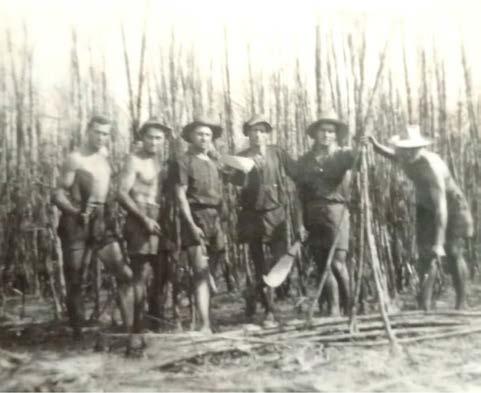

recipes from his homeland to ensure everyone was fed and happy. He also lent his hands to local schools, welding goalposts and helping prepare for the annual Bambaroo sports carnivals.
Family had always been at the centre of Aldo’s life, and he didn’t hesitate to step up as stepfather to his partner Lorraine’s children. He became an integral part of Lorraine, Jacqui, Karen, David, Joanne, Ewan and his son Stephen’s lives.
Aldo faced life’s challenges with quiet strength. He endured loss, his partner Lorraine, and later his beloved son Stephen, with dignity and grace. Even into his nineties, he remained strongwilled and kind-hearted, proud of his family and the legacy he helped build.
At 93, Aldo’s passing leaves a void in the community he helped shape. He will be remembered for his fairness, his tireless work ethic, and his deep generosity – the quiet, steady strength of a man who made Bambaroo a better place simply by being there.
Left to right: Aldo far left started cane cutting soon after arriving in North Queensland Aldo with his son Stephen and grandchildren Jacob and Georgia Aldo was a man that lived by his word
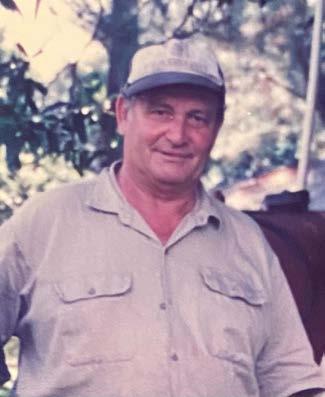

BY ELISA WESTMORE
If 2025 felt busy, 2026 is shaping up to be even bigger for the Sustainability and Extension team. A lot of the national and state processes that have been grinding away in the background for years are now reaching the pointy end.
None of this is about creating more work for growers – quite the opposite. The aim is to get ahead of decisions, influence them early, and make sure the outcomes are fair, workable, and practical on the ground. Here’s a snapshot of what’s coming next year and how it might affect you.
Chemicals are high on the agenda. Paraquat is expected to reach a final decision stage in 2026. We’ll be working closely with Sugar Research Australia (SRA), the National Farmers’ Federation (NFF) to do whatever we can to ensure the least possible impact on the industry no matter what the final decision may be.
Imidacloprid could also move forward. The last public signal was a draft decision due by the end of 2025 – although that hasn’t landed yet, we’re preparing for the possibility that it could surface next year. If it does, you can be sure sugarcane’s voice will be in the room.
Climate reporting is tightening across the supply chain. Mills and marketers are likely to sharpen up their emissions reporting processes, and that has a habit of flowing back to growers. Our focus is simple: make sure they can meet their
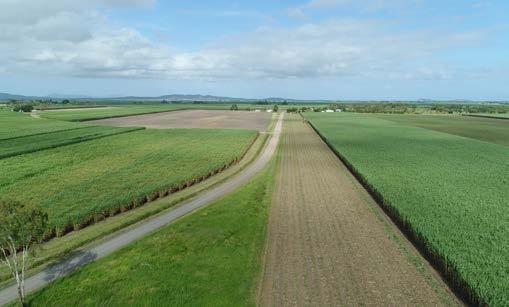
obligations without dumping unnecessary data demands onto you. A lot of work behind the scenes is already underway to standardise what’s needed, remove the noise, and keep everything as low-burden as possible.
At the same time, we’re working more closely with banks to widen access to ‘green finance’. If growers are already managing their farms well and meeting recognised sustainability standards, there should be tangible benefits like better finance products and more competitive terms. That’s what we’re pushing for.
Grower training will expand in 2026. You can expect capacity-building activities targeted at practical, on-farm decision-making. We’re also planning a round of biosecurity preparedness workshops to lift awareness of emerging risks and tighten on-farm response capability.
Another new addition will be emissions calculator workshops. Most growers have no reason to use one today, but if more suitable green finance products do become available growers might need to understand their emissions to be eligible. These workshops will focus on the ‘why’, not just the ‘how’, so growers can understand when they might actually need one and how to use it without getting bogged down.
Smartcane BMP will see some movement as well. Module 4 is expected to roll out early in the new year. For growers who want a head start, all the benchmark material is available online. The aim is to keep BMP practical, achievable, and aligned with what markets increasingly want to see.
Fire ants remain a growing threat, and we’re actively engaged with the National Fire Ant Eradication Program as they design their new response plan for 2027 and beyond. We’re making sure canegrowing districts aren’t an afterthought.
Finally, feral pigs are another priority. We’re working with the Department of Primary Industries on Queensland’s Feral Pig Action Plan to ensure it’s effective, enforceable, and holds all landholders to account – not just growers.

BY BURN ASHBURNER
After Christmas and the school holidays, growers are inundated with a range of well-meaning service providers offering shed meetings, information sessions, workshops, and training opportunities during the ‘slack’ period.
One of the real benefits of these gatherings is often the sausage and drink afterwards, where growers can discuss issues in a relaxed, social setting. This peer-to-peer learning is where many practical ideas and real solutions emerge. Regardless of the event, one topic that should always be on the table is the risk – both for individual growers and for whole districts – of limited harvesting capacity.
It may sound like a generalisation, but the reality is straightforward: contract harvesting is not particularly profitable at present. Much of the harvesting fleet is ageing, and replacing equipment involves significant cost increases. Ultimately, growers will either face higher harvesting rates or see a reduction in available harvesting capacity. It is only a matter of time before this affects someone directly.
If nothing changes, the result could be that one, two, or several growers find themselves unable to get their cane harvested. The implications for those growers are obvious – but the flow-on effects on mill throughput and regional viability are equally serious.
It is important to be clear: the individual grower is responsible for securing and managing a harvester. No one else. Growers may choose to look for assistance from the mill, CANEGROWERS , government, manufacturers, or contractors – but responsibility still sits with the grower. This clarity is essential for planning our way out of the problem because ultimately individual growers have to make decisions.
As the saying goes, “necessity is the mother of invention”, and people tend to pull together in tough times. Solutions will only emerge if growers come together – and those conversations over a simple sausage and cold drink may well be where the best ideas start.
The newly named CANEGROWERS Farm Performance and R&D Investment Committee (formerly the Farm Input
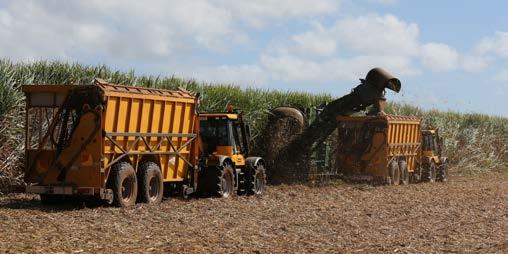
and Research Committee) is actively dealing with a range of issues, with one of the most pressing being declining harvesting capacity. While growers carry the primary responsibility, CANEGROWERS is working to bridge gaps and strengthen the industry’s overall capacity
Several major risks have been identified: rising operating costs, ageing machinery, limited long-term agreements, under-utilised capacity, and ongoing workforce shortages. In response, CANEGROWERS is progressing a set of strategic actions designed to give growers better information and practical tools, including:
Greater economic transparency, supported by SRA’s Harvest Mate and budgeting tools for districts.
Exploration of alternative harvesting business structures, including co-operative models where suitable.
Workforce attraction and training support through partnerships with SmartAg Queensland and broader agricultural programs.
Policy advocacy on accelerated depreciation, access to seasonal labour, and improved mill logistics.
District-level data collection and risk assessment to identify pressure points and determine where extra support is needed.
This work does not remove the grower’s responsibility for managing their harvest – but it does provide the industry with stronger tools, clearer information, and better support. Together, growers, CANEGROWERS , and millers can strengthen harvesting capacity and safeguard the viability of every region well into the future.

BY MATT KEALLEY
How many names do you think you can remember?
I ask this question of myself when I attend the CANEGROWERS district AGM’s and end of season meetings.
Robin Dunbar, an Emeritus Professor of evolutionary psychology at Oxford University inferred that we could remember the names and faces of around 150 people without a prompt, and many more acquaintances with the right encouragement.
AGM season is with us again. This year I have attended the AGMs of CANEGROWERS Queensland, CANEGROWERS Rocky Point, Mackay and Carns Region. At these four events, there would have been more than 200 people.
There are many familiar faces and welcoming smiles. I recall a lot of names instantly and many with a little prompting. Most faces are very familiar and in my time at CANEGROWERS I’m sure I have had a chat with nearly every grower that has shown up to meetings.
I do feel awkward when a name escapes me. I have learnt to own it and stick out my hand, shake their hand and say with a smile: “Sorry I have forgotten your name!” I’m sure Dunbar would approve.
AGM time is good for reflection.
Overall, this season has gone a little better than the last. All mills should finish before Christmas which will be a welcome relief for many growers who have cut through Christmas in the past few years. There are still mill issues, harvesting and workforce challenges for the majority of the districts.
The sugar price has come back from its 2024 highs and the development of the La Nina may see more cyclone activity in the coming wet season. Yet we are more prepared than ever with excellent forward pricing education through Business Essentials and better access to disaster recovery support from the State and Federal governments due
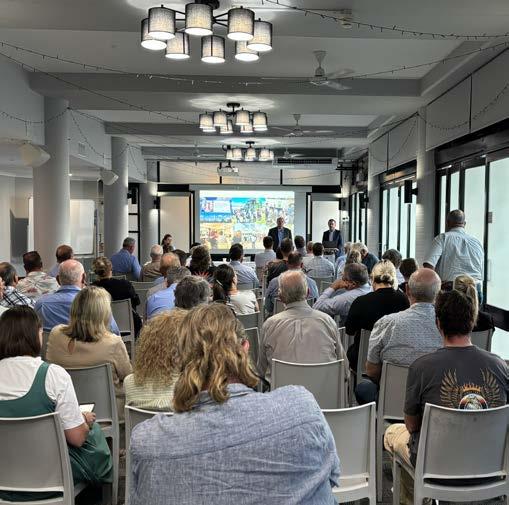
to the advocacy of CANEGROWERS and Queensland Farmers’ Federation (QFF).
Mossman and Rocky Point, the two ends of our Queensland sugarcane industry are facing uncertain futures. The final truckload of Mossman sugarcane was delivered to Mulgrave Mill in November, which means a century of production and generations of farming will sadly come to an end.
Meanwhile, the Gold Coast City Council has supported a substantial residential and commercial development for the Norwell Valley cane fields, which will see the area transformed with up to 40,000 homes.
I attended the CANEGROWERS Rocky Point AGM in Rocky Point on Tuesday 18 November where the meeting had a good turnout, given the frustrating season and recent announcement by the Gold Coast City Council. Contrary to all the challenges this district has had with the mill, urban encroachment, floods and fire ants; there remains a sense of optimism and planning for what the future may hold.
That’s the thing about the future, having the foresight to know what the future may hold is difficult.
CANEGROWERS is working with these districts on opportunities to support our members, but there may come a time where I won’t have the chance to see these growers again, which makes me a little sad.
Yet I need to look to the future and envisage what our current and future generations of growers may need.
The Next Ratoon mentoring program and the Young Grower Groups in the districts offer personal and professional growth. The two-way feedback is valuable to understand what these younger growers want and need for their businesses and families. With land use change and greater pressure on farm inputs and from the unpredictable weather, the need to grow more with less has never been more true.
There is also innovative work being undertaken in Mackay by US company Avalo backed by Coca Cola Europacific Partners (CCEP) to use their AI-powered platform to assess sugarcane varieties to improve productivity and on farm selection.
While variety development can take over 10 years, the Sustainable Aviation Fuel (SAF) industry continues to move quickly. In November, Jet Zero Australia’s technology partner LanzaJet announced the first production of SAF from its Freedom Pines Alcohol to Jet (ATJ) facility in Georgia, USA.
As Jet Zero explained, this world first commercial scale ATJ facility is a key reference project for their Project Ulysses facility development in Townsville, which is three times larger in scale and looks to source sugarcane as a feedstock.
As 2025 season comes to a close, I know we are in interesting times. There is always opportunity in change, but that doesn’t make it any easier.
I look forward to 2026 and catching up with you and our members at the various CANEGROWERS and industry events. If I forget your name, forgive me –it will come to me.
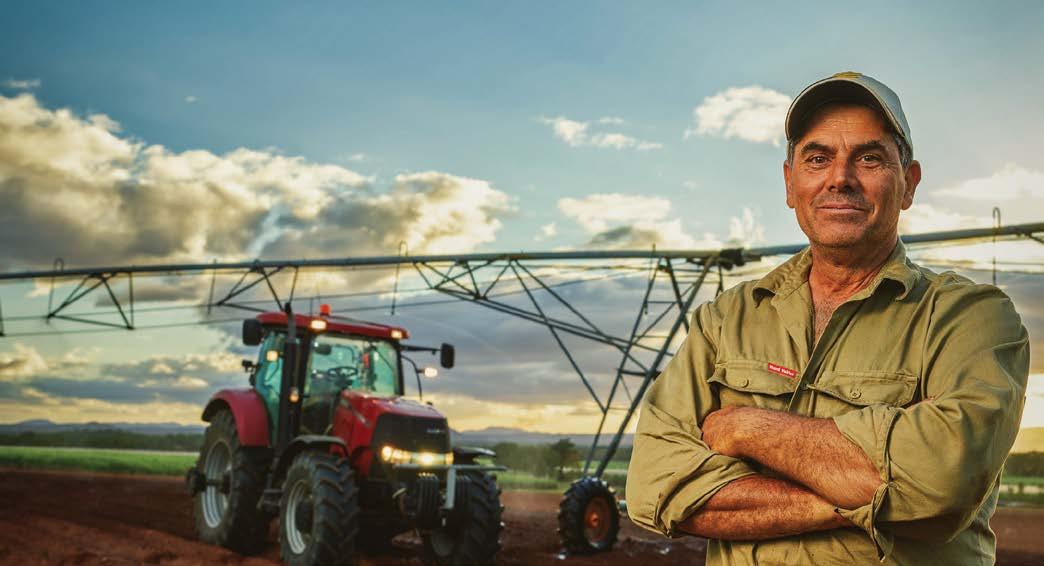
Variety development is definitely front and centre for both growers and Sugar Research Australia (SRA). As SRA CEO Mick Bartlett explained at the CANEGROWERS Mackay AGM, the varieties we are seeing now are a result of decisions made 15 years ago. With the recent sequencing of the sugarcane genome and work on genomic selection, plant breeding in the future will be more targeted than it has been in the past. www.canegrowers.com.au
WE STAND
For more than 90 years CANEGROWERS has represented the interests of the sugarcane farmers of Queensland. Through times of challenge and opportunity, CANEGROWERS has helped family farms and the whole industry to grow and prosper.
CANEGROWERS is known and respected for its strong voice locally, nationally and internationally—the collective voice of many farmers has a powerful impact.

BY CHRIS COOPER
In some regions dry conditions have resulted in complaints about straying cattle damaging sugar cane crops. The following article explains the legal position and provides some options to consider.
The stock owners have a duty and a legal obligation to keep their livestock enclosed. Their stock must not trespass on someone else’s property. Stock owners are generally liable for any damage, such as damage to cane crops, their stock cause by such trespassing.
Cane growers have a right to enjoy their land without the neighbour’s livestock trespassing on to it. The growers do not have an obligation to prevent someone else’s livestock from straying onto their lands. Rather, it is the stock owner that has an obligation to prevent their stock straying.
To put it simply, it is the stock owners responsibility to keep stock in, not the grower’s responsibility to keep them out.
If a grower suffers loss or damage as a result of livestock trespassing on their cane farm, then generally the grower is entitled to recover compensation/damages from the livestock owners.
The following are some options for cane growers whose lands are subjected to livestock straying onto their lands:
1. Discussion
Try to resolve the issue of livestock trespass through discussion and negotiation directly with the livestock owner.
2. Mediation
If direct discussions are not possible or fail, consider using the Disputes Resolution Centres administered through the Queensland Department of Justice and Attorney General. This dispute resolution system is free and is designed to resolve disputes between neighbours without going to court. The system assists neighbours and others involved in a dispute or conflict to try to resolve the problem through a free mediation involving the relevant parties with an
independent mediator. The mediator is appointed locally through the Disputes Centre and conducts a meeting between the parties.
The mediator’s role is to bring the parties to the dispute together with the mediator and try to work out, by discussion, some way of resolving the problem that the parties agree to and can live with. Dispute Centres are located in Brisbane, Hervey Bay, Mackay, Townsville and Cairns.
3. Letter of Demand – CANEGROWERS Assistance
Growers could consider sending a formal letter of demand to the livestock owner, either from the grower or from the local CANEGROWERS office, to the livestock owner. The letter could give notice of trespass and demand preventative action be taken, in default of which other steps will be considered. Such a letter might apply sufficient pressure to have the livestock owner take the necessary steps to prevent further trespass.
4. Local Council
Most Local Councils have powers through their local by-laws, to operate a pound and to capture and detain straying livestock. Councils usually prioritise complaints about cattle straying on roads given the safety aspect. Councils have the power to issue compliance notices for fences to be repaired and for straying livestock. Lodging a complaint with Council may assist.
Often however when the problem occurs directly between adjoining cane and cattle properties Councils tend to let the neighbours sort it out themselves.
5. Impounding
In some cases, growers themselves can capture and hold the livestock and claim against the livestock owner the costs and expenses of doing so, and claim for any damage caused.
6. Police/Stock Squad/RSPCA
A complaint could be made to the local police and also the stock squad officer, through the local police station. Also, under the Animal Care and Protection Act, the RSPCA
and relevant department officers, have the right to take action, including the seizing of animals, if the animals are in danger or risk of harm. If the cattle are straying on public lands or gaining access to your farm from the road this may be an option.
Livestock owners are liable for any damage caused by their cattle trespassing. Growers can take legal action in Court to recover damages from the livestock owners. Such action could be in the form of a claim for damages suffered. A claim could also be made for an injunction (binding court order) to require the livestock owner under Court Order to take all necessary steps to prevent livestock continuing to trespass.
Any such Court action would have to be carefully considered as it can be expensive, stressful and time consuming. Good evidence of the trespass, and clear evidence of the identity and ownership of the livestock, would have to be established as part of proving the case. Photos, videos, eyewitnesses are also useful to mount a strong case.
Self-help measures, such as erecting a suitable barrier or a fence to prevent the livestock coming on, might be considered. Whilst the growers are not at fault, and have no legal obligation or duty to keep the livestock out of the growers’ property, in some cases, self-help may practically and commercially be an option to consider.
Under the Neighbourhood Disputes (Dividing Fences and Trees) Act, a dispute about the construction, maintenance, and contribution to costs of, a suitable dividing fence, if unable to resolved by the neighbours through discussion

and negotiation, can be resolved by order of the Queensland Civil and Administrative Tribunal.
As a general rule, growers are not required to contribute to the cost of erecting or maintaining a suitable dividing fence. This is because various Courts and Tribunals have consistently found that growers derive no benefit from a dividing fence, and in many cases, such a dividing fence acts as a detriment to cane growing activities.
It may be possible, subject to the particular facts and circumstances, under the Act for growers to make application in the Tribunal for an order that a proper stockproof fence be constructed and the cost be the sole responsibility of the grazier neighbour, not the grower.
Property owners have the legal right to use such force as is reasonably necessary to defend themselves and their property.
The shooting of straying livestock is likely though to be regarded as using excessive force and may well be unlawful and is not encouraged or recommended.
This article contains general advice only. The particular facts and circumstances of each case always need to be taken into account.
The comments in this article are general in nature. For further free advice and information about this topic or other legal matters, members should contact their local CANEGROWERS office or please contact CANEGROWERS Legal Adviser, Chris Cooper on Free Call 1800 177 159
reminds primary producers to make sure they have the following items ready in case they are directly impacted by a disaster event and are eligible to apply for financial assistance* from QRIDA to assist with the costs of clean-up and reinstatement.
to visit QRIDA’s website for disaster preparedness tips and stay informed of the Disaster Recovery Assistance available following

administers financial assistance to disaster affected primary producers, businesses and non-profit organisations under the jointly funded Commonwealth-State Disaster Recovery Funding Arrangements (DRFA).
FIRST 5 LINES FREE* FOR CANEGROWERS MEMBERS! Book online 24/7 at www.canegrowers.com au or email us at ads@canegrowers.com.au Next deadline is 17 December 2025
2012 John Deere 7200R tractor PTO, 3PL with quick hitch, 4 sets of remotes, front weights, front tyres 540/65R34, rear tyres 650/85R38, 4,510 hrs. In good condition. $140,000 + GST Ph: 0427 976 416
Jarrett 28 plate offset. Hodge 28 plate offset Ph: 0418 154 557
800L rapid chemical tank on painted heavy duty steel frame. Was used on front of 6620 JD tractor for billet planting. Will consider splitting from frame. $1,650. Ph: 0407 020 883
Falc 3000 GL rotary hoe purchased new 4 years ago. Blades 70% and comes with new spare set. $32,000. Other farm machinery available. Ph: 0417 974 118
2012 MF5450 107hp 4wd, A/C, 5100 hrs, 3pl front weights, good tyres, great slashing tractor. Ph: 0429 984 920
1 x 23.1.26 tractor tyre, $900 + GST. 1 x 18.4.28 new tractor tyre, $800 + GST. 1 x 540/65R 28 tractor tyre, $800. 1 x Fiat 411R brake pusher and water tank with pump, fair condition, reliable, $1,500 + GST. 8870 Ford – 1994, 210hp, powershift super steer 8,512 hrs, good condition, selling due to mill closure, $65,000 + GST. 1994 28x28 Hodge offset, fair condition, $10,000 +GST. Ph: Brett 0419 988 158 or Frank 0417 720 764
2 row Coulter stool splitter 1t S/S fert. box; 7 tine Delta ripper, Am Farmall high cl’nce 5 row spray tractor. Ph: 0428 644 135
3 fan extractors for sale. Ph: 0427 327 977
Chicken manure is available for sale in bulk quantities in Mareeba. This is an excellent source of nutrient-rich fertilizer ideal for enhancing soil health and boosting crop growth. Ph: Osz Farming at 0457 756 392 for purchasing or inquiries.
Holden dual cab Colorado 2020, 101,000km, canopy, extra battery, new tyres, $38,500. Hodge 5 farrow reversible hydraulic plough, $5,000. Parkinson canecutter with topper, $5,000. 3 cane trailers, $250 each. 7ft smart slasher $4,000. Howard 2 tyne ripper, $2,500. ONO on all items. Ph: 0408 770 054
2023 Massey Ferguson 7S.155 Dyna 6. Purchased new last year. Only 34 hrs. Surplus to requirements. $150,000 plus GST. Ph: 0403 774 885
MSW S/S 3t fertiliser box, 178 Massey Ferguson with front end loader. Ph: 0497 857 368
* As a FREE service to CANEGROWERS members, Australian Canegrower will print suitable classified advertisements UP TO 5 LINES FREE, FOR ONE ISSUE ONLY. A charge of $5.50 will apply for each extra line or part thereof. A charge will apply for advertising of non-cane growing activities. Advertisements must relate exclusively to cane farming activities, such as farm machinery, etc. Advertisements from non-members are charged at $11 per line incl GST. Only prepaid ads will be accepted.
Spit water 131 industrial pressure washer. Just been serviced. 15m hose. 12lpm at 1,800psi. $1,700 ONO. Ph: 0438 554 146
Heavy duty bar with two tine adjustable rippers, attachable straight to rotary hoe. $1,000 incl. GST. Ph: 0438 988 858
Machinery and water allocation for sale – water allocation permanent sale, different parcels available. Krone Fortima V1500MC2 round baler, Bale King 5100 bale buster, Agrolead Lina Twin 4m double disc seeder with fert. box. All machinery as new with very little use. Price negotiable on all items. Ph: Robert pictures and pricing 0407 330 493
4 x 380/90R46 tyres and rims to suit JD self propelled sprayer. Mulgrave area. Ph: 0407 160 673
2009 Kubota M125X tractor good condition 4,294 hrs, air conditioned cab 16 speed –$44,000 + GST; centre buster heavy duty Gessner 30" coulters and legs adjustable crumbler rollers and adjustable row width –$10,000 + GST; fuel tank on trailer approx 2,400L has unfitted new electric pump – $1,900 + GST; Bonel bag lifter good condition $2,000 + GST. Ph: 0407 554 146 or 0438 554 146.
Olympic 20.8.42 65% $300 + GST; front end loader with 4 in 1 bucket, blasted and 2pac painted, resembling required. $2500 + GST Ph: 0437 434 280
1984 Toft 6000 plant cutter, 8,000 hrs. Rubberised rollers, elevator extension for 1.8m rows, swinging knife chop system. Good overall condition for its age, $12,000 + GST. Ph: 0419 021 012
John Deere CH570, 9,157 hrs, walking gear, 1 season 33,500t. Tidy machine. Ph: Frank 0417 720 764
JD 3140 needs attention. Ph: 0437 669 247 and leave a message.
2015 Massey Ferguson tractor 7624 Dyna 6240hp, front suspension, GPS fitted, 3,031 hrs, two-way radio, serviced regularly, tyres excellent – $130,000. Ph: 0427 525 173
Maschio G350 rotary hoe. Needs rebuild and new blades. $500. Ph: 0439 965 921
New cane stool splitter discs 30" x 10mm boron steel, $200. Ph: 0427 044 443
2020 Case 8810 fulltrack cane harvester. Purchased 2021, cut 3 seasons. In good condition with plenty of spares. Ready to cut. Tully. Ph: 0407 160 758
12m V-blade $10k + GST. RES Dolly trailer $20k + GST. 10L Bunded fuel tank $10k + GST Ph: 0409 580 586
Kubota Zero Turn ZG 222 with catcher 48" cut. Fiat 980 2WD – 3,500 hrs, Fiat 1000 2WD –5,000 hrs, John Deere 4040 2WD – 3,600 hrs, Chamberlain JD 4080 2 WD – 5,000 hrs, Case 2590 2WD – 5,700 hrs. Silvan Euro Spand CX2 spreader, double row fert box, Bunning Lowlander Mk 40-60 ag spreader (near new), complete tracks to suit cane harvester, and fuel trailer tank. Mulgrave area. Ph: 0407 160 673.
Expressions of interest for shares. Email: rigato.office@bigpond.com with offer or any questions.
Howard Rota Vator HR51 Rota. Ph: 0457 255 961.
One pair 21L-24 Armour earth moving/quarry tyres, currently on a backhoe. Good condition. $700 each tyre plus GST. Ph: 0419 150 350
2 x 440/65 R24 tractor tyres $1,100 incl. GST each. 2 x 540/65 R34 tractor tyres $2,100 incl. GST each. All four types as new only done 500 hrs. Ph: 0427 665 759
36 plate case 770 offsets, 30" discs $40,000 and HBM plant cutter with topper $4,400. 7ft slasher with Howard box – all refurbished – $10,000 incl. GST ONO. Ph: Gavin 0448 345 139
3t fertiliser stool splitter stainless steel box 1.5–1.8m spacing $25,000 (+GST). Ph: 0429 912 135
Tractor TE20 good condition $3,300 GST inclusive. Tractor AV International 130 with fertiliser equipment and scarifier $3,300 GST inclusive. Tractor AV International 140 with spray equipment $3,500 GST inclusive. Ph: 0428 183 307
Howard CH 2000 rotary hoe 4.2m wide, hyd 5 tyne ripper hillers new blades. $45,000 plus GST. Ph: 0429 912 135
2016 John Deere R4023 self propelled sprayer 1,500 hrs, 2,200L tank, 85ft boom, GPS ready. $235,000 plus GST. Ph: 0429 912 135
10 blade Faggy chopper box for 3510/3520. $3,500 + GST. Ph: 0437 434 280
Celli Tiger spike rotor 2.23m – fits on a rotary roe, $300. 186 Ross Road Deeral. Ph: 0412 968 434
Fertiliser bin M.S.W, double row, 4t stainless bin, with double compartment and 4 cutters $25,000 (incl. GST). Ph: 0400 729 457
Valley centre pivot 8 span all running gear tyres and rims $1,000 gearboxes $750, electrical motors & gear boxes $1,000 each ONO. 2x torsion axles v-shape 2,200kg each $500 ONO. Ph: John 0418 198 177
2012 Case 8800 fulltrack cane harvester fitted with Trimble GPS and new walking gear. All in good condition. Mulgrave area. Ph: 0407 160 673.
2022 Case 9900 cane harvester. Ph: Craig 0436 332 044
3 row cultivator with crumble rollers. 5ft (1,524m) centres. 1 rigid tyne and 4 spring tynes per row. Very heavy build with 7" box section top frame. This cultivator was built in 1998 by Maxi Built machinery in Home Hill. $11,000. Selling as no further use. Ph: 0429 181 276 for more details or photos.
3,000L water tank on trailer, needs limited repairs. $1,000 ONO. Vicon spreader, good for planting beans, good order. $1,000 ONO. Ph: 0431 458 850 or 0428 394 004
Bonal plant cane cutter, good going order, $1,000. Ingham. Ph: 0428 394 004 or 0431 458 850
Napier bearing home made solid frame 28 plate disc carries hydraulic lift, $5,000. 11ft crumble roller, $2,500. Don shearer 32 plate set of disc carries hydraulic lift, $7,000. Ph: 0409 346 966.
Cane crate for hot water treating cane. Never been used. POA. Ph: 0408 889 446.
2 x International 766, 1 at 10ft spacing, 1 standard, spare rear end for parts. Both run. Ph: 0437 346 341
2 x 2015 JCB 3230 with 14t Corradini bins, 1 x 2017 JCB with 16t smart hauler, 1 x 2017 CH570 John Deere harvester. Ph: 0439 766 800
Pair multiplyers with hydraulics suit JD3510 or JD3510 fulltrack harvester in GC, 3 row multiweeder $350 + GST, Dongough planter $1200 + GST, 80" Dondi rotary hoe $1200 + GST, 2 row Eureka ½ ton fert. box with 1 ¼ tynes S/S worm $1200 + GST, International BT D6 crawler and breakpusher, 1 pair 8 blade chopper drums for JD3510 or JD3510, 1 pair 10 blade chopper drums for JD3510 or JD3510 – 1 season old. Ph: 0428 879 341.
Toft 5000 harvester, rubber rollers, new tyres and hoods, in good condition, great plant cutter, $20,000 + GST. 3 ton side tipper for planting, $3,000 + GST. Ph: 0439 890 948
1980 Ford TW20 tractor, 3,500 hrs maximum, recently painted, good condition, make an offer. Ph: Laurence 0419 666 544.
2020 Case IH Austoft 8010 cane harvester, machine hours 8,250 and elevator hours 4,680, Scraper and Gripster tyres. All case modifications complete. All drive components current. Ph: 0428 635 922.
BT D6 dozer, high lift, angle and tilt blade, five roller, 14" tracks, make an offer. Ph: 0438 743 685.
3-point Linkage International plough, 4 furrows, 1 drag plough – 3 furrows, self lift, make an offer. Ph: 0438 743 685.
28 plate Napier offset discs, working condition, $5,000. Ph: 0448 842 792
Moore Scoopy LD3 4 wheel drive, fair condition, make an offer. Ph: Reno on 4777 6148 after 6pm.
2017 Isuzu dmax dual cab with alloy tray, 67,400km, new tyres, rwc, one owner in VGC $43,000 ONO. Ph: 0438 821 683
LD3 Moore Scoop 4WD in fair condition, runs good, brakes need help. Ph: after 6.30pm 07 4777 6148.
Westhill double 6 roll on roll off trailor, $25,000 incl GST. Ph: 0428 749 167
Irrigator Avoka 75 model. Capable of carrying two hoses, however hoses are not included. Good condition. $5,000 + GST. Ph: 0417 714 209
Chamberlain 4080 tractor, 2WD, JD motor, AC cab, excess to needs. $6500 + GST. Ph: 0438 583 130
Speed tiller – $14,000 incl. GST. Ph: 0428 284 427
Feral pig removal services. Free service. All areas within 100km of Mackay. Ph: Jacob 0424 281 964
Two tyres and rims to suit fiat 1000 and 1300. Agri/Master; CB538 size 24.5/32R/1 12 ply and double row McLeod fertiliser box with various sprockets for various applications. Ph: 0417 612 883 for price.
BSM double 6t side tipper, $45,000 plus GST. Ph: 0427 595 774
Brand new, never used Nu Tek 22t RollOver Hitch, $2,500 + GST. Netherdale/Mackay. Ph: 0427 583 277
1996 Austoft harvester track frames with solid dead axle, $4000 + GST. Netherdale/Mackay. Ph: 0427 583 277.
Same Leopard 85 coupled to moller planter with 200ml chute hydraulic steering, rear sliding floor, 500kg fertilizer box. $38,500. Ph: 0411 845 439
1998 Moller billet planter with Hodge upgrades, dual chain feed, dual hydraulic pump, separate steering valve for steerable trailer, stainless fertiliser bin, suscon box, wide shute, wheel centres 1.6m, $24,000 + GST. Netherdale/ Mackay. Ph: 0427 583 277
Vass engineering 3 row wavy disc, brand new condition: 1.8m centres, adjustable, 2x adjustable ripper legs p/row, 26" wavy discs 13 flute, 7′x7′ box frame w/bungs. $50,000 plus GST. Mackay. Ph: Michael 0427 366 375.
Refalo 4t tipper bin: good condition, always oiled and stored in shed. Price negotiable. Ph: 0459 596 782.
12t self-propelled 6 x 6 elev infielder. VGC. 6t side tipper on Leyland tandem. Celli Tiger spike hoe, 2.5m wide with hydraulic crumble roller and oil cooler. VGC. Don Mizzi 741 model on Fiat 750 special turbo plus MF102 half-tracks to suit. GC. Mackay. Ph: 0438 606 578
GPS Autosteer kits – can be fitted to any tractor, FJ Dynamics brand, $12,500 plus GST. Ph: 0401 847 162
4t Newton side tipper $3,500 (incl. GST) 3m Niemeyer nr 1411 power harrows $5,000 (plus GST). Ph: 0437 184 822
Brand new off rim, 2x Firestone 600/65R38; 2x Firestone 480/65R28. Recommended retail $12,000 selling for $9,000 the set, can separate. Ph: 0409 277 783
Kinchant dam water allocation to give away. Mackay. Ph: 07 4959 1075
2 of 6y Ruffalo side tippers with a partition to suit 5t bins. Ph: 0438 541 062
Elevator extension conveyer belt 600mm
$1,000. Lely spike power marrow 3m wide $3,000. 90" hr Howard rotary hoe and wheels $10,000. Hodge 6" dual chain front for billet bin $4,000. Fiat 540 high clearance tractor and spray tank $15,000. Ph: 0428 115 456.
Secondhand 2022 Caseih 9900 track harvester
Secondhand 2023 Caseih 9900 track harvester All machines located in Ingham.
New zero turn Bobcat mowers
New 4 & 5 wheel rakes available
Contact us via phone or email for further information.
SNG MACHINERY SALES
90 Origlasso St, Ingham 07 4776 6003 (PARTS) 07 4776 1066 (SALES) admin@sngmachinerysales.com www.sngromano.net.au
96 Cameco full track harvester good condition
$55,000 + GST. Mackay area. Ph: 0428 654 350
Kinchant dam water allocation. Give away. Ph: 0448 055 047.
L & L Wilkinson Haulage Pty Ltd widening drop deck and A trailer. Transporting cane harvester. Farm machinery. Farm implements. Pilot. Ph: Lee Wilkinson 0427 474 064
Lakeview Agri Services offers quality ground preparation services to the Bundaberg and Isis districts. Offering all aspects of ground preparation for a quality seed bed. Ph: 04 7552 3217 or email lakeviewagriservices@gmail.com
1986 model Massey Ferguson 3545 4WD cab tractor 147 hp, fair condition, $18,000 + GST. Ph: 0413 584 728
Drag 26" 24 plate jarrett tandem disc harrow, discs bearing and tires, all new + 10 ford weights VGC, $15,500. 2 x avokah irrigators, $4000. 1 hi arch and 2 straight tool bars, 24 curley springtines 1 1/4", $4000. 2 x A.H 90" Howard rotary hoes, $4000. 2 x yoeman straight ripper legs and clamps, $1000. 1 x 1000L, 3PL, 8m croplands spray unit and s.s. legs, $4000. 26,734 STL shares. Ph: 0427 139 129
Hooper Delver-type drain plough built on Hooper heavy duty single tyne ripper. $880 incl. GST. Ph: 0413 584 728
Hodge 2000 series 2.5t side dresser, $12,000 + GST ONO. Trailco hard hose irrigator, 320m of hose, $12,000 + GST ONO. Ph: Roger 0419 788 376
1996 Kubota B6200 4wd tractor with 1,136 hrs use. Comes with 3 row high spray trailer, 7ft clearance & 300L tank, pump, regulator. Also operator mesh protective cage, 4ft finishing mower, 3ft cultivator-scarifier. $12,000 negotiable. Ph: after 6pm 07 4129 7109
Celli 90" heavy duty rotary hoe in good condition, $8,000. Ph: 0413 584 728
Kubota KVT M152 FWA, cab suspension, front axel suspension, front linkage, 6 remotes, tinted windows, 50km/h. Has Trimble GPS, can be removed if not required. $187 000 incl. Ph: 0427 769 086
Volvo BM 4400 front end loader, 14,000 hrs, good sound property machine for age. Works as it should. $35,000 incl. Ph: 0427 769 086
Ace 3.7m rotary hoe with crumble roller very good condition. New blades, only used in red soil. Fully hydraulic adjustable. $77,000. Ph: 0403 216 922
Fruehauf tri axle drop deck trailer with elevator stand to cart cane harvesters, with hydraulic ramps in good condition. $35,000. Ph: 0407 398 852
2 bin rams for a 4t HBM tipper bin $600. 2 HBM tipper tyres 23.1 x 26 on rims $800. Ph: 0403 064 708
John Deere shredder topper. Ph: 0427 039 051
Hi lift double 6t side tipper on 23.1-26 tyres. Load sharing hitch coupled to 7485 MF tractor with Dyna VT transmission. Ph: 0413 698 922
One complete set of front and rear rims to suit John Deere 7810 tractor rear rim, size 23.1 34. $1,500 for the pair plus GST and front rim size 16.9 26, $1,000 for the pair plus GST. Genuine Toyota tray to suit 75 series Toyota Landcruiser ute, $3,000 plus GST. Ph: 0427 577 256
Volvo BM 4400 front end loader. Good brakes and hand brake 14,000 hrs, works well + spares, $38,500. Assorted excavator buckets and rollers suit machines with 90mm pins, prices by negotiation. Toft J150 whole stick harvester modified to load onto planter trailers, $5500. Bonel trash stripper fan always shedded good condition, $660. Don whole stick trash planter has fert. boxes, water tanks (may need some repair) and suscon applicator, no trailers, $1,100. Croplands 1,100L tank and frame –no pump or boom, $4,400. 2 Farmall AMD tractors, tin work is no good engines have been open to rain, have 1 good engine to go with or separately. Best offers. International B 414 engine open to rain. Best offers. Prices include GST. Ph: 0427 769 086
Canetec BP2500 billet planter single row. New and ready for delivery. Built by Canetec in Bundaberg. $90K. Ph: 0422 669 695
Spring tynes 1 ¼ ins by 1 ¼ ins suit fert. box –set of six. $250. Ph: 0413 584 728
Plant cane cultivator 2 x 1.6m row w/ 3 weeder rakes and tines, $1,320 incl. GST. 2x1.6m row cultivator w/ 10 x 30ml tines, $1,320 incl. GST. 4 wheel trash rake, $1,110 incl. GST Ph: 0408 761 463
Rotary hoe 90 degree blades to suit Maschio G series rotary hoe. Brand new. These normally sell at $20 each new but are for sale at $6 each. There are currently 72 left hand and 72 right hand blades available. Ph: 0402 993 500
Bonel fertiliser unit, recently replaced auger, freshly painted, nothing to spend perfect working order. Ph: 0448 120 067
3140 John Deere rear wheel weight. Ph: 0407 630 499.
10t elevating tipper. Tipper/tractor combination considered. All makes considered. Text or Ph: 0400 162 237
Fertiliser box for plant cane with or without grubber legs. Mackay area. Ph: 0428 849 178.
New or used quad bike fertiliser box. Txt pictures and details to 0427 846 246
2 x tractor tyres, 23 x 1 x 34, in reasonable condition. 1 x mound form in good order. Mossman, North QLD area. Ph: Joe 0488 010 030
Crumble roller for Maschio G400 rotary hoe and a used 3 row stool splitter fertiliser box. Ph: 0410 468 344
Plant cane harvester up to $20,000. Ph: 0409 623 651
Datsun motor or ute from 1000CC to 1300CC. Ph: 0407 412 848
MSW or HBM ratoon trash incorporater with 4 scallop discs and hangers and ripper legs. Mulgrave. Ph: 0427 563 318
Support local charity, COUCH Cancer Wellness Centre and locals living with cancer by donating your old unused batteries. Cairns Region (Mulgrave). Ph: Ron for pick up 0407 534 427
Double of triple binner suitable for billet planting. Ph: Roger 0419 788 376
Land plane/tow behind grader. Ph: Jason 0422 056 343
3 row Rinaudo engineering stool splitter in any condition. Any region. Ph: 0455 277 499
Looking for a stool splitter fertilizer box, draw bar type preferably with a confidor tank in good condition. Ph: 0400 557 764
240hp Komatsu motor, new or second hand in good order to suit 91 Toft 7700 harvester. Ph: 0749 583 153.
2 row scarifier to fill plant cane. Mossman / Mulgrave / Babinda area. Ph: 0447 562 373
10t cane tipper bins to fit a tandem axle truck Ph: 0427 507 019
Looking for a good condition diesel irrigation set up to run travelling irrigator. Ph: 0428 368 923
TT75 New Holland front 4x4 axil parts – planetary etc. Ph: 0439 375 301
Kubota RTV side by side. Ph: 0407 761 364
2 x brake drums for front of Volvo F12–10 stud in reasonable condition. Ph: 0408 733 793
Cane farms for sale, Bloomsbury 4799 Qld. Farm 1 with main house: 115.39ha under cane, total area 141.107ha, 1 dam and O'Connell river licenses. Farm 2: 75.95ha under cane, 10ha leased out for cows, total area 90.36ha, 1 dam and O'Connell river license. 2 farms joined together with underground irrigation. Offers over 5.5million. Only serious buyers to make contact. Ph: Scott Simpson 0429 686 667.
Cane farm for sale Bundaberg / Yandaran. Area: 113.7ha, CPA: 40ha + powered shed + 3 dams. 10 minutes from ocean. Ph: 0428 416 040
Banana land 40ha with house and shed, some machinery. Location Mareeba. Water via irrigation scheme, well drained soil, frost free location, strategic, suit other cropping for inspection. Ph: 0428 866 067
Cane farm Lannercost Ingham. 2 blocks under cane, 100 acres and 75 acres. Pig fenced. Ph: Ross 0417 778 547
Permanent water allocation transfer Kolan River, medium priority AA 600 ML. Smaller parcels available on request. $3,650 per ml. Ph: Matthew at Colliers 0418 790 042
Title deed in the Mackay area. Ph: 0412 855 479
Land to lease or purchase. Proserpine district. We are a respected local family that require approx. 5 to 10 acres of farming type land with water allocation or reliable bore to lease (5 years) or purchase. Land would be used for private use only to make a motorcross track for our children to train (they compete at national level) The land would need to be out of town and not close to any houses so we don’t annoy anyone, no rocks, marginal type soil, sand, loamy ok. If leased – the land would be returned to owner in original condition at end of lease. No permanent structures etc. Ph: Sharon 0409 895 757
Cane farm growing approx 5,000t or more. Plane Creek Mill area. Ph: Andrew 0447 175 540
Cane farm to lease, Mackay to Carmila, young family wanting to expand. Ph: Lorraine 0427 474 065
Bundaberg cane grower looking for land to lease. Ph: 0403 200 805.
Sugar cane, Marwood/Sunnyside. Looking to expand, 2025 and beyond. Ph: 0408 011 983
Wanting to purchase a land title – Mackay district. Council approval ready to go. Cash sale no finance needed. Ph: 0407 426 626.
Cane farm in Mackay or surrounding areas. Ph: 0437 410 434
Sugar cane farm in Proserpine or surrounding area. Require land only no house needed. Ph: 0451 272 057.
Farm in Victoria Plains, Eton, Pleystowe area. Ph: 0490 029 387
Permanent purchase lower Mary River water allocations on Mary River, Tinana Creek and channel pipeline sections of the scheme. Ph: 0427 930 696