






























Editor: Robyn Devine
Advertising and Classifieds: Jane McGregor
Articles appearing in Australian Canegrower do not necessarily represent the policies or views of CANEGROWERS.
Published monthly by: CANEGROWERS, GPO Box 1032, Brisbane, Queensland 4001 Australia. ABN 94 089 992 969
Telephone: 07 3864 6444
Email: editor@canegrowers.com.au
Website: www.canegrowers.com.au
Subscriptions
Yearly subscriptions for 12 hard copies (postage included)
• Within Australia: $190 inc GST
• Overseas (AUD): $290
12 Month Digital Subscription: $78 inc GST
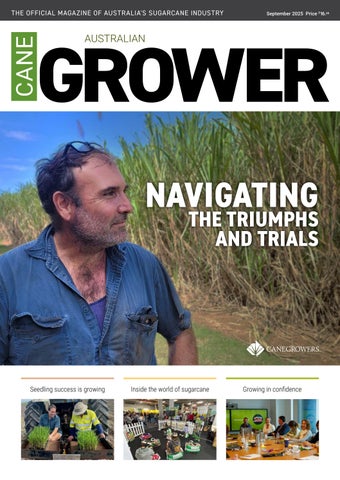
COVER
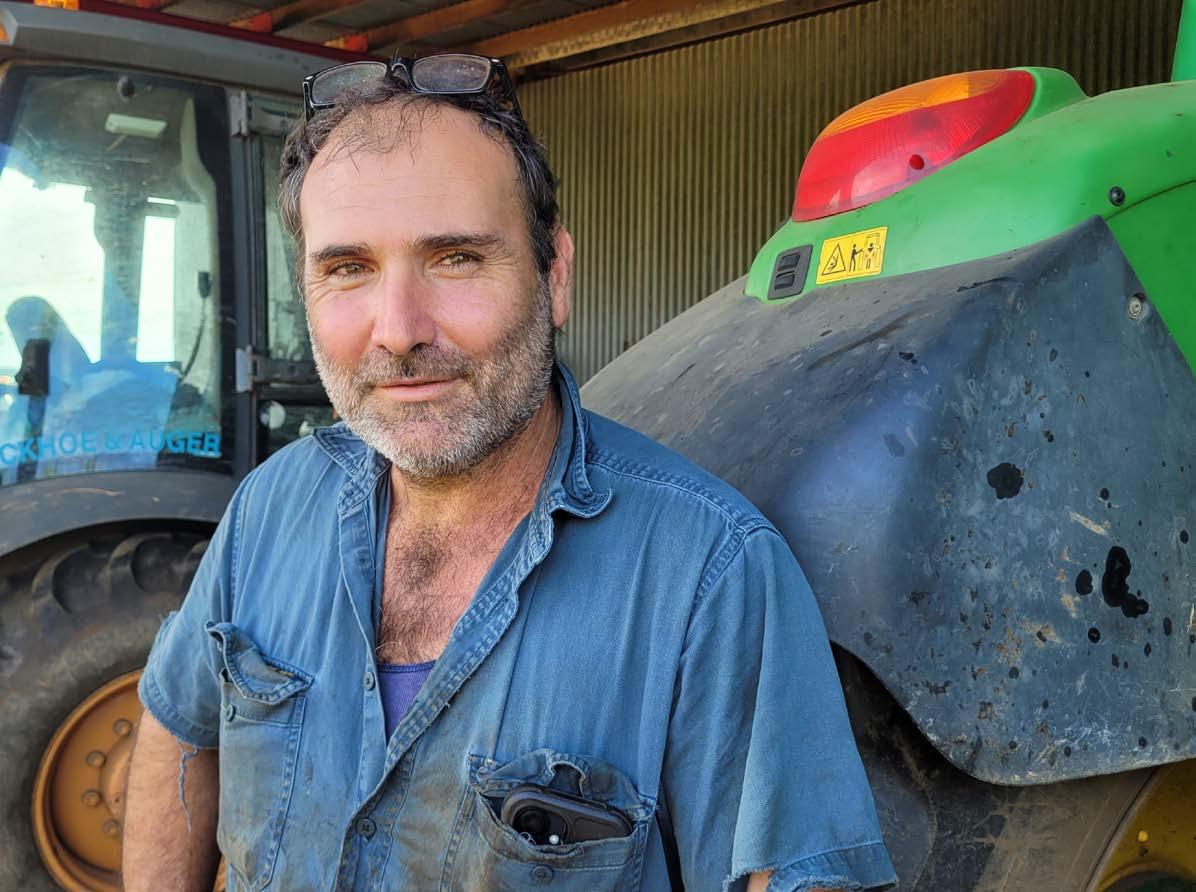
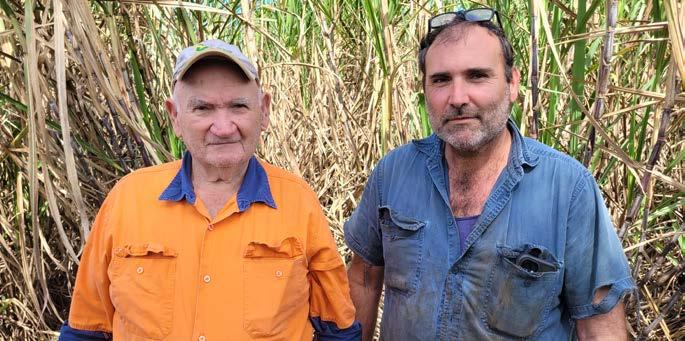
Brendan Calleja is among the most productive sugarcane
in the South Johnstone Mill region
Photo credit: Renee Cluff
Read more on page 24
EDITOR’S NOTE
In the August issue of Australian Canegrower on page 8 in the article titled ‘Emerging Cane Champions’ Jeffrey Searle was mistakenly attributed to the Herbert River district. Jeffrey is in fact a grower from the Burdekin district – apologies for any confusion this error may have caused.
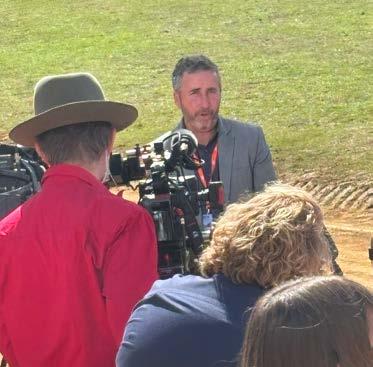
CANEGROWERS CEO Dan Galligan was at The Ekka alongside Queensland Premier David Crisafulli, Minister for Primary Industries Tony Perrett and Queensland Farmers’ Federation CEO Jo Sheppard to help launch the Queensland Government’s Prosper 2050 blueprint.
The Crisafulli government’s plan promises to back farming families, protect farmland, and grow the next generation of Queensland producers.
Speaking to the media, Mr Galligan welcomed the ambitious plan to sustainably grow Queensland’s ag sector over the next 25 years.
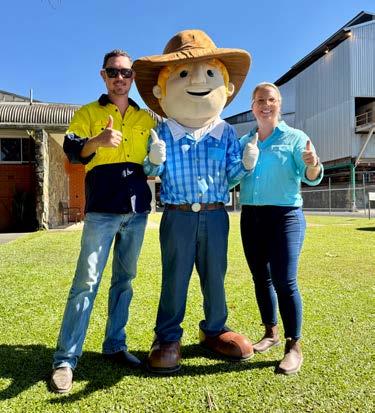
Much-loved children’s character George the Farmer, together with his mates Simone and Ben, is well know for exploring the paddockto-product journey of some of Australia’s favourite foods.
Their goal is to inspire kids to learn about agriculture and where their food and fibre comes from creatively with books, songs and videos.
CANEGROWERS ’ Education Coordinator
Shikira Kalatzis has been up in Far North Queensland filming with George the Farmer and shining a spotlight on the sugarcane industry. Big things are coming… stay tuned!
Growers and contractors now have more choice for their haulout trucks, with a new flotation tyre added to Queensland’s Class 3 Tandem Drive Axle (Cane Haulout Truck) Flotation Tyres Mass Exemption Notice.
The amendment, effective from 29 August, approves the BKT MPTFL633 PERFORMA 164J tyre, giving farming businesses greater flexibility while ensuring haulout operations remain safe during harvest.
The change follows advocacy by CANEGROWERS , which worked with the tyre manufacturer’s Australian agent to compile the technical information required by the National Heavy Vehicle Regulator to update the notice.
For more information, contact your local CANEGROWERS district office.
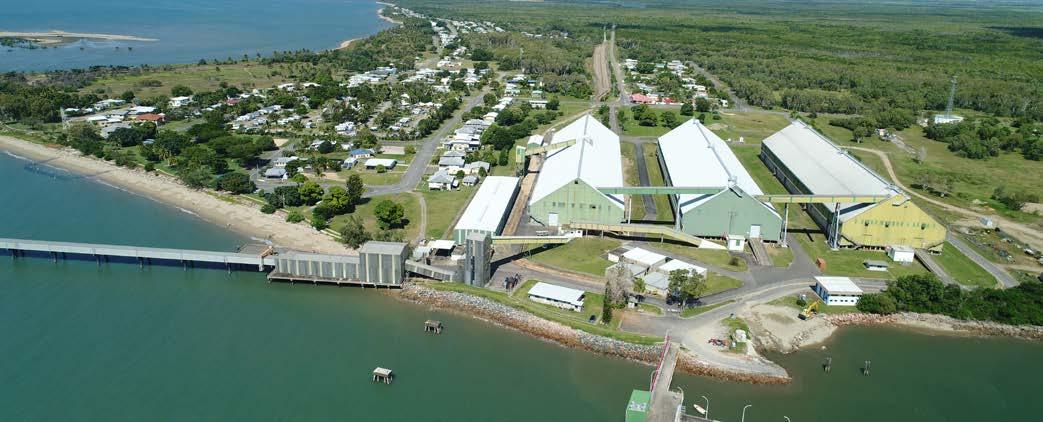
CANEGROWERS is urging grower shareholders to engage, get informed, and use their vote at the upcoming Sugar Terminals Limited (STL) Annual General Meeting.
With less than a year until the proposed in-sourcing of Queensland’s bulk sugar terminal operations, CANEGROWERS Chairman Owen Menkens said growers must carefully examine STL’s operations, shareholding and leadership to fully understand the company’s role as it transitions to being both owner and operator.
“STL must operate in the best interests of industry,” Mr Menkens said.
“Ownership and control must remain with active growers, operations must prioritise sugar ready for trade, pricing must be transparent and cost-recovery based, and no marketer should gain an unfair advantage.”
The company’s AGM, which is expected in November, could prove significant, with a new Chair set to replace Mark Gray, who has held the post since 2017.
The call for grower engagement comes amid renewed debate about STL’s direction following difficult negotiations over its Storage and Handling Agreements with sugar marketers.
In past years, talks were relatively straightforward. This year, however, disputes over terminal charges and the costs of
in-sourcing saw marketers take the unusual step of seeking ACCC approval to collectively bargain.
The outcome included STL agreeing to reduce activity and availability charges, commit to a review of its dividend policy, and absorb the transition costs of in-sourcing.
Despite this, STL’s dividend remains one of the highest in the country for a listed company, raising questions about who benefits from the current structure.
CANEGROWERS has long raised concerns that STL has not done enough to ensure shares remain in the hands of active growers, with a significant flow of returns still going outside the productive side of the industry.
To help address this, CANEGROWERS district offices are already helping connect former growers wishing to sell their shares with current farmers keen to strengthen their stake.
With the in-sourcing deadline fast approaching, CANEGROWERS is urging growers to remain engaged, exercise their rights as shareholders to and ensure STL’s future remains firmly aligned with the industry it was created to serve.
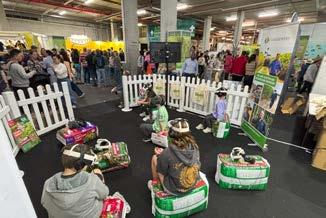
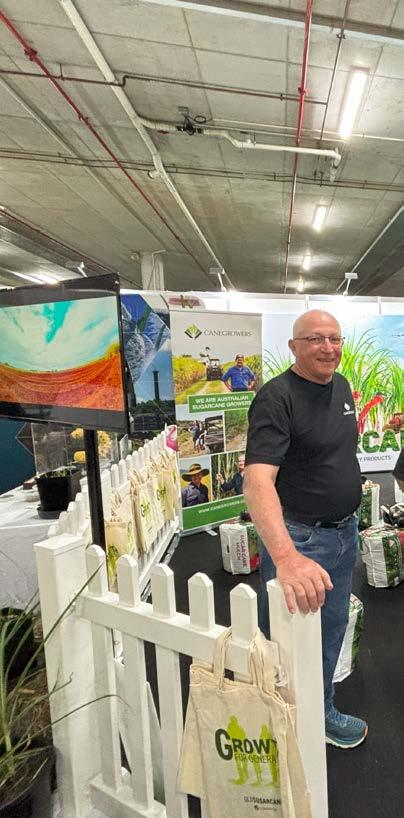
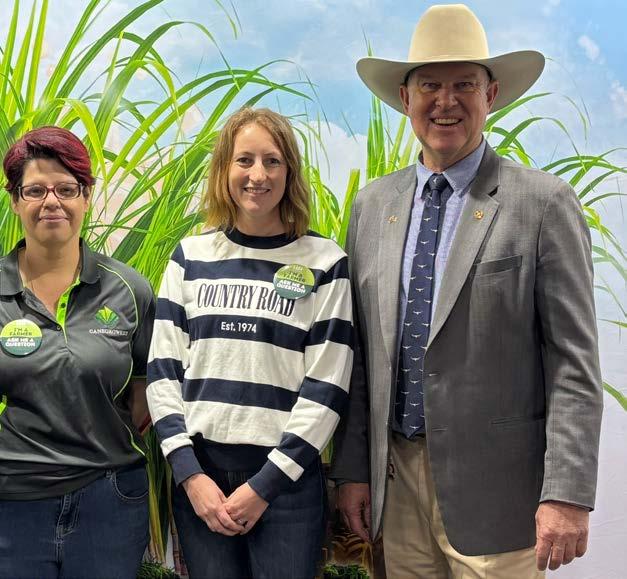
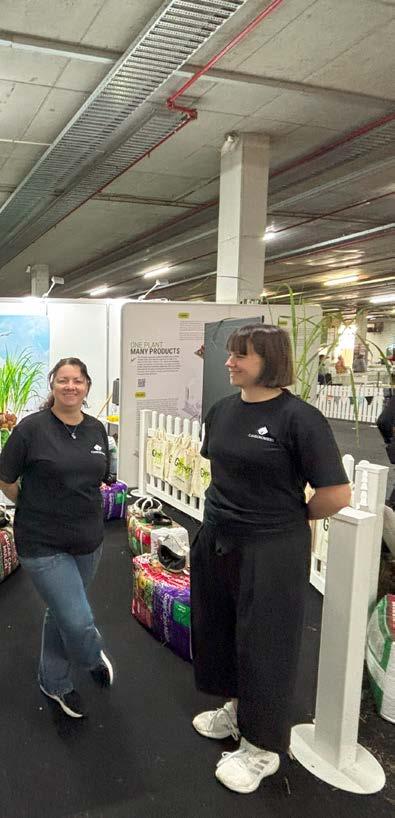
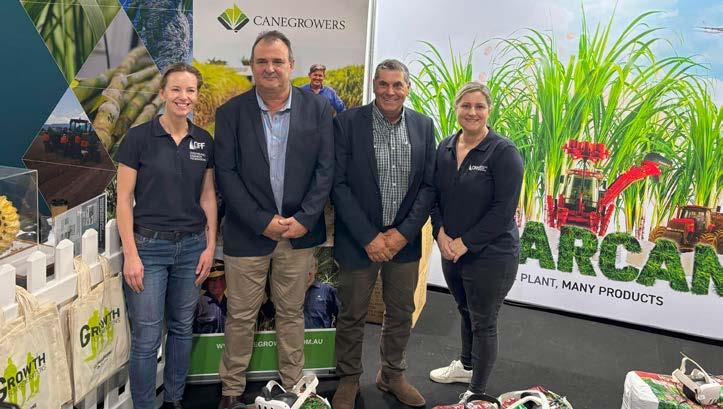
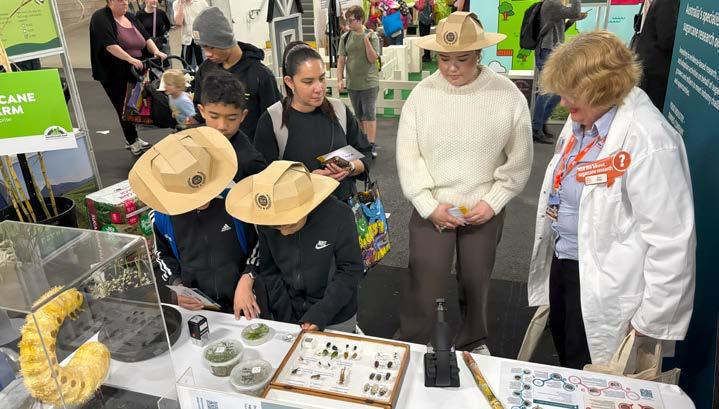
As you step into the Agricultural Education Hall at the Ekka and visit the CANEGROWERS One Plant, Many Products stand you hear it – the soft rustle of leaves in the breeze, the hum of machinery, the crunch of soil underfoot.
Because suddenly you’re not in the middle of the showgrounds anymore, you are standing in a sugarcane paddock.
That’s the magic of the CANEGROWERS ‘Paddock to Packet’ virtual reality experience. Slip on a headset, and suddenly you’re riding along in the harvester cab, watching tonnes of cane tumble into bins, then following it all the way through the mill until sugar crystals pour into sacks or are stored in terminals before being exported to foreign countries.
For many visitors, young and old, it’s their first real look at how Queensland sugar goes from farm to factory to the food in their kitchens.
For the past four years CANEGROWERS has coordinated the whole of industry stand, with key partners Sugar Research Australia and Australian-owned Sunshine Sugar, to raise awareness of the industry to the thousands of visitors that hit the Ag Hall over the nine days of the Ekka.
“It’s one thing to talk about our industry, but this really puts people in it,” CANEGROWERS Chair Owen Menkens said.
“When people see it, hear it, and feel it, they connect with it in a whole new way.”
Around the Ekka’s Ag Hall, handson displays pull people in while the CANEGROWERS ’ stand abounds with excited visitors chattering about the giant machines they ‘drove’.
Curious parents ask questions about growing sugarcane, or simply reflect on their own connections to cane faming communities.
Best of all, the public gets to talk directly with the people who grow the crop, farmers who have volunteered their time to staff the stand, alongside CANEGROWERS Board members who annually swap their boardroom seats for fielding questions from curious visitors each Ekka.
“It’s easy to forget that most people have never set foot on a cane farm,” Mr Menkens said.
“Events like this give the public and especially school children a chance to meet the growers, ask questions, and see just how much skill and care goes into every tonne of cane. The more they know, the more they value what we do.”
The Agricultural Hall isn’t just for the public, it’s also a meeting point for industry partners, researchers, and suppliers. Representatives swap ideas, check out some of the latest agtech, and talk about the future of all of the industries associated with agriculture.
As you wander out of the Ag Hall, sugarcane somehow feels less like “that crop you see by the roadside” and more like a living, breathing part of Queensland’s story.
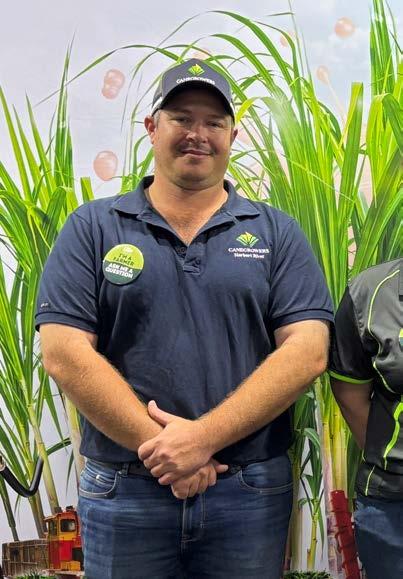

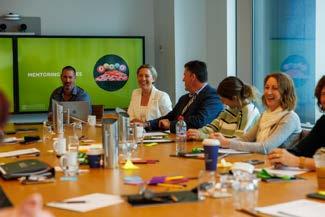
The CANEGROWERS 2025 Next Ratoon mentoring program wrapped up in August with a final meeting and graduation dinner in Brisbane, marking the end of a six-month journey for six mentees and their mentors.
Over that time, these young growers stepped into leadership roles, launched community initiatives, and built the confidence to influence their districts.
The program’s impact is already stretching beyond this year as the 2024 alumni are still collaborating and supporting each other’s growth.
Mentors from across agricultural industries and agribusinesses played a pivotal role, often going “above and beyond” to guide, connect, and encourage their mentees.
As CANEGROWERS Senior Manager –Membership Engagement and Innovation Matt Kealley explained, this is about creating a leadership legacy for the sugarcane industry.
“The investment we make now in our emerging growers will return to the industry tenfold through their skills, confidence, and vision for the future.”
Finding Her Voice – Rachel’s Journey
For Mackay grower Rachel Atkinson, the experience has been transformative.
“One of the main things I got out of the Next Ratoon program was building confidence and networking with more people from our region,” she said.
“It gave me a clear direction for where I want to head in the future and made me feel like I could achieve the goals I set at the start.”
While she’s still shaping her exact path, Rachel is determined to contribute meaningfully to cane farming in her district.
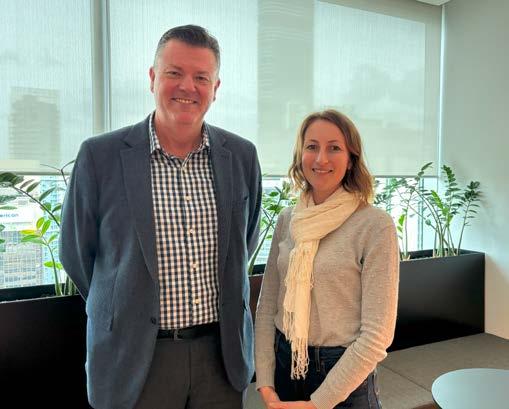
“I’m not 100% sure exactly how just yet, but I feel I’ve got, or can gain, the skills needed to make a difference,” she said. “I’m looking forward to being part of it.”
Rachel’s mentor was Michael O’Shea, Director of Institute Operations at the University of Queensland’s Alliance for Agriculture and Food Innovation.
Michael brought both professional expertise and a deep belief in the power of mentorship.
“I’ve benefited from being mentored myself earlier in my career,” Michael said. “The advantage is access to people who’ve been there before, you can borrow from their experience.
“Our job as mentors isn’t to tell people what to do, but to ask questions, be curious, and give them a nudge in the right direction.”
He describes their pairing as a “yin and yang” match.
“We’re quite different, but that’s been a strength. We’ve connected, become friends through the process, and had some great conversations about how to get things done, where to find information, and who to contact.
I’ve loved seeing Rachel’s enthusiasm and the way she’s proactively gone after her goals.”
Michael says he’d gladly mentor again.
“I’ve seen the benefits of programs like this before, and I’m very happy to support the endeavours of this one.”
CANEGROWERS is working to secure the program’s future, aiming to make Next Ratoon a permanent pathway for developing industry leaders.
Michael and Rachel have both enjoyed the journey of the Next Ratoon program and continue to reap the benefits
If the results of this year’s graduates are anything to go by, the program’s harvest of skills, confidence, and leadership will pay dividends for the sugarcane industry for years to come.
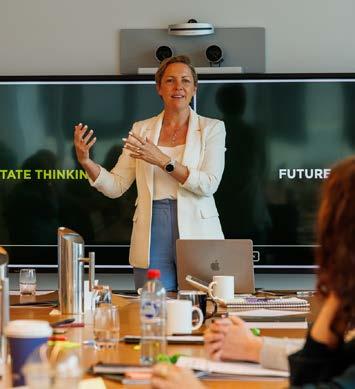
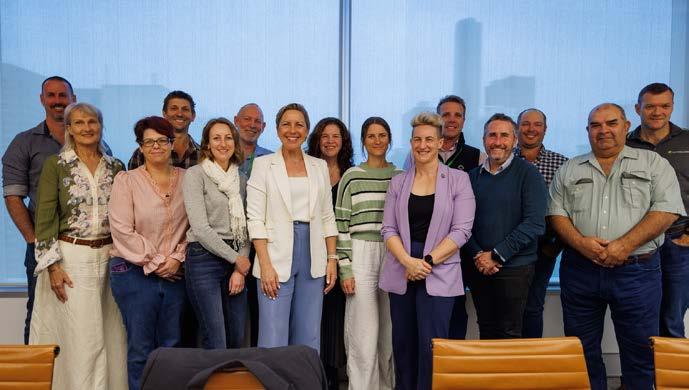
The Next Ratoon Program run by Pragmatic Thinking and supported by CANEGROWERS is both engaging and inspiring

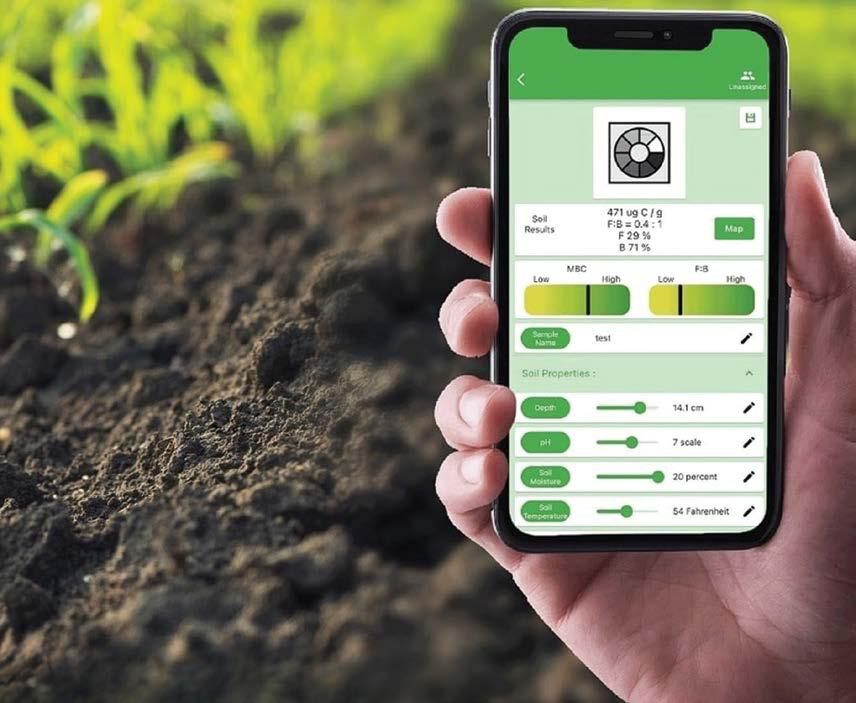
Sugarcane farmers can harness beneficial microbes as a safe, sustainable alternative to chemical pesticides. Products like Nutri-life Tricho-Shield, Bio-P, and Micro Force by Nutri-Tech Solution and Compost-Aid by Alltech deliver targeted microbial support to strengthen crops and protect against pests such as cane grubs and beetle larvae.
Microbes like Bacillus subtilis, Trichoderma, and Pseudomonas form protective layers around roots, release natural pest-fighting compounds, and enhance nutrient uptake. Others, like Metarhizium fungi and Bacillus thuringiensis, attack pests directly, stopping damage before it reaches the roots.
Beyond pest control, certain microbes “train” plant immune systems, helping sugarcane respond faster to stress, drought, and disease. They improve soil structure, water retention, and nutrient cycling, promoting deeper roots and healthier plants.
Adopting microbial strategies lowers chemical costs, reduces outbreaks, and supports environmental compliance. They protect waterways from runoff, boost soil carbon, and increase sustainability. By applying Nutri-Tech Solutions’ microbial products or Alltech’s Compost Aid, growers can reduce chemical use, safeguard yields, and meet rising demand for sustainable sugar.

BY DAN GALLIGAN, CEO, CANEGROWERS
For as long as we have had a sugar industry in Australia, we have had discussions about diversification.
By any objective assessment we are a successful industry. A $4bn dollar supply chain that is the life blood of many Queensland rural communities. The 4th largest exporter of sugar in the world and the 3rd largest agricultural industry in Queensland.
These are great statistics, and the resilience of this industry is something that current and future cane growing families should be proud of.
I often marvel at the leadership and drive that must have gone into building the cane rail network, bulk sugar terminals, sugar mills, and irrigation infrastructure that forms the crucial arteries between farm and market.
Our global competitors have also built successful sugar industries – albeit often with strong government support –but some have gone further, developing profitable outlets in biofuels, electricity and fibre-based products.
These alternatives provide the income and stability their industries need when the sugar market turns volatile.
The mere fact that the Australian industry has remained competitive while not having such commercial diversification opportunities is a remarkable credit to Australian cane growers.
Among the many previous attempts, the 2021/22 release of the Sugar Plus industry diversification roadmap was a major milestone – not only for its content, but for the strategic achievement of bringing researchers, millers and growers together with government support to agree on a credible plan.
The roadmap set clear priorities around biofuels (including sustainable aviation fuel and biodiesel), electricity generation, bioplastics, and the broader opportunities for the industry.
It laid out clear actions for each sector around ‘Better business as usual’ (across all sectors in the supply chain) and key priorities for investment and policy to make diversification a reality – at long last.
Sugar Plus has had its critics – not an uncommon thing for innovative and collaborative plans. However, from a CANEGROWERS perspective, we are clear that what we have done, and will continue to do, is support growers who are looking to improve and innovate, while advocating for policy and investment to build a diversified supply chain that they can participate in.
CANEGROWERS has been pulling on every oar in this diversification strategy, because that is what our grower leaders and members want to see us deliver. It cannot be done alone.
Collaboration and leadership is required across not just our sector but the broader government and industry landscape as we inch ever closer to seeing some of the green shoots turn into thriving, commercial and profitable industries.
By making sure growers’ interests are put first, not last, we are working to deliver outcomes that benefit all cane growers in Australia.
Plant the seeds for a stronger financial future. We offer financial guidance to help farmers like you protect, invest, and grow.
Morgans are proud supporters of Canegrowers.








CANEGROWERS Chairman Owen Menkens sat down with both the State and Federal Agriculture Ministers at this year’s Ekka, underscoring the central role of Queensland farmers in shaping the state’s future.
Mr Menkens joined Federal Agriculture Minister Julie Collins and Queensland Primary Industries Minister Tony Perrett during the Queensland Farmers’ Federation’s (QFF) 2025 Celebration of Queensland Agriculture networking event.
The gathering brought together industry leaders, government representatives and stakeholders in a strong show of support for the state’s farming sector.
“We already work closely with the state and federal governments on behalf of growers and the industry, and whether it’s at Parliament House in Brisbane or Canberra, or at events like this, we ensure the industry’s priorities and opportunities remain front of mind with the relevant ministers,” Mr Menkens said.
He was joined by several CANEGROWERS directors, ensuring Queensland’s sugarcane industry had strong grower representation
among peers from across the agricultural sector.
The annual QFF celebration has become a highlight of the Ekka, recognising the contribution of Queensland’s farmers while strengthening ties between industry and government.
This year’s event once again reinforced the importance of agriculture not only to the state’s economy but also to its communities and culture.


BY OWEN MENKENS, Chair, CANEGROWERS

As the crush moves into mid-season and sugar supply ramps up, it’s a good time to reflect on the vital role of our sugar terminals.
We are very fortunate in Australia that we can store a large percentage of our sugar. This gives marketers the opportunity to hold stocks over to chase higher March, May and even July contracts. Our bulk sugar terminals were built precisely for this purpose. They give Queensland growers a genuine advantage over our international competitors. The management of our terminals is therefore incredibly important to our industry going forward.
Sugar Terminals Ltd (STL) the industry owned company that manages and maintains the storage facilities of the industry has until the last couple of years been a relatively silent partner operating behind the scenes.
The Storage and Handling Agreement (SHA), the contract that exists between STL and the sugar marketers who are the customers of these terminals, has been negotiated over the years with relative efficiency.
This year, however, negotiations between STL and marketers proved frustrating. So much so, that marketers applied to the ACCC for permission to bargain collectively and strengthen their position. The main points of contention were the charges being applied to the terminals as well as the cost of insourcing operations which STL has proposed to occur in July 2026. STL has agreed to reduce the activity and availability charges going forward, and review its dividend policies.
Even after these reductions STL’s dividend is still one of the highest for a listed company in Australia. This serves to show that the original intent behind the ownership structure of STL and its current role to underpin the industry trade capacity are out of kilter.
It is why shareholders who are not active growers should relinquish those shares as that dividend is not remaining in the industry.
We will be calling on STL to make sure they send more letters to verify active and inactive growers. Many CANEGROWERS offices can help in this regard.
The other part of STL’s new storage and handling agreement with the marketers is a commitment that STL will absorb the transition costs of insourcing. These costs are apparently significant but need to be paid to maintain a smooth and efficient transition of terminal operations.
If STL is going to run the terminals they need to do it in the best interests of industry. CANEGROWERS position is that:
1. Ownership and control of the terminals must remain on the active side of the industry.
2. Reliable operations must prioritise sugar ready for the trade.
3. Pricing models must be transparent operating on a cost recovery basis with no differential pricing.
4. Growers should become active in their use of their voting rights.
5. Storage and handling should not advantage any marketer in allocation of space or pricing.
We will continue to hold all the players to account going forward as we strive to achieve the best outcomes for growers and the industry.
We need a transparent sustainable sugar supply chain that is verified through Smartcane BMP and blockchain technology to secure our domestic and international trading customers in the future.
Coming in 2026

Because one size
doesn’t fit all
For decades, Queensland cane growers have had little say in how and when they were paid. Thatchangesin2026.
QSL FlexPay puts you in control, letting eligible QSL Direct growers dial payments up or down as the season unfolds. Get paid more when you need it and less when you don’t. Unexpected bill? Need more cash later in the season? With QSL FlexPay, you choose what fits. Contact your local QSL team to find out more.
Nominate QSL as your GEI Sugar marketer for the 2026 and 2027 Seasons by 31 October 2025 to unlock your eligibility to apply for FlexPay.
CANEGROWERS ’ Senior Manager – Environment and Sustainability Mick Quirk looks back at his decade of advocacy and policy efforts.
When Mick Quirk embarked on his journey with CANEGROWERS in 2015 as Smartcane BMP Program Manager, the initiative was just emerging from its infancy. As Mick recounts, there was a heightened awareness of the program but a lot of mixed feelings about it.
“There was a very rapid sign-on, with a lot of growers going through the selfassessment process but there were only a couple of growers accredited,” he recalls.
“There was a lot of reluctance generally about going to the accreditation stage because many growers thought it was acknowledging that we had a problem, or that we had to prove we were doing the right thing, or they didn’t like the idea of being judged by a third-party auditor.”

Mick devoted his initial weeks to understanding the sugar industry’s inner workings, growers’ perspectives, and the hurdles hindering Smartcane BMP’s acceptance.
He quickly realised that the program had been well designed and, most importantly, that 95% of its influence with growers lay in district-level communication, through local facilitators trusted by growers. These folk were, and remain, based with either the local CANEGROWERS office or the local Productivity Services.
“It was all about supporting the facilitators to work with growers and communicating that BMP was about demonstrating that the industry was largely doing best practice and that it didn’t need regulation,” Mick says.
“The facilitators did great work. The accreditations did start to take off pretty quickly, so it was quite an exciting time. By 2019, when I went to a policy role in CANEGROWERS , we had 330 businesses accredited.”
A significant victory came when the 2019 changes to the reef regulations for sugarcane risked a 30% cut in nitrogen applications below industry best practice — highly restrictive measures that threatened productivity. In response, CANEGROWERS
commissioned independent economic modelling to demonstrate the potential impacts on growers, and the findings became pivotal in advocacy efforts.
“It was the same situation with the Reef report cards, which, for nitrogen management, judged the recommendations from SIX EASY STEPS program as a ‘C’ score; the criteria for an ‘A’ or ‘B’ wasn’t consistent with Smartcane BMP guidelines,” he says.
“At the same time, 60% or more of cane growers had been involved in one or more projects that were funded by Reef health initiatives, but all the report cards portrayed growers as poor farmers who could afford to use lower amounts of nitrogen fertiliser.
“The only data the government had to monitor improvement was from the projects they invested in and then they turn around and say it hasn’t been good enough, so it’s the grower’s fault! It was a total misalignment between the report card guidelines, project design and evidence-based best practice. It took years to dismantle that artificial hurdle, which was misrepresenting farmers and wasn’t just or fair.”
CANEGROWERS held a longstanding ambition for Smartcane BMP to transcend environmental
stewardship — to help drive production efficiency, business performance, and new opportunities in international markets. The alignment of key BMP modules with global certification standards like Bonsucro and VIVE positioned growers for access to sustainability-conscious markets.
In November 2022, CANEGROWERS , alongside KPMG, facilitated the first blockchain-enabled shipment of traceable, sustainably produced raw sugar to South Korea — a watershed moment. It was followed up in 2023 with the first shipload of sugar to the UK under a new Free Trade Deal; sugar which was again sourced, on a mass balance basis, from Smartcaneaccredited farms.
Nonetheless, the hoped-for financial incentives for growers have not yet eventuated. While there remains optimism that, for some supply chains, sustainable sourcing of raw sugar will provide modest financial rewards
“I do think we’ve got space now to put more time on things that are more closely related to day-today concerns of growers”
to accredited growers, Mick and his colleagues pivoted toward exploring other opportunities, including reducedrate financing that rewards sustainable production.
He says the organisation is leveraging rising investor scrutiny and emerging environmental, social, and governance (ESG) mandates.
“We are now looking at opportunities in the financial sector for both individuals and marketers to access reduced interest rates,” Mick explains.
“For instance, medium to large companies will need to annually report their emissions exposure, whether that be directly or indirectly – so it includes the emissions of their customers. If their customer in the sugar industry has a positive story to tell, that could well be worth a reduction in interest rates.”
Mick has also helped shift the focus of government Reef policy from farm practices and nitrogen management to a whole-of-catchment approach.
“We’ve done a lot of advocacy and a lot of other industries have come onboard, so there is now a more constructive approach emerging from the Australian and Queensland Governments when it comes to the Reef Plan and the Water Quality plan,” Mick says.
“If they come to the party, it won’t be so top down, rather working with growers at a local level.
“Nitrogen management is not going to be enough to reach the target – there’s going to have to be some other way of countering nitrogen in the landscape through vegetative drains or retention ponds, whatever it might be. We are trying to push a whole-of-catchment approach and they are looking to take on that approach.”
Under Mick’s stewardship, CANEGROWERS ’ leadership, including the Policy Council and Environment Committee, have been kept continuously informed and empowered so the organisation can drive discussions with key government representatives.
Mick has also been helping to broaden the agenda beyond Reef-centric issues.
“We need to keep a watch on Reef policy but there are lots of other important issues within the portfolio such as biosecurity and our preparedness for a foreign pest or major disease,” he says.
“I do think we’ve got space now to put more time on things that are more closely related to day-to-day concerns of growers”
“The challenge will be directing funding towards some of those things.
The Reef funding has soaked up all the oxygen so a lot of funding that used to go to Landcare or River Improvement Trusts, was re-directed. That’s why we are pushing for a whole-of-catchment approach in the new Reef Water Quality Plan.”
Chemical stewardship is also high on the agenda, with CANEGROWERS having previously successfully argued for reduced buffer zones when 2,4-D is applied below crop height and for the granting of emergency permits for late season use of Imidacloprid.
Mick finished up in his role at the end of August, handing the baton to former Environment Policy Research Officer, Elisa Westmore. He’s now looking forward to spending more time with family, including a new grandson in Melbourne.
BY RENEE CLUFF
The use of seedlings for sugarcane plant material is growing in popularity in the Proserpine District.
One of the cornerstone strategies for mitigating disease risk in the sugarcane industry is to plant certified disease free seed cane. This approved seed system relies on clean material produced in mother plot nurseries grown under strict biosecurity protocols. It’s a practice that has supported the integrity of seed supply for many years.
In the Proserpine District, however, growers are increasingly adopting less traditional options when it comes to the selection of an approved seed source. Traditional billets and sticks are still available but growing in popularity are one-eye sett (OES) and tissue culture seedlings.
Manager of Sugar Services Proserpine, Stacey Corrie, says the opportunity for growers to purchase seedlings enters
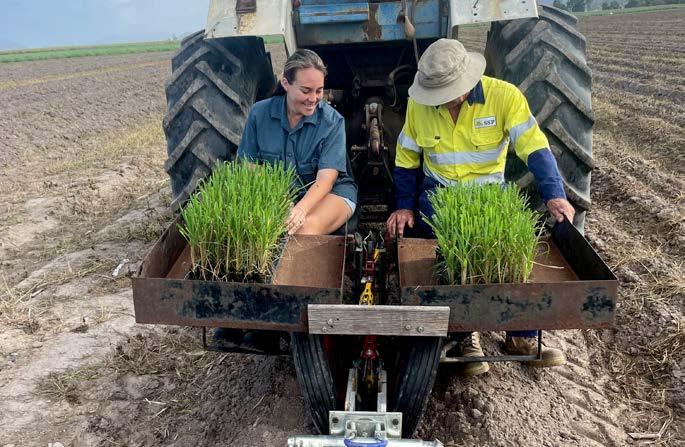
its 10th year in 2026, and the option now serves as a key propellant of the local industry.
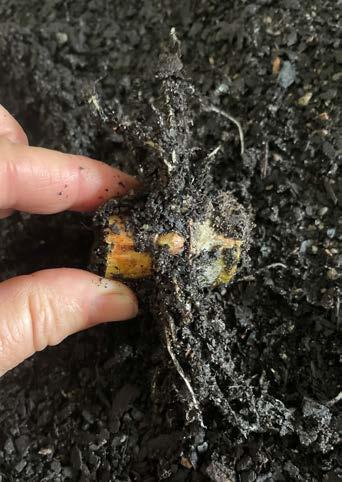
“For us, because we are only a twoman team it cuts down an awful lot on man hours,” Stacey explains. “We use tissue culture in our mother plot which is where the one-eye setts come from. The seedlings are the cleanest form of propagation out there because they’re DNA tested and disease-free.”
The one-eye setts are propagated from the tissue culture plots by CANEGROWERS Proserpine Chairman, Glenn Clarke.
“He chops the sett out, treats it in Sinker fungicide and puts it in a hot box for a couple of days until it starts to strike,” Stacey says. “Once established, they are planted out in growers’ clean cane plots.”
The huge benefit, apart from knowing it’s trusted, clean planting material, is that only the sett eyes that have proven to be viable are planted, cutting down on wastage. Stacey says they and the tissue culture seedlings also provide more plant material compared with billet seed plots.
This accelerates the grower’s ability to rapidly expand their chosen variety and also facilitates rapid distribution of new varieties.
“It’s a massive benefit to the growers,” Stacey says. “It’s estimated you get about 15% yield increase when you use clean plant material.
“You can actually multiply a variety of seedlings rather than if you’re billet planting, and because you don’t have to use as much material, its spreads further.”
Tissue culture seedlings are produced either by Sugar Research Australia or an approved nursery and delivered as fully established plants. Similar to the one-eye sett seedlings, they are then planted into growers’ cane plots and multiplied in the following year.
“I think the guys are realising it’s much easier to get the seedlings because we come in and do it,” Stacey says. “We plant for the growers with our planter, which is a modified tomato planter.
“It can be fiddly, our own plot’s not irrigated, so we use a water tank on the ute. For the first three or so weeks until they are established, they need to be kept moist. After that you can treat it just like billet cane.”
The cost is $1.10 for one-eye setts compared to $2.50 for tissue culture seedlings.
“Glenn will make the setts accordingly, so if you want them in May, he can prepare them for a May planting,” Stacey says. “He does an amazing job and as long as he’s happy to continue doing so, it’s a cheaper way for our growers to get access to seedlings.”
Tissue culture seedlings, however, have the benefit of providing an extra year of distribution material. One-eye sett seedlings are only considered clean for two years after planting. Stacey says either option can meet growers’ needs.
“Seedlings are not to be feared, they are the way forward,” she says. “It’s a great way for growers to have their own distribution plots. We’d love to establish grower groups where growers take it in turns to have a plot and distribute to others in their group.
“The barrier to that is obviously having access to a plant cutter and planter, but it’s a great way for growers to source their clean seed.”
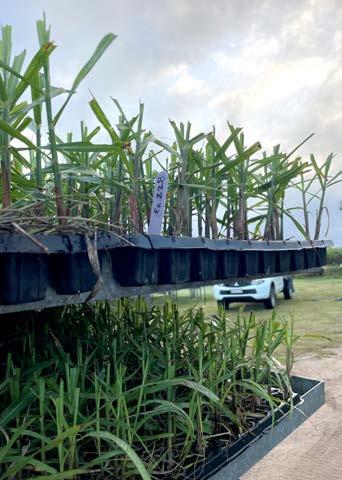
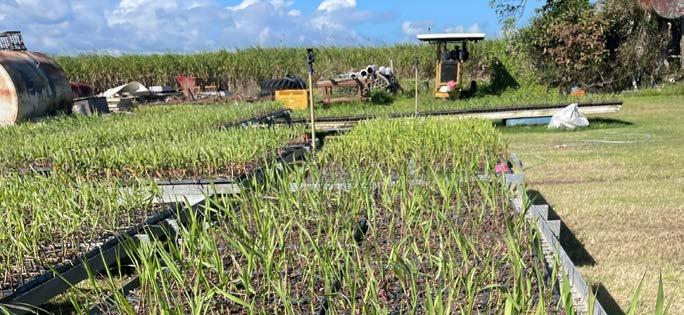
The table demonstrates that should a grower purchase 1,000 seedlings in 2024, by 2027 there is sufficient supply to plant out 41.17ha of cane that is still deemed as distribution plot cane.
Note that one-eye sett seedlings are one year off tissue culture, and therefore plant material can only be considered clean up until 2026.
GROWER PLOT
(row space 1.7m & plant rate 8t/ha)
2024 1,000 seedlings over 700m
Yield: 3.29412 tonnes
Plant: 0.41176 ha
Yield: 32.9412 tonnes
2026
2027
2028
Plant: 4.11765 ha
Yield: 329.412 tonnes
Plant: 41.1765 ha
Commercial harvest
Source: Sugar Services Proserpine Ltd.
In the heart of Queensland’s sugarcane country, young couple Dylan and Sarah Wedel have combined their dreams and hard work to pursue a commitment to the land.
At just 21 years old, the couple secured a First Start Loan from the Queensland Rural and Industry Development Authority (QRIDA), allowing them to purchase their first 45-hectare sugarcane farm in Victoria Plains, on the outskirts of Mackay.
“Sarah and I were both working in the mines at the time and we were looking for an investment opportunity,” said Dylan.
QRIDA’s First Start Loan was the most accessible financial assistance to help the couple secure their first block of land.
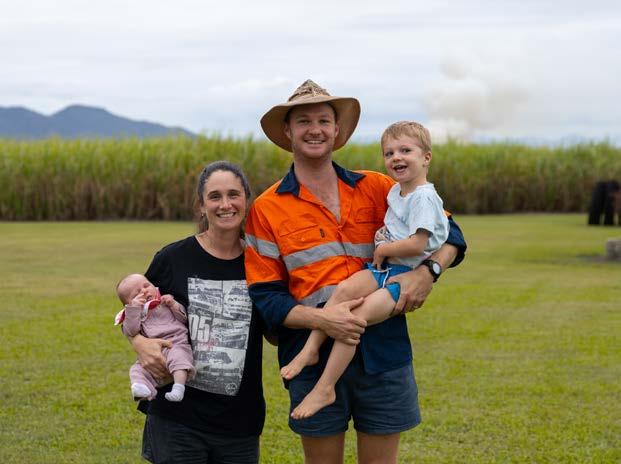

“Commercial lenders were hesitant because we didn’t have a lot of experience in farming or an extensive deposit. The First Start Loan allowed us to overcome those barriers,” said Dylan. Dylan and Sarah worked closely with their QRIDA Regional Area Manager and said the questions they were asked during the application process helped them feel confident they were making the right decision before purchasing their property.
“We exchanged a lot of emails and had several meetings, which really helped clarify the process and set realistic goals,” said Sarah.
“It was tricky because we hadn’t come from a cane farming background and that’s where the Regional Area
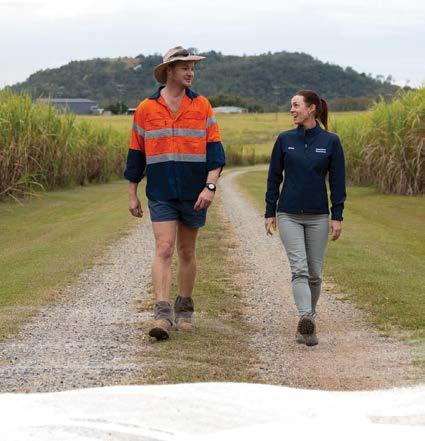
Manager at the time was really helpful, because they knew what some of those numbers should be and what was a reasonable number or how to best present those numbers,” said Dylan.
Dylan and Sarah encourage aspiring young growers in a similar situation to them to lean on the support available and start the conversation with QRIDA early.
QRIDA’s First Start Loan offers up to $2 million to help aspiring young producers in the early years of establishing their first primary production business.
For more information on QRIDA’s First Start Loan visit qrida.qld.gov.au or call 1800 623 946

Brazil
India
Thailand
Speculators
Currency
Your Trusted Partner
Current as at 20 August 2025.
By Elliott Apel, QSL Assistant Manager Trading & Risk
By the end of July, Centre South Brazil had harvested 306 million tonnes of cane and produced 19 million tonnes of sugar − around 7-8% behind last year. The sugar mix continues to reach new record highs, with the proportion of sugarcane directed towards sugar production rising to 54.1% in the second half of July. However, sugar yields are disappointing, falling to levels not seen in more than five years.
The Indian Sugar and Bio-Energy Manufacturers Association (ISMA) released its first satellite images for the 2025/26 Season, showing cane area at about 5.7 million hectares, up 1% year-on-year. Even before harvesting starts, ISMA has been lobbying the Indian government to approve up to two million tonnes of sugar exports, citing ample supply. Whether the government agrees remains uncertain.
July was drier in North and Central Thailand, but cumulative rainfall is still tracking five-year averages thanks to strong early season rain. With cane remaining more profitable than cassava, land under cane is expected to expand slightly by 1-2%.
Speculators’ net short position peaked in early August at 151,004 lots, the largest since November 2019, likely in response to peak Centre South Brazil production. By 12 August, the net short position had eased back to 115,357 contracts.
The Australian dollar continues to trade within the 64.5 to 66 US cent range, while the Reserve Bank of Australia cut the cash rate by 25 basis points to 3.6% in August. Internationally, investor sentiment toward the US dollar’s safe-haven appeal remains uncertain, with concerns over growth and inflation following President Trump’s final tariff announcements.
The outlook ratings above are in relation to AUD/tonne sugar prices. A bullish outlook is considered positive. A bearish outlook is considered negative.
The highest grower-managed pricing levels achieved across all growing regions using QSL products to date (all gross price actual/tonne) are:
• 2025 Target Price = $735 / IFC $735 (Oct25)
• 2026 Target Price = $685 / IFC $690 (Jul26)
• 2027 Target Price = $650 / IFC $610 (Jul27)
• 2028 Target Price = $605
• 22 September 2025: Any 2025-Season Target Price Contract tonnage not priced by this date will automatically have its pricing window extended and roll costs may apply.
• 22 September 2025: Any unpriced tonnage allocated to the ICE 11 October 2025 contract through the Individual Futures Contract and/ or Self-Managed Harvest Contract that is not rolled by this date will be priced by QSL at the next market opportunity.
• 31 October 2025: Last day to nominate QSL as your GEI Sugar Marketer for the 2026 Season.

Proprietary blend of essential nutrients and trace elements empowered by patented ortho silicic acid (OSA) technology
• Silicon is classified as a beneficial plant nutrient
• Ortho Silicic acid (OSA) is the only plant available form of silicon*
• Successful trials in Mackay, Queensland and across India and South East Asia
• Application via foliar spray or fertigation
• Free samples for trials up to 1 Ha
BENEFITS OF SuCANE GOLD IN SUGARCANE:
• Higher cane yields
• Improved uptake of nutrients
• Increase in CCS/Brix
• Improved insect and pest resistance
• Improved resistance to low & high temperature, drought, frost etc.
• Helps to stabilise the cane during extended harvest to crush periods
*Caution: Many products are sold based on percentage of silicon but this does not mean a plant will take up a high percentage
CALL LOU ON 0424 849 264 for more information on how SuCane Gold and our range of soil conditioners, biostimulants, biofertilisers and micronutrients can help your sugarcane, soybean and other crops
We’re in Mossman to Maroochy River and everywhere between.
We take the latest industry research and make it relevant for your district and the way you farm.
Get in touch with your district facilitator and they’ll help you find expert advice and specialised training tailored to you.
BY RENEE CLUFF
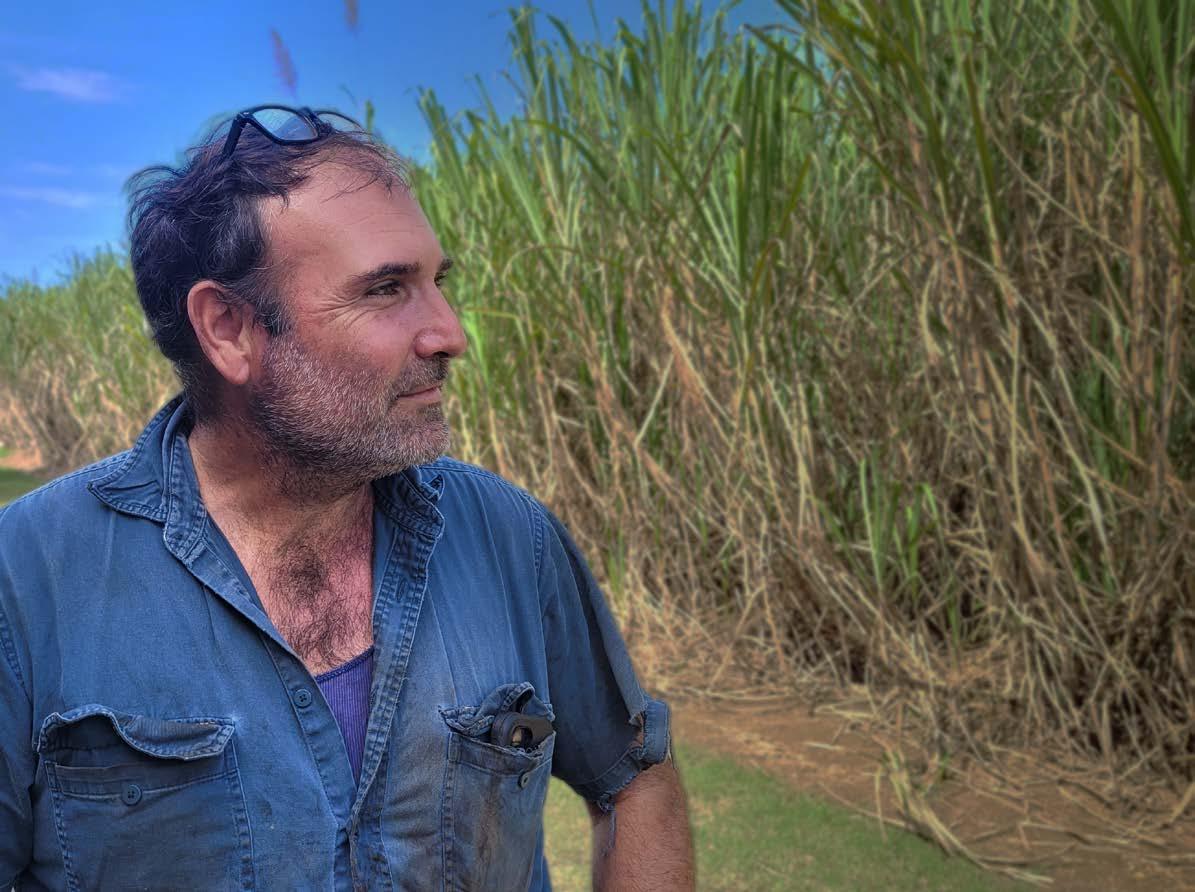
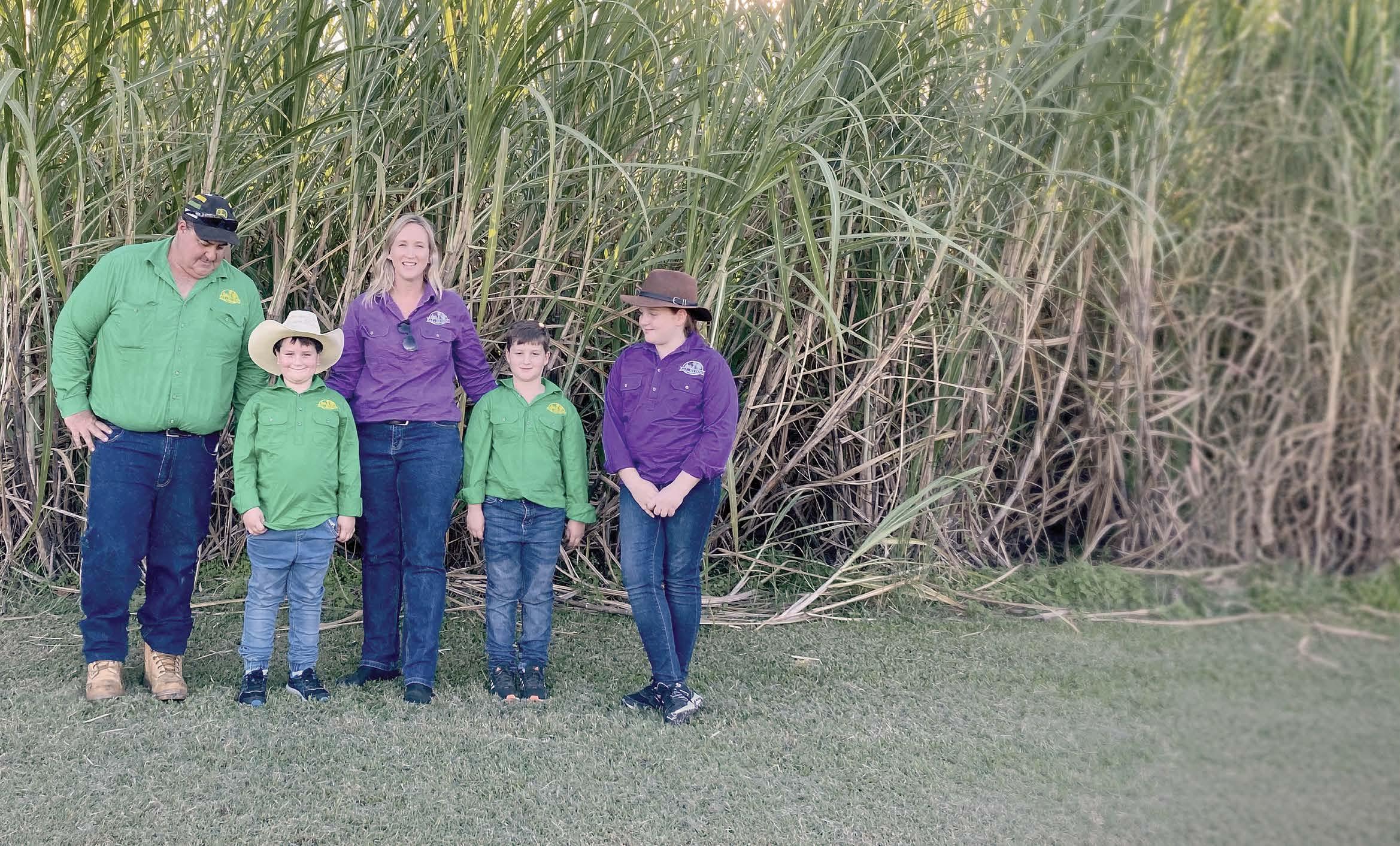
An Innisfail cane farmer is navigating the triumphs and trials of farming with vigour, adopting new practices to build on his family’s legacy.
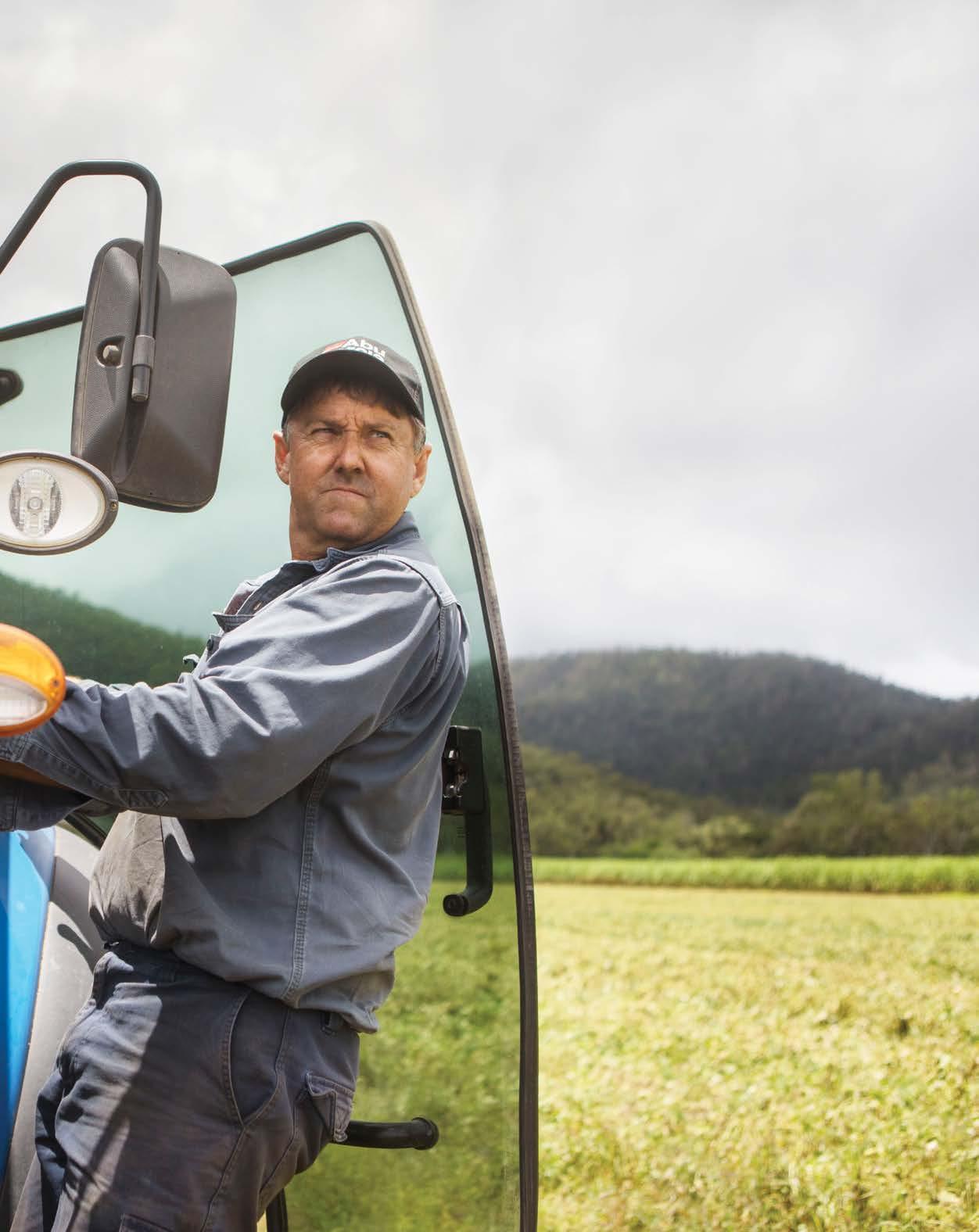
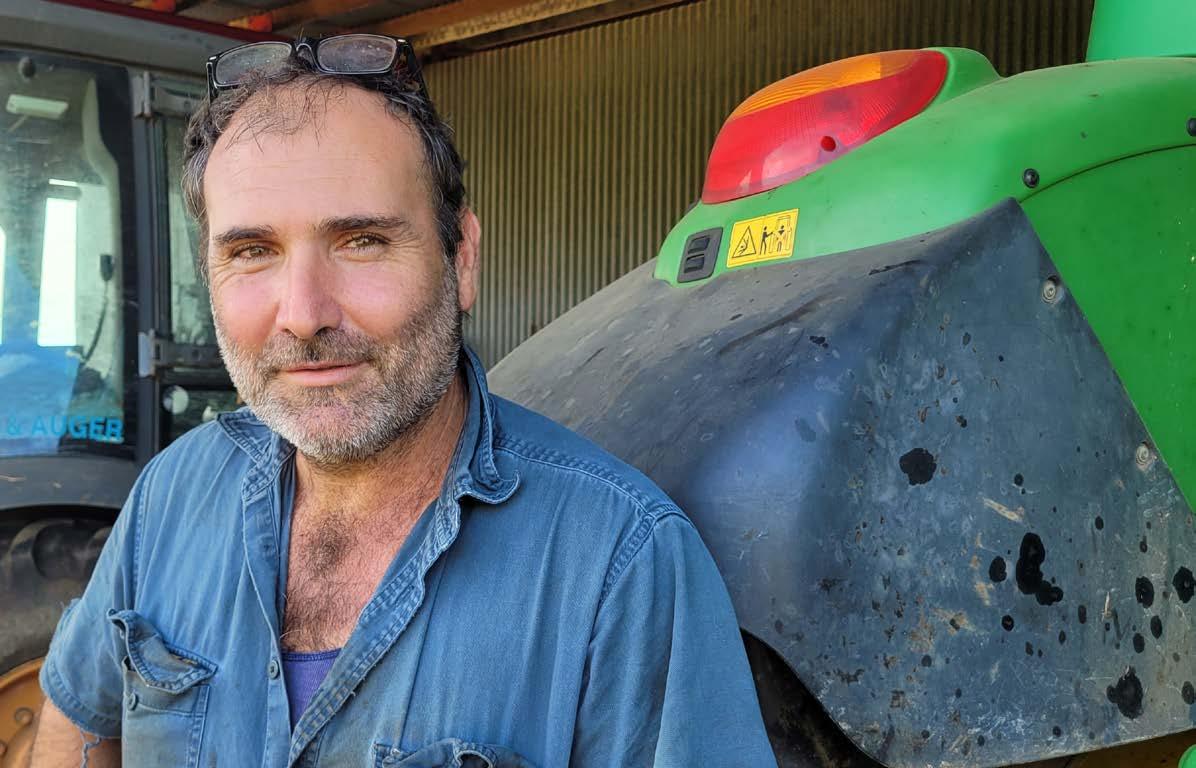
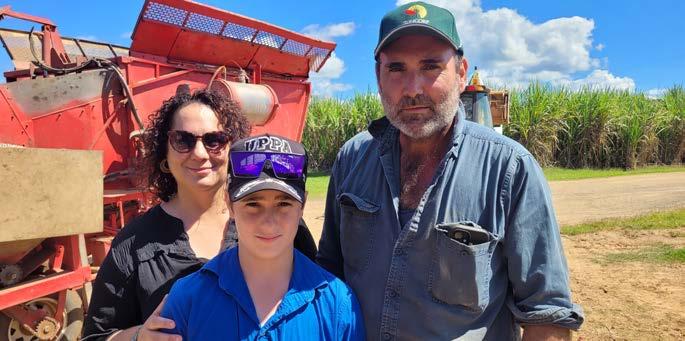
Brendan Calleja is among the most productive sugarcane growers in the South Johnstone Mill region, the result of his adaptability, enthusiasm and persistence.
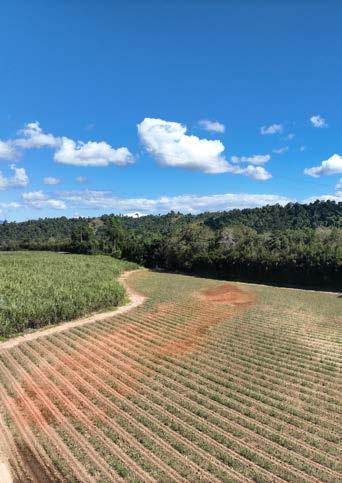
The area he farms spans fertile, floodprone river flats to red-soiled ridges, and his operation is a patchwork of multi-generational knowledge, a solutions-focused mindset and a readiness to embrace change.
But as Brendan tells it, the road to where he is now – managing 450 acres across multiple farms – has been anything but straightforward.
After growing up on a cane farm, Brendan began his career as a fitter and welder, working in local engineering firms and in the mines, along with stints in harvesting. The desire to farm, though, was ever-present.
“I started leasing land while I was still working full time in the mines,” Brendan said.
“Eventually, I decided to lease more and go into full-time farming. To supplement my income, I also invested in contract billet planting gear and I also do contract over-row spraying in the off season.”
His success, which includes being named the region’s most productive grower in recent years, is evidence that the leasing system has merit. Along with managing his parents’ 130-acre farmlands, Brendan leases a further 320 acres.
His wife, Maria – also a thirdgeneration farmer – is integral to his success, taking care of all of the administrative responsibilities, from accounts to payroll as well as acting as a general factotum.

The blocks they manage in the South Johnstone and Boogan areas are all relatively close, but the terrain and soil types vary significantly.
It’s a logistical and agronomic juggling act, requiring precision and foresight.
“You’ve got heavy clays, fertile river flats, and then those high-PBI, acidic Red Ferrosols on the ridges,” Brendan explained. “You can’t manage all of them the same way.”
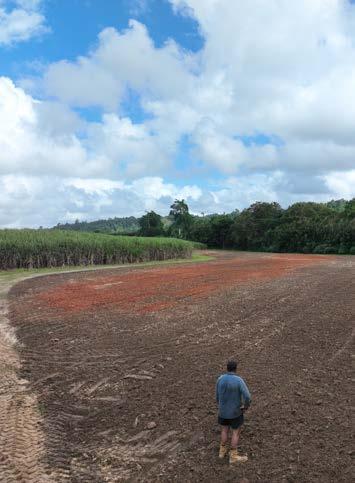
On the red soils, soldier fly is a constant battle. To combat this pest, Brendan fallows strategically and rotates with varieties that have higher resistance to the pest.
“That’s the biggest challenge on one particular farm,” Brendan said. “We’ve got them nowhere else.
There’s no chemical we can use so I’m hoping my variety selection will help extend the crop cycle. Previous varieties only lasted until second or third ratoon.
“Rocks are a challenge on that farm, too. I’m still pulling boulders out of the ground.”
Extreme weather events in this part of the world also present a challenge, and even the highest points of his farms are not immune to wet season difficulties.
Brendan applies mill ash to replenish lost topsoil on his erosion-prone ridges; however, it’s the river-side blocks that have proven to be particularly prone to monsoonal events.
In December 2023, ex-Tropical Cyclone Jasper delivered a deluge
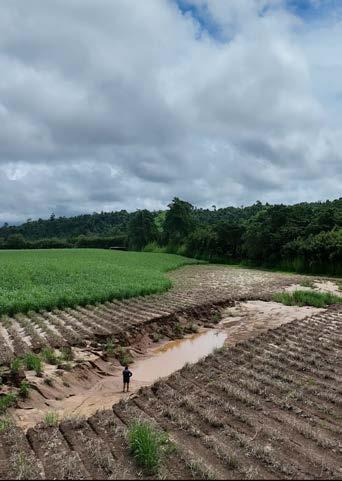
of water down the South Johnstone River, causing it to cut a new path across one of his most fertile blocks. The result was two giant holes, each around 50-metres long and three metres deep. The flooding also deposited sandy silt on blocks where the cane remained standing.
Remediation work involved dumping 210 loads of dirt using the tray of a 12-tonne truck. That equates to about 1,800 cubic metres. The soil was sourced from a nearby hill on the property, with Brendan’s aim to carry out the work as economically as possible by keeping the operation in-house.
It’s events such as these, early in the season, that underscore Brendan’s uncompromising standards when it comes to precision in farm management.
“Timing is everything”
Above: Brendan helps manage his parent’s sugarcane and also leases 320 acres
He said in this region, when you carry out a task, it matters just as much as how.
“I know with our plant, you won’t get in to hill it up – profile it up – if you plant too late,” Brendan explained.
As a contract planter, Brendan must juggle not only his own planting regime, but those of his fellow farmers. One practice change he’s adopted over the past two years is helping him to do just that.
In 2024, Brendan planted his first plot of tissue culture seedlings, which he has used as seed this year. He and his crew established 1,250 seedlings using pogo-stick style planters.
“It might have taken three to four hours, not long at all,” he said. “I left it a couple of days and then I started watering every three days with the hose on the truck. Ideally, you’d plant where you can access water, but I didn’t have that option.”
While he counts that inaugural planting a success, he said the experience taught him a lot.
“I’m happy with the tissue culture, how it’s working out,” he said. “We got our seed cane from that plot to plant early
this year. From just one variety of 250 seedlings, we stick planted nearly three acres.
“However, I know now that we planted the seedlings too close the first year, and I’ve also made the decision to plant the tissue culture later in the season.
“Last year, I thought it was a good idea to get it out of the way in May, but then the plot was affected by high winds the following year, around Easter, which pushed them over a bit.
“This year, I’ll be getting a later lot and planting at the end of September, early October. 250 of the initial seedlings were planted in October, which worked out to be more beneficial because it didn’t lay down.”
Wallabies added to the obstacles, pulling the young plants out of the ground. But despite the hurdles, Brendan’s committed to refining the process.
Another key change he’s made recently involves fine-tuning his soil amelioration method by incorporating mid-crop cycle lime applications.
“After the third ratoon, you’ve got to start topping it up,” he explained.
“The soil doesn’t take it in straight away. Lime takes time. You want it to be ameliorating the soil by the time your next plant crop goes in.”
He’s also strategic about using plant growth regulators, or ripeners. “I only use them on quality cane blocks,” he said. “If I have to cut a later maturing variety early for replanting purposes, it does work out.”
Furthermore, GreenStar GPS is used for all his planting work, he’s among the early adopters of the Smartcane BMP program, and his trade background is instrumental in implementing practical machinery solutions essential for efficient operations.
Brendan’s family has been part of the Innisfail sugarcane story for generations. His paternal grandparents, Anthony and Mary Calleja, migrated from Malta. Anthony spent 11 years cutting cane in Australia before returning to Malta to marry Mary. Together, they raised a large family on their 35-acre farm at Number 6 Branch, not far from South Johnstone Mill.
Brendan’s father, Jim Calleja, was born in 1942 and began cutting cane in Grade 6 during a cutter’s gang strike.
“I’ll tell you what – it was hard bloody work,” Jim recalled. “I started off at 13 stone and dropped down to 11 stone. You wouldn’t get blokes to do it now.”
Jim also remembers shifting portable rails, working alongside his brothers Frank and Joe.
“We’d be shifting lines and Mum would help us too – cutting tops, cooking, washing. It was a family effort,” he said.
Jim also recalls the era of horse cartage, during which the local wet season posed additional risks.
“I remember Dad had his horses down by the river and it would start raining and he’d start running up and down the fences along the river, as the water’s coming up, to grab the horses and take them to higher ground.”
Later, Jim spent 40 years on the harvester, initially cutting between 12,000 and 14,000 tonnes of cane with their first harvesting machine, a Don Mizzi with twin base cutters.
In his late 70s, Jim sustained a serious leg injury when a cane tipper bin fell on him. The recovery involved three large operations and four-and-a-half months in hospital, but true to his character, he pulled through with determination.
Though the experience was a significant setback, Jim continues to share his knowledge and contribute to farm management.
The strength of the Calleja family story lies not only in Jim’s experiences, but also in those of Brendan’s mother, Lorraine – each shaped by the same land, hardships, and sense of community.
Lorraine Calleja (née Kovacich) also grew up on a cane farm. Her father, Yerko, immigrated from Yugoslavia, cut cane, and later farmed in Mena Creek.
Lorraine was born at Number 2 Branch and still remembers the challenges and joys of rural childhood.
“We used to have those big 44-gallon drums for the fuel,” she recalled. “I was jumping from one drum to the next and I jumped down and cut the whole top of my finger off. I might’ve been in first or second year at school.
“To get to school, we used to walk about a mile to the road, where the timber trucks picked us up to travel another four miles. On the way home, we’d stop at Nanna Holder’s for bread and butter and condensed milk.”
Together, Jim and Lorraine reminisce about the early years, reflecting on the stories that have left a lasting impression, such as the time Jim ended up in the drink while riding his bicycle.
“Jim and his brother were cycling along Number 6 branch Road next to the South Johnstone River, at Calleja’s Bridge,” Lorraine relayed. “Jim and the
bike went in. Frank just nudged him and he went straight over. He couldn’t swim and he paddled to a pylon and there was lots of screaming before their dad came down to the rescue.”
Farming remains a family enterprise. Brendan’s brother Paul manages the Calleja Harvesting business, while his other brother Anthony works as a shift supervisor at South Johnstone Mill. Already, they’re teaching the next generation, with Brendan’s 12-yearold son, Lincoln, showing signs of following in his father’s footsteps.
“He’s mad keen to start farming,” Brendan said. “He recently drove the tipper for a day. But our rule is that he has to do a trade first.”
Even as the landscape around Innisfail shifts – with lifestyle blocks encroaching – Brendan sees himself staying in the industry.
“I’ll carry on farming,” he said with a shrug. “It’s what I want to do.”
Last month marked National Biosecurity Week, an opportunity to reflect on the role biosecurity plays in keeping our farms, communities, and industries strong.
For many people, the word “biosecurity” brings to mind border control or people in protective suits.
In reality, it is about something much closer to home: protecting the things we value every day.
For cane growers, it is about making sure our crops, soils, and markets remain healthy and productive for the long term.
On-farm biosecurity doesn’t have to be complex or time-consuming. In fact, the best defence against pests,
weeds, and diseases is often a few straightforward measures built into everyday farming practice. Simple steps can make a big difference.
Restricting visitor access, keeping clear and accurate livestock or machinery movement records, and ensuring equipment is properly cleaned between uses are all practical actions that reduce the chance of introducing pests or spreading disease. These measures protect not only your own farm but also your neighbours, your community, and the wider sugarcane industry.
To make sure your plan stays effective, it is worth keeping it active and up to date:
Review it annually – check whether risks have changed and update actions accordingly.
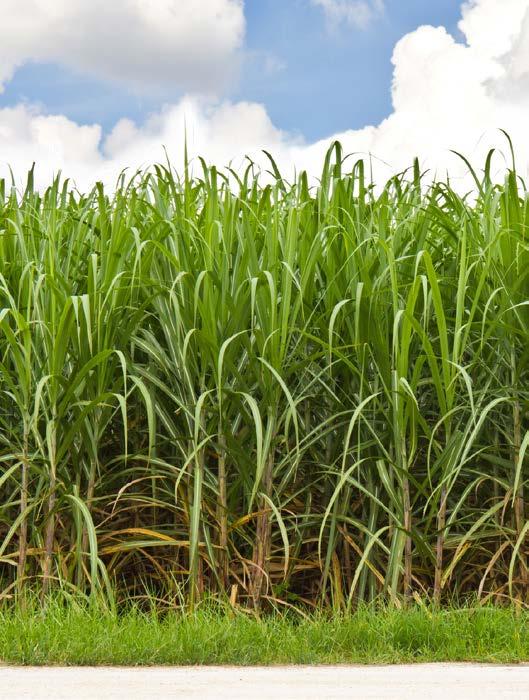


Train staff and family members –so everyone working on the farm understands and follows biosecurity practices.
Post clear signage at entry points –this helps visitors know what is expected of them before entering.
Developing or updating a plan doesn’t have to be overwhelming. Visit www.farmbiosecurity.com.au to learn more and access practical resources tailored for Australian farms.
By making biosecurity part of everyday management, growers can strengthen the resilience of their farms and help protect the future of the sugar industry. Small, consistent actions today will ensure our crops and communities remain healthy tomorrow.



SUPPLIED
BY SUGAR RESEARCH AUSTRALIA
In a high-priority project to accelerate the search for alternatives to imidacloprid in canegrub management, ten trial sites around Queensland have been selected to assess the efficacy of potential ag chemicals in the field.
This follows a special out-of-session Board decision to invest beyond SRA’s core pest program.
SRA is in discussions with all relevant chemical companies to negotiate collaborative research partnerships to progress trials for treatment application this season. These trials and the data collected will support
applications for product registration by the respective chemical companies.
CEO Mick Bartlett said the initiative reflects the urgent need for sustainable and effective solutions to canegrub, which continues to cause major economic losses across the Australian sugarcane industry.
“This is an extremely high priority for SRA, and one we are taking very seriously,” Mr Bartlett said.
“The Board has endorsed our lead entomologist, Dr Kevin Powell, to proceed with field trials in Phase Two of his research, which focuses on identifying and testing viable alternatives as part of an integrated pest management solution,” Mr Bartlett said.
“Now we need to shift the dial. That’s why the Board and management have chosen to fast-track this program, backed by strong governance and targeted investment.”
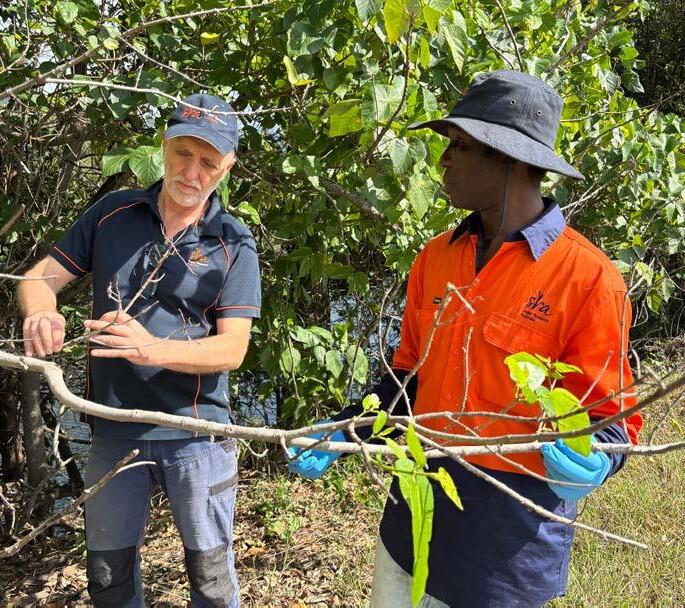
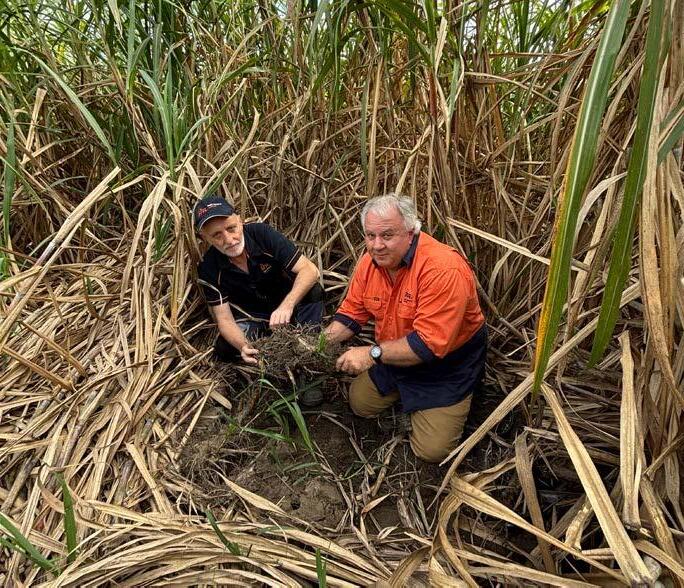
Entomology Leader Dr Kevin Powell and Entomology Research Scientist Dr Samuel Bawa at a canegrub trial site in the Burdekin
A new Podcast series, Cane Matters, has been launched by SRA.
Listeners can tune in and hear from specialists in plant breeding, pathology, agronomy, entomology and more.
The first set of episodes feature Variety Development Manager North, Dr Felicity Atkin, Manager, Biosecurity and Disease Screening, Dr Shamsul Bhuiyan, Weed Science Leader Emilie Fillols, and District Manager Central, Dylan Wedel.
The program builds on years of foundational work by Dr Powell and will run in parallel with SRA’s broader pest management portfolio, which includes improving application practices and sharing best-practice advice through productivity services and industry networks.
“We are deeply aware of the impact canegrubs are having on the crop right now,” Mr Bartlett said. “Growers have every right to expect answers and leadership, and that’s exactly what we are delivering. Our District Managers have already been holding workshops in key regions to provide immediate advice on available control methods and ensure good application practices are being followed.”
Mr Bartlett stressed that while a replacement product will not be available immediately, SRA has committed clear timelines and strong governance to deliver progress.
“We hear growers loud and clear –they need assurance and progress, and they need to know SRA is on top
of this. We are throwing everything we have at canegrubs, and we are backing our people and our science to deliver.”
SRA will continue to keep growers and millers informed as the program advances. For information about trials in your district, SRA members and cane levy payers are encouraged to contact their district managers.
Further meetings will be held to inform the industry about progress, and updates will be published in SRA’s Cane Matters Monthly emails. If you have not subscribed to SRA communications, please do so using the QR code below, or visit the SRA website sugarresearch.com.au
New episodes will be released weekly and are available on major podcast platforms, including Apple Podcasts, Spotify, and YouTube, or via the SRA website at sugarresearch.com.au/ podcast
As expected, the month of July was quite dry being 20mm less than the monthly average.
The weather, while still producing some wet and overcast days, has entered a more normal winter pattern, which we hope will continue to see us through the next few months into the spring period. The favourable weather conditions throughout August and into September are having an impact on the ratooning cane from 2024 which is now fully matured.
We started to see some good sugar levels towards the end of August and hope this will see the district average rise above 12 CCS by the end of September.
In the first two months of crushing there were concerns about Mossman’s daily and weekly tonnages being supplied to Mulgrave.
This could continue to be an issue as the Mulgrave estimate now has the finish date for the crushing at the end of October.
Our delivery rates are just now hitting where they should have been at the start, so the current delivery rate required is up around 2,000 tonnes of cane per day which we haven’t reached yet.
This could translate to being unable to deliver the full 200,000 tonnes of Mossman cane to Mulgrave in the remaining weeks.
At the end of week 8, being 17 August 2025, Mossman coastal growers have delivered 72,948 tonnes of cane for a district average of 11.65 CCS.
The grower representatives continue to work with MSF Sugar and the government to see if a deal can be negotiated for 2026 and beyond.
The biggest challenge is going to be the approvals for having the cane trucks on the road for such a period when road repairs on the Captain Cook Highway are still ongoing. There has been little movement with the sale of mill asset since the last buyer withdrew.
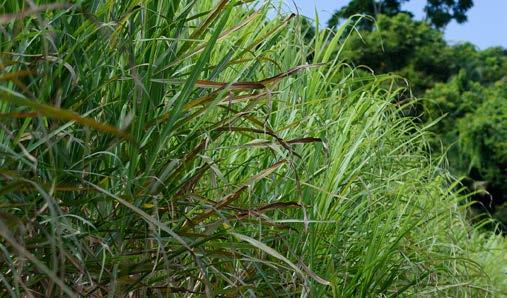
Growers interested in SuperChar met again and an offer was put forward for those who expressed an interest in being part of the bio-char process with bana grass.
The Douglas Shire Council is encouraging community members, businesses, and organisations to be part of their Recovery Resilience Groups which cover Human and Social aspects, Environment, Economics, Buildings and Infrastructure, Roads and Transport and Water and Waste Water.
This is part of the overall recovery process for the Shire following the TC Jasper and flood event of December 2023.
Sugarcane industry representatives are participating in this process via the Economic and Environment groups.
Also, as part of the recovery process, the shire has secured some funding for Recovery through Community Connections. Some of these funds will be focused on the farming community members.
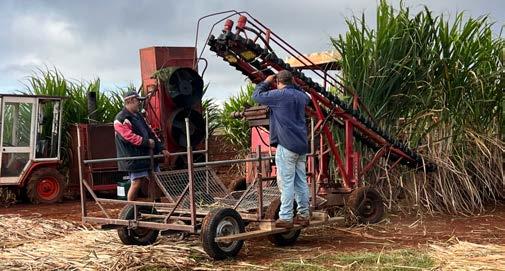
The Tableland Mill is performing well, maintaining a steady pace towards its projected goal.
The current production estimate stands firm at 880,000 tonnes, with completion expected by 3 December.
The recent induction of our new Board of Directors marks a significant milestone in our governance. Overseen by Chris Cooper from QCGO, the board will guide us through the next three years. We welcome Claude
Santucci as Chair, James Howe as Deputy Chair, alongside board members Luke Cabassi, Carlo Di Salvo, and Giovanni Ravanello.
We are grateful to these individuals for stepping into these pivotal roles, filling all board positions for the first time in three years.
In agricultural advancements, the new distribution plot for clean seed is under development. Hosted by Trevor Adil, this initiative promises to enhance our seed distribution capabilities.
Our thanks go to Cirianni Farming for their exceptional contributions this year. Special appreciation to Paul, Tracey, Brandon, and Cody for their dedication and hard work.
As change comes, we bid farewell to Aaron Moore, Cane Supply Manager for MSF, who will be concluding his tenure on 16 September. Aaron's expertise and leadership have been invaluable, and he will be deeply missed by both the industry and our team.
We express our heartfelt gratitude for his years of service and support.
Both the Mills have continued to operate well to date, with minimal interruptions to crushing.
Planting across the Mulgrave region is now largely complete, with the Babinda area growers also making strong recent progress.
Members are reminded to watch for the annual bean order form arriving via email. To secure your preferred varieties, please return your completed form as promptly as possible.
The CANEGROWERS Cairns Region Board, past and present, together with senior management, have been proactive in succession planning to ensure stability and strong leadership for the company.
Members were recently advised that Sarah Standen has transitioned into a newly created role of Manager Grower Services. This part-time position will see Sarah continue her active
Aaron’s replacement is yet to be announced by MSF.
Looking ahead, we welcome Gavin Rodman, who will embark on his new role with MSF next month. We are also excited to announce Paul Calcino as Gavin’s successor as the District Manager for SRA. We look forward to collaborating with both Gavin and Paul in their new capacities.
As we embrace these developments and changes, we remain committed to excellence and growth, guided by the dedicated professionals who are pivotal to our ongoing success.
We are now seven weeks into the crush with almost 30% of the crop harvested, almost 10% better than this time last year mainly due to reduced lost days to weather.
Mill performance has been good, and we are not seeing the hours lost to supply shortfall as much as last year, which is a reflection of the slightly higher cane yields.
Results of the annual Wet Tropics Waterways report card were positive for the Johnstone catchment. A decade of data is now allowing researchers to track trends in how our waterways are responding to land stewardship efforts.
Most notably, the nutrient metric in the Johnstone Catchment improved from ‘moderate’ to ‘good’.
involvement in cane payment and analysis, the delivery of grower services, and participation in committees dedicated to grower productivity and profitability.
Joel Tierney has been appointed Regional Manager, assuming overall responsibility for the running of the company. Joel has been working within the region for the past eight years across multiple areas including project management, grower services, and agronomy. With a background in environmental science, Joel is well placed to represent and advocate strongly for sugarcane producers across the region.
The team recently welcomed George the Farmer along with Shikira Kalatzis, Project and Education Coordinator – QCGO to the region. Please keep an eye out for an upcoming children’s educational video featuring some of our talented members and their families, dancing to Chugga Chugga Choo Choo, Here Comes a Train
Mid-August brought some unseasonally high daily rainfall figures, with more than 100mm falling in some areas of the district, however weather conditions have been favourable overall.
In August, we farewelled Extension Officer Peter Becke, who became a trusted and reliable advisor to growers over the past seven years. We also passed on our congratulations to Director Louis Fichera on graduating from the Next Ratoon mentoring program.
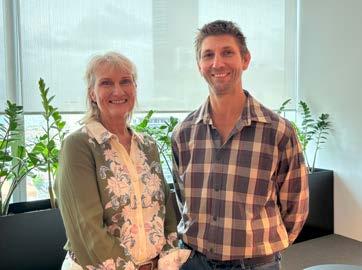
Vivien Miller (Sunshine Sugar) has been Louis Fichera’s mentor for this year’s Next Ratoon mentoring program
Rainfall for July totalled 135mm, with August having 80mm up to the 20th of the month.
Total for the calendar year is 4,026mm.
Week 12 into season 2025, with Thursday 21 August being the day to have 1 million tonnes through the rollers. The statistics indicate that Tully district has
harvested just over 45% of estimate. Current remaining estimated tonnage is 1,222,600 tonnes. The completed blocks have yielded 78.22 tonnes per hectare, with the remaining cane yield indicating the overall crop to finish at 75.13 tonnes per hectare for the season.
If the current estimates are correct, this will be similar to
season 2024 yield of 74.01 tonnes per hectare. Total harvesting area for season 2024 is 29,441 hectares, with completed blocks accumulating 41% of area. The remaining area to be harvested is estimated at 17,750 hectares.
CCS for the season is currently at 12.37 with some varieties reaching close to 13.5 CCS. Mill crush rate for the season is 710.01 tonnes per hour, approximately 27 tonnes per hour higher than season 2024. Total lost time for the year is currently 481.905 hours. Wet weather and no cane supply total 299 hours. Extraneous matter is at 15.26%, making it one in every 6.55 bins filled with product that does not make sugar.
75% of sugar production has been made from three varieties. Q253, 34% of supply or 335,000 tonnes, Q208, 30.2% or 296,000 tonnes and Q240, 10.5% or 100,100 tonnes.
Highest yielding varieties are currently SRA28, 84.8 tonnes per hectare, KQ228 84.6 tonnes per hectare and Q240 83.3 tonnes per hectare. Highest CCS varieties, SRA26 13.33, Q250 12.70 and SRA28 12.66.
Districts at the drier end of the mill area continue to suffer from problems created by Grey Back Cane Grubs. Reports of yields in plant cane are around the 30 tonne per hectare. In addition, there are areas impacted by army worm, mainly in ratoons.
The 2025 Herbert River crushing season continues to progress despite interruptions from wet weather.
To date, the Herbert mills have crushed 1.25 million tonnes of cane with an average CCS of 12.49. While CCS levels remain solid for this time of year, the recent rainfall and associated harvesting delays have put some pressure on bin deliveries and harvesting schedules.
recovers from February’s devastating floods.
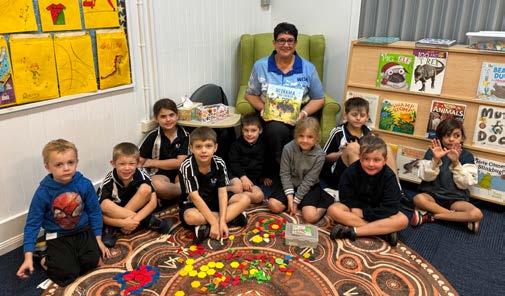
WISH recently donated 15 copies of the children’s book No Drama Cane Farmer to primary schools and kindergartens, including Toobanna State School, which lost its library in the floods.
The donation aims to help rebuild educational resources and inspire a renewed interest in reading and agriculture among local children.
CANEGROWERS Herbert River has also been advocating strongly on behalf of growers regarding ongoing rail and transport failures affecting the 2025 harvest.
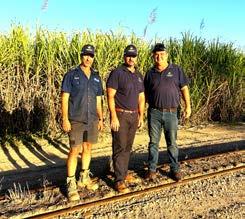
Recent derailments and locomotive issues have disrupted operations and added pressure on an already challenging season.
Chairman Steven Marbelli and Manager Frank Scardamaglia met with Wilmar leadership to urge immediate solutions and a clear strategy to stabilise rail operations, improve communication, and rebuild grower confidence.
CANEGROWERS Herbert River continues to raise these issues with Wilmar at both the weekly Operations Review Committee (ORC) meetings and directly with senior management, ensuring grower concerns remain front and centre.
Women in Sugar Herbert (WISH), a branch of CANEGROWERS Herbert River, has been active in supporting local schools as the Ingham community
The 2025 season continues to make steady progress and by week 12, the Burdekin hit the halfway mark with season to date CCS of 13.76.
We have a wager with Wilmar to see if they can crush 400,000t in a week, which is something we have not seen since the 2022 season and we’d love to see them hit this target.
Wilmar reconfirmed their estimate of 7.97 million tonnes for the 2025 season with no changes due to the crop cutting to estimate.
The CBL Board met with local member The Hon Dale Last, MP to discuss important issues for the industry as well as to provide him an update on the local and peak body issues. We had a productive discussion on energy and water prices, funding challenges for the River
Trust to complete remediation work from the 2025 wet weather event, the Lower Burdekin Rising Groundwater issue, the Burdekin Basin Water Plan Review, the Burdekin Draft Regional Water Assessment and bioenergy opportunities.
BPS held their AGM where Chair Bryce Davies officiated after many years of devoted service as a Chair and Director and his leadership has left BPS in a better position.
CBL members featured prominently in the productivity awards with highest CCS at Invicta – Tom Lewis for Jaswel; highest CCS at Inkerman – Ben Pontifex; highest tonnes of cane/ ha at Inkerman – Brad Hanson; highest tonnes of cane/ha at Invicta – Kurt Booth; and the coveted Burdekin Producer of the Year with highest tonnes of sugar/ ha being awarded to Allan Davies.
On 21 August, CBL Directors and staff attended the Home Hill State High School Community Open Day to celebrate the official opening of their Ag Precinct, with tours of the stateof-the-art greenhouse and dig in plot and provided a sampling of their produce with morning tea made with the plot produce.
QSL were in town for a grower meeting and provided an update on markets, STL insourcing
Proserpine Mill continued with good crush rates through the first two months of the season with bin and cane supplies being the biggest challenge.
Mill availability climbed close to 85% with weekly crushing regularly exceeding 80k tonnes. A total of 691k tonnes (44%) had been crushed by 23 August at 13.57 CCS.
Despite good progress, there remained pressure on harvesting groups and mill CS&T to ensure feedstock for the mill could keep up. With regular no cane stops, other mill stops included an electrical operator fault and a few chokes that had impact on general availability. Overall, the mill was on track for a good crush with credit given to mill management and their team who continued to work towards a far improved end to the season.
With the launch of the Whitsunday Water Plan (Plan) review, an initial meeting with CANEGROWERS Proserpine representatives followed by two public meetings were
decision and governance issues. Whilst sugar prices are still profitable, they are down from their highs with no catalyst on the horizon for a significant uplift.
CBL attended a workshop in Cairns for the Regional Industry and Government Working Group for Prosper 2050 to help identify initiatives for the development of 5-year action plans for the North Region.
held by the Department of Local Government, Water and Volunteers (DLGWV).
This included communication of proposed key changes to the existing Plan. The meetings also provided an opportunity for growers to give their own input on the review.
Within the existing Plan, growers continued to submit EOI’s for unallocated water despite the process officially closing on 31 July. Minister Ann Leahy would likely be releasing unallocated water in February 2026 with the Plan review process only requiring completion by September 2028.
With the Whitsunday Regional Council (WRC) 2025-26 rates being issued, the impact on small properties was hard felt with many seeing up to a 50% increase. This driven by high valuations would be a squeeze on smaller grower’s pockets who were already operating on more marginal farm sizes.
Amalgamation and rates relief processes remained some of the only options for growers operating on these smaller properties (<60ha).
Positively, larger properties would see a slight decrease in rates within an overall 7% average increase for cane farmers and other ag producers. Infrastructure was also key to WRC deliberations that included improving culvert conditions and increasing Kelsey Creek Bridge load limits with the later issue remaining unresolved.
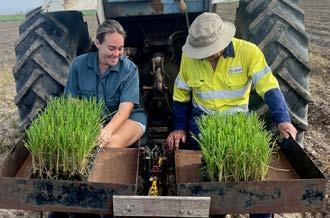
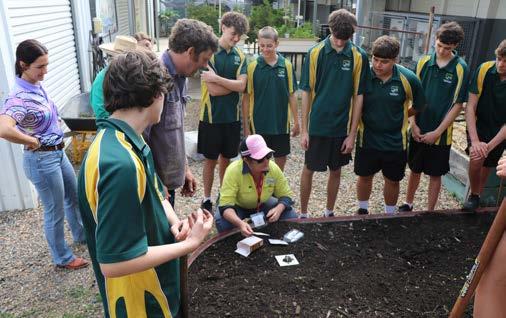
The Sweetest Schools Competition (pictured) went into full swing towards the end of July with plots being planted for five of six local schools.
Thanks are afforded to SSP and the growers who stepped in to show the kids how cane was planted.
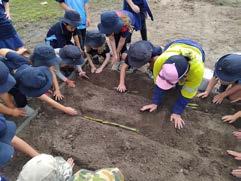
This forms part of a larger schools program with the main objective being to raise interest for kids in pursuing a career in agriculture. The winner of the event would be announced at the 2026 Whitsunday Show Cane awards.
With the season progressing well, it is hoped the schools and industry at large can see some good growth over the next 10 months!
The 2025 harvest season has faced challenges, but is still a vast improvement on 2024 as of mid-August.
The crush had been struggling to enter any sort of consistent rhythm: it’s very much been a stop/start affair with rain events, large volumes of standover cane, and mill issues around transport and logistics – and including some instances of insufficient skilled staff to run boilers.
If you take into consideration the old rule-of-thumb of being around about halfway through the harvest by Father’s Day, we are highly unlikely to reach that milestone.
While fine, dry weather has dominated the middle of August, earlier regular rainfall across the district through the winter period had resulted in some very moist field conditions and therefore contributing to making harvesting operations very difficult and inconsistent.
This rainfall had also made planting for the 2026 crop difficult and has condensed the planting window dramatically, putting pressure on all parties involved.
On the operational front, the mills have reported an acceptable level of mechanical downtime so far, aided by extensive off-season maintenance and investment in efficiency upgrades.
It has been a relief after a longsustained period of years of poor performance, the efforts of the milling companies to improve is beginning to materialise.
Transport networks supporting cane deliveries have been the Achillies heel for both the processing and growing sector, resulting in costly long waiting
times for harvesting groups as well as lost milling opportunity with cane supply unable at times to keep up with factory availability.
Both milling companies are working a way to try to rectify this situation.
CCS is down on the average of previous seasons, primarily due to the volume of standover being processed. With roughly half of the tonnage of two-yearold cane milled so far, this will continue to impact season CCS.
Any growers requiring assistance with any issues are encouraged to call 4944 2600 to get the ball rolling on a solution. Keep an eye on our Facebook page, The Billet and weekly District Manager Updates for emerging training and industry opportunities.
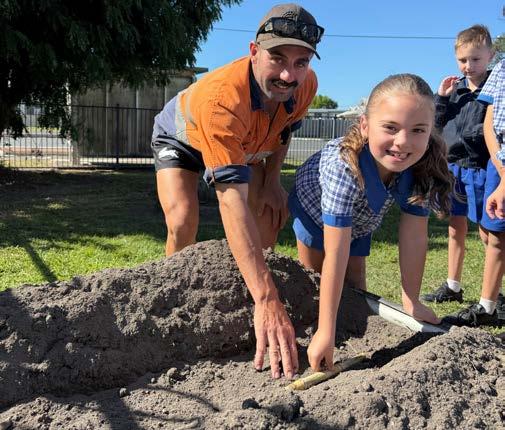
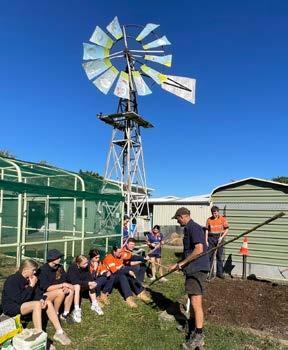
Growers everywhere are planting, including entrants in Sweetest Schools Mackay. St John’s Walkerston was the first to get their cane in the ground at school. Pictured is Grower Mentor Charlie Townley, with his daughter Summer, a student at the school. Mackay Christian College followed shortly after. Mentor Andre Camilleri with Mackay Christian College Senior Ag students
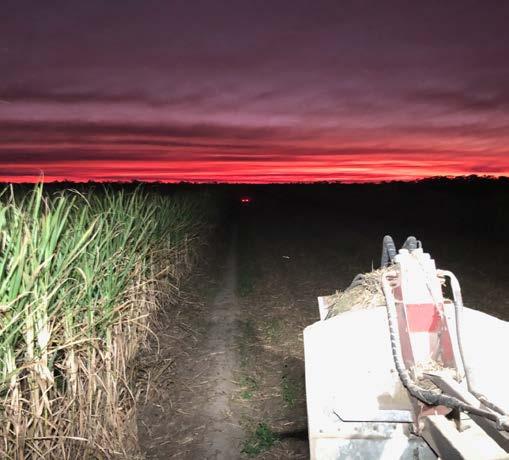
Bundaberg Sugar Mill processed 31,530.37 tonnes for the week ending 16 August, this brings the Season to date to 535,772.71 tonnes.
The average CCS for Bundaberg Sugar Mill for week 13 was 14.08 CCS with a season CCS average of 13.35.
Crushing is progressing well although intermittent showers have disrupted harvesting on a few occasions with a total of 134 hours lost to wet weather at the time of writing.
The soybean season is now complete with a total of 208 tonnes harvested from 87ha. Quality was better than previous years, largely due to improved management of pests and better weather during harvest.
Sugar Services is conducting a Pachymetra Survey to test for accurate spore levels on members’ farms. A soil assay for Pachymetra root rot, based on counting spores of the fungus in field soil can be used
to determine the likely severity of the disease.
These results will also be compared to previous surveys to assess the distribution of the disease and whether improved management practices are required. If any Sugar Services members would like to join the survey, please contact David Dowson on 0429 334 533
We welcomed the announcement by the Coordinator-General in early August to declare the Paradise Dam Improvement Project a coordinated project.
This decision provides clarity on the approvals pathway and allows Sunwater more confidence on construction timing with construction of the project (permanent works for the new dam) expected to commence in 2028 once all relevant approvals are in place, with project completion targeted for 2032, pending all necessary approvals, weather and site conditions.
The district has been blessed with picture-perfect harvesting weather with Isis Mill working toward a finish date in early December.
They have processed just over 425,000 tonnes with a year-todate CCS of 13.28.
A significant infrastructure milestone has been achieved with the completion and commissioning of the rail connection between the Isis and Bundaberg rail networks. This will deliver valuable logistical benefits for both milling companies.
The Southern Region RVC recently met with SRA to discuss the plant breeding program particularly addressing concerns around the delayed release of SRA47.
During the discussions, SRA presented a draft plant breeding profile which proposes to establish minimum standards
Struggles with consistency in mill operations have continued over the past few weeks, with weather conditions further contributing to lost time.
Isis Mill has recently improved the shredder but now has issues processing SRA11. We are currently at the northern end of a large weather system, which is likely to keep conditions damp in the field and further slow progress.
There has been a lot of discussion about spillage
for future variety releases.
The committee is scheduled to review this proposal and provide feedback next month.
We have initiated discussions with Avalo, an innovative company utilising AI technology to accelerate plant breeding processes. Their technology shows significant potential for fast-tracking variety development and testing, and we look forward to continuing our engagement with them.
We continue to support growers with disaster assistance grant applications, conducting electricity tariff comparisons and managing ORECO trash consignments.
We maintain our active participation in the Group Harvesting Equity Committee and meet regularly with the Auditor to ensure transparency and accountability in the grower payment process.
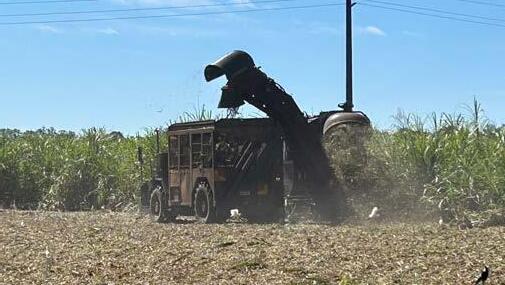
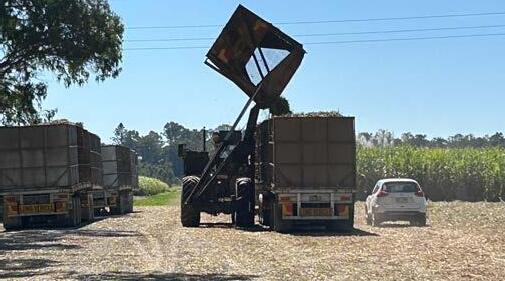
Planting activity is starting around the district. Tony has been out checking plant source material for RSD with only low numbers of positives reported so far. Our new seed cane plot at Downman farm will have supply, in limited volumes, for a couple of new varieties.
Quite a bit of stock is already ordered. If you are looking for something new to try at your farm, contact Tony on mobile 0487 017 811
Tony will also be taking some leave between mid -September and Mid-October with a Wallabies tour to support!
at the transloader again this season. Changes from seven to six rail bins per load are helping with increased volume at the Mill tippler but the transfer process is still heavily impacted by spillage between bins.
CANEGROWERS has reconfirmed with the mill to recognise delivery weight at the trans loader until this is rectified. This will include an adjustment payment for previous supply, with the timing still to be confirmed.
There has been very little crushing at the Rocky Point Mill over the last four weeks since 20 July, as a result of mill/cogen breakdown and wet weather.
The total tonnes crushed by 16 August (Week 8) was 29,148 tonnes at an average CCS of 12.61.
The district received another 50mm of rain since 9 August, with more rain expected from 19 August. It has been extremely
difficult to find dry ground to be able to supply daily quota due to the wet conditions. Ground profile is absolutely saturated.
It’s looking more likely that the Rocky Point harvest will need to continue into January, unless we can get some decent quantities of cane crushed soon.
The Fire Ant Suppression Taskforce commenced aerial baiting of fire ants on 5 August 2025, and aim to cover 8,000ha of land within the district.








Whether you’re new to agricultural operations or an experienced operator, our courses provide you with the skills, knowledge, and confidence to advance your career.
Nationally recognised training
Short Courses
•Plant and Machinery (Earthmoving, Loading, Haul)
•High-Risk Work Licences
•Chainsaw Operation
Agricultural Chemicals Distribution Control (ACDC)
Qualifications
Certificate II in Agriculture
• Certificate II in Conservation and Ecosystem Management
• Certificate III in Conservation and Ecosystem Management*
• Certificate II in Rural Operations
• Certificate III in Rural Operations*
*Government funding available under the Certificate 3 Guarantee. Eligibility requirements apply.
Build confidence. Gain expertise. Shape your future.
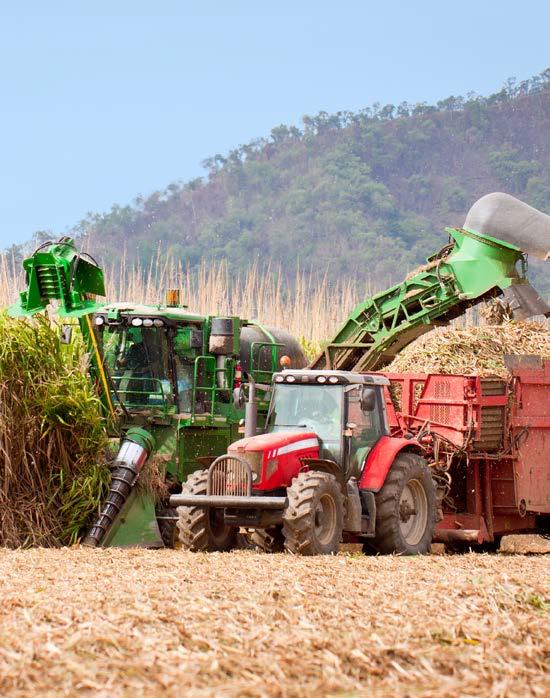
OVER 100,000 STUDENTS TRAINED TO DATE


BY ELISA WESTMORE
Australia’s climate transition is no longer a distant concept – it’s happening right now. With climaterelated financial disclosure requirements kicking in from January this year and the Safeguard Mechanism being tightened, every sector of the economy is being asked to step up.
For agriculture, and particularly for cane, this doesn’t have to be seen only as another layer of red tape. There are genuine opportunities here for growers who are ready to take advantage.
The good news is that the cane industry is already ahead of the curve. Unlike many sectors now scrambling to prove their sustainability credentials, our industry has a strong
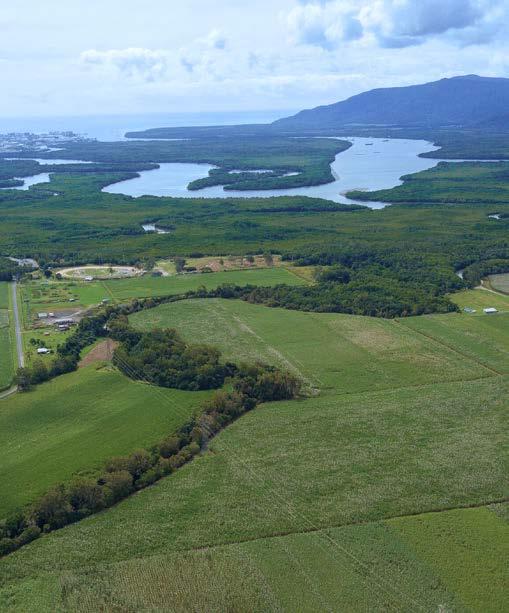
story to tell. Over the last two decades, cane growers across Queensland have already adopted practice changes that cut emissions while improving productivity.
For example, the SIX EASY STEPS framework for calculating nitrogen requirements is now standard practice, and our growers are managing fertiliser with more precision and efficiency than ever before.
We’ve also been able to demonstrate this progress. A project commissioned by CANEGROWERS has measured the emissions reductions associated with adopting Smartcane BMP. The results show that compared to the early 2000s, growers participating in BMP have reduced emissions by around 30%. That’s a powerful figure to be able to show to government, customers, and financiers.
But this is not just about looking back. The transition ahead also holds new opportunities for cane. Our crop is uniquely positioned as a biofuel feedstock, giving the industry a role to play in the broader energy shift.
At the same time, financial institutions are starting to back low-emissions agriculture. Several banks are now offering “green loans” – reduced interest rates for investments in things like on-farm solar, efficient machinery, or new technology that lowers emissions.
BMP accreditation can also be used to align with programs such as VIVE, which are exploring sustainability-linked payments to growers.
To make this easier, we’re incorporating a greenhouse gas calculator directly into Smartcane BMP. This will give growers the option to measure their own farm emissions and provide the data needed if they want to participate in green finance schemes or sustainability programs.
The reality is the climate transition is coming whether we like it or not. But cane is in a stronger position than many other industries. By showcasing the improvements already made, and by seizing the new opportunities emerging, Queensland cane growers can make sure they are not just adapting to change – but leading it.

BY ALEXANDER DESSES
The Federal Government recently held their roundtable on economic reform. At this meeting, skilling and workforce development was identified as crucial to boosting productivity in Australia.
This is no less the case in our industry, with developments in precision agriculture requiring skilled growers and workers to unlock the benefits of this technology and increase productivity.
At the same time, the need for haulout drivers and other workers remains, without which the industry would be unable to complete the harvest and function.
To meet the needs of the industry and support training and workforce development, CANEGROWERS has been working to skill growers and workers in the industry via a range of training programs and opportunities.
This year, the first round of SmartAg Queensland subsidised haulout courses were held in Tully and Herbert River, with 17 participants completing the course and 15 attaining paid employment immediately. Two haulout courses were also held in Mackay with 20 participants. Courses are planned for more districts next year, contingent on demand from potential course participants.
Beyond haulout training, CANEGROWERS has worked to facilitate other training opportunities including pilot escort, chemical safety, contractor WHS and HR, forklift and truck license training. These have been delivered widely, with over 300 people in the industry completing training since the inception of SmartAg Queensland.
Remote Pilot License Training has also been completed in several districts, with participants receiving their license and training in the effective use of drones, equipping them with the skills necessary to apply new precision agricultural technologies on farm.
Looking to the future, CANEGROWERS is organising an advanced spray training course to be delivered by Spray Safe and Save in February next year.
This course will cover optimising spray application through nozzle selection, water spray quality and the correct application of commonly used chemicals in the cane industry. Notably, it will also include a workforce visit where the trainers will visit the participants’ farm and assist them in fine tuning their setup for optimal operation.
Besides training, an important part of workforce development is attracting and retaining workers. CANEGROWERS has supported this through workforce attraction campaigns and our jobs board. However, as with all things, what really matters, is the approach taken at the local farm or contract business level. Pay, working conditions and the overall work environment remain, as with other industries, the key factors in whether a worker will take and stay at a job.
As the industry adapts to new technologies and other changes, ongoing investment in training and workforce development will be essential.
By supporting the delivery of training and workforce attraction across the districts, CANEGROWERS is helping to strengthen the industry and ensure a productive future.
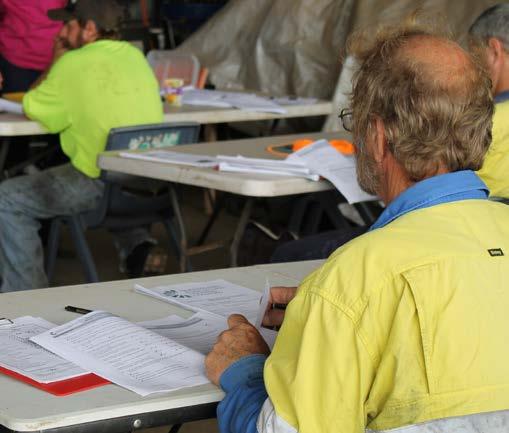

BY MATT KEALLEY
Sometimes a call out of the blue from a friend, colleague or a mate checking in can be just the nudge you need to get you thinking a little differently.
I recently caught up with my friend and mentor Selwyn Snell, who I have known for 25 years. He was my old boss, who I first met in the year 2000 and we have remained friends ever since.
The place I worked at the time was a small-cap ASX listed biotechnology company. This fresh faced, idealistic bloke from Perth with big dreams and even bigger ideas was tasked with creating a natural extract library from native plant species collected from Western Australia and Queensland.
As the R&D Manager, it was my responsibility to develop and implement the system to transform the collected plant material into a natural extract library for screening. A challenging task and one I relished. Yet the best thing about the role was the mentoring I received from Selwyn.
He worked with me through my personal goals and aspirations, and we established ambitious stretch targets for the work I was undertaking. These objectives were set by me and I did my best to achieve them.
However, I had help along the way from my boss and as I realised later – mentor, who championed me through encouragement and advice. The kind of advice that wasn’t telling me what to do and how to do it, but rather suggesting different ways to look at a situation or problem I needed to solve. It changed the way I looked at things and I believe set me up for success.
At our catch-ups, Selwyn and I talked about my work, personal goals and future aspirations. The conversation meandered from family and career, to music, sport and the ups-and-downs of life. Selwyn offered me encouragement and suggested I capture my goals and reconvene to work out a plan. To this day he continues to encourage me to be bold, show-up and bring the best version of myself to everything that I do.
Having someone like that in your corner is incredible. It’s a tremendous feeling that brings confidence and self-belief.
On 8 August the 2025 Next Ratoon mentoring program concluded their six-month mentoring program. I am very proud to be part of Next Ratoon and see the personal growth of our younger growers and emerging leaders. I am hoping that the six mentees had that same feeling I experienced with my mentor during the program.
The six mentors we had for the 2025 Next Ratoon mentoring program were inspiring. I personally want to acknowledge the mentors who provided the support to our mentees.
Paul Sloman from Cotton Australia, Greg Plath grower and board director at CANEGROWERS Mackay, Dr Michael O’Shea Director Institute Operations at Queensland Alliance for Agriculture and Food Innovation, Michelle Weston CEO for Caravan Parks Association of Queensland, Vivien Miller from Sunshine Sugar in NSW and Tricia Velthuizen CEO of Churchill Education. These mentors come from within the sugarcane industry and across agribusinesses with a diverse range of skills, knowledge and experience.
The Next Ratoon would not work without our mentors, and I am very appreciative of their commitment and unique perspective, and the fact that they have willingly offered their experience, time and energy to support the mentees on their journey.
They have gone above and beyond. The feedback I have received from the mentors was that they appreciated the opportunity to be part of Next Ratoon. They all have developed a positive relationship with their mentee which will likely last long into the future.
I’m due to catch up with my mentor Selywn in the coming weeks. I’m looking forward to sharing my ideas and goals that he encouraged me to put on paper for our next chat. I know our conversation will go down paths that I haven’t considered and spark a few new ideas. I know I will feel energised after our chat, but most of all I’m looking forward to sharing a few moments with him that has come from the history we share and the bond we have. I wish that for all our mentees from Next Ratoon and I’m excited to see where these younger growers and emerging leaders end-up.
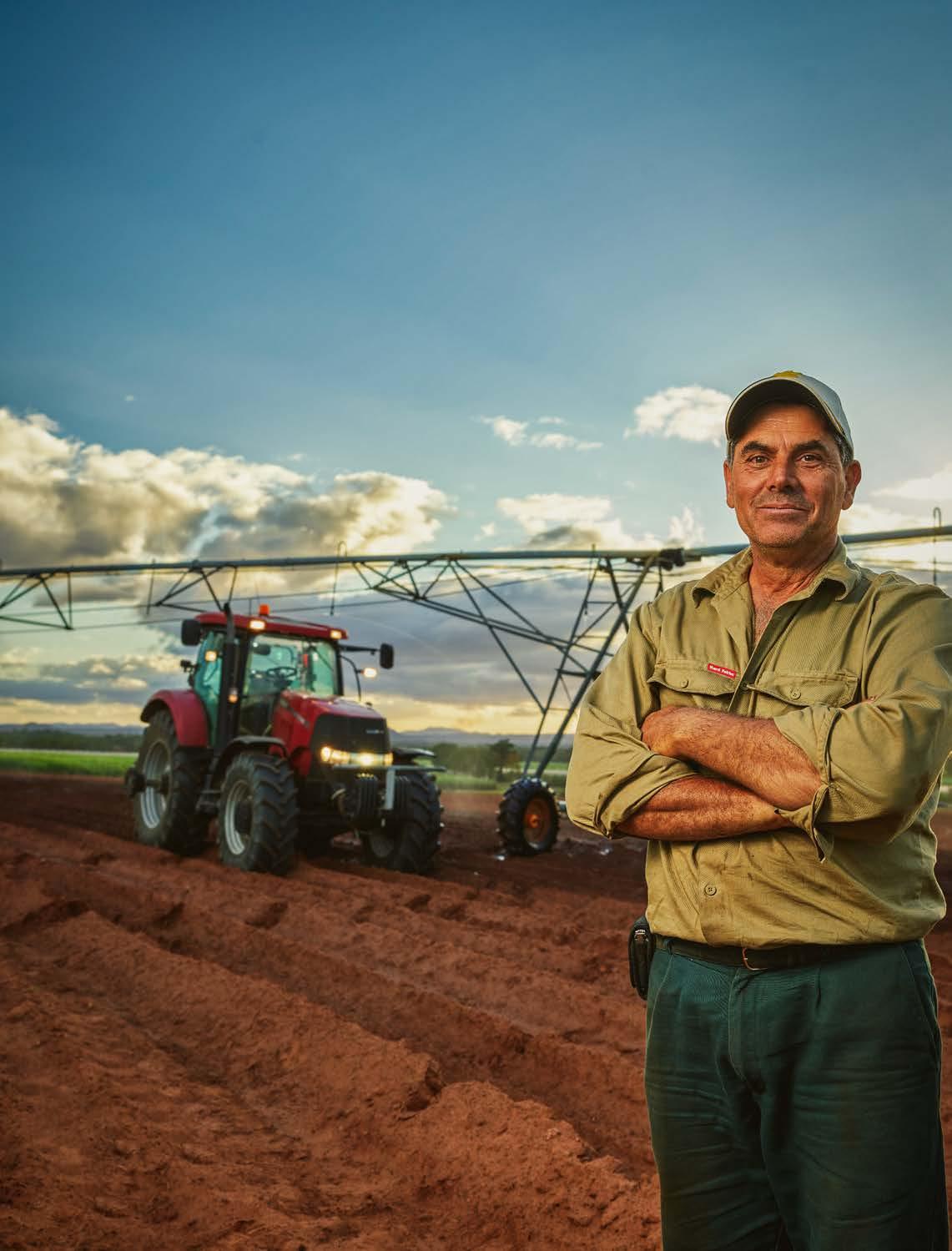
For more than 90 years CANEGROWERS has represented the interests of the sugarcane farmers of Queensland. Through times of challenge and opportunity, CANEGROWERS has helped family farms and the whole industry to grow and prosper.
CANEGROWERS is known and respected for its strong voice locally, nationally and internationally—the collective voice of many farmers has a powerful impact.
Growing your business | Growing your industry www.canegrowers.com.au

BY CHRIS COOPER
A common question from growers is whether they are legally required to contribute to the cost of building or repairing a dividing fence—particularly where the neighbouring land is used for grazing, residential, or commercial purposes.
The short answer is: usually not
Under Queensland’s Neighbourhood Disputes (Dividing Fences and Trees) Act 2011, a court or tribunal has the power to determine contributions to fencing costs where neighbours cannot agree. The general rule is that adjoining owners share the cost equally. However, this rule is subject to the discretion of the Tribunal, which may consider how (and whether) the fence benefits each party and may determine what type of fence is constructed and who pays in what proportion.
CANEGROWERS and I have advised and represented members in many fencing disputes—most involving cane farms bordering grazing land or residential lots.
In every known case, the outcome has been consistent: growers have not been required to contribute to the cost of fencing.
Why? The key argument is that a dividing fence provides no practical benefit to a cane farming operation and may even be a hindrance. In contrast, graziers or residential landowners often stand to gain from fencing – by containing stock or securing their property.
Although each case depends on its facts, growers can be reasonably confident in their position. Unless a grower has voluntarily agreed to contribute, the law generally supports their right to decline.
Disputes about dividing fences can be stressful and sometimes difficult to resolve. Rational, respectful discussion and negotiation between neighbours is usually the best way to resolve a dispute. For those disputes that prove more difficult , consider using the free mediation service offered through the local Disputes Resolution Centre.
In addition to the established principles above, the Neighbourhood Disputes Act does not apply when the two parties to the dispute hold agricultural lands which is defined as cropping lands.
So, if your cane farm borders another cane farm or another cropping farm such as small crops or grains, then the Act won’t apply. In this case, the parties must resolve the dispute between themselves or resort to uncertain common laws rights in the Courts.
This article contains general advice only. The particular facts and circumstances of each case always need to be taken into account.
The comments in this article are general in nature. For further free advice and information about this topic or other legal matters, members should contact their local CANEGROWERS office or please contact CANEGROWERS Legal Adviser, Chris Cooper on Free Call 1800 177 159
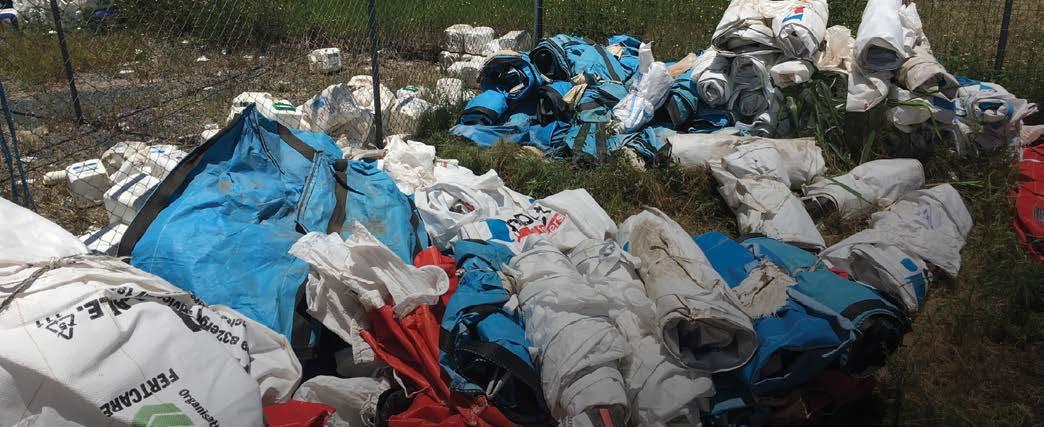
Stacked program-approved bags ready for recycling – an easy win for the farm and the environment.
Free Bulk Bag Recycling Now Available for Queensland Cane Growers
BY SHAYNA JONES Product Stewardship Manager – Big Bag Recovery
As every cane grower knows, once the season winds down, the bags pile up.
The large woven fertiliser bags, essential for getting product onto the field, quickly become a logistical headache when it comes to disposal. They take up valuable space, are difficult to manage, and landfilling them just feels wrong, especially when better options now exist.
That’s where Big Bag Recovery comes in.
We’re Australia’s only governmentaccredited recycling program for sacks and bulk bags over 15kg/L capacity. And for cane growers using bags from participating brands, recycling is completely free.
It’s simple:
• Check our website to see if your bag’s eligible – look for the Big Bag Recovery logo
• Drop them off at a local return site like Qunaba Waste Disposal Site in Bundaberg
• Or get in touch to discuss collection options for large volumes
Why only certain bags?
Recycling is free because approved brands such as Incitec Pivot, Grow Force, Eco Growth, Impact Fertilisers, Nutrien Ag Solutions, and more help fund the program. Bags from non-participating brands can still be recycled at Qunaba, but a small $5 per bag fee applies.
What happens next?
Collected bags are processed and can be repurposed into useful products like plastic pallets, seating, and water evaporation discs, supporting Australian manufacturing and reducing pressure on landfill. So far, the program has recovered over 7.5 million kilograms of plastic, saving growers and communities more than $18 million in landfill costs.
Locally relevant. Environmentally responsible. Operationally simple. The program was built with primary producers in mind, particularly those in regional Queensland who want easy, reliable solutions without extra admin or hassle. If your operation is accumulating bags, this is a low-effort, high-impact step toward a cleaner, more efficient farm.

By working together, we can turn a waste problem into a circular success story, keeping Queensland’s cane country clean, productive and sustainable.
Let’s give these bags a second life and free up some space on your farm while we’re at it.
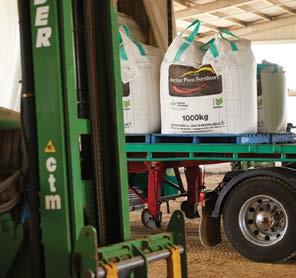
Want to learn more or book a pickup?
bigbagrecovery.com.au
info@bigbagrecovery.com.au 1800 003 137
FIRST 5 LINES FREE* FOR CANEGROWERS MEMBERS!
Book online 24/7 at www.canegrowers.com au or email us at ads@canegrowers.com.au
Next deadline is 17 September 2025
Confidor applicator newly fabricated equipment, never used. Deceased estate disposing of equipment. $15,000. Ph: Alex 0403 774 885 for photos.
Holden dual cab Colorado 2020, 101,000km, canopy, extra battery, new tyres, $38,500. Hodge 5 farrow reversible hydraulic plough, $5,000. Parkinson canecutter with topper, $5,000. 3 cane trailers, $250 each. 7ft smart slasher $4,000. Howard 2 tyne ripper, $2,500. ONO on all items. Ph: 0408 770 054
1 x 23.1.26 tractor tyre $900. 1 x 18.4.28 new tractor tyre, $900. 1 x 540/65R 28 tractor tyre, $800. 1 x Fiat 411R brake pusher and water tank, $3,000. All prices excl GST. Ph: Brett 0419 988 158
2023 Massey Ferguson 7S.155 Dyna 6. Purchased new last year. Only 34 hrs. Surplus to requirements. $150,000 plus GST. Ph: 0403 774 885
Spit water 131 industrial pressure washer. Just been serviced. 15m hose. 12lpm at 1,800psi. $1,700 ONO. Ph: 0438 554 146
Heavy duty bar with two tine adjustable rippers, attachable straight to rotary hoe. $1,000 incl. GST. Ph: 0438 988 858.
MSW S/S 3t fertiliser box, 178 Massey Ferguson with front end loader. Ph: 0497 857 368
Machinery and water allocation for sale –water allocation permanent sale, different parcels available. Krone Fortima V1500MC2 round baler, Bale King 5100 bale buster, Agrolead Lina Twin 4m double disc seeder with fert. box. All machinery as new with very little use. Price negotiable on all items. Ph: Robert pictures and pricing 0407 330 493
28 x 28 Hodge off-set $12,000 + GST, 7 tyne Hodge ripper $4,000 + GST. Ph: 0419 988 158 or 0417 720 764
4 x 380/90R46 tyres and rims to suit JD self propelled sprayer. Mulgrave area. Ph: 0407 160 673
2009 Kubota M125X tractor good condition 4,294 hrs, air conditioned cab 16 speed –$44,000 + GST; centre buster heavy duty Gessner 30" coulters and legs adjustable crumbler rollers and adjustable row width –$10,000 + GST; fuel tank on trailer approx 2,400L has unfitted new electric pump – $1,900 + GST; Bonel bag lifter good condition $2,000 + GST. Ph: 0407 554 146 or 0438 554 146
* As a FREE service to CANEGROWERS members, Australian Canegrower will print suitable classified advertisements UP TO 5 LINES FREE, FOR ONE ISSUE ONLY. A charge of $5. 50 will apply for each extra line or part thereof. A charge will apply for advertising of non-cane growing activities. Advertisements must relate exclusively to cane farming activities, such as farm machinery, etc. Advertisements from non-members are charged at $11 per line incl GST. Only prepaid ads will be accepted.
Olympic 20.8.42 65% $300 + GST; front end loader with 4 in 1 bucket, blasted and 2pac painted, resembling required. $2500 + GST Ph: 0437 434 280
1984 Toft 6000 plant cutter, 8,000 hrs. Rubberised rollers, elevator extension for 1.8m rows, swinging knife chop system. Good overall condition for its age, $12,000 + GST. Ph: 0419 021 012
John Deere CH570, 9,157 hrs, walking gear, 1 season 33,500t. Tidy machine. Ph: Frank 0417 720 764
JD 3140 needs attention. Ph: 0437 669 247 and leave a message.
Austoft 92 wheeley, rubber rollers, 3 blade chop, leg basecutter, used as plantcutter, hard to fault. Fiat 115/90 2wd. New Holland M135 4wd, new motor. JD3520 full track, GPS. Eco Grande 28 plate offsets, near new. Ph: Gordon 0429 941 218
2015 Massey Ferguson tractor 7624 Dyna 6240hp, front suspension, GPS fitted, 3,031 hrs, two-way radio, serviced regularly, tyres excellent – $130,000. Ph: 0427 525 173
Maschio G350 rotary hoe. Needs rebuild and new blades. $500. Ph: 0439 965 921.
411R Fiat break pusher with water tank $3,000 plus GST. Ph: 0419 988 158 or 0417 720 764
Hino FS. 2003, 6 x 4 tipper truck, 18 speed road ranger, 4.7m body, swing tailgate, pull over cover, ring feeder and some parts to go with sale. Very good condition. $70,000 + GST Ph: 0437 434 280
New cane stool splitter discs 30" x 10mm boron steel, $200. Ph: 0427 044 443
2020 Case 8810 fulltrack cane harvester. Purchased 2021, cut 3 seasons. In good condition with plenty of spares. Ready to cut. Tully. Ph: 0407 160 758
12m V-blade $10k + GST. RES Dolly trailer $20k + GST. 10L Bunded fuel tank $10k + GST Ph: 0409 580 586
Kubota Zero Turn ZG 222 with catcher 48" cut. Fiat 980 2WD – 3,500 hrs, Fiat 1000 2WD –5,000 hrs, John Deere 4040 2WD – 3,600 hrs, Chamberlain JD 4080 2 WD – 5,000 hrs, Case 2590 2WD – 5,700 hrs. Silvan Euro Spand CX2 spreader, portable bulk bin, Bunning Lowlander Mk 40-60 ag spreader (near new), complete tracks to suit cane harvester, and fuel trailer tank. Mulgrave area. Ph: 0407 160 673
Set of half tracks to suit John Deere 3520 cane harvester. Ph: Ferdinand 0421 043 609
Expressions of interest for shares. Email: rigato.office@bigpond.com with offer or any questions.
2012 John Deere 7200R tractor PTO, 3PL with quick hitch, 4 sets of remotes, front weights, front tyres 540/65R34, rear tyres 650/85R38, 4,510 hrs. In good condition. $150,000 + GST Ph: 0427 976 416.
Howard Rota Vator HR51 Rota. Ph: 0457 255 961
Terranova rotary hoe 120" Mulgrave area. Ph: 4056 1474.
One pair 21L-24 Armour earth moving/quarry tyres, currently on a backhoe. Good condition. $700 each tyre plus GST. Ph: 0419 150 350.
2 x 440/65 R24 tractor tyres $1,100 incl. GST each. 2 x 540/65 R34 tractor tyres $2,100 incl. GST each. All four types as new only done 500 hrs. Ph: 0427 665 759
36 plate case 770 offsets, 30" discs $40,000 and HBM plant cutter with topper $4,400. 7ft slasher with Howard box – all refurbished – $10,000 incl. GST ONO. Ph: Gavin 0448 345 139
Massey 4608 excellent condition 2,000 hrs. Ph: 0418 972 705
3t fertiliser stool splitter stainless steel box 1.5–1.8m spacing $25,000 (+GST). Ph: 0429 912 135
2006 Case IH JX109OU in good condition. Always serviced – 6,800 hrs $24,200 (incl. GST). Tully area. Ph: 0427 665 759
Tractor TE20 good condition $3,300 GST inclusive. Tractor AV International 130 with fertiliser equipment and scarifier $3,300 GST inclusive. Tractor AV International 140 with spray equipment $3,500 GST inclusive. Ph: 0428 183 307
Howard CH 2000 rotary hoe 4.2m wide, hyd 5 tyne ripper hillers new blades. $45,000 plus GST. Ph: 0429 912 135.
2016 John Deere R4023 self propelled sprayer 1,500 hrs, 2,200L tank, 85ft boom, GPS ready. $235,000 plus GST. Ph: 0429 912 135
6 cyl. Perkins turbo-charged motor, mounted on trailer to Kelly & Lewis water pump $5,500; 6t Newton bulk fertiliser bin $2,500. Ph: after 7pm or txt 0402 686 714 / 0407 144 637
10 blade Faggy chopper box for 3510/3520. $3,500 + GST. Ph: 0437 434 280
Celli Tiger spike rotor 2.23m – fits on a rotary roe, $300. 186 Ross Road Deeral. Ph: 0412 968 434
Valley centre pivot 8 span all running gear tyres and rims $1,000 gearboxes $750, electrical motors & gear boxes $1,000 each ONO. 2x torsion axles v-shape 2,200kg each $500 ONO. Ph: John 0418 198 177
2012 Case 8800 fulltrack cane harvester fitted with Trimble GPS and new walking gear. All in good condition. Mulgrave area. Ph: 0407 160 673
Fertiliser bin M.S.W, double row, 4t stainless bin, with double compartment and 4 cutters $25,000 (incl. GST). Ph: 0400 729 457
2022 Case 9900 cane harvester. Ph: Craig 0436 332 044
Liquid fertiliser applicator croplands rate controler, adjustable centres and new pump. Ph: Craig 0436 332 044.
3 row cultivator with crumble rollers. 5ft (1,524m) centres. 1 rigid tyne and 4 spring tynes per row. Very heavy build with 7" box section top frame. This cultivator was built in 1998 by Maxi Built machinery in Home Hill. $11,000. Selling as no further use. Ph: 0429 181 276 for more details or photos.
3000L water tank on trailer, needs limited repairs. $1,000 ONO. Vicon spreader, good for planting beans, good order. $1,000 ONO. Ph: 0431 458 850 or 0428 394 004
Bonal plant cane cutter, good going order, $1,000. Ingham. Ph: 0428 394 004 or 0431 458 850
Napier bearing home made solid frame 28 plate disc carries hydraulic lift, $5,000. 11ft crumble roller, $2,500. Don shearer 32 plate set of disc carries hydraulic lift, $7,000. Ph: 0409 346 966
Cane crate for hot water treating cane. Never been used. POA. Ph: 0408 889 446
2 x International 766, 1 at 10ft spacing, 1 standard, spare rear end for parts. Both run. Ph: 0437 346 341
Pair multiplyers with hydraulics suit JD3510 or JD3510 fulltrack harvester in GC, 3 row multiweeder $350 + GST, Dongough planter $1200 + GST, 80” Dondi rotary hoe $1200 + GST, 2 row Eureka ½ ton fert. box with 1 ¼ tynes S/S worm $1200 + GST, International BT D6 crawler and breakpusher, 1 pair 8 blade chopper drums for JD3510 or JD3510, 1 pair 10 blade chopper drums for JD3510 or JD3510 – 1 season old. Ph: 0428 879 341
2 x 2015 JCB 3230 with 14t Corradini bins, 1 x 2017 JCB with 16t smart hauler, 1 x 2017 CH570 John Deere harvester. Ph: 0439 766 800.
Toft 5000 harvester, rubber rollers, new tyres and hoods, in good condition, great plant cutter, $20,000 + GST. 3 ton side tipper for planting, $3,000 + GST. Ph: 0439 890 948
Southern cross TCE3000 travelling irrigator. Herbert River. Ph: 0408 889 446.
28 plate Napier offset discs, working condition, $5,000. Ph: 0448 842 792
1980 Ford TW20 tractor, 3,500 hrs maximum, recently painted, good condition, make an offer. Ph: Laurence 0419 666 544
2020 Case IH Austoft 8010 cane harvester, machine hours 8,250 and elevator hours 4,680, Scraper and Gripster tyres. All case modifications complete. All drive components current. Ph: 0428 635 922
BT D6 dozer, high lift, angle and tilt blade, five roller, 14" tracks, make an offer. Ph: 0438 743 685
New Holland T6030 tractor 1,750 hrs. Near new tyres VGC $57,000 + GST. Ph: 0407 154 250.
3-point Linkage International plough, 4 furrows, 1 drag plough – 3 furrows, self lift, make an offer. Ph: 0438 743 685
Moore Scoopy LD3 4 wheel drive, fair condition, make an offer. Ph: Reno on 4777 6148 after 6pm.
2017 Isuzu dmax dual cab with alloy tray, 67,400km, new tyres, rwc, one owner in VGC $43,000 ONO. Ph: 0438 821 683
LD3 Moore Scoop 4WD in fair condition, runs good, brakes need help. Ph: after 6.30pm 07 4777 6148
Four wheel tractor 1300 DT Super, good condition. Ph: 0417 612 883
Two tyres and rims to suit fiat 1000 and 1300. Agri/Master; CB538 size 24.5/32R/1 12 ply and double row McLeod fertiliser box with various sprockets for various applications. Ph: 0417 612 883 for price.
BSM double 6t side tipper, $45,000 plus GST. Ph: 0427 595 774
Brand new, never used Nu Tek 22t RollOver Hitch, $2,500 + GST. Netherdale/Mackay. Ph: 0427 583 277.
1996 Austoft harvester track frames with solid dead axle, $4000 + GST. Netherdale/Mackay. Ph: 0427 583 277.
Ratoon roller $250 each plus GST. Ph: 0499 188 961.
Secondhand 2021 John Deere ch570 track harvester – 4,500hrs
Secondhand Case 2090 2wd tractor All machines located in Ingham.
New 5 wheel finger rakes available
New 16.9 r30 tyres available
Contact us via phone or email for further information.
SNG MACHINERY SALES
90 Origlasso St, Ingham 07 4776 6003 (PARTS) 07 4776 1066 (SALES) admin@sngmachinerysales.com www.sngromano.net.au
1998 Moller billet planter with Hodge upgrades, dual chain feed, dual hydraulic pump, separate steering valve for steerable trailer, stainless fertiliser bin, suscon box, wide shute, wheel centres 1.6m, $24,000 + GST. Netherdale/Mackay. Ph: 0427 583 277
Vass engineering 3 row wavy disc, brand new condition: 1.8m centres, adjustable, 2x adjustable ripper legs p/row, 26" wavy discs 13 flute, 7′x7′ box frame w/bungs. $50,000 plus GST. Mackay. Ph: Michael 0427 366 375
Refalo 4t tipper bin: good condition, always oiled and stored in shed. Price negotiable. Ph: 0459 596 782
12t self-propelled 6 x 6 elev infielder. VGC. 6t side tipper on Leyland tandem. Celli Tiger spike hoe, 2.5m wide with hydraulic crumble roller and oil cooler. VGC. Don Mizzi 741 model on Fiat 750 special turbo plus MF102 halftracks to suit. GC. Mackay. Ph: 0438 606 578
GPS Autosteer kits – can be fitted to any tractor, FJ Dynamics brand, $10,500 plus GST. Ph: 0401 847 162
Hodge side dresser fertiliser box – with 4 front fertiliser coulters, 2 centre rippers with crumble rollers and centre drawbar at rear. Also can be used as a soil buster. Dimensions 1.7m to 2.05m. GC. Mackay area. $8,000 + GST. Ph: 0408 874 974 or 0418 874 974
Idrofoglia hard hose irrigator, model 125G340, serial no. 8167, $18,000 (incl. GST). 4t Newton side tipper $3,500 (incl. GST) 3m Niemeyer nr 1411 power harrows $5,000 (plus GST). Ph: 0437 184 822
Same Leopard 85 coupled to moller planter with 200ml chute hydraulic steering, rear sliding floor, 500kg fertilizer box. $38,500. Ph: 0411 845 439.
Brand new off rim, 2x Firestone 600/65R38; 2x Firestone 480/65R28. Recommended retail $12,000 selling for $9,900 the set, can separate. Ph: 0409 277 783
Kinchant dam water allocation to give away. Mackay. Ph: 07 4959 1075
2 of 6y Ruffalo side tippers with a partition to suit 5t bins. Ph: 0438 541 062
Massey Ferguson 2640 2WD, air cab, 4,600 hrs, good condition, surplus to needs. Ph: 0438 545 251
Elevator extrension conveyer belt 600mm $1,000. Lely spike power marrow 3m wide $3,000. 90" hr Howard rotary hoe and wheels $10,000. Hodge 6" dual chain front for billet bin $4,000. Fiat 540 high clearance tractor and spray tank $15,000. Ph: 0428 115 456
96 Cameco full track harvester good condition $55,000 + GST. Mackay area. Ph: 0428 654 350
Tyres on rims, Deere – new 2x front – 380 70/R20, 2x rear – 480 70/R28. Ph: Scott 0401 245 581 or ellrotts@hotmail.com.
2006 John Deere 7420 135HP 4WD tractor, 4,813 hrs, IVT, triple link suspension, hydraulics and wiring for ag leader Versa/Paradyme. All tyres replaced after 4,000 hrs. $60,000 plus GST. Ph: 0429 629 337
1990 Toft all rounder plant cutter plus assorted spare parts. $27,000 + GST. Ph: 0407 164 884
Kinchant dam water allocation. Give away. Ph: 0448 055 047
L & L Wilkinson Haulage Pty Ltd widening drop deck and A trailer. Transporting cane harvester. Farm machinery. Farm implements. Pilot. Ph: Lee Wilkinson 0427 474 064
BUNDABERG-ROCKY POINT
Austoft built high clearance spray tractor. 4 cylinder Canadian built Ford diesel engine. Hydrostatic drive, high and low ratio. 1,000L belly tank, 400L top tank. Serviced recently – both engine and hydraulic oils. Refurbished hydraulic hoses. $18,000 + GST. Ph: 0428 561 334.
Hooper Delver-type drain plough built on Hooper heavy duty single tyne ripper. $880 incl. GST. Ph: 0413 584 728
Hodge 2000 series 2.5t side dresser, $12,000 + GST ONO. Trailco hard hose irrigator, 320m of hose, $12,000 + GST ONO. Ph: Roger 0419 788 376
1996 Kubota B6200 4wd tractor with 1,136 hrs use. Comes with 3 row high spray trailer, 7ft clearance and 300L tank, pump, regulator. Also operator mesh protective cage, 4ft finishing mower, 3ft cultivator-scarifier. $12,000 negotiable. Ph: after 6pm 07 4129 7109
Celli 90" heavy duty rotary hoe in good condition, $10,000. Ph: 0413 584 728
Kubota KVT M152 FWA, cab suspension, front axel suspension, front linkage, 6 remotes, tinted windows, 50km/h. Has Trimble GPS, can be removed if not required. $187 000 incl. Ph: 0427 769 086.
Volvo BM 4400 front end loader, 14,000 hrs, good sound property machine for age. Works as it should. $35,000 incl. Ph: 0427 769 086
Ace 3.7m rotary hoe with crumble roller very good condition. New blades, only used in red soil. Fully hydraulic adjustable. $77,000. Ph: 0403 216 922
Fruehauf tri axle drop deck trailer with elevator stand to cart cane harvesters, with hydraulic ramps in good condition. $35,000. Ph: 0407 398 852
New Angus 4" irrigation hose. Still in box. $4,500 incl. GST. Ph: 0427 752 042
2 bin rams for a 4t HBM tipper bin $600. 2 HBM tipper tyres 23.1 x 26 on rims $800. Ph: 0403 064 708
John Deere shredder topper. Ph: 0427 039 051
Hi lift double 6t side tipper on 23.1-26 tyres. Load sharing hitch coupled to 7485 MF tractor with Dyna VT transmission. Ph: 0413 698 922
Volvo BM 4400 front end loader. Good brakes and hand brake 14,000 hrs, works well + spares, $38,500. Assorted excavator buckets and rollers suit machines with 90mm pins, prices by negotiation. Toft J150 whole stick harvester modified to load onto planter trailers, $5500. Bonel trash stripper fan always shedded good condition, $660. Don whole stick trash planter has fert. boxes, water tanks (may need some repair) and suscon applicator, no trailers, $1,100. Croplands 1,100L tank and frame – no pump or boom, $4,400. 2 Farmall AMD tractors, tin work is no good engines have been open to rain, have 1 good engine to go with or separately. Best offers. International B 414 engine open to rain. Best offers. Prices include GST. Ph: 0427 769 086
One complete set of front and rear rims to suit John Deere 7810 tractor rear rim, size 23.1 34. $1,500 for the pair plus GST and front rim size 16.9 26, $1,000 for the pair plus GST. Genuine Toyota tray to suit 75 series Toyota Landcruiser ute, $3,000 plus GST. Ph: 0427 577 256
Canetec BP2500 billet planter single row. New and ready for delivery. Built by Canetec in Bundaberg. $90K. Ph: 0422 669 695
Spring tynes 1 ¼ ins by 1 ¼ ins suit fert. box –set of six. $250. Ph: 0413 584 728.
Plant cane cultivator 2 x 1.6m row w/ 3 weeder rakes and tines, $1,320 incl. GST. 2x1.6m row cultivator w/ 10 x 30ml tines, $1,320 incl. GST. 4 wheel trash rake, $1,110 incl. GST Ph: 0408 761 463
Rotary hoe 90 degree blades to suit Maschio G series rotary hoe. Brand new. These normally sell at $20 each new but are for sale at $6 each. There are currently 72 left hand and 72 right hand blades available. Ph: 0402 993 500.
Bonel fertiliser unit, recently replaced auger, freshly painted, nothing to spend perfect working order. Ph: 0448 120 067
Crumble roller for Maschio G400 rotary hoe and a used 3 row stool splitter fertiliser box. Ph: 0410 468 344
Plant cane harvester up to $20,000. Ph: 0409 623 651
Support local charity, COUCH Cancer Wellness Centre and locals living with cancer by donating your old unused batteries. Cairns Region (Mulgrave). Ph: Ron for pick up 0407 534 427
Datsun motor or ute from 1000CC to 1300CC. Ph: 0407 412 848
MSW or HBM ratoon trash incorporater with 4 scallop discs and hangers and ripper legs. Mulgrave. Ph: 0427 563 318
Double of triple binner suitable for billet planting. Ph: Roger 0419 788 376
Land plane/tow behind grader. Ph: Jason 0422 056 343
Suscon applicator for planter. Prefer 12v driven but will look at others. Mackay. Ph: 0447 165 070
3 row Rinaudo engineering stool splitter in any condition. Any region. Ph: 0455 277 499.
Looking for a stool splitter fertilizer box, draw bar type preferably with a confidor tank in good condition. Ph: 0400 557 764
240hp Komatsu motor, new or second hand in good order to suit 91 Toft 7700 harvester. Ph: 0749 583 153
2 row scarifier to fill plant cane. Mossman / Mulgrave / Babinda area. Ph: 0447 562 373
10t cane tipper bins to fit a tandem axle truck Ph: 0427 507 019
Looking for a good condition diesel irrigation set up to run travelling irrigator. Ph: 0428 368 923.
TT75 New Holland front 4x4 axil parts – planetary etc. Ph: 0439 375 301
Kubota RTV side by side. Ph: 0407 761 364.
2 x brake drums for front of Volvo F12–10 stud in reasonable condition. Ph: 0408 733 793
Looking for a good running condition dual row billet planter to be shipped to Mauritius. Please contact via mail if any available: dpaul@lamoisson.mu or ring Mauritius –(0011) 230 5984 4007.
2 tractor tyres 13.6-38/12-38. Tully. Ph: 0437 681 397.
Hi clearance spray tractor. Must be a trike and must have air con cab. Send photos and information to 0407 639 985
All panels for Fiat 780. Mackay / Sarina area. Ph: 0438 421 217
6 FT 3-point linkage grader blade in reasonable condition. Bundaberg. Ph: 0478 228 375
Cane farm for sale Bundaberg / Yandaran. Area: 113.7 HA, CPA: 40 HA + powered shed + 3 dams. 10 minutes from ocean. Ph: 0428 416 040
Banana land 40ha with house and shed, some machinery. Location Mareeba. Water via irrigation scheme, well drained soil, frost free location, strategic, suit other cropping for inspection. Ph: 0428 866 067
Cane farm Lannercost Ingham. 2 blocks under cane, 100 acres and 75 acres. Pig fenced. Ph: Ross 0417 778 547.
Permanent water allocation transfer Kolan River, medium priority AA 600 ML. Smaller parcels available on request. $3,650 per ml. Ph: Matthew at Colliers 0418 790 042
Cane farm Halifax total area 190ha, CPA 100 ha. 2 mins from Taylors Beach and 20 mins from Ingham CBD. Includes large machinery shed which has 3 phase power and water plus 2 smaller sheds. Price $1.55 million with crop & machinery. For inspections contact Felix Reitano Real Estate on (07) 4776 5007 or email felix@reitano.com.au
Cane farm growing approx 5,000t or more. Plane Creek Mill area. Ph: Andrew 0447 175 540
Cane farm to lease, Mackay to Carmila, young family wanting to expand. Ph: Lorraine 0427 474 065
Bundaberg cane grower looking for land to lease. Ph: 0403 200 805
Sugar cane, Marwood/Sunnyside. Looking to expand, 2025 and beyond. Ph: 0408 011 983
Wanting to purchase a land title – Mackay district. Council approval ready to go. Cash sale no finance needed. Ph: 0407 426 626
Cane farm in Mackay or surrounding areas. Ph: 0437 410 434
Sugar cane farm in Proserpine or surrounding area. Require land only no house needed. Ph: 0451 272 057.
Farm in Victoria Plains, Eton, Pleystowe area. Ph: 0490 029 387
Permanent purchase lower Mary River water allocations on Mary River, Tinana Creek and channel pipeline sections of the scheme. Ph: 0427 930 696