They say that "growth" is a business metric, but anyone who has ever built something knows the truth: growth is a human experience.
I have spent most of my working life in the orbit of entrepreneurs. I’ve sat in the quiet rooms with those of you reworking a pitch deck at midnight because an investor said "no" for the third time. I’ve talked to the founders weighing the agonizing choice between hiring a key teammate and making rent. I have shared coffee with the visionaries who moved across the world because they believed Canada was the land of opportunity—only to discover that this belief gets tested every single day.
I know these stories because I am one of them.
After years of working inside this ecosystem, I realized that while we have the components of greatness, we are missing the glue. Canada produces extraordinary talent. Our universities, our cities, and our immense diversity create founders that most countries would fight to keep. But the ecosystem around them remains fragmented.
StartUp Growth is a global magazine, built from the heart of Canada, for anyone who believes that building something from scratch is one of the most important things an entrepreneur can do. We are enriching the ecosystem; we are growing with you.
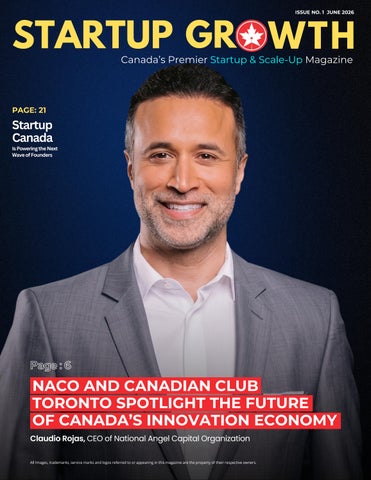
The National Angel Capital Organization and Canadian Club Toronto organized a high-level conversation titled "Investing in the Companies of the Future Venture Capital and Canada's Next Economy" on April 14, 2026 The gathering of important figures from Canada's investment scene reinforced the main point that a more interconnected and cooperative capital ecosystem is essential to the nation's economic future
The cooperation itself is a symbol of something significant For many years, Canadian Club Toronto has served as a forum for national discussion on business, policy, and economic trends By collaborating with NACO, the discussion shifted from theory to practice, directly addressing how capital flows can influence Canada's upcoming business generation
NACO Plays A significant Role In Building Connectivity
The National Angel Capital Organization was established in 2002 and has grown to be a vital part of Canada's early-stage investment landscape It facilitates founder development, connects thousands of investors, and promotes laws that boost innovation nationwide The organization has placed greater emphasis on system-wide alignment under the direction of CEO Claudio Rojas The emphasis is now on ensuring that every phase of the finance process is linked and effective, rather than merely facilitating individual investments
Addressing Canada’s Innovation Gap
The greatest innovation ecosystems in Canada lost an estimated $66 billion in value and 133,000 startup jobs between 2019 and 2024, according to a joint analysis that examined over 65,000 fundraising rounds These results reveal a more serious problem: although Canada is excellent at creating early-stage businesses, it has trouble keeping and growing them at home
A risk-averse investment culture and restricted access to later-stage finance continue to drive high-growth companies into foreign markets Stronger early-stage fundraising channels and a cohesive capital strategy are essential, as Claudio Rojas has often stressed. Canada risks losing a generation of entrepreneurs to more cutthroat international ecosystems if nothing is done.
Canada has one of the most advanced angel investment ecosystems in the world, with an estimated 20,000–50,000 active angel investors. This capital is more than simply money. Angel investors provide industry connections, strategic direction, and mentorship; they are sometimes the first crucial point of validation for startups
A Defining Moment for Canada’s Startup Economy
The startup scene in Canada is at a pivotal moment Although angel investors have already contributed significantly to the development of the nation's innovation economy, greater coordination, more robust regulatory support, and a more aggressive strategy for expanding businesses internationally will be needed in the next stage
The National Angel Capital Organization continues to play a key role in this change It continues to influence the direction of Canadian entrepreneurship by raising capital, advocating for legislative changes, and building national networks
The success of Canada's startup ecosystem will depend not only on ideas but also on the networks and mechanisms that support them, as discussions about innovation, finance, and economic resiliency get more heated And one of the most potent engines propelling growth forward in that equation is angel money
The Importance of Early-Stage Investment
Even though each funding round is important, early-stage investment is still crucial. Innovation frequently takes its first significant step thanks to angel funding. Many high-potential concepts never reach the point where venture funding becomes feasible without this initial assistance Because of this, improving the early-stage pipeline is essential to the ecosystem's overall health
"AtCanadianClubToronto,weexploredhow Canada'scapitalecosystemmustworkasan integratedcontinuumtobuildthecompanies ofthefuture.Thatworkbeginswithangel investors,whowritethefirstchequesforthe founderswhowilldefineourfutureeconomy. AtNACOSummit2026inOttawathisMay,we areshowcasing28ofthecountry'sfastestgrowingcompanies,e f i funding.Thesefounde theMoonshotsShowc andearly-stageinves fromcoasttocoast,in Network,AngesQuébe Funds,SpringImpact ForumCanada,andT ThisishowCanadian category-definingcom
According to recent industry data, Canada continues to struggle to keep high-growth businesses Missed opportunities and, in certain situations, the relocation of businesses to markets with more integrated financial environments might result from a lack of coordinated capital at various phases To address this, more capital and more astute coordination across the capital stack are needed
Why This Event Matters for Canada
This collaboration and event are significant in ways that go beyond a single conversation It illustrates a broader shift in the development of Canada's innovation sector For many years, discussions over funding have frequently been divided Institutional investors concentrated on scale, venture capital firms on growth, and angel investors on early-stage transactions
This incident highlighted the need for these parts to function as a cohesive whole. This connection is particularly important at a time when talent and capital are becoming more scarce globally Building smooth financial ecosystems puts nations in a better position to keep their top businesses and grow them domestically
A Signal of What Comes Next
The event on April 14 provides a strong indication of the direction of the discussion Collaborations such as the one between Canadian Club Toronto and NACO involve more than merely holding talks They aim to align previously autonomous stakeholders The event demonstrated what a linked ecosystem looks like in practice by bringing together leaders across all levels of the capital stack It demonstrated that cooperation is not only feasible but also essential
These kinds of collaborations will become more crucial as Canada seeks to improve its standing in the global innovation economy They establish the framework for mutual understanding, concerted effort, and ultimately better results for both investors and founders To put it simply, the event was about more than just investing in businesses It was about making investments in the system that enables those businesses Thefundamentalcomponents areinplaceinCanada.A vibrantearly-stageinvestment community,avariedtalent pool,andstrongcolleges. Ensuringthesecomponents arelinkedthroughacohesive capitalplaniswhat'sleft.
In an exclusive interview with Startup Growth Magazine, Jahanzaib Ansari, Founder and CEO of Knockri, shares how a personal experience with hiring bias led to building a company focused on fairness, efficiency, and real-world impact This conversation highlights what it takes to move from idea to execution, with Jahanzaib Ansari offering practical insights on validation, earning trust with enterprise clients, and building responsible AI from the ground up while staying focused on solving meaningful problems at scale
Interview By Tehmina A Chaudhry
Jahanzaib Ansari is the Founder and Chief Executive Officer of Knockri, a decade-old AI company transforming hiring, promotions, and training by reducing bias and improving efficiency
He founded Knockri with a mission to build a fairer, more merit-based future of work, and has since raised Millions of dollars from leading investors, and is also supported by the Canadian government, to scale its impact.
Today, Knockri is trusted by leading organizations including IBM, the Toronto Stock Exchange, Hydro One, the Royal Canadian Air Force, Global Affairs Canada, and many other public and private sector organizations
You founded Knockri after personally experiencing hiring discrimination linked to your name and identity. How did that experience translate into a concrete startup idea, and what can new founders learn about turning a deeply personal problem into a scalable business?
I experienced bias firsthand I was applying to jobs using my ethnic name and wasn’t hearing back The moment I anglicized it, I started getting responses and landed a job I’m not sharing that for sympathy. It just made something very clear.
If that was happening to me, it was likely happening to thousands, if not millions of people globally because of inefficient and unfair hiring processes
That’s where Knockri started A simple question What if we removed bias at the first step and evaluated people based on what actually matters, their skills?
What made it scalable was realizing how universal the problem is Every organization is trying to hire better, faster, and more fairly
For founders, don’t sit on the idea Get it in front of real users quickly Validate it, break it, refine it Once you see it resonate, commit fully No hedging, no Plan B
And make sure it’s something you genuinely care about Because the hard times will come, and it has to be worth pushing through
A personal problem gets you started, but execution and conviction turn it into a real company
Knockri’s AI-powered platform helps enterprises like IBM, Toronto Stock Exchange, and other large organizations reduce bias, cut time-to-hire, and increase diversity in shortlists. For early-stage founders building B2B products, what did you find most critical in winning the trust of large customers and proving real ROI?
Companies don’t just buy vision, they buy trust, reliability, and credibility Thats not easy when you ’ re just starting out
We built that trust step by step Early on, we signed small customers like individual Tim Hortons franchises, then moved to independently owned hotels At that stage, we were focused purely on outcomes, not promises
We showed real results Faster hiring, better candidate quality, and clear efficiency gains When you can quantify ROI in a way that ties directly to their business, the conversation changes
As we moved up market, we kept that same discipline We also made a deliberate choice to not be a black box Everything was grounded in industrial organizational psychology and designed to be transparent and explainable, which matters in enterprise environments
The other piece is how you show up When you ' re at an early stage, you dont have brand equity, so you earn it through professionalism, execution, responsiveness, and consistency
Stats show that around half of businesses fail within five years, often due to weak product–market fit or team and execution issues. What specific practices— around validation, focus, or team culture—have helped Knockri survive and grow that you believe every new founder should adopt early?
For us, it came down to a few non-negotiables No ego, fast feedback loops, and operating with urgency
No ego meant staying close to the problem and being willing to be wrong We didn’t fall in love with our solution We listened to customers, adjusted quickly, and let the market shape the product
Fast feedback cycles were critical We didn’t spend months building in isolation. We put things in front of real users early, learned quickly, and iterated That speed of learning gave us an edge
And then there’s intensity We approached it like there was no safety net, because for Faisal and I, there really wasn’t This had to work That mindset changes how you operate You move faster, stay focused, and push through challenges others might walk away from.
On the team side, we prioritized ownership People who take responsibility, adapt quickly, and execute without needing constant direction
Most startups don’t fail because of bad ideas They fail because of lack of focus and weak execution If you stay humble, move fast, and commit fully, you give yourself a real chance
Knockri emphasizes ethical AI, industrial–organizational psychology, and fair candidate experience rather than just automation for automation’s sake. How can founders in any AI or tech startup build responsible technology from day one, and how does doing so impact long-term trust and scalability?
Unlike many vendors that recently jumped on the AI bandwagon, we built our solution from the ground up almost a decade ago with AI at the core, deeply infused with industrial organizational psychology.
That foundation matters We didn’t start with automation and then try to retrofit ethics We started with validated frameworks, structured assessments, and a clear understanding of how to measure people fairly
For founders, responsible tech starts with intent What problem are you solving, and how does it impact people? If you ’ re operating in high stakes areas like hiring, finance, or healthcare, you need to ensure your system is explainable, consistent, and grounded in something defensible
Transparency is key If your users don’t understand how decisions are being made, they won’t trust it
The reality is, speed alone won’t win in the long run Trust does. When you build responsibly from day one, you ’ re not just reducing risk, you ’ re creating a long term advantage
That’s what allows you to scale into enterprise and government environments where credibility really matters
Your journey spans facing bias, building Knockri, and working with global organizations and forums on equality and inclusion in hiring. What final message or piece of advice would you like to share with new and aspiring founders especially those from underrepresented backgrounds who are just starting out?
If I had to leave founders with a few things, it would be this
First, do things as if your life depends on it That level of intensity changes how you show up, how fast you move, and how resilient you are when things get tough
Second, choose your co founders carefully Youre going to go through real highs and lows together, and alignment on values, work ethic, and trust matters more than anything else
Third, validate your idea early and don’t overthink it Get it in front of real people, get feedback, and iterate quickly
Fourth, lose the ego. The market doesn’t care about your assumptions. Be open to being wrong and willing to adapt
And finally, don’t worry about what others are doing Stay focused on your own growth and your own path
If you stay disciplined, move with urgency, and commit fully, you give yourself a real shot at building something meaningful
In an exclusive interview with Startup Growth Magazine, Fazal Mahmood, Co-founder and CEO of PhaseShift Technologies, shares a bold perspective on why the pace of innovation in materials has lagged behind every other part of the modern economy.
While software evolves in weeks, the physical world still relies on decades-long development cycles. Fazal Mahmood explains how PhaseShift is challenging that reality by using AI and simulation to compress years of trial and error into a faster, more intelligent process
Co-founder and CEO at PhaseShift Technologies Based in Toronto and backed by venture capital, PhaseShift is a startup developing a computational materials engineering platform that leverages AI and multi-scale simulations Our technology aims to significantly reduce the time, cost, and risk associated with the development of new materials Learn more about the company:
Rewriting theBuilding Blocks: HowAIIs
PhaseShift is advancing the materials industry by designing and commercializing new and innovative materials, including alloys and ceramics. Our in-house-developed computational platform leverages AI to rapidly design and optimize new materials, fundamentally accelerating the pace of innovation in new materials development. This streamlined approach significantly reduces R&D time and costs, allowing us to explore a broader range of opportunities than traditional methods allow
Interview By Hammad Siddiqui
The Origin Story
Most people don’t wake up one morning and decide to reinvent how metals are made. What was the moment — the frustration, the discovery, or the conversation — that made you say, ‘the way the world designs materials is fundamentally broken, and I’m going to fix it’?
I kept looking around and seeing all this talent and investment pouring into software, apps, digital products But everything in the physical world, every car, plane, building, device, it’s all made of materials People were working on materials, but the innovation was painfully slow, and most of the attention was going to exotic problems, not the common metals and alloys that actually power industry every day The way we develop those hasn’t really changed in decades. Slow, expensive trial and error that can take 10 to 20 years Meanwhile software companies are shipping updates every week That gap just seemed massive to me The most common materials, the ones holding up our infrastructure, our manufacturing, our energy systems, those were being overlooked by the innovation economy So I got together with my co-founders Gurjot and Abu and said, let’s bring the same kind of speed and intelligence to everyday industrial materials that the tech world brought to software
The Data Problem
Materials science is notoriously datascarce. You’ve essentially built your own synthetic dataset using Cascade™ simulations to train your AI. That’s a bold architectural decision what made you confident that simulated data could reliably mirror the physical world?
The 100× Claim Your RAD™ platform promises to design new alloys 100 times faster than traditional methods. That’s a staggering number. Walk me through what’s actually happening under the hood — and why that speed hasn’t been achievable until now.
The traditional way to design a new alloy is you go into a lab, you make a sample, you test it, you learn something, and you go back and try again That loop can take weeks or months for a single iteration. What weve done with RAD™ is replace most of that physical loop with a computational one We combine AI with multi-scale simulations and an ICME framework, which basically means we can model what a material will do at every scale, from the atomic level all the way up to how a real part performs in the field So instead of running hundreds of physical experiments hoping to land on something good, we simulate thousands of candidates computationally, narrow it down to the best options, and only then go to the lab to validate. That’s where the 100× comes from. It’s not one magic trick, it’s compressing what used to be years of trial and error into a workflow where the AI and simulations do the heavy lifting before you ever pour a melt
Everyone in AI wants more data, but in materials science it barely exists You can’t just scrape the internet for alloy properties So we built our own synthetic dataset using our Cascade™ simulations The key insight is that you don’t need every single data point to be perfectly accurate. What you need is to reliably capture the trends If your simulations can tell you that when you add more of element X, the strength goes up and the ductility goes down, and that trend holds true in the real world, then you have something powerful to work with You don’t need perfect data, you need directionally reliable data at scale That’s what lets our AI model optimal solutions It’s exploring a huge landscape of possibilities and finding the sweet spots, not trying to nail one measurement to the fifth decimal place And when we do validate in the lab, the results line up, which tells us the approach works
The Competitive Moat
The intersection of AI and materials science is attracting serious money globally — from government labs to DeepMind’s GNoME project. As a Toronto startup, how does Phaseshift compete, and where is your defensible edge?
The biggest difference is that we ’ re a materials company first. A lot of players in this space are building tools or doing research We’re building tools too, but we also own the output, the actual materials our platform creates So our moat isn’t just the AI or the simulation data, it’s the materials themselves Once you ’ ve designed a new alloy, qualified it, and gotten it adopted into an industrial supply chain, that’s an incredibly sticky position Qualifying a material for aerospace or automotive takes real time and patience, but once it’s in, a competitor can’t just show up and swap it out So we own the full stack: the tools that accelerate the innovation, the data behind it, and the end product that goes into real-world applications That’s a very different position from a research lab publishing papers or a tech company releasing a database of theoretical compounds
ImageCourtesy:Canva
The Customer Conversation
When you walk into a room with an aerospace engineer or an automotive manufacturer who has been doing materials testing the same way for 40 years, what’s the biggest resistance you face — and what’s the single thing that finally gets them to believe?
I’d actually push back on the premise a little The people developing new materials and the people using them are often not the same The manufacturer or end-user is used to seeing something off the shelf, with validated data and a real part they can evaluate So the biggest resistance isn’t about how we design the material Its trust A new material is inherently a risky proposition, and that lack of trust can only be offset by more testing data That’s something we understand deeply We don’t change how you test or qualify a material Industries have well-established ways of doing that, and we respect those processes completely. What we change is how we design the material The innovation is all on the front end But when it comes to qualification, we do it the way the industry expects it done That’s what builds trust We take a material concept all the way through to a qualified product with the data to back it up, so the customer gets exactly what they’re used to receiving, just better and faster
Th S t inability Angle
ut enabling a sustainable future, but aterials innovation is often a 10–20 year m lab to production line. With climate ing what they are, how do you reconcile of the problem with the pace of industrial
year timeline is exactly the problem we ’ re akes two decades to get a better, more material into production, then we ’ ve already ate race The whole point of RAD™ is to at timeline dramatically What used to take s, we ’ re aiming to do in months And when e that fast, sustainability stops being a piration and becomes something you can er on Better materials mean lighter e efficient engines, longer-lasting e, less waste. The materials themselves are for sustainability, but only if you can get e real world fast enough to matter That’s cused on Not just designing greener t making sure they actually reach production lines while the climate window is still open
The Founder’s Bet
You founded this in 2019 — right before a global pandemic disrupted supply chains and forced every industry to rethink where materials come from. Did that crisis validate your thesis faster than you expected, or did it nearly kill the company?
Honestly, the pandemic validated our thesis Supply chain disruptions are one of the biggest reasons you need new materials in the first place When you can’t get a critical alloy from overseas, or your supplier shuts down for six months, suddenly the conversation shifts from “why would I try something new ” to “I need an alternative and I need it fast ” On top of that, the pandemic accelerated interest in local manufacturing and advanced manufacturing methods like additive But here’s the thing, those new manufacturing methods often require new materials to work properly You cant just take an alloy designed for traditional casting and assume it performs the same in a 3D printer So the whole chain connects Supply chain disruptions create urgency for new materials, which enable advanced manufacturing, which in turn enables local production That’s exactly the world Phaseshift was built for We just didn’t expect the proof point to arrive quite that quickly
The Talent Equation
You’ve built a team where almost everyone holds a PhD in computational materials science. In a world where AI talent is being hoovered up by Big Tech, how do you attract and retain deep-domain scientists to a startup that isn’t building a chatbot?
We’re not really competing with Big Tech for the same people The people we hire sit at a very specific intersection of AI and materials science, and there are genuinely only a handful of people in the world with that combination. So it’s a small pool, but it also means we ’ re not fighting Google for them The mission is a big draw If you ’ ve spent years doing a PhD in computational materials science, there aren’t many places where you can actually put that to use on real materials going into real industries And in Canada specifically, there’s nobody else doing what we do So for the right person, we ’ re not competing with other offers. We’re the only game in town for what they actually want to work on.
The Moonshot
If RAD™ performs the way you believe it will over the next decade, what material gets invented that doesn’t exist today and what does that unlock for humanity?
I can’t get into the specifics because we ’ re actively working on several of these materials right now But I can tell you the categories they fall into We’re working on materials that make industrial infrastructure more reliable Materials that make manufacturing more efficient and sustainable Materials that create more robust and resilient supply chains so you ’ re not dependent on a single source halfway around the world. And materials that enable the next generation of technologies to actually get adopted and scale A lot of the technologies people are excited about, whether it’s in energy, aerospace, or advanced manufacturing, they’re bottlenecked by materials The hardware can’t do what it needs to do because the material doesn’t exist yet That’s what we ’ re working to change The moonshot isn’t one magic alloy It’s building the platform that keeps producing the right material at the right time for the problems that matter most
The Canadian Angle
Canada has a rich history in materials and mining, but less so in deep-tech startups that commercialize at scale. What does it mean to be building this in Toronto, and is Canada’s innovation ecosystem a tailwind or a headwind for a company like Phaseshift?
Canada has one of the richest histories in materials and mining in the world This country built entire industries around nickel in Sudbury, aluminum in Quebec, steel in Hamilton That heritage runs deep, and it means there’s real institutional knowledge here, at the universities, in the research labs, across industry I studied physics at U of T, and my co-founders and I all came up through that ecosystem Canada also punches above its weight in AI research, so finding people who sit at that intersection of AI and materials science is more possible here than in most places And being in Toronto gives us access to a global, diverse talent pool, which matters when youre hiring for such a specialized skill set In a way, Phaseshift feels like a natural evolution of what Canada has always done This country knows materials We’re just bringing that legacy into the 21st century with AI We’ve had great support through programs like Creative Destruction Lab early on, and I think you’ll see more deep tech companies like us coming out of Canada.
By SK Uddin
Canada isn't short of ideas or capital. It falls short on execution. That is the core theme of RBC's Capital Gains report, which presents a stark reality Over the next decade, Canada will require $1 8 trillion in capital investment to spur development and remain competitive globally This is not simply an economic forecast It's a signal For creators, operators, and investors, it indicates where the next wave of opportunity will emerge
A Capital Problem, Not an Innovation Problem
For many years, Canada has produced top people, research, and early-stage innovation However, the government has struggled to transform this into sustainable economic growth RBC emphasizes a deeper issue Between 2015 and 2024, Canada experienced what can only be called a capital recession, with more than $1 trillion of investment leaving the nation
At the same time:
Canada ranks last among the G7 in investment in productivitydriving assets
Only approximately 30% of capital is dedicated to machinery, equipment, and intellectual property.
Domestic capital frequently remains idle rather than being used in expansion
This generates a dilemma But the tide is turning Last year, foreign direct investment reached nearly $100 billion – the highest since 2015 Canada has an incredible opportunity for growth if it can invest capital where it’s needed
“We have the capital at the startup level and at the institutional level it's the middle where the missed opportunity lives," says Jordan Brennan, Managing Director of RBC Thought Leadership.
"If we can get this right, we can stop exporting our best ideas, and start creating the conditions where Canadian companies can scale and win at home.”
The $1.8 Trillion Blueprint
RBC's report is clear about where these funds should go It predicts six industries that will shape Canada's next decade of growth:
Oil and Gas
Electricity
Agriculture and Food Processing
Metals and Minerals
Defense
Space
These sectors require significant, coordinated investment. The largest allocations are:
$705 billion in oil and gas
$670 billion in power
more than $200 billion in agricultural and mining
These aren't developing industries They are foundational However, they are entering a new era influenced by technology, geopolitics, and sustainability
Two Possible Futures for Canada
The report proposes two paths forward.
Trend Growth - Canada remains on its current path. Investment remains fragmented. Growth is modest.
Step Change - Canada coordinates policy, capital, and execution. Investment rises by 65 percent over trend levels, enabling large-scale projects and boosting global competitiveness.
The distinction between these paths isnt innovation It's about coordination, quickness, and confidence
Where Startups Actually Fit In The Electricity Example
At first glance, this appears to be a story about major corporations and government policies It isn't Each of these industries is riddled with inefficiencies, delays, and operational deficiencies That's where startups come in The true opportunity is not in developing the next consumer app It is preparing the infrastructure for Canada's next construction cycle
Startups can play important roles in
Industrial AI and automation
Energy efficiency and grid intelligence
Supply chain and logistics systems.
Environmental monitoring and compliance tools
Geospatial and satellite data applications. Cybersecurity for Defense and Infrastructure
These aren't little opportunities. They are embedded in trillions of dollars in capital flows
Consider electricity Canada's grid is currently mostly non-emitting, but demand is projected to triple by 2050 as electrification advances across transportation, buildings, data centers, and heavy industry This transformation is more than just generating more power It creates a tiered opportunity that includes infrastructure growth, grid modernization, improved data and forecasting systems, and energy storage and optimization
The companies that succeed in this field will not only generate electricity but also reimagine how the system works, making it more intelligent, efficient, and robust at scale
The Real Bottlenecks
RBC makes one point obvious. The issue is not ambition, but rather friction. Persistent structural impediments to growth include delayed, unpredictable permitting processes, infrastructure deficiencies in key regions, a shortage of specialized skills, and limited access to mid-stage risk finance Investors are not afraid to take risks, but they continuously back off when confronted with uncertainty, imprecise timetables, and inconsistent execution environments
Unlocking Capital Through Smarter Systems
One of the most useful insights in the research is how capital can be unlocked RBC identifies four key levers: asset recycling to fund new projects, wiser procurement to strengthen domestic enterprises, targeted tax and investment changes, and better strategic use of public funds Procurement is particularly important for startups
Instead of relying solely on grants or venture capital, governments might serve as anchor customers, giving outcome-based contracts that provide predictable revenue. That shift alters the equation. Revenue generates credibility, which attracts finance.
A Shift From Startups to Scale
Canada has developed a strong startup culture, but the next stage requires a shift in focus The objective now is to scale companies within Canada, retain intellectual property, and establish globally competitive firms that remain rooted domestically
Canada's growth dilemma is basically a confidence issue The capital exists The talent exists The demand is rising What's been missing is the capacity to link all three The $1 8 trillion investment deficit is not merely a warning This is an open invitation This is not an impediment for founders who want to build in the appropriate places It represents one of the most significant prospects in the Canadian economy today.
The most significant lesson from the $1 8 trillion statistic is not its size, but where that cash is going Investment will increasingly be directed into critical projects, systems that boost productivity, and businesses that reduce risk and execution friction For entrepreneurs, this necessitates a shift in position
The next generation of successful Canadian enterprises will most likely operate in complex, regulated contexts, align with national agendas, and focus on real-world infrastructure and industrial difficulties This method is more difficult than developing consumer software, but it provides significantly greater defensibility and long-term value
Startup Canada acts as an engine for Canadian founders. Over the last decade, Canada's startup ecosystem has grown significantly. While venture capital investment and tech hubs frequently make headlines, a quieter but equally essential force is working behind the scenes to assist creators across the country.
The findings indicate persistent hurdles for Canadian businesses, notably in financing According to the 2021 census report, about 70% of respondents considered obtaining government grants a key financial issue, while approximately 68% found it difficult to secure suitable financing
These observations directly impact Startup Canada's programming and advocacy activities Kayla Isabelle, CEO of Startup Canada, underlines the value of listening to founders when developing national programs "Everything we build begins with listening to founders," Isabelle explained "Our role is to translate their lived experiences into actual initiatives, partnerships, and policy conversations that make a difference " This data-driven approach ensures that Startup Canada's programs address real challenges rather than theoretical policy objectives
Startup Women supports women-identified entrepreneurs through year-long programming, mentorship, and national visibility opportunities The program is consistent with Canada's overall Women Entrepreneurship Strategy, which seeks to increase women ' s economic engagement The program facilitates the transformation of entrepreneurial vision into investable firms by increasing access to networks and knowledge
Another flagship program, Startup Global, prepares Canadian businesses to grow beyond their national markets Expert workshops, curated materials, and the Startup Global Pitch Competition expose founders to opportunities for worldwide expansion The 2026 Startup Global Pitch Competition has a $100,000 prize pool, providing high-potential businesses with funding and national exposure
Startup Gov aims to bridge the gap between entrepreneurs and policymakers. Through consultations, roundtables, and in-person events, the program helps founders better understand government initiatives and offers policymakers firsthand insight into the challenges Canadian entrepreneurs face
Together, these programs highlight a fundamental belief: a strong startup ecosystem requires more than just capital. It necessitates mentoring, policy coherence, and access to global markets.
Startup Canada Tour: Bringing the Ecosystem to Founders
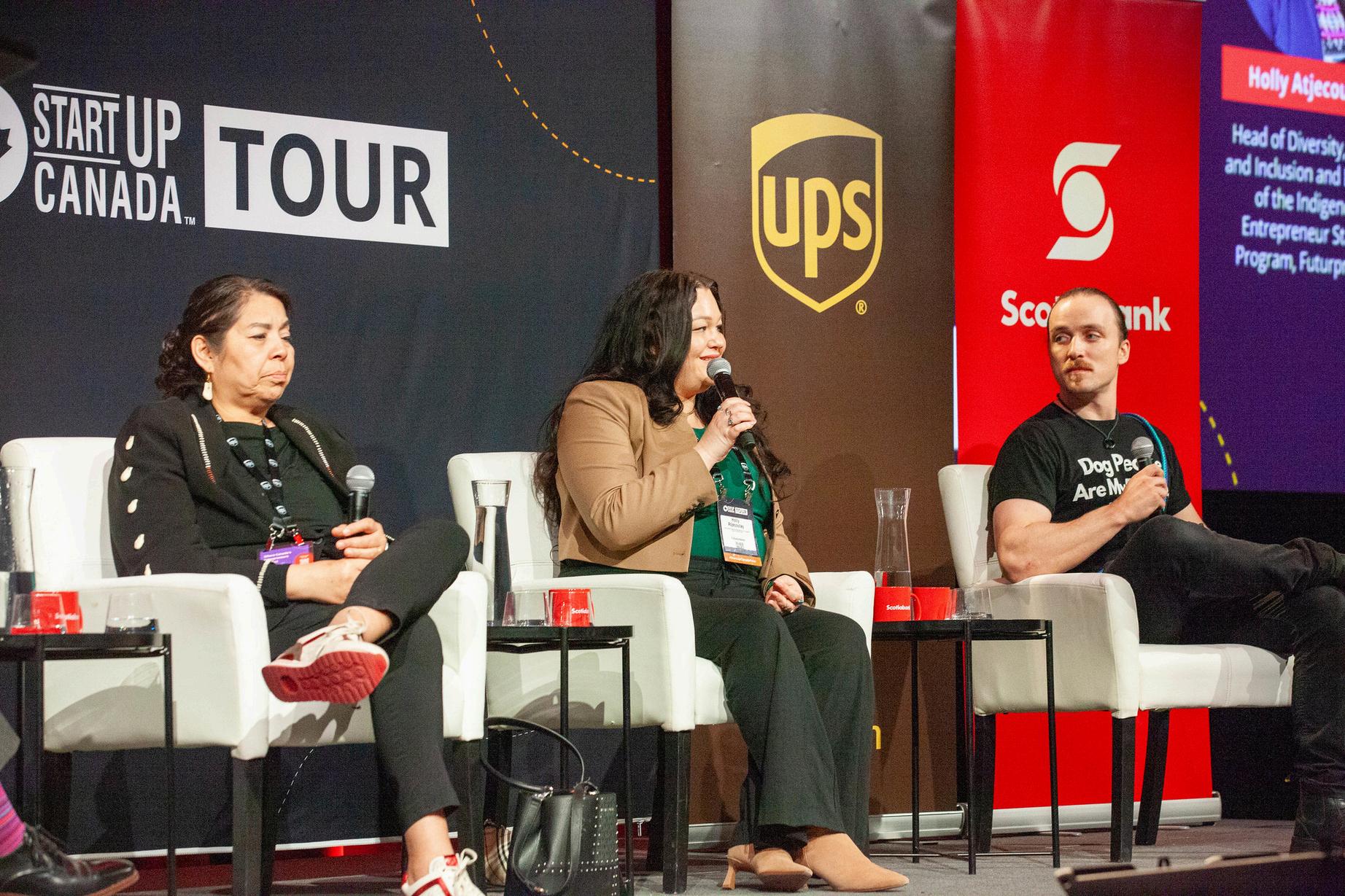
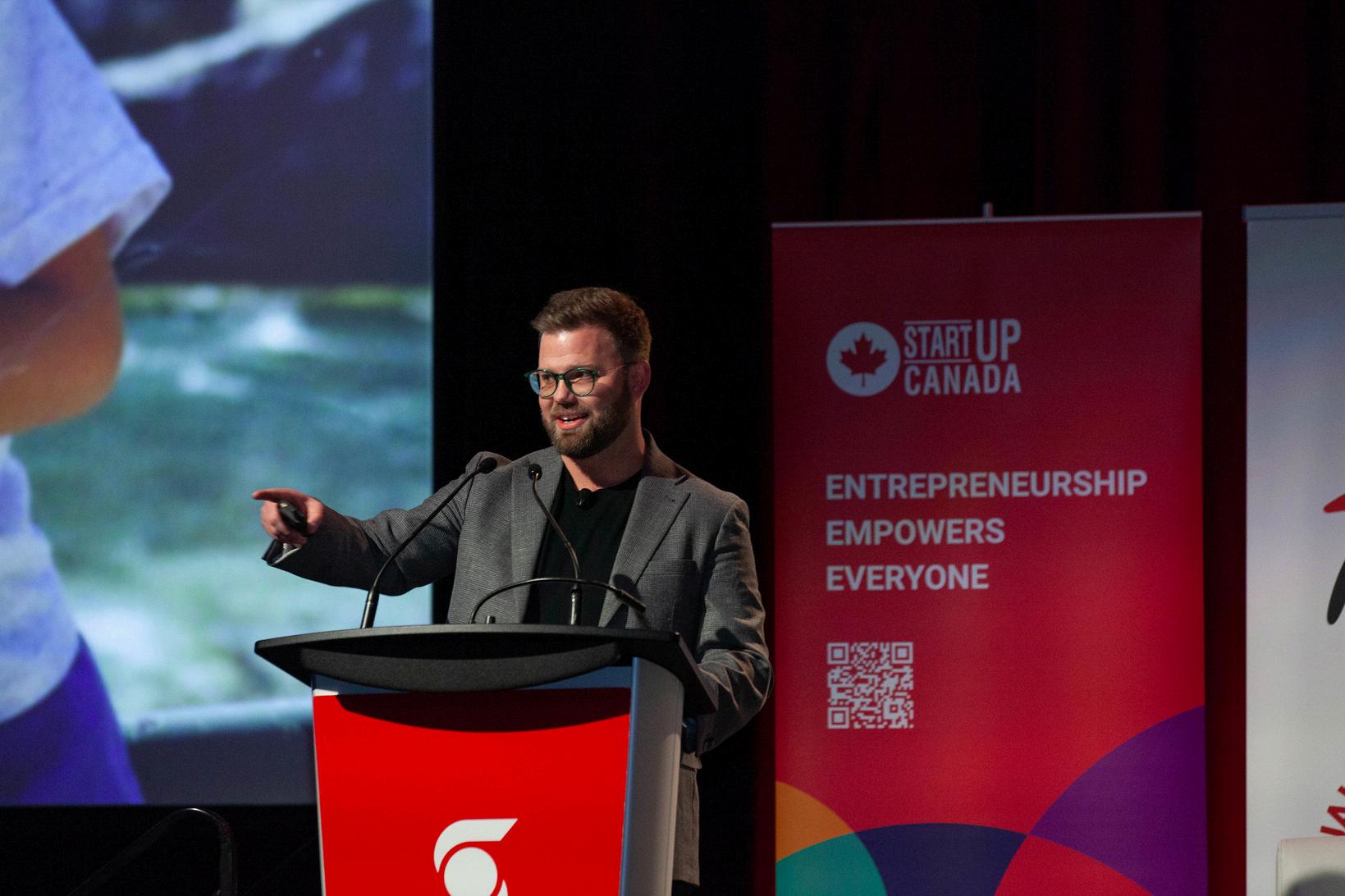
One of Startup Canada's most visible efforts is the Startup Canada Tour, a national event series that brings entrepreneurs together with mentors, investors, and industry experts Travelling coast to coast to coast since 2023, more than 2700 entrepreneurs attended the 2025 Tour stops in Calgary and Mississauga
The Tour included over 45 speakers, almost 80 professional mentors, and over 160 partners and exhibitors, all focused on assisting founders with real-world challenges such as customer acquisition, finance, and personnel recruitment This year, the Startup Canada Tour will touch down in Halifax on April 29th, Victoria on September 29th, and wrap up in Mississauga on October 29th.
Kayla Isabelle’s Vision for Inclusive Growth
Under the leadership of CEO Kayla Isabelle, Startup Canada has expanded its focus on inclusive entrepreneurship and regional economic development Isabelle has highlighted the need for inclusive innovation from both a social and economic standpoint
ImageCourtesy:StartupCanada
"Supporting Canadian entrepreneurs is my passion, and this recognition reinforces the importance of the work we do at Startup Canada," Isabelle remarked upon winning the Women of the Year award. "We’re committed to breaking down barriers, creating opportunities, and ensuring that every entrepreneur has the resources they need to thrive "
The organization's programming reflects its dedication to inclusivity 78% of presenters at various Startup Canada Tour events were from equity-deserving groups, demonstrating the organization's commitment to increasing access to entrepreneurship.
Why Startup Canada Matters Now
The entrepreneurial scene in Canada is expanding quickly Canada now has the greatest level of early-stage entrepreneurial activity among G7 nations, according to the Global Entrepreneurship Monitor Scaling startups is still difficult, though Industry associations estimate that Canada's economy has lost $ 66 billion due to missed opportunities to expand domestically.
To close that gap, organizations like Startup Canada are essential. Startup Canada helps ensure that the next generation of Canadian entrepreneurs not only launch companies but also build globally competitive businesses by supporting over 130,000 entrepreneurs annually, connecting thousands through national events, and basing every initiative on founder-driven data The organization's function as an advocate, connector, and ecosystem builder will become even more crucial as Canada's innovation economy develops
There's a version of the immigrant founder story in Canada that reads like a success playbook Talented entrepreneur leaves a thriving career overseas, secures a Letter of Support from a Designated Organization, arrives in Canada with six figures of capital, incorporates a company, pays taxes, creates jobs, and earns permanent residency Clean, logical, inspiring
Then there's what's actually happening for a significant number of those founders right now. And the gap between those two stories is where Canada's innovation potential is quietly leaking away
A Backlog That Has Become a Crisis
The numbers are stark As of early 2026, Canada's Start-Up Visa (SUV) pipeline sits at an estimated 45,000 applications. Processing times that stood at 18 months in 2023 stretched to 36 months in 2024 and now exceed 10 years for non-priority files The program was paused entirely as of January 2026 a signal that the system is not just slow but structurally overwhelmed
The January 2026 Immigrant Founders Impact Forum, hosted by the Canada Startup Association (CSA), brought these realities to the surface Over 50 stakeholders including founders with active businesses, senior leaders from Designated Organizations, and ecosystem players gathered in a closed-door session to identify practical solutions and contribute to a formal policy brief for Ottawa "AstreamlinedandefficientStartupVisa programisessentialfortransformingCanada's innovationsectorfromabacklogged immigrationqueueintoahigh-octane economicengine."
—CanadaStartupAssociation WhitePaper,February2026
What's Actually Breaking Down
The forum identified systemic failures operating across multiple levels of the ecosystem not just within IRCC, but also among Designated Organizations, legal advisors, and in some cases, applicants themselves Here's where the friction is concentrated:
Processing times of up to 10 months effectively ground founders in Canada, preventing them from attending global conferences, closing international deals, or traveling for business development activities that are essential for early-stage companies competing globally. Work Permit Delays:
Many founders who applied before October 2024 received only 1–2 year work permits The first year is largely consumed by relocation, incorporation, CRA registration, and banking setup By the time genuine market traction is possible, founders are already facing renewal assessments Short Permit Durations:
Startups are being assessed for business viability within 12 months of arrival a timeline that contradicts the global norm of allowing at least three years to demonstrate commercial traction, particularly for founders navigating both a new market and an immigration process simultaneously Premature Performance Reviews:
Founders who applied under a specific set of criteria are now being evaluated against new, retrospective standards Work permit refusals following October 2024 IRCC policy changes have left applicants in limbo some facing 90–200+ day reinstatement processing timelines with no work status and no ability to operate Moving Goalposts:
Founders without legal work status for up to 180 days face ongoing costs of CAD $10,000–$15,000 per month in living and operating expenses, with no ability to generate revenue. This creates compounding financial strain on businesses that were otherwise performing. Financial Exposure:
The Investor Confidence Problem
One of the most consequential downstream effects of immigration uncertainty is its impact on fundraising Investors whether local or international are hesitant to commit meaningful capital to a founder whose work status might change in six months Permanent Residency (PR) isn't just a personal milestone for these entrepreneurs; it's a prerequisite for serious investment conversations
Most early-stage startups cannot sustain operations without funding for more than two years. When the path to PR stretches beyond a decade for some applicants, that math simply doesn't work The result is a chilling effect on Canada's early-stage ecosystem just at the moment when, as the CSA's forum noted, the founders who are physically here and building are creating real economic value
The forum wasn't a grievance session it produced concrete, actionable recommendations that reflect a serious policy conversation The key asks from founders, Designated Organizations, and ecosystem players include:
A dedicated 24/7 processing model (three shifts daily) for a two-year period to clear the existing backlog and return to a 24-month processing timeline An Operational Surge:
New criteria and priority processing categories should apply only to applications submitted after the official announcement date not retroactively to founders who applied in good faith under previous standards Non-Retrospective Rules:
A clear, standardized definition of 'business progress ' that accounts for the non-linear nature of startups including pivots, market shifts, and the natural arc of early-stage companies. Objective Business Metrics:
A streamlined 15–30 day renewal process for founders with active business operations, so they can travel, close deals, and maintain momentum without grinding to a halt Work Permit Fast-Track:
Periodic performance reviews for all Designated Organizations to ensure they are focused on startup quality and founder support, not volumedriven revenue DO Accountability:
The Competitive Pressure Is Real
Canada isn't operating in a vacuum The UK, UAE, Singapore, and Australia are all running active, well-resourced programs to attract exactly the same founders that Canada's SUV program targets The UAE processes equivalent permits in under 10 business days The UK's Global Talent Visa is aggressively promoted to the same markets UAE, India, Singapore, and beyond where Canada has historically had strong pull
When the on-the-ground experience diverges too sharply from the promotional pitch, word travels fast The founders who left stable careers in Riyadh or Singapore or Mumbai did so because Canada promised a clear pathway to permanence and a world-class innovation ecosystem If that promise isn't delivered or worse, if it collapses after they've already invested everything the reputational cost extends well beyond the individuals affected
The good news is that the ecosystem clearly understands the problem The January 2026 forum, the CSA's white paper, and the growing coalition of founders willing to advocate publicly all point to a community that isn't giving up on Canada They're pushing for it to live up to its own ambition That's precisely the kind of engaged, invested talent pool that any innovation economy should want
The question is whether the policy response will match the urgency before more of that talent concludes it can build faster somewhere else.
"Growth at all costs" has given way to careful selectivity in Canadian venture capital, with fewer deals but bigger checks Although significantly below the 2021 peak, overall Canadian startup investment in 2025–2026 was still substantial by historical standards, averaging between 3.2 and 3.5 billion dollars each year According to CVCA data for 2025, the number of deals decreased by 12% from the previous year, but deployed capital only decreased by roughly 6%, resulting in an average deal size of $14 million This indicates that more capital is going into fewer, more robust businesses, and late-stage "megadeals" worth more than $50 million now make up far over 60% of all investments
What Venture Capitalists Look for in Traction Quality and Discipline
VCs are clear about what they want from Canadian startups in this competitive environment First, genuine traction outperforms grand visions: investors are giving preference to businesses with paying clients, high customer retention, and proof of product-market fit over pre-product hoopla According to KPMG, investors in fintech, for instance, are favouring established, reliable platforms with large client penetration and size, and this trend is extending to other industries
Second, capital efficiency and unit economics are more important than ever In addition to aggressive growth estimates, funders require founders to demonstrate clear gross margins, disciplined burn rates, and credible paths to break-even According to the statistics, median Series A rounds in major hubs (Toronto, Vancouver, Montréal) have increased, particularly in B2B SaaS, AI infrastructure, and fintech, while early-stage check sizes have decreased
This indicates a concentration of capital into fewer, more powerful winners who can exhibit efficiency and growth. Lastly, investors are becoming more leery of "tourist" founders who follow trends without a thorough understanding of the issues at hand In 2026, Canadian venture capitalists anticipate more precise narratives, distinct ideal customer profiles (ICPs), and quantifiable evidence that the firm is addressing a critical need rather than a desirable one
The
Liquidity Drought and Focus on Existing Portfolios
Behind the scenes, a lack of liquidity will influence VC behaviour in 2026 Compared to the boom years, exits through IPOs and big M&A transactions have been slower, which makes it more difficult to return cash to LPs and forces investors to exercise extra caution 83% of Canadian VC and PE firms want to provide capital to both new and existing investments this year, according to CVCA's 2026 outlook; however, many are leaning more toward supporting current portfolio companies
According to survey data, Canadian VC investors' main concerns in 2025 were securing funding and liquidity, overtaking talent concerns that predominated in prior years Concurrently, venture debt has increased, with full-year levels reaching record highs and H1 2025 venture debt dollars virtually tripling compared to the previous year This means that investors will pay considerably more attention to runway, debt capacity, and exit routes for founders
Global Capital, US Co‐Investors, and the Scale‐Up Question
US investors are increasingly funding Canadian firms, particularly at later stages Approximately 80% of Canadian VC deals in Q1 2025 contained US funds, which frequently push valuations higher than domestic investors would, according to a panel of leading Canadian VCs Deeper pockets and international connections are brought about by this flood of foreign capital, but it also increases competition and raises the possibility that Canada will lose its headquarters and intellectual property as businesses grow
According to the data, earlier-stage and smaller ecosystems receive comparatively less funding than larger rounds and major hubs like Toronto, Montréal, and Vancouver A "scale-up gap, " in which too few pre-seed and seed enterprises make it to later stages, is a concern for investors VCs anticipate that Canadian businesses in Q1 2026 will think globally from the outset, developing products, GTM strategies, and capitalization plans that attract both domestic and foreign investment.
How Founders Can Stand Out in Q1 2026
Canadian founders must approach Q1 2026 fundraising as a performance assessment rather than a pitch competition to raise money successfully in this scenario Start with metrics: demonstrate unit economics, cohort behaviour, retention, and month-over-month revenue increase to support your goal price within the current market ranges Emphasize capital efficiency what you accomplished with your previous round and offer a detailed strategy for achieving the next significant milestone product-market fit, Series A metrics, or profitability within 18 to 24 months of runway
Secondly, align your round with the updated fundraising mix In a limited VC market, Canadian advice firms perceive the trend of mixing stock with non-dilutive capital, grants, or venture loans as a crucial bridge Lastly, take advantage of Canada's strengths AI, B2B SaaS, finance, and climate tech where local talent, initiatives, and international interest coincide Investors in 2026 anticipate execution and maturity in addition to ambition
In the fast-moving world of Canadian business, the image of the solitary entrepreneur the "lone wolf" working in a basement to change the world is quickly becoming a thing of the past As artificial intelligence and digital disruption reshape the economy, a new strategy is taking hold. To succeed today, Canadian small businesses need more than just a good idea; they need an ecosystem and a "bionic" approach to work
For many small business owners, the word "ecosystem" feels like corporate jargon Peters, however, breaks it down into a simple metaphor from the world of theater
In her view, the entrepreneur or the small business owner is the "star of the show " But a star cannot carry a production alone They need a supporting cast This cast includes boards of trade, chambers of commerce, innovation centers, and various service providers Together, these organizations form the "connective tissue" that allows a business to grow
"All of those pieces together make up the innovation ecosystem," Peters says The problem is that many business owners still feel they have to do everything themselves Her message is clear: the most successful companies are the ones that learn how to use their supporting cast
Entering the Age of the ‘Bionic’ Organization
While the idea of a support network is not new, the arrival of artificial intelligence has fundamentally changed how these networks function AI is no longer a futuristic buzzword; it is a tool that is already changing day-to-day office tasks and the very products companies sell
To help businesses navigate this, Peters introduces the concept of the "bionic organization." This is a company that takes the power of digital tools like AI and pairs them with the unique strengths of human experts
Peters practiced what she preaches Over a recent summer, her team at Northguide conducted an eight-week "AI sprint " Most of the team members had never used AI tools before They spent time learning the basics and then launched small projects to see if the technology could take over repetitive tasks or help them brainstorm new solutions
The results changed her perspective As a writer and communicator by training, Peters initially feared that AI might replace her Instead, she found it did the opposite.
"It actually freed up some of my time to do thinking and brainstorming with it as a tool," she explains Tasks that once took days can now be finished in hours The AI handles the "grunt work" of generating content, but the human remains the pilot
The Art of the ‘Thoughtful Prompt’
One of the biggest lessons from the AI revolution is that technology is only as good as the person using it Peters points out that while AI can generate a massive amount of content very quickly, the quality of that content depends entirely on what it is fed
This has turned "prompting" the act of giving instructions to an AI into a critical business skill Peters argues that being able to provide a "thoughtful, coherent prompt" is the "thinking part" that remains the responsibility of humans
As knowledge becomes easier to access with a simple search or a prompt, the value of a worker shifts from what they know to how they think and how they interact with others In the next decade, the most important "soft skills" will be human-tohuman understanding and the ability to build deep relationships. These are the qualities that technology cannot replicate
Coalition Leadership: Power in Numbers
Beyond individual businesses, Peters sees a need for a new kind of leadership at the community level She calls this "coalition leadership "
A coalition is a group of organizations business leaders, academic experts, and government officials who come together to tackle a single goal When these groups team up, they can move much faster than they could alone
However, Peters warns that this is "hard work " The biggest challenge is alignment It is difficult to keep dozens of different leaders focused on the same message and the same strategy But when a community manages to maintain that discipline, they can achieve "really great things," such as tackling massive challenges like modular housing, semiconductor production, and homelessness
A Global View of Innovation
The work of building these connections doesn't stop at the local level Every October, Peters and Northguide partner with the Elevate Festival to host the Global Ecosystem Summit
This event brings together 200 "ecosystem builders" from around the world These are the people who figure out how to create the infrastructure that supports growing businesses By sharing ideas globally, Canada can better understand how to support its own " purposedriven" organizations, whether they are small businesses, nonprofits, or municipalities
The Final Word: You Are Not Alone
Demystifying the Government Relationship
For many small tech firms, dealing with the government feels like a mystery filled with complicated rules and "magic " Peters, who has spent years bridging the gap between the private sector and the public sector, says it doesn't have to be that way
Her advice to small businesses is to treat the government like any other business relationship Instead of seeing officials as hurdles, business owners should view them as partners or even customers
As Canada looks toward the future, the pressure on small business owners is only going to increase They are the backbone of the economy, but the job of running a company is becoming more complex every day
Peters’ final message to entrepreneurs is one of reassurance While the technology is changing and the "playbook" is being rewritten, the fundamental need for human connection remains
The most important thing for a business owner to remember is that they don't have to carry the weight of the world on their shoulders There is a "supporting cast" waiting in every community innovation centers, boards of trade, and fellow leaders ready to help them scale.
"Reach out to those supporting cast members," Peters says "They will help cheer you on and help you build your business "
In the age of AI, the businesses that thrive won't be the ones that use technology to replace people They will be the "bionic" ones that use technology to empower people, supported by a community that wants to see them win
By Tehmina A Chaudhry
You must have a reliable method of selling to businesses before you can grow It is highly recommended by seasoned entrepreneurs and investors that founders personally close the first 5 to 10 clients because this is the best way to understand buyers' objections, the purchasing process, and the true value buyers see in your product To ensure that your outreach and message directly address a specific issue, start by concentrating on a narrow Ideal Customer Profile (ICP) and specific buyer personas, such as job titles, industries, firm size, and typical tech stack.
Mapping a Persona–Problem–Impact table to identify the personas you sell to, the pains they experience, and the quantifiable effects of those issues is recommended by outbound tactical playbooks To get your first meaningful talks with possible business customers, combine this with non-scalable channels, such as warm introductions through your personal, alumni, and investor networks Perfect pricing is not the goal of these early negotiations; rather, the goal is to learn and condense the sales cycle
Designing an Enterprise Sales Playbook for Your First Big Deal
You need a straightforward, written playbook since enterprise negotiations are slower, more complicated, and multi-threaded The majority of successful enterprise sellers divide the process into steps: initial contact, discovery chat, customized explanation/demo, proposal, and negotiation Instead of sending hundreds of generic communications at the top of the funnel, utilize targeted outbound (cold email, LinkedIn, events) to a well-selected account list
Experienced enterprise sellers emphasize "land and expand" in their content: begin with a small, well-defined use case that quickly demonstrates value, then expand once internal trust is established During exploration, focus 50–80% of the conversation on the prospect; rather than pitching features, delve into their desired state, existing condition, and purchasing process One useful tactic for legal and procurement is to encourage your champion to share an alreadyauthorized vendor contract, so you can use it as a template to reduce legal friction
Finally, map the buying committee: identify the economic buyer (often the CFO or VP/GM), technical gatekeepers (security, IT), and power users, and strategize how you will get a " yes " from each Enterprise deals close when the entire committee believes their risks have been addressed
Pricing, Negotiation, and Closing the First Enterprise Logo
Pricing your first corporate deal involves striking a balance between credibility and learning Many experienced founders recommend either sticking to your list pricing with flexible terms or offering a lesser price in exchange for a longer contract, reference rights, and case study access The goal for deal one is not the highest income, but maximum strategic value: logo, learning, and internal champion
Keep a realistic perspective throughout the process; lengthy cycles, numerous stakeholders, and several review rounds are typical Your first enterprise victory serves as evidence that your business, security posture, and product are "enterprise-grade," which is a potent signal for future sales
From Founder‐Only to a Team of 20: Who to Hire First
You can stop doing everything yourself and begin assembling your first team of twenty once your sales motion is successful A few key roles should be filled early, according to startup recruiting guides: more engineers to solidify and scale the product, one to three sales representatives to replicate what worked for you, customer success to keep new logos satisfied, and basic finance/operations support Six to ten product/engineering positions, four to six go-tomarket (sales, marketing, and success) positions, and a tiny layer of operations and leadership can make up a typical first-20 structure
Hiring salespeople too soon or before you ' ve demonstrated a successful sales process is advised by founders and sales executives Your initial representatives should be "athletes," not specialists; they should be inquisitive, at ease with uncertainty, and capable of both prospecting and closing Instead of focusing only on major brand names, look for at least some experience selling at a similar deal size and motion (for instance, mid-market/enterprise SaaS at your price point) You can go from a heroic founder-led sales approach to a repeatable, team-driven engine with the right early recruiting
Building Process, Culture, and a Scalable Sales Organization
Process and culture are just as important as individual skill when working with 20 individuals New representatives may ramp up more quickly and maintain pipeline consistency by using a basic sales playbook that includes ICP, messaging, qualification criteria, phases, templates, and handoff rules When you add more employees, you may avoid confusion by using tools like a simple CRM, lead routing rules (like round-robin for inbound), and written onboarding checklists
Your engagement helps strengthen a growing ecosystem of founders, builders, and business leaders Startup Growth is designed to deliver practical insights, emerging trends, and real-world strategies that support entrepreneurial success Click here to subscribe and follow our official channel Stay connected to us for the latest developments in the startup landscape Your continued support helps us spotlight innovation and opportunity across Canada
Disclaimer:Thisarticleisforinformationalpurposes only BlackBusinessMagazinedoesnotendorseor guaranteeanyproducts,services,organizations,or individualsmentioned Readersareencouragedto conducttheirownresearchandduediligencebefore makinganybusiness,financial,orpersonaldecisions.
Sector specific statistics illustrate just how central immigrant entrepreneurs are to key parts of the economy Immigrants account for 40% of firm owners in software publishing, while the figure jumps to 49% in computer systems design and related services Immigrants also hold the majority of businesses in various service and retail areas, but their presence in technology demonstrates how deeply they are integrated into Canada's innovation ecosystem. According to research and advocacy groups, immigrant entrepreneurs make up roughly one-third of all company founders in Canada, and this figure is expected to rise to 42% by 2034
How Immigrant Founders Drive Innovation, Jobs, and Exports
Immigrant founders often develop their companies faster and more worldwide than the average From 2003 to 2013, immigrant-owned businesses created 25% of net new jobs in Canada, but accounted for only 17% of firms This highlights their significant impact on job development According to Chamber of Commerce data, immigrant-owned businesses employ over 800,000 people and are more likely to export goods compared to Canadian-born owners
Immigrant founders' cross-border networks and cultural fluency can lead to new trade corridors and client bases in Canada. Their enterprises are more likely to serve foreign markets from day one, leveraging language skills and diaspora connections to reduce the risk of expansion According to venture capitalists, immigrant founders bring a unique resilience and desire, having often overcome complicated migratory, credential, and labour market restrictions before founding a business Investors and politicians see immigrant-led companies as crucial to growing Canada's productivity and export intensity, particularly in high-growth industries such as AI, fintech, and advanced services
Canada's immigration system has purposefully positioned the country as a hub for global entrepreneurs The government Start-Up Visa Program, established in 2013, enables immigrant entrepreneurs to gain permanent residence with backing from specified venture capital funds, angel groups, or company incubators Designated venture capitalists must commit at least 200,000 dollars, while designated angel groups must invest at least 75,000 dollars, or founders may be accepted into recognized incubation programs
Communities, Capital, and the Rise of Immigrant‐Focused Funds
Grassroots and ecosystem organizations are increasingly providing dedicated support to immigrant founders Immigrant Entrepreneur Canada, for example, has supported over 2,200 immigrant entrepreneurs in less than two years, launching dozens of enterprises through incubators, mentorship programs, and community meetups These programs provide trusted venues for newcomers to navigate regulatory processes, enhance company models, and gain access to local networks that might otherwise be inaccessible to them.
On the capital side, new funds explicitly prioritize immigrant founders as a key argument Maple Bridge Ventures, created in 2023, is Canada's first institutional-grade fund dedicated to supporting immigrant innovators Initial investments range from 250,000 to 1,000,000 dollars, with reserved follow-on funding According to the fund's executives, immigrant founders are an untapped source of innovation and growth in Canada By 2034, immigrant-led businesses are estimated to account for 42% of all founders These funds strive to transform immigrant talent into scalable, defensible firms through a combination of cash, mentorship, and a Canadian network
Barriers, Backlogs, and the Future of an Inclusive Ecosystem
Despite their achievements, immigrant founders continue to confront substantial challenges in Canada's startup ecosystem According to research, impediments include access to financing, language and cultural barriers, credential recognition issues, and ambiguity about immigration status. Newcomers are twice to three times as likely as Canadian-born workers to have a bachelor's, master's, or PhD However, they face greater unemployment and underemployment rates and frequently resort to entrepreneurship when traditional labour markets fail
Your engagement helps strengthen a growing ecosystem of founders, builders, and business leaders Startup Growth is designed to deliver practical insights, emerging trends, and realworld strategies that support entrepreneurial success Click here to subscribe and follow our official channel Stay connected to us for the latest developments in the startup landscape. Your continued support helps us spotlight innovation and opportunity across Canada.
The startup scene in Canada is now really global in scope With almost 9,700 active businesses and several locations ranking among the top tiers of North American ecosystems, Canada ranks fifth globally in the 2025 Global Startup Ecosystem Index Six Canadian cities are among the top 20 in North America, according to a recent survey, highlighting that innovation is dispersed rather than concentrated in a single metro region
Canada's growth rate has lagged behind some of its rivals, according to reports from Startup Genome and others This has led to a minor decline in rankings and has put pressure on cities to improve funding and scale up outcomes A new era is being shaped by this combination of power and urgency: Canadian hubs must now routinely produce scale-ups and global category leaders rather than just "having startups " The eleven ecosystems listed below show where that change is occurring at the fastest rate
Many people consider the Toronto–Waterloo area to be Canada's premier startup scene According to some rankings, Toronto ranks as high as fourth in the world for startup strength, only after Silicon Valley, New York, and London. Reports place it around tenth globally.
The area is home to top universities, including the University of Toronto and the University of Waterloo, as well as Canada's financial center and a dense cluster of fintech and artificial intelligence businesses
Commercialization support is provided by MaRS Discovery District, Communitech, and a network of accelerators, while a vast talent pool is fueled by significant tech companies, ranging from homegrown champions like Shopify to international cloud providers
Toronto is one of the biggest and fastest-growing tech labour markets in North America, adding more than 40,000 tech jobs between 2021 and 2024, according to CBRE's Scoring Tech Talent study.
In contrast, the Waterloo Region is regarded as a leading "up-and-coming" IT market, with a remarkable concentration of engineering talent and a 58% growth rate in tech jobs In both depth and scale, this corridor sets the standard for Canadian ecosystems
Ecosystem Insights
Vancouver and Montréal Ranked #2 and #3 in Canada’s Startup Ecosystem Landscape
Canada's next tier of powerful ecosystems comprises Vancouver and Montréal, each with unique advantages Vancouver's quality of life, emphasis on sustainability, and robust software and cleantech industries make it one of the top 30 to 40 cities in the world, according to various indices. Leaders in e-commerce, video game and digital media studios, and an expanding group of ocean and climate-tech businesses form the foundation of its ecosystem Vancouver has among the highest growth rates in the region and is ranked among the top 10 for IT talent in North America by CBRE
Montréal has established itself as one of the world's top AI cities and is frequently ranked among the top 40 With backing from universities, research centers, and the government-sponsored Scale AI supercluster, Montréal is home to about 85% of Quebec's companies. Despite a minor year-over-year reduction, recent data reveal 143 transactions totalling over 1 3 billion dollars in a single year To establish itself as a diverse deep-tech powerhouse, Montréal is also making significant advances in the fields of life sciences, aerospace, and quantum technology
Calgary, Ottawa, and Edmonton are emerging as Fast Growing Startup Challengers Ranked 4 to 6
Calgary has become a distinct challenger ecosystem in Canada and one of the fastest-growing tech hotspots in North America Tech employment in Calgary increased by nearly 78% between 2018 and 2023, and in 2024 alone, the city secured about 630 million dollars in venture capital through 63 agreements With low corporate tax rates and a determined effort to diversify beyond oil and gas, it has strengths in cleantech, fintech, aerospace, and agtech
The nation's capital, Ottawa, combines closeness to federal government procurement with a robust base of telecom, cybersecurity, and SaaS enterprises With IT occupations accounting for more than 10% of total employment nearly double the continental average it is among the top 15 tech talent marketplaces in North America Edmonton completes this trio as an "emerging AI city," leveraging the University of Alberta's extensive machine learning background and involvement in international innovation initiatives such as MIT REAP Together, these cities are creating a high-growth innovation belt in Canada's heartland
Québec City, Winnipeg, Halifax, and Kingston Rising as Canada’s Regional Startup Stars Ranked 7 to 10
A number of mid-sized cities are outperforming their larger counterparts. The City's capabilities in video games, digital media, insurance technology, and sophisticated manufacturing, along with strong connections to regional research institutions, have propelled the city's rise in both tech-talent and startup rankings With rising activity in agtech, banking, logistics, and ecommerce, Winnipeg is becoming known as a Prairie tech hub
By offering investor access, mentorship, and incubation, groups like Tech Manitoba and North Forge Technology Exchange help turn a historically industrial area into a diverse innovation economy With the help of universities and federal innovation programs, Halifax has developed a strong startup scene in maritime technology, defence, and clean energy on the Atlantic coast; it is now listed among Canada's most promising minor hubs in many ecosystem guides
Ecosystem Insights
What the Map Means for Founders and Investors
This "top 10" map shows a nation where founders have genuine options. Calgary, Ottawa, and Edmonton offer rapid growth, sector specialization, and lower costs; Toronto Waterloo, Vancouver, and Montréal offer large capital pools, global visibility, and dense talent networks • City, Winnipeg, Halifax, and Kingston are examples of mid-sized ecosystems that provide targeted niches, robust community support, and a chance for entrepreneurs to become local champions faster
However, analysts caution that Canada's problem is turning robust early-stage ecosystems into repeatable scale-up machines According to reports, some hubs have comparatively limited late-stage funding, and viable businesses may expand into larger international markets Canada's innovation map serves as both a roadmap and an invitation to entrepreneurs and investors familiar with this environment: pick your city carefully, then create the next wave of anchor businesses.
Your engagement helps strengthen a growing ecosystem of founders, builders, and business leaders Startup Growth is designed to deliver practical insights, emerging trends, and real-world strategies that support entrepreneurial success Click here to subscribe and follow our official channel Stay connected to us for the latest developments in the startup landscape Your continued support helps us spotlight innovation and opportunity across Canada
In the early days of Mid-Day Squares, the idea seemed almost too simple to become what it is today. A refrigerated snack bar that sits somewhere between indulgence and functionality
A treat that satisfies a craving but also fuels the body But what began as a kitchen experiment in Montreal quickly became something far bigger It became a brand, a movement, and one of the most talked about food startups in North America
Behind Mid-Day Squares are three founders who believed food could be built differently Not just the product itself, but the way a company grows, communicates, and connects with people
The story begins in Montreal, where the founders started experimenting with recipes in a small kitchen The goal was clear but difficult They wanted to create a snack that felt like indulgence but functioned like a better-for-you product The bar had to taste indulgent, contain real ingredients, and deliver protein without feeling like a typical protein bar.
It took hundreds of trials before the recipe started to feel right
Most food startups begin with an idea and a prototype Mid-Day Squares began with obsession The founders were not trying to launch another health product. They were trying to reinvent the entire category between nostalgic snacks and health bars.
That middle ground did not really exist
When the first version of the bar was ready, the next challenge appeared immediately Production
Unlike traditional shelf-stable snack bars, Mid-Day Squares had to be refrigerated That decision shaped the entire company Refrigeration adds complexity, cost, and logistical challenges that most startups try to avoid Distribution becomes harder Retailers need to make space in cold storage Transportation becomes more expensive
ImageCourtesy:NickSaltarelli
But the founders believed refrigeration was the key to making the product taste better and feel closer to something you'd make at home and feel good about
So instead of compromising the product to make distribution easier, they decided to build the company around the product.
The early production days were chaotic Bars were made by hand Packaging was done manually Orders were packed and shipped directly by the founders themselves Like many early-stage startups, there were moments when the entire operation felt like it could collapse under its own weight
But what Mid-Day Squares lacked in resources, it made up for with energy and transparency
From the beginning, the founders chose to build the company in public They documented the highs and lows of startup life Wins were shared Failures were shared Manufacturing disasters, retail challenges, fundraising stress, and personal struggles were all part of the narrative
This approach was unusual in the food industry Most companies hide their internal challenges. Mid-Day Squares did the opposite. They opened the doors and let the world see what building a startup actually looks like
The result was something powerful People began to follow the journey, not just the product
Customers felt like they were part of the story Retail buyers felt connected to the brand’s authenticity Investors saw a company that understood modern brand building
In many ways, Mid-Day Squares became as much a media company as it was a food company
As demand grew, the founders faced the next critical decision They could outsource production to a contract manufacturer or build their own facility
Most startups choose outsourcing because it requires less capital and reduces operational complexity
Mid-Day Squares chose the harder path
The team decided to build and control their own manufacturing operation. This allowed them to maintain product quality and scale at their own pace It also meant they could innovate faster and keep improving the bar without relying on thirdparty manufacturers
Building a factory as a young startup is a bold move It requires significant capital, operational expertise, and constant problem solving
But it also gave Mid-Day Squares something rare in the food startup world Full control over its product
With production scaling and demand increasing, the brand began to appear on more shelves across Canada and the United States The refrigerated snack bar started showing up in grocery stores, convenience stores, and specialty retailers
ImageCourtesy:NickSaltarelli
Retailers were drawn not only to the product but also to the brand’s momentum
The community around Mid-Day Squares had grown organically through social media and storytelling. Consumers already knew the founders and understood the mission behind the company.
By the time the bars appeared in stores, many people were already waiting to try them
This kind of built-in demand is rare for emerging food brands
But growth did not happen without obstacles
Scaling refrigerated distribution across North America is difficult even for established companies Cold chain logistics add layers of cost and coordination that can overwhelm smaller businesses
There were also moments when the team had to navigate product recalls, manufacturing setbacks, and the constant pressure of keeping up with demand
Yet those moments often became part of the story itself
Instead of hiding the challenges, the founders continued to share them publicly. That honesty deepened the connection with their audience and reinforced the idea that Mid-Day Squares was not just a product on a shelf
It was a living startup story
Over time, the brand evolved into something larger than a snack bar It became a symbol of a new kind of entrepreneurship
One where transparency replaces polish One where founders speak directly to customers One where the journey itself becomes part of the brand
That approach helped Mid-Day Squares stand out in a crowded food landscape
While many brands compete primarily on ingredients or nutrition claims, Mid-Day Squares built an emotional connection with its audience
People did not just buy the bars because they tasted good. They bought them because they believed in the team behind them
Today, Mid-Day Squares is recognized as one of the most talked about food startups to emerge from Canada in recent years The company has expanded across North America and continues to grow its loyal customer base all over the world
But the core philosophy remains the same as it was in the early kitchen days
Build a product that people genuinely love
Tell the real story of building a company
And never compromise the vision just to make things easier.
The Mid-Day Squares journey is still unfolding Like all startups, the road ahead will bring new challenges, new opportunities, and new chapters in the story
But one thing is already clear
What started as a small kitchen experiment in Montreal has grown into something far bigger than a snack bar
It has become one of the most compelling startup stories in the modern food industry
Your engagement helps strengthen a growing ecosystem of founders, builders, and business leaders Startup Growth is designed to deliver practical insights, emerging trends, and realworld strategies that support entrepreneurial success Click here to subscribe and follow our official channel Stay connected to us for the latest developments in the startup landscape Your continued support helps us spotlight innovation and opportunity across Canada
Your first ten employees don't just fill roles they set the standard They're the ones who will make the next ten hires They'll define your culture, your communication style, your work ethic. Workable's startup hiring guide puts it bluntly: opportunistic or bad hires early on can sink you
There's a moment every founder knows It's when you realize you can no longer do everything yourself and that building the right team is now your most important product Going from zero to twenty employees isn't just a headcount milestone It's a complete transformation in how your company operates
Get it right, and you ' ve built a rocket ship Get it wrong, and the culture you accidentally created can sink you faster than any competitor
Before you post your first job listing, answer this question: What does this person need to be exceptional at in the next 12 months? Not forever 12 months. Startups evolve fast, and the job that exists today looks nothing like the one that'll exist in a year Hire for the next stage, not the current one
Build the Core Before You Build the Team
Most founders make the mistake of hiring people before defining what those people will actually do The result? Confusion, overlap, and expensive misalignment Before you bring on your first hire, document your processes, even if they're rough Create clarity on who owns what This becomes your operating system as you scale
By the time you reach 20 people, your culture is already set whether you intended it or not The founders who build great early cultures are deliberate about it from hire number one They talk about values in every interview They call out culture in onboarding They model the behaviors they want to see every single day
You cannot compete with Google on salary Stop trying What you can offer is equity, mission, autonomy, and the chance to build something from scratch. But you need to have a real conversation about compensation not an aspirational one.
The shift toward fractional leaders is changing early-stage hiring LinkedIn reported a 55% year-over-year increase in fractional CTO and CMO roles in 2024 For your first 20 hires, fractional leaders in finance or HR can buy you senior expertise without full-time cost a smart move when every dollar counts
Hiring Slowly, Firing Quickly: The Hardest Lesson
Every founder who has built a team will tell you the same thing: they wish they had let underperformers go sooner It sounds cold It isn't Keeping the wrong person in a seat doesn't just affect their output it drags down the three people sitting next to them, creates resentment, and signals to high performers that mediocrity is acceptable
Set a 90-day review for every hire Be explicit about what success looks like If someone isn't hitting the bar by month three, have the hard conversation early not at month eight when youve wasted their time and yours.
The
Leader You Need to Become
In 2025, cultural fit has become the top screening criteria for early-stage teams Entry-level tech hiring has dropped over 50% since 2019, according to SignalFire meaning you ' re competing for experienced, senior talent who have options Culture isn't just a nice-to-have It's your recruiting pitch
Building a team of 20 means you ' re no longer just a founder You're a manager, a recruiter, a culture-keeper, and a coach That's a fundamentally different skill set than building product or closing deals The best founders embrace this transition They read, they get mentors, they ask for help
Your 20th employee won't just be your colleague They'll be proof that you ' ve learned how to scale not just a company, but yourself. And thats the real milestone worth celebrating.
By Tehmina A Chaudhry
Walk into almost any startup accelerator in Toronto, Vancouver, or Montreal right now, and chances are at least half the founders in the room weren't born in Canada That's not a coincidence, it's a pattern that tells you something important about where Canadian innovation is actually coming from Canada has long positioned itself as a destination for global talent And on paper, the numbers back that up The country hosts over 22 unicorn companies, with a unicorn density of 5 48 per 10 million people, placing it ninth globally Canadian startups raised $4.2 billion in venture funding in 2025. The startup sector is projected to add $320 billion in value to the economy by 2030 Behind a significant share of that value?
Immigrant founders
A Magnet for Global Entrepreneurial Talent
Canada's Start-Up Visa (SUV) program was designed with a clear mandate: to attract the world's best entrepreneurs, give them a pathway to permanent residence, and let them build Promoted actively across the UAE, Singapore, India, Vietnam, Qatar, Saudi Arabia, Turkey, and China, the program draws high-net-worth individuals, seasoned executives, and technical founders who bring with them not just capital often $300,000 to $500,000 in personal investment but global networks, international IP, and market ti th t ld th i t l h
These aren't founders testing the waters They've uprooted their lives, enrolled their children in Canadian schools, registered businesses, filed with the CRA, contributed to CPP, and started building Many were already running successful operations in their home countries before choosing Canada over the UK, UAE, or Australia all of which are competing aggressively for the same talent
What They are Building
The contribution of immigrant founders isn't concentrated in one sector it spans the breadth of Canada's innovation economy From enterprise AI and fintech to healthtech, cleantech, and SaaS, foreignborn founders are active across the growth areas that defined Canadian tech in 2025:
The January 2026 Immigrant Founders Impact Forum, convened by the Canada Startup Association (CSA), brought together over 50 vetted founders with verifiable economic activity revenue, jobs created, or deployed products Their message was consistent: the intent is real, the capital is deployed, and the businesses are being built What's missing is a system that keeps pace with their ambition
The Gap between Promise and Reality
For all its strengths, Canada's immigrant founder story has a tension running through it The on-the-ground experience often diverges sharply from the program ' s promotional pitch The forum surfaced systemic gaps that are slowing these founders down and in some cases, pushing them toward jurisdictions that move faster
Work permit processing, for instance, can take up to 10 months in Canada The UAE processes equivalent permits in 4 to 8 business days That gap isn't just administrative it's competitive Founders stuck waiting for renewals cant travel for global events, can't close partnerships, and cant demonstrate to investors that they have the stability needed to scale
Credit access is another friction point Entrepreneurs arrive with substantial capital but face personal credit limits capped between CAD $200 and $5,000 regardless of income, spending history, or the hundreds of thousands of dollars they've already invested in Canadian businesses. Corporate credit is often denied outright due to 9-series SIN restrictions, even when founders offer cash deposits as security
The case for immigrant founders isn't just a humanitarian or diversity argument it's an economic one These founders bring capital, create jobs, file taxes, build IP, and connect Canada to global markets The question isn't whether they contribute The evidence is clear that they do The question is whether Canada's systems are designed to support them or inadvertently work against them
The immigrant founder story in Canada is still being written The infrastructure, the talent, and the ambition are all here What comes next depends on whether the country can close the gap between the promise it markets to the world and the reality it delivers on the ground
HowtoCloseYourFirstEnterpriseDeal
By Hammad Siddiqui
Landing your first enterprise deal feels like climbing Everest in flip-flops You're a scrappy startup with a big idea, and you ' re going up against procurement committees, legal reviews, and CISOs who've heard every pitch before But here's the thing: thousands of founders have done it, and the playbook is more learnable than you think
According to ChartMogul's 2025 SaaS Growth Report, only 13% of startups ever make it to $10M ARR within a decade The ones that do? Most of them cracked the enterprise code early
Why Enterprise
Sales Is a Different Animal
Selling to a small business and selling to an enterprise are completely different sports SMB deals move in days Enterprise deals can take six to eighteen months and that's if you do everything right There are more stakeholders, more objections, more legal hoops, and a very different kind of relationship you need to build
In enterprise sales, you ' re rarely talking to one person You're managing a committee procurement, IT, legal, end-users, and a C-suite executive who may never take a call with you directly Every one of these people needs a different pitch and different reassurance
Your first enterprise deal almost never starts with the decision-maker It starts with a champion someone inside the organization who believes in your product, benefits from it personally, and has the internal credibility to push it forward Finding and nurturing this person is your single most important job in enterprise sales
Once you identify them, your job is to arm them Give them the slide deck for their CFO, the security questionnaire answers for their IT team, and the ROI model for their finance department Make it easy for your champion to sell on your behalf
Pricing: Stop Undercharging
First-time founders almost always underprice their enterprise product It's understandable you ' re desperate for the logo, and you'd rather take $20K than risk losing the deal But enterprise buyers don't trust cheap If youre solving a genuine problem, price it like it
First-time founders almost always underprice their enterprise product It's understandable you ' re desperate for the logo, and you'd rather take $20K than risk losing the deal But enterprise buyers don't trust cheap If you ' re solving a genuine problem, price it like it
The Deal Process: What to Expect
Enterprise sales have a rhythm Understanding it helps you avoid panic and stay proactive Here's how a typical first deal unfolds:
Here's something enterprise buyers won't tell you: they actually love talking to the founder It signals that the company cares, that decisions can be made fast, and that the relationship goes to the top Use this Get on calls yourself Show up to the QBR The founder card is one of the most powerful assets an earlystage startup has, and it expires the moment you hire a team of account executives
Your first enterprise deal will test your patience, your product, and your nerves. But it validates everything your business model, your pricing, your product-market fit Win it, and everything changes
Canada has long cultivated a reputation as a hub for innovation The federal government has directed billions toward that ambition committing more than $9 billion in targeted investments across artificial intelligence, innovation clusters, talent development, and capital support, alongside over $4 2 billion annually in tax incentives for research and commercialization The countrys universities produce world-class talent, and its cities have emerged as competitive destinations for technology and life sciences
And yet, a persistent gap remains For many earlystage founders, the journey from promising idea to globally competitive company is still difficult to navigate Access to capital is inconsistent Investor risk aversion can stifle unconventional founders Regulatory complexity adds friction at precisely the wrong moment For immigrant entrepreneurs who often arrive with international expertise but few local professional networks those structural barriers can feel especially steep.
The Canada Startup Association (CSA) was established in 2023 to address that gap directly
A New Kind of Startup Organization
The CSA is a nonprofit organization with a focused mandate: to equip immigrant and underrepresented entrepreneurs with the tools, connections, and visibility required to build businesses that grow in Canada and expand internationally Through mentorship programs, policy advocacy, and access to global platforms, the association positions itself as a working bridge between Canadian innovation and international markets
The organization's goals are practical rather than aspirational CSA aims to help founders overcome the specific structural obstacles that most reliably derail early-stage growth limited access to capital, isolation from investor networks, and difficulty navigating the policy environment Alongside that, the association works to ensure that the success of Canadian startups translates into tangible economic outcomes at home: job creation, export revenue, and a more diverse entrepreneurial base
A Growing Network Built for Global Ambition
Central to CSA's model is its partner network and the association regards it as the most impactful feature of its work To date, CSA has established more than 20 strategic partnerships with supporting organizations, investors, and ecosystem players, a number the association expects to grow significantly in the years ahead
For immigrant founders, that network carries particular weight Many arrive in Canada equipped with deep international expertise and cross-border market knowledge, yet find themselves without the local connections that are essential in the early stages of building a business CSA's community is designed to close that gap providing both a foothold in the Canadian startup ecosystem and a platform from which founders' global experience becomes a competitive advantage rather than an overlooked credential
The association links entrepreneurs with mentors, investors, and experienced operators who offer guidance on financing readiness, scaling strategy, and market entry CSA also convenes networking events and knowledge-exchange programs designed to foster collaboration across sectors and geographies
Despite being a relatively young organization, CSA has already moved to connect its member founders with international audiences One of its principal initiatives is facilitating founder participation in global trade missions and major innovation conferences These engagements give Canadian entrepreneurs the opportunity to test their products in foreign markets, establish commercial partnerships, and pitch to international investors
Among CSA's most notable partnerships is its collaboration with Expand North Star, the Dubai-based startup summit that draws founders and investors from across the world Through programs like this, Canadian entrepreneurs gain direct exposure to global industry leaders and capital networks the kind of visibility that can accelerate a company ' s international trajectory in ways that domestic markets alone rarely offer.
The association also works closely with policymakers and ecosystem stakeholders to advocate for regulatory and funding conditions that support startup growth As competition for entrepreneurial talent intensifies globally, with nations worldwide investing heavily in their own innovation ecosystems, this policy engagement has become an increasingly critical part of CSA's mandate
Practical Support at Every Stage
CSA's programs are designed to address the full arc of a founder's journey, not only its most visible moments The association offers startup boot camps, scaling support, and structured mentorship designed to help entrepreneurs move from early product development toward sustainable growth
Through these programs, founders gain access to advisers who provide strategic guidance on business planning, product development, and investment readiness CSA also maintains a resource centre offering financial guidance and tools for preparing investor materials support that is particularly valuable for first-time founders who bring strong technical expertise but less experience with the business-building process
Networking remains a core priority. CSA convenes events and industry meetups that bring together founders, investors, and corporate partners in a collaborative environment designed to facilitate mentorship, idea-sharing, and potential partnerships The association also highlights member success stories real cases of Canadian entrepreneurs breaking into new markets to illustrate what becomes possible when the right networks and resources are in place
A Voice in Policy Corridors
Beyond its programs, CSA has positioned itself as an advocacy organization The association organizes policy dialogues, publishes opinion pieces, and produces white papers aimed at ensuring that the challenges facing immigrant and underrepresented founders are understood and acted upon by legislators and policymakers
Canadian entrepreneur and educator Reza Satchu has spoken to the importance of this kind of structured support Building a business, Satchu has argued, demands more than technical skill it requires learning to make decisions under uncertainty and developing judgment through realworld exposure Programs that combine mentorship with global connections and investor access are, in his view, essential to developing that capacity in founders
CSA's leadership shares that conviction The association's goal, consistently articulated by its founders and partners, is to help shape a new generation of Canadian companies: businesses that are globally competitive, internationally connected, and proudly Canadian in their roots
The Larger Stakes
Canada already produces world-class companies in artificial intelligence, clean technology, and financial services The risk, as innovation ecosystems grow more competitive worldwide, is not that Canada lacks talent or ideas it is that without sufficient infrastructure to support founders through the hardest stages of growth, that talent finds its path elsewhere
Organizations like the Canada Startup Association are part of the answer to that challenge By building the networks, platforms, and policy conditions that give founders a genuine shot at scaling from Canada rather than leaving it, CSA is working to ensure that the country's innovation investment translates into lasting economic and social returns for founders, and for the country that backed them
The global map of innovation is shifting While Silicon Valley remains a giant, a new leader is rising in the North Canada is no longer just a land of beautiful landscapes and resources; it has become a powerhouse for technology and entrepreneurship.
A Powerhouse of Talent: Local and Global
Canada’s greatest strength is its people The country has one of the most educated workforces in the world But it doesn't stop at the border Canada’s "Global Talent Stream" allows tech companies to bring in world-class experts in as little as two weeks
While other countries are closing their doors, Canada is opening them wider By early 2026, the Canadian tech workforce has reached an estimated 1 46 million workers
Imagine a 105-kilometer stretch of road that holds more than 26,000 tech companies. This is the TorontoWaterloo Innovation Corridor.
It is now the third-largest tech cluster in North America, trailing only New York and Silicon Valley In fact, in 2025, this corridor added more tech jobs than any other region in North America This region provides a "network effect" where startups, massive universities, and global giants like Google and Microsoft all work side-by-side
A "Unicorn" is a private startup worth over $1 billion As of 2026, Canada’s ecosystem has matured significantly, producing world-class winners across every sector
The Canadian government is a very active partner for startups In the 2025 Federal Budget, the government committed billions to ensure the ecosystem stays ahead
One of the biggest reasons to partner with Canadian companies is the protection of Intellectual Property (IP). In 2025, Canada renewed its focus on helping startups own their inventions
Programs like ElevateIP and IP Assist received over $180 million in new funding to help small businesses develop IP strategies and file patents
For an investor, this means the "secret sauce " of a Canadian startup is legally protected, adding massive value to the company
Stability and Global Reach
In a world of political and economic uncertainty, Canada offers a "Safe Harbor"
We all know that artificial intelligence is no longer a buzzword It is now a real tool that companies around the world are using every single day But something bigger is happening right now, and if you run a startup, you need to pay attention
Think of agentic AI as an AI that not only answers questions; it actually does things It plans, makes decisions, and completes multiple steps on its own, without a human having to click every button Imagine having a smart digital employee that can research, write, book, organize, and report all by itself
According to McKinsey's 2025 State of AI organizations are already experimentin agents. That number is growing fast For not a distant future trend It is happening
The Gap Most Companies
Here is the surprising part: even though a companies say they use AI in at least on business, most are still stuck in the "testi about one-third have started using AI ac organization.
Why? Because deploying AI tools is easy you work around those tools is hard
This is actually great news for startups. companies are slow to change Startups have the freedom to build your operation from day one, no old habits to break, no to fight
Where Are the Real Opportunities?
The McKinsey survey points to some very clear areas where AI agents are creating the most value.
IT and Knowledge Management are leading the way AI agents are already handling service desk requests, answering internal questions, and doing deep research automatically For startups, this means you can operate with a lean team while still running like a much bigger company
Marketing and Sales is another hot zone AI agents are helping businesses better target customers, write content faster, and close deals more efficiently Startups in this space have a real edge if they build AI-first sales processes early
Product Development is also moving fast Companies using AI agents in product teams are reporting strong revenue gains. For tech startups, integrating agents into the build cycle can speed up launches and cut costs.
The High Performers' Secret: Think Big
The McKinsey report identified a small group of companies, about 6%, that are seeing major financial results from AI What makes them different?
They think bigger These high-performing companies are 3 6 times more likely to say they plan to use AI to transform their entire business, not just make small improvements They redesign how work gets done They give AI a seat at the table
For startups, this mindset is your competitive advantage You are not replacing an old system You are building the new one
What Canadian AI Experts Are Saying
Theory is one thing Real-world experience is another We put a tough question to three Canadian agentic AI professionals:
"Over 40% of agentic AI projects may fail because companies try to automate old, human-designed processes rather than reimagining them. How can businesses avoid making AI more complicated than helpful, and what does it really take for AI agents to work as true teammates?"
Their answers cut through the hype. Here are three key takeaways:
"Your data is probably not as ready as you think." Claudette Hutchinson, Creator of AiRMS™ | ISO/IEC 42001 Lead Implementer
Hutchinson warns that most organizations believe their data is "structured," organized in folders, PDFs, and shared drives But agentic AI sees things differently Agents need database-style organization, clear schemas, and proper backend connections to function properly Without this foundation, agents end up guessing, which is exactly how projects fail Her advice to startups: before you build an agent, fix how your data is stored Think APIs and databases, not file folders Skip this step, and you are not building a teammate; you are building a very fast, very confused script
"Stop automating processes. Start redesigning decisions." Nick Ruest, Agentic Engineer & AI Consultant, Agentics Foundation
Ruest puts it plainly: the mistake most companies make is asking "How do we automate this process?" when they should be asking "What decision is this process trying to make?" Agents layered on top of broken or outdated workflows just create more noise, more dashboards, more complexity, and worse outcomes The real shift, he says, is for humans to move up the chain: let agents handle analysis and surface options, while humans stay accountable for the big, irreversible calls That is when agents stop being scripts and start being true partners
"Play to AI's strengths and be honest about its weaknesses." Brian Leung, Founder, SwiftAdsio | Builder of Agentic Workflows
Leung brings a grounded, startup-friendly perspective. Use AI where it genuinely excels, such as reading a 200-page document or sorting through large datasets for due diligence Deploy your human team where AI still struggles, like pitching a high-stakes deal or building a key client relationship And never rely on AI output 100,% always build in a human check His reminder is simple but powerful: match the tool to the task, set honest expectations, and build safety nets before you scale
The pattern across all three experts is consistent: agentic AI rewards those who redesign, not just those who deploy. For startups, this is a clear advantage, as you are building from scratch, with no legacy baggage to slow you down
What to Watch in 2026 and Beyond
Agentic AI is still young. Most companies using AI agents are only doing so in one or two areas of their business No single industry has yet cracked the full picture, which means the window of opportunity is wide open
Startups in healthcare, fintech, logistics, and professional services are particularly wellpositioned These are sectors where AI agents can automate complex, repetitive tasks while freeing up human talent for creative and strategic work
The message from both the data and the experts is clear: the startups that win in the next three years will not be the ones who simply use AI, they will be the ones who build their entire operation around it, thoughtfully and intentionally