Startup Growth Business Magazine July 2026 Edition
STARTUP
Dear Valued Readers,
I keep coming back to Somen Mondal’s story on our cover this month. Three exits is incredible, but what really stuck with me wasn't the wins;it was what he said about the discipline of saying no. That’s the kind of wisdom you only get from someone who’s actually been through it.
That grit is the quiet thread connecting this entire issue. We’ve got a sailor who brought the nerve of surviving 50-foot waves into the boardroom. A woman building a farmer-first food business out of a small-town warehouse. A founder who went from a dental chair to building humanoid robots. None of these people know each other, and they’re building completely different lives.
We were never interested in telling the story of just one ecosystem, one city, or one type of entrepreneur. Canada’s innovation story is far bigger than that. It is being written in research labs, manufacturing facilities, small towns, coworking spaces, university campuses, and founder garages across the country.
This issue reflects that reality
Inside, you’ll also find a look at Canada’s AI sovereignty push, the credibility gap facing physical-goods startups, and how Toronto Tech Week grew from a volunteer idea into a massive grassroots movement.
Founders no matter where they are and what they are building they all belong in the same conversation.
This is Issue No. 2. And to me, it feels less like a magazine and more like a map of a whole country building at once.
All Images, trademarks, service marks and logos referred to or appearing in
magazine are the property of their respective owners.
Canada Recession 2026: What It Means for Startups and What Needs to Happen Next
Canada’s Innovation Crossroads: Scaling HighGrowth Companies in Budget 2026
Experience Required? Canadian Startups Are Throwing Out the Old Hiring Rulebook
When Cash Is Short, Equity Does the Hiring: Inside Canada's Evolving Stock Option Culture
Canada's Startup Leadership Crisis: Why So Few Companies Make It Past Series B
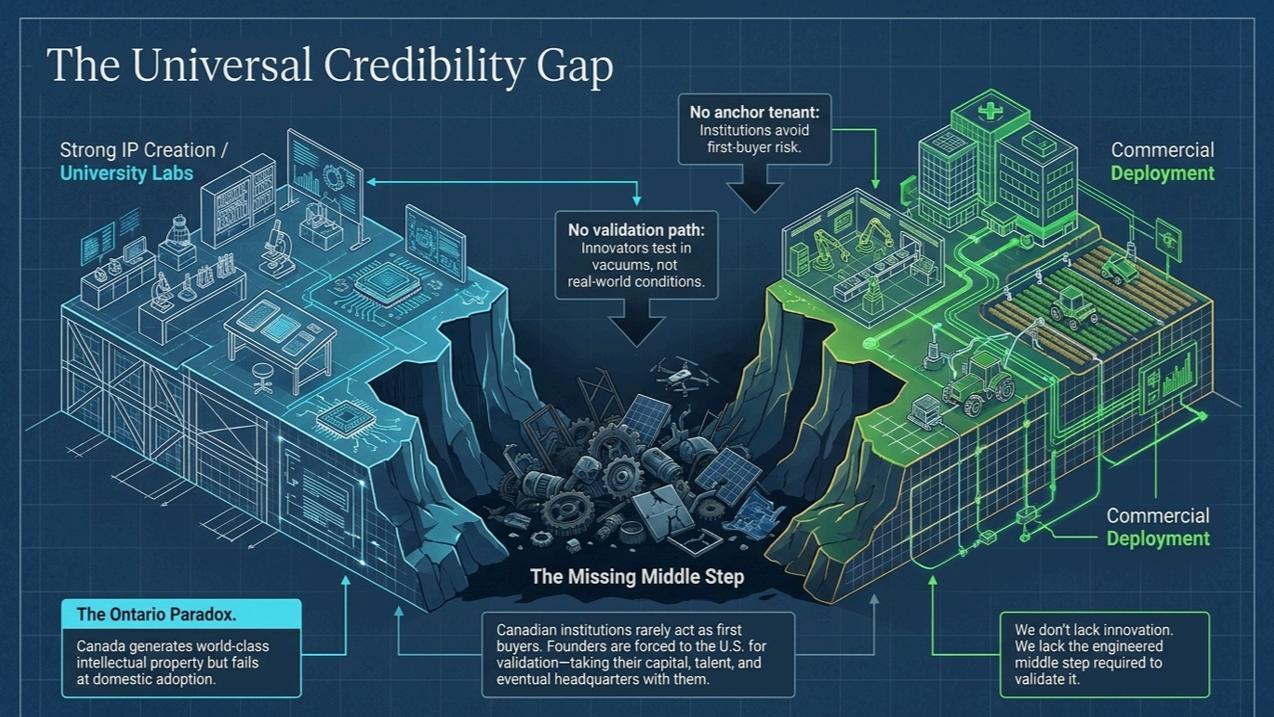
Canada generates world-class intellectual property, but we are losing our best physicalgoods startups to a massive "Credibility Gap."
Startup Growth Magazine
From May 25 to 29, the city hosted more than 600 community-led events spanning 30 neighborhoods, with organizers projecting as many as 25,000 participants by the week’s close What began as a tweet in the summer of 2024, a response to the departure of the international Collision conference to Vancouver, has grown into the largest grassroots tech gathering in Canada
Built by Toronto, for the World
Toronto Tech Week is structured deliberately to resist the conventions of the traditional conference circuit There is no single anchor venue, no keynote stage controlled by a corporate producer, and no registration fee Events are hosted independently by companies, investors, community groups, and individuals, then aggregated onto a shared public calendar The result is an ecosystem-in-motion: fluid, decentralized, and unmistakably local.
The initiative is led by co-directors Mellonie Truong, co-founding partner of Sage Consulting Co , and Julia (Baird) Konefal, a partner at Golden Ventures Founding steering members Ameet Shah of Golden Ventures and Satish Kanwar of Good Future round out the core leadership group
Konefal framed the event in even broader terms. “If you ’ re curious about Toronto tech, this is the most honest way to experience it,” she said “Toronto Tech Week is built by Toronto for the world ” The sentiment captures the dual ambition at the heart of the initiative: to give the local ecosystem a shared moment to cohere, while simultaneously projecting that strength outward to a global audience
The 2026 edition arrived with a significant structural shift: a multi-year partnership with the City of Toronto, announced in January and described by organizers as a signal of long-term institutional commitment to the city’s innovation economy
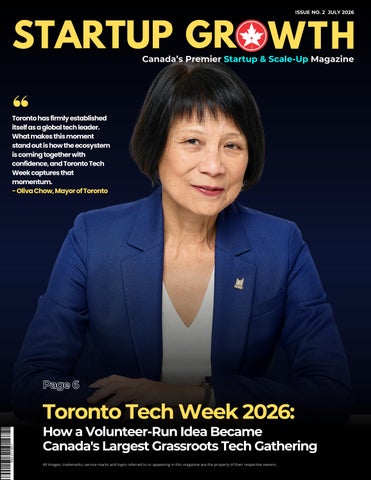
Mayor Olivia Chow offered a pointed endorsement. “Toronto is a global tech hub, and that means real jobs, real growth, and real economic impact to neighborhoods throughout the city,” she said in a statement “This multiyear partnership reflects the City’s commitment to supporting the talent, ideas, and companies that power our innovation economy Toronto Tech Week is our chance to showcase what we ’ re building, and invite the world to build it with us ”
City Hall Commits for the Long Haul
The city’s investment follows a first year that outperformed every projection The inaugural 2025 edition attracted more than 15,000 attendees across 315 events and 500 speakers in 27 neighborhoods, effectively matching the rebranded Web Summit Vancouver in total attendance, despite operating with a fraction of the budget and none of the top-down conference infrastructure
Homecoming: The Mainstage Moment
At the center of the week was Homecoming, the official mainstage event held on May 27 at History, one of Toronto’s premier live-event venues Up to 1,000 attendees gathered in person, while more than 100,000 tuned in virtually for conversations with some of the most prominent figures in Canadian and global technology
Speakers included Tobi Lütke, CEO of Shopify; Andrew Macdonald, President and Chief Operating Officer of Uber; Nick Frosst, Co-founder of Cohere; Andrew Chau, Co-founder of Neo Financial; Emily Hosie, Founder and CEO of Rebel; and Alex Danco, Editor-at-Large at Andreessen Horowitz The program reflected the breadth of Toronto’s tech economy, from fintech and AI to logistics and venture capital
The week’s programming extended well beyond the Homecoming stage Events ranged from AI and fintech panels hosted by Sagard, Robinhood, Carta, and the Creative Destruction Lab, to founder roasts, pickleball tournaments, cold plunge sessions, and intimate dinners with investors The schedule spanned more than 30 city neighborhoods and more than 500 separate events
Partners and Sponsors: Ecosystem in Formation
Toronto Tech Week’s presenting partners for 2026 were the City of Toronto, Shopify, and Google for Startups, the same triumvirate that anchored the inaugural year Supporting sponsors Bell, Osler Hoskin & Harcourt LLP, and Ada CX joined the fold as new additions, reflecting growing private-sector confidence in the event’s staying power
More than 120 community partners were on board, including Golden Ventures, MaRS Discovery District, Canada Startup Association, Global Angel Investor Network, the University of Toronto, DMZ, Elevate, 1Password, Deloitte, Intuit, Float, TechTO, Build Canada, NEXT Canada, and Lyft The participation of such a diverse institutional and corporate roster underscores a key design principle of Toronto Tech Week: the event belongs to no single sponsor or organizer
Two new technology integrations also debuted Lazer Technologies built a scheduling tool allowing attendees to plan and share personal agendas across the decentralized program Ada CX powered an AI agent offering 24/7 navigation support for out-of-town visitors and anyone managing overlapping events across the city.
The model Toronto Tech Week has adopted, non-profit, volunteer-led, community-hosted, sets it apart from the large international conference circuit in ways that its organizers consider fundamental rather than incidental When Collision left for Vancouver, it took its ownership structure with it Toronto Tech Week, by contrast, is designed to be unrelocatable It is the city
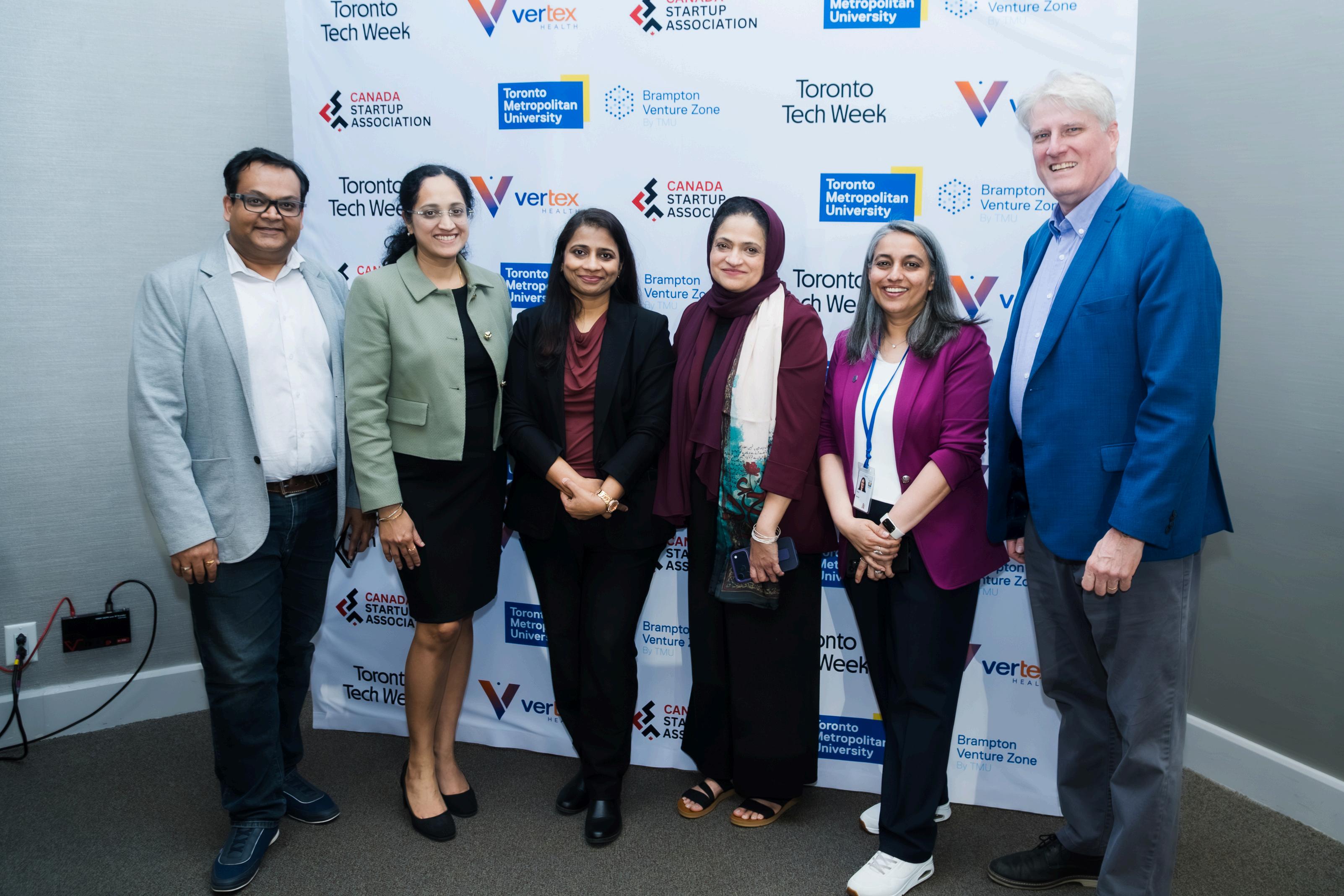
Tehmina Chaudhry, President Canada Startup Association said, “Some build companies Some build communities A few build bridges between worlds never meant to connect, that's the work of CSA. To every founder, investor, policymaker, and ecosystem builder on this journey: thank you for the conversations and the trust."
Founding steering member Satish Kanwar a cofounder of Good Future and board chair of BetaKit has described the initiative as Toronto’s opportunity to move from renting a spotlight to owning one The 2026 edition, with its expanded program, multi-year city mandate, and deepening corporate sponsorship, suggests that ownership is taking hold
That participation has clearly arrived. With 600-plus events, 25,000 expected attendees, and a two-year municipal commitment locked in, Toronto Tech Week 2026 was not just a celebration of the citys technology sector It was, increasingly, an argument for what that sector is becoming: ambitious, globally oriented, and built to last
Interview By SK Uddin
In an exclusive interview with Startup Growth Magazine, Somen Mondal, Co-Founder and CEO of Amp, shares the lessons, strategies, and mindset shifts that have shaped a remarkable entrepreneurial journey spanning multiple successful startups and acquisitions With a track record of building high-growth companies across workplace technology, AI, and talent solutions, Somen has developed a practical approach to scaling businesses through disciplined execution, customer obsession, and a relentless focus on distribution
Somen Mondal is the Co-Founder and CEO of Amp (amp10.ai), the AI Teammate layer for HR and Talent, and Co-Founder of T10 Ventures. He is a three-time founder with three exits to strategic acquirers totalling over $135M, and each company he has built has been leaner and faster than the one before it. His previous companies include Field ID, a workplace safety compliance platform acquired by Fortune Brands in 2012; Ideal, an AI-powered talent intelligence platform acquired by Dayforce in 2021; and FairNow, an AI governance platform acquired by Optro in 2025 at a 50x ARR multiple with a team of fewer than 10 people At Amp, Mondal is building AI Teammates that own outcomes rather than assist, autonomously handling hiring and onboarding workflows for two markets: large enterprises that already have an HR team, and the millions of small and mid-sized businesses that do not He is a recipient of Canada's Best Executive Award (2024) and the EY Entrepreneur of the Year Award (2012), a YPO member, and holds a Computer Engineering degree from the University of Toronto and an MBA from Queen's University
You’ve built and scaled multiple B2B startups. When you started Amp, what key gap in the market did you aim to solve, and how did that insight influence your early product and go-to-market decisions?
The key gap we wanted to solve is the administrative work burying HR and talent teams If you look at a large company, a large bank, or a large retailer, about 45% of the HR and talent team's time is literally spent clicking around on a screen, doing work that doesn't move the business forward
For the millions of small companies that don't have an HR person at all, the problem is different They need HR help and they don't know where to start Our goal was to do both: amplify the existing teams at companies that have one, and be the HR and talent team for the companies that don't
When we think about product and go-to-market, we always start with distribution from day one There's a phrase I like: "First-time founders think of the product, and second-time founders think of distribution." For us, the question is always how we get the product into as many hands as possible, and we weave that thinking into every product and go-tomarket decision we make
ImageCourtesy:Canva
“Product-market fit” is often talked about but rarely clearly defined. In your experience, what practical signals show that a product is truly resonating with customers, and how can early-stage founders validate this without overbuilding or overspending?
For us, product-market fit comes down to one signal: your customers start becoming fans of your product They are realising value, they are seeing that it solves a real problem for them, and because of that, they are willing to put their name behind it They agree to do case studies, they take reference calls, they introduce you to their peers When customers start advocating for you on their own, that is productmarket fit
The way to get there without overbuilding or overspending is to stay close to the customer. Work with your earliest customers as design partners. Your first few customers will not only help you build the product, they will help you define the market and figure out how to go after other customers who look like them
The phase between seed stage and scaling is often the most challenging. What systems, habits, or decisionmaking frameworks have helped you stay focused, prioritize effectively, and maintain momentum during this stage?
For us, this part is pretty simple We have never been in the game of chasing funding rounds Our focus has always been on sales and marketing, and even more on sales than anything else
What matters most between seed and scale is getting large deals, closing customers, building repeatability in the sales cycle, and maintaining a strong pipeline Sales and revenue is a metric that will never go out of style
You’ve emphasized the importance of repeatable sales and disciplined execution. How should first-time founders approach building an early sales engine when they have limited resources, data, and brand recognition?
Startup sales are notoriously hard because you don't have a brand backing you up. The truth is, if the founder can't sell the product in the early days, the company is probably not going to be successful In the early days, the founders have to be the best salespeople in the company They have to prospect, run demos, and close deals themselves, with limited resources and limited time That is just part of the game and there is no way around it It is a lot of hard work and a lot of rejection, and it is on the founders to push through and make it happen
Reflecting on your journey, what key mindset shifts do you believe are essential for founders today, especially in a fast-changing environment shaped by AI, shifting capital markets, and evolving customer expectations?
This isn't a new mindset, but it has never been more important: founders need to over-index on constant learning and what I call manic curiosity. The landscape is changing faster than ever, new technologies are coming out at a pace I have never seen before, and the only way to stay ahead is to keep learning
Curiosity is closely related to learning, but it goes further It means actively experimenting with new technologies, trying them inside your own product, and seeing how they work for your customers Founders who don't lean into that are going to miss out on the most powerful tools available to them The ones who do are the ones who will compound their advantage over the next decade
Disclaimer: The views expressed in this interview are solely those of the interviewee and do not necessarily reflect the views of Startup Growth Magazine The content is for general information only and is not professional or investment advice
Doorstep Dental WinsNewBusinessoftheYear
By Tehmina A Chaudhry
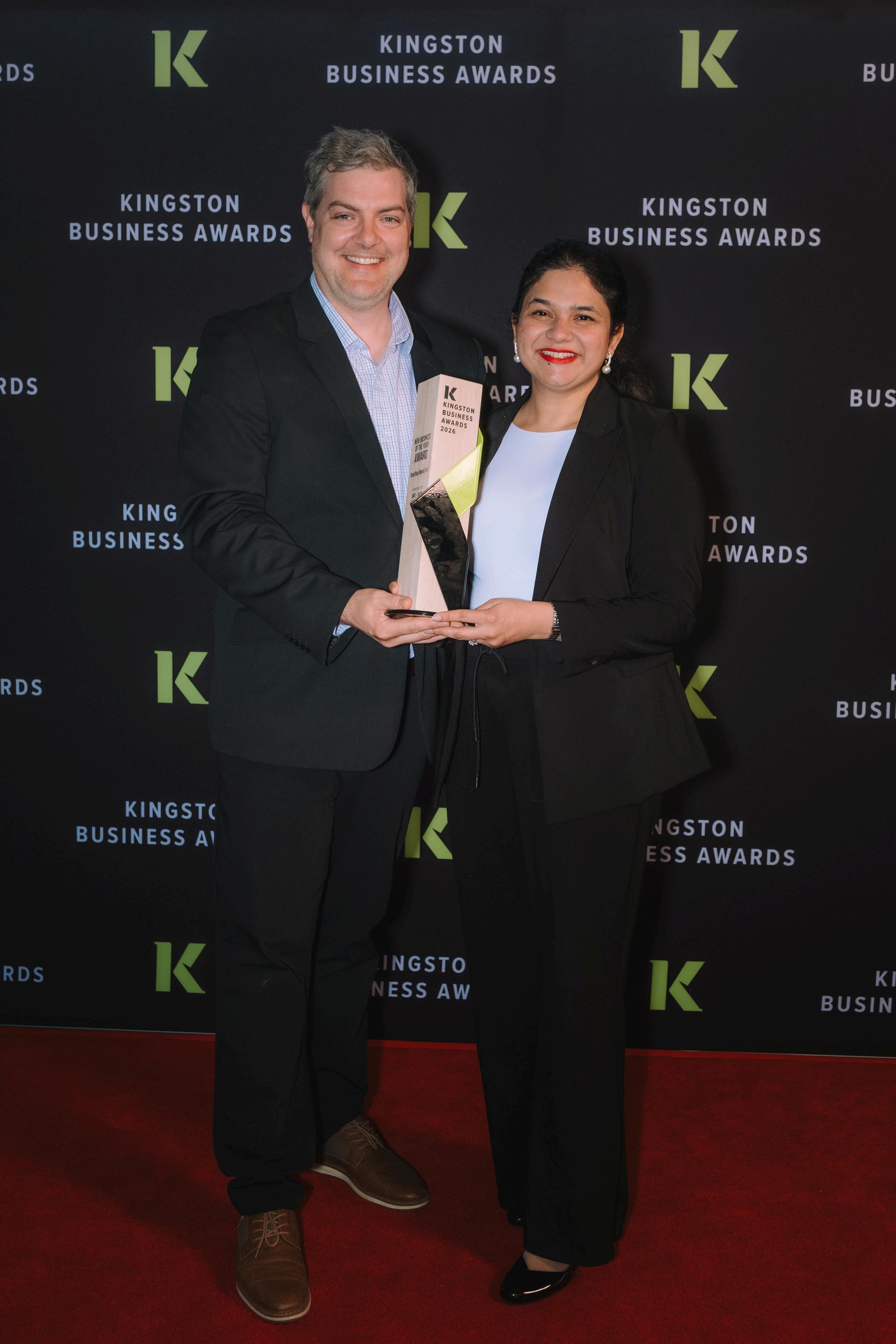
The Greater Kingston Chamber of Commerce held the 2026 Kingston Business Awards in May 2026 to honour the best of the region's entrepreneurial spirit, and one newcomer won both hearts and headlines Doorstep Dental Inc , a mobile dental hygiene startup formed in 2024, was recognized with the New Business of the Year Award, highlighting the companys rapid growth and significant community impact
When Doorstep Dental Inc was established in 2024, its objective was straightforward yet ambitious: to make professional dental hygiene care available to people who cannot access traditional clinics. Target communities include retirees, busy families, and people with mobility issues, all of whom are frequently underserved by traditional dental care
“We believed there was a need for compassionate mobile dental hygiene services that meet people where they are, ” the company shared following the award announcement That idea was founded on empathy and practical insight: getting dental treatment might be difficult for many people due to mobility limitations, transportation issues, or hectic schedules The BMO-sponsored New Business of the Year Award recognizes not only entrepreneurial achievement but also noteworthy community contributions Doorstep Dental, together with Loyalist Concierge Co , has been recognized as a leading impact-oriented startup in the region
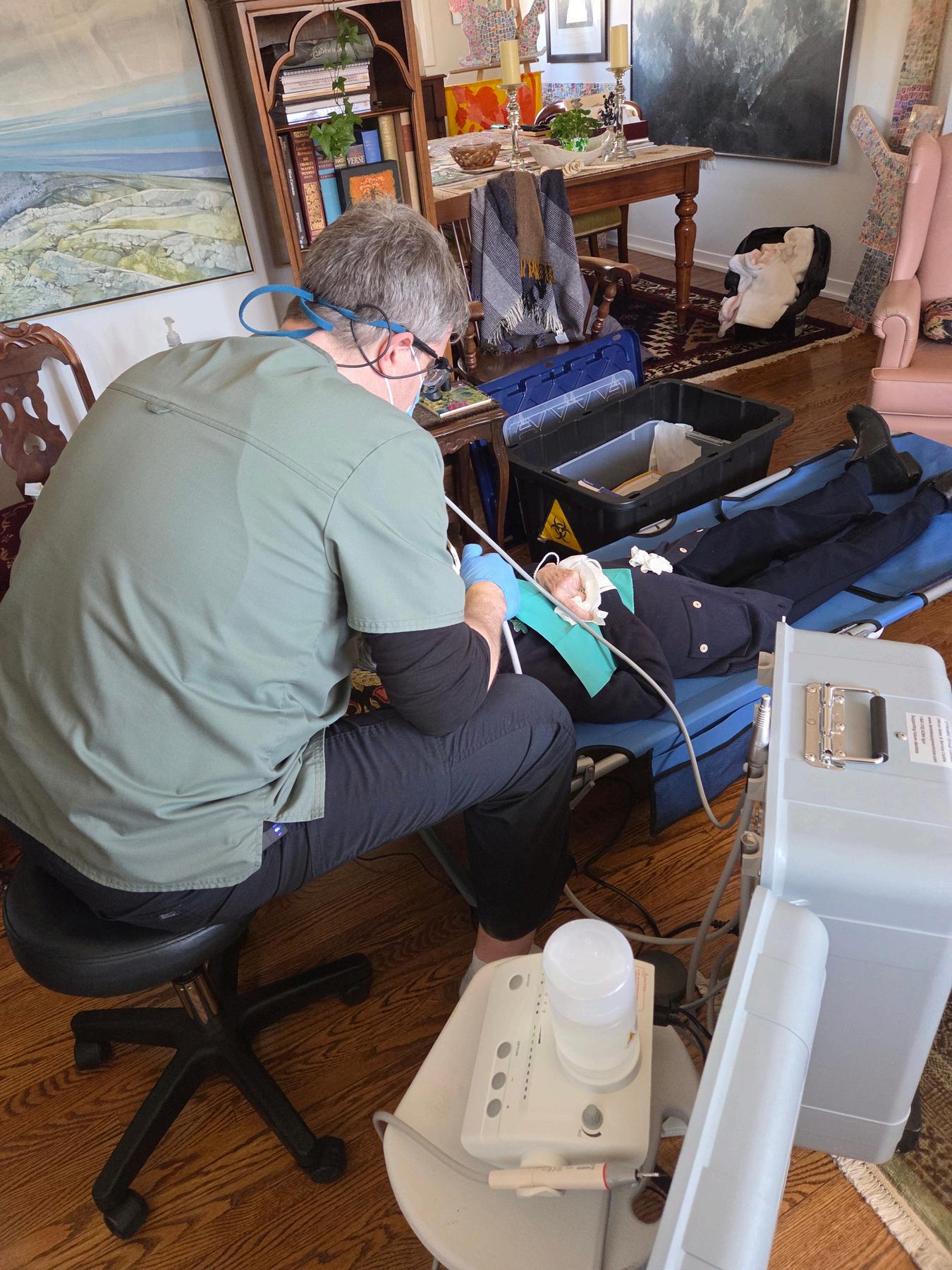
Doorstep Dental's service model prioritizes convenience, comfort, and decency Patients receive professional dental hygiene care directly in their homes or other residential settings, eliminating the need for waiting rooms and clinic visits – a concept that has struck a chord with many, particularly elderly people and others with limited mobility The organization has a staff of licensed dental hygienists who carry the required equipment and experience to each visit
Doorstep Dental's LinkedIn posts include real-life examples, such as caring for an 89-year-old patient in a seniors' community, demonstrating how doorstep services overcome hurdles like weather, transportation, and physical strain to provide high-quality preventive treatment
This paradigm coincides with healthcare trends that prioritize home-based and preventive treatment, especially for older populations. As Canada's senior population grows, there is a greater demand for accessible treatments that minimize clinic burden and improve quality of life
What the Award Signals
The Kingston Business Awards recognize more than just income and growth; they also award innovation, perseverance, and community value With dozens of nominees in categories such as Customer Experience, Skilled Trades, Arts & Culture, and Social Impact, competition was fierce
According to media accounts, additional winners of the night included:
Business Person of the Year: Patrick Egbunonu of Infomanos Analytics and Artificial Intelligence
Hospitality - Kebab 44
Customer Experience: The Boat Warehouse
Arts & Culture: Cantabile Choirs, Kingston, among those who have been honoured for their achievements in their respective disciplines.
Doorstep Dental's selection in this context emphasizes firms that combine business acumen with genuine social impact, an increasing theme in regional award ceremonies and broader entrepreneurial ecosystems.
Voices from the Ecosystem
While the formal release focused on the win itself, industry colleagues and community people voiced their support and optimism: Doorstep Dental is revolutionizing how care is delivered in our community," stated a local healthcare professional specializing in senior care "Winning this prize recognizes the value of models that meet patients where they are.
This endorsement underscores a broader shift: businesses that solve real-world problems through customer-centric services are earning prominence beyond traditional tech or product categories
What’s Next for Doorstep Dental
With this honour in its portfolio, Doorstep Dental Inc is wellpositioned for expansion The company has already formed agreements, such as with Perennial, which incorporates mobile dental hygiene into larger coordinated care models for retirement and residential communities Collaborations strengthen the startup's mission-driven approach to healthcare while also expanding its reach As Doorstep Dental expands, the narrative is worth following for those interested in healthtech innovation, community health solutions, and mission-aligned entrepreneurship
Noteworthy
1. 2.
Achievements
Following Doorstep Dental Inc.'s New Business of the Year Award from the Greater Kingston Chamber of Commerce, they received a congratulatory certificate from Member of Parliament Mark Gerretsen in recognition of this achievement and our continued service to the community
Additionally, Doorstep Dental Inc has recently partnered with the St Lawrence Youth Association (SLYA) to help improve access to oral health care for youth and families This partnership reflects our commitment to making oral health care more accessible and community-centred.
Final Thoughts
In an era when startups are defined by both technological innovation and their impact on daily life, Doorstep Dental Inc ' s victory at the 2026 Kingston Commercial Awards showcases a new type of entrepreneurial success one in which commercial brilliance meets community service This serves as a reminder to Canadian companies that solving concrete problems through empathy and design may be just as effective as any scaled tech solution.
Your engagement helps strengthen a growing ecosystem of founders, builders, and business leaders Startup Growth is designed to deliver practical insights, emerging trends, and real-world strategies that support entrepreneurial success Click here to subscribe and follow our official channel Stay connected to us for the latest developments in the startup landscape Your continued support helps us spotlight innovation and opportunity across Canada
Disclaimer: The content published on StartupGrowthca is based on publicly available sources and is provided for general informational purposes only Startup Growth does not endorse, recommend, or guarantee any products, services, organizations, or claims mentioned. Readers are encouraged to conduct independent research and exercise due diligence before making financial, investment, or business decisions
Canada’sInnovation Crossroads: ScalingHigh-Growth
CompaniesinBudget2026
By SK Uddin
In an appearance before the House of Commons Standing Committee on Finance last week, Daniel Perry, Director of Federal Affairs at the Council of Canadian Innovators (CCI), discussed one of Canada's most important economic issues: how to guarantee that fast-growing Canadian businesses can expand internationally while maintaining a strong domestic presence (ParlVu) (LinkedIn) Canada has a strong innovation ecosystem Innovative companies in AI, cybersecurity, fintech, defence, health, clean technology, and advanced manufacturing are based in the nation
However, Perry highlighted that the crucial question is whether Canada's regulatory framework is providing these businesses with the clients, funding, and personnel required for sustained expansion Canada has world-class researchers, strong entrepreneurs, and companies with global potential The challenge is that too many of these firms are struggling to scale and grow here in Canada,” he testified
The Scale-Up Barrier
Canadian businesses frequently face three main obstacles:
Access to Customers: Obtaining early domestic clients and procurement possibilities is challenging
Access to Capital: Reliance on foreign investors is often necessary due to a lack of late-stage funding, increasing the risk of IP loss and relocation
Access to Talent: Retention is challenging due to global competition for qualified workers, especially in AI and advanced tech fields
During the hearing, Perry offered four significant pre-budget suggestions to assist Canadian innovators:
StrategicPublicProcurement-
Public procurement should be used as a conscious economic policy tool to test Canadian technology, attract early customers, and maintain domestic control over intellectual property and data To lessen reliance on foreign platforms, Canada should invest in its own AI, cloud, compute, and defence systems (CCI submission).
DomesticSovereigntyinAIand Defence-To lessen reliance on foreign platforms, Canada should invest in domestic AI, cloud, computing, and defence systems Critical infrastructure should be maintained to ensure it is upgradable and operable by Canadians.
StrengtheningInnovation Capital- Late-stage growth finance (Series B and beyond) is restricted, making it vulnerable to foreign acquisition Perry proposes government-backed capital initiatives and tax breaks to help Canadian investors retain locally supported, high-growth enterprises.
ModernizingFounderAttraction Programs- The Start-Up Visa Program should be performance-based, with a focus on job creation and intellectual property retention, to ensure that Canada recruits and retains the global talent required to develop high-growth businesses
The Stakes for Canada’s Economy
The Canadian economy is becoming more knowledge-based, with intangible assets such as data, algorithms, and intellectual property accounting for over 92% of S&P 500 value – a figure approaching $100 trillion globally (Harvard Business Review) Countries that capture and maintain these assets promote long-term economic growth, high-wage employment, and tax revenue. For Canada, failing to scale domestic entrepreneurs risks losing intellectual property and economic value.
Entrepreneurs echoed these concerns:
“The challenge is making sure that Canadian companies have the capital and market access to grow without losing control of the value they create,” said Lyne Jacques, Chief Revenue Officer at Miovision
Canada has world-class talent and technology companies The question is whether we can move fast enough to compete,” said Christian Weedbrook, Founder & CEO of Xanadu Quantum Technologies.
Budget 2026: A Strategic Opportunity
Budget 2026 is a critical opportunity to consolidate Canada's economic, industrial, trade, and national security instruments around a single goal: allowing high-growth Canadian enterprises to create, scale, and stay in Canada Perry underlined that fragmented regulations have not eliminated impediments for scaling enterprises, and that a coordinated, 21st-century regulatory framework is required
For Canadian companies, the message is clear: scalability and sustainability at home require an integrated policy ecosystem Aligning procurement, capital, talent, intellectual property, and economic strategy may determine whether Canada becomes a global innovation hub or simply a testing ground for foreign investment
Your engagement helps strengthen a growing ecosystem of founders, builders, and business leaders Startup Growth is designed to deliver practical insights, emerging trends, and real-world strategies that support entrepreneurial success. Click here to subscribe and follow our official channel Stayconnectedtous for the latest developments in the startup landscape Your continued support helps us spotlight innovation and opportunity across Canada
Disclaimer: The content published on StartupGrowthca is based on publicly available sources and is provided for general informational purposes only Startup Growth does not endorse, recommend, or guarantee any products, services, organizations, or claims mentioned Readers are encouraged to conduct independent research and exercise due diligence before making financial, investment, or business decisions
TheSovereigntyPlay:
ByHammadSiddiqui
In what is being billed as a defining turning point for the nation's economic trajectory, Prime Minister Mark Carney and Artificial Intelligence Minister Evan Solomon unveiled "AI for All," an ambitious, $2-billion-plus national artificial intelligence strategy overhauling how Canada builds, adopts, and regulates its most transformative digital technologies
By designing the framework as a matter of state sovereignty, the government is explicitly addressing a major anxiety shared by Canadian technology executives: an existential dependency on hyperscale American and foreign tech platforms To counter this, Ottawa is investing heavily to build a world-class public AI supercomputer and expand a strictly sovereign, domestic computational infrastructure The objective is to keep Canadian industrial data and corporate intellectual property firmly within domestic jurisdictions, shielding national security interests from foreign data-harvesting networks.
Academic and research institutions, which have long warned of a domestic "brain drain" where Canadian founders migrate south for capital and compute, have praised the strategy's dual focus on retained intellectual property and infrastructure access
Valérie Pisano, President and CEO of Mila, expressed strong optimism about the tactical shift “We have spent years building a world-beating research engine in Montréal, but without the sovereign infrastructure to match, our best ideas and brightest minds frequently migrate across borders,” Ms Pisano noted “The strategy’s emphasis on scaling Canadian champions and providing domestic cloud computing subsidies aligns perfectly with our vision of converting breakthrough lab models into commercial powerhouses that create value right here in Canada ”
However,pushingtechnologyintoeveryworkplacerequires askepticalpublictobuyin.Recentdatarevealsthatpublic trustinAIamongCanadianshashitanall-timelow To bridgethisdeficit,thestrategyallocates$50millionto expandthecapabilitiesoftheCanadianAISafetyInstitute, taskedwithrigorouslyevaluatingenterprisemodelsand trackingrisksrelatedtodeepfakes,algorithmicprejudice,and maliciousdisinformation.
Furthermore, Minister Evan Solomon announced upcoming legislative packages designed to explicitly target harmful practices, including deepfakes, unauthorized digital cloning, and algorithmic "surveillance pricing" models The framework also hints at a future "Canada Trusted AI Certification" program to help consumers and buyers identify verified, ethically developed software applications
Conservative Deputy Leader Melissa Lantsman quickly fired back, calling the policy “ a very ambitious plan which lacks a lot of concrete operational details,” while raising deep skepticism over the government's lofty job creation promises during a period of broader tech-sector macroeconomic headwinds
Whether the Carney framework can successfully transform Canada from a research hub into a commercial powerhouse depends entirely on how quickly these capital funds are distributed and whether public infrastructure can match the blistering speed of global private capital For Canada’s startup founders, "AI for All" delivers a profound mix of unprecedented opportunity and structural duty: a well-capitalized mandate to scale globally, backed by a sovereign safety net that demands deep alignment with Canadian values
Your engagement helps strengthen a growing ecosystem of founders, builders, and business leaders Startup Growth is designed to deliver practical insights, emerging trends, and real-world strategies that support entrepreneurial success Click here to subscribe and follow our official channel Stay connected to us for the latest developments in the startup landscape Your continued support helps us spotlight innovation and opportunity across Canada
Disclaimer: The content published on StartupGrowth.ca is based on publicly available sources and is provided for general informational purposes only Startup Growth does not endorse, recommend, or guarantee any products, services, organizations, or claims mentioned Readers are encouraged to conduct independent research and exercise due diligence before making financial, investment, or business decisions
For startups and the investors who fund them, the official confirmation of what many already suspected lands on top of a capital environment that was deteriorating well before Friday's data drop The recession headline is the macroeconomic frame The startup crisis was already structural
The funding picture is worse than the GDP headline
The Canadian Venture Capital and Private Equity Association's first-quarter report, released earlier this month, documented something remarkable in its bleakness Growth-stage venture capital the financing that allows a startup that has found product-market fit to actually scale fell to a single deal worth roughly $1-million in the first three months of 2026 In a typical first quarter, that figure sits around $140-million It was the lowest deal count at that stage in any quarter since 2017
ImageCourtesy:Canva
The broader VC picture is only slightly less severe CPE Analytics tracked $1 12-billion across 110 financings in Q1 2026 the fourth-lowest quarterly total since 2017 Investors from 38 fewer countries participated compared with the same period a year earlier; only 16 countries put money into Canadian startups, down from 54 American VCs, long the backstop for Canada's scaling companies, cut their share of total funding to 40 per cent from 58 per cent in 2025 Bridge financing the short-term lifeline companies tap when they cannot raise a proper round hit a record 38 per cent of all deals
What history tells us about recessions and startups
The instinct in a downturn is to pull back The evidence from comparable economies suggests that is precisely the wrong response
Finland offers the most instructive parallel After Nokia's collapse gutted its dominant tech sector in the late 2000s, the country faced what amounted to a single-company recession inside a global financial crisis Rather than retreat from innovation spending, Helsinki leaned into it. Sitra, the Finnish state fund, maintained its commitments to earlystage companies through the cycle Aalto University restructured its entrepreneurship programming Within a decade, Finland had produced a diversified deep-tech ecosystem with outsized influence on European AI and software development a transformation that analysts now describe as among the most successful postrecession innovation pivots in the OECD
This lesson tells that the ecosystems that survive downturns intact are those where public capital holds the line while private capital retreats, and where the recession is used to build rather than to hunker
What government ds to do — and fast
a has $750-million earmarked in the 2025 t for startup support, and a Venture and h Capital Catalyst Initiative with a billionmandate Neither has moved quickly enough tter to a founder trying to close a bridge in Toronto this quarter
VCA has been pressing the federal nment to direct a substantial portion of that l toward VC funds capable of leading large h-stage rounds a category that has tially ceased to exist in the domestic market s the right instinct Canada does not have a ne problem; BDC's own analysis shows that stage deal flow has held up reasonably well oblem is that companies coming out of the seed stage have nowhere to go The growth stage is the gap, and it is widening
ImageCourtesy:Canva
Beyond capital deployment, there are two structural moves the government should make in the current window First, the SR&ED tax credit Canada's principal R&D subsidy should be accelerated In a recession, the timing of cash refunds to startups is not an administrative detail; it is a survival mechanism Second, Ottawa should be actively using Canada's trade diversification push the recent expansion of Asian energy markets, the China export deal to open procurement pathways for Canadian tech companies in those markets, not just commodity exporters
What the ecosystem needs to do
Ecosystem organizations need to collaborate instead of competing Move immediately to deal with the capital-constrained environment One of the most valuable thing an accelerator or innovation hub can offer is not another pitch competition. It is access to paying customers, connections to non-dilutive revenue, and the kind of operational mentorship that helps a founding team extend runway without a new raise
The CVCA's data points to one underappreciated opportunity: non-traditional capital providers Canadian mutual funds and hedge funds stepped into the gap in Q1 2026, deploying $393-million, or 35 per cent of total startup funding That is institutional money looking for exposure to early-stage technology Ecosystem organizations should be actively brokering those relationships and helping founders understand how to access capital from sources they were not previously pitching
There is also a talent dimension that a recession makes more acute Canada's domestic market for senior technical talent is, in a downturn, comparatively more accessible engineers laid off by scaling companies that can no longer raise are available to founders who know where to look. Ecosystem players who build programming around that specific transition will create value that outlasts the current cycle
The longer view
Not all economists are convinced the technical recession label fully captures the moment Capital Economics argues the trade-induced contraction may already be ending, with April GDP tracking a 0 4 per cent rebound as oil and gas activity returns. That may be right. But the startup funding drought is not a shortcycle phenomenon tied to one quarter's GDP reading. Canadian VC fundraising hit its lowest level since 2016 in 2025 The structural dependence on foreign capital particularly American capital that BDC has been warning about for years is now a live vulnerability rather than a theoretical one
Finland took a structural shock and built an ecosystem Israel built a program to attract international capital in the absence of domestic depth Canada has the raw materials strong universities, a diverse talent base, genuine innovation in AI, cleantech, medtech, and fintech to do something similar What it has historically lacked is the urgency
The recession may supply that, if the response is proportionate to the moment The window is not unlimited
Your engagement helps strengthen a growing ecosystem of founders, builders, and business leaders. Startup Growth is designed to deliver practical insights, emerging trends, and real-world strategies that support entrepreneurial success Click here to subscribe and follow our official channel Stay connected to us for the latest developments in the startup landscape Your continued support helps us spotlight innovation and opportunity across Canada
Disclaimer: The content published on StartupGrowth.ca is based on publicly available sources and is provided for general informational purposes only Startup Growth does not endorse, recommend, or guarantee any products, services, organizations, or claims mentioned Readers are encouraged to conduct independent research and exercise due diligence before making financial, investment, or business decisions
Interview By Tehmina A Chaudhry
In an exclusive interview with Startup Growth Magazine, Tarek Sharkas, prosthodontist, roboticist, and founder of Digikas and Dintoid, shares the unconventional journey of combining dentistry, robotics, and entrepreneurship to solve real-world problems. From building the humanoid robot Elbrus Magma to creating practical solutions for dental offices and educational environments, Tarek has developed technologies that complement human work, streamline repetitive tasks, and inspire innovation across industries
Tarek Sharkas is a prosthodontist, roboticist, inventor, and entrepreneur He is the founder of Digikas Corp and Dintoid Corp , where he combines clinical expertise in dentistry with advanced robotics, product development, and innovation His work focuses on bridging healthcare, robotics, education, and consumer technology through practical, human-centered solutions.
Tarek is the creator of Elbrus Magma, a humanoid robotics platform designed for real-world applications in dental offices, laboratories, educational environments, and homes Through Digikas, he is developing technologies such as the Puppeteer Control System, Magic Hand robotic control interfaces, custom electronics, AI-assisted movement, and robotic interaction systems
As an inventor, Tarek has filed three patents and multiple trademarks across the fields of robotics and dentistry His work reflects a unique combination of prosthodontics, mechanical design, embedded systems, 3D printing, artificial intelligence, and product commercialization
Driven by a passion for invention, education, and practical problem-solving, Tarek aims to make advanced robotics more accessible while creating technologies that improve healthcare, inspire future builders, and expand the role of robotics in everyday life.
You’re a prosthodontist, roboticist, and founder of both Digikas and Dintoid. Why did you decide to create these two companies, and how do they each serve a different role in your broader vision to connect robotics, dentistry, and real world problem solving?
It is funny when I think back to how the Elbrus Magma project started.
At the beginning, it was very simple I wanted to create a robot as a hobby something fun that I could use to tease my kids, play with them, and bring imagination into our home It started as a personal idea: a father wanting to build something exciting for his children
Then COVID-19 happened We were home for almost three and a half months, and during that time I started working more seriously on the robot using 3D printing, CAD design, and PCB development That became the first edition of Elbrus Magma
Alongside the robot, I also created a comic book called Cinder Wars to give the project a story, personality, and fun factor
After presenting the project at FN Expo in 2022, exploring different ventures, and joining the Boundless Accelerator, the project started taking a more serious direction I pivoted multiple times until I realized the real need inside dental offices: the sterilization bay
You started building the Elbrus Magma humanoid robot yourself in 2020 and have continued developing it for years. Can you walk us through that journey—from early prototypes to the current MAX81—highlighting the toughest technical or personal challenges, and what it really takes to build a robot from scratch while running a clinical career?
It has been quite a journey
To bring Elbrus Magma to life, I had to educate myself in many areas outside my original profession. I had to learn the principles of robotics, read books, study mechanical systems, understand CAD design, and gradually master PCB design
What started as a hobby became, and still remains, a deep passion of mine But balancing that passion was not easy My time and energy have always been divided between dentistry, implant treatment, robotics, my family, and building Digikas Corp
Time management became one of the biggest challenges During the weekdays, I work in dentistry and dedicate a few hours whenever possible to Digikas On weekends, I usually give the project my full focus and energy
One of the toughest challenges was convincing people of the importance of humanoid robots and why they represent part of the future For a long time, many people viewed humanoid robots as luxury items or impractical concepts But with the rapid growth of artificial intelligence over the last few years, and with companies like NVIDIA investing heavily in humanoid robotics, the conversation has started to change
Today, humanoid robots are no longer just futuristic ideas They are becoming a serious direction for the future.
ImageCourtesy:GitexCompetition2025
Around the world, healthcare and dental practices are struggling with staff shortages, especially for repetitive, hard‑to‑fill roles. How do you see humanoid robots like MAX81 supporting teams in sterilization, labs, and routine workflows— complementing staff rather than replacing them and what kinds of tasks do you think robotics will realistically handle in the next 5–10 years?
I truly believe that the role of humanoid robots is to complement human workers, not replace them
In a dental office, for example, the goal is not to replace the dental assistant The goal is to remove the repetitive and less enjoyable tasks from the team, so the dental assistant can focus on the work they are trained for and passionate about: assisting the dentist, supporting the patient, and contributing to clinical care
The sterilization bay is a perfect example It is repetitive, time-consuming, and essential, but it is not usually the part of the job that people enjoy the most If a humanoid robot can support or perform that process, then the dental team can spend more time doing the human-centered tasks that matter most
In my opinion, the hardware for humanoid robots has advanced very quickly, and in many ways, it has surpassed the software The software still needs to catch up to fully unlock the potential of the hardware
However, battery technology remains behind both hardware and software. For humanoid robots to become truly reliable in real-world environments, we still need better batteries, longer running time, greater safety, and improved energy efficiency
ImageCourtesy:GitexCompetition2025
Digikas is building the Elbrus Magma family to serve dental offices, educational environments, hobbyists, and eventually homes, while Dintoid is focused on dental instruments like your CBI Tray for crown, bridge, and implant procedures. How do you see these product lines evolving over the next few years, and what does “covering multiple markets” look like in practice for a robotics‑driven startup?
At the end of the day, all of these ventures depend on one thing, and one thing only: demand
No matter how exciting an idea is, no matter how advanced the technology may be, if there is no real demand, then it remains only a sweet dream That is why I keep coming back to the importance of pivoting In my opinion, pivoting is one of the most important assets every founder needs to have
As founders, we can easily fall in love with our own ideas Passion is important, but passion should not blind us from reality We have to listen to the market, understand the problem, and be honest about whether people truly need what we are building
For me, the goal became very clear: I wanted to make the dentist’s life easier I wanted to build something that meets a real demand in the dental office, not just something that satisfies my personal passion for robotics
That is why the dental version of Elbrus Magma became so important MAX81 is not only about building a humanoid robot. It is about solving a practical problem, supporting the dental team, and creating technology that fits a real clinical need.
Your story includes chance meetings with people like Qurratulain Kamil, Tehmina Chaudhry, and Nicholas Rezzara, leading to Boundless Accelerator, mentorship, and eventually your COO. What has this taught you about pivoting both in life and in startups and what advice would you give new founders about staying open to unexpected connections, changing course when needed, and turning a solo project into a real company?
My journey taught me that pivoting is not only a startup strategy; it is a life skill Many of the most important people in my path came through unexpected connections I met Qurratulain Kamil, a dental hygienist, and later hired her to work at my dental office Through her, I was introduced to Tehmina Chaudhry, who opened my eyes to the startup ecosystem and encouraged me to apply to Boundless Accelerator That experience gave me mentorship, business education, and access to people who challenged the way I thought Through Boundless, I also met Nicholas Rezzara, who is now the COO of Digikas What started as simple conversations about finance, money, and the stock market became a relationship that helped transform Digikas from a solo project into a real company
This taught me that founders cannot build everything alone You need to stay open, listen, and allow people to enter your journey Sometimes the person you meet casually can change the direction of your company My advice to new founders is: do not be afraid to pivot, and do not be too proud to learn A strong vision is important, but flexibility, humility, and the right people are what help turn an idea into a company
Skills-based recruitment is gaining ground in Toronto, Vancouver, and Montreal as AI reshapes how companies find and evaluate talent — and what they are actually looking for.
For decades, the job posting was a kind of fiction: a wish list dressed up as a requirements document, weighted heavily toward credentials and years of service that often had little to do with whether a candidate could actually do the work. In 2026, that fiction is becoming harder to maintain.
Across Canada's major technology hubs, startups and growth-stage companies are rethinking the mechanics of hiring driven by AI tools that can assess actual capability, a talent pool that no longer sorts neatly by pedigree, and a generational shift in what ambitious workers expect from the companies that pursue them
The pivot to potential
The emerging consensus is captured in a phrase that has moved quickly from HR consulting circles into mainstream practice: potential-first hiring The approach, also described as skills-based hiring, involves identifying candidates who are adaptable, quick to learn, and oriented toward growth rather than candidates whose résumés reflect a particular trajectory through a particular set of institutions
The logic is straightforward, if disruptive to conventional talent acquisition A candidate's past roles tell you what they have done Their demonstrated skills and learning velocity tell you what they could do which, in industries changing as rapidly as technology and professional services, is often the more useful signal.
The younger cohort entering the workforce has absorbed this framing They arrive with clear expectations about career development and look for employers who will contribute meaningfully to the journey, not merely extract value from the skills they already have
Why 2026 marks a turning point
Several forces are converging simultaneously AI has made skills extraction scalable, enabling realistic job-specific assessments at a volume that was previously impractical Titles and tenure, long used as proxies for competence, have lost credibility as predictors of performance And the talent pool, while not smaller, has grown considerably noisier making disciplined, capability-focused filtering not just preferable but necessary
The hybrid skillset premium
Among the most significant shifts is the demand for what employers are calling hybrid skill sets the combination of domain-specific technical knowledge with the kind of soft capabilities that machines cannot replicate
In healthcare administration, Medical Office Administrators and Pharmacy Assistants are now expected to navigate complex digital health systems and AI-powered scheduling tools while maintaining the interpersonal judgment that patient-facing roles demand. In finance, Accounting and Payroll Specialists must be fluent in cloudbased automation while also delivering the strategic insight that goes beyond what the software generates
The pattern holds across sectors Pure technical competence, once sufficient, is increasingly table stakes What differentiates candidates is their ability to apply that competence in context to communicate, adapt, and solve problems that do not arrive with instructions
ImageCourtesy:Canva
The data on what employers actually want
Robert Half's 2026 Demand for Skilled Talent report puts numbers to the trend The most significant skills gaps on Canadian information technology teams are currently in AI and machine learning, cited by 42 per cent of respondents, followed by IT governance and compliance at 35 per cent, and IT operations, security, and infrastructure at 33 per cent The gap between where teams are and where they need to be is widening faster than conventional hiring can close it
On the soft-skills side, Canadian technology leaders ranked critical thinking and problem-solving as the most important human complement to AI use, at 67 per cent, followed by adaptability and continuous learning at 65 per cent, and creativity and innovation at 61 per cent These are not the qualities that show up on a résumé under "Work Experience " They are the qualities that define high-performers once they are inside the organization
Strategies for companies and candidates
For startups, the practical implication is clear: hiring strategies built around potential will outperform those built around pedigree Creating pathways for internationally trained professionals and investing in upskilling for current staff are both viable approaches to closing the gap that conventional recruitment cannot address. Removing degree requirements from roles where demonstrated skill matters more than formal credentials is another lever that more organizations are beginning to pull
A structural shift, not a cycle
The movement toward skills-based hiring is not a correction that will reverse when the labor market softens It is a structural change driven by the economics of AI-enabled assessment, the expectations of a new workforce generation, and the accelerating pace of change in the skills that organizations actually need
Canadian startups that build their talent acquisition around demonstrated capability rather than the inherited proxies of titles and tenure are positioning themselves for a more agile, innovative, and future-ready workforce The gap between those organizations and those still filtering by credential will only widen as the year progresses
Your engagement helps strengthen a growing ecosystem of founders, builders, and business leaders. Startup Growth is designed to deliver practical insights, emerging trends, and real-world strategies that support entrepreneurial success Click here to subscribe and follow our official channel Stay connected to us for the latest developments in the startup landscape Your continued support helps us spotlight innovation and opportunity across Canada
Disclaimer: The content published on StartupGrowthca is based on publicly available sources and is provided for general informational purposes only Startup Growth does not endorse, recommend, or guarantee any products, services, organizations, or claims mentioned. Readers are encouraged to conduct independent research and exercise due diligence before making financial, investment, or business decisions
ToddCantelon, FounderofFlöCharterCo.
Interview By Hammad Siddiqui
Husband of nearly 30 years, father of four, high school football coach and long-time executive in the Charitable and Media sectors, Todd Cantelon exited his 27-year career a few years ago to launch Flo Charter Co a Hamilton-based Adventure Tourism company specializing in sailing excursions and charters on Lake Ontario in-Summer and on the Open Ocean and in the Caribbean in-Winter Having produced more than 2,000 episodes of Television and led 2 charitable startups and 2 turnarounds in his Career, Todd brings a strong strategic perspective and a focus on human thriving to his startup work. Flo is entering its 2nd (and first ‘full’) season Spring 2026, and Todd is still deep in the weeds of navigating the ups and downs of getting a brandnew ‘experience-based’ business started in the age of AI.
In an exclusive interview with Startup Growth Magazine, Todd Cantelon, Founder of Flö Charter Co., shares an unfiltered look at what it really takes to build a business from the ground up in a high-risk, experience-driven industry From navigating unpredictable waters both literally and financially, Todd Cantelon reflects on the decisions, setbacks, and persistence required to move from idea to execution
You invested your life savings and a six-figure startup loan into Flö Charter Co., then sailed a 50’ yacht through storms, sharks, and mid ocean negotiations just to get your first asset home. Looking back, what convinced you this level of risk was worth it, and how can new founders decide how far to go “all in”?
I had no choice really Having exited a very specific 27-year career path I was essentially ‘unemployable’ in the traditional sense; I had to start my own thing Through my years as an executive the simple truth of needing to ‘ own the means of production ’ if you wanted to make any real headway, economic growth-wise, rang louder and louder in my heart and mind until my wife and I agreed we simply had to take the leap Something that might help new founders decide how far to go “all in” is to monitor the degree to which what they’re looking to do is intrinsically motivated. Is this thing youre doing something you’d do for free? Would you do it if you had all the money in the World already? Would you even *pay* to do what you ’ re looking to do? That’s a good sign you ’ re onto something
Your journey included navigating international waters, sudden canal closures, new Transport Canada requirements, and insurance that only kicked in north of the 40th meridian. What are the biggest operational or regulatory surprises you faced in launching an adventure tourism startup, and what should new founders in regulated, experience based sectors prepare for?
Prepare for everything to take three times longer than you expect and to cost double what you ’ ve planned. I thought my projections and timelines were conservative, but they ended up being another 50% off Governmental due process is time-consuming and does not run at the speed of business, especially not start-up ones Also, I picked something very hard, and capitalintensive (on a small scale) to start with (find a yacht somewhere in the World and *sail* it home to Canada across the deep Atlantic anyone?) so try to match your expectations to the complexity of your endeavour
You had to find your first customers while salvaging the remainder of your inaugural season after major delays. What concrete tactics worked best to get awareness and bookings quickly despite a shortened season and what advice would you give other founders about getting to those crucial first 50–100 customers?
Influencer giveaways and Search Kings If you have product market fit with influencers in your area, reach out to them You’ll know right away if you have a winwin or not Search Kings (a Canadian SEO optimization and online advertising company) was very effective in getting our first organic leads Also, your own personal and social network will likely provide at least some of your initial customers (for us it accounted for about 25% of our first season ’ s bookings)
After a 25‑year career as an executive in the charitable and media sectors, you chose to start over in adventure tourism in the age of AI. Which skills transferred well, which didn’t, and what would you say to mid career professionals who are considering a similarly dramatic entrepreneurial pivot?
Strategy, visioning, connecting with people, these transferred from my previous career to my start-up I’ve struggled with the lead-generation aspect of this new work as my previous experience didn’t major in that area To echo something I said earlier, I think doing something you ’ re intrinsically-motivated to do is the absolute secret sauce
Many statistics suggest that most tourism and small businesses don’t survive their first few years, yet you’ve made it to Season 2 with Flö Charter Co. What mindset, habits, or support systems have been most important in getting you through the “hellish” moments, and what final advice would you share with new founders about surviving that first make or break phase?
I’ve said to my co-founder all along, “If we don’t quit, we can’t fail…” In my charitable start-up work there was an 80% failure rate within the first 2 years so that’s not new to me I think you need to keep grinding one day at a time My most successful friend was also a start-up entrepreneur and something he said to me 20 years ago has always stuck with me; “Just get in there and do an honest day’s work ” That, combined with trying very hard to keep the main thing, the main thing (find guests, provide guests with a memorable day on the water) has helped with the dark times There have (and continue to be) many very dark times In those desperate moments I slow down, keep thinking, and stay open to something miraculous happening It’s like jumping into a rushing river Sometimes you just gotta’ float downstream and see what happens
Disclaimer: The views expressed in this interview are solely those of the interviewee and do not necessarily reflect the views of Startup Growth Magazine. The content is for general information only and is not professional or investment advice.
InsideCanada'sEvolving StockOptionCulture When Cash Is Short, Equity Does the Hiring:
By SK Uddin
Canadian startups are sharpening their employee stock option plans from blunt retention tools into sophisticated instruments for attracting talent in one of the toughest fundraising environments in years.
In 2026, Canadian startups face a fundraising environment that is, by any measure, unforgiving. The top five venture funds in the country received 83 per cent of all capital deployed — leaving the majority of growth-stage companies fighting for scraps, and doing it while trying to recruit the experienced talent they need to grow.
In that context, the employee stock option plan has evolved from a standard piece of startup compensation furniture into something more strategic: a primary tool for competing with larger, better-capitalized employers in the contest for skilled workers
The mechanics of how Canadian startups structure, administer, and communicate their equity programs have never mattered more.
ImageCourtesy:Canva
Why Equity Has Become a Competitive Weapon
The logic is straightforward A startup that cannot match a technology giants base salary can nonetheless offer something a technology giant cannot: a meaningful ownership stake in a company with real growth potential Vesting schedules serve as retention tools, with most Canadian companies using three to four-year vesting durations to encourage long-term commitment and reduce the cost of turnover
Beyond retention, equity alignment changes the quality of decision-making at every level of an organization When employees are shareholders, their financial interests track company performance directly That alignment tends to produce better judgment, greater initiative, and a culture that treats capital as scarce because, for its participants, it literally is
The tax treatment of employee stock options in Canada has always been more complex than it first appears, and recent changes have added new layers of planning consideration for founders and employees alike
When a Canadian employee exercises stock options and acquires shares, the difference between the fair market value at exercise and the exercise price paid is treated as a taxable employment benefit Under certain conditions including the employer being a Canadiancontrolled private corporation, or CCPC, and the shares meeting prescribed criteria employees may claim a 50-per-cent deduction on that benefit, effectively halving their tax exposure
Those conditions matter enormously in plan design The annual ceiling on qualifying options eligible for the 50-per-cent deduction has been modified for 2026, with the changes focused particularly on high-value grants in the technology and professional services sectors Founders who haven't reviewed their option plan structure recently may be inadvertently exposing their employees to a larger tax bill than anticipated which can significantly erode the perceived value of the equity being offered as a recruitment tool.
The Wealthsimple Benchmark
For Canadian startups benchmarking their equity programs, Wealthsimple offers an instructive reference point The Torontobased fintech, valued at $10-billion following a $750-million equity round in 2025, uses a standard four-year vesting schedule: 25 per cent vests at the end of the first year, with the remaining 75 per cent vesting monthly at 2 08 per cent over the subsequent three years
Before approaching institutional investors, most Canadian startups establish an option pool representing between 10 and 20 per cent of fully diluted shares. Venture capital firms typically expect pools in the 15-to-20-per-cent range a signal that the founding team is thinking seriously about the talent required to execute their plan
How the pool is funded matters as much as its size Pools created from founder dilution before a round are calculated differently than those negotiated as part of the round structure, and the distinction has real implications for how much effective dilution founders experience Dynamic equity models, which vary based on ongoing contributions, are complicated and rarely used in Canadian startups most companies default to either equal splits or unequal splits that reflect different roles and time commitments
Structuring Vesting and Acceleration
Beyond the four-year standard, the details of a vesting schedule carry significant implications for both founders and employees Early-stage companies still proving their model sometimes opt for longer vesting periods to maximize retention incentives; more established companies, trying to attract experienced hires who may have shorter investment horizons, sometimes shorten them
Acceleration provisions which determine whether unvested options vest immediately upon a company sale or other liquidity event require careful thought Single-trigger acceleration, where vesting accelerates on sale alone, tends to be viewed skeptically by acquirers because it can create a windfall for employees who may not remain with the combined company Double-trigger acceleration, requiring both a sale and a subsequent involuntary termination, aligns the interests of employees and buyers more cleanly
Exercise windows also require attention Plans often give 90-day exercise windows for voluntary departures, with longer periods for retirement or disability Founders should be aware that narrow exercise windows can effectively forfeit options for employees who can't afford to exercise at departure a feature that, if widely understood, may make the equity component less attractive than it appears on paper
ImageCourtesy:Canva
Compliance and Valuation
Unlike public companies, which have a live market price to anchor their equity programs, Canadian private startups must obtain formal valuations to determine the fair market value of shares at the time of option grants The Canada Revenue Agency expects these appraisals to follow accepted methodologies, including discounted cash flow analysis and comparable-company multiples
The practical requirement is at least one independent appraisal per year, with updates triggered by material events a fundraising round, a significant contract, a strategic acquisition On the compliance side, obligations include T4 reporting of taxable benefits from exercised options, potential withholding requirements for non-CCPCs, and Form T100 reporting of option awards and exercises. Startups that treat these requirements as an afterthought often find themselves facing retroactive corrections that create awkward conversations with employees
Making the Case to Candidates
A well-designed option plan is only as effective as the founder's ability to explain it Many candidates particularly those considering their first startup role have limited familiarity with how option grants work, what the tax implications look like at various outcomes, and how to assess the realistic value of an equity stake in a private company
The most effective Canadian startups treat equity education as part of the recruitment process. Clear explanations of vesting mechanics, honest assessments of the company ' s growth trajectory and current valuation, and straightforward descriptions of what different liquidity outcomes might mean for an employee's specific grant all contribute to building the trust that makes equity a genuinely effective talent tool rather than a confusing footnote in an offer letter
The content in this article is based on publicly available sources and is provided for general informational purposes only Readers are encouraged to conduct independent research and exercise due diligence before making financial, investment, or business decisions.
Canada's Startup Leadership Crisis: Why So Few Companies Make
Canada has a startup problem that startups cannot solve!
The country's research institutions rank among the world's best Its early-stage ecosystem has never been more vibrant. Yet Canadian technology companies continue to plateau below the $100million revenue mark at a rate that should alarm anyone who cares about the country's economic competitiveness
One recurring culprit, according to a growing body of research and investors who work with highgrowth companies, is leadership specifically, the absence of experienced senior executives who know how to run a company that is rapidly evolving from a scrappy seed-stage experiment into a professionally managed organization
Early-stage hiring logic is well understood: bring in versatile people who can wear multiple hats, tolerate uncertainty, and move fast with minimal resources That approach works until it doesnt
The inflection point typically arrives somewhere between Series A and Series B, when companies have raised enough capital to require operational discipline, and investors begin expecting evidence that growth can be scaled rather than improvised The challenge for Canadian startups is to hire for fit in the early phases, rather than merely for experience, and to arrange for specialized skills later The shift from generalist to specialist leadership is one of the most treacherous passages a startup navigates
What works at 12 employees becomes actively harmful at 80 The scrappy problem-solver who helped the company find product-market fit may lack the process-orientation to build and manage a sales team of 30. Recognizing that gap early and acting on it separates the companies that scale from those that stall.
From Operator to Architect
Founders face a parallel and deeply personal version of this challenge In the early days, the chief executive is the company ' s central nervous system: making every significant call, joining every major client call, reviewing every important hire That level of involvement is a feature, not a bug, at the seed stage
But as headcount grows, that same founder-centric model becomes a bottleneck Companies that don't develop systems, delegate authority, and build management layers find themselves hamstrung by the very characteristics that made them successful.
Scaling Challenges
The gap is at the senior end The shortage of specialized talent particularly senior vicepresident and above leadership talent with experience scaling businesses is a structural barrier to Canadian companies achieving decacorn and unicorn status. Executives who have taken a company from $10 million to $100 million in annual recurring revenue, who have built and managed large sales organizations, who understand how to professionalize finance and operations without destroying startup culture those people are scarce in Canada, and heavily recruited by American firms willing to pay accordingly
The Build Canada network has proposed a Fast track Leadership Talent Program to address the gap, which would include expedited immigration processing for senior hires, repatriation supplements of up to $50,000 per leader, and salary top-ups designed to make Canadian offers competitive with U S counterparts
Canada has no shortage of early-career technology talent Its universities produce engineers, data scientists, and product managers in large numbers, and immigration has further deepened the junior and mid-level talent pool
The Corporate Executive Mistake
One instinct founders sometimes act on bring in a seasoned executive from a large company to provide the organizational credibility investors want frequently backfires
Large-company executives are often well-suited to managing complexity that already exists They are less well-suited to creating structure from scratch, making do with limited resources, or tolerating the ambiguity that remains a daily feature of growth-stage companies Bringing in that profile too early can introduce bureaucratic drag before a company has the revenue base to support it
The same talent shortage that makes senior leaders scarce also makes fast-track thirty-day immigration when necessary, repatriation cost supplements of up to $50,000 per leader, and salary top-ups critical tools for founders trying to thread the needle.
Investor Pressure and Founder Psychology
John Wong, chief executive of Fluid Biomed, which raised a $27-million Series A, has spoken openly about the pressure founders face when investors raise questions about whether the founding team is the right leadership team for the next stage of growth
That conversation familiar to most growth-stage founders can feel like a personal affront It is, in reality, one of the more important discussions a board can have It's critical to understand why investors are making those proposals and to constantly assess whether you ' re the appropriate person to lead at the next level The appropriate response, Wong has argued, is curiosity rather than defensiveness
Building Teams When Capital Is Scarce
For startups that cannot compete on base salary, equity remains the primary tool A well-structured option plan with meaningful ownership percentages and reasonable vesting timelines can attract experienced operators who are willing to trade some immediate income for upside in a company they believe in
Fractional hiring, which brings experienced executives into part-time or advisory roles, has also gained traction as a way to access senior expertise without the full-time cost The approach works best for functions like finance, legal, and people operations, where consistent strategic input matters more than daily presence
The Canadian technology companies that navigate the seed-to-Series B transition successfully tend to share a few characteristics Early hires are generalists, but leadership teams require specialists to scale and the best-run companies begin planning that transition earlier than feels necessary.
They also take investor feedback seriously, even when they disagree with it They build management teams that make the founder less central to daily operations, and they treat that outcome as a sign of success rather than displacement And they hire people capable of outgrowing their initial job description then create the conditions that allow them to do so
Scaling a company is not simply a function of raising more money It is a function of building the leadership infrastructure to deploy that money effectively That is the lesson Canada's startup ecosystem is still learning
The content in this article is based on publicly available sources and is provided for general informational purposes only Readers are encouraged to conduct independent research and exercise due diligence before making financial, investment, or business decisions.
We have heard a lot lately about the gaps for Canadian innovators (BDC had a great report, Canadian Federation of Independent Business report on the issues, BetaKit expanded on it). While it is true across industries- it is vital that Canada (not just the Government but the ecosystem(s)) start fixing the gaps for Founders in strategically vital industries
Why? I have spent the last decade working in software- both with Enterprise and working with Startups Today it is easier to create a demo and find a first customer in "selling software" Vibe code a pilot, set-up a website - and BOOM Unlike software, you cant just code a physical prototype in your basement Medical device or Robot or Vaccine You need serious infrastructure, and seed funding for heavy equipment just to build a prototype is incredibly rare
Founders in highly regulated and capital-intensive industries like Life Sciences, Advanced Manufacturing, and AgTech repeatedly stall or leave the country between ideation and their first sale
Take a look at the attached infographic on "The Credibility Gap". It illustrates the missing middle step between startups with great ideas and startups with commercial products- as BDC pointed out the investment gap is a sovereignty issue and the cost of equipment- just to prototype- you get a real national issue that will require more than just Government programs, it will require ecosystems dedicated to fostering the type of companies that Canada needs for job growth, healthy communities and defense
What is the lesson for those of us in the Canadian Start-up ecosystem:
When founders have access to the right tools and collaborators, they overcome the credibility gap
TheConvergenceLab:88%ofmemberssurviveover5 yearsold,and47%havegrowninjustthelast3years They arenotjustsurvivingtheyareTHRIVING
If you want to be part of building this innovation pipeline locally, let's have a conversation Send me a DM or leave a comment below to connect OR if you want to just learn more I am happy to talk about this with anyone
Canada's startup ecosystem has never lacked ambition What it has sometimes lacked is the infrastructure, capital, and international profile to translate that ambition into durable companies. The 2026 class is different in texture. The CIX Startup Awards, which this year drew more than 370 submissions vetted by 94 North American investors, and MaRS Discovery Districts annual entrepreneur watchlist both point to a cohort distinguished by geographic reach, sector diversity, and an unusual concentration of founders building for social as well as commercial returns threequarters from underrepresented backgrounds, more than half targeting measurable social impact
Calgary,AB|FinancialWellness
Under CEO and co-founder Darcy Tuer, ZayZoon has grown 1,487 per cent since 2022, landing at No 66 on Deloitte's Technology Fast 500 ranking of North America's fastest-growing companies The company started as an Earned Wage Access platform giving hourly and frontline workers early access to pay they have already earned but is now building toward a comprehensive financial operating system for deskless workers The market logic is hard to argue with: roughly one-third of full-time Canadian workers hold multiple jobs to make ends meet ZayZoon is betting that the infrastructure serving those workers is long overdue for a rebuild
CyclicMaterials
Toronto,ON|CircularEconomy
The rare earth elements inside your electric vehicle's motor and the wind turbine outside your city mostly come from mines in China Cyclic Materials, led by CEO and cofounder Ahmad Ghahreman, is working to change that supply chain dynamic by extracting and purifying rare earth elements from end-of-life products motors, hard drives, consumer electronics rather than from the ground The circular economy model addresses both a resource security problem and an environmental one, reducing dependence on extraction-heavy mining operations that carry significant ecological costs
Co-founder and CEO Jenny Lemieux is building computer vision and machine learning tools that give farmers real-time intelligence about what is happening in their fields. Vivid Machines' precision agriculture platform processes crop data at scale, helping producers optimize inputs, reduce waste, and improve yields capabilities that are becoming more urgent as climate variability disrupts growing conditions globally The company is part of a growing cluster of agritech ventures centered in Ontario's agricultural heartland, working at the intersection of AI and food system resilience
CEO Andrew Murray is building modular hydro technology for sites too small or remote to attract conventional hydroelectric investment. Aslan won the Climate Impact Innovations Challenge in Jakarta in 2025, securing $1 25 million in pre-seed funding Having completed its first commercial power plant, the company is now moving to expand manufacturing capacity in Ontario, with plans to roll out turbines across Canada and run a multi-village pilot project in Indonesia The Indonesian project is a notable strategic bet it tests whether Canadian cleantech can be exported not just as a product, but as a model
Co-founder and CTO Wendy Naimark is developing medical device technologies aimed at improving outcomes in eye care. Details on Ripple's specific therapeutic targets are closely held, consistent with the company ' s stage, but its presence on the MaRS watchlist reflects the broader strength of Ontario's medical technology sector a cluster that has consistently produced companies capable of crossing the difficult gap between clinical research and commercial viability Ripple's pitch is familiar to the sector: better patient outcomes at lower cost to the health system
06 VictoriaHandProject
CEO Michael Peirone is applying 3D printing to one of the oldest problems in medicine: making prosthetic limbs accessible to people who cannot afford them. The Victoria Hand Project designs and manufactures functional prosthetics at a fraction of conventional cost, with a focus on underserved populations globally The technology allows for customization and local production, removing the supply chain dependencies that have historically made quality prosthetics inaccessible in low-income settings It is among
the clearer cases in this cohort of a startup whose commercial model and social mission are genuinely inseparable
Vancouver,BC|Fintech
A 2026 CIX Startup Award winner in the Growth Category, Hiive operates a secondary marketplace for private company shares giving employees, early investors, and other private market stakeholders a way to access liquidity before a company goes public or gets acquired The secondary market for private equity has grown substantially as the window between founding and liquidity event has lengthened in recent years, and Vancouver has emerged as a credible hub for the financial technology infrastructure serving that market Hiive's recognition among fourteen standout Canadian companies across health, climate, defence, fintech, and marketing sectors underscores British Columbia's expanding fintech footprint.
WeavAir
Toronto,ON|ClimateTech
WeavAir took the 2026 CIX Startup Award in the Climate Tech Early Category, selected from a pool of more than 370 applicants. The Toronto-based company is developing solutions to reduce greenhouse gas emissions and improve environmental sustainability a sector that Ontario has invested heavily in developing through its network of accelerators and public research institutions WeavAir's early-category win signals investor confidence in both the technology and the team at a stage when most climate ventures are still proving out their core thesis
EavorTechnologies
Calgary,AB|GeothermalEnergy
Eavor Technologies is one of the more technically audacious companies on this list Its closed-loop geothermal systMAX81duces baseload renewable electricity power available around the clock, unlike solar or wind without hydraulic fracturing or water consumption A 2026 CIX Growth Category award winner, Eavor represents something Alberta's energy sector has been working to demonstrate for years: that
the provinces deep technical expertise in subsurface energy extraction translates to renewable applications If the technology scales as projected, Eavor could position Canada as a significant exporter of geothermal expertise to markets where reliable clean baseload power is scarce
QidniLabs
Kitchener,ON|Medtech
Qidni Labs won the 2026 CIX Startup Award in the Medtech Early Category, joining a cohort in which more than half of winners are committed to measurable social impact. The Kitchener-based company is developing medical technology solutions from the Waterloo region, which has built a quiet reputation as one of Canada's most productive clusters for deep tech and health innovation anchored by the University of Waterloos engineering and science faculties and a dense network of technology-focused venture investors Qidni's recognition at CIX is a marker of that ecosystem's continued output
What this cohort tells us
Taken together, these ten companies reflect several things about where Canadian innovation stands in 2026 Geographic diversity is real: the list spans Calgary, Toronto, Guelph, Kitchener, Vancouver, and Victoria, resisting the tendency to treat Canadian tech as a synonym for a few city blocks in downtown Toronto The sector mix from rare earth recycling to prosthetics to geothermal suggests a maturing ecosystem capable of supporting technically complex, capital-intensive ventures beyond software
What is perhaps most striking is how many of these companies are solving problems that extend well beyond their home market Whether the ambition holds through the next funding cycle will be the real test For now, the pipeline looks more interesting than it has in some time
In an exclusive interview with Startup Growth Magazine, Sheena Russell, Founder and CEO of Made with Local, shares the journey of turning a simple idea into a recognized Canadian food brand rooted in purpose and consistency What started as a small, local initiative quickly revealed something bigger through customer demand, repeat purchases, and a clear connection to values.
Sheena Russell is the CEO and founder of Made with Local, a Canadian snack brand built on local ingredients and community impact. With a BSc in Environmental Sciences from Dalhousie University, Sheena brings a deep commitment to sustainability and environmental stewardship to every decision at the company She leads a team of 13 passionate people across sales, marketing, innovation, and finance, balancing rapid growth with the mission to support local farmers and build brands that last
SheenaRussell, FounderandCEOofMadewithLocal
You turned a simple farmers’ market idea into a national snack brand built on local ingredients and real community impact. What first convinced you this could become a scalable business, and how can new founders recognize when a “small idea” has bigger potential?
The turning point came when we couldn't keep up with demand What started as a farmers' market stall became a problem of our own making We'd run out of product, and customers kept coming back asking when we'd be restocked That repeat demand was the signal we needed
I think founders often dismiss their "small idea" because it doesn't feel big enough yet But repeat purchases and wordof-mouth aren't small, they're actually the foundation of every scalable business When customers return because they genuinely love what you ' re offering, not because of a discount or a gimmick, you know you ’ re onto something real
The key is listening closely to that early feedback We weren't trying to be everywhere; we were just trying to serve our farmers' market customers better That scrappy, customer-obsessed approach created the momentum that eventually caught the attention of larger retailers
My advice: don't wait for the "perfect" business plan
Watch what your early customers actually do, not just what they say Their behavior will tell you whether you have something worth scaling
Made with Local is known for working closely with farmers, co‑packers, and social enterprises instead of chasing the cheapest possible supply chain. What have you learned about balancing values with margins, and what should early food and CPG founders know about pricing for sustainability, not just survival?
Early on, I thought "sustainable" meant wed have to sacrifice margins. I was wrong, because it actually forces you to be smarter.
When you commit to paying fair prices to farmers, you do end up in a premium price point space You compete on story, quality, and trust That means your product has to be genuinely excellent, your packaging has to reflect that premium positioning, and your customer has to understand why they're paying more
We use a mix of direct relationships with local farms and wholesale sourcing to manage cost volatility
Yes, it's more complex than buying commodity ingredients But it's also our competitive moat Margins are real, but they come from premium positioning, not from squeezing suppliers
Here's what I'd tell early founders: don't underestimate your values as a business asset Price honestly cover your costs, support your suppliers fairly, and build in real margin for growth. Then tell that story relentlessly. Customers will pay for authenticity, especially in food. The founders who struggle aren't those with higher input costs; they're the ones who try to hide it
Many CPG and food startups struggle with distribution, shelf space, and repeat purchases. What specific things did you focus on—product, packaging, storytelling, relationships—that helped you get and stay on shelves, and what would you urge new founders to track from day one?
Getting into national grocery chains like Loblaws and Sobeys is a marathon, not a sprint We focused on three things simultaneously: obsessing over product quality, creating packaging that tells our story at a glance, and building relationships with buyers
The product has to perform. We track sell-through rates daily and if a product isn't moving, we know it quickly and we work to fix it or replace it Retailers care about velocity more than anything else They want SKUs that turn quickly and build customer loyalty
You’ve built a mission‑driven brand while juggling growth, hiring, and the realities of small business life. What habits or systems have helped you protect your time, your team’s wellbeing, and your own energy, and what can new founders learn about avoiding burnout?
Burnout happens when you try to do everything alone I had to learn early that "hands-on" doesn't mean "doing everything yourself”, it really means being deeply involved in strategy and decision-making while trusting your team to execute
For me, delegating manufacturing and operations was non-negotiable I needed people who were better than me at those functions, and I had to genuinely step back That freed me to focus on sales, marketing, and innovation where I add the most value
The second critical thing: surround yourself with an amazing, driven team When your team shares your mission and believes in what you ' re building, work doesn't feel like endless grinding We celebrate wins together, problem-solve collaboratively, and genuinely support each other
Finally, I do my best to strike a balance, and spend time with family and friends, and I travel when possible When I'm recharged, I make better decisions, and our team feels that energy
For this edition, we’re spotlighting stories that can guide and encourage emerging founders. Based on your journey with Made with Local, what final advice or mindset shift would you share with entrepreneurs who want to build food or impact‑driven brands that last beyond those risky first few years?
Stop thinking of "mission" and "business" as separate things. The best impact-driven brands I know succeed because their values are baked into every decision supply chain, pricing, hiring, product development
Most founders in the impact space struggle because they're trying to solve too many problems at once
Profitability and impact aren't opposed In fact, a business that can't sustain itself can't create lasting impact So you ’ ve got to get comfortable talking about margins, unit economics, and growth rates with the same passion you have for your mission
Finally, be ready to play the long game Year one and two are about product-market fit and survival Years three to five are about scaling without losing your soul (and mind lol)
Disclaimer: The views expressed in this interview are solely those of the interviewee and do not necessarily reflect the views of Startup Growth Magazine The content is for general information only and is not professional or investment advice
Somewhere between the third Zoom call of the morning and the fourth unanswered Slack message, the old management playbook stopped working For Canada's mid-sized companies the technology firms, professional services shops, SaaS businesses, and B2B operators spread across Toronto, Vancouver, Calgary, Montreal, and Halifax the shift to remote and hybrid work has not merely changed where employees sit It has fundamentally altered how they expect to be led
The executives who still reach for the levers of command and control are finding those levers increasingly detached from anything that moves. Canadian businesses that fail to modernize risk losing top talent in a highly competitive labor market. The ones gaining ground are those who have traded oversight for influence, hierarchy for trust, and performance reviews for ongoing coaching conversations
A tightening labor market is forcing the issue
The pressure is not purely philosophical Midsized Canadian firms have spent years navigating labor shortages in technical and professional sectors, competing with U S multinationals and remote-friendly startups for the same pool of experienced workers According to PowerUp Leadership, a Torontobased executive coaching firm, leadership style has become one of the defining variables in organizational culture, retention, and scalability
What employees want has changed Compensation still matters, but authentic leadership, flexibility, genuine career opportunity, and psychological safety now sit beside salary in the calculus that determines whether a talented person stays or goes.
Into this environment, coaching-based leadership has arrived not as a wellness trend but as a business strategy Team coaching is emerging as a highly effective leadership approach for remote and hybrid organizations, improving trust, accountability, collaboration, and alignment across dispersed teams, according to the Canada Coach Academy
Traditional management tends to focus on deliverables and deadlines That emphasis on task monitoring useful in a controlled office setting can produce disengagement and stifle creativity when applied to people working alone in a spare bedroom in Saskatoon or a co-working space in Quebec City Remote employees need direction, clarity, and support What they often do not need is surveillance
Coaching helps leaders surface problems before they damage performance. It demands attentive listening, structured one-on-ones, and deliberate relationshipbuilding in a world where the accidental hallway conversation no longer exists "People work best when they feel heard and trusted," Michele Romanow, cofounder of Toronto fintech firm Clearco, has noted in leadership discussions Clearco, which Romanow founded in 2015 alongside Andrew D'Souza, Charlie Feng, and Xander Janse van Rensburg, has built its growth strategy around transparency and employee empowerment
ImageCourtesy:Canva
The skills gap at the top
What coaching-based leadership actually requires is a different skill set one that many executives promoted through conventional management pipelines were never asked to develop The Canada Coach Academy outlines several capabilities that matter most in hybrid environments:
Active listening and behavioral observation detecting disengagement or collaboration problems in video calls that, in an office, would have been visible from across a room
Facilitation over declaration running meetings where all voices are genuinely heard rather than directing from the front.
Early conflict resolution addressing misunderstandings before the absence of physical context allows them to calcify
Strategic alignment helping employees connect daily tasks to organizational goals, a link that becomes harder to feel when you are working alone.
Motivating ownership building long-term commitment rather than short-term compliance
These capabilities are learnable But they require intentional investment, and most performance management systems were not designed to reward them
Emotional intelligence is no longer optional
Among the leadership qualities now commanding a premium, emotional intelligence has moved from desirable to essential Managing distributed, multigenerational teams across Canada's geography requires empathy, adaptability, self-awareness, and precision in communication According to PowerUp Leadership, the most effective leaders deploy both coaching and directive behaviour depending on the situation knowing when to give a clear directive and when to ask the kind of question that leads someone to their own answer
Canada's physical scale adds a layer of complexity that leaders in smaller countries rarely face. Coordinating teams across Pacific, Mountain, Central, and Atlantic Time zones is not merely a scheduling challenge it is a communication design problem Experts from We Are Restless, DDI, and CMOE emphasize that consistent, structured communication systems are the connective tissue of any distributed team
Strong leaders in this environment build dedicated channels for different kinds of conversation, establish regular meeting cadences, document decisions clearly, and define expectations around response time They are also rethinking the meeting itself Organizations that implement coaching-based leadership models report measurable gains in culture and performance. Shorter, more participatory sessions and asynchronous updates are replacing the marathon status call a format that, in hybrid environments, tends to produce passive attendance rather than active engagement
The returns are measurable
The Canada Coach Academy's research points to concrete outcomes from coaching-centered leadership: improved collaboration, stronger trust, higher engagement, more productive meetings, better adaptation to change, and fewer recurring conflicts The longer arc matters as much as the quarterly numbers Employees are more likely to remain with organizations that invest in their development and create conditions for meaningful work
For Canadian mid-sized companies navigating tight labor markets and geographic complexity, that retention premium is not a soft benefit It is a strategic advantage
The shift is underway
Leadership style has become a competitive differentiator The companies that will scale successfully in the years ahead are those building cultures grounded in coaching, emotional intelligence, and trust not because those qualities are fashionable, but because they produce results in the operating environment that now exists
Your engagement helps strengthen a growing ecosystem of founders, builders, and business leaders Startup Growth is designed to deliver practical insights, emerging trends, and real-world strategies that support entrepreneurial success Click here to subscribe and follow our official channel. Stay connected to us for the latest developments in the startup landscape. Your continued support helps us spotlight innovation and opportunity across Canada
Disclaimer: The content published on StartupGrowthca is based on publicly available sources and is provided for general informational purposes only Startup Growth does not endorse, recommend, or guarantee any products, services, organizations, or claims mentioned. Readers are encouraged to conduct independent research and exercise due diligence before making financial, investment, or business decisions
The numbers are sobering Seven in 10 Canadian business owners say acquiring digital talent has grown more difficult, according to Talent Canada, and more than half plan to prioritize technology hiring in the year ahead Meanwhile, only two per cent of Canadian workers identify a startup as their ideal employer, per research from Employment Hero a figure that reflects deep-seated concerns about job security, limited advancement, and the perceived instability of early-stage companies
And yet the obituary for startup hiring is premature A growing cohort of Canadian technology companies is competing effectively for top talent not by matching the salary scales of Google or Shopify, but by reimagining what a job is supposed to offer in the first place
The Compensation Myth Rethinking What a Career Actually Looks Like
The assumption that large employers always win the talent war on the strength of their paycheques is increasingly outdated. According to CMO Tech, 68 per cent of Canadian company leaders believe that remuneration alone is insufficient to retain top technological talent Three-quarters of chief executives polled say hybrid work arrangements offer a meaningful recruitment advantage Younger professionals, in particular, are placing growing weight on autonomy and work-life balance when evaluating job offers factors where nimble startups can often outmaneuver larger, more bureaucratic competitors
That shift matters because it changes the terrain of competition A startup that cannot write the same compensation cheque as a global technology giant can still win the hiring contest if it offers genuine flexibility, meaningful equity, and an environment in which the work visibly matters
One of the more persistent misconceptions in workplace culture is that career advancement means managing people Research suggests most workers disagree According to Employment Hero's data, more than half of Canadian employees would choose positions with lower management responsibility over climbing a conventional hierarchy.
Leading startups are responding by creating specialist career tracks that allow technical professionals to advance based on expertise rather than headcount A senior software engineer, data scientist, or cybersecurity specialist can reach a principal or advisory title without ever managing a team The career path broadens laterally as well as vertically, with employees encouraged to move across divisions and accumulate cross-functional experience
That model appeals directly to the motivations of high-performing technical workers who want to grow their skills and build their influence without being rewarded by being pulled away from the work they actually do well
Speed as Strategy
Top candidates do not wait Startups that lose talented people to competitors frequently lose them not because of inferior offers, but because of slower or more chaotic hiring processes A disorganized interview process signals operational dysfunction and candidates, particularly experienced ones, read those signals carefully
High-performing Canadian startups are increasingly treating their hiring pipeline with the same rigor they apply to their sales process. According to Employment Hero, the practices that differentiate the best include:
Automated candidate updates throughout the process
Structured, consistent interview formats
Standardized evaluation criteria applied across candidates
Reduced interview rounds with faster decision timelines
A professional recruitment experience does not just fill roles faster It signals that the organization is well-run a perception that compounds across every subsequent stage of the employment relationship
Understanding What Workers Actually Need
Generic employer branding the free lunches and pingpong tables of an earlier era has limited appeal to a workforce under genuine financial strain Economic pressure has shifted what employees appreciate most from their employers. One-third of full-time Canadian workers hold multiple jobs to cover rising living costs, according to Employment Hero's 2025 Annual Jobs Report In that context, tangible benefits predictable pay, financial planning support, meaningful equity carry more weight than perks
The most competitive Canadian startups are building their employee value propositions on data rather than assumption Pulse surveys, exit interviews, and retention analytics give them a granular understanding of what motivates different segments of their workforce The conclusions often vary considerably by career stage: younger workers prioritize mentorship and rapid advancement; mid-career professionals value flexibility and leadership opportunities; senior talent tends to prize autonomy and the ability to work in an advisory capacity
Positioning as a Place to Get Smarter
Technology workers are acutely aware that their skills have a limited shelf life Artificial intelligence is compressing the relevance window for certain technical competencies, while simultaneously creating demand for new ones In that environment, an employer's commitment to ongoing learning carries real weight in hiring conversations
Uncertainty is a tax on recruiting Onequarter of Canadians say automation is already diminishing their employment prospects, according to Employment Hero's research. Against that backdrop, startups that communicate openly about their financial position, growth trajectory, and operational stability reduce the perceived risk of joining
The Larger Stakes
That means sharing concrete information revenue growth, customer retention rates, funding milestones, expansion plans rather than relying on vague assurances about culture or mission Visible leadership, consistent payroll practices, and professional HR infrastructure all contribute to the credibility that makes a startup feel like a safe bet rather than a gamble Canada's technology sector will not produce the next generation of global companies by accident It will do so by building organizations capable of attracting, retaining, and developing the talent those companies require at every stage of growth
The startups getting this right are not winning on salary Employees desire stability, but they also seek growth, autonomy, and purpose They are winning by offering something larger employers find structurally difficult to replicate: an environment in which ambitious people can grow quickly, see the impact of their work directly, and share meaningfully in the value they help create
That is not a consolation prize For the right candidate, it is the better offer
The content in this article is based on publicly available sources and is provided for general informational purposes only. Readers are encouraged to conduct independent research and exercise due diligence before making financial, investment, or business decisions
OntarioJustMadeAI DisclosureMandatoryinHiring.
Here's What Startups Need to Do.
The province's new Employment Standards Act rules are the first of their kind in Canadian employment law and the compliance clock is already running.
By Tehmina A Chaudhry
Artificial intelligence has been quietly reshaping the hiring process for years: sorting résumés, scheduling interviews, ranking candidates, scoring assessments What changed on January 1, 2026, is that Ontario employers with 25 or more staff are now legally required to say so
The new disclosure requirements, introduced through the Working for Workers Four Act, 2024, represent the first province-specific AI transparency standards in Canadian employment law For startups and growthstage companies operating in Ontario where most of the country's technology ecosystem is concentrated the rules are both a compliance obligation and an early signal of where employment regulation across the country is heading
What the law actually requires Why Queen's Park moved on this now
The requirement is direct: employers must state explicitly in any publicly posted job listing whether they use AI to " screen, assess, or select" applicants This applies across every public-facing recruitment channel job boards, company websites, social media, and any other venue where a position is advertised.
The Ministry of Labor has not yet published detailed definitions of what qualifies as "screening, assessing, or selecting," but employment lawyers have broadly interpreted the scope as wide If an AI tool filters applications, ranks prospects, scores interview responses, or influences in any way how a candidate moves through the hiring funnel, disclosure is required even when a human being makes the final call
The law's definition of AI follows the framework used by the Organization for Economic Co-operation and Development: machine-based systems that infer from inputs to produce outputs predictions, recommendations, decisions that can shape real-world outcomes. That language is broad enough to capture most inference-based, machine-learning tools in common use in recruiting today, including large language model applications
ImageCourtesy:Canva
The legislative record is candid about the motivation The disclosure requirement was introduced specifically to increase transparency for job applicants, in direct response to growing concerns about bias, privacy, and the opacity of AI-driven early hiring decisions particularly résumé screening and automated assessment tools that determine which candidates ever reach a human reviewer.
The concern is not theoretical AI recruiting tools trained on historical hiring data can encode and perpetuate the biases of whoever did the hiring before A system that learned to favor candidates from certain universities, or to down-rank résumés with employment gaps, can do so at scale without any individual decision-maker being aware of it Disclosure does not solve that problem directly, but it does give applicants and regulators the information needed to ask questions about it
What
counts as compliant
The ESA does not mandate specific language, which gives employers some flexibility in how they satisfy the requirement A straightforward statement something to the effect that the organization uses artificial intelligence tools to assist in the screening and evaluation of applications appears to meet the threshold The key requirement is that the disclosure appear in all publicly posted job advertisements and any accompanying application materials
This new rule sits alongside two other transparency requirements that took effect in 2026: mandatory pay range disclosure in job postings and a prohibition on requiring "Canadian experience" as a listed qualification Together, they constitute a more comprehensive transparency framework for Ontario employers than has existed before, and compliance with one does not substitute for compliance with the others.
The cost of getting it wrong
Non-compliance carries real consequences Corporate fines can reach $100,000, and the reputational exposure for companies actively recruiting in a competitive market may be at least as significant. For startups competing for talent in Toronto, Ottawa, and other Ontario technology centers, a compliance failure creates both legal liability and employer brand damage a damaging combination when every hire at the early stage matters disproportionately
A practical compliance checklist
The path to compliance is straightforward, though it requires deliberate internal work.
Legal and HR experts recommend four steps:
Audit recruitment technology. Inventory every software tool involved in hiring applicant tracking systems, résumé parsers, chatbot screeners, video interview analysis platforms, automated assessment tools and determine whether any use inferencebased AI to filter or rank candidates.
Map the hiring workflow end to end. Identify every point at which AI influences candidate progression, and establish a defensible disclosure position grounded in the ESA's language. The goal is to be able to articulate clearly, if asked, precisely where and how AI is being used
Update all public job posting templates to include the disclosure statement. This should be treated as a standard element of every posting, not an ad hoc addition
Revise recruitment policies and train relevant staff particularly those working with external recruiters or third-party platforms on when disclosure applies, how to ensure third-party tools meet Ontario's requirements, and how to respond if candidates ask questions about the company ' s use of AI in hiring.
Third-party vendors are not a shield
A significant compliance risk for startups lies in the assumption that using an outside vendor for recruiting technology transfers the regulatory burden It does not Whether the AI system is built in-house or licensed from a third-party provider, the disclosure obligation belongs to the employer
This matters because vendor feature sets evolve A platform that operates without AI-enabled screening today may introduce it in a future product update, potentially triggering the disclosure requirement without the employer noticing Regular audits of third-party tools not a one-time review at implementation are the appropriate response. The same scrutiny should extend to any external recruiting agency or job platform used to fill Ontario roles
A preview of what's coming
Ontario's approach is being watched carefully by other provinces and by the federal government, which is advancing its own AI regulation through Bill C-27. It is reasonable to expect that disclosure requirements similar to those now in force in Ontario will eventually apply more broadly across Canada and that the scope of what must be disclosed will expand as regulatory frameworks mature
For startups, early compliance is the lower-cost path Building transparent AI practices into recruitment now, before enforcement becomes more intensive and reporting requirements more detailed, positions companies to adapt rather than react It also sends a signal to candidates a population that is increasingly aware of and skeptical about algorithmic hiring that the organization takes the question seriously
Your engagement helps strengthen a growing ecosystem of founders, builders, and business leaders Startup Growth is designed to deliver practical insights, emerging trends, and real-world strategies that support entrepreneurial success Click here to subscribe and follow our official channel Stay connected to us for the latest developments in the startup landscape Your continued support helps us spotlight innovation and opportunity across Canada.
Disclaimer: The content published on StartupGrowthca is based on publicly available sources and is provided for general informational purposes only Startup Growth does not endorse, recommend, or guarantee any products, services, organizations, or claims mentioned Readers are encouraged to conduct independent research and exercise due diligence before making financial, investment, or business decisions
That assumption that small businesses should pay scheduling and CRM platforms like they're enterprises is exactly what one Canadian founder is betting his startup against
Ask any independent salon owner, barber, dog groomer, or wellness practitioner what eats their margins, and "software" rarely makes the top of the list Rent does Staff does Inventory does But pull back the curtain, and you'll find a quiet drain that almost every service business has come to accept as the cost of doing business: a stack of monthly SaaS subscriptions, most of them charging per user, per location, per appointment, or per text message sent
A market overdue for a shake-up
The global appointment scheduling software market is one of the fastest-growing segments in B2B SaaS, projected to expand at double-digit rates through the end of the decade as service-based businesses continue digitizing operations they used to run with paper calendars, sticky notes, and group texts CRM for small businesses is on a similar trajectory anything that helps an operator capture, retain, and re-engage customers is now table stakes
But the offerings haven't kept up with the customer The dominant players in the space names every salon and clinic owner can rattle off were largely built in an earlier era of SaaS, when the industry standard was per-seat pricing The result is a frustrating reality for the average small business: as you grow, your software bill grows faster than your revenue Add a stylist? That's another seat Open a second location? Another subscription Want to send appointment reminders by SMS? That'll be metered by the message
That insight that the pricing model itself was the bug, not the feature is the foundation Twizzlo is built on "Themathjuststopsworkingatsomepoint," Rogersays."Youhitawallwherethetoolsyou adoptedtohelpyougrowareactively penalizingyouforgrowing."
It's the kind of pricing model SaaS analysts have been calling for, but few founders have been willing to actually ship Per-seat billing has been the default for so long that questioning it feels like questioning gravity Roger questioned it anyway
"We looked at our ideal customer a barbershop with four chairs, a beauty school, a small clinic and asked: what does it cost us to serve them well? The answer wasnt ' more if they hire another person ' So why would we charge them that way?"
The result is a platform that aligns Twizzlo's incentives with its customers' growth, rather than against it When a Twizzlo customer hires their fifth, tenth, or twentieth staff member, they don't dread their next invoice They forget about it
Built for the businesses spreadsheets forgot
The flat-rate disruption
Twizzlo's pricing is deliberately and almost provocatively simple: a single flat monthly rate covers the entire business Unlimited staff Unlimited locations Unlimited bookings The CRM, the scheduling engine, the automated reminders, the customer profiles, the no-show protection all included
Walk into a typical small service business and you'll find a tech stack held together with duct tape: one platform for booking, another for client notes, a third for marketing, a Google Sheet for everything that fell through the cracks Twizzlo's pitch is to collapse that stack into a single tool that owners can actually use without paying a fortune
The platform is squarely aimed at the long tail of the service economy beauty salons, barber shops, vocational and trade schools, wellness studios, mobile service providers, independent practitioners These are businesses with anywhere from one to a few dozen team members, where the owner is also the receptionist, the marketer, and frequently the person on the chair or behind the counter
For that customer, software has to do something rare: it has to get out of the way
A Canadian founder building globally
What makes Twizzlo's story particularly worth watching is that it's being built out of Toronto by a founder who's done the unglamorous work of getting product-market fit right before chasing growth Roger Grekos and his co-founder Thanos Gkanas have spent the past year shipping aggressively across product, pricing, onboarding, and SEO refining the funnel rather than buying it
The company has been running active campaigns across multiple markets, with particular traction among service businesses in Canada, the United States, the UK, and Australia Partnership programs aimed at vocational schools particularly beauty and barber academies in the Greater Toronto Area are seeding the next generation of operators on Twizzlo before they ever open their own shops A commission-only affiliate program is bringing in independent sales partners who believe in the flatrate gospel
It's a bootstrapped, deliberate playbook in a venture-backed industry And it's quietly working
It's a reminder that disruption doesn't always look like a generative AI headline or a billion-dollar valuation
Sometimes it looks like a Toronto founder, a flat monthly fee, and a barbershop owner finally getting an invoice they can stop dreading
Why this matters for the Canadian tech scene
Canada's startup ecosystem has produced its share of B2B SaaS success stories, but vertical SaaS for the small service economy the kind of tooling that powers Main Street, not Bay Street has been underrepresented Twizzlo is part of a quiet but growing wave of Canadian founders building practical, profitable software for unglamorous industries that, in aggregate, dwarf the markets that get most of the headlines
For most of the history of Canada's technology sector, the pathway to growth was linear: raise capital, hire aggressively across every department, and build the full-time team you believed the company would eventually need That model is under serious strain
Hiring cycles have lengthened Specialized senior talent the operators who have actually scaled a company through a Series A or B before is genuinely scarce and commands compensation that early-stage companies struggle to match And investors, burned by the burn-rate excesses of the previous cycle, are pressing founders to demonstrate capital efficiency rather than headcount growth.
The result is a quiet but consequential shift in how Canadian startups are staffing their leadership ranks A growing number are turning to blended workforce models: permanent employees anchoring culture and continuity, and fractional executives experienced operators who work part-time across multiple organizations filling strategic gaps without the full weight of a C-suite salary
Faced with a skills shortage that is getting worse, tighter funding conditions, and the pressure to grow quickly, a generation of Canadian founders is dismantling the assumption that every senior role needs a permanent occupant.
By Tehmina A Chaudhry
A Skills Crisis That Is Getting Worse
The workforce data behind this trend is sobering. Research from SeasonedPros, drawing on a Robert Half Canada survey of 1,500 hiring managers, found that only five per cent of Canadian firms believe they have the skills required for important projects in 2026 Fifty per cent of hiring managers say they are already supplementing permanent staff with contract professionals to bridge specific gaps
The shortages are most acute in the functions startups depend on most heavily: artificial intelligence and machine learning, financial planning and analysis, marketing automation, IT governance, and executive leadership Marketing and creative teams are operating at roughly two per cent of the resource levels they need Legal departments are at less than one per cent Technology and human resources departments are also at five per cent shortages that pose a significant operational risk to firms navigating the transition from seed to Series A and B
And the problem is getting harder, not easier Fifty-seven per cent of firms surveyed are currently experiencing departmentlevel skills shortages; 58 per cent say the situation has deteriorated over the past year; 53 per cent say qualified candidates have become meaningfully harder to find.
What Fractional Actually Means
The term is sometimes used loosely, and the distinction matters A fractional executive is not a freelancer or a temporary contract worker The role is closer to a retained strategic adviser: a senior professional, typically with 15 to 20 years of relevant experience, who divides their working time across a small number of organizations and takes genuine ownership of a functional mandate within each.
The economics are the other part of the argument Firms that use fractional leadership models can reduce payroll costs by 30 to 40 per cent compared with equivalent full-time executive hires, according to Indeed Canada For startups managing burn rate carefully, that difference can extend financial runway by months which, in a difficult fundraising environment, can be the difference between reaching the next milestone and missing it
Why Demand Has Accelerated The Blended Model in Practice
The numbers tracking search interest tell a clear story Google searches for "fractional CMO" rose 337 per cent in 2022 compared to the prior year; searches for "fractional CFO" rose 535 per cent over the same period That demand has continued to build, driven partly by the economics of postpandemic fundraising and partly by a shift in how experienced executives want to work
Many senior operators who spent years climbing corporate hierarchies have concluded that the portfolio model working with multiple companies simultaneously, in an advisory capacity, with control over their own schedule suits them better than another full-time role Their preference aligns neatly with what growth-stage startups need: access to high-level expertise, without the long-term commitment of a permanent executive package.
The most effective implementations are not companies that have replaced permanent staff with contractors They are companies that have thought carefully about which functions require consistent internal ownership culture, product development, core engineering, sales leadership and which are better suited to periodic, high-intensity expert engagement
A mid-stage Canadian technology company today might retain a full-time engineering and product team, a permanent head of sales, and a full-time people function, while engaging:
A fractional CFO during fundraising rounds and investor reporting cycles
A fractional CMO to build and execute a go-to-market strategy
A contract AI strategist during a specific product integration
A part-time legal adviser for compliance planning and contract review
ImageCourtesy:Canva
The model addresses several startup constraints simultaneously Hiring cycles for senior full-time roles can stretch to six months or more; a fractional executive can typically be engaged in weeks Access to experience that a startup couldn't afford to buy permanently becomes available at a fraction of the cost And the flexibility to scale engagements up or down as conditions change without the human and reputational cost of layoffs gives founders a degree of organizational agility that permanent staffing cannot provide
The Financial Case
Full-time executive hiring carries costs that extend well beyond base salary Equity grants, benefits packages, recruitment fees, office overhead, and the extended onboarding period before a new hire reaches full productivity all compound the real cost of a senior hire When growth-stage startups run the numbers, the gap between the cost of a full-time VP and a fractional executive working equivalent strategic hours is often substantial
Investors have noticed In the current climate, where many Canadian venture portfolios are under pressure to show progress toward profitability, founders who can demonstrate lean, flexible staffing models achieving the same strategic outputs at lower fixed cost are increasingly valued for it.
Making It Work
The blended model creates its own management challenges. A fractional executive who is not embedded in the day-to-day culture of an organization requires deliberate onboarding, clear mandate definition, and consistent communication to be effective The risk of misalignment between a fractional leader's strategic priorities and the permanent team's operational reality is real, and it falls to the founder to manage it
Experts point to several practices that distinguish successful implementations Startup founders must explicitly define which functions demand permanent ownership and which are better suited to flexible expertise Fractional leaders need to be integrated into communication infrastructure, not treated as external consultants Performance expectations must be explicit and measurable And the interface between the fractional and permanent teams needs active management to ensure that institutional knowledge is preserved rather than residing solely in the mind of someone who works two days a week
Companies that get this right treat fractional executives as integrated leadership partners people who are as accountable for outcomes as any permanent hire, operating under different contractual terms but within the same strategic frame
A New Model for a New Environment
The assumption that every important role must be filled permanently is not a strategic principle it is a habit, inherited from an era when talent was more accessible and capital more plentiful Canadian startups operating in 2026 have neither luxury
The organizations that will compete most effectively are those that have replaced that habit with a more deliberate framework: permanent staff where continuity and culture matter most, fractional expertise where speed, specialization, and cost efficiency are the priority That is not an experimental staffing philosophy It is increasingly the operating standard for the best-run growth-stage companies in the country
The content in this article is based on publicly available sources and is provided for general informational purposes only. Readers are encouraged to conduct independent research and exercise due diligence before making financial, investment, or business decisions.
With four million Canadians living abroad and critical technology roles going unfilled at home, a new generation of startups and a more agile federal immigration regime is testing whether the diaspora can become a competitive asset rather than a permanent loss.
Canada faces a talent paradox that few countries its size have had to reckon with More than four million Canadians live and work outside the country one of the largest diasporas in the developed world relative to population At the same time, domestic startups continue to report critical shortages in STEM and technology roles, losing growth potential to unfilled positions and delayed product cycles
The conventional response has been to frame this as brain drain: a permanent hemorrhage of human capital to larger markets, particularly the United States, that Canada cannot reverse A growing number of startups, policy-makers, and labor economists are challenging that framing The people who left, they argue, haven't necessarily left for good And the infrastructure for bringing them back or keeping them connected is finally beginning to take shape
One Fintech's Experiment in Repatriation
The most discussed proof of concept in this space belongs to Wealthsimple The Toronto-based fintech launched what it called its North Star program an initiative that grew, somewhat organically, out of a Thanksgiving dinner the company organized in San Francisco for Canadians and honorary Canadians working in the American technology industry
ImageCourtesy:Canva
The dinner's purpose was social; the outcome was strategic What Wealthsimple discovered was that a significant reservoir of Canadian-trained professionals abroad remained emotionally and professionally tethered to Canada and were more open to returning than their employers had assumed The company followed up with a standing job listing, targeted at Canadians working overseas, which required no advertising budget to generate results
The numbers were striking: more than 6,000 applications arrived without a single paid placement The effort produced seven offers, five hires, and roughly 70 active conversations with prospective candidates. Diana McLachlan, Wealthsimple's chief people officer, described the underlying logic plainly: when the mission is large enough and the work is genuinely challenging, Canadians are willing even eager to back Canadian companies
ImageCourtesy:Canva
Why They Left, and Why Some Are Ready to Return
The causes of outward migration are well understood, and they are more practical than sentimental Canadian startups have long faced difficulty retaining skilled workers drawn to larger international markets, particularly the United States, where salaries are higher, funding rounds are larger, and the products people work on reach a global audience from day one. Data from the Leaders Fund, cited by BetaKit, found that less than a third of high-potential startups founded by Canadians in 2024 were based in Canada; nearly half had incorporated in the United States
Yet the response to Wealthsimples outreach which included roughly 1,000 applications from candidates in Europe, the United Kingdom, and technology centers around the world suggests the picture is more complicated than a simple preference for American career tracks Many Canadian professionals abroad are not committed to staying away indefinitely They are waiting for an offer credible enough to make returning worthwhile
Ottawa Is Building the Infrastructure
Federal policy has shifted meaningfully to support this dynamic Bill C-3, known as the Lost Canadian Act, expanded citizenship pathways for Canadians living abroad and individuals with Canadian family connections Canada's Tech Talent Strategy, launched in 2023, went further introducing three-year open work permits for H-1B visa holders in the United States, along with family reunification provisions designed to lower the practical barriers to relocation
The timing was deliberate Uncertainty over American immigration policy had created an opening, and the federal government moved to position Canada as the stable alternative. For startups competing for internationally mobile talent, these instruments expedited immigration routes, family support pathways, streamlined permit processing represent a meaningful shift in the recruitment toolkit available to them
The Concept of Talent Circulation
The intellectual framework underpinning these efforts has also evolved Rather than treating international mobility as a permanent setback, policymakers and startup executives increasingly describe it as talent circulation a model that treats the diaspora not as a loss to be mourned but as a distributed asset to be engaged. Under this view, the goal is not to prevent Canadian professionals from working abroad, but to ensure that their international experience eventually flows back into Canadian institutions and companies through structured repatriation, advisory roles, crossborder collaborations, and temporary transfers
The model has precedent Ireland's success in attracting technology investment was built partly on diaspora networks cultivated over decades Israel's innovation economy draws heavily on the international experience of returning founders and engineers Canada, with one of the world's largest skilled diasporas, has the raw material for a comparable strategy if it builds the connective infrastructure to activate it
Two-Week Work Permits and the Global Skills Strategy
For startups that need to move quickly on international hires, Canada's Global Skills Strategy has become a significant operational asset The program allows certain highly qualified engineers and technical professionals to obtain a work permit within two weeks a timeline that, in a competitive hiring market, can be the difference between landing a candidate and losing one
The strategy operates through several streams The Global Talent Stream accelerates Labor Market Impact Assessment processing for in-demand occupations. Intra-Company Transfers allow specialized staff to move between international offices without a standard LMIA The Innovation Stream provides LMIAexempt permits for workers at designated hyper growth firms These faster immigration pathways are helping Canadian startups compete more effectively for global talent, particularly as prolonged visa uncertainty in the United States drives internationally mobile workers to reassess their options
Beyond Toronto: Provincial Programs Spread the Benefit
The talent competition is not confined to Canada's three largest cities, and neither are the policy responses Saskatchewan's Tech Talent Pathway is one example of a provincial program designed to draw skilled professionals to technology sectors outside the Toronto-Vancouver-Montreal triangle The route assists international workers with eligible job offers in high-demand fields, with applicants required to meet educational, experience, and language criteria while employers participate through provincial endorsement systems
For startups in secondary markets Waterloo, Calgary, Halifax, Quebec City provincial pathways can be the difference between accessing a global talent pool and being structurally excluded from it Distributing recruitment capacity across the country also reduces the concentration risk that comes with over-reliance on a handful of urban labor markets
The Infrastructure That Still Needs Building
For all the progress, experts are candid about the gaps Specialists from Open Canada have identified three priorities that remain unaddressed The first is coordination: the various federal departments, embassies, and diaspora organizations currently engaged in this space operate largely in silos, and stronger collaboration among government, startups, educational institutions, and diaspora communities is essential to translating individual programs into a coherent national strategy
The second is ambition: policy-makers need to fully embrace talent circulation rather than treating diaspora engagement as a secondary objective
The third is measurement: diaspora involvement should be tied to concrete national targets AI capacity, productivity growth, business succession, and trade diversification so that programs can be evaluated against outcomes rather than activity.
Canada's competitive advantage has never been scale It has been connectivity across cultures, industries, and geographies Today's talented workers are increasingly global, yet many still seek meaningful routes back to Canada The startups and governments that build credible pathways for that return will determine whether the country's diaspora becomes a strategic asset or remains an untapped one
The content in this article is based on publicly available sources and is provided for general informational purposes only Readers are encouraged to conduct independent research and exercise due diligence before making financial, investment, or business decisions
Artificial intelligence arrived in Canada's technology sector not as a disruption to be managed at arm ' s length, but as a capability embedded in daily operations across industries as varied as financial services, health care, retail logistics, and manufacturing Companies are not merely experimenting with AI they are building it into their products, their processes, and their competitive strategy
That integration has created a hiring problem that conventional compensation structures are poorly equipped to solve AI skills evolve faster than job descriptions can be rewritten and faster than pay bands can be recalibrated The roles that matter most machine learning engineer, AI product manager, prompt engineer, data governance specialist barely existed in their current form a few years ago Canadian firms are now changing their remuneration systems to directly reward AI skills, and the transition is reshaping what it means to be competitively paid in the Canadian technology sector
The Premium Is Already Substantial
The financial signal is unmistakable According to FindJobsCanada's 2026 AI Salary Guide, Canadian job postings requiring at least one AI-related skill pay approximately 28 per cent more than comparable conventional roles, translating to an average annual premium of roughly $25,000 For professionals with two or more AI competencies, the premium climbs to 43 per cent
Why Traditional Pay Models Are Failing
Most Canadian companies still operate pay structures built on job titles, tenure, and hierarchical position That architecture was designed for a workforce where roles were stable, skills changed slowly, and seniority was a reasonable proxy for expertise None of those conditions apply to AI talent
The titles themselves are new Prompt engineer, ML operations specialist, AI product manager these are not variants of existing roles; they are genuinely new functions with no established precedent in most HR systems Employers are increasingly implementing skills-based remuneration schemes that expressly promote AI and data-driven capabilities, placing less weight on titles and more on demonstrated, measurable competency
The shift connects compensation directly to AI certifications, machine learning proficiency, automation capability, data analysis expertise, and documented contributions to AI-driven initiatives. The pay structure becomes, in effect, adaptive designed to evolve alongside the technology rather than lag it by two or three budget cycles Thenumbersscalesharplywithseniority. Entry-levelAIspecialistscommand between$57,000and$96,000annually.AI engineersearnbetween$84,000and $130,000.SeniorAIleadersandexecutives frequentlyexceed$160,000.Industry projectionssuggestAI-relatedrolescould growby35to45percentby2026,andthe competitionforthattalentisnolonger confinedtothetechnologyindustry.Banks, insurers,retailers,andmanufacturersare nowrecruitingfromthesameshallowpool asstartups andtheyarenotnecessarily losingthosecontests.
The Skills Gap Is Widening Certification as Currency
The urgency driving compensation reform is also being driven by a deepening scarcity Robert Half Canada's 2026 Demand for Skilled Talent report identified AI and machine learning as the single largest gap in Canadian technology teams, cited by 42 per cent of hiring managers IT governance and compliance followed at 35 per cent; IT operations, infrastructure, and cybersecurity at 33 per cent
What makes the shortage particularly difficult to address is that it is not purely technical Critical thinking and problem-solving were cited as the most crucial soft skills supporting AI adoption by 67 per cent of Canadian businesses Adaptability and continual learning followed at 65 per cent; creativity and innovation at 61 per cent The AI workforce that employers actually need combines technical fluency with the capacity to apply it strategically a combination that is genuinely rare and not well captured by conventional hiring criteria or pay grades
One of the clearest structural responses to this challenge is the emergence of certification-linked compensation formalized pay increases tied directly to verified learning outcomes rather than to tenure, promotion cycles, or managerial discretion
According to iMercer Canada, employers are increasingly using AI-powered tools to assess certificates, analyze skills data against performance indicators, and benchmark against labor market trends to set competitive pay levels more accurately The result is a tighter feedback loop between what employees learn and what they earn which is both a retention mechanism and a signal about the kind of organization the company wants to be
Salary alone is proving insufficient to secure and retain top AI talent According to Benefits Canada, approximately 80 per cent of employers with AIspecialist workforces now offer on-call premiums for AI-specific work, compared with about 50 per cent in the broader labor market. Flexible spending accounts are offered by 59 per cent of AI-focused employers, versus roughly 45 per cent in the general workforce
But the differentiators that matter most to AI professionals are often not monetary Remote work flexibility, continuous learning stipends, wellness programs, and access to innovative projects and cross-functional initiatives are increasingly cited as the factors that determine whether a highperforming AI specialist stays or starts returning recruiters' calls The implication for employers is that the investment in learning infrastructure the certifications, internal academies, innovation labs, and mentorship programs is not a soft benefit It is part of the compensation package.
The Training Gap Is a Strategic Risk
The mismatch between what employers are deploying and what employees feel prepared for is striking According to research from Express Employment Professionals and The Harris Poll, 79 per cent of Canadian job seekers expect employers to provide formal AI training; roughly 77 per cent of hiring managers agree that it should be a company priority Yet only 29 per cent of Canadian firms currently provide authorized AI tool lists or structured training frameworks to their staff
That gap has consequences Workers who feel unprepared are not just less productive they are more likely to leave Companies that close the gap early, by investing in structured AI upskilling before their competitors do, gain a retention advantage that compounds over time as internally developed expertise becomes more deeply embedded in their products and processes
Parallel Career Paths for Technical Talent
The AI era is also accelerating a structural change in how careers develop within technology organizations The old model advance technically until you can be promoted into people management is losing ground to a dual-track approach that allows technical professionals to grow in seniority, compensation, and strategic influence without shifting into management roles
Many Canadian technology companies are now building explicit parallel paths: the management track for those who want to lead teams, and the technical specialist track for those who want to go deep on AI, machine learning, systems architecture, or data science The latter path is increasingly compensated comparably to senior management, reflecting a hard-won acknowledgement that the most valuable technical contributors are not always the most effective managers
The content in this article is based on publicly available sources and is provided for general informational purposes only Readers are encouraged to conduct independent research and exercise due diligence before making financial, investment, or business decisions