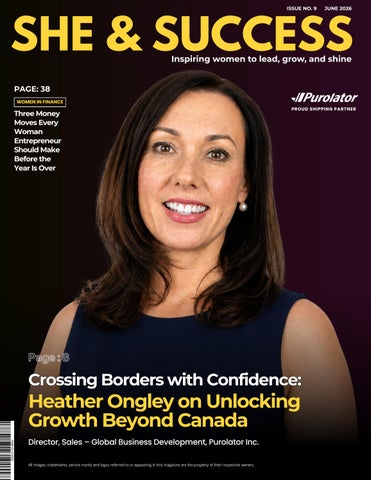
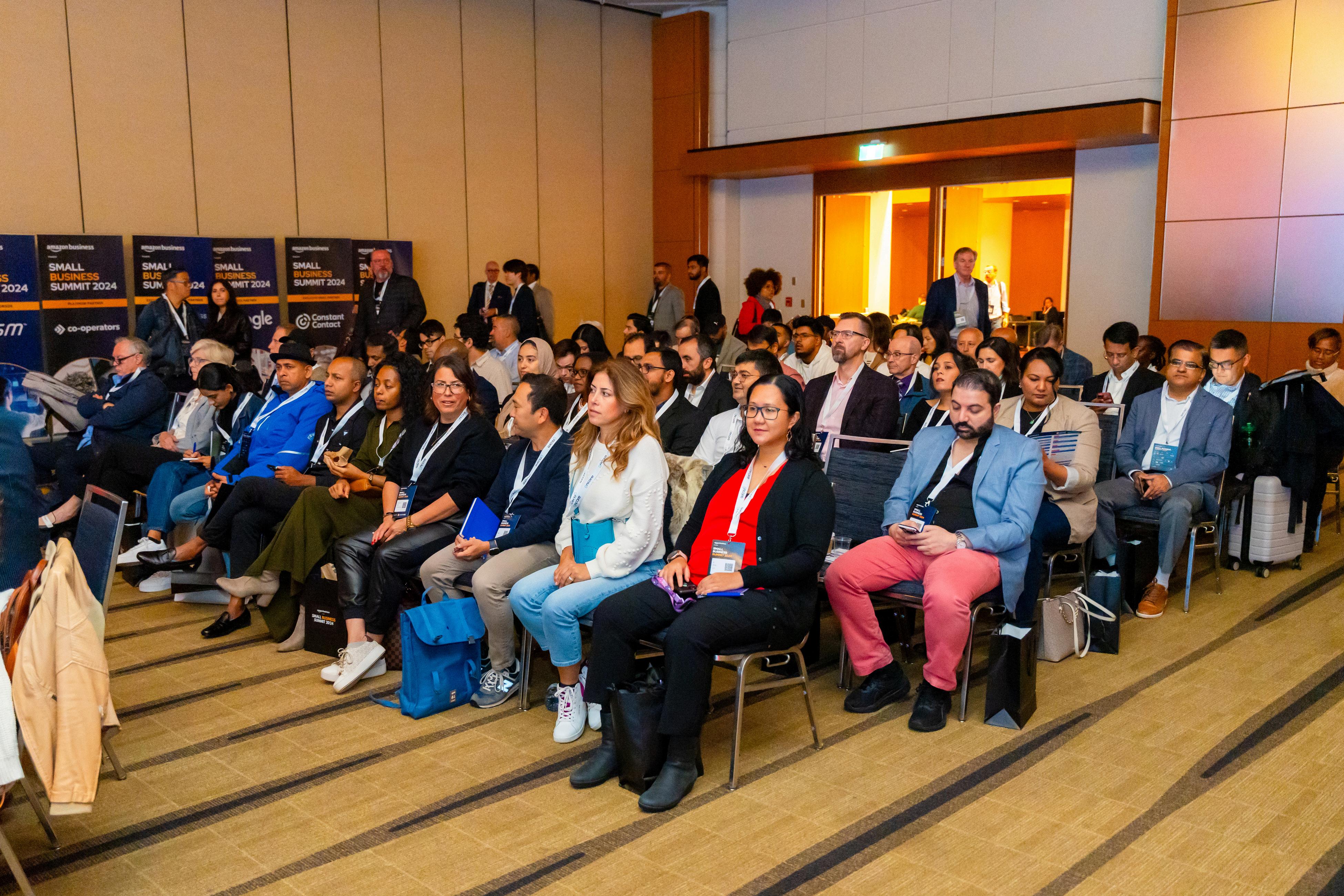
In an exclusive interview with She & Success Business Magazine, Heather Ongley, Director of Sales, Global Business Development at Purolator, shares valuable insights into how Canadian entrepreneurs can confidently expand beyond domestic markets and unlock new opportunities through cross-border commerce.
InterviewByKripaAnand
Heather Ongley is a senior sales leader with a focus on enterprise growth, strategic account acquisition, and cross-border logistics solutions
With more than a decade of leadership experience at Purolator, she has built and led high performing teams that consistently deliver above-target revenue growth across Fortune 500 clients in key sectors including retail, technology, industrial, and healthcare.
She is recognized for her ability to translate complex supply chain challenges into customer-centric solutions, aligning crossfunctional teams to drive measurable business outcomes. Heather combines strategic vision with disciplined execution, positioning Purolator as a premium partner for organizations navigating increasingly complex Canadian and North American distribution environments
Heather is passionate about building performance-driven cultures rooted in accountability, collaboration, and continuous improvement Her leadership style reflects a strong commitmentto developing talent, fostering engagement and delivering an exceptional customer experience
Outside of her professional role, Heather lives in Ancaster, Ontario with her husband and is a proud mother of two teenage girls. She values time spent with family and friends,and enjoys running and travelling, bringing energy, curiosity, and a growth mindset to both her personaland professional pursuits.
Why should Canadian small and medium-sized enterprises (SMEs) startshipping cross- border today?
With the population of the U S almost 10 times larger than Canada’s, the potential for SMEs is huge
The U S consumer has similar buying patterns to Canadian consumers, making it a great first step into international markets and expanding beyond North American borders. Though, businesses going this route should be aware of potential challenges they may face with the end of the de minimis exemption, a trade rule which allowed imports below a specific value into the U S through a simplified customs process without paying duties or taxes in some cases
What should businessesknow before launchinga cross-border shipping strategy today?
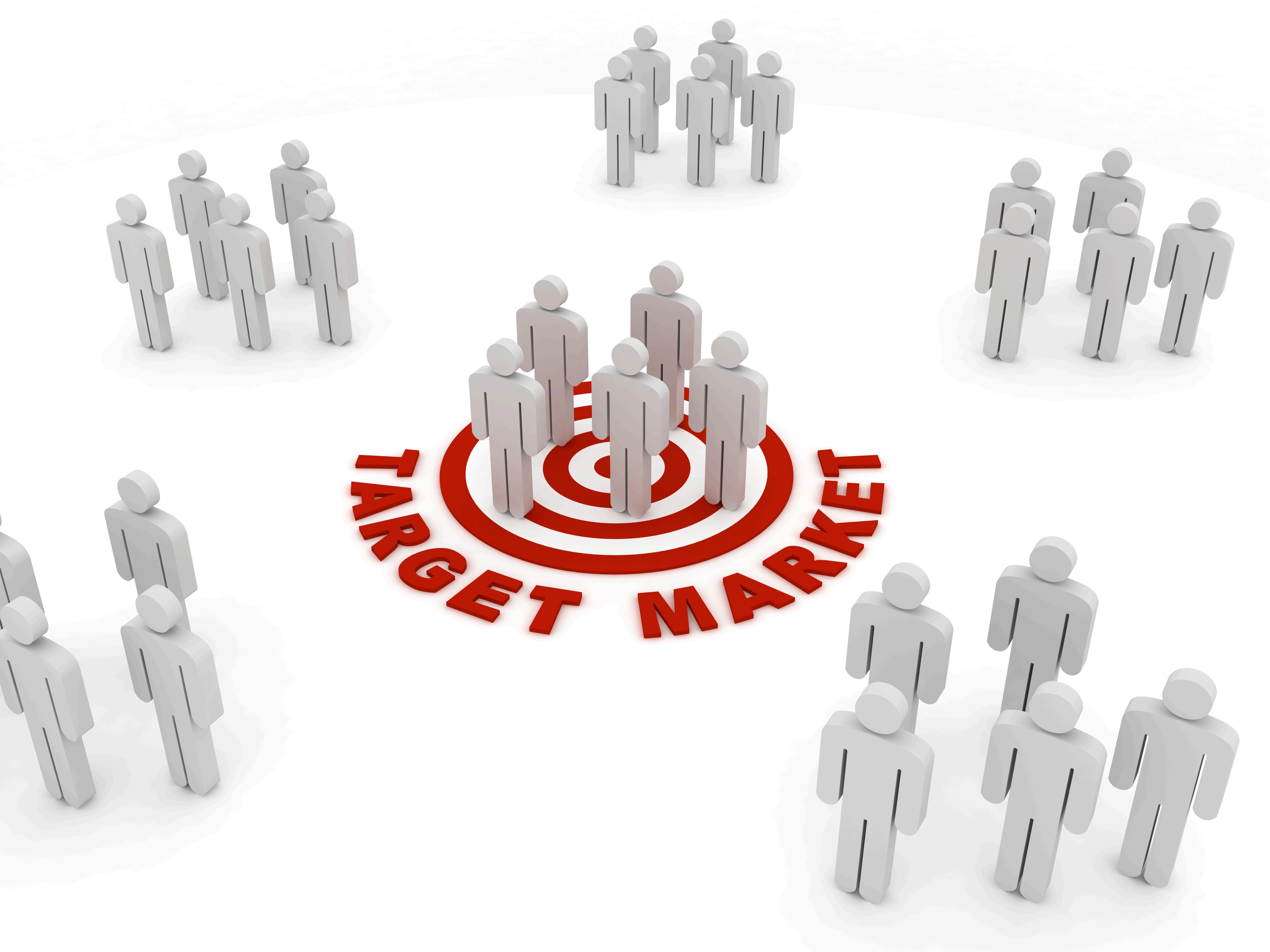
Know whoyour customer is The U S can seem huge when you ' re looking at it as a single market but if you ' re selling a product that has a more regional appeal, you should identify which regions to target Know what your customer looks like and how you would advertise to them It all starts with strong research
Understand what U S regulations and documentation apply to your products Some products that were historically unregulated by agencies like the FDA might now be regulated because of recent U.S. policy changes We’re also seeing ongoing confusion between product country of origin and country of manufacture Staying informed about what’s required and building delays into your shipping times ensures smooth crossborder transit, satisfied customers, and lower shipping costs
In the early stages, you likely don't want a large capital investment,such as putting a warehouse in the U S Before looking at permanent solutions, research flexible ones that will scale with your business overtime This way your capital investment remains low, your customer base can grow, and you can expand revenue streams
What should entrepreneurs look for in cross-border logistics partner?
Your logistics partner should understand:
What your business plan is.
Who the customer is that you ' re looking to ship to.
What your customers’ expectations are.
If you are storing product with a distributor and wholesaling across the border, or if you will work directly with the end consumer who may have an emotional attachment to their purchase
The transportation element as the last element is the final touchpoint before the customer receives the product, so it plays a critical role in the customer’s overall purchase satisfaction and experience
Having the conversation around expectations is very important What are the timelines like? Are your customers willing to wait a few days for the parcel or goods to arrive, or do they need it the next day? The answers will help give an idea of what type of solution is needed - is speed more important than an economical cost, or do you need a blend? Maybe you need one type of transportation solution for one type of customer and an alternative solution for a different customer I think the magic happens in having a deep conversation with your transportation provider so that they understand what your needs are, and they can then build a solution that's right for you
How should businesses communicate to their customers during global trade disruptions?
It's certainly been a challenging couple of years, and it's difficult to stay on top of all the constant changes As an SME or entrepreneur, your passion is what drives your business, but it can’t necessarily support all the outside pieces that can impact your customer base. That’s why it’s important to work with a partner that truly understandsthe trade landscape.
Make sure that you ' re working with a transportation provider that understands ongoing changes, communicates them to you as needed, and continually updates their systems to reflect whats happening at the border Their website should also be kept up to date with the latest information
It’s equally important to ha to pick up the phone and s someone At Purolator, for e have a trade desk you can well as customer service te dedicated representatives access to knowledgeable p before you even ship a pac ensure you feel confident a customer experience remai
You want to avoid situation shipments are delayed at t due to preventable issues comes down to equipping y the right information from t working with a partner who you in a personalized way Canadian-based team tha understands these process and out, and supports sma sized businesses every day differentiator
first cross-border shipping plan? What’s the first practical step?
Start by thinking about how you’ll market your product and what platforms or technology you’ll use to generate orders It’s also important to determine whether your transportationprovider can integrate with that technology to create a seamless shipping process for orders going southbound
You’ll also need to consider whether you can manage customs, duties, and any other requirements within your chosen platform, or if you’ll need a separate solution to support that. From a foundational perspective, there are many moving parts to think through, including understanding and communicating to your customers the difference between Delivered Duty Paid (DDP), where the business is responsible for duties and taxes, and Delivered Duty Unpaid (DDU), where the customer is responsible
Increasingly, it comes back to technology specifically, the ability to connect platforms and maintain flexibility As you plan your approach, consider whether you’ll fulfill U S orders from Canada as your first step For most small businesses, that’s the typical starting point
As you scale, you may want to explore establishing a more permanent presence in the U S Once you have a clear understanding of your shipment flows, you can evaluate whether opening a location there makes sense and how it would impact your operations
Another important consideration is your broader supply chain strategy If you already work with a provider like Purolator for your Canadian shipments, consider also getting them to support inbound logistics, such as moving raw materials or components from overseas into Canada while also enabling outbound shipments to the U S
Think of Canada as the hub of your supply chain Work with a provider that understands your core Canadian business and can support your growth beyond domestic borders
For SMEs worried abouttariffs and trade uncertainty, what’s one piece of advice you’d share?
While it can feel overwhelming, the right partner can help you navigate it With the right support, it’s often less complicated than it seems If the U S is a logical next step for your business, don’t let uncertainty hold you back. Do your research, explore your options, and seek guidance from trusted advisors.
There’s no one-size-fits-all solution The right approach depends on your business goals, so take the time to find a solution that works for you and move forward with confidence
Disclaimer:: The views and opinions expressed in this interview are those ofthe featured guest anddo not necessarily reflect the official policy or position of She & Success Our mission is to amplify authentic voices, highlight diverse leadership journeys, and share insights that inspire and empower women entrepreneurs and leaders across Canada
ImageCourtesy:Canva
Kristy Lynn Miller Is Transforming Homes Through Scent and Purpose
Kristy Lynn Miller, Founder and CEO of The Scented Market, established one of Canada's most popular home fragrance brands from the bottom up Based in Guelph, Ontario, she has evolved a simple love for candles and self care into a fast growing business recognized for hand poured soy candles, wax melts, room sprays, diffusers, and bath products all meant to make everyday spaces feel like a spa at home
The company has grown from a small operation to an award winning, woman owned brand with several locations and national reach It is committed to sustainability, community, and true leadership
From Guelph Roots to a National Brand
Kristy was born and raised in Guelph, Ontario, and her entrepreneurial energy "bursts through" the businesses she founded and built in her region As a busy mom of three boys, she learned to manage family life while growing a business, often working from a single car garage during the early days of The Scented Market Kristy founded The Scented Market in 2018 with a personal vision for high quality home fragrance.
KristyLynnMiller
The brand has already gained popularity in Canada and the United States, according to her LinkedIn profile. She identified a market gap: many candles were excessively scented, included harsh ingredients, or came in unsuitable packaging for an eco conscious lifestyle
Instead of accepting the status quo, she set out to produce cleaner, more attractive soy candles and self care products, hand poured in Guelph and designed to be safe for children, pets, and the environment The Scented Market soon grew from a local favourite to a lifestyle brand with a devoted following and retail partners throughout North America
‘The Scented Market’ Ignites New Way to Experience Self Care at Home
The Scented Market specializes in hand poured, 100% soy wax candles in Guelph, featuring high quality fragrance oils and reusable packaging. The brand's product portfolio now includes:
Soy candles come in a variety of flavours, from relaxing spa odours to homey, seasonal mixtures.
Reed Diffusers and wax melts which provide flameless scent.
Use self care products like room sprays, bath salts, and bubble bath to create a spa-like atmosphere at home.
The company emphasizes:
Eco friendly packaging includes reusable and recyclable vessels, a jar return program, and candle refills at shop locations
Cleaner ingredients include paraben and phthalate free products created from cleaner soy wax and high quality oils that will not disrupt hormones All candles are proudly handcrafted in Guelph, Ontario and distributed through their own stores, wholesale partners, and online
According to Well ca and TSC ca, The Scented Market is a popular Canadian brand for clients seeking scented products suitable for families and promoting self care at home Under Kristy's guidance, the company sells more than simply candles; it sells moments of peace, ritual, and reset in the midst of hectic lives
Scaling From Garage to Million Dollar Brand
Kristy's success story has gained widespread attention in the Canadian small business community In her segment on The E-Comm Show podcast, "From Garage to $1M: How to Scale a Handmade Brand," she describes how The Scented Market went from a single car garage startup to a nationally recognized corporation
The brand has various retail locations, including Guelph and Fergus, Ontario, and is expanding through wholesale and e commerce channels The Scented Market, a home fragrance firm with 11-50 people, has won awards for product design and growth
At the CanadianSME Small Business Awards 2023, The Scented Market was named one of the top two Small Businesses of the Year (up to 50 employees), a milestone Kristy said was a testament to her team's commitment to sustainable luxury and customer experience. Her narrative of starting, expanding, and systematizing a handcrafted brand serves as a guide for other female founders in Canada focused on products
Woman Owned, Community Driven, Impact Focused
The Scented Market is a woman owned enterprise that values sustainability, community, and empowerment Kristy not only drives the company ' s growth but also mentors and motivates other female entrepreneurs, providing insights into business growth, resilience, and long term success.
Her passion for the community is reflected in:
Supporting local events and collaborations in Guelph and the surrounding areas.
Creating jobs in a smaller Ontario community rather than relocating companies elsewhere.
She uses her platform, including speaking engagements and International Women's Day highlights, to promote women in business and demonstrate balanced, values driven entrepreneurship
Kristy represents a grounded, modern founder to She & Success readers: someone who scales ambitiously while maintaining a focus on wellness, family, and community impact.
ImageCourtesy:KristyLynnMiller
Lessons for Women Building Product Based Brands
Kristy's journey with The Scented Market provides profound takeaways.
Begin with an actual gap She created a brand focused on safer, eco friendly home fragrance solutions after noticing a gap in the market for healthy, beautiful soy wax candles
Allow values to influence development. Sustainable practices, such as reusable packaging and jar-return programs, are integrated into the company ' s strategy.
Use Canadian platforms to magnify Retail partners such as Well ca and TSC ca, as well as national recognition through CanadianSME Awards and media, have all contributed to her growth from a local brand to a national name.
Share the knowledge She broadens her impact by mentoring and speaking outside of her own organization
These concepts apply whether you ' re making candles, creating products, or starting a new category from your garage
Conclusion
Kristy Lynn Miller, who began hand pouring candles in Guelph and now leads a National award winning Canadian fragrance brand, has used creativity, strategy, and tenacity to create a business that gives serenity to homes across North America and inspires other female entrepreneurs to succeed
Subscribe to She & Success Business Magazine and follow us on she&successca to stay updated on funding opportunities, entrepreneurial insights, and inspiring stories of women making a difference across Canada
Disclaimer: This article is for informational purposes She & Success Business Magazine does not endorse or guarantee any products or services mentioned Readers should conduct their own research and due diligence
From Stonewall to the Streets of Toronto and Winnipeg
Pride Month is based on resistance. It commemorates the Stonewall riots of June 1969 in New York City, a watershed moment in the global fight for LGBTQ+ rights Within a few years, Canadian activists organized protests, teach-ins, and early Pride marches to influence the political environment
Pride in Full Colour As You Celebrate the Power of Being Unapologetically Yourself
BySKUddin
In Canada, June is more than just a line of rainbow flags on a calendar; it is part of Pride Season, which lasts from June to September, according to the federal government Throughout these months, 2SLGBTQI+ groups and supporters unite to "highlight the resilience, celebrate the brilliance, and acknowledge their communities' accomplishments," from small northern towns to the country's largest cities
Pride celebrations in Canada have traditionally originated as protests rather than parties The first large-scale demonstrations for 2SLGBTQI+ rights occurred in Ottawa and Vancouver in 1971, and by 1973, Pride celebrations were held in Montreal, Ottawa, Saskatoon, Toronto, Vancouver, and Winnipeg Today, Toronto's Pride weekend is one of the largest Pride celebrations in North America, with Winnipeg, Ottawa, and dozens of other municipalities hosting their own spectacular festivals Pride Month brings those local tales together into a national discourse about who we are and who still needs to be seen
From Big Cities to Small Towns Pride Lives Everywhere
In Canada, Pride Season has become a community-wide project, rather than just a downtown parade The federal government clearly recognizes Pride Season as a period when 2SLGBTQI+ persons and supporters gather across the country from June to September In 2026, tweets from communities like Gananoque, Ontario, show local governments openly declaring June as Pride Month and "celebrating the diversity that makes our community stronger "
Pride activities may be found in various locations around Ontario, including West Nipissing, StratfordPerth, Brockville, Niagara, and more, demonstrating that exposure is not limited to major cities Capital Pride in Ottawa hosts a week-long festival in August, featuring Youth Pride events and a huge parade This extension of Pride celebrations into smaller areas is important because it teaches young gay and trans people that they do not need to leave their homes to be completely themselves
Pride as Protest, Celebration, and Daily Work
Organizations such as Amnesty International Canada are blunt: Pride Month is both a celebration and an invitation to action. It is " a period dedicated to celebrating 2SLGBTQQIA+ groups, campaigning for equal rights, and cultivating a world in which everyone can express their authentic selves without fear, violence, or discrimination " Pride commemorates arrests, workplace discrimination, school bullying, and the continuous struggle for safety and dignity, particularly for transgender, Two-Spirit, and gay people of colour
Amnesty International invites Canadians to utilize Pride Month to learn about the history of LGBTI+ rights movements, listen to those whose identities or intersections they may not understand, and take action whether by supporting groups, contesting discriminatory policies, or speaking up when they witness harassment Pride Season in Canada also includes Public Service Pride Week later in the summer, which emphasizes the importance of queer and trans inclusion in our public institutions We practice pride, policy by policy and connection by relationship, rather than simply attending to it
How Businesses and Allies Can Show
Up with Substance
For Canadian businesses, Pride Month is an invitation to do more than simply change their logos to rainbows Government and advocacy organizations emphasize that effective support entails aligning internal practices with public celebrations, such as amending policies to safeguard 2SLGBTQI+ employees, providing inclusive benefits, and establishing safe reporting channels for harassment and discrimination
There are simple yet effective ways for community members and allies to get involved Amnesty International Canada recommends researching the history of Pride, attending local celebrations, and publicly supporting 2SLGBTQQIA+ communities by wearing Pride emblems and sharing messages of support Pride Toronto, Capital Pride, and Pride Winnipeg encourage volunteers, donors, and partners to develop inclusive, community-led events Whether walking in a big parade or attending a small-town flag-raising, the question remains: how will you carry this energy into July, August, and the following months?
Pride Month 2026 and an Open Invitation to Belong
Pride Month will take place from June 1 to June 30, 2026, and will serve as the centrepiece of a larger Pride Season spanning the Canadian summer From Toronto's enormous festival to local festivities in Ontario villages and prairie cities, Canadians have several opportunities to participate, listen, and learn Pride Month poses a simple but fundamental question: What sort of country do we want to be for LGBTQ and transgender individuals, newcomers, and young people who are still discovering their voices? The answer is inscribed in how we come together this June and beyond
For many Canadian women-led exporters, the most difficult aspect of going global is not finding customers abroad it is getting paid quickly, safely, and with minimal loss from hidden fees. High foreign exchange spreads, sluggish settlement timeframes, and rigorous compliance checks can stifle small exporters' cash flow exactly when they need it most to reinvest in inventory, marketing, and employment
This is where a new generation of Canadian fintech entrepreneurs steps in. These women are developing payment platforms that reduce currency risk, simplify compliance, and provide small and medium-sized businesses (SMEs) with real-time visibility into their international financial flows They are redefining how money goes in and out of Canadian businesses that deal internationally by transforming what was formerly a black box of fees and delays into a transparent, technologydriven operation
The Cross-Border Pain Point for Canadian SMEs
Cross-border payments are at the heart of international trade, but for many SMEs, they are still one of the most unpleasant aspects of conducting business Traditional methods rely on correspondent banking and SWIFT-based wire transfers, which may involve multiple intermediary banks, each charging its own fee, lengthening settlement times and increasing uncertainty For a small exporter, this can mean days of waiting to see if a payment has arrived and at what effective exchange rate
According to a recent examination of B2B payments in Canada, small businesses face high transaction costs, long settlement times, and complex compliance duties related to anti-money laundering and sanctions screening This friction is especially harsh on women-led SMEs, as they often operate with smaller financial buffers and have less access to credit than their male counterparts, making every delayed or diminished payment a direct threat to growth
Women at the Helm of Cross-Border Fintech
Across the Canadian ecosystem, women executives are becoming more visible in fintech businesses that are addressing these payment concerns head-on whether in CEO roles, co-founding teams, or as product heads for SMEs According to industry surveys of cross-border payment innovators, fintechs succeed by providing customer-centric platforms that prioritize speed, transparency, and predictable pricing for SMEs
These Canadian women professionals draw on their experience in banking, FX risk management, compliance, and technology to rethink the cross-border payment experience for a small exporter Rather than forcing SMEs to conform to archaic bank processes, they provide technologies that integrate seamlessly with ecommerce businesses, invoicing systems, and marketplaces where women entrepreneurs already operate The ultimate result is a new generation of financial infrastructure that makes cross-border transfers as simple as sending a local transfer.
The Hidden Cost of FX and How Smart Businesses Avoid It
One of these platforms' most important value drivers is how they handle foreign exchange Traditional banking channels sometimes embed profits in opaque FX spreads, making it difficult for SMEs to determine the exact cost of accepting foreign-currency payments Fintech solutions now include transparent, mid-marketlinked rates, multi-currency accounts, and tools to lock in rates or automate conversions using pre-set rules.
According to Canadian startup finance thought leaders, companies that sell in stronger currencies, such as USD, while paying costs in CAD, can turn FX into a competitive advantage if they manage it actively rather than letting money trickle away through hidden spreads Women-led fintech platforms in Canada help SMEs gain this edge by providing real-time dashboards for currency exposures, automated hedging features, and notifications when rate swings affect company margins For female startups that export digitally, this can mean the difference between a profitable global order and an expensive experiment
Faster Settlement, Healthier Cash Flow
Speed is another area where fintech founders are improving the cross-border experience. Advanced systems transport payments over modern trains and local payout networks rather than depending solely on lengthy correspondent chains, reducing settlement times from days to hours in some corridors For SMEs, this means less time waiting for funding, more consistent cash flow, and the opportunity to place new orders or fund campaigns more quickly
Canadian criticism of B2B cross-border payments suggests that real-time domestic payment infrastructure, such as the upcoming Real-Time Rail, will progressively connect to cross-border systems, enabling faster end-to-end flows Women-led fintechs are creating their products with this future in mind, focusing on rapid confirmation, clear monitoring, and seamless reconciliation with accounting systems, allowing founders to spend less time chasing bank references and more time on strategy.
Simplifying Compliance Through Intelligent RegTech Solutions
Compliance is frequently viewed as a barrier, but for fintech entrepreneurs, it is a design challenge
According to Canadian experts, SMEs struggle to comply with anti-money laundering legislation, sanctions lists, and know-your-customer obligations when selling abroad Innovative payment platforms include AI-driven compliance checks and automated workflows throughout the payment process, eliminating manual paperwork and the risk of errors that might delay payments
Women entrepreneurs in these fintechs regularly advocate for user-friendly compliance features, such as streamlined onboarding, clear paperwork requirements, and proactive warnings about regulatory changes, to ensure exporters are not caught off guard by unexpected holds or rejections They assist small women-led exporters in expanding into new markets with greater confidence and fewer shocks by making compliance an integrated, largely invisible aspect of the payment process rather than a separate, complex step
The Rise of Embedded Finance for Women-Led Export Businesses
A critical shift in cross-border fintech is the integration of payment capabilities into platforms that SMEs already use daily For a woman entrepreneur running an online store or consulting firm, this could entail billing in different currencies directly from her e-commerce or accounting software, with integrated FX and compliance handled behind the scenes
Canadian fintech leaders see this as the future: rather than logging into many portals, SMEs can manage their whole payment lifecycle through a single interface This embedded strategy is especially effective for female entrepreneurs juggling numerous jobs, providing a streamlined, low-friction solution to handle worldwide revenue
Building a More Inclusive Future for Global Payments
As cross-border payment volumes continue to surge into the hundreds of trillions of dollars globally, the stakes for SMEs particularly women-led businesses will only increase. Canadian women fintech innovators are working to ensure that the next generation of payment rails benefits both small exporters and major corporations
By reducing FX friction, expediting settlement, and simplifying compliance, they empower women-led firms to compete and develop globally on more equitable terms Their work transforms something as technical as payment infrastructure into a powerful driver of inclusivity, resilience, and growth in Canada's entrepreneurial scene
Subscribe to She & Success Business Magazine and follow us on she&successca to stay updated on funding opportunities, entrepreneurial insights, and inspiring stories of women making a difference across Canada
Disclaimer: This article is for informational purposes She & Success Business Magazine does not endorse or guarantee any products or services mentioned. Readers should conduct their own research and due diligence
HowDeloitteCanada andStablecorp
AreRedefiningtheFuture ofCanadianFinance
ByKripaAnand
Canada's financial ecosystem may be about to undergo a significant upheaval Deloitte Canada and Stablecorp have launched a strategic collaboration to develop stablecoin infrastructure for Canadian financial institutions At the heart of this endeavour is QCAD, Stablecorp's Canadiandollar-backed stablecoin designed to operate within Canada's regulatory framework
Sablecoins are digital currencies pegged to the value of real fiat currencies such as the Canadian dollar or the US dollar Unlike highly volatile cryptocurrencies, stablecoins are intended to maintain a continuous value while providing the speed and efficiency of blockchain technology This opens up considerable prospects for organizations that rely on payments, treasury management, foreign transactions, or operational cash flow Deloitte Canada believes this technology has the potential to transform how financial institutions operate
Deloitte and Stablecorp are collaborating to help Canadian banks and financial institutions modernize outdated payment systems, enabling faster, more transparent, and cost-effective transactions These innovations have the potential to minimize banking friction, shorten settlement times, and improve access to global trade for company leaders, particularly founders leading developing enterprises
Bringing Innovation Into Traditional Banking Systems
One of the most difficult difficulties in digital finance today is integration Many blockchain solutions function independently of the traditional financial systems that businesses rely on every day This collaboration focuses on resolving that issue Instead of replacing current infrastructure, Deloitte Canada and Stablecorp want to integrate QCAD into traditional banking rails and operational systems in a compliant and secure manner
The goal is for financial institutions to leverage the benefits of blockchain without jeopardizing the confidence and reliability that Canadians expect from their banks The CEO of Stablecorp, Kesem Frank, underlined the importance of trust in driving adoption
That trust aspect becomes increasingly crucial as more consumers and businesses seek safer ways to interact with digital assets without entering the highly volatile cryptocurrency markets
Key Areas That Could Transform Canadian Finance
Deloitte Canada and Stablecorp are collaborating on numerous high-impact sectors where stablecoin technology can drive measurable efficiencies
Faster Cross-Border Payments
- Many Canadian firms continue to find international payments prohibitively expensive and time-consuming Delays, foreign exchange expenses, and middleman banking fees continue to impede global trade Using QCAD could help speed up cross-border transactions by providing near-instant settlement and lowering transaction costs This may be especially useful for small and medium-sized firms moving worldwide. For female entrepreneurs developing global brands, faster, more accessible foreign payments could remove significant hurdles to growth.
Modern Treasury Solutions -
Treasury management is growing more complex in a digital economy Businesses today operate in numerous countries, currencies, and payment methods Stablecoin infrastructure might enable real-time B2B payments, on-chain trade financing, and better working capital management. This could help businesses increase liquidity while minimizing administrative bottlenecks associated with traditional banking systems.
Improved Inter-Bank Settlement -
Current interbank clearing procedures often lead to delays and operational friction. Blockchain-based settlement using QCAD has the potential to lower both costs and settlement times between financial institutions This opens the door to a more agile and responsive financial ecosystem capable of meeting the needs of modern businesses
24/7 Financial Infrastructure -
Despite the global economy operating around the clock, traditional banking institutions still have limited business hours Blockchain-powered infrastructure enables continuous transactions and the movement of collateral, increasing flexibility for both businesses and financial institutions This capacity may become increasingly crucial as Canadian enterprises expand into overseas markets and internet commerce.
Canada’s Position in the Global Digital Economy
Globally, governments and financial institutions are rushing to build frameworks for digital assets and stablecoins Countries including the United States, Singapore, and the United Kingdom are already looking into large-scale stablecoin integration and central bank digital currency programs Canada has traditionally taken a conservative yet innovation-friendly approach to financial regulation.
The cooperation between Deloitte and Stablecorp reflects increased enthusiasm in Canada's business sector to play a more active role in determining the future of digital banking The introduction of compliant Canadian stablecoin infrastructure might also boost Canada's competitiveness in fintech innovation and attract additional investment into the country's digital economy This opens up chances for startups and growing enterprises to develop services and platforms that will operate in the next generation of financial systems
What This Means for Women in Business and Leadership
As financial technology advances, women entrepreneurs and executives play increasingly important roles in influencing the future of innovation, fintech, and digital transformation The growth of stablecoin infrastructure is more than just a technological advancement. It reflects greater shifts in how firms manage finances, operate globally, and engage with customers.
A New Chapter for Canadian Financial Innovation
The collaboration between Deloitte Canada and Stablecorp marks a significant milestone in Canada's digital financial development By merging Deloitte's financial transformation expertise with Stablecorp's blockchain technology, the two organizations aim to make digital payments faster, safer, and more efficient for businesses and consumers alike.
As stablecoins go from niche technology to regulated financial systems, Canada has an opportunity to take the lead in developing responsible, trustworthy, and scalable digital payment infrastructure For entrepreneurs, financial leaders, and innovators across the country, this might signal the start of a completely new era of trade
Subscribe to She & Success Business Magazine and follow us on she&success.ca to stay updated on funding opportunities, entrepreneurial insights, and inspiring stories of women making a difference across Canada
Disclaimer: This article is for informational purposes She & Success Business Magazine does not endorse or guarantee any products or services mentioned Readers should conduct their own research and due diligence.
When Toronto-based entrepreneur Maya Singh* established her eco-conscious accessories brand in 2020, she didn't follow the usual "start local, grow later" strategy Instead, within her first month, she launched a Shopify business and listed it on Amazon marketplaces She tested Etsy, with a targeted focus on customers in the United States, the United Kingdom, Australia, and Canada.
According to research, women-owned small and medium-sized firms (SMEs) in Canada that accept online payments and digital channels are substantially more likely to export than those that do not, demonstrating the value of digital-first strategies Maya positioned her company as a digital-native exporter, leveraging technology to eliminate borders even before she delivered her first cargo overseas
Canadian Women Shaping the Future of Digital Trade
Women entrepreneurs in Canada are increasingly leveraging e-commerce to reach customers worldwide According to a national study of women-owned SMEs, accepting online payments and innovating in online marketing are important determinants of whether a women-led business exports Women-owned businesses that incorporate online payment facilities into their websites have an export likelihood that is 18 to 20 percentage points greater than comparable male-owned SMEs with the same feature, implying that digital technologies magnify the export readiness of women entrepreneurs in particular
According to government trade data analysis, a majority of women-owned SMEs operate in e-commerce, and these enterprises' export intensity increased by 150 percent between 2011 and 2017, greatly outperforming the typical SME This represents a structural shift: digital commerce lowers the barriers to global markets, allowing smaller, female-led businesses to sell abroad without relying on large sales teams or overseas headquarters
Building the Digital-First Infrastructure
A strong digital commerce stack serves as the foundation for worldwide expansion for a founder like Maya. She chose Shopify as her primary storefront, allowing her to manage product listings, inventory, pricing, and payment integrations while benefiting from a platform used by millions of merchants worldwide Shopify's ecosystem allows merchants to integrate solutions for multi-currency pricing, tax calculation, and shipping, which are essential for selling to multiple countries from a single Canadian location
Maya linked her store to markets where global buyers already shop, such as international Amazon marketplaces and curated Etsy niches, giving her products immediate visibility beyond Canada's borders Shopify's featured entrepreneur tales demonstrate that female founders frequently begin on a single platform and then expand across channels as demand develops, using analytics dashboards to determine which markets respond best Maya can adjust prices for currency fluctuations, anticipate increased demand in specific locations, and automate email marketing flows for customers across multiple time zones without a physical presence abroad.
The Fintech Advantage in Cross-Border Payments
One of the most significant historical impediments to exporting has been the ability to receive overseas payments quickly and safely According to Canadian research, women-owned SMEs that use online payment systems are not only more likely to export but also exhibit higher export intensity when they leverage digital technologies
To reduce friction for overseas clients, Maya added numerous payment options, including credit cards, digital wallets, and platformnative checkout options Shopify's payment infrastructure and marketplace-native processes allow funds from customers in the United States or Europe to flow back to her Canadian business account, with clear foreignexchange visibility
This combination of online payments and simplified checkout removes many of the conventional barriers to cross-border sales, allowing her to focus on brand development and customer experience rather than chasing invoices in different currencies
How Smart Logistics Power Borderless Brand Growth
Even with digital infrastructure in place, crossborder logistics can be challenging According to Canadian trade officials, women-owned SMEs have been able to close a portion of the export gap by leveraging e-commerce channels that make international shipping more accessible to small businesses Maya's commerce platform includes integrated shipping features that generate customs-ready labels, estimate tariffs and taxes at checkout, and provide tracked shipments to major regions.
She reduces delivery times by collaborating with third-party logistics providers in Canada and utilizing marketplace fulfillment alternatives in the United States and Europe, while keeping inventory central
This hybrid technique allows her to explore new markets without committing to significant bulk orders When data show increased demand in a region, she can boost inventory allocations for that region and negotiate better carrier rates, all using digital dashboards and shipping analytics
The Human Side of Building a Borderless Business
Maya's journey from local founder to digital exporter is about learning, community, and tools
According to studies on women ' s entrepreneurship in Canada, export performance is linked to education, managerial experience, and access to networks that share export expertise Women entrepreneurs that participate in specialized initiatives, such as trade missions, export funding, and advisory services, tend to see larger returns on their overseas ventures
A Blueprint for the Next Generation of Global Women Founders
Maya's tale exemplifies a compelling plan for female-led Canadian businesses: begin digitally, think globally, and use technology to reduce distance. Data reveal that when women entrepreneurs combine online payments, creative sales methods, and e-commerce platforms, their chances of exporting increase dramatically, and their export intensity develops faster than the SME average
In an era where buyers expect to discover companies online regardless of location, the digital-native exporter is no longer an outlier it is becoming the new norm for ambitious female founders in Canada
Subscribe to She & Success Business Magazine and follow us on she&success.ca to stay updated on funding opportunities, entrepreneurial insights, and inspiring stories of women making a difference across Canada
Disclaimer: This article is for informational purposes She & Success Business Magazine does not endorse or guarantee any products or services mentioned Readers should conduct their own research and due diligence
How Women Entrepreneurs Can Simplify Global Shipping and Scale
Internationally With Confidence
BySKUddin
Many female entrepreneurs find it exhilarating to grow into international markets until logistics come into play Shipping expenses, customs procedures, delayed deliveries, and crossborder restrictions can all make global growth appear overwhelming Many small business owners believe that international shipping requires enormous warehouses, complex supply chains, and substantial operational expertise However, women leaders in logistics and supply chain management are transforming the landscape across Canada
Women-led logistics enterprises help small businesses simplify global trade and scale worldwide with considerably less friction by leveraging smarter technology, customer-focused systems, and digital shipping solutions Women entrepreneurs no longer need to be logistics specialists to market globally Instead, companies can concentrate on developing excellent products and brands while leveraging contemporary logistics solutions to manage the complexity behind the scenes
Choosing Logistics Partners That Think Like Growth Partners
One of the best decisions a growing company can make is to work with logistics suppliers who act as strategic partners rather than just shipping vendors Women-led supply chain companies across Canada are increasingly assisting SMEs with worldwide expansion through collaborative, transparent, and adaptable service models
For female entrepreneurs, this entails looking for logistics partners who can provide:
Clear communication
Real-time tracking tools
Customs support
Flexible fulfillment choices
Data-driven shipping insights
Scalable solutions for growth
Strong logistics support enables entrepreneurs to enter new markets with greater confidence and lower operational risks
Using Real-Time Tracking to Improve Customer Trust
One of the most frustrating aspects of running an internet business is the unpredictability surrounding shipping Customers want visibility, accurate updates, and prompt communication when purchases are delayed Modern logistics technology enables firms to track shipments in real time using centralized dashboards that incorporate data from carriers, warehouses, and customs systems This visibility transforms the consumer experience entirely Rather than reacting to problems after they happen, organizations may convey updates and manage expectations effectively. This level of transparency boosts client trust and delivers a more dependable worldwide purchase experience for female entrepreneurs developing global brands
Making Customs and Documentation Less Intimidating
One of the most significant hurdles to worldwide expansion for small enterprises is customs documentation Different countries demand distinct forms, declarations, product classifications, and compliance norms Fortunately, digital logistics solutions are making the procedure much easier Many modern freight forwarders and third-party logistics companies now use online portals, allowing businesses to upload papers once and reuse them for subsequent shipments
Automated systems can also detect missing information before shipments reach customs authorities, allowing entrepreneurs to avoid delays, penalties, and unneeded stress. For women entrepreneurs entering international markets for the first time, these digital solutions alleviate much of the anxiety typically connected with global commerce
Using Data and AI to Reduce Shipping Costs
Shipping internationally can quickly become expensive, particularly for young companies with limited operational funds That is why many logistics organizations are increasingly utilizing artificial intelligence and predictive analytics to optimize shipment routes and increase productivity
These systems were analyzed:
Carrier performance
Seasonal shipping demand
Transit Times
Route efficiency
Consistent delivery
Freight expenses
As a consequence, businesses get smarter shipping recommendations that help them save money while still satisfying their customers For female businesses, this means access to sophisticated logistics planning technologies that were previously available only to major enterprises.
Growing Internationally Without Owning Warehouses
One of the most common misconceptions regarding global development is that businesses must establish warehouses in various countries before selling abroad In reality, many women-led firms are scaling globally thanks to flexible third-party logistics networks and pooled fulfillment systems
The "asset light" model enables businesses to:
Keep inventory closer to customers
Reduce shipping times
Manage seasonal demand increases
Manage returns more efficiently
Gradually expand into new markets
Instead of investing heavily in physical infrastructure, entrepreneurs can use scalable logistics services that scale with their firm. This provides flexibility while protecting cash flow during early foreign expansion.
Building a Customer Experience That Supports Global Growth
Logistics is no longer simply about transporting goods from one area to another It has become part of the overall customer experience Customers want speedy delivery, shipment visibility, easy returns, and responsive contact no matter where they live. Businesses that give positive post-purchase experiences frequently receive better evaluations, higher retention rates, and more repeat sales Women in logistics are helping organizations satisfy these expectations by emphasizing customer-centric solutions, openness, and proactive communication Strong logistics operations can provide entrepreneurs with a competitive edge rather than just an operational requirement
Why Women Led Supply Chains Are Reshaping Global Trade
Women leaders are bringing new insights to logistics and supply chain management, particularly in collaboration, innovation, flexibility, and communication. National initiatives in Canada continue to highlight the expanding role of women in transportation, freight forwarding, storage, and supply chain technology This cultural shift is making logistics solutions more accessible to small enterprises and first-time exporters Working with partners who understand the realities of business growth might help women entrepreneurs feel more accomplished and less intimidated about international expansion
Turning Global Shipping Into a Growth Advantage
Global trade is becoming more digitized, interconnected, and accessible than ever before Real-time shipment tracking, automated customs systems, AI-optimized routing, and flexible fulfillment networks are transforming how small firms operate globally For female entrepreneurs, the message is obvious International expansion no longer necessitates extensive infrastructure or years of logistics expertise With the proper methods, technology, and support partners, worldwide shipping can become nearly invisible, allowing entrepreneurs to focus on what matters most: developing strong brands, serving consumers, and boldly expanding across borders
Subscribe to She & Success Business Magazine and follow us on she&success.ca to stay updated on funding opportunities, entrepreneurial insights, and inspiring stories of women making a difference across Canada.
Disclaimer: This article is for informational purposes She & Success Business Magazine does not endorse or guarantee any products or services mentioned Readers should conduct their own research and due diligence
The Tariff Wake-Up Call Canadian Women Founders Cannot Afford to Ignore
For decades, "going global" for most Canadian businesses meant one thing: selling to Americans Seventy-five percent of Canada's total exports have historically been directed at the United States The proximity, the shared language, the familiar business culture it made the U S market feel less like international trade and more like an extension of home
That certainty ended in 2025 And for Canadian women entrepreneurs, the disruption is both a warning and an opening.
But here is what the headline numbers do not show: in the same period that U S exports fell, Canada's merchandise exports to countries other than the United States surged by 24 8 percent on a month-over-month basis in March 2025 the second-largest increase in recorded history Trade diversification is not just a government talking point It is already happening The question is whether Canadian women entrepreneurs are positioned to lead it
The Data That Changes Everything
The most important trade finding of 2025 for women founders is buried in a research report most people outside the policy world have not read
The Women Entrepreneurship Knowledge Hub's State of Women's Entrepreneurship in Canada 2025 report found that women-owned firms are now exporting at rates comparable to men-owned SMEs and in non-U S markets specifically, women are outpacing men Canadian women-led businesses are exporting at higher rates than their male counterparts to the United Kingdom, India, Brazil, and China
Trade diversification requires exactly the skills that women entrepreneurs have been building under pressure for years: relationship capital across cultural boundaries, operational flexibility, digital-first business models, and a deep understanding of niche markets and community trust
This is not a small footnote It is a strategic national asset And it is almost entirely invisible in the mainstream trade conversation
These are not exceptional stories They are instructive ones The women already succeeding in global trade are doing it through cultural fluency, relationship investment, and smart use of Canada's trade support infrastructure They are building exactly the kind of internationally diversified businesses that Canadas economy needs right now
The Infrastructure Is There. The Awareness Is Not.
Canada has 15 free trade agreements with 51 countries, providing preferential trade access to 1 5 billion consumers The CETA agreement with the European Union eliminates tariffs on 99 percent of products The CPTPP covers Asia-Pacific markets with a combined GDP of $39.8 trillion. Canada signed a new trade agreement with Indonesia in 2025, relaunched negotiations with India, and launched new negotiations with the UAE and Thailand.
The Trade Commissioner Service has representatives in over 160 cities globally, with 85 percent of trade commissioners located in countries other than the U S The CanExport SME program provides non-repayable grants of up to $50,000 for eligible export development activities Export Development Canada's Women in Trade program provides financing, insurance, and market connections specifically designed for women-owned exporters
Among women entrepreneurs surveyed by BDC in January 2025, 77 percent said they have found or will find ways to limit the impact of U S tariffs with 29 percent already taking steps to diversify supply chains to non-tariff countries The resilience is there The resources exist What is missing is the connection between the two and the visibility of Canadian women who are already showing the way.
Canada is actively trying to double its total non-U S exports The government has committed to a suite of trade diversification measures, funding programs, and new trade agreements. The infrastructure is being built in real time.
For Canadian women entrepreneurs, this is the most significant market opening in a generation The businesses that position themselves as global that build export capabilities, register with trade support programs, apply for CanExport funding, and forge relationships in non-U S markets now will have a competitive advantage that compounds over the next decade
The tariff disruption was a crisis For the women entrepreneurs who read it correctly, it is also a starting gun
The Window Is Open
The conversation around women and international trade in Canada has, for too long, focused on barriers The financing gap The networks women don't have The risk aversion they allegedly carry The markets they haven't entered yet.
That framing is outdated and the data confirms it Women-owned firms are now exporting at rates comparable to men-owned SMEs, and women are outpacing men in exports to non-U S markets including the U K , India, Brazil and China The gap is closing In some critical markets, it has already reversed
Trade Move 1: Apply for CanExport Before You Need It
CanExport SME is one of the most accessible and underutilized trade funding programs available to Canadian businesses It provides non-repayable contributions meaning grants, not loans of up to $50,000 to eligible small and medium-sized businesses for export development activities Eligible expenses include market research, trade show participation, business travel, website localization for international markets, IP protection in foreign markets, and export-related consulting services
The critical strategic insight is this: apply when your business is in planning mode, not when you are already stretched. CanExport is designed to fund the early work of market entry the research, the relationship-building, the regulatory navigation before you have committed to a market Most businesses apply reactively, after they have already spent money exploring a new market The businesses that use CanExport most strategically treat it as seed capital for international growth: funded research, funded travel, funded legal infrastructure
Who can apply: Canadian businesses with a minimum of $100,000 and a maximum of $100 million in annual revenue, with at least one year of filing history in Canada. Applications are rolling and processed through the Trade Commissioner Service
What to fund: Market research in your target country A translated and locally optimized version of your website Legal and regulatory consultation for your product or service category in a new market Travel and representation at an international trade show or buyer mission.
Where to start: Global Affairs Canada's CanExport portal at tradecommissioner gc ca Book a meeting with your regional Trade Commissioner first they can identify which markets represent the strongest opportunity for your specific business before you invest in any market entry activity
Trade Move 2: Use EDC's Women in Trade Program as Your Financial Backstop
Export Development Canada is Canada's export credit agency a Crown corporation with the specific mandate of helping Canadian businesses succeed in international markets Most Canadian SMEs know EDC exists Most have never contacted them
EDC's Women in Trade program is specifically designed for women-owned exporters and includes tools that address the most common financial barriers to international growth: non-payment risk, working capital constraints, and access to financing for large international orders.
Trade credit insurance through EDC protects women-owned exporters from non-payment risk in international transactions one of the most common and costly risks in cross-border business EDC's Inclusive Trade Investments Program has invested over $117 million in funds and $37 6 million directly into women-founded and led companies as of 2022, with commitments continuing to grow
The practical first step: Register for a free MyEDC account at edc ca Access EDC's country risk assessments and buyer reports for your target market Book a consultation with an EDC trade advisor to understand which financial tools apply to your specific export situation This is a free service, and most businesses are not using it
Trade Move 3: Enter a Non-U.S. Market Using Your Cultural Intelligence, Not a Cold Pitch
The most overlooked competitive advantage in Canadian trade is the one that immigrant and multicultural women founders have been carrying for years without naming it as such
Many immigrant women are multilingual and have cultural insights and knowledge of foreign markets a finding from the Women Entrepreneurship Knowledge Hub that consistently appears in the research without being sufficiently acted upon at the policy or program level. Cultural fluency is not a soft credential In global trade, it is a market access tool
Market Expansion
A woman entrepreneur with roots in South Asia, East Africa, the Caribbean, or Eastern Europe has market intelligence about those regions that no amount of consultancy research can replicate: language, trustbuilding norms, purchasing psychology, supply chain relationships, regulatory culture, and community distribution networks That intelligence is the foundation of a market entry strategy that an outsider would spend years and significant money to build
The practical move: Map your cultural network first Identify where your community connections intersect with your target export markets Contact your regional Trade Commissioner and ask specifically about trade missions to markets aligned with your cultural background Canada has led women-only trade missions to the UK, Japan, India, and other markets. Register with OWITToronto (Organization of Women in International Trade) or the equivalent in your city. These organizations exist to connect women with the specific international trade relationships that accelerate market entry.
These three moves are not sequential in the sense that one must precede the others. They are concurrent the most effective women exporters are typically running all three in parallel, using each to reinforce the others CanExport funds the market research EDC backstops the financial risk Cultural intelligence identifies where to start
Three Money Moves Every Woman Entrepreneur Should Make Before the Year
In 2023, about 37 1 percent of women entrepreneurs, including majority owners of SMEs and self-employed women, earned less than $50,000 annually, compared to 31 7 percent of men
There is a version of financial planning that happens to women entrepreneurs reactive, last-minute, tax season-driven and a version that is built by them. One produces stress and missed opportunity The other produces wealth
That gap is real and structural but it is also partially a consequence of the financial decisions that women entrepreneurs are not making, not just the system working against them The founders who close that gap are not always the ones with the most revenue They are the ones who are most deliberate about where their money goes
Here are the three financial moves that will make the biggest difference and the specific, actionable way to make each one
Move 1: Separate Your Business Fin
Completely — and Build Business C
Independently
If your personal and business finances are still intertwined, this is your most urgent financial p Not because an accountant told you to separa (though they have, many times). Because ever they remain mixed is a day you are building zer business credit history and business credit is gives you access to capital, favourable paymen and financial flexibility without touching your pe financial health
The practical steps:
Open a dedicated business chequing account in your business name Apply for a business credit card with a modest limit and use it exclusively for business expenses pay it in full monthly Register your business with major credit bureaus Ensure that any supplier or vendor accounts are reporting to business credit, not personal credit
Building a strong business credit profile typically takes 12 to 24 months of consistent, clean financial behaviour. The businesses that have it can access lines of credit during slow periods, negotiate better terms with suppliers, and present a more credible financial picture to investors, partners, and grant reviewers The businesses that do not have it even profitable ones are consistently constrained
Who this matters to: Every woman entrepreneur, at every stage
Financial institution to contact: Your existing bank RBC, CIBC, TD, BMO, or Scotiabank all offer dedicated business banking products for SMEs. BDC also offers advisory services specifically on business financial structure for women entrepreneurs.
Move 2: Open a TFSA and an RRSP — and Understand the Difference
This sounds basic It is not An alarming number of women entrepreneurs especially those who are incorporated or self-employed are not maximizing the tax-advantaged savings vehicles available to them in Canada This is not a judgement Running a business absorbs attention. But the cost of inaction compounds every year.
TFSA (Tax-Free Savings Account): TFSA (TaxFree Savings Account): Every Canadian resident 18 and older accumulates TFSA contribution room annually $7,000 in 2024 and indexed to inflation Any investment growth inside a TFSA is completely tax-free, both during growth and at withdrawal For women entrepreneurs who expect their income to fluctuate significantly year to year, the TFSA is the most flexible, lowest-risk tax-advantage tool available
RRSP (Registered Retirement Savings Plan): Contributions are tax-deductible against your income in the year you contribute which means a highrevenue year is the ideal time to make a large RRSP contribution, reducing your taxable income significantly For incorporated business owners, the strategy of timing RRSP contributions with highrevenue years is one of the most effective (and underused) tax reduction tools in Canada.
The move: If you have unused TFSA room and most self-employed women do open an account this week and contribute something. The psychological commitment of the account being open and active is what drives consistent saving. Automate a monthly transfer, even $100. Time in the market, not timing the market, is what builds retirement wealth.
Move 3: Write a One-Page Business Financial Plan and Review It Quarterly
Not a business plan Not a pitch deck A financial plan: a single document that clearly states your revenue target, your fixed monthly costs, your variable costs, your personal salary target, your debt obligations, your savings target, and your cash reserve goal
Women in Canada are more likely than men to experience financial stress, with many financial stress indicators impacting overall health and well-being The most effective antidote to financial stress is not more money It is more clarity A business that is financially visible where the founder can see, at a glance, whether she is on track runs with more confidence and makes better decisions.
The one-page financial plan includes:
Monthly revenue target (what you need, not what you hope for). Monthly fixed costs (rent, software, salaries, insurance). Monthly variable costs (contractors, marketing, travel) Owner's salary draw Monthly savings target (personal and business) 90-day cash reserve goal
Review it on the first working Monday of each quarter Update the numbers Note what changed and why Make one decision based on what you see That quarterly review, maintained consistently, is worth more than any financial seminar
Resource: BDC offers free financial planning templates and advisory services including one-on-one consultations with business advisors that are available to all Canadian SME owners. QuickBooks and FreshBooks both offer cash flow reporting tools that turn this plan into a live dashboard rather than a static document.
These three moves are not the only financial decisions that matter But they are the ones that create the foundation from which every other decision becomes clearer, safer, and more powerful.
MakingCareersVisible: on Internal Career Centres Lisa Taylor
FounderandCEOofChallengeFactory
In an exclusive interview with She & Success Business Magazine, Lisa Taylor, Founder and Chief Executive Officer of Challenge Factory, unpacks one of the most overlooked challenges facing modern organizations: the disconnect between talent and opportunity. As workplaces evolve under the pressure of AI, longer careers, and constant change, Lisa brings a clear perspective on why traditional talent systems are no longer enough
InterviewByKripaAnand
Lisa Taylor helps leaders redesign workforce systems for a world shaped by AI, longer working lives, and accelerating change As Founder and CEO of Challenge Factory, Lisa works at the intersection of research, policy, and practice to help governments, organizations, and executives confront a hard truth: today’s leadership pipelines and talent systems weren’t built for the conditions they now face.
Her work focuses on fixing Broken Talent Escalators® and rebuilding the structures that connect people, purpose, and productivity at scale Grounded in the Five Drivers of Workforce Change™, Lisa translates global forces like longevity, technology, and shifting employment relationships into practical strategies leaders can act on immediately
You’ve said that when employees can’t see real opportunities inside their organization, they leave. What first made you realize that invisible career paths were such a critical risk—and how did that insight lead to this new playbook on internal career centres?
What first made this clear was seeing how often organizations are mistaking a structural problem for an employee problem
We kept encountering employers investing in learning, mentoring, leadership development, and retention efforts, yet still losing strong people and struggling to fill roles from within Over time, a pattern emerged: career growth depends heavily on timing, informal networks, or having an exceptional manager Without those conditions, employees can’t see a credible future inside the organization, and leaders don’t have a clear understanding of how their people can grow or step into new roles
As we followed these situations over time, the risk became clearer These aren’t sudden failures They are slow-building gaps Internal pipelines weaken, external hiring costs increase, and capability gaps widen, even though plenty of talent already exists internally In most cases, the signals are there early, but they aren’t being connected to business priorities or acted on
That’s what led directly to this work. The need isn’t for another program, but for a practical way to connect existing efforts, make career options visible, and align how talent develops with what the organization actually needs
Many employers think they already “do” career development through training budgets, performance reviews, or ad hoc mentoring. How do you define an internal career centre, and what makes it fundamentally different from the fragmented programs most organizations have today?
You’re right, many employers are doing all of those things, and they matter But on their own, they don’t add up to career pathways employees can understand or act on
An internal career centre is a coordinated set of supports, tools, and practices that help people understand their options, make career decisions, and take their next step within the organization
In practice, it changes how career development is experienced Instead of isolated moments like a training course or performance review, people can see how their skills relate to roles and what growth could look like over time Managers are better equipped to support that development, and leaders gain a clearer picture of how talent can be used across the organization
This also addresses a core business challenge Many organizations have more talent capability than they realize, but it’s difficult to access or redeploy A more coordinated approach makes it easier to develop people in ways that match evolving priorities
What makes an internal career centre different is that it connects existing efforts into a system that works for both employees and the business
In your experience, why do stand-alone initiatives like learning platforms, succession plans, or tuition support so often fail to improve retention and mobility on their own, and how does an integrated internal career centre model change that?
Stand-alone initiatives fall short because they don’t improve the quality of decisions people are able to make about talent and careers
Employees can take courses, receive mentoring, or be identified in succession plans, but still have no clear way to connect those experiences to available roles or next steps Leaders invest in development without a reliable way to link skills and potential to evolving business needs
As a result, activity increases while outcomes remain uneven and unpredictable Employees make career decisions based on incomplete information, and leaders over-rely on external hiring or informal networks instead of fully leveraging the talent they already have
An internal career centre changes this by creating a clearer link between development and internal opportunity It helps employees make informed decisions about their growth, while giving leaders better insight into how talent can be developed and deployed across the organization
This leads to more consistent decisions, stronger alignment between individual goals and business priorities, and better use of existing capability
With AI reshaping roles and skill requirements, you argue that internal mobility is more urgent than ever. How can internal career centres help employers reskill and redeploy talent more strategically, while giving employees a clear, hopeful view of their future inside the organization?
AI is accelerating how quickly roles and skill requirements change, which means organizations can’t rely on hiring their way to new capabilities By the time roles are defined and filled, the work has often shifted, and many emerging skill combinations aren’t readily available in the external market
Organizations need to be able to grow and redeploy talent from within, and do it quickly
The challenge is that reskilling on its own doesn’t solve this Employees can build new skills, but without a clear way to connect those skills to real opportunities and their own career goals, that investment often stalls
Internal career centres help close that gap They bring a human layer to how skills, roles, and opportunities come together, helping employees understand their options and make informed decisions about how they want to grow At the same time, they give leaders better insight into how talent can be developed and used as needs change.
That connection is what makes career development so important in the context of AI It aligns individual agency with business priorities, turning uncertainty into clarity for employees and helping organizations make better use of the talent they already have
For leaders who recognize they’re losing talent because career paths are unclear but don’t know where to begin, what are the first two or three practical steps you’d recommend they take to start moving toward an internal career centre approach?
The starting point isn’t to build something new It’s to make sense of what you already have
First, map your current efforts. Most organizations have mentoring, learning programs, internal postings, or stretch assignments List them in one place and ask: if I were an employee, could I see how these resources connect to my next career step? If not, employees won’t see clear career paths or how to act on them, and those investments won’t translate into retention or mobility
Second, identify where career growth is getting stuck Look at hiring patterns, promotion data, and exit trends Are roles being filled externally when internal capability already exists? Are managers expected and supported to help people grow? This shifts the focus from adding programs to using talent more effectively
Third, start small and visible Pilot a more connected approach in one area by making opportunities transparent, offering career support, and helping employees and managers make clearer development decisions. Early wins create proof that an internal career centre can better align individual growth with business needs
You don’t need a full internal career centre model to begin You need visibility, accountability, and a starting point to demonstrate what’s possible
Disclaimer: The views and opinions expressed in this interview are those of the featured guest and do not necessarily reflect the official policy or position of She & Success Our mission is to spotlight women leaders, their entrepreneurial journeys, and their impact providing insights that inspire and empower women entrepreneurs and small business leaders across Canada
Top 5 Strategies for Managing Cash Flow When Business
Cash flow kills more promising businesses than competition does It is the number-one reason growing businesses fail not because they lacked customers, but because the money was not in the account when it was needed For women entrepreneurs running small and medium-sized businesses, cash flow management is not an accounting function It is survival intelligence
Strategy 1: Build a 90-Day Cash Flow Forecast as a Non-Negotiable Business Practice
Most small business owners manage cash flow reactively checking their bank balance and making decisions based on what they see today A 90-day rolling cash flow forecast is a different operating posture entirely It tells you what is coming in, what is going out, and where the gaps will be before they arrive
Your forecast does not need to be compl spreadsheet with three columns expec confirmed expenses, and projected balan weekly is sufficient What matters is that operating with visibility into your financia than reacting to your present BDC offers forecasting templates and financial advis for Canadian SMEs tools that most bus not using, but should be
Strategy 2: Invoice Immediate and Follow Up Systematically
The number one controllable cash flow le service-based businesses is invoice spee up discipline Every day you delay sendin a day later that payment arrives Every week you wait before following up on an overdue invoice is a week of cash that is sitting in someone else's account
Set a practice of invoicing the moment a deliverable is complete or a milestone is reached Build automated payment reminders into your accounting software at 7 days, 14 days, and 30 days past due Offer a 2 percent early payment discount for invoices paid within 10 days These are small operational adjustments that can meaningfully accelerate your cash position without any change to your revenue.
Strategy 3: Build a Business Credit Line Before You Need It
One of the most consistent financial mistakes women entrepreneurs make is applying for a credit line when they are already in a cash crunch Banks evaluate credit applications based on your financial health at the time of application and a business under cash pressure is not presenting its strongest financial picture
The time to build a business line of credit is when your business is healthy, revenues are consistent, and you have a clear financial history. A credit line used strategically drawn on during slow months and repaid in strong months is not debt It is a cash flow smoothing tool RBC, CIBC, BDC, and most Canadian financial institutions offer business lines of credit for SMEs, with rates and terms that depend significantly on the strength of your application
Strategy 4: Renegotiate Payment Terms With Suppliers and Clients
Strategy 5: Create a Revenue Retainer Model for Your Most Loyal Clients
Cash flow is as much about timing as it is about volume If you are paying suppliers in 15 days and waiting 60 days to be paid by clients, you are permanently financing a gap that does not need to exist. Strategic renegotiation of payment terms extending what you pay out and accelerating what comes in can transform a cash flow problem into a cash flow advantage
Ask your top clients for shorter payment terms in exchange for a small discount, a long-term contract, or preferred vendor status Ask your suppliers for extended terms in exchange for volume commitments or early payment on select invoices Many businesses accept these terms without negotiation they are simply waiting for someone to ask
The most predictable cash flow is recurring revenue For service-based businesses, this means converting your best clients from project-based engagements to retainer agreements a fixed monthly fee for an ongoing scope of work Retainers create the kind of revenue predictability that makes cash flow forecasting accurate and financing decisions easy Aclientwhopaysyou$3,000per project,twiceayear,represents $6,000inunpredictablerevenue.The sameclientona$1,200monthly retainerrepresents$14,400in predictableannualrevenue—anda strongerfoundationforevery businessdecisionyoumake.BDC researchconsistentlyshowsthat businesseswithahigherpercentage ofrecurringrevenuearemore resilient,morefundable,andmore valuable.
ImageCourtesy:Canva
The Tech Industry Has a Women Problem. Canadian Women Are Fixing It Themselves.
There is a story the Canadian tech ecosystem tells about itself It involves world-class AI research, unicorn founders, billion-dollar exits, and a future being built in Toronto, Montreal, Vancouver, and Waterloo It is a good story It is largely true
What it leaves out is the story of who is doing that work and who keeps getting written out of the narrative even when they are right in the middle of it
Women represent approximately 25 percent of Canada's tech workforce That number has barely moved in a decade of diversity pledges, hiring programs, and DEI commitments In AI specifically the sector commanding the most capital, the most attention, and the most influence over how the future actually functions women make up less than 30 percent of the global workforce Only 12 percent of AI researchers worldwide are women Fifty-three percent of women in tech say they lack a female role model in leadership
These numbers are not new What is new is what Canadian women are doing about them
Building Outside the Pipeline
The traditional narrative around women in tech focuses on the pipeline: get more girls into STEM, retain more women in junior roles, promote more women into senior positions The pipeline model has produced incremental gains over decades while the structural environment that causes the leaks has gone largely unchanged.
The most interesting thing happening in Canadian women ' s tech right now is not pipeline work It is parallel infrastructure
The51, StandupVentures, and Women's Equity Lab are doing similar work across different stages and sectors These are not awareness campaigns They are capital vehicles and capital is the actual lever that changes who builds what
The AI Urgency Is Real
At She & Success, we think about technology through the lens of access and equity And right now, AI is where that lens matters most
A recent report on AI leadership in Canada put it directly: AI systems are not neutral. They reflect the values and priorities of the people who design, train, and secure them Canada has an opportunity to define not just how AI is built, but how it is responsibly deployed That opportunity is being squandered every time a woman is not in the room where an AI system is being designed
The practical consequences of homogeneous AI teams are well documented: biased hiring tools that screen out qualified women candidates, medical diagnostic systems that underperform on female patients, voice assistant design that defaults to female-coded servitude These are not hypothetical futures They are documented present realities
As of early 2026, nearly one in five Canadian businesses uses AI in their day-to-day operations Those systems are being built now The time to influence their design is not after they are deployed It is in the rooms where they are being conceived and women need to be in those rooms
What She & Success Is Watching
We pay attention to the women who are already changing the Canadian tech landscape not because their stories are inspiring (though they are), but because their strategies are instructive
The women leading Canada's most important AI institutions at the Vector Institute, at Mila, at CIFAR are demonstrating that women can and do lead the most technically rigorous organizations in the country at the highest level That visibility matters enormously for the young women currently in university deciding whether a career in AI is for them
The women building EdTech, health tech, clean tech, and fintech companies are demonstrating that the boundary between "technology company " and "mission-driven company " has dissolved The most interesting technology being built right now is being built to solve real human problems in health, education, climate, and financial access precisely the domains where women entrepreneurs have the deepest expertise and the strongest market insight
And the women investors who are building new capital vehicles angel collectives, women-focused venture funds, community lending circles with a technology focus are demonstrating that the funding gap is not a permanent condition It is a structural one that structural solutions can address
The Editorial Position
She & Success covers Women in Tech because technology is no longer a sector. It is the infrastructure of every sector of business, of finance, of trade, of health, of education, of government Every conversation we have about women entrepreneurs, women leaders, and women building businesses in Canada is, at some level, a conversation about technology
How to become global? That is the question. Many Canadian women entrepreneurs used to establish their businesses by focusing on local clients, surrounding stores, and regional prominence Today, that reality has shifted substantially A increasing number of female-led firms are moving beyond Canadian boundaries via e commerce, transforming online stores into multinational businesses with customers in the United States, Europe, Asia, and beyond
Whether the company sells beauty, wellness, fashion, food, or lifestyle products, digital commerce has offered opportunities that were previously only available to major organizations with global infrastructure Women founders are increasingly creating globally known companies directly from Canada by integrating digital strategy, market visibility, data-driven decision making, and customer-focused experiences
Building a Digital First Foundation
A good digital first approach is generally the starting point for worldwide expansion.
Many successful female entrepreneurs begin by defining a specific niche and developing a brand identity that emotionally connects with clients
According to Canadian study on women entrepreneurship, women founders are increasingly using direct-to-consumer ecommerce platforms, automation technologies, analytics, and social media to enhance customer interactions and grow their companies online. This technique enables entrepreneurs to test local demand before expanding worldwide
Positive customer feedback, repeat sales, high engagement, and developing online communities indicate that the business is poised to scale
Using Marketplaces to Reach Global Customers
International internet marketplaces have become one of the most efficient ways for female entrepreneurs to reach global consumers.
Platforms such as Amazon, Etsy, and regional marketplaces enable firms to penetrate worldwide markets without making significant investments in physical storefronts or abroad operations These platforms also serve as effective learning aids
Entrepreneurs get access to customer behavior data, purchasing trends, product feedback, and regional preferences, which help them make better business decisions
For example, a Canadian wellness company may discover that European clients prefer smaller product packages, whereas American customers value speedy shipping and subscription choices
Apparel businesses frequently discover that sizing requirements fluctuate by area.
These insights assist organizations in refining their products, pricing, and messaging prior to making substantial growth investments
Scaling Operations Without Losing Control
As international demand rises, logistics become one of the most essential drivers of growth
Shipping every item straight from Canada may work initially, but increasing globally typically necessitates more efficient fulfillment solutions
Many women-led firms use hybrid fulfilment strategies, which integrate Canadian operations with international warehousing partners or marketplace fulfilment centres This technique minimizes delivery times, lowers transportation costs, and improves the customer experience
Third-party logistics services also assist entrepreneurs in navigating customs regulations, labeling standards, and inventory management without the need to create extensive internal infrastructure
The end result is a scalable worldwide firm that is lean and controlled.
Why Customer Experience Matters Across Borders
For overseas consumers, trust is critical in purchase decisions Customers who buy from new brands frequently compare return policies to product descriptions Successful female businesses recognize that returns management is more than just an operational issue It's part of the customer experience
Easy returns, open communication, local return options, and prompt customer service help global buyers feel more confident when purchasing from multinational brands Returns also provide useful business intelligence Feedback about sizing, broken packaging, or product expectations helps brands improve quality, minimize friction, and build long-term loyalty
Creating Smarter Global Pricing Strategies
Currency conversion alone is insufficient for pricing products for overseas markets Women entrepreneurs growing abroad frequently create customized pricing plans that take into account regional purchasing power, rival pricing, shipping costs, and client expectations
Successful brands commonly use:
Region-specific promotions
Product Bundles
Market-tailored discounts
Psychological pricing for local currencies
Transparent landing pricing, including customs and freight
Entrepreneurs may maximize revenue while remaining competitive in diverse regions by constantly evaluating pricing strategies and monitoring client feedback
Adapting Packaging and Messaging for Global Audiences
Global expansion necessitates smart localization Regulatory regulations, packaging requirements, ingredient declarations, and cultural expectations differ greatly by country Women entrepreneurs who flourish abroad keep their fundamental brand identity while adapting messaging and presentation to appeal to local audiences
A brand's Canadian heritage, mission, and principles may be identical, but images, product descriptions, influencer collaborations, and marketing allusions are frequently tailored to each area. This balance allows brands to feel authentic while being culturally relevant.
Building Trust Through Digital Credibility
In today's digital market, online trustworthiness can influence whether a buyer clicks "purchase now " or leaves the page entirely Global consumers rely heavily on reviews, testimonials, social evidence, and creator recommendations before trying new brands Women entrepreneurs who continually invest in content creation, community participation, and customer narrative strengthen their ties with audiences throughout the world
Social media sites like Instagram, TikTok, Pinterest, and YouTube have also become strong international growth drivers These platforms enable female founders to communicate directly with global consumers without relying solely on traditional advertising models
The Power of Support Networks and Trade Programs
Many successful women-led firms are supported by an environment geared to promote export growth and entrepreneurship Programs such as Canada's Women Entrepreneurship Strategy, Export Development Canada initiatives, and women-focused trade organizations offer finance, mentorship, export advice, and market data.
These materials assist entrepreneurs in better understanding international logistics, compliance, funding, and market entry strategies while mitigating the risks involved with expansion
The Future of Women Led Global Commerce
The global e-commerce industry is changing swiftly, but one reality is becoming increasingly evident Women entrepreneurs are no longer restricted by region With the proper digital tools, operational processes, and customerfocused strategies, Canadian brands can compete on a global scale from the start
What once required a vast infrastructure can today be started with a laptop, a compelling product, and a well-defined goal Women entrepreneurs who are prepared to think globally now have the potential to develop an international brand from home
Subscribe to She & Success Business Magazine and follow us onshe&success.ca to stay updated on funding opportunities, entrepreneurial insights, and inspiring stories of women making a difference across Canada
Disclaimer: This article is for informational purposes She & Success Business Magazine does not endorse or guarantee any products or services mentioned. Readers should conduct their own research and due diligence
In an exclusive interview with She & Success Business Magazine, Dr. Karina Gasbarrino, CoFounder and Chief Executive Officer of Sonaro Inc., shares the story behind building a company that sits at the intersection of science, technology, and patient care beyond the boundaries of academic r Dr Gasbarrino is focused on solving o healthcare’s most urgent challenges: detecting cardiovascular risk earlier a accurately
InterviewBySKUddin
Dr Karina Gasbarrino is Co-Founder a Executive Officer of Sonaro Inc , and a scientist-entrepreneur advancing inno at the intersection of cardiovascular m and artificial intelligence With over a of experience in cardiovascular resear spanning vascular biology, ultrasound imaging, and pathology, she is dedica transforming how cardiovascular dise detected and managed
Dr Gasbarrino earned her PhD in Expe Medicine and completed a Postdoctor Fellowship in Human Genetics at McGi University. Her research excellence ha recognized through prestigious nation awards, including a Canadian Institute Health Research Fellowship and Docto Award. She has authored more than 2 reviewed publications and a scholarly book chapter examining mechanisms of atherosclerotic plaque instability and sex differences in cardiovascular health
You spent more than a decade in cardiovascular research before founding Sonaro. What was the turning point that moved you from an academic path into building your own medtech startup, and how did your upbringing and training shape that decision?
I've always been driven by passion and a desire to make a meaningful difference. My passion for cardiovascular health is deeply personal. I watched my grandfather battle severe cardiovascular complications before losing him to a sudden, massive stroke That loss lit a fire in me, even though, at 20 years old, I didn't fully recognize it If you had told that girl she would one day lead her own health tech company, she probably would have laughed it off
A pivotal part of that journey was my direct involvement in patient recruitment as part of our clinical study Getting to listen to patients' stories, understand their pain points, and witness firsthand the limitations of current diagnostic tools humanized my research in a way that changed everything It fuelled a deep desire to take my knowledge beyond the lab bench and create a real impact for these patients. My co-founder was the one who opened my eyes to entrepreneurship as a possibility, and I am deeply grateful for his support in helping me make that transition from idea to reality
But the courage to make such a bold leap into the unknown, I believe that comes from my roots As the granddaughter and daughter of Italian immigrants who had the courage to leave everything behind, build a life, and grow businesses from the ground up in the fashion industry with nothing but determination and resilience risk-taking and building something from scratch is in my DNA Their story is a constant reminder that bold bets can lead to something truly meaningful Sonaro is my bold bet
Sonaro uses AI to transform a simple neck ultrasound into a 3D view of carotid arteries and a quick vascular risk report. For patients and clinicians who may be wary of “AI in medicine,” how do you explain what your technology actually does—and what problems it solves that traditional imaging alone cannot?
Today, AI is woven into nearly every aspect of our daily lives, but it is entirely understandable that its growing role in medicine raises questions and even concerns about its potential for misuse At Sonaro, transparency is at the core of everything we build We believe clinicians and patients deserve to understand not just what our AI concludes, but how it arrives at those conclusions.
Importantly, Vaso3D does not replace the clinician. It removes the guesswork and the inherent limitations of traditional 2D ultrasound imaging Detecting stroke risk through a standard carotid ultrasound is time-intensive and heavily dependent on operator skill, a skill increasingly impacted by a growing shortage of trained vascular sonographers Two sonographers can scan the same patient and reach entirely different conclusions That variability is a fundamental limitation of ultrasound and of the complexity of the task itself
Importantly, the AI is not making the final diagnosis. It is giving the clinician better information to make a better decision At its heart, Vaso3D is a screening tool, designed to detect stroke risk earlier, before symptoms ever appear, and to track disease progression over time so that intervention can happen before it is too late Equally important is what this means for accessibility Not everyone has the privilege of living near a specialized vascular imaging centre Vaso3D is designed to bring the same quality of cardiovascular screening to underserved communities and remote settings, because where you live should never determine the quality of care you receive
You’ve shared that you shut down a previous medtech company and that it initially felt like failure. Looking back now, what were the most important lessons from that experience, and how have they concretely changed the way you built Sonaro from day one?
Shutting down a company I had poured everything into felt like the ultimate admission of defeat At first, I felt like I had let down my team, my partners, my mentors I worried about what people would think But after deep reflection, I realized it wasn't a failure It was a steppingstone and one of the most valuable lessons of my life I like to think that life is a collection of stories and without mistakes we’d have no meaningful stories to tell That experience confirmed something important I hadn't fully allowed myself to believe before: that I was meant to be an entrepreneur
And so, with renewed determination, my co-founder and I launched Sonaro in February 2023, building on the lessons, the wins, and the hardearned wisdom of our first venture Two things fundamentally changed how we built Sonaro from day one
The first was learning the difference between knowing when to persevere and knowing when to pivot one of the hardest and most critical calls an entrepreneur must make. Holding on too long out of pride or fear can be just as costly as giving up too soon Learning to read that line, with honesty and without ego, fundamentally changed how I lead
The second was a deeper appreciation for building the right team You cannot do this alone, especially in health technology More than filling gaps in expertise, you need people whose values, vision, and long-term goals align with yours If team issues arise, address them early Small cracks, left unattended, have a way of becoming much bigger problems down the road
You’re operating at the intersection of AI, cardiovascular imaging, and regulation a space still largely male-dominated and high stakes. What unique challenges have you faced as a female founder in this field, and how do you stay anchored to your mission while making tough commercial and regulatory decisions?
Navigating a space that is still largely male-dominated has come with its own set of challenges, ones I didn't always feel comfortable naming out loud There have been rooms where I have had to work harder to establish credibility, where my technical and scientific knowledge was questioned before it was respected, and where I felt the weight of being underrepresented in leadership
But perhaps the most insidious challenge is the internal one When women don't see themselves reflected in leadership positions, it can quietly breed self-doubt; an inner voice that whispers you may not be as capable or qualified as the people around you I have heard that voice myself Learning to quiet it, and to trust my own expertise and instincts, has been one of the most important parts of my journey as a founder.
For women scientists or clinicians who feel called to solve big health problems but are unsure about entrepreneurship, what honest advice would you give about perseverance, timing, and turning a deeply personal mission into a company like Sonaro?
My most honest advice is you don't need to have all the answers before you start and there will never be a perfect moment. That is one of the biggest misconceptions about entrepreneurship, that you must arrive with a business plan, prior experience, and complete certainty I had none of those things What I had was curiosity, passion, and a problem I cared deeply about solving
The skills built in academia translate more directly into entrepreneurship than most scientists and clinicians realize, such as the ability to think critically, analyze complex problems, and communicate ideas clearly Most life science and medical graduates are more ready than they feel
The path will not be linear, and that is perfectly okay Growth happens outside of the comfort zone, and the most meaningful leaps often begin with saying yes to something that feels a little out of reach Starting messy, figuring things out along the way, and trusting that resilience is built by doing, not by waiting until everything feels perfectly aligned, is all part of the process. And when things don't go as planned, and they won't always, coming back to a personal mission is what makes the difference. For me, it has always been the greatest source of strength and the anchor that holds when everything else feels uncertain Equally important is surrounding yourself with the right support system, mentors, peers, and champions, who can offer guidance, perspective, and encouragement when it is needed most No one builds something meaningful entirely alone
Disclaimer: The views and opinions expressed in this interview are those of the featured guest and do not necessarily reflect the official policy or position of She & Success. Our mission is to spotlight women leaders, their entrepreneurial journeys, and their impact providing insights that inspire and empower women entrepreneurs and small business leaders across Canada
HowWomenFounders
BySKUddin
Today's women-led businesses don't need warehouses, big teams, or foreign offices to expand globally Clients from all over the world can now be reached with a laptop, a dependable internet connection, and the appropriate digital tools Women in Canada are starting consulting organizations, coaching enterprises, SaaS companies, creative agencies, and digital education platforms that are fully online and cater to global markets
Women who desire flexibility, freedom, and scalable income without leaving the house now have more options thanks to this change Female entrepreneurs from Toronto to Vancouver are demonstrating that expertise is now exportable This is how women entrepreneurs may build multinational companies by leveraging their expertise and skills.
Step 1: Turn Expertise Into a Digital Service
Finding a service that can be provided remotely is the first step Online consultants, designers, marketers, coaches, software suppliers, educators, and strategists are now in high demand worldwide. Digital service companies sell knowledge, creativity, systems, or software internationally, in contrast to traditional exports that rely on the physical transport of tangible goods
Women entrepreneurs are increasingly bundling their expertise into scalable solutions that include:
Consulting Packages
Monthly retainers
Online memberships
SaaS subscriptions
Virtual workshops
Cohort-based courses
Digital templates and resources
This technique takes firms beyond hourly charging and generates recurring revenue streams that can expand internationally
Step 2: Build a Strong Online Presence
Global clientele requires confidence when hiring someone they may never meet in person That is why trustworthiness is important Women entrepreneurs can position themselves internationally by developing a professional digital presence that clearly and consistently demonstrates their skills A robust online foundation typically includes:
A robust online foundation typically includes:
A professional website
LinkedIn Thought Leadership
Case studies and testimonies
Educational content
Podcast appearances
Industry speaking opportunities
Professional branding
According to research conducted on women-owned firms, internet channels dramatically boost export reach and visibility Social proof also plays an important role Client evaluations, recognizable branding, and publicized outcomes all help alleviate uncertainty for potential clients in other countries
Step 3: Use Technology to Reach International Clients
One of the most significant advantages of digital business is accessibility Women entrepreneurs no longer require foreign offices or costly expansion plans to acquire worldwide customers Digital platforms and online marketplaces have significantly reduced barriers to entry for womenled enterprises seeking to export services abroad
Some of the most effective tools for worldwide customer acquisition are:
LinkedIn
Zoom
Google Meet
Email Marketing Platforms
CRM systems
Online advertising
Content marketing
Webinar platforms
These solutions enable entrepreneurs to develop relationships, nurture leads, and provide services exclusively online Many businesses now use video conferencing as their modern boardroom A coach in Vancouver can lead workshops for clients in Europe, whereas a consultant in Montreal can advise organizations in the Middle East without having to fly
Step 4: Productize Your Services for Scale
Productization distinguishes struggling freelancers from scalable digital enterprises Rather than starting from scratch, successful female entrepreneurs develop repeatable methods and structured offers This simplifies the process of selling, delivering, and scaling services globally
Examples include:
Fixed strategy packages
Subscription-based advice services
Automatic onboarding systems
Online Learning Portals
Monthly content retainers
SaaS dashboards
Member communities
Subscription models are particularly effective because they generate predictable, recurring revenue while serving multiple markets simultaneously This enables small enterprises to expand abroad while keeping operations lean
Step 5: Automate Operations Behind the Scenes
Technology isn't just useful for recruiting customers It also streamlines processes Automation tools now enable female entrepreneurs to run worldwide enterprises with surprisingly small staff Scheduling software can automatically synchronize time zones, while CRM systems manage customer communication and workflows
Important operational tools commonly include:
Scheduling platforms
Email automation systems
Digital contracts
E-signature software
Cloud collaboration tools
Automated invoice systems
Payment processors
This digital infrastructure provides the efficiency and professionalism of a much larger organization
Step 6: Simplify Contracts and International Payments
Many businesses are hesitant to work globally due to concerns about contracts, taxes, and foreign payments Fortunately, digital finance solutions have significantly decreased this complexity Today, contracts can be executed electronically in minutes, resulting in safe documents for both parties
Modern payment processors enable firms to:
Invoice multiple currencies
Accept international payments
Receive money immediately into Canadian accounts
Automate recurring billing
Track payment history securely
Reliable cross-border transfers are especially critical for female entrepreneurs since consistent cash flow facilitates hiring, marketing, and business expansion
Step 7: Use Canadian Support Networks to Expand Globally
Canada's entrepreneurial ecosystem is increasingly supporting women-led exporters Export Development Canada, Startup Canada, and Women in Trade initiatives now provide mentorship, market information, financing help, and export preparedness programs exclusively for female businesses.
These programs help entrepreneurs better understand:
International pricing
Intellectual property protection
Export contracts
Risk management
Foreign market opportunities
Digital trading strategy
When combined with the correct technology stack, these resources can help a home-based business grow into a global enterprise.
The Future of Global Business Is Digital
Women's entrepreneurship in Canada is evolving as tech-enabled service exports grow Physical scale is no longer a determining factor in global expansion It depends on systems, trust, visibility, and competence
These days, women entrepreneurs can work directly from home to serve clients all over the world while still having freedom, autonomy, and control over how their enterprises are developed
With the correct approach and digital tools, independent creators can now access what was previously exclusive to big enterprises. The possibility has never been greater for women who are prepared to think beyond national boundaries
Disclaimer: This article is for informational purposes. She & Success Business Magazine does not endorse or guarantee any products or services mentioned Readers should conduct their own research and due diligence
HowWomenEntrepreneurs
BySKUddin
When a Canadian woman entrepreneur joins an overseas market, a complete ecosystem often works in the background to facilitate her success Women executives working in chambers of commerce, trade groups, accelerators, and government initiatives are the driving force behind export successes These professionals develop the funding, trade trips, mentorship programs, networking opportunities, and educational resources that enable founders to expand beyond Canada Many female entrepreneurs find global commerce intimidating at first Questions about logistics, legislation, money, cultural differences, and overseas relationships can stymie growth before it even begins
That is why Canada's growing tradesupport ecosystem is important Organizations such as the Canadian Women's Chamber of Commerce, Business Women in International Trade, Startup Canada, and Export Development Canada are assisting female entrepreneurs in transitioning from local enterprises to international brands by providing clearer pathways and stronger support networks Here's how female entrepreneurs can strategically leverage friends in the trade ecosystem to drive global success
ImageCourtesy:Canva
Step 1: Start With a Women-Focused Business
Network
Joining a business network dedicated to supporting women-led businesses is one of the most crucial first steps for female entrepreneurs The Canadian Women's Chamber of Commerce has become a powerful advocate for women and gender-diverse entrepreneurs across the country. Beyond activism, the group provides founders with access to:
Funding Opportunities
Procurement connections
Educational resources
Strategic partnerships
Scaling support
These networks provide crucial introductions to trade-enabling organizations, including:
Export Development Canada
Trade Commissioner Service
Regional Economic Development Offices
Corporate partners
More significantly, these groups offer something that many startups lack in their early stages: peer support Learning from other women who have already entered overseas markets can greatly minimize uncertainty and shorten the learning curve When entrepreneurs quit navigating the world alone, global expansion becomes more attainable
Step 2: Use BWIT to Access
International Trade Opportunities
Business Women in International Trade, or BWIT, is one of Canada's most effective export support networks for female businesses BWIT, which is operated by Global Affairs Canada and the Trade Commissioner Service, was created expressly to assist women-owned businesses in entering overseas markets
Many entrepreneurs believe trade missions and international business delegations are exclusively available to huge firms BWIT seeks to reverse that attitude by providing chances for female entrepreneurs
BWIT offers founders access to:
Women-oriented trade missions
International networking events
Curated B2B meetings
Market Intelligence
Export education.
Trade fair participation
These initiatives provide women entrepreneurs with direct access to customers, distributors, investors, and partners in worldwide marketplaces that may otherwise seem inaccessible BWIT, particularly for first-time exporters, simplifies international expansion into simple and achievable steps Instead of attempting to navigate global trade on their own, founders receive structured advice from specialists who understand international business development
Step 3: Use Market Entry Toolkits Before Expanding
One of the most common mistakes businesses make is entering a market without sufficient local knowledge. Successful exporting is more than just sending things worldwide.
Customer expectations
Cultural preferences
Compliance regulations
Payment systems
Distribution Structures
Market Behaviour
This is where trade ecosystem partners become extremely helpful
The Canadian Trade Commissioner Service and women-led trade professionals have created realistic market-entry toolkits to help entrepreneurs learn to approach markets such as the European Union more strategically These materials help you turn vague intentions into actionable plans
Instead of asking:
“How do I sell internationally?”
Founders can start asking:
Which markets best suit my product?
What regulations should I prepare for?
What cultural modifications are needed?
What relationships can help me expand more quickly?
This preparedness minimizes costly mistakes and boosts confidence during expansion The strongest worldwide brands are rarely formed by guessing
Step 4: Build Export Skills Through Accelerator Programs
Many female entrepreneurs have great products and leadership abilities, but little formal trade expertise Programs like Startup Canadas Women Exporters Program help to bridge this gap
Developed in collaboration with UPS Canada, the program assists women-owned businesses with:
Export readiness education
Logistics direction E-commerce
Expansion Strategies
Mentorship
Customer Experience
Training Regulatory Education
These programs are especially useful for entrepreneurs running lean teams, as they provide access to expertise that would otherwise be expensive to obtain through consultants or internal departments The knowledge is practical and closely related to actual business success Women entrepreneurs develop a better understanding of:
How International Shipping Works
How To Price For Global Markets
How to Manage Customer Expectations Abroad
How to expand digital commerce worldwide
Most crucially, these accelerators help companies move from curiosity about exporting to concrete action
Step 5: Use Financing and Trade Protection Tools Early
Globalization complicates the financial landscape. New exporters frequently face:
Currency Risks
Delayed payments
Market Uncertainty
Cash flow pressures
Legal and contractual issues
Organizations like Export Development Canada offer tools to help women-owned firms address these risks. EDC offers:
Export financing
Credit insurance
Market insights
Help with risk management
Trade knowledge resources
Rather than waiting for difficulties to emerge, smart founders incorporate financial protection into their export strategy from the start This provides greater consistency and confidence when entering unfamiliar markets
Entrepreneurs who mix ambition and preparation achieve considerably more sustainable global success
Step 6: Build Relationships, Not Just Transactions
One of the most significant benefits of Canada's trading ecosystem is relationship building Trade events, chambers, export programs, and missions are about more than just immediate sales potential. They are long-term networking ecosystems in which entrepreneurs create:
Strategic partnerships
Supplier relationships
Investor relationships
Mentorship Circles
International visibility
Many successful female entrepreneurs have gone global because someone in the ecosystem opened the right door at the right moment That is why visibility is important Founders who actively participate in trade communities frequently obtain access to opportunities that are not publicly apparent or easy to find online In international business, relationships continue to fuel growth
The Future of Women-Led Global Trade
Canada's trade ecosystem is developing to be more inclusive, collaborative, and supportive of female entrepreneurs As more women-led businesses expand into foreign markets, organizations across the country are strengthening their processes to ensure that founders have access to capital, education, networks, and recognition As a result, a new generation of Canadian enterprises may confidently develop abroad
Subscribe to She & Success Business Magazine and follow us on she&success ca to stay updated on funding opportunities, entrepreneurial insights, and inspiring stories of women making a difference across Canada.
Disclaimer: This article is for informational purposes. She & Success Business Magazine does not endorse or guarantee any products or services mentioned. Readers should conduct their own research and due diligence.
ByKripaAnand
ImageCourtesy:Canva
Canadian female entrepreneurs are demonstrating that global success no longer requires having offices in every market. Today, a creator can build a brand in Toronto, Vancouver, or Calgary while still providing personalized experiences to customers in Dubai, London, or New York The secret lies in building “glocal” brands These are companies with a strong global character that easily adapt to local audiences By leveraging AI, social commerce, CRM systems, and digital advertising, women-led startups are discovering how to scale globally without compromising authenticity or connection
For many female-led firms, technology does not replace personal ties It strengthens them Successful brands now blend automation and empathy, employing data to analyze customer behaviour while remaining attentive to cultural preferences, regional trends, and community values Here's how Canadian female entrepreneurs are leveraging technology to create borderless companies that nonetheless feel local everywhere
Step 1: Treat Technology as the Foundation of Your Brand
Modern companies are no longer formed solely on logos, websites, and marketing efforts Technology has evolved into the infrastructure that supports the customer experience Every day, women entrepreneurs throughout Canada use AI technologies, customer insights, and digital platforms to make more informed branding decisions. Instead of relying solely on hunches, they use real-time data to determine what resonates with consumers across regions
This includes:
Monitoring which products perform best in certain markets.
Understanding customers' engagement with content
Measuring which messages convert to sales
Choosing the right platforms for various demographics
For example, one audience may prefer instructive content, whilst another prefers short-form video or live shopping experiences. By monitoring this behaviour, founders may quickly adapt ads while maintaining a consistent brand identity The important takeaway is simple: technology should not be hidden behind the scenes It should actively guide your brand's growth
Step 2: Use Social Commerce to Build Local Connections
Social networking has progressed well beyond visibility. It's now a direct sales channel, a customer research platform, and a community-building tool, all in one.
Canadian women-led brands are increasingly utilizing:
Shoppable Instagram and TikTok postings
Partnerships among creators
Live product demonstrations
Interactive storytelling
Community-generated material
What makes these techniques powerful is localization
A successful campaign in Canada may require revisions in Europe, the Middle East, or Asia Successful founders recognize that content consumption varies according to culture, trends, and platform preferences.
For example:
North American audiences may respond enthusiastically to TikTok stories
European consumers might prefer educational and sustainability-focused messages
Middle Eastern readers may be more engaged with aspirational lifestyle content
Rather than implementing the same campaign everywhere, female businesses are adjusting tone, imagery, and language while maintaining their fundamental identity This results in a brand experience that is familiar worldwide yet personalized locally
Step 3: Let AI Personalize the Customer Experience
Customers increasingly expect personalization They want brands to understand their preferences, recall their encounters, and propose products or services that they find relevant AI and CRM technologies are especially useful in this situation
Canadian female founders are increasingly using:
AI-based recommendation engines
Automated customer journeys
Predictive Analytics
Loyalty programs
Personalized email and SMS campaigns
These solutions enable brands to provide bespoke experiences at scale, even with small teams.
For example, artificial intelligence can:
Recommend items using browsing history. Send targeted offers during the local holidays. Modify messaging based on client behaviour. Predict which clients will return or disengage.
At the same time, the brand's emotional and ethical aspects remain under the authority of its founders Technology may automate communication, but human judgment determines tone, values, and boundaries The idea is to avoid sounding robotic The goal is to make each consumer feel understood
Step 4: Build a Strong Global Identity First
Before making regional adjustments, brands must establish a distinct global identity The most successful women-led brands typically start with:
Whether the focus is on sustainability, empowerment, accessibility, innovation, or wellness, the fundamental brand must be consistent across all markets. This constancy promotes trust
Once the basis is created, the founders can localize the execution
Translating languages naturally
Adjusting visuals and instances
Changing sizing or product forms
Complying with regional regulations
Working with local creators and ambassadors
The mix of consistency and adaptability is what distinguishes good "glocal" branding. Technology aids in identifying what needs to change. Human wisdom dictates what should not change
Step 5: Build Communities Alongside Technology
Many female entrepreneurs succeed because they don't build alone Across Canada, womenled business forums, AI networks, and accelerator programs help founders stay informed and engaged in fast-changing industries.
Organizations like Women in AI Canada and women-focused startup ecosystems offer:
Mentorship
Education
Visibility
Peer collaboration
Access to emerging technology
These communities enable innovators to experiment with new tools without requiring large internal teams or resources More importantly, they keep firms grounded in real connections and shared experiences rather than relying solely on data-driven judgments Strong communities frequently provide the emotional underpinning for scalable worldwide companies
The Future of Borderless Women-Led Brands
Technology is becoming increasingly accessible, sophisticated, and integrated into the way businesses operate For female businesses, this provides an opportunity to compete globally without losing authenticity The next generation of successful brands will not just be the loudest or largest. They will be the ones who use personalization, cultural awareness, trust, and creativity in significant ways
Canadian female founders are already driving this change They are creating brands that seem local in every market while proudly rooted in their identity by strategically leveraging AI, digital commerce, and customer data They are in the process of redefining modern global leadership
Subscribe to She & Success Business Magazine and follow us on she&success.ca to stay updated on funding opportunities, entrepreneurial insights, and inspiring stories of women making a difference across Canada
Disclaimer: This article is for informational purposes She & Success Business Magazine does not endorse or guarantee any products or services mentioned Readers should conduct their own research and due diligence
Tania is the CEO of Desa Global Leadership Inc , an international leadership training and inclusion consulting firm dedicated to solving the global employee disengagement challenge This lack of psychological safety leads to stagnant growth, low innovation, and high turnover - especially among women and people of color
Tania understands this struggle firsthand Often the youngest, only woman, and only person of color in management meetings, she experienced the loneliness and challenge of not feeling seen or heard. Now, armed with an MBA, TEDx talk, and experience across 87+ countries working with global companies like Google, American Express, Cigna, Samsung, Capital One and Yale, Tania is an expert in helping leaders activate their unique strengths and building inclusive, thriving teams who own their differences
You’ve been the youngest, the only woman, and the only person of colour in many management rooms —and now you lead Desa Global Leadership, working with organizations across five continents to solve disconnection and disengagement. How did those early experiences of not feeling seen or heard shape your decision to build DGL, and what gap did you most want to close between leadership potential and real behaviour change?
I know what it feels like to have a hundred ideas racing through your head and feel completely paralyzed to say a single one out loud In my corporate career, I was often the youngest in the room, the only woman, the only person of colour and that combination made it profoundly lonely Not just uncomfortable Lonely in a way that hurt I started shrinking Muting the voice that had the most differentiated perspective in the room
The turning point came when I realized that everything I thought was holding me back was actually my greatest advantage The moment I gave myself permission to unmute to bring bold ideas to the table without apology everything changed.
That's the heartbeat of Desa Global Leadership We don't just inspire confidence we equip leaders with the tools, templates, and peer accountability to take action, build momentum, and make people feel seen, heard, and valued every single day at work
Because the gap between leadership potential and real behaviour change isn't solely a confidence problem It's a systems problem And that's exactly the gap we close
Leadership Insights
You often say that women don’t just need mentors—they need sponsors who are willing to say their name in rooms they’re not in. In your view, what is the critical difference between mentorship and sponsorship, and why does that distinction change everything for women and people of colour trying to advance? What practical steps can leaders and organizations take to build true “sponsorship cultures,” not just mentorship programs?
Mentors advise. Sponsors act. And there is a world of difference between the two
A sponsor isn't cheerleading from the sidelines They're standing right beside you opening the door and challenging you to walk through it before you feel ready They're saying your name in rooms you ' re not in, betting their own reputation and influence on your potential. That's not mentorship. That's advocacy. And for women and people of colour, it is career-changing
Most organizations miss this entirely. They launch mentorship programs, call it sponsorship, and wonder why nothing moves. What most get wrong is that true sponsorship is a two-way relationship and there's a real system behind making it thrive.
At Desa Global Leadership, we train both parties We coach leaders on how to be epic, reliable sponsors not just willing ones And we train protégés on how to drive the relationship, own their personal brand boldly, and show up as partners worth sponsoring
When you build that two-way system and measure the ROI that's when you stop losing top talent That's when sponsorship becomes your retention strategy
Your Pebble Leadership™ framework is built around the idea that culture is shaped by micro‑moments—small, consistent actions across pillars like Trust, Sponsorship, Belonging, Growth, and Appreciation. Can you walk us through the origins of Pebble Leadership™ and how biology and neuroscience inspired it? What does it look like in practice when leaders start dropping “pebbles” of connection into their day instead of waiting for big initiatives?
Pebble Leadership™ was inspired by the most unexpected teacher: the Gentoo penguin
During mating season, a male Gentoo searches Antarctica for the perfect pebble and presents it to his potential mate. That single, intentional gesture represents commitment, care, and a willingness to build something together The pebble literally becomes part of their shared nest I was captivated by that because that's exactly what great leadership looks like Small, intentional, consistent acts that build something real
Neuroscience backs it up When you perform a genuine act of connection, your brain releases dopamine When you witness the joy on the recipient's face, oxytocin follows the hormone of trust, empathy, and bonding Pebbling is good for both people That's the science of belonging
Here's the truth most organizations miss: culture doesn't live in annual events or vision statementsit lives in micro-moments The side comment The Teams message. The " you ' ve got this" nod before a big presentation. Those moments build trust or break it
People don’t need another strategic initiative They need a leadership operating system daily practices that make connection the norm, not the exception That's Pebble Leadership™ One pebble Dropped deliberately Every single day
You’ve described loneliness and disconnection as a workplace emergency—with nearly half of employees feeling disconnected and no close friends at work. In an AI powered, hybrid world where technology moves faster than people do, what does it really mean to lead with humanity? How can leaders use AI and digital tools without losing the human skills like empathy, listening, and recognition that drive retention, innovation, and psychological safety?
Every leader I work with is navigating the same tension right now: relentless pace, competing initiatives, and rising expectations In hybrid and remote environments, keeping teams genuinely engaged (not just productive, but connected) has become one of the hardest leadership problems to solve You can have the best strategy, but if your people feel like strangers to each other, execution suffers
AI is a genuine gift It handles the transactional, clears the noise, and frees up capacity But here's what no algorithm will replicate: the team lunch where someone finally shares what's really going on. The 1:1 conversation where a leader truly listens before offering a personal story as advice. The moment a colleague shares a failure and the room leans in instead of pulling back Those moments build the social capital that sustains teams through disruption, pressure, and change
Leading with humanity means investing time to learn how to truly work with one another how to listen, support, align, and grow together It means making space for the stories, wins and messy in-between moments where trust is actually created
AI can complement that work beautifully But it will never do it for you That part is uniquely human
Desa Global Leadership now partners with organizations like Google, Walmart Connect, American Express, BMO, GE Vernova, Cigna, and Abbott, and you’ve recently launched the Pebble Leadership™ microlearning platform with strong engagement metrics. Looking ahead, what is your vision for the impact you want Pebble Leadership™ and DGL to have on the next generation of leaders? And what advice would you give to women entrepreneurs who want to build businesses at the intersection of purpose, research, and global scale?
The vision is clear: a world where no leader has to shrink themselves to fit in and no organization loses a great idea because someone didn't feel safe enough to speak it out loud
Pebble Leadership™ is the vehicle What excites me most is the scalability We're moving beyond the inspiring keynote model into leadership development programs, microlearning platforms, and peer accountability systems that create real behaviour change at every level of an organization The results speak for themselves: an NPS of 9 2 and a 96% global trainer approval rating across five continents
But the next generation of leaders? They deserve more than inspiration. They deserve systems. Tools. Communities that hold them accountable to becoming the leaders they already have the capacity to be
To women entrepreneurs building at the intersection of purpose and scale here's what I know for sure: your lived experience is your IP The thing you once thought made you too different is the thing that will make you irreplaceable Build the system around your difference Own it unapologetically And never, ever wait until you feel ready
The world needs your voice now
Recent Canadian trade numbers show this transition. Between 2011 and 2017, women-owned SMEs significantly increased their engagement in exportfocused industries, with export intensity rising by almost 150 percent A more recent study from Statistics Canada reveals that women-owned SMEs are now just as likely to export as men-owned businesses when characteristics such as company size are taken into account
Women entrepreneurs wishing to expand their manufacturing firms beyond Canada have a significant opportunity The approach, however, necessitates strategic preparation, operational discipline, and appropriate alliances Here's how successful women-led manufacturing enterprises are expanding globally from their Canadian base
ByKripaAnand
Canadian female entrepreneurs are redefining the laws of manufacturing. What was formerly thought to be a domestically focused industry is now becoming a worldwide growth engine, with women-led firms exporting Canadian-made products to customers in North America, Europe, Asia, and beyond From sustainable consumer goods and food manufacturing to industrial products and specialized components, women-owned manufacturing SMEs are demonstrating that international expansion is no longer limited to giant firms with massive supply networks
Step 1: Build Your Manufacturing Business Around Export Potential
Many female entrepreneurs enter the manufacturing industry by solving a specific problem or developing a product that has high local demand Businesses that successfully grow abroad frequently take an extra step early on: they build operations with export scalability in mind
That entails thinking beyond local distribution and posing key questions:
Can the product continuously meet international demand?
Are the production procedures standardized?
Can packaging, labelling, and documentation be tailored to diverse markets?
Is the product unique enough to compete internationally?
Globally scalable manufacturing organizations place a high value on uniformity and reproducibility Buyers in international marketplaces value reliability as much as innovation The good news is that manufacturing is still one of Canada's leading export sectors
More than one-third of manufacturing SMEs currently export worldwide, making it one of the country's most globally connected industries. Entering manufacturing provides women entrepreneurs with access to better growth possibilities, larger contracts, and more diverse revenue streams
Step 2: Create a Supplier Strategy That Protects Your Growth
Global expansion is only possible if supply chains stay stable Women-led businesses are increasingly adopting a hybrid supplier strategy that blends Canadian manufacturing strength with international sourcing flexibility Many companies keep core production activities in Canada to maintain quality control and brand credibility, while sourcing raw materials or components internationally as needed This strategy builds resilience
Businesses that rely on a single supplier or geographic location may face disruptions due to shipping delays, geopolitical instability, or escalating expenses. Diversified sourcing enables firms to adjust faster during periods of instability
Strong supplier management relies significantly on communication Successful exporters use digital procurement systems, cloud collaboration tools, and real-time inventory tracking to stay in touch with suppliers across time zones For SMEs, operational discipline can frequently provide a competitive advantage Businesses that routinely deliver orders on schedule strengthen their ties with overseas distributors and purchasers
Step 3: Treat Certifications Like
a Global Passport
Compliance is an often-overlooked part of exporting Every worldwide market has its own standards, certifications, and regulatory needs. Whether a company produces food, cosmetics, industrial products, or consumer goods, certifications frequently determine whether products can effectively enter new markets
Early certification investments can create significant opportunities for women-led manufacturers
Depending on the industry, these could involve:
ISO Certifications
Food safety regulations
Environmental compliance certifications
Product quality testing
EU or US regulatory approvals
These certificates do more than just meet regulations. They convey professionalism, dependability, and credibility to overseas customers Government-backed export organizations and women-focused trade initiatives across Canada are also assisting SMEs with these requirements by providing money, mentoring, and export ready materials Businesses that proactively prepare documentation and compliance systems have fewer border delays and gain access to larger institutional contracts
Step 4: Use Logistics Partners Instead of Building Everything Yourself
One prevalent misperception about exporting is that firms require extensive infrastructure to sell globally In truth, many successful women-led manufacturing SMEs follow an assetlight approach Rather than creating warehouses or managing worldwide freight themselves, they collaborate with third-party logistics providers, freight forwarders, and customs specialists who are already familiar with foreign shipping systems
These partners manage:
Customs documents
Freight consolidation
Warehouses
Last-mile delivery
Cross-border compliance
This enables manufacturing companies to concentrate on product quality, client connections, and growth strategy rather than operational complexity For many SMEs, logistics partnerships serve as an extension of the firm
Reliable logistics suppliers can significantly increase delivery times, eliminate errors, and facilitate smoother international expansion This technique also enables organizations to explore new foreign markets without investing in expensive offshore infrastructure
Step 5: Invest in Digital Systems Before Scaling Internationally
The most successful exporting manufacturers have a solid digital operating system To effectively manage expansion, modern manufacturing organizations increasingly rely on ERP systems, warehouse management software, inventory forecasting tools, and customer relationship management platforms.
These systems offer real-time visibility into:
Inventory Levels
Production Schedules
Suppliers' timelines
International orders
Sales estimates
Shipment status
For developing enterprises, exposure is critical. Digital integration enables producers to avoid overproduction, eliminate delays, and match operations with demand in many worldwide markets at the same time
According to research, exporting organizations that use digital tools such as e-commerce platforms and online payment systems outperform those that rely on manual processes The ability to make data-driven decisions enables women-led manufacturing SMEs to grow sustainably while preserving operational control
Step 6: Think Globally While Staying Proudly Canadian
Trust is one of the reasons why Canadian manufacturing continues to garner worldwide attention Canadian-made items are frequently connected with quality, safety, sustainability, and ethical manufacturing practices Women entrepreneurs are increasingly utilizing their reputation as part of their worldwide brand identity
Rather than concealing their Canadian background, many successful exporters make it the centerpiece of their marketing story For overseas purchasers, Canadian manufacturing frequently reflects dependability and reputation in a competitive global market
Why This Matters for the Future of Canadian Business
Exporting generates more than revenue growth It boosts resilience, provides access to wider markets, and positions organizations for long-term growth As more women entrepreneurs enter manufacturing and develop worldwide, they are reshaping Canada's commercial landscape while establishing globally competitive businesses from home
The transformation is no longer theoretical Canadian female manufacturers are already demonstrating that worldwide expansion may begin with a local business, a quality product, and the willingness to think beyond boundaries
Subscribe to She & Success Business Magazine and follow us onshe&successca to stay updated on funding opportunities, entrepreneurial insights, and inspiring stories of women making a difference across Canada.
Disclaimer: This article is for informational purposes She & Success Business Magazine does not endorse or guarantee any products or services mentioned Readers should conduct their own research and due diligence
InterviewBySKUddin
Tapiwa Musewe holds a Bachelor of Science degree from McMaster University (Canada) and completed the Opticianry program at Georgian College (Canada) In 2018, she obtained her Optometry degree from the University of Johannesburg (South Africa) Her education and international experience equipped her with the expertise to offer tailoredvisual healthcare solutions that address the diverseneeds of patients from various ethnic backgrounds
Throughout her academic journey and professional experience, Tapiwa recognizedthe global nature of visual healthcare challenges. According to the WorldHealth Organization, over 1 billion people worldwide suffer from visual impairments, while 5 5 million Canadians face vision-threatening conditions This realization strengthened her commitment to making a meaningful impact in the field of eye care
In an exclusive interview with She & Success Business Magazine, Tapiwa Musewe, Founder of Kuwona Inc and Owner of Draga Vision Care, shares the inspiring journey of building businesses that place accessibility, inclusion, and community impact at the heart of healthcare. Through a unique combination of mobile and clinic-based vision care services, Tapiwa has worked to remove barriers that prevent many Canadians from accessing quality eye care, particularly within underserved communities
In November 2012, Ms Musewe founded Kuwona (“Kuwona” means “to see” in Shona), a Canadian organization focused on developing networks and projects within the visual healthcare sector Kuwona's missionis to build strong partnerships with key stakeholders in the eye care industry, both locally and internationally.
Strategic Growth & Acquisition: Your business successfully transitioned from a mobile optical service (Kuwona Inc.) to acquiring an established practice. What were the three most critical strategic steps you took to ensure a smooth transition and integration, both in terms of branding/marketing and operational/vendor management?
Kuwona Inc did not transition from mobile into brickand-mortar care; we strategically expanded our service ecosystem The optical industry supports multiple delivery models, and our goal was to integrate them to improve accessibility and continuity of care
First, acquiring and building Draga Vision Care established a clinical home base where patients can access comprehensive eye exams, advanced diagnostic technology, and coordinated referrals to specialists and organizations such as Canadian National Institute for the Blind This strengthened both credibility and patient trust
Second, we aligned operations and vendor relationships to support a hybrid model ensuring seamless coordination between in-clinic services at Draga Vision Care and mobile delivery through Kuwona Inc.
Third, we positioned the brand around accessibility Draga Vision Care provides a high-touch, one-stop experience, while Kuwona Inc continues to serve patients who require care in the comfort of their homes
This integrated model allows us to scale intentionally while remaining deeply community-focused
Community & Recognition: You received the Trailblazing Woman Entrepreneur Award and were recognized by the Honourable Filomena Tassi. How important has external validation and community support been to your business growth, and what efforts do you make to pay that mentorship forward to other women in business?
Receiving the Trailblazing Woman Entrepreneur Award from BLK Owned Hamilton, along with recognition from Filomena Tassi, was both humbling and affirming At that stage in my journey, it reinforced that the work we were doing through Kuwona Inc and now at Draga Vision Care truly mattered
Paying that forward is important to me Through mentorship, student placements, and community engagement initiatives connected to Draga Vision Care, I create opportunities for young women and aspiring healthcare professionals to gain exposure and experience
Representation matters When women see leadership that reflects them, it expands what they believe is possible I see it as my responsibility to not only grow my business, but to create space for others to rise alongside me
ImageCourtesy:Canva
The Dual Role Challenge: You have to balance the roles of a healthcare provider (clinical expertise) and a businesswoman (financial sustainability). What is your system or mindset for balancing these two distinct roles, and how do you ensure the business side thrives without compromising the quality of patient care?
My approach starts with a non-negotiable principle: patient care comes first. At Draga Vision Care, every patient is treated with the same level of care I would expect for my own family As a regulated professional under the College of Opticians of Ontario, I am committed to upholding standards that protect the public
At the same time, I recognize that strong business systems are essential for sustainability I balance these roles by leaning into my clinical strengths while actively learning the business side, seeking guidance from accountants, mentors, and industry professionals
I rely on a strong team, supportive vendors, and efficient systems to ensure the practice runs effectively while maintaining high standards of care Negotiation, collaboration, and continuous learning are part of my daily workflow
Ultimately, high-quality care builds trust, and trust drives long-term growth. At Draga Vision Care, those two priorities are intentionally aligned
The Dual Role Challenge: You have to balance the roles of a healthcare provider (clinical expertise) and a businesswoman (financial sustainability). What is your system or mindset for balancing these two distinct roles, and how do you ensure the business side thrives without compromising the quality of patient care?
My approach starts with a non-negotiable principle: patient care comes first At Draga Vision Care, every patient is treated with the same level of care I would expect for my own family As a regulated professional under the College of Opticians of Ontario, I am committed to upholding standards that protect the public
I rely on a strong team, supportive vendors, and efficient systems to ensure the practice runs effectively while maintaining high standards of care Negotiation, collaboration, and continuous learning are part of my daily workflow
Ultimately, high-quality care builds trust, and trust drives long-term growth At Draga Vision Care, those two priorities are intentionally aligned
Vision for the Future: Looking ahead, what is the "next barrier" you are determined to break for Kuwona Inc., and how do you envision your success contributing to greater representation and accessibility within the broader Canadian healthcare/optical industry?
The next barrier for Kuwona Inc and Draga Vision Care is expanding equitable access to visual healthcare, particularly for newcomers to Canada
Vision for the Future: Looking ahead, what is the "next barrier" you are determined to break for Kuwona Inc., and how do you envision your success contributing to greater representation and accessibility within the broader Canadian healthcare/optical industry?
The next barrier for Kuwona Inc and Draga Vision Care is expanding equitable access to visual healthcare, particularly for newcomers to Canada.
We are working toward partnerships with organizations that support immigrant and underserved communities, ensuring patients can access care, education, and resources regardless of their circumstances
Looking ahead, I also want to contribute to broader change within the optical industry, improving accessibility, increasing representation, and building more inclusive care models across Canada
As we continue to grow, the goal is clear: to ensure that quality visual healthcare is not a privilege, but a standard accessible to all.
Disclaimer: The views and opinions expressed in this interview are those of the featured guest and do not necessarily reflect the official policy or position of She & Success Our mission is to amplify authentic voices, highlight diverse leadership journeys, and share insights that inspire and empower women entrepreneurs and leaders across Canada
GlobalMarketplaceBrands
ByKripaAnand
Start small but think bigger than your city Some of Canada's most successful female-led businesses didn't start with investors, warehouses, or massive teams They began around kitchen tables after work, on weekends, or between family commitments A handmade product, a personal interest, or a creative idea eventually grew into an online business with customers in various countries Today, internet marketplaces make global entrepreneurship more accessible than ever Platforms such as Etsy, Amazon, Shopify, and specialty markets enable Canadian women entrepreneurs to sell globally without having physical stores or establishing massive operations.
According to PayPal Canada research, 73 percent of female business owners consider e-commerce to be critical to their success In comparison, 85 percent say having an online presence is required to remain competitive This simply means that a side hustle may now grow into a global brand much faster than before If you ' re considering launching your own marketplace business, here's a step-by-step guide to help you transition from local vendor to multinational entrepreneur.
Step 1: Test Your Product Before Scaling
Most successful marketplace enterprises start with affirmation, not perfection In the early stages, focus on determining whether customers actually want your product Many Canadian female entrepreneurs start by selling:
Handmade Jewelry
Wellness products
Cultural crafts
Fashion Accessories
Home decor
Digital products
Specialty meals or beauty products
Begin with little steps:
Local markets and bazaars.
Instagram or TikTok shops
Facebook Marketplace
Referrals from friends and family.
Small online stores.
At this point, your goal isn't tremendous revenue Your goal is to learn
Pay attention to:
What products sell the fastest?
What customers keep asking for
What pricing points work best?
What feedback appears regularly?
Which stories emotionally resonate with customers?
Rather than rapidly growing inventory, many companies invest early revenues in improving product quality, packaging, branding, and photography That learning process lays the groundwork for future global expansion
Step 2: Choose the Right Marketplace Platform
Online marketplaces frequently serve as the starting point for the transition from local to worldwide selling Different platforms cater to different business models:
Etsy is ideal for handmade, creative, and designdriven products.
Amazon promotes high-volume product enterprises.
Shopify provides greater brand management and freedom.
Niche markets help reach specialized communities or audiences.
The most crucial option is to select the platform where your potential customer already shops Once your listings are live, optimization is crucial
Successful marketplace merchants rely significantly on:
High-quality product photography.
Search-friendly titles
Keyword-rich descriptions.
Clear dimensions or product details
Mobile-friendly imagery
Competitive price.
Rather than defining items as founders envision them, they describe them as buyers look for them
For example, A client may look for "minimalist gold necklace " Not "handcrafted artisan jewelry " This difference has a substantial impact on marketplace exposure
Many successful sellers try:
Sponsored listings.
Seasonal campaigns.
Bundled offerings
Country-specific promotions
Localized product descriptions
Over time, minor tweaks can significantly boost international traffic and sales
Step 3: Make International Shipping Feel Easy
Confusion over shipping is one of the most common reasons people cancel orders Cross-border selling becomes significantly easier when founders simplify the buying process
Most Canadian entrepreneurs start in a few modest markets, such as:
The United States
United Kingdom
Australia Select European countries.
Marketplace platforms now enable vendors to:
Set country-specific shipping charges.
Estimate delivery timelines.
Offer monitored shipment.
Create flat-rate shipping choices.
Automate the customs documentation.
To increase conversions:
Be upfront about delivery times.
Avoid hidden expenditures.
Clearly state the return policies.
Provide tracking whenever possible.
Several sellers test:
Flat-rate shipping
Free shipping thresholds.
Calculated shipping costs
Bundled shipping discounts
As the order volume increases, several entrepreneurs eventually collaborate with:
Third-party logistics suppliers.
Marketplace Fulfillment Programs
Warehousing partners
These methods help to cut delivery times and operational burden while increasing client trust
Step 4: Build Reliable Payment Systems Early
One of the most critical aspects of growing an internet business is ensuring that payments are processed smoothly
Digital payment systems enable Canadian entrepreneurs to:
Accept international currency. Reduce fraud risks.
Simplify invoices.
Automate payouts.
Offer buyer protection.
Many women founders begin with accessible solutions, such as
Pay with PayPal or Stripe. Shopify Payments
Marketplace-integrated payment systems
These tools eliminate much of the complexity normally associated with global commerce The idea is to make transactions seamless for customers while maintaining a predictable cash flow for the business owner =
As revenue grows, several founders eventually turn toward:
Dedicated merchant accounts.
Advanced Accounting Systems
Automated financial reporting tools
But in the beginning, simplicity and dependability are most important
Step 5: Stop Trying to Do Everything Alone
A side hustle transforms into a true business when systems and support replace constant personal effort The initial forms of support are often:
Freelance Graphic Designers
Virtual Assistants
Bookkeepers
Fulfillment Partners
Social media managers
Advertising professionals.
Many Canadian female business owners start by outsourcing a few hours every week Even tiny amounts of support can free up valuable time for:
Product Development Marketing
Customer relationships.
Strategic Growth Planning
Programs like Startup Canada's Women Exporters Program also assist owners in determining which responsibilities to delegate first as their company grows globally This stage is often the tipping point at which the founder transitions from creator to CEO
Step 6: Develop the Mindset
of a Global Entrepreneur
The last step is psychological Many female entrepreneurs initially view their business as:
Extra income
A creative outlet.
A flexible side project.
However, exposure to overseas clients, export programs, online forums, and mentorship frequently shifts that perspective
Suddenly:
Orders arrive from many countries. Repeat consumers foster loyalty.
International demand becomes obvious. Growth opportunities feel tangible.
At that time, the business is no longer a hobby or a source of extra cash It becomes a respectable international brand. Marketplace dashboards, customer evaluations, and delivery notifications demonstrate that a Canadian side hustle can compete abroad
The Road Ahead
Canadian women entrepreneurs are increasingly demonstrating that global firms don't always start in boardrooms or tech hubs Many start quietly with side hustles that rely on creativity, consistency, and digital resources
Women founders in Canada are transforming small online businesses into multinational brands by verifying products early on, optimizing marketplace listings, streamlining shipping, developing reliable payment methods, and eventually outsourcing operations The most essential lesson is that global entrepreneurship no longer requires a big infrastructure to get started Sometimes it begins with a single product, an internet listing, and the determination to go beyond local borders from the outset
Subscribe to She & Success Business Magazine and follow us on she&successca to stay updated on funding opportunities, entrepreneurial insights, and inspiring stories of women making a difference across Canada.
Disclaimer: This article is for informational purposes She & Success Business Magazine does not endorse or guarantee any products or services mentioned Readers should conduct their own research and due diligence
HowYoung Canadian Women Entrepreneurs CanBuild GlobalStartups
Start with a global issue rather than a local one Young Canadian women entrepreneurs are increasingly creating companies that are not limited to their area or country They are starting businesses intended for global clients from the outset Rather than focusing on the size of the local market, they start with a more general question: What is the global total addressable market for this problem?
Canada's startup culture is evolving as a result of this change. In the fields of technology, finance, SaaS, AI, eCommerce, and impactdriven industries, female entrepreneurs are creating business models that incorporate cross-border expansion Global expansion is no longer viewed as a goal for the future It is a component of the original plan This new strategy provides a roadmap for starting a business that can compete globally right now, if you ' re an ambitious entrepreneur
BySKUddin
Relevant Problem
Step 1: Build a Business Around a Universally
Selecting a problem outside your immediate surroundings is the first step towards becoming a global founder Numerous prosperous young Canadian women entrepreneurs focus on issues affecting consumers across various sectors and countries
Among them are:
Workflow inefficiencies resolved via SaaS solutions
Access to finance via fintech platforms
AI-driven analytics and automation
Online marketplaces that link marginalized communities
Tools for remote collaboration and digital education
Scalability is a benefit of tackling globally shared challenges Your market grows dramatically from the outset if your product fills a universal need For this reason, many founders now use global TAM thinking to assess prospects They evaluate how many users globally could actually profit from their service rather than restricting estimates to Canadian demand
Step 2: Think Like a Global Founder Early
A growing number of young entrepreneurs in Canada are starting their businesses with a digital-first perspective Many are in their 20s or early 30s and are at ease working from home, connecting with people around the world, and developing online audiences
To embrace this perspective:
Construct systems with future foreign users in mind.
Examine rivals from outside of Canada.
Follow leaders in your industry's worldwide categories. Take in startup content from foreign investors and founders.
Make cross-border cooperation the norm from the start.
The intention is to stop treating international expansion as something only established businesses can do Thanks to internet platforms, cloud infrastructure, and remote work, digital enterprises can now practically reach users worldwide instantly
Step 3: Use Accelerators as Global Launchpads
Accelerators and incubators play an important role in helping founders transition from local thinking to global execution Canada has a rich ecosystem of startup initiatives to assist scalable, globally focused enterprises, including:
NEXT Canada:
DMZ Creative
Destruction Lab
Communitech
eCommerce North
Women-focused initiatives also help emerging innovators obtain access to mentorship, pitch training, and investor networks Programs such as Elevate's Women+ Entrepreneur Incubator and Grow Women-led digital firms are now developing venues that deliberately support global ambition.
To
optimize accelerator opportunities:
Prioritize programs with international mentoring networks.
Seek investor introductions early. Practice explaining your business in global market terms.
Learn cross-border marketing tactics
Build ties with startups that serve foreign clientele.
The correct accelerator can significantly increase your exposure to global business thought
Step 4: Build a Global Mentorship Network Online
One of the most significant advantages for modern entrepreneurs is access to global groups that are not geographically limited Platforms like Startup Canada's Startup Women initiative offer webinars, advice sessions, and networking opportunities exclusively for female entrepreneurs Online founder communities and womenin-tech networks also connect Canadian entrepreneurs with their counterparts in the United States, Europe, Asia, and elsewhere
You may create a global mentoring environment by:
Joining the Slack and Discord startup networks
Attending virtual demo days and founder meetings
Follow foreign VCs and operators online.
Participating in female-led tech communities.
Schedule informational Zoom calls with experienced founders.
Continuous exposure to worldwide perspectives alters the way founders think Instead of comparing themselves to their local opponents, they start benchmarking against global category leaders That mindset adjustment is frequently transformational
Step 5: Design Your Product for International Scalability
Global-ready businesses are built differently from the start Young Canadian female founders are increasingly designing products and infrastructure that can scale across different countries without requiring extensive rebuilding afterward
This includes:
Product Design:
Cloud-native systems
Multi-lingual compatibility
Mobile first experiences
Flexible pricing models
Cross-border Usability
Operational Infrastructure
International Payment Processors
Globally scalable cloud providers. CRM systems with geographical segmentation.
Flexible compliance frameworks
Remote collaboration tools.
Brand Positioning
Messaging focused on universal customer pain issues.
Brand language is adaptive across cultures.
Clear value propositions that are understandable worldwide
When infrastructure is developed for scale early on, new markets may be entered much more quickly and cheaply
Step 6: Leverage Funding and
Policy Support
Canada's startup environment is increasingly supporting female creators with global ambitions Programs associated with the Women Entrepreneurship Strategy (WES), such as the Inclusive Women Venture Capital Initiative, are contributing to a more equal funding climate for women-led firms
In addition to venture funding opportunities, founders have access to:
Grants
Start-up loans
Innovation funding programs
Provincial Entrepreneurship Initiatives
Women-focused investing networks.
This support enables early-stage entrepreneurs to invest sooner in:
Product development
Scalable infrastructure
International customer acquisition
Marketing and expansion strategy.
Access to funding is becoming less reliant on traditional startup paths, giving women founders greater freedom to pursue large-scale development prospects
Step 7: Create a Multi-Country Growth Plan Early
The most globally focused founders do not wait for Series A funding before thinking about worldwide expansion
Alternatively, they:
Include multi-country expansion in the initial presentation decks
Research international customer segments promptly.
Test digital acquisition channels globally. Create partnerships beyond Canada. Prepare scalable onboarding mechanisms from the beginning.
This does not imply deploying everything at once It entails planning for future growth so that the organization can capitalize on opportunities as they arise
Final Takeaway
The next generation of Canadian female entrepreneurs is reinventing what an early-stage startup looks like. These founders are creating firms with global reach, built into their goods, operations, and vision from the start They are demonstrating, with the help of accelerators, internet communities, mentorship networks, and dynamic funding ecosystems, that international entrepreneurship does not require decades of growth or large infrastructure
The actual opportunity for today's young founders is more than just starting a successful local firm It is deliberately and strategically growing into a globally relevant firm faster than ever before
Subscribe toShe & Success Business Magazine and follow us on she&success.ca to stay updated on funding opportunities, entrepreneurial insights, and inspiring stories of women making a difference across Canada.
Disclaimer: This article is for informational purposes She & Success Business Magazine does not endorse or guarantee any products or services mentioned Readers should conduct their own research and due diligence