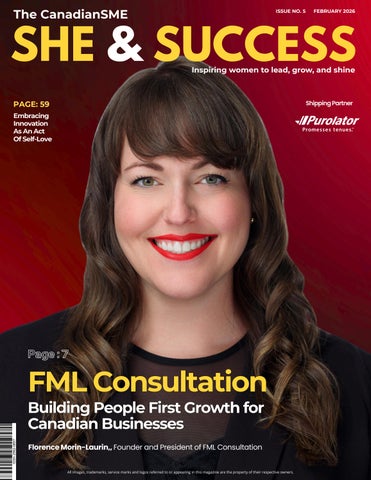
In a corporate environment characterized by rapid change, rising expenses, and a mounting need to differentiate, Canadian organizations are increasingly turning to advisory partners who understand both strategy and people FML Consultation is one such agency, helping organizations improve their sales, marketing, and client experience departments through a grounded, human-centred approach
FML Consultation, headquartered in Quebec, helps organizations in the professional services, construction, and B2B sectors navigate expansion, structure internal procedures, and improve how teams communicate with clients
The firm's work aligns with a broader Canadian trend identified by BDC research: small and medium-sized businesses that invest in customer experience, leadership development, and operational clarity are more likely to achieve long-term success
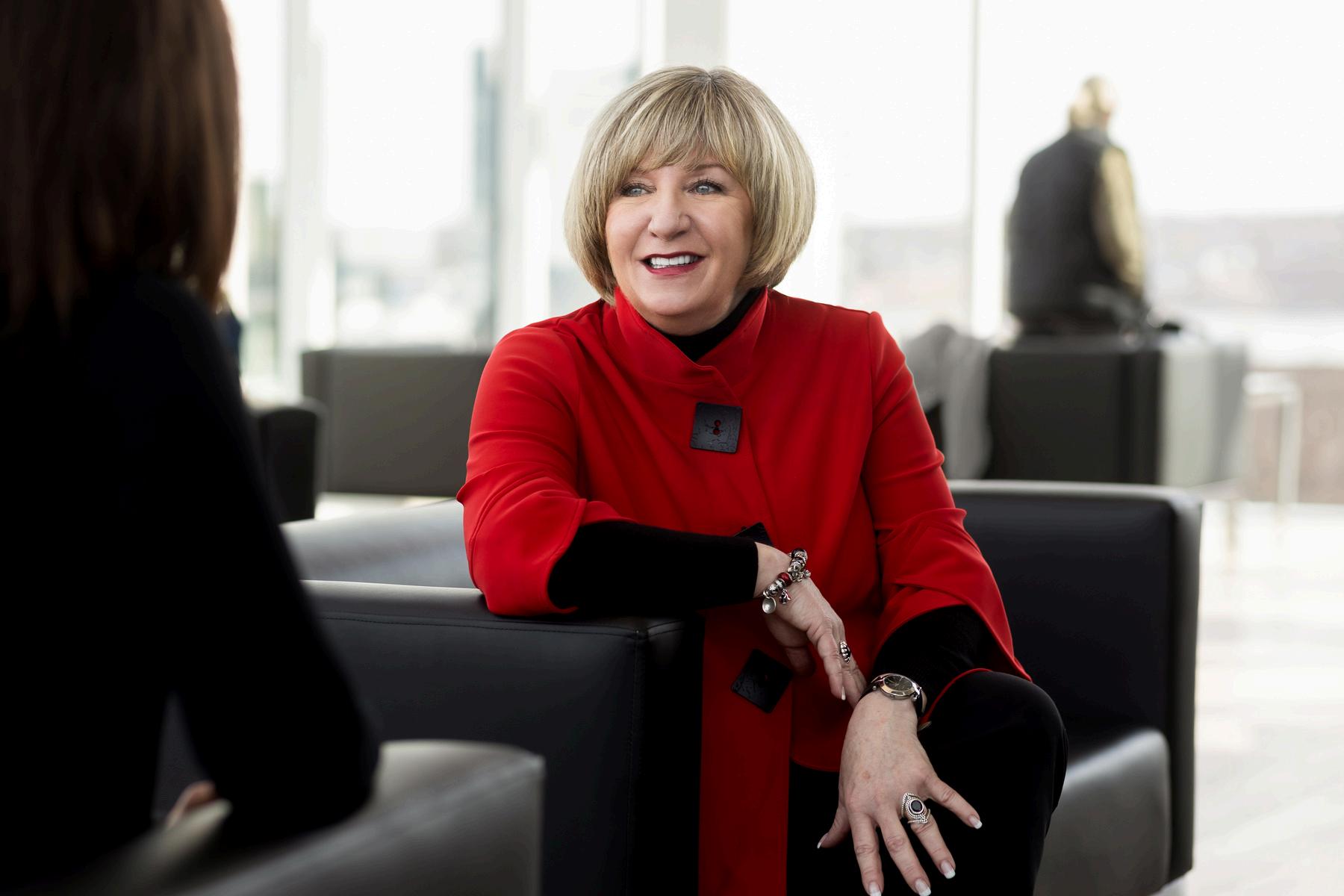
Florence Morin-Laurin, A Founder Driven by Impact
Florence Morin-Laurin, the founder and president of FML Consultation, is at the heart of the organization Florence founded the organization with a specific goal: to help businesses grow without sacrificing their values or employees Her drive stems from witnessing talented individuals and teams become frustrated by disconnected strategies and unclear processes Her background includes marketing, business development, and project leadership Her leadership style combines strategic discipline and emotional intelligence
Florence collaborates directly with founders, executives, and teams to uncover bottlenecks in sales processes, internal communication, and customer interactions Rather than providing one-size-fits-all solutions, she focuses on aligning corporate goals with day-to-day execution, ensuring people understand not only what to do but also why it is crucial. “We build playbooks that teams actually use because they helped create them,” she notes
In addition to her work at FML Consultation, Florence is active in professional and community networks and in industry programs that promote women ' s leadership and mentorship in business This involvement contributes to the companys inclusive outlook and underlines its commitment to developing sustainable, people-centred organizations
Practical Consulting for Real World Challenges
FML Consultation's services are grounded in realism The company helps clients with sales strategy formulation, marketing alignment, customer journey optimization, and internal process structuring These areas are becoming increasingly crucial as Canadian SMEs adjust to tighter labour markets and rising client demands. According to Statistics Canada and BDC research, organizations that clearly define roles, invest in leadership competencies, and codify customerexperience processes are more likely to increase productivity and retention
FML Consultation's methodology echoes these findings by helping firms transition from informal development to structured, scalable operations Clients frequently join the business at critical transitional periods, such as rapid growth, leadership changes, or the need to professionalize sales efforts In these situations, Florence and her team serve as both strategic advisors and hands-on partners, collaborating with internal teams to accomplish change rather than merely suggesting it. This often involves facilitated workshops, new CRW pipeline designs, and co-creating client communication protocols
A Human Approach to Business Performance
FML Consultation distinguishes itself by emphasizing human connection as a driver of performance The company understands that sustainable success depends not only on processes and metrics but also on trust, communication, and clarity across teams This viewpoint is consistent with recent Canadian workplace research indicating that employee engagement and leadership quality directly impact corporate results
By addressing both operational and interpersonal factors, FML Consultation helps organizations create conditions in which people can perform at their peak This dual focus is why clients report not only improved metrics but also stronger team morale and lower turnover
Looking Ahead
As Canadian firms navigate economic uncertainties and evolving client expectations, demand for intelligent, grounded advice is projected to rise FML Consultation is well-positioned to meet this need by combining strategic insight, empathy, and practical application For founders and executives feeling the strain of misalignment between their growth goals and their teams day-today reality, FML Consultation offers a clear path forward
FML Consultation, under Florence Morin Laurin's leadership and the firm's commitment to people-first growth, reflects a modern form of Canadian entrepreneurship: purposeful, resilient, and deeply engaged with the communities it serves
For leaders ready to build a more aligned and effective organization, Florence Morin-Laurin offers a complimentary 60minute strategy assessment. Discover how to translate your growth goals into actionable team playbooks. Learn more and schedule your conversation at florence@fmlconsultation.com
Subscribe to She & Success Business Magazine and follow us on she&success.ca to stay updated on funding opportunities, entrepreneurial insights, and inspiring stories of women making a difference across Canada
Disclaimer: This article is for informational purposes She & Success Business Magazine does not endorse or guarantee any products or services mentioned Readers should conduct their own research and due diligence.
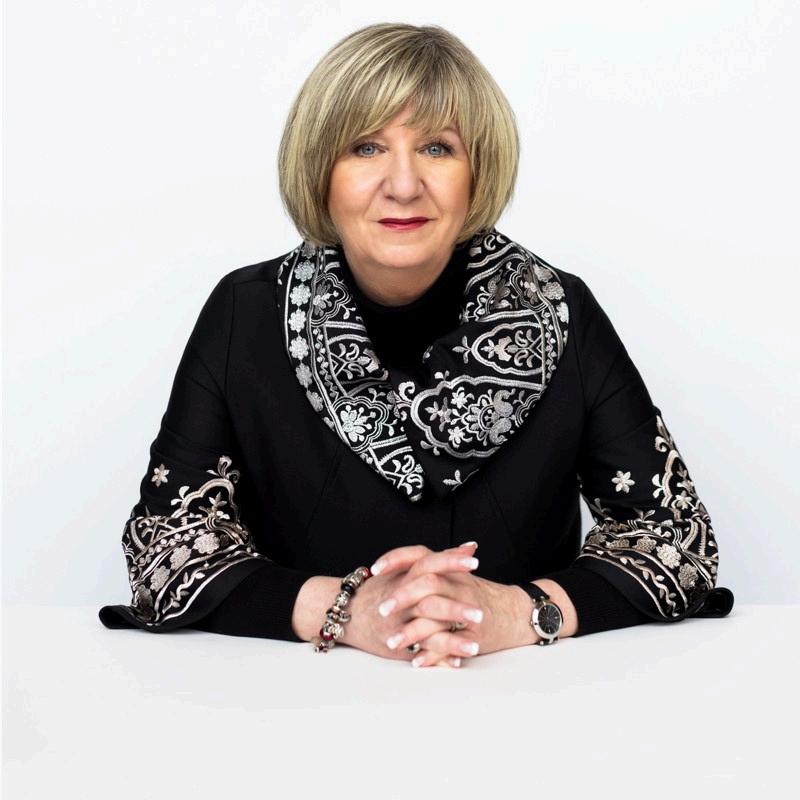
SanchariSenRai BusinessWoman oftheMonth
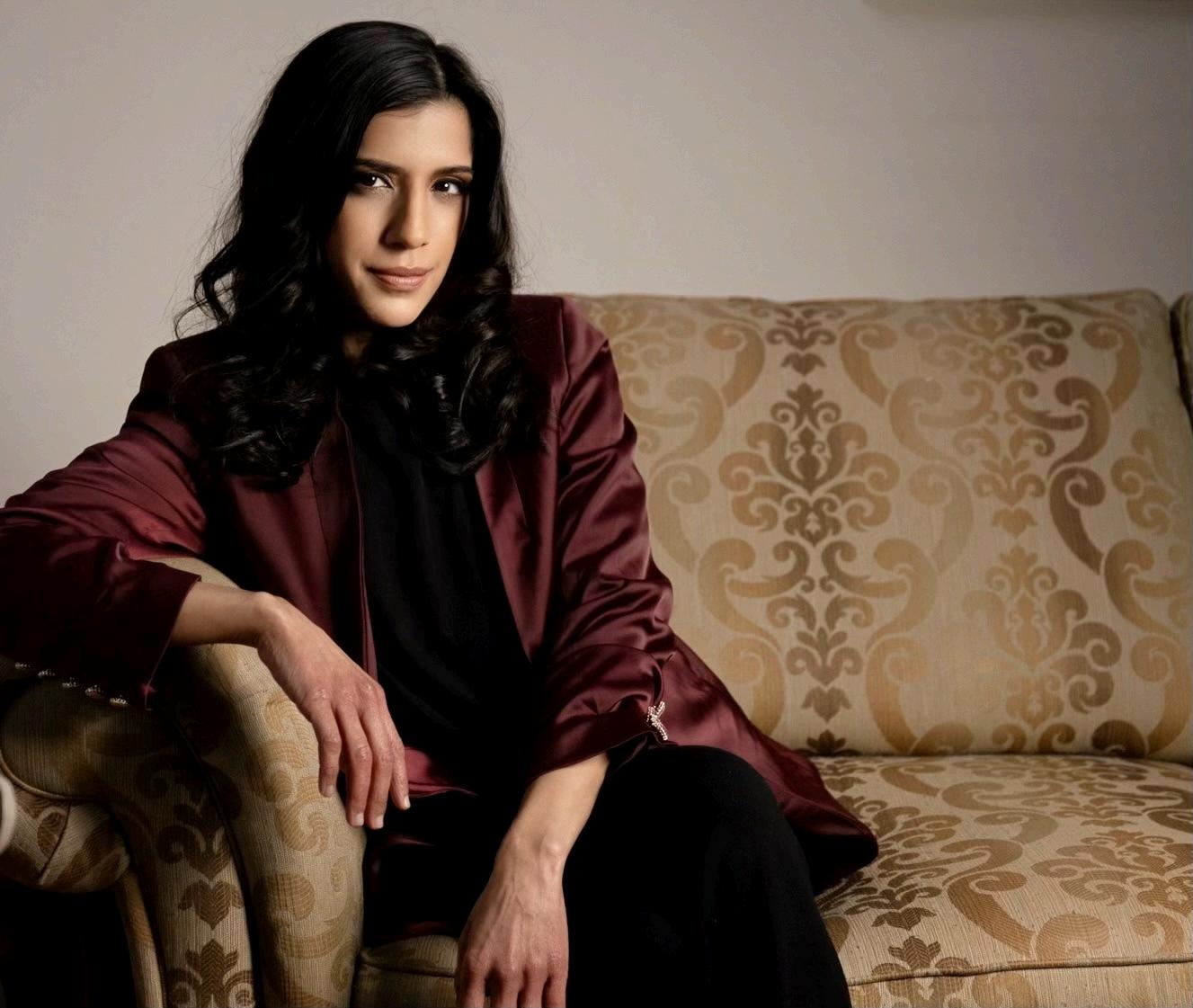
Sanchari Sen Rai Empowering International Students and Immigrant Women in Canada
Sanchari Sen Rai is the CEO and Co-founder of ECC Hive and SSR Immigration Services Inc , boutique consultancy firms with a 95% immigrant women workforce They provide strategic consulting in education planning, counselling, mentorship, internships, and immigration services for higher education abroad Operating as a hybrid social enterprise, ECC Hive empowers newcomers and international students by creating job opportunities, providing mentorship, and helping them gain Canadian work experience Over the years, ECC Hive has supported 60+ women (international students and newcomers), strengthening the community and helping them launch successful careers
A New Immigrant with No Canadian Experience to Immigrant Entrepreneur
As a newcomer with no work for 2 years even with international experience she recognized the struggles of many BIPOC and immigrant women face on a sometimes-complex route to work force as well as business ownership hence passionately advocates for equity, diversity, and inclusion in the international education ecosystem and with immigrants to create a human-centered world She is trying to make an impact by inspiring other young women who come as international students and immigrants who aspire to make a career for themselves and live the Canadian dream Leveraging her experience and her qualification, she also actively serves as a mentor for girls and women from diverse communities, culture, marginal socioeconomic background as well for young entrepreneurial mentees
ECC Hive Inc is combining the best aspects of business and social impact By integrating sustainable business practices with a mission-driven approach, it is fostering economic growth while addressing critical international student and newcomer ' s challenges Starting with just one Canadian university and three students in 2010
ECC Hive is adapting the evolving landscape of International Student Counselling and Enrollment to meet today's students' changing needs and expectations by providing an ethical and holistic service by giving preference and creating job opportunities in the organization itself which lacks the Canadian experience through mentorship, networking and internship
A bootstrapping Boutique Consultant, woman owned and led with 95% of women in the team, consisting of advisers/counsellors mostly international students or new immigrants counselling prospective students Spread over four countries (Canada, India, Philippines, Africa and Dubai) it has helped more than 60,000 students to study abroad and connected students to more than 60 institutions in Canada, US, UK, Germany, Singapore, Dubai
Counsellors work one student at a time through a deliberately holistic approach that prioritizes values, ethics, and long-term success over volume or quick outcomes Beyond admissions support, ECC Hive prepares students for sustainable career pathways, meaningful community engagement, and cultural integration in their new country.Over time, the company ' s focus broadened to include immigration and settlement assistance, setting the stage for Sanchari's ancillary services, SSR Immigration Services Inc , which currently provides regulated immigration guidance to help graduates stay, work, and establish lives in Canada
Building ECC Hive
SSR Immigration: Ethics, Integrity, and Impact A Role Model for Immigrant and Women Entrepreneurs
Sanchari provides individualized immigration strategies through SSR Immigration for families, workers, and students seeking to settle in Canada. The firm combines regulatory knowledge with compassion for the immigrant journey to specialize in study permits, work permits, permanent residence pathways, and post-graduation alternatives
Her work is grounded in ethics and transparency, which she considers non-negotiable in a field where misinformation can have disastrous consequences With a staff of 95% immigrant women, SSR Immigration and ECC Hive operate as boutique consultancies, providing women with similar life experiences significant employment and leadership opportunities Sanchari views success as measured not only by admissions and approvals but also by the thousands of students and families who are now making contributions to Canada's economy and cultural diversity
Awards, Recognition, and Influence
Sanchari’s influence is widely recognized She is a recipient of the Women of Inspiration BIPOC Leader Award (2023), been nominated for the Ontario Premier's Award and Community Recognition Awards from Yvan Baker, MP for the category “Outstanding service by professional staff, employers or employees She has been named among Canada’s Most Powerful Women Top 100 Awards Her leadership in international education and immigrant entrepreneurship has been highlighted in publications such as The PIE News and The Inspired Indian, Desi Magazine as well as by Humber College, where she completed the Immigration Consultant program
Sanchari frequently discusses ethical hiring practices, the mental health of international students, and the role of female leaders in global education as a public speaker and panelist.
As a woman, person of color, and immigrant entrepreneur, Sanchari is a passionate advocate for women empowerment hence mentoring girls, women, and BIPOC entrepreneurs across various programs, including The Forum, TRIEC, Girls E-Mentorship(GEM) a top 100-rated charity offering a research-based mentorship program for high school girls facing socioeconomic barriers, ALPFA,(a professional association for Latinos),Futurepreneur, and Alumni2Student (Schulich School of Business)
For immigrant and female entrepreneurs, Sanchari’s journey from newcomer to multiaward-winning Co-Founder, CEO, and RCIC serves as a powerful model of possibility. She has demonstrated that a values-driven, boutique business one that prioritizes ethics, meaningful relationships, community impact, and long-term success can thrive even in a highly competitive market
Her leadership of a predominantly immigrant, women-led workforce exemplifies inclusive entrepreneurship in action, creating opportunities, mentorship, and visibility for women who are often underrepresented in leadership roles By “carrying the torch” for international students and immigrant women, Sanchari is actively contributing to a more equitable, human-centered future for Canada’s education and immigration ecosystem
Conclusion
Sanchari Sen Rai along with her team built more than two successful businesses with ECC Hive and SSR Immigration Services Inc She has created opportunities, a sense of community, and prosperity for tens of thousands of students and immigrants Her narrative exemplifies the essence of She & Success: fearless leadership, moral business practices, and a dedication to uplifting others as she succeeds. Subscribe to She & Success Business Magazine and follow us on she&success.ca to stay updated on funding opportunities, entrepreneurial insights, and inspiring stories of women making a difference across Canada
Disclaimer: This article is for informational purposes She & Success Business Magazine does not endorse or guarantee any products or services mentioned Readers should conduct their own research and due diligence
BuildingCommunity, Connection,andConfidence
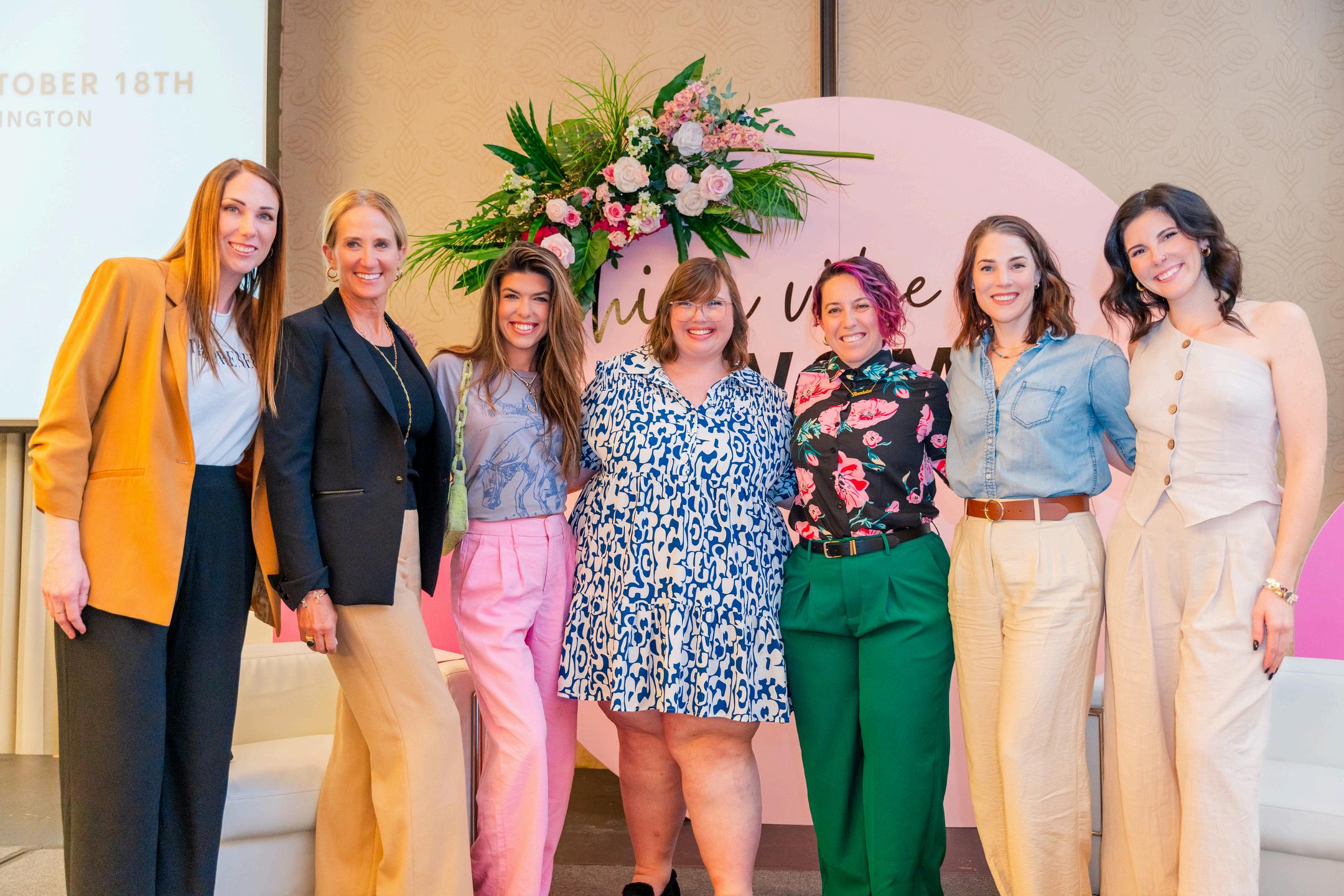
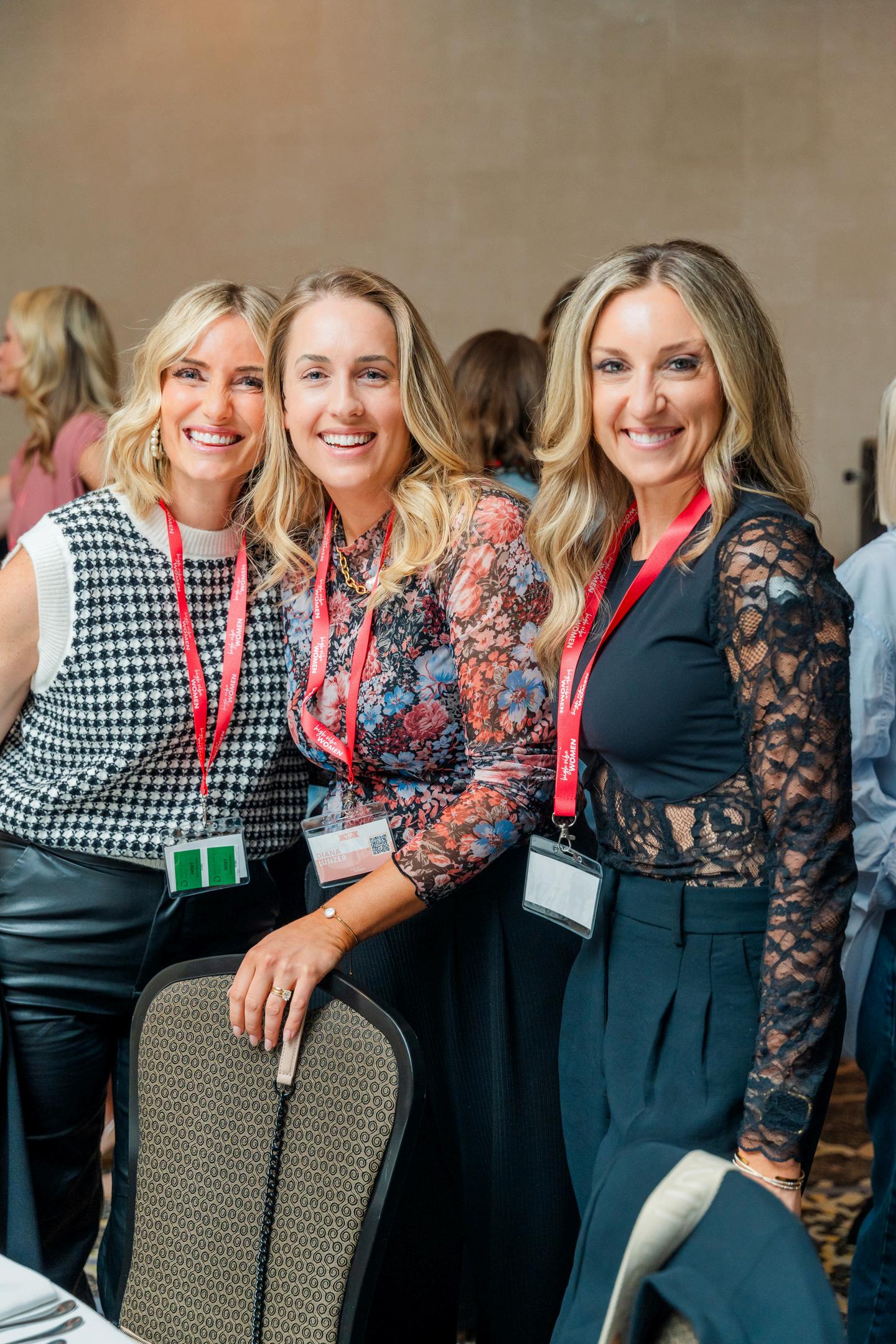
In an exclusive interview with She & Success Business Magazine, Kristina Bartold, Co-Founder of The Social Snippet and High Vibe Women, shares how authentic connection became the foundation of her entrepreneurial journey What began as intimate dinners and intentional conversations has grown into a national movement empowering women to scale through collaboration, visibility, and meaningful relationships.
Kristina Bartold is the co-founder of The Social Snippet and High Vibe Women She loves helping entrepreneurs and small businesses grow their communities online using social media, podcasting and events Kristina spends most of her days recording podcast episodes for the Community podcast, coaching business owners on how to grow their businesses or hosting events for local female entrepreneurs to grow through the High Vibe Women events
You’ve built both The Social Snippet and High Vibe Women around connection and community. What originally inspired you to create these spaces, and how have they evolved into platforms that empower women entrepreneurs across Canada?
As we were building The Social Snippet, we noticed how quickly the saying, " your network is your net worth" was true. We were meeting amazing entrepreneurs, mostly through events in the US, growing our referral network and actually meeting other Canadians craving community We started with small dinners to get a sense of what these women needed, and over time, these grew into larger and larger events that were filled with big business conversations, introductions made and ultimately, business being done together This was powerful, and the women attending asked for more of them. This has led to dozens of networking events across the country with plans to host in Vancouver and Calgary this year, retreats, an online community to provide support between the events and two large-scale events throughout the year Women do business differently, and we wanted a space to honour that
Many women face mindset blocks that hold them back from scaling confidently. From your coaching and community experience, what are the most common barriers you see—and what practical ways can women overcome them?
Imposter syndrome is the issue that I think so many women face, no matter where they are in business I have seen this with women who are just getting started to women scaling past eight figures, there are feelings of comparison, inadequacy and doubt on things they are more than capable of We see this particularly in our business with showing up online and making content - what if someone judges them? What if they post, and a loved one says something at Thanksgiving? The way to overcome this is not simple, but it is the reminder that often our biggest critics are not playing in the same arena as us, and when we show up as our most authentic selves in business, we actually give permission to other women to do the same As we scaled The Social Snippet over these past few years, I have received countless accolades from women saying they were inspired to keep showing up because rain or shine, we showed up as well
ImageCourtesy:HighVibeWomen
You’ve said that introductions are the key to business growth. What do women often overlook about the power of relationships in entrepreneurship, and how can intentional networking create momentum for small business owners?
No matter what business success story that you hear, there are always introductions behind the scenes that propel an outcome faster I've seen it time and time again, not only in our own businesses, but relationships are the lifeblood of scaling a business Women often overlook the power of attending events, thinking they need to be on stage to see impact or ROI, but they do not realize who they are sitting beside at the 10 person dinner or meeting for that quick coffee chat The beautiful thing about the High Vibe Women events is that these events welcome all levels, and we ' ve seen seven figure entrepreneurial women sit next to someone just getting started, and both get huge amounts of value Women need to focus on building their network and growing their communities, not only for the stage of business they are at today, but the future of whatever lies next for them
You’ve scaled The Social Snippet to seven figures while maintaining a personal, community-focused brand. How have you balanced fast growth with authenticity, and what lessons would you share with founders who want to lead from purpose, not pressure?
A personal brand is no longer an option for entrepreneurs, as we see the rise of founderled marketing in a world inundated by AI writing I am lucky that this has been my perspective since starting The Social Snippet, and my business partner, Maria, and I have always been team "document everything" The good and the bad, the difficult and the celebratory, we have always built in the light We did not know it at the time, but as we were building The Social Snippet and showing the behind the scenes of scaling our business quite quickly, we were building the audience for High Vibe Women If I was to share a lesson, it would be to build as publicly as you can and bring your audience with you for the journey, because you have no idea what story you are building yet
With your March 7th event approaching, what impact do you hope High Vibe Women will continue to make and what final piece of advice would you give to women entrepreneurs who are ready to grow through collaboration and connection?
Our vision for High Vibe Women is to inspire female entrepreneurs to bring their dreams to life in ways they could have never done on their own, and can do easily in community After our High Vibe Women events, regardless of size, women start new businesses and collaborations, build new retail partnerships, meet a mentor that changes the game for them, hears a piece of wisdom that leaves them forever changed and mostly, have a new group of women they can call on in all the moments of business We find success faster together, and so by attending events like High Vibe Women and showing up fully in community, we all board the rocket ship to change the Canadian landscape of business forever
Disclaimer: The views and opinions expressed in this interview are those of the featured guest and do not necessarily reflect the official policy or position of She & Success Our mission is to spotlight women leaders, their entrepreneurial journeys, and their impact providing insights that inspire and empower women entrepreneurs and small business leaders across Canada
FromBurnouttoBreakthroughfor WomenFounders
Burnout is a natural result of leadership in a high-pressure setting without adequate support, relaxation, or selfcompassion; it is not a personal failure for Canadian women entrepreneurs One of the most effective strategies to safeguard your well-being and the longterm success of your business is to treat self-love, emotional healing, and boundaries as genuine business strategies rather than luxuries
Naming the Reality: Burnout Is Widespread
A recent Canadian study indicates that burnout among founders is the rule rather than the exception According to a 2025 poll conducted by MaRS Discovery District, 65% of female company founders reported burnout, compared with 37% of their male colleagues Other Canadian research shows that more than 60% of entrepreneurs are sad, with the majority struggling to maintain a work-life balance and exhibiting symptoms of burnout.
Women founders frequently bear additional burdens caregiving, gender bias, and limited access to capital which exacerbate stress and make it difficult to seek assistance Many people report feeling like they "don't have time to break down," so they push through weariness until their bodies and businesses reflect the consequences Recognizing tiredness as a systemic reality is the first step towards self-love
Self‐Love in Action: A Canadian Story
The Canadian Women's Foundation tells the tale of "Building a Business Rooted in Self-Love," in which a female entrepreneur turns intense suffering and low self-esteem into a body-positive company that helps other women She started a purposeful path of self-acceptance and healing after overcoming bullying, internalized shame, and an abusive marriage She came to the conclusion that she deserved better She " never even knocked on " doors that led to plus-size modelling, public speaking, and ultimately the establishment of a body-positive fitness center for women as she began to embrace her body, mind, soul, and spirit
Her experience demonstrates that self-love is a deliberate change in how you view yourself and your value rather than a nebulous concept. By opting for therapy, she developed the self-assurance to demand attention, increase her fees through speaking and modelling, and create a business plan that reflected her principles rather than her anxieties Prioritizing their emotional healing allows founders to unleash their creativity, courage, and clarity, all of which immediately contribute to stronger brands and higher profits
Boundaries as a Business Tool Small Shifts, Big Impact
When self-love manifests as boundaries in your objectives, relationships, and schedule, it becomes useful Success begins with how you talk to yourself and what you let into your calendar, according to Canadian mindset leaders who deal with female entrepreneurs Four fundamental behaviours are highlighted in thought leadership articles: reframing fear, safeguarding time, developing confidence like a muscle, and embracing mentorship and "sisterhood."
Saying no to clients who routinely underpay or disregard boundaries, especially when money is tight, is one way that female founders can do this Just as important as investor meetings are time-blocking non-negotiable relaxation, therapy, or exercise Establishing guidelines for contact with your team, such as prohibiting late-night texts unless there is an actual emergency Although these decisions may seem hazardous at the time, Canadian research indicates that entrepreneurs who prioritize their mental health are more likely to maintain performance, avoid costly breakdowns, and lead with resilience Setting boundaries is about using your full, healthy energy to do the right things for your business, not about doing less
Confidence and Self‐Belief as Growth Drivers
Being confident is something you practice rather than something you are born with Research and anecdotes from Canada demonstrate that women entrepreneurs who identify confidence and self-belief as their primary motivators are more likely to take daring actions, such as launching, raising prices, seeking funding, or entering new markets According to 35% of Canadian women entrepreneurs surveyed, their confidence and self-belief were the main factors that allowed them to launch and grow their firms
However, according to other Canadian analyses, women often have lower "entrepreneurial self-efficacy" than men, meaning that even when they are equally capable, they are more likely to doubt their ability to succeed Women may be discouraged from seeking funding, making larger contract pitches, or growing their businesses due to this lack of confidence Women founders can break the tendency to play small and make more profitable decisions by consciously developing self-belief through journaling, coaching, peer communities, and celebrating small victories
Making regular, compassionate decisions is the first step towards creating your own selflove blueprint; a drastic life makeover is not necessary A strong plan for Canadian women entrepreneurs can consist of:
Ask yourself, "What do I need today to show up as a whole leader physically, emotionally, and mentally?" and address at least one minor need during your daily check-ins
Structured support: Schedule regular meetings with a mentor, coach, or therapist who is knowledgeable about entrepreneurship and, if at all feasible, women ' s experiences in particular
Structured support: Schedule regular meetings with a mentor, coach, or therapist who is knowledgeable about entrepreneurship and, if at all feasible, women ' s experiences in particular
Burnout does not indicate that you are not suited for entrepreneurship; rather, it signals that something needs to change You are not leaving your business when you choose selflove, limits, and healing; rather, you are moving toward a version of success that is profitable, long-lasting, and profoundly consistent with your identity
Subscribe to She & Success Business Magazine and follow us on she&success.ca to stay updated on funding opportunities, entrepreneurial insights, and inspiring stories of women making a difference across Canada.
Disclaimer: This article is for informational purposes She & Success Business Magazine does not endorse or guarantee any products or services mentioned Readers should conduct their own research and due diligence.
a platform rooted in deep and authentic conversations, Shruti partnered with Nicola Haggins to amplify voices and stories that inspire real connection. She produced compelling cover shoots featuring talents like Sarah Shahi, Steve Howey, and Emmanuelle Chriqui, and conducted intimate interviews with stars including Megan Fox, always drawing out the essence beneath the surface
During the pandemic, Shruti’s journey took a powerful turn when she became certified in Quantum NLP Coaching and hypnosis This transformative training awakened her to the profound power of healing subconscious patterns and aligned her with her soul’s true calling Her purpose deepened further through the Beyond Bulletproof program with Evy Poumpouras, where she embraced a mission to serve artists with fierce intuition, compassion, and integrity. “I trust the quiet inner knowing even when it defies logic. Intuition is a whisper; fear is noise. Recognizing this difference is key.
In an exclusive interview with She & Success Business Magazine, Shruti Sadana, Founder of UNVEILD Artist Management and Co-Founder of Hey Beauti Magazine, opens up about leading with intuition in an industry driven by pressure and perception Drawing from her journey across acting, production, publishing, and conscious leadership, Shruti shares how authenticity, emotional intelligence, and inner alignment shape not only the careers she guides but the lives behind them
Shruti Sadana is a soulful and visionary talent manager dedicated to transforming the entertainment industry from within With a rich background both in front of the camera as an actor and behind the scenes in production, Shruti brings a uniquely holistic perspective to managing talent one that honors the whole person, not just the career. As Co-Founder of Hey Beauti Magazine,
You’ve gone from being in front of the camera to producing editorial work through Hey Beauti Magazine and now leading UNVEILD Artist Management. What inspired your shift into talent management, and how has this evolution helped you align your professional life with your deeper purpose?
My path has always been guided by something deeper than strategy it’s been led by intuition, purpose, and an unwavering inner compass
Years ago, I encountered Evy Poumpouras through Woman of Impact, and before she ever became a mentor, her presence spoke louder than her words. There was a steadiness to her energy unshakeable, disciplined, embodied I recognized it instantly It felt familiar I knew I was meant to live with that same level of clarity and intention
When I later joined Beyond Bulletproof, her story of service instilled something within me She didn’t choose her path randomly it chose her She moved in alignment with duty, integrity, and devotion to others That resonated deeply and activated the question of: How do I honor my love for the entertainment industry while serving something greater than myself?
The answer arrived quietly, decisively Talent management
Not as a title but as a calling
I saw a way to hold space for actors to rise without abandoning their truth To guide them toward power without distortion To protect their essence while navigating an industry that often asks people to fragment themselves My role became clear: to lead with discernment, to cultivate trust, and to help artists remember who they are as they step into who they’re becoming
This work is intentional It’s intuitive It’s service-driven
You often speak about trusting your intuition and leading with empathy. How do you integrate that intuitive, soulful guidance into the high-stakes, often fast-moving environment of artist management?
Intuition is quiet and calm Ive learned to trust it more deeply over time. It’s about feeling the energy in the room and tuning into the person across from me Everyone carries a frequency, an aura, a truth that speaks before words do I pay attention to that I listen to their goals, their vision, and I sense where they would naturally resonate When I see a role, I often think, “This client is perfect for this,” and I trust that instinct
From there, the process becomes precise I send their materials headshots, resumes, and thoughtfully written summaries that capture not just their credits but their essence, their presence, and why they would elevate a project I aim to translate who they are into the language of casting, highlighting what makes them unique while connecting them to opportunities where they can shine
Every step is guided by awareness of the client’s individuality I watch how they move, listen to what matters to them, and match that to the right roles.
From casting impactful films like Denim to working with clients whose projects center on truth and transformation, you clearly gravitate toward stories with soul. Why does authenticity matter so much to you, and how do you help the artists you represent stay true to themselves under industry pressure?
Authenticity matters because it is our birthright We come into this world to return to ourselves, and along the way, we are walking each other home Each person carries their own energy, their own truth, and their own path When someone is living fully in alignment with themselves, without harming others, it is a reminder of the freedom and power inherent in honoring who we are My work begins there seeing each artist fully, recognizing the life force they bring, and meeting them where they are with clarity and respect
I help artists trust their own instincts When an audition or opportunity arises, I ask simply: “Does this feel right for you?” Their answer guides the next step My role is to honor that choice, giving clarity and perspective while keeping the focus on their energy, goals, and truth By centering their intuition, they navigate the industry confidently, making decisions that reflect who they are rather than what the world expects Every choice becomes an expression of their own clarity, allowing them to step fully into roles with presence and authenticity
As co-founder of Hey Beauti Magazine, you built a space rooted in meaningful connection and real conversation. What lessons from publishing —and drawing out raw, human stories—do you now apply to guiding your clients’ careers?
One of my mentors once told me, “Always speak from your heart ” It might sound simple, but it’s true People are drawn to your story because it is uniquely yours I saw this in my work with Hey Beauti Magazine: there is a magnetic power in letting someone share their truth fully, without judgment, with complete acceptance
I bring that same approach to guiding my clients When actors are fully grounded in who they are, it naturally shows up in their work and in the opportunities they attract My role is to help them trust their instincts, honor their own choices, and move from a centered place within themselves It always comes back to the individual: the more they operate from that inner clarity and confidence, the more it resonates externally, shaping a path that aligns with who they are and what they are meant to create
For women navigating creative industries whether they’re artists or founders what advice would you share about trusting their inner voice and pursuing success that feels soulful, not superficial?
When you turn inward and listen to your own voice, clarity comes Your path doesn’t appear because you chase it it unfolds because you trust not only yourself, but also that what is out of your control will not shake you. The people you meet, the doors that open, the opportunities that arrive they all respond to your centered presence Guidance and tools can help, but the answers live within you You are the source
Intuition is not speculation It is ancient knowledge, a quiet memory of having walked this path before When you trust your instincts and honor your choices, your decisions become precise, your energy calm, and opportunities appear naturally as a reflection of your focus and integrity The world responds in kind
lowyourselftoreceiveit, peratefromclarityand erystep,every erydecisionreflectsyour presence,andyour eyourlifeandinspire ewaytodothesame. and opinions expressed in this the featured guest and do not official policy or position of She & s to spotlight women leaders, their ys, and their impact providing nd empower women entrepreneurs aders across Canada
One laptop, one idea, one lady wearing many hats this is how entrepreneurship frequently begins That loneliness can eventually lead to decision fatigue, second-guessing, and the belief that everyone else has it "figured out " Along with capital and marketing, isolation is frequently cited by Canadian mentorship and peer-group programs as one of the biggest issues faced by female entrepreneurs That equation is altered by the community
No webinar or book can match the quicker problem-solving, shared resources, and emotional support that entrepreneurs receive when they routinely engage with peers and mentors who understand their reality. In essence, community becomes a competitive advantage: possibilities arise via relationships rather than by coincidence, decisions are sharper, and resilience is higher
The Forum and WeBC: Structured Support That Sparks Momentum
Since 2002, the Forum, a national Canadian charity, has trained, mentored, and empowered over 18,000 female entrepreneurs Its Mentor Program, delivered in collaboration with The Scotiabank Women Initiative, pairs female entrepreneurs with experienced mentors for a year, providing them with the support, knowledge, and camaraderie they need to succeed in business The Forum has sponsored over 2,000 mentor-mentee pairings and now serves over 1,900 women from 193 communities across 11 provinces each year, with demand for mentorship increasing by 200% over the previous five years
With assistance from the Women Entrepreneurship Strategy, WeBC is currently extending its Peer Mentoring Model across Canada after more than 15 years of operating award-winning mentorship programs in British Columbia Under the direction of an experienced entrepreneur, six to eight women from non-competing businesses gather regularly in Growth Peer Mentorship and community-based peer groups to discuss problems, develop solutions, and create action plans Increased self-assurance, new relationships, and "comfort from isolation through regular, supportive contact" are all reported by participants
Startup Women Finding Inspiration Through National Networks
Startup Women by Startup Canada provides a nationwide community for women at the idea or early-stage stage The program offers webinars, advisory help, and mentorship office hours that bring together women from various locations, industries, and backgrounds, making it easier to validate ideas and obtain encouragement before and after launch
The end result is a multi-layered ecosystem that includes local peer circles, provincial support, and national virtual programs that can help a founder go through each stage of growth
Community That Honours You with Awards and Public Recognition
Being seen is just as important to the community as finding solutions to issues Canada's women entrepreneur awards programs highlight the accomplishments of founders, establish role models, and provide access to new investors, partners, and networks
In its 33rd year, Women of Influence+ presents the RBC Canadian Women Entrepreneur Awards, which honour female entrepreneurs and nonprofit leaders in a variety of categories, including microbusiness, start-up, growth, social change, and more.
Other national events, including the RPA Women Entrepreneur Awards and the Women Empowerment Awards, highlight diverse founders The 2025 Women Empowerment Awards in Toronto, for example, recognized 10 categories and provided $32,000 in financing to female entrepreneurs, professionals, and activists, highlighting innovators in
sustainability, diversity, mentorship, and global impact Being nominated or winning is more than just a trophy; it allows you to connect with alumni, sponsors, and media, which can help you expand faster
From Isolation to Advantage with the Right Connections
Turning community into a competitive advantage begins with a simple decision: you don't have to do it alone For Canadian women entrepreneurs at various stages, here is a short method to transition from solo to supported:
Idea or Pre-Launch:
Join Startup Women's gatherings provide an opportunity to validate your idea and meet peers from across the country
Use WEOC's mentorship and member directory to locate a local women ' s organization
Early-Stage (0-3 years):
Join The Forum Mentor Program for a 12-month one-onone mentorship
Join a WeBC community-based mentoring group in BC or a national Growth Peer Group in your location
To grow and scale:
Interact with national networks and nominate yourself or peers for honours such as the RBC Canadian Women Entrepreneur Awards or the Women Empowerment Awards
Use WEOC and partners to connect with scaling entrepreneurs, financiers, and consultants who understand your next-level problems
Each stage strengthens your support network, helping you recover from failures, identify opportunities, and rekindle enthusiasm for your firm
Subscribe toShe&SuccessBusinessMagazine and follow us on she&success.ca to stay updated on funding opportunities, entrepreneurial insights, and inspiring stories of women making a difference across Canada
Disclaimer: This article is for informational purposes She & Success Business Magazine does not endorse or guarantee any products or services mentioned Readers should conduct their own research and due diligence
In an exclusive interview with She & Success Business Magazine, Brittney Ashley, Founder and Lead Strategist of Creative Dynamics Virtual Services Ltd , shares how she has built a business rooted in capacity, clarity, and care rather than constant hustle. Drawing from her lived experience as a neurodivergent founder and mother, Brittney speaks candidly about delegation, trauma-informed operations, and designing systems that support real life, not just productivity.
Brittney Ashley is the Founder and Lead Strategist of Creative Dynamics Virtual Services Ltd., a Métis- and women-owned company in Victoria, BC. Her agency helps service-based founders scale their businesses sustainably without burnout through a mix of business consulting, strategy, and hands-on support, including executive assistance, operations management, project management, and marketing launch support Originally founded to help moms build flexible work-from-home careers, Creative Dynamics now supports entrepreneurs more broadly with people-first, trauma-informed, and neurodivergent-friendly operations
Brittney is a Certified Business Coach, Certified Imposter Syndrome Coach, and Trauma-Informed Money Practitioner She’s an Entreprenista 100 honoree, a Canadian Choice Award winner (2026), and was voted Top Coach in Victoria (2024). She hosts the podcast Breaking Norms, Building Dreams (200,000+ listeners) and is a two-time nominee for the RBC Canadian Women Entrepreneur Awards.
You’ve built Creative Dynamics as a people-first, trauma-informed, and neurodivergent-friendly agency. What inspired you to create a business that intentionally challenges hustle culture and redefines what sustainable success looks like for women founders?
I started Creative Dynamics Virtual Services after noticing a pattern: brilliant entrepreneurs were building businesses that looked successful from the outside but felt exhausting on the inside As a mom (and someone whos navigated ADHD and dyslexia), I understood the mental load, the pressure to do it all, and how quickly “ success ” can turn into burnout
Creative Dynamics originally began with a heart-led mission: helping moms build flexible, meaningful careers from home But the need we were solving was bigger than motherhood it was a lack of sustainable support for founders who were carrying too much alone
Today, we ’ re a people-first, trauma-informed, neurodivergent-friendly agency supporting service-based business owners who want to grow without sacrificing their health, relationships, or quality of life We create real capacity through operational support, systems, and structure so leaders can step out of the weeds and back into vision, strategy, and impact
To me, sustainable success isn’t measured by hours worked It’s measured by clarity, boundaries, support, and momentum that protects your life while your business grows
Many entrepreneurs struggle to delegate because they equate doing everything with being capable. What mindset shifts or practical steps do you recommend for founders who are ready to outsource but don’t know where to start—or worry about losing control?
Delegation isnt losing control, it’s gaining capacity Being capable doesn’t mean you have to do everything yourself
Start by delegating the drains, not the dreams Focus on tasks that steal time or energy emails, scheduling, follow-ups, formatting, or tech admin. Begin with one role or project that has a clear “definition of done ”
As a neurodivergent founder living with ADHD and dyslexia, how have you adapted traditional business systems to better support the way your brain works —and how can other leaders create “neurodivergent-friendly” workflows for themselves or their teams?
Living with ADHD and dyslexia taught me that traditional systems assume consistent focus, linear thinking, and perfect memory I stopped forcing my brain into rigid structures and now design workflows that support how I actually operate The goal isn’t to “fix” your brain it’s to create systems that fit you
For me, this means visual task management, clear priorities, short feedback loops, templates and automation to reduce repetitive work, and a single home base for information I also plan for real capacity, including buffers, transitions, and realistic timelines.
For other leaders, neurodivergent-friendly workflows start with clarity and psychological safety: written expectations, visible priorities, fewer unnecessary meetings, structured agendas, and a culture where people can ask for support without shame Supportive systems improve performance because people aren’t spending energy masking, scrambling, or recovering, they’re fully empowered
You’ve spoken about juggling motherhood and business with honesty. What are some of the key systems or boundaries that have helped you maintain momentum as both a CEO and a mom— especially when life feels unpredictable?
Motherhood taught me that leadership must be honest and flexible. Life with kids is unpredictable, so I rely on simple but non-negotiable systems: weekly priorities, time-blocking with buffers, and clear availability boundaries
Delegation and documented processes keep the business running even if I’m unavailable I also use a “minimum viable day” plan to identify wins when energy or capacity is low
Self-care is part of leadership, not an afterthought Sustainable momentum comes from clarity, structure, and flexibility not constant urgency These systems allow me to lead consistently while protecting family, health, and personal well-being
For women entrepreneurs trying to grow with integrity and alignment—not constant “hustle”— what’s one piece of advice or mindset shift that’s helped you lead from calm, confidence, and community instead of burnout or comparison?
Embracing grace over perfection changed everything for me Growth doesn’t have to be constant or fast to be real steady, values-led progress is still success When you stop trying to control every outcome, you create space for calmer, clearer decisions
One mindset shift that helps: lead like a CEO, not like the entire company A true leader knows when to step back, delegate, and trust the systems and people around them. Clear roles, simple processes, and boundaries let work move forward without micromanagement so you can lead strategically instead of urgently
I also anchor into community over comparison Surround yourself with people who reflect your values, tell the truth with love, and celebrate your wins, especially the small ones Confidence grows when you acknowledge what’s working, not just what’s next
Disclaimer:The views and opinions expressed in this interview are those of the featured guest and do not necessarily reflect the official policy or position of She & Success Our mission is to spotlight women leaders, their entrepreneurial journeys, and their impact providing insights that inspire and empower women entrepreneurs and small business leaders across Canada
According to Canadian research, women entrepreneurs are ideally positioned to achieve purposeful growth According to the Women Entrepreneurship Knowledge Hub (WEKH), the majority of women-owned firms operate in sectors that prioritize social impact, including health, education, care, social services, and community-focused shops and services According to a federal report on the Women Entrepreneurship Strategy, enterprises run by women pursue social and environmental results in addition to financial achievement
The Business Data Lab's research on "missing women entrepreneurs" supports this view If Canada eliminated the gender gap in business ownership, the country could have increased its GDP by 6% during the last 7-8 years, amounting to at least $150 to 180 billion in unrealized output
Women have significant potential to start enterprises grounded in care, community, sustainability, and inclusiveness if they have equal access to capital and resources
Women‐Led Innovation, From Main Streets to the North
Purpose-driven entrepreneurship varies across Canada, with women shaping the definition of innovation in each region
According to an OECD research on "Women and the geography of start-ups in Canada," women are starting enterprises in both urban and rural locations These initiatives often address local social and economic concerns. Examples include community daycare, wellness and healing spaces, cultural enterprises, Indigenous-led ventures, and social enterprises focusing on food security or environmental stewardship
Provincial proof backs up this story A WEKH-supported analysis of women ' s entrepreneurship in Manitoba found that women-owned enterprises in the province exhibit higher rates of product/service and business-process innovation than their competitors During recent disruptions, half of the women-owned enterprises polled implemented innovative measures such as new digital offerings, revised services, and community-oriented solutions Many of these improvements were directly related to their intended goal, such as better servicing vulnerable groups, keeping employees employed, or boosting local supply chains
Purpose‐Driven, Still Profitable
Canadian evidence contradicts popular notions that socialor community-oriented firms must be small or unscaleable According to the Women Entrepreneurship Strategy progress report, investing in women-led enterprises yields excellent returns Additionally, women entrepreneurs are more inclined to invest in their communities, employees, and inclusive practices
Reconnecting to Purpose to Clarify Growth Decisions
Purpose is not just inspiring but also a useful decisionmaking tool According to WEKH's 2025 research, women entrepreneurs who understand the impact they want to make are more likely to adopt new technologies, expand into new areas, and pursue growth strategies that align with their values Womenowned businesses prioritize sustainability and inclusivity, typically using digital tools and AI to improve productivity, decrease waste, and serve more clients without compromising quality.
Reconnecting with one ' s purpose might assist founders in deciding:
Whether to seek outside financing or develop slowly while maintaining control
Which product lines or services should remain because they are consistent with our vision, and which should be phased out even if they are temporarily profitable?
Where should we expand next: to communities in need of our services, or to markets that best reward our values?
When women entrepreneurs in Canada reassess their "why," they frequently regain the enthusiasm required to overcome obstacles such as financing, scaling, and exporting. Purpose becomes a filter, simplifying complex options and reducing decision fatigue
A Call to Purpose‐Led Ambition
According to OECD research, women ' s entrepreneurial activity in Canada is influenced not just by gender, but also by geography, access to networks, and the types of opportunities available in each town Women often start enterprises to address gaps in care, culture, or local services, which often leads to a strong sense of purpose from the start.
National reports emphasize that treating women entrepreneurs as a "nice-to-have" is no longer an option and represents a significant economic opportunity for Canada For female founders, this is an opportunity to claim purpose as a competitive advantage rather than a constraint, and to pursue development boldly while honouring principles, community, and financial strength Women in Canada who develop purposedriven, lucrative businesses not only redefine their own success but also build a thriving, inclusive economy
Subscribe to She & Success Business Magazine and follow us on she&success.ca to stay updated on funding opportunities, entrepreneurial insights, and inspiring stories of women making a difference across Canada.
Disclaimer: This article is for informational purposes. She & Success Business Magazine does not endorse or guarantee any products or services mentioned. Readers should conduct their own research and due diligence.
In an exclusive interview with She & Success Business Magazine, Shelley R King, Founder and CEO of Natural Products Canada, reflects on the leadership decisions, ecosystem thinking, and long-term mindset required to turn bio-based innovation into real economic impact With decades of experience spanning research, commercialization, and investment, Shelley shares how aligning founders, capital, and policy can unlock scalable growth across health, agri-food, and sustainable bioproducts.
As the Founder and CEO of Natural Products Canada (NPC), Shelley King has positioned Canada as a trailblazer in the global bioeconomy For over 30 years, she has combined her scientific background with deep industry expertise to help Canadian innovations evolve from bright ideas to market-ready products Since championing NPC’s launch in 2016, King has built a national network of over 4,000 members and supported the advancement of more than 1,800 companies
Under her leadership, NPC has provided strategic capital to over 90 Canadian early-stage companies catalyzing significant new products and revenue, jobs, and exports. The organization boasts an impressive leverage ratio, helping members raise $52 for every $1 distributed by NPC. This success secured $39M in investment from the Government of Canada since 2016 and led to the establishment of Nàdarra Ventures, a spin-off venture capital fund.
You’ve spent three decades at the intersection of science, entrepreneurship, and industry. What inspired you to found Natural Products Canada in 2016, and what critical gap did you see for biobased innovators that wasn’t being addressed?
I saw first-hand the impact that natural chemistry and biological-based innovations could have, especially in Prince Edward Island. That experience shaped my thinking about what was missing
When we started, we knew that early-stage investment was a significant gap in the ecosystem So we built our model around being an early-stage equity investor in companies in this space
But we also understood that it's not only the money that makes the difference It's really about building an ecosystem around a company so they can access the resources they need to grow
Natural Products Canada (NPC) was founded in 2016 with $14M in federal funding through the Centre of Excellence for Commercialization and Research program, and later secured an additional $20M from the Strategic Innovation Fund in 2021 From the onset, we established a strong industry-led board whose members volunteered their expertise to help us develop our strategy and investment acumen while ensuring effective and transparent governance Across the country, we built relationships with key partners, including industry associations and universities, who became extensions of our reach
We've evolved that model over time to address critical gaps as they emerge and leverage the ecosystem to support these companies through difficult times.
Many entrepreneurs still think “natural products” means only consumer goods, yet NPC works across health and life sciences, natural resources, agrifood, and sustainable bioproducts. How do you explain the bioeconomy opportunity to a first-time founder, and what unique advantages does Canada have that women entrepreneurs should be leveraging?
Most of the companies we work with don't call themselves bioeconomy companies They are earlystage companies whose bio-based products generate solutions that capture the global bioeconomy We work across health and life sciences, natural resources, agrifood and sustainable bio-products
Right now, the global bioeconomy market is estimated at $4T and could reach $30T by 2050 The potential seems limitless because we ' re at a moment where there are real challenges around food security, environment, climate change and the geopolitical environment
In Canada, investors and consumers want to support local companies producing products that are better for people, animals and the planet. If you combine that with the natural resources Canada has to act as inputs into products and technologies for the bioeconomy, it's a really good time to think about entering this market or expanding your company beyond what you thought it could be
Your early experience leading a university spin-off showed you how wide the gap is between a great lab result and a viable product. What are the most common pitfalls you see early-stage founders make in commercialization, and how can women innovators practically de-risk their path to market?
A lot of our founders are technical founders with fabulous innovative products, but the challenge is understanding which market to apply them to Many founders think they're building for one market, but end up pivoting to another
I learned this lesson myself At my first startup, we spent eight years when we should have recognized after four that we needed to pivot The lesson is to be willing to abandon your original plan when a better opportunity presents itself, and don't be afraid to fail fast when something isn't working
Doing customer discovery work early is critical You need to understand not only who your customers are, but what they actually need That also has implications for regulatory pathways Talk to people in your space who you believe have a need for your product or technology
When you ' re raising money, you have to show investors the value of their investment Your story has to be clear, and you need to demonstrate product-market fit That's one element of de-risking your path to market Our members have raised $53 for every $1 distributed by NPC, and that kind of leverage starts with a clear story and strong fundamentals
NPC’s impact has depended on aligning founders, government, investors, and industry—contributing nearly $900 million to Canada’s GDP in recent years. What have you learned about building and sustaining these kinds of complex partnerships, especially when setbacks happen and resources are limited?
When you ' re in the innovation and commercialization space, partnerships between government, investors and industry are complex Ultimately, you all have the same goals How you achieve them may be slightly different
What has worked well for NPC is having very open and collaborative partnerships and being completely transparent in what we ' re doing With transparency you build credibility and trust in the marketplace and with your own investors Then when you have setbacks and resources are limited, you can have open conversations and figure out a solution rather than trying to hide from it
When we started, we had advocates across the country promoting our mission when we were still unknown Everyone was invested in doing whatever work needed to be done, and many were contributing their time on a volunteer basis That foundation of trust is also why we were able to raise $15M to spin-off Nàdarra Ventures, a venture capital fund to further support promising Canadian opportunities
The same principles apply to a founder starting a business Build the relationships, be honest, have open communication, talk about your wins and your challenges so that somebody may be able to help you find a solution.
For a woman entrepreneur with a promising bio-based innovation who doesn’t know where to start, what first steps, mindsets, or skills would you encourage her to focus on—and how can organizations like NPC help her turn a big vision into pragmatic, scalable impact over the next decade?
Start by reaching out to folks already in your space, especially other founders At NPC, we ' ve introduced founders to other founders who have “been there, done that” and can help nurture companies coming behind them They don't have to be your competitors If they're in the same space and at a stage of growth beyond yours, that's a great resource
There are also organizations (like NPC) that provide advice and connections over and above any capital contribution We help companies navigate regulatory, IP, scale-up, R&D and financing hurdles on the road to commercialization, bridging the gaps between scientists, entrepreneurs, industry and investors
Disclaimer:The views and opinions expressed in this interview are those of the featured guest and do not necessarily reflect the official policy or position of She & Success Our mission is to spotlight women leaders, their entrepreneurial journeys, and their impact providing insights that inspire and empower women entrepreneurs and small business leaders across Canada.
Confi IsCap Wom
Entre
Confidence serve women entrepren a personality cha take, how you pric capital, and how f all influenced by y creativity, and gro confident in their
The Confiden Link in Canada
According to GoDaddy's Unstoppable Research, the majority of Canadian women who launch or intend to launch a business are motivated by a desire for flexibility and financial independence rather than merely survival. Despite persistent obstacles, a survey found that four out of five Canadian women believe there are more opportunities than ever to start a business Women view entrepreneurship as a feasible, powerful route rather than a last choice, and this belief in opportunity is a form of confidence
However, many women continue to undervalue their own strengths According to Business Data Lab's 2025 study of Canadian women entrepreneurs, based on data from the Global Entrepreneurship Monitor (GEM), women are more likely than men to express fear of failure and a lack of confidence in their ability to launch a business To put it another way, Canadian women perceive opportunities around them but may not necessarily believe they are prepared to take advantage of them
GEM and Business Data Lab data provide a nuanced picture of fear and action. According to a 2023 GEM study, over 55% of Canadian adults say they would not start a business for fear of failure, with women reporting fear of failure roughly 10% higher than men According to Business Data Lab's 2025 "Women Entrepreneurs" research, Canadian women are more likely to see fear of failure and a lack of confidence in their abilities as barriers to entrepreneurship
However, this same study demonstrates that fear does not completely prevent women from acting Despite self-doubt, many female entrepreneurs report high levels of perseverance and a positive outlook on opportunities The difference is frequently in how they deal with that fear: founders who learn to move with it rather than wait for it to go away are the ones who launch, pivot, and scale In this sense, confidence is defined as the decision to keep going despite fear
Fear of Failure vs. Forward Motion
Likeability, Self‐Doubt, and Leadership
The "likeability penalty" complicates women ' s confidence as leaders According to research cited in Canadian and international opinion, when women exhibit typical leadership traits such as assertiveness, decisiveness, and ambition, they are frequently perceived as less appealing than men who exhibit the same behaviours As a result, many female entrepreneurs downplay their accomplishments, moderate their requests, or shun conspicuous leadership roles to avoid appearing "too much "
This tension can rise to feelings of self-doubt and imposter syndrome, particularly among Canadian female leaders in male-dominated industries According to articles on womens leadership, women are more likely to attribute achievement to luck or teamwork, whilst men are more likely to credit their own abilities Over time, this tendency erodes internal confidence and makes it difficult for female founders to assert authority, negotiate aggressively, or express huge ambitions, reducing growth potential.
When Confidence Shows Up on the Bottom Line
Concrete business decisions reflect self-worth and confidence. The Canadian entrepreneur stories on GoDaddy showcase women who achieved success by following their gut feelings, making brand investments, and taking risks even when doing so was difficult One founder's advice is to be enthusiastic, follow your instincts, and believe in yourself She expanded her tea business from a solo venture to a direct-selling corporation with thousands of sellers and tens of millions in annual sales
Bolder pricing and revenue growth are associated with higher self-belief:
Self-assured women are more willing to charge what their labour is worth and to boost prices as value rises.
Innovation and digital adoption: Canadian research indicates that founders who have confidence in their ability to learn new skills are more likely to adopt innovative models and digital technologies
Scaling and exporting: A higher likelihood of expanding beyond local markets is associated with greater confidence in one ' s skills and prospects.
Women effectively leave money and impact on the table when they underprice, hesitate to pitch, or shun visibility because of self-doubt By intentionally investing in your attitude in the same manner as you would in talent, technology, or marketing, you can treat confidence as capital
Building Your Confidence Playbook
If confidence is capital, you can purposefully increase it A practical confidence playbook for Canadian female startups may include:
Totrackyourimpact, keep a list of successes, testimonials, and metrics Refer to it before making major choices or pitches.
Toovercomefearoffailure, use GEM's insight that fear is common in entrepreneurship and ask, "What tiny experiment can I perform anyway?" Instead of waiting to feel fearless
Practicevisibleleadership by accepting one opportunity per quarter to increase exposure, such as press, panels, or partnerships, even if it may raise concerns about likability
Seekingalignedcommunities: Participate in networks and activities that prioritize women entrepreneurs, normalizing ambition and nurturing self-belief rather than challenging it
For female entrepreneurs in Canada, the path to development is more than just finance, strategy, or market timing; it is also about the quiet, daily effort of believing in your own worth When you regard confidence as an asset to be developed, safeguarded, and used, you provide your company with the most powerful engine for long-term revenue, courageous innovation, and genuine leadership
Subscribe to She&SuccessBusinessMagazine and follow us on she&success ca to stay updated on funding opportunities, entrepreneurial insights, and inspiring stories of women making a difference across Canada
Disclaimer:This article is for informational purposes She & Success Business Magazine does not endorse or guarantee any products or services mentioned Readers should conduct their own research and due diligence
Empowering Canada’sFood Entrepreneurs
In this exclusive interview with She & Success Business Magazine, Kiran Bains, Co-Founder and CEO of Food Venture Accelerator Inc , shares how she transformed firsthand barriers in food entrepreneurship into a national platform for change. From leaving a clinical career to empowering over 1,500 food and beverage founders, Kiran reflects on leadership, inclusion, and why practical education and community-driven support are redefining success for women and underrepresented entrepreneurs across Canada’s food ecosystem.
Kiran Bains is a 5 time founder, investor, and leader in the entrepreneurship and innovation space She is the Co-Founder & CEO of Food Venture Accelerator, an incubator/accelerator that has helped over 1,500 food and beverage founders launch and scale successful businesses through education, mentorship, and funding readiness Beyond her work with founders, Kiran leads the Western Accelerator at Ivey Business School, guiding high-growth startups and fostering inclusive entrepreneurial ecosystems With a rich background in nutrition, public health, and business strategy, she champions practical education, access to capital, and resilient leadership for women founders across Canada and beyond.
You began your journey as a dietitian and went on to co-found Food Venture Accelerator Inc., helping over 1,500 entrepreneurs (including 500+ women) build their own food businesses. What inspired this shift from healthcare to entrepreneurship, and how did your own experiences reveal the need for an accessible incubator model like FVA?
I spent close to nine years in healthcare: five years training as a clinical dietitian and four years working in a hospital While I cared deeply about my patients, I quickly realized I had hit a ceiling. Despite working overtime and putting everything into my role, there was little opportunity for salary growth or advancement I’m someone who thrives on progress, and that environment ultimately limited both my motivation and impact
Entrepreneurship had always been part of my life I grew up in a family of entrepreneurs and saw firsthand the flexibility, autonomy, and possibility that came with building something of your own While in my undergrad I had started a nutrition consulting business and attempted to grow it during my time at the hospital but struggled to gain traction and didn’t enjoy the work. That led me to explore the food industry, where I saw a far greater opportunity to scale impact.
After attending food trade shows like the Canadian Health Food Association Expo, I knew this was where I belonged I left my hospital role, completed a master’s degree in food marketing, and launched my own food products, learning the realities of formulation, manufacturing, pricing, and retail firsthand
Through this journey, I also saw how inaccessible the ecosystem was for food founders. When a governmentfunded incubator shut down, the gap became obvious I met my co founder around the same time and together, Food Venture Accelerator Inc was created to fill that void, offering practical, affordable, and industry-specific support Today, FVA has helped over 1,500 entrepreneurs, including 500+ women, turn food ideas into real businesses
You’ve shared that breaking into the male-dominated food manufacturing and investment spaces came with its own barriers especially as a young woman of colour. How did you navigate those challenges and transform them into opportunities for yourself and others?
I learned to stop waiting for permission I reached out to experts (both men and women) in the food industry via LinkedIn or those who were practicing within the industry at the University of Guelph and asked if they could be my mentors This helped greatly as some of them would introduce me to others, others would invite me to conferences, some even invited me to teach at conferences so I could make a name for myself Some of these mentors today are now expert teachers in our Food Venture Accelerator Food Venture Accelerator was a direct response to the barriers I faced; if the system wasn’t designed for people like me, then the solution was to build one that was
Those experiences reinforced my belief that representation isn’t just about visibility it’s about access By creating an ecosystem grounded in practical support, transparency, and community, I’ve been able to turn my own challenges into opportunities for hundreds of founders, particularly women and underrepresented entrepreneurs, to build and scale businesses in spaces they were never meant to be excluded from
Food Venture Accelerator is more than an incubator — it’s a movement. What are the core values that guide your leadership, and how do you ensure underrepresented founders feel seen, supported, and equipped to succeed in Canada’s competitive food industry?
Food Venture Accelerator is built on the belief that resources are everywhere, but access is not The core values guiding my leadership are accessibility, practicality, integrity, and community Everything we do is designed to remove unnecessary barriers and replace them with clear, actionable support that founders can actually use
We prioritize real-world execution over theory That means equipping founders with the skills that truly determine success in the food industry including how to price for profit, work with manufacturers, etc
Ultimately, Food Venture Accelerator is about equipping founders with both capability and confidence When people have access to the right tools, support, and community, success in Canadas competitive food industry becomes about execution, not exclusion
From mentoring startups at Western University’s Accelerator to running Bloom Acres Wedding Venue, your work spans business, education, and community development. How do you balance these roles while staying rooted in your purpose of empowering others?
Your 20’s are a great time to explore what your passions are and your 30’s are for digging into the passions you do have and growing in them! I spent much of my 20’s exploring what I love including starting 4 different businesses in rental property ownership, pet boarding, sports nutrition coaching, and a wedding venue (Bloom Acres) I found my passion to be building communities, creating opportunities for others to thrive, building new things, and teaching In 2025, my husband and I sold the wedding we had created to together (bitter-sweet, but felt like the right step), which has opened up much more availability and time to focus just on the accelerators that I run Ultimately, Accelerator programs feed all of my passions (mentorship, building communities, and teaching) and I’m really thankful to be able to do this both in a sector agnostic (Western University) setting and a food-industry setting for the diversity of various business sectors I see
As Food Venture continues to grow, how do you envision the future of food entrepreneurship in Canada? What systemic shifts do you believe are necessary to make the ecosystem more inclusive and sustainable for women and minority founders?
The next generation of successful food brands will be built by founders who deeply understand margins, supply chains, regulations, and how to scale sustainably, not just by great ideas I see the ecosystem shifting away from one-size-fitsall incubators toward specialized, industryspecific support that meets founders at every stage. Unlocking Canadas food innovation potential will require continued access to practical education, mentorship, and infrastructure, especially beyond major urban centres Organizations like Canadian Food Innovation Network, The FEAD (Female Entrepreneurs in Agri Food Development), and Food and Beverage Associations in various provinces are doing a good job offering mentorship and incubator programs
In terms of inclusivity, I feel like as a country we ’ ve made big progress in this area for women and minority founders We’ve seen much provincial and federal funding going to these sectors which has trickled down to us being able to run more Accelerator programs through the Food Venture Accelerator for these sectors We also see community groups being created for both of these sectors with the goal of helping each other break through barriers and social norms Since COVID, society has grown to appreciate the importance of community and we ’ ve been seeing communities popping up supporting each other through mentorship, resource sharing, and the like
Disclaimer:The views and opinions expressed in this interview are those of the featured guest and do not necessarily reflect the official policy or position of She & Success Business Magazine. Our mission is to amplify authentic voices, highlight diverse leadership journeys, and share insights that inspire and empower women entrepreneurs and leaders across Canada
In 2026, Canadian women entrepreneurs will have greater influence, visibility, and momentum than ever before Because of this, it is the perfect time to rediscover your passion for your company and realize how important you are to both your own life and the Canadian economy
You’re Part of a Powerful Wave
In Canada, women-owned enterprises have shifted from the periphery to the core of the economy within the last ten years The percentage of small and medium-sized businesses (SMEs) that are mostly owned by women has increased consistently from roughly 15 6% in 2017 to 17 8% in 2023, according to the Women Entrepreneurship Knowledge Hub (WEKH) According to recent research, around 19% of all Canadian enterprises were held by women by 2024 a sign of robust, ongoing growth
According to Statistics Canada, the percentage of primarily women-owned enterprises in the private sector increased from 17 6% to 19 5% in the first quarter of 2025 In other words, a woman now leads almost one in five private sector companies in Canada Remember that you are part of a national movement that grows stronger every year when you feel worn out, stuck, or alone at work
Your Business Is an Anchor, Not a Side Story
According to WEKH, female entrepreneurs are more than just contributors to the Canadian economy; they are its anchors Nearly one million people are employed nationwide by majority women-owned SMEs, which bring in tens of billions of dollars annually These companies aren't just found in "traditional" industries; female entrepreneurs are becoming more prevalent in industries like technology, construction, and innovation, and they exhibit some of the highest rates of innovation among ownership groups.
The 2025 State of Womens Entrepreneurship report suggests that the majority of women-owned enterprises had the highest overall innovation rate (about 38%), exceeding those of both majority men-owned and equally owned SMEs This indicates that women founders are actively transforming products, services, and processes, rather than simply launching firms If you ' ve ever wondered if your ideas are still valuable or "fresh enough," consider that women entrepreneurs as a whole are driving innovation in Canada
Policy Support Is Creating Room for You to Grow
One reason why now is such an important time to recommit to your business is that Canada has established a specialized policy framework for female entrepreneurs The federal Women Entrepreneurship Strategy (WES), which was introduced in 2018, takes a "whole-of-government" strategy to support women-led firms by providing funding, loans, research, and ecosystem development Canada has invested in specialized loan funds, inclusive venture capital programs, and the Women Entrepreneurship Knowledge Hub, which provides women founders with greater access to data, networks, and financing
These initiatives are starting to pay off According to a recent review by WEKH, WES-funded programs are helping women entrepreneurs by improving their access to funding and other services that were previously more difficult to get Financial institutions like BDC and partner organizations are developing specialized programs, such as growth platforms, consulting services, and dedicated financing, for female entrepreneurs. Recognizing that the system around you is gradually getting ready to support your vision can be the first step towards falling back in love with your business
Seeing Your Business Through a New Lens
In addition to telling a story, the numbers serve as an invitation It's easier to perceive your business as part of something greater when you know that women own about one in five Canadian businesses, that your peers contribute to some of the nation's greatest levels of innovation, and that your work supports employment and communities Rekindling passion frequently starts with a change of perspective
Here are three reflections to reconnect with your purpose in this new landscape:
"What influence do I want my company to be recognized for in five years if it is a part of a nationwide movement of women altering the economy?"
"In what areas products, procedures, culture have I previously demonstrated innovation, and how can I build on that momentum?"
"So that I don't have to grow alone this year, which programs, data, or communities (such as WES, WEKH, or BDC) can I rely on?"
It's not about disregarding obstacles to fall back in love with your business; rather, it's about seeing yourself clearly inside a larger, more optimistic narrative. That narrative is one of increased ownership, greater creativity, and growing support for female entrepreneurs in Canada exactly the kind of environment where your rekindled enthusiasm may lead to actual, long-term success
Subscribe to She & Success Business Magazine and follow us on she&success.ca to stay updated on funding opportunities, entrepreneurial insights, and inspiring stories of women making a difference across Canada.
Disclaimer: This article is for informational purposes She & Success Business Magazine does not endorse or guarantee any products or services mentioned Readers should conduct their own research and due diligence.
FromAthlete toEntrepreneur: withPurpose Building Learn2 Bhangra
In this exclusive interview with She & Success Business Magazine, Kim Grewal, Co-Founder of Learn 2 Bhangra, shares how she transformed a deeply personal chapter of motherhood into a purpose-driven enterprise rooted in culture, wellness, and community From blending athletic discipline with cultural expression to building inclusive spaces for families and youth, Kim reflects on leadership, balance, and what it takes to grow a values-led business that moves people on and off the dance floor.
Kim Grewal is the co-founder of Learn 2 Bhangra, a growing Bhangra dance academy based in the Greater Toronto Area. A woman entrepreneur and hands-on operator, Kim plays a central role in the day-to-day management of the business, overseeing administration, student experience, instructor coordination, and community engagement
Kim holds an Honours degree in Kinesiology with a minor in Biology from Wilfrid Laurier University Growing up, she was deeply involved in basketball and continues to seek out
pportunities to play. This athletic background shapes how she views Bhangra not just as a dance form, but as a sport grounded in movement, discipline, teamwork, and endurance, blended with cultural expression.
She strongly believes in the physical and mental health benefits of Bhangra and its ability to build confidence, resilience, and community Under her leadership, Learn 2 Bhangra has expanded across multiple locations, serving hundreds of students while offering classes, performances, showcases, and instructor development opportunities that help elevate Bhangra as a respected and evolving art form in Canada
ImageCourtesy:KimGrewal
Learn 2 Bhangra was founded during a time of immense personal transformation. What inspired you to turn your love for Bhangra into a business, and how did your personal journey shape the academy’s vision and community-focused mission?
Learn 2 Bhangra was founded during a meaningful transition in my life, when my husband and I had just welcomed our first child, our daughter Becoming a mother shifted how I thought about purpose, legacy, and the kind of community I wanted to help build Bhangra had always been part of our lives, but that moment made us see it as something that could create structure, confidence, and belonging for families like ours.
As we stepped into parenthood, we wanted to build more than a dance academy We wanted to create a space where culture could be passed on, where children could grow up feeling proud of who they are, and feel empowered through movement and community
Our personal journey directly shaped Learn 2 Bhangra’s vision From day one, the focus has been on community, inclusivity, and mentorship Every class, showcase, and program is designed to support growth, discipline, and connection, not just performance. What started as a personal chapter in our lives has grown into a shared community experience, helping elevate Bhangra as a meaningful and evolving art form across the GTA
Bhangra represents joy, resilience, and tradition. How do you balance cultural preservation with innovation to ensure that Learn 2 Bhangra remains relevant to new generations while staying true to its roots?
For us, cultural preservation and innovation go hand in hand Preserving Bhangra means respecting its roots, energy, and purpose, but innovation is what allows it to remain relevant and sustainable for future generations Without thoughtful evolution, culture risks becoming something people admire from a distance rather than actively participate in
At Learn 2 Bhangra, innovation shows up both on and off the dance floor One example is our Rumaal Ranks system, which creates clear progression, motivation, and structure for students while keeping the learning process engaging and culturally meaningful It helps students understand growth in a way that feels earned and tangible
Behind the scenes, we ’ ve also built strong systems to support longterm growth From operating fully electronically to using weekly KPI tools and developing our own in-house class management software, these systems allow us to stay organized, consistent, and focused on student experience rather than administrative friction
We believe innovation doesn’t dilute culture, it elevates it When structure, clarity, and accountability exist, culture becomes something people can logically connect with, commit to, and pass on with pride
As a woman leading a cultural academy while balancing motherhood and entrepreneurship, what strengths have you drawn upon to build a business that is both nurturing and empowering?
Balancing motherhood and entrepreneurship has taught me the importance of patience, adaptability, and intentional leadership Building Learn 2 Bhangra required creating a business that is structured and disciplined, but also nurturing and human Those qualities often come from lived experience, especially as a woman and a mother
One of the strengths I rely on most is empathy
Understanding the needs of students, parents, and instructors allows me to build systems that support people rather than overwhelm them At the same time, I believe nurturing environments still need accountability and clear expectations Empowerment comes from giving people structure, responsibility, and trust, not just encouragement
Motherhood has also sharpened my ability to prioritize what truly matters It’s influenced how we design programs, how we communicate, and how we create safe, respectful spaces where youth can grow in confidence and leadership This mindset is reflected even in our physical space When we built our first academy, we intentionally designed the parent lobby with the same care as the studio itself, including a dedicated viewing area, workstations, and amenities that make families feel welcome and respected
Learn 2 Bhangra has become much more than a dance school—it’s a space for belonging and self-expression. How have empathy, inclusivity, and community-building contributed to your success and impact?
Learn 2 Bhangra became more than a dance school because we intentionally designed it as a place where people feel they belong. From the beginning, we focused on creating an environment that is welcoming, respectful, and inclusive for students and families from all backgrounds and skill levels Empathy plays an important role in how we lead and how we listen, allowing us to understand what our community truly needs
Inclusivity for us means meeting people where they are Whether a student is dancing for the first time or returning after years away, they are supported without judgment We emphasize teamwork over comparison and progress over perfection, which helps students feel safe expressing themselves and growing at their own pace.
Community-building has also been central to our growth We create shared experiences through classes, showcases, and events that bring families together, not just dancers Parents feel connected, students feel supported, and instructors feel invested That sense of connection builds trust, loyalty, and long-term commitment
By prioritizing empathy, belonging, and selfexpression, we ’ ve created a space where people don’t just attend classes, they become part of a community That has been a key driver of both our impact and our continued success
From your innovative Rumaal Rank progress system to your growing network of students, Learn 2 Bhangra continues to evolve. What message do you want to share with young women and mothers who hope to turn their passions into purpose-driven ventures?
To young women and mothers hoping to turn their passions into purpose-driven ventures, my message is simple: start with intention and build with structure Passion is important, but sustainability comes from clarity, consistency, and the willingness to grow alongside what you create
At Learn 2 Bhangra, initiatives like the Rumaal Rank system were built to give people direction, motivation, and a sense of progress. That same mindset applies to entrepreneurship When systems are in place, creativity has room to thrive without becoming overwhelming
There will never be a perfect time to start, especially as a mother Growth often happens alongside uncertainty Trust that your lived experience is a strength, not a limitation It shapes how you lead, how you problem-solve, and how you create meaningful impact.
Disclaimer:The views and opinions expressed in this interview are those of the featured guest and do not necessarily reflect the official policy or position of She & Success Business Magazine Our mission is to amplify authentic voices, highlight diverse leadership journeys, and share insights that inspire and empower women entrepreneurs and leaders across Canada
Begin your love letter by thanking your business for everything it has done for you, even during difficult times According to the State of Women's Entrepreneurship in Canada reports, women-owned firms continue to drive innovation and job development in Canada, despite challenges such as tariffs, inflation, and supply chain pressures When writing, imagine yourself as part of this national wave
You could begin with: "Dear Business, thank you for..." and enumerate specific ways your company has helped you in your life, such as relationships, impact, flexibility, financial freedom, or artistic expression.
"I am happy that we survived," and list actual shocks you have overcome, such as pandemic disruptions, changing consumer preferences, or growing expenses that many Canadian women business owners have encountered
Despite being smaller and more susceptible to economic volatility, women-led businesses in Canada exhibit some of the highest rates of innovation Before you tackle problemsolving or criticism, you might better understand your own resilience by beginning with appreciation
Step 2: Tell the Truth About the Challenges
The following section of your letter is about honest reflection: "This is where we ' re suffering." SOWE reports frequently reveal that women entrepreneurs in Canada face structural impediments to funding, technology adoption, and market shocks Naming these demands on the paper might help you separate your self-worth from the structural reality you face
ImageCourtesy:Canva
Consider writing about:
Access to capital: According to WEKH's "Finance Women Entrepreneurs in Canada" report, women encounter substantial hurdles in obtaining finance. Women tend to self-fund through personal savings and credit, which might hinder progress and raise stress
According to the 2025 State of Women's Entrepreneurship study, women-owned enterprises have a lower adoption rate of emerging technologies, such as AI (123% vs 165%) Despite having the highest invention rates, the gender gap can hinder competitiveness
Research and testimonials from BDC and PARO show that women entrepreneurs frequently manage smaller, less financed enterprises and face greater caregiving and mental-health pressure
Consider writing: "Dear Business, it has been hard to love you fully when " and describing specific realities such as loan rejections, tech overwhelm, labour shortages, or fatigue, which are also experienced by women in Canada
Step 3: What You Want to Change
Once you ' ve acknowledged both the blessings and the challenges, transform your love letter into an intention: "Here's what I want us to do differently " This is where you match your inner ambitions to external opportunities based on real Canadian data on where women ' s companies can thrive
Draw on three significant opportunity areas identified by SOWE and BDC research:
Building your financial foundation: If undercapitalization is hindering your progress, consider writing a letter stating, "It's time to plan for long-term capital" Consider government-backed financing initiatives such as the Women Entrepreneurship Strategy, local women-focused loan funds, or working with advisors to enhance financial literacy
Stepping into technology with support: With women entrepreneurs indicating a lack of funding and anxiety about selecting and using technology as major barriers, commit to taking a single focused step, such as using a modest automation tool or scheduling a session with a digital adviser Write: "I want us to adopt technology in tiny, manageable steps so that we can work smarter, not harder."
Lean into your resilience story: According to a Canadian study, women entrepreneurs adapt to shifting consumer patterns, labour shortages, and shocks with remarkable resilience. In your letter, you may say, "I want us to lead from our resilience rather than our tiredness, by creating stronger limits and support around our business"
This is where your love becomes strategy, with concrete options rather than abstract wants
Step 4: What You Are Ready to Release
The final step in this ritual is release: "Dear Business, here is what I am letting go of " For many Canadian female entrepreneurs, this involves shedding attitudes and patterns created by an underfunded, undersupported reality.
Consider releasing the assumption that you must self-fund everything without seeking external support
Avoiding technology due to a sense of self-reliance
The pressure to prioritize work, family, and community over personal well-being
You may write, "I am releasing the version of us that is based on fear and lack and embracing a version that grows through data, support, and courage " This kind of proclamation, grounded in Canadian evidence of both impediments and progress, elevates a simple journaling activity into a strategic reset
A Ritual You Can Repeat Every February
This love-letter practice is designed to be repeated Each Valentine's Day, you can sit down with your updated awareness of Canada's economic landscape for women entrepreneurs and ask yourself: What do I appreciate? What needs to change? What am I ready to release right now?
Over time, your letters will serve as a recorded record of your resilience, strategic progress, and changing relationship with your company Women entrepreneurs in Canada face capital and technological challenges, but excel in inventiveness and adaptation This ritual serves both as self-love and as a serious leadership practice
Subscribe to She & Success Business Magazine and follow us on she&successca to stay updated on funding opportunities, entrepreneurial insights, and inspiring stories of women making a difference across Canada.
Disclaimer: This article is for informational purposes She & Success Business Magazine does not endorse or guarantee any products or services mentioned Readers should conduct their own research and due diligence
Although Canada's technology industry is expanding, many women founders face unique challenges in securing funding and achieving longterm success SheBoot is unique as a purpose-built accelerator that addresses the funding gap women entrepreneurs face one of the most enduring issues in the tech industry SheBoot is raising the bar for equity and success in entrepreneurship by providing women-led businesses with the resources, confidence, and network they need to secure capital.
Bridging the Investment Gap for Women Founders
Women entrepreneurs in the technology sector continue to receive a disproportionately small share of venture capital, despite advancements in the innovation economy The purpose of SheBoot was to alter this perception Developed and delivered by seasoned businesswomen and female investors, it equips women executives to present their ideas effectively and navigate the sometimes challenging process of securing funding
SheBoot is a deliberately guided journey rather than just a boot camp The program ' s focus is on quantifiable results Graduates are equipped to compete for high-stakes capital on an equal footing with counterparts across the country and to create sustainable businesses Women founders have genuine opportunities to win major accolades and attract direct investment at critical early phases of growth through the Investor Pitch Day and Grand Finale, two hallmarks of the SheBoot experience
Alumni like Growcer's Alida Burke exemplify the impact: leaders are paving new paths to expansion, growth, and greater market influence after graduating from SheBoot, providing a strong model for their communities and peers.
Community-Driven and Inclusive
heBoot is more than just skills and funds; it's also a community The program ' s collaborative atmosphere connects women founders with like-minded trailblazers, mentors, and investors committed to building a diverse, inclusive innovation ecosystem For many, the network formed at SheBoot continues long after the program ends, providing ongoing support and inspiration
SheBoot collaborates closely with partners, investors, and graduates to develop a strong pipeline of entrepreneurs This connection strengthens the accelerator's objective of driving long-term transformation for future generations of leaders.
Building a Stronger, More Inclusive Economy
SheBoots work is creating an impact beyond program members By creating a culture of role models and visible success stories, the accelerator is working to transform how leadership and ownership are defined in Canada's technology sector. SheBoot graduates are not only driving growth within their companies but also helping build a more inclusive and resilient innovation economy one that recognizes and rewards women ' s voices, ambitions, and leadership
Taking the Next Step
SheBoot provides a clear path to action for earlystage women entrepreneurs who want to grow their businesses and access funding opportunities The program offers a strong foundation for starting, developing, and thriving in the tech industry, thanks to its carefully designed bootcamp, demonstrated outcomes, and supportive network Together, we can build a better future by supporting SheBoot's objective to level the funding playing field for female founders Visit sheboot ca to find out more, get in touch, or apply
Subscribe to She & Success and follow us on https://sheandsuccess.ca/subscription/ to stay updated on funding opportunities, entrepreneurial insights, and inspiring stories of women making a difference across Canada.
Disclaimer: This article is for informational purposes She & Success Business Magazine does not endorse or guarantee any products or services mentioned Readers should conduct their own research and due diligence.
For many Canadian female entrepreneurs, money is fraught with dread, anxiety, and shame especially when it comes to charging what their job is worth However, research demonstrates that revenue, profit, and healthy pricing are not selfish; rather, they are critical for impact, sustainability, and eliminating Canada's "missing women entrepreneurs" gap
The Money Reality for Women in Canada
Canadian stats make one thing clear: women continue to start firms with less cash and more constraints than men According to the Women Entrepreneurship Knowledge Hub (WEKH), women typically start firms with 50-53% less cash than males and rely more on personal savings and family financing According to Export Development Canada (EDC), women-owned enterprises now receive just approximately 4% of venture capital funding in Canada, although women make up a small proportion of VC partners and angel investors
A money mindset transformation begins with a new definition: income isn't greed; it's a measure of the value you generate and your ability to sustain it. WEKH and Business Data Lab (BDL) both emphasize that women entrepreneurs contribute significantly to production, consumption, and investment; nevertheless, their potential is limited by gendered barriers BDL predicts that "missing" women entrepreneurs those who would start a firm if impediments were removed represent a significant, untapped source of GDP and innovation in Canada
Women founders who undercharge or delay development out of fear of being "too ambitious" contribute to a structural disparity that affects more than just their salaries Seeing revenue as a form of self-respect transforms each sale and price increase into a vote for your knowledge, time, and right to generate wealth Furthermore, because women are more likely to reinvest profits in their families, employees, and communities, increased revenue frequently translates into greater social impact
Pricing and Profit: The Hidden Confidence Gap
Funding gaps are simply one aspect of the tale; another is how women price and position their work Research on women entrepreneurs in Canada and around the world indicates that women are more likely to:
Set lower prices than men in similar areas
Refrain from charging for emotional labour, care, or creativity.
Some businesses avoid investing in technology or people because of financial risk concerns
According to WEKH's financing report, undercapitalized women experience slower growth and are more vulnerable to shocks BDC's technology adoption statistics demonstrate how this works: women desire to use digital tools but are hindered by a combination of limited funds and a lack of confidence in selecting the best options
Tech Investment as a Love Letter to Your Future Self
According to BDC research, women entrepreneurs recognize the importance of technology, but a lack of cash and direction prevents widespread adoption Nearly half of the women polled indicated they do not have the funds to invest in technology, and a sizable proportion seek assistance in selecting and deploying the appropriate tools Women's businesses face a tax if they do not invest in technology, which is crucial for efficiency, reach, and resilience
Practical Money Mindset Shifts for Canadian Women Founders
Putting this approach into action does not necessitate perfection; it does necessitate consistent, daring decisions Three practical changes for Canadian female entrepreneurs are:
earningpotential.
A robust CRM or booking system can reduce no-shows and administrative time, thereby increasing profits
E-commerce upgrades might broaden your market beyond local clients.
Automating tasks can free up time for more productive work, creativity, or relaxation
When you allow yourself to invest in technologies that make your job easier and more scalable, you are telling your company and yourself that your time and sanity are valuable.
Treat capital as a growth instrument rather than a last resort. 1) 3) 2)
Audit your price using data, not guilt.
Compare your prices to industry averages, the cost of living, and your actual time
Consider how much a skilled individual would charge for this task. Use that as a starting point, not an exception.
Investigate loan funds, government programs, and bank initiatives for women who have historically been underserved in the financial sector
Consider borrowing for expansion as a strategic choice, not a sign of weakness.
Every financial decision should be tied back to your purpose.
Ask yourself, "How does earning more enable me to better employ, give, invent, and care for myself and my family?
"When money serves a clear purpose, it's easier to increase prices, invest, and decline unprofitable activities
The idea is not to enjoy money for its own sake, but to see it as a fair exchange for your worth and a source of energy for the effect you want to make
Subscribe toShe&SuccessBusinessMagazine and follow us on she&success ca to stay updated on funding opportunities, entrepreneurial insights, and inspiring stories of women making a difference across Canada.
Disclaimer: This article is for informational purposes She & Success Business Magazine does not endorse or guarantee any products or services mentioned Readers should conduct their own research and due diligence
In this exclusive interview with She & Success Business Magazine, Daria Astanaeva, Founder of The Sell Well and personal branding coach, shares her unfiltered journey of losing $45K, rebuilding from scratch, and creating a profitable, selffunded business rooted in trust and storytelling. She breaks down what it really takes to attract clients on Instagram without viral content, hustle culture, or inflated follower counts, and why clarity, consistency, and self-trust are the real drivers of sustainable growth for women entrepreneurs today
Daria Astanaeva is a Vancouverbased entrepreneur, personal branding coach, and the founder of The Sell Well, a hybrid coaching and content creation company helping women service providers and creators grow profitable personal brands online even without 10K followers Completely self-funded and built from scratch, Daria’s business blends strategic coaching with hands-on execution. From 1:1 client intensives to done-for-you content and digital funnels, she equips female entrepreneurs across Canada and the U.S. with the tools to show up with clarity, confidence, and consistency online.
You’re very open about both the wins and the failures behind The Sell Well. Can you walk us through your entrepreneurial journey—from your first agency at 23 to losing $45K and then rebuilding a self-funded, multiple six-figure business?
I started my first business at 23 a talent management and influencer marketing agency On paper, it looked successful, but in reality, I made every mistake possible: I overhired too fast, relied on one big client, and had no real systems Eventually, I lost $45,000 and had to shut it down
That failure felt devastating, but it also became the foundation for everything I’ve built since I realized I needed a business that was lean, self-funded, and built around what I do best. So I started over with just Instagram, a Canva account, and a belief that content could convert without being pushy
And I talk openly about my failures because I want women to know you can bounce back and build something even better on your own terms Today,TheSellWellisamultiple six-figurecoachingandcontent businesswhereIhelpwomen serviceprovidersbuildprofitable personalbrands.Inowoffer1:1 coaching,workshops,anddonefor-youcontentsystems—all rootedintransparency,trust, andlong-termbrandequity.
Many women believe they need huge followings to succeed online. What does building a profitable personal brand on Instagram actually look like in 2025 for someone with under 10K followers, and what should they focus on first?
You don’t need 100K followers to build a profitable business you need clarity, consistency, and connection
In 2026, personal brands that convert are focused, not flashy I tell my clients: your follower count is not your business model Instead, start with a clear niche, a compelling offer, and a strong profile that speaks to your ideal client Most importantly, create content that builds trust, not just reach
Instagram still works in 2026 but not in the way most people think Authority content, relatable storytelling, and educational Reels are driving the most qualified leads You want to be someone your audience saves, shares, and refers not just watches. I
The best place to start? Clean up your profile so it clearly says who you help and how Then post 3 pieces of content: your story, your offer, and your results From there, engage in the DMs like a real human
That’s the magic: connection at scale, not vanity metrics
You help women land clients through Instagram without “hustle culture” or sleazy tactics. What practical strategies or systems do you use to help founders create content consistently while protecting their energy and mental health?
I built my business because I was exhausted by hustle culture I
I also encourage emotional boundaries with social media Just because Instagram is a tool for visibility doesn’t mean you need to share every part of your life Thoughtful content wins over constant content
We prioritize authority content that pre-sells (so you dont have to chase), use stories for nurturing (without oversharing), and set intentional content themes each week so there’s no guessing.
It’s not about doing less it’s about doing what actually works, on your terms
As a first-generation immigrant woman building a business in Canada, how has your background shaped your approach to risk, resilience, and money—and how does that connect to your long-term goal of becoming an angel investor for women-led companies?
Immigrating to Canada meant starting from scratch but it also gave me a deep sense of resourcefulness Ive never had outside funding, a big team, or a “safety net ” I had to learn to be both scrappy and strategic
That shaped my relationship with risk Im not afraid of trying new things because I’ve already done the hardest thing building a life and business in a new country It also made me passionate about financial literacy and independence for women
Money, to me, is not just about income it’s about options That’s why I openly talk about my business mistakes and rebuilding I want to normalize financial transparency, especially among women entrepreneurs
My long-term dream is to become an angel investor for women-led businesses in Canada I want to be the mentor and supporter I wish I had when I started someone who sees your potential and helps fund your vision
For women who are building businesses without outside funding, big teams, or “perfect” credentials, what honest advice would you share about handling setbacks, staying visible, and building a brand people truly trust?
Start before you feel ready You don’t need perfect branding, a big following, or a shiny website you need a clear message and the courage to show up
The truth is, most women wait too long to get visible because they think they need to “ earn ” it But people buy from people they trust and trust is built through showing up, even when it’s messy
Your story, your values, your unique way of helping people that’s what builds a real brand Not fancy logos or trending audio
Focus on consistency over perfection Build community, not just content And remember that trust isn’t earned by being flawless it’s earned by being real
Disclaimer:The views and opinions expressed in this interview are those of the featured guest and do not necessarily reflect the official policy or position of She & Success Our mission is to spotlight women leaders, their entrepreneurial journeys, and their impact providing insights that inspire and empower women entrepreneurs and small business leaders across Canada
Mentors,Money, andMomentum toReigniteYour Business
Women entrepreneurs in Canada are not expected to build alone Across the country, effective support systems mentorship, peer communities, and affordable funding are helping entrepreneurs regain interest, confidence, and momentum in their firms
The National Backbone: Women Entrepreneurship Strategy
The federal Women Entrepreneurship Strategy (WES) serves as Canada's national backbone for supporting women-owned businesses WES uses funding, research, and ecosystem programs to help women start, scale, and enter new markets through initiatives such as the Women Entrepreneurship Loan Fund and the Inclusive Women Venture Capital Initiative These projects aim to improve access to capital and networks, particularly for marginalized women
For a founder who feels stuck, WES funded organizations can act like a jump start: they connect you to mentors, loan officers who understand women ’ s realities, and peer programs where you no longer feel like you are “the only one. ” The more you plug into this national system, the easier it becomes to see your business as part of a bigger movement not a lonely struggle
Mentors Who “Get It”: The Forum, WeBC, CDF & More
Mentorship transforms general counsel into personalized instruction and emotional reinforcement Since 2002, The Forum's Mentor Program, presented by The Scotiabank Women Initiative, has supported over 2,700 mentormentee pairings across Canada, with mentorship demand increasing by 200% over the last five years The program provides 12 months of oneon-one mentorship to self-identified women, nonbinary, and trans-femme innovators developing or scaling their businesses
For over 15 years, WeBC has provided awardwinning mentorship to emerging female company owners on the West Coast and, more recently, nationwide Its Growth Peer Mentoring concept, now replicated across Canada thanks to WES financing, brings women together in small, moderated groups to share challenges, set goals, and receive feedback from peers who understand exactly how the journey feels The Co-operative Development Foundation of Canada's Women's Mentorship Program offers leadership training in Ottawa and internships with Canadian credit unions to help women in finance and cooperatives gain confidence and abilities over time
Money That Matches Your Ambition
Canada now offers more funding possibilities for women-focused initiatives than ever before The Women Entrepreneurship Loan Fund provides microloans of up to $50,000 to women who struggle to obtain traditional credit through partners such as Women's Enterprise groups of Canada (WEOC), Indigenous financial institutions, and regional groups WEOC's National Loan Program offers financing and advisory help from local loan fund partners, including webinars, one-on-one advice, and referrals to additional resources
“Where to Start” Directory Box for Women in Different Stages
This quick directory will help founders match their stage with specialized Canadian support:
Idea / Very Early Stage:
Women Entrepreneurship Strategy (WES) – Learn the ecosystem, programs, and definitions - https://isedisdecanadaca/site/ised/en/programs-andinitiatives/women-entrepreneurship-strategy
The Scotiabank Women Initiative (growth capital, tailored advisory, and strategic mentorship): https://www scotiabank com/womeninitiative/ca/en html
CDF Women’s Mentorship Program (for women leaders in financial co ops seeking advanced leadership development): https://cdfcanada coop/womens-mentorshipprogram/
When this "where to start" box is printed or shared in your magazine, readers will see clear, clickable next steps rather than being overwhelmed by disorganized material Startup Women by Startup Canada – National mentorship, webinars, and events to validate your idea and build confidence:https://www startupcan ca/explore/startupwomen-2021/
WeBC Mentoring (for new business owners, especially in and beyond BC): https://webc ca/programs-services/mentoring/
Early Stage (Launched, Under 3 Years):
The Forum Mentor Program (1 year structured mentorship to help you launch, grow, or stabilize): https://wwwtheforumca/mentor-program
Women Entrepreneurship Loan Fund (microloans up to $50,000 to get traction or invest in your first hires, equipment, or marketing): https://hellodarwin com/businessaid/programs/women-entrepreneurship-loanfund
WEOC National Loan Program (loan partners and advisory across Canada): https://weoc ca/loanprogram/loan-fund-partners/
Scaling / Growth Stage
WeBC Growth Peer Mentoring Groups (for women seeking growth and organized peer accountability): https://we-bc.ca/programs-services/mentoring/peergroups/
Reigniting Love Through Connection and Support
Feeling encouraged as a founder is typically the first step in rediscovering your passion for your firm Canadian programs developed under the Women Entrepreneurship Strategy, as well as bank initiatives and nonprofit mentorship networks, are intended to provide women with not only financial resources but also community, knowledge, and encouragement.
Joining a peer group, finding a mentor, and securing finance can shift the weight of entrepreneurship for women Your business no longer feels like a burden you ' re carrying alone, but rather like the collaborative project it was always meant to be one you can be thrilled about again
Subscribe to She & Success Business Magazine and follow us on she&success ca to stay updated on funding opportunities, entrepreneurial insights, and inspiring stories of women making a difference across Canada
Disclaimer: This article is for informational purposes. She & Success Business Magazine does not endorse or guarantee any products or services mentioned. Readers should conduct their own research and due diligence.
Canadian women entrepreneurs view adopting technology as a kind of self-love, not just a strategic decision The appropriate digital tools and AI can help you eliminate overwhelm, free up time, and transform your business into a source of joy rather than continual stress
Women Are Leading in Innovation — Even With Less Tech
Recent Canadian data shows an intriguing picture: women are dominating innovation but are adopting some emerging technologies at a slower rate According to the 2025 State of Women's Entrepreneurship in Canada report, organizations with 51-99% female ownership have the highest overall innovation rate (38%), surpassing firms with no female owners (25 6%) and entirely female-owned firms (24 7%)
According to Statistics Canada and WEKH statistics, womenowned firms have a lower adoption rate of emerging technologies such as artificial intelligence (12 3% vs 16 5%)
Embracing Innovation
AsAnActOfSelf-Love
Women entrepreneurs are naturally creative problem solvers who consistently improve products, services, and processes, even without access to advanced technology When these same founders embrace technology that aligns with their values and needs, they amplify their existing strengths.
Tech as a Relief Valve, Not Just a Buzzword
According to BDC's 2025 analysis of female entrepreneurs, technology is a valuable tool for addressing labour shortages and reducing daily stress Companies that automate portions of their operations, such as invoicing, scheduling, or inventory management, are about twice as likely to find it easier to hire and maintain productivity, even when talent is scarce According to the same survey, 25% of women-led enterprises plan to invest in new technology in the upcoming year
However, nearly half (46%) of the women entrepreneurs polled stated a lack of funding was the major impediment to investing in technology, and many indicated they required help selecting (31%) and using (28%) the appropriate tools. This demonstrates that resistance to technology is not due to a lack of intelligence or ambition, but rather to a desire to save money and time and avoid costly mistakes Recognizing this helps to alleviate feelings of shame: if you ' ve felt left behind, you ' re not alone, and the issue is structural rather than personal
Self-love-centred innovation prioritizes protecting one ' s energies and future over pursuing new tools According to WEKH's 2025 study, women-owned SMEs have the highest adoption rate of business software solutions (35 8%), indicating that these tools are used strategically WEKH's "Reaping the Rewards of AI" brief underscores that women entrepreneurs are increasingly embracing AI, particularly when training and support are tailored to their specific needs
Using the correct technology can help Reduce monotonous jobs that drain creativity and joy
Provide clearer data for pricing planning and growth decisions
Make more time for rest, strategy, and the aspects of your business that you genuinely enjoy
In this perspective, saying yes to technology is a means of telling yourself, "I deserve systems that assist me, not just more hustle "
Because financing and confidence are significant impediments, the goal is not to "become fully digital tomorrow," but rather to take little, loving steps. Three practical steps stand out in Canadas contemporary landscape:
Starting where the pain is most severe.
Use a single tool to address your main bottleneck, whether it's online booking for a service firm, e-commerce updates for a product company, or a simple CRM for follow-up
Consider this a pilot, not a permanent marriage, and allow yourself to test and change
Focus on gender-aware training and support.
WEKH and partner organizations are experimenting with AI literacy and digital training for female founders, taking into account their varying levels of confidence and available time
Local women ' s enterprise centers, chambers, and bank programs frequently provide low-cost workshops on digital adoption
Use AI as a helpful partner, not as a substitute.
Generative AI may assist with tasks such as email composition, marketing concept generation, document summarization, and basic research, allowing you to focus on more humanintensive tasks
This is especially beneficial for solo founders or small teams who value every hour
Each phase emphasizes the need to protect your time, health, and creativity through effective methods
By selecting technology that truly helps you, you are honouring the value of your time, your ideas, and your well-being, as well as updating your operations Therefore, innovation turns into an act of self-love: choosing to create a company that feels lighter, more intelligent, and more in line with the life you truly want to lead
Subscribe to She & Success Business Magazine and follow us on she&success.ca to stay updated on funding opportunities, entrepreneurial insights, and inspiring stories of women making a difference across Canada
Disclaimer: This article is for informational purposes She & Success Business Magazine does not endorse or guarantee any products or services mentioned. Readers should conduct their own research and due diligence
In a time when leaders are expected to move faster, handle more complexity, and still show up as human, Shilpa Bains has emerged as a trusted voice in modern leadership development Known for blending deep leadership experience with humancentred, evidence-based approaches, Shilpa Bains helps leaders and teams lead with intention, emotional intelligence, and meaningful impact to meet people in the moments that matter, without losing themselves in the process
Shilpa is the founder of Leadership Intelligence, a Toronto-based leadership coaching, facilitation, and team effectiveness practice supporting ambitious leaders who want to close the gap between good intentions and real-world impact and take inspired action to amplify their results
A Canadian Leader with a Global Perspective
Shilpa Bains has spent more than two decades working on people-centric leadership and organizational transformation Her experience includes working with private, public, and Fortune 500 companies, where she led and supported teams and managed key processes in talent, HR, and leadership initiatives across diverse industries, including consumer products, broadcasting, technology, and government Her professional foundation is strengthened by internationally recognized coaching qualifications, such as Associate Certified Coach (ACC) from the International Coaching Federation (ICF), which indicates rigorous training and adherence to global coaching standards She is an active facilitator who has led many leadership and team effectiveness programs across the provincial government, financial services, advanced manufacturing, energy, and public-sector environments
Bains was also recognized as a 2020 Star Women in Grocery Rising Star by Canadian Grocer, underscoring her leadership influence early in her career.
This background allows her to speak the language of business while also understanding the nuanced realities of leadership, especially the internal pressure, emotional load, and invisible patterns that shape how leaders show up and lead
Leadership Intelligence: Philosophy and Approach
Shilpa Bains’ work is grounded in a simple premise: impactful leadership begins with strategic selfawareness. She believes that leaders who understand themselves, how they think, feel, and respond under pressure, are far better equipped to lead with clarity, trust, and intention and in humancentric ways
Her Leadership Intelligence approach centers on inner intelligence: the integration of self-awareness, emotional regulation, and intentional leadership Through her proprietary Inner Intelligence Method™, Shilpa helps leaders and teams navigate complexity, regulate emotional responses, and lead deliberately, especially in complex situations
Rather than relying on outdated command-andcontrol models, her work builds trust, presence, and emotional clarity so leadership impact aligns with intention The result is leadership that feels human, grounded, and effective, creating deeper, more sustainable impact
This mindset is reflected in her offerings, which include a range of services designed to improve individual and organizational impact
1:1 Leadership Coaching entails dedicated support in identifying strengths, blindspots, and potential, based on diagnostic assessments
Team Effectiveness Programs to enhance the foundation of trust, collaboration and connection among teams
Leadership facilitation, a dynamic approach and leadership experience that inspires leaders to elevate their leadership competencies and behaviours within a safe space, is transformative on leadership journeys.
Fractional Strategic Support, which involves flexible advisory engagements to improve leadership culture and alignment
Significantly, Bains has created a Women in Leadership program tailored exclusively for highachieving women to harness their natural emotional intelligence and lead with confidence, authenticity and impact, without diluting who they are to fit outdated leadership norms
Impact Through Emotional Intelligence
Bains' study highlights the need for emotional intelligence (EQ) and human-centred methods in modern leadership, especially in the age of AI and digital transformation EQ has been linked to improved team performance, greater employee engagement, and greater adaptability in uncertain environments, a fact that resonates with Canadian organizations aiming for inclusivity and resilience
While EQ is a broad term, its practical application aligns with research indicating that emotionally intelligent leaders are better at managing complexity and ambiguity (Canadian research from organizations like the Conference Board of Canada emphasizes the importance of human skills such as empathy, communication, and adaptability in leadership performance ) Bains' coaching is diagnostics-first, evidence-based methodologies such as Leadership Circle Profile, MBTI®, Hogan Assessments, HeartMath®, and Energy Leadership™, combining strategic insight with developmental depth
Connecting with Canadian Leaders Looking Ahead Towards Leadership in a Fast-Changing
Bains is based in Toronto, Ontario, and is part of a strong Canadian coaching ecosystem that includes ICF Toronto-certified experts and other recognized organizations. Her work is especially pertinent, as Canadian businesses shift toward human-centred leadership styles that prioritize inclusivity, psychological safety, and long-term performance
Bains also works in speaking, facilitation, and collaborative leadership development, assisting organizations in creating cultures where voices are heard and trust drives performance Government and corporate clients have praised her abilities to improve team communication, increase insight, and develop collaborative relationships
Why This Matters to Canadian Entrepreneurs
The entrepreneurial landscape in Canada has increasingly prioritized human skills over technical expertise, with research showing that leadership adaptability and emotional intelligence are critical differentiators in high-growth organizations For women entrepreneurs and executives in particular, the ability to lead with confidence and resilience while staying true to themselves is a critical advantage, especially when systemic hurdles persist Shilpa Bains and other thought leaders help bridge these gaps by demonstrating inclusive, grounded, and transformative leadership and by coaching
World
Shilpa Bains' approach provides a framework for sustainable impact as businesses navigate hybrid work paradigms, global talent competition, and the need for ethical leadership. She makes an important contribution to the future of leadership development in Canada and elsewhere by equipping leaders with the tools to lead from a place of self-awareness and intentionality
Subscribe to She & Success Business Magazine and follow us on she&success.ca to stay updated on funding opportunities, entrepreneurial insights, and inspiring stories of women making a difference across Canada
Disclaimer: This article is for informational purposes. She & Success Business Magazine does not endorse or guarantee any products or services mentioned Readers should conduct their own research and due diligence
Redefiningthe Work-LifeBalance
byDesigningaBusiness ThatCares
Women entrepreneurs in Canada are increasingly rejecting the tired narrative of "doing it all, all the time " Instead, they are creating enterprises that prioritize their well-being through healing, boundaries, and operations that reciprocate their love
Beyond Work-Life Balance and Embracing Your Humanity
Traditional "work-life balance" often assumes you are OK as long as you manage everything flawlessly Canadian data and experiences demonstrate how impossible that is for female entrepreneurs who have both business and caring duties.
According to a FLIK study on the mental health of Canadian female founders, more than half reported experiencing mental health concerns as a result of work-family conflict, funding stress, and identity pressures
Healing and Identity in Canada’s Stories of Life and Work
Entrepreneurship can be part of a healing journey when tailored to the founder's needs, according to accounts from the Canadian Women's Foundation. In one narrative, a woman tells how suffering bullying, body shame, and an abusive marriage led her to create a business built on self-love and body positivity a sanctuary where women may move without criticism She explains that learning to embrace herself "body, mind, soul, and spirit" revolutionized her world and unlocked doors she never knocked on, including plus-size modelling, speaking, and opening her own place
These stories demonstrate that when women view their companies as extensions of their healing rather than replacements, they are more likely to adjust their hours, offers, and boundaries to safeguard their health
The Honest Talk About Burnout and Corporate Grief
Canadian platform, The Honest Talk, adds another layer by identifying the emotional realities that underpin burnout In an article on "corporate sorrow, " they describe a type of tiredness caused by ongoing organizational change, pressure, and misalignment, emphasizing that burnout can also be grief for a work and identity that no longer fits Many women bring this pain from corporate employment into entrepreneurship, initially replicating the same 24-hour patterns in their own businesses
Canadian discourse on entrepreneurs' mental health stresses that women frequently lack peer support, mentorship, and safe locations to discuss identity transitions. When female founders begin to speak out about fatigue, bereavement, and identity loss, whether through interviews, podcasts, or peer circles, they are more likely to feel empowered to rethink their businesses This emotional honesty is the foundation for a business that loves you back: you can't remodel something you won't accept is hurtful
Building Operations, Teams, and Boundaries Around Well‐Being
Designing a business that loves you back means incorporating care into its structures, not just its goals Canadian resources for female entrepreneurs emphasize three structural levers:
1) 2) 3)
Schedule operations based on your availability, not someone else's.
Women's entrepreneurship guides in Canada encourage founders to lay out their ideal day and then adjust operating hours, service models, or the offer mix accordingly
Some individuals choose project-based work, membership structures, or time-boxed services to reduce their workload and increase the predictability of their income
Teams that bear the burden alongside you.
Articles on women founders' mental health emphasize the need for delegation, whether to virtual assistants, contractors, or part-time personnel, to avoid chronic overwork
Canadian entrepreneurs interviewed in wellnessfocused articles recommend delegating activities that do not require their unique expertise
Redesigning for Love with Practical Prompts for Founders
To put these ideas into action, Canadian female entrepreneurs can apply a few simple reflection prompts:
"If my company actually loved me back, what would it stop asking me to do?"
"Which hours, clientele, or offers continually exhaust me? What experiments can I do this quarter to address this?"
"Where can I find paid or peer help to share emotional and operational responsibilities?"
Boundaries that are policies, not simply wishes.
To combat burnout in entrepreneurs, experts recommend scheduling breaks, minimizing evening communication, and protecting "no-meeting" focus time
For women, it's important to prioritize caring as a nonnegotiable restriction and plan accordingly, rather than considering it as an afterthought
Having these mechanisms in place helps founders feel more in control, be present with their family, and be more innovative in their firm.
Drawing on experiences from the Canadian Women's Foundation, you might also wonder, "How might my business help me heal rather than delay it?" And, using The Honest Talk's lens on corporate grieving, you may question, "What aspect of my previous identity am I still attempting to prove, and what would it look like to let that go?"
Creating a business that values you takes time and effort Setting boundaries, delegating tasks, and reclaiming time are all design decisions For female entrepreneurs in Canada, design work is not optional; it is required to maintain the leadership, inventiveness, and impact on which the economy relies.
Subscribe to She & Success Business Magazine and follow us on she&success.ca to stay updated on funding opportunities, entrepreneurial insights, and inspiring stories of women making a difference across Canada
Disclaimer: This article is for informational purposes. She & Success Business Magazine does not endorse or guarantee any products or services mentioned. Readers should conduct their own research and due diligence.