
CANADIANSME
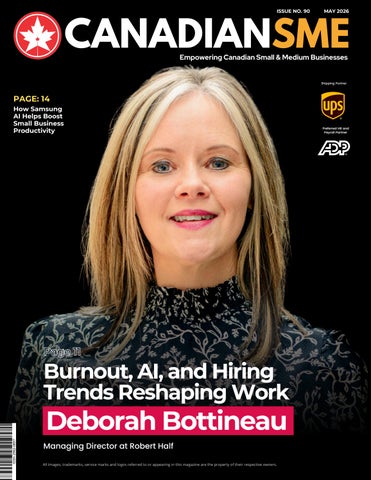
Deborah Bottineau






DearReaders,
WelcometoourMay2026editionofCanadianSMESmall BusinessMagazine,whereweplaceaspecialfocusonRetail andMentalHealthAwareness.Inayeardefinedbyrapid technologicalchangeandshiftingworkforceexpectations, retailinnovationandemployeewellbeingarenolonger separateconversations Theyaredeeplyconnected This issueexploreshowretailtechtrends,AIpoweredtools,and smartermarketingstrategiesaretransforminggrowth,while stressmanagementandworkplacehealthremainessential tosustainablesuccess
WeareproudtofeatureAnnBaiden,CEOandFounderof InnovatexSolutionsInc.,asourBusinessWomanofthe Month,recognizingleadershipthatblendsinnovationwith longtermvision Inthisedition,Samsungsharesinsightsin HowSamsungAIHelpsBoostSmallBusinessProductivity, whilePageProsoutlinesTheTop3MarketingTrendsEvery SmallBusinessMustMasterin2026.ADPprovidespractical guidanceinRecruitmentComplianceforSmallBusinesses inCanada,andJulieFordexplainswhyGotoMarket SuccessStartswithKnowingYourIdealCustomerProfile. Together,theseperspectivesofferclarityforbusinesses navigatingcompetitivemarkets
Thehumansideofbusinessisequallycentralinthisissue.In Burnout,AI,andHiringTrendsReshapingWork,weexamine howtechnologyandworkforcepressuresareredefining employmentdynamics.TheFutureofWorkIsGrey,Not Youngchallengescommonassumptionsaboutageand opportunityintoday’sworkplace,whileTheEmotional Estate™:RedefiningLegacyasanAssetClassinvitesleaders torethinklongtermvaluebeyondfinancialmetrics.Wealso exploreinnovationinretailwithSquareLaunchesBuiltInAI AssistantforCanada’sSmallBusinesses,highlightinghow AIisbecomingembeddedineverydayoperations
Aswelookahead,weinviteyoutojoinusatthe CanadianSMESmallBusinessShow2026onMay22,2026at theMetroTorontoConventionCentre.Thisnational gatheringwillbringtogetherentrepreneurs,innovators,and industryexpertstoshapethenextchapterofCanadiansmall businessgrowth
Inatimewhenperformanceandwellbeingmustmove together,thiseditionencouragesyoutobuildbusinessesthat areefficient,adaptable,andhumancentered Thefutureof retailandworkdependsnotonlyontechnology,butonthe peoplewhopowerit
Warmregards,
SKUddin
Publisher
CanadianSMESmallBusinessMagazine


wwwcanadiansmeca
info@canadiansmeca
canadiansme
canadian sme
canadiansme

canadiansme


ISSN2562-0657(Online)

PublishedbyCmarketingInc 6345DixieRd,Unit202, Mississauga,ONL5T2E6
Copyright©2024CMarketingInc Allrightsreserved Reproductioninwholeorpartofanytext, photographyorillustrationswithoutwritten permissionfromthepublisherisprohibited. All Images, trademarks, service marks and logos referred to or appearing in this magazine are the property of their respective owners.
ThecontentsinCanadianSMEMagazinearefor informationalpurposesonly NeitherCmarketingInc,the publishersnoranyofitspartners,employeesoraffiliates acceptanyliabilitywhatsoeverforanydirector consequentiallossarisingfromanyuseofitscontents

Liz Samson, Head of Industry Relations and Operations at Square Canada




















In an exclusive interview with CanadianSME Small Business Magazine, Deborah Bottineau, Managing Director at Robert Half, breaks down the rising burnout crisis in Canada and shares practical ways SMB leaders can balance workload, support teams, and adapt to AI without losing their people.
InterviewBySKUddin

Deborah Bottineauis a Managing Directorwith Robert Half, the world’s first and largest specialized talent solutions firm Her responsibilities include partnering with executive-level business professionals and clients across the GTA to optimize their talent and business strategies, managing high-performance teams, and overseeing Robert Half’s Technology and contract Administrative and Customer Service and HR practice groups, driving innovation and growth across these areas.
As a spokesperson for Robert Half, Deborah provides thoughtful commentary on hiring trends, organizational leadership strategies and career management, and her thought leadership has been featured in media outlets such as Global News, The Globe and Mail, Toronto Life, Post Media, and more
Deborah joined Robert Half in 1998, and has also held the roles of Staffing Manager, District Director, Division Director, Branch Manager and Metro Market Manager With over 20 years of experience in the industry, Deborah has witnessed all phases of the job market cycle first-hand
Recent research from Robert Half shows a sharp rise in workplace burnout across Canada. From your perspective, what key factors are driving this surge, and why is it accelerating now?
What we ’ re seeing in our research and on the ground is that this surge in burnout is being driven by sustained, structural pressure more than short-term stress Our research shows 62% of Canadian professionals now feel burned out, up sharply from 47% last year, which signals something deeper is happening The number one driver is heavier workloads caused by understaffed teams, with 40% of workers citing this as the top contributor Teams have been operating too lean for too long, often due to paused hiring amid economic uncertainty, and the strain is catching up
At the same time, many professionals feel stuck in their careers or disheartened following restructuring and workforce reductions, both of which take a toll on morale What’s accelerating burnout now is that these pressures are overlapping. Employees are carrying more work, facing limited growth opportunities, and being asked to adapt to ongoing change, including new technologies like AI, compounding burnout without addressing its root causes
Your findings highlight understaffing and career stagnation as leading contributors to burnout. How can small and medium-sized businesses realistically address these challenges while managing limited resources?
For small and mid-sized businesses with limited resources, addressing burnout starts with being intentional rather than trying to do everything at once Our research shows understaffing and career stagnation are major contributors, so even small changes in those areas can make a meaningful difference. On the staffing side, many SMBs are finding success with flexible solutions, such as contract or interim professionals, to relieve pressure during peak periods or absences without committing to permanent headcount increases
Career growth doesn’t always require big promotions or costly programs Transparent conversations about progression, skills development, and future opportunities go a long way in helping employees feel seen and valued Cross-training, stretch assignments, or exposure to new projects can help reduce the feeling of being stuck
Most importantly, leaders should regularly check in on workload and priorities When teams understand what truly matters, what can wait, and where there might be additional support, it helps to reduce overwhelm Flexibility in working location and hours can also be a powerful tool that costs nothing but enables employees to work in a way that may reduce stress and keep work-life balance in sight

AI is beginning to influence workplace stress in new ways. How are employees reacting to AI-driven changes, and what should SMB leaders understand about balancing innovation with employee well-being?
AI is not yet a top standalone cause of burnout, with only 1 in 6 workers reporting it as a top cause But it’s clearly reshaping how stress shows up at work Many professionals tell us they feel increased pressure to maintain higher productivity as AI tools are introduced, with 37% citing this as a concern. Others worry about job security if they don’t adapt quickly enough, or feel overwhelmed and mentally fatigued by the constant need to learn new technologies alongside their existing workload
The key issue is that AI is often layered onto already full plates When innovation is introduced without reducing workload, adjusting expectations, or providing proper training, it can feel like just another demand rather than a support
ImageCourtesy:Canva
For SMB leaders, the takeaway is balance and support AI adoption should be paired with clear communication, realistic productivity goals, and proper training along with time to learn When employees understand how tools are meant to help, and not replace or overextend them, AI can ease pressure instead of amplifying burnout
Interestingly, many professionals are not using their full vacation time due to workload concerns. What does this reveal about organizational culture, and how can leaders create environments where time off truly supports recovery?
When 40% of professionals aren’t using all their vacation time, it’s a strong signal that workload and culture are out of sync Our research shows many workers avoid time off because they worry their workload will grow while they’re away, subsequently increasing burnout on their return, or because theres no backup support to cover their responsibilities. That tells us time off exists in theory, but not always in practice
In cultures where taking vacation creates more stress, recovery becomes impossible Employees return to overflowing inboxes and mounting deadlines, which can undo the benefits of rest almost immediately Time off becomes a band-aid solution that is ripped off as soon as they come back
Leaders can change this by planning for coverage, redistributing work, cultivating a flexible workplace, and normalizing true time away That might mean bringing in temporary support in the form of contract workers, cross-training team members, or setting clear boundaries about availability during leave
As businesses navigate evolving workforce expectations, what practical strategies would you recommend to SMB leaders looking to reduce burnout, retain talent, and build resilient teams in 2026 and beyond?
Looking ahead to 2026 and beyond, reducing burnout requires a more proactive and systemic approach For SMB leaders, the most effective strategies include ensuring workloads are realistic, specifically by addressing staffing gaps with flexible solutions, and having regular, honest conversations about capacity and career goals Encouraging flexibility and creating workplaces that enable people to have proper time out without worsening stress is also essential
Retention is closely tied to how supported employees feel That means helping teams prioritize effectively, offering clarity during periods of change, and investing time (if not always money) into development and growth. Even small signals, like acknowledging effort or adjusting expectations during busy periods, can make a difference.
Leaders should also be thoughtful about how they introduce new technology, including AI, by pairing innovation with training and support rather than just higher demands Ultimately, resilient teams are built when businesses address issues at their roots to create better, more sustainable workplaces

Disclaimer:The views and opinions expressed in this interview are those of the interviewee and do not necessarily reflect the official policy or position of CanadianSME Small Business Magazine. Our platform is dedicated to fostering dialogue and sharing insights that inspire and empower small and medium-sized businesses across Canada
How Samsung AI Helps BoostSmallBusinessProductivity
ArticleBySKUddin
With the rise of agentic AI, devices such as the Samsung Galaxy S26 Ultra are changing how small business owners handle tasks, analyze information, and stay productive throughout the day Small firms now operate in an environment where speed, efficiency, and adaptation are no longer optional. Managing communications, administrative activities, and remaining attentive to consumers all fight for limited time and resources As a result, business owners are actively looking for tools that will decrease operational friction and allow them to focus more on strategy and growth.
AI-enabled mobile technology is emerging as a viable solution Rather than functioning as standalone tools, modern devices are embedding intelligence directly into daily workflows Samsung's Galaxy S26 Ultra reflects this transition, describing itself as an "agentic AI" smartphone that automates regular tasks, simplifies information processing, and enables more efficient work across environments
AI as Infrastructure for Everyday Business
Today's small business environment necessitates multitasking at scale Entrepreneurs frequently manage marketing, operations, finance, and consumer engagement simultaneously This complexity has increased demand for technology that operates silently in the background, minimizing manual effort without introducing new layers of complexity The Galaxy S26 Ultra seamlessly combines AI into the user experience, transforming the smartphone into a work hub According to Samsung, the company continues to invest in on-device AI to boost real-time responsiveness while protecting customer privacy and control
Raj Doshi, Head of Mobile at Samsung Electronics Canada, notes:
“Over time, that is what I think the evolution would be: the use case will determine what AI solution may be ideal – the device decides the best agent for you in the background, rather than you having to figure that out ”
Streamlining
Everyday Tasks with AI
Administrative labour is one of the most timeconsuming tasks for small firms Scanning documents, organizing files, and summarizing emails might take hours every week The Galaxy S26 Ultra addresses this with intrinsic AI automation Its clever integrated document scanner improves clarity, reduces distortions, and immediately formats data, eliminating the need for third-party software or hardware

With Galaxy AI’s Browsing Assist , users can extract key points and action items, enabling users to assimilate information more quickly Browsing Assist, powered by Galaxy AI and integrated into the Samsung Internet browser, allows users to summarize and translate web pages immediately By tapping the AI star icon, you may create summaries (standard or comprehensive) of lengthy webpages, increasing productivity
Efficientfilesharingisalsocrucial.Expanded compatibilityacrossecosystemsenables smoothercollaborationamongpartners, clients,andteams,regardlessofdevice preference.TheGalaxyS26Ultraisnow compatiblewithAirDrop ,enablingexpanded andseamlessinteroperabilityacross ecosystems.
The Summary feature for Browsing Assist requires a network connection and a Samsung Account login Service availability may vary by language Service may have limited functionality or be unavailable on certain paid websites The character limit applies Accuracy of results is not guaranteed
The Quick Share feature between Galaxy devices is available on smartphones and tablets running Android OS version 100 (Q) and One UI 21 or later, and on Galaxy Books released in 2020 or later Requires a Samsung Account, Wi-Fi, and Bluetooth connections To share with Apple devices, a Galaxy device with Quick Share app version 1385127 or later and Google Play services version 2611xx or later is required As of March 2026, “Share with Apple devices" is supported only on Galaxy S26 Series and will be expanded to select flagship models in the future Availability subject to change Compatibility supported only by Google Compatible devices required Must be within Bluetooth distance AirDrop® is a registered trademark of Apple Inc Your phone may temporarily disconnect from Wi-Fi networks when searching with Apple devices
Enhancing Productivity with Contextual Intelligence
Beyond automation, the device adds contextual intelligence The Galaxy S26 Ultra can evaluate meeting notes, highlight priorities, and recommend next steps by leveraging Galaxy AI features, including advanced search and summarization via Note Assist This capacity transforms the handset's role from a passive tool to an active aide Rather than manually combing through data, users receive organized insights in real time
Raj Doshi further adds:
“What we refer to technically as agentic AI is really intuitive AI where, based on information that is relevant to the user, the phone is actually able to make recommendations ”
Supporting Creative and Operational Workflows
Content generation is another area where small enterprises confront challenges Whether managing social media, client presentations, or product images, high-quality output is essential The Galaxy S26 Ultra features Photo Assist – an AI-powered editing tool that allows for real-time alterations such as background removal, object manipulation, and image enhancement
Arealestateprofessional,forexample,cantakeaphoto ofahomeandinstantlytransformittoshowdesign options,suchashowdifferentfurniturewouldlook inside.Aretailbrandcandevelopbeautifulmarketing visualswithoutrelyingonthird-partydesignsoftware. Thislevelofflexibilitydecreasesturnaroundtimeand theneedforextratoolsorresources.

Reducing Friction Through Intelligent Assistance
Small, repeated acts often lead to greater efficiency Switching between programs, updating settings, and managing notifications can all disrupt workflow The Galaxy S26's Now Brief is an AIpowered, tailored morning briefing tool that integrates into the lock screen "Now Bar"
Photo Assist may require a network connection and Samsung Account login Service availability may vary by country, language or device model Photo Assist may result in a resized photo A visible watermark is overlaid on the image when it is saved, indicating that it was AI-generated The accuracy and reliability of the generated output are not guaranteed
The Summary feature for Note Assist requires a network connection and a Samsung Account login Service availability may vary by language The Summary feature for Note Assist is activated when a certain number of characters is reached and is still within the character limit The voice recording feature for Note Assist may not be supported in some countries Audio files must be under 3 hours in duration to be processed Accuracy of results is not guaranteed
Now Brief feature requires a Samsung Account login Service availability may vary by country, language, device model, and apps Some features may require a network connection Modes and Routines need to be enabled to use Personal Data Engine for context-based Routine suggestions The user needs to consent to access permissions for photos, videos, audio files, and calendar events Event schedule notifications are supported by calendar apps that use the Android calendar database and are available when Samsung Calendar is installed
ImageCourtesy:Samsung
It highlights your day by communicating the days expected weather conditions, calling out important meetings or commitments from a user ’ s calendar, and sharing reminders, helping you set up for the day On the Samsung Galaxy S26 Series (with One UI 7 or higher), Now Bar and Now Nudge work together to provide contextual actions and help users stay organized They use insights from Galaxy AI, which is connected to Google Gemini This technology functions as a proactive "digital assistant " Now Nudge analyzes on-screen content and suggests actions, while Now Bar is an interface for managing these ideas and real-time activity. Together, they work to understand usage trends, recommend appropriate apps, and send out timely notifications depending on activities.
This results in a more fluid work experience, especially for users who are managing numerous activities at once The end consequence is a reduction in cognitive load Rather than traversing systems, users can concentrate on execution
With cross-device continuity between the Galaxy S26 Ultra and Galaxy Book6 Enterprise Edition, this reduced friction extends to both mobile and desktop environments, helping users stay focused regardless of where they work
Security and Privacy for Business Use
Data security is becoming increasingly important as businesses rely more heavily on mobile devices. Samsung Knox, the company ' s enterprisegrade security technology, offers multiple layers of protection across hardware and software Other built-in features, such as Privacy Display , help protect sensitive information in public places by reducing screen visibility It can even work with certain notifications or PINs, so if you are working remotely or travelling, you have an added layer of protection when accessing confidential information, reviewing documents, or signing contracts
Users can also choose how AI processes data, with on-device and cloud-based options.
The Power of the Galaxy Ecosystem
When the Galaxy S26 Ultra is incorporated into the larger Samsung ecosystem, its effectiveness increases even further. The Galaxy Book6 Enterprise Edition is a natural expansion, allowing for seamless integration of mobile and desktop workflows With Storage Share, access documents, photos and videos in another device without a cable or cloud uploads With Multi Control, move your cursor, type, and copy or paste files across your Galaxy Book, Smartphone, Tab or TV with one keyboard and mouse
Samsung is also encouraging users to explore the connected experience through Try Galaxy, giving potential users a hands-on preview of Galaxy AI features and ecosystem integration before making the switch
This integrated strategy mirrors a larger business trend IDC reports that businesses are increasingly prioritizing ecosystem-based solutions to boost efficiency and reduce fragmentation
Raj Doshi emphasizes:
“ What’s valuable is greater leverage of a seamlessly integrated ecosystem So, the Galaxy Book6 Enterprise Edition integrates with the Galaxy S26 Ultra as the hub, and it’s very powerful in terms of innovation. The data and capabilities they provide are unlocking new possibilities for embedded systems and software solutions.”
Privacy Display feature controls the screen ' s viewing angle to limit peripheral vision and must be activated in Settings Activation for specific apps is also available through Settings. Some changes in image quality may occur outside the viewing angle Some information may still be visible to others depending on the viewing environment, such as angle or brightness
Each device must be registered with a single Samsung Account and connected to the same Wi-Fi network Multi Control requires updated Galaxy phones and tablets with One UI 5.1.1 or above and Galaxy Book series devices released in 2021 or later with Samsung Settings v15(Intel) or Samsung Settings v33(ARM) and Samsung TVs or Smart monitors released in 2024 or later Feature availability may vary by region Multi Control app requires separate download from Galaxy Book Experience app. Galaxy Book Experience

Samsung will also present a Galaxy Book6 Enterprise Edition webinar on May 27th, including practical insights and use cases suited to corporate users. If interested in registering, please follow this link.
Conclusion
As AI advances, smartphones are becoming more than just communication devices They are becoming intelligent platforms that enable fundamental business tasks The Samsung Galaxy S26 Ultra exemplifies this change By incorporating AI into routine operations, small firms may increase productivity and quickly respond to changing demands
Together with the Galaxy ecosystem, it provides a linked and adaptable approach to modern work. For small business owners, the emphasis is no longer simply on working harder It's about working smarter, using technology that actively promotes progress
To learn more about the Samsung Galaxy S26 Ultra for business, please visit samsung.com/ca/business.
Curious about the Galaxy experience? Follow this link to experience Samsung’s most advanced smartphone:
Your role in staying up to date is integral to our shared mission of fostering a community of innovators CanadianSME Magazine is a valuable treasure trove of entrepreneurial knowledge Click here to subscribe to our monthly editions for updates on Canadian businesses. Follow our handle, @canadian sme, on X to stay updated on all business trends and developments Your support is crucial to our mission
This article is based on publicly available information intended only for informational purposes. CanadianSME Small Business Magazine does not endorse or guarantee any products or services mentioned Readers are advised to conduct their research and due diligence before making business decisions

Recruitment compliance forsmallbusinesses inCanada
ArticleByADP
Recruiting the right people starts with understanding your legal responsibilities as an employer. This article explains what recruitment compliance means for small businesses in Canada, key laws to follow and practical steps to create a fair, compliant hiring process from job posting to onboarding
What is recruitment compliance?
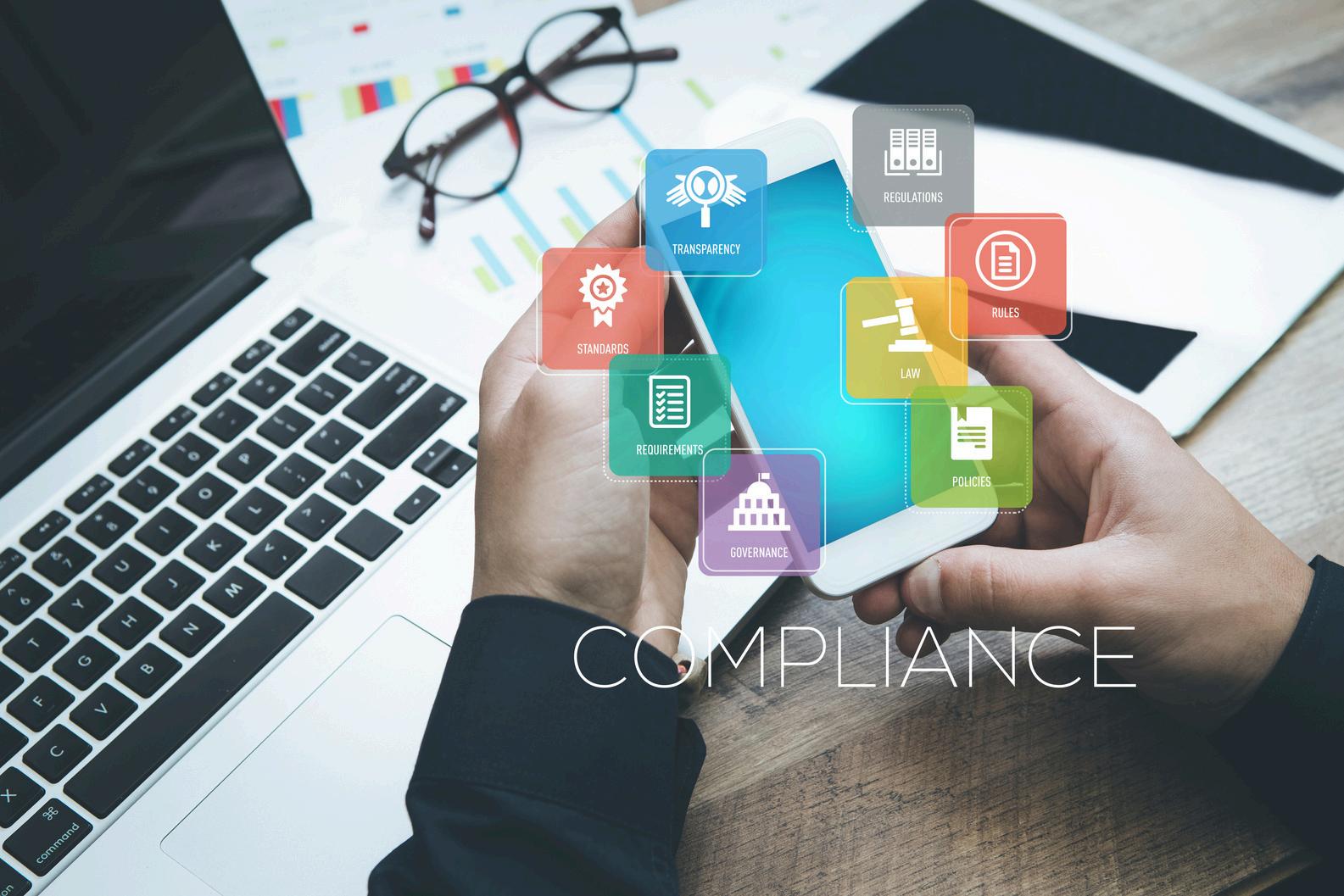
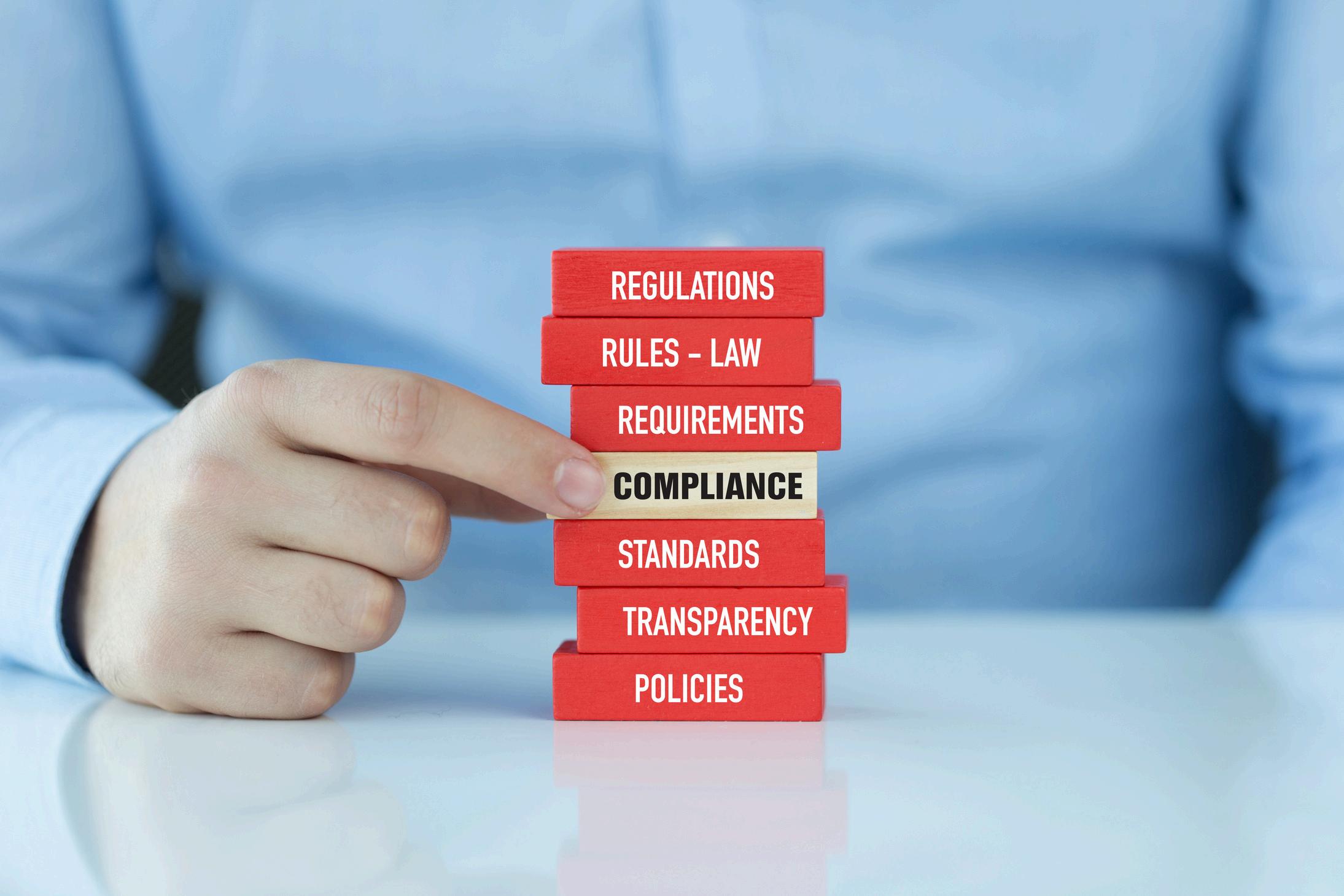
Recruitment compliance in Canada refers to the legal and ethical standards employers must follow when hiring new employees These rules vary depending on whether you ’ re a federally regulated or provincially regulated employer Regulatory compliance includes laws that govern fair hiring, human rights, privacy and accessibility If your business falls under federal jurisdiction, these federal laws apply:
Canadian Human Rights Act: Ensures equal employment opportunities and prohibits discrimination based on protected grounds such as race, age, gender and disability.
Employment Equity Act: Promotes workplace equality for women, indigenous people, people with disabilities and visible minorities
Personal Information Protection and Electronic Documents Act (PIPEDA): Sets rules for collecting, using and storing personal data during recruitment
If your business falls under provincial or territorial jurisdiction, these laws may apply:
Human rights code: Each province and territory has its own human rights code that protects against discrimination in recruitment
Privacy legislation: Some provinces, such as Alberta, British Columbia and Québec, have specific privacy laws that apply to how personal information is collected during recruitment. In other provinces or territories where there is no specific privacy law, PIPEDA may apply.
Accessibility: Some provinces, such as Ontario, Manitoba, Nova Scotia, Brtish Columbia and Québec, have prescribed requirements for employers to make hiring and workplace practices accessible for people with disabilities. Accessibility during recruitment is also embedded within human rights principles.
Pay transparency: Some provinces, such as British Columbia, Ontario, Prince Edward Island, Newfoundland and Labrador, have passed or proposed pay transparency laws, which require employers to include wage or salary information in job postings and prohibit employers from asking about candidates’ past compensation.
Understanding these laws can help ensure fair and consistent hiring practices that protect both candidates and employers To help small businesses navigate these requirements, ADP partners with Springlaw, a virtual employment law firm specializing in workplace legal compliance, HR strategy and digital policy. Springlaw’s expertise helps ADP clients interpret complex employment laws and apply them practically, giving small businesses clear, reliable guidance when building compliant hiring practices

Why recruitment compliance matters
Recruitment compliance helps small businesses build trust, attract qualified candidates and create a workplace that reflects fairness and integrity When hiring practices are consistent and transparent, they strengthen a company ' s reputation and support long-term business growth
Staying compliant also prevents issues that could disrupt operations or damage credibility By understanding your responsibilities early, you can create a hiring process that’s organized, equitable and aligned with your company ’ s values, helping your business stand out as a responsible employer
Best practices for compliant hiring
Compliance requirements can vary by province or territory. Employers should regularly review updates to relevant legislation to ensure their recruitment process remains current
1)
Job postings and descriptions
Clear and accurate job descriptions set the tone for a fair hiring process To help stay compliant and inclusive:
Use neutral, welcoming language
Focus on the skills and qualifications that are required for the role
Include pay details where pay transparency laws apply
Add a statement encouraging applicants to request accommodations if needed
If you’re a federally regulated employer, include a statement identifying your organization as an equitable employer and welcoming applications from marginalized groups, including women, indigenous people, people with disabilities and members of visible minorities.
2)
Candidate data privacy
Protecting applicant information builds trust and demonstrates professionalism Under PIPEDA or provincial equivalent, where applicable:
Collect only information needed to assess candidates
Store all personal data securely and limit access
Obtain consent for background checks or for sharing information
Remove or anonymize applicant data once it’s no longer needed
3)
Interviewing and selection
A structured interview process helps ensure fairness and consistency To keep it consistent:
Ask the same, role-related questions of all candidates
Avoid questions about personal characteristics protected by human rights laws, such as age, religion, disability or family status
Base decisions on experience, skills and how candidates meet the requirements of the job posting
Keep interview notes and scoring sheets confidential and retain them

4)
Accessibility requirements
Accessibility ensures that every qualified person has a fair chance to apply and succeed You can promote accessibility by:
Offering accommodations during interviews or assessments
Indicating in postings that accommodations are available on request
Training staff to recognize and remove barriers during hiring
5)
Record-keeping obligations
Accurate hiring records demonstrate professionalism and make it easier to respond to audits or employee questions
Keep copies of postings, applications, interview notes and signed offer letters for at least three years Organized record-keeping supports transparency and shows that your business is committed to fair employment practices
Building a recruitment policy
A written recruitment policy provides structure and consistency throughout every stage of the hiring process It should outline:
How roles are defined and described
How candidates are screened and interviewed
How personal data is handled and stored
Your organization’s commitment to equal opportunity and accessibility
Review this policy regularly to ensure it reflects any changes in employment laws or company practices A clear policy helps every team member involved in hiring understand their role and maintain compliance with confidence
How technology supports recruitment compliance
Technology supports recruitment compliance by ing businesses follow consistent, accurate transparent hiring processes Digital tions can make it easier to:
entralize candidate data to maintain rganized, accessible records
utomate documentation such as pplications, interview notes and consent forms
rack hiring activity to ensure consistent, fair ecision-making
rotect personal information through secure ata management
tandardize onboarding to give every new hire compliant and professional start
In addition to technology, expert legal insight plays an important role in maintaining compliance. Through ADP’s partnership with SpringLaw, small businesses can access trusted legal resources that help them understand employment standards, recruitment practices and privacy obligations across Canada Together, ADP and Springlaw make it easier for employers to navigate compliance confidently
Recent trends in recruitment compliance
Recruitment compliance in Canada continues to evolve as workplaces modernize and regulations adapt to the changing realities of hiring Several emerging trends are shaping how employers approach compliance today:
Pay transparency and pay equity expansion: More provinces are adopting or proposing pay transparency legislation, requiring employers to include salary ranges in job postings and analyze and close pay gaps across their workforce.
AI and automated hiring tools: The use of artificial intelligence (AI) in recruiting has prompted growing attention to fairness, bias and data protection Employers using automated screening or matching tools may soon face new disclosure or oversight requirements
Data privacy and cybersecurity: Canada’s proposed Consumer Privacy Protection Act (CPPA) will strengthen requirements for consent, data retention and breach reporting
Remote and cross-provincial hiring: Employers hiring across multiple provinces must comply with differing laws, especially around accessibility and recordkeeping standards
Equitable hiring initiatives: Programs supporting equitable hiring practices encourage employers to adopt inclusive recruitment and retention strategies.

From recruitment to retention — your next step
Recruitment compliance is an opportunity to create a strong foundation for your workforce. By putting clear processes and the right technology in place, small businesses can attract great talent, improve transparency and foster lasting trust with employees
Building that structure doesn’t stop once an offer is accepted The same principles that guide fair and compliant hiring also support effective onboarding, payroll and employee management
This guide is intended to be used as a starting point in analyzing recruitment compliance and is not a comprehensive resource of requirements It offers practical information concerning the subject matter and is provided with the understanding that ADP is not rendering legal or tax advice or other professional services
Ann Baiden on Creating Promotional Products that Deliver Real Results
What if the most powerful expression of your brand was something people could hold ontoliterally?
For over 25 years, Ann Baiden has redefined what promotional products can be When executed with intention, they become far more than giveaways, and instead evolve into immersive brand experiences designed to connect, inspire, and drive measurable results
When done right, these products aren’t discarded; they become lasting expressions of a brand’s message, values, and story This is exactly what Innovatex Solutions delivers to its clients, whether they are leading global organizations or local small businesses
As Co-Founder and CEO of the proudly Canadian and certified woman-owned promotional products company, Ann Baiden leads a team dedicated to helping businesses build brand value, foster lasting loyalty, and drive revenue through thoughtfully curated product experiences.
BusinessWoman oftheMonth AnnBaiden
CEOandFounder, InnovatexSolutionsInc

From Gifting to Award‐Winning Company
Following graduation from the first class of Women’s Studies majors at Western University, Ann realized she had a knack for making custom gift baskets after an accident left her friend injured and in need of some cheering up She delivered this cheer in the form of a curated gift basket, an act that sparked her first venture, Something Special, a gift basket business head-quartered in her parents’ garage Six years later, a mutual friend introduced Ann to Tammy Rutledge at a Blue Jays game, and opened the door to a new opportunity Ann sold Tammy some gift baskets and later joined her at Mediatex, a promotional products company as an Account Manager, while continuing the gift basket business at night. This was a fitting role for Ann; having grown up in the automotive industry, she knew a thing or two about sales Long hours and hard work resulted in both strong sales and relationships In 2000, Tammy & Ann joined forces and became business partners as cofounders of Innovatex Solutions
Armed with 2 cell phones, the two women faced numerous challenges as a start up, including finding an appropriate office space, since working atop a pool table would not work forever Over the next decade, Ann and Tammy strengthened and scaled Innovatex through all of life’s ups and downs, including moves, Ann’s growing family, a recession and personal losses Following Tammy’s retirement in 2010, Ann remained at the helm, where she now leads a team of creative, energetic, and strategic employees, each committed to their own professional growth in the industry
Today, Innovatex has grown into an awardwinning company that serves companies in Canada and abroad Ann positioned Innovatex as an extension of her clients' brands, rather than simply a product distributor
The company ' s objective is to elevate brands while providing a smooth customer experience at competitive costs Innovatex specializes in personalized promotional products, clothing, and corporate gifts, but its true distinction lies in strategic thinking: each item must promote brand visibility, customer and employee loyalty, and, ultimately, higher sales and profits

And this year marks a quarter-century of success
Innovatex Solutions Crafting Promotional Products that Truly Connect
With a full-service approach spanning creative ideation, sourcing, kitting, and logistics, Innovatex delivers what they call “the whole package ”
Creativity involves matching clients with the right product (not just any product) that aligns with brand personality and campaign goals Strategy entails matching things to the target audience, channel, and intended action, ranging from trade exhibits and onboarding to loyalty programs, Gift with Purchase and corporate gifts
Innovatex offers a diverse range of products, including branded garments and accessories, drinkware, bags, writing instruments, technology, eco-friendly choices, custom kitting, and unique fulfillment tactics Each project is handled " as if it were our own marketing dollar," with a focus on budget, timeframes, and ROI
Under Ann's guidance, the company has become known for "jaw-dropping promotional packages" and for its ability to meet unreasonable schedules without compromising quality. Innovatex's strong supplier relationships and industry-certified experience enable precise execution of complicated projects, such as multi-location drops and personalized kits According to a recent CanadianSME feature, Innovatex is a "catalyst for brand elevation," emphasizing creative problem-solving and client-driven solutions that foster real connections rather than cluttering desk drawers
Innovatex has won numerous industry accolades for its results-oriented promotions over the past 25 years, demonstrating that strategic marketing can lead to measurable business results

Raising the Bar on Professional Standards
Ann has made significant investments in her career, making her one of the most highly qualified executives in the promotional items sector in North America In 2014, she became a Certified Advertising Specialist (CAS), and in 2016, she became a Master Advertising Specialist (MAS)
She became the first female Canadian in 2020 and one of just three individuals in the nation to obtain MAS+ accreditation from Promotional Products Association International (PPAI) She further demonstrated her dedication to quality and education in 2024 by adding the MASI designation
Her knowledge is well-known Promotional Product Professionals of Canada (PPPC), PPAI, other associations, and business peers regularly invite Ann to speak on panels, podcasts and at industry gatherings, such as educational sessions She offers helpful advice on creating memorable, on-brand, and quantifiable campaigns in interviews and videos such as "The Art of Promotional Brilliance "
In 2025, she added to her distinguished credentials by completing Harvard Business School Executive Education, WPO:Leading Business And Personal Transitions
Women’s Empowerment and Community Leadership
Supporting women ’ s causes is woven into the fabric of Innovatex From earning her Bachelor of Arts in Women’s Studies to supporting various women ’ s causes and groups, Ann values the connections made through women-led organizations and committees. She is a proud member of the Women Business Enterprises Canada Council (WBE Canada), WEConnect International, Women Presidents Organization (WPO), and a mentor for the Scotiabank Womens Initiative She was also the Co-Chair of the Promotional Products Industry Women’s Empowerment for 8 years This twoday educational event brings together female distributors, suppliers and multi-line reps from across Canada and the United States
ImageCourtesy:AnnBaiden
In 2020, Innovatex partnered with Yellow Brick House to offer a free "Confidence Duffle" to women affected by domestic abuse who made qualifying purchases from a Made-inCanada catalogue To date, Innovatex has donated over 1000 Confidence Duffles and Comfort Blankets to women and children escaping abusive and violent homes Innovatex also supports local and regional organizations and not-forprofits, including girls hockey teams and Women Inspired to Help Markham Stouffville Hospital For her activism and community spirit, Ann was recognized with the PPPC Humanitarian Award and in 2022, she was also recognized with the WBE Leader Award
Innovatex Solutions is also a member of the Central York Chambers of Commerce and the Vaughan Chamber of Commerce
Lessons for Small Business Owners and Marketers
For Canadian SMEs, Ann's concept provides clear guidance:
Consider promotional items as a strategy rather than an afterthought "It's not about finding a pen, it's about finding the pen that boosts your brand equity," she tells her clients
Strike a balance between results and creativity The best item is the one people remember, use, keep, and connect with your brand favourably.
Make an investment in connections Long term supplier and client relationships are central to Innovatex’s ability to deliver on tough timelines and complex briefs
Take the lead from the heart Her "promotional products with heart" strategy demonstrates that it is possible to create a successful company while simultaneously supporting women, communities, and issues
You’re going to spend a lot of time working, so always incorporate an element of enjoyment It can be as simple as ‘Fun Fridays” (office coffees)
Find your signature Something that sparks conversations For Ann its always been shoes.
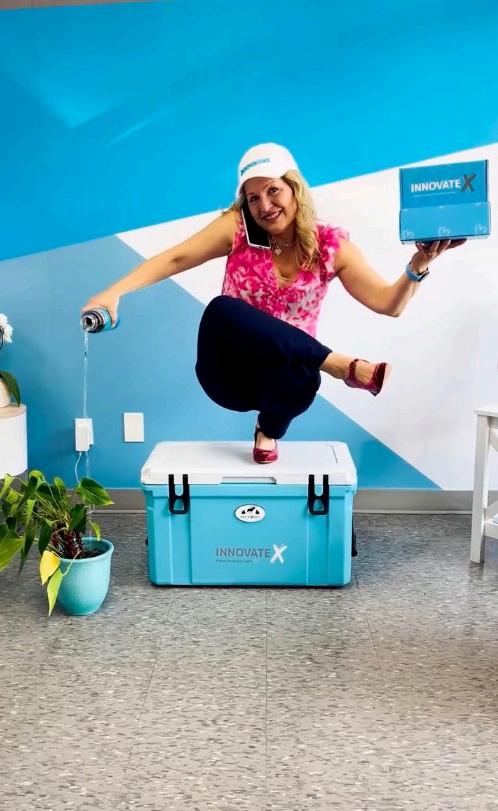
Ann Baiden has shown how strategic, values-driven innovation can transform commonplace goods into potent brand storytellers Her entrepreneurial spirit and keen business sense has taken her from a grass roots company to an award-winning, women-owned and run promotional products firm Her leadership at Innovatex Solutions and her unceasing efforts to empower women and communities perfectly capture the essence of what CanadianSME's Business Woman of the Month is intended to honour
Yourroleinstayinguptodateisintegraltoourshared missionoffosteringacommunityofinnovators CanadianSMEMagazineisavaluabletreasuretroveof entrepreneurialknowledge Clickheretosubscribeto ourmonthlyeditionsforupdatesonCanadian businesses Followourhandle,@canadian sme,onX tostayupdatedonallbusinesstrendsand developments Yoursupportiscrucialtoourmission
Disclaimer:Thisarticleisbasedonpubliclyavailable informationintendedonlyforinformationalpurposes CanadianSMESmallBusinessMagazinedoesnot endorseorguaranteeanyproductsorservices mentioned Readersareadvisedtoconducttheir researchandduediligencebeforemakingbusiness decisions
SquareLaunchesBuilt-In AIAssistantforCanada’s SmallBusinesses
In an exclusive interview with CanadianSME Small Business Magazine, Liz Samson, Head of Industry Relations and Operations at Square Canada, shares how AI is moving beyond theory and becoming a practical tool for small business owners across the country. At a time when entrepreneurs are overwhelmed with data but short on time, Liz Samson explains how Square AI is simplifying decision-making by turning real-time business data into clear, actionable insights
InterviewBySKUddin
Liz Samson is Square Canada’s new Head of Industry Relations and Operations.
Liz is among the most senior women leaders at Square Canada, bringing with her a wealth of experience in tech and fintech, including at Wealthsimple and RBC
LizSamson HeadofIndustryRelationsand OperationsatSquareCanada

What is Square AI, how does it work and what does it offer small and medium-sized business leaders?
Small business owners operate a lot off instinct, relying on their accumulated experience, local knowledge, and natural intuition At the same time, their businesses generate a lot of data – data that can either support their gut feeling or shine a light on new insights We built Square AI, an integrated, conversational AI assistant, to help sellers easily make sense of their business data using natural language: they can easily identify trends, quickly analyze performance, and ask questions about their operations to gather actionable intelligence. We see Square AI as a tool that can supercharge our sellers’ business instincts
How does it work?
Our Square Dashboard has always been packed with useful data, but most business owners just don’t have the time to dig through reports and crunch numbers Square AI solves this Ask Square AI real business questions, like whether to launch a new drink – or how a new product is performing Square AI can answer the question and provide back-up data insights in seconds to help sellers move faster and make daily decisions with confidence
Square sellers who have tried Square AI so far tell us that it’s given them back hours each week It helps them ditch time-consuming spreadsheets, monitor data in real time to stay ahead of trends and focus on what matters most: running and growing your businesses.
What benefit does Square offer over other widely available AI tools?
The reality is that, to date, most AI development across the industry has been tailored to office workers, not small business owners We purposefully built Square AI for the needs of our sellers, with insights from real operators informing our development
One of the key benefits is that Square AI runs on a business’ realtime transaction data – so data insights are informed by their customers, their neighbourhood, seasonal trends and other inputs and trends that are unique to their business It even brings in web data so sellers can get guidance tailored to their community, the local weather and news and events in their neighbourhood And by integrating it directly into Square, sellers don’t have to worry about downloading data from the platform and uploading it into a thirdparty AI provider’s website – Square AI already has the information it needs It also means sellers' sensitive business data stays protected within Square's security infrastructure, rather than being shared with outside tools.
Is there anything special about Square AI for smaller businesses?
Every business, no matter the size, generates enormous amounts of data every day through payments and commerce For a long time, turning that data into real insight has been something reserved for larger organizations with analysts and operations teams Square AI levels the playing field by bringing powerful analytics into the flow of running a business of every size through a simple, conversational AI assistant. For our sellers, the accessibility to innovative AI is saving them time, helping them identify ways to drive down costs, and even unlocking new growth opportunities

What feedback have you had about Square AI so far in Canada?
It’s been really positive 10 DEAN, a Toronto multi-location café and bar was in our Square AI beta – and they love the fact that, instead of manually filtering and comparing data, they can ask a simple question and let Square AI build performance tables for them The manager says Square AI has changed how they review menu item performance and make decisions day-to-day
How ready do you think Canadian businesses are for AI?
Square recently surveyed 4,000 business owners across eight countries – and that showed that Canadian entrepreneurs are among the most pragmatic and openminded AI adopters worldwide In fact, 60% of Canadian entrepreneurs told us they are already using AI tools – and now, with Square AI, they can access a customized and builtin AI assistant, at no additional cost.
What else did the survey highlight about business adoption of AI?
Most Canadian entrepreneurs surveyed agreed AI has the potential to save time that can be reinvested into improving work-life balance (38%), developing new ideas to grow their businesses (37%), improving marketing (31%), and spending more time with customers (26%)
What other tools are new at Square?
In addition to Square AI, Square just launched a suite of new tools for Canadian food and beverage businesses to streamline operations and improve their guest experience
Highlights include the improved, second generation of our popular Square Register; a new seat management feature that empowers servers to easily handle lastminute guest additions and seat changes; a new inventory management tool by MarketMan; and a house accounts feature that makes it easy for smaller businesses to offer the convenience of pay later options for trusted repeat customers

Filmed to the highest cinematic standards over one to three days, each life story is crafted into an episodic series comparable to a premium documentary or MasterClass, hosted on a secure private streaming platform
Today, CONTEXT Studios works globally with a select number of individuals and families each year and is recognized for setting the gold standard in cinematic legacy. For many, preserving the story of their life becomes one of their most defining personal investments.


In an exclusive interview with CanadianSME Small Business Magazine, Andrea Lekushoff, CEO of CONTEXT Studios, explains why legacy today is about more than wealth, focusing on capturing the values and decisions behind success to guide future generations with clarity and purpose.
InterviewByMaheenBari
Andrea Lekushoff is the CEO of CONTEXT Studios and a trusted legacy architect for global leaders, families, and extraordinary individuals In a world where financial capital is carefully structured and transferred, Andrea focuses on what is often left behind: the deeper narrative the decisions and defining moments that shape a life
Why do you believe legacy and the Emotional Estate™ are becoming more important now than ever for founders and families?
We are in the midst of the largest wealth transfer in history, yet most of that wealth is being transferred without context Families have become highly sophisticated in structuring financial capital, but the Emotional Estate™, which includes values, judgment, decision-making, and lived experience, is often left undocumented.
What we are seeing now is a growing awareness that wealth alone does not sustain continuity It is the meaning behind how that wealth was built, what we call Narrative Capital™, that guides future generations
Without it, families inherit assets but not understanding Over time, that leads to fragmentation, misalignment, and erosion of identity
Succession Planning
CONTEXT Studios exists to address this gap We have created a category of one through Cinematic Legacy Series, transforming a life into a permanent, multigenerational asset
Legacy is no longer about preservation alone It’s about ensuring a life is understood with clarity and carried forward with intention
What is the “legacy preservation gap,” and how does it affect succession and family cohesion when a founder is no longer in the room?

The legacy preservation gap is the disconnect between how well financial capital is structured and how poorly identity, values, and decisionmaking are captured
When a founder is no longer in the room, what is lost is not just presence, but context The reasoning behind decisions, the trade-offs, the philosophy that shaped outcomes Without that, future generations are left to interpret success without understanding how it was built
This creates risk across succession, governance, and family cohesion Misinterpretation increases Alignment weakens Decisions become disconnected from the original intent
At CONTEXT Studios, we focus on capturing the Architecture of a Life™, the patterns, inflection points, and judgment behind success Through a Private Legacy Commission, we transform that into a Commissioned Legacy Artifact™
This ensures continuity is not based on assumption, but on clarity It allows families to move forward with shared understanding, not fragmented narratives
How does your Legacy Architecture Framework™ turn someone’s life into a Cinematic Legacy Series, and what makes it different from a traditional memoir or documentary?
Our Legacy Architecture Framework™ is designed to extract and structure meaning, not simply document events
We begin with a Legacy Audit™, identifying the decisions, inflection points, relationships, and underlying philosophy that shaped a life. From there, we architect the narrative into a clear, episodic structure before filming. That architectural step is what fundamentally differentiates our work from traditional memoirs or documentaries
A Cinematic Legacy Series is not a linear recounting of events It is a designed system of understanding, created for exceptional individuals who have lived lives of consequence and want that meaning carried forward with clarity It is intentional, structured, and built for how future generations will access and interpret a life
The process itself is also transformative What often takes a year or more to write in a book can be captured with precision in a single day of filming, because the thinking has already been extracted and structured We then craft it into an episodic series over several months, resulting in a Commissioned Legacy Artifact™ hosted on a private streaming platform
Unlike a book, it preserves voice, presence, tone, and emotional nuance You hear how someone thinks You see how they reflect That depth cannot be replicated on the page
CONTEXT Studios operates in a category of its own We are pioneering this new category of cinematic legacy and setting the global gold standard as a custodian of meaning and continuity, ensuring that lives of consequence are not simply recorded, but clearly understood and carried forward across generations

How does preserving Narrative Capital™ complement wealth planning and family office advisory work on succession and long term continuity?
Wealth planning ensures that financial capital is structured, protected, and transferred Narrative Capital™ ensures that it is understood
The two are inseparable Without context, even the most sophisticated financial structures can fail to achieve continuity Families may inherit wealth, but not the principles or judgment required to steward it
This is where CONTEXT Studios integrates directly into the advisory ecosystem We preserve what we call Human Infrastructure™, the values, decision-making frameworks, and identity that sustain wealth across generations
For family offices and advisors, this strengthens succession planning, governance, and alignment. It provides a reference point for future decisions and reduces the risk of misinterpretation
We are not replacing advisory work We are extending it into an area that has historically been overlooked
By capturing Narrative Capital™, we ensure that wealth is not only transferred, but carried forward with clarity, responsibility, and meaning
What have you learned about what leaders underestimate about their own story, and what simple first step would you suggest to anyone who wants to start preserving their legacy more intentionally?
What leaders consistently underestimate is the significance of their own thinking They often believe their story is obvious or already known, when in reality, much of what shaped their life and/or success exists only in their own memory
They also underestimate how meaningful their decisions, struggles, and perspective are to others, especially their family
The first step is not to document everything It is to reflect on a single question: What do I want to be clearly understood? That shift changes everything It moves legacy from storytelling to intentional preservation
At CONTEXT Studios, we guide this process through a structured Legacy Audit™ that captures not just what happened, but why it mattered
Because legacy is not about recording a life. It’s about ensuring it is understood in a way that can guide others long after you are no longer in the room
Disclaimer:The views and opinions expressed in this interview are those of the interviewee and do not necessarily reflect the official policy or position of CanadianSME Small Business Magazine Our platform is dedicated to fostering dialogue and sharing insights that inspire and empower small and medium-sized businesses across Canada

Why Empathy Is Moving to the Centre of CX
Emotion is a major factor in client loyalty, according to several recent studies Empathy is "the new currency of brand connection," according to an Ipsos analysis that links it to increased brand intimacy and share of wallet According to their findings, consumers are willing to pay far more up to seven times more for businesses they genuinely adore, highlighting the relationship between emotional attachment and tangible commercial worth
Retail in 2026:
DrivenbyEmpathy-Based CustomerExperiences
ByKripaAnand
In Canada's retail environment in 2026, price and digital convenience are starting to take a backseat to empathy and emotional intelligence (EI) Customers are no longer content with slick marketing alone, as inflation, uncertainty, and digital saturation are changing consumer expectations Instead, they want businesses that recognize their stress, understand their circumstances, and react with true concern. This suggests that Canadian merchants should view empathy as a key competitive advantage in customer experience (CX) rather than as a soft talent
At the same time, Canadians are becoming more demanding and less devoted 74% of Canadians feel they are less brand loyal than they were two years ago, according to ServiceNow's 2024 Canada Consumer Voice Report According to the same report,
92%desireprompt,real-timeassistance
87%ofrespondentswanttheflexibilityto selecthowtheyinteract(onlineversusinperson,chatbotversushuman).
Alackofpersonalizationandadesirefor sincere,non-formulaicresponsesaretwo reasonswhymanypeoplearereluctantto employAI-drivenservices
In other words, whether conversations take place in-store, via an app, or through a chatbot, Canadians demand speed and convenience, but they also want human and understanding relationships
Developing emotional intelligence (EI) for Canadian merchants entails teaching frontline staff self-awareness, practical empathy, active listening, and "nimble resilience" the capacity to remain composed and supportive in the face of adversity
What Canadian Consumers Expect in 2026
Data specific to Canada suggest a selective, stressed-out consumer base More than 3,000 Canadians participated in a BCG survey, which revealed that consumers demand justice and reliable value rather than just marketing tricks Trust and openness are now more crucial than ostentatious discounts, given economic instability
Emotional Intelligence as a Retail “Power Skill”
Emotional intelligence is increasingly being described by global CX experts as a fundamental skill in retail rather than a nice-to-have In CX, emotional intelligence refers to the ability of teams and systems to understand and respond to customers' emotions, not just their words or clicks It appears in:
Thewayachatbotoremailresponds.
Howastoreassistantreactswhena consumerisfrustratedornervous
Howanapporwebsiteismadetominimize confusionandfriction.
Consumers actively seek happiness and emotional resonance when they purchase, according to articles on emotionally intelligent retail, yet many believe that both online and in-store encounters still lack warmth and excitement Emotion is still the best indicator of loyalty, according to Forrester and others, surpassing convenience and efficacy
AccordingtoCanadianCXforumsandevents, customerstodayanticipate:
seamless,integratedomnichannelexperiencesthatfeelcohesive andconsistentacrossin-store,internet,andmobileencounters
responseinrealtimewiththeabilitytoescalatetoahumanwho paysattention.
customizedcommunicationsthattakeintoconsideration previouspurchasesandpreferenceswithoutcomingacrossas invasiveorcoercive
According to Zendesk's global customer study, many consumers prefer companies that prioritize diversity, equity, inclusion, and social responsibility, and 49% of consumers want agents to be sympathetic. Therefore, empathy for Canadian merchants encompasses both your personal interactions with customers and your brand values
Empathy and EI in Practice: How Retailers Are Responding
Retail and CX executives across Canada are adapting their approaches to integrate technology with human understanding
a) Training in human-centred services - Retailers in Canada and throughout the world are funding employee training initiatives that:
Identifyemotionalindicators,suchasbody language,toneofvoice,andwordchoice
Whendealingwithirateornervousclients, employde-escalationstrategies
Insteadofadheringtostrictscripts,express yourfeelingsclearly("Icanunderstandthisis frustrating,let'saddressitjointly")
According to an employee culture study, emotionally intelligent leaders exhibit selfawareness, practical empathy, and supportive communication qualities that directly impact the customer experience
b) Digital encounters with empathy Canadian CX and retail technology conferences showcase how companies are utilizing AI and data to anticipate requirements and customize experiences while upholding trust and empathy
Examplesconsistof:
AI-drivensuggestionsthatprioritizeutility overupselling,suchasofferingcost-effective substitutes
Chatbotswithclearescalationroutes, sympatheticlanguage,andthecapacityto retaincontextacrosssessions
Messagesandcontentthatacknowledge financialhardship,offerflexibleoptions,and avoidcoercingclientsintomakingpurchases
Shopify's marketing guidelines for emotional intelligence place a strong emphasis on listening to and responding sympathetically through social media, email, and feedback loops treating each connection as an ongoing human conversation rather than a transaction.
c) Branding that is motivated by values and purpose - Brand positioning also demonstrates empathy Empathetic brands those that demonstrate a comprehension of people's lives and values enjoy greater brand intimacy and long-term value, according to Ipsos research This may imply the following for Canadian retailers:
Pricing,fees,andreturnproceduresshouldbecommunicated clearly
observablededicationtosustainability,mentalhealth,or communalcauses
transparentapplicationofAIandconsumerdata,resolving privacyandimpersonalityissues
What This Means for Canadian Retailers in 2026
Leaders increasingly see digital innovation and empathybased CX as two sides of the same coin, according to industry comments on 2026 retail trends in Canada Omnichannel infrastructure, AI, and automation are now table stakes but differentiation comes from how human those experiences feel
Canadianretailerscandothefollowingtostayahead:
IntegrateEIintoperformancemeasurements,training,and hiring.Hireandpromotepeoplebasedontheirabilitytolisten, theircuriosity,andtheirabilitytocontroltheiremotions,rather thanjusttheirsalesfigures Acknowledgeandhonourstaff memberswhoresolvedisputesamicablyandfoster connections.
CheckforemotionalfrictioninCXjourneys Createamapof typicalcustomerjourneys,includingreturns,complaints,and high-stresspurchases,andnoteanypointswherecustomers feelhurried,confused,orignored.Redesignthosesituationswith empathyusingbothdataandfirsthandexperience.
Create"humanescapehatches"fordigitalflows Makeitsimple forcustomerstomovefromonlinetoin-store,fromself-serveto supported,andfromchatbottopersonwithouthavingtostart over.
Measuretheimportantthings Keepaneyeonemotional indicationssuchasfeelingheard,appreciated,andunderstood, inadditiontoNPSorCSAT Tocaptureemotionaltone,usesocial listeningandopen-textfeedback.
Retailers will be in the best position to gain trust, retention, and advocacy in a more skeptical, emotionally conscious marketplace as Canada moves through 2026 if they embrace empathy and emotional intelligence as strategic competencies, on par with digital marketing and pricing.
Disclaimer: This article is based on publicly available information intended only for informational purposes CanadianSME Small Business Magazine does not endorse or guarantee any products or services mentioned Readers are advised to conduct their research and due diligence before making business decisions


By Roshni Wijayasinha
The Structural Problem No One Is Talking About
Research by marketing analyst Charles Plant found that Canadian companies are significantly more likely to have a Director-level head of Marketing & Sales than a CMO or CRO – a pattern driven largely by the scale and budget realities of Canada's SME-heavy economy However, heres what that data quietly reveals: many of these Directors are already doing CMO-level work They own strategy, manage the full funnel, and report directly to the CEO –without ever having had the formal development, frameworks, or peer community that a structured leadership pathway provides That's not a ceiling That's an untapped growth opportunity
The downstream effect is predictable When a Canadian Director is finally elevated to CMO – whether internally or externally – they often arrive unprepared for a role that demands board-level thinking, P&L accountability, and cross-functional leadership that goes far beyond campaign execution.

Directors Are Skilled Executors, Not Yet Strategic Leaders
The CMO role today is genuinely different from the Director role – not just bigger in scope but fundamentally different in nature According to eMarketer, CMOs must connect marketing strategy directly to business strategy, navigate complex internal relationships, and align their leadership style to the specific organizational context they operate in. Most Directorlevel professionals spend the bulk of their careers optimizing campaigns, managing agencies, and hitting quarterly KPIs –skills that are necessary but insufficient for the C-suite
Reddit's marketing community surfaces the same tension frankly: "CMOs deal much more in the people, process, and politics than having deep expertise in specific channels At that level, soft skills outweigh technical ones " The leap from doing to leading is a cognitive and behavioral shift that most Director-level professionals are simply never asked to make before arriving in the CMO seat
Canadian Marketers Are Not Keeping Pace with Disruption
Perhaps the most damning evidence comes directly from Canadian CMOs themselves Research from Toronto-based CMO Lab – a joint project from APEX Public Relations, ruckus Digital, and Maru/Blue – found that 53% of senior Canadian marketers had not changed or evolved their marketing strategies in the preceding years, despite radical shifts in consumer behavior, the rise of digital platforms, and the decline of conventional media
The same research found that:
64% say they are not fully prepared to adjust their marketing strategies if faced with a reputational threat
55% of those who experienced a reputational crisis admitted they could have been more proactive
Kenneth Evans of APEX Public Relations summarized it plainly: "Marketers who fail to evolve and shift from traditional tactics to a strategic and integrated approach are putting their organizations' brand reputations at risk" If sitting CMOs feel underprepared, the Directors who aspire to replace them face an even steeper climb
The CMO Role Has Never Been Harder
This readiness gap is colliding with a moment when the CMO role has never been more demanding In 2026, CMOs are grappling with a convergence of challenges that would stress even the most seasoned leaders:
Data privacy erosion has destroyed legacy measurement frameworks, and ROI must now be defended with incomplete, regionally variable data.
AI adoption is no longer experimental – it's embedded in daily execution, and CMOs are accountable for both the outcomes and the ethics of how AI is used.
Economic uncertainty has turned annual budgets into continuously reviewed investments, requiring CMOs to prove value faster and more clearly than ever before.
Fragmented discovery means brands must stay relevant across AI search, social platforms, and local contexts simultaneously.
What Needs to Change and a Hands-On Learning Opportunity
Professional development must bridge execution and strategy Directors must deliberately seek P&L exposure and crossfunctional leadership As the marketing community itself advises: "Real reps come from doing the work climbing the ladder and learning from those who excel is how you advance" This means actively seeking boardfacing projects, revenue accountability, and cross-departmental collaboration – not waiting for a promotion to force the shift
With this gap in mind, we ’ re launching our first Prosh Marketing Masterclass It exists for one reason: to give Canada's most ambitious marketing leaders the development, frameworks, and peer community they need to step confidently into a marketing leadership role It is a structured bridge from Director-level excellence to VP and CMO-level leadership – covering the strategic, financial, reputational, and human dimensions of the Chief Marketing Officer role
In a market where only 2% of Canadian marketing teams feel fully equipped, and where 64% of CMOs admit they are underprepared for crisis, the cost of waiting to develop these skills is not just a career risk It's a competitive liability for every organization that depends on marketing to grow.
Canada has the marketing talent It's time to build more marketing leaders
Author: Roshni Wijayasinha, Fractional CMO for Startups | Forbes Communication Council | Startup Advisor, Mentor, Investor
Roshni Wijayasinha's a seasoned marketer with 20 years of marketing experience, bringing brands, products and companies to market across a variety of industries She started her career on the agency side, then worked at leading global tech giants like Microsoft and Sony before falling in love with startups, helping two exit for 9 figure valuations Roshni then started Prosh Marketing, a consulting practice where her and 170+ Fractional CMOs help growing businesses with part-time / on demand marketing leadership and consulting. Roshni’s also a Mentor / Advisor at a number of startup incubators and accelerators, teaches Startup Marketing in the Masters of Management program at the Schulich School of Business at York University, writes for the Forbes Communications Council, and is an angel investor with The Firehood

TheTop3MarketingTrends EverySmallBusinessMust Masterin2026
ArticleByPagePros
Small businesses want visibility tactics that drive future growth, and Page Pros is setting the standard with AIpowered search and zero-click behaviour Digital marketing is changing faster than ever AI-driven search results, zeroclick behaviour, and the move to data-driven customization are just a few of the new problems that small businesses will face in 2026.
Businesses must adjust their SEO and online visibility tactics in light of these developments rather than merely following fads Page Pros' strategic approach, which emphasizes long-term visibility and significant client involvement, helps small businesses embrace the trends that matter most
Navigating the Evolving Marketing Landscape with AI and Strategic SEO
The quick development of marketing technology may overwhelm small firms, particularly since AI is already a key component of search behaviour and content discovery Businesses must understand these changes and invest in strategies that deliver longterm visibility rather than just quick clicks if they want to prosper in 2026 Page Pros helps customers navigate these shifts while enhancing brand reputation and local presence.
According to Page Pros' findings, the following three marketing trends will influence digital discovery and client behaviour in 2026:
Trend #1: AI becomes the engine, while humanity becomes the differentiator
AI is more than simply a technology; it is the foundation of modern digital marketing While AI may automate operations like content production, optimization, and personalization, what distinguishes brands is their human element Authenticity, brand voice, and knowledge are irreplaceable to robots For small businesses, the key to success in 2026 will be to combine sophisticated AI tools with true human authority, which Page Pros incorporates into its SEO and content strategy
Small businesses may create a more personalized and trustworthy online presence by combining AI-driven optimization and authentic, authoritative content Page Pros enables clients to leverage AI while keeping the authenticity that customers love
Trend #2: The Zero-Click Shift and Generative Engine Optimization (GEO)
The way people search and engage with Google is changing They are increasingly receiving answers straight from AI interfaces or summary results, rather than having to link through to a website This zero-click behaviour transfers the emphasis from ranking first to becoming the authoritative answer displayed in summary results, maps, or generative search engines Page Pros optimizes structured content, truthful responses, and smart local signals to keep small companies visible in a zero-click world. This ensures they appear wherever people look, even without a click. Being a source of authoritative material in these summary results can significantly increase brand credibility and engagement
Trend #3: First-Party Data
Drives Hyper-Personalization
With third-party cookies becoming less common, small businesses must rely on first-party data, which is information obtained directly from clients This data enables hyper-personalization, allowing firms to provide individualized content, recommendations, and follow-up interactions based on client preferences and behaviour While this trend extends beyond simple SEO, it has a direct impact on how customers discover and connect with brands online Page Pros enables businesses to capture meaningful customer interactions, ensuring these data points are used to refine content and improve exposure, resulting in more relevant and personalized online experiences
Small businesses that understand and plan for these marketing shifts will have a significant advantage by 2026 SEO, structured visibility, and authoritative content will be critical for long-term success Although the marketing landscape is changing, visibility and authority remain critical to long-term growth Page Pros provides small businesses with SEO methods and strategic underpinnings to not only adapt, but grow, regardless of how search technology evolves.
Visit pagepros.io to learn about Page Pros' SEO tactics and future-proof your business for 2026 trends.
Your role in staying updated is integral to our shared mission of fostering a community of innovators CanadianSME Magazine is a valuable treasure trove of entrepreneurial knowledge Click here to subscribe to our monthly editions for updates on Canadian businesses Follow our handle, @canadian sme, on X to stay updated on all business trends and developments Your support is crucial to our mission.
Disclaimer: This article is based on publicly available information intended only for informational purposes CanadianSME Small Business Magazine does not endorse or guarantee any products or services mentioned. Readers are advised to conduct their research and due diligence before making business decisions

Many growing companies share a familiar challenge Marketing campaigns launch on schedule, sales teams increase outreach, and leadership calls for more pipeline, yet results remain inconsistent
When growth slows, the typical response is to increase activity Teams produce more content, launch additional campaigns, expand outbound efforts, and experiment with new channels
But in many cases, the problem is not execution. It is focus.
Go-to-market success rarely comes from doing more activity It comes from building a strategy around the right customer from the start
Many organizations reverse this order They build campaigns, messaging frameworks, and outbound sequences before clearly defining who they should actually target When that happens, even well-executed marketing and sales efforts struggle to generate meaningful traction
WhyGo-to-MarketSuccess StartswithKnowingYour IdealCustomerProfile
ByJulieFord,AssociateFractional ExecutiveatMarketingMavens
Start with the Ideal Customer Profile (ICP)
The Ideal Customer Profile, or ICP, is one of the most important and most overlooked elements of a go-to-market strategy
An ICP is not simply a demographic description of a buyer or a broad category like “mid-market SaaS ” Instead, it acts as a decision filter that clarifies which organizations will benefit most from your solution
AstrongICPanswerspracticalquestionssuchas:
Whichcustomersgetvaluefastestfromwhatweoffer?
Whohasthemosturgentversionoftheproblemwesolve? Whichorganizationscansuccessfullyimplementoursolution? Whichcustomersaremostlikelytoexpandandremainlongterm?
Without this clarity, marketing and sales teams often pursue prospects that appear promising but lack the conditions needed for success
The result is predictable Sales cycles become longer, conversion rates decline, and customer churn increases
Why Teams Skip This Step
Many organizations bypass ICP work because it feels slow or theoretical Teams want momentum, and defining an ICP can feel like a workshop rather than forward progress
There is also a strategic challenge Narrowing a target market forces difficult conversations about which segments should receive less focus
However, skipping this step rarely saves time Instead, it creates ongoing rework as teams repeatedly adjust messaging, campaigns, and targeting in search of traction
Turning Customer Focus into Strategy
Once the right customer is clearly defined, strategy becomes much easier
A go-to-market strategy is not simply a mission statement or positioning document It is a set of choices that determine how a company wins in the market
Thesechoicesinclude:
Whichcustomersegmenttoprioritize
Whatoutcomesthatsegmentvaluesmost Whichchannelsaremosteffectivefor reachingthem
Howmarketing,sales,andcustomer successworktogether
When organizations build strategy around a clearly defined customer profile, their messaging becomes sharper and their sales motion becomes more efficient
Building Playbooks That Scale
Only after the customer and strategy are clear should organizations develop playbooks, the repeatable processes used to execute campaigns and sales outreach.
Playbooks translate strategy into action They define messaging, channels, timing, and conversion paths so teams can execute consistently
When playbooks are created without a clear ICP and strategy, they often become polished templates that fail to deliver meaningful results
A Practical Go-to-Market Reset
For companies looking to sharpen their go-to-market focus, a simple exercise can reveal valuable insight.
Review your most recent closed-won customers alongside your recent churned accounts Identify patterns in which organizations achieved value quickly and which struggled to adopt the product
In many cases, your strongest customers share clear characteristics that define a natural market segment
Those patterns often reveal the organizations that should form the foundation of your Ideal Customer Profile
For teams that want a more structured way to move from insight to execution, the Marketing Mavens ICP & GTM Lab provides guided frameworks to help organizations define their Ideal Customer Profile, align their go-to-market strategy, and translate it into practical execution plans
The Real Advantage
Growth rarely comes from increasing marketing activity or outbound volume alone It comes from focusing your efforts on the customers who are most likely to succeed with your solution
When organizations start with the right customer, strategy becomes clearer and execution becomes far more effective.
In go-to-market systems, success is not just about working harder
It is about starting with the right focus
Youcanexplorethelabhere: https://marketingmavens.ai/marketing-mavens-icp-gtm-lab
AbouttheAuthor
Julie Ford is an Associate Fractional Executive at Marketing Mavens and the founder of Glance Marketing She advises organizations on go-tomarket strategy, marketing leadership, and growth initiatives.
YoucansubscribetoherLinkedInnewsletter,Strategic MarketingAdvisor,here
VisitmarketingmavensaitostartbuildingyourICPandGTMStrategy
Visitwwwglancemarketingcomforinformation onFractionalMarketingServices.
TheRiseofMindful RetailAcrossCanada
BySkUddin
Mental health discussions in Canada's retail sector have progressed from "good to have" to essential business strategy

Frontline employees confront erratic schedules, uncertain customer volumes, and emotionally charged interactions, all of which increase the risk of stress and burnout. Canadian retailers recognize that supporting employee well-being is crucial to productivity, retention, and the customer experience, especially as labour shortages and talent competition intensify This article examines how Canadian retailers are implementing mindfulness programs, flexible scheduling, and mental health days, guided by national rules and evolving best practices tailored to the realities of retail employment
The Business Case for Mindful Retail
According to the Mental Health Commission of Canada’s advice for retail and hospitality, psychologically healthy workplaces show benefits in engagement, productivity, and worker retention, while also lowering absenteeism and conflict
Retail workers frequently face aggressive customer behaviour, intense workloads during peak seasons, and pressure to exceed sales objectives, all of which can harm mental health if not addressed
ImageCourtesy:Canva
Canadian resources, such as the National Standard of Canada for Psychological Health and Safety in the Workplace, offer a framework for companies to prevent psychological harm and enhance well-being throughout daily operations. This means that stores should develop staffing methods, training, and policies with mental health in mind, rather than treating wellbeing as an afterthought
Mindfulness Programs on the Shop Floor
Across Canada, more organizations are going beyond standard wellness rewards to incorporate mindfulness into the workplace Mindfulness-based practices can help employees manage stress, develop emotional resilience, and respond calmly to tough client interactions
Canadian workplace well-being specialists recommend cost-effective strategies for retailers, including:
Take guided breathing pauses throughout shift transitions or after tough conversations with free or low-cost mindfulness applications
"Quiet corners " or decompression rooms where employees can take a few minutes away from the sales floor to recharge, particularly during busy hours.
Lunch-and-learn courses on stress management, sleep, and meditation are presented in collaboration with Canadian mental health groups and benefits providers.
In Canada, programs such as Mental Health First Aid and The Working Mind help retail teams notice symptoms of distress and decrease the stigma associated with discussing mental health at work When managers model involvement by taking brief, thoughtful pauses and encouraging employees to do the same, mindfulness becomes a part of the store culture rather than an optional addition
Flexible Scheduling as a Tool for Well‐Being
Having control over their schedule is crucial for many retail workers' mental health
Unpredictable hours, frequent "clopening" shifts, and last-minute changes might impact sleep, family responsibilities, and financial security According to Canadian HR and payroll systems, flexible scheduling is one of the most effective wellness levers organizations can use
Employers in Canada adopt the following practical strategies:
Posting schedules in advance allows employees to plan for childcare, schooling, and transportation.
Allowing employees to identify preferred shifts or switch shifts using digital scheduling tools with clear standards.
Reducing or eliminating back-toback closing and opening shifts to prevent burnout.

Flexible arrangements, where available, help to enhance work-life balance, reduce stress, and boost morale, according to Canadian workplace wellness guidelines Even minor modifications, such as regularizing days off or requiring a minimum number of hours, can greatly increase employees' sense of security and control
Mental Health Days and Supportive Policies
Along with mindfulness and flexibility, many Canadian firms are including mental health days and psychological health policies in their employee benefits and HR processes Rather than expecting employees to justify every absence as physical illness, employers are explicitly embracing the value of taking time off to address stress, worry, or burnout
The best practices recognized in Canadian retail mental health resources are:
Creating an open culture in which leaders normalize mental health discussions and convince employees that getting help is a strength
Employee Assistance Programs (EAPs), virtual therapy, and Canadian mental health apps are available for confidential usage by employees and their families
Aligning store policies with Canada's National Standard for Psychological Health and Safety, which ensures psychological risks such as harassment, aggression, and chronic overwork are actively handled.
The Retail Council of Canada's Mental Health in Retail Guidebook emphasizes the importance of clear procedures to protect employees from physical harm and psychological stress, particularly when dealing with hostile consumers Training managers to de-escalate heated situations and help staff when boundaries are crossed can improve employees' sense of safety and support
Leadership, Training, and the Road Ahead
Finally, conscious retail in Canada is driven by leaders Managers and owners set the tone: whether breaks are respected, wellness resources are promoted, and employees feel heard when they express problems
Canadian management resources highlight three crucial leadership behaviours:
Leaders should conduct regular check-ins to assess employee stress levels and alter assignments or schedules accordingly.
Education and stigma reduction entail teaching supervisors to notice indicators of mental distress and respond with empathy rather than judgment.
Consistency between words and actions entails matching the corporate message about "putting people first" with actual scheduling, staffing, and performance standards.
As Canadian retailers face changing consumer expectations and ongoing labour issues, those who prioritize mindfulness, flexibility, and mental health support are better positioned to attract talent, reduce turnover, and provide the sympathetic customer experience that today's shoppers need Mindful shopping is no longer a trend; it is quickly becoming the new benchmark for a healthy, resilient retail workplace in Canada
Your role in staying up to date is integral to our shared mission of fostering a community of innovators. CanadianSME Magazine is a valuable treasure trove of entrepreneurial knowledge. Click here to subscribe to our monthly editions for updates on Canadian businesses Follow our handle, @canadian sme, on X to stay updated on all business trends and developments Your support is crucial to our mission
Disclaimer: This article is based on publicly available information intended only for informational purposes CanadianSME Small Business Magazine does not endorse or guarantee any products or services mentioned Readers are advised to conduct their research and due diligence before making business decisions

BringingaHumanTouch toRetailTechnologyand EmotionalWellness
ByMaheenBari
In Canada's retail sector, the push for AI, automation, and data-driven decision-making is changing how stores are staffed, managed, and supported However, as retailers adopt new technologies to remain competitive, they face a parallel challenge: ensuring that innovation reduces rather than increases fatigue Canadian digital entrepreneurs are utilizing AI-assisted scheduling and stress-tracking wristbands to enhance the emotional well-being of frontline retail staff
Why Human‐Centric Retail Tech Matters
Retail workers across Canada have reported increased stress, anxiety, and burnout as a result of the pandemic, shifting consumer expectations, and chronic labour shortages The Retail Council of Canada observes that retail staff have had to quickly adapt to new safety procedures, heightened client tensions, and operational changes, all of which have had a substantial impact on mental health At the same time, many Canadian merchants are under pressure to reduce labour expenses and optimize workforce through technology
According to research on AI and frontline labour, when applied properly, AI can reduce burnout by taking over repetitive tasks, improving predictability, and aligning staffing with actual demand However, when adopted without transparency or worker engagement, it can raise concerns about surveillance, job security, and loss of power The challenge for Canadian retailers is clear: create retail technology with a human touch, where tools are designed to help, not replace, people
AI‐Assisted Scheduling that Respects Work–Life Balance
AI-driven employee scheduling is a highly promising subject In retail, where personnel requirements vary by hour, day, and season, AI can analyze historical sales, foot traffic, and weather data to forecast peak times and develop schedules that better match labour demand This reduces chronic understaffing (which burdens employees) and overstaffing (which irritates employees who require consistent hours)
Canadian labour management tools highlight the wellness benefits of AI scheduling.
AI solutions can standardize shift patterns and prevent last-minute adjustments, providing workers with more control over their schedules.
The key, say Canadian occupational safety experts, is transparency: businesses should clearly explain how AI is used in scheduling, solicit feedback, and ensure settings favour human needs over operational efficiency
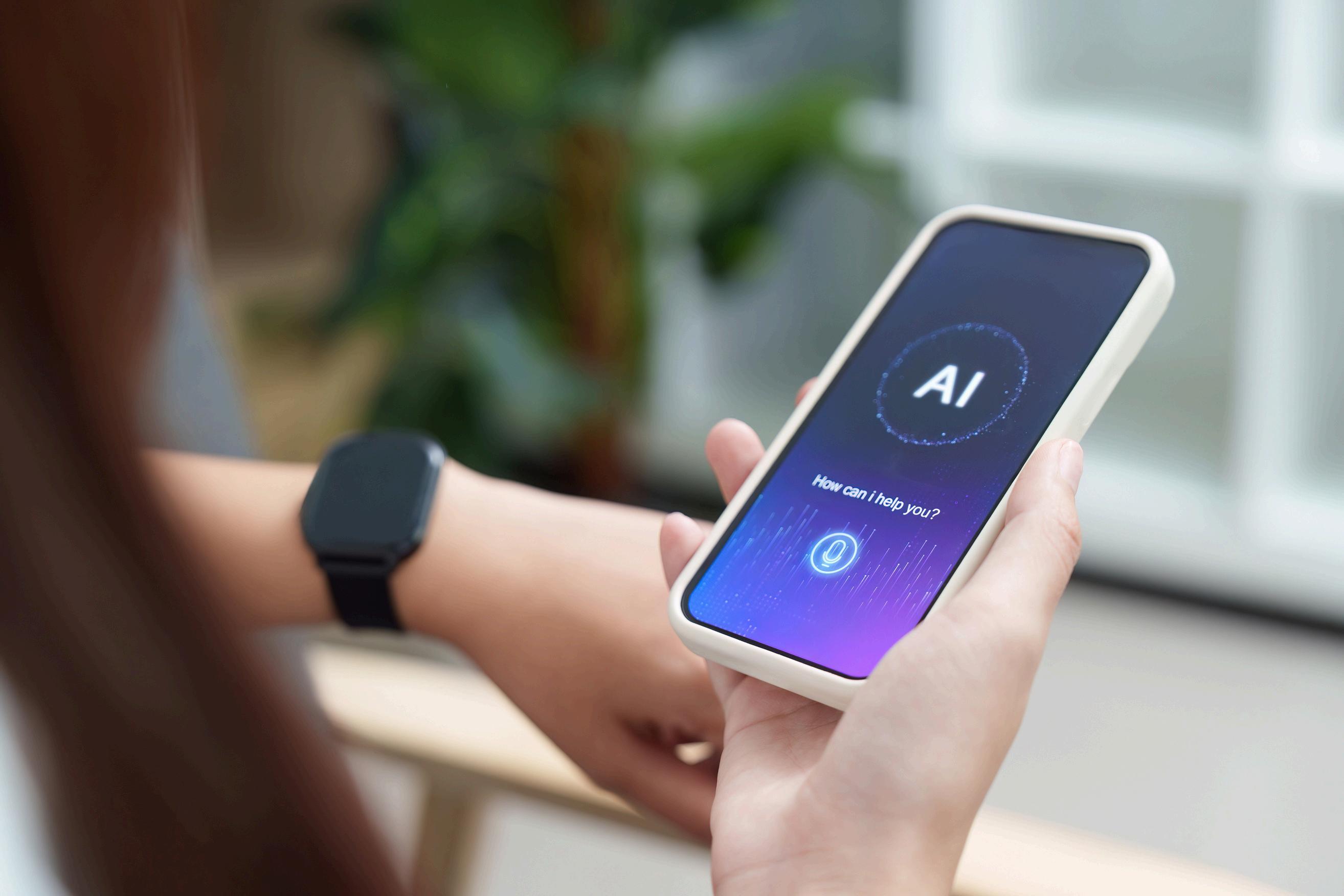
Systems can minimize back-to-back closing and opening shifts and consecutive workdays, reducing fatigue and burnout.
Smarter peak-demand allocation: By placing more people on the floor during peak periods, AI helps ensure employees aren't constantly "running on empty" during rushes.
AI scheduling in retail leads to more predictable schedules, enhanced work-life balance, lower labour expenses, and less planning time for managers, according to case studies Canadian small and medium-sized stores can benefit from enterprise-level workforce optimization while maintaining specific norms for fairness and well-being
Stress‐Tracking Wearables and Neurotech from Canadian Innovators
Beyond scheduling, Canadian firms are developing wearables that specifically address stress and burnout One notable example is Roga, a neurotechnology business with deep Canadian origins that has joined the University of Waterloo's Velocity startup accelerator Roga created an app-connected wearable gadget behind the ears that stimulates peripheral nerves to alleviate stress and rumination Clinical studies on similar technologies indicate that daily use of such a device for several weeks can reduce stress symptoms by up to 50%
ImageCourtesy:Canva
Roga markets the device as a tool to help those dealing with extreme stress and burnout, and its customers include businesses that purchase the wearable as part of workplace wellness initiatives For Canadian businesses, gadgets like these can supplement traditional support such as counselling, Employee Assistance Programs, and mental health training by providing a discreet, non-pharmaceutical alternative for staff to manage stress before it escalates
Startups worldwide are experimenting with AIenabled stress detection through speech, heart rate variability, and other biometrics, prompting users to take breaks or do breathing exercises when early signs of stress show These new solutions suggest that Canadian retail staff may soon have access to real-time stress feedback and individualized coping strategies throughout shifts.
Digital Health Partnerships for Frontline Workers
Large Canadian stores are already showcasing how digital health collaborations may benefit frontline staff on a large scale Walmart Canada, for example, has teamed with TELUS Health to offer employees 24/7 virtual healthcare, mental health support, and assistance programs, as well as Mental Health First Aid training for executives This concept combines 24/7 digital access with personalized help and education from humans
These programs align with broader Canadian mental health services for retail employees, which encourage companies to develop psychological health and safety plans and to connect employees with national and regional support By including telehealth platforms, wellness applications, and mental health hotlines in benefits packages, businesses may provide employees with several options for seeking treatment privately and on their own terms. Smaller Canadian stores with limited budgets can benefit from subscription-based wellness platforms and relationships with local mental health providers to offer comparable support
Designing Tech That Truly Supports People
Canadian workplace health and safety experts caution that AI and wearables are not cure-alls If underlying issues such as toxic culture, chronic understaffing, or a lack of psychological safety are not addressed, technology may wind up disguising symptoms rather than addressing primary causes
In Canada, human-centric retail technology is increasingly influenced by these basic principles: Involving store staff in tool selection and configuration, such as AI scheduling rules or the use of stress data, fosters trust and relevance
Transparency and privacy: It is vital to clearly communicate what data is collected, how it will (and will not) be used, and who has access to it, particularly for wearables and behavioural analytics applications.
AI and wearables should support wider efforts such as fair scheduling policies, mental health days, antiharassment protocols, and leadership training
When these circumstances are met, technology becomes an ally: AI does the hard lifting of complex scheduling, while neurotech and wearables help employees manage their mental health in real time, and digital health platforms connect them to professional aid
For Canadian retailers, the future of retail tech with a human touch is to use innovation to promote well-being, creating workplaces where employees can thrive emotionally and professionally, rather than choosing between the two
Yourroleinstayinguptodateisintegraltooursharedmissionof fosteringacommunityofinnovators CanadianSMEMagazineisa valuabletreasuretroveofentrepreneurialknowledge Clickhereto subscribetoourmonthlyeditionsforupdatesonCanadianbusinesses Followourhandle,@canadian sme,onXtostayupdatedonall businesstrendsanddevelopments Yoursupportiscrucialtoour mission
Disclaimer:Thisarticleisbasedonpubliclyavailableinformation intendedonlyforinformationalpurposes CanadianSMESmallBusiness Magazinedoesnotendorseorguaranteeanyproductsorservices mentioned Readersareadvisedtoconducttheirresearchanddue diligencebeforemakingbusinessdecisions

In an exclusive interview with CanadianSME Small Business Magazine, Abirambika Ravivarman, Executive Leadership Development Consultant and Founder of Human Systems at Work, brings a thoughtful and deeply practical perspective on what leadership must evolve into in today’s complex and fast-changing environments
InterviewByMaheenBari
Executive Leadership Development
Consultant and Coach with 20+ years of experience designing and delivering leadership development initiatives for global organizations Brings 2,300+ coaching hours with senior leaders and extensive experience facilitating leadership programs that strengthen executive capability and support organizational transformation.
Expert in integrating executive coaching, 360° leadership assessments, experiential learning, and strategic dialogue into scalable development programs
Known for partnering with senior leaders and HR teams to build leadership pipelines, support succession readiness, and enable culture change across global organizations.

You’ve moved from leading people in a multinational bank in India to building your own consulting practice and now Human Systems at Work in Canada. What inspired that
I really valued my time in the corporate world I was a high performer, very driven, and deeply focused on delivering results I enjoyed the pace, the stretch, and the sense of accomplishment that came with it
The shift began when I took a break and stepped into coaching. That pause gave me a very different lens. I started to notice that while performance systems were strong, what was often missing was attention to the human side how people were thinking, relating, and experiencing the system
That changed everything for me I became more curious about humans, how they experience change, pressure, relationships, and meaning inside systems
As I worked in coaching and later built my practice, that curiosity deepened I began to see organizations less as structures and more as living systems, where relationships, emotions, and attention shape what becomes possible
When I moved to Canada and founded Human Systems at Work, it was about bringing this together: performance and humanity are not separate Sustainable performance depends on the quality of human the system is
Today, I see leadership as the ability to create conditions where people can think clearly, relate meaningfully, and evolve together
You talk about Human-Centric Leadership as placing people at the heart of how organizations think, decide, and act—how is this different from traditional performance‑driven models, and what shifts do you see in leaders who begin to lead this way?
Human-Centric Leadership differs from traditional performance-driven models in where it believes performance comes from Traditional leadership often relies on targets, control, and individual accountability, assuming that clarity and pressure will drive results People are positioned as the main drivers of output
Human-Centric Leadership shifts this foundation Performance is seen as something that emerges through how work is designed and held through shared intent, quality of dialogue, and collective responsibility. The focus moves from pushing results through people to shaping the conditions in which results can unfold
This changes how leaders show up Rather than relying on pressure, they focus on direction and alignment They engage in honest conversations with care and courage The emphasis shifts from individual approval or being right to taking responsibility for how the system functions

ImageCourtesy:AbirambikaRavivarman
Over time, leaders begin to see they are not just managing tasks or people, but shaping performance through how work is held, designed, and co-created
My thinking in this space has evolved over more than a decade of working with leaders across industries, and I began writing about Human-Centric Leadership several years ago before before it became a more widely used term today
The idea of the Human Field—the invisible relational space of trust, emotions, and energy—is central to your work; how do you explain this concept to senior leaders, and what changes when they start noticing and intentionally shaping that field?
I describe the Human Field as the relational “ space between people” where trust, meaning, emotion, and energy shape how work actually gets done It is not visible in structures or processes, yet it determines whether collaboration feels open, tense, fragmented, or generative.
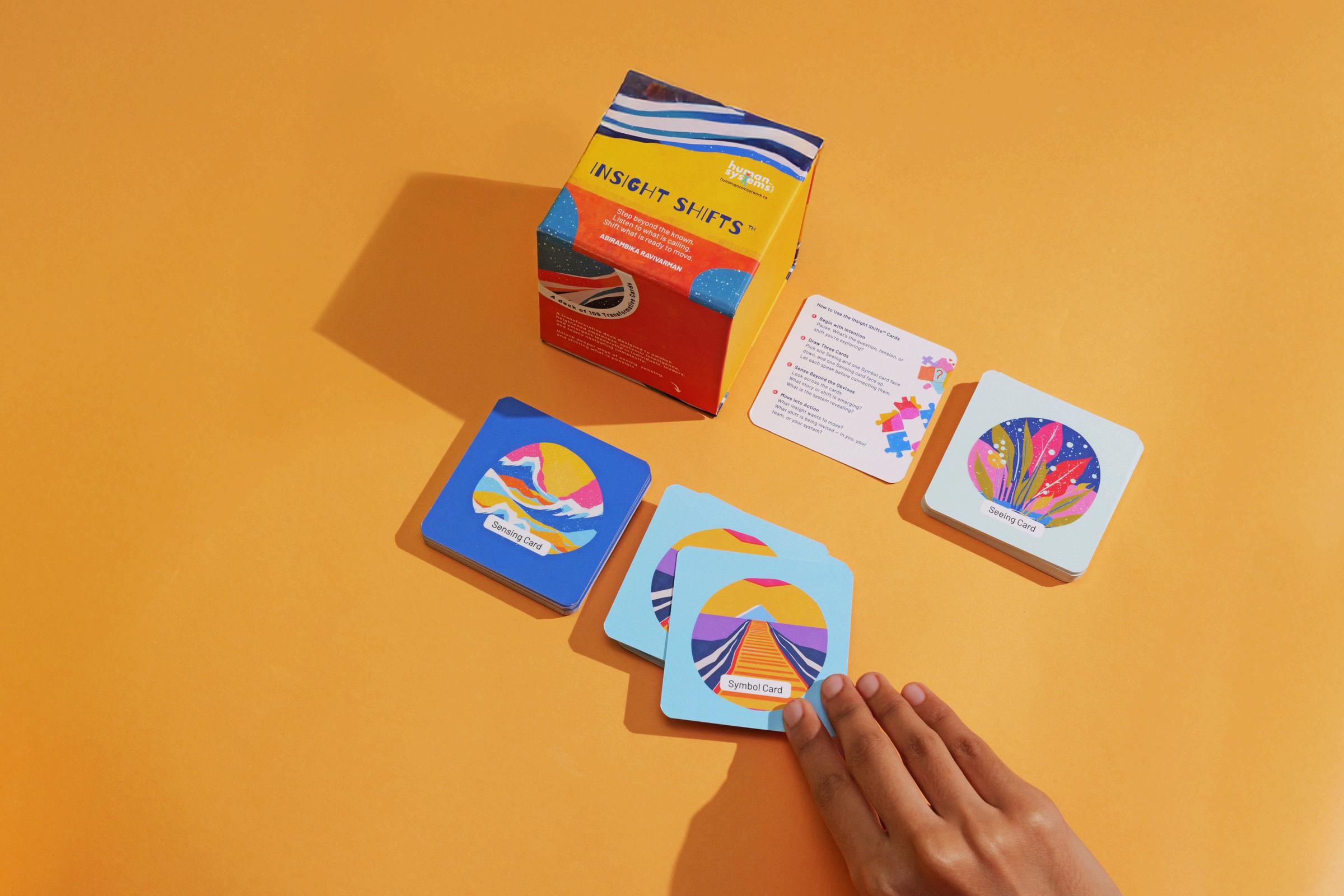
Leadershipthenbecomeslessaboutcontrol andmoreaboutpresenceandrelational awareness.Overtime,teamsbecomemore honest,connected,andcapableofreal dialogue—notjustcoordination.
Your studies in Buddhist psychology and Nalanda traditions, along with your own immigration story, clearly inform your approach how have these experiences influenced the way you help leaders listen, sense, and lead through change with more resilience and “resilient flow”?
Human behaviour carries a strong inherent capacity for adaptability, learning, and responsiveness People can adjust quickly, read situations, and evolve in dynamic environments At the same time, they often return to familiar patterns ways of thinking, reacting, and relating that repeat, especially under pressure or uncertainty These patterns are usually automatic, shaped by past experience and conditioning
Within this, I use a relationship-atwork lens Not all workplace relationships are the same Some are transactional, some functional, and some develop deeper relational depth where trust, candour, and shared responsibility emerge The quality of these layers strongly influences performance
Between them sits what I call the liminal space the in-between space of ambiguity, tension, and what is not yet said or resolved Many teams move past it too quickly, but it is often where real shifts begin
When senior leaders begin to notice this, they shift from managing tasks to holding space. They become more aware of what is unspoken but active in the system and learn to stay with it long enough for clarity and truth to emerge
This is where leadership work becomes more internal It requires a different quality of attention the ability to notice patterns as they arise, both within oneself and within the system, and create space for more conscious responses My work, influenced by Buddhist psychology, focuses on this development of awareness

Myimmigrationjourneyrequired navigatingconstantchange, unfamiliarsystems,andidentity shifts.Thissameadaptivecapacity, combinedwithawarenessandinner steadiness,helpedmefindmyplace andbuildbelonginginanew environment.
This is where my work on Resilient FLOW becomes distinct It reflects the capacity to stay steady and adaptive while movement is happening, rather than relying on recovery after disruption
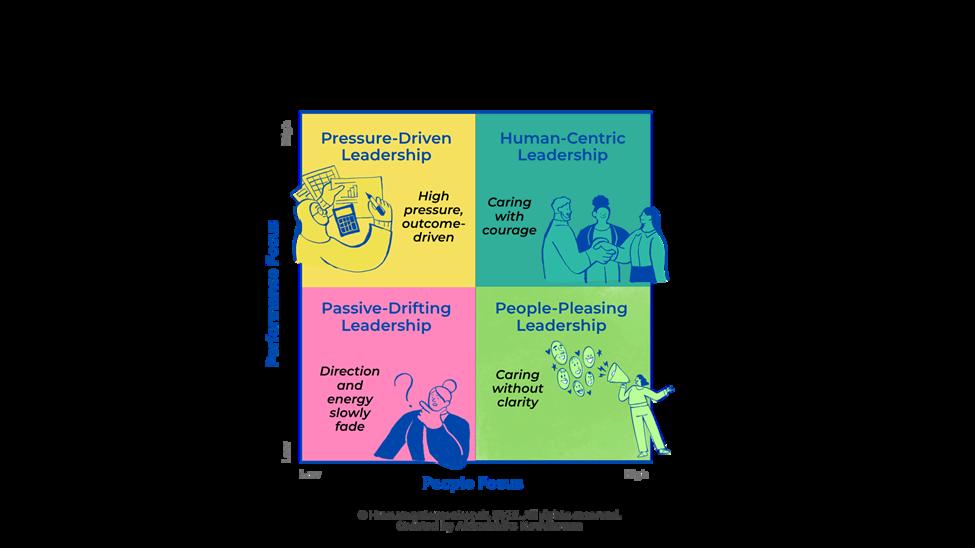
Leadership then becomes an act of deeper listening of sensing what is emerging, staying present with uncertainty, and responding with clarity as conditions continue to evolve.
For a busy leader reading this who senses their team is stretched and disconnected, what is one simple practice or question you recommend they start with to lead more consciously and build a more human‑centric workplace, starting this week?
A simple starting point is to strengthen your ability to notice how your team is thinking, relating, and responding beneath the surface of the work and the wider system.
As a credentialed team coach, this has been central to my practice: helping leaders and teams become aware of the subtle cues that are always present, yet often missed in the pace of daily delivery
This awareness is what led me to create the Human-Centric Leadership Grid™ a free, simple assessment that helps leaders understand where their team currently stands and what patterns may be shaping performance and connection
From there, leaders can take the insight deeper into practice using the Insight Shift Cards a tool designed to support reflection and dialogue within teams They help surface what is unspoken, explore emerging themes, and make sense of the relational patterns shaping how people are working together Used in conversation, they create space for deeper listening, shared reflection, and a clearer view of how the system is functioning in real time
In an AI-driven era, the capabilities that will matter most are deeply human ones presence, listening, awareness, and relational intelligence
Disclaimer:The views and opinions expressed in this interview are those of the interviewee and do not necessarily reflect the official policy or position of CanadianSME Small Business Magazine Our platform is dedicated to fostering dialogue and sharing insights that inspire and empower small and medium-sized businesses across Canada.
TheShift TowardCalmer andSimplerRetailExperiences
BySkUddin
Retail has become a source of sensory overload for many Canadians in an era of constant phone use, notifications, and screen-filled environments As Mental Health Awareness Month grows in popularity, some merchants are asking a different question: What if shopping helped individuals decompress? A growing trend in Canada is "digital detox retail," which aims to reduce stress and decision fatigue for both customers and staff This includes sensory-friendly hours and calmer, tech-light workplaces
Why Retail Needs a Digital Detox
Research on digital detox and screen time has shown that limiting gadget use and digital stimuli can improve mental health, sleep, focus, and emotional balance When people take intentional breaks from incessant digital pressures, they report feeling less overwhelmed, less worried, and more present
Retail has become more screen-heavy, with digital signage, in-store TV walls, looping commercials, and customers' phones competing for attention A regular retail visit can be overwhelming and stressful for neurodivergent customers as well as individuals who are sensitive to light and sound Working eight hours a day under bright lights with constant music, beeps, and announcements causes sensory exhaustion and irritability among employees. Canadian and worldwide mental health professionals say that lowering sensory and digital load can promote calm, focus, and overall wellbeing Retailers are beginning to use these insights for store design and policies
Sensory‐Friendly Shopping as Tech‐Light Retail
Sensory-friendly shopping hours are a prominent example of tech-light, quieter retail in Canada Empire Company and Sobeys flags Since 2019, more than 450 grocery stores in Canada, including Sobeys, Safeway, IGA, Thrifty Foods, Foodland, and FreshCo, have established sensory-friendly shopping hours.
Duringtheseperiods,whichareusually scheduledweekly,stores:
Reducelightingbyaround50% TurndownthemusicandPA announcements(unlessinemergencies). Reducecartcollectionandotherloud activities.
Reduceorsilencebeepingsoundsat checkouts
Sobeys has collaborated with local autism networks and community organizations across Canada to understand better how store environments impact customers with sensory sensitivities. The upshot is a calmer, lower-stimulus experience, making grocery shopping more accessible and less taxing for many families
Musicandradiocommercialswillbeeliminated.
Exceptinemergencies,announcementsandpagingwillbe paused
Usestatic,low-sensorygraphicsonTVwallsinsteadofbright, movingones
According to local news reports, these hours provide a "far quieter shopping experience" for individuals with noise and light sensitivity, such as those with autism spectrum disorders, ADHD, or other sensory processing issues While billed as accessibility initiatives, they are also, in effect, tech-light store windows with the normal digital cacophony turned down These programs demonstrate how simple changes in lighting, sound, and screen use can significantly reduce sensory overload for consumers and workers.
Tech‐Light Design Beyond Sensory Hours
Althoughsensory-friendlyhourshavedefinedtimes,their designconceptscanbeappliedtoall-day,digitaldetoxinspiredretailspaces:
Reducingobtrusivescreensandflashingcontent Accordingto studiesondigitaldetox,continualvisualstimuliandnotifications increasetensionandfragmentattention Movingsomemessaging tostaticsigns,printedmaterials,ormodestdisplaysmighthelpto createamorerelaxingworkplace.
Creating"quietcorners"andphone-lightzones Retailersshould providesmallseatingareaswithsofterlighting,avoidin-your-face screens,anddiscouragephoneusetoencourageconsumersand stafftotakeabreak.
Usesoundandfragrancesparingly.Insteadofloudplaylistsand chaoticsoundscapes,retailerscanoptforlowervolume,calmer tracksorinfrequentsoundscapes withoutaddingconstantinstoreadsontop Similarly,modest,consistentscentsmaybeless overwhelmingthancompetingfragrances
International examples show retailers experimenting with "Quiet Hour" principles, including dimmed lights, no announcements, hushed beeps, and limited digital stimulation, as routine operating procedures Canada's sensory-friendly pioneers are already implementing "slow shopping" and "digital detox" programs, which might be expanded during Mental Health Awareness Month
Benefits for Customers:
Accessibility, Calm, and Choice
Customersbenefitfromtech-light,sensory-aware environmentsinseveralways:
Improvedaccessibility Customerswithneurodivergent characteristics,aswellasthosesufferingfromanxietyor PTSD,frequentlystruggleinbright,noisy,congestedstores. Shoppinginsensory-friendlyanddigitally-reducedsituations becomesmoremanageableandenjoyable,reducingthe stressofthetask
Decreaseddecisionfatigue Havingfewerscreensandpopupsuggestionsreducesthenumberofmicro-decisions aboutwhattowatch,tap,orignore Thiscanhelpshoppers focusonwhattheycamefor,loweringcognitivestrain.
Asenseofbeingaccepted"justasyouare."Accordingtoone inclusionadvocate,quiethourssendastrongmessage: "You'rewelcomehere,justasyouare"Manyclientsvalue emotionalcomfortmorethananydiscountoroffer
Quieter, tech-light establishments can stand out as places of calm, compassion, and inclusion in an age of digital exhaustion among Canadians
How Reduced Noise Supports Staff Performance
Digital detox retail is about more than just customers
Employees who work entire shifts under strong lighting and continual aural stimuli benefit from a calmer, less digitally intense atmosphere Implementing sensoryfriendly practices, such as eliminating background music, loud announcements, and beeps, can benefit personnel
Attheendofashift,
Youwillfeellesssensorywearinessandirritability
Communicatemoreeffectivelywithclientsandcolleagues withoutshoutingoverbackgroundnoise
Concentratemoreonduties,increasingaccuracyand safety.
When paired with other mental health techniques, such as supportive scheduling, access to digital resources, and de-escalation training, tech-light design provides further protection for staff well-being
Practical Steps for Canadian Retailers
ForCanadianretailSMBsconsideringdigital detoxcampaigns,severalpractical,low-cost approachesstandout.
Planaweekly"quiethour."Tocreateaquieter environment,considerdimmingthelights,turning offmusicandcommercials,limiting announcements,andsimplifyingon-screen content Promoteitasasensory-friendlyorslow shoppingexperience
Analyzedigitalnoise:walkthroughthestore duringpeakhours,notingeveryscreen,sound, andflashingelement.Question:Whattrulyadds value?Whatcanbesimplified,slowed,orturned off,particularlyduringMentalHealthAwareness Month?
Collaborateondesignprojectswithyour community FollowSobeys'andothers'leadby consultingwithlocalautismorganizations, disabilityadvocacygroups,ormentalhealth groupstodeterminewhichadjustmentswouldbe mostbeneficial
Trainemployeesandcommunicateclearly Employeesshouldbebriefedonthepurposeof silentordigitallighthours,howtoexplainthemto clients,andhowtomaintainapeaceful workplaceinawelcomingmanner.
Evaluatefeedbackanditerate.Gatherfeedback fromconsumersandworkersduringMental HealthAwarenessMonthtoimproveorextend tech-lightprograms
As digital saturation increases, organizations that prioritize mental health will offer tech-light, humanistic retail experiences that benefit both customers and employees
Disclaimer: This article is based on publicly available information intended only for informational purposes CanadianSME Small Business Magazine does not endorse or guarantee any products or services mentioned Readers are advised to conduct their research and due diligence before making business decisions

Retail Spaces Transform toSupportMental HealthAwareness
Month
Retailers across Canada are rethinking their storefronts as more than just transactional environments during Mental Health Awareness Month Chains like Indigo and Lululemon are increasingly creating spaces that encourage patrons to slow down, unwind, and connect, transforming routine shopping excursions into times of healing and awareness Canadian retail spaces are subtly shifting from checkout lanes to relaxing havens through sensory design, calm zones, and community-building events
The Rise of Mindful Retail Environments
Experts in retail design observe a discernible worldwide trend toward "calm and mindfulness zones in stores" areas purposefully created to reduce tension, ease sensory overload, and give customers a chance to unwind To encourage relaxation, these decompression areas usually feature warmer materials, softer lighting, comfortable seating, and carefully chosen soundscapes. They are part of a larger well-being approach that recognizes how stressful contemporary retail settings can be, particularly for people with anxiety or sensory sensitivity
They are not only aesthetic decisions By connecting experiential retail to a larger social commitment to mental health, Mental Health Awareness Month has emerged as a logical anchor for Canadian shops to introduce or emphasize these aspects
ImageCourtesy:Canva
ByKripaAnand
Indigo: Turning Stores into Lifestyle and Wellness Hubs
The largest book retailer in Canada, Indigo, has been gradually shifting from a bookstore to a "complete lifestyle emporium," to help clients "live their lives on purpose " Its 16,000square-foot new concept store in Toronto's King West neighbourhood is intended for more than simply shopping it's a place to hang out, explore, and socialize
Indigo's expanding in-store experience aligns with contemplative and relaxing retail practices, including:
Indigo's curated wellness and mindfulness assortments emphasize the store's focus on emotional well-being by featuring books and products related to mindfulness, tranquil living, and peaceful home design.

Immersive product vignettes - Shoppable "moments" that evoke warm corners, reading nooks, or home sanctuaries, allowing customers to slow down and contemplate how things would fit into their own peaceful locations.
Community-oriented spaces include sections for book clubs, gatherings, and author talks, positioning the store as a social meeting place rather than a transactional one.
lululemon: Movement, Mindfulness, and Inclusive Experiences
Lululemon, founded in Canada, has long used its stores as community gathering places, providing free yoga sessions, runs, and conferences that bring people together through movement and mindfulness This strategy aligns with mental health priorities, as physical activity, social interaction, and mindfulness are known to promote emotional well-being
While not specifically labelled as "mental health zones, " these design decisions adhere to the concepts of quiet retail spaces they reduce sensory clutter, invite exploration at a slow pace, and help shoppers identify the brand with comfort, creativity, and serenity
Lululemonexperimentedwithin-store "Mindfulosophy"meditationspaces,where shopperscouldhalt,sitoncushions,andlistento guidedmeditationswhileshopping.Whilethat particularconceptwastestedoutsideofCanada,it wasdesignedbyLululemonAthleticaCanadaInc. andreflectsthebrand'soverallphilosophyof combiningretailandwellnessexperiences.
More recently, Lululemon continues to:
Organize community events at Canadian retailers, such as yoga and movement-based meetings, to reduce isolation and stress
Create stores with open, breathing layouts that prioritize natural materials, soothing colours, and simple product displays to reinforce a sense of comfort.
Use its physical footprint to promote mental and emotional well-being, particularly during significant events such as World Mental Health Day and other awareness campaigns.
Lululemon's venues, which resemble community studios rather than traditional stores, blur the distinction between "retail visit" and "self-care activity," appealing to wellness-conscious customers
Calm Zones, Scent Therapy, and Sensory Design
Retail design experts define tranquil spaces, also known as decompression zones, as "environments designed to reduce stress, promote mental wellbeing, and encourage mindfulness " Zones and store-wide elements often consist of:
Soft, diffused lighting and warm colour palettes alleviate visual tiredness.
Comfortable seating spaces where individuals can sit, read, or just breathe for a few minutes.
Scent therapy and soundscapes use soft smells or selected audio (nature sounds, ambient music) to create a relaxing environment
Reduced visual clutter, with larger layouts and fewer overstimulating items, making stores more accessible to clients with sensory sensitivities
Even outside of Canada, projects such as contemplative soundscapes and "digital spas " in shopping malls show how shops are using guided audio, aromatherapy, and immersive rooms to help customers unwind during stressful times like Stress Awareness Month Canadian merchants can, and in some cases already do, adapt these concepts to local circumstances and Mental Health Awareness Month activities
Inclusivity and Community as Mental Health Design Principles
Mindful retail is more than just aesthetics; it is also about inclusivity and community Design trends stress building spaces that seem welcome and safe for people of all ages, skills, and backgrounds for example:
People with mobility problems will benefit from wider aisles and more accessible seats.
Quiet areas can help neurodiverse customers who are overwhelmed by noise and congestion.
Stores can become community support hubs by hosting mental health programming like support groups, workshops, and speeches.
Brands such as Lululemon, which offers community workshops, and Indigo, which has event spaces and curated wellness content, demonstrate how Canadian retail can help reduce stigma, encourage conversations, and provide gentle entry points into mental health themes
The message for Canadian small and medium-sized stores is clear: even modest steps a little tranquil space, a deliberately scented candle, a peaceful soundtrack, or a once-a-month health workshop can transform a store from just "selling stuff" to supporting people
Yourroleinstayinguptodateisintegraltooursharedmissionof fosteringacommunityofinnovators CanadianSMEMagazineisa valuabletreasuretroveofentrepreneurialknowledge Clickhereto subscribetoourmonthlyeditionsforupdatesonCanadianbusinesses Followourhandle,@canadian sme,onXtostayupdatedonallbusiness trendsanddevelopments Yoursupportiscrucialtoourmission
Disclaimer:Thisarticleisbasedonpubliclyavailableinformation intendedonlyforinformationalpurposes CanadianSMESmallBusiness Magazinedoesnotendorseorguaranteeanyproductsorservices mentioned Readersareadvisedtoconducttheirresearchanddue diligencebeforemakingbusinessdecisions




The Canadian Dental Care Plan was introduced with a promise that is difficult to argue against Improve access Remove financial barriers Bring millions of Canadians into a system they have long been excluded from On paper, it is one of the most progressive shifts in oral healthcare policy Canada has seen in decades
But inside dental practices, the experience has been far less straightforward.
The CDCP did not arrive as a fully formed system It began as a targeted response in 2022 with interim benefits for children and evolved into a national program with phased eligibility beginning in December 2023 [1][2]. Seniors were prioritized, followed by vulnerable populations, with broader adult access continuing to expand into 2025 [2]
What this created was not just a rollout, but a moving target Policies, expectations, and participation have all shifted in real time, often leaving providers adjusting as the system evolves beneath them
From the beginning, hesitation within the profession was not rooted in resistance to access It was rooted in uncertainty
Dentists were asked to participate in a federally administered program with a separate fee structure, evolving guidelines, and limited clarity around long term sustainability Organizations such as the Canadian Dental Association raised early concerns around reimbursement levels and administrative burden, signaling that while the intent was widely supported, the execution required scrutiny [3]
That hesitation has softened over time Participation has increased Many providers who initially stood back are now seeing CDCP patients, whether by necessity, demand, or cautious acceptance Yet increased participation should not be mistaken for full alignment It reflects adaptation, not resolution
On the patient side, the impact has been immediate and undeniable For years, cost was one of the most significant barriers preventing Canadians from accessing dental care The CDCP has changed that equation Patients who delayed treatment are now booking appointments Preventive care is increasing Clinics are seeing individuals who have not sat in a dental chair for years, sometimes decades

But access has brought with it a new kind of tension Patients are entering the system with an expectation that coverage equals care The reality is far more limited Coverage is income dependent, partial in many cases, and structured around defined service limits rather than individualized clinical need [1] This gap between expectation and reality is now playing out daily in operatories and at front desks across the country
The most persistent and quietly frustrating issue lies in predeterminations The requirement to justify care before it is approved introduces a layer of clinical negotiation that feels unfamiliar in private practice Dentistry has traditionally operated on diagnosis and treatment planning grounded in professional judgment The CDCP introduces a second layer where that judgment must be reviewed, approved, or denied based on criteria that are not always transparent
Nowhere is this more evident than in preventive care limits
The program sets defined thresholds for services such as scaling, with additional units requiring preauthorization [1] On paper, this may appear reasonable In practice, it often conflicts with clinical reality Patients entering care after prolonged absence rarely fit neatly into standardized limits They require more time, more intervention, and more follow up Yet many of these cases fall into a grey zone where approval is uncertain.
This raises a question that is becoming harder to ignore Who determines what is necessary? Is it the clinician who sees the patient, or the system that defines coverage?
For dental practices, the impact is layered There is increased patient flow, which on its own would be a positive shift There is also a significant rise in administrative workload. Teams are navigating eligibility questions, explaining partial coverage, submitting predeterminations, and managing delays in approval These are not minor adjustments They are structural changes to how practices operate
Financially, the pressure is subtle but real The CDCP fee structure does not always align with provincial fee guides, and the responsibility of explaining co-payments falls squarely on the practice [4] This creates a delicate dynamic where patients may feel covered yet still face out of pocket costs they did not anticipate The result is not just confusion, but sometimes dissatisfaction directed at the provider rather than the system
What makes the CDCP particularly complex is that it is still evolving Government updates continue to signal expansion and refinement, with millions of Canadians expected to be covered as the program reaches full implementation [2][5]. This suggests that what we are experiencing now is not the final version, but an early stage of a much larger system
And yet, the core uncertainties remain Where are the boundaries of coverage truly drawn How will approval criteria evolve to reflect real clinical conditions Will limitations such as scaling caps be revisited as more data emerges Or will they remain fixed within a framework designed more for standardization than for individual care
The CDCP is, at its core, an attempt to solve a very real problem Access to dental care has been uneven, and for many Canadians, it has been out of reach That reality needed to change
But solving one problem has introduced another Dentistry is now operating in a space where clinical autonomy, patient expectations, and system limitations intersect in ways that are not always aligned.
This is not a failure of the program It is a reflection of its complexity
The CDCP is not just expanding access. It is quietly redefining how dentistry is delivered, how decisions are made, and how care is valued.
Whether that redefinition ultimately strengthens the profession or constrains it is still unknown
Works Cited
1. Government of Canada. Canadian Dental Care Plan Canada.ca, 2026, https://www.canada.ca/en/services/benefits/dental/dental -care-plan.html
2. Government of Canada. Canadian Dental Care Plan Expansion and Rollout Updates Health Canada, 2025
3. Canadian Dental Association. The Canadian Dental Care Plan and the Future of Dental Care in Canada. CDA, 2024, https://www cda-adc ca
4. Segal. Rollout of Services Under the Canadian Dental Care Plan Segal Consulting, 2024, https://www segalco ca
5. Ontario Dental Association. Canadian Dental Care Plan Updates and Guidance. ODA, 2025, https://www.oda.c
Author: Julie Hamada
Julie Hamada is a Chief Operating Officer with deep experience leading dental organizations and growthstage companies through scale, operational complexity, and organizational change She oversees operations, marketing, and people leadership with a disciplined, execution-driven approach translating strategy into structured systems that support sustainable growth and operational excellence Her work focuses on building scalable infrastructure, strengthening leadership cadence, and aligning teams around clear priorities and accountability Known for calm, steady execution, Julie brings clarity to ambiguity and helps organizations scale without compromising performance or culture.

AreAIand Automation HelpingorHurting RetailStaffMental Health?
ByKripaAnand
To address labour shortages and growing expenses, Canadian businesses are embracing AI and automation, from self-checkout kiosks to intelligent staffing solutions This technology change has a profoundly personal impact on frontline workers: while it can reduce conflict and repetitive stress, it can also increase job instability, concern about surveillance, and workload pressure The dilemma facing Canada's retail industry is not if AI will arrive, but rather whether it will be a helpful ally or a threat to mental health
The Burnout Context in Canadian Workplaces
According to recent data from TELUS Health's Mental Health Index, 42% of Canadian workers report feeling physically and/or psychologically exhausted by the end of the workday, with high workloads being the main cause of burnout. AI is also viewed by many employees as a potential solution, with the hope that it will lessen administrative responsibilities and repetitive duties
Retail employees are particularly affected because they handle high customer volumes, emotionally taxing work, rapidly evolving procedures, job instability, and higher performance standards Retail employees' mental health has suffered over the past several years, according to the Retail Council of Canada, which has prompted the development of resources and manuals specifically for the industry In light of this, the introduction of AI and automation in retail environments can substantially affect psychological safety, job satisfaction, and stress levels
How Automation Can Reduce Stress for Retail Staff
Automation can be a protective factor for mental health when it is developed with frontline well-being in mind.
Cutting down on intense and repetitive customer encounters - AI-powered self-checkout systems can lessen the number of patrons waiting in line at conventional tills, relieving cashiers of some of their burden and spreading it more fairly
Customers can self-correct errors using advanced technologies, which minimizes unnecessary interventions and frees up staff time to handle difficult or high-value interactions rather than continuous troubleshooting
Establishing secure areas for clients dealing with mental health issues - From a different perspective, clients who experience anxiety or sensory overload may benefit from self-checkout
Self-checkout lanes can make grocery shopping "bearable" for persons with depression or ADHD by minimizing stressful social encounters and providing them more control over pace and privacy, according to a Mental Health Commission of Canada blog, despite worries about jobs Retail employees may experience fewer escalations and confrontations when customers are more at ease, which indirectly promotes employee mental health
Encouraging workplace safety and healthAccording to Canada's Centre for Occupational Health and Safety (CCOHS), AI can increase workplace safety by automating risky operations, keeping an eye on hazards, and even using wearables and sensors to assess stress or weariness This could result in more intelligent incident detection, reduced ergonomic risks, and early alerts when employees are overworked in retail settings
In summary, retail personnel may concentrate on higher-value tasks, client connections, and skill development factors highly linked to engagement and resilience when AI handles the most taxing, repetitive, or dangerous parts of their jobs
The Psychological Downsides of Job Anxiety Surveillance and Work Pace
Automation and AI are not always safe When technology is used without precautions, there are serious psychological hazards, according to Canadian and international guidelines.

Concerns about "robo-retail" and job insecurity
Concerns about job loss and reduced hours for retail workers are often raised in discussions about self-checkout and automation Self-checkout is increasingly associated in Canadian public discourse with fewer human jobs and the perception that workers are being "replaced by machines " This can lead to long-term fear about the future among frontline employees, particularly when automation is implemented without support for reskilling or transparency.
Increased surveillance and a sense of losing power - The CCOHS emphasizes how AI-based management technologies, such as real-time job completion, customer interaction, or productivity tracking systems, can make people feel like they are being monitored all the time This pressure to monitor could:
Decrease perceived autonomy, which is a major factor in mental health.
Encourage "speed-up" or unhealthy competitiveness among employees as they strive to meet AI-driven goals.
If workers believe that data could be utilized in a punitive rather than a supportive manner, confidence will be eroded
Making
AI a “Friend”
Canadian guidelines suggest a number of best practices for merchants in order to tip the scales in favour of "friend" rather than "foe":
Cognitive stress and increased workload - Some employees transition from doing the work to monitoring and supervising systems as more processes become automated, which can raise cognitive load and mental demands Others might become overly simplistic, which could lead to disinterest and boredom an additional risk factor for mental health In these cases, employees may feel overburdened, understimulated, or stressed instead of being supported by badly built AI
While automation can lessen physical strain, it may also raise mental strain if it increases job instability, compromises dignity, or speeds up work without safeguards, according to Canadian evaluations of AI and labor rights
Involve employees frequently and earlyExperts in occupational health advise involving workers in choices on the usage of AI, the data it will gather, and the application of performance criteria Involving employees through feedback loops, pilots, and consultations can lessen anxiety and enhance system design
Be open about your goals and effects It helps dispel the notion that every new tool is a step toward job losses by clearly communicating the reasons for automation, such as minimizing repetitive work, enhancing safety, or assisting customer service Retailers should prioritize internal mobility and reskilling over mere attrition wherever feasible
Establish "guardrails" for psychological protection - Employers are encouraged to include mental health in all facets of business, including technological decisions, by the Mental Health in Retail Guidebook, which was created for Canadian merchants
In other words:
Steer clear of AI measures that promote false speed or frequent staff comparisons.
Realistic staffing, humane timetables, and frequent breaks are unavoidable.
Supplying national support resources, mental health training, and employee assistance programs in addition to technological installations
Use AI to facilitate human connection rather than to replace it According to TELUS Health's research, when AI is presented as a tool to lessen busywork rather than as a replacement, many employees feel cautiously optimistic about it In the retail industry, this may entail automating routine transactions and inventory management to free up staff time for problem-solving, relationship-building, and customized service the human aspects of retail that many employees find meaningful
Building a Healthy Human–Machine Partnership
The future of Canadian retail is workers with AI, not workers vs AI The technology is capable of:
Minimizing conflict exposure and recurrent strain
Making the surroundings more tranquil for both employees and clients
Provide new instruments for the early detection of stress and exhaustion
ImageCourtesy:Canva

However, if it is not carefully designed, it may also increase job insecurity, reduce autonomy, and increase surveillance, all of which are detrimental to mental health
Retailexecutiveswhoprioritize psychologicalhealthandsafety willbebestpositionedtotransform automationandAIintotrueallies fortheiremployees.Theycando thisbyusingresourcessuchasthe RetailCouncilofCanada'smental healthtoolsandCanada's upcomingAIandoccupational healthguidelines.Bydoingthis, theymaysimulateaformof"roboretail"wherepeopleperformthe tasksthatonlyhumansare capableofperforming,suchas empathizing,connecting,and caring,whiletechnologyhandles theheavylifting.
Your role in staying up to date is integral to our shared mission of fostering a community of innovators
CanadianSME Magazine is a valuable treasure trove of entrepreneurial knowledge Click here to subscribe to our monthly editions for updates on Canadian businesses Follow our handle, @canadian sme, on X to stay updated on all business trends and developments. Your support is crucial to our mission.
Disclaimer: This article is based on publicly available information intended only for informational purposes
CanadianSME Small Business Magazine does not endorse or guarantee any products or services mentioned Readers are advised to conduct their research and due diligence before making business decisions

Municipal Masterclass 2026: PreparingCanada’sNext GenerationofCampaignLeaders
ArticleBySKUddin
As Ontario prepares for its next municipal election cycle, one reality becomes increasingly evident Local campaigns are no longer straightforward, predictable, or low-stakes It demands strategy, digital competence, and a thorough awareness of changing voter behaviour Municipal Masterclass 2026 arrives at the perfect time, providing a focused, practical platform to equip candidates, campaign teams, and community leaders with the tools they need to succeed
This one-day conference, scheduled for May 14, 2026, in Mississauga, will bring together municipal officials, strategists, and campaign experts from all around Canada. The event, organized by EOK Consults, a consultancy with extensive experience in political marketing and campaign strategy, is designed to help participants build smarter, more effective municipal campaigns grounded in realworld implementation
Why This Event Matters Now
Municipal elections are sometimes overlooked, despite being among the most contested and complex political contests in Canada Candidates usually work with limited funds, tiny teams, and extremely localized voter dynamics. At the same time, voters are becoming more digitally connected, knowledgeable, and choosy.
This combination results in a small margin of error Campaigns that use obsolete strategies risk slipping behind, whilst those who invest in planning and strategy gain a measurable advantage Municipal Masterclass 2026 aims to bridge this gap by delivering actionable insights that may be implemented immediately
A Practical Approach to Modern Campaigning Who Should Attend
Municipal Masterclass differs from regular conferences in that it focuses on execution rather than theory or policy discussions The curriculum focuses on what works in real campaigns, bringing together practitioners who have led and won elections at all levels
Attendeesmayanticipateafulldayof:
Keynotepresentationswithexperiencedmunicipalleaders
Paneltalkswithcampaignstrategistsanddigital professionals
Hands-onworkshopscentredonexecution. Networkingopportunitieswithpeersandindustry professionals.
Campaign strategy, messaging, digital advertising, voter outreach, fundraising, grassroots organizing, and data- and poll-based decision-making are all essential themes
A Strong Lineup of Leaders and Experts
Municipal Masterclass 2026 presents a broad mix of speakers, including mayors, councillors, and campaign professionals with firsthand expertise in the sector. Leaders, including Patrick Brown, Mayor of Brampton; Marianne Meed Ward, Mayor of Burlington; and David West, Mayor of Richmond Hill, have contributed insights informed by real government and campaign experience
This practitioner-led approach ensures that participants learn from those who have successfully negotiated the difficulties of municipal politics, rather than solely from academic perspectives
The event is intended for a diverse range of individuals involved in municipal governance and advocacy, including:
First-timecandidatesandincumbents
CampaignManagersandStaff
VolunteersandPoliticalOrganizers
Advocacyorganizationsandcommunityleaders
With over 25 communities from across Canada expected to attend, the event will also serve as a vital networking hub, enabling cross-regional collaboration and knowledge exchange.
A Strategic Venue for Collaboration
The conference will be held at IKON Event Space in Mississauga, providing a central and accessible venue for attendees from the Greater Toronto Area and beyond. The venue has modern amenities designed to support large-scale professional gatherings, offering a seamless experience for learning, networking, and collaboration

A Timely Opportunity for Canadian Leaders
As municipal campaigns change, the demand for structured, practical training has never been stronger. Municipal Masterclass 2026 fills a key vacuum by providing a dedicated forum focused only on municipal campaign success It brings together the people, techniques, and technologies needed to confidently navigate an ever-changing political scene
More importantly, it represents a bigger shift in how campaigns are conducted in Canada Data-driven decisionmaking, digital engagement, and strategic planning are no longer options They're essential
The Bigger Picture for Canadian SMEs
This event is very important to Canadian small and mediumsized enterprises Municipal leadership has a direct impact on the local economic environment through legislative decisions, infrastructure development, and community planning
Strong, well-prepared municipal leaders help to strengthen local economies, improve support for small companies, and build more resilient communities Municipal Masterclasses help shape that leadership by ensuring that those entering or advancing in municipal politics have the necessary tools and attitude.

Closing Thought
As a media partner, CanadianSME Small Business Magazine urges founders, community leaders, and stakeholders to pay close attention to the conversations emerging from Municipal Masterclass 2026 Whether you ' re actively participating in municipal elections or are impacted by local policy decisions, this is an opportunity to stay informed, make connections, and interact with Canada's future local leaders
Visittheofficialwebsiteto learnmoreabouttheevent, seetheagenda,andregister toattend.See https://municipalmasterclas s.ca/.ThefutureofCanadian communitieswillbe mouldednotonlybyideas butbythosewhoarewilling toputthemintoaction.
Your role in staying up to date is integral to our shared mission of fostering a community of innovators CanadianSME Magazine is a valuable treasure trove of entrepreneurial knowledge Click here to subscribe to our monthly editions for updates on Canadian businesses Follow our handle, @canadian sme, on X to stay updated on all business trends and developments Your support is crucial to our mission
Disclaimer: This article is based on publicly available information intended only for informational purposes CanadianSME Small Business Magazine does not endorse or guarantee any products or services mentioned. Readers are advised to conduct their research and due diligence before making business decisions

StressFreeLeadership
inHigh-Pressure RetailEnvironments
BySkUddin
Store managers are at the center of stress in Canada's retail industry They manage labour shortages, demanding clients, sophisticated technology, and ongoing performance goals often while attempting to prevent team burnout and maintain morale As one Canadian retail HR specialist notes, frontline employees’ experience depends first and foremost on in store leadership, and supporting managers is essential if we want psychologically healthy retail workplaces
This is where emotionally intelligent, stress-aware leadership becomes a competitive advantage: it lowers employee turnover, enhances customer service, and safeguards mental wellness throughout the store.
The Pressure on Canadian Retail Leaders
According to recent Canadian reports, employees are being pressured to "perform more with less," leading to a rise in burnout According to a national survey reported by Canada Life and Mental Health Research Canada, burnout increased from 35% to 39% in just two years, with cynicism and emotional weariness appearing as major warning indicators
Leaders in retail are not exempt Middle managers frequently find themselves "in the conflict between executive ambition and frontline weariness," communicating ambitious goals while taking in grievances from clients and employees
Thismayappearinretailestablishmentsas:
Managersworklonghoursandhaveerraticschedules
De-escalatingstressfulclientinteractionsisyour responsibility.
Pressuretomeetshrink,sales,and serviceobjectivessimultaneously
Burnout can spread from leaders to the entire team if managers lack the skills to handle their own stress and react to others with empathy
What Emotionally Intelligent Leadership Looks Like
According to a comprehensive meta-analysis of studies on work teams, leadership, and emotional intelligence (EI), emotionally intelligent leaders promote healthier work attitudes and enhance team behaviour and business outcomes In leadership, EI usually consists of:
Self-awarenessistheabilitytoidentifyone'sown emotionaltriggersandstresssignals
Self-managementistheabilitytocontrolone's emotionsunderduressandtoexhibitcomposure.
Socialawareness,orempathy,istheabilitytosee thingsfromemployees'viewpoints
Clearcommunication,disputeresolution,andtrustbuildingareallcomponentsofrelationship management
According to HR leadership resources, over 90% of workers believe that empathy is crucial to a positive workplace culture and that they are more inclined to stick around when their leaders are compassionate This means that shop managers in Canadian retail must receive training in human skills such as listening, de-escalation, recognition, and supportive coaching in addition to operations.
Guidance from Canadian Mental Health and Retail Experts
To assist managers in promoting mental health, Canadian organizations have created guidelines tailored to the retail industry
a) Mental Health Commission of Canada (MHCC)The MHCC's "Tips to Help Retail and Hospitality Managers Support Mental Health in the Workplace" resource provides helpful guidance on how managers can shield employees from psychological and physical harm, especially during peak times
Amongthesuggestionsare:
proactivelymonitoringstressrather thanwaitingforemergencies.
employingde-escalationstrategiestodealwith challengingclientsandprovidingsupportto employeesduringemergencies
talkingabouteachperson'sneedsand,iffeasible, makingconcessions,suchasmodifyingworkloadand scheduling
Decision-makers can better connect their mental health initiatives with the National Standard of Canada for Psychological Health and Safety in the Workplace by using the companion guide "Building Mental Health into Retail and Hospitality Organizations " It provides program ideas, training recommendations, and conversation guides tailored to retail and hospitality executives
ImageCourtesy:Canva

b) Retail Council of Canada (RCC) - Produced with assistance from the Ontario government, the Retail Council of Canada's Mental Health in Retail Guidebook offers 22 pages of recommendations for front-line employees and retail executives It highlights the following:
Managershaveasignificantimpactonboththecustomer experienceandthementalhealthoftheirstaff.
Toolsforpsychologicalsafetyplanning,de-escalation,and recognitionareessentialforleaders
Businesssuccessandmentalhealthsupportareinextricably intertwined,notmutuallyexclusive.
To reduce the risk of leadership burnout, RCC also selects training and materials to help managers assess their own mental health and that of their teams
Practical Habits of Stress‐Free (or Stress‐Smarter) Retail Leaders
Retail managers who wish to lead with emotional intelligence should consider the following specific approaches, which draw from Canadian and global leadership insights:
1) Make mental health a regular topic of discussion rather than a one-time event. Managers are encouraged by MHCC and RCC guides to incorporate brief well-being che into regular meetings and one-on-one conversatio "How's your stress level this week?" is an example of simple question normalize conversations about me health and give the go-ahead for speaking up
2) Preserve psychological security in the event of c incidents - Resources tailored to the retail industry emphasize that managers need to support their em when clients start acting abusively Managers with emotional intelligence:
Earlyoninaconflict,stepin
Takeworkersoutofdangerouscircumstances
Makeitveryclearthatmistreatmentisnever"partofth
Frontline employees have less chronic anxiety when know their management will intervene
3) Don't only give orders, coach - According to research on emotional intelligence and leadership, coaching-oriented leaders those who listen, ask questions, and assist staff members in solving problems promote greater commitment and performance than strictly directive leaders In Canadian retail, that could entail:
Beforeenactingnewregulations,solicit employeesuggestionstoenhanceprocedures
Whenpossible,includetheminthescheduling processandtaskdistribution.
Insteadofassigningblame,usemistakesas teachingopportunities
4) Acknowledge and honour work - Strong manager-employee relationships are based on consistent, targeted recognition, according to Canadian HR specialists who stress the need for recognition training for retail managers Resilience and a sense of belonging are fostered by genuine "thankyous " linked to principles, such as remaining composed in the face of a challenging client or supporting a colleague under duress

ImageCourtesy:Canva
5) Control your own tension and limits - Resources for leadership development caution that burned-out leaders breed burned-out teams Supervisors ought to be able to:
Observetheirownindicatorsoffatigue.
Employstress-reductionstrategies,suchastime blocking,peersupport,andmicrobreaks
Establishreasonableexpectationswithseniormanagement regardingtheirteams'capabilities.
It has been demonstrated that training programs that include emotional intelligence, communication, conflict resolution, and stress management enhance team performance and reduce HR and leadership fatigue
Action Steps for Canadian Retailers in 2026
Canadian merchants can develop stress-smarter leadership throughout their networks by:
Adoptsectorguidelinesandnationalstandards-Usethe MHCCretailguides,theRCCMentalHealthinRetailGuidebook, andtheNationalStandardofCanadaforPsychologicalHealth andSafetyasmodelsfortrainingandexpectationsforleaders

Investintrainingtailoredtomanagers-In additiontooperationalskills,storeexecutives shouldreceiveprofessionaltrainingin emotionalintelligence,de-escalation, recognition,andmentalhealthliteracy.
Createfront-linefeedbackloops:tofindout howemployeesviewleadershipbehaviours andwheresupportislacking,use questionnaires,listeningsessions,or anonymousmethods
Alignrewardswithpositiveleadership practices:Whenassessingmanagers,consider psychologicalsafety,teamwell-being,and turnovermetricsinadditiontosalesandshrink numbers
Makementalhealthresourcesavailableto management Sinceleadersalsobearheavy emotionalburdens,makesuretheyare includedinresiliencetools,EAPs,anddigital mentalhealthprograms.
Canadian retailers can establish stores where pressure is managed rather than rejected, and where both customers and employees feel truly supported by equipping their leaders with emotional intelligence, clear guidelines, and effective mental health tools
Yourroleinstayinguptodateisintegraltoourshared missionoffosteringacommunityofinnovators CanadianSMEMagazineisavaluabletreasuretroveof entrepreneurialknowledge Clickheretosubscribetoour monthlyeditionsforupdatesonCanadianbusinesses Followourhandle,@canadian sme,onXtostayupdated onallbusinesstrendsanddevelopments.Yoursupportis crucialtoourmission
Disclaimer:Thisarticleisbasedonpubliclyavailable informationintendedonlyforinformationalpurposes. CanadianSMESmallBusinessMagazinedoesnotendorse orguaranteeanyproductsorservicesmentioned Readersareadvisedtoconducttheirresearchanddue diligencebeforemakingbusinessdecisions



InterviewByMaheenBari
Ms McKenzie stands out as a change maker and disruptor, bringing more than three decades of experience in leadership, entrepreneurship, corporate growth, and strategic disruption She is the CEO and Founder of Ignition CEO, an organization dedicated to supporting and cultivating the next generation of business leaders and CEOs Additionally, she serves as the Executive Director of the Global Chamber, Alberta Chapter
Throughout her distinguished career, Ms. McKenzie has earned a reputation for innovative thinking and a strong passion for disruption. She has held a series of executive leadership roles spanning multiple sectors, including technology and innovation, economic development, banking, social enterprise, justice, and pensions. You’ve led everything from Indigenous investment funds to economic development agencies and now Ignition CEO why did you decide to build an advisory practice focused specifically on helping founders move from scrappy start-up to scalable, CEO led companies?
Throughout my career, I observed a widening divide between success and failure among founders While there is extensive support available for start-ups, many companies find themselves lacking guidance as they begin to scale This transition is marked by tough questions and difficult decisions that often go unanswered As an entrepreneur myself, I understand the immense challenge of navigating the so-called "valley of death"
In an exclusive interview with CanadianSME Small Business Magazine, Barbara Engelbart McKenzie, CEO and Founder of Ignition CEO, shares how intentional design, not chance, is what helps founders scale into confident, globally minded CEOs
In providing services to entrepreneurs, I frequently questioned why support for scaling companies was so scarce This gap in support became the driving force behind the creation of Ignition CEO The goal was to offer scale-ups a committed partner who could help them adapt to new demands, and to assist founders as they shift from resourceful start-up leaders to effective scaling business executives. Canada needs more businesses to scale; we need to be more productive, globally focused, and supportive of companies striving to grow
Every business inevitably reaches a crucial stage where the founder's vision must be transformed into practical, sustainable systems. The sheer number of aspects to consider can be overwhelming for many founders. The most successful businesses are those where strategy, governance, culture, and leadership are intentionally crafted as a cohesive whole
Often, consultants approach each aspect independently, and leadership coaches support leaders without a full understanding of the business context I recognized the need for a better, more integrated approach one where founders have a trusted partner to guide them, support them, and help them navigate the unique challenges of scaling a company
You often say that “start to scale” must be designed, not accidental—what do you see as the biggest reasons Canadian businesses fail to scale, and what does a well‑designed path from founder to CEO actually look like in practice?
One of the main reasons Canadian businesses fail to scale is that their growth journey is often left to chance rather than being intentionally designed Founders may focus on their initial product or service without mapping out the transition from startup to a scalable enterprise This can lead to challenges such as insufficient leadership development, unclear operational processes, and a lack of strategic vision for expansion. In a Canadian context, additional hurdles include limited access to capital, relatively small domestic markets, low rates of technology adoption leading to significant productivity gaps and sometimes risk-averse business cultures
A well-designed path from founder to CEO begins with recognizing that the skills and mindset required to launch a business are not the same as those needed to lead a scaling company Practically, this means founders must proactively invest in their own leadership development, build robust systems and processes, and surround themselves with advisors and teams who can help navigate growth It also involves setting clear milestones, continuously adapting strategy, and fostering a culture that embraces innovation and learning By intentionally designing each stage of the journey from productmarket fit to operational excellence and leadership maturity Canadian founders can increase their chances of successfully scaling their businesses and transitioning into effective CEOs.
You’re launching tools like the CEO Skills Assessment and Scale Up Assessment to help leaders understand their readiness what are the most common gaps you see when founders try to step into the true CEO role, beyond just holding the title?
When founders transition into the CEO role, the shift is often more profound than simply adopting a new title Tools like the CEO Skills Assessment and Scale Up Assessment highlight several common gaps that emerge when founders aim to embody true leadership One of the most frequent challenges is moving from a hands-on, operational mindset to a strategic, visionary approach Many founders excel at building products or managing earlystage teams, but struggle with setting longterm direction, making tough decisions, and aligning the organization around a clear vision
Another gap centres on delegation and team development Founders sometimes hesitate to relinquish control, which can lead to micromanagement and stifle growth. Effective CEOs trust their teams, empower leaders, and focus on nurturing talent rather than handling every detail themselves Financial acumen is another area where gaps appear; while founders often understand the basics, scaling a business requires deeper knowledge of financial modelling, fundraising, and managing investor relationships
Communication skills also become paramount CEOs must be able to inspire, motivate, and influence stakeholders at every level, from employees to board members Finally, emotional intelligence and resilience are critical The CEO role demands the ability to navigate uncertainty, manage stress, and maintain perspective during setbacks These assessments are designed to help founders identify and address these gaps, ensuring they are prepared to lead their organizations with confidence and clarity
As Alberta’s representative for Global Chamber and a long-time champion of export growth, why do you believe a global strategy is now essential—not optional—for Canadian scale‑ups, and what first steps should founders take if “going global” feels intimidating?
As the Executive Director for Global Chamber®’s Alberta Chapter and a dedicated advocate for export growth, I firmly believe that adopting a global strategy has become essential, not optional, for Canadian scale-ups The world around us is evolving at an unprecedented pace, with traditional trade relationships shifting and new international markets emerging for Canadian products, services, and expertise Canada stands out among G7 nations, boasting the greatest number of trade agreements It is consistently viewed as a stable and reliable market and trade partner, which opens up diverse opportunities for Canadian companies
Canadian businesses can no longer depend solely on US demand to sustain growth Instead, they must seek new revenue streams and build resilience against economic fluctuations, unpredictable tariffs, and other challenges We have always had access to these markets, but we have had an over-reliance on the US market, which till 2025 was a solid and reliable trade partner. The timeline for a return to previous stability remains uncertain As a result, Canadian companies must integrate global strategy into their growth plans from the very beginning
For founders who find the prospect of “going global” daunting, the journey can start with identifying their unique value proposition and conducting thorough research on target markets Understanding cultural nuances and regulatory requirements is crucial Building relationships with international partners and utilizing resources like Global Chamber can simplify the process, enabling market exploration at minimal cost through trusted, vetted connections Remember, every global success story starts with a single step
You’ve consistently advocated for diverse entrepreneurs and Indigenous economic reconciliation through roles with CCIB and Business Link—why is your focus on diverse founders, and what would you like to see change in how Canada supports them to build and scale globally competitive businesses?
My focus on diverse founders, including Indigenous entrepreneurs, stems from a deep conviction that Canadas economic future depends on the full participation and empowerment of all communities. Through my work with CCIB and Business Link, I’ve witnessed firsthand the transformative impact that entrepreneurship can have Not only as a pathway to prosperity, but also as a means of cultural revitalization and community resilience Diverse founders bring unique perspectives, creativity, and solutions to the table, which are essential for building globally competitive businesses in an increasingly complex world
However, systemic barriers continue to hinder access to capital, mentorship, and markets for many entrepreneurs from underrepresented groups Statistics show that less than 5% of all venture capital goes to diverse founders We have seen some evolution from traditional, one-sizefits-all support models to more tailored approaches that recognize and address these unique challenges, but it is still not enough We need to increase investment in culturally relevant programming, fostering stronger partnerships between all business networks to make them more inclusive, and create more flexible funding mechanisms. Ultimately, I’d like to see Canada embrace an ecosystem where diverse founders are not just included, but actively supported and celebrated, where their businesses can scale globally and contribute meaningfully to the country’s economic and social fabric By doing so, we move closer to true economic reconciliation and unlock the full potential of Canadian innovation on the world stage
Disclaimer:The views and opinions expressed in this interview are those of the interviewee and do not necessarily reflect the official policy or position of CanadianSME Small Business Magazine Our platform is dedicated to fostering dialogue and sharing insights that inspire and empower small and medium-sized businesses across Canada
Tech-DrivenResiliencefor RetailWorkforce Support
BySkUddin

The mental health of frontline employees is increasingly a strategic problem for Canadian retailers, particularly small- and medium-sized businesses (SMBs), rather than merely an HR concern Many organizations are looking beyond traditional Employee Assistance Programs (EAPs) in favour of digital mental health technologies that are more accessible, scalable, and better suited to contemporary work realities, given heavy workloads, erratic schedules, and customer-facing stress At the vanguard of this change are platforms like MindBeacon and Inkblot Therapy, which help shops integrate tech-driven resilience into their staff support plans.
Why Digital Mental Health Tools Matter for Canadian Retail
Investing in mental health programs has a high return on investment, according to research on Canadian workplaces; after programs reach maturity, some businesses experience more than twice the benefit for every dollar spent Digital solutions provide various benefits for retail SMBs with small staff and inadequate HR infrastructure:
ImageCourtesy:Canva
Forshiftworkerswhomightnotbeabletoattend in-personsessions,accessisavailableatany timeandfromanylocation.
Becauseworkerscanseekprivateassistanceat homeorduringabreak,thereislessshame.
Scalability,whichenablesevensmallstoresto provideexpert,evidence-basedassistance withoutestablishinginternalclinicalteams
Digital mental health platforms have been specifically linked with Canadian financial and benefits providers, such as BDC (Business Development Bank of Canada), to support entrepreneurs and their teams, indicating that these tools are not limited to large firms By working with a platform like MindBeacon, retail SMBs can provide their employees with organized, clinically proven support without the need for lengthy wait times or travel to appointments This is especially important for shift workers and employees in smaller regions
MindBeacon: Therapist‐Guided Digital Therapy at Scale
Through a secure virtual clinic, MindBeacon, a Canadian digital mental health platform, provides a range of services, from self-guided tools to therapist-delivered treatment It is among the first platforms in Canada to offer internet-based Cognitive Behavioural Therapy (iCBT) with therapist assistance Important characteristics pertinent to Canadian retail employers consist of:
Thereareseverallevelsofassistanceavailable, includingonlineself-guidedpsychoeducation, peer-to-peersupport,directmessagetherapy, therapist-guidedprograms,andliveone-ononesessions.
Evidence-basedprogramsaimedatproviding userswithusefulcopingmechanismsforanxiety, depression,stress,insomnia,trauma,and alcoholconsumption
Integrationwithgovernmentprograms, insurancecompanies,andemployerbenefit plans,enablingaccesstotherapythroughpublic fundingorworkerbenefits
Nearly46%ofthosebeginningtherapy throughMindBeacon'splatformreported anxietyastheirmainconcern.MindBeacon producedadigitaltherapysolution specificallydesignedtomanagestressduring theepidemic.Thegoalofthetherapyisto assistpatientsindevelopingindividualized, research-basedstrategiestostopstressfrom developingintoseriousanxietyordepression.
Inkblot Therapy: Flexible, Affordable Support for Workforces
Another significant Canadian digital mental health provider, headquartered in Toronto, Ontario, is Inkblot Therapy, which focuses on providing individuals and organizations with easily accessible, reasonably priced care Inkblot, now part of GreenShield Health, is a popular choice for employee benefits and EAP programs
Thefollowingarekeycomponentsthatdraw CanadianSMBshopstoInkblot:
Employeescanobtainsafevideocounselling fromhomeoraquietareaatwork.
Staffmembersarepairedwithcounsellorsaccordingto theirrequirementsandpreferences(suchaslanguage, culturalbackground,orspecialism)throughpersonalized therapistmatching. Digital-firstEAPsandwellnessinitiatives,suchas managementtraining,workshops,workplacegroup sessions,andpulse-cultureassessments. Manyprivatehealthinsuranceplanspaythiscost,whichis abouthalfthenationalaverageforstandardtherapy
Recognizing the importance of mental health support for small business owners and their teams, the Business Development Bank of Canada (BDC) has collaborated with Inkblot to offer three free hours of virtual therapy to Canadian businesses This type of collaboration demonstrates how digital platforms can be integrated into ecosystems of public and quasi-public assistance, enabling SMBs to deliver significant advantages without the need for complicated procurement processes
Building Workforce Resilience with Digital Programs
In addition to one-on-one treatment, Canadian companies are seeking resilience-building techniques to help retail employees manage daily stress and avoid burnout before it escalates into a crisis
Examplesconsistof:
Modulesforonlineresiliencetrainingthatcoverstress reduction,emotionalcontrol,andcognitivereframing
Employeescanpracticecopingmechanismsin actualworkscenariosthroughvirtualone-on-one coachingsessions.
Onlinefitnesscourses,mindfulnesstraining,and meditationappsareexamplesofvirtualwellness servicesthatareincludedinlargerbenefitsystems.
Practical Steps for Canadian Retail SMBs
In addition to one-on-one treatment, Canadian companies are seeking resilience-building techniques to help retail employees manage daily stress and avoid burnout before it escalates into a crisis
Examinecurrentbenefits:Asmanyinsurersandhealth spendingaccountsalreadyreimburseonlinecounselling andiCBT,findoutwhetheryourcurrentplanscoverdigital treatmentplatformslikeMindBeaconorInkblot
Selectacoredigitalpartnerortwo.Chooseaprimary therapyplatform(suchasMindBeaconorInkblot)andan optionalwellness/resiliencetoolthatfitsyourcultureand budget,ratherthanassemblingapatchworkofapps
Clearlycommunicateandlessenstigma-Emphasize confidentiality,accessibility,andleadershipsupportwhen promotingthesetechnologiesthroughstaffmeetings, postersinbackrooms,andanonymousemailorSMS campaigns
Teachmanagershowtoidentifyresources-Insteadof attemptingto"fix"mentalhealthconcernsdirectly, supervisorsshouldreceivebasictrainingonhowto identifydiscomfort,conducthelpfulconversations,and directemployeestodigitalresources
Trackuseandcomments-Collaboratewithprovidersto monitoranonymizedutilizationandresults;overtime,this informationcanhelpimproveworkplacepolicies, personnellevels,andschedulestoincreaseresilience
Canadian retail SMBs may establish a tech-enabled safety net that gives workers more security and confidence in the face of persistent industry challenges by combining digital clinical assistance, resilience training, and supportive leadership The objectives of these instruments are highlighted in a project brief from the Canadian organization Shannex These objectives include raising resilience scores, reducing leave related to mental health, and boosting managers ' confidence in assisting staff returning after mental health absences Research indicates that resilience programs can improve psychological safety, stress management, and participation, especially in areas with limited access to in-person practitioners
Employees in rural areas or smaller cities can connect with qualified professionals across Canada rather than relying solely on local capacity, thanks to digital solutions that also help close gaps in access and equity
Your role in staying up to date is integral to our shared mission of fostering a community of innovators. CanadianSME Magazine is a valuable treasure trove of entrepreneurial knowledge Click here to subscribe to our monthly editions for updates on Canadian businesses Follow our handle, @canadian sme, on X to stay updated on all business trends and developments Your support is crucial to our mission.
Disclaimer: This article is based on publicly available information intended only for informational purposes CanadianSME Small Business Magazine does not endorse or guarantee any products or services mentioned. Readers are advised to conduct their research and due diligence before making business decisions

He has presented at five TED events and earned multiple industry awards, including Thinkers50 Radar, HR Weekly’s 100 Most Influential People in HR, PeopleHum’s Top 200 Thought Leaders to Follow, and Inc. Magazine’s Top 100 Leadership Speakers.
Dan’s best-selling books include Work-Life Bloom the 2024 Thinkers50 Best New Management Book and the Gold Medal Winner of the Axiom Business Book Awards and The Future of Work Is Grey, his latest geared to solving the demographic issue that workplaces are about to face He also writes for Forbes and Harvard Business Review

TheFutureofWorkIsGrey,

In an exclusive interview with CanadianSME Small Business Magazine, Dan Pontefract, leadership and culture strategist, challenges outdated workplace models and highlights why the future of work must embrace age diversity
InterviewByKripaAnand
Dan Pontefract is a renowned leadership and culture strategist, award-winning author of six books, and keynote speaker with three decades of experience helping organizations and leaders improve overall performance
You argue in The Future of Work Is Grey that many organizations are operating with “age debt” in the same way we talk about climate debt—what does age debt look like in Canadian workplaces today, and why is it such a risk for our economy and organizations?
Most of the systems running our workplaces were built for a workforce that's already left tor about to leave the building. Annual performance reviews, static succession plans, learning management systems, and the anachronistic career ladder were designed back when populations were younger, careers ran in a straight line, and 65 meant receiving a gold watch and a Dairy Queen “Happy Retirement” ice cream cake None of it holds up anymore And yet too many leaders keep using the playbook as if nothing has changed
By 2031, the World Economic Forum says workers 55 and older will exceed 25 percent of the G7 workforce. I think they're undershooting. Birth rates across the OECD are falling off a cliff, and the buying public is greying faster than the workforce supposed to serve it
Meanwhile, organizations hold onto hiring practices like it's 1995 They filter for " energy " and "digital native " They market to a 25-year-old persona who, demographically, isn't even the target customer anymore
Most of the demographic-related issues encompass a term I refer to as Age Debt, the organizational failure to plan for and value age It results in capability loss and a weakened workforce It compounds quietly, a bit like climate change
For decades, conversations about the future of work have been dominated by generational stereotypes—Boomers vs. Gen X vs. Millennials vs. Gen Z; why do you believe our thinking about generations needs a rebrand, and what does a more useful way of looking at age in the workforce actually look like?
We have a meme problem, and it's doing real damage "OK, Boomer " "Lazy Gen Z " "Millennials who carry six water bottles at a time " Hilarious on TikTok but toxic at work Each one of the tropes is the velvet rope behind which workplace ageism quietly sets up shop, because the moment you can be funny about a decade, you ' ve stopped having to be honest about a person
I decided to retire the concept of generations at work into the ocean Who cares when someone was born? What leaders need to rethink is that each and every one of us goes through three career eras, no matter when we were born: Rivers, Rocks, and Rubies
Rivers are early-career professionals, fluid, fast, curious, and still making their way They make mistakes, but that’s a good thing.
Rocks are mid-career workers, settled, load-bearing, and often the bassist between the drummer and the lead singer They are also frequently squeezed by the reality of caring for aging parents and raising kids at the same time They’re stoic, solid, and know their way around
Rubies are late-career employees, the ones you call when the building's on fire and no one remembers where the extinguishers are kept They can see around corners, know what has worked (and what didn’t) in the past
None of us should care what year we were born at work What we need to recognize is that those three work eras can demystify age by virtue of promoting a more positive way of looking at our careers and working opportunities
In your book and keynotes, you introduce tools like the Career Canvas, the Wisdom Wheel, and the Longevity Lens —how can these ideas help leaders redesign careers, capture institutional knowledge, and rethink retirement in a world where people are living and working longer?
The Career Canvas retires the career ladder, a relic of corporate HR There's never been a global stat showing " everyone gets five promotions in a career, " and yet organizations keep behaving as if Moses brought it down off the mountain Rivers won't queue for it, and Rocks have outgrown it Never mind the Rubies, who want to paint sideways anyway
A Career Canvas permits careers to move laterally, diagonally, and yes, sometimes downward by choice. It also offers internal talent marketplaces, apprenticeships, rotations, returnships, and project-based gig work that resembles actual human lives
The Wisdom Wheel is how you stop the experience from walking out the door It’s a mechanism that turns tacit knowledge of employees into something other team members can actually use
The Longevity Lens is the third model from the book, the workplace conditions that let every age thrive, including the rethinking of your corporate culture, leadership philosophy, financial clarity, well-being, and workplace ergonomic redesign
You’ve experienced workplace ageism yourself at both 25 and 50, from being told you were “too young” to lead to later feeling written off as “too old” for certain roles—what did those experiences teach you about the subtle ways age bias shows up, even in organizations that see themselves as progressive?
Ageism is the last "ism" still considered acceptable in polite professional company Ageism, by example, is terminating Lisa LaFlamme from her role as chief news correspondent at CTV for letting her hair go grey
I know how it cuts at both ends because it's happened to me when I was in my mid-20s and early 50s Once, I was told I was too young, and another time, I was told I was too old I can assure you that both situations of ageism against me still sting
Now think about a Rock team member, a sandwich-generation worker putting in 28 hours of childcare and 22 hours of eldercare a week, on top of the actual day job, who is quietly passed over for the stretch role because somebody has decided they've "peaked" and can’t handle the extra pressure or responsibilities Peaked? Peaked Ageism doesn't pick a lane It can come for the youngest professional, the middle-aged, and the oldest professional in the same building on the same Tuesday afternoon, which is precisely why it can come for absolutely anyone. Including you.
For Canadian leaders and SMB owners who are worried about skills gaps, succession, and engagement across age groups, what are one or two concrete steps they can take this year to start turning their “age debt” into an “experience dividend” and build truly age-diverse, futureready teams?
Here's the good news for small and medium-sized business owners You don't need a McKinsey deck to battle and dismantle Age Debt You've got a coffee maker and a few dozen humans who actually know each other's names That turns out to be a serious advantage when the Age Debt bill arrives And arrive it will
Three moves I'd make if I were running a small to mediumsized business:
One: hire on contribution, not generation Stop reaching for " we need young energy " or " we need a steady hand " Both are lazy Ask instead: is this a River, Rock or Ruby opportunity, and what is my current talent composition? Multigenerational teams are proven to be more innovative and
Two: build your Wisdom Wheel before your best Ruby retires You've probably got one or two people walking around carrying the institutional memory of the entire business in their heads. That tacit knowledge needs to be captured before the customer is negatively affected. Maybe it’s the supplier who always needs handholding or the regulation everyone forgets exists until your firm gets audited. Whatever the case, give them an afternoon and let them record short videos showing how things actually work. The technical term is "cognitive task analysis” and it just might save you buckets of money

Three: design for longevity Consider your long-term talent planning options, including flexible hours, phased retirements, and alumni returnships What about smaller, micro-roles for caregivers? An SMB can put any of these in place almost overnight, whereas an enterprise needs a year and a steering committee with a colour-coded RACI chart. Use your nimbleness to create what may be the most underrated competitive advantage possible.
Disclaimer:The views and opinions expressed in this interview are those of the interviewee and do not necessarily reflect the official policy or position of CanadianSME Small Business Magazine. Our platform is dedicated to fostering dialogue and sharing insights that inspire and empower small and medium-sized businesses across Canada

HowRetailSmallBusinesses TurnChallengesinto Strength
ByMaheenBari
Running a small retail business in Canada can be exciting and exhausting Independent merchants face ongoing pressure from long working hours, low profitability, workforce challenges, and economic uncertainty Entrepreneurs struggling with worry, fatigue, and self-doubt are increasingly outspoken about it behind their Instagram-ready stores This feature uses Canadian data and narratives to show how small retail business owners are transforming their mental health challenges into sources of strength, resilience, and leadership
The Hidden Toll on Retail Entrepreneurs in Canada
Surveys conducted by the Business Development Bank of Canada (BDC) and other organizations demonstrate how common mental health issues are among business owners
Nearly45%ofCanadianbusinessownersreportexperiencing mentalhealthissues,upfrom38%justayearago
Entrepreneursunder40aremorelikelytoexperienceworkrelatedstress,with36%reportingatleastonceaweekan impactfrommentalhealthissues.
Manypeoplereportfeelingexhausted,lowonenergy,and depressedatleastonceaweek,andalargepercentagesaythese symptomsinterferewiththeirabilitytomanagetheirbusiness
Retailentrepreneursfaceadditionalchallenges,including unexpectedconsumerdemand,labourconstraints,and theemotionalburdenofmaintainingafavourableimage forbothconsumersandemployees.Despitesignificant levelsofsuffering,barelyone-thirdofentrepreneurs facingmentalhealthdifficultiesseekprofessionalhelp.
When Personal Stories Break the Silence
A new BDC article on entrepreneurs' mental health contends that sharing personal stories is one of the most effective methods to decrease stigma and urge others to get treatment According to the article, many entrepreneurs feel lonely in their efforts because they believe everyone else is doing better
Canadiancompanyownerswhoopenlydiscusstheirmental healthfrequentlyreportcomparableturningpoints:
Recognizingthattheperpetualhustlingwasunsustainable,evenif thebusinessappearedsuccessfulontheoutside
Experiencingphysicalstresssymptomssuchasinsomnia,terror,and wearinesspromptedthemtoquitignoringtheirmentalhealth.
Theyunderstoodthelinkbetweenpersonalwell-beingandlongtermcommercialsuccess
OneCBCfeatureofaCanadianentrepreneurrecountshow,"despite allthesevictories,"shewasstrugglingwithworryandfatigue, leadingbusinessorganizationsandlenderstoreconsidermental healthsupportforfounders.Storieslikethesehavehelpedtochange thenarrative:fragilityisnotaweakness;itisfrequentlythestartofa moresustainablewayofconductingbusiness.
Turning Struggles into New Ways of Working
According to UBC's Small Business Accelerator, work-related stress may impact all aspects of a small business owner ' s life However, some entrepreneurs are reconsidering their strategy after reaching a breaking point Panel talks with Canadian founders reveal numerous similar elements in how they transform hardship into strength:
Redefiningsuccessinvolvesshiftingfrom "instantsuccess"tolong-term,valuesalignedgrowth,evenifslower
Settinglimitsincludeslimitinghourson theshopfloor,schedulingdaysoff,and delegatingoperations,evenwhenitfeels unsafetodoso
Buildingsupportnetworksentailsjoining peergroups,chambersofcommerce,or industryassociationswheretheymay openupaboutstressanddiscusscoping skills

TheBDC'smentalhealthservices emphasizethatentrepreneurswho prioritizesleep,exercise,andreflection abovesacrificingeverythingforthe businessaremoreresilientandbetter equippedtoweatherstorms.Formany smallshops,theirmostdifficultphase ofburnoutservesasthesparkfora healthier,morehumanecompany strategy.
Making Use of Available Supports from Therapy to Toolkits
Recognizing the gravity of the situation, Canadian institutions have begun to develop tailored support for entrepreneurs, particularly those in retail
a)TheBDCMentalHealthSupportProgram
BDC'sMentalHealthSupportfor Entrepreneursprovidescustomerswiththree hoursoffreevirtualtherapyviaInkblot Therapy,aCanadiandigitalmentalhealth platform Theprogramaimstoremovecost andaccessbarriers,encouragingbusiness ownerstoseekassistanceearlyratherthan waitingforacatastrophe.
b)Sectorandcommunityresources. Canadianwomen'sbusinessnetworksand chambersofcommercehavecurated MentalHealthAwarenessMonthtools exclusivelyforentrepreneursandbusiness owners,recognizingthatrunningabusiness maybestressful,overwhelming,andlonely Theseresourcesencourage:
How Retail Entrepreneurs Move from Survival to Strength
Throughout these stories and materials, several practical lessons emerge for Canadian retail entrepreneurs
Yourmentalhealthisabusinessassetandnotanafterthought. BDCandotherexpertsemphasizethatmentalhealthisintegral tobusinesssuccess,notdistinctfromit Exhaustedbusiness ownersmakepoordecisions,strugglewithrelationships,andare morelikelytoburnoutcompletely.
Sharingyourstorycanassistothersandyourself.Founderswho freelydiscussanxiety,despair,orburnoutpromotehelp-seeking amongemployeesandpeers Thistransparencyfrequently resultsingreatercommunitybondsandmorecommittedteams
ImageCourtesy:Canva

Scheduleregularmentalhealthcheck-ins
Takingadvantageofcommunity programsandpeersupport.
Leadersshouldprioritizeself-careasa responsibilityratherthanaluxury
Industry journals such as CanadianSME and Retail Insider have also begun to highlight the burnout epidemic in retail, pushing for more compassionate leadership and proactive mental health solutions
Smallstructuralchangesmatter Settingclearworkhours, formingasmallleadershipteam,andinvestingindigitaltools (e.g.,scheduling,bookkeeping,marketing)cangreatlyminimize dailystress
Usethesupportsthatexist Entrepreneurscanusefreeorlowcostresources,suchasBDC'stherapyprogram,local entrepreneurgroups,andonlinetoolkits,tailoredtotheirneeds. Manybusinessownersfindthesetoolsafteracrisis; incorporatingthemsoonercanhelptoavoidproblemsfrom growing
Leadbyexampleforyourstaff Retailownerswhomodelhealthy behaviors,suchastakingtimeoff,discussingstress,andutilizing mentalhealthresources,giveaclearmessagetoemployees thatwell-beingisintegratedintothecompanyculture,not simplyatagline
Finally, the mental health story in Canadian retail entrepreneurship is more than just one of adversity It is about founders transforming their most difficult experiences into new ways of working, resulting in more robust firms exactly because they are more human
Your role in staying up to date is integral to our shared mission of fostering a community of innovators CanadianSME Magazine is a valuable treasure trove of entrepreneurial knowledge. Click here to subscribe to our monthly editions for updates on Canadian businesses Follow our handle, @canadian sme, on X to stay updated on all business trends and developments Your support is crucial to our mission
Disclaimer: This article is based on publicly available information intended only for informational purposes CanadianSME Small Business Magazine does not endorse or guarantee any products or services mentioned Readers are advised to conduct their research and due diligence before making business decisions.
Canadian MentalHealth Perspectives onWork-Life Balancein Retail
ByMaheenBari

In Canada's retail sector, work-life balance has become a key business strategy Following years of labour shortages, rising customer demand, and economic uncertainty, both mental health specialists and retail associations believe that the future of retail competitiveness depends on employers' ability to build workplaces that preserve mental health and allow for balance
Why Work‐Life Balance Is Now a Mental Health Priority
The Centre for Addiction and Mental Health (CAMH) recognizes that workplace mental health is a shared responsibility with significant human and economic consequences Every week, half a million Canadians lose work due to mental illness, and the yearly economic impact of mental illness in Canada is estimated at $51 billion, with expenses expected to reach $2 5 trillion by 2041

According to CAMH's analysis of workplace mental health literature, work-life imbalance is a more significant risk factor for mental disease than just job stress When employees are unable to combine work, family, and personal duties, they are more likely to have poor mental health and greater absence rates According to the Canadian Psychological Association, almost one in six working Canadians cite difficulty managing work and personal life as their primary source of stress
These findings have significant consequences for how employers create jobs, set timetables, and shape expectations in industries such as retail, where variable hours, evenings, weekends, and holidays are common
The National Standard as a Framework for Healthy Workplaces
The Mental Health Commission of Canada (MHCC), in collaboration with the CSA Group and the BNQ, developed the National Standard of Canada for Psychological Health and Safety in the Workplace to assist organizations in systematically protecting mental health The Workplace Standard offers a framework for:
Determiningpsychologicalrisks(suchaspersistent overwork,lossofcontrol,orharassment)
Assessingandmanagingriskthatcannotberemoved. Implementmethodsthatpromotepsychologicalwellbeingandsafety
Creatingacultureinwhichmentalhealthisa sharedpriority.
Measuringandevaluatingprogressovertime
According to MHCC toolkits aligned with the Standard, companies can promote work-life balance by offering flexible hours, realistic workloads, and supportive supervision These ideas apply across industries, but they are especially significant in retail, since scheduling and staffing decisions directly affect employees' ability to have a life outside of work
CAMH Guidance on Strategy Leadership and Tailored Supports
CAMHs message to retailers is clear: work-life balance is not a bonus but a protective feature that reduces mental health risks and absenteeism while supporting productivity.

Retail Employers Putting Balance into Practice
Retail-specific groups are converting national standards into practical tools for retail environments
CAMHs Workplace Mental Health Playbook for Business Leaders includes five key suggestions for employers:
Developanorganization-widementalhealthstrategy
Implementmandatedmentalhealthleadershiptraining
Createindividualizedmentalhealthsupport
Prioritizethereturn-to-workprocedure
Measureoutcomesandincreaseresponsibility
CAMH emphasizes the importance of work-life balance when developing workplace mental health solutions, as it is a significant predictor of mental health issues and absenteeism CAMH's Achieving Work-Life Balance approach applies to both frontline personnel and store leaders, encouraging them to set limits, manage their time wisely, and seek support when work frequently takes priority over their personal lives
a)TheRetailCouncilofCanada(RCCTheRetail CouncilofCanada's"MentalHealthinRetail Guidebook"has22pagesofinsightsandideasfor merchantsandfront-linestaff Ithighlightsthatmental healthisintimatelylinkedtocustomerexperienceand corporateperformance,andoffers:
Resourcestohelpemployeesassesstheirmental health.
De-escalationtacticsforcustomerconflicts
Atemplateforapsychologicalhealthandsafety planinretailsettings
Although the guidebook does not focus just on scheduling, it urges businesses to evaluate how hours, staffing, and role expectations affect workers' ability to cope and maintain balance
b)ManagerTipsforMaintainingBalanceinRetailand HospitalityMHCC's"TipstoHelpRetailandHospitality ManagersSupportMentalHealthintheWorkplace" offerspractical,shift-levelrecommendations, including:
Protectingemployeesagainstphysicaland psychologicalinjuryduringbusyorhigh-conflict times.
Conductingregularcheck-instoidentifyearlysigns ofoverload.
Makingconcessionswherepossible,suchasaltering schedules,duties,orexpectationswhenemployees arestruggling
These proposals reinforce the National Standard's request for flexible work arrangements and inclusive policies to promote work-life balance.
The Future from Doing More With Less to Sustainable Retail Work
Canadian mental health professionals and retail leaders indicate a clear shift in work-life balance
Flexible and predictable scheduling, which includes employee input and consistent rosters, is becoming increasingly important. Leadership education is broadening to include understanding and communication about mental health
Policies are increasingly prioritizing mental health alongside physical safety, backed by rewards and protections Retailers are also incorporating balance into their hiring and retention efforts, while leveraging data such as turnover and feedback to improve outcomes Overall, work-life balance is emerging as a key driver of performance, guided by CAMH and the Mental Health Commission of Canada

ImageCourtesy:Canva
Your role in staying up to date is integral to our shared mission of fostering a community of innovators CanadianSME Magazine is a valuable treasure trove of entrepreneurial knowledge. Click here to subscribe to our monthly editions for updates on Canadian businesses Follow our handle, @canadian sme, on X to stay updated on all business trends and developments Your support is crucial to our mission
Disclaimer: This article is based on publicly available information intended only for informational purposes CanadianSME Small Business Magazine does not endorse or guarantee any products or services mentioned Readers are advised to conduct their research and due diligence before making business decisions.


In an exclusive interview with CanadianSME Small Business Magazine, Shannon Inkley, Founder of Swush, shares how a simple insight during maternity leave turned into a behaviour-first innovation in youth sports. By focusing on why kids don’t wear mouthguards not just access to them she is reshaping how safety is approached on and off the field, helping organizations, parents, and coaches turn intention into consistent action.
InterviewByKripaAnand
Shannon Inkley is a Canadian founder, retail business transformation leader, and mom of ‘two under two’ behind Swush, an Ontariomade flavoured mouthguard gel designed to improve how often kids actually wear their mouthguards. She began building Swush during maternity leave, developing the business between naps and late nights, after recognizing a simple but overlooked gap in youth sports safety.
With a background in large-scale corporate behaviour change and organizational transformation, Shannon has led initiatives impacting over 2 million employees and advised at the executive level She brings that same behaviour-first approach to youth sports safety, focusing on closing the gap between having protective equipment and actually using it Through Swush, she is working with national sport organizations, school districts, and dental professionals across Canada to make safer play easier for young athletes.

You began building Swush during maternity leave, between naps and late nights, and launched in under six months—what did that sprint from idea to market actually look like, and how did your background in large scale behaviour change shape your approach?
I didn’t start with a product, I started with a behaviour problem In youth sports, mouthguards aren’t the issue Kids have them They just don’t wear them consistently
The sprint from idea to market was focused and scrappy I pressuretested the insight with parents, coaches, and athletes, then quickly moved into formulation with a manufacturer rather than spending months in R&D In parallel, I started conversations with sports organizations to validate real-world demand and use cases Packaging, messaging, and early sampling plans were built alongside the product not after so by the time I had inventory, I already had places to test and sell it It wasnt linear, it was everything at once, with constant feedback loops
My background in large-scale behaviour change shaped everything When youve worked on programs impacting millions of people, you learn that awareness isn’t enough You need to make the desired behaviour easier, more natural, and more repeatable That’s what Swush does, it fits into an existing habit and improves the experience
Within six months, I went from insight to product in market with early partners lined up It wasn’t about building perfectly, it was about building something real, testing it where it matters, and learning fast
Before manufacturing, you focused on validating demand and securing interest from sport organizations, schools, and dental professionals—how did you do that with no product on shelves yet, and what did those early conversations reveal about the real problem you were trying to solve?
Before I had product, I had a very clear point of view and I led with that I wasn’t asking, “Would you buy this?” I was asking, “Is this a real problem in your environment?”
I reached out to sport organizations, coaches, and dental professionals with one simple conversation: kids already have mouthguards so why aren’t they wearing them? Those conversations opened doors because they weren’t a pitch. They were grounded in something they were already dealing with: constant reminders, inconsistent use, and frustration at the gap between policy and reality

To make it tangible, I used simple mockups, early samples, and clear messaging to show how a behavioural solution could fit into what already exists That allowed partners to react to something real, even before full production
What those early conversations revealed was consistent across the board: enforcement isn’t the problem willingness is Policies can mandate a mouthguard, but they cant make a kid keep it in That insight shaped everything Swush isn’t about replacing equipment, it’s about increasing the likelihood it actually gets used. By the time I went into manufacturing, I wasn’t guessing at demand I had aligned partners, real use cases, and a clear role for where Swush fits
You’ve said the real gap in youth sports isn’t access to mouthguards, it’s getting kids to actually wear them what needs to shift in youth sports culture to make mouthguards as non negotiable as skates, and what have you learned from parents and coaches who resist change?
The shift isn’t about stronger rules, it’s about making the behaviour stick Mouthguards are already mandated in many sports, but they’re still treated as optional in practice or non-tournament games To make them as non-negotiable as skates or shin guards, they need to move from “something you ’ re told to wear ” to something that’s just part of how you play
What I’ve learned from parents and coaches is that resistance rarely comes from not caring about safety, it comes from trade-offs Performance, comfort, communication on the field, those concerns are real to them I’ve had parents tell me theyd rather pull their child out of a sport than risk something that might impact how they play That was a turning point for me It highlighted that if a solution adds friction, it won’t be adopted no matter how strong the rule is
The opportunity is to align safety with experience When wearing a mouthguard feels normal, easy, and even enjoyable, the conversation changes Coaches stop reminding Parents stop negotiating. Kids just keep it in.
That’s the cultural shift: from enforcement to acceptance
Because in youth sports, what sticks isn’t what’s mandated, it’s what shows up in real play
Swush is going to national tournaments, working with organizations representing over 80,000 athletes, and partnering with leagues and teams rather than just going straight to retail why is working through leagues, schools, and trusted organizations so critical if you want to change behaviour at scale?
Behaviour in youth sports isn’t shaped at the shelf, it’s shaped in the environment
Leagues, schools, and teams are where habits are formed, reinforced, and normalized They set expectations, influence routines, and create the moments where decisions actually happen, on the bench, at practice, before a game If you want to change behaviour at scale, you have to show up in those moments, not just where a product is purchased

Working through trusted organizations also builds credibility Parents and coaches are far more open to trying something new when it’s introduced through a league or team they already trust, rather than discovered on their own in a store or online
What I’ve learned is that access doesn’t equal adoption You can have great retail distribution, but if the behaviour doesn’t change on the field, nothing really changes. By partnering with organizations representing over 80,000 athletes and growing, we ’ re embedding Swush into the environments that shape daily habits

That’s how you move from awareness to action, and from product to routine

For other founders building safety or health solutions where behaviour—not just access— is the real challenge, what advice would you share about designing products, partnerships, and go‑to‑market strategies that people will actually use in the real world, not just agree with in theory?
Start with the real behaviour, not the ideal one Don’t design for what people should do, design for what they actually do under pressure, in the moment, in real environments
Build something that reduces friction, not adds to it If your solution requires extra steps, reminders, or willpower, it won’t stick The best behaviour change solutions fit into existing routines and make the desired action easier, faster, or more appealing.
Validate in the field, not in theory Early on, get your product into the environments where it will actually be used and watch what happens What people say in a survey and what they do in a game, a practice, or a real-life moment are often very different
Choose partners who influence behaviour, not just distribution The organizations, communities, and professionals who shape daily habits are far more powerful than channels that simply sell your product

ImageCourtesy:ShannonInkley
And finally, be willing to build alongside your users Behaviour change isn’t a one-time design decision, it’s a continuous loop of testing, learning, and refining until what youve built doesn’t just make sense, it gets used
Disclaimer:The views and opinions expressed in this interview are those of the interviewee and do not necessarily reflect the official policy or position of CanadianSME Small Business Magazine. Our platform is dedicated to fostering dialogue and sharing insights that inspire and empower small and medium-sized businesses across Canada.
TheFootIn TheDoorTechnique
TheThinEdgeoftheWedge

Ben Wise Darren Chiu Co-FoundersofCaptivate(Author)
Heres a fun quirk of human psychology: we ' re weirdly obsessed with staying consistent with Past Us Once we ' ve taken a tiny step in any direction, changing course feels like admitting we screwed up - something the modern professional avoids like an un-minimized spreadsheet in a screen-share meeting

Meet the Foot-in-the-Door (FITD) technique
It's the elegant, slightly sneaky cousin of the hard sell Instead of battering down your prospect's defences, you politely ask to borrow a cup of sugar Once that door cracks open? Game on

The Science
In 1966, psychologists Jonathan Freedman and Scott Fraser conducted what remains a cautionary tale for homeowners everywhere They asked Californians to display a small "Be a Safe Driver" sign in their windows Nearly everyone agreed Seemed harmless enough Civic duty Good karma points

The mechanism at play? Successive approximations. Once we agree to that first favour, our self-perception shifts We're no longer passive observers - we ' re "the kind of person who supports this cause " Refusing the bigger ask creates cognitive dissonance, that itchy feeling when our actions don't match our identity
Your 90% emotional brain just got a new story about itself The rational thinker? Just along for the justification - as usual
The Playbook
For marketers and sales pros, FITD isn't manipulation - it's lowering the activation energy for relationships to ignite Three ways to deploy:
The Micro-Conversion Funnel:
Ditch the immediate sixty-minute demo ask Start with a one-question survey or single-page checklist download Once they engage, they're no longer cold leads - they're collaborators You're not selling anymore You're partnering (See how much better that sounds?)
Contract:
All-or-nothing proposals are dead Bury them Please Lead with a "Discovery Audit" or "Phase Zero" assessment (a project consultants perfected decades ago, creating a lucrative title for "let us poke around and find expensive problems") That $5K commitment to analyze the problem? You've just bypassed the psychological fortress guarding a $50K implementation
Modular Contract:
Before requesting a glowing case study or C-suite referral, ask them to like a LinkedIn post, or provide a one-sentence quote for your internal newsletter Small public alignment makes the eventual big endorsement feel like natural evolution, not a favour It's not a lift It's momentum
Your Monthly Challenge: The Five-Minute Favour
Identify one high-stakes objective you ' ve been stalling on - a budget increase, a stubborn prospect, or getting approval for that analytics dashboard you ' ve been obsessing over
Find a five-minute favour they can't reasonably refuse without looking churlish. Request it. Then observe how the relationship temperature shifts after they say yes
The heaviest doors often open with the smallest keys
What's the "smallest sign" you ' ve used to land a "billboard-sized" deal? Reply with your most creative micro-request We'll feature the bestand yes, that request right there? Classic FITD We're shameless
For anyone looking for the original research paper by Freedman and Fraser, it can be found here. If you want something a bit more accessible, one of our favourites, Influence: The Psychology of Persuasion by Robert Cialdini, covers this topic in his section on Commitment and Consistency.

In an exclusive interview with CanadianSME Small Business Magazine, Joycelyn David, Founder of Tulong Technologies, explains why cultural intelligence is no longer optional but a core business system, and how companies can unlock overlooked market opportunities by building it into their data, strategy, and everyday decisions
InterviewByKripaAnand
Joycelyn David, author of The Multicultural Mindset: Driving Business Growth in a Borderless Era, is the owner and CEO of AV Communications (AVC), a leading multicultural marketing agency She is also the founder of TULONG, a startup helping build culturally intelligent AI In addition, David is an industry speaker and podcaster, and serves on the board for the nonprofit organization POCAM (People of Colour in Advertising & Marketing) Born in Canada to Filipino immigrant parents, David earned her bachelor’s and master's degrees in social sciences, cultural studies, and communications from the University of Alberta and York University.


Your book The Multicultural Mindset argues that cultural intelligence is now a growth strategy, not a “nice-to-have” add-on—how do you define cultural intelligence in a business context, and why do you believe it has become core infrastructure for organizations operating in a borderless market?
Cultural intelligence in business is the systematic ability to understand, interpret, and respond to cultural differences in ways that drive measurable outcomes revenue, market access, customer loyalty, talent retention
It's not only about being "culturally sensitive " It's about recognizing that a product name that works in English might be offensive in Mandarin, that your "professional" dress code excludes qualified candidates, or that your AI-powered hiring tool screens out internationally educated talent because it doesn't recognize credential equivalencies
ImageCourtesy:JoycelynDavid
I call it infrastructure because, like security or cloud computing, you cant bolt it on after the fact When your business operates across borders whether physically or digitally cultural intelligence needs to be embedded in your data systems, your product development, your customer experience, and your marketing from day one
The business case is straightforward: Canada's multicultural market represents over $80 billion in spending power Globally, we ' re talking trillions Most companies are leaving that money on the table because their systems from MarTech to AI to CRM weren't built with cultural intelligence infrastructure That's not a diversity initiative That's a growth gap
The companies winning today aren't the ones with the best "multicultural campaigns " They're the ones who built cultural intelligence into their operating systems
You often say that cultural intelligence is the most neglected dataset in modern business—when you look at how most companies collect, label, and use data today, what blind spots or biases do you see, and what practical risks do leaders run if they fail to apply a cultural lens to their data and AI systems?
The biggest blind spot is assuming data is neutral. It's not. Most business data is collected through an English-only, Western-centric lens, then treated as universal truth.
Here's what that looks like in practice: Your customer survey asks about "household income" but doesn't account for multigenerational households common in many cultures so you misunderstand purchasing power Your AI hiring tool flags career gaps as negative without recognizing that in some cultures, taking time for elder care is expected and respected Your marketing analytics measure "engagement" through clicks and likes but miss that WeChat users engage differently than Instagram users
The practical risks are expensive You're making million-dollar decisions based on incomplete pictures Your AI systems perpetuate bias because they learned from biased data, opening you to legal liability You launch products that fail in diverse markets because your testing data wasn't culturally representative
At Tulong, we see this constantly: companies confidently using data they think represents " everyone " when it actually represents a narrow slice The fix isn't more data it's culturally intelligent data infrastructure that captures context, not just transactions.
For SMEs, this matters even more. You can't afford to misread your market Cultural intelligence in your data systems isn't nice-tohave It's how you compete
Through AV Communications you’ve launched platforms like Ethnihub and now, with Tulong Technologies, you’re building culturally intelligent AI for marketers what does it actually look like, in practice, to design AI tools and training data that reflect real-world diversity instead of flattening it or reinforcing stereotypes?
Ethnihub was born from frustration At AVC, we were manually connecting brands to multicultural audiences by conducting offline research then explaining to clients why the results were important to marketers I realized we were doing this repetitive work because the infrastructure didn't exist
That experience eventually evolved into Tulong, and today our multicultural media platform doesn't just list 2,000+ outlets it understands what makes each distinct. When marketers search "South Asian media," we don't flatten that into one category The system surfaces Punjabi newspapers, Tamil digital outlets, Hindi radio, Gujarati community TV each tagged with audience generation, language nuance, and cultural calendar relevance
The AI layer prevents stereotyping through intelligent prompting If a campaign only targets Mandarin media for a "Chinese market" push, the system asks: "Are you missing Cantonese speakers? Here are relevant outlets "
We went from manually preventing these mistakes to building AI infrastructure that prevents them at scale. Thats what culturally intelligent design looks like: systems that make doing the right thing easier than doing the lazy thing
Your “bubble tea shame” story has become a powerful metaphor for how culture moves from margin to mainstream—how has that sixth‑grade experience shaped the way you talk to executives about missed opportunities, and what does it teach us about spotting the “next bubble tea” in our own markets before everyone else does?
That sixth-grade moment being mocked for drinking bubble tea, then watching it become a billion-dollar mainstream trend taught me that what's "niche" today is often mainstream tomorrow. The executives who win are the ones who spot that shift early
When I talk to business leaders, I use bubble tea as shorthand for a larger pattern: immigrant communities and culturally diverse populations aren't lagging indicators of culture, they're actually leading indicators They're already living the future your mainstream market will embrace in 5 to 10 years
The practical lesson is this: Stop treating diverse communities as "specialized" markets Start treating them as early adopters whose preferences forecast broader trends The companies that positioned culturally specific products early whether it's food, fashion, or financial services owned those categories when they went mainstream
To spot the next bubble tea in your market, pay attention to what diverse communities are passionate about but mainstream businesses are ignoring What are immigrant families buying that grocery chains haven't noticed? What media are multilingual households consuming that advertisers aren't accessing? What problems are culturally diverse consumers solving that your competitors dismiss as "too niche"?
The companies missing these signals aren't just losing today's diverse market They're missing tomorrows mainstream market That's the expensive part
story
For small and medium‑sized business owners who may not have a dedicated insights team or AI lab, what are some concrete first steps they can take to build their “Multicultural Quotient”—in their marketing, product decisions, or leadership practices—so that cultural intelligence becomes a daily habit and competitive advantage, not just a campaign theme?
Start by taking the Multicultural Quotient quiz I developed for The Multicultural Mindset. It's a diagnostic tool that reveals where your business has cultural blind spots not through guilt or theory, but through practical scenarios you face daily
See https://joycelyndavid.co/whats-your-mq%3F
The quiz assesses five dimensions: awareness (do you see the opportunity?), knowledge (do you understand cultural nuances?), strategy (is cultural intelligence in your business plan?), capability (do your systems support it?), and results (are you measuring cultural ROI?)
Most SME owners discover they score high on awareness they know diverse markets matter but low on capability They want to reach multicultural audiences but their website doesn't support multiple languages, their media buys ignore ethnic outlets, or their customer data doesn't capture cultural preferences
Once you know your gaps, the fixes become clear. Low on knowledge? Subscribe to ethnic media in your market and actually read it. Low on capability? Start with one operational change add culturally diverse media to your next campaign using platforms that aggregate those outlets Low on strategy? Set one cultural intelligence KPI and track it monthly
Cultural intelligence as competitive advantage starts with honest assessment The MQ quiz gives you that baseline Then it's about building one culturally intelligent habit at a time until it's embedded in how you operate
Disclaimer:Theviewsandopinionsexpressedinthisintervieware thoseoftheintervieweeanddonotnecessarilyreflecttheofficial policyorpositionofCanadianSMESmallBusinessMagazine Our platformisdedicatedtofosteringdialogueandsharinginsightsthat inspireandempowersmallandmedium-sizedbusinessesacross Canada