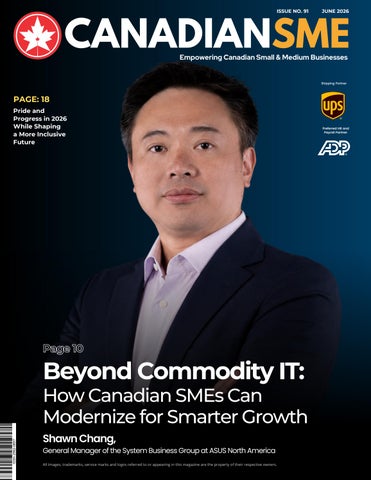
Small Business Magazine, Shawn Chang, General Manager of the System Business Group at ASUS North America, shares insights into how Canadian businesses can rethink technology as a strategic driver of growth rather than a routine operational expense As organizations navigate increasing demands around productivity, security, hybrid work, and artificial intelligence, Shawn discusses the critical role that modern business devices play in helping teams stay agile, efficient, and competitive
InterviewBySKUddin
Shawn Chang is General Manager, System Business Group, ASUS North America, where he leads regional ASUS One PC business strategy and growth across consumer and business portfolios. Drawing on more than 20 years at ASUS, Shawn brings deep experience across sales, marketing, product strategy and go-to-market leadership in multiple regions, including Africa, APAP, Europe and North America.
In his current role, Shawn is focused on scaling enterprise-ready solutions, strengthening channel partnerships, accelerating AI-enabled PC adoption, and helping organizations translate innovation into practical value His leadership approach is grounded in design thinking, data-driven execution and operational rigor, with a focus on delivering meaningful business outcomes while preserving the premium technology experiences ASUS is known for
Canadian SMEs are facing rising costs, lean teams, and constant pressure to stay competitive. Why do you believe business owners should stop thinking of laptops and workplace devices as simple “commodity IT purchases,” and start treating them as strategic tools for productivity and growth?
For many SMEs, the laptop has become the center of the workday It is where teams communicate, serve customers, manage operations, create content, protect information and make decisions When that device is slow, unreliable or not secure enough, the impact is not just technical It affects productivity, employee experience and customer service
ImageCourtesy:ShawnChang
That is why business owners should look beyond the idea of a PC as a basic IT purchase The right device can help a lean team move faster, collaborate more smoothly and reduce friction throughout the day It can support hybrid work, improve security and give employees the confidence that their tools can keep up with the pace of the business
This is exactly why ASUS continues to invest in business-ready portfolios such as ExpertBook and ExpertCenter, including premium AI PCs like the ExpertBook Ultra These devices are designed around mobility, performance, durability, security and modern collaboration, which are all critical for growing businesses
When small and medium sized businesses plan their next PC refresh, price is often the first filter. Beyond cost, what should Canadian SMEs prioritize— performance, mobility, durability, security, AI readiness, manageability—and how do you recommend they weigh those factors?
Price will always matter for SMEs, but it should not be the only filter I recommend starting with the work your team actually does, then choosing devices around those needs
Performance is important because employees are multitasking across video calls, cloud tools, spreadsheets, presentations, creative work and AIenabled applications. Mobility matters because work is no longer tied to one desk, so weight, battery life and connectivity become practical business needs. Durability and reliability matter because downtime is costly for a small team
Security and manageability should also be part of the decision from the beginning, especially for businesses without large IT departments Secure sign-in, hardwarelevel protections, reliable updates and business-grade support can help reduce risk and complexity
The ASUS ExpertBook Ultra is a good example of this balance, combining a premium lightweight design, Intel Core Ultra Series 3 processors, up to 50 TOPS of NPU performance, ExpertCool Pro thermal design and enterprise-grade security features
The best investment is not simply the lowest-cost device It is the device that supports productivity, security and growth over time
AI is everywhere right now, but many business owners are still unsure what it really means for them. How should Canadian SMEs approach AI adoption in a practical way, and what does “AI‑ready” technology actually look like for a small business that wants better workflows without unnecessary complexity?
SMEs should approach AI by starting with real business problems, not buzzwords AI is most valuable when it helps a team save time, improve quality, organize information, communicate more clearly or make everyday workflows easier
For a small business, a practical example is meetings. Many SMEs spend a lot of time on calls with customers, partners and internal teams, but it can be difficult to capture every action item or follow-up ASUS AI ExpertMeet is designed to help with this by supporting AI meeting minutes, real-time translation, transcription, summaries, and automatically generated to-do lists, helping teams turn conversations into clear next steps
That is what AI-ready technology should mean for SMEs: not complexity, but useful support built into everyday workflows It also means having the right hardware foundation, including modern processors, NPU performance, memory, battery life and security, so AI-enabled tools can run smoothly
Many SMEs don’t have large IT departments or dedicated admins. What should they look for in business laptops and PCs that are easier to manage, secure, and scale—so they can support hybrid work, protect data, and reduce downtime without adding a lot of IT overhead?
SMEs should look for business devices that reduce complexity Many small businesses do not have dedicated IT teams, so the technology needs to be secure, reliable and easy to manage from the start
That begins with strong built-in security, such as secure authentication, hardware-level protection and features that help protect business and customer data It also includes dependable performance, durable construction and devices designed for long-term daily use For a small team, downtime can quickly become a business problem.
This is where business-focused solutions such as ASUS ExpertBook laptops and ExpertCenter desktops can help For example, ASUS ExpertGuardian is designed to provide multi-layered protection across hardware, software and firmware, while ExpertCenter P600 AiO brings AI PC capabilities, ASUS AI ExpertMeet and business-grade security into an all-in-one desktop format
Hybrid work adds another layer Employees need devices that are portable, have strong battery life and support collaboration from the office, home, client sites or while travelling The right business PC should help people stay productive and protected without adding unnecessary IT overhead
Drawing on ASUS’s experience across consumer, creator, gaming, and commercial devices, what recent innovations are most relevant for Canadian entrepreneurs and growing teams—and what one key takeaway would you want SME leaders to remember as they plan their next technology investments in an AI‑enabled world?
One of ASUS’ strengths is that we learn across many types of users Consumer, creator, gaming and commercial customers all push technology in different ways, and those learnings can help shape better business devices
For example, innovations in OLED displays, lightweight materials, thermal design, AI performance, battery life and dual-screen experiences are not only exciting for consumers or creators. They also reflect where work is going Entrepreneurs and growing teams are creating content, joining video calls, managing data, presenting to customers and working across more applications than ever before
Recent ASUS products show this direction clearly The ExpertBook Ultra brings premium business mobility and AI-ready performance The Zenbook A16 offers a large 16-inch 3K OLED workspace with Snapdragon X2 Elite Extreme and up to 80 TOPS NPU performance ROG Zephyrus DUO shows how dual-screen innovation can expand multitasking and creative workflows
My key takeaway for SME leaders is simple: technology should be treated as a growth enabler, not just an expense The right investment should help your team work more productively, securely and confidently in an AIenabled world.
Disclaimer:The views and opinions expressed in this interview are those of the interviewee and do not necessarily reflect the official policy or position of CanadianSME Small Business Magazine Our platform is dedicated to fostering dialogue and sharing insights that inspire and empower small and medium-sized businesses across Canada
Bella Onay Building Stronger Networks for Mom-Led Businesses
MOM2MOM BIZ®, an Oakville, Ontario-based platform for women-led business networking and development, was founded by Bella Onay, who also serves as its "Chief Connector " She left her 20-year career in international banking to raise her family and found a need for aspirational women who wanted to create or expand enterprises while balancing motherhood Her network now connects female-led small-business owners and entrepreneurs, demonstrating that when mothers help one another succeed in business, everyone succeeds
From International Banking to Entrepreneurial Connector
Bella worked in international finance for 20 years before starting MOM2MOM BIZ She had senior positions at companies including Citi and Scotiabank, with responsibilities encompassing trade, global transaction banking, cash management, and trade finance portfolio connections throughout Europe, Africa, and Canada She has extensive experience in foreign capital markets, risk, and relationship management from her high-performance career.
BusinessWoman oftheMonth
Bella Onay
Bella thought she was an anomaly, one of the few women prepared to give up years of professional success to concentrate on raising her kids She soon found that she was not by herself To create flexible, value-aligned lives, many women in her community had also left their jobs or turned to entrepreneurship, yet they still faced loneliness, limited networks, and unequal access to business support Instead of returning to banking, Bella decided to create what she needed: a mom-centred, community-driven business network where women could interact, grow, and learn from one another.
Founding MOM2MOM BIZ®
MOM2MOM BIZ® was first established by Bella in 2017 as a local networking group in and around Oakville, Ontario Women-owned small businesses, mostly from the Halton region and the Greater Toronto Area, are currently part of this hybrid online-and-in-person network
MOM2MOM BIZ was intentionally created as a femalepowered, community-based support network for women entrepreneurs and small-business owners at all stages, from seasoned founders to side hustlers and solo proprietors. The brand stands on:
Connect & Interact curated networking socials, workshops, and private gatherings where women form bonds, exchange recommendations, and work together is one of its main foundations.
Learn & Grow: Members can connect with mentors and certified coaches in the network, enabling their personal and professional growth
Support & Thrive is a vibrant online community where members share successes, queries, resources, and opportunities around the clock. It includes a private Facebook group and WhatsApp chats.
Another important resource is the MOM2MOM BIZ Business Directory, which highlights only femaleowned and led companies and increases members' web visibility and SEO so " aware consumers " can quickly locate and support women-run enterprises
Bella's personal touch remains crucial: every new Biz Member has a 30-minute networking strategy call with her, ensuring that women enter a vibrant community rather than merely joining a directory.
Values, Impact, and Giving Back
The explicit key principles of MOM2MOM BIZ are kindness, self-assurance, authenticity, integrity, community connections, action-taking, and the conviction that variety is our greatest asset In addition to expanding their own companies, members are urged to actively assist one another by collaborating, recommending clients, and acknowledging each other's accomplishments, because "when women help one another, wonderful things happen."
The influence of the network goes beyond financial results Bella has inspired members of the MOM2MOM BIZ Collective to donate to the larger community through fundraisers, silent auctions, and clothing and food drives
The network members collectively donated items and raised funds for 360Kids, SafetyNet, Oakville Green Association, Girls Inc of Halton, Oakville & Milton Humane Society, and the Rotary Club of Oakville Trafalgar
A Platform “Where Networking Never Takes a Day Off”
Bella frequently characterizes MOM2MOM BIZ as a place "where networking never takes a day off," reflecting the constant connective nature of entrepreneurship
The organization’s membership model includes invitations to quarterly networking events, social media features for a combined audience of 10K followers, visibility in the online business directory, and unlimited promotional privileges on its designated social media platform
This adaptable, multi-channel strategy is especially effective for women starting businesses while juggling part-time jobs, family obligations, or reentering the workforce They are met where they are by MOM2MOM BIZ, which also provides them with networks and tools to help them advance
June 2022 / Queen Elizabeth Platinum Jubilee Pin, in recognition of the outstanding service to the Oakville Community
AwardNominations:
May 2024 / Women Empowerment Awards presented by Rogers
May 2023 / Oakville Community Spirit Award - Inspiration Category, sponsored by RBC
October 2023 / CanadianSME Small Business Magazine - Business Woman of the Year
Conclusion
April 2020 / 28th RBC Canadian Women Entrepreneur Award
March 2019 / 27th RBC Canadian Women Entrepreneur Award
Lessons for CanadianSME Readers
Key lessons for ecosystem builders and small company owners can be learned from Bella's journey: Create based on your personal experiences She transformed her work path into a platform that currently provides services to thousands of people A strategy for growth is community When people intentionally assist one another, referrals, collaborations, and shared learning increase Put women ' s realities up and center She discovered talent that might otherwise go unnoticed by creating a network centred on mothers' needs and schedules
Bella Onay has demonstrated how a single person ' s career transition can become an entire ecosystem, having gone from an international banking executive to a community builder for thousands of women entrepreneurs MOM2MOM BIZ demonstrates how well-thought-out networks can genuinely support the success of small enterprises and the women who manage them
Your role in staying up to date is integral to our shared mission of fostering a community of innovators CanadianSME Magazine is a valuable treasure trove of entrepreneurial knowledge Click here to subscribe to our monthly editions for updates on Canadian businesses. Follow our handle, @canadian sme, on X to stay updated on all business trends and developments Your support is crucial to our mission
Disclaimer: This article is based on publicly available information intended only for informational purposes CanadianSME Small Business Magazine does not endorse or guarantee any products or services mentioned. Readers are advised to conduct their research and due diligence before making business decisions
Prideand Progressin2026
WhileShapingaMoreInclusiveFuture
BySkUddin
Every June, rainbow flags fly over municipal halls, main streets, and stores across Canada to commemorate Pride Month and the tenacity, inventiveness, and ongoing struggle of 2SLGBTQI+ people for equality From small villages in Ontario to major festival hubs like Toronto and Winnipeg, Pride has evolved from a protest movement into a national season of celebration and activism
The federal government refers to this period as Pride Season, reflecting that Pride celebrations now take place from June to September in many localities While June remains the symbolic core of Pride Month, echoing the heritage of the Stonewall riots in the United States, towns across Canada spread out their festivities throughout the summer to optimize participation and safety For 2SLGBTQI+ Canadians, this provides an extended opportunity to be visible, engage with allies, and advocate for change
From Protest to Pride Season
Pride in Canada is deeply rooted in protest Some of the first large-scale queer rights demonstrations in Ottawa and Vancouver occurred in 1971, with activists demanding legal safeguards and an end to discrimination By 1973, Pride activities were being held in several cities, including Montreal, Ottawa, Saskatoon, Toronto, Vancouver, and Winnipeg, often in the face of opposition from authorities and members of the general public
Over the years, the early marches have evolved into large-scale celebrations For example, Toronto's Pride weekend in June has grown into one of North America's largest Pride celebrations, attracting hundreds of thousands of tourists and showcasing a wide range of 2SLGBTQI+ communities Pride Toronto provides year-round programs to celebrate LGBT talent, highlight stories, and advocate for human rights
Other cities have established their own peculiar traditions Pride Winnipeg, for example, holds a festival that lasts from late May to early June and includes community meetings, a parade, and oneof-a-kind events such as a community powwow These local differences represent Prides evolution to address the requirements of many locations, cultures, and intersectional identities.
Pride Beyond Big Cities: Small Communities Step Up
One of the most noticeable changes in recent years has been the expansion of Pride Month festivities into smaller cities, towns, and rural villages Municipalities such as Gananoque, Ontario, are now issuing Pride Month proclamations and hosting local activities to show support for 2SLGBTQI+ residents In a message from 2026, the Town of Gananoque emphasized that Pride is about recognizing and celebrating the diversity that strengthens communities, as well as creating spaces based on inclusiveness, kindness, and respect for everyone.
Education unions and community organizations also play an important role in promoting Pride in smaller communities
Pride Season: A National Frame for Local Movements
Recognizing the breadth and diversity of 2SLGBTQI+ groups, the Government of Canada coined the phrase "Pride Season" to characterize the range of events held from June to September Women & Gender Equality Canada defines Pride Season as a time when 2SLGBTQI+ persons and allies join together to celebrate resilience, talents, and community contributions It includes everything from big city parades to small-town flag raisings, film festivals, drag acts, lectures, and family picnics
Social media posts from federal departments support this narrative, emphasizing that Pride celebrations take place throughout the summer and across the country This language is more than just branding; it recognizes Pride in Canada as a mosaic of local movements, each with its own history and reality It also reflects Canada's overall strategy to 2SLGBTQI+ inclusion, which includes federal action plans, funding for community organizations, and international advocacy for LGBTQ+ rights
Pride, Intersectionality, and Ongoing Challenges
Pride Month 2026 in Canada takes place against a backdrop of both progress and opposition On the one hand, 2SLGBTQI+ people enjoy strong legal safeguards, such as marriage equality and human rights standards that ban discrimination based on sexual orientation and gender identity Many governmental institutions now publicly celebrate Pride, and many corporations host celebrations and include 2SLGBTQI+ inclusion in their diversity initiatives. On the other hand, queer and trans groups continue to face violence, misinformation, and policy battles that threaten their safety and dignity
Two-Spirit, transgender, and non-binary individuals experience disproportionately high levels of violence, economic hardship, and healthcare restrictions As a result, Pride gatherings continue to be intensely political venues in which demands for safer schools, genderaffirming care, housing, and justice are expressed alongside celebration
Why Pride Month Still Matters
For CanadianSME readers and other business audiences, Pride Month is more than just an excuse to change logos or sponsor a parade It serves as a reminder that 2SLGBTQI+ employees, customers, and entrepreneurs are essential to Canada's social and economic fabric, and that inclusion necessitates longterm efforts Businesses that thoughtfully connect with Pride frequently:
Support local Pride organizations and community groups throughout the year, not just in June.
Implement internal rules to protect 2SLGBTQI+ employees, including antiharassment measures and inclusive perks
Collaborate with queer and trans-owned suppliers and service providers to incorporate 2SLGBTQI+ entrepreneurship into supplier diversity initiatives.
Pride Month 2026 is an opportunity to reflect on how far Canada has come and how far it still has to go From the initial protests in Ottawa and Vancouver to todays enormous Pride Season, the primary message has been consistent: 2SLGBTQI+ individuals deserve to live, work, and love openly in every community across the country
Your role in staying up to date is integral to our shared mission of fostering a community of innovators
CanadianSME Magazine is a valuable treasure trove of entrepreneurial knowledge Clickhere to subscribe to our monthly editions for updates on Canadian businesses
Follow our handle, @canadian_sme, on X to stay updated on all business trends and developments Your support is crucial to our mission
Disclaimer: This article is based on publicly available information intended only for informational purposes
CanadianSME Small Business Magazine does not endorse or guarantee any products or services mentioned Readers are advised to conduct their research and due diligence before making business decisions
Businesses typically start with inventory management tools that match their initial operational scale More often than not, though, software that handles operations well at the start becomes limiting when the business grows in complexity As businesses add more products and SKUs, additional sales channels or fulfillment locations, the standard features that worked for simple processes don't accommodate the specific requirements that develop as operations mature.
Traditionally, when software stopped fitting operations well, businesses accepted the inefficiency or moved to enterprise platforms While enterprise software can handle more demanding ops, it requires implementation budgets that most SMBs can't justify
Big companies can negotiate special terms or fund internal development, but smaller businesses lack both negotiating leverage and development budgets
The future of ops systems separates what software does out of the box from what it can do when you need it to Most businesses share common workflows, but every business develops operational specifics as it grows Extensible software accommodates both without forcing you to choose between standard limitations and custom rebuilds
For SMBs, this change is extraordinarily important Operational capabilities that once required enterprise budgets and dedicated development teams are becoming accessible to businesses at any scale Software can be something businesses shape to match their operations rather than a fixed constraint they work around
At Katana, we ’ ve had an open API since the very start – and we have real examples of the impact this flexibility can have One of our customers connected Katana to Prospect CRM through API integration, automating customer data and sales history transfers between platforms The business doubled sales and improved customer service following the implementation These kinds of results can now become achievable to any business
ImageCourtesy:Katana
Current developments accelerating the change
AI agents accessing operational data have increased pressure on software vendors regarding API policies Agents need standardized data access to execute tasks like inventory verification or automated reordering
Some vendors are responding by restricting access SAP restricted third-party AI from their platform earlier this year, requiring customers to use SAP's AI assistant exclusively. For SMBs running SAP Business One or Business ByDesign, this removed the option to use AI tools they'd already selected
The decision protects SAP's AI product but reveals something important about platform economics Large legacy platforms built their value on feature breadth - doing everything so you don't need other tools Opening APIs to let customers choose their own AI systems undermines that model It's a rational business decision that creates an asymmetric opportunity for everyone they've locked in
The alternative approach maintains open API access and lets customers determine which AI tools work with their data. As AI becomes more central to operations, businesses increasingly evaluate whether their software allows them to build what they need or restricts them to what the vendor permits
At Katana, we ' re building beyond API access We're working toward becoming a platform where solution engineers, implementation partners, and customers themselves can extend the system to build the capabilities their operations need
Your ability to build custom workflows, integrate new tools, and adapt to market changes becomes independent of how many people you employ or what your software budget allows The companies that capitalize on this early gain advantages that become harder to match as their operations and software evolve together A brand that can adapt its software in days rather than quarters can test new fulfillment models, enter new markets, and respond to supply chain changes faster and better than competitors
The gap between businesses with extensible software and those locked into fixed platforms will widen as AI development accelerates. What you can build is no longer determined by your budget or team size – it's determined by whether your software lets you build it.
HybridWork,LocalHubs andtheFutureofOffices
In an exclusive interview with The CanadianSME Small Business Magazine, Mark Dixon, Founder and CEO of International Workplace Group, shares a forward-looking perspective on how work is being reshaped across cities, suburbs, and communities Drawing on decades of experience building one of the world’s largest workspace networks, Mark explains why the future of work is no longer tied to a single location and how flexibility, technology, and access are redefining productivity
InterviewBySKUddin
Mark Dixon is one of Europe’s best-known entrepreneurs and, since founding the Regus Group in Brussels, Belgium in 1989, he has achieved a formidable reputation for leadership and innovation. By understanding the way that globalization, personal mobility and digital technology have enabled new ways of working, Mark has overseen the growth of IWG into the world’s largest workspace provider. Prior to Regus and IWG he established businesses in the retail and wholesale food industry Mark has received many awards for enterprise and is widely acknowledged as one of the pioneers of the workspace industry who revolutionized the way business approaches its property needs with his vision of the future of work
You’ve been building flexible workspaces since 1989, long before “hybrid work” became a buzzword—how has your original vision for Regus evolved into IWG’s current strategy of creating a workspace within reach of every community?
In 2025, more new locations were signed and opened in a single year than in the entire first two decades of our operations Our network now comprises more than one million rooms in 122 countries, and with a substantial pipeline in place, our growth will continue to accelerate rapidly in the years ahead
We are focused on rapidly expanding our coverage to create a truly global network of buildings from the largest cities to smaller towns and the provinces Our capital-light expansion strategy, delivered through partnerships with property owners and investors, enables companies of all sizes to work productively in locations that are convenient to their people
Increasingly, our solutions are helping companies move away from the expense and inflexibility of long-term leases, replacing them with flexible, cost-effective agreements for smaller fully equipped spaces in one of our centres At the same time, they retain the ability to access more than 5,000 locations worldwide
IWG operates a portfolio of 15 workplace brands –the largest workspace platform in the world –including Regus, Spaces, and HQ In 2025, IWG signed 1,132 new centres globally and opened 782 new workspaces
IWG is adding a record number of locations globally and expanding rapidly across Canadian cities and suburbs—from Burnaby and Surrey to Mississauga and Moncton—what’s driving this demand for more localized working, and what are the main benefits for both employees and employers?
Today, the remarkable advances in cloud technology and video conferencing software – both vital to enabling effective hybrid working – mean workers no longer need to travel long distances daily As a result, we are seeing a redistribution of the geography of work with teams able to spend a meaningful amount of time in their local communities alongside the city centre Innovations in technology will continue to advance in years to come and will radically underline and fuel the flexibility of location
The rising demand for more localized working has led to a large number of our new IWG centres opening in the heart of local communities, suburbs and rural areas, enabling many people around the world to say farewell to long daily commutes
Smaller cities and towns right across the globe including in Canada have seen a dramatic increase in signings including Moncton, NB, Bracebridge, ON and Mission BC
Your inaugural Commuter Town Index named Burnaby, Hamilton, and Richmond as Canada’s best commuter towns for hybrid workers in 2026— what makes a great commuter town in this new world of work, and how do flexible workspaces factor into that equation?
IWG’s Inaugural Commuter Town Index looked at how well towns support modern hybrid workers The index ranked popular commuter hubs across Canada against key criteria, including transport links, green spaces, walkability, amenities, housing costs, Wi-Fi speed, culture, commute time and access to flexible workspaces
Each town’s overall score represents its appeal to commuters and its suitability for hybrid working, capturing how effectively residents can balance work, commuting and lifestyle
Burnaby, British Columbia, is ranked as Canada's best commuter town due to its exceptional transport connectivity to the city center, its many lifestyle amenities, and access to flexible workspaces The town is an example of a central location with multiline rapid transit access via the SkyTrain, a pedestrian-friendly core, strong digital infrastructure, and a thriving local economy –making it well-suited to hybrid workers seeking balance without sacrificing career opportunities IWG currently has four flexible workspace locations in Burnaby and opened a new Regus just last year at 4185 Still Creek Drive.
Hamilton, Ontario, was the runner-up, scoring highly for housing affordability, access to green spaces, creative and social venues, and lifestyle amenities Even though it isn’t the closest commuter town in the GTA, its direct access to Toronto via the GO Train, a revitalized downtown core, a growing cultural hub, affordability, and ease of access to nature, balances local living with access to Canada's major city centre In Hamilton, IWG has a bustling and vibrant Regus location at 21 King Street West
Across your brands Regus, Spaces, HQ and Signature you offer everything from design-led hubs with strong community programming to highly cost effective, professional spaces; how do you think about matching different workspace brands to the needs of corporates, SMEs, and solo professionals?
In much the same way that hotel groups like Marriott and IHG offer a brand for every market segment, we do the same with our workplace brands By offering a range of brands in Canada, we ’ re able to meet the needs of corporates, SMEs and solo professionals alike
There is a different brand for every type of customer Spaces, for example, offers professional, collaborative workspaces in beautiful and creative environments Our largest network of workspaces Regus supports any individual or business looking for a professional workspace environment that gives them the scale they need to succeed, and HQ appeals to businesses of all shapes and sizes by providing efficient, functional space, with all the essentials needed to set up and be ready to go at a lower price point
Looking ahead, with roughly 5,000 locations worldwide and a customer base that includes the vast majority of Fortune 500 companies, what do you see as the next major shift in how and where work gets done—and what should Canadian small and medium‑sized businesses be thinking about now to stay ahead of that curve?
Artificial Intelligence is not just another wave of innovation - it is part of the most profound shift in how we live and work in decades The pace of change is extraordinary Entire job functions are being reshaped in real time, while new ones are emerging just as quickly.
I’ve seen several technological revolutions over six decades in business When computers first entered the workplace, there were widespread fears of mass job losses In reality, new roles were created, while others disappeared, productivity increased, businesses expanded, and entirely new industries emerged
AI will follow a similar path - but at far greater speed and scale This is not incremental change It is a fundamental reset of how work is organised, delivered and measured And as with every transformation before it, those who adapt fastest will be best placed to succeed
In my many years in business, one principle has remained constant: success requires brilliant talent too Talent and technology are two of the largest investments organisations make, and they need to work in harmony.
The true value of technology is only realized through the people who apply, adapt and innovate with it Without the right talent, even the most advanced tools fall short of their potential
This is why any serious AI strategy must begin with a people strategy: attracting, developing and retaining the right talent
Disclaimer:The views and opinions expressed in this interview are those of the interviewee and do not necessarily reflect the official policy or position of CanadianSME Small Business Magazine Our platform is dedicated to fostering dialogue and sharing insights that inspire and empower small and medium-sized businesses across Canada.
Amazon’sSecondCanadian UpfrontShowcases
aNewEraofConnected AdvertisingandEntertainment
ByMaheenBari
The worlds of entertainment, sports, technology, and advertising came together in Toronto for Amazon's second annual Upfront presentation, which revealed a bold vision for the future of media and brand interaction From NBA champion Kyle Lowry reflecting on Toronto's historic basketball journey to Michael Bublé and Drew Scott announcing a new hockey-focused original series, the event showcased Amazon's efforts to create a unified ecosystem in which premium content, advanced advertising technology, and consumer insights collaborate to deliver meaningful experiences for audiences and measurable brand outcomes.
The Rise of Amazon DSP as Canada’s Streaming Advertising Leader
One of the evening’s most significant announcements centered on Amazon DSP, the company ' s demand-side advertising platform According to current industry data, Amazon DSP now has the highest unique connected television (CTV) reach among consumers aged 18 and older in Canada compared with competitor DSP platforms This achievement solidifies Amazon's rising presence in the fast-expanding streaming advertising market
What differentiates Amazons advertising ecosystem is its ability to integrate customer signals generated by purchases, streaming, and digital engagement.
Advertisers may target relevant audiences with greater precision by employing encrypted and privacy-conscious data, while consumers benefit from more tailored and relevant advertising experiences This method has already produced demonstrable effects According to Amazon, streaming television advertisements in Canada produced much higher ad recall, brand favorability, and purchase intent than the broader industry average
New Interactive Ad Formats Bring Streaming Commerce to Life
expectations shift, brands seek out ng and actionable advertising Amazon introduced several new nnovations designed to transform ng into interactive consumer
Among the most significant is Creative, which combines artificial nd Amazon’s huge consumer insights e Prime Video commercials in real
howing the same message to every tising can now adjust based on bits, browsing behaviour, and purchase mpany has introduced Locationctive Video Ads, which allow brands to messaging based on a viewer's ocation This enables advertisers to al deals, regional pricing, or adjacent ations while preserving the efficacy of campaign.
ImageCourtesy:Amazon
ImageCourtesy:Amazon
Another innovation, Next Up Ads, allows advertisers to engage viewers during key decision-making moments between episodes, resulting in a more consistent storytelling experience throughout the viewing session These developments represent a growing trend of commerce-driven advertising, in which the path from awareness to action gets more streamlined.
Prime Video Expands Its Commitment to Canadian Storytelling
While technology and advertising dominated the presentation, Amazon's focus remained on content Prime Video launched an ambitious lineup of global productions and Canadian original programming that illustrates the platform’s growing engagement in local storytelling
Among the global highlights were highly anticipated projects such as God of War, Voltron, starring Henry Cavill, and the first television adaptation of Stephen King's Carrie Popular franchises like Fallout and The Lord of the Rings: The Rings of Power will also have new seasons The Canadian Originals lineup sparked great enthusiasm
New productions include:
Hometown Giants - Featuring Michael Bublé and Drew Scott, the series follows their journey as part owners of the Vancouver Giants junior hockey team, offering a behind-the-scenes look at Canadian hockey culture and community leadership
Young Farts Trailer Parts - An unscripted series about two Alberta entrepreneurs who turned a trailer parts business into a multimillion-dollar success
Surrender - This survival tournament, hosted by Scott McGillivray, takes contestants into the harsh Canadian wilderness to test their resilience, adaptability, and teamwork.
Robert Pickton, the Pig Farm Killer - A truecrime documentary on one of Canada's most notorious criminal cases.
Operation Deception - A French-language true crime series covering a controversial covert operation in Quebec.
Together, these films demonstrate Amazon's dedication to promoting Canadian voices while appealing to a worldwide audience
Twitch Continues to Redefine Community-Driven Marketing
As younger audiences move toward creator-led channels, Twitch remains a valuable asset in Amazon's ecosystem Twitch, with over 70% of its audience being adult Gen Z and Millennials, provides marketers with access to highly engaged communities built on trust, authenticity, and shared interests. Amazon announced numerous new solutions aimed at strengthening the relationship between companies and authors
Shoppable Twitch Ads now let viewers browse products and make purchases without leaving the video.
Twitch Champions provides exclusive sponsorship possibilities for major gaming tournaments and live events.
Meanwhile, Creator Cast is launching a unique sports viewing experience in which creators deliver live commentary on professional sporting events, combining the enjoyment of sports with community involvement
Nemo, a Canadian chess champion and content creator, showcased Twitch's unique engagement model through live audience interaction, highlighting the platform's ability to foster meaningful relationships among artists, viewers, and marketers
Sports Becomes a Major Growth Driver for Prime Video
Live sports emerged as another crucial pillar of Amazon’s Canadian development strategy.
The headline announcement was the arrival of NBA coverage on Prime Video Canada beginning this October With Canadian basketball at an all-time high and Ontario-born MVP Shai GilgeousAlexander driving the league's international profile, Amazon is positioning itself to benefit from the country's burgeoning interest in professional basketball
Prime Video also expanded its long-term partnership with the WNBA, securing exclusive postseason coverage and supporting the growing momentum surrounding the Toronto Tempo, Canada’s first WNBA franchise
The firm highlighted how AWS-powered artificial intelligence is enhancing the viewing experience through real-time statistics, sophisticated analytics, shotdifficulty measures, and personalized game insights During premium live viewing experiences, these highly engaged sports audiences offer advertisers a great opportunity to engage with customers
Simplifying Media Investment Through AI
Amazon launched Complete TV, a new feature within Amazon DSP, to handle the increasing complexity of media planning. Using AI to maximize reach, frequency, and budget allocation across publishers, the service helps advertisers manage their investments in streaming and traditional television from a single platform
Tools like Complete TV seek to improve efficiency and performance while streamlining campaign management as media consumption grows more dispersed
A Connected Future for Canadian Brands
There was more to Amazon's second Canadian Upfront than just a display of new products and entertainment It provided a window into a future in which technology, data, entertainment, and commerce function as a single, interconnected ecosystem The ramifications are substantial for Canadian companies and marketers New options to engage customers with greater relevance and measurable impact are emerging from the ability to reach audiences through premium content, live sports, creator communities, and tailored advertising experiences
Amazon is pitching itself not just as a media platform but as a full-fledged growth engine for companies looking to engage with Canadian customers in more meaningful ways as streaming adoption accelerates and digital advertising continues to evolve. For businesses looking to navigate the future of advertising, Amazon’s message was clear: one platform, one ecosystem, and endless possibilities
For years, many LGBTQ+ entrepreneurs in Canada developed successful firms close to home but lacked the networks, funding, and confidence required to expand worldwide That image is evolving rapidly Queer-owned businesses in Canada are gaining access to global value chains from Paris to São Paulo through dedicated trade missions, export-readiness initiatives, and more inclusive banking and insurance support This new wave of global expansion is about more than just profits; it's about visibility and representation.
Trade Missions Designed for Queer-Owned Businesses
The Canadian Queer Chamber of Commerce (CQCC), originally known as the CGLCC, is at the forefront of this shift CQCC's Global Initiatives connects Canadian 2SLGBTQI+ businesses to a global network of LGBT+ chambers, governments, and corporate partners. A major component is a dedicated trade mission series that provides structured opportunities for queerowned firms to explore new markets and meet foreign buyers
In 2026, CQCC planned a series of trade missions to France, Japan, Taiwan, Colombia, Brazil, and Toronto, with applications beginning in early spring These missions are designed for 2SLGBTQI+ and other diverse-owned enterprises, including those with minority LGBTQ+ ownership They include market briefings, B2B matchmaking, and networking events The purpose is to assist entrepreneurs in confirming demand, forming relationships, and closing sales in a supportive, identity-affirming atmosphere.
The 2SLGBTQI+ Entrepreneurship Program: Building Export Capacity
With a $25 million federal investment, Canada's first 2SLGBTQI+ Entrepreneurship Program aims to eliminate structural hurdles for gay founders CQCC's Business Scale-Up program, delivered nationally, aims to support LGBTQ+ firms in expanding and competing globally
Core components include:
a National Mentorship Program, which connects entrepreneurs with experienced executives who can advise on scaling and internationalization
Access to corporate procurement, which assists certified LGBTQ+ suppliers in winning contracts with large corporations
export-readiness resources, such as workshops, market research, and networking opportunities.
Together, these services produce a pipeline of businesses that are structurally and intellectually ready to go global
Importantly, the initiative includes a pilot loan component designed to address financial gaps for 2SLGBTQI+ entrepreneurs who struggle to obtain credit from traditional lenders By combining coaching, procurement, and funding, the initiative assists queer-owned businesses in investing in export needs such as product modification, foreign marketing, and travel For many participants, this complete package is what transforms an intriguing concept into a viable international expansion strategy. Trademissionsarepartofanongoing campaigntoprepareforexports.The government's2SLGBTQI+ EntrepreneurshipProgramsupports CQCC'sglobaloperationsbyproviding mentorship,accesstocorporate procurement,andresourcestohelp queerfirmsbecomeexport-ready. Thatis,participantsaretrainedand instructedonhowtopitch,negotiate, andfollowupinaninternational settingbeforeboardinganaircraft.
Banking Partners: FX, Cross-Border Payments, and Trade Finance
As queer-owned businesses develop internationally, banking and insurance partners play an important facilitating role Specialized services are necessary to manage numerous currencies, mitigate non-payment risk, and ensure smooth cross-border cash flow during international expansion Banks and fintechs serving Canadian SMEs are increasingly offering multi-currency business accounts, affordable foreign exchange (FX) tools, and integrated international payment platforms, making it easier to do business with foreign clients and suppliers For an LGBTQ+ entrepreneur selling in markets such as France or Japan, the ability to invoice in local currency and lock in exchange rates might mean the difference between healthy margins and unexpected losses
Export Development Canada (EDC) and the Trade Commissioner Service provide trade credit insurance and guarantees to safeguard against buyer non-payment and to facilitate additional bank funding. Exporters from diverse backgrounds, including LGBTQ+ owners, can benefit from inclusive trade policies, which provide targeted advisory support, introductions to international partners, and mechanisms to ensure that trade advantages are shared more broadly When these services are combined with CQCC's goals and coaching, queer entrepreneurs gain confidence and a risk-mitigation framework that allows them to scale safely
Inclusive Trade Policy and the Global Context
Canada's push to help LGBTQ+ businesses expand globally is part of a larger inclusive trade agenda
Canada collaborates with partners in Latin America and Asia-Pacific to promote gender equality, Indigenous rights, and LGBTQ+ inclusion in trade policies through initiatives like the Inclusive Trade Action Group (ITAG) and progressive trade chapters in agreements like the CPTPP
For 2SLGBTQI+ entrepreneurs, this is more than just a symbolic acknowledgment
Trade commissioners in over 160 locations worldwide assist exporters from inclusive trade groups by guiding them through local regulations, cultural considerations, and market-entry strategies.
When combined with CQCC's ties with worldwide LGBT+ chambers, this offers openings to markets that may have previously appeared inaccessible or dangerous for gay business leaders
Latin America, for example, is a region where Canada is aggressively promoting inclusive commerce, and CQCC missions and ITAG conversations can help identify corporate and governmental partners who value diversity
By carefully selecting jurisdictions and local partners, Canadian initiatives seek to strike a balance between new commercial prospects and LGBTQ+ participants’ safety and dignity
The Road Ahead: From Niche to Normal
Despite advances, most LGBTQ+ firms in Canada do not operate on a worldwide scale Research indicates that 2SLGBTQ+ founders continue to confront financial gaps, limited networks, and underrepresentation in mainstream export initiatives Recent developments, such as trade missions, mentorship, supplier diversity, inclusive trade policies, and financial risk-sharing, provide a stronger platform for LGBT businesses compared to previous years
Your role in staying up to date is integral to our shared mission of fostering a community of innovators CanadianSME Magazine is a valuable treasure trove of entrepreneurial knowledge Click here to subscribe to our monthly editions for updates on Canadian businesses Follow our handle, @canadian sme, on X to stay updated on all business trends and developments. Your support is crucial to our mission.
Disclaimer: This article is based on publicly available information intended only for informational purposes CanadianSME Small Business Magazine does not endorse or guarantee any products or services mentioned Readers are advised to conduct their research and due diligence before making business decisions.
The early-stage funding mechanism in Canada is evolving Conventional venture capital is shifting its focus to later-stage startups and making fewer, bigger transactions A different force is gaining momentum at the same time Community capital is taking over as a core element in the fundraising process for early-stage companies, not as an alternative This change is clearly demonstrated in FrontFundr's 2025 Community Capital Report Not only does growth occur, but there is also a structural shift in how capital is created and who finances it.
A Surge in Participation, Not Just Capital
Strong growth is shown by the headline figures The platform raised 83 2 million dollars in 2025, a 23 percent increase from the previous year The increase in involvement is more telling. Investments increased by 91% to 8,064. This is a symptom of something more profound than an influx of riches. A growing number of people are entering private markets Over $ 360 million has been raised since the model's debut, demonstrating ongoing faith in it A tiny group of people are no longer in charge of early-stage funding The system is evolving into a dispersed one
High Participation
Rounds Are Becoming the Norm
Additionally, the structure of investment rounds is evolving A few big cheques no longer define a campaign Rather, hundreds or even thousands of investors are driving them More than 2,600 investors contributed $6 8 million to Edison Motors In a matter of hours, Blossom Social raised 1 93 million dollars from over 1,000 investors Over 2,500 people participated in Gander Social, which generated over $2 million. These are not outliers They stand for a new paradigm in which community involvement is used to aggregate capital These days, accessibility, brand alignment, and trust are just as crucial as financial measurements
Regulation Is Accelerating the Shift
The expansion of regulated equity crowdfunding under National Instrument 45-110 has played a significant role in this increase According to the report, FrontFundr has a 93 percent share under this framework, having raised $4 79 million and increased investor involvement by 187 percent This regulatory system has lowered barriers while maintaining oversight Companies can obtain cash more efficiently, and investors can engage with more confidence The end result is a scalable and compliant system that may be widely used in the market
Filling the Early Stage Funding Gap
While community capital grows, traditional venture capital shifts in a different direction The study shows a clear trend of fewer deals and larger rounds Capital is increasingly concentrated in startups that have already demonstrated traction This creates a gap in the early phases Founders frequently struggle to acquire initial finance before meeting institutional requirements Community capital is filling that void
It enables enterprises to raise funds early, validate demand, and gain momentum Rather than waiting for venture capital, founders can leverage their networks and build from the ground up This is not a competition for venture capital It is a supplementary layer that enhances the overall funding ecosystem
Why This Shift Matters
For entrepreneurs, the repercussions are immediate. Fundraising is no longer confined to approaching a small number of investors. It is now necessary to establish a community that believes in the business and is willing to support it financially Investors' access is expanding Institutions and wealthy individuals are no longer the only ones who can participate in private marketplaces A bigger audience can now participate in early-stage initiatives This benefits Canada's innovation economy by making it more inclusive and resilient More entrepreneurs can obtain funding, and more people can participate in economic growth
A New Foundation for Capital Formation
The data makes one thing apparent Community capital is not a side channel It is becoming an important part of early-stage fundraising in Canada As venture capital concentrates at the top, community-driven investment strengthens the foundation Together, they are changing the way firms are funded, who has access, and how development begins The future of capital formation in Canada is decentralized It's shared
Your role in staying up to date is integral to our shared mission of fostering a community of innovators. CanadianSME Magazine is a valuable treasure trove of entrepreneurial knowledge Click here to subscribe to our monthly editions for updates on Canadian businesses Follow our handle, @canadian sme, on X to stay updated on all business trends and developments Your support is crucial to our mission
Disclaimer: This article is based on publicly available information intended only for informational purposes CanadianSME Small Business Magazine does not endorse or guarantee any products or services mentioned Readers are advised to conduct their research and due diligence before making business decisions
As Canada's digital asset regulation become more formalized, a major collaboration between Deloitte Can Stablecorp is preparing the country financial sector for a new era of blockchain-powered payments and infrastructure The two businesses r formed a strategic alliance to provi stablecoin infrastructure to Canadia financial institutions via QCAD, Stab Canadian-dollar-backed stablecoin project comes at a critical juncture officials continue to advance Cana planned stablecoin framework throu C-15, legislation that is expected to determine the future of digital finan the country
This development could significantl how Canadian small- and mediumfirms handle payments, cross-bord transactions, treasury operations, a financial settlements in the coming
A New Chapter in Canada’s Digital Finance Evolution
Stablecoins are digital currencies that are tethered to fiat currencies, such as the Canadian dollar, to maintain a stable value Unlike extremely volatile cryptocurrencies, stablecoins aim to provide the speed and efficiency of blockchain technology while minimizing price swings QCAD is one of the first Canadian-compatible stablecoins, designed expressly for the country's changing regulatory climate. According to Deloitte Canada, the collaboration aims to help financial institutions modernize legacy payment systems while increasing efficiency, transparency, and accessibility.
“Stablecoins present a significant opportunity for Canada’s payments landscape,” said Soumak Chatterjee, Partner, Financial Services and Payments Leader at Deloitte Canada.
“This collaboration helps us enable capabilities that are critical for our banking sector to lead this change, unlock greater innovation in Canadian payments, and ensure global competitiveness.”
The collaboration brings together Deloitte Canada's expertise in financial services transformation with Stablecorp's blockchain technology to develop practical solutions for banks and financial institutions functioning in an increasingly digital economy
Why Stablecoins Matter for Canadian Businesses
Many Canadian SMEs still experience delays, hefty transaction fees, and constraints stemming from outdated banking methods Stablecoin infrastructure has the potential to alleviate several of these issues by providing faster settlement, cheaper transaction costs, and round-the-clock payment capabilities This is especially relevant as organizations increasingly operate internationally and engage in global digital commerce
One of the alliance's primary goals is to upgrade financial infrastructure while preserving traditional banking operations Blockchain technology provides various benefits that traditional systems frequently fail to give efficiently, including:
Faster transaction speeds - Traditional payment processing can cause delays of several hours to multiple business days, particularly for overseas transactions Stablecoin payments using blockchain technology can take place almost instantly.
Improved transparency and traceability: Every blockchain transaction generates a permanent, verifiable record, increasing visibility and reducing operational complexity.
Greater operational efficiencyAutomated settlement solutions can reduce human processing requirements and operational expenses for both financial institutions and enterprises
24/7 Financial Accessibility - Unlike traditional banking systems, which are constrained by business hours, blockchain networks operate 24/7, enabling transactions and settlements at any time
These efficiencies could result in greater cash-flow flexibility and financial agility for SMEs that manage suppliers, serve foreign clients, or operate remotely
Key Focus Areas of the Partnership
Deloitte Canada and Stablecorp's collaboration will begin by focusing on numerous high-impact use cases where stablecoin technology can improve existing financial processes
Cross-border Payments - International transfers remain among the most expensive and time-consuming financial processes for organizations Using QCAD for cross-border payments can shorten settlement times and reduce transaction and intermediary banking costs. This may allow Canadian SMEs to expand overseas with fewer financial hurdles.
Inter-Bank Settlement - Current interbank clearing arrangements often require multiple intermediaries and prolonged settlement periods. Stablecoin infrastructure might simplify and speed up the transportation of funds between financial institutions, enhancing overall efficiency in Canada's banking environment
Liquidity and Capital Efficiency - The ability to instantly move collateral globally enables more flexible liquidity management. This could be especially useful for organizations and firms operating in fastmoving financial markets where access to capital and speed are critical
Treasury and B2B Payment Solutions - The alliance also intends to investigate next-generation treasury management tools, such as blockchain-based B2B payments, trade finance solutions, and working capital optimization As digital commerce grows, organizations demand better financial systems that can support worldwide operations in real time
Building Trust Around Digital Assets
While digital asset adoption has increased globally, trust and legal certainty remain key for widespread acceptance in Canada Kesem Frank, CEO of Stablecorp, underlined the need for trust in digital financial innovation
“We believe the benefits of the Canadian digital dollar should be accessible to everyone,” said Frank.
“Unlocking the benefits of blockchain, such as instant settlement and low-cost transactions, for everyday Canadians requires more than just technology. It requires trust.”
By collaborating with Deloitte Canada, Stablecorp hopes to provide stablecoin capabilities through financial institutions that Canadians already use and trust, rather than pitching blockchain as a replacement for traditional banking This methodical approach may help boost confidence in both organizations and customers as digital banking solutions evolve
Canada’s Opportunity to Lead in Financial Innovation
Countries around the world are stepping up efforts to upgrade financial infrastructure with blockchain technology, stablecoins, and central bank digital currency programs Canada currently has a significant chance to expand its position in the global digital economy The collaboration between Deloitte Canada and Stablecorp highlights how Canadian firms are actively preparing for the future of regulated digital finance
It also demonstrates growing confidence in blockchain's practical utility within traditional financial institutions
For Canadian SMEs, this transition may eventually result in faster payments, greater international business capabilities, lower prices, and wider access to digital financial technologies formerly reserved for large corporations.
Collaborations like this might help design a more efficient, inclusive, and globally competitive Canadian financial environment as stablecoin adoption gains traction
Your role in staying up to date is integral to our shared mission of fostering a community of innovators. CanadianSME Magazine is a valuable treasure trove of entrepreneurial knowledge. Click here to subscribe to our monthly editions for updates on Canadian businesses Follow our handle, @canadian_sme, on X to stay updated on all business trends and developments Your support is crucial to our mission
Disclaimer: This article is based on publicly available information intended only for informational purposes. CanadianSME Small Business Magazine does not endorse or guarantee any products or services mentioned Readers are advised to conduct their research and due diligence before making business decisions
InclusiveFinancefor LGBTQ+Entrepreneurs
BySkUddin
For LGBTQ+ entrepreneurs in Canada, access to capital and financial guidance has always been shaped by more than just commercial considerations Bias in finance, a lack of personalized support, and limited networks have often made it difficult for queer-owned businesses to secure financing and expand. In recent years, however, Canadian banks, credit unions, and other ecosystem partners have begun to develop more inclusive banking models that acknowledge the 2SLGBTQI+ business community's economic power as well as its specific challenges
In June, this new technique expanded beyond rainbow logos It comprises dedicated relationship managers, specialist loan and mentorship programs, inclusive procurement strategies, and export-focused trade missions to showcase Canada's queer-owned firms globally For CanadianSME readers, these changes indicate significant opportunities and real resources for LGBTQ+ entrepreneurs across the country
Dedicated Banking Support for 2SLGBTQ+ Entrepreneurs
Some major Canadian banks have created LGBTQ+-focused banking help initiatives TD, for example, portrays itself as a long-time supporter of 2SLGBTQ+ communities, with regional managers dedicated to 2SLGBTQ+ businesses These managers assist business owners in connecting with specialists in areas such as cash management, credit, and merchant services, while also knowing the lived experiences and barriers experienced by LGBT entrepreneurs
Aside from TD, other banks and credit unions have expanded internal employee resource groups and strengthened external relationships with LGBTQ+ business organizations to enhance frontline knowledge and eliminate bias in client interactions Working with advisors who understand pronouns, chosen names, and various family and ownership arrangements can significantly affect how comfortable queer-owned SMEs feel when expressing their aims and concerns
At the same time, banks are increasingly recognizing that inclusion is a financial decision, not just a social one According to research, 2SLGBTQI+ entrepreneurs generate an estimated tens of billions of dollars in revenue for the Canadian economy each year. Yet, they continue to receive only a small share of venture capital and frequently encounter structural impediments in mainstream finance Institutions that can better serve this market are likely to gain loyal, growthoriented customers
Government Investment and the 2SLGBTQI+ Entrepreneurship Program
The establishment of Canada's first 2SLGBTQI+ Entrepreneurship Programme marked a watershed moment in inclusive banking and finance The federal government has allocated $25 million to this project, which aims to overcome systemic hurdles and create a more inclusive economy for gay entrepreneurs. The initiative was co-created with 2SLGBTQI+ organizations and is managed by the Canadian Queer Chamber of Commerce (CQCC), a vital national hub for queer-owned enterprises
CQCC's Business Scale-Up stream and related projects are growing their capacity to provide mentorship, training, and ecosystem-building to 2SLGBTQI+ entrepreneurs across Canada Activities include a national mentorship program, efforts to promote access to corporate procurement opportunities, and assistance in preparing queerowned firms for export For financial institutions, this results in a more robust pipeline of bankable, growth-oriented LGBTQ+ clients who are better equipped to navigate lending processes and manage their finances effectively
These investments also impact mental health and well-being Many 2SLGBTQI+ entrepreneurship programs now include mental health assistance and peer networks to prevent isolation and burnout, understanding that minority founders may encounter additional challenges in both their businesses and personal lives Healthier entrepreneurs tend to run healthier businesses, benefiting both lenders and investors
Trade Missions and Global Growth for Queer-Owned Businesses
One of the most obvious examples of inclusive economic development is the introduction of trade missions designed exclusively for Canada's queerowned businesses The Canadian Queer Chamber of Commerce has launched a series of domestic and international trade missions to help LGBTQ+ SMEs connect with new customers and investors worldwide
In 2026, CQCC planned trade missions to France, Japan, Taiwan, Colombia, Brazil, and domestic hotspots such as Toronto, providing participants with a structured opportunity to meet customers, partners, and politicians These missions are intended not simply to generate business, but also to increase the profile of Canadian gay entrepreneurship on the international stage For participating enterprises, having banking partners that understand cross-border payments, trade finance, and currency risk is essential.
ImageCourtesy:Canva
Financial institutions, including banks and insurers, are collaborating with groups such as CQCC to provide pre-departure training, export financing, and on-the-ground support for trade mission participants This triangle of government, queer chambers, and financial partners ensures that LGBTQ+ entrepreneurs are not only invited to international possibilities but also fully prepared to capitalize on them.
How WEKH and
Futurpreneur Support
Founders
Inclusive banking does not occur in a vacuum; it depends on a broader ecosystem of entrepreneurial support Several Canadian organizations have launched dedicated initiatives for 2SLGBTQ+ founders, frequently in collaboration with banks and development institutions Futurpreneur, for example, has a 2SLGBTQQIA+ Entrepreneurs stream in its main startup program, offering flexible, equity-free startup loans of up to $75,000, often in collaboration with BDC, as well as up to 2 years of coaching This concept enables young gay entrepreneurs to access funding and mentorship early in their careers, making them more "bankable" to traditional lenders later on
The Women Entrepreneurship Knowledge Hub (WEKH) and organizations such as the Women's Enterprise Organizations of Canada (WEOC) have also documented and promoted support for 2SLGBTQ+ entrepreneurs, highlighting resources to help them connect with peers, scale their businesses, and navigate inclusive procurement and financing
Curated resource lists direct queer company owners to programs such as CQCC's youth entrepreneur initiatives, specialist venture capital and angel funds that support LGBTQ+ founders, and toolkits for inclusive growth Collaboration with these ecosystem partners improves financial institutions' visibility into the needs and opportunities of LGBTQ+ entrepreneurs, while providing entrepreneurs with a clearer path from early-stage support to mainstream banking
From Pride Campaigns to Structural Inclusion
Despite progress, the path to fully inclusive banking for LGBTQ+ enterprises in Canada remains under construction Statistics show that LGBT founders earn a disproportionately small percentage of venture financing, and many continue to cite difficulties in being taken seriously by lenders and investors In this situation, basic Pride marketing is no longer sufficient
The next phase of inclusive banking will most likely focus on incorporating 2SLGBTQI+ issues into fundamental risk models, product design, and supplier diversity frameworks, rather than considering them as add-ons This includes tracking outcomes for queer customers, training staff across all channels, using inclusive language and documentation (for example, around gender markers and family structures), and forming longterm relationships with groups such as CQCC, Futurpreneur, and WEKH
For CanadianSME readers who identify as LGBTQ+, the most important conclusion is that you do not have to negotiate the financial system alone. There is an emerging network of lenders, mentors, chambers, and government initiatives tailored to your specific experiences The more these resources are used and the more feedback entrepreneurs provide the more robust and inclusive Canada's financial environment will be
Your role in staying up to date is integral to our shared mission of fostering a community of innovators. CanadianSME Magazine is a valuable treasure trove of entrepreneurial knowledge. Click here to subscribe to our monthly editions for updates on Canadian businesses. Follow our handle, @canadian_sme, on X to stay updated on all business trends and developments. Your support is crucial to our mission
Disclaimer: This article is based on publicly available information intended only for informational purposes CanadianSME Small Business Magazine does not endorse or guarantee any products or services mentioned Readers are advised to conduct their research and due diligence before making business decisions
To cut through the noise, Canadian small business owners need a practical playbook that focuses on what matters: costs, digital experience, access to guidance, how lenders handle smaller and diverse enterprises, and support for export or cross-border growth as the company scales
Step 1: Get Clear on Your Banking “Job to Be Done”
Before evaluating institutions, founders should determine what they need their primary bank or lender to do in the following 2-3 years Guides to the finest Canadian business accounts underline that needs vary greatly A sole consultant may prefer low fees and a great mobile app, while a manufacturing or retail business with staff may prioritize payment tools, credit limits, and in-person service
The key questions include:
What is your monthly transaction volume, including e-transfers, wires, and cash deposits?
Do you require integrated payroll, invoicing, or accounting connectivity (e g , QuickBooks or Xero)?
Do you intend to seek funding (loans, lines of credit, or equipment leases) in the next 12-24 months?
Will you sell outside of Canada or trade in foreign currencies?
Having detailed responses allows you to compare banks based on aspects relevant to your individual business profile rather than being persuaded by generic marketing
Step 2: Compare Core Features —Fees, Digital Tools, and Credit
Canada-focused ratings of business bank accounts regularly stress three pillars: charge structure, digital experience, and credit
Fee Structure
Consider monthly account fees, transaction limitations, e-Transfer charges, and additional costs for cash deposits or wire transfers
Some digital-first providers offer fee-free business accounts with unlimited electronic transactions, making them suitable for lean, online-heavy organizations.
Large banks may reduce costs if you keep a minimum balance or combine numerous services (for example, merchant accounts and credit cards).
Digital Tools and Integrations
Newer suppliers prioritize intuitive interfaces, real-time notifications, and seamless integration with accounting and e-commerce platforms.
Open banking and consumer-driven data efforts in Canada will enable SMEs to securely communicate verified financial data with banks, fintechs, and software solutions, resulting in smoother reconciliation and faster credit applications
Founders with limited time can save significant administrative time by managing transfers, invoicing, and approvals from their phones.
Credit Options and Flexibility
Founders should compare each institution's offerings for term loans, lines of credit, business credit cards, leasing, and government-backed programs
The Canada Small Business Financing Program (CSBFP), for example, enables qualified enterprises to borrow up to $1.15 million. At the same time, the government guarantees up to 85% of the lender's eligible losses, making lenders more eager to finance smaller or newer businesses.
Because the government does not decide who is approved, your relationship with the bank (credit history, business plan quality, cash-flow forecasts) is still vital.
Step 3: Use Programs Like CSBFP Strategically
Government-backed programs can make the difference between " no " and " yes " for small organizations, particularly startups and asset-heavy businesses such as restaurants, hotels, and retail businesses The CSBFP is a key tool designed to assist small businesses in starting, expanding, and modernizing by sharing risk between Ottawa and lenders
Important CSBFP insights for founders:
It is a loan program, not a grant, and the funds are provided by participating banks and credit unions rather than the government
Most big banks (TD, RBC, BMO, Scotiabank, CIBC) and many credit unions engage, but their appetites and internal processes differ.
Typical criteria include excellent personal credit, realistic cash-flow estimates, unambiguous usage of funds, and an equity commitment (10-30%).
Credit unions may be more accommodating in borderline circumstances, so if your first application is denied, contact multiple participating lenders
Choosing a relationship-oriented partner is crucial: a lender who understands the program and your sector can help you modify your application rather than simply reject it
Step 4: Evaluate ESG and Inclusion—Especially for Diverse Founders
For Indigenous, LGBTQ+, newbie, and women-owned businesses, finding the "right" bank is more than just pricing; it's also about understanding and empowering different entrepreneurs According to Canadian studies, Indigenous and LGBTQ2+ founders confront unique challenges while pursuing significant development and export goals
When comparing banks and lenders, various enterprises should consider:
Dedicated programs and teams:
Indigenous practices (e.g., specialist departments within RBC, BDC, or First Nations Bank of Canada) that collaborate with Indigenous financial institutions and community-owned businesses.
2SLGBTQI+ entrepreneurship initiatives include banks collaborating with CQCC or the federal 2SLGBTQI+ Entrepreneurship Program to provide mentorship, procurement, or export assistance.
Supplier Diversity and Procurement:
Check whether the institution meets its supplier diversity obligations and works with recognized Indigenous or LGBTQ+ vendors. This indicates that they perceive diverse firms as strategic partners, rather than merely benefactors.
Inclusive Culture and Governance:
ESG reports or community updates from financial institutions should include public reporting on DEI measures, Indigenous reconciliation roadmaps, and LGBTQ+ leadership programs
Banks that invest in inclusive leadership and biasawareness training are more likely to create fair underwriting and advisory processes
These ESG and inclusion standards can serve as a shortcut: if a bank is committed to reconciliation and 2SLGBTQI+ inclusion internally, it is more likely to provide intelligent products and guidance externally
Step 5: Use a Simple Decision Checklis
To put this into practice, founders can run potential partners through a fast decision process
Cost and Value Credit Roadmap
Are fees transparent and proportionate to your transaction volume?
Is the account or funding arrangement scalable as you grow?
Digital Fit
Is the bank's app/web platform compatible with your accounting, payroll, and e-commerce tools?
Is support offered through chat, phone, or inbranch?
Do they provide a progression of products, from beginner credit cards and minor lines to larger loans and CSBFP facilities as you mature?
Are they willing to study your strategy and offer suggestions before making a formal credit decision?
ESG and Inclusion Alignment
Do they have visible pledges and programs for Indigenous and LGBTQ+ entrepreneurs, or is inclusion just a marketing term?
Export and trade support
Can they offer foreign exchange services, multicurrency accounts, or connect you with trade partners and programs (e g , EDC, Trade Commissioner Service, inclusive trade missions) for overseas sales?
Looking At The New Era of Strategic Banking
In a competitive and fast-changing financial world, Canadian SMEs that view banking and finance as strategic choices based on clear needs, thorough comparisons, and partners who truly understand different entrepreneurs will thrive in 2026
Your role in staying up to date is integral to our shared mission of fostering a community of innovators CanadianSME Magazine is a valuable treasure trove of entrepreneurial knowledge Click here to subscribe to our monthly editions for updates on Canadian businesses Follow our handle, @canadian sme, on X to stay updated on all business trends and developments Your support is crucial to our mission.
Disclaimer: This article is based on publicly available information intended only for informational purposes CanadianSME Small Business Magazine does not endorse or guarantee any products or services mentioned. Readers are advised to conduct their research and due diligence before making business decisions
In an exclusive interview with The CanadianSME Small Business Magazine, Sarah Warsi, Marketing Manager, Sentia shares a grounded, practical view of how small and mid-sized businesses can cut through the noise of modern IT Drawing on extensive experience across strategy, digital transformation, and data-driven marketing, Sarah breaks down what is actually changing for SMBs and where leaders should focus their attention today. .
Sarah is a marketing and communications professional with over 16 years of experience leading strategic, data driven initiatives that strengthen brands and deliver measurable results
With expertise spanning strategic planning, digital and social media marketing, market research and trend analysis, and vendor and customer relationship management, Sarah brings a holistic and insight driven approach to every project
InterviewByMaheenBari
Over the past 18–24 months, more than 90% of Sentia’s new onboardings have been SMBs what are you hearing most from Canadian small and mid sized businesses about their top IT priorities right now, and how has that shifted recently?
We are hearing from clients about a number of IT priorities, including
i) Automation & AI
ii) Security (Both network as well as cyber-security)
iii) IT support
iv) Microsoft in the context of how to enhance their return on investment in Microsoft technology including licensing and Azure
Sentia assesses, designs, implements, and manages everything from infrastructure and cybersecurity to cloud and managed services—how do you support SMBs differently today compared to large enterprises, and what can smaller companies learn from how you run your own IT as a growing business?
I would say within the small to medium business segment we tend to end up supporting all or most aspects of IT for our SMB clientele. From providing IT support day to day all the way to protecting end points, networks and providing backup and data protection solutions. Within the large enterprise segment, we are more often supporting or augmenting existing IT teams in a specific IT area based upon unique customer requirements What is interesting is the same technologies we are supporting in our LE clients are available these days for SMB’s SMB’s can afford the same modern IT solutions as large enterprise What SMB’s often lack is a partner with broad skills across all of these technologies – this is the value Sentia provides to our clients
With skills shortages, rising cyber threats, and aging on prem systems, many SMBs feel overwhelmed—what trends in IT should Canadian SMB owners pay closest attention to in the next few years if they want to stay secure and competitive without overbuilding?
Increases in the frequency and severity of cyber attacks and overall IT security, I would suggest, are trends owners should pay close attention to Security posture assessments, including penetration testing and/or vulnerability scanning, are affordable and a must-do Another trend that is rapidly growing is around Automation and AI There is great interest in how AI can help organizations; however, it is important to proceed with caution, with security and data privacy and governance top of mind
For an owner who knows their environment is “good enough for now” but hasn’t revisited IT in years, what practical first steps would you recommend they take this year to modernize without fixating on price and start treating technology as a strategic asset rather than a necessary cost?
One recommendation would be to have an IT roadmap assessment performed that would assess the existing IT posture, security posture, data protection, and overall productivity posture and offer a roadmap for future IT modernization For SMB’s invested in the Microsoft 365 universe, having someone audit the current configuration and setup of the existing M365 tenant is an affordable service that can add value and ensure owners are getting the best return on their investment in Microsoft For owners who have never had a pen test performed, they are affordable and deliver value. A final suggestion would be to have a consultative, exploratory business discussion with a modern IT service provider to learn more about how other SMB’s are leveraging IT in their business
Disclaimer:The views and opinions expressed in this interview are those of the interviewee and do not necessarily reflect the official policy or position of CanadianSME Small Business Magazine Our platform is dedicated to fostering dialogue and sharing insights that inspire and empower small and medium-sized businesses across Canada
When CanadianSME asked executives in banking, fintech, and insurance how they are altering the way they serve Indigenous and LGBTQ+ entrepreneurs, one topic emerged repeatedly: inclusion cannot be confined to the marketing or CSR silos It has to be present in underwriting models, product design, frontline training, and supplier selection
For diverse small business owners, the difference between a photo-op and a true partnership frequently comes down to how internal mechanisms work We've compiled insights from executives and advisers who are changing financial services for Indigenous and LGBTQ+ SMEs, based on current Canadian practice and research
“Inclusive underwriting has to move from the margins into the core.”
Leaders at Canada's main banks understand that traditional underwriting frequently disadvantages minority entrepreneurs, particularly those without inherited wealth or conventional collateral. Indigenous founders may rely on communal assets or revenue streams that do not fit neatly into mainstream models, whereas LGBTQ+ entrepreneurs may encounter gaps in personal credit histories or career paths
Several institutions have begun to rethink these paradigms.
A Canadian bank executive cites specific Indigenous processes, such as RBC's Indigenous Advisory & Finance practice and BDC's collaborations with Indigenous Financial Institutions, as examples of how risk assessment is evolving
These teams collaborate with community-controlled lenders and programs, such as the Aboriginal Entrepreneurship Program and the Indigenous Growth Fund, combining non-repayable contributions and development loans with bank financing.
When we consider cash flow in the context of long-term community agreements and government-backed loan guarantees, the risk profile shifts," the CEO further argues.
Leaders in the LGBTQ+ community emphasize the need of viewing gay and trans entrepreneurs as a significant sector of Canada's SME economy, rather than a niche Data from national studies demonstrate that 2SLGBTQI+ entrepreneurs generate billions of dollars in revenue while facing impediments to funding and networks
One counsellor in Canada's 2SLGBTQI+ Entrepreneurship Program explains that inclusive underwriting recognizes non-traditional ownership arrangements, chosen families, and various career pathways as viable and not necessarily riskier
“Bias training is necessary but not sufficient.”
Most major financial companies now provide some form of diversity, equity, and inclusion (DEI) and bias training for employees Leaders featured for this story emphasize that one-time workshops rarely improve customer results "You can't educate your way out of structural impediments; you must also modify incentives and processes, " says a senior human resources leader at a national insurer
Canadian groups, such as Pride at Work Canada and the Business Development Bank of Canada, recommend a multi-layered strategy as a best practice. This includes:
Implementing inclusive language and pronoun practices in client onboarding and documentation.
Training frontline staff and underwriters on the commercial reality of Indigenous and LGBTQ+ SMEs, rather than just abstract concepts
Connecting manager performance assessments to measurable inclusion objectives, such as diverse client satisfaction scores or supplier diversity goals.
Executives also prioritize representation "If an Indigenous entrepreneur never sees an Indigenous banker or advisor across the table or an LGBTQ+ founder never encounters a banker who is out at work that sends a message, " says one banking executive. Programs that promote 2SLGBTQIA+ and Indigenous leaders inside financial institutions are therefore considered part of the customer inclusion agenda
“Supplier diversity is one of the fastest ways to move real money.”
While lending is a popular topic, many leaders believe that buying from Indigenous and LGBTQ+-owned SMEs is also a significant tool Canadian banks, insurers, and large corporations are increasingly setting goals to diversify their supplier chains, often in collaboration with certifying agencies and chambers The Canadian Queer Chamber of Commerce (CQCC) and partners certify LGBTQ+-owned businesses and connect them to corporate procurement opportunities The Canadian Council for Indigenous Business (CCIB) maintains Indigenous business directories and offers Progressive Aboriginal Relations (PAR) certification.
For Indigenous SMEs, these procurement agreements align with federal commitments, such as the 5% Indigenous procurement target and significant project participation, thereby strengthening the impact of loan guarantees and specialized financing Meanwhile, LGBTQ+ entrepreneurs benefit from corporate programs linked to the 2SLGBTQI+ Entrepreneurship Program, which prioritizes procurement and export growth
“The business case is clear: diverse SMEs are growth engines.”
Research shows that Indigenous and LGBTQ2+ entrepreneurs in Canada are inventive, export-oriented, and growthfocused, but are underserved by traditional financial solutions According to a top strategist at a Big Four organization, survey data suggest that SMEs are highly dissatisfied with current banking services, particularly the speed of credit decisions and the quality of specialized counsel provided
“If financial institutions get this right, they are not doing charity; they are winning loyal clients in a competitive market,” they argue
CanadianSME's coverage of inclusive succession and leadership planning reveals that various entrepreneurs have distinct perspectives on long-term planning, community impact, and talent. Banks and insurers require products that enable daily cash flow, technology adoption, crossborder expansion, and structured exits/ownership changes
Diverse Entrepreneurs
Leaders observe growing interest in:
Flexible credit lines and term loans, along with advising services for digital transformation or expansion.
Small, diverse-owned enterprises can benefit from packaged risk products (e g , cyber, key-person insurance) and education
Capital arrangements that enable employee ownership or community engagement, especially in Indigenous situations
“The more we understand the specific growth journeys of Indigenous and LGBTQ+ SMEs, the better we can design products that meet them where they are, ” one regional bank executive says
“Co‐creating with communities is the only way this works.”
Throughout conversations, speakers emphasize that significant inclusion is created by, not for, diverse businesses To achieve this, programs should be co-designed with groups such as NACCA, Indigenous Financial Institutions, CQCC, Futurpreneur, and WEKH Feedback loops should also be established to continuously improve products While cocreation may take longer than a top-down product launch, executives believe it leads to a better fit and greater trust
“When Indigenous and LGBTQ+ entrepreneurs see their experiences reflected in application questions, in who is in the room, in which risks and opportunities are recognized they are more likely to engage with us early, not just when there is a crisis,” notes one senior risk officer.
For CanadianSME readers, the message from the front lines is cautiously optimistic: financial institutions are moving beyond token gestures toward structural reform, but sustained pressure and collaboration from diverse entrepreneurs and ecosystems will be required to maintain that momentum
In an exclusive interview with The CanadianSME Small Business Magazine, Joseph Karam, Co-Founder of Bello, shares the story behind building a nextgeneration consumer brand that blends hardware, wellness, and daily habit. What started as a personal connection to performance and health quickly evolved into a bold decision to leave traditional investment paths and commit fully to entrepreneurship
InterviewByKripaAnand
I’m 26 years old, born and raised in Montreal I started my first business at 19 during my first year at McGill University, managing small real estate portfolios I ran that business while completing my degree and eventually sold it in July 2025
Entrepreneurship has always been part of my life. My father is an immigrant entrepreneur, so I grew up around business and investing. In 2023, he asked me to join the family office. I brought my real estate business under the family office umbrella and was supposed to be managing our investments alongside him.
A few weeks after joining the family office, I met my now-partner Clément Bouland after he pitched Bello on Dans l'œil du dragon and my father made an investment on the show While I was supposed to be focused on managing a broader portfolio, I quickly became deeply involved in Bello and shifted my full attention to building the company full time
You started managing real estate at 19, joined your family office, and then pivoted to building Bello full time after meeting your co-founder. What drew you so strongly to this idea that you were willing to shift from portfolio management to the grind of a consumer hardware startup at 24–25?
The first was honestly youth When you ’ re 23, hungry, ambitious, and maybe a little naive, you ’ re not calculating every downside I wasn’t sitting there thinking about supply chain risk, hardware margins, inventory financing, tariffs, CAC, or how brutal consumer hardware can be I just thought, this is a great idea, and I want to build it That was enough for me
The second piece is that Bello genuinely resonated with my lifestyle. I’ve always been into health and performance. I’ve done triathlons and ultramarathons. I train regularly I’m constantly thinking about how to optimize my nutrition, my supplements, my sleep, my recovery Hydration is such a fundamental part of performance and well-being, yet the options out there felt either boring, unhealthy, or wasteful
For readers new to Bello, can you briefly explain what the system is and how it works—hardware, filtration, and capsules—and what problem you’re trying to solve in the athome hydration space?
At its core, Bello is a tool to help people drink more water. It’s a countertop water dispenser that filters tap water and transforms it into flavored and functional water at the touch of a button The machine uses a high performance carbon block filter to reduce contaminants and improve taste If you want, you can flavor your water with natural concentrates made with all natural ingredients using multi serving glass capsules Each capsule delivers roughly 15 to 35 servings and can be easily swapped between uses, allowing you to move from electrolytes to flavored water to functional blends in seconds
You’re not “just” a beverage brand or “just” a hardware company you’re building both at once, with custom glass capsules and a unique production process. What have been the toughest operational and financial challenges so far, and what did those long 16–18 hour days on the production line in Collingwood teach you?
One of the toughest parts of building Bello is that almost everything is custom We did not just design a formula and a brand We designed and created the entire system, from the machine to the glass capsules to the production process itself
If you are launching a traditional beverage, there are existing production lines and standardized formats You can use a common bottle or can, plug into an established co-packer, and benefit from shared economies of scale. In our case, because our capsules are custom glass with a narrow neck and filled with concentrated blends rather than ready to drink liquids, no standard line worked for us We had to design, build, and finance our own filling line Then we had to convince manufacturing partners to dedicate space in their facilities to house our custom equipment and train their teams on a process built specifically for Bello
The same applies to the hardware
Custom molds, tooling, and components mean high upfront costs before scale kicks in Just reaching commercialization required significant capital and operational problem solving
Those 16 to 18 hour days in Collingwood taught me that you cannot build something like this from a distance. Early on, you are the one on the floor solving problems, adjusting processes, and doing the work yourself If you are not willing to get your hands dirty, you should not be building a custom product
You launched Bello DTC and are now expanding into an omni-channel strategy. How are you thinking about building a category-defining consumer brand from Canada— positioning, routines vs. flavours, and the long-term plan for scaling beyond early adopters?
We are not just trying to build a category-defining brand We are building a new category altogether There is no real precedent for a countertop system that combines filtration, functional concentrates, and custom glass capsules in this way. Because of that, we are not only creating brand awareness, we are doing a significant amount of product education
That is why we started DTC In the early days, it is the most predictable and scalable channel It allows us to control the messaging, educate consumers through paid media, and clearly explain what the product is and how it fits into their lives You cannot do that the same way on a retail shelf At the same time, omni channel is critical for us long term It builds trust and diversifies revenue streams, which mitigates risk So we are building toward omni channel, but DTC gives us the control we need at the start
In terms of positioning, we do not want to be just a product. We want to be a brand that becomes part of language and routine. I was at a friend’s place recently and someone said, can you make me a Bello That is the goal
We are also shifting from flavor focused to outcome focused To become essential, not just nice to have, Bello has to fit into daily routines The vision is for people to wake up and instinctively make themselves a Bello We want to build a proud Canadian consumer brand that becomes part of everyday life
For other young founders considering physical products or hardware, what honest advice would you share about timelines, capital, and resilience—and what mindset has helped you stay committed to Bello through the messier parts of building both a product and the infrastructure around it?
If you are building a physical product or hardware company, you have to be prepared for a much longer timeline than you think You might spend years before you even see the product in customers hands, and getting to that point is not guaranteed There are technical hurdles, manufacturing setbacks, regulatory issues, and constant iteration Progress is rarely linear
It will also require more capital than you expect Hardware is capital intensive Tooling, molds, minimum order quantities, inventory, and production runs all require upfront investment You will need to convince investors not only that the product and business model make sense, but that you are the team capable of executing Having a good idea is maybe five percent of the challenge. Execution is everything.
In terms of mindset, it helps tremendously to believe wholeheartedly in what you are building There have been moments where we felt close to being down and out What keeps you going is a deep, almost irrational belief that if you can just clear the next hurdle, you will unlock the next level When you have poured years of effort, capital, and identity into something, your level of commitment changes You keep going because you see the vision clearly, even when the path is messy
Disclaimer:The views and opinions expressed in this interview are those of the interviewee and do not necessarily reflect the official policy or position of CanadianSME Small Business Magazine Our platform is dedicated to fostering dialogue and sharing insights that inspire and empower small and medium-sized businesses across Canada
How Canadian SMEs AreNavigatingCyberClimate andCreditChallenges
ByKripaAnand
A busted pipe, a customer lawsuit, or the departure of a key employee were once considered risks for Canadian small businesses In 2026, the landscape will be significantly more complex Cyberattacks, climate disruptions, and increasing borrowing costs are all affecting SMEs at the same time, altering what it means to be resilient. Owners who previously viewed risk management and insurance as backoffice tasks now recognize the importance of incorporating them into core strategy
Recent talks and publications on Canadian SMEs show how geopolitical concerns, supply chain fragility, climate unpredictability, and cybercrime are all combining
The end result is a new "risk playbook" in which technology choices, insurance coverage, and credit relationships are all inextricably linked and where prevention and readiness are just as important as rewards once something goes wrong.
(a)
Cyber: From IT Problem to Board-Level Risk
Canadian SMEs have become popular targets for cybercriminals, who regard smaller businesses as easier to penetrate than giant corporations yet still profitable Ransomware, company email compromise, and privacy breaches can disrupt operations, erode consumer trust, and prompt regulatory investigation
The Canadian Centre for Cyber Security advises nonnegotiable baseline measures for small and medium companies:
multi-factor authentication regular patching solid backups defined incident response plans
New guidelines on systemic resilience in Canadian cybersecurity underlines that cyber risk is more than simply an IT issue; it necessitates enterprise-wide collaboration, clear decision-making frameworks, and demonstrable investments in the most vital assets
This means:
Map critical systems and data, including cloud and on-premise tools.
Establishing executive accountability for cyber spending and incident response.
Metrics used for tracking include event numbers, recovery durations, and control effectiveness.
Cyber insurance has become a component of this toolset Policies can assist cover costs associated with incident response, data recovery, company interruption, and legal liability resulting from breaches However, insurers are tightening underwriting standards, frequently requiring verification of fundamental controls before providing coverage or competitive pricing For Canadian SMEs, cyber hygiene is essential not only for security but also for insurability
Climate: Physical and Transition Risks on the Rise
Climate change is no longer a distant problem for Canadian SMEs; it is manifested in flooded basements, disrupted supply lines, and shifting insurance conditions Extreme weather disasters, ranging from wildfires in Western Canada to floods and storms throughout the country, endanger physical assets, inventory, and transit routes The transition to a lowcarbon economy increases "transition risks," such as new rules, shifting customer expectations, and pressure to decarbonize operations and supply chains
Canadian research on resilient, low-carbon tech stacks for SMEs demonstrates that digital and environmental decisions are increasingly linked Choosing energy-efficient and resilient data centers can reduce emissions and physical danger exposure For SMEs, this might mean:
Moving key systems to cloud providers that have high renewable energy and uptime guarantees.
Using diagnostics or climate-action assessments to identify areas where technology might reduce emissions and boost resilience (for example, logistics, buildings, and manufacturing).
A simple dashboard allows you to monitor climate and resilience KPIs like as downtime, event patterns, and energy use.
On the insurance front, climate hazards are forcing adjustments in property and business interruption coverage When pricing policies and determining deductibles, insurers are paying closer attention to location, flood exposure, wildfire risk, and mitigating efforts. SMEs that invest in physical safeguards, such as fire-resistant materials, backup power, and flood defences, and can demonstrate good continuity plans, are better positioned to obtain coverage on fair terms
Credit: Higher Rates, Tougher Conditions, and Embedded Risk Support
At the same time, Canadian SMEs have faced greater borrowing costs and tighter credit restrictions as a result of years of high interest rates This climate makes it more expensive to fund growth, invest in technology, and absorb shocks Lenders, in turn, are paying more attention to risk management strategies when assessing SME creditworthiness
Banks and fintech lenders are increasingly using data-driven assessments to incorporate operational risk indicators such as cyber posture, industry exposure, and concentration risk into their underwriting models A company that can demonstrate solid controls, resilience planning, and diverse revenue streams may be seen as less risky and have easier access to credit In other words, good risk management can help you get finance
One developing trend is the increased use of embedded insurance and bundled risk services in banking and fintech platforms.
certain carriers now provide small company accounts that include expedited access to insurance alternatives including commercial property, general liability, and, in certain cases, cyber coverage, all of which are incorporated into digital channels
For example, TD Insurance has created direct online solutions designed exclusively for small businesses, including bespoke packages for industries such as retail, contractors, and professional services, as well as the option to purchase coverage without the use of a broker
This bundling reduces friction for SMEs that would otherwise delay or ignore coverage decisions.
Over time, more platforms are likely to include risk assessments, preventative initiatives, and insurance offers directly into regular banking interfaces
The New Insurance Toolkit for Canadian SMEs
In this context, the small company insurance arsenal is extending beyond typical property and liability coverage Canadian brokers and digital providers identify at least eleven critical coverage types for SMEs, including general liability, commercial property, professional liability, cyber, directors and officers liability, business interruption, and others Many owners prioritize building a balanced portfolio that covers their most significant risks rather than buying everything
Core steps include:
Ensuring adequate property and business interruption coverage while accounting for inflation and climate-related risks
Consider specific coverages (e.g., environmental liability, errors and omissions) for high-exposure industries. Adding cyber insurance when basic controls are in place and the company relies on digital technology.
Advisors are increasingly pairing these solutions with risk-prevention resources, such as cyber security training, climate risk checklists, and business continuity planning templates, to help SMEs avoid losses in the first place The "prevention plus protection" paradigm represents a transition from pure indemnity to collaboration
Building a Practical Risk Playbook
For CanadianSME readers, the new risk playbook may be reduced into a few simple steps:
Map out your interconnected threats
Determine how cyber, climate, and credit constraints may cascade in your firm, such as a cyberattack that affects cash flow and challenges lending covenants, or a flood that causes both physical losses and contract penalties
Increase your cybersecurity and climate baseline. Implement recommended cyber controls, seek CyberSecure Canada accreditation as needed, and invest in basic physical climate resilience measures
Align insurance with actual exposures
Consult with brokers or digital platforms to ensure you have the appropriate mix and limits of coverage, and review annually as your risk profile changes.
Your role in staying up to date is integral to our shared mission of fostering a community of innovators CanadianSME Magazine is a valuable treasure trove of entrepreneurial knowledge Click here to subscribe to our monthly editions for updates on Canadian businesses Follow our handle, @canadian sme, on X to stay updated on all business trends and developments Your support is crucial to our mission
Disclaimer: This article is based on publicly available information intended only for informational purposes CanadianSME Small Business Magazine does not endorse or guarantee any products or services mentioned Readers are advised to conduct their research and due diligence before making business decisions
In an exclusive interview with The CanadianSME Small Business Magazine, Mr. Deng Jun, President and CEO of Bank of China Canada, shares a grounded perspective on the evolving relationship between Canadian and Chinese businesses Drawing on decades of global banking experience, Mr Deng highlights how cross-border collaboration, practical market access, and strong financial ecosystems are shaping new opportunities for Canadian companies looking to expand internationally
From Roadshows toCIIE: HowBankofChina (Canada)Supports CanadianBusinesses GoingGlobal
InterviewByMaheenBari
Mr. Jun Deng, the current President & CEO of Bank of China (Canada) and Principal Officer of Bank of China Toronto Branch, holds a Ph.D. in Economics from Wuhan University. He has worked for the Bank of China Group since he graduated from university in 1990 After holding various positions in the Bank, he was appointed as General Manager of the Bank of China Wuhan ETD Branch in 2001 In 2006, he was appointed as Deputy Managing Director for Dongfeng Peugeot Citroen Auto Finance Company Ltd , a joint venture between Bank of China Group Insurance Company Limited, Dongfeng Peugeot-Citroen Automobile Company Ltd and Banque PSA Finance In 2009, he was appointed as Assistant General Manager in the Bank of China Limited Head Office Corporate Banking Group. In 2012, he was appointed as Country Head of Bank of China Limited - Manila Branch. In October of 2022, he was appointed as President & CEO of Bank of China (Canada) and Principal Officer of Bank of China Toronto Branch. He is also President of Canada China Chamber of Commerce, Board Member of Canada China Business Council and Foreign Bank Executive Committee Member of Canadian Bankers Association
You’ve worked across multiple markets within the Bank of China Group and now lead Bank of China (Canada). What drew you to this role in Canada, and how do you see the bank’s mission in supporting the next stage of Canada–China business relations?
Canada has long been an important market within Bank of China’s global network because of its strong business environment, international outlook, and deep strengths across sectors such as agriculture, natural resources, technology, education, and consumer products What drew me to this role was the opportunity to support a relationship that continues to evolve through trade, investment, and people-to-people connections
Canada and China have built meaningful commercial ties over many years, and I see significant value in continuing to create practical pathways for businesses in both markets to engage with one another Increasingly, Canadian companies are looking beyond traditional export models and exploring how to build longer-term market presence internationally At the same time, Chinese businesses and consumers continue to value highquality Canadian products, expertise, and innovation.
Bank of China (Canada)’s role is to help facilitate those connections That includes supporting businesses with cross-border financial services, trade expertise, and access to international networks, while also helping companies better understand the operational realities of entering new markets
Looking ahead, I believe our mission is to continue acting as a bridge helping businesses navigate complexity, identify opportunities, and build sustainable long-term relationships across both economies
The BOCC x CIIE roadshows with the Canada China Chamber of Commerce are designed to help Canadian companies understand and access the Chinese market. What is the purpose of these roadshows, and what kinds of questions or concerns are you hearing most often from Canadian businesses who attend?
The purpose of the BOCC x China International Import Expo roadshows is to give Canadian businesses a more practical understanding of how they can approach opportunities in China For many companies, particularly SMEs, international expansion can feel complex or difficult to navigate from a distance These sessions are designed to make that process more accessible by connecting businesses with market insights, trade expertise, and companies that already have experience operating in China
Together with the Canada China Chamber of Commerce, we wanted the discussions to focus on real operational considerations rather than broad market theory. That includes understanding distribution channels, regulatory processes, consumer expectations, financing considerations, and how platforms like CIIE can support relationship-building and market entry over time
ImageCourtesy:MrDengJun
The questions we hear most often are very practical Businesses want to understand where demand exists for Canadian products, how to identify the right local partners, what market entry timelines realistically look like, and how to manage risk while expanding internationally
There is also strong interest in hearing directly from Canadian companies already active in China Those real-world experiences are often the most valuable part of the conversation because they help turn opportunity into something more tangible and actionable.
Canadian participation in the China International Import Expo (CIIE) has more than doubled from 2022 to 2025, with companies seeing tangible outcomes such as over $20 million in trade and investment in 2025 alone. For Canadian companies participating this year, what can they expect from CIIE in terms of opportunities, learning, and on the ground experience?
The growth in Canadian participation at the China International Import Expo reflects a broader interest among businesses looking to better understand international growth opportunities and build long-term relationships in the Chinese market
For companies participating this year, CIIE offers exposure to a wide range of potential partners, buyers, distributors, and industry stakeholders in one environment It provides an opportunity to better understand market demand, consumer trends, and how products or services may fit within China’s evolving economy
At the same time, the value of CIIE extends beyond immediate commercial outcomes Many companies attend to learn how the market operates on the ground - from distribution and branding to digital commerce and local partnerships. Those insights can be especially valuable for businesses evaluating long-term expansion strategies or assessing where their products may have the strongest potential
We are also seeing growing interest from returning participants who view CIIE as an ongoing platform for relationship-building and market development More and more companies have used the platform to strengthen visibility, establish partnerships, and continue expanding their presence over multiple years
Ultimately, participation is about gaining access, understanding the market more deeply, and building connections that can support future growth
Bank of China (Canada) offers services ranging from trade finance, international settlement, and foreign exchange to commercial lending and cash management. How can financial institutions like BOCC help build the ecosystem that Canadian companies need to compete and succeed globally especially those looking to expand or deepen their presence in China?
Financial institutions play an important role in helping businesses navigate the operational side of international growth Expanding into a new market requires more than identifying demand Companies also need access to financing, cross-border payment infrastructure, foreign exchange capabilities, market knowledge, and trusted local networks
For companies looking at China specifically, one of the biggest challenges is often navigating complexity from a distance. Financial institutions can help reduce some of that friction by facilitating introductions, sharing market insights, and connecting businesses with the right partners and resources on the ground
This is particularly important for SMEs, which may have strong products and export potential but more limited international infrastructure internally
Ultimately, building successful cross-border business relationships requires long-term collaboration between businesses, industry organizations, and financial institutions The goal is to help companies move from initial interest toward sustainable participation in global markets over time
For Canadian businesses that are curious about China but haven’t yet taken the first step, what message would you share? Why should they consider exploring this market now, and what practical advice would you give them on how to prepare and de‑risk their entry?
I would encourage Canadian businesses to approach China with curiosity, preparation, and a long-term perspective China remains one of the world’s largest and most dynamic consumer markets, with continued demand for high-quality products, innovation, and international brands across sectors such as agrifood, health and wellness, consumer goods, and technology
At the same time, entering any international market requires careful planning My advice is to start by understanding where your product or service fits, who the target customer is, and what local partnerships may be required to support growth. Businesses should also spend time understanding distribution models, digital platforms, regulatory requirements, and consumer expectations before making the investments
One of the most effective ways to reduce risk is to begin through platforms and networks that already exist Events like the China International Import Expo allow companies to test market interest, meet potential partners, and gain first-hand insight into the market environment in a structured way
It is also important to speak with companies that have already gone through the process Learning from real operational experiences can help businesses make more informed decisions and build a clearer roadmap for sustainable international growth
Disclaimer:The views and opinions expressed in this interview are those of the interviewee and do not necessarily reflect the official policy or position of CanadianSME Small Business Magazine Our platform is dedicated to fostering dialogue and sharing insights that inspire and empower small and mediumsized businesses across Canada
For many Canadian small business owners, succession planning is something they will "get to later " Delaying that work is extremely risky for Indigenous and LGBTQ+ enterprises Uncertain transition plans might risk financial stability, cultural continuity, and inclusive workplaces of diverse-owned enterprises, which typically overlap with family, community, and identity factors Future-proofing Indigenous and LGBTQ+-owned SMEs in Canada is a top priority as founders near retirement age
Indigenous and LGBTQ+-owned enterprises frequently follow non-traditional ownership and familial arrangements. Indigenous entrepreneurs may be held accountable not only to their immediate family, but also to a First Nation, Métis, or Inuit community, a band council, or a community economic development organization Elders, hereditary leaders, or board members can decide who takes over the business, a decision that may be closely tied to community priorities such as employment, language revival, or land stewardship
LGBTQ+ entrepreneurs often choose family, non-traditional partners, or informal ownership structures with friends or community members Traditional assumptions included in many general succession templates for example, that adult children will naturally inherit or run the business may not be accurate Furthermore, LGBTQ+ founders may be committed to maintaining an overtly inclusive culture, ensuring that future executives prioritize equity and representation.
Succession planning for diverse-owned SMEs requires more than just technical expertise It must take into account cultural protocols, preferred family arrangements, community expectations, and inclusive leadership commitments, as well as tax, legal, and financial factors
Family Trusts Community Ownership and Employee Buyouts as Succession Strategies
From a technical aspect, Canadian business owners typically employ mechanisms like estate freezes, family trusts, and shareholder agreements to manage tax and control in succession planning These structures can be tailored to Indigenous and LGBTQ+ founders' various successors and community benefits
Family trusts can help transfer ownership to several beneficiaries such as multiple children, relatives, or selected family members while allowing the founder or trustees to regulate how income and control are allocated over time In Indigenous environments, trusts or corporate structures can also be integrated with community economic development initiatives, ensuring that earnings benefit broader community goals and governance adheres to Indigenous laws and traditions
Management buyouts (MBOs) and employee ownership models, such as ESOPs or worker co-ops, are gaining popularity as inclusive succession strategies Empowering long-serving employees, including those from equitydeserving groups, to become owners helps preserve the values of LGBTQ+-owned firms and provide a structured departure for founders Indigenous-owned businesses can transfer ownership to community-based management teams, combining professional governance with local monitoring
Legal documentation, regardless of structure, is vital Maintaining up-to-date wills, shareholder or partnership agreements, and clearly structured buy-sell clauses can prevent disputes and provide a secure road to ownership for successors, including relatives, community entities, and employees
Working with Banks, Insurers, and Advisors
Succession planning is more than just a legal exercise; it also involves financial considerations Capital is sometimes needed for buyouts, ESOPs, and community acquisitions to purchase shares, refinance debt, or invest in modernization, ensuring the business stays competitive after the changeover Diverse-owned SMEs benefit from early engagement with banks, development institutions, and insurers to organize funding strategically
Banks and development lenders, such as BDC, are increasingly providing specialist programs and advisory services to Indigenous enterprises, including assistance with community acquisitions and generational transfers. These institutions can structure loans based on cash flow, mix senior and subordinated debt, and incorporate nonrepayable contributions or guarantees from Indigenous programs to mitigate risk Insurers can provide key-person coverage or buy-sell insurance to protect the business and its successor in the event of a founder's death or disability
For LGBTQ+ entrepreneurs, collaborating with advisors who understand non traditional families, chosen successors, and inclusive workplaces can be extremely vital Financial planners and lawyers experienced with LGBTQ+ clients can assist in navigating spousal rights, adoption, multi-parent families, and cross-border partnerships, ensuring plans are legally sound and reflect the founder's intentions
Embedding Inclusion Into Leadership and Governance for the Next Generation
Technical structures are merely a portion of the story. Succession planning includes identifying and preparing the next generation of leaders Canadian guidelines on inclusive succession stress developing leadership pipelines that actively include marginalized groups, such as Indigenous peoples and LGBTQ+ personnel Boards and owners are encouraged to explicitly commit to inclusive pipelines by addressing unconscious bias in promotions, investing in cultural competency training, and sponsoring sponsorship and mentorship programs for diverse employees
Ownership Transition
Respecting community governance, such as working with councils, elders, or hereditary systems, is critical for Indigenous founders seeking a genuine transition For LGBTQ+ entrepreneurs, ensuring that their successors share a commitment to equity, inclusive hiring, and psychological wellbeing is equally important
Practical First Steps for Founders
Many diverse-owned SMEs feel overwhelmed by succession planning, yet a few simple steps can create momentum:
Practical steps include: 1) 2) 3) 4)
Identifying possible successors within and outside the family, including Indigenous kids, women, LGBTQ+ employees, and newcomers.
Creating growth programs that rotate rising leaders through critical roles finance, operations, and community relations to ensure they understand the entire firm
Creating advisory circles or boards composed of community members, elders, or LGBTQ+ advocates to assist the firm in remaining true to its social goal as leadership changes
Begintheconversationearly. Formal planning should begin 5-10 years before a planned transfer, particularly if the community or many successors are engaged Clarify your priorities
Decidewhatismostimportant: increasing sales value, keeping the firm in the community, protecting employees, or maintaining an inclusive culture and express that to advisers.
Createadiverseadvisoryteam. Engage legal, tax, and financial professionals with experience in Indigenous or LGBTQ+ contexts, and incorporate community or employee feedback into important decisions
Documentandrevisit Put the strategy in writing, distribute it to relevant stakeholders, and review it every few years or after significant life events.
Shaping the Future
For Indigenous and LGBTQ+ founders throughout Canada, good succession planning entails more than simply departing a business. The goal is to sustain the economic power, inclusive workplaces, and community influence established by the original entrepreneur
Your role in staying up to date is integral to our shared mission of fostering a community of innovators CanadianSME Magazine is a valuable treasure trove of entrepreneurial knowledge Click here to subscribe to our monthly editions for updates on Canadian businesses Follow our handle, @canadian sme, on X to stay updated on all business trends and developments Your support is crucial to our mission.
Disclaimer: This article is based on publicly available information intended only for informational purposes CanadianSME Small Business Magazine does not endorse or guarantee any products or services mentioned Readers are advised to conduct their research and due diligence before making business decisions.
Building Canada’s Connected Future, One Smart Network
In an exclusive interview with CanadianSME Small Business Magazine, Benjamin Liu, General Manager of TP Link Canada, shares insights into the technologies shaping the future of connectivity for Canadian households and businesses. As digital lifestyles become more demanding and organizations rely on an increasing number of connected devices, Benjamin discusses how networking technology is evolving to deliver greater reliability, simplicity, and performance in everyday environments.
InterviewByKripaAnand
Benjamin Liu is the General Manager of TPLink Canada Inc , responsible for leading the company ' s growth, market strategy, and business operations across Canada With more than a decade of leadership experience in the ICT industry across Asia and North America, he has helped organizations accelerate growth through innovation, strategic partnerships, and customer-focused execution
He is passionate about advancing networking and smart home technologies and helping Canadian households and businesses benefit from faster, more reliable, and more secure connectivity. He is committed to bringing next-generation Wi-Fi, smart home, networking, and surveillance solutions to the Canadian market, enabling consumers and businesses to stay connected in an increasingly digital world.
TP‑Link just announced Archer 8, your first Wi‑Fi 8 router platform. For Canadian households and small businesses, what will they actually notice day-to-day with Wi‑Fi 8 compared to today’s best-in-class Wi‑Fi 7?
Wi-Fi 7 delivered a major leap in speed and capacity, and for many Canadians it remains an excellent solution. With Wi-Fi 8, however, the focus shifts from achieving higher peak speeds to delivering a more reliable experience in real-world environments
For Canadian households and small businesses, the biggest difference will be consistency Users are less likely to experience slowdowns when multiple devices are connected, interruptions while moving throughout a home or office, or latency spikes during video calls, gaming sessions, and streaming Wi-Fi 8 is designed to help networks perform more predictably, even in dense environments where interference, congestion, and signal obstacles are common
In practical terms, that means smoother virtual meetings, more responsive online gaming, more reliable smart home performance, and stronger connectivity across larger or multi-floor spaces For small businesses, it can translate into better support for connected devices, cloud applications, and hybrid work environments without compromising network stability
The reality is that most people don't sit around measuring Wi-Fi speeds, they notice when their connection isn't working Wi-Fi 8 is being built to reduce those everyday frustrations and deliver a more dependable experience, which is ultimately what users value most
You’ve emphasized “real-world reliability” over peak lab speeds with Archer 8. What kinds of problems in Canadian homes—like multi‑floor coverage, device congestion, and latency during calls or gaming—were you specifically designing this new platform to solve?
When we speak with Canadian consumers, the challenges they describe are rarely about not having enough theoretical speed They're dealing with dropped video calls, lag during online gaming, inconsistent coverage between floors, and dozens of connected devices all competing for bandwidth at the same time.
Archer 8 was designed to address those real-world conditions. Canadian homes are increasingly complex environments, with remote work, streaming, gaming, smart home devices, and security systems all running simultaneously Add in physical barriers like walls, floors, and interference from neighbouring networks, and maintaining a consistent connection becomes much more important than achieving peak speed in a lab
With Wi-Fi 8, we ' re focused on improving reliability, reducing latency, and helping networks perform more consistently under heavy load The goal is to deliver smoother video calls, more responsive gaming, better roaming throughout the home, and stronger performance when many devices are connected at once
Ultimately, Canadians don't measure their Wi-Fi experience by a speed test result, they measure it by whether everything works when they need it Archer 8 was engineered to provide that dependable, always-on connectivity that modern households increasingly rely on every day
Beyond routers, TP Link is building an end to end ecosystem with Deco, Roam, Omada, VIGI, Aginet, and the Tapo smart home lineup. How do you see these pieces working together to support a fully connected home or small business in Canada over the next few years?
Connectivity today extends far beyond the router Whether it's a home, home office, small business, or multi-site operation, people are looking for technology that works together seamlessly and can grow with their needs
That's where TP-Link's broader ecosystem comes in Deco and Roam help deliver reliable whole-home and whole-property connectivity, while Tapo brings smart home devices such as cameras, sensors, doorbells, and automation into a unified experience For small businesses, Omada provides enterprise-grade networking and centralized management, while VIGI adds professional surveillance and security capabilities Aginet helps service providers deliver stronger, more reliable broadband experiences to customers
What makes this approach valuable is that each solution addresses a specific need, but together they create a connected ecosystem built around reliability, simplicity, and scalability A Canadian homeowner may start with a router and a few smart devices, then expand into whole-home WiFi, security monitoring, and automation over time Similarly, a small business can build a network, security, and surveillance infrastructure that grows alongside the organization
Over the next few years, we expect Canadians to increasingly adopt integrated ecosystems rather than standalone products, making connectivity, security, and smart technology easier to manage through a more unified experience
Smart homes are becoming more complex, with security cameras, sensors, automation, and voice assistants all competing for bandwidth. How are you seeing Canadian consumers actually use the Tapo ecosystem today—and what do you think the “connected home of tomorrow” looks like in practical terms?
What we ' re seeing in Canada is that smart homes are becoming true ecosystems rather than collections of individual devices. Consumers are increasingly connecting security cameras, doorbells, sensors, smart lighting, and automation routines to work together For example, a Tapo camera or doorbell can trigger lights, send notifications, and provide live video access through a single app experience
At the same time, Canadians are prioritizing simplicity and reliability They don't want to manage multiple platforms or worry about devices competing for bandwidth they want technology that works seamlessly in the background
Looking ahead, the connected home of tomorrow will be defined less by the number of devices and more by intelligent automation Devices will communicate with each other, respond in real time, and help homeowners manage security, comfort, and energy use with minimal effort A home may automatically adjust lighting, climate controls, and security settings based on occupancy, schedules, or environmental conditions
For TP-Link, the foundation of that experience is reliable connectivity. As more devices come online, strong networking and seamless integration become increasingly important. Our goal is to make smart home technology simple, dependable, and accessible, so homeowners can focus on the benefits rather than the technology itself
Looking ahead to the broader Wi Fi 8 portfolio—Deco 8 mesh, Roam 8 travel solutions, and new adapters—what advice would you give Canadian consumers and SMBs planning their next networking upgrade so they invest wisely today while staying ready for what’s coming next?
When planning a networking upgrade, my advice is to focus on your actual connectivity needs rather than simply chasing the highest speed number on the box Today's homes and small businesses are supporting more connected devices than ever before from laptops and smartphones to smart home products, security systems, streaming devices, and cloud-based applications.
The most important factors are reliable coverage, network stability, and the ability to grow as your needs evolve For many Canadians, that means looking at solutions such as mesh networking to eliminate dead zones, ensuring sufficient capacity for multiple users and devices, and choosing products that can support future technologies without requiring another major upgrade a year later
That's one reason we ' re expanding our Wi-Fi 8 portfolio beyond traditional routers to include Deco 8 mesh systems, Roam 8 solutions, and new adapters Different environments require different approaches, but the goal remains the same: delivering dependable connectivity wherever people work, live, and travel
Land acknowledgements have become a staple of corporate gatherings across Canada, including those in the banking sector. Many Indigenous entrepreneurs, however, believe that the true measure of reconciliation is whether banks and other ecosystem actors provide the capital, expertise, and market access needed to expand Indigenous-owned enterprises In recent years, a new wave of collaborations has emerged, aiming to move beyond symbolism and into genuine action
Financial institutions can contribute to Indigenous economic self-determination through initiatives such as co-designed lending and advisory teams, export plans, and procurement programs For CanadianSME readers, they also provide real examples of where Indigenous SMEs can seek assistance
A $100M Commitment to Indigenous Business Growth by BDC and FNBC
The Business Development Bank of Canada (BDC) and First Nations Bank of Canada (FNBC) launched a $100 million Indigenous Business Acquisition Initiative, demonstrating the importance of action over rhetoric This strategy aims to assist Indigenous communities and economic development corporations in acquiring established enterprises, thereby fostering long-term success and local job retention
The cooperation involves BDC offering innovative finance solutions and FNBC, a mostly Indigenousowned company with a strong presence in Indigenous communities, serving as the principal delivery partner The initiative focuses on majorityowned Indigenous firms and community-controlled entities, assisting them in completing acquisitions that would otherwise be prohibitively expensive due to cash and collateral limits By combining BDC's balance sheet with FNBC's trust and local knowledge, the program goes beyond generic financing to assist real ownership transfers to Indigenous people
This initiative is part of BDC's Community Banking ambition to reach 100,000 more entrepreneurs over the next 10 years through partnerships It complements BDC's dedicated Indigenous Entrepreneur Loan, a $50 million loan envelope, and a $100 million investment platform for Indigenousled businesses. The end result is an environment in which Indigenous SMEs may obtain both loan and equity, as well as consulting services, from institutions that are actively participating in reconciliation
RBC’s Indigenous Advisory & Finance Practice and Loan Guarantees
The Royal Bank of Canada (RBC) has also made apparent efforts to incorporate Indigenous economic reconciliation into its main capital markets business RBC Capital Markets unveiled its Indigenous Advisory & Finance practice in 2026 to support Indigenous communities as they participate in major projects and investments The approach aims to increase access to finance through advisory services, specialized funding mechanisms, and capacity-building programs.
RBC has also been involved in evaluating Indigenous loan guarantee programs, which allow governments to backstop a portion of project finance so that Indigenous people can acquire interests in significant resource and infrastructural projects RBC contributes to policy conversations that directly affect Indigenous access to large-scale capital by assessing how these assurances are used and identifying gaps These measures, together with programs such as no-fee accounts for Indigenous peoples and a separate Truth and Reconciliation Office, show how mainstream banks can integrate reconciliation into their core business lines rather than leaving it on the sidelines
TD and Indigenous Banking: Accelerator Loans and Business Specialists
TD has chosen a slightly different strategy, stressing a network of Indigenous Banking Specialists and customized lending programs for entrepreneurs and communities In their 2025 report on Indigenous communities in Canada, TD highlighted initiatives such as a Business Accelerator Loan Program and the growth of Business Banking Specialists serving clients in both remote and urban Indigenous communities
These programs aim to help entrepreneurs from startup to expansion by providing personalized credit solutions, advising support, and enhanced access to financial services TD also works with groups such as the National Aboriginal Capital Corporations Association (NACCA) and the Indigenous Prosperity Foundation to help Indigenous entrepreneurs overcome financial barriers and connect them to business networks and procurement possibilities Rather than relying primarily on internal teams, TD is utilizing trusted Indigenous institutions to verify that its products and procedures align with community needs
Export Development Canada: Inclusive Trade and Indigenous SMEs
Export Development Canada (EDC) adds an important component to the puzzle by concentrating on Indigenous participation in international trade As part of its inclusive trade strategy, EDC has pledged to assist Indigenous enterprises with funding, guarantees, and trade credit insurance From 2020 until mid-2023, EDC supported $425 million in transactions for 329 Indigenous enterprises through direct financing, loan guarantees, and credit insurance
EDC sees itself as a partner who may collaborate with Indigenous SMEs' existing banks, providing guarantees to help those banks extend more finance for exportrelated activities Working with EDC provides Indigenous firms with access to trade consultants, global networks, and other Indigenous enterprises, strengthening both financial and commercial partnerships For export-ready or export-aspiring Indigenous SMEs, this can mean the difference between remaining confined to local markets and expanding into global supply chains
Systemic Change: Procurement, Capacity Building, and Ecosystem Collaboration
Beyond individual projects, there is a broader shift in how Canadian banks and financial institutions approach Indigenous economic development
According to the Canadian Bankers Association, major banks have had dedicated Indigenous banking teams for over 25 years, providing personalized services to individuals, enterprises, and band offices, as well as assisting with establishing trusts and managing community funds What has changed is the depth of these ties and the emphasis on measurable results
Banks are increasingly collaborating with Indigenous groups, such as NACCA and the Indigenous Growth Fund, to route funding through Aboriginal Financial Institutions located closer to the ground They are also providing reconciliation training to employees, expanding Indigenous presence in their own workforces, and supporting education efforts that improve financial literacy and leadership capacity in communities.
Procurement is another crucial lever Many banks and large corporations are increasing their supplier diversification initiatives to purposefully include Indigenous-owned enterprises, resulting in reliable revenue pipelines that make financing more accessible When financial institutions combine procurement opportunities with targeted financing programs and coaching, they transform from passive service providers to active participants in Indigenous economic development
Indigenous SMEs and community leaders can take advantage of new collaborations, including those with Indigenous-owned banks like FNBC, development institutions like BDC and EDC, and specialized initiatives at mainstream banks As more Indigenous enterprises participate in these efforts and provide input, the financial system will shift from land acknowledgements to equitybased economic reconciliation
Your role in staying up to date is integral to our shared mission of fostering a community of innovators. CanadianSME Magazine is a valuable treasure trove of entrepreneurial knowledge Click here to subscribe to our monthly editions for updates on Canadian businesses Follow our handle, @canadian sme, on X to stay updated on all business trends and developments Your support is crucial to our mission.
Disclaimer: This article is based on publicly available information intended only for informational purposes CanadianSME Small Business Magazine does not endorse or guarantee any products or services mentioned Readers are advised to conduct their research and due diligence before making business decisions.
Building a business in Canada frequently requires First Nations, Inuit, and Métis entrepreneurs to overcome generations of structural exclusion from mainstream finance markets
Traditional financing methods sometimes overlook realities like on-reserve land tenure, intergenerational income inequalities, and community-based ownership arrangements, making it challenging to qualify for loans and lines of credit
Indigenous-owned firms now have access to capital through a unique financial ecosystem based on self-determination and community governance. Today, Indigenous entrepreneurs can use a variety of government programs, Indigenous Financial Institutions, provincial initiatives, and new mainstream banking practices that are specifically targeted to their requirements
Understanding how these components work together is crucial for founders looking to turn a business idea into a viable enterprise
How AEP and the Indigenous Growth Fund Support Indigenous Entrepreneurs
The Aboriginal Entrepreneurship Program (AEP): Access to Capital is crucial to Indigenous company finance It is administered nationally by Indigenous Services Canada and supplied through a network of Indigenous Financial Institutions (IFIs) and Métis Capital
Corporations The AEP offers nonrepayable equity contributions to entrepreneurs, reducing borrowing costs and risk for both parties
Indigenous entrepreneurs can get up to $99,999 in non-repayable investment, while communityowned firms are eligible for up to $250,000. These donations can be used for startup costs, equipment, working capital, expansion, or acquisitions, and are designed to replace home equity or family money, which many Indigenous entrepreneurs have historically lacked Importantly, the AEP is not accessible through a standalone government portal; instead, applications are submitted through local IFIs, which review the company plan and form a combined package of AEP contributions and a developmental loan
ImageCourtesy:Canva
The Indigenous Growth Fund (IGF), overseen by the National Aboriginal Capital Corporations Association (NACCA), invests $153 million to support the ecosystem The IGF provides funding to Indigenous Financial Institutions, enabling them to expand lending to small and medium-sized Indigenous enterprises nationwide By improving IFIs' balance sheets, the fund brings patient, flexible funding closer to where entrepreneurs live and work
While federal financing frequently makes news, the 59 Indigenous Financial Institutions operating across Canada serve as the true front doors for Indigenous companies NACCA coordinates community-controlled lenders that offer developmental loans, business planning support, and AEP equity contributions to First Nations, Inuit, and Métis clients. IFI loans are created with Indigenous realities in mind They may provide flexible terms, lesser security requirements, and coaching to help businesses become bank-ready over time Because IFIs combine loans and grants, most notably the AEP contribution, they can build financing "stacks" that make projects feasible even when personal equity is minimal
Instead of going straight to a large bank, many Indigenous businesses find that contacting the IFI or Métis Capital Corporation serving their region is the most effective initial step These organizations can assist with refining a company ' s strategy, creating realistic financial projections, and determining whether a combination of AEP contribution and developmental loan is acceptable They also frequently maintain contacts with mainstream banks, credit unions, and development lenders such as BDC, making it easier to expand into larger facilities as the business grows
Mainstream Banks and New Indigenous Practices
Mainstream financial institutions are increasingly involved in Indigenous economic development, particularly in significant projects and established firms In 2026, RBC launched a dedicated practice for Indigenous-owned enterprises and investments, providing advisory services, financing arrangements, and capacity-building to expand financial access. This comes after years of increased Indigenous equitable participation in significant resource and infrastructure projects, aided in part by the government's Indigenous Loan Guarantee Program, which was introduced in 2025
A recent survey indicated that only 8% of Indigenous enterprises use institutional loans as their primary source of financing, highlighting the segment's underserved status Banks, including RBC, are creating Indigenous-focused teams and collaborating with community organizations to tailor products and risk assessments to Indigenous governance, income flows, and partnership arrangements.
Smaller Indigenous SMEs might nevertheless benefit from mainstream banks if they have a track record and collateral A popular strategy for entrepreneurs is to start with an IFI loan and an AEP contribution, then add a commercial line of credit or term loan from a bank when revenues stabilize This dual approach spreads risk while using the characteristics of both Indigenous and mainstream financial institutions
Provincial and Regional Initiatives
Federal programs are supplemented by a patchwork of provincial and regional programs that address local economic objectives In British Columbia, for example, Pacific Economic Development Canada and provincial partners provide funding and advisory services to Indigenous enterprises in sectors such as tourism, clean energy, and community economic development Other provinces provide Indigenous business grants, salary subsidies, and sector-specific programs that supplement federal and IFI assistance.
Many urban Indigenous organizations, such as Friendship Centres and employment and training groups, now offer business planning seminars, micro-grant programs, and ties to local financial institutions Off-reserve entrepreneurs who identify with their Indigenous communities but lack access to band-level economic development resources benefit greatly from these supports
Practical Advice: Navigating Funding and Building a Capital Stack
For Indigenous businesses, the funding landscape can seem fragmented, but there are certain practical approaches that help make it more navigable
Start with your local IFI or Métis Capital Corporation They facilitate AEP contributions, developmental loans, and referrals to other programs
Think about a "capital stack " As the business grows, consider combining non-repayable contributions (e g AEP) with IFI loans, followed by bank credit, provincial grants, and supplier or customer finance.
Spend time developing a clear business plan. Lenders and grant programs require accurate cash-flow estimates, market analysis, and governance data, especially for community-owned companies
Utilize advisory services Many IFIs, Indigenous organizations, and partners, such as BDC, provide coaching, training, and mentorship in addition to financing.
Investigate procurement opportunities. Federal regulations, such as the 5% Indigenous procurement objective, and business supplier diversity initiatives can generate consistent revenue streams, making it easier to secure financing
Your role in staying up to date is integral to our shared mission of fostering a community of innovators CanadianSME Magazine is a valuable treasure trove of entrepreneurial knowledge Click here to subscribe to our monthly editions for updates on Canadian businesses Follow our handle, @canadian sme, on X to stay updated on all business trends and developments Your support is crucial to our mission
Disclaimer: This article is based on publicly available information intended only for informational purposes CanadianSME Small Business Magazine does not endorse or guarantee any products or services mentioned. Readers are advised to conduct their research and due diligence before making business decisions.
ImageCourtesy:Canva
Rethinking Small Business Bankingin Canada
BySkUddin
For Canadian small and medium-sized businesses (SMEs), 2026 feels considerably different from a few years ago. The conventional model waiting days or weeks for a loan approval and relying on paperintensive processes is giving way to faster, more digital, and data-driven banking interactions At the same time, many entrepreneurs are still facing low demand, labour shortages, and cost pressures, making access to the right type of funding more important than ever
Across Canada, several key trends are transforming how SMEs bank and borrow: the rise of online lenders and aggregators, AIpowered underwriting, real-time data availability, and a growing emphasis on sustainable, long-term borrowing practices Understanding these trends is critical for business owners as they select the correct partners and tools for the coming years
Online Lenders and Loan Aggregators
One of the most significant shifts in the Canadian SME market is the rapid expansion of online lending platforms and loan aggregators. These platforms enable business owners to submit a single digital application and access multiple loan options, often within hours, rather than contacting each lender separately Centralizing and digitizing the process reduces friction and provides more options for timepressed entrepreneurs
The market for AI-enabled online loan aggregators serving Canadian SMEs has already exceeded $1 billion, indicating a high need for rapid, flexible funding These platforms connect businesses with a variety of products, including working capital and equipment finance, invoice factoring, and lines of credit, from banks, credit unions, and non-bank lenders Entrepreneurs in fast-moving areas like e-commerce, technology, and professional services benefit greatly from real-time rate and term comparisons
Provincial and regional patterns support this shift, with financial cities such as Toronto, Vancouver, and Montreal emerging as critical hubs for digital SME finance and fintech innovation At the same time, communitybased institutions and credit unions are improving their internet channels to keep up with changing demands
AI-Powered Underwriting and Real-Time Data
Behind the scenes, AI and automation are changing the way lenders evaluate risk and make lending decisions for small businesses Instead of relying only on traditional financial statements and collateral, many banks are now using bank transaction data, payment histories, accounting feeds, and even alternative digital footprints to inform their underwriting models
AI-powered underwriting can analyze applications significantly faster than manual techniques, sometimes reducing decision times by more than half. By evaluating large datasets, these models help lenders distinguish between healthy businesses and higher-risk borrowers, reducing default rates and expanding credit access for SMEs that may have been overlooked under previous criteria AI systems, for example, may automatically scan uploaded financial records, normalize cash-flow data, and identify trends that a human underwriter may overlook due to time constraints
Canadian governments and industry associations are also supporting “AI-ready financing,” in which banks and credit agencies integrate AI-readiness assessments, digital consulting services, and data-driven tools into their SME lending practices This includes developing the capacity of front-line advisors, who require sufficient AI literacy to help entrepreneurs understand how technology investments and the associated financing fit into their overall growth strategy. When executed properly, this combination of human counsel and AI analytics can provide both speed and relationship-based support
From Short-Term Debt to Sustainable Borrowing
more sustainable financing solutions that prioritize resilience and long-term stability Many Canadian SMEs have relied heavily on lines of credit and cards in recent years to cope with shocks ranging from supply chain disruptions to rising interest rates As conditions change, lenders and development organizations are focusing more on structured term loans, modernization investments, and productivity-boosting projects
For example, the Business Development Bank of Canada (BDC) continues to encourage funding that helps firms adopt technology, enhance processes, and diversify their export portfolios This is consistent with broader government efforts to help SMEs leverage AI, automation, and digital tools to increase productivity rather than simply survive short-term cash problems Banks and credit unions are increasingly offering advisory services alongside financing, assisting owners in modelling various repayment scenarios and understanding the risks of overleveraging with high-cost products.
Simultaneously, consumer and legislative pressure are forcing financial companies to incorporate environmental and ethical criteria into their offerings Financing for energy-efficiency upgrades, sustainable technologies, and inclusive business practices can help SMEs future-proof their operations and secure better financing terms This "sustainable borrowing" lens is still forming, but it is expected to become increasingly important as regulations and investor expectations alter
ImageCourtesy:Canva
Embedded Finance and Fintech Partnerships
Fintech collaboration is another pillar of the new era in small company banking Many banks are integrating finance into SMEs' existing tools, such as accounting platforms, e-commerce systems, and payment gateways, rather than providing isolated services Lenders can use APIs and data connections to offer pre-approved credit lines based on real-time cash-flow data, as well as pay-by-installment options at the point of sale.
For example, AI-enabled agents embedded into SME lending workflows may execute real-time eligibility checks, guide applicants through digital forms, and retrieve verified data from banking and accounting systems to expedite KYC and credit evaluation This not only speeds up decision-making but also reduces errors and the manual back-and-forth between firm owners Embedded financing is especially beneficial for small businesses that lack formal finance departments and rely on a few essential platforms to manage their operations
These fintech cooperations are also transforming payments Canadian SMEs are implementing mobile wallets, contactless methods, and "buy now, pay later" options to meet consumer demand for frictionless digital experiences Financial institutions that incorporate current payment solutions into their SME offerings can help businesses remain competitive while better managing transaction costs and cash flow
What Canadian SMEs Should Watch Next
For CanadianSME readers, the message is clear: small-business banking is transitioning to a hybrid model that combines the trust and regulatory authority of traditional institutions with the speed and convenience of digital platforms As more lenders adopt AI-powered underwriting, integrated financing, and digital advisory services, entrepreneurs will have access to faster options and more specialized products as long as they are willing to share data securely and manage new risks
In this context, SMEs should assess possible banking and finance partners based on three important factors: alignment with long-term business objectives, transparency of terms, and digital capacity Those who can carefully navigate this new environment will be wellpositioned to use the upheaval of 2026 as a springboard for longterm expansion
Your role in staying up to date is integral to our shared mission of fostering a community of innovators. CanadianSME Magazine is a valuable treasure trove of entrepreneurial knowledge Click here to subscribe to our monthly editions for updates on Canadian businesses Follow our handle, @canadian_sme, on X to stay updated on all business trends and developments Your support is crucial to our mission
Disclaimer: This article is based on publicly available information intended only for informational purposes CanadianSME Small Business Magazine does not endorse or guarantee any products or services mentioned Readers are advised to conduct their research and due diligence before making business decisions
Canada and the United States share one of the world's largest trading relationships As more Canadian entrepreneurs expand south of the border, many are surprised to learn that operating in the U S creates complex tax and compliance obligations that extend far beyond opening a company or bank account
One of the most common mistakes business owners make is assuming that a U S Limited Liability Company (LLC) offers the same tax treatment for Canadians as it does for U S residents In reality, Canadian and U S tax rules often treat LLCs differently, creating unexpected reporting requirements and potential double taxation issues if proper planning is not completed from the outset
Canadian businesses operating in the United States may face various compliance obligations, including federal and state income tax filings, foreign reporting requirements, payroll registrations, sales tax obligations, and information returns Missing these filings can result in significant penalties, even when the business has little or no activity.
Cross border taxation also affects individuals. Canadian residents working remotely for U S employers, U S citizens living in Canada, and business owners with investments on both sides of the border often need specialized tax planning to avoid duplicate taxation and ensure treaty benefits are properly claimed
Successful expansion requires more than simply registering a company Business owners should carefully evaluate entity selection, ownership structure, tax residency, financing arrangements, transfer pricing considerations, and ongoing compliance requirements before entering the U S market
Professional advice at the planning stage often saves substantial time, cost, and risk later A well structured cross border strategy helps businesses remain compliant while focusing on growth opportunities in both countries
At Tax Square Professional Corporation, we assist Canadian and U S businesses with cross-border tax planning, corporate and personal tax compliance, U.S. LLC and corporation structures, bookkeeping, payroll, and ongoing advisory services Our goal is to simplify complex tax matters and help clients confidently navigate both tax systems
Author, Adnan Khan, Founder of Tax Square Professional Corporation
Adnan Khan, CPA, is a cross-border tax specialist and founder of Tax Square Professional Corporation Licensed as a CPA in both Canada and the United States, he advises individuals, entrepreneurs, and corporations on Canadian, U.S., and crossborder tax matters. His practice focuses on tax compliance, strategic tax planning, U.S. LLC and corporate structures, and helping businesses navigate the complexities of operating across international borders
TopCanadian BanksSupporting SMEsin2026
BySkUddin
In 2026, selecting the right business bank for Canadian small and medium-sized enterprises (SMEs) is about more than just proximity It is about selecting a partner that offers affordable fees, effective digital tools, and genuine support for diverse business owners, including newcomers, women, Indigenous entrepreneurs, and LGBTQ+ founders. With more options than ever before from the Big Five banks to emerging digital players SMEs expect flexibility, transparency, and speed
Across the country, business owners consistently highlight three banking priorities: predictable costs, simple digital platforms, and access to financing when it counts the most In response, Canadian banks and fintechs are introducing no-fee or lowfee accounts, integrated accounting tools, and faster financing processes aimed at time-pressed businesses.
Why the Big Five Continue to Lead Canadian Business Banking
Canada's Big Five banks RBC, TD, BMO, CIBC, and Scotiabank remain key players in SME banking, and each has increased its focus on small-company solutions These organizations are known for their extensive national branch networks, diverse product offerings, and ability to combine everyday banking with credit lines, merchant services, and payroll services
RBC's Digital Choice Business Account is frequently cited as an excellent choice for digital-first entrepreneurs, particularly sole owners and startups seeking unlimited electronic transactions at a reasonable monthly fee RBC also connects with platforms such as Ownr to make business registration and incorporation easier for budding entrepreneurs TD and BMO, on the other hand, offer tiered options that let business owners trade monthly fees for transaction limits, enabling more precise cost control for lower-volume enterprises CIBC and Scotiabank continue to position themselves by offering accounts that require a minimum balance to offset or waive monthly fees, appealing to more established SMEs with larger cash reserves
Beyond accounts, the Big Five continue to dominate credit products and consulting services for developing firms Their relationship managers may help clients find term loans, operating lines of credit, business credit cards, trade finance, and industry-specific solutions for sectors such as agriculture and exports This integrated strategy provides a substantial advantage for SMEs with complex requirements or those seeking to scale quickly
Fast, Affordable, and Digital: The New Era of Banking
The most major transition in 2026 is the increasing importance of digital-first business accounts, which compete fiercely on price and user experience Newer platforms and alternative suppliers provide free or low-cost accounts with competitive interest rates on balances, support for several currencies, and cutting-edge features such as integrated expense management.
Venn, Float, and other digital suppliers are being acknowledged as the finest in their respective SME areas For example, one popular no-fee digital business account allows for unlimited Interac e-Transfers and generates interest on daily balances, making it suitable for cash-conscious companies that conduct most of their banking online Another digital platform stands out for businesses, combining multi-user corporate cards, integrated spend controls, and realtime spending tracking to significantly minimize the administrative strain on finance departments.
These challengers often do not own branch networks, but they compensate with userfriendly apps, quick onboarding, and seamless connections with cloud accounting software such as QuickBooks and Xero This technique offers significant savings and time efficiency for small enterprises that manage funds online and don't need frequent inperson cash handling
Specialized Support From BDC and Niche Providers
Along with the big banks and digital rivals, the Business Development Bank of Canada (BDC) continues to play a unique role as the only Canadian bank dedicated solely to entrepreneurs BDC provides term finance, consulting services, and growth capital to innovative, high-potential SMEs, as well as specific programs for disadvantaged populations, such as women and Indigenous entrepreneurs
While BDC does not normally offer regular business checking accounts, it frequently works in conjunction with a company ' s primary bank SMEs can keep their existing banking account with a traditional or digital institution while using BDC for growth funding, technology adoption, or expansion initiatives This layered strategy gives businesses access to both traditional banking services and specific entrepreneurship experience
Export-oriented SMEs can benefit from a growing network of specialist financial providers offering FX solutions, crossborder payments, and multi-currency accounts These services are especially beneficial for technology corporations, e-commerce brands, and professional services companies that bill clients abroad and seek to reduce foreign exchange costs
What Matters Most to Canadian SMEs in 2026
With so many options available, the "best" business bank in Canada will differ based on a company ' s size, growth stage, and industry However, many topics surface often in 2026 guides to the best business accounts and from SMEs themselves
First, fee transparency is a primary objective Small and medium-sized enterprises (SMEs) prefer accounts with transparent monthly costs, transaction limitations, and eTransfer fees Some opt for accounts that waive monthly fees with reasonable minimum balances Second, the digital experience is crucial. Business owners demand mobile apps and online platforms that enable remote deposits, bulk payments, real-time transaction tracking, and integration with their existing financial stack Finally, SMEs are increasingly seeking inclusive and adaptable support, ranging from language accessibility and newcomer-friendly onboarding to dedicated programs and education for diverse entrepreneurs
For CanadianSME readers, the essential message is that the term "best" has become highly contextual A solo consultant may prefer a digital-first, low-fee account with mobile tools However, a manufacturing corporation with big cash volumes and complex financing needs may benefit from a Big Five bank with a dedicated relationship manager and access to local branches The good news is that by 2026, Canadian SMEs will have more options than ever before and competition will drive all providers to innovate
Your role in staying up to date is integral to our shared mission of fostering a community of innovators CanadianSME Magazine is a valuable treasure trove of entrepreneurial knowledge Clickhere to subscribe to our monthly editions for updates on Canadian businesses Follow our handle, @canadian_sme, on X to stay updated on all business trends and developments Your support is crucial to our mission
Disclaimer: This article is based on publicly available information intended only for informational purposes CanadianSME Small Business Magazine does not endorse or guarantee any products or services mentioned Readers are advised to conduct their research and due diligence before making business decisions
Cybersecurity risks for professional services firms are increasing as law, accounting, and consulting organizations rely more heavily on digital systems to serve clients, protect confidential information, and maintain business continuity Technology is no longer a back-office function It now plays a direct role in client trust, regulatory compliance, operational continuity, and profitability
For firms in professional services, the old break-fix IT model is increasingly out of step with current risk. Today’s threat landscape includes AI risks in professional services, AI-enabled fraud, shadow IT risks, connected office devices, and growing client expectations around governance and resilience The question for firm leaders is no longer whether cybersecurity and IT risks belong on the executive agenda It is whether the organization is responding with enough urgency and discipline
2. Why Security Awareness Training Is No Longer Enough
Traditional phishing training is no longer sufficient to manage cybersecurity risks for law firms, accounting firms, and consulting organizations AI-enabled impersonation attacks can now closely mimic the tone, language, and communication patterns of partners, clients, and finance leaders Annual awareness sessions are not enough Professional services firms need continuous, behavior-based security awareness programs that help users identify threats in real time and reduce the likelihood of fraudulent payments, credential theft, and reputational damage
1. AI Risks from Public AI Tools
One of the fastest-growing cybersecurity risks for professional services firms is the uncontrolled use of public AI tools Many employees now use consumer-grade AI platforms for drafting, research, and summarization The productivity gains are clear, but so are the governance concerns Confidential client information may be entered into systems that sit outside the firm’s security, compliance, and audit framework For firms with fiduciary obligations and privacy requirements, AI governance is no longer optional AI tools should be deployed only within approved environments that align with firm policy and client expectations
3. Shadow IT Risks and Software Sprawl
Shadow IT risks continue to grow as staff adopt third-party applications without central oversight In many professional services firms, employees connect note-taking tools, schedulers, AI assistants, browser add-ons, and other cloud applications using corporate credentials Often this happens without malicious intent, but the result is the same: less visibility into where firm and client data may flow To reduce IT risks, firms need stronger software inventory practices, access controls, vendor review processes, and ongoing monitoring of connected applications
4. Cybersecurity Risks from Connected Office Devices
Connected office devices are often overlooked when firms assess cybersecurity risks
Conference room cameras, smart entry systems, printers, sensors, and other internet-connected devices are frequently treated as facilities assets rather than security assets That is a costly assumption These devices may operate with weaker controls and inconsistent patching, yet they remain connected to the same network environment as core business systems Professional services cybersecurity strategies should include network segmentation and stronger oversight of operational technology so a compromised device cannot become a pathway into sensitive data or practice-management platforms
5. Break-Fix IT vs Proactive IT Management
The debate around break-fix IT vs proactive IT management is especially important for professional services firms Break-fix support may appear economical in the short term, but downtime can quickly disrupt billable work, delay client service, and trigger emergency remediation costs. A more resilient approach emphasizes proactive monitoring, lifecycle management, business continuity planning, and accountability for uptime In practical terms, proactive IT management reduces operational risk and turns technology into a managed business capability rather than an unpredictable expense
Why Technology Governance Matters in Professional Services
The common thread across these cybersecurity and IT risks is governance. Firms that continue to treat technology as a support function will struggle to meet the operational, regulatory, and clientservice demands now attached to digital systems Firms that lead are making technology oversight part of executive decision-making In 2026, technology governance for professional services firms is no longer just a technical issue It is a business and competitive issue For managing partners and firm executives, the next step is to assess whether current systems, policies, and oversight practices are aligned with the cybersecurity, compliance, and business continuity risks the organization now faces Firms that act early will be better positioned to protect client trust, reduce disruption, and support long-term growth
Author:GordonWerstine
Gordon Werstine is Vice President of Sales at Just Fix It, where he helps Canadian small and mid-sized businesses simplify technology, strengthen cybersecurity, and adopt scalable solutions that support growth
With more than 15 years of experience spanning sales leadership, IT strategy, and digital transformation, he works closely with organizations in manufacturing, healthcare, and professional services to align technology decisions with business goals
Most small business owners we speak with are doing the right things They are posting on social media They are running ads They have a website Some even have a CRM And yet, revenue feels stuck Conversations stall Leads go cold The funnel looks active but the results do not show up where it matters: the bottom line.
The problem is almost never the tactics It is almost always the system underneath
consistently: most businesses have no clear picture of where their revenue actually comes from They have transactions They have customers But they do not have visibility
Visibility is not the same as data Most businesses have plenty of data They have Google Analytics, a CRM with contacts in it, and monthly reports that get read once and filed away What they do not have is a clear, connected understanding of which actions lead to revenue and which ones are just keeping people busy
Without that visibility, every marketing decision becomes a guess You add budget to ads that may or may not be working You hire a new salesperson without knowing where leads are actually dropping off You redesign the website when the real issue is the follow-up sequence that goes quiet after day three
What Revenue Visibility Actually Means
Revenue visibility is the ability to answer three questions clearly, quickly, and with confidence:
Which part of my business is actually driving growth right now?
Where am I losing revenue I should be keeping? What is the single highest-leverage action I can take next?
These sound simple They are not easy Most businesses cannot answer all three without pulling data from three different tools, running a report nobody fully trusts, and making a few educated guesses along the way That gap between having data and having clarity is exactly where growth stalls
When a business can answer those three questions, everything changes Marketing spend becomes intentional instead of hopeful Sales conversations get sharper because the team understands exactly where qualified leads come from Operations stop being a cost center and start being a competitive advantage.
The Messaging Problem Hiding Inside the Revenue Problem
There is another layer that most revenue conversations miss, and it sits at the intersection of product marketing and growth strategy Even when a business has strong visibility into their numbers, they often struggle to convert because their messaging is not doing the right work
Product marketing is about translating what you build into language your customer recognizes as the solution to their problem When that translation is off, even the best funnel underperforms Leads come in but do not convert Demos go well but deals do not close The product is good. The offer is strong. But something in the communication is creating friction.
The fix is not a new tagline It is a structured look at how your positioning, messaging, and sales narrative connect to the specific problems your best customers are actually trying to solve When that alignment exists, conversion rates improve without changing the product or doubling the ad spend
The Fix Is Not More Spend
The instinct when growth stalls is to spend more More ads More content More tools A bigger team But more spend on top of a broken or unclear system does not fix the system It just accelerates the bleed and makes the problem harder to diagnose later
What most businesses need first is an honest audit: a structured review of the funnel, the data, the messaging, and the operations with the specific goal of finding what is costing revenue Not a general assessment Not a strategy deck A focused look at what is actually happening versus what the business thinks is happening
Most businesses find two or three clear, actionable opportunities within the first session Those opportunities, addressed in the right order, move the needle faster and more efficiently than any new campaign or channel addition.
Sustainable growth does not come from the best campaign It comes from the best system A system that connects your marketing activity to your sales motion A system that makes your messaging consistent from the first ad to the final contract A system that tells you, in real time, what is working and what needs to change
Small businesses often believe that kind of infrastructure is only available to larger companies with bigger teams and bigger budgets That is no longer true The tools exist The frameworks exist What most businesses are missing is someone who can look at the whole picture, identify the gaps, and build the connections that make the system work
Building for Sustainable Growth Start With Clarity
If your revenue feels stuck, the answer is probably not a new marketing strategy It is not a bigger ad budget It is not a new hire It is clarity Clarity on what is already happening in your business, where the gaps are, and what to fix first
Get that clarity. Build the system. Then grow from a foundation that is designed to hold the weight of the growth you are working toward.
That is where sustainable revenue starts And in our experience, it is closer than most business owners think
Author:AshleyMartinez
Ashley Martinez is the Co-Founder and CMO at Grow Your Rev, bringing deep expertise in product marketing, go-to-market strategy, and brand positioning Ashley has helped businesses at every stage of growth craft the messaging, systems, and campaigns that connect what they build to the customers who need it most Her product marketing background gives her a unique lens for translating business complexity into clear, compelling growth narratives
Author:NidaAteeq
Nida Ateeq is the Co-Founder and Chief Revenue and Growth Architect at Grow Your Rev, a revenue-focused growth firm helping businesses across Canada and the United States build systems that turn marketing into measurable results With a background spanning demand generation, lifecycle marketing, and RevOps, Nida works with clients ranging from solo founders to private equity-backed portfolios to identify revenue gaps and build the infrastructure to close them