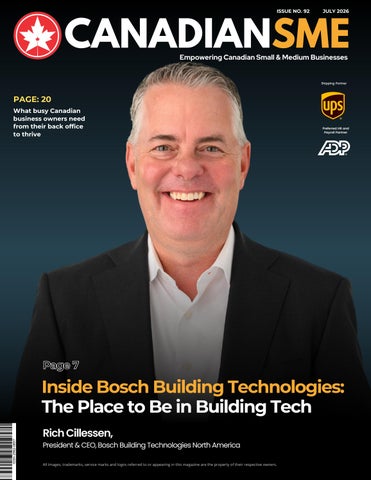
In an exclusive interview with CanadianSME Small Business Magazine, Rich Cillessen, President & CEO of Bosch Building Technologies North America, shares how unifying Climatec and Paladin Technologies under a single platform has created a people-first, customer-centric organization Rich discusses how focusing on trust, culture, and integration across security, fire, and building automation systems is helping Bosch deliver seamless, resilient building environments across North America.
Rich Cillessen is President of Bosch Building Technologies North America, where he leads a unified organization encompassing Climatec and Paladin Technologies. A seasoned executive in the building systems
integration industry, Rich oversees a productagnostic platform delivering security, fire life safety, access control, video surveillance, building automation, HVAC controls, energy service, structured cabling and A/V solutions across North America He is focused on building a people-first culture and making Bosch Building Technologies the “Place to Be” in the industry for the people who work there and the customers who count on them.
Bosch Building Technologies in North America has brought together Climatec and Paladin Technologies under one unified organization. What does this new chapter represent for you and your team, and how would you define the brand story and core values you ' re taking into the market?
This next chapter is about building on what already works and creating something even better together
Climatec and Paladin Technologies each built something genuinely strong: deep expertise, trusted relationships, and people who take real pride in their work That's exactly what we ' re protecting Our customers still work with the same people they know and trust. What's changed is the strength behind them broader experience, deeper resources, and a more connected team.
But the bigger ambition is this: we want Bosch Building Technologies to be the "Place to Be" in our industry. The place where the best people want to build their careers, and the place customers turn to first because they know they'll be taken care of Those two things are inseparable Great people create great customer experiences, and great customer experiences attract great people
Our story is simple: show up, do the work right, take care of people our teams and our customers alike Our values havent changed: trust, teamwork, and doing what's right What's grown is our ability to deliver on them, together, as one organization
You've described Bosch Building Technologies as an open, product agnostic systems integrator that isn't publicly traded or private equity backed. How does that unique position influence the way you build solutions, invest for the long term, and show up differently for customers and partners?
Being product-agnostic means we start every conversation with one question: what does this customer need? We're not fitting anyone into a predetermined solution We're solving their problem with the best technology for their situation which leads to systems that work better and last longer Ourownershipstructurereinforcesthat. We'renotansweringtopublicmarkets orprivateequitytimelines,sowecan makedecisionsthatarerightforthe longterm.Investinginourpeople,our capabilities,andourcustomer relationshipswithoutshort-term pressure.
That freedom shapes how we show up. We're not there for one project and gone. We stay involved as our customers' needs and environments evolve, year after year That's why customers see us as a partner, not a vendor, they know they're getting honest advice and solutions built to hold up over time
It also shapes the culture we ' re building People want to work somewhere they can give customers their honest best, not a sales quota That's part of what makes this the place to be for the people who work here and the customers who count on us
Modern buildings are increasingly complex ecosystems with security, fire, automation, energy, and data all needing to work together. How do you approach integration across such diverse platforms and technologies to create unified, resilient building environments that 'feel like they're working for' the people inside them?
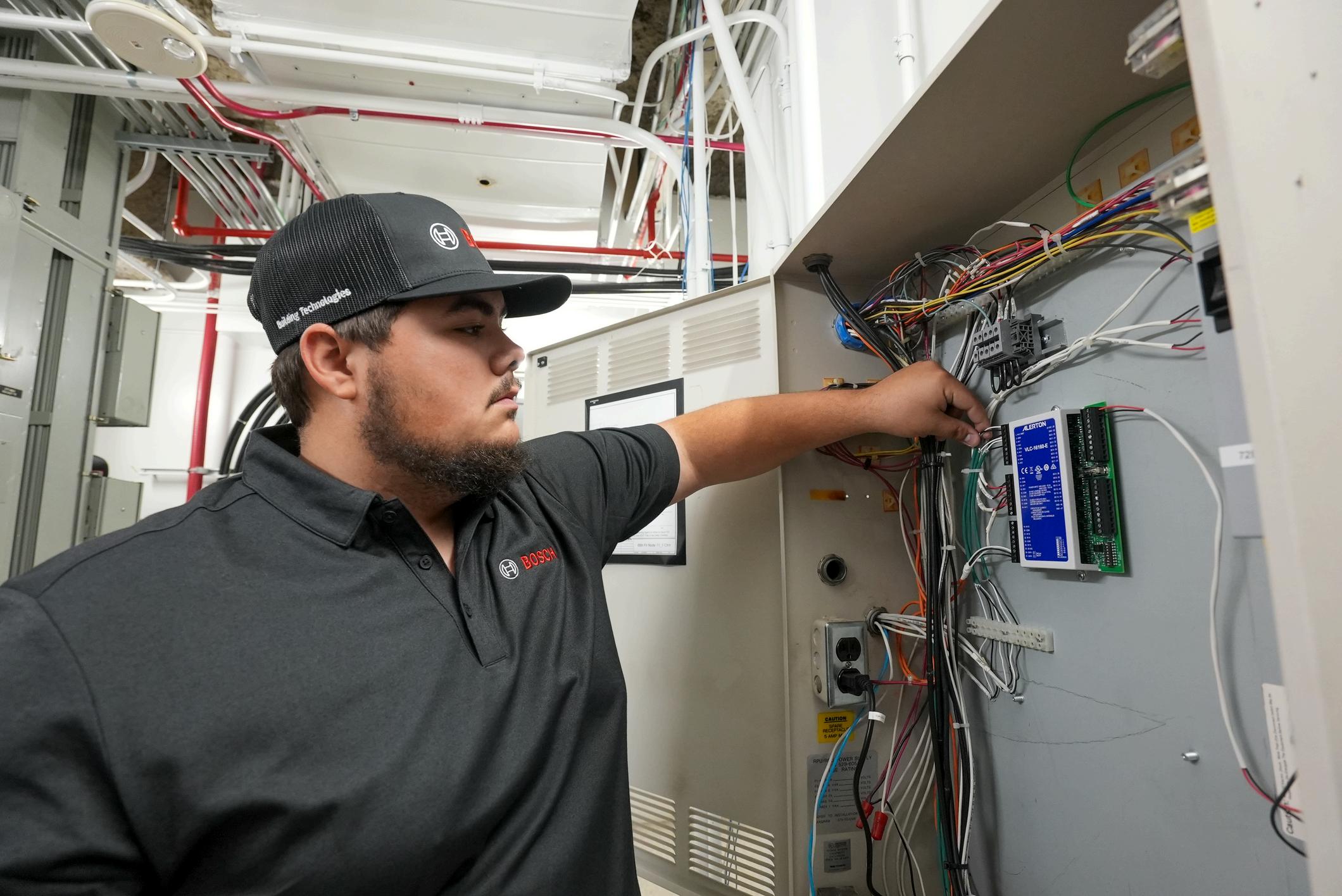
We look at a building as one system, not separate parts Security, fire life safety, building automation, energy, structured cabling they all need to work together in a way that feels simple and reliable Our role is to connect those systems so they respond in real time, as one environment
But here's the thing: integration isn't really a technology challenge It's a people challenge The best-designed building serves the people inside it, they feel safe, comfortable, and able to focus on their own work without thinking about the building at all. That's the standard we design to.
Digital tools and remote services make this practical When we can diagnose and often resolve an issue remotely, the customer isn't waiting on multiple site visits to figure out a problem Their building keeps running, and their day keeps moving
You've said that you put your people first, believing that without them there are no customers. How does that people first philosophy show up in everyday decisions from culture and talent development to how your teams engage on job sites — and how does it ultimately translate into a better experience for building owners and occupants?
This is the heart of everything we ' re building My belief is straightforward: without great people, there are no customers So, our first job as leaders is to make this company the place to be the place where talented people want to come, grow, and stay
That starts with how we treat our teams We invest in training and development, give people real opportunities to grow, and build a culture where people can speak up, support each other, and be heard When people feel respected and supported, they bring their best every day, on every site
On job sites, you see it in our safety culture, clear communication, and genuine ownership of the work Our teams have the autonomy to make the right call for their customer They're not waiting for permission to do the right thing that's the expectation.
And the payoff flows directly to our customers. Confident, engaged teams deliver smoother projects and more reliable results Building owners and occupants feel the difference
The formula is simple: take care of your people, and they'll take care of your customers Take care of your customers, and everything else falls into place
Trust, digitalization, and sustainability are becoming non negotiables in the built environment. Can you share a couple of examples of how those priorities are shaping your work today, and what you see as the biggest opportunities for Bosch Building Technologies as you continue to grow across North America?
All three are shaping how we work every day and they all come back to people
Trust is earned through transparency and followthrough Customers know we ' re focused on whats right for them, not just for us, and we prove it by consistently delivering on our commitments That's not a marketing message it's a daily discipline
Sustainability goes beyond energy savings We focus on the longevity of facilities ensuring buildings can adapt to evolving needs and constant market change A building built to last is a sustainable building.
The biggest opportunity ahead is bringing these together in a practical way: buildings that are simpler to manage, more efficient, and better for the people who run, work in, and rely on them every day
As we grow across North America, our north star doesn't change: be the place to be for our people, and for our customers Everything else follows from that
Disclaimer: The views and opinions expressed in this interview are those of the interviewee and do not necessarily reflect the official policy or position of CanadianSME Small Business Magazine Our platform is dedicated to fostering dialogue and sharing insights that inspire and empower small and medium-sized businesses across Canada.
BusinessWoman oftheMonth
Kiran Bains
Co-FounderandCEO ofFoodVentureAcceleratorInc.
BySKUddin
Kiran Bains Helping Canadian Food Entrepreneurs Grow from Kitchen to Retail
Kiran Bains, MSc, RD, is a five-time founder, investor, and ecosystem builder known as one of Canada's most effective advocates for food and beverage product As CoFounder and CEO of Food Venture Accelerator Inc and Manager of the Western Accelerator at Ivey Business School's Morrissette Institute for Entrepreneurship, she is at the intersection of product innovation, startup mentorship, and community, helping founders move from idea to retail shelf and hustle to scalable, strategic growth
From Dietitian to Food Business Builder
Kiran's business adventure stems from her experience as a Registered Dietitian and Nutritionist, where she witnessed how food influences health, culture, and community. Early in her career, she integrated clinical and community nutrition experience with positions in marketing, consumer insights, and product development, where she learned how taste, branding, and health claims affect what people buy
She founded and scaled her own gluten-free food brand, getting experience in formulation, packaging, co-packing, distribution, and retail sales Kiran collaborated with international food innovation and sustainability networks and non-profits, such as The SEED in Guelph, to develop a novel product manufactured from surplus produce, minimizing food waste and promoting the circular food economy, and Canadian Food Innovation Network where she helped develop a mentorship program for emerging graduates in the food industry
Through these experiences, she gained a comprehensive understanding of the food system, including nutrition science, consumer psychology, supply chains, and sustainability They also highlighted a common issue: entrepreneurs were enthusiastic and talented but lacked systematic, practical counsel on scaling
ImageCourtesy:KiranBains
Co‐Founding Food Venture Accelerator
In late 2019, Kiran met program strategist Sima Gandhi at an agrifood marketing event Kiran provided valuable insights on turning recipes into cash Sima, then at MaRS Discovery District, identified a need for a realistic system to help early-stage food businesses become retail-ready without wasting time and money
FVA offers a 12-week bootcamp to guide founders through compliance (CFIA/FDA), co-packing, costing, branding, and retail strategy amongst other programs for farmers and restaurant owners.
On-demand mini-courses, such as "Get Retail Ready" to help transform kitchen-tested recipes into shelf-ready products.
Customized programs, such as Restaurant to Retail, to help restaurant owners turn their recipes into shelf-stable products for grocery retail
Many of their programs have been run by Regional Innovation Centres, Small Business Centres, Universities and Colleges across North America
Western Accelerator and Its Approach to Sector Agnostic Venture Coaching
Beyond FVA, Kiran manages the Western Accelerator at the Morrissette Institute for Entrepreneurship (Ivey Business School at Western University), a four-month program for high-growth businesses in several areas As Accelerator Manager, she
Advises innovators on go-to-market strategies, business models, operations, and sales.
Connects ventures with Western and Ivey alumni mentors and investors
Funnels top ventures through Morrissette's investment pipeline.
Improves community partnerships, including introducing Dragon's Den auditions to the school.
Founders in the program receive workspace, coaching, and entrepreneurship instruction from Ivey academics, and a $12,000 grant Kiran's sector-agnostic approach enables her to apply lessons from food and CPG industries, such as customer discovery, rapid iteration, and channel strategy, to SaaS, social enterprise, and other early-stage businesses. Her overarching goal is straightforward: make the founder journey more strategic, systems-based, scalable, supported, and accessible, whether a founder is establishing a sauce line or a software platform
Ecosystem Builder, Investor, and Recognized Leader
Kiran's impact has been recognized throughout Canada's entrepreneurial environment She & Success has recognized her as a "leader empowering Canada's food entrepreneurs" and nominated her for CanadianSME Woman of the Year She is a pre-seed investor who supports startups that prioritize innovation and sustainability
Lessons for Canadian Food and Small Business Founders
Kiran's path provides clear lessons for entrepreneurs
Start with your skills - she used her experience in dietetics, product development, customer discovery, innovation, and systems development to provide founders a competitive advantage.
Food Venture Accelerator offers programs that minimize the learning curve and help you organize your hard-earned experience.
Build ecosystems rather than silos - by heading FVA and Western Accelerator, investing personally, and bringing together partners such as Dragon's Den, she multiplies influence across the founder community
To learn more or connect with Kiran: https://www.linkedin.com/in/kiranbainsrd/ www.kiranonpurpose.com
Kiran Bains has played a significant role in Canada's entrepreneurial ecosystem, guiding over 1,500 CPG founders and dozens of sectoragnostic firms to success. Her work reflects the founder-first, ecosystem-driven leadership that CanadianSME's Business Woman of the Month aims to recognize
Your role in staying up to date is integral to our shared mission of fostering a community of innovators CanadianSME Magazine is a valuable treasure trove of entrepreneurial knowledge. Click here to subscribe to our monthly editions for updates on Canadian businesses. Follow our handle, @canadian_sme, on X to stay updated on all business trends and developments. Your support is crucial to our mission.
Disclaimer: This article is based on publicly available information intended only for informational purposes. CanadianSME Small Business Magazine does not endorse or guarantee any products or services mentioned Readers are advised to conduct their research and due diligence before making business decisions
ImageCourtesy:KiranBains
HPCanadaandPierFive
ShowHowAIIsMoving fromHypetoAction
ByMaheenBari
Artificial intelligence is no longer a distant dream for Canadian entrepreneurs. It is becoming a useful business tool that enables entrepreneurs to save time, make better decisions, strengthen operations, and seize new growth opportunities
The answer arose through a two-part event that integrated education, hands-on learning, technology, and community interaction The effort illustrated how AI is becoming more accessible to small enterprises and how technology partners can play an important role in assisting entrepreneurs to embrace innovation
From Curiosity to Clarity
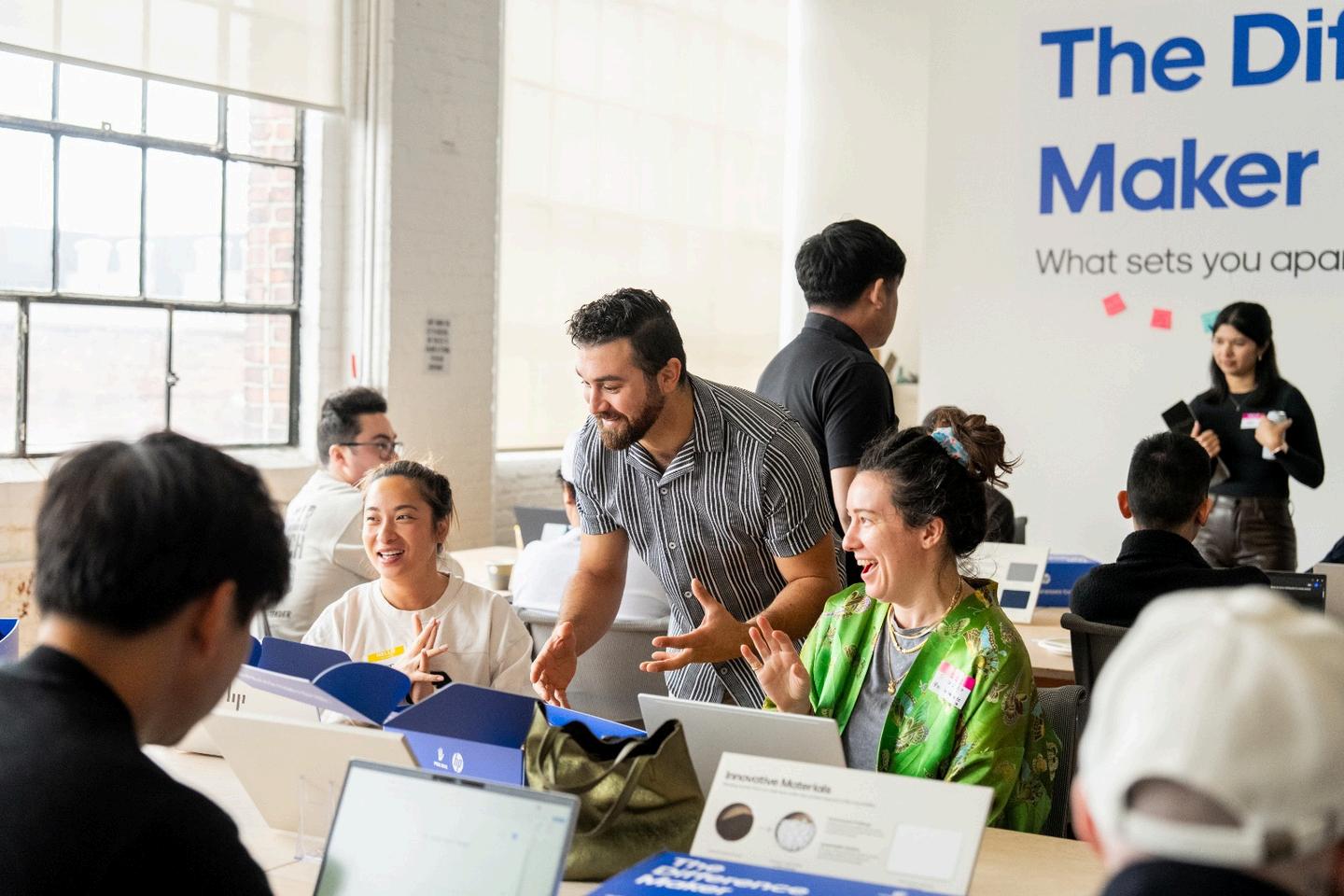
The program began with two workshops, each with ten founders from various sectors Rather than focusing on AI theory, the courses aimed to help participants apply AI to their businesses.
During the sessions, HP Canada highlighted how its latest AI-enabled technologies can support smarter, more efficient ways of working while maintaining a focus on innovation and sustainability Participants worked on HP devices powered by Qualcomm Snapdragon technology, which allowed them to see AI-enhanced processes in real time
The workshops included the use of Microsoft Copilot+, which took participants through an organized approach to:
Analyze their business standing.
Identify market opportunities
Evaluate competitors.
Clarify their unique differentiators.
Using this data, each participant created generated "Difference Statement" an AI highlighting their company ' s uniqueness and identifying potential areas for growth These remarks were then turned into posters that provided physical representations of each company ' s future potential
According to Kin Ho, Business Manager at HP, one of the most significant challenges for small business owners is determining where to begin with AI. HP's goal is to make AI technologies more accessible, practical, and relevant, enabling founders to test them within their own firms. When entrepreneurs perceive immediate value, uncertainty turns to confidence, and adoption follows
AI in Practice for Small Business Owners
The workshops focused on a growing trend among Canadian businesses. AI is increasingly used to streamline administrative tasks, create standard operating procedures, improve sales processes, boost operational efficiency, and help businesses scale Rebecca Prime, CEO of Beck's Broth, stated at the workshop that small businesses now have a significant advantage in using AI to improve efficiency across administration, sales, and operations
Two weeks following the seminars, the program concluded in The Difference Maker Gallery Night, a public exhibition of the work of all twenty participating founders More than 70 entrepreneurs, creatives, and community members attended the event, which created an environment conducive to learning, collaboration, and invention The founders' AIgenerated posters were exhibited across the venue, demonstrating how technology can help entrepreneurs define and explain their competitive advantages
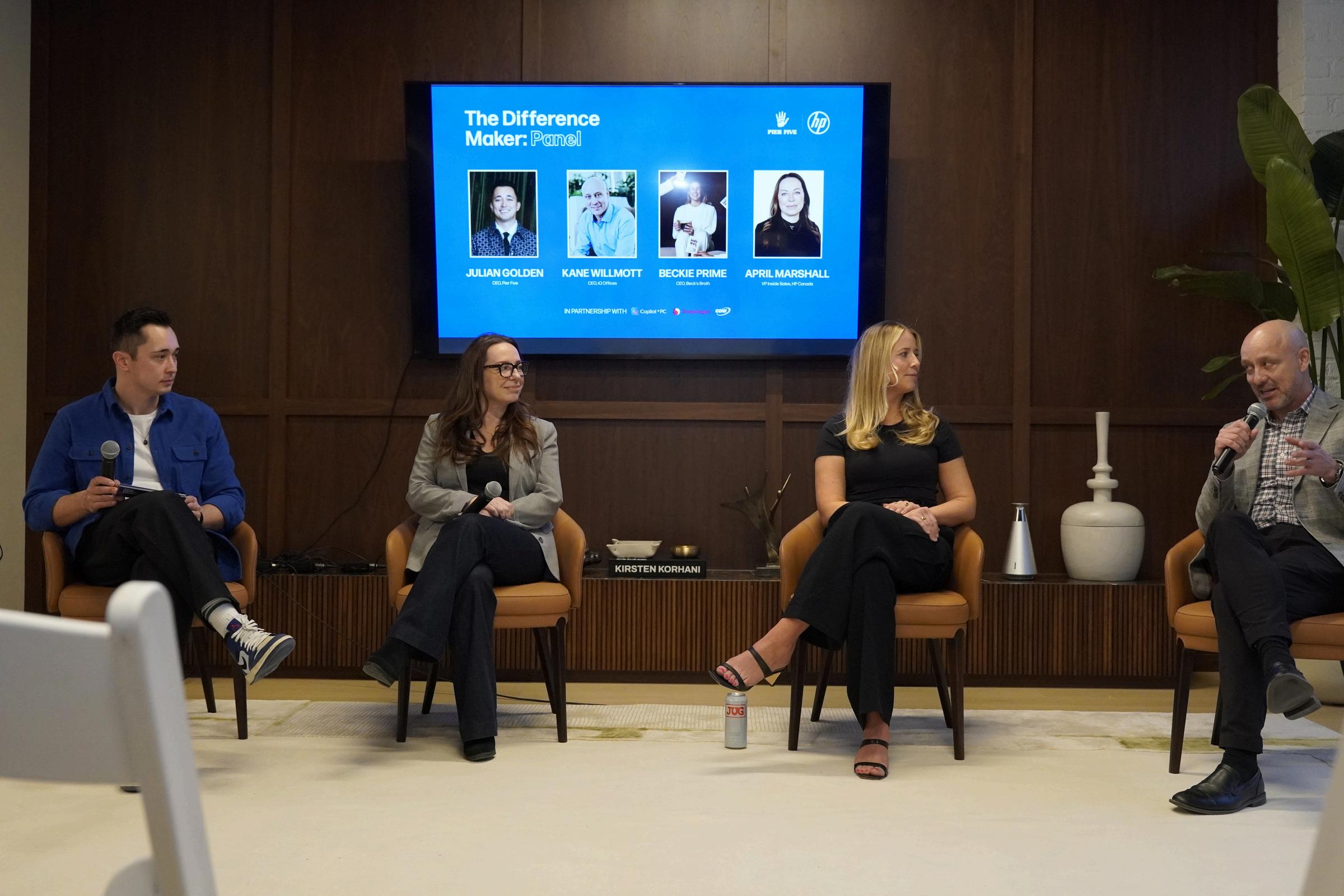
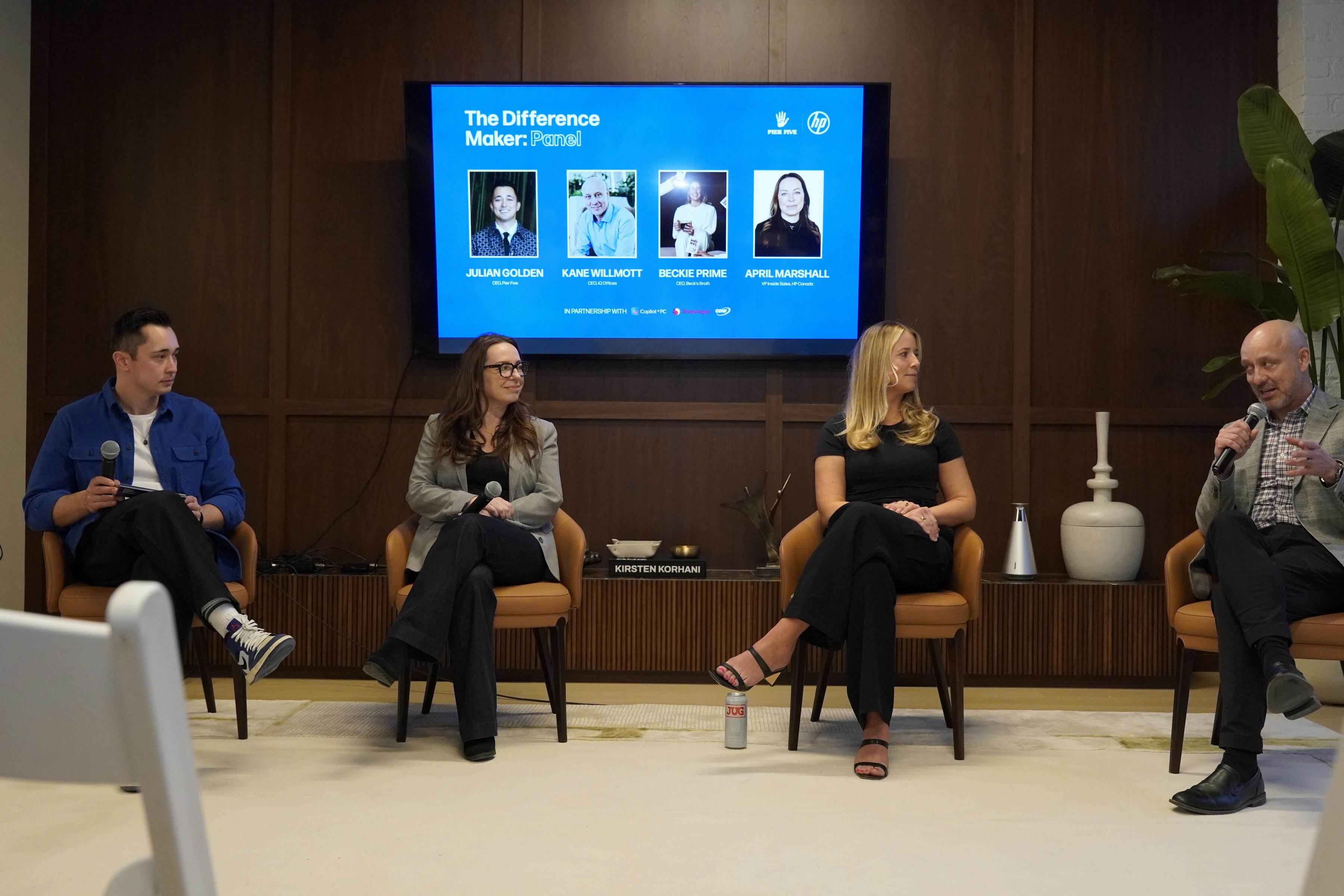
The evening's main event was a panel discussion. Julian Golden, co-founder of Pier Five, moderated the talk, which included:
April Marshall, Vice President of Inside Sales, HP Canada
Rebecca Prime, Founder of Beck's Broth
Kane Willmott, CEO of iQ Offices KaneWillmotthighlightedtheeventasareminderthat
The conversation centred on AI adoption, productivity, and the future of small businesses in Canada Speakers discussed how founders use AI today and how emerging technology will change entrepreneurship in the future
ImageCourtesy:HPCanada
HP Canada's Vision for AI Adoption
For HP Canada, the program represents a broader shift in the small-company sector. According to April Marshall, Vice President of Inside Sales at HP Canada, artificial intelligence is rapidly moving beyond the debate stage Small businesses are rapidly using artificial intelligence (AI) to solve everyday problems, save time, and make better decisions
Organizations that invest in technologies that support how they work, interact, and grow will be the ones who succeed in the future HP Canada's involvement extended beyond sponsorship The company helped entrepreneurs see firsthand how AI can boost productivity and business outcomes by providing AIenabled devices and training resources The project demonstrates HP's commitment to providing entrepreneurs with realistic technology solutions that make innovation accessible to enterprises of all sizes
A Blueprint for Canada's AI Future
The Difference Maker was distinctive because it combined community involvement, education, application, and visual storytelling Instead of just talking about AI's possibilities, participants received the resources, technology, and advice they needed to start incorporating AI into their companies right away
Additionally, the event highlighted the importance of cooperation between community-driven organizations like Pier Five and industry giants such as Qualcomm Snapdragon, Microsoft Canada, HP Canada, and CDW Together, they established a setting where entrepreneurs could gain knowledge, try new things, and exchange ideas meaningfully
Your role in staying up to date is integral to our shared mission of fostering a community of innovators CanadianSME Magazine is a valuable treasure trove of entrepreneurial knowledge Click here to subscribe to our monthly editions for updates on Canadian businesses Follow our handle, @canadian sme, on X to stay updated on all business trends and developments Your support is crucial to our mission
Disclaimer: This article is based on publicly available information intended only for informational purposes CanadianSME Small Business Magazine does not endorse or guarantee any products or services mentioned Readers are advised to conduct their research and due diligence before making business decisions
WhatbusyCanadianbusiness ownersneedfromtheirback
ByPowerpay
That gap? That’s where Powerpay steps in.
Payroll should not take over your week
However, for many small-to-medium-sized businesses (SMBs), this is case, as they are spending up to 70% of their week on manual tasks like payroll, basic bookkeeping and other administrative tasks that belong in a more modern back office It should run accurately, stay compliant, and give you confidence that nothing has been missed For many SMBs payroll still means manual checks, lastminute questions, and too much time spent trying to catch errors before they become problems.
When payroll is working well, it’s invisible Employees are paid on time Remittances are handled properly Year-end does not turn into a scramble Your team does not have to chase down answers or dig through spreadsheets to understand what changed Powerpay is built for that reality It combines payroll, HR, and time tracking for Canadian small and medium-sized businesses, with automation and compliance support designed to reduce manual work and help teams stay on track
For many business owners, payroll is really a trust problem Not because the job is impossible, but because the stakes are high One missed step can create more work, more stress, and more uncertainty than it should That is why the Powerpay experience is focused on accuracy, compliance, and support The goal is simple: help businesses run payroll with confidence, without needing to spend all day thinking about it
With entrepreneurs creating ambitious businesses that are changing industries both domestically and internationally, Canada's startup ecosystem is entering a new stage of maturity Canadian firms are demonstrating that world-class innovation does not have to be based in Silicon Valley, from AIdriven platforms to finance innovators and climate-forward cleantech companies The most fascinating projects to follow in 2026 are those that combine robust technology, well-defined commercial plans, and a noticeable influence on regional economies and communities.
Based on trends across several independent lists and databases, this list highlights 20 categories of high-potential Canadian businesses to watch this year rather than assigning a definitive rating Founders, investors, and politicians may use these themes as a prism to see where Canadian innovation is going and where the next big stories are most likely to appear
ImageCourtesy:Canva
From automating back-office processes to allowing new creative tools, AI-native firms throughout Canada are revolutionizing the way people work Leveraging Canada's rich machine learning and data science talent pool, many of the most promising businesses are developing vertical AI products for industries such as law, banking, healthcare, and logistics The takeaway for new entrepreneurs is straightforward: focusing on a specific industry issue rather than a general AI platform typically leads to faster adoption and clearer value
Fintechforthe“real”economy
With new businesses focusing on lending, payments, financial planning, and business-to-business solutions, fintech is still one of Canada's most promising startup sectors The most fascinating actors to follow are those who are resolving practical issues for small companies and underserved customers, such as streamlining credit availability, updating invoicing, or enhancing investment transparency. Successful fintech entrepreneurs frequently combine collaborations with well-known financial institutions, intuitive product design, and in-depth regulatory understanding
Healthtechtackling accessandefficiency
Software, data, and linked devices are being used by Canadian healthtech businesses to increase access to care, shorten wait times, and boost clinician productivity Many of the most notable businesses to keep an eye on in 2026 are developing patient engagement technologies, virtual care platforms, or AIassisted diagnostics that work with current hospital and clinic systems Recognizing that trust is just as vital as technology, the founders in this field place a strong emphasis on rigorous clinical validation and strong relationships with health systems
Cleantechand climateinnovation
As corporations and governments search for methods to meet climate commitments, interest in Canada's cleantech firms is booming The most promising projects combine technical proficiency with scalable commercial strategies, ranging from carbon capture devices to grid optimization software and circular economy solutions One of the most strategically significant areas for Canada's long-term competitiveness is clean growth, which is actively supported by federal and provincial initiatives
Supply chain resilience has become a primary priority amid recent disruptions, and Canadian startups are responding with advanced logistics solutions Businesses to keep an eye on in 2026 are developing systems for demand forecasting, warehouse automation, real-time tracking, and cross-border trade facilitation Partnering with mid-sized Canadian distributors and manufacturers to establish local value before branching out into international markets often yields early traction.
In Canada, future-of-work startups are developing platforms for hiring, employee engagement, skill development, and hybrid work management Many small and mid-sized businesses are using AI to automate HR administration, match candidates with positions, and customize learning. This area demonstrates to new entrepreneurs the value of starting with a specific use case, such as remote onboarding or frontline worker scheduling, and then expanding into a more comprehensive people-operations suite
07
Consumerand commerceinnovation
Although they may not always be as obvious as their B2B counterparts, Canadian consumer companies are quietly creating powerful brands in the food, wellness, lifestyle, and e-commerce sectors Businesses that combine clever technology with distinctive consumer experiences like subscription platforms, community-driven marketplaces, or data-driven personalization are the ones to keep an eye on. As consumer expectations change, many of these businesses also prioritize sustainability and ethical sourcing
08
Cybersecurityanddataprivacy
Canadian cybersecurity entrepreneurs are stepping up with solutions designed for cloud settings, critical infrastructure, and small and mid-sized organizations as cyber threats increase Threat detection, identity management, secure access, and compliance automation systems are being developed by the leading firms in this field The founders leverage Canada's strong reputation for security and privacy as a competitive advantage, and they frequently have experience in university research, enterprise IT, or defence
09
Deeptechandfrontierscience
Deep-tech companies in fields such as biotech, advanced materials, robotics, and quantum computing are becoming more prevalent on Canadian "startups to watch" lists. These businesses, which often originate at Canadian universities and research facilities, may have longer development cycles but are at the cutting edge of science and engineering Deep tech emphasizes to early-stage entrepreneurs the value of patient funding, robust intellectual property strategy, and industry relationships in bringing innovations from the lab to the market
10
Community‑drivenregionalchampions
Not every successful startup is based in a large tech hub Canadian founders are creating high-impact companies in smaller cities and areas to address local issues in agriculture, resource management, tourism, and regional services, and then expanding to other markets These regional champions frequently become the foundation of local ecosystems, producing jobs, mentoring future founders, and demonstrating that innovation can thrive wherever in Canada
What new founders can learn
While each area appears unique, the businesses emerging as " ones to watch" in 2026 share common characteristics They focus on welldefined challenges, design technology to meet real-world customer demands, and demonstrate early traction whether through paying clients, strategic alliances, or trials with trusted institutions
They are also more deliberate about their tech stacks and teams, using scalable cloud infrastructure, modern AI and data technologies when applicable, and hiring individuals who understand both the technology and the industry they serve Finally, they are closely linked to Canada's broader ecosystem, leveraging accelerators, funding programs, and peer networks to advance more quickly and avoid common pitfalls For new Canadian founders, this year ’ s cohort of startups to watch is more than a list it is a roadmap Study how these companies tell their story, design their products, and build trust with customers, and you will gain practical inspiration for your own journey
Your role in staying up to date is integral to our shared mission of fostering a community of innovators CanadianSME Magazine is a valuable treasure trove of entrepreneurial knowledge Click here to subscribe to our monthly editions for updates on Canadian businesses Follow our handle, @canadian sme, on X to stay updated on all business trends and developments Your support is crucial to our mission
Disclaimer: This article is based on publicly available information intended only for informational purposes. CanadianSME Small Business Magazine does not endorse or guarantee any products or services mentioned. Readers are advised to conduct their research and due diligence before making business decisions.
ImageCourtesy:ChantalBekhor
From Classroom to Kitchen: Real-Food VeganBurgers
InterviewByMaheenBari
In an exclusive interview with CanadianSME Small Business Magazine, Chantal Bekhor, President and Head Chef of VG Gourmet, shares her journey from elementary school teacher to founder of one of Canada’s leading plant-based food brands. Driven by a passion for real, whole-food ingredients and inspired by her experience on Recipe to Riches, Chantal has built a brand that stands apart from conventional veggie burgers prioritizing flavour, nutrition, and authenticity
Chantal Bekhor is President and Head Chef of VG Gourmet since its launch in 2016
Before that she was an elementary school teacher, teaching Math, English Language Arts, Science and Robotics She graduated from Concordia University with a degree in ECEE (Early Childhood and Elementary Education), after having completed a bachelor degree in Economics and Marketing.
You started your career as an elementary school teacher before launching VG Gourmet in 2015. What inspired you to move from the classroom to the kitchen, and how did your experience on Recipe to Riches fuel your decision to build a plant based product line of your own?
My move from the classroom to the kitchen really came from a deep-rooted passion for cooking and baking Participating on the Food Network Canada show Recipe to Riches was a pivotal experience Being on that stage, working alongside and being judged by wellknown Food Network personalities was incredibly validating The response to my recipe made me realize that my goal was attainable The grand prize was to have the winning recipe turned into a President’s Choice product, and I found myself constantly imagining what that would feel like while walking through grocery aisles. When I came in second place, it was devastating in the moment, but it ultimately became the push I needed to build a business of my own
I have been eating plant-based since childhood, and I never connected with the overly processed veggie burgers available in stores I would make my own at home using ingredients I loved, especially fresh herbs that reflect how I grew up cooking Those homemade burgers became something friends and family genuinely enjoyed
My husband and I eventually connected the dots: the natural product to bring to market was a veggie burger. That insight became the foundation for launching VG Gourmet.
VG Gourmet is very clear that you’re “not about imitation meat” but about real food fresh vegetables, herbs, beans, walnuts, shiitake mushrooms and even fresh jalapeños. Why are your products different from most veggie options on the market, and what do you want shoppers to understand when they pick up a VG Gourmet box?
Most veggie burgers on the market rely heavily on processed ingredients and are designed to imitate meat At VG Gourmet, we take a completely different approach We start with real, fresh ingredients like vegetables, herbs, beans, walnuts, shiitake mushrooms, and fresh jalapeños We prepare them the same way you would in your own kitchen We even chop our fresh vegetables and herbs ourselves and grind our own spice blends to create the perfect balance of flavour
Those extra steps make a noticeable difference Our products are rich in texture, beautifully seasoned, and truly gourmet Nothing tastes artificial or overly processed Instead, they taste homemade, like something you spent hours preparing yourself
When shoppers pick up a VG Gourmet box, we want them to know exactly what they're eating Every ingredient is recognizable, pronounceable, and purposefully chosen Our goal is simple: to make it easy for people to enjoy more beans, vegetables, and whole foods without sacrificing flavour, convenience, or quality.
Your new Beet Power Burger is the first vegan burger you’ve seen with 19 grams of protein and 10 grams of fibre while still being made from whole foods like black beans and fresh red beets. How did you approach developing this recipe, and what were the biggest challenges in balancing nutrition, taste, and clean ingredients?
The Beet Power Burger was by far the most challenging product we ' ve ever developed It took more than two years and over 100 recipe iterations before I was completely satisfied with the taste, texture, and nutritional profile
As consumers become increasingly focused on protein and fibre, I wanted to prove that whole-food, plant-based ingredients could deliver both During my own health and fitness journey, I saw firsthand how challenging it is to find plant based protein that isn’t overly processed I knew this burger had to change that
The biggest challenge was achieving those nutrition targets without compromising flavour Many highprotein vegan products rely on artificial ingredients or sacrifice taste. For me, flavour always comes first. I wanted the Beet Power Burger to be rich, satisfying, and gourmet, just like the rest of our lineup
VG Gourmet is now in more than 1,500 retail locations across Canada, including a recent summer launch at Costco. How did you build that kind of distribution as an independent brand, and what have you learned about making plant based products both delicious and practical enough for busy Canadian households?
Persistence is everything. We started by literally walking into independent health food stores and asking for a chance Some said yes, some said no, and some said " we'll try it, but if it doesn't sell, we’ll send it back " We took whatever we could get and kept going
Fortunately, consumers connected with what we were offering, and the reorders followed Instore tastings became our most powerful marketing tool! Nothing communicates the difference in our products better than letting people taste them Some of those customers still keep in touch and call themselves fans for life That genuinely means everything to us!
As we built a track record, we partnered with distributors who helped us reach major chains Sobeys, Metro, Farm Boy, Avril, Tau, and Whole Foods Local marketplaces like Lufa Farms have been very supportive as well Becoming a bestselling veggie burger in those stores gave us the confidence to approach Costco. We followed up persistently, drove to Ottawa for the meeting, and earned our first summer program, featuring our best seller, Sweet Potato & Black Bean burgers Getting listed once at Costco is hard getting invited back for a second year is even harder
We're back for year two For a small plantbased brand with big dreams, that feels surreal and absolutely worth every step of the journey
When you think about the future of plant based eating, where do you see the biggest opportunities for “better, healthier, more gourmet” options and what advice would you give to entrepreneurs who want to create food products that encourage a more sustainable lifestyle without sacrificing pleasure and flavour?
The biggest opportunity I see is in natural, whole-food convenience Right now, convenience almost always comes at a cost: a long list of ingredients full of chemicals, and thats true across categories, whether you ' re talking about cereals, bars, crackers, or plant-based products Consumers are getting smarter about reading labels, and they're increasingly unwilling to make that trade-off The brands willing to do the harder work of creating convenience products from real, whole ingredients have a massive opening right now, because frankly, there still aren't enough of them
From there, look to nature before you look to a lab. The range of ingredients the natural world offers us is extraordinary, and most of it is still underutilized Leaning into that bounty isn't just better for the consumer; it's a more creative challenge, and increasingly, it's what the market is hungry for
Entrepreneurs who understand that will be the ones who shape where this space goes next
Disclaimer: The views and opinions expressed in this interview are those of the interviewee and do not necessarily reflect the official policy or position of CanadianSME Small Business Magazine. Our platform is dedicated to fostering dialogue and sharing insights that inspire and empower small and medium-sized businesses across Canada.
FromITHeadaches toStability:JustFix It’sApproach
InterviewByMaheenBari
In an exclusive interview with CanadianSME Small Business Magazine, Gordon Werstine, Vice President of Sales at Just Fix It, shares his insights on how small and mid-sized businesses can transform technology from a source of stress into a reliable, growth-enabling function Drawing on over 15 years of experience in IT strategy, digital transformation, and sales leadership, Gordon explains how proactive, fully managed IT solutions can prevent downtime, strengthen cybersecurity, and provide predictable infrastructure that scales with business needs.
Gordon Werstine is Vice President of Sales at Just Fix It, where he helps Canadian small and mid-sized businesses simplify technology, strengthen cybersecurity, and adopt scalable solutions that support growth
With more than 15 years of experience spanning sales leadership, IT strategy, and digital transformation, he works closely with organizations in manufacturing, healthcare, and professional services to align technology decisions with business goals.
You work with owners in manufacturing, healthcare, and professional services who often say, “I don’t care about servers, I just need my business to run.” From your vantage point, what are the most common IT mistakes Canadian SMEs make—and why do those missteps so often show up as instability and surprise costs?
Yes, we hear that all the time, and honestly, I think they’re right. Business owners shouldn’t have to think about IT but the problem is, many are forced to because of how it’s been set up
The most common mistake we see is treating IT as something you react to instead of something you plan Systems get added over time, upgrades get delayed, and before long you ’ ve got a patchwork environment that’s harder to manage, less secure, and more prone to issues
Cybersecurity is another big one It’s often seen as a checkbox to meet the minimum standard until something happens. By then, the gaps have already been there for a while and the damage to the business could be existential
And then there’s the cost side Traditional IT is built around big, often unpredictable expenses server replacements, emergency fixes, upgrades That’s where the “surprise costs” come from
All of this leads to instability and frustration
That’s why I believe ZeroIT resonates It flips the model IT becomes a well-planned, proactive business function that business leaders no longer have to burn cycles worrying about No more buying and maintaining hardware, no more patchwork environments, no more security concerns. Just a fully managed, predictable service where everything is taken care of and aligned to business objectives.
Just Fix It offers what is essentially “IT as an operating expense,” including infrastructure, security, and support for a simple monthly fee. Why do you believe SMEs should treat their hosted infrastructure as something that’s as agile as the business itself, rather than a big capital purchase every few years?
We often tell clients, if your business has a “busy season ” , there has never been an easier time to ensure your IT infrastructure flexes with business demand without over or under provisioning resources
The traditional model is built around big capital purchases every few years You size your infrastructure for peak demand, hope it lasts, and then spend the next 3–5 years either underutilizing it or trying to stretch it past its limits That’s where performance issues, bottlenecks, and surprise upgrades start to creep in
But businesses today don’t operate on fixed cycles They grow, pivot, and change quickly Your IT needs to be responsive enough to keep up with that
That’s why Infrastructure as a Service (IaaS) just makes sense It allows your IT infrastructure to scale up or down as needed, without the lag or risk of big, upfront investments You’re not guessing what you’ll need three years from now, you ’ re aligning IT with what the business needs today and your monthly bill should reflect that
If your IT looks the same in February as it does in July, it’s not necessarily wrong but may be worth examining as it probably doesn’t reflect the reality of how your business operates
Cyber incidents and downtime can be existential threats for smaller firms. How does moving to a fully managed, done‑for‑you IT model change the risk equation for SMEs, particularly around security, business continuity, and that all‑important “what happens if something breaks?” question?
You’re right, this is where things get very real for SMBs When something breaks, the question isn’t just “how do we fix it?”, it’s “how long can we afford to be down?”
In a traditional setup, risk is often spread across different systems, vendors, and tools Security might be one solution, backups another, and support somewhere else When something goes wrong, you ’ re coordinating across multiple parties and that’s where delays, gaps, and bigger impacts happen
A fully managed, done-for-you model changes that completely It brings everything security, infrastructure, backups, and support under one accountable partner who owns the outcome.
From a security standpoint, it means you ’ re proactive instead of reactive Threats are monitored and addressed in real-time before they become incidents A fully managed done-for-you environment brings an enterprise-grade security setup that is often out of reach for most SMBs
From a continuity perspective, systems are built with redundancy and recovery in mind, so downtime is minimized
And when something does break? There’s no finger-pointing just a team that’s already in place, already familiar with your environment, and focused on getting you back up and running quickly
That’s the real shift, a complete transfer of risk to your provider, faster recovery, and far fewer unknowns
Cyber insurance is becoming a requirement in many industries, but a lot of SMEs are still unprepared for the questionnaires and controls insurers now expect. What does “cyber insurance readiness” really look like in practice, and where do you see the biggest gaps between what insurers ask for and what smaller businesses have in place?
We’re seeing this more and more Businesses assume they’re “covered,” but when the questionnaire or the auditor shows up, it’s a different story. I’ve spoken with a few SMB owners recently who did not have cyber insurance because they thought they would be covered by their O&E or general liability policies in the event of a cyber incident That simply is not the case While cyber insurance is not legally required in all industries, it is highly advisable Without it, business owners are essentially self-insuring their own businesses A rather risky gamble
Cyber insurance readiness, in practice, means having a baseline of controls that are not just in place, but consistently managed Things like multi-factor authentication, endpoint protection, secure backups, access controls, and documented policies It’s not overly complex but it does require discipline and consistency
Where the gaps show up is in execution Many SMEs have pieces of the puzzle maybe they’ve got MFA on email, or backups running but it’s not comprehensive, not enforced across the business, or not validated regularly. From an insurer’s perspective, that creates risk.
The other big gap is documentation Even if controls exist, businesses often can’t prove it clearly, which can impact both approval and claims
That’s why this has become such a challenge It’s not just about having tools, it’s about having a complete, managed security posture
With a fully managed model like ZeroIT, those controls are standardized, monitored, and documented by design So when the questionnaire comes, it’s not a scramble, it’s already handled
You’ve launched offerings like ZeroIT to simplify how companies finance and manage their technology. For a non‑technical business leader planning the next 12–24 months, what practical steps would you recommend they take to move away from reactive, ad‑hoc IT toward a more stable, predictable foundation that quietly supports growth?
The first step is really a mindset shift The old adage of “If it ain’t broke, don’t fix it” just doesn’t apply anymore Stop thinking about IT as a series of reactive one-off fixes and start treating it like a core part of how your business operates.
From there, I’d suggest three practical moves
First, get a clear picture of what you actually have today Most business leaders are surprised at how fragmented their environment is systems, vendors, and tools that have grown over time without a plan
Second, standardize and secure the basics Make sure things like access controls, backups, and endpoint security are consistent across the organization, not just partially implemented
Third, rethink the financial model If your IT strategy still relies on unpredictable capital purchases and reactive spending, it’s going to hold you back Stability comes from predictability Ask yourself why you need to own that rapidly depreciating piece of hardware?
That’s really where something like ZeroIT fits It removes uncertainty by bundling infrastructure, security, and support into a single, managed service that’s always up to date and aligned with the business.
The goal isn’t more technology, it’s less disruption and more agility When IT is done right, it should just fade into the background where it belongs
Disclaimer: The views and opinions expressed in this interview are those of the interviewee and do not necessarily reflect the official policy or position of CanadianSME Small Business Magazine. Our platform is dedicated to fostering dialogue and sharing insights that inspire and empower small and medium-sized businesses across Canada.
ImageCourtesy:ChrisWilliamson
In an exclusive interview with CanadianSME Small Business Magazine, Chris Williamson, Co-Owner and Vice President of Business Development & Innovation at Civil Pours, shares the journey of building a Canadian cocktail brand that blends artisanal techniques with innovative, scalable production. From leveraging award-winning mixology expertise to adapting high-end rotovap technology for mass production, Chris discusses how Civil Pours delivers bar-quality, ready-to-serve cocktails while maintaining authenticity, flavour, and sustainability
Chris Williamson, Civil Pours - Co-Owner and Vice President of Business Development & Innovation
Chris is the heart that powers the Civil Pours brand, leveraging his passion for mixology and a decade of award-winning marketing experience, including working for Labatt Breweries of Canada, to create products and experiences that speak directly to thirsty customers! A business leader and recognized manager with a proven track record of developing solutions that measurably and significantly increase revenue, profit, and brand awareness through sales, marketing, and product development. Effie & CMA winner. Former varsity athlete; current cocktail enthusiast.
InterviewByKripaAnand
Civil Pours launched in 2022 and has already served over a million cocktails— what did it take to build an independent cocktail distillery from the ground up, and how did you shape a product and brand that truly stand apart in such a crowded category?
At Civil Pours, we describe our approach to cocktail production as “mixology-at-scale,” as from the beginning we ’ ve believed to our cores that real bartending techniques and real ingredients are the only way to create real high-quality cocktails, whether theyre premade or handmade. We have the knowledge required to make excellent cocktails – one of our founders, Nick Kennedy, is an award-winning bar owner/operator and we have decades of beverage alcohol expertise across our team, both in hospitality and alcohol production – and we ’ ve developed technology that allows us to preserve real, fresh flavours We also have focus We’re a cocktail distillery focusing on cocktails and cocktails only, not a producer of other products that is trying to capitalize on a trend Taken together, our knowledge, technology, and focus have enabled us to shape a brand known for real cocktails that can go toe-to-toe with their handmade equivalents at bars and restaurants
You’ve developed proprietary vacuum‑distillation technology and a closed loop process that captures real flavour at low temperatures while upcycling ingredients like coffee grinds, citrus leftovers, and even avocado pits. How did this innovation come about, and why was it important to put sustainability at the heart of your business model?
Rotary evaporator vacuum stills, or “rotovaps” for short, found their way into the elite culinary and bartending scene from the world of biochemical research, and it was there that we were first exposed to the technology These high-end bars and restaurants were using rotovaps to capture niche flavours in minute quantities of distillates What we ’ ve managed to do is understand and adapt rotovaps in such a way that we can scale and stabilize these distillates, capturing the real flavours to produce cocktails that rival those made by bartenders
It was important for us to find a way to do this sustainably because we believe that making money and being sustainable aren’t mutually exclusive – one of our core values is “work like you ’ re in the woods” to leave everything in better shape than you found it for those that come next Case in point: as part of our closed loop process, we upcycle “ugly” produce and ingredient ‘waste’ (such as avocado pits, coffee grinds, lime/orange/lemon leftovers, and coca husks) that would otherwise go to the landfill. This also means we get raw ingredients for free, creating cost savings that we can also pass along to our customers It’s a rare win-win-win wherein we, the environment, and our customers all benefit!
Consumer demand for Canadian‑made, bar‑quality cocktails has exploded in recent years. How are you seeing drinking habits change, and how does Civil Pours meet that demand across different formats and venues—from LCBO shelves to places like the Ritz‑Carlton Toronto and leading cocktail bars?
The biggest change we ’ re seeing in drinking habits is that consumers are raising their standards, which is a good thing! We’re in the midst of a cocktail renaissance that arguably began in the late 90s and early 2000s, and as a result the average quality of bar-made cocktails has risen and so too has consumers ’ understanding of what a great cocktail is Additionally, during COVID, many Canadians stuck at home also learned how to actually make cocktails themselves, further raising the bar; but the pandemic was also devastating to the hospitality industry, creating a labour shortage were still grappling with As a result, the bar and demand for cocktails has never been higher, yet the supply of people to make them has decreased We’re looking to empower, not replace, hospitality staff by providing an unparalleled combination of quality, consistency, and efficiency for high volume cocktails that can bottleneck service After all, no hospitality employee goes home after a shift happy that they had to crank out 200 Espresso Martinis! Since our cocktails are literally good enough for professional bartenders, consumers at LCBO shelves can be confident in what they’re bringing home, too
Your “Will it Rotovap?” series has turned everything from Fruit Loops and Cheetos to Biscoff cookies into distilled flavours, and you’ve collaborated with top bars on limited‑edition libations. What have these experiments and partnerships taught you about flavour, creativity, and engaging a passionate customer community?
Another one of our core values at Civil Pours is “be curious,” because great ideas can come from anywhere and anyone, and this philosophy extends to our community of at-home consumers and bar/restaurant clients These ‘Will it Rotovap’ experiments allow us to cultivate a culture of learn-it-all as opposed to know-it-all, capturing some of that “ yes, and” magic from improv to discover things we otherwise wouldn’t have This has taught us a lot about flavour, not least of which is that there simply is no substitute for the real thing Human palates have evolved over hundreds of millennia, so when we taste something like real lime in a cocktail, we ’ re not just picking up the isolated flavour of the juice, we ’ re also picking the oils from the lime’s skin and the nuanced compounds from the pith Artificial flavours are inherently one note, quickly peaking and disappearing Experimenting with rotovaps has taught us to capture real flavours that exhibit authentic length on the palate Weve also learned that experimenting with flavour is frankly really fun! I particularly enjoyed distilling Scotch bonnet peppers, removing the spice-causing capsaicin to be able to enjoy all of the peppers subtle notes without incinerating my mouth
Independent distilleries often face challenges around tariffs, regulations, and route‑to‑market. What obstacles have you had to overcome as a small producer of ready to serve cocktails, and what advice would you share with other Canadian beverage entrepreneurs who want to innovate while building a sustainable, scalable business?
There’s a lot of temptation for businesses to adopt a flashy “ move fast and break stuff” tech attitude of endless prototyping, but I’d recommend tempering those temptations when the business calls for it Innovation is of course how you win as a small business, but sweating the little details is how you avoid losing While big moments of creativity are often the most fun part of a job, you need attribution to understand what is really working Often the data will guide you if you take the time to analyze it and separate the signal from the noise If your strategy is just “do cool shit and sales will follow” that may sound good as a soundbite, but you ’ re effectively just gambling at that point and luck is not a strategy In fact, in my opinion, strategy is often more about what you say “ no ” to than what you say “ yes ” to Though it may not always be the most fun part of the process, we take a real crawl-walk-run approach at Civil Pours and I’m confident that that has allowed us to balance innovation with sustainable, scalable growth
Canadian founders are developing businesses in an atmosphere marked by instability, long hours, and continual pressure and it is having a measurable impact on their mental health
Surveys of Canadian entrepreneurs reveal significant rates of anxiety, burnout, and depression
Economic stressors such as inflation and cash flow add to the burden of productmarket fit and fundraising
An ecosystem of programs, advisors, and peer communities is evolving to support entrepreneurs' wellbeing as they build This article investigates what the data tells us, how Canadian founders are responding, and where they can seek help so that mental health becomes an integral part of the startup playbook rather than an afterthought
The Reality Behind the Pitch Decks
Recent Canadian surveys portray a grim picture of the founder's mental health In a study of health-science company executives in Ontario and Quebec, 65% of female founders reported burnout, compared with 42% of male founders. Pre-seed founders had significant levels of anxiety and burnout due to extended development cycles, regulatory uncertainty, and limited access to funding Other research on entrepreneurs has revealed that over 62% of Canadian entrepreneurs experience depression at least once a week, with many reporting symptoms such as tiredness, isolation, and chronic stress A poll of entrepreneurs revealed that only 12% sought professional mental health support, highlighting the gap between need and requesting help
How Canadian founders are coping —and what experts recommend
Despite these hurdles, Canadian startups and experts are developing concrete solutions for coping more sustainably BDC's mental-health advice for entrepreneurs focuses on practical strategies, such as acknowledging stress, setting realistic expectations, delegating, identifying warning signals, and seeking help early to prevent a crisis Entrepreneurial mental health advocates in Canada emphasize the value of simple routines Resources created for founders emphasize core behaviors like as adequate sleep, proper meals, at least one full day off each week, work-hour limitations, and daily screen time as simple but effective stabilizers Founders are encouraged to conduct monthly selfcheck-ins and bi-annual assessments to assess the sustainability of their current pace and identify areas for improvement
Expert criticism aimed at startup communities emphasizes that burnout is not a sign of weakness or a lack of passion; it is an occupational risk caused by demands that exceed resources for an extended period Founders are advised to handle mental health as any other business risk: identify stressors, implement mitigation strategies, and seek expert support as needed
The Rise Of Founder‐focused Support Programs In Canada
Canada's ecosystem is reacting with tools designed expressly for founders and entrepreneurs. Several national and regional organizations provide curated mental health resources, peer groups, and access to therapists who understand business realities Examples highlighted in Canadian resource hubs are:
The Government of Canada's Founders Mental Health and Wellness resource portal provides access to mental health information and services tailored to the needs of founders and company owners
BDC offers selected mental health and well-being resources for entrepreneurs, including tools, publications, and partner services, to assist Canadian business owners in managing stress and crises and maintaining overall well-being.
MindFrame Connect and Related Initiatives: Resiliency tools and articles on founder mental health emphasize community, realistic goal-setting, and professional support as needed
Offerings from the Innovators & Entrepreneurs Foundation and its partners include programming, workshops, and access to therapy for entrepreneurs, recognizing that business and mental health difficulties sometimes overlap
Rise is a national nonprofit that offers entrepreneurial training and low-interest loans to people with mental health or addiction challenges, enabling them to build businesses on their own terms.
Entrepreneurs can access a variety of mental health resources, including the Canadian Mental Health Association, Wellness Together Canada, CAMH, and provincial hotlines, through national resource lists
Peer circles, coaching, and culture change in the ecosystem
Beyond formal programs, founders and ecosystem leaders are increasingly seeking peer assistance and coaching Canadian resiliency tools highlight the importance of community in entrepreneurship, including regular check-ins, peer mastermind groups, and safe venues for open discussion of failure and vulnerability Content geared toward founders encompasses a variety of possibilities, including curated peer circles, conferences, and events that openly address failure and mental health rather than focusing solely on achievement
Speakers, coaches, and facilitators from across Canada are now offering keynotes and workshops on entrepreneurs' mental health, delving into the specific dangers that founders face and how boards, investors, and teams can foster healthier work environments
Canadian founders have publicly discussed stepping back, setting boundaries, or reorganizing their teams to prioritize their own well-being, reflecting a cultural shift These stories help to normalize the idea that caring for one ' s mental health is consistent with ambition and, in many cases, necessary for its maintenance
A Healthier Playbook For Canada’s Startup Future
Taken together, the statistics and expanding support infrastructure indicate a new strategy for Canadian innovators Women and early-stage founders face high rates of stress, anxiety, and depression, exacerbated by economic instability and funding demands Founder wellbeing is increasingly recognized as a strategic asset rather than a luxury
For Canada's startup ecosystem, the opportunity is obvious By marrying world class technological and business support with similarly strong mental health infrastructure, Canada can establish companies that are not only inventive and fast growing, but also sustainable for the people who lead and power them
Your role in staying up to date is integral to our shared mission of fostering a community of innovators. CanadianSME Magazine is a valuable treasure trove of entrepreneurial knowledge. Click here to subscribe to our monthly editions for updates on Canadian businesses. Follow our handle, @canadian sme, on X to stay updated on all business trends and developments. Your support is crucial to our mission.
Disclaimer: This article is based on publicly available information intended only for informational purposes CanadianSME Small Business Magazine does not endorse or guarantee any products or services mentioned Readers are advised to conduct their research and due diligence before making business decisions
In an exclusive interview with CanadianSME Small Business Magazine, Scott Mitchell, Managing Director for Canada at Vistar Media, shares how digital out-of-home (DOOH) advertising is evolving beyond static billboards into dynamic, data-driven experiences With major live events like FIFA, Osheaga, and the Calgary Stampede capturing massive audiences, Scott explains how brands are rethinking outdoor strategies to deliver contextually relevant, memorable campaigns that connect with consumers in real time ManagingDirectorforCanadaatVistarMedia
Scott Mitchell is managing director for Canada at Vistar Media, a provider of programmatic and software solutions for digital out-of-home. Since joining Vistar in 2017, Mitchell has launched the Canadian office and grown operations to a fully staffed team with strategic partnerships across the entire programmatic landscape. Prior to joining Vistar, he held positions at TubeMogul (now Adobe) opening Canadian operations and working with agencies, as well as in the Enterprise (SaaS) business working with brands directly Mitchell also worked at Yahoo! Canada, leading the consumer packaged goods vertical
Recent research you’ve been involved with shows motion based and 3D creative significantly outperform static outdoor ads. From a consumer psychology perspective, what makes dynamic DOOH creative more likely to be noticed, remembered, and emotionally engaging—and what does a 60 plus percent lift in brand awareness really mean in practice?
Consumers navigate thousands of messages every day, so creative that captures attention quickly and feels relevant to the moment has a clear advantage In busy environments filled with competing messages, motion helps brands break through visual clutter and capture attention more effectively than static creative
You’ve watched the Canadian DOOH landscape evolve from static billboards to dynamic, data‑driven screens. As major live events like FIFA, Osheaga, and the Calgary Stampede ramp up, how are brands rethinking their outdoor strategies in these increasingly crowded, attention‑fragmented environments?
The biggest shift we ' re seeing is that brands are moving beyond simply showing up at major events and focusing on how they can be most relevant to audiences throughout the event experience Largescale moments like FIFA, Osheaga and the Calgary Stampede attract massive audiences, but they also create more competition for attention.
As a result, marketers are becoming much more strategic about audience movement and context Theyre looking at where people gather before, during and after events and identifying opportunities to create meaningful touchpoints throughout that journey
Today's DOOH environment gives brands the flexibility to tailor messaging based on location, timing and audience behaviour while still benefiting from the scale that outdoor advertising has always delivered That combination of reach and relevance is becoming increasingly important
In a fragmented media landscape, major live events remain one of the few opportunities to connect with large audiences in the physical world The brands that stand out are the ones that understand the moment, understand the audience, and deliver creative that feels connected to both
But attention is only part of the story Dynamic creative is also more memorable because it creates a richer, more engaging experience When consumers encounter motion or 3D elements that surprise, entertain, or immerse them, they're more likely to remember both the message and the brand behind it.
Our recent research found that motion-based creative delivered a 33% uplift in ad recall and a 50% increase in brand awareness compared to static executions, while 3D creative was 67% more effective at driving brand awareness than creative without motion Formarketers,thattranslatesintoreal businessvalue.Higherawareness increasesthelikelihoodthatconsumers rememberthebrandwhenthey'reready tomakeapurchase,helpingdrive considerationandbusinessresults.It'sa powerfulreminderthatcreativequality remainsoneofthestrongestdriversof campaigneffectiveness,regardlessof channel.
Walking through downtown Toronto during big event weekends, it can feel like every wall, screen, and corner is “taken.” In that context, which types of brands or campaign objectives are seeing the strongest results from motion or 3D DOOH, and how should marketers balance creative investment with media spend to stand out without just spending more?
We're seeing particularly strong results from brands focused on launches, awareness-building and creating cultural relevance
Categories like retail, entertainment, automotive, travel and consumer technology have all embraced motion and 3D creative because these formats help turn a media placement into a memorable brand experience.
One of the biggest misconceptions in advertising is that attention is purely a function of media spend In reality, strong creative can often generate a greater impact than simply buying additional placements or impressions
What's encouraging for marketers is that creating impact doesn't always require a massive production budget Often, subtle movement, strong visual storytelling and a clear brand message are enough to capture attention and improve recall
The brands seeing the strongest results today aren't necessarily the biggest spenders They're the ones that understand how to pair thoughtful creative with the right environment, creating experiences that people notice, remember and talk about long after they've passed the screen
The industry is clearly moving toward more immersive, context‑aware campaigns that respond to time of day, location, or even real‑time events. How is technology changing what’s possible in DOOH right now, and what should advertisers be thinking about as outdoor media evolves beyond traditional static formats into something more fluid and experiential?
Technology is transforming DOOH from a static channel into a highly responsive medium that can adapt to what's happening in the real world Advertisers can now activate campaigns based on factors like time of day, weather conditions, traffic patterns, audience movement, or local events, creating messaging that reflects these conditions in order to feel more relevant and timely For example, Voilà Canada leveraged programmatic DOOH to dynamically promote grocery delivery services based on weather conditions, adjusting creative messaging in real time to align with changing consumer needs. By activating contextually relevant ads when weather made grocery shopping less convenient, the campaign was able to reach audiences at moments when the service offered the greatest value It's a strong example of using data-driven triggers to deliver the right message at the right time and place
These capabilities allow brands to think beyond individual placements and focus on the broader consumer journey Instead of delivering the same message everywhere, marketers can create experiences based on context and audience behaviour
As outdoor media continues to evolve, the opportunity is no longer just about visibility it's about delivering meaningful brand experiences that feel connected to the moment and environment
For marketers planning campaigns around upcoming tentpole moments— whether FIFA activity, summer festivals, or other major events—what practical advice would you give on using DOOH effectively? Where should they start, and what are the one or two creative principles that most reliably help brands “earn” attention in busy public spaces?
My first piece of advice is to start with the audience. Think about where people will be, how they'll move throughout the day, and what mindset they'll be in at different moments. The most effective campaigns are built around those real-world behaviours.
From a creative perspective, two principles consistently stand out
First, keep it simple Outdoor advertising often has only a few seconds to make an impression, so the strongest campaigns communicate a single idea clearly and confidently
Second, design for the environment
Creative should take advantage of the unique strengths of the format, whether that's scale, motion, or contextual relevance, rather than trying to replicate what works in other channels.
Disclaimer: The views and opinions expressed in this interview are those of the interviewee and do not necessarily reflect the official policy or position of CanadianSME Small Business Magazine. Our platform is dedicated to fostering dialogue and sharing insights that inspire and empower small and medium-sized businesses across Canada.
Canada's under-30 entrepreneurs are proving that age is not a barrier to developing substantial businesses Many of them are founding technology enabled SMEs in fields such as e commerce, software, digital services, and sustainability, often starting as side projects that swiftly blossom into full time endeavours They adopt an experimental attitude, developing minimum viable products quickly, soliciting input from early Canadian customers, and iterating in short cycles
Across Canada, a new generation of business leaders is reimagining what entrepreneurship means in 2026. They are under-30 founders developing fast-growing digital enterprises, immigrant entrepreneurs transforming life experiences into opportunities, and impact-driven owners leveraging their businesses to advance social and environmental change What connects them is not only ambition but also a leadership style based on resilience, inclusivity, and a uniquely Canadian capacity to navigate complexity from talent shortages to funding deficits and regulatory impediments
ImageCourtesy:Canva
These founders are also altering leade cultures within their firms They prioritiz collaborative teams, open communica mental wellness, and work-life balance hierarchical structures Many actively s mentorship and peer communities, con with national networks and local startu access information they may not have through personal experience Their exa demonstrates the value of remaining in testing ideas early, and creating workp where learning is encouraged rather th punished.
Immigrant entrepreneurs turni obstacles into advantages
Immigrant entrepreneurs have historica an important role in Canada's corporat and their contributions continue to gro today's most remarkable executives arrived in Canada with language hurdles, credential questions, or limited networks, yet they went on to establish thriving SMEs in retail, technology, professional services, food, logistics, and other industries Their firms sometimes begin by serving specific regions before expanding to larger Canadian and worldwide markets
Another distinguishing feature of Canada's emerging corporate leaders is a strong commitment to impact SME owners often incorporate social and environmental agendas into their business strategies, such as hiring from underrepresented populations, minimizing waste, supporting local suppliers, or allocating earnings to community activities Impactdriven executives are prominent in sectors such as social enterprise, sustainable consumer goods, and community-based services
They frequently use a combination of financial performance and impact measures to assess success, measuring not only income and job creation but also lives saved, pollutants lowered, and opportunities created By doing so, they are redefining " success " for Canadian SMEs, demonstrating that purpose and profit may complement rather than conflict. Their example encourages other business leaders to look beyond quarterly results and consider how their companies might help build stronger, more inclusive communities across Canada
ImageCourtesy:Canva
Leading through Canada‐specific challenges
Running an SME in Canada presents unique obstacles, including navigating bilingual markets, operating across broad geographic regions, managing provincial regulatory variations, and competing for talent in a country with a small population The new faces of Canadian entrepreneurship are facing these realities with ingenuity and tenacity In terms of talent, many executives are embracing hybrid and remote models to tap into skills across provinces and investing in training and mentorship to develop employees internally.
Importantly, successful leaders speak freely with their people about uncertainty and change, portraying issues as common problems to overcome rather than burdens to hide. This transparency fosters trust and helps businesses remain resilient when conditions change
A More Inclusive And Collaborative Entrepreneurial Culture
Perhaps the most hopeful evidence is cultural Across provinces and sectors, Canadian entrepreneurship is becoming more inclusive, collaborative, and accessible to those who would not have considered themselves "founders" a decade ago Women, racialized Canadians, Indigenous entrepreneurs, and 2SLGBTQ+ leaders are gaining recognition as role models, mentors, and ecosystem builders
This inclusivity is bolstered by narrative platforms, prizes, podcasts, and events that highlight various entrepreneurial paths and practical ideas By revealing not only their successes but also their shortcomings and doubts, these leaders are normalizing the ups and downs of starting a business in Canada For budding entrepreneurs, the lesson is straightforward: you don't have to fit into a particular mould to lead If you can identify a real problem, collect the proper people, and commit to learning in the face of uncertainty, you may be a part of Canada's entrepreneurial success
Your role in staying up to date is integral to our shared mission of fostering a community of innovators. CanadianSME Magazine is a valuable treasure trove of entrepreneurial knowledge. Click here to subscribe to our monthly editions for updates on Canadian businesses Follow our handle, @canadian_sme, on X to stay updated on all business trends and developments Your support is crucial to our mission
Disclaimer: This article is based on publicly available information intended only for informational purposes CanadianSME Small Business Magazine does not endorse or guarantee any products or services mentioned Readers are advised to conduct their research and due diligence before making business decisions.
ImageCourtesy:Canva
Saleh Taebi is a Canadian technology entrepreneur and the Founder and CEO of CanadaWheels and USAWheels, leading ecommerce platforms for wheels, tires, and automotive parts across North America. He bootstrapped CanadaWheels from the ground up into an eight-figure business from only $5000, helping redefine how consumers shop for automotive products online
With a background in engineering, Saleh specializes in scaling complex ecommerce operations, building highperformance digital marketplaces, and navigating cross-border expansion in the automotive industry Under his leadership, CanadaWheels has earned national recognition, including six consecutive appearances on The Globe and Mail’s Top Growing Companies list
In an exclusive interview with CanadianSME Small Business Magazine, Saleh Taebi, Founder & CEO of CanadaWheels and USAWheels, shares how he transformed a $5,000 startup into a leading North American online automotive retailer Saleh discusses the pivotal decisions, technological investments, and customer-first strategies that enabled rapid growth, including the launch of USAWheels across 48 U S states
Saleh is a frequent contributor on automotive e-commerce, entrepreneurship, bootstrapping and scaling businesses, digital transformation, and road safety He is an engineering alumnus of the University of Ottawa and is based in Ottawa, Canada
You built CanadaWheels from a $5,000 bootstrapped startup into an eightfigure automotive e-commerce business and then expanded with USAWheels. Looking back, what were the most pivotal decisions or turning points that allowed you to break through in such a crowded online marketplace?
One of the most important decisions was focusing on technology and customer experience from day one rather than trying to compete solely on price The automotive aftermarket is incredibly complex, with millions of fitment combinations and thousands of products We invested early in building proprietary tools that helped customers find the right products for their vehicles with confidence
Another major turning point was embracing automation and supplier integrations By connecting directly with manufacturers and distributors, we were able to offer a significantly larger catalogue while maintaining operational efficiency
Equally important was staying disciplined financially CanadaWheels was bootstrapped from the beginning, which forced us to focus on sustainable growth and profitability rather than growth at any cost
Your recent Google case study highlights how CanadaWheels and USAWheels used AI-powered tools to drive 61% more conversions during peak season. As a founder who started very lean, what convinced you to trust automation at that level, and how did you balance machine-driven optimization with human judgment inside your team?
I've always viewed AI as a tool to augment people rather than replace them What convinced us to embrace AI was seeing how much faster it could process data and identify patterns than any human team could manually.
In digital marketing, thousands of signals influence customer behaviour every day AI-powered platforms can evaluate those signals in real time and make adjustments that would be impossible to manage manually at scale
That said, human judgment remains critical Our team still defines the strategy, business objectives, customer experience standards, and overall direction AI helps optimize execution, but people determine what success looks like
ImageCourtesy:SalehTaebi
Our Google case study demonstrated this balance well Using Google's AI-powered advertising solutions, CanadaWheels and USAWheels achieved a 61% increase in conversions during peak season while maintaining strong customer experience and operational efficiency
The best outcomes occur when human expertise and AI work together rather than compete
The case study notes that you scaled into 48 U.S. states in a matter of months. What role did data, AI, and marketspecific customization play in making that rapid crossborder expansion work, and what did you learn about serving Canadian versus U.S. customers in the process?
Data played a central role in every aspect of our U S expansion Before launching USAWheels, we analyzed search trends, product demand, geographic buying patterns, and customer behaviour to better understand where opportunities existed
AI helped us identify and capture demand more efficiently by optimizing advertising campaigns and uncovering emerging market opportunities that would have been difficult to detect manually
At the same time, we recognized that the U.S. market is not just a larger version of Canada. Product preferences, regional vehicle trends, shipping expectations, and competitive dynamics vary significantly from state to state
One of our biggest lessons was the importance of localization Customers expect relevant product selections, accurate fitment information, transparent pricing, and fast delivery regardless of where they are located
By combining data-driven decisionmaking, AI-powered marketing, and a highly customized customer experience, we were able to scale quickly while maintaining the trust and service standards that helped us grow in the Canadian market
Many Canadian small and mid-sized businesses feel overwhelmed by AI hype and don’t know where to start. Based on your experience, where should founders focus first if they want AI to actually move the needle on revenue and customer experience rather than just becoming another shiny object?
My advice is simple: start with a business problem, not an AI tool.
Too many companies begin by asking, "How can we use AI?" when the better question is, "What process can we improve?"
At CanadaWheels, we use AI across multiple functions, including marketing, internal reporting, software development, customer support, and operational efficiency The goal is not to eliminate people; it's to allow talented employees to focus on higher-value work
Founders should start small, measure results, and expand gradually A simple automation that saves ten hours per week can often deliver more value than an expensive AI initiative with no clear objective.
The companies that succeed with AI are usually the ones that focus on practical outcomes rather than chasing trends
You often speak about road safety, digital transformation, and building high-performance marketplaces. Over the next five years, how do you see AI reshaping e-commerce and digital marketing in the automotive space, and what practical advice would you give to Canadian entrepreneurs who want to stay competitive as these tools evolve?
Over the next five years, I believe AI will become deeply integrated into every stage of the customer journey. Search, product discovery, pricing, customer service, inventory planning, and marketing will all become more intelligent and personalized
In the automotive industry specifically, AI will improve fitment accuracy, product recommendations, predictive inventory management, and customer support Consumers will increasingly expect instant answers and highly personalized shopping experiences
For Canadian entrepreneurs, my advice is to embrace continuous learning AI is evolving rapidly, and businesses that remain curious and adaptable will have a significant advantage
At the same time, fundamentals still matter Strong customer service, trust, operational excellence, and a clear value proposition remain essential AI can amplify a great business, but it cannot fix a weak one
The businesses that thrive will be those that combine human expertise with technology to create better experiences for customers while operating more efficiently behind the scenes.
Disclaimer: The views and opinions expressed in this interview are those of the interviewee and do not necessarily reflect the official policy or position of CanadianSME Small Business Magazine Our platform is dedicated to fostering dialogue and sharing insights that inspire and empower small and mediumsized businesses across Canada.
DirectorofGrowthatUnicorne
When cloud costs keep climbing, the invoice is only part of the story. Rising spend can point to an environment that has drifted away from the business A cloud setup that once supported growth gets harder to read, harder to manage and harder to tie back to value
How does cloud waste happen?
It usually starts when things move fast A migration accelerates A product team needs more flexibility A new project launches on a tight deadline Resources spin up, environments get duplicated, storage gets added, and temporary decisions stay in place because nobody wants to slow the team down with another review cycle
In the moment, that flexibility is useful Teams need room to move, especially when they're building, testing or scaling fast. The problem starts when those decisions are never revisited.
It gets billed like one Monthly invoices, usage reports, line items that look familiar to finance teams. But cloud does more than sit in the background as another operating expense It decides how fast teams can build and how fast they can ship
ImageCourtesy:Canva
Cost control should create room to bring new ideas to market
For SMEs, this affects more than the technology budget Every unnecessary dollar on infrastructure is a dollar that can't go to the product, the customers, security, modernization or AI Cost control is not about slowing innovation Done properly, it gives teams more room to invest in the work that actually moves the company forward
This is where FinOps and cloud optimization become useful The goal is to connect cloud spend to business value Identify waste, focus on high-impact actions, improve visibility across teams, and make cost decisions part of regular operations instead of a reaction to the monthly invoice
For growing companies, this means stronger forecasting, cleaner infrastructure, better engineering decisions, and more room to invest where it counts
MilenKohliis Director of Growth at Unicorne, where he helps organizations across Canada build, scale and get more value from their cloud environments on AWS With more than 12 years of experience in strategic alliances, partnerships and market expansion, he brings together a strong understanding of business growth, cloud solutions, data and AI. His work focuses on partner-led revenue generation, helping companies connect the right technology strategy with practical outcomes that support long-term growth
Cloud and AI
astheNewBackbone ofCanadianSMEs
ByKripaAnand
Small and medium-sized businesses (SMEs) in Canada are quickly moving from experimenting with cloud and artificial intelligence (AI) to integrating these tools into their daily operations The vast majority of Canadian SMBs now employ at least one digital or AI-enabled product, according to recent statistics, with cloud platforms acting as the basis for this change
Cloud computing has become the default technology backbone for Canadian firms, with the majority anticipated to go cloud-first in the near future. Cloud services enable SMEs to use enterprise-grade solutions for storage, communication, finance, HR, and customer administration without incurring significant upfront hardware expenditures
Canadian SMEs often start with low-risk workloads when moving to the cloud Common initial steps include:
Moving email, file storage, and collaboration to cloud suites like Microsoft 365 or Google Workspace, which provide secure access from anywhere.
Using cloud-based accounting and payroll solutions simplifies compliance and integrates with banking and tax systems
Implementing cloud CRM or ERP-lite systems to consolidate customer data and streamline sales, service, and inventory.
Canadian digital transformation guidance emphasizes the importance of developing a clear cloud strategy aligned with corporate objectives, selecting providers that meet local compliance standards, and continuously assessing usage and costs SMEs are urged to begin with one or two tasks, build confidence and skills, and then progress to more complex systems over time
Canadian SMEs see immediate benefits from AI in routine, time-consuming tasks Practical initial use cases include:
Marketing and content: Using AI techniques to create social media posts, emails, and blog outlines that teams may subsequently tweak.
To improve customer service, consider implementing AI-assisted chat or email triage to expedite common requests and direct difficult issues to staff
Document workflows involve automated data extraction from bills, contracts, or forms to reduce manual entry and errors.
Canadian advisory tools recommend that SMEs identify their top pain points repetitive tasks that consume time but offer little strategic value and prioritize them for AI and automation They also emphasize the need to monitor results using data rather than intuition to verify that AI solutions genuinely improve productivity and the customer experience.
Partnering with major tech vendors and Canadian providers
Many Canadian SMEs get faster outcomes by collaborating with established technology suppliers and local service providers Major cloud and software platforms provide Canada-specific initiatives, training, and case studies to help small businesses properly use AI and cloud capabilities
Reportsandcase-based resourcesshowcaseSMEswith:
Utilized Microsoft's cloud and AI platforms to improve collaboration and integrate AI-assisted features into daily tasks.
Worked with Canadian tech advisors or managed service providers to transfer critical systems to the cloud and implement rudimentary automation
Utilized government initiatives and funds to reduce the cost of installing AI and advanced cloud infrastructure
These collaborations enable SMEs to benefit from established architectures and best practices rather than building everything from scratch
Managing Risk Through Governance, Data, and Skills
While the benefits are enormous, Canadian firms also prioritize prudent AI and cloud deployment The SME AI deployment guidelines and digital transformation reports identify key risk-management priorities:
Data security and privacy include selecting suppliers that adhere to Canadian and international regulations, as well as explaining where and how data is stored and processed.
Governance entails establishing explicit corporate guidelines on how AI tools should be used, particularly when handling sensitive data and consumer interactions
Skills and training: Investing in continual staff education to ensure teams understand both the possibilities and limitations of AI and the cloud
According to a Canadian study, the majority of SMEs that use digital tools have not yet properly integrated them across the organization, resulting in lost productivity gains Building basic governance and abilities early allows for more confident scaling of adoption over time
Canadian SMEs are increasingly able to serve clients worldwide without leaving their local areas, thanks to cloud and AI While AI helps smaller businesses outperform their competitors in marketing, analytics, and customer service, cloud platforms facilitate global ecommerce, distributed teams, and 24-hour customer support
According to thought leaders in Canada's SME ecosystem, companies that disregard AI and cloud computing risk losing ground in productivity and competitiveness, while those that embrace them can increase their market share and fortify their resilience The way forward for owners is to gradually modernize core processes and create a culture open to innovation and digital change, rather than chasing every new tool.
Your role in staying up to date is integral to our shared mission of fostering a community of innovators CanadianSME Magazine is a valuable treasure trove of entrepreneurial knowledge Clickhere to subscribe to our monthly editions for updates on Canadian businesses Follow our handle, @canadian_sme, on X to stay updated on all business trends and developments Your support is crucial to our mission.
Disclaimer: This article is based on publicly available information intended only for informational purposes CanadianSME Small Business Magazine does not endorse or guarantee any products or services mentioned Readers are advised to conduct their research and due diligence before making business decisions
In an exclusive interview with CanadianSME Small Business Magazine, Murali Murthy, Executive Coach, Leadership Advisor, and Growth Strategist, shares his approach to helping CEOs, senior executives, and high-potential professionals elevate their leadership impact while scaling their businesses Drawing on decades of experience as a transformational mentor, keynote speaker, and bestselling author, Murali explains how personal branding, effective communication, and AI literacy are reshaping careers and leadership today
Murali Murthy is a renowned Executive Coach, Leadership Advisor, and Growth Strategist dedicated to helping CEOs, senior executives, and organizations elevate leadership impact and accelerate business growth. With a proven track record as an acclaimed keynote speaker, transformational mentor, and bestselling author, Murali empowers leaders to navigate complexity, align teams, and drive breakthrough results.
As the author of Unstoppable YOU, The ACE Principle, and Unleash Your WOW, Murali shares practical, actionable frameworks for personal and professional transformation His presentations, workshops, and executive programs help individuals and organizations uncover their unique edge and thrive in today’s hyper-competitive world
You wear many hats—executive coach, leadership advisor, growth strategist, and bestselling author. What originally inspired you to move into coaching and professional development, and how did that journey shape the creation of ACE World Coaching?
My journey into coaching began long before I officially became a branding coach Throughout my career, I noticed that many talented individuals struggled not because they lacked ability, but because they lacked clarity, visibility, or a strategy for communicating their value
I realized that success is often determined as much by mindset, relationships, communication, and personal branding as by technical expertise In today's world, it's not enough to do great work You must also build a strong personal brand that clearly communicates who you are, what you stand for, and the value you bring to others
I often say: “You do not rise or fall to the level of your technical skills, but you do rise or fall to the level of your communication skills”
As I reflected on the impact I wanted to create, I developed a personal mission: to "light 10,000 candles " For me, each candle represents a life transformed, a leader developed, a career accelerated, or a dream realized
That vision led me to create ACE World Coaching Our goal is simple: help people become recognized for their strengths, respected for their expertise, and remembered for their impact through effective coaching, leadership development, communication skills, and personal branding
Every coaching conversation, workshop, keynote, and training program is another opportunity to light a candle and help someone build a meaningful career, a powerful personal brand, and a lasting legacy
You often say personal branding is no longer optional in today’s economy. Why is it more important than ever, and what are some of the biggest mistakes professionals make when trying to build their reputation and visibility?
“Perception matters” In today's world, perception is everything! Whether you are an individual or a business, people often form opinions about you before they ever meet you
Employers, clients, partners, and even colleagues are researching online, reviewing your content, and assessing your professional presence Whether you actively manage your personal brand or not, you already have one
Personal branding is not about self-promotion It's about managing perception and ensuring that your expertise, values, and contributions are visible to the people who matter most. A strong personal brand helps establish credibility, build trust, and create opportunities
One of the biggest mistakes professionals make is believing that hard work alone will get them noticed Performance matters, but visibility matters too Another common mistake is treating personal branding as a logo, headline, or social media exercise rather than a long-term reputation-building strategy
The most effective personal brands are built through consistent action: delivering results, sharing knowledge, building relationships, helping others, and showing up authentically
AI and rapid change are transforming careers and leadership expectations. How do you see artificial intelligence reshaping the future of work, and what can professionals do right now to stay relevant, leverage AI wisely, and still protect their uniquely human advantage?
AI is not simply changing jobs AI is changing how work gets done Tasks that once required hours can now be completed in minutes As a result, professionals who learn to work alongside AI will have a significant advantage over those who ignore it
However, AI will not replace the qualities that make us human. Creativity, empathy, judgment, relationship-building, leadership, adaptability, and ethical decision-making remain difficult to automate
My advice is simple: learn AI, don't fear it In fact, I encourage my clients to treat AI as a trusted friend, strategic partner, and personal branding partner AI can help you generate ideas, refine your thinking, create content, strengthen your personal brand, prepare for interviews, improve communication, and increase productivity When used wisely, it becomes a powerful collaborator rather than a competitor
At the same time, invest in skills that machines cannot easily replicate Strengthen your communication skills, emotional intelligence, critical thinking, and ability to influence others
The future belongs to professionals who combine technological capability with human connection The winners will not be those who compete against AI, but those who learn how to amplify their strengths through it while continuing to build trust, build relationships, strengthen their personal brand, and create meaningful impact.
ImageCourtesy:Canva
Communication and executive presence sit at the heart of your work with CEOs, newcomers, and high‑potential professionals. What specific communication skills and habits separate influential leaders from the rest—and how can someone become more visible and influential without feeling like they’re constantly self promoting?
The most influential leaders are not necessarily the loudest people in the room They are often the clearest communicators They listen actively, ask thoughtful questions, communicate with purpose, and make others feel heard and valued
One of my favorite quotes comes from leadership expert John C Maxwell: "People may hear your words, but they feel your attitude " To me, that captures the essence of communication and executive presence Executive presence is not about authority, titles, or charisma alone It is about how you make people feel, the confidence you inspire, and the trust you build
Several habits consistently separate influential leaders from the rest: clarity of message, active listening, emotional intelligence, storytelling, confidence under pressure, and the ability to simplify complex ideas Great leaders also communicate consistently They don't just speak when theres a problem; they create ongoing dialogue and connection
For those who dislike self-promotion, I encourage a mindset shift Visibility is not about talking about yourself It's about sharing ideas, lessons, experiences, and insights that help others When you focus on providing value rather than seeking attention, visibility becomes a form of service
You’ve helped hundreds of people reinvent themselves, land roles in new countries, and step into leadership with more confidence. For readers who want to accelerate their success or even completely reinvent their career, where should they begin and what final piece of advice would you offer about discovering purpose and becoming “recognized, respected, and remembered” in their field?
Reinvention begins with self-awareness
In my coaching, I teach a simple framework called ACE: Absorb, Comprehend, and Excel First, ‘Absorb’ new knowledge, experiences, and feedback Then ‘Comprehend’ what it means for your unique situation, strengths, and aspirations Finally, apply those insights to ‘Excel’ in your career, business, leadership, and life ACE is a framework that anyone can use to grow and reinvent themselves
Anyone can start by identifying the gap between where they are and where they want to be That gap may need new skills, stronger networks, greater visibility, better communication and a stronger personal brand Then I advise them to take consistent action Small actions performed consistently often create extraordinary results over time.
I've seen newcomers rebuild successful careers, professionals transition into leadership roles, and entrepreneurs transform struggling businesses In every case, success came from persistence, adaptability, and a willingness to keep learning
Disclaimer: The views and opinions expressed in this interview are those of the interviewee and do not necessarily reflect the official policy or position of CanadianSME Small Business Magazine. Our platform is dedicated to fostering dialogue and sharing insights that inspire and empower small and medium-sized businesses across Canada.
When you know how grants, loans, tax credits, and investors work together, the crowded and complex funding landscape for Canadian entrepreneurs becomes a compelling road map rather than a maze The majority of first-time entrepreneurs only use a small portion of the wealth of nondilutive support (grants, wage subsidies, SR&ED tax credits) and growth capital (loans, angel, VC) that Canada has to offer
Federal Programs Supporting Canadian Business Growth
Federal programs are the foundation of most Canadian startup funding schemes A recent government support review lists dozens of governmental programs for firms, including innovation grants, export assistance, tax credits, and advisory services
There are numerous notable earlystage, innovative startups:
NRC IRAP (Industrial Research Assistance Program) offers advisory services and non-repayable contributions to support SMEs' R&D and commercialization efforts.
SR&ED (Scientific Research & Experimental Development) tax credits are Canada's largest single source of R&D support, allowing businesses to deduct eligible R&D expenses and earn investment tax credits, which are refundable for smaller organizations.
AGuideto Startup Fundingin Canada
Export-oriented programs include CanExport and the Trade Commissioner Service, partners. Provide funding and services to help businesses enter new markets and mitigate the risks of international expansion
SR&ED alone helps tens of thousands of businesses each year and can cover a considerable amount of qualified labour, contractor, and material costs when operations qualify as experimental development Founders frequently combine SR&ED with subsidies such as IRAP to increase runway without sacrificing equity
ImageCourtesy:Canva
Provincial grants, loans, and regional agencies
In addition to federal initiatives, each province and territory provides its own help A national financing directory lists hundreds of provincial initiatives that cover innovation, hiring subsidies, exporting, and regional economic development Examples from federal and provincial resources include:
Regional development organizations, such as FedDev Ontario, PrairiesCan, PacifiCan, ACOA, CanNor, and others, invest in regional growth, innovation, and export projects
Alberta's export expansion program, Quebec and Atlantic export initiatives, and provincial innovation funding for manufacturing, agriculture, and technology are examples of sector-specific programs
Local small company and incubator support options include enterprise centers, community futures organizations, and non-profit microgrant programs for early-stage entrepreneurs.
The end result is a layered ecosystem: most effective funding schemes combine one or two federal programs with one or two provincial or regional tools tailored to the startup's sector and location
Loans, development banks, and alternative financing
Grants and tax credits are effective, but they rarely cover all Many Canadian businesses supplement their capital stack with loans and flexible financing from public and private entities Key players included in fundraising guides and partner lists are:
Business Development Bank of Canada (BDC) provides loans and growth capital to SMEs at various stages, including for technology- and innovation-focused products.
Futurpreneur Canada: Offers capital, coaching, and resources to entrepreneurs aged 18 to 39, frequently in collaboration with BDC.
Community Futures organizations, women ' s enterprise centers, and other specialty lenders provide help for entrepreneurs outside metropolitan hubs and underrepresented founders
Advisor materials emphasize that every loan application whether to a bank, a BDC, or another institution must include a sound business strategy, precise financial projections, and evidence that the funds will be used to drive growth
The First Time Founder’s Funding Readiness Guide
Canadian financing experts and official recommendations repeatedly emphasize that preparedness is the single most crucial factor in securing funding A helpful checklist for first-time entrepreneurs includes:
Incorporate in Canada and get the essentials in place - To participate in most government programs, you must be incorporated (usually as a Canadiancontrolled private corporation), have a business number, and have payroll accounts (if applicable).
Clarify your project and growth strategy - Before requesting funding, confirm the project aligns with your 12- to 24-month plan and is worthwhile even without it. Prepare to define the objectives, actions, deadlines, and estimated economic advantages.
Create a good business and financial plan. Lenders, grant programs, and investors will require a clear business model and financial projections (cash flow, revenue, and expense estimates) for the next 12-24 months, if not longer.
Learn about all the appropriate programs, not every program. Use tools such as national grant directories and the federal Business Benefits Finder to find programs appropriate for your size, sector, and region Read the eligibility and expense restrictions carefully; many applications fail simply because the fit is incorrect
Get your documentation structured - Expect to devote a substantial amount of time to research, the application form, the budget, and supporting papers such as incorporation records, financial statements, technical descriptions, and team biographies. Having these ready speeds up a variety of applications
If you conduct research and development, plan for SR&ED early on - If you are conducting experimental development, establish methods for documenting your R&D effort, time, and costs throughout the year so that you can properly claim SR&ED at tax time.
Set up matching funds or co-investment - In addition to scholarships, several programs need you to provide your own cash, revenue, or investment. Secure as much as you can reasonably do before applying to improve your case
Utilize advisors, incubators, and fellow founders - Funding experts, incubators, and experienced founders can help you analyze criteria, hone your story, and avoid common pitfalls
Turning the roadmap into action
Canada's grants, tax credits, loans, and equity can help you extend your runway and reduce growth risks Founders who regard finance as a strategic element of their business plan, rather than a last-minute scramble for funds, reap the greatest benefits
Your role in staying up to date is integral to our shared mission of fostering a community of innovators CanadianSME Magazine is a valuable treasure trove of entrepreneurial knowledge Clickhere to subscribe to our monthly editions for updates on Canadian businesses. Follow our handle, @canadian sme, on X to stay updated on all business trends and developments Your support is crucial to our mission.
Disclaimer: This article is based on publicly available information intended only for informational purposes. CanadianSME Small Business Magazine does not endorse or guarantee any products or services mentioned Readers are advised to conduct their research and due diligence before making business decisions
Running a small business often means wearing multiple hats but one of the most challenging roles is managing people From compliance to employee engagement, HRrelated challenges can consume significant time and energy, pulling owners away from growth-focused priorities
Why people issues slow growth
For many SMBs, people challenges aren’t just operational they’re a key barrier to scalability Common issues include:
Navigating complex employment legislation and compliance requirements
Managing employee wellness, benefits, and mental health considerations
Addressing workplace conflict and performance concerns
These responsibilities often fall directly on business owners, especially when there is no dedicated HR function As a result, leaders can become reactive rather than strategic, limiting their ability to focus on business development
Solvingthe“People Puzzle”inSmallBusiness
By Hali VanVliet, Partner in HR Consulting at MNP
Three ways to take control
1. Create a supportive work environment
A positive workplace culture is foundational Employees who feel supported and valued are more engaged, productive, and likely to stay This includes prioritizing well-being, recognizing contributions, and building a culture of trust.
2. Promote open communication
Clear, consistent communication helps prevent misunderstandings and resolve issues before they escalate Encouraging feedback, setting expectations, and fostering transparency can strengthen relationships across your team and improve overall performance
3. Invest in external support
Many SMBs don’t have the capacity for a full HR team and thats okay Partnering with external advisors can provide guidance on compliance, conflict resolution, and HR best practices, allowing owners to stay focused on growth
Shifting from reactive to strategic
The key to solving the “people puzzle” is moving from firefighting to proactive management By putting simple structures in place such as clear policies, performance expectations, and communication practices businesses can reduce day-to-day friction and free up leadership capacity
Bottom line
People challenges are inevitable, but they don’t have to be a roadblock SMBs that intentionally invest in culture, communication, and the right support systems can turn HR from a burden into a competitive advantage creating the time and clarity needed to focus on what matters most: growing the business
Hali is a member of MNP’s Consulting Services team in Toronto Hali works closely with executives and their leadership groups to set direction, gain alignment, add structure to decision-making processes, and strengthen engagement within their teams With a focus on human resource management organizational development and business strategy, she helps businesses implement best practices to enhance interpersonal relations and understanding among shareholders, partners, managers, and staff
GEO: A Practical Guide for Canadian SMEs in the Age of AI
By Kristin Wozniak
For years, businesses focused on showing up in search results But today, more consumers are turning to AI tools like ChatGPT, Gemini, and Perplexity to research products, compare options, and discover brands
The (upcoming) reality is: if your company is not included in those AI-generated answers, potential customers may never discover you
This is where Generative Engine Optimization, or GEO, comes in
GEO is the practice of improving your visibility within AI-generated responses While SEO helps a business rank in search engines, GEO helps a business become one of the brands that AI systems mention, recommend, or cite when consumers ask category-related questions
The good news is that GEO does not require a complete marketing overhaul In many ways, it builds on fundamentals that successful businesses already understand: clear messaging, useful content, technical accessibility, and a strong reputation
Open ChatGPT, Gemini, or Perplexity and ask the same questions your customers might ask
AI systems favour content that is clear, factual, and easy to interpret Adding FAQs, use cases, customer outcomes, and detailed descriptions can improve both human and AI understanding
3.Makesureyourstoryis consistent…everywhere
Review your website, Google Business Profile, LinkedIn page, industry directories, and marketplace listings.
Do they all describe your business in the same way?
Review the responses Does your business appear? How are competitors described? This simple exercise creates a baseline for understanding your current AI visibility.
AI systems often compare information across multiple sources before recommending a company Consistency builds confidence Conflicting descriptions create uncertainty
The biggest misconception about GEO is that it is a technical exercise reserved for large enterprises In reality, GEO starts with clarity, consistency, and credibility Businesses that clearly explain what they do, maintain accurate information across the web, and build trusted sources of authority are already laying the foundation for stronger AI visibility
Choose your homepage and top service or product pages Then review them through a customer's eyes
The way customers discover businesses is evolving quickly. Canadian SMEs do not need to become AI experts overnight They simply need to ensure that when AI is asked for a recommendation, their business has a chance to be part of the answer And if you ever need any help, please don’t hesitate to reach out! We can help: https://us cosmo5 com/geo
Kristin Wozniak is the Chief Growth & Data Officer at Cosmo5 where she leads growth strategy, commercial innovation, strategic partnerships, and the evolution of the company ' s English North American capabilities.
TheNewSalesTeam: Humans+AIAgents
By Jason Esler, Founder and CEO of Sales Advisor
For years, sales professionals have been measured by activity: more calls, more emails, more meetings, and more administrative work
Having built a multi-million-dollar book of business from the ground up, I experienced firsthand the reality behind that model The challenge was never building relationships or creating opportunities it was managing the endless workload surrounding them
As technology stacks expanded, many organizations found themselves adding more tools in an effort to improve productivity While these systems often solved individual problems, they also created new challenges Information became fragmented, workflows became disconnected, and sales professionals spent increasing amounts of time navigating systems instead of engaging with customers The result was often more complexity, more administrative burden, and ultimately more burnout for both sales representatives and their managers
Salespeople today spend a significant portion of their time on activities that support the sales process but don't directly create revenue, including:
• Updating CRM records
• Researching prospects and accounts
• Preparing for meetings
• Documenting conversations and call notes
• Managing follow-up activities
• Administrative reporting and data management
While necessary, these tasks often pull talented professionals away from the work that matters most: building trust, solving problems, and helping customers make informed decisions
This is where artificial intelligence is creating a meaningful shift
One of the biggest misconceptions about AI is that it will somehow do the job for us and magically generate revenue. It won't. Revenue still comes from people. It comes from understanding customers, creating value, earning trust, and executing consistently
The organizations seeing the greatest impact from AI are using it to automate repetitive and time consuming activities such as:
• CRM updates and data entry
• Call summaries and note-taking
• Lead qualification and scoring
• Meeting preparation and prospect research
• Follow-up management and scheduling
By removing administrative burden, sales teams can spend more time engaging customers and less time managing systems.
At the same time, businesses must recognize that some responsibilities should remain firmly in human hands Executive conversations, complex negotiations, relationship management, and highvalue customer interactions require context, judgment, empathy, and experience Technology can support these moments, but it should not replace them
I also believe successful AI adoption requires more than simply introducing new technology Organizations must involve their workforce in the process There is still fear, anxiety, and uncertainty surrounding AI, and leaders who educate, engage, and bring their teams into the conversation will achieve stronger adoption and better outcomes
To drive meaningful adoption, organizations should involve employees through workshops, tabletop exercises, and collaborative planning sessions. AI is fundamentally different from traditional software deployments. People need to understand how it works, how it supports their role, and where human oversight remains essential
Human-in-the-loop functionality is also critical Businesses must ensure that AI-driven activities are reviewed, validated, and aligned with organizational standards, particularly when customer facing interactions are involved AI should accelerate execution, not eliminate accountability
There is also an important distinction between using a generic AI interface and deploying AI within operational business systems Consumer AI tools can be incredibly useful for generating ideas, answering questions, and accelerating individual productivity However, business execution requires a different standard Organizations need intelligent systems that operate within defined processes, governance frameworks, compliance requirements, security controls, and organizational guardrails
The future of AI in business is not simply about generating content It is about creating intelligent systems that can execute tasks consistently, reliably, and responsibly while remaining aligned with organizational objectives and human oversight The difference between generic AI and operational AI will become one of the most important distinctions business leaders need to understand over the next decade
Looking ahead, the highest-performing sales professionals will not be those who work the longest hours They will be those who effectively orchestrate intelligent systems that help them execute faster, make better decisions, and engage customers more effectively The role of the modern salesperson is evolving from task executor to task orchestrator
The best sales organizations of the future will combine human expertise with intelligent automation They will leverage AI to eliminate friction, improve consistency, and create better customer experiences while empowering people to focus on the areas where they create the greatest value
Jason Esler is the Founder and CEO of Sales Advisor, an AIpowered sales execution platform designed to help organizations improve productivity, reduce administrative burden, and drive stronger sales outcomes With a background in enterprise sales, Jason built a multi-milliondollar book of business from the ground up and spent years helping organizations improve sales performance, customer engagement, and revenue growth
Today, Jason works with organizations ranging from entrepreneurs and growing businesses to enterprise teams across multiple industries
Canadian StartupsTaking onGlobalMarkets
BySKUddin
Canadian startups are increasingly demonstrating that you can grow a worldwide business while remaining firmly rooted in Canada Whether they started in a single province or a small regional market, many are now selling in the United States, Europe, and Asia thanks to smart planning and the correct assistance
Their tales demonstrate that international expansion is not about luck, but about preparation, relationships, and capitalizing on Canada's commerce and innovation ecosystem This article summarizes case-based recommendations and programs that help Canadian entrepreneurs expand globally It also provides exportready processes for any SME to follow
Why Canadian startups are going global earlier
Advisors working with Canadian software businesses suggest that international markets can no longer be overlooked High-growth enterprises prioritize cross-border expansion as a primary business strategy due to limited domestic markets and fierce capital rivalry. Export and trade experts underline that Canada is an ideal starting point for this journey
The country's reputation for dependability, network of trade agreements, and strong talent base provides an edge for companies entering new markets Programs with "Startup Global" themes empower creators to verify their idea at home and swiftly test international demand through digital-first channels and targeted pilots
What Canada’s Top Startups Can Teach Entrepreneurs
Canadian case-study collections and export tools reveal a common tendency among businesses transitioning from local to global Common strategies include:
Begin with a strong home base. Successful firms start with paying customers and references in one or two Canadian provinces, demonstrating that their product serves a real demand and can be delivered consistently.
Founders use Canada as a "sandbox" to fine-tune their product, processes, and messaging before expanding internationally
Leaning on ecosystem partners. Entrepreneurs collaborate with accelerators, export agencies, trade commissioners, and private advisers to navigate overseas legislation, establish networks, and mitigate risks throughout expansion
According to case-driven resources, firms with these characteristics are better positioned to establish overseas offices, form global partnerships, or sell into new markets while maintaining a focus on home markets
The role of partnerships and trade missions
Partnerships and trade trips are at the heart of how Canadian startups convert overseas attention into tangible business Economic development agencies and federal partners support trade missions, delegations, and global programs tailored to innovative SMEs With these initiatives, startups can:
Meet potential customers, distributors, and partners in your target markets.
Gain insight into local business culture, legislation, and buying cycles.
Test their value proposition with real decision-makers to improve their pitch
Startup-oriented global programs often highlight Canadian firms that leveraged trade missions to gain international clients or distributors and then expanded from there Municipal and regional economic development agencies also encourage local businesses to use their city or region as a launching pad for global expansion
Digital‐first go‐to‐market strategies
Modern Canadian startups rarely begin their global expansion by establishing foreign offices; instead, they start digitally Export and tech growth resources suggest a digitalfirst strategy centred on:
Websites and content for priority markets have been localized, with language, pricing, and regulatory information aligned with local expectations
International sales funnels with worldwide payment options, crossborder logistics, and time zone support.
Remote sales and customer success rely on video calls and cloud-based solutions to serve customers before building a physical location.
Startups might gain traction through online channels and remote relationships to justify investing in local partners or in-market teams Canadian SaaS and digital product companies can easily onboard consumers from multiple countries using their established processes
Export‐ready steps for Canadian SMEs
A practical, export-ready sequence for Canadian SMEs can be based on export guides and startup-focused programs worldwide This includes:
Validate your value proposition at home Before investing significant resources in international markets, ensure that you have a repeatable sales procedure and satisfied reference customers in Canada.
Choose one or two target markets rather than ten Use data and advisory help to select markets that align with your product, sector, and capacity (e.g., start with the U.S. or other English-speaking markets).
Conduct organized market research Consult with trade commissioners, export agencies, or experts to learn about the legislation, competition, price, and cultural expectations in each target market.
Align your business plan and processes. Check whether your pricing, contracts, support hours, and compliance procedures are appropriate for the new market. Adjust as needed before increasing sales.
Utilize trade programs and missions Apply for programs that provide market-entry assistance, matchmaking, and trade trips, and plan to approach each event as a targeted company-development sprint
Create a digital-first sales engine Localize your website, marketing materials, and onboarding. Ensure your software stack supports crossborder transactions.
Prepare for funding and risk. Use export-related financing and insurance to manage cash flow and mitigate contract risk in new markets.
Turning global ambition into a concrete plan
Advisors warn that growing too quickly or too extensively can strain a new company, while remaining strictly local might limit growth and make it more difficult to attract top personnel and funding Successful Canadian startups approach internationalization as a series of thoughtful experiments, not an all-or-nothing plunge
Startups can transition from local success stories to global players by leveraging strong Canadian traction, targeted market selection, digital-first selling, and judicious utilization of trade missions and programs, without abandoning their Canadian roots
Your role in staying up to date is integral to our shared mission of fostering a community of innovators CanadianSME Magazine is a valuable treasure trove of entrepreneurial knowledge Click here to subscribe to our monthly editions for updates on Canadian businesses Follow our handle, @canadian sme, on X to stay updated on all business trends and developments. Your support is crucial to our mission.
Disclaimer: This article is based on publicly available information intended only for informational purposes CanadianSME Small Business Magazine does not endorse or guarantee any products or services mentioned Readers are advised to conduct their research and due diligence before making business decisions.
TheSmall Business Advantage
HowAIAgentsAre ReshapingCustomer ServiceinCanada
By Chantelle Parker, MBA, Senior Director of Operations at AI Agent Support
Small businesses have always faced a difficult challenge: delivering exceptional customer service while operating with limited time, staff, and resources
Customers today expect businesses to be available whenever they need assistance Whether they are looking for information, booking appointments, requesting quotes, or seeking support, they increasingly expect quick responses regardless of the time of day For many small and mediumsized businesses (SMEs), meeting these expectations can be difficult without significantly increasing operating costs.
This is where AI agents are beginning to make a meaningful impact
AI agents are software systems capable of interacting with customers through multiple communication channels, including telephone, website chat, email, text messaging, and social media Unlike traditional automation tools that rely on rigid scripts and predefined workflows, modern AI agents can understand natural language, respond conversationally, and assist customers with a wide variety of common requests
Across Canada, organizations are exploring how AI can help improve responsiveness while allowing employees to focus on more complex and valuable work Rather than replacing human staff, AI is increasingly being used to handle repetitive tasks and routine inquiries that often consume a significant portion of a team's day
For example, a customer calling a business after hours may simply want to know operating hours, pricing information, appointment availability, or the status of an existing request Historically, these inquiries would have gone unanswered until the next business day Today, AI agents can provide immediate assistance, gather relevant information, and ensure that important opportunities are not missed.
The benefits extend well beyond customer service
Healthcare clinics are using AI-assisted systems to help patients schedule appointments and answer common administrative questions Professional service firms are leveraging AI to assist with client intake and information gathering Retail businesses are exploring AI-powered customer engagement tools that can help answer product questions and support purchasing decisions Hospitality organizations are using AI to provide guests with instant access to information about reservations, amenities, and services
One of the most significant advantages for SMEs is scalability Businesses often experience fluctuations in demand throughout the day, week, or year Hiring additional staff to accommodate occasional spikes can be costly and inefficient AI agents provide organizations with the ability to handle increased volumes of inquiries without requiring proportional increases in staffing
At the same time, successful implementation requires thoughtful planning Organizations must ensure that AI systems are properly governed, use accurate information sources, protect customer data, and provide clear escalation paths when human intervention is required The most effective AI deployments combine the speed and consistency of technology with the expertise and empathy of people
As AI technology continues to evolve, the barrier to entry is rapidly decreasing Tools that were once available only to large enterprises are becoming increasingly accessible to smaller organizations This democratization of technology is creating new opportunities for Canadian SMEs to improve customer experiences, streamline operations, and remain competitive in an increasingly digital economy
The conversation surrounding artificial intelligence often focuses on the future However, for many businesses, the future has already arrived The organizations that take the time to understand and responsibly adopt AI today may be better positioned to adapt, grow, and thrive in the years ahead
For Canadian small businesses, AI is no longer simply a technology trend It is becoming a practical business tool that can help organizations work smarter, serve customers more effectively, and unlock new opportunities for growth.
Author
- Chantelle Parker, MBA
Chantelle Parker, MBA serves as Senior Director of Operations at AI Agent
Support, a Canadian company focused on helping organizations leverage artificial intelligence to improve customer engagement and operational performance With a background in business strategy, operations, and digital transformation, she works with businesses to identify practical applications of AI and automation that create measurable value while supporting sustainable growth
Canada'sStartup BoomPoweredby DiverseFounders
BySKUddin
Founders who don't conform to the traditional stereotype of the tech entrepreneur are reshaping Canada's startup and SME ecosystem In a variety of industries, including software, fintech, food, professional services, and social enterprise, women, racialized Canadians, and recent immigrants are starting businesses Their ascent is supported by growing evidence that diverse teams perform better, as well as by a number of initiatives aimed at bridging long-standing gaps in mentorship, networks, and funding.
The Numbers Behind Canada's Diverse Startup Growth
Recent evaluations of diversity in Canadian technology and entrepreneurship reveal two realities: improvement and a long way to go According to Canadian SME statistics, women hold approximately 18% of the country's 1.35 million small and medium-sized firms as of 2024 Despite generating higher returns on investment, women-led firms continue to receive a smaller share of venture capital funding globally
Diverse founding teams are linked to greater creativity, better decisionmaking, and stronger resilience, according to insights from ecosystem watchers and operators Commentators following Canada's startup environment also note that teams comprising immigrants and underrepresented founders can benefit from a global perspective, networks, and consumer insights, and that women-led firms have been shown to deliver higher ROI on average From a competitiveness standpoint, many ecosystem and policy assessments contend that increasing founder inclusion is not just about equity but also a fundamental strategy for productivity and growth in Canada
Women Entrepreneurs Rewriting The Playbook
On the ground, national initiatives like Startup Women offer women-identified entrepreneurs in the early and scale-up stages year-round education, mentorship, and community These programs are supplemented with funds, angel networks, and accelerators that specifically target womenled businesses, as well as narrative platforms that highlight Canadian women entrepreneurs in fields including artificial intelligence, health, and climate change.
A collaborative leadership style, an emphasis on long-term value over hype, and a willingness to establish firms that balance profit with social or environmental impact are typical themes seen in interviews and profiles of women in the Canadian startup ecosystem Many also highlight the value of mentors and peer networks who are aware of the reality of high-growth entrepreneurship as well as gendered issues
Newcomer Founders Turning Global Experience Into Canadian Companies
Over the past few years, Canada has made large investments in women ' s entrepreneurship Hundreds of millions of dollars have been directed into ecosystem partners and direct support under the federal Women Entrepreneurship Strategy (WES), which was established to improve women-owned firms' access to capital, networks, and expertise. The government has donated almost $100 million over five years to groups that address service gaps for female founders through the WES Ecosystem Fund alone
Another significant influence in Canada's startup sector is immigrant and newcomer founders Ecosystem reporting and expert opinion repeatedly highlight the disproportionate role immigrant entrepreneurs play in starting and growing SMEs, despite the lack of comprehensive official statistics on immigrant-led firms Their expertise navigating change, language proficiency, and understanding of global markets are all strengths that immediately contribute to risk management and opportunity identification There are several levels of the ecosystem that provide support for new founders
ImageCourtesy:Canva
Newcomers can close early gaps in credit history, networks, and local market expertise with the aid of settlement organizations, immigrant-focused business accelerators, and community-based lending programs Additionally, national trade and entrepreneurship initiatives urge immigrant-led businesses to leverage their cross-border ties when expanding internationally, turning personal networks into export advantages
When newcomer entrepreneurs have fair access to funding and mentorship, they create jobs, exportoriented businesses, and role models that boost the Canadian economy as a whole, according to leaders and pundits specializing in inclusive entrepreneurship
Building Inclusive Workplaces Through Mentorship
Inclusion involves more than just who launches businesses; it also involves the surroundings in which they operate Peer support and mentoring are two obvious pillars Through initiatives like Startup Women and other WES-funded ecosystem projects, entrepreneurs are paired with seasoned mentors who can guide them through market strategy, team building, and funding selections The availability of " warm " introductions and reliable advisors can be just as crucial as money in determining which founders succeed, according to data-driven assessments of diversity in digital entrepreneurship.
Another pillar is the example set by firms known for their strong diversity and inclusion efforts Lists like Canada's Best Diversity Employers highlight organizations that have created systemic supports employee resource groups, inclusive hiring procedures, leadership development, and accountability metrics to help diverse talent thrive These cultures often serve as training grounds and launch pads for future founders, who apply inclusive leadership practices in their own businesses Datadriven recruitment reduces bias in hiring and promotion, empowering individuals to establish their own businesses According to Canadian recruitment trend reports, firms are employing analytics and AI to analyze candidate pools and job descriptions to reach a more diverse pool of applicants
Toward a more inclusive startup future
Despite the positive momentum, gaps persist Global and Canadian financing data reveal persisting discrepancies in venture capital and growth-stage support, with women and racialized founders underrepresented at later phases of scaling To close these disparities, thought leaders suggest a coordinated approach that includes more inclusive investment committees, specialized products for underserved entrepreneurs, and higher expectations from public funders about diversity outcomes At the same time, the groundwork for a more inclusive future is readily apparent Canada has national plans, ecosystem programs, and an increasingly vocal group of founders and investors who see diversity as a competitive advantage rather than a checkbox Women and newcomer founders are already establishing businesses that generate jobs, export innovation, and demonstrate new forms of leadership
The opportunity for Canada's startup ecosystem is to continue moving away from isolated success stories and toward a normalized reality in which diverse founding teams are the norm rather than the exception Investing in inclusive mentorship, data-driven accountability, and accessible assistance can bring the goal of entrepreneurship closer to reality
Your role in staying up to date is integral to our shared mission of fostering a community of innovators CanadianSME Magazine is a valuable treasure trove of entrepreneurial knowledge Click here to subscribe to our monthly editions for updates on Canadian businesses. Follow our handle, @canadian sme, on X to stay updated on all business trends and developments Your support is crucial to our mission
Disclaimer: This article is based on publicly available information intended only for informational purposes. CanadianSME Small Business Magazine does not endorse or guarantee any products or services mentioned Readers are advised to conduct their research and due diligence before making business decisions
CanadianSMEsAre AdoptingAIFast–
InterviewBySKUddin
In an exclusive interview with CanadianSME Small Business Magazine, Simon Worsfold, Head of Data Communications at Intuit QuickBooks, shares key insights from the 2026 AI Impact Report, highlighting how Canadian entrepreneurs are adopting AI not just for innovation, but to solve real operational challenges With nearly seven in ten small businesses now using AI regularly, Simon explains how time savings, improved productivity, and smarter decision-making are reshaping day-to-day operations across administration, marketing, and customer communication
Simon Worsfold looks at the big issues affecting small businesses around the world. As the lead for data communications at Intuit QuickBooks, he commissions regular research into small and midsize business trends, risks, and opportunities.
The Intuit QuickBooks 2026 AI Impact Report shows that nearly 7 in 10 Canadian small and midsize businesses now use AI regularly. What does this tell you about how entrepreneurs’ attitudes toward AI have evolved, and why do you think adoption has accelerated so quickly over the past two years?
Simon Worsfold, Head of Data Communications, Intuit:
Regular AI use among Canadian SMEs jumped from 52% to 69% in eighteen months Daily use also rose from 19% to 30% over the same period Together, these increases show how quickly AI has moved into the workday for these businesses and underlines an attitude shift.
More SMEs now see AI as practical, accessible, and relevant to the way they already run their businesses Two years ago, many were still trying to understand what AI could do and whether it was worth their time Today, more are seeing enough value to bring it into their regular routines
Adoption has accelerated for a few reasons The tools are easier to access, easier to understand, and increasingly built into platforms business owners already use and trust, like Intuit QuickBooks That lowers the barrier to trying AI and makes the benefits easier to judge
There is still hesitation, especially around privacy, security, and accuracy But the data shows Canadian SMEs are moving from curiosity to practical evaluation They are asking less abstract questions about AI and more concrete ones about where it can help, what they can trust, and how it fits into the business
Your research highlights that the biggest early wins from AI are in administration, marketing, and customer communication. Why are these such high-impact entry points for Canadian SMEs, and how are you seeing AI change the way owners manage their day-to-day operations?
Simon: For most SME owners, time is their most valuable resource AI’s impact on that resource shows in the data: 73% of Canadian businesses using AI report it has made them more productive, up from 49% in 2024
Administrative work, marketing, and customer communication are high-impact entry points because they sit at the center of the workday They are frequent, necessary, and often timeconsuming AI can help reduce that load by drafting content, responding to common inquiries, summarizing information, and helping owners move faster through work that would otherwise take hours
The important point is that these gains are approachable Owners do not need to overhaul their operations to see value Even modest improvements in speed can create meaningful capacity for entrepreneurs managing lean teams
That capacity matters It gives owners more room to focus on growth, strategy, and customer relationships, the parts of the business that usually need their judgment most.
One finding that stands out is that businesses investing in dedicated AI tools are far more likely to keep using them over time. What does that reveal about the long-term value AI is delivering for growth-focused small businesses, particularly around productivity and revenue?
Simon: Among Canadian SMEs that paid for AI tools in 2024, 78% were still paying for them in 2025 For business owners, thats a strong signal They are disciplined about where they spend If a tool does not earn its place, they usually move on That makes retention an important measure of long-term value It suggests that, for businesses choosing to invest, AI is becoming part of how work gets done rather than a one-time experiment.
The impact data supports that view Among Canadian SMEs using AI, 37% report increased revenue, while only 2% report a decrease Thirty-two percent say AI has reduced costs, compared with 15% who say it has increased them Combined with the productivity gains we see in the report, the picture is consistent: many AI users are reporting stronger efficiency and better business outcomes
While enthusiasm for AI is rising, the report also surfaces ongoing concerns about trust, privacy, and accuracy. How important is it for technology providers like Intuit QuickBooks to build confidence and transparency into AI tools, and what should small businesses look for when evaluating AI-powered financial software?
Simon: As AI becomes more common in Canadian businesses, confidence will shape how much further adoption goes The top barrier to deeper AI adoption is privacy and security concerns, cited by 36% of Canadian SMEs That is followed by lack of knowledge about AI capabilities at 30% and concerns about accuracy at 26% Cost matters, but the bigger questions are about confidence: Is the tool secure? Can I understand it? Can I trust the output?
That is especially important in financial software Business owners are making decisions about cash flow, payroll, taxes, and compliance They need to know what data AI can access, how it supports recommendations, and where human review still matters When evaluating AI-powered financial software, SMEs should look for tools that are secure, transparent, easy to understand, and built with real business workflows in mind The technology should make decisions clearer, not add another layer of uncertainty
RowanMcAnoyofCurlShoppe capturesthebalancewell:"Thereare partsofthisbusinessthatAIwillnever replace–therelationshipwithour community,thetrustwe'vebuiltover years AIhelpsmerunthebusiness moreefficiently Buttheheartofitis human"
The report reinforces that entrepreneurs still see human judgment as essential–especially for customer relationships and strategic decisions. How should Canadian SME owners think about balancing automation with the human touch, and what practical first steps would you recommend for those who are curious about AI but unsure where to begin?
Simon:The report suggests Canadian SMEs are already making thoughtful choices about where AI belongs Usage is higher in areas where the output can be checked, edited, and improved before it reaches a customer or becomes a decision Usage is lower in areas like product management, employee management, and legal work, where the cost of getting something wrong is much higher
That pattern matters because the top concerns in Canada are about privacy, security, and accuracy. Owners are paying attention to risk, especially in areas where decisions affect people, compliance, or the direction of the business
For owners who are curious but unsure where to begin, I would start with one workflow where AI can support the work without owning the outcome Let it draft, summarize, compare, or organize Then have a person review, refine, and decide
The goal is to take pressure off the business while keeping judgment where it belongs
Disclaimer: The views and opinions expressed in this interview are those of the interviewee and do not necessarily reflect the official policy or position of CanadianSME Small Business Magazine Our platform is dedicated to fostering dialogue and sharing insights that inspire and empower small and medium–sized businesses across Canada.
The Scaling Playbook ofCanada’sTopStartups
ByMaheenBari
ImageCourtesy:Canva
Particularly in high-growth industries like banking, healthtech, cleantech, and AI, Canada's startup environment has quietly emerged as one of the most vibrant in the world Canadian entrepreneurs are demonstrating that you can create globally competitive businesses without leaving the country, from Toronto's dense concentration of funded startups to developing centers in Calgary, Montréal, and Vancouver
However, underlying every success story is a set of wellorganized processes. How these firms get from concept to consistent revenue, hire their first key personnel, and navigate Canada's complex yet potent support system For early-stage entrepreneurs who wish to scale intelligently, not simply quickly, in the Canadian context, this guide condenses key lessons into doable steps
Start With A Canada‐fit Problem, Then Go Global
Even with global goals, highgrowth Canadian entrepreneurs nearly invariably start with a very local issue For example, Toronto and Calgary-based fintech companies frequently begin by addressing issues with Canadian financial services, such as inconsistent rules, outdated procedures, or access gaps for consumers and small businesses To validate their solutions against strict standards and across diverse patient demographics, healthtech companies that emerge from centers like Toronto and Montréal usually pilot with Canadian hospitals or clinics
By focusing on "Canada-fit" issues, founders gain access to a sophisticated market, supportive institutions, and domain specialists who are often only a short flight away, creating a potent testing ground The same businesses expand into the US or Europe with stronger evidence and a more distinct positioning once the solution is verified locally.
Takeaway for founders: Focus on a narrow Canadian consumer group, such as small merchants in one province or mid-sized manufacturing enterprises statewide, before pursuing global expansion.
Build Systems, Not Heroics, To Reach Repeatable Revenue
Top-scaling startups in Canada prioritize repeatable go-to-market strategies, not just good products Many Canadian organizations increasingly standardize their sales playbooks, onboarding processes, and customer success routines before hiring large teams in industries such as AI and enterprise SaaS
For example, Toronto's high-growth SaaS and AI startups tend to
Define a restricted ideal customer profile (ICP) and stick to it during the initial stages of sales outreach.
Create structured discovery call scripts and demo processes so that each prospect receives a consistent value narrative
Invest early in usage statistics and simple dashboards to monitor activation, retention, and expansion revenue
These technologies lessen reliance on human "rainmakers" and make it easier to bring on new sales or customer success hires as the organization expands. The result is healthier, more dependable revenue rather than a few lucky sales
400+ Funded Toronto Startups 2026 | Data & Contacts - Growth List
Takeaway for Founders: Document your sales and onboarding processes as if you had a team of ten, even if you are currently doing everything yourself. It will make scaling more efficient and less hazardous.
The
Founder’s Guide to Hiring the First 10 Employees
Canada's talent pool is extremely valuable for scaling firms, particularly in AI, software engineering, and product management Cities such as Toronto, Montréal, Vancouver, and Waterloo benefit from excellent institutions, immigration streams, and expanding alumni networks from previously expanded enterprises
The most successful Canadian businesses are strategic about their first ten recruits. Instead of filling posts as opportunities arise, they prioritize:
A strong technical co-builder (CTO or founding engineer) who can oversee architecture and early product decisions
A product-oriented generalist capable of translating customer requirements into features and roadmaps
A sales or growth leader who understands B2B or B2C dynamics in Canada and can establish early revenue systems
High-growth enterprises rely on Canada's immigrationfriendly regulations and remote-friendly culture to hire people across provinces, not just their home city Many early hires are hybrid or remote, particularly in AI, data, and specialized engineering roles, allowing firms to tap into national talent without incurring high office costs.
Takeaway for Founders: Design your first 10 roles specifically around your growth bottlenecks product, distribution, or operations and be willing to hire remotely across Canada to find the best fit.
Navigating Federal And Provincial Supports Like A Pro
Understanding how to stack federal and provincial funding without becoming bogged down in bureaucracy is one of the most significant breakthroughs for Canadian entrepreneurs The National Research Council's Industrial Research Assistance Program (NRC IRAP) and other innovation funding can reduce the risks associated with early R&D and product development Tax breaks like the Scientific Research and Experimental Development (SR&ED) credit, when paired with provincial financing efforts and regional development agencies, can significantly increase runway length
Cleantech firms, for example, sometimes combine federal cleantech programs with provincial financing from Ontario, British Columbia, or Alberta, as well as accelerator programs like Foresight Canada and MaRS Cleantech These organizations not only provide financial assistance, but also mentorship and introductions to corporate partners and investors around the country
Takeaway for Founders: Treat finance and support initiatives as a strategic component of your business strategy, not an afterthought. Determine which federal, provincial, and regional tools are relevant to your sector and stage, and then create an application calendar alongside your product roadmap.
Learning From Canada’s Ecosystem Of Peers
Canada's entrepreneurial ecosystem is becoming more collaborative National networks and community platforms help connect early-stage founders with mentors, investors, and service providers across multiple provinces AI, fintech, and cleantech hubs provide peer groups for founders to share hiring, funding, and international growth strategies
High-growth businesses rely on these communities to learn about grants, enterprise pilots in Canada, and market expansion strategies Rather than recreating the wheel, founders leverage existing knowledge and apply it to their own firm
Takeaway for founders: Join at least one national network and one sector-focused community in Canada, and consider fellow founders as an extended advisory board.
The Canadian Scaling Advantage
Canada's startups may not always make global headlines, but they are developing long-term, scalable businesses by combining strong local knowledge, disciplined systems, strategic hiring, and effective use of public resources Earlystage founders can establish a world-class company without leaving Canada, but they must be diligent about scaling
Your role in staying up to date is integral to our shared mission of fostering a community of innovators CanadianSME Magazine is a valuable treasure trove of entrepreneurial knowledge Click here to subscribe to our monthly editions for updates on Canadian businesses. Follow our handle, @canadian_sme, on X to stay updated on all business trends and developments. Your support is crucial to our mission
Disclaimer: This article is based on publicly available information intended only for informational purposes CanadianSME Small Business Magazine does not endorse or guarantee any products or services mentioned. Readers are advised to conduct their research and due diligence before making business decisions
In my experience, most CEO and CFOs biggest pet peeve is unpredictable revenue from the sales team The blame starts with the sales team, but believe it or not, it is rarely the sales team’s fault Often, it reflects a revenue engine that lacks structure, alignment, and consistency
Many businesses have all the necessary components in place, but those components are not organized in a way that allows them to work together effectively As a result, activity may be high and effort may be constant, yet performance remains difficult to predict or scale
So, I thought I’d give you some insight into the correct way to structure your revenue engine for predictable results
CreatingPredictable Revenueinanybusiness
By Robert Kinch, Managing Partner at Get More Sales
The Methodology
The key to predictable revenue is to recognize that it is a team effort Sales, Marketing, and Operations must be connected and aligned If they’re not, you will create confusion in you ’ re your prospects’ mind which will create doubt and impact revenue consistency
The foundation of your revenue begins with your value Customers buy your value not your product. Can you articulate your value? Can you tell them what’s in it for them? If not, then that’s where you must start.
Step 1: Define Your Value (Before You Do Anything Else)
Customers buy your value not your product Sell your value I see many technical entrepreneurs pitching their product leaving their prospects to figure out why they need it They’re convinced that their “Baby” is the most beautiful on the earth, when most people think it is ugly That’s why identifying your value is the most important first step Figure out why your baby is beautiful from your prospects perspective and sell that Here are some questions you must ask yourself:
Once you understand the answers to these questions, the trick is to be able to articulate it in a short sentence providing glimpses of value so that you create curiosity it the right prospect If you can do this, you ’ re ready to build predictable revenue
Step 2: Let Your Value Reveal Your Market (Stop Chasing Everyone)
Once your value is clear, something interesting happens You don’t need to “figure out your audience” the way most people think Your value starts acting like a filter and reveals your ideal market / audience / prospects
Remember this, you don’t want to sell to everybody We have a saying at GMS, “If you try to sell everything to everyone, you will nothing to anyone ” Your value will help you focus on the prospects that have the most need for what you offer It will also make it clear which prospects you don’t want to talk to Why? They wont connect with your value That’s OK Move on
Predictable revenue doesn’t come from talking to more people, it comes from talking to the right people more consistently
Step 3: Align the 4 P’s
This is the component that most entrepreneurs miss Everything looks fine on the surface but deals feel harder than they should
That’s usually because one of these is out of sync:
Howyoupriceyoursolution,doesnotreflectyour value Customerdon’tbuyonprice;theybuyon value.Ifyourpriceistoocheaprelativetoyour value,youmaybeleavingmarginonthetable Howcustomersexperienceworkingwithyou (process) Isiteasytodobusinesswithyou?
Howyourteamshowsup(people) Areyoupeople customerfocusedorproductfocused?Doesyour salesteamunderstandtheinsandoutsofyour idealprospectafterthey’vebeenfilteredbyyour value
If these four components don’t line up with your value, you create friction in your sales cycle and your sales conversation, confuse the customer, and create doubt; killing the sale
Step 4: Define the Sales Conversation (Stop Winging It)
Let me say this clearly You must prepare your sales conversation You must understand your customer’s business, and you must shut-up and listen and shut-up and ask questions
Sales conversations are structured. Not robotic. Not scripted. Structured.
Are you planning your sales conversation in advance? The glimpses of value in your value message, will reveal the questions you should ask You should be planning this in advance
You’re now ready to build your marketing plan Everything is now built to tell your story through all the appropriate vehicles How do you know what marketing vehicles? They should align with your ideal market Where do they go for research on solutions? Which social channels work for them?
Follow these four steps:
Final Thought
If you find your forecasts are all over the map, and revenue is unpredictable, then you need structure The method I’ve outlined will build your structure around what your customers and prospect deem most important to them and as a result, they will be curious about you
Remember, the process:
Follow these five steps and you will be well on your way to eliminating friction, and creating predictability in your revenue cycle, and hopefully, you will stop blaming the sales team and make revenue a team effort
Canadian SMEs are facing a perfect storm of economic uncertainty, talent shortages, and rapid digital change but those that invest in digital tools and skills are emerging as more resilient than the competition According to a new Canadian study, the most digitally intensive SMEs experienced fewer declines in income and employment during shocks, and the vast majority of small firms now consider technology as critical to their survival and growth At the same time, many owners believe they are merely scratching the surface of what digital can achieve for their businesses and employees
Canadian resilience counsel constantly emphasizes financial discipline as a primary line of defence Thought-leadership pieces for SMEs emphasize the importance of digital tools in enabling traditional methods such as diversifying revenue streams, scenario planning, and accumulating financial reserves Cloud bookkeeping, forecasting software, and dashboards provide owners with real-time visibility into cash flow, margins, and debt, enabling faster and more informed decisions.
According to Canadian assessments of SME digital maturity, organizations that use integrated digital systems rather than spreadsheets and paper are more likely to track key indicators and respond promptly to changing situations They also discovered that, while only a small percentage of SMEs have fully embraced digital, those that have are more productive and resilient overall
Developing Agile Talent for a Changing Business Landscape
Resilience is impossible without a flexible workforce Canadian businesses studying future skills trends find that SMEs that invest in staff upskilling, digital literacy, and flexible work arrangements are more resilient to disruption According to impact reports on workforce resilience, SMEs have a structural advantage due to continual learning and flexibility, even if they cannot compete on compensation with large companies
Canadian SME-focused content increasingly emphasizes hybrid talent models that mix local staff with remote or contract professionals across Canada. This enables organizations to acquire scarce capabilities, such as data analysis, ecommerce, and cybersecurity, without establishing massive in-house teams
Securing the Digital Backbone (Cybersecurity and Infrastructure) of Canadian Business
As SMEs digitize their businesses, cybersecurity becomes a core resilience issue rather than a technological one Federal guidance on Canada's digital infrastructure emphasizes the importance of reliable, secure networks and systems for business continuity, particularly as more services migrate to the cloud
According to Canadian digital adoption surveys, SMEs should prioritize cybersecurity by backing up data, implementing multi-factor authentication, updating software, and training workers to identify phishing and social engineering attempts Surveys show that many SMEs use digital tools but have not properly integrated them or implemented consistent security measures, resulting in unrealized productivity and resilience gains
From a Canadian SME-aligned perspective, SMEs that use digital workflows, remote collaboration, and online platforms not only survive but also contribute to Canada's economic resilience by enabling faster innovation and stronger customer engagement.
Real World Lessons from Canada's Digitally Resilient SMEs
Canadian case collections and SME features demonstrate that resilience is more than just a theoretical concept; it manifests itself in how organizations adjust their strategies Examples include businesses that:
We transitioned from in-person sales to a hybrid model of e-commerce and online services, leveraging digital platforms and automation to reach new clients.
CRM and analytics data insights were used to finetune services, streamline processes, and identify profitable niche markets
Invested in sustainability and digital efficiency to save money and obtain new contracts by achieving greater procurement and environmental criteria.
A practical resilience agenda for Canadian SMEs
Canadian thought-leadership and policy studies emphasize the importance of designing resilience for a digital-first economy The key themes include:
Develop a digital strategy, not merely digital tools. Canadian SME-oriented counsel recommends starting with a defined plan, priorities, and metrics, rather than implementing technology piecemeal Invest in individuals as well as platforms
Resilient businesses combine new software with training, culture change, and clearer processes to ensure that staff can use the tools effectively
Balance efficiency and redundancy Classic resilience advice, such as creating financial buffers and backup systems, remains valid, but digital tools make monitoring and scenario preparation significantly easier
Utilize government and ecosystem support SMEs can benefit from funding programs, consultancy services, and sector-specific initiatives However, owners must actively seek them out
The path to resilience for Canadian SMEs does not involve being "completely digital" overnight To service clients in an uncertain, digital-first environment, businesses must consistently align financial discipline, people strategy, and secure technology around a clear goal
Your role in staying up to date is integral to our shared mission of fostering a community of innovators. CanadianSME Magazine is a valuable treasure trove of entrepreneurial knowledge Click here to subscribe to our monthly editions for updates on Canadian businesses Follow our handle, @canadian sme, on X to stay updated on all business trends and developments Your support is crucial to our mission
Disclaimer: This article is based on publicly available information intended only for informational purposes. CanadianSME Small Business Magazine does not endorse or guarantee any products or services mentioned. Readers are advised to conduct their research and due diligence before making business decisions.
IsReshapingMain StreetCanada HowRetailTechnology
ByKripaAnand
A new wave of retail technology is reshaping "Main Street" across Canada, enabling small chains and independent stores to compete with multinational behemoths Cloud-based pointof-sale (POS) systems, omnichannel commerce platforms, and smart inventory solutions are just a few examples of how Canadian retailers are updating their sales, fulfillment, and customer relations processes.
Omnichannel commerce, which unifies online, mobile, and in-store shopping into a single, seamless experience, has evolved from a "nice to have" to a standard expectation Prominent Canadian retail brands and commerce platforms are helping even small businesses offer options such as online purchase, in-store pickup, ship-from-store, and easy returns across channels
True omnichannel involves more than just having a website and a store, according to Canadian tools and resources Consistent pricing, unified product catalogues, and integrated customer accounts are necessary to enable customers to initiate a purchase on their phone and complete it seamlessly at a real checkout Playbooks and applications that make this much easier to accomplish are offered by Canadian-based platforms well known for supporting regional shops
POS innovation on the front line
The POS terminal is evolving into Main Street's command center rather than merely a cash register In Canada, modern retail pointof-sale (POS) software, often available on tablets and mobile devices, allows small businesses to manage sales, real-time inventory, customer data, and reporting in one location
Canadian providers emphasize that cloud-based POS solutions enable retailers to: Improve customer happiness by speeding up checkout and reducing queue length Access up-to-date inventory across locations to avoid lost sales due to stockouts Capture consumer profiles and purchase histories to aid loyalty and targeted marketing
According to a Canadian POS vendor specializing in small businesses, real-time inventory visibility and trend identification help small retailers make informed purchasing decisions and compete with larger chains. Global corporations with substantial Canadian footprints are developing omnichannel POS solutions that integrate online and in-store transactions, allowing for advanced fulfillment and analytics capabilities
Retailers in Canada increasingly use software to manage inventory, which is a critical aspect in their success Cloud-based inventory management technologies for the Canadian retail sector include real-time stock visibility, automated reordering alerts, and analytics to identify patterns early Market research on Canadian retail inventory software identifies several trends, including greater use of cloud, tighter integration with POS and e-commerce systems, and a growing need for advanced analytics beyond simple stock counts This helps small and medium-sized stores reduce overstock and stock-outs, free up cash, and plan assortments more wisely
Smaller stores can now access AI-powered forecasting and smart inventory systems via SaaS, according to global retail tech evaluations These systems assist merchants in deciding what to stock, when to replenish, and which products to discontinue by analyzing sales history, seasonality, and customer behaviour data
Personalization and data‐driven customer experience
Personalization is no longer limited to e-commerce giants Small businesses can use Canadian retail platforms and marketing tools to segment customers, provide targeted promotions, and adjust product recommendations based on browsing and purchasing history AI-driven personalization can increase engagement by optimizing suggestions and advertising, and by testing new offers based on customer data, according to an industry study.
To start, retail innovation guides recommend obtaining email or SMS opt-ins at checkout, identifying customers by interests or purchase frequency, and implementing simple campaigns such as "welcome," "back in stock," and " we miss you "
Stronger loyalty, greater rates of repeat purchases, and more successful local marketing are reported by Canadian merchants that have adopted personalization, frequently in collaboration with domestic SaaS suppliers They generate a sense of familiarity and relevance that big-box competitors struggle to match by fusing in-store experiences with online touchpoints
Taken together, these retail tech innovations are making Canadian Main Street more robust While contemporary point-of-sale systems and inventory intelligence safeguard profits and reduce waste, omnichannel methods help local businesses maintain contact with consumers during disruptions In contrast, the relationships that have always been at the core of community shopping are strengthened by personalization.
There is an opportunity for Canadian shops to use these tools in a way that enhances, rather than substitutes for, human interaction Store owners and employees can spend more time doing what they do best serving their customers and communities because technology handles the intricate details behind the scenes
Your role in staying up to date is integral to our shared mission of fostering a community of innovators CanadianSME Magazine is a valuable treasure trove of entrepreneurial knowledge Click here to subscribe to our monthly editions for updates on Canadian businesses Follow our handle,@canadian_sme, on X to stay updated on all business trends and developments Your support is crucial to our mission
Disclaimer: This article is based on publicly available information intended only for informational purposes CanadianSME Small Business Magazine does not endorse or guarantee any products or services mentioned. Readers are advised to conduct their research and due diligence before making business decisions