In this May 2026 edition of Black Business Magazine, we spotlight the entrepreneurs, advocates, innovators, and community leaders building stronger pathways for Black businesses across Canada. From procurement and supplier diversity to leadership, culture, innovation, and inclusive economic growth, this edition highlights the voices and stories shaping the future of Black entrepreneurship and business excellence.
Our Special Focus on Procurement and Corporate Contracts explores how Black owned businesses can position themselves for long term growth through government and corporate opportunities. As procurement systems evolve across Canada, supplier diversity initiatives and strategic partnerships are creating new doors for entrepreneurs prepared to scale, collaborate, and lead with confidence.
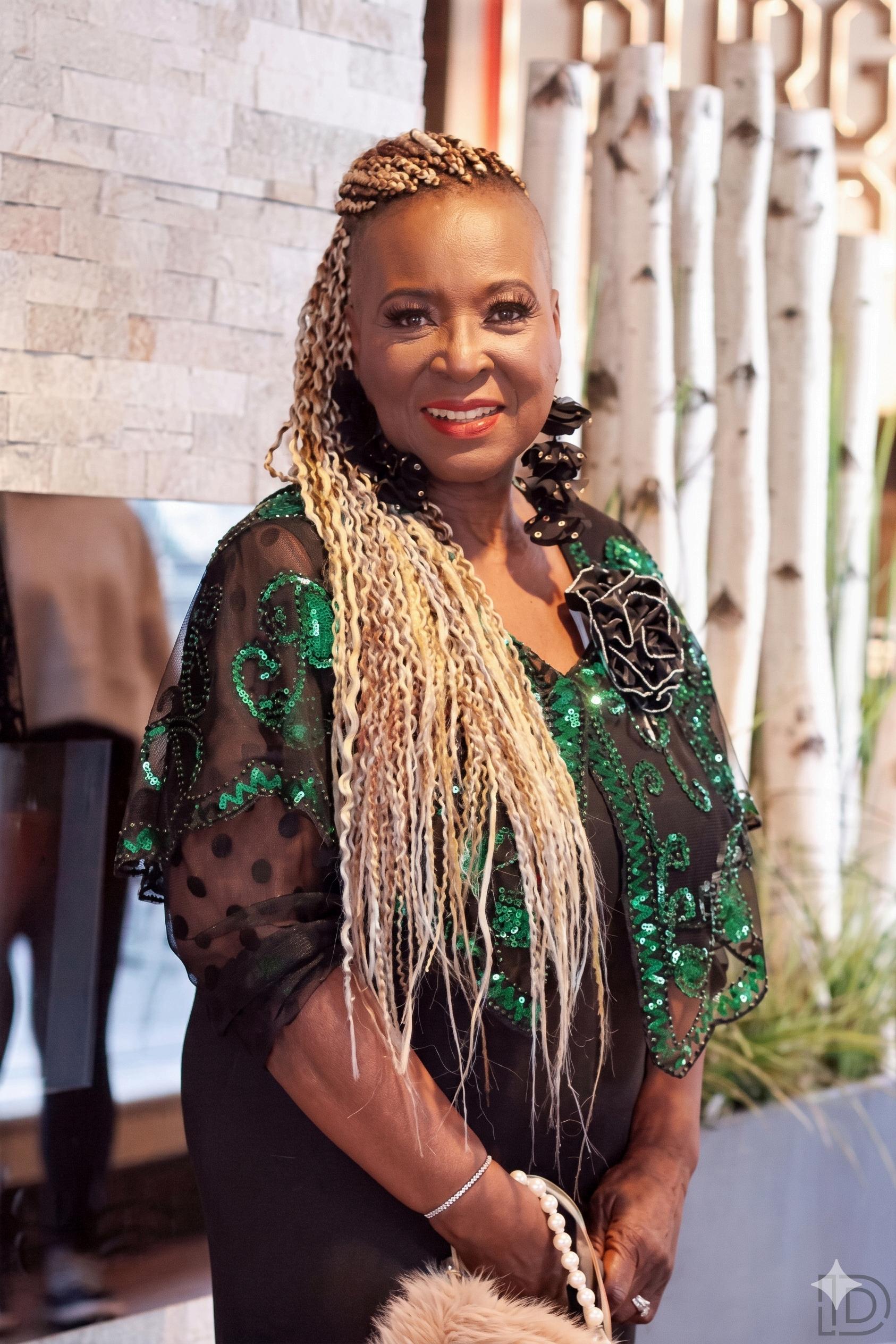
This edition proudly features inspiring leaders making a meaningful impact across industries and communities. We are honoured to recognize Keisha Bailey, Founder and CEO of Bailey Wealth Group, as our Business Woman of the Month. Through financial empowerment, leadership, and community focused advocacy, Keisha continues to inspire the next generation of entrepreneurs and professionals.
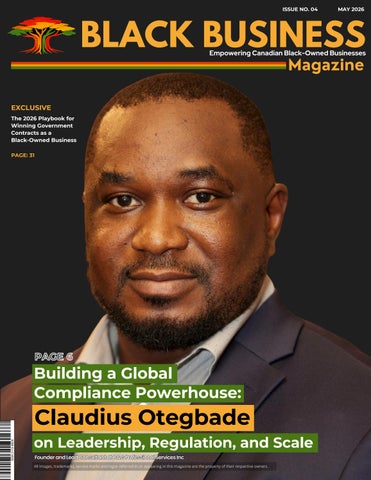
Readers will also discover powerful stories and conversations with changemakers including Claudius Otegbade on building a global compliance powerhouse, Shelley Jarrett on fashion, film, and community empowerment through Milton Fashion Week, Ian Evans on trusted technology solutions for healthcare and non profits, and Allen Alexandre on creating cultural space, belonging, and representation through the Montreal Afro Canadian Cultural Centre.
This issue further explores how Black entrepreneurs are building influence across investment, mental wellness, inclusive procurement, and startup ecosystems. From Dan Oshodin’s work connecting brands with impact capital to Milly Feliz’s inspiring journey of building a seven figure clinic, these stories reflect resilience, innovation, and purpose driven leadership.
We also shine a light on the importance of inclusive entrepreneurship and equitable access to opportunity through contributions from SK Uddin, Norman Musengimana, and Dwania McLarty Peele, highlighting how community support, accelerators, and procurement readiness are helping Black entrepreneurs build sustainable futures.
At Black Business Magazine, our mission is to amplify stories that inspire progress, representation, and economic empowerment. We hope this edition offers valuable insight, meaningful conversations, and encouragement for every entrepreneur working to create lasting impact.
Thank you for being part of this growing movement.
Building the Future of Inclusive Procurement in Canada
BEP Ecosystem Funding for Black Entrepreneurs
Expanding Funding Options for Black-Owned Businesses
Funding Black Entrepreneurs for Stronger Supply Chain Participation
The Role of Incubators and Accelerators in Building Contract-Ready Startups
Funding Opportunities for Black Founders in Canada 2026
Supplier Diversity in Ottawa for Black Business Growth
THIS ISSUE
onLeadership,Regulation,andScale
In an exclusive interview with Black Business Magazine, Claudius Otegbade, Founder and Lead Consultant at C&G Professional Services Inc , shares a grounded perspective on navigating one of the most complex and credibility-driven sectors in business From advising financial institutions and FinTechs to supporting regulatory readiness and forensic investigations, Claudius has built a firm that bridges technical expertise with realworld execution.
By SK Uddin
Claudius O Otegbade is an accomplished compliance strategist and forensic accounting professional with over 18 years of international experience spanning antimoney laundering (AML), fraud investigations, regulatory advisory, and litigation support.
He is the Founder and Practice Leader at C&G Professional Services Inc., where he supports financial institutions, FinTechs, money service businesses, crypto dealers and regulatory bodies across Canada and internationally in meeting complex AML and regulatory requirements, particularly under PCMLTFA, FINTRAC guidelines, and the Retail Payment Activities Act (RPAA)
Interview
Claudius also works closely with law enforcement agencies and law firms on fraud and forensic investigations, expert reports, and litigation matters involving financial crime. His work bridges regulatory compliance, financial accountability, and investigative integrity.
He has held senior roles across North America and Africa, including as Director of Compliance at WFCU Credit Union, and AML senior consultants at MNP and Grant Thornton respectively In Nigeria, he led several forensic audits and financial crime engagements across the oil & gas, banking, and public sectors
Claudius is a Founding Board Member of the ACFCS Toronto Chapter and Co-founder of the Nigerian-Canadian Compliance Professionals (NCCP) A frequent speaker at compliance and financial crime conferences, where he brings practical insight into emerging regulatory risks and capacity building within the profession. He holds an MBA and an array of global designations including CPA (USA), FCA (Nigeria), CAMS, CFE, CFCS, CFI, CCI, and CIPP/C.
Above all, Claudius is committed to mentoring the next generation of compliance professionals and shaping a stronger global response to financial crime.
You’ve built C&G Professional Services Inc. into a boutique Black-owned compliance and forensic consulting firm serving banks, FinTechs, MSBs, and emerging payment companies in Canada and beyond. What inspired you to launch your own firm in such a highly regulated, specialized space, and what gap did you see that others were not filling?
What inspired me to launch C&G was a combination of experience, market observation, and personal conviction.
Over the course of my 12 year career in Canada, I was privileged to work with two of the Big Six accounting and advisory firms in Canada in their AML and forensic groups, and later held a leadership role with one of the six largest credit unions in Ontario That combination gave me a unique perspective I was not only advising clients, but also on the receiving end, implementing and operationalizing those recommendations within a regulated financial institution
That experience highlighted a consistent gap in the market Many firms provide technically sound advice, but it is often too theoretical or not fully aligned with the operational realities of the business The real challenge is not just designing compliant frameworks, but ensuring they can be executed effectively and sustained as the business grows
At the same time, I was observing broader market trends. Canada has seen significant growth in FinTechs, particularly in the remittance space. As an immigrant from Nigeria, I understand firsthand how important cross-border payments are Many immigrants maintain strong financial ties to their home countries across Africa, the Caribbean, and Asia I saw a clear opportunity to support these businesses with advisory services that not only reflect Canadian regulatory requirements, but also an understanding of the markets they serve
C&G was created to support these companies and others with compliance solutions that are practical and grounded in real business needs
As a Black entrepreneur in Canada’s financial sector, what were the biggest challenges you faced in winning the trust of large institutions and regulators, and how did moments like being chosen over bigger firms by a major client shape your confidence and growth strategy?
As a relatively young firm, one of the initial challenges was overcoming perception, particularly when engaging with institutions accustomed to working with larger, more established firms There is often a natural bias toward scale and brand recognition
For me, credibility was built on experience and consistency Having worked with two of the Big Six accounting and advisory firms, I had early exposure to many of these institutions In some cases, stakeholders were already familiar with my work and technical approach In others, trust had to be built over time through delivery
Referrals and repeat engagements have been central to our growth Many of our clients come through existing relationships, and our growth has been largely organic as a result
We have also seen validation at the institutional level. Some financial institutions maintain approved lists of AML consulting firms, often dominated by larger firms. In certain cases, clients have obtained exemptions to engage our services, and those institutions have accepted our work In other instances, we have been added to approved vendor lists after our reports or compliance programs were reviewed
I recall an AML engagement where a senior executive described our work as one of the most detailed they had seen Feedback like that validates our approach and has shaped our growth strategy Rather than competing on size, we focus on delivering high-quality, practical solutions and demonstrating thought leadership
C&G now supports clients with RPAA readiness, FINTRAC examinations, virtual assets, cross border payments, and an automated AML effectiveness review platform. How do you balance enabling innovation in areas like crypto and FinTech while ensuring your clients stay ahead of evolving regulatory expectations?
We don’t choose between innovation and compliance We design compliance in a way that enables innovation
The starting point for us is understanding both the regulatory landscape and the business itself This includes staying current with evolving expectations from FINTRAC, the Bank of Canada under the RPAA, and global standards around virtual assets, including emerging areas such as stablecoins We continuously monitor these developments to ensure our advice remains relevant and forward-looking.
That insight is not only reflected in our advisory work, but also in how we build and refine our technology Our AML effectiveness review platform is regularly updated to incorporate regulatory changes, allowing us to identify gaps early and make practical, timely recommendations
We also emphasize early integration For many FinTechs and virtual asset service providers, we support them at the build stage, helping design KYC processes, onboarding flows, and transaction monitoring frameworks that are practical and scalable We stay closely aligned with third-party technology providers, ensuring we understand the tools our clients rely on and can guide them effectively
Ultimately, when compliance is embedded early and built with the business in mind, it becomes an enabler of innovation rather than a constraint
You co founded the Nigerian Canadian Compliance Professionals network and helped found the ACFCS Toronto Chapter, mentoring the next generation of compliance leaders. What do you see as the biggest opportunities and barriers for Black professionals who want to build careers—and eventually firms—in compliance, risk, and financial crime prevention?
There are significant opportunities for Black professionals in compliance as the regulatory landscape continues to evolve Regulators and financial institutions are placing greater emphasis on compliance, risk, and governance, which is driving demand for skilled professionals.
With the right experience, professionals can move across sectors, from consulting to financial institutions to regulators, and eventually into entrepreneurship
At the same time, there are real barriers Access and exposure remain key challenges Many opportunities in this field are relationship-driven, and without the right networks or mentorship, it can be difficult to break in or advance Representation at senior levels is also still limited
That is why initiatives like the NigerianCanadian Compliance Professionals network and the ACFCS Toronto Chapter are important They create visibility, provide mentorship, and help bridge that gap
My advice is to be intentional. Build strong technical foundations, seek out mentors, and take advantage of volunteering opportunities through organizations such as ACFCS, ACAMS, TCAE and similar associations These platforms provide access to networks, leadership, and real exposure Over time, consistency, competence, and relationships will open doors, including the opportunity to build your own firm
Looking ahead, what advice would you offer to Black entrepreneurs building professional services firms in complex, credibility driven industries about positioning their expertise, leveraging referrals, and scaling sustainably while staying true to their values?
My advice would start with building on a strong foundation of trust and integrity Your reputation is your currency Doing the right thing, even when no one is watching
Equally important is setting up your business properly from the outset This includes incorporating your business, ensuring compliance with CRA requirements, maintaining proper financial records, and obtaining professional liability insurance These are not just administrative steps, they signal credibility to clients and partners
Positioning your expertise also requires visibility. Having a strong digital footprint, a credible website, and being intentional about thought leadership through speaking engagements and industry participation are key You want to be seen and recognized for the value you bring
At the core, however, is technical competence This is a hands-on field It is not enough to speak about compliance or risk, you must be able to execute Rolling up your sleeves and doing the work yourself, especially in the early stages, builds both confidence and credibility Referrals naturally follow from quality work and strong relationships
As you scale, the focus should be on maintaining quality, staying true to your values, and building systems that allow you to grow without compromising the standard that built your reputation
Disclaimer:Theviewsandopinionsexpressedinthisintervieware thoseoftheguestanddonotnecessarilyreflecttheofficialpolicy orpositionofBlackBusinessMagazineoritsaffiliates The magazineiscommittedtosupportingBlackentrepreneursand fosteringconversationsthatpromoteinclusionandeconomic empowerment.
BusinessWoman oftheMonth Keisha Bailey
By SK Uddin
Keisha Bailey on Bridging the Wealth Gap Through Investment and Generational Wealth Building
Keisha Bailey has worked with individuals and institutions for nearly two decades to help them make better financial decisions and build lasting wealth Keisha is the founder and CEO of Bailey Wealth Group, an investment and asset management firm that serves clients in Canada, the Caribbean, and North America Her mission is simple: to help people bridge the wealth gap and create generational wealth through disciplined investing and financial education.
Keisha began her professional investment career in 2005 and has established a name at the crossroads of investment management, risk management, and financial education As a Black woman in the realm of high finance, where representation is scarce, she has established herself as a reliable voice assisting professionals, entrepreneurs, and families in taking charge of their financial future FounderandCEOof
From Global Finance to Community Wealth Building
Keisha began her career with major financial institutions, where she gained extensive knowledge in investment management and financial risk analysis across Jamaica, the Caribbean, and Canada Working in these contexts entailed managing portfolios, understanding market behaviour, and making strategic financial decisions in fiercely competitive marketplaces That experience also highlighted a larger issue: many people, particularly in Black neighbourhoods and among immigrant families, lacked access to the financial information and investment strategies required to build long-term wealth.
Instead of accepting this reality, Keisha decided to use her expertise to assist close the gap Over the years, she has translated institutional-level financial expertise into practical wealth-building tactics that individuals and families can comprehend and use
Bailey Wealth Group and the Mission to Build Generational Wealth
Keisha now works with Bailey Wealth Group, where she helps clients develop wealth strategies based on long-term growth, financial discipline, and asset management The organization focuses on assisting clients in moving beyond simply earning income to developing assets that could provide financial security for future generations Bailey Wealth Group helps clients through:
Investment and asset management solutions designed for long-term wealth generation
Financial planning aims to connect investments with personal and company goals.
Wealth education simplifies investing and financial decision-making.
Helping professionals, entrepreneurs, and diaspora families navigate global financial possibilities.
Risk management solutions that help clients secure and preserve their wealth throughout time
ImageCourtesy:KeishaBailey
Get Serious About Wealth
Keisha's interest in financial empowerment has led her to write a book, Get Serious About Wealth: A Practical Guide to Building Wealth It invites readers to reconsider their attitudes toward money, investing, and long-term financial planning The book's goal is to help people take deliberate steps toward financial freedom and wealth growth. It embodies many of the same values that govern her work at Bailey Wealth Group, including discipline, education, ownership, and long-term thinking
It's a 200-page 2023 workbook that teaches users how to construct a personalized financial plan, leave a wealth legacy, and enhance cash flow management It provides actionable measures for debt reduction, investing, and retirement planning It serves as a thorough guide to achieving financial success by covering budgeting, money attitude, and investing
Keisha continues to urge more people, particularly those from marginalized areas, to actively participate in wealth accumulation rather than feeling alienated from it
Academic Excellence and Financial Expertise
Keisha Biley, a financial expert with a 17-year career and the CEO of Profit Jumpstarter, has a strong academic and professional background that supports her practical skills She is a CFA (Chartered Financial Analyst) and a FRM (Financial Risk Manager) charterholder, two of the most prestigious and rigorous qualifications in global finance These certifications demonstrate extensive knowledge in areas such as portfolio management, financial analysis, risk modelling, and market behaviour
She also has an MBA with distinction from the Ivey Business School (Richard Ivey), one of Canada's top business institutions That schooling provided her with advanced training in strategy, leadership, and global business, as well as increased her connections to Canada's financial and commercial ecosystem
In addition to her job at Profit Jumpstarter, Keisha is an Adjunct Finance Professor at the Mona School of Business and Management at the University of the West Indies She teaches finance to aspiring Caribbean and diaspora leaders, incorporating real-world experience into the classroom
She assists folks in transitioning from survival-based financial habits to longterm wealth development by combining institutional knowledge with communityfocused teaching For many professionals and entrepreneurs, her experience demonstrates that wealth creation begins with access to knowledge, careful preparation, and the confidence to accept responsibility for financial decisions
Conclusion
Keisha Bailey's career has taken her from global financial institutions to entrepreneurship, teaching, and publishing, all with the goal of helping people build better financial futures Her work continues to empower individuals, families, and entrepreneurs to close the wealth gap, invest with confidence, and build long-term wealth
Keisha Bailey has devoted her professional life to helping individuals understand and manage their finances, from trading floors and risk committees to schools and online communities She is transforming wealth discussions for Black communities in Canada, the Caribbean, and beyond
Redefining Wealth Conversations in Black Communities
Keisha Bailey's work has a broader societal impact than money management She is helping to normalize debates about investing, ownership, and financial legacy in Black communities through Bailey Wealth Group, financial education, and public wealth conversations Her journey exemplifies a bigger movement for visibility, access, and financial empowerment
Every year on May 17, the International Day Against Homophobia, Transphobia, and Biphobia (IDAHOBIT) raises awareness of the violence and prejudice that 2SLGBTQI+ communities confront around the world, as well as the work that remains to be done to achieve complete equality The global theme for 2026, "At the Heart of Democracy," emphasizes that genuine democracy is impossible when queer and trans people are denied safety, political participation, and economic opportunity
IDAHOBIT originated as a global day of action against homophobia and has since extended to expressly include transphobia and biphobia, acknowledging the entire range of queer and trans experiences In 2026, the subject "At the heart of democracy" asks governments, institutions, and communities to confront difficult questions about who benefits from democratic systems, particularly regarding access to economic tools such as entrepreneurship and procurement
Discrimination is personal for the 2SLGBTQI+ founders. Surveys and ecosystem studies reveal that queer and trans entrepreneurs face:
Higher rates of credit denial or unfavourable loan terms.
Limited access to traditional business networks and mentors.
Despite meeting or exceeding market norms, certain suppliers are underrepresented on government and corporate listings.
These impediments are especially severe for Black and other racialized 2SLGBTQI+ businesses, who face racism on top of homophobia and transphobia IDAHOBIT provides an annual opportunity to relate these experiences to broader democratic values: if economic institutions exclude queer and trans people from ownership and supply chains, democracy itself suffers Canada's new entrepreneurship initiatives are a conscious attempt to close this gap
In 2025, the Government of Canada introduced the first-ever 2SLGBTQI+ Entrepreneurship Program, providing $25 million over three years to boost the environment for queer and trans business owners The Canadian Queer Chamber of Commerce (CQCC) administers the program, which was designed in collaboration with groups in the 2SLGBTQI+ ecosystem CQCC is the premier organization supporting 2SLGBTQI+ entrepreneurs nationwide
The program is founded on three pillars:
1 ) 2 ) 3 )
CQCC's Business Scale-Up program helps 2SLGBTQI+ entrepreneurs launch and grow their enterprises, especially in places with low or no ecosystem assistance. Activities include developing a national mentorship program, boosting access to corporate procurement opportunities, and assisting businesses with export readiness.
Ecosystem Fund provides funding to nonprofit groups that promote 2SLGBTQI+ enterprises CQCC's $8 million fund supports 29 programs nationwide, providing training, networking, and capacity-building opportunities These projects aim to fill gaps left by previous funding rounds and increase support in underrepresented regions and communities.
The Knowledge Hub supports national research on 2SLGBTQI+ entrepreneurship, led by a Canadian post-secondary or research university Data, publications, and best practices are generated to influence policy, programs, and business support groups
Together, these pillars aim to remove barriers to the beginning, maintenance, and growth of enterprises for 2SLGBTQI+ entrepreneurs, as well as to build institutional capacity to connect them to long-term funding, procurement, and export opportunities
Expanding Opportunities for Queer and Racialized Founders
The 2SLGBTQI+ Entrepreneurship Program promotes equity-deserving groups within the queer and trans community, including founders who are racialized, Indigenous, or gender diverse. CQCC says that ecosystem projects sponsored by the Ecosystem Fund are planned to benefit entrepreneurs "from all backgrounds," with a focus on those in underprivileged regions and groups who have historically received little support
This important to gay Black and other racialized entrepreneurs They are typically disregarded in mainstream entrepreneurship and race-specific programs that assume heteronormative experiences CQCC's Ecosystem Fund supports organizations addressing intersectionality, such as regional queer chambers, community economic development groups, and mentorship networks
Futurpreneur, a youth-focused provider, promotes 2SLGBTQIA+ creators through Pridethemed advertising, success stories, and personalized resources, highlighting their importance in Canada's business ecosystem. National women ' s entrepreneurial organizations and ecosystem bodies have also begun showcasing 2SLGBTQI+ stories and hosting panels on intersectional inclusion and procurement
For a queer Black creator, this developing web of support national programs, local ecosystem projects, mentorship networks provides more opportunities to access funding, coaching, and corporate contacts than ever before The difficulty currently is knowledge and uptake, not a complete lack of infrastructure
From Support to Growth for 2SLGBTQI+ Entrepreneurs
The 2SLGBTQI+ Entrepreneurship Program in Canada not only promotes positive branding but also aims to drive economic growth. Government and ecosystem evaluations show that 2SLGBTQI+-owned enterprises generate over $22 billion in sales and play a vital role in innovation and job development The initiative strives to maximize potential by providing mentorship, scale-up support, procurement pathways, and export preparedness
Inclusive procurement is a vital lever CQCC's Business Scale-Up initiative aims to expand access to corporate and institutional procurement by educating 2SLGBTQI+ firms on supplier diversity, certification alternatives, and how to respond to difficult RFPs The Ecosystem Fund helps local groups provide training in financial management, digital transformation, and governance, which corporate and public-sector purchasers are increasingly looking for from suppliers In other words, when queer and trans entrepreneurs have the tools they need to compete fairly for huge contracts, inclusive growth becomes more than just a slogan and begins to appear in payrolls, tax receipts, and community investment
Economic inclusion must be discussed at IDAHOBIT 2026, when Canada considers the topic "At the core of democracy " CQCC's $25 million 2SLGBTQI+ Entrepreneurship Program aims to provide queer and trans startups, particularly those from Black and racialized communities, with access to funding, networks, and procurement opportunities The next frontier is participation: ensuring that 2SLGBTQI+ entrepreneurs are aware of these resources and are enabled to use them to develop successful, visible businesses
In an exclusive interview with Black Business Magazine, Shelley Jarrett, Founder of Milton Fashion Week, shares how creativity, storytelling, and community-building come together to create something far bigger than a runway show With a vision rooted in opportunity and representation, Shelley is redefining how fashion can serve as a platform for emerging talent, local business growth, and cultural expression
Shelley Jarrett brings a wide range of expertise to the table With a degree in Social Work, she has worked with women and supported them in various ways over the past three decades She also believes strongly in partnerships and collaborations and is very supportive of developing business objectives and business skills through learning and teaching opportunities.
Shelley has been featured on several print media outlets and mainstream TV Including CHCH TV to talk about her journey of producing W’AT ABOWT US documentary and most recently an appearance on Breakfast Television to talk about Milton Fashion Week. Shelley is a Past Board Member of the prestigious Art Gallery of Mississauga also Past Advisory to the Board of Canadian Centre for Women’s Empowerment Shelley has merged her passion for community development and the creative arts
In 2019 Shelley produced her debut film, the award-winning documentary W’AT ABOWT US. It tells the stories of eight courageous women from all 5 major cultural backgrounds tell their stories of truth. They all reveal personal experiences of domestic violence, child molestation, sexual assault among others and workplace harassment
In 2023 Shelley produced and directed her 2nd documentary, WHAT WE DESERVE Restorative Justice and Reparation, which premiered at the Burlington Public Library Shelley and the films have won numerous awards over the past six years Recently won Best Costume Design award at the International Black & Diversity Film Festival (IBDFF) 2026.
In 2025 Shelley tapped into her visionary talents to create and organize the first ever Milton Fashion Week, a two day extravaganza featuring creativity, art, and diversity.
You’ve been a social worker, women’s advocate, magazine publisher, filmmaker, and now founder of Milton Fashion Week. What moment made you decide to “create your own lane” in Milton and build an entirely new fashion platform from the ground up?
After the pandemic I noticed an increase of fashion shows across the GTA I had been in the fashion industry for over a decade, but primarily behind the scenes My family and I had recently moved to Milton and realized a fashion event was what was lacking in already a vibrant arts community As an entrepreneur, I am always looking for opportunities, so with my business background and some knowledge in the fashion industry, I was able to merge my skills and talents to create Milton Fashion Week As I am also active in the arts community, I wanted to add a fashion arts flavour to the community scene here in Milton
We did a pre-launch in December 2024 and ran a contest to crown the face of Milton Fashion Week The response was very gratifying, so we knew there was a need That led to our inaugural runway show last July 2025. It was a labor of love but a success nonetheless.
I truly believe in using my gifts and talents for creative purposes My goal is always to give entrepreneurs, in this case designers, a platform to tell their creative stories
Milton Fashion Week has already attracted hundreds of attendees, designers, models, and creatives while boosting local businesses. In simple terms, what makes Milton a unique place to host a fashion week, and how did you turn a local idea into a high fashion experience?
Milton has a quiet advantage that Toronto and other bigger cities dont offer It feels fresh, intentional and is community driven A nice drive out from the bigger cities is welcoming and different With the view of the escarpment, that small town feel is exciting A fresh and welcome change from the big city
Milton is also an emerging, not oversaturated market, unlike cities like Toronto where fashion events compete with each other Models are also looking for different experiences to enhance their creative abilities
Given time, my hope is for continually increasing participation by Milton residents and entrepreneurs for this local initiative and make it into a community moment for emerging as well as established designers A place where designers, models, local businesses and attendees feel personally connected to its success.
As Milton continues to expand with young diverse families moving into the area I am not only hosting a fashion show, I am defining what fashion culture looks like here That gives me creative control and long term branding power for Milton Fashion Week We are building more than a runway, a brand that drives culture, tourism and economic growth
You’ve produced award‑winning documentaries like W’AT ABOWT US and WHAT WE DESERVE, and now your short film “MILTON ON THE RUNWAY” is earning international recognition. Why was it important to you to bring storytelling and film into the fashion space, and what story are you telling through this project?
It was important for me to make a film for a couple of good reasons First of all, there were two designers with very important but different messages to convey These stories needed to be told Having completed two prior documentaries, my goal is always to provide information and make people feel something memorable I had the privilege of interviewing two of the designers that were on the runway last year One designer is a talented Brazilian with autism level 2 support The second designer has been in the fashion industry for over a decade and understands the changing landscape of the industry She is very passionate about the environment and saving our planet for the next generation
MFW is “more than a runway” – it’s entrepreneurship, tourism, and community development. What kinds of concrete opportunities are you creating for emerging designers, models, youth, and other creatives who might not otherwise have access to this kind of stage?
Some of our goals this year were to focus primarily on promoting sustainability in fashion; Using repurposed materials Bringing awareness to help our planet We are encouraging designers to use repurpose materials and think of the environment and our contribution in helping to save our planet Incorporating this message is part of our marketing strategy, at the same time celebrating the different diverse forms in fashion arts
Craft is art Each of us is born with specific gifts and talents, how we use it is what matters With the world changing everyday and since the pandemic, many of us, especially women, have had to pivot and find new ways of thinking and doing different things to maintain stability. I see opportunities for emerging as well as established designers, models, youths and other creatives like hair & makeup artists
They are getting a professional backdrop to showcase content which they can use to build portfolios, such as high-quality photos and videos We want designers and other creatives to have access to buyers and stylists We want the models to use the experience to build confidence and develop their personal brand
We’re in a time of economic uncertainty and post‑COVID rebuilding. What strategies have you used to sustain and grow Milton Fashion Week—through funding, partnerships, or community support—and what advice would you offer to other Black women building arts and culture ventures?
Post covid growth isn’t just about bringing events back It is about building something more resilient. Our goal is to scale to a larger platform.
From a funding perspective, we know that sponsorship is risky We would need to examine repeatable revenue streams like government funding However, our long term goal is to get corporate sponsorships and art grants
We need to encourage emerging designers with low fees to make it accessible to them Our packaging will need to be flexible enough to attract diverse and youth driven audiences Mixing film and fashion creates content for social media For our partners/sponsors we need to provide perks within the fashion backdrop that promotes business-tobusiness “ you do this for me and I will do this for you ”
We want to promote Milton Fashion Week as a tourist attraction so local businesses like hotels and restaurants will want to come on board My goal is to also partner with a college so students get their credits to graduate (I am already doing this with Marca College )
We would like MFW to be a platform for youth to learn about the fashion industry My long term goal is to use film and fashion to build a minidesigners journeys and would involve nd stylists. Behind-the scenes content could be or streaming platforms. We could also , conduct virtual designer shows and do digital udience could be scattered all over the GTA, smart phones
ourage other black women in the arts and e building and telling creative stories I have ashion Week is not just a fashion show, it is “ a eative phenomenum that develops emerging attention to Milton ” opinionsexpressedinthisinterviewarethoseofthe lyreflecttheofficialpolicyorpositionofBlack iliates.Themagazineiscommittedtosupporting steringconversationsthatpromoteinclusionand
Over the last few years, Canada has progressed from discussing inclusive procurement to implementing it. Federal pilots for Black-owned and other underrepresented firms, along with corporate commitments to supplier diversity, are reshaping the competitive landscape for significant contracts Public Services and Procurement Canada's (PSPC) Black Business Procurement Pilot and broader Supplier Diversity Action Plan, as well as Shared Services Canada's inclusive procurement activities and regional BEP ecosystem support, are early indicators of a larger structural shift
Federal
Pilot Programs for Inclusive Procurement
PSPC's Black Business Procurement Pilot, which limited tenders to Canadian Black-owned or operated small enterprises, is a prime illustration of Ottawa's experimental approach These pilot bids, posted on CanadaBuys and promoted by partners such as the Canadian Aboriginal and Minority Supplier Council (CAMSC), aim to provide opportunities for Blackowned businesses and evaluate specific techniques for future scaling PSPC plans to use targeted and social procurement procedures to promote diversity in future procurements, based on trial results
The Supplier Diversity Action Plan and social procurement framework urge departments to consider socio-economic outcomes, including opportunities for Black and other underrepresented entrepreneurs, when structuring procurements. PSPC's Procurement Assistance Canada arm has strengthened collaboration with Black business associations, launched coaching services for underrepresented suppliers, and supported initiatives such as the Black Business Certification Program in British Columbia, which connects Blackowned firms with federal and corporate buyers
When taken together, these pilots and supports are not random experiments; they represent prototypes for a future procurement system in which supplier diversity and social impact are built into how Ottawa buys By 2030, explicit set-asides, diversityweighted evaluation criteria, and specialized streams for minority suppliers, particularly Blackowned enterprises, are expected to increase
How Corporate Canada Is Rethinking Supply Chains
While federal policy changes, Canada undergoes its own shift Major organizations are setting spending targets with diverse suppliers, particularly Black-owned firms, as part of supplier diversity programs and inclusive procurement strategies across sectors CAMSC emphasizes that certified diverse suppliers gain priority access to RFPs, matchmaking events, and corporate buyer networks, providing a systematic way into huge private-sector supply chains
The Black Entrepreneurs and Businesses of Canada Society (BEBC Society) in British Columbia has launched a Black Business Certification Program in collaboration with PSPC and supplier-diversity organizations This program specifically prepares Black-owned businesses for opportunities with corporations and governments According to recent reports, the program serves as a liaison between procurement teams and Black entrepreneurs, aiming to secure a significant share of the billions of dollars in annual spending that currently elude Black-owned businesses
According to industry analyses, inclusive procurement is increasingly being presented as a driver of innovation, resilience, and ESG performance, rather than just an equity indicator Investors, regulators, and customers are pressuring corporations to demonstrate that their supply chains reflect the diversity of the communities they serve and to document tangible economic effects for underrepresented groups By 2030, IT, construction, facilities management, and professional services are likely to rely substantially on certified, contract-ready diverse suppliers, particularly Black-owned firms, indicating continued demand.
What Black Entrepreneurs Should Be Building Now
To secure a position in future pipelines, Black-owned enterprises should prioritize investing in specific competencies over the next five years Emerging best practices and expert comments highlight three key areas:
ComplianceandGovernance - Procurement reforms and ESG trends mean that buyers are paying closer attention to suppliers' legal, financial, and ethical behaviour Early investments in clean financials, sturdy contracts, clear HR rules, health and safety standards, privacy/cybersecurity controls, and basic ESG reporting position black-owned enterprises for success in risk management and sustainability evaluations.
DigitalTransformationandDataReadiness-Government and huge corporations are digitizing procurement and supply chain management Modern accounting systems, project management tools, e-invoicing, and integration with client platforms (via portals or APIs) will become standard requirements Companies that offer real-time performance data and reporting will stand out
CertificationsandSupplierDiversityCredentials-
Certification from CAMSC, BEBC-linked programs, and other councils provides Black-owned businesses with proof of ownership and direct access to corporate and institutional buyer networks Investing in sector-specific certifications, such as ISO, safety, cybersecurity, or environmental standards, enhances credibility, especially in IT, construction, and professional services with high compliance requirements
These investments should be treated as basic infrastructure rather than optional additions; they will distinguish "listed suppliers" from truly favoured providers by 2030.
From
Pilots to Predictable Procurement by 2030
To turn today's pilots and corporate promises into reliable revenue streams, Black-owned firms should approach inclusive procurement as a pipeline rather than a one-time contract Policy analysts and ecosystem leaders propose many potential moves:
Create a map of your target buyers and sectors
Identify 5-10 government ministries and large enterprises with relevant responsibilities (e g , digital transformation, infrastructure, professional services) and follow their social procurement and supplier diversity targets
Engage early and often Participate in consultations, pilots, supplier diversity fairs, and coaching programs given by PSPC, BEBC Society, CAMSC, and others, even if you don't feel prepared These connections influence future legislation and get your organization on the radar
The stack ecosystem provides help Build capacity and resilience by combining BEPfunded ecosystem services, bank Black entrepreneur initiatives, mainstream innovation awards, and export support
Consider multi-year timeframes. Use pilot contracts and smaller business arrangements as proof points for larger framework agreements and long-term service contracts
Canada is reaching a tipping point Federal pilots, BEP ecosystem initiatives, and corporate supplier diversity commitments are setting the framework for a more inclusive procurement system that might fundamentally change by 2030 from the current status quo Black entrepreneurs have the opportunity to become vital partners in long-term supply chains by developing the systems, certifications, and strategies that future purchasers need
I am the founder and President & CEO of ETech, a managed IT services and cybersecurity company based in Toronto that supports not-for-profit organizations, associations, and businesses across North America
For more than 25 years, I have worked in information technology, helping organizations leverage technology to improve security, efficiency, and long-term growth. I founded E-Tech in 2005 with the goal of delivering dependable, relationshipdriven IT services that organizations could truly rely on What began as a small operation has grown into a full-service technology company providing managed IT support, cybersecurity, cloud hosting, infrastructure management, and web services to clients throughout Canada, the United States, and even the Caribbean
In an exclusive interview with Black Business Magazine, Ian Evans, Founder, President and CEO of E-Tech, shares how a relationship-first approach to technology has shaped nearly two decades of growth in the managed IT and cybersecurity space. Focused on serving nonprofits, healthcare organizations, and small to mid-sized businesses, Ian breaks down what it really takes to turn technology from a constant challenge into a reliable foundation for growth
Before launching E-Tech, I held senior IT leadership roles including Hosting Manager at Advanced Solutions International and Manager of IT at Sentient Inc.. I also founded Evans Consulting, where I began providing technology consulting services in the early 1990s.
You founded E Tech in 2005 and have grown it from a one person operation into an award winning managed IT and cybersecurity firm serving clients across North America. What problem were you originally trying to solve, and what has kept you focused on relationship‑driven IT for nearly 20 years?
When I founded E-Tech in 2005, I saw a gap in the market that frustrated many organizations, especially not-for-profits and associations Too often, IT providers focused only on fixing problems after something broke instead of becoming true strategic partners Clients were treated like ticket numbers rather than organizations with unique goals, operational pressures, and long-term technology needs I wanted to build a company that approached IT differently one centered on trust, accountability, and proactive support
In the early days, I worked closely with every client, learning their business inside and out and helping them make smarter technology decisions that aligned with their mission and growth plans That relationship-first mindset became the foundation of our company culture and remains central to how we operate today
What has kept me focused for nearly 20 years is seeing the impact technology can have when it is implemented thoughtfully and supported properly Whether we are strengthening cybersecurity, improving business continuity, or helping organizations modernize their infrastructure, the goal is always the same: to give clients confidence that their technology is secure, reliable, and helping them succeed
E Tech specializes in supporting small to medium sized businesses and non profits that need enterprise level expertise without enterprise‑level complexity. In simple terms, what do these organizations most often get wrong about IT and cybersecurity—and how do you help them course‑correct?
Many small to medium-sized businesses and non-profits assume that IT and cybersecurity are only concerns for large enterprises In reality, they face many of the same risks ransomware, phishing attacks, data loss, downtime, and compliance challenges but often without the internal resources or expertise to manage them properly. Another common mistake is treating IT as a reactive expense instead of a strategic investment Organizations tend to focus on solving immediate issues rather than building secure, scalable systems that support long-term growth and resilience
At E-Tech, we help organizations coursecorrect by simplifying technology and making it manageable We act as an extension of their team, providing proactive support, strategic guidance, cybersecurity protection, and infrastructure management tailored to their specific needs and budgets Rather than overwhelming clients with technical jargon or unnecessary complexity, we focus on practical solutions that reduce risk, improve efficiency, and support their mission
A big part of our approach is education and partnership. We help clients understand where their vulnerabilities are, prioritize improvements, and create technology roadmaps that align with their operational goals When organizations have the right strategy, processes, and support in place, technology becomes an asset that enables growth instead of a source of stress
You’ve placed particular emphasis on the healthcare and non‑profit sectors, including managed services, visitor sign‑in systems, and cybersecurity awareness training. What kinds of risks are you seeing most often in these environments, and what practical protections make the biggest difference?
Healthcare organizations and non-profits are increasingly being targeted because they often manage sensitive information while operating with limited internal IT resources. In healthcare, the risks typically involve ransomware attacks, phishing scams, data breaches, and system downtime that can directly impact patient care and operations Non-profits face many of the same threats, but they are also vulnerable because cybersecurity is often underfunded or deprioritized in favor of mission-focused spending
One of the biggest challenges we see is that many organizations still rely on outdated systems, weak password practices, limited employee training, and inconsistent security policies Cybercriminals know this and frequently target staff through email phishing and social engineering because people are often the easiest entry point
At E-Tech, we focus on practical protections that provide the greatest real-world impact without adding unnecessary complexity. Multi-factor authentication, endpoint protection, email security, secure backups, and ongoing monitoring are critical foundations Just as important is cybersecurity awareness training, because technology alone cannot stop human error
We also emphasize business continuity and disaster recovery planning so organizations can continue operating if an incident occurs In sectors like healthcare and nonprofits, resilience matters just as much as prevention The goal is to create a layered, manageable security strategy that protects both operations and trust
E‑Tech has evolved from traditional IT support into a full managed services and cybersecurity partner, offering everything from endpoint protection and MDR to cloud, VoIP, and disaster recovery. How do you keep clients ahead of evolving threats without overwhelming them with constant change?
One of the biggest challenges in technology today is that the threat landscape changes constantly, while most organizations are already stretched managing day-to-day operations Our role at E-Tech is to absorb that complexity for our clients and translate it into practical, manageable strategies that improve security without disrupting their business.
We focus heavily on proactive planning rather than reactive firefighting That means continuously monitoring systems, assessing risks, and recommending improvements in stages instead of overwhelming clients with large-scale changes all at once We prioritize solutions based on real business impact, helping organizations address the most critical vulnerabilities first while building long-term resilience over time
Communicationisalsoessential Weavoidunnecessary
effective ways to reduce the risk of unauthorized access caused by stolen passwords or phishing attacks Combined with strong password practices and secure backups, MFA can significantly improve an organization’s security posture very quickly
At E-Tech, we encourage organizations to view cybersecurity and business continuity as part of operational resilience, not just an IT issue Even small improvements can dramatically reduce risk when they are implemented consistently and supported by employee awareness training, proactive monitoring, and a clear recovery plan The goal is not to eliminate every possible threat it is to ensure the organization can continue operating securely and confidently when challenges arise
Disclaimer:Theviewsandopinions expressedinthisinterviewarethoseof theguestanddonotnecessarilyreflect theofficialpolicyorpositionofBlack BusinessMagazineoritsaffiliates The magazineiscommittedtosupporting Blackentrepreneursandfostering conversationsthatpromoteinclusion andeconomicempowerment
By Norman Musengimana
The Black Entrepreneurship Program (BEP) Ecosystem Fund is the driving force behind many of Canada's new incubators, mentorship circles, and training programs for Black entrepreneurs The fund's mission is modest yet ambitious: to boost the entrepreneurship ecosystem for Black business owners across the country Instead of investing in individual enterprises, funds are channelled into Black-led nonprofit groups that provide frontline support, including mentorship, networking, financial planning, and business training.
At the national level, the Ecosystem Fund, along with the Black Entrepreneurship Loan Fund and the Knowledge Hub, forms one of the three pillars of the Black Entrepreneurship Program The mandate is to "strengthen the entrepreneurial ecosystem for Black entrepreneurs and business owners across Canada" by supporting Black-led organizations in expanding or developing services like mentorship, networking, financial planning, and business training
The fund makes non-repayable contributions to Black-led nonprofits that meet tight standards, including at least two-thirds Black leadership and governance, as well as a focus on Black communities in their mission and programming During its initial phase, the fund allocated $100 million to 43-44 Black-led groups countrywide. With the 2025 renewal of the larger BEP, Ottawa promised up to $105.4 million in additional funding for RDAs to continue delivering the Ecosystem Fund until 2030, as well as $7 5 million for the Knowledge Hub and $67 million for the Loan Fund
Crucially, the activities qualifying for the Ecosystem Fund extend much beyond generic workshops RDAs highlight incubator and accelerator programs, networking and matching, community outreach and capacity building, and initiatives that promote Black participation in entrepreneurship and procurement In other words, the fund aims to generate genuine business strength rather than just awareness
Growth of Business Ecosystems in the North and Prairies
The Ecosystem Fund is assisting with the development of infrastructure in Canada's North and Prairie regions that previously did not exist on a large scale The Canadian Northern Economic Development Agency (CanNor) will invest up to $1 2 million over four years to boost the Black entrepreneurial environment in Nunavut, the Northwest Territories, and Yukon Funding supports Black-led non-profits in the North that provide mentorship, networking, training, outreach, and incubator or accelerator programs
Activities include:
Cohorts are structured in incubators and accelerators.
Networking and matching initiatives
Increasing Black community participation in entrepreneurship through
Outreach and capacity-building efforts.
PrairiesCan is investing $15 2 million through the Ecosystem Fund to help Black-led groups in Alberta, Saskatchewan, and Manitoba The goal is similar: to enable organizations to provide incubator/accelerator programming, coaching, financial planning, and company development and advisory services to help Black entrepreneurs start, grow, and flourish
For procurement readiness, these regional investments are important They give founders the paperwork and procedures that lenders and procurement officials require by expanding access to advice on business planning, financial management, and growth strategy. Long before the first significant contract is on the table, incubator and accelerator components also introduce founders to corporate partners and public-sector opportunities, helping them get familiar with RFPs, certifications, and supplychain standards
Strong Networks and Specialized Growth in Ontario and Quebec
The Ecosystem Fund is being used to expand and specialize existing Blackled groups in more densely populated areas such as Ontario and Québec Black-led groups in southern Ontario that offer financial literacy, networking, mentoring, business training, and support for digital innovation are the focus of FedDev Ontario's renewed request under the Ecosystem Fund. The funding available through 2030 is intended to assist these groups in deepening services, including investor linkages and leadership development, expanding programming, and supporting more Black-owned enterprises Resource hubs explain how this funding supports long-term projects, including sector-specific accelerators, company advising programs, and regional Black entrepreneurship centers
The regional development agency in Québec is using the Ecosystem Fund to support Black-led non-profits that provide financial planning, mentorship, incubation and acceleration programs, and consultancy for Black entrepreneurs A 2025 call for projects specifically targets organizations that can increase the number of Black-owned businesses they support between 2026 and 2030 and expand current services This regional density translates into more specialized initiatives for Black entrepreneurs, such as professional services, tech companies, or creative industries Whether in cybersecurity, regulated professions, or export-oriented manufacturing, this specialization makes it easier to meet the industryspecific requirements of large corporate and government buyers
How Ecosystem Supports Turn into Supply‐Chain Readiness
The Ecosystem Fund indirectly improves government and corporate supply chain readiness in several ways, even though it does not directly fund inventories or bid bonds
First, financial planning services and mentoring assist Black businesses in developing clean books, realistic predictions, and governance practices essential components that lenders and procurement teams seek when evaluating risk
Second, training in proposal writing, pricing, contract management, and compliance all crucial for competing for tenders and completing big projects is frequently included in incubator and accelerator programs
Third, similar to supplier-diversity initiatives, several BEP-funded organizations host networking and matchmaking events that link Black entrepreneurs with possible corporate customers, investors, and partners These touchpoints help founders understand what it takes to become preferred vendors and demystify procurement procedures
Lastly, the Ecosystem Fund guarantees that training and consulting services are culturally aware and sensitive to the unique obstacles faced by Black entrepreneurs, enhancing both uptake and longterm effect by integrating support into Black-led organizations based in local communities Small, newly established Black-owned firms eventually become dependable connections in both public and private supply chains thanks to this combination of capacitybuilding and connectedness.
One National Fund, Many Local Gateways
The BEP Ecosystem Fund is subtly changing the scene for Black entrepreneurs across Canada, from incubators in the North to accelerators in the Prairie and mentorship centers in Ontario. It creates the networks, institutions, and skills necessary for successful supplier partnerships by funding Black-led groups that offer comprehensive, location-based support Connecting with these local ecosystems is one of the best ways for Black-owned businesses to become not just financially viable but also contract-ready
2026 is a critical year for Black-owned companies in Canada to enter the multibillion-dollar federal procurement market. In addition to addressing the historical underrepresentation of Black entrepreneurs in public contracts, the Canadian government is actively working to diversify its supplier base There are now more organized entrance points than ever, thanks to Public Services and Procurement Canada's (PSPC) Supplier Diversity Action Plan and focused pilots for Black-owned or led companies
Becoming fully contract-ready that is, properly registered, strategically focused, and competitive is now more difficult than merely "getting noticed " This playbook demonstrates how to convert new policy pledges into actual income and takes Black startups step by step through Canada's changing procurement environment
By Dwania McLarty-Peele
Understand Canada’s New Supplier Diversity Landscape
Nobellum, a female-led social and technological firm situated in Ontario, is a key member of Canada's Black innovation ecosystem. Nobellum's Innovator Program and Growth Stream help Black-led STEM firms grow from idea to scale by providing mentorship, investor exposure, IP support, and corporate partner connections By 2025, it successfully launched 100 Black-owned STEM enterprises, generating around 22 million CAD in sales, creating 268 jobs, and raising over 4 5 million CAD in venture and angel capital
Understanding how the game ' s rules are shifting in your favour is the first step As part of its broader "Better Buying" campaign, PSPC's Supplier Diversity Action Plan seeks to increase the participation of underrepresented suppliers, notably Black-owned companies, in federal procurement With funds from Budget 2021, PSPC established a program that focused on using procurement as a vehicle to promote a more inclusive economy by purchasing from Black-owned or led businesses
The department's Black Business Procurement Pilot, which was restricted to small Black-owned or operated businesses, offered 12 procurement opportunities across Canada in January 2021 A permanent Supplier Diversity Program and a Black Entrepreneurship Procurement Program, with more defined pathways and resources for Black businesses, are now being developed based on input from this trial. This means that being "Black-owned" is no longer an invisible status for founders; in certain government tenders, it might be a tangible advantage.
Get Visible and Register on Key Procurement Platforms
Once you understand the potential, you need to show up in the systems that federal buyers use to find vendors Black-owned companies at the federal level ought to:
Create a thorough supplier profile that shows capabilities, NAICS codes, and ownership status by registering on CanadaBuys, which has largely replaced the previous Buyandsell.gc.ca environment.
To be immediately informed of new opportunities, particularly those aimed at Black-owned or led enterprises, sign up for email notifications on pertinent tender search results.
To make sure you can obtain bid materials and submit proposals electronically, familiarize yourself with the main e-tendering and supply chain platforms used by public bodies and large institutions, such as MERX
Black-owned companies have been specifically urged by PSPC and its partners to sign up for tender notifications associated with the Black Business Procurement Pilot As supplier diversity initiatives grow, more tenders are anticipated To ever be invited or shortlisted, you must be properly registered and searchable
Targeted Opportunities for Black‐Owned Businesses
A helpful model for future targeted opportunities is the Black Business Procurement Pilot To allow participants to develop capacity and track record in a less crowded bidding field, the pilot employed tenders that were limited to Canadian Black-owned or led small companies These contracts spanned a variety of industries and geographic areas, but they all aimed to provide Black businesses with real government procurement experience not just promises or consultations
PSPC has stated that lessons from this pilot will feed directly into its emerging social procurement program, including future targeted and set aside approaches that benefit Black entrepreneurs For founders, that means watching for similar “pilot style” opportunities, and treating them as stepping stones proof points you can later leverage to win larger open competitions at the federal, provincial, and municipal levels
Contract Ready Business Guide for Black Founders
Filling out forms is just one aspect of winning federal contracts Black-owned companies should make sure they are prepared for contracts in four important areas before submitting a bid:
Capacity and compliance - Verify that you can actually fulfill the scope and deadlines typical of public contracts, and that your insurance, tax accounts, industry licenses, and business registrations are current Before advancing, many prosperous suppliers begin with smaller contracts to demonstrate their capabilities.
Core documents and past performance - Create a succinct capability statement, case studies, and references that highlight your accomplishments for prior clients. Evaluators should seek out unambiguous proof of quality, dependability, and timely delivery, according to procurement guidelines.
Bid strategy: discipline between bids and no-bids - You shouldn't spend your time on every tender. Create a bid/no-bid checklist that assesses fit with your resources, timetable, contract size, and expertise. This helps you stay focused on chances to succeed.
Collaboration and joint enterprises - To obtain experience on bigger contracts, think about forming joint ventures or subcontracting with more seasoned businesses. Discussions about supplier diversity in Canada emphasize the importance of collaboration to help minority suppliers build credibility and capacity.
Coaching, Feedback, and Advocacy
Black business owners don't have to handle procurement on their own To reach more Black founders interested in becoming government suppliers, Procurement Assistance Canada has increased its collaboration with Black business associations through regional networks and pitch competitions For disadvantaged company owners who have had difficulty obtaining federal contracts, the agency has launched a coaching program that includes three individual sessions with a procurement expert in addition to an initial meeting
To create more inclusive programs and eliminate obstacles, PSPC has also asked Black-owned and led companies to share their experiences through surveys and consultations. In addition to influencing future policy, participating in these procedures makes your company visible to departments actively seeking to diversify their supplier base Black entrepreneurs have a practical route from "interested" to "awarded" by combining coaching, community feedback, and pilot chances
Turning Policy into Revenue
Invoices are not paid by policy changes alone, but Canada's new supplier diversity agenda is a significant opportunity for Black-owned companies prepared to act The Black Business Procurement Pilot, PSPC's Supplier Diversity Action Plan, and new social procurement initiatives are changing who is invited to the table Black entrepreneurs can turn this momentous occasion into long-term, profitable government ties by becoming visible in procurement systems, getting contract-ready, and utilizing available coaching and community support
In an exclusive interview with Black Business Magazine, Allen Alexandre, Founder of the Montreal Afro-Canadian Cultural Centre, shares a bold vision for redefining how culture, space, and economic opportunity intersect. Moving beyond short-term initiatives, Allen is focused on building lasting infrastructure that anchors community, creativity, and ownership.
By SK Uddin
Allen Alexandre is a Montreal-born and based social entrepreneur and former political advisor passionate about economic inclusion and social impact Known for his organizing acumen and strategic leadership, he held senior roles in the Trudeau government
During his time in Ottawa, Allen played a leading role in shaping some of the most significant national initiatives for Black communities, including the Black Entrepreneurship Program, the Black Philanthropic Fund, and the Supporting Black Canadian Communities Initiative.
After leaving politics in 2021, he transitioned to the private sector before founding the Montreal Afro-Canadian Cultural Centre (CCAM), a social enterprise and cultural space devoted to preserving and promoting the artistic and cultural heritage of Black Canadians A $ 35 million initiative in downtown Montreal, CCAM is the most significant Black arts and culture space in Canada’s history
He volunteers extensively, serving on boards that work to improve social and economic outcomes for Canadians. In 2024, he was awarded the King Charles III Coronation Medal, recognizing his leadership and “significant contributions to Canada”.
ImageCourtesy:AllenAlexandre
Interview
You’ve described the Montreal Afro-Canadian Cultural Centre as a $35‑million social enterprise and the most significant Black arts and culture space in Canada’s history. What vision are you trying to bring to life with CCAM, and why did real estate ownership feel so essential for Black communities?
The vision behind the Montreal Afro-Canadian Cultural Centre (CCAM) is to build lasting infrastructure that anchors Black presence, creativity, and economic participation in Montreal and across Canada For too long, Black communities have shaped the city’s cultural life without having access to purpose-built, sustained spaces that reflect that contribution at scale CCAM is about addressing that gap in a structural way
It’s not kust a cultural venue it’s a platform where culture, entrepreneurship, and community intersect A place where artists, cultural entrepreneurs, organizations, Montrealers from all walks of life come together, but also where opportunities are created and extended beyond the walls of the Centre
Real estate ownership is essential because space determines stability, continuity, and ultimately economic power Black communities have often operated in temporary or borrowed spaces, which limits longterm impact Ownership allows you to shift from being participants in someone else’s infrastructure to being a builder of your own That is the philosophy that underpins the foundation of CCAM
By anchoring CCAM in a $40-million asset, we are creating not only a cultural landmark, but a form of permanence one that signals that Black presence in this city is not temporary, but foundational.
Before founding CCAM, you helped shape national initiatives like the Black Entrepreneurship Program and the Supporting Black Canadian Communities Initiative. How did those experiences influence the way you’re thinking about economic empowerment through arts and culture now?
My experience working on national initiatives like the Black Entrepreneurship Program and the SBCCI made one thing very clear: talent and ambition are not the issue access to capital, infrastructure, and coordinated support systems is
I believe that those programs were, and have been, critical in mobilizing resources at scale, but they also highlighted a structural gap Funding alone, while necessary, is not sufficient if communities don’t have strong institutions and spaces to anchor that investment and translate it into long-term impact.
ImageCourtesy:AllenAlexandre
That insight very much shaped how I approached the foundation of CCAM and still very much informs my decision-making when it comes to projecting the organization over the long term I see arts and culture not as separate from economic empowerment, but as a powerful entry point into it Creative industries generate businesses, careers, intellectual property, and influence -but only if there is an ecosystem to support them
With CCAM, the goal is to bring those pieces together: space, programming, partnerships, and economic opportunity in one place. It’s really about moving from fragmented support to a more integrated model where culture becomes both an expression of identity and a driver of sustainable economic growth
At CCAM, the approach is to build a diversified social enterprise where cultural programming and revenuegenerating activities reinforce each other That includes performances, exhibitions, and community programming, but also rentals, partnerships, and spaces that support entrepreneurs and creative professionals We are not looking to commercialize culture, but to ensure that cultural activity is supported by a sustainable economic foundation
Many cultural spaces struggle to balance mission and money. How do you see CCAM functioning as both a cultural home and an economic engine for Black artists, entrepreneurs, and neighbourhoods in Montreal?
I will admit that the tension between mission and money is real, but I see see it not as a contradictionI, but rather a design challenge I strongly believe that if a cultural institution is structured thoughtfully, its mission can actually drive its economic model
For artists and entrepreneurs, that means access to space, visibility, and opportunities to generate income -not just exposure For the neighbourhood where the Centre’s activities are taking place, it means increased foot traffic, partnerships with local businesses, and a stronger cultural identity that attracts people and investment
ImageCourtesy:AllenAlexandre
Ultimately, CCAM functions as both a cultural home and an economic engine, as we are intentional about ownership, programming, and partnerships And to me, it’s mainly about creating a place where culture is not only celebrated, but also valued economicallyand where that value circulates back into communities
You often speak about inclusion, identity, and Canada’s place in the world. From your vantage point, what does true social innovation look like when it comes to Black communities beyond symbolism and into long-term infrastructure and opportunity?
I believe that true social innovation goes, and must go, beyond mere representation It’s should be about building systems that shift outcomes in a lasting way For Black communities, that means moving from symbolic inclusion to tangible ownership, access to capital, and institutional permanence
From my perspective, that takes the form of investments in infrastructure physical, economic, and organizational that enables communities to create, govern, and sustain their own ecosystems and, by doing so, help sustain the broader ecosystem
It also requires a more integrated approach Culture, entrepreneurship, education, and community development should go handin-hand in order to create if you want real impact When those elements are connected, you begin to see not just participation, but mobility and wealth creation
Ultimately, true social innovation is measured by what remains over time and as such, the question become: Are we creating assets? Are we building institutions? Are we expanding who has the power to shape the future? If the answer is yes, then we ’ re moving beyond symbolism and into something transformative
As you move toward CCAM’s launch and inauguration, what message would you like to share with Black entrepreneurs and community builders across Canada who are working to secure space, ownership, and lasting impact in their own cities?
The message is simple:think long-term, and build with ownership in mind
What we ’ re seeing across the country is a generation of Black entrepreneurs and community builders doing remarkable work (something Ive pointed out in a publication in the Toronto Star in 2021), often with limited resources and within systems that, in great part, weren’t designed with them in mind The next step is to translate that energy into assets and institutions that can endure
That means being intentional about space, partnerships, and capital It means moving away from and beyond short-term wins toward structures that create stability, credibility, and leverage over time I truly believe that ownership whether physical, financial, or institutional is what allows that shift to happen
It’s not easy work, and it doesn’t happen overnight. But it is possible, and it’s already happening in different ways across Canada. My encouragement is to stay ambitious, stay collaborative, and stay focused on building things that will still be standing and creating opportunity 10, 20, 50 years from now
While many Black entrepreneurs in Canada are aware of the Black Entrepreneurship Program (BEP) and bank-led efforts, few are taking advantage of mainstream federal programs that disburse hundreds of millions of dollars annually These include innovation grants such as the National Research Council's Industrial Research Assistance Program (IRAP), export assistance through CanExport, and tax breaks such as SR&ED. These programs do not discriminate based on race Black founders are underrepresented in client lists, according to ecosystem guidelines and financing rounds
In 2025, Ottawa renewed BEP with an additional $189 million, recognizing the demand and the persistent barriers faced by Black-owned businesses. That is significant, but it is only one aspect of the situation. To scale, Black entrepreneurs must combine BEP-related support with the bigger pools of non-repayable and low-cost funding available to all Canadian enterprises
Federal Programs You Are Eligible For
The first step is to adopt a mindset that mainstream federal financing is for you, not "for others " Grant guides for Blackowned firms emphasize that programs such as IRAP, CanExport, and SR&ED are available to all qualified Canadian companies, including Black-owned SMEs
The National Research Council's IRAP is a key innovation initiative in Canada, offering non-repayable funding to help small- and medium-sized firms develop and commercialize novel technologydriven goods, services, or processes.
To be eligible, you must be a Canadian, profit-oriented SME with 500 or fewer employees that aspires to develop and produce profits through innovation IRAP funding to individual projects is frequently in the hundreds of thousands of dollars for enterprises with great growth potential
ImageCourtesy:Canva
CanExport SMEs provides non-repayable funding (typically tens of thousands of dollars per project) to help exportready firms enter new foreign markets Activities include trade fairs, market research, and promotional initiatives The Scientific Research and Experimental Development (SR&ED) tax incentive program offers refundable tax credits for eligible R&D expenses, with higher rates for Canadiancontrolled private enterprises Black-focused funding lists highlight that mainstream programs can easily outperform individual BEP grants or loans Consider BEP as a tool to expand possibilities rather than limiting them
Positioning Your Business for IRAP, CanExport and SR&ED
Winning mainstream federal financing is all about being fit Program officers and evaluators are searching for programs that align with their mandates, not general growth plans To participate in these programs, Black-owned enterprises must communicate their vision of innovation, productivity, and export growth
IRAP focuses on technology-driven innovation and commercialization. You will have to demonstrate that:
Your project includes actual technological uncertainty or advancement (rather than ordinary development)
You already have or may form a technical and management staff to carry out your plans.
The project has a clear path to market and revenue development.
For CanExport SMEs, you should base your strategies on specific new markets, such as expanding from serving exclusively Canadian consumers to entering the United States or the Caribbean. Strong applications usually show:
Clear target markets and why they make sense
Budgets and details on export efforts (trade shows, travel, local partners).
Evidence of your ability to follow through if funding is authorized.
For SR&ED, you must document the experimental development or applied research embedded in your product or process work, including hypotheses, tests, and outcomes, rather than just the end outcome Black-owned enterprises that have engaged with BEP-funded ecosystem groups often have a strong start These incubators assist in refining business plans, tidying up financials, and defining development objectives that align well with mainstream program expectations
Smart Funding Stacking Across BEP and Federal Programs
The most sophisticated Black-owned enterprises layer BEP and mainstream programs, rather than choosing between them. The idea is to follow each program ' s regulations while establishing financing streams that complement, rather than overlap, one another At the federal level, BEP offers specialized loans (up to $250,000 through the Black Entrepreneurship Loan Fund) and ecosystem supports, while mainstream programs like IRAP and CanExport offer non-repayable contributions
Regional development agencies are investing in Black-led organizations in the North, with CanNor committing up to $1.2 million over four years through the BEP Ecosystem Fund PrairiesCan and ACOA have also announced multimillion dollar support for Black business ecosystems in their respective regions
A practical stacking technique might look like this:
Use a BEP loan or a bank's Black entrepreneur program to fund operating capital, equipment, and hiring.
Apply to IRAP to cover some of your R&D or product development costs.
Use CanExport to reduce risk in expanding into one or two strategic export markets.
Grant and funding guidelines recommend limiting public support to a certain percentage of project costs and avoiding double-dipping on expenses The idea is to assign specific expense categories or project phases to separate programs and keep thorough records
Practical Steps for Black Founders Ready to Go Beyond Niche Funding
For Black entrepreneurs who have previously focused on BEP or community-level grants, transitioning to mainstream federal programs requires a change in mindset and process Funding directories and resource hubs for Black founders suggest a few practical steps:
Review your project portfolio. Identify efforts that clearly incorporate innovation (IRAP/SR&ED), export growth (CanExport), or productivity improvements, and assign them to the appropriate programs.
Put your house in order Clear and well-documented financials, company structure, cap table, and governance are crucial for Black-owned businesses.
Utilize ecosystem expertise. Many BEP-funded organizations and Black-focused accelerators now provide grant-writing assistance, IRAP/CanExport information sessions, and introductions to program officers.
Develop ties with program staff Early communication with IRAP Industrial Technology Advisors or Trade Commissioner Service personnel can significantly improve the quality of your submissions.
Track and plan purposeful stacking Use a basic spreadsheet to determine which expenses are covered by which programs, and double-check stacking regulations before committing
From the Margins to the Mainstream
BEP and other Black-focused funds are crucial for bridging historical gaps and providing culturally relevant support However, Black entrepreneurs remain underrepresented in mainstream programs such as IRAP, SR&ED, and CanExport, which offer the most flexible pools of federal financing By mastering the rules of these programs and effectively stacking them with BEP and regional supports, Black-owned enterprises can move from marginal funding to the mainstream of Canada's innovation sector
Futurpreneur's Black Entrepreneur Startup Program, along with other youth-focused initiatives, aims to address this imbalance. By combining accessible startup loans with up to 2 years of mentorship, they help Black innovators build the track record that lenders, grant programs, and procurement teams seek With a three-year plan, a 25-year-old solo founder can progress from obtaining a small loan to being a viable vendor for a major institution by their late 20s
Inside Futurpreneur’s Black Entrepreneur Startup Program
Futurpreneur's Black Entrepreneur Startup Program (BESP) is a key component of Canada's youth-focused funding ecosystem for Black innovators. This program for Black entrepreneurs aged 18-39 provides up to $75,000 in startup loan finance, two years of one-on-one mentorship, and access to a nationwide peer network The financing normally includes up to $25,000 from Futurpreneur and up to $50,000 from the Business Development Bank of Canada (BDC), which is backed by RBC investment
BuildingFutureVendors
By SK Uddin
Canada's next generation of suppliers to banks, telcos, and governments is currently being developed by Black founders aged 18 to 39. These entrepreneurs are establishing logistical systems, creative agencies, software solutions, and social companies that could eventually serve huge institutional clients Early-stage finance and guidance are crucial for transforming ideas into bankable, contract-ready businesses
Eligibility is purposefully broad, yet disciplined. Applicants must identify as Black, be Canadian citizens or permanent residents, live in Canada, and be between the ages of 18 and 39 at the time of application The business must be majority-owned by Black people, operate full-time for 24 months or less (or pre-launch), and be in an eligible industry Founders must offer a thorough and realistic business strategy, cash-flow estimates, and relevant expertise or training related to their idea
Critically, BESP is more than just a loan Successful applicants are partnered with a mentor for up to two years, providing regular access to someone who has "been there before," as well as courses, online tools, and events tailored exclusively to Black entrepreneurs This combination of funding and culturally informed instruction is what transforms the program into a potent launchpad rather than merely a check
How Early‐Stage Loans and Mentorship Build a Track Record
Why is a relatively small first loan say, $25,000 to $50,000 so important for future procurement prospects? The answer is track record. Ecosystem guides and financing directories emphasize that institutional lenders, grant programs, and procurement evaluators are all looking for the same signals: stable operations, clear financials, and a track record of meeting obligations
BESP requires entrepreneurs to create and update a business plan and cash flow forecasts, and then work with a mentor to implement them. Doing this for two years yields:
A series of financial statements that demonstrate actual revenue and spending management Evidence of loan repayment behaviour, which improves your credit record.
Customer references and case studies that demonstrate successful deliveries
A Three‐Year Action Plan: From First Loan to Institutional Supplier
For Black creators aged 18-39, this is a feasible three-year path from securing first Futurpreneur financing to becoming a respected supplier to a major institution
Year 1: Launch and Foundation.
Apply to Futurpreneur's Black Entrepreneur Startup Program to get an initial financing covering your first 12-18 months of operations.
Collaborate with your mentor to improve your company strategy, pricing, and target market. Prioritize smaller private-sector or community clients and provide exceptional service.
Set up fundamental procedures, such as bookkeeping, invoicing, basic project management, and clear contracts, to ensure future lenders and buyers are satisfied with your records.
Year 2: Strengthen Proof and Develop Relationships
Work with your mentor to expand your customer base and earnings, aiming for regular contracts or retainer-style work
Consider additional financing options, such as BESP follow-on financing (up to $40,000 for top performance) and bank-led Black entrepreneur programs.
Participate in supplier diversity councils, incubators, and procurementfocused workshops to better understand RFPs, certifications, and social procurement trends.
Year 3: Position for larger contracts
With three years of financials and references, seek larger loans or lines of credit to help with personnel for large projects.
Sign up for procurement portals (CanadaBuys, corporate supplier portals) and reply to smaller or pilot RFPs to gain public/enterprise experience.
Use your BESP story youth founder, established track record, great mentorship as a credibility benefit when pitching large organizations or applying for grants or innovation programs.
The Wider Youth Support Ecosystem
While Futurpreneur is an important early-stage pathway, it is not the only option Startup Canada's 2026 reference to 28 tools to help Black entrepreneurs in Canada emphasizes complimentary programs for young or emerging Black innovators Examples include ANZA's Black Entrepreneur Ecosystem Program in Alberta, which provides a 25-week planning process for Black youth aged 18-30, and university-based efforts like the Black Founders Network at the University of Toronto
Black Mentorship Inc., a mentoring company, connects Black professionals and entrepreneurs with experienced mentors from many industries This helps youth founders create leadership and professional networks for future B2B and procurement prospects Regional initiatives such as the LiftOff Black Entrepreneurship Program offer extra training from idea to growth, typically connecting participants to lenders and grant programs when they are ready For young Black innovators, combining these resources can significantly accelerate the transition from startup to supplier
Youth Programs as the First Rung on the Procurement Ladder
Canada's supplier diversity and social procurement activities will require a steady supply of contractready Black-owned firms for years to come Today, youth and early-stage programs, such as Futurpreneur's Black Entrepreneur Startup Program, ANZA's ecosystem activities, and mentorship networks, are quietly expanding the pipeline Treating these programs as the first rung on the procurement ladder, rather than just one-time funding opportunities, is a wise choice for Black founders aged 18–39
In an exclusive interview with Black Business Magazine, Dan Oshodin, Chief Operating Officer at Tribe Network, shares a sharp and experience-driven perspective on how innovation, capital, and opportunity intersect and where the system still falls short From building data-led ventures to now shaping pathways for underrepresented founders, Dan focuses on one core idea: real change happens when access meets intention.
Dan Oshodin is the Chief Operating Officer at Tribe Network, the Halifax based innovation hub and ecosystem builder supporting Black and racialized entrepreneurs to start, build, and scale high-growth ventures In his role, he leads strategy, partnerships, and program design to advance inclusive innovation and expand access to opportunity
With over two decades of experience across marketing communications, data-driven media consulting, and entrepreneurship, Dan brings a unique blend of commercial insight and ecosystem leadership.
Interview By Dwania McLarty-Peele
He was co-founder of TMKG, a technology business advancing outof-home media intelligence, where he led the development of PosterTrack, a platform designed to track, analyze and optimize media investments
You spent over two decades in marketing communications helping build global brands across Africa before moving into entrepreneurship. What lessons from that early career most shaped how you now think about storytelling, markets, and opportunity for founders?
One of the biggest lessons I learned early in my career is that storytelling without insight is just noise Working with several clients across diverse African markets, I saw how deeply context shapes behavior, what resonates in one market can completely fail in another. That experience trained me to ground every narrative in real human insight and data
The second lesson is that markets are often misunderstood, especially emerging ones There is a tendency to see them as fragmented or risky, but in reality, they are full of untapped opportunities if you know how to read the signals That shaped how I think about founders today, many are building in spaces others overlook
Finally, I learned that execution matters as much as strategy Great ideas are everywhere, but the ability to translate insight into consistent, measurable action is what builds real value That lens continues to guide how I support founders, helping them move from compelling stories to scalable businesses
You developed a proof of performance platform adopted by multi-national advertisers and then launched West Africa’s first out of home and location based media planning company. What did building those ventures teach you about turning a real world problem into a scalable business?
Building in the out-of-home media space exposed a clear gap, brands were investing heavily without independent, reliable data to verify performance The opportunity wasn’t just to identify the problem, but to structure it in a way that could be systematically solved
One key lesson was the importance of building infrastructure, not just services Early on, we could have remained a manual audit business, but scalability required us to think in terms of systems, such as data capture, standardization, and eventually a technology platform like PosterTrack which my team and I developed to help us scale.
Another lesson was that credibility is currency In markets or industries where trust is low and opacity is high, consistency and independence become your strongest differentiators. That’s what allowed me to grow and work with major brands
Ultimately, turning a real-world problem into a scalable business requires moving from observation to repeatability, and designing solutions that can be deployed consistently across industry sectors, clients, and use cases
Today, you’re focused on impact investing and venture capital, working to diversify the startup funding ecosystem. In simple terms, what’s still broken about how capital flows—and what changes do you want to see for underrepresented founders?
At a high level, capital does not flow to opportunity, it flows to familiarity. Investors tend to fund what they recognize, which often excludes founders who are building in less conventional spaces or who don’t fit established networks
What’s broken is not just access, but pattern recognition Many underrepresented founders are solving real, highimpact problems, but their markets or models don’t always fit traditional venture frameworks As a result, they are overlooked, not because of lack of potential, but because of misalignment with how capital is deployed
What needs to change is twofold First, we need broader definitions of what venture-scale opportunity looks like Second, we need more intentional pathways that connect founders to capital, through ecosystem builders, alternative funding models, and investors who are willing to learn new markets.
This is where an organization like Tribe plays a role, building a community and networks that help bridge that gap, and helping both founders and funders meet in a more informed, aligned way
As COO at Tribe, you support entrepreneurs building solutions with social and environmental impact. What are one or two qualities you consistently see in founders who successfully move from “interesting idea” to real value creation?
Two qualities consistently stand out: clarity and adaptability
Clarity is about understanding the problem deeply and being able to articulate it simply Founders who succeed are not just passionate, they are precise about the value they are creating and for whom That clarity helps them make better decisions, attract the right partners, and stay focused.
Adaptability, on the other hand, is what allows them to navigate uncertainty The journey from idea to scale is rarely linear In the rapidly changing age of AI, markets shift, assumptions break, and new information emerges Founders who can learn quickly, adjust their approach, and continue moving forward are the ones who build lasting businesses
At Tribe, we see this play out often The founders who make the most progress are those who combine strong conviction with a willingness to evolve based on real feedback and data
For Black entrepreneurs who have strong ideas but feel disconnected from investors and ecosystems, what is one practical first step you’d recommend they take in the next few months to get closer to the right capital and support?
The most practical first step is to intentionally plug into an ecosystem, not just apply for funding
Many founders focus on pitching investors too early, without first building the relationships, validation, and visibility that make those conversations meaningful. A better approach is to engage with programs, communities, and platforms that are already connected to capital
This could mean joining an accelerator, participating in founder networks, or even attending targeted ecosystem events The goal is to move from being unknown to being understood, so that when you do engage investors, you are not starting from zero
Equally important is to start documenting your progress, tracking traction, learnings, and milestones Capital follows momentum, and founders who can clearly demonstrate progress, even at an early stage, position themselves much more effectively
In many ways, access to capital is a function of proximity The closer you are to the right networks, the more opportunities begin to open up.
Disclaimer:Theviewsandopinionsexpressedinthisintervieware thoseoftheguestanddonotnecessarilyreflecttheofficialpolicy orpositionofBlackBusinessMagazineoritsaffiliates The magazineiscommittedtosupportingBlackentrepreneursand fosteringconversationsthatpromoteinclusionandeconomic empowerment.
By SK Uddin
Having the finest product is rarely enough for Black entrepreneurs in Canada to secure a significant government or business contract To deliver at scale without running out of money, it also requires working capital, credit facilities, and financial infrastructure Large contracts frequently demand you to invest in infrastructure and certifications, hire employees ahead of income, and wait 30 to 90 days or longer for payment The major financial institutions in Canada are beginning to take a more deliberate approach in this regard
Banks, including RBC, BMO, CIBC, and TD, have started unique initiatives for Black entrepreneurs in recent years These programs give loans up to about $250,000, specific credit requirements, and advisory support These initiatives are becoming a vital link between early-stage hustling and contract-ready size, especially when paired with federal resources such as the Black Entrepreneurship Loan Fund Banking connections are becoming strategic assets rather than merely back-office requirements for Black-owned businesses looking to enter government and corporate supply chains
One of the most prominent instances of this new wave of assistance is the Black Entrepreneur Program at Royal Bank of Canada. To launch, run, or expand their enterprises, qualified Black entrepreneurs can apply for up to $250,000 in funding through the RBC Black Entrepreneur Business Loan Candidates must be Canadian citizens or permanent residents, self-identify as Black (or Black with another ethnicity), and run a business with a majority Black ownership that satisfies RBC's credit requirements
RBC’s Black Entrepreneur Program: Capital Plus Mentorship
The program is more than just a typical loan To assist Black entrepreneurs in modeling scenarios and presenting more compelling applications, RBC has developed a suite of tools, including a business loan calculator, cash flow calculator, and business plan generator RBC also finances Futurpreneur's Black Entrepreneur Startup Program, which provides up to two years of mentorship in addition to $5,000 to $75,000 in startup funding (a combination of Futurpreneur and BDC cash) to founders between the ages of 18 and 39 Based on their first two years of performance, successful participants can thereafter apply to RBC for follow-on funding of up to $40,000
This approach is effective for entrepreneurs aiming to attract large buyers: larger RBC loans can finance the personnel, technology, and inventory required to deliver on significant government or corporate contracts once they arrive, while early-stage loans and mentorship help you establish a track record
What Other Banks Are Putting on the Table
RBC is not by itself Black entrepreneurs are the target audience for an increasing number of bank-led initiatives:
BMO for Black Entrepreneurs uses specific lending criteria to offer loans up to $250,000. Businesses must be for-profit, have Canadianresident owners, be over 50% Black-owned, and have less than $10 million in revenue annually in order to be eligible. The program is intended to identify potential that conventional credit models would miss and places a strong emphasis on relationship-based banking.
Up to $250,000 in funding is available through the CIBC Black Entrepreneur Program Loan, which also provides access to professional guidance and testimonials from Black entrepreneurs. The program is positioned by CIBC as assistance for launching, expanding, or "elevating" firms at any stage, which may involve making investments in the infrastructure required for larger contracts
More flexible access to credit is the main goal of TD's Black Entrepreneur Credit Access Program, which offers lines of credit with interest-only terms up to 12 months, waived setup fees on new credit and increases under $50,000, and comprehensive credit adjudication that takes into account qualitative aspects of the business. Additionally, TD has contributed $10 million to the Black Opportunity Fund, which seeks to establish a sizable permanent capital pool for Black-led and Black-serving organizations, and invested in growing a diverse business team.
From Loan Approval to Contract Capacity
What is the relationship between procurement victories and all this financial activity? In a nutshell, it finances capacity Government procurement managers and corporate supplier diversity teams frequently emphasize that they want diverse suppliers who can manage complicated, multi-year contracts something that calls for strong operations, not just good intentions
ImageCourtesy:Canva
Several vital investments can be financed by bank programs designed specifically for Black entrepreneurs:
recruiting and educating employees before the start of a project
putting in place project management, accounting, and compliance systems that meet the needs of businesses and the public sector.
obtaining certifications that are required in industries including professional services, IT, and construction (such as cybersecurity, safety, and quality).
Many founders in the past had difficulty obtaining this type of preliminary funding, according to guides for Black entrepreneurs, particularly when their primary assets were contracts "in the pipeline" rather than collateral that was already in the books Banks are assisting in bridging the gap between being "bid-ready" on paper and "delivery-ready" in practice by creating flexible lending options and coordinating them with ecosystem partners like Futurpreneur and the federal Black Entrepreneurship Loan Fund Procurement teams may then more easily defend giving major contracts to Black-owned businesses.
What Lenders Want to See from Contract‐Chasing Businesses
Black entrepreneurs must comprehend lenders' perspectives in order to access these programs, particularly when portraying their company as a potential supplier to major corporations. A number of recurrent topics are highlighted by bank and environment resources:
Clean, current financial records - Even for startups, lenders require reliable financial accounts, tax returns, and cash flow forecasts. Before applying, think about seeing a bookkeeper or accountant if your books are messy.
Visibility of the pipeline - Show the lender a comprehensive picture of your pipeline if you are pursuing corporate or government contracts, including any letters of intent, current framework agreements, and future RFPs you want to bid on. A structured pipeline aids lenders in understanding potential sources of future revenue, especially in cases where bids have not yet been won.
3) 4)
Risk management strategies and backup plans - The emphasis of programs like TD's Black Entrepreneur Credit Access is on holistic adjudication, which takes your risk perspective into account. Lenders want to know that you have backup plans in case of partial contract wins, cost overruns, or payment delays
Evidence of support networksParticipating in accredited accelerators, incubators, or BEPfunded programs can bolster your argument by demonstrating that knowledgeable advisors and mentors support you
Instead of viewing the bank as a lastminute source of funding, view it as a strategic partner in your procurement process
Banking as a Strategic Edge for Black Suppliers
The question is not whether possibilities for Black-owned businesses exist, but rather which companies will be prepared to take advantage of them as governments and corporations increase supplier diversity and social procurement The big banks in Canada are subtly emerging as important facilitators, providing targeted funding and guidance that can transform promising businesses into suppliers ready for contracts Developing deliberate connections with these financial institutions is now essential for Black business owners as it gives them a competitive advantage in the competition to secure and fulfill big contracts
For many Black founders in Canada, the transition from scrappy company to contract-ready supplier for a bank, telco, or government department can feel massive It is more than simply having a fantastic product; it is also about financial systems, legal structures, team capacity, and the ability to respond to complex RFPs on short notice That leap is increasingly being made within a burgeoning network of incubators and accelerators tailored particularly to Black entrepreneurs
DMZ’s Black Innovation Programs Opening Doors to Major Buyers
Toronto Metropolitan University's DMZ is a wellknown support ecosystem for early-stage software firms Its Black Innovation Programs (BIP) were the country's first program to focus on Black-led startups The programs, launched in 2019, aim to boost the number of successful Black-led companies in the digital sector and "end the cycle of unfairness" by giving specialized support beyond general startup advice
DMZ's BIP provides Black founders with mentorship, sales and fundraising coaching, peer networks, legal services, hiring grants, and targeted introductions to investors and industry partners By 2025, DMZ reported supporting over 2,500 Black-identifying founders and providing over $3 million in funding and services through the program and accompanying Black Innovation Summit pitch competitions The Ontario government has contributed $16.5 million to over 65 Black-focused programs, including DMZ's Black Innovation Programs, as a key partner.
While the headlines focus on pitch-day cheques (a record-breaking $400,000 was awarded to Black-led startups at the 2025 summit), quieter work happens in the months between: refining business models, stress-testing pricing for institutional buyers, and building the governance, financial reporting, and compliance structures that large corporate and government clients expect The DMZ program produces contract-ready suppliers, not just "fundable" companies
How the BEP Ecosystem Fund Builds Procurement Muscle
The government Black Entrepreneurship Program (BEP) Ecosystem Fund is creating a network of Blackled organizations across the country to help innovators become procurement-ready, in addition to individual hubs such as DMZ The Ecosystem Fund has invested $100 million in 43 Black-led business support groups in Canada, helping them build incubators, accelerators, mentorship networks, financial planning services, and business training for Black entrepreneurs
Regional development agencies have added further financing In Atlantic Canada, for example, the Atlantic Canada Opportunities Agency (ACOA) is providing $6 8 million to groups that offer mentorship, networking, incubator and accelerator programs, and outreach to Black entrepreneurs CanNor is providing up to $1 2 million over four years to similar efforts in northern Canada, with incubators, accelerators, and matchmaking ventures specifically listed as eligible
Critically, Ottawa's Ecosystem Fund guidelines specifically list financial planning, business development, advisory services, and training that promote Black participation in entrepreneurship and procurement as qualifying activities Many BEPfunded organizations are now integrating modules on reading RFPs, building costed proposals, managing cash flow for large contracts, and understanding social procurement and supplier diversity requirements exactly what is needed to turn a promising startup into a reliable supplier for publicand private-sector buyers.
From Incubator Cohort to Contract Ready
Black founders in Canada are using these programs to transition from the idea stage to procurement readiness within a few years. DMZ's Black Innovation Summit in 2025 saw ten Black-led enterprises pitch for a record-breaking $400,000 in nondilutive funding Growth-stage companies received grants of up to $100,000, while youth and early-stage creators received lower incentives Startups working on autonomous EV charging infrastructure and health diagnostics were among the winners, both of which have significant government and enterprise buyers The capital, combined with DMZ’s mentorship and legal support, positions these companies to bid on future public infrastructure and healthcare related procurements
The Black Seed Accelerator, a wholly online, equity-free program for Black tech-led entrepreneurs in Alberta, Saskatchewan, and Manitoba, is run by the Black Business Ventures Association (BBVA) on the Prairies. With a focus on creating scalable, sustainable business models, participants receive organized mentorship, go-tomarket assistance, and introductions to investors and corporate partners Although the school isn't marketed as "procurementfocused," many of the skills it teaches such as systems thinking, enterprise sales, and contract negotiation map directly onto what it takes to secure and oversee significant B2B and public contracts
More generally, ecosystem observers note that Black-focused accelerators are expanding beyond a narrow focus on securing venture capital and are incorporating financial literacy, legal clinics, capital navigation, and procurement preparedness into their courses
How Founders Can Plug Into This Ecosystem
These programs are becoming increasingly important for Black businesses seeking to become contract-ready From LiftOff's 12-month coaching cohorts to Black-led university accelerators like the Black Founders Network, many major incubators, accelerators, and bank-backed programs operating across the nation are compiled in national resource lists, such as Startup Canada's guide to 28 resources to support Black entrepreneurs in Canada Major banks, provincial partners, and funds from the BEP Ecosystem Fund power many of these activities, either directly or indirectly
Joining one or two of these programs should be viewed as a strategic investment in your procurement future To turn a high-potential company into a trustworthy vendor in the eyes of procurement teams, look for offers that specifically include mentorship, financial planning, legal support, and ties to corporate or government purchasers
Incubators and accelerators are quickly becoming pipelines into Canada's business and government supply chains, rather than merely serving as launchpads for venture capital The BEP-funded ecosystem of Black-led enterprises and DMZ's Black Innovation Programs is providing entrepreneurs with the networks, expertise, and self-assurance they need to compete for challenging contracts and deliver at scale. One of the best methods for Black entrepreneurs to go from hustling to high-value, contract-ready development is to connect with this ecosystem
Disclaimer:Thisarticleisforinformationalpurposesonly Black BusinessMagazinedoesnotendorseorguaranteeanyproducts, services,organizations,orindividualsmentioned.Readersare encouragedtoconducttheirownresearchandduediligence beforemakinganybusiness,financial,orpersonaldecisions
Incubators as the New Procurement Pipeline
In an exclusive interview with Black Business Magazine, Milly Feliz, Founder and Clinic Director of The Wise Self Psychotherapy Clinic, shares a powerful story of building beyond limitations to create care that truly reflects the communities it serves. What began in a moment of personal vulnerability has evolved into a growing, purpose-driven clinic challenging how mental health services are delivered across Canada
Interview By Norman Musengimana
Milly Feliz is a trailblazing Afro-Latina entrepreneur, a passionate mental health advocate, and a leader in the field of psychotherapy Originally from the Dominican Republic, she is a licensed psychologist in her home country and a Registered Psychotherapist in Canada, recognized by the College of Registered Psychotherapists of Ontario With a decade of experience in Toronto, she has built a thriving career rooted in resilience, innovation, and a deep commitment to healing
Leaving her home country with big dreams and relentless ambition, Milly became the first Dominican woman to be selected for prestigious programs in her field, paving the way for others in the mental health space. In 2011, she was awarded a scholarship to pursue a master’s degree in Barcelona, a defining moment that fueled her commitment to making mental health support accessible and transformative.
As the Founder and Clinic Director of The Wise Self Psychotherapy Clinic, Milly leads with heart and expertise, ensuring that every client receives the compassionate, evidence-based care they deserve She specializes in evidencebased modalities of treatment such as Psychedelic-Assisted Therapy and LENS Neurofeedback, always staying at the forefront of innovative therapeutic approaches.
Milly has made history as the first Dominican clinical supervisor for prestigious universities such as the University of Toronto, Yorkville University and Wilfrid Laurier University In addition, Milly is the first Dominican to become a trainer and presenter at PESI Canada, the leading educational platform for training in mental health in North America
She is also the first Dominican in Canada to be clinically trained and actively practice psychedelic-assisted psychotherapy, contributing to groundbreaking clinical research studies approved by the Canadian Ministry of Health Her work in this area is shaping the future of mental health clinical treatment, bridging science with transformative healing
Milly’s impact and dedication to mental health have earned her and her clinic national recognition:
First Dominican winner of the 2025 & 2026 Top Choice Award for Best Psychotherapy Clinic in Etobicoke, Toronto.
Nominee for the 2024 Gems of Etobicoke Business Awards
Recognized Women-led Business at The Forum
Award winner of Premio Al Immigrant by the Ministry of Foreign Affairs, DR.
Her clinic, The Wise Self, is also a proud provider of the Interim Federal Health Program (Medavie Blue Cross), offering psychotherapy to refugees and underserved populations, while also extending pro bono services to those in need
More than a therapist, entrepreneur, and educator, Milly is a mother, a dreamer, and an advocate for change. She believes that healing should be accessible, compassionate, and transformative, and she brings that belief to every aspect of her work.
You founded The Wise Self in 2021 while breastfeeding a newborn at 3 a.m., far from your family and support system. What gap in the mental health system did you see in that moment that made you decide, “I have to build this now,” and who did you build it for?
That 3 a m moment was both personal and professional I was a new mother, isolated, navigating postpartum life without my family nearby, and a clinician who knew exactly what she needed but couldn't access it. That gap between knowing and having, that was the wound I built from.
What I saw was a mental health system available in English, to people who could afford it, during business hours That was never going to reach the mothers, the immigrants, the first-generation professionals carrying intergenerational trauma alongside their dreams of a better life
I built The Wise Self for people who have spent their whole lives translating, not just their words, but their grief, their family dynamics, their cultural context, just to be understood in a therapy room I wanted them to access care in their own language, with a clinician who already understands the world they come from Someone who doesn't need the backstory explained
You shouldn't have to shrink your story to fit the container You shouldn't have to translate your pain before someone takes it seriously
I didn't build it despite being in survival mode I built it because of it. Sometimes the gap you fall into becomes the thing you build for everyone else.
As a Dominican born, racialized woman in a predominantly white profession, what did it take for you to be taken seriously as both a clinician and a seven figure clinic owner—and what were you absolutely unwilling to compromise on in that process?
I arrived in Canada with a master's degree, clinical experience across three countries, and the kind of hunger that comes from building something from nothing And I was still made to prove myself in rooms that applauded diversity on their websites while quietly closing doors to the people who actually embodied it I worked in organizations that performed inclusion publicly and practiced exclusion privately I learned early that being twice as qualified would still only get me half the recognition
The mental health field is not exempt from the structures it claims to dismantle As an AfroLatina clinician, I was visible enough to be the diversity photo and invisible enough to be passed over for the opportunities that actually mattered
When I applied for a master's program here in Canada, I was rejected Seven years later, that same university approached The Wise Self to become a practicum placement site and asked me to serve as clinical supervisor for the very program that once said no
I adapted in many ways But I never became digestible to get here I stayed true to my culture, my language, my community I built something so undeniably real that the doors that once closed had no choice but to reopen
That stubbornness wasn't the obstacle It was always the point
The Wise Self has grown from a solo practice to a multilingual team of 10+ clinicians, surpassing $1 million in annual revenue and earning Top Choice Clinic recognition two years in a row. What was the key turning point in that growth, and what do you know now that you wish you’d known when you started?
The turning point wasnt a strategy. It was a decision to stop being the best-kept secret in Etobicoke and start building something that could exist without me at the center of every session
For the first two years I was the clinic Every client, every crisis, every administrative fire Growth felt impossible because I was both the product and the infrastructure The real turning point came when I started hiring not just for clinical competence but for alignment, people who understood that culturally responsive care isn't a specialty, it's a standard When the team started reflecting the community we served, referrals stopped being something I chased and started being something that found us
The revenue followed the reputation The recognition followed the results
What I wish I'd known earlier is that systems are not the enemy of heart I spent too long resisting structure because I associated it with the cold, clinical institutions I was building an alternative to. But structure is what protects your clients, your team, and your own capacity to keep showing up
I also wish someone had told me that being underestimated is information, not instruction Every closed door, every rejection, every room that didn't make space, none of it was feedback about my ceiling It was just noise
Build anyway The numbers eventually speak for themselves
Your clinic is intentionally culturally responsive, serving Latin American, Caribbean, Black, immigrant, and refugee communities in English, Spanish, and other languages. How do you integrate your cultural background and values into the way you run the business not just into the therapy room?
Running The Wise Self was never just a clinical decision, it was a cultural one In the Dominican Republic, we have a word for how we show up for each other, not just when it's convenient, but especially when it's hard You feed people You make space You don't let someone sit alone in their struggle if you can help it That's not a therapy model That's how I was raised
I brought that into every layer of how this clinic operates The way our front door feels when someone walks in for the first time, uncertain, maybe ashamed, often carrying years of silence The way our team is trained to receive people, not just assess them The warmth is not incidental It's structural
Dominican culture taught me that generosity is not a resource that runs out, it multiplies when you give it away So we built a clinic that offers sliding scale options, bilingual services, and community programs not because it's good marketing but because leaving people out was never an option I was willing to accept
There were years this generosity was expensive Years the books didn't balance the way I needed them to But the community we built because of it, the trust, the referrals, the reputation, that became the foundation nothing else could have bought
The warmth was never the soft part of the business It was always its back bone
Looking five years ahead, what does success look like for The Wise Self and what role do you hope your clinic will play in reshaping how mental health care is delivered to underserved communities across Canada?
Five years from now, The Wise Self is not just a clinic It's a model
Success looks like a training institute that produces the next generation of culturally responsive clinicians, practitioners who don't need to unlearn their culture to be taken seriously in this field It looks like practicum partnerships with universities across Canada, a bilingual supervision stream, and a curriculum that treats cultural humility not as an elective but as a foundation
It looks like a physical space in Etobicoke that a firstgeneration family can walk into and immediately feel that someone here understands the specific weight they are carrying And it looks like that same model replicated in Montreal, in Vancouver, in the communities across this country where the mental health system has historically shown up late, underfunded, and culturally foreign.
I want The Wise Self to influence policy I want to be in the rooms where decisions are made about how care is funded, what languages it's delivered in, and whose expertise is considered credible Because the communities we serve have been consulted about their trauma for decades without ever being handed the tools to heal it on their own terms
The goal was never just to build a successful clinic It was to make this kind of care so visible, so proven, and so undeniably effective that the system has no excuse left for not providing it
We're just getting started
Disclaimer:Theviewsandopinionsexpressedinthisintervieware thoseoftheguestanddonotnecessarilyreflecttheofficialpolicy orpositionofBlackBusinessMagazineoritsaffiliates The magazineiscommittedtosupportingBlackentrepreneursand fosteringconversationsthatpromoteinclusionandeconomic empowerment
FundingOpportunities
By Norman Musengimana
For Black business owners in Canada, 2026 is expected to be a historic year With a new $189 million federal investment, Ottawa has extended and revived the Black Entrepreneurship Program (BEP), guaranteeing that specialized assistance for Black entrepreneurs will last well into the decade More than 24,000 Black entrepreneurs nationwide have already received mentorship, training, and funding from BEP since its founding in 2021 The Black Entrepreneurship Loan Fund alone has authorized more than $70 million in loans across more than 800 businesses
However, mainstream government grant programs like IRAP and CanExport, which frequently offer nonrepayable contributions that may exceed BEP-specific subsidies, continue to qualify Black founders fully Put another way, if you know where to look and how to position your business, there is a lot of money at stake.
Understanding the Black Entrepreneurship Program in 2026
The federal government's primary effort to remove structural obstacles faced by Black business owners is the Black Entrepreneurship Program The Black Entrepreneurship Loan Fund, the Ecosystem Fund, and the Knowledge Hub are its three main parts Black-led, majority-owned for-profit companies in Canada can apply for loans ranging from $10,000 to $250,000 through the Black Entrepreneurship Loan Fund, which is administered by partners such as FACE and BDC.
These are repayable loans (not grants) that can be used to launch, expand, or sustain businesses They usually last up to 7 years and cover working capital, equipment, expansion, and other expenses The renewed $189 million envelope is meant to increase the impact of the nearly $70 million in loan approvals that the government has confirmed as of early 2026.
Black-led nonprofit groups that offer networking, training, mentorship, and business consulting services to Black entrepreneurs get nonrepayable funds from the Ecosystem Fund For instance, organizations in northern Canada are receiving up to $1 2 million over four years from regional development organizations such as CanNor to help Black entrepreneurs access the resources they need to launch, expand, and thrive Although these monies go to organizations rather than businesses directly, they result in free or inexpensive support services that can significantly increase your prospects of obtaining contracts and capital
Don’t
Sleep on Mainstream Federal Grants
The idea that Black entrepreneurs have to rely only on "Black-specific" finance is one of the most pervasive fallacies in the ecosystem In actuality, mainstream federal grant and tax credit programs some of which offer substantially higher nonrepayable amounts than any single BEP instrument are completely open to Black founders
The National Research Council's Industrial Research Assistance Program (IRAP) can provide non-repayable contributions, typically totalling several hundred thousand dollars, to promote R&D, product development, and commercialization for innovation-driven businesses. For Canadiancontrolled private enterprises, the Scientific Research and Experimental Development (SR&ED) tax incentive program can offer refundable tax credits of around 35% for qualified expenditures related to scientific and experimental development CanExport SMEs, which offers nonrepayable contributions to help small and medium-sized firms enter new foreign markets, is available to export-oriented businesses
Despite being among the largest sources of nonrepayable federal assistance, Black-owned firms frequently underutilize these mainstream programs, according to guides for Black entrepreneurs The secret is to create projects that closely align with each program ' s aims and to ask consultants or ecosystem organizations for assistance in developing competitive submissions.
Five Key 2026 Funds Every Black Founder Should Know
Here are summaries of five crucial financing resources that you should be aware of this year Before applying, always make sure the information is up to date
Black Entrepreneurship Loan Fund (FACE / ISED) 1)
Type/amount: Loans with repayment lengths of up to seven years, ranging from $10,000 to $250,000.
Ideal for: Growth-oriented startups and wellestablished companies with the ability to repay debt (e g , revenue, contracts, clear business plan)
Timing: FACE and partner financial institutions continue to accept applications
2) 3)
Typeandamount:Non-repayable project funding for Black-led nonprofit organizations, often ranging from $125,000 to $3,000,000, depending on the project's scale and location
Idealfor: Black-led businesses that provide training, advisory services, incubators, and accelerators for Black entrepreneurs
Type/amount: Combined directories with more than twenty grants, including community-based funds, sector-specific competitions, and regional programs
Idealfor: Founders who are prepared to spend time looking through and customizing several small-tomedium grant applications.
Timing: Some deadlines are open once a year, while others are open quarterly or on a rolling basis
Bank-led loan offers and the RBC Black Entrepreneur Program 4)
Type/amount: Bank funding up to around $250,000, together with tools and advisory services; certain offerings are specifically designed for young founders in collaboration with BDC
Idealfor: Startups and growth-stage companies seeking expansion finance, equipment financing, or working capital, particularly those currently banking with the institution
Timing:Rolling applications; frequently paired with ecosystem partners and specialized relationship managers
Timing: Requests for proposals vary by location; for instance, deadlines for 2026 intakes in southern Ontario and the North are set for early and mid-2026 The Futurpreneur Black Entrepreneur Startup Program
offers entrepreneurs aged 18 to 39 up to 2 years of mentorship, in addition to startup capital (up to approximately $75,000 when combined with BDC)
Idealfor: Early-stage entrepreneurs starting their first firm or turning a side project into a business
Timing:Although processing times vary, applications should be submitted 3 to 6 months before the funding requirement
When combined, BEP loans, ecosystem supports, bank programs, and mainstream grants can create a potent capital stack
How to Build Capital Without Overextending Resources
You don't have to pursue every dime just because you have access to several services Instead of responding to every call for applications, funding advisors stress that successful founders build a capital stack aligned with their growth stage and capabilities For many Black entrepreneurs, this is a feasible path: begin with incubation and mentoring from BEP-funded groups, add Futurpreneur or bank-backed startup loans, and then, as traction increases, pursue larger BEP loans and mainstream awards
Always review stacking rules: some programs limit the amount of government funding that may be used for a single project, and lenders will want to see that you can handle the combined responsibilities Above all, make sure every application explains how the funding will advance your company to the next level, rather than merely cover immediate financial shortfalls
Federal procurement in Ottawa is becoming a vehicle for creating a more equitable Canadian economy, rather than just a means of obtaining the best deal In the Government of Canada procurement, diversity and inclusion are now directly linked to boosting competitiveness, bolstering local companies, and guaranteeing that federal spending supports historically marginalized communities, especially Black-owned businesses Public Services and Procurement Canada (PSPC), Shared Services Canada (SSC), and the Black Entrepreneurship Program are just a few of the supplier-diversity efforts that have started to change who gets to bid and win since 2021
How ScaleUp Drives Social Procurement in Canada
ScaleUp, a social procurement program started by Shared Services Canada, is at the core of Ottawa's efforts to diversify its supplier base in IT and digital services. ScaleUp was first developed as a pilot project by the Centre of Expertise in Agile and Innovative Procurement with the goals of streamlining the bidding process, integrating agile procurement principles, and, up to a certain point, increasing the variety of bidders on Government of Canada contracts It specifically targets Black entrepreneurs as well as micro and small businesses run or controlled by women, visible minorities, individuals with disabilities, and Indigenous Canadians
ImageCourtesy:Canva
ScaleUp's impact across the federal system was greatly expanded in 2023 when the government announced that it would be made available to other departments and agencies To reduce barriers and encourage minority suppliers to submit bids for tenders they would have previously disregarded as "too sophisticated" or "too federal," the program uses set-asides and streamlined solicitations ScaleUp successfully establishes a specialized on-ramp into federal procurement for Blackowned IT and digital enterprises by combining streamlined procedures with a more deliberate focus on inclusive outcomes
PSPC’s Supplier Diversity Action Plan and Black Business Procurement Pilot
Public Services and Procurement Canada is transforming the broader federal procurement landscape, while SSC is changing how IT is purchased The Supplier Diversity Action Plan of PSPC outlines specific steps to increase the participation of underrepresented groups, especially Black-owned companies, in government contracts To evaluate certain strategies and provide information for a longterm Supplier Diversity Program, PSPC has launched several pilots
The Black Business Procurement Pilot, which was introduced in January 2021, is a prime example Twelve procurement opportunities, conditionally restricted to small Black-owned or led firms, were developed throughout Canada as a result of this pilot For Black entrepreneurs who had seldom been represented in government supplier lists, the objective was not only symbolic inclusion but actual contract awards and performance experience Participant input is currently being used to create a Black Entrepreneurship Procurement Program and to influence future social procurement set-asides
Importantly, PSPC has been aggressively seeking Black-led businesses and groups to share their experiences and challenges with government procurement through partnerships, roundtables, and questionnaires Black business perspectives are now included in the decisionmaking process rather than being an afterthought, as this data is directly incorporated into program design and policy modifications
Building Capacity Through Coaching and Certification
Only when Black-owned companies are prepared to bid and deliver will policies and pilots result in actual change Acknowledging this, PSPC's Procurement Assistance Canada has increased cooperation with Black business associations and introduced new practical assistance These include collaborations with regional Black business associations and programs such as the Rise Up Pitch Competition for Black women entrepreneurs, which are designed to help founders navigate the government procurement system
A noteworthy addition is a coaching program for entrepreneurs from underrepresented groups, particularly those who have struggled to win federal contracts. To better understand opportunities, improve bids, and develop a strategy to become competitive suppliers, eligible participants receive three individual sessions with a procurement expert, in addition to an introductory meeting
ImageCourtesy:Canva
Concurrently, outside partners are implementing certification and preparedness initiatives in line with federal priorities For instance, the Black Entrepreneurs and Businesses of Canada Society in British Columbia has introduced a Black Business Certification and procurement-readiness training intended to help participants gain access to corporate and government diversity initiatives When combined, these initiatives are strengthening the pipeline of Black-owned businesses that may benefit from Ottawa's new procurement resources
Where to Find Opportunities and How to Respond
The most important issue for Black business owners is: Where do I really see these opportunities? The majority of open contracts and set-asides at the federal level are listed on CanadaBuys, the Canadian government's national procurement portal, and on related electronic bidding platforms Initiatives like the Black Business Procurement Pilot and social procurement calls connected to ScaleUp and other diversity programs are becoming more prominent in tender descriptions and eligibility requirements, even though "Black-only" set-asides remain comparatively uncommon
Among the useful actions for founders are:
establishing a thorough supplier profile and signing up for relevant CanadaBuys tender alerts, with filters for social procurement and small-business opportunities
keeping track of announcements on pilot projects, new set-asides, or coaching cohorts from PSPC, SSC, and Procurement Assistance Canada. These announcements are frequently advertised through departmental press releases and partner organizations.
collaborating with certification organizations and Black-led business networks to get early notice of impending pilots and advice on how to set up your company for success
When a targeted opportunity arises, give it top attention Carefully review the work statement, determine whether the scope is within your capabilities, and, if necessary, seek out teaming partners that can assist you in completing the task
Turning Ottawa’s Commitments into Black Business Wins
ith initiatives like ScaleUp, PSPC's Supplier Diversity ction Plan, and the Black Business Procurement Pilot, tawa's supplier diversity agenda is being put into actice These programs offer Black business owners once-in-a-lifetime opportunity to win federal ontracts, increase capacity, and shape the future of ocurement Black-owned companies may turn deral policy pledges into actual revenue, jobs, and ng-term growth by interacting with pilots, utilizing entoring and certification, and actively monitoring pecific bids.
er:Thisarticleisforinformationalpurposesonly Black Magazinedoesnotendorseorguaranteeanyproducts, organizations,orindividualsmentioned.Readersare edtoconducttheirownresearchandduediligence beforemakinganybusiness,financial,orpersonaldecisions
Big businesses throughout Canada are reconsidering who sits in their supply chains, from banks and telecoms to retailers and infrastructure behemoths Supplier diversity boosts supply chain resilience, encourages innovation, and enhances alignment with a diverse clientele, according to research At the same time, buyers, both public and private, are under pressure to show tangible progress on equity rather than merely declarations. This change offers Black-owned companies a significant chance to rise from the margins to preferred-vendor status with some of the nation's biggest buyers
However, access does not always follow from opportunity Black entrepreneurs must understand how Canadian supplier diversity works, how certification opens doors, and how to cultivate the connections that transform a single purchase order into long-term business partnerships to become a go-to vendor This is the road map for you.
Supplier Diversity in Canada
In Canada, supplier diversity is being viewed as a fundamental business strategy rather than just a feel-good exercise. Engaging diverse suppliers, such as companies run by Black and other racialized entrepreneurs, can expand supplier pools, boost competitiveness, reduce risk, and open new markets, according to a briefing for the federal government According to a 2022 study on the state of Canadian supplier diversity conducted by CAMSC, CGLCC, and WEConnect International, 60% of participating businesses think that working with diverse suppliers benefits their operations, and 88% feel that it advances their corporate diversity and inclusion goals
Despite this, the average spend with various suppliers is just around 2 6%, according to the study, indicating both a gap and a huge development runway It is encouraging to note that 72–74% of responding companies actively seek certified Black-owned vendors to add to their supply chains, using certification agencies to identify diverse suppliers. Understanding this context is crucial for Black entrepreneurs: you are not requesting charity; rather, you are providing competitive value that businesses are beginning to see as strategic
Why Certification Is Your Visibility Superpower
Being "Black-owned" is significant in corporate procurement, but it only affects results if buyers can consistently locate and authenticate you Certification can help with it Black entrepreneurs are among the racialized or Indigenous proprietors who own, manage, and control at least 51% of firms, according to organizations like the Canadian Aboriginal and Minority Supplier Council (CAMSC) CAMSC-certified suppliers receive priority invitations to procurement opportunities and targeted matching events, as well as access to a network of corporate members actively seeking diverse vendors.
At the national level, governments and businesses collaborate with Supplier Diversity Alliance Canada (SDAC), a partnership of CAMSC, CGLCC, and WEConnect International, to integrate supplier diversity into practice and policy Through databases, events, and outreach, their members regularly provide procurement teams with advice and help buyers make direct connections with certified diverse suppliers
Certification can have a profound impact on the ground. To assist Black-owned businesses in navigating corporate and government procurement, the Black Entrepreneurs and Businesses of Canada Society in British Columbia established a Black Business Certification Program in collaboration with Public Services and Procurement Canada The first cohort completed a 12- to 14-week program designed to increase capacity and give participants a competitive edge as more companies commit to supplier diversity objectives If you are serious about being a go-to vendor, start by determining which certification best suits your industry, ownership structure, and expansion goals, and give finishing the process top priority
Practical Steps for Black‐Owned Businesses
Relationships keep the door open; certification opens it Corporate supplier diversity handbooks and toolkits emphasize that supplier diversity is effective only when buyers and diverse companies develop long-term, mutually beneficial relationships rather than one-time deals Three tactics are particularly effective for Black-owned businesses:
Matchmaking events and supplier diversity fairs - Supplier showcases, "meet the buyer" events, and virtual matching sessions are regularly arranged by CAMSC, SDAC partners, and corporate members These offer you an opportunity to make a pitch, learn about future requirements, and gain insight into the requirements to enter particular categories at banks, telecom companies, and stores
Innovation initiatives and corporate accelerators - Many large businesses run startup accelerators and innovation challenges that feed directly into their vendor pipelines. Some specifically encourage applications from diverse founders and employ cohorts to evaluate new suppliers in a lower-risk setting, even if they are not necessarily marketed as "supplier diversity."
Opportunities and collaborations at Tier Two - If selling directly to a big bank or telecom company seems unattainable, consider collaborating with prime contractors that have supply chain diversity requirements Strong programs focus on both tier-one and tier-two suppliers, mentoring and expanding businesses along the supply chain, according to a Canadian study.
Attend regularly, follow up professionally, and use each encounter as an opportunity to demonstrate your dependability You go from being a " new diverse supplier" to a reliable, dependable partner over time
From Check‐Box to Strategic Partner
In Canada, supplier diversity is evolving from a compliance measure to a tool for innovation, competitive advantage, and community impact This movement presents a unique opportunity for Black-owned businesses: companies are actively seeking competent, diverse suppliers, and organizations are in place to help them find you You may present your business as a strategic partner rather than a token option by learning about the supplier diversity landscape, obtaining accreditation, and making real connections with buyer teams You may be in the center of this transformation if you are prepared and persistent