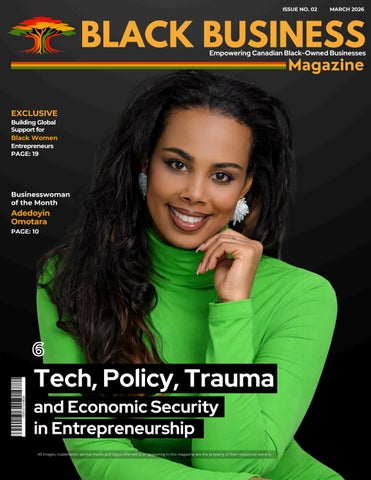
Welcome to the second issue of Black Business Magazine. As we navigate 2026, we are operating in a landscape of stark contradictions. By 2036, the Black population in Canada is projected to reach 2.6 million people—representing 6% of our national total. Yet, as our demographic footprint expands, our access to capital remains under siege.
In 2025, venture capital for Black founders plummeted to a mere 0.15%—a figure industry insiders dismiss as a "rounding error." This is not just a funding gap; it is an institutional withdrawal. While the markets of 2023 saw a peak of 2.27%, the current retreat proves that many diversity initiatives remain the first casualty of economic contraction.
The Capital Chasm: A National Competitiveness Issue The data is uncompromising. The average Black entrepreneur starts their venture with $35,000, while their white counterparts deploy $107,000. While this $72,000 "capital gap" forces our founders into a state of permanent bootstrapping, highlighting this disparity is not a cry for support—it is a spotlight on a systemic failure that threatens the competitiveness of the country we call home.
Imagine the economic surge if Black entrepreneurs were given the opportunity to flourish at scale. Specifically, Canada is missing a massive global advantage: our "Diaspora Market Opportunity." With deep roots in Africa, the Caribbean, and networks across the globe, Black Canadian founders are natural exporters. In a globally competitive landscape where traditional allies have become "frenemies," Canada must maximize these international bridges to ensure our national economic security.
In this issue, we highlight leaders who are rewriting this script. Lise Birikundavyi of BKR Capital (Page 13) provides a masterclass on how specialized funds are moving beyond "over-mentoring" toward the high-conviction capital our scalable business model entrepreneurs deserve.
The Power of Ownership Our Businesswoman of the Month, Adedoyin Omotara (Page 10), exemplifies the "FoundHer" reality. Black women now own nearly 39% of Black SMEs—double the national average for women-owned firms. Despite 65% of these women securing less than $50,000 in external funding, they remain the most high-leverage job creators in our community. To support a Black woman founder is to move the needle on the entire national scoreboard.
The Path Forward Our mission is simple: To turn the 81% optimism rate of Black entrepreneurs into 100% economic participation. We are moving from the "kitchen table" to the boardroom, transforming the Canadian business and entrepreneurial landscape from the ground up.
We hope that recent government initiatives are not the last time the state supports Black excellence. As a magazine, we serve as the voice for business owners, policymakers, and leaders who have found what works. However, we cannot do this alone, and neither can you. To achieve sustained growth in the Black economy, we need strong allies and radical collaboration. Only by working together can we ensure the Black business community plays its fair role in making Canada a global success.
Stay Strategic,
Norman Musengimana Editorial Director Black Business Magazine
The Role of Black Women Investors and Venture Capitalists in Canada
The Rise of Creative Entrepreneurs From Culture to Commerce The Community Wealth Playbook for Cooperatives and Collectives Sustainability Led Business Models for Black Entrepreneurs How Partnerships with Corporations and Governments Create Impact How Black Innovators Are Redefining Tech Beyond 2026
IN THIS ISSUE
Building Intergenerational Wealth Through Black-Owned Businesses
Bilqees Grant: From Athlete to Eco-Luxury Founder of Helius Originals
In an exclusive interview with Black Business Magazine, Meseret Haileyesus, CEO of the Canadian Centre for Women’s Empowerment (CCFWE) and a renowned Economic Security Futurist, shares her transformative approach to economic justice and financial inclusion Meseret is a systems-change strategist and one of Canada’s most influential voices on financial reform, economic harm, and empowering marginalized communities.
Meseret Haileyesus is a multi-award-winning Economic Security Futurist, systems-change strategist, and one of Canada’s most influential voices on economic justice and financial inclusion. She is the first Canadian to formally bring economic harm into national public policy discourse and to call for coordinated national and international policy responses in the Canadian Parliament
She is the Founder and CEO of the Canadian Centre for Women’s Empowerment (CCFWE), Executive Leader of the World Executive Council for Economic and Financial Inclusion, Founder of Elementh, and cofounder and advisor to multiple national and global initiatives integrating digital healthcare innovation, financial systems reform, climate justice, and public policy to advance long-term economic security.
You’ve become one of Canada’s leading voices on economic harm and financial inclusion, influencing federal budgets, Parliamentary debates, and new codes of conduct in the financial sector. What personal experiences first pushed you to turn your own navigation of systemic barriers into a career reshaping economic policy for others?
My path into economic policy began through lived experience As an immigrant woman building a life and career in Canada, I faced systems that looked equal on the surface but were not always equitable in practice. I experienced financial barriers, professional roadblocks, and moments where access to opportunity depended more on background than potential
Those experiences shaped my perspective Instead of seeing them as isolated challenges, I began to understand them as part of a broader structural issue affecting many women, especially newcomers and racialized women I realized that when women face financial exclusion or economic instability, it is not just a personal setback It affects families, communities, and future generations
That awareness pushed me to move from navigating systems to helping reshape them I wanted to ensure that other women would not have to struggle silently through the same barriers Today my work focuses on advancing financial inclusion, influencing policy, and building pathways that allow women and underserved communities to participate fully and confidently in the economy
You were the first person to bring “economic harm” into Canada’s national policy discourse and helped advance measures like coerced debt protection and livable basic income. For readers who may be new to the term, what is economic harm and why is it so critical for entrepreneurs, especially women and equity deserving founders, to understand?
Economic harm is the financial damage that occurs when systems, policies, or relationships restrict someone ’ s ability to earn, build assets, or maintain economic safety It sits at the intersection of systemic harm and violence In this context, financial control, coerced debt, blocked access to bank accounts, employment sabotage, forced financial dependency, and financial surveillance become tools of power and restriction These harms often begin subtly in intimate relationships environments and are reinforced by systems that fail to recognize or respond effectively
Economic harm is not only personal It is structural Systemic barriers in banking, employment, housing, and legal systems can deepen the impact of violence by limiting survivors’ ability to rebuild financial independence and long term stability
Naming economic and systemic harm allows entrepreneurs and policymakers to design safer and more inclusive financial systems When we address economic harm within the broader gender based violence framework, we move beyond survival toward long term economic security, innovation, and equitable participation in the economy
Your work sits at the intersection of technology, finance, healthcare, and climate transitions. Where do you see emerging technologies—like fintech and AI—creating new vulnerabilities for women and marginalized communities, and what would a “tech safe” future look like in practical terms?
Emerging technologies are reshaping finance, healthcare, and climate systems at remarkable speed. While they create opportunity, they also introduce new vulnerabilities, particularly for women and marginalized communities
In fintech and AI, we are seeing algorithmic bias in credit scoring, automated loan denials without transparency, and digital banking systems that can be misused for financial surveillance or control In healthcare, data driven systems may overlook gender and racial disparities if datasets are incomplete or biased In climate transitions, access to green financing and digital identity tools can unintentionally exclude those without strong credit histories or formal documentation When digital systems become gatekeepers to opportunity, those already marginalized face amplified risk
A tech safe future requires intentional design It means transparency in algorithms, gender responsive data standards, trauma informed digital financial products, and regulatory frameworks that prioritize equity and privacy It also means survivor centered safeguards within banking platforms and clear accountability when harm occurs
As a founder, CEO, and global systems change strategist, you’ve moved from navigating exclusion as a newcomer to shaping national and international economic frameworks. What have you learned about leading while still acknowledging vulnerability and how can entrepreneurs use their lived experience as a strength rather than a liability?
I have learned that real leadership does not come from pretending to be strong all the time It comes from being honest about the journey As a newcomer, I navigated exclusion, uncertainty, and moments where I had to rebuild my confidence and financial stability Those experiences shaped me They gave me empathy, resilience, and a clear understanding of what so many women and entrepreneurs face quietly
For a long time I thought vulnerability was something to hide Instead, I discovered it is a source of clarity and connection When I speak openly about barriers I have faced, it allows others to see possibility in their own path It also keeps my leadership grounded in real life, not theory
For entrepreneurs, lived experience is not a weakness. It is insight. The challenges you have navigated often reveal gaps in systems and markets that others cannot see Your story can guide innovation, build trust, and shape solutions that are truly needed
When we stop seeing our experiences as limitations and start seeing them as wisdom, we lead differently We build with purpose, we lead with compassion, and we create spaces where others can rise with us
For Black and equity deserving entrepreneurs who feel discouraged by financial gatekeeping, systemic bias, or confusing policy systems, what is one concrete step you’d encourage them to take and one mindset shift you’d invite them to adopt as they build toward long term economic security and impact?
One concrete step I would encourage is this: build financial clarity before seeking capital Take time to fully understand your numbers, your credit profile, your legal structure, and the funding options available to you Many entrepreneurs approach banks or investors feeling intimidated Knowledge changes that dynamic When you understand your financial position and the policies that affect you, you move from asking for permission to presenting a strategy Seek out mentors, community based lenders, and networks that understand your context Do not navigate complex systems alone
The mindset shift I invite is this: gatekeeping is not a verdict on your worth Systemic bias is real, but it is not a measure of your potential. When a door closes, it may reflect structural limitations, not your capability. Shift from internalizing rejection to analyzing the system Ask, what is the pattern here and how can I position differently or advocate for change?
Long term economic security is built with strategy and resilience Your lived experience has already trained you to adapt and innovate When you combine that resilience with financial literacy, strong networks, and a clear vision, you move from surviving systems to shaping them
Adedoyin Omotara Building a Sanctuary for Women in Business
Adedoyin Omotara, an immigrant entrepreneur and women ' s empowerment champion, has transformed Calgary's commercial scene An engineer turned beauty entrepreneur, she converted her passion into a business by founding Adoniaa Collective, a one-of-a-kind retail platform dedicated solely to Black female entrepreneurs Her journey exemplifies courage, identity, and community building, establishing her as an influential figure in Canada's entrepreneurial ecosystem
Adedoyin Omotara Business Woman oftheMonth
Schooled initially as an electrical engineer, Omotara pursued a corporate career that, while stable, failed to provide her with the creative and soulful fulfillment she craved. Her life in Nigeria, India, the United Kingdom, and Trinidad and Tobago exposed her to rich cultural diversity and personal expressions of beauty, shaping her worldview and entrepreneurial vision
In October 2014, she launched Adoniaa Beauty, named after the Greek epithet for "beautiful woman, " to help women reconnect with their uniqueness Her relocation to Calgary marked a watershed moment in her life, when she traded in engineering for the risks and benefits of entrepreneurship and personal fulfillment
Early Life and the Shift Toward Entrepreneurship Founding Adoniaa Collective and Its Mission
Omotara founded Adoniaa Collective after identifying a significant market gap: a lack of accessible retail space for Black female entrepreneurs The business sells skincare and makeup as well as clothes, accessories, and spices, making it Calgary's first all-women-owned Black collective
Impact, Expansion, and Recognition
Omotara's work with the Adoniaa Collective and the Adoniaa Group has evolved beyond beauty to encompass coaching, mentorship, and women-focused programs. Her purpose is to empower women at all stages of their lives, investing in girls' hopes and women ' s resilience
ImageCourtesy:AdedoyinOmotara
Momentum, which helped her start a firm in Canada with a self-employment program and a micro-enterprise loan, has recognized her work Today, she is a strong advocate for immigrant women, Black women, and female entrepreneurs, exhibiting the transformational power of determination, community, and opportunity.
Challenges and a Purpose-Driven Vision
Adedoyin has openly discussed how the beauty industry frequently fosters insecurity and pressure among women Her idea for Adoniaa defies that narrative by emphasizing inner confidence, sincerity, and self-worth She inspires women to feel beautiful not because of society expectations, but because of who they are at their heart
ImageCourtesy:Canva
The Broader Significance of Her Work
Adedoyin Omotaras journey from engineer to beauty industry pioneer exemplifies persistence, clarity of purpose, and empowerment. Adoniaa Collective is more than just a storefront; it is a refuge where culture, creativity, and commerce collide Her work demonstrates the importance of community, representation, and mentorship in transforming perceptions about beauty and entrepreneurship in Canada As support for Black- and women-owned businesses grows, Omotara's legacy is ready to inspire future generations of women willing to forge their own paths
In an exclusive interview with Black Business Magazine, Lise Birikundavyi, Co-Founder and Managing Partner of BKR Capital, shares how she is reshaping the venture capital landscape in Canada As the first Black woman in the country to manage an institutionally backed VC fund, Lise brings a global investment perspective to a mission rooted in equity and opportunity She discusses why inclusive investing is not just a social imperative but a strategic advantage, and how building strong ecosystems around Black tech founders is key to unlocking long-term wealth creation and sustainable growth.
Lise Birikundavyi is the Co-Founder & Managing Partner of BKR Capital, incidentally becoming the first Black woman in Canada to manage an institutionally-backed VC fund Lise is an innovative finance specialist who has worked with several international institutions and acts as guest lecturer for prestigious organizations, including Oxford University, the International Olympic Committee Accelerator managed by the Yunus Sports Hub and the Canadian Private Capital Investment School at Ivey Lise also mentors and supports highly promising and impactful start-ups in emerging markets
You co‑founded and manage BKR Capital, Canada’s first institutionally backed Black‑led VC fund, and became the first Black woman in Canada to lead such a fund. What personal experiences led you to build a fund specifically focused on Black tech founders?
I co-founded BKR because I saw firsthand, across continents, that brilliance is universal, but opportunity isn’t My journey from Montreal to Côte d’Ivoire, from impact investing in Latin America and Asia made it clear: talent from underrepresented communities is often overlooked. In 2020, I knew it was time to channel this global insight into local action The pandemic underscored the urgency Canada had a gap in supporting Black founders, and I knew we had to change that Isaac and I saw an opportunity to build a fund that wasn’t just capital it was a bridge for innovation BKR is the embodiment of “think globally, act locally,” and it’s a privilege to help create a more inclusive innovation ecosystem right at home
BKR Capital is a $20M fund backing pre‑seed and seed‑stage Black‑led technology companies that are often serving unmet needs in minority communities. In simple terms, what do you and your team look for when deciding to invest in a founder and their company?
We’ve now grown beyond our initial $22M and launched a $50M Fund II that also starts investing at Series A. While we ’ re diligent about the numbers, what really drives our decisions is the people behind the ventures We look for founders who are not only visionary but adaptable those who can pivot when challenges arise and still hold true to their purpose Venture capital is about returns, yes, but it’s even more about resilience and alignment We back founders who align not just with market opportunities, but with values of inclusive innovation It’s this mix of purpose and grit that makes a partnership truly compelling for us
You began your career in hedge funds, then moved into impact finance, managing edtech strategies and investing in emerging markets before launching BKR. How has this global impact background shaped the way you think about risk, return, and opportunity in Black entrepreneurship?
LB: I believe my global impact background taught me to see risk and opportunity differently. In emerging markets, returns come when you go out of your way to deeply understand local context and trust in underexplored talent I apply that same lens to Black entrepreneurship While some see only the funding gap, I see untapped arbitrage founders solving overlooked problems with global relevance So, we don’t just assess risk we ask: what unique perspective does this founder bring? The return comes from backing that overlooked brilliance In essence, that global experience reinforces our view that inclusion isn’t just moral it’s smart investing
ImageCourtesy:Canva
BKR Capital works closely with programs like the DMZ’s Black Innovation Program and other ecosystem partners to source and support founders. What do you believe an effective ecosystem for Black entrepreneurs must include beyond just capital?
The reality is that capital is just a piece in the equation An effective ecosystem for Black entrepreneurs must include strong networks, access to decision-makers, and continuous learning When funding tightens, the bridges we build become lifelines introductions to mentors, partners, and new markets Our goal is to actively connect founders to these resources, ensuring they have allies in both prosperous and challenging times Ultimately, we help build ecosystems where founders can thrive long after the check is cashed It’s about creating lasting access, not just shortterm capital
For
Black founders
and future fund managers
who want to build scalable companies or launch funds of their own, what is one practical step and one mindset shift you would encourage them to focus on as they enter the world of venture capital?
For aspiring founders or fund managers, first and foremost – be the best at your craft Build the essential muscles so that you create a solid business Then, the next practical step is to build authentic relationships with your stakeholders, incl clients, potential investors, employees, etc Even if sometimes it feels like it takes you away from your core business, it is important to invest in your network As for mindset, embrace the power of long-term thinking In a world fixated on quick wins, the real advantage is knowing when to pause or pivot Growth-at-all-cost is a myth; true leadership means discerning when to press forward and when to recalibrate. So, foster community and stay grounded enough to know when to change course. during impact and meaningful are made
Black women investors and venture capitalists are changing who receives funding, what concepts are considered "venture-backable," and how capital may create more equitable wealth across Canada To address historically large financing disparities for Black and women-led businesses, they are taking on roles as fund managers, angel investors, ecosystem leaders, and policy influencers
Why Black Women Investors Matter
Women, particularly Black women, have been disproportionately underrepresented among investors and founders for decades Women-led businesses in Canada received only 4% of all venture capital investments in 2021; this share increased to 12% by the first half of 2024, but significant disparities persist in the distribution of growth capital Black women bring lived experience, networks, and perspectives that are often absent from traditional venture capital decision-making when they serve on investment committees, oversee funds, or sign checks as angel investors
It has been repeatedly demonstrated that diverse investment teams are more likely to support diverse entrepreneurs and to generate substantial returns by spotting opportunities others might miss Black women entrepreneurs may benefit from having more background, fewer prejudiced presumptions, and a greater understanding of markets and places they are familiar with Fairness is just one aspect of this change; another is opening up new avenues for economic expansion and innovation
Trailblazers at the Fund Level Angel Collectives and Investment Networks
Lise Birikundavyi, principal and fund manager at Black Innovation Capital, Canada's first institutionally backed Black-led VC firm, is a prominent example of Black women in Canadian venture capital This $10 million fund, backed by BDC Capital, invests in Black-led, early-stage software companies to generate strong returns and broaden the diversity of Canada's venture ecosystem According to Birikundavyi, the fund is a tool for economic empowerment that attempts to address " overmentoring and under-investing" by combining financial resources with practical assistance
Additionally, institutional entities such as BDC funds are directing capital toward women and minority entrepreneurs in general BDC has invested hundreds of millions of dollars in women-led, impact-driven companies, many created by women of colour, through its Women in Technology Venture Fund and the more recent Thrive Lab initiatives These funds establish a crucial pipeline: as more female founders leave and accumulate wealth, more of them can become limited partners (LPs) or launch their own funds and angel groups, thereby expanding the number of Black women in the investment world
Women-run angel collectives are essential for supporting early-stage entrepreneurs and changing the ethos of the broader tech ecosystem, alongside official venture capital firms For instance, Backbone Angels is a group of current and former Shopify executives, including women of colour, who invest in women- and non-binary entrepreneurs, with a focus on businesses founded by Black, Indigenous, and women of colour To assist minority founders, the methodology combines funding and mentoring, leveraging the operators' expertise in product, growth, and scaling
In a similar vein, organizations such as Black Angel Group and other Black-founded funds many of which have ties to Canada provide venues for Black investors, particularly Black women, to pool resources and exchange transaction flows. These networks often prioritize businesses addressing pressing issues that traditional venture capitalists might overlook or misunderstand, such as cybersecurity, health inequities, climate change, and labour solutions Black women angel investors can help businesses gain the traction and recognition needed to attract larger institutional rounds by validating these founders and issuing early checks
Changing Outcomes for Black Women Founders
The presence of Black female investors directly impacts black female entrepreneurs seeking funding Leaders such as Claudette McGowan, creator of the cybersecurity company Protexxa, and others discuss how prejudice and mistrust often hinder early investment despite strong traction and expertise among Black women tech innovators in Canada However, the discussion shifts from "showing legitimacy" to "co-creating development strategies" when they engage with funds and investors who understand their environment, many of whom are led or influenced by women and minority investors.
Despite owning about 30% of mainly women-owned SMEs, women continue to receive a disproportionately tiny amount of venture and growth finance, with Black and racialized women experiencing the greatest impediments, according to data from national studies on women ' s entrepreneurship By supporting inclusive investment theses, campaigning for improved data on race and gender in deal flow, and creating funds with clear objectives to support underrepresented founders, Black women investors are helping close this disparity The idea that there " aren't enough" high-potential Black women founders to invest in is debunked by their efforts
Shaping the Future of Canada’s Investment Landscape
The objective of diversifying capital ownership is increasingly aligned with government policy More than 24,000 Black entrepreneurs in Canada are supported by the government Black Entrepreneurship Program, which was renewed with a $189 million $ commitment from 2025 to 2030 It comprises a Loan Fund, an Ecosystem Fund, and a Knowledge Hub Although BEP's primary focus is on loans and ecosystem support, its collaboration with BDCs and groups like FACE strengthens the pipeline of Black-owned businesses that may someday be ready for venture capital Over time, as investors themselves, successful Black startups, particularly women, can recycle wealth back into the ecosystem
By supporting women-led impact funds and empowering more women to hold decision-making positions in VC, larger programs like WIN-VC Canada (Investing Together in Womenled Impact) also seek to change the venture capital landscape These initiatives, along with corporate pledges and increased public scrutiny of financial representation, suggest that Black women ' s leadership will become the norm rather than the exception in the investing sector
Redefining Capital and the Future of Canadian Innovation
In the end, there is more to the role of Black women venture capitalists and investors in Canada than just representation It involves redefining what constitutes "investable," directing funds toward businesses that address urgent social and economic issues, and making sure that the genius of Black women is acknowledged, supported, and expanded In addition to altering who receives funding today, more Black women securing positions at the investment table whether as ecosystem architects, fund managers, or angel investors are also setting the stage for future generations of Black women to spearhead Canada's innovation economy
In an exclusive interview with Black Business Magazine, Allison McKenzie Williams, Founder of The Black Women Collective, shares how a personal experience of isolation sparked a global movement. Drawing on decades of experience in social work and community development, Allison has built more than a networking group She has created an ecosystem where Black women entrepreneurs gain mentorship, accountability, and the confidence to move from survival mode to sustainable growth
Allison Williams is the Founder of The Black Women Collective, a global community supporting Black women entrepreneurs through mentorship, connection, and access to resources. A social worker with over 30 years of experience, Allison’s career is grounded in mental health, community development, and evidencebased practice. Her entrepreneurial work has been recognized with awards in Ontario and Alberta for innovation and impact. Known for her curiosity and passion for learning, she builds solutions that address gaps in support and opportunity Allison has spoken for organizations including Scotiabank and grassroots groups, creating spaces where Black women can lead, grow, and thrive sustainably
What moment or experience pushed you to create The Black Women Collective, and what gap were you determined to fill for Black women entrepreneurs?
The moment was rooted in isolation When I started my business and began networking events, I found myself surrounded by people yet feeling deeply alone I didn’t feel a sense of belonging, and over time, that lack of connection triggered imposter syndrome Not because I wasn’t capable, but because I wasn’t in spaces where I felt understood or supported
What I was craving was community, the kind that exists naturally in workplaces or organizations, where you have side conversations, informal mentorship, coaching and people who’ve been in the work longer offering guidance I realized that many Black women entrepreneurs were missing that ecosystem entirely We were building businesses in isolation, without the relational support that makes growth sustainable
The Black Women Collective began as a simple networking group on Meetup, a place to connect without pressure, performative selling, or competition It grew quickly because the need was real. As I listened to the women joining, it became clear this had to be more than networking It had to be an ecosystem
I shifted my focus to building a community that supports Black women entrepreneurs with connection, mentorship, and access grounded in research and lived experience, so no one has to build alone
The Collective now serves over 1,000 women globally through mentorship, coaching, and accountability. In simple terms, what changes do you see most often in women who move from “survival” to “sustainability” inside your ecosystem?
The most consistent change is connection & confidence When women move from isolation into community, they gain access to others who are willing to share resources, insight, and lived experience openly That access shifts how they see themselves and their businesses
You see the shift in language and behaviour “I hope this works” becomes “This is my strategy ” Women stop being busy and start being intentional They show up consistently to accountability sessions, participate in networking with purpose, and ask clearly for what they need
Just as important, they stop struggling in silence They share when things are hard and celebrate wins in the community They have reported that sustainability grows because they are no longer building alone
With your background in social work and community development, how do you design spaces where Black women feel less isolated and more supported as leaders and business owners?
We design for psychological safety first Women need to know their lived experiences don’t require explanation They don’t have to code-switch, minimize ambition, or justify why they lead the way they do
Peer connection is central Instead of hierarchical spaces, women engage with one another, sharing resources, mentoring across experience levels, and recognizing that many challenges are systemic, not personal failures Conversations are honest and practical, not performative.
Women who join are ready to invest in themselves and their growth They come open to learning, being challenged, and using the tools and relationships available We provide the structure and support; they bring the commitment That combination creates leaders who feel supported, capable, and grounded in community
Many Black women founders are balancing businesses, family, and the emotional weight of systemic barriers. What one or two practices do you recommend for protecting their well being while they grow their ventures?
The first practice is intentional self-prioritization Carving out time for yourself must be nonnegotiable, daily, not occasionally This isn’t about productivity or appearance; it’s about presence Ideally, it happens at the start of the day, before the demands of business and caregiving take over Whether you sit quietly, journal, listen to music, move your body, or simply breathe, the purpose is to reconnect with yourself
The second practice is energy awareness, which I often call a “Crown Check ” Ask regularly: What fills my bucket? Many Black women operate in survival mode, constantly giving Sustainable leadership requires knowing what restores you and making space for it Music, movement, creative hobbies, and rest are not extras; they are stabilizers for mental and emotional health
Both practices are about reclaiming agency over your time and energy If you don’t intentionally create space to restore yourself, burnout will do it for you Protecting your well-being isn’t a luxury; it’s essential to building a business that lasts
For a Black woman entrepreneur who is just finding her voice and searching for community, what is one piece of encouragement you’d like to leave her with about not doing this journey alone?
You don’t have to do this alone We live in a culture that tells entrepreneurs to figure everything out in isolation, to gather information privately and then return “ready ” That approach doesn’t serve Black women
Community is not a weakness; it’s a strategy Even at the idea stage, being in connection with people who understand what you ’ re building helps you clarify your thinking, test ideas, and grow faster A great idea doesn’t automatically become a great business community helps bridge that gap
There is a seat for you at the table, but if you don’t see it yet, you are allowed to build one When you do, others will join you Start where you are Find your people. Let community be the place where your voice strengthens, and your vision expands.
Black tech founders in Canada are facing a critical decade in which Artificial Intelligence, financial technology, and digital platforms are redefining how value is created and who shares in it As governments, incubators, and investors see the untapped potential of Black entrepreneurship, a new generation of founders is developing solutions that are not only profitable but also firmly rooted in inclusion, community impact, and systemic transformation
Black-owned tech firms in Canada have grown across sectors such as AI-driven financial services, drone technology, ecommerce, and digital marketplaces Black entrepreneurs continue to face structural impediments to accessing financing and networks, but the ecosystem that supports them is stronger than ever, thanks to focused programs and increased public and private investment This event foreshadows what Black tech leadership will look like after 2026: more data-driven, global, and committed to creating equitable futures
AI and FinTech as Catalysts
AI and FinTech are two of the most powerful tools for Black startups seeking to challenge entrenched institutions and expand access to opportunity In cities like Toronto, Vancouver, and Montreal, Black-led firms are utilizing AI to personalize financial advice, automate backoffice activities, and analyze risk, better serving communities historically excluded from conventional financial institutions Platforms like Hutsy focus on providing accessible, AIpowered financial advice to people often overlooked by traditional planning models
FinTech also provides a means to address long-standing disparities in credit, lending, and wealth accumulation Black founders in financial innovation are changing the way newcomers, gig workers, and underbanked Canadians interact with banking, investing, and payments As Canada renews key initiatives, such as the Black Entrepreneurship Program (supported by a new five-year, 189million-dollar commitment),
ImageCourtesy:Canva
FinTech founders are well positioned to collaborate with lenders, governments, and accelerators to deploy capital more effectively and equitably These collaborations can immediately incorporate equality into algorithms and products, rather than considering inclusion as an afterthought.
A Growing Ecosystem of Support
One of the most positive developments is the proliferation of dedicated funding, networks, and resources designed specifically for Black tech founders. University-based initiatives, such as the Black Founders Network, provide mentorship, community, and accelerator programs to early-stage firms with at least one Black founder Nationally, programs such as Capital for Black Innovation and the Nobellum Innovator Program aim to help develop 100 Black-owned technology enterprises by 2025 through a combination of training, investment, and strategic relationships
These efforts are supplemented by highprofile events that highlight Black ingenuity The Black Innovation Summit, held at Toronto Metropolitan University's DMZ, has developed into a flagship event, awarding more than $400,000 to Black-led tech firms and providing grants and services to over 2,500 Black-identifying founders Such platforms do more than just hand out checks; they raise visibility, mainstream Black leadership in advanced industries, and bring founders into meetings with policymakers and major corporate purchasers Together, these programs build a pipeline that will allow Black tech entrepreneurship to continue well beyond 2026
Innovating Across Sectors
The future of Black tech founders in Canada is not limited to a single industry; it encompasses all sectors where technology meets critical real-world needs AirMatrix, a drone software company co-founded by Black entrepreneurs, is developing high-precision solutions for urban airspace management, demonstrating that Black leadership in technology extends to frontier sectors such as advanced transportation and smart cities Community-focused platforms, such as Black-Owned Toronto, leverage digital marketplaces, e-commerce, and discovery tools to connect consumers with Black-owned enterprises nationwide
At the same time, organizations such as Tribe Network and similar ecosystems support BIPOC entrepreneurs in launching high-growth businesses in emerging industries, from clean tech to digital health As AI and automation become commonplace across industries, Black founders are well positioned to integrate these technologies into firms focused on climate resilience, mental health, logistics, and education Their lived experiences and neighbourhood affiliations often provide a fresh perspective on problems that mainstream inventors have overlooked
Overcoming Barriers and Shaping What’s Next
Despite these gains, research suggests that Black entrepreneurs in Canada are more likely to run smaller, newer businesses and have more difficulties acquiring funding than their non-Black counterparts Many people continue to face bias in financing decisions, limited collateral, and limited access to high-value networks and mentorship opportunities These limits can hinder product development and make it difficult for software startups to compete in capital-intensive industries such as AI and FinTech
However, the trajectory is shifting as public and private players work to close these disparities The revitalized Black Entrepreneurship Program, continued ecosystem funding, and knowledge centers are intended to strengthen financing standards, collect more data, and ensure that Black founders are not only included but also prioritized in innovation efforts If these goals are met and firms incorporate supplier diversity and inclusive procurement into their tech and innovation agendas Black tech founders will play an increasingly important role in Canada's economic story
Disclaimer:Thisarticleisforinformationalpurposesonly Black BusinessMagazinedoesnotendorseorguaranteeanyproducts, services,organizations,orindividualsmentioned.Readersare encouragedtoconducttheirownresearchandduediligence beforemakinganybusiness,financial,orpersonaldecisions
FromCulturetoCommerce
An increasing number of Bla entrepreneurs across Cana artistic potential into succe create jobs, generate reven impact. Black artists, design are reimagining what the c could look like as they turn across fashion, home déco internet content, and cultur
Culture as a Busines
With prospects in fashion, m performance, publishing, di events, Canada's cultural a are among the most promis entrepreneurship Black cre businesses that are both pr and globally relevant by dra Canadian, African, and Car This cultural authenticity is that sets their companies a market, not just an aestheti
Black creators, however, fre responsibilities as artists an learning to manage market commerce, and intellectual to their craft Their success both creative brilliance and entrepreneurial tenacity, de without family wealth or lon connections As a result, the economic value while chan perceptions of Black culture in Canada
Building Brands from Creative Passion Platforms, Agencies, and Creative Ecosystems
Black creative entrepreneurs are building unique businesses nationwide by fusing creativity with welldefined business strategies For instance, Stacey Martin Bafi-Yeboa, a former Broadway dancer and fashion designer in Ottawa, turned her love of style and movement into Stacey Martin Lifestyle, an eco-friendly clothing brand that combines fashion and fitness She began as Kania Couture and has expanded her brand through pop-ups, retail partnerships, and strong community presence, demonstrating how an innovative idea can develop into a sustainable lifestyle enterprise.
Other innovative businesspeople create multi-product lifestyle brands by utilizing design and narrative Founded by Karissa Fernandes and her husband during the pandemic, Asayah Designs is a unified brand "where elegance meets affordability" offering clothing, self-care products, home décor, and art The company, which offers a one-stop shop for home and personal needs and is grounded in sustainable, minimalist aesthetics, has transformed a personal passion into a diverse business serving clients across Canada Among Black Canadian producers, this type of integrated creative enterprise where a single brand incorporates several revenue streams is becoming more prevalent
Additionally, many Black creative entrepreneurs are launching firms and platforms that support other brands and artists Co-founded in Montreal by creatives Miro LaFlaga and Ashley Phillips, Six Cinquième is a Black-led business that assists both established and emerging brands in developing unique visual identities and marketing strategies By providing Black creatives with greater behind-the-scenes visibility and greater influence over how stories are told, the agency ' s founders aimed to close a gap in the predominantly white advertising sector Their work with customers across Canada demonstrates how a creative agency can drive structural change in the broader creative sector, in addition to being a business
Creative enterprise encompasses cultural education and communal spaces in addition to fashion and media The sole studio in the area that focuses on Afro-Caribbean culture through the arts is Ottawa's Cultural Arts Studio, which was started by Suzan Richards Over the course of more than 20 years, Richards has established a company that provides events, concerts, and seminars, employing teachers and artists while upholding cultural customs Her studio serves as an example of how artistic endeavors can serve as both successful small businesses and cultural organizations
Black contributions to the arts and culture have a socioeconomic impact that the government and ecosystem partners are beginning to acknowledge. Black artists and creative entrepreneurs make substantial contributions to Canada's economy through employment, tourism, and production, according to organizations like the Black Entrepreneurship Knowledge Hub (BEKH) Regional organizations like FedDev Ontario have committed millions to provide training, mentorship, and an online platform for Black artists and creative entrepreneurs to sell their work across North America, through programs such as the federal Black Entrepreneurship Program These investments recognize that the creative economy is not a side project but rather a significant economic driver
ImageCourtesy:Canva
From Side Hustle to Scalable Creative Enterprise
Painting, music, jewelry, design, or content creation are just a few examples of the side projects that many Black creative companies start as and eventually grow into full-time endeavours Listings of Black Canadian makers and artists demonstrate how independent artists assess demand, improve their products, and cultivate devoted followings using social media, online marketplaces, and storefronts By curating and promoting Black-owned products, platforms like Black Owned Toronto have helped these entrepreneurs reach new clients both online and in brick-and-mortar stores
It takes expertise in pricing, operations, intellectual property protection, and partnership formation to grow a side project into a full-fledged company. Through local small-company programs, accelerators, and digital main-street initiatives that provide coaching on topics such as e-commerce, branding, and financial planning, many creative entrepreneurs can access this support As they expand, these creative companies create jobs, support up-and-coming artists, and encourage the next generation to consider a career in creative labour
The growth of Black creative entrepreneurs in Canada demonstrates that culture serves as both a source of pride and a strong basis for long-term commercial success Black artists, designers, and creators are creating businesses that enhance Canada's cultural landscape and promote inclusive economic growth by fusing innovation, narrative, and heritage with solid business principles
In an exclusive interview with Black Business Magazine, Priscilla Manful, Chief Executive Officer of the Catholic Children’s Aid Society of Toronto, shares insights into the responsibility and vision behind leading one of the city’s most vital social service organizations. With a deep commitment to equity, community partnership, and compassionate leadership, Priscilla is focused on reshaping how child welfare systems support families and protect children
Priscilla Manful was appointed Chief Executive Officer of the Catholic Children’s Aid Society of Toronto (CCAS) in 2022, becoming the first Black CEO in the organization’s history With over two decades of experience in social services, including seventeen years at CCAS, Priscilla is a visionary leader recognized for advancing social justice, inclusive leadership, and transformative initiatives in child welfare.
You became the first Black CEO in the history of the Catholic Children’s Aid Society of Toronto after 17 years within the organization. What does this milestone mean to you personally, and what message do you hope it sends to Black leaders and young people in child welfare?
Stepping into the role of CEO after 17 years at the Catholic Childrens Aid Society of Toronto (CCAS) was a moment filled with gratitude and reflection I thought about the families and children who shaped my understanding of this work, the mentors who challenged me, and my Catholic faith that has anchored me throughout my life Becoming the first Black CEO in the organization’s history is not something I see as a personal accolade it is a responsibility. Representation matters. I remember sitting in rooms earlier in my career where I didn’t see myself reflected, and I know how powerful it can be for Black staff, youth, and community members to see themselves in leadership I hope my presence signals possibility and a commitment to serving with humility, dignity, and courage
When you stepped into the CEO role in 2022, what were your top priorities for transforming CCAS—especially in how families, youth, and communities experience the child welfare system?
When I stepped into the CEO role in 2022, my priorities were centered on transforming both the culture and operations of CCAS, so families, youth, and communities experienced us differently and more equitably Rebuilding trust was essential, especially with communities that have historically been overrepresented or harmed within the child welfare system That meant embedding Anti-Racist and Anti-Oppressive practices, strengthening accountability, and listening intentionally to the voices of youth and community partners I also focused on sharpening our commitment to prevention and family strengthening Wherever safely possible, families should remain together and connected to their culture and community, so we invested in early intervention, kinship care, and deeper collaboration with community organizations
Internally, transformation required supporting and stabilizing our workforce Staff cannot deliver compassionate, consistent service if they do not feel equipped or valued, so we strengthened leadership capacity, clarified expectations, and fostered a culture grounded in reflection and learning At the same time, I sought to ensure our Catholic identity was something lived, not stated rooted in dignity, compassion, and subsidiarity. Ultimately, my goal was simple: that families feel respected, youth feel heard, communities see us as partners, and children remain safe while staying connected to who they are and where they come from
You’ve helped lead initiatives such as the One Vision One Voice Africentric Wraparound Program, the HARP model, and the Male Engagement Worker pilot. In simple terms, how are these kinds of Afrocentric and community based models changing outcomes for Black children and families?
Afrocentric and community-based models like One Vision One Voice (OVOV), the Africentric Wraparound Program, HARP, and the Male Engagement Worker pilot are changing outcomes for Black children and families by reshaping how support is delivered from the very first point of contact These approaches were created in response to clear evidence of disproportionate investigations and child welfare involvement for Black families By grounding our work in cultural understanding, trauma-informed practice, and strong partnerships with community organizations, schools, and service providers, we ’ ve been able to intervene earlier and more effectively
OVOV’s Wraparound model helped eliminate service disparities and directly informed the creation of our Holistic Assessment and Response Pathways (HARP) model. HARP has been especially transformational during the pilot, we supported more than 200 families, and not a single child came into care. Families shared overwhelmingly positive feedback, and the model demonstrated that prevention is possible when assessments are holistic and supports are culturally aligned Together, these initiatives show that when services honour identity, reduce bias, and engage community strengths, Black children and families experience better, safer, and more equitable outcomes
CCAS is guided by Anti‑Racist, Anti‑Oppressive Practice, Catholic identity, and trauma‑informed approaches. How do you bring these principles together in day‑to‑day decisions, and how do you define “success” when the goal is both child safety and keeping families together?
For me, Anti-Racist and Anti-Oppressive Practice, Catholic identity, and trauma-informed approaches are not separate frameworks they are the foundation of how we make decisions every day Anti-Racist and Anti-Oppressive Practice requires us to actively examine how bias or systemic inequities may be influencing our assessments That means asking: Whose voice is missing? Are we responding to true safety concerns, or to the impacts of poverty, trauma, or cultural misunderstanding? It pushes us to act with reflection, accountability, and courage
Bringing these principles together means holding two goals at once: child safety and family preservation Safety is non-negotiable, but removal is not our measure of success Success is when risks are reduced through support, when families feel respected and empowered, and when children remain connected to their identity, culture, and community. True success is sustainable well-being grounded in dignity, equity, and healing
For Black community members and faith leaders who want to partner with CCAS to better support children, youth, and families, what are one or two practical ways they can get involved in this work of transformational change?
That’s an important question, and I’m grateful for the Black community members and faith leaders who want to partner with us in this work One practical way to get involved is through relationship and dialogue We welcome churches, community groups, and faith leaders to invite CCAS into their spaces to host conversations about child welfare, prevention, and family strengthening When we build understanding together, we reduce fear and stigma, and we create culturally responsive pathways for families to access support long before challenges escalate
A second meaningful way to engage is by becoming part of the circle of care. This can look like exploring foster or kinship caregiving, mentoring young people, supporting family resource programs, or partnering with us on community-based prevention initiatives. Transformational change happens when the community sees itself not just as a stakeholder, but as a co-creator of children’s well-being
Small and medium-sized businesses in Canada are increasingly adopting Artificial Intelligence (AI) and automation to save time, cut costs, and improve customer experiences and Blackowned SMEs are ideally positioned to benefit from this transition According to national surveys, over 12 5% of small Canadian businesses now use AI, and nearly three-quarters plan to increase their AI investments, with 63% focusing on generative AI tools For Black entrepreneurs, Artificial Intelligence can help level the playing field by automating routine tasks, improving marketing, and providing data-driven insights without requiring a large staff
Why AI Matters for Black-Owned SMEs
AI is no longer just for the biggest tech companies AI is increasingly integrated into popular platforms like email marketing, accounting software, customer care, and ecommerce to automate processes and optimize decisions AI can reduce turnaround time for research, drafting, scheduling, and analysis, freeing up time for Black business owners who often juggle multiple tasks
According to research on small-business AI adoption, common benefits include improved efficiency, lower operational costs, higher sales, and better customer service Canada's Business Development Bank (BDC) discovered that companies that use AI report better sales, inventory, and production management, and has responded by developing a national Data to AI Program to assist SMEs in securely and successfully integrating AI. Such advantages can be especially beneficial for Black-owned businesses that face challenges in accessing expertise and funding.
Practical Use Cases in Everyday Operations
A practical method to think about AI and automation is to begin with ordinary business procedures and discover where technology may replace manual labour:
Marketing and sales: Artificial Intelligence can automate ad campaigns, segment customers, and personalize communications JENNY BIRD, a Toronto jewellery firm, utilizes an AI-powered upsell tool that proposes complementary products in real time, increasing average order value and automating operations for a small workforce.
Customer assistance: Chatbots and virtual assistants integrated into websites or messaging applications can answer common queries, book appointments, and route issues to staff, enabling 24-hour support without a large call center.
Back office and finance: Tools such as AI-enabled accounting software and invoice scanners automate data entry, detect anomalies, and generate financial reports quickly, reducing errors and enabling owners to focus on growth
Content and design: Generative AI platforms can help Black businesses create social media posts, product descriptions, marketing content, and simple visual assets, enabling them to maintain a professional brand presence on a limited budget.
To assist SMEs in adopting AI responsibly, Innovation, Science, and Economic Development Canada (ISED) has released an SME AI Adoption Blueprint and a toolkit designed exclusively for small and medium-sized businesses These resources focus on a step-by-step approach
Evaluate the business's needs and goals. Rather than starting with a tool, begin with a problem: where do you waste time? Where do customers drop off? Which duties are repetitive? Begin small with a pilot.
Before scaling up, start with a tiny AI initiative, such as automating a single marketing workflow or introducing a chatbot, and evaluate its impact
Begin with readily available tools Many AI features have already been implemented into platforms Black entrepreneurs frequently use Shopify for e-commerce, accounting software, and social media management tools such as Hootsuite.
Keep track of performance and make necessary adjustments. Track specific metrics (time saved, revenue growth, customer satisfaction) and refine your system as you learn.
This technique reduces risk and eliminates the need for large upfront investments for Black-owned businesses Thought leaders in the Black entrepreneurship ecosystem emphasize that AI should be viewed as a co-pilot that enhances capability rather than a replacement for human judgment or cultural knowledge
Support Programs and Funding in Canada
Canada's government and commercial sectors are increasingly collaborating to help SMEs, particularly Black-owned enterprises, employ AI securely and strategically The BDC Data to AI Program provides training, specialized assistance, and finance to cover the costs of integrating AI, cybersecurity, and automation The program assists businesses in developing comprehensive digital roadmaps, modernizing systems, and implementing the security measures needed to protect customer data
On the policy front, the federal AI toolkit for SMEs emphasizes the importance of ethical and trustworthy AI, citing standards such as CAN/DGSI 101:2025 for the design and use of AI in firms with fewer than 500 employees These principles help small firms manage risks related to prejudice, privacy, and transparency while reaping the benefits of automation
Keeping People at the Centre
As strong as AI and automation are, experts continually emphasize that technology should assist people rather than replace them AI tools still require human oversight to define objectives, assess outcomes, and ensure outputs reflect company values and community requirements For Black-owned SMEs, this means leveraging AI to augment, rather than eliminate, the cultural authenticity and relationship-driven service that frequently characterize their companies
According to research on AI adoption in Canada, effective SMEs integrate technology with investments in employee skills, change management, and digital literacy Small firms can increase productivity while maintaining consumer trust by providing employees with training and clear guidance on the ethical use of AI
Finally, incorporating AI and automation into dayto-day operations is about working smarter rather than "becoming a tech firm " For small and medium-sized Black-owned businesses in Canada, AI provides an opportunity to streamline activities, deliver exceptional customer experiences, and compete on a larger scale all while remaining anchored in the communities and cultures that inspire their work
To increase community wealth, reduce economic precarity, and establish more democratic control over resources, Black communities across Canada are increasingly using cooperatives, collectives, and other shared-ownership structures These community wealth models are not new; they are rooted in a long tradition of Black solidarity economics and mutual aid, and are currently being modified to address issues such as low homeownership, income disparities, and unstable employment
Black Canadians continue to experience wealth disparities, such as lower rates of homeownership and company ownership, as well as greater exposure to low-paying, unstable employment Rotating savings and credit associations (ROSCAs), worker cooperatives, community land trusts, and shared-equity housing are examples of shared-ownership models that offer strategies for more equitable distribution of benefits and circulation of value in Black communities These approaches promote economic stability and long-term communal power by integrating shared surplus and collective decision-making rather than consolidating earnings in a small number of hands
Worker Cooperatives: Shared Ownership of Work and Income
Employees own and democratically run worker cooperatives, which allow them to participate in decision-making and profit-sharing This technique is particularly effective for Black women in Canada The Women's Multicultural Resource and Counselling Centre in Durham Region, Ontario, offers a Worker Co-op Development Program that supports women, many of whom are Black and recent immigrants, in establishing worker co-ops in industries such as sewing, personal support work, cleaning, hairdressing, daycare, and the arts
By establishing cooperatives, these women sell their skills directly to customers, thereby avoiding middlemen and agencies that often provide little compensation and no control over working conditions To assist participants in transforming their abilities and cultural knowledge into viable businesses, the program offers training in co-op development, business skills, and experiential learning through tours of current co-ops In addition to revenue, the co-op model offers members more egalitarian pay, shared ownership, and a network of support that combats discrimination and loneliness.
These illustrations show how worker co-ops can address social and economic issues by providing decent employment, fostering community links, and ensuring that corporate decisions take into account community values rather than those of external shareholders
Mutual Aid Finance: ROSCAs and the “Banker Ladies”
The Rotating Savings and Credit Association (ROSCA), sometimes referred to as "partner," " susu, " or "box hand" in various Black diaspora groups, is another effective community wealth model These circles are organized by Black diaspora women in Canada who are referred to as "Banker Ladies " Members contribute regular sums to a pooled fund and, in turn, receive a large sum that can be used for high costs such as housing, education, or the launch of a business
ROSCAs are more than informal banking, according to research on the "Banker Ladies " They are examples of solidarity economics that assist Black families in overcoming financial marginalization and accumulating assets outside of the traditional banking system Participants observe that these circles are reliable places for saving and planning because they offer social support, accountability, and culturally relevant financial instruction
Researchers contend that ROSCAs and comparable mutual aid arrangements could be recognized and supported as part of Canada's broader cooperative and community finance ecosystem with appropriate legislative support
Shared-Equity Housing and Collective Ownership of Land
One of the most important pillars of communal wealth is access to houses and land. Black Canadians' home ownership rates are much lower than the national average, at about 40% compared with 68% overall, which restricts their ability to accumulate wealth across generations Models of collective ownership and shared equity are increasingly popular as approaches to closing this divide
One prominent example is the BlackNorth Initiative Homeownership Bridge Program To assist Black families in the Greater Toronto Area in purchasing homes through a sharedequity strategy, it brings together developers, philanthropists, governments, and other partners A standard mortgage from a bank or credit union, plus a "silent" second mortgage from the Bridge Program, which reduces required down payments and monthly expenses, constitutes the program ' s two-mortgage structure Families can enter the property market earlier while still accumulating equity over time by repaying the Bridge Program after repaying the standard mortgage
The program ' s leaders emphasize that, by combining resources and risk across multiple industries, it aims to address systemic obstacles, including low incomes and discriminatory lending practices In provinces such as Nova Scotia, where collective ownership is being investigated to address housing affordability and preserve land in historically Black communities, conversations about community land trusts and collective ownership strategies are also gaining traction in Black communities.
Ecosystem Support and Policy Opportunities
The Foundation for Black Communities (FFBC) and Canada's Black Entrepreneurship Program (BEP) provide an ecosystem layer that can support community wealth models alongside traditional enterprises. Black-led organizations that provide financial planning, business training, and mentoring some of which are investigating cooperative and collective models are funded by BEP's ecosystem fund FFBC, on the other hand, funds initiatives that develop long-term community assets and governance capacity in order to provide Black communities with the tools and agency to shape their own destinies
Policymakers should more clearly acknowledge and promote Black-led solidarity economy efforts, according to cooperative and community economic development organizations While programs such as Freedom Dreams Cooperative Education are reimagining co-op education to better reflect BIPOC-led models of cooperation, the Canadian Worker Co-op Federation emphasizes the need to provide resources to Black and racialized communities to develop worker co-ops and other shared-ownership enterprises These initiatives point to a future in which traditional entrepreneurship coexists with co-ops, ROSCAs, land trusts, and shared-equity initiatives as fundamental pillars of Black economic development in Canada
Black entrepreneurs across Canada are pioneering the green economy, serving as advocates, innovators, and community builders who connect social impact and environmen l responsibility with commercial success Blac owned companies have a rare opportunity t in sustainable practices, ethical sourcing, an renewable energy as the nation strives for n zero emissions by 2050 and invests significa clean technologies These activities benefit t environment and their communities.
Why the Green Economy Matters for Black Entrepreneurs
Tens of billions of dollars in federal incentives, including new clean energy investment tax credits and decarbonization plans for heavy industry, buildings, and transportation, support Canada's clean energy transition The average investment in white-owned companies is still more than three times higher than in Black-owned companies, indicating that Black entrepreneurs still face structural obstacles to obtaining finance Therefore, it is both economically and equitably necessary to link Black entrepreneurship to the green economy This will enable communities that have historically been shut out of key growth areas to participate in and influence the next wave of clean innovation
ImageCourtesy:Canva
Additionally, Black company owners have strong ties to their communities, which frequently bear the brunt of climate change and environmental degradation Black company owners can address regional environmental challenges while generating long-term wealth and jobs by leading companies that prioritize renewable energy, low-waste operations, and ethical supply chains. Each company serves as a lever for climate action and community resilience through its combined emphasis on sustainability and social impact
Accessing Green Capital and Clean Tech Opportunities
The shift to sustainable business models requires funding, and being developed to in making investmen The Federation of Af (FACE) oversees the Loan Fund, which pro capital for expenditu vehicles, charging in decarbonization-rela owned businesses w sustainable energy r thanks to this initiati Canadian governme
In addition to loans, as FedDev Ontario a federal ecosystem fu Entrepreneurship Pro support to Black-led entrepreneurs imple energy efficiency, an into their business p recently been invest provide networking, support for long-term sustainable growth provide Black busine access to the capita enter green markets systems, technology circular fashion
Leading Through Ethical Sourcing and Sustainable Practices
Ethically and ecologically conscious entrepreneurship is already being modelled in practice by many Blackowned firms in Canada Sustainable firms, such as those featured on The Eco Hub and on Premier Financial's carefully curated lists, demonstrate how Black entrepreneurs incorporate low waste, fair trade, and community service into their business strategies. Companies like Ellie Bianca, for instance, provide organic, cruelty-free, and sustainably sourced natural beauty products They also finance educational scholarships for single mothers in Canada and collaborate with women-run cooperatives in Africa
Other Black-owned Canadian companies emphasize fair salaries and reduced environmental impact, focusing on zero-waste retail, ethically sourced jewelry, and apparel that respects African design traditions Whether it's a tea company that donates a portion of its revenue to mental health initiatives, a jewelry brand that uses fair-trade gold, or a refillable brand that helps consumers reduce plastic waste, these businesses demonstrate that sustainability is not an add-on rather, it is ingrained in their DNA Many of these founders believe that cultural values of reciprocity, caring, and stewardship of people and land are closely related to ethical sourcing and environmental sustainability
Renewable Energy and Community-Led Climate Solutions
Beyond consumer goods, Black business owners and civic leaders are increasingly involved in systemic climate and renewable energy solutions Community-owned green investments that support equity-seeking communities across Canada are encouraged by programs like the Black and Brown Energy Initiative (BE Initiative) These initiatives focus on ensuring that Black and other racialized communities are not simply consumers of green technology but also co-owners and decision-makers by supporting community-led solar, energy-efficiency projects, and other renewable solutions
Black entrepreneurs utilizing technology to address environmental issues are also highlighted in university-affiliated entrepreneurship programs For example, a diverse team at the University of Toronto, which included a Black founder, developed a cleanwater atmospheric converter and won the RBC Innovation Challenge for its use of innovation to improve access to safe drinking water These illustrations show how Black leadership in sustainability encompasses everything from cutting-edge clean-tech endeavours to neighbourhood cooperatives and grassroots projects.
Building a Just and Inclusive Green Future
Sustainability and social impact are linked goals for Black Canadian entrepreneurs Black founders are pushing the economy toward greater inclusion and justice while also helping achieve national climate goals by creating companies that value fair labour, reduce waste, and lower emissions Black-owned companies have a strong opportunity to expand their influence in the green economy, driven by public investments in Black entrepreneurship and rising consumer demand for ethical goods and services.
Black entrepreneurs, governments, financial institutions, and community organizations will need to work closely together in the next phase to ensure that sustainable opportunities are available to everyone, not just those with pre-existing networks or wealth Black-owned companies can be at the forefront of Canada's green transition with sustained support, fostering innovation, generating good jobs, and demonstrating that a lowcarbon future can also be more equitable and successful for Black communities
Bilqees Grant is the Co Founder and CEO of Helius Originals, an award-winning eco-luxury barware company redefining how the world experiences smoke, sustainability, and design Based in Toronto, she built the company to merge craftsmanship with clean innovation, using reclaimed Canadian lumber and responsibly sourced materials to create elevated smoking experiences for cocktails and cuisine
A former All Canadian scholarship athlete, Bilqees transitioned from competitive sports to entrepreneurship with the same discipline, resilience, and strategic focus that defined her athletic career. What began as a bold idea has grown into an internationally expanding brand recognized for both luxury and environmental responsibility
In an exclusive interview with Black Business Magazine, Bilqees Grant, Co-Founder and CEO of Helius Originals, shares how her eco-luxury barware company is blending craftsmanship, sustainability, and innovation to redefine the luxury smoking experience. Drawing from her competitive athletic background, Bilqees reveals how the discipline, resilience, and strategic focus she learned in sports have shaped her approach to building a thriving business
Bilqees has achieved triple digit growth with Helius Originals and was recognized as part of the NACO 2025 Women Who Build initiative. She is also a recipient of the Lenovo AI Grant and the Pizza Hut Inner City Capital Pitch Contest.
You went from All‑Canadian scholarship athlete to founder of an award‑winning eco luxury barware brand. How did your background in high‑performance sports shape the way you lead, take risks, and scale Helius Originals?
Being an All-Canadian scholarship athlete shaped how I build and lead today High performance sports teach you discipline before motivation, consistency before recognition, and resilience before reward. You learn to show up on the days you don’t feel like it and push through setbacks without losing confidence. Entrepreneurship is no different
Sports also taught me to think long-term You don’t win championships in a single game You build strength, strategy, and endurance over time Scaling Helius Originals required that same patience and calculated risk taking
In many ways, building the foundation of the company felt like off-season training The long nights, product development, refining the brand, and navigating tough conversations were the drills Closing major deals or launching new products feels like game day But you only perform well on game day if you respected the groundwork when no one was watching
Most importantly, sports gave me mental toughness I’m comfortable in high-pressure environments That competitive drive and refusal to quit are embedded in how I lead and scale Helius Originals.
I saw a gap between luxury dining experiences and what people could recreate themselves Smoke, in particular, always felt captivating It engages multiple senses It slows people down It turns a simple cocktail or cheeseboard into a moment
What inspired you to create Helius Originals, and what gap did you see in the way people were hosting and experiencing cocktails and cuisine that you felt smoke, ritual, and design could solve?
Helius Originals was inspired by my years working as a server and bartender, where I saw firsthand how powerful the experience of hosting can be The smallest details, presentation, aroma, ritual, could completely transform how people connected over food and drinks Yet most at-home hosting tools felt transactional and generic There was little intention behind the design
I wanted to create something that merged ritual, craftsmanship, and elevated design in a way that felt accessible but refined Not just another bar accessory, but an experience that made hosting feel intentional and memorable
Helius Originals was built to bridge that gap By combining smoke, thoughtful materials, and modern aesthetics, we transformed the act of serving a drink or dish into something immersive. It’s about bringing ceremony back to everyday moments and redefining what luxury hosting can look like
Helius Originals is built on reclaimed Canadian lumber and circular design principles. How do you balance luxury aesthetics with sustainability in practice, and what does “eco luxury” mean to you on a day to day basis?
Balancing luxury aesthetics with sustainability is not always simple Sourcing reclaimed materials, ensuring quality, and maintaining consistency at scale requires constant refinement We are continuously improving our processes, simplifying supply chains, and even adjusting supplier relationships to better support customization and growth while maintaining our standards
For me, eco-luxury is not about perfection It is about intention and accountability in the details It means designing products that feel refined and elevated while being thoughtful about where materials come from and how they are used
One of our core circular practices is ensuring we use 100 percent of our reclaimed wood The larger boards are crafted into our products, and the offcuts are transformed into premium wood shavings for smoking Nothing is wasted That decision alone reshaped how we design and manufacture
You’ve achieved triple‑digit growth, expanded into international markets, and broken into corporate gifting and premium hospitality. What have been one or two biggest turning points—or toughest challenges—in scaling from hand‑packed orders to a globally growing brand?
One of the biggest challenges in scaling Helius Originals has been finding the right team In the early days, I was hand-packing orders, managing suppliers, overseeing design, and navigating logistics myself. That phase built resilience, but it also made it clear that no brand scales sustainably without the right people around it
Early funding support, through Futurpreneur’s Black Entrepreneur Startup Program (BESP), helped us move from idea to execution, allowing us to invest in initial production and infrastructure during a critical stage of the business But funding is only the beginning Sustained growth requires the right people and systems.
I’ve spoken to many founders who say the same thing: scaling is less about the idea and more about building a team you can trust There were moments of trial and error, learning who aligned with the vision and who could operate at the level required for premium markets
The real turning point came when I built a team I can rely on That shift allowed me to move from working in the business to leading it Now we are scaling with clarity, structure, and longterm vision
For Black women and other founders building product‑based businesses in crowded, competitive industries, what advice would you share about owning premium positioning, accessing opportunities like grants and pitch contests, and building a legacy brand rather than just a product?
My biggest advice is to decide early how you want to be positioned and build with that standard from day one Premium is not just about price It is about consistency, presentation, discipline, and refusing to dilute your vision to compete on cost
In crowded industries, differentiation is everything. Invest in design, packaging, storytelling, and operational excellence. People do not just buy products, they buy experience, perception, and trust
When it comes to grants and pitch contests, preparation matters Know your numbers Understand your margins Be able to clearly articulate your long-term vision Early stage funding like Futurpreneur’s Black Entrepreneur Startup Program (BESP) can provide critical capital to move from idea to execution, but capital alone is not enough You must pair funding with strategy, discipline, and strong operational planning
Apply even when you feel unsure Opportunities compound with visibility and repetition
Most importantly, think beyond the transaction A product generates revenue A brand builds legacy Legacy requires long-term thinking, intentional positioning, and the courage to build something that outlasts trends
Disclaimer:Theviewsandopinionsexpressedinthis interviewarethoseoftheguestanddonot necessarilyreflecttheofficialpolicyorpositionof BlackBusinessMagazineoritsaffiliates The magazineiscommittedtosupportingBlack entrepreneursandfosteringconversationsthat promoteinclusionandeconomicempowerment.
Why Partnerships and Supplier Diversity Matter
Businesses owned by underrepresented groups, such as Black, Indigenous, and racialized entrepreneurs, are intentionally included by governments and corporations in their supply chains and procurement processes through supplier diversity policies Recognizing that government purchasing power can help remove structural hurdles, the Canadian federal government has committed financial and policy measures to increase the participation of Black-owned firms in public procurement Dedicated financing for supplier diversity initiatives, including pilot programs aimed at purchasing from Black-owned or Black-led companies, was confirmed in Budget 2021
Partnerships with large businesses and governments are giving Black entrepreneurs in Canada access to contracts, funding, and credibility that can significantly accelerate business expansion When these partnerships are executed effectively, they move beyond one-time events and become enduring partnerships that promote supplier diversity, creativity, and shared value
Access to large purchasers can change the game for Black business owners
Securing a contract with a large bank, telecom provider, or government agency can increase brand awareness, generate consistent revenue, and establish a reputation that makes it easier to secure funding or acquire new customers Additionally, these collaborations convey a strong message that Black-owned companies should be central to Canada's economy rather than peripheral
Government Partnerships: From Policy to Practice
One of the best examples of collaboration between the government, financial institutions, and Black-led organizations is the Government of Canada's Black Entrepreneurship Program (BEP). Through a partnership among the federal government, the Business Development Bank of Canada (BDC), and groups such as the Federation of African Canadian Economics (FACE), BEP offers loans, ecosystem funding, and research, with a national investment of 189 million dollars over five years Black entrepreneurs are guaranteed to benefit from both public funding and community-led expertise through this system
To increase government contracting opportunities for Black-owned firms, Public Services and Procurement Canada (PSPC) has launched a Black Business Procurement Pilot and a Supplier Diversity Action Plan Twelve procurement opportunities were set aside for Black-owned businesses across Canada as part of the pilot; the feedback will inform future initiatives and reduce barriers to bidding To understand problems and develop solutions together, PSPC also engages directly with Black businesses and organizations through surveys and discussions Taken as a whole, these initiatives show how the government can move from rhetoric about equity to concrete contracting opportunities that generate revenue for Black entrepreneurs.
Large corporations are progressively establishing supplier diversity initiatives that directly assist Black business owners For instance, Royal Bank of Canada (RBC) identifies and engages diverse-owned suppliers, including Black-owned companies, through a formal supplier diversity initiative and partnerships with diversity councils Working with certification organizations, participating in matchmaking events, and urging internal buyers to include certified, diverse suppliers in competitive bids are all part of RBC's strategy
Building Ecosystem Partnerships Through Certification and Networks
Many successful relationships are supported by ecosystem organizations that prepare Blackowned businesses to work with large customers CAMSC, for example, is a non-profit organization that has been a catalyst for minority-owned business growth since 2004, linking certified suppliers with organizations seeking diverse partners CAMSC works with both vendors and large organizations to develop realistic, scalable, inclusive procurement practices
The most valuable partnerships are long-term connections based on trust, performance, and shared ideals For black entrepreneurs, this often begins with three strategic steps:
Becoming a certified diverse supplier through organizations such as CAMSC or other reputable councils.
Participating in supplier diversity matching events, mentorship programs, and capacitybuilding seminars hosted by organizations such as BEBC, WBE Canada, and big enterprises.
Early contracts should be viewed as the foundation for longer-term engagement, with consistent high-quality work and clear communication about future capabilities and growth plans
Building long-term relationships requires firms and governments to incorporate diversity goals into procurement rules, invest in outreach and training, and publicly track outcomes It also entails recognizing that Black-owned businesses bring creativity, cultural awareness, and agility to supply chains, not just "diversity metrics." When both parties agree to learn and grow together, partnerships can lead to multi-year contracts, collaborative innovation projects, and even co-development of new goods and services
Through this collaboration, Black women entrepreneurs can obtain nationally recognized certification, access procurement training, join supplier diversity networks, and receive handson assistance with RFPs and contracts This approach demonstrates how collaborative efforts among advocacy groups can result in more seats at the table for Black-owned businesses, particularly those at the intersection of race and gender
Collaborations among governments, large corporations, and Black-owned enterprises will continue to shape Canada's economic landscape Together, ecosystem groups, targeted government initiatives, and robust supplier diversity frameworks can drive long-term, scalable growth that benefits Black entrepreneurs and the Canadian economy as a whole
In an exclusive interview with Black Business Magazine, Toyin Badejo, CoFounder of Heirly, shares insights on the critical importance of preparing businesses for transition Drawing on years of experience in tech, finance, and operations, Toyin sheds light on the complex nature of succession and how Heirly’s innovative platform is reshaping the way founders and buyers approach business ownership transitions.
I’ve spent my career building systems that work at scale in environments where clarity, execution, and trust are non-negotiable
For years, I partnered with founders and CEOs, helping them structure, grow, and strengthen their organizations I led complex initiatives across technology, finance, operations, construction, and design, always ensuring alignment, accountability, and long-term value.
Earlier in my career, I founded and ran an interior design and development firm, delivering residential projects from concept to completion, managing teams, budgets, and capital-intensive operations That experience shaped how I approach risk, stewardship, and building for impact
You’ve spent your career building systems in high stakes environments and working directly with founders and CEOs. What patterns did you repeatedly see in succession or transition efforts that convinced you a platform like Heirly was needed?
Across industries, the pattern was consistent: transitions didn’t fail because businesses lacked value, they failed because alignment was missing Owners often waited too long to prepare, while buyers entered conversations without fully understanding what they were taking on
Information was incomplete, expectations were unclear, and incentives were misaligned Even when deals closed, post-transition friction was common
Price was rarely the issue. Misalignment was. At the same time, I was watching a demographic shift unfold, the “Silver Wave”, with a growing number of profitable, founder-led businesses approaching retirement If these companies fail to transition successfully, communities lose jobs, families lose legacy, and the broader economy absorbs the impact
Heirly was built to address both realities: structural misalignment at the transaction level and demographic urgency at the macro level By introducing clarity, structure, and alignment earlier in the process, we reduce friction, increase confidence, and help ensure strong businesses continue thriving into their next chapter
Many profitable small and mid‑sized businesses never actually sell, even when the numbers look strong on paper. In your view, why do so many SME owners struggle to transition their businesses successfully?
Most owners are operators first They’ve spent decades building profitable companies, but very little time preparing them for transfer
Market structure also plays a role Traditional listing platforms generate volume, not necessarily alignment Sellers may receive many inquiries, but few are qualified or serious That creates fatigue, wasted time, and in many cases, abandoned sale efforts
There’s also an emotional dimension For many founders, the business is deeply personal Letting go requires trust, and trust depends on transparency and structure
When preparation, alignment, and structure are missing, even profitable businesses struggle to sell Strengthening those fundamentals dramatically increases the probability of a smooth and successful transition
Heirly focuses on matching established, cash flow positive companies with qualified buyers using AI and structured data rather than broad, noisy listings. In simple terms, what makes your matching approach different from traditional business‑for‑sale marketplaces?
Traditional marketplaces are largely volumedriven A business is listed publicly, inquiries come in from a broad pool of buyers, and the burden falls on the seller to filter and manage conversations, many of which ultimately go nowhere
Heirly takes a different approach The platform is built using modern AI and structured data to evaluate alignment across multiple dimensions, including buyer experience, acquisition intent, capital readiness, and business characteristics
Instead of maximizing exposure, we focus on increasing compatibility
Unlike marketplaces that prioritize visibility, Heirly prioritizes probability of success By operating as a private, selective platform, we protect sensitive information, reduce noise, and foster trust Buyers and sellers engage only when alignment is high, saving time, reducing frustration, and increasing the likelihood of a smooth, long-term transition.
That distinction matters Wasted cycles are costly, financially and emotionally By reducing false starts and focusing on higher-quality matches, we improve both efficiency and outcomes
You’ve talked about misalignment—of incentives, expectations, and information—as a key reason deals fall apart or post‑transition goes poorly. What do buyers and sellers most often misunderstand about each other, and how does Heirly help close that gap?
One of the most common breakdowns in business transitions is around transparency, specifically, how much to share, when to share it, and how to protect both sides in the process
Sellers may withhold information out of caution: concerns about confidentiality, employee reactions, or negotiating leverage. Buyers, meanwhile, may hesitate to fully disclose their capital structure, long-term plans, or operational intentions. The result is guarded conversations built on partial information
But incomplete transparency increases risk for everyone Small omissions can surface later as mistrust, stalled diligence, or failed deals
Heirly addresses this by providing a structured, private environment where information is shared progressively and appropriately Our matching process establishes alignment before sensitive data is exchanged, and trusted advisors support diligence once engagement deepens
Transparency doesn’t mean overexposure, it means sharing the right information at the right time within a protected framework That balance is critical to preserving trust, protecting legacy, and ensuring continuity beyond the founder
For business owners who are busy operating day to day and haven’t yet thought seriously about succession, what is one practical first step you’d recommend they take now to increase the odds of a smooth, successful transition in the future?
Start documenting your business as if you were going to retire tomorrow
Formalize processes, clarify key customer relationships, organize financial reporting, and identify which decisions rely solely on you The more a business can operate independently of its founder, the more transferable, and valuable it becomes
Transferability increases optionality A company that runs without being dependent on one individual is easier to sell, finance, or scale
Black Canadian business owners are increasingly expanding beyond national borders, reaching clients in the US, the Caribbean, Europe, and other regions through exporting and cross-border ecommerce For Black-owned firms, expanding internationally means more than increasing sales; it also entails building awareness, gaining influence, and changing perceptions of the origins of high-quality goods and services With the right approach, support, and collaborators, global marketplaces can become a potent driver of sustained growth.
Why Go Global? The Case for Exporting
Black-owned companies can expand their customer bases, diversify their revenue streams, and become more resilient when the domestic market slows by exporting Due to higher demand and improved trade tools, exporters often expand by nearly 45% more than companies targeting only the Canadian market, according to Export Development Canada (EDC) Black immigrant entrepreneurs are particularly active in this field; compared with other visible minorities or white immigrant business owners, they are much more likely to export, often to their home countries, and to expand Canada's export markets
However, Black-led businesses still account for only a small share of Canada's total exports, and many continue to face obstacles such as limited access to funding, fragmented networks, and a lack of startup guidance To bridge this gap, EDC and its partners have created specialized programs, such as an Inclusive Trade strategy and a Black Exporter Guide, to help Black business owners navigate international expansion
Building a Global-Ready Brand
Black Canadian brands need to understand what makes them unique and how that uniqueness communicates across cultural boundaries to market successfully to a global audience A strong narrative grounded in tradition, design, or community impact, combined with superior product quality and polished presentation, is how many prosperous Black-owned exporters build their global identities For instance, to stand out online, Canadian firms featured in national and international media often emphasize ethical production, contemporary design, and Black cultural inspiration
For small and medium-sized Black businesses, crossborder e-commerce is often the easiest way to enter foreign markets Setting up an online store, listing products in numerous currencies, and shipping orders across borders are all made reasonably easy by modern e-commerce platforms and marketplaces However, preparation in a few crucial areas is necessary for success:
Identifying target markets: According to EDC's research, Black exporters frequently use cultural and familial ties to concentrate on the US, the Caribbean, Mexico, and portions of Europe Entrepreneurs must research local pricing, demand, and competition in each region, and consider how cultural variations may affect consumer behaviour
Logistics and shipping: Black-owned companies have benefited from programs such as ShopHERE and similar initiatives that help them optimize fulfillment and secure better shipping rates, significantly increasing profitability and customer satisfaction It is crucial to select trustworthy carriers, have transparent tariffs and taxes, and have clear shipping rules
Compliance and trust: Secure checkout procedures, localized payment options, and clear return policies all help build trust among foreign consumers who may not be familiar with Canadian businesses Credibility can also be increased by reviews, media attention, and certifications (like organic or fair-trade labels)
EDC also highlighted the need for specialized assistance to grow e-commerce platforms and understand legal requirements, customs rules, and licensing in international markets, as voiced by Black entrepreneurs consulted New resources and mentorship programs tailored to Black exporters have been developed in response to this feedback.
Leveraging Canadian Export Supports
Black-owned businesses can leverage Canada's robust export assistance ecosystem to expand globally Black exporter programs and EDC's Inclusive Trade Investments Program provide training, risk-reduction resources, and, occasionally, venture capital investments to Black-owned businesses As an illustration, consider EDC's backing of cybersecurity platform Protexxa and ethical design marketplace Goodee, both Black-led businesses that are expanding internationally to increase their influence
Another crucial partner is the Trade Commissioner Service (TCS), which provides in-market knowledge, connections to possible distributors and buyers, and advice on regional laws. Black entrepreneurs can receive assistance from trade commissioners to identify the most suitable markets, prepare for trade missions, and establish connections with local service providers overseas Additionally, organizations such as AfroBiz ca and the Canadian Black Chamber of Commerce help business owners expand their networks, secure mentorship, and build alliances that can lead to export agreements
Many Black entrepreneurs were not completely aware of the export instruments available to them, and they desired easier access to peer networks and one-on-one advice, according to EDC's 2022 study on trade hurdles for Black businesses EDC and its partners have responded by expanding outreach, developing customized guidelines, and investigating online forums where Black exporters may exchange information and offer mutual assistance
Overcoming Barriers and Owning the Global Story
Systemic hurdles persist despite increased support Black entrepreneurs cite obstacles, including limited funding, skepticism about traditional banking, costly trade shows, and complex export program application procedures Additionally, many lack the unofficial connections that frequently open doors to opportunities abroad Nonetheless, Black business owners continue to forge international routes in a variety of industries, from tech and design to haircare and food, leveraging innovation, community support, and inclusive trade initiatives to achieve success
Cybercriminals are increasingly targeting small firms in Canada because they perceive them as easier entry points than major enterprises, but they also have access to valuable consumer data, funds, and intellectual property Every small firm, regardless of industry, must treat cybersecurity as a fundamental aspect of operations rather than a technological afterthought, given the rise of AI-driven fraud, deepfakes, and highly convincing phishing
Understanding Today’s Cyber Threats
Cybercrime that directly results in financial loss or privacy violations is most likely to affect small and medium-sized enterprises (SMBs) Phishing emails, ransomware, invoice fraud, password theft, and business email compromise attacks that deceive employees into providing money or private information are common threats Because many SMBs have fewer IT employees, looser controls, and a belief that they are "too small to be detected," they are frequently targeted by criminals
With AI, the stakes are higher AIpowered schemes that include voice cloning, deepfake videos, and flawlessly written phishing communications that imitate actual CEOs, suppliers, or government agencies are on the rise, according to fraud experts Today, deepfake investment pitches that use public figures to entice victims, and phony CEO or vendor calls demanding urgent wire transfers, are examples of AI-enhanced impersonation schemes in Canada Small organizations that use email and remote communication extensively but lack robust verification procedures are particularly at risk
Start with the Basics: Accounts, Devices, and Backups
Securing accounts and devices is the first of ten practical measures outlined in the Government of Canada's Get Cyber Safe Guide for Small Businesses to reduce risk
For email, banking, cloud apps, and administrator accounts, every small business should use strong, one-of-a-kind passwords or passphrases and enable multifactor authentication (MFA).
To address known vulnerabilities, enable automatic updates for security software, apps, and operating systems
Install trustworthy endpoint and anti-malware software on all devices, including work-related laptops and smartphones
A strong backup plan is equally crucial To quickly recover from ransomware or hardware failure, the Get Cyber Safe handbook recommends creating a backup strategy that periodically replicates important data to secure, offline, or cloud locations To prevent hackers from quickly encrypting or erasing backups, they should be automated, routinely tested, and secured with robust access controls
Apply Baseline Controls: A Simple 80/20 Approach
Defending Against AI-Driven Scams and Social Engineering
The "80/20 rule" achieving around 80% of the benefit with 20% of the effort is applied in the Baseline Cyber Security Controls created by the Canadian Centre for Cyber Security for SMBs in Canada Among these controls are:
Creating an incident response plan helps you know what to do and whom to contact in the event of an incident.
Using security software, turning on automated updating, and setting up devices safely before staff members use them
Restricting administrative privileges, implementing robust user authentication, and controlling access based on job roles.
Protecting mobile devices, backing up and encrypting data, and implementing fundamental network security measures such as firewalls and encrypted Wi-Fi
Additionally, CYB116S: Cyber Security for Small and Medium Organizations, a free online course offered by the Cyber Center, guides companies through these controls through case studies and tests By implementing these strategies, you can significantly increase your resilience without relying on internal security teams or enterprise-level funding
Developing a cyber-aware culture is as crucial as using technical tools, because many attacks exploit human behaviour Regular training on identifying phishing emails, suspicious files, unsolicited links, and unusual payment requests should be provided to all employees Employees are your first line of defence, and onboarding and continuing training should include security knowledge, according to the Canadian Chamber of Commerce's Cyber Survival Guide
Updated playbooks are necessary to address AI-enabled fraud. Experts advise:
Confirming any odd financial request or modification to payment information via a different channel of communication (e g , calling a known number rather than responding to an email)
To ensure that no employee may approve significant payments on their own, twoperson approval is being implemented for significant account modifications and substantial transfers
Exercising caution when responding to unexpected video calls or voice messages from partners, executives, or "officials," particularly if they request urgency or confidentiality
According to guides on AI-driven fraud in Canada, thieves are increasingly using deepfakes and voice cloning to construct convincing impersonations
Written procedures and policy-based verification are crucial
Small companies don't have to handle this on their own SMBs can customize free resources, checklists, and templates from Get Cyber Safe, the Canadian Centre for Cyber Security, and industry partners Today, many Canadian IT service providers align their services with frameworks such as the NIST Cybersecurity Framework and the Cyber Center's baseline controls, helping small firms implement effective safeguards, vendor screening, and secure cloud configurations Additionally, insurance companies are emphasizing cyber coverage that includes breach response assistance, which is particularly helpful when addressing vishing schemes and AI-enabled fraud
Plan, Practice, and Get Help
A successful cybersecurity program is a continuous process that involves planning, practicing, and updating A detailed cybersecurity plan should specify how your company safeguards its networks, who is responsible for what, and how you will address issues This covers how to contain a breach, document evidence, alert clients or authorities if necessary, and restore systems from pristine backups
becomingamajorcorporaterisk, andfinancialmanagement,asa g ausesignificantfinancialand reputationalharm.SmallbusinessesinCanada canprotecttheirdigitalassetsandoperatewith confidencebyinvestinginbasiccontrols,training employees,preparingforincidents,andstaying aheadofemergingAI-drivenrisks.
For Black Canadian communities, business ownership is one of the most potent strategies for generating intergenerational wealth and transitioning families from survival to thriving However, transforming a single Black-owned business into long-term family and community prosperity necessitates deliberate planning for ownership, succession, investment, and legacy As governments, lenders, and Black-led groups increase their support for Black entrepreneurship, founders have a critical opportunity to leverage their enterprises to build wealth that will endure beyond them
Why
Black-Owned Businesses Matter for Generational Wealth
Supporting Black-owned businesses is closely linked to narrowing the racial wealth gap and promoting intergenerational stability Black people account for around 4 3% of Canada's population but only 2 4% of business owners, indicating that there is still tremendous room for development in business ownership as a wealth-building strategy. When Black-owned businesses prosper, they create jobs, keep money flowing in the community, and serve as role models for future generations
At the same time, more than 80% of Black entrepreneurs say no one in their immediate or extended family has ever started a firm This means they frequently build with minimal inherited capital, few precedents to emulate, and less access to professional networks and consultants Creating multigenerational wealth from a first-generation firm requires strategy, structure, and assistance
Succession Planning: Protecting What You’ve Built
A critical element in achieving intergenerational wealth is ensuring that the company can survive its founder through careful succession planning Many Canadian owners put off these discussions, but early preparation gives families more options and prevents rushed decisions in times of crisis or retirement Effective succession planning includes deciding who will lead the company next whether it is a family member, a management team, or an external buyer and preparing them with mentorship, training, and a clear transfer plan
From a technical standpoint, Canadian advisors frequently advocate estate freezes, family trusts, and shareholder agreements to transmit potential growth to the next generation while minimizing tax consequences An estate freeze preserves the existing worth of the owner ' s shares while shifting future growth to successors, reducing immediate tax obligations and facilitating smoother wealth transfer Family trusts can hold shares for children or other beneficiaries, enabling income distribution and asset protection in a structured manner Working with culturally competent lawyers and tax specialists can make these tactics more accessible to Black founders and align with family values
Investing Business Profits for Long-Term Wealth
Intergenerational wealth stems not only from the business's value but also from how profits are managed and invested over time Many Black entrepreneurs in Canada start their businesses with personal funds and reinvest early gains into operations, which is necessary for growth but can leave families vulnerable if the business experiences a slump A long-term wealth plan involves gradually allocating profits to assets that can outlast the company, such as investment portfolios, real estate, or education funds for children.
It takes more than just money to create intergenerational wealth; it also takes legacy, values, and community impact For many Black entrepreneurs, leaving a legacy means hiring community members, training younger entrepreneurs, and reinvesting in regional organizations and projects This sense of community is already evident: polls reveal that the great majority of Black Canadian business owners have backed another Blackowned company, highlighting a robust culture of mutual support
Building a legacy within families may involve involving children at a young age through age-appropriate methods, such as introducing financial literacy, allowing them to observe the business in operation, and assigning them small tasks The mindset, skills, and resources that entrepreneurship develops can be passed down to the next generation, even if they choose not to run the company In addition to ensuring that the founder's vision is carried on in some capacity, clear communication around succession, ownership, and shared expectations can lessen conflict in the future
The Role of Policy and Ecosystem Support
Both systems and individual decisions influence intergenerational wealth By enhancing access to funding, information, mentorship, and support services, initiatives such as Canada's federal Black Entrepreneurship Program and associated ecosystem and lending funds aim to remove structural obstacles Tens of millions of dollars in loans for Black-owned enterprises have been approved by these programs and partners like FACE since 2021, and 189 million dollars in fresh financing has been pledged over five years to support Black-led ecosystems
According to reports from institutions and Black business organizations, if Black-owned enterprises are to continuously turn success into wealth for future generations, it is imperative that obstacles, including discriminatory lending, a lack of specialized guidance, and limited networks, be addressed The objective is to assist Black entrepreneurs not only in starting businesses but also in maintaining and transferring them on their own terms as ecosystem actors chambers of commerce, financial institutions, community organizations, and governments work more closely together