



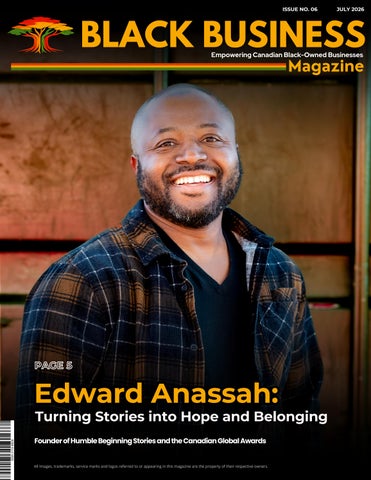
Welcome to the July 2026 edition of Black Business Magazine. We sincerely appreciate your patience, as this issue was delayed due to technical challenges. Thank you for your understanding, and we are excited to share this edition with you.
This issue focuses on Global Markets & Diaspora Trade, exploring how Black entrepreneurs are expanding beyond borders, building international partnerships, and creating new opportunities across Africa, the Caribbean, and the United States.
In today’s interconnected economy, global growth requires vision, adaptability, and strong networks. This edition celebrates entrepreneurs and leaders who are leveraging innovation, culture, and collaboration to strengthen the global impact of Black-owned businesses.
We are proud to feature our Business Woman of the Month, Eno Eka, CEO of ENY Consulting and Founder of Business Analysis School, whose leadership continues to empower professionals and entrepreneurs through strategy and education.
This issue also highlights inspiring stories from Edward Anassah, Founder of Humble Beginning Stories and the Canadian Global Awards, Carla Mbol, Founder and CEO of Carla+ Curls, and Lamar Falconer, Founder and CEO of AltoLeap, showcasing how purpose, innovation, and resilience are shaping the future of business.
Beyond these features, this edition explores young Black Canadian entrepreneurs expanding globally, the cultural influence shaping summer food and outdoor experiences, and Canada’s evolving trade ecosystem supporting Black-owned exporters.
As businesses continue to pursue new global opportunities, collaboration, innovation, and strategic partnerships remain essential. We hope this issue inspires entrepreneurs and leaders to embrace new possibilities, build meaningful connections, and continue creating lasting impact.
Thank you for being part of our journey to amplify Black voices, celebrate entrepreneurship, and support the growth of businesses making a difference.

SK Uddin Publisher & Editor Black Business Magazine

blackbusinessmagazineca
amanda@canadiansmeca
Black-Business-Magazine-Canada canadiansme-black-business-magazine

blackbusinessmagazinecanada canadiansme

Publisher&Editor ShaikKhaleeluddin(SK)
BusinessDevelopmentManager RaoofuddinS
Sr.ContentManager AmandaSpearing
Sr MediaManager MaheenBari
MediaManager KripaAnand
CreativeDesign CmarketingInc
SocialMedia CmarketingInc
Photography DepositPhotos,CmarketingInc
Web CmarketingInc
ForAdvertisements raoof@canadiansmeca/amanda@canadiansmeca CmarketingInc 6345DixieRd, Unit202,Mississauga,ON L5T2E6
Callusat+14166550205/4377784446
ISSN3110-9829(Online)

PublishedbyCmarketingInc 6345DixieRd, Unit202,Mississauga,ON,L5T2E6
Copyright©2026CMarketingInc Allrightsreserved Reproductioninwholeorpartofanytext,photography orillustrationswithoutwrittenpermissionfromthe publisherisprohibited.
ThecontentsintheBlackBusinessMagazinearefor informationalpurposesonly.NeitherCmarketingInc,the publishersnoranyofitspartners,employeesoraffiliates acceptanyliabilitywhatsoeverforanydirector consequentiallossarisingfromanyuseofitscontents

How Black Canadians Shaped Summer Food and Outdoor Culture
Young Black Canadian Entrepreneurs Going Global
Digital Platforms Powering Cross-Border Commerce
Canada’s Trade Ecosystem for Black-Owned Exporters
Connecting Canadian SMEs to AfCFTA Opportunities
From Canada to Africa Through Diaspora Investment












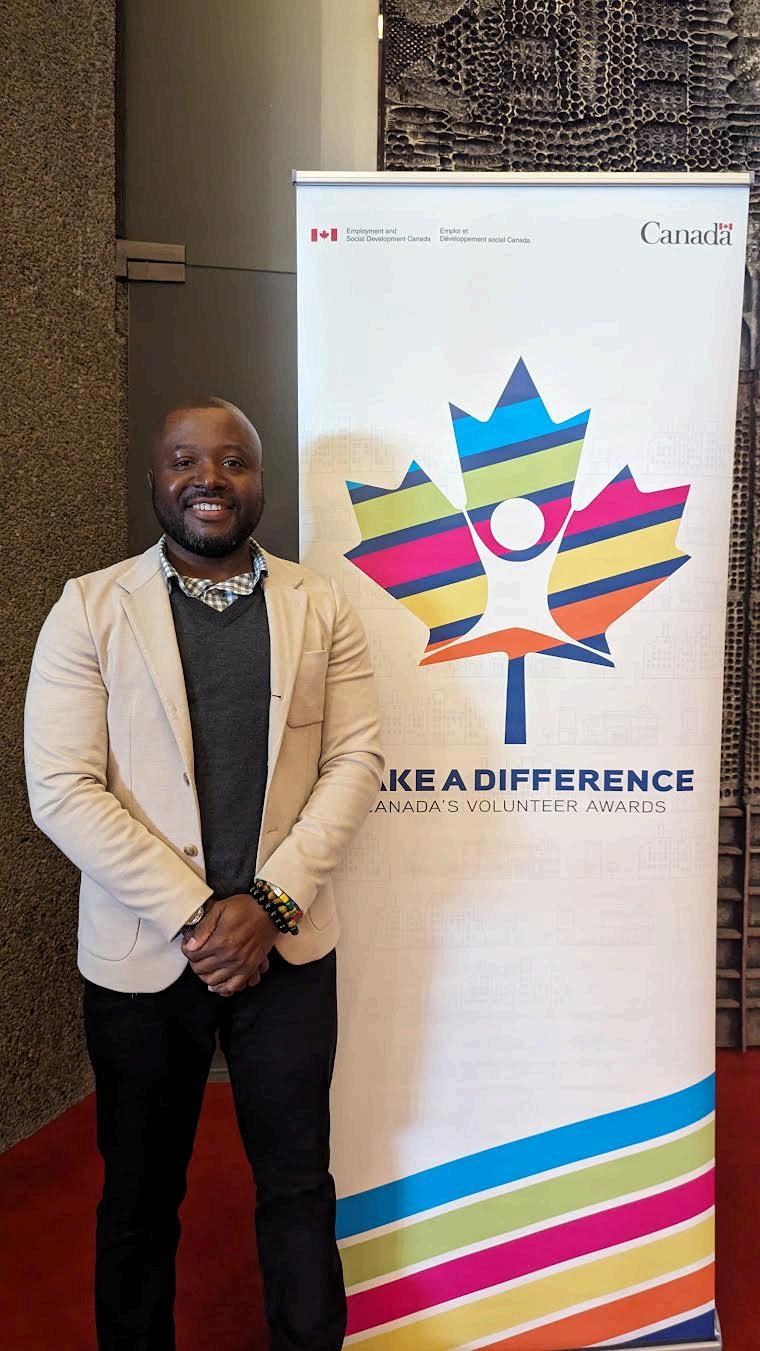
In an exclusive interview with Black Business Magazine, Edward Anassah, Founder of Humble Beginning Stories and the Canadian Global Awards, shares how he has turned storytelling into a powerful tool for inclusion, mentorship, and opportunity From his roots in Accra, Ghana, to building a career across multiple Government of Canada institutions, Edward has consistently focused on elevating underrepresented voices

Edward Anassah is the Founder of Humble Beginning Stories (HBS) and the Canadian Global Awards, global platforms dedicated to amplifying the voices of entrepreneurs, innovators, and changemakers whose journeys often go unheard. Born and raised in Accra, Ghana, Edward became the first person in his family to graduate from university, a milestone rooted in years of sacrifice, perseverance, and quiet determination.
The idea for Humble Beginning Stories emerged from a simple belief: everyone has a story worth telling, and those stories can inspire others to keep going I wanted to create a platform that highlighted not only achievements but also the challenges and lessons that shape people along the way
You were the first in your family to graduate from university and went on to build a career across multiple Government of Canada institutions while founding Humble Beginning Stories in 2017. What personal experiences led you to create a storytelling platform focused specifically on underrepresented entrepreneurs and changemakers?
My journey to creating Humble Beginning Stories was shaped by both personal experience and observation Growing up in Ghana and later navigating life in the United States and Canada, I experienced firsthand how difficult it can be to build networks, access mentorship, and find a sense of belonging in unfamiliar environments

His journey has taken him across Ghana, the United States, and Canada, where he has built a career within several Government of Canada institutions, including the Canada Revenue Agency, Canada Border Services Agency, Innovation, Science and Economic Development Canada, Shared Services Canada, Elections Canada, and Public Services and Procurement Canada His work focuses on user experience research, service design, stakeholder engagement, and digital transformation Myownexperienceswithloss,resilience, andrebuildingreinforcedthatmission. Storytellingbecamemorethancontent—it becameawaytocreateconnection,foster belonging,andremindpeoplethattheyare notaloneintheirjourney.
As I progressed in my career, I met countless entrepreneurs, newcomers, and community leaders doing remarkable work, yet many struggled to gain visibility because they lacked access to platforms that could amplify their stories I realized that success is often celebrated, but the struggles, sacrifices, and resilience behind it are rarely shared
Humble Beginning Stories and the Canadian Global Awards have now featured and recognized more than 500 people globally, turning individual stories into visibility, mentorship, and new opportunities. How do you intentionally design your ecosystem so that storytelling leads to real‑world impact and not just a moment of online celebration?
One of the greatest lessons I have learned is that being seen can be transformational Many entrepreneurs, immigrants, and community leaders spend years working quietly, often without recognition, support, or encouragement Over time, that invisibility can create self-doubt and isolation
When someone shares their story publicly and receives positive feedback, something powerful happens They begin to realize that their experiences matter and that their journey has value beyond their immediate circle
I have witnessed people gain confidence, build new relationships, and rediscover belief in themselves simply because someone took the time to listen and share their story For immigrants in particular, visibility can create a sense of belonging It reminds them that their contributions are meaningful and that they have a place within the broader community
This belief became even more personal after losing both of my parents during the COVID-19 pandemic and, a few years later, my only sister. Those losses changed me profoundly. They reminded me how fragile life is and how important it is to acknowledge, celebrate, and learn from the journeys of others while we have the opportunity My parents hard work, sacrifices, and unwavering belief in education created the foundation for everything I have achieved Their example continues to ground me and fuels my commitment to helping others share their stories and create lasting impact
These moments have taught me that storytelling is fundamentally about human connection People do not just want to be recognized for what they have achieved; they want to know that they are understood When individuals feel seen, they become more confident in sharing their gifts, and entire communities benefit from that confidence and participation.
You’ve shared examples of founders whose lives changed after their story was published going from isolation and discouragement to new partnerships, customers, and confidence. What have these moments taught you about the emotional and community power of being “seen” in public, especially for immigrants and overlooked voices?
One of the greatest lessons I have learned is that being seen can be transformational Many entrepreneurs, immigrants, and community leaders spend years working quietly, often without recognition, support, or encouragement Over time, that invisibility can create self-doubt and isolation
When someone shares their story publicly and receives positive feedback, something powerful happens They begin to realize that their experiences matter and that their journey has value beyond their immediate circle
I have witnessed people gain confidence, build new relationships, and rediscover belief in themselves simply because someone took the time to listen and share their story For immigrants in particular, visibility can create a sense of belonging It reminds them that their contributions are meaningful and that they have a place within the broader community
These moments have taught me that storytelling is fundamentally about human connection People do not just want to be recognized for what they have achieved; they want to know that they are understood When individuals feel seen, they become more confident in sharing their gifts, and entire communities benefit from that confidence and participation
Alongside Humble Beginning Stories, you co founded Barrhaven Community Soccer and remain active in public service and awards judging. How do you balance government work, entrepreneurship, and community leadership and what connects all of these roles for you?
While government service, entrepreneurship, community leadership, and awards judging may appear different on the surface, they are all connected by one purpose: creating better outcomes for people
My work in government focuses on improving services and experiences for Canadians through user-centered design, research, and stakeholder engagement Humble Beginning Stories focuses on helping people feel seen and connected through storytelling Barrhaven Community Soccer uses sport to foster belonging, wellness, and inclusion Awards judging allows me to celebrate and recognize impact created by others
Balancing these responsibilities requires discipline, strong time management, and a clear sense of purpose I am fortunate to be surrounded by supportive collaborators, volunteers, and community members who share the vision

Whatkeepsmemotivated isunderstandingthateach rolecontributestobuilding strongercommunitiesin differentways.WhetherI amimprovingapublic service,highlighting someone 'sjourney,or creatingopportunitiesfor connectiononasoccer field,theobjectiveremains thesame:helpingpeople accessopportunities,build relationships,andthrive.
For newcomers, Black professionals, or early stage entrepreneurs who are still trying to build networks and feel like they don’t “belong” yet, what is one practical step you’d encourage them to take—and one mindset shift that has helped you keep going on your own journey?
One practical step I would encourage newcomers, Black professionals, and early-stage entrepreneurs to take is to intentionally build relationships before they need them Attend community events, volunteer, join professional associations, and engage with people genuinely Opportunities often come through trusted relationships rather than formal applications alone
The mindset shift that helped me most was understanding that belonging is not something you wait to receive-it is something you help create Early in my journey, I sometimes felt like an outsider Over time, I realized that many people feel the same way, regardless of their background or level of success.
Instead of focusing on whether I belonged, I focused on contributing I looked for ways to help others, create connections, and add value to the communities around me
That shift changed everything When you lead with service, relationships naturally follow Confidence grows through action, not certainty

Disclaimer:Theviewsandopinionsexpressedinthis interviewarethoseoftheguestanddonot necessarilyreflecttheofficialpolicyorpositionof BlackBusinessMagazineoritsaffiliates The magazineiscommittedtosupportingBlack entrepreneursandfosteringconversationsthat promoteinclusionandeconomicempowerment.
BySKUddin
Eno Eka's path exemplifies what happens when technical expertise, resilience, and vision meet opportunity. She began her career as an accountant in Lagos and later led a $6 billion banking transformation in Canada, earning a reputation as one of the country's most vibrant voices in strategy, business analysis, and digital transformation
SheiscurrentlytheCEOofENYConsultingand theFounderofBusinessAnalysisSchool,where sheoverseesaglobalconsultingand educationecosystemservingcorporations, governments,andprofessionalsacross multiplecontinents.
CEOofENYConsultingand theFounderofBusiness AnalysisSchool

Eno's story is based on movement, ambition, and a desire to continue learning Starting in accounting in Lagos provided her with a solid foundation in numbers, processes, and financial discipline However, her career took a dramatic turn when she began working in business analysis and transformation, eventually rising to a leadership role in one of Canada's largest banking modernization initiatives
That shift was not minor in scale. According to her professional profile, her work affected over $6 billion in assets and assisted 125,000 banking members with a key systems transfer Those metrics represent not only technical performance, but also the capacity to manage risk, align people, and implement change in a highly regulated environment Her career is especially important to Black Business Magazine readers because it demonstrates how immigrant women can advance from technical roles to corporate leadership, transforming industries and broadening opportunities for Black professionals in Canada

Eno's ENY Consulting helps firms negotiate the complexities of modernization. Her clientele includes banks, financial institutions, government organizations, and early-stage firms from Canada, the United States, and Nigeria. The companys services include digital and AI transformation strategy, core system modernization, process re-engineering, operational optimization, executive advisory, and corporate capability development Her consulting model stands out for its ability to combine strategy and execution Many firms can make recommendations, but Eno's work is intended to assist clients in implementing change That is important in environments where transformation is not optional Banking, government, and enterprise operations face pressure to become faster, smarter, and more efficient while retaining trust and compliance
Herinternaluseofover20AIagentsto enhanceconsultingdelivery demonstrateshowseriouslyshetakes innovation.RatherthandismissingAIas jargon,shehasincorporateditinto servicedeliveryandoperational planning.Thispracticalfocusisa significantbenefitforfirmsseekingto deployAIeffectively.Inaneconomy wheretransformationfrequentlyfails becauseindividualsareunableto connectvisiontoexecution,Eno's approachservesasatimelyreminder thatchangeonlymattersifitis implementedinrealworkflows,real teams,andrealresults.

If ENY Consulting helps businesses, Business Analysis School helps individuals The school, the ecosystem's education arm and key revenue driver, prepares mid- and senior-career individuals for six-figure strategy, consulting, and transformation roles Graduates go on to work for Fortune 500 businesses, worldwide banks, consulting organizations, and government entities This is the point at which Eno's work has the greatest impact on the community She is not only teaching business analysis, but also offering opportunities for advancement The school's trademark programs, such as the Certified AI Business Analyst, Certified AI Business Strategist, Certified AI Business Consultant, and Business Analysis Masterclass, reflect her view that technical competence should translate into economic potential
Hertrainingprogramhasalsoyielded verifiableoutcomes,includingover$3 millionindemonstratedstudentincome growthandaglobalreachof100,000+ professionalstrainedin90+countries.These findingsdemonstratethateducation,when linkedwithmarketneed,canbeapowerful engineforwealthgenerationandcareer advancement.ForBlackprofessionalsin Canada,thismessageisextremely important:skilldevelopmentismorethan justcertification.Itisaboutpreparing oneselfforcareersinwhichstrategy, influence,andcompensationallgrow together.
Eno's leadership has received widespread praise in Canada and abroad She is the winner of Canada's Most Powerful Women Award, a Top Voice in Business Analysis, a Forbes Coaches Council member, and has been featured in Forbes, CTV, CBC, and The Guardian. She has also been recognized as one of the Top 100 Black Women to Watch in Canada and the Top 20 Most Influential Nigerians in Canada That recognition is important because representation creates aspirations When Black women are visible in high-value professions, particularly in banking transformation, AI strategy, and consulting, it broadens perceptions of who belongs in those fields It also offers a compelling counter-narrative to the notion that leadership change work is just for a select group of experts
Eno'sinfluenceextendsacrossborders.She deliversglobalkeynotesonAI,digital transformation,thefutureofwork,andcrossborderbusinessdevelopment.Indoingso,she representsagrowinggroupoffounderswhose influenceextendsbeyondasinglemarket,sector, oridentity.

opportunities.
Eno Eka's experience provides various insights for Black Business Magazine readers:
Your technological background can be leveraged into a leadership platform. Accounting became the starting point for enterprise transformation.
Education can be a business model. Business Analysis School translates skills into income and mobility.
Systemic factors contribute to scale. Eno has structured its operations around growth, whether it is serving banks or training professionals
Her career demonstrates that Black women can lead at the highest levels while paving the way for the next generation
From Lagos to Canada, accounting for enterprise transformation, Eno Eka has developed a career based on impact, creativity, and opportunity Through ENY Consulting and Business Analysis School, she assists businesses and professionals in adapting, growing, and thriving.
Disclaimer:Thisarticleisforinformationalpurposesonly Black BusinessMagazinedoesnotendorseorguaranteeanyproducts, services,organizations,orindividualsmentioned Readersare encouragedtoconducttheirownresearchandduediligence beforemakinganybusiness,financial,orpersonaldecisions

BySKUddin
Every summer in Canada, grills are fired up, coolers are filled with ice cream and drinks, and parks across the country are packed with picnics and block parties Black communities, particularly Caribbean and African diasporas in Toronto, Montreal, and Halifax, have greatly influenced the "essentially Canadian" aspects of warm-weather celebrations, such as outdoor feasts, booming music, and vivid street festivals From Caribana's jerk-smoke-filled parade routes to neighbourhood cookouts in "Little Jamaica," Black Canadians have transformed summer into a moving celebration of cuisine, freedom, and community
It is impossible to discuss Black influence on Canadian summer culture without mentioning Caribana, now officially known as the Toronto Caribbean Carnival The event, founded in 1967 by Caribbean immigrants as a "gift" to Canada for its centennial, was inspired by Trinidad and Tobago's pre-Lenten carnival and quickly became an annual summer tradition Toronto has the largest Caribbean festival in North America, attracting over a million visitors annually for parades, fetes, and culinary events
Caribana has always been about more than costumes and music; it is a festival centered on outdoor eating and socializing According to historical reports, the parade and surrounding activities have traditionally featured Caribbean cuisine jerk chicken, roti, patties, curry goat, oxtail, and tropical desserts served from stalls, trucks, and private pits
AccordingtoBlackfoodmedia,theevent hasdramaticallyenhancedtheawareness ofBlackandCaribbeancuisines,allowing jerkseasoning,plantain,sorrel,andrum caketotransitionfromdiasporastaplesto thebroaderGTAsummerfoodvocabulary.
FormanyBlackCanadians,Caribana weekendistheultimatecookout:arolling picnicwiththegrillatthecenterandthe cityasthebackyard.
“Little Jamaica” and the Rise of Caribbean Picnic Food
Beyond the festival weekend, Caribbean communities have transformed ordinary summer dining in Canadian cities From the late 1950s onward, immigrants from Jamaica, Trinidad and Tobago, Guyana, Haiti, and other islands built bustling communities in Toronto, particularly along Eglinton West in an area known as "Little Jamaica " The district's history reveals that Caribbean families "unpacked" traditions like carnival and open-air gatherings, building restaurants, bakeries, and small shops that became cultural pillars
Black restaurant features and diaspora commentaries highlight the popularity of grilled and fried favourites such as jerk pork and chicken, festival, fried fish, patties, and coconut-based sweets, not only as restaurant meals but also as picnic and party dishes Caribbean flavours gradually became available in mainstream grocery stores, food trucks, and summer menus throughout the Greater Toronto Area, influencing what people put into coolers and serve at backyard gatherings By the 2000s, it was typical to witness jerk-marinated meats at Canada Day barbecues, Trinidadian roti at office park picnics, and Caribbean-inspired ice cream flavours at local shops a quiet but significant testament to how Black culinary traditions have crept into Canada's shared summer palette.
Food is only half the narrative; sound and symbolism are equally important Caribana and other summer celebrations are more than just parties for many Black Canadians, particularly those of Caribbean heritage They are living manifestations of survival, resistance, and joy. Caribana is considered the "cultural experience of the year " for Black communities, bridging abolitionist history, post-war migration, and modern Black identity through music, dance, and public celebrations
Block gatherings and park cookouts are localized versions of this practice Summer music in cities across Canada now includes soca, dancehall, reggae, hip-hop, and Afrobeats Toronto lingo, mainly influenced by Jamaican patois, has now become part of mainstream youth culture These auditory and linguistic influences are inextricably linked with food: jerk smoke curling over a park while a DJ plays a soca set is now a common Canadian summer scene
Museumsanddigitalheritageprojects areincreasinglyframed.Caribanaand otherBlacksummerfestivitiesserveas examplesofhowmulticulturalpolicies canbeimplementedineverydaylife. Theseeventsprovideopportunitiesfor peoplefrommanybackgroundsto experienceBlackfood,music,andstyles aspartoftheirweekendroutine.Inthis way,BlackCanadianshaveworkedto transformsummerfromaprivategarden eventtoapublic,communityblockparty.
Black impact on Canadian summer treats is more modest but still considerable Caribbean and African entrepreneurs have produced flavours and styles that broaden what counts as a "traditional" picnic dessert: sorrel and rumraisin ice creams, coconut and cassava puddings, tropical fruit snow cones, and tamarind and guava shaved-ice drinks Many of these delicacies, which were formerly exclusively available in diaspora communities or at Caribana, are now sold at food festivals, farmers' markets, and specialty ice cream stores.
Food culture authors contend that these items do more than just add variety to menus; they also bring themes of migration, remembrance, and home into the heart of Canadian summer routines A tub of mango sorbet from a Blackowned company tucked into a family cooler, or a tray of coconut drops shared at a city park, becomes an opportunity to teach children about their heritage while drawing friends and neighbours into the story Over decades, such actions have transformed Canada's picnic table into a more unashamedly Black and Caribbeaninfluenced setting
Caribana cookouts, Little Jamaica take-out picnics, and Black-led summer celebrations in Canada have transformed the concept of " summer food" in terms of appearance, sound, and experience Jerk and curries now sit beside hot dogs; soca and dancehall pound from cottage speakers; and Caribbean sweets coexist with Nanaimo bars at community potlucks
ResearchontheCaribbeanSeadiasporain Canadahighlightsthedynamicnatureof thesetraditions,whichincludeIndigenous, African,andEuropeaninfluencestocreate adistinctCaribbean-Canadianidentity. RecognizingBlackCanadians'contributions tothevibrantsummercultureduring NationalIceCream,Grilling,andPicnic Monthiscrucialtotellingthetruestoryof theCanadiansummer.

Disclaimer:Thisarticleisforinformationalpurposesonly BlackBusinessMagazinedoesnotendorseorguaranteeany products,services,organizations,orindividualsmentioned Readersareencouragedtoconducttheirownresearchand duediligencebeforemakinganybusiness,financial,or personaldecisions

BySKUddin
Across Canada, a new generation of Black entrepreneurs is creating global firms from the start, inventing goods, platforms, and services for customers in Toronto, Lagos, Kingston, London, and Atlanta all at once Youth-focused programs and policy initiatives recognize that Black youth face systemic impediments in access to finance and networks, but also possess great potential to promote innovation and cross-zborder entrepreneurship In recent years, the ecosystem supporting globally minded Black founders under 40 has expanded dramatically, ranging from university-based accelerators to loan funds
Canadian politicians and industry executives emphasize the importance of youth entrepreneurship and diaspora innovation for long-term competitiveness and strengthening linkages with rapidly emerging regions such as Africa and the Caribbean
The federal Black Entrepreneurship Program (BEP), developed in conjunction with Blackled groups, aims to eliminate institutional barriers and create opportunities for Black entrepreneurs, including young founders
Atthesametime,accordingtodatacitedbyStartup Canada,Blackfoundersfrequentlyfaceextra psychologicalandstructuralbarriers:ina2025BDC study,72%ofBlackentrepreneursclaimedthefearof racialstereotypesnearlypreventedthemfrom establishingabusiness.Thisemphasizesthe importanceofearly,focusedsupport.Largefinancial institutions,suchasRBC,haverespondedby supportingFuturpreneurCanada'sBlack EntrepreneurStartupProgram,whichprovidesyoung Blackentrepreneurswithstartupfinanceand targetedmentorship.Theseeffortsrepresenta transitionfromadhocsupporttoaplannednational initiativetopromoteBlackyouthentrepreneurship andglobalopportunities.
Accelerators and colleges in Canada are increasingly affecting the careers of young Black entrepreneurs The Black Founders Network (BFN) at the University of Toronto provides mentorship, sponsorships, and accelerator programs for Black-identifying students building startups Many of these ventures target international markets with digital products or remotefirst services York University's Black Entrepreneurship Alliance (BEA), which operates through its YSpace innovation hub, offers fully funded programs and collaborations to help Black entrepreneurs and professionals launch and grow scalable companies.
Beyond campus, organizations like the Black Entrepreneurship Alliance (BEA) (national accelerator), Black Entrepreneurs and Businesses of Canada Society (BEBC Society), and Black Business Ventures Association (BBVA) offer programs that build skills in funding literacy, investment readiness, and go-to-market strategies These programs often focus on tech and digital business models that can serve global markets from Canada
These programs can benefit global firms by incorporating export preparation, cross-border legal principles, and the discovery of foreign customers into their curricula Startup Canada's resource guides encourage educators and accelerators to include courses on tariffs, digital export technologies, and diaspora market potential so that new founders may consider beyond their hometown from the start Campusbased initiatives, with mentorship from successful Black founders, can serve as launchpads for "borderless businesses "

Next-generation global entrepreneurship requires strong digital skills Many youthfocused initiatives offer training in AI, coding, digital marketing, and virtual collaboration to prepare Black youngsters to compete on global freelancing and startup platforms Tribe Network provides an eight-week virtual AI program for Black university students in Canada Other projects offer go-to-market bootcamps and remote startup support
Meanwhile, organizations such as the CEE Centre for Young Black Professionals view entrepreneurship as part of a broader economic empowerment strategy, creating avenues into remote work, creative sectors, and IT tasks that can be performed for clients worldwide Young Black Canadians can make revenue from overseas clients while studying through global freelancing platforms and remote-friendly enterprises This can help them develop the skills and relationships needed to launch their own businesses
National resource hubs, such as the Startup Canada directory, emphasize the importance of merging digital capabilities with entrepreneurial training Young founders who can design goods, run digital ads, and manage distributed teams are better suited to serving diaspora markets in different time zones This is especially true in sectors such as SaaS, creative services, online education, and digital media, where cultural fluency and technical brilliance take precedence over geography.
The developing ecosystem is not just theoretical; it is already influencing the careers of young Black Canadian entrepreneurs Articles on "Black entrepreneurs to watch" in Canada emphasize students and early-career professionals developing financial platforms, ecommerce businesses, ed-tech tools, and creative firms for clients in North America, Africa, and the Caribbean.
Many of these founders take advantage of programs like Futurpreneur's Black Entrepreneur Startup Program, which offers up to $75,000 in accessible financing and up to two years of coaching to entrepreneurs aged 18 to 39, many of whom have global ambitions built into their business plans

Loancashandequityinvestmentsarealsoin play.TheBlackEntrepreneurshipLoanFund,in collaborationwithFACEandmajorfinancial institutions,providesloansofupto$250,000to Blackbusinessowners,enablingnext-generation founderstoexpandbeyondearlybootstrapping. VenturefundslikeBKRCapitalandvisibility effortslikeRepMattersstrivetosupportand promoteBlack-ledfirmsinlargemarketplaces.
YoungBlackCanadiansarecreatingenterprises withglobalconsumerbases,diversefounding teams,androotsinCanadianandAfrican diasporaexperiences.
Disclaimer:Thisarticleisforinformationalpurposesonly Black BusinessMagazinedoesnotendorseorguaranteeany products,services,organizations,orindividualsmentioned. Readersareencouragedtoconducttheirownresearchand duediligencebeforemakinganybusiness,financial,or personaldecisions


In an exclusive interview with Black Business Magazine, Carla Mbol, Founder and CEO of Carla+ Curls, shares how she is transforming the beauty industry by addressing the long-overlooked needs of textured hair consumers. With a mission to eliminate guesswork at the shelf, Carla combines AI, computer vision, and a zerohardware digital ecosystem to provide brands with actionable insights while delivering hyper-personalized, inclusive experiences to consumers
InterviewBySKUddin
Carla Mbol is the Founder and CEO of Carla+ Curls, a disruptive beauty technology company specializing in AIdriven hair diagnosis and data infrastructure An alumna of the Next AI accelerator, Carla bridges the gap between diverse hair textures and the retail industry She leverages her background in digital transformation and strategic communication to solve the "retail blind spot" for textured hair consumers Her mission is to build a "Zero-Hardware" digital ecosystem that enables brands to capture actionable consumer data while providing hyper-personalized, inclusive beauty experiences at scale.
You’re building Carla+ Curls at the intersection of deep tech and beauty to solve what you call the “retail blind spot” for textured hair. What personal or professional experiences made you realize that AI not more products was the missing infrastructure for inclusive beauty?
The 105B global hair care market does not lack products; it lacks structured data and accurate guidance Personally, my realization came from a place of shared frustration and systemic neglect Like millions of women with textured hair, I grew up under beauty standards that conditioned us to alter our natural patterns Driven by a lack of specialized knowledge at the shelf, we routinely spent fortunes on inadequate products, harsh chemicals, and straighteners
The industry assumption that no guidance equals no sale is wrong Consumers do buy, but they buy the wrong products This guesswork creates an expensive cycle of trial and error, leading to damaged hair, a profound loss of self confidence, and zero brand loyalty For brands and retailers, this retail blind spot triggers massive customer churn and a 67% cart abandonment rate.
Carla+ Curls is a Zero-Hardware retail intelligence platform that uses QR codes and AI to deliver personalized diagnostics and product recommendations. How does the experience work for a consumer?
We designed the experience to be completely frictionless While legacy beauty tech relies on expensive, high maintenance in store kiosks or physical tablets, Carla+ Curls requires zero hardware Standing in the aisle, a shopper simply scans a QR code on the shelf with their smartphone No app download is required The phone camera captures a quick photo of their hair, and our computer vision model instantly analyzes its hair profile including curl patterns and texture characteristics By merging this visual analysis with immediate contextual hair goals and concerns, our AI engine delivers an instant, tailored routine recommending the exact matching products available right in front of them The efficiency of this Zero Hardware framework is proven: during our recent pilot with Royalty Natural at the Beverly Salomon pharmacy, affiliated with Jean Coutu in Montreal, this exact frictionless funnel completely cleared target inventory and doubled on shelf sales within just three weeks It proves that when you eliminate purchase doubt instantly at the shelf, conversion rates skyrocket.
You often talk about the "Data Blackout" in beauty retail. What does that mean, and what are brands learning through Carla+ Curls?
Most beauty companies can tell you what was sold Very few can tell you who their consumers are, what was actually needed but could not find That gap is the Data Blackout Before Carla+ Curls, a consumer could stand in front of a shelf for ten minutes, leave confused, and the brand would never know why. Was the product unsuitable? Was the labeling unclear? Was the consumer looking for hydration, growth, or scalp care? Our platform transforms those invisible moments into actionable first party data Brands can understand hair profiles, consumer concerns, recommendation trends, and engagement patterns in real time This allows them to make better merchandising, marketing, inventory, and product development decisions For many partners, this is the first time they have access to structured data about textured hair consumers at the point of decision
As an alumna of the Next AI accelerator and one of the youngest Black women building at the intersection of AI, retail, and beauty, what has your founder journey been like so far especially when it comes to securing “smart money” and strategic partners who really understand what you’re building?
One of the biggest challenges has been helping people understand what Carla+ Curls actually is Because we operate in beauty, many people initially assume we are building another consumer app In reality, we are building a retail intelligence platform that happens to start with textured hair
As a founder, I have learned that raising capital is about finding partners who see past the superficial niche label and recognize an underserved global market with a massive data gap This distinction changes the conversation entirely We do not pitch simple cosmetic trends; we discuss first party data, customer intelligence, and retail analytics
ProgramslikeNextAIhelpedsharpenourtechnology, whilebeingselectedasafinalistfortheprestigiousGuy LalibertéGrantprovidedcriticalinstitutionalvalidation. Moreimportantly,ourmomentumbecameundeniable whenwestarteddemonstratingrealworldresults. DuringourrecentactivationwithRoyaltyNaturalatthe BeverlySalomonJeanCoutupharmacy,ourfrictionless funnelcompletelyclearedonshelfinventorywithinthree weeks.Weprovedthatwearenotjustimproving recommendations;weareconvertingconsumer uncertainty,frustration,andproductguessworkinto measurable,repeatablebusinessoutcomesforbrands.
Looking ahead, what is your vision for Carla+ Curls as a global inclusive beauty infrastructure—across salons, retail, and international markets—and what excites you most about standardizing textured hair diagnostics worldwide?
My vision is for Carla+ Curls to become the global standard for textured hair diagnostics, moving the entire industry toward a model of Universal Hair Intelligence

Today, a person ' s hair journey is fragmented and frustrating, depending entirely on geography or random online information By deploying our frictionless framework worldwide, we are building the definitive global data layer for hair care, powering the backend experiences for mass retailers, pharmacies, and e commerce platforms across Montreal, Paris, Lagos, and São Paulo
What excites me most is the profound impact of completely transforming the game By mastering the diagnostic infrastructure for textured hair, which is biologically the most complex spectrum, our AI engine inherently develops the capacity to analyze any hair type universally We are shifting the power dynamics of the beauty industry We are replacing decades of systemic retail neglect and product guesswork with scientific precision. What drives me is seeing millions of individuals finally experience accurate, data driven representation and guidance We are not just making tactical product recommendations; we are resetting global beauty standards to build an ecosystem where automated, high level expertise is a right accessible to everyone, everywhere
Disclaimer:Theviewsandopinionsexpressedin thisinterviewarethoseoftheguestanddonot necessarilyreflecttheofficialpolicyorpositionof BlackBusinessMagazineoritsaffiliates.The magazineiscommittedtosupportingBlack entrepreneursandfosteringconversationsthat promoteinclusionandeconomicempowerment
BySKUddin
Digital platforms are quietly changing the norms of global trade for small enterprises Fintech, logistics technology, and B2B markets make it much easier for Black Canadian startups to access clients and partners in Africa, the Caribbean, and the United States without having to start from scratch
Industryanalystshighlightthat technology‑drivenpaymentandlogistics solutionsareespeciallyrevolutionaryforAfrican andCaribbeantradecorridors,wheretraditional bankingandshippingsystemshavefrequently beenslow,expensive,orfragmented.Usingthese tools,Black-ownedCanadianSMEsmaymanage payments,compliance,anddeliverythrough carefullyselectedpartners,allowingthemto tradelikelargerenterprises.

Across Africa and the Caribbean, fintech and logistics innovators are stepping in where traditional infrastructure failed Leading African payment systems facilitate local and cross-border transactions for millions of SMEs, typically via mobile devices Digital logistics networks also help entrepreneurs transport goods across borders more predictably Afreximbank supports programs that connect entrepreneurs to develop logistics and payment solutions to boost intra-African trade
These improvements are important to Black Canadian exporters for two reasons First, they lower the barrier to entry in new markets: a tiny Torontobased firm may use existing payment rails and logistical networks to reach clients in Lagos or Kingston without needing to establish local organizations right away Second, these platforms are frequently created by African and diaspora innovators who understand both the structural hurdles and cultural intricacies of conducting business across the Black Atlantic Because of this cultural and technological compatibility, they are ideal partners for Black Canadian SMEs looking to expand beyond Canada
Platform mix varies by firm; commonalities are emerging in African and Caribbean trade Africa-based fintech companies have established API-driven payment gateways that enable overseas vendors to process payments "like a local company " across numerous African markets This includes currency conversion and mobile money connections behind the scenes For example, some of Africa's best fintechs now operate in 20-30 countries, allowing SMEs worldwide to accept local cards, mobile wallets, and bank transfers with a single connection
Digital tools are also helping to boost Caribbean trade Jamaica is emerging as a digital and logistics center connecting Africa, the Caribbean, and North America, with a focus on tourism, services, and e-commerce, according to policy and trade comments For a Black Canadian creator, this means that a combination of African payment gateways, Caribbean logistics providers, and North American fulfilment centers can create a seamless chain from Canadian warehouse to African or Caribbean consumer without the SME having to build each component themselves


Cross-border business involves not just transferring money and goods but also complying with regulations to prevent fraud and financial crime Payment and fintech platforms in Africa and the Caribbean are implementing strong KYC and AML rules for onboarding and transaction monitoring This can be a huge benefit for Black Canadian SMEs because it eliminates the need to thoroughly comprehend the financial requirements of each country
However, the strength of these systems is determined by the partners chosen Small exporters should conduct due diligence on payment and logistics platforms, including licensing, data security, and dispute resolution methods, as advised by trade finance specialists Working with platforms endorsed by credible financial institutions, such as Africa-wide fintech groups or trade-focused development banks, might provide further comfort Trust infrastructure also involves reputation management and open pricing Many trade platforms include counterparty ratings, standardized contracts, and well-defined fee structures Transparency is especially important for Black-owned businesses, as they may lack access to informal networks and rely on organized signals of reliability and fairness.
Instead of developing their own apps, payment systems, or logistical networks, Black Canadian SMEs can leverage current platforms in three practical ways Fintech firms can serve as cross-border finance teams, integrating African and Caribbean payment gateways into e-commerce sites and invoicing processes Customers can pay using familiar methods (mobile money, local cards), while the Canadian business receives funds in major currencies.
Second, small businesses can benefit from digital logistics platforms that combine shipping options and customs support These platforms frequently have "book and track" interfaces, allowing SMEs to compare carriers, book shipments, submit documents, and track delivery across borders By using these networks, a Canadian exporter avoids having to negotiate with multiple freight forwarders and customs agents
B2Bmarketplacesandtrade databasesinemergingregions enableSMEstoexposeitemsto qualifiedbuyerswithout incurringhightradeshowcosts. Black-ledglobalcommerce initiativesanddiaspora-focused groupsoftencuratesuch opportunities,emphasizing Black-ownedbrandssuitablefor export.Forfounderswithlimited time,the"piggybacking" techniquesimplifiesglobaltrade bylayeringintegrationsand relationshipsontoexisting digitalinfrastructure,makingita morefeasiblepathtoglobal growth.

ImageCourtesy:depositphotoscom
Disclaimer:Thisarticleisfor informationalpurposesonly Black BusinessMagazinedoesnotendorseor guaranteeanyproducts,services, organizations,orindividualsmentioned Readersareencouragedtoconduct theirownresearchandduediligence beforemakinganybusiness,financial,or personaldecisions.

BySKUddin
Although black-owned enterprises in Canada are expanding globally, they still account for a modest percentage of the country's exports According to studies and industry reports, while Black exporters perform well when they reach global markets, they continue to encounter barriers to finance, trade intelligence, and networks Banks, trade councils, and diaspora organizations are implementing tailored programs to help Black-owned SMEs export globally
Black-owned exporters in Canada rely on a multi-layered trade ecosystem that includes banks, export credit agencies, trade councils, and community organizations Export Development Canada (EDC) is at the forefront of federal export support, including credit insurance, guarantees, working capital, and market intelligence In 2025, it created a Black exporter guide that openly acknowledges the systemic challenges Black founders face and provides personalized advice, case studies, and resources Canadian banks have also implemented dedicated initiatives Black Ventures reviews specialized loan and advisory programs for Black entrepreneurs, including the RBC Black Entrepreneur Business Loan, BDC-backed youth programs, and bank programs that provide financing of up to $250,000 based on customized criteria These initiatives provide finance, mentorship, and networking opportunities around the country
Global groups are launching Black-specific trade intelligence and policy projects The International Trade Council (ITC) and the National Black Chamber of Commerce (NBCC) have launched "Global Pathways: Empowering Black-Owned SMEs to Export to the World," which includes discounted access to the ADAMftd trade database This database provides Blackowned firms with live data on importers, exporters, tariffs, and market opportunities Although based outside of Canada, these resources are available to Canadian Black entrepreneurs and supplement domestic help
Diaspora organizations in Canada play a crucial role in connecting Black-owned SMEs to global markets The Black Business Association of BC (BBABC) provides national-scale programs to promote the Black entrepreneurial ecosystem, including market access, export preparedness, and ecosystem building. According to Black Business Magazine, only 2 1% of Canadian enterprises are Black-owned However, when given support, Black exporters often outperform peers in revenue growth and international reach
Community-based activities align with Canada's overall Africa strategy Global Affairs Canada emphasizes that African diaspora communities in Canada were crucial to establishing the country's first Africa Strategy and remain critical to its execution, particularly in trade and investment This status enables diaspora organizations to influence trade missions, investment forums, and policy agendas Global alliances, such as the ITCNBCC collaboration, aim to integrate Blackowned SMEs into worldwide trade networks rather than domestic ones When Canadian Black entrepreneurs join both local diaspora groups and global Black business networks, they gain access to curated deal rooms, trade missions, and investor circles that would otherwise be impossible to access on their own
An entrepreneur can understand the ecosystem by looking at what each stakeholder provides: capital, risk mitigation, information, and introductions
Financing and guarantees: Black entrepreneur programs offered by Canadian banks include term loans and credit facilities, whereas EDC provides export credit insurance, guarantees, and specialized financing for enterprises that trade outside of Canada. These solutions support Blackowned SMEs in managing cash flow, offering competitive payment terms, and protecting against non-payment
Black entrepreneurs value tailored resources such as the Black exporter guide and ITC's "Global Pathways" publication, which translates technical trade data into practical steps. EDC and the Trade Commissioner Service also provide guides, webinars, and sector reports for market intelligence. Black-owned enterprises benefit from discounted membership to ADAMftd's trade database, which provides real-time information on potential customers and competitors
Matchmaking and Advocacy - Diaspora groups and Black-focused business associations organize cohorts, pitch events, and trade delegations to connect founders with international buyers and investors. Canada's Africa Strategy calls for "meaningful collaborations" with African institutions and expressly mentions diaspora populations as partners in establishing trade and investment links. Organizations can leverage this policy recognition to advocate for the inclusion of Black exporters in official trade missions and export promotion initiatives.
Despite advances, Black-owned exporters still face several gaps First, awareness remains uneven Many founders are unaware of Black-specific bank programs, EDC manuals, and foreign trade tools, or only learn about them later in the business growth process Smaller, younger, or informally networked Black-owned enterprises, particularly those without collateral or significant credit histories, may face disadvantages when applying for financing and risk products
Although trade intelligence has improved, it still lacks specificity for Black-owned SMEs in industries such as beauty, cuisine, culture, and technology. Entrepreneurs have limited mentorship from experienced exporters with comparable backgrounds, and Black-led organizations may struggle to sustain export-oriented programming due to a lack of longterm funding Finally, while Canada's Africa Strategy acknowledges diaspora contributions, some Black founders believe they are consulted symbolically but not necessarily resourced as key delivery partners in trade and investment projects

ScalingcollaborationslikeITC-NBCCandintegrating CanadianBlackbusinessorganizationsintoglobal frameworkscanprovideBlack-ownedexporterswithdirect accesstocutting-edgetradeintelligenceandtransaction flow.Thesemeasuresaimtotransformtheecosystemfroma patchworkofpilotsintoaunifiedpipelinethatcanpropel Black-ownedCanadianSMEsfromlocalsuccesstoglobal scale.
Disclaimer:Thisarticleisforinformationalpurposesonly.BlackBusiness Magazinedoesnotendorseorguaranteeanyproducts,services, organizations,orindividualsmentioned Readersareencouragedto conducttheirownresearchandduediligencebeforemakinganybusiness, financial,orpersonaldecisions
Recent commentary and ecosystem debates propose numerous policy options One option is to give long-term support for Black-led chambers and associations to deliver export-readiness and marketentry initiatives in collaboration with federal and provincial agencies To improve bank and EDC programs, consider streamlining eligibility, increasing advising support, and linking certain products to trade missions or cohort-based accelerator programs

AfCFTA, a cornerstone program of the African Union's Agenda 2063, aims to decrease tariffs, harmonize laws, and promote intra-African commerce Trading under its system began in 2021, and implementation is progressing in stages, including protocols on products, services, investment, competition policy, and intellectual property Canada has openly tied some of its African activities to AfCFTA
Global Affairs Canada offers technical assistance and capacity-building support to African countries to implement the agreement and promote inclusive and ecologically sustainable intra-African trade Canada's Africa Strategy defines economic cooperation as "shared prosperity," with trade and investment as core pillars and a focus on connecting Canadian enterprises with African partners in priority industries.

BySKUddin
The African Continental Free Trade Area (AfCFTA) is reshaping the way African businesses engage with one another and with the world It will eventually integrate 55 African Union member states into a single market for goods and services, making it the world's largest free trade area by number of countries AfCFTA enables Canadian SMEs, notably Black-owned and diaspora-led firms, to scale across different African markets through regional hubs and strategic collaborations.
Policyandbusinessstudiesemphasize thatAfCFTAintegrationwillresultinlarger regionalmarkets,morepredictabletrade laws,andopportunitiesforglobalpartners toconnecttoregionalvaluechainsrather thanaddressingeachAfricancountry separately.ForCanadianSMEs,thisoffers additionalpotentialscalabilityifthey developtheirAfricastrategyaroundthe AfCFTA'sarchitecture.
AfCFTA's capacity to serve many nations through a single regional hub is a significant practical benefit for Canadian exporters AfCFTA builds on existing regional economic communities, such as ECOWAS in West Africa, EAC in East Africa, and SADC in Southern Africa, making regional logistics and distribution techniques even more appealing
For a Canadian SME, a typical model might include
Choosing an AfCFTA member state with reasonably solid logistics, legal infrastructure, and ease of doing business (for example, Ghana as a West African hub or Kenya as an East African hub)
Partnering with a local distributor, logistics firm, or joint venture partner to import goods or localize services in the hub market.
Using AfCFTA-aligned norms, such as decreased tariffs and streamlined customs procedures, to transport products from a hub to neighbouring nations
ImageCourtesy:Canva
According to Canadian policy analysis, AfCFTA has the potential to improve regional value chains by reducing tariff and non-tariff barriers to inputs and finished products across borders Business-oriented publications suggest that Canadian exporters focus on "corridors" (e g , East African or West African corridors) rather than individual national markets For SMEs without the capacity to establish separate subsidiaries in various countries yet seeking regional scale, a hub-and-spoke model can reduce complexity and costs
AfCFTA aims to increase intra-African trade and promote structural transformation, including industrialization and the development of regional value chains For Canadian businesses, this has at least three ramifications
First, as tariffs decrease and customs procedures become more streamlined, African partners will be able to aggregate demand across borders. That means that a Canadian exporter working with a strong African distributor or manufacturer may see their products reach many countries through a single regional strategy.
Second, AfCFTA can make Africa more appealing as a manufacturing base, rather than solely a sales destination. According to reports, enterprises might locate light manufacturing or processing in an AfCFTA member state to serve both local and regional markets, benefiting from lower intraAfrican trade costs and privileged access to third markets

Third, AfCFTA enhances the case for Canada's own trade infrastructure, which includes FIPAs, development funds, and trade commissioner services, to prioritize regional prospects over bilateral ones Canada's trade commissioners in Africa already assist SMEs in finding regional partners and navigating complex trade regulations, and AfCFTA provides similar support within a clearer continental framework
For Canadian SMEs, particularly Black-owned and diaspora-led enterprises, joining AfCFTA requires a rigorous approach from discovery to execution, rather than just negotiating trade agreements. Drawing on Canadian trade advice and AfCFTA policy research, a practical path could look like this
Identify sectoral and corridor opportunities Use tools like Canada's Africa Strategy, the Business Council of Canada's "Why Africa?" study, and AfCFTA-focused research to find places where your industry (e.g., agri-processing, clean tech, fintech, education) is prioritized.
Participate in targeted trade trips and virtual platforms Participate in trade missions and SME platforms that connect African and Canadian firms, with an emphasis on AfCFTA-related opportunities and regional hubs These missions are frequently planned to include talks with prospective distributors, investors, and policymakers
Pilot with a single hub partner Instead of dispersing minor deals across multiple regions, focus on getting one strong partner in a strategic hub country distributor, joint venture partner, or franchisee. Include performance milestones and AfCFTA-related provisions (e.g. target markets, logistics obligations) in contracts.
Integrate financial and risk tools. Leverage Canadian and multilateral finance, guarantees, and risk-mitigation mechanisms to support African commerce, especially when aligned with AfCFTA and regional infrastructure projects
For Canadian SMEs with African roots, AfCFTA is more than just a policy acronym; it offers a framework for thinking about scale in new ways Diaspora entrepreneurs can create regional firms based on a single African center that can serve multiple markets, rather than separate, singlecountry businesses
Canada'sinvestmentinAfCFTA implementationandAfricaStrategy presentsanopportunityforCanadian enterprises,particularlythoseintheBlack andAfricandiaspora,toemploycrossborderframeworkstotranslate continentalvisionintorisk-freeplans.

Scale on the corridor - Expand into more nations in the region using data from the hub market and AfCFTA-enabled trade flows Adjust products, packaging, and distribution methods as appropriate
Disclaimer:Thisarticleisforinformationalpurposes only BlackBusinessMagazinedoesnotendorseor guaranteeanyproducts,services,organizations,or individualsmentioned.Readersareencouragedto conducttheirownresearchandduediligencebefore makinganybusiness,financial,orpersonaldecisions.



In an exclusive interview with Black Business Magazine, Lamar Falconer, Founder and CEO of AltoLeap, shares his journey of transforming a side project into an award-winning software agency that powers the operations of small and mid-sized businesses across North America From automating manual workflows to integrating AI-assisted tools, Lamar highlights how purpose-built software can replace disconnected systems, reduce errors, and unlock operational efficiency.
InterviewBySKUddin
Lamar Falconer is the Jamaican-Canadian founder and CEO of AltoLeap, a custom software company that helps small and midsized businesses replace manual processes and disconnected systems with purpose-built software, workflow automation, and AI-assisted delivery. What began in 2012 as a side project while he worked in the semiconductor industry is today an award-winning firm serving manufacturers and operations-heavy businesses across North America He was named the 2024 Black Entrepreneur of the Year at the CanadianSME Small Business Awards Through AltoLeap, Lamar is on a mission to give small and mid-sized businesses the enterprisegrade technology and the operational edge it brings long reserved for much larger companies

AltoLeap started in 2012 as a side project while you were working in the semiconductor industry and has since become an award-winning software agency helping SMEs manage over $100 million in annual client revenue. What problem were you originally trying to solve, and when did you realize this “experiment” had turned into a real company?
The honest origin is simpler than people expect In the early 2010s I was captivated by the explosion in mobile and web technology and knew I wanted to build with it so, alongside my work in semiconductors, I started an agency
Our first opportunity came from a mentor who took a chance on us: a tablet application for a manufacturer's shop floor, integrated with their ERP system At the time it felt like a neat piece of technology; only later did I see what we'd really done improved how a 100-plusperson company ran its operations, turning a manual, paper-based process into something faster and more reliable
That set the pattern we ' ve followed ever since Again and again we were pulled back to manufacturers and operations-heavy businesses where the highest-value work complex quoting, configuration, daily operations was still being done by hand, and purpose-built software could transform it
It stopped being an experiment when clients began running their businesses on what we built when our software became the system they depended on every day We incorporated in 2015, and that's still the work
As a Jamaican-born, Canadian-based tech leader named 2024 Black Entrepreneur of the Year, how has your experience as a Black founder shaped the way you lead, hire, and build a company that now blends Canadian engineering with top-tier Caribbean talent?
Canada gave me an opportunity I didn't think was possible, and as a Jamaican-born founder who has also felt what it is to be underestimated, that shapes how I lead with substance over signalling, and around a few firm values
Two shape our culture most A mentor mindset: we grow “diamonds in the rough” by coaching, not gate-keeping And high trust with high expectations real autonomy, held to an exceptional standard Above it all sits client success: we only win when a client's team saves time, cuts errors, or grows revenue, so we partner closely to understand what they're truly trying to solve
It's also why we blend Canadian engineering with senior Caribbean talent The Caribbean is uniquely positioned for nearshoring real depth of talent, in time zones aligned with North America and being able to create those opportunities, giving back the way someone once did for me, has been one of the most rewarding parts of this journey Being named 2024 Black Entrepreneur of the Year matters most as proof for the next founder who looks like me
AltoLeap helps small and mid-sized businesses replace manual workflows and disconnected systems with custom software, workflow automation, and integrations, often in manufacturing and transportation. What are some of the most common technology challenges you see Canadian SMEs facing — and how can they start to overcome them?
The most common pattern isnt a lack of software it's too much of it, poorly connected A typical SME runs a dozen tools that don't talk to each other, so people become the integration layer, rekeying data between systems and patching the gaps with spreadsheets It's slow, error-prone, and it quietly caps how much the business can grow
The second challenge is that the highest-value work is often the most manual In manufacturing, for example, we repeatedly see complex quoting and configuration engineered-to-order products priced by hand over days That's where errors creep in and deals are lost
The way out isn't a massive rip-and-replace It's to start with the one workflow costing the most time or money, fix it with purpose-built software that connects to the systems you already have, and build from there. We package that as a short, fixed-fee diagnostic so a business can see the opportunity and a clear plan before committing to a big build. Momentum compounds: solve one painful process well, and the path to the next one becomes obvious
Your team increasingly uses AI-assisted delivery and realtime data to build and ship software faster while still keeping it tailored to each client. In practical terms, how is AI changing the way you design, develop, and maintain solutions for growing businesses?
AI hasn't changed our principles it's supercharged them The deep thinking still belongs to our team: the planning, the design, and the judgment about what to build and why Once that groundwork is set, we hand AI the heavy lifting the repetitive, well-defined work so a lean, senior team can move far faster
It's also a second set of eyes across every phase: in requirements, surfacing edge cases and keeping us and the client aligned; in design, pressure-testing that were building for today and tomorrow; in development, holding quality and consistency; in validation, confirming we ' ve delivered everything in the acceptance criteria
Counterintuitively, this means we plan more, not less the upfront thinking is what makes AI genuinely useful rather than risky
Once a product is live, AI helps us maintain it: we monitor systems continuously, and when an issue appears, automated checks pinpoint the likely root cause and raise a ticket before it reaches the customer.
We also embed AI inside the products we build helping a manufacturer quote five times faster, say but always led by the outcome, never the buzzword AI accelerates the work; the judgment stays human
For aspiring Black entrepreneurs who want to build service-based tech companies of their own, what is one lesson you wish you had known at the beginning — and one concrete first step you'd recommend they take this year to set themselves up for sustainable growth?
The lesson I wish I'd learned sooner: get specific. For years we said yes to almost any good project, and being a generalist felt safe But the businesses that grow fastest are known for solving a particular problem for a particular kind of customer Niching down feels like turning away revenue; in reality it's what makes your marketing, your referrals, and your reputation compound Depth beats breadth
The concrete first step for this year: pick the one type of client and problem where you have the strongest proof, and rebuild your story around it your website, your pitch, your case studies Then create one repeatable way to generate demand instead of relying on luck For service businesses, the highest-leverage channel is usually referrals and partnerships the people already adjacent to your best clients. Make introducing you easy and worth their while.
And start before you feel ready The credibility you ' re waiting for is built by doing the work in public, not perfecting it privately You don't need permission to be taken seriously you need a track record, and the only way to get one is to begin
Disclaimer:Theviewsandopinionsexpressedin thisinterviewarethoseoftheguestanddonot necessarilyreflecttheofficialpolicyorpositionof BlackBusinessMagazineoritsaffiliates The magazineiscommittedtosupportingBlack entrepreneursandfosteringconversationsthat promoteinclusionandeconomicempowerment.

BySKUddin
Across Canada, a new generation of African professionals and entrepreneurs is transforming emotional connections into economic strategies. Canadian-based Africans are investing funds, knowledge, and networks in continent-wide projects, moving beyond typical remittances to develop scalable businesses As Africa's population and consumer markets expand, with purchasing power expected to reach $3 trillion over the next few decades, diaspora capital moves from the margins to the center of Africa's development story
Remittances from diaspora groups have long been a lifeline for African households, frequently outpacing official development support in many nations Analysts now suggest that the next frontier is "diaspora direct investment," or structured capital that invests in enterprises, infrastructure, and financial products rather than solely in consumption

Canada'sAfricaStrategyexpresslyacknowledges theAfricandiasporainCanada—roughly1.3 millionpersonsofAfricandescent asastrategic assetforexpandingeconomicties.Ottawa's engagementdocumentsunderlinethatCanada's goalis"sharedprosperity"andthatconnecting Canadianprivate-sectoractorswithAfrican partnersiscriticaltoachievingthisambition.
Diaspora investors in Canada are structuring transactions in various ways, depending on their risk appetite, sector, and level of involvement Three common models of diaspora investment have been identified through policy and business analyses
New platforms are emerging to facilitate the transition from remittances to investment Fintech companies and digital investment platforms designed for the African diaspora now allow Canadians to create accounts in Canadian dollars and allocate cash to African stocks, bonds, startups, and savings products more transparently than informal methods This is a significant shift: diaspora investors can now diversify across different African markets from their phones, with improved governance and reporting
Joint ventures (JVs) involve a Canadian entrepreneur or investor collaborating with a local African partner who is familiar with the market, rules, and operational realities The Canadian side typically supplies capital, technology, or brand, while the local team provides licensing, on-the-ground administration, and network access.

Franchising and licensing methods enable local operators in Africa to duplicate Canadian-developed concepts, including education services, consultancy frameworks, and branded retail experiences. This technique can minimize capital needs for diaspora investors while increasing market penetration.
Angel networks, venture studios, and diaspora-focused venture capital funds are supporting the growth of equity shares in African companies and SMEs. Africans in Canada can use these vehicles to participate alongside institutional capital in high-growth industries such as fintech, logistics, and healthtech However, commentators warn that investing in Africa without first vetting local partners and legal counsel is one of the quickest ways for diaspora cash to disappear Strong due diligence, shareholder agreements, and governance structures are essential requirements
Reports on Africa's expansion and Canada's Africa Strategy identify fintech, agribusiness, education, and health as key sectors for diaspora-backed ventures
Fintech has attracted significant diaspora capital by leveraging digital capabilities to address real-world pain points such as payments, savings, remittances, and access to credit.
Platforms developed for the diaspora, such as those that allow Canadians to invest directly in African financial products, are part of a broader wave of innovation aimed at reducing the cost of money transfers and channelling cash toward productive assets
Africa's tremendous agricultural potential and food security demands attract diaspora investors to agribusiness, which includes inputs, processing, and cold-chain logistics Diaspora entrepreneurs often provide cutting-edge farming practices, supply chain expertise, and access to Canadian technology providers or purchasers.
Diaspora-led educational and healthcare initiatives include private schools, vocational training institutes, telemedicine, and clinic networks.
Canada'sowndevelopmentassistance inthesesectorscreatesopportunities forhybridmodelsinwhichprivate investmentcomplementspublicand donorsupport.Analystsdefine "productive,inclusiveinvestment"as capitalthatcreatesjobs,skills,and long-termresilienceinAfrican economieswhilegeneratingreturns.
Investing beyond borders is inherently risky, but diaspora investors are not alone Canadian and international policy measures can help reduce risk in Africa-focused deals At the federal level, Canada has signed Foreign Investment Promotion and Protection Agreements (FIPAs) with several African countries, including Côte d'Ivoire, Egypt, Mali, and Senegal These agreements provide predictable investment conditions and dispute-resolution systems, especially for diaspora investors who co-own on-the-ground assets.

DFIssuchastheAfricanDevelopmentBank,impactorientedfunds,andcharitablefundingorganizations areincreasinglyinterestedincollaboratingwith diasporainvestors.The"moneyforImpact"programs bringtogetherphilanthropists,DFIs,anddiaspora investorstocreateblendedfinancingstructuresthat combineconcessionalfundswithcommercial capital,reducingdownsideriskwhilepreserving upsidepotential.

Experts recommend three practical riskmitigation techniques for African Canadians:
Working with carefully selected local partners and expert legal counsel in the target country.
Using a progressive investment strategy that begins modestly and grows as governance and performance are established.
Leveraging diaspora and professional networks, such as Canada-Africa business conferences and designated investment zones, to identify and screen prospects
When executed properly, this combination enables diaspora capital to transition from "high risk, high emotion" to "controlled risk, high effect."
Canada's Africa Strategy calls for increased collaboration with African institutions and specifically welcomes persons with African links to help shape future engagement Africans in Canada are encouraged to form ecosystems, including angel syndicates, venture studios, industry networks, and policy voices, in addition to making individual investments
Ifdiasporainvestorsin Canadacontinuetotransition fromremittancesendersto businessowners,theycan helpbridgethegapbetween Africa'spotentialandthe capital,skills,andnetworks requiredtorealizeit.
Disclaimer:Thisarticleisforinformational purposesonly BlackBusinessMagazinedoes notendorseorguaranteeanyproducts, services,organizations,orindividuals mentioned.Readersareencouragedto conducttheirownresearchandduediligence beforemakinganybusiness,financial,or personaldecisions.


BySKUddin

Black-owned Canadian SMEs are fueling innovation across the country, but they remain underrepresented among exporters Black-owned businesses struggle to penetrate markets in Africa, the Caribbean, and the US due to information gaps, limited networks, and financial barriers, according to trade organizations and business councils There are more export-readiness tools and initiatives available for Canadian SMEs, including Black enterprises
An export-ready business has the capacity, resources, and management to provide a competitively priced product or service to overseas markets The Trade Commissioner Service (TCS) suggests that Canadian SMEs review their readiness in four areas: product, operations, financial capability, and leadership commitment
Export Development Canada's Black exporter handbook emphasizes the importance of assessing structural constraints faced by Blackowned businesses, such as limited access to financing and professional networks The key questions include:
Is your product or service unique enough to compete in another market?
Can your operations handle greater or more complicated orders while maintaining quality?
Do you have sufficient working capital to cover production, shipping, and possibly longer payment terms?
Is your leadership team committed to a long-term export journey, not just a one-time sale?
Export readiness checklists and tools, such as the federal Ready to Diversify checklist and new SME export readiness programs, help businesses assess their preparedness and identify gaps before investing in foreign expansion
Once you ' ve determined you have the internal capacity, the following step is to align your product and compliance with target markets For the United States, this could include FDA or FTC restrictions, but African and Caribbean markets have their own standards, customs procedures, and labelling rules
Export-ready advice for Canadian SMEs highlights the need for:
Changing packaging and labelling to accommodate local languages, units, and required disclosures
Ensure that contracts, invoices, and incoterms explicitly state who is liable for shipment, insurance, and customs.
Meeting sustainability and ESG standards that are rapidly being incorporated into regulations and buyer requirements, particularly in Europe and North America
EDC'sBlackexportertoolboxsimplifiescomplex compliancesubjectsforBlack-ownedfirmsby providingstep-by-stepinstructionsandcase studies.ExportNavigatorandregionalexport preparednessprojectsprovideone-on-one guidanceonpricing,margins,andlogisticstohelp foundersunderstandthefulllandedcostoftheir productandavoidunderpricingorincurring unexpectedshippingexpenses.

Step
Choosing where to start is one of the most important decisions in an export journey Trade agencies highlight that many Canadian SMEs default to the US due to proximity and perceived familiarity However, diversifying into Africa and the Caribbean can offer growth and diasporadriven benefits if addressed carefully
A realistic approach combines these three inputs:
Use public market reports, TCS industry sites, and sector-specific studies to identify increased demand for your product or service, as well as Canada's reputation for quality.
Engage with African and Caribbean communities in Canada to gain insight into consumer preferences, trusted local partners, and regulatory realities. Black-focused business associations and directories can provide significant connections.
Participate in virtual or physical trade missions, B2B matchmaking, and pilot projects to validate your offer with real buyers before committing to huge volumes.
AccordingtotheWinnipegChamberofCommerceandother businessnetworks,smallandmedium-sizedenterprises(SMEs) generallylackmarket-specificknowledgeandmentoring.They advocateone-on-oneadvisorysupportandmentorshipwith experiencedexporterstohelpnewfirmsreadlocalsignals appropriately.Startingwithonemarketandonespecific consumergroupreducesriskandmakeslearningeasier.
Creating a sustained export engine from a cross-border contract involves more than simply effort Instead of focusing on individual achievements, trade experts recommend focusing on repeatable, scalable processes
Thekeybuildingblocksare:
Documentedprocesses-Standardizehowyouhandle inquiries,quotations,contracts,productionscheduling,and foreignshippingtoavoidhavingtostartoverwitheachnew agreement.
Identifyreliablepartners,suchaslogisticsproviders, customsbrokers,andin-marketagentsordistributors,who arefamiliarwithyourindustryandtargetlocations.Partner networksthatunderstandculturalcontextandtechnical requirementscansignificantlybenefitBlack-owned businesses.
Accesstofinanceandriskmanagementtools-Lookinto exportcreditinsurance,guarantees,andworkingcapital solutionsfromEDCandCanadianbankstoensureyoucan offercompetitivepaymenttermswithoutendangeringcash flow.
Continuouslearningloop-Aftereachshipmentorproject, evaluatewhatsucceededandwhatdidnot pricing, timeframes,documentation,andpartnerperformance andadjustyourstrategyaccordingly
Tools such as the Export Readiness Playbook and digital platforms designed specifically for Canadian SMEs promote this systems approach by providing templates, checklists, and scenario preparation exercises Over time, these practices elevate exporting from a side project to a key, scalable component of the business.
Black-owned Canadian SMEs benefit from collaboration on their export trips Black business associations, chambers, and sector-specific networks in British Columbia and Ontario now provide exportpreparation cohorts, peer-learning circles, and access to global customers.
Federalandprovincialprograms,suchas theSMEExportReadinessInitiativeand regionallysupportednavigators,aimto addressinformationandnetworkgaps thathavepreviouslyhampereddiverse enterprises.Connectingwiththe ecosystemprovidesBlackCanadian founderswithmentors,allies,andlongtermpartners,aswellasbusiness opportunities.
Disclaimer:Thisarticleisforinformational purposesonly BlackBusinessMagazinedoes notendorseorguaranteeanyproducts, services,organizations,orindividuals mentioned.Readersareencouragedtoconduct theirownresearchandduediligencebefore makinganybusiness,financial,orpersonal decisions
BySKUddin

From Afrobeats parties in Toronto to Caribbean carnivals in Hamilton and Montreal, Black Canadian creators are at the intersection of several cultural worlds Their stories, melodies, and styles may now be easily shared with audiences throughout Africa, the Caribbean, and the United States thanks to streaming services and social media
TheUnitedStatesiscurrently theworld'slargestmarketfor Africanstorytellingcontent, makingitanimportantexport destinationforAfricanand diasporacreatives,especially thosepursuingcareersin Canada.BlackCanadianartists andcreativeentrepreneurs seektoharnesscross-border culturalvitalityforlong-term financialsuccess.
According to a recent study conducted by the Next Narrative Africa Fund and Parrot Analytics, worldwide demand for African and diasporic film and television has surpassed supply over the last five years The United States is the largest market, accounting for approximately 89% of global demand for African and diasporic content, followed by the United Kingdom and several major European and Latin American countries In Eastern and Southern Africa, as well as parts of the Caribbean, African and diasporic tales currently account for more than half of demand among major import categories
Black Canadian creators filmmakers, singers, novelists, fashion designers, podcasters, and game developers are increasingly conscious that their potential audience extends beyond Canada's borders. Platforms and organizations like Black Canadian Creators (BCC) emphasize that Black Canadian creativity is part of a global African diaspora ecosystem rather than a unique local subculture This shift in mentality is critical: artists design initiatives with Lagos, Kingston, and Atlanta in mind from the start
Digital distribution has reduced the traditional restrictions that kept many Black creators out of mainstream platforms Streaming and OTT services now license African and diaspora titles for simultaneous or staggered global distribution, while social media platforms enable creators to create fan bases in numerous regions simultaneously According to studies on African and diasporic content, Black American women play a crucial role as a "bridge audience," connecting with Black-led storylines at a far higher rate than the overall US public This helps titles transition from niche to mainstream notice
ForBlackCanadianmusiciansand filmmakers,thisinvolvesdevelopinga planthatbeginswithseedingcontent onplatformssuchasYouTube,TikTok, Spotify,andAudiomack,followedby exploitingperformancedatato establishregionalcollaborations.
Eventslike"ChroniclesofAfrobeats"in Canadademonstratehowlive experiences,films,andmusic showcasescansimultaneouslyconnect localdiasporagroupstoglobalgenres andindustrystakeholders.
Podcasts and creator-led platforms add an additional dimension The Black Canadian Creators podcast and community highlight storytellers and digital entrepreneurs from all genres, providing valuable insights into monetization, audience building, and crossborder collaboration Many producers' playbooks now include establishing a "home base" in Canada while employing digital infrastructure to reach and monetize audiences in the United States, Africa, and the Caribbean
Black Canadian creatives are focusing on coproduction and systematic rights management to achieve more than just viral success Canada has audiovisual coproduction treaties with many nations, allowing producers to access money and tax incentives for formal co-productions Although many treaties are with European partners, African and Caribbean producers are increasingly engaging with Canadian teams through informal co-production arrangements and service agreements, with the goal of future legal frameworks

Effective rights management is vital African and diaspora storytelling initiatives sometimes contain many layers of IP scripts, music, performances, and brand collaborations and can generate revenue across a variety of countries and media over time. Creative industry guidelines highlight the significance of explicit contracts that identify territorial rights, language versions, platform windows, and income splits for streaming, theatrical, broadcast, and ancillary uses
Diaspora-focused creative councils and networks, such as the Diaspora Creative Council, connect African and diaspora creatives with global campaigns and help artists and founders navigate these challenges They also provide access to mentors and legal experts who are experienced with both African and North American markets For Black Canadian fashion and beauty entrepreneurs, licensing partnerships, capsule collections, and cross-border influencer campaigns formalize revenue flows between markets, replacing informal understandings
Diaspora storytelling events and creator networks have revealed a recurrent pattern that Black Canadian creatives may utilize to monetize audiences in Africa, the Caribbean, and the United States
Beginwithacleardiasporabrand Workgroundedinspecific placesandexperiencesresonatespowerfullywithaudiences acrossthediaspora BlackCanadianinnovatorswho embracetheircompositeidentities(African,Caribbean,and NorthAmerican)frequentlydiscoverthatthisresonates globally,notjustlocally.
Designfordigital-firstdistribution.Createprojectswith streamingandsocialdiscoveryinmind.Considerformat length,episodicstructure,andcommunity-buildinghooks (e.g.,behind-the-scenesvideo,liveQ&As,fanchallenges).
Usefestivalsandresearchhubsaslaunchingpads.Festivals, BlackHistoryMonthprograms,andresearchsymposiathat emphasizestorytellingfromacrosstheAfricandiaspora provideopportunitiestotestideas,engagecollaborators, andconnectwithacademicandpolicynetworks.
Buildcommercialinfrastructureontopofthe community Insteadofdepending exclusivelyonindividualcreators,organize corporations,collectives,orcooperativesto executedeals,managerights,andnegotiate withplatformsandbrands.
Managedataandreinveststrategically.Use platformdatatodeterminewhere audiencesaremostactive whetherinNew York,Lagos,orKingston andthentailor touring,merchandise,localizedcontent,and brandrelationshipstothoseareas.
WhenBlackCanadiancreatives combinethisplaybookwith Canada'sculturalgrants,export programs,andgrowing engagementinitiativesinAfrica andtheCaribbean,theymay transformcross-bordercultural circulationintosustainable, export-drivenbusinessmodels.

Disclaimer:Thisarticleisforinformational purposesonly BlackBusinessMagazinedoesnot endorseorguaranteeanyproducts,services, organizations,orindividualsmentioned.Readers areencouragedtoconducttheirownresearch andduediligencebeforemakinganybusiness, financial,orpersonaldecisions

BySKUddin
The United States is one of the worlds most potent venues for Black culture and the nearest export market for Black-owned Canadian brands The US Black consumer market influences mainstream tastes well beyond its demographic size and has an annual spending power of over $1 trillion Additionally, it is the largest market in the world for African and diaspora cultural products and storytelling, making it an obvious target for Canadian Black entrepreneurs and innovators in media, technology, fashion, food, and beauty
Black customers' size and power in the US are highlighted by research from companies like Nielsen and McKinsey Black households collectively spend hundreds of billions of dollars a year and have a disproportionate amount of influence in categories including beverages, cosmetics, personal care products, and culture-driven goods The global "Black beauty" market is expected to grow by tens of billions over the next ten years. Beyond their actual purchasing power, Black customers in the US are very vocal and connected, using social media to hold others accountable and reward firms that exhibit genuine representation Younger Black consumers are reportedly more likely to demand that businesses be sensitive to local issues, socially concerned, and culturally aware
This is both a challenge and an opportunity for Blackowned Canadian companies Successfully entering the US Black consumer market requires more than just exporting goods; it also demands a careful approach to community engagement, compliance, and authenticity
A Canadian company must make sure a product is "US-ready" before selling it in the US This entails complying with US Food and Drug Administration (FDA) and Federal Trade Commission (FTC) regulations regarding safety, claims, and labelling for tangible goods, including food, drinks, cosmetics, and wellness products. The need to know which agency oversees your category and what paperwork is required is emphasized in Canadian export-readiness manuals for Black entrepreneurs
In actuality, this frequently entails:
Labels must be modified to comply with US format regulations (imperial units, mandatory statements, ingredient lists, and allergen notifications).
Ensuring that any performance, environmental, or health claims are supported in order to reduce the possibility of FTC enforcement.
Verifying that facility standards, product safety testing, and packaging meet US requirements
Equallyimportantisintellectualproperty.BlackownedCanadianfirmsthatwanttoestablisha lastingpresenceareurgedtosafeguardtheir trademarks,copyrights,anddesignaspectsinthe USaswellasinCanada.Inadditiontomaking enforcementeasierformarketplacesthatrespond toIP-basedtakedownrequests,US-registeredIP mayberequiredtoobtaindistributionagreements orattractinvestors.
Guides specifically designed for Black exporters, such as checklists for legal and regulatory preparation prior to entering the US, are now published by Export Development Canada and other Canadian organizations. Early completion of this preparation reduces the risk of costly rebranding, relabeling, or product holds at the border

Black-owned Canadian brands require reliable channels to reach Black communities in the United States once their foundations are established. According to market research, Black US customers choose brands they believe are genuine, responsive, and community-minded, and they often discover these brands through culturally relevant channels rather than generic advertising Black business associations and chambers of commerce in the US could serve as effective access points They provide access to regional networks of merchants, institutional purchasers, and service providers who are familiar with cultural and legal contexts Canadian businesses can transition from internet exposure to actual distribution agreements by participating in trade shows, pitch events, and procurement initiatives that prioritize diverse suppliers
Black music, film, and cuisine festivals in places like Atlanta, New York, Los Angeles, and Houston are equally significant cultural events Analysts point out that Black consumers have a major influence on mainstream trends in cuisine, entertainment, and fashion, and that live events remain a crucial venue for brands to establish emotional connections and credibility Attending these events with a compelling narrative that links African, Caribbean, and Canadian influences can have a significant impact on Canadian brands
The third pillar includes digital influencers and content creators According to US polls, black customers are more likely than the general population to interact with brands on social media and utilize those platforms to promote firms that share their values Partnering with reputable creators, particularly those who specialize in Black wellness, style, or entrepreneurship, can significantly increase awareness compared to generic advertising campaigns
While individual brand journeys differ, a consistent pattern emerges among Canadian companies expanding south: begin online, then deepen on-the-ground presence Canadian fashion and beauty firms moving into the US typically use e-commerce and social media to raise awareness, then partner with US-based thirdparty logistics (3PL) and fulfillment facilities to reduce shipping costs for American customers
For a Black-owned Canadian brand in beauty or fashion, the traditional path could be as follows:
Validate demand by selling to US clients through a Canadian-based online site and obtaining data on order clusters (e g , high concentrations in Atlanta, New York, or Washington DC)
Contract a US-based 3PL for warehousing, pick-andpack, and returns handling This decreases delivery times and qualifies products for expedited shipping on key marketplaces.
Prioritize places to visit for pop-ups, festivals, and meetings with local Black chambers and shops based on geographic sales data.
According to trade and export specialists, this digital-first, logistics-supported methodology reduces risk, enables rapid experimentation with pricing and messaging, and allows businesses to refine their US proposition before pursuing large retail or institutional purchases
Several lessons emerge from research and early movers:
Treat the US Black consumer market as a distinct sector with unique expectations for authenticity, representation, and social effect, rather than as a part of the larger US market.
Invest early in compliance, intellectual property protection, and professional labelling to minimize delays and reputational harm.
Before focusing on mass retail, create relationships and credibility through culturally relevant outlets such as chambers, festivals, influencers, and diaspora networks.
Begin with e-commerce and US fulfilment, then expand to physical and institutional channels after data and demand are established.
Black-owned Canadian firms with cross-border cultural capital can impact future products, stories, and experiences for the US Black consumer landscape
Disclaimer:Thisarticleisforinformationalpurposes only BlackBusinessMagazinedoesnotendorseor guaranteeanyproducts,services,organizations,or individualsmentioned.Readersareencouragedto conducttheirownresearchandduediligence beforemakinganybusiness,financial,orpersonal decisions

BySKUddin
Black-owned Canadian companies view the Caribbean as a natural extension of home rather than just a vacation spot Canada and the Caribbean Community (CARICOM) have a long-standing alliance based on a rising strategic trade agenda, people-to-people links, and shared history This corridor provides both business potential and emotional resonance for Black Canadian entrepreneurs with roots in Barbados, Guyana, Jamaica, Trinidad & Tobago, and other countries. Transforming cultural affinity into organized, scalable trade is difficult
With 15 member states and 6 associate members, CARICOM represents a diverse regional market of almost 20 million people With the announcement of the Canada–CARICOM Strategic Partnership at the Canada–CARICOM Leaders’ Summit in Ottawa in 2023, Canada formally expanded its commitment This framework provides the political foundation for private-sector interactions to flourish while also committing both parties to tighter cooperation on trade, climate resilience, security, and inclusive economic development
ThroughagreementslikeCARIBCAN,Canadahaslong givenmanyCaribbeanproductsprivilegedmarket access.Currently,officialsareattemptingtomodernize traderelationstoreflecttoday'sservices-anddigitaldriveneconomy.Tounlocktheuntappedpotentialin sectorssuchasfinancialservices,infrastructure,clean technology,andcreativeindustries,Caribbean governmentsandCanadianauthoritiesareadvocatingfor increasedprivate-sectoranddiasporainvolvement.This changingpolicyenvironmentsignalstoBlack-owned CanadianSMEsthatthedoorisopenandthat administrationsonbothsidesareaggressivelyseeking newbusinessadvocates.

Black Canadian businesses have a special soft-power advantage when dealing with CARICOM nations, especially those of Caribbean ancestry. Due to the sizable diasporas of Jamaicans, Trinidadians, Barbadians, Guyanese, and other Caribbean people living in cities such as Toronto, Montreal, and Calgary, both regions have developed dense commercial and cultural networks Strong "people-topeople links," which Canadian officials frequently point to as a cornerstone of the Canada-CARICOM relationship, are supported by these communities
This affinity manifests in practical ways for businesses, including faster relationship-building with regional partners, greater brand authenticity in industries such as media and food & beverage, and a deeper, instinctive grasp of local customs and customer preferences Diaspora networks can help overcome knowledge gaps and trust barriers that often prevent trade volumes from reaching their full potential, according to policy research on Canada-CARICOM trade
The trust-building curve can be shortened when a Black Canadian SME offers a product or service in Kingston or Port of Spain due to similar languages, music, festivals, and familial ties. That social capital is a competitive advantage, but it only becomes really potent when paired with a thorough comprehension of market strategy and trade regulations
Black-owned businesses can take advantage of several pillars of Canada's formal trade and economic architecture with CARICOM Beyond CARIBCAN preferences, Canada has negotiated development, tax, and investment cooperation agreements with other Caribbean nations, including double-taxation agreements intended to prevent double taxation of income and promote crossborder investment. Policy briefs emphasize that updating and making greater use of these technologies can reduce the effective cost of doing cross-border transactions and increase corporate predictability
Black-owned Canadian SMEs are particularly well-suited to certain "bridge sectors " As Caribbean destinations aim to increase visitor spending and vary experiences, tourism generates demand for Canadian expertise in marketing, technology, and training Food and beverage companies that highlight Caribbean flavours such as sauces, drinks, and packaged foods can cater to both local and diaspora customers by leveraging Canadian production standards and Caribbean authenticity
Another underutilized corridor is education and training services Caribbean students are already drawn to Canadian colleges and institutions, and Black-owned education consultancies and ed-tech companies have the opportunity to develop initiatives that recruit students to Canada and provide Canadian-related training in the region Given the similar cultural DNA of Black Canadian and Caribbean communities, the creative industries music, cinema, fashion, and festivals might be the most appropriate fit Analysts contend that with the help of digital platforms and certain policy tools, services trade and creative exports could emerge as important drivers of a reinvigorated CanadaCARICOM economic partnership.
A systematic roadmap helps translate goodwill into results for a Black-owned Canadian SME thinking about entering its first Caribbean market Several useful actions stand out, based on the CARICOM-Canada policy study and Canadian trade mission experience
Select a top market. Choose a first market, such as Jamaica, Trinidad & Tobago, Barbados, or Guyana, depending on sector fit, demand, and current diaspora ties in your Canadian city, rather than approaching the Caribbean as a single destination
Outline the guidelines and rewards - To learn about any tariff favours, investment protections, and double-taxation agreements that are relevant to your industry and target nation, use official materials on Canada and CARICOM. The ideal way to organize contracts and corporations might be clarified by speaking with an accountant or trade lawyer experienced in this area
Connect to missions and trade support - With an emphasis on inclusive, SME-friendly trade, Global Affairs Canada and provincial organizations frequently host virtual matchmaking events and trade missions with Caribbean partners. Black-owned companies could also seek out associations and chambers led by members of the diaspora that can offer culturally sensitive advice.
Use a pilot to verify demand - Instead of shipping big quantities right away, test the market with a limited service contract, pop-up, or pilot project and get input on local competitors, pricing, and logistics.
Make an investment in connections and visibility - The trust needed for long-term collaborations will be developed by regular visits, involvement in area conferences and festivals, and a steady presence on the ground Participating in a shared Caribbean narrative can boost sales and brand loyalty for Black Canadian companies.
Building Canada-Caribbean commerce corridors ultimately aims to establish communities of practice throughout the Black diaspora rather than just transporting commodities and services Leaders from Canada and the Caribbean have stressed that civil society and the commercial sector, not just governments, must actively participate in order for their strategic relationship to succeed
Black-owned Canadian businesses are well-positioned to fill that bridge role because they have roots in both areas They may help define the next phase of CanadaCARICOM economic integration on their own terms by combining cultural fluency with disciplined application of trade agreements, tax treaties, and sector-specific opportunities.
Disclaimer:Thisarticleisforinformational purposesonly BlackBusinessMagazinedoesnot endorseorguaranteeanyproducts,services, organizations,orindividualsmentioned.Readers areencouragedtoconducttheirownresearch andduediligencebeforemakinganybusiness, financial,orpersonaldecisions
BySKUddin
Africa is becoming one of the most attractive and culturally relevant growth destinations for Black Canadian entrepreneurs as they expand beyond their own boundaries Black-owned Canadian businesses are uniquely positioned to leverage shared history, culture, and diaspora ties to drive sustainable trade as Canada's economic cooperation with African markets grows The question now is not whether Canada's Black exporters should turn to Africa, but rather how to do so strategically, given that African consumer spending is expected to reach trillions over the next few decades
ImageCourtesy:depositphotoscom

Since 2019, Canada's exports of goods to Africa have increased dramatically, and it currently maintains diplomatic and commercial ties with all 54 African nations Global Affairs Canada reports that imports from Africa have more than doubled and exports from Canada to Africa have increased by double digits in recent years, indicating a fast-growing trade corridor
TheAfricanContinentalFreeTrade Area(AfCFTA),aflagshipprojectthat isestablishingtheworld'slargest singlemarketbypopulationand generatingnewopportunitiesfor foreignpartners,isanotherinitiative thatCanadasupports.Becauseof this,BlackCanadiancompanieshave moreinstitutionalandpolicy assistancetoexpandintoAfrican markets,includingtrade commissioners,developmentfunds, andinvestmentagreements.
For first-time exporters, "Africa" is a patchwork of 54 different nations, each with its own laws, customs, and business practices, rather than a unified market Based on sector fit, demand, and ease of doing business, Black Canadian entrepreneurs who are successful on the continent typically focus on a small number of key markets, such as Nigeria, Ghana, Kenya, or South Africa To find reliable partners and gauge demand, many begin by utilizing Canada's Trade Commissioner Service, which employs over 50 trade commissioners in 20 African offices
The initial introductions are frequently made through diaspora networks. In places like Toronto, Ottawa, Calgary, and Montreal, African-born professionals and community leaders can verify which distributors, agents, or joint venture partners are reliable and wellconnected The Canada Africa Chamber of Business and the Canada Africa Network are two examples of platforms and networks devoted to African trade that help Canadian businesses navigate local ecosystems and find qualified partners The most prosperous exporters approach partner and market selection as a phased process, starting with preliminary research and small test shipments, followed by more substantial commitments once performance and trust are established
Although regulations are often seen as the biggest obstacle to exporting, Canadian businesses actually have more support than most people think Canada has established more stable conditions for its exporters and investors by signing Foreign Investment Promotion and Protection Agreements (FIPAs) with several African nations Federal initiatives like CanExport SMEs and the sector specialists of the Trade Commissioner Service, which offer market knowledge on standards, labelling, and licensing requirements, are also available to entrepreneurs
A commerce business might succeed or fail based on its logistics strategy Experienced exporters from Canada to Africa stress the value of collaborating with logistics companies and freight forwarders already active on key routes, rather than attempting to handle complex shipments on your own To convince African clients, Ottawa-based companies highlighted in Canadian export case studies emphasize "packing it properly," combining competitive products with financing, insurance, and risk-mitigation options
Another significant issue is currency risk. Capital constraints and foreign exchange volatility affect several African markets. By using partial advance payments, quoting in stable currencies (such as US dollars), and collaborating with Canadian financial institutions, export credit organizations, or private fintech platforms that offer hedging tools and secure cross-border payment options, exporters can reduce their exposure Black Canadian SMEs can receive specialized guidance on financing structures and risk management by collaborating with organizations that target Black exporters, such as Export Development Canadas programs and guidelines for Black-owned enterprises

Access to thriving African diaspora populations back home is one of Black Canadian exporters' biggest advantages More than a million people of African descent now reside in Canada, and many of them have close family, professional, and personal ties throughout the continent These networks serve as unofficial centers for market intelligence, providing information on regional politics, customer preferences, and unwritten business regulations that might not be included in a formal report
Professionals from the diaspora also act as co-founders and cultural translators. They assist Canadian businesses in understanding bargaining tactics, localizing branding, and creating goods that appeal to the local market Finding partners with both Canadian and African experience is made easier by business councils and directories such as Afrobiz Canada, which showcase Black-owned Canadian businesses
These days, many policy experts contend that one of the most potent forces driving trade and investment on the continent is African diaspora capital, which includes money, skills, and social networks This means that for Black Canadian business owners, exporting to Africa is not only a business opportunity but also a chance to participate in a larger, pan-African economic ecosystem grounded in mutual benefit and shared identity
The experiences of Canadian businesses already engaged in African markets provide several useful insights:
Start simple and pick things up quickly. Start with a single nation and a targeted product or service offering, then expand as you gain expertise and connections.
Invest in connections rather than just transactions. The trust that supports long-term contracts is built through frequent travel, on-the-ground presence, and participation in trade missions and industry events
Combine your worth. To make your product more appealing than rivals who merely sell a commodity, combine it with funding, technical support, or training.
Make use of all available assistance. To reduce risk and expenses, use Canada's trade commissioners, FIPAs, export-readiness programs, and other Blackspecific export initiatives.
In the end, Black exporters from Canada are doing more than just selling goods and services; they are contributing to a new narrative about trade between Canada and Africa that is more inclusive, cooperative, and rooted in the realities of the African diaspora worldwide

Disclaimer:Thisarticleisforinformationalpurposesonly.Black BusinessMagazinedoesnotendorseorguaranteeany products,services,organizations,orindividualsmentioned Readersareencouragedtoconducttheirownresearchanddue diligencebeforemakinganybusiness,financial,orpersonal decisions.



In an exclusive interview with Black Business Magazine, Olanrewaju Samuel, a PhD student and computational linguist at Stony Brook University, explores the frontier of Afrocentric AI Focused on African languages, phonetics, and the intersection of language and computation, Olanrewaju is building inclusive AI models that respect local linguistic structures while addressing systemic gaps in technology
InterviewBySKUddin
I am Olanrewaju Samuel, a PhD student in the Department of Linguistics and affiliated with the Institute of Advanced Computational Science, Stony Brook University. I am a computational linguist with interest in documentation and computation of understudied African languages Primarily, I focus on the phonology, phonetics and language-music connection entrenched in computational linguistics of these languages
In my approach, I prefer to work with African language communities or the typical community-based approach to research. Computationally, I work with both machine learning and subregular models. Experimentally, I am interested in applying recent statistical models to investigate phonetic details of the understudied languages that were not readily available in previous impressionistic studies Given that I focus on documentation, my work also centers on developing benchmark dataset for African languages In this regard, I am interested in data governance, responsible AI and data ethics
You describe linguistic datasets as “knowledge systems,” not just collections of words. In simple terms, what is linguistic data, and why is it so foundational to building any serious AI system for African languages?
A linguistics data is a collection of information that provides generalizations that reflect how and why a group of people say or do what they do and in the way they do it The data can be text, speech or signs They are knowledge systems because they show important details of the internal structures of the mind and it makes sense of the world around it Data are, therefore, not mere words but a reflection of the cultural system of its speakers
The linguistic data is fundamental to building AI systems because it is the centre of why we build AI systems AI systems are designed to mimic human intelligence If the data are knowledge systems, then they serve as the initial representation that should be used, ideally, to train the AI.
Linguistics Island has trained and mentored hundreds of native‑speaker linguists and created the first Africa Computational Linguistics Summer School focused on hands‑on skills. How does this kind of community‑based training change who gets to participate in AI and language technology on the continent?
A community-based training program ensures grassroot developments This means that the effectiveness of knowledge dissemination takes a stronger root in shared interest and passion A single person can learn but learning together in a group fosters collaborative efforts for more impact.
Since it is a community effort, representations of underrepresented groups are easier to attain, making it possible to get even people in remote places to work on their languages The help that community members offer to fellow members affect who gets to participate in the development of AI technologies On the continent, people can walk their ways up to being one of the most sought-after scholars based on their grassroot learning schemes and engagement
Therefore, a training that focuses on advancing the skillset of community members will ensure that more people participate in the development of technological products for their languages It reduces marginalization and promotes collaborative growth
You’ve emphasized that AI ethics in Africa must involve the communities whose languages and knowledge systems are being modeled. What does ethical, community centred AI look like in practice when you’re collecting, annotating, and using African language data?
Community-centred AI looks like having every member of the community involved in the development of technology for their own language Since they are involved in such development, they get to make stronger and pragmatic decisions based on their specific needs They will not gamble about what to do for they will be well equipped to solve their own problems
In practice, collecting and annotating dataset in a community looks like having everyone involved and informed about the benefits and consequences of building data for models in their languages It means that everyone knows what and how to start developing a dataset for their language. It does not require external efforts for they will grow and work from within themselves

When you talk about developing “Afrocentric models,” you argue that AI for Africa should reflect the structure, music, and patterns of African languages rather than copying Western templates. What does it actually mean to design and deploy a truly Afrocentric language model?
There are different linguistic features that are peculiar to African languages These features should have served as parameters for training Afrocentric language models However, since most of the approaches to training these models are based on fine-tuning a pretrained model, we risk the idea of having a model that speaks and acts like African languages in a western template To design and deploy an Afrocentric model, we will need to abstain from fine-tuning, understanding our language nuances and using those to build the models
Among many features of African languages, noun class, tone system, vowel harmony and verb structure stand out in shaping the contribution of linguistic scholarships A model that will account for these features will be an Afrocentric one It will speak and behave exactly like an African The tones in African languages are particularly different from those that are in other continents where tones are also present, like Asian languages The peculiarities of the tone systems suggest that our languages are not a combination of two things but that of three parts which are consonants, vowels and prosodic features A true model for African languages will not just summarize and brush through the internal patterns of the languages but show how it leverages these features for a better understanding
From winning a shared task award at EMNLP 2025 to building a VAR based dataset collection system that reduces the need for physical fieldwork, what recent milestones are you most excited about—and how do you see them shifting Africa from “testbed” to active decision maker in the AI era?
I am more excited about the involvement of people within the Linguistics Island community in representing their languages as a benchmark dataset for AI models The reason is because once everyone can make benchmarks and point out where the models are faulty, a true self-awareness has taken place They will either change how things are working presently or modify the present system, thereby contributing to and fostering a true Afro-centric AI model With this, they will be at the forefront of decision making instead of fine-tuning and re-tuning what was never designed to work for their knowledge system
Disclaimer:Theviewsandopinionsexpressedinthisintervieware thoseoftheguestanddonotnecessarilyreflecttheofficialpolicyor positionofBlackBusinessMagazineoritsaffiliates Themagazineis committedtosupportingBlackentrepreneursandfostering conversationsthatpromoteinclusionandeconomicempowerment.