







Founded in 2008, Indigenous Youth Roots (previously Canadian Roots Exchange) is a national Indigenous youth-led non-profit and registered charity (832296602RR0001). We collaborate with communities to provide programs, grants and opportunities that are grounded in Indigenous ways of knowing and being and designed to strengthen and amplify the voices of Indigenous youth aged 15-29. IYR envisions a future where Indigenous youth are empowered and connected as dynamic leaders in vibrant and thriving communities. Over the last 7 years and across 38 unique programs, IYR has reached 1,191,372 youth and community members. This includes 11,361 direct program participants, 124 Advisory Circle Members, 463 collaborators, 207,467 indirect participants and over 1,000,000 digital engagements.
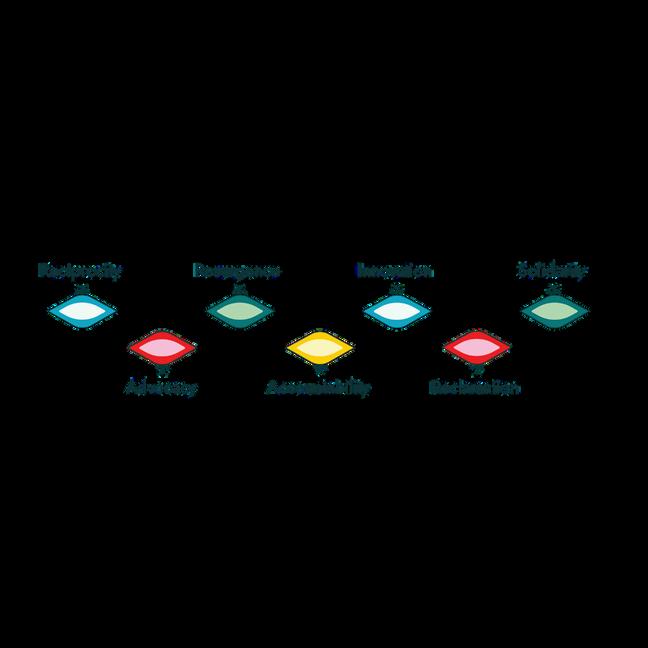
Centering Indigenous youth perspectives, we have 7 deeply held principles that guide us in our work and in the way in which we relate to each other:
This project was conducted by the Centre for Indigenous Policy and Research at Indigenous Youth Roots
The Centre for Indigenous Policy and Research (The Centre) prioritizes youth policy development and research to support Indigenous youth in advancing their vision of meaningful reconciliation. Through a wide range of programs and initiatives, like our Indigenous Youth Policy School and Indigenous Youth Advocacy Week, we create spaces for new leadership and provide tools and resources to empower Indigenous youth to create impactful change.
Our research stream publishes research tying Indigenous youth realities to today’s policy conversations and undertakes innovative youth-based research through our large-scale research projects

Building off the National Youth Reconciliation Barometer (2019), this project focuses on how Indigenous youth (ages 18-29) envision their own futures through the lenses of culture, wellness, education, meaningful work, solidarity, and reconciliation. In conversations structured by these themes, we asked youth questions about what empowers them, how they connect to culture and community, and what tangible reconciliation and solidarity look like to them We also examined what systemic and institutional barriers need to be removed to ensure Indigenous youth can achieve their goals for themselves and their communities To ensure a diversity of voices were represented, we engaged with 1,125 youth through in-person and online sharing circles, and an online survey.
There is a gap in national-scale research data that articulates Indigenous youths’ realities, barriers, and needs. It is our hope that this project can highlight the value of Indigenous-youth focused and led research as it relates to exploring concepts of reconciliation, Indigenous worldviews, and youths’ visions for their futures At the same time, the wisdom collected in the report stands to guide leaders and decisionmakers in all sectors of Canadian society to walk the talk of reconciliation.
Throughout our conversations, Indigenous youth made it clear that the language of reconciliation can't and shouldn't be invoked without tangible action that supports the selfdetermination and prosperity of Indigenous nations. This project recognizes and approaches reconciliation as something that must be measured next to how and whether Indigenous youth and their communities are empowered to thrive safely and in a self-defined way
The initial project as well as ongoing work building off the final report was, and is, funded through Mastercard Foundation’s EleV program.
“The vision for EleV, a vision co-created and confirmed with Indigenous youth and communities, is for Indigenous youth to be living Mino Bimaadiziwin – “a good life” in the Anishinaabe language. Mino Bimaadiziwin is a holistic and Indigenized view of success – not simply employment but a meaningful livelihood, a fulfilling life, a life consistent with one’s traditions and values." (Mastercard Foundation)

Approaching research with a focus on empowering youth means youth are not only active participants contributing their insights and perspectives to the project, but that they support and lead the stages during and after the completion of the report The goal is to have Indigenous youth voices guiding the direction and format of the research, while also fostering their skills and capacity to use it as an advocacy tool to support their communities beyond the completion of the report.
To that end, an Advisory Circle comprised of Indigenous youth and subject matter experts helped guide this project from forming the questions we asked through the writing of the final report, and to the launch of the project. To further ensure that the youth voices were reflected meaningfully and respectfully within the report, four Indigenous youth participants provided additional review and feedback on the final Barometer 2024 report
In the final report and this series of sector-targeted reports, both qualitative and quantitative data analyses are used, with an emphasis placed on qualitative analysis and storytelling Stories shared with us by Indigenous youth participants are held alongside the quantitative data, allowing a fuller understanding of how Indigenous youth are truly experiencing the themes within the report.
This sector-specific report uses selected findings from the full report alongside additional in-house analysis conducted by the Centre for Indigenous Policy and Research to better understand what youth shared about non-profits, programming, employment, leadership, reconciliation, solidarity, and allyship.
For a deeper breakdown of the methodology used in the Barometer project as a whole, please refer to the Methodology section in the Indigenous Youth Reconciliation Barometer: Building Connected Futures report (Page 8). Here, you will see more detailed information about our approach to engagements, how the survey and sharing circles were administered, about the Advisory Circle that helped guide the initial project, and about how we analyzed the data entrusted to us in the full report.






Through our engagements for the Indigenous Youth Reconciliation Barometer 2024: Building Connected Futures report, Indigenous youth entrusted us with expansive information, including detailed demographics. In the full Barometer 2024 report, we aimed to present that information in a way that honours the diverse identities of the Indigenous youth we engaged with while keeping the report concise and accessible Due to the scope and depth of that information, we committed to producing more targeted and sector specific reports, and other meaningful, accessible ways to engage with the data so that it can be effectively used by Indigenous youth and their communities.
The Sector Spotlight series offers tangible actions that can be taken by organizations and institutions across sectors that would like to prioritize reconciliation and support Indigenous youth in their work, backed up by evidence.
We are beginning with the non-profit sector in the spirit of accountability As an Indigenous youth-led non-profit, IYR is part of the sector this report speaks to. This means the findings and recommendations are not only directed outward, but they also invite us to reflect on our own programs, employment practices, leadership structures, and reconciliation work. It presents an exciting opportunity to identify both sector-wide recommendations and areas where IYR can continue to strengthen its own practice in line with our organization’s values, purpose, and strategic direction Please stay tuned for an outline of what we are doing and how we can improve to come later.

We’re also working on more ways to engage with this data in meaningful ways! Please watch our website and social media for more information on this as it becomes available!

Non-profits, charities, and grassroots organizations can play an important role in providing programs, grants, services, advocacy, and opportunities to Indigenous youth and communities In many places, these organizations help respond to crucial gaps in government infrastructure and create spaces for connection, culture, learning, leadership, and community care. At the same time, the non-profit sector is broad and varied. Organizations differ significantly in their mandates, resources, politics, governance structures, and relationships with Indigenous communities For the purposes of this report, we focus on what Indigenous youth shared about non-profit and community based spaces that support their wellbeing, leadership, cultural connection, employment, and visions for future. This includes Indigenous-led organizations, Friendship Centre, grassroots groups, youth-serving organizations, charitable organizations, and other community based initiatives. When they are adequately funded, non-profits can deliver tailored, localized programming that meet the distinct needs of their communities
The Indigenous youth we spoke to reported that many non-profits in Canada support them through initiatives like:
Grants and scholarships for post-secondary education
Grants for community projects
Cultural programming
Opportunities to connect with other young Indigenous people
Educational programming and courses outside of post-secondary institutions
Leadership opportunities, such as advisory circles or board of directors
In addition to providing programs and services, many non-profits share their knowledge through advocacy work, bringing the voices of Indigenous youth and other under-served communities to the forefront of conversations On top of this, non-profits also employ many people in Canada. In fact, in 2021, 14.5% of all jobs in the country were with non-profits, and 2.5 million people were employed by non-profits (StatsCan). Of the total non-profit employees in 2021, 4 5% of these employees were Indigenous (StatsCan)
This report highlights what we heard from Indigenous youth through our online survey and sharing circles as it relates to non-profits and how the sector empowers Indigenous youth as they build the futures they want to see for themselves and their communities. We’ll also talk about what Indigenous youth would like to see from non-profits looking to do better in this regard, exploring the programs and services they provide, their employment practices, their leadership and governance structures, and their reconciliation and solidarity work.
This section looks at how non-profit and community-based programs, services, grants, and volunteer opportunities are supporting Indigenous youth, while also identifying where access, safety, affordability, and eligibility requirements need to improve While most Barometer questions did not ask specifically about non-profits, youth often named non-profit and community-based spaces when describing where they access cultural connection, community support, leadership opportunities, grants, and meaningful ways to contribute
Through our engagements, we heard from Indigenous youth that many programs and granting opportunities provided by non-profits have helped strengthen their sense of both personal and community empowerment When describing empowerment in relation to the services available to them in their communities, youth highlighted how non-profit programming has helped them build connections with other Indigenous youth, their community, with their culture and languages, and helped them foster a sense of belonging.
““ “ I had participated in the Toronto Pride Parade
Participant and had been part of the 2-Spirited People of the First Nations delegation. I found it very empowering to share space with other Two Spirit individuals in a very visible area and having that role respected & protected.
-Survey
““ “ KILN (now KNCLN) is a space for Indigenous people to come together
-Survey Participant and previously there weren't many programs accessible to people my age but they have been making an effort to create more programming. I look forward to seeing what they can come up with in the future.
”” ”

When talking about empowerment throughout this report, we mean all the ways it looks to Indigenous youth. In the Barometer 2024, we heard that the top 5 things that make Indigenous youth feel empowered are:
81% Envisioning a good future for themselves and their community
78% Being a role model
78% Being themselves and respected for who they are
78% Seeing the impact of a community-led project
72% Practicing their culture

Especially for urban Indigenous youth, Friendship Centers are important non-profit service-providers that have helped many develop a sense of community and belonging through their programming
Further to this, when asked about physical spaces that support their connection to culture where they are living, 8% of survey participants pointed to Friendship Centers and shared about times that they have provided youth with sometimes life-saving programming. Looking at how youth answered this question based on where they live, 10% of urban youth cited Friendship Centers in their response Notably, of the responses that cited Friendship Centers, 88% of these responses were from urban youth.
““ “ We do sacred fire and smudging in the [Friendship Centre].
We smudge before and after doing fire circles and it is very healing. Talking with people is also very healing. The sacred room is available and open to go whenever and smudge.
-Survey Participant
”” ”
In addition to the programs that non-profits deliver, we also heard from some Indigenous youth that grants provided by non-profits have helped them bring their visions of communitybased programming to life When discussing times they felt empowered, some youth shared about how receiving these grants not only supported their projects but fostered a sense o pride in themselves

10% of urban Indigenous youth cited Friendship Centers as important places for cultural connection where they are living.
““
my
-Survey Participant despite not having won the case competition. We felt we had enough support and a good message to spread so we applied for grants, including [at] CRE.
““ “ I got a grant to make a kids show focused on Nature, storytelling, and crafts. ”” ”
It felt amazing to complete a big project like that.
-Survey Participant

We highlighted in the full Barometer report that 92% of Indigenous youth said they planned to participate in community-based programming in the future (such as on the land programming, or beading circles), making it clear that Indigenous youth want to participate in these opportunities, which are often provided by non-profits.

Throughout our discussions on empowerment, meaningful work, and connection to community, we heard from some Indigenous youth that volunteerism helps them disconnect from capitalism while making an impact on their communities and themselves. Across the different themes we explored, youth shared impactful times that they volunteered with nonprofits and other organizations within their communities, and about how volunteering fits into their definitions of meaningful work

““ “ When I volunteered for the Royal British Columbia Museum
-Survey Participant I felt like I was in the perfect environment and felt empowered because of the support of that community.
““ “ I feel empowered when I get to work or volunteer
make a big difference in my community. ”” ”
-Survey Participant with organizations who
Youth have also made it clear that they are interested in continuing (or starting) to volunteer with organizations in their communities, showing they want to engage with non-profits in this way When talking about their plans for the future, 91% of Indigenous youth said they are likely to volunteer within their communities. This is especially true for youth living in on-reserve and in rural or remote areas, where 96% and 94% said they planned to do this, respectively.

91% of Indigenous youth plan to volunteer within their communities in the near future
When asked what supports or resources were needed to establish or strengthen their connection to community, Indigenous youth clearly outlined how cost (direct or indirect) impacts their ability to access these programs. Costs that create accessibility barriers for youth can be anything from registration costs (such as with language programming) to costs of materials, travel costs, having to pay for childcare, or loss of wages from having to take time away from work to attend programming

““ “ I feel like I need many jobs to stay afloat ”” ”
Participant so after I’m done working I’m too exhausted. If there were paid opportunities I would learn more about who I am.
-Survey
““ “ ”” ”
Right now there are so many events and lessons that I would like
-Survey Participant however, they all have a high cost of $150-300 to attend. And I understand that they have to pay the people leading the events and such, but if there was a way to have a grant for something so that we could attend them.
In asking Indigenous youth in the survey if and how money impacts their ability to access and connect to their culture, we heard an overwhelming “yes” from survey participants, with 71% saying they feel money impacts their ability to do so. Some also pointed out that when organizations do provide honorariums for their programming, the honorariums are often delayed or come long after the programming is over, with one Indigenous youth saying “same day honorariums save lives ”


To alleviate these financial barriers, Indigenous youth have said they would like to see more programming that:
Is free or very low cost
Offers generous honoraria for participating
Assists with transportation to in-person events (e.g., bus tickets, taxi chits)
Allows participants to bring their children or provides stipends for childcare
Has online participation options or is solely online
““ “ [To help with financial barriers, I would like to see] honorariums for participating in events and such.

I know that there is lots of free cultural programing, but many people still have to take time off work to attend these, and are taking a financial hit regardless of it being free to attend. I think to encourage youth to engage more with culture, honorariums should be provided more freely when the organizations finances allow.
”” ”
-Survey Participant
Indigenous youth we spoke to through the survey made it clear that for them and many other Indigenous youth, cultural programming is not always accessible, welcoming or affirming Many youth also find it difficult to access culturally-relevant programming where they are living and have needed to travel to access these spaces in the absence of online options. As we highlighted in the full Barometer report, 35% of Indigenous youth said that they do not have access to a space that supports their connection in their current place of residence This percentage was slightly higher for those living in rural or remote areas, with 39% saying they do not have access to such a space.
Offering online programming
Most events are only for those under 19 or during the work day. I would love for there to be more evening and weekend programming and meet-ups for me to make deeper connections with other community members. Additionally, when asked about what barriers they face in connecting to culture, 54% of Indigenous youth pointed to a lack of programming. To that end, when we asked participants what supports and resources were needed to support connection to culture, Indigenous youth frequently pointed to this gap, and to the need for more programming that meets and embraces them where they are at. Indigenous youth have said they would like to see more organizations:

Making it easier to find opportunities (i.e., opportunities are well-advertised through social media)
Offering programming specifically for youth who are (re)connecting
Bringing programming to spaces youth frequent, such as schools
Offering programming in the evenings and on weekends
Creating online resources beyond programming
““ “
There is not much programming in my city right now that I can attend.
-Survey Participant
“
We need supports in place that don’t judge Indigenous youth
-Survey Participant on where they are coming from or for their past experiences. Everybody deserves a chance at reconnection.
When asked about what barriers are in the way of achieving their goals, many youth pointed to this lack of openly safe spaces When looking deeper into the responses, we heard that for many 2SLGBTQIIA+ youth, programming spaces often feel particularly unwelcoming for them, or it is not clear from the start if it will be a gender-inclusive space to access.
As an openly Two-Spirit individual, there can be limited offering of opportunities ““ “
-Survey Participant that openly advertise themselves as safe for TwoSpirit/queer/trans people. It's definitely played a part in my reluctance to participate in opportunities when it isn't openly advertised.
”” ”
We also heard from Afro-Indigenous youth that lateral violence is something they would like to see organizations address in their programming, and that they would like to see more resources and programming specifically for Afro-Indigenous youth Supporting this, we heard through the survey that 37% of Afro-Indigenous youth do not have a space that supports their cultural connection where they are living. Looking deeper, some Afro-Indigenous youth holding other specific intersecting identities were much less likely to have a space that supports their cultural connection:
75% of Afro-Indigenous youth living in rural or remote areas (compared to 31% of Afro-Indigenous youth living in urban areas)
47% of 2SLGBTQIIA+ Afro-Indigenous youth (compared to 22% of Afro-Indigenous youth who do not identify as 2SLGBTQIIA+)
60% of Afro-Indigenous youth living with at least one disability (compared to 25% for AfroIndigenous youth not living with a disability)
““ “
As a mixed Afro-Indigenous person, the lack of resources there are for Indigenous youth,
Toronto makes it seem like there are a ton of spaces, but you have to share them for folks so far outside the GTA. There are not enough for how many folks that need access to them.
-Toronto Sharing Circle Participant
More teachings on the harm of lateral violence and educating others that all Indigenous people deserve access to learning their culture and language.
In the full Barometer 2024 report, we highlighted that youth most often selected cultural teachings and learnings as needed to support their empowerment, with 67% of Indigenous youth saying so This was followed by on the land learning with 54%, youth-Elder programs with 41%, language learning opportunities with 38% and youth council and other opportunities to be a role model with 36% We also highlighted here that cultural teachings and learnings was the most often elected across Indigenous identities (First Nation, Métis and Inuit), as well as between disability statuses While many non-profits and grassroots organizations offer cultural programming and other ways to connect with culture, Indigenous youth have made it clear that this is something they would like to see more of
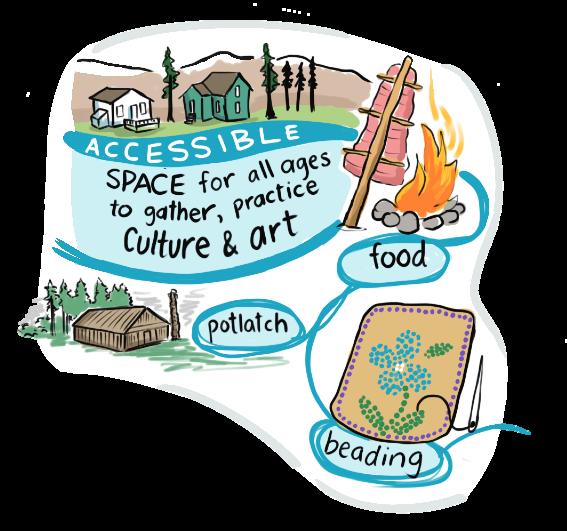

This was echoed in the responses to another survey question that asked Indigenous youth what changes they would like to see in the next 5-10 years to support positive cultural identity and connectedness Here, many Indigenous youth also called for more cultural programming and talked about how these programs help them build connections with other Indigenous youth and their communities.
cultural activities and learning opportunities, allowing more Indigenous youth to participate. I believe that through such efforts, we can collectively build a stronger cultural foundation
-Survey Participant
Meeting and creating a network of other Indigenous people creates a support system that we need.”
-Survey Participant
““ “
I think
I would love to just see more programing and intergenerational
connections being made. I think learning from elders is so important for our culture
-Survey Participant


For this report, we looked deeper into how Indigenous youth answered the question of most needed supports or programs to strengthen their empowerment based on their demographics We found that cultural teachings and learnings was the most frequently selected support across most demographics, except for Afro-Indigenous youth, 2SLGBTQIIA+ youth, and youth living in urban areas. As these youth in these demographics pointed more to needing youth council and other opportunities to be a role model, this will be discussed further in the Leadership and Governance section to follow
We also heard that a lack of clarity and consistency around what constitutes “youth” between organizations is a barrier for Indigenous youth in accessing programming. This was discussed both when we asked Indigenous youth about what resources would enable and strengthen connection to culture, and when we asked about barriers they face in achieving their goals. Participants pointed out that the age range of “youth” often does not align between organizations, making it unclear if they qualify to participate Additionally, some youth who are reaching the end of the typical age range for youth programming expressed that they worry about not having access to as many opportunities to connect with culture or access opportunities as they age out.
““ “
I
who
do not identify as youth or elders. There is a huge grey area for people who do not fit into these categories and I find that concerning as a young adult who is entering my next phase of life.
”” ”
-Survey Participant
““ “ ”” ”
There is so much pressure to do all of these things.
Once you turn 30 all the funding is gone.
-Survey Participant
Indigenous youth have access to programming that helps them connect to their cultures, learn their languages, and achieve their goals regardless of where they live

2SLGBTQIIA+ and Afro-Indigenous youth are welcomed and feel safe in all programming and spaces are free of lateral violence
Indigenous youth are paid to attend programming and do not incur costs on themselves to attend programming - and these honorariums are generous and provided in a timely manner


Programming spaces are intergenerational, allowing participants to bring their children or provide childcare stipends
Indigenous youth who are (re)connecting to their cultures have access to programming spaces specifically for them
Organizations have made available online resources that help Indigenous youth work toward the future they want for themselves outside of programming spaces
As highlighted earlier, non-profits employ millions of people across the country, and according to Statistics Canada, in 2021, 4.5% of all non-profit employees were Indigenous. Throughout our engagements, we heard from youth about what meaningful work looks like to them, what success in work looks like to them, and about the support they need to secure and maintain meaningful work Again, while the questions we asked were not geared to non-profits, youth naturally discussed experiences in non-profits or that are relevant to all employers, regardless of industry. Here, we’ll look at how Indigenous youth have found meaningful work within non-profits, and how non-profits could improve their employment systems to support Indigenous youth more meaningfully.
In discussing what meaningful work means to them, youths’ definition is almost always work that supports their communities in some way. Indigenous youth want to see the work they are doing create positive impacts for themselves, their peers, and their communities When we asked youth about how meaningful work looks to them, and about what makes them feel empowered, some highlighted experiences of working in the non-profit industry, and about seeing these positive impacts in their work.
I currently work for a non-profit organization, ““ “
-Survey Participant ”” ” and I love how each and every member feels like home when walking into our office space.
I created an [initiative] in my nonprofit organization.
It was a talking circle format with elders in attendance to be there for guidance but also support. Based on hearing their concerns and feedback I brought it to the [provincial government organizations] along side my coworker. For them to hear the concerns and feedback we gathered from the community. I hope to advocate for better laws and policies especially towards Indigenous and BIPOC.
-Survey Participant
”” ”
Supporting this, we also heard that youth feel like the ability for their work to benefit their community is a key part of what success looks like to them. In the survey, when asked what success in education and work looks like to them, 53% of youth said it meant being able to help their family and community. When talking about their goals in the sharing circles and survey, youth often discussed wanting to work in roles that give back to their communities, with one youth also sharing about how they want to start their own organization to do so.
The safety and success of Indigenous women and girls is very important to me ““ “
If I can achieve what I wish in my career, I'd ideally set up an organization to help us get ahead in this colonial world. Perhaps it would offer funding for school and programs to develop practical skills such as financial literacy, resume building, how to maintain physical health through diet and exercise, self-defence, etc
-Survey Participant ”” ”
[My goal is] getting education ““ “
-Whitehorse Sharing Circle Participant ”” ” and being able to come back and give back to the community.
Overall, many non-profits and similar organizations have provided opportunities for Indigenous youth to support their communities through the programs and services they offer as part of a paid job Being able to see the impacts of their work on their communities has fostered a sense of pride in many youth and helped them to find their work meaningful.
While discussing themes of empowerment, meaningful work, and success, we heard from youth about their experiences in employment, and working in spaces that are culturally-grounded. For youth who have worked with non-profits that serve Indigenous people particularly, many feel this has allowed them to participate meaningfully in their cultures as part of their job.
““ “
and being able to be a part of their groups with so many strong native women makes me feel supported. We have started a women’s singing group and it makes me feel empowered to learn our songs.
”” ”
-Survey Participant
I got to work at the Vancouver Aboriginal Friendship Centre. ““ “
I was always around other Indigenous peoples and got to learn more about my culture and be around people who could really understand me.
-Survey Participant
”” ”
When working at culturally-relevant and supportive workplaces, some Indigenous youth have also found connections with other Indigenous youth, further fostering their own sense of empowerment In discussing their own empowerment, some youth shared about their experiences working in Indigenous-serving non-profits and helping other Indigenous young people connect with their cultures as well.
I have felt empowered through my work,
as I work as a peer support worker and do programming with Indigenous youth. I feel empowered when a new youth builds the courage to come and try programming out and I feel even more empowered when they come back to programming after their first time.
-Survey
Participant
”” ”
I feel the most empowered when I am working with other Indigenous youth ““ “
in community, working in community organizations, and/or learning about their own Indigeneity.
-Survey
Participant
”
For some Indigenous youth, having a job that helps maintain their connection to community is important When asked about what success in education and work looks like to them, across all participants, 18% said that it means getting a job that keeps them connected to their communities, highlighting the importance of these culturally-relevant workplaces that some non-profits have provided to Indigenous youth. When looking into how youth responded to this question based on their demographics, some youth were more likely to say that this is what success means to them
[Meaningful
Youth often described meaningful work as work that supports their communities, reflects their values, strengthens culture, or contributes to collective wellbeing. This aligns closely with the role many non-profits aim to play, especially when their work is community-led, Indigenous-led, or grounded in service to Indigenous youth and communities
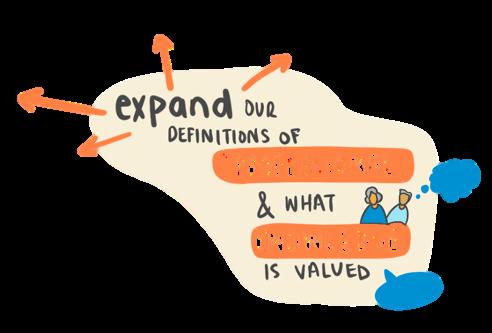
Indigenous youth are calling for employment and hiring practices across all sectors to be decolonized, and for employers to honour Indigenous youths’ unique needs within the workplace. For many Indigenous youth, this includes acknowledging non-institutional learning as valid experiences when considering qualifications. Supporting this, we heard that for 83% of Indigenous youth, education looks like lived experiences rather than getting a degree or diploma, and for 81% of Indigenous youth, it looks like learning on the land through observation and practice Looking deeper into how youth define education, there are some demographics of Indigenous youth that were more likely to say that education means lived experiences.
Youth more likely to say education looks like learning through lived experiences (by percentage)


we highlighted that the most selected definition of education by Indigenous youth was learning through lived experiences with 83% saying so, while just 64% said it meant getting a degree or diploma.
““ “

I’d like to see our personal experiences be valued in these institutions.
I feel like none of what I’ve done (incredible things in community) are not recognized unless it’s accredited. I wish more of “these things” like Indigenous Youth Policy School counted.
-Toronto Sharing Circle Participant
”” ”
away
framework that’s engrained in offices. ““ “
Everything was built around this colonized way, you have to go through applications and so many processes. Office dynamics is mixed. Engraining more circles in meetings or offices spaces.
-Whitehorse Sharing Circle Participant
”” ”
Looking more into how workplaces can better support Indigenous youth, when we asked participants what they need to pursue meaningful work, we heard a call from youth for more culturally supportive and safe workplaces. When asked this, the most selected responses were the need for social, emotional, or cultural supports, and the need to have a safe or supportive work environment, with 52% of participants selecting each. When looking deeper into responses to this question, certain demographics of Indigenous youth were more likely to select each of these options, highlighting the need for workplaces to acknowledge and support the intersecting identities and unique experiences of Indigenous youth employees
Further to this, while many youth do feel supported and safe in their workplaces, this is not always the case. In talking about their experiences with employment, some youth discussed times where they felt tokenized or unsafe in their workplaces. Here, one youth shared about feeling tired in their job from having to educate others while being the only Indigenous person in their workplace:
I was the only Indigenous person in my workplace in the past, ““ “
and everything “Indigenous” was put on me even if it was outside of my role. It becomes tiring to educate e veryone about the most basic things.
-On-Reserve Sharing Circle Participant
”” ”
how workplaces could better support them and what barriers they are facing, many their experiences in navigating their employers’ time off systems and the barriers aking time away from work for ceremony and culture Often, youth are forced to work and this crucial part of their lives.
on’t have access to cultural supports, have rd time getting time off.
se are barriers for people. If we want to go ting, have to request time off. Work culture there ou can’t just take time off – doesn’t mean we e to get whole season off but making room for t is important.
-Whitehorse Sharing Circle Participant
”” ”
Finding employment, especially meaningful employment, can be difficult and inaccessible for many Indigenous youth. When asked about what barriers are in the way of achieving their goals, participants often pointed to a lack of employment opportunities where they are living, and a lack of remote work opportunities. Many youth living in rural, remote or on-reserve communities shared that they find themselves having to choose between staying in their communities or moving away for employment opportunities. Overall, 57% of youth said they planned to leave their communities for work or school in the future When looking at this deeper, youth living in some specific areas were more likely to say they would likely be moving for school or work

Youth more likely to say they would likely be moving for school or work in the future (by percentage)
I live in a very remote area. I do not have a driver’s license, and my support system is small. ““ “
I’m currently living with my elderly father because I cannot afford a place of my own. Jobs are very scarce here.
”” ”
-Survey Participant (living on reserve in New Brunswick)

Additionally, we heard from some Indigenous youth that while they have a goal of working in a community-centered role, the wages are often not sufficient to support themselves or their families, especially with the high cost of living. Further highlighting the need for fair pay, 31% of survey respondents said they need wage equity in order to pursue meaningful work. When asked about barriers that are in the way of achieving their goals in the survey, one youth highlighted:
very
Unfortunately, I would like to be involved in more community-based work, however I do not get compensated similar to the private sector (even if it takes a toll on my mental health).
-Survey Participant
Indigenous youth also want to work for employers that support a work-life balance, on top of providing a living wage For many Indigenous youth, work leaves them feeling burnt out without enough time for their families, hobbies, and passions When we asked Indigenous youth in the survey about what success looks like to them, 38% said success means being able to balance life and career.
Youth more likely to say success means balancing life and career (by percentage)
can
and a capitalist, western culture? Those things clash and cannot exist together well.
-Survey Participant
I would like to feel fulfilled myself, and feel like I have a true work-life balance. ““ “
I would like to help make positive changes to the community I live in, and other communities I am a part of. I would like to do things that uplift others, and help contribute positively to the natural environment (or at least are not a part of its destruction).
-Survey Participant
Overall, Indigenous youth want to work in roles that support their communities, provide a living wage, and promote a work-life balance Many Indigenous youth want to secure roles that allow them to stay within their communities or close to their families, and as non-profits are more likely than other sectors to be delivering community-centered work, the call can be made across the sector.

Lived experience is recognized as valid experience when applying for jobs

rganizations model Indigenous worldviews in their employment practices and orkplace culture, including providing paid time off to participate in culture
ore remote work opportunities are available, especially to allow on-reserve, rural d remote Indigenous youth to stay in their communities
on-profits are encouraging a work-life balance and paying a living wage, allowing outh to better support themselves and their families

ore roles are made available for youth to directly support their specific communities ough paid employment
Non-profits are uniquely positioned to help youth build their expertise in leadership and governance through Board of Director seats, or participation on Youth and Advisory councils. Here, we’ll look at the opportunities that Indigenous youth have accessed in leadership and governance of non-profits, and how they feel non-profits could better include their voices at decision-making tables
For many Indigenous youth, the opportunity to be a leader in their communities is a key piece of their personal growth, and many take pride in being a role model for their communities, families, and other Indigenous youth. In fact, for 52% of Indigenous youth, we heard that success to them looks like being a role model for their family and/or community members We also heard that leadership opportunities within non-profits have helped empower Indigenous youth and have made lasting impacts on them.
““ “ I felt empowered when I sat on the board of directors at the age of 18. I had a huge responsibility and I loved every minute of it.
-Survey Participant
““ “ I sit with a youth council at my friendship centre and to see external groups want to engage with us is empowering.
We
have been learning how to encourage positive engagement because we are more than a focus group!
-Survey Participant
”” ”
Across our discussions on work, empowerment, goals for the future, and community strengths, youth shared about how they’ve found meaning in community and organizational leadership For many youth, having a seat at the table in decision-making and helping lead the way to collective empowerment for their communities and all Indigenous peoples is an integral part of their definitions of success for themselves. Some youth also shared about how receiving mentorship opportunities has helped them and other youth learn and grow in their leadership journey, with one youth sharing about the opportunities provided by their local Friendship Centre:
““ “ My community in Surrey really listens to the youth, and we have access to intergenerational mentorship with our elders!
Our youth are recognized as the leaders of today, not just tomorrow. Our friendship centre offers so many various supports and events for youth that we are able to access.
-Survey Participant
While cultural teachings and learnings were the most frequently selected support overall, some groups of Indigenous youth more often selected youth councils and other opportunities to be a role model as needed supports for empowerment This included 2SLGBTQIIA+ youth, Afro-Indigenous youth, and youth living in urban areas. This points to the importance of leadership opportunities that are not only available in general, but intentionally accessible to youth whose voices are often underrepresented in governance and decisionmaking spaces.
Youth more likely to say they need youth council & other opportunities to be a role model support their empowerment (by percentage)
We also heard a call from youth that they want to see themselves, other Indigenous youth, and Indigenous people generally, taking up leadership spaces and being role models for their communities. When asked to share about the goals they have for the future, many shared their dreams of leading within their communities and empowering future generations.
““ “ To be a leader in my community and a leader for Indigenous youth. ”” ”
-Survey Participant
““ “ I want to see Indigenous youth thriving and leading the way in society. ”” ”
Our cultures and ways of knowing/being/thinking visible, acknowledged, respected and supported.
-Survey Participant
““ “ I would like to lead by example and demonstrate to my fellow young people ”” ” that opportunities are all around us and we hold so much potential to create change
as indigenous youth.
-Survey Participant
This sentiment was echoed by youth discussing what they hope to see in the next 5-10 years for their communities:
““ “I would like to see more youth leadership, ”” ”
I think in generations from now we will see a big shift of young indigenous professionals taking up spaces where you would typically see non-indigenous peoples
-Survey Participant
““ “ In the next 5 to 10 years, I envision a thriving
community
with a strong
cultural
foundation, ”” ” abundant
accessible resources, and empowered young individuals taking on leadership roles. Generations later, I hope to witness a community that not only preserves and strengthens its cultural identity but also embraces positive growth and development.
-Survey
Participant
For some youth, being able to take up leadership opportunities is what they feel they need most to support their own empowerment While these calls from youth were not specific to non-profits, ensuring space for Indigenous youth to grow, lead, and have their voices heard is the responsibility of all sectors committed to reconciliation and Indigenous youth empowerment. As a values-driven sector, non-profits are uniquely positioned to create these opportunities
““ “ We are on the onset of seeing more Indigenous leadership, ”” ”
-Survey Participant lawyers, social workers, programmers, and role models than we ever have.

Indigenous youth are included meaningfully in Boards of Directors and Advisory Circles, especially within Indigenous and youth organizations

Afro-Indigenous youth, 2SLGBTQIIA+ youth, and youth holding other intersecting marginalized identities are given equitable access to leadership opportunities
Indigenous youth are able to contribute to their communities through opportunities to lead and be a role model in ways that honour their individual gifts and unique experiences
In this section, we will highlight how non-profits are working toward reconciliation and how committed Indigenous youth feel non-profits are to reconciliation, along with how youth feel non-profits could improve. We will also discuss how Indigenous non-profits and non-profits led by and for other marginalized communities are working in solidarity with each other, and how they could improve through the eyes of Indigenous youth.
For Indigenous youth, reconciliation cannot be separated from action. Youth described reconciliation as something that must be measured through tangible change, including safety, self-determination, access to basic needs, implementation of rights, and the transfer of power and resources to Indigenous communities. For non-profits, this means reconciliation cannot sit only in statements, land acknowledgements, or public commitments It must shape governance, funding decisions, partnerships, advocacy, programming, and accountability to Indigenous youth and communities.
85% of Indigenous youth said that reconciliation is important to them, and 73% said that solidarity with other marginalized communities is.



Just over half of Indigenous youth said that nonprofits are committed to reconciliation (57% agreed), behind National Indigenous Organizations (75%), Indigenous governments (69%), and in line with grassroots organizations (58%). Aside from the education sector (50%), less than half of Indigenous youth agreed other sectors were committed to reconciliation.

When talking about if they feel their own communities are committed to reconciliation, and what that looks like, some youth pointed to non-profits that are a part of their communities and the programs they offer. Additionally, we asked youth about what actions they would like to see toward reconciliation in the next 5-10 years, and many pointed to wanting to see more funding for Indigenous organizations, non-profits, and grassroots organizations to take up this work, indicating that Indigenous youth trust non-profits to push reconciliation forward. They also see partnerships between their communities and governments with non-profits as a key reconciliation action.
“ Foster partnerships and collaborations between Indigenous communities and other stakeholders, including government entities, non-profit organizations, and educational institutions.
-Survey Participant
““ “ Support for grassroots movements and initiatives led by Indigenous communities,
-Survey Participant allowing them to shape their own narratives and destinies.
““
“Non profits, local organizations, pockets of people who care and want to advance their own learning and understanding.
-Survey Participant
”” ” ”” ”

When asked if solidarity was important to them, 73% of Indigenous youth said that it is important, and many said they want to see their communities building meaningful relationships with other marginalized groups. When asked what actions they would like to see toward solidarity in the next 5-10 years, 16% of survey participants’ responses contained mentions collaborations between their communities and other marginalized communities Specific collaborations mentioned include shared events, projects, and resources, as well as relationship building and support in advocacy. Most youth are also hopeful that these actions will happen, with 56% of youth saying they are optimistic about their future visions of solidarity happening.
““ “
I’d like to see the Indigenous community hosting more events with ally communities.
I think this would be a great way to make connections and build a stronger relationship with other marginalized communities.
-Survey Participant
”” ”
““ “ More collaborative programs for Indigenous, Black and racialized groups.
Opportunities to gather and learn from one another peacefully, teach-ins, sit-ins, shared community meals, really it would be fantastic to just be able to enjoy spaces unencumbered by colonial powers.
-Survey Participant
”” ”
Building on this, we heard that youth are already seeing their communities engage in solidarity. When asked what actions they have seen their communities take in building solidarity, some youth pointed toward solidarity-based programming offered by non-profits. Some youth also talked about educational events centered around Indigenous peoples and history delivered for non-Indigenous community members, and solidarity between Indigenous peoples themselves
““ “ Black Eco Bloom training is what I am a part of.
I also participate in Angel of Hope survivor circles each week to work on anti-human trafficking.
-Survey
Participant
”” ”
““ “ Mi'kmaq friendship centre in Halifax does great work for
local marginalized groups.
-Survey Participant
”” ”
Additionally, when asked about what actions specifically feel like solidarity and allyship to them, some youth continued to cite organizations working together, as well as other marginalized peoples supporting Indigenous community through programs and outreach. While we asked youth separately about how solidarity and allyship look to them, much of the responses across each question were similar and often referenced to the other concept In answering these questions, youth talked about the importance of reciprocity, and times where communities have supported each other – through individual actions, as well as grassroots movements and initiatives delivered by organizations. Some of the specific ways youth see solidarity and allyship include:
Funding initiatives supporting other communities
Making public statements of support
Cultural exchanges
Joint community events
Providing educational resources
Honouring Indigenous voices in decision-making
““ “
The best allies I've had were those that sought out our voices,
those
that
asked for our recommendations when implementing new policies, or ventures.
-Survey Participant
”” ”
““ “ Solidarity between communities is the act of being supportive of each other. This can look like collective efforts in running a program, volunteering for each other, offering help when another community is in need, etc.
”” ”
-Survey Participant
networking, promoting each other's projects, initiatives and programs.
-Survey Participant
””
Youth have seen, and want to continue to see, their communities acting in solidarity with other marginalized groups and have shown trust in non-profits and similar organizations to take up this work Solidarity is important to most Indigenous youth, and they are envisioning futures where their communities are working toward shared empowerment for all marginalized peoples
While a narrow majority of youth (57%) agreed that non-profits are committed to reconciliation, some demographics of youth were less likely to say this, highlighting the need for non-profits to meaningfully engage with and incorporate the priorities of Indigenous youth that hold specific intersecting identities.
Youth less likely to say non-profits are committed to reconciliation (by percentage)
Looking again at how youth responded when we asked what actions toward reconciliation they would like to see in the next 5-10 years, many youth highlighted efforts they would like to see from non-profits and similar organizations. Here, youth talked about wanting to see programming specific to reconciliation, more resources being shared about reconciliation, and more programming specifically for Indigenous youth
““ “
In the next 5 to 10 years, I hope to see more concrete actions or projects
related to reconciliation. This could include policy reforms, educational initiatives, cultural exchanges, community collaborations, and various other aspects.
”” ”
-Survey Participant
““ “

More programs, funding for programs,
new programs created, old programs returned that have been removed, more participants.
-Survey Participant
”” ”
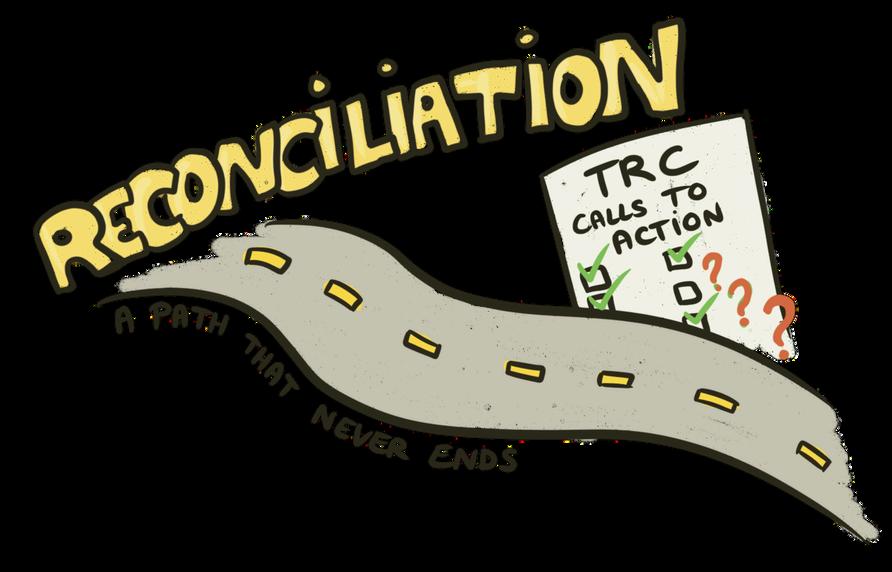
Additionally, youth frequently highlighted they would like to see the 94 Calls to Action completed. While this is not specific to non-profits, some youth noted that the 94 Calls to Action are not just the responsibility of the government, but all non-Indigenous people, organizations, and institutions.
““ “
I would like to see all 94 calls to action be meaningfully responded to.
I want Indigenous ways of knowing to be integrated in all facets of our community. I want less barriers, if not none, for Indigenous people to access housing, education and supports.
-Survey Participant
While solidarity with other marginalized communities is important to most Indigenous youth (73%), less youth said that they see their communities frequently engaging in solidarity efforts and connecting with other marginalized communities In responding to this question, 19% of youth said their communities engage in this always, and 41% said their communities sometimes engage in solidarity efforts While this is not specific to non-profits, these organizations are able to provide ways for Indigenous youth to connect in solidarity with other communities through their programming and initiatives in community
”” ”
How often do you see your communities engaging in solidarity efforts and connecting with other marginalized communities?
We also asked youth about what kind of activities and practices youth felt undermine solidarity and allyship. Here, youth shared thoughts about how racism, tokenism, lateral violence, performative activism, and the exclusion of 2SLGBTQIIA+ folks detract from solidarity efforts In addition to this, we heard from some youth about how practices within organizations can also undermine solidarity and allyship Some of these practices include:
Conflicting actions and words (i.e., sayin your organization gives space for Indigen people, especially youth, to lead when it’ not true in practice)
Conducting land acknowledgements with taking actions to support Indigenous communities
Holding events to learn where not all are welcome
Not including Indigenous or BIPOC voices in decisions made that affect them
Pan-Indigenizing Indigenous voices

“ but just uses it to employ non-Indigenous people with obvious wage discrepancies from the Indigenous employees goes against allyship and reconciliation.
Any organization that gets their funding on the merit of using it to benefit Indigenous lives and move towards reconciliation
”” ”
-Survey Participant
We also asked youth how they felt about settler allyship, and if it was important to them, and overall, most youth agreed that settler allyship is important. In talking about settler allyship, youths’ responses were nuanced and highlighted the need for non-Indigenous peoples and organizations to be the ones doing the work, rather than placing the burden on Indigenous peoples.
““ “ People willing to go against what the colonial
More than allies we need accomplices – more action than support.
government
says is reconciliation.
-Survey Participant
”” ”
Youth also named the importance of building stronger relationships with newcomers and other marginalized communities, especially where those relationships are grounded in shared learning, mutual support, and collective action. Indigenous youth made it clear that meaningful relationships should be built with newcomers, where they are educated on the history of Indigenous peoples, and where newcomers stand in support of Indigenous communities. Again, while this is not specific to nonprofits, these organizations are able to provide programs and opportunities that help work toward the future of solidarity and allyship that Indigenous youth want to see
““ “
Allyship is not just between Indigenous and non-Indigenous people.
It’s our relationships with newcomers as well. There are opportunities that goes unrecognized there. Once you open up conversations with newcomers you understand each other better.
-Whitehorse Sharing Circle Participant
”” ”
Youth also spoke about solidarity and allyship as active responsibilities. They called for non-Indigenous people and organizations to take on the work of learning, challenging colonial systems, and standing against racism and discrimination without placing that labour back onto Indigenous people

Non-profits are meaningfully engaging with all demographics of Indigenous youth that they serve and are advancing their visions of reconciliation

Non-profits are helping Indigenous youth connect with other marginalized ommunities to work toward relationships founded in solidarity
Non-profits that aren’t Indigenous-led are engaging in meaningful allyship, directed by Indigenous youth and their communities, and taking the burden of education on he impacts and history of colonialism off Indigenous peoples
on-profits are taking up the work of the 94 Calls to Action where they can
Across the Barometer findings, Indigenous youth described the non-profit sector as a place where meaningful capacity building, support, connection, leadership, employment, and advocacy can happen. At the same time, they also made clear that good intentions are not enough. To better support Indigenous youth, non-profits need to reduce financial and accessibility barriers, create more affirming and culturally grounded spaces, value youth leadership, build sustainable employment practices, and ensure reconciliation and solidarity are reflected in concrete action. From what we heard from Indigenous youth in this report, we’ve outlined below a summary of recommendations for non-profits so they can better empower Indigenous youth in working toward their visions of the future
Indigenous youth are participating in non-profit programming that helps them connect with other youth and their communities while working toward their goals. Indigenous youth have also found volunteer opportunities provided by non-profits to be beneficial fo their wellbeing, with these opportunities being integral to their empowerment alongside non-profit programming To better support Indigenous youth and their communities, you are calling for:
1.Access to programming that helps them connect to their cultures, learn their languages, and achieve their goals regardless of where they live (i e , online opportunities)
2.Programming that is offered at times that reflect youth realities, including evenings, weekends, and formats that work for youth who are working, caregiving, studying, or managing other responsiblities
3 Programming spaces that are free of lateral violence where 2SLGBTQIIA+ and Afro-Indigenous youth are welcomed and feel affirmed, always
4.Honorariums to be generous and provided in a timely manner, and for more programming to provide honoraria
5 Intergenerational spaces where youth are welcomed to bring their children, alleviating childcare needs
6.Spaces and opportunities specifically for Indigenous youth who are (re)connecting to their cultures
7.More online resources that help Indigenous youth work toward their goals for the future outside of attending set programming
8 Volunteer opportunities that are meaningful, well-supported, and connected to youth wellbeing, cultural connection, and community impact.

Indigenous youth have found meaningful employment in the non-profit sector, where their jobs allow them to connect with their communities, cultures and other youth. Further to this, many feel this work has had a positive impact on their communities and on themselves. To better support Indigenous youth through employment practices in the non-profit sector, youth are calling for:
1 Lived experiences to be recognized as valid when applying for jobs
2.Organizations to model Indigenous worldviews in their employment practices, including providing paid time off to participate in culture
3.More remote opportunities, especially to allow youth living onreserve and in rural and remote areas to stay in their communities
4 Non-profits to encourage a work-life balance and pay a living wage, allowing youth to better support themselves and their families while working a job that is impactful to them
5.More roles to be made available for youth to directly support their specific communities through paid employment
6.Clear pathways for mentorship, career growth, and leadership for Indigenous youth staff
7.Addressing of anti-Indigenous racism, anti-Black racism, homophobia, transphobia, ableism, and lateral violence through policy, training, accountability, and workplace culture
Many Indigenous youth have felt empowered by the leadership opportunities non-profits have provided them, like through sitting on a Board of Directors or on an Advisory Circle. For some, taking up these leadership opportunities is integral to their success and is something they need to achieve their goals To better support Indigenous youth through leadership opportunities in non-profits, youth are calling for:
1.Indigenous youth to be included meaningfully in Boards of Directors and Advisory Circles, especially within Indigenous and youth organizations
2.Afro-Indigenous youth, 2SLGBTQIIA+ youth, and youth holding other intersecting marginalized identities to be given equitable access to leadership opportunities
3 Outreach to be done for leadership and governance positions to ensure opportunities are accessible for youth with intersecting marginalized identities
4.Indigenous youth to be provided with more opportunities contribute to their communities through leadership opportunities and be a role model in ways that honour their gifts and unique experience Page 48


Indigenous youth, by a narrow majority, believe that non-profits are committed to reconciliation and have seen non-profits engaging in reconciliation and solidarity efforts within their communities regularly Reconciliation, solidarity, and allyship are all are important to Indigenous youth, and they want to see non-profits engaging more in this work. To advance these efforts, Indigenous youth are calling for:
1 Reconciliation commitments beyond statements and into governance, budgets, partnerships, advocacy, hiring, and programming
2.Non-profits to meaningfully engage with Indigenous youth holding other marginalized identities, particularly Two-Spirit youth, youth with multiple Indigenous identities, and youth living on-reserve, in advancing their visions of meaningful reconciliation
3.Non-profits to help Indigenous youth and their communities to connect with other marginalized groups through solidarity-based programming, funding, and resource sharing to build relationships founded in solidarity
4 Organizations that aren’t Indigenous led to engage in meaningful allyship, directed by Indigenous youth and their communities, and taking the burden of education on the impacts and history of colonialism off Indigenous peoples
5.Non-profits to take up the work of the 94 Calls to Action, the implementation of UNDRIP, and the MMIWG2S+ Calls for Justice, when and where they can