Why Strong Food Safety Systems Matter and How Implementation Support Can Help
FCC Convenes $5 Billion Investment Coalition
Health Canada’s Approval of Unlabelled Gene-edited Pork is a Mistake
State of Internal Trade: Strong Momentum, but Canada Must Go Further
https://www.beaconmetals.com
February 2026
Meat Institute Helps Launch Poultry Industry Food Safety Council
5 6 11 14 16 19 22 24
Canadian Beef Industry Statement on AAFC Research Cuts Why Strong Food Safety Systems Matter and How Implementation Support Can Help
FCC Convenes $5 Billion Investment Coalition
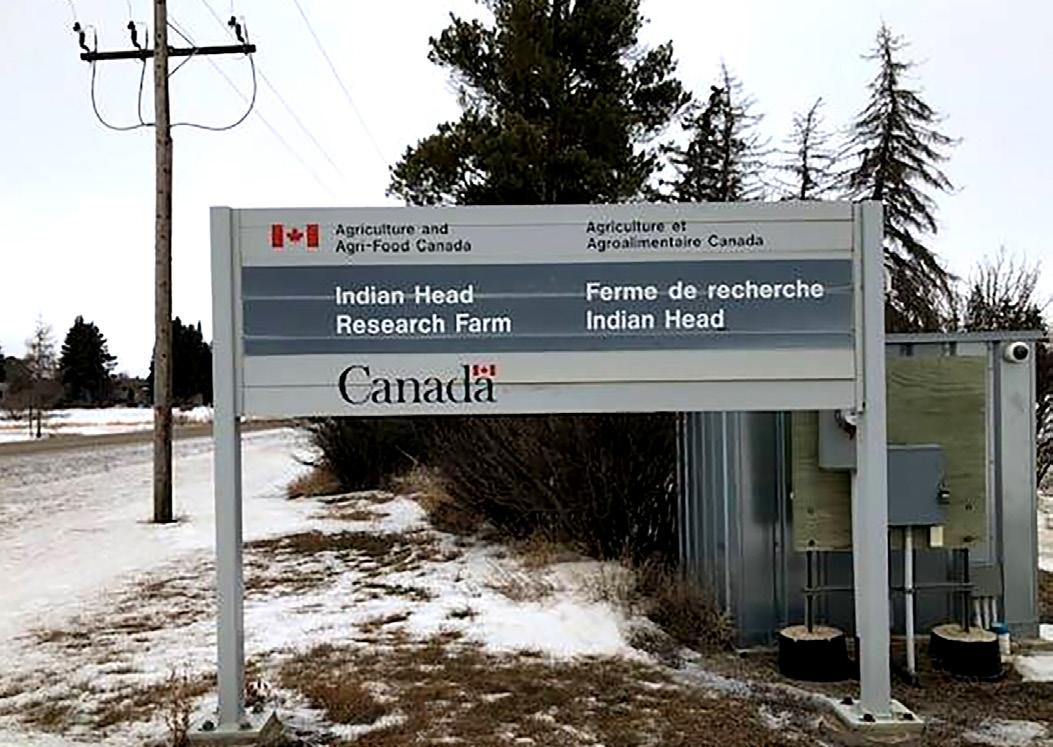
Agriculture Research Centres Impacted by Federal Budget Cuts
Health Canada’s Approval of Unlabelled Gene-edited Pork is a Mistake
Agriculture Groups Join Forces to Call for USMCA Renewal
State of Internal Trade: Strong Momentum, but Canada Must Go Furthera
February 2026 Volume 26 Number 2
PUBLISHER
Ray Blumenfeld
ray@meatbusinesspro.com
CO-PUBLISHER
Deb Wilson
deborah@meatbusinesspro.com
DIGITAL MEDIA EDITOR
Cam Patterson
cam@meatbusinesspro.com
CONTRIBUTING WRITERS
Brad, Brinkworth, Juliette Nicolay, Sylvain Charlebois, Jack Roberts
CREATIVE DIRECTOR
Patrick Cairns
Meat Business Pro is published 12 times a year by We Communications West Inc
MEAT INSTITUTE HELPS LAUNCH POULTRY INDUSTRY FOOD SAFETY COUNCIL
The Meat Institute has helped to launch the Poultry Industry Food Safety Council (PIFSCo), a new collaborative initiative dedicated to advancing food safety practices across the poultry industry.
“We are a proud partner in PIFSCo,” said Meat Institute President and CEO Julie Anna Potts. “PIFSCo will facilitate an all of industry approach to food safety, prioritizing and coordinating research priorities as well as striving for continuous improvement in food safety operations.
“This effort builds upon the Meat Institute’s recent continuous improvement efforts for food safety which include a new, free online learning platform on Listeria, our “Food Safety for the Executive” tool kit, research we fund through our Meat Foundation and oue new partnership with the Alliance to Stop Foodborne Illness.”
PIFSCo will represent the breeder, broiler, duck, layer, and turkey sectors to identify research priorities, share practical solutions, and promote continuous improvement in food safety practices.
CO MMUNICATIONS W EST IN C
We Communications West Inc.
106-530 Kenaston Boulevard
Winnipeg, MB, Canada R3N 1Z4
Phone: 204.985.9502 Fax: 204.582.9800
E-mail: publishing@meatbusiness.com
Website: www.meatbusinesspro.com
Meat Business Pro subscriptions are available for $28.00/year or $46.00/two years and includes the annual Buyers Guide issue.
The contents of this publication may not be reproduced by any means in whole or in part, without prior written consent from the publisher.
Printed in Canada. ISSN 1715-6726
In PIFSCo, the Meat Institute joins the American Egg Board, Duck Council, National Chicken Council, National Turkey Federation, United Egg Producers and U.S. Poultry & Egg Association and more than 50 poultry companies and allied industry partners committed to advancing food safety.
To learn more about PIFSCo, visit PIFSCo.org.
CANADIAN BEEF INDUSTRY STATEMENT ON AAFC RESEARCH CUTS
The Canadian Cattle Association (CCA) and the Beef Cattle Research Council (BCRC) are concerned about Agriculture and Agri-Food Canada (AAFC) reductions affecting research farms, facilities, programs and research expertise at Nappan (Nova Scotia), Quebec City (Quebec) and Lacombe (Alberta). We recognize the fiscal pressures facing the federal government; however, the cuts will have far-reaching impacts for cattle producers, the beef industry, consumers and Canada’s efforts to grow the economy and diversify export markets.
In the past decade, Canada’s beef producers increased their own research contributions by over 600%, viewing research as an investment in future economic growth and competitiveness. Public-good research remains essential where market incentives are limited, or independent expertise is required for regulatory, trade and consumer confidence. AAFC’s national capacity is particularly important to maintain in the areas of food safety, carcass quality and grading, and forage breeding and management.
“Canada’s beef producers rely on a stable, high performing public research network to deliver the tools, evidence and innovations that keep farms resilient, food safe and our sector competitive,” explained CCA President Tyler Fulton. “When research capacity is lost, it isn’t quickly rebuilt. Cattle producers and the public pay the price for years and even decades.”
NEGATIVE CONSEQUENCES FOR BEEF AND FORAGE RESEARCH
Forage is the foundation of the beef industry. Canada cannot have a competitive beef industry or efficiently respond to industry priorities without abundant and productive forages. The capacity to continue building in these vital programs has been lost through the closure of the Lacombe, Nappan and Quebec research stations.
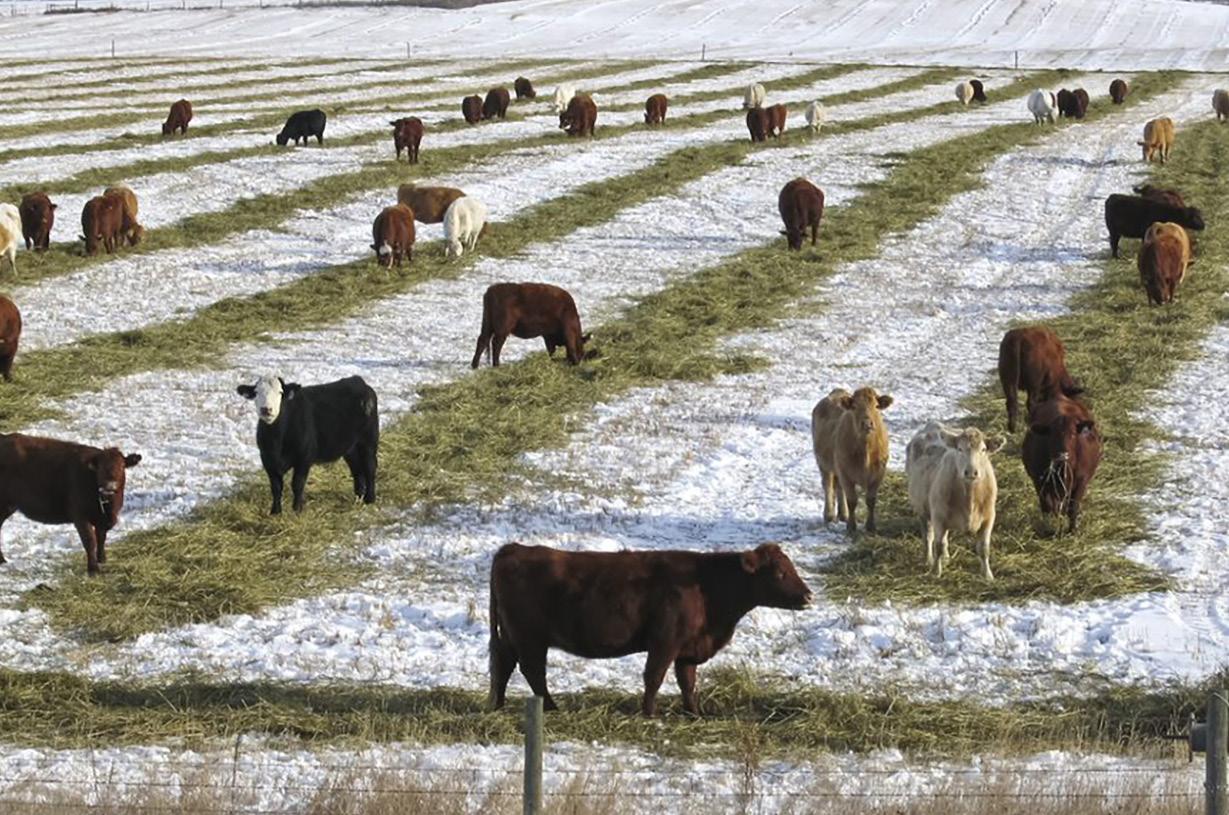
Extensive work conducted at the Lacombe Research and Development Centre exploring extended grazing practices allowed producers to cut winter-feeding costs and survive through the BSE crisis. While a small number of beef producers had begun attempting this practice, clear guidance by Dr. Vern Baron at AAFC Lacombe allowed other producers to begin
In recent years, Dr. Baron began collaborating with AAFC researchers in Quebec led by Dr. Annie Claessens and Dr. Annick Bertrand, to develop higher-yielding, winter hardy alfalfa varieties. At AAFC Nappan, Dr. Yousef Papadopoulos, John Duynisveld and Dr. Kathleen Glover have been focused on forage and grazing strategies for Atlantic Canada’s unique climate and acidic soils. Among multiple accomplishments, they have developed grazing management programs for Eastern and Atlantic Canada and bred improved trefoil, red clover and alfalfa (e.g., AAFC Trueman) varieties that have been adopted across the country.
This research program has developed more productive and economical pasture mixes for Eastern Canada and low-cost methods to rejuvenate pasture stands that would also improve forage germination and establishment. Critically, collaborations between these AAFC sites and agricultural universities led to a highly productive network that benefits forage and beef producers across the entire nation. The effectiveness of this network and the benefits it provides to Canadian beef producers are compromised by the loss of these facilities.
Beef grading is fundamentally important to pricing beef carcasses. With the closure of AAFC Lacombe, Canada has lost its only robust meat science program and will not have the scientific expertise needed to address questions of grade equivalency in any of the foreign export markets the Canadian beef sector is hoping to diversify into. The team of beef grading researchers at Lacombe developed the instrument grading technology that is currently in use worldwide. Dr. Oscar LopezCampos at Lacombe has been responsible for upgrades to Canada’s beef grading system for several years, working to harmonize it with the U.S. system. He has examined methods to go beyond simple “yield grade” estimations and has developed ways to fabricate individual beef carcasses to optimize the value of the cuts in each carcass. His accomplishments also include developing a methodology to translate Canadian beef carcass quality grades into Japanese equivalents to bolster Canadian beef marketing efforts.
The Lacombe research station was also home to the food safety team led by Dr. Xianqin Yang. Food safety research solves problems before they reach Canadian or international consumers. This program developed and validated procedures that packing plants use to wash hide-on carcasses, carcass rinses and pasteurization methods and improved methods to clean conveyor belts, knives and other equipment.
These advances have contributed to significant decreases in E. coli O157:H7 related food safety recalls in Canada. After a major E. coli outbreak in 2012, Dr. Yang determined how to safely cook needle-tenderized beef so that Health Canada could label it appropriately. Food safety is a common “non-tariff trade barrier.” We fully recognize the fiscal pressures facing the federal government and understand that spending reductions are necessary given the unprecedented situation Canada is facing. In anticipation, we engaged AAFC, requesting and trusting that industry priorities be considered. Elimination of critical expertise in forage breeding, carcass grading and food safety seems shortsighted and may have long-term impacts on ensuring the stability and longevity of Canada’s beef industry.
WHERE DO WE GO FROM HERE?
Research is an investment, not a discretionary expense. The BCRC believes the decision to close the Nappan, Quebec and Lacombe research stations may result in long-term, debilitating consequences for our industry including:
• The potential loss of unbiased, independent expertise in Canada in critical areas including forage breeding and management, beef quality, carcass grading and food safety.
• The potential loss of innovative and effective forage breeding and management solutions that can respond to adverse conditions including cold, drought, flooding and poor-quality agricultural soil.
• The potential loss of Canada’s ability to respond to food safety concerns and crises with science-based evidence and action plans.
• The potential loss of Canada’s ability to modernize our beef carcass grading system in response to changing genetics, management practices, consumer preferences and international market demands.
When considering the loss of critical capacity in these research areas, BCRC Chair Dean Manning noted, “Efficiency should mean smarter coordination of a national network, not the erosion of irreplaceable expertise. While the intent may be efficiency, the reality is that Canada loses the capacity to generate the learnings and innovations that maintain and improve sustainable and safe food production.” He added, “I believe that Canada’s beef producers are ready to partner on solutions rather than the elimination of critical research capacity.”
The CCA has requested that if the closure of these facilities stands, critical capacity and programs be transferred as outlined below.
• Maintaining a national carcass quality and grading research program is critical. The CCA requests that Dr. Oscar Lopez-Campos’ program be transferred to another institution such as the University of Guelph, which has a federally inspected research abattoir.
• We understand that Dr. Xianqin Yang’s position may be transferred to Lethbridge Research and Development Centre. The CCA requests that this be confirmed to ensure adequate support is available to maintain the critical food safety research being conducted.
• The CCA requests that the Nappan and Quebec City forage breeding programs be maintained or transferred with researchers maintaining access to forage breeding plots and support.
• If AAFC chooses to cancel projects midway through their completion, the CCA requests that the investments industry has made be refunded.
The CCA and the BCRC remain committed to constructive engagement with Minister MacDonald and AAFC officials to ensure critical research capacity is preserved, transitions are well managed and producer funded projects deliver the intended outcomes.
WHY STRONG FOOD SAFETY SYSTEMS MATTER AND HOW IMPLEMENTATION SUPPORT CAN HELP
Food safety is more than simply a regulatory requirement. It's a cornerstone of consumer trust, business resilience and long-term growth in Canada’s food sector.
Today’s consumers expect safe, high-quality goods, which directly affects consumer confidence. 74% of Canadian consumers say that ensuring food safety is very important to building or maintaining trust in Canada’s food industry at large.*
For food businesses, that trust translates into opportunity for growth. A strong food safety system not only reduces risk and recalls, it can also improve market access, brand credibility and overall sales. In fact, a Food in Canada article on GFSI and food safety reports that many survey respondents saw increased sales as a direct result of achieving a GFSI food safety certification.*
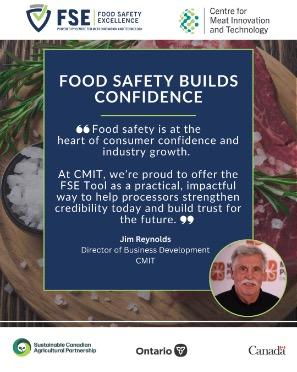
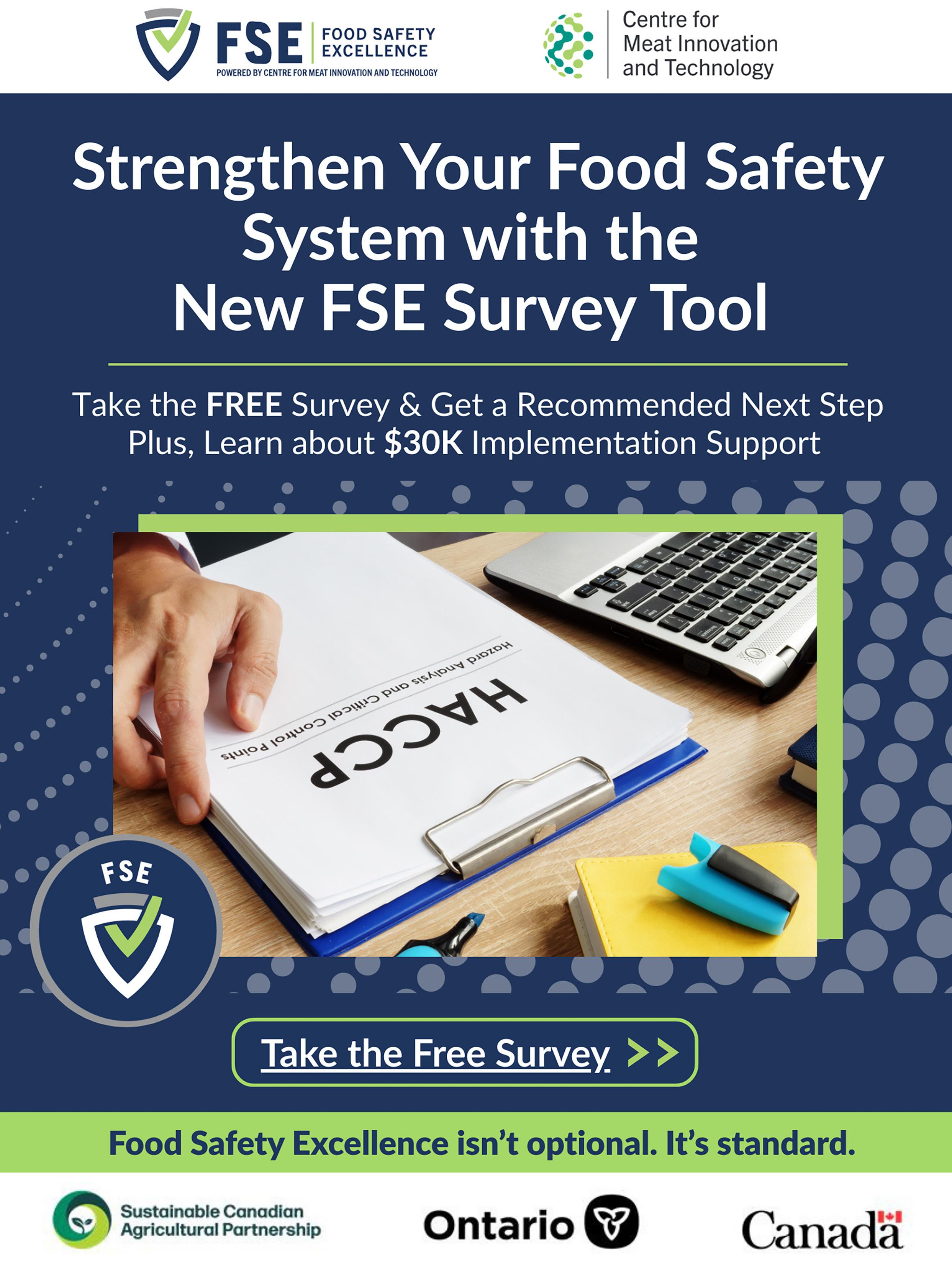
The Food Safety Excellence (FSE) Program, powered by the Centre for Meat and Innovation (CMIT), aims to help meat processors easily access food safety information, resources, tools and support opportunities. “Food safety is at the heart of consumer confidence and industry growth," says Jim Reynolds, Director of Business Development at CMIT. "At CMIT, we’re proud to offer the FSE Tool and Ontario’s Implementation Support as practical, impactful ways to help processors build credibility and trust for the future.” Implementation Support for Ontario meat businesses is designed to help offset the financial barriers that may slow or prevent progress in putting a robust food safety system in place.
WHAT IS IMPLEMENTATION SUPPORT?
The Implementation Support opportunity provides financial assistance to provincially licensed meat plants in Ontario to help them strengthen their operation's food safety program. The monetary support is intended to help reduce the cost associated with developing, improving or certifying food safety systems, making it easier for a business to put their safety plans into action.
Ontario meat processors can receive up to 100% of costs, to a maximum of $30,000, for the implementation of a third-party audited food safety system of their choosing and/or to adopt new food safety and traceability systems. The support is paid after approved activities are completed and payments are made directly to the third-party vendor, ensuring that all support goes toward real, measurable improvements that strengthen the food safety outcomes of the business.
This Implementation Support should help accelerate their progress toward safer operations, stronger compliance and greater market readiness.
WHAT CAN IMPLEMENTATION SUPPORT BE USED FOR?
The Implementation Support provides an opportunity for Ontario meat processors to receive support to determine and validate food safety risks, strengthen capacity to adopt protection and assurance systems that mitigate risks, and improve public trust as they grow their businesses.
Implementation Support can be applied to a wide range of eligible expenses, such as:
- A third-party audited food safety system (e.g., HACCP certification, SQF, BRC, ISO 22000)
- Good Manufacturing Practices (GMPs)
- Traceability & Recall Systems
Whether a facility is building a formal system for the first time or strengthening an existing program to meet higher certification standards, Implementation Support can help cover the financial challenges involved.
HOW DO ONTARIO MEAT PROCESSORS ACCESS THE IMPLEMENTATION SUPPORT?
Accessing Implementation Support is simple:
> Prepare – Review all requirements, gather vendor quotes as well as vendor qualifications (along with two references to confirm qualifications).
> Complete the simple Expression of Interest Form –Attach all documents and submit for review.
> Assessment – Forms will be reviewed by MPO on a first-come, first-served basis.
> Decision & Next Steps – Wait for a confirmation letter, contract signing, final claim/report due.
Expression of Interest forms will be accepted until all available support has been fully allocated.
USE THE FOOD SAFETY EXCELLENCE TOOL TO PLAN YOUR NEXT STEP
If you're not sure where to start or what kind of support your operation needs most, meat processors are encouraged to use the Food Safety Excellence Survey Tool. This is a free, anonymous, four-minute online assessment that helps processors understand where their food safety system stands today and which next step may be worth exploring. “The FSE Tool and Implementation Support represent MPO’s commitment to our members and the broader Ontario meat industry," says Franco Naccarato, Executive Director at Meat & Poultry Ontario. "By making these resources accessible, we’re empowering processors to raise the bar on food safety, strengthen consumer trust and ensure long-term competitiveness.”
Apply for Implementation Support today and start building stronger food safety systems, greater consumer trust and a more competitive future for your business.
Food Safety Excellence tools and resources have been developed through funding provided by the Sustainable Canadian Agricultural Partnership (Sustainable CAP), a five-year, federal-provincial-territorial initiative.
SOURCES:
"74% of Canadian consumers say “ensuring food safety” is VERY important to building or maintaining trust in Canada’s food industry.”
Source: Agriculture and Agri-Food Canada — 2023 Consumer Perceptions of Food Survey
Farm Credit Canada (FCC) announced it has convened a coalition of more than 20 investment organizations collectively prepared to deploy up to $5 billion into Canadian agriculture and food innovation by 2030. This milestone reflects a generational investment opportunity in Canada’s agriculture and food sector.
This new coalition pledge builds on the momentum of the May 2025 commitment by FCC’s investment arm, FCC Capital, which pledged $2 billion by 2030 to drive innovation across the agriculture and food industry. As part of this commitment, FCC Capital is already on track to deploy $325 million in new capital during its fiscal year ending March 31, 2026. With the pledge announced today, combined with FCC’s commitment in May 2025, this represents $7 billion of new investment into Canadian agriculture and food by 2030.
These commitments will bring new innovation to Canadian farmers through investments in innovative Canadian businesses, construction and project finance opportunities, and early-stage ag-tech companies.
This announcement marks a major step in expanding Canada’s capacity to scale world leading agriculture and food innovation. In 2021, total estimated investment in agricultural innovation stood at $270 million annually according to RBC Thought Leadership. Today’s coalition helps position Canada to dramatically increase this figure and accelerate commercialization of breakthrough technologies and productivity across the entire value chain.
Together, FCC Capital’s pledge and the commitments made by this coalition of investors represent a clear and meaningful statement to the strength and long term potential of the Canadian ag and food industry at a pivotal moment for the sector.
“Canada’s farmers, producers, and processors are already among the most innovative and entrepreneurial in the world,” said Darren Baccus, executive vicepresident, Agri Food, Alliances and FCC Capital. By bringing this coalition together, we’re crowding in the capital needed to scale breakthrough solutions and deliver the next generation of innovation directly to Canadian producers. This work strengthens our food security at home while accelerating Canada’s rise as an ag and food superpower. FCC remains rigorously focused on supporting Canadian farmers and ensuring our work delivers tangible, measurable impact for them.”
“Agriculture is one of the most important and investable sectors of our economy,” said Minister of Agriculture and Agri-Food, Heath MacDonald. “This landmark investment will strengthen Canada’s leadership in agriculture and agri-food innovation, while charting a course for long-term growth, competitiveness, and resiliency for generations to come.”
INVESTMENT ORGANIZATIONS THAT ARE PART OF THE COALITION INCLUDE:
• Area One Farms
• Arterra Growth
• Bonnefield Financial
• District Ventures Capital
• Emmertech
• Glengarry Farm Finance Corporation
• InvestEco Capital Corp.
• Maverix Private Equity
• Nàdarra Ventures
• Northleaf Capital Partners
• NYA Ventures
• Power Sustainable Lios
• Radicle Growth Food and Agriculture Venture Capital
• Royal Bank of Canada (RBC)
• S2G Investments
• Seminal Capital Holdings, LLC
• SVG Ventures
• Tall Grass Ventures
• Tikehau Capital
• Yaletown Partners
AGRICULTURE RESEARCH CENTRES IMPACTED BY FEDERAL BUDGET CUTS
By Brad Brinkworth, Alberta Beef Producers
Recently announced budget cuts at Agriculture and Agri-Food Canada raise important questions about the impact to beef and forage work done in support of the industry.
Media reports indicate AAFC facilities tied to beef and forage research are among those facing capacity reductions or even closures as part of cuts announced under the 2025 federal budget.
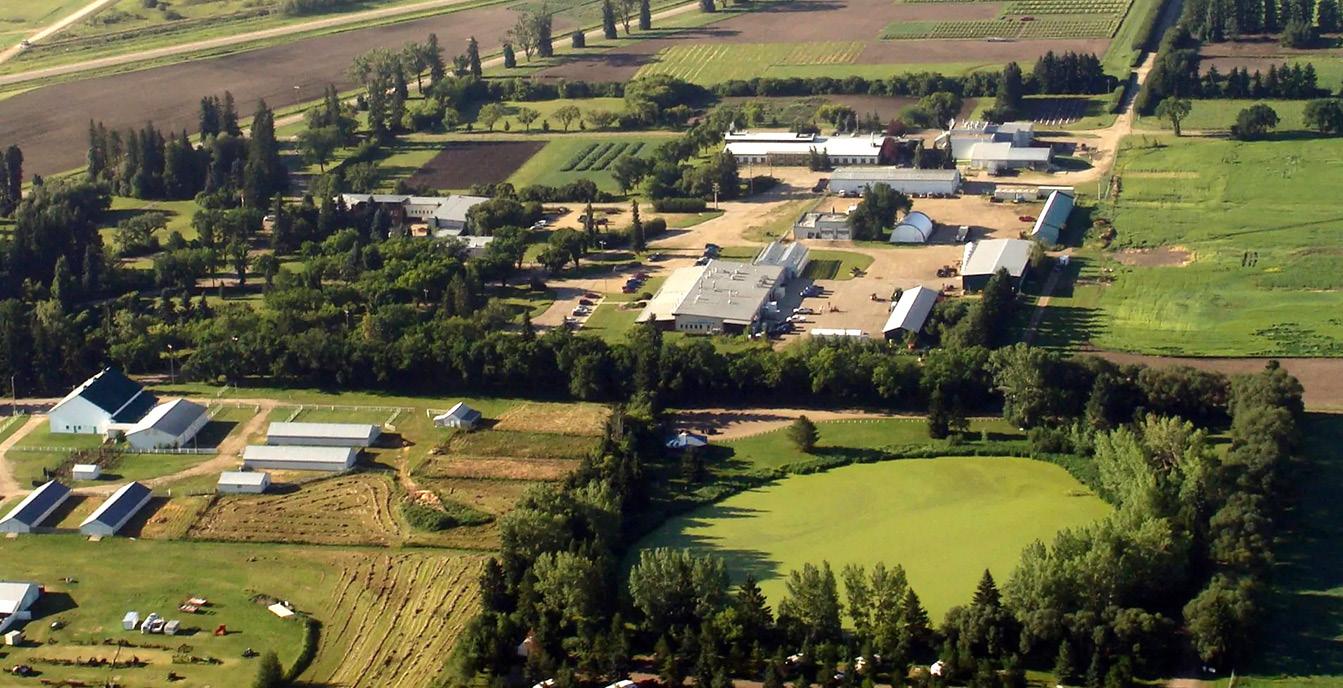
Several research sites that have long supported beef production are included in the closures. For beef producers, the Lacombe research centre is one of the best-known facilities on the list. For over 100 years, Lacombe research studies have helped inform cow-calf production systems, forage production, food safety, and beef grading across Canada.
Also included are research centres or farms in Saskatchewan, Manitoba, Quebec, Ontario, and the Maritimes that have major roles in forage development, grazing management, and crop systems that support beef operations. In addition, AAFC is also reportedly ending a co-location agreement at the University of Alberta. That change affects researchers currently working on cattle genetics projects.
“Research conducted at AAFC stations is essential to the competitiveness of Canada’s beef industry,” says Reynold Bergen, Science Director at the Beef Cattle Research Council (BCRC). “Higher yielding forages and low cost winter feeding systems developed by these teams have reduced risks and increased profitability for cattle producers, and food safety is critical to maintaining consumer confidence.”
Bergen notes that a food safety expert at AAFC Lacombe played a key role in resolving ‘safe cooking’ labelling and consumer confidence issues following a major E. coli outbreak in 2012.
Information from AAFC sources has confirmed the department will reduce its workforce by approximately 665 positions following a government-wide spending review. Cuts and closures are expected to unfold over the coming year, allowing time for research work to be wound down. At this point, the department says it is too early to say what will happen to specific projects, long-term trials, or data sets.
In a message to staff, AAFC Deputy Minister Lawrence Hanson said the cuts were made to keep government spending sustainable and focused on the department’s core mandate. He also said the decisions were not a reflection of the quality of work being done by AAFC employees.
Industry groups say the uncertainty raises concerns about the long-term impacts on beef research and innovation. Research conducted through AAFC facilities has contributed to productivity gains, animal health improvements, and forage systems that underpin the competitiveness of Canada’s beef sector.
“Research remains a critical investment for our industry,” says Doug Roxburgh, Chair of Alberta Beef Producers (ABP). “ABP recently committed $228,000 to seven research projects spanning priorities from parasite control to ergot toxicity, demonstrating our strong commitment to science-based solutions.”
Roxburgh says ABP is continuing to work with national partners to better understand the implications of the federal announcement.
“We are working closely with, and supporting, the Beef Cattle Research Council and other stakeholders to reinforce the importance of research, seek greater clarity from government, and better understand the announcement and its impacts on beef research moving forward.”
AAFC says more information will be shared as decisions are finalized. For now, many questions remain about how these changes will affect ongoing beef, forage, cropping, and food safety research and the overall capacity to support future activities.
“The expertise of food safety and beef grading researchers anchors market access by assuring trading partners of Canada’s food safety and quality systems,” says Bergen “The impacts of losing that capacity may not be immediate, but they will be far reaching, affecting beef producers, the industry, and Canada’s international reputation.”
HEALTH CANADA’S APPROVAL OF UNLABELLED GENE-EDITED PORK IS A MISTAKE
By Sylvain Charlebois
The technology may be safe, but approving it without clearly identifying it as genetically altered undermines consumer trust
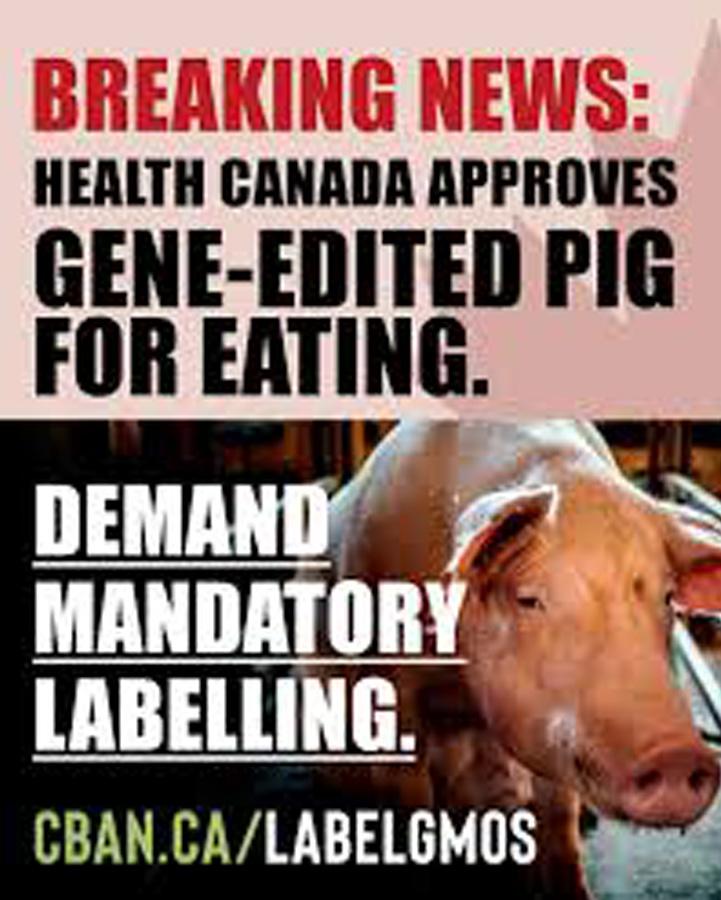
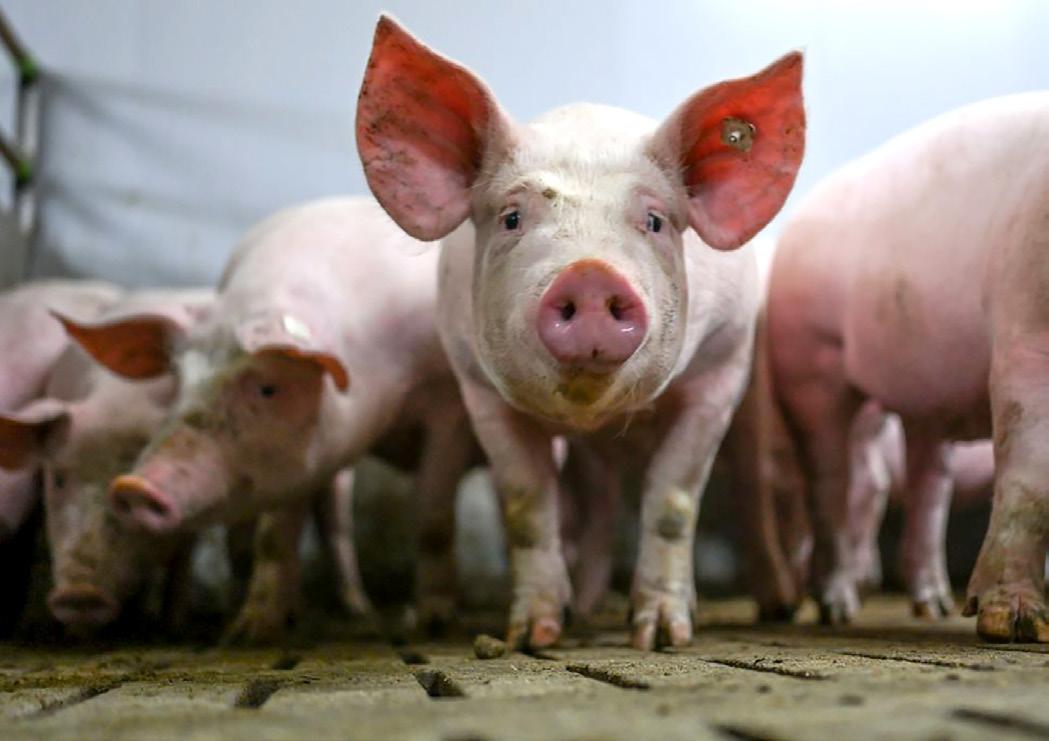
Health Canada has quietly approved the sale of geneedited pork in Canada without labelling, once again acting as though Canadians do not need to know how the food they eat is produced.
This decision follows a familiar pattern in Canadian food regulation: scientific assessments are completed and approvals are granted quietly, with consumer communication treated as an afterthought.
Health Canada does not appear to have changed its approach following its recent experience with cloned animal products. Last fall, the agency approved meat derived from the offspring of cloned animals, again without a public announcement. When the information surfaced, consumer reaction was swift and negative, forcing Health Canada to pause that approval approach.
Under current rules, gene-edited pork, which involves making small, precise changes to an animal’s DNA to improve traits such as disease resistance or productivity without adding genes from other species, is treated much like regular pork. Because no foreign DNA is added, Health Canada applies the same rules used for conventionally bred animals, which is why no labelling is required. Regulators and scientists broadly agree that the technology is safe, well understood, and can help improve farm efficiency, resilience to climate stress and, over time, price stability.
https://www.beaconmetals.com
But safety is not the issue.
The issue is consumer trust.
As with cloning, Canadians want to know what they are buying. Transparency is not an attack on innovation; it is a fundamental principle of consumer respect. Regulators and industry alike have long shielded consumers from information about production technologies, fearing disclosure would provoke backlash. This approach has often produced the opposite outcome, undermining confidence when information eventually emerges.
This inconsistency is difficult to justify. As of Jan. 1, Health Canada now mandates prominent front-ofpackage labels for fat, sugar and sodium content. If consumers are entitled to that information, it is hard to argue that identifying gene-edited meat at the point of purchase is excessive or dangerous. Information itself does not harm consumers; withholding it does.
There are also important market implications. Organic and niche producers who choose not to use gene-editing technologies lose the ability to clearly differentiate their products. Markets only work when consumers can make informed choices. Innovation thrives not only when technologies evolve, but when consumers are able to understand and compare those differences.
Blending gene-edited meat into the conventional supply without disclosure effectively forces the industry into a single production standard, one that prioritizes cost efficiency over consumer preference. The result is regulatory uniformity that suppresses choice while doing little to address the pressures driving meat prices higher. Health Canada’s approval allows geneedited pork to be sold in Canada, even if widespread commercial availability is still emerging. Canadians are already paying more for meat; opacity will not improve affordability or confidence.
Gene editing is not new to agriculture. It has been used in crops for years, including rice, canola and tomatoes. But livestock is different. Food is shaped not only by scientific risk, but by perception, ethics and values. Regulators and industry must acknowledge that reality rather than dismiss it.
The conclusion is straightforward: gene-edited and cloned food products should be clearly labelled. Not because they are unsafe, but because transparency is essential for trust, market integrity and long-term acceptance.
Dr. Sylvain Charlebois is a Canadian professor and researcher in food distribution and policy. He is senior director of the Agri-Food Analytics Lab at Dalhousie University and co-host of The Food Professor Podcast.
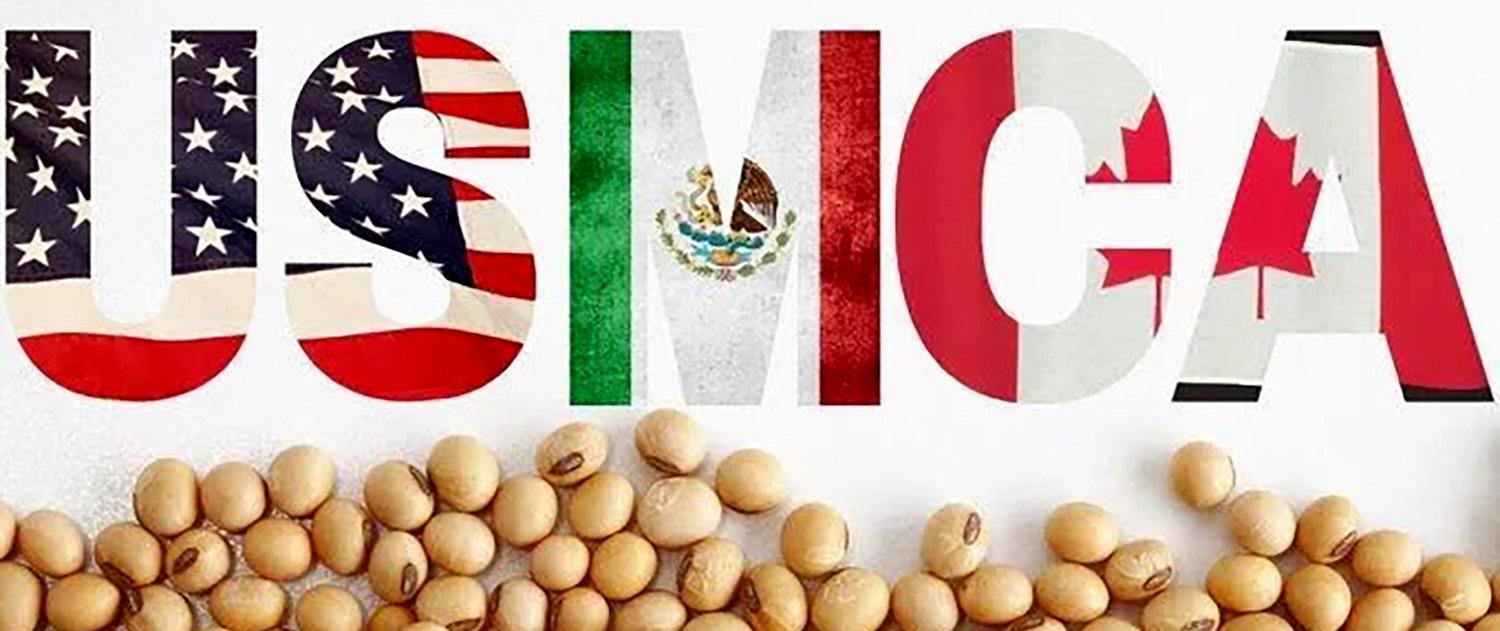
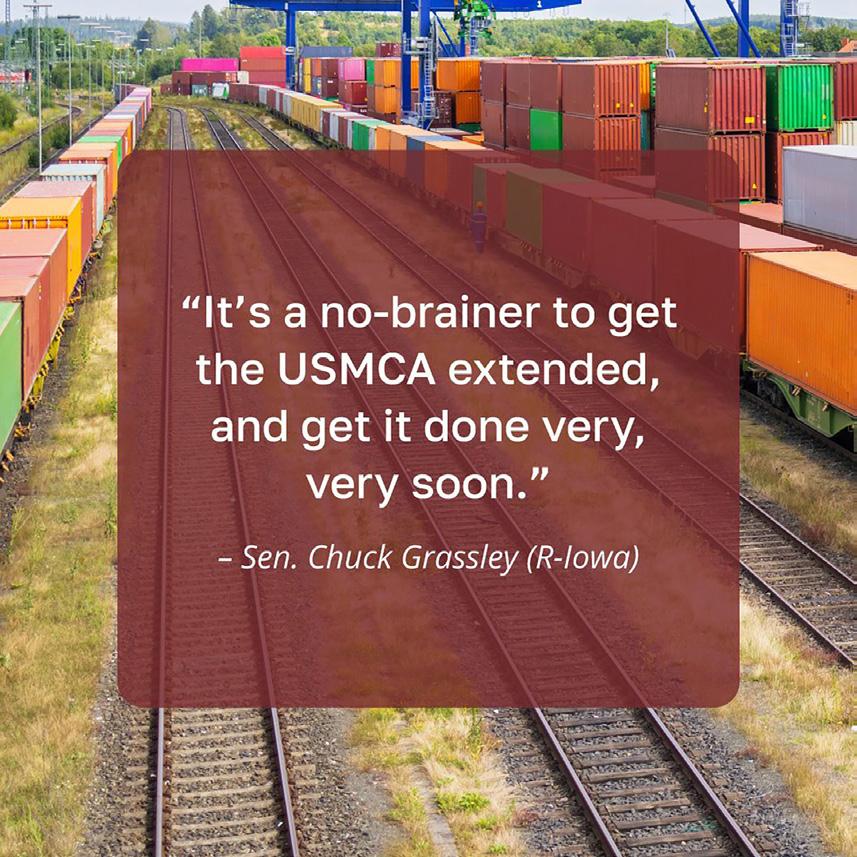
AGRICULTURE GROUPS JOIN FORCES TO CALL FOR USMCA RENEWAL
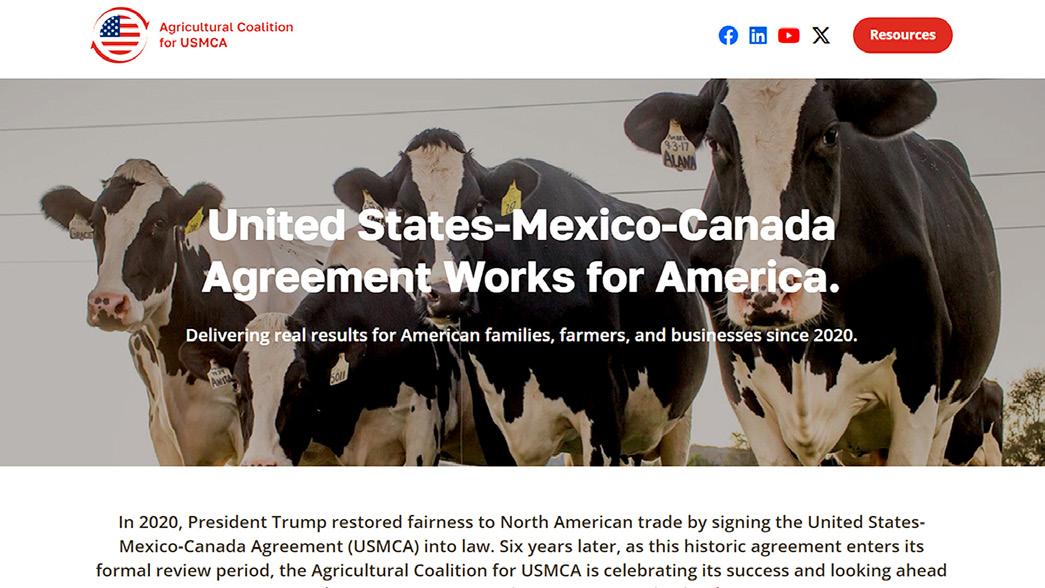
Forty farm and agricultural groups, and growing, have launched the Agricultural Coalition for the UnitedStates-Mexico-Canda Agreement, underscoring the accord’s vital role as an economic engine for the U.S. farm economy and calling for its renewal with targeted improvements.
As part of the launch, the group unveiled a new website and kicked off an aggressive ad campaign in the nation’s capital, all of which is designed to promote the benefits afforded to the U.S. food and agriculture sector under the USMCA as the administration approaches the 2026 mandatory review.
“USMCA is one of President Trump’s signature achievements and one that has significantly propelled the ag economy,” said Bryan Goodman, a spokesperson for the new group. “We are not saying it’s perfect, as some changes are warranted, but we are saying it is of paramount importance to farmers that all three countries renew the agreement.”
USMCA was signed by the United States, Mexico and Canada in 2018 during President Trump’s first term and was implemented in 2020 to replace the North American Free Trade Agreement.
The agreement has significantly increased U.S. agriculture exports to Canada and Mexico, provided more certainty between the three nations and created a mechanism for resolving trade disputes.
Under the agreement, leaders of all three nations must begin a formal review by July 2026 to determine whether to renew. If renewed, the agreement would remain in effect for an additional 16 years, with another review scheduled in 2032. If the countries fail to reach an agreement and move to terminate, USMCA will expire in 2036. The review could also enter a period of annual consultations with no clear path forward, creating significant uncertainty for the farm economy.
The Trump administration, while indicating the renewal of USMCA is not guaranteed, has acknowledged it has been successful to a certain degree.
“Our farmers make decisions a year or more in advance,” Goodman said. “They need the certainty of knowing USMCA is here to stay.”
Advocates say President Trump made a major contribution to U.S. trade when he conceptualized and signed the agreement.
“We want to protect this agreement and build on what President Trump started in his first term,” Goodman said. “We are confident we will be able to share the facts and farmer testimony that will help the Trump administration benefit rural communities throughout the process of the 2026 Review.”
About the Agricultural Coalition for USMCA
The Agricultural Coalition for USMCA is a broad-based alliance representing the full landscape of U.S. food and agricultural trade associations, state agriculture leadership, and related interests committed to the renewal of the United States-Mexico-Canada Agreement. The coalition brings together organizations spanning farmers, ranchers, producers, processors, exporters, and the agricultural supply chain, reflecting the deeply integrated nature of North American agricultural trade.
To learn more, visit AgforUSMCA.com.
QUICK FACTS
• $1.9T - Total of goods and services traded under USMCA.
• $60B+ - American agricultural exports to Canada and Mexico. Nearly 1/3 of all American agricultural exports.
• 13M - American jobs supported by trade with Canada and Mexico.
• 31% - Of U.S. trade-related rail traffic is tied to Canada and Mexico under North American trade flows.
STATE OF INTERNAL TRADE: STRONG MOMENTUM, BUT CANADA MUST GO FURTHER
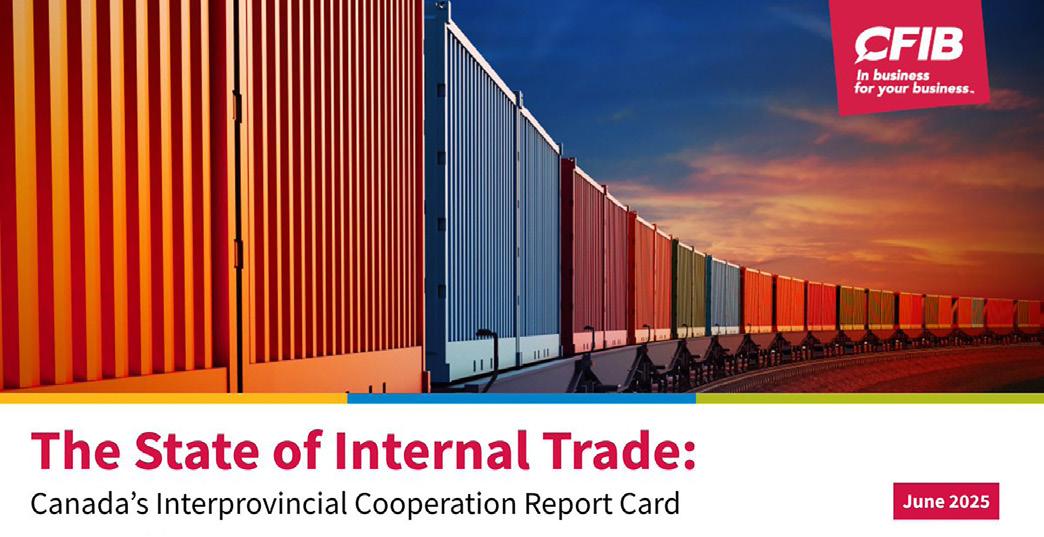
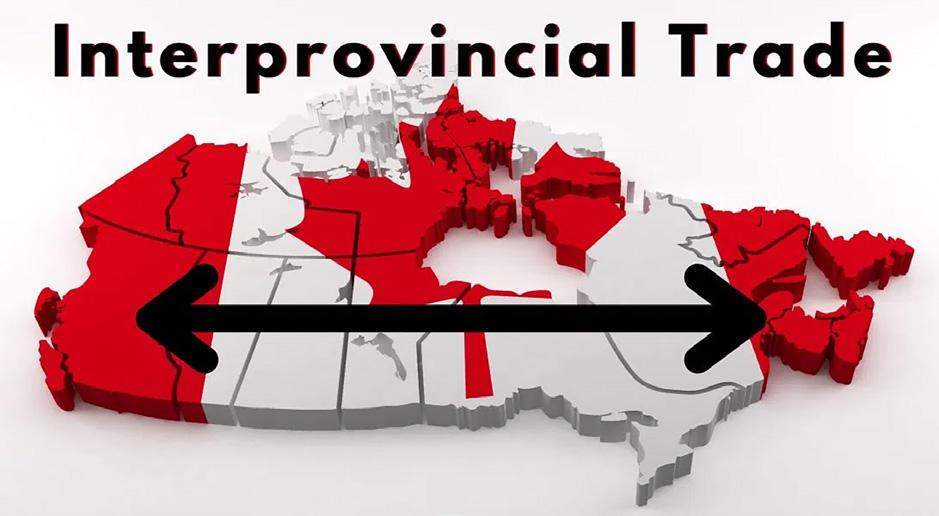
For years, small businesses hoping to trade within Canada have been hindered by administrative and legislative barriers. In 2025, significant progress has been made to remove those barriers, with the Canadian Mutual Recognition Agreement (CMRA) being the most significant accomplishment. However, exceptions still limit where free trade applies. For example, agribusinesses still cannot sell their provincially inspected food products in another province if they do not hold a federal license. In a recent report State of Internal Trade Canada’s progress on internal trade in 2025, the Canadian Federation of Independent Business (CFIB) takes stock at the situation, celebrating achievement while highlighting what still needs to be accomplished.
For years, CFIB shared with governments the benefits of facilitating interprovincial trade on small businesses and on the economy. In April 2025, almost 3 in 5 (58%) small business owners believed reducing internal trade barriers would create new opportunities for their business. Additionally, the economic stakes are enormous; recent research from the International Monetary Fund shows that Canada’s economy could gain nearly 7% ($210 billion) in real GDP by eliminating internal trade barriers. With so much potential on the table, the question becomes what is the most efficient, least bureaucratic way to eliminate unnecessary internal trade barriers?
Throughout numerous letters, reports and submissions, CFIB has championed mutual recognition as the most effective way to ease internal trade, preferable to harmonization, where progress can often stagnate or drag on. Yet for years, this issue lacked political leadership, and protectionist mindsets continued to impede meaningful progress. However, as trade tensions with the U.S. escalated last year, Canadian political leaders renewed their focus on things within their control, particularly the modernization of internal trade.
As a result, in November of last year, federal, provincial, and territorial governments signed the pan-Canadian Mutual Recognition Agreement (CMRA) for goods. This means that goods approved for sale in one province or territory can be sold in any other Canadian jurisdiction without additional or duplicative testing, paperwork, and extra fees. The agreement covers thousands of products, including toys, clothing, industrial goods, appliances, and vehicles, and is set to be fully implemented by June 2026. Agri-businesses will nonetheless note that food products have been excluded from the agreement and therefore continue to face administrative barriers to being traded across the country.
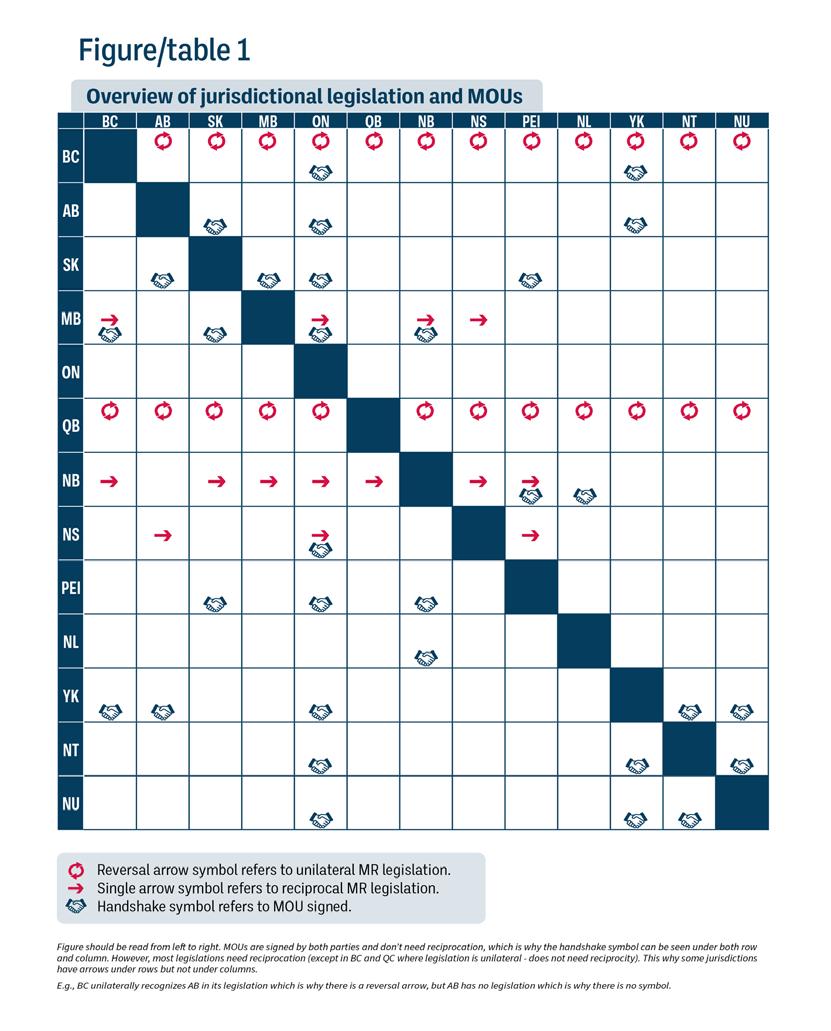
Several provinces have also passed their own mutual recognition laws (Figure 1).
This is the case for Manitoba, which has identified four reciprocal provinces with whom it would allow the free flow of goods and services: BC, Ontario, New Brunswick, and Nova Scotia. Nonetheless, the province excludes from its legislation food products, goods and services provided by crown corporations, certain regulated professions and occupations, or those otherwise exempted by regulation.
No agreement has been reached on the internal trade of food. Agri-businesses that wish to sell food products in another province must still hold a federal license delivered by the CFIA, an agency whose regulatory requirements are often perceived as burdensome. Almost 9 in 10 agri-businesses support removing barriers to the internal of food products. Facilitating the movement of food across provinces is the next critical step governments must take to enable meaningful change in our system.
The year 2025 brought its share of challenges, but it has also delivered a historic breakthrough in internal trade. Domestic trade barriers have weakened Canada’s economic foundation for many years, and action was long overdue. The signing of the CMRA sent a strong signal and marked significant progress. Several governments, including Manitoba, also took important steps by legislating or tabling mutual recognition policies to simplify regulatory processes across jurisdictions. It is now time to go further and allow agribusinesses to trade their products freely.
CFIB is Canada’s largest association of small and medium-sized businesses with 100,000 members (6,000 agri-business members) across every industry and region. CFIB is dedicated to increasing business owners’ chances of success by driving policy change at all levels of government, providing expert advice and tools, and