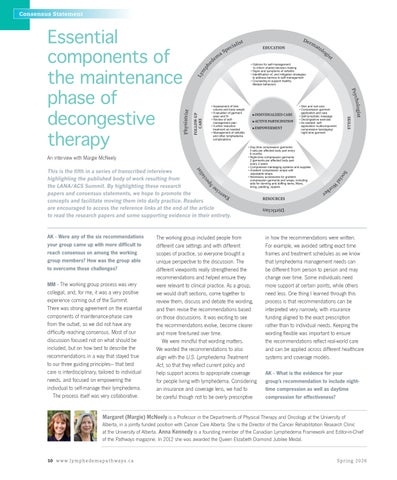
Essential components of the maintenance phase of decongestive therapy
An interview with Margie McNeely
• Options for self-management to inform shared decision-making
• Signs and symptoms of cellulitis
• Identification of, and mitigation strategies to address barriers to self-management
• Counseling to support healthy lifestyle behaviors
• Assessment of limb volume and body weight
• Evaluation of garment wear and fit
• Review of selfmanagement plan
• Further reduction treatment as needed
• Management of cellulitis and other lymphedema complications
This is the fifth in a series of transcribed interviews highlighting the published body of work resulting from the LANA/ACS Summit. By highlighting these research papers and consensus statements, we hope to promote the concepts and facilitate moving them into daily practice. Readers are encouraged to access the reference links at the end of the article to read the research papers and some supporting evidence in their entirety.
AK - Were any of the six recommendations your group came up with more difficult to reach consensus on among the working group members? How was the group able to overcome those challenges?
MM - The working group process was very collegial, and, for me, it was a very positive experience coming out of the Summit. There was strong agreement on the essential components of maintenance-phase care from the outset, so we did not have any difficulty reaching consensus. Most of our discussion focused not on what should be included, but on how best to describe the recommendations in a way that stayed true to our three guiding principles— that best care is interdisciplinary, tailored to individual needs, and focused on empowering the individual to self-manage their lymphedema. The process itself was very collaborative.


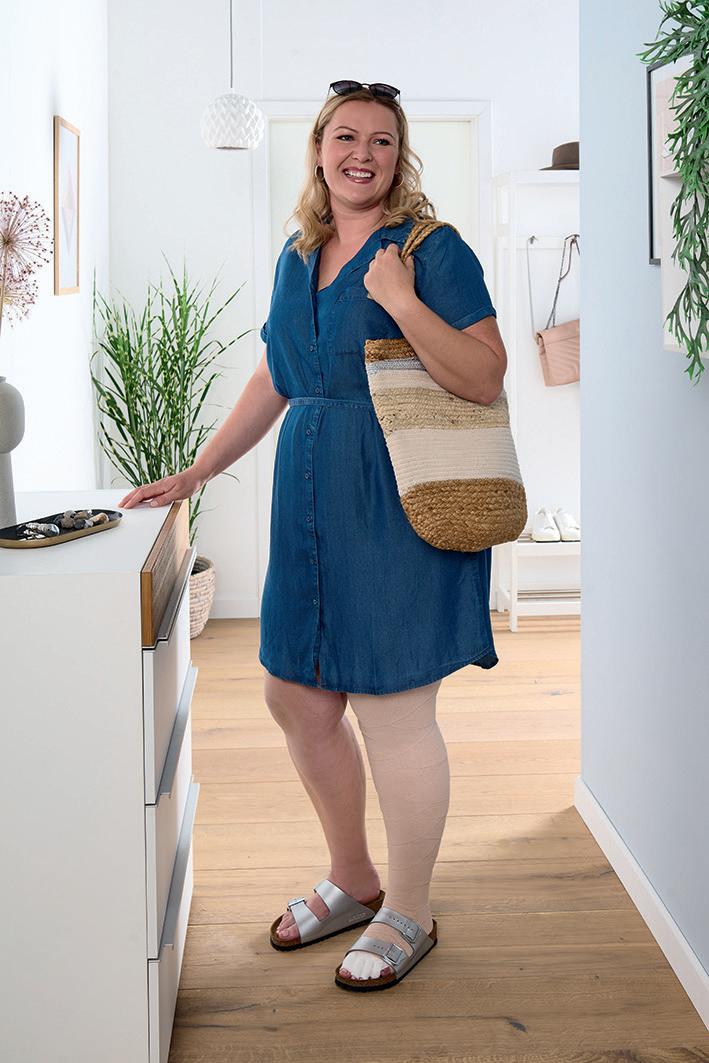
• Skin and nail care
• Compression garment application and care
• Self-lymphatic massage
• Decongestive exercise
• As needed: selfapplication multicomponent compression bandaging/ night-time garment
• Day-time compression garments:
3 sets per affected body part every
6 months
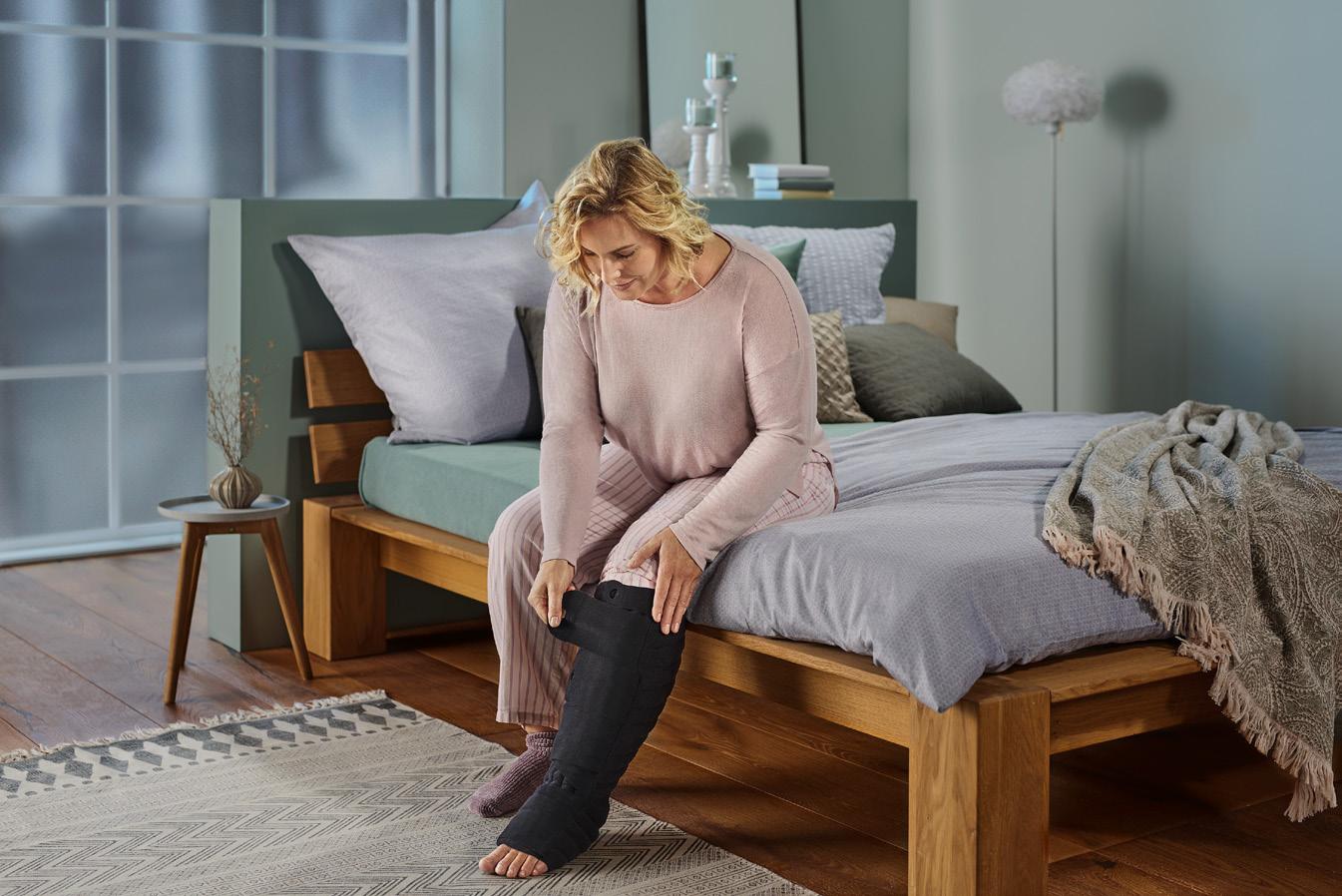
• Night-time compression garments:
2 garments per affected body part every 2 years
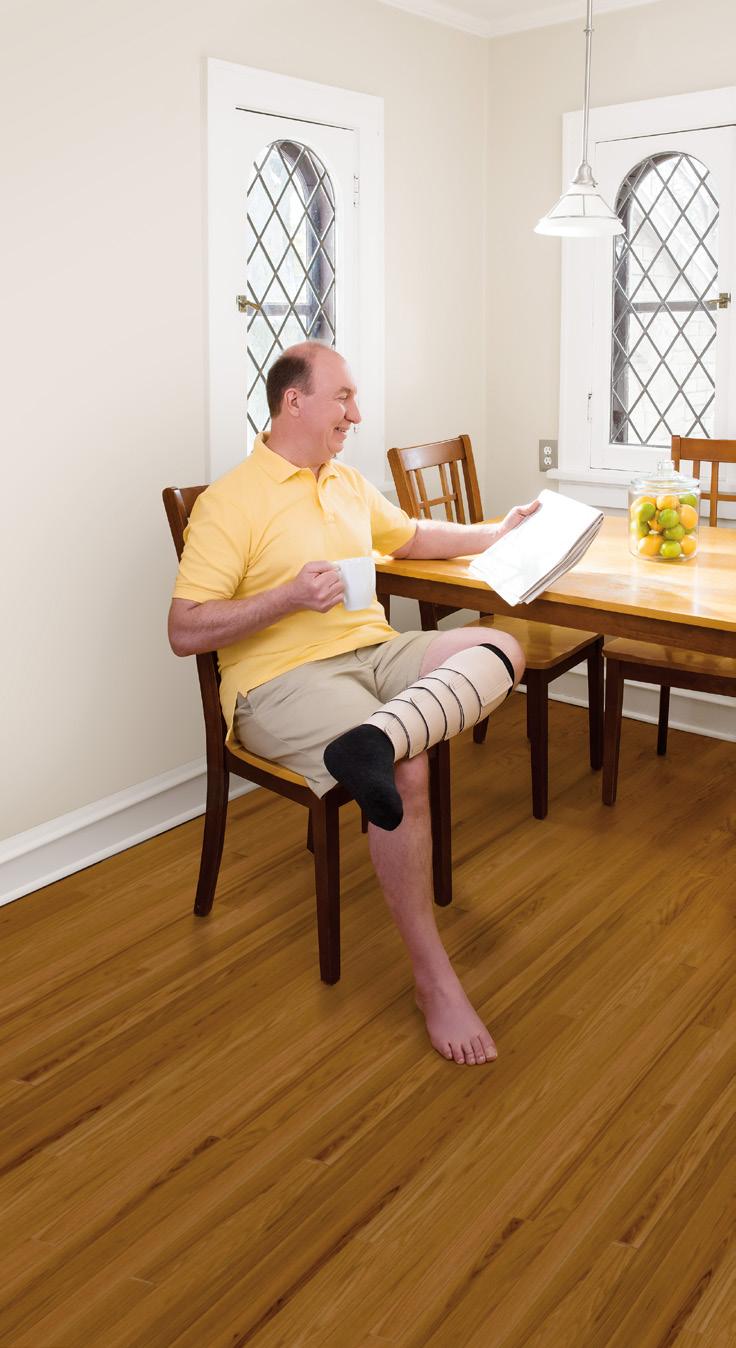
• Compression bandaging systems and supplies
• Gradient compression wraps with adjustable straps
• Necessary accessories for gradient compression garments and wraps, including: aids for donning and doffing items, fillers, lining, padding, zippers
The working group included people from different care settings and with different scopes of practice, so everyone brought a unique perspective to the discussion. The different viewpoints really strengthened the recommendations and helped ensure they were relevant to clinical practice. As a group, we would draft sections, come together to review them, discuss and debate the wording, and then revise the recommendations based on those discussions. It was exciting to see the recommendations evolve, become clearer and more fine-tuned over time. We were mindful that wording matters. We wanted the recommendations to also align with the U.S. Lymphedema Treatment Act, so that they reflect current policy and help support access to appropriate coverage for people living with lymphedema. Considering an insurance and coverage lens, we had to be careful though not to be overly prescriptive
in how the recommendations were written. For example, we avoided setting exact time frames and treatment schedules as we know that lymphedema management needs can be different from person to person and may change over time. Some individuals need more support at certain points, while others need less. One thing I learned through this process is that recommendations can be interpreted very narrowly, with insurance funding aligned to the exact prescription rather than to individual needs. Keeping the wording flexible was important to ensure the recommendations reflect real-world care and can be applied across different healthcare systems and coverage models.
AK - What is the evidence for your group’s recommendation to include nighttime compression as well as daytime compression for effectiveness?
Margaret (Margie) McNeely is a Professor in the Departments of Physical Therapy and Oncology at the University of Alberta, in a jointly funded position with Cancer Care Alberta. She is the Director of the Cancer Rehabilitation Research Clinic at the University of Alberta. Anna Kennedy is a founding member of the Canadian Lymphedema Framework and Editor-in-Chief of the Pathways magazine. In 2012 she was awarded the Queen Elizabeth Diamond Jubilee Medal.
MM - We know that compression remains the foundation of the lymphedema maintenance phase, but the amount and type of compression needed can vary across individuals. For many, daytime compression alone is enough to keep the swelling stable. However, others may find that swelling returns overnight or that their lymphedema is difficult to control despite consistent daytime garment use.
In these situations, night-time compression may be needed to help stabilize lymphedema and prevent symptom relapse. This can include the use of night-time garments or short-stretch bandaging. The recommendation is not meant to suggest that everyone needs nighttime compression, but rather that it is an option to consider when daytime compression alone is not sufficient. I think it is important to mention that ongoing reassessment is key, allowing compression strategies to be adjusted over time based on symptoms, comfort, function, and the person’s ability to manage their own care.

L y m p h A c t i v a t i o n
Most of our discussion focused not on what should be included, but on how best to describe the recommendations in a way that stayed true to our three guiding principles— that best care is interdisciplinary, tailored to individual needs, and focused on empowering the individual to self-manage their lymphedema.
AK - The only recommendation for manual lymphatic drainage in the maintenance phase is self-lymphatic


In the maintenance phase, we felt it was important to shift away from routine, therapist-applied manual lymphatic drainage (MLD) and toward self-management strategies, which may include self-lymphatic
practical realities of long-term management.

( M L A ) C o u r s e
G o l d s t a n d a r d f o r

While therapist-applied MLD may be beneficial for some individuals in the maintenance phase, it can be time-intensive, costly, and difficult to access on an ongoing basis, particularly over the long term. For this reason, the recommendations place greater emphasis on exercise and regular movement, which have stronger and broader benefits for managing lymphedema symptoms, maintaining strength and mobility, and supporting overall health. Exercise is also easier to incorporate into daily life and sustain over time. Self-lymphatic massage or self-bandaging may still be useful tools for

e d e m a m a n a g e m e n t
G o l d s t a n a r o r e d e m a m a n a g e m e n t
L A N A R e v i e w e d & e x a m p r e - q u a l i f i e d
L A N A R e i e e d & e x a m p r e - q u a i f i e d
B l e n d e d L e a r n i n g : O n l i n e T h e o r y + I n P e r s o
I n c l u d e s C o m p r e s s i o n , Ta p i n g & M a n u a l Te c h n i q u e s I c u d e s C o r e s s o n , Ta p i n g & M a n l Te c h n i q u e s


some individuals, particularly when the swelling flares or symptoms change.
AK - What recommendations do you have to help transition this knowledge into everyday practice?
MM - Moving recommendations into everyday care requires practical, easy-to-use knowledge tools. There is a real opportunity for clinicians, researchers, and advocacy groups to develop clear written and electronic resources that explain lymphedema maintenance care in plain language that can be used consistently by patients, caregivers, and healthcare providers. Importantly, we know that these tools can also support advocacy, especially given the variation in services and coverage across provinces. Patient-friendly summaries, checklists, and short evidence-based documents may be helpful to explain what resources are needed for effective lymphedema care such as access to compression garments, supplies, education, and follow-up care. I think that having consistent, evidence-
informed materials strengthens conversations with healthcare teams, administrators, and policymakers, and can help support more equitable access to lymphedema care.
AK - Is there anything you would like to leave readers with?
MM - One of the most important messages I want to leave with readers is that our working group felt strongly that lymphedema is best managed with the support of a knowledgeable and supportive interdisciplinary lymphedema care team. At the same time, we know that access to specialized lymphedema expertise is lacking for many individuals across Canada, which can make long-term management more challenging. This is where establishing lymphedema networks of excellence can play an important role. Networks bring together clinical expertise, education, research, and referral pathways, and help guide individuals and providers toward appropriate care. One example in Canada is the LE&RN Network of Excellence Centre at
the McGill University Health Centre in Montreal, led by Dr. Anna Towers, which integrates care, education, and research to support people living with lymphedema. We need more of these centres of excellence in Canada.
I also hope that these maintenance recommendations help guide conversations, support advocacy, and improve care over time. I think that when people with lymphedema have the right support and access to shared knowledge, they feel more confident in performing selfmanagement and are more successful in controlling their lymphedema long term. LP
References
Essential components of the maintenance phase of decongestive therapy. Margaret L. McNeely, Mona M. Al Onazi, Mike Bond, Andrea Brennan, Heather Ferguson, Deborah A. Gross, Fedor Lurie, Linda Menzies, Steven Norton, Yuanlu Sun, Alaina Newell. Medical Oncology (2024) 41:289 https:// doi.org/10.1007/s12032-024-02442-1. https://link.springer.com/article/10.1007/ s12032-024-02442-1.