Pathways Winter 2026
Volume 15 Issue 1
REFERENCES
A full set of references can be found at: https://www.canadalymph.ca/pathways-references/
Building bridges: Connecting global perspectives. 2025 International Lymphedema Conference Highlights.
By Anna Kennedy
New resources: Several new documents were launched or promoted at the conference as excellent resource materials for health professionals.
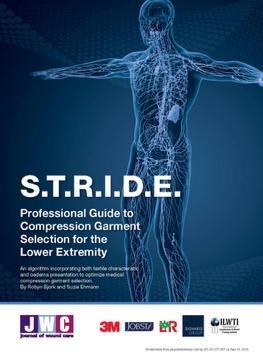
STRIDE supplement is a rare example of a paper that combines clinical experience and theoretical knowledge on textiles used in compression therapy. New STRIDE document for UE and trunk- newly released, in print only- to be released online soon. Compression: A new document updates the STRIDE algorithm for compression selection to cover lymphedema of the upper limb, trunk and breast.
https://wwwresearchgate net/publication/333665347 STRIDE Professional Guide to Compre ssion Garment Selection for the Lower Extremity
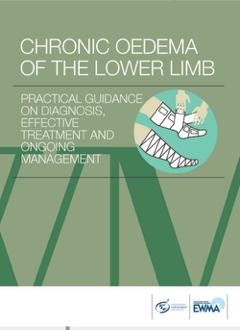
Chronic oedema of the lower limb Practical guidance on diagnosis, effective treatment and ongoing management
https://ewma.org/news/chronic-oedema-practical-guidance-on-diagnosis-effectivetreatment-and-ongoing-management/
Guidelines on the Management of Cellulitis in Lymphedema
https://wwwthebls com/public/uploads/documents/document91311757952788 pdf
Socioeconomic aspects linked to secondary lymphedema. Non-cancer-related risk factors.
An interview with Nicole Stout
This is the fourth in a series of transcribed interviews highlighting the published body of work resulting from the LANA/ACS Summit. By highlighting these research papers and consensus statements, we hope to promote the concepts and facilitate moving them into daily practice. Readers are encouraged to access the reference links at the end of the article to read the research papers and some supporting evidence in their entirety
1.The Influence of Non-Cancer-Related Risk Factors on the Development of Cancer-Related Lymphedema: A Rapid Review.
Nicole L. Stout, McKinzey Dierkes, Jimm M. Oliveri, Stanley Rockson, Electra D. Paskett https://doi.org/10.1007/s12032-024-02474-7
2.Consensus Statement on Non-cancer-related Risk Factors for Development of Secondary Lymphedema
Nicole L. Stout, Marize Ibrahim, Jane Armer, Mary Vargo, Julie Rodrick, Jeanne Nourse, Brandy McKeown, Jessia C. Griffin, Melissa B. Aldrich htpps://doi.org.10.1007/s12032-024-02457-9
What is socially just lymphedema care?
The roles and responsibilities of individuals and organizations.
By Jennifer Brady
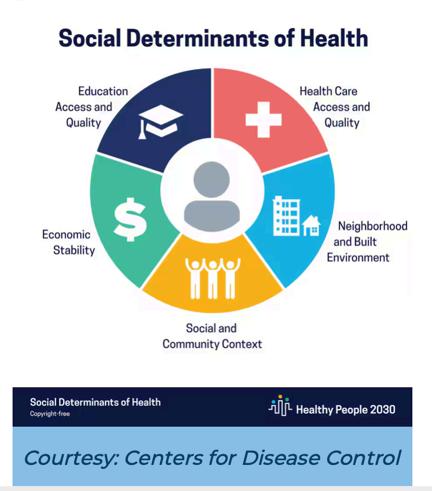
1. Raphael, D., Bryant, T., Mikkonen, J. and Raphael, A. (2020). Social Determinants of Health: The Canadian Facts. Oshawa: Ontario Tech University Faculty of Health Sciences and Toronto: York University School of Health Policy and Management. https://thecanadianfacts.org/
2. Ruger, Jennifer Prah, Health and Social Justice (Oxford, 2009; online edn, Oxford Academic, 1 Feb. 2010), https://doi.org/10.1093/acprof:oso/9780199559978.001.0001, accessed 30 Sept. 2025.
3. Dong TS, Gee GC, Beltran-Sanchez H, Wang M, Osadchiy V, Kilpatrick LA, Chen Z, Subramanyam V, Zhang Y, Guo Y, Labus JS, Naliboff B, Cole S, Zhang X, Mayer EA, Gupta A. How Discrimination Gets Under the Skin: Biological Determinants of Discrimination Associated With Dysregulation of the Brain-Gut Microbiome System and Psychological Symptoms. Biol Psychiatry. 2023 Aug 1;94(3):203-214. doi:10.1016/j.biopsych.2022.10.011. Epub 2022 Oct 28. PMID: 36754687; PMCID: PMC10684253.
4 Centre for Health Care Strategies (2025) What is Trauma-Informed Care? https://www traumainformedcare chcs org/what-is-trauma-informed-care/
5 Hawk, M , Coulter, R W S , Egan, J E et al Harm reduction principles for healthcare settings Harm Reduct J 14, 70 (2017) https://doi org/10 1186/s12954-017-0196-4
6 Association for Size Diversity and Health (2024) https://asdah org/
7 Stubbe DE Practicing Cultural Competence and Cultural Humility in the Care of Diverse Patients Focus (Am Psychiatr Publ) 2020 Jan;18(1):49-51 doi:10 1176/appi focus 20190041 Epub 2020 Jan 24 PMID: 32047398; PMCID: PMC7011228
8 Metzl JM, Hansen H Structural competency: theorizing a new medical engagement with stigma and inequality. Soc Sci Med. 2014 Feb;103:126-133.
9. Havercamp, S.M., Barnhart, W.R., Robinson, A.C., and Whalen Smith, C.N. (2021). What should we teach about disability? National consensus on disability competencies for health care education. Disability and Health Journal, 14(2). https://doi.org/10.1016/j.dhjo.2020.100989.
10. McGibbon, E.A. and Etowa, J. (2009). Anti-Racist Health Care Practice. Canadian Scholar’s Press.
11. Restar, A.J. (2023). Gender-affirming care is preventative care. The Lancet Regional Health –Americas, 24. doi.org/10.1016/j.lana.2023.100544
12. Bond KT, Radix AE. Sexual Health and Well-Being: A Framework to Guide Care. Med Clin North Am. 2024 Mar;108(2):241-255. doi: 10.1016/j.mcna.2023.10.001. Epub 2023 Oct 30. PMID: 38331477.
13. Olatunbosun C, Wilby KJ. Advocacy as a professional responsibility. Can Pharm J (Ott). 2022 Oct 7;155(6):298-301. doi:10.1177/17151635221125782. PMID: 36386601; PMCID: PMC9647394.
14 Ann Marie Flores, Jason Nelson, Lee Sowles, Rebecca G Stephenson, Kathryn Robinson, Andrea Cheville, Antoinette P Sander, William J Blot, Lymphedema Signs, Symptoms, and Diagnosis in Women Who Are in Minority and Low-Income Groups and Have Survived Breast Cancer, Physical Therapy, Volume 100, Issue 3, March 2020, Pages 487–499, https://doi org/10 1093/ptj/pzaa002
15 Basic Income Canada (2025) What is basic income? https://basicincomecanada org/what is basic income/
16 Phelan SM, Burgess DJ, Yeazel MW, Hellerstedt WL, Griffin JM, van Ryn M Impact of weight bias and stigma on quality of care and outcomes for patients with obesity Obes Rev 2015 Apr;16(4):319-26 doi: 10 1111/obr 12266 Epub 2015 Mar 5 PMID: 25752756; PMCID: PMC4381543
17. Russell, Holly Ann MD, MS. Is It Time to Say Goodbye to BMI? A Commentary. Family & Community Health 47(1):p 16-19, January/March 2024. | DOI: 10.1097/FCH.0000000000000391
18. Strings, S. (2023). How the Use of BMI Fetishizes White Embodiment and Racializes Fat Phobia. AMA J Ethics. 2023;25(7):E535-539. doi:10.1001/amajethics.2023.535.
19. Ann Marie Flores, Jason Nelson, Lee Sowles, Rebecca G Stephenson, Kathryn Robinson, Andrea Cheville, Antoinette P Sander, William J Blot, Lymphedema Signs, Symptoms, and Diagnosis in Women Who Are in Minority and Low-Income Groups and Have Survived Breast Cancer, Physical Therapy, Volume 100, Issue 3, March 2020, Pages 487–499, https://doi.org/10.1093/ptj/pzaa002
20. Yarosh, R.A., Nichols, H.B., Hirschey, R. et al. Unmet needs among long-term breast cancer survivors. Cancer Causes Control 36, 803–817 (2025). https://doi org/10 1007/s10552-025-01984-7
21 Heller DR, Axelrod B, Sevilimedu V, Morrow M, Mehrara BJ, Barrio AV Quality of Life After Axillary Lymph Node Dissection Among Racial and Ethnic Minority Women JAMA Surg 2024;159(6):668–676 doi:10 1001/jamasurg 2024 0118
22 Byrne E, Gaffey J, Hayden L, Daly A, Gallagher P, Dunne S Body image and cancer-related lymphoedema: A systematic review Psychooncology 2023 Oct;32(10):1528-1538 doi:10 1002/pon 6215 Epub 2023 Sep 8 PMID: 37681525
23 Ussher, J M , Power, R , Allison, K et al Reinforcing or Disrupting Gender Affirmation: The Impact of Cancer on Transgender Embodiment and Identity Arch Sex Behav 52, 901–920 (2023) https://doi.org/10.1007/s10508-023-02530-9
24. Winch, C.J., Sherman, K.A., Koelmeyer, L.A. et al. Sexual concerns of women diagnosed with breast cancer-related lymphedema. Support Care Cancer 23, 3481–3491 (2015). https://doi.org/10.1007/s00520-015-2709-6
25. Canadian Lymphedema Framework. (2024). Who We Are. About the CLF. https://www.canadalymph.ca/about-the-clf/
Building a strong base. New program funding for lymphedema education and training.
Original Article
The Dianne and Irving Kipnes Health Research Institute brings together leading health experts from many fields to work on shared challenges in healthcare. By using Alberta’s unique health data and the University of Alberta’s strengths in artificial intelligence, the Kipnes Institute aims to turn research discoveries into real improvements in patient care. The Institute will work as a “learning health system” where information guides better decisions, artificial intelligence (AI) helps speed up discoveries, clinical trials test new ideas, and special programs ensure research makes a difference for patients and families.
The Institute is organized around three pillars that will connect new research to better care: Pillar 1: Health Research Translation – Moving discoveries from the research setting into everyday care by linking clinical trials, implementation science, and community partnerships so Albertans gain quicker access to new therapies and models of care
Pillar 2: Artificial Intelligence + Health – Using health information and AI responsibly to develop digital health tools and solutions that improve prevention, diagnosis, and access to care for diverse disease populations.
Pillar 3: Lymphedema Research + Training –Building on the Kipnes Endowed Chair in Lymphatic Disorders, this program aims to extend research into education and practice by training health professionals and developing resources so that more people with lymphedema receive timely, evidence-informed care. Through the chair position, Dr. Spencer Gibson and his team are uncovering the causes of lymphedema and exploring new ways to treat and prevent it. “ Putting the resources and infrastructure in place for this to happen is extremely rare, and this has allowed for the development of research and training that wouldn’t otherwise happen.” Dr. Spencer Gibson.
Within Pillar 3, the newest part of the Kipnes gift focuses on education and training, ensuring that health professionals have the knowledge and skills to better support people living with lymphedema Led by Dr Margaret McNeely, Professor in the Faculty of Rehabilitation Medicine and a leading researcher in lymphedema clinical trials, the education program will bring specialized training that helps the next generation of health professionals learn how to better support people living with lymphedema Training will focus on practical tools and knowledge to enable effective, patient-centred care Ongoing education and workshops will also be offered to practising health-care professionals, building awareness and skills across the health system This work includes approaches such as manual lymph drainage, exercise, and self-management strategies that empower patients to live well with lymphedema.
“Dr. Gibson’s team is advancing our understanding of what causes lymphedema at the cellular level, while my focus is on clinical research and education. Together, our goal is to close the gap between research and care making sure new knowledge leads to better training for health professionals and better support for patients.” Dr. Margaret McNeely.
Program funding through the Kipnes Institute is limited in the early years and spread over a decade. As a result, initial efforts are concentrated on building partnerships, developing educational resources, and preparing for clinical studies. With fewer resources in the early years, we anticipate that progress may be slow at first. Still, with focused efforts, our team aims to build a strong base for future growth and research.
For more information you can contact Dr Spencer Gibson (sgibson2@ualberta ca) or Dr Margaret McNeely (mmcneely@ualberta ca)