Formany years, people living with lymphedema in Nova Scotia have had very limited awareness, support, and access to care. For those of us living with the condition, these challenges are part of everyday life. Over the past year, however, we’ve started to see some real progress. More conversations are happening, more people are getting involved, and there is a growing sense that things are beginning to move in the right direction.
The Lymphedema Association of Nova Scotia (LANS) was created to bring people together, raise awareness, and advocate for better care of lymphedema. It has also become a place where people living with lymphedema, caregivers, and healthcare professionals can connect, share experiences, and support one another.
LANS started from a very personal place. From my own experience seeking treatment, I quickly realized how expensive it was to manage lymphedema. It made me think about others going through even more difficult situations—people who had already been through cancer treatment, only to then
Building
Working together to improve lymphedema care in Nova Scotia
By Karen Bingham and co-written by Sarah Brownlow During
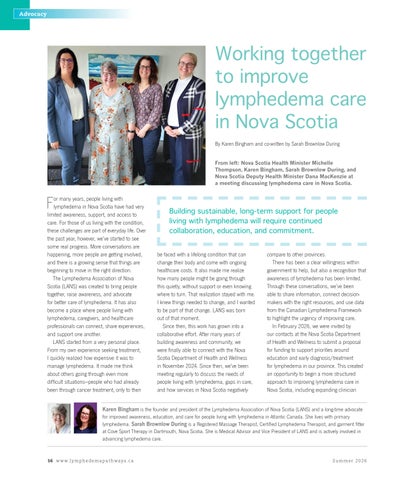
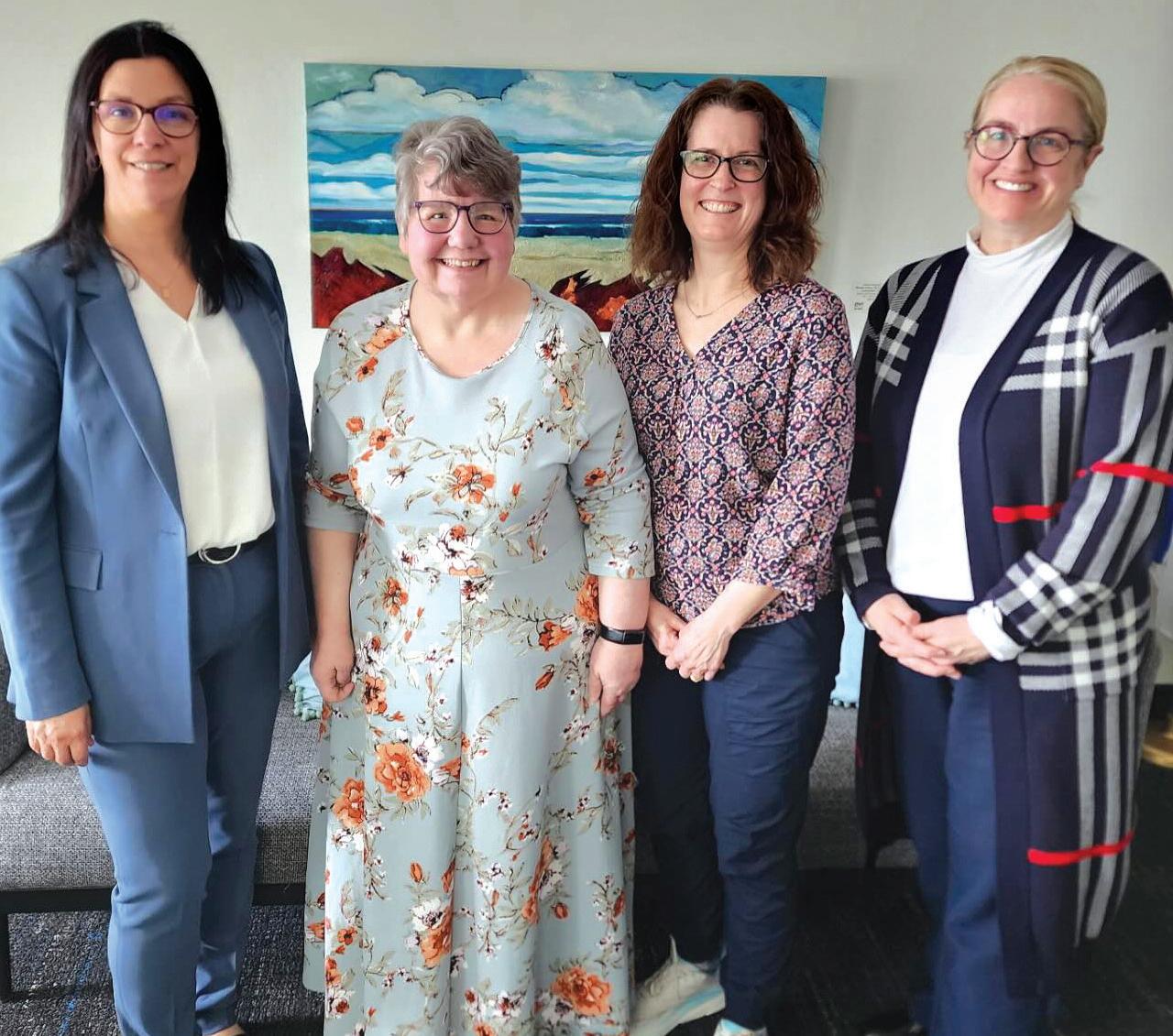
From left: Nova Scotia Health Minister Michelle Thompson, Karen Bingham, Sarah Brownlow During, and Nova Scotia Deputy Health Minister Dana MacKenzie at a meeting discussing lymphedema care in Nova Scotia.
sustainable,
long-term support for people living with lymphedema will require continued collaboration, education, and commitment.
be faced with a lifelong condition that can change their body and come with ongoing healthcare costs. It also made me realize how many people might be going through this quietly, without support or even knowing where to turn. That realization stayed with me. I knew things needed to change, and I wanted to be part of that change. LANS was born out of that moment.
Since then, this work has grown into a collaborative effort. After many years of building awareness and community, we were finally able to connect with the Nova Scotia Department of Health and Wellness in November 2024. Since then, we’ve been meeting regularly to discuss the needs of people living with lymphedema, gaps in care, and how services in Nova Scotia negatively
compare to other provinces.
There has been a clear willingness within government to help, but also a recognition that awareness of lymphedema has been limited. Through these conversations, we’ve been able to share information, connect decisionmakers with the right resources, and use data from the Canadian Lymphedema Framework to highlight the urgency of improving care.
In February 2026, we were invited by our contacts at the Nova Scotia Department of Health and Wellness to submit a proposal for funding to support priorities around education and early diagnosis/treatment for lymphedema in our province. This created an opportunity to begin a more structured approach to improving lymphedema care in Nova Scotia, including expanding clinician
Karen Bingham is the founder and president of the Lymphedema Association of Nova Scotia (LANS) and a long-time advocate for improved awareness, education, and care for people living with lymphedema in Atlantic Canada. She lives with primary lymphedema. Sarah Brownlow During is a Registered Massage Therapist, Certified Lymphedema Therapist, and garment fitter at Cove Sport Therapy in Dartmouth, Nova Scotia. She is Medical Advisor and Vice President of LANS and is actively involved in advancing lymphedema care.
education and bringing partners together to build capacity to support change. This funding is an important first step, but it also highlights how much work is still needed. Building sustainable, long-term support for people living with lymphedema will require continued collaboration, education, and commitment.
The important work that Karen and the LANS has worked diligently for since 2017 was formally recognized in the Nova Scotia Legislature, where Karen Bingham was introduced as Minister Thompson announced funding and a commitment to begin improving how people living with lymphedema are supported. Through this grant, as part of this funding, LANS is supporting tuition for 25 healthcare professionals to complete specialized lymphedema education through the University of Alberta. Plans are also underway to bring Dr. David Keast and Marize Ibrahim (two well-known experts in the lymphedema community) to Halifax to share best practices with the 25 participants and meet with other stakeholders and community partners to explore how education and policy can improve care.
Awareness has also grown. World Lymphedema Day continues to highlight
the condition and the experiences of those living with it. This year, lymphedema was formally recognized in the Nova Scotia Legislature—an important step in bringing greater visibility to the condition.
We are also starting to see progress in education. For a long time, there have been very few healthcare professionals in Atlantic Canada with specialized training in lymphedema management. With government support, that is beginning to change, helping improve access to care closer to home.
Cost remains a major challenge. Compression garments are essential but expensive, and many people are forced to pay out of pocket. This is something we hear often within our community. For many, this can mean choosing between essential treatment and other everyday expenses. In 2026, with the recent grant funding, we are initiating a pilot compression garment funding program —an important step toward reducing financial barriers and improving access to care. Both the administration and disbursement of funds will be the responsibility of the LANS. Karen consulted with other provinces who’ve already worked through this process to glean insights into their procedures and learn about eligibility or inclusion criteria they used
Progress like this only happens when people work together. Patients, healthcare providers, community advocates, and government all have a role to play.
in developing their garment funding programs. The pilot starts in June with the data collected to be used for considerations of a longer-term health care policy change.
Progress like this only happens when people work together. Patients, healthcare providers, community advocates, and government all have a role to play. At the heart of it are the people living with lymphedema every day, whose experiences continue to guide these efforts.
Beyond Nova Scotia, there is also growing interest across Atlantic Canada, including in New Brunswick and Prince Edward Island, where efforts are underway to build awareness and support. As part of this, we have started welcoming individuals from Prince Edward Island and New Brunswick to our association membership. We also are listing certified lymphedema therapists on our website, (www.lymphedemanovascotia.com) helping to build connections and support as those provinces continue working toward developing their own lymphedema associations.
This collaboration comes at an exciting time, as Atlantic Canada prepares to welcome the national lymphedema community for the Canadian Lymphedema Framework Assembly in 2027, creating new opportunities to share knowledge and strengthen connections across the country.
There is still a lot of work ahead, but the progress we are starting to see is encouraging. By continuing to work together and learn from one another, we can help ensure that people living with lymphedema receive the recognition, care, and support they deserve. LP
How to cite: Bingham K, Brownlow During S. Working together to improve lymphedema care in Nova Scotia. Pathways. 2026;15(3): 16-17. https://doi.org/10.70472/XDNM6932
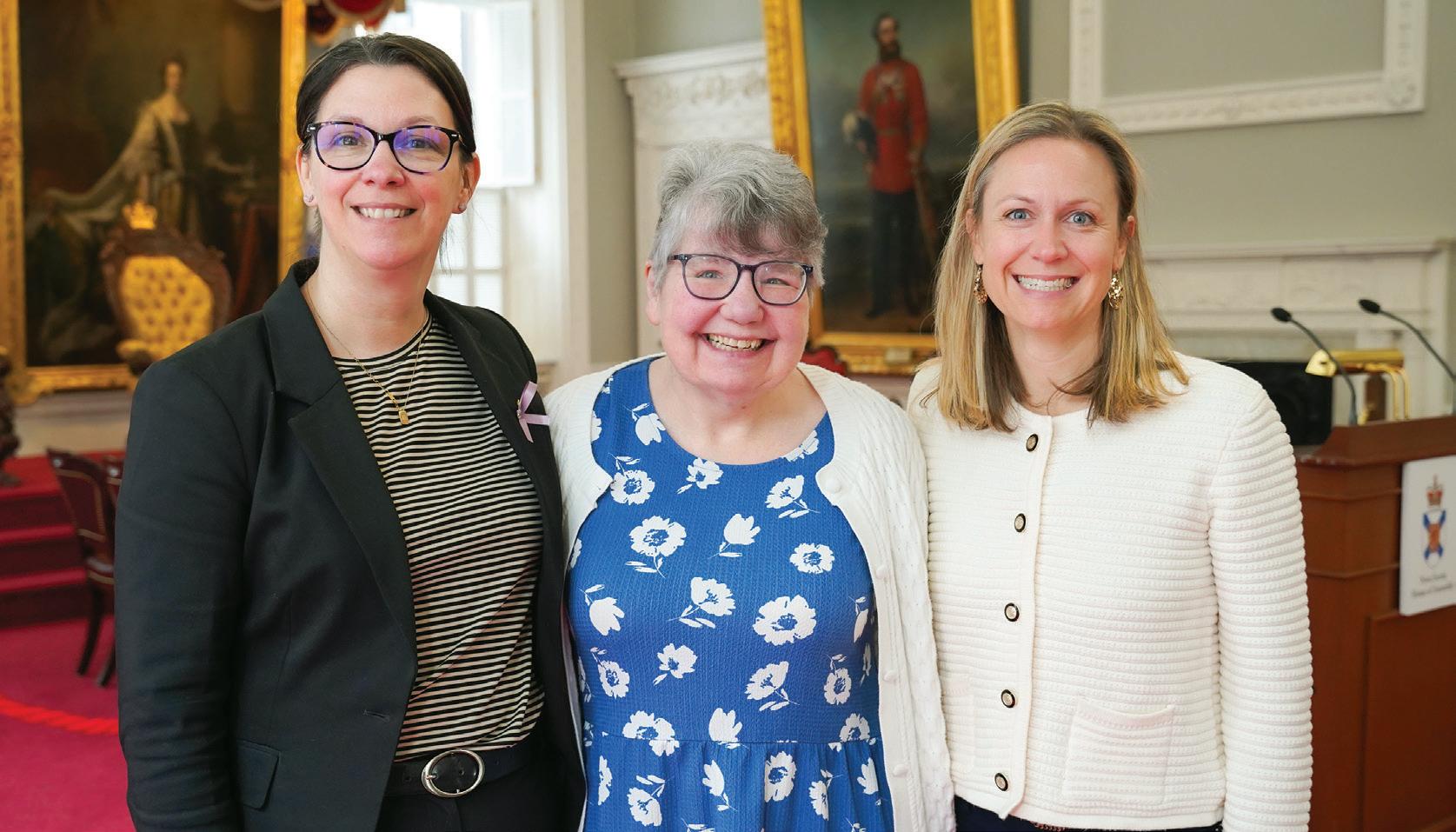
Karen Bingham with Nova Scotia Health Minister Michelle Thompson and Joy Knight, Senior Executive Director, System Integration, Department of Health and Wellness, during recognition in the Nova Scotia Legislature, March 2026.