How patient voices can shape global priorities in lymphedema care and research.
By Juliana Conte, Lori Radke and Catharine Bowman
Overview
At the 2025 International Lymphoedema Framework Conference, delegates gathered not only to exchange knowledge, but to build meaningful and lasting connections. The conference theme—Building Bridges: Connecting Global Perspectives—was brought to life through a featured patient-centred workshop that intentionally positioned patients and professionals as equal partners.
The session created space for patients to share lived experience and collective wisdom, offering insight that cannot be captured through clinical data alone. While many people living with lymphedema feel unheard or marginalized within healthcare systems, those in attendance spoke openly about unmet needs, systemic gaps, and emerging priorities. Their contributions illuminated where current models fall short—and how meaningful, patient-informed progress can be made.
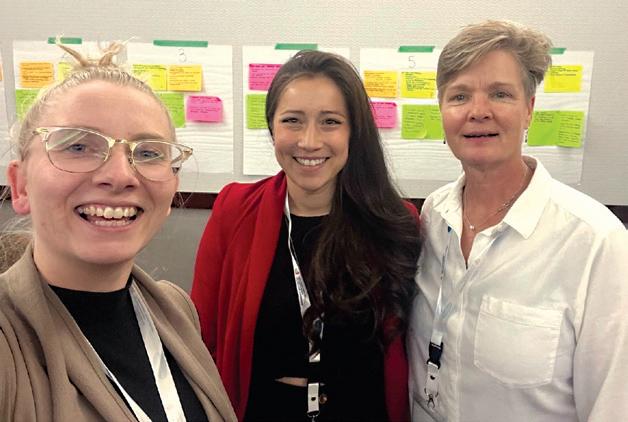
The roundtable was collaboratively facilitated by members of the lymphedema community, including a researcher, a clinician, and a patient-advocate-researcher. Areas of uncertainty related to lymphedema care and research were gathered in advance and used to formulate discussion questions. Following the session, notes generated from roundtable discussions were reviewed to develop a patient-informed prioritization list intended to support future care development, education, and research initiatives. What follows is a glimpse into what happens
when patients are handed the microphone—and discussion is centered on their perspectives.
Why this workshop mattered
Living with lymphedema often reveals a persistent gap between clinical understanding and day-to-day reality. This workshop was designed to bridge that gap by creating a safe, inclusive environment where patients and professionals could engage in honest, meaningful dialogue. The primary objective was to identify gaps in current care and research through patient-defined priorities. By centering lived experience as a form of expertise, the session reinforced the value of collaboration in shaping systems that genuinely meet patient needs and reflect the realities of living with a chronic lymphatic condition.
Workshop
design
The session followed the World Caf é methodology (https://theworldcafe.com), a structured conversational approach developed to foster meaningful dialogue through shared etiquette and guiding principles.1 Participants were divided into four tables and rotated through six predetermined questions. Key points were documented on poster-sized notes displayed beneath corresponding domain labels on the wall of the room. All contributions were kept anonymous. Three tables were composed of patient experts, while one table consisted of lymphedema therapists and garment fitters.

Their presence added valuable clinical and practical perspective, reinforcing the importance of multidisciplinary collaboration.
Two disclaimers were shared at the outset:
1 Recommendations that could be harmful or contraindicated would not be included
2 Participants were told to consult healthcare providers before adopting any strategies discussed.
Domains that guided the conversation
Discussions focused on five key areas of uncertainty:
– Disease progression, causes, and diagnosis
– Non-surgical management
– Surgical management
– Psychosocial impact and access to resources
– Prevention
Data analysis
Responses generated during the workshop were synthesized using reflexive thematic analysis.2 Notes recorded at each table were reviewed collectively, with recurring ideas grouped into shared themes across domains. This approach allowed patient-identified priorities to emerge organically while respecting individual experiences within broader community-level insights.
What participants shared
Diagnosis, education, and ongoing care
Across all domains, one message was clear:
Juliana Conte MSc, PhD, CPT, is a biochemist and certified personal trainer. Diagnosed with lymphedema in 2011, she is a former dual-sport NCAA athlete who promotes a holistic, science-informed approach to lymphedema care. Lori Radke BScPT, CLT, is a physiotherapist and certified lymphedema therapist. She coordinated the Rehabilitation Oncology program in Calgary, AB from 2009-2021, and continues to actively treat patients with Cancer Care Alberta. Catherine Bowman BHSc, is a PhD Candidate in the Department of Epidemiology and Population Health at Stanford University and MD Student at the University of Calgary. She is one of Forbes Magazine’s 30 Under 30.
earlier diagnosis, better education, and consistent ongoing care are urgently needed. Participants emphasized that many gaps in care stem from limited education among healthcare professionals regarding the lymphatic system, early signs of lymphatic dysfunction, and evidence-based management strategies.
Standardized protocols for diagnosis and care were repeatedly identified as a priority, along with their consistent implementation, and an expressed interest in genetic precursors and early identification of lymphedema.
One recommendation made was that individuals diagnosed with lymphedema receive an “at risk of cellulitis” medical alert bracelet, ensuring that healthcare professionals are aware of the infection risk in emergency situations.
Living with lymphedema:
What patients are already doing
A recurring theme was the disconnect between how patients manage lymphedema in daily life and what many clinicians recognize or routinely address. Participants discussed multiple management strategies
that they have adopted through the use of innovative modalities and products. This emphasized the need for further research on these novel interventions to ensure evidencebased information is available to patients and providers. Personal autonomy and independence were emphasized as central to effective management of lymphedema.
The breadth and complexity of these approaches underscored the reality that lymphedema management is costly in both time and money. It is also dynamic, individualized, and often patient-led— reinforcing the need for clinicians with advanced, condition-specific expertise, but also a collaborative approach with their patients.
The need for lymphatic specialists and clinics
Recognizing the complexity of patient-led management highlighted the need for greater access to specialized lymphatic care providers. While Certified Lymphedema Therapists play an essential role, participants expressed a desire

for expanded training pathways and multidisciplinary teams capable of supporting long-term, complex care. Remote access and language barriers were also identified as issues.
Furthermore, a strong demand emerged for well-equipped lymphatic disease centres in major cities to improve access to correct diagnoses and specialized care to reduce reliance on self-navigation through online resources and peer support alone. Disparities between public and private services and services for primary versus secondary lymphedema patients were discussed. In particular, the question was posed as to whether differences in cost and access influence outcomes and quality of care.
Surgical management: A call for transparency
Surgical intervention remains one of the most complex and emotionally charged areas of lymphedema care. Experiences varied widely, and for some, surgical complications had profound and lasting effects on quality of life. Participants voiced concerns related to financial barriers, limited access, surgeon

expertise, and variability in outcomes, as well as difficulty accessing clear, unbiased information to support decision-making.
To address these concerns, participants identified several priorities: pre-operative lymphatic imaging and mapping; honest discussions of risks and limitations; transparency regarding surgeon experience and outcomes; improved collaboration and communication among surgeons; and the development of globally accessible guidelines. Questions were raised as to whether surgery can reduce dependence on compression, whether new lymphatic vessels form postoperatively, and how timing, body composition, and disease stage influence outcomes.
Psychosocial impact and access to care
Beyond physical symptoms, lymphedema profoundly affects mental health, identity, relationships, employment, and financial stability. Participants spoke openly about isolation, stigma, and inequities in access,
as well as the dearth of support for elderly patients, different cultures, and languages. The cost of treatment and required supplies places significant strain on many patients, often compounded by reduced work capacity. Adequate financial support, education, and communication were identified as essential components of living well with lymphedema. Disability tax credits were cited as one example of support that many patients struggle to access despite clear need. Clearly, more psychosocial professionals are essential on lymphedema care teams.
Implications for the lymphedema community
Therapists and garment fitters bring a unique and informed perspective, often walking alongside patients as educators, advocates, and sources of continuity. Their insights reinforced the value of professionals who engage closely with patients’ lived experiences and build strong therapeutic partnerships.
The insights gathered during this workshop offer clear direction for future care delivery, research priorities, education, and advocacy. Patient-led prioritization highlights where resources should be focused and underscores why inclusive, collaborative spaces must become the norm rather than the exception. Expanding and repeating patient-centred forums across regions and disciplines offers an opportunity to align global efforts with realworld needs.
Closing reflection
As the workshop concluded, the room held more than just notes on the wall. There was a shared sense of validation, connection, and momentum. When patients are invited to contribute as partners—and truly heard—bridges are built not only between people, but between science and lived reality. LP
References can be found at https://www. canadalymph.ca/pathways/all-issues/
How to cite: Conte, J, Radke, Bowman, C. Building bridges between science and lived experience. How patient voices can shape global priorities in lymphedema care and research. Pathways. 2026;15(2): 14-17. https://doi.org/10.70472/RTPC7220

Specialist Clinic for Lymphology EuropeanCenterforLymphology
Do you suffer from Lymphedema?
The Foeldi Clinic, European Center for Lymphology, in the Black Forest, Germany offers a special treatment.
4 WEEKS of intensive lymphological decongestive therapy includes:
• Specialist medical care by experienced MD‘s
• Daily decongestive therapy by our specialised lymphedema therapists (expert manual lymph drainage and bandaging) and many different decongestive movement therapies as part of group therapy
What we offer: www.foeldiklinik.de/en/
• Wound treatment if necessary by our certified wound experts and psychological support if necessary by our psychotherapists
• Accommodation and meals at the Foeldi Clinic
Contact: Dr. Tobias Bertsch, Senior Consultant tobias.bertsch@foeldiklinik.de
Picturesque Black Forest mountain range in close proximity of Switzerland and France