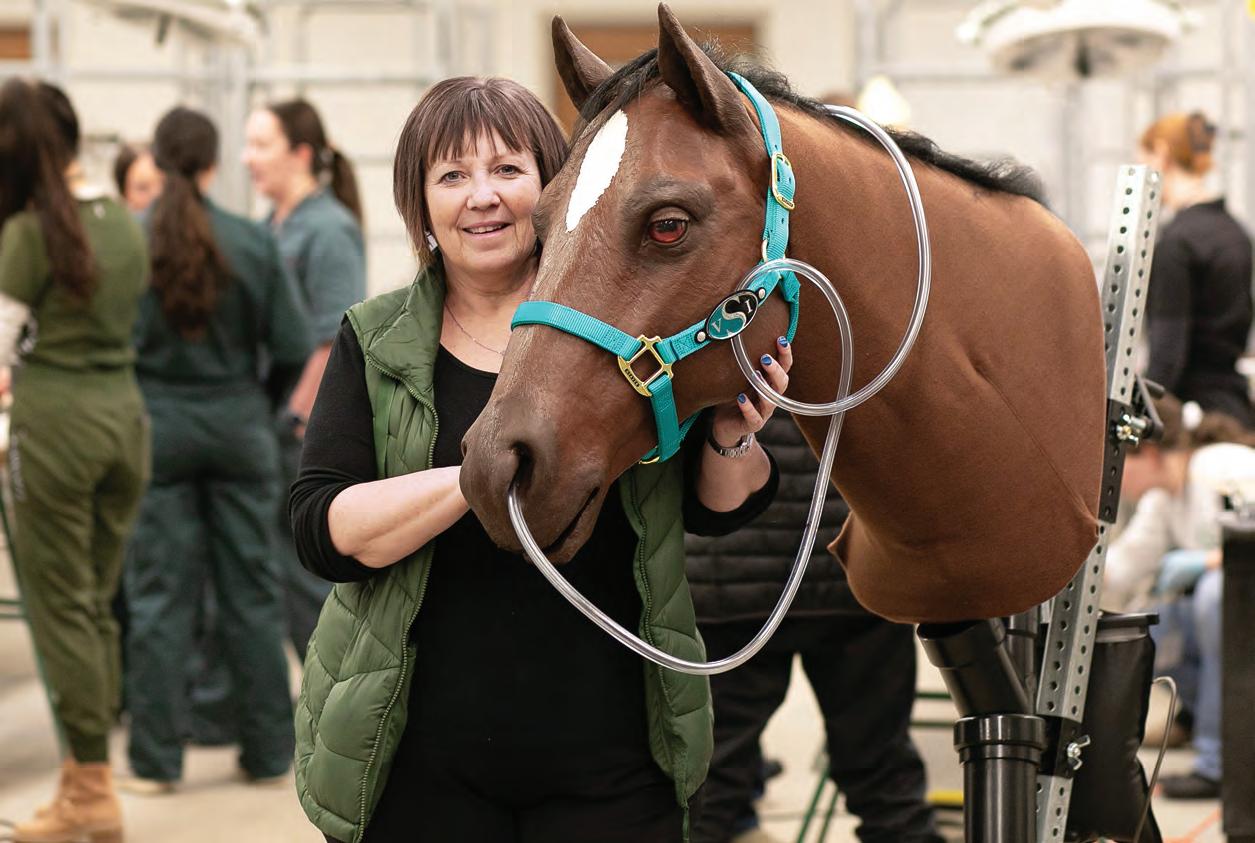
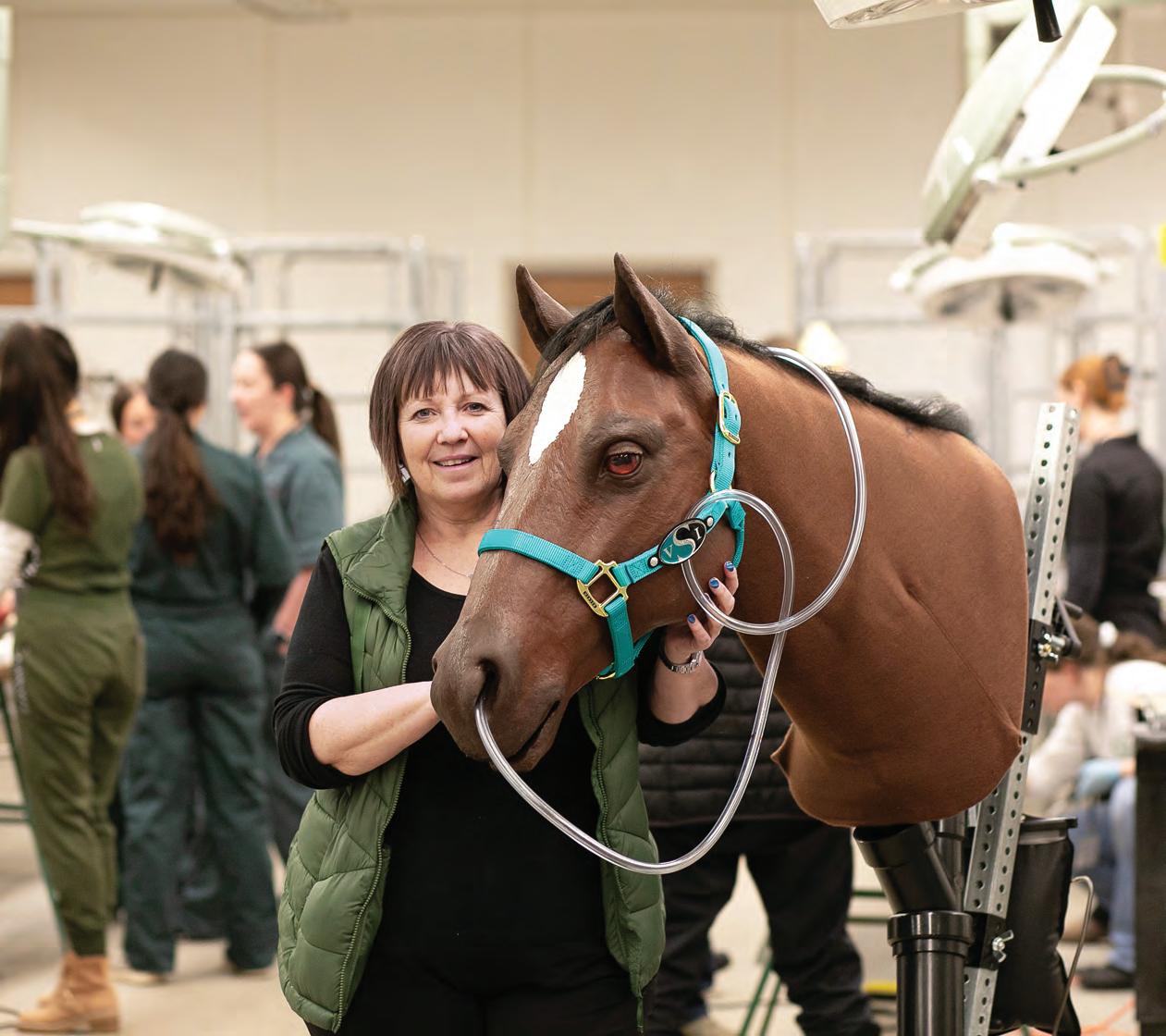
Cartwright with one of the WCVM’s new equine nasogastric models.
By Rigel Smith

Cartwright with one of the WCVM’s new equine nasogastric models.
By Rigel Smith
A recent pair of grants from Merck Animal Health Canada has helped the Western College of Veterinary Medicine (WCVM) take strides to enhance its equine health teaching tools.
Merck’s grants, valued at more than $50,000, highlight a longstanding partnership between the company and the WCVM. While Merck’s contributions have supported various initiatives over the years, the company’s most recent investment has made a significant impact on veterinary education.
Thanks to Merck, the BJ Hughes Centre for Clinical Learning — the college’s simulation centre — was able to purchase several additional high-tech models, including three equine nasogastric tubing systems. Manufactured by Veterinary Simulator Industries (VSI) in Calgary, Alta., each life-sized model consists of a horse head and neck along with a portable stand. The devices also function as venipuncture models, allowing students to practise blood draws, intravenous injections and catheter insertions.
“Having these models, like any simulation model, enhances the learning experience,” says Carolyn Cartwright, a registered veterinary technologist and manager of the BJ Hughes Centre. While the models will be used to teach all levels of veterinary students, interns and residents, they will also be an integral part of the equine gastrointestinal tubing lab. This skills-focused session is for second-year veterinary students in the college’s Doctor of Veterinary Medicine (DVM) program.
Nasogastric intubation is a critical, often life-saving procedure used in equine colic cases to relieve stomach pressure and administer treatment. Veterinarians must be able to perform this procedure quickly and safely in a wide range of environments.
Traditionally, instructors relied on live horses to help introduce students to the “ins and outs” of the challenging procedure. But access to these new models now helps to minimize the use of the college’s teaching horses.
“The equine nasogastric tubing model will not only decrease, but potentially even eliminate the live horse use for that GI tubing lab,” says Cartwright, noting the procedure often causes discomfort for the horses.
“We’re protective of making sure that our animal use is necessary,” says Cartwright. “When the opportunity is there, we will utilize other methods of teaching for students to get those skills.”
The new models let students safely and repeatedly practise the procedure in a controlled environment — without the added stress of handling a horse.
“You might have that beginner learner who has never been around a horse, and then all of a sudden, you put a thousand-pound animal in front of them and they’re supposed to try to learn a new skill,” says Cartwright. “That’s very stressful.”
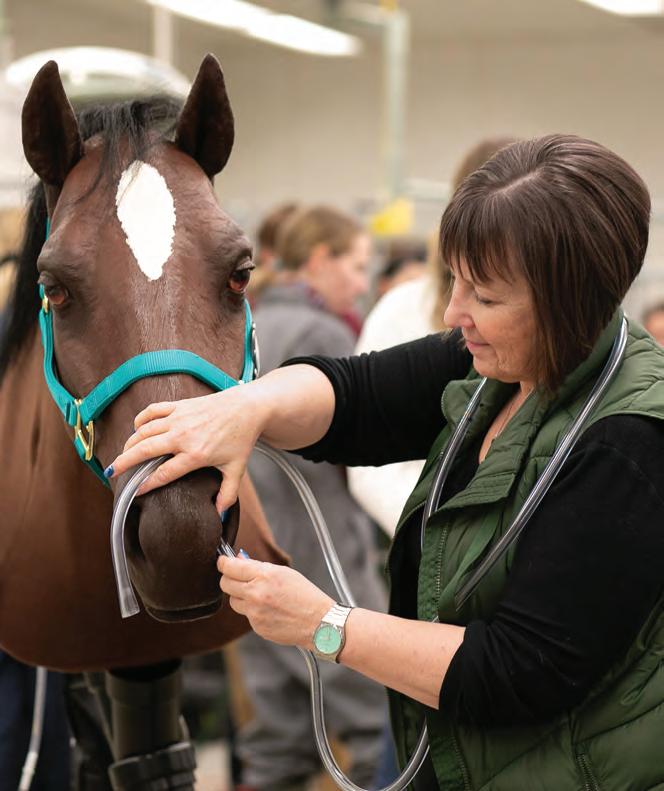
The simulation models offer logistical advantages for the simulation team. With numerous models, more students can practise their skills simultaneously. Since the models are mounted on portable stands, they’re easier to transport around the college’s facilities.
Horse Health Lines is the news publication for the Western College of Veterinary Medicine’s Townsend Equine Health Research Fund (TEHRF). Visit tehrf.ca for more information, Send comments and article reprint requests to:
Myrna MacDonald, Editor Horse Health Lines WCVM, University of Saskatchewan 52 Campus Drive, Saskatoon, SK S7N 5B4 horse.health@usask.ca
Horse Health Lines design and layout: Priddy Design
The equine models will be a welcome addition to the objective structured clinical examinations (OSCEs). Instructors use these practical, hands-on tests to evaluate veterinary students’ clinical skills.
“Because it’s a standardized model and not a live animal, there’s less complexity for testing,” says Cartwright. “It’s not, ‘Oh, this horse was doing this and so it affected the students’ ability to complete the station.’”
In addition to the equine nasogastric models, Cartwright says Merck’s financial support has allowed the WCVM to purchase a variety of other simulation models. The list includes a bovine tail epidural model, a replacement gastrointestinal tract for its full-sized equine colic model, a bovine uterus model, a
piglet model, and an equine reproductive tract model.
Cartwright explains that grants like the ones offered by Merck not only support the BJ Hughes Centre for Clinical Learning and its teaching labs but also help to support the overall college.
“We have an extensive list of supplies we need to expand the teaching program,” says Cartwright. “Grants like these free up funds that the college can put toward other opportunities.”
The benefits extend beyond the WCVM’s veterinary program. These models also play a role in extension and outreach programs, including student-led education events and community outreach.
While the new models have yet to be used in a lab setting, the ripple effects of this investment are already being felt.
“There is a buzz — everybody’s very excited,” says Cartwright. “These models will be a huge benefit.”
The purchase of three equine nasogastric models was made possible through financial support from Merck Animal Health Canada.
By Rigel Smith
For veterinarians who are passionate about equine care, the Western College of Veterinary Medicine (WCVM) internship and residency programs offer a gateway to specialization.
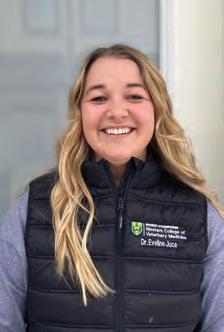
Dr. Eveline Juce, a clinical associate with the Equine Field Service team at the WCVM Veterinary Medical Centre (VMC), knows firsthand the benefit of these programs. She accepted her current job after completing a one-year internship with the same team in 2024.
Originally from Hamiota, Man., Juce grew up surrounded by horses. Caring for and showing horses throughout her childhood set the stage for her career in equine medicine.
“Horses were kind of born in my blood,” reflects Juce. “Being a horse vet just made sense.”
After earning her Doctor of Veterinary Medicine (DVM) degree from the WCVM in 2023, she pursued an ambulatoryfocused internship — a decision rooted in her passion for working directly with clients and their horses on farm.
The WCVM’s one-year internship program is designed for recent DVM graduates, providing them with training in several areas of equine health: field service, medicine, surgery or theriogenology (reproduction). This program prepares them for private practice or further specialization through residency programs.
Juce’s path to the internship wasn’t always certain, but the WCVM program’s focus on mentorship drew her in.
“I knew there would be someone who would mentor me — someone that I could call at 2 a.m. and would happily answer my question,” she says. For Juce, a key mentor was Dr. Nora Chavarria, a clinical associate in equine field service at the WCVM.
“I owe a lot of what I learned — whether that be veterinary medicine, work-life balance, or just how to be a good person — I owe a lot of that to Nora,” says Juce.
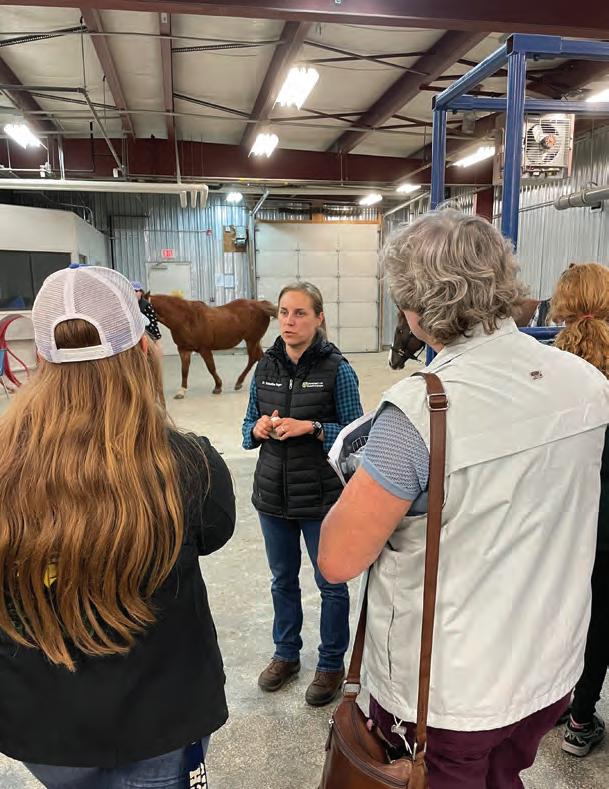
Dr. Valentina Ragno, an equine internal medicine specialist and program supervisor at the WCVM, believes these equinefocused programs are critical.
“When you graduate from vet school, you’ve only scratched the surface of something you’re passionate about,” explains Ragno. “If you want to specialize a bit more, you really need that mentorship, and that’s what these programs provide.”
The WCVM offers three- to four-year residency opportu-
nities in large animal internal medicine, surgery, theriogenology and equine field service.
The residency is combined with a Master of Science (MSc) program during which residents complete a research project.
The WCVM receives applications through the North American Veterinary Internship and Residency Matching Program (VIRMP). Applicants and institutions alike rank their preferences, with matches announced sometime in February or March each year.
Originally from Italy, Ragno trained in Europe and the U.S. before matching into the WCVM’s MSc-residency program in 2016. Now, as part of the college’s specialist team, Ragno continues to foster the collaborative approach that drew her to the program.
“It’s a pyramid of knowledge — the residents can teach both interns and undergrad students. And then we as specialists can train everybody,” she says.
The value of these programs extends beyond the participants themselves, ensuring clients and patients have access to the best possible care.
“You are working with a massive community of specialists and everyone has their special areas,” says Juce. “You have access to these incredible specialists literally at your fingertips. It’s pretty special.”
By Rigel Smith
Imagine you’ve been battling a relentless respiratory infection for days. Exhausted and desperate for relief, you head to the doctor, expecting a quick fix from a course of antibiotics. Instead, you discover that the bacteria causing your illness are resistant to every available drug, leaving you with no effective treatment options.
This frightening scenario could become a reality due to antimicrobial resistance (AMR), an issue deemed a major global threat by the World Health Organization. AMR happens when microorganisms — such as bacteria or parasites — evolve to survive treatments that once worked. The issue is driven largely by the misuse and overuse of antimicrobial drugs in both humans and animals.
While AMR is well studied in human medicine and food animals, there are few peer-reviewed studies focused on companion animals such as horses. Two new equine research projects at the Western College of Veterinary Medicine (WCVM) aim to address this gap.
Probing antibiotic prescribing practices
Dr. Lorena Santos, a Master of Science (MSc) student and resident in large animal medicine at the WCVM, is conducting a retrospective study that looks back on antimicrobial prescribing habits involving horses that were patients at the college’s Veterinary Medical Centre (VMC) between 2019 and 2023. Her research team includes her supervisor, Dr. Fabienne Uehlinger, a board-
certified specialist in large animal medicine, and Dr. Joe Rubin, a WCVM veterinary microbiologist.
“The main goal of the project is to try to collect data from medical records of all the antimicrobials that were used in those equine patients and try to see the patterns of these prescribing practices among the clinicians,” says Santos.
While Santos is looking into all cases of antimicrobial use during the five-year period, she’s paying special attention to cases involving prescriptions for ceftiofur. The antibiotic drug is widely used in veterinary medicine and is valued for its broad-spectrum effectiveness and versatility.
Ceftiofur belongs to a class of antimicrobials called cephalosporins. These

semisynthetic antibiotics are grouped into generations based on their spectrum of activity (what microorganisms they kill) and defence against antibiotic resistant enzymes. As a third-generation cephalosporin, ceftiofur should not be used as a first line of defence for treating common infections. Instead, it should be reserved for more serious or resistant infections in animals, making resistance to this drug particularly concerning.
“We might be using it [ceftiofur], I would say a little bit more maybe than we would need to sometimes,” says Santos. “We want to see when we are using those third-generation cephalosporins: which type of cases they are [used for] and if there are justifications for using them.”
The WCVM study encompasses medical records from various large animal clinical services at its teaching hospital, including internal medicine, surgery, field service and ophthalmology. But Santos says incomplete or inaccurate medical records is making it difficult to track the use and justification of ceftiofur and other microbials.
“One of the biggest issues that we have found … is that in ceftiofur prescriptions, it’s usually not accompanied by a bacterial culture to justify its use. Sometimes I just find the prescription in the system, but there’s no other information,” says Santos.
Despite the challenges, Santos is determined to build a foundation of knowledge for future research.
“At least in Western Canada, there are no studies looking at this [prescription practices in equine medicine] at the moment,” says Santos. “There’s a lot of information in small animals, and of course in human medicine, but we don’t know statistics in equine populations, which has a direct impact on human health.”
One of the projects complementing Santos’ work focuses on antimicrobialresistant Escherichia coli (E. coli) isolated from horses treated with ceftiofur.
Dr. Mónica Arévalo Naranjo, a MSc student and large animal medicine resident, is undertaking the study alongside her WCVM supervisor, Dr. Valentina Ragno, a board-certified specialist in large animal internal medicine. The college’s Townsend Equine Health Research Fund is providing financial support for the study.
“Whenever we use an antibiotic, we want to kill the bacteria causing the infection,” says Arévalo. “But sometimes we forget that within our bodies — and an animal’s body — there are bacteria living harmlessly, without causing problems. These antibiotics can also affect those bacteria, which may then develop resistance.”
Arévalo explains that some bacteria — harmful pathogens or harmless commensal bacteria — have evolved to produce enzymes called extended-spectrum beta-lactamases (ESBLs). These enzymes are what resist the antibiotic by breaking them down and rendering them ineffective. While this resistance poses immediate challenges for treatment, it also has broader implications.
If commensal bacteria survive antibiotic exposure, they may develop resistance
and multiply. These resistant bacteria can then share their resistance genes with other bacteria, including harmful pathogens. Over time, this process can turn the animal’s entire microbiome (the community of bacteria in its body) into a reservoir of antibiotic-resistant bacteria.
“This is very concerning,” says Arévalo. “This genetic information can jump between different bacteria and also between animals and humans. Since we share the same environment and have constant contact, I have the potential to transmit my resistance to these animals and they can also spread to me.”
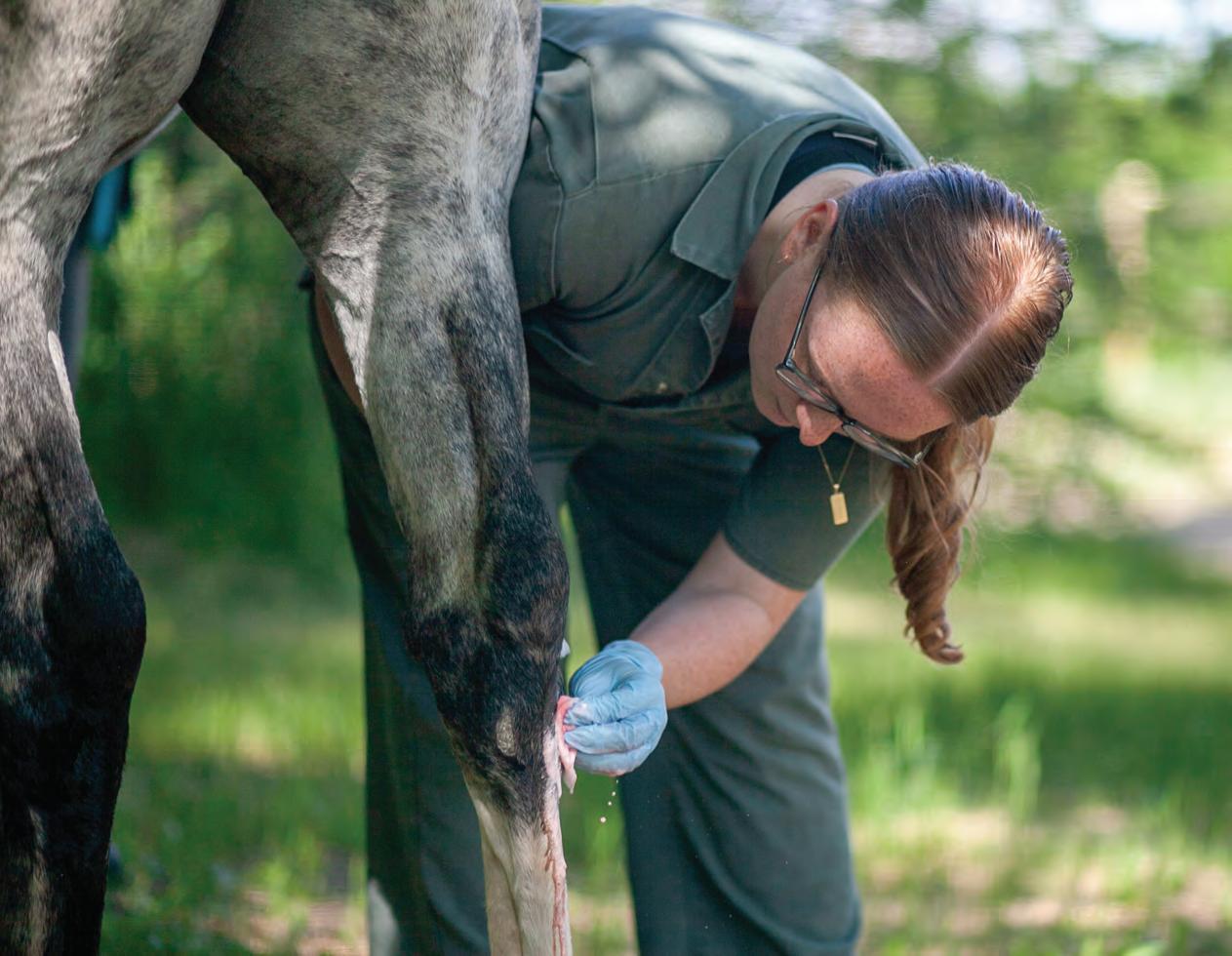
Arévalo’s research involves collecting fecal samples from horses treated by the VMC Equine Field Service team and testing samples for antibiotic resistance.
Her team will study three groups of horses: those directly treated with ceftiofur, those exposed to treated horses in the same environment, and those with with no exposure to the drug. In total, the study will include 120 equine patients.
The team will take two fecal samples from each horse in the study: one sample before treatment begins and another three weeks following the initial dose of ceftiofur — allowing the researchers to observe any changes in the presence of resistant E. coli. Samples will then be tested in Rubin’s lab to first confirm the presence of E. coli and then to test for antibiotic resistance. If a sample does show antibiotic resistance, further tests will be conducted to identify the resistant genes.
“Through the DNA material, we hope to have a better understanding of what gave the power to the bacteria to have this resistance against this drug,” says Arévalo. She adds that few published studies focus on the subject of E. coli producing these ESBLs specifically in horses.
“Our hypothesis is that resistant E. coli will be more prevalent in horses treated with ceftiofur compared to those that are not,” says Arévalo. “This information can help veterinarians make more informed decisions about antimicrobial use.”
Both researchers agree that studies like these are key to understanding the delicate balance between effectively treating infections and inadvertently fueling antimicrobial resistance.
“If we are not using these drugs adequately, there’s a direct impact in how useful they will be when we decide to use them ourselves,” says Santos.
By Rigel Smith
From the show jumping arenas to the labs of the Western College of Veterinary Medicine (WCVM), Dr. Madison Ricard’s passion for horses has driven her every step of the way in her academic career.
Ricard received her PhD in anatomic pathology at the University of Saskatchewan (USask) Fall Convocation in November 2024. Her doctoral research focused on chlamydial infections leading to equine abortions, offering valuable insights that could help veterinarians better understand and address equine reproductive health issues.
Ricard earned her Doctor of Veterinary Medicine (DVM) degree from the University of Calgary in 2020. Her next move was to Saskatoon where she began residency training in anatomic pathology and working on her PhD program. A comment from Dr. Bruce Wobeser, her WCVM graduate supervisor, sparked her curiosity and led to her research focus.
“He said, ‘I don’t think we know anything about equine abortion in Canada.’ And that struck me — not only because it is pathology related but also because it has that equine reproduction piece to it that I’ve always really enjoyed,” says Ricard.
She reviewed previous studies on equine abortions, which led her to an eye-opening paper from Australia. The study revealed cases of Chlamydia psittaci (C. psittaci) — a bacterial pathogen typically associated with birds — causing equine abortions.
Ricard examined Canadian equine abortion cases to see if a similar link between Chlamydia and equine abortion existed. Ricard and her team submitted 99 samples from equine abortions that occurred between 2009 and 2020 to Prairie Diagnostic Services, Saskatchewan’s veterinary diagnostic laboratory. Of those samples, 26 tested positive for Chlamydia.
However, unlike the Australian findings, the samples her team submitted
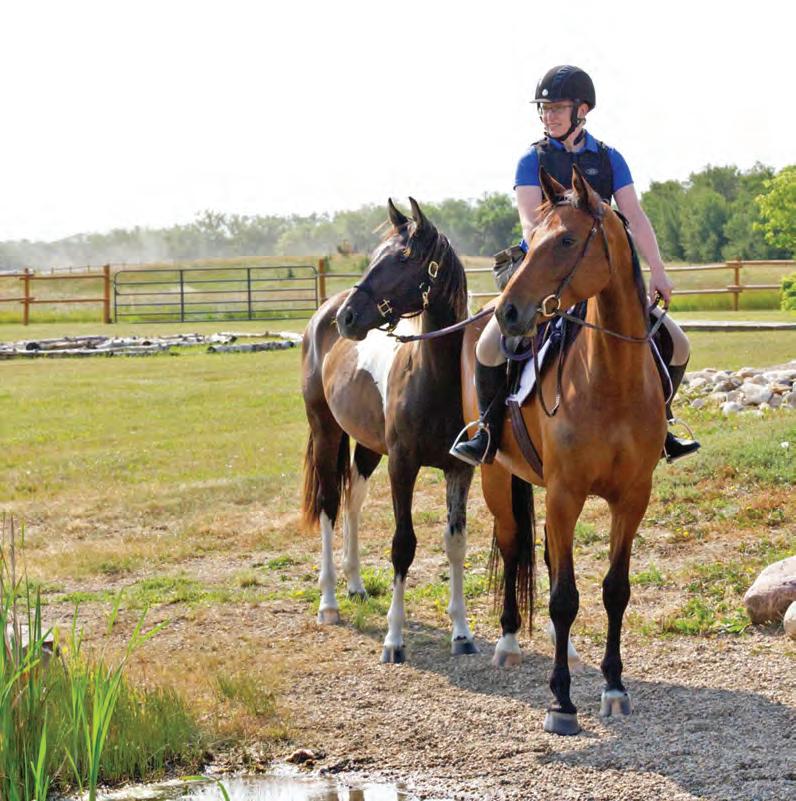
Dr. Madison Ricard with two of her horses. Teaching anatomy and histology is part of her new role as a WCVM lecturer. Supplied
were identified as Chlamydia abortus (C. abortus) — another bacterial species more commonly linked with sheep and cattle.
“Chlamydia abortus is a rarely reported pathogen causing abortion in horses in Europe — we’re talking maybe one in 100 abortion cases,” said Ricard. “We found it at a much higher level. I maybe thought we would find one case and we ended up finding 26.”
Ricard’s next step was to analyze endometrial biopsies to see if the infection was present in those tissues.
“We actually found [Chlamydia] in those tissues as well,” said Ricard. “That suggests that there is some sort of uterine infection with this pathogen, meaning it could be potentially treatable.”
C. abortus is zoonotic (can be transmitted between animals and humans) and poses a risk to those handling infected tissues, including veterinarians and horse breeders.
“There is a risk if you’re handling aborted tissues from a mare that you could potentially acquire that pathogen yourself and become quite ill,” says
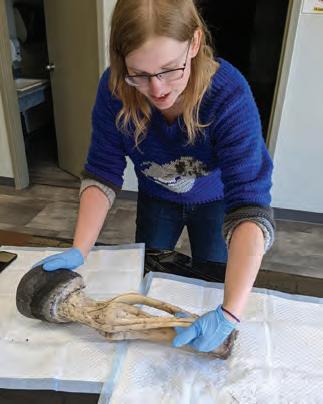
Ricard, emphasizing the importance of personal protective equipment for anyone handling aborted equine tissues.
Ricard joined the WCVM faculty as a lecturer in the college’s Department of Veterinary Biomedical Sciences in August 2024, and her new role includes teaching anatomy and histology to veterinary students.
“I think deep down somewhere in my soul I have always been a teacher,” says Ricard.
Read full story at tehrf.ca.
Dr. Claire Card, a professor and specialist in equine theriogenology at the WCVM, received the J.J. Murison Distinguished Veterinarian Award in fall 2024. The award is the highest level of recognition for a member of the Saskatchewan Veterinary Medical Association (SVMA).

JAN. 11-12: the WCVM was one of the industry supporters for the second annual Spotlight: Equine Veterinary Practice in Canada, which took place in Cochrane, Alta. During the twoday event, 60 students from Canadian veterinary colleges and veterinary technology programs explored careers in equinefocused practice and gained hands-on experience during equinefocused wet labs. A half-dozen WCVM students participated in the event’s activities. Dr. Steve Manning, WCVM’s associate dean of clinical programs, was also on hand to talk about the college’s equine internship and residency programs.
FEB. 1: members of the WCVM Equine Club hosted more than 200 young equine riders and their chaperones during the 2025 WCVM Equine Education Day at the veterinary college. Youth ranging in age from six to 18 years participated in short talks, tours and demonstrations that were organized by WCVM veterinary students. The annual event provides local equine clubs and stables with the ideal chance to spread greater awareness of horse health, management and disease prevention.
Dr. Conrad Wilgenbusch, a board-certified equine surgeon at Momentum Equine in Sherwood Park, Alta., passed away on Jan. 20. Originally from a ranch in southeastern Saskatchewan, Wilgenbusch spent time training reined cow horses and cutting horses before being accepted to veterinary school. After graduating from the WCVM in 2010, Wilgenbusch completed an equine internship in Texas and then began an equine surgery residency program at Iowa State University. He became a board-certified equine surgeon in 2015, and three years later, he joined Momentum Equine where he provided clients with surgical and sports medicine services. Wilgenbusch is survived by his wife Erica and their three children.
A round up of WCVM-related equine research articles that were recently published in peer-reviewed journals.
Koziy RV, Katselis GS, Yoshimura S, Simko E, Bracamonte J. “Temporal kinetics of serum amyloid A (SAA) concentration and identification of SAA isoforms in blood and synovial fluid of horses with experimentally induced septic arthritis, non-septic synovitis, and systemic inflammation.” Journal of Veterinary Diagnostic Investigation. Dec. 2024. doi: 10.1177/1040638724129987
Tucker M, Wilson D, Bergstrom D, Carmalt J. “Evaluation of procedures used to treat equine laryngeal hemiplegia using computational fluid dynamic analysis of an equine head model.” Frontiers of Veterinary Science (Sec. Veterinary Surgery). Nov. 2024. doi: 10.3389/fvets.2024.1478511
Woodman MJ, MacKenzie J, Osinchuk S, Husulak M. “Severe orbital hematoma with third eyelid swelling and prolapse following a blind maxillary nerve block in a horse.” Canadian Veterinary Journal. April 2024. 65(4): 359-362.
Viviani P, Lavado RA, Chavarria NH, Ragno VM, Montgomery JB. “Spring and fall blood concentrations of adrenocorticotropic hormone, insulin and thyroxine in healthy horses in Saskatchewan.” Canadian Veterinary Journal. April 2024. 65(4): 335-342.
Kim CS, Reisbig NA, Carmalt JL. “Contrast arthrography of the equine temporomandibular joint.” Frontiers in Veterinary Science. Feb. 2024. doi: 10.3389/fvets.2024.1368131
Visit tehrf.ca for more news updates.
“Our practice (Paton & Martin Veterinary Services) began to make contributions to the fund on behalf of clients when their horses passed away. We have found this to be a gratifying contribution and have been humbled by the responses that we have received from many of our clients. I think that it is very helpful for them to know that their horses have been honoured in such a fashion. The fund gives horse owners the additional opportunity to contribute to this very wor thwhile cause: supporting vital research in the areas of equine health.”
Dr. David Paton (DVM’78)
WCVM alumnus and TEHRF donor
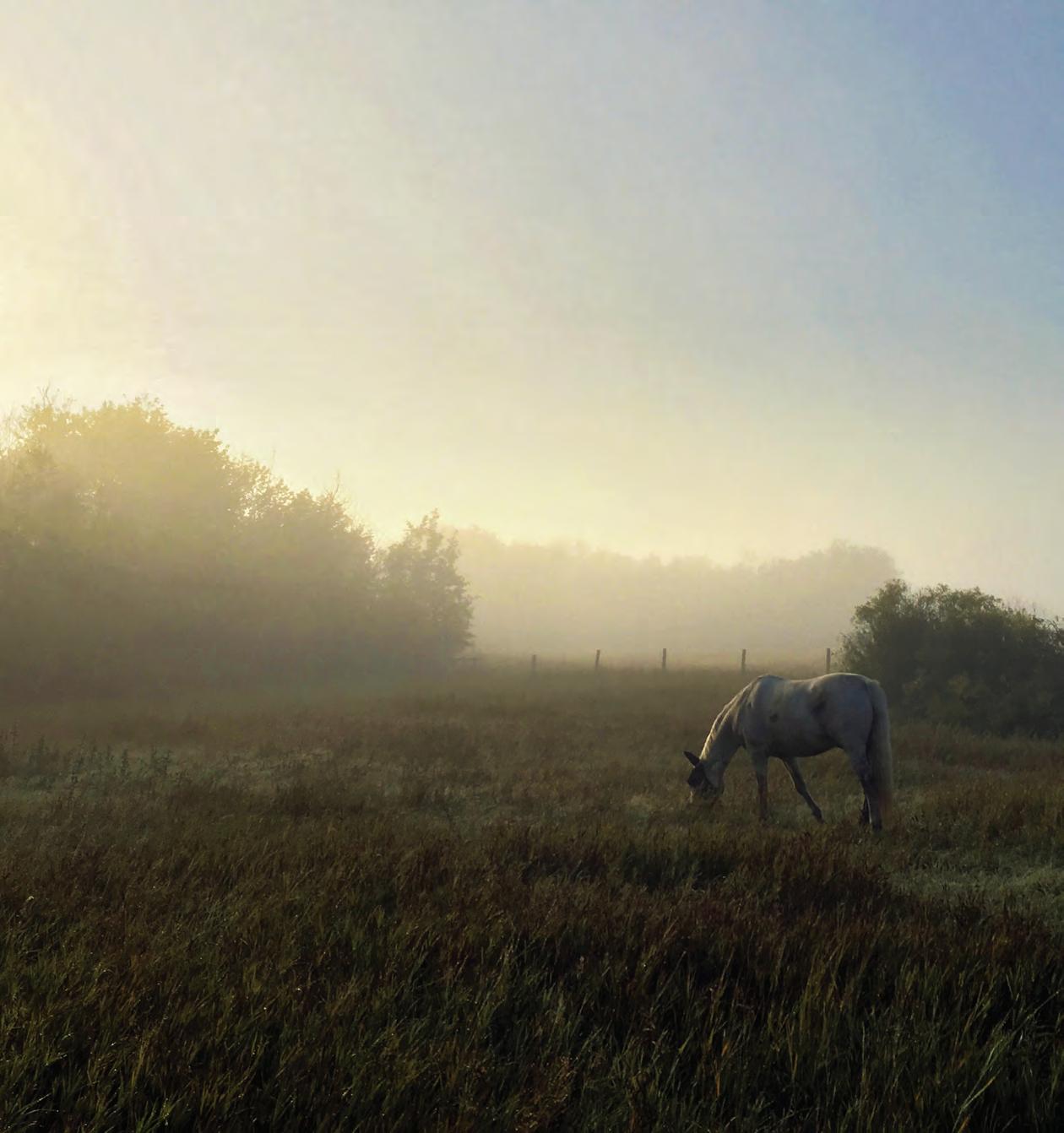
Pay tribute to the lives of your patients, clients and loved ones by making a donation to the Townsend Equine Health Research Fund (TEHRF) through its memorial program. Each time you give to the fund, we will send a letter to the client or loved one’s family acknowledging your gift to the equine health fund.