Recipients of a new Western College of Veterinary Medicine (WCVM) student award receive a unique prize: the funds they need to attend a well-known horse health conference in British Columbia.
The annual Delta Equine Seminar is a two-day continuing education (CE) event that’s been hosted by B.C. equine veterinarians for more than 50 years. Joel Bilyk of Nanaimo, B.C., and Kelsey Drinkall of Chetwynd, B.C., became the first recipients of the Delta Equine Seminar Award during the WCVM’s annual fall awards program in October 2025.
The new award recognizes WCVM students who have demonstrated interest and aptitude in equine care during the first two years of the Doctor of Veterinary Medicine (DVM) program. A month after receiving the award, Bilyk and Drinkall returned to their home province to attend the 52nd edition of the seminar, which took place from Nov. 3-4 in Langley, B.C. As award recipients, the students received complimentary registration and $2,000 each to cover travel expenses.
The Delta Equine Seminar regularly attracts world-class speakers who deliver insightful presentations and practical takeaway messages for veterinarians. Past speakers have covered a range of topics including lameness, areas of medicine and surgery, dentistry and dermatology.
Bilyk and Drinkall both agree that the chance to talk with speakers and attendees helped them gain clarity into equine practice and connections with their veterinary community. For Bilyk, the experience reaffirmed his desire to
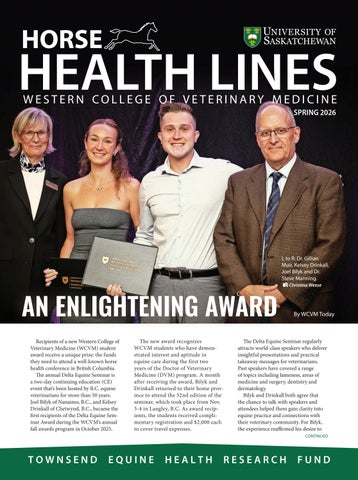
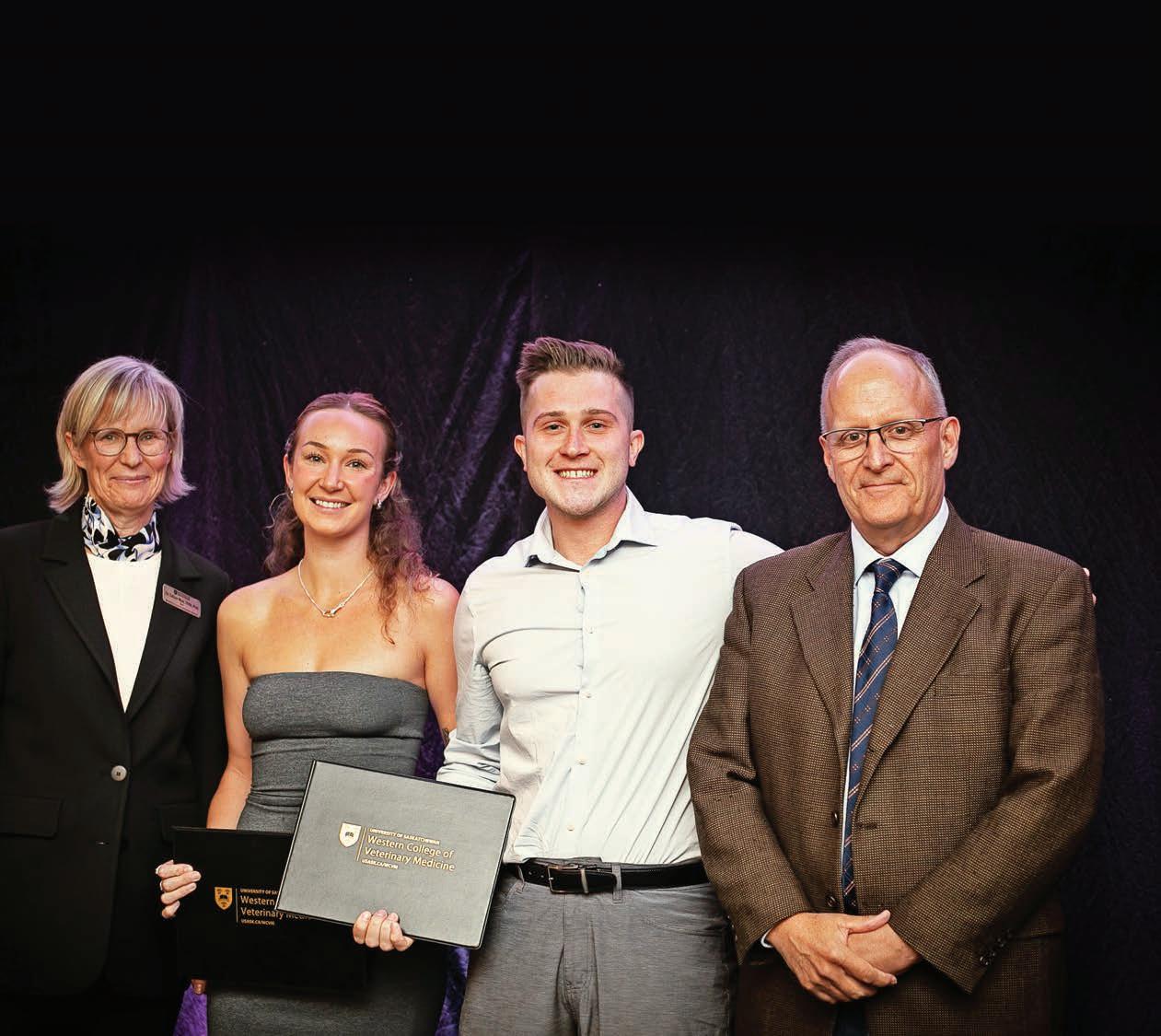
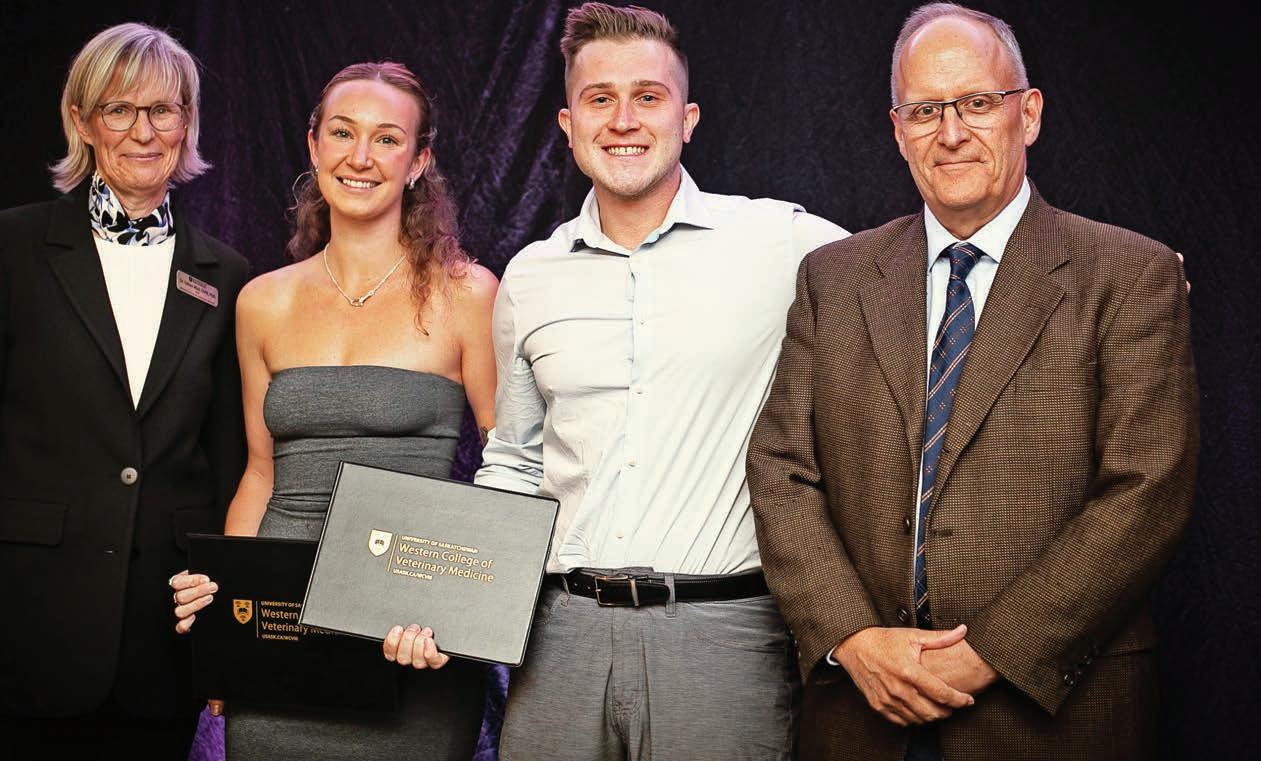
L to R: Dr. Gillian Muir, Kelsey Drinkall, Joel Bilyk and Dr. Steve Manning.
Christina Weese
WCVM Today
AN ENLIGHTENING AWARD
pursue a veterinary career. His advice to other students: “Stay curious and take notes on topics that spark your interests. You’ll leave with insights that can shape both your studies and your future career.”
“If you’re interested in equine practice or want to intern or get a residency after college, this is a great place to go get some connections and opinions,” adds Drinkall.
“We were most pleased and impressed with the two students who attended — both Kelsey and Joel fit in well,” says Dr. David Paton, chair of the Delta equine committee and seminar and a longtime equine veterinarian in Aldergrove, B.C.
From a young age Bilyk worked alongside his grandparents who bred and raced thoroughbreds, and he’s currently caring for a 16-year-old off-the-track thoroughbred. Drinkall grew up on a cow-calf operation that also bred quarter horses, and she competed at high-level rodeo events in the United States as part of her undergraduate scholarship program.
Attending the Delta Equine Seminar also allowed Bilyk and Drinkall to build on the knowledge they’ve gained as veterinary students at the WCVM, particularly on rehabilitation techniques, pain management and new anesthesia protocols.
The 2025 event’s two speakers were from Colorado State University’s College of Veterinary Medicine and Biomedical Sciences: Dr. Melissa King is an associate professor in equine sports medicine and rehabilitation, while Dr. Rachel Hector is an assistant professor of anesthesia and analgesia.
For Bilyk, the chance to speak with King and Hector was a highlight: “Both of them were incredibly approachable and willing to take the time to answer my questions in detail. I really appreciated their openness and the way they shared their professional insights — it made the experience both educational and inspiring.”
Drinkall took inspiration from the other equine veterinarians who attended the seminar.
“I got so many different stories and great advice about going into equine practice,” she says. “As a student, I feel like I have so many things to figure out [after graduating], and I loved gaining insight into how other people did it.
“It’s nice to be in a room full of people who were once where you were, and it helps you see your future.”
VETAVISION 2026
Veterinary students are gearing up to host the 2026 edition of Vetavision, the college’s public open house, this fall. The two-day event, which will take place in September 2026 (final date pending), provides people of all ages a chance to explore the world of veterinary medicine through a variety of displays, demonstrations, talks and hands-on experiences. Vetavision also includes a highly popular “Pre-Vet Night” on Saturday evening for high school and university students who are interested in applying to the WCVM’s Doctor of Veterinary Medicine (DVM) program. Visit wcvm.usask.ca (click “Education” and “Vetavision 2026”) for updates.
Horse Health Lines is the news publication for the Western College of Veterinary Medicine’s Townsend Equine Health Research Fund (TEHRF). Visit tehrf.ca for more information, Send comments and article reprint requests to:
Myrna MacDonald, Editor Horse Health Lines WCVM, University of Saskatchewan 52 Campus Drive, Saskatoon, SK S7N 5B4 horse.health@usask.ca
Horse Health Lines design and layout: Priddy Design
Here’s a chance to put your horse health knowledge to the test! Read over the following statements and decide: fact or fiction? Check out the answers on page 7 (inside back cover).
“Horses need to be dewormed every four to six weeks.”
“Horses that don’t leave their home barn or pasture still need to be vaccinated.”
“You shouldn’t let your hot, sweaty horse drink water until the animal cools down.”
Christina Weese
Tetanus, commonly called “lock jaw,” is caused by Clostridium tetani, a sporeforming bacterium that thrives in the absence of oxygen (anaerobic). While most mammals are affected by tetanus, horses are the most susceptible. Mortality rates are 50 to 80 per cent, but supportive care and treatment can increase the odds.
Muscle spasms and reflex spasms
CLINICAL SIGNS
Head pulled back toward hind end
Fast or slow heart rate
Body temperature increases nearing end of a fatal infection
Flared nostrils and fixed gaze, erect ears and tail
Abnormal blinking or horse’s third eyelid
Red, congested mucous membranes
Respiratory failure and death
“Sawhorse stance,” sweating and generalized muscle stiffness
TETANUS:
WHAT YOU NEED TO KNOW TO PROTECT YOUR HORSE
By Alexandra Zawislak
STEP 1: Spores enter wound on animal
STEP 2: Wound seals, creating an anaerobic (no oxygen) environment
Where is tetanus found?
• Found in soil and environments around the world, apart from the northern Rocky Mountains.
• An increased incidence of tetanus infections in warmer climates.
• Bac terial spores survive in the environment for a very long time.
• Bac terial spores also found in the normal gastrointestinal tract microbiome.
What common procedures can increase the risk of infection?
• Field surgery
• Castration
• Tail docking
• Retained placenta
How animals contract tetanus
STEP 3: Bacterial pathogens multiply
TREATMENT
• Keep horse in a quiet, dark box stall. Make sure feed and water containers are placed off the ground so the horse doesn’t need to bend its neck to reach.
• If the horse is having trouble standing, a body sling will help the animal stand.
• Once a horse shows clinical signs, prognosis is usually poor. Preventive treatment is very effective. Additional treatment options:
• wound cleaning
• boost immunity by promptly vaccinating upon exposure
• injec tion of antitoxin
• muscle relaxants
• anti-seizure medication
• administering penicillin to the wounded area after draining and cleaning
STEP 5: Bacteria self-digest (autolyse) and release toxins into animal
STEP 4: Toxins are produced in the bacteria
PREVENTION
Vaccine
• Immunization with tetanus toxoid to help body produce antibodies for the tetanus toxins.
• Tetanus is a core vaccine in horses and should be part of your horse’s annual vaccination schedule. Survival of horses infected with C. tetani is strongly associated with previous vaccination.
• Booster vaccine after wound to boost immune response to the tetanus toxins.
Other prevention:
• prompt and thorough wound cleaning
Alexandra Zawislak of Saskatoon, Sask., is a third-year WCVM student who compiled a tetanus fact sheet as part of her veterinary toxicology course.
For more information, visit www.merckvetmanual.com (search “tetanus”).
VISITING THE ‘HORSE CAPITAL OF THE WORLD’
By Shawna Williams
For several years, the Western College of Veterinary Medicine (WCVM) has sent a group of students from its Equine Club to the annual Opportunities in Equine Practice Seminar (OEPS) in Lexington, Ky.
Last August, I was one of 10 lucky WCVM equine enthusiasts who attended OEPS 2025. With a respectable equine population in British Columbia, it is no surprise that many of my B.C. classmates jumped at the opportunity of an educational trip to the “Horse Capital of the World.”
OEPS provides North American veterinary students who have an interest in equine practice with insight into the fields open to them after graduation. Attendees toured the esteemed Kentucky farms, local veterinary practices and the famous Keeneland Racecourse. Speakers at each tour stop shared insightful and inspiring stories about the experiences that led them to their respective careers in equine medicine.
A major highlight was the wet lab experience. Students were split into small groups and given opportunities to practise hands-on skills with live horses, cadavers or realistic models with oversight from highly trained equine clinicians. An in-depth colic workup, equine dentistry tips, ultrasonography techniques and lameness exam methods were some of the wet labs offered.
“I was in the equine dentistry wet lab, and they did an excellent job providing hands-on experience. I got the opportunity to try new equipment for cleaning and evaluating teeth and learned tips and tricks for performing an oral exam and dental radiographs,” says Hanna Wadlegger, a third-year WCVM student from Clearwater, B.C.
“Seeing the ability to manage more complicated cases and the individuals who are more specialized within equine medicine definitely gives you a better appreciation for the profession.”
The weekend also allowed for valuable networking with future colleagues, students and practices willing to support future professional development opportunities. Representatives from veterinary practices across North America spoke to students about externship and internship opportunities, and every evening was rounded out with some laid-back fun.
“My favourite part about OEPS was seeing equine medicine in a larger capacity. I think we often forget how much can be done as many of the hospitals around us do not have the same capacity as the largest hospitals,” says Kasey Keohone, a third-year WCVM student from Saska-
toon, Sask. “Seeing the ability to manage more complicated cases and the individuals who are more specialized within equine medicine definitely gives you a better appreciation for the profession.”
Continuing education trips are valuable assets for veterinary students, and the OEPS trip is a great example highlighting that fact. WCVM students are lucky to receive an education that supports such opportunities. I encourage all veterinary students to take advantage of opportunities to attend labs, tours and events outside of their core curriculum during their studies. I also encourage other industry representatives to continue their support of these opportunities. Supporting student development strengthens the development of future western Canadian clinicians.
Shawna Williams of Fraser Lake, B.C., is a third-year WCVM student. This abridged version of the original article, which was published in West Coast Veterinarian, is reprinted with permission from the author and the Society of British Columbia Veterinarians.
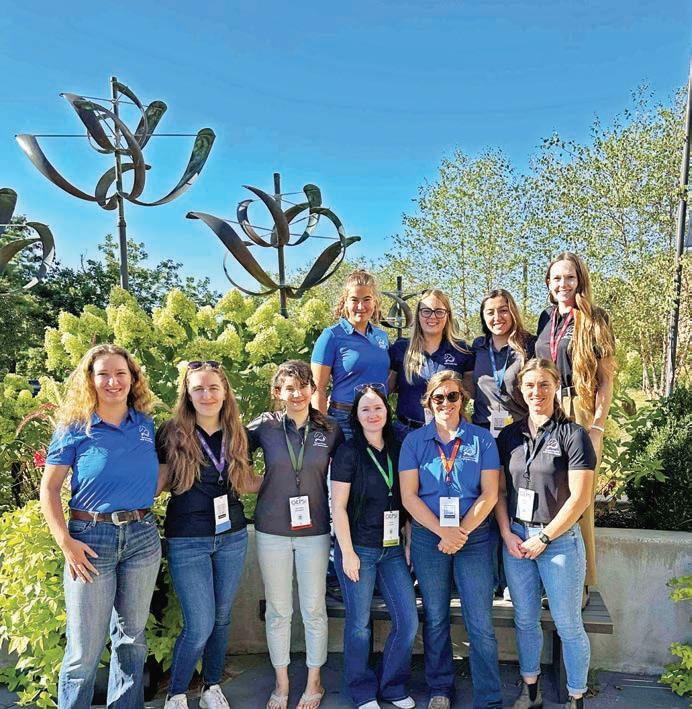
Shawna Williams (top row, second from right) was one of 10 WCVM students who attended the 2025 Opportunities in Equine Practice Seminar in Kentucky. Supplied
The race to timely DETECTION
By Jon Morton
University of Saskatchewan (USask) researchers are teaming up with local and national endurance racing competitors to develop a new, easy-to-use technique for early detection of cardiac disease in horses.
Cardiovascular disease is less common in horses than in people, but unmanaged heart disease is one of the leading causes of sudden death in athletic horses during exercise. Sudden athletic death accounts for one to three deaths per 10,000 starts in equestrian events, with 25 per cent of these sudden deaths being related directly to underlying heart disease.
Equine heart disease can also place riders’ safety in jeopardy since most equine deaths occur during exercise, with one in four riders reporting injuries to their arms and legs.
quickly both in the clinic and out in the field, Cowan is leading a research project that aims to validate a human-based test kit called I-STAT1 for use in horses.
Human physicians use the test kit to rapidly detect cardiac troponin, which is released with cardiac muscle damage such as a heart attack, says Cowan: “The benefit of the I-STAT1 is that you get test results much quicker than you would in a lab setting — [in] about 10 minutes.”
“Our hope is that we can use existing human-based test methods — rapid test methods — to learn more about equine athletes and patients.”
The challenge: clinical signs of equine heart disease are “vague and non-specific,” says Dr. Vanessa Cowan, a veterinary toxicologist at the Western College of Veterinary Medicine (WCVM). Tiring easily, difficulty breathing and poor performance are common symptoms of heart disease as well as other health issues.
To help western Canadian veterinarians detect heart muscle damage more
Rapid detection of troponin allows for the use of this machine in emergencies and field research. The device is also very accessible for providers as it’s easy to interpret the results and only requires a “small portion of blood,” says Cowan.
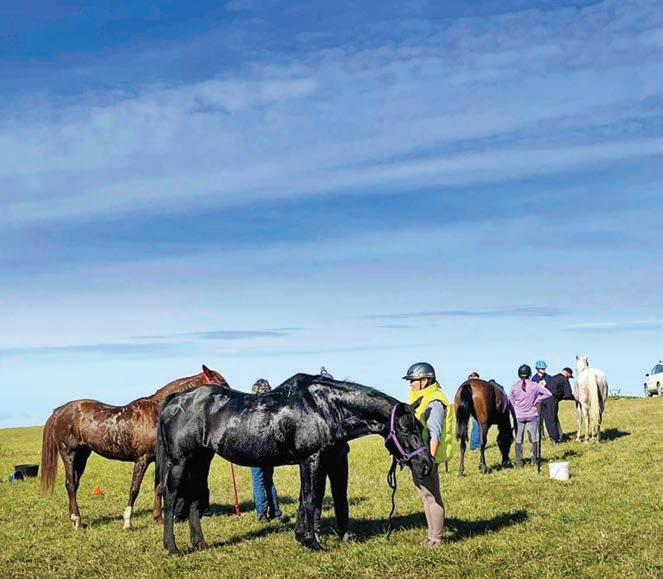
WCVM researchers are evaluating this device’s use in horses by working with local endurance race competitors during their races. Endurance racing is an equine performance sport that demands a lot from a horse’s cardiovascular system and requires extensive training, says Cowan.
WCVM researchers are attending nine race events over two summer seasons, collecting blood samples and one-minute ECG recordings (to detect arrhythmia) from each equine competitor at three points during each race. Team members will run the I-STAT1 test at each race site to determine the amount of troponin in the bloodstream before, during and after competition.
Researchers have already collected samples from 15 horses that participated in races during the 2025 season. They plan to enrol more horses this season — including those competing in the 2026 National Endurance Championship that will take place in Saskatchewan this August.
Inclusion of top equine athletes will help researchers determine if the strain on the equine heart differs with distance travelled and if each animal’s heart muscle suffers post-race damage.
“Our hope is that we can use existing human-based test methods — rapid test methods — to learn more about equine athletes and patients,” says Cowan.
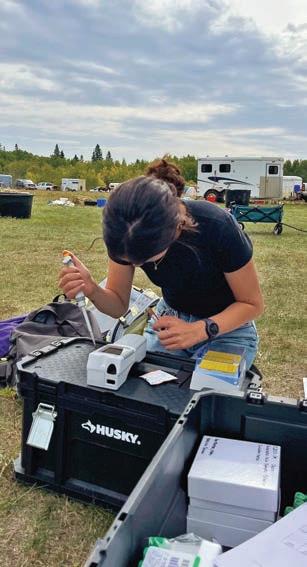
A team member uses the I-STAT1 test kit to analyze a horse’s blood sample. Supplied
The Townsend Equine Health Research Fund (TEHRF) has provided financial support for this research project. Jon Morton of Winnipeg, Man., is a USask Master of Science (MSc) student under the supervision of Dr. Vanessa Cowan.
AG ADVOCATE AWARD
Shirley Brodsky, a Saskatoon horse breeder and member of the Townsend Equine Health Research Fund advisory board, received the “Extra Mile Award” during the Saskatchewan Women in Ag’s annual conference in November 2025. The award recognizes women in the agriculture industry who have made noteworthy contributions to the agriculture community and have fostered the promotion of Saskatchewan agriculture and food.
“Shirley has spent nearly four decades volunteering in agriculture, many of those dedicated to advancing the horse industry,” said Adele Buettner, president and founder of AgriBiz Communications. The business created the award to give back, foster and support women in their roles as agricultural advocates.
“I am both honoured and humbled to be chosen for his award as advocacy for all things agriculture just comes naturally for me. It is my passion,” said Brodsky, past president of the Saskatchewan Horse Federation and a longtime volunteer with the provincial sport organization and the horse industry.
On Brodsky’s behalf, AgriBiz donated $1,000 to the Saskatchewan SPCA’s new Emergency Animal Care Centre, which is under construction in Asquith, Sask. Once completed, the centre will provide short-term compassionate care for animals while owners cannot provide care.
EQUINE OUTREACH
WCVM large animal veterinarian Dr. Chris Clark and two fourth-year WCVM veterinary students, Gavin Fleck and Avery Mateychuk, gave an equine health presentation, “Horse health: fact or fiction?” to a group of Regina-area horse owners on Nov. 23. The WCVM seminar covered common horse health myths and explored the science behind some long-held beliefs and practices in the horse community. Thank you to the Saskatchewan Horse Federation (SHF) for providing the event space.
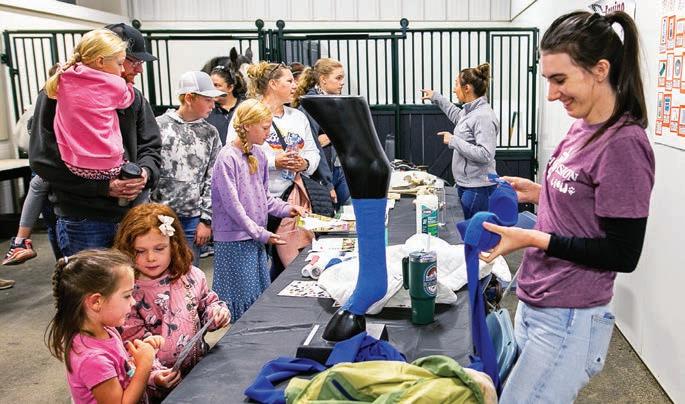
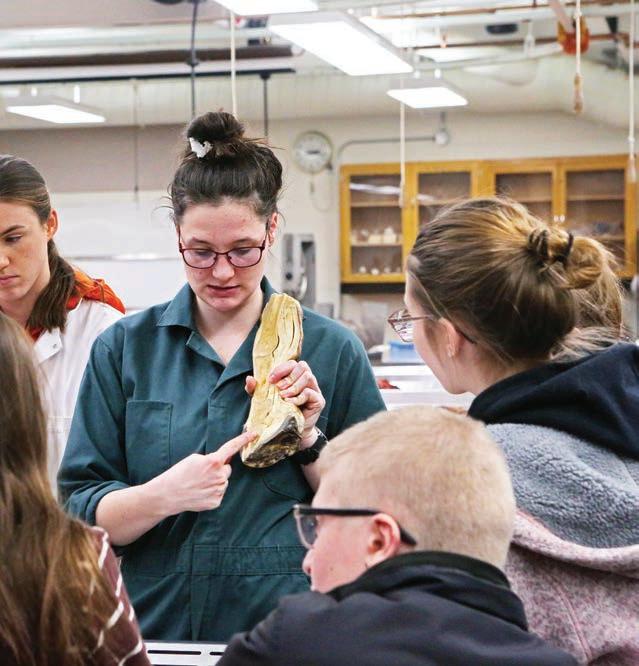
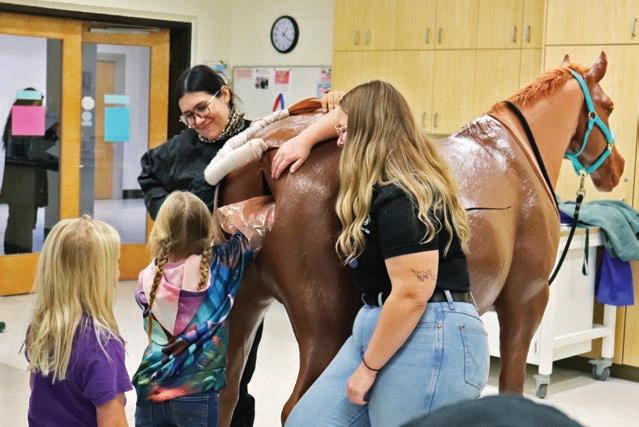
In January, student members of the WCVM Equine Club welcomed more than 300 young riders and their chaperones to the college’s annual Equine Education Day. The event included sessions and demonstrations geared for beginner, intermediate and advanced riders. The mini talks, developed and delivered by current WCVM students, covered everything from equine breeds and colours, toxic plants and anatomy to biosecurity, dentistry and medical imaging. Young riders learned more about diagnosing and treating lameness in horses, plus they had a chance to meet Nya and James, two Clydesdale horses owned by Mikhaela Thrasher, a registered veterinary technologist at the WCVM. A highlight was a foaling demonstration using Bubbles and Biscuit, the college’s new life-sized mare and foal models. The models were a gift from Dr. June Donaldson, a donor from Calgary, Alta.
Shirley Brodsky
Christina Weese
Equine Education Day participants learned about equine anatomy and foaling (below).
CIRCLING
BACK TO WCVM
Dr. José Antonio Guerra, who completed a large animal surgery residency at the WCVM in 2023, has returned to the college as an assistant professor in large animal surgery. Before his return to the WCVM, Guerra was a faculty member in the Atlantic Veterinary College at the University of Prince Edward Island for two years. Originally from Mexico, Guerra completed a master’s degree at Universidad Nacional Autónoma de México (UNAM) in 2015 and spent two years as a UNAM faculty member before moving to Canada in 2018 for a one-year equine surgery and internal medicine internship at the University of Guelph’s Ontario Veterinary College. During his time at the WCVM, Guerra tested a combination of easily accessible local block and sedative drugs, lidocaine and xylazine, to provide longer acting pain control during nerve blocking procedures on horses.
Dr. Anna Henderson, who earned her Doctor of Veterinary Medicine (DVM) degree at the WCVM in 2021, returned to her alma mater as a clinical lecturer in anesthesiology last fall. Henderson completed a combined Doctor of Veterinary Science in Clinical Studies-anesthesia residency program at the Ontario Veterinary College, University of Guelph. Her program’s thesis compared two intraoperative lidocaine constant rate infusions on cardiopulmonary function and quality of recovery in healthy isoflurane-anesthetized horses undergoing arthroscopy surgery.
A
RESEARCH IN PRINT
Kingsley NB., Sandmeyer L, Dwyer A, Langefeld CD, McMullen Jr RJ, McCue M, Lassaline M, Bellone RR. “A genome-wide investigation of insidious uveitis in Appaloosa horses.” BMC Genomics. Oct. 2025. 26:904.
Labreque CS, Hale M, Little K, Pavloff M, Kostiuk S, Mund S. “An integrative literature review on the mental health of large animal veterinarians in rural areas.” Canadian Veterinary Journal. Oct. 2025. 66(10):1121-1135.
Baptiste KE, Kyvsgaard NC, Ahmed MO, Damborg P, Dowling PM. “Is rifampin (rifampicin) essential for the treatment of Rhodococcus equi infections in foals? A critical review of the role of rifampin.” Journal of Veterinary Pharmacology and Therapeutics. Sept. 2025. 48(5):345-358.
“Horses need to be dewormed every four to six weeks.”
Fiction! Overuse of deworming drugs has helped worms become more resistant to the limited number of medications that are available to treat horses.
Ask your veterinarian to conduct a fecal egg count (FEC) on your horse. This test measures the number of worm eggs shed in your horse’s manure and helps to determine its parasite burden.
Based on test results, your vet will let you know if you need to treat your horse with deworming drugs. Source: Merck Veterinary Manual
“Horses that don’t leave their home barn or pasture still need to be vaccinated.”
Fact! All horses are at risk of contracting infectious diseases — no matter how much or how little they travel.
If your horse lives at a stable or pasture where other horses travel or new animals come on the property, it’s important to protect their health. Even horses that don’t have contact with other equine animals are at risk from diseases such as rabies or tetanus.
Talk to your veterinarian about developing a vaccination program that’s tailored for your horse. Source: Merck Veterinary Manual
“You shouldn’t let your hot, sweaty horse drink water until the animal cools down.”
Fiction! After horses have worked hard, offer them water without delay and let them drink when their thirst response is the greatest.
It’s important to be aware of how much water (and electrolytes) horses need to recover from intense exercise — especially on a hot day.
Hydrated horses will sweat, which further aids in cooling, particularly by the process of evaporation. Source: Ohio State University
Pay tribute to the lives of your patients, clients and loved ones by making a donation to the Townsend Equine Health Research Fund (TEHRF) through its memorial program. Each time you give to the fund, we will send a letter to the client or loved one’s family acknowledging your gift to the equine health fund.
“Our practice (Paton & Martin Veterinary Services) began to make contributions to the fund on behalf of clients when their horses passed away. We have found this to be a gratifying contribution and have been humbled by the responses that we have received from many of our clients. I think that it is very helpful for them to know that their horses have been honoured in such a fashion. The fund gives horse owners the additional oppor tunity to contribute to this very worthwhile cause: supporting vital research in the areas of equine health.”
Dr. David Paton ( DVM’78) WCVM alumnus and TEHRF donor