CALORIES COUNT When Managing Your Horse’s Nutrition
By Madeline Boast, MSc Equine Nutrition, PAS
How often do you think about your horse’s daily calorie intake? Regularly considering this aspect of your horse’s management is critical to maintaining a healthy body condition. Ensuring your horse maintains a healthy body condition depends on their daily calorie intake.
Although equine nutrition discussions generally revolve around hot topics such as omega-3 content or non-structural carbohydrates (NSCs), calories are an important yet often overlooked aspect of nutritional management.
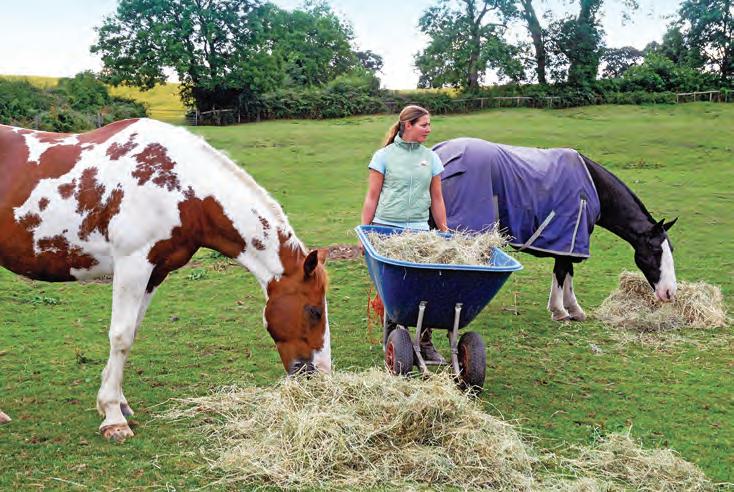
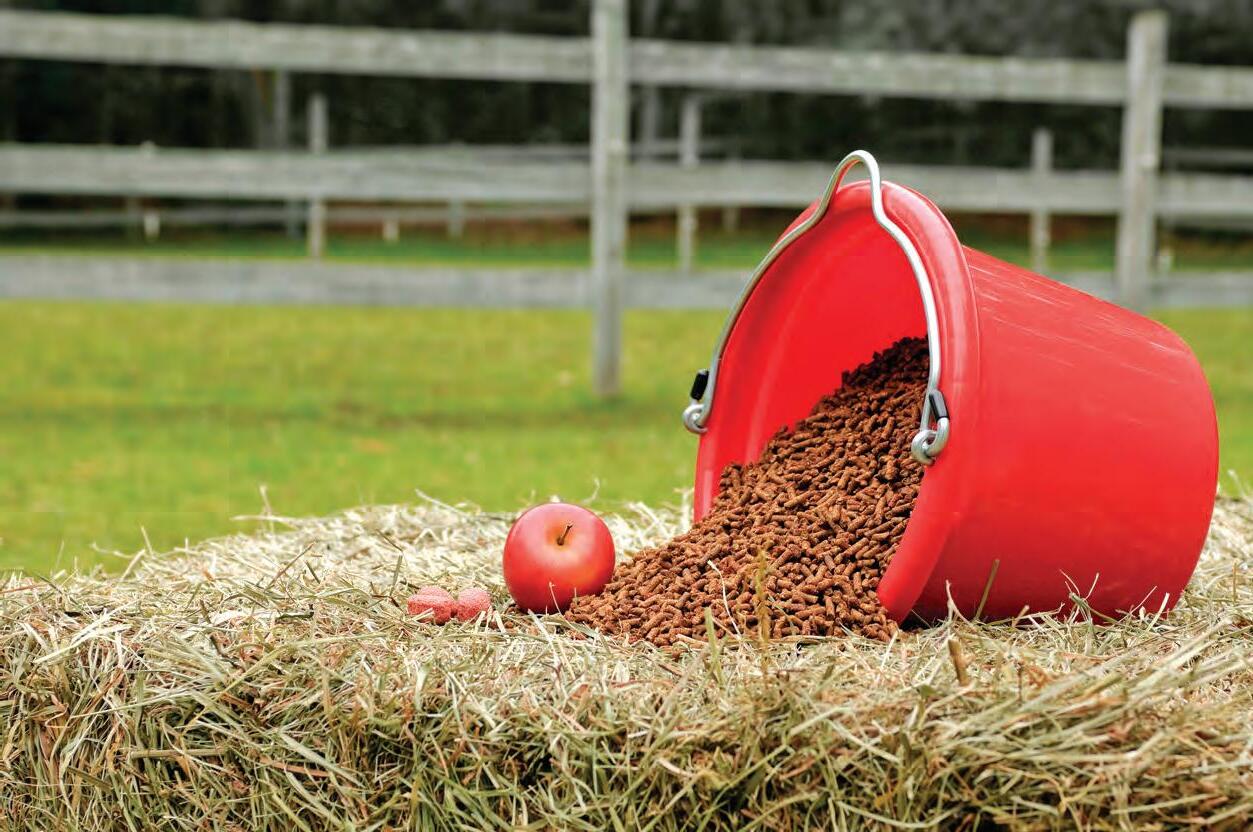
Forage, whether hay or pasture, generally provides horses with most of their calories in a day. Concentrates, processed forages such as hay cubes, and supplements might then be added to increase a horse’s calorie intake.
If you have a horse that you would like to gain weight, lose weight, or better maintain a steady weight year-round, understanding the various sources of calories and how to manage your horse’s calorie intake is key to maintaining a consistent, healthy body condition.
Understanding Calories and Digestible Energy
An individual calorie (cal) is a measurement unit for energy that is equivalent to the heat energy needed to raise the temperature of one gram of water by one degree Celsius. As this is a small measurement of energy, it is rarely used in nutrition. More frequently, the term “calorie” will refer to a kilocalorie (kcal), which is 1000 cals.
In equine nutrition, the calorie requirements for horses are often referred to as digestible energy, which is the
Horses kept on overgrazed pastures need supplemental hay to meet their long-stem forage intake needs.
PHOTO: ALAMY/JOHN ROBERTSON
PHOTO:
difference between the total amount of energy in the feed and the amount of energy lost in the feces. Digestible energy is frequently provided in the units of Mcal/day (megacalories per day). One Mcal is equivalent to 1000 kcal. For example, the Nutrient Requirements of Horses 2007 (NRC 2007) states that a 500 kg horse in light exercise requires 20 Mcal/day (20,000 kcal) to maintain their weight.
Keeper Statuses
Similar to humans, the number of calories a horse requires depends on a multitude of factors. Age, weight, workload, and genetics all contribute to how many calories a horse must consume to achieve and maintain a healthy body condition.
In the equine industry, the terms easykeeper, average-keeper, and hard-keeper are commonly used. These terms describe how readily a horse maintains their weight. For example, it is generally accepted that pony breeds and breeds such as Morgans tend to be easy-keepers, whereas breeds such as Thoroughbreds are regarded as hard-keepers. An easykeeper requires fewer calories to maintain their body condition, even if other factors such as age and workload are the same. On the other hand, as a horse ages, they might become a hard-keeper, even if historically they easily maintained a healthy body condition on hay.
The NRC 2007 states nutrient requirements for horses not in work based on minimum, average, or elevated intake. These values relate to the keeper statuses and depend on the horse’s level of voluntary activity. Minimum applies to horses that have a sedentary lifestyle; average applies to horses with alert temperaments and moderate voluntary activity; and elevated applies to horses with nervous temperaments or high levels of voluntary activity.
If you board at a larger facility, you will certainly have experience observing horses of each keeper status classification. Like humans, they are all unique in how they gain, deposit, and maintain weight.
Calorie Content of Hay
As previously mentioned, forage, such as hay and pasture, is almost always the primary source of digestible energy for a horse. The calorie content of both hay and pasture can vary considerably depending on the weather throughout the growing season, plant maturity, and plant species. Many horse owners do not realize how widely hay can vary in calorie content, and the only way to accurately determine the
Many performance horse owners choose to add “cool calories” to the diet of a horse that needs to gain weight but is prone to excitability.
Understanding Splints
What Every Horse Owner Should Know
By Dean Sinclair CJF, FE, DipWCF
Splint bones play an important role in supporting the horse’s lower limbs. But what are these evolutionary remnants of ancient toes, and what does it mean when a horse “pops a splint”?
Splint bones, which are the second and fourth metacarpal bones in the front limbs, and the second and fourth metatarsal bones in the hind limbs, are thin, long bones that lie along both sides of the cannon bone (third metacarpal). The splint bones support the cannon bone and form the base of support for the knee (carpus) and hock (tarsus) joints. Splint bones are the remnants of the second and fourth toes that horses had before evolving to a single toes per limb. These bones are attached to the cannon bone by the interosseous ligament in young horses. As the horse matures, the splint bones eventually fuse to the cannon bone when the horse reaches five or six years old.
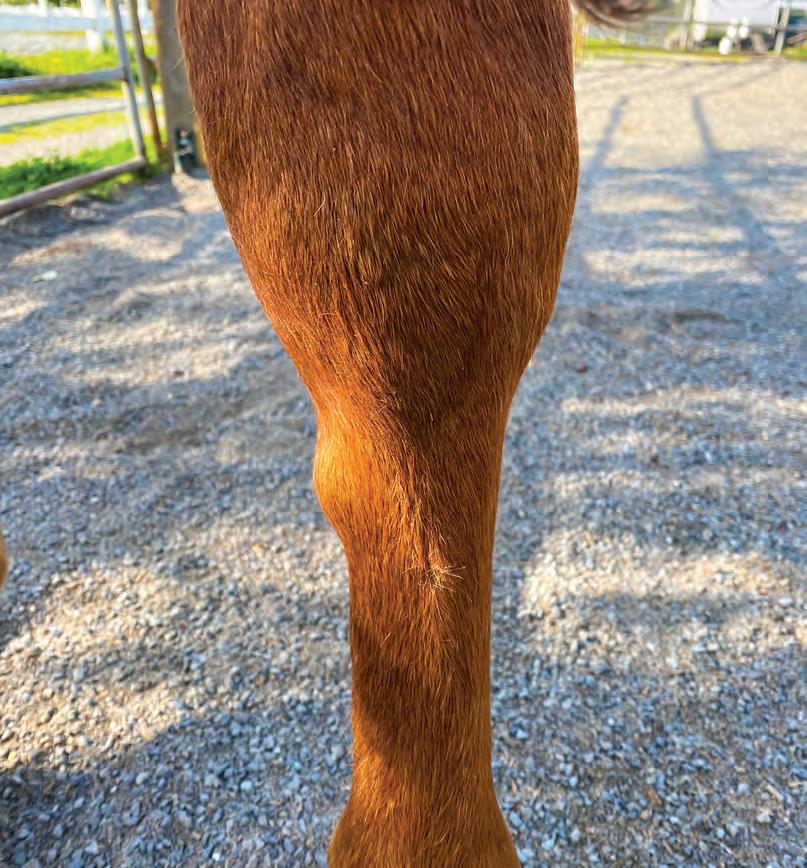
The terminology used to identify the condition can vary. A true splint refers to the tear or sprain of the interosseous ligament. The veterinary term for a popped splint in horses is exostosis, which is a bony growth on the splint bone. Interosseous desmitis is the inflammation of the ligament occurring between the splint bone and the cannon bone. Splints can be caused by several activities and conditions. Splints are more common on the medial side (inside) of the front limb but can occur on the hind as well.
CAUSES
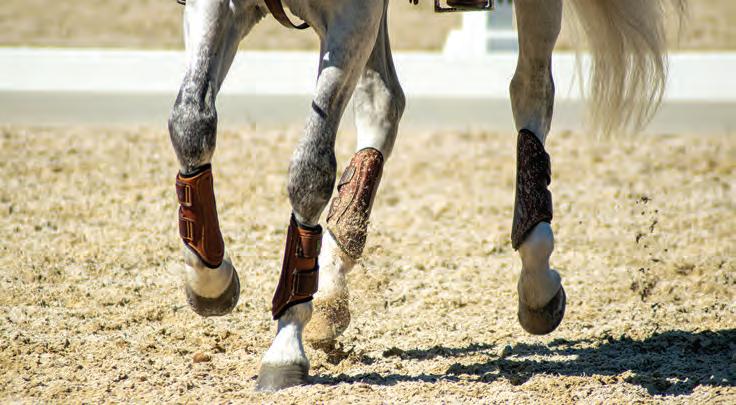
Splint boots protect the lower limbs from potential injury due to a horse’s own hooves striking the opposite limb.
Trauma A splint can result from a kick from another horse that lands on the splint bone and bruises or fractures the bone, as well as from limb interference on a front or hind limb (a horse striking its opposite leg). Limb interference is common with young Standardbred racehorses in training.
Nutrition — A nutritional imbalance or excessive feeding of nutrients such as calcium and phosphorous has been implicated in the development of splints. Working on hard surfaces — Too much work on a hard surface can result in damage
Splint on a three-year-old warmblood as a result of being worked too hard at a young age.
PHOTO COURTESY OF DEAN SINCLAIR
PHOTO: ISTOCK/VICVAZ
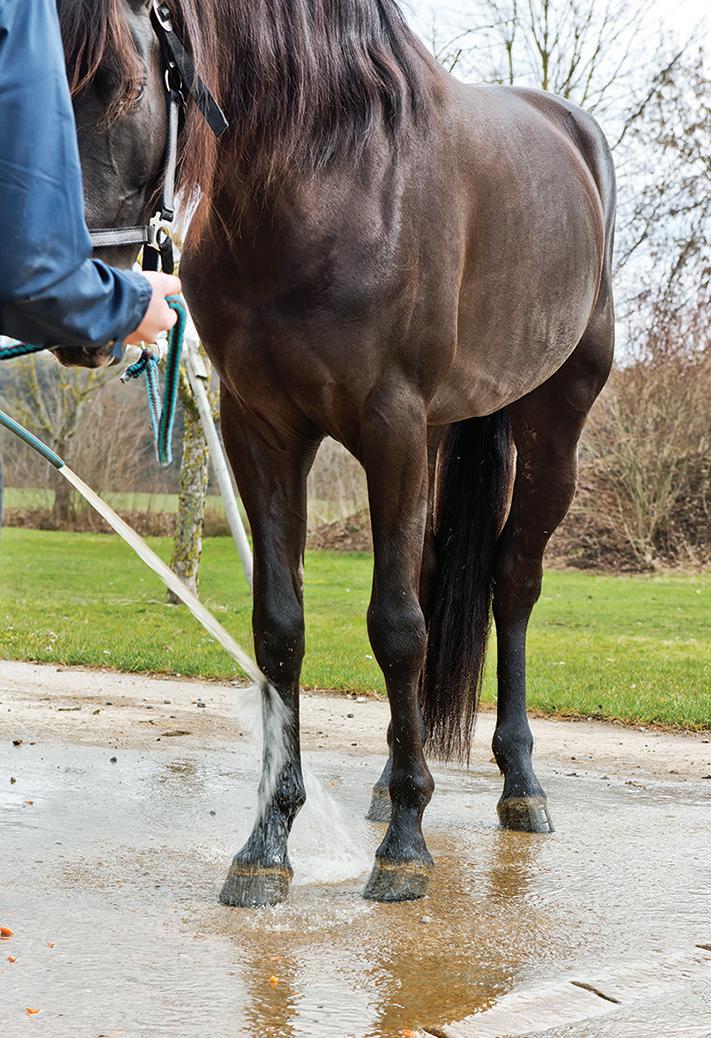
Cold-hosing helps reduce inflammation and provides pain relief.
to the interosseous ligament. This damage can lead to a bone reaction (periostitis) on the surface of the splint bone resulting in a visible lump known as an exostosis.
Conformation — Poor conformation along with uneven weight-bearing can cause splints. Horses with toed-out or base-wide conformation are predisposed to medial (inside) splints, while horses with toed-in or base- narrow conformation are more likely to develop lateral splints (outside of the limb).
TREATMENT
Most cases respond well to rest. This can range from two weeks to three months depending on the severity of the injury and the horse’s recovery. Ice, cold-hosing, and supportive wraps can also aid in the recovery process. Your veterinarian may also prescribe anti-inflammatory medication. Regular and balanced trimming can prevent undue strain on ligaments and reduce the risk of splints. Return to work should be gradual and splint boots can be used to protect the horse’s lower limbs from injury.
PREVENTION
• Condition by increasing the workload slowly and gradually, and avoid working on hard or deep surfaces, especially with young horses.
• Maintain proper farrier care. Routine and correct trimming and shoeing can address conformational faults that could predispose a horse to splints.
• Provide leg protection. Splint boots provide both support and protection against impact during exercise and turnout. b
> Read Dean Sinclair’s bio on page 94.


Advanced Equine Reproduction
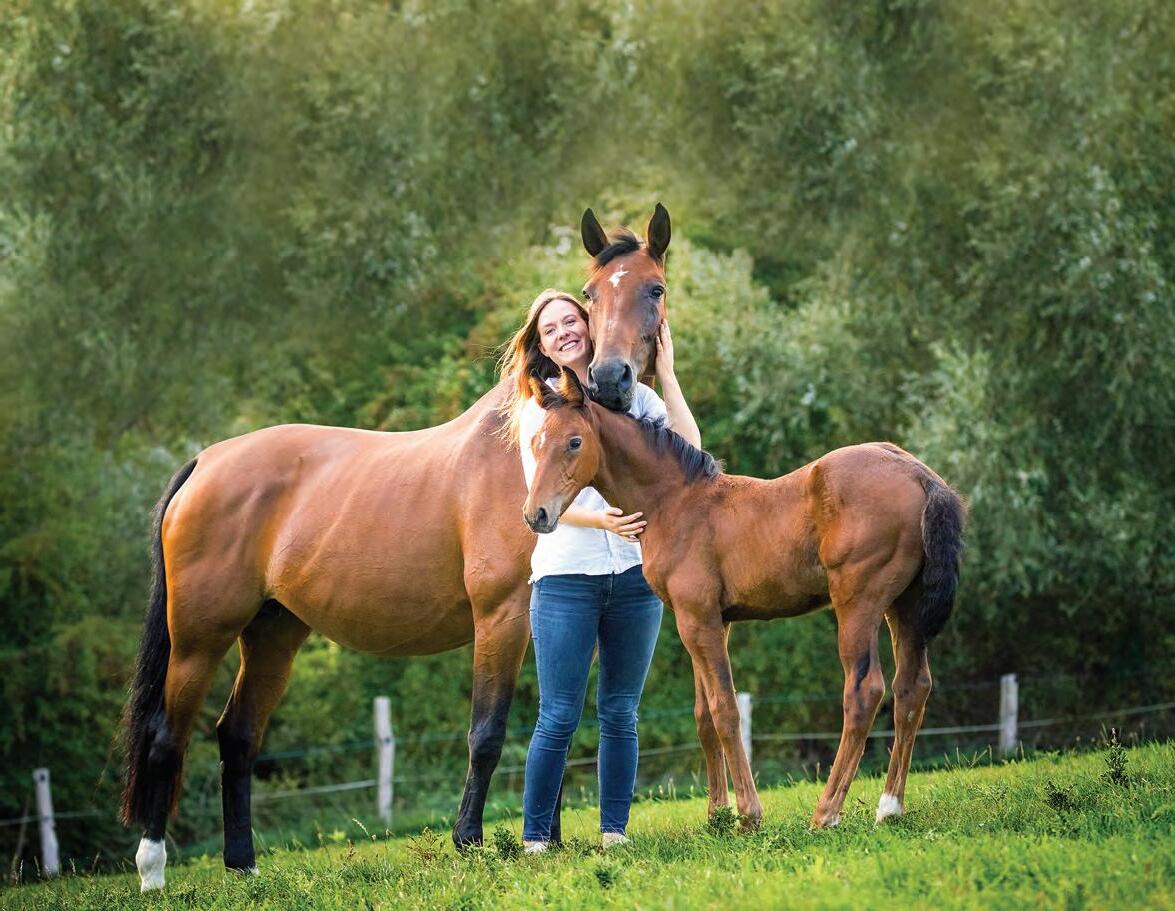
As winter gives way to spring, longer days signal the start of the breeding season across the horse industry. This time of year brings renewed focus on reproduction, with veterinarians playing a key role in guiding breeding decisions and supporting reproductive techniques. The following articles explore several of these technologies and how they are used to help breeders achieve successful outcomes during the spring breeding season.
Equine-Assisted Reproductive Techniques
Assisted reproductive techniques (ART) have transformed equine breeding by offering new ways to improve reproductive success and expand valuable genetics. From widely used methods like artificial insemination to advanced laboratorybased technologies, these techniques vary in complexity, cost, and application. Understanding how each option works helps breeders choose the most appropriate approach for their breeding goals, resources, and regulatory constraints.
By Amy Young, UC Davis Center for Equine Health
Artificial Insemination (AI) is the introduction of fresh, cooled, or frozen semen into the mare’s reproductive tract without natural mating. It is the oldest and most widely used equine ART for expanding stallion genetics without transporting animals for mating. Although easier and less invasive than other methods, AI requires careful timing of insemination with ovulation and management of mares after breeding. This is especially critical when
PHOTO: ALAMY/JUNIORS
frozen semen is used, since its longevity is significantly shorter than fresh or cooled semen.
This is the least expensive ART option. The success rate is high, particularly with fresh and cooled semen.
Embryo Transfer (ET) is the collection of an embryo from a donor mare and the transfer of that embryo into a recipient mare (surrogate). This involves synchronizing the reproductive cycles of both mares and breeding the donor mare, usually with AI. Genetic testing can be performed on the embryo to determine sex and genetic traits prior to transfer (preimplantation genetic diagnosis).
Several pregnancies can be produced in a season from an elite donor mare without significantly affecting training or competition. Embryos are flushed seven to eight days after ovulation, and the donor mare can be bred in a few days to generate additional embryos.
Success rates vary, but ET is generally reliable for fertile mares. Costs are moderate to high. The limited availability of recipient mares presents challenges.
In Vitro Embryo Production (IVEP) is the process of producing and culturing embryos in a laboratory until they reach a stage of development where they can be transferred to a recipient or frozen for future transfer.
Oocytes are collected by transvaginal oocyte aspiration (TVA, also known as ovum pickup (OPU)) directly from the
ovaries of a standing mare under sedation.
In Vitro Fertilization (IVF) is a technique in which oocytes are matured, fertilized with sperm in a laboratory, and cultured for seven to nine days. The resulting embryos may undergo genetic testing and are implanted into a recipient or frozen for storage.
Although common in humans and livestock species such as cattle, IVF has had little success in horses. Equine embryo production has been achieved, but only using high-quality, fresh sperm, which limits its use. The UC Davis Veterinary Assisted Reproduction (VetART) Laboratory recently reported using frozenthawed sperm to fertilize equine oocytes and create embryos (Martin-Pelaez et al., 2024) Further research is in progress.
This process is labour intensive and costly. Success rates vary based on sperm quality. While some sires yield good results, others produce poor outcomes.
Intracytoplasmic Sperm Injection (ICSI) is a specialized form of IVEP in which a single sperm is injected directly into an oocyte. The fertilized egg is cultured, and the embryo is implanted into a recipient mare.
This approach has become widely used in horses. It can help overcome male fertility issues such as poor sperm quality or low motility. It is also an important technique to preserve the genetics of deceased stallions or those with limited semen availability (Malin et al. 2024).
ICSI allows the use of sex-sorted semen, a newly available option that enables deliberate selection of the sex of the
offspring. Recently, the VetART laboratory reported the first use of frozen sexed semen for ICSI in horses (Dini et al., 2023).
Costs for ICSI are high and success is highly variable.
Cloning
Somatic cell nuclear transfer (SCNT) cloning produces a foal that is genetically identical to the donor. The nucleus of a body (somatic) cell from the donor is removed and transferred into an egg cell that has had its nucleus removed. The egg cell with the donor nucleus develops into an embryo, which is transferred into a mare.
Cloning is commercially available in horses, and hundreds of cloned equids have been produced. Cloning efficiency is low, and large numbers of oocytes are required, limiting availability. Costs are high.
Applications
ART can ensure that top-performing horses pass on their superior traits to future generations. It is important to select the appropriate method for the goals of the breeding program. Some procedures are expensive and technical and may not be feasible or available to all breeders. Success rates are variable, and efforts may not result in pregnancies or live births.
The use of ART may be regulated differently by country or region, potentially creating barriers for international breeding programs. Also, some breed organizations, such as the Jockey Club, may not register horses produced through ART. b
Lesson Horses in Canada
A Closer Look at Care, Challenges, and the Road Ahead
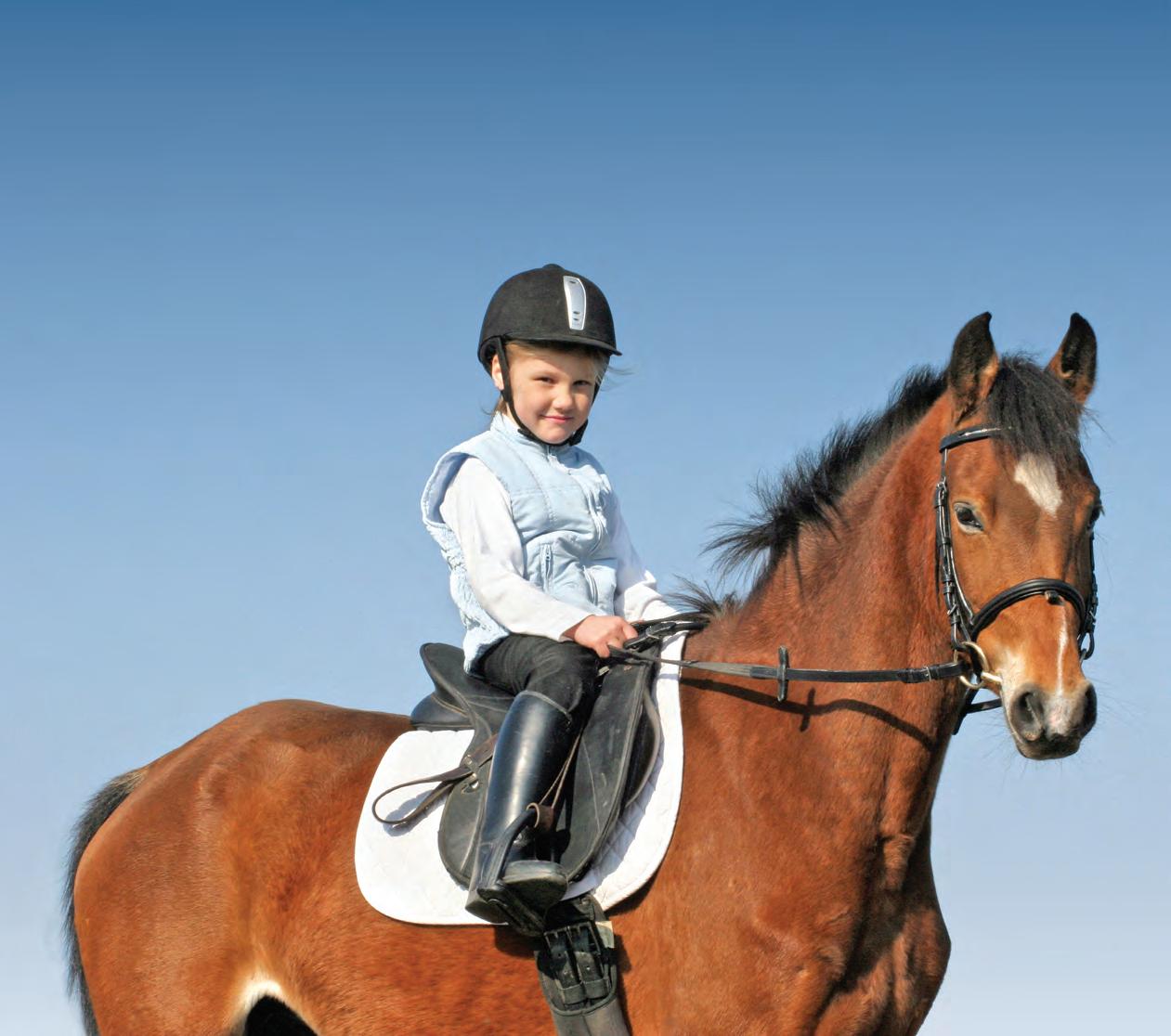
Lesson horses are the heart of equestrian education in Canada. They teach beginners how to ride, help build confidence, and often serve as the first connection between people and horses. For many riders, these horses are the gateway to a lifelong passion — and for researcher Caleigh Copelin, they were the reason she entered the field of equine welfare.
With Part One of Canadian Riding
Lesson Industry Survey published, there are some in-depth responses to share from 154 lesson barns, representing over 1,500 lesson horses. With support from OMAFA Agri-Food Innovation Alliance and Equine Guelph, researchers Caleigh Copelin and Katrina Merkies, from the University of Guelph’s Campbell Centre for the Study of Animal Welfare, explored everything from feeding
and housing to health care and daily routines, as well as the opinions of barn owners, managers, and coaches.
Canadian riding lesson facilities aren’t required to register with any official body and there’s very little oversight, so there is very little information.
“Lesson horses live a very different life than show or pleasure horses, and past research shows they face unique welfare challenges — everything from equipment-related
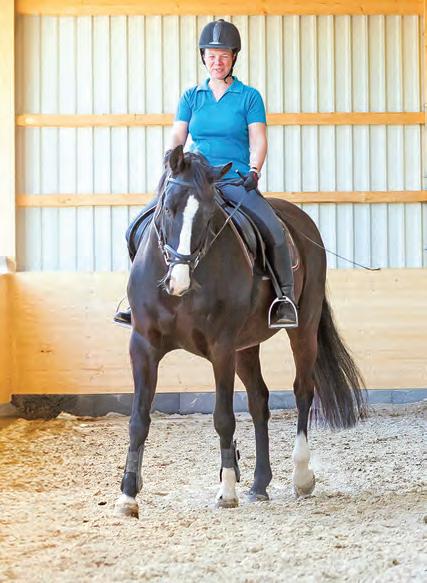
PHOTO:
PHOTO: ALAMY/JUNIORS BILDARCHIV GMBH
wounds and stereotypic behaviours to higher levels of injury-related insurance claims and even more aggression toward humans,” explains Copelin. “We know they’re struggling, but we don’t fully understand why. This study helps us see how Canadian lesson horses are managed, where support is needed, and where the industry is already doing well. It’s a critical first step toward understanding areas for future research of this understudied demographic.”
The Good News
The survey revealed encouraging trends. Most lesson horses in Canada appear to receive solid, speciesappropriate care. They’re turned out in groups, see veterinarians and farriers regularly, and often benefit from complementary and alternative veterinary medicine treatments like massage and chiropractic care. But the study also uncovered concerns around long-term use of pain medications and growing financial pressures that make it difficult for barns to prioritize horse welfare over making ends meet.
Copelin explains that while challenges exist, the overall picture of daily management had primarily positive reports.
Basic Needs and Beyond
“Most respondents reported housing their lesson horses in ways that align with Canada’s Equine Code of Practice,” said Copelin. “They are living outside in groups or getting long turnout hours, seeing farriers, and having teeth checked on recommended schedules. Beyond that, many
barns are going above and beyond with dietary supplements and complementary therapies like massage, laser treatments, and even things like Reiki. Whether or not the science supports every practice, the fact that owners are actively seeking ways to improve comfort shows a high level of concern for horse welfare.”
Just over 90 percent of respondents said they use therapies such as massage, chiropractic, acupuncture, or osteopathy to help horses feel their best. Over 97 percent of facilities used professional farriers, with more than 70 percent reporting a regular trimming or shoeing schedule every four to six weeks. Over 77 percent of barns had a herd health plan developed with veterinarian input, and 65 percent had horses’ teeth checked or floated at least once a year.
Turnout was also prioritized as 76 percent of barns reported group turnout for all horses, and just over 40 percent kept horses outdoors full-time. Long turnout hours were common, averaging 12.6 hours per day in the summer and 9.2 hours per day in the winter.
Nearly 96 percent of facilities scheduled at least one day off per week for lesson horses, and 75 percent reduced lesson loads during riding camps.
Most participants felt confident assessing body condition, with 92 percent familiar with body condition scoring, and 75 percent of facilities providing constant access to hay for stabled horses. Supplement use was widespread (73 percent), but only about half performed forage tests, highlighting a potential knowledge
gap in nutrition.
Despite these efforts, the study also points to persistent challenges that require attention.
Challenges Behind the Scenes
While the study highlights many examples of good care, it also reveals some areas where lesson horse welfare may be at risk, often due to pressures that go beyond daily routines.
“The open-ended responses had an eye-opening pattern,” says Copelin. “Most participants recognized that there are serious challenges in the lesson horse industry. Horses can face physical and mental mistreatment, but almost every respondent insisted their own horses were exceptionally well-managed and that the problems were at other barns. We saw comments like, ‘I take great care of my horses, but I’d never send them to another facility because they wouldn’t be treated like I treat them.’ When a lot of people share that same opinion, you start to wonder if the issue is more industrywide. There’s awareness, but perhaps accountability may need examining.”
Increasing Financial Pressures
Only 12 percent of respondents felt the Canadian lesson industry was financially sustainable. Nearly half described the situation as “somewhat sustainable,” while 41 percent believed the industry was not sustainable at all. Many reported sacrificing their own income or quality of life to maintain horse care. Others said they couldn’t raise lesson prices without
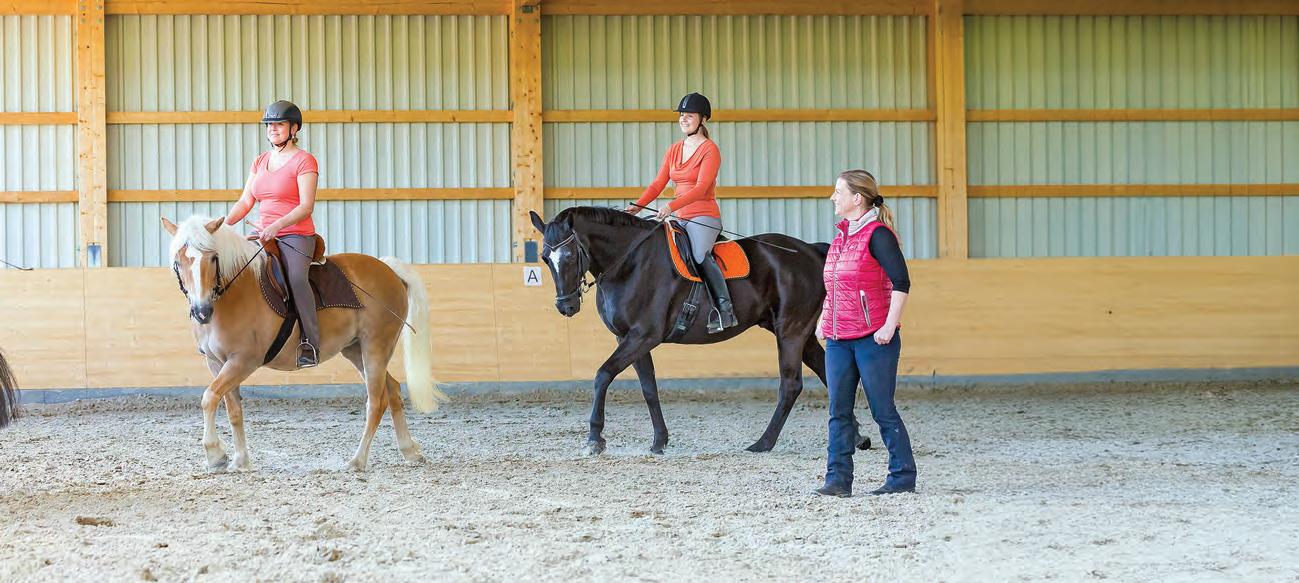
Beginner and advanced lessons challenge horses in very different ways. While advanced riders may ask more physically, they are typically better balanced and coordinated in their cues. Beginners, by contrast, can be tense, inconsistent, and apply conflicting signals; what appears to be an easier lesson may in fact be more demanding for the horse.
Spring Hazards on the Horse Farm
Managing Fire and Flood Risk
By Kathy Smith
Spring is a season of renewal on the horse farm — but it’s also a time when risk rises sharply. Melting snow, saturated ground, drying grass, and volatile weather patterns can quickly turn routine days into emergency situations.
Gradual flooding and flash floods, grass and structure fires, severe storms, rapid snow melt, and ice jams that block water flow can threaten horses, people, and infrastructure with little warning. Add in secondary risks such as power outages, water contamination, disease outbreaks, and damaged fencing, and it becomes clear that emergency preparedness isn’t optional — it’s essential.
Risk mitigation starts with understanding what your farm is vulnerable to and taking practical steps before trouble arrives. Preparation means putting systems in place that allow for a fast, effective, and safe response, rather than reacting when something goes wrong. Knowing where your horses can be moved during a flood or fire, keeping accurate animal inventories, maintaining fencing and gates, and ensuring emergency equipment — such as fire
extinguishers, generators, and trailers — is ready to use can make all the difference when minutes matter.
Reducing risk is part of the everyday work of spring cleanup and maintenance. Keeping grass trimmed around buildings, clearing culverts to allow water to flow freely, inspecting wiring, and removing dust, cobwebs, and debris from barns all help lower the chance of fire or structural damage. Feed and bedding should be checked for mold or moisture damage,
stored too close to structures, they can become a serious fire hazard through spontaneous combustion.
Preparedness on a horse farm is about creating space for water to drain, for fire to be slowed, and for horses to move safely out of harm’s way. By combining risk awareness with thoughtful planning and regular maintenance, farm owners can reduce the impact of natural disasters and emergencies, protecting both their horses and the people who care for them when conditions turn unpredictable.
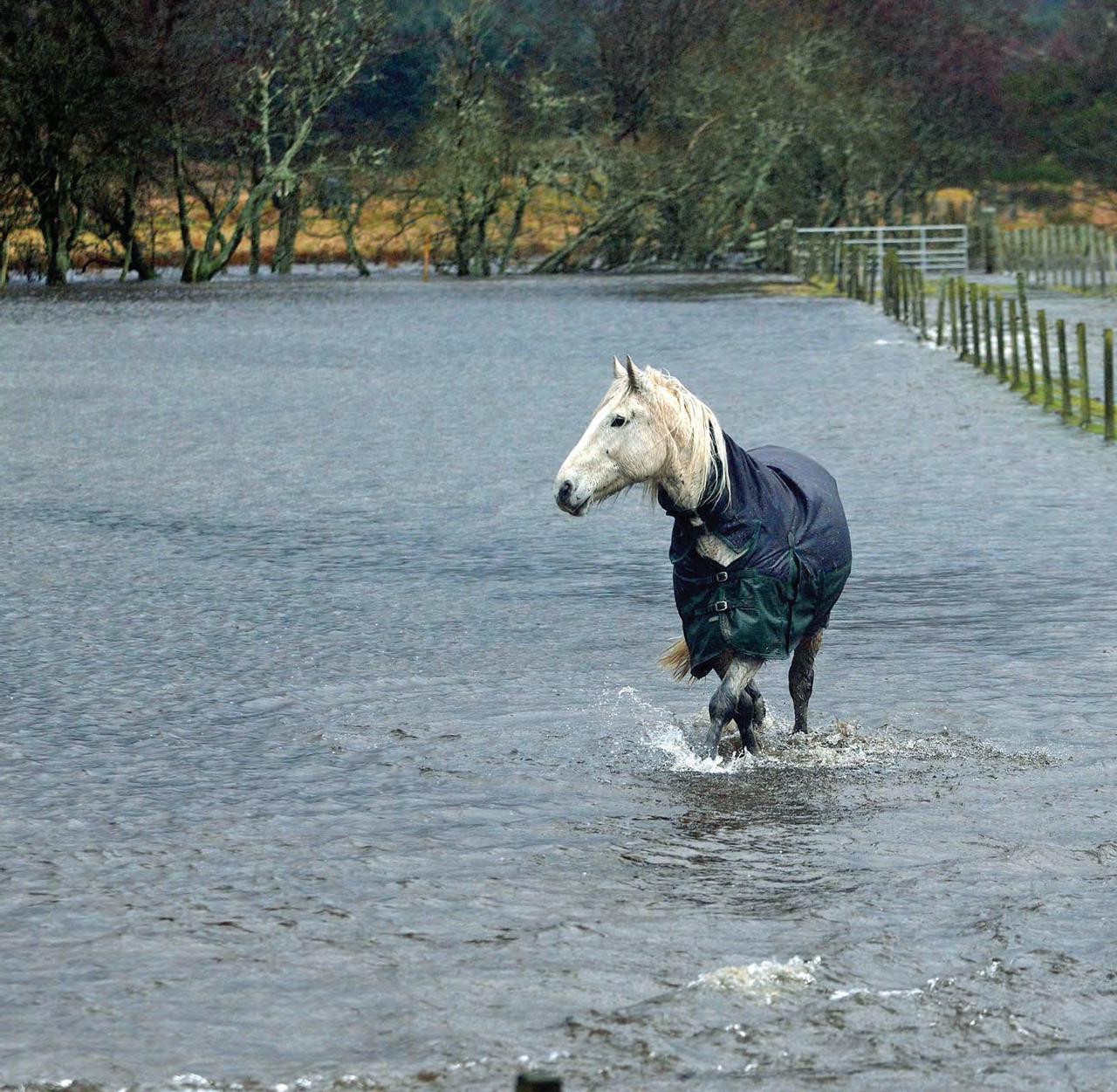
seasonal hazard that can be hugely disruptive, damage facilities and footing, contaminate water supplies, and create serious risks for both human and animal health. While floodwaters can rise quickly, the bigger challenge is often what follows: interrupted services, unsafe roads, power outages, and the public health concerns that come with standing water and contamination.
Most farm flooding is caused by heavy rain and/or rapid snowmelt that accumulates faster than the ground and drainage systems can absorb it. Low-lying paddocks
Monitor local updates, review floodplain mapping, and arrange for appropriate insurance for natural disasters well in advance. If flooding threatens, move essentials and vulnerable equipment to higher ground and shut off power to areas at risk.
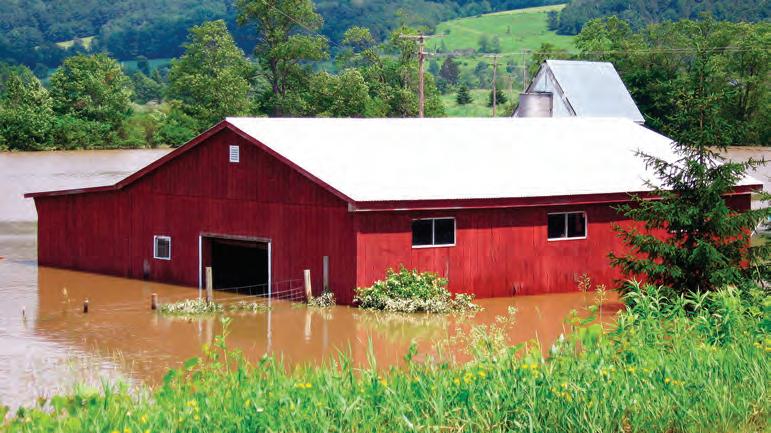
fill, ditches overflow, creeks jump their banks, and what was manageable yesterday becomes a logistics problem today.
The best defence is a plan made on a calm day. By assessing your flood risk and preparing in advance, you can make faster, safer decisions when water starts moving. Risk depends on geography: proximity to creeks, streams, and rivers matters. Topography is also a factor: a shallow basin, poorly graded lanes, or a low corner of pasture can turn into a collection point even if you’re nowhere near a major waterway.
The Language of Flood Alerts
Flood messaging varies by region, but these categories are common and worth understanding:
High Streamflow Advisory: River levels are rising or likely to rise rapidly. Major flooding is not expected; minor flooding is possible.
Flood Watch: River levels are rising and may approach or exceed banks. Flooding in adjacent areas may occur.
Flood Warning: River levels have exceeded the top of the bank or will do so imminently. Flooding will occur in areas near affected rivers.
Horses and Floodwater
In many cases, unconfined animals will try to seek higher ground. Our job is to help them do that safely and to avoid creating new hazards. Your goal is straightforward: Keep horses and other animals high and dry and keep people out of harm’s way.
Stay connected to local updates. Your municipal emergency coordinator (or local emergency management office) can provide current flood information, forecasts, and road or evacuation details. Don’t rely on guesswork when conditions are changing hour by hour.
Before the Water Rises
Practical preparation makes the difference between controlled movement and last-minute panic.
Start by reviewing floodplain mapping where available and thinking honestly about where water goes on your property. Identify safe areas (high paddocks, welldrained sacrifice areas, higher lanes) and off-site options if you may need to leave. Plan routes with flooding in mind — one “usual way” out may not be usable.
Prepare an emergency contact list well in advance: livestock haulers, neighbours with trailers, staff or friends who can handle horses, and your veterinarian’s emergency contact. During a widespread event, you don’t want to be searching for resources that everyone else is also trying to find. Contact other barns in your area and work together on a disaster plan if possible. Animal equipment should be kept where rescue personnel, neighbours, and friends can find it easily. Consider microchipping your horse to provide permanent identification that can help ensure a swift reunion if you’re separated during a natural disaster.
PHOTO: ALAMY/SWNS
PHOTO: DREAMSTIME/KSUMMERS
The Road to RECOVERY
By Alexa Linton, Equine Sports Therapist
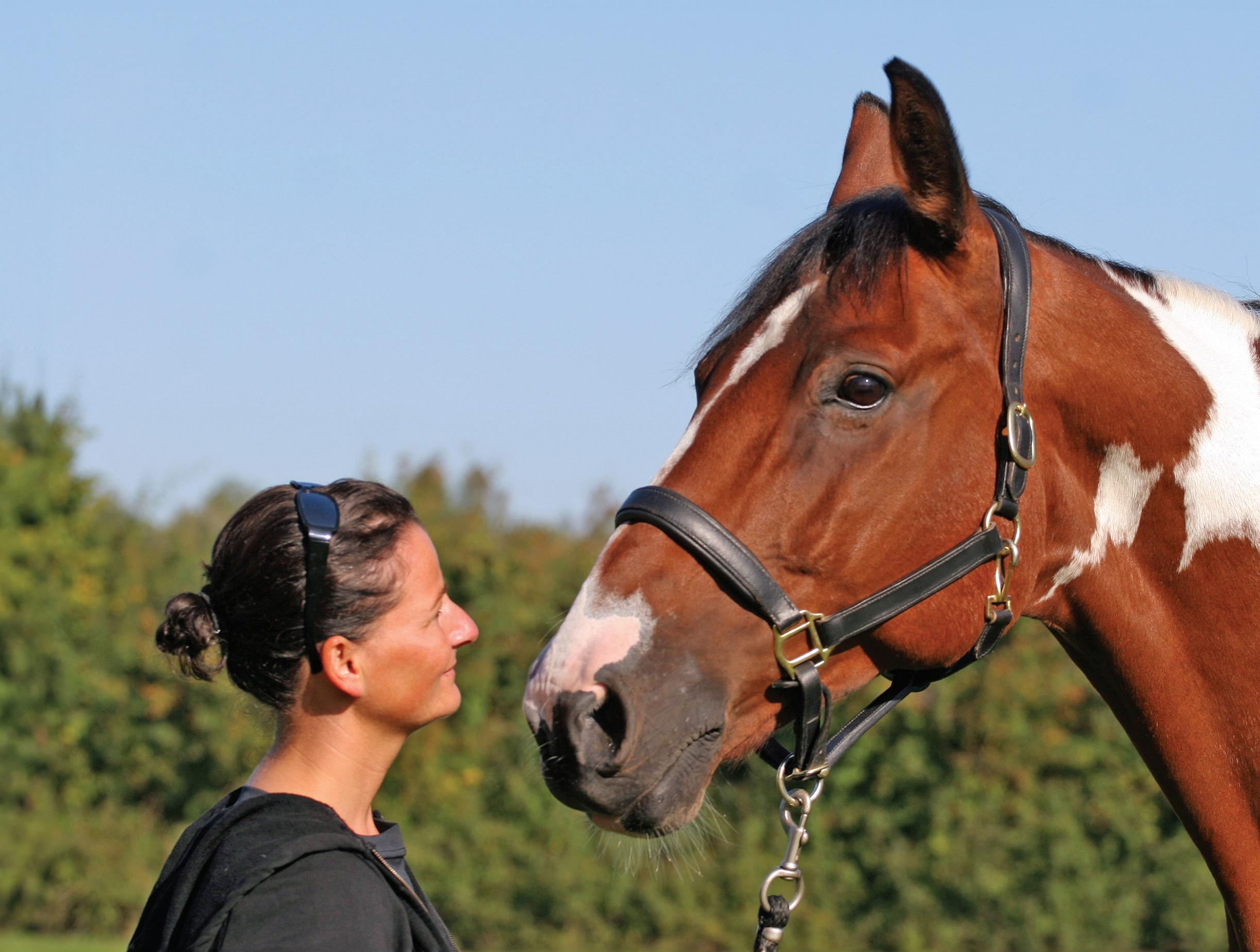
Recovery. A word charged with significance. More than likely, it carries a unique weight and meaning for you. Most of us, as horse people, have encountered “recovery” somewhere along our path — whether our own or our horses’. It usually signals that something has gone wrong: an emergency, an illness, an injury. Rarely is it a word associated with celebration.
I write this in the midst of both my own recovery from a serious health event and the recovery of my new gelding. In this article, I’ll do my best to approach this challenging and important topic with as much care, honesty, and perspective as I can.
First, let’s define the term recovery. In the simplest terms, it is a return to a normal state of well-being or strength. In our culture, it tends to be a rather rushed process, often resulting in recurrence or relapse. I recall coming out of my second abdominal surgery in less than six months with the belief that in six short
weeks, I’d be “back in the saddle,” literally and figuratively.
Fast forward three years and I am still in the tail end of my “recovery,” only now I am aware and accepting of the most important truth of this process: it takes as long as it takes. I now consider recovery as not necessarily returning to a previous
normal, which may not have been healthy or sustainable (as was true for me), but as finding more solid and stable ground physically, emotionally, and even spiritually. This goes for our horses as well.
Solid ground means a leveling out of the destabilizing peaks and valleys that so often define a health event; a renewed and consistent sense of vitality, strength, and well-being; a steady and wellregulated nervous system state most of the time; and an absence of relapse events. Ideally, recovery also means entering a more supported and sustainable state for the long-term. I’ll share a real-life example...
In September, we decided to buy the gelding I had loved for quite some time. He was already boarded with us and integrated into our herd, and we knew he had a history of chronic laminitis stemming from an initial toxic event many years ago. He also had a severe episode of winter laminitis with rotation
two years ago — but was holding steady. We took him on with eyes wide open to a possible relapse, and within just a few months of signing his sales contract, it happened. Despite my best efforts to prevent this — and I’m just a wee bit obsessed with species-specific horsekeeping — his previous history and several unpredicted stressors tipped his delicate system over the edge. I also believe that his system had been “holding it together” for some time, and once he was fully in my care, the house of cards came toppling down, which I’ve experienced with several other horses. Whatever the cause, we needed to do everything possible to support his recovery so that he could thrive longterm. At 17 years of age, continuing down a path of painful relapses was no life for him.
Anyone who has been a caregiver knows how exhausting and heartwrenching this process can be. Those
initial peaks and valleys of an acute health event are, quite literally, a roller coaster — an old, creaky wooden one that feels like it might fall apart at any moment. If you’re in this acute phase, my heart goes out to you. My constant motto during this time — for myself and my gelding — was “this too shall pass” to remind myself that tomorrow would be a new day, with new shifts and changes. My advice during this phase is simple: assemble a team you can trust (including a therapist); keep essential supplies well stocked (medications, supplements, first aid supplies, phone numbers); and adopt some form of breathing practice. Be aware that you will make mistakes and try not to let your possible guilt or shame around those
mistakes limit you from asking for the help and support you need. Remember, this will not be forever, and hopefully on the other side of this tumultuous and challenging time — whether it lasts hours or months — is the road to recovery. My gelding, although it took more than two months, is in recovery and I’m not sure how to express my relief. A few days ago he frolicked — galloping, playing, and leaping. What joy I felt! That joy is tempered by the part of me that remembers my own recovery process and the ebbs and flows of my energy levels and states of well-being. I know that, like my own health issues, things can shift quickly, but I remain deeply hopeful and optimistic that we are on the right track.
PHOTO: ADOBESTOCK/ZUZANA TILLEROVA
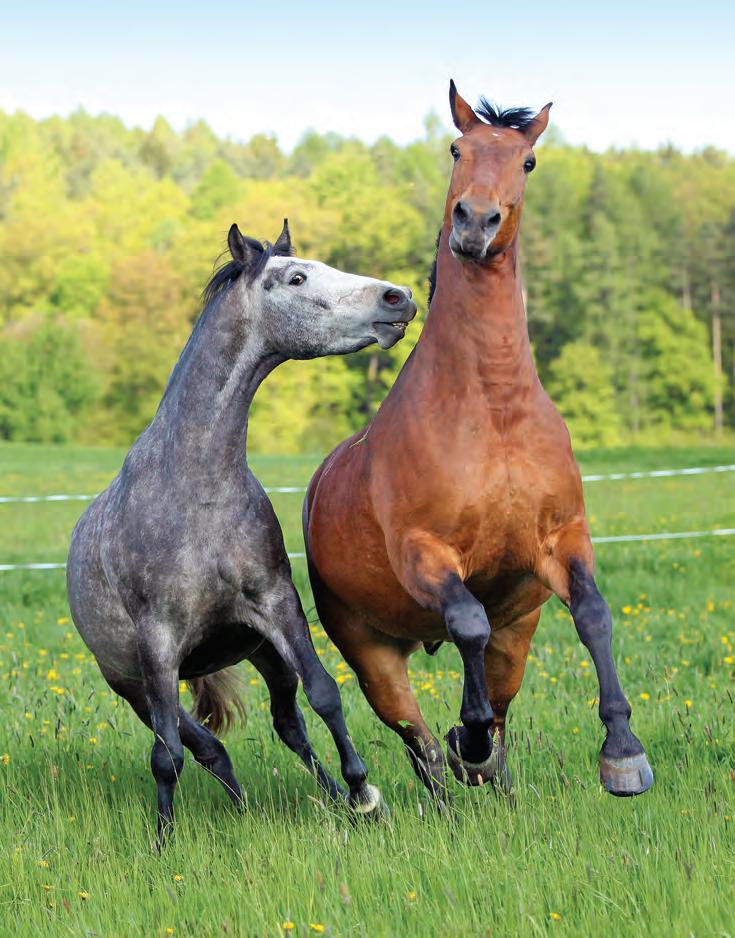
Horses need their herd, but consider the herd dynamics and whether they contribute to stress in your horse’s environment.
PHOTO: SHUTTERSTOCK/SABINE HAGEDORN
Developing a Horseman’s Eye WHAT JUDGES SEE
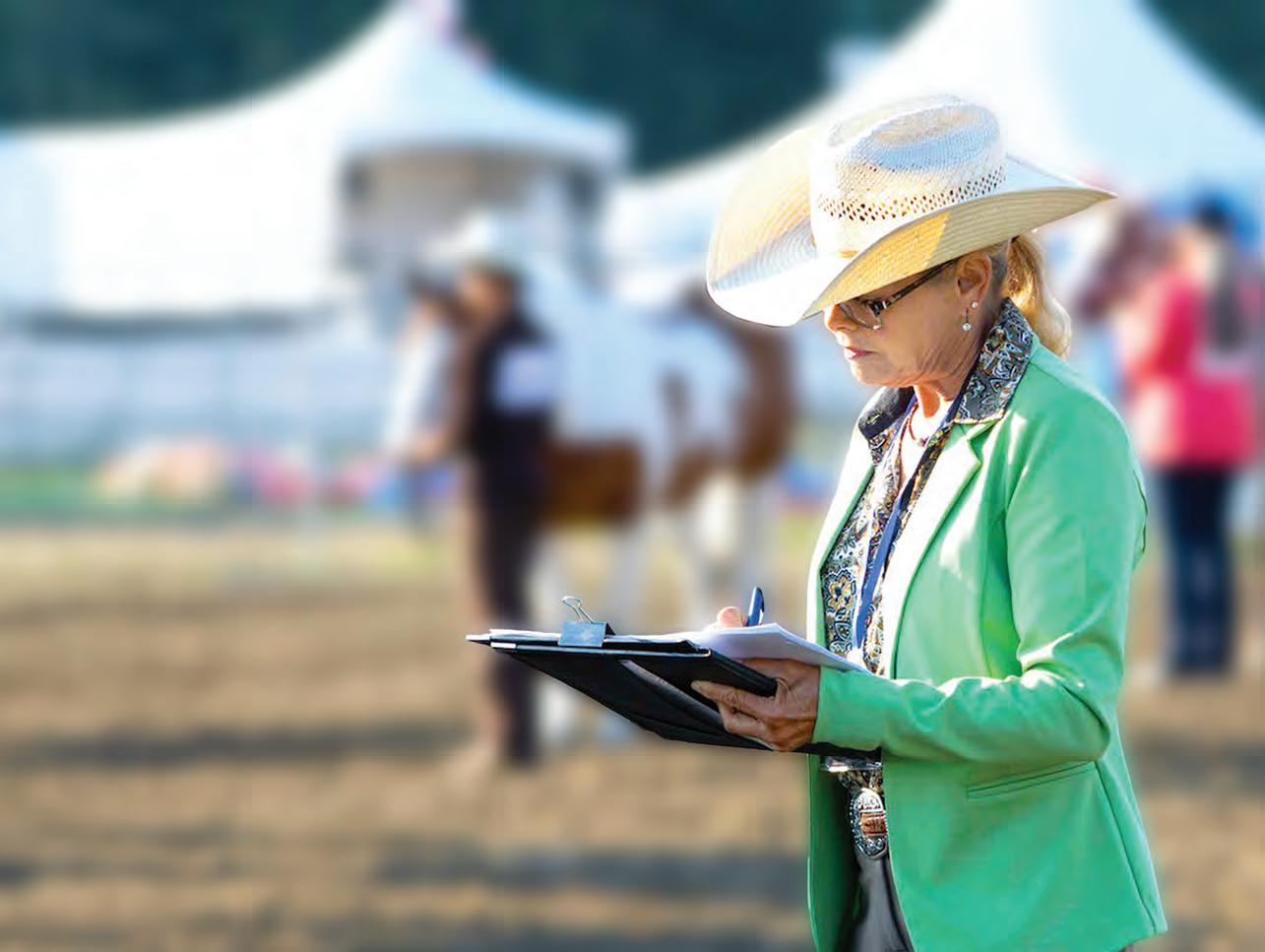
I’ve been watching horses for years, first wistfully as a horse-crazy girl from the spectator seating at the Royal Winter Fair, and later making my living watching horses as a horse trainer, riding coach, and judge. As a trainer, I’ve studied horses circling around me on the end of a lunge line, recognizing signs of tension, relaxation, or hints of gait irregularities.
I’ve trained my eye to recognize a “good mover” when selecting a show prospect for a client or a comfortable ride for a recreational rider. From the saddle, I glance regularly at a horse’s neck alignment and ear position. As a coach, I watch from the arena centre, noting the interaction between horse and rider: timing of aids, subtle signs of bracing and softening.
As a judge, I compare one horse to another as they travel around the rail, jump a course, or set up for conformation.
Developing a horseman’s eye is a lifelong process of seminars, study, and experience.
An Eye for Conformation
Correct conformation is the best bet for a horse’s long-term soundness. Consequently, horse show judges are trained to prioritize balance and structural correctness when assessing conformation. Balance before beauty — handsome is as handsome does.
Balance is the smooth blending of all parts — front to back. The length of the horse’s neck, back, and croup should be equal in proportion. When I view a horse in profile, I look to see a trapezoid (remember your grade nine geometry?): a short back, longer underline; shoulder and croup long and sloping; withers and top of pelvis fairly even in height (or a slight uphill build, but never downhill).
Structural correctness is the alignment of bones and joints. Forelegs, viewed from the front, should be centred under the points of the horse’s shoulders — a line bisecting the forearm, knee, cannon,
fetlock, and the bulb of his heel. I picture my son stacking soup cans in a tower as a little boy — if one soup can was out of alignment the tower eventually toppled.
Viewed from behind, a line should bisect the horse’s gaskin, hock, cannon, fetlock, pastern, and foot (although hind feet typically turn out a whisker).
Aligned joints can best carry weight, absorb concussion, and move limbs efficiently with no winging or paddling. As renowned scholar C.S. Lewis noted, in pondering the hard things of the world, things not as they ought to be: “A man does not call a line crooked unless he has some idea of a straight line.”
A horseman’s eye traces the theme of balance right down to the ground: No foot, no horse. And no wonder, when a thousand-pound horse is supported on four relatively small hooves. As a judge, I’ve seen some stunning horses track past me in profile yet on closer inspection their feet are problematic. A balanced hoof, in a
Horse show judges are trained to prioritize balance and structural correctness when assessing conformation.

nutshell, is the optimal size and symmetry of shape to support the horse and distribute his weight equally through the entire foot, not unlike tire balance and alignment on a vehicle. When all four tires are pointing straight, weight is evenly contacting the road’s surface, the car hums along smoothly. Perceptive drivers are alert to minor deviations. Regular maintenance prevents costly repairs. Because horses’ feet are always growing, an experienced horseperson trains their eye to recognize and alert the farrier to slight deviations in hoof balance.
In profile, the horse’s hoof should be aligned with his pastern — a line drawn through the centre of the pastern and hoof should be parallel to the front of the hoof wall. Also, look for the line from the coronet band to the toe, and coronet band to the heel, to be parallel. Underrun heels are common — when the heel angle is lower than the toe angle.
From the front, a line bisecting the
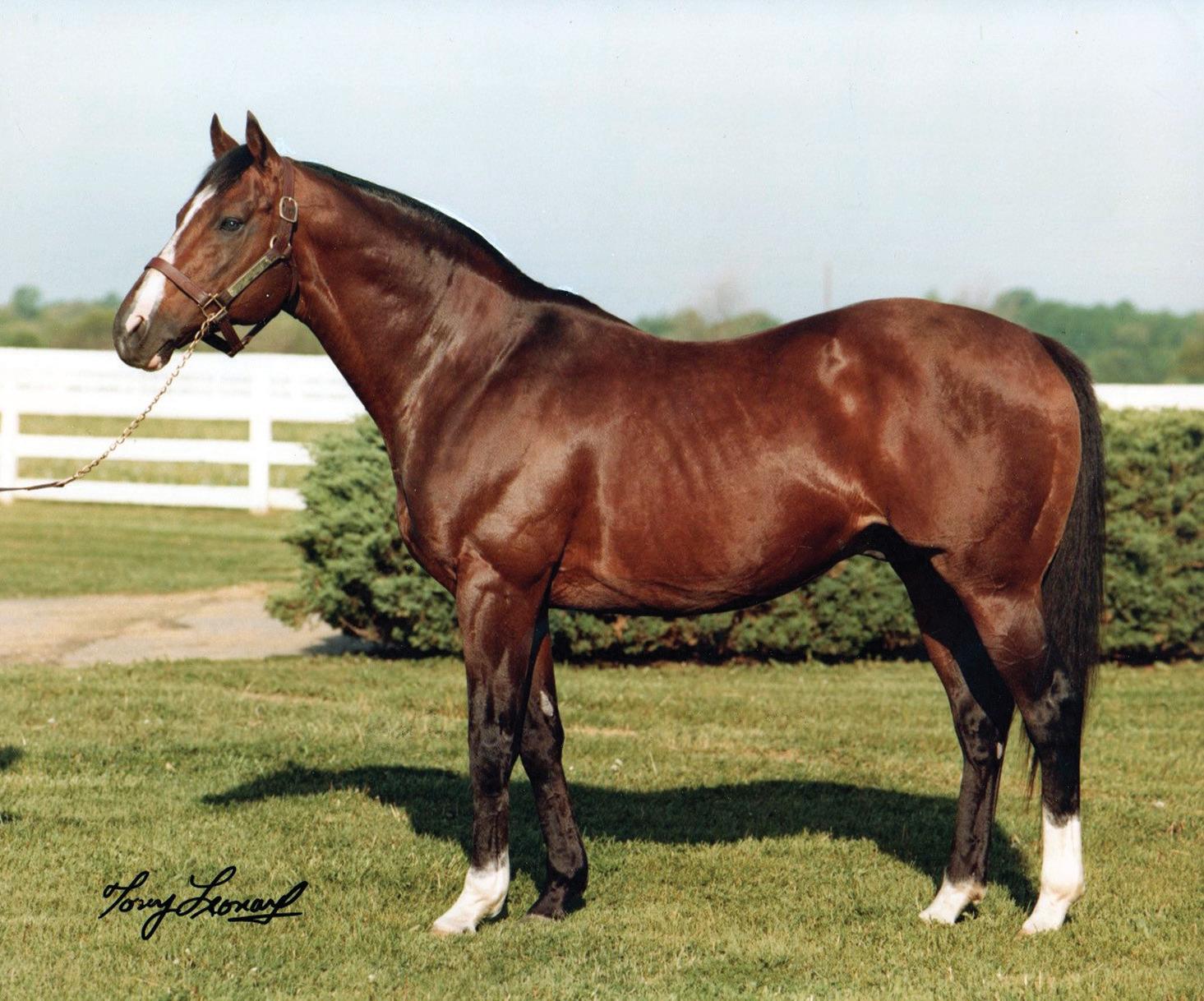
When viewing a horse in profile, look for a trapezoid — short back, longer underline; shoulder and croup long and sloping; withers and top of pelvis fairly even in height (or a slight uphill build, but never downhill).
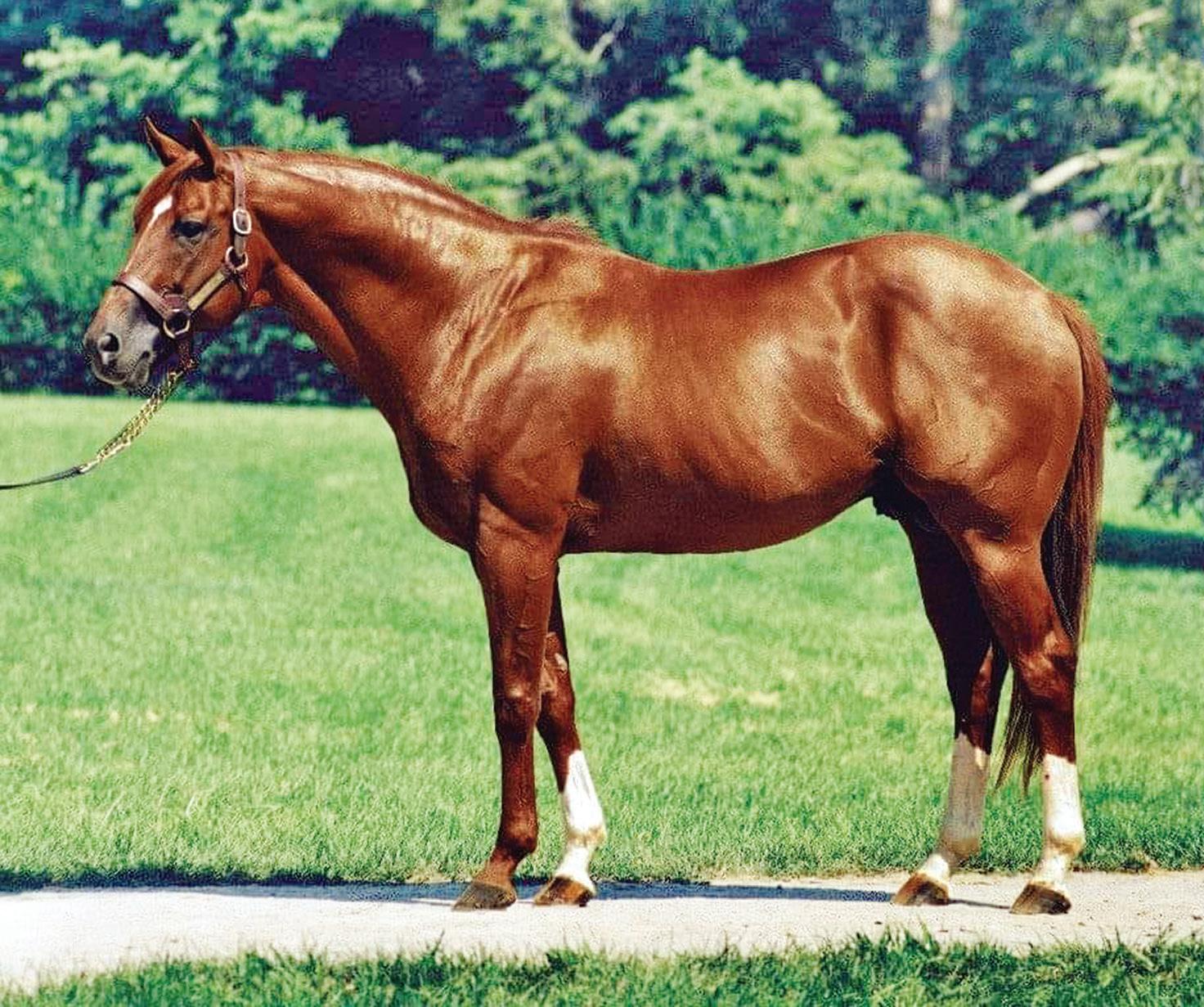
Pictured are the Thoroughbred legends Northern Dancer (above) and Secretariat (below), who was considered to have near-perfect conformation.
PHOTO: SARAH WYATT
PHOTO: TONY LEONARD
PHOTO: TONY LEONARD
Groundwork Riding vs
Using Poles With Purpose
By Jec A. Ballou
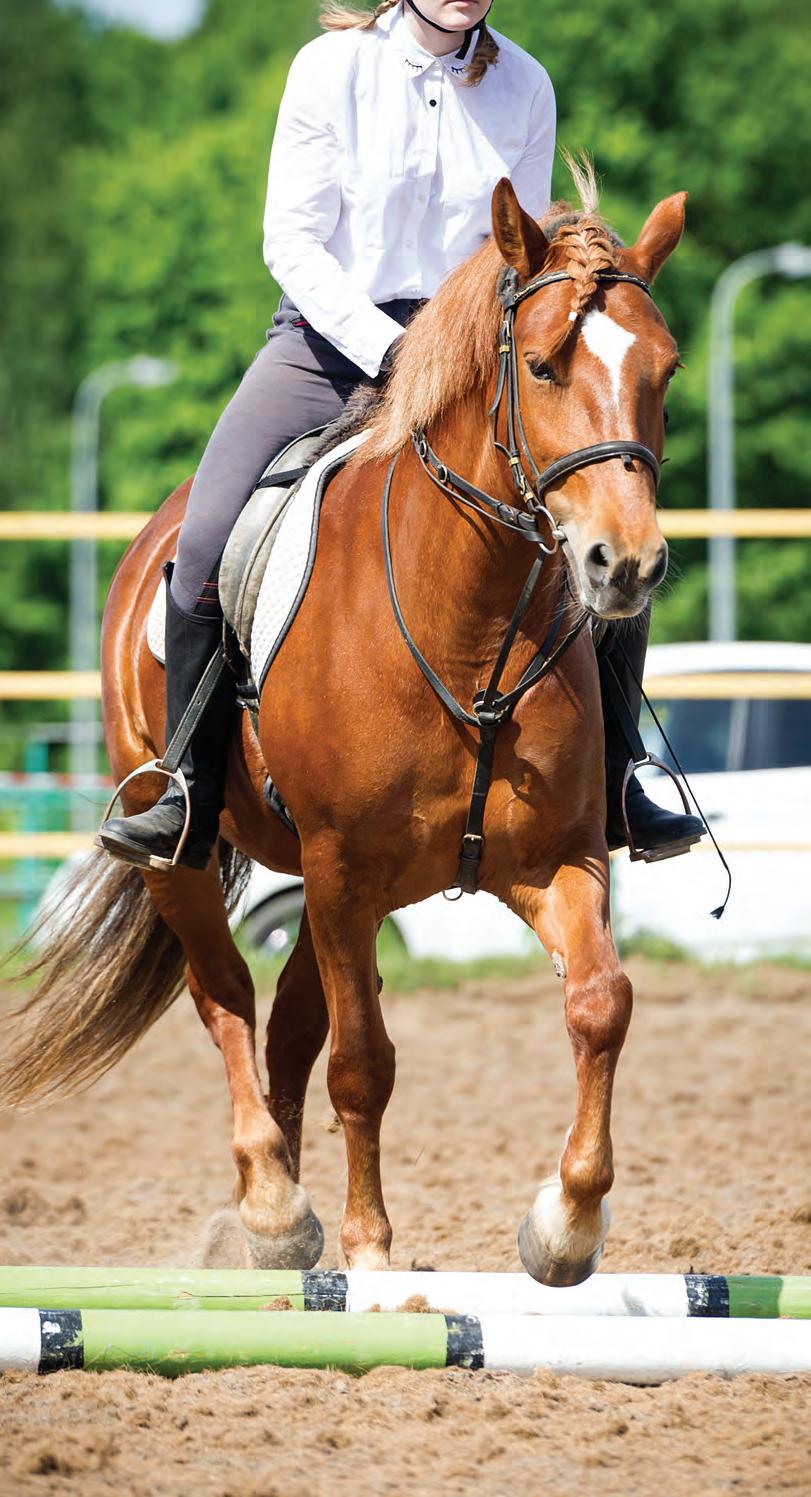
The effects of ground poles vary significantly depending on whether they are performed in-hand or under saddle, at what speed, and in what volume. When poles are broadly recommended by veterinarians and trainers for rehabilitation or conditioning, riders are often left uncertain about the specifics of using them.
While some overlapping physiological outcomes do exist, the main difference to keep in mind is whether a horse needs exercises to improve its neurological and postural foundation versus its gymnastic strength. In general, groundwork best affects neuromuscular and postural outcomes, whereas ridden routines target actual strength. Put simply, groundwork improves movement patterns while ridden poles create strength, sustainability, and power within those patterns.
Let’s explore a little more clearly the different ways to condition using poles.
Groundwork vs. Riding
Ground poles offer the potential for key physiological gains including the following:
• Enhanced proprioception
• Awakening or fine-tuning neuromotor patterns
• Improved posture
• Improved rhythm
• Activation and toning of trunk muscles
• Mental alertness and focus
• Strengthening of locomotor muscles
Some of these benefits happen through groundwork while others rely on riding. Admittedly, a very strategic program that incorporates a variety of speeds and patterns makes it possible to access most of these changes using either groundwork or riding. But most horses require both methods to make all these changes. Groundwork, particularly when performed in a slow, methodical manner, mostly influences neurological and postural systems while ridden work stresses load-bearing and propulsive systems.
With groundwork, the potential exists for larger recruitment of deep stabilizer muscles without the compensation of carrying a rider. It can also result in greater sensory feedback and body awareness. Perhaps because it is frequently done at slower speeds, groundwork often reduces bracing in locomotive muscles, leading to a freer topline and mobility of the cervical spine.
In this way, groundwork pole exercises prepare the nervous system and stabilizing musculature to tolerate the greater forces introduced during ridden work. It improves how a horse moves before asking it to generate more force. It is important to note that, when done at the slow speeds required for proprioceptive gains, groundwork does not significantly increase muscle strength or size. It also does not prepare the horse for high-force athletic tasks. This requires the extra intensity that most commonly comes with riding.
With riding, the horse experiences extra loading of its axial skeleton, which leads to greater muscle fibre recruitment, especially in propulsive muscles. For instance, trotting over poles is often used to increase recruitment and strength of the thoracolumbar musculature in addition to the hindquarter muscles involved with forward movement.
While bearing extra weight on its back, the horse also experiences larger forces through the lower limb ligaments as the fetlock flexes downward with each step, which can improve resiliency. There are also higher cardio demands at ridden pole work when done at trot or canter, contributing to mitochondrial density and aerobic function responsible for sustaining high quality movement. While these extra demands on the gymnastic system are primarily positive, they carry negative consequences if the horse is not already at least moderately fit in the underlying muscle system before embarking on a program of ridden ground poles.
Exercises and Reps
Most rehab and early conditioning programs begin by asking the horse to walk in-hand over four to six sequential
RIDING THE Nervous System
How Regulation Affects Confidence, Performance, and Feel
By Annika McGivern, MSc, Sport and Exercise Psychology
Why does your nervous system matter to your horse? When was the last time you got tense during a ride and created tension in your horse? Or did your horse get tense and create tension in you? This common situation can be difficult to recognize with certainty. Often, it happens so fast that you genuinely aren’t sure who tensed first. Most riders are familiar with the idea that horses feel their tension and vice versa but are less clear about the underlying reason or how to prevent or stop these frustrating cycles of tension.
Riding is not just based in skill; it is a partnership of two nervous systems between two living organisms. In this article, we’ll take a closer look at what is happening below the surface during these tension cycles. We’ll explore what nervous system regulation means, how horse and rider influence each other, and how this shows up in performance, confidence, and behaviour.
To succeed, you don’t have to figure out how to be perfectly calm 100 percent of the time while riding — that would be an unrealistic goal. Instead, this is about better understanding how your inner state affects your horse and practical strategies for regulating it.
What is Nervous System Regulation?
Your nervous system is your body’s automatic safety and energy system and, in fact, it’s awesome. It keeps us safe and appropriately energized by moving us between two main modes. The first is an alert or protective mode in which we are ready for action or danger, and the second is a settled or regulated mode in which we are ready to rest, learn, think clearly, and fine-tune our movements and behaviours. Horses have the same system with the same two modes, and both horses and humans regularly move between these two states. When either rider or horse gets stuck in
PHOTO: ALAMY/MANFRED GREBLER
alert/protective mode, riding feels more difficult. This is because riding requires balance, timing, feeling, and adaptability, all of which are harder when the nervous system of either partner is overloaded or stuck. A healthy, regulated nervous system can move in and out of either mode and respond appropriately to what’s happening. Regulated does not mean feeling sleepy, passive, or tuned out. It means having the appropriate amount of alertness and relaxation for the situation we are in and being able to adapt and change as the situation changes.
Horses Are Wired to Read Us
As socially dependent animals, horses evolved to survive by noticing tiny changes in muscle tone, breathing, posture, and pressure. A tense rider changes their seat weight, leg pressure, rein contact, and rhythm, often without realizing it. Horses don’t interpret this as “my rider is nervous,” they experience it as information about safety or threat. This helps explain common experiences such as horses getting tight when riders are anxious, or horses behaving differently at shows even when nothing obviously scary has happened, or horses feeling calmer with one rider than another. Realizing this can help riders interpret “difficult” horse behaviour differently. Often, horses are just responding to information the rider doesn’t realize they are communicating.
CO-REGULATION: How Horse and Rider Nervous Systems Influence Each Other
When two beings move together closely, their nervous systems tend to synchronize. This happens in many types of partnerships such as parents and children, teammates, and romantic partners. In riding, this can show up between horse and rider as shared tension or shared relaxation, as well as synchronized settling after stress. This doesn’t mean horses simply absorb our emotions or vice versa. It means both the horse’s body and the human’s body are responding to pressure, movement, breath, and timing in the other. Regulation flows both ways and as such, a calm, steady horse can help a rider settle, and a calm, steady rider can help a horse recover faster after stress. This creates a new perspective for managing challenging, high-tension moments. Instead of simply trying to control the horse, the rider can learn how to positively influence the shared system they’re in with their horse.
To start, it helps to be able to identify what dysregulation looks like in real riding situations. Here are a few examples.
• Before a jump, the rider holds their breath or tenses in the saddle, and the horse rushes or backs off.
• After a spook or mistake, the rider tightens and breathes faster, and the horse stays on edge.
• At competitions, the heightened environment means both horse and rider are tense and less focused.
All these examples are caused by the same cause-and-effect loop. Horse or rider tension leads to altered signals — altered signals lead to horse responses — horse responses increase rider stress, and the loop continues unless interrupted. This matters because chronic tension in riders and horses can lead to confusion, resistance, shutdown, and inconsistent performance.
However, it’s important to know that this loop is normal and happens to everyone, including very experienced riders. The key is to become more aware of it so that you can spot these moments and respond sooner instead of escalating them.
In contrast, regulation supports learning and performance in horse and rider. Remember that calm doesn’t mean slow or lazy. Instead, think of calm as an ideal regulated state that supports learning. Horses learn best when their stress is manageable, signals are clear, and recovery happens quickly after mistakes. Regulation supports consistency, adjustability, and confidence in horse and rider and creates the conditions for high performance. My favourite way to think about this is that learning how to help myself and my horse feel safe enough to learn is a key part of being a good rider. Top performance is born from readiness and clarity, not force or pressure.
PRACTICAL TOOLS: How Riders Can Support Regulation
We know that regulation flows both ways; however, as the human in the partnership we have the ability, and the responsibility, to learn how to be the primary regulating partner. Learning and applying simple actions can help you become more skilled at regulating yourself and, via coregulation, helping your horse regulate.
BEFORE THE RIDE: Start before the ride by practicing self- awareness. Before you enter your horse’s space, take a moment to check in with your mind and body. Assess if you’re carrying tension in your jaw or shoulders. Focus on your breathing and use it to become more present. Set an intention for how you want to ride, not just what you want to do that day.
DURING THE RIDE: Bring your selfawareness with you on the ride and
regularly check your body for tension. Use your breathing to settle yourself, release tension, or move through tense moments. After mistakes, pause and soften your mind and body. Think about resetting instead of pushing through. After a stressful or tense moment, be mindful of both your recovery time and your horse’s.
AFTER THE RIDE: Try to end on a note of clarity, not exhaustion, even if that means ending with something easy or simple. Allow time for down-regulation after intense focus and effort by letting your horse walk or trot with a low, loose, quiet contact. Reflect on the ride with curiosity rather than judgement, and identify the moments where tension changed things. Overall, it’s important to remember that you are not responsible for controlling everything during the ride. You are simply responsible for your side of the partnership and doing your best to manage yourself well. This is accomplishable with simple tools that fit into normal, everyday riding.
How Regulation Supports Welfare
Persistent dysregulation in horses can be a sign of confusion, fear, discomfort, or pain. This can show up as challenging or inconsistent behaviour, unpredictable performance, resistance, shutdown, and even aggression. Looking at horse and human behaviour through the lens of nervous system regulation encourages us to see all behaviour as a clue to how regulated or dysregulated the living being is. With humans we have the added tool of language to get to the bottom of what’s going on, but with horses we must pay attention and deduce what we can from what we observe. When we listen earlier, ask better questions, and avoid escalation, we can follow these clues to a better understanding of our horses’ experience and the root cause of their behaviour.
The key takeaway is that every ride, and even every interaction, is a nervous system conversation between you and your horse. When riders learn to regulate themselves, communication improves and confidence grows on both sides.
I hope you’re inspired to see regulation as a skill which, like riding itself, will improve with practice. Progress comes from awareness and practice, not perfection, so give yourself permission to be imperfect and get out there and give it a go! b
> Annika McGivern is a frequent contributor to this magazine — read her bio on page 94
PREPARE FOR Trail Riding Season
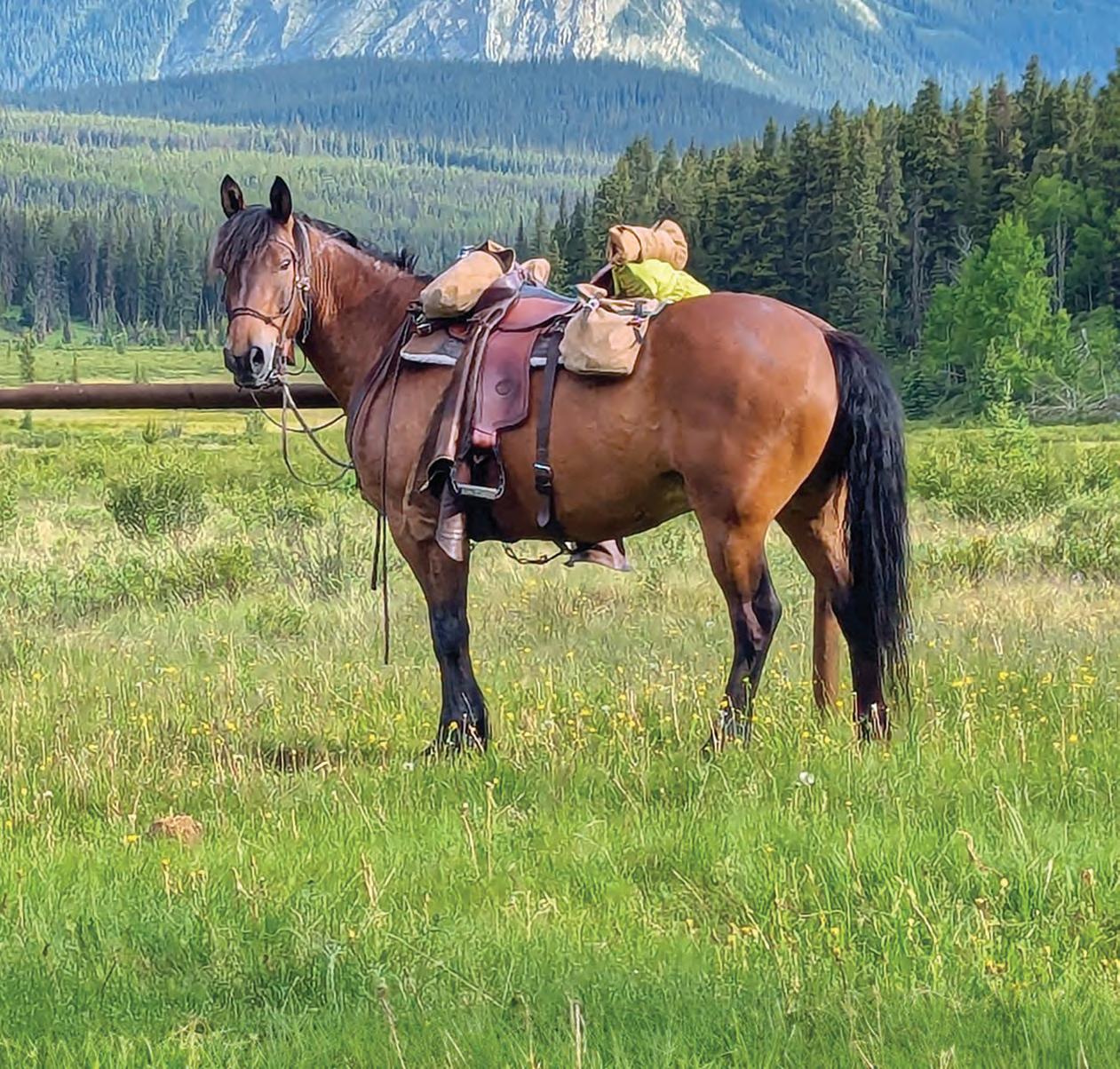
PHOTO: TANIA MILLEN
Plan, Build Fitness, Sharpen Skills
By Tania Millen, BSc, MJ
With winter fading and longer, warmer days ahead, now is the ideal time to plan for a standout trail riding season. Whether you’re a seasoned rider or new to the trail, these steps will help you make the most of your summer trail riding season and build a strong partnership with your horse.
Create a Calendar
Plan your year by selecting one to three highlight events (goals) for the season — mountain rides, group rides, solo adventures, wagon treks, or multi-day horse camping trips. Choose specific, achievable goals on set dates to provide focus and motivation. For example, you could do a special ride for six hours with your favourite trail riding partner on the longest day of the year (June 21). Or a three-day pack trip with a group of friends on the August long weekend. Whatever
your goals, mark them on your calendar. Then, assess your horse’s current physical and mental condition to determine what you need to do to reach your goals.
Horse Fitness
How fit is your horse? Is there extra weight to work off, or does weight need to be gained before conditioning begins? Do you have a designated space for training and conditioning, or will hauling to another location be necessary? Was your horse turned out for the winter, or regularly handled and ready for increased stimulation? Are your horse’s feet in good condition?
Once you have determined your horse’s condition, use your major goals to create a calendar with interim milestones that will build fitness to equip your horse for the task.
For example, if you’re aiming for a sixhour ride on June 21st and your horse
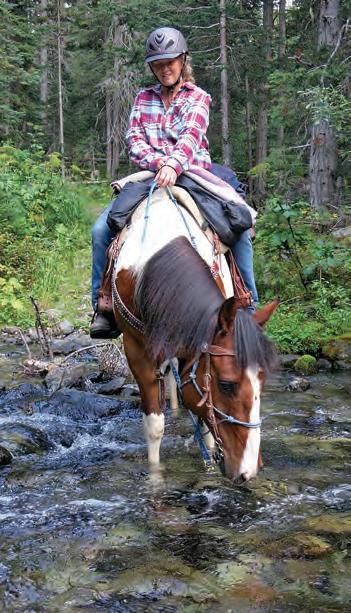
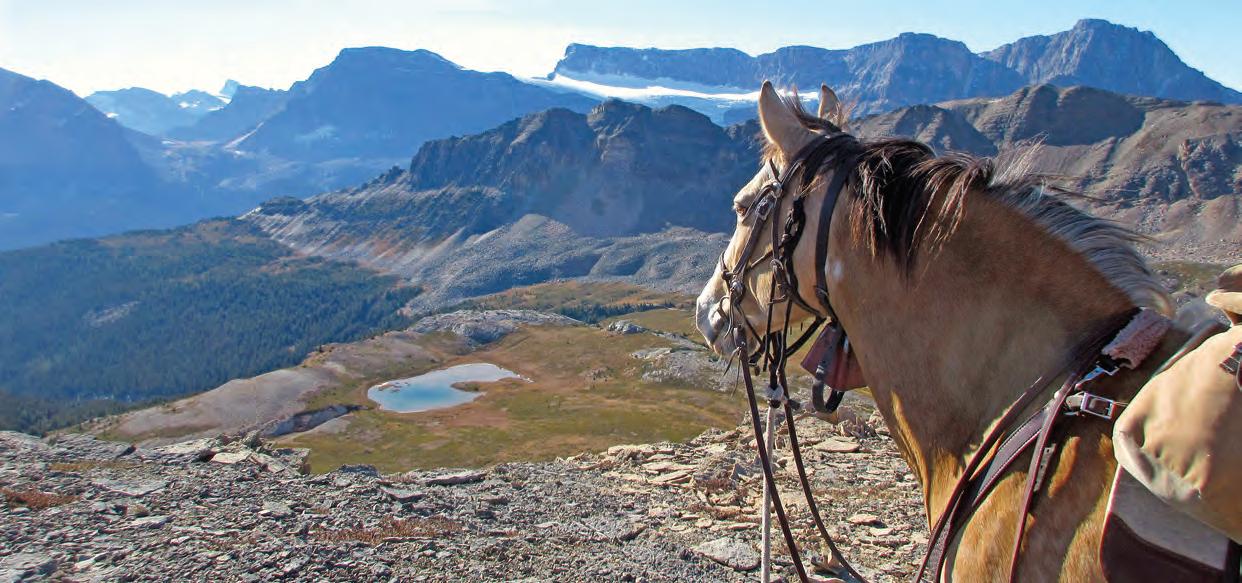
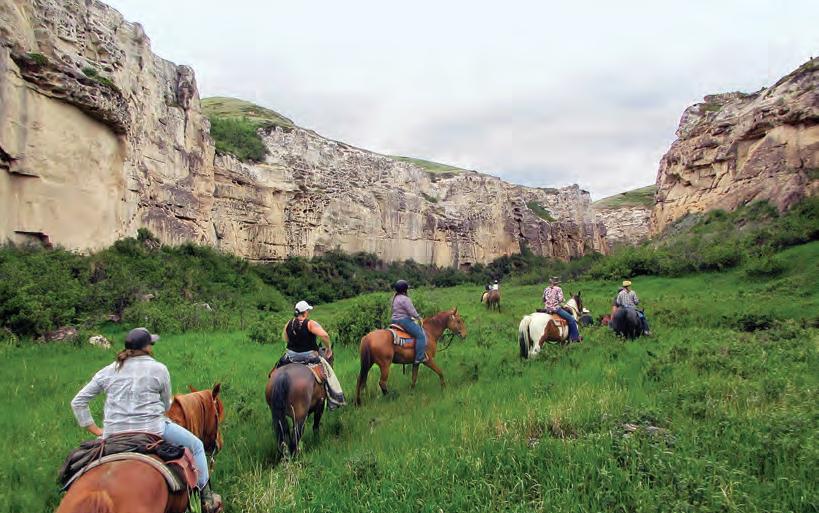
Behaving well in a group is essential in a trail horse.
Trail horses must take advantage of the opportunity to drink when water is available.
Relaxed in rough country with big views, this trail horse seems to be enjoying the vista.
PHOTOS: TANIA MILLEN
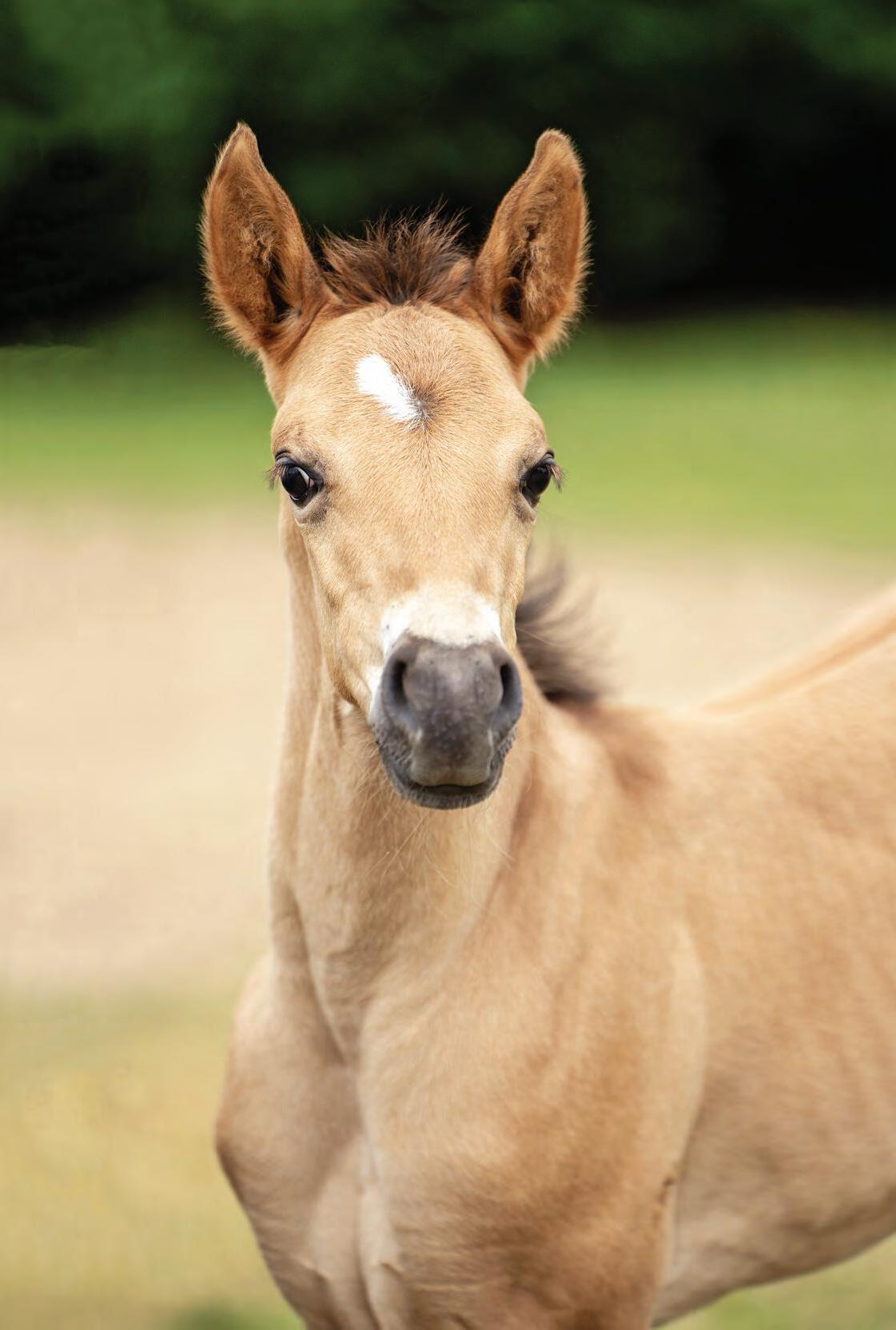
This image of a foal in Prince Edward County, ON shows the compositional rule of thirds — if the image is split into thirds both horizontally and vertically, the subject resides where the lines cross. In this example, the main subject is the foal’s right eye.
Fundamentals of Equine Photography MASTERING Composition & Focus
Article and photos by Shawn Hamilton, Clix Photography
Great photographs rarely happen by accident. Whether you’re capturing a quiet moment in the barn or a horse galloping across a field, strong images are the result of thoughtful composition and sharp focus.
Understanding where to place your subject within the frame — and how to keep it sharp — can dramatically improve your photography. A few foundational guidelines, such as the rule of thirds, leading lines, symmetry, and effective framing, help direct the viewer’s eye and create visual interest. Pair those compositional tools with the right focus mode, and you’ll be better equipped to capture both still portraits and fast-moving action.
You don’t need expensive equipment to apply these principles — most are just as effective with a phone camera as with a professional one. By learning how composition and focus work together, you can create images that are not only technically strong, but also engaging and memorable.
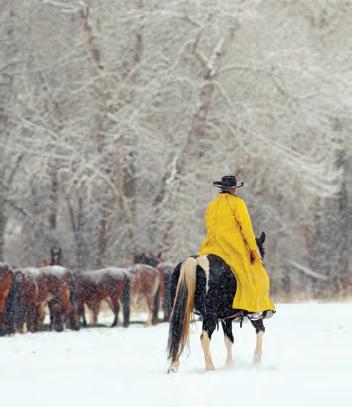
At The Hideout Lodge and Guest Ranch, the subject is placed at the intersection of the rule-of-thirds grid.
COMPOSITION
The Rule of Thirds
What makes a photograph appealing to the eye? Look at the art on your walls, your own photos, or scroll through Instagram and choose an image that catches your attention. Now imagine a grid placed over
it — two vertical lines dividing the image into three columns and two horizontal lines creating nine equal sections.
This is the rule of thirds, a foundational composition technique that divides an image into a 3x3 grid. It’s based on the idea that the human eye is naturally drawn to the points where these lines intersect.
The Poetry of Horses
By Li Robbins
The field was empty except for the horse — head low, tail soft as grass, one hoof resting like a thought half-formed.
From When The Horse Stood Still, by Dr. Stephen
Peters
It might come as a surprise to learn that a neuroscientist also writes poetry — about horses no less — but it’s a natural creative step for Dr. Stephen Peters. He strives to bridge the gap between science and horsemanship throughout his work, and his first poetry collection, The Book of Neuropoetry (2025), is just the latest step in that direction. While the word “neuropoetry” itself may not seem very poetic, in the hands of Peters it’s a way of writing about neuroscientific phenomena that expresses “a shared language of horses, nervous systems, science, and soul.” In other words, Peters explores states like fear, memory, and learning in his poems, all of which play an important role in the lives of horses.
Peters, who as a scientist has dissected brains and studied neurotransmitters,
sees the poems not as a departure from science but as a “natural complement.” He does provide “clinical postscripts” following some of the poems, and they explain the underlying science — helpful for anyone curious about the workings of equine and human brains. Readers who are not scientifically inclined may nonetheless be charmed by how the poems reflect the “connected similarities between human-ness and horse-ness,” as one online reviewer put it.
Of course, poems about or inspired by horses have been written for centuries, and although the language used has evolved over time, there are some themes that just seem to stick — for instance, the power, beauty, and mystery of horses. What follows is a bit of a roundup of some notable poems on these and other themes commonly found in equineconnected poetry.
The Speed of Steeds
Away, away, my steed and I, Upon the pinions of the wind. All human dwellings left behind, We sped like meteors through the sky…
— From Mazeppa, by Lord Byron
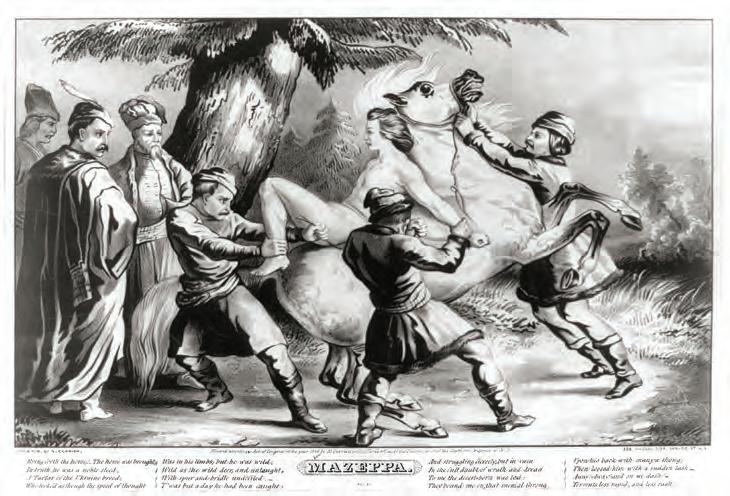
Flight enters into many a poem about horses, likely because it so easily lends itself as a symbol of freedom. Plus, a long journey on a fast horse makes for exciting poetry! Take Lord Byron’s 1819 poem Mazeppa, inspired by 17th century Ukrainian military leader Ivan Mazepa. Legend (considered historically unfounded) has it that the discovery of Mazepa’s affair with a count’s wife led to Mazepa being tied (naked, no less) to a wild horse who galloped for two days across Eastern Europe. Since horses in romantic literature sometimes symbolized luck and fate, you might say Mazepa’s luck had run out. The horse’s, too, for although he “looked as though the speed of thought were in his limbs” and “was wild, wild as the wild deer and untaught,” the horse did not survive the journey.
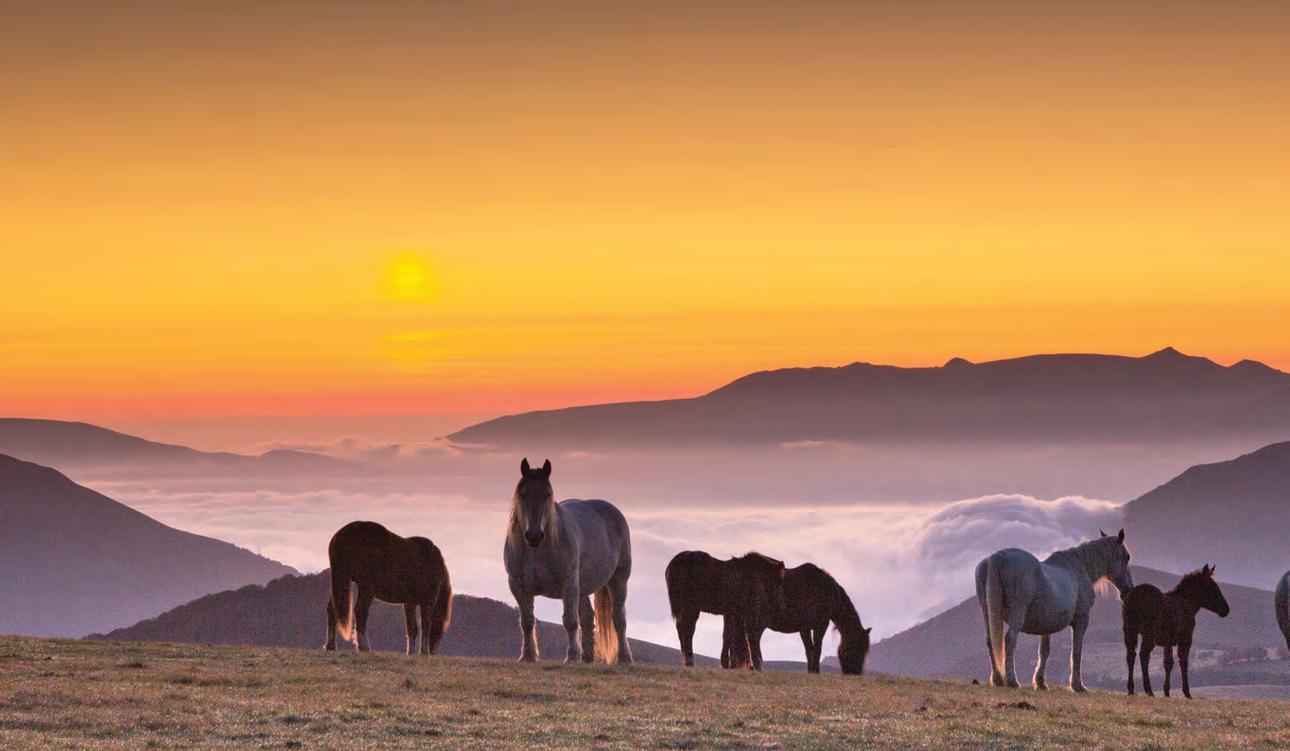
On the flip side, the beauty of horses when they aren’t running has also provided subject matter for poets. In Ted Hughes’ 1957 poem The Horses, a man stumbles upon a horse herd in “the hourbefore-dawn dark” who are “megalithstill…with draped manes and tilted hind hooves.” As the sun comes up, the horses (“grey silent fragments of a grey silent world”) begin to glisten in the light, and yet they remain very still (“no one snorted or stamped”). Literary analysis of The
Horses may tell you that the horses represent the timelessness of nature and its contrast to the “din of the crowded streets” mentioned later in the poem. No doubt true, but it’s safe to say that The Horses is also about the power and beauty of horses when not in flight.
How to Describe a Horse
I am roguish – I am flighty – I am inbred – I am lowly. I’m a nightmare – I am wild – I am the horse.
— From Equus Caballus, by Joel Nelson
Poets sometimes try to describe either the nature of horses in general or that of a specific horse through their work, and cowboy poet Joel Nelson’s Equus Caballus paints quite a picture of the former. Cowboy poetry excels at giving readers a window into horse behaviour — for although there’s no agreed-upon definition of “cowboy poetry,” some of the finest examples naturally feature horses. One famous horse-centric cowboy poem is Curley Fletcher’s The Strawberry Roan, both a song and a poem (first published as The Outlaw Broncho in 1915), which describes the aforementioned roan as “his legs is all
Currier and Ives illustration, circa 1846, of Ivan Mazeppa’s fate, based on Lord Byron’s poem.
spavined, he’s got pigeon toes, little pig eyes and a long Roman nose.”
The strawberry roan does not sound like the most attractive beast, but the horse in General Fang’s Steed, a poem by eighth-century Chinese poet Du Fu, sounds breathtaking, with “two ears sharp as bamboo spikes” and “four hooves light as though born of the wind.” The horse in a fifteenth-century poem by Welsh bard Guto’r Glyn, who has a mane like “the eaves of a house or the tip of a wave,” also holds more appeal than the roan, as does Barberry, the subject of twentieth-century poet Hilda Conkling’s poem of the same name. Barberry is a positively gorgeous creature whom the poet imagines as “russet red” with a “flying mane” and as “strong and wiry, his head slender and haughty!”
Sometimes poetic efforts to convey the look of a horse are not so literal, as Kate Barnes’ poem A Mare shows. The mare in question is described as being “the summer queen and the sun-bodied light of winter.” Barnes also wrote a poem called In The Pasture, in which a mare is described as having a “Titian-blond mane” that hangs down like “the ringletted chevelure of a Victorian belle, innocent and alluring.”
When Horse and Human Become One
I like their lady horse swagger, after winning. Ears up, girls, ears up! But mainly, let’s be honest, I like that they’re ladies. As if this big dangerous animal is also a part of me…
— From How to Triumph Like a Girl by Ada Limón
Sometimes the division between a horse and a human can blur a little, creating the feeling that your horse is somehow a part of you. Poets may take this sense of blended identity even further, as two-time US Poet Laureate Ada Limón does in How to Triumph Like a Girl. It’s about a racehorse, but given the poem’s title — and lines like “as if this big dangerous animal is also part of me” — it seems likely it’s also a way of getting at the power of women.
That said, Limón was once asked by an interviewer why so many of her poems feature horses, and her answer included the following: “I think horses for me have this spiritual strength in them that always stuns me. They are so powerful and gorgeous and capable. I admire them so
PHOTO: DREAMSTIME/ELISA BISTOCCHI
SOURCE: LIBRARY OF CONGRESS